window.__IS_SSR__=true
window.__INITIAL_STATE__={
"attachmentsReducer": {
"audio_0": {
"type": "attachments",
"id": "audio_0",
"imgSizes": {
"kqedFullSize": {
"file": "https://ww2.kqed.org/news/wp-content/themes/KQED-unified/img/audio_bgs/background0.jpg"
}
}
},
"audio_1": {
"type": "attachments",
"id": "audio_1",
"imgSizes": {
"kqedFullSize": {
"file": "https://ww2.kqed.org/news/wp-content/themes/KQED-unified/img/audio_bgs/background1.jpg"
}
}
},
"audio_2": {
"type": "attachments",
"id": "audio_2",
"imgSizes": {
"kqedFullSize": {
"file": "https://ww2.kqed.org/news/wp-content/themes/KQED-unified/img/audio_bgs/background2.jpg"
}
}
},
"audio_3": {
"type": "attachments",
"id": "audio_3",
"imgSizes": {
"kqedFullSize": {
"file": "https://ww2.kqed.org/news/wp-content/themes/KQED-unified/img/audio_bgs/background3.jpg"
}
}
},
"audio_4": {
"type": "attachments",
"id": "audio_4",
"imgSizes": {
"kqedFullSize": {
"file": "https://ww2.kqed.org/news/wp-content/themes/KQED-unified/img/audio_bgs/background4.jpg"
}
}
},
"placeholder": {
"type": "attachments",
"id": "placeholder",
"imgSizes": {
"thumbnail": {
"file": "https://cdn.kqed.org/wp-content/uploads/2024/12/KQED-Default-Image-816638274-2000x1333-1-160x107.jpg",
"width": 160,
"height": 107,
"mimeType": "image/jpeg"
},
"medium": {
"file": "https://cdn.kqed.org/wp-content/uploads/2024/12/KQED-Default-Image-816638274-2000x1333-1-800x533.jpg",
"width": 800,
"height": 533,
"mimeType": "image/jpeg"
},
"medium_large": {
"file": "https://cdn.kqed.org/wp-content/uploads/2024/12/KQED-Default-Image-816638274-2000x1333-1-768x512.jpg",
"width": 768,
"height": 512,
"mimeType": "image/jpeg"
},
"large": {
"file": "https://cdn.kqed.org/wp-content/uploads/2024/12/KQED-Default-Image-816638274-2000x1333-1-1020x680.jpg",
"width": 1020,
"height": 680,
"mimeType": "image/jpeg"
},
"1536x1536": {
"file": "https://cdn.kqed.org/wp-content/uploads/2024/12/KQED-Default-Image-816638274-2000x1333-1-1536x1024.jpg",
"width": 1536,
"height": 1024,
"mimeType": "image/jpeg"
},
"fd-lrg": {
"file": "https://cdn.kqed.org/wp-content/uploads/2024/12/KQED-Default-Image-816638274-2000x1333-1-1536x1024.jpg",
"width": 1536,
"height": 1024,
"mimeType": "image/jpeg"
},
"fd-med": {
"file": "https://cdn.kqed.org/wp-content/uploads/2024/12/KQED-Default-Image-816638274-2000x1333-1-1020x680.jpg",
"width": 1020,
"height": 680,
"mimeType": "image/jpeg"
},
"fd-sm": {
"file": "https://cdn.kqed.org/wp-content/uploads/2024/12/KQED-Default-Image-816638274-2000x1333-1-800x533.jpg",
"width": 800,
"height": 533,
"mimeType": "image/jpeg"
},
"post-thumbnail": {
"file": "https://cdn.kqed.org/wp-content/uploads/2024/12/KQED-Default-Image-816638274-2000x1333-1-672x372.jpg",
"width": 672,
"height": 372,
"mimeType": "image/jpeg"
},
"twentyfourteen-full-width": {
"file": "https://cdn.kqed.org/wp-content/uploads/2024/12/KQED-Default-Image-816638274-2000x1333-1-1038x576.jpg",
"width": 1038,
"height": 576,
"mimeType": "image/jpeg"
},
"xxsmall": {
"file": "https://cdn.kqed.org/wp-content/uploads/2024/12/KQED-Default-Image-816638274-2000x1333-1-160x107.jpg",
"width": 160,
"height": 107,
"mimeType": "image/jpeg"
},
"xsmall": {
"file": "https://cdn.kqed.org/wp-content/uploads/2024/12/KQED-Default-Image-816638274-2000x1333-1-672x372.jpg",
"width": 672,
"height": 372,
"mimeType": "image/jpeg"
},
"small": {
"file": "https://cdn.kqed.org/wp-content/uploads/2024/12/KQED-Default-Image-816638274-2000x1333-1-672x372.jpg",
"width": 672,
"height": 372,
"mimeType": "image/jpeg"
},
"xlarge": {
"file": "https://cdn.kqed.org/wp-content/uploads/2024/12/KQED-Default-Image-816638274-2000x1333-1-1020x680.jpg",
"width": 1020,
"height": 680,
"mimeType": "image/jpeg"
},
"full-width": {
"file": "https://cdn.kqed.org/wp-content/uploads/2024/12/KQED-Default-Image-816638274-2000x1333-1-1920x1280.jpg",
"width": 1920,
"height": 1280,
"mimeType": "image/jpeg"
},
"guest-author-32": {
"file": "https://cdn.kqed.org/wp-content/uploads/2025/01/KQED-Default-Image-816638274-1333x1333-1-160x160.jpg",
"width": 32,
"height": 32,
"mimeType": "image/jpeg"
},
"guest-author-50": {
"file": "https://cdn.kqed.org/wp-content/uploads/2025/01/KQED-Default-Image-816638274-1333x1333-1-160x160.jpg",
"width": 50,
"height": 50,
"mimeType": "image/jpeg"
},
"guest-author-64": {
"file": "https://cdn.kqed.org/wp-content/uploads/2025/01/KQED-Default-Image-816638274-1333x1333-1-160x160.jpg",
"width": 64,
"height": 64,
"mimeType": "image/jpeg"
},
"guest-author-96": {
"file": "https://cdn.kqed.org/wp-content/uploads/2025/01/KQED-Default-Image-816638274-1333x1333-1-160x160.jpg",
"width": 96,
"height": 96,
"mimeType": "image/jpeg"
},
"guest-author-128": {
"file": "https://cdn.kqed.org/wp-content/uploads/2025/01/KQED-Default-Image-816638274-1333x1333-1-160x160.jpg",
"width": 128,
"height": 128,
"mimeType": "image/jpeg"
},
"detail": {
"file": "https://cdn.kqed.org/wp-content/uploads/2025/01/KQED-Default-Image-816638274-1333x1333-1-160x160.jpg",
"width": 160,
"height": 160,
"mimeType": "image/jpeg"
},
"kqedFullSize": {
"file": "https://cdn.kqed.org/wp-content/uploads/2024/12/KQED-Default-Image-816638274-2000x1333-1.jpg",
"width": 2000,
"height": 1333
}
}
},
"futureofyou_376161": {
"type": "attachments",
"id": "futureofyou_376161",
"meta": {
"index": "attachments_1716263798",
"site": "futureofyou",
"id": "376161",
"found": true
},
"parent": 376160,
"imgSizes": {
"small": {
"file": "https://ww2.kqed.org/app/uploads/sites/13/2017/04/mouse-maze-ffe8c9e0984aab869a0fd59d473f10a9050078e1-520x390.jpg",
"width": 520,
"mimeType": "image/jpeg",
"height": 390
},
"twentyfourteen-full-width": {
"file": "https://ww2.kqed.org/app/uploads/sites/13/2017/04/mouse-maze-ffe8c9e0984aab869a0fd59d473f10a9050078e1-1038x576.jpg",
"width": 1038,
"mimeType": "image/jpeg",
"height": 576
},
"thumbnail": {
"file": "https://ww2.kqed.org/app/uploads/sites/13/2017/04/mouse-maze-ffe8c9e0984aab869a0fd59d473f10a9050078e1-160x120.jpg",
"width": 160,
"mimeType": "image/jpeg",
"height": 120
},
"fd-sm": {
"file": "https://ww2.kqed.org/app/uploads/sites/13/2017/04/mouse-maze-ffe8c9e0984aab869a0fd59d473f10a9050078e1-960x720.jpg",
"width": 960,
"mimeType": "image/jpeg",
"height": 720
},
"post-thumbnail": {
"file": "https://ww2.kqed.org/app/uploads/sites/13/2017/04/mouse-maze-ffe8c9e0984aab869a0fd59d473f10a9050078e1-672x372.jpg",
"width": 672,
"mimeType": "image/jpeg",
"height": 372
},
"xsmall": {
"file": "https://ww2.kqed.org/app/uploads/sites/13/2017/04/mouse-maze-ffe8c9e0984aab869a0fd59d473f10a9050078e1-375x281.jpg",
"width": 375,
"mimeType": "image/jpeg",
"height": 281
},
"kqedFullSize": {
"file": "https://ww2.kqed.org/app/uploads/sites/13/2017/04/mouse-maze-ffe8c9e0984aab869a0fd59d473f10a9050078e1.jpg",
"width": 1641,
"height": 1231
},
"large": {
"file": "https://ww2.kqed.org/app/uploads/sites/13/2017/04/mouse-maze-ffe8c9e0984aab869a0fd59d473f10a9050078e1-1020x765.jpg",
"width": 1020,
"mimeType": "image/jpeg",
"height": 765
},
"xlarge": {
"file": "https://ww2.kqed.org/app/uploads/sites/13/2017/04/mouse-maze-ffe8c9e0984aab869a0fd59d473f10a9050078e1-1180x885.jpg",
"width": 1180,
"mimeType": "image/jpeg",
"height": 885
},
"guest-author-50": {
"file": "https://ww2.kqed.org/app/uploads/sites/13/2017/04/mouse-maze-ffe8c9e0984aab869a0fd59d473f10a9050078e1-50x50.jpg",
"width": 50,
"mimeType": "image/jpeg",
"height": 50
},
"guest-author-96": {
"file": "https://ww2.kqed.org/app/uploads/sites/13/2017/04/mouse-maze-ffe8c9e0984aab869a0fd59d473f10a9050078e1-96x96.jpg",
"width": 96,
"mimeType": "image/jpeg",
"height": 96
},
"medium": {
"file": "https://ww2.kqed.org/app/uploads/sites/13/2017/04/mouse-maze-ffe8c9e0984aab869a0fd59d473f10a9050078e1-800x600.jpg",
"width": 800,
"mimeType": "image/jpeg",
"height": 600
},
"guest-author-64": {
"file": "https://ww2.kqed.org/app/uploads/sites/13/2017/04/mouse-maze-ffe8c9e0984aab869a0fd59d473f10a9050078e1-64x64.jpg",
"width": 64,
"mimeType": "image/jpeg",
"height": 64
},
"guest-author-32": {
"file": "https://ww2.kqed.org/app/uploads/sites/13/2017/04/mouse-maze-ffe8c9e0984aab869a0fd59d473f10a9050078e1-32x32.jpg",
"width": 32,
"mimeType": "image/jpeg",
"height": 32
},
"fd-med": {
"file": "https://ww2.kqed.org/app/uploads/sites/13/2017/04/mouse-maze-ffe8c9e0984aab869a0fd59d473f10a9050078e1-1180x885.jpg",
"width": 1180,
"mimeType": "image/jpeg",
"height": 885
},
"detail": {
"file": "https://ww2.kqed.org/app/uploads/sites/13/2017/04/mouse-maze-ffe8c9e0984aab869a0fd59d473f10a9050078e1-150x150.jpg",
"width": 150,
"mimeType": "image/jpeg",
"height": 150
},
"medium_large": {
"file": "https://ww2.kqed.org/app/uploads/sites/13/2017/04/mouse-maze-ffe8c9e0984aab869a0fd59d473f10a9050078e1-768x576.jpg",
"width": 768,
"mimeType": "image/jpeg",
"height": 576
},
"guest-author-128": {
"file": "https://ww2.kqed.org/app/uploads/sites/13/2017/04/mouse-maze-ffe8c9e0984aab869a0fd59d473f10a9050078e1-128x128.jpg",
"width": 128,
"mimeType": "image/jpeg",
"height": 128
},
"xxsmall": {
"file": "https://ww2.kqed.org/app/uploads/sites/13/2017/04/mouse-maze-ffe8c9e0984aab869a0fd59d473f10a9050078e1-240x180.jpg",
"width": 240,
"mimeType": "image/jpeg",
"height": 180
}
},
"publishDate": 1492627407,
"modified": 1492627619,
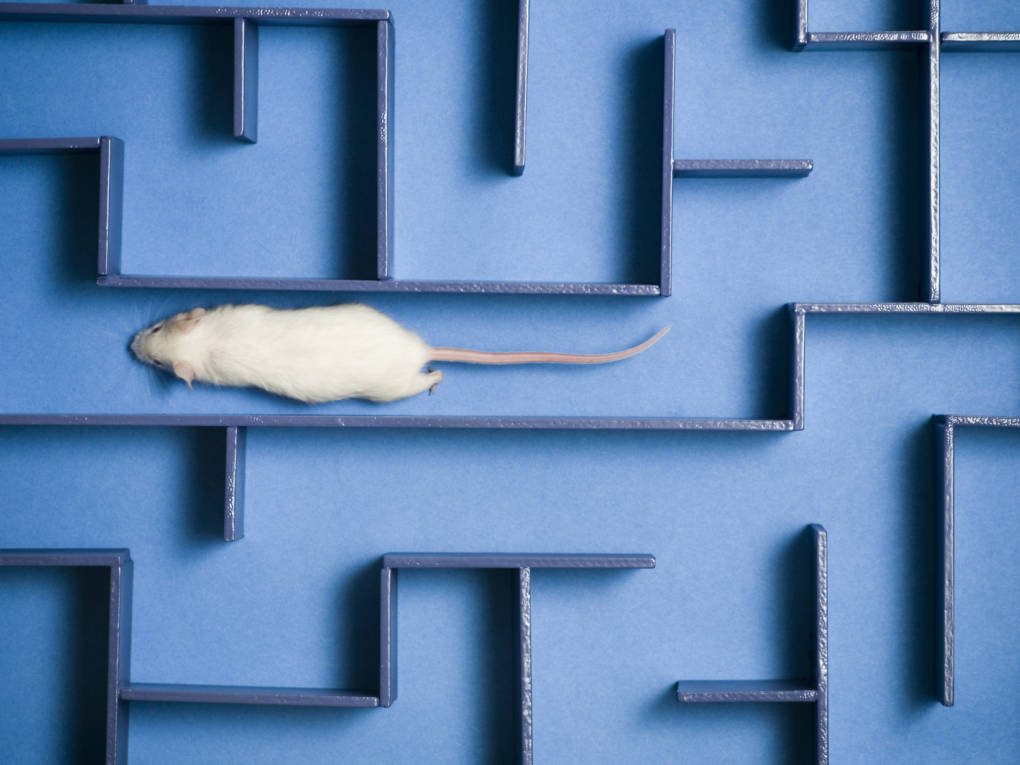
"caption": "Researchers found a protein in human umbilical cord blood plasma improved learning and memory in older mice, but there's no indication it would work in people.",
"description": "Researchers found a protein in human umbilical cord blood plasma improved learning and memory in older mice, but there's no indication it would work in people.",
"title": "Researchers found a protein in human umbilical cord blood plasma improved learning and memory in older mice, but there's no indication it would work in people.",
"credit": "Mike Kemp/Rubberball/Getty Images",
"status": "inherit",
"isLoading": false,
"fetchFailed": false
},
"futureofyou_152361": {
"type": "attachments",
"id": "futureofyou_152361",
"meta": {
"index": "attachments_1716263798",
"site": "futureofyou",
"id": "152361",
"found": true
},
"parent": 152359,
"imgSizes": {
"twentyfourteen-full-width": {
"file": "https://ww2.kqed.org/app/uploads/sites/13/2016/04/theranoshome-1038x576.jpg",
"width": 1038,
"mimeType": "image/jpeg",
"height": 576
},
"thumbnail": {
"file": "https://ww2.kqed.org/app/uploads/sites/13/2016/04/theranoshome-400x346.jpg",
"width": 400,
"mimeType": "image/jpeg",
"height": 346
},
"fd-sm": {
"file": "https://ww2.kqed.org/app/uploads/sites/13/2016/04/theranoshome-960x829.jpg",
"width": 960,
"mimeType": "image/jpeg",
"height": 829
},
"post-thumbnail": {
"file": "https://ww2.kqed.org/app/uploads/sites/13/2016/04/theranoshome-672x372.jpg",
"width": 672,
"mimeType": "image/jpeg",
"height": 372
},
"kqedFullSize": {
"file": "https://ww2.kqed.org/app/uploads/sites/13/2016/04/theranoshome-e1461624309161.jpg",
"width": 1920,
"height": 1658
},
"large": {
"file": "https://ww2.kqed.org/app/uploads/sites/13/2016/04/theranoshome-1180x1019.jpg",
"width": 1180,
"mimeType": "image/jpeg",
"height": 1019
},
"guest-author-96": {
"file": "https://ww2.kqed.org/app/uploads/sites/13/2016/04/theranoshome-96x96.jpg",
"width": 96,
"mimeType": "image/jpeg",
"height": 96
},
"medium": {
"file": "https://ww2.kqed.org/app/uploads/sites/13/2016/04/theranoshome-695x600.jpg",
"width": 695,
"mimeType": "image/jpeg",
"height": 600
},
"guest-author-64": {
"file": "https://ww2.kqed.org/app/uploads/sites/13/2016/04/theranoshome-64x64.jpg",
"width": 64,
"mimeType": "image/jpeg",
"height": 64
},
"guest-author-32": {
"file": "https://ww2.kqed.org/app/uploads/sites/13/2016/04/theranoshome-32x32.jpg",
"width": 32,
"mimeType": "image/jpeg",
"height": 32
},
"fd-lrg": {
"file": "https://ww2.kqed.org/app/uploads/sites/13/2016/04/theranoshome-1920x1658.jpg",
"width": 1920,
"mimeType": "image/jpeg",
"height": 1658
},
"fd-med": {
"file": "https://ww2.kqed.org/app/uploads/sites/13/2016/04/theranoshome-1180x1019.jpg",
"width": 1180,
"mimeType": "image/jpeg",
"height": 1019
},
"detail": {
"file": "https://ww2.kqed.org/app/uploads/sites/13/2016/04/theranoshome-75x75.jpg",
"width": 75,
"mimeType": "image/jpeg",
"height": 75
},
"medium_large": {
"file": "https://ww2.kqed.org/app/uploads/sites/13/2016/04/theranoshome-768x663.jpg",
"width": 768,
"mimeType": "image/jpeg",
"height": 663
},
"guest-author-128": {
"file": "https://ww2.kqed.org/app/uploads/sites/13/2016/04/theranoshome-128x128.jpg",
"width": 128,
"mimeType": "image/jpeg",
"height": 128
}
},
"publishDate": 1461624188,
"modified": 1461625314,
"caption": null,
"description": null,
"title": "theranoshome",
"credit": "Photo by Steve Jurvetson/Flickr",
"status": "inherit",
"isLoading": false,
"fetchFailed": false
},
"futureofyou_368188": {
"type": "attachments",
"id": "futureofyou_368188",
"meta": {
"index": "attachments_1716263798",
"site": "futureofyou",
"id": "368188",
"found": true
},
"parent": 368185,
"imgSizes": {
"small": {
"file": "https://ww2.kqed.org/app/uploads/sites/13/2017/04/dna-520x390.jpg",
"width": 520,
"mimeType": "image/jpeg",
"height": 390
},
"twentyfourteen-full-width": {
"file": "https://ww2.kqed.org/app/uploads/sites/13/2017/04/dna-1038x576.jpg",
"width": 1038,
"mimeType": "image/jpeg",
"height": 576
},
"thumbnail": {
"file": "https://ww2.kqed.org/app/uploads/sites/13/2017/04/dna-160x120.jpg",
"width": 160,
"mimeType": "image/jpeg",
"height": 120
},
"fd-sm": {
"file": "https://ww2.kqed.org/app/uploads/sites/13/2017/04/dna-960x720.jpg",
"width": 960,
"mimeType": "image/jpeg",
"height": 720
},
"post-thumbnail": {
"file": "https://ww2.kqed.org/app/uploads/sites/13/2017/04/dna-672x372.jpg",
"width": 672,
"mimeType": "image/jpeg",
"height": 372
},
"xsmall": {
"file": "https://ww2.kqed.org/app/uploads/sites/13/2017/04/dna-375x281.jpg",
"width": 375,
"mimeType": "image/jpeg",
"height": 281
},
"kqedFullSize": {
"file": "https://ww2.kqed.org/app/uploads/sites/13/2017/04/dna.jpg",
"width": 1200,
"height": 900
},
"large": {
"file": "https://ww2.kqed.org/app/uploads/sites/13/2017/04/dna-1020x765.jpg",
"width": 1020,
"mimeType": "image/jpeg",
"height": 765
},
"xlarge": {
"file": "https://ww2.kqed.org/app/uploads/sites/13/2017/04/dna-1180x885.jpg",
"width": 1180,
"mimeType": "image/jpeg",
"height": 885
},
"guest-author-50": {
"file": "https://ww2.kqed.org/app/uploads/sites/13/2017/04/dna-50x50.jpg",
"width": 50,
"mimeType": "image/jpeg",
"height": 50
},
"guest-author-96": {
"file": "https://ww2.kqed.org/app/uploads/sites/13/2017/04/dna-96x96.jpg",
"width": 96,
"mimeType": "image/jpeg",
"height": 96
},
"medium": {
"file": "https://ww2.kqed.org/app/uploads/sites/13/2017/04/dna-800x600.jpg",
"width": 800,
"mimeType": "image/jpeg",
"height": 600
},
"guest-author-64": {
"file": "https://ww2.kqed.org/app/uploads/sites/13/2017/04/dna-64x64.jpg",
"width": 64,
"mimeType": "image/jpeg",
"height": 64
},
"guest-author-32": {
"file": "https://ww2.kqed.org/app/uploads/sites/13/2017/04/dna-32x32.jpg",
"width": 32,
"mimeType": "image/jpeg",
"height": 32
},
"fd-med": {
"file": "https://ww2.kqed.org/app/uploads/sites/13/2017/04/dna-1180x885.jpg",
"width": 1180,
"mimeType": "image/jpeg",
"height": 885
},
"detail": {
"file": "https://ww2.kqed.org/app/uploads/sites/13/2017/04/dna-150x150.jpg",
"width": 150,
"mimeType": "image/jpeg",
"height": 150
},
"medium_large": {
"file": "https://ww2.kqed.org/app/uploads/sites/13/2017/04/dna-768x576.jpg",
"width": 768,
"mimeType": "image/jpeg",
"height": 576
},
"guest-author-128": {
"file": "https://ww2.kqed.org/app/uploads/sites/13/2017/04/dna-128x128.jpg",
"width": 128,
"mimeType": "image/jpeg",
"height": 128
},
"xxsmall": {
"file": "https://ww2.kqed.org/app/uploads/sites/13/2017/04/dna-240x180.jpg",
"width": 240,
"mimeType": "image/jpeg",
"height": 180
}
},
"publishDate": 1491585005,
"modified": 1491586281,
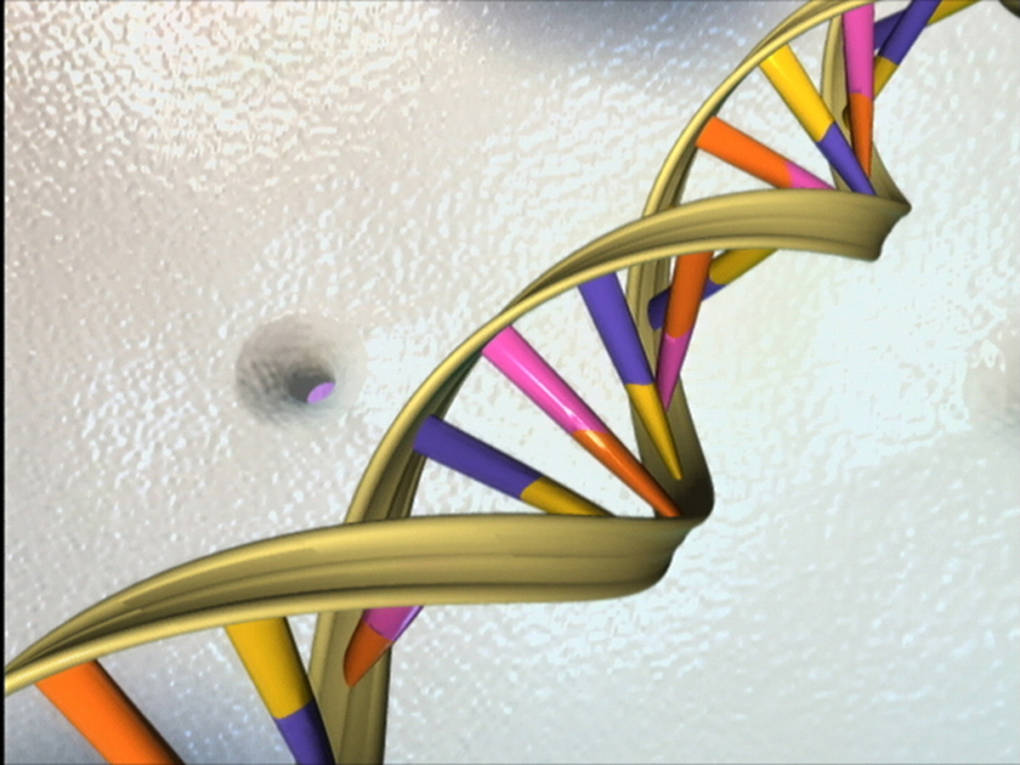
"caption": "DNA double helix",
"description": null,
"title": "DNA Double Helix",
"credit": "\u003ca href=\"https://www.genome.gov/\">National Human Genome Research Institute\u003c/a>, National Institutes of Health",
"status": "inherit",
"isLoading": false,
"fetchFailed": false
},
"futureofyou_366987": {
"type": "attachments",
"id": "futureofyou_366987",
"meta": {
"index": "attachments_1716263798",
"site": "futureofyou",
"id": "366987",
"found": true
},
"parent": 366169,
"imgSizes": {
"small": {
"file": "https://ww2.kqed.org/app/uploads/sites/13/2017/04/girl-with-electrodes-520x325.png",
"width": 520,
"mimeType": "image/png",
"height": 325
},
"twentyfourteen-full-width": {
"file": "https://ww2.kqed.org/app/uploads/sites/13/2017/04/girl-with-electrodes-1038x576.png",
"width": 1038,
"mimeType": "image/png",
"height": 576
},
"thumbnail": {
"file": "https://ww2.kqed.org/app/uploads/sites/13/2017/04/girl-with-electrodes-160x100.png",
"width": 160,
"mimeType": "image/png",
"height": 100
},
"fd-sm": {
"file": "https://ww2.kqed.org/app/uploads/sites/13/2017/04/girl-with-electrodes-960x600.png",
"width": 960,
"mimeType": "image/png",
"height": 600
},
"post-thumbnail": {
"file": "https://ww2.kqed.org/app/uploads/sites/13/2017/04/girl-with-electrodes-672x372.png",
"width": 672,
"mimeType": "image/png",
"height": 372
},
"xsmall": {
"file": "https://ww2.kqed.org/app/uploads/sites/13/2017/04/girl-with-electrodes-375x234.png",
"width": 375,
"mimeType": "image/png",
"height": 234
},
"kqedFullSize": {
"file": "https://ww2.kqed.org/app/uploads/sites/13/2017/04/girl-with-electrodes-e1491497217789.png",
"width": 1920,
"height": 1200
},
"large": {
"file": "https://ww2.kqed.org/app/uploads/sites/13/2017/04/girl-with-electrodes-1020x638.png",
"width": 1020,
"mimeType": "image/png",
"height": 638
},
"xlarge": {
"file": "https://ww2.kqed.org/app/uploads/sites/13/2017/04/girl-with-electrodes-1180x738.png",
"width": 1180,
"mimeType": "image/png",
"height": 738
},
"guest-author-50": {
"file": "https://ww2.kqed.org/app/uploads/sites/13/2017/04/girl-with-electrodes-50x50.png",
"width": 50,
"mimeType": "image/png",
"height": 50
},
"guest-author-96": {
"file": "https://ww2.kqed.org/app/uploads/sites/13/2017/04/girl-with-electrodes-96x96.png",
"width": 96,
"mimeType": "image/png",
"height": 96
},
"medium": {
"file": "https://ww2.kqed.org/app/uploads/sites/13/2017/04/girl-with-electrodes-800x500.png",
"width": 800,
"mimeType": "image/png",
"height": 500
},
"guest-author-64": {
"file": "https://ww2.kqed.org/app/uploads/sites/13/2017/04/girl-with-electrodes-64x64.png",
"width": 64,
"mimeType": "image/png",
"height": 64
},
"guest-author-32": {
"file": "https://ww2.kqed.org/app/uploads/sites/13/2017/04/girl-with-electrodes-32x32.png",
"width": 32,
"mimeType": "image/png",
"height": 32
},
"fd-lrg": {
"file": "https://ww2.kqed.org/app/uploads/sites/13/2017/04/girl-with-electrodes-1920x1200.png",
"width": 1920,
"mimeType": "image/png",
"height": 1200
},
"fd-med": {
"file": "https://ww2.kqed.org/app/uploads/sites/13/2017/04/girl-with-electrodes-1180x738.png",
"width": 1180,
"mimeType": "image/png",
"height": 738
},
"full-width": {
"file": "https://ww2.kqed.org/app/uploads/sites/13/2017/04/girl-with-electrodes-1920x1200.png",
"width": 1920,
"mimeType": "image/png",
"height": 1200
},
"detail": {
"file": "https://ww2.kqed.org/app/uploads/sites/13/2017/04/girl-with-electrodes-150x150.png",
"width": 150,
"mimeType": "image/png",
"height": 150
},
"medium_large": {
"file": "https://ww2.kqed.org/app/uploads/sites/13/2017/04/girl-with-electrodes-768x480.png",
"width": 768,
"mimeType": "image/png",
"height": 480
},
"guest-author-128": {
"file": "https://ww2.kqed.org/app/uploads/sites/13/2017/04/girl-with-electrodes-128x128.png",
"width": 128,
"mimeType": "image/png",
"height": 128
},
"xxsmall": {
"file": "https://ww2.kqed.org/app/uploads/sites/13/2017/04/girl-with-electrodes-240x150.png",
"width": 240,
"mimeType": "image/png",
"height": 150
}
},
"publishDate": 1491428842,
"modified": 1491428972,
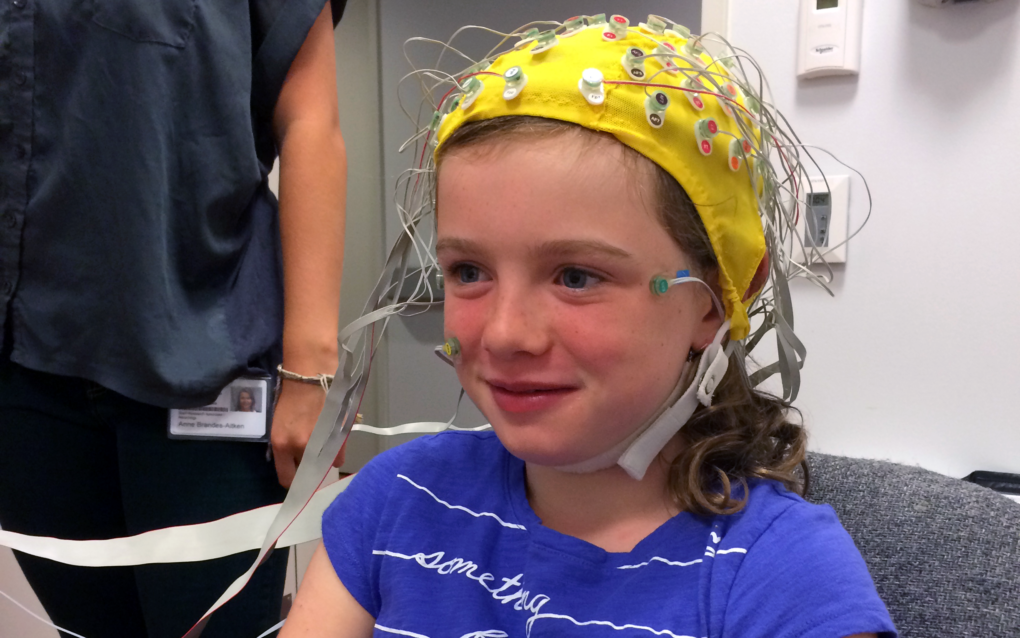
"caption": "Katherine Stevenson, 8, has her brain activity measured by EEG in a UCSF experiment. ",
"description": "Katherine Stevenson, 8, has her brain activity measured by EEG in a UCSF experiment. ",
"title": "girl-with-electrodes",
"credit": "Kori Stevenson",
"status": "inherit",
"isLoading": false,
"fetchFailed": false
},
"futureofyou_357751": {
"type": "attachments",
"id": "futureofyou_357751",
"meta": {
"index": "attachments_1716263798",
"site": "futureofyou",
"id": "357751",
"found": true
},
"parent": 357750,
"imgSizes": {
"small": {
"file": "https://ww2.kqed.org/app/uploads/sites/13/2017/03/depression-mind_enl-f6308a6dde09565c629e170fab042ee61181ed7a-520x292.jpg",
"width": 520,
"mimeType": "image/jpeg",
"height": 292
},
"twentyfourteen-full-width": {
"file": "https://ww2.kqed.org/app/uploads/sites/13/2017/03/depression-mind_enl-f6308a6dde09565c629e170fab042ee61181ed7a-1038x576.jpg",
"width": 1038,
"mimeType": "image/jpeg",
"height": 576
},
"thumbnail": {
"file": "https://ww2.kqed.org/app/uploads/sites/13/2017/03/depression-mind_enl-f6308a6dde09565c629e170fab042ee61181ed7a-160x90.jpg",
"width": 160,
"mimeType": "image/jpeg",
"height": 90
},
"fd-sm": {
"file": "https://ww2.kqed.org/app/uploads/sites/13/2017/03/depression-mind_enl-f6308a6dde09565c629e170fab042ee61181ed7a-960x539.jpg",
"width": 960,
"mimeType": "image/jpeg",
"height": 539
},
"post-thumbnail": {
"file": "https://ww2.kqed.org/app/uploads/sites/13/2017/03/depression-mind_enl-f6308a6dde09565c629e170fab042ee61181ed7a-672x372.jpg",
"width": 672,
"mimeType": "image/jpeg",
"height": 372
},
"xsmall": {
"file": "https://ww2.kqed.org/app/uploads/sites/13/2017/03/depression-mind_enl-f6308a6dde09565c629e170fab042ee61181ed7a-375x210.jpg",
"width": 375,
"mimeType": "image/jpeg",
"height": 210
},
"kqedFullSize": {
"file": "https://ww2.kqed.org/app/uploads/sites/13/2017/03/depression-mind_enl-f6308a6dde09565c629e170fab042ee61181ed7a.jpg",
"width": 1600,
"height": 898
},
"large": {
"file": "https://ww2.kqed.org/app/uploads/sites/13/2017/03/depression-mind_enl-f6308a6dde09565c629e170fab042ee61181ed7a-1020x572.jpg",
"width": 1020,
"mimeType": "image/jpeg",
"height": 572
},
"xlarge": {
"file": "https://ww2.kqed.org/app/uploads/sites/13/2017/03/depression-mind_enl-f6308a6dde09565c629e170fab042ee61181ed7a-1180x662.jpg",
"width": 1180,
"mimeType": "image/jpeg",
"height": 662
},
"guest-author-50": {
"file": "https://ww2.kqed.org/app/uploads/sites/13/2017/03/depression-mind_enl-f6308a6dde09565c629e170fab042ee61181ed7a-50x50.jpg",
"width": 50,
"mimeType": "image/jpeg",
"height": 50
},
"guest-author-96": {
"file": "https://ww2.kqed.org/app/uploads/sites/13/2017/03/depression-mind_enl-f6308a6dde09565c629e170fab042ee61181ed7a-96x96.jpg",
"width": 96,
"mimeType": "image/jpeg",
"height": 96
},
"medium": {
"file": "https://ww2.kqed.org/app/uploads/sites/13/2017/03/depression-mind_enl-f6308a6dde09565c629e170fab042ee61181ed7a-800x449.jpg",
"width": 800,
"mimeType": "image/jpeg",
"height": 449
},
"guest-author-64": {
"file": "https://ww2.kqed.org/app/uploads/sites/13/2017/03/depression-mind_enl-f6308a6dde09565c629e170fab042ee61181ed7a-64x64.jpg",
"width": 64,
"mimeType": "image/jpeg",
"height": 64
},
"guest-author-32": {
"file": "https://ww2.kqed.org/app/uploads/sites/13/2017/03/depression-mind_enl-f6308a6dde09565c629e170fab042ee61181ed7a-32x32.jpg",
"width": 32,
"mimeType": "image/jpeg",
"height": 32
},
"fd-med": {
"file": "https://ww2.kqed.org/app/uploads/sites/13/2017/03/depression-mind_enl-f6308a6dde09565c629e170fab042ee61181ed7a-1180x662.jpg",
"width": 1180,
"mimeType": "image/jpeg",
"height": 662
},
"detail": {
"file": "https://ww2.kqed.org/app/uploads/sites/13/2017/03/depression-mind_enl-f6308a6dde09565c629e170fab042ee61181ed7a-150x150.jpg",
"width": 150,
"mimeType": "image/jpeg",
"height": 150
},
"medium_large": {
"file": "https://ww2.kqed.org/app/uploads/sites/13/2017/03/depression-mind_enl-f6308a6dde09565c629e170fab042ee61181ed7a-768x431.jpg",
"width": 768,
"mimeType": "image/jpeg",
"height": 431
},
"guest-author-128": {
"file": "https://ww2.kqed.org/app/uploads/sites/13/2017/03/depression-mind_enl-f6308a6dde09565c629e170fab042ee61181ed7a-128x128.jpg",
"width": 128,
"mimeType": "image/jpeg",
"height": 128
},
"xxsmall": {
"file": "https://ww2.kqed.org/app/uploads/sites/13/2017/03/depression-mind_enl-f6308a6dde09565c629e170fab042ee61181ed7a-240x135.jpg",
"width": 240,
"mimeType": "image/jpeg",
"height": 135
}
},
"publishDate": 1490049837,
"modified": 1490909635,
"caption": null,
"description": "More doctors are using ketamine to treat severe depression in patients who haven't responded to other treatments.",
"title": "More doctors are using ketamine to treat severe depression in patients who haven't responded to other treatments.",
"credit": "chuwy/Getty Images",
"status": "inherit",
"isLoading": false,
"fetchFailed": false
},
"futureofyou_360024": {
"type": "attachments",
"id": "futureofyou_360024",
"meta": {
"index": "attachments_1716263798",
"site": "futureofyou",
"id": "360024",
"found": true
},
"parent": 359388,
"imgSizes": {
"small": {
"file": "https://ww2.kqed.org/app/uploads/sites/13/2017/03/telomeres-520x386.jpg",
"width": 520,
"mimeType": "image/jpeg",
"height": 386
},
"twentyfourteen-full-width": {
"file": "https://ww2.kqed.org/app/uploads/sites/13/2017/03/telomeres-1038x576.jpg",
"width": 1038,
"mimeType": "image/jpeg",
"height": 576
},
"thumbnail": {
"file": "https://ww2.kqed.org/app/uploads/sites/13/2017/03/telomeres-160x119.jpg",
"width": 160,
"mimeType": "image/jpeg",
"height": 119
},
"fd-sm": {
"file": "https://ww2.kqed.org/app/uploads/sites/13/2017/03/telomeres-960x713.jpg",
"width": 960,
"mimeType": "image/jpeg",
"height": 713
},
"post-thumbnail": {
"file": "https://ww2.kqed.org/app/uploads/sites/13/2017/03/telomeres-672x372.jpg",
"width": 672,
"mimeType": "image/jpeg",
"height": 372
},
"xsmall": {
"file": "https://ww2.kqed.org/app/uploads/sites/13/2017/03/telomeres-375x278.jpg",
"width": 375,
"mimeType": "image/jpeg",
"height": 278
},
"kqedFullSize": {
"file": "https://ww2.kqed.org/app/uploads/sites/13/2017/03/telomeres.jpg",
"width": 1920,
"height": 1425
},
"large": {
"file": "https://ww2.kqed.org/app/uploads/sites/13/2017/03/telomeres-1020x757.jpg",
"width": 1020,
"mimeType": "image/jpeg",
"height": 757
},
"xlarge": {
"file": "https://ww2.kqed.org/app/uploads/sites/13/2017/03/telomeres-1180x876.jpg",
"width": 1180,
"mimeType": "image/jpeg",
"height": 876
},
"guest-author-50": {
"file": "https://ww2.kqed.org/app/uploads/sites/13/2017/03/telomeres-50x50.jpg",
"width": 50,
"mimeType": "image/jpeg",
"height": 50
},
"guest-author-96": {
"file": "https://ww2.kqed.org/app/uploads/sites/13/2017/03/telomeres-96x96.jpg",
"width": 96,
"mimeType": "image/jpeg",
"height": 96
},
"medium": {
"file": "https://ww2.kqed.org/app/uploads/sites/13/2017/03/telomeres-800x594.jpg",
"width": 800,
"mimeType": "image/jpeg",
"height": 594
},
"guest-author-64": {
"file": "https://ww2.kqed.org/app/uploads/sites/13/2017/03/telomeres-64x64.jpg",
"width": 64,
"mimeType": "image/jpeg",
"height": 64
},
"guest-author-32": {
"file": "https://ww2.kqed.org/app/uploads/sites/13/2017/03/telomeres-32x32.jpg",
"width": 32,
"mimeType": "image/jpeg",
"height": 32
},
"fd-lrg": {
"file": "https://ww2.kqed.org/app/uploads/sites/13/2017/03/telomeres-1920x1425.jpg",
"width": 1920,
"mimeType": "image/jpeg",
"height": 1425
},
"fd-med": {
"file": "https://ww2.kqed.org/app/uploads/sites/13/2017/03/telomeres-1180x876.jpg",
"width": 1180,
"mimeType": "image/jpeg",
"height": 876
},
"full-width": {
"file": "https://ww2.kqed.org/app/uploads/sites/13/2017/03/telomeres-1920x1425.jpg",
"width": 1920,
"mimeType": "image/jpeg",
"height": 1425
},
"detail": {
"file": "https://ww2.kqed.org/app/uploads/sites/13/2017/03/telomeres-150x150.jpg",
"width": 150,
"mimeType": "image/jpeg",
"height": 150
},
"medium_large": {
"file": "https://ww2.kqed.org/app/uploads/sites/13/2017/03/telomeres-768x570.jpg",
"width": 768,
"mimeType": "image/jpeg",
"height": 570
},
"guest-author-128": {
"file": "https://ww2.kqed.org/app/uploads/sites/13/2017/03/telomeres-128x128.jpg",
"width": 128,
"mimeType": "image/jpeg",
"height": 128
},
"xxsmall": {
"file": "https://ww2.kqed.org/app/uploads/sites/13/2017/03/telomeres-240x178.jpg",
"width": 240,
"mimeType": "image/jpeg",
"height": 178
}
},
"publishDate": 1490380863,
"modified": 1490380911,
"caption": "The ends of chromosomes are protected by specific DNA sequences called telomeres, visualized here in red. This image shows that some chromosomes are depleted of telomeres, which can result in abnormal cell division and cancer.",
"description": null,
"title": "telomeres",
"credit": "NIH",
"status": "inherit",
"isLoading": false,
"fetchFailed": false
},
"futureofyou_242691": {
"type": "attachments",
"id": "futureofyou_242691",
"meta": {
"index": "attachments_1716263798",
"site": "futureofyou",
"id": "242691",
"found": true
},
"parent": 242687,
"imgSizes": {
"twentyfourteen-full-width": {
"file": "https://ww2.kqed.org/app/uploads/sites/13/2016/09/Stem-Cell-1038x576.jpg",
"width": 1038,
"mimeType": "image/jpeg",
"height": 576
},
"thumbnail": {
"file": "https://ww2.kqed.org/app/uploads/sites/13/2016/09/Stem-Cell-400x276.jpg",
"width": 400,
"mimeType": "image/jpeg",
"height": 276
},
"fd-sm": {
"file": "https://ww2.kqed.org/app/uploads/sites/13/2016/09/Stem-Cell-960x661.jpg",
"width": 960,
"mimeType": "image/jpeg",
"height": 661
},
"post-thumbnail": {
"file": "https://ww2.kqed.org/app/uploads/sites/13/2016/09/Stem-Cell-672x372.jpg",
"width": 672,
"mimeType": "image/jpeg",
"height": 372
},
"kqedFullSize": {
"file": "https://ww2.kqed.org/app/uploads/sites/13/2016/09/Stem-Cell-e1473526384488.jpg",
"width": 1920,
"height": 1322
},
"large": {
"file": "https://ww2.kqed.org/app/uploads/sites/13/2016/09/Stem-Cell-1180x813.jpg",
"width": 1180,
"mimeType": "image/jpeg",
"height": 813
},
"guest-author-50": {
"file": "https://ww2.kqed.org/app/uploads/sites/13/2016/09/Stem-Cell-50x50.jpg",
"width": 50,
"mimeType": "image/jpeg",
"height": 50
},
"guest-author-96": {
"file": "https://ww2.kqed.org/app/uploads/sites/13/2016/09/Stem-Cell-96x96.jpg",
"width": 96,
"mimeType": "image/jpeg",
"height": 96
},
"medium": {
"file": "https://ww2.kqed.org/app/uploads/sites/13/2016/09/Stem-Cell-800x551.jpg",
"width": 800,
"mimeType": "image/jpeg",
"height": 551
},
"guest-author-64": {
"file": "https://ww2.kqed.org/app/uploads/sites/13/2016/09/Stem-Cell-64x64.jpg",
"width": 64,
"mimeType": "image/jpeg",
"height": 64
},
"guest-author-32": {
"file": "https://ww2.kqed.org/app/uploads/sites/13/2016/09/Stem-Cell-32x32.jpg",
"width": 32,
"mimeType": "image/jpeg",
"height": 32
},
"fd-lrg": {
"file": "https://ww2.kqed.org/app/uploads/sites/13/2016/09/Stem-Cell-1920x1322.jpg",
"width": 1920,
"mimeType": "image/jpeg",
"height": 1322
},
"fd-med": {
"file": "https://ww2.kqed.org/app/uploads/sites/13/2016/09/Stem-Cell-1180x813.jpg",
"width": 1180,
"mimeType": "image/jpeg",
"height": 813
},
"detail": {
"file": "https://ww2.kqed.org/app/uploads/sites/13/2016/09/Stem-Cell-150x150.jpg",
"width": 150,
"mimeType": "image/jpeg",
"height": 150
},
"medium_large": {
"file": "https://ww2.kqed.org/app/uploads/sites/13/2016/09/Stem-Cell-768x529.jpg",
"width": 768,
"mimeType": "image/jpeg",
"height": 529
},
"guest-author-128": {
"file": "https://ww2.kqed.org/app/uploads/sites/13/2016/09/Stem-Cell-128x128.jpg",
"width": 128,
"mimeType": "image/jpeg",
"height": 128
}
},
"publishDate": 1473526343,
"modified": 1489697206,
"caption": "Kris Boesen in 2016, after doctors at Keck Medical Center of USC injected 10 million stem cells into his damaged spine as part of a multisite clinical trial.",
"description": "Shortly after doctors at Keck Medical Center of USC injected 10 million stem cells into his spine as part of a multi-site clinical trial, Kris Boesen began to show signs of improvement.",
"title": "Stem Cell",
"credit": "Greg Iger/Keck Medicine of USC)",
"status": "inherit",
"isLoading": false,
"fetchFailed": false
},
"futureofyou_352337": {
"type": "attachments",
"id": "futureofyou_352337",
"meta": {
"index": "attachments_1716263798",
"site": "futureofyou",
"id": "352337",
"found": true
},
"parent": 351698,
"imgSizes": {
"small": {
"file": "https://ww2.kqed.org/app/uploads/sites/13/2017/03/27125551111_09d5b37fa4_k-520x433.jpg",
"width": 520,
"mimeType": "image/jpeg",
"height": 433
},
"twentyfourteen-full-width": {
"file": "https://ww2.kqed.org/app/uploads/sites/13/2017/03/27125551111_09d5b37fa4_k-1038x576.jpg",
"width": 1038,
"mimeType": "image/jpeg",
"height": 576
},
"thumbnail": {
"file": "https://ww2.kqed.org/app/uploads/sites/13/2017/03/27125551111_09d5b37fa4_k-160x133.jpg",
"width": 160,
"mimeType": "image/jpeg",
"height": 133
},
"fd-sm": {
"file": "https://ww2.kqed.org/app/uploads/sites/13/2017/03/27125551111_09d5b37fa4_k-960x799.jpg",
"width": 960,
"mimeType": "image/jpeg",
"height": 799
},
"post-thumbnail": {
"file": "https://ww2.kqed.org/app/uploads/sites/13/2017/03/27125551111_09d5b37fa4_k-672x372.jpg",
"width": 672,
"mimeType": "image/jpeg",
"height": 372
},
"xsmall": {
"file": "https://ww2.kqed.org/app/uploads/sites/13/2017/03/27125551111_09d5b37fa4_k-375x312.jpg",
"width": 375,
"mimeType": "image/jpeg",
"height": 312
},
"kqedFullSize": {
"file": "https://ww2.kqed.org/app/uploads/sites/13/2017/03/27125551111_09d5b37fa4_k-e1489179995433.jpg",
"width": 1920,
"height": 1598
},
"large": {
"file": "https://ww2.kqed.org/app/uploads/sites/13/2017/03/27125551111_09d5b37fa4_k-1020x849.jpg",
"width": 1020,
"mimeType": "image/jpeg",
"height": 849
},
"xlarge": {
"file": "https://ww2.kqed.org/app/uploads/sites/13/2017/03/27125551111_09d5b37fa4_k-1180x982.jpg",
"width": 1180,
"mimeType": "image/jpeg",
"height": 982
},
"guest-author-50": {
"file": "https://ww2.kqed.org/app/uploads/sites/13/2017/03/27125551111_09d5b37fa4_k-50x50.jpg",
"width": 50,
"mimeType": "image/jpeg",
"height": 50
},
"guest-author-96": {
"file": "https://ww2.kqed.org/app/uploads/sites/13/2017/03/27125551111_09d5b37fa4_k-96x96.jpg",
"width": 96,
"mimeType": "image/jpeg",
"height": 96
},
"medium": {
"file": "https://ww2.kqed.org/app/uploads/sites/13/2017/03/27125551111_09d5b37fa4_k-800x666.jpg",
"width": 800,
"mimeType": "image/jpeg",
"height": 666
},
"guest-author-64": {
"file": "https://ww2.kqed.org/app/uploads/sites/13/2017/03/27125551111_09d5b37fa4_k-64x64.jpg",
"width": 64,
"mimeType": "image/jpeg",
"height": 64
},
"guest-author-32": {
"file": "https://ww2.kqed.org/app/uploads/sites/13/2017/03/27125551111_09d5b37fa4_k-32x32.jpg",
"width": 32,
"mimeType": "image/jpeg",
"height": 32
},
"fd-lrg": {
"file": "https://ww2.kqed.org/app/uploads/sites/13/2017/03/27125551111_09d5b37fa4_k-1920x1598.jpg",
"width": 1920,
"mimeType": "image/jpeg",
"height": 1598
},
"fd-med": {
"file": "https://ww2.kqed.org/app/uploads/sites/13/2017/03/27125551111_09d5b37fa4_k-1180x982.jpg",
"width": 1180,
"mimeType": "image/jpeg",
"height": 982
},
"full-width": {
"file": "https://ww2.kqed.org/app/uploads/sites/13/2017/03/27125551111_09d5b37fa4_k-1920x1598.jpg",
"width": 1920,
"mimeType": "image/jpeg",
"height": 1598
},
"detail": {
"file": "https://ww2.kqed.org/app/uploads/sites/13/2017/03/27125551111_09d5b37fa4_k-150x150.jpg",
"width": 150,
"mimeType": "image/jpeg",
"height": 150
},
"medium_large": {
"file": "https://ww2.kqed.org/app/uploads/sites/13/2017/03/27125551111_09d5b37fa4_k-768x639.jpg",
"width": 768,
"mimeType": "image/jpeg",
"height": 639
},
"guest-author-128": {
"file": "https://ww2.kqed.org/app/uploads/sites/13/2017/03/27125551111_09d5b37fa4_k-128x128.jpg",
"width": 128,
"mimeType": "image/jpeg",
"height": 128
},
"xxsmall": {
"file": "https://ww2.kqed.org/app/uploads/sites/13/2017/03/27125551111_09d5b37fa4_k-240x200.jpg",
"width": 240,
"mimeType": "image/jpeg",
"height": 200
}
},
"publishDate": 1489179101,
"modified": 1489766776,
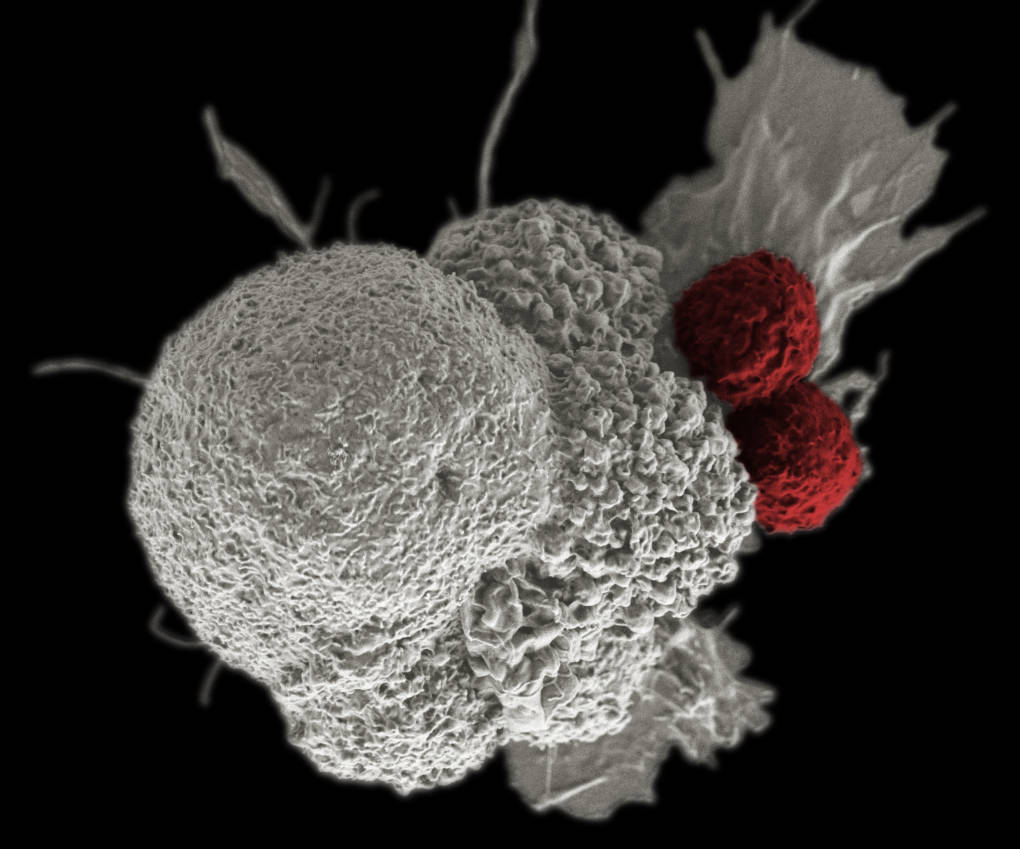
"caption": "Scanning electron micrograph of an oral squamous cancer cell (white) being attacked by two cytotoxic T cells (red), part of a natural immune response.",
"description": null,
"title": "27125551111_09d5b37fa4_k",
"credit": "National Institutes of Health",
"status": "inherit",
"isLoading": false,
"fetchFailed": false
},
"futureofyou_99980": {
"type": "attachments",
"id": "futureofyou_99980",
"meta": {
"index": "attachments_1716263798",
"site": "futureofyou",
"id": "99980",
"found": true
},
"parent": 99937,
"imgSizes": {
"twentyfourteen-full-width": {
"file": "https://ww2.kqed.org/app/uploads/sites/13/2016/01/BidenDavos-1038x576.jpg",
"width": 1038,
"mimeType": "image/jpeg",
"height": 576
},
"thumbnail": {
"file": "https://ww2.kqed.org/app/uploads/sites/13/2016/01/BidenDavos-400x267.jpg",
"width": 400,
"mimeType": "image/jpeg",
"height": 267
},
"fd-sm": {
"file": "https://ww2.kqed.org/app/uploads/sites/13/2016/01/BidenDavos-960x640.jpg",
"width": 960,
"mimeType": "image/jpeg",
"height": 640
},
"post-thumbnail": {
"file": "https://ww2.kqed.org/app/uploads/sites/13/2016/01/BidenDavos-672x372.jpg",
"width": 672,
"mimeType": "image/jpeg",
"height": 372
},
"kqedFullSize": {
"file": "https://ww2.kqed.org/app/uploads/sites/13/2016/01/BidenDavos-e1453227243113.jpg",
"width": 1920,
"height": 1280
},
"large": {
"file": "https://ww2.kqed.org/app/uploads/sites/13/2016/01/BidenDavos-1180x787.jpg",
"width": 1180,
"mimeType": "image/jpeg",
"height": 787
},
"guest-author-96": {
"file": "https://ww2.kqed.org/app/uploads/sites/13/2016/01/BidenDavos-96x96.jpg",
"width": 96,
"mimeType": "image/jpeg",
"height": 96
},
"medium": {
"file": "https://ww2.kqed.org/app/uploads/sites/13/2016/01/BidenDavos-800x533.jpg",
"width": 800,
"mimeType": "image/jpeg",
"height": 533
},
"guest-author-64": {
"file": "https://ww2.kqed.org/app/uploads/sites/13/2016/01/BidenDavos-64x64.jpg",
"width": 64,
"mimeType": "image/jpeg",
"height": 64
},
"guest-author-32": {
"file": "https://ww2.kqed.org/app/uploads/sites/13/2016/01/BidenDavos-32x32.jpg",
"width": 32,
"mimeType": "image/jpeg",
"height": 32
},
"fd-lrg": {
"file": "https://ww2.kqed.org/app/uploads/sites/13/2016/01/BidenDavos-1920x1280.jpg",
"width": 1920,
"mimeType": "image/jpeg",
"height": 1280
},
"fd-med": {
"file": "https://ww2.kqed.org/app/uploads/sites/13/2016/01/BidenDavos-1180x787.jpg",
"width": 1180,
"mimeType": "image/jpeg",
"height": 787
},
"detail": {
"file": "https://ww2.kqed.org/app/uploads/sites/13/2016/01/BidenDavos-75x75.jpg",
"width": 75,
"mimeType": "image/jpeg",
"height": 75
},
"medium_large": {
"file": "https://ww2.kqed.org/app/uploads/sites/13/2016/01/BidenDavos-768x512.jpg",
"width": 768,
"mimeType": "image/jpeg",
"height": 512
},
"guest-author-128": {
"file": "https://ww2.kqed.org/app/uploads/sites/13/2016/01/BidenDavos-128x128.jpg",
"width": 128,
"mimeType": "image/jpeg",
"height": 128
}
},
"publishDate": 1453227233,
"modified": 1489447838,
"caption": "U.S Vice President Joe Biden during a session on the 'Cancer Mooshot' during the World Economic Forum annual meeting in Davos, Switzerland, on Jan. 19, 2016.",
"description": null,
"title": "SWITZERLAND-DAVOS-ECONOMY-POLITICS-MEET-WEF",
"credit": "FABRICE COFFRINI/AFP/Getty Images",
"status": "inherit",
"isLoading": false,
"fetchFailed": false
},
"futureofyou_353891": {
"type": "attachments",
"id": "futureofyou_353891",
"meta": {
"index": "attachments_1716263798",
"site": "futureofyou",
"id": "353891",
"found": true
},
"parent": 352304,
"imgSizes": {
"small": {
"file": "https://ww2.kqed.org/app/uploads/sites/13/2017/03/BacteriaImage_Blue_Mills-520x353.jpg",
"width": 520,
"mimeType": "image/jpeg",
"height": 353
},
"thumbnail": {
"file": "https://ww2.kqed.org/app/uploads/sites/13/2017/03/BacteriaImage_Blue_Mills-160x109.jpg",
"width": 160,
"mimeType": "image/jpeg",
"height": 109
},
"post-thumbnail": {
"file": "https://ww2.kqed.org/app/uploads/sites/13/2017/03/BacteriaImage_Blue_Mills-672x372.jpg",
"width": 672,
"mimeType": "image/jpeg",
"height": 372
},
"xsmall": {
"file": "https://ww2.kqed.org/app/uploads/sites/13/2017/03/BacteriaImage_Blue_Mills-375x255.jpg",
"width": 375,
"mimeType": "image/jpeg",
"height": 255
},
"kqedFullSize": {
"file": "https://ww2.kqed.org/app/uploads/sites/13/2017/03/BacteriaImage_Blue_Mills.jpg",
"width": 800,
"height": 543
},
"guest-author-50": {
"file": "https://ww2.kqed.org/app/uploads/sites/13/2017/03/BacteriaImage_Blue_Mills-50x50.jpg",
"width": 50,
"mimeType": "image/jpeg",
"height": 50
},
"guest-author-96": {
"file": "https://ww2.kqed.org/app/uploads/sites/13/2017/03/BacteriaImage_Blue_Mills-96x96.jpg",
"width": 96,
"mimeType": "image/jpeg",
"height": 96
},
"medium": {
"file": "https://ww2.kqed.org/app/uploads/sites/13/2017/03/BacteriaImage_Blue_Mills-800x543.jpg",
"width": 800,
"mimeType": "image/jpeg",
"height": 543
},
"guest-author-64": {
"file": "https://ww2.kqed.org/app/uploads/sites/13/2017/03/BacteriaImage_Blue_Mills-64x64.jpg",
"width": 64,
"mimeType": "image/jpeg",
"height": 64
},
"guest-author-32": {
"file": "https://ww2.kqed.org/app/uploads/sites/13/2017/03/BacteriaImage_Blue_Mills-32x32.jpg",
"width": 32,
"mimeType": "image/jpeg",
"height": 32
},
"detail": {
"file": "https://ww2.kqed.org/app/uploads/sites/13/2017/03/BacteriaImage_Blue_Mills-150x150.jpg",
"width": 150,
"mimeType": "image/jpeg",
"height": 150
},
"medium_large": {
"file": "https://ww2.kqed.org/app/uploads/sites/13/2017/03/BacteriaImage_Blue_Mills-768x521.jpg",
"width": 768,
"mimeType": "image/jpeg",
"height": 521
},
"guest-author-128": {
"file": "https://ww2.kqed.org/app/uploads/sites/13/2017/03/BacteriaImage_Blue_Mills-128x128.jpg",
"width": 128,
"mimeType": "image/jpeg",
"height": 128
},
"xxsmall": {
"file": "https://ww2.kqed.org/app/uploads/sites/13/2017/03/BacteriaImage_Blue_Mills-240x163.jpg",
"width": 240,
"mimeType": "image/jpeg",
"height": 163
}
},
"publishDate": 1489421696,
"modified": 1489424402,
"caption": "Bifidobacteria are found naturally in the intestines of humans and are also common in probiotic foods.",
"description": null,
"title": "BacteriaImage_Blue_Mills",
"credit": "David Mills/UC Davis",
"status": "inherit",
"isLoading": false,
"fetchFailed": false
},
"futureofyou_351159": {
"type": "attachments",
"id": "futureofyou_351159",
"meta": {
"index": "attachments_1716263798",
"site": "futureofyou",
"id": "351159",
"found": true
},
"parent": 351156,
"imgSizes": {
"small": {
"file": "https://ww2.kqed.org/app/uploads/sites/13/2017/03/memory-520x347.jpg",
"width": 520,
"mimeType": "image/jpeg",
"height": 347
},
"twentyfourteen-full-width": {
"file": "https://ww2.kqed.org/app/uploads/sites/13/2017/03/memory-1024x576.jpg",
"width": 1024,
"mimeType": "image/jpeg",
"height": 576
},
"thumbnail": {
"file": "https://ww2.kqed.org/app/uploads/sites/13/2017/03/memory-160x107.jpg",
"width": 160,
"mimeType": "image/jpeg",
"height": 107
},
"fd-sm": {
"file": "https://ww2.kqed.org/app/uploads/sites/13/2017/03/memory-960x640.jpg",
"width": 960,
"mimeType": "image/jpeg",
"height": 640
},
"post-thumbnail": {
"file": "https://ww2.kqed.org/app/uploads/sites/13/2017/03/memory-672x372.jpg",
"width": 672,
"mimeType": "image/jpeg",
"height": 372
},
"xsmall": {
"file": "https://ww2.kqed.org/app/uploads/sites/13/2017/03/memory-375x250.jpg",
"width": 375,
"mimeType": "image/jpeg",
"height": 250
},
"kqedFullSize": {
"file": "https://ww2.kqed.org/app/uploads/sites/13/2017/03/memory.jpg",
"width": 1024,
"height": 683
},
"large": {
"file": "https://ww2.kqed.org/app/uploads/sites/13/2017/03/memory-1020x680.jpg",
"width": 1020,
"mimeType": "image/jpeg",
"height": 680
},
"guest-author-50": {
"file": "https://ww2.kqed.org/app/uploads/sites/13/2017/03/memory-50x50.jpg",
"width": 50,
"mimeType": "image/jpeg",
"height": 50
},
"guest-author-96": {
"file": "https://ww2.kqed.org/app/uploads/sites/13/2017/03/memory-96x96.jpg",
"width": 96,
"mimeType": "image/jpeg",
"height": 96
},
"medium": {
"file": "https://ww2.kqed.org/app/uploads/sites/13/2017/03/memory-800x534.jpg",
"width": 800,
"mimeType": "image/jpeg",
"height": 534
},
"guest-author-64": {
"file": "https://ww2.kqed.org/app/uploads/sites/13/2017/03/memory-64x64.jpg",
"width": 64,
"mimeType": "image/jpeg",
"height": 64
},
"guest-author-32": {
"file": "https://ww2.kqed.org/app/uploads/sites/13/2017/03/memory-32x32.jpg",
"width": 32,
"mimeType": "image/jpeg",
"height": 32
},
"detail": {
"file": "https://ww2.kqed.org/app/uploads/sites/13/2017/03/memory-150x150.jpg",
"width": 150,
"mimeType": "image/jpeg",
"height": 150
},
"medium_large": {
"file": "https://ww2.kqed.org/app/uploads/sites/13/2017/03/memory-768x512.jpg",
"width": 768,
"mimeType": "image/jpeg",
"height": 512
},
"guest-author-128": {
"file": "https://ww2.kqed.org/app/uploads/sites/13/2017/03/memory-128x128.jpg",
"width": 128,
"mimeType": "image/jpeg",
"height": 128
},
"xxsmall": {
"file": "https://ww2.kqed.org/app/uploads/sites/13/2017/03/memory-240x160.jpg",
"width": 240,
"mimeType": "image/jpeg",
"height": 160
}
},
"publishDate": 1489013880,
"modified": 1489013936,
"caption": null,
"description": null,
"title": "memory",
"credit": "\u003ca href=\"https://www.flickr.com/photos/skrubu/15581064984\">Pekka Nikrus/Flickr\u003c/a>",
"status": "inherit",
"isLoading": false,
"fetchFailed": false
},
"futureofyou_343297": {
"type": "attachments",
"id": "futureofyou_343297",
"meta": {
"index": "attachments_1716263798",
"site": "futureofyou",
"id": "343297",
"found": true
},
"parent": 343296,
"imgSizes": {
"small": {
"file": "https://ww2.kqed.org/app/uploads/sites/13/2017/02/nancy-roach_wide-3efaa9998a84f0c6fdf1567ef6ae83bf7fa71a6f-1-520x293.jpg",
"width": 520,
"mimeType": "image/jpeg",
"height": 293
},
"twentyfourteen-full-width": {
"file": "https://ww2.kqed.org/app/uploads/sites/13/2017/02/nancy-roach_wide-3efaa9998a84f0c6fdf1567ef6ae83bf7fa71a6f-1-1038x576.jpg",
"width": 1038,
"mimeType": "image/jpeg",
"height": 576
},
"thumbnail": {
"file": "https://ww2.kqed.org/app/uploads/sites/13/2017/02/nancy-roach_wide-3efaa9998a84f0c6fdf1567ef6ae83bf7fa71a6f-1-160x90.jpg",
"width": 160,
"mimeType": "image/jpeg",
"height": 90
},
"fd-sm": {
"file": "https://ww2.kqed.org/app/uploads/sites/13/2017/02/nancy-roach_wide-3efaa9998a84f0c6fdf1567ef6ae83bf7fa71a6f-1-960x541.jpg",
"width": 960,
"mimeType": "image/jpeg",
"height": 541
},
"post-thumbnail": {
"file": "https://ww2.kqed.org/app/uploads/sites/13/2017/02/nancy-roach_wide-3efaa9998a84f0c6fdf1567ef6ae83bf7fa71a6f-1-672x372.jpg",
"width": 672,
"mimeType": "image/jpeg",
"height": 372
},
"xsmall": {
"file": "https://ww2.kqed.org/app/uploads/sites/13/2017/02/nancy-roach_wide-3efaa9998a84f0c6fdf1567ef6ae83bf7fa71a6f-1-375x211.jpg",
"width": 375,
"mimeType": "image/jpeg",
"height": 211
},
"kqedFullSize": {
"file": "https://ww2.kqed.org/app/uploads/sites/13/2017/02/nancy-roach_wide-3efaa9998a84f0c6fdf1567ef6ae83bf7fa71a6f-1-e1489174755408.jpg",
"width": 1920,
"height": 1082
},
"large": {
"file": "https://ww2.kqed.org/app/uploads/sites/13/2017/02/nancy-roach_wide-3efaa9998a84f0c6fdf1567ef6ae83bf7fa71a6f-1-1020x575.jpg",
"width": 1020,
"mimeType": "image/jpeg",
"height": 575
},
"xlarge": {
"file": "https://ww2.kqed.org/app/uploads/sites/13/2017/02/nancy-roach_wide-3efaa9998a84f0c6fdf1567ef6ae83bf7fa71a6f-1-1180x665.jpg",
"width": 1180,
"mimeType": "image/jpeg",
"height": 665
},
"guest-author-50": {
"file": "https://ww2.kqed.org/app/uploads/sites/13/2017/02/nancy-roach_wide-3efaa9998a84f0c6fdf1567ef6ae83bf7fa71a6f-1-50x50.jpg",
"width": 50,
"mimeType": "image/jpeg",
"height": 50
},
"guest-author-96": {
"file": "https://ww2.kqed.org/app/uploads/sites/13/2017/02/nancy-roach_wide-3efaa9998a84f0c6fdf1567ef6ae83bf7fa71a6f-1-96x96.jpg",
"width": 96,
"mimeType": "image/jpeg",
"height": 96
},
"medium": {
"file": "https://ww2.kqed.org/app/uploads/sites/13/2017/02/nancy-roach_wide-3efaa9998a84f0c6fdf1567ef6ae83bf7fa71a6f-1-800x451.jpg",
"width": 800,
"mimeType": "image/jpeg",
"height": 451
},
"guest-author-64": {
"file": "https://ww2.kqed.org/app/uploads/sites/13/2017/02/nancy-roach_wide-3efaa9998a84f0c6fdf1567ef6ae83bf7fa71a6f-1-64x64.jpg",
"width": 64,
"mimeType": "image/jpeg",
"height": 64
},
"guest-author-32": {
"file": "https://ww2.kqed.org/app/uploads/sites/13/2017/02/nancy-roach_wide-3efaa9998a84f0c6fdf1567ef6ae83bf7fa71a6f-1-32x32.jpg",
"width": 32,
"mimeType": "image/jpeg",
"height": 32
},
"fd-lrg": {
"file": "https://ww2.kqed.org/app/uploads/sites/13/2017/02/nancy-roach_wide-3efaa9998a84f0c6fdf1567ef6ae83bf7fa71a6f-1-1920x1082.jpg",
"width": 1920,
"mimeType": "image/jpeg",
"height": 1082
},
"fd-med": {
"file": "https://ww2.kqed.org/app/uploads/sites/13/2017/02/nancy-roach_wide-3efaa9998a84f0c6fdf1567ef6ae83bf7fa71a6f-1-1180x665.jpg",
"width": 1180,
"mimeType": "image/jpeg",
"height": 665
},
"full-width": {
"file": "https://ww2.kqed.org/app/uploads/sites/13/2017/02/nancy-roach_wide-3efaa9998a84f0c6fdf1567ef6ae83bf7fa71a6f-1-1920x1082.jpg",
"width": 1920,
"mimeType": "image/jpeg",
"height": 1082
},
"detail": {
"file": "https://ww2.kqed.org/app/uploads/sites/13/2017/02/nancy-roach_wide-3efaa9998a84f0c6fdf1567ef6ae83bf7fa71a6f-1-150x150.jpg",
"width": 150,
"mimeType": "image/jpeg",
"height": 150
},
"medium_large": {
"file": "https://ww2.kqed.org/app/uploads/sites/13/2017/02/nancy-roach_wide-3efaa9998a84f0c6fdf1567ef6ae83bf7fa71a6f-1-768x433.jpg",
"width": 768,
"mimeType": "image/jpeg",
"height": 433
},
"guest-author-128": {
"file": "https://ww2.kqed.org/app/uploads/sites/13/2017/02/nancy-roach_wide-3efaa9998a84f0c6fdf1567ef6ae83bf7fa71a6f-1-128x128.jpg",
"width": 128,
"mimeType": "image/jpeg",
"height": 128
},
"xxsmall": {
"file": "https://ww2.kqed.org/app/uploads/sites/13/2017/02/nancy-roach_wide-3efaa9998a84f0c6fdf1567ef6ae83bf7fa71a6f-1-240x135.jpg",
"width": 240,
"mimeType": "image/jpeg",
"height": 135
}
},
"publishDate": 1487963358,
"modified": 1489174747,
"caption": null,
"description": "Nancy Roach at a conference in 2016. She's long worked as a patient's advocate and recently teamed up with scientists to help improve the design of studies, as well as to improve clinical care. ",
"title": "Nancy Roach at a conference in 2016. She's long worked as a patient's advocate and recently teamed up with scientists to help improve the design of studies, as well as to improve clinical care.",
"credit": null,
"status": "inherit",
"isLoading": false,
"fetchFailed": false
}
},
"audioPlayerReducer": {
"postId": "stream_live",
"isPaused": true,
"isPlaying": false,
"pfsActive": false,
"pledgeModalIsOpen": true,
"playerDrawerIsOpen": false,
"liveAudioPlayStartedAt": 0,
"liveAudioPlayContext": ""
},
"authorsReducer": {
"byline_futureofyou_376160": {
"type": "authors",
"id": "byline_futureofyou_376160",
"meta": {
"override": true
},
"slug": "byline_futureofyou_376160",
"name": "Rae Ellen Bichell\u003c/br>NPR",
"isLoading": false
},
"byline_futureofyou_375728": {
"type": "authors",
"id": "byline_futureofyou_375728",
"meta": {
"override": true
},
"slug": "byline_futureofyou_375728",
"name": "Meghana Keshavan\u003c/br >\u003ca href=\"https://www.statnews.com/\">STAT\u003c/a>",
"isLoading": false
},
"byline_futureofyou_368185": {
"type": "authors",
"id": "byline_futureofyou_368185",
"meta": {
"override": true
},
"slug": "byline_futureofyou_368185",
"name": "Sharon Begley\u003cbr />\u003ca href=\"https://www.statnews.com/\">STAT\u003c/a>",
"isLoading": false
},
"byline_futureofyou_357750": {
"type": "authors",
"id": "byline_futureofyou_357750",
"meta": {
"override": true
},
"slug": "byline_futureofyou_357750",
"name": "Jon Hamilton\u003cbr />NPR Shots",
"isLoading": false
},
"byline_futureofyou_351698": {
"type": "authors",
"id": "byline_futureofyou_351698",
"meta": {
"override": true
},
"slug": "byline_futureofyou_351698",
"name": "Dr. Nathan Gay and Dr. Vinay Prasad\u003cbr />\u003ca href=\"https://www.statnews.com/\">STAT\u003c/a>",
"isLoading": false
},
"byline_futureofyou_354077": {
"type": "authors",
"id": "byline_futureofyou_354077",
"meta": {
"override": true
},
"slug": "byline_futureofyou_354077",
"name": "KQED Science Staff and Wires",
"isLoading": false
},
"byline_futureofyou_352304": {
"type": "authors",
"id": "byline_futureofyou_352304",
"meta": {
"override": true
},
"slug": "byline_futureofyou_352304",
"name": "Lisa Cantrell",
"isLoading": false
},
"byline_futureofyou_351156": {
"type": "authors",
"id": "byline_futureofyou_351156",
"meta": {
"override": true
},
"slug": "byline_futureofyou_351156",
"name": "Rae Ellen Bichell\u003cbr />NPR Shots",
"isLoading": false
},
"byline_futureofyou_343296": {
"type": "authors",
"id": "byline_futureofyou_343296",
"meta": {
"override": true
},
"slug": "byline_futureofyou_343296",
"name": "Richard Harris\u003cbr />NPR Shots",
"isLoading": false
},
"dgorn": {
"type": "authors",
"id": "8656",
"meta": {
"index": "authors_1716337520",
"id": "8656",
"found": true
},
"name": "David Gorn",
"firstName": "David",
"lastName": "Gorn",
"slug": "dgorn",
"email": "dgorn+donotmail@sbcglobal.net",
"display_author_email": false,
"staff_mastheads": [],
"title": "KQED Contributor",
"bio": "David Gorn is the former Deputy News Director of KQED Radio. His public radio pieces have appeared on NPR, the World, Marketplace and the California Report.",
"avatar": "https://secure.gravatar.com/avatar/a6ad3e1eec1712e19b986b9395614010?s=600&d=blank&r=g",
"twitter": null,
"facebook": null,
"instagram": null,
"linkedin": null,
"sites": [
{
"site": "news",
"roles": [
"subscriber"
]
},
{
"site": "futureofyou",
"roles": [
"author"
]
},
{
"site": "science",
"roles": [
"author"
]
},
{
"site": "quest",
"roles": [
"editor"
]
}
],
"headData": {
"title": "David Gorn | KQED",
"description": "KQED Contributor",
"ogImgSrc": "https://secure.gravatar.com/avatar/a6ad3e1eec1712e19b986b9395614010?s=600&d=blank&r=g",
"twImgSrc": "https://secure.gravatar.com/avatar/a6ad3e1eec1712e19b986b9395614010?s=600&d=blank&r=g"
},
"isLoading": false,
"link": "/author/dgorn"
},
"jscott": {
"type": "authors",
"id": "8664",
"meta": {
"index": "authors_1716337520",
"id": "8664",
"found": true
},
"name": "Julia Scott",
"firstName": "Julia",
"lastName": "Scott",
"slug": "jscott",
"email": "jscott@kqed.org",
"display_author_email": false,
"staff_mastheads": [],
"title": "KQED Contributor",
"bio": "Julia Scott is a former editor with KQED News. Prior to KQED, she was an editor with \u003cem>Crosscurrents\u003c/em> at KALW Radio in San Francisco. As a freelance reporter, she has filed stories for \u003cem>The California Report, Marketplace, Nautilus\u003c/em> and \u003cem>The New York Times Magazine.\u003c/em>\r\n\r\nPrior to her work in radio, Julia was an environmental reporter for the \u003cem>San Jose Mercury News\u003c/em> and Bay Area News Group, where her work was recognized with awards from the California Newspaper Publishers Association and the Society of Professional Journalists. Her radio honors include awards and citations from the Sony Radio Academy Awards and the National Lesbian and Gay Journalists Association.\r\n\r\nJulia hails from Montreal, Canada and lives in Oakland. She is the editor of the humor collection\u003cem> DRIVEL: Deliciously Bad Writing by Your Favorite Authors.\u003c/em>",
"avatar": "https://secure.gravatar.com/avatar/7fe25e0cf81dec2d4f74f1d4737a2871?s=600&d=blank&r=g",
"twitter": "juliascribe",
"facebook": null,
"instagram": null,
"linkedin": null,
"sites": [
{
"site": "",
"roles": [
"editor"
]
},
{
"site": "arts",
"roles": [
"administrator"
]
},
{
"site": "news",
"roles": [
"subscriber"
]
},
{
"site": "futureofyou",
"roles": [
"editor"
]
},
{
"site": "science",
"roles": [
"administrator"
]
}
],
"headData": {
"title": "Julia Scott | KQED",
"description": "KQED Contributor",
"ogImgSrc": "https://secure.gravatar.com/avatar/7fe25e0cf81dec2d4f74f1d4737a2871?s=600&d=blank&r=g",
"twImgSrc": "https://secure.gravatar.com/avatar/7fe25e0cf81dec2d4f74f1d4737a2871?s=600&d=blank&r=g"
},
"isLoading": false,
"link": "/author/jscott"
},
"lesleymcclurg": {
"type": "authors",
"id": "11229",
"meta": {
"index": "authors_1716337520",
"id": "11229",
"found": true
},
"name": "Lesley McClurg",
"firstName": "Lesley",
"lastName": "McClurg",
"slug": "lesleymcclurg",
"email": "lmcclurg@KQED.org",
"display_author_email": false,
"staff_mastheads": [
"news",
"science"
],
"title": "KQED Health Correspondent",
"bio": "Lesley McClurg is a health correspondent and fill-in host whose work is regularly rebroadcast on NPR and PBS programs. She’s earned multiple regional Emmy awards, a national and a regional Edward R. Murrow award, and was named Best Beat Reporter by the Association of Health Care Journalists. The Society of Professional Journalists has recognized her work several times, and the Society of Environmental Journalists spotlighted her coverage of California’s historic drought.\r\n\r\nBefore joining KQED in 2016, Lesley covered food and sustainability for Capital Public Radio, environmental issues for Colorado Public Radio, and reported for KUOW and KCTS 9 in Seattle. Away from the newsroom, she loves skiing with her daughter, mountain biking with her partner, and playing with Ollie, the family’s goldendoodle. On deadline, she runs almost entirely on chocolate chips.\r\n\r\n ",
"avatar": "https://secure.gravatar.com/avatar/bab49e972ea10c774fe0f5e29dba1722b158f7c0d58a360923d1389d380b2978?s=600&d=blank&r=g",
"twitter": "lesleywmcclurg",
"bluesky": null,
"facebook": null,
"instagram": null,
"linkedin": null,
"sites": [
{
"site": "arts",
"roles": [
"author"
]
},
{
"site": "news",
"roles": [
"editor"
]
},
{
"site": "futureofyou",
"roles": [
"editor"
]
},
{
"site": "stateofhealth",
"roles": [
"author"
]
},
{
"site": "science",
"roles": [
"editor"
]
},
{
"site": "quest",
"roles": [
"subscriber"
]
},
{
"site": "forum",
"roles": [
"administrator"
]
},
{
"site": "liveblog",
"roles": [
"author"
]
}
],
"headData": {
"title": "Lesley McClurg | KQED",
"description": "KQED Health Correspondent",
"ogImgSrc": "https://secure.gravatar.com/avatar/bab49e972ea10c774fe0f5e29dba1722b158f7c0d58a360923d1389d380b2978?s=600&d=blank&r=g",
"twImgSrc": "https://secure.gravatar.com/avatar/bab49e972ea10c774fe0f5e29dba1722b158f7c0d58a360923d1389d380b2978?s=600&d=blank&r=g"
},
"isLoading": false,
"link": "/author/lesleymcclurg"
}
},
"pagesReducer": {
"futureofyou_category_hopehype": {
"type": "terms",
"id": "futureofyou_1062",
"meta": {
"index": "terms_1716263798",
"site": "futureofyou",
"id": "1062",
"score": 13.896381
},
"featImg": null,
"name": "Hope/Hype",
"description": null,
"taxonomy": "category",
"headData": {
"twImgId": null,
"twTitle": null,
"ogTitle": null,
"ogImgId": null,
"twDescription": null,
"description": null,
"title": "Hope/Hype Archives | KQED Arts",
"ogDescription": null
},
"ttid": 1062,
"slug": "hopehype",
"isLoading": false,
"title": "Hope/Hype",
"pageMeta": {
"site": "futureofyou",
"WpPageTemplate": "page-topic-editorial",
"currentPage": 12
},
"blocks": [
{
"blockName": "kqed/post-list",
"attrs": {
"layout": "cardArticle2",
"query": "posts/futureofyou?category=hopehype",
"seeMore": false,
"paginated": true,
"page": 12
}
},
{
"blockName": "kqed/ad"
}
]
}
},
"pfsSessionReducer": {},
"postsReducer": {
"stream_live": {
"type": "live",
"id": "stream_live",
"audioUrl": "https://streams.kqed.org/kqedradio",
"title": "Live Stream",
"excerpt": "Live Stream information currently unavailable.",
"link": "/radio",
"featImg": "",
"label": {
"name": "KQED Live",
"link": "/"
}
},
"stream_kqedNewscast": {
"type": "posts",
"id": "stream_kqedNewscast",
"audioUrl": "https://www.kqed.org/.stream/anon/radio/RDnews/newscast.mp3?_=1",
"title": "KQED Newscast",
"featImg": "",
"label": {
"name": "88.5 FM",
"link": "/"
}
},
"futureofyou_376160": {
"type": "posts",
"id": "futureofyou_376160",
"meta": {
"index": "posts_1716263798",
"site": "futureofyou",
"id": "376160",
"score": null,
"sort": [
1492628128000
]
},
"parent": 0,
"labelTerm": {
"site": "futureofyou"
},
"blocks": [],
"publishDate": 1492628128,
"format": "standard",
"disqusTitle": "Human Umbilical Cord Blood Helps Aging Mice Remember, Study Finds",
"title": "Human Umbilical Cord Blood Helps Aging Mice Remember, Study Finds",
"headTitle": "KQED Future of You | KQED Science",
"content": "\u003cp>Decades ago, scientists \u003ca href=\"http://onlinelibrary.wiley.com/doi/10.1111/j.2164-0947.1972.tb02712.x/abstract\">surgically attached\u003c/a> pairs of rats to each other and noticed that old rats tended to live longer if they shared a bloodstream with young rats.\u003c/p>\n\u003cp>It was the beginning of a peculiar and ambitious scientific endeavor to understand how certain materials from young bodies, when transplanted into older ones, can sometimes improve or rejuvenate them.\u003c/p>\n\u003cp>From the beginning, the findings were exciting, complex and, sometimes, contradictory. For example, scientists \u003ca href=\"https://www.nature.com/nature/journal/v433/n7027/full/nature03260.html\">have shown\u003c/a> that young blood can restore cell activity in the muscles and livers of aging mice. They've also \u003ca href=\"http://www.cell.com/abstract/S0092-8674(13)00456-X\">found that\u003c/a> linking old mice to young ones helped reverse heart muscle thickening.\u003c/p>\n\u003cp>On the other hand, researchers \u003ca href=\"http://circres.ahajournals.org/content/118/7/1143.long\">weren't able to replicate\u003c/a> those findings and \u003ca href=\"https://www.nature.com/articles/ncomms13363\">another study\u003c/a> concluded that, in mice that swapped blood without being connected surgically, the negative effects of being exposed to old blood outweighed the benefits of getting young blood.\u003c/p>\n\u003cp>What was clear was that, like humans, as mice age their bodies and their behavior change on a fundamental level. For example, older mice stop building nests, and they tend to become forgetful, taking a long time to remember how to escape from a maze, for example.\u003c/p>\n\u003caside class=\"pullquote alignright\">Researchers wondered, would young human blood aid aging mice?\u003c/aside>\n\u003cp>\"We see a pretty dramatic difference between young and aged mice in terms of their performance,\" says \u003ca href=\"https://profiles.stanford.edu/joseph-castellano\">Joe Castellano\u003c/a>, a neuroscientist at Stanford University School of Medicine.\u003c/p>\n\u003cp>[ad fullwidth]\u003c/p>\n\u003cp>Castellano and his colleagues wondered if young human blood might have beneficial effects for aging mice.\u003c/p>\n\u003cp>Now, they \u003ca href=\"https://www.nature.com/articles/doi:10.1038/nature22067\">report\u003c/a> in the journal \u003cem>Nature\u003c/em> that they've found a protein in human umbilical cord blood that improved learning and memory in aging mice. It's an exciting find in the field of regenerative medicine.\u003c/p>\n\u003cp>But, scientists caution, it does not mean people should start ordering umbilical cord blood online. There is no indication that it would work in humans.\u003c/p>\n\u003cp>For their study, Castellano and his colleagues collected plasma, which is the watery part of blood, from people of different ages. Some were in their sixties and seventies, others in their twenties. They also collected plasma from human umbilical cords.\u003c/p>\n\u003cp>Then, they injected human plasma from those different age groups and from umbilical cord blood into mice several times over the course of a couple weeks.\u003c/p>\n\u003cp>The mice were 12 and 14 months old, which is approximately the mouse equivalent of being in your late 50s or 60s.\u003c/p>\n\u003cp>When they dissected the mouse brains and inspected the hippocampi, they found that certain genes linked to making new memories had been turned on in some of the mice.\u003c/p>\n\u003cp>\"So, we had a hint early on that one of these donor groups, specifically the [umbilical] cord plasma, might be having an effect on the brain itself,\" he says.\u003c/p>\n\u003cp>Next, they injected more aging mice with human plasma and tested the animals' ability to remember things.\u003c/p>\n\u003cp>For example, they watched how long it took the mice to escape from a maze the mice had done before, using visual cues to choose an exit that would lead to safety.\u003c/p>\n\u003cp>Castellano says it's basically like observing a person try to navigate through a crowded garage to locate their parked car.\u003c/p>\n\u003cp>Before being injected with umbilical cord blood, Castellano says, \"their performance wasn't very impressive.\" It took them a long time to learn and remember the location of the escape hole, and some of them didn't manage at all. \"But after cord plasma treatment, both the time [it took to] find it, the rate at which they'd find it and the fact that they \u003cem>do\u003c/em> find it was improved and changing,\" he says.\u003c/p>\n\u003cp>Similarly, mice treated with human umbilical cord blood performed better on a second memory test. That test involved introducing mice to a chamber and then delivering a little shock to their feet. Mice that remembered the unpleasant experience would, when re-introduced to the chamber, freeze in anticipation of the shock. A forgetful mouse, on the other hand, would go about its usual business.\u003c/p>\n\u003cp>Castellano says the mice that had received umbilical cord plasma froze more often.\u003c/p>\n\u003cp>\"We were, first of all, surprised and excited that there was something in human plasma, and more specifically there's something exciting about cord plasma,\" he says.\u003c/p>\n\u003cp>After a series of other experiments, Castellano and his colleagues concluded that one protein, called TIMP2, in human umbilical cord blood was likely responsible for the improvement.\u003c/p>\n\u003cp>When they removed TIMP2 from cord plasma and injected the plasma into mice, they didn't observe any improvement on the memory tests. And when they injected plasma containing TIMP2 into elderly mice, they again observed improvement in memory and learning tasks.\u003c/p>\n\u003cp>\"The really exciting thing about this study, and previous studies that have come before it, is that we've sort of tapped into previously unappreciated potential of our blood — our plasma — and what it can do for reversing the harmful effects of aging on the brain,\" says Castellano.\u003c/p>\n\u003cp>It's an intriguing hint at how potential therapies might someday work to prevent age-related illness, including Alzheimer's disease, from developing.\u003c/p>\n\u003cp>\"The desired outcome is overall whole body rejuvenation,\" says \u003ca href=\"http://www.sens.org/about/leadership/executive-team\">Aubrey de Grey\u003c/a>, a biomedical gerontologist who founded the \u003ca href=\"http://www.sens.org/\">SENS Research Foundation\u003c/a>.\u003c/p>\n\u003cp>The study by Castellano and colleagues, he says, is an \"excellent\" starting point.\u003c/p>\n\u003cp>\"The only thing, of course, is that it's a mouse experiment and mouse experiments often don't actually translate faithfully into the human setting,\" he says.\u003c/p>\n\u003cp>And Castellano agrees that this finding does not mean that people should start sprinkling TIMP2 protein on their cereal or signing up for an umbilical cord transfusions.\u003c/p>\n\u003cp>First off, he says, there's no evidence that elderly humans would experience the same effects as the mice did in this study. It's also unclear what would happen to mice if they received the plasma for more than just a few weeks.\u003c/p>\n\u003cp>There's also the nagging worry that, while proteins like TIMP2 may be beneficial for developing babies, they could be harmful in older humans.\u003c/p>\n\u003cp>\"Maybe there's a reason that older brains aren't exposed to certain proteins any longer,\" says Castellano.\u003c/p>\n\u003cp>And \u003ca href=\"http://vcresearch.berkeley.edu/faculty/irina-conboy\">Irina Conboy\u003c/a>, who studies aging and degenerative diseases at the University of California, Berkeley, points out that the TIMP2 protein is actually present in \u003ca href=\"http://www.jns-journal.com/article/S0022-510X(02)00398-2/abstract\">higher levels\u003c/a> in people with Alzheimer's disease.\u003c/p>\n\u003cp>That runs counter to the argument made by Castellano and colleagues that TIMP2 is associated with improved memory and learning, and that TIMP2 levels would drop as people age.\u003c/p>\n\u003cp>\"TIMP2 is a very well-known protein,\" she says. She also notes that one of Castellano's co-authors, Tony Wyss-Coray, is the board chair for a company called Alkahest, which has separately \u003ca href=\"https://clinicaltrials.gov/ct2/show/NCT02256306\">studied\u003c/a> plasma injections as a potential treatment for Alzheimer's.\u003c/p>\n\u003cp>And, Conboy says, there is no indication that the TIMP2 Castellano and colleagues detected in mouse brains actually came from the injections of human plasma. It's unclear, she says, if a protein in plasma could actually make its way from a mouse's bloodstream into its brain, or that, once there, it could actually impact brain function.\u003c/p>\n\u003cp>Last year, Conboy \u003ca href=\"https://www.ncbi.nlm.nih.gov/pmc/articles/PMC5121415/\">published a study\u003c/a> in which she and colleagues swapped half of the blood in old mice with that of young mice, and vice versa. They saw signs of regeneration in the muscles and liver.\u003c/p>\n\u003cp>But, says Conboy, \"There was zero positive effect on the brain. The mice were not smarter. They did not learn better.\"\u003c/p>\n\u003cp>Such conflicting results reflect two fundamentally different ways of thinking about aging.\u003c/p>\n\u003cp>From the point of view of Castellano and colleagues, aging involves a loss of beneficial materials; for example, diminishing amounts of proteins that were once present in the plasma.\u003c/p>\n\u003cp>To Conboy, however, \"The problem is not that you run out of positive things, but that you accumulate negative things.\"\u003c/p>\n\u003cp>She and others hold that proteins likely accumulate with old age, sometimes inhibiting certain functions, including the growth of new cells.\u003c/p>\n\u003cp>\"We have hundreds of proteins that change with age,\" she says, and finding a way to reduce the effects of aging will likely require tinkering with a huge bouquet of them.\u003c/p>\n\u003cp>[ad floatright]\u003c/p>\n\u003cp>\"If you are looking for miracles, it will not come from [injecting] bodily fluids,\" she says. \"There will not be one silver bullet.\"\u003c/p>\n\u003cdiv class=\"fullattribution\">Copyright 2017 NPR. To see more, visit http://www.npr.org/.\u003cimg src=\"https://www.google-analytics.com/__utm.gif?utmac=UA-5828686-4&utmdt=Human+Umbilical+Cord+Blood+Helps+Aging+Mice+Remember%2C+Study+Finds&utme=8(APIKey)9(MDAxOTAwOTE4MDEyMTkxMDAzNjczZDljZA004)\">\u003c/div>\n\n",
"disqusIdentifier": "376160 https://ww2.kqed.org/futureofyou/?p=376160",
"disqusUrl": "https://ww2.kqed.org/futureofyou/2017/04/19/human-umbilical-cord-blood-helps-aging-mice-remember-study-finds/",
"stats": {
"hasVideo": false,
"hasChartOrMap": false,
"hasAudio": false,
"hasPolis": false,
"wordCount": 1392,
"hasGoogleForm": false,
"hasGallery": false,
"hasHearkenModule": false,
"iframeSrcs": [],
"paragraphCount": 46
},
"modified": 1492628129,
"excerpt": "Researchers found a protein in human umbilical cord plasma improved learning and memory in older mice, but there's no indication it would work in people.",
"headData": {
"twImgId": "",
"twTitle": "",
"ogTitle": "",
"ogImgId": "",
"twDescription": "",
"description": "Researchers found a protein in human umbilical cord plasma improved learning and memory in older mice, but there's no indication it would work in people.",
"title": "Human Umbilical Cord Blood Helps Aging Mice Remember, Study Finds | KQED",
"ogDescription": "",
"schema": {
"@context": "https://schema.org",
"@type": "Article",
"headline": "Human Umbilical Cord Blood Helps Aging Mice Remember, Study Finds",
"datePublished": "2017-04-19T11:55:28-07:00",
"dateModified": "2017-04-19T11:55:29-07:00",
"image": "https://cdn.kqed.org/wp-content/uploads/2020/02/KQED-OG-Image@1x.png"
}
},
"guestAuthors": [],
"slug": "human-umbilical-cord-blood-helps-aging-mice-remember-study-finds",
"status": "publish",
"nprApiLink": "http://api.npr.org/query?id=523975844&apiKey=MDAxOTAwOTE4MDEyMTkxMDAzNjczZDljZA004",
"nprByline": "Rae Ellen Bichell\u003c/br>NPR",
"nprStoryDate": "Wed, 19 Apr 2017 13:03:42 -0400",
"nprLastModifiedDate": "Wed, 19 Apr 2017 13:03:42 -0400",
"nprHtmlLink": "http://www.npr.org/sections/health-shots/2017/04/19/523975844/human-umbilical-cord-blood-helps-aging-mice-remember-study-finds?ft=nprml&f=523975844",
"nprImageAgency": "Rubberball/Getty Images",
"nprImageCredit": "Mike Kemp",
"nprStoryId": "523975844",
"nprRetrievedStory": "1",
"nprPubDate": "Wed, 19 Apr 2017 13:03:00 -0400",
"path": "/futureofyou/376160/human-umbilical-cord-blood-helps-aging-mice-remember-study-finds",
"audioTrackLength": null,
"parsedContent": [
{
"type": "contentString",
"content": "\u003cdiv class=\"post-body\">\u003cp>\u003cp>Decades ago, scientists \u003ca href=\"http://onlinelibrary.wiley.com/doi/10.1111/j.2164-0947.1972.tb02712.x/abstract\">surgically attached\u003c/a> pairs of rats to each other and noticed that old rats tended to live longer if they shared a bloodstream with young rats.\u003c/p>\n\u003cp>It was the beginning of a peculiar and ambitious scientific endeavor to understand how certain materials from young bodies, when transplanted into older ones, can sometimes improve or rejuvenate them.\u003c/p>\n\u003cp>From the beginning, the findings were exciting, complex and, sometimes, contradictory. For example, scientists \u003ca href=\"https://www.nature.com/nature/journal/v433/n7027/full/nature03260.html\">have shown\u003c/a> that young blood can restore cell activity in the muscles and livers of aging mice. They've also \u003ca href=\"http://www.cell.com/abstract/S0092-8674(13)00456-X\">found that\u003c/a> linking old mice to young ones helped reverse heart muscle thickening.\u003c/p>\n\u003cp>On the other hand, researchers \u003ca href=\"http://circres.ahajournals.org/content/118/7/1143.long\">weren't able to replicate\u003c/a> those findings and \u003ca href=\"https://www.nature.com/articles/ncomms13363\">another study\u003c/a> concluded that, in mice that swapped blood without being connected surgically, the negative effects of being exposed to old blood outweighed the benefits of getting young blood.\u003c/p>\n\u003cp>What was clear was that, like humans, as mice age their bodies and their behavior change on a fundamental level. For example, older mice stop building nests, and they tend to become forgetful, taking a long time to remember how to escape from a maze, for example.\u003c/p>\n\u003caside class=\"pullquote alignright\">Researchers wondered, would young human blood aid aging mice?\u003c/aside>\n\u003cp>\"We see a pretty dramatic difference between young and aged mice in terms of their performance,\" says \u003ca href=\"https://profiles.stanford.edu/joseph-castellano\">Joe Castellano\u003c/a>, a neuroscientist at Stanford University School of Medicine.\u003c/p>\n\u003cp>\u003c/p>\u003c/div>",
"attributes": {
"named": {},
"numeric": []
}
},
{
"type": "component",
"content": "",
"name": "ad",
"attributes": {
"named": {
"label": "fullwidth"
},
"numeric": [
"fullwidth"
]
}
},
{
"type": "contentString",
"content": "\u003cdiv class=\"post-body\">\u003cp>\u003c/p>\n\u003cp>Castellano and his colleagues wondered if young human blood might have beneficial effects for aging mice.\u003c/p>\n\u003cp>Now, they \u003ca href=\"https://www.nature.com/articles/doi:10.1038/nature22067\">report\u003c/a> in the journal \u003cem>Nature\u003c/em> that they've found a protein in human umbilical cord blood that improved learning and memory in aging mice. It's an exciting find in the field of regenerative medicine.\u003c/p>\n\u003cp>But, scientists caution, it does not mean people should start ordering umbilical cord blood online. There is no indication that it would work in humans.\u003c/p>\n\u003cp>For their study, Castellano and his colleagues collected plasma, which is the watery part of blood, from people of different ages. Some were in their sixties and seventies, others in their twenties. They also collected plasma from human umbilical cords.\u003c/p>\n\u003cp>Then, they injected human plasma from those different age groups and from umbilical cord blood into mice several times over the course of a couple weeks.\u003c/p>\n\u003cp>The mice were 12 and 14 months old, which is approximately the mouse equivalent of being in your late 50s or 60s.\u003c/p>\n\u003cp>When they dissected the mouse brains and inspected the hippocampi, they found that certain genes linked to making new memories had been turned on in some of the mice.\u003c/p>\n\u003cp>\"So, we had a hint early on that one of these donor groups, specifically the [umbilical] cord plasma, might be having an effect on the brain itself,\" he says.\u003c/p>\n\u003cp>Next, they injected more aging mice with human plasma and tested the animals' ability to remember things.\u003c/p>\n\u003cp>For example, they watched how long it took the mice to escape from a maze the mice had done before, using visual cues to choose an exit that would lead to safety.\u003c/p>\n\u003cp>Castellano says it's basically like observing a person try to navigate through a crowded garage to locate their parked car.\u003c/p>\n\u003cp>Before being injected with umbilical cord blood, Castellano says, \"their performance wasn't very impressive.\" It took them a long time to learn and remember the location of the escape hole, and some of them didn't manage at all. \"But after cord plasma treatment, both the time [it took to] find it, the rate at which they'd find it and the fact that they \u003cem>do\u003c/em> find it was improved and changing,\" he says.\u003c/p>\n\u003cp>Similarly, mice treated with human umbilical cord blood performed better on a second memory test. That test involved introducing mice to a chamber and then delivering a little shock to their feet. Mice that remembered the unpleasant experience would, when re-introduced to the chamber, freeze in anticipation of the shock. A forgetful mouse, on the other hand, would go about its usual business.\u003c/p>\n\u003cp>Castellano says the mice that had received umbilical cord plasma froze more often.\u003c/p>\n\u003cp>\"We were, first of all, surprised and excited that there was something in human plasma, and more specifically there's something exciting about cord plasma,\" he says.\u003c/p>\n\u003cp>After a series of other experiments, Castellano and his colleagues concluded that one protein, called TIMP2, in human umbilical cord blood was likely responsible for the improvement.\u003c/p>\n\u003cp>When they removed TIMP2 from cord plasma and injected the plasma into mice, they didn't observe any improvement on the memory tests. And when they injected plasma containing TIMP2 into elderly mice, they again observed improvement in memory and learning tasks.\u003c/p>\n\u003cp>\"The really exciting thing about this study, and previous studies that have come before it, is that we've sort of tapped into previously unappreciated potential of our blood — our plasma — and what it can do for reversing the harmful effects of aging on the brain,\" says Castellano.\u003c/p>\n\u003cp>It's an intriguing hint at how potential therapies might someday work to prevent age-related illness, including Alzheimer's disease, from developing.\u003c/p>\n\u003cp>\"The desired outcome is overall whole body rejuvenation,\" says \u003ca href=\"http://www.sens.org/about/leadership/executive-team\">Aubrey de Grey\u003c/a>, a biomedical gerontologist who founded the \u003ca href=\"http://www.sens.org/\">SENS Research Foundation\u003c/a>.\u003c/p>\n\u003cp>The study by Castellano and colleagues, he says, is an \"excellent\" starting point.\u003c/p>\n\u003cp>\"The only thing, of course, is that it's a mouse experiment and mouse experiments often don't actually translate faithfully into the human setting,\" he says.\u003c/p>\n\u003cp>And Castellano agrees that this finding does not mean that people should start sprinkling TIMP2 protein on their cereal or signing up for an umbilical cord transfusions.\u003c/p>\n\u003cp>First off, he says, there's no evidence that elderly humans would experience the same effects as the mice did in this study. It's also unclear what would happen to mice if they received the plasma for more than just a few weeks.\u003c/p>\n\u003cp>There's also the nagging worry that, while proteins like TIMP2 may be beneficial for developing babies, they could be harmful in older humans.\u003c/p>\n\u003cp>\"Maybe there's a reason that older brains aren't exposed to certain proteins any longer,\" says Castellano.\u003c/p>\n\u003cp>And \u003ca href=\"http://vcresearch.berkeley.edu/faculty/irina-conboy\">Irina Conboy\u003c/a>, who studies aging and degenerative diseases at the University of California, Berkeley, points out that the TIMP2 protein is actually present in \u003ca href=\"http://www.jns-journal.com/article/S0022-510X(02)00398-2/abstract\">higher levels\u003c/a> in people with Alzheimer's disease.\u003c/p>\n\u003cp>That runs counter to the argument made by Castellano and colleagues that TIMP2 is associated with improved memory and learning, and that TIMP2 levels would drop as people age.\u003c/p>\n\u003cp>\"TIMP2 is a very well-known protein,\" she says. She also notes that one of Castellano's co-authors, Tony Wyss-Coray, is the board chair for a company called Alkahest, which has separately \u003ca href=\"https://clinicaltrials.gov/ct2/show/NCT02256306\">studied\u003c/a> plasma injections as a potential treatment for Alzheimer's.\u003c/p>\n\u003cp>And, Conboy says, there is no indication that the TIMP2 Castellano and colleagues detected in mouse brains actually came from the injections of human plasma. It's unclear, she says, if a protein in plasma could actually make its way from a mouse's bloodstream into its brain, or that, once there, it could actually impact brain function.\u003c/p>\n\u003cp>Last year, Conboy \u003ca href=\"https://www.ncbi.nlm.nih.gov/pmc/articles/PMC5121415/\">published a study\u003c/a> in which she and colleagues swapped half of the blood in old mice with that of young mice, and vice versa. They saw signs of regeneration in the muscles and liver.\u003c/p>\n\u003cp>But, says Conboy, \"There was zero positive effect on the brain. The mice were not smarter. They did not learn better.\"\u003c/p>\n\u003cp>Such conflicting results reflect two fundamentally different ways of thinking about aging.\u003c/p>\n\u003cp>From the point of view of Castellano and colleagues, aging involves a loss of beneficial materials; for example, diminishing amounts of proteins that were once present in the plasma.\u003c/p>\n\u003cp>To Conboy, however, \"The problem is not that you run out of positive things, but that you accumulate negative things.\"\u003c/p>\n\u003cp>She and others hold that proteins likely accumulate with old age, sometimes inhibiting certain functions, including the growth of new cells.\u003c/p>\n\u003cp>\"We have hundreds of proteins that change with age,\" she says, and finding a way to reduce the effects of aging will likely require tinkering with a huge bouquet of them.\u003c/p>\n\u003cp>\u003c/p>\u003c/div>",
"attributes": {
"named": {},
"numeric": []
}
},
{
"type": "component",
"content": "",
"name": "ad",
"attributes": {
"named": {
"label": "floatright"
},
"numeric": [
"floatright"
]
}
},
{
"type": "contentString",
"content": "\u003cdiv class=\"post-body\">\u003cp>\u003c/p>\n\u003cp>\"If you are looking for miracles, it will not come from [injecting] bodily fluids,\" she says. \"There will not be one silver bullet.\"\u003c/p>\n\u003cdiv class=\"fullattribution\">Copyright 2017 NPR. To see more, visit http://www.npr.org/.\u003cimg src=\"https://www.google-analytics.com/__utm.gif?utmac=UA-5828686-4&utmdt=Human+Umbilical+Cord+Blood+Helps+Aging+Mice+Remember%2C+Study+Finds&utme=8(APIKey)9(MDAxOTAwOTE4MDEyMTkxMDAzNjczZDljZA004)\">\u003c/div>\n\n\u003c/div>\u003c/p>",
"attributes": {
"named": {},
"numeric": []
}
}
],
"link": "/futureofyou/376160/human-umbilical-cord-blood-helps-aging-mice-remember-study-finds",
"authors": [
"byline_futureofyou_376160"
],
"categories": [
"futureofyou_1062",
"futureofyou_1"
],
"tags": [
"futureofyou_532",
"futureofyou_1241",
"futureofyou_978"
],
"featImg": "futureofyou_376161",
"label": "futureofyou"
},
"futureofyou_375728": {
"type": "posts",
"id": "futureofyou_375728",
"meta": {
"index": "posts_1716263798",
"site": "futureofyou",
"id": "375728",
"score": null,
"sort": [
1492567814000
]
},
"parent": 0,
"labelTerm": {},
"blocks": [],
"publishDate": 1492567814,
"format": "standard",
"disqusTitle": "Theranos Will Pay Millions to Arizonans, Settles With Feds",
"title": "Theranos Will Pay Millions to Arizonans, Settles With Feds",
"headTitle": "KQED Future of You | KQED Science",
"content": "\u003cp>Embattled diagnostics startup Theranos said it will return $4.65 million to Arizona residents for the blood testing services they received between 2013 and 2016.\u003c/p>\n\u003cp>“Everyone who paid for a test will receive a full refund, period,” Arizona Attorney General Mark Brnovich said in a statement. Some 1.5 million blood tests were performed on 175,000 customers — and more than 10 percent were ultimately voided.\u003c/p>\n\u003cp>The deal, made with the Arizona attorney general’s office, is Theranos’s second for the week: The Silicon Valley company also told the Centers for Medicare and Medicaid Services that it wouldn’t conduct any blood testing for at least two years, in exchange for pared-down penalties from federal health authorities.\u003c/p>\n\u003cp>As part of the new deal, Theranos also agreed to not operate a CLIA-certified lab in Arizona for two years, starting March 28, 2017. It will pay the attorney general’s office $200,000 in civil penalties, and $25,000 in legal fees.\u003c/p>\n\u003cp>Theranos, launched in 2003 by CEO Elizabeth Holmes, once had grand plans to revolutionize the diagnostics industry. The company claimed that its technology could run hundreds of lab tests with a single drop of blood. It partnered with Walgreens to create a network of Wellness Centers across Arizona and California, aiming to expand the direct-to-consumer diagnostics market.\u003c/p>\n\u003cp>[ad fullwidth]\u003c/p>\n\u003cp>But a series of damning media reports, beginning in late 2015, reversed the course of the once-promising diagnostics startup — and last summer, CMS found that Theranos’s practices in its California lab led to “immediate jeopardy to patient health and safety.” Federal health authorities banned Holmes from owning or operating a lab for two years, and Walgreens ended its partnership with Theranos — closing down the 40 Wellness Centers in Arizona and California.\u003c/p>\n\u003cp>It has since switched gears, and is developing a “miniLab” device that it claims will miniaturize the entire diagnostics process into a small, table-top device.\u003c/p>\n\u003cp>In January, the Arizona attorney general’s office began gearing up to launch a lawsuit against Theranos and its subsidiaries, alleging consumer fraud. It claimed that Theranos violated the Arizona Consumer Fraud Act, thanks to a “long-running scheme of deceptive acts and misrepresentations relating to the capabilities of Theranos blood testing equipment.”\u003c/p>\n\u003cp>\u003c/p>\n\u003cp>\u003cem>This \u003ca href=\"https://www.statnews.com/2017/04/18/theranos-return-every-dollar-made-tests-arizona/\" target=\"_blank\">story\u003c/a> was originally published by STAT, an online publication of Boston Globe Media that covers health, medicine, and scientific discovery.\u003c/em>\u003c/p>\n\n",
"disqusIdentifier": "375728 https://ww2.kqed.org/futureofyou/?p=375728",
"disqusUrl": "https://ww2.kqed.org/futureofyou/2017/04/18/theranos-will-pay-millions-to-arizonans-settles-with-feds/",
"stats": {
"hasVideo": false,
"hasChartOrMap": false,
"hasAudio": false,
"hasPolis": false,
"wordCount": 414,
"hasGoogleForm": false,
"hasGallery": false,
"hasHearkenModule": false,
"iframeSrcs": [],
"paragraphCount": 11
},
"modified": 1492567921,
"excerpt": "The diagnostics startup says it will return $4.65 million to Arizona residents for blood testing services. Theranos also cut a deal with the Centers for Medicare and Medicaid Services to settle the agency's case against the company.",
"headData": {
"twImgId": "",
"twTitle": "",
"ogTitle": "",
"ogImgId": "",
"twDescription": "",
"description": "The diagnostics startup says it will return $4.65 million to Arizona residents for blood testing services. Theranos also cut a deal with the Centers for Medicare and Medicaid Services to settle the agency's case against the company.",
"title": "Theranos Will Pay Millions to Arizonans, Settles With Feds | KQED",
"ogDescription": "",
"schema": {
"@context": "https://schema.org",
"@type": "Article",
"headline": "Theranos Will Pay Millions to Arizonans, Settles With Feds",
"datePublished": "2017-04-18T19:10:14-07:00",
"dateModified": "2017-04-18T19:12:01-07:00",
"image": "https://cdn.kqed.org/wp-content/uploads/2020/02/KQED-OG-Image@1x.png"
}
},
"guestAuthors": [],
"slug": "theranos-will-pay-millions-to-arizonans-settles-with-feds",
"status": "publish",
"nprByline": "Meghana Keshavan\u003c/br >\u003ca href=\"https://www.statnews.com/\">STAT\u003c/a>",
"source": "KQED Future of You",
"path": "/futureofyou/375728/theranos-will-pay-millions-to-arizonans-settles-with-feds",
"audioTrackLength": null,
"parsedContent": [
{
"type": "contentString",
"content": "\u003cdiv class=\"post-body\">\u003cp>\u003cp>Embattled diagnostics startup Theranos said it will return $4.65 million to Arizona residents for the blood testing services they received between 2013 and 2016.\u003c/p>\n\u003cp>“Everyone who paid for a test will receive a full refund, period,” Arizona Attorney General Mark Brnovich said in a statement. Some 1.5 million blood tests were performed on 175,000 customers — and more than 10 percent were ultimately voided.\u003c/p>\n\u003cp>The deal, made with the Arizona attorney general’s office, is Theranos’s second for the week: The Silicon Valley company also told the Centers for Medicare and Medicaid Services that it wouldn’t conduct any blood testing for at least two years, in exchange for pared-down penalties from federal health authorities.\u003c/p>\n\u003cp>As part of the new deal, Theranos also agreed to not operate a CLIA-certified lab in Arizona for two years, starting March 28, 2017. It will pay the attorney general’s office $200,000 in civil penalties, and $25,000 in legal fees.\u003c/p>\n\u003cp>Theranos, launched in 2003 by CEO Elizabeth Holmes, once had grand plans to revolutionize the diagnostics industry. The company claimed that its technology could run hundreds of lab tests with a single drop of blood. It partnered with Walgreens to create a network of Wellness Centers across Arizona and California, aiming to expand the direct-to-consumer diagnostics market.\u003c/p>\n\u003cp>\u003c/p>\u003c/div>",
"attributes": {
"named": {},
"numeric": []
}
},
{
"type": "component",
"content": "",
"name": "ad",
"attributes": {
"named": {
"label": "fullwidth"
},
"numeric": [
"fullwidth"
]
}
},
{
"type": "contentString",
"content": "\u003cdiv class=\"post-body\">\u003cp>\u003c/p>\n\u003cp>But a series of damning media reports, beginning in late 2015, reversed the course of the once-promising diagnostics startup — and last summer, CMS found that Theranos’s practices in its California lab led to “immediate jeopardy to patient health and safety.” Federal health authorities banned Holmes from owning or operating a lab for two years, and Walgreens ended its partnership with Theranos — closing down the 40 Wellness Centers in Arizona and California.\u003c/p>\n\u003cp>It has since switched gears, and is developing a “miniLab” device that it claims will miniaturize the entire diagnostics process into a small, table-top device.\u003c/p>\n\u003cp>In January, the Arizona attorney general’s office began gearing up to launch a lawsuit against Theranos and its subsidiaries, alleging consumer fraud. It claimed that Theranos violated the Arizona Consumer Fraud Act, thanks to a “long-running scheme of deceptive acts and misrepresentations relating to the capabilities of Theranos blood testing equipment.”\u003c/p>\n\u003cp>\u003c/p>\n\u003cp>\u003cem>This \u003ca href=\"https://www.statnews.com/2017/04/18/theranos-return-every-dollar-made-tests-arizona/\" target=\"_blank\">story\u003c/a> was originally published by STAT, an online publication of Boston Globe Media that covers health, medicine, and scientific discovery.\u003c/em>\u003c/p>\n\n\u003c/div>\u003c/p>",
"attributes": {
"named": {},
"numeric": []
}
}
],
"link": "/futureofyou/375728/theranos-will-pay-millions-to-arizonans-settles-with-feds",
"authors": [
"byline_futureofyou_375728"
],
"categories": [
"futureofyou_1060",
"futureofyou_452",
"futureofyou_1062",
"futureofyou_1",
"futureofyou_73"
],
"tags": [
"futureofyou_814",
"futureofyou_724",
"futureofyou_617"
],
"featImg": "futureofyou_152361",
"label": "source_futureofyou_375728"
},
"futureofyou_368185": {
"type": "posts",
"id": "futureofyou_368185",
"meta": {
"index": "posts_1716263798",
"site": "futureofyou",
"id": "368185",
"score": null,
"sort": [
1491585658000
]
},
"parent": 0,
"labelTerm": {},
"blocks": [],
"publishDate": 1491585658,
"format": "standard",
"disqusTitle": "What a 23andMe Disease Risk Report Can Tell You and What It Can't",
"title": "What a 23andMe Disease Risk Report Can Tell You and What It Can't",
"headTitle": "KQED Future of You | KQED Science",
"content": "\u003cp class=\"danger-zone\">The genetic testing company 23andMe received \u003ca href=\"https://www.statnews.com/2017/04/06/genetic-test-alzheimers/\">approval\u003c/a> this week from regulators to sell genetic reports on an individual’s risk for 10 diseases, most prominently Alzheimer’s and Parkinson’s. Before you send in your saliva sample and $199, here’s what you should know:\u003c/p>\n\u003ch2 class=\"danger-zone\">What will a genetic test actually tell me?\u003c/h2>\n\u003cp class=\"danger-zone\">At most, that you carry a DNA variant that, according to research, is associated with a higher risk of a disease. For the rare clotting disorder hereditary thrombophilia, for instance, the report will say that you do or do not carry a variant called Factor V Leiden in the F5 gene and a variant called Prothrombin G20210A in the F2 gene.\u003c/p>\n\u003caside class=\"pullquote alignright\">'It’s important for people to know that even if they have a mutation in the genes [associated with Parkinson’s that 23andMe will test for], by and large they won’t get Parkinson’s disease.'\u003c/aside>\n\u003cp>23and me is still fine-tuning the reports, but its tests will also tell you how the presence (or absence) of variants affects risk. If there’s enough science to quantify that, the report will specify a percentage, like “your risk is 3 percent.” If not, it will just say there’s an (unspecified) increased risk. Of course, you can also look it up. For Alzheimer’s, carrying two copies of the Apoe4 variant (one from each parent), as \u003ca href=\"https://science.education.nih.gov/supplements/nih9/bioethics/guide/pdf/Master_4-2.pdf\">1 to 2 percent\u003c/a> of the population does, raises the risk of the disease to as much as 87 percent, for instance, compared to about \u003ca href=\"https://www.statnews.com/2016/11/21/dementia-rate-decline/\">9 percent\u003c/a> in the general population.\u003c/p>\n\u003ch2 class=\"danger-zone\">What diseases can 23andMe tell me about?\u003c/h2>\n\u003cp class=\"danger-zone\">This month, late-onset Alzheimer’s disease, Parkinson’s disease, the clotting disorder alpha-1 antitrypsin deficiency, and Gaucher disease. Soon — the company hasn’t said exactly when — it will also test for genetic variants linked to factor XI deficiency (excessive bleeding), celiac disease, anemia-causing G6PD deficiency, the movement disorder early-onset primary dystonia, and the blood illness hereditary hemochromatosis.\u003c/p>\n\u003ch2>Will the test tell me if I’m doomed to get one of these terrible disorders?\u003c/h2>\n\u003cp>No. None of the genetic variants that 23andMe tests for is what’s called “fully penetrant,” meaning that 100 percent of those who carry the variant develop the disease. By not “fully,” we mean \u003cem>really\u003c/em> not fully, as in the risk might be measured in the single-digit percentages. “It’s important for people to know that even if they have a mutation in the genes [associated with Parkinson’s that 23andMe will test for], by and large they won’t get Parkinson’s disease,” said James Beck, chief scientific officer of the Parkinson’s Foundation. The N370S variant in the GBA gene, for instance, triples the risk of Parkinson’s, Beck said, but with a baseline risk of 0.3 percent that means about a 1 percent risk.\u003c/p>\n\u003ch2>Do these tests work better for some ethnic groups than others?\u003c/h2>\n\u003cp>Geneticists have studied more people of European descent than other groups, so they have more data on white people. 23andMe knows this, so its reports will include warnings such as that the test results are “most relevant for people of European descent” (for Alzheimer’s), “. . . for people of European, Ashkenazi Jewish, and North African Berber descent” (for Parkinson’s), and “. . . for people of Ashkenazi Jewish descent” (Factor XI Deficiency). With Alzheimer’s, the effect of the ApoE4 variant is weaker in African-Americans, for instance.\u003c/p>\n\u003cp>[ad fullwidth]\u003c/p>\n\u003cp>\u003c/p>\n\u003cp>\u003cem>\u003cspan style=\"font-weight: 400\">This \u003ca href=\"https://www.statnews.com/2017/04/07/genetic-analysis-need-to-know/\" target=\"_blank\">story\u003c/a> was originally published by STAT, an online publication of Boston Globe Media that covers health, medicine, and scientific discovery.\u003c/span>\u003c/em>\u003c/p>\n\n",
"disqusIdentifier": "368185 https://ww2.kqed.org/futureofyou/?p=368185",
"disqusUrl": "https://ww2.kqed.org/futureofyou/2017/04/07/what-the-23andme-disease-risk-reports-can-tell-you-and-what-they-cant/",
"stats": {
"hasVideo": false,
"hasChartOrMap": false,
"hasAudio": false,
"hasPolis": false,
"wordCount": 638,
"hasGoogleForm": false,
"hasGallery": false,
"hasHearkenModule": false,
"iframeSrcs": [],
"paragraphCount": 6
},
"modified": 1491589649,
"excerpt": "The genetic testing company 23andMe has received FDA approval to sell genetic reports on an individual’s risk for 10 diseases, including Alzheimer’s and Parkinson’s. ",
"headData": {
"twImgId": "",
"twTitle": "",
"ogTitle": "",
"ogImgId": "",
"twDescription": "",
"description": "The genetic testing company 23andMe has received FDA approval to sell genetic reports on an individual’s risk for 10 diseases, including Alzheimer’s and Parkinson’s. ",
"title": "What a 23andMe Disease Risk Report Can Tell You and What It Can't | KQED",
"ogDescription": "",
"schema": {
"@context": "https://schema.org",
"@type": "Article",
"headline": "What a 23andMe Disease Risk Report Can Tell You and What It Can't",
"datePublished": "2017-04-07T10:20:58-07:00",
"dateModified": "2017-04-07T11:27:29-07:00",
"image": "https://cdn.kqed.org/wp-content/uploads/2020/02/KQED-OG-Image@1x.png"
}
},
"guestAuthors": [],
"slug": "what-the-23andme-disease-risk-reports-can-tell-you-and-what-they-cant",
"status": "publish",
"nprByline": "Sharon Begley\u003cbr />\u003ca href=\"https://www.statnews.com/\">STAT\u003c/a>",
"source": "KQED Future of You",
"path": "/futureofyou/368185/what-the-23andme-disease-risk-reports-can-tell-you-and-what-they-cant",
"audioTrackLength": null,
"parsedContent": [
{
"type": "contentString",
"content": "\u003cdiv class=\"post-body\">\u003cp>\u003cp class=\"danger-zone\">The genetic testing company 23andMe received \u003ca href=\"https://www.statnews.com/2017/04/06/genetic-test-alzheimers/\">approval\u003c/a> this week from regulators to sell genetic reports on an individual’s risk for 10 diseases, most prominently Alzheimer’s and Parkinson’s. Before you send in your saliva sample and $199, here’s what you should know:\u003c/p>\n\u003ch2 class=\"danger-zone\">What will a genetic test actually tell me?\u003c/h2>\n\u003cp class=\"danger-zone\">At most, that you carry a DNA variant that, according to research, is associated with a higher risk of a disease. For the rare clotting disorder hereditary thrombophilia, for instance, the report will say that you do or do not carry a variant called Factor V Leiden in the F5 gene and a variant called Prothrombin G20210A in the F2 gene.\u003c/p>\n\u003caside class=\"pullquote alignright\">'It’s important for people to know that even if they have a mutation in the genes [associated with Parkinson’s that 23andMe will test for], by and large they won’t get Parkinson’s disease.'\u003c/aside>\n\u003cp>23and me is still fine-tuning the reports, but its tests will also tell you how the presence (or absence) of variants affects risk. If there’s enough science to quantify that, the report will specify a percentage, like “your risk is 3 percent.” If not, it will just say there’s an (unspecified) increased risk. Of course, you can also look it up. For Alzheimer’s, carrying two copies of the Apoe4 variant (one from each parent), as \u003ca href=\"https://science.education.nih.gov/supplements/nih9/bioethics/guide/pdf/Master_4-2.pdf\">1 to 2 percent\u003c/a> of the population does, raises the risk of the disease to as much as 87 percent, for instance, compared to about \u003ca href=\"https://www.statnews.com/2016/11/21/dementia-rate-decline/\">9 percent\u003c/a> in the general population.\u003c/p>\n\u003ch2 class=\"danger-zone\">What diseases can 23andMe tell me about?\u003c/h2>\n\u003cp class=\"danger-zone\">This month, late-onset Alzheimer’s disease, Parkinson’s disease, the clotting disorder alpha-1 antitrypsin deficiency, and Gaucher disease. Soon — the company hasn’t said exactly when — it will also test for genetic variants linked to factor XI deficiency (excessive bleeding), celiac disease, anemia-causing G6PD deficiency, the movement disorder early-onset primary dystonia, and the blood illness hereditary hemochromatosis.\u003c/p>\n\u003ch2>Will the test tell me if I’m doomed to get one of these terrible disorders?\u003c/h2>\n\u003cp>No. None of the genetic variants that 23andMe tests for is what’s called “fully penetrant,” meaning that 100 percent of those who carry the variant develop the disease. By not “fully,” we mean \u003cem>really\u003c/em> not fully, as in the risk might be measured in the single-digit percentages. “It’s important for people to know that even if they have a mutation in the genes [associated with Parkinson’s that 23andMe will test for], by and large they won’t get Parkinson’s disease,” said James Beck, chief scientific officer of the Parkinson’s Foundation. The N370S variant in the GBA gene, for instance, triples the risk of Parkinson’s, Beck said, but with a baseline risk of 0.3 percent that means about a 1 percent risk.\u003c/p>\n\u003ch2>Do these tests work better for some ethnic groups than others?\u003c/h2>\n\u003cp>Geneticists have studied more people of European descent than other groups, so they have more data on white people. 23andMe knows this, so its reports will include warnings such as that the test results are “most relevant for people of European descent” (for Alzheimer’s), “. . . for people of European, Ashkenazi Jewish, and North African Berber descent” (for Parkinson’s), and “. . . for people of Ashkenazi Jewish descent” (Factor XI Deficiency). With Alzheimer’s, the effect of the ApoE4 variant is weaker in African-Americans, for instance.\u003c/p>\n\u003cp>\u003c/p>\u003c/div>",
"attributes": {
"named": {},
"numeric": []
}
},
{
"type": "component",
"content": "",
"name": "ad",
"attributes": {
"named": {
"label": "fullwidth"
},
"numeric": [
"fullwidth"
]
}
},
{
"type": "contentString",
"content": "\u003cdiv class=\"post-body\">\u003cp>\u003c/p>\n\u003cp>\u003c/p>\n\u003cp>\u003cem>\u003cspan style=\"font-weight: 400\">This \u003ca href=\"https://www.statnews.com/2017/04/07/genetic-analysis-need-to-know/\" target=\"_blank\">story\u003c/a> was originally published by STAT, an online publication of Boston Globe Media that covers health, medicine, and scientific discovery.\u003c/span>\u003c/em>\u003c/p>\n\n\u003c/div>\u003c/p>",
"attributes": {
"named": {},
"numeric": []
}
}
],
"link": "/futureofyou/368185/what-the-23andme-disease-risk-reports-can-tell-you-and-what-they-cant",
"authors": [
"byline_futureofyou_368185"
],
"categories": [
"futureofyou_452",
"futureofyou_1062",
"futureofyou_1",
"futureofyou_73",
"futureofyou_1064"
],
"tags": [
"futureofyou_15",
"futureofyou_999",
"futureofyou_1243",
"futureofyou_120",
"futureofyou_80",
"futureofyou_1242",
"futureofyou_724"
],
"featImg": "futureofyou_368188",
"label": "source_futureofyou_368185"
},
"futureofyou_366169": {
"type": "posts",
"id": "futureofyou_366169",
"meta": {
"index": "posts_1716263798",
"site": "futureofyou",
"id": "366169",
"score": null,
"sort": [
1491494448000
]
},
"parent": 0,
"labelTerm": {},
"blocks": [],
"publishDate": 1491494448,
"format": "standard",
"disqusTitle": "This Video Game Helped Some Kids Overcome Attention Problems",
"title": "This Video Game Helped Some Kids Overcome Attention Problems",
"headTitle": "KQED Future of You | KQED Science",
"content": "\u003cp>Katherine Stevenson was 8 when she joined a UCSF study to test the effects of a video game on kids like her with \u003ca href=\"https://www.spdstar.org/basic/about-spd\" target=\"_blank\">sensory processing dysfunction\u003c/a>, or SPD, a collection of symptoms where the brain has trouble filtering incoming information -- like sounds and instructions -- in organized, focused ways.\u003c/p>\n\u003cp>Katherine is a happy, outgoing child with a high overall IQ, but her cognitive speed (relating to response and performance) is low in comparison to her critical thinking. Her main challenge is an auditory processing disorder that makes it hard for her to screen out certain sounds, because she hears them all at once.\u003c/p>\n\u003cp>\"It's almost like having a 500 horsepower engine that gets flooded,\" says her mom, Kori Stevenson.\u003c/p>\n\u003caside class=\"pullquote alignright\">'It’s almost like having a 500 horsepower engine that gets flooded.'\u003ccite>Parent Kori Stevenson on her daughter's sensory processing dysfunction, or SPD\u003c/cite>\u003c/aside>\n\u003cp>The UCSF study, spearheaded in 2014 by two Department of Neurology professors, brought Katherine and 62 other elementary school kids (38 with SPD and 25 with typical development patterns) into a lab where an EEG machine tracked their brain activity while they followed computer prompts designed to measure their ability to focus and multitask.\u003c/p>\n\u003cp>Then the real work began. The kids brought home iPads loaded with a special software designed to target and improve problems with thinking, reacting, and performing tasks. Twice a day, five days a week for a month, the kids spent 30 minutes maneuvering a cartoonish 3-D figure along a moving pathway without hitting the walls -- tilting, swiping and jabbing the iPad as the game made all kinds of sounds and other potential distractions.\u003c/p>\n\u003cp>[ad fullwidth]\u003c/p>\n\u003cp>\"There were times that it was really hard to for her,\" says Stevenson. \"There were some days when she breezed through and other days, she was in tears.\"\u003c/p>\n\u003cp>But when the month was over, and the kids were retested, Katherine's performance had improved.\u003c/p>\n\u003cp>\"Her ability to focus was a little bit better. And she wasn’t as fatigued at the end of the day. Her ability to multitask improved,\" says Stevenson.\u003c/p>\n\u003cp>Katherine's experience was not unique. The UCSF study, \u003ca href=\"http://journals.plos.org/plosone/article?id=10.1371/journal.pone.0172616\" target=\"_blank\">published \u003c/a>Wednesday in the journal PLOS ONE, showed that while the iPad home training program benefited all the kids who participated to some extent, the results were even better for seven children (including Katherine), a subset of the 38 SPD children with symptoms of ADHD. This group dramatically overcame these issues, at least temporarily, after just a month of video play. Nine months later, those children had so improved (based on their parents' feedback) that they would no longer meet the clinical standard for symptoms of ADHD.\u003c/p>\n\u003cp>\u003cstrong>An Underserved Group\u003c/strong>\u003c/p>\n\u003cp>Video games designed for kids with ADHD have received the most press. But for this study, UCSF Neurology professors Joaquin Anguera and Elyse Marco wanted to focus on an underserved group that doesn't get as much attention.\u003c/p>\n\u003cp>Some brain training studies specifically target people with ADHD with \u003ca href=\"http://www.cnbc.com/2015/05/21/a-tech-start-up-making-a-play-for-billions-in-adhd-drug-market.html\">gaming products\u003c/a> -- a market ripe for profit, if it can be shown that such products really work. But \u003ca href=\"http://profiles.ucsf.edu/joaquin.anguera\">Anguera\u003c/a> and \u003ca href=\"http://anp.ucsf.edu/aboutus/faculty/emarco\">Marco\u003c/a> wanted to work with children with sensory processing dysfunction, a group Marco got to know through her pediatric clinical practice at UCSF. If you're not familiar with SPD, you're not alone. The disorder is thought to affect 5 percent of all U.S. children, but it's a poorly studied group. Symptoms vary widely, from children like Katherine Stevenson with auditory processing issues to something closer to autism spectrum disorder and ADHD. As such, it is often misdiagnosed.\u003c/p>\n\u003cfigure id=\"attachment_366979\" class=\"wp-caption aligncenter\" style=\"max-width: 800px\">\u003cimg class=\"size-medium wp-image-366979\" src=\"https://ww2.kqed.org/futureofyou/wp-content/uploads/sites/13/2017/04/Project-EVO-800x564.jpg\" alt=\"A child plays with Project: EVO, a video game software.\" width=\"800\" height=\"564\" srcset=\"https://ww2.kqed.org/app/uploads/sites/13/2017/04/Project-EVO-800x564.jpg 800w, https://ww2.kqed.org/app/uploads/sites/13/2017/04/Project-EVO-160x113.jpg 160w, https://ww2.kqed.org/app/uploads/sites/13/2017/04/Project-EVO-768x541.jpg 768w, https://ww2.kqed.org/app/uploads/sites/13/2017/04/Project-EVO-1020x719.jpg 1020w, https://ww2.kqed.org/app/uploads/sites/13/2017/04/Project-EVO-960x677.jpg 960w, https://ww2.kqed.org/app/uploads/sites/13/2017/04/Project-EVO-240x169.jpg 240w, https://ww2.kqed.org/app/uploads/sites/13/2017/04/Project-EVO-375x264.jpg 375w, https://ww2.kqed.org/app/uploads/sites/13/2017/04/Project-EVO-520x366.jpg 520w, https://ww2.kqed.org/app/uploads/sites/13/2017/04/Project-EVO.jpg 1084w\" sizes=\"(max-width: 800px) 100vw, 800px\">\u003cfigcaption class=\"wp-caption-text\">A child plays with Project: EVO, a video game software. \u003ccite>(Akili Interactive Labs)\u003c/cite>\u003c/figcaption>\u003c/figure>\n\u003cp>The results\u003cem> \u003c/em>of the UCSF study challenge the notion that prolonged exposure to video games, iPads and other interactive technology turns toddlers into strung-out youngsters with an \u003ca href=\"http://www.psychiatrictimes.com/adhd/adhd-associated-video-game-addiction\">ADHD-like inability to focus on tasks\u003c/a> and get things done to completion.\u003c/p>\n\u003cp>A preponderance of studies suggest that all that screen time \u003ca href=\"http://www.npr.org/sections/health-shots/2016/11/19/502610055/heavy-screen-time-rewires-young-brains-for-better-and-worse\">\u003cem>does\u003c/em> re-wire the brain\u003c/a>. But that may not be a bad thing -- especially for kids like Katherine, who can benefit from learning how to focus on a single goal-based task and block out any other distractions.\u003c/p>\n\u003cp>\"The fact that these parents reported persistent amounts of improvement for nine months – I think that’s really remarkable,\" says Anguera, lead author of the study. The results showed some parallels to his\u003ca href=\"https://www.ncbi.nlm.nih.gov/pubmed/24005416\"> much-publicized 2013 \u003c/a>study where a different 3-D video game called Neuroracer trained seniors to multitask better than a group of 20-year-olds.\u003c/p>\n\u003cp>\u003cstrong>Beyond the Hype\u003cbr>\n\u003c/strong>\u003c/p>\n\u003cp>Since the new study only included 63 kids, it was meant as more of a proof of concept experiment than a study meant to offer clinical conclusions.\u003c/p>\n\u003cp>Cognitive scientists bristle at suggestions that any of the newfangled cognitive training programs on the market can work for everyone. \u003ca href=\"http://www.cogmed.com/who-is-cogmed-for\">Cogmed \u003c/a>and \u003ca href=\"https://www.lumosity.com/\">Lumosity\u003c/a>, for example, target both children and adults with claims of improving attention and processing speed. The most common word experts use to describe them is \"exaggerated.\"\u003c/p>\n\u003cp>Dr. Laura Carstensen, founding director of the \u003ca href=\"http://longevity3.stanford.edu/\" target=\"_blank\">Stanford Center on Longevity\u003c/a>, is one of the skeptics. “Can you improve your brain so that it’s faster, more adept, more vital?,\" she told KQED in 2010. \"That’s what the claims are, and I don’t think there’s really any evidence for that.\" In 2014, 73 experts signed an open letter (since taken offline) \u003ca href=\"https://www.theguardian.com/science/2014/oct/23/brain-games-memory-loss-open-letter\">warning about\u003c/a> companies exploiting consumers with such claims.\u003c/p>\n\u003cp>Anguera is the first to agree. \"You have all these problematic 'brain training' things, and it's fraught with snake oil,\" he says. \"There haven’t been very many studies that have shown any kind of difference, that it does work.\" [contextly_sidebar id=\"8fVx8JR3VjF4j4i929dImiQCARfor4l2\"]\u003c/p>\n\u003cp>The main takeaway from this study, according to Anguera, is how well it demonstrates the need for personalized assessment before offering kids the brain-training programs of tomorrow. One size does not fit all; look at the fact that only a small subset of the study participants with SPD -- the cohort of SPD kids with hyperactivity or attention struggles -- showed long-term benefit from the video game training.\u003c/p>\n\u003cp>\"It really gives us a perspective. If you’re going to use these types of technologies to improve people's attention, you need to be putting thought into it. Not everyone needs the same type of intervention, and the same types of intervention won't work for everyone.\"\u003c/p>\n\u003cp>That said, Anguera has confidence that the improvements his team observed were genuine, based on the fact that they were assessed with three different metrics: behavioral testing in the lab, parent surveys, and the use of EEG devices to measure brain waves.\u003c/p>\n\u003cp>Anguera's team was particularly intrigued to watch a part of the pre-frontal lobe \"light up\" during EEG scans. It's the part of the brain that drives goal-directed activities, and researchers saw how much more responsive it became after kids had spent a month playing with the iPad. Scientists suspect that in kids with ADHD-like symptoms, the cognitive circuits at the front of the brain are not firing at the right time or they’re not firing enough, according to Anguera.\u003c/p>\n\u003cp>Researchers don't know exactly how, but it appears that \"pushing\" on, or repeatedly using, these circuits of attention strengthens them, like bicep training at the gym.\u003c/p>\n\u003cp>\"There’s very few of these cognitive training studies – maybe none – that show a signature that correlates with behavior on some test of attention and shows what’s happening,\" says Anguera. \"That's what makes this unique.\"\u003c/p>\n\u003caside class=\"pullquote alignright\">'The fact that these parents reported persistent amounts of improvement for nine months – I think that’s really remarkable.'\u003ccite>Dr. Joaquin Anguera, UCSF\u003c/cite>\u003c/aside>\n\u003cp>The UCSF study used an iPad game called Project: EVO. In 2015, \u003ca href=\"http://www.akiliinteractive.com/\">Akili Interactive Labs\u003c/a>, the software developer, used it to \u003ca href=\"https://well.blogs.nytimes.com/2015/11/23/video-game-is-built-to-be-prescribed-to-children-with-a-d-h-d/?_r=0\">measure the effects on a small group of children\u003c/a> with ADHD and a control group. The study found that, after playing the game five days a week for a month, the children with ADHD showed significant improvement and the control group did not.\u003c/p>\n\u003cp>[ad floatright]\u003c/p>\n\u003cp>Akili Interactive is now \u003ca href=\"http://nationaladhdstudy.com/\">testing their software \u003c/a>on hundreds of ADHD children at 13 study sites across the U.S. and aims to be first FDA-approved ADHD videogame\u003ca href=\"http://www.npr.org/sections/health-shots/2015/08/10/430149726/will-doctors-soon-be-prescribing-video-games-for-mental-health\"> doctors prescribe to parents\u003c/a>.\u003c/p>\n\n",
"disqusIdentifier": "366169 https://ww2.kqed.org/futureofyou/?p=366169",
"disqusUrl": "https://ww2.kqed.org/futureofyou/2017/04/06/this-video-game-helped-some-kids-overcome-attention-problems/",
"stats": {
"hasVideo": false,
"hasChartOrMap": false,
"hasAudio": false,
"hasPolis": false,
"wordCount": 1409,
"hasGoogleForm": false,
"hasGallery": false,
"hasHearkenModule": false,
"iframeSrcs": [],
"paragraphCount": 30
},
"modified": 1491589557,
"excerpt": "UCSF researchers tested software on children who have trouble focusing and processing sensory information.",
"headData": {
"twImgId": "",
"twTitle": "",
"ogTitle": "",
"ogImgId": "",
"twDescription": "",
"description": "UCSF researchers tested software on children who have trouble focusing and processing sensory information.",
"title": "This Video Game Helped Some Kids Overcome Attention Problems | KQED",
"ogDescription": "",
"schema": {
"@context": "https://schema.org",
"@type": "Article",
"headline": "This Video Game Helped Some Kids Overcome Attention Problems",
"datePublished": "2017-04-06T09:00:48-07:00",
"dateModified": "2017-04-07T11:25:57-07:00",
"image": "https://cdn.kqed.org/wp-content/uploads/2020/02/KQED-OG-Image@1x.png"
}
},
"guestAuthors": [],
"slug": "this-video-game-helped-some-kids-overcome-attention-problems",
"status": "publish",
"source": "KQED Future of You",
"path": "/futureofyou/366169/this-video-game-helped-some-kids-overcome-attention-problems",
"audioTrackLength": null,
"parsedContent": [
{
"type": "contentString",
"content": "\u003cdiv class=\"post-body\">\u003cp>\u003cp>Katherine Stevenson was 8 when she joined a UCSF study to test the effects of a video game on kids like her with \u003ca href=\"https://www.spdstar.org/basic/about-spd\" target=\"_blank\">sensory processing dysfunction\u003c/a>, or SPD, a collection of symptoms where the brain has trouble filtering incoming information -- like sounds and instructions -- in organized, focused ways.\u003c/p>\n\u003cp>Katherine is a happy, outgoing child with a high overall IQ, but her cognitive speed (relating to response and performance) is low in comparison to her critical thinking. Her main challenge is an auditory processing disorder that makes it hard for her to screen out certain sounds, because she hears them all at once.\u003c/p>\n\u003cp>\"It's almost like having a 500 horsepower engine that gets flooded,\" says her mom, Kori Stevenson.\u003c/p>\n\u003caside class=\"pullquote alignright\">'It’s almost like having a 500 horsepower engine that gets flooded.'\u003ccite>Parent Kori Stevenson on her daughter's sensory processing dysfunction, or SPD\u003c/cite>\u003c/aside>\n\u003cp>The UCSF study, spearheaded in 2014 by two Department of Neurology professors, brought Katherine and 62 other elementary school kids (38 with SPD and 25 with typical development patterns) into a lab where an EEG machine tracked their brain activity while they followed computer prompts designed to measure their ability to focus and multitask.\u003c/p>\n\u003cp>Then the real work began. The kids brought home iPads loaded with a special software designed to target and improve problems with thinking, reacting, and performing tasks. Twice a day, five days a week for a month, the kids spent 30 minutes maneuvering a cartoonish 3-D figure along a moving pathway without hitting the walls -- tilting, swiping and jabbing the iPad as the game made all kinds of sounds and other potential distractions.\u003c/p>\n\u003cp>\u003c/p>\u003c/div>",
"attributes": {
"named": {},
"numeric": []
}
},
{
"type": "component",
"content": "",
"name": "ad",
"attributes": {
"named": {
"label": "fullwidth"
},
"numeric": [
"fullwidth"
]
}
},
{
"type": "contentString",
"content": "\u003cdiv class=\"post-body\">\u003cp>\u003c/p>\n\u003cp>\"There were times that it was really hard to for her,\" says Stevenson. \"There were some days when she breezed through and other days, she was in tears.\"\u003c/p>\n\u003cp>But when the month was over, and the kids were retested, Katherine's performance had improved.\u003c/p>\n\u003cp>\"Her ability to focus was a little bit better. And she wasn’t as fatigued at the end of the day. Her ability to multitask improved,\" says Stevenson.\u003c/p>\n\u003cp>Katherine's experience was not unique. The UCSF study, \u003ca href=\"http://journals.plos.org/plosone/article?id=10.1371/journal.pone.0172616\" target=\"_blank\">published \u003c/a>Wednesday in the journal PLOS ONE, showed that while the iPad home training program benefited all the kids who participated to some extent, the results were even better for seven children (including Katherine), a subset of the 38 SPD children with symptoms of ADHD. This group dramatically overcame these issues, at least temporarily, after just a month of video play. Nine months later, those children had so improved (based on their parents' feedback) that they would no longer meet the clinical standard for symptoms of ADHD.\u003c/p>\n\u003cp>\u003cstrong>An Underserved Group\u003c/strong>\u003c/p>\n\u003cp>Video games designed for kids with ADHD have received the most press. But for this study, UCSF Neurology professors Joaquin Anguera and Elyse Marco wanted to focus on an underserved group that doesn't get as much attention.\u003c/p>\n\u003cp>Some brain training studies specifically target people with ADHD with \u003ca href=\"http://www.cnbc.com/2015/05/21/a-tech-start-up-making-a-play-for-billions-in-adhd-drug-market.html\">gaming products\u003c/a> -- a market ripe for profit, if it can be shown that such products really work. But \u003ca href=\"http://profiles.ucsf.edu/joaquin.anguera\">Anguera\u003c/a> and \u003ca href=\"http://anp.ucsf.edu/aboutus/faculty/emarco\">Marco\u003c/a> wanted to work with children with sensory processing dysfunction, a group Marco got to know through her pediatric clinical practice at UCSF. If you're not familiar with SPD, you're not alone. The disorder is thought to affect 5 percent of all U.S. children, but it's a poorly studied group. Symptoms vary widely, from children like Katherine Stevenson with auditory processing issues to something closer to autism spectrum disorder and ADHD. As such, it is often misdiagnosed.\u003c/p>\n\u003cfigure id=\"attachment_366979\" class=\"wp-caption aligncenter\" style=\"max-width: 800px\">\u003cimg class=\"size-medium wp-image-366979\" src=\"https://ww2.kqed.org/futureofyou/wp-content/uploads/sites/13/2017/04/Project-EVO-800x564.jpg\" alt=\"A child plays with Project: EVO, a video game software.\" width=\"800\" height=\"564\" srcset=\"https://ww2.kqed.org/app/uploads/sites/13/2017/04/Project-EVO-800x564.jpg 800w, https://ww2.kqed.org/app/uploads/sites/13/2017/04/Project-EVO-160x113.jpg 160w, https://ww2.kqed.org/app/uploads/sites/13/2017/04/Project-EVO-768x541.jpg 768w, https://ww2.kqed.org/app/uploads/sites/13/2017/04/Project-EVO-1020x719.jpg 1020w, https://ww2.kqed.org/app/uploads/sites/13/2017/04/Project-EVO-960x677.jpg 960w, https://ww2.kqed.org/app/uploads/sites/13/2017/04/Project-EVO-240x169.jpg 240w, https://ww2.kqed.org/app/uploads/sites/13/2017/04/Project-EVO-375x264.jpg 375w, https://ww2.kqed.org/app/uploads/sites/13/2017/04/Project-EVO-520x366.jpg 520w, https://ww2.kqed.org/app/uploads/sites/13/2017/04/Project-EVO.jpg 1084w\" sizes=\"(max-width: 800px) 100vw, 800px\">\u003cfigcaption class=\"wp-caption-text\">A child plays with Project: EVO, a video game software. \u003ccite>(Akili Interactive Labs)\u003c/cite>\u003c/figcaption>\u003c/figure>\n\u003cp>The results\u003cem> \u003c/em>of the UCSF study challenge the notion that prolonged exposure to video games, iPads and other interactive technology turns toddlers into strung-out youngsters with an \u003ca href=\"http://www.psychiatrictimes.com/adhd/adhd-associated-video-game-addiction\">ADHD-like inability to focus on tasks\u003c/a> and get things done to completion.\u003c/p>\n\u003cp>A preponderance of studies suggest that all that screen time \u003ca href=\"http://www.npr.org/sections/health-shots/2016/11/19/502610055/heavy-screen-time-rewires-young-brains-for-better-and-worse\">\u003cem>does\u003c/em> re-wire the brain\u003c/a>. But that may not be a bad thing -- especially for kids like Katherine, who can benefit from learning how to focus on a single goal-based task and block out any other distractions.\u003c/p>\n\u003cp>\"The fact that these parents reported persistent amounts of improvement for nine months – I think that’s really remarkable,\" says Anguera, lead author of the study. The results showed some parallels to his\u003ca href=\"https://www.ncbi.nlm.nih.gov/pubmed/24005416\"> much-publicized 2013 \u003c/a>study where a different 3-D video game called Neuroracer trained seniors to multitask better than a group of 20-year-olds.\u003c/p>\n\u003cp>\u003cstrong>Beyond the Hype\u003cbr>\n\u003c/strong>\u003c/p>\n\u003cp>Since the new study only included 63 kids, it was meant as more of a proof of concept experiment than a study meant to offer clinical conclusions.\u003c/p>\n\u003cp>Cognitive scientists bristle at suggestions that any of the newfangled cognitive training programs on the market can work for everyone. \u003ca href=\"http://www.cogmed.com/who-is-cogmed-for\">Cogmed \u003c/a>and \u003ca href=\"https://www.lumosity.com/\">Lumosity\u003c/a>, for example, target both children and adults with claims of improving attention and processing speed. The most common word experts use to describe them is \"exaggerated.\"\u003c/p>\n\u003cp>Dr. Laura Carstensen, founding director of the \u003ca href=\"http://longevity3.stanford.edu/\" target=\"_blank\">Stanford Center on Longevity\u003c/a>, is one of the skeptics. “Can you improve your brain so that it’s faster, more adept, more vital?,\" she told KQED in 2010. \"That’s what the claims are, and I don’t think there’s really any evidence for that.\" In 2014, 73 experts signed an open letter (since taken offline) \u003ca href=\"https://www.theguardian.com/science/2014/oct/23/brain-games-memory-loss-open-letter\">warning about\u003c/a> companies exploiting consumers with such claims.\u003c/p>\n\u003cp>Anguera is the first to agree. \"You have all these problematic 'brain training' things, and it's fraught with snake oil,\" he says. \"There haven’t been very many studies that have shown any kind of difference, that it does work.\" \u003c/p>\u003cp>\u003c/p>\u003cp>\u003c/p>\n\u003cp>The main takeaway from this study, according to Anguera, is how well it demonstrates the need for personalized assessment before offering kids the brain-training programs of tomorrow. One size does not fit all; look at the fact that only a small subset of the study participants with SPD -- the cohort of SPD kids with hyperactivity or attention struggles -- showed long-term benefit from the video game training.\u003c/p>\n\u003cp>\"It really gives us a perspective. If you’re going to use these types of technologies to improve people's attention, you need to be putting thought into it. Not everyone needs the same type of intervention, and the same types of intervention won't work for everyone.\"\u003c/p>\n\u003cp>That said, Anguera has confidence that the improvements his team observed were genuine, based on the fact that they were assessed with three different metrics: behavioral testing in the lab, parent surveys, and the use of EEG devices to measure brain waves.\u003c/p>\n\u003cp>Anguera's team was particularly intrigued to watch a part of the pre-frontal lobe \"light up\" during EEG scans. It's the part of the brain that drives goal-directed activities, and researchers saw how much more responsive it became after kids had spent a month playing with the iPad. Scientists suspect that in kids with ADHD-like symptoms, the cognitive circuits at the front of the brain are not firing at the right time or they’re not firing enough, according to Anguera.\u003c/p>\n\u003cp>Researchers don't know exactly how, but it appears that \"pushing\" on, or repeatedly using, these circuits of attention strengthens them, like bicep training at the gym.\u003c/p>\n\u003cp>\"There’s very few of these cognitive training studies – maybe none – that show a signature that correlates with behavior on some test of attention and shows what’s happening,\" says Anguera. \"That's what makes this unique.\"\u003c/p>\n\u003caside class=\"pullquote alignright\">'The fact that these parents reported persistent amounts of improvement for nine months – I think that’s really remarkable.'\u003ccite>Dr. Joaquin Anguera, UCSF\u003c/cite>\u003c/aside>\n\u003cp>The UCSF study used an iPad game called Project: EVO. In 2015, \u003ca href=\"http://www.akiliinteractive.com/\">Akili Interactive Labs\u003c/a>, the software developer, used it to \u003ca href=\"https://well.blogs.nytimes.com/2015/11/23/video-game-is-built-to-be-prescribed-to-children-with-a-d-h-d/?_r=0\">measure the effects on a small group of children\u003c/a> with ADHD and a control group. The study found that, after playing the game five days a week for a month, the children with ADHD showed significant improvement and the control group did not.\u003c/p>\n\u003cp>\u003c/p>\u003c/div>",
"attributes": {
"named": {},
"numeric": []
}
},
{
"type": "component",
"content": "",
"name": "ad",
"attributes": {
"named": {
"label": "floatright"
},
"numeric": [
"floatright"
]
}
},
{
"type": "contentString",
"content": "\u003cdiv class=\"post-body\">\u003cp>\u003c/p>\n\u003cp>Akili Interactive is now \u003ca href=\"http://nationaladhdstudy.com/\">testing their software \u003c/a>on hundreds of ADHD children at 13 study sites across the U.S. and aims to be first FDA-approved ADHD videogame\u003ca href=\"http://www.npr.org/sections/health-shots/2015/08/10/430149726/will-doctors-soon-be-prescribing-video-games-for-mental-health\"> doctors prescribe to parents\u003c/a>.\u003c/p>\n\n\u003c/div>\u003c/p>",
"attributes": {
"named": {},
"numeric": []
}
}
],
"link": "/futureofyou/366169/this-video-game-helped-some-kids-overcome-attention-problems",
"authors": [
"8664"
],
"categories": [
"futureofyou_452",
"futureofyou_1062",
"futureofyou_73",
"futureofyou_1061"
],
"tags": [
"futureofyou_161",
"futureofyou_80",
"futureofyou_59",
"futureofyou_1237",
"futureofyou_1236",
"futureofyou_113",
"futureofyou_162"
],
"collections": [
"futureofyou_1096"
],
"featImg": "futureofyou_366987",
"label": "source_futureofyou_366169"
},
"futureofyou_357750": {
"type": "posts",
"id": "futureofyou_357750",
"meta": {
"index": "posts_1716263798",
"site": "futureofyou",
"id": "357750",
"score": null,
"sort": [
1490911349000
]
},
"parent": 0,
"labelTerm": {
"site": "futureofyou"
},
"blocks": [],
"publishDate": 1490911349,
"format": "standard",
"disqusTitle": "Ketamine For Severe Depression: 'How Do You Not Offer This Drug to People?'",
"title": "Ketamine For Severe Depression: 'How Do You Not Offer This Drug to People?'",
"headTitle": "KQED Future of You | KQED Science",
"content": "\u003cp>Gerard Sanacora, a professor of psychiatry at Yale University, has treated hundreds of severely depressed patients with low doses of ketamine, an anesthetic and popular club drug that isn't approved for depression.\u003c/p>\n\u003cp>This sort of \"off-label\" prescribing is legal. But \u003ca href=\"https://medicine.yale.edu/psychiatry/people/gerard_sanacora-1.profile\">Sanacora\u003c/a> says other doctors sometimes ask him, \"How can you be offering this to patients based on the limited amount of information that's out there and not knowing the potential long-term risk?\"\u003c/p>\n\u003cp>Sanacora has a simple answer.\u003c/p>\n\u003cp>\"If you have patients that are likely to seriously injure themselves or kill themselves within a short period of time, and they've tried the standard treatments, how do you not offer this treatment?\" he says.\u003c/p>\n\u003cp>More and more doctors seem to agree with Sanacora.\u003c/p>\n\u003caside class=\"pullquote alignright\">'This is probably the most interesting and exciting new development that I’ve seen in my career, and probably going back over the past 50 to 60 years.'\u003ccite>Dr. Gerard Sanacora, Yale University\u003c/cite>\u003c/aside>\n\u003cp>Dozens of clinics now offer ketamine to patients with depression. And a survey of providers in the U.S. and Canada showed that \"well over 3,000\" patients have been treated so far, Sanacora says.\u003c/p>\n\u003cp>[ad fullwidth]\u003c/p>\n\u003cp>A number of small studies have found that ketamine can do something no other drug can: it often relieves even suicidal depression in a matter of hours in patients who have not responded to other treatments.\u003c/p>\n\u003cp>Ketamine's potential as an antidepressant \u003ca href=\"http://www.npr.org/sections/health-shots/2012/01/31/146096540/i-wanted-to-live-new-depression-drugs-offer-hope-for-toughest-cases\">was recognized\u003c/a> more than a decade ago. And studies done since then provide \"compelling evidence that the antidepressant effects of ketamine infusion are both rapid and robust, albeit transient,\" according to a \u003ca href=\"http://jamanetwork.com/journals/jamapsychiatry/fullarticle/2605202\">consensus statement\u003c/a> from a task force of the American Psychiatric Association. Sanacora is one of the task force members.\u003c/p>\n\u003cp>But there are still a lot of unanswered questions about ketamine, says \u003ca href=\"http://www.mountsinai.org/profiles/james-murrough\">James Murrough\u003c/a>, an assistant professor of psychiatry and neuroscience at the Icahn School of Medicine at Mt. Sinai in New York.\u003c/p>\n\u003cp>\"We haven't had large-scale trials. We don't know how much or how often it should be given for it to be effective or safe,\" says Murrough, who is an author of \u003ca href=\"http://www.nature.com/nrd/journal/vaop/ncurrent/full/nrd.2017.16.html\">a review\u003c/a> of ketamine published in the journal \u003cem>Nature Reviews \u003c/em>\u003cem>Drug Discovery.\u003c/em>\u003c/p>\n\u003cp>[contextly_sidebar id=\"QFkrbRfHun646yOTEIBeBA0EUW0NQJXz\"]Doctors know a lot about the short-term effects of ketamine because it has been used as an anesthetic in emergency rooms for decades. But there's still not much information about the effects of using ketamine for years.\u003c/p>\n\u003cp>That's worrisome because ketamine's antidepressant effect tends to wear off after a few days or weeks, meaning patients need repeated infusions to keep depression at bay, Murrough says.\u003c/p>\n\u003cp>Still, Murrough thinks the case for using ketamine is much stronger than it was just a few years ago.\u003c/p>\n\u003cp>\"There's warranted caution that's balanced with an optimism that says we've never had a new medication for depression since the era of Prozac,\" Murrough says.\u003c/p>\n\u003cp>Prozac arrived in the 1980s, and became the first of a new class of depression drugs that target the neurotransmitter serotonin.\u003c/p>\n\u003cp>Ketamine acts on a different neurotransmitter called glutamate. The drug's success has pharmaceutical companies excited about the possibility of creating a whole new class of drugs for depression, Murrough says.\u003c/p>\n\u003cp>\"Companies are reopening programs,\" he says. \"They are pulling [old] drugs off the shelf that they know act on the glutamate system.\"\u003c/p>\n\u003cp>One promising candidate is a chemical sibling of ketamine called esketamine. It's now in the final phase of testing before consideration by the Food and Drug Administration, which designated esketamine as a \u003ca href=\"https://www.fda.gov/RegulatoryInformation/Legislation/SignificantAmendmentstotheFDCAct/FDASIA/ucm341027.htm\">breakthrough therapy\u003c/a>.\u003c/p>\n\u003cp>And esketamine is just one of several ketamine-like drugs in development, says Sanacora, who consults for companies developing these drugs.\u003c/p>\n\u003cp>\u003c/p>\n\u003cp>\"This is probably the most interesting and exciting new development that I've seen in my career, and probably going back over the past 50 to 60 years,\" he says.\u003c/p>\n\u003cdiv class=\"fullattribution\">Copyright 2017 NPR. To see more, visit http://www.npr.org/.\u003cimg src=\"https://www.google-analytics.com/__utm.gif?utmac=UA-5828686-4&utmdt=Ketamine+For+Severe+Depression%3A+%27How+Do+You+Not+Offer+This+Drug+to+People%3F%27&utme=8(APIKey)9(MDAxOTAwOTE4MDEyMTkxMDAzNjczZDljZA004)\">\u003c/div>\n\n",
"disqusIdentifier": "357750 https://ww2.kqed.org/futureofyou/?p=357750",
"disqusUrl": "https://ww2.kqed.org/futureofyou/2017/03/30/ketamine-for-severe-depression-how-do-you-not-offer-this-drug-to-people/",
"stats": {
"hasVideo": false,
"hasChartOrMap": false,
"hasAudio": false,
"hasPolis": false,
"wordCount": 659,
"hasGoogleForm": false,
"hasGallery": false,
"hasHearkenModule": false,
"iframeSrcs": [],
"paragraphCount": 22
},
"modified": 1490993872,
"excerpt": "Ketamine, an anesthetic and club drug, may help severely depressed patients who haven't responded to other treatments.",
"headData": {
"twImgId": "",
"twTitle": "",
"ogTitle": "",
"ogImgId": "",
"twDescription": "",
"description": "Ketamine, an anesthetic and club drug, may help severely depressed patients who haven't responded to other treatments.",
"title": "Ketamine For Severe Depression: 'How Do You Not Offer This Drug to People?' | KQED",
"ogDescription": "",
"schema": {
"@context": "https://schema.org",
"@type": "Article",
"headline": "Ketamine For Severe Depression: 'How Do You Not Offer This Drug to People?'",
"datePublished": "2017-03-30T15:02:29-07:00",
"dateModified": "2017-03-31T13:57:52-07:00",
"image": "https://cdn.kqed.org/wp-content/uploads/2020/02/KQED-OG-Image@1x.png"
}
},
"guestAuthors": [],
"slug": "ketamine-for-severe-depression-how-do-you-not-offer-this-drug-to-people",
"status": "publish",
"nprApiLink": "http://api.npr.org/query?id=520169959&apiKey=MDAxOTAwOTE4MDEyMTkxMDAzNjczZDljZA004",
"nprByline": "Jon Hamilton\u003cbr />NPR Shots",
"nprStoryDate": "Mon, 20 Mar 2017 15:19:00 -0400",
"nprLastModifiedDate": "Mon, 20 Mar 2017 17:18:42 -0400",
"nprHtmlLink": "http://www.npr.org/sections/health-shots/2017/03/20/520169959/ketamine-for-severe-depression-how-do-you-not-offer-this-drug-to-people?ft=nprml&f=520169959",
"nprAudio": "https://ondemand.npr.org/anon.npr-mp3/npr/atc/2017/03/20170320_atc_ketamine_for_severe_depression_how_do_you_not_offer_this_drug_to_people.mp3?orgId=1&topicId=1128&d=199&p=2&story=520169959&t=progseg&e=520776368&seg=3&ft=nprml&f=520169959",
"nprImageAgency": "Getty Images",
"nprImageCredit": "chuwy",
"nprAudioM3u": "http://api.npr.org/m3u/1520862770-8ce1ec.m3u?orgId=1&topicId=1128&d=199&p=2&story=520169959&t=progseg&e=520776368&seg=3&ft=nprml&f=520169959",
"nprStoryId": "520169959",
"nprRetrievedStory": "1",
"nprPubDate": "Mon, 20 Mar 2017 16:39:00 -0400",
"path": "/futureofyou/357750/ketamine-for-severe-depression-how-do-you-not-offer-this-drug-to-people",
"audioUrl": "https://ondemand.npr.org/anon.npr-mp3/npr/atc/2017/03/20170320_atc_ketamine_for_severe_depression_how_do_you_not_offer_this_drug_to_people.mp3?orgId=1&topicId=1128&d=199&p=2&story=520169959&t=progseg&e=520776368&seg=3&ft=nprml&f=520169959",
"audioTrackLength": null,
"parsedContent": [
{
"type": "contentString",
"content": "\u003cdiv class=\"post-body\">\u003cp>\u003cp>Gerard Sanacora, a professor of psychiatry at Yale University, has treated hundreds of severely depressed patients with low doses of ketamine, an anesthetic and popular club drug that isn't approved for depression.\u003c/p>\n\u003cp>This sort of \"off-label\" prescribing is legal. But \u003ca href=\"https://medicine.yale.edu/psychiatry/people/gerard_sanacora-1.profile\">Sanacora\u003c/a> says other doctors sometimes ask him, \"How can you be offering this to patients based on the limited amount of information that's out there and not knowing the potential long-term risk?\"\u003c/p>\n\u003cp>Sanacora has a simple answer.\u003c/p>\n\u003cp>\"If you have patients that are likely to seriously injure themselves or kill themselves within a short period of time, and they've tried the standard treatments, how do you not offer this treatment?\" he says.\u003c/p>\n\u003cp>More and more doctors seem to agree with Sanacora.\u003c/p>\n\u003caside class=\"pullquote alignright\">'This is probably the most interesting and exciting new development that I’ve seen in my career, and probably going back over the past 50 to 60 years.'\u003ccite>Dr. Gerard Sanacora, Yale University\u003c/cite>\u003c/aside>\n\u003cp>Dozens of clinics now offer ketamine to patients with depression. And a survey of providers in the U.S. and Canada showed that \"well over 3,000\" patients have been treated so far, Sanacora says.\u003c/p>\n\u003cp>\u003c/p>\u003c/div>",
"attributes": {
"named": {},
"numeric": []
}
},
{
"type": "component",
"content": "",
"name": "ad",
"attributes": {
"named": {
"label": "fullwidth"
},
"numeric": [
"fullwidth"
]
}
},
{
"type": "contentString",
"content": "\u003cdiv class=\"post-body\">\u003cp>\u003c/p>\n\u003cp>A number of small studies have found that ketamine can do something no other drug can: it often relieves even suicidal depression in a matter of hours in patients who have not responded to other treatments.\u003c/p>\n\u003cp>Ketamine's potential as an antidepressant \u003ca href=\"http://www.npr.org/sections/health-shots/2012/01/31/146096540/i-wanted-to-live-new-depression-drugs-offer-hope-for-toughest-cases\">was recognized\u003c/a> more than a decade ago. And studies done since then provide \"compelling evidence that the antidepressant effects of ketamine infusion are both rapid and robust, albeit transient,\" according to a \u003ca href=\"http://jamanetwork.com/journals/jamapsychiatry/fullarticle/2605202\">consensus statement\u003c/a> from a task force of the American Psychiatric Association. Sanacora is one of the task force members.\u003c/p>\n\u003cp>But there are still a lot of unanswered questions about ketamine, says \u003ca href=\"http://www.mountsinai.org/profiles/james-murrough\">James Murrough\u003c/a>, an assistant professor of psychiatry and neuroscience at the Icahn School of Medicine at Mt. Sinai in New York.\u003c/p>\n\u003cp>\"We haven't had large-scale trials. We don't know how much or how often it should be given for it to be effective or safe,\" says Murrough, who is an author of \u003ca href=\"http://www.nature.com/nrd/journal/vaop/ncurrent/full/nrd.2017.16.html\">a review\u003c/a> of ketamine published in the journal \u003cem>Nature Reviews \u003c/em>\u003cem>Drug Discovery.\u003c/em>\u003c/p>\n\u003cp>\u003c/p>\u003cp>\u003c/p>\u003cp>Doctors know a lot about the short-term effects of ketamine because it has been used as an anesthetic in emergency rooms for decades. But there's still not much information about the effects of using ketamine for years.\u003c/p>\n\u003cp>That's worrisome because ketamine's antidepressant effect tends to wear off after a few days or weeks, meaning patients need repeated infusions to keep depression at bay, Murrough says.\u003c/p>\n\u003cp>Still, Murrough thinks the case for using ketamine is much stronger than it was just a few years ago.\u003c/p>\n\u003cp>\"There's warranted caution that's balanced with an optimism that says we've never had a new medication for depression since the era of Prozac,\" Murrough says.\u003c/p>\n\u003cp>Prozac arrived in the 1980s, and became the first of a new class of depression drugs that target the neurotransmitter serotonin.\u003c/p>\n\u003cp>Ketamine acts on a different neurotransmitter called glutamate. The drug's success has pharmaceutical companies excited about the possibility of creating a whole new class of drugs for depression, Murrough says.\u003c/p>\n\u003cp>\"Companies are reopening programs,\" he says. \"They are pulling [old] drugs off the shelf that they know act on the glutamate system.\"\u003c/p>\n\u003cp>One promising candidate is a chemical sibling of ketamine called esketamine. It's now in the final phase of testing before consideration by the Food and Drug Administration, which designated esketamine as a \u003ca href=\"https://www.fda.gov/RegulatoryInformation/Legislation/SignificantAmendmentstotheFDCAct/FDASIA/ucm341027.htm\">breakthrough therapy\u003c/a>.\u003c/p>\n\u003cp>And esketamine is just one of several ketamine-like drugs in development, says Sanacora, who consults for companies developing these drugs.\u003c/p>\n\u003cp>\u003c/p>\n\u003cp>\"This is probably the most interesting and exciting new development that I've seen in my career, and probably going back over the past 50 to 60 years,\" he says.\u003c/p>\n\u003cdiv class=\"fullattribution\">Copyright 2017 NPR. To see more, visit http://www.npr.org/.\u003cimg src=\"https://www.google-analytics.com/__utm.gif?utmac=UA-5828686-4&utmdt=Ketamine+For+Severe+Depression%3A+%27How+Do+You+Not+Offer+This+Drug+to+People%3F%27&utme=8(APIKey)9(MDAxOTAwOTE4MDEyMTkxMDAzNjczZDljZA004)\">\u003c/div>\n\n\u003c/div>\u003c/p>",
"attributes": {
"named": {},
"numeric": []
}
}
],
"link": "/futureofyou/357750/ketamine-for-severe-depression-how-do-you-not-offer-this-drug-to-people",
"authors": [
"byline_futureofyou_357750"
],
"categories": [
"futureofyou_1062"
],
"tags": [
"futureofyou_592",
"futureofyou_1226"
],
"featImg": "futureofyou_357751",
"label": "futureofyou"
},
"futureofyou_359388": {
"type": "posts",
"id": "futureofyou_359388",
"meta": {
"index": "posts_1716263798",
"site": "futureofyou",
"id": "359388",
"score": null,
"sort": [
1490626428000
]
},
"parent": 0,
"labelTerm": {},
"blocks": [],
"publishDate": 1490626428,
"format": "standard",
"disqusTitle": "Yes, Stress Really Can Cause Disease. But Don’t Stress! You Can Do Something About It",
"title": "Yes, Stress Really Can Cause Disease. But Don’t Stress! You Can Do Something About It",
"headTitle": "KQED Future of You | KQED Science",
"content": "\u003cp>Have you ever envied a friend who looks 20 years younger than their age?\u003c/p>\n\u003cp>How do they do it?\u003c/p>\n\u003caside class=\"pullquote alignright\">'You can do a lot to improve your DNA without having to buy expensive genetic tests, like changing the way you eat, relax and sleep.'\u003c/aside>\n\u003cp>The secret could lie in their telomeres, the tiny caps on the ends of their chromosomes\u003cspan style=\"font-weight: 400\">—\u003c/span>kind of like the plastic wraps at the end of shoelaces. Nobel Laureate Elizabeth Blackburn, \u003cspan class=\"guests\">\u003cspan class=\"guest\">the\u003c/span> \u003cspan class=\"guest-bio\">president of the \u003ca href=\"http://www.salk.edu/\" target=\"_blank\">Salk Institute for Biological Studies\u003c/a>, \u003c/span>\u003c/span>used this metaphor recently when she was a guest on KQED's \u003ca href=\"https://ww2.kqed.org/forum/2017/03/06/using-the-telomere-effect-to-protect-your-dna-and-stave-off-disease/\" target=\"_blank\">Forum\u003c/a>, along with UCSF psychologist Elissa Epel. The two, who have researched telomeres, discussed their new book, \"The Telomere Effect: A Revolutionary Approach to Living Younger, Healthier, Longer.\"\u003c/p>\n\u003cp>\"Picture a shoelace and remember the little plastic tips at the end,\" said Blackburn. \"If you don't have those at the end of your shoelace, they will start fraying away, and the shoelaces will stop working well. Now imagine the shoelaces are actually the chromosomes that carry our genetic material. ... When those telomeres wear down, which they do over the many, many decades of human life, then the consequences are severe. Cells will stop in their tracks and start malfunctioning, and they start becoming inflammatory. \"\u003c/p>\n\u003cp>The good news, Blackburn says, is that minimizing stress will keep your shoelace tips (telomeres) in better shape, helping to prevent disease and maybe even the effects of aging.\u003c/p>\n\u003cp>[ad fullwidth]\u003c/p>\n\u003cp>Below are excerpts from the conversation, edited for length and clarity. Answers from both authors are combined.\u003c/p>\n\u003cfigure id=\"attachment_360074\" class=\"wp-caption alignright\" style=\"max-width: 800px\">\u003cimg class=\"wp-image-360074 size-medium\" src=\"https://ww2.kqed.org/futureofyou/wp-content/uploads/sites/13/2017/03/EPEL-And-Blackburn-800x617.jpg\" alt=\"Psychologist Elissa Epel, PhD (left) and Nobel Laureate Elizabeth Blackburn, PhD (right) in a lab at the University of California San Francisco.\" width=\"800\" height=\"617\" srcset=\"https://ww2.kqed.org/app/uploads/sites/13/2017/03/EPEL-And-Blackburn-800x617.jpg 800w, https://ww2.kqed.org/app/uploads/sites/13/2017/03/EPEL-And-Blackburn-160x123.jpg 160w, https://ww2.kqed.org/app/uploads/sites/13/2017/03/EPEL-And-Blackburn-768x593.jpg 768w, https://ww2.kqed.org/app/uploads/sites/13/2017/03/EPEL-And-Blackburn-1020x787.jpg 1020w, https://ww2.kqed.org/app/uploads/sites/13/2017/03/EPEL-And-Blackburn-1920x1482.jpg 1920w, https://ww2.kqed.org/app/uploads/sites/13/2017/03/EPEL-And-Blackburn-1180x911.jpg 1180w, https://ww2.kqed.org/app/uploads/sites/13/2017/03/EPEL-And-Blackburn-960x741.jpg 960w, https://ww2.kqed.org/app/uploads/sites/13/2017/03/EPEL-And-Blackburn-240x185.jpg 240w, https://ww2.kqed.org/app/uploads/sites/13/2017/03/EPEL-And-Blackburn-375x289.jpg 375w, https://ww2.kqed.org/app/uploads/sites/13/2017/03/EPEL-And-Blackburn-520x401.jpg 520w\" sizes=\"(max-width: 800px) 100vw, 800px\">\u003cfigcaption class=\"wp-caption-text\">Psychologist Elissa Epel, PhD (left) and Nobel Laureate Elizabeth Blackburn, PhD (right) in a lab at the University of California San Francisco. \u003ccite>(UCSF)\u003c/cite>\u003c/figcaption>\u003c/figure>\n\u003cp>\u003cstrong>Telomeres Connected to the Big Killers\u003c/strong>\u003c/p>\n\u003cp>When telomeres fray at the tips, the DNA inside a cell is no longer able to protect its genetic material, because the telomeres don't work well. Again, think of shoelaces. When the tips are frayed, it's difficult to thread them through your shoes. The same is true if your telomeres wear down.\u003cstrong>\u003cbr>\n\u003c/strong>\u003c/p>\n\u003cp>When chromosomes are no longer protected by the telomeres, it sets off alarm signals inside the cells. Over the years, this process of deterioration is what leads to the major diseases of aging like cardiovascular disease, dementia and cancer, because the body isn't protecting itself well.\u003c/p>\n\u003cp>Telomere attrition—causing negative damage to the cells\u003cspan style=\"font-weight: 400\">—\u003c/span>is one of the contributors that lead to these major killers. So the more we stave off attrition of telomeres, the more we extend both our lifespan and our healthspan (the years in which we enjoy a high quality of life where our health is concerned.)\u003c/p>\n\u003cp>\u003cstrong>A Mystery Solved\u003cbr>\n\u003c/strong>\u003c/p>\n\u003cp>We knew that telomeres gradually wear down over the years. We also knew these protective tips build back up, but we didn't know how.\u003c/p>\n\u003cp>Then we discovered a biological indicator, an enzyme called telomerase, which protects our genetic heritage. The enzyme is one of many factors that helps the telomeres build back up again and pass DNA successfully from generation to generation.\u003c/p>\n\u003cp>\u003cstrong>Telomere Length Depends on Mind-Body Connection\u003cbr>\n\u003c/strong>\u003c/p>\n\u003cp>There is a well-established correlation between chronic stress and our health, not only in accelerating chronic diseases but also the short-term effects on the immune system. We wanted to find out how stress affects telomeres, and the results surprised us.\u003cstrong>\u003cbr>\n\u003c/strong>\u003c/p>\n\u003cp>We found a strong relationship between perceived stress\u003cspan style=\"font-weight: 400\">—\u003c/span>the feeling that you can't cope with all that's on your plate\u003cspan style=\"font-weight: 400\">—\u003c/span>and shorter telomeres, and in turn we found lower levels of telomerase in patients who were in a state of overwhelm.\u003c/p>\n\u003cp>Active exercise, good nutrition and deep sleep all play a role in helping to lower stress, but we also found that our community, our neighborhood and our social and psychological lives are also shaping our telomere length throughout our lifespan. For example, the trust we feel or don't feel in our neighbors are all related to telomeres.\u003c/p>\n\u003cp>Any time you get a group of people together, you have social connection and support, which is powerful. And, we are starting to see that emotional support groups can reduce stress just as well as meditation and mindfulness training. For example, the research on knitting , Christian prayer and other repetitive behaviors like chanting look pretty darn good when you study their mind-body effects.\u003c/p>\n\u003cp>So what's very interesting about telomeres is how much control one has over the net attrition rate, which is the sum of many, many \u003cstrong>i\u003c/strong>nfluences. You can quantify it and then say, \"Wow this statistically relates to a lot of these things.\"\u003c/p>\n\u003cp>\u003cstrong>Telomeres: A Key Pathway in Aging\u003c/strong>\u003c/p>\n\u003cp>Part of the reason we know so much about telomeres is that we can now study human DNA so easily. The number of studies that have been done on large populations all over the world is phenomenal. Granted, telomere research is only one factor of aging, but it is a pathway that is illuminated and that we know a lot about.\u003c/p>\n\u003cp>There are other discoveries that are gaining scientists' attention, like the epigenetic clock, which is another predictor of our longevity and our health. But it's a totally different, independent pathway. Our goal in focusing on telomeres is to empower people to see all the ways they can improve their health on their own. You can do a lot to improve your DNA without having to buy expensive genetic tests, like changing the way you eat, relax and sleep.\u003c/p>\n\u003cp>\u003cstrong>Don't Fall For Pills that Make Big Promises\u003c/strong>\u003c/p>\n\u003cp>Don't take supplements promising to improve your telomeres. They are completely unproven. The creams you put on the outside of the body are really not going to seep down to the deeper layers and change the cell aging system. We suggest changes in small daily habits that add up over time. For example, nutrition is a powerful way to reduce oxidative stress, reduce inflammation and possibly boost telomerase. New studies will likely show that changes in diet eventually affect the skin and beyond.\u003c/p>\n\u003cp>[ad floatright]\u003c/p>\n\u003cp>\u003cem>Blackburn and Epel offer a \u003ca href=\"http://www.hachettebookgroup.com/features/the-telomere-effect/resources.html\" target=\"_blank\">list of practices\u003c/a> to strengthen the health of your telomeres.\u003c/em>\u003c/p>\n\n",
"disqusIdentifier": "359388 https://ww2.kqed.org/futureofyou/?p=359388",
"disqusUrl": "https://ww2.kqed.org/futureofyou/2017/03/27/yes-stress-really-causes-disease-but-dont-stress-you-can-do-something-about-it/",
"stats": {
"hasVideo": false,
"hasChartOrMap": false,
"hasAudio": false,
"hasPolis": false,
"wordCount": 1040,
"hasGoogleForm": false,
"hasGallery": false,
"hasHearkenModule": false,
"iframeSrcs": [],
"paragraphCount": 27
},
"modified": 1490643576,
"excerpt": "A Nobel laureate and a UCSF psychologist team up to discuss how the health of your chromosome tips are affected by stress and is one key to a healthy life as you age.",
"headData": {
"twImgId": "",
"twTitle": "",
"ogTitle": "",
"ogImgId": "",
"twDescription": "",
"description": "A Nobel laureate and a UCSF psychologist team up to discuss how the health of your chromosome tips are affected by stress and is one key to a healthy life as you age.",
"title": "Yes, Stress Really Can Cause Disease. But Don’t Stress! You Can Do Something About It | KQED",
"ogDescription": "",
"schema": {
"@context": "https://schema.org",
"@type": "Article",
"headline": "Yes, Stress Really Can Cause Disease. But Don’t Stress! You Can Do Something About It",
"datePublished": "2017-03-27T07:53:48-07:00",
"dateModified": "2017-03-27T12:39:36-07:00",
"image": "https://cdn.kqed.org/wp-content/uploads/2020/02/KQED-OG-Image@1x.png"
}
},
"guestAuthors": [],
"slug": "yes-stress-really-causes-disease-but-dont-stress-you-can-do-something-about-it",
"status": "publish",
"source": "KQED Future of You",
"path": "/futureofyou/359388/yes-stress-really-causes-disease-but-dont-stress-you-can-do-something-about-it",
"audioTrackLength": null,
"parsedContent": [
{
"type": "contentString",
"content": "\u003cdiv class=\"post-body\">\u003cp>\u003cp>Have you ever envied a friend who looks 20 years younger than their age?\u003c/p>\n\u003cp>How do they do it?\u003c/p>\n\u003caside class=\"pullquote alignright\">'You can do a lot to improve your DNA without having to buy expensive genetic tests, like changing the way you eat, relax and sleep.'\u003c/aside>\n\u003cp>The secret could lie in their telomeres, the tiny caps on the ends of their chromosomes\u003cspan style=\"font-weight: 400\">—\u003c/span>kind of like the plastic wraps at the end of shoelaces. Nobel Laureate Elizabeth Blackburn, \u003cspan class=\"guests\">\u003cspan class=\"guest\">the\u003c/span> \u003cspan class=\"guest-bio\">president of the \u003ca href=\"http://www.salk.edu/\" target=\"_blank\">Salk Institute for Biological Studies\u003c/a>, \u003c/span>\u003c/span>used this metaphor recently when she was a guest on KQED's \u003ca href=\"https://ww2.kqed.org/forum/2017/03/06/using-the-telomere-effect-to-protect-your-dna-and-stave-off-disease/\" target=\"_blank\">Forum\u003c/a>, along with UCSF psychologist Elissa Epel. The two, who have researched telomeres, discussed their new book, \"The Telomere Effect: A Revolutionary Approach to Living Younger, Healthier, Longer.\"\u003c/p>\n\u003cp>\"Picture a shoelace and remember the little plastic tips at the end,\" said Blackburn. \"If you don't have those at the end of your shoelace, they will start fraying away, and the shoelaces will stop working well. Now imagine the shoelaces are actually the chromosomes that carry our genetic material. ... When those telomeres wear down, which they do over the many, many decades of human life, then the consequences are severe. Cells will stop in their tracks and start malfunctioning, and they start becoming inflammatory. \"\u003c/p>\n\u003cp>The good news, Blackburn says, is that minimizing stress will keep your shoelace tips (telomeres) in better shape, helping to prevent disease and maybe even the effects of aging.\u003c/p>\n\u003cp>\u003c/p>\u003c/div>",
"attributes": {
"named": {},
"numeric": []
}
},
{
"type": "component",
"content": "",
"name": "ad",
"attributes": {
"named": {
"label": "fullwidth"
},
"numeric": [
"fullwidth"
]
}
},
{
"type": "contentString",
"content": "\u003cdiv class=\"post-body\">\u003cp>\u003c/p>\n\u003cp>Below are excerpts from the conversation, edited for length and clarity. Answers from both authors are combined.\u003c/p>\n\u003cfigure id=\"attachment_360074\" class=\"wp-caption alignright\" style=\"max-width: 800px\">\u003cimg class=\"wp-image-360074 size-medium\" src=\"https://ww2.kqed.org/futureofyou/wp-content/uploads/sites/13/2017/03/EPEL-And-Blackburn-800x617.jpg\" alt=\"Psychologist Elissa Epel, PhD (left) and Nobel Laureate Elizabeth Blackburn, PhD (right) in a lab at the University of California San Francisco.\" width=\"800\" height=\"617\" srcset=\"https://ww2.kqed.org/app/uploads/sites/13/2017/03/EPEL-And-Blackburn-800x617.jpg 800w, https://ww2.kqed.org/app/uploads/sites/13/2017/03/EPEL-And-Blackburn-160x123.jpg 160w, https://ww2.kqed.org/app/uploads/sites/13/2017/03/EPEL-And-Blackburn-768x593.jpg 768w, https://ww2.kqed.org/app/uploads/sites/13/2017/03/EPEL-And-Blackburn-1020x787.jpg 1020w, https://ww2.kqed.org/app/uploads/sites/13/2017/03/EPEL-And-Blackburn-1920x1482.jpg 1920w, https://ww2.kqed.org/app/uploads/sites/13/2017/03/EPEL-And-Blackburn-1180x911.jpg 1180w, https://ww2.kqed.org/app/uploads/sites/13/2017/03/EPEL-And-Blackburn-960x741.jpg 960w, https://ww2.kqed.org/app/uploads/sites/13/2017/03/EPEL-And-Blackburn-240x185.jpg 240w, https://ww2.kqed.org/app/uploads/sites/13/2017/03/EPEL-And-Blackburn-375x289.jpg 375w, https://ww2.kqed.org/app/uploads/sites/13/2017/03/EPEL-And-Blackburn-520x401.jpg 520w\" sizes=\"(max-width: 800px) 100vw, 800px\">\u003cfigcaption class=\"wp-caption-text\">Psychologist Elissa Epel, PhD (left) and Nobel Laureate Elizabeth Blackburn, PhD (right) in a lab at the University of California San Francisco. \u003ccite>(UCSF)\u003c/cite>\u003c/figcaption>\u003c/figure>\n\u003cp>\u003cstrong>Telomeres Connected to the Big Killers\u003c/strong>\u003c/p>\n\u003cp>When telomeres fray at the tips, the DNA inside a cell is no longer able to protect its genetic material, because the telomeres don't work well. Again, think of shoelaces. When the tips are frayed, it's difficult to thread them through your shoes. The same is true if your telomeres wear down.\u003cstrong>\u003cbr>\n\u003c/strong>\u003c/p>\n\u003cp>When chromosomes are no longer protected by the telomeres, it sets off alarm signals inside the cells. Over the years, this process of deterioration is what leads to the major diseases of aging like cardiovascular disease, dementia and cancer, because the body isn't protecting itself well.\u003c/p>\n\u003cp>Telomere attrition—causing negative damage to the cells\u003cspan style=\"font-weight: 400\">—\u003c/span>is one of the contributors that lead to these major killers. So the more we stave off attrition of telomeres, the more we extend both our lifespan and our healthspan (the years in which we enjoy a high quality of life where our health is concerned.)\u003c/p>\n\u003cp>\u003cstrong>A Mystery Solved\u003cbr>\n\u003c/strong>\u003c/p>\n\u003cp>We knew that telomeres gradually wear down over the years. We also knew these protective tips build back up, but we didn't know how.\u003c/p>\n\u003cp>Then we discovered a biological indicator, an enzyme called telomerase, which protects our genetic heritage. The enzyme is one of many factors that helps the telomeres build back up again and pass DNA successfully from generation to generation.\u003c/p>\n\u003cp>\u003cstrong>Telomere Length Depends on Mind-Body Connection\u003cbr>\n\u003c/strong>\u003c/p>\n\u003cp>There is a well-established correlation between chronic stress and our health, not only in accelerating chronic diseases but also the short-term effects on the immune system. We wanted to find out how stress affects telomeres, and the results surprised us.\u003cstrong>\u003cbr>\n\u003c/strong>\u003c/p>\n\u003cp>We found a strong relationship between perceived stress\u003cspan style=\"font-weight: 400\">—\u003c/span>the feeling that you can't cope with all that's on your plate\u003cspan style=\"font-weight: 400\">—\u003c/span>and shorter telomeres, and in turn we found lower levels of telomerase in patients who were in a state of overwhelm.\u003c/p>\n\u003cp>Active exercise, good nutrition and deep sleep all play a role in helping to lower stress, but we also found that our community, our neighborhood and our social and psychological lives are also shaping our telomere length throughout our lifespan. For example, the trust we feel or don't feel in our neighbors are all related to telomeres.\u003c/p>\n\u003cp>Any time you get a group of people together, you have social connection and support, which is powerful. And, we are starting to see that emotional support groups can reduce stress just as well as meditation and mindfulness training. For example, the research on knitting , Christian prayer and other repetitive behaviors like chanting look pretty darn good when you study their mind-body effects.\u003c/p>\n\u003cp>So what's very interesting about telomeres is how much control one has over the net attrition rate, which is the sum of many, many \u003cstrong>i\u003c/strong>nfluences. You can quantify it and then say, \"Wow this statistically relates to a lot of these things.\"\u003c/p>\n\u003cp>\u003cstrong>Telomeres: A Key Pathway in Aging\u003c/strong>\u003c/p>\n\u003cp>Part of the reason we know so much about telomeres is that we can now study human DNA so easily. The number of studies that have been done on large populations all over the world is phenomenal. Granted, telomere research is only one factor of aging, but it is a pathway that is illuminated and that we know a lot about.\u003c/p>\n\u003cp>There are other discoveries that are gaining scientists' attention, like the epigenetic clock, which is another predictor of our longevity and our health. But it's a totally different, independent pathway. Our goal in focusing on telomeres is to empower people to see all the ways they can improve their health on their own. You can do a lot to improve your DNA without having to buy expensive genetic tests, like changing the way you eat, relax and sleep.\u003c/p>\n\u003cp>\u003cstrong>Don't Fall For Pills that Make Big Promises\u003c/strong>\u003c/p>\n\u003cp>Don't take supplements promising to improve your telomeres. They are completely unproven. The creams you put on the outside of the body are really not going to seep down to the deeper layers and change the cell aging system. We suggest changes in small daily habits that add up over time. For example, nutrition is a powerful way to reduce oxidative stress, reduce inflammation and possibly boost telomerase. New studies will likely show that changes in diet eventually affect the skin and beyond.\u003c/p>\n\u003cp>\u003c/p>\u003c/div>",
"attributes": {
"named": {},
"numeric": []
}
},
{
"type": "component",
"content": "",
"name": "ad",
"attributes": {
"named": {
"label": "floatright"
},
"numeric": [
"floatright"
]
}
},
{
"type": "contentString",
"content": "\u003cdiv class=\"post-body\">\u003cp>\u003c/p>\n\u003cp>\u003cem>Blackburn and Epel offer a \u003ca href=\"http://www.hachettebookgroup.com/features/the-telomere-effect/resources.html\" target=\"_blank\">list of practices\u003c/a> to strengthen the health of your telomeres.\u003c/em>\u003c/p>\n\n\u003c/div>\u003c/p>",
"attributes": {
"named": {},
"numeric": []
}
}
],
"link": "/futureofyou/359388/yes-stress-really-causes-disease-but-dont-stress-you-can-do-something-about-it",
"authors": [
"11229"
],
"categories": [
"futureofyou_1062",
"futureofyou_1",
"futureofyou_73"
],
"tags": [
"futureofyou_17",
"futureofyou_120",
"futureofyou_1144"
],
"featImg": "futureofyou_360024",
"label": "source_futureofyou_359388"
},
"futureofyou_355667": {
"type": "posts",
"id": "futureofyou_355667",
"meta": {
"index": "posts_1716263798",
"site": "futureofyou",
"id": "355667",
"score": null,
"sort": [
1490289024000
]
},
"parent": 0,
"labelTerm": {},
"blocks": [],
"publishDate": 1490289024,
"format": "standard",
"disqusTitle": "Strong Progress for Paralyzed Patients After Stem Cell Therapy, Company Says",
"title": "Strong Progress for Paralyzed Patients After Stem Cell Therapy, Company Says",
"headTitle": "KQED Future of You | KQED Science",
"content": "\u003cp>A small stem cell trial in which patients with severe spinal injuries appeared to make remarkable progress is still showing excellent results, according to the company conducting the research.\u003c/p>\n\u003caside class=\"pullquote alignright\">'This is as good as you could hope at this point.' \u003ccite>Charles Liu, director of the USC Neurorestoration Center\u003c/cite>\u003c/aside>\n\u003cp>\u003cspan style=\"font-weight: 400\">One of the patients in the trial is 21-year-old Kris Boesen, from Bakersfield, California, whose \u003ca href=\"https://ww2.kqed.org/futureofyou/2016/09/12/stem-cells-may-have-restored-use-of-hands-and-arms-in-paralyzed-man/\" target=\"_blank\" rel=\"noopener\">story \u003c/a>we reported on last year. A car crash had left the Bakersfield, California native with \u003c/span>\u003cspan style=\"font-weight: 400\">three crushed vertebrae, almost no feeling below his neck, and a grim\u003c/span>\u003cspan style=\"font-weight: 400\"> prognosis. Doctors believed he would live the rest of his life as a paraplegic.\u003c/span>\u003c/p>\n\u003cp class=\"p1\">\u003cspan style=\"font-weight: 400\">Enter stem cell therapy. Most treatments for serious spinal injuries concentrate on physical therapy to expand the range of the patient's remaining motor skills and to limit further injury, not to reverse the actual damage. But last April, as part of an experimental phase 2 clinical trial called \u003c/span>\u003ca href=\"http://www.scistar-study.com/\" target=\"_blank\" rel=\"noopener\">\u003cspan style=\"font-weight: 400\">SCiStar\u003c/span>\u003c/a>\u003cspan style=\"font-weight: 400\">, researchers injected Boesen with 10 million stem cells. By July, he had recovered use of his hands to the point where he could use a wheelchair, a computer and a cellphone, and could take care of most of his daily living needs.\u003c/span> In recent months his progress has continued, says his father.\u003c/p>\n\u003caside class=\"pullquote alignright\">'It’s certainly interesting, but it’s still early.'\u003ccite>Paul Knoepfler, UC Davis stem cell researcher\u003c/cite>\u003c/aside>\n\u003cp>Boesen is not the only patient to have improved in the trial, according to Asterias Biotherapeutics, which is conducting the research. Boesen is part of a cohort of six patients who were experiencing various levels of paralysis and were injected with the 10 million stem cell dose. In a Jan. 24 \u003ca href=\"http://asteriasbiotherapeutics.com/presentations/Asterias-Biotherapeutics_Investor_Presentation_January-2017.pdf\" target=\"_blank\" rel=\"noopener\">\u003cspan style=\"font-weight: 400\">update\u003c/span>\u003c/a>\u003cspan style=\"font-weight: 400\">, the company said\u003c/span>\u003cspan style=\"font-weight: 400\"> five of those patients had improved either one or two levels on a widely used scale to measure \u003c/span>motor function in spinal injury patients.\u003c/p>\n\u003cp class=\"p1\">\u003cspan style=\"font-weight: 400\">On Tuesday, Asterias issued a new \u003c/span>\u003ca href=\"https://finance.yahoo.com/news/full-six-patient-cohort-confirms-110000936.html\" target=\"_blank\" rel=\"noopener\">\u003cspan style=\"font-weight: 400\">update\u003c/span>\u003c/a>\u003cspan style=\"font-weight: 400\">,\u003c/span> \u003cspan style=\"font-weight: 400\">announcing\u003c/span> \u003cspan style=\"font-weight: 400\"> that the sixth patient in the cohort has experienced a similar improvement. \u003c/span>\u003c/p>\n\u003cp>[ad fullwidth]\u003c/p>\n\u003cp class=\"p1\">While spontaneous recovery for spinal injury patients does occur, the likelihood of all six patients recovering to the degree they have is less likely, researchers say.\u003c/p>\n\u003cp class=\"p1\">“This is as good as you could hope at this point,” said Charles Liu, Boesen’s neurosurgeon and director of the USC Neurorestoration Center. “So far all the evidence is pointing in the right direction.”\u003c/p>\n\u003cp class=\"p1\">To measure improvement in spinal injury patients, researchers use two yardsticks: the Upper Extremity Motor Scale, or UEMS, and the International Standards for Neurological Classification of Spinal Cord Injury, or ISNCSCI. On the UEMS scale, patients are scored from 0 to 5 on their ability to use \u003ca href=\"http://www.nature.com/sc/journal/v45/n3/fig_tab/3102008t1.html\" target=\"_blank\" rel=\"noopener\">five key muscles\u003c/a> in the wrists, elbows and fingers. The \u003ca href=\"http://www.hopkinsmedicine.org/healthlibrary/conditions/physical_medicine_and_rehabilitation/spinal_cord_injury_85,P01180/\" target=\"_blank\" rel=\"noopener\">ISNCSCI scale\u003c/a> assesses where damage has occurred along the different levels of the cervical vertebrae, which generally determines the scope of impairment to the body and the\u003ca href=\"http://www.spinalinjury101.org/details/levels-of-injury\" target=\"_blank\" rel=\"noopener\"> level of care needed\u003c/a>.\u003c/p>\n\u003cp>For instance, if a patient has sustained damage at the fourth cervical vertebra down, known as C-4, at the base of the neck, it generally means that person is paralyzed from the neck down, requiring round-the-clock care and a ventilator to breathe. A patient with a C-5 injury may not be able to move her arms or hands, requiring about 6 to 12 hours per day of assisted care; and at the C-6 level, better motor function may allow a patient to take care of most of her daily living needs on her own.\u003c/p>\n\u003cfigure id=\"attachment_243385\" class=\"wp-caption alignright\" style=\"max-width: 800px\">\u003cimg class=\"wp-image-243385 size-medium\" src=\"https://ww2.kqed.org/futureofyou/wp-content/uploads/sites/13/2016/09/Neurosurgery-Stem-Cell-spine-patient-Kris-Boesen_04-800x526.jpg\" alt=\"Lifting weights is part of Kris Boesen’s regular program of physical therapy. \" width=\"800\" height=\"526\">\u003cfigcaption class=\"wp-caption-text\">Lifting weights is part of Kris Boesen’s regular program of physical therapy. \u003ccite>(Greg Iger/Keck Medicine of USC))\u003c/cite>\u003c/figcaption>\u003c/figure>\n\u003cp>Which is all to say that even one level of recovery could substantially improve the daily life of a spinal injury patient.\u003c/p>\n\u003cp class=\"p1\">According to Asterias, all six patients in the 10 million-cell cohort have improved their general UEMS scores, and jumped at least one motor level on the ISNCSCI scale on one or both sides of their body.\u003c/p>\n\u003cp class=\"p1\">Two patients have improved two motor levels on one side; and one patient, Boesen, has improved two motor levels on both sides\u003cb>. \u003c/b>\u003c/p>\n\u003cp>Steve Cartt, president and CEO of Asterias, said another patient, Jake Javier of Danville, California, has gone from partial paralysis to being able to use his hands well enough to consider pursuing a computer science career.\u003c/p>\n\u003cp>\u003cstrong>'Throws Like a Regular Throw'\u003c/strong>\u003c/p>\n\u003cp>\u003cspan style=\"font-weight: 400\">In September, Boesen’s father, Rod Boesen, told us how excited he was that his son had regained some feeling in one of his feet. Last week, at 11 months post-injection, the elder Boesen said Kris has continued to improve.\u003c/span>\u003c/p>\n\u003cp>\u003cspan style=\"font-weight: 400\">“Now he can move his toe and his knee together at the same time,” Boesen said. “They’re about to give him a manual wheelchair now [instead of a motorized one]. He can grip with his hands enough to use a manual one.”\u003c/span>\u003c/p>\n\u003cp>\u003cspan style=\"font-weight: 400\">Boesen said the movement in his son’s arms and hands has greatly improved since September. \u003c/span>\u003cspan style=\"font-weight: 400\">Kris, a former high school pitcher, had been flinging a ball to his dog “like people throw hand grenades,” Boesen said. “They kind of cradle them – and that’s how Kris would do it. … But now he throws like a regular throw, tosses that ball down the hall, has that release point down, and just wings it.”\u003c/span>\u003c/p>\n\u003cp>\u003cspan style=\"font-weight: 400\">Asterias is currently recruiting patients for a trial in which they'll receive 20 million stem cells, the optimal dose, according to company researchers. T\u003c/span>\u003cspan style=\"font-weight: 400\">wo patients have already started the 20 million stem cell therapy, and six-month results from those patients will be released in the fall, Cartt said.\u003c/span>\u003c/p>\n\u003cp>Patients who received 2 million stem cells in an earlier phase of the study have not shown much change in their condition, according to the Jan. 24 update.\u003c/p>\n\u003cp>\u003cstrong>Guarded Optimism\u003c/strong>\u003c/p>\n\u003cp>\u003cspan style=\"font-weight: 400\">While Boesen’s father is impressed with the results, the optimism of researchers inside and outside the study has been guarded. \u003c/span>The trial is still in its early stages, and the sample size is small, said Paul Knoepfler, a cell biology professor and stem cell researcher at UC Davis, who is not involved in the SCiStar study.\u003c/p>\n\u003cp>\u003cspan style=\"font-weight: 400\">\"As a scientist, I still would want to wait for more data,” Knoepfler said. “It’s certainly interesting, but it’s still early. It’s a phase 2 trial.”\u003c/span>\u003c/p>\n\u003cp class=\"p1\">\u003cspan style=\"font-weight: 400\">To address the issue of small sample size, Asterias is looking at historical data to determine the level of improvement for patients in similar circumstances who did not receive stem cell therapy. The company has said it found \"a meaningful difference\" in the recovery of its study patients compared to the norm. \u003c/span>\u003c/p>\n\u003cp class=\"p1\">Liu said one of the most important results is the lack of significant side effects or other negative outcomes resulting from the treatment to date.\u003c/p>\n\u003cp>\u003cspan style=\"font-weight: 400\">\"That’s very significant to me,” Liu said. “That’s the first thing you look for, is anyone hurt from this therapy.”\u003c/span>\u003c/p>\n\u003cp>\u003cspan style=\"font-weight: 400\">There was also a concern, he said, that some patients might regress over time, once the initial injection of stem cells wore off. That has yet to occur.\u003c/span>\u003c/p>\n\u003cp>\u003cspan style=\"font-weight: 400\">“No one has lost anything they’ve gained,” Liu said. “We were very happy to see that. This is all very promising.\"\u003c/span>\u003c/p>\n\u003cp>[ad floatright]\u003c/p>\n\u003cp>\u003cspan style=\"font-weight: 400\">The next step for the SCiStar trial will be to establish a control group, Cartt said.\u003c/span>\u003c/p>\n\n",
"disqusIdentifier": "355667 https://ww2.kqed.org/futureofyou/?p=355667",
"disqusUrl": "https://ww2.kqed.org/futureofyou/2017/03/23/strong-stem-cell-therapy-results-for-paralyzed-patients-company-says/",
"stats": {
"hasVideo": false,
"hasChartOrMap": false,
"hasAudio": false,
"hasPolis": false,
"wordCount": 1290,
"hasGoogleForm": false,
"hasGallery": false,
"hasHearkenModule": false,
"iframeSrcs": [],
"paragraphCount": 21
},
"modified": 1508865852,
"excerpt": "Among the patients injected with 10 million stem cells is Kris Boesen, who suffered three crushed vertebrae in a car accident last year and was thought by doctors to have little hope of recovery.",
"headData": {
"twImgId": "",
"twTitle": "",
"ogTitle": "",
"ogImgId": "",
"twDescription": "",
"description": "Among the patients injected with 10 million stem cells is Kris Boesen, who suffered three crushed vertebrae in a car accident last year and was thought by doctors to have little hope of recovery.",
"title": "Strong Progress for Paralyzed Patients After Stem Cell Therapy, Company Says | KQED",
"ogDescription": "",
"schema": {
"@context": "https://schema.org",
"@type": "Article",
"headline": "Strong Progress for Paralyzed Patients After Stem Cell Therapy, Company Says",
"datePublished": "2017-03-23T10:10:24-07:00",
"dateModified": "2017-10-24T10:24:12-07:00",
"image": "https://cdn.kqed.org/wp-content/uploads/2020/02/KQED-OG-Image@1x.png"
}
},
"guestAuthors": [],
"slug": "strong-stem-cell-therapy-results-for-paralyzed-patients-company-says",
"status": "publish",
"source": "KQED Future of You",
"path": "/futureofyou/355667/strong-stem-cell-therapy-results-for-paralyzed-patients-company-says",
"audioTrackLength": null,
"parsedContent": [
{
"type": "contentString",
"content": "\u003cdiv class=\"post-body\">\u003cp>\u003cp>A small stem cell trial in which patients with severe spinal injuries appeared to make remarkable progress is still showing excellent results, according to the company conducting the research.\u003c/p>\n\u003caside class=\"pullquote alignright\">'This is as good as you could hope at this point.' \u003ccite>Charles Liu, director of the USC Neurorestoration Center\u003c/cite>\u003c/aside>\n\u003cp>\u003cspan style=\"font-weight: 400\">One of the patients in the trial is 21-year-old Kris Boesen, from Bakersfield, California, whose \u003ca href=\"https://ww2.kqed.org/futureofyou/2016/09/12/stem-cells-may-have-restored-use-of-hands-and-arms-in-paralyzed-man/\" target=\"_blank\" rel=\"noopener\">story \u003c/a>we reported on last year. A car crash had left the Bakersfield, California native with \u003c/span>\u003cspan style=\"font-weight: 400\">three crushed vertebrae, almost no feeling below his neck, and a grim\u003c/span>\u003cspan style=\"font-weight: 400\"> prognosis. Doctors believed he would live the rest of his life as a paraplegic.\u003c/span>\u003c/p>\n\u003cp class=\"p1\">\u003cspan style=\"font-weight: 400\">Enter stem cell therapy. Most treatments for serious spinal injuries concentrate on physical therapy to expand the range of the patient's remaining motor skills and to limit further injury, not to reverse the actual damage. But last April, as part of an experimental phase 2 clinical trial called \u003c/span>\u003ca href=\"http://www.scistar-study.com/\" target=\"_blank\" rel=\"noopener\">\u003cspan style=\"font-weight: 400\">SCiStar\u003c/span>\u003c/a>\u003cspan style=\"font-weight: 400\">, researchers injected Boesen with 10 million stem cells. By July, he had recovered use of his hands to the point where he could use a wheelchair, a computer and a cellphone, and could take care of most of his daily living needs.\u003c/span> In recent months his progress has continued, says his father.\u003c/p>\n\u003caside class=\"pullquote alignright\">'It’s certainly interesting, but it’s still early.'\u003ccite>Paul Knoepfler, UC Davis stem cell researcher\u003c/cite>\u003c/aside>\n\u003cp>Boesen is not the only patient to have improved in the trial, according to Asterias Biotherapeutics, which is conducting the research. Boesen is part of a cohort of six patients who were experiencing various levels of paralysis and were injected with the 10 million stem cell dose. In a Jan. 24 \u003ca href=\"http://asteriasbiotherapeutics.com/presentations/Asterias-Biotherapeutics_Investor_Presentation_January-2017.pdf\" target=\"_blank\" rel=\"noopener\">\u003cspan style=\"font-weight: 400\">update\u003c/span>\u003c/a>\u003cspan style=\"font-weight: 400\">, the company said\u003c/span>\u003cspan style=\"font-weight: 400\"> five of those patients had improved either one or two levels on a widely used scale to measure \u003c/span>motor function in spinal injury patients.\u003c/p>\n\u003cp class=\"p1\">\u003cspan style=\"font-weight: 400\">On Tuesday, Asterias issued a new \u003c/span>\u003ca href=\"https://finance.yahoo.com/news/full-six-patient-cohort-confirms-110000936.html\" target=\"_blank\" rel=\"noopener\">\u003cspan style=\"font-weight: 400\">update\u003c/span>\u003c/a>\u003cspan style=\"font-weight: 400\">,\u003c/span> \u003cspan style=\"font-weight: 400\">announcing\u003c/span> \u003cspan style=\"font-weight: 400\"> that the sixth patient in the cohort has experienced a similar improvement. \u003c/span>\u003c/p>\n\u003cp>\u003c/p>\u003c/div>",
"attributes": {
"named": {},
"numeric": []
}
},
{
"type": "component",
"content": "",
"name": "ad",
"attributes": {
"named": {
"label": "fullwidth"
},
"numeric": [
"fullwidth"
]
}
},
{
"type": "contentString",
"content": "\u003cdiv class=\"post-body\">\u003cp>\u003c/p>\n\u003cp class=\"p1\">While spontaneous recovery for spinal injury patients does occur, the likelihood of all six patients recovering to the degree they have is less likely, researchers say.\u003c/p>\n\u003cp class=\"p1\">“This is as good as you could hope at this point,” said Charles Liu, Boesen’s neurosurgeon and director of the USC Neurorestoration Center. “So far all the evidence is pointing in the right direction.”\u003c/p>\n\u003cp class=\"p1\">To measure improvement in spinal injury patients, researchers use two yardsticks: the Upper Extremity Motor Scale, or UEMS, and the International Standards for Neurological Classification of Spinal Cord Injury, or ISNCSCI. On the UEMS scale, patients are scored from 0 to 5 on their ability to use \u003ca href=\"http://www.nature.com/sc/journal/v45/n3/fig_tab/3102008t1.html\" target=\"_blank\" rel=\"noopener\">five key muscles\u003c/a> in the wrists, elbows and fingers. The \u003ca href=\"http://www.hopkinsmedicine.org/healthlibrary/conditions/physical_medicine_and_rehabilitation/spinal_cord_injury_85,P01180/\" target=\"_blank\" rel=\"noopener\">ISNCSCI scale\u003c/a> assesses where damage has occurred along the different levels of the cervical vertebrae, which generally determines the scope of impairment to the body and the\u003ca href=\"http://www.spinalinjury101.org/details/levels-of-injury\" target=\"_blank\" rel=\"noopener\"> level of care needed\u003c/a>.\u003c/p>\n\u003cp>For instance, if a patient has sustained damage at the fourth cervical vertebra down, known as C-4, at the base of the neck, it generally means that person is paralyzed from the neck down, requiring round-the-clock care and a ventilator to breathe. A patient with a C-5 injury may not be able to move her arms or hands, requiring about 6 to 12 hours per day of assisted care; and at the C-6 level, better motor function may allow a patient to take care of most of her daily living needs on her own.\u003c/p>\n\u003cfigure id=\"attachment_243385\" class=\"wp-caption alignright\" style=\"max-width: 800px\">\u003cimg class=\"wp-image-243385 size-medium\" src=\"https://ww2.kqed.org/futureofyou/wp-content/uploads/sites/13/2016/09/Neurosurgery-Stem-Cell-spine-patient-Kris-Boesen_04-800x526.jpg\" alt=\"Lifting weights is part of Kris Boesen’s regular program of physical therapy. \" width=\"800\" height=\"526\">\u003cfigcaption class=\"wp-caption-text\">Lifting weights is part of Kris Boesen’s regular program of physical therapy. \u003ccite>(Greg Iger/Keck Medicine of USC))\u003c/cite>\u003c/figcaption>\u003c/figure>\n\u003cp>Which is all to say that even one level of recovery could substantially improve the daily life of a spinal injury patient.\u003c/p>\n\u003cp class=\"p1\">According to Asterias, all six patients in the 10 million-cell cohort have improved their general UEMS scores, and jumped at least one motor level on the ISNCSCI scale on one or both sides of their body.\u003c/p>\n\u003cp class=\"p1\">Two patients have improved two motor levels on one side; and one patient, Boesen, has improved two motor levels on both sides\u003cb>. \u003c/b>\u003c/p>\n\u003cp>Steve Cartt, president and CEO of Asterias, said another patient, Jake Javier of Danville, California, has gone from partial paralysis to being able to use his hands well enough to consider pursuing a computer science career.\u003c/p>\n\u003cp>\u003cstrong>'Throws Like a Regular Throw'\u003c/strong>\u003c/p>\n\u003cp>\u003cspan style=\"font-weight: 400\">In September, Boesen’s father, Rod Boesen, told us how excited he was that his son had regained some feeling in one of his feet. Last week, at 11 months post-injection, the elder Boesen said Kris has continued to improve.\u003c/span>\u003c/p>\n\u003cp>\u003cspan style=\"font-weight: 400\">“Now he can move his toe and his knee together at the same time,” Boesen said. “They’re about to give him a manual wheelchair now [instead of a motorized one]. He can grip with his hands enough to use a manual one.”\u003c/span>\u003c/p>\n\u003cp>\u003cspan style=\"font-weight: 400\">Boesen said the movement in his son’s arms and hands has greatly improved since September. \u003c/span>\u003cspan style=\"font-weight: 400\">Kris, a former high school pitcher, had been flinging a ball to his dog “like people throw hand grenades,” Boesen said. “They kind of cradle them – and that’s how Kris would do it. … But now he throws like a regular throw, tosses that ball down the hall, has that release point down, and just wings it.”\u003c/span>\u003c/p>\n\u003cp>\u003cspan style=\"font-weight: 400\">Asterias is currently recruiting patients for a trial in which they'll receive 20 million stem cells, the optimal dose, according to company researchers. T\u003c/span>\u003cspan style=\"font-weight: 400\">wo patients have already started the 20 million stem cell therapy, and six-month results from those patients will be released in the fall, Cartt said.\u003c/span>\u003c/p>\n\u003cp>Patients who received 2 million stem cells in an earlier phase of the study have not shown much change in their condition, according to the Jan. 24 update.\u003c/p>\n\u003cp>\u003cstrong>Guarded Optimism\u003c/strong>\u003c/p>\n\u003cp>\u003cspan style=\"font-weight: 400\">While Boesen’s father is impressed with the results, the optimism of researchers inside and outside the study has been guarded. \u003c/span>The trial is still in its early stages, and the sample size is small, said Paul Knoepfler, a cell biology professor and stem cell researcher at UC Davis, who is not involved in the SCiStar study.\u003c/p>\n\u003cp>\u003cspan style=\"font-weight: 400\">\"As a scientist, I still would want to wait for more data,” Knoepfler said. “It’s certainly interesting, but it’s still early. It’s a phase 2 trial.”\u003c/span>\u003c/p>\n\u003cp class=\"p1\">\u003cspan style=\"font-weight: 400\">To address the issue of small sample size, Asterias is looking at historical data to determine the level of improvement for patients in similar circumstances who did not receive stem cell therapy. The company has said it found \"a meaningful difference\" in the recovery of its study patients compared to the norm. \u003c/span>\u003c/p>\n\u003cp class=\"p1\">Liu said one of the most important results is the lack of significant side effects or other negative outcomes resulting from the treatment to date.\u003c/p>\n\u003cp>\u003cspan style=\"font-weight: 400\">\"That’s very significant to me,” Liu said. “That’s the first thing you look for, is anyone hurt from this therapy.”\u003c/span>\u003c/p>\n\u003cp>\u003cspan style=\"font-weight: 400\">There was also a concern, he said, that some patients might regress over time, once the initial injection of stem cells wore off. That has yet to occur.\u003c/span>\u003c/p>\n\u003cp>\u003cspan style=\"font-weight: 400\">“No one has lost anything they’ve gained,” Liu said. “We were very happy to see that. This is all very promising.\"\u003c/span>\u003c/p>\n\u003cp>\u003c/p>\u003c/div>",
"attributes": {
"named": {},
"numeric": []
}
},
{
"type": "component",
"content": "",
"name": "ad",
"attributes": {
"named": {
"label": "floatright"
},
"numeric": [
"floatright"
]
}
},
{
"type": "contentString",
"content": "\u003cdiv class=\"post-body\">\u003cp>\u003c/p>\n\u003cp>\u003cspan style=\"font-weight: 400\">The next step for the SCiStar trial will be to establish a control group, Cartt said.\u003c/span>\u003c/p>\n\n\u003c/div>\u003c/p>",
"attributes": {
"named": {},
"numeric": []
}
}
],
"link": "/futureofyou/355667/strong-stem-cell-therapy-results-for-paralyzed-patients-company-says",
"authors": [
"8656"
],
"categories": [
"futureofyou_1062",
"futureofyou_1",
"futureofyou_73"
],
"tags": [
"futureofyou_1367",
"futureofyou_80",
"futureofyou_1221",
"futureofyou_1222",
"futureofyou_1010",
"futureofyou_680"
],
"featImg": "futureofyou_242691",
"label": "source_futureofyou_355667"
},
"futureofyou_351698": {
"type": "posts",
"id": "futureofyou_351698",
"meta": {
"index": "posts_1716263798",
"site": "futureofyou",
"id": "351698",
"score": null,
"sort": [
1489766850000
]
},
"parent": 0,
"labelTerm": {
"site": "futureofyou"
},
"blocks": [],
"publishDate": 1489766850,
"format": "standard",
"disqusTitle": "Hype Exceeds Evidence on Cancer Immunotherapy (Commentary)",
"title": "Hype Exceeds Evidence on Cancer Immunotherapy (Commentary)",
"headTitle": "KQED Future of You | KQED Science",
"content": "\u003cp>People with cancer face many challenges, including the symptoms of the disease, the toxicity of the treatment, financial costs, and social expectations. Here’s a new threat: navigating their care in an \u003ca href=\"https://www.statnews.com/2016/09/25/cancer-immunotherapy-caution/\" target=\"_blank\">ocean of hype\u003c/a>.\u003c/p>\n\u003caside class=\"pullquote alignright\">Using cancer statistics and FDA approvals, an estimate of the percentage of cancer patients who might benefit from immunotherapy produces a surprising result, given the way the drugs are described.\u003c/aside>\n\u003cp>Cancer drugs are all too often hailed as miracles, breakthroughs, game-changers, or even cures, even when they are no such thing. We recently reported \u003ca href=\"http://jamanetwork.com/journals/jamaoncology/fullarticle/2464965\" target=\"_blank\">in JAMA Oncology\u003c/a> that these words were used 50 percent of the time to describe drugs not approved by the FDA, and 14 percent of the time to describe drugs that had only worked in mice. The leap from helping a mouse to saving a human is uncertain, long, and overwhelmingly unsuccessful.\u003c/p>\n\u003cp>Even when we do have drugs that work, hype may mislead us about how well they work and how many people they will benefit.\u003c/p>\n\u003cp>Consider \u003ca href=\"https://www.statnews.com/2016/08/23/cancer-car-t-side-effects/\" target=\"_blank\">immunotherapy\u003c/a>. This new form of cancer therapy, which uses the body’s own immune system to fight cancer, has captivated the public imagination, is a topic of the nightly news, and has been featured in at least one \u003ca href=\"https://www.ispot.tv/ad/AL_Z/opdivo-longer-life\" target=\"_blank\">Super Bowl ad\u003c/a>.\u003c/p>\n\u003cp>When immunotherapy works, the result is terrific, even life-changing. Today, though, only a tiny minority of patients expected to die from cancer will benefit from immunotherapy. As is often the case, hype sadly exceeds evidence, creating misunderstandings between patients and their doctors.\u003c/p>\n\u003cp>[ad fullwidth]\u003c/p>\n\u003cp>Although immunotherapies have been used \u003ca href=\"https://www.amazon.com/Commotion-Blood-Immune-System-Technology/dp/0805037969\" target=\"_blank\">for a hundred years\u003c/a>, such as the deliberate injection of bacteria into the body to stimulate the immune system, 2011 marked the approval of the first immunotherapy for cancer, a so-called checkpoint inhibitor named ipilimumab (Yervoy). This class of drugs unleashes the body’s immune system against cancer, and is the subject of much enthusiasm.\u003c/p>\n\u003cp>Using U.S. national cancer statistics and FDA approvals, we estimated the percent of cancer patients who might actually benefit from immunotherapy. The result was surprising, given the way these drugs are described.\u003c/p>\n\u003cp>To do this, we first calculated the percent of cancers for which immunotherapy has been approved as of February 2017. From that number we determined that two-thirds (68.8 percent) of Americans predicted to die of cancer will die of one that currently has no FDA-approved immunotherapy options\u003cstrong>.\u003c/strong> These include prostate cancer, colon cancer, and ovarian cancer, among others.\u003c/p>\n\u003cp>We next determined the percentage of cancer patients that could expect to see their tumor shrink from immunotherapy. Tumor shrinkage is widely considered to be a prerequisite to benefiting from these drugs. Only 26 percent of patients had this happen.\u003c/p>\n\u003cp>Finally, we combined those two calculations and asked, of all patients dying of cancer in America this year, how many might benefit from a checkpoint inhibitor drug? We assumed the best-case scenario: that every patient with one of these cancers could afford the drug and get access to it.\u003c/p>\n\u003caside class=\"pullquote alignright\">The leap from helping a mouse to saving a human is uncertain, long, and overwhelmingly unsuccessful.\u003c/aside>\n\u003cp>The answer was just 8 percent. We also ran the numbers another way by setting a lower bar for success, and credited these drugs for any patient whose cancer did not grow substantially during follow-up. Even with that adjustment, the estimate was less than 10 percent.\u003c/p>\n\u003cp>What do these results mean? When immunotherapy works, there is no argument — the results are terrific. Patients with otherwise life-threatening cancers live far longer than expected and some may even be cured. But at least today, few patients can expect to be among the lucky ones.\u003c/p>\n\u003cp>Some argue that these drugs will be approved for more cancers in the years to come, or that they may work better in combination with other drugs or one another. While we hope that comes true, it is not the reality today. And for several common cancers, like colon and breast cancer, we already know that these drugs work poorly — there is a reason why the first approvals were in cancers like melanoma — and we fear the percentage of people benefiting from cancer immunotherapy will not change greatly.\u003c/p>\n\u003cp>Who is to blame for the disconnect between reality and hype? All of us. Doctors, researchers, the pharmaceutical industry, reporters, patient advocates — all use \u003ca href=\"http://jamanetwork.com/journals/jamaoncology/fullarticle/2464965\" target=\"_blank\">sensational language\u003c/a> to describe these drugs. To make matters worse, the United States is one of the only countries to permit direct-to-consumer advertising, resulting in an astonishing \u003ca href=\"http://www.vox.com/2016/8/29/12685026/american-drug-ads-tv\" target=\"_blank\">80 drug ads\u003c/a> airing every hour — some of which \u003ca href=\"https://www.nytimes.com/2016/08/09/opinion/cancer-drug-ads-vs-cancer-drug-reality.html\" target=\"_blank\">are misleading\u003c/a>.\u003c/p>\n\u003cp>We owe it to people with cancer to do better. Navigating the waters of accurate information and reasonable hope is a big challenge for oncology. Deciding when and how to treat cancer is a sacred journey that patients and their doctors make together. Distorting the effectiveness of treatments in the public eye can tear the very fabric that unites patients and doctors. Misunderstanding ensues. Expectations become disappointments. A good death becomes a bad one.\u003c/p>\n\u003cp>The intrusive nature of hype — without context, without nuance, and without limit — can be a huge challenge faced by cancer patients in America. For that reason, it should come as no surprise that many cancer patients have \u003ca href=\"http://jamanetwork.com/journals/jamaoncology/article-abstract/2533530\" target=\"_blank\">an inflated understanding\u003c/a> of their prognosis compared to what their doctors understand. Too many patients and their families are inevitably let down when they find themselves among the 90 percent who don’t benefit from immunotherapy.\u003c/p>\n\u003cp>We are not pessimists in our quest to improve survival and quality of life for cancer patients. Instead, we are optimists that we can all do better in communicating the reality of cancer care to patients, to the public, and even to physicians. That way, we may all make more honest choices if and when we must cope with cancer.\u003c/p>\n\u003cp>\u003cem>Nathan Gay, MD, is an oncology fellow at Oregon Health and Science University. Vinay Prasad, MD, is assistant professor in the Division of Hematology Oncology at Oregon Health and Science University and the author of “Ending Medical Reversal.” The views expressed in this article are the authors’ personal opinions and do not represent those of OHSU.\u003c/em>\u003c/p>\n\u003cp>[ad floatright]\u003c/p>\n\u003cp>\u003cem>\u003cspan style=\"font-weight: 400\">This \u003ca href=\"https://www.statnews.com/2017/03/08/immunotherapy-cancer-breakthrough/\">story\u003c/a> was originally published by STAT, an online publication of Boston Globe Media that covers health, medicine, and scientific discovery.\u003c/span>\u003c/em>\u003c/p>\n\n",
"disqusIdentifier": "351698 https://ww2.kqed.org/futureofyou/?p=351698",
"disqusUrl": "https://ww2.kqed.org/futureofyou/2017/03/17/hype-exceeds-evidence-on-cancer-immunotherapy-commentary/",
"stats": {
"hasVideo": false,
"hasChartOrMap": false,
"hasAudio": false,
"hasPolis": false,
"wordCount": 1063,
"hasGoogleForm": false,
"hasGallery": false,
"hasHearkenModule": false,
"iframeSrcs": [],
"paragraphCount": 21
},
"modified": 1489767971,
"excerpt": "Despite advances in immunotherapy less than 10 percent of cancer patients will benefit, estimate two researchers.",
"headData": {
"twImgId": "",
"twTitle": "",
"ogTitle": "",
"ogImgId": "",
"twDescription": "",
"description": "Despite advances in immunotherapy less than 10 percent of cancer patients will benefit, estimate two researchers.",
"title": "Hype Exceeds Evidence on Cancer Immunotherapy (Commentary) | KQED",
"ogDescription": "",
"schema": {
"@context": "https://schema.org",
"@type": "Article",
"headline": "Hype Exceeds Evidence on Cancer Immunotherapy (Commentary)",
"datePublished": "2017-03-17T09:07:30-07:00",
"dateModified": "2017-03-17T09:26:11-07:00",
"image": "https://cdn.kqed.org/wp-content/uploads/2020/02/KQED-OG-Image@1x.png"
}
},
"guestAuthors": [],
"slug": "hype-exceeds-evidence-on-cancer-immunotherapy-commentary",
"status": "publish",
"nprByline": "Dr. Nathan Gay and Dr. Vinay Prasad\u003cbr />\u003ca href=\"https://www.statnews.com/\">STAT\u003c/a>",
"path": "/futureofyou/351698/hype-exceeds-evidence-on-cancer-immunotherapy-commentary",
"audioTrackLength": null,
"parsedContent": [
{
"type": "contentString",
"content": "\u003cdiv class=\"post-body\">\u003cp>\u003cp>People with cancer face many challenges, including the symptoms of the disease, the toxicity of the treatment, financial costs, and social expectations. Here’s a new threat: navigating their care in an \u003ca href=\"https://www.statnews.com/2016/09/25/cancer-immunotherapy-caution/\" target=\"_blank\">ocean of hype\u003c/a>.\u003c/p>\n\u003caside class=\"pullquote alignright\">Using cancer statistics and FDA approvals, an estimate of the percentage of cancer patients who might benefit from immunotherapy produces a surprising result, given the way the drugs are described.\u003c/aside>\n\u003cp>Cancer drugs are all too often hailed as miracles, breakthroughs, game-changers, or even cures, even when they are no such thing. We recently reported \u003ca href=\"http://jamanetwork.com/journals/jamaoncology/fullarticle/2464965\" target=\"_blank\">in JAMA Oncology\u003c/a> that these words were used 50 percent of the time to describe drugs not approved by the FDA, and 14 percent of the time to describe drugs that had only worked in mice. The leap from helping a mouse to saving a human is uncertain, long, and overwhelmingly unsuccessful.\u003c/p>\n\u003cp>Even when we do have drugs that work, hype may mislead us about how well they work and how many people they will benefit.\u003c/p>\n\u003cp>Consider \u003ca href=\"https://www.statnews.com/2016/08/23/cancer-car-t-side-effects/\" target=\"_blank\">immunotherapy\u003c/a>. This new form of cancer therapy, which uses the body’s own immune system to fight cancer, has captivated the public imagination, is a topic of the nightly news, and has been featured in at least one \u003ca href=\"https://www.ispot.tv/ad/AL_Z/opdivo-longer-life\" target=\"_blank\">Super Bowl ad\u003c/a>.\u003c/p>\n\u003cp>When immunotherapy works, the result is terrific, even life-changing. Today, though, only a tiny minority of patients expected to die from cancer will benefit from immunotherapy. As is often the case, hype sadly exceeds evidence, creating misunderstandings between patients and their doctors.\u003c/p>\n\u003cp>\u003c/p>\u003c/div>",
"attributes": {
"named": {},
"numeric": []
}
},
{
"type": "component",
"content": "",
"name": "ad",
"attributes": {
"named": {
"label": "fullwidth"
},
"numeric": [
"fullwidth"
]
}
},
{
"type": "contentString",
"content": "\u003cdiv class=\"post-body\">\u003cp>\u003c/p>\n\u003cp>Although immunotherapies have been used \u003ca href=\"https://www.amazon.com/Commotion-Blood-Immune-System-Technology/dp/0805037969\" target=\"_blank\">for a hundred years\u003c/a>, such as the deliberate injection of bacteria into the body to stimulate the immune system, 2011 marked the approval of the first immunotherapy for cancer, a so-called checkpoint inhibitor named ipilimumab (Yervoy). This class of drugs unleashes the body’s immune system against cancer, and is the subject of much enthusiasm.\u003c/p>\n\u003cp>Using U.S. national cancer statistics and FDA approvals, we estimated the percent of cancer patients who might actually benefit from immunotherapy. The result was surprising, given the way these drugs are described.\u003c/p>\n\u003cp>To do this, we first calculated the percent of cancers for which immunotherapy has been approved as of February 2017. From that number we determined that two-thirds (68.8 percent) of Americans predicted to die of cancer will die of one that currently has no FDA-approved immunotherapy options\u003cstrong>.\u003c/strong> These include prostate cancer, colon cancer, and ovarian cancer, among others.\u003c/p>\n\u003cp>We next determined the percentage of cancer patients that could expect to see their tumor shrink from immunotherapy. Tumor shrinkage is widely considered to be a prerequisite to benefiting from these drugs. Only 26 percent of patients had this happen.\u003c/p>\n\u003cp>Finally, we combined those two calculations and asked, of all patients dying of cancer in America this year, how many might benefit from a checkpoint inhibitor drug? We assumed the best-case scenario: that every patient with one of these cancers could afford the drug and get access to it.\u003c/p>\n\u003caside class=\"pullquote alignright\">The leap from helping a mouse to saving a human is uncertain, long, and overwhelmingly unsuccessful.\u003c/aside>\n\u003cp>The answer was just 8 percent. We also ran the numbers another way by setting a lower bar for success, and credited these drugs for any patient whose cancer did not grow substantially during follow-up. Even with that adjustment, the estimate was less than 10 percent.\u003c/p>\n\u003cp>What do these results mean? When immunotherapy works, there is no argument — the results are terrific. Patients with otherwise life-threatening cancers live far longer than expected and some may even be cured. But at least today, few patients can expect to be among the lucky ones.\u003c/p>\n\u003cp>Some argue that these drugs will be approved for more cancers in the years to come, or that they may work better in combination with other drugs or one another. While we hope that comes true, it is not the reality today. And for several common cancers, like colon and breast cancer, we already know that these drugs work poorly — there is a reason why the first approvals were in cancers like melanoma — and we fear the percentage of people benefiting from cancer immunotherapy will not change greatly.\u003c/p>\n\u003cp>Who is to blame for the disconnect between reality and hype? All of us. Doctors, researchers, the pharmaceutical industry, reporters, patient advocates — all use \u003ca href=\"http://jamanetwork.com/journals/jamaoncology/fullarticle/2464965\" target=\"_blank\">sensational language\u003c/a> to describe these drugs. To make matters worse, the United States is one of the only countries to permit direct-to-consumer advertising, resulting in an astonishing \u003ca href=\"http://www.vox.com/2016/8/29/12685026/american-drug-ads-tv\" target=\"_blank\">80 drug ads\u003c/a> airing every hour — some of which \u003ca href=\"https://www.nytimes.com/2016/08/09/opinion/cancer-drug-ads-vs-cancer-drug-reality.html\" target=\"_blank\">are misleading\u003c/a>.\u003c/p>\n\u003cp>We owe it to people with cancer to do better. Navigating the waters of accurate information and reasonable hope is a big challenge for oncology. Deciding when and how to treat cancer is a sacred journey that patients and their doctors make together. Distorting the effectiveness of treatments in the public eye can tear the very fabric that unites patients and doctors. Misunderstanding ensues. Expectations become disappointments. A good death becomes a bad one.\u003c/p>\n\u003cp>The intrusive nature of hype — without context, without nuance, and without limit — can be a huge challenge faced by cancer patients in America. For that reason, it should come as no surprise that many cancer patients have \u003ca href=\"http://jamanetwork.com/journals/jamaoncology/article-abstract/2533530\" target=\"_blank\">an inflated understanding\u003c/a> of their prognosis compared to what their doctors understand. Too many patients and their families are inevitably let down when they find themselves among the 90 percent who don’t benefit from immunotherapy.\u003c/p>\n\u003cp>We are not pessimists in our quest to improve survival and quality of life for cancer patients. Instead, we are optimists that we can all do better in communicating the reality of cancer care to patients, to the public, and even to physicians. That way, we may all make more honest choices if and when we must cope with cancer.\u003c/p>\n\u003cp>\u003cem>Nathan Gay, MD, is an oncology fellow at Oregon Health and Science University. Vinay Prasad, MD, is assistant professor in the Division of Hematology Oncology at Oregon Health and Science University and the author of “Ending Medical Reversal.” The views expressed in this article are the authors’ personal opinions and do not represent those of OHSU.\u003c/em>\u003c/p>\n\u003cp>\u003c/p>\u003c/div>",
"attributes": {
"named": {},
"numeric": []
}
},
{
"type": "component",
"content": "",
"name": "ad",
"attributes": {
"named": {
"label": "floatright"
},
"numeric": [
"floatright"
]
}
},
{
"type": "contentString",
"content": "\u003cdiv class=\"post-body\">\u003cp>\u003c/p>\n\u003cp>\u003cem>\u003cspan style=\"font-weight: 400\">This \u003ca href=\"https://www.statnews.com/2017/03/08/immunotherapy-cancer-breakthrough/\">story\u003c/a> was originally published by STAT, an online publication of Boston Globe Media that covers health, medicine, and scientific discovery.\u003c/span>\u003c/em>\u003c/p>\n\n\u003c/div>\u003c/p>",
"attributes": {
"named": {},
"numeric": []
}
}
],
"link": "/futureofyou/351698/hype-exceeds-evidence-on-cancer-immunotherapy-commentary",
"authors": [
"byline_futureofyou_351698"
],
"categories": [
"futureofyou_1062",
"futureofyou_1"
],
"tags": [
"futureofyou_103",
"futureofyou_1205",
"futureofyou_686",
"futureofyou_80"
],
"featImg": "futureofyou_352337",
"label": "futureofyou"
},
"futureofyou_354077": {
"type": "posts",
"id": "futureofyou_354077",
"meta": {
"index": "posts_1716263798",
"site": "futureofyou",
"id": "354077",
"score": null,
"sort": [
1489447866000
]
},
"parent": 0,
"labelTerm": {},
"blocks": [],
"publishDate": 1489447866,
"format": "aside",
"disqusTitle": "Video Replay of Joe Biden's SXSW Speech on Cancer Research",
"title": "Video Replay of Joe Biden's SXSW Speech on Cancer Research",
"headTitle": "KQED Future of You | KQED Science",
"content": "\u003cp>https://www.youtube.com/watch?v=IykG7_zHXoo\u003c/p>\n\u003cp>Joe Biden spoke at the South by Southwest conference in Austin on Sunday, talking about continuing the work of the \"\u003ca href=\"https://www.cancer.gov/research/key-initiatives/moonshot-cancer-initiative\" target=\"_blank\">cancer moonshot\u003c/a>\" initiative, first announced by President Obama during the 2016 State of the Union address. At the time, Obama put Biden “in charge of mission control” for a national initiative to cure cancer, which kills \u003ca href=\"https://www.cancer.org/research/cancer-facts-statistics/all-cancer-facts-figures/cancer-facts-figures-2016.html\">hundreds of thousands of Americans\u003c/a> each year. Biden's son, former Delaware Attorney General Beau Biden, died of brain cancer in 2015.\u003c/p>\n\u003cp>At South by Southwest, Biden gave a wide-ranging and at times emotional presentation, citing treatment advances like immunotherapy and particle beam therapy. He also said that cancer data from the Veterans Administration could be analyzed by Dept. of Energy supercomputers to find \"new patterns\" to help with research, one of the suggestions in the \u003ca href=\"https://www.cancer.gov/research/key-initiatives/moonshot-cancer-initiative/blue-ribbon-panel\" target=\"_blank\">Cancer Moonshot Blue Ribbon Panel Report\u003c/a>, released last year.\u003c/p>\n\u003cp>In January, Biden said he had offered to help the Trump administration carry on the mission to end cancer. But he also said he would create the Biden Cancer Initiative, where the primary focus would be on working on community collaboration between scientists, so that research would be widely shared across specialties.\u003c/p>\n\u003cp>On Sunday, Biden again mentioned working with the new administration. From a \u003ca href=\"https://www.texastribune.org/2017/03/12/biden-talks-cancer-sxsw/\" target=\"_blank\">Texas Tribune\u003c/a> report:\u003c/p>\n\u003cblockquote>\u003cp>\"It is my hope that this new administration, once it gets organized — and I’m not being facetious — will be able to focus on and be as committed and as enthusiastic as we were in the goal of ending cancer as we know it,\" Biden said. \"I will do everything in my power to work with the new administration.\"\u003c/p>\u003c/blockquote>\n\u003cp>And more from the \u003ca href=\"http://www.latimes.com/entertainment/movies/la-et-mn-joe-biden-cancer-sxsw-trump-2017-story.html\" target=\"_blank\">LA Times\u003c/a>:\u003c/p>\n\u003cblockquote>\u003cp>Biden had come to SXSW to recruit talent. Addressing an audience that included techies and innovators, he pointed out how easy websites and apps had made it to buy movie tickets or cash checks at the swipe of a finger on a smartphone, then wondered why cancer patients like his son couldn’t just as easily send test results from one hospital to another.\u003c/p>\n\u003cp>“Many of you are developing technologies and innovations for purposes large and small, fun and serious, entertaining and lifesaving, that have nothing to do with cancer — but you could make a gigantic impact,” he said, his voice booming. “We need you to help us reach people who need to change their behavior and avoid cancer. You’re doing it to help them figure out how to buy a product… We need to reach people.”\u003c/p>\u003c/blockquote>\n\u003cp>And \u003ca href=\"http://www.usatoday.com/story/tech/news/2017/03/12/joe-biden-cancer-sxsw/99095456/\" target=\"_blank\">USA Today\u003c/a>:\u003c/p>\n\u003cblockquote>\u003cp>Biden said the idea for the White House Moonshot Cancer initiative came as he and Obama headed to the White House Rose Garden in October 2015 to announce that Biden would not be running for president. Asked by Obama if he had any regrets, Biden said he had one: \"I would have loved to be the president who presided over the end of cancer, as we know it.\" Three months later, Obama announced the creation of the initiative in his final State of the Union address -- to the surprise of Biden, he said.\u003c/p>\u003c/blockquote>\n\u003cp>Biden also mentioned during his presentation that Amazon.com had contacted him to offer free cloud computing space for the project.\u003c/p>\n\u003cp>[ad fullwidth]\u003c/p>\n\u003cp>\u003c/p>\n\u003cp>\u003cem>Associated Press contributed to this report.\u003c/em>\u003c/p>\n\n",
"disqusIdentifier": "354077 https://ww2.kqed.org/futureofyou/?p=354077",
"disqusUrl": "https://ww2.kqed.org/futureofyou/2017/03/13/video-replay-of-joe-bidens-sxsw-speech-on-cancer-research/",
"stats": {
"hasVideo": true,
"hasChartOrMap": false,
"hasAudio": false,
"hasPolis": false,
"wordCount": 568,
"hasGoogleForm": false,
"hasGallery": false,
"hasHearkenModule": false,
"iframeSrcs": [],
"paragraphCount": 14
},
"modified": 1489450213,
"excerpt": "Joe Biden spoke at South by Southwest in Austin Sunday, talking about continuing the work of the 'cancer moonshot' initiative, first announced by President Obama during the 2016 State of the Union address.",
"headData": {
"twImgId": "",
"twTitle": "",
"ogTitle": "",
"ogImgId": "",
"twDescription": "",
"description": "Joe Biden spoke at South by Southwest in Austin Sunday, talking about continuing the work of the 'cancer moonshot' initiative, first announced by President Obama during the 2016 State of the Union address.",
"title": "Video Replay of Joe Biden's SXSW Speech on Cancer Research | KQED",
"ogDescription": "",
"schema": {
"@context": "https://schema.org",
"@type": "Article",
"headline": "Video Replay of Joe Biden's SXSW Speech on Cancer Research",
"datePublished": "2017-03-13T16:31:06-07:00",
"dateModified": "2017-03-13T17:10:13-07:00",
"image": "https://cdn.kqed.org/wp-content/uploads/2020/02/KQED-OG-Image@1x.png"
}
},
"guestAuthors": [],
"slug": "video-replay-of-joe-bidens-sxsw-speech-on-cancer-research",
"status": "publish",
"nprByline": "KQED Science Staff and Wires",
"source": "KQED Future of You",
"path": "/futureofyou/354077/video-replay-of-joe-bidens-sxsw-speech-on-cancer-research",
"audioTrackLength": null,
"parsedContent": [
{
"type": "contentString",
"content": "\u003cdiv class=\"post-body\">\u003cp>\u003c/p>\u003cp>\u003cspan class='utils-parseShortcode-shortcodes-__youtubeShortcode__embedYoutube'>\n \u003cspan class='utils-parseShortcode-shortcodes-__youtubeShortcode__embedYoutubeInside'>\n \u003ciframe\n loading='lazy'\n class='utils-parseShortcode-shortcodes-__youtubeShortcode__youtubePlayer'\n type='text/html'\n src='//www.youtube.com/embed/IykG7_zHXoo'\n title='//www.youtube.com/embed/IykG7_zHXoo'\n allowfullscreen='true'\n style='border:0;'>\u003c/iframe>\n \u003c/span>\n \u003c/span>\u003c/p>\u003cp>\u003cp>Joe Biden spoke at the South by Southwest conference in Austin on Sunday, talking about continuing the work of the \"\u003ca href=\"https://www.cancer.gov/research/key-initiatives/moonshot-cancer-initiative\" target=\"_blank\">cancer moonshot\u003c/a>\" initiative, first announced by President Obama during the 2016 State of the Union address. At the time, Obama put Biden “in charge of mission control” for a national initiative to cure cancer, which kills \u003ca href=\"https://www.cancer.org/research/cancer-facts-statistics/all-cancer-facts-figures/cancer-facts-figures-2016.html\">hundreds of thousands of Americans\u003c/a> each year. Biden's son, former Delaware Attorney General Beau Biden, died of brain cancer in 2015.\u003c/p>\n\u003cp>At South by Southwest, Biden gave a wide-ranging and at times emotional presentation, citing treatment advances like immunotherapy and particle beam therapy. He also said that cancer data from the Veterans Administration could be analyzed by Dept. of Energy supercomputers to find \"new patterns\" to help with research, one of the suggestions in the \u003ca href=\"https://www.cancer.gov/research/key-initiatives/moonshot-cancer-initiative/blue-ribbon-panel\" target=\"_blank\">Cancer Moonshot Blue Ribbon Panel Report\u003c/a>, released last year.\u003c/p>\n\u003cp>In January, Biden said he had offered to help the Trump administration carry on the mission to end cancer. But he also said he would create the Biden Cancer Initiative, where the primary focus would be on working on community collaboration between scientists, so that research would be widely shared across specialties.\u003c/p>\n\u003cp>On Sunday, Biden again mentioned working with the new administration. From a \u003ca href=\"https://www.texastribune.org/2017/03/12/biden-talks-cancer-sxsw/\" target=\"_blank\">Texas Tribune\u003c/a> report:\u003c/p>\n\u003cblockquote>\u003cp>\"It is my hope that this new administration, once it gets organized — and I’m not being facetious — will be able to focus on and be as committed and as enthusiastic as we were in the goal of ending cancer as we know it,\" Biden said. \"I will do everything in my power to work with the new administration.\"\u003c/p>\u003c/blockquote>\n\u003cp>And more from the \u003ca href=\"http://www.latimes.com/entertainment/movies/la-et-mn-joe-biden-cancer-sxsw-trump-2017-story.html\" target=\"_blank\">LA Times\u003c/a>:\u003c/p>\n\u003cblockquote>\u003cp>Biden had come to SXSW to recruit talent. Addressing an audience that included techies and innovators, he pointed out how easy websites and apps had made it to buy movie tickets or cash checks at the swipe of a finger on a smartphone, then wondered why cancer patients like his son couldn’t just as easily send test results from one hospital to another.\u003c/p>\n\u003cp>“Many of you are developing technologies and innovations for purposes large and small, fun and serious, entertaining and lifesaving, that have nothing to do with cancer — but you could make a gigantic impact,” he said, his voice booming. “We need you to help us reach people who need to change their behavior and avoid cancer. You’re doing it to help them figure out how to buy a product… We need to reach people.”\u003c/p>\u003c/blockquote>\n\u003cp>And \u003ca href=\"http://www.usatoday.com/story/tech/news/2017/03/12/joe-biden-cancer-sxsw/99095456/\" target=\"_blank\">USA Today\u003c/a>:\u003c/p>\n\u003cblockquote>\u003cp>Biden said the idea for the White House Moonshot Cancer initiative came as he and Obama headed to the White House Rose Garden in October 2015 to announce that Biden would not be running for president. Asked by Obama if he had any regrets, Biden said he had one: \"I would have loved to be the president who presided over the end of cancer, as we know it.\" Three months later, Obama announced the creation of the initiative in his final State of the Union address -- to the surprise of Biden, he said.\u003c/p>\u003c/blockquote>\n\u003cp>Biden also mentioned during his presentation that Amazon.com had contacted him to offer free cloud computing space for the project.\u003c/p>\n\u003cp>\u003c/p>\u003c/div>",
"attributes": {
"named": {},
"numeric": []
}
},
{
"type": "component",
"content": "",
"name": "ad",
"attributes": {
"named": {
"label": "fullwidth"
},
"numeric": [
"fullwidth"
]
}
},
{
"type": "contentString",
"content": "\u003cdiv class=\"post-body\">\u003cp>\u003c/p>\n\u003cp>\u003c/p>\n\u003cp>\u003cem>Associated Press contributed to this report.\u003c/em>\u003c/p>\n\n\u003c/div>\u003c/p>",
"attributes": {
"named": {},
"numeric": []
}
}
],
"link": "/futureofyou/354077/video-replay-of-joe-bidens-sxsw-speech-on-cancer-research",
"authors": [
"byline_futureofyou_354077"
],
"categories": [
"futureofyou_1062",
"futureofyou_1",
"futureofyou_73"
],
"tags": [
"futureofyou_713",
"futureofyou_712",
"futureofyou_80"
],
"featImg": "futureofyou_99980",
"label": "source_futureofyou_354077"
},
"futureofyou_352304": {
"type": "posts",
"id": "futureofyou_352304",
"meta": {
"index": "posts_1716263798",
"site": "futureofyou",
"id": "352304",
"score": null,
"sort": [
1489429548000
]
},
"parent": 0,
"labelTerm": {},
"blocks": [],
"publishDate": 1489429548,
"format": "standard",
"disqusTitle": "Can Probiotics Help Your Depression? What We Know, What We Don’t",
"title": "Can Probiotics Help Your Depression? What We Know, What We Don’t",
"headTitle": "KQED Future of You | KQED Science",
"content": "\u003cp>What if your psychiatrist prescribed yogurt and vegetables as an antidepressant?\u003c/p>\n\u003caside class=\"pullquote alignright\">'It’s the first controlled experiment, to our knowledge, to show that dietary intervention can curb mood disorders.'\u003c/aside>\n\u003cp>It may sound like alternative medicine, but researchers at the intersection of psychiatry and biochemistry think that adding certain beneficial bacteria to a person's intestines could be the future for treating anxiety and depression.\u003c/p>\n\u003cp>\u003cstrong>Diet and Depression\u003c/strong>\u003c/p>\n\u003cp>\u003cspan style=\"font-weight: 400\">Studies have found that a diet high in vegetables and low in processed foods correlates with \u003ca href=\"https://www.researchgate.net/publication/265517050_Relationship_Between_Diet_and_Mental_Health_in_Children_and_Adolescents_A_Systematic_Review\" target=\"_blank\">lower\u003c/a> rates of depression.\u003c/span>\u003cspan style=\"font-weight: 400\"> But showing that what you eat actually \u003cem>affects\u003c/em> your mental health has been more complicated, because people who are depressed may be less likely to eat healthier, as opposed to the other way around.\u003c/span>\u003c/p>\n\u003cp>\u003cspan style=\"font-weight: 400\">But now, in a recent \u003c/span>\u003ca href=\"https://bmcmedicine.biomedcentral.com/articles/10.1186/s12916-017-0791-y\" target=\"_blank\">\u003cspan style=\"font-weight: 400\">study \u003c/span>\u003c/a>\u003cspan style=\"font-weight: 400\">out of Australia’s Deakin University\u003c/span>\u003cspan style=\"font-weight: 400\">,\u003c/span>\u003cspan style=\"font-weight: 400\"> scientists \u003c/span>\u003cspan style=\"font-weight: 400\">say they\u003c/span> \u003cspan style=\"font-weight: 400\">have used food to effectively treat depression.\u003c/span>\u003cb> \u003c/b>\u003c/p>\n\u003cp>[ad fullwidth]\u003c/p>\n\u003cp>\u003cspan style=\"font-weight: 400\">“It’s the first controlled experiment, to our knowledge, to show that dietary intervention can curb mood disorders,” says \u003c/span>\u003cspan style=\"font-weight: 400\">Dr. Felice Jacka\u003c/span>\u003cspan style=\"font-weight: 400\">, a psychiatrist at Deakin and the study’s lead researcher.\u003c/span>\u003c/p>\n\u003cp>[contextly_sidebar id=\"BR5La0DO2Pz0qD1n57PZ49OO77mTxy8A\"]Deakin and colleagues recruited 56 people, all of whom met two criteria: They were clinically diagnosed with moderate to severe depression, and they had consumed a lot of sweets and processed meats at the expense of healthier foods like fruit, vegetables and fish.\u003c/p>\n\u003cp>The participants were then randomly assigned to one of two treatments: diet counseling or “\u003ca href=\"https://www.psychologytoday.com/blog/the-friendship-doctor/201002/is-befriending-treatment-depression\" target=\"_blank\">befriending\u003c/a>.”\u003c/p>\n\u003caside class=\"pullquote alignright\">Despite heavy marketing of probiotics, we still don't know which bacteria interact with which foods to help boost neurotransmitters that can help our mood.\u003c/aside>\n\u003cp>Over the course of the 12-week study, subjects in the diet intervention group regularly met with nutritionists who counseled them to increase their consumption of vegetables, whole grains and fish, and to decrease their intake of junk food.\u003c/p>\n\u003cp>The patients who were subject to befriending met \u003cspan style=\"font-weight: 400\">with trained research assistants to discuss topics like hobbies or board games; they did not receive any psychological therapy. \u003c/span>\u003cspan style=\"font-weight: 400\">This group served as a control to ensure that any improvement in the diet intervention group would not be due to positive social interaction with the nutritionist.\u003c/span>\u003c/p>\n\u003cp>At the end of the 12 weeks, all of the participants were re-evaluated, using the same depression measures as at the study's start. The results? While both groups showed fewer symptoms of depression, those who had received the diet intervention were significantly less depressed than those in the control group.\u003c/p>\n\u003cp>Furthermore, the more healthy changes that the subjects made to their diet, the less depressed they were at the end of the study.\u003c/p>\n\u003cp>\u003cspan style=\"font-weight: 400\">“It was pretty remarkable,” Jacka says. “Their level of improvement correlated closely with the level of improvement to their diet.” \u003c/span>\u003c/p>\n\u003cp>\u003cb>How Can Food Affect Our Mood?\u003c/b>\u003c/p>\n\u003cp>\u003cspan style=\"font-weight: 400\">At the end of the study, the researchers found similar levels of biomarkers like glucose and cholesterol in the diet and control groups. The groups did not differ in the overall amount of exercise they had engaged in. \u003c/span>\u003c/p>\n\u003cp>\u003cspan style=\"font-weight: 400\">So what happened to the group with the improved diet to make them less depressed? \u003c/span>\u003c/p>\n\u003cp>\u003cspan style=\"font-weight: 400\">While many people intuit that they are what they eat when it comes to mental health, Jacka and other researchers believe there is another factor at work: our \u003c/span>\u003cspan style=\"font-weight: 400\">intestines\u003c/span>\u003ci>\u003cspan style=\"font-weight: 400\">, \u003c/span>\u003c/i>\u003cspan style=\"font-weight: 400\">and the signals they send to our brain\u003ci>s.\u003c/i>\u003c/span>\u003c/p>\n\u003cp>\u003cspan style=\"font-weight: 400\">“We are still only starting to tease all of this out,” says \u003c/span>\u003cspan style=\"font-weight: 400\">Melanie Gareau, \u003c/span>\u003cspan style=\"font-weight: 400\">a physiologist at UC Davis who specializes in understanding interactions between our brain and our gut. Given all that we know about that link, the Australian study results make sense, she says.\u003c/span>\u003c/p>\n\u003cp>\u003cspan style=\"font-weight: 400\">“We’ve known for quite a while that over 95 percent of the serotonin in our bodies is produced in the intestines,” says Gareau. As serotonin is one of the primary neurotransmitters mediating depression, she thinks it's no surprise that what goes into our intestines can affect our emotions.\u003c/span>\u003c/p>\n\u003cp>\u003cspan style=\"font-weight: 400\">But it’s not just about the food we are eating, she says. It's how that food interacts with the trillions of bacterial cells that live in our guts, collectively called our microbiome.\u003c/span>\u003c/p>\n\u003cp>\u003cspan style=\"font-weight: 400\">Gareau points to\u003c/span>\u003ca href=\"https://www.ncbi.nlm.nih.gov/pmc/articles/PMC3839572/\" target=\"_blank\"> \u003cspan style=\"font-weight: 400\">a small study \u003c/span>\u003c/a>out of \u003cspan style=\"font-weight: 400\">UCLA that shows \u003c/span>\u003cspan style=\"font-weight: 400\">the effect of probiotics — micro-organisms believed to be beneficial to humans — on brain activity. \u003c/span>\u003c/p>\n\u003cp>\u003cspan style=\"font-weight: 400\">In the study, 12 women over the course of a month were given yogurt containing Bifidobacteria and Lactobacillus.\u003c/span>\u003cspan style=\"font-weight: 400\"> Both of these have been associated with \u003c/span>\u003ca href=\"https://www.researchgate.net/profile/Lieve_Desbonnet/publication/45582675_Desbonnet_L_Garrett_L_Clarke_G_Kiely_B_Cryan_JF_Dinan_TG_Effects_of_the_probiotic_Bifidobacterium_infantis_in_the_maternal_separation_model_of_depression_Neuroscience_170_1179-1188/links/552ce5fa0cf21acb09210214.pdf\" target=\"_blank\">\u003cspan style=\"font-weight: 400\">decreased depression in rodents\u003c/span>\u003c/a>\u003cspan style=\"font-weight: 400\">, and there have been suggestive \u003c/span>\u003cspan style=\"font-weight: 400\">links between those types of bacteria and mood in \u003ca href=\"https://www.ncbi.nlm.nih.gov/pubmed/20974015\" target=\"_blank\">human studies\u003c/a> as well.\u003c/span>\u003cspan style=\"font-weight: 400\"> Although it’s not clear whether taking probiotics with these particular bacteria changes the overall profile of our microbiome for any extended length of time, ingesting them does increase their levels for shorter periods. \u003c/span>\u003c/p>\n\u003cp>\u003cspan style=\"font-weight: 400\">In the UCLA study, after four weeks of consuming these probiotics, the women completed an emotional response task in which they viewed pictures of angry and fearful faces, while their brain activity was recorded through functional magnetic resonance imaging, or fMRI. The procedure, which measures changes in blood flow within the brain, showed which areas were activated while the subjects viewed the images\u003c/span>\u003cb>.\u003c/b>\u003c/p>\n\u003cp>\u003cspan style=\"font-weight: 400\">“The faces [we used] can trigger threat responses in people,” explains\u003c/span> \u003cspan style=\"font-weight: 400\">Dr. Kirsten Tillisch\u003c/span>\u003cspan style=\"font-weight: 400\">, the study's lead researcher and a gastroenterologist at UCLA. “And we know that people with anxiety show increased responses to them.”\u003c/span>\u003c/p>\n\u003cp>\u003cspan style=\"font-weight: 400\">As it turned out, the women who took the probiotics showed less brain activity when viewing the emotional images than women who took a placebo. \u003c/span>\u003cspan style=\"font-weight: 400\">Dr. Emeran Mayer\u003c/span>\u003cspan style=\"font-weight: 400\">, a co-researcher in the study and the author of \"\u003c/span>\u003cspan style=\"font-weight: 400\">The Mind-Gut Connection\u003c/span>\u003cspan style=\"font-weight: 400\">,\" explains that this kind of dampened response resembles the pattern you might expect to see in someone who isn’t hyper-reactive to the environment. \u003c/span>\u003c/p>\n\u003cp>\u003cspan style=\"font-weight: 400\">“The brain’s reactivity to threatening stimuli is reduced. So you could speculate that these people might be less prone to anxiety,” Mayer says. \u003c/span>\u003c/p>\n\u003cp>\u003cb>Is it the Food or the Bacteria?\u003c/b>\u003c/p>\n\u003cp>But if our microbiome affects our mood, how so? Researchers think the process might occur \u003ca href=\"http://www.sciencedirect.com/science/article/pii/S155041311400463X\" target=\"_blank\">through metabolites\u003c/a>, a byproduct released by bacteria that feeds on food our bodies cannot fully break down.\u003c/p>\n\u003cp>\u003cspan style=\"font-weight: 400\">These metabolites can enter into the bloodstream or nervous system, travel up to our brain, and influence how neurons talk to one another. Metabolites may also serve as messengers, signaling cells in the intestines to increase or decrease compounds like serotonin.\u003c/span>\u003c/p>\n\u003cp>\u003cspan style=\"font-weight: 400\">C\u003c/span>\u003cspan style=\"font-weight: 400\">a\u003c/span>\u003cspan style=\"font-weight: 400\">rlito Lebrilla\u003c/span>\u003cspan style=\"font-weight: 400\">, a professor of biochemistry and molecular medicine at UC Davis, says you have to look at both the bacteria \u003c/span>\u003ci>\u003cspan style=\"font-weight: 400\">and\u003c/span>\u003c/i>\u003cspan style=\"font-weight: 400\"> the food to understand what’s happening. \u003c/span>\u003c/p>\n\u003cp>Although there has been an increase in the marketing of probiotic supplements in recent years, especially for improving physical health, \"probiotics are not doing all of the work here,” Lebrilla explains. Ingesting probiotics, whether through supplements or a food like yogurt, lays down some of that “good” intestinal bacteria, so that they are poised and ready to give off the right kind of metabolites. However, whether or not your gut bacteria produce those metabolites depends on the food you eat afterward.\u003c/p>\n\u003cp>So you can eat a probiotic food like yogurt all day and still not experience the potentially positive effects, Lebrilla says. That's because we still don't know which metabolites make our brains feel better, which bacteria give off those metabolites, and which kinds of foods \u003ci>feed\u003c/i> those bacteria.\u003c/p>\n\u003cp>“That's what we are trying to do right now,” Lebrilla says. He says that while scientists have identified a few types of bacteria that are likely to give off good metabolites, there are hundreds and possibly thousands of bacterial strains in our intestines. If we could map out the specific bacteria-metabolite combinations that reduce anxiety and depression, we would be a step closer to creating customized diets for our brains. It’s something that could take a couple of decades to accomplish, Lebrilla says, “but it’s not that far-fetched.”\u003c/p>\n\u003cp class=\"x_gmail-m_-2829810840648309428gmail-m_-7153094449839385370MsoListParagraph\">In the meantime, both Jacka and Mayer point out that over tens of thousands of years, our bodies have evolved in concert with the microbiota in our intestines to function optimally with the foods we have been eating\u003cb>. \u003c/b>\u003cspan style=\"line-height: 1.5\">For millennia we fed off of a mostly plant-based and lean-meat diet. But in recent years there have been “profound changes to the kinds of foods we eat,” Jacka says, particularly in the reduced amount of vegetables and increased amount of sugar.\u003c/span>\u003c/p>\n\u003cp>\u003cspan style=\"font-weight: 400\">“It's wildly different from what we were eating even a generation ago.” \u003c/span>\u003c/p>\n\u003cp>[ad floatright]\u003c/p>\n\u003cp>\u003cspan style=\"font-weight: 400\">Taking that into consideration, what the findings from her study might really show is not a \u003c/span>\u003ci>\u003cspan style=\"font-weight: 400\">new\u003c/span>\u003c/i>\u003cspan style=\"font-weight: 400\"> diet to curb mood disorders, but rather how we might look back to the foods our ancestors ate in order to restore balance to our bodies and brains.\u003c/span>\u003c/p>\n\n",
"disqusIdentifier": "352304 https://ww2.kqed.org/futureofyou/?p=352304",
"disqusUrl": "https://ww2.kqed.org/futureofyou/2017/03/13/can-probiotics-help-your-depression-what-we-know-what-we-dont/",
"stats": {
"hasVideo": false,
"hasChartOrMap": false,
"hasAudio": false,
"hasPolis": false,
"wordCount": 1555,
"hasGoogleForm": false,
"hasGallery": false,
"hasHearkenModule": false,
"iframeSrcs": [],
"paragraphCount": 37
},
"modified": 1489895733,
"excerpt": "Researchers at the intersection of psychiatry and biochemistry think adding beneficial bacteria to our diet could be a treatment for anxiety and depression. But there are still many unknowns about which foods can help.\r\n",
"headData": {
"twImgId": "",
"twTitle": "",
"ogTitle": "",
"ogImgId": "",
"twDescription": "",
"description": "Researchers at the intersection of psychiatry and biochemistry think adding beneficial bacteria to our diet could be a treatment for anxiety and depression. But there are still many unknowns about which foods can help.\r\n",
"title": "Can Probiotics Help Your Depression? What We Know, What We Don’t | KQED",
"ogDescription": "",
"schema": {
"@context": "https://schema.org",
"@type": "Article",
"headline": "Can Probiotics Help Your Depression? What We Know, What We Don’t",
"datePublished": "2017-03-13T11:25:48-07:00",
"dateModified": "2017-03-18T20:55:33-07:00",
"image": "https://cdn.kqed.org/wp-content/uploads/2020/02/KQED-OG-Image@1x.png"
}
},
"guestAuthors": [],
"slug": "can-probiotics-help-your-depression-what-we-know-what-we-dont",
"status": "publish",
"customPermalink": "2017/03/13/probiotics-depression/",
"nprByline": "Lisa Cantrell",
"source": "KQED Future of You",
"path": "/futureofyou/352304/can-probiotics-help-your-depression-what-we-know-what-we-dont",
"audioTrackLength": null,
"parsedContent": [
{
"type": "contentString",
"content": "\u003cdiv class=\"post-body\">\u003cp>\u003cp>What if your psychiatrist prescribed yogurt and vegetables as an antidepressant?\u003c/p>\n\u003caside class=\"pullquote alignright\">'It’s the first controlled experiment, to our knowledge, to show that dietary intervention can curb mood disorders.'\u003c/aside>\n\u003cp>It may sound like alternative medicine, but researchers at the intersection of psychiatry and biochemistry think that adding certain beneficial bacteria to a person's intestines could be the future for treating anxiety and depression.\u003c/p>\n\u003cp>\u003cstrong>Diet and Depression\u003c/strong>\u003c/p>\n\u003cp>\u003cspan style=\"font-weight: 400\">Studies have found that a diet high in vegetables and low in processed foods correlates with \u003ca href=\"https://www.researchgate.net/publication/265517050_Relationship_Between_Diet_and_Mental_Health_in_Children_and_Adolescents_A_Systematic_Review\" target=\"_blank\">lower\u003c/a> rates of depression.\u003c/span>\u003cspan style=\"font-weight: 400\"> But showing that what you eat actually \u003cem>affects\u003c/em> your mental health has been more complicated, because people who are depressed may be less likely to eat healthier, as opposed to the other way around.\u003c/span>\u003c/p>\n\u003cp>\u003cspan style=\"font-weight: 400\">But now, in a recent \u003c/span>\u003ca href=\"https://bmcmedicine.biomedcentral.com/articles/10.1186/s12916-017-0791-y\" target=\"_blank\">\u003cspan style=\"font-weight: 400\">study \u003c/span>\u003c/a>\u003cspan style=\"font-weight: 400\">out of Australia’s Deakin University\u003c/span>\u003cspan style=\"font-weight: 400\">,\u003c/span>\u003cspan style=\"font-weight: 400\"> scientists \u003c/span>\u003cspan style=\"font-weight: 400\">say they\u003c/span> \u003cspan style=\"font-weight: 400\">have used food to effectively treat depression.\u003c/span>\u003cb> \u003c/b>\u003c/p>\n\u003cp>\u003c/p>\u003c/div>",
"attributes": {
"named": {},
"numeric": []
}
},
{
"type": "component",
"content": "",
"name": "ad",
"attributes": {
"named": {
"label": "fullwidth"
},
"numeric": [
"fullwidth"
]
}
},
{
"type": "contentString",
"content": "\u003cdiv class=\"post-body\">\u003cp>\u003c/p>\n\u003cp>\u003cspan style=\"font-weight: 400\">“It’s the first controlled experiment, to our knowledge, to show that dietary intervention can curb mood disorders,” says \u003c/span>\u003cspan style=\"font-weight: 400\">Dr. Felice Jacka\u003c/span>\u003cspan style=\"font-weight: 400\">, a psychiatrist at Deakin and the study’s lead researcher.\u003c/span>\u003c/p>\n\u003cp>\u003c/p>\u003cp>\u003c/p>\u003cp>Deakin and colleagues recruited 56 people, all of whom met two criteria: They were clinically diagnosed with moderate to severe depression, and they had consumed a lot of sweets and processed meats at the expense of healthier foods like fruit, vegetables and fish.\u003c/p>\n\u003cp>The participants were then randomly assigned to one of two treatments: diet counseling or “\u003ca href=\"https://www.psychologytoday.com/blog/the-friendship-doctor/201002/is-befriending-treatment-depression\" target=\"_blank\">befriending\u003c/a>.”\u003c/p>\n\u003caside class=\"pullquote alignright\">Despite heavy marketing of probiotics, we still don't know which bacteria interact with which foods to help boost neurotransmitters that can help our mood.\u003c/aside>\n\u003cp>Over the course of the 12-week study, subjects in the diet intervention group regularly met with nutritionists who counseled them to increase their consumption of vegetables, whole grains and fish, and to decrease their intake of junk food.\u003c/p>\n\u003cp>The patients who were subject to befriending met \u003cspan style=\"font-weight: 400\">with trained research assistants to discuss topics like hobbies or board games; they did not receive any psychological therapy. \u003c/span>\u003cspan style=\"font-weight: 400\">This group served as a control to ensure that any improvement in the diet intervention group would not be due to positive social interaction with the nutritionist.\u003c/span>\u003c/p>\n\u003cp>At the end of the 12 weeks, all of the participants were re-evaluated, using the same depression measures as at the study's start. The results? While both groups showed fewer symptoms of depression, those who had received the diet intervention were significantly less depressed than those in the control group.\u003c/p>\n\u003cp>Furthermore, the more healthy changes that the subjects made to their diet, the less depressed they were at the end of the study.\u003c/p>\n\u003cp>\u003cspan style=\"font-weight: 400\">“It was pretty remarkable,” Jacka says. “Their level of improvement correlated closely with the level of improvement to their diet.” \u003c/span>\u003c/p>\n\u003cp>\u003cb>How Can Food Affect Our Mood?\u003c/b>\u003c/p>\n\u003cp>\u003cspan style=\"font-weight: 400\">At the end of the study, the researchers found similar levels of biomarkers like glucose and cholesterol in the diet and control groups. The groups did not differ in the overall amount of exercise they had engaged in. \u003c/span>\u003c/p>\n\u003cp>\u003cspan style=\"font-weight: 400\">So what happened to the group with the improved diet to make them less depressed? \u003c/span>\u003c/p>\n\u003cp>\u003cspan style=\"font-weight: 400\">While many people intuit that they are what they eat when it comes to mental health, Jacka and other researchers believe there is another factor at work: our \u003c/span>\u003cspan style=\"font-weight: 400\">intestines\u003c/span>\u003ci>\u003cspan style=\"font-weight: 400\">, \u003c/span>\u003c/i>\u003cspan style=\"font-weight: 400\">and the signals they send to our brain\u003ci>s.\u003c/i>\u003c/span>\u003c/p>\n\u003cp>\u003cspan style=\"font-weight: 400\">“We are still only starting to tease all of this out,” says \u003c/span>\u003cspan style=\"font-weight: 400\">Melanie Gareau, \u003c/span>\u003cspan style=\"font-weight: 400\">a physiologist at UC Davis who specializes in understanding interactions between our brain and our gut. Given all that we know about that link, the Australian study results make sense, she says.\u003c/span>\u003c/p>\n\u003cp>\u003cspan style=\"font-weight: 400\">“We’ve known for quite a while that over 95 percent of the serotonin in our bodies is produced in the intestines,” says Gareau. As serotonin is one of the primary neurotransmitters mediating depression, she thinks it's no surprise that what goes into our intestines can affect our emotions.\u003c/span>\u003c/p>\n\u003cp>\u003cspan style=\"font-weight: 400\">But it’s not just about the food we are eating, she says. It's how that food interacts with the trillions of bacterial cells that live in our guts, collectively called our microbiome.\u003c/span>\u003c/p>\n\u003cp>\u003cspan style=\"font-weight: 400\">Gareau points to\u003c/span>\u003ca href=\"https://www.ncbi.nlm.nih.gov/pmc/articles/PMC3839572/\" target=\"_blank\"> \u003cspan style=\"font-weight: 400\">a small study \u003c/span>\u003c/a>out of \u003cspan style=\"font-weight: 400\">UCLA that shows \u003c/span>\u003cspan style=\"font-weight: 400\">the effect of probiotics — micro-organisms believed to be beneficial to humans — on brain activity. \u003c/span>\u003c/p>\n\u003cp>\u003cspan style=\"font-weight: 400\">In the study, 12 women over the course of a month were given yogurt containing Bifidobacteria and Lactobacillus.\u003c/span>\u003cspan style=\"font-weight: 400\"> Both of these have been associated with \u003c/span>\u003ca href=\"https://www.researchgate.net/profile/Lieve_Desbonnet/publication/45582675_Desbonnet_L_Garrett_L_Clarke_G_Kiely_B_Cryan_JF_Dinan_TG_Effects_of_the_probiotic_Bifidobacterium_infantis_in_the_maternal_separation_model_of_depression_Neuroscience_170_1179-1188/links/552ce5fa0cf21acb09210214.pdf\" target=\"_blank\">\u003cspan style=\"font-weight: 400\">decreased depression in rodents\u003c/span>\u003c/a>\u003cspan style=\"font-weight: 400\">, and there have been suggestive \u003c/span>\u003cspan style=\"font-weight: 400\">links between those types of bacteria and mood in \u003ca href=\"https://www.ncbi.nlm.nih.gov/pubmed/20974015\" target=\"_blank\">human studies\u003c/a> as well.\u003c/span>\u003cspan style=\"font-weight: 400\"> Although it’s not clear whether taking probiotics with these particular bacteria changes the overall profile of our microbiome for any extended length of time, ingesting them does increase their levels for shorter periods. \u003c/span>\u003c/p>\n\u003cp>\u003cspan style=\"font-weight: 400\">In the UCLA study, after four weeks of consuming these probiotics, the women completed an emotional response task in which they viewed pictures of angry and fearful faces, while their brain activity was recorded through functional magnetic resonance imaging, or fMRI. The procedure, which measures changes in blood flow within the brain, showed which areas were activated while the subjects viewed the images\u003c/span>\u003cb>.\u003c/b>\u003c/p>\n\u003cp>\u003cspan style=\"font-weight: 400\">“The faces [we used] can trigger threat responses in people,” explains\u003c/span> \u003cspan style=\"font-weight: 400\">Dr. Kirsten Tillisch\u003c/span>\u003cspan style=\"font-weight: 400\">, the study's lead researcher and a gastroenterologist at UCLA. “And we know that people with anxiety show increased responses to them.”\u003c/span>\u003c/p>\n\u003cp>\u003cspan style=\"font-weight: 400\">As it turned out, the women who took the probiotics showed less brain activity when viewing the emotional images than women who took a placebo. \u003c/span>\u003cspan style=\"font-weight: 400\">Dr. Emeran Mayer\u003c/span>\u003cspan style=\"font-weight: 400\">, a co-researcher in the study and the author of \"\u003c/span>\u003cspan style=\"font-weight: 400\">The Mind-Gut Connection\u003c/span>\u003cspan style=\"font-weight: 400\">,\" explains that this kind of dampened response resembles the pattern you might expect to see in someone who isn’t hyper-reactive to the environment. \u003c/span>\u003c/p>\n\u003cp>\u003cspan style=\"font-weight: 400\">“The brain’s reactivity to threatening stimuli is reduced. So you could speculate that these people might be less prone to anxiety,” Mayer says. \u003c/span>\u003c/p>\n\u003cp>\u003cb>Is it the Food or the Bacteria?\u003c/b>\u003c/p>\n\u003cp>But if our microbiome affects our mood, how so? Researchers think the process might occur \u003ca href=\"http://www.sciencedirect.com/science/article/pii/S155041311400463X\" target=\"_blank\">through metabolites\u003c/a>, a byproduct released by bacteria that feeds on food our bodies cannot fully break down.\u003c/p>\n\u003cp>\u003cspan style=\"font-weight: 400\">These metabolites can enter into the bloodstream or nervous system, travel up to our brain, and influence how neurons talk to one another. Metabolites may also serve as messengers, signaling cells in the intestines to increase or decrease compounds like serotonin.\u003c/span>\u003c/p>\n\u003cp>\u003cspan style=\"font-weight: 400\">C\u003c/span>\u003cspan style=\"font-weight: 400\">a\u003c/span>\u003cspan style=\"font-weight: 400\">rlito Lebrilla\u003c/span>\u003cspan style=\"font-weight: 400\">, a professor of biochemistry and molecular medicine at UC Davis, says you have to look at both the bacteria \u003c/span>\u003ci>\u003cspan style=\"font-weight: 400\">and\u003c/span>\u003c/i>\u003cspan style=\"font-weight: 400\"> the food to understand what’s happening. \u003c/span>\u003c/p>\n\u003cp>Although there has been an increase in the marketing of probiotic supplements in recent years, especially for improving physical health, \"probiotics are not doing all of the work here,” Lebrilla explains. Ingesting probiotics, whether through supplements or a food like yogurt, lays down some of that “good” intestinal bacteria, so that they are poised and ready to give off the right kind of metabolites. However, whether or not your gut bacteria produce those metabolites depends on the food you eat afterward.\u003c/p>\n\u003cp>So you can eat a probiotic food like yogurt all day and still not experience the potentially positive effects, Lebrilla says. That's because we still don't know which metabolites make our brains feel better, which bacteria give off those metabolites, and which kinds of foods \u003ci>feed\u003c/i> those bacteria.\u003c/p>\n\u003cp>“That's what we are trying to do right now,” Lebrilla says. He says that while scientists have identified a few types of bacteria that are likely to give off good metabolites, there are hundreds and possibly thousands of bacterial strains in our intestines. If we could map out the specific bacteria-metabolite combinations that reduce anxiety and depression, we would be a step closer to creating customized diets for our brains. It’s something that could take a couple of decades to accomplish, Lebrilla says, “but it’s not that far-fetched.”\u003c/p>\n\u003cp class=\"x_gmail-m_-2829810840648309428gmail-m_-7153094449839385370MsoListParagraph\">In the meantime, both Jacka and Mayer point out that over tens of thousands of years, our bodies have evolved in concert with the microbiota in our intestines to function optimally with the foods we have been eating\u003cb>. \u003c/b>\u003cspan style=\"line-height: 1.5\">For millennia we fed off of a mostly plant-based and lean-meat diet. But in recent years there have been “profound changes to the kinds of foods we eat,” Jacka says, particularly in the reduced amount of vegetables and increased amount of sugar.\u003c/span>\u003c/p>\n\u003cp>\u003cspan style=\"font-weight: 400\">“It's wildly different from what we were eating even a generation ago.” \u003c/span>\u003c/p>\n\u003cp>\u003c/p>\u003c/div>",
"attributes": {
"named": {},
"numeric": []
}
},
{
"type": "component",
"content": "",
"name": "ad",
"attributes": {
"named": {
"label": "floatright"
},
"numeric": [
"floatright"
]
}
},
{
"type": "contentString",
"content": "\u003cdiv class=\"post-body\">\u003cp>\u003c/p>\n\u003cp>\u003cspan style=\"font-weight: 400\">Taking that into consideration, what the findings from her study might really show is not a \u003c/span>\u003ci>\u003cspan style=\"font-weight: 400\">new\u003c/span>\u003c/i>\u003cspan style=\"font-weight: 400\"> diet to curb mood disorders, but rather how we might look back to the foods our ancestors ate in order to restore balance to our bodies and brains.\u003c/span>\u003c/p>\n\n\u003c/div>\u003c/p>",
"attributes": {
"named": {},
"numeric": []
}
}
],
"link": "/futureofyou/352304/can-probiotics-help-your-depression-what-we-know-what-we-dont",
"authors": [
"byline_futureofyou_352304"
],
"categories": [
"futureofyou_1062",
"futureofyou_1",
"futureofyou_73"
],
"tags": [
"futureofyou_592",
"futureofyou_80",
"futureofyou_204",
"futureofyou_68"
],
"featImg": "futureofyou_353891",
"label": "source_futureofyou_352304"
},
"futureofyou_351156": {
"type": "posts",
"id": "futureofyou_351156",
"meta": {
"index": "posts_1716263798",
"site": "futureofyou",
"id": "351156",
"score": null,
"sort": [
1489414827000
]
},
"parent": 0,
"labelTerm": {
"site": "futureofyou"
},
"blocks": [],
"publishDate": 1489414827,
"format": "standard",
"disqusTitle": "You Too Can Learn Super Memory, Apparently",
"title": "You Too Can Learn Super Memory, Apparently",
"headTitle": "KQED Future of You | KQED Science",
"content": "\u003cp>There is such a thing as a memory athlete. These are people who can memorize a truly insane amount of information really quickly, like the order of playing cards in a deck in under 20 seconds, or 200 new names and faces in a matter of minutes.\u003c/p>\n\u003cp>Neuroscientists \u003ca href=\"http://www.cell.com/neuron/fulltext/S0896-6273(17)30087-9\">writing\u003c/a> Wednesday in the journal \u003cem>Neuron\u003c/em> found these champs of memorization aren't that different from the rest of us.\u003c/p>\n\u003caside class=\"pullquote alignright\">Subjects given memory training performed significantly better on memory tests compared to a control group.\u003c/aside>\n\u003cp>\"We were interested in what differentiates memory champions from normal people, like you and me,\" says \u003ca href=\"http://www.ru.nl/english/people/dresler-m/\">Martin Dresler\u003c/a>, a cognitive neuroscientist at the Donders Institute for Brain, Cognition and Behavior at Radboud University in the Netherlands.\u003c/p>\n\u003cp>Were parts of their brains bigger, for example, or more dense with gray matter?\u003c/p>\n\u003cp>To find out, Dresler and \u003ca href=\"http://memory-sports.com/champion/boris-nikolai-konrad/\">Boris Nikolai Konrad\u003c/a> — a doctoral student in Dresler's lab who happens to be a memory champion himself — rounded up nearly two dozen champs.\u003c/p>\n\u003cp>[ad fullwidth]\u003c/p>\n\u003cp>\"We really took the world's best memorizers — 23 memory champions out of the top 50 of the world. You wouldn't find anywhere in the world people more capable of memorizing stuff than them,\" says Dresler.\u003c/p>\n\u003cp>They did MRI scans of their brains, to take a look at the anatomy.\u003cstrong>\u003cbr>\n\u003c/strong>\u003c/p>\n\u003cp>Then they scanned the brains of 23 regular people who were matched in age, gender and even IQ to the memory athletes. When Dresler and his colleagues compared the brain scans, they found no difference. At least, no big, obvious difference.\u003c/p>\n\u003cp>\"That was actually really a bit surprising,\" he says.\u003c/p>\n\u003cp>But, when Dresler and his colleagues did functional MRI scans, which measure brain activity by looking at how much blood is going to specific portions of it, they did see a subtle difference in brain activity.\u003c/p>\n\u003cp>When memory athletes were asked to recite a long list of memorized words, some portions of brain were activating in unison — making 25 connections that seemed particularly significant among different parts of the brain. The scientists didn't see that sort of unified activity in the brains of the regular subjects.\u003c/p>\n\u003cp>In particular, parts of the brain associated with memory and with spatial learning seemed to be interacting a lot.\u003c/p>\n\u003cp>That makes sense, when you consider the tricks these athletes had learned to use when they memorize.\u003c/p>\n\u003cp>They weren't born with extraordinary memorization skills. They had all learned and practiced the same kind of training to develop their seemingly superhuman abilities.\u003c/p>\n\u003cp>\u003cstrong>Memory Methods\u003c/strong>\u003c/p>\n\u003cp>Konrad, the memorizing whiz in Dresler's lab who is also a co-author of the study, started using the memory strategy as a hobby in high school, after watching memory championships on TV. He holds the world record for memorizing faces and names — 201 people in 15 minutes.\u003c/p>\n\u003cp>\"I use my visual memory,\" says Konrad. If he's trying to remember a person called Miller, he says, \"I would picture this person looking at a mill, maybe during a vacation in the Netherlands.\"\u003c/p>\n\u003cp>For more abstract memory challenges, like memorizing the exact order of hundreds of digits, he'll build memory palaces. It's a method that's been around since the Greeks and is covered extensively in the book \u003ca href=\"http://joshuafoer.com/moonwalking-with-einstein/\">\u003cem>Moonwalking With Einstein\u003c/em>\u003c/a> by journalist \u003ca href=\"http://joshuafoer.com/\">Joshua Foer\u003c/a>.\u003c/p>\n\u003cp>It works by recalling a building or place that is very familiar and charting a mental path through that building.\u003c/p>\n\u003cp>\"The very first one I ever did was in the home of my parents, where I still lived back then when I was still in high school,\" says Konrad.\u003c/p>\n\u003cp>Then, he memorizes an order of walking through that house.\u003c/p>\n\u003cp>\"It would start in my room,\" he says. The first location would be my bed, and the second one would be the shelf above my bed; then it's my desk, the computer on it, the window, the mirror and so on.\"\u003c/p>\n\u003cp>To memorize abstract information, like a list of numbers, he would translate numbers into images and then distribute them along the mental path through his house.\u003c/p>\n\u003cp>For example, to memorize my phone number, which starts with \"1202,\" Konrad transforms pairs of numbers into images, using something called the \u003ca href=\"http://major-system.info/en/\">Major System\u003c/a>.\u003c/p>\n\u003cp>The combination \"1-2,\" for example, brings to mind (for him) a dinosaur, Konrad says. \"So I would then picture a dinosaur standing on my bed,\" says Konrad. \"It's a weird image. That's why it sticks.\"\u003c/p>\n\u003cp>\"And then, 0-2 would be a sun. So, I would picture the sun illuminating the shelf over my bed,\" he says. And so on.\u003c/p>\n\u003cp>\u003cstrong>Memory Training Succeeds\u003c/strong>\u003c/p>\n\u003cp>In a second part of their study, Konrad and Dresler recruited 51 university students, and had one third of them do memory palace training for six weeks — once a week in person with Konrad, and half an hour a day at home on the computer. (If you want to give it whirl, \u003ca href=\"https://memocamp.com/\">here you go\u003c/a>.)\u003c/p>\n\u003cp>Another group did a different kind of memory training, and the last group did nothing special.\u003c/p>\n\u003cp>Then, they were brought into the lab and were asked to memorize a list of words, like \"night, car, yardstick,\" and so on.\u003c/p>\n\u003cp>The researchers used functional MRI machines to scan the brains of subjects as they rested, and again as they recited the list of words.\u003c/p>\n\u003cp>In the group that did memory palace training, Konrad, Dresler and their colleagues found that the volunteers' brain activity had changed to become more like that of the champions of memorization. This was the case when they were reciting numbers, but also when they were at rest.\u003c/p>\n\u003cp>\"We showed that, indeed, the brain is somehow driven into the patterns you see in memory champions,\" says Dresler.\u003c/p>\n\u003cp>The subjects came back into the lab four months after training and got a new list of words to memorize. The ones who had done memory palace training did really well compared to the others, and their brains were still connecting in that new way.\u003c/p>\n\u003cp>\"Not only during a task, but even in the complete absence of any memory-related activity, we see this effect — that memory champions differ from matched controls, and that after memory training your brain shows similar patterns,\" says Dresler.\u003c/p>\n\u003cp>\"There are very few actual studies of people with remarkably superior memory who compete in these memory contests. This is by far the largest,\" says \u003ca href=\"http://psych.wustl.edu/memory/roediger.html\">Roddy Roediger\u003c/a>, a psychologist with Washington University in St Louis.\u003c/p>\n\u003cp>Roediger has studied people with exceptional memory for a long time. He says people knew that something different had to be going on inside the brains of these people.\u003c/p>\n\u003cp>\"These people are the first to really uncover what that something may be,\" he says.\u003c/p>\n\u003cp>\u003cstrong>But Wait: The Fine Print\u003c/strong>\u003c/p>\n\u003cp>But this method of memory training is not the key to unlocking intelligence. In fact, it doesn't even seem to be the key to unlocking overall memory capability.\u003c/p>\n\u003cp>For example, Roediger knows a man capable of playing dozens of games of chess at the same time, while blindfolded.\u003c/p>\n\u003cp>\"He had never heard of memory palaces,\" says Roediger.\u003c/p>\n\u003cp>There are also people who have memorized the Bible in its entirety and can recite portions of it on demand. And there are others who have a condition known as \u003ca href=\"http://faculty.sites.uci.edu/starklab/highly-superior-autobiographical-memory/\">Highly Superior Autobiographical Memory\u003c/a>, where they remember every day of their lives in sometimes excruciating detail.\u003c/p>\n\u003cp>\"And yet, when you put them in memory tasks that memory competitors can do very easily, they can't do them any easier than you or I could,\" says Roediger. \"So that's a real mystery.\"\u003c/p>\n\u003cp>The same limitations apply to people who have trained their memories.\u003c/p>\n\u003cp>If, for example, you ask the chess player or a Bible memorizer to remember a long list of words, says Roediger, \"None of them can do that.\" Their techniques are specific to their tasks.\u003c/p>\n\u003cp>And, he says, intense memory training doesn't cure everyday forgetfulness.\u003c/p>\n\u003cp>\"They forget the milk on the way home from work just like we do,\" says Roediger.\u003c/p>\n\u003cp>[ad floatright]\u003c/p>\n\u003cp>Boris Nikolai Konrad says it's been years since he forgot something on his grocery list. But every now and then he \u003cem>does\u003c/em> slip up with someone's name — and that's a moment people don't let him forget.\u003c/p>\n\u003cdiv class=\"fullattribution\">Copyright 2017 NPR. To see more, visit http://www.npr.org/.\u003cimg src=\"http://www.google-analytics.com/__utm.gif?utmac=UA-5828686-4&utmdt=Maybe+You%2C+Too%2C+Could+Become+A+Super+Memorizer&utme=8(APIKey)9(MDAxOTAwOTE4MDEyMTkxMDAzNjczZDljZA004)\">\u003c/div>\n\n",
"disqusIdentifier": "351156 https://ww2.kqed.org/futureofyou/?p=351156",
"disqusUrl": "https://ww2.kqed.org/futureofyou/2017/03/13/you-too-can-learn-super-memory-apparently/",
"stats": {
"hasVideo": false,
"hasChartOrMap": false,
"hasAudio": false,
"hasPolis": false,
"wordCount": 1385,
"hasGoogleForm": false,
"hasGallery": false,
"hasHearkenModule": false,
"iframeSrcs": [],
"paragraphCount": 51
},
"modified": 1489419541,
"excerpt": "After six weeks of training, people could memorize twice as much, as some areas of their brains began communicating in ways that looked a lot like what happens inside the heads of memory champions.",
"headData": {
"twImgId": "",
"twTitle": "",
"ogTitle": "",
"ogImgId": "",
"twDescription": "",
"description": "After six weeks of training, people could memorize twice as much, as some areas of their brains began communicating in ways that looked a lot like what happens inside the heads of memory champions.",
"title": "You Too Can Learn Super Memory, Apparently | KQED",
"ogDescription": "",
"schema": {
"@context": "https://schema.org",
"@type": "Article",
"headline": "You Too Can Learn Super Memory, Apparently",
"datePublished": "2017-03-13T07:20:27-07:00",
"dateModified": "2017-03-13T08:39:01-07:00",
"image": "https://cdn.kqed.org/wp-content/uploads/2020/02/KQED-OG-Image@1x.png"
}
},
"guestAuthors": [],
"slug": "you-too-can-learn-super-memory-apparently",
"status": "publish",
"customPermalink": "2017/03/08/you-too-can-learn-super-memory-apparently/",
"nprApiLink": "http://api.npr.org/query?id=518815297&apiKey=MDAxOTAwOTE4MDEyMTkxMDAzNjczZDljZA004",
"nprByline": "Rae Ellen Bichell\u003cbr />NPR Shots",
"nprStoryDate": "Wed, 08 Mar 2017 16:03:00 -0500",
"nprLastModifiedDate": "Wed, 08 Mar 2017 17:24:49 -0500",
"nprHtmlLink": "http://www.npr.org/sections/health-shots/2017/03/08/518815297/maybe-you-too-could-become-a-super-memorizer?ft=nprml&f=518815297",
"nprImageAgency": "LA Times via Getty Images",
"nprImageCredit": "Carolyn Cole",
"nprStoryId": "518815297",
"nprRetrievedStory": "1",
"nprPubDate": "Wed, 08 Mar 2017 17:26:00 -0500",
"path": "/futureofyou/351156/you-too-can-learn-super-memory-apparently",
"audioTrackLength": null,
"parsedContent": [
{
"type": "contentString",
"content": "\u003cdiv class=\"post-body\">\u003cp>\u003cp>There is such a thing as a memory athlete. These are people who can memorize a truly insane amount of information really quickly, like the order of playing cards in a deck in under 20 seconds, or 200 new names and faces in a matter of minutes.\u003c/p>\n\u003cp>Neuroscientists \u003ca href=\"http://www.cell.com/neuron/fulltext/S0896-6273(17)30087-9\">writing\u003c/a> Wednesday in the journal \u003cem>Neuron\u003c/em> found these champs of memorization aren't that different from the rest of us.\u003c/p>\n\u003caside class=\"pullquote alignright\">Subjects given memory training performed significantly better on memory tests compared to a control group.\u003c/aside>\n\u003cp>\"We were interested in what differentiates memory champions from normal people, like you and me,\" says \u003ca href=\"http://www.ru.nl/english/people/dresler-m/\">Martin Dresler\u003c/a>, a cognitive neuroscientist at the Donders Institute for Brain, Cognition and Behavior at Radboud University in the Netherlands.\u003c/p>\n\u003cp>Were parts of their brains bigger, for example, or more dense with gray matter?\u003c/p>\n\u003cp>To find out, Dresler and \u003ca href=\"http://memory-sports.com/champion/boris-nikolai-konrad/\">Boris Nikolai Konrad\u003c/a> — a doctoral student in Dresler's lab who happens to be a memory champion himself — rounded up nearly two dozen champs.\u003c/p>\n\u003cp>\u003c/p>\u003c/div>",
"attributes": {
"named": {},
"numeric": []
}
},
{
"type": "component",
"content": "",
"name": "ad",
"attributes": {
"named": {
"label": "fullwidth"
},
"numeric": [
"fullwidth"
]
}
},
{
"type": "contentString",
"content": "\u003cdiv class=\"post-body\">\u003cp>\u003c/p>\n\u003cp>\"We really took the world's best memorizers — 23 memory champions out of the top 50 of the world. You wouldn't find anywhere in the world people more capable of memorizing stuff than them,\" says Dresler.\u003c/p>\n\u003cp>They did MRI scans of their brains, to take a look at the anatomy.\u003cstrong>\u003cbr>\n\u003c/strong>\u003c/p>\n\u003cp>Then they scanned the brains of 23 regular people who were matched in age, gender and even IQ to the memory athletes. When Dresler and his colleagues compared the brain scans, they found no difference. At least, no big, obvious difference.\u003c/p>\n\u003cp>\"That was actually really a bit surprising,\" he says.\u003c/p>\n\u003cp>But, when Dresler and his colleagues did functional MRI scans, which measure brain activity by looking at how much blood is going to specific portions of it, they did see a subtle difference in brain activity.\u003c/p>\n\u003cp>When memory athletes were asked to recite a long list of memorized words, some portions of brain were activating in unison — making 25 connections that seemed particularly significant among different parts of the brain. The scientists didn't see that sort of unified activity in the brains of the regular subjects.\u003c/p>\n\u003cp>In particular, parts of the brain associated with memory and with spatial learning seemed to be interacting a lot.\u003c/p>\n\u003cp>That makes sense, when you consider the tricks these athletes had learned to use when they memorize.\u003c/p>\n\u003cp>They weren't born with extraordinary memorization skills. They had all learned and practiced the same kind of training to develop their seemingly superhuman abilities.\u003c/p>\n\u003cp>\u003cstrong>Memory Methods\u003c/strong>\u003c/p>\n\u003cp>Konrad, the memorizing whiz in Dresler's lab who is also a co-author of the study, started using the memory strategy as a hobby in high school, after watching memory championships on TV. He holds the world record for memorizing faces and names — 201 people in 15 minutes.\u003c/p>\n\u003cp>\"I use my visual memory,\" says Konrad. If he's trying to remember a person called Miller, he says, \"I would picture this person looking at a mill, maybe during a vacation in the Netherlands.\"\u003c/p>\n\u003cp>For more abstract memory challenges, like memorizing the exact order of hundreds of digits, he'll build memory palaces. It's a method that's been around since the Greeks and is covered extensively in the book \u003ca href=\"http://joshuafoer.com/moonwalking-with-einstein/\">\u003cem>Moonwalking With Einstein\u003c/em>\u003c/a> by journalist \u003ca href=\"http://joshuafoer.com/\">Joshua Foer\u003c/a>.\u003c/p>\n\u003cp>It works by recalling a building or place that is very familiar and charting a mental path through that building.\u003c/p>\n\u003cp>\"The very first one I ever did was in the home of my parents, where I still lived back then when I was still in high school,\" says Konrad.\u003c/p>\n\u003cp>Then, he memorizes an order of walking through that house.\u003c/p>\n\u003cp>\"It would start in my room,\" he says. The first location would be my bed, and the second one would be the shelf above my bed; then it's my desk, the computer on it, the window, the mirror and so on.\"\u003c/p>\n\u003cp>To memorize abstract information, like a list of numbers, he would translate numbers into images and then distribute them along the mental path through his house.\u003c/p>\n\u003cp>For example, to memorize my phone number, which starts with \"1202,\" Konrad transforms pairs of numbers into images, using something called the \u003ca href=\"http://major-system.info/en/\">Major System\u003c/a>.\u003c/p>\n\u003cp>The combination \"1-2,\" for example, brings to mind (for him) a dinosaur, Konrad says. \"So I would then picture a dinosaur standing on my bed,\" says Konrad. \"It's a weird image. That's why it sticks.\"\u003c/p>\n\u003cp>\"And then, 0-2 would be a sun. So, I would picture the sun illuminating the shelf over my bed,\" he says. And so on.\u003c/p>\n\u003cp>\u003cstrong>Memory Training Succeeds\u003c/strong>\u003c/p>\n\u003cp>In a second part of their study, Konrad and Dresler recruited 51 university students, and had one third of them do memory palace training for six weeks — once a week in person with Konrad, and half an hour a day at home on the computer. (If you want to give it whirl, \u003ca href=\"https://memocamp.com/\">here you go\u003c/a>.)\u003c/p>\n\u003cp>Another group did a different kind of memory training, and the last group did nothing special.\u003c/p>\n\u003cp>Then, they were brought into the lab and were asked to memorize a list of words, like \"night, car, yardstick,\" and so on.\u003c/p>\n\u003cp>The researchers used functional MRI machines to scan the brains of subjects as they rested, and again as they recited the list of words.\u003c/p>\n\u003cp>In the group that did memory palace training, Konrad, Dresler and their colleagues found that the volunteers' brain activity had changed to become more like that of the champions of memorization. This was the case when they were reciting numbers, but also when they were at rest.\u003c/p>\n\u003cp>\"We showed that, indeed, the brain is somehow driven into the patterns you see in memory champions,\" says Dresler.\u003c/p>\n\u003cp>The subjects came back into the lab four months after training and got a new list of words to memorize. The ones who had done memory palace training did really well compared to the others, and their brains were still connecting in that new way.\u003c/p>\n\u003cp>\"Not only during a task, but even in the complete absence of any memory-related activity, we see this effect — that memory champions differ from matched controls, and that after memory training your brain shows similar patterns,\" says Dresler.\u003c/p>\n\u003cp>\"There are very few actual studies of people with remarkably superior memory who compete in these memory contests. This is by far the largest,\" says \u003ca href=\"http://psych.wustl.edu/memory/roediger.html\">Roddy Roediger\u003c/a>, a psychologist with Washington University in St Louis.\u003c/p>\n\u003cp>Roediger has studied people with exceptional memory for a long time. He says people knew that something different had to be going on inside the brains of these people.\u003c/p>\n\u003cp>\"These people are the first to really uncover what that something may be,\" he says.\u003c/p>\n\u003cp>\u003cstrong>But Wait: The Fine Print\u003c/strong>\u003c/p>\n\u003cp>But this method of memory training is not the key to unlocking intelligence. In fact, it doesn't even seem to be the key to unlocking overall memory capability.\u003c/p>\n\u003cp>For example, Roediger knows a man capable of playing dozens of games of chess at the same time, while blindfolded.\u003c/p>\n\u003cp>\"He had never heard of memory palaces,\" says Roediger.\u003c/p>\n\u003cp>There are also people who have memorized the Bible in its entirety and can recite portions of it on demand. And there are others who have a condition known as \u003ca href=\"http://faculty.sites.uci.edu/starklab/highly-superior-autobiographical-memory/\">Highly Superior Autobiographical Memory\u003c/a>, where they remember every day of their lives in sometimes excruciating detail.\u003c/p>\n\u003cp>\"And yet, when you put them in memory tasks that memory competitors can do very easily, they can't do them any easier than you or I could,\" says Roediger. \"So that's a real mystery.\"\u003c/p>\n\u003cp>The same limitations apply to people who have trained their memories.\u003c/p>\n\u003cp>If, for example, you ask the chess player or a Bible memorizer to remember a long list of words, says Roediger, \"None of them can do that.\" Their techniques are specific to their tasks.\u003c/p>\n\u003cp>And, he says, intense memory training doesn't cure everyday forgetfulness.\u003c/p>\n\u003cp>\"They forget the milk on the way home from work just like we do,\" says Roediger.\u003c/p>\n\u003cp>\u003c/p>\u003c/div>",
"attributes": {
"named": {},
"numeric": []
}
},
{
"type": "component",
"content": "",
"name": "ad",
"attributes": {
"named": {
"label": "floatright"
},
"numeric": [
"floatright"
]
}
},
{
"type": "contentString",
"content": "\u003cdiv class=\"post-body\">\u003cp>\u003c/p>\n\u003cp>Boris Nikolai Konrad says it's been years since he forgot something on his grocery list. But every now and then he \u003cem>does\u003c/em> slip up with someone's name — and that's a moment people don't let him forget.\u003c/p>\n\u003cdiv class=\"fullattribution\">Copyright 2017 NPR. To see more, visit http://www.npr.org/.\u003cimg src=\"http://www.google-analytics.com/__utm.gif?utmac=UA-5828686-4&utmdt=Maybe+You%2C+Too%2C+Could+Become+A+Super+Memorizer&utme=8(APIKey)9(MDAxOTAwOTE4MDEyMTkxMDAzNjczZDljZA004)\">\u003c/div>\n\n\u003c/div>\u003c/p>",
"attributes": {
"named": {},
"numeric": []
}
}
],
"link": "/futureofyou/351156/you-too-can-learn-super-memory-apparently",
"authors": [
"byline_futureofyou_351156"
],
"categories": [
"futureofyou_1062",
"futureofyou_1"
],
"tags": [
"futureofyou_80",
"futureofyou_1047",
"futureofyou_59"
],
"featImg": "futureofyou_351159",
"label": "futureofyou"
},
"futureofyou_343296": {
"type": "posts",
"id": "futureofyou_343296",
"meta": {
"index": "posts_1716263798",
"site": "futureofyou",
"id": "343296",
"score": null,
"sort": [
1489174884000
]
},
"parent": 0,
"labelTerm": {
"site": "futureofyou"
},
"blocks": [],
"publishDate": 1489174884,
"format": "standard",
"disqusTitle": "Cancer Study Recruits Patients at Record Pace. Here's Why",
"title": "Cancer Study Recruits Patients at Record Pace. Here's Why",
"headTitle": "KQED Future of You | KQED Science",
"content": "\u003cp>Many studies designed to try out new drugs simply languish. They don't attract enough patients, and they aren't completed. That slows medical progress.\u003c/p>\n\u003cp>But here's a story of one study that has bucked that trend — in fact, it is so popular, scientists had to put the brakes on it for a while.\u003c/p>\n\u003cp>The study is called the \u003ca href=\"https://www.cancer.gov/about-cancer/treatment/clinical-trials/nci-supported/nci-match#1\">NCI-MATCH\u003c/a> trial. It upends the normal way of classifying cancers for treatment: Instead of categorizing malignancies by the organ where they first appear, this method of sorting focuses on particular mutations in the genes of cancer cells.\u003c/p>\n\u003cp>\"Instead of thinking of a breast cancer treatment or a lung cancer treatment or colon, it looks at the different mutations that occur in the tumors,\" explains oncologist Robert Comis, who leads the study.\u003c/p>\n\u003cp>NCI-MATCH recruits people who have tried and failed the traditional cancer treatments. People like 74-year-old Nancy Nahmias.\u003c/p>\n\u003cp>[ad fullwidth]\u003c/p>\n\u003cp>\"It all started when I was diagnosed with cancer of the liver,\" Nahmias says. \"I was put on chemo, which I reacted very poorly to.\" In fact, she developed a severe reaction called \u003ca href=\"https://www.cdc.gov/sepsis/basic/qa.html\">sepsis\u003c/a>, which put her in the hospital for six weeks.\u003c/p>\n\u003cp>Standard chemotherapy was out of the question, her doctors told her.\u003c/p>\n\u003cp>[contextly_sidebar id=\"8HvFsm2US3VJYjZMBum0MAzyztdlyh8W\"]Nahmias' daughter, a physician, learned about the NCI-MATCH trial and encouraged her mother to give it a try. Scientists screened the genetic pattern of her tumor and found a mutation that might be amenable to a treatment not usually given to patients who have liver cancer. Nahmias signed up about two months ago, at Thomas Jefferson University, one of many sites running the study.\u003c/p>\n\u003cp>The study has been recruiting patients at a record pace. In its first three months it enrolled 800 patients, far more than the 150 the researchers expected, Comis says.\u003c/p>\n\u003cp>The organizers had to pause the study briefly, to reconfigure their labs to keep up with the flood of patients.\u003c/p>\n\u003cp>That rapid clip is no doubt because the study is aimed at patients who are running out of traditional treatment options.\u003c/p>\n\u003cp>But it's also because the researchers who designed the study stopped to ask what would appeal to potential participants. \u003ca href=\"http://fightcolorectalcancer.org/about/our-team/nancy-roach/\">Nancy Roach\u003c/a>, a longtime patient's advocate who lives in rural Oregon, got involved early on, and helped advise the scientists planning this study.\u003c/p>\n\u003cp>\u003cstrong>Know Your Audience\u003c/strong>\u003c/p>\n\u003cp>\"This is going to sound goofy, but my dad was in advertising,\" she tells Shots. \"Remember the scrubbing bubbles — Dow scrubbing bubbles? That was my dad. So I grew up watching commercials and thinking about what consumers wanted.\"\u003c/p>\n\u003cp>Roach brought that sensibility to the conferences where the NCI-MATCH trial was being designed. The original plan would have split the study participants who seem to be doing well on the test treatment into two groups. One group would continue the treatment; the other would take a break, called a drug holiday.\u003c/p>\n\u003cp>Roach remembers her immediate reaction to that design: \"Taking a patient who's responding to treatment and taking them off treatment? That is not going to fly.\"\u003c/p>\n\u003cp>She correctly anticipated how patients like Nancy Nahmias would have reacted, as they deliberated whether to sign up for the trial.\u003c/p>\n\u003cp>\"I would not have liked that,\" Nahmias says. \"If it seems to be working, let's face it, I don't want to do anything to sabotage myself.\"\u003c/p>\n\u003cp>\u003ca href=\"https://www.med.upenn.edu/apps/faculty/index.php/g348/p17520\">Dr. Peter O'Dwyer,\u003c/a> a University of Pennsylvania oncologist who was involved in the study design, readily admits that \"the design had certain attractions, but it clearly had certain flaws.\"\u003c/p>\n\u003cp>On the one hand, incorporating a drug holiday would have helped doctors tell whether a tumor was just growing slowly, or actually responding to treatment, O'Dwyer says.\u003c/p>\n\u003cp>On the other hand, the researchers could see the point that Nancy Roach and others in the patient advisory group were making.\u003c/p>\n\u003cp>\u003cstrong>Want Patients in Your study? Listen to Their Concerns\u003c/strong>\u003c/p>\n\u003cp>\"We all agreed, and changed the design of the study accordingly,\" O'Dwyer says. That meant the scientists wouldn't be able to distinguish as easily the slow-growing tumors from ones responding to treatment — that insight would have to come from a follow-up study.\u003c/p>\n\u003cp>Comis says researchers used to design studies without any patient input, back in the day when patients tended not to question their physicians. But just as patients have gotten more involved in their own care, their advocates have become more involved in the technical discussions of study design.\u003c/p>\n\u003cp>\"That has increasingly become the norm in the development of clinical trials,\" Comis says.\u003c/p>\n\u003cp>He and O'Dwyer work together in Philadelphia at a research organization known by its acronym, \u003ca href=\"http://ecog-acrin.org/\">ECOG-ACRIN\u003c/a>.\u003c/p>\n\u003cp>Years ago, Comis was involved in a landmark study that put cooperation with patients to the test.\u003c/p>\n\u003cp>Back in the 1990s, doctors were increasingly encouraging breast cancer patients to undergo very aggressive treatment that involved having a bone-marrow transplant. The treatment, which can have serious side effects, was based on poor evidence, Comis says, so he wanted to run a rigorous trial to see if it really worked for this group of patients.\u003c/p>\n\u003cp>\u003cstrong>Patients Can Have biases, Too\u003c/strong>\u003c/p>\n\u003cp>\"We struggled throughout the '90s to put enough patients on clinical trials, which ultimately showed that it didn't work,\" Comis says.\u003c/p>\n\u003cp>Patients and their advocates, as well as doctors, really didn't want to question the prevailing wisdom about bone marrow transplants, he says. \"And I think one of the reasons some of those early trials took so long was that the whole external environment was against participation in these particular trials.\"\u003c/p>\n\u003cp>That experience validated Comis' view that patient advocates are central to doing good research.\u003c/p>\n\u003cp>From Nancy Roach's perspective, it takes a bit of nerve to speak up in a room of doctors and scientists and ask, \"Will the results of this study actually help anybody?\"\u003c/p>\n\u003cp>But it's Roach's responsibility to ask those basic questions. \"I'm not a scientist,\" she says. \"I'm not a clinician. I'm there on behalf of patients.\"\u003c/p>\n\u003cp>Her own journey started when her mother-in-law developed colorectal cancer. Roach went from being an advocate for one patient to an advocate for many; she co-founded the Colon Cancer Alliance in 1999, advocating for those with cancer and their families. And while she's gratified to see more and more people stepping in to become patient's advocates in research design, she notes that most are white and economically advantaged.\u003c/p>\n\u003cp>\"Honestly,\" she says, \"most of them look like me. And that's a problem.\"\u003c/p>\n\u003cp>African-Americans are under-represented in clinical trials, she notes. That may be in part because their doctors aren't recommending experimental treatments as often. But it may also be that the clinical trials haven't made a big enough effort to listen to the needs of various communities of patients.\u003c/p>\n\u003cp>Roach hopes this will be the next frontier for patient involvement.\u003c/p>\n\u003cp>[ad floatright]\u003c/p>\n\u003cp>\u003cem>You can contact Richard Harris at \u003ca href=\"mailto:rharris@npr.org\">rharris@npr.org\u003c/a>.\u003c/em>\u003c/p>\n\u003cdiv class=\"fullattribution\">Copyright 2017 NPR. To see more, visit http://www.npr.org/.\u003cimg src=\"http://www.google-analytics.com/__utm.gif?utmac=UA-5828686-4&utmdt=Advice+From+Patients+On+A+Study%27s+Design+Makes+For+Better+Science+&utme=8(APIKey)9(MDAxOTAwOTE4MDEyMTkxMDAzNjczZDljZA004)\">\u003c/div>\n\n",
"disqusIdentifier": "343296 https://ww2.kqed.org/futureofyou/?p=343296",
"disqusUrl": "https://ww2.kqed.org/futureofyou/2017/03/10/cancer-study-recruits-patients-at-record-pace-heres-why/",
"stats": {
"hasVideo": false,
"hasChartOrMap": false,
"hasAudio": false,
"hasPolis": false,
"wordCount": 1177,
"hasGoogleForm": false,
"hasGallery": false,
"hasHearkenModule": false,
"iframeSrcs": [],
"paragraphCount": 41
},
"modified": 1489174918,
"excerpt": "Increasingly, advocates for patients are in the room when big medical studies are designed, demanding answers to questions: like: ;Will the results of this study actually help anybody?'",
"headData": {
"twImgId": "",
"twTitle": "",
"ogTitle": "",
"ogImgId": "",
"twDescription": "",
"description": "Increasingly, advocates for patients are in the room when big medical studies are designed, demanding answers to questions: like: ;Will the results of this study actually help anybody?'",
"title": "Cancer Study Recruits Patients at Record Pace. Here's Why | KQED",
"ogDescription": "",
"schema": {
"@context": "https://schema.org",
"@type": "Article",
"headline": "Cancer Study Recruits Patients at Record Pace. Here's Why",
"datePublished": "2017-03-10T11:41:24-08:00",
"dateModified": "2017-03-10T11:41:58-08:00",
"image": "https://cdn.kqed.org/wp-content/uploads/2020/02/KQED-OG-Image@1x.png"
}
},
"guestAuthors": [],
"slug": "cancer-study-recruits-patients-at-record-pace-heres-why",
"status": "publish",
"nprApiLink": "http://api.npr.org/query?id=515226648&apiKey=MDAxOTAwOTE4MDEyMTkxMDAzNjczZDljZA004",
"nprByline": "Richard Harris\u003cbr />NPR Shots",
"nprStoryDate": "Fri, 24 Feb 2017 11:42:36 -0500",
"nprLastModifiedDate": "Fri, 24 Feb 2017 11:42:36 -0500",
"nprHtmlLink": "http://www.npr.org/sections/health-shots/2017/02/24/515226648/advice-from-patients-on-a-studys-design-makes-for-better-science?ft=nprml&f=515226648",
"nprImageAgency": "Andrew Wortmann/Courtesy of Fight Colorectal Cancer",
"nprStoryId": "515226648",
"nprRetrievedStory": "1",
"nprPubDate": "Fri, 24 Feb 2017 11:42:00 -0500",
"path": "/futureofyou/343296/cancer-study-recruits-patients-at-record-pace-heres-why",
"audioTrackLength": null,
"parsedContent": [
{
"type": "contentString",
"content": "\u003cdiv class=\"post-body\">\u003cp>\u003cp>Many studies designed to try out new drugs simply languish. They don't attract enough patients, and they aren't completed. That slows medical progress.\u003c/p>\n\u003cp>But here's a story of one study that has bucked that trend — in fact, it is so popular, scientists had to put the brakes on it for a while.\u003c/p>\n\u003cp>The study is called the \u003ca href=\"https://www.cancer.gov/about-cancer/treatment/clinical-trials/nci-supported/nci-match#1\">NCI-MATCH\u003c/a> trial. It upends the normal way of classifying cancers for treatment: Instead of categorizing malignancies by the organ where they first appear, this method of sorting focuses on particular mutations in the genes of cancer cells.\u003c/p>\n\u003cp>\"Instead of thinking of a breast cancer treatment or a lung cancer treatment or colon, it looks at the different mutations that occur in the tumors,\" explains oncologist Robert Comis, who leads the study.\u003c/p>\n\u003cp>NCI-MATCH recruits people who have tried and failed the traditional cancer treatments. People like 74-year-old Nancy Nahmias.\u003c/p>\n\u003cp>\u003c/p>\u003c/div>",
"attributes": {
"named": {},
"numeric": []
}
},
{
"type": "component",
"content": "",
"name": "ad",
"attributes": {
"named": {
"label": "fullwidth"
},
"numeric": [
"fullwidth"
]
}
},
{
"type": "contentString",
"content": "\u003cdiv class=\"post-body\">\u003cp>\u003c/p>\n\u003cp>\"It all started when I was diagnosed with cancer of the liver,\" Nahmias says. \"I was put on chemo, which I reacted very poorly to.\" In fact, she developed a severe reaction called \u003ca href=\"https://www.cdc.gov/sepsis/basic/qa.html\">sepsis\u003c/a>, which put her in the hospital for six weeks.\u003c/p>\n\u003cp>Standard chemotherapy was out of the question, her doctors told her.\u003c/p>\n\u003cp>\u003c/p>\u003cp>\u003c/p>\u003cp>Nahmias' daughter, a physician, learned about the NCI-MATCH trial and encouraged her mother to give it a try. Scientists screened the genetic pattern of her tumor and found a mutation that might be amenable to a treatment not usually given to patients who have liver cancer. Nahmias signed up about two months ago, at Thomas Jefferson University, one of many sites running the study.\u003c/p>\n\u003cp>The study has been recruiting patients at a record pace. In its first three months it enrolled 800 patients, far more than the 150 the researchers expected, Comis says.\u003c/p>\n\u003cp>The organizers had to pause the study briefly, to reconfigure their labs to keep up with the flood of patients.\u003c/p>\n\u003cp>That rapid clip is no doubt because the study is aimed at patients who are running out of traditional treatment options.\u003c/p>\n\u003cp>But it's also because the researchers who designed the study stopped to ask what would appeal to potential participants. \u003ca href=\"http://fightcolorectalcancer.org/about/our-team/nancy-roach/\">Nancy Roach\u003c/a>, a longtime patient's advocate who lives in rural Oregon, got involved early on, and helped advise the scientists planning this study.\u003c/p>\n\u003cp>\u003cstrong>Know Your Audience\u003c/strong>\u003c/p>\n\u003cp>\"This is going to sound goofy, but my dad was in advertising,\" she tells Shots. \"Remember the scrubbing bubbles — Dow scrubbing bubbles? That was my dad. So I grew up watching commercials and thinking about what consumers wanted.\"\u003c/p>\n\u003cp>Roach brought that sensibility to the conferences where the NCI-MATCH trial was being designed. The original plan would have split the study participants who seem to be doing well on the test treatment into two groups. One group would continue the treatment; the other would take a break, called a drug holiday.\u003c/p>\n\u003cp>Roach remembers her immediate reaction to that design: \"Taking a patient who's responding to treatment and taking them off treatment? That is not going to fly.\"\u003c/p>\n\u003cp>She correctly anticipated how patients like Nancy Nahmias would have reacted, as they deliberated whether to sign up for the trial.\u003c/p>\n\u003cp>\"I would not have liked that,\" Nahmias says. \"If it seems to be working, let's face it, I don't want to do anything to sabotage myself.\"\u003c/p>\n\u003cp>\u003ca href=\"https://www.med.upenn.edu/apps/faculty/index.php/g348/p17520\">Dr. Peter O'Dwyer,\u003c/a> a University of Pennsylvania oncologist who was involved in the study design, readily admits that \"the design had certain attractions, but it clearly had certain flaws.\"\u003c/p>\n\u003cp>On the one hand, incorporating a drug holiday would have helped doctors tell whether a tumor was just growing slowly, or actually responding to treatment, O'Dwyer says.\u003c/p>\n\u003cp>On the other hand, the researchers could see the point that Nancy Roach and others in the patient advisory group were making.\u003c/p>\n\u003cp>\u003cstrong>Want Patients in Your study? Listen to Their Concerns\u003c/strong>\u003c/p>\n\u003cp>\"We all agreed, and changed the design of the study accordingly,\" O'Dwyer says. That meant the scientists wouldn't be able to distinguish as easily the slow-growing tumors from ones responding to treatment — that insight would have to come from a follow-up study.\u003c/p>\n\u003cp>Comis says researchers used to design studies without any patient input, back in the day when patients tended not to question their physicians. But just as patients have gotten more involved in their own care, their advocates have become more involved in the technical discussions of study design.\u003c/p>\n\u003cp>\"That has increasingly become the norm in the development of clinical trials,\" Comis says.\u003c/p>\n\u003cp>He and O'Dwyer work together in Philadelphia at a research organization known by its acronym, \u003ca href=\"http://ecog-acrin.org/\">ECOG-ACRIN\u003c/a>.\u003c/p>\n\u003cp>Years ago, Comis was involved in a landmark study that put cooperation with patients to the test.\u003c/p>\n\u003cp>Back in the 1990s, doctors were increasingly encouraging breast cancer patients to undergo very aggressive treatment that involved having a bone-marrow transplant. The treatment, which can have serious side effects, was based on poor evidence, Comis says, so he wanted to run a rigorous trial to see if it really worked for this group of patients.\u003c/p>\n\u003cp>\u003cstrong>Patients Can Have biases, Too\u003c/strong>\u003c/p>\n\u003cp>\"We struggled throughout the '90s to put enough patients on clinical trials, which ultimately showed that it didn't work,\" Comis says.\u003c/p>\n\u003cp>Patients and their advocates, as well as doctors, really didn't want to question the prevailing wisdom about bone marrow transplants, he says. \"And I think one of the reasons some of those early trials took so long was that the whole external environment was against participation in these particular trials.\"\u003c/p>\n\u003cp>That experience validated Comis' view that patient advocates are central to doing good research.\u003c/p>\n\u003cp>From Nancy Roach's perspective, it takes a bit of nerve to speak up in a room of doctors and scientists and ask, \"Will the results of this study actually help anybody?\"\u003c/p>\n\u003cp>But it's Roach's responsibility to ask those basic questions. \"I'm not a scientist,\" she says. \"I'm not a clinician. I'm there on behalf of patients.\"\u003c/p>\n\u003cp>Her own journey started when her mother-in-law developed colorectal cancer. Roach went from being an advocate for one patient to an advocate for many; she co-founded the Colon Cancer Alliance in 1999, advocating for those with cancer and their families. And while she's gratified to see more and more people stepping in to become patient's advocates in research design, she notes that most are white and economically advantaged.\u003c/p>\n\u003cp>\"Honestly,\" she says, \"most of them look like me. And that's a problem.\"\u003c/p>\n\u003cp>African-Americans are under-represented in clinical trials, she notes. That may be in part because their doctors aren't recommending experimental treatments as often. But it may also be that the clinical trials haven't made a big enough effort to listen to the needs of various communities of patients.\u003c/p>\n\u003cp>Roach hopes this will be the next frontier for patient involvement.\u003c/p>\n\u003cp>\u003c/p>\u003c/div>",
"attributes": {
"named": {},
"numeric": []
}
},
{
"type": "component",
"content": "",
"name": "ad",
"attributes": {
"named": {
"label": "floatright"
},
"numeric": [
"floatright"
]
}
},
{
"type": "contentString",
"content": "\u003cdiv class=\"post-body\">\u003cp>\u003c/p>\n\u003cp>\u003cem>You can contact Richard Harris at \u003ca href=\"mailto:rharris@npr.org\">rharris@npr.org\u003c/a>.\u003c/em>\u003c/p>\n\u003cdiv class=\"fullattribution\">Copyright 2017 NPR. To see more, visit http://www.npr.org/.\u003cimg src=\"http://www.google-analytics.com/__utm.gif?utmac=UA-5828686-4&utmdt=Advice+From+Patients+On+A+Study%27s+Design+Makes+For+Better+Science+&utme=8(APIKey)9(MDAxOTAwOTE4MDEyMTkxMDAzNjczZDljZA004)\">\u003c/div>\n\n\u003c/div>\u003c/p>",
"attributes": {
"named": {},
"numeric": []
}
}
],
"link": "/futureofyou/343296/cancer-study-recruits-patients-at-record-pace-heres-why",
"authors": [
"byline_futureofyou_343296"
],
"categories": [
"futureofyou_1062",
"futureofyou_1"
],
"tags": [
"futureofyou_103",
"futureofyou_717",
"futureofyou_120",
"futureofyou_80",
"futureofyou_1206"
],
"featImg": "futureofyou_343297",
"label": "futureofyou"
}
},
"podcastsReducer": {
"isFetching": false,
"fetchFailed": false,
"hasFetched": false,
"podcasts": {}
},
"radioProgramsReducer": {
"isFetching": false,
"fetchFailed": false,
"hasFetched": false,
"radioPrograms": {}
},
"radioSearchSegmentsReducer": {},
"programsReducer": {
"all-things-considered": {
"id": "all-things-considered",
"title": "All Things Considered",
"info": "Every weekday, \u003cem>All Things Considered\u003c/em> hosts Robert Siegel, Audie Cornish, Ari Shapiro, and Kelly McEvers present the program's trademark mix of news, interviews, commentaries, reviews, and offbeat features. Michel Martin hosts on the weekends.",
"airtime": "MON-FRI 1pm-2pm, 4:30pm-6:30pm\u003cbr />SAT-SUN 5pm-6pm",
"imageSrc": "https://cdn.kqed.org/wp-content/uploads/2024/04/All-Things-Considered-Podcast-Tile-360x360-1.jpg",
"officialWebsiteLink": "https://www.npr.org/programs/all-things-considered/",
"meta": {
"site": "news",
"source": "npr"
},
"link": "/radio/program/all-things-considered"
},
"american-suburb-podcast": {
"id": "american-suburb-podcast",
"title": "American Suburb: The Podcast",
"tagline": "The flip side of gentrification, told through one town",
"info": "Gentrification is changing cities across America, forcing people from neighborhoods they have long called home. Call them the displaced. Now those priced out of the Bay Area are looking for a better life in an unlikely place. American Suburb follows this migration to one California town along the Delta, 45 miles from San Francisco. But is this once sleepy suburb ready for them?",
"imageSrc": "https://cdn.kqed.org/wp-content/uploads/2024/04/American-Suburb-Podcast-Tile-703x703-1.jpg",
"officialWebsiteLink": "/news/series/american-suburb-podcast",
"meta": {
"site": "news",
"source": "kqed",
"order": 19
},
"link": "/news/series/american-suburb-podcast/",
"subscribe": {
"npr": "https://rpb3r.app.goo.gl/RBrW",
"apple": "https://itunes.apple.com/WebObjects/MZStore.woa/wa/viewPodcast?mt=2&id=1287748328",
"tuneIn": "https://tunein.com/radio/American-Suburb-p1086805/",
"rss": "https://ww2.kqed.org/news/series/american-suburb-podcast/feed/podcast",
"google": "https://podcasts.google.com/feed/aHR0cHM6Ly9mZWVkcy5tZWdhcGhvbmUuZm0vS1FJTkMzMDExODgxNjA5"
}
},
"baycurious": {
"id": "baycurious",
"title": "Bay Curious",
"tagline": "Exploring the Bay Area, one question at a time",
"info": "KQED’s new podcast, Bay Curious, gets to the bottom of the mysteries — both profound and peculiar — that give the Bay Area its unique identity. And we’ll do it with your help! You ask the questions. You decide what Bay Curious investigates. And you join us on the journey to find the answers.",
"imageSrc": "https://cdn.kqed.org/wp-content/uploads/2024/04/Bay-Curious-Podcast-Tile-703x703-1.jpg",
"imageAlt": "KQED Bay Curious",
"officialWebsiteLink": "/news/series/baycurious",
"meta": {
"site": "news",
"source": "kqed",
"order": 3
},
"link": "/podcasts/baycurious",
"subscribe": {
"apple": "https://podcasts.apple.com/us/podcast/bay-curious/id1172473406",
"npr": "https://www.npr.org/podcasts/500557090/bay-curious",
"rss": "https://ww2.kqed.org/news/category/bay-curious-podcast/feed/podcast",
"amazon": "https://music.amazon.com/podcasts/9a90d476-aa04-455d-9a4c-0871ed6216d4/bay-curious",
"stitcher": "https://www.stitcher.com/podcast/kqed/bay-curious",
"spotify": "https://open.spotify.com/show/6O76IdmhixfijmhTZLIJ8k"
}
},
"bbc-world-service": {
"id": "bbc-world-service",
"title": "BBC World Service",
"info": "The day's top stories from BBC News compiled twice daily in the week, once at weekends.",
"airtime": "MON-FRI 9pm-10pm, TUE-FRI 1am-2am",
"imageSrc": "https://cdn.kqed.org/wp-content/uploads/2024/04/BBC-World-Service-Podcast-Tile-360x360-1.jpg",
"officialWebsiteLink": "https://www.bbc.co.uk/sounds/play/live:bbc_world_service",
"meta": {
"site": "news",
"source": "BBC World Service"
},
"link": "/radio/program/bbc-world-service",
"subscribe": {
"apple": "https://itunes.apple.com/us/podcast/global-news-podcast/id135067274?mt=2",
"tuneIn": "https://tunein.com/radio/BBC-World-Service-p455581/",
"rss": "https://podcasts.files.bbci.co.uk/p02nq0gn.rss"
}
},
"californiareport": {
"id": "californiareport",
"title": "The California Report",
"tagline": "California, day by day",
"info": "KQED’s statewide radio news program providing daily coverage of issues, trends and public policy decisions.",
"imageSrc": "https://cdn.kqed.org/wp-content/uploads/2024/04/The-California-Report-Podcast-Tile-703x703-1.jpg",
"imageAlt": "KQED The California Report",
"officialWebsiteLink": "/californiareport",
"meta": {
"site": "news",
"source": "kqed",
"order": 8
},
"link": "/californiareport",
"subscribe": {
"apple": "https://podcasts.apple.com/us/podcast/kqeds-the-california-report/id79681292",
"amazon": "https://music.amazon.com/podcasts/26099305-72af-4542-9dde-ac1807fe36d5/kqed-s-the-california-report",
"npr": "https://www.npr.org/podcasts/432285393/the-california-report",
"stitcher": "https://www.stitcher.com/podcast/kqedfm-kqeds-the-california-report-podcast-8838",
"rss": "https://ww2.kqed.org/news/tag/tcram/feed/podcast"
}
},
"californiareportmagazine": {
"id": "californiareportmagazine",
"title": "The California Report Magazine",
"tagline": "Your state, your stories",
"info": "Every week, The California Report Magazine takes you on a road trip for the ears: to visit the places and meet the people who make California unique. The in-depth storytelling podcast from the California Report.",
"airtime": "FRI 4:30pm-5pm, 6:30pm-7pm, 11pm-11:30pm",
"imageSrc": "https://cdn.kqed.org/wp-content/uploads/2024/04/The-California-Report-Magazine-Podcast-Tile-703x703-1.jpg",
"imageAlt": "KQED The California Report Magazine",
"officialWebsiteLink": "/californiareportmagazine",
"meta": {
"site": "news",
"source": "kqed",
"order": 10
},
"link": "/californiareportmagazine",
"subscribe": {
"apple": "https://podcasts.apple.com/us/podcast/the-california-report-magazine/id1314750545",
"google": "https://podcasts.google.com/feed/aHR0cHM6Ly9mZWVkcy5tZWdhcGhvbmUuZm0vS1FJTkM3NjkwNjk1OTAz",
"npr": "https://www.npr.org/podcasts/564733126/the-california-report-magazine",
"stitcher": "https://www.stitcher.com/podcast/kqed/the-california-report-magazine",
"rss": "https://ww2.kqed.org/news/tag/tcrmag/feed/podcast"
}
},
"city-arts": {
"id": "city-arts",
"title": "City Arts & Lectures",
"info": "A one-hour radio program to hear celebrated writers, artists and thinkers address contemporary ideas and values, often discussing the creative process. Please note: tapes or transcripts are not available",
"imageSrc": "https://ww2.kqed.org/radio/wp-content/uploads/sites/50/2018/05/cityartsandlecture-300x300.jpg",
"officialWebsiteLink": "https://www.cityarts.net/",
"airtime": "SUN 1pm-2pm, TUE 10pm, WED 1am",
"meta": {
"site": "news",
"source": "City Arts & Lectures"
},
"link": "https://www.cityarts.net",
"subscribe": {
"tuneIn": "https://tunein.com/radio/City-Arts-and-Lectures-p692/",
"rss": "https://www.cityarts.net/feed/"
}
},
"closealltabs": {
"id": "closealltabs",
"title": "Close All Tabs",
"tagline": "Your irreverent guide to the trends redefining our world",
"info": "Close All Tabs breaks down how digital culture shapes our world through thoughtful insights and irreverent humor.",
"imageSrc": "https://cdn.kqed.org/wp-content/uploads/2025/02/CAT_2_Tile-scaled.jpg",
"imageAlt": "KQED Close All Tabs",
"officialWebsiteLink": "/podcasts/closealltabs",
"meta": {
"site": "news",
"source": "kqed",
"order": 1
},
"link": "/podcasts/closealltabs",
"subscribe": {
"apple": "https://podcasts.apple.com/us/podcast/close-all-tabs/id214663465",
"rss": "https://feeds.megaphone.fm/KQINC6993880386",
"amazon": "https://music.amazon.com/podcasts/92d9d4ac-67a3-4eed-b10a-fb45d45b1ef2/close-all-tabs",
"spotify": "https://open.spotify.com/show/6LAJFHnGK1pYXYzv6SIol6?si=deb0cae19813417c"
}
},
"code-switch-life-kit": {
"id": "code-switch-life-kit",
"title": "Code Switch / Life Kit",
"info": "\u003cem>Code Switch\u003c/em>, which listeners will hear in the first part of the hour, has fearless and much-needed conversations about race. Hosted by journalists of color, the show tackles the subject of race head-on, exploring how it impacts every part of society — from politics and pop culture to history, sports and more.\u003cbr />\u003cbr />\u003cem>Life Kit\u003c/em>, which will be in the second part of the hour, guides you through spaces and feelings no one prepares you for — from finances to mental health, from workplace microaggressions to imposter syndrome, from relationships to parenting. The show features experts with real world experience and shares their knowledge. Because everyone needs a little help being human.\u003cbr />\u003cbr />\u003ca href=\"https://www.npr.org/podcasts/510312/codeswitch\">\u003cem>Code Switch\u003c/em> offical site and podcast\u003c/a>\u003cbr />\u003ca href=\"https://www.npr.org/lifekit\">\u003cem>Life Kit\u003c/em> offical site and podcast\u003c/a>\u003cbr />",
"airtime": "SUN 9pm-10pm",
"imageSrc": "https://cdn.kqed.org/wp-content/uploads/2024/04/Code-Switch-Life-Kit-Podcast-Tile-360x360-1.jpg",
"meta": {
"site": "radio",
"source": "npr"
},
"link": "/radio/program/code-switch-life-kit",
"subscribe": {
"apple": "https://podcasts.apple.com/podcast/1112190608?mt=2&at=11l79Y&ct=nprdirectory",
"google": "https://podcasts.google.com/feed/aHR0cHM6Ly93d3cubnByLm9yZy9yc3MvcG9kY2FzdC5waHA_aWQ9NTEwMzEy",
"spotify": "https://open.spotify.com/show/3bExJ9JQpkwNhoHvaIIuyV",
"rss": "https://feeds.npr.org/510312/podcast.xml"
}
},
"commonwealth-club": {
"id": "commonwealth-club",
"title": "Commonwealth Club of California Podcast",
"info": "The Commonwealth Club of California is the nation's oldest and largest public affairs forum. As a non-partisan forum, The Club brings to the public airwaves diverse viewpoints on important topics. The Club's weekly radio broadcast - the oldest in the U.S., dating back to 1924 - is carried across the nation on public radio stations and is now podcasting. Our website archive features audio of our recent programs, as well as selected speeches from our long and distinguished history. This podcast feed is usually updated twice a week and is always un-edited.",
"airtime": "THU 10pm, FRI 1am",
"imageSrc": "https://cdn.kqed.org/wp-content/uploads/2024/04/Commonwealth-Club-Podcast-Tile-360x360-1.jpg",
"officialWebsiteLink": "https://www.commonwealthclub.org/podcasts",
"meta": {
"site": "news",
"source": "Commonwealth Club of California"
},
"link": "/radio/program/commonwealth-club",
"subscribe": {
"apple": "https://itunes.apple.com/us/podcast/commonwealth-club-of-california-podcast/id976334034?mt=2",
"google": "https://podcasts.google.com/feed/aHR0cDovL3d3dy5jb21tb253ZWFsdGhjbHViLm9yZy9hdWRpby9wb2RjYXN0L3dlZWtseS54bWw",
"tuneIn": "https://tunein.com/radio/Commonwealth-Club-of-California-p1060/"
}
},
"forum": {
"id": "forum",
"title": "Forum",
"tagline": "The conversation starts here",
"info": "KQED’s live call-in program discussing local, state, national and international issues, as well as in-depth interviews.",
"airtime": "MON-FRI 9am-11am, 10pm-11pm",
"imageSrc": "https://cdn.kqed.org/wp-content/uploads/2024/04/Forum-Podcast-Tile-703x703-1.jpg",
"imageAlt": "KQED Forum with Mina Kim and Alexis Madrigal",
"officialWebsiteLink": "/forum",
"meta": {
"site": "news",
"source": "kqed",
"order": 9
},
"link": "/forum",
"subscribe": {
"apple": "https://podcasts.apple.com/us/podcast/kqeds-forum/id73329719",
"google": "https://podcasts.google.com/feed/aHR0cHM6Ly9mZWVkcy5tZWdhcGhvbmUuZm0vS1FJTkM5NTU3MzgxNjMz",
"npr": "https://www.npr.org/podcasts/432307980/forum",
"stitcher": "https://www.stitcher.com/podcast/kqedfm-kqeds-forum-podcast",
"rss": "https://feeds.megaphone.fm/KQINC9557381633"
}
},
"freakonomics-radio": {
"id": "freakonomics-radio",
"title": "Freakonomics Radio",
"info": "Freakonomics Radio is a one-hour award-winning podcast and public-radio project hosted by Stephen Dubner, with co-author Steve Levitt as a regular guest. It is produced in partnership with WNYC.",
"imageSrc": "https://ww2.kqed.org/news/wp-content/uploads/sites/10/2018/05/freakonomicsRadio.png",
"officialWebsiteLink": "http://freakonomics.com/",
"airtime": "SUN 1am-2am, SAT 3pm-4pm",
"meta": {
"site": "radio",
"source": "WNYC"
},
"link": "/radio/program/freakonomics-radio",
"subscribe": {
"npr": "https://rpb3r.app.goo.gl/4s8b",
"apple": "https://itunes.apple.com/us/podcast/freakonomics-radio/id354668519",
"tuneIn": "https://tunein.com/podcasts/WNYC-Podcasts/Freakonomics-Radio-p272293/",
"rss": "https://feeds.feedburner.com/freakonomicsradio"
}
},
"fresh-air": {
"id": "fresh-air",
"title": "Fresh Air",
"info": "Hosted by Terry Gross, \u003cem>Fresh Air from WHYY\u003c/em> is the Peabody Award-winning weekday magazine of contemporary arts and issues. One of public radio's most popular programs, Fresh Air features intimate conversations with today's biggest luminaries.",
"airtime": "MON-FRI 7pm-8pm",
"imageSrc": "https://cdn.kqed.org/wp-content/uploads/2024/04/Fresh-Air-Podcast-Tile-360x360-1.jpg",
"officialWebsiteLink": "https://www.npr.org/programs/fresh-air/",
"meta": {
"site": "radio",
"source": "npr"
},
"link": "/radio/program/fresh-air",
"subscribe": {
"npr": "https://rpb3r.app.goo.gl/4s8b",
"apple": "https://itunes.apple.com/WebObjects/MZStore.woa/wa/viewPodcast?s=143441&mt=2&id=214089682&at=11l79Y&ct=nprdirectory",
"tuneIn": "https://tunein.com/radio/Fresh-Air-p17/",
"rss": "https://feeds.npr.org/381444908/podcast.xml"
}
},
"here-and-now": {
"id": "here-and-now",
"title": "Here & Now",
"info": "A live production of NPR and WBUR Boston, in collaboration with stations across the country, Here & Now reflects the fluid world of news as it's happening in the middle of the day, with timely, in-depth news, interviews and conversation. Hosted by Robin Young, Jeremy Hobson and Tonya Mosley.",
"airtime": "MON-THU 11am-12pm",
"imageSrc": "https://cdn.kqed.org/wp-content/uploads/2024/04/Here-And-Now-Podcast-Tile-360x360-1.jpg",
"officialWebsiteLink": "http://www.wbur.org/hereandnow",
"meta": {
"site": "news",
"source": "npr"
},
"link": "/radio/program/here-and-now",
"subsdcribe": {
"apple": "https://itunes.apple.com/WebObjects/MZStore.woa/wa/viewPodcast?mt=2&id=426698661",
"tuneIn": "https://tunein.com/radio/Here--Now-p211/",
"rss": "https://feeds.npr.org/510051/podcast.xml"
}
},
"hidden-brain": {
"id": "hidden-brain",
"title": "Hidden Brain",
"info": "Shankar Vedantam uses science and storytelling to reveal the unconscious patterns that drive human behavior, shape our choices and direct our relationships.",
"imageSrc": "https://ww2.kqed.org/radio/wp-content/uploads/sites/50/2018/05/hiddenbrain.jpg",
"officialWebsiteLink": "https://www.npr.org/series/423302056/hidden-brain",
"airtime": "SUN 7pm-8pm",
"meta": {
"site": "news",
"source": "NPR"
},
"link": "/radio/program/hidden-brain",
"subscribe": {
"apple": "https://itunes.apple.com/us/podcast/hidden-brain/id1028908750?mt=2",
"tuneIn": "https://tunein.com/podcasts/Science-Podcasts/Hidden-Brain-p787503/",
"rss": "https://feeds.npr.org/510308/podcast.xml"
}
},
"how-i-built-this": {
"id": "how-i-built-this",
"title": "How I Built This with Guy Raz",
"info": "Guy Raz dives into the stories behind some of the world's best known companies. How I Built This weaves a narrative journey about innovators, entrepreneurs and idealists—and the movements they built.",
"imageSrc": "https://ww2.kqed.org/news/wp-content/uploads/sites/10/2018/05/howIBuiltThis.png",
"officialWebsiteLink": "https://www.npr.org/podcasts/510313/how-i-built-this",
"airtime": "SUN 7:30pm-8pm",
"meta": {
"site": "news",
"source": "npr"
},
"link": "/radio/program/how-i-built-this",
"subscribe": {
"npr": "https://rpb3r.app.goo.gl/3zxy",
"apple": "https://itunes.apple.com/us/podcast/how-i-built-this-with-guy-raz/id1150510297?mt=2",
"tuneIn": "https://tunein.com/podcasts/Arts--Culture-Podcasts/How-I-Built-This-p910896/",
"rss": "https://feeds.npr.org/510313/podcast.xml"
}
},
"hyphenacion": {
"id": "hyphenacion",
"title": "Hyphenación",
"tagline": "Where conversation and cultura meet",
"info": "What kind of no sabo word is Hyphenación? For us, it’s about living within a hyphenation. Like being a third-gen Mexican-American from the Texas border now living that Bay Area Chicano life. Like Xorje! Each week we bring together a couple of hyphenated Latinos to talk all about personal life choices: family, careers, relationships, belonging … everything is on the table. ",
"imageSrc": "https://cdn.kqed.org/wp-content/uploads/2025/03/Hyphenacion_FinalAssets_PodcastTile.png",
"imageAlt": "KQED Hyphenación",
"officialWebsiteLink": "/podcasts/hyphenacion",
"meta": {
"site": "news",
"source": "kqed",
"order": 15
},
"link": "/podcasts/hyphenacion",
"subscribe": {
"apple": "https://podcasts.apple.com/us/podcast/hyphenaci%C3%B3n/id1191591838",
"spotify": "https://open.spotify.com/show/2p3Fifq96nw9BPcmFdIq0o?si=39209f7b25774f38",
"youtube": "https://www.youtube.com/c/kqedarts",
"amazon": "https://music.amazon.com/podcasts/6c3dd23c-93fb-4aab-97ba-1725fa6315f1/hyphenaci%C3%B3n",
"rss": "https://feeds.megaphone.fm/KQINC2275451163"
}
},
"jerrybrown": {
"id": "jerrybrown",
"title": "The Political Mind of Jerry Brown",
"tagline": "Lessons from a lifetime in politics",
"info": "The Political Mind of Jerry Brown brings listeners the wisdom of the former Governor, Mayor, and presidential candidate. Scott Shafer interviewed Brown for more than 40 hours, covering the former governor's life and half-century in the political game – and Brown has some lessons he'd like to share. ",
"imageSrc": "https://cdn.kqed.org/wp-content/uploads/2024/04/The-Political-Mind-of-Jerry-Brown-Podcast-Tile-703x703-1.jpg",
"imageAlt": "KQED The Political Mind of Jerry Brown",
"officialWebsiteLink": "/podcasts/jerrybrown",
"meta": {
"site": "news",
"source": "kqed",
"order": 18
},
"link": "/podcasts/jerrybrown",
"subscribe": {
"npr": "https://www.npr.org/podcasts/790253322/the-political-mind-of-jerry-brown",
"apple": "https://itunes.apple.com/us/podcast/id1492194549",
"rss": "https://ww2.kqed.org/news/series/jerrybrown/feed/podcast/",
"tuneIn": "http://tun.in/pjGcK",
"stitcher": "https://www.stitcher.com/podcast/kqed/the-political-mind-of-jerry-brown",
"spotify": "https://open.spotify.com/show/54C1dmuyFyKMFttY6X2j6r?si=K8SgRCoISNK6ZbjpXrX5-w",
"amazon": "https://music.amazon.com/podcasts/44420f75-3b0e-4301-ab3b-16da6b09e543/the-political-mind-of-jerry-brown"
}
},
"latino-usa": {
"id": "latino-usa",
"title": "Latino USA",
"airtime": "MON 1am-2am, SUN 6pm-7pm",
"info": "Latino USA, the radio journal of news and culture, is the only national, English-language radio program produced from a Latino perspective.",
"imageSrc": "https://ww2.kqed.org/radio/wp-content/uploads/sites/50/2018/04/latinoUsa.jpg",
"officialWebsiteLink": "http://latinousa.org/",
"meta": {
"site": "news",
"source": "npr"
},
"link": "/radio/program/latino-usa",
"subscribe": {
"npr": "https://rpb3r.app.goo.gl/xtTd",
"apple": "https://itunes.apple.com/WebObjects/MZStore.woa/wa/viewPodcast?s=143441&mt=2&id=79681317&at=11l79Y&ct=nprdirectory",
"tuneIn": "https://tunein.com/radio/Latino-USA-p621/",
"rss": "https://feeds.npr.org/510016/podcast.xml"
}
},
"marketplace": {
"id": "marketplace",
"title": "Marketplace",
"info": "Our flagship program, helmed by Kai Ryssdal, examines what the day in money delivered, through stories, conversations, newsworthy numbers and more. Updated Monday through Friday at about 3:30 p.m. PT.",
"airtime": "MON-FRI 4pm-4:30pm, MON-WED 6:30pm-7pm",
"imageSrc": "https://cdn.kqed.org/wp-content/uploads/2024/04/Marketplace-Podcast-Tile-360x360-1.jpg",
"officialWebsiteLink": "https://www.marketplace.org/",
"meta": {
"site": "news",
"source": "American Public Media"
},
"link": "/radio/program/marketplace",
"subscribe": {
"apple": "https://itunes.apple.com/WebObjects/MZStore.woa/wa/viewPodcast?s=143441&mt=2&id=201853034&at=11l79Y&ct=nprdirectory",
"tuneIn": "https://tunein.com/radio/APM-Marketplace-p88/",
"rss": "https://feeds.publicradio.org/public_feeds/marketplace-pm/rss/rss"
}
},
"masters-of-scale": {
"id": "masters-of-scale",
"title": "Masters of Scale",
"info": "Masters of Scale is an original podcast in which LinkedIn co-founder and Greylock Partner Reid Hoffman sets out to describe and prove theories that explain how great entrepreneurs take their companies from zero to a gazillion in ingenious fashion.",
"airtime": "Every other Wednesday June 12 through October 16 at 8pm (repeats Thursdays at 2am)",
"imageSrc": "https://cdn.kqed.org/wp-content/uploads/2024/04/Masters-of-Scale-Podcast-Tile-360x360-1.jpg",
"officialWebsiteLink": "https://mastersofscale.com/",
"meta": {
"site": "radio",
"source": "WaitWhat"
},
"link": "/radio/program/masters-of-scale",
"subscribe": {
"apple": "http://mastersofscale.app.link/",
"rss": "https://rss.art19.com/masters-of-scale"
}
},
"mindshift": {
"id": "mindshift",
"title": "MindShift",
"tagline": "A podcast about the future of learning and how we raise our kids",
"info": "The MindShift podcast explores the innovations in education that are shaping how kids learn. Hosts Ki Sung and Katrina Schwartz introduce listeners to educators, researchers, parents and students who are developing effective ways to improve how kids learn. We cover topics like how fed-up administrators are developing surprising tactics to deal with classroom disruptions; how listening to podcasts are helping kids develop reading skills; the consequences of overparenting; and why interdisciplinary learning can engage students on all ends of the traditional achievement spectrum. This podcast is part of the MindShift education site, a division of KQED News. KQED is an NPR/PBS member station based in San Francisco. You can also visit the MindShift website for episodes and supplemental blog posts or tweet us \u003ca href=\"https://twitter.com/MindShiftKQED\">@MindShiftKQED\u003c/a> or visit us at \u003ca href=\"/mindshift\">MindShift.KQED.org\u003c/a>",
"imageSrc": "https://cdn.kqed.org/wp-content/uploads/2024/04/Mindshift-Podcast-Tile-703x703-1.jpg",
"imageAlt": "KQED MindShift: How We Will Learn",
"officialWebsiteLink": "/mindshift/",
"meta": {
"site": "news",
"source": "kqed",
"order": 12
},
"link": "/podcasts/mindshift",
"subscribe": {
"apple": "https://podcasts.apple.com/us/podcast/mindshift-podcast/id1078765985",
"google": "https://podcasts.google.com/feed/aHR0cHM6Ly9mZWVkcy5tZWdhcGhvbmUuZm0vS1FJTkM1NzY0NjAwNDI5",
"npr": "https://www.npr.org/podcasts/464615685/mind-shift-podcast",
"stitcher": "https://www.stitcher.com/podcast/kqed/stories-teachers-share",
"spotify": "https://open.spotify.com/show/0MxSpNYZKNprFLCl7eEtyx"
}
},
"morning-edition": {
"id": "morning-edition",
"title": "Morning Edition",
"info": "\u003cem>Morning Edition\u003c/em> takes listeners around the country and the world with multi-faceted stories and commentaries every weekday. Hosts Steve Inskeep, David Greene and Rachel Martin bring you the latest breaking news and features to prepare you for the day.",
"airtime": "MON-FRI 3am-9am",
"imageSrc": "https://cdn.kqed.org/wp-content/uploads/2024/04/Morning-Edition-Podcast-Tile-360x360-1.jpg",
"officialWebsiteLink": "https://www.npr.org/programs/morning-edition/",
"meta": {
"site": "news",
"source": "npr"
},
"link": "/radio/program/morning-edition"
},
"onourwatch": {
"id": "onourwatch",
"title": "On Our Watch",
"tagline": "Deeply-reported investigative journalism",
"info": "For decades, the process for how police police themselves has been inconsistent – if not opaque. In some states, like California, these proceedings were completely hidden. After a new police transparency law unsealed scores of internal affairs files, our reporters set out to examine these cases and the shadow world of police discipline. On Our Watch brings listeners into the rooms where officers are questioned and witnesses are interrogated to find out who this system is really protecting. Is it the officers, or the public they've sworn to serve?",
"imageSrc": "https://cdn.kqed.org/wp-content/uploads/2024/04/On-Our-Watch-Podcast-Tile-703x703-1.jpg",
"imageAlt": "On Our Watch from NPR and KQED",
"officialWebsiteLink": "/podcasts/onourwatch",
"meta": {
"site": "news",
"source": "kqed",
"order": 11
},
"link": "/podcasts/onourwatch",
"subscribe": {
"apple": "https://podcasts.apple.com/podcast/id1567098962",
"google": "https://podcasts.google.com/feed/aHR0cHM6Ly9mZWVkcy5ucHIub3JnLzUxMDM2MC9wb2RjYXN0LnhtbD9zYz1nb29nbGVwb2RjYXN0cw",
"npr": "https://rpb3r.app.goo.gl/onourwatch",
"spotify": "https://open.spotify.com/show/0OLWoyizopu6tY1XiuX70x",
"tuneIn": "https://tunein.com/radio/On-Our-Watch-p1436229/",
"stitcher": "https://www.stitcher.com/show/on-our-watch",
"rss": "https://feeds.npr.org/510360/podcast.xml"
}
},
"on-the-media": {
"id": "on-the-media",
"title": "On The Media",
"info": "Our weekly podcast explores how the media 'sausage' is made, casts an incisive eye on fluctuations in the marketplace of ideas, and examines threats to the freedom of information and expression in America and abroad. For one hour a week, the show tries to lift the veil from the process of \"making media,\" especially news media, because it's through that lens that we see the world and the world sees us",
"airtime": "SUN 2pm-3pm, MON 12am-1am",
"imageSrc": "https://ww2.kqed.org/radio/wp-content/uploads/sites/50/2018/04/onTheMedia.png",
"officialWebsiteLink": "https://www.wnycstudios.org/shows/otm",
"meta": {
"site": "news",
"source": "wnyc"
},
"link": "/radio/program/on-the-media",
"subscribe": {
"apple": "https://itunes.apple.com/us/podcast/on-the-media/id73330715?mt=2",
"tuneIn": "https://tunein.com/radio/On-the-Media-p69/",
"rss": "http://feeds.wnyc.org/onthemedia"
}
},
"pbs-newshour": {
"id": "pbs-newshour",
"title": "PBS NewsHour",
"info": "Analysis, background reports and updates from the PBS NewsHour putting today's news in context.",
"airtime": "MON-FRI 3pm-4pm",
"imageSrc": "https://cdn.kqed.org/wp-content/uploads/2024/04/PBS-News-Hour-Podcast-Tile-360x360-1.jpg",
"officialWebsiteLink": "https://www.pbs.org/newshour/",
"meta": {
"site": "news",
"source": "pbs"
},
"link": "/radio/program/pbs-newshour",
"subscribe": {
"apple": "https://itunes.apple.com/us/podcast/pbs-newshour-full-show/id394432287?mt=2",
"tuneIn": "https://tunein.com/radio/PBS-NewsHour---Full-Show-p425698/",
"rss": "https://www.pbs.org/newshour/feeds/rss/podcasts/show"
}
},
"perspectives": {
"id": "perspectives",
"title": "Perspectives",
"tagline": "KQED's series of daily listener commentaries since 1991",
"info": "KQED's series of daily listener commentaries since 1991.",
"imageSrc": "https://cdn.kqed.org/wp-content/uploads/2025/01/Perspectives_Tile_Final.jpg",
"imageAlt": "KQED Perspectives",
"officialWebsiteLink": "/perspectives/",
"meta": {
"site": "radio",
"source": "kqed",
"order": 14
},
"link": "/perspectives",
"subscribe": {
"apple": "https://podcasts.apple.com/us/podcast/id73801135",
"npr": "https://www.npr.org/podcasts/432309616/perspectives",
"rss": "https://ww2.kqed.org/perspectives/category/perspectives/feed/",
"google": "https://podcasts.google.com/feed/aHR0cHM6Ly93dzIua3FlZC5vcmcvcGVyc3BlY3RpdmVzL2NhdGVnb3J5L3BlcnNwZWN0aXZlcy9mZWVkLw"
}
},
"planet-money": {
"id": "planet-money",
"title": "Planet Money",
"info": "The economy explained. Imagine you could call up a friend and say, Meet me at the bar and tell me what's going on with the economy. Now imagine that's actually a fun evening.",
"airtime": "SUN 3pm-4pm",
"imageSrc": "https://ww2.kqed.org/radio/wp-content/uploads/sites/50/2018/04/planetmoney.jpg",
"officialWebsiteLink": "https://www.npr.org/sections/money/",
"meta": {
"site": "news",
"source": "npr"
},
"link": "/radio/program/planet-money",
"subscribe": {
"npr": "https://rpb3r.app.goo.gl/M4f5",
"apple": "https://itunes.apple.com/us/podcast/planet-money/id290783428?mt=2",
"tuneIn": "https://tunein.com/podcasts/Business--Economics-Podcasts/Planet-Money-p164680/",
"rss": "https://feeds.npr.org/510289/podcast.xml"
}
},
"politicalbreakdown": {
"id": "politicalbreakdown",
"title": "Political Breakdown",
"tagline": "Politics from a personal perspective",
"info": "Political Breakdown is a new series that explores the political intersection of California and the nation. Each week hosts Scott Shafer and Marisa Lagos are joined with a new special guest to unpack politics -- with personality — and offer an insider’s glimpse at how politics happens.",
"airtime": "THU 6:30pm-7pm",
"imageSrc": "https://cdn.kqed.org/wp-content/uploads/2024/04/Political-Breakdown-2024-Podcast-Tile-703x703-1.jpg",
"imageAlt": "KQED Political Breakdown",
"officialWebsiteLink": "/podcasts/politicalbreakdown",
"meta": {
"site": "radio",
"source": "kqed",
"order": 5
},
"link": "/podcasts/politicalbreakdown",
"subscribe": {
"apple": "https://podcasts.apple.com/us/podcast/political-breakdown/id1327641087",
"amazon": "https://music.amazon.com/podcasts/e0c2d153-ad36-4c8d-901d-f1da6a724824/political-breakdown",
"npr": "https://www.npr.org/podcasts/572155894/political-breakdown",
"stitcher": "https://www.stitcher.com/podcast/kqed/political-breakdown",
"spotify": "https://open.spotify.com/show/07RVyIjIdk2WDuVehvBMoN",
"rss": "https://ww2.kqed.org/news/tag/political-breakdown/feed/podcast"
}
},
"possible": {
"id": "possible",
"title": "Possible",
"info": "Possible is hosted by entrepreneur Reid Hoffman and writer Aria Finger. Together in Possible, Hoffman and Finger lead enlightening discussions about building a brighter collective future. The show features interviews with visionary guests like Trevor Noah, Sam Altman and Janette Sadik-Khan. Possible paints an optimistic portrait of the world we can create through science, policy, business, art and our shared humanity. It asks: What if everything goes right for once? How can we get there? Each episode also includes a short fiction story generated by advanced AI GPT-4, serving as a thought-provoking springboard to speculate how humanity could leverage technology for good.",
"airtime": "SUN 2pm",
"imageSrc": "https://cdn.kqed.org/wp-content/uploads/2024/04/Possible-Podcast-Tile-360x360-1.jpg",
"officialWebsiteLink": "https://www.possible.fm/",
"meta": {
"site": "news",
"source": "Possible"
},
"link": "/radio/program/possible",
"subscribe": {
"apple": "https://podcasts.apple.com/us/podcast/possible/id1677184070",
"spotify": "https://open.spotify.com/show/730YpdUSNlMyPQwNnyjp4k"
}
},
"pri-the-world": {
"id": "pri-the-world",
"title": "PRI's The World: Latest Edition",
"info": "Each weekday, host Marco Werman and his team of producers bring you the world's most interesting stories in an hour of radio that reminds us just how small our planet really is.",
"airtime": "MON-FRI 2pm-3pm",
"imageSrc": "https://cdn.kqed.org/wp-content/uploads/2024/04/The-World-Podcast-Tile-360x360-1.jpg",
"officialWebsiteLink": "https://www.pri.org/programs/the-world",
"meta": {
"site": "news",
"source": "PRI"
},
"link": "/radio/program/pri-the-world",
"subscribe": {
"apple": "https://itunes.apple.com/us/podcast/pris-the-world-latest-edition/id278196007?mt=2",
"tuneIn": "https://tunein.com/podcasts/News--Politics-Podcasts/PRIs-The-World-p24/",
"rss": "http://feeds.feedburner.com/pri/theworld"
}
},
"radiolab": {
"id": "radiolab",
"title": "Radiolab",
"info": "A two-time Peabody Award-winner, Radiolab is an investigation told through sounds and stories, and centered around one big idea. In the Radiolab world, information sounds like music and science and culture collide. Hosted by Jad Abumrad and Robert Krulwich, the show is designed for listeners who demand skepticism, but appreciate wonder. WNYC Studios is the producer of other leading podcasts including Freakonomics Radio, Death, Sex & Money, On the Media and many more.",
"airtime": "SUN 12am-1am, SAT 2pm-3pm",
"imageSrc": "https://ww2.kqed.org/radio/wp-content/uploads/sites/50/2018/04/radiolab1400.png",
"officialWebsiteLink": "https://www.wnycstudios.org/shows/radiolab/",
"meta": {
"site": "science",
"source": "WNYC"
},
"link": "/radio/program/radiolab",
"subscribe": {
"apple": "https://itunes.apple.com/us/podcast/radiolab/id152249110?mt=2",
"tuneIn": "https://tunein.com/radio/RadioLab-p68032/",
"rss": "https://feeds.wnyc.org/radiolab"
}
},
"reveal": {
"id": "reveal",
"title": "Reveal",
"info": "Created by The Center for Investigative Reporting and PRX, Reveal is public radios first one-hour weekly radio show and podcast dedicated to investigative reporting. Credible, fact based and without a partisan agenda, Reveal combines the power and artistry of driveway moment storytelling with data-rich reporting on critically important issues. The result is stories that inform and inspire, arming our listeners with information to right injustices, hold the powerful accountable and improve lives.Reveal is hosted by Al Letson and showcases the award-winning work of CIR and newsrooms large and small across the nation. In a radio and podcast market crowded with choices, Reveal focuses on important and often surprising stories that illuminate the world for our listeners.",
"airtime": "SAT 4pm-5pm",
"imageSrc": "https://ww2.kqed.org/radio/wp-content/uploads/sites/50/2018/04/reveal300px.png",
"officialWebsiteLink": "https://www.revealnews.org/episodes/",
"meta": {
"site": "news",
"source": "npr"
},
"link": "/radio/program/reveal",
"subscribe": {
"apple": "https://itunes.apple.com/us/podcast/reveal/id886009669",
"tuneIn": "https://tunein.com/radio/Reveal-p679597/",
"rss": "http://feeds.revealradio.org/revealpodcast"
}
},
"rightnowish": {
"id": "rightnowish",
"title": "Rightnowish",
"tagline": "Art is where you find it",
"info": "Rightnowish digs into life in the Bay Area right now… ish. Journalist Pendarvis Harshaw takes us to galleries painted on the sides of liquor stores in West Oakland. We'll dance in warehouses in the Bayview, make smoothies with kids in South Berkeley, and listen to classical music in a 1984 Cutlass Supreme in Richmond. Every week, Pen talks to movers and shakers about how the Bay Area shapes what they create, and how they shape the place we call home.",
"imageSrc": "https://cdn.kqed.org/wp-content/uploads/2024/04/Rightnowish-Podcast-Tile-500x500-1.jpg",
"imageAlt": "KQED Rightnowish with Pendarvis Harshaw",
"officialWebsiteLink": "/podcasts/rightnowish",
"meta": {
"site": "arts",
"source": "kqed",
"order": 16
},
"link": "/podcasts/rightnowish",
"subscribe": {
"npr": "https://www.npr.org/podcasts/721590300/rightnowish",
"rss": "https://ww2.kqed.org/arts/programs/rightnowish/feed/podcast",
"apple": "https://podcasts.apple.com/us/podcast/rightnowish/id1482187648",
"stitcher": "https://www.stitcher.com/podcast/kqed/rightnowish",
"google": "https://podcasts.google.com/feed/aHR0cHM6Ly9mZWVkcy5tZWdhcGhvbmUuZm0vS1FJTkMxMjU5MTY3NDc4",
"spotify": "https://open.spotify.com/show/7kEJuafTzTVan7B78ttz1I"
}
},
"science-friday": {
"id": "science-friday",
"title": "Science Friday",
"info": "Science Friday is a weekly science talk show, broadcast live over public radio stations nationwide. Each week, the show focuses on science topics that are in the news and tries to bring an educated, balanced discussion to bear on the scientific issues at hand. Panels of expert guests join host Ira Flatow, a veteran science journalist, to discuss science and to take questions from listeners during the call-in portion of the program.",
"airtime": "FRI 11am-1pm",
"imageSrc": "https://cdn.kqed.org/wp-content/uploads/2024/04/Science-Friday-Podcast-Tile-360x360-1.jpg",
"officialWebsiteLink": "https://www.wnycstudios.org/shows/science-friday",
"meta": {
"site": "news",
"source": "npr"
},
"link": "/radio/program/science-friday",
"subscribe": {
"apple": "https://itunes.apple.com/WebObjects/MZStore.woa/wa/viewPodcast?s=143441&mt=2&id=73329284&at=11l79Y&ct=nprdirectory",
"tuneIn": "https://tunein.com/radio/Science-Friday-p394/",
"rss": "http://feeds.wnyc.org/science-friday"
}
},
"snap-judgment": {
"id": "snap-judgment",
"title": "Snap Judgment",
"tagline": "Real stories with killer beats",
"info": "The Snap Judgment radio show and podcast mixes real stories with killer beats to produce cinematic, dramatic radio. Snap's musical brand of storytelling dares listeners to see the world through the eyes of another. This is storytelling... with a BEAT!! Snap first aired on public radio stations nationwide in July 2010. Today, Snap Judgment airs on over 450 public radio stations and is brought to the airwaves by KQED & PRX.",
"airtime": "SAT 1pm-2pm, 9pm-10pm",
"imageSrc": "https://cdn.kqed.org/wp-content/uploads/2024/05/Snap-Judgment-Podcast-Tile-703x703-1.jpg",
"imageAlt": "KQED Snap Judgment",
"officialWebsiteLink": "https://snapjudgment.org",
"meta": {
"site": "arts",
"source": "kqed",
"order": 4
},
"link": "https://snapjudgment.org",
"subscribe": {
"apple": "https://podcasts.apple.com/us/podcast/snap-judgment/id283657561",
"npr": "https://www.npr.org/podcasts/449018144/snap-judgment",
"stitcher": "https://www.pandora.com/podcast/snap-judgment/PC:241?source=stitcher-sunset",
"spotify": "https://open.spotify.com/show/3Cct7ZWmxHNAtLgBTqjC5v",
"rss": "https://snap.feed.snapjudgment.org/"
}
},
"soldout": {
"id": "soldout",
"title": "SOLD OUT: Rethinking Housing in America",
"tagline": "A new future for housing",
"info": "Sold Out: Rethinking Housing in America",
"imageSrc": "https://cdn.kqed.org/wp-content/uploads/2024/04/Sold-Out-Podcast-Tile-703x703-1.jpg",
"imageAlt": "KQED Sold Out: Rethinking Housing in America",
"officialWebsiteLink": "/podcasts/soldout",
"meta": {
"site": "news",
"source": "kqed",
"order": 13
},
"link": "/podcasts/soldout",
"subscribe": {
"npr": "https://www.npr.org/podcasts/911586047/s-o-l-d-o-u-t-a-new-future-for-housing",
"apple": "https://podcasts.apple.com/us/podcast/introducing-sold-out-rethinking-housing-in-america/id1531354937",
"rss": "https://feeds.megaphone.fm/soldout",
"spotify": "https://open.spotify.com/show/38dTBSk2ISFoPiyYNoKn1X",
"stitcher": "https://www.stitcher.com/podcast/kqed/sold-out-rethinking-housing-in-america",
"tunein": "https://tunein.com/radio/SOLD-OUT-Rethinking-Housing-in-America-p1365871/"
}
},
"spooked": {
"id": "spooked",
"title": "Spooked",
"tagline": "True-life supernatural stories",
"info": "",
"imageSrc": "https://cdn.kqed.org/wp-content/uploads/2024/10/Spooked-Podcast-Tile-703x703-1.jpg",
"imageAlt": "KQED Spooked",
"officialWebsiteLink": "https://spookedpodcast.org/",
"meta": {
"site": "news",
"source": "kqed",
"order": 7
},
"link": "https://spookedpodcast.org/",
"subscribe": {
"apple": "https://podcasts.apple.com/us/podcast/spooked/id1279361017",
"npr": "https://www.npr.org/podcasts/549547848/snap-judgment-presents-spooked",
"spotify": "https://open.spotify.com/show/76571Rfl3m7PLJQZKQIGCT",
"rss": "https://feeds.simplecast.com/TBotaapn"
}
},
"tech-nation": {
"id": "tech-nation",
"title": "Tech Nation Radio Podcast",
"info": "Tech Nation is a weekly public radio program, hosted by Dr. Moira Gunn. Founded in 1993, it has grown from a simple interview show to a multi-faceted production, featuring conversations with noted technology and science leaders, and a weekly science and technology-related commentary.",
"airtime": "FRI 10pm",
"imageSrc": "https://cdn.kqed.org/wp-content/uploads/2024/04/Tech-Nation-Radio-Podcast-Tile-360x360-1.jpg",
"officialWebsiteLink": "http://technation.podomatic.com/",
"meta": {
"site": "science",
"source": "Tech Nation Media"
},
"link": "/radio/program/tech-nation",
"subscribe": {
"rss": "https://technation.podomatic.com/rss2.xml"
}
},
"ted-radio-hour": {
"id": "ted-radio-hour",
"title": "TED Radio Hour",
"info": "The TED Radio Hour is a journey through fascinating ideas, astonishing inventions, fresh approaches to old problems, and new ways to think and create.",
"airtime": "SUN 3pm-4pm, SAT 10pm-11pm",
"imageSrc": "https://ww2.kqed.org/radio/wp-content/uploads/sites/50/2018/04/tedRadioHour.jpg",
"officialWebsiteLink": "https://www.npr.org/programs/ted-radio-hour/?showDate=2018-06-22",
"meta": {
"site": "news",
"source": "npr"
},
"link": "/radio/program/ted-radio-hour",
"subscribe": {
"npr": "https://rpb3r.app.goo.gl/8vsS",
"apple": "https://itunes.apple.com/WebObjects/MZStore.woa/wa/viewPodcast?s=143441&mt=2&id=523121474&at=11l79Y&ct=nprdirectory",
"tuneIn": "https://tunein.com/radio/TED-Radio-Hour-p418021/",
"rss": "https://feeds.npr.org/510298/podcast.xml"
}
},
"thebay": {
"id": "thebay",
"title": "The Bay",
"tagline": "Local news to keep you rooted",
"info": "Host Devin Katayama walks you through the biggest story of the day with reporters and newsmakers.",
"imageSrc": "https://cdn.kqed.org/wp-content/uploads/2024/04/The-Bay-Podcast-Tile-703x703-1.jpg",
"imageAlt": "KQED The Bay",
"officialWebsiteLink": "/podcasts/thebay",
"meta": {
"site": "radio",
"source": "kqed",
"order": 2
},
"link": "/podcasts/thebay",
"subscribe": {
"apple": "https://podcasts.apple.com/us/podcast/the-bay/id1350043452",
"amazon": "https://music.amazon.com/podcasts/d800ea4c-7a2c-42f2-b861-edaf78a5db0b/the-bay",
"npr": "https://www.npr.org/podcasts/586725995/the-bay",
"stitcher": "https://www.stitcher.com/podcast/kqed/the-bay",
"spotify": "https://open.spotify.com/show/4BIKBKIujizLHlIlBNaAqQ",
"rss": "https://feeds.megaphone.fm/KQINC8259786327"
}
},
"thelatest": {
"id": "thelatest",
"title": "The Latest",
"tagline": "Trusted local news in real time",
"info": "",
"imageSrc": "https://cdn.kqed.org/wp-content/uploads/2025/05/The-Latest-2025-Podcast-Tile-703x703-1.jpg",
"imageAlt": "KQED The Latest",
"officialWebsiteLink": "/thelatest",
"meta": {
"site": "news",
"source": "kqed",
"order": 6
},
"link": "/thelatest",
"subscribe": {
"apple": "https://podcasts.apple.com/us/podcast/the-latest-from-kqed/id1197721799",
"npr": "https://www.npr.org/podcasts/1257949365/the-latest-from-k-q-e-d",
"spotify": "https://open.spotify.com/show/5KIIXMgM9GTi5AepwOYvIZ?si=bd3053fec7244dba",
"rss": "https://feeds.megaphone.fm/KQINC9137121918"
}
},
"theleap": {
"id": "theleap",
"title": "The Leap",
"tagline": "What if you closed your eyes, and jumped?",
"info": "Stories about people making dramatic, risky changes, told by award-winning public radio reporter Judy Campbell.",
"imageSrc": "https://cdn.kqed.org/wp-content/uploads/2024/04/The-Leap-Podcast-Tile-703x703-1.jpg",
"imageAlt": "KQED The Leap",
"officialWebsiteLink": "/podcasts/theleap",
"meta": {
"site": "news",
"source": "kqed",
"order": 17
},
"link": "/podcasts/theleap",
"subscribe": {
"apple": "https://podcasts.apple.com/us/podcast/the-leap/id1046668171",
"npr": "https://www.npr.org/podcasts/447248267/the-leap",
"stitcher": "https://www.stitcher.com/podcast/kqed/the-leap",
"spotify": "https://open.spotify.com/show/3sSlVHHzU0ytLwuGs1SD1U",
"rss": "https://ww2.kqed.org/news/programs/the-leap/feed/podcast"
}
},
"the-moth-radio-hour": {
"id": "the-moth-radio-hour",
"title": "The Moth Radio Hour",
"info": "Since its launch in 1997, The Moth has presented thousands of true stories, told live and without notes, to standing-room-only crowds worldwide. Moth storytellers stand alone, under a spotlight, with only a microphone and a roomful of strangers. The storyteller and the audience embark on a high-wire act of shared experience which is both terrifying and exhilarating. Since 2008, The Moth podcast has featured many of our favorite stories told live on Moth stages around the country. For information on all of our programs and live events, visit themoth.org.",
"airtime": "SAT 8pm-9pm and SUN 11am-12pm",
"imageSrc": "https://ww2.kqed.org/radio/wp-content/uploads/sites/50/2018/04/theMoth.jpg",
"officialWebsiteLink": "https://themoth.org/",
"meta": {
"site": "arts",
"source": "prx"
},
"link": "/radio/program/the-moth-radio-hour",
"subscribe": {
"apple": "https://itunes.apple.com/us/podcast/the-moth-podcast/id275699983?mt=2",
"tuneIn": "https://tunein.com/radio/The-Moth-p273888/",
"rss": "http://feeds.themoth.org/themothpodcast"
}
},
"the-new-yorker-radio-hour": {
"id": "the-new-yorker-radio-hour",
"title": "The New Yorker Radio Hour",
"info": "The New Yorker Radio Hour is a weekly program presented by the magazine's editor, David Remnick, and produced by WNYC Studios and The New Yorker. Each episode features a diverse mix of interviews, profiles, storytelling, and an occasional burst of humor inspired by the magazine, and shaped by its writers, artists, and editors. This isn't a radio version of a magazine, but something all its own, reflecting the rich possibilities of audio storytelling and conversation. Theme music for the show was composed and performed by Merrill Garbus of tUnE-YArDs.",
"airtime": "SAT 10am-11am",
"imageSrc": "https://cdn.kqed.org/wp-content/uploads/2024/04/The-New-Yorker-Podcast-Tile-360x360-1.jpg",
"officialWebsiteLink": "https://www.wnycstudios.org/shows/tnyradiohour",
"meta": {
"site": "arts",
"source": "WNYC"
},
"link": "/radio/program/the-new-yorker-radio-hour",
"subscribe": {
"apple": "https://itunes.apple.com/us/podcast/id1050430296",
"tuneIn": "https://tunein.com/podcasts/WNYC-Podcasts/New-Yorker-Radio-Hour-p803804/",
"rss": "https://feeds.feedburner.com/newyorkerradiohour"
}
},
"the-sam-sanders-show": {
"id": "the-sam-sanders-show",
"title": "The Sam Sanders Show",
"info": "One of public radio's most dynamic voices, Sam Sanders helped launch The NPR Politics Podcast and hosted NPR's hit show It's Been A Minute. Now, the award-winning host returns with something brand new, The Sam Sanders Show. Every week, Sam Sanders and friends dig into the culture that shapes our lives: what's driving the biggest trends, how artists really think, and even the memes you can't stop scrolling past. Sam is beloved for his way of unpacking the world and bringing you up close to fresh currents and engaging conversations. The Sam Sanders Show is smart, funny and always a good time.",
"airtime": "FRI 12-1pm AND SAT 11am-12pm",
"imageSrc": "https://cdn.kqed.org/wp-content/uploads/2025/11/The-Sam-Sanders-Show-Podcast-Tile-400x400-1.jpg",
"officialWebsiteLink": "https://www.kcrw.com/shows/the-sam-sanders-show/latest",
"meta": {
"site": "arts",
"source": "KCRW"
},
"link": "https://www.kcrw.com/shows/the-sam-sanders-show/latest",
"subscribe": {
"rss": "https://feed.cdnstream1.com/zjb/feed/download/ac/28/59/ac28594c-e1d0-4231-8728-61865cdc80e8.xml"
}
},
"the-splendid-table": {
"id": "the-splendid-table",
"title": "The Splendid Table",
"info": "\u003cem>The Splendid Table\u003c/em> hosts our nation's conversations about cooking, sustainability and food culture.",
"imageSrc": "https://cdn.kqed.org/wp-content/uploads/2024/04/The-Splendid-Table-Podcast-Tile-360x360-1.jpg",
"officialWebsiteLink": "https://www.splendidtable.org/",
"airtime": "SUN 10-11 pm",
"meta": {
"site": "radio",
"source": "npr"
},
"link": "/radio/program/the-splendid-table"
},
"this-american-life": {
"id": "this-american-life",
"title": "This American Life",
"info": "This American Life is a weekly public radio show, heard by 2.2 million people on more than 500 stations. Another 2.5 million people download the weekly podcast. It is hosted by Ira Glass, produced in collaboration with Chicago Public Media, delivered to stations by PRX The Public Radio Exchange, and has won all of the major broadcasting awards.",
"airtime": "SAT 12pm-1pm, 7pm-8pm",
"imageSrc": "https://ww2.kqed.org/radio/wp-content/uploads/sites/50/2018/04/thisAmericanLife.png",
"officialWebsiteLink": "https://www.thisamericanlife.org/",
"meta": {
"site": "news",
"source": "wbez"
},
"link": "/radio/program/this-american-life",
"subscribe": {
"apple": "https://itunes.apple.com/WebObjects/MZStore.woa/wa/viewPodcast?s=143441&mt=2&id=201671138&at=11l79Y&ct=nprdirectory",
"rss": "https://www.thisamericanlife.org/podcast/rss.xml"
}
},
"tinydeskradio": {
"id": "tinydeskradio",
"title": "Tiny Desk Radio",
"info": "We're bringing the best of Tiny Desk to the airwaves, only on public radio.",
"airtime": "SUN 8pm and SAT 9pm",
"imageSrc": "https://cdn.kqed.org/wp-content/uploads/2025/04/300x300-For-Member-Station-Logo-Tiny-Desk-Radio-@2x.png",
"officialWebsiteLink": "https://www.npr.org/series/g-s1-52030/tiny-desk-radio",
"meta": {
"site": "news",
"source": "npr"
},
"link": "/radio/program/tinydeskradio",
"subscribe": {
"rss": "https://feeds.npr.org/g-s1-52030/rss.xml"
}
},
"wait-wait-dont-tell-me": {
"id": "wait-wait-dont-tell-me",
"title": "Wait Wait... Don't Tell Me!",
"info": "Peter Sagal and Bill Kurtis host the weekly NPR News quiz show alongside some of the best and brightest news and entertainment personalities.",
"airtime": "SUN 10am-11am, SAT 11am-12pm, SAT 6pm-7pm",
"imageSrc": "https://cdn.kqed.org/wp-content/uploads/2024/04/Wait-Wait-Podcast-Tile-300x300-1.jpg",
"officialWebsiteLink": "https://www.npr.org/programs/wait-wait-dont-tell-me/",
"meta": {
"site": "news",
"source": "npr"
},
"link": "/radio/program/wait-wait-dont-tell-me",
"subscribe": {
"npr": "https://rpb3r.app.goo.gl/Xogv",
"apple": "https://itunes.apple.com/WebObjects/MZStore.woa/wa/viewPodcast?s=143441&mt=2&id=121493804&at=11l79Y&ct=nprdirectory",
"tuneIn": "https://tunein.com/radio/Wait-Wait-Dont-Tell-Me-p46/",
"rss": "https://feeds.npr.org/344098539/podcast.xml"
}
},
"weekend-edition-saturday": {
"id": "weekend-edition-saturday",
"title": "Weekend Edition Saturday",
"info": "Weekend Edition Saturday wraps up the week's news and offers a mix of analysis and features on a wide range of topics, including arts, sports, entertainment, and human interest stories. The two-hour program is hosted by NPR's Peabody Award-winning Scott Simon.",
"airtime": "SAT 5am-10am",
"imageSrc": "https://cdn.kqed.org/wp-content/uploads/2024/04/Weekend-Edition-Podcast-Tile-360x360-1.jpg",
"officialWebsiteLink": "https://www.npr.org/programs/weekend-edition-saturday/",
"meta": {
"site": "news",
"source": "npr"
},
"link": "/radio/program/weekend-edition-saturday"
},
"weekend-edition-sunday": {
"id": "weekend-edition-sunday",
"title": "Weekend Edition Sunday",
"info": "Weekend Edition Sunday features interviews with newsmakers, artists, scientists, politicians, musicians, writers, theologians and historians. The program has covered news events from Nelson Mandela's 1990 release from a South African prison to the capture of Saddam Hussein.",
"airtime": "SUN 5am-10am",
"imageSrc": "https://cdn.kqed.org/wp-content/uploads/2024/04/Weekend-Edition-Podcast-Tile-360x360-1.jpg",
"officialWebsiteLink": "https://www.npr.org/programs/weekend-edition-sunday/",
"meta": {
"site": "news",
"source": "npr"
},
"link": "/radio/program/weekend-edition-sunday"
}
},
"racesReducer": {},
"racesGenElectionReducer": {},
"racesGenElection2026Reducer": {},
"racesGenElection2026PresidentialReducer": {},
"radioSchedulesReducer": {},
"listsReducer": {
"posts/futureofyou?category=hopehype": {
"isFetching": false,
"latestQuery": {
"from": 132,
"size": 12
},
"vitalsOnly": false,
"totalRequested": 12,
"isLoading": false,
"isLoadingMore": true,
"total": {
"value": 292,
"relation": "eq"
},
"items": [
"futureofyou_376160",
"futureofyou_375728",
"futureofyou_368185",
"futureofyou_366169",
"futureofyou_357750",
"futureofyou_359388",
"futureofyou_355667",
"futureofyou_351698",
"futureofyou_354077",
"futureofyou_352304",
"futureofyou_351156",
"futureofyou_343296"
],
"complete": true
}
},
"recallGuideReducer": {
"intros": {},
"policy": {},
"candidates": {}
},
"savedArticleReducer": {
"articles": [],
"status": {}
},
"newslettersReducer": {
"isFetching": false,
"fetchFailed": false,
"hasFetched": false,
"newsletters": {},
"isSubscribing": false,
"isUnsubscribing": false,
"subscribedNewsletters": {}
},
"termsReducer": {
"about": {
"name": "About",
"type": "terms",
"id": "about",
"slug": "about",
"link": "/about",
"taxonomy": "site"
},
"arts": {
"name": "Arts & Culture",
"grouping": [
"arts",
"pop",
"trulyca"
],
"description": "KQED Arts provides daily in-depth coverage of the Bay Area's music, art, film, performing arts, literature and arts news, as well as cultural commentary and criticism.",
"type": "terms",
"id": "arts",
"slug": "arts",
"link": "/arts",
"taxonomy": "site"
},
"artschool": {
"name": "Art School",
"parent": "arts",
"type": "terms",
"id": "artschool",
"slug": "artschool",
"link": "/artschool",
"taxonomy": "site"
},
"bayareabites": {
"name": "KQED food",
"grouping": [
"food",
"bayareabites",
"checkplease"
],
"parent": "food",
"type": "terms",
"id": "bayareabites",
"slug": "bayareabites",
"link": "/food",
"taxonomy": "site"
},
"bayareahiphop": {
"name": "Bay Area Hiphop",
"type": "terms",
"id": "bayareahiphop",
"slug": "bayareahiphop",
"link": "/bayareahiphop",
"taxonomy": "site"
},
"campaign21": {
"name": "Campaign 21",
"type": "terms",
"id": "campaign21",
"slug": "campaign21",
"link": "/campaign21",
"taxonomy": "site"
},
"careers": {
"name": "Careers",
"type": "terms",
"id": "careers",
"slug": "careers",
"link": "/careers",
"taxonomy": "site"
},
"checkplease": {
"name": "KQED food",
"grouping": [
"food",
"bayareabites",
"checkplease"
],
"parent": "food",
"type": "terms",
"id": "checkplease",
"slug": "checkplease",
"link": "/food",
"taxonomy": "site"
},
"education": {
"name": "Education",
"grouping": [
"education"
],
"type": "terms",
"id": "education",
"slug": "education",
"link": "/education",
"taxonomy": "site"
},
"elections": {
"name": "Elections",
"type": "terms",
"id": "elections",
"slug": "elections",
"link": "/elections",
"taxonomy": "site"
},
"events": {
"name": "Events",
"type": "terms",
"id": "events",
"slug": "events",
"link": "/events",
"taxonomy": "site"
},
"event": {
"name": "Event",
"alias": "events",
"type": "terms",
"id": "event",
"slug": "event",
"link": "/event",
"taxonomy": "site"
},
"filmschoolshorts": {
"name": "Film School Shorts",
"type": "terms",
"id": "filmschoolshorts",
"slug": "filmschoolshorts",
"link": "/filmschoolshorts",
"taxonomy": "site"
},
"food": {
"name": "KQED food",
"grouping": [
"food",
"bayareabites",
"checkplease"
],
"type": "terms",
"id": "food",
"slug": "food",
"link": "/food",
"taxonomy": "site"
},
"forum": {
"name": "Forum",
"relatedContentQuery": "posts/forum?",
"parent": "news",
"type": "terms",
"id": "forum",
"slug": "forum",
"link": "/forum",
"taxonomy": "site"
},
"futureofyou": {
"name": "Future of You",
"grouping": [
"science",
"futureofyou"
],
"parent": "science",
"type": "terms",
"id": "futureofyou",
"slug": "futureofyou",
"link": "/futureofyou",
"taxonomy": "site"
},
"jpepinheart": {
"name": "KQED food",
"relatedContentQuery": "posts/food,bayareabites,checkplease",
"parent": "food",
"type": "terms",
"id": "jpepinheart",
"slug": "jpepinheart",
"link": "/food",
"taxonomy": "site"
},
"liveblog": {
"name": "Live Blog",
"type": "terms",
"id": "liveblog",
"slug": "liveblog",
"link": "/liveblog",
"taxonomy": "site"
},
"livetv": {
"name": "Live TV",
"parent": "tv",
"type": "terms",
"id": "livetv",
"slug": "livetv",
"link": "/livetv",
"taxonomy": "site"
},
"lowdown": {
"name": "The Lowdown",
"relatedContentQuery": "posts/lowdown?",
"parent": "news",
"type": "terms",
"id": "lowdown",
"slug": "lowdown",
"link": "/lowdown",
"taxonomy": "site"
},
"mindshift": {
"name": "Mindshift",
"parent": "news",
"description": "MindShift explores the future of education by highlighting the innovative – and sometimes counterintuitive – ways educators and parents are helping all children succeed.",
"type": "terms",
"id": "mindshift",
"slug": "mindshift",
"link": "/mindshift",
"taxonomy": "site"
},
"news": {
"name": "News",
"grouping": [
"news",
"forum"
],
"type": "terms",
"id": "news",
"slug": "news",
"link": "/news",
"taxonomy": "site"
},
"newsletters": {
"name": "newsletters",
"type": "terms",
"id": "newsletters",
"slug": "newsletters",
"link": "/newsletters",
"taxonomy": "site"
},
"perspectives": {
"name": "Perspectives",
"parent": "radio",
"type": "terms",
"id": "perspectives",
"slug": "perspectives",
"link": "/perspectives",
"taxonomy": "site"
},
"podcasts": {
"name": "Podcasts",
"type": "terms",
"id": "podcasts",
"slug": "podcasts",
"link": "/podcasts",
"taxonomy": "site"
},
"pop": {
"name": "Pop",
"parent": "arts",
"type": "terms",
"id": "pop",
"slug": "pop",
"link": "/pop",
"taxonomy": "site"
},
"pressroom": {
"name": "Pressroom",
"type": "terms",
"id": "pressroom",
"slug": "pressroom",
"link": "/pressroom",
"taxonomy": "site"
},
"quest": {
"name": "Quest",
"parent": "science",
"type": "terms",
"id": "quest",
"slug": "quest",
"link": "/quest",
"taxonomy": "site"
},
"radio": {
"name": "Radio",
"grouping": [
"forum",
"perspectives"
],
"description": "Listen to KQED Public Radio – home of Forum and The California Report – on 88.5 FM in San Francisco, 89.3 FM in Sacramento, 88.3 FM in Santa Rosa and 88.1 FM in Martinez.",
"type": "terms",
"id": "radio",
"slug": "radio",
"link": "/radio",
"taxonomy": "site"
},
"root": {
"name": "KQED",
"image": "https://ww2.kqed.org/app/uploads/2020/02/KQED-OG-Image@1x.png",
"imageWidth": 1200,
"imageHeight": 630,
"headData": {
"title": "KQED | News, Radio, Podcasts, TV | Public Media for Northern California",
"description": "KQED provides public radio, television, and independent reporting on issues that matter to the Bay Area. We’re the NPR and PBS member station for Northern California."
},
"type": "terms",
"id": "root",
"slug": "root",
"link": "/root",
"taxonomy": "site"
},
"science": {
"name": "Science",
"grouping": [
"science",
"futureofyou"
],
"description": "KQED Science brings you award-winning science and environment coverage from the Bay Area and beyond.",
"type": "terms",
"id": "science",
"slug": "science",
"link": "/science",
"taxonomy": "site"
},
"stateofhealth": {
"name": "State of Health",
"parent": "science",
"type": "terms",
"id": "stateofhealth",
"slug": "stateofhealth",
"link": "/stateofhealth",
"taxonomy": "site"
},
"support": {
"name": "Support",
"type": "terms",
"id": "support",
"slug": "support",
"link": "/support",
"taxonomy": "site"
},
"thedolist": {
"name": "The Do List",
"parent": "arts",
"type": "terms",
"id": "thedolist",
"slug": "thedolist",
"link": "/thedolist",
"taxonomy": "site"
},
"trulyca": {
"name": "Truly CA",
"grouping": [
"arts",
"pop",
"trulyca"
],
"parent": "arts",
"type": "terms",
"id": "trulyca",
"slug": "trulyca",
"link": "/trulyca",
"taxonomy": "site"
},
"tv": {
"name": "TV",
"type": "terms",
"id": "tv",
"slug": "tv",
"link": "/tv",
"taxonomy": "site"
},
"voterguide": {
"name": "Voter Guide",
"parent": "elections",
"alias": "elections",
"type": "terms",
"id": "voterguide",
"slug": "voterguide",
"link": "/voterguide",
"taxonomy": "site"
},
"guiaelectoral": {
"name": "Guia Electoral",
"parent": "elections",
"alias": "elections",
"type": "terms",
"id": "guiaelectoral",
"slug": "guiaelectoral",
"link": "/guiaelectoral",
"taxonomy": "site"
},
"futureofyou_category_hopehype": {
"isLoading": true
},
"futureofyou_1062": {
"type": "terms",
"id": "futureofyou_1062",
"meta": {
"index": "terms_1716263798",
"site": "futureofyou",
"id": "1062",
"found": true
},
"relationships": {},
"featImg": null,
"name": "Hope/Hype",
"description": null,
"taxonomy": "category",
"headData": {
"twImgId": null,
"twTitle": null,
"ogTitle": null,
"ogImgId": null,
"twDescription": null,
"description": null,
"title": "Hope/Hype Archives | KQED Arts",
"ogDescription": null
},
"ttid": 1062,
"slug": "hopehype",
"isLoading": false,
"link": "/futureofyou/category/hopehype"
},
"source_futureofyou_375728": {
"type": "terms",
"id": "source_futureofyou_375728",
"meta": {
"override": true
},
"name": "KQED Future of You",
"isLoading": false
},
"source_futureofyou_368185": {
"type": "terms",
"id": "source_futureofyou_368185",
"meta": {
"override": true
},
"name": "KQED Future of You",
"isLoading": false
},
"source_futureofyou_366169": {
"type": "terms",
"id": "source_futureofyou_366169",
"meta": {
"override": true
},
"name": "KQED Future of You",
"isLoading": false
},
"source_futureofyou_359388": {
"type": "terms",
"id": "source_futureofyou_359388",
"meta": {
"override": true
},
"name": "KQED Future of You",
"isLoading": false
},
"source_futureofyou_355667": {
"type": "terms",
"id": "source_futureofyou_355667",
"meta": {
"override": true
},
"name": "KQED Future of You",
"isLoading": false
},
"source_futureofyou_354077": {
"type": "terms",
"id": "source_futureofyou_354077",
"meta": {
"override": true
},
"name": "KQED Future of You",
"isLoading": false
},
"source_futureofyou_352304": {
"type": "terms",
"id": "source_futureofyou_352304",
"meta": {
"override": true
},
"name": "KQED Future of You",
"isLoading": false
},
"futureofyou_1": {
"type": "terms",
"id": "futureofyou_1",
"meta": {
"index": "terms_1716263798",
"site": "futureofyou",
"id": "1",
"found": true
},
"relationships": {},
"featImg": null,
"name": "KQED Future Of You",
"description": null,
"taxonomy": "category",
"headData": {
"twImgId": null,
"twTitle": null,
"ogTitle": null,
"ogImgId": null,
"twDescription": null,
"description": null,
"title": "KQED Future Of You Archives | KQED Arts",
"ogDescription": null
},
"ttid": 1,
"slug": "future-of-you",
"isLoading": false,
"link": "/futureofyou/category/future-of-you"
},
"futureofyou_532": {
"type": "terms",
"id": "futureofyou_532",
"meta": {
"index": "terms_1716263798",
"site": "futureofyou",
"id": "532",
"found": true
},
"relationships": {},
"featImg": null,
"name": "Aging",
"description": null,
"taxonomy": "tag",
"headData": {
"twImgId": null,
"twTitle": null,
"ogTitle": null,
"ogImgId": null,
"twDescription": null,
"description": null,
"title": "Aging Archives | KQED Arts",
"ogDescription": null
},
"ttid": 532,
"slug": "aging",
"isLoading": false,
"link": "/futureofyou/tag/aging"
},
"futureofyou_1241": {
"type": "terms",
"id": "futureofyou_1241",
"meta": {
"index": "terms_1716263798",
"site": "futureofyou",
"id": "1241",
"found": true
},
"relationships": {},
"featImg": null,
"name": "blood",
"description": null,
"taxonomy": "tag",
"headData": {
"twImgId": null,
"twTitle": null,
"ogTitle": null,
"ogImgId": null,
"twDescription": null,
"description": null,
"title": "blood Archives | KQED Arts",
"ogDescription": null
},
"ttid": 1241,
"slug": "blood",
"isLoading": false,
"link": "/futureofyou/tag/blood"
},
"futureofyou_978": {
"type": "terms",
"id": "futureofyou_978",
"meta": {
"index": "terms_1716263798",
"site": "futureofyou",
"id": "978",
"found": true
},
"relationships": {},
"featImg": null,
"name": "mice",
"description": null,
"taxonomy": "tag",
"headData": {
"twImgId": null,
"twTitle": null,
"ogTitle": null,
"ogImgId": null,
"twDescription": null,
"description": null,
"title": "mice Archives | KQED Arts",
"ogDescription": null
},
"ttid": 978,
"slug": "mice",
"isLoading": false,
"link": "/futureofyou/tag/mice"
},
"futureofyou_1060": {
"type": "terms",
"id": "futureofyou_1060",
"meta": {
"index": "terms_1716263798",
"site": "futureofyou",
"id": "1060",
"found": true
},
"relationships": {},
"featImg": null,
"name": "DIY Health",
"description": null,
"taxonomy": "category",
"headData": {
"twImgId": null,
"twTitle": null,
"ogTitle": null,
"ogImgId": null,
"twDescription": null,
"description": null,
"title": "DIY Health Archives | KQED Arts",
"ogDescription": null
},
"ttid": 1060,
"slug": "diy-health",
"isLoading": false,
"link": "/futureofyou/category/diy-health"
},
"futureofyou_452": {
"type": "terms",
"id": "futureofyou_452",
"meta": {
"index": "terms_1716263798",
"site": "futureofyou",
"id": "452",
"found": true
},
"relationships": {},
"featImg": null,
"name": "Health Policy",
"description": null,
"taxonomy": "category",
"headData": {
"twImgId": null,
"twTitle": null,
"ogTitle": null,
"ogImgId": null,
"twDescription": null,
"description": null,
"title": "Health Policy Archives | KQED Arts",
"ogDescription": null
},
"ttid": 452,
"slug": "health-policy",
"isLoading": false,
"link": "/futureofyou/category/health-policy"
},
"futureofyou_73": {
"type": "terms",
"id": "futureofyou_73",
"meta": {
"index": "terms_1716263798",
"site": "futureofyou",
"id": "73",
"found": true
},
"relationships": {},
"featImg": null,
"name": "KQED News",
"description": null,
"taxonomy": "category",
"headData": {
"twImgId": null,
"twTitle": null,
"ogTitle": null,
"ogImgId": null,
"twDescription": null,
"description": null,
"title": "KQED News Archives | KQED Arts",
"ogDescription": null
},
"ttid": 73,
"slug": "kqed-news",
"isLoading": false,
"link": "/futureofyou/category/kqed-news"
},
"futureofyou_814": {
"type": "terms",
"id": "futureofyou_814",
"meta": {
"index": "terms_1716263798",
"site": "futureofyou",
"id": "814",
"found": true
},
"relationships": {},
"featImg": null,
"name": "Elizabeth Holmes",
"description": null,
"taxonomy": "tag",
"headData": {
"twImgId": null,
"twTitle": null,
"ogTitle": null,
"ogImgId": null,
"twDescription": null,
"description": null,
"title": "Elizabeth Holmes Archives | KQED Arts",
"ogDescription": null
},
"ttid": 814,
"slug": "elizabeth-holmes",
"isLoading": false,
"link": "/futureofyou/tag/elizabeth-holmes"
},
"futureofyou_724": {
"type": "terms",
"id": "futureofyou_724",
"meta": {
"index": "terms_1716263798",
"site": "futureofyou",
"id": "724",
"found": true
},
"relationships": {},
"featImg": null,
"name": "STAT",
"description": null,
"taxonomy": "tag",
"headData": {
"twImgId": null,
"twTitle": null,
"ogTitle": null,
"ogImgId": null,
"twDescription": null,
"description": null,
"title": "STAT Archives | KQED Arts",
"ogDescription": null
},
"ttid": 724,
"slug": "stat",
"isLoading": false,
"link": "/futureofyou/tag/stat"
},
"futureofyou_617": {
"type": "terms",
"id": "futureofyou_617",
"meta": {
"index": "terms_1716263798",
"site": "futureofyou",
"id": "617",
"found": true
},
"relationships": {},
"featImg": null,
"name": "theranos",
"description": null,
"taxonomy": "tag",
"headData": {
"twImgId": null,
"twTitle": null,
"ogTitle": null,
"ogImgId": null,
"twDescription": null,
"description": null,
"title": "theranos Archives | KQED Arts",
"ogDescription": null
},
"ttid": 617,
"slug": "theranos",
"isLoading": false,
"link": "/futureofyou/tag/theranos"
},
"futureofyou_1064": {
"type": "terms",
"id": "futureofyou_1064",
"meta": {
"index": "terms_1716263798",
"site": "futureofyou",
"id": "1064",
"found": true
},
"relationships": {},
"featImg": null,
"name": "Your Genes",
"description": null,
"taxonomy": "category",
"headData": {
"twImgId": null,
"twTitle": null,
"ogTitle": null,
"ogImgId": null,
"twDescription": null,
"description": null,
"title": "Your Genes Archives | KQED Arts",
"ogDescription": null
},
"ttid": 1064,
"slug": "your-genes",
"isLoading": false,
"link": "/futureofyou/category/your-genes"
},
"futureofyou_15": {
"type": "terms",
"id": "futureofyou_15",
"meta": {
"index": "terms_1716263798",
"site": "futureofyou",
"id": "15",
"found": true
},
"relationships": {},
"featImg": null,
"name": "23andMe",
"description": null,
"taxonomy": "tag",
"headData": {
"twImgId": null,
"twTitle": null,
"ogTitle": null,
"ogImgId": null,
"twDescription": null,
"description": null,
"title": "23andMe Archives | KQED Arts",
"ogDescription": null
},
"ttid": 15,
"slug": "23andme",
"isLoading": false,
"link": "/futureofyou/tag/23andme"
},
"futureofyou_999": {
"type": "terms",
"id": "futureofyou_999",
"meta": {
"index": "terms_1716263798",
"site": "futureofyou",
"id": "999",
"found": true
},
"relationships": {},
"featImg": null,
"name": "Alzheimer's",
"description": null,
"taxonomy": "tag",
"headData": {
"twImgId": null,
"twTitle": null,
"ogTitle": null,
"ogImgId": null,
"twDescription": null,
"description": null,
"title": "Alzheimer's Archives | KQED Arts",
"ogDescription": null
},
"ttid": 999,
"slug": "alzheimers",
"isLoading": false,
"link": "/futureofyou/tag/alzheimers"
},
"futureofyou_1243": {
"type": "terms",
"id": "futureofyou_1243",
"meta": {
"index": "terms_1716263798",
"site": "futureofyou",
"id": "1243",
"found": true
},
"relationships": {},
"featImg": null,
"name": "celiac's",
"description": null,
"taxonomy": "tag",
"headData": {
"twImgId": null,
"twTitle": null,
"ogTitle": null,
"ogImgId": null,
"twDescription": null,
"description": null,
"title": "celiac's Archives | KQED Arts",
"ogDescription": null
},
"ttid": 1243,
"slug": "celiacs",
"isLoading": false,
"link": "/futureofyou/tag/celiacs"
},
"futureofyou_120": {
"type": "terms",
"id": "futureofyou_120",
"meta": {
"index": "terms_1716263798",
"site": "futureofyou",
"id": "120",
"found": true
},
"relationships": {},
"featImg": null,
"name": "genetics",
"description": null,
"taxonomy": "tag",
"headData": {
"twImgId": null,
"twTitle": null,
"ogTitle": null,
"ogImgId": null,
"twDescription": null,
"description": null,
"title": "genetics Archives | KQED Arts",
"ogDescription": null
},
"ttid": 120,
"slug": "genetics",
"isLoading": false,
"link": "/futureofyou/tag/genetics"
},
"futureofyou_80": {
"type": "terms",
"id": "futureofyou_80",
"meta": {
"index": "terms_1716263798",
"site": "futureofyou",
"id": "80",
"found": true
},
"relationships": {},
"featImg": null,
"name": "kqedscience",
"description": null,
"taxonomy": "tag",
"headData": {
"twImgId": null,
"twTitle": null,
"ogTitle": null,
"ogImgId": null,
"twDescription": null,
"description": null,
"title": "kqedscience Archives | KQED Arts",
"ogDescription": null
},
"ttid": 80,
"slug": "kqedscience",
"isLoading": false,
"link": "/futureofyou/tag/kqedscience"
},
"futureofyou_1242": {
"type": "terms",
"id": "futureofyou_1242",
"meta": {
"index": "terms_1716263798",
"site": "futureofyou",
"id": "1242",
"found": true
},
"relationships": {},
"featImg": null,
"name": "Parkinson's",
"description": null,
"taxonomy": "tag",
"headData": {
"twImgId": null,
"twTitle": null,
"ogTitle": null,
"ogImgId": null,
"twDescription": null,
"description": null,
"title": "Parkinson's Archives | KQED Arts",
"ogDescription": null
},
"ttid": 1242,
"slug": "parkinsons",
"isLoading": false,
"link": "/futureofyou/tag/parkinsons"
},
"futureofyou_1061": {
"type": "terms",
"id": "futureofyou_1061",
"meta": {
"index": "terms_1716263798",
"site": "futureofyou",
"id": "1061",
"found": true
},
"relationships": {},
"featImg": null,
"name": "Your Brain on Tech",
"description": null,
"taxonomy": "category",
"headData": {
"twImgId": null,
"twTitle": null,
"ogTitle": null,
"ogImgId": null,
"twDescription": null,
"description": null,
"title": "Your Brain on Tech Archives | KQED Arts",
"ogDescription": null
},
"ttid": 1061,
"slug": "your-brain-on-tech",
"isLoading": false,
"link": "/futureofyou/category/your-brain-on-tech"
},
"futureofyou_161": {
"type": "terms",
"id": "futureofyou_161",
"meta": {
"index": "terms_1716263798",
"site": "futureofyou",
"id": "161",
"found": true
},
"relationships": {},
"featImg": null,
"name": "ADHD",
"description": null,
"taxonomy": "tag",
"headData": {
"twImgId": null,
"twTitle": null,
"ogTitle": null,
"ogImgId": null,
"twDescription": null,
"description": null,
"title": "ADHD Archives | KQED Arts",
"ogDescription": null
},
"ttid": 161,
"slug": "adhd",
"isLoading": false,
"link": "/futureofyou/tag/adhd"
},
"futureofyou_59": {
"type": "terms",
"id": "futureofyou_59",
"meta": {
"index": "terms_1716263798",
"site": "futureofyou",
"id": "59",
"found": true
},
"relationships": {},
"featImg": null,
"name": "neuroscience",
"description": null,
"taxonomy": "tag",
"headData": {
"twImgId": null,
"twTitle": null,
"ogTitle": null,
"ogImgId": null,
"twDescription": null,
"description": null,
"title": "neuroscience Archives | KQED Arts",
"ogDescription": null
},
"ttid": 59,
"slug": "neuroscience",
"isLoading": false,
"link": "/futureofyou/tag/neuroscience"
},
"futureofyou_1237": {
"type": "terms",
"id": "futureofyou_1237",
"meta": {
"index": "terms_1716263798",
"site": "futureofyou",
"id": "1237",
"found": true
},
"relationships": {},
"featImg": null,
"name": "sensory processing disorder",
"description": null,
"taxonomy": "tag",
"headData": {
"twImgId": null,
"twTitle": null,
"ogTitle": null,
"ogImgId": null,
"twDescription": null,
"description": null,
"title": "sensory processing disorder Archives | KQED Arts",
"ogDescription": null
},
"ttid": 1237,
"slug": "sensory-processing-disorder",
"isLoading": false,
"link": "/futureofyou/tag/sensory-processing-disorder"
},
"futureofyou_1236": {
"type": "terms",
"id": "futureofyou_1236",
"meta": {
"index": "terms_1716263798",
"site": "futureofyou",
"id": "1236",
"found": true
},
"relationships": {},
"featImg": null,
"name": "SPD",
"description": null,
"taxonomy": "tag",
"headData": {
"twImgId": null,
"twTitle": null,
"ogTitle": null,
"ogImgId": null,
"twDescription": null,
"description": null,
"title": "SPD Archives | KQED Arts",
"ogDescription": null
},
"ttid": 1236,
"slug": "spd",
"isLoading": false,
"link": "/futureofyou/tag/spd"
},
"futureofyou_113": {
"type": "terms",
"id": "futureofyou_113",
"meta": {
"index": "terms_1716263798",
"site": "futureofyou",
"id": "113",
"found": true
},
"relationships": {},
"featImg": null,
"name": "ucsf",
"description": null,
"taxonomy": "tag",
"headData": {
"twImgId": null,
"twTitle": null,
"ogTitle": null,
"ogImgId": null,
"twDescription": null,
"description": null,
"title": "ucsf Archives | KQED Arts",
"ogDescription": null
},
"ttid": 113,
"slug": "ucsf",
"isLoading": false,
"link": "/futureofyou/tag/ucsf"
},
"futureofyou_162": {
"type": "terms",
"id": "futureofyou_162",
"meta": {
"index": "terms_1716263798",
"site": "futureofyou",
"id": "162",
"found": true
},
"relationships": {},
"featImg": null,
"name": "video games",
"description": null,
"taxonomy": "tag",
"headData": {
"twImgId": null,
"twTitle": null,
"ogTitle": null,
"ogImgId": null,
"twDescription": null,
"description": null,
"title": "video games Archives | KQED Arts",
"ogDescription": null
},
"ttid": 162,
"slug": "video-games",
"isLoading": false,
"link": "/futureofyou/tag/video-games"
},
"futureofyou_1096": {
"type": "terms",
"id": "futureofyou_1096",
"meta": {
"index": "terms_1716263798",
"site": "futureofyou",
"id": "1096",
"found": true
},
"relationships": {},
"featImg": null,
"name": "Your Brain on Tech",
"description": null,
"taxonomy": "collection",
"headData": {
"twImgId": null,
"twTitle": null,
"ogTitle": null,
"ogImgId": null,
"twDescription": null,
"description": null,
"title": "Your Brain on Tech Archives | KQED Arts",
"ogDescription": null
},
"ttid": 1096,
"slug": "your-brain-on-tech",
"isLoading": false,
"link": "/futureofyou/collection/your-brain-on-tech"
},
"futureofyou_592": {
"type": "terms",
"id": "futureofyou_592",
"meta": {
"index": "terms_1716263798",
"site": "futureofyou",
"id": "592",
"found": true
},
"relationships": {},
"featImg": null,
"name": "depression",
"description": null,
"taxonomy": "tag",
"headData": {
"twImgId": null,
"twTitle": null,
"ogTitle": null,
"ogImgId": null,
"twDescription": null,
"description": null,
"title": "depression Archives | KQED Arts",
"ogDescription": null
},
"ttid": 592,
"slug": "depression",
"isLoading": false,
"link": "/futureofyou/tag/depression"
},
"futureofyou_1226": {
"type": "terms",
"id": "futureofyou_1226",
"meta": {
"index": "terms_1716263798",
"site": "futureofyou",
"id": "1226",
"found": true
},
"relationships": {},
"featImg": null,
"name": "Ketamine",
"description": null,
"taxonomy": "tag",
"headData": {
"twImgId": null,
"twTitle": null,
"ogTitle": null,
"ogImgId": null,
"twDescription": null,
"description": null,
"title": "Ketamine Archives | KQED Arts",
"ogDescription": null
},
"ttid": 1226,
"slug": "ketamine",
"isLoading": false,
"link": "/futureofyou/tag/ketamine"
},
"futureofyou_17": {
"type": "terms",
"id": "futureofyou_17",
"meta": {
"index": "terms_1716263798",
"site": "futureofyou",
"id": "17",
"found": true
},
"relationships": {},
"featImg": null,
"name": "DNA",
"description": null,
"taxonomy": "tag",
"headData": {
"twImgId": null,
"twTitle": null,
"ogTitle": null,
"ogImgId": null,
"twDescription": null,
"description": null,
"title": "DNA Archives | KQED Arts",
"ogDescription": null
},
"ttid": 17,
"slug": "dna",
"isLoading": false,
"link": "/futureofyou/tag/dna"
},
"futureofyou_1144": {
"type": "terms",
"id": "futureofyou_1144",
"meta": {
"index": "terms_1716263798",
"site": "futureofyou",
"id": "1144",
"found": true
},
"relationships": {},
"featImg": null,
"name": "longevity",
"description": null,
"taxonomy": "tag",
"headData": {
"twImgId": null,
"twTitle": null,
"ogTitle": null,
"ogImgId": null,
"twDescription": null,
"description": null,
"title": "longevity Archives | KQED Arts",
"ogDescription": null
},
"ttid": 1144,
"slug": "longevity",
"isLoading": false,
"link": "/futureofyou/tag/longevity"
},
"futureofyou_1367": {
"type": "terms",
"id": "futureofyou_1367",
"meta": {
"index": "terms_1716263798",
"site": "futureofyou",
"id": "1367",
"found": true
},
"relationships": {},
"featImg": null,
"name": "Asterias",
"description": null,
"taxonomy": "tag",
"headData": {
"twImgId": null,
"twTitle": null,
"ogTitle": null,
"ogImgId": null,
"twDescription": null,
"description": null,
"title": "Asterias Archives | KQED Arts",
"ogDescription": null
},
"ttid": 1367,
"slug": "asterias",
"isLoading": false,
"link": "/futureofyou/tag/asterias"
},
"futureofyou_1221": {
"type": "terms",
"id": "futureofyou_1221",
"meta": {
"index": "terms_1716263798",
"site": "futureofyou",
"id": "1221",
"found": true
},
"relationships": {},
"featImg": null,
"name": "Kris Boesen",
"description": null,
"taxonomy": "tag",
"headData": {
"twImgId": null,
"twTitle": null,
"ogTitle": null,
"ogImgId": null,
"twDescription": null,
"description": null,
"title": "Kris Boesen Archives | KQED Arts",
"ogDescription": null
},
"ttid": 1221,
"slug": "kris-boesen",
"isLoading": false,
"link": "/futureofyou/tag/kris-boesen"
},
"futureofyou_1222": {
"type": "terms",
"id": "futureofyou_1222",
"meta": {
"index": "terms_1716263798",
"site": "futureofyou",
"id": "1222",
"found": true
},
"relationships": {},
"featImg": null,
"name": "SciSTAR",
"description": null,
"taxonomy": "tag",
"headData": {
"twImgId": null,
"twTitle": null,
"ogTitle": null,
"ogImgId": null,
"twDescription": null,
"description": null,
"title": "SciSTAR Archives | KQED Arts",
"ogDescription": null
},
"ttid": 1222,
"slug": "scistar",
"isLoading": false,
"link": "/futureofyou/tag/scistar"
},
"futureofyou_1010": {
"type": "terms",
"id": "futureofyou_1010",
"meta": {
"index": "terms_1716263798",
"site": "futureofyou",
"id": "1010",
"found": true
},
"relationships": {},
"featImg": null,
"name": "spinal injuries",
"description": null,
"taxonomy": "tag",
"headData": {
"twImgId": null,
"twTitle": null,
"ogTitle": null,
"ogImgId": null,
"twDescription": null,
"description": null,
"title": "spinal injuries Archives | KQED Arts",
"ogDescription": null
},
"ttid": 1010,
"slug": "spinal-injuries",
"isLoading": false,
"link": "/futureofyou/tag/spinal-injuries"
},
"futureofyou_680": {
"type": "terms",
"id": "futureofyou_680",
"meta": {
"index": "terms_1716263798",
"site": "futureofyou",
"id": "680",
"found": true
},
"relationships": {},
"featImg": null,
"name": "stem cells",
"description": null,
"taxonomy": "tag",
"headData": {
"twImgId": null,
"twTitle": null,
"ogTitle": null,
"ogImgId": null,
"twDescription": null,
"description": null,
"title": "stem cells Archives | KQED Arts",
"ogDescription": null
},
"ttid": 680,
"slug": "stem-cells",
"isLoading": false,
"link": "/futureofyou/tag/stem-cells"
},
"futureofyou_103": {
"type": "terms",
"id": "futureofyou_103",
"meta": {
"index": "terms_1716263798",
"site": "futureofyou",
"id": "103",
"found": true
},
"relationships": {},
"featImg": null,
"name": "cancer",
"description": null,
"taxonomy": "tag",
"headData": {
"twImgId": null,
"twTitle": null,
"ogTitle": null,
"ogImgId": null,
"twDescription": null,
"description": null,
"title": "cancer Archives | KQED Arts",
"ogDescription": null
},
"ttid": 103,
"slug": "cancer",
"isLoading": false,
"link": "/futureofyou/tag/cancer"
},
"futureofyou_1205": {
"type": "terms",
"id": "futureofyou_1205",
"meta": {
"index": "terms_1716263798",
"site": "futureofyou",
"id": "1205",
"found": true
},
"relationships": {},
"featImg": null,
"name": "checkpoint inhibitors",
"description": null,
"taxonomy": "tag",
"headData": {
"twImgId": null,
"twTitle": null,
"ogTitle": null,
"ogImgId": null,
"twDescription": null,
"description": null,
"title": "checkpoint inhibitors Archives | KQED Arts",
"ogDescription": null
},
"ttid": 1205,
"slug": "checkpoint-inhibitors",
"isLoading": false,
"link": "/futureofyou/tag/checkpoint-inhibitors"
},
"futureofyou_686": {
"type": "terms",
"id": "futureofyou_686",
"meta": {
"index": "terms_1716263798",
"site": "futureofyou",
"id": "686",
"found": true
},
"relationships": {},
"featImg": null,
"name": "immunotherapy",
"description": null,
"taxonomy": "tag",
"headData": {
"twImgId": null,
"twTitle": null,
"ogTitle": null,
"ogImgId": null,
"twDescription": null,
"description": null,
"title": "immunotherapy Archives | KQED Arts",
"ogDescription": null
},
"ttid": 686,
"slug": "immunotherapy",
"isLoading": false,
"link": "/futureofyou/tag/immunotherapy"
},
"futureofyou_713": {
"type": "terms",
"id": "futureofyou_713",
"meta": {
"index": "terms_1716263798",
"site": "futureofyou",
"id": "713",
"found": true
},
"relationships": {},
"featImg": null,
"name": "cancer moonshot",
"description": null,
"taxonomy": "tag",
"headData": {
"twImgId": null,
"twTitle": null,
"ogTitle": null,
"ogImgId": null,
"twDescription": null,
"description": null,
"title": "cancer moonshot Archives | KQED Arts",
"ogDescription": null
},
"ttid": 713,
"slug": "cancer-moonshot",
"isLoading": false,
"link": "/futureofyou/tag/cancer-moonshot"
},
"futureofyou_712": {
"type": "terms",
"id": "futureofyou_712",
"meta": {
"index": "terms_1716263798",
"site": "futureofyou",
"id": "712",
"found": true
},
"relationships": {},
"featImg": null,
"name": "Joe Biden",
"description": null,
"taxonomy": "tag",
"headData": {
"twImgId": null,
"twTitle": null,
"ogTitle": null,
"ogImgId": null,
"twDescription": null,
"description": null,
"title": "Joe Biden Archives | KQED Arts",
"ogDescription": null
},
"ttid": 712,
"slug": "joe-biden",
"isLoading": false,
"link": "/futureofyou/tag/joe-biden"
},
"futureofyou_204": {
"type": "terms",
"id": "futureofyou_204",
"meta": {
"index": "terms_1716263798",
"site": "futureofyou",
"id": "204",
"found": true
},
"relationships": {},
"featImg": null,
"name": "mental health",
"description": null,
"taxonomy": "tag",
"headData": {
"twImgId": null,
"twTitle": null,
"ogTitle": null,
"ogImgId": null,
"twDescription": null,
"description": null,
"title": "mental health Archives | KQED Arts",
"ogDescription": null
},
"ttid": 204,
"slug": "mental-health",
"isLoading": false,
"link": "/futureofyou/tag/mental-health"
},
"futureofyou_68": {
"type": "terms",
"id": "futureofyou_68",
"meta": {
"index": "terms_1716263798",
"site": "futureofyou",
"id": "68",
"found": true
},
"relationships": {},
"featImg": null,
"name": "microbiome",
"description": null,
"taxonomy": "tag",
"headData": {
"twImgId": null,
"twTitle": null,
"ogTitle": null,
"ogImgId": null,
"twDescription": null,
"description": null,
"title": "microbiome Archives | KQED Arts",
"ogDescription": null
},
"ttid": 68,
"slug": "microbiome",
"isLoading": false,
"link": "/futureofyou/tag/microbiome"
},
"futureofyou_1047": {
"type": "terms",
"id": "futureofyou_1047",
"meta": {
"index": "terms_1716263798",
"site": "futureofyou",
"id": "1047",
"found": true
},
"relationships": {},
"featImg": null,
"name": "memory",
"description": null,
"taxonomy": "tag",
"headData": {
"twImgId": null,
"twTitle": null,
"ogTitle": null,
"ogImgId": null,
"twDescription": null,
"description": null,
"title": "memory Archives | KQED Arts",
"ogDescription": null
},
"ttid": 1047,
"slug": "memory",
"isLoading": false,
"link": "/futureofyou/tag/memory"
},
"futureofyou_717": {
"type": "terms",
"id": "futureofyou_717",
"meta": {
"index": "terms_1716263798",
"site": "futureofyou",
"id": "717",
"found": true
},
"relationships": {},
"featImg": null,
"name": "clinical trials",
"description": null,
"taxonomy": "tag",
"headData": {
"twImgId": null,
"twTitle": null,
"ogTitle": null,
"ogImgId": null,
"twDescription": null,
"description": null,
"title": "clinical trials Archives | KQED Arts",
"ogDescription": null
},
"ttid": 717,
"slug": "clinical-trials",
"isLoading": false,
"link": "/futureofyou/tag/clinical-trials"
},
"futureofyou_1206": {
"type": "terms",
"id": "futureofyou_1206",
"meta": {
"index": "terms_1716263798",
"site": "futureofyou",
"id": "1206",
"found": true
},
"relationships": {},
"featImg": null,
"name": "NCI-MATCH",
"description": null,
"taxonomy": "tag",
"headData": {
"twImgId": null,
"twTitle": null,
"ogTitle": null,
"ogImgId": null,
"twDescription": null,
"description": null,
"title": "NCI-MATCH Archives | KQED Arts",
"ogDescription": null
},
"ttid": 1206,
"slug": "nci-match",
"isLoading": false,
"link": "/futureofyou/tag/nci-match"
}
},
"userPermissionsReducer": {
"wpLoggedIn": false
},
"eventsReducer": {},
"fssReducer": {},
"tvDailyScheduleReducer": {},
"tvWeeklyScheduleReducer": {},
"tvPrimetimeScheduleReducer": {},
"tvMonthlyScheduleReducer": {},
"userAccountReducer": {
"user": {
"email": null,
"emailStatus": "EMAIL_UNVALIDATED",
"loggedStatus": "LOGGED_OUT",
"loggingChecked": false,
"articles": [],
"firstName": null,
"lastName": null,
"phoneNumber": null,
"fetchingMembership": false,
"membershipError": false,
"memberships": [
{
"id": null,
"startDate": null,
"firstName": null,
"lastName": null,
"familyNumber": null,
"memberNumber": null,
"memberSince": null,
"expirationDate": null,
"pfsEligible": false,
"isSustaining": false,
"membershipLevel": "Prospect",
"membershipStatus": "Non Member",
"lastGiftDate": null,
"renewalDate": null,
"lastDonationAmount": null
}
]
},
"authModal": {
"isOpen": false,
"view": "LANDING_VIEW"
},
"error": null
},
"youthMediaReducer": {},
"checkPleaseReducer": {
"filterData": {
"region": {
"key": "Restaurant Region",
"filters": [
"Any Region"
]
},
"cuisine": {
"key": "Restaurant Cuisine",
"filters": [
"Any Cuisine"
]
}
},
"restaurantDataById": {},
"restaurantIdsSorted": [],
"error": null
},
"userAgentReducer": {
"userAgent": "Mozilla/5.0 AppleWebKit/537.36 (KHTML, like Gecko; compatible; ClaudeBot/1.0; +claudebot@anthropic.com)",
"isBot": true
},
"requestOutcomesReducer": {
"notFound": []
}
}