window.__IS_SSR__=true
window.__INITIAL_STATE__={
"attachmentsReducer": {
"audio_0": {
"type": "attachments",
"id": "audio_0",
"imgSizes": {
"kqedFullSize": {
"file": "https://ww2.kqed.org/news/wp-content/themes/KQED-unified/img/audio_bgs/background0.jpg"
}
}
},
"audio_1": {
"type": "attachments",
"id": "audio_1",
"imgSizes": {
"kqedFullSize": {
"file": "https://ww2.kqed.org/news/wp-content/themes/KQED-unified/img/audio_bgs/background1.jpg"
}
}
},
"audio_2": {
"type": "attachments",
"id": "audio_2",
"imgSizes": {
"kqedFullSize": {
"file": "https://ww2.kqed.org/news/wp-content/themes/KQED-unified/img/audio_bgs/background2.jpg"
}
}
},
"audio_3": {
"type": "attachments",
"id": "audio_3",
"imgSizes": {
"kqedFullSize": {
"file": "https://ww2.kqed.org/news/wp-content/themes/KQED-unified/img/audio_bgs/background3.jpg"
}
}
},
"audio_4": {
"type": "attachments",
"id": "audio_4",
"imgSizes": {
"kqedFullSize": {
"file": "https://ww2.kqed.org/news/wp-content/themes/KQED-unified/img/audio_bgs/background4.jpg"
}
}
},
"placeholder": {
"type": "attachments",
"id": "placeholder",
"imgSizes": {
"thumbnail": {
"file": "https://cdn.kqed.org/wp-content/uploads/2024/12/KQED-Default-Image-816638274-2000x1333-1-160x107.jpg",
"width": 160,
"height": 107,
"mimeType": "image/jpeg"
},
"medium": {
"file": "https://cdn.kqed.org/wp-content/uploads/2024/12/KQED-Default-Image-816638274-2000x1333-1-800x533.jpg",
"width": 800,
"height": 533,
"mimeType": "image/jpeg"
},
"medium_large": {
"file": "https://cdn.kqed.org/wp-content/uploads/2024/12/KQED-Default-Image-816638274-2000x1333-1-768x512.jpg",
"width": 768,
"height": 512,
"mimeType": "image/jpeg"
},
"large": {
"file": "https://cdn.kqed.org/wp-content/uploads/2024/12/KQED-Default-Image-816638274-2000x1333-1-1020x680.jpg",
"width": 1020,
"height": 680,
"mimeType": "image/jpeg"
},
"1536x1536": {
"file": "https://cdn.kqed.org/wp-content/uploads/2024/12/KQED-Default-Image-816638274-2000x1333-1-1536x1024.jpg",
"width": 1536,
"height": 1024,
"mimeType": "image/jpeg"
},
"fd-lrg": {
"file": "https://cdn.kqed.org/wp-content/uploads/2024/12/KQED-Default-Image-816638274-2000x1333-1-1536x1024.jpg",
"width": 1536,
"height": 1024,
"mimeType": "image/jpeg"
},
"fd-med": {
"file": "https://cdn.kqed.org/wp-content/uploads/2024/12/KQED-Default-Image-816638274-2000x1333-1-1020x680.jpg",
"width": 1020,
"height": 680,
"mimeType": "image/jpeg"
},
"fd-sm": {
"file": "https://cdn.kqed.org/wp-content/uploads/2024/12/KQED-Default-Image-816638274-2000x1333-1-800x533.jpg",
"width": 800,
"height": 533,
"mimeType": "image/jpeg"
},
"post-thumbnail": {
"file": "https://cdn.kqed.org/wp-content/uploads/2024/12/KQED-Default-Image-816638274-2000x1333-1-672x372.jpg",
"width": 672,
"height": 372,
"mimeType": "image/jpeg"
},
"twentyfourteen-full-width": {
"file": "https://cdn.kqed.org/wp-content/uploads/2024/12/KQED-Default-Image-816638274-2000x1333-1-1038x576.jpg",
"width": 1038,
"height": 576,
"mimeType": "image/jpeg"
},
"xxsmall": {
"file": "https://cdn.kqed.org/wp-content/uploads/2024/12/KQED-Default-Image-816638274-2000x1333-1-160x107.jpg",
"width": 160,
"height": 107,
"mimeType": "image/jpeg"
},
"xsmall": {
"file": "https://cdn.kqed.org/wp-content/uploads/2024/12/KQED-Default-Image-816638274-2000x1333-1-672x372.jpg",
"width": 672,
"height": 372,
"mimeType": "image/jpeg"
},
"small": {
"file": "https://cdn.kqed.org/wp-content/uploads/2024/12/KQED-Default-Image-816638274-2000x1333-1-672x372.jpg",
"width": 672,
"height": 372,
"mimeType": "image/jpeg"
},
"xlarge": {
"file": "https://cdn.kqed.org/wp-content/uploads/2024/12/KQED-Default-Image-816638274-2000x1333-1-1020x680.jpg",
"width": 1020,
"height": 680,
"mimeType": "image/jpeg"
},
"full-width": {
"file": "https://cdn.kqed.org/wp-content/uploads/2024/12/KQED-Default-Image-816638274-2000x1333-1-1920x1280.jpg",
"width": 1920,
"height": 1280,
"mimeType": "image/jpeg"
},
"guest-author-32": {
"file": "https://cdn.kqed.org/wp-content/uploads/2025/01/KQED-Default-Image-816638274-1333x1333-1-160x160.jpg",
"width": 32,
"height": 32,
"mimeType": "image/jpeg"
},
"guest-author-50": {
"file": "https://cdn.kqed.org/wp-content/uploads/2025/01/KQED-Default-Image-816638274-1333x1333-1-160x160.jpg",
"width": 50,
"height": 50,
"mimeType": "image/jpeg"
},
"guest-author-64": {
"file": "https://cdn.kqed.org/wp-content/uploads/2025/01/KQED-Default-Image-816638274-1333x1333-1-160x160.jpg",
"width": 64,
"height": 64,
"mimeType": "image/jpeg"
},
"guest-author-96": {
"file": "https://cdn.kqed.org/wp-content/uploads/2025/01/KQED-Default-Image-816638274-1333x1333-1-160x160.jpg",
"width": 96,
"height": 96,
"mimeType": "image/jpeg"
},
"guest-author-128": {
"file": "https://cdn.kqed.org/wp-content/uploads/2025/01/KQED-Default-Image-816638274-1333x1333-1-160x160.jpg",
"width": 128,
"height": 128,
"mimeType": "image/jpeg"
},
"detail": {
"file": "https://cdn.kqed.org/wp-content/uploads/2025/01/KQED-Default-Image-816638274-1333x1333-1-160x160.jpg",
"width": 160,
"height": 160,
"mimeType": "image/jpeg"
},
"kqedFullSize": {
"file": "https://cdn.kqed.org/wp-content/uploads/2024/12/KQED-Default-Image-816638274-2000x1333-1.jpg",
"width": 2000,
"height": 1333
}
}
},
"futureofyou_152361": {
"type": "attachments",
"id": "futureofyou_152361",
"meta": {
"index": "attachments_1716263798",
"site": "futureofyou",
"id": "152361",
"found": true
},
"parent": 152359,
"imgSizes": {
"twentyfourteen-full-width": {
"file": "https://ww2.kqed.org/app/uploads/sites/13/2016/04/theranoshome-1038x576.jpg",
"width": 1038,
"mimeType": "image/jpeg",
"height": 576
},
"thumbnail": {
"file": "https://ww2.kqed.org/app/uploads/sites/13/2016/04/theranoshome-400x346.jpg",
"width": 400,
"mimeType": "image/jpeg",
"height": 346
},
"fd-sm": {
"file": "https://ww2.kqed.org/app/uploads/sites/13/2016/04/theranoshome-960x829.jpg",
"width": 960,
"mimeType": "image/jpeg",
"height": 829
},
"post-thumbnail": {
"file": "https://ww2.kqed.org/app/uploads/sites/13/2016/04/theranoshome-672x372.jpg",
"width": 672,
"mimeType": "image/jpeg",
"height": 372
},
"kqedFullSize": {
"file": "https://ww2.kqed.org/app/uploads/sites/13/2016/04/theranoshome-e1461624309161.jpg",
"width": 1920,
"height": 1658
},
"large": {
"file": "https://ww2.kqed.org/app/uploads/sites/13/2016/04/theranoshome-1180x1019.jpg",
"width": 1180,
"mimeType": "image/jpeg",
"height": 1019
},
"guest-author-96": {
"file": "https://ww2.kqed.org/app/uploads/sites/13/2016/04/theranoshome-96x96.jpg",
"width": 96,
"mimeType": "image/jpeg",
"height": 96
},
"medium": {
"file": "https://ww2.kqed.org/app/uploads/sites/13/2016/04/theranoshome-695x600.jpg",
"width": 695,
"mimeType": "image/jpeg",
"height": 600
},
"guest-author-64": {
"file": "https://ww2.kqed.org/app/uploads/sites/13/2016/04/theranoshome-64x64.jpg",
"width": 64,
"mimeType": "image/jpeg",
"height": 64
},
"guest-author-32": {
"file": "https://ww2.kqed.org/app/uploads/sites/13/2016/04/theranoshome-32x32.jpg",
"width": 32,
"mimeType": "image/jpeg",
"height": 32
},
"fd-lrg": {
"file": "https://ww2.kqed.org/app/uploads/sites/13/2016/04/theranoshome-1920x1658.jpg",
"width": 1920,
"mimeType": "image/jpeg",
"height": 1658
},
"fd-med": {
"file": "https://ww2.kqed.org/app/uploads/sites/13/2016/04/theranoshome-1180x1019.jpg",
"width": 1180,
"mimeType": "image/jpeg",
"height": 1019
},
"detail": {
"file": "https://ww2.kqed.org/app/uploads/sites/13/2016/04/theranoshome-75x75.jpg",
"width": 75,
"mimeType": "image/jpeg",
"height": 75
},
"medium_large": {
"file": "https://ww2.kqed.org/app/uploads/sites/13/2016/04/theranoshome-768x663.jpg",
"width": 768,
"mimeType": "image/jpeg",
"height": 663
},
"guest-author-128": {
"file": "https://ww2.kqed.org/app/uploads/sites/13/2016/04/theranoshome-128x128.jpg",
"width": 128,
"mimeType": "image/jpeg",
"height": 128
}
},
"publishDate": 1461624188,
"modified": 1461625314,
"caption": null,
"description": null,
"title": "theranoshome",
"credit": "Photo by Steve Jurvetson/Flickr",
"status": "inherit",
"isLoading": false,
"fetchFailed": false
},
"futureofyou_254127": {
"type": "attachments",
"id": "futureofyou_254127",
"meta": {
"index": "attachments_1716263798",
"site": "futureofyou",
"id": "254127",
"found": true
},
"parent": 252560,
"imgSizes": {
"twentyfourteen-full-width": {
"file": "https://ww2.kqed.org/app/uploads/sites/13/2016/09/couch-1038x576.jpg",
"width": 1038,
"mimeType": "image/jpeg",
"height": 576
},
"thumbnail": {
"file": "https://ww2.kqed.org/app/uploads/sites/13/2016/09/couch-400x267.jpg",
"width": 400,
"mimeType": "image/jpeg",
"height": 267
},
"fd-sm": {
"file": "https://ww2.kqed.org/app/uploads/sites/13/2016/09/couch-960x640.jpg",
"width": 960,
"mimeType": "image/jpeg",
"height": 640
},
"post-thumbnail": {
"file": "https://ww2.kqed.org/app/uploads/sites/13/2016/09/couch-672x372.jpg",
"width": 672,
"mimeType": "image/jpeg",
"height": 372
},
"kqedFullSize": {
"file": "https://ww2.kqed.org/app/uploads/sites/13/2016/09/couch-e1476217733925.jpg",
"width": 1920,
"height": 1280
},
"large": {
"file": "https://ww2.kqed.org/app/uploads/sites/13/2016/09/couch-1180x787.jpg",
"width": 1180,
"mimeType": "image/jpeg",
"height": 787
},
"guest-author-50": {
"file": "https://ww2.kqed.org/app/uploads/sites/13/2016/09/couch-50x50.jpg",
"width": 50,
"mimeType": "image/jpeg",
"height": 50
},
"guest-author-96": {
"file": "https://ww2.kqed.org/app/uploads/sites/13/2016/09/couch-96x96.jpg",
"width": 96,
"mimeType": "image/jpeg",
"height": 96
},
"medium": {
"file": "https://ww2.kqed.org/app/uploads/sites/13/2016/09/couch-800x533.jpg",
"width": 800,
"mimeType": "image/jpeg",
"height": 533
},
"guest-author-64": {
"file": "https://ww2.kqed.org/app/uploads/sites/13/2016/09/couch-64x64.jpg",
"width": 64,
"mimeType": "image/jpeg",
"height": 64
},
"guest-author-32": {
"file": "https://ww2.kqed.org/app/uploads/sites/13/2016/09/couch-32x32.jpg",
"width": 32,
"mimeType": "image/jpeg",
"height": 32
},
"fd-lrg": {
"file": "https://ww2.kqed.org/app/uploads/sites/13/2016/09/couch-1920x1280.jpg",
"width": 1920,
"mimeType": "image/jpeg",
"height": 1280
},
"fd-med": {
"file": "https://ww2.kqed.org/app/uploads/sites/13/2016/09/couch-1180x787.jpg",
"width": 1180,
"mimeType": "image/jpeg",
"height": 787
},
"detail": {
"file": "https://ww2.kqed.org/app/uploads/sites/13/2016/09/couch-150x150.jpg",
"width": 150,
"mimeType": "image/jpeg",
"height": 150
},
"medium_large": {
"file": "https://ww2.kqed.org/app/uploads/sites/13/2016/09/couch-768x512.jpg",
"width": 768,
"mimeType": "image/jpeg",
"height": 512
},
"guest-author-128": {
"file": "https://ww2.kqed.org/app/uploads/sites/13/2016/09/couch-128x128.jpg",
"width": 128,
"mimeType": "image/jpeg",
"height": 128
}
},
"publishDate": 1475175905,
"modified": 1527115773,
"caption": null,
"description": null,
"title": "Male friends using smartphones",
"credit": "Antonio Diaz/iStock",
"status": "inherit",
"isLoading": false,
"fetchFailed": false
},
"futureofyou_248746": {
"type": "attachments",
"id": "futureofyou_248746",
"meta": {
"index": "attachments_1716263798",
"site": "futureofyou",
"id": "248746",
"found": true
},
"parent": 248745,
"imgSizes": {
"twentyfourteen-full-width": {
"file": "https://ww2.kqed.org/app/uploads/sites/13/2016/09/fitbits1_enl-ad7fea199a86793102953fe5115429e122a17115-1038x576.jpg",
"width": 1038,
"mimeType": "image/jpeg",
"height": 576
},
"thumbnail": {
"file": "https://ww2.kqed.org/app/uploads/sites/13/2016/09/fitbits1_enl-ad7fea199a86793102953fe5115429e122a17115-400x266.jpg",
"width": 400,
"mimeType": "image/jpeg",
"height": 266
},
"fd-sm": {
"file": "https://ww2.kqed.org/app/uploads/sites/13/2016/09/fitbits1_enl-ad7fea199a86793102953fe5115429e122a17115-960x639.jpg",
"width": 960,
"mimeType": "image/jpeg",
"height": 639
},
"post-thumbnail": {
"file": "https://ww2.kqed.org/app/uploads/sites/13/2016/09/fitbits1_enl-ad7fea199a86793102953fe5115429e122a17115-672x372.jpg",
"width": 672,
"mimeType": "image/jpeg",
"height": 372
},
"kqedFullSize": {
"file": "https://ww2.kqed.org/app/uploads/sites/13/2016/09/fitbits1_enl-ad7fea199a86793102953fe5115429e122a17115-e1474395307788.jpg",
"width": 1920,
"height": 1279
},
"large": {
"file": "https://ww2.kqed.org/app/uploads/sites/13/2016/09/fitbits1_enl-ad7fea199a86793102953fe5115429e122a17115-1180x786.jpg",
"width": 1180,
"mimeType": "image/jpeg",
"height": 786
},
"guest-author-50": {
"file": "https://ww2.kqed.org/app/uploads/sites/13/2016/09/fitbits1_enl-ad7fea199a86793102953fe5115429e122a17115-50x50.jpg",
"width": 50,
"mimeType": "image/jpeg",
"height": 50
},
"guest-author-96": {
"file": "https://ww2.kqed.org/app/uploads/sites/13/2016/09/fitbits1_enl-ad7fea199a86793102953fe5115429e122a17115-96x96.jpg",
"width": 96,
"mimeType": "image/jpeg",
"height": 96
},
"medium": {
"file": "https://ww2.kqed.org/app/uploads/sites/13/2016/09/fitbits1_enl-ad7fea199a86793102953fe5115429e122a17115-800x533.jpg",
"width": 800,
"mimeType": "image/jpeg",
"height": 533
},
"guest-author-64": {
"file": "https://ww2.kqed.org/app/uploads/sites/13/2016/09/fitbits1_enl-ad7fea199a86793102953fe5115429e122a17115-64x64.jpg",
"width": 64,
"mimeType": "image/jpeg",
"height": 64
},
"guest-author-32": {
"file": "https://ww2.kqed.org/app/uploads/sites/13/2016/09/fitbits1_enl-ad7fea199a86793102953fe5115429e122a17115-32x32.jpg",
"width": 32,
"mimeType": "image/jpeg",
"height": 32
},
"fd-lrg": {
"file": "https://ww2.kqed.org/app/uploads/sites/13/2016/09/fitbits1_enl-ad7fea199a86793102953fe5115429e122a17115-1920x1279.jpg",
"width": 1920,
"mimeType": "image/jpeg",
"height": 1279
},
"fd-med": {
"file": "https://ww2.kqed.org/app/uploads/sites/13/2016/09/fitbits1_enl-ad7fea199a86793102953fe5115429e122a17115-1180x786.jpg",
"width": 1180,
"mimeType": "image/jpeg",
"height": 786
},
"detail": {
"file": "https://ww2.kqed.org/app/uploads/sites/13/2016/09/fitbits1_enl-ad7fea199a86793102953fe5115429e122a17115-150x150.jpg",
"width": 150,
"mimeType": "image/jpeg",
"height": 150
},
"medium_large": {
"file": "https://ww2.kqed.org/app/uploads/sites/13/2016/09/fitbits1_enl-ad7fea199a86793102953fe5115429e122a17115-768x511.jpg",
"width": 768,
"mimeType": "image/jpeg",
"height": 511
},
"guest-author-128": {
"file": "https://ww2.kqed.org/app/uploads/sites/13/2016/09/fitbits1_enl-ad7fea199a86793102953fe5115429e122a17115-128x128.jpg",
"width": 128,
"mimeType": "image/jpeg",
"height": 128
}
},
"publishDate": 1474394924,
"modified": 1474395353,
"caption": null,
"description": "They're so cute. So colorful. But are they really making you fitter?",
"title": "They're so cute. So colorful. But are they really making you fitter?",
"credit": "Paul Marotta/Getty Images for Fitbit",
"status": "inherit",
"isLoading": false,
"fetchFailed": false
},
"futureofyou_30153": {
"type": "attachments",
"id": "futureofyou_30153",
"meta": {
"index": "attachments_1716263798",
"site": "futureofyou",
"id": "30153",
"found": true
},
"parent": 28802,
"imgSizes": {
"twentyfourteen-full-width": {
"file": "https://ww2.kqed.org/app/uploads/sites/13/2015/08/1024px-Hand_with_Mobile_Phone_Imagicity_181-1024x576.jpg",
"width": 1024,
"mimeType": "image/jpeg",
"height": 576
},
"thumbnail": {
"file": "https://ww2.kqed.org/app/uploads/sites/13/2015/08/1024px-Hand_with_Mobile_Phone_Imagicity_181-400x268.jpg",
"width": 400,
"mimeType": "image/jpeg",
"height": 268
},
"fd-sm": {
"file": "https://ww2.kqed.org/app/uploads/sites/13/2015/08/1024px-Hand_with_Mobile_Phone_Imagicity_181-960x643.jpg",
"width": 960,
"mimeType": "image/jpeg",
"height": 643
},
"post-thumbnail": {
"file": "https://ww2.kqed.org/app/uploads/sites/13/2015/08/1024px-Hand_with_Mobile_Phone_Imagicity_181-672x372.jpg",
"width": 672,
"mimeType": "image/jpeg",
"height": 372
},
"kqedFullSize": {
"file": "https://ww2.kqed.org/app/uploads/sites/13/2015/08/1024px-Hand_with_Mobile_Phone_Imagicity_181.jpg",
"width": 1024,
"height": 686
},
"guest-author-96": {
"file": "https://ww2.kqed.org/app/uploads/sites/13/2015/08/1024px-Hand_with_Mobile_Phone_Imagicity_181-96x96.jpg",
"width": 96,
"mimeType": "image/jpeg",
"height": 96
},
"medium": {
"file": "https://ww2.kqed.org/app/uploads/sites/13/2015/08/1024px-Hand_with_Mobile_Phone_Imagicity_181-800x536.jpg",
"width": 800,
"mimeType": "image/jpeg",
"height": 536
},
"guest-author-64": {
"file": "https://ww2.kqed.org/app/uploads/sites/13/2015/08/1024px-Hand_with_Mobile_Phone_Imagicity_181-64x64.jpg",
"width": 64,
"mimeType": "image/jpeg",
"height": 64
},
"detail": {
"file": "https://ww2.kqed.org/app/uploads/sites/13/2015/08/1024px-Hand_with_Mobile_Phone_Imagicity_181-75x75.jpg",
"width": 75,
"mimeType": "image/jpeg",
"height": 75
},
"guest-author-32": {
"file": "https://ww2.kqed.org/app/uploads/sites/13/2015/08/1024px-Hand_with_Mobile_Phone_Imagicity_181-32x32.jpg",
"width": 32,
"mimeType": "image/jpeg",
"height": 32
},
"guest-author-128": {
"file": "https://ww2.kqed.org/app/uploads/sites/13/2015/08/1024px-Hand_with_Mobile_Phone_Imagicity_181-128x128.jpg",
"width": 128,
"mimeType": "image/jpeg",
"height": 128
}
},
"publishDate": 1440458358,
"modified": 1472662061,
"caption": null,
"description": "Natalie Levy of Bellevue Hospital notes that most of her patients are very comfortable with mobile phones and texting.",
"title": "diabetes & mobile tech",
"credit": "Graham Crumb/Wikimedia Commons",
"status": "inherit",
"isLoading": false,
"fetchFailed": false
},
"news_11060842": {
"type": "attachments",
"id": "news_11060842",
"meta": {
"index": "attachments_1716263798",
"site": "news",
"id": "11060842",
"found": true
},
"parent": 11059902,
"imgSizes": {
"jmtc-small-thumb": {
"file": "https://ww2.kqed.org/app/uploads/sites/10/2016/08/eric-meditating-280x150.png",
"width": 280,
"mimeType": "image/png",
"height": 150
},
"thumbnail": {
"file": "https://ww2.kqed.org/app/uploads/sites/10/2016/08/eric-meditating-400x225.png",
"width": 400,
"mimeType": "image/png",
"height": 225
},
"fd-sm": {
"file": "https://ww2.kqed.org/app/uploads/sites/10/2016/08/eric-meditating-960x540.png",
"width": 960,
"mimeType": "image/png",
"height": 540
},
"post-thumbnail": {
"file": "https://ww2.kqed.org/app/uploads/sites/10/2016/08/eric-meditating-672x372.png",
"width": 672,
"mimeType": "image/png",
"height": 372
},
"kqedFullSize": {
"file": "https://ww2.kqed.org/app/uploads/sites/10/2016/08/eric-meditating.png",
"width": 1000,
"height": 563
},
"guest-author-50": {
"file": "https://ww2.kqed.org/app/uploads/sites/10/2016/08/eric-meditating-50x50.png",
"width": 50,
"mimeType": "image/png",
"height": 50
},
"guest-author-96": {
"file": "https://ww2.kqed.org/app/uploads/sites/10/2016/08/eric-meditating-96x96.png",
"width": 96,
"mimeType": "image/png",
"height": 96
},
"medium": {
"file": "https://ww2.kqed.org/app/uploads/sites/10/2016/08/eric-meditating-800x450.png",
"width": 800,
"mimeType": "image/png",
"height": 450
},
"guest-author-64": {
"file": "https://ww2.kqed.org/app/uploads/sites/10/2016/08/eric-meditating-64x64.png",
"width": 64,
"mimeType": "image/png",
"height": 64
},
"detail": {
"file": "https://ww2.kqed.org/app/uploads/sites/10/2016/08/eric-meditating-150x150.png",
"width": 150,
"mimeType": "image/png",
"height": 150
},
"guest-author-32": {
"file": "https://ww2.kqed.org/app/uploads/sites/10/2016/08/eric-meditating-32x32.png",
"width": 32,
"mimeType": "image/png",
"height": 32
},
"guest-author-128": {
"file": "https://ww2.kqed.org/app/uploads/sites/10/2016/08/eric-meditating-128x128.png",
"width": 128,
"mimeType": "image/png",
"height": 128
}
},
"publishDate": 1472152485,
"modified": 1472152550,
"caption": "Eric Matzner does all kinds of things to try and upgrade his body and mind.",
"description": null,
"title": "eric meditating",
"credit": "Adam Grossberg/KQED",
"status": "inherit",
"isLoading": false,
"fetchFailed": false
},
"news_11060752": {
"type": "attachments",
"id": "news_11060752",
"meta": {
"index": "attachments_1716263798",
"site": "news",
"id": "11060752",
"found": true
},
"parent": 11057974,
"imgSizes": {
"twentyfourteen-full-width": {
"file": "https://ww2.kqed.org/app/uploads/sites/10/2016/08/pills-1038x576.jpg",
"width": 1038,
"mimeType": "image/jpeg",
"height": 576
},
"thumbnail": {
"file": "https://ww2.kqed.org/app/uploads/sites/10/2016/08/pills-400x267.jpg",
"width": 400,
"mimeType": "image/jpeg",
"height": 267
},
"fd-sm": {
"file": "https://ww2.kqed.org/app/uploads/sites/10/2016/08/pills-960x640.jpg",
"width": 960,
"mimeType": "image/jpeg",
"height": 640
},
"post-thumbnail": {
"file": "https://ww2.kqed.org/app/uploads/sites/10/2016/08/pills-672x372.jpg",
"width": 672,
"mimeType": "image/jpeg",
"height": 372
},
"kqedFullSize": {
"file": "https://ww2.kqed.org/app/uploads/sites/10/2016/08/pills.jpg",
"width": 1620,
"height": 1080
},
"guest-author-50": {
"file": "https://ww2.kqed.org/app/uploads/sites/10/2016/08/pills-50x50.jpg",
"width": 50,
"mimeType": "image/jpeg",
"height": 50
},
"guest-author-96": {
"file": "https://ww2.kqed.org/app/uploads/sites/10/2016/08/pills-96x96.jpg",
"width": 96,
"mimeType": "image/jpeg",
"height": 96
},
"medium": {
"file": "https://ww2.kqed.org/app/uploads/sites/10/2016/08/pills-800x533.jpg",
"width": 800,
"mimeType": "image/jpeg",
"height": 533
},
"guest-author-64": {
"file": "https://ww2.kqed.org/app/uploads/sites/10/2016/08/pills-64x64.jpg",
"width": 64,
"mimeType": "image/jpeg",
"height": 64
},
"guest-author-32": {
"file": "https://ww2.kqed.org/app/uploads/sites/10/2016/08/pills-32x32.jpg",
"width": 32,
"mimeType": "image/jpeg",
"height": 32
},
"jmtc-small-thumb": {
"file": "https://ww2.kqed.org/app/uploads/sites/10/2016/08/pills-280x150.jpg",
"width": 280,
"mimeType": "image/jpeg",
"height": 150
},
"fd-med": {
"file": "https://ww2.kqed.org/app/uploads/sites/10/2016/08/pills-1180x787.jpg",
"width": 1180,
"mimeType": "image/jpeg",
"height": 787
},
"detail": {
"file": "https://ww2.kqed.org/app/uploads/sites/10/2016/08/pills-150x150.jpg",
"width": 150,
"mimeType": "image/jpeg",
"height": 150
},
"guest-author-128": {
"file": "https://ww2.kqed.org/app/uploads/sites/10/2016/08/pills-128x128.jpg",
"width": 128,
"mimeType": "image/jpeg",
"height": 128
}
},
"publishDate": 1472146581,
"modified": 1472146604,
"caption": "Nootropics are popular in Silicon Valley.",
"description": "Nootropics are popular in Silicon Valley.",
"title": "pills",
"credit": "Sam Harnett/KQED",
"status": "inherit",
"isLoading": false,
"fetchFailed": false
},
"futureofyou_212897": {
"type": "attachments",
"id": "futureofyou_212897",
"meta": {
"index": "attachments_1716263798",
"site": "futureofyou",
"id": "212897",
"found": true
},
"parent": 170597,
"imgSizes": {
"thumbnail": {
"file": "https://ww2.kqed.org/app/uploads/sites/13/2016/05/makerhealth-400x267.jpg",
"width": 400,
"mimeType": "image/jpeg",
"height": 267
},
"post-thumbnail": {
"file": "https://ww2.kqed.org/app/uploads/sites/13/2016/05/makerhealth-600x372.jpg",
"width": 600,
"mimeType": "image/jpeg",
"height": 372
},
"kqedFullSize": {
"file": "https://ww2.kqed.org/app/uploads/sites/13/2016/05/makerhealth.jpg",
"width": 600,
"height": 400
},
"guest-author-50": {
"file": "https://ww2.kqed.org/app/uploads/sites/13/2016/05/makerhealth-50x50.jpg",
"width": 50,
"mimeType": "image/jpeg",
"height": 50
},
"guest-author-96": {
"file": "https://ww2.kqed.org/app/uploads/sites/13/2016/05/makerhealth-96x96.jpg",
"width": 96,
"mimeType": "image/jpeg",
"height": 96
},
"guest-author-64": {
"file": "https://ww2.kqed.org/app/uploads/sites/13/2016/05/makerhealth-64x64.jpg",
"width": 64,
"mimeType": "image/jpeg",
"height": 64
},
"detail": {
"file": "https://ww2.kqed.org/app/uploads/sites/13/2016/05/makerhealth-150x150.jpg",
"width": 150,
"mimeType": "image/jpeg",
"height": 150
},
"guest-author-32": {
"file": "https://ww2.kqed.org/app/uploads/sites/13/2016/05/makerhealth-32x32.jpg",
"width": 32,
"mimeType": "image/jpeg",
"height": 32
},
"guest-author-128": {
"file": "https://ww2.kqed.org/app/uploads/sites/13/2016/05/makerhealth-128x128.jpg",
"width": 128,
"mimeType": "image/jpeg",
"height": 128
}
},
"publishDate": 1469821464,
"modified": 1469821536,
"caption": "How to create a silver-impregnated hydrofiber dressing for omphaloceles, from Maker Health.",
"description": null,
"title": "makerhealth",
"credit": "Maker Health",
"status": "inherit",
"isLoading": false,
"fetchFailed": false
},
"futureofyou_212957": {
"type": "attachments",
"id": "futureofyou_212957",
"meta": {
"index": "attachments_1716263798",
"site": "futureofyou",
"id": "212957",
"found": true
},
"parent": 212953,
"imgSizes": {
"thumbnail": {
"file": "https://ww2.kqed.org/app/uploads/sites/13/2016/07/dog-400x267.jpg",
"width": 400,
"mimeType": "image/jpeg",
"height": 267
},
"post-thumbnail": {
"file": "https://ww2.kqed.org/app/uploads/sites/13/2016/07/dog-672x372.jpg",
"width": 672,
"mimeType": "image/jpeg",
"height": 372
},
"kqedFullSize": {
"file": "https://ww2.kqed.org/app/uploads/sites/13/2016/07/dog.jpg",
"width": 800,
"height": 533
},
"guest-author-50": {
"file": "https://ww2.kqed.org/app/uploads/sites/13/2016/07/dog-50x50.jpg",
"width": 50,
"mimeType": "image/jpeg",
"height": 50
},
"guest-author-96": {
"file": "https://ww2.kqed.org/app/uploads/sites/13/2016/07/dog-96x96.jpg",
"width": 96,
"mimeType": "image/jpeg",
"height": 96
},
"medium": {
"file": "https://ww2.kqed.org/app/uploads/sites/13/2016/07/dog-800x533.jpg",
"width": 800,
"mimeType": "image/jpeg",
"height": 533
},
"guest-author-64": {
"file": "https://ww2.kqed.org/app/uploads/sites/13/2016/07/dog-64x64.jpg",
"width": 64,
"mimeType": "image/jpeg",
"height": 64
},
"detail": {
"file": "https://ww2.kqed.org/app/uploads/sites/13/2016/07/dog-150x150.jpg",
"width": 150,
"mimeType": "image/jpeg",
"height": 150
},
"guest-author-32": {
"file": "https://ww2.kqed.org/app/uploads/sites/13/2016/07/dog-32x32.jpg",
"width": 32,
"mimeType": "image/jpeg",
"height": 32
},
"medium_large": {
"file": "https://ww2.kqed.org/app/uploads/sites/13/2016/07/dog-768x512.jpg",
"width": 768,
"mimeType": "image/jpeg",
"height": 512
},
"guest-author-128": {
"file": "https://ww2.kqed.org/app/uploads/sites/13/2016/07/dog-128x128.jpg",
"width": 128,
"mimeType": "image/jpeg",
"height": 128
}
},
"publishDate": 1469830142,
"modified": 1469830181,
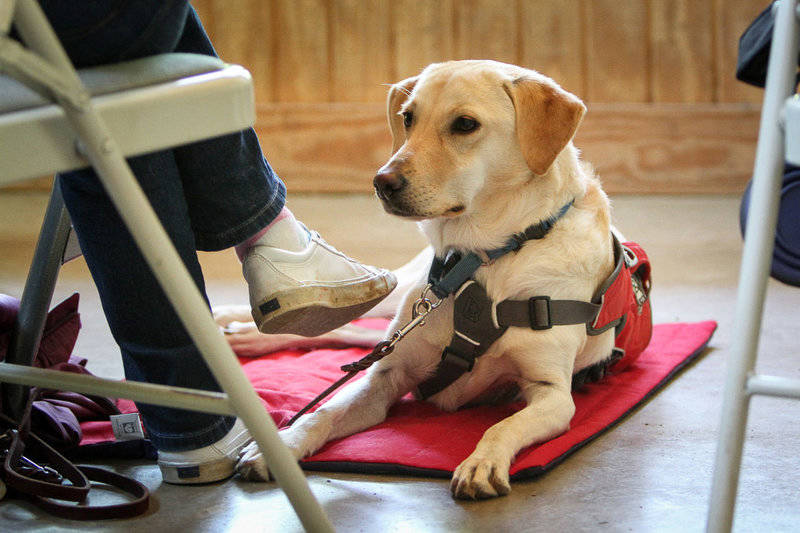
"caption": "Diabetes alert dogs are trained to detect low blood glucose in a person. The dogs can cost $20,000, but little research has been done on their effectiveness.",
"description": null,
"title": "dog",
"credit": "Frank Wisneski/Flickr",
"status": "inherit",
"isLoading": false,
"fetchFailed": false
},
"news_11026498": {
"type": "attachments",
"id": "news_11026498",
"meta": {
"index": "attachments_1716263798",
"site": "news",
"id": "11026498",
"found": true
},
"parent": 11026460,
"imgSizes": {
"twentyfourteen-full-width": {
"file": "https://ww2.kqed.org/app/uploads/sites/10/2016/07/green-liquid-and-lab-1038x576.jpg",
"width": 1038,
"mimeType": "image/jpeg",
"height": 576
},
"thumbnail": {
"file": "https://ww2.kqed.org/app/uploads/sites/10/2016/07/green-liquid-and-lab-400x225.jpg",
"width": 400,
"mimeType": "image/jpeg",
"height": 225
},
"fd-sm": {
"file": "https://ww2.kqed.org/app/uploads/sites/10/2016/07/green-liquid-and-lab-960x541.jpg",
"width": 960,
"mimeType": "image/jpeg",
"height": 541
},
"post-thumbnail": {
"file": "https://ww2.kqed.org/app/uploads/sites/10/2016/07/green-liquid-and-lab-672x372.jpg",
"width": 672,
"mimeType": "image/jpeg",
"height": 372
},
"kqedFullSize": {
"file": "https://ww2.kqed.org/app/uploads/sites/10/2016/07/green-liquid-and-lab.jpg",
"width": 1920,
"height": 1081
},
"large": {
"file": "https://ww2.kqed.org/app/uploads/sites/10/2016/07/green-liquid-and-lab-1920x1081.jpg",
"width": 1920,
"mimeType": "image/jpeg",
"height": 1081
},
"guest-author-50": {
"file": "https://ww2.kqed.org/app/uploads/sites/10/2016/07/green-liquid-and-lab-50x50.jpg",
"width": 50,
"mimeType": "image/jpeg",
"height": 50
},
"guest-author-96": {
"file": "https://ww2.kqed.org/app/uploads/sites/10/2016/07/green-liquid-and-lab-96x96.jpg",
"width": 96,
"mimeType": "image/jpeg",
"height": 96
},
"medium": {
"file": "https://ww2.kqed.org/app/uploads/sites/10/2016/07/green-liquid-and-lab-800x450.jpg",
"width": 800,
"mimeType": "image/jpeg",
"height": 450
},
"guest-author-64": {
"file": "https://ww2.kqed.org/app/uploads/sites/10/2016/07/green-liquid-and-lab-64x64.jpg",
"width": 64,
"mimeType": "image/jpeg",
"height": 64
},
"guest-author-32": {
"file": "https://ww2.kqed.org/app/uploads/sites/10/2016/07/green-liquid-and-lab-32x32.jpg",
"width": 32,
"mimeType": "image/jpeg",
"height": 32
},
"jmtc-small-thumb": {
"file": "https://ww2.kqed.org/app/uploads/sites/10/2016/07/green-liquid-and-lab-280x150.jpg",
"width": 280,
"mimeType": "image/jpeg",
"height": 150
},
"fd-lrg": {
"file": "https://ww2.kqed.org/app/uploads/sites/10/2016/07/green-liquid-and-lab-1920x1081.jpg",
"width": 1920,
"mimeType": "image/jpeg",
"height": 1081
},
"fd-med": {
"file": "https://ww2.kqed.org/app/uploads/sites/10/2016/07/green-liquid-and-lab-1180x664.jpg",
"width": 1180,
"mimeType": "image/jpeg",
"height": 664
},
"detail": {
"file": "https://ww2.kqed.org/app/uploads/sites/10/2016/07/green-liquid-and-lab-150x150.jpg",
"width": 150,
"mimeType": "image/jpeg",
"height": 150
},
"guest-author-128": {
"file": "https://ww2.kqed.org/app/uploads/sites/10/2016/07/green-liquid-and-lab-128x128.jpg",
"width": 128,
"mimeType": "image/jpeg",
"height": 128
}
},
"publishDate": 1469084667,
"modified": 1469214191,
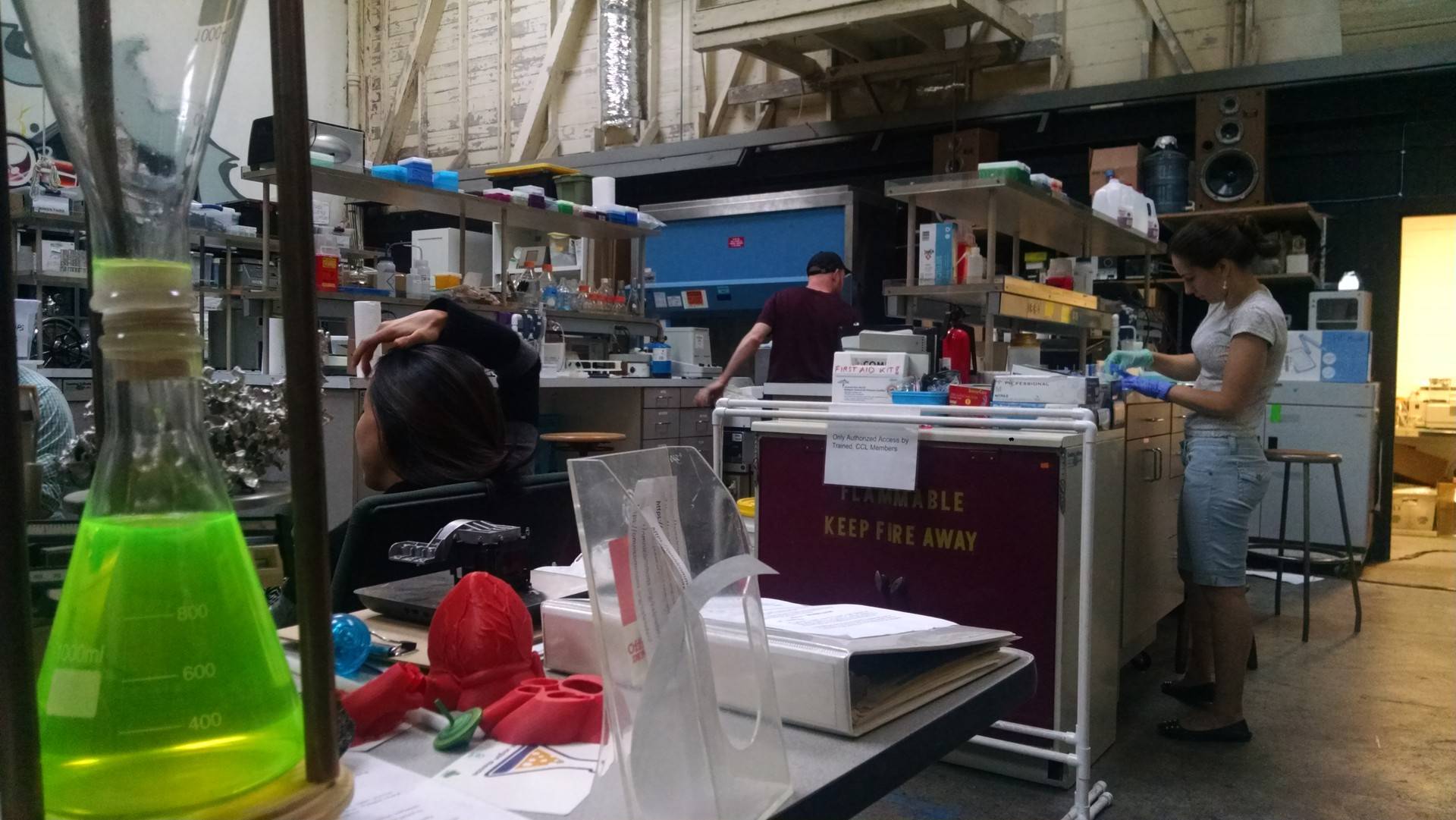
"caption": "Counter Culture Labs in Oakland wants to disrupt the medical industry",
"description": null,
"title": "green liquid and lab",
"credit": "Andrew Stelzer/KQED",
"status": "inherit",
"isLoading": false,
"fetchFailed": false
},
"futureofyou_208706": {
"type": "attachments",
"id": "futureofyou_208706",
"meta": {
"index": "attachments_1716263798",
"site": "futureofyou",
"id": "208706",
"found": true
},
"parent": 208691,
"imgSizes": {
"thumbnail": {
"file": "https://ww2.kqed.org/app/uploads/sites/13/2016/07/fitbitsurge-400x400.jpg",
"width": 400,
"mimeType": "image/jpeg",
"height": 400
},
"post-thumbnail": {
"file": "https://ww2.kqed.org/app/uploads/sites/13/2016/07/fitbitsurge-512x372.jpg",
"width": 512,
"mimeType": "image/jpeg",
"height": 372
},
"kqedFullSize": {
"file": "https://ww2.kqed.org/app/uploads/sites/13/2016/07/fitbitsurge.jpg",
"width": 512,
"height": 512
},
"guest-author-50": {
"file": "https://ww2.kqed.org/app/uploads/sites/13/2016/07/fitbitsurge-50x50.jpg",
"width": 50,
"mimeType": "image/jpeg",
"height": 50
},
"guest-author-96": {
"file": "https://ww2.kqed.org/app/uploads/sites/13/2016/07/fitbitsurge-96x96.jpg",
"width": 96,
"mimeType": "image/jpeg",
"height": 96
},
"guest-author-64": {
"file": "https://ww2.kqed.org/app/uploads/sites/13/2016/07/fitbitsurge-64x64.jpg",
"width": 64,
"mimeType": "image/jpeg",
"height": 64
},
"detail": {
"file": "https://ww2.kqed.org/app/uploads/sites/13/2016/07/fitbitsurge-150x150.jpg",
"width": 150,
"mimeType": "image/jpeg",
"height": 150
},
"guest-author-32": {
"file": "https://ww2.kqed.org/app/uploads/sites/13/2016/07/fitbitsurge-32x32.jpg",
"width": 32,
"mimeType": "image/jpeg",
"height": 32
},
"guest-author-128": {
"file": "https://ww2.kqed.org/app/uploads/sites/13/2016/07/fitbitsurge-128x128.jpg",
"width": 128,
"mimeType": "image/jpeg",
"height": 128
}
},
"publishDate": 1469220061,
"modified": 1469220098,
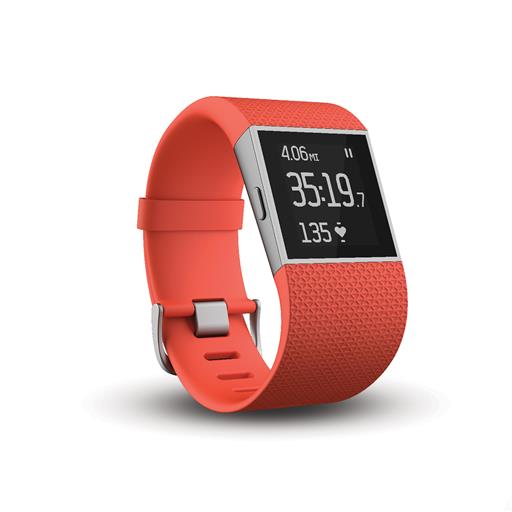
"caption": "Fitbit Surge",
"description": null,
"title": "fitbitsurge",
"credit": null,
"status": "inherit",
"isLoading": false,
"fetchFailed": false
},
"futureofyou_184629": {
"type": "attachments",
"id": "futureofyou_184629",
"meta": {
"index": "attachments_1716263798",
"site": "futureofyou",
"id": "184629",
"found": true
},
"parent": 183979,
"imgSizes": {
"twentyfourteen-full-width": {
"file": "https://ww2.kqed.org/app/uploads/sites/13/2016/06/MountSinai_AposTherapy_Gait-1038x576.jpg",
"width": 1038,
"mimeType": "image/jpeg",
"height": 576
},
"thumbnail": {
"file": "https://ww2.kqed.org/app/uploads/sites/13/2016/06/MountSinai_AposTherapy_Gait-400x284.jpg",
"width": 400,
"mimeType": "image/jpeg",
"height": 284
},
"fd-sm": {
"file": "https://ww2.kqed.org/app/uploads/sites/13/2016/06/MountSinai_AposTherapy_Gait-960x683.jpg",
"width": 960,
"mimeType": "image/jpeg",
"height": 683
},
"post-thumbnail": {
"file": "https://ww2.kqed.org/app/uploads/sites/13/2016/06/MountSinai_AposTherapy_Gait-672x372.jpg",
"width": 672,
"mimeType": "image/jpeg",
"height": 372
},
"kqedFullSize": {
"file": "https://ww2.kqed.org/app/uploads/sites/13/2016/06/MountSinai_AposTherapy_Gait.jpg",
"width": 3000,
"height": 2133
},
"large": {
"file": "https://ww2.kqed.org/app/uploads/sites/13/2016/06/MountSinai_AposTherapy_Gait-1180x839.jpg",
"width": 1180,
"mimeType": "image/jpeg",
"height": 839
},
"guest-author-50": {
"file": "https://ww2.kqed.org/app/uploads/sites/13/2016/06/MountSinai_AposTherapy_Gait-50x50.jpg",
"width": 50,
"mimeType": "image/jpeg",
"height": 50
},
"guest-author-96": {
"file": "https://ww2.kqed.org/app/uploads/sites/13/2016/06/MountSinai_AposTherapy_Gait-96x96.jpg",
"width": 96,
"mimeType": "image/jpeg",
"height": 96
},
"medium": {
"file": "https://ww2.kqed.org/app/uploads/sites/13/2016/06/MountSinai_AposTherapy_Gait-800x569.jpg",
"width": 800,
"mimeType": "image/jpeg",
"height": 569
},
"guest-author-64": {
"file": "https://ww2.kqed.org/app/uploads/sites/13/2016/06/MountSinai_AposTherapy_Gait-64x64.jpg",
"width": 64,
"mimeType": "image/jpeg",
"height": 64
},
"guest-author-32": {
"file": "https://ww2.kqed.org/app/uploads/sites/13/2016/06/MountSinai_AposTherapy_Gait-32x32.jpg",
"width": 32,
"mimeType": "image/jpeg",
"height": 32
},
"fd-lrg": {
"file": "https://ww2.kqed.org/app/uploads/sites/13/2016/06/MountSinai_AposTherapy_Gait-1920x1365.jpg",
"width": 1920,
"mimeType": "image/jpeg",
"height": 1365
},
"fd-med": {
"file": "https://ww2.kqed.org/app/uploads/sites/13/2016/06/MountSinai_AposTherapy_Gait-1180x839.jpg",
"width": 1180,
"mimeType": "image/jpeg",
"height": 839
},
"detail": {
"file": "https://ww2.kqed.org/app/uploads/sites/13/2016/06/MountSinai_AposTherapy_Gait-150x150.jpg",
"width": 150,
"mimeType": "image/jpeg",
"height": 150
},
"medium_large": {
"file": "https://ww2.kqed.org/app/uploads/sites/13/2016/06/MountSinai_AposTherapy_Gait-768x546.jpg",
"width": 768,
"mimeType": "image/jpeg",
"height": 546
},
"guest-author-128": {
"file": "https://ww2.kqed.org/app/uploads/sites/13/2016/06/MountSinai_AposTherapy_Gait-128x128.jpg",
"width": 128,
"mimeType": "image/jpeg",
"height": 128
}
},
"publishDate": 1466028447,
"modified": 1466196561,
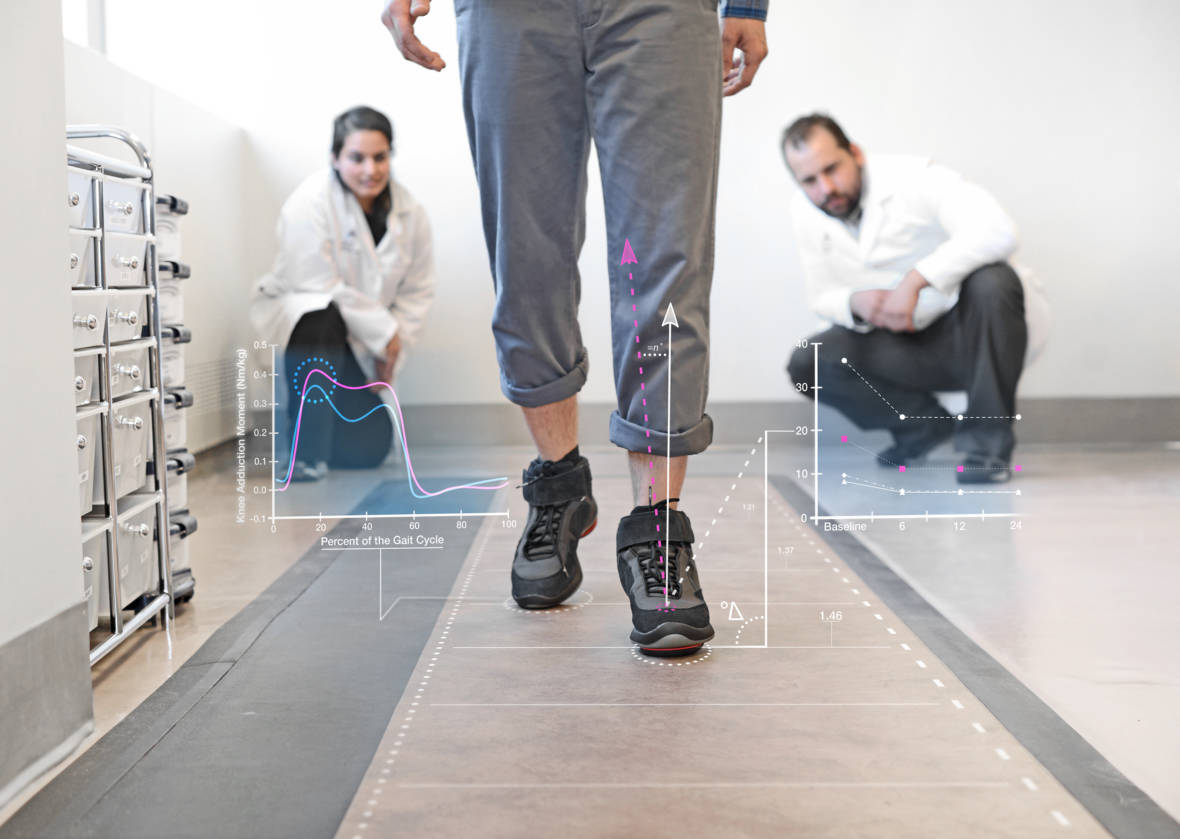
"caption": "Physical therapists Sonia Basra and Steven Venegas at Mount Sinai analyze a patient's gait as he wears a pair of AposTherapy shoes. ",
"description": null,
"title": "MountSinai_AposTherapy_Gait",
"credit": "AposTherapy",
"status": "inherit",
"isLoading": false,
"fetchFailed": false
}
},
"audioPlayerReducer": {
"postId": "stream_live",
"isPaused": true,
"isPlaying": false,
"pfsActive": false,
"pledgeModalIsOpen": true,
"playerDrawerIsOpen": false,
"liveAudioPlayStartedAt": 0,
"liveAudioPlayContext": ""
},
"authorsReducer": {
"byline_futureofyou_234745": {
"type": "authors",
"id": "byline_futureofyou_234745",
"meta": {
"override": true
},
"slug": "byline_futureofyou_234745",
"name": "Anna Gorman\u003cbr />California Healthline",
"isLoading": false
},
"byline_futureofyou_212953": {
"type": "authors",
"id": "byline_futureofyou_212953",
"meta": {
"override": true
},
"slug": "byline_futureofyou_212953",
"name": "Miriam E. Tucker\u003cbr />NPR Shots",
"isLoading": false
},
"byline_futureofyou_208691": {
"type": "authors",
"id": "byline_futureofyou_208691",
"meta": {
"override": true
},
"slug": "byline_futureofyou_208691",
"name": "Anick Jesdanun\u003cbr />Associated Press",
"isLoading": false
},
"jbrooks": {
"type": "authors",
"id": "80",
"meta": {
"index": "authors_1716337520",
"id": "80",
"found": true
},
"name": "Jon Brooks",
"firstName": "Jon",
"lastName": "Brooks",
"slug": "jbrooks",
"email": "jbrooks@kqed.org",
"display_author_email": true,
"staff_mastheads": [
"science"
],
"title": "Digital Editor",
"bio": "Jon Brooks is a former Digital Editor for KQED Science. He is the former editor of KQED’s daily news blog, News Fix. In 2014, he won a California Journalism Award for his coverage of ride services like Uber and Lyft and the taxi industry. A veteran blogger, he previously worked for Yahoo! in various news writing and editing roles. Jon is also a playwright whose work has been produced in San Francisco, New York, Italy, and around the U.S. He has written about film for his own blog and studied film at Boston University.",
"avatar": "https://secure.gravatar.com/avatar/98887f7ed1c876ed414d4c915e969584?s=600&d=blank&r=g",
"twitter": "jbrooksfoy",
"facebook": null,
"instagram": null,
"linkedin": null,
"sites": [
{
"site": "arts",
"roles": [
"Contributor",
"editor"
]
},
{
"site": "news",
"roles": [
"author"
]
},
{
"site": "futureofyou",
"roles": [
"administrator"
]
},
{
"site": "mindshift",
"roles": [
"editor"
]
},
{
"site": "stateofhealth",
"roles": [
"editor"
]
},
{
"site": "science",
"roles": [
"administrator"
]
},
{
"site": "quest",
"roles": [
"editor"
]
}
],
"headData": {
"title": "Jon Brooks | KQED",
"description": "Digital Editor",
"ogImgSrc": "https://secure.gravatar.com/avatar/98887f7ed1c876ed414d4c915e969584?s=600&d=blank&r=g",
"twImgSrc": "https://secure.gravatar.com/avatar/98887f7ed1c876ed414d4c915e969584?s=600&d=blank&r=g"
},
"isLoading": false,
"link": "/author/jbrooks"
},
"andrewstelzer": {
"type": "authors",
"id": "213",
"meta": {
"index": "authors_1716337520",
"id": "213",
"found": true
},
"name": "Andrew Stelzer",
"firstName": "Andrew",
"lastName": "Stelzer",
"slug": "andrewstelzer",
"email": "andrewstelzer@gmail.com",
"display_author_email": false,
"staff_mastheads": [],
"title": null,
"bio": "Andrew Stelzer has been reporting for KQED since 2010, and is a producer at \u003ca href=\"http://www.radioproject.org\" target=\"_blank\">Making Contact\u003c/a> in Oakland.. His work has been featured on programs including \u003ca href=\"http://www.npr.org/templates/story/story.php?storyId=5010\" target=\"_blank\">NPR’s Weekend Edition\u003c/a>, \u003ca href=\"http://www.theworld.org/\" target=\"_blank\">PRI’s The World\u003c/a>, \u003ca href=\"http://www.studio360.org/\" target=\"_blank\">Studio 360\u003c/a>, \u003ca href=\"http://marketplace.publicradio.org/\" target=\"_blank\">Marketplace\u003c/a>,\u003ca href=\"http://www.loe.org/\" target=\"_blank\">Living on Earth\u003c/a>, \u003ca href=\"http://www.onthemedia.org/\" target=\"_blank\">On the Media\u003c/a>, \u003ca href=\"http://www.latinousa.org/index.html\" target=\"_blank\">Latino USA,\u003c/a> \u003ca href=\"http://www.onlyagame.org/\" rel=\"tag\">Only a Game,\u003c/a> \u003ca href=\"http://www.tswi.org/\" target=\"_blank\">Radio Netherlands,\u003c/a> \u003ca href=\"http://worldradio.ch/index.shtml\" target=\"_blank\">World Radio Switzerland,\u003c/a> and \u003ca href=\"http://www.rfi.fr/langues/statiques/rfi_anglais.asp\" target=\"_blank\">Radio France International\u003c/a>. Andrew has written for publications including \u003ca href=\"http://www.inthesetimes.com/site/about/author/2369\" target=\"_blank\">In These Times\u003c/a>, \u003ca href=\"http://www.progressive.org/\" target=\"_blank\">The Progressive\u003c/a>, \u003ca href=\"http://ipsnews.net/\" target=\"_blank\">Interpress Service\u003c/a>, \u003ca href=\"http://www.tampabay.com/\" target=\"_blank\">The St. Petersburg Times\u003c/a>, and \u003ca href=\"http://www.eastbayexpress.com/ebx/Home\" target=\"_blank\">The East Bay Express\u003c/a>.\r\n\r\nAndrew’s work has received numerous awards from the Society of Professional Journalists, the National Lesbian and Gay Journalists Association, and the National Council on Crime and Delinquency.\r\n\r\nHe previously was a reporter at \u003ca href=\"http://www.wmnf.org/\" target=\"_blank\">WMNF\u003c/a> radio in Tampa, FL, and reporter and youth advocate st \u003ca href=\"http://www.kboo.org/\" target=\"_blank\">KBOO \u003c/a> in Portland, Oregon. Andrew has conducted radio production trainings around the world, from Algeria, to New Orleans, to the desert of Southern Jordan.",
"avatar": "https://secure.gravatar.com/avatar/14c7e75469395cb2468d45c9f6896ca9?s=600&d=blank&r=g",
"twitter": null,
"facebook": null,
"instagram": null,
"linkedin": null,
"sites": [
{
"site": "arts",
"roles": [
"contributor"
]
},
{
"site": "news",
"roles": [
"author"
]
},
{
"site": "stateofhealth",
"roles": [
"author"
]
}
],
"headData": {
"title": "Andrew Stelzer | KQED",
"description": null,
"ogImgSrc": "https://secure.gravatar.com/avatar/14c7e75469395cb2468d45c9f6896ca9?s=600&d=blank&r=g",
"twImgSrc": "https://secure.gravatar.com/avatar/14c7e75469395cb2468d45c9f6896ca9?s=600&d=blank&r=g"
},
"isLoading": false,
"link": "/author/andrewstelzer"
},
"samharnett": {
"type": "authors",
"id": "253",
"meta": {
"index": "authors_1716337520",
"id": "253",
"found": true
},
"name": "Sam Harnett",
"firstName": "Sam",
"lastName": "Harnett",
"slug": "samharnett",
"email": "samharnett@gmail.com",
"display_author_email": false,
"staff_mastheads": [],
"title": "KQED Contributor",
"bio": "Sam Harnett covered tech and work at KQED. He is the co-creator of \u003cem>\u003ca href=\"http://www.theworldaccordingtosound.org\">The World According to Sound\u003c/a>,\u003c/em> a 90-second podcast that features different sounds and the stories behind them.\r\n\r\nBefore coming to KQED, Sam worked as an independent reporter who contributed regularly to \u003cem>The California Report, Marketplace,\u003c/em> \u003cem>The World \u003c/em>and NPR.",
"avatar": "https://secure.gravatar.com/avatar/2538b972ac02f2b9546c7a6c59a0f3d0?s=600&d=blank&r=g",
"twitter": "Samwharnett",
"facebook": null,
"instagram": null,
"linkedin": null,
"sites": [
{
"site": "news",
"roles": [
"edit_others_posts",
"subscriber"
]
},
{
"site": "stateofhealth",
"roles": [
"author"
]
},
{
"site": "science",
"roles": [
"editor"
]
},
{
"site": "quest",
"roles": [
"subscriber"
]
}
],
"headData": {
"title": "Sam Harnett | KQED",
"description": "KQED Contributor",
"ogImgSrc": "https://secure.gravatar.com/avatar/2538b972ac02f2b9546c7a6c59a0f3d0?s=600&d=blank&r=g",
"twImgSrc": "https://secure.gravatar.com/avatar/2538b972ac02f2b9546c7a6c59a0f3d0?s=600&d=blank&r=g"
},
"isLoading": false,
"link": "/author/samharnett"
},
"lindseyhoshaw": {
"type": "authors",
"id": "5432",
"meta": {
"index": "authors_1716337520",
"id": "5432",
"found": true
},
"name": "Lindsey Hoshaw",
"firstName": "Lindsey",
"lastName": "Hoshaw",
"slug": "lindseyhoshaw",
"email": "lhoshaw@kqed.org",
"display_author_email": false,
"staff_mastheads": [],
"title": "KQED Contributor",
"bio": "Lindsey Hoshaw is a former interactive producer for KQED Science. Before joining KQED, Lindsey was a science correspondent for The New York Times, The Boston Globe, Forbes and Scientific American. On Twitter @lindseyhoshaw",
"avatar": "https://secure.gravatar.com/avatar/274b07694c998eaa8f26cfabaa941186?s=600&d=mm&r=g",
"twitter": "lindseyhoshaw",
"facebook": "lindsey.hoshaw.9",
"instagram": null,
"linkedin": null,
"sites": [
{
"site": "arts",
"roles": [
"author"
]
},
{
"site": "news",
"roles": [
"subscriber"
]
},
{
"site": "futureofyou",
"roles": [
"editor"
]
},
{
"site": "bayareabites",
"roles": [
"contributor"
]
},
{
"site": "stateofhealth",
"roles": [
"author"
]
},
{
"site": "science",
"roles": [
"edit_theme_options",
"subscriber"
]
},
{
"site": "quest",
"roles": [
"edit_post_subscriptions",
"edit_usergroups",
"unfiltered_html",
"unfiltered_upload",
"leadcoordinator",
"editor"
]
},
{
"site": "food",
"roles": []
}
],
"headData": {
"title": "Lindsey Hoshaw | KQED",
"description": "KQED Contributor",
"ogImgSrc": "https://secure.gravatar.com/avatar/274b07694c998eaa8f26cfabaa941186?s=600&d=mm&r=g",
"twImgSrc": "https://secure.gravatar.com/avatar/274b07694c998eaa8f26cfabaa941186?s=600&d=mm&r=g"
},
"isLoading": false,
"link": "/author/lindseyhoshaw"
},
"lesleymcclurg": {
"type": "authors",
"id": "11229",
"meta": {
"index": "authors_1716337520",
"id": "11229",
"found": true
},
"name": "Lesley McClurg",
"firstName": "Lesley",
"lastName": "McClurg",
"slug": "lesleymcclurg",
"email": "lmcclurg@KQED.org",
"display_author_email": false,
"staff_mastheads": [
"news",
"science"
],
"title": "KQED Health Correspondent",
"bio": "Lesley McClurg is a health correspondent and fill-in host whose work is regularly rebroadcast on NPR and PBS programs. She’s earned multiple regional Emmy awards, a national and a regional Edward R. Murrow award, and was named Best Beat Reporter by the Association of Health Care Journalists. The Society of Professional Journalists has recognized her work several times, and the Society of Environmental Journalists spotlighted her coverage of California’s historic drought.\r\n\r\nBefore joining KQED in 2016, Lesley covered food and sustainability for Capital Public Radio, environmental issues for Colorado Public Radio, and reported for KUOW and KCTS 9 in Seattle. Away from the newsroom, she loves skiing with her daughter, mountain biking with her partner, and playing with Ollie, the family’s goldendoodle. On deadline, she runs almost entirely on chocolate chips.\r\n\r\n ",
"avatar": "https://secure.gravatar.com/avatar/bab49e972ea10c774fe0f5e29dba1722b158f7c0d58a360923d1389d380b2978?s=600&d=blank&r=g",
"twitter": "lesleywmcclurg",
"bluesky": null,
"facebook": null,
"instagram": null,
"linkedin": null,
"sites": [
{
"site": "arts",
"roles": [
"author"
]
},
{
"site": "news",
"roles": [
"editor"
]
},
{
"site": "futureofyou",
"roles": [
"editor"
]
},
{
"site": "stateofhealth",
"roles": [
"author"
]
},
{
"site": "science",
"roles": [
"editor"
]
},
{
"site": "quest",
"roles": [
"subscriber"
]
},
{
"site": "forum",
"roles": [
"administrator"
]
},
{
"site": "liveblog",
"roles": [
"author"
]
}
],
"headData": {
"title": "Lesley McClurg | KQED",
"description": "KQED Health Correspondent",
"ogImgSrc": "https://secure.gravatar.com/avatar/bab49e972ea10c774fe0f5e29dba1722b158f7c0d58a360923d1389d380b2978?s=600&d=blank&r=g",
"twImgSrc": "https://secure.gravatar.com/avatar/bab49e972ea10c774fe0f5e29dba1722b158f7c0d58a360923d1389d380b2978?s=600&d=blank&r=g"
},
"isLoading": false,
"link": "/author/lesleymcclurg"
}
},
"pagesReducer": {
"futureofyou_category_diy-health": {
"type": "terms",
"id": "futureofyou_1060",
"meta": {
"index": "terms_1716263798",
"site": "futureofyou",
"id": "1060",
"score": 13.896381
},
"featImg": null,
"name": "DIY Health",
"description": null,
"taxonomy": "category",
"headData": {
"twImgId": null,
"twTitle": null,
"ogTitle": null,
"ogImgId": null,
"twDescription": null,
"description": null,
"title": "DIY Health Archives | KQED Arts",
"ogDescription": null
},
"ttid": 1060,
"slug": "diy-health",
"isLoading": false,
"title": "DIY Health",
"pageMeta": {
"site": "futureofyou",
"WpPageTemplate": "page-topic-editorial",
"currentPage": 15
},
"blocks": [
{
"blockName": "kqed/post-list",
"attrs": {
"layout": "cardArticle2",
"query": "posts/futureofyou?category=diy-health",
"seeMore": false,
"paginated": true,
"page": 15
}
},
{
"blockName": "kqed/ad"
}
]
}
},
"pfsSessionReducer": {},
"postsReducer": {
"stream_live": {
"type": "live",
"id": "stream_live",
"audioUrl": "https://streams.kqed.org/kqedradio",
"title": "Live Stream",
"excerpt": "Live Stream information currently unavailable.",
"link": "/radio",
"featImg": "",
"label": {
"name": "KQED Live",
"link": "/"
}
},
"stream_kqedNewscast": {
"type": "posts",
"id": "stream_kqedNewscast",
"audioUrl": "https://www.kqed.org/.stream/anon/radio/RDnews/newscast.mp3?_=1",
"title": "KQED Newscast",
"featImg": "",
"label": {
"name": "88.5 FM",
"link": "/"
}
},
"futureofyou_260754": {
"type": "posts",
"id": "futureofyou_260754",
"meta": {
"index": "posts_1716263798",
"site": "futureofyou",
"id": "260754",
"score": null,
"sort": [
1476144205000
]
},
"parent": 0,
"labelTerm": {
"site": "futureofyou"
},
"blocks": [],
"publishDate": 1476144205,
"format": "standard",
"disqusTitle": "WSJ: Hedge Fund Sues Theranos Over $100M Investment",
"title": "WSJ: Hedge Fund Sues Theranos Over $100M Investment",
"headTitle": "KQED Future of You | KQED Science",
"content": "\u003cp>The noose is drawing ever-tighter around Theranos. The Wall Street Journal is reporting the San Francisco hedge fund \u003ca href=\"http://www.bloomberg.com/research/stocks/private/snapshot.asp?privcapId=24258473\" target=\"_blank\">Partner Fund Management\u003c/a> is suing the company and its founder, Elizabeth Holmes, for \"engaging in securities fraud and other violations,\" according to a document reviewed by the Journal. The fund has invested nearly $100 million in Theranos, the paper says.\u003c/p>\n\u003cp>The company is already being sued by patients seeking class-action status in complaints related to inaccurate blood tests.\u003c/p>\n\u003cp>Last week, Theranos said it was \u003ca href=\"https://ww2.kqed.org/futureofyou/2016/10/05/theranos-labs/\" target=\"_blank\">getting out of the consumer blood-testing business\u003c/a>, shutting down a handful of remaining blood-testing centers and shuttering its labs.\u003c/p>\n\u003cp>Read the Journal story below ...\u003c/p>\n\u003cp>http://www.wsj.com/articles/major-investor-sues-theranos-1476139613\u003c/p>\n\u003cp>[ad fullwidth]\u003c/p>\u003cp>\u003c/p>\n",
"disqusIdentifier": "260754 http://ww2.kqed.org/futureofyou/?p=260754",
"disqusUrl": "https://ww2.kqed.org/futureofyou/2016/10/10/wsj-hedge-fund-sues-theranos-over-100m-investment/",
"stats": {
"hasVideo": false,
"hasChartOrMap": false,
"hasAudio": false,
"hasPolis": false,
"wordCount": 124,
"hasGoogleForm": false,
"hasGallery": false,
"hasHearkenModule": false,
"iframeSrcs": [],
"paragraphCount": 6
},
"modified": 1476144625,
"excerpt": "The Wall Street Journal breaks another Theranos story. ",
"headData": {
"twImgId": "",
"twTitle": "",
"ogTitle": "",
"ogImgId": "",
"twDescription": "",
"description": "The Wall Street Journal breaks another Theranos story. ",
"title": "WSJ: Hedge Fund Sues Theranos Over $100M Investment | KQED",
"ogDescription": "",
"schema": {
"@context": "https://schema.org",
"@type": "Article",
"headline": "WSJ: Hedge Fund Sues Theranos Over $100M Investment",
"datePublished": "2016-10-10T17:03:25-07:00",
"dateModified": "2016-10-10T17:10:25-07:00",
"image": "https://cdn.kqed.org/wp-content/uploads/2020/02/KQED-OG-Image@1x.png"
}
},
"guestAuthors": [],
"slug": "wsj-hedge-fund-sues-theranos-over-100m-investment",
"status": "publish",
"path": "/futureofyou/260754/wsj-hedge-fund-sues-theranos-over-100m-investment",
"audioTrackLength": null,
"parsedContent": [
{
"type": "contentString",
"content": "\u003cdiv class=\"post-body\">\u003cp>\u003cp>The noose is drawing ever-tighter around Theranos. The Wall Street Journal is reporting the San Francisco hedge fund \u003ca href=\"http://www.bloomberg.com/research/stocks/private/snapshot.asp?privcapId=24258473\" target=\"_blank\">Partner Fund Management\u003c/a> is suing the company and its founder, Elizabeth Holmes, for \"engaging in securities fraud and other violations,\" according to a document reviewed by the Journal. The fund has invested nearly $100 million in Theranos, the paper says.\u003c/p>\n\u003cp>The company is already being sued by patients seeking class-action status in complaints related to inaccurate blood tests.\u003c/p>\n\u003cp>Last week, Theranos said it was \u003ca href=\"https://ww2.kqed.org/futureofyou/2016/10/05/theranos-labs/\" target=\"_blank\">getting out of the consumer blood-testing business\u003c/a>, shutting down a handful of remaining blood-testing centers and shuttering its labs.\u003c/p>\n\u003cp>Read the Journal story below ...\u003c/p>\n\u003cp>http://www.wsj.com/articles/major-investor-sues-theranos-1476139613\u003c/p>\n\u003cp>\u003c/p>\u003c/div>",
"attributes": {
"named": {},
"numeric": []
}
},
{
"type": "component",
"content": "",
"name": "ad",
"attributes": {
"named": {
"label": "fullwidth"
},
"numeric": [
"fullwidth"
]
}
},
{
"type": "contentString",
"content": "\u003cdiv class=\"post-body\">\u003cp>\u003c/p>\u003cp>\u003c/p>\n\u003c/div>\u003c/p>",
"attributes": {
"named": {},
"numeric": []
}
}
],
"link": "/futureofyou/260754/wsj-hedge-fund-sues-theranos-over-100m-investment",
"authors": [
"80"
],
"categories": [
"futureofyou_1060",
"futureofyou_452",
"futureofyou_1062",
"futureofyou_1",
"futureofyou_73"
],
"tags": [
"futureofyou_814",
"futureofyou_617",
"futureofyou_750"
],
"featImg": "futureofyou_152361",
"label": "futureofyou"
},
"futureofyou_257644": {
"type": "posts",
"id": "futureofyou_257644",
"meta": {
"index": "posts_1716263798",
"site": "futureofyou",
"id": "257644",
"score": null,
"sort": [
1475763815000
]
},
"parent": 0,
"labelTerm": {},
"blocks": [],
"publishDate": 1475763815,
"format": "standard",
"disqusTitle": "Theranos Shutting Down Blood-Testing Centers and Labs",
"title": "Theranos Shutting Down Blood-Testing Centers and Labs",
"headTitle": "KQED Future of You | KQED Science",
"content": "\u003cp>No news is good news when it comes to the fortunes of blood-testing company Theranos.\u003c/p>\n\u003cp>And yesterday, there was news.\u003c/p>\n\u003cp>Company CEO Elizabeth Holmes posted an \u003ca href=\"https://news.theranos.com/2016/10/05/an-open-letter-elizabeth-holmes/\" target=\"_blank\">open letter\u003c/a> Wednesday announcing that Theranos will shut down its two clinical labs and its handful of remaining blood-testing centers. That will result in layoffs for about 340 employees -- approximately 40 percent of the company's workforce -- in Arizona, California and Pennsylvania.\u003c/p>\n\u003cp>Holmes said in her letter, addressed to \"stakeholders,\" that the company will now focus on the development of a portable blood-testing device, which Holmes unveiled at a scientific conference in August.\u003c/p>\n\u003cp>Theranos calls that product a miniLab, and at least some lab experts who we and other media outlets spoke to \u003ca href=\"https://ww2.kqed.org/futureofyou/2016/07/29/theranos-elizabeth-holmes-will-face-1000-scientists-monday-can-she-say-anything-to-gain-their-trust/\" target=\"_blank\">did not think\u003c/a> it represented a significant advance in the field.\u003c/p>\n\u003cp>[ad fullwidth]\u003c/p>\n\u003cp>Holmes' announcement yesterday comes in the midst of the company's appeal of severe sanctions imposed by the Centers for Medicare & Medicaid Services, which among other penalties banned Holmes from owning or running any clinical laboratory for two years. The sanctions stem from deficiencies at Theranos' Newark, California lab, including problems with a blood-clotting test that CMS judged to be life-threatening. That lab has been closed since July, when regulators revoked the company's license to operate it.\u003c/p>\n\u003cp>Theranos has another lab in Scottsdale, Arizona, so now that will be shuttered as well. But because the government's sanctions preclude Holmes from owning or operating any lab, it's unclear how Holmes could have stayed with the company should Theranos have wished to keep its Arizona lab open. And Holmes, apparently, isn't going anywhere. At least, that seemed to be the case in mid-July, when Theranos issued a sort of \u003ca href=\"https://news.theranos.com/2016/07/19/theranos-statement-on-cms-findings/\" target=\"_blank\">FAQ\u003c/a> about what the government's sanctions meant for its operations.\u003c/p>\n\u003cp>\"The clinical lab is just one of Theranos’ many opportunities to provide access to high-integrity, affordable and actionable health care information, and the company will continue to carry out its mission under the leadership of its founder and CEO, Elizabeth Holmes,\" the company said.\u003c/p>\n\u003cp>In her open letter yesterday, Holmes said Theranos had installed a new executive team \"leading our work toward obtaining FDA clearances, building commercial partnerships, and pursuing publications in scientific journals. We are fortunate to have supporters and investors who believe deeply in our mission of affordable, less invasive lab testing, and to have the runway to realize our vision.\"\u003c/p>\n\u003cp>We sent Theranos and Hill+Knowlton Strategies, which Theranos uses for media relations, a query as to how the shuttering of its consumer blood-testing business might affect its appeal of the sanctions. Hill+Knowlton said Theranos would have no comment beyond Holmes' open letter \"at this time.\"\u003c/p>\n\u003cp>CMS has said it routinely negotiates with companies that it penalizes, but the circumstances for which it lifts sanctions did not seem to apply to Theranos. CMS also said at one point that closing down its labs would not be enough to prevent the penalties from being implemented.\u003c/p>\n\u003cp>If Theranos has no further comment right now, here's someone who does: Wall Street Journal reporter John Carreyrou, whose \u003ca href=\"http://www.wsj.com/articles/theranos-has-struggled-with-blood-tests-1444881901\" target=\"_blank\">investigative reporting\u003c/a> heralded the beginning of the end for Theranos' status as a golden child of Silicon Valley \"disruption.\" Carreyrou yesterday indulged in a victory tweet:\u003c/p>\n\u003cp>https://twitter.com/JohnCarreyrou/status/783844650213715968\u003c/p>\n\u003cp>\u003cstrong>Litany of Woes\u003c/strong>\u003c/p>\n\u003cp>We won't go into the specifics of the many developments that have led to Theranos in just a year's time becoming -- it's probably fair to say -- a corporate pariah. (See our \u003ca href=\"http://ww2.kqed.org/futureofyou/2016/07/14/the-rise-and-fall-of-theranos-a-cartoon-history/\" target=\"_blank\">cartoon history of the company here\u003c/a> for more.) Theranos made its name by touting what it said was a revolutionary diagnostic technology, which allowed for dozens of blood tests from just a few drops of blood, and for extremely low prices.\u003c/p>\n\u003cp>A high-profile partnership with Walgreens, opening dozens of Theranos blood-testing centers within the pharmacy chain’s stores, gave its technology the imprimatur of a major health care provider.\u003c/p>\n\u003cp>Investors piled on, bestowing the company with a $9 billion valuation, according to Forbes, $4.5 billion of which would accrue to Holmes.\u003c/p>\n\u003cp>But it all came tumbling down -- rapidly. The lab testing community had already been grumbling that Theranos had never published in a a single word of proof in a peer-reviewed journal that its methods worked. Then came \u003ca href=\"https://ww2.kqed.org/futureofyou/2016/01/26/for-theranos-the-bad-news-keeps-coming/\">Wall Street Journal articles alleging\u003c/a>, among other improprieties, that Theranos failed to report tests showing its vaunted tech may not be accurate. CMS soon threatened its sanctions, which were based on an unrelated lab inspection. Scientific studies emerged that showed Theranos' test results deviated from norms; \u003ca href=\"https://ww2.kqed.org/futureofyou/2016/06/12/walgreens-shutting-down-theranos-centers-immediately-as-it-ends-partnership/\">Walgreens bailed\u003c/a>; the company invalidated tens of thousands of patient blood tests; lawsuits proliferated; the SEC and U.S. Attorney's Office for Northern California opened investigations; and an attempted comeback at the annual meeting of the American Association for Clinical Chemistry was a bust: attendees had fully expected, at long last, some hard validating data, but instead got what some characterized as a marketing presentation for a not overly exciting new product.\u003c/p>\n\u003cp>Plus there's the whole \u003ca href=\"http://www.vanityfair.com/hollywood/2016/06/jennifer-lawrence-theranos-elizabeth-holmes\" target=\"_blank\">Jennifer Lawrence thing\u003c/a>. ...\u003c/p>\n\u003cp>More to come, we're sure.\u003c/p>\n\u003cp>Here's yesterday's full \u003ca href=\"https://news.theranos.com/2016/10/05/an-open-letter-elizabeth-holmes/\" target=\"_blank\">open letter \u003c/a>from Holmes on Theranos' website:\u003c/p>\n\u003cblockquote>\u003cp>For our stakeholders,\u003c/p>\n\u003cp>After many months spent assessing our strengths and addressing our weaknesses, we have moved to structure our company around the model best aligned with our core values and mission.\u003c/p>\n\u003cp>We have decided to close our clinical labs and Theranos Wellness Centers, which will impact approximately 340 employees in Arizona, California, and Pennsylvania. We are profoundly grateful to these team members, many of whom have devoted years to Theranos and our mission, for their commitment to our company and our guests.\u003c/p>\n\u003cp>We will return our undivided attention to our miniLab platform. Our ultimate goal is to commercialize miniaturized, automated laboratories capable of small-volume sample testing, with an emphasis on vulnerable patient populations, including oncology, pediatrics, and intensive care.\u003c/p>\n\u003cp>We have a new executive team leading our work toward obtaining FDA clearances, building commercial partnerships, and pursuing publications in scientific journals.\u003c/p>\n\u003cp>We are fortunate to have supporters and investors who believe deeply in our mission of affordable, less invasive lab testing, and to have the runway to realize our vision.\u003c/p>\n\u003cp>I look forward to sharing more with you as we progress along the way.\u003c/p>\n\u003cp>Sincerely,\u003c/p>\n\u003cp>Elizabeth Holmes\u003c/p>\u003c/blockquote>\n\u003cp>[ad floatright]\u003c/p>\n\u003cp>\u003cem>This posted has been edited. It originally said that Theranos does not have an in-house spokesperson, which it does. \u003c/em>\u003c/p>\n\n",
"disqusIdentifier": "257644 http://ww2.kqed.org/futureofyou/?p=257644",
"disqusUrl": "https://ww2.kqed.org/futureofyou/2016/10/06/theranos-shutting-down-blood-testing-centers-and-labs/",
"stats": {
"hasVideo": false,
"hasChartOrMap": false,
"hasAudio": false,
"hasPolis": false,
"wordCount": 1121,
"hasGoogleForm": false,
"hasGallery": false,
"hasHearkenModule": false,
"iframeSrcs": [],
"paragraphCount": 32
},
"modified": 1475788404,
"excerpt": "The company will lay off more than 40 percent of its full-time employees.",
"headData": {
"twImgId": "",
"twTitle": "",
"ogTitle": "",
"ogImgId": "",
"twDescription": "",
"description": "The company will lay off more than 40 percent of its full-time employees.",
"title": "Theranos Shutting Down Blood-Testing Centers and Labs | KQED",
"ogDescription": "",
"schema": {
"@context": "https://schema.org",
"@type": "Article",
"headline": "Theranos Shutting Down Blood-Testing Centers and Labs",
"datePublished": "2016-10-06T07:23:35-07:00",
"dateModified": "2016-10-06T14:13:24-07:00",
"image": "https://cdn.kqed.org/wp-content/uploads/2020/02/KQED-OG-Image@1x.png"
}
},
"guestAuthors": [],
"slug": "theranos-shutting-down-blood-testing-centers-and-labs",
"status": "publish",
"customPermalink": "2016/10/05/theranos-labs/",
"source": "Future of You",
"path": "/futureofyou/257644/theranos-shutting-down-blood-testing-centers-and-labs",
"audioTrackLength": null,
"parsedContent": [
{
"type": "contentString",
"content": "\u003cdiv class=\"post-body\">\u003cp>\u003cp>No news is good news when it comes to the fortunes of blood-testing company Theranos.\u003c/p>\n\u003cp>And yesterday, there was news.\u003c/p>\n\u003cp>Company CEO Elizabeth Holmes posted an \u003ca href=\"https://news.theranos.com/2016/10/05/an-open-letter-elizabeth-holmes/\" target=\"_blank\">open letter\u003c/a> Wednesday announcing that Theranos will shut down its two clinical labs and its handful of remaining blood-testing centers. That will result in layoffs for about 340 employees -- approximately 40 percent of the company's workforce -- in Arizona, California and Pennsylvania.\u003c/p>\n\u003cp>Holmes said in her letter, addressed to \"stakeholders,\" that the company will now focus on the development of a portable blood-testing device, which Holmes unveiled at a scientific conference in August.\u003c/p>\n\u003cp>Theranos calls that product a miniLab, and at least some lab experts who we and other media outlets spoke to \u003ca href=\"https://ww2.kqed.org/futureofyou/2016/07/29/theranos-elizabeth-holmes-will-face-1000-scientists-monday-can-she-say-anything-to-gain-their-trust/\" target=\"_blank\">did not think\u003c/a> it represented a significant advance in the field.\u003c/p>\n\u003cp>\u003c/p>\u003c/div>",
"attributes": {
"named": {},
"numeric": []
}
},
{
"type": "component",
"content": "",
"name": "ad",
"attributes": {
"named": {
"label": "fullwidth"
},
"numeric": [
"fullwidth"
]
}
},
{
"type": "contentString",
"content": "\u003cdiv class=\"post-body\">\u003cp>\u003c/p>\n\u003cp>Holmes' announcement yesterday comes in the midst of the company's appeal of severe sanctions imposed by the Centers for Medicare & Medicaid Services, which among other penalties banned Holmes from owning or running any clinical laboratory for two years. The sanctions stem from deficiencies at Theranos' Newark, California lab, including problems with a blood-clotting test that CMS judged to be life-threatening. That lab has been closed since July, when regulators revoked the company's license to operate it.\u003c/p>\n\u003cp>Theranos has another lab in Scottsdale, Arizona, so now that will be shuttered as well. But because the government's sanctions preclude Holmes from owning or operating any lab, it's unclear how Holmes could have stayed with the company should Theranos have wished to keep its Arizona lab open. And Holmes, apparently, isn't going anywhere. At least, that seemed to be the case in mid-July, when Theranos issued a sort of \u003ca href=\"https://news.theranos.com/2016/07/19/theranos-statement-on-cms-findings/\" target=\"_blank\">FAQ\u003c/a> about what the government's sanctions meant for its operations.\u003c/p>\n\u003cp>\"The clinical lab is just one of Theranos’ many opportunities to provide access to high-integrity, affordable and actionable health care information, and the company will continue to carry out its mission under the leadership of its founder and CEO, Elizabeth Holmes,\" the company said.\u003c/p>\n\u003cp>In her open letter yesterday, Holmes said Theranos had installed a new executive team \"leading our work toward obtaining FDA clearances, building commercial partnerships, and pursuing publications in scientific journals. We are fortunate to have supporters and investors who believe deeply in our mission of affordable, less invasive lab testing, and to have the runway to realize our vision.\"\u003c/p>\n\u003cp>We sent Theranos and Hill+Knowlton Strategies, which Theranos uses for media relations, a query as to how the shuttering of its consumer blood-testing business might affect its appeal of the sanctions. Hill+Knowlton said Theranos would have no comment beyond Holmes' open letter \"at this time.\"\u003c/p>\n\u003cp>CMS has said it routinely negotiates with companies that it penalizes, but the circumstances for which it lifts sanctions did not seem to apply to Theranos. CMS also said at one point that closing down its labs would not be enough to prevent the penalties from being implemented.\u003c/p>\n\u003cp>If Theranos has no further comment right now, here's someone who does: Wall Street Journal reporter John Carreyrou, whose \u003ca href=\"http://www.wsj.com/articles/theranos-has-struggled-with-blood-tests-1444881901\" target=\"_blank\">investigative reporting\u003c/a> heralded the beginning of the end for Theranos' status as a golden child of Silicon Valley \"disruption.\" Carreyrou yesterday indulged in a victory tweet:\u003c/p>\u003c/p>\u003c/div>",
"attributes": {
"named": {},
"numeric": []
}
},
{
"type": "component",
"content": "",
"name": "singleTwitterStatus",
"attributes": {
"named": {
"id": "783844650213715968"
},
"numeric": []
}
},
{
"type": "contentString",
"content": "\u003cdiv class=\"post-body\">\u003cp>\n\u003cp>\u003cstrong>Litany of Woes\u003c/strong>\u003c/p>\n\u003cp>We won't go into the specifics of the many developments that have led to Theranos in just a year's time becoming -- it's probably fair to say -- a corporate pariah. (See our \u003ca href=\"http://ww2.kqed.org/futureofyou/2016/07/14/the-rise-and-fall-of-theranos-a-cartoon-history/\" target=\"_blank\">cartoon history of the company here\u003c/a> for more.) Theranos made its name by touting what it said was a revolutionary diagnostic technology, which allowed for dozens of blood tests from just a few drops of blood, and for extremely low prices.\u003c/p>\n\u003cp>A high-profile partnership with Walgreens, opening dozens of Theranos blood-testing centers within the pharmacy chain’s stores, gave its technology the imprimatur of a major health care provider.\u003c/p>\n\u003cp>Investors piled on, bestowing the company with a $9 billion valuation, according to Forbes, $4.5 billion of which would accrue to Holmes.\u003c/p>\n\u003cp>But it all came tumbling down -- rapidly. The lab testing community had already been grumbling that Theranos had never published in a a single word of proof in a peer-reviewed journal that its methods worked. Then came \u003ca href=\"https://ww2.kqed.org/futureofyou/2016/01/26/for-theranos-the-bad-news-keeps-coming/\">Wall Street Journal articles alleging\u003c/a>, among other improprieties, that Theranos failed to report tests showing its vaunted tech may not be accurate. CMS soon threatened its sanctions, which were based on an unrelated lab inspection. Scientific studies emerged that showed Theranos' test results deviated from norms; \u003ca href=\"https://ww2.kqed.org/futureofyou/2016/06/12/walgreens-shutting-down-theranos-centers-immediately-as-it-ends-partnership/\">Walgreens bailed\u003c/a>; the company invalidated tens of thousands of patient blood tests; lawsuits proliferated; the SEC and U.S. Attorney's Office for Northern California opened investigations; and an attempted comeback at the annual meeting of the American Association for Clinical Chemistry was a bust: attendees had fully expected, at long last, some hard validating data, but instead got what some characterized as a marketing presentation for a not overly exciting new product.\u003c/p>\n\u003cp>Plus there's the whole \u003ca href=\"http://www.vanityfair.com/hollywood/2016/06/jennifer-lawrence-theranos-elizabeth-holmes\" target=\"_blank\">Jennifer Lawrence thing\u003c/a>. ...\u003c/p>\n\u003cp>More to come, we're sure.\u003c/p>\n\u003cp>Here's yesterday's full \u003ca href=\"https://news.theranos.com/2016/10/05/an-open-letter-elizabeth-holmes/\" target=\"_blank\">open letter \u003c/a>from Holmes on Theranos' website:\u003c/p>\n\u003cblockquote>\u003cp>For our stakeholders,\u003c/p>\n\u003cp>After many months spent assessing our strengths and addressing our weaknesses, we have moved to structure our company around the model best aligned with our core values and mission.\u003c/p>\n\u003cp>We have decided to close our clinical labs and Theranos Wellness Centers, which will impact approximately 340 employees in Arizona, California, and Pennsylvania. We are profoundly grateful to these team members, many of whom have devoted years to Theranos and our mission, for their commitment to our company and our guests.\u003c/p>\n\u003cp>We will return our undivided attention to our miniLab platform. Our ultimate goal is to commercialize miniaturized, automated laboratories capable of small-volume sample testing, with an emphasis on vulnerable patient populations, including oncology, pediatrics, and intensive care.\u003c/p>\n\u003cp>We have a new executive team leading our work toward obtaining FDA clearances, building commercial partnerships, and pursuing publications in scientific journals.\u003c/p>\n\u003cp>We are fortunate to have supporters and investors who believe deeply in our mission of affordable, less invasive lab testing, and to have the runway to realize our vision.\u003c/p>\n\u003cp>I look forward to sharing more with you as we progress along the way.\u003c/p>\n\u003cp>Sincerely,\u003c/p>\n\u003cp>Elizabeth Holmes\u003c/p>\u003c/blockquote>\n\u003cp>\u003c/p>\u003c/div>",
"attributes": {
"named": {},
"numeric": []
}
},
{
"type": "component",
"content": "",
"name": "ad",
"attributes": {
"named": {
"label": "floatright"
},
"numeric": [
"floatright"
]
}
},
{
"type": "contentString",
"content": "\u003cdiv class=\"post-body\">\u003cp>\u003c/p>\n\u003cp>\u003cem>This posted has been edited. It originally said that Theranos does not have an in-house spokesperson, which it does. \u003c/em>\u003c/p>\n\n\u003c/div>\u003c/p>",
"attributes": {
"named": {},
"numeric": []
}
}
],
"link": "/futureofyou/257644/theranos-shutting-down-blood-testing-centers-and-labs",
"authors": [
"80"
],
"categories": [
"futureofyou_1060",
"futureofyou_452",
"futureofyou_1062",
"futureofyou_1",
"futureofyou_73"
],
"tags": [
"futureofyou_814",
"futureofyou_617"
],
"label": "source_futureofyou_257644"
},
"futureofyou_252560": {
"type": "posts",
"id": "futureofyou_252560",
"meta": {
"index": "posts_1716263798",
"site": "futureofyou",
"id": "252560",
"score": null,
"sort": [
1475175620000
]
},
"parent": 0,
"labelTerm": {},
"blocks": [],
"publishDate": 1475175620,
"format": "standard",
"disqusTitle": "Analysis: Digital Health Companies Aren't Solving the Right Problems",
"title": "Analysis: Digital Health Companies Aren't Solving the Right Problems",
"headTitle": "KQED Future of You | KQED Science",
"content": "\u003cp>Digital health is booming. The market that includes health apps and wearables will increase around \u003cem>1,200 percent\u003c/em> over the next eight years, according to one \u003ca href=\"http://www.digitaljournal.com/pr/3084642\" target=\"_blank\">forecast\u003c/a>.\u003c/p>\n\u003cp>So what's propelling this surge in demand? \"A growing proliferation of chronic diseases, namely diabetes, cancer and heart ailments ... \" the report says.\u003c/p>\n\u003caside class=\"pullquote alignright\">'We don’t need an app that counts steps, because that really just tells you that your day doesn’t naturally incorporate the time and space to walk.'\u003c/aside>\n\u003cp>Not only is this trend alarming, said the Robert Wood Johnson Foundation's Stephen Downs at the recent Stanford Medicine X conference, but many of the solutions offered by digital health companies are \u003ca href=\"https://ww2.kqed.org/futureofyou/2016/09/20/weight-loss-study-finds-fitness-tracker-is-no-help/\" target=\"_blank\">not going to help\u003c/a>.\u003c/p>\n\u003cp>In this age of the Fitbit, Downs said, digital health companies are focused on monitoring the consequences of our \u003ca href=\"http://stateofobesity.org/physical-inactivity/\" target=\"_blank\">notoriously sedentary lifestyles. \u003c/a>But what is really called for from innovators is to stop treating symptoms and start remedying the roots of the problem.\u003c/p>\n\u003cp>“The system needs to be re-engineered!” said Downs, chief technology and strategy officer of RWJF, a philanthropic organization focused on health. \"We don’t need an app that counts steps, because that really just tells you that your day doesn’t naturally incorporate the time and space to walk.\"\u003c/p>\n\u003cp>[ad fullwidth]\u003c/p>\n\u003cp>\u003cstrong>Progress = Inactivity\u003c/strong>\u003c/p>\n\u003cp>Downs is of the opinion that some of our most cherished and widely used inventions have resulted in a kind of apocalypse of inactivity: Automobiles helped create pedestrian-unfriendly suburbs; washing machines provided leisure time -- to watch more TV. And the appearance of the remote control meant we no longer even had to get up to change the channel.\u003c/p>\n\u003cp>Even our thumb muscles have been given the day off since digital assistants like Siri gained the ability to write our text messages, he noted.\u003c/p>\n\u003cp>All these things, combined with an automobile-driven, fast food culture, said Downs, have contributed to a national \u003ca href=\"http://www.diabetes.org/diabetes-basics/statistics/\">diabetes epidemic\u003c/a> and a stunning rise in \u003ca href=\"http://stateofobesity.org/obesity-rates-trends-overview/\" target=\"_blank\">obesity rates\u003c/a>.\u003c/p>\n\u003cp>\u003cb>We Need Stuff Like This \u003c/b>\u003c/p>\n\u003cp>So how to remedy the roots of the unhealthy environments we've created? Downs says engineers and designers in \u003cem>all\u003c/em> industries should be thinking about their products' effects on our health.\u003c/p>\n\u003cp>He cited the \u003ca href=\"http://cp.media.mit.edu/\" target=\"_blank\">Changing Places\u003c/a> group at the Massachusetts Institute of Technology media lab as a project that's attempting to create core solutions that fundamentally change human behavior. One of the lab's initiatives: designing ways to feed people healthier diets through \u003ca href=\"http://web.mit.edu/jiw/www/MITCityFarm/\" target=\"_blank\">urban farms\u003c/a> that make use of city spaces. (Imagine crops growing on the sides of buildings, for instance.)\u003c/p>\n\u003cfigure id=\"attachment_253672\" class=\"wp-caption aligncenter\" style=\"max-width: 800px\">\u003ca href=\"http://ww2.kqed.org/futureofyou/wp-content/uploads/sites/13/2016/09/bldgs.jpg\">\u003cimg class=\"wp-image-253672 size-medium\" src=\"http://ww2.kqed.org/futureofyou/wp-content/uploads/sites/13/2016/09/bldgs-800x581.jpg\" alt=\"Crops grown on the side of a building could help foster urban farming.\" width=\"800\" height=\"581\" srcset=\"https://ww2.kqed.org/app/uploads/sites/13/2016/09/bldgs-800x581.jpg 800w, https://ww2.kqed.org/app/uploads/sites/13/2016/09/bldgs-400x290.jpg 400w, https://ww2.kqed.org/app/uploads/sites/13/2016/09/bldgs-768x558.jpg 768w, https://ww2.kqed.org/app/uploads/sites/13/2016/09/bldgs-960x697.jpg 960w, https://ww2.kqed.org/app/uploads/sites/13/2016/09/bldgs.jpg 1000w\" sizes=\"(max-width: 800px) 100vw, 800px\">\u003c/a>\u003cfigcaption class=\"wp-caption-text\">Crops grown on the side of a building could help foster urban farming. \u003ccite>(MIT CityFARM)\u003c/cite>\u003c/figcaption>\u003c/figure>\n\u003cp>The MIT researchers claim their techniques could not only completely eliminate the massive amounts of water used by agriculture, but also render\u003cb> \u003c/b>unnecessary fertilizers and pesticides.\u003c/p>\n\u003cp>Downs also pointed to a food delivery service called \u003ca href=\"https://www.blueapron.com/?cvosrc=search-paid.google.brand30&gclid=CNS2zru1sM8CFQuqaQodXTIFng&utm_campaign=brand30&utm_medium=search-paid&utm_source=google\" target=\"_blank\">Blue Apron\u003c/a> as the kind of upstream innovation that can have a positive effect on health. The company sends a box of fresh food to your doorstep, with all the ingredients and spices to cook a meal at home. Not exactly fast food -- but \u003cem>faster\u003c/em> food with better nutrition.\u003c/p>\n\u003cp>\"This is about finding solutions for people that are more compelling than the patterns that we have established,\" he said.\u003c/p>\n\u003cp>A furniture company like the San Francisco-based \u003ca href=\"http://store.steelcase.com/\" target=\"_blank\">Steelcase\u003c/a> can have an impact, too, Downs said. The company designs chairs, lamps and tables that are intended to inspire movement, remove stress and improve focus.\u003c/p>\n\u003cp>Even ride services such as Uber and Lyft, Downs said, might lead to healthier lifestyles if they influence urban dwellers to ditch their cars altogether -- someone who no longer has a car sitting in their garage may be more inclined to walk or bike.\u003c/p>\n\u003cp>One caveat: Downs said the problem with many of these solutions is they're prohibitively expensive for most people.\u003c/p>\n\u003cp>\u003c/p>\n\u003cp>\"People who are innovating like this really need to think about price points that are available for the masses, not just the well-off folks in Silicon Valley.\"\u003c/p>\n\n",
"disqusIdentifier": "252560 http://ww2.kqed.org/futureofyou/?p=252560",
"disqusUrl": "https://ww2.kqed.org/futureofyou/2016/09/29/analysis-digital-health-companies-arent-solving-the-right-problems/",
"stats": {
"hasVideo": false,
"hasChartOrMap": false,
"hasAudio": false,
"hasPolis": false,
"wordCount": 721,
"hasGoogleForm": false,
"hasGallery": false,
"hasHearkenModule": false,
"iframeSrcs": [],
"paragraphCount": 21
},
"modified": 1476217782,
"excerpt": "Digital health companies offer a lot of monitoring devices, but they don't address core societal problems that hinder health, says the Robert Woods Johnson Foundation's chief technology officer.",
"headData": {
"twImgId": "",
"twTitle": "",
"ogTitle": "",
"ogImgId": "",
"twDescription": "",
"description": "Digital health companies offer a lot of monitoring devices, but they don't address core societal problems that hinder health, says the Robert Woods Johnson Foundation's chief technology officer.",
"title": "Analysis: Digital Health Companies Aren't Solving the Right Problems | KQED",
"ogDescription": "",
"schema": {
"@context": "https://schema.org",
"@type": "Article",
"headline": "Analysis: Digital Health Companies Aren't Solving the Right Problems",
"datePublished": "2016-09-29T12:00:20-07:00",
"dateModified": "2016-10-11T13:29:42-07:00",
"image": "https://cdn.kqed.org/wp-content/uploads/2020/02/KQED-OG-Image@1x.png"
}
},
"guestAuthors": [],
"slug": "analysis-digital-health-companies-arent-solving-the-right-problems",
"status": "publish",
"source": "Future of You",
"path": "/futureofyou/252560/analysis-digital-health-companies-arent-solving-the-right-problems",
"audioTrackLength": null,
"parsedContent": [
{
"type": "contentString",
"content": "\u003cdiv class=\"post-body\">\u003cp>\u003cp>Digital health is booming. The market that includes health apps and wearables will increase around \u003cem>1,200 percent\u003c/em> over the next eight years, according to one \u003ca href=\"http://www.digitaljournal.com/pr/3084642\" target=\"_blank\">forecast\u003c/a>.\u003c/p>\n\u003cp>So what's propelling this surge in demand? \"A growing proliferation of chronic diseases, namely diabetes, cancer and heart ailments ... \" the report says.\u003c/p>\n\u003caside class=\"pullquote alignright\">'We don’t need an app that counts steps, because that really just tells you that your day doesn’t naturally incorporate the time and space to walk.'\u003c/aside>\n\u003cp>Not only is this trend alarming, said the Robert Wood Johnson Foundation's Stephen Downs at the recent Stanford Medicine X conference, but many of the solutions offered by digital health companies are \u003ca href=\"https://ww2.kqed.org/futureofyou/2016/09/20/weight-loss-study-finds-fitness-tracker-is-no-help/\" target=\"_blank\">not going to help\u003c/a>.\u003c/p>\n\u003cp>In this age of the Fitbit, Downs said, digital health companies are focused on monitoring the consequences of our \u003ca href=\"http://stateofobesity.org/physical-inactivity/\" target=\"_blank\">notoriously sedentary lifestyles. \u003c/a>But what is really called for from innovators is to stop treating symptoms and start remedying the roots of the problem.\u003c/p>\n\u003cp>“The system needs to be re-engineered!” said Downs, chief technology and strategy officer of RWJF, a philanthropic organization focused on health. \"We don’t need an app that counts steps, because that really just tells you that your day doesn’t naturally incorporate the time and space to walk.\"\u003c/p>\n\u003cp>\u003c/p>\u003c/div>",
"attributes": {
"named": {},
"numeric": []
}
},
{
"type": "component",
"content": "",
"name": "ad",
"attributes": {
"named": {
"label": "fullwidth"
},
"numeric": [
"fullwidth"
]
}
},
{
"type": "contentString",
"content": "\u003cdiv class=\"post-body\">\u003cp>\u003c/p>\n\u003cp>\u003cstrong>Progress = Inactivity\u003c/strong>\u003c/p>\n\u003cp>Downs is of the opinion that some of our most cherished and widely used inventions have resulted in a kind of apocalypse of inactivity: Automobiles helped create pedestrian-unfriendly suburbs; washing machines provided leisure time -- to watch more TV. And the appearance of the remote control meant we no longer even had to get up to change the channel.\u003c/p>\n\u003cp>Even our thumb muscles have been given the day off since digital assistants like Siri gained the ability to write our text messages, he noted.\u003c/p>\n\u003cp>All these things, combined with an automobile-driven, fast food culture, said Downs, have contributed to a national \u003ca href=\"http://www.diabetes.org/diabetes-basics/statistics/\">diabetes epidemic\u003c/a> and a stunning rise in \u003ca href=\"http://stateofobesity.org/obesity-rates-trends-overview/\" target=\"_blank\">obesity rates\u003c/a>.\u003c/p>\n\u003cp>\u003cb>We Need Stuff Like This \u003c/b>\u003c/p>\n\u003cp>So how to remedy the roots of the unhealthy environments we've created? Downs says engineers and designers in \u003cem>all\u003c/em> industries should be thinking about their products' effects on our health.\u003c/p>\n\u003cp>He cited the \u003ca href=\"http://cp.media.mit.edu/\" target=\"_blank\">Changing Places\u003c/a> group at the Massachusetts Institute of Technology media lab as a project that's attempting to create core solutions that fundamentally change human behavior. One of the lab's initiatives: designing ways to feed people healthier diets through \u003ca href=\"http://web.mit.edu/jiw/www/MITCityFarm/\" target=\"_blank\">urban farms\u003c/a> that make use of city spaces. (Imagine crops growing on the sides of buildings, for instance.)\u003c/p>\n\u003cfigure id=\"attachment_253672\" class=\"wp-caption aligncenter\" style=\"max-width: 800px\">\u003ca href=\"http://ww2.kqed.org/futureofyou/wp-content/uploads/sites/13/2016/09/bldgs.jpg\">\u003cimg class=\"wp-image-253672 size-medium\" src=\"http://ww2.kqed.org/futureofyou/wp-content/uploads/sites/13/2016/09/bldgs-800x581.jpg\" alt=\"Crops grown on the side of a building could help foster urban farming.\" width=\"800\" height=\"581\" srcset=\"https://ww2.kqed.org/app/uploads/sites/13/2016/09/bldgs-800x581.jpg 800w, https://ww2.kqed.org/app/uploads/sites/13/2016/09/bldgs-400x290.jpg 400w, https://ww2.kqed.org/app/uploads/sites/13/2016/09/bldgs-768x558.jpg 768w, https://ww2.kqed.org/app/uploads/sites/13/2016/09/bldgs-960x697.jpg 960w, https://ww2.kqed.org/app/uploads/sites/13/2016/09/bldgs.jpg 1000w\" sizes=\"(max-width: 800px) 100vw, 800px\">\u003c/a>\u003cfigcaption class=\"wp-caption-text\">Crops grown on the side of a building could help foster urban farming. \u003ccite>(MIT CityFARM)\u003c/cite>\u003c/figcaption>\u003c/figure>\n\u003cp>The MIT researchers claim their techniques could not only completely eliminate the massive amounts of water used by agriculture, but also render\u003cb> \u003c/b>unnecessary fertilizers and pesticides.\u003c/p>\n\u003cp>Downs also pointed to a food delivery service called \u003ca href=\"https://www.blueapron.com/?cvosrc=search-paid.google.brand30&gclid=CNS2zru1sM8CFQuqaQodXTIFng&utm_campaign=brand30&utm_medium=search-paid&utm_source=google\" target=\"_blank\">Blue Apron\u003c/a> as the kind of upstream innovation that can have a positive effect on health. The company sends a box of fresh food to your doorstep, with all the ingredients and spices to cook a meal at home. Not exactly fast food -- but \u003cem>faster\u003c/em> food with better nutrition.\u003c/p>\n\u003cp>\"This is about finding solutions for people that are more compelling than the patterns that we have established,\" he said.\u003c/p>\n\u003cp>A furniture company like the San Francisco-based \u003ca href=\"http://store.steelcase.com/\" target=\"_blank\">Steelcase\u003c/a> can have an impact, too, Downs said. The company designs chairs, lamps and tables that are intended to inspire movement, remove stress and improve focus.\u003c/p>\n\u003cp>Even ride services such as Uber and Lyft, Downs said, might lead to healthier lifestyles if they influence urban dwellers to ditch their cars altogether -- someone who no longer has a car sitting in their garage may be more inclined to walk or bike.\u003c/p>\n\u003cp>One caveat: Downs said the problem with many of these solutions is they're prohibitively expensive for most people.\u003c/p>\n\u003cp>\u003c/p>\n\u003cp>\"People who are innovating like this really need to think about price points that are available for the masses, not just the well-off folks in Silicon Valley.\"\u003c/p>\n\n\u003c/div>\u003c/p>",
"attributes": {
"named": {},
"numeric": []
}
}
],
"link": "/futureofyou/252560/analysis-digital-health-companies-arent-solving-the-right-problems",
"authors": [
"11229"
],
"categories": [
"futureofyou_1060",
"futureofyou_452",
"futureofyou_73"
],
"tags": [
"futureofyou_26",
"futureofyou_35",
"futureofyou_25"
],
"featImg": "futureofyou_254127",
"label": "source_futureofyou_252560"
},
"futureofyou_248745": {
"type": "posts",
"id": "futureofyou_248745",
"meta": {
"index": "posts_1716263798",
"site": "futureofyou",
"id": "248745",
"score": null,
"sort": [
1474646338000
]
},
"parent": 0,
"labelTerm": {
"site": "futureofyou"
},
"blocks": [],
"publishDate": 1474646338,
"format": "standard",
"disqusTitle": "NewsHour Twitter Chat: Study Finds Fitness Trackers Fail to Help Weight Loss",
"title": "NewsHour Twitter Chat: Study Finds Fitness Trackers Fail to Help Weight Loss",
"headTitle": "KQED Future of You | KQED Science",
"content": "\u003cp>The chat starts at 1 p.m. ET:\u003c/p>\n\u003cp>[twitter-timeline id=779348505328357376]\u003c/p>\n\u003cp>\u003cstrong>Study Finds Fitness Trackers Fail to Help Weight Loss\u003cbr>\nby Erin Ross, NPR Shots\u003c/strong>\u003c/p>\n\u003cp>Fitness trackers remain wildly popular, but do they make us fit? Maybe not, according to a study that asked overweight or obese young adults to use the tiny tracking tools to lose weight.\u003c/p>\n\u003cp>The 470 people in the study were put on a low-calorie diet and asked to exercise more. They all started losing weight. Six months in, half the group started self-reporting their diet and exercise. The other half were given fitness trackers to monitor their activity.\u003c/p>\n\u003cp>[ad fullwidth]\u003c/p>\n\u003cp>After two years, both groups were equally active. But the people with the fitness trackers lost less weight.\u003c/p>\n\u003cp>Wait. What? We asked John Jakicic, a researcher of health and physical activity at the University of Pittsburgh and the lead author on the study, why this could be.\u003c/p>\n\u003cp>\"These technologies are focused on physical activity, like taking steps and getting your heart rate up,\" says Jakicic. \"People would say, 'Oh, I exercised a lot today, now I can eat more.' And they might eat more than they otherwise would have.\"\u003c/p>\n\u003cp>It's also possible, he says, that meeting daily fitness goals and step counts might motivate one person, but missing those same goals could discourage another.\u003c/p>\n\u003cp>The device in the \u003ca href=\"http://jama.jamanetwork.com/article.aspx?doi=10.1001/jama.2016.12858\">study\u003c/a>, which was published Tuesday in \u003cem>JAMA\u003c/em>, the journal of the American Medical Association, wasn't a wrist-tracker like the Fitbits, Jawbones, Apple watches and Nike bands many use now. This device was worn around the upper arm. Instead of using heart rate to estimate activity like some devices do, it measured the heat generated by exercise.\u003c/p>\n\u003cp>Still, he says, the results from this study are relevant to the devices of today.\u003c/p>\n\u003cp>Overall the participants without fitness trackers lost 13 pounds, while the tech-enhanced group lost 7.7 pounds. They ranged in age from 18 to 35 years, and had BMIs from 25 to 39. The study hopes to see if helping young adults lose weight early on can head off more weight gain in middle age.\u003c/p>\n\u003cp>We reached out to Fitbit to see what they thought of the study.\u003c/p>\n\u003cp>\"We are confident in the positive results users have seen from the Fitbit platform, including our wearable devices,\" the company said in a statement, adding that researchers use Fitbits and similar devices in clinical studies.\u003c/p>\n\u003cp>While those studies use wearable technology to investigate everything from heart disease to \u003ca href=\"http://www.dana-farber.org/Newsroom/News-Releases/dana-farber-cancer-institute-and-fitbit-partner-to-test-if-weight-loss-prevent-breast-cancer-recurrence.aspx\">breast cancer\u003c/a>, very few have looked at how good these trackers actually are at helping people achieve fitness goals.\u003c/p>\n\u003cp>\"There aren't many — if any — long-term studies of wearable tech,\" says Dr. Mitesh Patel, an assistant professor of medicine at the University of Pennsylvania. Patel also studies fitness trackers, but was not involved in this study. This study, Patel says, is the longest yet, \"and that's why this research is important. We need more studies like this to show what wearable tech can and can't do.\"\u003c/p>\n\u003cp>A handful of short-term studies have looked at fitness trackers, with mixed results. \u003ca href=\"http://onlinelibrary.wiley.com/doi/10.1038/oby.2011.13/abstract\">One study\u003c/a>, also conducted by Jakicic, found that fitness trackers could replace counseling in a weight-loss program. But \u003ca href=\"http://endeavourpartners.net/assets/Endeavour-Partners-Wearables-White-Paper-20141.pdf\">another\u003c/a> found that users get bored and abandon their wristbands after just a few months.\u003c/p>\n\u003cp>Ultimately, Patel says, these devices are \u003ca href=\"http://jama.jamanetwork.com/article.aspx?articleid=2089651\">most effective\u003c/a> when the people using them are already dedicated to tracking their fitness. People who are less motivated might not get the same results.\u003c/p>\n\u003cp>\"Overall, it doesn't look like assigning someone wearable technology will make that big of a difference,\" says Jakicic.\u003c/p>\n\u003cp>So should you bin your Fitbit? Not yet. Jakicic thinks that combining this technology with behavioral research can help scientists figure out which groups of people benefit from fitness trackers, and even design interfaces that will be more motivational.\u003c/p>\n\u003cp>\u003c/p>\n\u003cp>\"These devices have some really cool tech, but how do you use them in a way that helps people?\" Says Jakicic, \"That's a science in and of itself.\"\u003c/p>\n\u003cdiv class=\"fullattribution\">Copyright 2016 NPR. To see more, visit http://www.npr.org/.\u003cimg src=\"http://www.google-analytics.com/__utm.gif?utmac=UA-5828686-4&utmdt=Weight+Loss+On+Your+Wrist%3F+Fitness+Trackers+May+Not+Help&utme=8(APIKey)9(MDAxOTAwOTE4MDEyMTkxMDAzNjczZDljZA004)\">\u003c/div>\n\n",
"disqusIdentifier": "248745 http://ww2.kqed.org/futureofyou/?p=248745",
"disqusUrl": "https://ww2.kqed.org/futureofyou/2016/09/23/weight-loss-study-finds-fitness-tracker-is-no-help/",
"stats": {
"hasVideo": false,
"hasChartOrMap": false,
"hasAudio": false,
"hasPolis": false,
"wordCount": 685,
"hasGoogleForm": false,
"hasGallery": false,
"hasHearkenModule": false,
"iframeSrcs": [],
"paragraphCount": 23
},
"modified": 1475110916,
"excerpt": "Researchers were surprised that the young adults given fitness trackers lost less weight than their peers who didn't have the gizmos. ",
"headData": {
"twImgId": "",
"twTitle": "",
"ogTitle": "",
"ogImgId": "",
"twDescription": "",
"description": "Researchers were surprised that the young adults given fitness trackers lost less weight than their peers who didn't have the gizmos. ",
"title": "NewsHour Twitter Chat: Study Finds Fitness Trackers Fail to Help Weight Loss | KQED",
"ogDescription": "",
"schema": {
"@context": "https://schema.org",
"@type": "Article",
"headline": "NewsHour Twitter Chat: Study Finds Fitness Trackers Fail to Help Weight Loss",
"datePublished": "2016-09-23T08:58:58-07:00",
"dateModified": "2016-09-28T18:01:56-07:00",
"image": "https://cdn.kqed.org/wp-content/uploads/2020/02/KQED-OG-Image@1x.png"
}
},
"guestAuthors": [],
"slug": "weight-loss-study-finds-fitness-tracker-is-no-help",
"status": "publish",
"customPermalink": "2016/09/20/weight-loss-study-finds-fitness-tracker-is-no-help/",
"nprApiLink": "http://api.npr.org/query?id=494631423&apiKey=MDAxOTAwOTE4MDEyMTkxMDAzNjczZDljZA004",
"nprStoryDate": "Tue, 20 Sep 2016 11:19:00 -0400",
"nprLastModifiedDate": "Tue, 20 Sep 2016 11:18:19 -0400",
"nprHtmlLink": "http://www.npr.org/sections/health-shots/2016/09/20/494631423/weight-loss-on-your-wrist-fitness-trackers-may-not-help?ft=nprml&f=494631423",
"nprImageAgency": "Getty Images for Fitbit",
"nprImageCredit": "Paul Marotta",
"nprStoryId": "494631423",
"nprRetrievedStory": "1",
"nprPubDate": "Tue, 20 Sep 2016 11:17:00 -0400",
"path": "/futureofyou/248745/weight-loss-study-finds-fitness-tracker-is-no-help",
"audioTrackLength": null,
"parsedContent": [
{
"type": "contentString",
"content": "\u003cdiv class=\"post-body\">\u003cp>\u003cp>The chat starts at 1 p.m. ET:\u003c/p>\n\u003cp>\u003c/p>\u003c/div>",
"attributes": {
"named": {},
"numeric": []
}
},
{
"type": "component",
"content": "",
"name": "twitter-timeline",
"attributes": {
"named": {
"id": "779348505328357376",
"label": ""
},
"numeric": []
}
},
{
"type": "contentString",
"content": "\u003cdiv class=\"post-body\">\u003cp>\u003c/p>\n\u003cp>\u003cstrong>Study Finds Fitness Trackers Fail to Help Weight Loss\u003cbr>\nby Erin Ross, NPR Shots\u003c/strong>\u003c/p>\n\u003cp>Fitness trackers remain wildly popular, but do they make us fit? Maybe not, according to a study that asked overweight or obese young adults to use the tiny tracking tools to lose weight.\u003c/p>\n\u003cp>The 470 people in the study were put on a low-calorie diet and asked to exercise more. They all started losing weight. Six months in, half the group started self-reporting their diet and exercise. The other half were given fitness trackers to monitor their activity.\u003c/p>\n\u003cp>\u003c/p>\u003c/div>",
"attributes": {
"named": {},
"numeric": []
}
},
{
"type": "component",
"content": "",
"name": "ad",
"attributes": {
"named": {
"label": "fullwidth"
},
"numeric": [
"fullwidth"
]
}
},
{
"type": "contentString",
"content": "\u003cdiv class=\"post-body\">\u003cp>\u003c/p>\n\u003cp>After two years, both groups were equally active. But the people with the fitness trackers lost less weight.\u003c/p>\n\u003cp>Wait. What? We asked John Jakicic, a researcher of health and physical activity at the University of Pittsburgh and the lead author on the study, why this could be.\u003c/p>\n\u003cp>\"These technologies are focused on physical activity, like taking steps and getting your heart rate up,\" says Jakicic. \"People would say, 'Oh, I exercised a lot today, now I can eat more.' And they might eat more than they otherwise would have.\"\u003c/p>\n\u003cp>It's also possible, he says, that meeting daily fitness goals and step counts might motivate one person, but missing those same goals could discourage another.\u003c/p>\n\u003cp>The device in the \u003ca href=\"http://jama.jamanetwork.com/article.aspx?doi=10.1001/jama.2016.12858\">study\u003c/a>, which was published Tuesday in \u003cem>JAMA\u003c/em>, the journal of the American Medical Association, wasn't a wrist-tracker like the Fitbits, Jawbones, Apple watches and Nike bands many use now. This device was worn around the upper arm. Instead of using heart rate to estimate activity like some devices do, it measured the heat generated by exercise.\u003c/p>\n\u003cp>Still, he says, the results from this study are relevant to the devices of today.\u003c/p>\n\u003cp>Overall the participants without fitness trackers lost 13 pounds, while the tech-enhanced group lost 7.7 pounds. They ranged in age from 18 to 35 years, and had BMIs from 25 to 39. The study hopes to see if helping young adults lose weight early on can head off more weight gain in middle age.\u003c/p>\n\u003cp>We reached out to Fitbit to see what they thought of the study.\u003c/p>\n\u003cp>\"We are confident in the positive results users have seen from the Fitbit platform, including our wearable devices,\" the company said in a statement, adding that researchers use Fitbits and similar devices in clinical studies.\u003c/p>\n\u003cp>While those studies use wearable technology to investigate everything from heart disease to \u003ca href=\"http://www.dana-farber.org/Newsroom/News-Releases/dana-farber-cancer-institute-and-fitbit-partner-to-test-if-weight-loss-prevent-breast-cancer-recurrence.aspx\">breast cancer\u003c/a>, very few have looked at how good these trackers actually are at helping people achieve fitness goals.\u003c/p>\n\u003cp>\"There aren't many — if any — long-term studies of wearable tech,\" says Dr. Mitesh Patel, an assistant professor of medicine at the University of Pennsylvania. Patel also studies fitness trackers, but was not involved in this study. This study, Patel says, is the longest yet, \"and that's why this research is important. We need more studies like this to show what wearable tech can and can't do.\"\u003c/p>\n\u003cp>A handful of short-term studies have looked at fitness trackers, with mixed results. \u003ca href=\"http://onlinelibrary.wiley.com/doi/10.1038/oby.2011.13/abstract\">One study\u003c/a>, also conducted by Jakicic, found that fitness trackers could replace counseling in a weight-loss program. But \u003ca href=\"http://endeavourpartners.net/assets/Endeavour-Partners-Wearables-White-Paper-20141.pdf\">another\u003c/a> found that users get bored and abandon their wristbands after just a few months.\u003c/p>\n\u003cp>Ultimately, Patel says, these devices are \u003ca href=\"http://jama.jamanetwork.com/article.aspx?articleid=2089651\">most effective\u003c/a> when the people using them are already dedicated to tracking their fitness. People who are less motivated might not get the same results.\u003c/p>\n\u003cp>\"Overall, it doesn't look like assigning someone wearable technology will make that big of a difference,\" says Jakicic.\u003c/p>\n\u003cp>So should you bin your Fitbit? Not yet. Jakicic thinks that combining this technology with behavioral research can help scientists figure out which groups of people benefit from fitness trackers, and even design interfaces that will be more motivational.\u003c/p>\n\u003cp>\u003c/p>\n\u003cp>\"These devices have some really cool tech, but how do you use them in a way that helps people?\" Says Jakicic, \"That's a science in and of itself.\"\u003c/p>\n\u003cdiv class=\"fullattribution\">Copyright 2016 NPR. To see more, visit http://www.npr.org/.\u003cimg src=\"http://www.google-analytics.com/__utm.gif?utmac=UA-5828686-4&utmdt=Weight+Loss+On+Your+Wrist%3F+Fitness+Trackers+May+Not+Help&utme=8(APIKey)9(MDAxOTAwOTE4MDEyMTkxMDAzNjczZDljZA004)\">\u003c/div>\n\n\u003c/div>\u003c/p>",
"attributes": {
"named": {},
"numeric": []
}
}
],
"link": "/futureofyou/248745/weight-loss-study-finds-fitness-tracker-is-no-help",
"authors": [
"80"
],
"categories": [
"futureofyou_1060"
],
"tags": [
"futureofyou_49",
"futureofyou_547"
],
"featImg": "futureofyou_248746",
"label": "futureofyou"
},
"futureofyou_234745": {
"type": "posts",
"id": "futureofyou_234745",
"meta": {
"index": "posts_1716263798",
"site": "futureofyou",
"id": "234745",
"score": null,
"sort": [
1472662317000
]
},
"parent": 0,
"labelTerm": {
"site": "futureofyou"
},
"blocks": [],
"publishDate": 1472662317,
"format": "standard",
"disqusTitle": "Self-Management Programs for Disease Gain Favor",
"title": "Self-Management Programs for Disease Gain Favor",
"headTitle": "KQED Future of You | KQED Science",
"content": "\u003cp>It’s clear that what patients with chronic illnesses do outside the doctor’s office — how much they exercise, what they eat and whether they take their medication — can affect their health conditions.\u003c/p>\n\u003caside class=\"pullquote alignright\">Managing one's own disease has been considered primarily an extra, but now its being recognized more and more as critical.\u003c/aside>\n\u003cp>But managing one’s own disease has been considered primarily a “nice extra,” said Kate Lorig, director of the Stanford Patient Education Research Center. Now, Lorig said, health systems, employers and insurers are starting to recognize that it is critical to good health care. And they are starting to invest in self-management programs.\u003c/p>\n\u003cp>“People with long-term chronic conditions spend 99 percent of their time outside of the health care system,” said Lorig, a professor at the Stanford University School of Medicine. “What they do with that time determines their quality of life, their health and also their utilization of the health care system.”\u003c/p>\n\u003cp>A new \u003ca href=\"http://www.jmir.org/2016/6/e164/\" target=\"_blank\">study\u003c/a> found that diabetic patients who participated in a largely online self-management program designed at Stanford had lower blood sugar levels and took their medication more regularly. The study, authored by Lorig and others and published in the Journal of Medical Internet Research, also showed that many participants exercised more and had fewer symptoms of depression.\u003c/p>\n\u003cp>Self-management programs have been around for a long time, and Stanford is considered a leader in developing them. Researchers are now experimenting with online and telehealth versions. In-person workshops have been proven effective in numerous studies, but the virtual programs have been less amply studied.\u003c/p>\n\u003cp>[ad fullwidth]\u003c/p>\n\u003cp>In the new, peer-reviewed study, 1,010 patients nationwide completed the six-week disease management workshop online and another 232 attended workshops in Georgia, Indiana and Missouri. The results were measured over a six-month period, though nearly 30 percent did not complete the questionnaire.\u003c/p>\n\u003cp>Nationwide, about half of adults have at least one chronic condition, and 1 in 4 has multiple illnesses, according to the Centers for Disease Control & Prevention. In California, roughly 14 million Californians are living with chronic disease and more than half have multiple diseases, according to a 2014 report by the California Department of Public Health.\u003c/p>\n\u003cp>Diabetes is one of the most common chronic diseases. About 2.5 million Californians have been diagnosed with it, and another 13 million are believed to have prediabetes or undiagnosed diabetes, UCLA researchers \u003ca href=\"http://healthpolicy.ucla.edu/publications/search/pages/detail.aspx?PubID=1472\" target=\"_blank\">reported\u003c/a> last year. Nationwide, about 22 million people have been diagnosed with diabetes.\u003c/p>\n\u003cp>Many chronic diseases could be prevented — up to 80 percent of strokes and cases of heart disease and type 2 diabetes, for example — by eating better, getting more exercise and reducing stress, according to the California Department of Public Health. And that, in turn, could reduce health care expenditures, research shows. In California alone, 42 percent of annual health care expenditures are for treating arthritis, asthma, cancer, cardiovascular disease, diabetes and depression, a 2015 \u003ca href=\"http://www.ncbi.nlm.nih.gov/pubmed/25414965\" target=\"_blank\">study\u003c/a> found.\u003c/p>\n\u003cp>The patients in the Stanford study were recruited through Anthem Blue Cross. Throughout the course of the program, called Better Choices, Better Health, patients discussed several topics, including how to take medicine correctly, deal with fatigue and pain, and communicate with family and friends.\u003c/p>\n\u003cp>Dr. Laura Clapper, medical director of Anthem Blue Cross, said self-management for any chronic disease — and diabetes in particular — is crucial for members. “It strengthens the patient as a health care consumer,” she said. “They are empowered to ask good questions.”\u003c/p>\n\u003cp>And that, she said, makes for cost-effective care. Clapper said members who are better informed are “better users of health care dollars.”\u003c/p>\n\u003cp>The self-management program, licensed by Los Angeles-based Canary Health, isn’t designed only to give patients information. Rather, it allows them to discuss what matters to them and to draw up individual plans to improve their health, said Canary Health’s CEO, Adam Kaufman.\u003c/p>\n\u003cp>“The consumer should be an equal if not a greater partner in their health journey,” Kaufman said. “We have under-invested in this primary question in the health care system: What matters to you?”\u003c/p>\n\u003cp>Canary Health also offers Stanford’s online self-management programs for other diseases, including arthritis, heart disease and depression. Previous studies have shown that patients who participated in self-management programs had fewer emergency room visits and hospitalizations.\u003c/p>\n\u003cp>Lorig said one of the keys to the success of the workshops is getting patients to believe they can make changes. “The secret sauce seems to be giving people the confidence they can do things,” she said.\u003c/p>\n\u003cp>Ruby Mims, 71, who has had high blood pressure for the past decade, participated in one of the online self-management workshops this summer. The retired IRS agent from Raleigh, N.C., learned about it through her insurer, the Government Employees Health Association.\u003c/p>\n\u003cp>Mims said her older sister died of a stroke last year and she is doing everything she can to stay healthy, including walking and cutting back on soda and sweets. She said talking to others with hypertension gave her new ideas for managing her illness and made her feel less alone.\u003c/p>\n\u003cp>“Being able to help each other…was very uplifting,” Mims said.\u003c/p>\n\u003cp>\u003c/p>\n\u003cp>\u003cem>This story was produced by Kaiser Health News, an editorially independent program of the Kaiser Family Foundation.\u003c/em>\u003c/p>\n\n",
"disqusIdentifier": "234745 http://ww2.kqed.org/futureofyou/?p=234745",
"disqusUrl": "https://ww2.kqed.org/futureofyou/2016/08/31/self-management-programs-for-disease-gain-favor/",
"stats": {
"hasVideo": false,
"hasChartOrMap": false,
"hasAudio": false,
"hasPolis": false,
"wordCount": 911,
"hasGoogleForm": false,
"hasGallery": false,
"hasHearkenModule": false,
"iframeSrcs": [],
"paragraphCount": 22
},
"modified": 1475112349,
"excerpt": "Health systems, employers and insurers are starting to invest in self-management programs.",
"headData": {
"twImgId": "",
"twTitle": "",
"ogTitle": "",
"ogImgId": "",
"twDescription": "",
"description": "Health systems, employers and insurers are starting to invest in self-management programs.",
"title": "Self-Management Programs for Disease Gain Favor | KQED",
"ogDescription": "",
"schema": {
"@context": "https://schema.org",
"@type": "Article",
"headline": "Self-Management Programs for Disease Gain Favor",
"datePublished": "2016-08-31T09:51:57-07:00",
"dateModified": "2016-09-28T18:25:49-07:00",
"image": "https://cdn.kqed.org/wp-content/uploads/2020/02/KQED-OG-Image@1x.png"
}
},
"guestAuthors": [],
"slug": "self-management-programs-for-disease-gain-favor",
"status": "publish",
"nprByline": "Anna Gorman\u003cbr />California Healthline",
"path": "/futureofyou/234745/self-management-programs-for-disease-gain-favor",
"audioTrackLength": null,
"parsedContent": [
{
"type": "contentString",
"content": "\u003cdiv class=\"post-body\">\u003cp>\u003cp>It’s clear that what patients with chronic illnesses do outside the doctor’s office — how much they exercise, what they eat and whether they take their medication — can affect their health conditions.\u003c/p>\n\u003caside class=\"pullquote alignright\">Managing one's own disease has been considered primarily an extra, but now its being recognized more and more as critical.\u003c/aside>\n\u003cp>But managing one’s own disease has been considered primarily a “nice extra,” said Kate Lorig, director of the Stanford Patient Education Research Center. Now, Lorig said, health systems, employers and insurers are starting to recognize that it is critical to good health care. And they are starting to invest in self-management programs.\u003c/p>\n\u003cp>“People with long-term chronic conditions spend 99 percent of their time outside of the health care system,” said Lorig, a professor at the Stanford University School of Medicine. “What they do with that time determines their quality of life, their health and also their utilization of the health care system.”\u003c/p>\n\u003cp>A new \u003ca href=\"http://www.jmir.org/2016/6/e164/\" target=\"_blank\">study\u003c/a> found that diabetic patients who participated in a largely online self-management program designed at Stanford had lower blood sugar levels and took their medication more regularly. The study, authored by Lorig and others and published in the Journal of Medical Internet Research, also showed that many participants exercised more and had fewer symptoms of depression.\u003c/p>\n\u003cp>Self-management programs have been around for a long time, and Stanford is considered a leader in developing them. Researchers are now experimenting with online and telehealth versions. In-person workshops have been proven effective in numerous studies, but the virtual programs have been less amply studied.\u003c/p>\n\u003cp>\u003c/p>\u003c/div>",
"attributes": {
"named": {},
"numeric": []
}
},
{
"type": "component",
"content": "",
"name": "ad",
"attributes": {
"named": {
"label": "fullwidth"
},
"numeric": [
"fullwidth"
]
}
},
{
"type": "contentString",
"content": "\u003cdiv class=\"post-body\">\u003cp>\u003c/p>\n\u003cp>In the new, peer-reviewed study, 1,010 patients nationwide completed the six-week disease management workshop online and another 232 attended workshops in Georgia, Indiana and Missouri. The results were measured over a six-month period, though nearly 30 percent did not complete the questionnaire.\u003c/p>\n\u003cp>Nationwide, about half of adults have at least one chronic condition, and 1 in 4 has multiple illnesses, according to the Centers for Disease Control & Prevention. In California, roughly 14 million Californians are living with chronic disease and more than half have multiple diseases, according to a 2014 report by the California Department of Public Health.\u003c/p>\n\u003cp>Diabetes is one of the most common chronic diseases. About 2.5 million Californians have been diagnosed with it, and another 13 million are believed to have prediabetes or undiagnosed diabetes, UCLA researchers \u003ca href=\"http://healthpolicy.ucla.edu/publications/search/pages/detail.aspx?PubID=1472\" target=\"_blank\">reported\u003c/a> last year. Nationwide, about 22 million people have been diagnosed with diabetes.\u003c/p>\n\u003cp>Many chronic diseases could be prevented — up to 80 percent of strokes and cases of heart disease and type 2 diabetes, for example — by eating better, getting more exercise and reducing stress, according to the California Department of Public Health. And that, in turn, could reduce health care expenditures, research shows. In California alone, 42 percent of annual health care expenditures are for treating arthritis, asthma, cancer, cardiovascular disease, diabetes and depression, a 2015 \u003ca href=\"http://www.ncbi.nlm.nih.gov/pubmed/25414965\" target=\"_blank\">study\u003c/a> found.\u003c/p>\n\u003cp>The patients in the Stanford study were recruited through Anthem Blue Cross. Throughout the course of the program, called Better Choices, Better Health, patients discussed several topics, including how to take medicine correctly, deal with fatigue and pain, and communicate with family and friends.\u003c/p>\n\u003cp>Dr. Laura Clapper, medical director of Anthem Blue Cross, said self-management for any chronic disease — and diabetes in particular — is crucial for members. “It strengthens the patient as a health care consumer,” she said. “They are empowered to ask good questions.”\u003c/p>\n\u003cp>And that, she said, makes for cost-effective care. Clapper said members who are better informed are “better users of health care dollars.”\u003c/p>\n\u003cp>The self-management program, licensed by Los Angeles-based Canary Health, isn’t designed only to give patients information. Rather, it allows them to discuss what matters to them and to draw up individual plans to improve their health, said Canary Health’s CEO, Adam Kaufman.\u003c/p>\n\u003cp>“The consumer should be an equal if not a greater partner in their health journey,” Kaufman said. “We have under-invested in this primary question in the health care system: What matters to you?”\u003c/p>\n\u003cp>Canary Health also offers Stanford’s online self-management programs for other diseases, including arthritis, heart disease and depression. Previous studies have shown that patients who participated in self-management programs had fewer emergency room visits and hospitalizations.\u003c/p>\n\u003cp>Lorig said one of the keys to the success of the workshops is getting patients to believe they can make changes. “The secret sauce seems to be giving people the confidence they can do things,” she said.\u003c/p>\n\u003cp>Ruby Mims, 71, who has had high blood pressure for the past decade, participated in one of the online self-management workshops this summer. The retired IRS agent from Raleigh, N.C., learned about it through her insurer, the Government Employees Health Association.\u003c/p>\n\u003cp>Mims said her older sister died of a stroke last year and she is doing everything she can to stay healthy, including walking and cutting back on soda and sweets. She said talking to others with hypertension gave her new ideas for managing her illness and made her feel less alone.\u003c/p>\n\u003cp>“Being able to help each other…was very uplifting,” Mims said.\u003c/p>\n\u003cp>\u003c/p>\n\u003cp>\u003cem>This story was produced by Kaiser Health News, an editorially independent program of the Kaiser Family Foundation.\u003c/em>\u003c/p>\n\n\u003c/div>\u003c/p>",
"attributes": {
"named": {},
"numeric": []
}
}
],
"link": "/futureofyou/234745/self-management-programs-for-disease-gain-favor",
"authors": [
"byline_futureofyou_234745"
],
"categories": [
"futureofyou_1060"
],
"tags": [
"futureofyou_309"
],
"featImg": "futureofyou_30153",
"label": "futureofyou"
},
"news_11059902": {
"type": "posts",
"id": "news_11059902",
"meta": {
"index": "posts_1716263798",
"site": "news",
"id": "11059902",
"score": null,
"sort": [
1472170838000
]
},
"guestAuthors": [],
"slug": "looking-for-an-edge-the-life-of-a-biohacker",
"title": "Looking for an Edge: The Life of a Biohacker",
"publishDate": 1472170838,
"format": "standard",
"headTitle": "Looking for an Edge: The Life of a Biohacker | KQED",
"labelTerm": {
"term": 6944,
"site": "news"
},
"content": "\u003cp>In Silicon Valley there’s a growing community of biohackers — people who are trying to “upgrade” their bodies and minds. We asked biohacker Eric Matzner if we could film what he does every morning to increase his productivity. Here’s what he showed us.\u003c/p>\n\u003cp>https://youtu.be/Uh2DhcjrScs\u003c/p>\n\u003cp>Matzner is the founder of a company in San Francisco that sells nootropics — supplements that are marketed as “productivity” or “smart” pills. \u003ca href=\"https://ww2.kqed.org/news/2016/08/24/nootropics-biohacking-and-silicon-valleys-pursuit-of-productivity/\">You can read and listen to our two-part series on nootropics and Silicon Valley biohackers here.\u003c/a>\u003c/p>\n\u003cp>While working on these stories, I talked with biohackers who are trying different ways to up their productivity. The conversations often started off with basic things that most people have probably addressed at some point in their lives — like diet, exercise and sleep routines. But the list doesn’t stop there. Here are 10 tactics I heard about from biohackers. Which ones would you be comfortable trying?\u003c/p>\n\u003cp>\u003cstrong>10 Things Biohackers Do in Search of Productivity\u003c/strong>\u003c/p>\n\u003cp>[ad fullwidth]\u003c/p>\n\u003cp>1. \u003cstrong>Hack Sleep:\u003c/strong> Biohackers talk a lot about how to sleep more efficiently and productively, often with the goal of getting by with sleeping less. Some use devices that gather data on your sleep. Others wear amber-tinted glasses before bed, which are supposed to help if you’re staring at your computer screens late into the night.\u003c/p>\n\u003cp>[contextly_sidebar id=”8y4lkwp9qSEsaTfxOHTezWNyMgDow7jg”]\u003c/p>\n\u003cp>2. \u003cstrong>Become “Ketogenic”:\u003c/strong> This is the diet fad I heard about most often from biohackers. It’s a low-carb, high-fat regimen that’s supposed to make your body burn fat instead of sugar. Many biohackers boasted about having reached a total “ketosis,” where their body is running on fat. This diet is actually not new. It was invented in the 1920s and has come into fashion several times since then.\u003c/p>\n\u003cp>3. \u003cstrong>Meditate With Apps:\u003c/strong> There are a number of smartphone apps that promise to reduce stress through short, guided meditations. I spoke with a number of biohackers who did quick meditations to calm down or focus. You can see how Matzner meditates in the video above.\u003c/p>\n\u003cp>4. \u003cstrong>Fast:\u003c/strong> The idea is that fasting periodically will increase your ability to focus. I met a group that fasted once a week for 24 or even 36 hours. Others fast for most of the day and eat their meals in the span of a few hours. It’s thought that the hunger and lack of digestion make you mentally sharper and more aware.\u003c/p>\n\u003cp>5. \u003cstrong>Drink High-fat Coffee:\u003c/strong> Instead of mixing cream into their coffee, biohackers add things like butter, coconut oil, dark chocolate and collagen hydrosolate. The idea is that starting your day with the fat will make you more ketogenic. Some drink this in place of breakfast altogether, which many nutritionists have derided as a bad idea.\u003c/p>\n\u003cp>6. \u003cstrong>Take Nootropics and Other Supplements:\u003c/strong> The word “nootropic” is used to describe everything from caffeine and herbal supplements to chemicals concocted in a lab. The hope with nootropic blends is that they will make you sharper in the short run and have long-term brain benefits. The science on most of these substances is far from comprehensive or conclusive.\u003c/p>\n\u003cp>7. \u003cstrong>Use Prescription Drugs:\u003c/strong> Things like Adderall, Albuterol and Modafinil are popular in the biohacking world. Some doctors, like Vinh Ngo in San Francisco, will help patients get drugs that they want to use as a stimulant instead of for medical purposes. As someone who took Albuterol for asthma as a kid, I can attest that it does stimulate you. But I also know that my mother wouldn’t let me take Albuterol whenever I wanted.\u003c/p>\n\u003caside class=\"alignright noborder\">\n\u003c!-- iframe plugin v.4.3 wordpress.org/plugins/iframe/ -->\u003cbr>\n\u003ciframe loading=\"lazy\" src=\"//giphy.com/embed/l0MYH0XrdystEmfU4?html5=true\" width=\"480\" height=\"270\" frameborder=\"0\" class=\"giphy-embed\" scrolling=\"yes\">\u003c/iframe>\u003cbr>\n\u003c/aside>\n\u003cp>8. \u003cstrong>Drink Your Food:\u003c/strong> Companies like Soylent are making meals in a bottle, and the pitch is that you can save time by drinking instead of eating your food. The liquid-food approach to nourishment has become a bit of a trope to describe a productivity-obsessed atmosphere in Silicon Valley. Many biohackers I met had tried it. Some, at points, even relied solely on drinkable food for nourishment.\u003c/p>\n\u003cp>9. \u003cstrong>Microdose LSD:\u003c/strong> I did not meet anyone who had tried microdosing, but there’s a whole subreddit where people discuss it. The thought is that small doses of LSD make you more creative and productive. How many people are actually doing this is hard to say. You can hear the hosts of Reply All who gave it a shot in \u003ca href=\"https://gimletmedia.com/episode/44-shine-on-you-crazy-goldman/\">this episode\u003c/a> of their podcast.\u003c/p>\n\u003cp>10. \u003cstrong>Stimulate the Brain With Electricity:\u003c/strong> Transcranial Direct Current Stimulation, or tDCS, is the technical term. You basically hook electrodes up to your head and give your brain a little jolt. Now the voltage is super low, usually just a 9-volt battery. There are a bunch of companies that sell the devices direct to consumers. The idea is that it changes your brain state, and maybe makes you more creative or stimulated.\u003c/p>\n\u003cp>Dan Walsh, who works in marketing, sometimes uses tDCS, and he compared the buzz he got with eating a bar of dark chocolate.\u003c/p>\n\u003cp>“I approach it from a kind of kick in the pants kind of way,” Walsh says, “like I am really stuck on this creative problem and then zzzz, and let’s see what happens. Maybe it helps, maybe it doesn’t.”\u003c/p>\n\u003cp>But Walsh also mixes a bunch of biohacking techniques into his life. The following is Walsh’s self-described productivity regimen.\u003c/p>\n\u003cp>\u003cstrong>Daily\u003c/strong>\u003c/p>\n\u003cfigure id=\"attachment_11061021\" class=\"wp-caption alignright\" style=\"max-width: 800px\">\u003cimg loading=\"lazy\" decoding=\"async\" class=\"size-medium wp-image-11061021\" src=\"http://ww2.kqed.org/news/wp-content/uploads/sites/10/2016/08/nootropics-1-800x450.jpg\" alt=\"Dan Walsh works in marketing and started taking some nootropics in the morning a few years ago.\" width=\"800\" height=\"450\" srcset=\"https://cdn.kqed.org/wp-content/uploads/sites/10/2016/08/nootropics-1-800x450.jpg 800w, https://cdn.kqed.org/wp-content/uploads/sites/10/2016/08/nootropics-1-400x225.jpg 400w, https://cdn.kqed.org/wp-content/uploads/sites/10/2016/08/nootropics-1.jpg 1920w, https://cdn.kqed.org/wp-content/uploads/sites/10/2016/08/nootropics-1-1180x664.jpg 1180w, https://cdn.kqed.org/wp-content/uploads/sites/10/2016/08/nootropics-1-960x540.jpg 960w\" sizes=\"(max-width: 800px) 100vw, 800px\">\u003cfigcaption class=\"wp-caption-text\">Dan Walsh works in marketing and started taking some nootropics in the morning a few years ago. \u003ccite>(Sam Harnett/KQED)\u003c/cite>\u003c/figcaption>\u003c/figure>\n\u003cul>\n\u003cli>In the morning, he takes 500 mg Choline and 5 grams piracetam and 200 mg L-Theanine.\u003c/li>\n\u003cli>He also drinks high-fat coffee (16 ounces coffee, 2 tablespoons grass-fed butter, 1.25 ounces of 90 percent dark chocolate, 1 tablespoon coconut oil, and 12 grams collagen hydrolysate).\u003c/li>\n\u003cli>He takes 5 grams of creatine. If work has been really busy, he will start the day with 15 minutes of meditation to “get my head straight.”\u003c/li>\n\u003cli>He has a no-prep lunch of raw almonds, cheese, olives, 1.25 oz dark chocolate and black tea.\u003c/li>\n\u003cli>For dinner he makes a large batch of meats and vegetables to last from Monday through Friday.\u003c/li>\n\u003cli>Before bed he takes a cold shower to help quickly fall asleep and sleep well.\u003c/li>\n\u003c/ul>\n\u003cp>[ad floatright]\u003c/p>\n\u003cp>\u003cstrong>Weekly\u003c/strong>\u003c/p>\n\u003cul>\n\u003cli>Three times a week he runs 5 kilometers at 60 to 70 percent maximum heart rate.\u003c/li>\n\u003cli>One or two times per week he has a heavy weightlifting session followed by long meditations of one to two hours.\u003c/li>\n\u003cli>He typically augments his workout with 200 mg L-Theanine and 600 mg St. John’s Wort, and sometimes uses HeartMath and/or the Binaural Beats app.\u003c/li>\n\u003c/ul>\n\n",
"blocks": [],
"excerpt": "Biohackers are using a host of different techniques to hopefully boost productivity, from 'nootropics' to Transcranial Direct Current Stimulation.",
"status": "publish",
"parent": 0,
"modified": 1721151316,
"stats": {
"hasAudio": false,
"hasVideo": false,
"hasChartOrMap": true,
"iframeSrcs": [
"//giphy.com/embed/l0MYH0XrdystEmfU4"
],
"hasGoogleForm": false,
"hasGallery": false,
"hasHearkenModule": false,
"hasPolis": false,
"paragraphCount": 22,
"wordCount": 1175
},
"headData": {
"title": "Looking for an Edge: The Life of a Biohacker | KQED",
"description": "Biohackers are using a host of different techniques to hopefully boost productivity, from 'nootropics' to Transcranial Direct Current Stimulation.",
"ogTitle": "",
"ogDescription": "",
"ogImgId": "",
"twTitle": "",
"twDescription": "",
"twImgId": "",
"schema": {
"@context": "https://schema.org",
"@type": "NewsArticle",
"headline": "Looking for an Edge: The Life of a Biohacker",
"datePublished": "2016-08-25T17:20:38-07:00",
"dateModified": "2024-07-16T10:35:16-07:00",
"image": "https://cdn.kqed.org/wp-content/uploads/2020/02/KQED-OG-Image@1x.png",
"isAccessibleForFree": "True",
"publisher": {
"@type": "NewsMediaOrganization",
"@id": "https://www.kqed.org/#organization",
"name": "KQED",
"logo": "https://cdn.kqed.org/wp-content/uploads/2020/02/KQED-OG-Image@1x.png",
"url": "https://www.kqed.org",
"sameAs": [
"https://www.facebook.com/KQED",
"https://twitter.com/KQED",
"https://www.instagram.com/kqed/",
"https://www.tiktok.com/@kqedofficial",
"https://www.linkedin.com/company/kqed",
"https://www.youtube.com/channel/UCeC0IOo7i1P_61zVUWbJ4nw"
]
}
}
},
"sticky": false,
"path": "/news/11059902/looking-for-an-edge-the-life-of-a-biohacker",
"audioTrackLength": null,
"parsedContent": [
{
"type": "contentString",
"content": "\u003cdiv class=\"post-body\">\u003cp>\u003cp>In Silicon Valley there’s a growing community of biohackers — people who are trying to “upgrade” their bodies and minds. We asked biohacker Eric Matzner if we could film what he does every morning to increase his productivity. Here’s what he showed us.\u003c/p>\u003c/p>\u003cp>\u003cspan class='utils-parseShortcode-shortcodes-__youtubeShortcode__embedYoutube'>\n \u003cspan class='utils-parseShortcode-shortcodes-__youtubeShortcode__embedYoutubeInside'>\n \u003ciframe\n loading='lazy'\n class='utils-parseShortcode-shortcodes-__youtubeShortcode__youtubePlayer'\n type='text/html'\n src='//www.youtube.com/embed/Uh2DhcjrScs'\n title='//www.youtube.com/embed/Uh2DhcjrScs'\n allowfullscreen='true'\n style='border:0;'>\u003c/iframe>\n \u003c/span>\n \u003c/span>\u003c/p>\u003cp>\u003cp>Matzner is the founder of a company in San Francisco that sells nootropics — supplements that are marketed as “productivity” or “smart” pills. \u003ca href=\"https://ww2.kqed.org/news/2016/08/24/nootropics-biohacking-and-silicon-valleys-pursuit-of-productivity/\">You can read and listen to our two-part series on nootropics and Silicon Valley biohackers here.\u003c/a>\u003c/p>\n\u003cp>While working on these stories, I talked with biohackers who are trying different ways to up their productivity. The conversations often started off with basic things that most people have probably addressed at some point in their lives — like diet, exercise and sleep routines. But the list doesn’t stop there. Here are 10 tactics I heard about from biohackers. Which ones would you be comfortable trying?\u003c/p>\n\u003cp>\u003cstrong>10 Things Biohackers Do in Search of Productivity\u003c/strong>\u003c/p>\n\u003cp>\u003c/p>\u003c/div>",
"attributes": {
"named": {},
"numeric": []
}
},
{
"type": "component",
"content": "",
"name": "ad",
"attributes": {
"named": {
"label": "fullwidth"
},
"numeric": [
"fullwidth"
]
}
},
{
"type": "contentString",
"content": "\u003cdiv class=\"post-body\">\u003cp>\u003c/p>\n\u003cp>1. \u003cstrong>Hack Sleep:\u003c/strong> Biohackers talk a lot about how to sleep more efficiently and productively, often with the goal of getting by with sleeping less. Some use devices that gather data on your sleep. Others wear amber-tinted glasses before bed, which are supposed to help if you’re staring at your computer screens late into the night.\u003c/p>\n\u003cp>\u003c/p>\u003cp>\u003c/p>\u003cp>\u003c/p>\n\u003cp>2. \u003cstrong>Become “Ketogenic”:\u003c/strong> This is the diet fad I heard about most often from biohackers. It’s a low-carb, high-fat regimen that’s supposed to make your body burn fat instead of sugar. Many biohackers boasted about having reached a total “ketosis,” where their body is running on fat. This diet is actually not new. It was invented in the 1920s and has come into fashion several times since then.\u003c/p>\n\u003cp>3. \u003cstrong>Meditate With Apps:\u003c/strong> There are a number of smartphone apps that promise to reduce stress through short, guided meditations. I spoke with a number of biohackers who did quick meditations to calm down or focus. You can see how Matzner meditates in the video above.\u003c/p>\n\u003cp>4. \u003cstrong>Fast:\u003c/strong> The idea is that fasting periodically will increase your ability to focus. I met a group that fasted once a week for 24 or even 36 hours. Others fast for most of the day and eat their meals in the span of a few hours. It’s thought that the hunger and lack of digestion make you mentally sharper and more aware.\u003c/p>\n\u003cp>5. \u003cstrong>Drink High-fat Coffee:\u003c/strong> Instead of mixing cream into their coffee, biohackers add things like butter, coconut oil, dark chocolate and collagen hydrosolate. The idea is that starting your day with the fat will make you more ketogenic. Some drink this in place of breakfast altogether, which many nutritionists have derided as a bad idea.\u003c/p>\n\u003cp>6. \u003cstrong>Take Nootropics and Other Supplements:\u003c/strong> The word “nootropic” is used to describe everything from caffeine and herbal supplements to chemicals concocted in a lab. The hope with nootropic blends is that they will make you sharper in the short run and have long-term brain benefits. The science on most of these substances is far from comprehensive or conclusive.\u003c/p>\n\u003cp>7. \u003cstrong>Use Prescription Drugs:\u003c/strong> Things like Adderall, Albuterol and Modafinil are popular in the biohacking world. Some doctors, like Vinh Ngo in San Francisco, will help patients get drugs that they want to use as a stimulant instead of for medical purposes. As someone who took Albuterol for asthma as a kid, I can attest that it does stimulate you. But I also know that my mother wouldn’t let me take Albuterol whenever I wanted.\u003c/p>\n\u003caside class=\"alignright noborder\">\n\u003c!-- iframe plugin v.4.3 wordpress.org/plugins/iframe/ -->\u003cbr>\n\u003ciframe loading=\"lazy\" src=\"//giphy.com/embed/l0MYH0XrdystEmfU4?html5=true\" width=\"480\" height=\"270\" frameborder=\"0\" class=\"giphy-embed\" scrolling=\"yes\">\u003c/iframe>\u003cbr>\n\u003c/aside>\n\u003cp>8. \u003cstrong>Drink Your Food:\u003c/strong> Companies like Soylent are making meals in a bottle, and the pitch is that you can save time by drinking instead of eating your food. The liquid-food approach to nourishment has become a bit of a trope to describe a productivity-obsessed atmosphere in Silicon Valley. Many biohackers I met had tried it. Some, at points, even relied solely on drinkable food for nourishment.\u003c/p>\n\u003cp>9. \u003cstrong>Microdose LSD:\u003c/strong> I did not meet anyone who had tried microdosing, but there’s a whole subreddit where people discuss it. The thought is that small doses of LSD make you more creative and productive. How many people are actually doing this is hard to say. You can hear the hosts of Reply All who gave it a shot in \u003ca href=\"https://gimletmedia.com/episode/44-shine-on-you-crazy-goldman/\">this episode\u003c/a> of their podcast.\u003c/p>\n\u003cp>10. \u003cstrong>Stimulate the Brain With Electricity:\u003c/strong> Transcranial Direct Current Stimulation, or tDCS, is the technical term. You basically hook electrodes up to your head and give your brain a little jolt. Now the voltage is super low, usually just a 9-volt battery. There are a bunch of companies that sell the devices direct to consumers. The idea is that it changes your brain state, and maybe makes you more creative or stimulated.\u003c/p>\n\u003cp>Dan Walsh, who works in marketing, sometimes uses tDCS, and he compared the buzz he got with eating a bar of dark chocolate.\u003c/p>\n\u003cp>“I approach it from a kind of kick in the pants kind of way,” Walsh says, “like I am really stuck on this creative problem and then zzzz, and let’s see what happens. Maybe it helps, maybe it doesn’t.”\u003c/p>\n\u003cp>But Walsh also mixes a bunch of biohacking techniques into his life. The following is Walsh’s self-described productivity regimen.\u003c/p>\n\u003cp>\u003cstrong>Daily\u003c/strong>\u003c/p>\n\u003cfigure id=\"attachment_11061021\" class=\"wp-caption alignright\" style=\"max-width: 800px\">\u003cimg loading=\"lazy\" decoding=\"async\" class=\"size-medium wp-image-11061021\" src=\"http://ww2.kqed.org/news/wp-content/uploads/sites/10/2016/08/nootropics-1-800x450.jpg\" alt=\"Dan Walsh works in marketing and started taking some nootropics in the morning a few years ago.\" width=\"800\" height=\"450\" srcset=\"https://cdn.kqed.org/wp-content/uploads/sites/10/2016/08/nootropics-1-800x450.jpg 800w, https://cdn.kqed.org/wp-content/uploads/sites/10/2016/08/nootropics-1-400x225.jpg 400w, https://cdn.kqed.org/wp-content/uploads/sites/10/2016/08/nootropics-1.jpg 1920w, https://cdn.kqed.org/wp-content/uploads/sites/10/2016/08/nootropics-1-1180x664.jpg 1180w, https://cdn.kqed.org/wp-content/uploads/sites/10/2016/08/nootropics-1-960x540.jpg 960w\" sizes=\"(max-width: 800px) 100vw, 800px\">\u003cfigcaption class=\"wp-caption-text\">Dan Walsh works in marketing and started taking some nootropics in the morning a few years ago. \u003ccite>(Sam Harnett/KQED)\u003c/cite>\u003c/figcaption>\u003c/figure>\n\u003cul>\n\u003cli>In the morning, he takes 500 mg Choline and 5 grams piracetam and 200 mg L-Theanine.\u003c/li>\n\u003cli>He also drinks high-fat coffee (16 ounces coffee, 2 tablespoons grass-fed butter, 1.25 ounces of 90 percent dark chocolate, 1 tablespoon coconut oil, and 12 grams collagen hydrolysate).\u003c/li>\n\u003cli>He takes 5 grams of creatine. If work has been really busy, he will start the day with 15 minutes of meditation to “get my head straight.”\u003c/li>\n\u003cli>He has a no-prep lunch of raw almonds, cheese, olives, 1.25 oz dark chocolate and black tea.\u003c/li>\n\u003cli>For dinner he makes a large batch of meats and vegetables to last from Monday through Friday.\u003c/li>\n\u003cli>Before bed he takes a cold shower to help quickly fall asleep and sleep well.\u003c/li>\n\u003c/ul>\n\u003cp>\u003c/p>\u003c/div>",
"attributes": {
"named": {},
"numeric": []
}
},
{
"type": "component",
"content": "",
"name": "ad",
"attributes": {
"named": {
"label": "floatright"
},
"numeric": [
"floatright"
]
}
},
{
"type": "contentString",
"content": "\u003cdiv class=\"post-body\">\u003cp>\u003c/p>\n\u003cp>\u003cstrong>Weekly\u003c/strong>\u003c/p>\n\u003cul>\n\u003cli>Three times a week he runs 5 kilometers at 60 to 70 percent maximum heart rate.\u003c/li>\n\u003cli>One or two times per week he has a heavy weightlifting session followed by long meditations of one to two hours.\u003c/li>\n\u003cli>He typically augments his workout with 200 mg L-Theanine and 600 mg St. John’s Wort, and sometimes uses HeartMath and/or the Binaural Beats app.\u003c/li>\n\u003c/ul>\n\n\u003c/div>\u003c/p>",
"attributes": {
"named": {},
"numeric": []
}
}
],
"link": "/news/11059902/looking-for-an-edge-the-life-of-a-biohacker",
"authors": [
"253"
],
"programs": [
"news_6944"
],
"categories": [
"news_457",
"news_8",
"news_356"
],
"tags": [
"news_3187",
"news_1631"
],
"featImg": "news_11060842",
"label": "news_6944"
},
"news_11057974": {
"type": "posts",
"id": "news_11057974",
"meta": {
"index": "posts_1716263798",
"site": "news",
"id": "11057974",
"score": null,
"sort": [
1472083090000
]
},
"guestAuthors": [],
"slug": "nootropics-biohacking-and-silicon-valleys-pursuit-of-productivity",
"title": "Nootropics, Biohacking and Silicon Valley's Pursuit of Productivity",
"publishDate": 1472083090,
"format": "video",
"headTitle": "Nootropics, Biohacking and Silicon Valley’s Pursuit of Productivity | KQED",
"labelTerm": {
"term": 6944,
"site": "news"
},
"content": "\u003cp>Nootropics are trending right now in Silicon Valley. \u003c/p>\n\u003cp>A crop of new companies are selling these so-called productivity pills to “biohackers” looking to get an edge in work and life.\u003c/p>\n\u003cp>Even if you don’t consider yourself a biohacker or have never even heard the word before, chances are you already take a nootropic. Caffeine. That’s right. Your cup of coffee or tea isn’t just a hot beverage you drink because it tastes nice. It’s a vehicle for a productivity-increasing, brain-boosting substance some are now calling a nootropic.\u003c/p>\n\u003cp>The word “nootropic” was coined in 1972 by a Romanian scientist. It refers to substances thought to improve cognitive function, like caffeine. But the term also includes things you probably haven’t heard of, like piracetam, a substance concocted in a lab, and Rhodiola rosea, an herb used in traditional Chinese medicine.\u003c/p>\n\u003cp>[soundcloud url=”https://api.soundcloud.com/playlists/253567649″ params=”color=ff5500&auto_play=false&hide_related=false&show_comments=true&show_user=true&show_reposts=false” width=”100%” height=”250″ iframe=”true” /]\u003c/p>\n\u003cp>Once a little-used piece of scientific jargon, the word “nootropic” has become a big-time marketing term. Companies are using it to sell all kinds of substances. There are claims of raised IQs and increased amounts of productive hours. Venture capitalist firms like \u003ca href=\"https://nootrobox.com/blog/2-million-financing-round-led-by-andreessen-horowitz/\">Andreessen Horowitz\u003c/a> are funding nootropics ventures. And business analysts are \u003ca href=\"http://www.forbes.com/sites/mikemontgomery/2016/01/19/better-strongerfaster-why-nootropics-will-be-big-business-in-2016/#17bd2d3976cd\">predicting the industry\u003c/a> is going to skyrocket.\u003c/p>\n\u003cp>[ad fullwidth]\u003c/p>\n\u003cp>An avid internet subculture lies at the root of the movement. Nootropic users have a lively\u003ca href=\"https://www.reddit.com/r/Nootropics/\"> subreddit\u003c/a> with around 75,000 readers. And to get advice you can watch any number of self-proclaimed experts on outlets like YouTube. Many, like this guy Steve Cronin, are psyched about nootropics.\u003c/p>\n\u003cp>https://youtu.be/RxzloVYcA1I\u003c/p>\n\u003cp>Cronin lists all kinds of substances, including drugs like Adderall and Modafinil, which is prescribed for people suffering from sleep disorders. But for most nootropics you don’t need a prescription. You can buy the supplements online from a growing number of nootropic startups. Many have been founded by aspiring tech entrepreneurs like Eric Matzner.\u003c/p>\n\u003cp>Matzner has a company based in San Francisco called Nootroo that sells two pills — one gold, one silver. They both have caffeine, along with less-known substances like Noopept. KQED Future of You spoke with Matzner about his products and what’s in them for \u003ca href=\"https://ww2.kqed.org/futureofyou/2016/03/31/silicon-valleys-quest-for-mental-super-powers-in-a-pill/\">this story\u003c/a> on the science behind nootropics. Matzner is proud of his formulas. He wears one of each pill in a necklace.\u003c/p>\n\u003cfigure id=\"attachment_11059399\" class=\"wp-caption alignright\" style=\"max-width: 800px\">\u003cimg loading=\"lazy\" decoding=\"async\" class=\"size-medium wp-image-11059399\" src=\"http://ww2.kqed.org/news/wp-content/uploads/sites/10/2016/08/Matzner-800x598.jpg\" alt=\"Eric Matzner wants more people to take a daily nootropic pill.\" width=\"800\" height=\"598\" srcset=\"https://cdn.kqed.org/wp-content/uploads/sites/10/2016/08/Matzner-800x598.jpg 800w, https://cdn.kqed.org/wp-content/uploads/sites/10/2016/08/Matzner-400x299.jpg 400w, https://cdn.kqed.org/wp-content/uploads/sites/10/2016/08/Matzner-1920x1434.jpg 1920w, https://cdn.kqed.org/wp-content/uploads/sites/10/2016/08/Matzner-1180x881.jpg 1180w, https://cdn.kqed.org/wp-content/uploads/sites/10/2016/08/Matzner-960x717.jpg 960w\" sizes=\"(max-width: 800px) 100vw, 800px\">\u003cfigcaption class=\"wp-caption-text\">Eric Matzner, founder of Nootroo, wants more people to take a daily nootropic pill. \u003ccite>(Sam Harnett/KQED)\u003c/cite>\u003c/figcaption>\u003c/figure>\n\u003cp>\u003cstrong>Research Purposes Only\u003c/strong>\u003c/p>\n\u003cp>Matzner encourages people to take his pills daily, but he says they are not dietary supplements. On the pill bottles, it says they are “for use in neuroscience research only.” Matzner says that’s to protect himself legally because there is not an FDA “category for substances that enhance the brains of healthy people.” The nootropics pills are not tested and reviewed by the FDA, and they wouldn’t be even if he sold them as supplements.\u003c/p>\n\u003cp>The FDA doesn’t regulate supplements the same way it does drugs. Back in the ’90s the supplement industry fought off moves for closer oversight. They ran TV ads like the one below. It shows a SWAT team breaking into a man’s house to arrest him and take away his vitamins.\u003c/p>\n\u003cp>[Spoiler alert: The man in the house is Mel Gibson. He delivers a line that became famous in the battle to deregulate supplements.]\u003c/p>\n\u003cp>https://youtu.be/FLGNm8_y6yU\u003c/p>\n\u003cp>Today, if a substance is generally recognized as safe, or GRAS, it’s relatively easy for a company to start selling it, says UC Berkeley nutritional scientist Marc Hellerstein. He thinks the brain-boosting benefits of most nootropics are totally unfounded.\u003c/p>\n\u003cp>“All you got to do is make a claim, read a few rat studies, and you can market stuff on shelves and make a lot of money,” Hellerstein says. “There is almost never a proper study that anyone in real medicine would accept as showing efficacy or benefit in human beings.”\u003c/p>\n\u003cp>\u003cstrong>Not Just for Biohackers\u003c/strong>\u003c/p>\n\u003cp>Many in the nootropics community would dispute the assessment that there’s no science behind their supplements. They arm themselves with studies and anecdotal evidence about the substances they take.\u003c/p>\n\u003cp>The fledgling nootropics companies are spurring the charge for legitimization. One San Francisco company called Nootrobox says it’s planning to do some testing on its products with a university in Europe. It’s part of the company’s push to make its products mainstream and reach more customers outside Silicon Valley’s biohacking community.\u003c/p>\n\u003cp>Nootrobox doesn’t just make and sell pills. It now has consumer-friendly chewable cubes with a familiar coffee taste. They’ve got three flavors: latte, mocha and drip. Geoff Woo, one of Nootrobox’s co-founders, says he hopes the cubes will one day be on sale near the cash registers at convenience stores.\u003c/p>\n\u003cp>Woo and his co-founder, Michael Brandt, are both Stanford computer science grads. They have a few million dollars in venture funding and grand ambitions.\u003c/p>\n\u003cp>Brandt says the company wants to rebrand work as something fun. Nootropics, Brandt says, can help people feel good on the job and make the daily grind more fulfilling and less grinding.\u003c/p>\n\u003cp>“I think if you actually flip the frame and think about work being incredible and you’re writing the next great American novel or you’re designing some app,” Brandt says, “then it’s very fun. You want to dig in more to it.”\u003c/p>\n\u003cp>But most workers aren’t writing the next great American novel or developing world-changing apps. They’re working to earn a living. Still, Brandt thinks his company can help make work fun and that everyday folks will add nootropics to their vocabulary and daily routine.\u003c/p>\n\u003cp>\u003cstrong>Beyond Nootropics\u003c/strong>\u003c/p>\n\u003cp>Companies like Nootrobox and Nootroo draw many of their customers from Silicon Valley’s community of biohackers. This is a group of people that does far more than pop nootropics to achieve maximum productivity. Take the case of Dan Wiggins.\u003c/p>\n\u003cfigure id=\"attachment_11059400\" class=\"wp-caption alignleft\" style=\"max-width: 800px\">\u003cimg loading=\"lazy\" decoding=\"async\" class=\"size-medium wp-image-11059400\" src=\"http://ww2.kqed.org/news/wp-content/uploads/sites/10/2016/08/IMG_0559-800x1071.jpg\" alt=\"Dan Wiggins has done far more than drink coffee to try and increase his productivity levels.\" width=\"800\" height=\"1071\" srcset=\"https://cdn.kqed.org/wp-content/uploads/sites/10/2016/08/IMG_0559-800x1071.jpg 800w, https://cdn.kqed.org/wp-content/uploads/sites/10/2016/08/IMG_0559-400x536.jpg 400w, https://cdn.kqed.org/wp-content/uploads/sites/10/2016/08/IMG_0559-1920x2571.jpg 1920w, https://cdn.kqed.org/wp-content/uploads/sites/10/2016/08/IMG_0559-1180x1580.jpg 1180w, https://cdn.kqed.org/wp-content/uploads/sites/10/2016/08/IMG_0559-960x1285.jpg 960w, https://cdn.kqed.org/wp-content/uploads/sites/10/2016/08/IMG_0559.jpg 1936w\" sizes=\"(max-width: 800px) 100vw, 800px\">\u003cfigcaption class=\"wp-caption-text\">Dan Wiggins has done far more than drink coffee to try and increase his productivity levels. \u003ccite>(Sam Harnett/KQED)\u003c/cite>\u003c/figcaption>\u003c/figure>\n\u003cp>I spoke with Wiggins at a weekly meetup of biohackers at a cafe in San Francisco. They come to trade tips and find solidarity as they try to hack their bodies. Many are fasting, which they say helps improves focus. Others, like Stephanie Haughey, are taking dozens of daily supplements — between 50 or 60 a day in her case. That’s known as a “stack” in biohacker lingo.\u003c/p>\n\u003cp>Biohacking has a range of definitions and includes a variety of activities. There is a more extreme wing where people are actually trying to augment their body with hardware. Some have implanted magnets and LED lights under their skin, and these will probably be some of the first images to pop up if you type biohacking into a search engine. Be prepared for glowing human body parts.\u003c/p>\n\u003cp>But Wiggins and the other self-described biohackers at this breakfast are not implanting hardware so they can glow in the dark or whatever it is that people want to do with magnets under their skin. No, people like Wiggins are trying to become more effective, especially at work. For Wiggins, the impetus to optimize came from the hypercompetitive tech startup world.\u003c/p>\n\u003cp>“It started about nine months ago when I was working on my own startup,” says Wiggins. “I was trying to figure out how do I get 10, 12, 14, 16 hours of productivity per day.”\u003c/p>\n\u003cp>\u003cstrong>How it Begins\u003c/strong>\u003c/p>\n\u003cp>Wiggins started with some measures that might seem familiar to anyone wanting to make a life change. First he altered his diet, exercise and sleep routines. Then he began taking supplements and experimented with prescription drugs like Adderall and Modafinil.\u003c/p>\n\u003cp>Modafinil, by the way, has become a hot drug in the tech world. There’s a whole subsection of the nootropics subreddit where people share questions and experiences about this drug. See in the photo below. Also, notice the pill-shaped “i” in the nootropics subreddit title — it’s a little testament to the group’s interest in capsulated compounds.\u003c/p>\n\u003cfigure id=\"attachment_11058122\" class=\"wp-caption aligncenter\" style=\"max-width: 547px\">\u003cimg loading=\"lazy\" decoding=\"async\" class=\"size-full wp-image-11058122\" src=\"http://ww2.kqed.org/news/wp-content/uploads/sites/10/2016/08/Screen-Shot-2016-08-22-at-2.51.09-PM.png\" alt=\"Directions for posting on the nootropics Subreddit\" width=\"547\" height=\"346\" srcset=\"https://cdn.kqed.org/wp-content/uploads/sites/10/2016/08/Screen-Shot-2016-08-22-at-2.51.09-PM.png 547w, https://cdn.kqed.org/wp-content/uploads/sites/10/2016/08/Screen-Shot-2016-08-22-at-2.51.09-PM-400x253.png 400w\" sizes=\"(max-width: 547px) 100vw, 547px\">\u003cfigcaption class=\"wp-caption-text\">Directions for posting on the nootropics Subreddit \u003ccite>(Screenshot)\u003c/cite>\u003c/figcaption>\u003c/figure>\n\u003cp>Biohacking can be a slippery slope. Just ask Dan Walsh. He works in marketing and started taking some nootropics in the morning a few years ago. “Then a heart rate monitor got involved,” Walsh says, “then different supplements started slipping in, and before you know it I was electrocuting myself.”\u003c/p>\n\u003cp>He means that literally. He hooks up electrodes to his head and shocks his brain.\u003c/p>\n\u003cp>Now we are not talking electroshock therapy here. It’s just a tiny 9-volt battery, very subtle. This is a thing. You can buy kits online to do it. Walsh says the kick is the same as eating a whole bar of dark chocolate. Although you aren’t eating chocolate. You’re jolting your brain.\u003c/p>\n\u003cp>“I approach it from a kind of kick in the pants kind of way,” Walsh says, “like I am really stuck on this creative problem and then zzzz, and let’s see what happens. Maybe it helps, maybe it doesn’t.”\u003c/p>\n\u003cp>\u003cb>Help With Hacking\u003c/b>\u003c/p>\n\u003cp>For extra help sorting out their different body hacks, some go to doctors like Vinh Ngo.\u003c/p>\n\u003cfigure id=\"attachment_11059401\" class=\"wp-caption alignright\" style=\"max-width: 800px\">\u003cimg loading=\"lazy\" decoding=\"async\" class=\"size-medium wp-image-11059401\" src=\"http://ww2.kqed.org/news/wp-content/uploads/sites/10/2016/08/IMG_0380-800x1071.jpg\" alt=\"Dr. Vinh Ngo helps patients get prescription drugs to try and increase their productivity. \" width=\"800\" height=\"1071\" srcset=\"https://cdn.kqed.org/wp-content/uploads/sites/10/2016/08/IMG_0380-800x1071.jpg 800w, https://cdn.kqed.org/wp-content/uploads/sites/10/2016/08/IMG_0380-400x536.jpg 400w, https://cdn.kqed.org/wp-content/uploads/sites/10/2016/08/IMG_0380-1920x2571.jpg 1920w, https://cdn.kqed.org/wp-content/uploads/sites/10/2016/08/IMG_0380-1180x1580.jpg 1180w, https://cdn.kqed.org/wp-content/uploads/sites/10/2016/08/IMG_0380-960x1285.jpg 960w, https://cdn.kqed.org/wp-content/uploads/sites/10/2016/08/IMG_0380.jpg 1936w\" sizes=\"(max-width: 800px) 100vw, 800px\">\u003cfigcaption class=\"wp-caption-text\">Dr. Vinh Ngo helps patients get prescription drugs to try and increase their productivity. \u003ccite>(Sam Harnett/KQED)\u003c/cite>\u003c/figcaption>\u003c/figure>\n\u003cp>Biohackers come to Ngo’s San Francisco office looking for an edge — an edge most doctors won’t give. “They’re coming in asking like, ‘Hey I am a CEO of this company, I sleep like 4 hours or less,’ ” Ngo says.\u003c/p>\n\u003cp>Ngo helps them get prescription drugs like Adderall and Albuterol, which is used for asthma. Ngo has some patients sign waivers acknowledging their behavior could be dangerous. Sometimes people lie to him to get drugs they think will make them more productive.\u003c/p>\n\u003cp>“So I’ll be like, ‘Look, you can be honest with me,’ ” Ngo says. “You can say, ‘I’m here to get ‘X’ drug and I’m doing it for this purpose.’ Then I can say, ‘OK, I’ve worked with people like this. Let’s do this safely.’ ”\u003c/p>\n\u003cp>\u003cstrong>Next-Generation Coffee\u003c/strong>\u003c/p>\n\u003cp>Most people who take nootropics aren’t going this far. Many, like Dawn Currin, just wanted to be a little more productive and feel a bit better at work. She’s a 33-year-old business analyst for an IT company in Washington, D.C. She doesn’t consider herself a biohacker, but she does takes nootropics every day. She thinks of them as her generation’s coffee.\u003c/p>\n\u003cp>“We went as far as we could with caffeine,” Currin says. “Everyone was getting tired of Red Bull. And we started drinking yerba mate. And someone was like, ‘Hey, nootropics. Let’s check what that’s all about.’ ”\u003c/p>\n\u003cp>[ad floatright]\u003c/p>\n\u003cp>This is the kind of insatiable quest for productivity-inducing substances that new nootropics companies are banking on. If all goes their way, in a not too distant future we’ll all be waking up in the morning and popping a few pills before we head off to work.\u003c/p>\n\n",
"blocks": [],
"excerpt": "Once a little-used piece of scientific jargon, the word 'nootropic' has become a big-time marketing term. Companies are using it to sell all kinds of substances. There are claims of raised IQs and increased amounts of productive hours. ",
"status": "publish",
"parent": 0,
"modified": 1721151321,
"stats": {
"hasAudio": false,
"hasVideo": false,
"hasChartOrMap": false,
"iframeSrcs": [],
"hasGoogleForm": false,
"hasGallery": false,
"hasHearkenModule": false,
"hasPolis": false,
"paragraphCount": 47,
"wordCount": 2048
},
"headData": {
"title": "Nootropics, Biohacking and Silicon Valley's Pursuit of Productivity | KQED",
"description": "Once a little-used piece of scientific jargon, the word 'nootropic' has become a big-time marketing term. Companies are using it to sell all kinds of substances. There are claims of raised IQs and increased amounts of productive hours. ",
"ogTitle": "",
"ogDescription": "",
"ogImgId": "",
"twTitle": "",
"twDescription": "",
"twImgId": "",
"schema": {
"@context": "https://schema.org",
"@type": "NewsArticle",
"headline": "Nootropics, Biohacking and Silicon Valley's Pursuit of Productivity",
"datePublished": "2016-08-24T16:58:10-07:00",
"dateModified": "2024-07-16T10:35:21-07:00",
"image": "https://cdn.kqed.org/wp-content/uploads/2020/02/KQED-OG-Image@1x.png",
"isAccessibleForFree": "True",
"publisher": {
"@type": "NewsMediaOrganization",
"@id": "https://www.kqed.org/#organization",
"name": "KQED",
"logo": "https://cdn.kqed.org/wp-content/uploads/2020/02/KQED-OG-Image@1x.png",
"url": "https://www.kqed.org",
"sameAs": [
"https://www.facebook.com/KQED",
"https://twitter.com/KQED",
"https://www.instagram.com/kqed/",
"https://www.tiktok.com/@kqedofficial",
"https://www.linkedin.com/company/kqed",
"https://www.youtube.com/channel/UCeC0IOo7i1P_61zVUWbJ4nw"
]
}
}
},
"videoEmbed": "https://youtu.be/Uh2DhcjrScs",
"sticky": false,
"path": "/news/11057974/nootropics-biohacking-and-silicon-valleys-pursuit-of-productivity",
"audioTrackLength": null,
"parsedContent": [
{
"type": "contentString",
"content": "\u003cdiv class=\"post-body\">\u003cp>\u003cp>Nootropics are trending right now in Silicon Valley. \u003c/p>\n\u003cp>A crop of new companies are selling these so-called productivity pills to “biohackers” looking to get an edge in work and life.\u003c/p>\n\u003cp>Even if you don’t consider yourself a biohacker or have never even heard the word before, chances are you already take a nootropic. Caffeine. That’s right. Your cup of coffee or tea isn’t just a hot beverage you drink because it tastes nice. It’s a vehicle for a productivity-increasing, brain-boosting substance some are now calling a nootropic.\u003c/p>\n\u003cp>The word “nootropic” was coined in 1972 by a Romanian scientist. It refers to substances thought to improve cognitive function, like caffeine. But the term also includes things you probably haven’t heard of, like piracetam, a substance concocted in a lab, and Rhodiola rosea, an herb used in traditional Chinese medicine.\u003c/p>\n\u003cp>\u003c/p>\u003cp>\u003cdiv class='utils-parseShortcode-shortcodes-__shortcodes__shortcodeWrapper'>\n \u003ciframe width='”100%”' height='”250″'\n scrolling='no' frameborder='no'\n src='https://w.soundcloud.com/player/?url=”https://api.soundcloud.com/playlists/253567649″&visual=true&”color=ff5500&auto_play=false&hide_related=false&show_comments=true&show_user=true&show_reposts=false”'\n title='”https://api.soundcloud.com/playlists/253567649″'>\n \u003c/iframe>\n \u003c/div>\u003c/p>\u003cp>\u003c/p>\n\u003cp>Once a little-used piece of scientific jargon, the word “nootropic” has become a big-time marketing term. Companies are using it to sell all kinds of substances. There are claims of raised IQs and increased amounts of productive hours. Venture capitalist firms like \u003ca href=\"https://nootrobox.com/blog/2-million-financing-round-led-by-andreessen-horowitz/\">Andreessen Horowitz\u003c/a> are funding nootropics ventures. And business analysts are \u003ca href=\"http://www.forbes.com/sites/mikemontgomery/2016/01/19/better-strongerfaster-why-nootropics-will-be-big-business-in-2016/#17bd2d3976cd\">predicting the industry\u003c/a> is going to skyrocket.\u003c/p>\n\u003cp>\u003c/p>\u003c/div>",
"attributes": {
"named": {},
"numeric": []
}
},
{
"type": "component",
"content": "",
"name": "ad",
"attributes": {
"named": {
"label": "fullwidth"
},
"numeric": [
"fullwidth"
]
}
},
{
"type": "contentString",
"content": "\u003cdiv class=\"post-body\">\u003cp>\u003c/p>\n\u003cp>An avid internet subculture lies at the root of the movement. Nootropic users have a lively\u003ca href=\"https://www.reddit.com/r/Nootropics/\"> subreddit\u003c/a> with around 75,000 readers. And to get advice you can watch any number of self-proclaimed experts on outlets like YouTube. Many, like this guy Steve Cronin, are psyched about nootropics.\u003c/p>\u003c/p>\u003cp>\u003cspan class='utils-parseShortcode-shortcodes-__youtubeShortcode__embedYoutube'>\n \u003cspan class='utils-parseShortcode-shortcodes-__youtubeShortcode__embedYoutubeInside'>\n \u003ciframe\n loading='lazy'\n class='utils-parseShortcode-shortcodes-__youtubeShortcode__youtubePlayer'\n type='text/html'\n src='//www.youtube.com/embed/RxzloVYcA1I'\n title='//www.youtube.com/embed/RxzloVYcA1I'\n allowfullscreen='true'\n style='border:0;'>\u003c/iframe>\n \u003c/span>\n \u003c/span>\u003c/p>\u003cp>\u003cp>Cronin lists all kinds of substances, including drugs like Adderall and Modafinil, which is prescribed for people suffering from sleep disorders. But for most nootropics you don’t need a prescription. You can buy the supplements online from a growing number of nootropic startups. Many have been founded by aspiring tech entrepreneurs like Eric Matzner.\u003c/p>\n\u003cp>Matzner has a company based in San Francisco called Nootroo that sells two pills — one gold, one silver. They both have caffeine, along with less-known substances like Noopept. KQED Future of You spoke with Matzner about his products and what’s in them for \u003ca href=\"https://ww2.kqed.org/futureofyou/2016/03/31/silicon-valleys-quest-for-mental-super-powers-in-a-pill/\">this story\u003c/a> on the science behind nootropics. Matzner is proud of his formulas. He wears one of each pill in a necklace.\u003c/p>\n\u003cfigure id=\"attachment_11059399\" class=\"wp-caption alignright\" style=\"max-width: 800px\">\u003cimg loading=\"lazy\" decoding=\"async\" class=\"size-medium wp-image-11059399\" src=\"http://ww2.kqed.org/news/wp-content/uploads/sites/10/2016/08/Matzner-800x598.jpg\" alt=\"Eric Matzner wants more people to take a daily nootropic pill.\" width=\"800\" height=\"598\" srcset=\"https://cdn.kqed.org/wp-content/uploads/sites/10/2016/08/Matzner-800x598.jpg 800w, https://cdn.kqed.org/wp-content/uploads/sites/10/2016/08/Matzner-400x299.jpg 400w, https://cdn.kqed.org/wp-content/uploads/sites/10/2016/08/Matzner-1920x1434.jpg 1920w, https://cdn.kqed.org/wp-content/uploads/sites/10/2016/08/Matzner-1180x881.jpg 1180w, https://cdn.kqed.org/wp-content/uploads/sites/10/2016/08/Matzner-960x717.jpg 960w\" sizes=\"(max-width: 800px) 100vw, 800px\">\u003cfigcaption class=\"wp-caption-text\">Eric Matzner, founder of Nootroo, wants more people to take a daily nootropic pill. \u003ccite>(Sam Harnett/KQED)\u003c/cite>\u003c/figcaption>\u003c/figure>\n\u003cp>\u003cstrong>Research Purposes Only\u003c/strong>\u003c/p>\n\u003cp>Matzner encourages people to take his pills daily, but he says they are not dietary supplements. On the pill bottles, it says they are “for use in neuroscience research only.” Matzner says that’s to protect himself legally because there is not an FDA “category for substances that enhance the brains of healthy people.” The nootropics pills are not tested and reviewed by the FDA, and they wouldn’t be even if he sold them as supplements.\u003c/p>\n\u003cp>The FDA doesn’t regulate supplements the same way it does drugs. Back in the ’90s the supplement industry fought off moves for closer oversight. They ran TV ads like the one below. It shows a SWAT team breaking into a man’s house to arrest him and take away his vitamins.\u003c/p>\n\u003cp>[Spoiler alert: The man in the house is Mel Gibson. He delivers a line that became famous in the battle to deregulate supplements.]\u003c/p>\u003c/p>\u003cp>\u003cspan class='utils-parseShortcode-shortcodes-__youtubeShortcode__embedYoutube'>\n \u003cspan class='utils-parseShortcode-shortcodes-__youtubeShortcode__embedYoutubeInside'>\n \u003ciframe\n loading='lazy'\n class='utils-parseShortcode-shortcodes-__youtubeShortcode__youtubePlayer'\n type='text/html'\n src='//www.youtube.com/embed/FLGNm8_y6yU'\n title='//www.youtube.com/embed/FLGNm8_y6yU'\n allowfullscreen='true'\n style='border:0;'>\u003c/iframe>\n \u003c/span>\n \u003c/span>\u003c/p>\u003cp>\u003cp>Today, if a substance is generally recognized as safe, or GRAS, it’s relatively easy for a company to start selling it, says UC Berkeley nutritional scientist Marc Hellerstein. He thinks the brain-boosting benefits of most nootropics are totally unfounded.\u003c/p>\n\u003cp>“All you got to do is make a claim, read a few rat studies, and you can market stuff on shelves and make a lot of money,” Hellerstein says. “There is almost never a proper study that anyone in real medicine would accept as showing efficacy or benefit in human beings.”\u003c/p>\n\u003cp>\u003cstrong>Not Just for Biohackers\u003c/strong>\u003c/p>\n\u003cp>Many in the nootropics community would dispute the assessment that there’s no science behind their supplements. They arm themselves with studies and anecdotal evidence about the substances they take.\u003c/p>\n\u003cp>The fledgling nootropics companies are spurring the charge for legitimization. One San Francisco company called Nootrobox says it’s planning to do some testing on its products with a university in Europe. It’s part of the company’s push to make its products mainstream and reach more customers outside Silicon Valley’s biohacking community.\u003c/p>\n\u003cp>Nootrobox doesn’t just make and sell pills. It now has consumer-friendly chewable cubes with a familiar coffee taste. They’ve got three flavors: latte, mocha and drip. Geoff Woo, one of Nootrobox’s co-founders, says he hopes the cubes will one day be on sale near the cash registers at convenience stores.\u003c/p>\n\u003cp>Woo and his co-founder, Michael Brandt, are both Stanford computer science grads. They have a few million dollars in venture funding and grand ambitions.\u003c/p>\n\u003cp>Brandt says the company wants to rebrand work as something fun. Nootropics, Brandt says, can help people feel good on the job and make the daily grind more fulfilling and less grinding.\u003c/p>\n\u003cp>“I think if you actually flip the frame and think about work being incredible and you’re writing the next great American novel or you’re designing some app,” Brandt says, “then it’s very fun. You want to dig in more to it.”\u003c/p>\n\u003cp>But most workers aren’t writing the next great American novel or developing world-changing apps. They’re working to earn a living. Still, Brandt thinks his company can help make work fun and that everyday folks will add nootropics to their vocabulary and daily routine.\u003c/p>\n\u003cp>\u003cstrong>Beyond Nootropics\u003c/strong>\u003c/p>\n\u003cp>Companies like Nootrobox and Nootroo draw many of their customers from Silicon Valley’s community of biohackers. This is a group of people that does far more than pop nootropics to achieve maximum productivity. Take the case of Dan Wiggins.\u003c/p>\n\u003cfigure id=\"attachment_11059400\" class=\"wp-caption alignleft\" style=\"max-width: 800px\">\u003cimg loading=\"lazy\" decoding=\"async\" class=\"size-medium wp-image-11059400\" src=\"http://ww2.kqed.org/news/wp-content/uploads/sites/10/2016/08/IMG_0559-800x1071.jpg\" alt=\"Dan Wiggins has done far more than drink coffee to try and increase his productivity levels.\" width=\"800\" height=\"1071\" srcset=\"https://cdn.kqed.org/wp-content/uploads/sites/10/2016/08/IMG_0559-800x1071.jpg 800w, https://cdn.kqed.org/wp-content/uploads/sites/10/2016/08/IMG_0559-400x536.jpg 400w, https://cdn.kqed.org/wp-content/uploads/sites/10/2016/08/IMG_0559-1920x2571.jpg 1920w, https://cdn.kqed.org/wp-content/uploads/sites/10/2016/08/IMG_0559-1180x1580.jpg 1180w, https://cdn.kqed.org/wp-content/uploads/sites/10/2016/08/IMG_0559-960x1285.jpg 960w, https://cdn.kqed.org/wp-content/uploads/sites/10/2016/08/IMG_0559.jpg 1936w\" sizes=\"(max-width: 800px) 100vw, 800px\">\u003cfigcaption class=\"wp-caption-text\">Dan Wiggins has done far more than drink coffee to try and increase his productivity levels. \u003ccite>(Sam Harnett/KQED)\u003c/cite>\u003c/figcaption>\u003c/figure>\n\u003cp>I spoke with Wiggins at a weekly meetup of biohackers at a cafe in San Francisco. They come to trade tips and find solidarity as they try to hack their bodies. Many are fasting, which they say helps improves focus. Others, like Stephanie Haughey, are taking dozens of daily supplements — between 50 or 60 a day in her case. That’s known as a “stack” in biohacker lingo.\u003c/p>\n\u003cp>Biohacking has a range of definitions and includes a variety of activities. There is a more extreme wing where people are actually trying to augment their body with hardware. Some have implanted magnets and LED lights under their skin, and these will probably be some of the first images to pop up if you type biohacking into a search engine. Be prepared for glowing human body parts.\u003c/p>\n\u003cp>But Wiggins and the other self-described biohackers at this breakfast are not implanting hardware so they can glow in the dark or whatever it is that people want to do with magnets under their skin. No, people like Wiggins are trying to become more effective, especially at work. For Wiggins, the impetus to optimize came from the hypercompetitive tech startup world.\u003c/p>\n\u003cp>“It started about nine months ago when I was working on my own startup,” says Wiggins. “I was trying to figure out how do I get 10, 12, 14, 16 hours of productivity per day.”\u003c/p>\n\u003cp>\u003cstrong>How it Begins\u003c/strong>\u003c/p>\n\u003cp>Wiggins started with some measures that might seem familiar to anyone wanting to make a life change. First he altered his diet, exercise and sleep routines. Then he began taking supplements and experimented with prescription drugs like Adderall and Modafinil.\u003c/p>\n\u003cp>Modafinil, by the way, has become a hot drug in the tech world. There’s a whole subsection of the nootropics subreddit where people share questions and experiences about this drug. See in the photo below. Also, notice the pill-shaped “i” in the nootropics subreddit title — it’s a little testament to the group’s interest in capsulated compounds.\u003c/p>\n\u003cfigure id=\"attachment_11058122\" class=\"wp-caption aligncenter\" style=\"max-width: 547px\">\u003cimg loading=\"lazy\" decoding=\"async\" class=\"size-full wp-image-11058122\" src=\"http://ww2.kqed.org/news/wp-content/uploads/sites/10/2016/08/Screen-Shot-2016-08-22-at-2.51.09-PM.png\" alt=\"Directions for posting on the nootropics Subreddit\" width=\"547\" height=\"346\" srcset=\"https://cdn.kqed.org/wp-content/uploads/sites/10/2016/08/Screen-Shot-2016-08-22-at-2.51.09-PM.png 547w, https://cdn.kqed.org/wp-content/uploads/sites/10/2016/08/Screen-Shot-2016-08-22-at-2.51.09-PM-400x253.png 400w\" sizes=\"(max-width: 547px) 100vw, 547px\">\u003cfigcaption class=\"wp-caption-text\">Directions for posting on the nootropics Subreddit \u003ccite>(Screenshot)\u003c/cite>\u003c/figcaption>\u003c/figure>\n\u003cp>Biohacking can be a slippery slope. Just ask Dan Walsh. He works in marketing and started taking some nootropics in the morning a few years ago. “Then a heart rate monitor got involved,” Walsh says, “then different supplements started slipping in, and before you know it I was electrocuting myself.”\u003c/p>\n\u003cp>He means that literally. He hooks up electrodes to his head and shocks his brain.\u003c/p>\n\u003cp>Now we are not talking electroshock therapy here. It’s just a tiny 9-volt battery, very subtle. This is a thing. You can buy kits online to do it. Walsh says the kick is the same as eating a whole bar of dark chocolate. Although you aren’t eating chocolate. You’re jolting your brain.\u003c/p>\n\u003cp>“I approach it from a kind of kick in the pants kind of way,” Walsh says, “like I am really stuck on this creative problem and then zzzz, and let’s see what happens. Maybe it helps, maybe it doesn’t.”\u003c/p>\n\u003cp>\u003cb>Help With Hacking\u003c/b>\u003c/p>\n\u003cp>For extra help sorting out their different body hacks, some go to doctors like Vinh Ngo.\u003c/p>\n\u003cfigure id=\"attachment_11059401\" class=\"wp-caption alignright\" style=\"max-width: 800px\">\u003cimg loading=\"lazy\" decoding=\"async\" class=\"size-medium wp-image-11059401\" src=\"http://ww2.kqed.org/news/wp-content/uploads/sites/10/2016/08/IMG_0380-800x1071.jpg\" alt=\"Dr. Vinh Ngo helps patients get prescription drugs to try and increase their productivity. \" width=\"800\" height=\"1071\" srcset=\"https://cdn.kqed.org/wp-content/uploads/sites/10/2016/08/IMG_0380-800x1071.jpg 800w, https://cdn.kqed.org/wp-content/uploads/sites/10/2016/08/IMG_0380-400x536.jpg 400w, https://cdn.kqed.org/wp-content/uploads/sites/10/2016/08/IMG_0380-1920x2571.jpg 1920w, https://cdn.kqed.org/wp-content/uploads/sites/10/2016/08/IMG_0380-1180x1580.jpg 1180w, https://cdn.kqed.org/wp-content/uploads/sites/10/2016/08/IMG_0380-960x1285.jpg 960w, https://cdn.kqed.org/wp-content/uploads/sites/10/2016/08/IMG_0380.jpg 1936w\" sizes=\"(max-width: 800px) 100vw, 800px\">\u003cfigcaption class=\"wp-caption-text\">Dr. Vinh Ngo helps patients get prescription drugs to try and increase their productivity. \u003ccite>(Sam Harnett/KQED)\u003c/cite>\u003c/figcaption>\u003c/figure>\n\u003cp>Biohackers come to Ngo’s San Francisco office looking for an edge — an edge most doctors won’t give. “They’re coming in asking like, ‘Hey I am a CEO of this company, I sleep like 4 hours or less,’ ” Ngo says.\u003c/p>\n\u003cp>Ngo helps them get prescription drugs like Adderall and Albuterol, which is used for asthma. Ngo has some patients sign waivers acknowledging their behavior could be dangerous. Sometimes people lie to him to get drugs they think will make them more productive.\u003c/p>\n\u003cp>“So I’ll be like, ‘Look, you can be honest with me,’ ” Ngo says. “You can say, ‘I’m here to get ‘X’ drug and I’m doing it for this purpose.’ Then I can say, ‘OK, I’ve worked with people like this. Let’s do this safely.’ ”\u003c/p>\n\u003cp>\u003cstrong>Next-Generation Coffee\u003c/strong>\u003c/p>\n\u003cp>Most people who take nootropics aren’t going this far. Many, like Dawn Currin, just wanted to be a little more productive and feel a bit better at work. She’s a 33-year-old business analyst for an IT company in Washington, D.C. She doesn’t consider herself a biohacker, but she does takes nootropics every day. She thinks of them as her generation’s coffee.\u003c/p>\n\u003cp>“We went as far as we could with caffeine,” Currin says. “Everyone was getting tired of Red Bull. And we started drinking yerba mate. And someone was like, ‘Hey, nootropics. Let’s check what that’s all about.’ ”\u003c/p>\n\u003cp>\u003c/p>\u003c/div>",
"attributes": {
"named": {},
"numeric": []
}
},
{
"type": "component",
"content": "",
"name": "ad",
"attributes": {
"named": {
"label": "floatright"
},
"numeric": [
"floatright"
]
}
},
{
"type": "contentString",
"content": "\u003cdiv class=\"post-body\">\u003cp>\u003c/p>\n\u003cp>This is the kind of insatiable quest for productivity-inducing substances that new nootropics companies are banking on. If all goes their way, in a not too distant future we’ll all be waking up in the morning and popping a few pills before we head off to work.\u003c/p>\n\n\u003c/div>\u003c/p>",
"attributes": {
"named": {},
"numeric": []
}
}
],
"link": "/news/11057974/nootropics-biohacking-and-silicon-valleys-pursuit-of-productivity",
"authors": [
"253"
],
"programs": [
"news_6944"
],
"categories": [
"news_457",
"news_8",
"news_356"
],
"tags": [
"news_19542"
],
"featImg": "news_11060752",
"label": "news_6944"
},
"futureofyou_170597": {
"type": "posts",
"id": "futureofyou_170597",
"meta": {
"index": "posts_1716263798",
"site": "futureofyou",
"id": "170597",
"score": null,
"sort": [
1471981228000
]
},
"parent": 0,
"labelTerm": {
"site": "futureofyou"
},
"blocks": [],
"publishDate": 1471981228,
"format": "aside",
"disqusTitle": "When It Comes to Medical Device Design, Nurses Are Doing It For Themselves (Video)",
"title": "When It Comes to Medical Device Design, Nurses Are Doing It For Themselves (Video)",
"headTitle": "KQED Future of You | KQED Science",
"content": "\u003cp>https://www.youtube.com/watch?v=0TVMTrIVFyc\u003c/p>\n\u003cp>Anna Young is the CEO of \u003ca href=\"http://www.makerhealth.co/\" target=\"_blank\">MakerHealth\u003c/a> and co-founder of \u003ca href=\"http://makernurse.com/\" target=\"_blank\">MakerNurse\u003c/a>, organizations dedicated to the idea that the most apt tools for treating patients are sometimes developed on the front lines, by those who work directly with patients.\u003c/p>\n\u003cp>For generations nurses have been raiding hospital supply closets, modifying and repurposing standard equipment to better suit the needs of patients, Young says in a recently released TEDMED presentation. (See above.)\u003c/p>\n\u003cp>She gives the example of visiting a Nicaraguan neonatal intensive care unit, where the director proudly showed her a brand new ventilator. But what caught her attention was \"the nurse working quietly in the background,\" placing hand-cut cloth glasses on infants under a phototherapy lamp.\u003c/p>\n\u003cp>\"It was amazing to me that this simple, elegant, handmade solution was dramatically improving the quality of care for these tiny babies,\" Young says.\u003c/p>\n\u003cp>[ad fullwidth]\u003c/p>\n\u003cp>She believes the health care industry has been “constrained by black box medical device design.\"\u003c/p>\n\u003cp>\"It’s really not about inventing it at MIT,\" Young says, \"this is about inventing it everywhere.\"\u003c/p>\n\u003cp>Below, you can read our original post on how the maker movement has been making inroads into some traditional medical settings.\u003c/p>\n\u003cp>\u003cstrong>Original post\u003c/strong>\u003c/p>\n\u003cp>Inside sterile hospital environments, medical MacGyvers are designing and building new medical devices with an assortment of raw materials to improve patient care.\u003c/p>\n\u003cp>Doing the crafting, tinkering and inventing are nurses, doctors, patients and even caregivers.\u003c/p>\n\u003cp>Nurses have used plastic cups and surgical tape to keep children from picking at their IVs. They've adapted goggles to protect the eyes of neonatal infants. And you've seen \u003ca href=\"https://www.google.com/search?q=tennis+balls+on+walkers&biw=1920&bih=828&tbm=isch&tbo=u&source=univ&sa=X&ved=0ahUKEwiajvamz_jMAhUCzmMKHZJhDLoQ7AkIYw\">tennis balls on walkers\u003c/a>, right?\u003c/p>\n\u003cp>It's called \u003ca href=\"http://www.makerhealth.co/\" target=\"_blank\">MakerHealth,\u003c/a> born out of the \u003ca href=\"http://makerfaire.com/maker-movement/\" target=\"_blank\">maker movement\u003c/a>.\u003c/p>\n\u003cp>\u003cb>Lego Buff Called to Action\u003c/b>\u003c/p>\n\u003caside class=\"pullquote alignright\">In the early part of the 20th century, nurses paired a rocking chair with roller skates to make a wheelchair, or used hot corncobs as bed warmers.\u003c/aside>\n\u003cp>Oncology nurse Victor Ty knew the usual protocols wouldn’t cut it when he was assigned a teenager with autism.\u003c/p>\n\u003cp>Typically, Ty offers a detailed briefing to explain how radiation treatment works at Maimonides Cancer Center in Brooklyn, New York. But his patient was nonverbal and Ty was stumped, until the teen's mother mentioned her son loved Legos.\u003c/p>\n\u003cp>“I had been a Lego buff my whole life,\" Ty says, \"and a picture speaks a thousand words.\"\u003c/p>\n\u003cp>Ty built an elaborate white-and-red Lego model of the large machine to which the patient would roll inside for radiation treatment. The device is called a \u003ca href=\"http://www.radiologyinfo.org/en/info.cfm?pg=linac\" target=\"_blank\">linear accelerator\u003c/a>, which destroys cancer cells with X-rays.\u003c/p>\n\u003cp>When the patient began playing with the model, Ty used hand gestures to explain the treatment. The experiment was a success; daily radiation was administered for weeks without incident.\u003c/p>\n\u003cp>Ty has hacked traditional medical equipment, too.\u003c/p>\n\u003cp>“I think frustrations happen every day in the hospital that require you to innovate or repurpose a device,\" Ty says. \"For example, I might only have a square dressing to lay over a wound in a breast cancer patient. So I’ve starting using nipple pads for nursing if I need a circular gauze dressing.”\u003c/p>\n\u003cfigure id=\"attachment_170619\" class=\"wp-caption alignright\" style=\"max-width: 400px\">\u003cimg class=\"wp-image-170619 size-thumbnail\" src=\"http://ww2.kqed.org/futureofyou/wp-content/uploads/sites/13/2016/05/Victor-and-his-lego-1-400x400.jpg\" alt=\"Oncology nurse Victor Ty built a lego model of a linear accelerator machine. \" width=\"400\" height=\"400\" srcset=\"https://ww2.kqed.org/app/uploads/sites/13/2016/05/Victor-and-his-lego-1-400x400.jpg 400w, https://ww2.kqed.org/app/uploads/sites/13/2016/05/Victor-and-his-lego-1-32x32.jpg 32w, https://ww2.kqed.org/app/uploads/sites/13/2016/05/Victor-and-his-lego-1-50x50.jpg 50w, https://ww2.kqed.org/app/uploads/sites/13/2016/05/Victor-and-his-lego-1-64x64.jpg 64w, https://ww2.kqed.org/app/uploads/sites/13/2016/05/Victor-and-his-lego-1-96x96.jpg 96w, https://ww2.kqed.org/app/uploads/sites/13/2016/05/Victor-and-his-lego-1-128x128.jpg 128w, https://ww2.kqed.org/app/uploads/sites/13/2016/05/Victor-and-his-lego-1-150x150.jpg 150w, https://ww2.kqed.org/app/uploads/sites/13/2016/05/Victor-and-his-lego-1.jpg 435w\" sizes=\"(max-width: 400px) 100vw, 400px\">\u003cfigcaption class=\"wp-caption-text\">Oncology nurse Victor Ty built a Lego model of a linear accelerator machine. \u003ccite>(Victor Ty)\u003c/cite>\u003c/figcaption>\u003c/figure>\n\u003cp>Recently Ty designed a Lego MRI machine for a pediatric specialist who hoped the device would inspire kids to skip sedation if they understood the procedure. Over the past year, Ty says, 50 kids who have seen the replica have decided against anesthesia.\u003c/p>\n\u003cp>\u003cstrong>Administrators Can Be a Tough Sell\u003c/strong>\u003c/p>\n\u003cp>When other hospitals caught wind of Ty’s success with Lego models, they invited him to speak to their staff. But not all institutions are excited about handmade devices. Even Ty’s supervisor was not high on the project.\u003c/p>\n\u003cp>“I was told the [linear accelerator] Lego model was unprofessional because there was no documentation,” Ty shrugs.\u003c/p>\n\u003cp>He handed the model off to his wife, who is a pediatric radiation nurse at NYU Langone Medical Center, to help her explain the treatment to young patients.\u003c/p>\n\u003cp>\u003cb>Long History of Maker Nurses\u003cbr>\n\u003c/b>\u003c/p>\n\u003cp>The founders of the MakerHealth movement recently published an academic \u003ca href=\"http://papers.ssrn.com/sol3/papers.cfm?abstract_id=2778663\" target=\"_blank\">article\u003c/a> tracing the last 120 years of maker nursing.\u003c/p>\n\u003cp>In the early part of the 20th century, nurses used common household items for patient care. They paired a rocking chair with roller skates to build a wheelchair, for example, and used hot corncobs as bed warmers.\u003c/p>\n\u003cp>From 1900-1947, the American Journal of Nursing documented these devices and their blueprints. In 1938, the Red Cross sponsored a training for nurses on how to improvise hospital equipment. There was even a regular series called The Trading Post, which ran in the journal for 15 years after World War II.\u003c/p>\n\u003cp>But the movement began to lose steam as more rigorous scientific standards in health care took hold. Fewer and fewer DIY solutions were documented in the latter half of the 20th century, and the field of nursing began focusing more on methodology and validation, and less on improvisation.\u003c/p>\n\u003cp>“They were amazing inventors early on, but eventually nursing administrators, who were likely threatened by anything new, squashed new ideas,” says José Gomez-Marquez, co-founder of MakerHealth. “Hierarchy matters a lot in nursing, and nursing research and evidence became prioritized.”\u003c/p>\n\u003cp>Marquez wonders whether the movement went dark, or if maker nurses just went underground. Either way, he's trying to reignite health hackers by embedding DIY labs inside hospitals.\u003c/p>\n\u003cfigure id=\"attachment_170634\" class=\"wp-caption aligncenter\" style=\"max-width: 800px\">\u003ca href=\"http://ww2.kqed.org/futureofyou/wp-content/uploads/sites/13/2016/05/MakerHealth-Space-at-UTMB-Galveston-TX.jpg\">\u003cimg class=\"size-medium wp-image-170634\" src=\"http://ww2.kqed.org/futureofyou/wp-content/uploads/sites/13/2016/05/MakerHealth-Space-at-UTMB-Galveston-TX-800x374.jpg\" alt=\"MakerHealth Space at the University of Texas Medical Branch in Galveston, TX. \" width=\"800\" height=\"374\" srcset=\"https://ww2.kqed.org/app/uploads/sites/13/2016/05/MakerHealth-Space-at-UTMB-Galveston-TX-800x374.jpg 800w, https://ww2.kqed.org/app/uploads/sites/13/2016/05/MakerHealth-Space-at-UTMB-Galveston-TX-400x187.jpg 400w, https://ww2.kqed.org/app/uploads/sites/13/2016/05/MakerHealth-Space-at-UTMB-Galveston-TX-768x359.jpg 768w, https://ww2.kqed.org/app/uploads/sites/13/2016/05/MakerHealth-Space-at-UTMB-Galveston-TX-1180x552.jpg 1180w, https://ww2.kqed.org/app/uploads/sites/13/2016/05/MakerHealth-Space-at-UTMB-Galveston-TX-1920x899.jpg 1920w, https://ww2.kqed.org/app/uploads/sites/13/2016/05/MakerHealth-Space-at-UTMB-Galveston-TX-960x449.jpg 960w\" sizes=\"(max-width: 800px) 100vw, 800px\">\u003c/a>\u003cfigcaption class=\"wp-caption-text\">MakerHealth Space at the University of Texas Medical Branch in Galveston. \u003ccite>(MakerHealth)\u003c/cite>\u003c/figcaption>\u003c/figure>\n\u003cp>\u003cb>A Revolutionary Space \u003c/b>\u003c/p>\n\u003cp>Last fall, MakerHealth opened its first formal laboratory on the fifth floor of John Sealy Hospital, at the University of Texas Medical Branch in Galveston. Just down the hall from patient care, a large room has become a maker-space lab/hospital supply closet mashup.\u003c/p>\n\u003cp>\"The mindset is what we are after,\" says lab manager Nik Albarran. \"It’s OK to tinker. It’s OK to fail. It’s OK to try things out.\"\u003c/p>\n\u003cp>A laser cutter, 3-D printer, band saw, belt sander and array of tools are all available to innovators, as are a chemistry lab, sewing machine and fluid management station for IV drips. At any given time, about 25 projects are in the works.\u003c/p>\n\u003cp>Jason Sheaffer, a nurse manager in the burn unit at UTMB, recently designed a system for irrigating patients with serious burns. Nurses in the unit routinely spend up to 11 hours sluicing water over burn victims, so Sheaffer developed a stand-alone shower system that clamps on to the bathtub inside hospital rooms, allowing patients to irrigate themselves.\u003c/p>\n\u003cp>\u003cstrong>The Future of Health Hackers\u003c/strong>\u003c/p>\n\u003cp>“Nothing has made it to the market yet,” says Albarran. “Right now, the products are being tested and studied. And then patenting and commercialization could be the next step.”\u003c/p>\n\u003cp>New maker labs are planned for medical centers in Weymouth, Massachusetts; Richmond, Virginia and Corpus Christi, Texas.\u003c/p>\n\u003cp>But big institutions can be a tough sell. MakerHealth tried to create labs at UCSF Medical Center and Kaiser in California but ran into bureaucratic hurdles.\u003c/p>\n\u003cp>“It was difficult to work with large institutions that are accustomed to working with NIH grants and longer-term projects,” says MakerHealth co-founder Anna Young. “They weren’t nimble enough to add something new.”\u003c/p>\n\u003cp>In systems that depend on billing codes and published research, gaining traction for DIY methods is difficult. But Young is not deterred.\u003c/p>\n\u003cp>[ad floatright]\u003c/p>\n\u003cp>“My hope is that one day, your doctor prescribes not just a pill, but a blueprint for making an easy-to-open pill box,\" she says. \"And you go not just to a pharmacy, but to a craft store with your occupational therapist. And that if you have an idea for improving health care, you go to a medical makerspace and make it!”\u003c/p>\n\n",
"disqusIdentifier": "170597 http://ww2.kqed.org/futureofyou/?p=170597",
"disqusUrl": "https://ww2.kqed.org/futureofyou/2016/08/23/medical-macgyvers-nurses-craft-diy-devices-to-fill-gaps/",
"stats": {
"hasVideo": true,
"hasChartOrMap": false,
"hasAudio": false,
"hasPolis": false,
"wordCount": 1346,
"hasGoogleForm": false,
"hasGallery": false,
"hasHearkenModule": false,
"iframeSrcs": [],
"paragraphCount": 46
},
"modified": 1475112904,
"excerpt": "Stealth innovators in the form of nurses and caregivers are designing and building homemade medical devices in hospitals around the U.S.",
"headData": {
"twImgId": "",
"twTitle": "",
"ogTitle": "",
"ogImgId": "",
"twDescription": "",
"description": "Stealth innovators in the form of nurses and caregivers are designing and building homemade medical devices in hospitals around the U.S.",
"title": "When It Comes to Medical Device Design, Nurses Are Doing It For Themselves (Video) | KQED",
"ogDescription": "",
"schema": {
"@context": "https://schema.org",
"@type": "Article",
"headline": "When It Comes to Medical Device Design, Nurses Are Doing It For Themselves (Video)",
"datePublished": "2016-08-23T12:40:28-07:00",
"dateModified": "2016-09-28T18:35:04-07:00",
"image": "https://cdn.kqed.org/wp-content/uploads/2020/02/KQED-OG-Image@1x.png"
}
},
"guestAuthors": [],
"slug": "medical-macgyvers-nurses-craft-diy-devices-to-fill-gaps",
"status": "publish",
"customPermalink": "2016/05/26/medical-macgyvers-nurses-craft-diy-devices-to-fill-gaps/",
"path": "/futureofyou/170597/medical-macgyvers-nurses-craft-diy-devices-to-fill-gaps",
"audioTrackLength": null,
"parsedContent": [
{
"type": "contentString",
"content": "\u003cdiv class=\"post-body\">\u003cp>\u003c/p>\u003cp>\u003cspan class='utils-parseShortcode-shortcodes-__youtubeShortcode__embedYoutube'>\n \u003cspan class='utils-parseShortcode-shortcodes-__youtubeShortcode__embedYoutubeInside'>\n \u003ciframe\n loading='lazy'\n class='utils-parseShortcode-shortcodes-__youtubeShortcode__youtubePlayer'\n type='text/html'\n src='//www.youtube.com/embed/0TVMTrIVFyc'\n title='//www.youtube.com/embed/0TVMTrIVFyc'\n allowfullscreen='true'\n style='border:0;'>\u003c/iframe>\n \u003c/span>\n \u003c/span>\u003c/p>\u003cp>\u003cp>Anna Young is the CEO of \u003ca href=\"http://www.makerhealth.co/\" target=\"_blank\">MakerHealth\u003c/a> and co-founder of \u003ca href=\"http://makernurse.com/\" target=\"_blank\">MakerNurse\u003c/a>, organizations dedicated to the idea that the most apt tools for treating patients are sometimes developed on the front lines, by those who work directly with patients.\u003c/p>\n\u003cp>For generations nurses have been raiding hospital supply closets, modifying and repurposing standard equipment to better suit the needs of patients, Young says in a recently released TEDMED presentation. (See above.)\u003c/p>\n\u003cp>She gives the example of visiting a Nicaraguan neonatal intensive care unit, where the director proudly showed her a brand new ventilator. But what caught her attention was \"the nurse working quietly in the background,\" placing hand-cut cloth glasses on infants under a phototherapy lamp.\u003c/p>\n\u003cp>\"It was amazing to me that this simple, elegant, handmade solution was dramatically improving the quality of care for these tiny babies,\" Young says.\u003c/p>\n\u003cp>\u003c/p>\u003c/div>",
"attributes": {
"named": {},
"numeric": []
}
},
{
"type": "component",
"content": "",
"name": "ad",
"attributes": {
"named": {
"label": "fullwidth"
},
"numeric": [
"fullwidth"
]
}
},
{
"type": "contentString",
"content": "\u003cdiv class=\"post-body\">\u003cp>\u003c/p>\n\u003cp>She believes the health care industry has been “constrained by black box medical device design.\"\u003c/p>\n\u003cp>\"It’s really not about inventing it at MIT,\" Young says, \"this is about inventing it everywhere.\"\u003c/p>\n\u003cp>Below, you can read our original post on how the maker movement has been making inroads into some traditional medical settings.\u003c/p>\n\u003cp>\u003cstrong>Original post\u003c/strong>\u003c/p>\n\u003cp>Inside sterile hospital environments, medical MacGyvers are designing and building new medical devices with an assortment of raw materials to improve patient care.\u003c/p>\n\u003cp>Doing the crafting, tinkering and inventing are nurses, doctors, patients and even caregivers.\u003c/p>\n\u003cp>Nurses have used plastic cups and surgical tape to keep children from picking at their IVs. They've adapted goggles to protect the eyes of neonatal infants. And you've seen \u003ca href=\"https://www.google.com/search?q=tennis+balls+on+walkers&biw=1920&bih=828&tbm=isch&tbo=u&source=univ&sa=X&ved=0ahUKEwiajvamz_jMAhUCzmMKHZJhDLoQ7AkIYw\">tennis balls on walkers\u003c/a>, right?\u003c/p>\n\u003cp>It's called \u003ca href=\"http://www.makerhealth.co/\" target=\"_blank\">MakerHealth,\u003c/a> born out of the \u003ca href=\"http://makerfaire.com/maker-movement/\" target=\"_blank\">maker movement\u003c/a>.\u003c/p>\n\u003cp>\u003cb>Lego Buff Called to Action\u003c/b>\u003c/p>\n\u003caside class=\"pullquote alignright\">In the early part of the 20th century, nurses paired a rocking chair with roller skates to make a wheelchair, or used hot corncobs as bed warmers.\u003c/aside>\n\u003cp>Oncology nurse Victor Ty knew the usual protocols wouldn’t cut it when he was assigned a teenager with autism.\u003c/p>\n\u003cp>Typically, Ty offers a detailed briefing to explain how radiation treatment works at Maimonides Cancer Center in Brooklyn, New York. But his patient was nonverbal and Ty was stumped, until the teen's mother mentioned her son loved Legos.\u003c/p>\n\u003cp>“I had been a Lego buff my whole life,\" Ty says, \"and a picture speaks a thousand words.\"\u003c/p>\n\u003cp>Ty built an elaborate white-and-red Lego model of the large machine to which the patient would roll inside for radiation treatment. The device is called a \u003ca href=\"http://www.radiologyinfo.org/en/info.cfm?pg=linac\" target=\"_blank\">linear accelerator\u003c/a>, which destroys cancer cells with X-rays.\u003c/p>\n\u003cp>When the patient began playing with the model, Ty used hand gestures to explain the treatment. The experiment was a success; daily radiation was administered for weeks without incident.\u003c/p>\n\u003cp>Ty has hacked traditional medical equipment, too.\u003c/p>\n\u003cp>“I think frustrations happen every day in the hospital that require you to innovate or repurpose a device,\" Ty says. \"For example, I might only have a square dressing to lay over a wound in a breast cancer patient. So I’ve starting using nipple pads for nursing if I need a circular gauze dressing.”\u003c/p>\n\u003cfigure id=\"attachment_170619\" class=\"wp-caption alignright\" style=\"max-width: 400px\">\u003cimg class=\"wp-image-170619 size-thumbnail\" src=\"http://ww2.kqed.org/futureofyou/wp-content/uploads/sites/13/2016/05/Victor-and-his-lego-1-400x400.jpg\" alt=\"Oncology nurse Victor Ty built a lego model of a linear accelerator machine. \" width=\"400\" height=\"400\" srcset=\"https://ww2.kqed.org/app/uploads/sites/13/2016/05/Victor-and-his-lego-1-400x400.jpg 400w, https://ww2.kqed.org/app/uploads/sites/13/2016/05/Victor-and-his-lego-1-32x32.jpg 32w, https://ww2.kqed.org/app/uploads/sites/13/2016/05/Victor-and-his-lego-1-50x50.jpg 50w, https://ww2.kqed.org/app/uploads/sites/13/2016/05/Victor-and-his-lego-1-64x64.jpg 64w, https://ww2.kqed.org/app/uploads/sites/13/2016/05/Victor-and-his-lego-1-96x96.jpg 96w, https://ww2.kqed.org/app/uploads/sites/13/2016/05/Victor-and-his-lego-1-128x128.jpg 128w, https://ww2.kqed.org/app/uploads/sites/13/2016/05/Victor-and-his-lego-1-150x150.jpg 150w, https://ww2.kqed.org/app/uploads/sites/13/2016/05/Victor-and-his-lego-1.jpg 435w\" sizes=\"(max-width: 400px) 100vw, 400px\">\u003cfigcaption class=\"wp-caption-text\">Oncology nurse Victor Ty built a Lego model of a linear accelerator machine. \u003ccite>(Victor Ty)\u003c/cite>\u003c/figcaption>\u003c/figure>\n\u003cp>Recently Ty designed a Lego MRI machine for a pediatric specialist who hoped the device would inspire kids to skip sedation if they understood the procedure. Over the past year, Ty says, 50 kids who have seen the replica have decided against anesthesia.\u003c/p>\n\u003cp>\u003cstrong>Administrators Can Be a Tough Sell\u003c/strong>\u003c/p>\n\u003cp>When other hospitals caught wind of Ty’s success with Lego models, they invited him to speak to their staff. But not all institutions are excited about handmade devices. Even Ty’s supervisor was not high on the project.\u003c/p>\n\u003cp>“I was told the [linear accelerator] Lego model was unprofessional because there was no documentation,” Ty shrugs.\u003c/p>\n\u003cp>He handed the model off to his wife, who is a pediatric radiation nurse at NYU Langone Medical Center, to help her explain the treatment to young patients.\u003c/p>\n\u003cp>\u003cb>Long History of Maker Nurses\u003cbr>\n\u003c/b>\u003c/p>\n\u003cp>The founders of the MakerHealth movement recently published an academic \u003ca href=\"http://papers.ssrn.com/sol3/papers.cfm?abstract_id=2778663\" target=\"_blank\">article\u003c/a> tracing the last 120 years of maker nursing.\u003c/p>\n\u003cp>In the early part of the 20th century, nurses used common household items for patient care. They paired a rocking chair with roller skates to build a wheelchair, for example, and used hot corncobs as bed warmers.\u003c/p>\n\u003cp>From 1900-1947, the American Journal of Nursing documented these devices and their blueprints. In 1938, the Red Cross sponsored a training for nurses on how to improvise hospital equipment. There was even a regular series called The Trading Post, which ran in the journal for 15 years after World War II.\u003c/p>\n\u003cp>But the movement began to lose steam as more rigorous scientific standards in health care took hold. Fewer and fewer DIY solutions were documented in the latter half of the 20th century, and the field of nursing began focusing more on methodology and validation, and less on improvisation.\u003c/p>\n\u003cp>“They were amazing inventors early on, but eventually nursing administrators, who were likely threatened by anything new, squashed new ideas,” says José Gomez-Marquez, co-founder of MakerHealth. “Hierarchy matters a lot in nursing, and nursing research and evidence became prioritized.”\u003c/p>\n\u003cp>Marquez wonders whether the movement went dark, or if maker nurses just went underground. Either way, he's trying to reignite health hackers by embedding DIY labs inside hospitals.\u003c/p>\n\u003cfigure id=\"attachment_170634\" class=\"wp-caption aligncenter\" style=\"max-width: 800px\">\u003ca href=\"http://ww2.kqed.org/futureofyou/wp-content/uploads/sites/13/2016/05/MakerHealth-Space-at-UTMB-Galveston-TX.jpg\">\u003cimg class=\"size-medium wp-image-170634\" src=\"http://ww2.kqed.org/futureofyou/wp-content/uploads/sites/13/2016/05/MakerHealth-Space-at-UTMB-Galveston-TX-800x374.jpg\" alt=\"MakerHealth Space at the University of Texas Medical Branch in Galveston, TX. \" width=\"800\" height=\"374\" srcset=\"https://ww2.kqed.org/app/uploads/sites/13/2016/05/MakerHealth-Space-at-UTMB-Galveston-TX-800x374.jpg 800w, https://ww2.kqed.org/app/uploads/sites/13/2016/05/MakerHealth-Space-at-UTMB-Galveston-TX-400x187.jpg 400w, https://ww2.kqed.org/app/uploads/sites/13/2016/05/MakerHealth-Space-at-UTMB-Galveston-TX-768x359.jpg 768w, https://ww2.kqed.org/app/uploads/sites/13/2016/05/MakerHealth-Space-at-UTMB-Galveston-TX-1180x552.jpg 1180w, https://ww2.kqed.org/app/uploads/sites/13/2016/05/MakerHealth-Space-at-UTMB-Galveston-TX-1920x899.jpg 1920w, https://ww2.kqed.org/app/uploads/sites/13/2016/05/MakerHealth-Space-at-UTMB-Galveston-TX-960x449.jpg 960w\" sizes=\"(max-width: 800px) 100vw, 800px\">\u003c/a>\u003cfigcaption class=\"wp-caption-text\">MakerHealth Space at the University of Texas Medical Branch in Galveston. \u003ccite>(MakerHealth)\u003c/cite>\u003c/figcaption>\u003c/figure>\n\u003cp>\u003cb>A Revolutionary Space \u003c/b>\u003c/p>\n\u003cp>Last fall, MakerHealth opened its first formal laboratory on the fifth floor of John Sealy Hospital, at the University of Texas Medical Branch in Galveston. Just down the hall from patient care, a large room has become a maker-space lab/hospital supply closet mashup.\u003c/p>\n\u003cp>\"The mindset is what we are after,\" says lab manager Nik Albarran. \"It’s OK to tinker. It’s OK to fail. It’s OK to try things out.\"\u003c/p>\n\u003cp>A laser cutter, 3-D printer, band saw, belt sander and array of tools are all available to innovators, as are a chemistry lab, sewing machine and fluid management station for IV drips. At any given time, about 25 projects are in the works.\u003c/p>\n\u003cp>Jason Sheaffer, a nurse manager in the burn unit at UTMB, recently designed a system for irrigating patients with serious burns. Nurses in the unit routinely spend up to 11 hours sluicing water over burn victims, so Sheaffer developed a stand-alone shower system that clamps on to the bathtub inside hospital rooms, allowing patients to irrigate themselves.\u003c/p>\n\u003cp>\u003cstrong>The Future of Health Hackers\u003c/strong>\u003c/p>\n\u003cp>“Nothing has made it to the market yet,” says Albarran. “Right now, the products are being tested and studied. And then patenting and commercialization could be the next step.”\u003c/p>\n\u003cp>New maker labs are planned for medical centers in Weymouth, Massachusetts; Richmond, Virginia and Corpus Christi, Texas.\u003c/p>\n\u003cp>But big institutions can be a tough sell. MakerHealth tried to create labs at UCSF Medical Center and Kaiser in California but ran into bureaucratic hurdles.\u003c/p>\n\u003cp>“It was difficult to work with large institutions that are accustomed to working with NIH grants and longer-term projects,” says MakerHealth co-founder Anna Young. “They weren’t nimble enough to add something new.”\u003c/p>\n\u003cp>In systems that depend on billing codes and published research, gaining traction for DIY methods is difficult. But Young is not deterred.\u003c/p>\n\u003cp>\u003c/p>\u003c/div>",
"attributes": {
"named": {},
"numeric": []
}
},
{
"type": "component",
"content": "",
"name": "ad",
"attributes": {
"named": {
"label": "floatright"
},
"numeric": [
"floatright"
]
}
},
{
"type": "contentString",
"content": "\u003cdiv class=\"post-body\">\u003cp>\u003c/p>\n\u003cp>“My hope is that one day, your doctor prescribes not just a pill, but a blueprint for making an easy-to-open pill box,\" she says. \"And you go not just to a pharmacy, but to a craft store with your occupational therapist. And that if you have an idea for improving health care, you go to a medical makerspace and make it!”\u003c/p>\n\n\u003c/div>\u003c/p>",
"attributes": {
"named": {},
"numeric": []
}
}
],
"link": "/futureofyou/170597/medical-macgyvers-nurses-craft-diy-devices-to-fill-gaps",
"authors": [
"11229",
"80"
],
"categories": [
"futureofyou_1060"
],
"tags": [
"futureofyou_936",
"futureofyou_937",
"futureofyou_935"
],
"featImg": "futureofyou_212897",
"label": "futureofyou"
},
"futureofyou_212953": {
"type": "posts",
"id": "futureofyou_212953",
"meta": {
"index": "posts_1716263798",
"site": "futureofyou",
"id": "212953",
"score": null,
"sort": [
1470067229000
]
},
"parent": 0,
"labelTerm": {
"site": "futureofyou"
},
"blocks": [],
"publishDate": 1470067229,
"format": "standard",
"disqusTitle": "Devices Beat Dogs in Detecting Low Blood Sugar -- But Dog Owners Satisfied",
"title": "Devices Beat Dogs in Detecting Low Blood Sugar -- But Dog Owners Satisfied",
"headTitle": "KQED Future of You | KQED Science",
"content": "\u003cp>For people with diabetes who take insulin, the risk of losing consciousness from low blood sugar is a constant fear. Devices called continuous glucose monitors (CGMs) can alert wearers to dropping levels, but not everyone has access to them. And even among those who do, some prefer a furrier and friendlier alert option: a service dog with special training to alert owners when their blood sugar reaches dangerously low levels.\u003c/p>\n\u003caside class=\"pullquote alignright\">Despite many false alerts from their canines, surveyed dog users were very satisfied and fairly confident in their ability to detect hypoglycemia.\u003c/aside>\n\u003cp>These dogs are trained in a variety of ways, and although they receive certification, there is no universally accepted test to ensure their competence. Fully trained dogs can cost in the $20,000 range and typically aren't covered by insurance, although some nonprofit organizations can help offset the cost.\u003c/p>\n\u003cp>But as the popularity of diabetes alert dogs to detect hypoglycemia has increased dramatically, their effectiveness is largely unknown, according to Evan Los, a pediatric endocrinologist at Oregon Health & Science University who has studied their use. \"Though dog trainers and dog users are generally enthusiastic,\" he notes.\u003c/p>\n\u003cp>Moreover, it's not clear exactly what the dogs may be detecting. Are they actually \"smelling\" low blood sugar, or are they reacting to typical hypoglycemia symptoms in their owner, such as sweating or shaking?\u003c/p>\n\u003cp>Two new studies add scent to the trail. One, published in the journal \u003cem>Diabetes Care\u003c/em>, suggests that the dogs may be smelling a particular substance in the person's breath that rises as blood sugar falls.\u003c/p>\n\u003cp>[ad fullwidth]\u003c/p>\n\u003cp>But a second study, presented by Los at the recent meeting of the American Diabetes Association in New Orleans, found that although the dogs do appear to detect low blood sugar, they also often alerted owners when they didn't have low blood sugar, and were usually slower than a CGM to alert to actual low blood sugar.\u003c/p>\n\u003cp>\u003cstrong>Sniff test?\u003c/strong>\u003c/p>\n\u003cp>In the \u003cem>Diabetes Care\u003c/em> \u003ca href=\"http://care.diabetesjournals.org/content/39/7/e97.long\">study\u003c/a>, Sankalpa Neupane and colleagues at the University of Cambridge measured the amounts of volatile organic compounds in exhaled breath in eight adult women with Type 1 diabetes. When the patients were given insulin infusions to induce hypoglycemia, levels of one of the most common VOCs in human breath, called isoprene, rose \"strikingly,\" the researchers said.\u003c/p>\n\u003cp>No relationship was seen between hypoglycemia and any other VOC, including acetone, ethanol or propane.\u003c/p>\n\u003cp>It's not clear exactly why this happens, but one theory is that isoprene may be a byproduct of cholesterol production, which may be influenced by blood sugar levels. Or the fast heart rate and blood flow that accompany hypoglycemia may simply result in the delivery of more isoprene to the lungs.\u003c/p>\n\u003cp>While diabetes alert dogs were the impetus for this study, the researchers didn't test dogs to see if they react to the chemical. It's certainly possible that isoprene isn't the whole story, says Dr. Mark Evans, the study's lead investigator and a University of Cambridge lecturer. \"All we have done is find one signal,\" he told NPR. \"I suspect that dogs respond to a combination of cues including [VOCs], but also subtle behavioral cues.\"\u003c/p>\n\u003cp>Asked to comment, Los said, \"Their study didn't test whether dogs have any ability to detect or alert to different concentrations of isoprene, so ... whether this is a compound used by the dogs is unknown.\"\u003c/p>\n\u003cp>\u003cstrong>Doggie over-do?\u003c/strong>\u003c/p>\n\u003cp>Los became interested in diabetes alert dogs when some of his patients asked his advice about getting them. \"I didn't know anything about them. It turns out almost no one did, but patients were using them anyway.\"\u003c/p>\n\u003cp>He and his colleagues studied eight patients with Type 1 diabetes, ages four to 48, along with their own trained dogs for one week each, comparing the dogs' accuracy with those of both fingerstick and CGM blood sugar monitoring.\u003c/p>\n\u003cp>The dogs did alert the owners over three times more often during low blood-sugar episodes than when blood sugar was normal. But just 12 percent of the 16 to 20 average weekly alerts occurred when the patient actually had hypoglycemia.\u003c/p>\n\u003cp>And when both the dog and the CGM alerted, the CGM alerted first in 73 percent of low blood sugar events, an average of 22 minutes sooner than did the dog.\u003c/p>\n\u003cp>Los speculates that the dogs might also be reacting to high blood sugars or rapid changes in blood sugar, situations that CGMs also detect and provide feedback for. \"Given that a CGM differentiates its alerts clearly, the dog is operating at a disadvantage.\"\u003c/p>\n\u003cp>\u003cstrong>A dog's world\u003c/strong>\u003c/p>\n\u003cp>Despite the many false alerts, surveyed dog users were very satisfied (8.9 on a 10-point scale) and fairly confident (7.9/10) in their dog's ability to detect hypoglycemia.\u003c/p>\n\u003cp>Evans told NPR those results don't surprise him. \"I suspect that dog owners are more tolerant of false negatives [from their dog] than a device falsely alarming, which really irritates.\"\u003c/p>\n\u003cp>For patients without CGMs who have a trained dog and find it helpful, Los says that \"I would never tell them to get rid of it, because it's alerting them to more hypoglycemia symptoms than they would otherwise know about.\"\u003c/p>\n\u003cp>More research is needed, he said, to determine whether particular training approaches, breeds or other factors might make dogs better hypoglycemia-detecting best friends.\u003c/p>\n\u003cp>\"Although it appears CGM outperformed trained dogs in this study, it is intriguing that dogs were able to detect some hypoglycemia,\" Los said. \"Perhaps understanding what factors impact dog reliability could help optimize dog performance.\"\u003c/p>\n\u003cp>Then there's the warm fuzzy effect. Other possible benefits not measured in the study could include having a positive partner in the daily management of a chronic disease, Los added, especially one \"in which the daily tasks are not very rewarding.\"\u003c/p>\n\u003cp>\u003c/p>\n\u003cp>\u003cem>This story is part of the bonus material for NPR's podcast and show Invisibilia, which this week tells the tale of a woman who uses a blood-glucose monitoring app to track the health of her twin sister from afar. \u003c/em>\u003c/p>\n\u003cdiv class=\"fullattribution\">Copyright 2016 NPR. To see more, visit http://www.npr.org/.\u003cimg src=\"http://www.google-analytics.com/__utm.gif?utmac=UA-5828686-4&utmdt=Can+Diabetes+Alert+Dogs+Help+Sniff+Out+Low+Blood+Sugar%3F&utme=8(APIKey)9(MDAxOTAwOTE4MDEyMTkxMDAzNjczZDljZA004)\">\u003c/div>\n\n",
"disqusIdentifier": "212953 http://ww2.kqed.org/futureofyou/?p=212953",
"disqusUrl": "https://ww2.kqed.org/futureofyou/2016/08/01/devices-beat-dogs-in-detecting-low-blood-sugar-but-dog-owners-satisfied/",
"stats": {
"hasVideo": false,
"hasChartOrMap": false,
"hasAudio": false,
"hasPolis": false,
"wordCount": 1021,
"hasGoogleForm": false,
"hasGallery": false,
"hasHearkenModule": false,
"iframeSrcs": [],
"paragraphCount": 28
},
"modified": 1475119242,
"excerpt": "Trained dogs are increasingly being used to help people with diabetes detect hypoglycemia. One study finds the dogs can indeed do that, but aren't as reliable as a continuous glucose monitor.",
"headData": {
"twImgId": "",
"twTitle": "",
"ogTitle": "",
"ogImgId": "",
"twDescription": "",
"description": "Trained dogs are increasingly being used to help people with diabetes detect hypoglycemia. One study finds the dogs can indeed do that, but aren't as reliable as a continuous glucose monitor.",
"title": "Devices Beat Dogs in Detecting Low Blood Sugar -- But Dog Owners Satisfied | KQED",
"ogDescription": "",
"schema": {
"@context": "https://schema.org",
"@type": "Article",
"headline": "Devices Beat Dogs in Detecting Low Blood Sugar -- But Dog Owners Satisfied",
"datePublished": "2016-08-01T09:00:29-07:00",
"dateModified": "2016-09-28T20:20:42-07:00",
"image": "https://cdn.kqed.org/wp-content/uploads/2020/02/KQED-OG-Image@1x.png"
}
},
"guestAuthors": [],
"slug": "devices-beat-dogs-in-detecting-low-blood-sugar-but-dog-owners-satisfied",
"status": "publish",
"nprApiLink": "http://api.npr.org/query?id=487772706&apiKey=MDAxOTAwOTE4MDEyMTkxMDAzNjczZDljZA004",
"nprByline": "Miriam E. Tucker\u003cbr />NPR Shots",
"nprStoryDate": "Fri, 29 Jul 2016 05:00:00 -0400",
"nprLastModifiedDate": "Fri, 29 Jul 2016 12:53:18 -0400",
"nprHtmlLink": "http://www.npr.org/sections/health-shots/2016/07/29/487772706/can-dogs-help-sniff-out-low-blood-sugar-in-diabetes?ft=nprml&f=487772706",
"nprStoryId": "487772706",
"nprRetrievedStory": "1",
"nprPubDate": "Fri, 29 Jul 2016 12:53:00 -0400",
"path": "/futureofyou/212953/devices-beat-dogs-in-detecting-low-blood-sugar-but-dog-owners-satisfied",
"audioTrackLength": null,
"parsedContent": [
{
"type": "contentString",
"content": "\u003cdiv class=\"post-body\">\u003cp>\u003cp>For people with diabetes who take insulin, the risk of losing consciousness from low blood sugar is a constant fear. Devices called continuous glucose monitors (CGMs) can alert wearers to dropping levels, but not everyone has access to them. And even among those who do, some prefer a furrier and friendlier alert option: a service dog with special training to alert owners when their blood sugar reaches dangerously low levels.\u003c/p>\n\u003caside class=\"pullquote alignright\">Despite many false alerts from their canines, surveyed dog users were very satisfied and fairly confident in their ability to detect hypoglycemia.\u003c/aside>\n\u003cp>These dogs are trained in a variety of ways, and although they receive certification, there is no universally accepted test to ensure their competence. Fully trained dogs can cost in the $20,000 range and typically aren't covered by insurance, although some nonprofit organizations can help offset the cost.\u003c/p>\n\u003cp>But as the popularity of diabetes alert dogs to detect hypoglycemia has increased dramatically, their effectiveness is largely unknown, according to Evan Los, a pediatric endocrinologist at Oregon Health & Science University who has studied their use. \"Though dog trainers and dog users are generally enthusiastic,\" he notes.\u003c/p>\n\u003cp>Moreover, it's not clear exactly what the dogs may be detecting. Are they actually \"smelling\" low blood sugar, or are they reacting to typical hypoglycemia symptoms in their owner, such as sweating or shaking?\u003c/p>\n\u003cp>Two new studies add scent to the trail. One, published in the journal \u003cem>Diabetes Care\u003c/em>, suggests that the dogs may be smelling a particular substance in the person's breath that rises as blood sugar falls.\u003c/p>\n\u003cp>\u003c/p>\u003c/div>",
"attributes": {
"named": {},
"numeric": []
}
},
{
"type": "component",
"content": "",
"name": "ad",
"attributes": {
"named": {
"label": "fullwidth"
},
"numeric": [
"fullwidth"
]
}
},
{
"type": "contentString",
"content": "\u003cdiv class=\"post-body\">\u003cp>\u003c/p>\n\u003cp>But a second study, presented by Los at the recent meeting of the American Diabetes Association in New Orleans, found that although the dogs do appear to detect low blood sugar, they also often alerted owners when they didn't have low blood sugar, and were usually slower than a CGM to alert to actual low blood sugar.\u003c/p>\n\u003cp>\u003cstrong>Sniff test?\u003c/strong>\u003c/p>\n\u003cp>In the \u003cem>Diabetes Care\u003c/em> \u003ca href=\"http://care.diabetesjournals.org/content/39/7/e97.long\">study\u003c/a>, Sankalpa Neupane and colleagues at the University of Cambridge measured the amounts of volatile organic compounds in exhaled breath in eight adult women with Type 1 diabetes. When the patients were given insulin infusions to induce hypoglycemia, levels of one of the most common VOCs in human breath, called isoprene, rose \"strikingly,\" the researchers said.\u003c/p>\n\u003cp>No relationship was seen between hypoglycemia and any other VOC, including acetone, ethanol or propane.\u003c/p>\n\u003cp>It's not clear exactly why this happens, but one theory is that isoprene may be a byproduct of cholesterol production, which may be influenced by blood sugar levels. Or the fast heart rate and blood flow that accompany hypoglycemia may simply result in the delivery of more isoprene to the lungs.\u003c/p>\n\u003cp>While diabetes alert dogs were the impetus for this study, the researchers didn't test dogs to see if they react to the chemical. It's certainly possible that isoprene isn't the whole story, says Dr. Mark Evans, the study's lead investigator and a University of Cambridge lecturer. \"All we have done is find one signal,\" he told NPR. \"I suspect that dogs respond to a combination of cues including [VOCs], but also subtle behavioral cues.\"\u003c/p>\n\u003cp>Asked to comment, Los said, \"Their study didn't test whether dogs have any ability to detect or alert to different concentrations of isoprene, so ... whether this is a compound used by the dogs is unknown.\"\u003c/p>\n\u003cp>\u003cstrong>Doggie over-do?\u003c/strong>\u003c/p>\n\u003cp>Los became interested in diabetes alert dogs when some of his patients asked his advice about getting them. \"I didn't know anything about them. It turns out almost no one did, but patients were using them anyway.\"\u003c/p>\n\u003cp>He and his colleagues studied eight patients with Type 1 diabetes, ages four to 48, along with their own trained dogs for one week each, comparing the dogs' accuracy with those of both fingerstick and CGM blood sugar monitoring.\u003c/p>\n\u003cp>The dogs did alert the owners over three times more often during low blood-sugar episodes than when blood sugar was normal. But just 12 percent of the 16 to 20 average weekly alerts occurred when the patient actually had hypoglycemia.\u003c/p>\n\u003cp>And when both the dog and the CGM alerted, the CGM alerted first in 73 percent of low blood sugar events, an average of 22 minutes sooner than did the dog.\u003c/p>\n\u003cp>Los speculates that the dogs might also be reacting to high blood sugars or rapid changes in blood sugar, situations that CGMs also detect and provide feedback for. \"Given that a CGM differentiates its alerts clearly, the dog is operating at a disadvantage.\"\u003c/p>\n\u003cp>\u003cstrong>A dog's world\u003c/strong>\u003c/p>\n\u003cp>Despite the many false alerts, surveyed dog users were very satisfied (8.9 on a 10-point scale) and fairly confident (7.9/10) in their dog's ability to detect hypoglycemia.\u003c/p>\n\u003cp>Evans told NPR those results don't surprise him. \"I suspect that dog owners are more tolerant of false negatives [from their dog] than a device falsely alarming, which really irritates.\"\u003c/p>\n\u003cp>For patients without CGMs who have a trained dog and find it helpful, Los says that \"I would never tell them to get rid of it, because it's alerting them to more hypoglycemia symptoms than they would otherwise know about.\"\u003c/p>\n\u003cp>More research is needed, he said, to determine whether particular training approaches, breeds or other factors might make dogs better hypoglycemia-detecting best friends.\u003c/p>\n\u003cp>\"Although it appears CGM outperformed trained dogs in this study, it is intriguing that dogs were able to detect some hypoglycemia,\" Los said. \"Perhaps understanding what factors impact dog reliability could help optimize dog performance.\"\u003c/p>\n\u003cp>Then there's the warm fuzzy effect. Other possible benefits not measured in the study could include having a positive partner in the daily management of a chronic disease, Los added, especially one \"in which the daily tasks are not very rewarding.\"\u003c/p>\n\u003cp>\u003c/p>\n\u003cp>\u003cem>This story is part of the bonus material for NPR's podcast and show Invisibilia, which this week tells the tale of a woman who uses a blood-glucose monitoring app to track the health of her twin sister from afar. \u003c/em>\u003c/p>\n\u003cdiv class=\"fullattribution\">Copyright 2016 NPR. To see more, visit http://www.npr.org/.\u003cimg src=\"http://www.google-analytics.com/__utm.gif?utmac=UA-5828686-4&utmdt=Can+Diabetes+Alert+Dogs+Help+Sniff+Out+Low+Blood+Sugar%3F&utme=8(APIKey)9(MDAxOTAwOTE4MDEyMTkxMDAzNjczZDljZA004)\">\u003c/div>\n\n\u003c/div>\u003c/p>",
"attributes": {
"named": {},
"numeric": []
}
}
],
"link": "/futureofyou/212953/devices-beat-dogs-in-detecting-low-blood-sugar-but-dog-owners-satisfied",
"authors": [
"byline_futureofyou_212953"
],
"categories": [
"futureofyou_1060"
],
"tags": [
"futureofyou_310",
"futureofyou_309",
"futureofyou_1002"
],
"featImg": "futureofyou_212957",
"label": "futureofyou"
},
"news_11026460": {
"type": "posts",
"id": "news_11026460",
"meta": {
"index": "posts_1716263798",
"site": "news",
"id": "11026460",
"score": null,
"sort": [
1469430324000
]
},
"guestAuthors": [],
"slug": "oakland-hackers-try-to-make-insulin-and-disrupt-biotech",
"title": "Oakland Hackers Try to Make Insulin and Disrupt Biotech",
"publishDate": 1469430324,
"format": "standard",
"headTitle": "Oakland Hackers Try to Make Insulin and Disrupt Biotech | KQED",
"labelTerm": {
"term": 72,
"site": "news"
},
"content": "\u003cp>How many times have you had a conversation about when are “they” going to find a cure for the common cold, or make decent-tasting vegan cheese? Well, what if you had a chance to do it yourself?\u003c/p>\n\u003cp>That’s the idea behind the trend of do-it-yourself biohacking: to get regular people involved in scientific discovery. A group of DIY scientists at a new \u003ca href=\"https://www.kickstarter.com/projects/1836537355/counter-culture-labs-your-biohacking-and-citizen-s\" target=\"_blank\" rel=\"noopener\">crowdfunded\u003c/a> lab in Oakland are doing just that.\u003c/p>\n\u003cp>[soundcloud url=”https://api.soundcloud.com/tracks/274952999″ params=”color=ff5500&auto_play=false&hide_related=false&show_comments=true&show_user=true&show_reposts=false” width=”100%” height=”166″ iframe=”true” /]\u003c/p>\n\u003cp>The lab tables at \u003ca href=\"https://counterculturelabs.org/\" target=\"_blank\" rel=\"noopener\">Counter Culture Labs\u003c/a> look official: They’re covered with beakers, pipettes and fancy-looking equipment. But the walls look like an artist’s studio, with huge graffiti murals.\u003c/p>\n\u003cp>The current discussion is about who’s next to use the lab’s autoclave — that’s a pressurized heating chamber. Maggie Richani, who’s working on a team developing vegan cheese, offers to double up with the group extracting DNA from mushrooms.\u003c/p>\n\u003cp>[ad fullwidth]\u003c/p>\n\u003cp>“We share everything here,” says Richani, as she squishes several glass containers inside.\u003c/p>\n\u003cp>Counter Culture Labs has about 35 dues-paying members and dozens of volunteers. Tamari Kirtadze. who’s been coming here while she searches for a job in chemical engineering, says it keeps her skills fresh, and it’s a chance to learn from and teach people.\u003c/p>\n\u003cp>“If you’re interested and you’re willing to do something … and help out any way you can, we are welcoming to people,” says Kirtadze.\u003c/p>\n\u003cp>“I’ve seen other hacker spaces where they require you to take certain classes before they allow you to do anything,” she adds.\u003c/p>\n\u003cfigure id=\"attachment_11026500\" class=\"wp-caption alignright\" style=\"max-width: 400px\">\u003cimg loading=\"lazy\" decoding=\"async\" class=\"size-thumbnail wp-image-11026500\" src=\"http://ww2.kqed.org/news/wp-content/uploads/sites/10/2016/07/DiFranco-watches-autoclave-vols-close-400x225.jpg\" alt=\"Anthony DiFranco supervises volunteers using the autclave\" width=\"400\" height=\"225\" srcset=\"https://cdn.kqed.org/wp-content/uploads/sites/10/2016/07/DiFranco-watches-autoclave-vols-close-400x225.jpg 400w, https://cdn.kqed.org/wp-content/uploads/sites/10/2016/07/DiFranco-watches-autoclave-vols-close-800x450.jpg 800w, https://cdn.kqed.org/wp-content/uploads/sites/10/2016/07/DiFranco-watches-autoclave-vols-close.jpg 1920w, https://cdn.kqed.org/wp-content/uploads/sites/10/2016/07/DiFranco-watches-autoclave-vols-close-1180x664.jpg 1180w, https://cdn.kqed.org/wp-content/uploads/sites/10/2016/07/DiFranco-watches-autoclave-vols-close-960x541.jpg 960w\" sizes=\"(max-width: 400px) 100vw, 400px\">\u003cfigcaption class=\"wp-caption-text\">Anthony DiFranco supervises volunteers using the autoclave \u003ccite>(Andrew Stelzer/KQED)\u003c/cite>\u003c/figcaption>\u003c/figure>\n\u003cp>The projects are as varied as the participants. In addition to developing \u003ca href=\"https://realvegancheese.org/\" target=\"_blank\" rel=\"noopener\">vegan cheese\u003c/a>, another group is trying to make an \u003ca href=\"http://www.meetup.com/Counter-Culture-Labs/events/230869924/\" target=\"_blank\" rel=\"noopener\">eco-friendly sunscreen\u003c/a>. And the focus of tonight’s weekly meeting is the \u003ca href=\"https://experiment.com/projects/open-insulin\" target=\"_blank\" rel=\"noopener\">Open Insulin Project.\u003c/a>\u003c/p>\n\u003cp>“The goal is to make and purify human insulin, and we want to do that in the simplest and least expensive way possible,” says Anthony DiFranco, who helped start the Open Insulin Project.\u003c/p>\n\u003cp>DiFranco’s a Type 1 diabetic himself, which means he needs to use insulin to balance his blood sugar. Here in the lab, he and the team are using E. coli to try and produce something biologically similar to insulin.\u003c/p>\n\u003cp>“The first synthetic insulin was E. coli-based … there’s a whole lineage of techniques that subsequently developed,” explains DiFranco.\u003c/p>\n\u003cp>Today a group of volunteers is shining an ultraviolet light onto a petri dish. If they see a green fluorescent glow, it’s a protein, and it could be attached to an insulin precursor. DiFranco sees what might be a bit of glowiness, but knows it’s no guarantee. In fact, he’s well aware that this whole idea might not work. But whatever discoveries come out of the group work here will be open source — the data will be available online, for anyone to use.\u003c/p>\n\u003cfigure id=\"attachment_11026501\" class=\"wp-caption alignright\" style=\"max-width: 400px\">\u003cimg loading=\"lazy\" decoding=\"async\" class=\"size-thumbnail wp-image-11026501\" src=\"http://ww2.kqed.org/news/wp-content/uploads/sites/10/2016/07/what-do-you-want-to-do-sign-400x711.jpg\" alt=\"Some of the many projects taking place at Counter Culture Labs\" width=\"400\" height=\"711\" srcset=\"https://cdn.kqed.org/wp-content/uploads/sites/10/2016/07/what-do-you-want-to-do-sign-400x711.jpg 400w, https://cdn.kqed.org/wp-content/uploads/sites/10/2016/07/what-do-you-want-to-do-sign-800x1421.jpg 800w, https://cdn.kqed.org/wp-content/uploads/sites/10/2016/07/what-do-you-want-to-do-sign.jpg 1920w, https://cdn.kqed.org/wp-content/uploads/sites/10/2016/07/what-do-you-want-to-do-sign-1180x2096.jpg 1180w, https://cdn.kqed.org/wp-content/uploads/sites/10/2016/07/what-do-you-want-to-do-sign-960x1706.jpg 960w\" sizes=\"(max-width: 400px) 100vw, 400px\">\u003cfigcaption class=\"wp-caption-text\">Some of the many projects taking place at Counter Culture Labs \u003ccite>(Andrew Stelzer/KQED)\u003c/cite>\u003c/figcaption>\u003c/figure>\n\u003cp>Patrik D’haeseleer, chair and founding member of Counter Culture Labs, says the team hopes to supplement the global supply of insulin. \u003ca href=\"http://apps.who.int/iris/bitstream/10665/246223/1/9789241565363-eng.pdf?ua=1\" target=\"_blank\" rel=\"noopener\">A 2015 report from the World Health Organization\u003c/a> found three-quarters of low-income countries and almost half of lower-middle income countries did not have insulin available in the public health sector.\u003c/p>\n\u003cp>“There’s entire countries that run out of insulin for months in a row, which is essentially a death sentence for a Type 1 diabetic,” explains D’haeseleer.\u003c/p>\n\u003cp>“We want to get past this hurdle where everything is essentially locked up in intellectual property and owned by three large pharmaceutical companies,” he adds.\u003c/p>\n\u003cp>D’haeseleer is a disrupter at heart. He hopes several companies will take the lab’s techniques and produce more generic insulin, driving down the price all over the globe.\u003c/p>\n\u003cp>But \u003ca href=\"http://www.ndapartners.com/consultants/index.php?cat=partners&page=peck\" target=\"_blank\" rel=\"noopener\">Dr. Carl Peck\u003c/a>, who teaches at UC San Francisco, says he’s skeptical that whatever comes of the Open Insulin Project could eventually make it to consumers.\u003c/p>\n\u003cp>“There’s so many factors here that make this a very ambitious project,” says Peck, who estimates developing and marketing a new drug can cost up to $1 billion. Even a basic generic will cost tens of millions.\u003c/p>\n\u003cp>“Think about their end goal and what the obstacles are to get there. And it’s gonna be money, it’s gonna be regulation, and it’s gonna be ultimately their own responsibility in developing a safe product that actually works,” says Peck, who was formerly the head of the \u003ca href=\"http://www.fda.gov/AboutFDA/CentersOffices/OfficeofMedicalProductsandTobacco/CDER/\" target=\"_blank\" rel=\"noopener\">FDA’s Center for Drug Evaluation and Research\u003c/a>,\u003c/p>\n\u003cp>The folks at Counter Culture Labs say that if they get far enough to develop a product, they plan to partner with an established lab for clinical trials. And they’re collaborating with \u003ca href=\"http://biocurious.org/\" target=\"_blank\" rel=\"noopener\">Biocurious\u003c/a>, another DIY lab in Sunnyvale. DiFranco says opening up the process is almost as significant as the result.\u003c/p>\n\u003cp>“We’re showing that people can do this on a very small scale, and we’re documenting how that’s done and sharing that information,” says DiFranco.\u003c/p>\n\u003cp>\u003c/p>\n\u003cp>It may seem far-fetched, but here in the Bay Area, this is how a lot of the things that rule the world got started. And if they don’t succeed at making insulin, there’s always vegan cheese.\u003c/p>\n\n",
"blocks": [],
"excerpt": "The DIY scientists are also trying to make vegan cheese.",
"status": "publish",
"parent": 0,
"modified": 1721108782,
"stats": {
"hasAudio": false,
"hasVideo": false,
"hasChartOrMap": false,
"iframeSrcs": [],
"hasGoogleForm": false,
"hasGallery": false,
"hasHearkenModule": false,
"hasPolis": false,
"paragraphCount": 26,
"wordCount": 989
},
"headData": {
"title": "Oakland Hackers Try to Make Insulin and Disrupt Biotech | KQED",
"description": "The DIY scientists are also trying to make vegan cheese.",
"ogTitle": "",
"ogDescription": "",
"ogImgId": "",
"twTitle": "",
"twDescription": "",
"twImgId": "",
"schema": {
"@context": "https://schema.org",
"@type": "NewsArticle",
"headline": "Oakland Hackers Try to Make Insulin and Disrupt Biotech",
"datePublished": "2016-07-25T00:05:24-07:00",
"dateModified": "2024-07-15T22:46:22-07:00",
"image": "https://cdn.kqed.org/wp-content/uploads/2020/02/KQED-OG-Image@1x.png",
"isAccessibleForFree": "True",
"publisher": {
"@type": "NewsMediaOrganization",
"@id": "https://www.kqed.org/#organization",
"name": "KQED",
"logo": "https://cdn.kqed.org/wp-content/uploads/2020/02/KQED-OG-Image@1x.png",
"url": "https://www.kqed.org",
"sameAs": [
"https://www.facebook.com/KQED",
"https://twitter.com/KQED",
"https://www.instagram.com/kqed/",
"https://www.tiktok.com/@kqedofficial",
"https://www.linkedin.com/company/kqed",
"https://www.youtube.com/channel/UCeC0IOo7i1P_61zVUWbJ4nw"
]
}
}
},
"sticky": false,
"path": "/news/11026460/oakland-hackers-try-to-make-insulin-and-disrupt-biotech",
"audioTrackLength": null,
"parsedContent": [
{
"type": "contentString",
"content": "\u003cdiv class=\"post-body\">\u003cp>\u003cp>How many times have you had a conversation about when are “they” going to find a cure for the common cold, or make decent-tasting vegan cheese? Well, what if you had a chance to do it yourself?\u003c/p>\n\u003cp>That’s the idea behind the trend of do-it-yourself biohacking: to get regular people involved in scientific discovery. A group of DIY scientists at a new \u003ca href=\"https://www.kickstarter.com/projects/1836537355/counter-culture-labs-your-biohacking-and-citizen-s\" target=\"_blank\" rel=\"noopener\">crowdfunded\u003c/a> lab in Oakland are doing just that.\u003c/p>\n\u003cp>\u003c/p>\u003cp>\u003cdiv class='utils-parseShortcode-shortcodes-__shortcodes__shortcodeWrapper'>\n \u003ciframe width='”100%”' height='”166″'\n scrolling='no' frameborder='no'\n src='https://w.soundcloud.com/player/?url=”https://api.soundcloud.com/tracks/274952999″&visual=true&”color=ff5500&auto_play=false&hide_related=false&show_comments=true&show_user=true&show_reposts=false”'\n title='”https://api.soundcloud.com/tracks/274952999″'>\n \u003c/iframe>\n \u003c/div>\u003c/p>\u003cp>\u003c/p>\n\u003cp>The lab tables at \u003ca href=\"https://counterculturelabs.org/\" target=\"_blank\" rel=\"noopener\">Counter Culture Labs\u003c/a> look official: They’re covered with beakers, pipettes and fancy-looking equipment. But the walls look like an artist’s studio, with huge graffiti murals.\u003c/p>\n\u003cp>The current discussion is about who’s next to use the lab’s autoclave — that’s a pressurized heating chamber. Maggie Richani, who’s working on a team developing vegan cheese, offers to double up with the group extracting DNA from mushrooms.\u003c/p>\n\u003cp>\u003c/p>\u003c/div>",
"attributes": {
"named": {},
"numeric": []
}
},
{
"type": "component",
"content": "",
"name": "ad",
"attributes": {
"named": {
"label": "fullwidth"
},
"numeric": [
"fullwidth"
]
}
},
{
"type": "contentString",
"content": "\u003cdiv class=\"post-body\">\u003cp>\u003c/p>\n\u003cp>“We share everything here,” says Richani, as she squishes several glass containers inside.\u003c/p>\n\u003cp>Counter Culture Labs has about 35 dues-paying members and dozens of volunteers. Tamari Kirtadze. who’s been coming here while she searches for a job in chemical engineering, says it keeps her skills fresh, and it’s a chance to learn from and teach people.\u003c/p>\n\u003cp>“If you’re interested and you’re willing to do something … and help out any way you can, we are welcoming to people,” says Kirtadze.\u003c/p>\n\u003cp>“I’ve seen other hacker spaces where they require you to take certain classes before they allow you to do anything,” she adds.\u003c/p>\n\u003cfigure id=\"attachment_11026500\" class=\"wp-caption alignright\" style=\"max-width: 400px\">\u003cimg loading=\"lazy\" decoding=\"async\" class=\"size-thumbnail wp-image-11026500\" src=\"http://ww2.kqed.org/news/wp-content/uploads/sites/10/2016/07/DiFranco-watches-autoclave-vols-close-400x225.jpg\" alt=\"Anthony DiFranco supervises volunteers using the autclave\" width=\"400\" height=\"225\" srcset=\"https://cdn.kqed.org/wp-content/uploads/sites/10/2016/07/DiFranco-watches-autoclave-vols-close-400x225.jpg 400w, https://cdn.kqed.org/wp-content/uploads/sites/10/2016/07/DiFranco-watches-autoclave-vols-close-800x450.jpg 800w, https://cdn.kqed.org/wp-content/uploads/sites/10/2016/07/DiFranco-watches-autoclave-vols-close.jpg 1920w, https://cdn.kqed.org/wp-content/uploads/sites/10/2016/07/DiFranco-watches-autoclave-vols-close-1180x664.jpg 1180w, https://cdn.kqed.org/wp-content/uploads/sites/10/2016/07/DiFranco-watches-autoclave-vols-close-960x541.jpg 960w\" sizes=\"(max-width: 400px) 100vw, 400px\">\u003cfigcaption class=\"wp-caption-text\">Anthony DiFranco supervises volunteers using the autoclave \u003ccite>(Andrew Stelzer/KQED)\u003c/cite>\u003c/figcaption>\u003c/figure>\n\u003cp>The projects are as varied as the participants. In addition to developing \u003ca href=\"https://realvegancheese.org/\" target=\"_blank\" rel=\"noopener\">vegan cheese\u003c/a>, another group is trying to make an \u003ca href=\"http://www.meetup.com/Counter-Culture-Labs/events/230869924/\" target=\"_blank\" rel=\"noopener\">eco-friendly sunscreen\u003c/a>. And the focus of tonight’s weekly meeting is the \u003ca href=\"https://experiment.com/projects/open-insulin\" target=\"_blank\" rel=\"noopener\">Open Insulin Project.\u003c/a>\u003c/p>\n\u003cp>“The goal is to make and purify human insulin, and we want to do that in the simplest and least expensive way possible,” says Anthony DiFranco, who helped start the Open Insulin Project.\u003c/p>\n\u003cp>DiFranco’s a Type 1 diabetic himself, which means he needs to use insulin to balance his blood sugar. Here in the lab, he and the team are using E. coli to try and produce something biologically similar to insulin.\u003c/p>\n\u003cp>“The first synthetic insulin was E. coli-based … there’s a whole lineage of techniques that subsequently developed,” explains DiFranco.\u003c/p>\n\u003cp>Today a group of volunteers is shining an ultraviolet light onto a petri dish. If they see a green fluorescent glow, it’s a protein, and it could be attached to an insulin precursor. DiFranco sees what might be a bit of glowiness, but knows it’s no guarantee. In fact, he’s well aware that this whole idea might not work. But whatever discoveries come out of the group work here will be open source — the data will be available online, for anyone to use.\u003c/p>\n\u003cfigure id=\"attachment_11026501\" class=\"wp-caption alignright\" style=\"max-width: 400px\">\u003cimg loading=\"lazy\" decoding=\"async\" class=\"size-thumbnail wp-image-11026501\" src=\"http://ww2.kqed.org/news/wp-content/uploads/sites/10/2016/07/what-do-you-want-to-do-sign-400x711.jpg\" alt=\"Some of the many projects taking place at Counter Culture Labs\" width=\"400\" height=\"711\" srcset=\"https://cdn.kqed.org/wp-content/uploads/sites/10/2016/07/what-do-you-want-to-do-sign-400x711.jpg 400w, https://cdn.kqed.org/wp-content/uploads/sites/10/2016/07/what-do-you-want-to-do-sign-800x1421.jpg 800w, https://cdn.kqed.org/wp-content/uploads/sites/10/2016/07/what-do-you-want-to-do-sign.jpg 1920w, https://cdn.kqed.org/wp-content/uploads/sites/10/2016/07/what-do-you-want-to-do-sign-1180x2096.jpg 1180w, https://cdn.kqed.org/wp-content/uploads/sites/10/2016/07/what-do-you-want-to-do-sign-960x1706.jpg 960w\" sizes=\"(max-width: 400px) 100vw, 400px\">\u003cfigcaption class=\"wp-caption-text\">Some of the many projects taking place at Counter Culture Labs \u003ccite>(Andrew Stelzer/KQED)\u003c/cite>\u003c/figcaption>\u003c/figure>\n\u003cp>Patrik D’haeseleer, chair and founding member of Counter Culture Labs, says the team hopes to supplement the global supply of insulin. \u003ca href=\"http://apps.who.int/iris/bitstream/10665/246223/1/9789241565363-eng.pdf?ua=1\" target=\"_blank\" rel=\"noopener\">A 2015 report from the World Health Organization\u003c/a> found three-quarters of low-income countries and almost half of lower-middle income countries did not have insulin available in the public health sector.\u003c/p>\n\u003cp>“There’s entire countries that run out of insulin for months in a row, which is essentially a death sentence for a Type 1 diabetic,” explains D’haeseleer.\u003c/p>\n\u003cp>“We want to get past this hurdle where everything is essentially locked up in intellectual property and owned by three large pharmaceutical companies,” he adds.\u003c/p>\n\u003cp>D’haeseleer is a disrupter at heart. He hopes several companies will take the lab’s techniques and produce more generic insulin, driving down the price all over the globe.\u003c/p>\n\u003cp>But \u003ca href=\"http://www.ndapartners.com/consultants/index.php?cat=partners&page=peck\" target=\"_blank\" rel=\"noopener\">Dr. Carl Peck\u003c/a>, who teaches at UC San Francisco, says he’s skeptical that whatever comes of the Open Insulin Project could eventually make it to consumers.\u003c/p>\n\u003cp>“There’s so many factors here that make this a very ambitious project,” says Peck, who estimates developing and marketing a new drug can cost up to $1 billion. Even a basic generic will cost tens of millions.\u003c/p>\n\u003cp>“Think about their end goal and what the obstacles are to get there. And it’s gonna be money, it’s gonna be regulation, and it’s gonna be ultimately their own responsibility in developing a safe product that actually works,” says Peck, who was formerly the head of the \u003ca href=\"http://www.fda.gov/AboutFDA/CentersOffices/OfficeofMedicalProductsandTobacco/CDER/\" target=\"_blank\" rel=\"noopener\">FDA’s Center for Drug Evaluation and Research\u003c/a>,\u003c/p>\n\u003cp>The folks at Counter Culture Labs say that if they get far enough to develop a product, they plan to partner with an established lab for clinical trials. And they’re collaborating with \u003ca href=\"http://biocurious.org/\" target=\"_blank\" rel=\"noopener\">Biocurious\u003c/a>, another DIY lab in Sunnyvale. DiFranco says opening up the process is almost as significant as the result.\u003c/p>\n\u003cp>“We’re showing that people can do this on a very small scale, and we’re documenting how that’s done and sharing that information,” says DiFranco.\u003c/p>\n\u003cp>\u003c/p>\n\u003cp>It may seem far-fetched, but here in the Bay Area, this is how a lot of the things that rule the world got started. And if they don’t succeed at making insulin, there’s always vegan cheese.\u003c/p>\n\n\u003c/div>\u003c/p>",
"attributes": {
"named": {},
"numeric": []
}
}
],
"link": "/news/11026460/oakland-hackers-try-to-make-insulin-and-disrupt-biotech",
"authors": [
"213"
],
"programs": [
"news_6944",
"news_72"
],
"categories": [
"news_457",
"news_356",
"news_248"
],
"tags": [
"news_17286",
"news_1631"
],
"featImg": "news_11026498",
"label": "news_72"
},
"futureofyou_208691": {
"type": "posts",
"id": "futureofyou_208691",
"meta": {
"index": "posts_1716263798",
"site": "futureofyou",
"id": "208691",
"score": null,
"sort": [
1469463332000
]
},
"parent": 0,
"labelTerm": {
"site": "futureofyou"
},
"blocks": [],
"publishDate": 1469463332,
"format": "aside",
"disqusTitle": "Four Leading Fitness Trackers Reviewed",
"title": "Four Leading Fitness Trackers Reviewed",
"headTitle": "KQED Future of You | KQED Science",
"content": "\u003cp>https://www.youtube.com/watch?v=jPWsOuExEuo\u003c/p>\n\u003cp>Most fitness trackers can measure a lot: steps taken, heart beats, sleep quality and workout performance.\u003c/p>\n\u003cp>That's a lot of data, but are they useful? It depends on what you're looking for. Those new to fitness might want something that's motivational, while those already active might want something sophisticated — but not necessarily easy to use.\u003c/p>\n\u003cp>Here's a look at fitness devices from four leading manufacturers. Microsoft's Band 2 and Motorola's Moto 360 Sport were excluded from consideration in part because battery life was poor — tough for marathons of more than four hours. There's a risk your tracker will end up in a drawer after a few months, especially if you get it for free as a gift or as part of a corporate wellness program. Know what you're getting and how you might use it before buying or adding one to your gift list.\u003c/p>\n\u003cp>The recommended devices all claim to be water resistant, so they can withstand sweat or rain. But only Garmin's are designed for swimming and showering. And for Apple Watch, the protection doesn't extend to leather bands.\u003c/p>\n\u003cp>[ad fullwidth]\u003c/p>\n\u003cp>\u003cstrong>For the Basics\u003c/strong>\u003c/p>\n\u003cp>Fitbit is the market leader in wearable devices, thanks to its simplicity and wide range of offerings. At $130, the Fitbit Alta offers basic step tracking. The $200 Fitbit Blaze adds heart-rate monitoring and a larger screen. The $250 Fitbit Surge adds GPS for better pace and distance readings during outdoor workouts (though all-day step tracking doesn't use GPS to conserve battery).\u003c/p>\n\u003cp>For running and cycling, the Blaze doesn't have GPS but borrows the one on your phone if you carry it.\u003c/p>\n\u003cp>All three models come with automatic sleep monitoring. Just check Fitbit's companion app to see how long and how well you've slept. A new feature reminds you to go to bed — perhaps too gently, as it's easy to overlook or ignore.\u003c/p>\n\u003cp>All Fitbits have amazing battery life and can go for several days without a recharge. Their screens aren't as vivid as what rivals offer, though the Blaze has color, a first for a Fitbit.\u003c/p>\n\u003cp>One of Fitbit's strengths lies in its community. If a friend has one, you can use Fitbit's app to compete and nudge each other. As a result, Fitbits are good motivational device for those new to physical activity. Fitbits also sync with just about every device out there — iPhones, Android, Windows and Macs.\u003c/p>\n\u003cfigure id=\"attachment_208706\" class=\"wp-caption aligncenter\" style=\"max-width: 512px\">\u003ca href=\"http://ww2.kqed.org/futureofyou/wp-content/uploads/sites/13/2016/07/fitbitsurge.jpg\">\u003cimg class=\"size-full wp-image-208706\" src=\"http://ww2.kqed.org/futureofyou/wp-content/uploads/sites/13/2016/07/fitbitsurge.jpg\" alt=\"Fitbit Surge\" width=\"512\" height=\"512\" srcset=\"https://ww2.kqed.org/app/uploads/sites/13/2016/07/fitbitsurge.jpg 512w, https://ww2.kqed.org/app/uploads/sites/13/2016/07/fitbitsurge-400x400.jpg 400w, https://ww2.kqed.org/app/uploads/sites/13/2016/07/fitbitsurge-32x32.jpg 32w, https://ww2.kqed.org/app/uploads/sites/13/2016/07/fitbitsurge-50x50.jpg 50w, https://ww2.kqed.org/app/uploads/sites/13/2016/07/fitbitsurge-64x64.jpg 64w, https://ww2.kqed.org/app/uploads/sites/13/2016/07/fitbitsurge-96x96.jpg 96w, https://ww2.kqed.org/app/uploads/sites/13/2016/07/fitbitsurge-128x128.jpg 128w, https://ww2.kqed.org/app/uploads/sites/13/2016/07/fitbitsurge-150x150.jpg 150w\" sizes=\"(max-width: 512px) 100vw, 512px\">\u003c/a>\u003cfigcaption class=\"wp-caption-text\">Fitbit Surge\u003c/figcaption>\u003c/figure>\n\u003cp> \u003c/p>\n\u003cp>\u003cstrong>For the Budget\u003c/strong>\u003c/p>\n\u003cp>Samsung's Gear Fit2 offers high-end features for $180, or $70 less than a comparable Fitbit. This includes GPS for better distance monitoring during outdoor workouts. There's automatic sleep tracking, too.\u003c/p>\n\u003cp>The screen is more vivid than on Fitbits, but it can be tough to read in direct sunlight. You'll need to crank up the brightness, which is fine, as the battery should still last six or seven hours with GPS use (and a few days without). The Fit2 also tracks squats, lunges and other strength exercises — rare in a tracker.\u003c/p>\n\u003cp>While the Fitbit Blaze and the Surge notify you of missed calls and messages on your phone, the capabilities are poor compared with smartwatches. The Fit2 does better by offering limited message replies from the device, but it doesn't offer the app choices that smartwatches do.\u003c/p>\n\u003cp>An Android phone — not necessarily Samsung's — is required for full functionality. No iPhones or PCs. You can compete with other users of Samsung's S Health app — not just Fit2 owners — but the community isn't as vibrant as Fitbit's.\u003c/p>\n\u003cp>Unfortunately, a bike frame or a backpack can easily knock the device off your wrist. The Fit2's price is nice — but not if you need to buy a replacement.\u003c/p>\n\u003cfigure id=\"attachment_208707\" class=\"wp-caption aligncenter\" style=\"max-width: 512px\">\u003ca href=\"http://ww2.kqed.org/futureofyou/wp-content/uploads/sites/13/2016/07/samsung.jpg\">\u003cimg class=\"size-full wp-image-208707\" src=\"http://ww2.kqed.org/futureofyou/wp-content/uploads/sites/13/2016/07/samsung.jpg\" alt=\"Samsung Gear Fit2\" width=\"512\" height=\"341\" srcset=\"https://ww2.kqed.org/app/uploads/sites/13/2016/07/samsung.jpg 512w, https://ww2.kqed.org/app/uploads/sites/13/2016/07/samsung-400x266.jpg 400w\" sizes=\"(max-width: 512px) 100vw, 512px\">\u003c/a>\u003cfigcaption class=\"wp-caption-text\">Samsung Gear Fit2\u003c/figcaption>\u003c/figure>\n\u003cp> \u003c/p>\n\u003cp>\u003cstrong>For the Performance\u003c/strong>\u003c/p>\n\u003cp>Most fitness trackers are designed for general fitness needs and offer little customization for power users.\u003c/p>\n\u003cp>Garmin's Vivoactive is the exception, at $220 for the base model and $250 for the newer \"HR\" version with heart-rate monitoring. Both have GPS, automatic sleep tracking and some phone notifications. They sync with a variety of devices, as with Fitbits.\u003c/p>\n\u003cp>Both Vivoactive models combine the best of Garmin's stand-alone gadgets for running, golfing and other sports. Runners are able to record times after each lap on a track, while other fitness devices typically limit you to auto-intervals every mile or so.\u003c/p>\n\u003cp>There are still times you'll need a dedicated device. Swimming on the Vivoactive, for instance, is limited to the pool, while the $450 Forerunner 735XT allows open-water tracking.\u003c/p>\n\u003cp>Neither Vivoactive model has a fancy screen, but that improves readability in sunlight and extends battery life — plenty even for super-slow marathons. The devices are bulky for all-day wearing. Garmin is about performance, not fashion. And in another tradeoff for added functionality, Garmin's app isn't as easy to navigate as Fitbit's.\u003c/p>\n\u003cfigure id=\"attachment_208718\" class=\"wp-caption aligncenter\" style=\"max-width: 512px\">\u003ca href=\"http://ww2.kqed.org/futureofyou/wp-content/uploads/sites/13/2016/07/GarminVivoActiveHR.jpg\">\u003cimg class=\"size-full wp-image-208718\" src=\"http://ww2.kqed.org/futureofyou/wp-content/uploads/sites/13/2016/07/GarminVivoActiveHR.jpg\" alt=\"Garmin Vivoactive HR\" width=\"512\" height=\"331\" srcset=\"https://ww2.kqed.org/app/uploads/sites/13/2016/07/GarminVivoActiveHR.jpg 512w, https://ww2.kqed.org/app/uploads/sites/13/2016/07/GarminVivoActiveHR-400x259.jpg 400w\" sizes=\"(max-width: 512px) 100vw, 512px\">\u003c/a>\u003cfigcaption class=\"wp-caption-text\">Garmin Vivoactive HR\u003c/figcaption>\u003c/figure>\n\u003cp> \u003c/p>\n\u003cp>\u003cstrong>For the Lifestyle\u003c/strong>\u003c/p>\n\u003cp>At $300 or more, the Apple Watch is for those who want more than fitness on their wrist — such as turn-by-turn navigation, or the latest weather. You need to carry an iPhone for full functionality.\u003c/p>\n\u003cp>Apple Watch doesn't have GPS, though it will borrow the phone's GPS readings if you run, walk or bike with it. This also calibrates the watch so that you can leave the phone home after a few workouts (sorry, calibration doesn't work for cycling). Unlike the Blaze, the watch won't record your specific route without a third-party app.\u003c/p>\n\u003cp>You're given goals on minutes to exercise and calories to burn — customized based on your sex, age, weight, height and current fitness level. Apple Watch will prompt you to adjust goals that you consistently meet or miss. On rival devices, you typically have to take the initiative to go through those settings.\u003c/p>\n\u003cp>Although Apple Watch isn't alone in offering reminders to take breaks and walk around, it's more effective than rivals by turning it into a game. Do it 12 times throughout the day to complete a blue circle.\u003c/p>\n\u003cp>Apple Watch requires a nightly recharge and isn't designed for tracking sleep, though third-party sleep apps are available. The battery runs out after 4.5 hours to five hours in a marathon, but you can extend its life by disabling heart-rate monitoring during workouts.\u003c/p>\n\u003cp>[ad floatright]\u003c/p>\n\u003cp>This fall, Apple plans to release an app designed to reduce stress by guiding you through deep-breathing exercises — offering a new approach to fitness.\u003c/p>\n\u003cfigure id=\"attachment_208719\" class=\"wp-caption aligncenter\" style=\"max-width: 452px\">\u003ca href=\"http://ww2.kqed.org/futureofyou/wp-content/uploads/sites/13/2016/07/applewatch.jpg\">\u003cimg class=\"size-full wp-image-208719\" src=\"http://ww2.kqed.org/futureofyou/wp-content/uploads/sites/13/2016/07/applewatch.jpg\" alt=\"Apple Wat\" width=\"452\" height=\"382\" srcset=\"https://ww2.kqed.org/app/uploads/sites/13/2016/07/applewatch.jpg 452w, https://ww2.kqed.org/app/uploads/sites/13/2016/07/applewatch-400x338.jpg 400w\" sizes=\"(max-width: 452px) 100vw, 452px\">\u003c/a>\u003cfigcaption class=\"wp-caption-text\">Apple Watch\u003c/figcaption>\u003c/figure>\n\n",
"disqusIdentifier": "208691 http://ww2.kqed.org/futureofyou/?p=208691",
"disqusUrl": "https://ww2.kqed.org/futureofyou/2016/07/25/four-leading-fitness-trackers-reviewed/",
"stats": {
"hasVideo": true,
"hasChartOrMap": false,
"hasAudio": false,
"hasPolis": false,
"wordCount": 1126,
"hasGoogleForm": false,
"hasGallery": false,
"hasHearkenModule": false,
"iframeSrcs": [],
"paragraphCount": 31
},
"modified": 1475119588,
"excerpt": "In the market for a fitness tracker? Here's what you need to know about four leading brands.",
"headData": {
"twImgId": "",
"twTitle": "",
"ogTitle": "",
"ogImgId": "",
"twDescription": "",
"description": "In the market for a fitness tracker? Here's what you need to know about four leading brands.",
"title": "Four Leading Fitness Trackers Reviewed | KQED",
"ogDescription": "",
"schema": {
"@context": "https://schema.org",
"@type": "Article",
"headline": "Four Leading Fitness Trackers Reviewed",
"datePublished": "2016-07-25T09:15:32-07:00",
"dateModified": "2016-09-28T20:26:28-07:00",
"image": "https://cdn.kqed.org/wp-content/uploads/2020/02/KQED-OG-Image@1x.png"
}
},
"guestAuthors": [],
"slug": "four-leading-fitness-trackers-reviewed",
"status": "publish",
"nprByline": "Anick Jesdanun\u003cbr />Associated Press",
"path": "/futureofyou/208691/four-leading-fitness-trackers-reviewed",
"audioTrackLength": null,
"parsedContent": [
{
"type": "contentString",
"content": "\u003cdiv class=\"post-body\">\u003cp>\u003c/p>\u003cp>\u003cspan class='utils-parseShortcode-shortcodes-__youtubeShortcode__embedYoutube'>\n \u003cspan class='utils-parseShortcode-shortcodes-__youtubeShortcode__embedYoutubeInside'>\n \u003ciframe\n loading='lazy'\n class='utils-parseShortcode-shortcodes-__youtubeShortcode__youtubePlayer'\n type='text/html'\n src='//www.youtube.com/embed/jPWsOuExEuo'\n title='//www.youtube.com/embed/jPWsOuExEuo'\n allowfullscreen='true'\n style='border:0;'>\u003c/iframe>\n \u003c/span>\n \u003c/span>\u003c/p>\u003cp>\u003cp>Most fitness trackers can measure a lot: steps taken, heart beats, sleep quality and workout performance.\u003c/p>\n\u003cp>That's a lot of data, but are they useful? It depends on what you're looking for. Those new to fitness might want something that's motivational, while those already active might want something sophisticated — but not necessarily easy to use.\u003c/p>\n\u003cp>Here's a look at fitness devices from four leading manufacturers. Microsoft's Band 2 and Motorola's Moto 360 Sport were excluded from consideration in part because battery life was poor — tough for marathons of more than four hours. There's a risk your tracker will end up in a drawer after a few months, especially if you get it for free as a gift or as part of a corporate wellness program. Know what you're getting and how you might use it before buying or adding one to your gift list.\u003c/p>\n\u003cp>The recommended devices all claim to be water resistant, so they can withstand sweat or rain. But only Garmin's are designed for swimming and showering. And for Apple Watch, the protection doesn't extend to leather bands.\u003c/p>\n\u003cp>\u003c/p>\u003c/div>",
"attributes": {
"named": {},
"numeric": []
}
},
{
"type": "component",
"content": "",
"name": "ad",
"attributes": {
"named": {
"label": "fullwidth"
},
"numeric": [
"fullwidth"
]
}
},
{
"type": "contentString",
"content": "\u003cdiv class=\"post-body\">\u003cp>\u003c/p>\n\u003cp>\u003cstrong>For the Basics\u003c/strong>\u003c/p>\n\u003cp>Fitbit is the market leader in wearable devices, thanks to its simplicity and wide range of offerings. At $130, the Fitbit Alta offers basic step tracking. The $200 Fitbit Blaze adds heart-rate monitoring and a larger screen. The $250 Fitbit Surge adds GPS for better pace and distance readings during outdoor workouts (though all-day step tracking doesn't use GPS to conserve battery).\u003c/p>\n\u003cp>For running and cycling, the Blaze doesn't have GPS but borrows the one on your phone if you carry it.\u003c/p>\n\u003cp>All three models come with automatic sleep monitoring. Just check Fitbit's companion app to see how long and how well you've slept. A new feature reminds you to go to bed — perhaps too gently, as it's easy to overlook or ignore.\u003c/p>\n\u003cp>All Fitbits have amazing battery life and can go for several days without a recharge. Their screens aren't as vivid as what rivals offer, though the Blaze has color, a first for a Fitbit.\u003c/p>\n\u003cp>One of Fitbit's strengths lies in its community. If a friend has one, you can use Fitbit's app to compete and nudge each other. As a result, Fitbits are good motivational device for those new to physical activity. Fitbits also sync with just about every device out there — iPhones, Android, Windows and Macs.\u003c/p>\n\u003cfigure id=\"attachment_208706\" class=\"wp-caption aligncenter\" style=\"max-width: 512px\">\u003ca href=\"http://ww2.kqed.org/futureofyou/wp-content/uploads/sites/13/2016/07/fitbitsurge.jpg\">\u003cimg class=\"size-full wp-image-208706\" src=\"http://ww2.kqed.org/futureofyou/wp-content/uploads/sites/13/2016/07/fitbitsurge.jpg\" alt=\"Fitbit Surge\" width=\"512\" height=\"512\" srcset=\"https://ww2.kqed.org/app/uploads/sites/13/2016/07/fitbitsurge.jpg 512w, https://ww2.kqed.org/app/uploads/sites/13/2016/07/fitbitsurge-400x400.jpg 400w, https://ww2.kqed.org/app/uploads/sites/13/2016/07/fitbitsurge-32x32.jpg 32w, https://ww2.kqed.org/app/uploads/sites/13/2016/07/fitbitsurge-50x50.jpg 50w, https://ww2.kqed.org/app/uploads/sites/13/2016/07/fitbitsurge-64x64.jpg 64w, https://ww2.kqed.org/app/uploads/sites/13/2016/07/fitbitsurge-96x96.jpg 96w, https://ww2.kqed.org/app/uploads/sites/13/2016/07/fitbitsurge-128x128.jpg 128w, https://ww2.kqed.org/app/uploads/sites/13/2016/07/fitbitsurge-150x150.jpg 150w\" sizes=\"(max-width: 512px) 100vw, 512px\">\u003c/a>\u003cfigcaption class=\"wp-caption-text\">Fitbit Surge\u003c/figcaption>\u003c/figure>\n\u003cp> \u003c/p>\n\u003cp>\u003cstrong>For the Budget\u003c/strong>\u003c/p>\n\u003cp>Samsung's Gear Fit2 offers high-end features for $180, or $70 less than a comparable Fitbit. This includes GPS for better distance monitoring during outdoor workouts. There's automatic sleep tracking, too.\u003c/p>\n\u003cp>The screen is more vivid than on Fitbits, but it can be tough to read in direct sunlight. You'll need to crank up the brightness, which is fine, as the battery should still last six or seven hours with GPS use (and a few days without). The Fit2 also tracks squats, lunges and other strength exercises — rare in a tracker.\u003c/p>\n\u003cp>While the Fitbit Blaze and the Surge notify you of missed calls and messages on your phone, the capabilities are poor compared with smartwatches. The Fit2 does better by offering limited message replies from the device, but it doesn't offer the app choices that smartwatches do.\u003c/p>\n\u003cp>An Android phone — not necessarily Samsung's — is required for full functionality. No iPhones or PCs. You can compete with other users of Samsung's S Health app — not just Fit2 owners — but the community isn't as vibrant as Fitbit's.\u003c/p>\n\u003cp>Unfortunately, a bike frame or a backpack can easily knock the device off your wrist. The Fit2's price is nice — but not if you need to buy a replacement.\u003c/p>\n\u003cfigure id=\"attachment_208707\" class=\"wp-caption aligncenter\" style=\"max-width: 512px\">\u003ca href=\"http://ww2.kqed.org/futureofyou/wp-content/uploads/sites/13/2016/07/samsung.jpg\">\u003cimg class=\"size-full wp-image-208707\" src=\"http://ww2.kqed.org/futureofyou/wp-content/uploads/sites/13/2016/07/samsung.jpg\" alt=\"Samsung Gear Fit2\" width=\"512\" height=\"341\" srcset=\"https://ww2.kqed.org/app/uploads/sites/13/2016/07/samsung.jpg 512w, https://ww2.kqed.org/app/uploads/sites/13/2016/07/samsung-400x266.jpg 400w\" sizes=\"(max-width: 512px) 100vw, 512px\">\u003c/a>\u003cfigcaption class=\"wp-caption-text\">Samsung Gear Fit2\u003c/figcaption>\u003c/figure>\n\u003cp> \u003c/p>\n\u003cp>\u003cstrong>For the Performance\u003c/strong>\u003c/p>\n\u003cp>Most fitness trackers are designed for general fitness needs and offer little customization for power users.\u003c/p>\n\u003cp>Garmin's Vivoactive is the exception, at $220 for the base model and $250 for the newer \"HR\" version with heart-rate monitoring. Both have GPS, automatic sleep tracking and some phone notifications. They sync with a variety of devices, as with Fitbits.\u003c/p>\n\u003cp>Both Vivoactive models combine the best of Garmin's stand-alone gadgets for running, golfing and other sports. Runners are able to record times after each lap on a track, while other fitness devices typically limit you to auto-intervals every mile or so.\u003c/p>\n\u003cp>There are still times you'll need a dedicated device. Swimming on the Vivoactive, for instance, is limited to the pool, while the $450 Forerunner 735XT allows open-water tracking.\u003c/p>\n\u003cp>Neither Vivoactive model has a fancy screen, but that improves readability in sunlight and extends battery life — plenty even for super-slow marathons. The devices are bulky for all-day wearing. Garmin is about performance, not fashion. And in another tradeoff for added functionality, Garmin's app isn't as easy to navigate as Fitbit's.\u003c/p>\n\u003cfigure id=\"attachment_208718\" class=\"wp-caption aligncenter\" style=\"max-width: 512px\">\u003ca href=\"http://ww2.kqed.org/futureofyou/wp-content/uploads/sites/13/2016/07/GarminVivoActiveHR.jpg\">\u003cimg class=\"size-full wp-image-208718\" src=\"http://ww2.kqed.org/futureofyou/wp-content/uploads/sites/13/2016/07/GarminVivoActiveHR.jpg\" alt=\"Garmin Vivoactive HR\" width=\"512\" height=\"331\" srcset=\"https://ww2.kqed.org/app/uploads/sites/13/2016/07/GarminVivoActiveHR.jpg 512w, https://ww2.kqed.org/app/uploads/sites/13/2016/07/GarminVivoActiveHR-400x259.jpg 400w\" sizes=\"(max-width: 512px) 100vw, 512px\">\u003c/a>\u003cfigcaption class=\"wp-caption-text\">Garmin Vivoactive HR\u003c/figcaption>\u003c/figure>\n\u003cp> \u003c/p>\n\u003cp>\u003cstrong>For the Lifestyle\u003c/strong>\u003c/p>\n\u003cp>At $300 or more, the Apple Watch is for those who want more than fitness on their wrist — such as turn-by-turn navigation, or the latest weather. You need to carry an iPhone for full functionality.\u003c/p>\n\u003cp>Apple Watch doesn't have GPS, though it will borrow the phone's GPS readings if you run, walk or bike with it. This also calibrates the watch so that you can leave the phone home after a few workouts (sorry, calibration doesn't work for cycling). Unlike the Blaze, the watch won't record your specific route without a third-party app.\u003c/p>\n\u003cp>You're given goals on minutes to exercise and calories to burn — customized based on your sex, age, weight, height and current fitness level. Apple Watch will prompt you to adjust goals that you consistently meet or miss. On rival devices, you typically have to take the initiative to go through those settings.\u003c/p>\n\u003cp>Although Apple Watch isn't alone in offering reminders to take breaks and walk around, it's more effective than rivals by turning it into a game. Do it 12 times throughout the day to complete a blue circle.\u003c/p>\n\u003cp>Apple Watch requires a nightly recharge and isn't designed for tracking sleep, though third-party sleep apps are available. The battery runs out after 4.5 hours to five hours in a marathon, but you can extend its life by disabling heart-rate monitoring during workouts.\u003c/p>\n\u003cp>\u003c/p>\u003c/div>",
"attributes": {
"named": {},
"numeric": []
}
},
{
"type": "component",
"content": "",
"name": "ad",
"attributes": {
"named": {
"label": "floatright"
},
"numeric": [
"floatright"
]
}
},
{
"type": "contentString",
"content": "\u003cdiv class=\"post-body\">\u003cp>\u003c/p>\n\u003cp>This fall, Apple plans to release an app designed to reduce stress by guiding you through deep-breathing exercises — offering a new approach to fitness.\u003c/p>\n\u003cfigure id=\"attachment_208719\" class=\"wp-caption aligncenter\" style=\"max-width: 452px\">\u003ca href=\"http://ww2.kqed.org/futureofyou/wp-content/uploads/sites/13/2016/07/applewatch.jpg\">\u003cimg class=\"size-full wp-image-208719\" src=\"http://ww2.kqed.org/futureofyou/wp-content/uploads/sites/13/2016/07/applewatch.jpg\" alt=\"Apple Wat\" width=\"452\" height=\"382\" srcset=\"https://ww2.kqed.org/app/uploads/sites/13/2016/07/applewatch.jpg 452w, https://ww2.kqed.org/app/uploads/sites/13/2016/07/applewatch-400x338.jpg 400w\" sizes=\"(max-width: 452px) 100vw, 452px\">\u003c/a>\u003cfigcaption class=\"wp-caption-text\">Apple Watch\u003c/figcaption>\u003c/figure>\n\n\u003c/div>\u003c/p>",
"attributes": {
"named": {},
"numeric": []
}
}
],
"link": "/futureofyou/208691/four-leading-fitness-trackers-reviewed",
"authors": [
"byline_futureofyou_208691"
],
"categories": [
"futureofyou_1060"
],
"tags": [
"futureofyou_236",
"futureofyou_49",
"futureofyou_677",
"futureofyou_996",
"futureofyou_997"
],
"featImg": "futureofyou_208706",
"label": "futureofyou"
},
"futureofyou_183979": {
"type": "posts",
"id": "futureofyou_183979",
"meta": {
"index": "posts_1716263798",
"site": "futureofyou",
"id": "183979",
"score": null,
"sort": [
1469049072000
]
},
"parent": 0,
"labelTerm": {
"site": "futureofyou"
},
"blocks": [],
"publishDate": 1469049072,
"format": "standard",
"disqusTitle": "Patients Attempt to 'Walk Off' Pain With Wearable Therapy",
"title": "Patients Attempt to 'Walk Off' Pain With Wearable Therapy",
"headTitle": "KQED Future of You | KQED Science",
"content": "\u003cp>Typically, when people suffer from back or knee pain, they reach for the anti-inflammatories or the pain meds.\u003c/p>\n\u003cp>But one company has come up with a shoe it thinks can be just as effective.\u003c/p>\n\u003cp>\u003ca href=\"https://www.apostherapy.com/\" target=\"_blank\">AposTherapy's\u003c/a> space-age-looking footwear is designed to reduce knee, hip and back pain by realigning the way patients walk.\u003c/p>\n\u003cp>The shoes get good reviews from one location in the U.S. currently prescribing them, Mt. Sinai Hospital in Manhattan. But the $5,000 out-of-pocket price tag and only minimal evidence that the shoe works has raised concerns among some doctors.\u003c/p>\n\u003cp>\u003cstrong>How Is the Shoe Supposed to Work?\u003c/strong>\u003c/p>\n\u003cp>[ad fullwidth]\u003c/p>\n\u003cp>Currently prescribed by doctors at Mount Sinai and administered by physical therapists, the sneakers are outfitted with two semi-oval pods on the bottom of each sole. These are meant to redistribute weight and strengthen weaker muscles, reducing the stress on knee, hip and back joints.\u003c/p>\n\u003cp>When patients are in pain, they often change the way they walk, says Mount Sinai physical therapist Steven Venegas. They favor one leg over the other, shorten their stride or bend their knees less to reduce the impact on joints,\u003c/p>\n\u003cp>This walking pattern means some muscles start to work less and others work more to compensate, he says.\u003c/p>\n\u003cp>The AposTherapy shoes are intended to \u003cspan style=\"font-weight: 400\">correct a person's gait and allow them to start engaging the underutilized muscles again. \u003c/span>\u003cstrong>\u003cspan style=\"font-weight: 400\">Better muscle control and stability then alleviate pressure on painful joints.\u003c/span>\u003c/strong>\u003c/p>\n\u003cp>The company got its start in Israel in 2005, expanded to the UK, and is now headquartered in New York City, the only place in the U.S. where the shoes are currently available. A handful of physical therapy practices and hospitals are trying them out. Healthfirst is the only insurer in the U.S. to cover the cost of the shoes.\u003c/p>\n\u003cp>Dr. Joseph Herrera, the chair of Mount Sinai's rehabilitation medicine department, has been recommending the shoes to his patients.\u003c/p>\n\u003cp>\"It’s actually been remarkable,\" he says, \"we’ve had great patient satisfaction.\"\u003c/p>\n\u003cp>Researchers at the hospital are actively enrolling more patients to join the 30 already participating in a clinical trial.\u003c/p>\n\u003cp>\u003cstrong>Satisfied Customer\u003c/strong>\u003c/p>\n\u003cp>One satisfied patient\u003cstrong> \u003c/strong>is 35-year-old Summer Dion, a professional hip-hop dancer with a medial meniscus tear, mild knee osteoarthritis and a stress fracture in her back.\u003c/p>\n\u003cp>After having received a cortisone shot and physical therapy, her left knee started to swell, she says, so Herrera recommended Apos. Dion says the pain in her back subsided after a week of wearing the shoes.\u003c/p>\n\u003cp>\"I feel like it’s working and I wish I could wear them longer,\" she says. \"What sucks is taking them off because then you have to put regular shoes on or you’re walking barefoot and you're not in that perfect alignment anymore.\"\u003c/p>\n\u003cp>The therapy has received a smattering of \u003ca href=\"http://www.cnbc.com/2015/04/06/apos-therapy-catches-the-eye-of-ex-pro-athletes.html\" target=\"_blank\">positive press\u003c/a> over the last few years, but not everyone is enthusiastic. Stanford \u003ca href=\"http://ortho.stanford.edu/spine/todd-alamin-profile.html\">spine surgeon Todd Alamin\u003c/a> questioned Apos' medical studies, calling them, \"relatively poor,\" with \"weak evidence.\"\u003c/p>\n\u003cp>And then there's the price. The out-of-pocket cost is $5,000, Herrera says, for those not covered by Healthfirst.\u003c/p>\n\u003cp>Apos says health care providers set the price and the cost includes a fitting with a physical therapist and multiple follow-up sessions.\u003c/p>\n\u003cp>Alamin says, \"If their shoe is worth the money, they should have better data.\"\u003c/p>\n\u003cp>\u003ca href=\"http://bmcmusculoskeletdisord.biomedcentral.com/articles/10.1186/1471-2474-11-179\">One study\u003c/a>, published in BMC Musculoskeletal Disorders\u003cem>,\u003c/em> lasted eight weeks and involved 57 patients, including a control group. It found significant improvements in the patients who used the shoe, and no improvements in the control group.\u003c/p>\n\u003cp>A \u003ca href=\"http://www.hindawi.com/journals/arthritis/2013/689236/#B21\" target=\"_blank\">lengthier study \u003c/a>followed 40 participants over two years, but didn't find a meaningful difference in improvement between those using the shoes and a control group.\u003c/p>\n\u003cp>Researchers expect results in the Mount Sinai trial by the end of this year.\u003c/p>\n\u003cp>\u003c/p>\n\u003cp> \u003c/p>\n\n",
"disqusIdentifier": "183979 http://ww2.kqed.org/futureofyou/?p=183979",
"disqusUrl": "https://ww2.kqed.org/futureofyou/2016/07/20/patients-attempt-walk-off-pain-wearable-therapy/",
"stats": {
"hasVideo": false,
"hasChartOrMap": false,
"hasAudio": false,
"hasPolis": false,
"wordCount": 688,
"hasGoogleForm": false,
"hasGallery": false,
"hasHearkenModule": false,
"iframeSrcs": [],
"paragraphCount": 26
},
"modified": 1475119731,
"excerpt": "Special sneakers meant to realign the way people with knee, hip and back pain walk are now being tested at a handful of hospitals. But not everyone is on board with the concept.",
"headData": {
"twImgId": "",
"twTitle": "",
"ogTitle": "",
"ogImgId": "",
"twDescription": "",
"description": "Special sneakers meant to realign the way people with knee, hip and back pain walk are now being tested at a handful of hospitals. But not everyone is on board with the concept.",
"title": "Patients Attempt to 'Walk Off' Pain With Wearable Therapy | KQED",
"ogDescription": "",
"schema": {
"@context": "https://schema.org",
"@type": "Article",
"headline": "Patients Attempt to 'Walk Off' Pain With Wearable Therapy",
"datePublished": "2016-07-20T14:11:12-07:00",
"dateModified": "2016-09-28T20:28:51-07:00",
"image": "https://cdn.kqed.org/wp-content/uploads/2020/02/KQED-OG-Image@1x.png"
}
},
"guestAuthors": [],
"slug": "patients-attempt-walk-off-pain-wearable-therapy",
"status": "publish",
"path": "/futureofyou/183979/patients-attempt-walk-off-pain-wearable-therapy",
"audioTrackLength": null,
"parsedContent": [
{
"type": "contentString",
"content": "\u003cdiv class=\"post-body\">\u003cp>\u003cp>Typically, when people suffer from back or knee pain, they reach for the anti-inflammatories or the pain meds.\u003c/p>\n\u003cp>But one company has come up with a shoe it thinks can be just as effective.\u003c/p>\n\u003cp>\u003ca href=\"https://www.apostherapy.com/\" target=\"_blank\">AposTherapy's\u003c/a> space-age-looking footwear is designed to reduce knee, hip and back pain by realigning the way patients walk.\u003c/p>\n\u003cp>The shoes get good reviews from one location in the U.S. currently prescribing them, Mt. Sinai Hospital in Manhattan. But the $5,000 out-of-pocket price tag and only minimal evidence that the shoe works has raised concerns among some doctors.\u003c/p>\n\u003cp>\u003cstrong>How Is the Shoe Supposed to Work?\u003c/strong>\u003c/p>\n\u003cp>\u003c/p>\u003c/div>",
"attributes": {
"named": {},
"numeric": []
}
},
{
"type": "component",
"content": "",
"name": "ad",
"attributes": {
"named": {
"label": "fullwidth"
},
"numeric": [
"fullwidth"
]
}
},
{
"type": "contentString",
"content": "\u003cdiv class=\"post-body\">\u003cp>\u003c/p>\n\u003cp>Currently prescribed by doctors at Mount Sinai and administered by physical therapists, the sneakers are outfitted with two semi-oval pods on the bottom of each sole. These are meant to redistribute weight and strengthen weaker muscles, reducing the stress on knee, hip and back joints.\u003c/p>\n\u003cp>When patients are in pain, they often change the way they walk, says Mount Sinai physical therapist Steven Venegas. They favor one leg over the other, shorten their stride or bend their knees less to reduce the impact on joints,\u003c/p>\n\u003cp>This walking pattern means some muscles start to work less and others work more to compensate, he says.\u003c/p>\n\u003cp>The AposTherapy shoes are intended to \u003cspan style=\"font-weight: 400\">correct a person's gait and allow them to start engaging the underutilized muscles again. \u003c/span>\u003cstrong>\u003cspan style=\"font-weight: 400\">Better muscle control and stability then alleviate pressure on painful joints.\u003c/span>\u003c/strong>\u003c/p>\n\u003cp>The company got its start in Israel in 2005, expanded to the UK, and is now headquartered in New York City, the only place in the U.S. where the shoes are currently available. A handful of physical therapy practices and hospitals are trying them out. Healthfirst is the only insurer in the U.S. to cover the cost of the shoes.\u003c/p>\n\u003cp>Dr. Joseph Herrera, the chair of Mount Sinai's rehabilitation medicine department, has been recommending the shoes to his patients.\u003c/p>\n\u003cp>\"It’s actually been remarkable,\" he says, \"we’ve had great patient satisfaction.\"\u003c/p>\n\u003cp>Researchers at the hospital are actively enrolling more patients to join the 30 already participating in a clinical trial.\u003c/p>\n\u003cp>\u003cstrong>Satisfied Customer\u003c/strong>\u003c/p>\n\u003cp>One satisfied patient\u003cstrong> \u003c/strong>is 35-year-old Summer Dion, a professional hip-hop dancer with a medial meniscus tear, mild knee osteoarthritis and a stress fracture in her back.\u003c/p>\n\u003cp>After having received a cortisone shot and physical therapy, her left knee started to swell, she says, so Herrera recommended Apos. Dion says the pain in her back subsided after a week of wearing the shoes.\u003c/p>\n\u003cp>\"I feel like it’s working and I wish I could wear them longer,\" she says. \"What sucks is taking them off because then you have to put regular shoes on or you’re walking barefoot and you're not in that perfect alignment anymore.\"\u003c/p>\n\u003cp>The therapy has received a smattering of \u003ca href=\"http://www.cnbc.com/2015/04/06/apos-therapy-catches-the-eye-of-ex-pro-athletes.html\" target=\"_blank\">positive press\u003c/a> over the last few years, but not everyone is enthusiastic. Stanford \u003ca href=\"http://ortho.stanford.edu/spine/todd-alamin-profile.html\">spine surgeon Todd Alamin\u003c/a> questioned Apos' medical studies, calling them, \"relatively poor,\" with \"weak evidence.\"\u003c/p>\n\u003cp>And then there's the price. The out-of-pocket cost is $5,000, Herrera says, for those not covered by Healthfirst.\u003c/p>\n\u003cp>Apos says health care providers set the price and the cost includes a fitting with a physical therapist and multiple follow-up sessions.\u003c/p>\n\u003cp>Alamin says, \"If their shoe is worth the money, they should have better data.\"\u003c/p>\n\u003cp>\u003ca href=\"http://bmcmusculoskeletdisord.biomedcentral.com/articles/10.1186/1471-2474-11-179\">One study\u003c/a>, published in BMC Musculoskeletal Disorders\u003cem>,\u003c/em> lasted eight weeks and involved 57 patients, including a control group. It found significant improvements in the patients who used the shoe, and no improvements in the control group.\u003c/p>\n\u003cp>A \u003ca href=\"http://www.hindawi.com/journals/arthritis/2013/689236/#B21\" target=\"_blank\">lengthier study \u003c/a>followed 40 participants over two years, but didn't find a meaningful difference in improvement between those using the shoes and a control group.\u003c/p>\n\u003cp>Researchers expect results in the Mount Sinai trial by the end of this year.\u003c/p>\n\u003cp>\u003c/p>\n\u003cp> \u003c/p>\n\n\u003c/div>\u003c/p>",
"attributes": {
"named": {},
"numeric": []
}
}
],
"link": "/futureofyou/183979/patients-attempt-walk-off-pain-wearable-therapy",
"authors": [
"5432"
],
"categories": [
"futureofyou_1060",
"futureofyou_1062"
],
"tags": [
"futureofyou_988",
"futureofyou_987",
"futureofyou_989"
],
"featImg": "futureofyou_184629",
"label": "futureofyou"
}
},
"podcastsReducer": {
"isFetching": false,
"fetchFailed": false,
"hasFetched": false,
"podcasts": {}
},
"radioProgramsReducer": {
"isFetching": false,
"fetchFailed": false,
"hasFetched": false,
"radioPrograms": {}
},
"radioSearchSegmentsReducer": {},
"programsReducer": {
"all-things-considered": {
"id": "all-things-considered",
"title": "All Things Considered",
"info": "Every weekday, \u003cem>All Things Considered\u003c/em> hosts Robert Siegel, Audie Cornish, Ari Shapiro, and Kelly McEvers present the program's trademark mix of news, interviews, commentaries, reviews, and offbeat features. Michel Martin hosts on the weekends.",
"airtime": "MON-FRI 1pm-2pm, 4:30pm-6:30pm\u003cbr />SAT-SUN 5pm-6pm",
"imageSrc": "https://cdn.kqed.org/wp-content/uploads/2024/04/All-Things-Considered-Podcast-Tile-360x360-1.jpg",
"officialWebsiteLink": "https://www.npr.org/programs/all-things-considered/",
"meta": {
"site": "news",
"source": "npr"
},
"link": "/radio/program/all-things-considered"
},
"american-suburb-podcast": {
"id": "american-suburb-podcast",
"title": "American Suburb: The Podcast",
"tagline": "The flip side of gentrification, told through one town",
"info": "Gentrification is changing cities across America, forcing people from neighborhoods they have long called home. Call them the displaced. Now those priced out of the Bay Area are looking for a better life in an unlikely place. American Suburb follows this migration to one California town along the Delta, 45 miles from San Francisco. But is this once sleepy suburb ready for them?",
"imageSrc": "https://cdn.kqed.org/wp-content/uploads/2024/04/American-Suburb-Podcast-Tile-703x703-1.jpg",
"officialWebsiteLink": "/news/series/american-suburb-podcast",
"meta": {
"site": "news",
"source": "kqed",
"order": 19
},
"link": "/news/series/american-suburb-podcast/",
"subscribe": {
"npr": "https://rpb3r.app.goo.gl/RBrW",
"apple": "https://itunes.apple.com/WebObjects/MZStore.woa/wa/viewPodcast?mt=2&id=1287748328",
"tuneIn": "https://tunein.com/radio/American-Suburb-p1086805/",
"rss": "https://ww2.kqed.org/news/series/american-suburb-podcast/feed/podcast",
"google": "https://podcasts.google.com/feed/aHR0cHM6Ly9mZWVkcy5tZWdhcGhvbmUuZm0vS1FJTkMzMDExODgxNjA5"
}
},
"baycurious": {
"id": "baycurious",
"title": "Bay Curious",
"tagline": "Exploring the Bay Area, one question at a time",
"info": "KQED’s new podcast, Bay Curious, gets to the bottom of the mysteries — both profound and peculiar — that give the Bay Area its unique identity. And we’ll do it with your help! You ask the questions. You decide what Bay Curious investigates. And you join us on the journey to find the answers.",
"imageSrc": "https://cdn.kqed.org/wp-content/uploads/2024/04/Bay-Curious-Podcast-Tile-703x703-1.jpg",
"imageAlt": "KQED Bay Curious",
"officialWebsiteLink": "/news/series/baycurious",
"meta": {
"site": "news",
"source": "kqed",
"order": 3
},
"link": "/podcasts/baycurious",
"subscribe": {
"apple": "https://podcasts.apple.com/us/podcast/bay-curious/id1172473406",
"npr": "https://www.npr.org/podcasts/500557090/bay-curious",
"rss": "https://ww2.kqed.org/news/category/bay-curious-podcast/feed/podcast",
"amazon": "https://music.amazon.com/podcasts/9a90d476-aa04-455d-9a4c-0871ed6216d4/bay-curious",
"stitcher": "https://www.stitcher.com/podcast/kqed/bay-curious",
"spotify": "https://open.spotify.com/show/6O76IdmhixfijmhTZLIJ8k"
}
},
"bbc-world-service": {
"id": "bbc-world-service",
"title": "BBC World Service",
"info": "The day's top stories from BBC News compiled twice daily in the week, once at weekends.",
"airtime": "MON-FRI 9pm-10pm, TUE-FRI 1am-2am",
"imageSrc": "https://cdn.kqed.org/wp-content/uploads/2024/04/BBC-World-Service-Podcast-Tile-360x360-1.jpg",
"officialWebsiteLink": "https://www.bbc.co.uk/sounds/play/live:bbc_world_service",
"meta": {
"site": "news",
"source": "BBC World Service"
},
"link": "/radio/program/bbc-world-service",
"subscribe": {
"apple": "https://itunes.apple.com/us/podcast/global-news-podcast/id135067274?mt=2",
"tuneIn": "https://tunein.com/radio/BBC-World-Service-p455581/",
"rss": "https://podcasts.files.bbci.co.uk/p02nq0gn.rss"
}
},
"californiareport": {
"id": "californiareport",
"title": "The California Report",
"tagline": "California, day by day",
"info": "KQED’s statewide radio news program providing daily coverage of issues, trends and public policy decisions.",
"imageSrc": "https://cdn.kqed.org/wp-content/uploads/2024/04/The-California-Report-Podcast-Tile-703x703-1.jpg",
"imageAlt": "KQED The California Report",
"officialWebsiteLink": "/californiareport",
"meta": {
"site": "news",
"source": "kqed",
"order": 8
},
"link": "/californiareport",
"subscribe": {
"apple": "https://podcasts.apple.com/us/podcast/kqeds-the-california-report/id79681292",
"amazon": "https://music.amazon.com/podcasts/26099305-72af-4542-9dde-ac1807fe36d5/kqed-s-the-california-report",
"npr": "https://www.npr.org/podcasts/432285393/the-california-report",
"stitcher": "https://www.stitcher.com/podcast/kqedfm-kqeds-the-california-report-podcast-8838",
"rss": "https://ww2.kqed.org/news/tag/tcram/feed/podcast"
}
},
"californiareportmagazine": {
"id": "californiareportmagazine",
"title": "The California Report Magazine",
"tagline": "Your state, your stories",
"info": "Every week, The California Report Magazine takes you on a road trip for the ears: to visit the places and meet the people who make California unique. The in-depth storytelling podcast from the California Report.",
"airtime": "FRI 4:30pm-5pm, 6:30pm-7pm, 11pm-11:30pm",
"imageSrc": "https://cdn.kqed.org/wp-content/uploads/2024/04/The-California-Report-Magazine-Podcast-Tile-703x703-1.jpg",
"imageAlt": "KQED The California Report Magazine",
"officialWebsiteLink": "/californiareportmagazine",
"meta": {
"site": "news",
"source": "kqed",
"order": 10
},
"link": "/californiareportmagazine",
"subscribe": {
"apple": "https://podcasts.apple.com/us/podcast/the-california-report-magazine/id1314750545",
"google": "https://podcasts.google.com/feed/aHR0cHM6Ly9mZWVkcy5tZWdhcGhvbmUuZm0vS1FJTkM3NjkwNjk1OTAz",
"npr": "https://www.npr.org/podcasts/564733126/the-california-report-magazine",
"stitcher": "https://www.stitcher.com/podcast/kqed/the-california-report-magazine",
"rss": "https://ww2.kqed.org/news/tag/tcrmag/feed/podcast"
}
},
"city-arts": {
"id": "city-arts",
"title": "City Arts & Lectures",
"info": "A one-hour radio program to hear celebrated writers, artists and thinkers address contemporary ideas and values, often discussing the creative process. Please note: tapes or transcripts are not available",
"imageSrc": "https://ww2.kqed.org/radio/wp-content/uploads/sites/50/2018/05/cityartsandlecture-300x300.jpg",
"officialWebsiteLink": "https://www.cityarts.net/",
"airtime": "SUN 1pm-2pm, TUE 10pm, WED 1am",
"meta": {
"site": "news",
"source": "City Arts & Lectures"
},
"link": "https://www.cityarts.net",
"subscribe": {
"tuneIn": "https://tunein.com/radio/City-Arts-and-Lectures-p692/",
"rss": "https://www.cityarts.net/feed/"
}
},
"closealltabs": {
"id": "closealltabs",
"title": "Close All Tabs",
"tagline": "Your irreverent guide to the trends redefining our world",
"info": "Close All Tabs breaks down how digital culture shapes our world through thoughtful insights and irreverent humor.",
"imageSrc": "https://cdn.kqed.org/wp-content/uploads/2025/02/CAT_2_Tile-scaled.jpg",
"imageAlt": "KQED Close All Tabs",
"officialWebsiteLink": "/podcasts/closealltabs",
"meta": {
"site": "news",
"source": "kqed",
"order": 1
},
"link": "/podcasts/closealltabs",
"subscribe": {
"apple": "https://podcasts.apple.com/us/podcast/close-all-tabs/id214663465",
"rss": "https://feeds.megaphone.fm/KQINC6993880386",
"amazon": "https://music.amazon.com/podcasts/92d9d4ac-67a3-4eed-b10a-fb45d45b1ef2/close-all-tabs",
"spotify": "https://open.spotify.com/show/6LAJFHnGK1pYXYzv6SIol6?si=deb0cae19813417c"
}
},
"code-switch-life-kit": {
"id": "code-switch-life-kit",
"title": "Code Switch / Life Kit",
"info": "\u003cem>Code Switch\u003c/em>, which listeners will hear in the first part of the hour, has fearless and much-needed conversations about race. Hosted by journalists of color, the show tackles the subject of race head-on, exploring how it impacts every part of society — from politics and pop culture to history, sports and more.\u003cbr />\u003cbr />\u003cem>Life Kit\u003c/em>, which will be in the second part of the hour, guides you through spaces and feelings no one prepares you for — from finances to mental health, from workplace microaggressions to imposter syndrome, from relationships to parenting. The show features experts with real world experience and shares their knowledge. Because everyone needs a little help being human.\u003cbr />\u003cbr />\u003ca href=\"https://www.npr.org/podcasts/510312/codeswitch\">\u003cem>Code Switch\u003c/em> offical site and podcast\u003c/a>\u003cbr />\u003ca href=\"https://www.npr.org/lifekit\">\u003cem>Life Kit\u003c/em> offical site and podcast\u003c/a>\u003cbr />",
"airtime": "SUN 9pm-10pm",
"imageSrc": "https://cdn.kqed.org/wp-content/uploads/2024/04/Code-Switch-Life-Kit-Podcast-Tile-360x360-1.jpg",
"meta": {
"site": "radio",
"source": "npr"
},
"link": "/radio/program/code-switch-life-kit",
"subscribe": {
"apple": "https://podcasts.apple.com/podcast/1112190608?mt=2&at=11l79Y&ct=nprdirectory",
"google": "https://podcasts.google.com/feed/aHR0cHM6Ly93d3cubnByLm9yZy9yc3MvcG9kY2FzdC5waHA_aWQ9NTEwMzEy",
"spotify": "https://open.spotify.com/show/3bExJ9JQpkwNhoHvaIIuyV",
"rss": "https://feeds.npr.org/510312/podcast.xml"
}
},
"commonwealth-club": {
"id": "commonwealth-club",
"title": "Commonwealth Club of California Podcast",
"info": "The Commonwealth Club of California is the nation's oldest and largest public affairs forum. As a non-partisan forum, The Club brings to the public airwaves diverse viewpoints on important topics. The Club's weekly radio broadcast - the oldest in the U.S., dating back to 1924 - is carried across the nation on public radio stations and is now podcasting. Our website archive features audio of our recent programs, as well as selected speeches from our long and distinguished history. This podcast feed is usually updated twice a week and is always un-edited.",
"airtime": "THU 10pm, FRI 1am",
"imageSrc": "https://cdn.kqed.org/wp-content/uploads/2024/04/Commonwealth-Club-Podcast-Tile-360x360-1.jpg",
"officialWebsiteLink": "https://www.commonwealthclub.org/podcasts",
"meta": {
"site": "news",
"source": "Commonwealth Club of California"
},
"link": "/radio/program/commonwealth-club",
"subscribe": {
"apple": "https://itunes.apple.com/us/podcast/commonwealth-club-of-california-podcast/id976334034?mt=2",
"google": "https://podcasts.google.com/feed/aHR0cDovL3d3dy5jb21tb253ZWFsdGhjbHViLm9yZy9hdWRpby9wb2RjYXN0L3dlZWtseS54bWw",
"tuneIn": "https://tunein.com/radio/Commonwealth-Club-of-California-p1060/"
}
},
"forum": {
"id": "forum",
"title": "Forum",
"tagline": "The conversation starts here",
"info": "KQED’s live call-in program discussing local, state, national and international issues, as well as in-depth interviews.",
"airtime": "MON-FRI 9am-11am, 10pm-11pm",
"imageSrc": "https://cdn.kqed.org/wp-content/uploads/2024/04/Forum-Podcast-Tile-703x703-1.jpg",
"imageAlt": "KQED Forum with Mina Kim and Alexis Madrigal",
"officialWebsiteLink": "/forum",
"meta": {
"site": "news",
"source": "kqed",
"order": 9
},
"link": "/forum",
"subscribe": {
"apple": "https://podcasts.apple.com/us/podcast/kqeds-forum/id73329719",
"google": "https://podcasts.google.com/feed/aHR0cHM6Ly9mZWVkcy5tZWdhcGhvbmUuZm0vS1FJTkM5NTU3MzgxNjMz",
"npr": "https://www.npr.org/podcasts/432307980/forum",
"stitcher": "https://www.stitcher.com/podcast/kqedfm-kqeds-forum-podcast",
"rss": "https://feeds.megaphone.fm/KQINC9557381633"
}
},
"freakonomics-radio": {
"id": "freakonomics-radio",
"title": "Freakonomics Radio",
"info": "Freakonomics Radio is a one-hour award-winning podcast and public-radio project hosted by Stephen Dubner, with co-author Steve Levitt as a regular guest. It is produced in partnership with WNYC.",
"imageSrc": "https://ww2.kqed.org/news/wp-content/uploads/sites/10/2018/05/freakonomicsRadio.png",
"officialWebsiteLink": "http://freakonomics.com/",
"airtime": "SUN 1am-2am, SAT 3pm-4pm",
"meta": {
"site": "radio",
"source": "WNYC"
},
"link": "/radio/program/freakonomics-radio",
"subscribe": {
"npr": "https://rpb3r.app.goo.gl/4s8b",
"apple": "https://itunes.apple.com/us/podcast/freakonomics-radio/id354668519",
"tuneIn": "https://tunein.com/podcasts/WNYC-Podcasts/Freakonomics-Radio-p272293/",
"rss": "https://feeds.feedburner.com/freakonomicsradio"
}
},
"fresh-air": {
"id": "fresh-air",
"title": "Fresh Air",
"info": "Hosted by Terry Gross, \u003cem>Fresh Air from WHYY\u003c/em> is the Peabody Award-winning weekday magazine of contemporary arts and issues. One of public radio's most popular programs, Fresh Air features intimate conversations with today's biggest luminaries.",
"airtime": "MON-FRI 7pm-8pm",
"imageSrc": "https://cdn.kqed.org/wp-content/uploads/2024/04/Fresh-Air-Podcast-Tile-360x360-1.jpg",
"officialWebsiteLink": "https://www.npr.org/programs/fresh-air/",
"meta": {
"site": "radio",
"source": "npr"
},
"link": "/radio/program/fresh-air",
"subscribe": {
"npr": "https://rpb3r.app.goo.gl/4s8b",
"apple": "https://itunes.apple.com/WebObjects/MZStore.woa/wa/viewPodcast?s=143441&mt=2&id=214089682&at=11l79Y&ct=nprdirectory",
"tuneIn": "https://tunein.com/radio/Fresh-Air-p17/",
"rss": "https://feeds.npr.org/381444908/podcast.xml"
}
},
"here-and-now": {
"id": "here-and-now",
"title": "Here & Now",
"info": "A live production of NPR and WBUR Boston, in collaboration with stations across the country, Here & Now reflects the fluid world of news as it's happening in the middle of the day, with timely, in-depth news, interviews and conversation. Hosted by Robin Young, Jeremy Hobson and Tonya Mosley.",
"airtime": "MON-THU 11am-12pm",
"imageSrc": "https://cdn.kqed.org/wp-content/uploads/2024/04/Here-And-Now-Podcast-Tile-360x360-1.jpg",
"officialWebsiteLink": "http://www.wbur.org/hereandnow",
"meta": {
"site": "news",
"source": "npr"
},
"link": "/radio/program/here-and-now",
"subsdcribe": {
"apple": "https://itunes.apple.com/WebObjects/MZStore.woa/wa/viewPodcast?mt=2&id=426698661",
"tuneIn": "https://tunein.com/radio/Here--Now-p211/",
"rss": "https://feeds.npr.org/510051/podcast.xml"
}
},
"hidden-brain": {
"id": "hidden-brain",
"title": "Hidden Brain",
"info": "Shankar Vedantam uses science and storytelling to reveal the unconscious patterns that drive human behavior, shape our choices and direct our relationships.",
"imageSrc": "https://ww2.kqed.org/radio/wp-content/uploads/sites/50/2018/05/hiddenbrain.jpg",
"officialWebsiteLink": "https://www.npr.org/series/423302056/hidden-brain",
"airtime": "SUN 7pm-8pm",
"meta": {
"site": "news",
"source": "NPR"
},
"link": "/radio/program/hidden-brain",
"subscribe": {
"apple": "https://itunes.apple.com/us/podcast/hidden-brain/id1028908750?mt=2",
"tuneIn": "https://tunein.com/podcasts/Science-Podcasts/Hidden-Brain-p787503/",
"rss": "https://feeds.npr.org/510308/podcast.xml"
}
},
"how-i-built-this": {
"id": "how-i-built-this",
"title": "How I Built This with Guy Raz",
"info": "Guy Raz dives into the stories behind some of the world's best known companies. How I Built This weaves a narrative journey about innovators, entrepreneurs and idealists—and the movements they built.",
"imageSrc": "https://ww2.kqed.org/news/wp-content/uploads/sites/10/2018/05/howIBuiltThis.png",
"officialWebsiteLink": "https://www.npr.org/podcasts/510313/how-i-built-this",
"airtime": "SUN 7:30pm-8pm",
"meta": {
"site": "news",
"source": "npr"
},
"link": "/radio/program/how-i-built-this",
"subscribe": {
"npr": "https://rpb3r.app.goo.gl/3zxy",
"apple": "https://itunes.apple.com/us/podcast/how-i-built-this-with-guy-raz/id1150510297?mt=2",
"tuneIn": "https://tunein.com/podcasts/Arts--Culture-Podcasts/How-I-Built-This-p910896/",
"rss": "https://feeds.npr.org/510313/podcast.xml"
}
},
"hyphenacion": {
"id": "hyphenacion",
"title": "Hyphenación",
"tagline": "Where conversation and cultura meet",
"info": "What kind of no sabo word is Hyphenación? For us, it’s about living within a hyphenation. Like being a third-gen Mexican-American from the Texas border now living that Bay Area Chicano life. Like Xorje! Each week we bring together a couple of hyphenated Latinos to talk all about personal life choices: family, careers, relationships, belonging … everything is on the table. ",
"imageSrc": "https://cdn.kqed.org/wp-content/uploads/2025/03/Hyphenacion_FinalAssets_PodcastTile.png",
"imageAlt": "KQED Hyphenación",
"officialWebsiteLink": "/podcasts/hyphenacion",
"meta": {
"site": "news",
"source": "kqed",
"order": 15
},
"link": "/podcasts/hyphenacion",
"subscribe": {
"apple": "https://podcasts.apple.com/us/podcast/hyphenaci%C3%B3n/id1191591838",
"spotify": "https://open.spotify.com/show/2p3Fifq96nw9BPcmFdIq0o?si=39209f7b25774f38",
"youtube": "https://www.youtube.com/c/kqedarts",
"amazon": "https://music.amazon.com/podcasts/6c3dd23c-93fb-4aab-97ba-1725fa6315f1/hyphenaci%C3%B3n",
"rss": "https://feeds.megaphone.fm/KQINC2275451163"
}
},
"jerrybrown": {
"id": "jerrybrown",
"title": "The Political Mind of Jerry Brown",
"tagline": "Lessons from a lifetime in politics",
"info": "The Political Mind of Jerry Brown brings listeners the wisdom of the former Governor, Mayor, and presidential candidate. Scott Shafer interviewed Brown for more than 40 hours, covering the former governor's life and half-century in the political game – and Brown has some lessons he'd like to share. ",
"imageSrc": "https://cdn.kqed.org/wp-content/uploads/2024/04/The-Political-Mind-of-Jerry-Brown-Podcast-Tile-703x703-1.jpg",
"imageAlt": "KQED The Political Mind of Jerry Brown",
"officialWebsiteLink": "/podcasts/jerrybrown",
"meta": {
"site": "news",
"source": "kqed",
"order": 18
},
"link": "/podcasts/jerrybrown",
"subscribe": {
"npr": "https://www.npr.org/podcasts/790253322/the-political-mind-of-jerry-brown",
"apple": "https://itunes.apple.com/us/podcast/id1492194549",
"rss": "https://ww2.kqed.org/news/series/jerrybrown/feed/podcast/",
"tuneIn": "http://tun.in/pjGcK",
"stitcher": "https://www.stitcher.com/podcast/kqed/the-political-mind-of-jerry-brown",
"spotify": "https://open.spotify.com/show/54C1dmuyFyKMFttY6X2j6r?si=K8SgRCoISNK6ZbjpXrX5-w",
"amazon": "https://music.amazon.com/podcasts/44420f75-3b0e-4301-ab3b-16da6b09e543/the-political-mind-of-jerry-brown"
}
},
"latino-usa": {
"id": "latino-usa",
"title": "Latino USA",
"airtime": "MON 1am-2am, SUN 6pm-7pm",
"info": "Latino USA, the radio journal of news and culture, is the only national, English-language radio program produced from a Latino perspective.",
"imageSrc": "https://ww2.kqed.org/radio/wp-content/uploads/sites/50/2018/04/latinoUsa.jpg",
"officialWebsiteLink": "http://latinousa.org/",
"meta": {
"site": "news",
"source": "npr"
},
"link": "/radio/program/latino-usa",
"subscribe": {
"npr": "https://rpb3r.app.goo.gl/xtTd",
"apple": "https://itunes.apple.com/WebObjects/MZStore.woa/wa/viewPodcast?s=143441&mt=2&id=79681317&at=11l79Y&ct=nprdirectory",
"tuneIn": "https://tunein.com/radio/Latino-USA-p621/",
"rss": "https://feeds.npr.org/510016/podcast.xml"
}
},
"marketplace": {
"id": "marketplace",
"title": "Marketplace",
"info": "Our flagship program, helmed by Kai Ryssdal, examines what the day in money delivered, through stories, conversations, newsworthy numbers and more. Updated Monday through Friday at about 3:30 p.m. PT.",
"airtime": "MON-FRI 4pm-4:30pm, MON-WED 6:30pm-7pm",
"imageSrc": "https://cdn.kqed.org/wp-content/uploads/2024/04/Marketplace-Podcast-Tile-360x360-1.jpg",
"officialWebsiteLink": "https://www.marketplace.org/",
"meta": {
"site": "news",
"source": "American Public Media"
},
"link": "/radio/program/marketplace",
"subscribe": {
"apple": "https://itunes.apple.com/WebObjects/MZStore.woa/wa/viewPodcast?s=143441&mt=2&id=201853034&at=11l79Y&ct=nprdirectory",
"tuneIn": "https://tunein.com/radio/APM-Marketplace-p88/",
"rss": "https://feeds.publicradio.org/public_feeds/marketplace-pm/rss/rss"
}
},
"masters-of-scale": {
"id": "masters-of-scale",
"title": "Masters of Scale",
"info": "Masters of Scale is an original podcast in which LinkedIn co-founder and Greylock Partner Reid Hoffman sets out to describe and prove theories that explain how great entrepreneurs take their companies from zero to a gazillion in ingenious fashion.",
"airtime": "Every other Wednesday June 12 through October 16 at 8pm (repeats Thursdays at 2am)",
"imageSrc": "https://cdn.kqed.org/wp-content/uploads/2024/04/Masters-of-Scale-Podcast-Tile-360x360-1.jpg",
"officialWebsiteLink": "https://mastersofscale.com/",
"meta": {
"site": "radio",
"source": "WaitWhat"
},
"link": "/radio/program/masters-of-scale",
"subscribe": {
"apple": "http://mastersofscale.app.link/",
"rss": "https://rss.art19.com/masters-of-scale"
}
},
"mindshift": {
"id": "mindshift",
"title": "MindShift",
"tagline": "A podcast about the future of learning and how we raise our kids",
"info": "The MindShift podcast explores the innovations in education that are shaping how kids learn. Hosts Ki Sung and Katrina Schwartz introduce listeners to educators, researchers, parents and students who are developing effective ways to improve how kids learn. We cover topics like how fed-up administrators are developing surprising tactics to deal with classroom disruptions; how listening to podcasts are helping kids develop reading skills; the consequences of overparenting; and why interdisciplinary learning can engage students on all ends of the traditional achievement spectrum. This podcast is part of the MindShift education site, a division of KQED News. KQED is an NPR/PBS member station based in San Francisco. You can also visit the MindShift website for episodes and supplemental blog posts or tweet us \u003ca href=\"https://twitter.com/MindShiftKQED\">@MindShiftKQED\u003c/a> or visit us at \u003ca href=\"/mindshift\">MindShift.KQED.org\u003c/a>",
"imageSrc": "https://cdn.kqed.org/wp-content/uploads/2024/04/Mindshift-Podcast-Tile-703x703-1.jpg",
"imageAlt": "KQED MindShift: How We Will Learn",
"officialWebsiteLink": "/mindshift/",
"meta": {
"site": "news",
"source": "kqed",
"order": 12
},
"link": "/podcasts/mindshift",
"subscribe": {
"apple": "https://podcasts.apple.com/us/podcast/mindshift-podcast/id1078765985",
"google": "https://podcasts.google.com/feed/aHR0cHM6Ly9mZWVkcy5tZWdhcGhvbmUuZm0vS1FJTkM1NzY0NjAwNDI5",
"npr": "https://www.npr.org/podcasts/464615685/mind-shift-podcast",
"stitcher": "https://www.stitcher.com/podcast/kqed/stories-teachers-share",
"spotify": "https://open.spotify.com/show/0MxSpNYZKNprFLCl7eEtyx"
}
},
"morning-edition": {
"id": "morning-edition",
"title": "Morning Edition",
"info": "\u003cem>Morning Edition\u003c/em> takes listeners around the country and the world with multi-faceted stories and commentaries every weekday. Hosts Steve Inskeep, David Greene and Rachel Martin bring you the latest breaking news and features to prepare you for the day.",
"airtime": "MON-FRI 3am-9am",
"imageSrc": "https://cdn.kqed.org/wp-content/uploads/2024/04/Morning-Edition-Podcast-Tile-360x360-1.jpg",
"officialWebsiteLink": "https://www.npr.org/programs/morning-edition/",
"meta": {
"site": "news",
"source": "npr"
},
"link": "/radio/program/morning-edition"
},
"onourwatch": {
"id": "onourwatch",
"title": "On Our Watch",
"tagline": "Deeply-reported investigative journalism",
"info": "For decades, the process for how police police themselves has been inconsistent – if not opaque. In some states, like California, these proceedings were completely hidden. After a new police transparency law unsealed scores of internal affairs files, our reporters set out to examine these cases and the shadow world of police discipline. On Our Watch brings listeners into the rooms where officers are questioned and witnesses are interrogated to find out who this system is really protecting. Is it the officers, or the public they've sworn to serve?",
"imageSrc": "https://cdn.kqed.org/wp-content/uploads/2024/04/On-Our-Watch-Podcast-Tile-703x703-1.jpg",
"imageAlt": "On Our Watch from NPR and KQED",
"officialWebsiteLink": "/podcasts/onourwatch",
"meta": {
"site": "news",
"source": "kqed",
"order": 11
},
"link": "/podcasts/onourwatch",
"subscribe": {
"apple": "https://podcasts.apple.com/podcast/id1567098962",
"google": "https://podcasts.google.com/feed/aHR0cHM6Ly9mZWVkcy5ucHIub3JnLzUxMDM2MC9wb2RjYXN0LnhtbD9zYz1nb29nbGVwb2RjYXN0cw",
"npr": "https://rpb3r.app.goo.gl/onourwatch",
"spotify": "https://open.spotify.com/show/0OLWoyizopu6tY1XiuX70x",
"tuneIn": "https://tunein.com/radio/On-Our-Watch-p1436229/",
"stitcher": "https://www.stitcher.com/show/on-our-watch",
"rss": "https://feeds.npr.org/510360/podcast.xml"
}
},
"on-the-media": {
"id": "on-the-media",
"title": "On The Media",
"info": "Our weekly podcast explores how the media 'sausage' is made, casts an incisive eye on fluctuations in the marketplace of ideas, and examines threats to the freedom of information and expression in America and abroad. For one hour a week, the show tries to lift the veil from the process of \"making media,\" especially news media, because it's through that lens that we see the world and the world sees us",
"airtime": "SUN 2pm-3pm, MON 12am-1am",
"imageSrc": "https://ww2.kqed.org/radio/wp-content/uploads/sites/50/2018/04/onTheMedia.png",
"officialWebsiteLink": "https://www.wnycstudios.org/shows/otm",
"meta": {
"site": "news",
"source": "wnyc"
},
"link": "/radio/program/on-the-media",
"subscribe": {
"apple": "https://itunes.apple.com/us/podcast/on-the-media/id73330715?mt=2",
"tuneIn": "https://tunein.com/radio/On-the-Media-p69/",
"rss": "http://feeds.wnyc.org/onthemedia"
}
},
"pbs-newshour": {
"id": "pbs-newshour",
"title": "PBS NewsHour",
"info": "Analysis, background reports and updates from the PBS NewsHour putting today's news in context.",
"airtime": "MON-FRI 3pm-4pm",
"imageSrc": "https://cdn.kqed.org/wp-content/uploads/2024/04/PBS-News-Hour-Podcast-Tile-360x360-1.jpg",
"officialWebsiteLink": "https://www.pbs.org/newshour/",
"meta": {
"site": "news",
"source": "pbs"
},
"link": "/radio/program/pbs-newshour",
"subscribe": {
"apple": "https://itunes.apple.com/us/podcast/pbs-newshour-full-show/id394432287?mt=2",
"tuneIn": "https://tunein.com/radio/PBS-NewsHour---Full-Show-p425698/",
"rss": "https://www.pbs.org/newshour/feeds/rss/podcasts/show"
}
},
"perspectives": {
"id": "perspectives",
"title": "Perspectives",
"tagline": "KQED's series of daily listener commentaries since 1991",
"info": "KQED's series of daily listener commentaries since 1991.",
"imageSrc": "https://cdn.kqed.org/wp-content/uploads/2025/01/Perspectives_Tile_Final.jpg",
"imageAlt": "KQED Perspectives",
"officialWebsiteLink": "/perspectives/",
"meta": {
"site": "radio",
"source": "kqed",
"order": 14
},
"link": "/perspectives",
"subscribe": {
"apple": "https://podcasts.apple.com/us/podcast/id73801135",
"npr": "https://www.npr.org/podcasts/432309616/perspectives",
"rss": "https://ww2.kqed.org/perspectives/category/perspectives/feed/",
"google": "https://podcasts.google.com/feed/aHR0cHM6Ly93dzIua3FlZC5vcmcvcGVyc3BlY3RpdmVzL2NhdGVnb3J5L3BlcnNwZWN0aXZlcy9mZWVkLw"
}
},
"planet-money": {
"id": "planet-money",
"title": "Planet Money",
"info": "The economy explained. Imagine you could call up a friend and say, Meet me at the bar and tell me what's going on with the economy. Now imagine that's actually a fun evening.",
"airtime": "SUN 3pm-4pm",
"imageSrc": "https://ww2.kqed.org/radio/wp-content/uploads/sites/50/2018/04/planetmoney.jpg",
"officialWebsiteLink": "https://www.npr.org/sections/money/",
"meta": {
"site": "news",
"source": "npr"
},
"link": "/radio/program/planet-money",
"subscribe": {
"npr": "https://rpb3r.app.goo.gl/M4f5",
"apple": "https://itunes.apple.com/us/podcast/planet-money/id290783428?mt=2",
"tuneIn": "https://tunein.com/podcasts/Business--Economics-Podcasts/Planet-Money-p164680/",
"rss": "https://feeds.npr.org/510289/podcast.xml"
}
},
"politicalbreakdown": {
"id": "politicalbreakdown",
"title": "Political Breakdown",
"tagline": "Politics from a personal perspective",
"info": "Political Breakdown is a new series that explores the political intersection of California and the nation. Each week hosts Scott Shafer and Marisa Lagos are joined with a new special guest to unpack politics -- with personality — and offer an insider’s glimpse at how politics happens.",
"airtime": "THU 6:30pm-7pm",
"imageSrc": "https://cdn.kqed.org/wp-content/uploads/2024/04/Political-Breakdown-2024-Podcast-Tile-703x703-1.jpg",
"imageAlt": "KQED Political Breakdown",
"officialWebsiteLink": "/podcasts/politicalbreakdown",
"meta": {
"site": "radio",
"source": "kqed",
"order": 5
},
"link": "/podcasts/politicalbreakdown",
"subscribe": {
"apple": "https://podcasts.apple.com/us/podcast/political-breakdown/id1327641087",
"amazon": "https://music.amazon.com/podcasts/e0c2d153-ad36-4c8d-901d-f1da6a724824/political-breakdown",
"npr": "https://www.npr.org/podcasts/572155894/political-breakdown",
"stitcher": "https://www.stitcher.com/podcast/kqed/political-breakdown",
"spotify": "https://open.spotify.com/show/07RVyIjIdk2WDuVehvBMoN",
"rss": "https://ww2.kqed.org/news/tag/political-breakdown/feed/podcast"
}
},
"possible": {
"id": "possible",
"title": "Possible",
"info": "Possible is hosted by entrepreneur Reid Hoffman and writer Aria Finger. Together in Possible, Hoffman and Finger lead enlightening discussions about building a brighter collective future. The show features interviews with visionary guests like Trevor Noah, Sam Altman and Janette Sadik-Khan. Possible paints an optimistic portrait of the world we can create through science, policy, business, art and our shared humanity. It asks: What if everything goes right for once? How can we get there? Each episode also includes a short fiction story generated by advanced AI GPT-4, serving as a thought-provoking springboard to speculate how humanity could leverage technology for good.",
"airtime": "SUN 2pm",
"imageSrc": "https://cdn.kqed.org/wp-content/uploads/2024/04/Possible-Podcast-Tile-360x360-1.jpg",
"officialWebsiteLink": "https://www.possible.fm/",
"meta": {
"site": "news",
"source": "Possible"
},
"link": "/radio/program/possible",
"subscribe": {
"apple": "https://podcasts.apple.com/us/podcast/possible/id1677184070",
"spotify": "https://open.spotify.com/show/730YpdUSNlMyPQwNnyjp4k"
}
},
"pri-the-world": {
"id": "pri-the-world",
"title": "PRI's The World: Latest Edition",
"info": "Each weekday, host Marco Werman and his team of producers bring you the world's most interesting stories in an hour of radio that reminds us just how small our planet really is.",
"airtime": "MON-FRI 2pm-3pm",
"imageSrc": "https://cdn.kqed.org/wp-content/uploads/2024/04/The-World-Podcast-Tile-360x360-1.jpg",
"officialWebsiteLink": "https://www.pri.org/programs/the-world",
"meta": {
"site": "news",
"source": "PRI"
},
"link": "/radio/program/pri-the-world",
"subscribe": {
"apple": "https://itunes.apple.com/us/podcast/pris-the-world-latest-edition/id278196007?mt=2",
"tuneIn": "https://tunein.com/podcasts/News--Politics-Podcasts/PRIs-The-World-p24/",
"rss": "http://feeds.feedburner.com/pri/theworld"
}
},
"radiolab": {
"id": "radiolab",
"title": "Radiolab",
"info": "A two-time Peabody Award-winner, Radiolab is an investigation told through sounds and stories, and centered around one big idea. In the Radiolab world, information sounds like music and science and culture collide. Hosted by Jad Abumrad and Robert Krulwich, the show is designed for listeners who demand skepticism, but appreciate wonder. WNYC Studios is the producer of other leading podcasts including Freakonomics Radio, Death, Sex & Money, On the Media and many more.",
"airtime": "SUN 12am-1am, SAT 2pm-3pm",
"imageSrc": "https://ww2.kqed.org/radio/wp-content/uploads/sites/50/2018/04/radiolab1400.png",
"officialWebsiteLink": "https://www.wnycstudios.org/shows/radiolab/",
"meta": {
"site": "science",
"source": "WNYC"
},
"link": "/radio/program/radiolab",
"subscribe": {
"apple": "https://itunes.apple.com/us/podcast/radiolab/id152249110?mt=2",
"tuneIn": "https://tunein.com/radio/RadioLab-p68032/",
"rss": "https://feeds.wnyc.org/radiolab"
}
},
"reveal": {
"id": "reveal",
"title": "Reveal",
"info": "Created by The Center for Investigative Reporting and PRX, Reveal is public radios first one-hour weekly radio show and podcast dedicated to investigative reporting. Credible, fact based and without a partisan agenda, Reveal combines the power and artistry of driveway moment storytelling with data-rich reporting on critically important issues. The result is stories that inform and inspire, arming our listeners with information to right injustices, hold the powerful accountable and improve lives.Reveal is hosted by Al Letson and showcases the award-winning work of CIR and newsrooms large and small across the nation. In a radio and podcast market crowded with choices, Reveal focuses on important and often surprising stories that illuminate the world for our listeners.",
"airtime": "SAT 4pm-5pm",
"imageSrc": "https://ww2.kqed.org/radio/wp-content/uploads/sites/50/2018/04/reveal300px.png",
"officialWebsiteLink": "https://www.revealnews.org/episodes/",
"meta": {
"site": "news",
"source": "npr"
},
"link": "/radio/program/reveal",
"subscribe": {
"apple": "https://itunes.apple.com/us/podcast/reveal/id886009669",
"tuneIn": "https://tunein.com/radio/Reveal-p679597/",
"rss": "http://feeds.revealradio.org/revealpodcast"
}
},
"rightnowish": {
"id": "rightnowish",
"title": "Rightnowish",
"tagline": "Art is where you find it",
"info": "Rightnowish digs into life in the Bay Area right now… ish. Journalist Pendarvis Harshaw takes us to galleries painted on the sides of liquor stores in West Oakland. We'll dance in warehouses in the Bayview, make smoothies with kids in South Berkeley, and listen to classical music in a 1984 Cutlass Supreme in Richmond. Every week, Pen talks to movers and shakers about how the Bay Area shapes what they create, and how they shape the place we call home.",
"imageSrc": "https://cdn.kqed.org/wp-content/uploads/2024/04/Rightnowish-Podcast-Tile-500x500-1.jpg",
"imageAlt": "KQED Rightnowish with Pendarvis Harshaw",
"officialWebsiteLink": "/podcasts/rightnowish",
"meta": {
"site": "arts",
"source": "kqed",
"order": 16
},
"link": "/podcasts/rightnowish",
"subscribe": {
"npr": "https://www.npr.org/podcasts/721590300/rightnowish",
"rss": "https://ww2.kqed.org/arts/programs/rightnowish/feed/podcast",
"apple": "https://podcasts.apple.com/us/podcast/rightnowish/id1482187648",
"stitcher": "https://www.stitcher.com/podcast/kqed/rightnowish",
"google": "https://podcasts.google.com/feed/aHR0cHM6Ly9mZWVkcy5tZWdhcGhvbmUuZm0vS1FJTkMxMjU5MTY3NDc4",
"spotify": "https://open.spotify.com/show/7kEJuafTzTVan7B78ttz1I"
}
},
"science-friday": {
"id": "science-friday",
"title": "Science Friday",
"info": "Science Friday is a weekly science talk show, broadcast live over public radio stations nationwide. Each week, the show focuses on science topics that are in the news and tries to bring an educated, balanced discussion to bear on the scientific issues at hand. Panels of expert guests join host Ira Flatow, a veteran science journalist, to discuss science and to take questions from listeners during the call-in portion of the program.",
"airtime": "FRI 11am-1pm",
"imageSrc": "https://cdn.kqed.org/wp-content/uploads/2024/04/Science-Friday-Podcast-Tile-360x360-1.jpg",
"officialWebsiteLink": "https://www.wnycstudios.org/shows/science-friday",
"meta": {
"site": "news",
"source": "npr"
},
"link": "/radio/program/science-friday",
"subscribe": {
"apple": "https://itunes.apple.com/WebObjects/MZStore.woa/wa/viewPodcast?s=143441&mt=2&id=73329284&at=11l79Y&ct=nprdirectory",
"tuneIn": "https://tunein.com/radio/Science-Friday-p394/",
"rss": "http://feeds.wnyc.org/science-friday"
}
},
"snap-judgment": {
"id": "snap-judgment",
"title": "Snap Judgment",
"tagline": "Real stories with killer beats",
"info": "The Snap Judgment radio show and podcast mixes real stories with killer beats to produce cinematic, dramatic radio. Snap's musical brand of storytelling dares listeners to see the world through the eyes of another. This is storytelling... with a BEAT!! Snap first aired on public radio stations nationwide in July 2010. Today, Snap Judgment airs on over 450 public radio stations and is brought to the airwaves by KQED & PRX.",
"airtime": "SAT 1pm-2pm, 9pm-10pm",
"imageSrc": "https://cdn.kqed.org/wp-content/uploads/2024/05/Snap-Judgment-Podcast-Tile-703x703-1.jpg",
"imageAlt": "KQED Snap Judgment",
"officialWebsiteLink": "https://snapjudgment.org",
"meta": {
"site": "arts",
"source": "kqed",
"order": 4
},
"link": "https://snapjudgment.org",
"subscribe": {
"apple": "https://podcasts.apple.com/us/podcast/snap-judgment/id283657561",
"npr": "https://www.npr.org/podcasts/449018144/snap-judgment",
"stitcher": "https://www.pandora.com/podcast/snap-judgment/PC:241?source=stitcher-sunset",
"spotify": "https://open.spotify.com/show/3Cct7ZWmxHNAtLgBTqjC5v",
"rss": "https://snap.feed.snapjudgment.org/"
}
},
"soldout": {
"id": "soldout",
"title": "SOLD OUT: Rethinking Housing in America",
"tagline": "A new future for housing",
"info": "Sold Out: Rethinking Housing in America",
"imageSrc": "https://cdn.kqed.org/wp-content/uploads/2024/04/Sold-Out-Podcast-Tile-703x703-1.jpg",
"imageAlt": "KQED Sold Out: Rethinking Housing in America",
"officialWebsiteLink": "/podcasts/soldout",
"meta": {
"site": "news",
"source": "kqed",
"order": 13
},
"link": "/podcasts/soldout",
"subscribe": {
"npr": "https://www.npr.org/podcasts/911586047/s-o-l-d-o-u-t-a-new-future-for-housing",
"apple": "https://podcasts.apple.com/us/podcast/introducing-sold-out-rethinking-housing-in-america/id1531354937",
"rss": "https://feeds.megaphone.fm/soldout",
"spotify": "https://open.spotify.com/show/38dTBSk2ISFoPiyYNoKn1X",
"stitcher": "https://www.stitcher.com/podcast/kqed/sold-out-rethinking-housing-in-america",
"tunein": "https://tunein.com/radio/SOLD-OUT-Rethinking-Housing-in-America-p1365871/"
}
},
"spooked": {
"id": "spooked",
"title": "Spooked",
"tagline": "True-life supernatural stories",
"info": "",
"imageSrc": "https://cdn.kqed.org/wp-content/uploads/2024/10/Spooked-Podcast-Tile-703x703-1.jpg",
"imageAlt": "KQED Spooked",
"officialWebsiteLink": "https://spookedpodcast.org/",
"meta": {
"site": "news",
"source": "kqed",
"order": 7
},
"link": "https://spookedpodcast.org/",
"subscribe": {
"apple": "https://podcasts.apple.com/us/podcast/spooked/id1279361017",
"npr": "https://www.npr.org/podcasts/549547848/snap-judgment-presents-spooked",
"spotify": "https://open.spotify.com/show/76571Rfl3m7PLJQZKQIGCT",
"rss": "https://feeds.simplecast.com/TBotaapn"
}
},
"tech-nation": {
"id": "tech-nation",
"title": "Tech Nation Radio Podcast",
"info": "Tech Nation is a weekly public radio program, hosted by Dr. Moira Gunn. Founded in 1993, it has grown from a simple interview show to a multi-faceted production, featuring conversations with noted technology and science leaders, and a weekly science and technology-related commentary.",
"airtime": "FRI 10pm",
"imageSrc": "https://cdn.kqed.org/wp-content/uploads/2024/04/Tech-Nation-Radio-Podcast-Tile-360x360-1.jpg",
"officialWebsiteLink": "http://technation.podomatic.com/",
"meta": {
"site": "science",
"source": "Tech Nation Media"
},
"link": "/radio/program/tech-nation",
"subscribe": {
"rss": "https://technation.podomatic.com/rss2.xml"
}
},
"ted-radio-hour": {
"id": "ted-radio-hour",
"title": "TED Radio Hour",
"info": "The TED Radio Hour is a journey through fascinating ideas, astonishing inventions, fresh approaches to old problems, and new ways to think and create.",
"airtime": "SUN 3pm-4pm, SAT 10pm-11pm",
"imageSrc": "https://ww2.kqed.org/radio/wp-content/uploads/sites/50/2018/04/tedRadioHour.jpg",
"officialWebsiteLink": "https://www.npr.org/programs/ted-radio-hour/?showDate=2018-06-22",
"meta": {
"site": "news",
"source": "npr"
},
"link": "/radio/program/ted-radio-hour",
"subscribe": {
"npr": "https://rpb3r.app.goo.gl/8vsS",
"apple": "https://itunes.apple.com/WebObjects/MZStore.woa/wa/viewPodcast?s=143441&mt=2&id=523121474&at=11l79Y&ct=nprdirectory",
"tuneIn": "https://tunein.com/radio/TED-Radio-Hour-p418021/",
"rss": "https://feeds.npr.org/510298/podcast.xml"
}
},
"thebay": {
"id": "thebay",
"title": "The Bay",
"tagline": "Local news to keep you rooted",
"info": "Host Devin Katayama walks you through the biggest story of the day with reporters and newsmakers.",
"imageSrc": "https://cdn.kqed.org/wp-content/uploads/2024/04/The-Bay-Podcast-Tile-703x703-1.jpg",
"imageAlt": "KQED The Bay",
"officialWebsiteLink": "/podcasts/thebay",
"meta": {
"site": "radio",
"source": "kqed",
"order": 2
},
"link": "/podcasts/thebay",
"subscribe": {
"apple": "https://podcasts.apple.com/us/podcast/the-bay/id1350043452",
"amazon": "https://music.amazon.com/podcasts/d800ea4c-7a2c-42f2-b861-edaf78a5db0b/the-bay",
"npr": "https://www.npr.org/podcasts/586725995/the-bay",
"stitcher": "https://www.stitcher.com/podcast/kqed/the-bay",
"spotify": "https://open.spotify.com/show/4BIKBKIujizLHlIlBNaAqQ",
"rss": "https://feeds.megaphone.fm/KQINC8259786327"
}
},
"thelatest": {
"id": "thelatest",
"title": "The Latest",
"tagline": "Trusted local news in real time",
"info": "",
"imageSrc": "https://cdn.kqed.org/wp-content/uploads/2025/05/The-Latest-2025-Podcast-Tile-703x703-1.jpg",
"imageAlt": "KQED The Latest",
"officialWebsiteLink": "/thelatest",
"meta": {
"site": "news",
"source": "kqed",
"order": 6
},
"link": "/thelatest",
"subscribe": {
"apple": "https://podcasts.apple.com/us/podcast/the-latest-from-kqed/id1197721799",
"npr": "https://www.npr.org/podcasts/1257949365/the-latest-from-k-q-e-d",
"spotify": "https://open.spotify.com/show/5KIIXMgM9GTi5AepwOYvIZ?si=bd3053fec7244dba",
"rss": "https://feeds.megaphone.fm/KQINC9137121918"
}
},
"theleap": {
"id": "theleap",
"title": "The Leap",
"tagline": "What if you closed your eyes, and jumped?",
"info": "Stories about people making dramatic, risky changes, told by award-winning public radio reporter Judy Campbell.",
"imageSrc": "https://cdn.kqed.org/wp-content/uploads/2024/04/The-Leap-Podcast-Tile-703x703-1.jpg",
"imageAlt": "KQED The Leap",
"officialWebsiteLink": "/podcasts/theleap",
"meta": {
"site": "news",
"source": "kqed",
"order": 17
},
"link": "/podcasts/theleap",
"subscribe": {
"apple": "https://podcasts.apple.com/us/podcast/the-leap/id1046668171",
"npr": "https://www.npr.org/podcasts/447248267/the-leap",
"stitcher": "https://www.stitcher.com/podcast/kqed/the-leap",
"spotify": "https://open.spotify.com/show/3sSlVHHzU0ytLwuGs1SD1U",
"rss": "https://ww2.kqed.org/news/programs/the-leap/feed/podcast"
}
},
"the-moth-radio-hour": {
"id": "the-moth-radio-hour",
"title": "The Moth Radio Hour",
"info": "Since its launch in 1997, The Moth has presented thousands of true stories, told live and without notes, to standing-room-only crowds worldwide. Moth storytellers stand alone, under a spotlight, with only a microphone and a roomful of strangers. The storyteller and the audience embark on a high-wire act of shared experience which is both terrifying and exhilarating. Since 2008, The Moth podcast has featured many of our favorite stories told live on Moth stages around the country. For information on all of our programs and live events, visit themoth.org.",
"airtime": "SAT 8pm-9pm and SUN 11am-12pm",
"imageSrc": "https://ww2.kqed.org/radio/wp-content/uploads/sites/50/2018/04/theMoth.jpg",
"officialWebsiteLink": "https://themoth.org/",
"meta": {
"site": "arts",
"source": "prx"
},
"link": "/radio/program/the-moth-radio-hour",
"subscribe": {
"apple": "https://itunes.apple.com/us/podcast/the-moth-podcast/id275699983?mt=2",
"tuneIn": "https://tunein.com/radio/The-Moth-p273888/",
"rss": "http://feeds.themoth.org/themothpodcast"
}
},
"the-new-yorker-radio-hour": {
"id": "the-new-yorker-radio-hour",
"title": "The New Yorker Radio Hour",
"info": "The New Yorker Radio Hour is a weekly program presented by the magazine's editor, David Remnick, and produced by WNYC Studios and The New Yorker. Each episode features a diverse mix of interviews, profiles, storytelling, and an occasional burst of humor inspired by the magazine, and shaped by its writers, artists, and editors. This isn't a radio version of a magazine, but something all its own, reflecting the rich possibilities of audio storytelling and conversation. Theme music for the show was composed and performed by Merrill Garbus of tUnE-YArDs.",
"airtime": "SAT 10am-11am",
"imageSrc": "https://cdn.kqed.org/wp-content/uploads/2024/04/The-New-Yorker-Podcast-Tile-360x360-1.jpg",
"officialWebsiteLink": "https://www.wnycstudios.org/shows/tnyradiohour",
"meta": {
"site": "arts",
"source": "WNYC"
},
"link": "/radio/program/the-new-yorker-radio-hour",
"subscribe": {
"apple": "https://itunes.apple.com/us/podcast/id1050430296",
"tuneIn": "https://tunein.com/podcasts/WNYC-Podcasts/New-Yorker-Radio-Hour-p803804/",
"rss": "https://feeds.feedburner.com/newyorkerradiohour"
}
},
"the-sam-sanders-show": {
"id": "the-sam-sanders-show",
"title": "The Sam Sanders Show",
"info": "One of public radio's most dynamic voices, Sam Sanders helped launch The NPR Politics Podcast and hosted NPR's hit show It's Been A Minute. Now, the award-winning host returns with something brand new, The Sam Sanders Show. Every week, Sam Sanders and friends dig into the culture that shapes our lives: what's driving the biggest trends, how artists really think, and even the memes you can't stop scrolling past. Sam is beloved for his way of unpacking the world and bringing you up close to fresh currents and engaging conversations. The Sam Sanders Show is smart, funny and always a good time.",
"airtime": "FRI 12-1pm AND SAT 11am-12pm",
"imageSrc": "https://cdn.kqed.org/wp-content/uploads/2025/11/The-Sam-Sanders-Show-Podcast-Tile-400x400-1.jpg",
"officialWebsiteLink": "https://www.kcrw.com/shows/the-sam-sanders-show/latest",
"meta": {
"site": "arts",
"source": "KCRW"
},
"link": "https://www.kcrw.com/shows/the-sam-sanders-show/latest",
"subscribe": {
"rss": "https://feed.cdnstream1.com/zjb/feed/download/ac/28/59/ac28594c-e1d0-4231-8728-61865cdc80e8.xml"
}
},
"the-splendid-table": {
"id": "the-splendid-table",
"title": "The Splendid Table",
"info": "\u003cem>The Splendid Table\u003c/em> hosts our nation's conversations about cooking, sustainability and food culture.",
"imageSrc": "https://cdn.kqed.org/wp-content/uploads/2024/04/The-Splendid-Table-Podcast-Tile-360x360-1.jpg",
"officialWebsiteLink": "https://www.splendidtable.org/",
"airtime": "SUN 10-11 pm",
"meta": {
"site": "radio",
"source": "npr"
},
"link": "/radio/program/the-splendid-table"
},
"this-american-life": {
"id": "this-american-life",
"title": "This American Life",
"info": "This American Life is a weekly public radio show, heard by 2.2 million people on more than 500 stations. Another 2.5 million people download the weekly podcast. It is hosted by Ira Glass, produced in collaboration with Chicago Public Media, delivered to stations by PRX The Public Radio Exchange, and has won all of the major broadcasting awards.",
"airtime": "SAT 12pm-1pm, 7pm-8pm",
"imageSrc": "https://ww2.kqed.org/radio/wp-content/uploads/sites/50/2018/04/thisAmericanLife.png",
"officialWebsiteLink": "https://www.thisamericanlife.org/",
"meta": {
"site": "news",
"source": "wbez"
},
"link": "/radio/program/this-american-life",
"subscribe": {
"apple": "https://itunes.apple.com/WebObjects/MZStore.woa/wa/viewPodcast?s=143441&mt=2&id=201671138&at=11l79Y&ct=nprdirectory",
"rss": "https://www.thisamericanlife.org/podcast/rss.xml"
}
},
"tinydeskradio": {
"id": "tinydeskradio",
"title": "Tiny Desk Radio",
"info": "We're bringing the best of Tiny Desk to the airwaves, only on public radio.",
"airtime": "SUN 8pm and SAT 9pm",
"imageSrc": "https://cdn.kqed.org/wp-content/uploads/2025/04/300x300-For-Member-Station-Logo-Tiny-Desk-Radio-@2x.png",
"officialWebsiteLink": "https://www.npr.org/series/g-s1-52030/tiny-desk-radio",
"meta": {
"site": "news",
"source": "npr"
},
"link": "/radio/program/tinydeskradio",
"subscribe": {
"rss": "https://feeds.npr.org/g-s1-52030/rss.xml"
}
},
"wait-wait-dont-tell-me": {
"id": "wait-wait-dont-tell-me",
"title": "Wait Wait... Don't Tell Me!",
"info": "Peter Sagal and Bill Kurtis host the weekly NPR News quiz show alongside some of the best and brightest news and entertainment personalities.",
"airtime": "SUN 10am-11am, SAT 11am-12pm, SAT 6pm-7pm",
"imageSrc": "https://cdn.kqed.org/wp-content/uploads/2024/04/Wait-Wait-Podcast-Tile-300x300-1.jpg",
"officialWebsiteLink": "https://www.npr.org/programs/wait-wait-dont-tell-me/",
"meta": {
"site": "news",
"source": "npr"
},
"link": "/radio/program/wait-wait-dont-tell-me",
"subscribe": {
"npr": "https://rpb3r.app.goo.gl/Xogv",
"apple": "https://itunes.apple.com/WebObjects/MZStore.woa/wa/viewPodcast?s=143441&mt=2&id=121493804&at=11l79Y&ct=nprdirectory",
"tuneIn": "https://tunein.com/radio/Wait-Wait-Dont-Tell-Me-p46/",
"rss": "https://feeds.npr.org/344098539/podcast.xml"
}
},
"weekend-edition-saturday": {
"id": "weekend-edition-saturday",
"title": "Weekend Edition Saturday",
"info": "Weekend Edition Saturday wraps up the week's news and offers a mix of analysis and features on a wide range of topics, including arts, sports, entertainment, and human interest stories. The two-hour program is hosted by NPR's Peabody Award-winning Scott Simon.",
"airtime": "SAT 5am-10am",
"imageSrc": "https://cdn.kqed.org/wp-content/uploads/2024/04/Weekend-Edition-Podcast-Tile-360x360-1.jpg",
"officialWebsiteLink": "https://www.npr.org/programs/weekend-edition-saturday/",
"meta": {
"site": "news",
"source": "npr"
},
"link": "/radio/program/weekend-edition-saturday"
},
"weekend-edition-sunday": {
"id": "weekend-edition-sunday",
"title": "Weekend Edition Sunday",
"info": "Weekend Edition Sunday features interviews with newsmakers, artists, scientists, politicians, musicians, writers, theologians and historians. The program has covered news events from Nelson Mandela's 1990 release from a South African prison to the capture of Saddam Hussein.",
"airtime": "SUN 5am-10am",
"imageSrc": "https://cdn.kqed.org/wp-content/uploads/2024/04/Weekend-Edition-Podcast-Tile-360x360-1.jpg",
"officialWebsiteLink": "https://www.npr.org/programs/weekend-edition-sunday/",
"meta": {
"site": "news",
"source": "npr"
},
"link": "/radio/program/weekend-edition-sunday"
}
},
"racesReducer": {},
"racesGenElectionReducer": {},
"racesGenElection2026Reducer": {},
"racesGenElection2026PresidentialReducer": {},
"radioSchedulesReducer": {},
"listsReducer": {
"posts/futureofyou?category=diy-health": {
"isFetching": false,
"latestQuery": {
"from": 168,
"size": 12
},
"vitalsOnly": false,
"totalRequested": 12,
"isLoading": false,
"isLoadingMore": true,
"total": {
"value": 290,
"relation": "eq"
},
"items": [
"futureofyou_260754",
"futureofyou_257644",
"futureofyou_252560",
"futureofyou_248745",
"futureofyou_234745",
"news_11059902",
"news_11057974",
"futureofyou_170597",
"futureofyou_212953",
"news_11026460",
"futureofyou_208691",
"futureofyou_183979"
],
"complete": true
}
},
"recallGuideReducer": {
"intros": {},
"policy": {},
"candidates": {}
},
"savedArticleReducer": {
"articles": [],
"status": {}
},
"newslettersReducer": {
"isFetching": false,
"fetchFailed": false,
"hasFetched": false,
"newsletters": {},
"isSubscribing": false,
"isUnsubscribing": false,
"subscribedNewsletters": {}
},
"termsReducer": {
"about": {
"name": "About",
"type": "terms",
"id": "about",
"slug": "about",
"link": "/about",
"taxonomy": "site"
},
"arts": {
"name": "Arts & Culture",
"grouping": [
"arts",
"pop",
"trulyca"
],
"description": "KQED Arts provides daily in-depth coverage of the Bay Area's music, art, film, performing arts, literature and arts news, as well as cultural commentary and criticism.",
"type": "terms",
"id": "arts",
"slug": "arts",
"link": "/arts",
"taxonomy": "site"
},
"artschool": {
"name": "Art School",
"parent": "arts",
"type": "terms",
"id": "artschool",
"slug": "artschool",
"link": "/artschool",
"taxonomy": "site"
},
"bayareabites": {
"name": "KQED food",
"grouping": [
"food",
"bayareabites",
"checkplease"
],
"parent": "food",
"type": "terms",
"id": "bayareabites",
"slug": "bayareabites",
"link": "/food",
"taxonomy": "site"
},
"bayareahiphop": {
"name": "Bay Area Hiphop",
"type": "terms",
"id": "bayareahiphop",
"slug": "bayareahiphop",
"link": "/bayareahiphop",
"taxonomy": "site"
},
"campaign21": {
"name": "Campaign 21",
"type": "terms",
"id": "campaign21",
"slug": "campaign21",
"link": "/campaign21",
"taxonomy": "site"
},
"careers": {
"name": "Careers",
"type": "terms",
"id": "careers",
"slug": "careers",
"link": "/careers",
"taxonomy": "site"
},
"checkplease": {
"name": "KQED food",
"grouping": [
"food",
"bayareabites",
"checkplease"
],
"parent": "food",
"type": "terms",
"id": "checkplease",
"slug": "checkplease",
"link": "/food",
"taxonomy": "site"
},
"education": {
"name": "Education",
"grouping": [
"education"
],
"type": "terms",
"id": "education",
"slug": "education",
"link": "/education",
"taxonomy": "site"
},
"elections": {
"name": "Elections",
"type": "terms",
"id": "elections",
"slug": "elections",
"link": "/elections",
"taxonomy": "site"
},
"events": {
"name": "Events",
"type": "terms",
"id": "events",
"slug": "events",
"link": "/events",
"taxonomy": "site"
},
"event": {
"name": "Event",
"alias": "events",
"type": "terms",
"id": "event",
"slug": "event",
"link": "/event",
"taxonomy": "site"
},
"filmschoolshorts": {
"name": "Film School Shorts",
"type": "terms",
"id": "filmschoolshorts",
"slug": "filmschoolshorts",
"link": "/filmschoolshorts",
"taxonomy": "site"
},
"food": {
"name": "KQED food",
"grouping": [
"food",
"bayareabites",
"checkplease"
],
"type": "terms",
"id": "food",
"slug": "food",
"link": "/food",
"taxonomy": "site"
},
"forum": {
"name": "Forum",
"relatedContentQuery": "posts/forum?",
"parent": "news",
"type": "terms",
"id": "forum",
"slug": "forum",
"link": "/forum",
"taxonomy": "site"
},
"futureofyou": {
"name": "Future of You",
"grouping": [
"science",
"futureofyou"
],
"parent": "science",
"type": "terms",
"id": "futureofyou",
"slug": "futureofyou",
"link": "/futureofyou",
"taxonomy": "site"
},
"jpepinheart": {
"name": "KQED food",
"relatedContentQuery": "posts/food,bayareabites,checkplease",
"parent": "food",
"type": "terms",
"id": "jpepinheart",
"slug": "jpepinheart",
"link": "/food",
"taxonomy": "site"
},
"liveblog": {
"name": "Live Blog",
"type": "terms",
"id": "liveblog",
"slug": "liveblog",
"link": "/liveblog",
"taxonomy": "site"
},
"livetv": {
"name": "Live TV",
"parent": "tv",
"type": "terms",
"id": "livetv",
"slug": "livetv",
"link": "/livetv",
"taxonomy": "site"
},
"lowdown": {
"name": "The Lowdown",
"relatedContentQuery": "posts/lowdown?",
"parent": "news",
"type": "terms",
"id": "lowdown",
"slug": "lowdown",
"link": "/lowdown",
"taxonomy": "site"
},
"mindshift": {
"name": "Mindshift",
"parent": "news",
"description": "MindShift explores the future of education by highlighting the innovative – and sometimes counterintuitive – ways educators and parents are helping all children succeed.",
"type": "terms",
"id": "mindshift",
"slug": "mindshift",
"link": "/mindshift",
"taxonomy": "site"
},
"news": {
"name": "News",
"grouping": [
"news",
"forum"
],
"type": "terms",
"id": "news",
"slug": "news",
"link": "/news",
"taxonomy": "site"
},
"newsletters": {
"name": "newsletters",
"type": "terms",
"id": "newsletters",
"slug": "newsletters",
"link": "/newsletters",
"taxonomy": "site"
},
"perspectives": {
"name": "Perspectives",
"parent": "radio",
"type": "terms",
"id": "perspectives",
"slug": "perspectives",
"link": "/perspectives",
"taxonomy": "site"
},
"podcasts": {
"name": "Podcasts",
"type": "terms",
"id": "podcasts",
"slug": "podcasts",
"link": "/podcasts",
"taxonomy": "site"
},
"pop": {
"name": "Pop",
"parent": "arts",
"type": "terms",
"id": "pop",
"slug": "pop",
"link": "/pop",
"taxonomy": "site"
},
"pressroom": {
"name": "Pressroom",
"type": "terms",
"id": "pressroom",
"slug": "pressroom",
"link": "/pressroom",
"taxonomy": "site"
},
"quest": {
"name": "Quest",
"parent": "science",
"type": "terms",
"id": "quest",
"slug": "quest",
"link": "/quest",
"taxonomy": "site"
},
"radio": {
"name": "Radio",
"grouping": [
"forum",
"perspectives"
],
"description": "Listen to KQED Public Radio – home of Forum and The California Report – on 88.5 FM in San Francisco, 89.3 FM in Sacramento, 88.3 FM in Santa Rosa and 88.1 FM in Martinez.",
"type": "terms",
"id": "radio",
"slug": "radio",
"link": "/radio",
"taxonomy": "site"
},
"root": {
"name": "KQED",
"image": "https://ww2.kqed.org/app/uploads/2020/02/KQED-OG-Image@1x.png",
"imageWidth": 1200,
"imageHeight": 630,
"headData": {
"title": "KQED | News, Radio, Podcasts, TV | Public Media for Northern California",
"description": "KQED provides public radio, television, and independent reporting on issues that matter to the Bay Area. We’re the NPR and PBS member station for Northern California."
},
"type": "terms",
"id": "root",
"slug": "root",
"link": "/root",
"taxonomy": "site"
},
"science": {
"name": "Science",
"grouping": [
"science",
"futureofyou"
],
"description": "KQED Science brings you award-winning science and environment coverage from the Bay Area and beyond.",
"type": "terms",
"id": "science",
"slug": "science",
"link": "/science",
"taxonomy": "site"
},
"stateofhealth": {
"name": "State of Health",
"parent": "science",
"type": "terms",
"id": "stateofhealth",
"slug": "stateofhealth",
"link": "/stateofhealth",
"taxonomy": "site"
},
"support": {
"name": "Support",
"type": "terms",
"id": "support",
"slug": "support",
"link": "/support",
"taxonomy": "site"
},
"thedolist": {
"name": "The Do List",
"parent": "arts",
"type": "terms",
"id": "thedolist",
"slug": "thedolist",
"link": "/thedolist",
"taxonomy": "site"
},
"trulyca": {
"name": "Truly CA",
"grouping": [
"arts",
"pop",
"trulyca"
],
"parent": "arts",
"type": "terms",
"id": "trulyca",
"slug": "trulyca",
"link": "/trulyca",
"taxonomy": "site"
},
"tv": {
"name": "TV",
"type": "terms",
"id": "tv",
"slug": "tv",
"link": "/tv",
"taxonomy": "site"
},
"voterguide": {
"name": "Voter Guide",
"parent": "elections",
"alias": "elections",
"type": "terms",
"id": "voterguide",
"slug": "voterguide",
"link": "/voterguide",
"taxonomy": "site"
},
"guiaelectoral": {
"name": "Guia Electoral",
"parent": "elections",
"alias": "elections",
"type": "terms",
"id": "guiaelectoral",
"slug": "guiaelectoral",
"link": "/guiaelectoral",
"taxonomy": "site"
},
"futureofyou_category_diy-health": {
"isLoading": true
},
"futureofyou_1060": {
"type": "terms",
"id": "futureofyou_1060",
"meta": {
"index": "terms_1716263798",
"site": "futureofyou",
"id": "1060",
"found": true
},
"relationships": {},
"featImg": null,
"name": "DIY Health",
"description": null,
"taxonomy": "category",
"headData": {
"twImgId": null,
"twTitle": null,
"ogTitle": null,
"ogImgId": null,
"twDescription": null,
"description": null,
"title": "DIY Health Archives | KQED Arts",
"ogDescription": null
},
"ttid": 1060,
"slug": "diy-health",
"isLoading": false,
"link": "/futureofyou/category/diy-health"
},
"source_futureofyou_257644": {
"type": "terms",
"id": "source_futureofyou_257644",
"meta": {
"override": true
},
"name": "Future of You",
"isLoading": false
},
"source_futureofyou_252560": {
"type": "terms",
"id": "source_futureofyou_252560",
"meta": {
"override": true
},
"name": "Future of You",
"isLoading": false
},
"futureofyou_452": {
"type": "terms",
"id": "futureofyou_452",
"meta": {
"index": "terms_1716263798",
"site": "futureofyou",
"id": "452",
"found": true
},
"relationships": {},
"featImg": null,
"name": "Health Policy",
"description": null,
"taxonomy": "category",
"headData": {
"twImgId": null,
"twTitle": null,
"ogTitle": null,
"ogImgId": null,
"twDescription": null,
"description": null,
"title": "Health Policy Archives | KQED Arts",
"ogDescription": null
},
"ttid": 452,
"slug": "health-policy",
"isLoading": false,
"link": "/futureofyou/category/health-policy"
},
"futureofyou_1062": {
"type": "terms",
"id": "futureofyou_1062",
"meta": {
"index": "terms_1716263798",
"site": "futureofyou",
"id": "1062",
"found": true
},
"relationships": {},
"featImg": null,
"name": "Hope/Hype",
"description": null,
"taxonomy": "category",
"headData": {
"twImgId": null,
"twTitle": null,
"ogTitle": null,
"ogImgId": null,
"twDescription": null,
"description": null,
"title": "Hope/Hype Archives | KQED Arts",
"ogDescription": null
},
"ttid": 1062,
"slug": "hopehype",
"isLoading": false,
"link": "/futureofyou/category/hopehype"
},
"futureofyou_1": {
"type": "terms",
"id": "futureofyou_1",
"meta": {
"index": "terms_1716263798",
"site": "futureofyou",
"id": "1",
"found": true
},
"relationships": {},
"featImg": null,
"name": "KQED Future Of You",
"description": null,
"taxonomy": "category",
"headData": {
"twImgId": null,
"twTitle": null,
"ogTitle": null,
"ogImgId": null,
"twDescription": null,
"description": null,
"title": "KQED Future Of You Archives | KQED Arts",
"ogDescription": null
},
"ttid": 1,
"slug": "future-of-you",
"isLoading": false,
"link": "/futureofyou/category/future-of-you"
},
"futureofyou_73": {
"type": "terms",
"id": "futureofyou_73",
"meta": {
"index": "terms_1716263798",
"site": "futureofyou",
"id": "73",
"found": true
},
"relationships": {},
"featImg": null,
"name": "KQED News",
"description": null,
"taxonomy": "category",
"headData": {
"twImgId": null,
"twTitle": null,
"ogTitle": null,
"ogImgId": null,
"twDescription": null,
"description": null,
"title": "KQED News Archives | KQED Arts",
"ogDescription": null
},
"ttid": 73,
"slug": "kqed-news",
"isLoading": false,
"link": "/futureofyou/category/kqed-news"
},
"futureofyou_814": {
"type": "terms",
"id": "futureofyou_814",
"meta": {
"index": "terms_1716263798",
"site": "futureofyou",
"id": "814",
"found": true
},
"relationships": {},
"featImg": null,
"name": "Elizabeth Holmes",
"description": null,
"taxonomy": "tag",
"headData": {
"twImgId": null,
"twTitle": null,
"ogTitle": null,
"ogImgId": null,
"twDescription": null,
"description": null,
"title": "Elizabeth Holmes Archives | KQED Arts",
"ogDescription": null
},
"ttid": 814,
"slug": "elizabeth-holmes",
"isLoading": false,
"link": "/futureofyou/tag/elizabeth-holmes"
},
"futureofyou_617": {
"type": "terms",
"id": "futureofyou_617",
"meta": {
"index": "terms_1716263798",
"site": "futureofyou",
"id": "617",
"found": true
},
"relationships": {},
"featImg": null,
"name": "theranos",
"description": null,
"taxonomy": "tag",
"headData": {
"twImgId": null,
"twTitle": null,
"ogTitle": null,
"ogImgId": null,
"twDescription": null,
"description": null,
"title": "theranos Archives | KQED Arts",
"ogDescription": null
},
"ttid": 617,
"slug": "theranos",
"isLoading": false,
"link": "/futureofyou/tag/theranos"
},
"futureofyou_750": {
"type": "terms",
"id": "futureofyou_750",
"meta": {
"index": "terms_1716263798",
"site": "futureofyou",
"id": "750",
"found": true
},
"relationships": {},
"featImg": null,
"name": "Wall Street Journal",
"description": null,
"taxonomy": "tag",
"headData": {
"twImgId": null,
"twTitle": null,
"ogTitle": null,
"ogImgId": null,
"twDescription": null,
"description": null,
"title": "Wall Street Journal Archives | KQED Arts",
"ogDescription": null
},
"ttid": 750,
"slug": "wall-street-journal",
"isLoading": false,
"link": "/futureofyou/tag/wall-street-journal"
},
"futureofyou_26": {
"type": "terms",
"id": "futureofyou_26",
"meta": {
"index": "terms_1716263798",
"site": "futureofyou",
"id": "26",
"found": true
},
"relationships": {},
"featImg": null,
"name": "digital health",
"description": null,
"taxonomy": "tag",
"headData": {
"twImgId": null,
"twTitle": null,
"ogTitle": null,
"ogImgId": null,
"twDescription": null,
"description": null,
"title": "digital health Archives | KQED Arts",
"ogDescription": null
},
"ttid": 26,
"slug": "digital-health",
"isLoading": false,
"link": "/futureofyou/tag/digital-health"
},
"futureofyou_35": {
"type": "terms",
"id": "futureofyou_35",
"meta": {
"index": "terms_1716263798",
"site": "futureofyou",
"id": "35",
"found": true
},
"relationships": {},
"featImg": null,
"name": "technology",
"description": null,
"taxonomy": "tag",
"headData": {
"twImgId": null,
"twTitle": null,
"ogTitle": null,
"ogImgId": null,
"twDescription": null,
"description": null,
"title": "technology Archives | KQED Arts",
"ogDescription": null
},
"ttid": 35,
"slug": "technology",
"isLoading": false,
"link": "/futureofyou/tag/technology"
},
"futureofyou_25": {
"type": "terms",
"id": "futureofyou_25",
"meta": {
"index": "terms_1716263798",
"site": "futureofyou",
"id": "25",
"found": true
},
"relationships": {},
"featImg": null,
"name": "wearables",
"description": null,
"taxonomy": "tag",
"headData": {
"twImgId": null,
"twTitle": null,
"ogTitle": null,
"ogImgId": null,
"twDescription": null,
"description": null,
"title": "wearables Archives | KQED Arts",
"ogDescription": null
},
"ttid": 25,
"slug": "wearables",
"isLoading": false,
"link": "/futureofyou/tag/wearables"
},
"futureofyou_49": {
"type": "terms",
"id": "futureofyou_49",
"meta": {
"index": "terms_1716263798",
"site": "futureofyou",
"id": "49",
"found": true
},
"relationships": {},
"featImg": null,
"name": "Fitbit",
"description": null,
"taxonomy": "tag",
"headData": {
"twImgId": null,
"twTitle": null,
"ogTitle": null,
"ogImgId": null,
"twDescription": null,
"description": null,
"title": "Fitbit Archives | KQED Arts",
"ogDescription": null
},
"ttid": 49,
"slug": "fitbit",
"isLoading": false,
"link": "/futureofyou/tag/fitbit"
},
"futureofyou_547": {
"type": "terms",
"id": "futureofyou_547",
"meta": {
"index": "terms_1716263798",
"site": "futureofyou",
"id": "547",
"found": true
},
"relationships": {},
"featImg": null,
"name": "mobile health",
"description": null,
"taxonomy": "tag",
"headData": {
"twImgId": null,
"twTitle": null,
"ogTitle": null,
"ogImgId": null,
"twDescription": null,
"description": null,
"title": "mobile health Archives | KQED Arts",
"ogDescription": null
},
"ttid": 547,
"slug": "mobile-health",
"isLoading": false,
"link": "/futureofyou/tag/mobile-health"
},
"futureofyou_309": {
"type": "terms",
"id": "futureofyou_309",
"meta": {
"index": "terms_1716263798",
"site": "futureofyou",
"id": "309",
"found": true
},
"relationships": {},
"featImg": null,
"name": "diabetes",
"description": null,
"taxonomy": "tag",
"headData": {
"twImgId": null,
"twTitle": null,
"ogTitle": null,
"ogImgId": null,
"twDescription": null,
"description": null,
"title": "diabetes Archives | KQED Arts",
"ogDescription": null
},
"ttid": 309,
"slug": "diabetes",
"isLoading": false,
"link": "/futureofyou/tag/diabetes"
},
"news_6944": {
"type": "terms",
"id": "news_6944",
"meta": {
"index": "terms_1716263798",
"site": "news",
"id": "6944",
"found": true
},
"relationships": {},
"featImg": "https://ww2.kqed.org/app/uploads/sites/10/2014/10/News-Fix-Logo-Web-Banners-04.png",
"name": "News Fix",
"description": null,
"taxonomy": "program",
"headData": {
"twImgId": null,
"twTitle": null,
"ogTitle": null,
"ogImgId": null,
"twDescription": null,
"description": "The News Fix is a daily news podcast from KQED that breaks down the latest headlines and provides in-depth analysis of the stories that matter to the Bay Area.",
"title": "News Fix - Daily Dose of Bay Area News | KQED",
"ogDescription": null
},
"ttid": 6968,
"slug": "news-fix",
"isLoading": false,
"link": "/news/program/news-fix"
},
"news_457": {
"type": "terms",
"id": "news_457",
"meta": {
"index": "terms_1716263798",
"site": "news",
"id": "457",
"found": true
},
"relationships": {},
"featImg": null,
"name": "Health",
"description": null,
"taxonomy": "category",
"headData": {
"twImgId": null,
"twTitle": null,
"ogTitle": null,
"ogImgId": null,
"twDescription": null,
"description": null,
"title": "Health Archives | KQED News",
"ogDescription": null
},
"ttid": 16998,
"slug": "health",
"isLoading": false,
"link": "/news/category/health"
},
"news_8": {
"type": "terms",
"id": "news_8",
"meta": {
"index": "terms_1716263798",
"site": "news",
"id": "8",
"found": true
},
"relationships": {},
"featImg": null,
"name": "News",
"description": null,
"taxonomy": "category",
"headData": {
"twImgId": null,
"twTitle": null,
"ogTitle": null,
"ogImgId": null,
"twDescription": null,
"description": null,
"title": "News Archives | KQED News",
"ogDescription": null
},
"ttid": 8,
"slug": "news",
"isLoading": false,
"link": "/news/category/news"
},
"news_356": {
"type": "terms",
"id": "news_356",
"meta": {
"index": "terms_1716263798",
"site": "news",
"id": "356",
"found": true
},
"relationships": {},
"featImg": null,
"name": "Science",
"description": null,
"taxonomy": "category",
"headData": {
"twImgId": null,
"twTitle": null,
"ogTitle": null,
"ogImgId": null,
"twDescription": null,
"description": null,
"title": "Science Archives | KQED News",
"ogDescription": null
},
"ttid": 364,
"slug": "science",
"isLoading": false,
"link": "/news/category/science"
},
"news_3187": {
"type": "terms",
"id": "news_3187",
"meta": {
"index": "terms_1716263798",
"site": "news",
"id": "3187",
"found": true
},
"relationships": {},
"featImg": null,
"name": "science",
"description": null,
"taxonomy": "tag",
"headData": {
"twImgId": null,
"twTitle": null,
"ogTitle": null,
"ogImgId": null,
"twDescription": null,
"description": null,
"title": "science Archives | KQED News",
"ogDescription": null
},
"ttid": 3205,
"slug": "science-2",
"isLoading": false,
"link": "/news/tag/science-2"
},
"news_1631": {
"type": "terms",
"id": "news_1631",
"meta": {
"index": "terms_1716263798",
"site": "news",
"id": "1631",
"found": true
},
"relationships": {},
"name": "Technology",
"slug": "technology",
"taxonomy": "tag",
"description": null,
"featImg": null,
"headData": {
"title": "Technology | KQED News",
"description": null,
"ogTitle": null,
"ogDescription": null,
"ogImgId": null,
"twTitle": null,
"twDescription": null,
"twImgId": null
},
"ttid": 1643,
"isLoading": false,
"link": "/news/tag/technology"
},
"news_19542": {
"type": "terms",
"id": "news_19542",
"meta": {
"index": "terms_1716263798",
"site": "news",
"id": "19542",
"found": true
},
"relationships": {},
"featImg": null,
"name": "featured",
"description": null,
"taxonomy": "tag",
"headData": {
"twImgId": null,
"twTitle": null,
"ogTitle": null,
"ogImgId": null,
"twDescription": null,
"description": null,
"title": "featured Archives | KQED News",
"ogDescription": null
},
"ttid": 19559,
"slug": "featured",
"isLoading": false,
"link": "/news/tag/featured"
},
"futureofyou_936": {
"type": "terms",
"id": "futureofyou_936",
"meta": {
"index": "terms_1716263798",
"site": "futureofyou",
"id": "936",
"found": true
},
"relationships": {},
"featImg": null,
"name": "maker movement",
"description": null,
"taxonomy": "tag",
"headData": {
"twImgId": null,
"twTitle": null,
"ogTitle": null,
"ogImgId": null,
"twDescription": null,
"description": null,
"title": "maker movement Archives | KQED Arts",
"ogDescription": null
},
"ttid": 936,
"slug": "maker-movement",
"isLoading": false,
"link": "/futureofyou/tag/maker-movement"
},
"futureofyou_937": {
"type": "terms",
"id": "futureofyou_937",
"meta": {
"index": "terms_1716263798",
"site": "futureofyou",
"id": "937",
"found": true
},
"relationships": {},
"featImg": null,
"name": "maker nurse",
"description": null,
"taxonomy": "tag",
"headData": {
"twImgId": null,
"twTitle": null,
"ogTitle": null,
"ogImgId": null,
"twDescription": null,
"description": null,
"title": "maker nurse Archives | KQED Arts",
"ogDescription": null
},
"ttid": 937,
"slug": "maker-nurse",
"isLoading": false,
"link": "/futureofyou/tag/maker-nurse"
},
"futureofyou_935": {
"type": "terms",
"id": "futureofyou_935",
"meta": {
"index": "terms_1716263798",
"site": "futureofyou",
"id": "935",
"found": true
},
"relationships": {},
"featImg": null,
"name": "MakerHealth",
"description": null,
"taxonomy": "tag",
"headData": {
"twImgId": null,
"twTitle": null,
"ogTitle": null,
"ogImgId": null,
"twDescription": null,
"description": null,
"title": "MakerHealth Archives | KQED Arts",
"ogDescription": null
},
"ttid": 935,
"slug": "makerhealth",
"isLoading": false,
"link": "/futureofyou/tag/makerhealth"
},
"futureofyou_310": {
"type": "terms",
"id": "futureofyou_310",
"meta": {
"index": "terms_1716263798",
"site": "futureofyou",
"id": "310",
"found": true
},
"relationships": {},
"featImg": null,
"name": "CGM",
"description": null,
"taxonomy": "tag",
"headData": {
"twImgId": null,
"twTitle": null,
"ogTitle": null,
"ogImgId": null,
"twDescription": null,
"description": null,
"title": "CGM Archives | KQED Arts",
"ogDescription": null
},
"ttid": 310,
"slug": "cgm",
"isLoading": false,
"link": "/futureofyou/tag/cgm"
},
"futureofyou_1002": {
"type": "terms",
"id": "futureofyou_1002",
"meta": {
"index": "terms_1716263798",
"site": "futureofyou",
"id": "1002",
"found": true
},
"relationships": {},
"featImg": null,
"name": "diabetes alert dogs",
"description": null,
"taxonomy": "tag",
"headData": {
"twImgId": null,
"twTitle": null,
"ogTitle": null,
"ogImgId": null,
"twDescription": null,
"description": null,
"title": "diabetes alert dogs Archives | KQED Arts",
"ogDescription": null
},
"ttid": 1002,
"slug": "diabetes-alert-dogs",
"isLoading": false,
"link": "/futureofyou/tag/diabetes-alert-dogs"
},
"news_72": {
"type": "terms",
"id": "news_72",
"meta": {
"index": "terms_1716263798",
"site": "news",
"id": "72",
"found": true
},
"relationships": {},
"featImg": "https://ww2.kqed.org/app/uploads/sites/10/2014/10/TCR-2-Logo-Web-Banners-03.png",
"name": "The California Report",
"description": null,
"taxonomy": "program",
"headData": {
"twImgId": null,
"twTitle": null,
"ogTitle": null,
"ogImgId": null,
"twDescription": null,
"description": null,
"title": "The California Report Archives | KQED News",
"ogDescription": null
},
"ttid": 6969,
"slug": "the-california-report",
"isLoading": false,
"link": "/news/program/the-california-report"
},
"news_248": {
"type": "terms",
"id": "news_248",
"meta": {
"index": "terms_1716263798",
"site": "news",
"id": "248",
"found": true
},
"relationships": {},
"featImg": null,
"name": "Technology",
"description": null,
"taxonomy": "category",
"headData": {
"twImgId": null,
"twTitle": null,
"ogTitle": null,
"ogImgId": null,
"twDescription": null,
"description": null,
"title": "Technology Archives | KQED News",
"ogDescription": null
},
"ttid": 256,
"slug": "technology",
"isLoading": false,
"link": "/news/category/technology"
},
"news_17286": {
"type": "terms",
"id": "news_17286",
"meta": {
"index": "terms_1716263798",
"site": "news",
"id": "17286",
"found": true
},
"relationships": {},
"featImg": null,
"name": "tcr",
"description": null,
"taxonomy": "tag",
"headData": {
"twImgId": null,
"twTitle": null,
"ogTitle": null,
"ogImgId": null,
"twDescription": null,
"description": null,
"title": "tcr Archives | KQED News",
"ogDescription": null
},
"ttid": 17318,
"slug": "tcr",
"isLoading": false,
"link": "/news/tag/tcr"
},
"futureofyou_236": {
"type": "terms",
"id": "futureofyou_236",
"meta": {
"index": "terms_1716263798",
"site": "futureofyou",
"id": "236",
"found": true
},
"relationships": {},
"featImg": null,
"name": "Apple Watch",
"description": null,
"taxonomy": "tag",
"headData": {
"twImgId": null,
"twTitle": null,
"ogTitle": null,
"ogImgId": null,
"twDescription": null,
"description": null,
"title": "Apple Watch Archives | KQED Arts",
"ogDescription": null
},
"ttid": 236,
"slug": "apple-watch",
"isLoading": false,
"link": "/futureofyou/tag/apple-watch"
},
"futureofyou_677": {
"type": "terms",
"id": "futureofyou_677",
"meta": {
"index": "terms_1716263798",
"site": "futureofyou",
"id": "677",
"found": true
},
"relationships": {},
"featImg": null,
"name": "fitness tracker",
"description": null,
"taxonomy": "tag",
"headData": {
"twImgId": null,
"twTitle": null,
"ogTitle": null,
"ogImgId": null,
"twDescription": null,
"description": null,
"title": "fitness tracker Archives | KQED Arts",
"ogDescription": null
},
"ttid": 677,
"slug": "fitness-tracker",
"isLoading": false,
"link": "/futureofyou/tag/fitness-tracker"
},
"futureofyou_996": {
"type": "terms",
"id": "futureofyou_996",
"meta": {
"index": "terms_1716263798",
"site": "futureofyou",
"id": "996",
"found": true
},
"relationships": {},
"featImg": null,
"name": "Garmin",
"description": null,
"taxonomy": "tag",
"headData": {
"twImgId": null,
"twTitle": null,
"ogTitle": null,
"ogImgId": null,
"twDescription": null,
"description": null,
"title": "Garmin Archives | KQED Arts",
"ogDescription": null
},
"ttid": 996,
"slug": "garmin",
"isLoading": false,
"link": "/futureofyou/tag/garmin"
},
"futureofyou_997": {
"type": "terms",
"id": "futureofyou_997",
"meta": {
"index": "terms_1716263798",
"site": "futureofyou",
"id": "997",
"found": true
},
"relationships": {},
"featImg": null,
"name": "Samsung Gear Fit2",
"description": null,
"taxonomy": "tag",
"headData": {
"twImgId": null,
"twTitle": null,
"ogTitle": null,
"ogImgId": null,
"twDescription": null,
"description": null,
"title": "Samsung Gear Fit2 Archives | KQED Arts",
"ogDescription": null
},
"ttid": 997,
"slug": "samsung-gear-fit2",
"isLoading": false,
"link": "/futureofyou/tag/samsung-gear-fit2"
},
"futureofyou_988": {
"type": "terms",
"id": "futureofyou_988",
"meta": {
"index": "terms_1716263798",
"site": "futureofyou",
"id": "988",
"found": true
},
"relationships": {},
"featImg": null,
"name": "back pain",
"description": null,
"taxonomy": "tag",
"headData": {
"twImgId": null,
"twTitle": null,
"ogTitle": null,
"ogImgId": null,
"twDescription": null,
"description": null,
"title": "back pain Archives | KQED Arts",
"ogDescription": null
},
"ttid": 988,
"slug": "back-pain",
"isLoading": false,
"link": "/futureofyou/tag/back-pain"
},
"futureofyou_987": {
"type": "terms",
"id": "futureofyou_987",
"meta": {
"index": "terms_1716263798",
"site": "futureofyou",
"id": "987",
"found": true
},
"relationships": {},
"featImg": null,
"name": "knee pain",
"description": null,
"taxonomy": "tag",
"headData": {
"twImgId": null,
"twTitle": null,
"ogTitle": null,
"ogImgId": null,
"twDescription": null,
"description": null,
"title": "knee pain Archives | KQED Arts",
"ogDescription": null
},
"ttid": 987,
"slug": "knee-pain",
"isLoading": false,
"link": "/futureofyou/tag/knee-pain"
},
"futureofyou_989": {
"type": "terms",
"id": "futureofyou_989",
"meta": {
"index": "terms_1716263798",
"site": "futureofyou",
"id": "989",
"found": true
},
"relationships": {},
"featImg": null,
"name": "shoes",
"description": null,
"taxonomy": "tag",
"headData": {
"twImgId": null,
"twTitle": null,
"ogTitle": null,
"ogImgId": null,
"twDescription": null,
"description": null,
"title": "shoes Archives | KQED Arts",
"ogDescription": null
},
"ttid": 989,
"slug": "shoes",
"isLoading": false,
"link": "/futureofyou/tag/shoes"
}
},
"userPermissionsReducer": {
"wpLoggedIn": false
},
"eventsReducer": {},
"fssReducer": {},
"tvDailyScheduleReducer": {},
"tvWeeklyScheduleReducer": {},
"tvPrimetimeScheduleReducer": {},
"tvMonthlyScheduleReducer": {},
"userAccountReducer": {
"user": {
"email": null,
"emailStatus": "EMAIL_UNVALIDATED",
"loggedStatus": "LOGGED_OUT",
"loggingChecked": false,
"articles": [],
"firstName": null,
"lastName": null,
"phoneNumber": null,
"fetchingMembership": false,
"membershipError": false,
"memberships": [
{
"id": null,
"startDate": null,
"firstName": null,
"lastName": null,
"familyNumber": null,
"memberNumber": null,
"memberSince": null,
"expirationDate": null,
"pfsEligible": false,
"isSustaining": false,
"membershipLevel": "Prospect",
"membershipStatus": "Non Member",
"lastGiftDate": null,
"renewalDate": null,
"lastDonationAmount": null
}
]
},
"authModal": {
"isOpen": false,
"view": "LANDING_VIEW"
},
"error": null
},
"youthMediaReducer": {},
"checkPleaseReducer": {
"filterData": {
"region": {
"key": "Restaurant Region",
"filters": [
"Any Region"
]
},
"cuisine": {
"key": "Restaurant Cuisine",
"filters": [
"Any Cuisine"
]
}
},
"restaurantDataById": {},
"restaurantIdsSorted": [],
"error": null
},
"userAgentReducer": {
"userAgent": "Mozilla/5.0 AppleWebKit/537.36 (KHTML, like Gecko; compatible; ClaudeBot/1.0; +claudebot@anthropic.com)",
"isBot": true
},
"requestOutcomesReducer": {
"notFound": []
}
}