The Whistleblowers Who Exposed a ‘No-Kill’ Shelter
Airdate: Monday, September 21, 2026 at 10 am
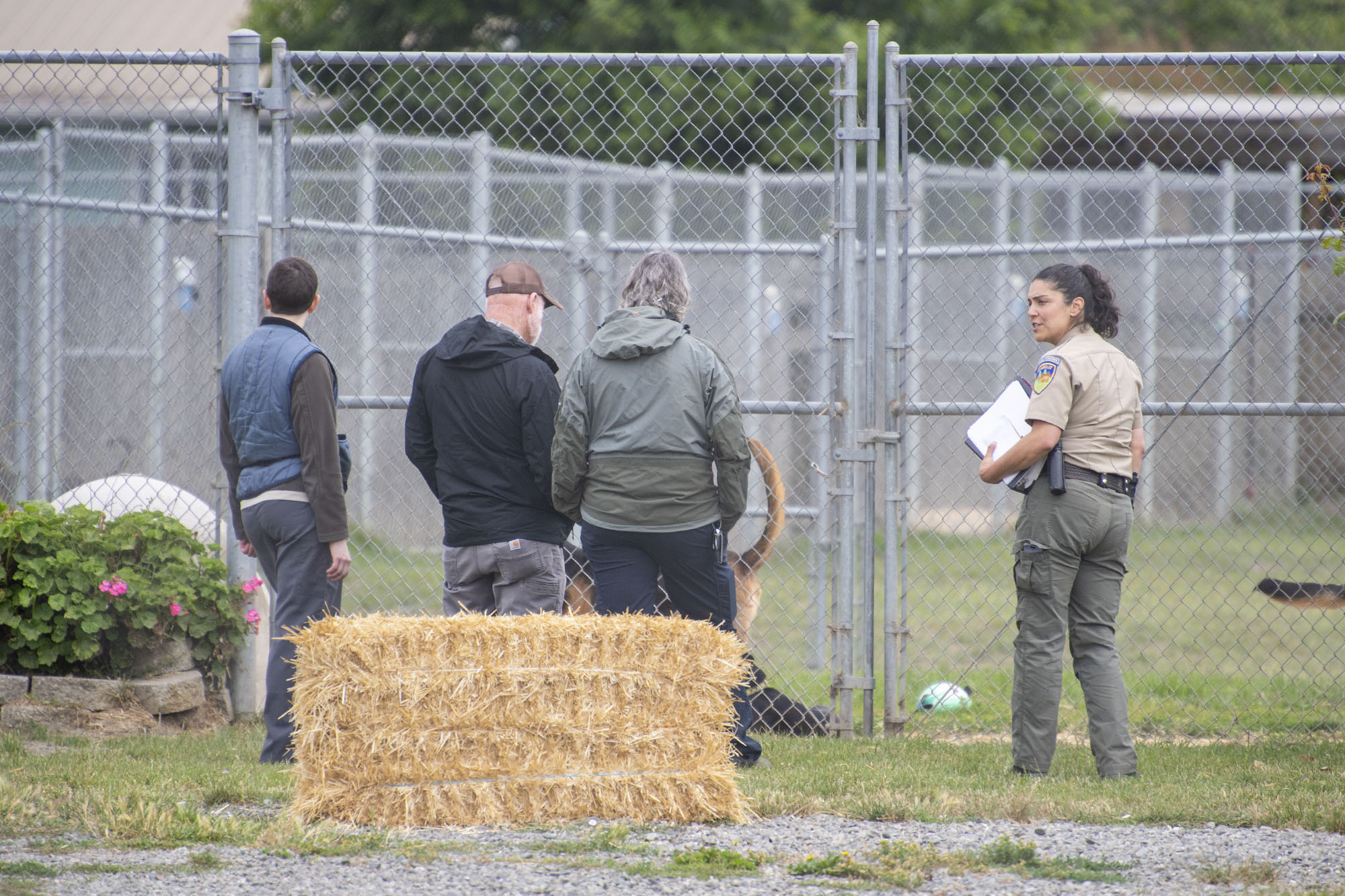
When animal advocates in Humboldt County unearthed dog carcasses on the property of Miranda’s Rescue, they exposed an alleged cruelty and fraud operation that has shocked animal welfare groups across the state. A sprawling multi-agency investigation has since revealed mass graves, dozens of canine skulls and records for hundreds of unaccounted-for dogs transferred from municipal shelters to a sanctuary that marketed itself as a “no-kill” refuge. We’ll look at the latest findings in the investigation, explore why prior warnings were overlooked and discuss what it will take to reform California’s strained animal rescue system.
Guests:
- Sukey Lewis, criminal justice reporter, KQED; host and reporter; “On Our Watch”; co-founder, the California Reporting Project
- Jennifer Raymond, founder of Humboldt Spay/Neuter Clinic; founder of Humboldt Critters without Litters
- Jenna Moore, animal advocate; whistleblower who kicked off the Miranda’s Rescue investigation
- Shannon Miranda, owner, Miranda’s Rescue
Episode Transcript
This is a computer-generated transcript. While our team has reviewed it, there may be errors.
Mina Kim: Welcome to Forum. I’m Mina Kim. A no-kill shelter in Fortuna called Miranda’s Rescue describes itself as a safe haven for animals, a place to heal and educate. And for years, shelters from across California have sent animals there.
Now, Miranda’s Rescue is under investigation by the Humboldt County Sheriff’s Office, the FBI and other law enforcement agencies, after two county residents, Jennifer Raymond and Jenna Moore, found eight dogs buried in a grave on the property and alerted authorities. To date, no formal charges have been filed against the rescue’s owner.
And this hour, we get the latest on the investigation with KQED criminal justice reporter Sukey Lewis, who joins us now. Hi, Sukey.
Sukey Lewis: Hi. Good morning.
Mina Kim: Also with us, the two animal advocates who found the dogs and triggered the investigation. Jennifer Raymond is in studio with me, co-founder of Humboldt’s Spay Neuter Clinic. Welcome to Forum, Jennifer.
Jennifer Raymond: Thank you. It’s great to be here.
Mina Kim: Also, Jenna Moore joins us from KRED, a radio station in Eureka. Jenna, glad to have you with us too.
Jenna Moore: Yes, thank you.
Mina Kim: So, Jennifer, I want to start with you. Tell me about that night you found those eight dogs.
Jennifer Raymond: Well, we knew that he must be killing dogs, and there was a large pile of dirt and a big hole on the property. We had put up trail cams to watch, and on a Sunday afternoon, a bright and sunny afternoon, we saw him come out on his tractor with the bucket with straw in it, meaning the owner of the rescue, Shannon Miranda. And he turned straight toward the camera and began dumping. And at that point, you could see that there were bodies under the straw. And at that point, Jen and I knew that we had to go out there, and we had to get those bodies as evidence that dogs were being killed at this rescue in return for large sums of money.
Mina Kim: Jenna, what made you and Jennifer decide to risk the consequences of, you know, essentially breaking trespassing and property damage laws to get these dog carcasses?
Jenna Moore: We actually didn’t have a conversation about any of the legalities prior. And we didn’t have any intentions of actually bringing the bodies back. We just thought, okay, if they need more evidence, we’ll go in, this is our time, and we’ll microchip scan them, take photos and videos, and then that’ll be enough.
But once we actually got down in there and the bodies were still warm, and it just got pretty emotional, we kind of looked at each other and I just said, “We’re not leaving these guys here. I’m taking them home.”
And so, yeah, we got back, and that’s when we had that discussion. And we just said, well, you know what, we’ll take it. If we’re going to have trespassing and stolen property thrown at us, then, you know, it was worth it. So.
Mina Kim: Jennifer, Jenna says they need more evidence. Who’s “they”? What were you trying to do?
Jennifer Raymond: We were trying to get enough evidence to get the sheriff to go in and get a search warrant and investigate what was going on here. I had been trying to bring down this rescue for years. I filed my first complaint against it in 2006, 20 years before, and we could never get the sheriff to do anything. And so we felt that whatever it took, we needed to get them to go in and take action to stop what was happening, which was the killing of animals.
Mina Kim: Physical evidence. Well, Sukey, it sounds like it worked, right? The investigation got launched, and in fact the area was excavated. Tell me what investigators have found.
Sukey Lewis: So there were two search warrants so far that have been served on the property. One that was shortly after Jenna and Jennifer brought the evidence of these animals to the sheriff. And I want to say one of the really key things about what they uncovered was that the dogs were microchipped, and so they could trace them back.
And one of these dogs in particular, named Zora, was traced back to Oakland Animal Services. And their owner of the shelter had said that Shannon Miranda had told him that this dog had been adopted. And so that kind of laid the groundwork for a potential fraud investigation.
And also the bullet wounds. I’m sorry, for people who, this is difficult to hear.
Mina Kim: It is difficult. In this show, we’ll leave it at that.
Sukey Lewis: But they found that in the animals that they recovered, there were bullet wounds, evidence of the dogs being shot. And so the sheriff began investigating these allegations of potential fraud and also potential animal cruelty.
And the first search warrant they did really focused on looking at paperwork and stuff like that. The second search warrant, which was served in late June, was a much bigger operation. And this involved the FBI, the USDA, you know, archaeologists, because they went in and basically began to unearth these mass graves that were at the back of Shannon Miranda’s property, at the back of the rescue, and ultimately pulled, you know, 117 dog remains, carcasses that were intact, a number of microchips, skulls, and began the process of trying to identify where they came from.
There’s also a financial aspect to this because this is supposed to be a charity, a nonprofit. And so I think they’re investigating, you know, was the money that they were taking in under these auspices as a no-kill shelter appropriately used? And was all the correct reporting going to the IRS and also, you know, the organizations that monitor charities?
Mina Kim: How many dogs have gone through this shelter, generally, in the time frame that it sounds like the authorities are investigating?
Sukey Lewis: It has grown over time, but in the latest numbers from the sheriff, he said they have reports of about a thousand dogs. Some of those did predate the 2025 time period, predate January 2025. Mostly between January 2025 and spring of 2026, 900 dogs were found to have been transferred there, and they found adoption paperwork for about a hundred of them.
There were also a number of dogs that were still alive on the property. And so the sheriff says there’s about 750 dogs that they just do not know what happened to. And so the investigation is trying to pin down where those animals went. Were they adopted? You know, Shannon Miranda, I want to say, has said, like, he is just really bad at paperwork and that many of these dogs were adopted, not killed. But that’s kind of where the numbers stand at this point.
Mina Kim: And from where have these animals come from? I understand it’s a very wide range geographically across the state.
Sukey Lewis: From all over the state. I mean, for Bay Area listeners, Oakland Animal Services sent hundreds of dogs there. One dog, we understand from the sheriff, came all the way from Hawaii. And there have been dogs from Kern County, from Southern California, from, you know, the local — he also had contracts with some of the local towns. So it’s really a range of kind of local dogs and then dogs from all over the state.
Mina Kim: And it’s been operating for some 28, 30 years or so.
Jenna Moore: Yeah, 31 years.
Mina Kim: Yeah. You know, Jenna, this is a story that has gotten national attention. Why do you think that is? Or Jennifer. Let’s see if we can reconnect with Jenna. Jennifer? Sorry.
Jenna Moore: This is Jenna.
Mina Kim: Oh, hi, Jenna.
Jenna Moore: Yeah, I think that, you know, we have a lot of animal advocates and people who just love animals, and you just never hear of things like this. So I think this is kind of a whole different caliber of what we’re normally used to seeing, and I think it’s just gotten the attention of so many.
You know, we use dogs for cadavers, our police officers use them, they’re used in many ways that, you know, they’re a part of our lives in some way, shape or form, and I think that this has just touched so many people.
Jennifer Raymond: Well, I think it really shatters the mythology of no-kill and save them all. Everybody wants to believe that there is some place where all the excess dogs can go that end up in animal shelters. We don’t want them killed in shelters. And people are horrified to learn that animals were pulled out of shelters at great expense and transported to a place where they ended up being brutally killed.
Mina Kim: Sukey, to date, though, I understand that no charges have been filed against Miranda’s Rescue or the rescue’s owner, and that he’s denied any wrongdoing.
Sukey Lewis: Yes. No charges have been filed. The Humboldt County Sheriff recently sent a statement in which he said the investigation is very complex, you know, tracing all these animals back, and that they’re not going to be rushed. He has repeatedly kind of urged patience on the part of the public, who have kind of been outraged.
But I think it’s important to note, it appears that, you know, in a recent statement, my colleague Zoe Farigno, who has been reporting on this story, she spoke to Shannon Miranda a little over a week ago, and he said there’s still animals coming in for adoption, despite his conditional use permit being suspended. So there are still animals there for adoption, and he’s still at this point operating.
Mina Kim: What did sheriff’s officials say? Did you tell them that when you followed up with that information?
Sukey Lewis: They know.
Jennifer Raymond: Yeah, the sheriff has maintained that he is free to continue operating the rescue.
Sukey Lewis: No charges have been filed.
Mina Kim: Well, we also reached out to Sheriff William Hansel, and he sent a statement to us as well. And he said that Mr. Miranda and his media representatives are free to make whatever public statements they choose and present their version of events as they see fit. And we will be joined later by Shannon Miranda.
And as you say, Sukey, he says that the investigation into Miranda’s Rescue remains very active and continues to be handled with the seriousness it deserves. He writes, “The Humboldt County Sheriff’s Office, however, has remained committed to releasing only factual information that is appropriate to disclose during an active criminal investigation.”
Listeners, we’re talking about the ongoing investigation into Miranda’s Rescue in Humboldt County. A sprawling, multi-agency investigation there has revealed mass graves, canine skulls, records for hundreds of dogs that are unaccounted for but were transferred there from municipal shelters and other places.
We’re talking about it with Sukey Lewis, criminal justice reporter for KQED and host of the On Our Watch podcast you might be familiar with. Jennifer Raymond is with us, an animal advocate and whistleblower who kicked off the Miranda’s Rescue investigation, along with Jenna Moore, also an animal advocate. And Jennifer is also founder of Humboldt’s Spay Neuter Clinic and Humboldt’s Critters Without Litters.
Listeners, what questions do you have about the investigation? Are you a shelter owner or work at a shelter or a private animal owner? Have you ever interacted with Miranda’s Rescue? What questions do you have about how California regulates and oversees animal shelters and transfers?
You can tell us by emailing [email protected], finding us on Discord, Bluesky, Facebook, or Instagram at KQED Forum, and by calling 866-733-6786, 866-733-6786.
Stay with us. This is Forum. I’m Mina Kim.