window.__IS_SSR__=true
window.__INITIAL_STATE__={
"attachmentsReducer": {
"audio_0": {
"type": "attachments",
"id": "audio_0",
"imgSizes": {
"kqedFullSize": {
"file": "https://ww2.kqed.org/news/wp-content/themes/KQED-unified/img/audio_bgs/background0.jpg"
}
}
},
"audio_1": {
"type": "attachments",
"id": "audio_1",
"imgSizes": {
"kqedFullSize": {
"file": "https://ww2.kqed.org/news/wp-content/themes/KQED-unified/img/audio_bgs/background1.jpg"
}
}
},
"audio_2": {
"type": "attachments",
"id": "audio_2",
"imgSizes": {
"kqedFullSize": {
"file": "https://ww2.kqed.org/news/wp-content/themes/KQED-unified/img/audio_bgs/background2.jpg"
}
}
},
"audio_3": {
"type": "attachments",
"id": "audio_3",
"imgSizes": {
"kqedFullSize": {
"file": "https://ww2.kqed.org/news/wp-content/themes/KQED-unified/img/audio_bgs/background3.jpg"
}
}
},
"audio_4": {
"type": "attachments",
"id": "audio_4",
"imgSizes": {
"kqedFullSize": {
"file": "https://ww2.kqed.org/news/wp-content/themes/KQED-unified/img/audio_bgs/background4.jpg"
}
}
},
"placeholder": {
"type": "attachments",
"id": "placeholder",
"imgSizes": {
"thumbnail": {
"file": "https://cdn.kqed.org/wp-content/uploads/2024/12/KQED-Default-Image-816638274-2000x1333-1-160x107.jpg",
"width": 160,
"height": 107,
"mimeType": "image/jpeg"
},
"medium": {
"file": "https://cdn.kqed.org/wp-content/uploads/2024/12/KQED-Default-Image-816638274-2000x1333-1-800x533.jpg",
"width": 800,
"height": 533,
"mimeType": "image/jpeg"
},
"medium_large": {
"file": "https://cdn.kqed.org/wp-content/uploads/2024/12/KQED-Default-Image-816638274-2000x1333-1-768x512.jpg",
"width": 768,
"height": 512,
"mimeType": "image/jpeg"
},
"large": {
"file": "https://cdn.kqed.org/wp-content/uploads/2024/12/KQED-Default-Image-816638274-2000x1333-1-1020x680.jpg",
"width": 1020,
"height": 680,
"mimeType": "image/jpeg"
},
"1536x1536": {
"file": "https://cdn.kqed.org/wp-content/uploads/2024/12/KQED-Default-Image-816638274-2000x1333-1-1536x1024.jpg",
"width": 1536,
"height": 1024,
"mimeType": "image/jpeg"
},
"fd-lrg": {
"file": "https://cdn.kqed.org/wp-content/uploads/2024/12/KQED-Default-Image-816638274-2000x1333-1-1536x1024.jpg",
"width": 1536,
"height": 1024,
"mimeType": "image/jpeg"
},
"fd-med": {
"file": "https://cdn.kqed.org/wp-content/uploads/2024/12/KQED-Default-Image-816638274-2000x1333-1-1020x680.jpg",
"width": 1020,
"height": 680,
"mimeType": "image/jpeg"
},
"fd-sm": {
"file": "https://cdn.kqed.org/wp-content/uploads/2024/12/KQED-Default-Image-816638274-2000x1333-1-800x533.jpg",
"width": 800,
"height": 533,
"mimeType": "image/jpeg"
},
"post-thumbnail": {
"file": "https://cdn.kqed.org/wp-content/uploads/2024/12/KQED-Default-Image-816638274-2000x1333-1-672x372.jpg",
"width": 672,
"height": 372,
"mimeType": "image/jpeg"
},
"twentyfourteen-full-width": {
"file": "https://cdn.kqed.org/wp-content/uploads/2024/12/KQED-Default-Image-816638274-2000x1333-1-1038x576.jpg",
"width": 1038,
"height": 576,
"mimeType": "image/jpeg"
},
"xxsmall": {
"file": "https://cdn.kqed.org/wp-content/uploads/2024/12/KQED-Default-Image-816638274-2000x1333-1-160x107.jpg",
"width": 160,
"height": 107,
"mimeType": "image/jpeg"
},
"xsmall": {
"file": "https://cdn.kqed.org/wp-content/uploads/2024/12/KQED-Default-Image-816638274-2000x1333-1-672x372.jpg",
"width": 672,
"height": 372,
"mimeType": "image/jpeg"
},
"small": {
"file": "https://cdn.kqed.org/wp-content/uploads/2024/12/KQED-Default-Image-816638274-2000x1333-1-672x372.jpg",
"width": 672,
"height": 372,
"mimeType": "image/jpeg"
},
"xlarge": {
"file": "https://cdn.kqed.org/wp-content/uploads/2024/12/KQED-Default-Image-816638274-2000x1333-1-1020x680.jpg",
"width": 1020,
"height": 680,
"mimeType": "image/jpeg"
},
"full-width": {
"file": "https://cdn.kqed.org/wp-content/uploads/2024/12/KQED-Default-Image-816638274-2000x1333-1-1920x1280.jpg",
"width": 1920,
"height": 1280,
"mimeType": "image/jpeg"
},
"guest-author-32": {
"file": "https://cdn.kqed.org/wp-content/uploads/2025/01/KQED-Default-Image-816638274-1333x1333-1-160x160.jpg",
"width": 32,
"height": 32,
"mimeType": "image/jpeg"
},
"guest-author-50": {
"file": "https://cdn.kqed.org/wp-content/uploads/2025/01/KQED-Default-Image-816638274-1333x1333-1-160x160.jpg",
"width": 50,
"height": 50,
"mimeType": "image/jpeg"
},
"guest-author-64": {
"file": "https://cdn.kqed.org/wp-content/uploads/2025/01/KQED-Default-Image-816638274-1333x1333-1-160x160.jpg",
"width": 64,
"height": 64,
"mimeType": "image/jpeg"
},
"guest-author-96": {
"file": "https://cdn.kqed.org/wp-content/uploads/2025/01/KQED-Default-Image-816638274-1333x1333-1-160x160.jpg",
"width": 96,
"height": 96,
"mimeType": "image/jpeg"
},
"guest-author-128": {
"file": "https://cdn.kqed.org/wp-content/uploads/2025/01/KQED-Default-Image-816638274-1333x1333-1-160x160.jpg",
"width": 128,
"height": 128,
"mimeType": "image/jpeg"
},
"detail": {
"file": "https://cdn.kqed.org/wp-content/uploads/2025/01/KQED-Default-Image-816638274-1333x1333-1-160x160.jpg",
"width": 160,
"height": 160,
"mimeType": "image/jpeg"
},
"kqedFullSize": {
"file": "https://cdn.kqed.org/wp-content/uploads/2024/12/KQED-Default-Image-816638274-2000x1333-1.jpg",
"width": 2000,
"height": 1333
}
}
},
"lowdown_30309": {
"type": "attachments",
"id": "lowdown_30309",
"meta": {
"index": "attachments_1716263798",
"site": "lowdown",
"id": "30309",
"found": true
},
"parent": 30275,
"imgSizes": {
"small": {
"file": "https://ww2.kqed.org/app/uploads/sites/26/2018/03/ap6305030204-web-520x398.jpg",
"width": 520,
"mimeType": "image/jpeg",
"height": 398
},
"twentyfourteen-full-width": {
"file": "https://ww2.kqed.org/app/uploads/sites/26/2018/03/ap6305030204-web-1038x576.jpg",
"width": 1038,
"mimeType": "image/jpeg",
"height": 576
},
"thumbnail": {
"file": "https://ww2.kqed.org/app/uploads/sites/26/2018/03/ap6305030204-web-160x123.jpg",
"width": 160,
"mimeType": "image/jpeg",
"height": 123
},
"fd-sm": {
"file": "https://ww2.kqed.org/app/uploads/sites/26/2018/03/ap6305030204-web-960x735.jpg",
"width": 960,
"mimeType": "image/jpeg",
"height": 735
},
"post-thumbnail": {
"file": "https://ww2.kqed.org/app/uploads/sites/26/2018/03/ap6305030204-web-672x372.jpg",
"width": 672,
"mimeType": "image/jpeg",
"height": 372
},
"xsmall": {
"file": "https://ww2.kqed.org/app/uploads/sites/26/2018/03/ap6305030204-web-375x287.jpg",
"width": 375,
"mimeType": "image/jpeg",
"height": 287
},
"kqedFullSize": {
"file": "https://ww2.kqed.org/app/uploads/sites/26/2018/03/ap6305030204-web.jpg",
"width": 1200,
"height": 919
},
"large": {
"file": "https://ww2.kqed.org/app/uploads/sites/26/2018/03/ap6305030204-web-1020x781.jpg",
"width": 1020,
"mimeType": "image/jpeg",
"height": 781
},
"xlarge": {
"file": "https://ww2.kqed.org/app/uploads/sites/26/2018/03/ap6305030204-web-1180x904.jpg",
"width": 1180,
"mimeType": "image/jpeg",
"height": 904
},
"guest-author-50": {
"file": "https://ww2.kqed.org/app/uploads/sites/26/2018/03/ap6305030204-web-50x50.jpg",
"width": 50,
"mimeType": "image/jpeg",
"height": 50
},
"guest-author-96": {
"file": "https://ww2.kqed.org/app/uploads/sites/26/2018/03/ap6305030204-web-96x96.jpg",
"width": 96,
"mimeType": "image/jpeg",
"height": 96
},
"medium": {
"file": "https://ww2.kqed.org/app/uploads/sites/26/2018/03/ap6305030204-web-800x613.jpg",
"width": 800,
"mimeType": "image/jpeg",
"height": 613
},
"guest-author-64": {
"file": "https://ww2.kqed.org/app/uploads/sites/26/2018/03/ap6305030204-web-64x64.jpg",
"width": 64,
"mimeType": "image/jpeg",
"height": 64
},
"guest-author-32": {
"file": "https://ww2.kqed.org/app/uploads/sites/26/2018/03/ap6305030204-web-32x32.jpg",
"width": 32,
"mimeType": "image/jpeg",
"height": 32
},
"fd-med": {
"file": "https://ww2.kqed.org/app/uploads/sites/26/2018/03/ap6305030204-web-1180x904.jpg",
"width": 1180,
"mimeType": "image/jpeg",
"height": 904
},
"detail": {
"file": "https://ww2.kqed.org/app/uploads/sites/26/2018/03/ap6305030204-web-150x150.jpg",
"width": 150,
"mimeType": "image/jpeg",
"height": 150
},
"medium_large": {
"file": "https://ww2.kqed.org/app/uploads/sites/26/2018/03/ap6305030204-web-768x588.jpg",
"width": 768,
"mimeType": "image/jpeg",
"height": 588
},
"guest-author-128": {
"file": "https://ww2.kqed.org/app/uploads/sites/26/2018/03/ap6305030204-web-128x128.jpg",
"width": 128,
"mimeType": "image/jpeg",
"height": 128
},
"xxsmall": {
"file": "https://ww2.kqed.org/app/uploads/sites/26/2018/03/ap6305030204-web-240x184.jpg",
"width": 240,
"mimeType": "image/jpeg",
"height": 184
}
},
"publishDate": 1520040032,
"modified": 1520040096,
"caption": "A 17-year-old civil rights demonstrator being attacked by a police dog during 1963 protests in Birmingham.\n",
"description": null,
"title": "ap6305030204-web",
"credit": "BILL HUDSON/AP",
"status": "inherit",
"isLoading": false,
"fetchFailed": false
},
"lowdown_30349": {
"type": "attachments",
"id": "lowdown_30349",
"meta": {
"index": "attachments_1716263798",
"site": "lowdown",
"id": "30349",
"found": true
},
"parent": 30343,
"imgSizes": {
"small": {
"file": "https://ww2.kqed.org/app/uploads/sites/26/2018/03/maxresdefault-520x293.jpg",
"width": 520,
"mimeType": "image/jpeg",
"height": 293
},
"twentyfourteen-full-width": {
"file": "https://ww2.kqed.org/app/uploads/sites/26/2018/03/maxresdefault-1038x576.jpg",
"width": 1038,
"mimeType": "image/jpeg",
"height": 576
},
"thumbnail": {
"file": "https://ww2.kqed.org/app/uploads/sites/26/2018/03/maxresdefault-160x90.jpg",
"width": 160,
"mimeType": "image/jpeg",
"height": 90
},
"fd-sm": {
"file": "https://ww2.kqed.org/app/uploads/sites/26/2018/03/maxresdefault-960x540.jpg",
"width": 960,
"mimeType": "image/jpeg",
"height": 540
},
"post-thumbnail": {
"file": "https://ww2.kqed.org/app/uploads/sites/26/2018/03/maxresdefault-672x372.jpg",
"width": 672,
"mimeType": "image/jpeg",
"height": 372
},
"xsmall": {
"file": "https://ww2.kqed.org/app/uploads/sites/26/2018/03/maxresdefault-375x211.jpg",
"width": 375,
"mimeType": "image/jpeg",
"height": 211
},
"kqedFullSize": {
"file": "https://ww2.kqed.org/app/uploads/sites/26/2018/03/maxresdefault.jpg",
"width": 1280,
"height": 720
},
"large": {
"file": "https://ww2.kqed.org/app/uploads/sites/26/2018/03/maxresdefault-1020x574.jpg",
"width": 1020,
"mimeType": "image/jpeg",
"height": 574
},
"xlarge": {
"file": "https://ww2.kqed.org/app/uploads/sites/26/2018/03/maxresdefault-1180x664.jpg",
"width": 1180,
"mimeType": "image/jpeg",
"height": 664
},
"guest-author-50": {
"file": "https://ww2.kqed.org/app/uploads/sites/26/2018/03/maxresdefault-50x50.jpg",
"width": 50,
"mimeType": "image/jpeg",
"height": 50
},
"guest-author-96": {
"file": "https://ww2.kqed.org/app/uploads/sites/26/2018/03/maxresdefault-96x96.jpg",
"width": 96,
"mimeType": "image/jpeg",
"height": 96
},
"medium": {
"file": "https://ww2.kqed.org/app/uploads/sites/26/2018/03/maxresdefault-800x450.jpg",
"width": 800,
"mimeType": "image/jpeg",
"height": 450
},
"guest-author-64": {
"file": "https://ww2.kqed.org/app/uploads/sites/26/2018/03/maxresdefault-64x64.jpg",
"width": 64,
"mimeType": "image/jpeg",
"height": 64
},
"guest-author-32": {
"file": "https://ww2.kqed.org/app/uploads/sites/26/2018/03/maxresdefault-32x32.jpg",
"width": 32,
"mimeType": "image/jpeg",
"height": 32
},
"fd-med": {
"file": "https://ww2.kqed.org/app/uploads/sites/26/2018/03/maxresdefault-1180x664.jpg",
"width": 1180,
"mimeType": "image/jpeg",
"height": 664
},
"detail": {
"file": "https://ww2.kqed.org/app/uploads/sites/26/2018/03/maxresdefault-150x150.jpg",
"width": 150,
"mimeType": "image/jpeg",
"height": 150
},
"medium_large": {
"file": "https://ww2.kqed.org/app/uploads/sites/26/2018/03/maxresdefault-768x432.jpg",
"width": 768,
"mimeType": "image/jpeg",
"height": 432
},
"guest-author-128": {
"file": "https://ww2.kqed.org/app/uploads/sites/26/2018/03/maxresdefault-128x128.jpg",
"width": 128,
"mimeType": "image/jpeg",
"height": 128
},
"xxsmall": {
"file": "https://ww2.kqed.org/app/uploads/sites/26/2018/03/maxresdefault-240x135.jpg",
"width": 240,
"mimeType": "image/jpeg",
"height": 135
}
},
"publishDate": 1520454440,
"modified": 1520454440,
"caption": null,
"description": null,
"title": "maxresdefault",
"credit": null,
"status": "inherit",
"isLoading": false,
"fetchFailed": false
},
"lowdown_28210": {
"type": "attachments",
"id": "lowdown_28210",
"meta": {
"index": "attachments_1716263798",
"site": "lowdown",
"id": "28210",
"found": true
},
"parent": 28184,
"imgSizes": {
"small": {
"file": "https://ww2.kqed.org/app/uploads/sites/26/2017/09/2880px-DACA_protest_at_Trump_Tower_52703-520x395.jpg",
"width": 520,
"mimeType": "image/jpeg",
"height": 395
},
"twentyfourteen-full-width": {
"file": "https://ww2.kqed.org/app/uploads/sites/26/2017/09/2880px-DACA_protest_at_Trump_Tower_52703-1038x576.jpg",
"width": 1038,
"mimeType": "image/jpeg",
"height": 576
},
"thumbnail": {
"file": "https://ww2.kqed.org/app/uploads/sites/26/2017/09/2880px-DACA_protest_at_Trump_Tower_52703-160x122.jpg",
"width": 160,
"mimeType": "image/jpeg",
"height": 122
},
"fd-sm": {
"file": "https://ww2.kqed.org/app/uploads/sites/26/2017/09/2880px-DACA_protest_at_Trump_Tower_52703-960x729.jpg",
"width": 960,
"mimeType": "image/jpeg",
"height": 729
},
"post-thumbnail": {
"file": "https://ww2.kqed.org/app/uploads/sites/26/2017/09/2880px-DACA_protest_at_Trump_Tower_52703-672x372.jpg",
"width": 672,
"mimeType": "image/jpeg",
"height": 372
},
"xsmall": {
"file": "https://ww2.kqed.org/app/uploads/sites/26/2017/09/2880px-DACA_protest_at_Trump_Tower_52703-375x285.jpg",
"width": 375,
"mimeType": "image/jpeg",
"height": 285
},
"kqedFullSize": {
"file": "https://ww2.kqed.org/app/uploads/sites/26/2017/09/2880px-DACA_protest_at_Trump_Tower_52703.jpg",
"width": 2880,
"height": 2187
},
"large": {
"file": "https://ww2.kqed.org/app/uploads/sites/26/2017/09/2880px-DACA_protest_at_Trump_Tower_52703-1020x775.jpg",
"width": 1020,
"mimeType": "image/jpeg",
"height": 775
},
"xlarge": {
"file": "https://ww2.kqed.org/app/uploads/sites/26/2017/09/2880px-DACA_protest_at_Trump_Tower_52703-1180x896.jpg",
"width": 1180,
"mimeType": "image/jpeg",
"height": 896
},
"guest-author-50": {
"file": "https://ww2.kqed.org/app/uploads/sites/26/2017/09/2880px-DACA_protest_at_Trump_Tower_52703-50x50.jpg",
"width": 50,
"mimeType": "image/jpeg",
"height": 50
},
"guest-author-96": {
"file": "https://ww2.kqed.org/app/uploads/sites/26/2017/09/2880px-DACA_protest_at_Trump_Tower_52703-96x96.jpg",
"width": 96,
"mimeType": "image/jpeg",
"height": 96
},
"medium": {
"file": "https://ww2.kqed.org/app/uploads/sites/26/2017/09/2880px-DACA_protest_at_Trump_Tower_52703-800x608.jpg",
"width": 800,
"mimeType": "image/jpeg",
"height": 608
},
"guest-author-64": {
"file": "https://ww2.kqed.org/app/uploads/sites/26/2017/09/2880px-DACA_protest_at_Trump_Tower_52703-64x64.jpg",
"width": 64,
"mimeType": "image/jpeg",
"height": 64
},
"guest-author-32": {
"file": "https://ww2.kqed.org/app/uploads/sites/26/2017/09/2880px-DACA_protest_at_Trump_Tower_52703-32x32.jpg",
"width": 32,
"mimeType": "image/jpeg",
"height": 32
},
"fd-lrg": {
"file": "https://ww2.kqed.org/app/uploads/sites/26/2017/09/2880px-DACA_protest_at_Trump_Tower_52703-1920x1458.jpg",
"width": 1920,
"mimeType": "image/jpeg",
"height": 1458
},
"fd-med": {
"file": "https://ww2.kqed.org/app/uploads/sites/26/2017/09/2880px-DACA_protest_at_Trump_Tower_52703-1180x896.jpg",
"width": 1180,
"mimeType": "image/jpeg",
"height": 896
},
"full-width": {
"file": "https://ww2.kqed.org/app/uploads/sites/26/2017/09/2880px-DACA_protest_at_Trump_Tower_52703-1920x1458.jpg",
"width": 1920,
"mimeType": "image/jpeg",
"height": 1458
},
"detail": {
"file": "https://ww2.kqed.org/app/uploads/sites/26/2017/09/2880px-DACA_protest_at_Trump_Tower_52703-150x150.jpg",
"width": 150,
"mimeType": "image/jpeg",
"height": 150
},
"medium_large": {
"file": "https://ww2.kqed.org/app/uploads/sites/26/2017/09/2880px-DACA_protest_at_Trump_Tower_52703-768x583.jpg",
"width": 768,
"mimeType": "image/jpeg",
"height": 583
},
"guest-author-128": {
"file": "https://ww2.kqed.org/app/uploads/sites/26/2017/09/2880px-DACA_protest_at_Trump_Tower_52703-128x128.jpg",
"width": 128,
"mimeType": "image/jpeg",
"height": 128
},
"xxsmall": {
"file": "https://ww2.kqed.org/app/uploads/sites/26/2017/09/2880px-DACA_protest_at_Trump_Tower_52703-240x182.jpg",
"width": 240,
"mimeType": "image/jpeg",
"height": 182
}
},
"publishDate": 1505441938,
"modified": 1505442130,
"caption": "Protesters outside Trump Tower in New York on Sept. 5.",
"description": null,
"title": "2880px-DACA_protest_at_Trump_Tower_(52703)",
"credit": "Rhododendrites/Wikipedia",
"status": "inherit",
"isLoading": false,
"fetchFailed": false
},
"lowdown_30227": {
"type": "attachments",
"id": "lowdown_30227",
"meta": {
"index": "attachments_1716263798",
"site": "lowdown",
"id": "30227",
"found": true
},
"parent": 0,
"imgSizes": {
"small": {
"file": "https://ww2.kqed.org/app/uploads/sites/26/2018/02/presidential-popularity-4-copy-520x344.png",
"width": 520,
"mimeType": "image/png",
"height": 344
},
"twentyfourteen-full-width": {
"file": "https://ww2.kqed.org/app/uploads/sites/26/2018/02/presidential-popularity-4-copy-944x576.png",
"width": 944,
"mimeType": "image/png",
"height": 576
},
"thumbnail": {
"file": "https://ww2.kqed.org/app/uploads/sites/26/2018/02/presidential-popularity-4-copy-160x106.png",
"width": 160,
"mimeType": "image/png",
"height": 106
},
"post-thumbnail": {
"file": "https://ww2.kqed.org/app/uploads/sites/26/2018/02/presidential-popularity-4-copy-672x372.png",
"width": 672,
"mimeType": "image/png",
"height": 372
},
"xsmall": {
"file": "https://ww2.kqed.org/app/uploads/sites/26/2018/02/presidential-popularity-4-copy-375x248.png",
"width": 375,
"mimeType": "image/png",
"height": 248
},
"kqedFullSize": {
"file": "https://ww2.kqed.org/app/uploads/sites/26/2018/02/presidential-popularity-4-copy.png",
"width": 944,
"height": 624
},
"guest-author-50": {
"file": "https://ww2.kqed.org/app/uploads/sites/26/2018/02/presidential-popularity-4-copy-50x50.png",
"width": 50,
"mimeType": "image/png",
"height": 50
},
"guest-author-96": {
"file": "https://ww2.kqed.org/app/uploads/sites/26/2018/02/presidential-popularity-4-copy-96x96.png",
"width": 96,
"mimeType": "image/png",
"height": 96
},
"medium": {
"file": "https://ww2.kqed.org/app/uploads/sites/26/2018/02/presidential-popularity-4-copy-800x529.png",
"width": 800,
"mimeType": "image/png",
"height": 529
},
"guest-author-64": {
"file": "https://ww2.kqed.org/app/uploads/sites/26/2018/02/presidential-popularity-4-copy-64x64.png",
"width": 64,
"mimeType": "image/png",
"height": 64
},
"guest-author-32": {
"file": "https://ww2.kqed.org/app/uploads/sites/26/2018/02/presidential-popularity-4-copy-32x32.png",
"width": 32,
"mimeType": "image/png",
"height": 32
},
"detail": {
"file": "https://ww2.kqed.org/app/uploads/sites/26/2018/02/presidential-popularity-4-copy-150x150.png",
"width": 150,
"mimeType": "image/png",
"height": 150
},
"medium_large": {
"file": "https://ww2.kqed.org/app/uploads/sites/26/2018/02/presidential-popularity-4-copy-768x508.png",
"width": 768,
"mimeType": "image/png",
"height": 508
},
"guest-author-128": {
"file": "https://ww2.kqed.org/app/uploads/sites/26/2018/02/presidential-popularity-4-copy-128x128.png",
"width": 128,
"mimeType": "image/png",
"height": 128
},
"xxsmall": {
"file": "https://ww2.kqed.org/app/uploads/sites/26/2018/02/presidential-popularity-4-copy-240x159.png",
"width": 240,
"mimeType": "image/png",
"height": 159
}
},
"publishDate": 1519325762,
"modified": 1519325931,
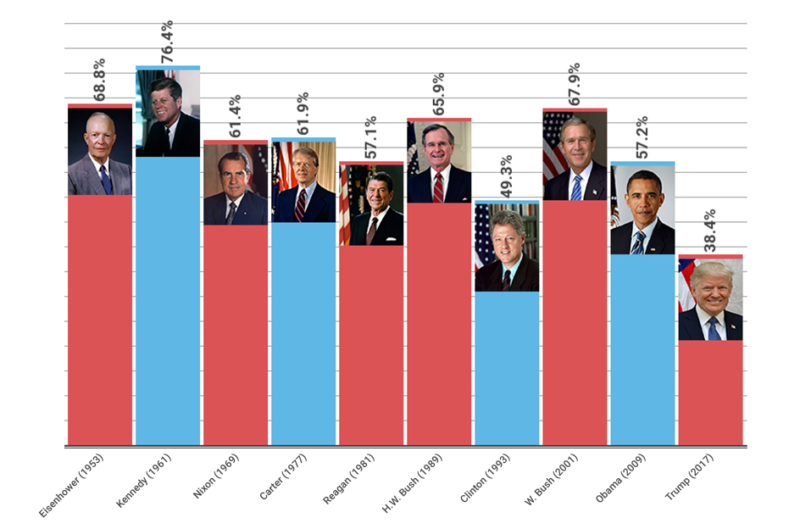
"caption": "First-year job approval averages for elected presidents ",
"description": null,
"title": "presidential-popularity (4) copy",
"credit": "Source: Gallup; Image by Matthew Green",
"status": "inherit",
"isLoading": false,
"fetchFailed": false
},
"lowdown_11822": {
"type": "attachments",
"id": "lowdown_11822",
"meta": {
"index": "attachments_1716263798",
"site": "lowdown",
"id": "11822",
"found": true
},
"parent": 11819,
"imgSizes": {
"twentyfourteen-full-width": {
"file": "https://ww2.kqed.org/app/uploads/sites/26/2014/02/Tommie-Smith-a-990x576.jpg",
"width": 990,
"mimeType": "image/jpeg",
"height": 576
},
"thumbnail": {
"file": "https://ww2.kqed.org/app/uploads/sites/26/2014/02/Tommie-Smith-a-400x259.jpg",
"width": 400,
"mimeType": "image/jpeg",
"height": 259
},
"fd-sm": {
"file": "https://ww2.kqed.org/app/uploads/sites/26/2014/02/Tommie-Smith-a-320x207.jpg",
"width": 320,
"mimeType": "image/jpeg",
"height": 207
},
"post-thumbnail": {
"file": "https://ww2.kqed.org/app/uploads/sites/26/2014/02/Tommie-Smith-a-672x372.jpg",
"width": 672,
"mimeType": "image/jpeg",
"height": 372
},
"kqedFullSize": {
"file": "https://ww2.kqed.org/app/uploads/sites/26/2014/02/Tommie-Smith-a.jpg",
"width": 990,
"height": 640
},
"fd-med": {
"file": "https://ww2.kqed.org/app/uploads/sites/26/2014/02/Tommie-Smith-a-768x496.jpg",
"width": 768,
"mimeType": "image/jpeg",
"height": 496
},
"guest-author-96": {
"file": "https://ww2.kqed.org/app/uploads/sites/26/2014/02/Tommie-Smith-a-96x96.jpg",
"width": 96,
"mimeType": "image/jpeg",
"height": 96
},
"medium": {
"file": "https://ww2.kqed.org/app/uploads/sites/26/2014/02/Tommie-Smith-a-800x517.jpg",
"width": 800,
"mimeType": "image/jpeg",
"height": 517
},
"guest-author-64": {
"file": "https://ww2.kqed.org/app/uploads/sites/26/2014/02/Tommie-Smith-a-64x64.jpg",
"width": 64,
"mimeType": "image/jpeg",
"height": 64
},
"detail": {
"file": "https://ww2.kqed.org/app/uploads/sites/26/2014/02/Tommie-Smith-a-75x75.jpg",
"width": 75,
"mimeType": "image/jpeg",
"height": 75
},
"guest-author-32": {
"file": "https://ww2.kqed.org/app/uploads/sites/26/2014/02/Tommie-Smith-a-32x32.jpg",
"width": 32,
"mimeType": "image/jpeg",
"height": 32
},
"guest-author-128": {
"file": "https://ww2.kqed.org/app/uploads/sites/26/2014/02/Tommie-Smith-a-128x128.jpg",
"width": 128,
"mimeType": "image/jpeg",
"height": 128
}
},
"publishDate": 1392453776,
"modified": 1470339056,
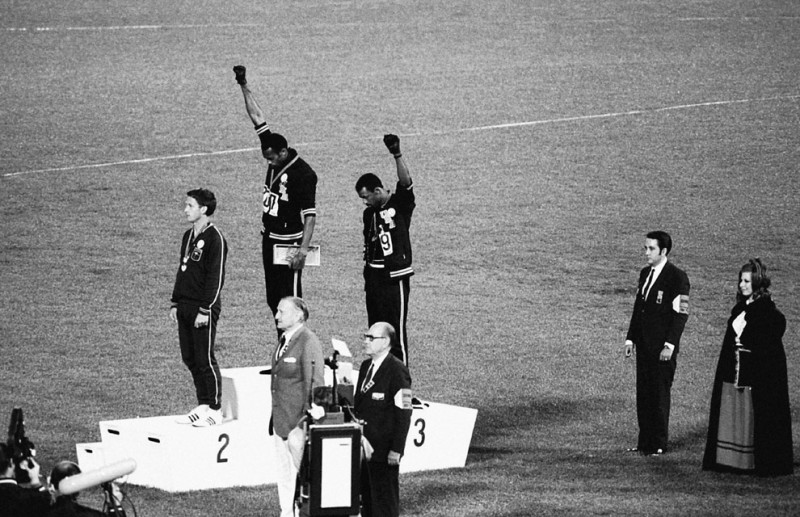
"caption": "During the medals ceremony at the 1968 Summer Olympics in Mexico City, U.S. track stars Tommie Smith (center) and John Carlos (right) unexpectedly give the Black Power salute.",
"description": null,
"title": "Tommie-Smith--a",
"credit": "Associated Press",
"status": "inherit",
"isLoading": false,
"fetchFailed": false
},
"lowdown_28545": {
"type": "attachments",
"id": "lowdown_28545",
"meta": {
"index": "attachments_1716263798",
"site": "lowdown",
"id": "28545",
"found": true
},
"parent": 28389,
"imgSizes": {
"small": {
"file": "https://ww2.kqed.org/app/uploads/sites/26/2017/10/2880px-Houston_Gun_Show_at_the_George_R._Brown_Convention_Center-520x348.jpg",
"width": 520,
"mimeType": "image/jpeg",
"height": 348
},
"twentyfourteen-full-width": {
"file": "https://ww2.kqed.org/app/uploads/sites/26/2017/10/2880px-Houston_Gun_Show_at_the_George_R._Brown_Convention_Center-1038x576.jpg",
"width": 1038,
"mimeType": "image/jpeg",
"height": 576
},
"thumbnail": {
"file": "https://ww2.kqed.org/app/uploads/sites/26/2017/10/2880px-Houston_Gun_Show_at_the_George_R._Brown_Convention_Center-160x107.jpg",
"width": 160,
"mimeType": "image/jpeg",
"height": 107
},
"fd-sm": {
"file": "https://ww2.kqed.org/app/uploads/sites/26/2017/10/2880px-Houston_Gun_Show_at_the_George_R._Brown_Convention_Center-960x643.jpg",
"width": 960,
"mimeType": "image/jpeg",
"height": 643
},
"post-thumbnail": {
"file": "https://ww2.kqed.org/app/uploads/sites/26/2017/10/2880px-Houston_Gun_Show_at_the_George_R._Brown_Convention_Center-672x372.jpg",
"width": 672,
"mimeType": "image/jpeg",
"height": 372
},
"xsmall": {
"file": "https://ww2.kqed.org/app/uploads/sites/26/2017/10/2880px-Houston_Gun_Show_at_the_George_R._Brown_Convention_Center-375x251.jpg",
"width": 375,
"mimeType": "image/jpeg",
"height": 251
},
"kqedFullSize": {
"file": "https://ww2.kqed.org/app/uploads/sites/26/2017/10/2880px-Houston_Gun_Show_at_the_George_R._Brown_Convention_Center.jpg",
"width": 2880,
"height": 1928
},
"large": {
"file": "https://ww2.kqed.org/app/uploads/sites/26/2017/10/2880px-Houston_Gun_Show_at_the_George_R._Brown_Convention_Center-1020x683.jpg",
"width": 1020,
"mimeType": "image/jpeg",
"height": 683
},
"xlarge": {
"file": "https://ww2.kqed.org/app/uploads/sites/26/2017/10/2880px-Houston_Gun_Show_at_the_George_R._Brown_Convention_Center-1180x790.jpg",
"width": 1180,
"mimeType": "image/jpeg",
"height": 790
},
"guest-author-50": {
"file": "https://ww2.kqed.org/app/uploads/sites/26/2017/10/2880px-Houston_Gun_Show_at_the_George_R._Brown_Convention_Center-50x50.jpg",
"width": 50,
"mimeType": "image/jpeg",
"height": 50
},
"guest-author-96": {
"file": "https://ww2.kqed.org/app/uploads/sites/26/2017/10/2880px-Houston_Gun_Show_at_the_George_R._Brown_Convention_Center-96x96.jpg",
"width": 96,
"mimeType": "image/jpeg",
"height": 96
},
"medium": {
"file": "https://ww2.kqed.org/app/uploads/sites/26/2017/10/2880px-Houston_Gun_Show_at_the_George_R._Brown_Convention_Center-800x536.jpg",
"width": 800,
"mimeType": "image/jpeg",
"height": 536
},
"guest-author-64": {
"file": "https://ww2.kqed.org/app/uploads/sites/26/2017/10/2880px-Houston_Gun_Show_at_the_George_R._Brown_Convention_Center-64x64.jpg",
"width": 64,
"mimeType": "image/jpeg",
"height": 64
},
"guest-author-32": {
"file": "https://ww2.kqed.org/app/uploads/sites/26/2017/10/2880px-Houston_Gun_Show_at_the_George_R._Brown_Convention_Center-32x32.jpg",
"width": 32,
"mimeType": "image/jpeg",
"height": 32
},
"fd-lrg": {
"file": "https://ww2.kqed.org/app/uploads/sites/26/2017/10/2880px-Houston_Gun_Show_at_the_George_R._Brown_Convention_Center-1920x1285.jpg",
"width": 1920,
"mimeType": "image/jpeg",
"height": 1285
},
"fd-med": {
"file": "https://ww2.kqed.org/app/uploads/sites/26/2017/10/2880px-Houston_Gun_Show_at_the_George_R._Brown_Convention_Center-1180x790.jpg",
"width": 1180,
"mimeType": "image/jpeg",
"height": 790
},
"full-width": {
"file": "https://ww2.kqed.org/app/uploads/sites/26/2017/10/2880px-Houston_Gun_Show_at_the_George_R._Brown_Convention_Center-1920x1285.jpg",
"width": 1920,
"mimeType": "image/jpeg",
"height": 1285
},
"detail": {
"file": "https://ww2.kqed.org/app/uploads/sites/26/2017/10/2880px-Houston_Gun_Show_at_the_George_R._Brown_Convention_Center-150x150.jpg",
"width": 150,
"mimeType": "image/jpeg",
"height": 150
},
"medium_large": {
"file": "https://ww2.kqed.org/app/uploads/sites/26/2017/10/2880px-Houston_Gun_Show_at_the_George_R._Brown_Convention_Center-768x514.jpg",
"width": 768,
"mimeType": "image/jpeg",
"height": 514
},
"guest-author-128": {
"file": "https://ww2.kqed.org/app/uploads/sites/26/2017/10/2880px-Houston_Gun_Show_at_the_George_R._Brown_Convention_Center-128x128.jpg",
"width": 128,
"mimeType": "image/jpeg",
"height": 128
},
"xxsmall": {
"file": "https://ww2.kqed.org/app/uploads/sites/26/2017/10/2880px-Houston_Gun_Show_at_the_George_R._Brown_Convention_Center-240x161.jpg",
"width": 240,
"mimeType": "image/jpeg",
"height": 161
}
},
"publishDate": 1508268384,
"modified": 1508268598,
"caption": null,
"description": null,
"title": "2880px-Houston_Gun_Show_at_the_George_R._Brown_Convention_Center",
"credit": "\u003ca href=\"https://www.flickr.com/photos/glasgows/432945997/\" target= \"_blank\">M&R Glasgow/Wikipedia\u003c/a>",
"status": "inherit",
"isLoading": false,
"fetchFailed": false
},
"lowdown_30283": {
"type": "attachments",
"id": "lowdown_30283",
"meta": {
"index": "attachments_1716263798",
"site": "lowdown",
"id": "30283",
"found": true
},
"parent": 30098,
"imgSizes": {
"small": {
"file": "https://ww2.kqed.org/app/uploads/sites/26/2018/02/SCHOOL-SEGREGATION-THUMBNAIL-520x293.png",
"width": 520,
"mimeType": "image/png",
"height": 293
},
"twentyfourteen-full-width": {
"file": "https://ww2.kqed.org/app/uploads/sites/26/2018/02/SCHOOL-SEGREGATION-THUMBNAIL-1038x576.png",
"width": 1038,
"mimeType": "image/png",
"height": 576
},
"thumbnail": {
"file": "https://ww2.kqed.org/app/uploads/sites/26/2018/02/SCHOOL-SEGREGATION-THUMBNAIL-160x90.png",
"width": 160,
"mimeType": "image/png",
"height": 90
},
"fd-sm": {
"file": "https://ww2.kqed.org/app/uploads/sites/26/2018/02/SCHOOL-SEGREGATION-THUMBNAIL-960x540.png",
"width": 960,
"mimeType": "image/png",
"height": 540
},
"post-thumbnail": {
"file": "https://ww2.kqed.org/app/uploads/sites/26/2018/02/SCHOOL-SEGREGATION-THUMBNAIL-672x372.png",
"width": 672,
"mimeType": "image/png",
"height": 372
},
"xsmall": {
"file": "https://ww2.kqed.org/app/uploads/sites/26/2018/02/SCHOOL-SEGREGATION-THUMBNAIL-375x211.png",
"width": 375,
"mimeType": "image/png",
"height": 211
},
"kqedFullSize": {
"file": "https://ww2.kqed.org/app/uploads/sites/26/2018/02/SCHOOL-SEGREGATION-THUMBNAIL.png",
"width": 1920,
"height": 1080
},
"large": {
"file": "https://ww2.kqed.org/app/uploads/sites/26/2018/02/SCHOOL-SEGREGATION-THUMBNAIL-1020x574.png",
"width": 1020,
"mimeType": "image/png",
"height": 574
},
"xlarge": {
"file": "https://ww2.kqed.org/app/uploads/sites/26/2018/02/SCHOOL-SEGREGATION-THUMBNAIL-1180x664.png",
"width": 1180,
"mimeType": "image/png",
"height": 664
},
"guest-author-50": {
"file": "https://ww2.kqed.org/app/uploads/sites/26/2018/02/SCHOOL-SEGREGATION-THUMBNAIL-50x50.png",
"width": 50,
"mimeType": "image/png",
"height": 50
},
"guest-author-96": {
"file": "https://ww2.kqed.org/app/uploads/sites/26/2018/02/SCHOOL-SEGREGATION-THUMBNAIL-96x96.png",
"width": 96,
"mimeType": "image/png",
"height": 96
},
"medium": {
"file": "https://ww2.kqed.org/app/uploads/sites/26/2018/02/SCHOOL-SEGREGATION-THUMBNAIL-800x450.png",
"width": 800,
"mimeType": "image/png",
"height": 450
},
"guest-author-64": {
"file": "https://ww2.kqed.org/app/uploads/sites/26/2018/02/SCHOOL-SEGREGATION-THUMBNAIL-64x64.png",
"width": 64,
"mimeType": "image/png",
"height": 64
},
"guest-author-32": {
"file": "https://ww2.kqed.org/app/uploads/sites/26/2018/02/SCHOOL-SEGREGATION-THUMBNAIL-32x32.png",
"width": 32,
"mimeType": "image/png",
"height": 32
},
"fd-lrg": {
"file": "https://ww2.kqed.org/app/uploads/sites/26/2018/02/SCHOOL-SEGREGATION-THUMBNAIL-1920x1080.png",
"width": 1920,
"mimeType": "image/png",
"height": 1080
},
"fd-med": {
"file": "https://ww2.kqed.org/app/uploads/sites/26/2018/02/SCHOOL-SEGREGATION-THUMBNAIL-1180x664.png",
"width": 1180,
"mimeType": "image/png",
"height": 664
},
"full-width": {
"file": "https://ww2.kqed.org/app/uploads/sites/26/2018/02/SCHOOL-SEGREGATION-THUMBNAIL-1920x1080.png",
"width": 1920,
"mimeType": "image/png",
"height": 1080
},
"detail": {
"file": "https://ww2.kqed.org/app/uploads/sites/26/2018/02/SCHOOL-SEGREGATION-THUMBNAIL-150x150.png",
"width": 150,
"mimeType": "image/png",
"height": 150
},
"medium_large": {
"file": "https://ww2.kqed.org/app/uploads/sites/26/2018/02/SCHOOL-SEGREGATION-THUMBNAIL-768x432.png",
"width": 768,
"mimeType": "image/png",
"height": 432
},
"guest-author-128": {
"file": "https://ww2.kqed.org/app/uploads/sites/26/2018/02/SCHOOL-SEGREGATION-THUMBNAIL-128x128.png",
"width": 128,
"mimeType": "image/png",
"height": 128
},
"xxsmall": {
"file": "https://ww2.kqed.org/app/uploads/sites/26/2018/02/SCHOOL-SEGREGATION-THUMBNAIL-240x135.png",
"width": 240,
"mimeType": "image/png",
"height": 135
}
},
"publishDate": 1520015714,
"modified": 1520015714,
"caption": null,
"description": null,
"title": "SCHOOL SEGREGATION THUMBNAIL",
"credit": null,
"status": "inherit",
"isLoading": false,
"fetchFailed": false
},
"lowdown_29802": {
"type": "attachments",
"id": "lowdown_29802",
"meta": {
"index": "attachments_1716263798",
"site": "lowdown",
"id": "29802",
"found": true
},
"parent": 29793,
"imgSizes": {
"small": {
"file": "https://ww2.kqed.org/app/uploads/sites/26/2018/01/iStock-859090900-520x345.jpg",
"width": 520,
"mimeType": "image/jpeg",
"height": 345
},
"twentyfourteen-full-width": {
"file": "https://ww2.kqed.org/app/uploads/sites/26/2018/01/iStock-859090900-1038x576.jpg",
"width": 1038,
"mimeType": "image/jpeg",
"height": 576
},
"thumbnail": {
"file": "https://ww2.kqed.org/app/uploads/sites/26/2018/01/iStock-859090900-160x106.jpg",
"width": 160,
"mimeType": "image/jpeg",
"height": 106
},
"fd-sm": {
"file": "https://ww2.kqed.org/app/uploads/sites/26/2018/01/iStock-859090900-960x638.jpg",
"width": 960,
"mimeType": "image/jpeg",
"height": 638
},
"post-thumbnail": {
"file": "https://ww2.kqed.org/app/uploads/sites/26/2018/01/iStock-859090900-672x372.jpg",
"width": 672,
"mimeType": "image/jpeg",
"height": 372
},
"xsmall": {
"file": "https://ww2.kqed.org/app/uploads/sites/26/2018/01/iStock-859090900-375x249.jpg",
"width": 375,
"mimeType": "image/jpeg",
"height": 249
},
"kqedFullSize": {
"file": "https://ww2.kqed.org/app/uploads/sites/26/2018/01/iStock-859090900.jpg",
"width": 2787,
"height": 1851
},
"large": {
"file": "https://ww2.kqed.org/app/uploads/sites/26/2018/01/iStock-859090900-1020x677.jpg",
"width": 1020,
"mimeType": "image/jpeg",
"height": 677
},
"xlarge": {
"file": "https://ww2.kqed.org/app/uploads/sites/26/2018/01/iStock-859090900-1180x784.jpg",
"width": 1180,
"mimeType": "image/jpeg",
"height": 784
},
"guest-author-50": {
"file": "https://ww2.kqed.org/app/uploads/sites/26/2018/01/iStock-859090900-50x50.jpg",
"width": 50,
"mimeType": "image/jpeg",
"height": 50
},
"guest-author-96": {
"file": "https://ww2.kqed.org/app/uploads/sites/26/2018/01/iStock-859090900-96x96.jpg",
"width": 96,
"mimeType": "image/jpeg",
"height": 96
},
"medium": {
"file": "https://ww2.kqed.org/app/uploads/sites/26/2018/01/iStock-859090900-800x531.jpg",
"width": 800,
"mimeType": "image/jpeg",
"height": 531
},
"guest-author-64": {
"file": "https://ww2.kqed.org/app/uploads/sites/26/2018/01/iStock-859090900-64x64.jpg",
"width": 64,
"mimeType": "image/jpeg",
"height": 64
},
"guest-author-32": {
"file": "https://ww2.kqed.org/app/uploads/sites/26/2018/01/iStock-859090900-32x32.jpg",
"width": 32,
"mimeType": "image/jpeg",
"height": 32
},
"fd-lrg": {
"file": "https://ww2.kqed.org/app/uploads/sites/26/2018/01/iStock-859090900-1920x1275.jpg",
"width": 1920,
"mimeType": "image/jpeg",
"height": 1275
},
"fd-med": {
"file": "https://ww2.kqed.org/app/uploads/sites/26/2018/01/iStock-859090900-1180x784.jpg",
"width": 1180,
"mimeType": "image/jpeg",
"height": 784
},
"full-width": {
"file": "https://ww2.kqed.org/app/uploads/sites/26/2018/01/iStock-859090900-1920x1275.jpg",
"width": 1920,
"mimeType": "image/jpeg",
"height": 1275
},
"detail": {
"file": "https://ww2.kqed.org/app/uploads/sites/26/2018/01/iStock-859090900-150x150.jpg",
"width": 150,
"mimeType": "image/jpeg",
"height": 150
},
"medium_large": {
"file": "https://ww2.kqed.org/app/uploads/sites/26/2018/01/iStock-859090900-768x510.jpg",
"width": 768,
"mimeType": "image/jpeg",
"height": 510
},
"guest-author-128": {
"file": "https://ww2.kqed.org/app/uploads/sites/26/2018/01/iStock-859090900-128x128.jpg",
"width": 128,
"mimeType": "image/jpeg",
"height": 128
},
"xxsmall": {
"file": "https://ww2.kqed.org/app/uploads/sites/26/2018/01/iStock-859090900-240x159.jpg",
"width": 240,
"mimeType": "image/jpeg",
"height": 159
}
},
"publishDate": 1517268675,
"modified": 1517469917,
"caption": null,
"description": null,
"title": "Opioid epidemic, drug abuse concept",
"credit": "Moussa81/iStock",
"status": "inherit",
"isLoading": false,
"fetchFailed": false
}
},
"audioPlayerReducer": {
"postId": "stream_live",
"isPaused": true,
"isPlaying": false,
"pfsActive": false,
"pledgeModalIsOpen": true,
"playerDrawerIsOpen": false,
"liveAudioPlayStartedAt": 0,
"liveAudioPlayContext": ""
},
"authorsReducer": {
"matthewgreen": {
"type": "authors",
"id": "1263",
"meta": {
"index": "authors_1716337520",
"id": "1263",
"found": true
},
"name": "Matthew Green",
"firstName": "Matthew",
"lastName": "Green",
"slug": "matthewgreen",
"email": "mgreen@kqed.org",
"display_author_email": false,
"staff_mastheads": [],
"title": "KQED Editor/Reporter",
"bio": "Matthew Green is a digital media producer for KQED News. He previously produced \u003ca href=\"http://www.kqed.org/lowdown\">The Lowdown\u003c/a>, KQED’s multimedia news education blog. Matthew's written for numerous Bay Area publications, including the Oakland Tribune and San Francisco Chronicle. He also taught journalism classes at Fremont High School in East Oakland.\r\n\r\nEmail: mgreen@kqed.org; Twitter: @MGreenKQED",
"avatar": "https://secure.gravatar.com/avatar/3bf498d1267ca02c8494f33d8cfc575e?s=600&d=blank&r=g",
"twitter": "MGreenKQED",
"facebook": null,
"instagram": null,
"linkedin": null,
"sites": [
{
"site": "news",
"roles": []
},
{
"site": "lowdown",
"roles": []
},
{
"site": "science",
"roles": []
},
{
"site": "education",
"roles": []
},
{
"site": "quest",
"roles": []
},
{
"site": "liveblog",
"roles": []
}
],
"headData": {
"title": "Matthew Green | KQED",
"description": "KQED Editor/Reporter",
"ogImgSrc": "https://secure.gravatar.com/avatar/3bf498d1267ca02c8494f33d8cfc575e?s=600&d=blank&r=g",
"twImgSrc": "https://secure.gravatar.com/avatar/3bf498d1267ca02c8494f33d8cfc575e?s=600&d=blank&r=g"
},
"isLoading": false,
"link": "/author/matthewgreen"
},
"charukukreja": {
"type": "authors",
"id": "8658",
"meta": {
"index": "authors_1716337520",
"id": "8658",
"found": true
},
"name": "Charu Kukreja",
"firstName": "Charu",
"lastName": "Kukreja",
"slug": "charukukreja",
"email": "charu@dcrdesign.net",
"display_author_email": false,
"staff_mastheads": [],
"title": null,
"bio": "Charu is a writer, designer & urban planner based in Los Angeles, CA",
"avatar": "https://secure.gravatar.com/avatar/242498bfba464209ac2dea7d895a5fd4?s=600&d=blank&r=g",
"twitter": "charukukreja",
"facebook": null,
"instagram": null,
"linkedin": null,
"sites": [
{
"site": "lowdown",
"roles": [
"editor"
]
}
],
"headData": {
"title": "Charu Kukreja | KQED",
"description": null,
"ogImgSrc": "https://secure.gravatar.com/avatar/242498bfba464209ac2dea7d895a5fd4?s=600&d=blank&r=g",
"twImgSrc": "https://secure.gravatar.com/avatar/242498bfba464209ac2dea7d895a5fd4?s=600&d=blank&r=g"
},
"isLoading": false,
"link": "/author/charukukreja"
}
},
"pagesReducer": {
"education_category_news-and-civics": {
"type": "terms",
"id": "education_50",
"meta": {
"index": "terms_1716263798",
"site": "education",
"id": "50",
"score": 13.898213
},
"featImg": null,
"name": "News & Civics",
"description": "Find civics lesson plans and teaching resources for high school and middle school, including lesson plan ideas on the latest news topics.",
"taxonomy": "category",
"headData": {
"twImgId": null,
"twTitle": null,
"ogTitle": null,
"ogImgId": null,
"twDescription": null,
"description": "Find civics lesson plans and teaching resources for high school and middle school, including lesson plan ideas on the latest news topics.",
"title": "News & Civics | KQED Education",
"ogDescription": null
},
"ttid": 58,
"slug": "news-and-civics",
"isLoading": false,
"title": "News & Civics",
"pageMeta": {
"site": "education",
"WpPageTemplate": "page-topic-company",
"currentPage": 6
},
"blocks": [
{
"blockName": "kqed/company-paragraph",
"content": "Find civics lesson plans and teaching resources for high school and middle school, including lesson plan ideas on the latest news topics."
},
{
"blockName": "kqed/post-list",
"attrs": {
"layout": "cardCompany2",
"query": "posts/education?category=news-and-civics",
"seeMore": false,
"paginated": true,
"page": 6
}
},
{
"blockName": "kqed/ad"
}
]
}
},
"pfsSessionReducer": {},
"postsReducer": {
"stream_live": {
"type": "live",
"id": "stream_live",
"audioUrl": "https://streams.kqed.org/kqedradio",
"title": "Live Stream",
"excerpt": "Live Stream information currently unavailable.",
"link": "/radio",
"featImg": "",
"label": {
"name": "KQED Live",
"link": "/"
}
},
"stream_kqedNewscast": {
"type": "posts",
"id": "stream_kqedNewscast",
"audioUrl": "https://www.kqed.org/.stream/anon/radio/RDnews/newscast.mp3?_=1",
"title": "KQED Newscast",
"featImg": "",
"label": {
"name": "88.5 FM",
"link": "/"
}
},
"lowdown_30275": {
"type": "posts",
"id": "lowdown_30275",
"meta": {
"index": "posts_1716263798",
"site": "lowdown",
"id": "30275",
"score": null,
"sort": [
1521073346000
]
},
"parent": 0,
"labelTerm": {
"site": "lowdown"
},
"blocks": [],
"publishDate": 1521073346,
"format": "aside",
"disqusTitle": "Too Young to Vote, Old Enough to Act: A Brief History of Major Youth-Led Movements",
"title": "Too Young to Vote, Old Enough to Act: A Brief History of Major Youth-Led Movements",
"headTitle": "The Lowdown | KQED News",
"content": "\u003cp>[youtube https://www.youtube.com/watch?v=umH3-Y5kuKU]\u003c/p>\n\u003cp>Thousands of students around the Bay Area participated in school walkouts Wednesday to demand stricter gun laws, part of a \u003ca href=\"https://www.nytimes.com/video/us/100000005794215/students-are-walking-out-to-protest-gun-violence-heres-their-videos.html?ribbon-ad-idx=5&rref=us&module=Ribbon&version=context®ion=Header&action=click&contentCollection=U.S.&pgtype=article\" target=\"_blank\" rel=\"noopener\">nationwide string of student demonstrations\u003c/a> spurred by last month's mass shooting at a Florida high school.\u003c/p>\n\u003cp>It's the latest and most widespread indication that a youth-led movement, initially started by the survivors of the shooting, has taken hold nationally.\u003c/p>\n\u003cp>\u003cspan style=\"font-weight: 400\">Almost immediately after 17 students and faculty were shot to death at Marjory Stoneman Douglas High School in Parkland, Fla. on Feb. 14, a group of student survivors turned horrific tragedy into a powerful call to action. \u003c/span>\u003c/p>\n\u003cp>\u003cspan style=\"font-weight: 400\">Students took to the streets and the airwaves, demanding local and national officials tighten notoriously loose state and national gun laws that allowed the troubled 19-year-old shooting suspect to so easily purchase a military-style assault rifle. \u003c/span>\u003c/p>\n\u003cdiv>\n\u003caside class=\"alignright\">\n\u003cdiv>\u003cb>\u003cspan style=\"font-size: x-large\">\u003cspan style=\"color: #993300\">Teach with the Lowdown\u003c/span>\u003c/span>\u003c/b>\u003cimg class=\"alignnone wp-image-22868\" src=\"http://ww2.kqed.org/lowdown/wp-content/uploads/sites/26/2016/07/hands-e1469568663680-400x143.jpg\" width=\"340\" height=\"122\" srcset=\"https://ww2.kqed.org/app/uploads/sites/26/2016/07/hands-e1469568663680-400x143.jpg 400w, https://ww2.kqed.org/app/uploads/sites/26/2016/07/hands-e1469568663680-800x286.jpg 800w, https://ww2.kqed.org/app/uploads/sites/26/2016/07/hands-e1469568663680-768x274.jpg 768w, https://ww2.kqed.org/app/uploads/sites/26/2016/07/hands-e1469568663680.jpg 957w\" sizes=\"(max-width: 340px) 100vw, 340px\">\u003c/div>\n\u003cp>Suggestions for nonfiction analysis, writing/discussion prompts and multimedia projects. Browse our entire lesson plan collection \u003ca href=\"https://ww2.kqed.org/lowdown/category/lesson-plans-and-guides/\" target=\"_blank\" rel=\"noopener noreferrer\">here\u003c/a>.\u003c/p>\n\u003cul>\n\u003cli style=\"list-style-type: none\">\n\u003cul>\n\u003cli>\u003ca href=\"https://ww2.kqed.org/lowdown/wp-content/uploads/sites/26/2018/03/Youth-Activism-is-Nothing-New-lesson-plan.pdf\" target=\"_blank\" rel=\"noopener noreferrer\">Youth-led Movements lesson plan (PDF)\u003c/a>\u003c/li>\n\u003c/ul>\n\u003cul>\n\u003cli>\u003ca href=\"https://www.nytimes.com/2018/03/07/learning/lesson-plans/the-power-to-change-the-world-a-teaching-unit-on-student-activism-in-history-and-today.html\" target=\"_blank\" rel=\"noopener\">NY Times Learning Network: Student Activism in History and Today\u003c/a>\u003c/li>\n\u003c/ul>\n\u003c/li>\u003c/ul>\u003c/aside>\n\u003c/div>\n\u003cp>\u003cspan style=\"font-weight: 400\">Within four days of the shooting, the students had come up with a name for their movement (Never Again), a policy demand (stricter background checks for gun buyers), and a date for a nationwide protest in Washington, D.C. (the March for Our Lives, scheduled for March 24th).\u003c/span>\u003c/p>\n\u003cp>\u003cspan style=\"font-weight: 400\">It’s an impressive feat of activism by a notably resilient group of high school students, most too young to vote.\u003c/span>\u003c/p>\n\u003cp>\u003cspan style=\"font-weight: 400\">In their coverage of the emerging movement, many news outlets conveyed a sense of surprise that young people would so strongly assert themselves and take leadership on an issue that directly affects them. \u003c/span>\u003c/p>\n\u003cp>\u003cspan style=\"font-weight: 400\">But they shouldn’t be. \u003c/span>\u003c/p>\n\u003cp>\u003cspan style=\"font-weight: 400\">This is hardly the first time high school students have led the charge in pushing for nationwide reforms. In fact, the nascent Never Again movement follows in a long tradition of middle and high school students who, despite being too young to vote, have helped lead landmark social and political movements. Among the most recent (and often overlooked) examples include the young people on the frontline of the \u003c/span>\u003ca href=\"http://www.chicagotribune.com/news/columnists/glanton/ct-met-florida-teens-black-lives-matter-dahleen-glanton-20180223-story.html\">\u003cspan style=\"font-weight: 400\">Black Lives Matter \u003c/span>\u003c/a>\u003cspan style=\"font-weight: 400\">movement\u003c/span>\u003cspan style=\"font-weight: 400\">, \u003c/span>\u003ca href=\"https://www.politico.com/magazine/story/2017/09/09/dreamers-daca-learned-to-play-politics-215588\">\u003cspan style=\"font-weight: 400\">Dreamers\u003c/span>\u003c/a>\u003cspan style=\"font-weight: 400\"> activists fighting for immigration reform, and the group of \u003c/span>\u003ca href=\"https://www.nytimes.com/2017/01/31/magazine/the-youth-group-that-launched-a-movement-at-standing-rock.html\">\u003cspan style=\"font-weight: 400\">American Indian youth\u003c/span>\u003c/a>\u003cspan style=\"font-weight: 400\"> who helped spark the Standing Rock movement in South Dakota last winter. \u003c/span>\u003c/p>\n\u003cp>Scroll through this timeline to explore just a handful of the many movements led by young folks, 18 and under, that helped shape the society we live in today. Note that this is far from an exhaustive list, so if we’ve overlooked a major movement that you think deserves inclusion, please let us know!\u003c/p>\n\u003cp>\u003ca href=\"https://cdn.knightlab.com/libs/timeline3/latest/embed/index.html?source=1Gb0pxJvQFAmOaIixYPzljrM2iCTysEkOwV3rJBbA97A\" target=\"_blank\" rel=\"noopener\">VIEW FULL-SCREEN VERSION HERE\u003c/a>\u003c/p>\n\u003cdiv class=\"fullWidthWrapper\">\n\u003cdiv style=\"width:100%\">\n\u003c!-- iframe plugin v.4.3 wordpress.org/plugins/iframe/ -->\u003cbr>\n\u003ciframe src=\"https://cdn.knightlab.com/libs/timeline3/latest/embed/index.html?source=1Gb0pxJvQFAmOaIixYPzljrM2iCTysEkOwV3rJBbA97A&font=Default&lang=en&initial_zoom=2&height=800\" width=\"1000\" height=\"800</p> <div>0\" frameborder=\"0\" allowfullscreen=\"allowfullscreen\" scrolling=\"yes\" class=\"iframe-class\">\u003c/iframe>\n\u003c/div>\n\u003cp>\u003cspan style=\"font-weight: 400\">As University of Oklahoma professor Kathryn Schumaker noted in a recent \u003c/span>\u003ca href=\"https://www.washingtonpost.com/news/made-by-history/wp/2018/02/21/why-the-parkland-students-make-such-powerful-activists/?utm_term=.657a8e4e6c4d\">\u003cspan style=\"font-weight: 400\">Washington Post commentary\u003c/span>\u003c/a>\u003cspan style=\"font-weight: 400\">, student protesters have long risked disciplinary action or worse to force the nation to have difficult conversations about the future they stand to inherit.\u003c/span>\u003c/p>\n\u003cp>\u003cspan style=\"font-weight: 400\">“Young people often have a greater sense of the possibilities for change than their elders do and less concern about the short-term consequences of seeking long-term reforms,” she writes.\u003c/span>\u003c/p>\n\u003cp>\u003cb>WATCH: \u003ca href=\"https://studentreportinglabs.org/\" target=\"_blank\" rel=\"noopener\">PBS Student Reporting Labs\u003c/a> on youth reactions to the shooting\u003c/b>\u003cbr>\n[vimeo 257306572 w=640 h=360]\u003c/p>\n\u003cp>[ad fullwidth]\u003c/p>\n\u003c/div>\u003cp>\u003c/p>\n",
"disqusIdentifier": "30275 https://ww2.kqed.org/lowdown/?p=30275",
"disqusUrl": "https://ww2.kqed.org/lowdown/2018/03/14/the-kids-are-all-right-a-timeline-of-youth-led-movements-that-changed-the-nation/",
"stats": {
"hasVideo": true,
"hasChartOrMap": true,
"hasAudio": false,
"hasPolis": false,
"wordCount": 545,
"hasGoogleForm": false,
"hasGallery": false,
"hasHearkenModule": false,
"iframeSrcs": [
"https://cdn.knightlab.com/libs/timeline3/latest/embed/index.html"
],
"paragraphCount": 18
},
"modified": 1556660329,
"excerpt": "There's nothing new about youth-led movements in America. ",
"headData": {
"twImgId": "",
"twTitle": "",
"ogTitle": "",
"ogImgId": "",
"twDescription": "",
"description": "There's nothing new about youth-led movements in America. ",
"title": "Too Young to Vote, Old Enough to Act: A Brief History of Major Youth-Led Movements | KQED",
"ogDescription": "",
"schema": {
"@context": "https://schema.org",
"@type": "Article",
"headline": "Too Young to Vote, Old Enough to Act: A Brief History of Major Youth-Led Movements",
"datePublished": "2018-03-14T17:22:26-07:00",
"dateModified": "2019-04-30T14:38:49-07:00",
"image": "https://cdn.kqed.org/wp-content/uploads/2020/02/KQED-OG-Image@1x.png"
}
},
"guestAuthors": [],
"slug": "the-kids-are-all-right-a-timeline-of-youth-led-movements-that-changed-the-nation",
"status": "publish",
"path": "/lowdown/30275/the-kids-are-all-right-a-timeline-of-youth-led-movements-that-changed-the-nation",
"audioTrackLength": null,
"parsedContent": [
{
"type": "contentString",
"content": "\u003cdiv class=\"post-body\">\u003cp>\u003cp>\u003c/p>\u003cp>\u003cspan class='utils-parseShortcode-shortcodes-__youtubeShortcode__embedYoutube'>\n \u003cspan class='utils-parseShortcode-shortcodes-__youtubeShortcode__embedYoutubeInside'>\n \u003ciframe\n loading='lazy'\n class='utils-parseShortcode-shortcodes-__youtubeShortcode__youtubePlayer'\n type='text/html'\n src='//www.youtube.com/embed/umH3-Y5kuKU'\n title='//www.youtube.com/embed/umH3-Y5kuKU'\n allowfullscreen='true'\n style='border:0;'>\u003c/iframe>\n \u003c/span>\n \u003c/span>\u003c/p>\u003cp>\u003c/p>\n\u003cp>Thousands of students around the Bay Area participated in school walkouts Wednesday to demand stricter gun laws, part of a \u003ca href=\"https://www.nytimes.com/video/us/100000005794215/students-are-walking-out-to-protest-gun-violence-heres-their-videos.html?ribbon-ad-idx=5&rref=us&module=Ribbon&version=context®ion=Header&action=click&contentCollection=U.S.&pgtype=article\" target=\"_blank\" rel=\"noopener\">nationwide string of student demonstrations\u003c/a> spurred by last month's mass shooting at a Florida high school.\u003c/p>\n\u003cp>It's the latest and most widespread indication that a youth-led movement, initially started by the survivors of the shooting, has taken hold nationally.\u003c/p>\n\u003cp>\u003cspan style=\"font-weight: 400\">Almost immediately after 17 students and faculty were shot to death at Marjory Stoneman Douglas High School in Parkland, Fla. on Feb. 14, a group of student survivors turned horrific tragedy into a powerful call to action. \u003c/span>\u003c/p>\n\u003cp>\u003cspan style=\"font-weight: 400\">Students took to the streets and the airwaves, demanding local and national officials tighten notoriously loose state and national gun laws that allowed the troubled 19-year-old shooting suspect to so easily purchase a military-style assault rifle. \u003c/span>\u003c/p>\n\u003cdiv>\n\u003caside class=\"alignright\">\n\u003cdiv>\u003cb>\u003cspan style=\"font-size: x-large\">\u003cspan style=\"color: #993300\">Teach with the Lowdown\u003c/span>\u003c/span>\u003c/b>\u003cimg class=\"alignnone wp-image-22868\" src=\"http://ww2.kqed.org/lowdown/wp-content/uploads/sites/26/2016/07/hands-e1469568663680-400x143.jpg\" width=\"340\" height=\"122\" srcset=\"https://ww2.kqed.org/app/uploads/sites/26/2016/07/hands-e1469568663680-400x143.jpg 400w, https://ww2.kqed.org/app/uploads/sites/26/2016/07/hands-e1469568663680-800x286.jpg 800w, https://ww2.kqed.org/app/uploads/sites/26/2016/07/hands-e1469568663680-768x274.jpg 768w, https://ww2.kqed.org/app/uploads/sites/26/2016/07/hands-e1469568663680.jpg 957w\" sizes=\"(max-width: 340px) 100vw, 340px\">\u003c/div>\n\u003cp>Suggestions for nonfiction analysis, writing/discussion prompts and multimedia projects. Browse our entire lesson plan collection \u003ca href=\"https://ww2.kqed.org/lowdown/category/lesson-plans-and-guides/\" target=\"_blank\" rel=\"noopener noreferrer\">here\u003c/a>.\u003c/p>\n\u003cul>\n\u003cli style=\"list-style-type: none\">\n\u003cul>\n\u003cli>\u003ca href=\"https://ww2.kqed.org/lowdown/wp-content/uploads/sites/26/2018/03/Youth-Activism-is-Nothing-New-lesson-plan.pdf\" target=\"_blank\" rel=\"noopener noreferrer\">Youth-led Movements lesson plan (PDF)\u003c/a>\u003c/li>\n\u003c/ul>\n\u003cul>\n\u003cli>\u003ca href=\"https://www.nytimes.com/2018/03/07/learning/lesson-plans/the-power-to-change-the-world-a-teaching-unit-on-student-activism-in-history-and-today.html\" target=\"_blank\" rel=\"noopener\">NY Times Learning Network: Student Activism in History and Today\u003c/a>\u003c/li>\n\u003c/ul>\n\u003c/li>\u003c/ul>\u003c/aside>\n\u003c/div>\n\u003cp>\u003cspan style=\"font-weight: 400\">Within four days of the shooting, the students had come up with a name for their movement (Never Again), a policy demand (stricter background checks for gun buyers), and a date for a nationwide protest in Washington, D.C. (the March for Our Lives, scheduled for March 24th).\u003c/span>\u003c/p>\n\u003cp>\u003cspan style=\"font-weight: 400\">It’s an impressive feat of activism by a notably resilient group of high school students, most too young to vote.\u003c/span>\u003c/p>\n\u003cp>\u003cspan style=\"font-weight: 400\">In their coverage of the emerging movement, many news outlets conveyed a sense of surprise that young people would so strongly assert themselves and take leadership on an issue that directly affects them. \u003c/span>\u003c/p>\n\u003cp>\u003cspan style=\"font-weight: 400\">But they shouldn’t be. \u003c/span>\u003c/p>\n\u003cp>\u003cspan style=\"font-weight: 400\">This is hardly the first time high school students have led the charge in pushing for nationwide reforms. In fact, the nascent Never Again movement follows in a long tradition of middle and high school students who, despite being too young to vote, have helped lead landmark social and political movements. Among the most recent (and often overlooked) examples include the young people on the frontline of the \u003c/span>\u003ca href=\"http://www.chicagotribune.com/news/columnists/glanton/ct-met-florida-teens-black-lives-matter-dahleen-glanton-20180223-story.html\">\u003cspan style=\"font-weight: 400\">Black Lives Matter \u003c/span>\u003c/a>\u003cspan style=\"font-weight: 400\">movement\u003c/span>\u003cspan style=\"font-weight: 400\">, \u003c/span>\u003ca href=\"https://www.politico.com/magazine/story/2017/09/09/dreamers-daca-learned-to-play-politics-215588\">\u003cspan style=\"font-weight: 400\">Dreamers\u003c/span>\u003c/a>\u003cspan style=\"font-weight: 400\"> activists fighting for immigration reform, and the group of \u003c/span>\u003ca href=\"https://www.nytimes.com/2017/01/31/magazine/the-youth-group-that-launched-a-movement-at-standing-rock.html\">\u003cspan style=\"font-weight: 400\">American Indian youth\u003c/span>\u003c/a>\u003cspan style=\"font-weight: 400\"> who helped spark the Standing Rock movement in South Dakota last winter. \u003c/span>\u003c/p>\n\u003cp>Scroll through this timeline to explore just a handful of the many movements led by young folks, 18 and under, that helped shape the society we live in today. Note that this is far from an exhaustive list, so if we’ve overlooked a major movement that you think deserves inclusion, please let us know!\u003c/p>\n\u003cp>\u003ca href=\"https://cdn.knightlab.com/libs/timeline3/latest/embed/index.html?source=1Gb0pxJvQFAmOaIixYPzljrM2iCTysEkOwV3rJBbA97A\" target=\"_blank\" rel=\"noopener\">VIEW FULL-SCREEN VERSION HERE\u003c/a>\u003c/p>\n\u003cdiv class=\"fullWidthWrapper\">\n\u003cdiv style=\"width:100%\">\n\u003c!-- iframe plugin v.4.3 wordpress.org/plugins/iframe/ -->\u003cbr>\n\u003ciframe src=\"https://cdn.knightlab.com/libs/timeline3/latest/embed/index.html?source=1Gb0pxJvQFAmOaIixYPzljrM2iCTysEkOwV3rJBbA97A&font=Default&lang=en&initial_zoom=2&height=800\" width=\"1000\" height=\"800</p> <div>0\" frameborder=\"0\" allowfullscreen=\"allowfullscreen\" scrolling=\"yes\" class=\"iframe-class\">\u003c/iframe>\n\u003c/div>\n\u003cp>\u003cspan style=\"font-weight: 400\">As University of Oklahoma professor Kathryn Schumaker noted in a recent \u003c/span>\u003ca href=\"https://www.washingtonpost.com/news/made-by-history/wp/2018/02/21/why-the-parkland-students-make-such-powerful-activists/?utm_term=.657a8e4e6c4d\">\u003cspan style=\"font-weight: 400\">Washington Post commentary\u003c/span>\u003c/a>\u003cspan style=\"font-weight: 400\">, student protesters have long risked disciplinary action or worse to force the nation to have difficult conversations about the future they stand to inherit.\u003c/span>\u003c/p>\n\u003cp>\u003cspan style=\"font-weight: 400\">“Young people often have a greater sense of the possibilities for change than their elders do and less concern about the short-term consequences of seeking long-term reforms,” she writes.\u003c/span>\u003c/p>\n\u003cp>\u003cb>WATCH: \u003ca href=\"https://studentreportinglabs.org/\" target=\"_blank\" rel=\"noopener\">PBS Student Reporting Labs\u003c/a> on youth reactions to the shooting\u003c/b>\u003cbr>\n\u003c/p>\u003c/div>",
"attributes": {
"named": {},
"numeric": []
}
},
{
"type": "component",
"content": "",
"name": "vimeo",
"attributes": {
"named": {
"w": "640",
"h": "360",
"label": "257306572"
},
"numeric": [
"257306572"
]
}
},
{
"type": "contentString",
"content": "\u003cdiv class=\"post-body\">\u003cp>\u003c/p>\n\u003cp>\u003c/p>\u003c/div>",
"attributes": {
"named": {},
"numeric": []
}
},
{
"type": "component",
"content": "",
"name": "ad",
"attributes": {
"named": {
"label": "fullwidth"
},
"numeric": [
"fullwidth"
]
}
},
{
"type": "contentString",
"content": "\u003cdiv class=\"post-body\">\u003cp>\u003c/p>\n\u003c/div>\u003cp>\u003c/p>\n\u003c/div>\u003c/p>",
"attributes": {
"named": {},
"numeric": []
}
}
],
"link": "/lowdown/30275/the-kids-are-all-right-a-timeline-of-youth-led-movements-that-changed-the-nation",
"authors": [
"1263"
],
"categories": [
"lowdown_1",
"lowdown_243"
],
"tags": [
"lowdown_2337",
"lowdown_2644"
],
"featImg": "lowdown_30309",
"label": "lowdown"
},
"lowdown_30343": {
"type": "posts",
"id": "lowdown_30343",
"meta": {
"index": "posts_1716263798",
"site": "lowdown",
"id": "30343",
"score": null,
"sort": [
1520454545000
]
},
"parent": 0,
"labelTerm": {
"site": "lowdown"
},
"blocks": [],
"publishDate": 1520454545,
"format": "aside",
"disqusTitle": "An Illustrated Guide to Free Speech and Hate Speech on Campus",
"title": "An Illustrated Guide to Free Speech and Hate Speech on Campus",
"headTitle": "The Lowdown | KQED News",
"content": "\u003cp>https://youtu.be/t_fYFSX5A44\u003c/p>\n\u003cp>2017 was a big year, and important test, for free speech in the United States.\u003c/p>\n\u003cp>From white nationalist rallies to black NFL players taking a knee during the National Anthem, high profile examples of political expression were on full display, attracting tons of media attention and provoking heated debates about that most fundamental of American rights.\u003c/p>\n\u003cp>As our latest \u003ca href=\"https://www.youtube.com/channel/UC4K10PNjqgGLKA3lo5V8KdQ\" target=\"_blank\" rel=\"noopener noreferrer\">Above the Noise\u003c/a> video explains, public university campuses, in particular, have been reluctant hosts to some of the most explosive clashes over free speech, especially hate speech against specific disenfranchised groups of people. And figuring out what illegal vs. what's just really nasty and not cool can get really confusing fast.\u003c/p>\n\u003cp>To make some sense of it all, comic journalist Andy Warner breaks down some of these definitions and legalities. (The article continues below the comic.)\u003c/p>\n\u003cp>[ad fullwidth]\u003c/p>\n\u003cp>\u003ca href=\"https://ww2.kqed.org/lowdown/wp-content/uploads/sites/26/2018/03/CampusSpeech_full-.png\">\u003cimg class=\"size-full wp-image-30346 alignnone\" src=\"https://ww2.kqed.org/lowdown/wp-content/uploads/sites/26/2018/03/CampusSpeech_full-.png\" alt=\"\" width=\"620\" height=\"4199\" srcset=\"https://ww2.kqed.org/app/uploads/sites/26/2018/03/CampusSpeech_full-.png 620w, https://ww2.kqed.org/app/uploads/sites/26/2018/03/CampusSpeech_full--160x1084.png 160w, https://ww2.kqed.org/app/uploads/sites/26/2018/03/CampusSpeech_full--240x1625.png 240w, https://ww2.kqed.org/app/uploads/sites/26/2018/03/CampusSpeech_full--375x2540.png 375w, https://ww2.kqed.org/app/uploads/sites/26/2018/03/CampusSpeech_full--520x3522.png 520w\" sizes=\"(max-width: 620px) 100vw, 620px\">\u003c/a>\u003c/p>\n\u003cp>UC Berkeley’s administration has been unequivocal in its support of free speech, refusing to discriminate, even the ugliest forms of speech. Last year the school consistently allowed controversial speakers on campus. In some cases, it even spent hundreds of thousands of dollars on security to maintain safety at the events.\u003c/p>\n\u003cp>Some of these speakers have drawn thousands of protesters determined to shut them down. They say it’s one thing to encourage free speech that fosters debate, but hateful speech that specifically targets disenfranchised communities can cause serious harm and has no place on a public campus that’s supposed to be a safe and inclusive environment.\u003c/p>\n\u003cp>“When speech is grounded in hate for another person, it’s not free speech any more,” Zaynab Abdulqadir-Morris, a Cal senior and president of the Associated Students of the University of California \u003ca href=\"https://www.mercurynews.com/2017/08/24/uc-berkeley-tries-to-reclaim-its-free-speech-legacy/\" target=\"_blank\" rel=\"noopener noreferrer\">told the Mercury News\u003c/a> last year.\u003c/p>\n\u003cp>But campus officials argue that a publicly-funded university like UC Berkeley has a legal obligation to allow everyone to speak on campus, no matter how extreme or offensive their views (unlike a private institution that has more leeway to limit speech).\u003c/p>\n\u003cp>Despite rejecting what these speakers stand for, the administration says it would nevertheless be setting a dangerous precedent if a public university (or the government, for that matter) was allowed to decide what forms of speech are acceptable or not.\u003c/p>\n\u003cp>In a \u003ca href=\"http://news.berkeley.edu/2017/08/23/chancellor-christ-free-speech-is-who-we-are/?utm_source=dlvr.it&utm_medium=facebook\" target=\"_blank\" rel=\"noopener noreferrer\">letter written last August\u003c/a> to UC Berkeley students and faculty, Chancellor Carol Christ explained this rationale:\u003c/p>\n\u003cp>\u003c/p>\n\u003cp>\"Some constitutionally protected speech attacks the very identity of particular groups of individuals in ways that are deeply hurtful. However, the right response is not the heckler’s veto, or what some call platform denial. Call toxic speech out for what it is, don’t shout it down, for in shouting it down, you collude in the narrative that universities are not open to all speech.”\u003c/p>\n\n",
"disqusIdentifier": "30343 https://ww2.kqed.org/lowdown/?p=30343",
"disqusUrl": "https://ww2.kqed.org/lowdown/2018/03/07/heres-the-deal-with-free-speech-and-hate-speech-on-campus/",
"stats": {
"hasVideo": false,
"hasChartOrMap": false,
"hasAudio": false,
"hasPolis": false,
"wordCount": 466,
"hasGoogleForm": false,
"hasGallery": false,
"hasHearkenModule": false,
"iframeSrcs": [],
"paragraphCount": 14
},
"modified": 1574225887,
"excerpt": "A video and comic on hate speech, prohibited speech and everything in between. ",
"headData": {
"twImgId": "",
"twTitle": "",
"ogTitle": "",
"ogImgId": "",
"twDescription": "",
"description": "A video and comic on hate speech, prohibited speech and everything in between. ",
"title": "An Illustrated Guide to Free Speech and Hate Speech on Campus | KQED",
"ogDescription": "",
"schema": {
"@context": "https://schema.org",
"@type": "Article",
"headline": "An Illustrated Guide to Free Speech and Hate Speech on Campus",
"datePublished": "2018-03-07T12:29:05-08:00",
"dateModified": "2019-11-19T20:58:07-08:00",
"image": "https://cdn.kqed.org/wp-content/uploads/2020/02/KQED-OG-Image@1x.png"
}
},
"guestAuthors": [],
"slug": "heres-the-deal-with-free-speech-and-hate-speech-on-campus",
"status": "publish",
"videoEmbed": "https://youtu.be/t_fYFSX5A44",
"path": "/lowdown/30343/heres-the-deal-with-free-speech-and-hate-speech-on-campus",
"audioTrackLength": null,
"parsedContent": [
{
"type": "contentString",
"content": "\u003cdiv class=\"post-body\">\u003cp>\u003c/p>\u003cp>\u003cspan class='utils-parseShortcode-shortcodes-__youtubeShortcode__embedYoutube'>\n \u003cspan class='utils-parseShortcode-shortcodes-__youtubeShortcode__embedYoutubeInside'>\n \u003ciframe\n loading='lazy'\n class='utils-parseShortcode-shortcodes-__youtubeShortcode__youtubePlayer'\n type='text/html'\n src='//www.youtube.com/embed/t_fYFSX5A44'\n title='//www.youtube.com/embed/t_fYFSX5A44'\n allowfullscreen='true'\n style='border:0;'>\u003c/iframe>\n \u003c/span>\n \u003c/span>\u003c/p>\u003cp>\u003cp>2017 was a big year, and important test, for free speech in the United States.\u003c/p>\n\u003cp>From white nationalist rallies to black NFL players taking a knee during the National Anthem, high profile examples of political expression were on full display, attracting tons of media attention and provoking heated debates about that most fundamental of American rights.\u003c/p>\n\u003cp>As our latest \u003ca href=\"https://www.youtube.com/channel/UC4K10PNjqgGLKA3lo5V8KdQ\" target=\"_blank\" rel=\"noopener noreferrer\">Above the Noise\u003c/a> video explains, public university campuses, in particular, have been reluctant hosts to some of the most explosive clashes over free speech, especially hate speech against specific disenfranchised groups of people. And figuring out what illegal vs. what's just really nasty and not cool can get really confusing fast.\u003c/p>\n\u003cp>To make some sense of it all, comic journalist Andy Warner breaks down some of these definitions and legalities. (The article continues below the comic.)\u003c/p>\n\u003cp>\u003c/p>\u003c/div>",
"attributes": {
"named": {},
"numeric": []
}
},
{
"type": "component",
"content": "",
"name": "ad",
"attributes": {
"named": {
"label": "fullwidth"
},
"numeric": [
"fullwidth"
]
}
},
{
"type": "contentString",
"content": "\u003cdiv class=\"post-body\">\u003cp>\u003c/p>\n\u003cp>\u003ca href=\"https://ww2.kqed.org/lowdown/wp-content/uploads/sites/26/2018/03/CampusSpeech_full-.png\">\u003cimg class=\"size-full wp-image-30346 alignnone\" src=\"https://ww2.kqed.org/lowdown/wp-content/uploads/sites/26/2018/03/CampusSpeech_full-.png\" alt=\"\" width=\"620\" height=\"4199\" srcset=\"https://ww2.kqed.org/app/uploads/sites/26/2018/03/CampusSpeech_full-.png 620w, https://ww2.kqed.org/app/uploads/sites/26/2018/03/CampusSpeech_full--160x1084.png 160w, https://ww2.kqed.org/app/uploads/sites/26/2018/03/CampusSpeech_full--240x1625.png 240w, https://ww2.kqed.org/app/uploads/sites/26/2018/03/CampusSpeech_full--375x2540.png 375w, https://ww2.kqed.org/app/uploads/sites/26/2018/03/CampusSpeech_full--520x3522.png 520w\" sizes=\"(max-width: 620px) 100vw, 620px\">\u003c/a>\u003c/p>\n\u003cp>UC Berkeley’s administration has been unequivocal in its support of free speech, refusing to discriminate, even the ugliest forms of speech. Last year the school consistently allowed controversial speakers on campus. In some cases, it even spent hundreds of thousands of dollars on security to maintain safety at the events.\u003c/p>\n\u003cp>Some of these speakers have drawn thousands of protesters determined to shut them down. They say it’s one thing to encourage free speech that fosters debate, but hateful speech that specifically targets disenfranchised communities can cause serious harm and has no place on a public campus that’s supposed to be a safe and inclusive environment.\u003c/p>\n\u003cp>“When speech is grounded in hate for another person, it’s not free speech any more,” Zaynab Abdulqadir-Morris, a Cal senior and president of the Associated Students of the University of California \u003ca href=\"https://www.mercurynews.com/2017/08/24/uc-berkeley-tries-to-reclaim-its-free-speech-legacy/\" target=\"_blank\" rel=\"noopener noreferrer\">told the Mercury News\u003c/a> last year.\u003c/p>\n\u003cp>But campus officials argue that a publicly-funded university like UC Berkeley has a legal obligation to allow everyone to speak on campus, no matter how extreme or offensive their views (unlike a private institution that has more leeway to limit speech).\u003c/p>\n\u003cp>Despite rejecting what these speakers stand for, the administration says it would nevertheless be setting a dangerous precedent if a public university (or the government, for that matter) was allowed to decide what forms of speech are acceptable or not.\u003c/p>\n\u003cp>In a \u003ca href=\"http://news.berkeley.edu/2017/08/23/chancellor-christ-free-speech-is-who-we-are/?utm_source=dlvr.it&utm_medium=facebook\" target=\"_blank\" rel=\"noopener noreferrer\">letter written last August\u003c/a> to UC Berkeley students and faculty, Chancellor Carol Christ explained this rationale:\u003c/p>\n\u003cp>\u003c/p>\n\u003cp>\"Some constitutionally protected speech attacks the very identity of particular groups of individuals in ways that are deeply hurtful. However, the right response is not the heckler’s veto, or what some call platform denial. Call toxic speech out for what it is, don’t shout it down, for in shouting it down, you collude in the narrative that universities are not open to all speech.”\u003c/p>\n\n\u003c/div>\u003c/p>",
"attributes": {
"named": {},
"numeric": []
}
}
],
"link": "/lowdown/30343/heres-the-deal-with-free-speech-and-hate-speech-on-campus",
"authors": [
"1263"
],
"categories": [
"lowdown_2618",
"lowdown_2390",
"lowdown_588"
],
"tags": [
"lowdown_2337",
"lowdown_2649"
],
"featImg": "lowdown_30349",
"label": "lowdown"
},
"lowdown_28184": {
"type": "posts",
"id": "lowdown_28184",
"meta": {
"index": "posts_1716263798",
"site": "lowdown",
"id": "28184",
"score": null,
"sort": [
1519671618000
]
},
"parent": 0,
"labelTerm": {
"site": "lowdown"
},
"blocks": [],
"publishDate": 1519671618,
"format": "aside",
"disqusTitle": "TIMELINE: Inside the Epic, Ongoing Battle over DACA",
"title": "TIMELINE: Inside the Epic, Ongoing Battle over DACA",
"headTitle": "The Lowdown | KQED News",
"content": "\u003cp>\u003cstrong>UPDATED: Feb. 26, 2018\u003c/strong>\u003c/p>\n\u003cp>Welcome to yet another episode of DACA drama.\u003c/p>\n\u003cp>The Supreme Court on Monday declined to hear the Trump administration's appeal to end Deferred Action for Childhood Arrivals, an Obama-era program that protects roughly 700,000 young immigrants brought here as children from being deported.\u003c/p>\n\u003cdiv>\n\u003caside class=\"alignright\">\n\u003cdiv>\u003cb>\u003cspan style=\"font-size: x-large\">\u003cspan style=\"color: #993300\">Teach with the Lowdown\u003c/span>\u003c/span>\u003c/b>\u003cbr>\n\u003cimg class=\"alignnone wp-image-22868\" src=\"http://ww2.kqed.org/lowdown/wp-content/uploads/sites/26/2016/07/hands-e1469568663680-400x143.jpg\" width=\"340\" height=\"122\" srcset=\"https://ww2.kqed.org/app/uploads/sites/26/2016/07/hands-e1469568663680-400x143.jpg 400w, https://ww2.kqed.org/app/uploads/sites/26/2016/07/hands-e1469568663680-800x286.jpg 800w, https://ww2.kqed.org/app/uploads/sites/26/2016/07/hands-e1469568663680-768x274.jpg 768w, https://ww2.kqed.org/app/uploads/sites/26/2016/07/hands-e1469568663680.jpg 957w\" sizes=\"(max-width: 340px) 100vw, 340px\">\u003c/div>\n\u003cp>Suggestions for nonfiction analysis, writing/discussion prompts and multimedia projects. Browse our entire lesson plan collection \u003ca href=\"https://ww2.kqed.org/lowdown/category/lesson-plans-and-guides/\" target=\"_blank\" rel=\"noopener noreferrer\">here\u003c/a>.\u003c/p>\n\u003cul>\n\u003cli>\u003ca href=\"https://ww2.kqed.org/lowdown/wp-content/uploads/sites/26/2017/09/The-History-and-Human-Face-of-DACA-lesson-plan.pdf\" target=\"_blank\" rel=\"noopener noreferrer\">DACA lesson plan (PDF)\u003c/a>\u003c/li>\n\u003c/ul>\n\u003c/aside>\n\u003c/div>\n\u003cp>The high court refused to take up the issue until it goes before the U.S. Court of Appeals for the Ninth Circuit, in San Francisco, a step on the judicial ladder that the Trump administration sought to bypass. The announcement comes after a federal judge's ruling last month that temporarily blocked the Trump administration's order to end DACA by early March.\u003c/p>\n\u003cp>In January, U.S. District Judge William Alsup \u003ca href=\"https://assets.documentcloud.org/documents/4345906/1-9-18-DACA-Opinion.pdf\">ruled\u003c/a> that the administration must temporarily “maintain the DACA program on a nationwide basis” at least until lawsuits filed by California and other states play out in court. That means the so-called “Dreamers” in question could remain in legal limbo for months until the appeals court issues a ruling or Congress acts to make their status permanent.\u003c/p>\n\u003cp>Introduced as an executive action by President Obama in June 2012, DACA was intended to give temporary protection against deportation to certain groups of young undocumented immigrants who were brought to the U.S. as children. DACA recipients can also obtain work permits and driver's licenses, although the program offers no path to citizenship or permanent residency.\u003c/p>\n\u003cp>Since 2012, nearly 800,000 young people have received DACA status. Of that, about 700,000 are still part of the program.\u003c/p>\n\u003cp>Critics call the Trump administration’s actions unjust, arguing that most DACA recipients have lived most of their lives in the U.S. and were brought here through no fault of their own. But proponents of the recent decision argue that Obama's action was an abuse of executive power. Some also claim that at DACA recipients take jobs away from native-born Americans and drive up crime. This argument, however, has been generally refuted.\u003c/p>\n\u003cp>Scroll through this interactive timeline to see DACA's tumultuous path since it took effect five years ago. Below that, listen to our recent interview with a UC Berkeley student and DACA recipient.\u003c/p>\n\u003cdiv style=\"width: 100%\">\n\u003c!-- iframe plugin v.4.3 wordpress.org/plugins/iframe/ -->\u003cbr>\n\u003ciframe id=\"iframe_container\" src=\"https://prezi.com/embed/gkpl9ogdwpvd/?bgcolor=ffffff&lock_to_path=0&autoplay=0&autohide_ctrls=0&landing_data=bHVZZmNaNDBIWnNjdEVENDRhZDFNZGNIUE43MHdLNWpsdFJLb2ZHanI5a2pMcHFpTmdHYzlFejhqWHIxbHprcGZnPT0&landing_sign=q7m2DmQt1POh4NBuLhkwqUWw-tLcJDAp22nCpokhbHQ\" width=\"1200\" height=\"800\" frameborder=\"0\" allowfullscreen=\"allowfullscreen\" scrolling=\"yes\" class=\"iframe-class\">\u003c/iframe>\n\u003c/div>\n\u003cp> \u003c/p>\n\u003cfigure id=\"attachment_28218\" class=\"wp-caption alignright\" style=\"max-width: 350px\">\u003ca href=\"https://ww2.kqed.org/lowdown/wp-content/uploads/sites/26/2017/09/Dalia_photo1.jpg\">\u003cimg class=\"wp-image-28218\" src=\"https://ww2.kqed.org/lowdown/wp-content/uploads/sites/26/2017/09/Dalia_photo1-800x533.jpg\" alt=\"\" width=\"350\" height=\"233\" srcset=\"https://ww2.kqed.org/app/uploads/sites/26/2017/09/Dalia_photo1-800x533.jpg 800w, https://ww2.kqed.org/app/uploads/sites/26/2017/09/Dalia_photo1-160x107.jpg 160w, https://ww2.kqed.org/app/uploads/sites/26/2017/09/Dalia_photo1-768x512.jpg 768w, https://ww2.kqed.org/app/uploads/sites/26/2017/09/Dalia_photo1.jpg 960w, https://ww2.kqed.org/app/uploads/sites/26/2017/09/Dalia_photo1-240x160.jpg 240w, https://ww2.kqed.org/app/uploads/sites/26/2017/09/Dalia_photo1-375x250.jpg 375w, https://ww2.kqed.org/app/uploads/sites/26/2017/09/Dalia_photo1-520x347.jpg 520w\" sizes=\"(max-width: 350px) 100vw, 350px\">\u003c/a>\u003cfigcaption class=\"wp-caption-text\">Nava in a recent photo taken from the U.S.-Mexico border. \u003ccite>(Courtesy Dalia Nava)\u003c/cite>\u003c/figcaption>\u003c/figure>\n\u003cp>In 2003, at the age of 8, Dalia Nava and her mother and sister left their native Mexico and crossed illegally into the United States, settling in East Los Angeles. After graduating from high school, Dalia received DACA status. Today she is a senior at UC Berkeley, majoring in political science. KQED's Stephanie Thatcher spoke with Dalia just days after the Trump administration announced plans to end the program.\u003c/p>\n\u003cdiv align=\"center\">\n\u003cp>[soundcloud url=\"https://api.soundcloud.com/tracks/342548668\" params=\"color=00aabb&auto_play=false&hide_related=false&show_comments=true&show_user=true&show_reposts=false\" width=\"100%\" height=\"166\" iframe=\"true\" /]\u003c/p>\n\u003c/div>\n\u003cp>[ad fullwidth]\u003c/p>\n\u003cp>\u003c/p>\n",
"disqusIdentifier": "28184 https://ww2.kqed.org/lowdown/?p=28184",
"disqusUrl": "https://ww2.kqed.org/lowdown/2018/02/26/how-we-got-here-the-rise-and-demise-of-daca-with-lesson-plan/",
"stats": {
"hasVideo": false,
"hasChartOrMap": true,
"hasAudio": false,
"hasPolis": false,
"wordCount": 524,
"hasGoogleForm": false,
"hasGallery": false,
"hasHearkenModule": false,
"iframeSrcs": [
"https://prezi.com/embed/gkpl9ogdwpvd/"
],
"paragraphCount": 14
},
"modified": 1565032191,
"excerpt": null,
"headData": {
"twImgId": "",
"twTitle": "",
"ogTitle": "",
"ogImgId": "",
"twDescription": "",
"description": "UPDATED: Feb. 26, 2018 Welcome to yet another episode of DACA drama. The Supreme Court on Monday declined to hear the Trump administration's appeal to end Deferred Action for Childhood Arrivals, an Obama-era program that protects roughly 700,000 young immigrants brought here as children from being deported. Teach with the Lowdown Suggestions for nonfiction analysis,",
"title": "TIMELINE: Inside the Epic, Ongoing Battle over DACA | KQED",
"ogDescription": "",
"schema": {
"@context": "https://schema.org",
"@type": "Article",
"headline": "TIMELINE: Inside the Epic, Ongoing Battle over DACA",
"datePublished": "2018-02-26T11:00:18-08:00",
"dateModified": "2019-08-05T12:09:51-07:00",
"image": "https://cdn.kqed.org/wp-content/uploads/2020/02/KQED-OG-Image@1x.png"
}
},
"guestAuthors": [],
"slug": "how-we-got-here-the-rise-and-demise-of-daca-with-lesson-plan",
"status": "publish",
"path": "/lowdown/28184/how-we-got-here-the-rise-and-demise-of-daca-with-lesson-plan",
"audioTrackLength": null,
"parsedContent": [
{
"type": "contentString",
"content": "\u003cdiv class=\"post-body\">\u003cp>\u003cp>\u003cstrong>UPDATED: Feb. 26, 2018\u003c/strong>\u003c/p>\n\u003cp>Welcome to yet another episode of DACA drama.\u003c/p>\n\u003cp>The Supreme Court on Monday declined to hear the Trump administration's appeal to end Deferred Action for Childhood Arrivals, an Obama-era program that protects roughly 700,000 young immigrants brought here as children from being deported.\u003c/p>\n\u003cdiv>\n\u003caside class=\"alignright\">\n\u003cdiv>\u003cb>\u003cspan style=\"font-size: x-large\">\u003cspan style=\"color: #993300\">Teach with the Lowdown\u003c/span>\u003c/span>\u003c/b>\u003cbr>\n\u003cimg class=\"alignnone wp-image-22868\" src=\"http://ww2.kqed.org/lowdown/wp-content/uploads/sites/26/2016/07/hands-e1469568663680-400x143.jpg\" width=\"340\" height=\"122\" srcset=\"https://ww2.kqed.org/app/uploads/sites/26/2016/07/hands-e1469568663680-400x143.jpg 400w, https://ww2.kqed.org/app/uploads/sites/26/2016/07/hands-e1469568663680-800x286.jpg 800w, https://ww2.kqed.org/app/uploads/sites/26/2016/07/hands-e1469568663680-768x274.jpg 768w, https://ww2.kqed.org/app/uploads/sites/26/2016/07/hands-e1469568663680.jpg 957w\" sizes=\"(max-width: 340px) 100vw, 340px\">\u003c/div>\n\u003cp>Suggestions for nonfiction analysis, writing/discussion prompts and multimedia projects. Browse our entire lesson plan collection \u003ca href=\"https://ww2.kqed.org/lowdown/category/lesson-plans-and-guides/\" target=\"_blank\" rel=\"noopener noreferrer\">here\u003c/a>.\u003c/p>\n\u003cul>\n\u003cli>\u003ca href=\"https://ww2.kqed.org/lowdown/wp-content/uploads/sites/26/2017/09/The-History-and-Human-Face-of-DACA-lesson-plan.pdf\" target=\"_blank\" rel=\"noopener noreferrer\">DACA lesson plan (PDF)\u003c/a>\u003c/li>\n\u003c/ul>\n\u003c/aside>\n\u003c/div>\n\u003cp>The high court refused to take up the issue until it goes before the U.S. Court of Appeals for the Ninth Circuit, in San Francisco, a step on the judicial ladder that the Trump administration sought to bypass. The announcement comes after a federal judge's ruling last month that temporarily blocked the Trump administration's order to end DACA by early March.\u003c/p>\n\u003cp>In January, U.S. District Judge William Alsup \u003ca href=\"https://assets.documentcloud.org/documents/4345906/1-9-18-DACA-Opinion.pdf\">ruled\u003c/a> that the administration must temporarily “maintain the DACA program on a nationwide basis” at least until lawsuits filed by California and other states play out in court. That means the so-called “Dreamers” in question could remain in legal limbo for months until the appeals court issues a ruling or Congress acts to make their status permanent.\u003c/p>\n\u003cp>Introduced as an executive action by President Obama in June 2012, DACA was intended to give temporary protection against deportation to certain groups of young undocumented immigrants who were brought to the U.S. as children. DACA recipients can also obtain work permits and driver's licenses, although the program offers no path to citizenship or permanent residency.\u003c/p>\n\u003cp>Since 2012, nearly 800,000 young people have received DACA status. Of that, about 700,000 are still part of the program.\u003c/p>\n\u003cp>Critics call the Trump administration’s actions unjust, arguing that most DACA recipients have lived most of their lives in the U.S. and were brought here through no fault of their own. But proponents of the recent decision argue that Obama's action was an abuse of executive power. Some also claim that at DACA recipients take jobs away from native-born Americans and drive up crime. This argument, however, has been generally refuted.\u003c/p>\n\u003cp>Scroll through this interactive timeline to see DACA's tumultuous path since it took effect five years ago. Below that, listen to our recent interview with a UC Berkeley student and DACA recipient.\u003c/p>\n\u003cdiv style=\"width: 100%\">\n\u003c!-- iframe plugin v.4.3 wordpress.org/plugins/iframe/ -->\u003cbr>\n\u003ciframe id=\"iframe_container\" src=\"https://prezi.com/embed/gkpl9ogdwpvd/?bgcolor=ffffff&lock_to_path=0&autoplay=0&autohide_ctrls=0&landing_data=bHVZZmNaNDBIWnNjdEVENDRhZDFNZGNIUE43MHdLNWpsdFJLb2ZHanI5a2pMcHFpTmdHYzlFejhqWHIxbHprcGZnPT0&landing_sign=q7m2DmQt1POh4NBuLhkwqUWw-tLcJDAp22nCpokhbHQ\" width=\"1200\" height=\"800\" frameborder=\"0\" allowfullscreen=\"allowfullscreen\" scrolling=\"yes\" class=\"iframe-class\">\u003c/iframe>\n\u003c/div>\n\u003cp> \u003c/p>\n\u003cfigure id=\"attachment_28218\" class=\"wp-caption alignright\" style=\"max-width: 350px\">\u003ca href=\"https://ww2.kqed.org/lowdown/wp-content/uploads/sites/26/2017/09/Dalia_photo1.jpg\">\u003cimg class=\"wp-image-28218\" src=\"https://ww2.kqed.org/lowdown/wp-content/uploads/sites/26/2017/09/Dalia_photo1-800x533.jpg\" alt=\"\" width=\"350\" height=\"233\" srcset=\"https://ww2.kqed.org/app/uploads/sites/26/2017/09/Dalia_photo1-800x533.jpg 800w, https://ww2.kqed.org/app/uploads/sites/26/2017/09/Dalia_photo1-160x107.jpg 160w, https://ww2.kqed.org/app/uploads/sites/26/2017/09/Dalia_photo1-768x512.jpg 768w, https://ww2.kqed.org/app/uploads/sites/26/2017/09/Dalia_photo1.jpg 960w, https://ww2.kqed.org/app/uploads/sites/26/2017/09/Dalia_photo1-240x160.jpg 240w, https://ww2.kqed.org/app/uploads/sites/26/2017/09/Dalia_photo1-375x250.jpg 375w, https://ww2.kqed.org/app/uploads/sites/26/2017/09/Dalia_photo1-520x347.jpg 520w\" sizes=\"(max-width: 350px) 100vw, 350px\">\u003c/a>\u003cfigcaption class=\"wp-caption-text\">Nava in a recent photo taken from the U.S.-Mexico border. \u003ccite>(Courtesy Dalia Nava)\u003c/cite>\u003c/figcaption>\u003c/figure>\n\u003cp>In 2003, at the age of 8, Dalia Nava and her mother and sister left their native Mexico and crossed illegally into the United States, settling in East Los Angeles. After graduating from high school, Dalia received DACA status. Today she is a senior at UC Berkeley, majoring in political science. KQED's Stephanie Thatcher spoke with Dalia just days after the Trump administration announced plans to end the program.\u003c/p>\n\u003cdiv align=\"center\">\n\u003cp>\u003c/p>\u003cp>\u003cdiv class='utils-parseShortcode-shortcodes-__shortcodes__shortcodeWrapper'>\n \u003ciframe width='100%' height='166'\n scrolling='no' frameborder='no'\n src='https://w.soundcloud.com/player/?url=https://api.soundcloud.com/tracks/342548668&visual=true&color=00aabb&auto_play=false&hide_related=false&show_comments=true&show_user=true&show_reposts=false'\n title='https://api.soundcloud.com/tracks/342548668'>\n \u003c/iframe>\n \u003c/div>\u003c/p>\u003cp>\u003c/p>\n\u003c/div>\n\u003cp>\u003c/p>\u003c/div>",
"attributes": {
"named": {},
"numeric": []
}
},
{
"type": "component",
"content": "",
"name": "ad",
"attributes": {
"named": {
"label": "fullwidth"
},
"numeric": [
"fullwidth"
]
}
},
{
"type": "contentString",
"content": "\u003cdiv class=\"post-body\">\u003cp>\u003c/p>\n\u003cp>\u003c/p>\n\u003c/div>\u003c/p>",
"attributes": {
"named": {},
"numeric": []
}
}
],
"link": "/lowdown/28184/how-we-got-here-the-rise-and-demise-of-daca-with-lesson-plan",
"authors": [
"1263"
],
"categories": [
"lowdown_2362",
"lowdown_2399"
],
"tags": [
"lowdown_2526",
"lowdown_2337"
],
"featImg": "lowdown_28210",
"label": "lowdown"
},
"lowdown_30190": {
"type": "posts",
"id": "lowdown_30190",
"meta": {
"index": "posts_1716263798",
"site": "lowdown",
"id": "30190",
"score": null,
"sort": [
1519286002000
]
},
"parent": 0,
"labelTerm": {
"site": "lowdown"
},
"blocks": [],
"publishDate": 1519286002,
"format": "aside",
"disqusTitle": "How Much Does Presidential Popularity Really Matter?",
"title": "How Much Does Presidential Popularity Really Matter?",
"headTitle": "The Lowdown | KQED News",
"content": "\u003cp>\u003ca href=\"https://ww2.kqed.org/lowdown/wp-content/uploads/sites/26/2018/02/presidential-popularity-3-1.jpg\">\u003cimg class=\"alignnone size-full wp-image-30238\" src=\"https://ww2.kqed.org/lowdown/wp-content/uploads/sites/26/2018/02/presidential-popularity-3-1.jpg\" alt=\"\" width=\"944\" height=\"720\" srcset=\"https://ww2.kqed.org/app/uploads/sites/26/2018/02/presidential-popularity-3-1.jpg 944w, https://ww2.kqed.org/app/uploads/sites/26/2018/02/presidential-popularity-3-1-160x122.jpg 160w, https://ww2.kqed.org/app/uploads/sites/26/2018/02/presidential-popularity-3-1-800x610.jpg 800w, https://ww2.kqed.org/app/uploads/sites/26/2018/02/presidential-popularity-3-1-768x586.jpg 768w, https://ww2.kqed.org/app/uploads/sites/26/2018/02/presidential-popularity-3-1-240x183.jpg 240w, https://ww2.kqed.org/app/uploads/sites/26/2018/02/presidential-popularity-3-1-375x286.jpg 375w, https://ww2.kqed.org/app/uploads/sites/26/2018/02/presidential-popularity-3-1-520x397.jpg 520w\" sizes=\"(max-width: 944px) 100vw, 944px\">\u003c/a>\u003c!--more-->\u003cbr>\n\u003cspan style=\"font-weight: 400;\">In the presidential popularity pageant, President Trump isn’t faring so well.\u003c/span>\u003c/p>\n\u003cdiv>\n\u003caside class=\"alignright\">\n\u003cdiv>\n\u003ch4>\u003cspan style=\"font-size: x-large;\">\u003cspan style=\"color: #993300;\">Using The Lowdown and Above the Noise in the Classroom\u003c/span>\u003c/span>\u003cimg class=\"wp-image-28023 alignnone\" src=\"https://ww2.kqed.org/lowdown/wp-content/uploads/sites/26/2017/08/hands.png\" width=\"600\" height=\"100\">\u003c/h4>\n\u003c/div>\n\u003cp>Ideas for analysis, discussion and multimedia projects. Browse our \u003ca href=\"https://ww2.kqed.org/lowdown/category/lesson-plans-and-guides/\" target=\"_blank\" rel=\"noopener noreferrer\">lesson archive here\u003c/a>.\u003c/p>\n\u003cp>\u003cimg class=\"wp-image-28152 alignleft\" src=\"https://ww2.kqed.org/lowdown/wp-content/uploads/sites/26/2017/09/Lesson-plan.png\" alt=\"\" width=\"80\" height=\"80\" srcset=\"https://ww2.kqed.org/app/uploads/sites/26/2017/09/Lesson-plan.png 200w, https://ww2.kqed.org/app/uploads/sites/26/2017/09/Lesson-plan-160x160.png 160w, https://ww2.kqed.org/app/uploads/sites/26/2017/09/Lesson-plan-32x32.png 32w, https://ww2.kqed.org/app/uploads/sites/26/2017/09/Lesson-plan-50x50.png 50w, https://ww2.kqed.org/app/uploads/sites/26/2017/09/Lesson-plan-64x64.png 64w, https://ww2.kqed.org/app/uploads/sites/26/2017/09/Lesson-plan-96x96.png 96w, https://ww2.kqed.org/app/uploads/sites/26/2017/09/Lesson-plan-128x128.png 128w, https://ww2.kqed.org/app/uploads/sites/26/2017/09/Lesson-plan-150x150.png 150w\" sizes=\"(max-width: 80px) 100vw, 80px\">\u003cstrong>Teach\u003c/strong>: An \u003ca href=\"https://ww2.kqed.org/lowdown/wp-content/uploads/sites/26/2018/02/Lesson-Plan_-Teen-Popularity.pdf\" target=\"_blank\" rel=\"noopener\">original lesson plan\u003c/a> on teen and presidential popularity and \u003cem>a\u003c/em> \u003ca href=\"https://ww2.kqed.org/lowdown/wp-content/uploads/sites/26/2018/02/Source-List_-Teen-Popularity.pdf\" target=\"_blank\" rel=\"noopener noreferrer\">list of sources\u003c/a>.\u003c/p>\n\u003c/aside>\n\u003c/div>\n\u003cp>\u003cspan style=\"font-weight: 400;\">In fact, less than 40 percent of Americans, on average, approved of the job he was doing throughout his first year in office, according to the nonpartisan \u003c/span>\u003ca href=\"http://news.gallup.com/poll/226154/trump-first-year-job-approval-worst-points.aspx\">\u003cspan style=\"font-weight: 400;\">Gallup polling agency\u003c/span>\u003c/a>\u003cspan style=\"font-weight: 400;\">. That’s more than 10 points lower than any other elected president’s first-year average rating since the opinion-research firm started keeping tabs. \u003c/span>\u003c/p>\n\u003cp>\u003cspan style=\"font-weight: 400;\">Since 1945, Gallup has asked\u003c/span>\u003cspan style=\"font-weight: 400;\"> a scientific sampling of the American electorate on a near-daily basis: “Do you approve or disapprove of the way [name] is handling his job as president?” (It recently switched from daily to weekly surveys).\u003c/span>\u003c/p>\n\u003cp>\u003cspan style=\"font-weight: 400;\">In other words, Trump is, at this point, the \u003c/span>\u003ca href=\"http://news.gallup.com/poll/226154/trump-first-year-job-approval-worst-points.aspx\">\u003cspan style=\"font-weight: 400;\">least-approved-of president\u003c/span>\u003c/a>\u003cspan style=\"font-weight: 400;\"> in modern history. \u003c/span>\u003c/p>\n\u003cp>\u003cspan style=\"font-weight: 400;\">Ever obsessed with ratings, Trump has long boasted of a large and growing base of support, and consistently calls the polling numbers a sham. \u003c/span>\u003cspan style=\"font-weight: 400;\">“Any negative polls are fake news,” he \u003c/span>\u003ca href=\"https://twitter.com/realdonaldtrump/status/828574430800539648\">\u003cspan style=\"font-weight: 400;\">tweeted\u003c/span>\u003c/a>\u003cspan style=\"font-weight: 400;\"> last February, after a \u003c/span>\u003ca href=\"http://www.cnn.com/2017/02/03/politics/donald-trump-approval-rating/index.html\">\u003cspan style=\"font-weight: 400;\">CNN/ORC International poll\u003c/span>\u003c/a>\u003cspan style=\"font-weight: 400;\"> found that he’d begun his presidency with an approval rating of just 44 percent (by contrast, George W. Bush started with 58 percent and Barack Obama with 76.)\u003c/span>\u003c/p>\n\u003cp>[ad fullwidth]\u003c/p>\n\u003cp>\u003ciframe style=\"border: none;\" title=\"Presidential Popularity\" src=\"https://e.infogram.com/039d8602-1796-43cb-81b9-a87516921f47?src=embed\" width=\"900\" height=\"835\" frameborder=\"0\" scrolling=\"no\" allowfullscreen=\"allowfullscreen\">\u003c/iframe>\u003c/p>\n\u003cp>\u003cspan style=\"font-weight: 400;\">Trump's unprecedented level of unpopularity from his very first day on the job isn't entirely surprising. After all, he was elected president despite losing the popular vote; roughly 3 million more people voted for his opponent, Hillary Clinton. And the ongoing investigation into his campaign's possible collusion with Russia, hasn't done wonders for his popular appeal, nor has his \u003c/span>\u003cspan style=\"font-weight: 400;\">inherently incendiary nature or \u003c/span>propensity to attract conflict and controversy.\u003c/p>\n\u003cp>That's not to say that a president can't rebound from low first-year approval ratings. Take Bill Clinton, whose popularity \u003ca href=\"http://news.gallup.com/poll/116584/presidential-approval-ratings-bill-clinton.aspx\" target=\"_blank\" rel=\"noopener\">dropped sharply during his first year in office\u003c/a>, but rose fairly steadily thereafter. He left office seven years later with an approval rate of about 65 percent.\u003c/p>\n\u003cp>As our latest \u003ca href=\"https://www.youtube.com/channel/UC4K10PNjqgGLKA3lo5V8KdQ\" target=\"_blank\" rel=\"noopener\">Above the Noise\u003c/a> video on popularity in high school explains, there are two main types of popularity in a social context: status and likability. Status refers to someone's power and influence over others, whereas likability is a measure of how much other people genuinely like you. Those with strong status may have a commanding presence, but often maintain only loose, tenuous friendships with others, and may be more prone to isolation and anxiety later in life. Strong likability, on the other hand, yields deep, lasting friendships and results more often in a greater sense of self-worth and more positive social and professional relationships in the future.\u003c/p>\n\u003cp>https://youtu.be/TGk_gOx8YTQ\u003c/p>\n\u003cp>Of course, Trump is the President of the United States, not the captain of his high football team, and his approval is determined by much more than just his status (which is pretty strong) and his likability (not so strong). Personality still plays a role in the president's approval ratings, but it's how the public perceives of the kind of job he's doing that really has the most impact.\u003c/p>\n\u003cp>\u003cspan style=\"font-weight: 400;\">And low marks aside, Trump has scored some pretty \u003ca href=\"https://www.politico.com/magazine/story/2017/11/29/donald-trump-polls-meaningless-greenfield-215986\" target=\"_blank\" rel=\"noopener\">significant victories\u003c/a> during his short stint in office and been strikingly effective in dramatically changing the nation's course from the one charted by his predecessor. In just over a year in office, he has slashed many of the environmental and financial regulations established by President Obama, and has appointed industry lobbyists and staunch regulatory critics to head key government oversight agencies. \u003c/span>\u003c/p>\n\u003cp>\u003cspan style=\"font-weight: 400;\">He has also successfully pushed through an unpopular tax bill that heavily favors the wealthy and guts a key part of Obamacare. And he has helped reshape the judiciary, appointing a staunch conservative to the Supreme Court and placing \u003c/span>\u003ca href=\"http://time.com/5066679/donald-trump-federal-judges-record/\">\u003cspan style=\"font-weight: 400;\">four times as many\u003c/span>\u003c/a>\u003cspan style=\"font-weight: 400;\"> federal appeals judges as Obama did in his first year.\u003c/span>\u003c/p>\n\u003cp>All of which begs the question: Does the president's popularity (or lack thereof) really matter?\u003c/p>\n\u003cp>\u003cspan style=\"font-weight: 400;\">If history is any guide, low approval ratings early aren't necessarily a death knell, but can certainly come back to haunt a president and his party. \u003c/span>\u003c/p>\n\u003cp>\u003cspan style=\"font-weight: 400;\">Trump is still the leader of the Republican Party, but lacks the clout of a president with widespread popular support. That means Republican leaders in \u003c/span>\u003cspan style=\"font-weight: 400;\">Congress may become less willing to advance his legislative priorities and more likely to challenge his command. \u003c/span>\u003c/p>\n\u003cp>And then there are the upcoming midterm elections.\u003c/p>\n\u003cp>Congressional elections are by and large referendums on the president and his party, which almost always loses seats. Historically, the\u003ca href=\"https://www.washingtonpost.com/news/politics/wp/2017/08/21/we-asked-the-experts-what-do-trumps-low-approval-ratings-actually-mean/?utm_term=.03082b4e97f7\" target=\"_blank\" rel=\"noopener\"> lower the president's approval rating\u003c/a> at that point, the more seats lost.\u003c/p>\n\u003cp>\u003cspan style=\"font-weight: 400;\">Only two postwar presidents have gone into the midterms with approval ratings below 40 percent: Truman in 1946, when Democrats lost 55 seats, and George W. Bush in 2006, when Republicans lost 34 seats. \u003c/span>\u003c/p>\n\u003cp>\u003cspan style=\"font-weight: 400;\">None of which bodes well for Trump and his party come November. \u003c/span>\u003c/p>\n\u003cp>\u003c/p>\n\u003cp>Additionally, the president's low approval rating has helped embolden Democrats and has inspired political participation and enthusiasm on the left, as evidenced by the formation of prominent grass-roots political groups, especially ones led by women. Since Trump took office, there has also been a surge of new Democratic candidates and a spike of Democratic voters in special elections.\u003c/p>\n\n",
"disqusIdentifier": "30190 https://ww2.kqed.org/lowdown/?p=30190",
"disqusUrl": "https://ww2.kqed.org/lowdown/2018/02/21/presidential-popularity-how-much-does-it-really-matter/",
"stats": {
"hasVideo": false,
"hasChartOrMap": true,
"hasAudio": false,
"hasPolis": false,
"wordCount": 921,
"hasGoogleForm": false,
"hasGallery": false,
"hasHearkenModule": false,
"iframeSrcs": [
"https://e.infogram.com/039d8602-1796-43cb-81b9-a87516921f47"
],
"paragraphCount": 24
},
"modified": 1520629533,
"excerpt": null,
"headData": {
"twImgId": "",
"twTitle": "",
"ogTitle": "",
"ogImgId": "",
"twDescription": "",
"description": "",
"title": "How Much Does Presidential Popularity Really Matter? | KQED",
"ogDescription": "",
"schema": {
"@context": "https://schema.org",
"@type": "Article",
"headline": "How Much Does Presidential Popularity Really Matter?",
"datePublished": "2018-02-21T23:53:22-08:00",
"dateModified": "2018-03-09T13:05:33-08:00",
"image": "https://cdn.kqed.org/wp-content/uploads/2020/02/KQED-OG-Image@1x.png"
}
},
"guestAuthors": [],
"slug": "presidential-popularity-how-much-does-it-really-matter",
"status": "publish",
"path": "/lowdown/30190/presidential-popularity-how-much-does-it-really-matter",
"audioTrackLength": null,
"parsedContent": [
{
"type": "contentString",
"content": "\u003cdiv class=\"post-body\">\u003cp>\u003cp>\u003ca href=\"https://ww2.kqed.org/lowdown/wp-content/uploads/sites/26/2018/02/presidential-popularity-3-1.jpg\">\u003cimg class=\"alignnone size-full wp-image-30238\" src=\"https://ww2.kqed.org/lowdown/wp-content/uploads/sites/26/2018/02/presidential-popularity-3-1.jpg\" alt=\"\" width=\"944\" height=\"720\" srcset=\"https://ww2.kqed.org/app/uploads/sites/26/2018/02/presidential-popularity-3-1.jpg 944w, https://ww2.kqed.org/app/uploads/sites/26/2018/02/presidential-popularity-3-1-160x122.jpg 160w, https://ww2.kqed.org/app/uploads/sites/26/2018/02/presidential-popularity-3-1-800x610.jpg 800w, https://ww2.kqed.org/app/uploads/sites/26/2018/02/presidential-popularity-3-1-768x586.jpg 768w, https://ww2.kqed.org/app/uploads/sites/26/2018/02/presidential-popularity-3-1-240x183.jpg 240w, https://ww2.kqed.org/app/uploads/sites/26/2018/02/presidential-popularity-3-1-375x286.jpg 375w, https://ww2.kqed.org/app/uploads/sites/26/2018/02/presidential-popularity-3-1-520x397.jpg 520w\" sizes=\"(max-width: 944px) 100vw, 944px\">\u003c/a>\u003c!--more-->\u003cbr>\n\u003cspan style=\"font-weight: 400;\">In the presidential popularity pageant, President Trump isn’t faring so well.\u003c/span>\u003c/p>\n\u003cdiv>\n\u003caside class=\"alignright\">\n\u003cdiv>\n\u003ch4>\u003cspan style=\"font-size: x-large;\">\u003cspan style=\"color: #993300;\">Using The Lowdown and Above the Noise in the Classroom\u003c/span>\u003c/span>\u003cimg class=\"wp-image-28023 alignnone\" src=\"https://ww2.kqed.org/lowdown/wp-content/uploads/sites/26/2017/08/hands.png\" width=\"600\" height=\"100\">\u003c/h4>\n\u003c/div>\n\u003cp>Ideas for analysis, discussion and multimedia projects. Browse our \u003ca href=\"https://ww2.kqed.org/lowdown/category/lesson-plans-and-guides/\" target=\"_blank\" rel=\"noopener noreferrer\">lesson archive here\u003c/a>.\u003c/p>\n\u003cp>\u003cimg class=\"wp-image-28152 alignleft\" src=\"https://ww2.kqed.org/lowdown/wp-content/uploads/sites/26/2017/09/Lesson-plan.png\" alt=\"\" width=\"80\" height=\"80\" srcset=\"https://ww2.kqed.org/app/uploads/sites/26/2017/09/Lesson-plan.png 200w, https://ww2.kqed.org/app/uploads/sites/26/2017/09/Lesson-plan-160x160.png 160w, https://ww2.kqed.org/app/uploads/sites/26/2017/09/Lesson-plan-32x32.png 32w, https://ww2.kqed.org/app/uploads/sites/26/2017/09/Lesson-plan-50x50.png 50w, https://ww2.kqed.org/app/uploads/sites/26/2017/09/Lesson-plan-64x64.png 64w, https://ww2.kqed.org/app/uploads/sites/26/2017/09/Lesson-plan-96x96.png 96w, https://ww2.kqed.org/app/uploads/sites/26/2017/09/Lesson-plan-128x128.png 128w, https://ww2.kqed.org/app/uploads/sites/26/2017/09/Lesson-plan-150x150.png 150w\" sizes=\"(max-width: 80px) 100vw, 80px\">\u003cstrong>Teach\u003c/strong>: An \u003ca href=\"https://ww2.kqed.org/lowdown/wp-content/uploads/sites/26/2018/02/Lesson-Plan_-Teen-Popularity.pdf\" target=\"_blank\" rel=\"noopener\">original lesson plan\u003c/a> on teen and presidential popularity and \u003cem>a\u003c/em> \u003ca href=\"https://ww2.kqed.org/lowdown/wp-content/uploads/sites/26/2018/02/Source-List_-Teen-Popularity.pdf\" target=\"_blank\" rel=\"noopener noreferrer\">list of sources\u003c/a>.\u003c/p>\n\u003c/aside>\n\u003c/div>\n\u003cp>\u003cspan style=\"font-weight: 400;\">In fact, less than 40 percent of Americans, on average, approved of the job he was doing throughout his first year in office, according to the nonpartisan \u003c/span>\u003ca href=\"http://news.gallup.com/poll/226154/trump-first-year-job-approval-worst-points.aspx\">\u003cspan style=\"font-weight: 400;\">Gallup polling agency\u003c/span>\u003c/a>\u003cspan style=\"font-weight: 400;\">. That’s more than 10 points lower than any other elected president’s first-year average rating since the opinion-research firm started keeping tabs. \u003c/span>\u003c/p>\n\u003cp>\u003cspan style=\"font-weight: 400;\">Since 1945, Gallup has asked\u003c/span>\u003cspan style=\"font-weight: 400;\"> a scientific sampling of the American electorate on a near-daily basis: “Do you approve or disapprove of the way [name] is handling his job as president?” (It recently switched from daily to weekly surveys).\u003c/span>\u003c/p>\n\u003cp>\u003cspan style=\"font-weight: 400;\">In other words, Trump is, at this point, the \u003c/span>\u003ca href=\"http://news.gallup.com/poll/226154/trump-first-year-job-approval-worst-points.aspx\">\u003cspan style=\"font-weight: 400;\">least-approved-of president\u003c/span>\u003c/a>\u003cspan style=\"font-weight: 400;\"> in modern history. \u003c/span>\u003c/p>\n\u003cp>\u003cspan style=\"font-weight: 400;\">Ever obsessed with ratings, Trump has long boasted of a large and growing base of support, and consistently calls the polling numbers a sham. \u003c/span>\u003cspan style=\"font-weight: 400;\">“Any negative polls are fake news,” he \u003c/span>\u003ca href=\"https://twitter.com/realdonaldtrump/status/828574430800539648\">\u003cspan style=\"font-weight: 400;\">tweeted\u003c/span>\u003c/a>\u003cspan style=\"font-weight: 400;\"> last February, after a \u003c/span>\u003ca href=\"http://www.cnn.com/2017/02/03/politics/donald-trump-approval-rating/index.html\">\u003cspan style=\"font-weight: 400;\">CNN/ORC International poll\u003c/span>\u003c/a>\u003cspan style=\"font-weight: 400;\"> found that he’d begun his presidency with an approval rating of just 44 percent (by contrast, George W. Bush started with 58 percent and Barack Obama with 76.)\u003c/span>\u003c/p>\n\u003cp>\u003c/p>\u003c/div>",
"attributes": {
"named": {},
"numeric": []
}
},
{
"type": "component",
"content": "",
"name": "ad",
"attributes": {
"named": {
"label": "fullwidth"
},
"numeric": [
"fullwidth"
]
}
},
{
"type": "contentString",
"content": "\u003cdiv class=\"post-body\">\u003cp>\u003c/p>\n\u003cp>\u003ciframe style=\"border: none;\" title=\"Presidential Popularity\" src=\"https://e.infogram.com/039d8602-1796-43cb-81b9-a87516921f47?src=embed\" width=\"900\" height=\"835\" frameborder=\"0\" scrolling=\"no\" allowfullscreen=\"allowfullscreen\">\u003c/iframe>\u003c/p>\n\u003cp>\u003cspan style=\"font-weight: 400;\">Trump's unprecedented level of unpopularity from his very first day on the job isn't entirely surprising. After all, he was elected president despite losing the popular vote; roughly 3 million more people voted for his opponent, Hillary Clinton. And the ongoing investigation into his campaign's possible collusion with Russia, hasn't done wonders for his popular appeal, nor has his \u003c/span>\u003cspan style=\"font-weight: 400;\">inherently incendiary nature or \u003c/span>propensity to attract conflict and controversy.\u003c/p>\n\u003cp>That's not to say that a president can't rebound from low first-year approval ratings. Take Bill Clinton, whose popularity \u003ca href=\"http://news.gallup.com/poll/116584/presidential-approval-ratings-bill-clinton.aspx\" target=\"_blank\" rel=\"noopener\">dropped sharply during his first year in office\u003c/a>, but rose fairly steadily thereafter. He left office seven years later with an approval rate of about 65 percent.\u003c/p>\n\u003cp>As our latest \u003ca href=\"https://www.youtube.com/channel/UC4K10PNjqgGLKA3lo5V8KdQ\" target=\"_blank\" rel=\"noopener\">Above the Noise\u003c/a> video on popularity in high school explains, there are two main types of popularity in a social context: status and likability. Status refers to someone's power and influence over others, whereas likability is a measure of how much other people genuinely like you. Those with strong status may have a commanding presence, but often maintain only loose, tenuous friendships with others, and may be more prone to isolation and anxiety later in life. Strong likability, on the other hand, yields deep, lasting friendships and results more often in a greater sense of self-worth and more positive social and professional relationships in the future.\u003c/p>\u003c/p>\u003cp>\u003cspan class='utils-parseShortcode-shortcodes-__youtubeShortcode__embedYoutube'>\n \u003cspan class='utils-parseShortcode-shortcodes-__youtubeShortcode__embedYoutubeInside'>\n \u003ciframe\n loading='lazy'\n class='utils-parseShortcode-shortcodes-__youtubeShortcode__youtubePlayer'\n type='text/html'\n src='//www.youtube.com/embed/TGk_gOx8YTQ'\n title='//www.youtube.com/embed/TGk_gOx8YTQ'\n allowfullscreen='true'\n style='border:0;'>\u003c/iframe>\n \u003c/span>\n \u003c/span>\u003c/p>\u003cp>\u003cp>Of course, Trump is the President of the United States, not the captain of his high football team, and his approval is determined by much more than just his status (which is pretty strong) and his likability (not so strong). Personality still plays a role in the president's approval ratings, but it's how the public perceives of the kind of job he's doing that really has the most impact.\u003c/p>\n\u003cp>\u003cspan style=\"font-weight: 400;\">And low marks aside, Trump has scored some pretty \u003ca href=\"https://www.politico.com/magazine/story/2017/11/29/donald-trump-polls-meaningless-greenfield-215986\" target=\"_blank\" rel=\"noopener\">significant victories\u003c/a> during his short stint in office and been strikingly effective in dramatically changing the nation's course from the one charted by his predecessor. In just over a year in office, he has slashed many of the environmental and financial regulations established by President Obama, and has appointed industry lobbyists and staunch regulatory critics to head key government oversight agencies. \u003c/span>\u003c/p>\n\u003cp>\u003cspan style=\"font-weight: 400;\">He has also successfully pushed through an unpopular tax bill that heavily favors the wealthy and guts a key part of Obamacare. And he has helped reshape the judiciary, appointing a staunch conservative to the Supreme Court and placing \u003c/span>\u003ca href=\"http://time.com/5066679/donald-trump-federal-judges-record/\">\u003cspan style=\"font-weight: 400;\">four times as many\u003c/span>\u003c/a>\u003cspan style=\"font-weight: 400;\"> federal appeals judges as Obama did in his first year.\u003c/span>\u003c/p>\n\u003cp>All of which begs the question: Does the president's popularity (or lack thereof) really matter?\u003c/p>\n\u003cp>\u003cspan style=\"font-weight: 400;\">If history is any guide, low approval ratings early aren't necessarily a death knell, but can certainly come back to haunt a president and his party. \u003c/span>\u003c/p>\n\u003cp>\u003cspan style=\"font-weight: 400;\">Trump is still the leader of the Republican Party, but lacks the clout of a president with widespread popular support. That means Republican leaders in \u003c/span>\u003cspan style=\"font-weight: 400;\">Congress may become less willing to advance his legislative priorities and more likely to challenge his command. \u003c/span>\u003c/p>\n\u003cp>And then there are the upcoming midterm elections.\u003c/p>\n\u003cp>Congressional elections are by and large referendums on the president and his party, which almost always loses seats. Historically, the\u003ca href=\"https://www.washingtonpost.com/news/politics/wp/2017/08/21/we-asked-the-experts-what-do-trumps-low-approval-ratings-actually-mean/?utm_term=.03082b4e97f7\" target=\"_blank\" rel=\"noopener\"> lower the president's approval rating\u003c/a> at that point, the more seats lost.\u003c/p>\n\u003cp>\u003cspan style=\"font-weight: 400;\">Only two postwar presidents have gone into the midterms with approval ratings below 40 percent: Truman in 1946, when Democrats lost 55 seats, and George W. Bush in 2006, when Republicans lost 34 seats. \u003c/span>\u003c/p>\n\u003cp>\u003cspan style=\"font-weight: 400;\">None of which bodes well for Trump and his party come November. \u003c/span>\u003c/p>\n\u003cp>\u003c/p>\n\u003cp>Additionally, the president's low approval rating has helped embolden Democrats and has inspired political participation and enthusiasm on the left, as evidenced by the formation of prominent grass-roots political groups, especially ones led by women. Since Trump took office, there has also been a surge of new Democratic candidates and a spike of Democratic voters in special elections.\u003c/p>\n\n\u003c/div>\u003c/p>",
"attributes": {
"named": {},
"numeric": []
}
}
],
"link": "/lowdown/30190/presidential-popularity-how-much-does-it-really-matter",
"authors": [
"1263"
],
"categories": [
"lowdown_1"
],
"tags": [
"lowdown_2337",
"lowdown_2648"
],
"featImg": "lowdown_30227",
"label": "lowdown"
},
"lowdown_30146": {
"type": "posts",
"id": "lowdown_30146",
"meta": {
"index": "posts_1716263798",
"site": "lowdown",
"id": "30146",
"score": null,
"sort": [
1518826153000
]
},
"parent": 0,
"labelTerm": {
"site": "lowdown"
},
"blocks": [],
"publishDate": 1518826153,
"format": "image",
"disqusTitle": "TIMELINE: A History of Political Controversy at the Olympics",
"title": "TIMELINE: A History of Political Controversy at the Olympics",
"headTitle": "The Lowdown | KQED News",
"content": "\u003cp>\u003c!--more-->[\u003ca href=\"#unique-identifier1\">Scroll down for the interactive timeline\u003c/a>]\u003c/p>\n\u003cp>It's kind of inevitable, right?\u003c/p>\n\u003cp>The Olympics brings together athletes from around the world, representing their countries, in an intensely competitive environment. It'd be a downright miracle if global politics didn't somehow seep into the mix.\u003c/p>\n\u003cp>But since the modern-day Olympics began in 1896, the organizers' of the games have consistently urged participating nations to leave their political differences at the door. There's even a rule in the \u003ca href=\"https://www.olympic.org/athlete365/wp-content/uploads/2016/01/2015-06-02-Rule-50-Rio-2016-Olympic-Games-QA-EN-FINAL.pdf\" target=\"_blank\" rel=\"noopener\">International Olympic Committee Charter\u003c/a> that shuns any kind of political demonstration.\u003c/p>\n\u003cp>“Sport can only contribute to development and peace if it’s not used as a stage for political dissent or for trying to score points in … political contests,” said Olympic Committee President Thomas Bach before the start of the 2014 Winter Olympics in Sochi, Russia. “Have the courage to address your disagreements in a peaceful direct political dialogue and not on the backs of the athletes.”\u003c/p>\n\u003cp>[ad fullwidth]\u003c/p>\n\u003cp>That hasn't always worked out so well. In fact, the Olympics have long been used as an arena for political posturing, a global stage to voice dissent.\u003c/p>\n\u003cp>The 2018 games are no exception.\u003c/p>\n\u003cp>In an unprecedented move this year, Russia was officially banned from participating in the 2018 winter games after evidence surfaced that many of its athletes had been doping for years as part of a clandestine state-sponsored program. A group of 169 Russian have been allowed to individually participate in the games, but are not officially representing their country. The athletes are simply being referred to as \"Olympic Athletes from Russia,.\" During the opening ceremony, they wore nondescript gray tracksuits.\u003c/p>\n\u003cp>And in a move of potential diplomacy (although one viewed with suspicion by the U.S.), North Korea participated in the games, despite its longstanding nuclear tensions with South Korea. In the opening ceremony, athletes from the two Koreas marched under the same flag. They also formed a joint Korean women's hockey team.\u003c/p>\n\u003cp>This timeline-map, based, in part, on an older interactive produced by the \u003ca href=\"https://www.cfr.org/interactives/politics-olympics\" target=\"_blank\" rel=\"noopener\">Center on Foreign Relations\u003c/a>, tracks some of the many political tensions that have surfaced over the course of Olympic history.\u003c/p>\n\u003cp>\u003c/p>\n\u003cp>\u003ca name=\"unique-identifier1\">\u003c/a>\u003c/p>\n\u003cdiv class=\"fullWidthWrapper\">\n\u003cdiv class=\"withMargin\">\u003ciframe src=\"https://uploads.knightlab.com/storymapjs/52f6ac29a40773d4b276d006a9cc5ce8/politics-at-the-olympics/index.html\" width=\"100%\" height=\"800\" frameborder=\"0\">\u003c/iframe>\u003c/div>\n\u003c/div>\n\n",
"disqusIdentifier": "30146 https://ww2.kqed.org/lowdown/?p=30146",
"disqusUrl": "https://ww2.kqed.org/lowdown/2018/02/16/timeline-a-history-of-political-controversy-at-the-olympics-2/",
"stats": {
"hasVideo": false,
"hasChartOrMap": true,
"hasAudio": false,
"hasPolis": false,
"wordCount": 368,
"hasGoogleForm": false,
"hasGallery": false,
"hasHearkenModule": false,
"iframeSrcs": [
"https://uploads.knightlab.com/storymapjs/52f6ac29a40773d4b276d006a9cc5ce8/politics-at-the-olympics/index.html"
],
"paragraphCount": 13
},
"modified": 1521759783,
"excerpt": null,
"headData": {
"twImgId": "",
"twTitle": "",
"ogTitle": "",
"ogImgId": "",
"twDescription": "",
"description": "",
"title": "TIMELINE: A History of Political Controversy at the Olympics | KQED",
"ogDescription": "",
"schema": {
"@context": "https://schema.org",
"@type": "Article",
"headline": "TIMELINE: A History of Political Controversy at the Olympics",
"datePublished": "2018-02-16T16:09:13-08:00",
"dateModified": "2018-03-22T16:03:03-07:00",
"image": "https://cdn.kqed.org/wp-content/uploads/2020/02/KQED-OG-Image@1x.png"
}
},
"guestAuthors": [],
"slug": "timeline-a-history-of-political-controversy-at-the-olympics-2",
"status": "publish",
"customPermalink": "2014/02/14/politics-at-olympics/",
"path": "/lowdown/30146/timeline-a-history-of-political-controversy-at-the-olympics-2",
"audioTrackLength": null,
"parsedContent": [
{
"type": "contentString",
"content": "\u003cdiv class=\"post-body\">\u003cp>\u003cp>\u003c!--more-->[\u003ca href=\"#unique-identifier1\">Scroll down for the interactive timeline\u003c/a>]\u003c/p>\n\u003cp>It's kind of inevitable, right?\u003c/p>\n\u003cp>The Olympics brings together athletes from around the world, representing their countries, in an intensely competitive environment. It'd be a downright miracle if global politics didn't somehow seep into the mix.\u003c/p>\n\u003cp>But since the modern-day Olympics began in 1896, the organizers' of the games have consistently urged participating nations to leave their political differences at the door. There's even a rule in the \u003ca href=\"https://www.olympic.org/athlete365/wp-content/uploads/2016/01/2015-06-02-Rule-50-Rio-2016-Olympic-Games-QA-EN-FINAL.pdf\" target=\"_blank\" rel=\"noopener\">International Olympic Committee Charter\u003c/a> that shuns any kind of political demonstration.\u003c/p>\n\u003cp>“Sport can only contribute to development and peace if it’s not used as a stage for political dissent or for trying to score points in … political contests,” said Olympic Committee President Thomas Bach before the start of the 2014 Winter Olympics in Sochi, Russia. “Have the courage to address your disagreements in a peaceful direct political dialogue and not on the backs of the athletes.”\u003c/p>\n\u003cp>\u003c/p>\u003c/div>",
"attributes": {
"named": {},
"numeric": []
}
},
{
"type": "component",
"content": "",
"name": "ad",
"attributes": {
"named": {
"label": "fullwidth"
},
"numeric": [
"fullwidth"
]
}
},
{
"type": "contentString",
"content": "\u003cdiv class=\"post-body\">\u003cp>\u003c/p>\n\u003cp>That hasn't always worked out so well. In fact, the Olympics have long been used as an arena for political posturing, a global stage to voice dissent.\u003c/p>\n\u003cp>The 2018 games are no exception.\u003c/p>\n\u003cp>In an unprecedented move this year, Russia was officially banned from participating in the 2018 winter games after evidence surfaced that many of its athletes had been doping for years as part of a clandestine state-sponsored program. A group of 169 Russian have been allowed to individually participate in the games, but are not officially representing their country. The athletes are simply being referred to as \"Olympic Athletes from Russia,.\" During the opening ceremony, they wore nondescript gray tracksuits.\u003c/p>\n\u003cp>And in a move of potential diplomacy (although one viewed with suspicion by the U.S.), North Korea participated in the games, despite its longstanding nuclear tensions with South Korea. In the opening ceremony, athletes from the two Koreas marched under the same flag. They also formed a joint Korean women's hockey team.\u003c/p>\n\u003cp>This timeline-map, based, in part, on an older interactive produced by the \u003ca href=\"https://www.cfr.org/interactives/politics-olympics\" target=\"_blank\" rel=\"noopener\">Center on Foreign Relations\u003c/a>, tracks some of the many political tensions that have surfaced over the course of Olympic history.\u003c/p>\n\u003cp>\u003c/p>\n\u003cp>\u003ca name=\"unique-identifier1\">\u003c/a>\u003c/p>\n\u003cdiv class=\"fullWidthWrapper\">\n\u003cdiv class=\"withMargin\">\u003ciframe src=\"https://uploads.knightlab.com/storymapjs/52f6ac29a40773d4b276d006a9cc5ce8/politics-at-the-olympics/index.html\" width=\"100%\" height=\"800\" frameborder=\"0\">\u003c/iframe>\u003c/div>\n\u003c/div>\n\n\u003c/div>\u003c/p>",
"attributes": {
"named": {},
"numeric": []
}
}
],
"link": "/lowdown/30146/timeline-a-history-of-political-controversy-at-the-olympics-2",
"authors": [
"1263"
],
"categories": [
"lowdown_509",
"lowdown_2402",
"lowdown_457",
"lowdown_243",
"lowdown_2386"
],
"tags": [
"lowdown_2337",
"lowdown_470",
"lowdown_152"
],
"featImg": "lowdown_11822",
"label": "lowdown"
},
"lowdown_28389": {
"type": "posts",
"id": "lowdown_28389",
"meta": {
"index": "posts_1716263798",
"site": "lowdown",
"id": "28389",
"score": null,
"sort": [
1518661856000
]
},
"parent": 0,
"labelTerm": {
"site": "lowdown"
},
"blocks": [],
"publishDate": 1518661856,
"format": "standard",
"disqusTitle": "Gun Violence, Gun Control, Gun Rights: Where We Go from Here (with Lesson Plan)",
"title": "Gun Violence, Gun Control, Gun Rights: Where We Go from Here (with Lesson Plan)",
"headTitle": "The Lowdown | KQED News",
"content": "\u003cp>\u003c!--more-->On Wednesday, Feb. 14, a heavily armed young man opened fire in a high school in Parkland, Fla., killing 17 people including 14 students and three school faculty.\u003c/p>\n\u003cp>Just seven weeks into 2018, the shooting at Marjory Stoneman Douglas High School, is already the 18th school shooting of the year, and the eighth resulting in injury or death, according to \u003ca href=\"https://everytownresearch.org/school-shootings/\" target=\"_blank\" rel=\"noopener\">Every Town for Gun Safety\u003c/a>, a gun control advocacy group that tracks these incidents.\u003c/p>\n\u003cdiv>\n\u003caside class=\"alignright\">\n\u003cp>\u003c/p>\u003cdiv>\u003cspan style=\"font-size: x-large;\">\u003cspan style=\"color: #993300;\">Teach with the Lowdown\u003c/span>\u003c/span>\u003c/div>\n\u003cp>\u003cimg class=\"alignnone wp-image-22868\" src=\"http://ww2.kqed.org/lowdown/wp-content/uploads/sites/26/2016/07/hands-e1469568663680-400x143.jpg\" width=\"340\" height=\"122\" srcset=\"https://ww2.kqed.org/app/uploads/sites/26/2016/07/hands-e1469568663680-400x143.jpg 400w, https://ww2.kqed.org/app/uploads/sites/26/2016/07/hands-e1469568663680-800x286.jpg 800w, https://ww2.kqed.org/app/uploads/sites/26/2016/07/hands-e1469568663680-768x274.jpg 768w, https://ww2.kqed.org/app/uploads/sites/26/2016/07/hands-e1469568663680.jpg 957w\" sizes=\"(max-width: 340px) 100vw, 340px\">Suggestions for nonfiction analysis, writing/discussion prompts and multimedia projects. Browse our lesson plan collection \u003ca href=\"https://ww2.kqed.org/lowdown/category/lesson-plans-and-guides/\" target=\"_blank\" rel=\"noopener noreferrer\">here\u003c/a>.\u003c/p>\n\u003cul>\n\u003cli>\u003ca href=\"https://ww2.kqed.org/lowdown/wp-content/uploads/sites/26/2017/10/Gun-Laws-and-Gun-Deaths-Lesson-Plan.pdf\" target=\"_blank\" rel=\"noopener noreferrer\">Lesson Plan: Gun Laws and Gun Deaths (PDF)\u003c/a>\u003c/li>\n\u003cli>\u003ca href=\"https://ww2.kqed.org/lowdown/wp-content/uploads/sites/26/2015/10/guncontrol_guide_final.pdf\" target=\"_blank\" rel=\"noopener\">A teacher-produced guide on addressing gun violence\u003c/a>\u003c/li>\n\u003c/ul>\n\u003c/aside>\n\u003c/div>\n\u003cp>The suspected gunman, a 19-year-old former student at the school who had been expelled for disciplinary reasons, fired a legally-purchased semiautomatic AR-15 assault rifle. That's the same firearm used in many other mass shootings in recent years, including the 2012 massacre at Sandy Hook Elementary School in Newtown, Conn. and the 2017 shooting at a concert in Las Vegas, deadliest mass shooting in modern U.S. history. A federal assault rifle ban from 1994, that would have prohibited legal sales of the AR-15, expired in 2004.\u003c/p>\n\u003cp>Mass shootings occur with \u003ca href=\"http://www.cnn.com/2015/08/27/health/u-s-most-mass-shootings/index.html\" target=\"_blank\" rel=\"noopener\">alarming frequency\u003c/a> in the U.S., more so than in any nation in the world. The deadliest incidents prompt predictable calls among gun control advocates in Congress -- almost entirely Democrats -- to tighten the nation's exceptionally lenient gun laws. Many point \u003ca href=\"https://www.cfr.org/backgrounder/us-gun-policy-global-comparisons\" target=\"_blank\" rel=\"noopener\">to Australia\u003c/a>, which significantly tightened its own gun laws following a mass shooting in 1996, when a lone gunman killed 35 people. Since then, there have been no gun-related mass killings in the country, and an overall decline in gun death rates.\u003c/p>\n\u003cp>But those opposed to new regulations, including the majority of Republicans, characteristically argue that the aftermath of a national tragedy is not the right time for political debate, and that stricter laws would only deprive law abiding Americans of their fundamental rights while doing little to prevent those with ill-intentions from getting hold of firearms.\u003c/p>\n\u003cp>[ad fullwidth]\u003c/p>\n\u003cp>\u003cb>Washington Post video\u003c/b>\u003cbr>\nhttps://www.youtube.com/watch?v=q34aJ9n97uI\u003c/p>\n\u003cp>In recent years, the latter faction has been undeniably victorious.\u003c/p>\n\u003cp>Passing new national gun control measures has proven all but impossible in a country where the right to bear arms is enshrined in the Constitution's Second Amendment, and where the gun rights lobby wields enormous political influence. Led by the efforts of the powerful National Rifle Association, firearms advocates stand firmly against almost any new restrictions, and through effective political organizing and \u003ca href=\"https://www.washingtonpost.com/graphics/national/nra-donations/?utm_term=.e706d746d8f9\" target=\"_blank\" rel=\"noopener\">generous campaign contributions\u003c/a>, have successfully thwarted all recent efforts to enact tougher regulations.\u003c/p>\n\u003cp>\u003ca href=\"https://ww2.kqed.org/lowdown/2017/07/26/americas-loaded-history-with-guns/\" target=\"_blank\" rel=\"noopener\">[RELATED: TIMELINE OF U.S. GUN CONTROL EFFORTS]\u003c/a>\u003c/p>\n\u003cp>It's not so much that Americans are more violent than people in other countries, we're just way more lethal.\u003c/p>\n\u003cp>Many gun rights proponents consider ownership a U.S. birthright, a protection as essential as freedom of speech. Even though the number of U.S. households with guns has \u003ca href=\"https://www.washingtonpost.com/news/wonk/wp/2016/06/29/american-gun-ownership-is-now-at-a-30-year-low/?utm_term=.3436e05e441d\" target=\"_blank\" rel=\"noopener\">actually fallen\u003c/a> in recent decades, the rate of firearms per capita here is still by far the highest in the world: nearly three of every 10 adults owns a firearm, according to \u003ca href=\"http://www.pewsocialtrends.org/2017/06/22/the-demographics-of-gun-ownership/\" target=\"_blank\" rel=\"noopener\">a recent Pew Research survey\u003c/a>. Today, there are an estimated \u003ca href=\"https://www.cfr.org/backgrounder/us-gun-policy-global-comparisons\" target=\"_blank\" rel=\"noopener\">350 million civilian-owned firearms \u003c/a>in the U.S. That's more guns than people.\u003c/p>\n\u003cp>\u003ca href=\"http://www.pewsocialtrends.org/2017/06/22/guns-and-daily-life-identity-experiences-activities-and-involvement/psdt_2017-06-22-guns-new-6-22-02/\">\u003cimg class=\"attachment-large size-large alignright\" src=\"http://assets.pewresearch.org/wp-content/uploads/sites/3/2017/06/22111057/PSDT_2017.06.22.guns-new-6.22-02.png\" alt=\"About four-in-ten U.S. adults say they live in a gun-owning household\" width=\"308\" height=\"643\">\u003c/a>\u003c/p>\n\u003cp>Although mass shootings receive the most attention, they actually make up only a tiny percentage of America's hefty gun carnage. The U.S. has\u003ca href=\"https://www.theguardian.com/news/datablog/interactive/2012/jul/22/gun-ownership-homicides-map\" target=\"_blank\" rel=\"noopener\"> far higher rates of gun violence\u003c/a> than any other developed nation. In 2015 alone, more than 36,000 people were killed by firearms, just shy of the total number killed in auto accidents, according to the \u003ca href=\"https://www.cdc.gov/injury/wisqars/fatal.html\" target=\"_blank\" rel=\"noopener\">Centers for Disease Control and Prevention\u003c/a>.\u003c/p>\n\u003cp>The map below is based on data from the \u003ca href=\"https://www.cdc.gov/nchs/pressroom/sosmap/firearm_mortality/firearm.htm\" target=\"_blank\" rel=\"noopener\">Centers for Disease Control and Prevention's\u003c/a> analysis of 2016 death certificates. It factors in all reported gun-related deaths, including homicides, accidents and suicides (the latter of which make up about two-thirds of gun deaths nationwide). There were more than 38,000 reported gun deaths in 2016, according to CDC data, a rate of about 12 per 100,000 people. It marks the second straight year that gun deaths have risen. There were about 4,000 more gun deaths in 2016 than the previous year.\u003c/p>\n\u003cp>Gun ownership rates are derived from the results of a 2013 \u003ca href=\"http://injuryprevention.bmj.com/content/injuryprev/early/2015/06/09/injuryprev-2015-041586.full.pdf?keytype=ref&ijkey=doj6vx0laFZMsQ2\" target=\"_blank\" rel=\"noopener\">survey published in the health journal Injury Prevention\u003c/a>. 4,000 adults (18 years and up ) were surveyed from 50 states. One-third of all respondents reported owning a gun (of any type), ranging from 5.2 percent in Delaware to 61.7 percent in Alaska.\u003c/p>\n\u003cp>2016 gun control rankings are from the \u003ca href=\"http://smartgunlaws.org/scorecard/#map\" target=\"/\">Law Center to Prevent Gun Violence\u003c/a>, a group that advocates for stronger gun control laws and assigns grades to each state based on the strength of policies like background checks, concealed carry permits, bulk firearms purchasing and gun carry restrictions in schools and other public spaces. The National Rifle Association has its own rundown and interpretation of state laws \u003ca href=\"https://www.nraila.org/gun-laws/state-gun-laws/\" target=\"_blank\" rel=\"noopener\">here\u003c/a>.\u003c/p>\n\u003cdiv class=\"fullWidthWrapper\">\n\u003cdiv class=\"withMargin\">\u003ciframe src=\"https://mgreen.carto.com/builder/136f3f5a-b403-4f2d-8805-4030df9ffb1f/embed\" width=\"1200\" height=\"750\" frameborder=\"0\" allowfullscreen=\"allowfullscreen\">\u003c/iframe>\u003c/div>\n\u003c/div>\n\u003cp>But while popular support for stricter gun laws does \u003ca href=\"http://www.cnn.com/2017/10/02/politics/gun-control-polling-las-vegas-shooting/index.html\" target=\"_blank\" rel=\"noopener\">typically increase\u003c/a> in the wake of major mass shootings, the sentiment doesn't usually last long, as Congress neglects to act and eventually moves on to a different issue.\u003c/p>\n\u003cp>There's little disagreement among Americans that gun violence is a problem: more than 80 percent consider it a major issue, including 50 percent who call it \"a very big problem,\" according to the \u003ca href=\"http://www.pewsocialtrends.org/2017/06/22/views-of-guns-and-gun-violence/\" target=\"_blank\" rel=\"noopener\">Pew poll\u003c/a>.\u003c/p>\n\u003cp>A sharp divide emerges however, often along partisan lines, in how to address the problem. While almost half of respondents in the same poll said there would be fewer mass shootings in the U.S. if it were harder for people to legally obtain guns, nearly 40 percent said more restrictions on ownership wouldn't make any difference. And a full 13 percent said that doing so would lead to more mass shootings, a belief espoused by NRA Executive Vice President Wayne LaPierre, who famously said: \"The only thing that stops a bad guy with a gun is a good guy with a gun.\"\u003c/p>\n\u003cp>In fact, U.S. gun sales \u003ca href=\"https://www.theatlantic.com/business/archive/2017/10/gun-sales-mass-shooting/541809/\" target=\"_blank\" rel=\"noopener\">typically spike \u003c/a>after mass shootings, a consequence of more people feeling unsafe and wanting to protect themselves, as well as an increased concern that such incidents will prompt stricter regulations and make it harder to buy guns.\u003c/p>\n\u003cp>Proponents of stricter regulations are quick to note the correlation between America's high rates of gun ownership and gun violence. But gun rights advocates often argue that there are other factors at play, and these statistics don't indicate a cause-and-effect relationship. They note for instance that \u003ca title=\"rates of gun homicide and other gun crimes\" href=\"http://www.pewsocialtrends.org/2013/05/07/gun-homicide-rate-down-49-since-1993-peak-public-unaware/#u-s-firearm-deaths\" target=\"_blank\" rel=\"noopener\">gun homicide and other gun crimes\u003c/a> in the U.S. have fallen sharply since peaking in the early 1990s, even as gun ownership remains high.\u003c/p>\n\u003cp>Explore the interactive graphic below, \u003ca href=\"https://fivethirtyeight.com/features/gun-deaths/\" target=\"_blank\" rel=\"noopener\">produced by FiveThirtyEight\u003c/a>, based on 2014 CDC data, to learn more about the victims and perpetrators of America's ongoing gun violence epidemic.\u003c/p>\n\u003cp>\u003ciframe src=\"https://projects.fivethirtyeight.com/simplified-gun-deaths/?initialWidth=575&childId=gun_deaths&parentTitle=Mass%20Shootings%20Are%20A%20Bad%20Way%20To%20Understand%20Gun%20Violence%20%7C%20FiveThirtyEight&parentUrl=https%3A%2F%2Ffivethirtyeight.com%2Ffeatures%2Fmass-shootings-are-a-bad-way-to-understand-gun-violence%2F\" width=\"100%\" height=\"764px\" frameborder=\"0\" marginheight=\"0\" scrolling=\"no\">\u003c/iframe>\u003c/p>\n\u003cp>The Law Center to Prevent Gun Violence points to a 2010 statistic showing that seven out of 10 states with the strictest regulations also have the lowest gun homicide rates.\u003c/p>\n\u003cp>But gun rights advocates opposed to tighter regulations argue that this a misleading comparison. One common rebuttal is that stricter regulations do little to prevent criminals from getting hold of guns; they simply prevent law-abiding citizens from being able to protect themselves. Gun rights advocates also often point to states like Maine, which has some of the loosest regulations in the country (it received an F grade by gun control groups) but also has a relatively low gun death rate. They also argue that strict gun laws in cities like Chicago and Washington, D.C., have failed to prevent high gun homicide rates.\u003c/p>\n\u003cp>[ad floatright]\u003c/p>\n\u003cp>\"The gun laws in Chicago only restrict the law-abiding citizens and they've essentially made the citizens prey,\" Richard A. Pearson, executive director of the Illinois State Rifle Association, told the \u003ca href=\"http://www.nytimes.com/2013/01/30/us/strict-chicago-gun-laws-cant-stem-fatal-shots.html?pagewanted=all\" target=\"_blank\" rel=\"noopener\">New York Times \u003c/a>in 2013.\u003c/p>\n\n",
"disqusIdentifier": "28389 https://ww2.kqed.org/lowdown/?p=28389",
"disqusUrl": "https://ww2.kqed.org/lowdown/2018/02/14/gun-nation/",
"stats": {
"hasVideo": false,
"hasChartOrMap": true,
"hasAudio": false,
"hasPolis": false,
"wordCount": 1358,
"hasGoogleForm": false,
"hasGallery": false,
"hasHearkenModule": false,
"iframeSrcs": [
"https://mgreen.carto.com/builder/136f3f5a-b403-4f2d-8805-4030df9ffb1f/embed",
"https://projects.fivethirtyeight.com/simplified-gun-deaths/"
],
"paragraphCount": 30
},
"modified": 1521759882,
"excerpt": null,
"headData": {
"twImgId": "",
"twTitle": "",
"ogTitle": "",
"ogImgId": "",
"twDescription": "",
"description": "",
"title": "Gun Violence, Gun Control, Gun Rights: Where We Go from Here (with Lesson Plan) | KQED",
"ogDescription": "",
"schema": {
"@context": "https://schema.org",
"@type": "Article",
"headline": "Gun Violence, Gun Control, Gun Rights: Where We Go from Here (with Lesson Plan)",
"datePublished": "2018-02-14T18:30:56-08:00",
"dateModified": "2018-03-22T16:04:42-07:00",
"image": "https://cdn.kqed.org/wp-content/uploads/2020/02/KQED-OG-Image@1x.png"
}
},
"guestAuthors": [],
"slug": "gun-nation",
"status": "publish",
"path": "/lowdown/28389/gun-nation",
"audioTrackLength": null,
"parsedContent": [
{
"type": "contentString",
"content": "\u003cdiv class=\"post-body\">\u003cp>\u003cp>\u003c!--more-->On Wednesday, Feb. 14, a heavily armed young man opened fire in a high school in Parkland, Fla., killing 17 people including 14 students and three school faculty.\u003c/p>\n\u003cp>Just seven weeks into 2018, the shooting at Marjory Stoneman Douglas High School, is already the 18th school shooting of the year, and the eighth resulting in injury or death, according to \u003ca href=\"https://everytownresearch.org/school-shootings/\" target=\"_blank\" rel=\"noopener\">Every Town for Gun Safety\u003c/a>, a gun control advocacy group that tracks these incidents.\u003c/p>\n\u003cdiv>\n\u003caside class=\"alignright\">\n\u003cp>\u003c/p>\u003cdiv>\u003cspan style=\"font-size: x-large;\">\u003cspan style=\"color: #993300;\">Teach with the Lowdown\u003c/span>\u003c/span>\u003c/div>\n\u003cp>\u003cimg class=\"alignnone wp-image-22868\" src=\"http://ww2.kqed.org/lowdown/wp-content/uploads/sites/26/2016/07/hands-e1469568663680-400x143.jpg\" width=\"340\" height=\"122\" srcset=\"https://ww2.kqed.org/app/uploads/sites/26/2016/07/hands-e1469568663680-400x143.jpg 400w, https://ww2.kqed.org/app/uploads/sites/26/2016/07/hands-e1469568663680-800x286.jpg 800w, https://ww2.kqed.org/app/uploads/sites/26/2016/07/hands-e1469568663680-768x274.jpg 768w, https://ww2.kqed.org/app/uploads/sites/26/2016/07/hands-e1469568663680.jpg 957w\" sizes=\"(max-width: 340px) 100vw, 340px\">Suggestions for nonfiction analysis, writing/discussion prompts and multimedia projects. Browse our lesson plan collection \u003ca href=\"https://ww2.kqed.org/lowdown/category/lesson-plans-and-guides/\" target=\"_blank\" rel=\"noopener noreferrer\">here\u003c/a>.\u003c/p>\n\u003cul>\n\u003cli>\u003ca href=\"https://ww2.kqed.org/lowdown/wp-content/uploads/sites/26/2017/10/Gun-Laws-and-Gun-Deaths-Lesson-Plan.pdf\" target=\"_blank\" rel=\"noopener noreferrer\">Lesson Plan: Gun Laws and Gun Deaths (PDF)\u003c/a>\u003c/li>\n\u003cli>\u003ca href=\"https://ww2.kqed.org/lowdown/wp-content/uploads/sites/26/2015/10/guncontrol_guide_final.pdf\" target=\"_blank\" rel=\"noopener\">A teacher-produced guide on addressing gun violence\u003c/a>\u003c/li>\n\u003c/ul>\n\u003c/aside>\n\u003c/div>\n\u003cp>The suspected gunman, a 19-year-old former student at the school who had been expelled for disciplinary reasons, fired a legally-purchased semiautomatic AR-15 assault rifle. That's the same firearm used in many other mass shootings in recent years, including the 2012 massacre at Sandy Hook Elementary School in Newtown, Conn. and the 2017 shooting at a concert in Las Vegas, deadliest mass shooting in modern U.S. history. A federal assault rifle ban from 1994, that would have prohibited legal sales of the AR-15, expired in 2004.\u003c/p>\n\u003cp>Mass shootings occur with \u003ca href=\"http://www.cnn.com/2015/08/27/health/u-s-most-mass-shootings/index.html\" target=\"_blank\" rel=\"noopener\">alarming frequency\u003c/a> in the U.S., more so than in any nation in the world. The deadliest incidents prompt predictable calls among gun control advocates in Congress -- almost entirely Democrats -- to tighten the nation's exceptionally lenient gun laws. Many point \u003ca href=\"https://www.cfr.org/backgrounder/us-gun-policy-global-comparisons\" target=\"_blank\" rel=\"noopener\">to Australia\u003c/a>, which significantly tightened its own gun laws following a mass shooting in 1996, when a lone gunman killed 35 people. Since then, there have been no gun-related mass killings in the country, and an overall decline in gun death rates.\u003c/p>\n\u003cp>But those opposed to new regulations, including the majority of Republicans, characteristically argue that the aftermath of a national tragedy is not the right time for political debate, and that stricter laws would only deprive law abiding Americans of their fundamental rights while doing little to prevent those with ill-intentions from getting hold of firearms.\u003c/p>\n\u003cp>\u003c/p>\u003c/div>",
"attributes": {
"named": {},
"numeric": []
}
},
{
"type": "component",
"content": "",
"name": "ad",
"attributes": {
"named": {
"label": "fullwidth"
},
"numeric": [
"fullwidth"
]
}
},
{
"type": "contentString",
"content": "\u003cdiv class=\"post-body\">\u003cp>\u003c/p>\n\u003cp>\u003cb>Washington Post video\u003c/b>\u003cbr>\u003c/p>\u003cp>\u003cspan class='utils-parseShortcode-shortcodes-__youtubeShortcode__embedYoutube'>\n \u003cspan class='utils-parseShortcode-shortcodes-__youtubeShortcode__embedYoutubeInside'>\n \u003ciframe\n loading='lazy'\n class='utils-parseShortcode-shortcodes-__youtubeShortcode__youtubePlayer'\n type='text/html'\n src='//www.youtube.com/embed/q34aJ9n97uI'\n title='//www.youtube.com/embed/q34aJ9n97uI'\n allowfullscreen='true'\n style='border:0;'>\u003c/iframe>\n \u003c/span>\n \u003c/span>\u003c/p>\u003cp>\u003cp>In recent years, the latter faction has been undeniably victorious.\u003c/p>\n\u003cp>Passing new national gun control measures has proven all but impossible in a country where the right to bear arms is enshrined in the Constitution's Second Amendment, and where the gun rights lobby wields enormous political influence. Led by the efforts of the powerful National Rifle Association, firearms advocates stand firmly against almost any new restrictions, and through effective political organizing and \u003ca href=\"https://www.washingtonpost.com/graphics/national/nra-donations/?utm_term=.e706d746d8f9\" target=\"_blank\" rel=\"noopener\">generous campaign contributions\u003c/a>, have successfully thwarted all recent efforts to enact tougher regulations.\u003c/p>\n\u003cp>\u003ca href=\"https://ww2.kqed.org/lowdown/2017/07/26/americas-loaded-history-with-guns/\" target=\"_blank\" rel=\"noopener\">[RELATED: TIMELINE OF U.S. GUN CONTROL EFFORTS]\u003c/a>\u003c/p>\n\u003cp>It's not so much that Americans are more violent than people in other countries, we're just way more lethal.\u003c/p>\n\u003cp>Many gun rights proponents consider ownership a U.S. birthright, a protection as essential as freedom of speech. Even though the number of U.S. households with guns has \u003ca href=\"https://www.washingtonpost.com/news/wonk/wp/2016/06/29/american-gun-ownership-is-now-at-a-30-year-low/?utm_term=.3436e05e441d\" target=\"_blank\" rel=\"noopener\">actually fallen\u003c/a> in recent decades, the rate of firearms per capita here is still by far the highest in the world: nearly three of every 10 adults owns a firearm, according to \u003ca href=\"http://www.pewsocialtrends.org/2017/06/22/the-demographics-of-gun-ownership/\" target=\"_blank\" rel=\"noopener\">a recent Pew Research survey\u003c/a>. Today, there are an estimated \u003ca href=\"https://www.cfr.org/backgrounder/us-gun-policy-global-comparisons\" target=\"_blank\" rel=\"noopener\">350 million civilian-owned firearms \u003c/a>in the U.S. That's more guns than people.\u003c/p>\n\u003cp>\u003ca href=\"http://www.pewsocialtrends.org/2017/06/22/guns-and-daily-life-identity-experiences-activities-and-involvement/psdt_2017-06-22-guns-new-6-22-02/\">\u003cimg class=\"attachment-large size-large alignright\" src=\"http://assets.pewresearch.org/wp-content/uploads/sites/3/2017/06/22111057/PSDT_2017.06.22.guns-new-6.22-02.png\" alt=\"About four-in-ten U.S. adults say they live in a gun-owning household\" width=\"308\" height=\"643\">\u003c/a>\u003c/p>\n\u003cp>Although mass shootings receive the most attention, they actually make up only a tiny percentage of America's hefty gun carnage. The U.S. has\u003ca href=\"https://www.theguardian.com/news/datablog/interactive/2012/jul/22/gun-ownership-homicides-map\" target=\"_blank\" rel=\"noopener\"> far higher rates of gun violence\u003c/a> than any other developed nation. In 2015 alone, more than 36,000 people were killed by firearms, just shy of the total number killed in auto accidents, according to the \u003ca href=\"https://www.cdc.gov/injury/wisqars/fatal.html\" target=\"_blank\" rel=\"noopener\">Centers for Disease Control and Prevention\u003c/a>.\u003c/p>\n\u003cp>The map below is based on data from the \u003ca href=\"https://www.cdc.gov/nchs/pressroom/sosmap/firearm_mortality/firearm.htm\" target=\"_blank\" rel=\"noopener\">Centers for Disease Control and Prevention's\u003c/a> analysis of 2016 death certificates. It factors in all reported gun-related deaths, including homicides, accidents and suicides (the latter of which make up about two-thirds of gun deaths nationwide). There were more than 38,000 reported gun deaths in 2016, according to CDC data, a rate of about 12 per 100,000 people. It marks the second straight year that gun deaths have risen. There were about 4,000 more gun deaths in 2016 than the previous year.\u003c/p>\n\u003cp>Gun ownership rates are derived from the results of a 2013 \u003ca href=\"http://injuryprevention.bmj.com/content/injuryprev/early/2015/06/09/injuryprev-2015-041586.full.pdf?keytype=ref&ijkey=doj6vx0laFZMsQ2\" target=\"_blank\" rel=\"noopener\">survey published in the health journal Injury Prevention\u003c/a>. 4,000 adults (18 years and up ) were surveyed from 50 states. One-third of all respondents reported owning a gun (of any type), ranging from 5.2 percent in Delaware to 61.7 percent in Alaska.\u003c/p>\n\u003cp>2016 gun control rankings are from the \u003ca href=\"http://smartgunlaws.org/scorecard/#map\" target=\"/\">Law Center to Prevent Gun Violence\u003c/a>, a group that advocates for stronger gun control laws and assigns grades to each state based on the strength of policies like background checks, concealed carry permits, bulk firearms purchasing and gun carry restrictions in schools and other public spaces. The National Rifle Association has its own rundown and interpretation of state laws \u003ca href=\"https://www.nraila.org/gun-laws/state-gun-laws/\" target=\"_blank\" rel=\"noopener\">here\u003c/a>.\u003c/p>\n\u003cdiv class=\"fullWidthWrapper\">\n\u003cdiv class=\"withMargin\">\u003ciframe src=\"https://mgreen.carto.com/builder/136f3f5a-b403-4f2d-8805-4030df9ffb1f/embed\" width=\"1200\" height=\"750\" frameborder=\"0\" allowfullscreen=\"allowfullscreen\">\u003c/iframe>\u003c/div>\n\u003c/div>\n\u003cp>But while popular support for stricter gun laws does \u003ca href=\"http://www.cnn.com/2017/10/02/politics/gun-control-polling-las-vegas-shooting/index.html\" target=\"_blank\" rel=\"noopener\">typically increase\u003c/a> in the wake of major mass shootings, the sentiment doesn't usually last long, as Congress neglects to act and eventually moves on to a different issue.\u003c/p>\n\u003cp>There's little disagreement among Americans that gun violence is a problem: more than 80 percent consider it a major issue, including 50 percent who call it \"a very big problem,\" according to the \u003ca href=\"http://www.pewsocialtrends.org/2017/06/22/views-of-guns-and-gun-violence/\" target=\"_blank\" rel=\"noopener\">Pew poll\u003c/a>.\u003c/p>\n\u003cp>A sharp divide emerges however, often along partisan lines, in how to address the problem. While almost half of respondents in the same poll said there would be fewer mass shootings in the U.S. if it were harder for people to legally obtain guns, nearly 40 percent said more restrictions on ownership wouldn't make any difference. And a full 13 percent said that doing so would lead to more mass shootings, a belief espoused by NRA Executive Vice President Wayne LaPierre, who famously said: \"The only thing that stops a bad guy with a gun is a good guy with a gun.\"\u003c/p>\n\u003cp>In fact, U.S. gun sales \u003ca href=\"https://www.theatlantic.com/business/archive/2017/10/gun-sales-mass-shooting/541809/\" target=\"_blank\" rel=\"noopener\">typically spike \u003c/a>after mass shootings, a consequence of more people feeling unsafe and wanting to protect themselves, as well as an increased concern that such incidents will prompt stricter regulations and make it harder to buy guns.\u003c/p>\n\u003cp>Proponents of stricter regulations are quick to note the correlation between America's high rates of gun ownership and gun violence. But gun rights advocates often argue that there are other factors at play, and these statistics don't indicate a cause-and-effect relationship. They note for instance that \u003ca title=\"rates of gun homicide and other gun crimes\" href=\"http://www.pewsocialtrends.org/2013/05/07/gun-homicide-rate-down-49-since-1993-peak-public-unaware/#u-s-firearm-deaths\" target=\"_blank\" rel=\"noopener\">gun homicide and other gun crimes\u003c/a> in the U.S. have fallen sharply since peaking in the early 1990s, even as gun ownership remains high.\u003c/p>\n\u003cp>Explore the interactive graphic below, \u003ca href=\"https://fivethirtyeight.com/features/gun-deaths/\" target=\"_blank\" rel=\"noopener\">produced by FiveThirtyEight\u003c/a>, based on 2014 CDC data, to learn more about the victims and perpetrators of America's ongoing gun violence epidemic.\u003c/p>\n\u003cp>\u003ciframe src=\"https://projects.fivethirtyeight.com/simplified-gun-deaths/?initialWidth=575&childId=gun_deaths&parentTitle=Mass%20Shootings%20Are%20A%20Bad%20Way%20To%20Understand%20Gun%20Violence%20%7C%20FiveThirtyEight&parentUrl=https%3A%2F%2Ffivethirtyeight.com%2Ffeatures%2Fmass-shootings-are-a-bad-way-to-understand-gun-violence%2F\" width=\"100%\" height=\"764px\" frameborder=\"0\" marginheight=\"0\" scrolling=\"no\">\u003c/iframe>\u003c/p>\n\u003cp>The Law Center to Prevent Gun Violence points to a 2010 statistic showing that seven out of 10 states with the strictest regulations also have the lowest gun homicide rates.\u003c/p>\n\u003cp>But gun rights advocates opposed to tighter regulations argue that this a misleading comparison. One common rebuttal is that stricter regulations do little to prevent criminals from getting hold of guns; they simply prevent law-abiding citizens from being able to protect themselves. Gun rights advocates also often point to states like Maine, which has some of the loosest regulations in the country (it received an F grade by gun control groups) but also has a relatively low gun death rate. They also argue that strict gun laws in cities like Chicago and Washington, D.C., have failed to prevent high gun homicide rates.\u003c/p>\n\u003cp>\u003c/p>\u003c/div>",
"attributes": {
"named": {},
"numeric": []
}
},
{
"type": "component",
"content": "",
"name": "ad",
"attributes": {
"named": {
"label": "floatright"
},
"numeric": [
"floatright"
]
}
},
{
"type": "contentString",
"content": "\u003cdiv class=\"post-body\">\u003cp>\u003c/p>\n\u003cp>\"The gun laws in Chicago only restrict the law-abiding citizens and they've essentially made the citizens prey,\" Richard A. Pearson, executive director of the Illinois State Rifle Association, told the \u003ca href=\"http://www.nytimes.com/2013/01/30/us/strict-chicago-gun-laws-cant-stem-fatal-shots.html?pagewanted=all\" target=\"_blank\" rel=\"noopener\">New York Times \u003c/a>in 2013.\u003c/p>\n\n\u003c/div>\u003c/p>",
"attributes": {
"named": {},
"numeric": []
}
}
],
"link": "/lowdown/28389/gun-nation",
"authors": [
"1263"
],
"categories": [
"lowdown_311",
"lowdown_2399",
"lowdown_457"
],
"tags": [
"lowdown_2337",
"lowdown_2629",
"lowdown_406"
],
"featImg": "lowdown_28545",
"label": "lowdown"
},
"lowdown_30098": {
"type": "posts",
"id": "lowdown_30098",
"meta": {
"index": "posts_1716263798",
"site": "lowdown",
"id": "30098",
"score": null,
"sort": [
1518029789000
]
},
"parent": 0,
"labelTerm": {
"site": "lowdown"
},
"blocks": [],
"publishDate": 1518029789,
"format": "aside",
"disqusTitle": "Why Are American Public Schools Still So Segregated?",
"title": "Why Are American Public Schools Still So Segregated?",
"headTitle": "The Lowdown | KQED News",
"content": "\u003cp>\u003c!--more-->\u003cbr>\nhttps://youtu.be/v2TG9n0vc-4\u003c/p>\n\u003cp>As of 2014, white students no longer made up the majority of America's public elementary and secondary school students.\u003c/p>\n\u003cdiv>\n\u003caside class=\"alignright\">\n\u003cdiv>\n\u003ch4>\u003cspan style=\"font-size: x-large;\">\u003cspan style=\"color: #993300;\">Using The Lowdown and Above the Noise in the Classroom\u003c/span>\u003c/span>\u003cimg class=\"wp-image-28023 alignnone\" src=\"https://ww2.kqed.org/lowdown/wp-content/uploads/sites/26/2017/08/hands.png\" width=\"600\" height=\"100\">\u003c/h4>\n\u003c/div>\n\u003cp>Ideas for analysis, discussion and multimedia projects. Browse our \u003ca href=\"https://ww2.kqed.org/lowdown/category/lesson-plans-and-guides/\" target=\"_blank\" rel=\"noopener noreferrer\">lesson archive here\u003c/a>.\u003c/p>\n\u003cp>\u003cimg class=\"alignleft wp-image-28156\" src=\"https://ww2.kqed.org/lowdown/wp-content/uploads/sites/26/2017/09/36843_comments-icon-160x160.png\" alt=\"\" width=\"76\" height=\"76\" srcset=\"https://ww2.kqed.org/app/uploads/sites/26/2017/09/36843_comments-icon-160x160.png 160w, https://ww2.kqed.org/app/uploads/sites/26/2017/09/36843_comments-icon-32x32.png 32w, https://ww2.kqed.org/app/uploads/sites/26/2017/09/36843_comments-icon-50x50.png 50w, https://ww2.kqed.org/app/uploads/sites/26/2017/09/36843_comments-icon-64x64.png 64w, https://ww2.kqed.org/app/uploads/sites/26/2017/09/36843_comments-icon-96x96.png 96w, https://ww2.kqed.org/app/uploads/sites/26/2017/09/36843_comments-icon-128x128.png 128w, https://ww2.kqed.org/app/uploads/sites/26/2017/09/36843_comments-icon-150x150.png 150w, https://ww2.kqed.org/app/uploads/sites/26/2017/09/36843_comments-icon.png 229w\" sizes=\"(max-width: 76px) 100vw, 76px\">\u003cstrong>Read-Think-Respond:\u003c/strong> How diverse is your school and does that impact your education? \u003cem>[\u003ca href=\"#unique-identifier1\">comment here\u003c/a>]\u003c/em>\u003c/p>\n\u003cp>\u003cimg class=\"wp-image-28152 alignleft\" src=\"https://ww2.kqed.org/lowdown/wp-content/uploads/sites/26/2017/09/Lesson-plan.png\" alt=\"\" width=\"80\" height=\"80\" srcset=\"https://ww2.kqed.org/app/uploads/sites/26/2017/09/Lesson-plan.png 200w, https://ww2.kqed.org/app/uploads/sites/26/2017/09/Lesson-plan-160x160.png 160w, https://ww2.kqed.org/app/uploads/sites/26/2017/09/Lesson-plan-32x32.png 32w, https://ww2.kqed.org/app/uploads/sites/26/2017/09/Lesson-plan-50x50.png 50w, https://ww2.kqed.org/app/uploads/sites/26/2017/09/Lesson-plan-64x64.png 64w, https://ww2.kqed.org/app/uploads/sites/26/2017/09/Lesson-plan-96x96.png 96w, https://ww2.kqed.org/app/uploads/sites/26/2017/09/Lesson-plan-128x128.png 128w, https://ww2.kqed.org/app/uploads/sites/26/2017/09/Lesson-plan-150x150.png 150w\" sizes=\"(max-width: 80px) 100vw, 80px\">\u003cstrong>Teach\u003c/strong>: An \u003ca href=\"https://ww2.kqed.org/lowdown/wp-content/uploads/sites/26/2018/02/Why-Are-Schools-Still-Segregated-lesson-plan.docx_.pdf\">original lesson plan\u003c/a> on school segregation and \u003cem>a\u003c/em> \u003ca href=\"https://ww2.kqed.org/lowdown/wp-content/uploads/sites/26/2018/02/Source-List_-School-Segregation-1.pdf\" target=\"_blank\" rel=\"noopener noreferrer\">list of sources\u003c/a>.\u003c/p>\n\u003c/aside>\n\u003c/div>\n\u003cp>As our latest \u003ca href=\"https://www.youtube.com/channel/UC4K10PNjqgGLKA3lo5V8KdQ\" target=\"_blank\" rel=\"noopener\">Above the Noise\u003c/a> video points out, \u003ca href=\"https://nces.ed.gov/programs/coe/indicator_cge.asp\" target=\"_blank\" rel=\"noopener\">this milestone\u003c/a> might give the impression that public schools are becoming increasingly diverse institutions, with a solid mix of white students and students of color.\u003c/p>\n\u003cp>But, by and large, they're not.\u003c/p>\n\u003cp>In fact, schools have gotten steadily more segregated in recent decades. According to research from UCLA's \u003ca href=\"http://civilrightsproject.ucla.edu/research/k-12-education/integration-and-diversity/brown-at-60-great-progress-a-long-retreat-and-an-uncertain-future\" target=\"_blank\" rel=\"noopener\"> Civil Rights Project\u003c/a>, black students are just as segregated today as they were in the 1960s, before serious enforcement of federal desegregation orders went into effect. The study found that in most public schools throughout the country, there's\u003ca href=\"http://civilrightsproject.ucla.edu/research/k-12-education/integration-and-diversity/mlk-national/e-pluribus...separation-deepening-double-segregation-for-more-students\" target=\"_blank\" rel=\"noopener\"> little contact between white students and students of color\u003c/a>.\u003c/p>\n\u003cp>[ad fullwidth]\u003c/p>\n\u003cp>\u003cspan style=\"font-weight: 400;\">Segregated schools have been shown to have disproportionately negative impacts on minority populations, especially in low-income communities. These students often attend schools with fewer resources, less experienced teachers and lower academic achievement rates. And that can affect everything from a student's chances of graduating high school and going to college to what kind of jobs they get and the amount of money they earn over the course of their careers.\u003c/span>\u003c/p>\n\u003cp>In an effort to visualize the extent of modern segregation, the \u003ca href=\"https://www.urban.org/urban-wire/americas-public-schools-remain-highly-segregated\" target=\"_blank\" rel=\"noopener\">Urban Institute\u003c/a>, a left-leaning policy group, mapped 2011-12 \u003ca href=\"http://nces.ed.gov/ccd/pubschuniv.asp\" target=\"_blank\" rel=\"noopener\">government education data\u003c/a> on the racial composition of public schools.\u003c/p>\n\u003cp>\"These maps show that America’s public schools are \u003ca href=\"http://civilrightsproject.ucla.edu/research/k-12-education/integration-and-diversity/brown-at-60-great-progress-a-long-retreat-and-an-uncertain-future\" target=\"_blank\" rel=\"noopener\">highly segregated by race and income\u003c/a>, with the declining share of white students typically concentrated in schools with other white students and the growing share of Latino students concentrated into low-income public schools with other students of color,\" the Urban Institute notes.\u003c/p>\n\u003cp>The maps reveal that in every state except New Mexico and Hawaii, the average white student \u003ca href=\"http://civilrightsproject.ucla.edu/research/k-12-education/integration-and-diversity/mlk-national/e-pluribus...separation-deepening-double-segregation-for-more-students\" target=\"_blank\" rel=\"noopener\">attends a majority white school\u003c/a>. It's a finding that's unsurprising for many rural areas of the country with small minority populations. But the trend persists even in the most mixed parts of diverse states like California, Illinois, Michigan, Pennsylvania and New York.\u003c/p>\n\u003cp>Mouse over this map for county-specific data on the share of white students attending majority-white schools, as well as the percentage of white, black and Latino students in that county.\u003c/p>\n\u003cp>\u003c!-- iframe plugin v.4.3 wordpress.org/plugins/iframe/ -->\u003cbr>\n\u003ciframe style=\"border: none; border-style: none;\" src=\"https://apps.urban.org/features/public-school-segregation/index_white.html\" width=\"100%\" height=\"630\" frameborder=\"0\" scrolling=\"no\" class=\"iframe-class\">\u003c/iframe>\u003c/p>\n\u003cp>As the Urban Institute notes, the racial separation is most dramatic in the nation's large metropolitan population centers, where the most students of color live. For example, Chicago's student population is about 25 percent white, 31 percent black and 37 percent Latino. But a whopping 96 percent of black students attend majority non-white schools and 67 percent of white students attend majority white schools.\u003c/p>\n\u003cp>The trend is similar in other cities and counties with large minority populations, including Detroit, Minneapolis, New York and Philadelphia.\u003c/p>\n\u003cp>\u003c!-- iframe plugin v.4.3 wordpress.org/plugins/iframe/ -->\u003cbr>\n\u003ciframe style=\"border: none; border-style: none;\" src=\"https://apps.urban.org/features/public-school-segregation/index_black.html\" width=\"100%\" height=\"630\" frameborder=\"0\" scrolling=\"no\" class=\"iframe-class\">\u003c/iframe>\u003c/p>\n\u003cp>Southern schools, which underwent forced integration efforts beginning in the late 1960s, still have the largest mix of black and white students, although those rates are dropping rapidly as a result of recently suspended court orders.\u003c/p>\n\u003cp>\u003c!-- iframe plugin v.4.3 wordpress.org/plugins/iframe/ -->\u003cbr>\n\u003ciframe style=\"border: none; border-style: none;\" src=\"https://apps.urban.org/features/public-school-segregation/index_latino.html\" width=\"100%\" height=\"630\" frameborder=\"0\" scrolling=\"no\" class=\"iframe-class\">\u003c/iframe>\u003c/p>\n\u003cp>\u003cem>\u003cstrong>Watch: The Battle for School Busing from the Retro Report\u003c/strong>\u003c/em>\u003c/p>\n\u003cp>https://youtu.be/sld722slarw\u003c/p>\n\u003cp>\u003c/p>\n\u003cp>\u003ca name=\"unique-identifier1\">\u003c/a>\u003c/p>\n\n",
"disqusIdentifier": "30098 https://ww2.kqed.org/lowdown/?p=30098",
"disqusUrl": "https://ww2.kqed.org/lowdown/2018/02/07/why-have-americas-public-schools-gotten-more-racially-segregated/",
"stats": {
"hasVideo": false,
"hasChartOrMap": true,
"hasAudio": false,
"hasPolis": false,
"wordCount": 579,
"hasGoogleForm": false,
"hasGallery": false,
"hasHearkenModule": false,
"iframeSrcs": [
"https://apps.urban.org/features/public-school-segregation/index_white.html",
"https://apps.urban.org/features/public-school-segregation/index_black.html",
"https://apps.urban.org/features/public-school-segregation/index_latino.html"
],
"paragraphCount": 23
},
"modified": 1520460303,
"excerpt": null,
"headData": {
"twImgId": "",
"twTitle": "",
"ogTitle": "",
"ogImgId": "",
"twDescription": "",
"description": "",
"title": "Why Are American Public Schools Still So Segregated? | KQED",
"ogDescription": "",
"schema": {
"@context": "https://schema.org",
"@type": "Article",
"headline": "Why Are American Public Schools Still So Segregated?",
"datePublished": "2018-02-07T10:56:29-08:00",
"dateModified": "2018-03-07T14:05:03-08:00",
"image": "https://cdn.kqed.org/wp-content/uploads/2020/02/KQED-OG-Image@1x.png"
}
},
"guestAuthors": [],
"slug": "why-have-americas-public-schools-gotten-more-racially-segregated",
"status": "publish",
"videoEmbed": "https://youtu.be/v2TG9n0vc-4",
"path": "/lowdown/30098/why-have-americas-public-schools-gotten-more-racially-segregated",
"audioTrackLength": null,
"parsedContent": [
{
"type": "contentString",
"content": "\u003cdiv class=\"post-body\">\u003cp>\u003cp>\u003c!--more-->\u003cbr>\u003c/p>\u003cp>\u003cspan class='utils-parseShortcode-shortcodes-__youtubeShortcode__embedYoutube'>\n \u003cspan class='utils-parseShortcode-shortcodes-__youtubeShortcode__embedYoutubeInside'>\n \u003ciframe\n loading='lazy'\n class='utils-parseShortcode-shortcodes-__youtubeShortcode__youtubePlayer'\n type='text/html'\n src='//www.youtube.com/embed/v2TG9n0vc-4'\n title='//www.youtube.com/embed/v2TG9n0vc-4'\n allowfullscreen='true'\n style='border:0;'>\u003c/iframe>\n \u003c/span>\n \u003c/span>\u003c/p>\u003cp>\u003cp>As of 2014, white students no longer made up the majority of America's public elementary and secondary school students.\u003c/p>\n\u003cdiv>\n\u003caside class=\"alignright\">\n\u003cdiv>\n\u003ch4>\u003cspan style=\"font-size: x-large;\">\u003cspan style=\"color: #993300;\">Using The Lowdown and Above the Noise in the Classroom\u003c/span>\u003c/span>\u003cimg class=\"wp-image-28023 alignnone\" src=\"https://ww2.kqed.org/lowdown/wp-content/uploads/sites/26/2017/08/hands.png\" width=\"600\" height=\"100\">\u003c/h4>\n\u003c/div>\n\u003cp>Ideas for analysis, discussion and multimedia projects. Browse our \u003ca href=\"https://ww2.kqed.org/lowdown/category/lesson-plans-and-guides/\" target=\"_blank\" rel=\"noopener noreferrer\">lesson archive here\u003c/a>.\u003c/p>\n\u003cp>\u003cimg class=\"alignleft wp-image-28156\" src=\"https://ww2.kqed.org/lowdown/wp-content/uploads/sites/26/2017/09/36843_comments-icon-160x160.png\" alt=\"\" width=\"76\" height=\"76\" srcset=\"https://ww2.kqed.org/app/uploads/sites/26/2017/09/36843_comments-icon-160x160.png 160w, https://ww2.kqed.org/app/uploads/sites/26/2017/09/36843_comments-icon-32x32.png 32w, https://ww2.kqed.org/app/uploads/sites/26/2017/09/36843_comments-icon-50x50.png 50w, https://ww2.kqed.org/app/uploads/sites/26/2017/09/36843_comments-icon-64x64.png 64w, https://ww2.kqed.org/app/uploads/sites/26/2017/09/36843_comments-icon-96x96.png 96w, https://ww2.kqed.org/app/uploads/sites/26/2017/09/36843_comments-icon-128x128.png 128w, https://ww2.kqed.org/app/uploads/sites/26/2017/09/36843_comments-icon-150x150.png 150w, https://ww2.kqed.org/app/uploads/sites/26/2017/09/36843_comments-icon.png 229w\" sizes=\"(max-width: 76px) 100vw, 76px\">\u003cstrong>Read-Think-Respond:\u003c/strong> How diverse is your school and does that impact your education? \u003cem>[\u003ca href=\"#unique-identifier1\">comment here\u003c/a>]\u003c/em>\u003c/p>\n\u003cp>\u003cimg class=\"wp-image-28152 alignleft\" src=\"https://ww2.kqed.org/lowdown/wp-content/uploads/sites/26/2017/09/Lesson-plan.png\" alt=\"\" width=\"80\" height=\"80\" srcset=\"https://ww2.kqed.org/app/uploads/sites/26/2017/09/Lesson-plan.png 200w, https://ww2.kqed.org/app/uploads/sites/26/2017/09/Lesson-plan-160x160.png 160w, https://ww2.kqed.org/app/uploads/sites/26/2017/09/Lesson-plan-32x32.png 32w, https://ww2.kqed.org/app/uploads/sites/26/2017/09/Lesson-plan-50x50.png 50w, https://ww2.kqed.org/app/uploads/sites/26/2017/09/Lesson-plan-64x64.png 64w, https://ww2.kqed.org/app/uploads/sites/26/2017/09/Lesson-plan-96x96.png 96w, https://ww2.kqed.org/app/uploads/sites/26/2017/09/Lesson-plan-128x128.png 128w, https://ww2.kqed.org/app/uploads/sites/26/2017/09/Lesson-plan-150x150.png 150w\" sizes=\"(max-width: 80px) 100vw, 80px\">\u003cstrong>Teach\u003c/strong>: An \u003ca href=\"https://ww2.kqed.org/lowdown/wp-content/uploads/sites/26/2018/02/Why-Are-Schools-Still-Segregated-lesson-plan.docx_.pdf\">original lesson plan\u003c/a> on school segregation and \u003cem>a\u003c/em> \u003ca href=\"https://ww2.kqed.org/lowdown/wp-content/uploads/sites/26/2018/02/Source-List_-School-Segregation-1.pdf\" target=\"_blank\" rel=\"noopener noreferrer\">list of sources\u003c/a>.\u003c/p>\n\u003c/aside>\n\u003c/div>\n\u003cp>As our latest \u003ca href=\"https://www.youtube.com/channel/UC4K10PNjqgGLKA3lo5V8KdQ\" target=\"_blank\" rel=\"noopener\">Above the Noise\u003c/a> video points out, \u003ca href=\"https://nces.ed.gov/programs/coe/indicator_cge.asp\" target=\"_blank\" rel=\"noopener\">this milestone\u003c/a> might give the impression that public schools are becoming increasingly diverse institutions, with a solid mix of white students and students of color.\u003c/p>\n\u003cp>But, by and large, they're not.\u003c/p>\n\u003cp>In fact, schools have gotten steadily more segregated in recent decades. According to research from UCLA's \u003ca href=\"http://civilrightsproject.ucla.edu/research/k-12-education/integration-and-diversity/brown-at-60-great-progress-a-long-retreat-and-an-uncertain-future\" target=\"_blank\" rel=\"noopener\"> Civil Rights Project\u003c/a>, black students are just as segregated today as they were in the 1960s, before serious enforcement of federal desegregation orders went into effect. The study found that in most public schools throughout the country, there's\u003ca href=\"http://civilrightsproject.ucla.edu/research/k-12-education/integration-and-diversity/mlk-national/e-pluribus...separation-deepening-double-segregation-for-more-students\" target=\"_blank\" rel=\"noopener\"> little contact between white students and students of color\u003c/a>.\u003c/p>\n\u003cp>\u003c/p>\u003c/div>",
"attributes": {
"named": {},
"numeric": []
}
},
{
"type": "component",
"content": "",
"name": "ad",
"attributes": {
"named": {
"label": "fullwidth"
},
"numeric": [
"fullwidth"
]
}
},
{
"type": "contentString",
"content": "\u003cdiv class=\"post-body\">\u003cp>\u003c/p>\n\u003cp>\u003cspan style=\"font-weight: 400;\">Segregated schools have been shown to have disproportionately negative impacts on minority populations, especially in low-income communities. These students often attend schools with fewer resources, less experienced teachers and lower academic achievement rates. And that can affect everything from a student's chances of graduating high school and going to college to what kind of jobs they get and the amount of money they earn over the course of their careers.\u003c/span>\u003c/p>\n\u003cp>In an effort to visualize the extent of modern segregation, the \u003ca href=\"https://www.urban.org/urban-wire/americas-public-schools-remain-highly-segregated\" target=\"_blank\" rel=\"noopener\">Urban Institute\u003c/a>, a left-leaning policy group, mapped 2011-12 \u003ca href=\"http://nces.ed.gov/ccd/pubschuniv.asp\" target=\"_blank\" rel=\"noopener\">government education data\u003c/a> on the racial composition of public schools.\u003c/p>\n\u003cp>\"These maps show that America’s public schools are \u003ca href=\"http://civilrightsproject.ucla.edu/research/k-12-education/integration-and-diversity/brown-at-60-great-progress-a-long-retreat-and-an-uncertain-future\" target=\"_blank\" rel=\"noopener\">highly segregated by race and income\u003c/a>, with the declining share of white students typically concentrated in schools with other white students and the growing share of Latino students concentrated into low-income public schools with other students of color,\" the Urban Institute notes.\u003c/p>\n\u003cp>The maps reveal that in every state except New Mexico and Hawaii, the average white student \u003ca href=\"http://civilrightsproject.ucla.edu/research/k-12-education/integration-and-diversity/mlk-national/e-pluribus...separation-deepening-double-segregation-for-more-students\" target=\"_blank\" rel=\"noopener\">attends a majority white school\u003c/a>. It's a finding that's unsurprising for many rural areas of the country with small minority populations. But the trend persists even in the most mixed parts of diverse states like California, Illinois, Michigan, Pennsylvania and New York.\u003c/p>\n\u003cp>Mouse over this map for county-specific data on the share of white students attending majority-white schools, as well as the percentage of white, black and Latino students in that county.\u003c/p>\n\u003cp>\u003c!-- iframe plugin v.4.3 wordpress.org/plugins/iframe/ -->\u003cbr>\n\u003ciframe style=\"border: none; border-style: none;\" src=\"https://apps.urban.org/features/public-school-segregation/index_white.html\" width=\"100%\" height=\"630\" frameborder=\"0\" scrolling=\"no\" class=\"iframe-class\">\u003c/iframe>\u003c/p>\n\u003cp>As the Urban Institute notes, the racial separation is most dramatic in the nation's large metropolitan population centers, where the most students of color live. For example, Chicago's student population is about 25 percent white, 31 percent black and 37 percent Latino. But a whopping 96 percent of black students attend majority non-white schools and 67 percent of white students attend majority white schools.\u003c/p>\n\u003cp>The trend is similar in other cities and counties with large minority populations, including Detroit, Minneapolis, New York and Philadelphia.\u003c/p>\n\u003cp>\u003c!-- iframe plugin v.4.3 wordpress.org/plugins/iframe/ -->\u003cbr>\n\u003ciframe style=\"border: none; border-style: none;\" src=\"https://apps.urban.org/features/public-school-segregation/index_black.html\" width=\"100%\" height=\"630\" frameborder=\"0\" scrolling=\"no\" class=\"iframe-class\">\u003c/iframe>\u003c/p>\n\u003cp>Southern schools, which underwent forced integration efforts beginning in the late 1960s, still have the largest mix of black and white students, although those rates are dropping rapidly as a result of recently suspended court orders.\u003c/p>\n\u003cp>\u003c!-- iframe plugin v.4.3 wordpress.org/plugins/iframe/ -->\u003cbr>\n\u003ciframe style=\"border: none; border-style: none;\" src=\"https://apps.urban.org/features/public-school-segregation/index_latino.html\" width=\"100%\" height=\"630\" frameborder=\"0\" scrolling=\"no\" class=\"iframe-class\">\u003c/iframe>\u003c/p>\n\u003cp>\u003cem>\u003cstrong>Watch: The Battle for School Busing from the Retro Report\u003c/strong>\u003c/em>\u003c/p>\u003c/p>\u003cp>\u003cspan class='utils-parseShortcode-shortcodes-__youtubeShortcode__embedYoutube'>\n \u003cspan class='utils-parseShortcode-shortcodes-__youtubeShortcode__embedYoutubeInside'>\n \u003ciframe\n loading='lazy'\n class='utils-parseShortcode-shortcodes-__youtubeShortcode__youtubePlayer'\n type='text/html'\n src='//www.youtube.com/embed/sld722slarw'\n title='//www.youtube.com/embed/sld722slarw'\n allowfullscreen='true'\n style='border:0;'>\u003c/iframe>\n \u003c/span>\n \u003c/span>\u003c/p>\u003cp>\u003cp>\u003c/p>\n\u003cp>\u003ca name=\"unique-identifier1\">\u003c/a>\u003c/p>\n\n\u003c/div>\u003c/p>",
"attributes": {
"named": {},
"numeric": []
}
}
],
"link": "/lowdown/30098/why-have-americas-public-schools-gotten-more-racially-segregated",
"authors": [
"1263"
],
"categories": [
"lowdown_2618",
"lowdown_2390",
"lowdown_2399"
],
"tags": [
"lowdown_2337",
"lowdown_60"
],
"featImg": "lowdown_30283",
"label": "lowdown"
},
"lowdown_29793": {
"type": "posts",
"id": "lowdown_29793",
"meta": {
"index": "posts_1716263798",
"site": "lowdown",
"id": "29793",
"score": null,
"sort": [
1517470050000
]
},
"parent": 0,
"labelTerm": {
"site": "lowdown"
},
"blocks": [],
"publishDate": 1517470050,
"format": "aside",
"disqusTitle": "Inside America's Devastating Opioid Epidemic: How It Started and Where It's Hitting Hardest",
"title": "Inside America's Devastating Opioid Epidemic: How It Started and Where It's Hitting Hardest",
"headTitle": "The Lowdown | KQED News",
"content": "\u003cp>\u003c!--more-->\u003cbr>\n\u003cspan style=\"font-weight: 400;\">\u003ca href=\"https://ww2.kqed.org/lowdown/wp-content/uploads/sites/26/2018/01/opioid_overdose.gif\">\u003cimg class=\"alignright size-full wp-image-30064\" src=\"https://ww2.kqed.org/lowdown/wp-content/uploads/sites/26/2018/01/opioid_overdose.gif\" alt=\"\" width=\"991\" height=\"791\">\u003c/a>The United States is dealing with the deadliest drug epidemic it has ever experienced.\u003c/span>\u003c/p>\n\u003cdiv>\n\u003caside class=\"alignright\">\n\u003cdiv>\u003cspan style=\"font-size: x-large;\">\u003cspan style=\"color: #993300;\">Teach with the Lowdown\u003c/span>\u003c/span>\u003c/div>\n\u003cp>\u003cimg class=\"alignnone wp-image-22868\" src=\"http://ww2.kqed.org/lowdown/wp-content/uploads/sites/26/2016/07/hands-e1469568663680-400x143.jpg\" width=\"340\" height=\"122\" srcset=\"https://ww2.kqed.org/app/uploads/sites/26/2016/07/hands-e1469568663680-400x143.jpg 400w, https://ww2.kqed.org/app/uploads/sites/26/2016/07/hands-e1469568663680-800x286.jpg 800w, https://ww2.kqed.org/app/uploads/sites/26/2016/07/hands-e1469568663680-768x274.jpg 768w, https://ww2.kqed.org/app/uploads/sites/26/2016/07/hands-e1469568663680.jpg 957w\" sizes=\"(max-width: 340px) 100vw, 340px\">Suggestions for nonfiction analysis, writing/discussion prompts and multimedia projects. Browse our lesson plan collection \u003ca href=\"https://ww2.kqed.org/lowdown/category/lesson-plans-and-guides/\" target=\"_blank\" rel=\"noopener\">here\u003c/a>.\u003c/p>\n\u003cul>\n\u003cli>\u003ca href=\"https://ww2.kqed.org/lowdown/wp-content/uploads/sites/26/2018/01/The-Opioid-Epidemic-lesson-plan.pdf\" target=\"_blank\" rel=\"noopener\">Opioid Epidemic Lesson Plan\u003c/a>\u003c/li>\n\u003c/ul>\n\u003c/aside>\n\u003c/div>\n\u003cp>Nearly 64,000 Americans died from drug overdoses in 2016, far exceeding the number of deaths from car crashes or guns, according to \u003ca href=\"https://www.cdc.gov/nchs/products/databriefs/db294.htm\" target=\"_blank\" rel=\"noopener\">the most recent data\u003c/a> from the Centers for Disease Control and Prevention. The rate of overdose deaths was 21 percent higher than in 2015, making it the leading cause of death for Americans under 50.\u003c/p>\n\u003cp>The \u003ca href=\"https://www.cdc.gov/drugoverdose/epidemic/index.html\">\u003cspan style=\"font-weight: 400;\">soaring death rate\u003c/span>\u003c/a>\u003cspan style=\"font-weight: 400;\"> is largely due to a spike in the abuse of opioids -- including heroin and prescription painkillers -- which accounted for \u003ca href=\"https://www.cdc.gov/drugoverdose/index.html\" target=\"_blank\" rel=\"noopener\">about two-thirds\u003c/a> of all drug overdose deaths. \u003ca href=\"https://www.cnn.com/2014/02/04/health/how-heroin-kills/index.html\" target=\"_blank\" rel=\"noopener\">Overdoses become deadly\u003c/a> when users fall asleep and their respiratory drive shuts down. In other words, their bodies forget to breathe. Opioid overdoses can \u003c/span>also lead to dramatic \u003ca href=\"http://www.nlm.nih.gov/medlineplus/ency/article/002861.htm\" target=\"_blank\" rel=\"noopener\">dips in blood pressure\u003c/a> and cause \u003ca href=\"http://www.ncbi.nlm.nih.gov/pubmed/19304418/\" target=\"_blank\" rel=\"noopener\">heart failure.\u003c/a>\u003c/p>\n\u003cp>\u003cspan style=\"font-weight: 400;\">And while certain regions have been hit particularly hard, the epidemic has touched nearly \u003c/span>\u003cspan style=\"font-weight: 400;\">every corner of the country, wreaking havoc among rich and poor communities alike in rural, suburban and urban areas.\u003cbr>\n\u003c/span>\u003c/p>\n\u003cfigure id=\"attachment_30037\" class=\"wp-caption alignright\" style=\"max-width: 800px\">\u003ca href=\"https://ww2.kqed.org/lowdown/wp-content/uploads/sites/26/2018/01/overdosedeaths1.jpg\">\u003cimg class=\"size-full wp-image-30037\" src=\"https://ww2.kqed.org/lowdown/wp-content/uploads/sites/26/2018/01/overdosedeaths1.jpg\" alt=\"\" width=\"800\" height=\"482\" srcset=\"https://ww2.kqed.org/app/uploads/sites/26/2018/01/overdosedeaths1.jpg 800w, https://ww2.kqed.org/app/uploads/sites/26/2018/01/overdosedeaths1-160x96.jpg 160w, https://ww2.kqed.org/app/uploads/sites/26/2018/01/overdosedeaths1-768x463.jpg 768w, https://ww2.kqed.org/app/uploads/sites/26/2018/01/overdosedeaths1-240x145.jpg 240w, https://ww2.kqed.org/app/uploads/sites/26/2018/01/overdosedeaths1-375x226.jpg 375w, https://ww2.kqed.org/app/uploads/sites/26/2018/01/overdosedeaths1-520x313.jpg 520w\" sizes=\"(max-width: 800px) 100vw, 800px\">\u003c/a>\u003cfigcaption class=\"wp-caption-text\">Among the more than 64,000 estimated drug overdose deaths in 2016, the sharpest increase occurred among deaths related to fentanyl and synthetic opioids, with over 20,000 overdose deaths. Source: CDC WONDER \u003ccite>(\u003ca href=\"https://www.drugabuse.gov/related-topics/trends-statistics/overdose-death-rates\" target=\"_blank\">National Institute on Drug Abuse\u003c/a>)\u003c/cite>\u003c/figcaption>\u003c/figure>\n\u003ch4>\u003cb>What are opioids?\u003c/b>\u003c/h4>\n\u003cp>\u003cspan style=\"font-weight: 400;\">Opioids include any drugs that work on \u003c/span>\u003ci>\u003cspan style=\"font-weight: 400;\">opioid receptors\u003c/span>\u003c/i>\u003cspan style=\"font-weight: 400;\">, the proteins in our brains and spinal cords that control our reactions to pain and pleasure. \u003c/span>\u003c/p>\n\u003cp>[ad fullwidth]\u003c/p>\n\u003cp>\u003cspan style=\"font-weight: 400;\">The term“opioids” refers to the very broad class of highly addictive drugs -- both legal and illegal -- that impact the body’s opioid receptors by blocking pain and sparking pleasurable sensations.\u003c/span>\u003c/p>\n\u003cp>\u003cspan style=\"font-weight: 400;\">Morphine, methadone, hydrocodone (Vicodin), and oxycodone (OxyContin) are all popularly prescribed opioids, often used to treat chronic pain. Heroin, which is derived from morphine, has long been one of the most dangerous and commonly used illegal opioids. \u003c/span>\u003ca href=\"https://www.vox.com/science-and-health/2017/5/8/15454832/fentanyl-carfentanil-opioid-epidemic\">\u003cspan style=\"font-weight: 400;\">Fentanyl\u003c/span>\u003c/a>\u003cspan style=\"font-weight: 400;\">, a synthetic (man-made) opioid that’s \u003c/span>\u003cspan style=\"font-weight: 400;\">50 to 100 times more potent than morphine, \u003c/span>\u003cspan style=\"font-weight: 400;\">can be medically prescribed to treat severe pain, but it is now being \u003c/span>\u003cspan style=\"font-weight: 400;\">illegally produced and sold on the street at an alarming rate. \u003c/span>\u003c/p>\n\u003cp>\u003cspan style=\"font-weight: 400;\">There is a wide spectrum of opioid users -- many who take prescription drugs responsibly, with the consent of a doctor, to manage pain. However, an\u003c/span>\u003ca href=\"https://www.samhsa.gov/data/sites/default/files/NSDUH-DetTabs-2016/NSDUH-DetTabs-2016.pdf\"> \u003cspan style=\"font-weight: 400;\">estimated\u003c/span>\u003c/a>\u003cspan style=\"font-weight: 400;\"> 12 million people currently abuse prescription opioids, which means they take them without a prescription or in larger amounts and for longer than prescribed.\u003c/span>\u003c/p>\n\u003cp>https://youtu.be/oHlaz0kQlRE\u003c/p>\n\u003ch4>\u003cb>How did this become an epidemic?\u003c/b>\u003c/h4>\n\u003cp>\u003cspan style=\"font-weight: 400;\">The U.S. health care industry underwent a gradual shift in the 1980s and 1990s -- due in part to a number of influential articles in \u003c/span>\u003ca href=\"http://www.nejm.org/doi/full/10.1056/NEJMc1700150#t=article\">\u003cspan style=\"font-weight: 400;\">medical journals \u003c/span>\u003c/a>\u003cspan style=\"font-weight: 400;\">-- in the way health care providers approached pain management. Opioids had \u003c/span>\u003ca href=\"https://www.cnn.com/2016/05/12/health/opioid-addiction-history/index.html\">\u003cspan style=\"font-weight: 400;\">long been recognized as highly addictive\u003c/span>\u003c/a>\u003cspan style=\"font-weight: 400;\">, and were largely used primarily to treat intense pain from cancer and other severe illnesses. But based on a growing consensus that chronic pain was not being treated effectively, health care providers were increasingly expected to\u003c/span>\u003ca href=\"https://www.jointcommission.org/joint_commission_statement_on_pain_management/\">\u003cspan style=\"font-weight: 400;\"> more routinely \u003c/span>\u003cspan style=\"font-weight: 400;\">assess their patients’ pain levels\u003c/span>\u003c/a>\u003cspan style=\"font-weight: 400;\">. \u003c/span>\u003c/p>\n\u003cp>\u003cspan style=\"font-weight: 400;\">This change in approach happened alongside more\u003c/span>\u003ca href=\"https://www.ncbi.nlm.nih.gov/pmc/articles/PMC2622774/\"> \u003cspan style=\"font-weight: 400;\">aggressive marketing\u003c/span>\u003c/a>\u003cspan style=\"font-weight: 400;\"> tactics by big drug companies in an effort to sell opioid medications for non-cancer-related pain. This fueled a dramatic increase in the number of opioid prescriptions that doctors were giving to their patients. A class of drugs that was almost exclusively reserved for cancer patients was now being prescribed to a much wider group of patients experiencing various forms of chronic pain. In 2010, at the peak of this trend, there were more opioid prescriptions than residents in some\u003c/span>\u003ca href=\"https://www.cdc.gov/drugoverdose/maps/rxcounty2010.html\"> \u003cspan style=\"font-weight: 400;\">counties\u003c/span>\u003c/a>\u003cspan style=\"font-weight: 400;\">, particularly in rural areas in the Rust Belt, the South and the Pacific Northwest. \u003c/span>\u003c/p>\n\u003cp>\u003cspan style=\"font-weight: 400;\">As prescription pills flooded into communities throughout the country, many people got hooked through a steady supply from friends, family members and drug dealers. \u003c/span>\u003c/p>\n\u003cp>\u003cspan style=\"font-weight: 400;\">Since then, opioid prescription rates have declined, due in part to changes in policy and medical standards. But the overdose death rate has not followed suit. The once abundant supply of prescription opioids has been largely replaced by an influx of rampant abuse of \u003c/span>\u003ca href=\"https://www.drugabuse.gov/publications/research-reports/relationship-between-prescription-drug-abuse-heroin-use/heroin-use-driven-by-its-low-cost-high-availability\">\u003cspan style=\"font-weight: 400;\">heroin\u003c/span>\u003c/a>\u003cspan style=\"font-weight: 400;\"> and illegally produced fentanyl, drugs that cost less, produce more intense highs and are much easier to get on the street.\u003c/span>\u003c/p>\n\u003ch4>\u003cb>Who is most affected by the crisis?\u003c/b>\u003c/h4>\n\u003cp>\u003cspan style=\"font-weight: 400;\">Opioid addiction is no longer limited to rural areas --\u003c/span>\u003ca href=\"https://www.washingtonpost.com/news/wonk/wp/2017/07/31/opioid-abuse-started-as-a-rural-epidemic-its-now-a-national-one/?utm_term=.b639b8d88f1b\"> \u003cspan style=\"font-weight: 400;\">new research\u003c/span>\u003c/a>\u003cspan style=\"font-weight: 400;\"> shows many suburbs and cities are now facing similar opioid abuse rates.\u003c/span>\u003c/p>\n\u003cp>\u003cspan style=\"font-weight: 400;\">Prescription opioid\u003c/span>\u003ca href=\"http://journals.plos.org/plosone/article?id=10.1371/journal.pone.0054496\"> \u003cspan style=\"font-weight: 400;\">overdose rates\u003c/span>\u003c/a>\u003cspan style=\"font-weight: 400;\"> tend to be higher in older adults, while heroin overdose rates are higher in younger populations. And although more men currently die from drug overdoses, \u003c/span>\u003ca href=\"https://www.asam.org/docs/default-source/advocacy/opioid-addiction-disease-facts-figures.pdf\">\u003cspan style=\"font-weight: 400;\">women\u003c/span>\u003c/a>\u003cspan style=\"font-weight: 400;\"> are now dying from prescription opioids and heroin abuse at a rapidly increasing rate.\u003c/span>\u003c/p>\n\u003cp>\u003cspan style=\"font-weight: 400;\">However, in contrast to the crack cocaine epidemic of the 1980s, which hit poor, black, urban communities the hardest, the opioid crisis disproportionately affects\u003c/span>\u003ca href=\"https://www.cdc.gov/drugoverdose/data/overdose.html\"> \u003cspan style=\"font-weight: 400;\">white Americans\u003c/span>\u003c/a>\u003cspan style=\"font-weight: 400;\">. And many point to this\u003c/span>\u003ca href=\"https://www.pbs.org/newshour/show/there-was-no-wave-of-compassion-when-addicts-were-hooked-on-crack\"> \u003cspan style=\"font-weight: 400;\">racial divide\u003c/span>\u003c/a>\u003cspan style=\"font-weight: 400;\"> as a key impetus for the dramatic shift in the way that lawmakers today are addressing the issue. \u003c/span>\u003c/p>\n\u003cp>\u003cspan style=\"font-weight: 400;\">In the 1980s and 1990s, leaders from both parties waged a\u003c/span>\u003ca href=\"https://www.theatlantic.com/politics/archive/2014/04/a-timeline-of-the-rise-and-fall-of-tough-on-crime-drug-sentencing/360983/\"> \u003cspan style=\"font-weight: 400;\">“war on drugs”\u003c/span>\u003c/a>\u003cspan style=\"font-weight: 400;\"> -- passing laws that criminalized illicit substances and imposed increasingly strict prison sentences on drug users and dealers. Compare that with the softer approach more commonly taken now , one that focuses on rehabilitation rather than criminalization, as evidenced by President Trump’s recent\u003c/span>\u003ca href=\"https://www.nytimes.com/2017/10/26/us/politics/trump-opioid-crisis.html?mtrref=www.google.com\"> \u003cspan style=\"font-weight: 400;\">declaration\u003c/span>\u003c/a>\u003cspan style=\"font-weight: 400;\"> of the opioid crisis as a “public health emergency.” \u003c/span>\u003c/p>\n\u003cp>The two maps below compare estimated age-adjusted drug overdose death rates per county in 1999 and 2016, as provided by the CDC. In 1999, the nationwide drug overdose death rate was 6.1 per 100,000 population (just under 17,000 actual deaths). In 2016, it had risen to 19.8 per 100,000 (63,632 deaths), an almost 275 percent increase. Although the crisis reaches across the nation, areas of Appalachia and the Southwest and Northwest have been particularly hard hit.\u003c/p>\n\u003cp>In the second map, click on individual counties for localized data, including the estimated number of actual deaths. The data includes all drug-related overdose deaths (of which opioids were the cause of about two-thirds). To see county-specific data for 1999 deaths on the second map, deselect \"2016 Overdose Deaths\" in the lefthand layers window. In the second map, you can also search and zoom in to specific locations by clicking the magnifying glass button on the bottom left and entering a place name or Zip Code\u003c/p>\n\u003cdiv class=\"fullWidthWrapper\">\n\u003cdiv class=\"withMargin\">\n\u003c!-- iframe plugin v.4.3 wordpress.org/plugins/iframe/ -->\u003cbr>\n\u003ciframe src=\"https://htmlpreview.github.io/?https://github.com/charukukreja/project-data/blob/master/compare.html\" width=\"1200\" height=\"800\" scrolling=\"false\" class=\"iframe-class\" frameborder=\"0\">\u003c/iframe>\n\u003c/div>\n\u003c/div>\n\u003cp> \u003c/p>\n\u003cdiv class=\"fullWidthWrapper\">\n\u003cdiv class=\"withMargin\">\u003ciframe src=\"https://ckukreja.carto.com/builder/127aa432-81a4-406b-9aec-b81c328093f7/embed?state=%7B%22map%22%3A%7B%22ne%22%3A%5B15.368949896534705%2C-153.89648437500003%5D%2C%22sw%22%3A%5B58.309488840677645%2C-49.21875000000001%5D%2C%22center%22%3A%5B40.111688665595956%2C-101.55761718750001%5D%2C%22zoom%22%3A4%7D%7D\" width=\"1200\" height=\"800\" frameborder=\"0\" allowfullscreen=\"allowfullscreen\">\u003c/iframe>\u003c/div>\n\u003c/div>\n\u003cp>\u003cem>Source: \u003ca href=\"https://www.cdc.gov/nchs/data-visualization/drug-poisoning-mortality/\" target=\"_blank\" rel=\"noopener\">Centers for Disease Control and Prevention\u003c/a>\u003c/em>\u003c/p>\n\u003ch4>\u003cb>What’s being done to try to slow the epidemic?\u003c/b>\u003c/h4>\n\u003cp>\u003cspan style=\"font-weight: 400;\">Ending the epidemic is a massive undertaking that by most accounts is \u003c/span>\u003ca href=\"https://www.vox.com/policy-and-politics/2018/1/23/16909984/trump-opioid-epidemic-2017\">\u003cspan style=\"font-weight: 400;\">just getting started\u003c/span>\u003c/a>\u003cspan style=\"font-weight: 400;\">. Opioids, both legal and illegal, remain widely available, and the epidemic continues to claim about \u003c/span>\u003ca href=\"https://www.washingtonpost.com/news/powerpost/paloma/the-health-202/2017/10/27/the-health-202-there-s-a-no-brainer-way-to-solve-the-opioid-crisis/59f2058830fb0468e7653dc0/?utm_term=.657238654e2e\">\u003cspan style=\"font-weight: 400;\">100 lives per day\u003c/span>\u003c/a>\u003cspan style=\"font-weight: 400;\">. There is a shortage of affordable drug treatment programs in every state, and the federal government has been slow to allocate money to the crisis. \u003c/span>\u003c/p>\n\u003cp>\u003cspan style=\"font-weight: 400;\">Ending an opioid addiction is often physically painful and can be incredibly difficult to manage. Until recently, many people believed that effective withdrawal treatment required extended stays in residential treatment facilities, a costly approach that many patients and public health institutions simply can't afford. It's also one that commonly focuses on abstinence, a strategy that's\u003c/span>\u003cspan style=\"font-weight: 400;\"> proved to not be consistently effective for long-term recovery\u003c/span>\u003c/p>\n\u003cp>\u003cspan style=\"font-weight: 400;\">More recent evidence, however, has shown that o\u003c/span>pioid addiction can often be more successfully treated in non-residential primary care situations, especially with the use of closely monitored \u003ca href=\"https://www.nytimes.com/2018/01/17/opinion/treating-opioid-addiction.html\" target=\"_blank\" rel=\"noopener\">medication-assisted treatment options\u003c/a> like methadone or buprenorphine -- both forms of opioids themselves -- a strategy that's significantly cheaper and far less disruptive to patients' lives.\u003c/p>\n\u003cp>\u003cspan style=\"font-weight: 400;\">Many health care workers view addiction as a medical condition, not a moral failing or criminal act, Yet possessing illegal opioids like heroin and fentanyl still comes with the risk of arrest and jail time. The epidemic won’t end, most \u003c/span>\u003ca href=\"http://www.charlotteobserver.com/opinion/op-ed/article179382496.html\">\u003cspan style=\"font-weight: 400;\">experts agree\u003c/span>\u003c/a>\u003cspan style=\"font-weight: 400;\">, without also treating the underlying causes that lead people to opioids in the first place, including prevalent mental health issues. \u003c/span>\u003c/p>\n\u003cp>\u003cspan style=\"font-weight: 400;\">Federal, state and local governments have taken some steps to treat current addicts as well as stanch the flow of opioids into communities.\u003c/span>\u003c/p>\n\u003cp>https://youtu.be/4KLfZtHYBgA\u003c/p>\n\u003cp>\u003cb>Public health emergency: \u003c/b>\u003cspan style=\"font-weight: 400;\">Last October, President Trump declared the opioid epidemic a “public health emergency,” which gives states more flexibility to use federal funds to fight opioid addiction and boost prevention efforts. However, the latest federal budget calls for only a 1 percent increase in federal funding for all drug prevention efforts, and Trump has yet to appoint a “drug czar” to lead the fight against the epidemic. \u003c/span>\u003c/p>\n\u003cp>\u003cb>New limits on opioid prescriptions:\u003c/b>\u003cspan style=\"font-weight: 400;\"> Opioid prescriptions have been \u003c/span>\u003ca href=\"https://www.vox.com/science-and-health/2017/8/1/15746780/opioid-epidemic-end\">\u003cspan style=\"font-weight: 400;\">declining since 2010\u003c/span>\u003c/a>\u003cspan style=\"font-weight: 400;\">. Some states, like New Jersey, have limited the number of opioids that doctors can prescribe. Other states, \u003c/span>\u003ca href=\"https://www.vox.com/policy-and-politics/2018/1/23/16909984/trump-opioid-epidemic-2017\">\u003cspan style=\"font-weight: 400;\">backed by the Justice Department\u003c/span>\u003c/a>\u003cspan style=\"font-weight: 400;\">, have threatened to jail doctors who overprescribe the drugs. The CDC recently released guidelines asking doctors not to prescribe opioids for chronic pain. Despite these efforts, prescription opioids are still widely available. In 2016, there were still enough opioid pills prescribed \u003c/span>\u003ca href=\"https://www.nytimes.com/2017/06/22/opinion/opioid-epidemic-health-care-bill.html\">\u003cspan style=\"font-weight: 400;\">to fill a bottle\u003c/span>\u003c/a>\u003cspan style=\"font-weight: 400;\"> for every adult in the U.S. \u003c/span>\u003c/p>\n\u003cp>\u003cb>Cutting off the supply of illegal opioids: \u003c/b>\u003cspan style=\"font-weight: 400;\">In January, Trump signed the INTERDICT Act, which further empowers border patrol and customs officers to detect and stop illegal shipments of fentanyl.\u003c/span>\u003c/p>\n\u003cp>\u003cb>Increased access to anti-overdosing drugs:\u003c/b>\u003cspan style=\"font-weight: 400;\"> Walgreens announced last October that it would stock Narcan, a nasal spray that can reverse a drug overdose. The spray will be available without an individual prescription in 45 states. CVS offers the spray in 43 states, also prescription-free. Narcan costs about $125 per dose. Its active ingredient is naloxone, which is also available in auto-inject form. But as demand for naloxone has increased, so has its \u003c/span>\u003ca href=\"https://www.npr.org/sections/thetwo-way/2017/10/26/560180901/walgreens-stocks-narcan-opioid-overdose-spray-in-all-pharmacies\">\u003cspan style=\"font-weight: 400;\">price\u003c/span>\u003c/a>\u003cspan style=\"font-weight: 400;\">. The auto-inject format called Evzio now costs thousands of dollars, although price breaks have been negotiated by first responders and insurance companies.\u003c/span>\u003c/p>\n\u003cdiv id=\"viz1517546524838\" class=\"tableauPlaceholder\" style=\"position: center;\">\u003cnoscript>\u003ca href=\"https://www.cdc.gov/nchs/data-visualization/drug-poisoning-mortality/\">\u003cimg alt=\" \" src=\"https://public.tableau.com/static/images/Dr/DrugPoisoningMortality1999-2016/U_S_Trends/1_rss.png\" style=\"border: none\">\u003c/a>\u003c/noscript>\u003cobject class=\"tableauViz\" style=\"display: none;\" width=\"300\" height=\"150\">\u003cparam name=\"host_url\" value=\"https%3A%2F%2Fpublic.tableau.com%2F\">\u003cparam name=\"embed_code_version\" value=\"3\">\u003cparam name=\"site_root\" value=\"\">\u003cparam name=\"name\" value=\"DrugPoisoningMortality1999-2016/U_S_Trends\">\u003cparam name=\"tabs\" value=\"no\">\u003cparam name=\"toolbar\" value=\"no\">\u003cparam name=\"static_image\" value=\"https://public.tableau.com/static/images/Dr/DrugPoisoningMortality1999-2016/U_S_Trends/1.png\">\u003cparam name=\"animate_transition\" value=\"yes\">\u003cparam name=\"display_static_image\" value=\"yes\">\u003cparam name=\"display_spinner\" value=\"yes\">\u003cparam name=\"display_overlay\" value=\"yes\">\u003cparam name=\"display_count\" value=\"yes\">\u003cparam name=\"jsdebug\" value=\"y\">\u003c/object>\u003c/div>\n\u003cp>\u003cscript type=\"text/javascript\"> var divElement = document.getElementById('viz1517546524838'); var vizElement = divElement.getElementsByTagName('object')[0]; vizElement.style.width='734px';vizElement.style.height='777px'; var scriptElement = document.createElement('script'); scriptElement.src = 'https://public.tableau.com/javascripts/api/viz_v1.js'; vizElement.parentNode.insertBefore(scriptElement, vizElement); \u003c/script>\u003c/p>\n\u003cp>[ad floatright]\u003c/p>\n\u003cp>\u003cem>Rachel Roberson contributed to this article.\u003c/em>\u003c/p>\n\n",
"disqusIdentifier": "29793 https://ww2.kqed.org/lowdown/?p=29793",
"disqusUrl": "https://ww2.kqed.org/lowdown/2018/01/31/mapping-americas-opioid-epidemic/",
"stats": {
"hasVideo": false,
"hasChartOrMap": true,
"hasAudio": false,
"hasPolis": false,
"wordCount": 1728,
"hasGoogleForm": false,
"hasGallery": false,
"hasHearkenModule": false,
"iframeSrcs": [
"https://htmlpreview.github.io/",
"https://ckukreja.carto.com/builder/127aa432-81a4-406b-9aec-b81c328093f7/embed"
],
"paragraphCount": 33
},
"modified": 1521760011,
"excerpt": null,
"headData": {
"twImgId": "",
"twTitle": "",
"ogTitle": "",
"ogImgId": "",
"twDescription": "",
"description": "",
"title": "Inside America's Devastating Opioid Epidemic: How It Started and Where It's Hitting Hardest | KQED",
"ogDescription": "",
"schema": {
"@context": "https://schema.org",
"@type": "Article",
"headline": "Inside America's Devastating Opioid Epidemic: How It Started and Where It's Hitting Hardest",
"datePublished": "2018-01-31T23:27:30-08:00",
"dateModified": "2018-03-22T16:06:51-07:00",
"image": "https://cdn.kqed.org/wp-content/uploads/2020/02/KQED-OG-Image@1x.png"
}
},
"guestAuthors": [],
"slug": "mapping-americas-opioid-epidemic",
"status": "publish",
"path": "/lowdown/29793/mapping-americas-opioid-epidemic",
"audioTrackLength": null,
"parsedContent": [
{
"type": "contentString",
"content": "\u003cdiv class=\"post-body\">\u003cp>\u003cp>\u003c!--more-->\u003cbr>\n\u003cspan style=\"font-weight: 400;\">\u003ca href=\"https://ww2.kqed.org/lowdown/wp-content/uploads/sites/26/2018/01/opioid_overdose.gif\">\u003cimg class=\"alignright size-full wp-image-30064\" src=\"https://ww2.kqed.org/lowdown/wp-content/uploads/sites/26/2018/01/opioid_overdose.gif\" alt=\"\" width=\"991\" height=\"791\">\u003c/a>The United States is dealing with the deadliest drug epidemic it has ever experienced.\u003c/span>\u003c/p>\n\u003cdiv>\n\u003caside class=\"alignright\">\n\u003cdiv>\u003cspan style=\"font-size: x-large;\">\u003cspan style=\"color: #993300;\">Teach with the Lowdown\u003c/span>\u003c/span>\u003c/div>\n\u003cp>\u003cimg class=\"alignnone wp-image-22868\" src=\"http://ww2.kqed.org/lowdown/wp-content/uploads/sites/26/2016/07/hands-e1469568663680-400x143.jpg\" width=\"340\" height=\"122\" srcset=\"https://ww2.kqed.org/app/uploads/sites/26/2016/07/hands-e1469568663680-400x143.jpg 400w, https://ww2.kqed.org/app/uploads/sites/26/2016/07/hands-e1469568663680-800x286.jpg 800w, https://ww2.kqed.org/app/uploads/sites/26/2016/07/hands-e1469568663680-768x274.jpg 768w, https://ww2.kqed.org/app/uploads/sites/26/2016/07/hands-e1469568663680.jpg 957w\" sizes=\"(max-width: 340px) 100vw, 340px\">Suggestions for nonfiction analysis, writing/discussion prompts and multimedia projects. Browse our lesson plan collection \u003ca href=\"https://ww2.kqed.org/lowdown/category/lesson-plans-and-guides/\" target=\"_blank\" rel=\"noopener\">here\u003c/a>.\u003c/p>\n\u003cul>\n\u003cli>\u003ca href=\"https://ww2.kqed.org/lowdown/wp-content/uploads/sites/26/2018/01/The-Opioid-Epidemic-lesson-plan.pdf\" target=\"_blank\" rel=\"noopener\">Opioid Epidemic Lesson Plan\u003c/a>\u003c/li>\n\u003c/ul>\n\u003c/aside>\n\u003c/div>\n\u003cp>Nearly 64,000 Americans died from drug overdoses in 2016, far exceeding the number of deaths from car crashes or guns, according to \u003ca href=\"https://www.cdc.gov/nchs/products/databriefs/db294.htm\" target=\"_blank\" rel=\"noopener\">the most recent data\u003c/a> from the Centers for Disease Control and Prevention. The rate of overdose deaths was 21 percent higher than in 2015, making it the leading cause of death for Americans under 50.\u003c/p>\n\u003cp>The \u003ca href=\"https://www.cdc.gov/drugoverdose/epidemic/index.html\">\u003cspan style=\"font-weight: 400;\">soaring death rate\u003c/span>\u003c/a>\u003cspan style=\"font-weight: 400;\"> is largely due to a spike in the abuse of opioids -- including heroin and prescription painkillers -- which accounted for \u003ca href=\"https://www.cdc.gov/drugoverdose/index.html\" target=\"_blank\" rel=\"noopener\">about two-thirds\u003c/a> of all drug overdose deaths. \u003ca href=\"https://www.cnn.com/2014/02/04/health/how-heroin-kills/index.html\" target=\"_blank\" rel=\"noopener\">Overdoses become deadly\u003c/a> when users fall asleep and their respiratory drive shuts down. In other words, their bodies forget to breathe. Opioid overdoses can \u003c/span>also lead to dramatic \u003ca href=\"http://www.nlm.nih.gov/medlineplus/ency/article/002861.htm\" target=\"_blank\" rel=\"noopener\">dips in blood pressure\u003c/a> and cause \u003ca href=\"http://www.ncbi.nlm.nih.gov/pubmed/19304418/\" target=\"_blank\" rel=\"noopener\">heart failure.\u003c/a>\u003c/p>\n\u003cp>\u003cspan style=\"font-weight: 400;\">And while certain regions have been hit particularly hard, the epidemic has touched nearly \u003c/span>\u003cspan style=\"font-weight: 400;\">every corner of the country, wreaking havoc among rich and poor communities alike in rural, suburban and urban areas.\u003cbr>\n\u003c/span>\u003c/p>\n\u003cfigure id=\"attachment_30037\" class=\"wp-caption alignright\" style=\"max-width: 800px\">\u003ca href=\"https://ww2.kqed.org/lowdown/wp-content/uploads/sites/26/2018/01/overdosedeaths1.jpg\">\u003cimg class=\"size-full wp-image-30037\" src=\"https://ww2.kqed.org/lowdown/wp-content/uploads/sites/26/2018/01/overdosedeaths1.jpg\" alt=\"\" width=\"800\" height=\"482\" srcset=\"https://ww2.kqed.org/app/uploads/sites/26/2018/01/overdosedeaths1.jpg 800w, https://ww2.kqed.org/app/uploads/sites/26/2018/01/overdosedeaths1-160x96.jpg 160w, https://ww2.kqed.org/app/uploads/sites/26/2018/01/overdosedeaths1-768x463.jpg 768w, https://ww2.kqed.org/app/uploads/sites/26/2018/01/overdosedeaths1-240x145.jpg 240w, https://ww2.kqed.org/app/uploads/sites/26/2018/01/overdosedeaths1-375x226.jpg 375w, https://ww2.kqed.org/app/uploads/sites/26/2018/01/overdosedeaths1-520x313.jpg 520w\" sizes=\"(max-width: 800px) 100vw, 800px\">\u003c/a>\u003cfigcaption class=\"wp-caption-text\">Among the more than 64,000 estimated drug overdose deaths in 2016, the sharpest increase occurred among deaths related to fentanyl and synthetic opioids, with over 20,000 overdose deaths. Source: CDC WONDER \u003ccite>(\u003ca href=\"https://www.drugabuse.gov/related-topics/trends-statistics/overdose-death-rates\" target=\"_blank\">National Institute on Drug Abuse\u003c/a>)\u003c/cite>\u003c/figcaption>\u003c/figure>\n\u003ch4>\u003cb>What are opioids?\u003c/b>\u003c/h4>\n\u003cp>\u003cspan style=\"font-weight: 400;\">Opioids include any drugs that work on \u003c/span>\u003ci>\u003cspan style=\"font-weight: 400;\">opioid receptors\u003c/span>\u003c/i>\u003cspan style=\"font-weight: 400;\">, the proteins in our brains and spinal cords that control our reactions to pain and pleasure. \u003c/span>\u003c/p>\n\u003cp>\u003c/p>\u003c/div>",
"attributes": {
"named": {},
"numeric": []
}
},
{
"type": "component",
"content": "",
"name": "ad",
"attributes": {
"named": {
"label": "fullwidth"
},
"numeric": [
"fullwidth"
]
}
},
{
"type": "contentString",
"content": "\u003cdiv class=\"post-body\">\u003cp>\u003c/p>\n\u003cp>\u003cspan style=\"font-weight: 400;\">The term“opioids” refers to the very broad class of highly addictive drugs -- both legal and illegal -- that impact the body’s opioid receptors by blocking pain and sparking pleasurable sensations.\u003c/span>\u003c/p>\n\u003cp>\u003cspan style=\"font-weight: 400;\">Morphine, methadone, hydrocodone (Vicodin), and oxycodone (OxyContin) are all popularly prescribed opioids, often used to treat chronic pain. Heroin, which is derived from morphine, has long been one of the most dangerous and commonly used illegal opioids. \u003c/span>\u003ca href=\"https://www.vox.com/science-and-health/2017/5/8/15454832/fentanyl-carfentanil-opioid-epidemic\">\u003cspan style=\"font-weight: 400;\">Fentanyl\u003c/span>\u003c/a>\u003cspan style=\"font-weight: 400;\">, a synthetic (man-made) opioid that’s \u003c/span>\u003cspan style=\"font-weight: 400;\">50 to 100 times more potent than morphine, \u003c/span>\u003cspan style=\"font-weight: 400;\">can be medically prescribed to treat severe pain, but it is now being \u003c/span>\u003cspan style=\"font-weight: 400;\">illegally produced and sold on the street at an alarming rate. \u003c/span>\u003c/p>\n\u003cp>\u003cspan style=\"font-weight: 400;\">There is a wide spectrum of opioid users -- many who take prescription drugs responsibly, with the consent of a doctor, to manage pain. However, an\u003c/span>\u003ca href=\"https://www.samhsa.gov/data/sites/default/files/NSDUH-DetTabs-2016/NSDUH-DetTabs-2016.pdf\"> \u003cspan style=\"font-weight: 400;\">estimated\u003c/span>\u003c/a>\u003cspan style=\"font-weight: 400;\"> 12 million people currently abuse prescription opioids, which means they take them without a prescription or in larger amounts and for longer than prescribed.\u003c/span>\u003c/p>\u003c/p>\u003cp>\u003cspan class='utils-parseShortcode-shortcodes-__youtubeShortcode__embedYoutube'>\n \u003cspan class='utils-parseShortcode-shortcodes-__youtubeShortcode__embedYoutubeInside'>\n \u003ciframe\n loading='lazy'\n class='utils-parseShortcode-shortcodes-__youtubeShortcode__youtubePlayer'\n type='text/html'\n src='//www.youtube.com/embed/oHlaz0kQlRE'\n title='//www.youtube.com/embed/oHlaz0kQlRE'\n allowfullscreen='true'\n style='border:0;'>\u003c/iframe>\n \u003c/span>\n \u003c/span>\u003c/p>\u003cp>\u003ch4>\u003cb>How did this become an epidemic?\u003c/b>\u003c/h4>\n\u003cp>\u003cspan style=\"font-weight: 400;\">The U.S. health care industry underwent a gradual shift in the 1980s and 1990s -- due in part to a number of influential articles in \u003c/span>\u003ca href=\"http://www.nejm.org/doi/full/10.1056/NEJMc1700150#t=article\">\u003cspan style=\"font-weight: 400;\">medical journals \u003c/span>\u003c/a>\u003cspan style=\"font-weight: 400;\">-- in the way health care providers approached pain management. Opioids had \u003c/span>\u003ca href=\"https://www.cnn.com/2016/05/12/health/opioid-addiction-history/index.html\">\u003cspan style=\"font-weight: 400;\">long been recognized as highly addictive\u003c/span>\u003c/a>\u003cspan style=\"font-weight: 400;\">, and were largely used primarily to treat intense pain from cancer and other severe illnesses. But based on a growing consensus that chronic pain was not being treated effectively, health care providers were increasingly expected to\u003c/span>\u003ca href=\"https://www.jointcommission.org/joint_commission_statement_on_pain_management/\">\u003cspan style=\"font-weight: 400;\"> more routinely \u003c/span>\u003cspan style=\"font-weight: 400;\">assess their patients’ pain levels\u003c/span>\u003c/a>\u003cspan style=\"font-weight: 400;\">. \u003c/span>\u003c/p>\n\u003cp>\u003cspan style=\"font-weight: 400;\">This change in approach happened alongside more\u003c/span>\u003ca href=\"https://www.ncbi.nlm.nih.gov/pmc/articles/PMC2622774/\"> \u003cspan style=\"font-weight: 400;\">aggressive marketing\u003c/span>\u003c/a>\u003cspan style=\"font-weight: 400;\"> tactics by big drug companies in an effort to sell opioid medications for non-cancer-related pain. This fueled a dramatic increase in the number of opioid prescriptions that doctors were giving to their patients. A class of drugs that was almost exclusively reserved for cancer patients was now being prescribed to a much wider group of patients experiencing various forms of chronic pain. In 2010, at the peak of this trend, there were more opioid prescriptions than residents in some\u003c/span>\u003ca href=\"https://www.cdc.gov/drugoverdose/maps/rxcounty2010.html\"> \u003cspan style=\"font-weight: 400;\">counties\u003c/span>\u003c/a>\u003cspan style=\"font-weight: 400;\">, particularly in rural areas in the Rust Belt, the South and the Pacific Northwest. \u003c/span>\u003c/p>\n\u003cp>\u003cspan style=\"font-weight: 400;\">As prescription pills flooded into communities throughout the country, many people got hooked through a steady supply from friends, family members and drug dealers. \u003c/span>\u003c/p>\n\u003cp>\u003cspan style=\"font-weight: 400;\">Since then, opioid prescription rates have declined, due in part to changes in policy and medical standards. But the overdose death rate has not followed suit. The once abundant supply of prescription opioids has been largely replaced by an influx of rampant abuse of \u003c/span>\u003ca href=\"https://www.drugabuse.gov/publications/research-reports/relationship-between-prescription-drug-abuse-heroin-use/heroin-use-driven-by-its-low-cost-high-availability\">\u003cspan style=\"font-weight: 400;\">heroin\u003c/span>\u003c/a>\u003cspan style=\"font-weight: 400;\"> and illegally produced fentanyl, drugs that cost less, produce more intense highs and are much easier to get on the street.\u003c/span>\u003c/p>\n\u003ch4>\u003cb>Who is most affected by the crisis?\u003c/b>\u003c/h4>\n\u003cp>\u003cspan style=\"font-weight: 400;\">Opioid addiction is no longer limited to rural areas --\u003c/span>\u003ca href=\"https://www.washingtonpost.com/news/wonk/wp/2017/07/31/opioid-abuse-started-as-a-rural-epidemic-its-now-a-national-one/?utm_term=.b639b8d88f1b\"> \u003cspan style=\"font-weight: 400;\">new research\u003c/span>\u003c/a>\u003cspan style=\"font-weight: 400;\"> shows many suburbs and cities are now facing similar opioid abuse rates.\u003c/span>\u003c/p>\n\u003cp>\u003cspan style=\"font-weight: 400;\">Prescription opioid\u003c/span>\u003ca href=\"http://journals.plos.org/plosone/article?id=10.1371/journal.pone.0054496\"> \u003cspan style=\"font-weight: 400;\">overdose rates\u003c/span>\u003c/a>\u003cspan style=\"font-weight: 400;\"> tend to be higher in older adults, while heroin overdose rates are higher in younger populations. And although more men currently die from drug overdoses, \u003c/span>\u003ca href=\"https://www.asam.org/docs/default-source/advocacy/opioid-addiction-disease-facts-figures.pdf\">\u003cspan style=\"font-weight: 400;\">women\u003c/span>\u003c/a>\u003cspan style=\"font-weight: 400;\"> are now dying from prescription opioids and heroin abuse at a rapidly increasing rate.\u003c/span>\u003c/p>\n\u003cp>\u003cspan style=\"font-weight: 400;\">However, in contrast to the crack cocaine epidemic of the 1980s, which hit poor, black, urban communities the hardest, the opioid crisis disproportionately affects\u003c/span>\u003ca href=\"https://www.cdc.gov/drugoverdose/data/overdose.html\"> \u003cspan style=\"font-weight: 400;\">white Americans\u003c/span>\u003c/a>\u003cspan style=\"font-weight: 400;\">. And many point to this\u003c/span>\u003ca href=\"https://www.pbs.org/newshour/show/there-was-no-wave-of-compassion-when-addicts-were-hooked-on-crack\"> \u003cspan style=\"font-weight: 400;\">racial divide\u003c/span>\u003c/a>\u003cspan style=\"font-weight: 400;\"> as a key impetus for the dramatic shift in the way that lawmakers today are addressing the issue. \u003c/span>\u003c/p>\n\u003cp>\u003cspan style=\"font-weight: 400;\">In the 1980s and 1990s, leaders from both parties waged a\u003c/span>\u003ca href=\"https://www.theatlantic.com/politics/archive/2014/04/a-timeline-of-the-rise-and-fall-of-tough-on-crime-drug-sentencing/360983/\"> \u003cspan style=\"font-weight: 400;\">“war on drugs”\u003c/span>\u003c/a>\u003cspan style=\"font-weight: 400;\"> -- passing laws that criminalized illicit substances and imposed increasingly strict prison sentences on drug users and dealers. Compare that with the softer approach more commonly taken now , one that focuses on rehabilitation rather than criminalization, as evidenced by President Trump’s recent\u003c/span>\u003ca href=\"https://www.nytimes.com/2017/10/26/us/politics/trump-opioid-crisis.html?mtrref=www.google.com\"> \u003cspan style=\"font-weight: 400;\">declaration\u003c/span>\u003c/a>\u003cspan style=\"font-weight: 400;\"> of the opioid crisis as a “public health emergency.” \u003c/span>\u003c/p>\n\u003cp>The two maps below compare estimated age-adjusted drug overdose death rates per county in 1999 and 2016, as provided by the CDC. In 1999, the nationwide drug overdose death rate was 6.1 per 100,000 population (just under 17,000 actual deaths). In 2016, it had risen to 19.8 per 100,000 (63,632 deaths), an almost 275 percent increase. Although the crisis reaches across the nation, areas of Appalachia and the Southwest and Northwest have been particularly hard hit.\u003c/p>\n\u003cp>In the second map, click on individual counties for localized data, including the estimated number of actual deaths. The data includes all drug-related overdose deaths (of which opioids were the cause of about two-thirds). To see county-specific data for 1999 deaths on the second map, deselect \"2016 Overdose Deaths\" in the lefthand layers window. In the second map, you can also search and zoom in to specific locations by clicking the magnifying glass button on the bottom left and entering a place name or Zip Code\u003c/p>\n\u003cdiv class=\"fullWidthWrapper\">\n\u003cdiv class=\"withMargin\">\n\u003c!-- iframe plugin v.4.3 wordpress.org/plugins/iframe/ -->\u003cbr>\n\u003ciframe src=\"https://htmlpreview.github.io/?https://github.com/charukukreja/project-data/blob/master/compare.html\" width=\"1200\" height=\"800\" scrolling=\"false\" class=\"iframe-class\" frameborder=\"0\">\u003c/iframe>\n\u003c/div>\n\u003c/div>\n\u003cp> \u003c/p>\n\u003cdiv class=\"fullWidthWrapper\">\n\u003cdiv class=\"withMargin\">\u003ciframe src=\"https://ckukreja.carto.com/builder/127aa432-81a4-406b-9aec-b81c328093f7/embed?state=%7B%22map%22%3A%7B%22ne%22%3A%5B15.368949896534705%2C-153.89648437500003%5D%2C%22sw%22%3A%5B58.309488840677645%2C-49.21875000000001%5D%2C%22center%22%3A%5B40.111688665595956%2C-101.55761718750001%5D%2C%22zoom%22%3A4%7D%7D\" width=\"1200\" height=\"800\" frameborder=\"0\" allowfullscreen=\"allowfullscreen\">\u003c/iframe>\u003c/div>\n\u003c/div>\n\u003cp>\u003cem>Source: \u003ca href=\"https://www.cdc.gov/nchs/data-visualization/drug-poisoning-mortality/\" target=\"_blank\" rel=\"noopener\">Centers for Disease Control and Prevention\u003c/a>\u003c/em>\u003c/p>\n\u003ch4>\u003cb>What’s being done to try to slow the epidemic?\u003c/b>\u003c/h4>\n\u003cp>\u003cspan style=\"font-weight: 400;\">Ending the epidemic is a massive undertaking that by most accounts is \u003c/span>\u003ca href=\"https://www.vox.com/policy-and-politics/2018/1/23/16909984/trump-opioid-epidemic-2017\">\u003cspan style=\"font-weight: 400;\">just getting started\u003c/span>\u003c/a>\u003cspan style=\"font-weight: 400;\">. Opioids, both legal and illegal, remain widely available, and the epidemic continues to claim about \u003c/span>\u003ca href=\"https://www.washingtonpost.com/news/powerpost/paloma/the-health-202/2017/10/27/the-health-202-there-s-a-no-brainer-way-to-solve-the-opioid-crisis/59f2058830fb0468e7653dc0/?utm_term=.657238654e2e\">\u003cspan style=\"font-weight: 400;\">100 lives per day\u003c/span>\u003c/a>\u003cspan style=\"font-weight: 400;\">. There is a shortage of affordable drug treatment programs in every state, and the federal government has been slow to allocate money to the crisis. \u003c/span>\u003c/p>\n\u003cp>\u003cspan style=\"font-weight: 400;\">Ending an opioid addiction is often physically painful and can be incredibly difficult to manage. Until recently, many people believed that effective withdrawal treatment required extended stays in residential treatment facilities, a costly approach that many patients and public health institutions simply can't afford. It's also one that commonly focuses on abstinence, a strategy that's\u003c/span>\u003cspan style=\"font-weight: 400;\"> proved to not be consistently effective for long-term recovery\u003c/span>\u003c/p>\n\u003cp>\u003cspan style=\"font-weight: 400;\">More recent evidence, however, has shown that o\u003c/span>pioid addiction can often be more successfully treated in non-residential primary care situations, especially with the use of closely monitored \u003ca href=\"https://www.nytimes.com/2018/01/17/opinion/treating-opioid-addiction.html\" target=\"_blank\" rel=\"noopener\">medication-assisted treatment options\u003c/a> like methadone or buprenorphine -- both forms of opioids themselves -- a strategy that's significantly cheaper and far less disruptive to patients' lives.\u003c/p>\n\u003cp>\u003cspan style=\"font-weight: 400;\">Many health care workers view addiction as a medical condition, not a moral failing or criminal act, Yet possessing illegal opioids like heroin and fentanyl still comes with the risk of arrest and jail time. The epidemic won’t end, most \u003c/span>\u003ca href=\"http://www.charlotteobserver.com/opinion/op-ed/article179382496.html\">\u003cspan style=\"font-weight: 400;\">experts agree\u003c/span>\u003c/a>\u003cspan style=\"font-weight: 400;\">, without also treating the underlying causes that lead people to opioids in the first place, including prevalent mental health issues. \u003c/span>\u003c/p>\n\u003cp>\u003cspan style=\"font-weight: 400;\">Federal, state and local governments have taken some steps to treat current addicts as well as stanch the flow of opioids into communities.\u003c/span>\u003c/p>\u003c/p>\u003cp>\u003cspan class='utils-parseShortcode-shortcodes-__youtubeShortcode__embedYoutube'>\n \u003cspan class='utils-parseShortcode-shortcodes-__youtubeShortcode__embedYoutubeInside'>\n \u003ciframe\n loading='lazy'\n class='utils-parseShortcode-shortcodes-__youtubeShortcode__youtubePlayer'\n type='text/html'\n src='//www.youtube.com/embed/4KLfZtHYBgA'\n title='//www.youtube.com/embed/4KLfZtHYBgA'\n allowfullscreen='true'\n style='border:0;'>\u003c/iframe>\n \u003c/span>\n \u003c/span>\u003c/p>\u003cp>\u003cp>\u003cb>Public health emergency: \u003c/b>\u003cspan style=\"font-weight: 400;\">Last October, President Trump declared the opioid epidemic a “public health emergency,” which gives states more flexibility to use federal funds to fight opioid addiction and boost prevention efforts. However, the latest federal budget calls for only a 1 percent increase in federal funding for all drug prevention efforts, and Trump has yet to appoint a “drug czar” to lead the fight against the epidemic. \u003c/span>\u003c/p>\n\u003cp>\u003cb>New limits on opioid prescriptions:\u003c/b>\u003cspan style=\"font-weight: 400;\"> Opioid prescriptions have been \u003c/span>\u003ca href=\"https://www.vox.com/science-and-health/2017/8/1/15746780/opioid-epidemic-end\">\u003cspan style=\"font-weight: 400;\">declining since 2010\u003c/span>\u003c/a>\u003cspan style=\"font-weight: 400;\">. Some states, like New Jersey, have limited the number of opioids that doctors can prescribe. Other states, \u003c/span>\u003ca href=\"https://www.vox.com/policy-and-politics/2018/1/23/16909984/trump-opioid-epidemic-2017\">\u003cspan style=\"font-weight: 400;\">backed by the Justice Department\u003c/span>\u003c/a>\u003cspan style=\"font-weight: 400;\">, have threatened to jail doctors who overprescribe the drugs. The CDC recently released guidelines asking doctors not to prescribe opioids for chronic pain. Despite these efforts, prescription opioids are still widely available. In 2016, there were still enough opioid pills prescribed \u003c/span>\u003ca href=\"https://www.nytimes.com/2017/06/22/opinion/opioid-epidemic-health-care-bill.html\">\u003cspan style=\"font-weight: 400;\">to fill a bottle\u003c/span>\u003c/a>\u003cspan style=\"font-weight: 400;\"> for every adult in the U.S. \u003c/span>\u003c/p>\n\u003cp>\u003cb>Cutting off the supply of illegal opioids: \u003c/b>\u003cspan style=\"font-weight: 400;\">In January, Trump signed the INTERDICT Act, which further empowers border patrol and customs officers to detect and stop illegal shipments of fentanyl.\u003c/span>\u003c/p>\n\u003cp>\u003cb>Increased access to anti-overdosing drugs:\u003c/b>\u003cspan style=\"font-weight: 400;\"> Walgreens announced last October that it would stock Narcan, a nasal spray that can reverse a drug overdose. The spray will be available without an individual prescription in 45 states. CVS offers the spray in 43 states, also prescription-free. Narcan costs about $125 per dose. Its active ingredient is naloxone, which is also available in auto-inject form. But as demand for naloxone has increased, so has its \u003c/span>\u003ca href=\"https://www.npr.org/sections/thetwo-way/2017/10/26/560180901/walgreens-stocks-narcan-opioid-overdose-spray-in-all-pharmacies\">\u003cspan style=\"font-weight: 400;\">price\u003c/span>\u003c/a>\u003cspan style=\"font-weight: 400;\">. The auto-inject format called Evzio now costs thousands of dollars, although price breaks have been negotiated by first responders and insurance companies.\u003c/span>\u003c/p>\n\u003cdiv id=\"viz1517546524838\" class=\"tableauPlaceholder\" style=\"position: center;\">\u003cnoscript>\u003ca href=\"https://www.cdc.gov/nchs/data-visualization/drug-poisoning-mortality/\">\u003cimg alt=\" \" src=\"https://public.tableau.com/static/images/Dr/DrugPoisoningMortality1999-2016/U_S_Trends/1_rss.png\" style=\"border: none\">\u003c/a>\u003c/noscript>\u003cobject class=\"tableauViz\" style=\"display: none;\" width=\"300\" height=\"150\">\u003cparam name=\"host_url\" value=\"https%3A%2F%2Fpublic.tableau.com%2F\">\u003cparam name=\"embed_code_version\" value=\"3\">\u003cparam name=\"site_root\" value=\"\">\u003cparam name=\"name\" value=\"DrugPoisoningMortality1999-2016/U_S_Trends\">\u003cparam name=\"tabs\" value=\"no\">\u003cparam name=\"toolbar\" value=\"no\">\u003cparam name=\"static_image\" value=\"https://public.tableau.com/static/images/Dr/DrugPoisoningMortality1999-2016/U_S_Trends/1.png\">\u003cparam name=\"animate_transition\" value=\"yes\">\u003cparam name=\"display_static_image\" value=\"yes\">\u003cparam name=\"display_spinner\" value=\"yes\">\u003cparam name=\"display_overlay\" value=\"yes\">\u003cparam name=\"display_count\" value=\"yes\">\u003cparam name=\"jsdebug\" value=\"y\">\u003c/object>\u003c/div>\n\u003cp>\u003cscript type=\"text/javascript\"> var divElement = document.getElementById('viz1517546524838'); var vizElement = divElement.getElementsByTagName('object')[0]; vizElement.style.width='734px';vizElement.style.height='777px'; var scriptElement = document.createElement('script'); scriptElement.src = 'https://public.tableau.com/javascripts/api/viz_v1.js'; vizElement.parentNode.insertBefore(scriptElement, vizElement); \u003c/script>\u003c/p>\n\u003cp>\u003c/p>\u003c/div>",
"attributes": {
"named": {},
"numeric": []
}
},
{
"type": "component",
"content": "",
"name": "ad",
"attributes": {
"named": {
"label": "floatright"
},
"numeric": [
"floatright"
]
}
},
{
"type": "contentString",
"content": "\u003cdiv class=\"post-body\">\u003cp>\u003c/p>\n\u003cp>\u003cem>Rachel Roberson contributed to this article.\u003c/em>\u003c/p>\n\n\u003c/div>\u003c/p>",
"attributes": {
"named": {},
"numeric": []
}
}
],
"link": "/lowdown/29793/mapping-americas-opioid-epidemic",
"authors": [
"8658"
],
"categories": [
"lowdown_242",
"lowdown_2399",
"lowdown_1"
],
"tags": [
"lowdown_2337",
"lowdown_2647"
],
"featImg": "lowdown_29802",
"label": "lowdown"
}
},
"podcastsReducer": {
"isFetching": false,
"fetchFailed": false,
"hasFetched": false,
"podcasts": {}
},
"radioProgramsReducer": {
"isFetching": false,
"fetchFailed": false,
"hasFetched": false,
"radioPrograms": {}
},
"radioSearchSegmentsReducer": {},
"programsReducer": {
"all-things-considered": {
"id": "all-things-considered",
"title": "All Things Considered",
"info": "Every weekday, \u003cem>All Things Considered\u003c/em> hosts Robert Siegel, Audie Cornish, Ari Shapiro, and Kelly McEvers present the program's trademark mix of news, interviews, commentaries, reviews, and offbeat features. Michel Martin hosts on the weekends.",
"airtime": "MON-FRI 1pm-2pm, 4:30pm-6:30pm\u003cbr />SAT-SUN 5pm-6pm",
"imageSrc": "https://cdn.kqed.org/wp-content/uploads/2024/04/All-Things-Considered-Podcast-Tile-360x360-1.jpg",
"officialWebsiteLink": "https://www.npr.org/programs/all-things-considered/",
"meta": {
"site": "news",
"source": "npr"
},
"link": "/radio/program/all-things-considered"
},
"american-suburb-podcast": {
"id": "american-suburb-podcast",
"title": "American Suburb: The Podcast",
"tagline": "The flip side of gentrification, told through one town",
"info": "Gentrification is changing cities across America, forcing people from neighborhoods they have long called home. Call them the displaced. Now those priced out of the Bay Area are looking for a better life in an unlikely place. American Suburb follows this migration to one California town along the Delta, 45 miles from San Francisco. But is this once sleepy suburb ready for them?",
"imageSrc": "https://cdn.kqed.org/wp-content/uploads/2024/04/American-Suburb-Podcast-Tile-703x703-1.jpg",
"officialWebsiteLink": "/news/series/american-suburb-podcast",
"meta": {
"site": "news",
"source": "kqed",
"order": 19
},
"link": "/news/series/american-suburb-podcast/",
"subscribe": {
"npr": "https://rpb3r.app.goo.gl/RBrW",
"apple": "https://itunes.apple.com/WebObjects/MZStore.woa/wa/viewPodcast?mt=2&id=1287748328",
"tuneIn": "https://tunein.com/radio/American-Suburb-p1086805/",
"rss": "https://ww2.kqed.org/news/series/american-suburb-podcast/feed/podcast",
"google": "https://podcasts.google.com/feed/aHR0cHM6Ly9mZWVkcy5tZWdhcGhvbmUuZm0vS1FJTkMzMDExODgxNjA5"
}
},
"baycurious": {
"id": "baycurious",
"title": "Bay Curious",
"tagline": "Exploring the Bay Area, one question at a time",
"info": "KQED’s new podcast, Bay Curious, gets to the bottom of the mysteries — both profound and peculiar — that give the Bay Area its unique identity. And we’ll do it with your help! You ask the questions. You decide what Bay Curious investigates. And you join us on the journey to find the answers.",
"imageSrc": "https://cdn.kqed.org/wp-content/uploads/2024/04/Bay-Curious-Podcast-Tile-703x703-1.jpg",
"imageAlt": "KQED Bay Curious",
"officialWebsiteLink": "/news/series/baycurious",
"meta": {
"site": "news",
"source": "kqed",
"order": 3
},
"link": "/podcasts/baycurious",
"subscribe": {
"apple": "https://podcasts.apple.com/us/podcast/bay-curious/id1172473406",
"npr": "https://www.npr.org/podcasts/500557090/bay-curious",
"rss": "https://ww2.kqed.org/news/category/bay-curious-podcast/feed/podcast",
"amazon": "https://music.amazon.com/podcasts/9a90d476-aa04-455d-9a4c-0871ed6216d4/bay-curious",
"stitcher": "https://www.stitcher.com/podcast/kqed/bay-curious",
"spotify": "https://open.spotify.com/show/6O76IdmhixfijmhTZLIJ8k"
}
},
"bbc-world-service": {
"id": "bbc-world-service",
"title": "BBC World Service",
"info": "The day's top stories from BBC News compiled twice daily in the week, once at weekends.",
"airtime": "MON-FRI 9pm-10pm, TUE-FRI 1am-2am",
"imageSrc": "https://cdn.kqed.org/wp-content/uploads/2024/04/BBC-World-Service-Podcast-Tile-360x360-1.jpg",
"officialWebsiteLink": "https://www.bbc.co.uk/sounds/play/live:bbc_world_service",
"meta": {
"site": "news",
"source": "BBC World Service"
},
"link": "/radio/program/bbc-world-service",
"subscribe": {
"apple": "https://itunes.apple.com/us/podcast/global-news-podcast/id135067274?mt=2",
"tuneIn": "https://tunein.com/radio/BBC-World-Service-p455581/",
"rss": "https://podcasts.files.bbci.co.uk/p02nq0gn.rss"
}
},
"californiareport": {
"id": "californiareport",
"title": "The California Report",
"tagline": "California, day by day",
"info": "KQED’s statewide radio news program providing daily coverage of issues, trends and public policy decisions.",
"imageSrc": "https://cdn.kqed.org/wp-content/uploads/2024/04/The-California-Report-Podcast-Tile-703x703-1.jpg",
"imageAlt": "KQED The California Report",
"officialWebsiteLink": "/californiareport",
"meta": {
"site": "news",
"source": "kqed",
"order": 8
},
"link": "/californiareport",
"subscribe": {
"apple": "https://podcasts.apple.com/us/podcast/kqeds-the-california-report/id79681292",
"amazon": "https://music.amazon.com/podcasts/26099305-72af-4542-9dde-ac1807fe36d5/kqed-s-the-california-report",
"npr": "https://www.npr.org/podcasts/432285393/the-california-report",
"stitcher": "https://www.stitcher.com/podcast/kqedfm-kqeds-the-california-report-podcast-8838",
"rss": "https://ww2.kqed.org/news/tag/tcram/feed/podcast"
}
},
"californiareportmagazine": {
"id": "californiareportmagazine",
"title": "The California Report Magazine",
"tagline": "Your state, your stories",
"info": "Every week, The California Report Magazine takes you on a road trip for the ears: to visit the places and meet the people who make California unique. The in-depth storytelling podcast from the California Report.",
"airtime": "FRI 4:30pm-5pm, 6:30pm-7pm, 11pm-11:30pm",
"imageSrc": "https://cdn.kqed.org/wp-content/uploads/2024/04/The-California-Report-Magazine-Podcast-Tile-703x703-1.jpg",
"imageAlt": "KQED The California Report Magazine",
"officialWebsiteLink": "/californiareportmagazine",
"meta": {
"site": "news",
"source": "kqed",
"order": 10
},
"link": "/californiareportmagazine",
"subscribe": {
"apple": "https://podcasts.apple.com/us/podcast/the-california-report-magazine/id1314750545",
"google": "https://podcasts.google.com/feed/aHR0cHM6Ly9mZWVkcy5tZWdhcGhvbmUuZm0vS1FJTkM3NjkwNjk1OTAz",
"npr": "https://www.npr.org/podcasts/564733126/the-california-report-magazine",
"stitcher": "https://www.stitcher.com/podcast/kqed/the-california-report-magazine",
"rss": "https://ww2.kqed.org/news/tag/tcrmag/feed/podcast"
}
},
"city-arts": {
"id": "city-arts",
"title": "City Arts & Lectures",
"info": "A one-hour radio program to hear celebrated writers, artists and thinkers address contemporary ideas and values, often discussing the creative process. Please note: tapes or transcripts are not available",
"imageSrc": "https://ww2.kqed.org/radio/wp-content/uploads/sites/50/2018/05/cityartsandlecture-300x300.jpg",
"officialWebsiteLink": "https://www.cityarts.net/",
"airtime": "SUN 1pm-2pm, TUE 10pm, WED 1am",
"meta": {
"site": "news",
"source": "City Arts & Lectures"
},
"link": "https://www.cityarts.net",
"subscribe": {
"tuneIn": "https://tunein.com/radio/City-Arts-and-Lectures-p692/",
"rss": "https://www.cityarts.net/feed/"
}
},
"closealltabs": {
"id": "closealltabs",
"title": "Close All Tabs",
"tagline": "Your irreverent guide to the trends redefining our world",
"info": "Close All Tabs breaks down how digital culture shapes our world through thoughtful insights and irreverent humor.",
"imageSrc": "https://cdn.kqed.org/wp-content/uploads/2025/02/CAT_2_Tile-scaled.jpg",
"imageAlt": "KQED Close All Tabs",
"officialWebsiteLink": "/podcasts/closealltabs",
"meta": {
"site": "news",
"source": "kqed",
"order": 1
},
"link": "/podcasts/closealltabs",
"subscribe": {
"apple": "https://podcasts.apple.com/us/podcast/close-all-tabs/id214663465",
"rss": "https://feeds.megaphone.fm/KQINC6993880386",
"amazon": "https://music.amazon.com/podcasts/92d9d4ac-67a3-4eed-b10a-fb45d45b1ef2/close-all-tabs",
"spotify": "https://open.spotify.com/show/6LAJFHnGK1pYXYzv6SIol6?si=deb0cae19813417c"
}
},
"code-switch-life-kit": {
"id": "code-switch-life-kit",
"title": "Code Switch / Life Kit",
"info": "\u003cem>Code Switch\u003c/em>, which listeners will hear in the first part of the hour, has fearless and much-needed conversations about race. Hosted by journalists of color, the show tackles the subject of race head-on, exploring how it impacts every part of society — from politics and pop culture to history, sports and more.\u003cbr />\u003cbr />\u003cem>Life Kit\u003c/em>, which will be in the second part of the hour, guides you through spaces and feelings no one prepares you for — from finances to mental health, from workplace microaggressions to imposter syndrome, from relationships to parenting. The show features experts with real world experience and shares their knowledge. Because everyone needs a little help being human.\u003cbr />\u003cbr />\u003ca href=\"https://www.npr.org/podcasts/510312/codeswitch\">\u003cem>Code Switch\u003c/em> offical site and podcast\u003c/a>\u003cbr />\u003ca href=\"https://www.npr.org/lifekit\">\u003cem>Life Kit\u003c/em> offical site and podcast\u003c/a>\u003cbr />",
"airtime": "SUN 9pm-10pm",
"imageSrc": "https://cdn.kqed.org/wp-content/uploads/2024/04/Code-Switch-Life-Kit-Podcast-Tile-360x360-1.jpg",
"meta": {
"site": "radio",
"source": "npr"
},
"link": "/radio/program/code-switch-life-kit",
"subscribe": {
"apple": "https://podcasts.apple.com/podcast/1112190608?mt=2&at=11l79Y&ct=nprdirectory",
"google": "https://podcasts.google.com/feed/aHR0cHM6Ly93d3cubnByLm9yZy9yc3MvcG9kY2FzdC5waHA_aWQ9NTEwMzEy",
"spotify": "https://open.spotify.com/show/3bExJ9JQpkwNhoHvaIIuyV",
"rss": "https://feeds.npr.org/510312/podcast.xml"
}
},
"commonwealth-club": {
"id": "commonwealth-club",
"title": "Commonwealth Club of California Podcast",
"info": "The Commonwealth Club of California is the nation's oldest and largest public affairs forum. As a non-partisan forum, The Club brings to the public airwaves diverse viewpoints on important topics. The Club's weekly radio broadcast - the oldest in the U.S., dating back to 1924 - is carried across the nation on public radio stations and is now podcasting. Our website archive features audio of our recent programs, as well as selected speeches from our long and distinguished history. This podcast feed is usually updated twice a week and is always un-edited.",
"airtime": "THU 10pm, FRI 1am",
"imageSrc": "https://cdn.kqed.org/wp-content/uploads/2024/04/Commonwealth-Club-Podcast-Tile-360x360-1.jpg",
"officialWebsiteLink": "https://www.commonwealthclub.org/podcasts",
"meta": {
"site": "news",
"source": "Commonwealth Club of California"
},
"link": "/radio/program/commonwealth-club",
"subscribe": {
"apple": "https://itunes.apple.com/us/podcast/commonwealth-club-of-california-podcast/id976334034?mt=2",
"google": "https://podcasts.google.com/feed/aHR0cDovL3d3dy5jb21tb253ZWFsdGhjbHViLm9yZy9hdWRpby9wb2RjYXN0L3dlZWtseS54bWw",
"tuneIn": "https://tunein.com/radio/Commonwealth-Club-of-California-p1060/"
}
},
"forum": {
"id": "forum",
"title": "Forum",
"tagline": "The conversation starts here",
"info": "KQED’s live call-in program discussing local, state, national and international issues, as well as in-depth interviews.",
"airtime": "MON-FRI 9am-11am, 10pm-11pm",
"imageSrc": "https://cdn.kqed.org/wp-content/uploads/2024/04/Forum-Podcast-Tile-703x703-1.jpg",
"imageAlt": "KQED Forum with Mina Kim and Alexis Madrigal",
"officialWebsiteLink": "/forum",
"meta": {
"site": "news",
"source": "kqed",
"order": 9
},
"link": "/forum",
"subscribe": {
"apple": "https://podcasts.apple.com/us/podcast/kqeds-forum/id73329719",
"google": "https://podcasts.google.com/feed/aHR0cHM6Ly9mZWVkcy5tZWdhcGhvbmUuZm0vS1FJTkM5NTU3MzgxNjMz",
"npr": "https://www.npr.org/podcasts/432307980/forum",
"stitcher": "https://www.stitcher.com/podcast/kqedfm-kqeds-forum-podcast",
"rss": "https://feeds.megaphone.fm/KQINC9557381633"
}
},
"freakonomics-radio": {
"id": "freakonomics-radio",
"title": "Freakonomics Radio",
"info": "Freakonomics Radio is a one-hour award-winning podcast and public-radio project hosted by Stephen Dubner, with co-author Steve Levitt as a regular guest. It is produced in partnership with WNYC.",
"imageSrc": "https://ww2.kqed.org/news/wp-content/uploads/sites/10/2018/05/freakonomicsRadio.png",
"officialWebsiteLink": "http://freakonomics.com/",
"airtime": "SUN 1am-2am, SAT 3pm-4pm",
"meta": {
"site": "radio",
"source": "WNYC"
},
"link": "/radio/program/freakonomics-radio",
"subscribe": {
"npr": "https://rpb3r.app.goo.gl/4s8b",
"apple": "https://itunes.apple.com/us/podcast/freakonomics-radio/id354668519",
"tuneIn": "https://tunein.com/podcasts/WNYC-Podcasts/Freakonomics-Radio-p272293/",
"rss": "https://feeds.feedburner.com/freakonomicsradio"
}
},
"fresh-air": {
"id": "fresh-air",
"title": "Fresh Air",
"info": "Hosted by Terry Gross, \u003cem>Fresh Air from WHYY\u003c/em> is the Peabody Award-winning weekday magazine of contemporary arts and issues. One of public radio's most popular programs, Fresh Air features intimate conversations with today's biggest luminaries.",
"airtime": "MON-FRI 7pm-8pm",
"imageSrc": "https://cdn.kqed.org/wp-content/uploads/2024/04/Fresh-Air-Podcast-Tile-360x360-1.jpg",
"officialWebsiteLink": "https://www.npr.org/programs/fresh-air/",
"meta": {
"site": "radio",
"source": "npr"
},
"link": "/radio/program/fresh-air",
"subscribe": {
"npr": "https://rpb3r.app.goo.gl/4s8b",
"apple": "https://itunes.apple.com/WebObjects/MZStore.woa/wa/viewPodcast?s=143441&mt=2&id=214089682&at=11l79Y&ct=nprdirectory",
"tuneIn": "https://tunein.com/radio/Fresh-Air-p17/",
"rss": "https://feeds.npr.org/381444908/podcast.xml"
}
},
"here-and-now": {
"id": "here-and-now",
"title": "Here & Now",
"info": "A live production of NPR and WBUR Boston, in collaboration with stations across the country, Here & Now reflects the fluid world of news as it's happening in the middle of the day, with timely, in-depth news, interviews and conversation. Hosted by Robin Young, Jeremy Hobson and Tonya Mosley.",
"airtime": "MON-THU 11am-12pm",
"imageSrc": "https://cdn.kqed.org/wp-content/uploads/2024/04/Here-And-Now-Podcast-Tile-360x360-1.jpg",
"officialWebsiteLink": "http://www.wbur.org/hereandnow",
"meta": {
"site": "news",
"source": "npr"
},
"link": "/radio/program/here-and-now",
"subsdcribe": {
"apple": "https://itunes.apple.com/WebObjects/MZStore.woa/wa/viewPodcast?mt=2&id=426698661",
"tuneIn": "https://tunein.com/radio/Here--Now-p211/",
"rss": "https://feeds.npr.org/510051/podcast.xml"
}
},
"hidden-brain": {
"id": "hidden-brain",
"title": "Hidden Brain",
"info": "Shankar Vedantam uses science and storytelling to reveal the unconscious patterns that drive human behavior, shape our choices and direct our relationships.",
"imageSrc": "https://ww2.kqed.org/radio/wp-content/uploads/sites/50/2018/05/hiddenbrain.jpg",
"officialWebsiteLink": "https://www.npr.org/series/423302056/hidden-brain",
"airtime": "SUN 7pm-8pm",
"meta": {
"site": "news",
"source": "NPR"
},
"link": "/radio/program/hidden-brain",
"subscribe": {
"apple": "https://itunes.apple.com/us/podcast/hidden-brain/id1028908750?mt=2",
"tuneIn": "https://tunein.com/podcasts/Science-Podcasts/Hidden-Brain-p787503/",
"rss": "https://feeds.npr.org/510308/podcast.xml"
}
},
"how-i-built-this": {
"id": "how-i-built-this",
"title": "How I Built This with Guy Raz",
"info": "Guy Raz dives into the stories behind some of the world's best known companies. How I Built This weaves a narrative journey about innovators, entrepreneurs and idealists—and the movements they built.",
"imageSrc": "https://ww2.kqed.org/news/wp-content/uploads/sites/10/2018/05/howIBuiltThis.png",
"officialWebsiteLink": "https://www.npr.org/podcasts/510313/how-i-built-this",
"airtime": "SUN 7:30pm-8pm",
"meta": {
"site": "news",
"source": "npr"
},
"link": "/radio/program/how-i-built-this",
"subscribe": {
"npr": "https://rpb3r.app.goo.gl/3zxy",
"apple": "https://itunes.apple.com/us/podcast/how-i-built-this-with-guy-raz/id1150510297?mt=2",
"tuneIn": "https://tunein.com/podcasts/Arts--Culture-Podcasts/How-I-Built-This-p910896/",
"rss": "https://feeds.npr.org/510313/podcast.xml"
}
},
"hyphenacion": {
"id": "hyphenacion",
"title": "Hyphenación",
"tagline": "Where conversation and cultura meet",
"info": "What kind of no sabo word is Hyphenación? For us, it’s about living within a hyphenation. Like being a third-gen Mexican-American from the Texas border now living that Bay Area Chicano life. Like Xorje! Each week we bring together a couple of hyphenated Latinos to talk all about personal life choices: family, careers, relationships, belonging … everything is on the table. ",
"imageSrc": "https://cdn.kqed.org/wp-content/uploads/2025/03/Hyphenacion_FinalAssets_PodcastTile.png",
"imageAlt": "KQED Hyphenación",
"officialWebsiteLink": "/podcasts/hyphenacion",
"meta": {
"site": "news",
"source": "kqed",
"order": 15
},
"link": "/podcasts/hyphenacion",
"subscribe": {
"apple": "https://podcasts.apple.com/us/podcast/hyphenaci%C3%B3n/id1191591838",
"spotify": "https://open.spotify.com/show/2p3Fifq96nw9BPcmFdIq0o?si=39209f7b25774f38",
"youtube": "https://www.youtube.com/c/kqedarts",
"amazon": "https://music.amazon.com/podcasts/6c3dd23c-93fb-4aab-97ba-1725fa6315f1/hyphenaci%C3%B3n",
"rss": "https://feeds.megaphone.fm/KQINC2275451163"
}
},
"jerrybrown": {
"id": "jerrybrown",
"title": "The Political Mind of Jerry Brown",
"tagline": "Lessons from a lifetime in politics",
"info": "The Political Mind of Jerry Brown brings listeners the wisdom of the former Governor, Mayor, and presidential candidate. Scott Shafer interviewed Brown for more than 40 hours, covering the former governor's life and half-century in the political game – and Brown has some lessons he'd like to share. ",
"imageSrc": "https://cdn.kqed.org/wp-content/uploads/2024/04/The-Political-Mind-of-Jerry-Brown-Podcast-Tile-703x703-1.jpg",
"imageAlt": "KQED The Political Mind of Jerry Brown",
"officialWebsiteLink": "/podcasts/jerrybrown",
"meta": {
"site": "news",
"source": "kqed",
"order": 18
},
"link": "/podcasts/jerrybrown",
"subscribe": {
"npr": "https://www.npr.org/podcasts/790253322/the-political-mind-of-jerry-brown",
"apple": "https://itunes.apple.com/us/podcast/id1492194549",
"rss": "https://ww2.kqed.org/news/series/jerrybrown/feed/podcast/",
"tuneIn": "http://tun.in/pjGcK",
"stitcher": "https://www.stitcher.com/podcast/kqed/the-political-mind-of-jerry-brown",
"spotify": "https://open.spotify.com/show/54C1dmuyFyKMFttY6X2j6r?si=K8SgRCoISNK6ZbjpXrX5-w",
"amazon": "https://music.amazon.com/podcasts/44420f75-3b0e-4301-ab3b-16da6b09e543/the-political-mind-of-jerry-brown"
}
},
"latino-usa": {
"id": "latino-usa",
"title": "Latino USA",
"airtime": "MON 1am-2am, SUN 6pm-7pm",
"info": "Latino USA, the radio journal of news and culture, is the only national, English-language radio program produced from a Latino perspective.",
"imageSrc": "https://ww2.kqed.org/radio/wp-content/uploads/sites/50/2018/04/latinoUsa.jpg",
"officialWebsiteLink": "http://latinousa.org/",
"meta": {
"site": "news",
"source": "npr"
},
"link": "/radio/program/latino-usa",
"subscribe": {
"npr": "https://rpb3r.app.goo.gl/xtTd",
"apple": "https://itunes.apple.com/WebObjects/MZStore.woa/wa/viewPodcast?s=143441&mt=2&id=79681317&at=11l79Y&ct=nprdirectory",
"tuneIn": "https://tunein.com/radio/Latino-USA-p621/",
"rss": "https://feeds.npr.org/510016/podcast.xml"
}
},
"marketplace": {
"id": "marketplace",
"title": "Marketplace",
"info": "Our flagship program, helmed by Kai Ryssdal, examines what the day in money delivered, through stories, conversations, newsworthy numbers and more. Updated Monday through Friday at about 3:30 p.m. PT.",
"airtime": "MON-FRI 4pm-4:30pm, MON-WED 6:30pm-7pm",
"imageSrc": "https://cdn.kqed.org/wp-content/uploads/2024/04/Marketplace-Podcast-Tile-360x360-1.jpg",
"officialWebsiteLink": "https://www.marketplace.org/",
"meta": {
"site": "news",
"source": "American Public Media"
},
"link": "/radio/program/marketplace",
"subscribe": {
"apple": "https://itunes.apple.com/WebObjects/MZStore.woa/wa/viewPodcast?s=143441&mt=2&id=201853034&at=11l79Y&ct=nprdirectory",
"tuneIn": "https://tunein.com/radio/APM-Marketplace-p88/",
"rss": "https://feeds.publicradio.org/public_feeds/marketplace-pm/rss/rss"
}
},
"masters-of-scale": {
"id": "masters-of-scale",
"title": "Masters of Scale",
"info": "Masters of Scale is an original podcast in which LinkedIn co-founder and Greylock Partner Reid Hoffman sets out to describe and prove theories that explain how great entrepreneurs take their companies from zero to a gazillion in ingenious fashion.",
"airtime": "Every other Wednesday June 12 through October 16 at 8pm (repeats Thursdays at 2am)",
"imageSrc": "https://cdn.kqed.org/wp-content/uploads/2024/04/Masters-of-Scale-Podcast-Tile-360x360-1.jpg",
"officialWebsiteLink": "https://mastersofscale.com/",
"meta": {
"site": "radio",
"source": "WaitWhat"
},
"link": "/radio/program/masters-of-scale",
"subscribe": {
"apple": "http://mastersofscale.app.link/",
"rss": "https://rss.art19.com/masters-of-scale"
}
},
"mindshift": {
"id": "mindshift",
"title": "MindShift",
"tagline": "A podcast about the future of learning and how we raise our kids",
"info": "The MindShift podcast explores the innovations in education that are shaping how kids learn. Hosts Ki Sung and Katrina Schwartz introduce listeners to educators, researchers, parents and students who are developing effective ways to improve how kids learn. We cover topics like how fed-up administrators are developing surprising tactics to deal with classroom disruptions; how listening to podcasts are helping kids develop reading skills; the consequences of overparenting; and why interdisciplinary learning can engage students on all ends of the traditional achievement spectrum. This podcast is part of the MindShift education site, a division of KQED News. KQED is an NPR/PBS member station based in San Francisco. You can also visit the MindShift website for episodes and supplemental blog posts or tweet us \u003ca href=\"https://twitter.com/MindShiftKQED\">@MindShiftKQED\u003c/a> or visit us at \u003ca href=\"/mindshift\">MindShift.KQED.org\u003c/a>",
"imageSrc": "https://cdn.kqed.org/wp-content/uploads/2024/04/Mindshift-Podcast-Tile-703x703-1.jpg",
"imageAlt": "KQED MindShift: How We Will Learn",
"officialWebsiteLink": "/mindshift/",
"meta": {
"site": "news",
"source": "kqed",
"order": 12
},
"link": "/podcasts/mindshift",
"subscribe": {
"apple": "https://podcasts.apple.com/us/podcast/mindshift-podcast/id1078765985",
"google": "https://podcasts.google.com/feed/aHR0cHM6Ly9mZWVkcy5tZWdhcGhvbmUuZm0vS1FJTkM1NzY0NjAwNDI5",
"npr": "https://www.npr.org/podcasts/464615685/mind-shift-podcast",
"stitcher": "https://www.stitcher.com/podcast/kqed/stories-teachers-share",
"spotify": "https://open.spotify.com/show/0MxSpNYZKNprFLCl7eEtyx"
}
},
"morning-edition": {
"id": "morning-edition",
"title": "Morning Edition",
"info": "\u003cem>Morning Edition\u003c/em> takes listeners around the country and the world with multi-faceted stories and commentaries every weekday. Hosts Steve Inskeep, David Greene and Rachel Martin bring you the latest breaking news and features to prepare you for the day.",
"airtime": "MON-FRI 3am-9am",
"imageSrc": "https://cdn.kqed.org/wp-content/uploads/2024/04/Morning-Edition-Podcast-Tile-360x360-1.jpg",
"officialWebsiteLink": "https://www.npr.org/programs/morning-edition/",
"meta": {
"site": "news",
"source": "npr"
},
"link": "/radio/program/morning-edition"
},
"onourwatch": {
"id": "onourwatch",
"title": "On Our Watch",
"tagline": "Deeply-reported investigative journalism",
"info": "For decades, the process for how police police themselves has been inconsistent – if not opaque. In some states, like California, these proceedings were completely hidden. After a new police transparency law unsealed scores of internal affairs files, our reporters set out to examine these cases and the shadow world of police discipline. On Our Watch brings listeners into the rooms where officers are questioned and witnesses are interrogated to find out who this system is really protecting. Is it the officers, or the public they've sworn to serve?",
"imageSrc": "https://cdn.kqed.org/wp-content/uploads/2024/04/On-Our-Watch-Podcast-Tile-703x703-1.jpg",
"imageAlt": "On Our Watch from NPR and KQED",
"officialWebsiteLink": "/podcasts/onourwatch",
"meta": {
"site": "news",
"source": "kqed",
"order": 11
},
"link": "/podcasts/onourwatch",
"subscribe": {
"apple": "https://podcasts.apple.com/podcast/id1567098962",
"google": "https://podcasts.google.com/feed/aHR0cHM6Ly9mZWVkcy5ucHIub3JnLzUxMDM2MC9wb2RjYXN0LnhtbD9zYz1nb29nbGVwb2RjYXN0cw",
"npr": "https://rpb3r.app.goo.gl/onourwatch",
"spotify": "https://open.spotify.com/show/0OLWoyizopu6tY1XiuX70x",
"tuneIn": "https://tunein.com/radio/On-Our-Watch-p1436229/",
"stitcher": "https://www.stitcher.com/show/on-our-watch",
"rss": "https://feeds.npr.org/510360/podcast.xml"
}
},
"on-the-media": {
"id": "on-the-media",
"title": "On The Media",
"info": "Our weekly podcast explores how the media 'sausage' is made, casts an incisive eye on fluctuations in the marketplace of ideas, and examines threats to the freedom of information and expression in America and abroad. For one hour a week, the show tries to lift the veil from the process of \"making media,\" especially news media, because it's through that lens that we see the world and the world sees us",
"airtime": "SUN 2pm-3pm, MON 12am-1am",
"imageSrc": "https://ww2.kqed.org/radio/wp-content/uploads/sites/50/2018/04/onTheMedia.png",
"officialWebsiteLink": "https://www.wnycstudios.org/shows/otm",
"meta": {
"site": "news",
"source": "wnyc"
},
"link": "/radio/program/on-the-media",
"subscribe": {
"apple": "https://itunes.apple.com/us/podcast/on-the-media/id73330715?mt=2",
"tuneIn": "https://tunein.com/radio/On-the-Media-p69/",
"rss": "http://feeds.wnyc.org/onthemedia"
}
},
"pbs-newshour": {
"id": "pbs-newshour",
"title": "PBS NewsHour",
"info": "Analysis, background reports and updates from the PBS NewsHour putting today's news in context.",
"airtime": "MON-FRI 3pm-4pm",
"imageSrc": "https://cdn.kqed.org/wp-content/uploads/2024/04/PBS-News-Hour-Podcast-Tile-360x360-1.jpg",
"officialWebsiteLink": "https://www.pbs.org/newshour/",
"meta": {
"site": "news",
"source": "pbs"
},
"link": "/radio/program/pbs-newshour",
"subscribe": {
"apple": "https://itunes.apple.com/us/podcast/pbs-newshour-full-show/id394432287?mt=2",
"tuneIn": "https://tunein.com/radio/PBS-NewsHour---Full-Show-p425698/",
"rss": "https://www.pbs.org/newshour/feeds/rss/podcasts/show"
}
},
"perspectives": {
"id": "perspectives",
"title": "Perspectives",
"tagline": "KQED's series of daily listener commentaries since 1991",
"info": "KQED's series of daily listener commentaries since 1991.",
"imageSrc": "https://cdn.kqed.org/wp-content/uploads/2025/01/Perspectives_Tile_Final.jpg",
"imageAlt": "KQED Perspectives",
"officialWebsiteLink": "/perspectives/",
"meta": {
"site": "radio",
"source": "kqed",
"order": 14
},
"link": "/perspectives",
"subscribe": {
"apple": "https://podcasts.apple.com/us/podcast/id73801135",
"npr": "https://www.npr.org/podcasts/432309616/perspectives",
"rss": "https://ww2.kqed.org/perspectives/category/perspectives/feed/",
"google": "https://podcasts.google.com/feed/aHR0cHM6Ly93dzIua3FlZC5vcmcvcGVyc3BlY3RpdmVzL2NhdGVnb3J5L3BlcnNwZWN0aXZlcy9mZWVkLw"
}
},
"planet-money": {
"id": "planet-money",
"title": "Planet Money",
"info": "The economy explained. Imagine you could call up a friend and say, Meet me at the bar and tell me what's going on with the economy. Now imagine that's actually a fun evening.",
"airtime": "SUN 3pm-4pm",
"imageSrc": "https://ww2.kqed.org/radio/wp-content/uploads/sites/50/2018/04/planetmoney.jpg",
"officialWebsiteLink": "https://www.npr.org/sections/money/",
"meta": {
"site": "news",
"source": "npr"
},
"link": "/radio/program/planet-money",
"subscribe": {
"npr": "https://rpb3r.app.goo.gl/M4f5",
"apple": "https://itunes.apple.com/us/podcast/planet-money/id290783428?mt=2",
"tuneIn": "https://tunein.com/podcasts/Business--Economics-Podcasts/Planet-Money-p164680/",
"rss": "https://feeds.npr.org/510289/podcast.xml"
}
},
"politicalbreakdown": {
"id": "politicalbreakdown",
"title": "Political Breakdown",
"tagline": "Politics from a personal perspective",
"info": "Political Breakdown is a new series that explores the political intersection of California and the nation. Each week hosts Scott Shafer and Marisa Lagos are joined with a new special guest to unpack politics -- with personality — and offer an insider’s glimpse at how politics happens.",
"airtime": "THU 6:30pm-7pm",
"imageSrc": "https://cdn.kqed.org/wp-content/uploads/2024/04/Political-Breakdown-2024-Podcast-Tile-703x703-1.jpg",
"imageAlt": "KQED Political Breakdown",
"officialWebsiteLink": "/podcasts/politicalbreakdown",
"meta": {
"site": "radio",
"source": "kqed",
"order": 5
},
"link": "/podcasts/politicalbreakdown",
"subscribe": {
"apple": "https://podcasts.apple.com/us/podcast/political-breakdown/id1327641087",
"amazon": "https://music.amazon.com/podcasts/e0c2d153-ad36-4c8d-901d-f1da6a724824/political-breakdown",
"npr": "https://www.npr.org/podcasts/572155894/political-breakdown",
"stitcher": "https://www.stitcher.com/podcast/kqed/political-breakdown",
"spotify": "https://open.spotify.com/show/07RVyIjIdk2WDuVehvBMoN",
"rss": "https://ww2.kqed.org/news/tag/political-breakdown/feed/podcast"
}
},
"possible": {
"id": "possible",
"title": "Possible",
"info": "Possible is hosted by entrepreneur Reid Hoffman and writer Aria Finger. Together in Possible, Hoffman and Finger lead enlightening discussions about building a brighter collective future. The show features interviews with visionary guests like Trevor Noah, Sam Altman and Janette Sadik-Khan. Possible paints an optimistic portrait of the world we can create through science, policy, business, art and our shared humanity. It asks: What if everything goes right for once? How can we get there? Each episode also includes a short fiction story generated by advanced AI GPT-4, serving as a thought-provoking springboard to speculate how humanity could leverage technology for good.",
"airtime": "SUN 2pm",
"imageSrc": "https://cdn.kqed.org/wp-content/uploads/2024/04/Possible-Podcast-Tile-360x360-1.jpg",
"officialWebsiteLink": "https://www.possible.fm/",
"meta": {
"site": "news",
"source": "Possible"
},
"link": "/radio/program/possible",
"subscribe": {
"apple": "https://podcasts.apple.com/us/podcast/possible/id1677184070",
"spotify": "https://open.spotify.com/show/730YpdUSNlMyPQwNnyjp4k"
}
},
"pri-the-world": {
"id": "pri-the-world",
"title": "PRI's The World: Latest Edition",
"info": "Each weekday, host Marco Werman and his team of producers bring you the world's most interesting stories in an hour of radio that reminds us just how small our planet really is.",
"airtime": "MON-FRI 2pm-3pm",
"imageSrc": "https://cdn.kqed.org/wp-content/uploads/2024/04/The-World-Podcast-Tile-360x360-1.jpg",
"officialWebsiteLink": "https://www.pri.org/programs/the-world",
"meta": {
"site": "news",
"source": "PRI"
},
"link": "/radio/program/pri-the-world",
"subscribe": {
"apple": "https://itunes.apple.com/us/podcast/pris-the-world-latest-edition/id278196007?mt=2",
"tuneIn": "https://tunein.com/podcasts/News--Politics-Podcasts/PRIs-The-World-p24/",
"rss": "http://feeds.feedburner.com/pri/theworld"
}
},
"radiolab": {
"id": "radiolab",
"title": "Radiolab",
"info": "A two-time Peabody Award-winner, Radiolab is an investigation told through sounds and stories, and centered around one big idea. In the Radiolab world, information sounds like music and science and culture collide. Hosted by Jad Abumrad and Robert Krulwich, the show is designed for listeners who demand skepticism, but appreciate wonder. WNYC Studios is the producer of other leading podcasts including Freakonomics Radio, Death, Sex & Money, On the Media and many more.",
"airtime": "SUN 12am-1am, SAT 2pm-3pm",
"imageSrc": "https://ww2.kqed.org/radio/wp-content/uploads/sites/50/2018/04/radiolab1400.png",
"officialWebsiteLink": "https://www.wnycstudios.org/shows/radiolab/",
"meta": {
"site": "science",
"source": "WNYC"
},
"link": "/radio/program/radiolab",
"subscribe": {
"apple": "https://itunes.apple.com/us/podcast/radiolab/id152249110?mt=2",
"tuneIn": "https://tunein.com/radio/RadioLab-p68032/",
"rss": "https://feeds.wnyc.org/radiolab"
}
},
"reveal": {
"id": "reveal",
"title": "Reveal",
"info": "Created by The Center for Investigative Reporting and PRX, Reveal is public radios first one-hour weekly radio show and podcast dedicated to investigative reporting. Credible, fact based and without a partisan agenda, Reveal combines the power and artistry of driveway moment storytelling with data-rich reporting on critically important issues. The result is stories that inform and inspire, arming our listeners with information to right injustices, hold the powerful accountable and improve lives.Reveal is hosted by Al Letson and showcases the award-winning work of CIR and newsrooms large and small across the nation. In a radio and podcast market crowded with choices, Reveal focuses on important and often surprising stories that illuminate the world for our listeners.",
"airtime": "SAT 4pm-5pm",
"imageSrc": "https://ww2.kqed.org/radio/wp-content/uploads/sites/50/2018/04/reveal300px.png",
"officialWebsiteLink": "https://www.revealnews.org/episodes/",
"meta": {
"site": "news",
"source": "npr"
},
"link": "/radio/program/reveal",
"subscribe": {
"apple": "https://itunes.apple.com/us/podcast/reveal/id886009669",
"tuneIn": "https://tunein.com/radio/Reveal-p679597/",
"rss": "http://feeds.revealradio.org/revealpodcast"
}
},
"rightnowish": {
"id": "rightnowish",
"title": "Rightnowish",
"tagline": "Art is where you find it",
"info": "Rightnowish digs into life in the Bay Area right now… ish. Journalist Pendarvis Harshaw takes us to galleries painted on the sides of liquor stores in West Oakland. We'll dance in warehouses in the Bayview, make smoothies with kids in South Berkeley, and listen to classical music in a 1984 Cutlass Supreme in Richmond. Every week, Pen talks to movers and shakers about how the Bay Area shapes what they create, and how they shape the place we call home.",
"imageSrc": "https://cdn.kqed.org/wp-content/uploads/2024/04/Rightnowish-Podcast-Tile-500x500-1.jpg",
"imageAlt": "KQED Rightnowish with Pendarvis Harshaw",
"officialWebsiteLink": "/podcasts/rightnowish",
"meta": {
"site": "arts",
"source": "kqed",
"order": 16
},
"link": "/podcasts/rightnowish",
"subscribe": {
"npr": "https://www.npr.org/podcasts/721590300/rightnowish",
"rss": "https://ww2.kqed.org/arts/programs/rightnowish/feed/podcast",
"apple": "https://podcasts.apple.com/us/podcast/rightnowish/id1482187648",
"stitcher": "https://www.stitcher.com/podcast/kqed/rightnowish",
"google": "https://podcasts.google.com/feed/aHR0cHM6Ly9mZWVkcy5tZWdhcGhvbmUuZm0vS1FJTkMxMjU5MTY3NDc4",
"spotify": "https://open.spotify.com/show/7kEJuafTzTVan7B78ttz1I"
}
},
"science-friday": {
"id": "science-friday",
"title": "Science Friday",
"info": "Science Friday is a weekly science talk show, broadcast live over public radio stations nationwide. Each week, the show focuses on science topics that are in the news and tries to bring an educated, balanced discussion to bear on the scientific issues at hand. Panels of expert guests join host Ira Flatow, a veteran science journalist, to discuss science and to take questions from listeners during the call-in portion of the program.",
"airtime": "FRI 11am-1pm",
"imageSrc": "https://cdn.kqed.org/wp-content/uploads/2024/04/Science-Friday-Podcast-Tile-360x360-1.jpg",
"officialWebsiteLink": "https://www.wnycstudios.org/shows/science-friday",
"meta": {
"site": "news",
"source": "npr"
},
"link": "/radio/program/science-friday",
"subscribe": {
"apple": "https://itunes.apple.com/WebObjects/MZStore.woa/wa/viewPodcast?s=143441&mt=2&id=73329284&at=11l79Y&ct=nprdirectory",
"tuneIn": "https://tunein.com/radio/Science-Friday-p394/",
"rss": "http://feeds.wnyc.org/science-friday"
}
},
"snap-judgment": {
"id": "snap-judgment",
"title": "Snap Judgment",
"tagline": "Real stories with killer beats",
"info": "The Snap Judgment radio show and podcast mixes real stories with killer beats to produce cinematic, dramatic radio. Snap's musical brand of storytelling dares listeners to see the world through the eyes of another. This is storytelling... with a BEAT!! Snap first aired on public radio stations nationwide in July 2010. Today, Snap Judgment airs on over 450 public radio stations and is brought to the airwaves by KQED & PRX.",
"airtime": "SAT 1pm-2pm, 9pm-10pm",
"imageSrc": "https://cdn.kqed.org/wp-content/uploads/2024/05/Snap-Judgment-Podcast-Tile-703x703-1.jpg",
"imageAlt": "KQED Snap Judgment",
"officialWebsiteLink": "https://snapjudgment.org",
"meta": {
"site": "arts",
"source": "kqed",
"order": 4
},
"link": "https://snapjudgment.org",
"subscribe": {
"apple": "https://podcasts.apple.com/us/podcast/snap-judgment/id283657561",
"npr": "https://www.npr.org/podcasts/449018144/snap-judgment",
"stitcher": "https://www.pandora.com/podcast/snap-judgment/PC:241?source=stitcher-sunset",
"spotify": "https://open.spotify.com/show/3Cct7ZWmxHNAtLgBTqjC5v",
"rss": "https://snap.feed.snapjudgment.org/"
}
},
"soldout": {
"id": "soldout",
"title": "SOLD OUT: Rethinking Housing in America",
"tagline": "A new future for housing",
"info": "Sold Out: Rethinking Housing in America",
"imageSrc": "https://cdn.kqed.org/wp-content/uploads/2024/04/Sold-Out-Podcast-Tile-703x703-1.jpg",
"imageAlt": "KQED Sold Out: Rethinking Housing in America",
"officialWebsiteLink": "/podcasts/soldout",
"meta": {
"site": "news",
"source": "kqed",
"order": 13
},
"link": "/podcasts/soldout",
"subscribe": {
"npr": "https://www.npr.org/podcasts/911586047/s-o-l-d-o-u-t-a-new-future-for-housing",
"apple": "https://podcasts.apple.com/us/podcast/introducing-sold-out-rethinking-housing-in-america/id1531354937",
"rss": "https://feeds.megaphone.fm/soldout",
"spotify": "https://open.spotify.com/show/38dTBSk2ISFoPiyYNoKn1X",
"stitcher": "https://www.stitcher.com/podcast/kqed/sold-out-rethinking-housing-in-america",
"tunein": "https://tunein.com/radio/SOLD-OUT-Rethinking-Housing-in-America-p1365871/"
}
},
"spooked": {
"id": "spooked",
"title": "Spooked",
"tagline": "True-life supernatural stories",
"info": "",
"imageSrc": "https://cdn.kqed.org/wp-content/uploads/2024/10/Spooked-Podcast-Tile-703x703-1.jpg",
"imageAlt": "KQED Spooked",
"officialWebsiteLink": "https://spookedpodcast.org/",
"meta": {
"site": "news",
"source": "kqed",
"order": 7
},
"link": "https://spookedpodcast.org/",
"subscribe": {
"apple": "https://podcasts.apple.com/us/podcast/spooked/id1279361017",
"npr": "https://www.npr.org/podcasts/549547848/snap-judgment-presents-spooked",
"spotify": "https://open.spotify.com/show/76571Rfl3m7PLJQZKQIGCT",
"rss": "https://feeds.simplecast.com/TBotaapn"
}
},
"tech-nation": {
"id": "tech-nation",
"title": "Tech Nation Radio Podcast",
"info": "Tech Nation is a weekly public radio program, hosted by Dr. Moira Gunn. Founded in 1993, it has grown from a simple interview show to a multi-faceted production, featuring conversations with noted technology and science leaders, and a weekly science and technology-related commentary.",
"airtime": "FRI 10pm",
"imageSrc": "https://cdn.kqed.org/wp-content/uploads/2024/04/Tech-Nation-Radio-Podcast-Tile-360x360-1.jpg",
"officialWebsiteLink": "http://technation.podomatic.com/",
"meta": {
"site": "science",
"source": "Tech Nation Media"
},
"link": "/radio/program/tech-nation",
"subscribe": {
"rss": "https://technation.podomatic.com/rss2.xml"
}
},
"ted-radio-hour": {
"id": "ted-radio-hour",
"title": "TED Radio Hour",
"info": "The TED Radio Hour is a journey through fascinating ideas, astonishing inventions, fresh approaches to old problems, and new ways to think and create.",
"airtime": "SUN 3pm-4pm, SAT 10pm-11pm",
"imageSrc": "https://ww2.kqed.org/radio/wp-content/uploads/sites/50/2018/04/tedRadioHour.jpg",
"officialWebsiteLink": "https://www.npr.org/programs/ted-radio-hour/?showDate=2018-06-22",
"meta": {
"site": "news",
"source": "npr"
},
"link": "/radio/program/ted-radio-hour",
"subscribe": {
"npr": "https://rpb3r.app.goo.gl/8vsS",
"apple": "https://itunes.apple.com/WebObjects/MZStore.woa/wa/viewPodcast?s=143441&mt=2&id=523121474&at=11l79Y&ct=nprdirectory",
"tuneIn": "https://tunein.com/radio/TED-Radio-Hour-p418021/",
"rss": "https://feeds.npr.org/510298/podcast.xml"
}
},
"thebay": {
"id": "thebay",
"title": "The Bay",
"tagline": "Local news to keep you rooted",
"info": "Host Devin Katayama walks you through the biggest story of the day with reporters and newsmakers.",
"imageSrc": "https://cdn.kqed.org/wp-content/uploads/2024/04/The-Bay-Podcast-Tile-703x703-1.jpg",
"imageAlt": "KQED The Bay",
"officialWebsiteLink": "/podcasts/thebay",
"meta": {
"site": "radio",
"source": "kqed",
"order": 2
},
"link": "/podcasts/thebay",
"subscribe": {
"apple": "https://podcasts.apple.com/us/podcast/the-bay/id1350043452",
"amazon": "https://music.amazon.com/podcasts/d800ea4c-7a2c-42f2-b861-edaf78a5db0b/the-bay",
"npr": "https://www.npr.org/podcasts/586725995/the-bay",
"stitcher": "https://www.stitcher.com/podcast/kqed/the-bay",
"spotify": "https://open.spotify.com/show/4BIKBKIujizLHlIlBNaAqQ",
"rss": "https://feeds.megaphone.fm/KQINC8259786327"
}
},
"thelatest": {
"id": "thelatest",
"title": "The Latest",
"tagline": "Trusted local news in real time",
"info": "",
"imageSrc": "https://cdn.kqed.org/wp-content/uploads/2025/05/The-Latest-2025-Podcast-Tile-703x703-1.jpg",
"imageAlt": "KQED The Latest",
"officialWebsiteLink": "/thelatest",
"meta": {
"site": "news",
"source": "kqed",
"order": 6
},
"link": "/thelatest",
"subscribe": {
"apple": "https://podcasts.apple.com/us/podcast/the-latest-from-kqed/id1197721799",
"npr": "https://www.npr.org/podcasts/1257949365/the-latest-from-k-q-e-d",
"spotify": "https://open.spotify.com/show/5KIIXMgM9GTi5AepwOYvIZ?si=bd3053fec7244dba",
"rss": "https://feeds.megaphone.fm/KQINC9137121918"
}
},
"theleap": {
"id": "theleap",
"title": "The Leap",
"tagline": "What if you closed your eyes, and jumped?",
"info": "Stories about people making dramatic, risky changes, told by award-winning public radio reporter Judy Campbell.",
"imageSrc": "https://cdn.kqed.org/wp-content/uploads/2024/04/The-Leap-Podcast-Tile-703x703-1.jpg",
"imageAlt": "KQED The Leap",
"officialWebsiteLink": "/podcasts/theleap",
"meta": {
"site": "news",
"source": "kqed",
"order": 17
},
"link": "/podcasts/theleap",
"subscribe": {
"apple": "https://podcasts.apple.com/us/podcast/the-leap/id1046668171",
"npr": "https://www.npr.org/podcasts/447248267/the-leap",
"stitcher": "https://www.stitcher.com/podcast/kqed/the-leap",
"spotify": "https://open.spotify.com/show/3sSlVHHzU0ytLwuGs1SD1U",
"rss": "https://ww2.kqed.org/news/programs/the-leap/feed/podcast"
}
},
"the-moth-radio-hour": {
"id": "the-moth-radio-hour",
"title": "The Moth Radio Hour",
"info": "Since its launch in 1997, The Moth has presented thousands of true stories, told live and without notes, to standing-room-only crowds worldwide. Moth storytellers stand alone, under a spotlight, with only a microphone and a roomful of strangers. The storyteller and the audience embark on a high-wire act of shared experience which is both terrifying and exhilarating. Since 2008, The Moth podcast has featured many of our favorite stories told live on Moth stages around the country. For information on all of our programs and live events, visit themoth.org.",
"airtime": "SAT 8pm-9pm and SUN 11am-12pm",
"imageSrc": "https://ww2.kqed.org/radio/wp-content/uploads/sites/50/2018/04/theMoth.jpg",
"officialWebsiteLink": "https://themoth.org/",
"meta": {
"site": "arts",
"source": "prx"
},
"link": "/radio/program/the-moth-radio-hour",
"subscribe": {
"apple": "https://itunes.apple.com/us/podcast/the-moth-podcast/id275699983?mt=2",
"tuneIn": "https://tunein.com/radio/The-Moth-p273888/",
"rss": "http://feeds.themoth.org/themothpodcast"
}
},
"the-new-yorker-radio-hour": {
"id": "the-new-yorker-radio-hour",
"title": "The New Yorker Radio Hour",
"info": "The New Yorker Radio Hour is a weekly program presented by the magazine's editor, David Remnick, and produced by WNYC Studios and The New Yorker. Each episode features a diverse mix of interviews, profiles, storytelling, and an occasional burst of humor inspired by the magazine, and shaped by its writers, artists, and editors. This isn't a radio version of a magazine, but something all its own, reflecting the rich possibilities of audio storytelling and conversation. Theme music for the show was composed and performed by Merrill Garbus of tUnE-YArDs.",
"airtime": "SAT 10am-11am",
"imageSrc": "https://cdn.kqed.org/wp-content/uploads/2024/04/The-New-Yorker-Podcast-Tile-360x360-1.jpg",
"officialWebsiteLink": "https://www.wnycstudios.org/shows/tnyradiohour",
"meta": {
"site": "arts",
"source": "WNYC"
},
"link": "/radio/program/the-new-yorker-radio-hour",
"subscribe": {
"apple": "https://itunes.apple.com/us/podcast/id1050430296",
"tuneIn": "https://tunein.com/podcasts/WNYC-Podcasts/New-Yorker-Radio-Hour-p803804/",
"rss": "https://feeds.feedburner.com/newyorkerradiohour"
}
},
"the-sam-sanders-show": {
"id": "the-sam-sanders-show",
"title": "The Sam Sanders Show",
"info": "One of public radio's most dynamic voices, Sam Sanders helped launch The NPR Politics Podcast and hosted NPR's hit show It's Been A Minute. Now, the award-winning host returns with something brand new, The Sam Sanders Show. Every week, Sam Sanders and friends dig into the culture that shapes our lives: what's driving the biggest trends, how artists really think, and even the memes you can't stop scrolling past. Sam is beloved for his way of unpacking the world and bringing you up close to fresh currents and engaging conversations. The Sam Sanders Show is smart, funny and always a good time.",
"airtime": "FRI 12-1pm AND SAT 11am-12pm",
"imageSrc": "https://cdn.kqed.org/wp-content/uploads/2025/11/The-Sam-Sanders-Show-Podcast-Tile-400x400-1.jpg",
"officialWebsiteLink": "https://www.kcrw.com/shows/the-sam-sanders-show/latest",
"meta": {
"site": "arts",
"source": "KCRW"
},
"link": "https://www.kcrw.com/shows/the-sam-sanders-show/latest",
"subscribe": {
"rss": "https://feed.cdnstream1.com/zjb/feed/download/ac/28/59/ac28594c-e1d0-4231-8728-61865cdc80e8.xml"
}
},
"the-splendid-table": {
"id": "the-splendid-table",
"title": "The Splendid Table",
"info": "\u003cem>The Splendid Table\u003c/em> hosts our nation's conversations about cooking, sustainability and food culture.",
"imageSrc": "https://cdn.kqed.org/wp-content/uploads/2024/04/The-Splendid-Table-Podcast-Tile-360x360-1.jpg",
"officialWebsiteLink": "https://www.splendidtable.org/",
"airtime": "SUN 10-11 pm",
"meta": {
"site": "radio",
"source": "npr"
},
"link": "/radio/program/the-splendid-table"
},
"this-american-life": {
"id": "this-american-life",
"title": "This American Life",
"info": "This American Life is a weekly public radio show, heard by 2.2 million people on more than 500 stations. Another 2.5 million people download the weekly podcast. It is hosted by Ira Glass, produced in collaboration with Chicago Public Media, delivered to stations by PRX The Public Radio Exchange, and has won all of the major broadcasting awards.",
"airtime": "SAT 12pm-1pm, 7pm-8pm",
"imageSrc": "https://ww2.kqed.org/radio/wp-content/uploads/sites/50/2018/04/thisAmericanLife.png",
"officialWebsiteLink": "https://www.thisamericanlife.org/",
"meta": {
"site": "news",
"source": "wbez"
},
"link": "/radio/program/this-american-life",
"subscribe": {
"apple": "https://itunes.apple.com/WebObjects/MZStore.woa/wa/viewPodcast?s=143441&mt=2&id=201671138&at=11l79Y&ct=nprdirectory",
"rss": "https://www.thisamericanlife.org/podcast/rss.xml"
}
},
"tinydeskradio": {
"id": "tinydeskradio",
"title": "Tiny Desk Radio",
"info": "We're bringing the best of Tiny Desk to the airwaves, only on public radio.",
"airtime": "SUN 8pm and SAT 9pm",
"imageSrc": "https://cdn.kqed.org/wp-content/uploads/2025/04/300x300-For-Member-Station-Logo-Tiny-Desk-Radio-@2x.png",
"officialWebsiteLink": "https://www.npr.org/series/g-s1-52030/tiny-desk-radio",
"meta": {
"site": "news",
"source": "npr"
},
"link": "/radio/program/tinydeskradio",
"subscribe": {
"rss": "https://feeds.npr.org/g-s1-52030/rss.xml"
}
},
"wait-wait-dont-tell-me": {
"id": "wait-wait-dont-tell-me",
"title": "Wait Wait... Don't Tell Me!",
"info": "Peter Sagal and Bill Kurtis host the weekly NPR News quiz show alongside some of the best and brightest news and entertainment personalities.",
"airtime": "SUN 10am-11am, SAT 11am-12pm, SAT 6pm-7pm",
"imageSrc": "https://cdn.kqed.org/wp-content/uploads/2024/04/Wait-Wait-Podcast-Tile-300x300-1.jpg",
"officialWebsiteLink": "https://www.npr.org/programs/wait-wait-dont-tell-me/",
"meta": {
"site": "news",
"source": "npr"
},
"link": "/radio/program/wait-wait-dont-tell-me",
"subscribe": {
"npr": "https://rpb3r.app.goo.gl/Xogv",
"apple": "https://itunes.apple.com/WebObjects/MZStore.woa/wa/viewPodcast?s=143441&mt=2&id=121493804&at=11l79Y&ct=nprdirectory",
"tuneIn": "https://tunein.com/radio/Wait-Wait-Dont-Tell-Me-p46/",
"rss": "https://feeds.npr.org/344098539/podcast.xml"
}
},
"weekend-edition-saturday": {
"id": "weekend-edition-saturday",
"title": "Weekend Edition Saturday",
"info": "Weekend Edition Saturday wraps up the week's news and offers a mix of analysis and features on a wide range of topics, including arts, sports, entertainment, and human interest stories. The two-hour program is hosted by NPR's Peabody Award-winning Scott Simon.",
"airtime": "SAT 5am-10am",
"imageSrc": "https://cdn.kqed.org/wp-content/uploads/2024/04/Weekend-Edition-Podcast-Tile-360x360-1.jpg",
"officialWebsiteLink": "https://www.npr.org/programs/weekend-edition-saturday/",
"meta": {
"site": "news",
"source": "npr"
},
"link": "/radio/program/weekend-edition-saturday"
},
"weekend-edition-sunday": {
"id": "weekend-edition-sunday",
"title": "Weekend Edition Sunday",
"info": "Weekend Edition Sunday features interviews with newsmakers, artists, scientists, politicians, musicians, writers, theologians and historians. The program has covered news events from Nelson Mandela's 1990 release from a South African prison to the capture of Saddam Hussein.",
"airtime": "SUN 5am-10am",
"imageSrc": "https://cdn.kqed.org/wp-content/uploads/2024/04/Weekend-Edition-Podcast-Tile-360x360-1.jpg",
"officialWebsiteLink": "https://www.npr.org/programs/weekend-edition-sunday/",
"meta": {
"site": "news",
"source": "npr"
},
"link": "/radio/program/weekend-edition-sunday"
}
},
"racesReducer": {},
"racesGenElectionReducer": {},
"racesGenElection2026Reducer": {},
"racesGenElection2026PresidentialReducer": {},
"radioSchedulesReducer": {},
"listsReducer": {
"posts/education?category=news-and-civics": {
"isFetching": false,
"latestQuery": {
"from": 45,
"size": 9
},
"vitalsOnly": false,
"totalRequested": 9,
"isLoading": false,
"isLoadingMore": true,
"total": {
"value": 511,
"relation": "eq"
},
"items": [
"lowdown_30275",
"lowdown_30343",
"lowdown_30275",
"lowdown_28184",
"lowdown_30190",
"lowdown_30146",
"lowdown_28389",
"lowdown_30098",
"lowdown_29793"
],
"complete": true
}
},
"recallGuideReducer": {
"intros": {},
"policy": {},
"candidates": {}
},
"savedArticleReducer": {
"articles": [],
"status": {}
},
"newslettersReducer": {
"isFetching": false,
"fetchFailed": false,
"hasFetched": false,
"newsletters": {},
"isSubscribing": false,
"isUnsubscribing": false,
"subscribedNewsletters": {}
},
"termsReducer": {
"about": {
"name": "About",
"type": "terms",
"id": "about",
"slug": "about",
"link": "/about",
"taxonomy": "site"
},
"arts": {
"name": "Arts & Culture",
"grouping": [
"arts",
"pop",
"trulyca"
],
"description": "KQED Arts provides daily in-depth coverage of the Bay Area's music, art, film, performing arts, literature and arts news, as well as cultural commentary and criticism.",
"type": "terms",
"id": "arts",
"slug": "arts",
"link": "/arts",
"taxonomy": "site"
},
"artschool": {
"name": "Art School",
"parent": "arts",
"type": "terms",
"id": "artschool",
"slug": "artschool",
"link": "/artschool",
"taxonomy": "site"
},
"bayareabites": {
"name": "KQED food",
"grouping": [
"food",
"bayareabites",
"checkplease"
],
"parent": "food",
"type": "terms",
"id": "bayareabites",
"slug": "bayareabites",
"link": "/food",
"taxonomy": "site"
},
"bayareahiphop": {
"name": "Bay Area Hiphop",
"type": "terms",
"id": "bayareahiphop",
"slug": "bayareahiphop",
"link": "/bayareahiphop",
"taxonomy": "site"
},
"campaign21": {
"name": "Campaign 21",
"type": "terms",
"id": "campaign21",
"slug": "campaign21",
"link": "/campaign21",
"taxonomy": "site"
},
"careers": {
"name": "Careers",
"type": "terms",
"id": "careers",
"slug": "careers",
"link": "/careers",
"taxonomy": "site"
},
"checkplease": {
"name": "KQED food",
"grouping": [
"food",
"bayareabites",
"checkplease"
],
"parent": "food",
"type": "terms",
"id": "checkplease",
"slug": "checkplease",
"link": "/food",
"taxonomy": "site"
},
"education": {
"name": "Education",
"grouping": [
"education"
],
"type": "terms",
"id": "education",
"slug": "education",
"link": "/education",
"taxonomy": "site"
},
"elections": {
"name": "Elections",
"type": "terms",
"id": "elections",
"slug": "elections",
"link": "/elections",
"taxonomy": "site"
},
"events": {
"name": "Events",
"type": "terms",
"id": "events",
"slug": "events",
"link": "/events",
"taxonomy": "site"
},
"event": {
"name": "Event",
"alias": "events",
"type": "terms",
"id": "event",
"slug": "event",
"link": "/event",
"taxonomy": "site"
},
"filmschoolshorts": {
"name": "Film School Shorts",
"type": "terms",
"id": "filmschoolshorts",
"slug": "filmschoolshorts",
"link": "/filmschoolshorts",
"taxonomy": "site"
},
"food": {
"name": "KQED food",
"grouping": [
"food",
"bayareabites",
"checkplease"
],
"type": "terms",
"id": "food",
"slug": "food",
"link": "/food",
"taxonomy": "site"
},
"forum": {
"name": "Forum",
"relatedContentQuery": "posts/forum?",
"parent": "news",
"type": "terms",
"id": "forum",
"slug": "forum",
"link": "/forum",
"taxonomy": "site"
},
"futureofyou": {
"name": "Future of You",
"grouping": [
"science",
"futureofyou"
],
"parent": "science",
"type": "terms",
"id": "futureofyou",
"slug": "futureofyou",
"link": "/futureofyou",
"taxonomy": "site"
},
"jpepinheart": {
"name": "KQED food",
"relatedContentQuery": "posts/food,bayareabites,checkplease",
"parent": "food",
"type": "terms",
"id": "jpepinheart",
"slug": "jpepinheart",
"link": "/food",
"taxonomy": "site"
},
"liveblog": {
"name": "Live Blog",
"type": "terms",
"id": "liveblog",
"slug": "liveblog",
"link": "/liveblog",
"taxonomy": "site"
},
"livetv": {
"name": "Live TV",
"parent": "tv",
"type": "terms",
"id": "livetv",
"slug": "livetv",
"link": "/livetv",
"taxonomy": "site"
},
"lowdown": {
"name": "The Lowdown",
"relatedContentQuery": "posts/lowdown?",
"parent": "news",
"type": "terms",
"id": "lowdown",
"slug": "lowdown",
"link": "/lowdown",
"taxonomy": "site"
},
"mindshift": {
"name": "Mindshift",
"parent": "news",
"description": "MindShift explores the future of education by highlighting the innovative – and sometimes counterintuitive – ways educators and parents are helping all children succeed.",
"type": "terms",
"id": "mindshift",
"slug": "mindshift",
"link": "/mindshift",
"taxonomy": "site"
},
"news": {
"name": "News",
"grouping": [
"news",
"forum"
],
"type": "terms",
"id": "news",
"slug": "news",
"link": "/news",
"taxonomy": "site"
},
"newsletters": {
"name": "newsletters",
"type": "terms",
"id": "newsletters",
"slug": "newsletters",
"link": "/newsletters",
"taxonomy": "site"
},
"perspectives": {
"name": "Perspectives",
"parent": "radio",
"type": "terms",
"id": "perspectives",
"slug": "perspectives",
"link": "/perspectives",
"taxonomy": "site"
},
"podcasts": {
"name": "Podcasts",
"type": "terms",
"id": "podcasts",
"slug": "podcasts",
"link": "/podcasts",
"taxonomy": "site"
},
"pop": {
"name": "Pop",
"parent": "arts",
"type": "terms",
"id": "pop",
"slug": "pop",
"link": "/pop",
"taxonomy": "site"
},
"pressroom": {
"name": "Pressroom",
"type": "terms",
"id": "pressroom",
"slug": "pressroom",
"link": "/pressroom",
"taxonomy": "site"
},
"quest": {
"name": "Quest",
"parent": "science",
"type": "terms",
"id": "quest",
"slug": "quest",
"link": "/quest",
"taxonomy": "site"
},
"radio": {
"name": "Radio",
"grouping": [
"forum",
"perspectives"
],
"description": "Listen to KQED Public Radio – home of Forum and The California Report – on 88.5 FM in San Francisco, 89.3 FM in Sacramento, 88.3 FM in Santa Rosa and 88.1 FM in Martinez.",
"type": "terms",
"id": "radio",
"slug": "radio",
"link": "/radio",
"taxonomy": "site"
},
"root": {
"name": "KQED",
"image": "https://ww2.kqed.org/app/uploads/2020/02/KQED-OG-Image@1x.png",
"imageWidth": 1200,
"imageHeight": 630,
"headData": {
"title": "KQED | News, Radio, Podcasts, TV | Public Media for Northern California",
"description": "KQED provides public radio, television, and independent reporting on issues that matter to the Bay Area. We’re the NPR and PBS member station for Northern California."
},
"type": "terms",
"id": "root",
"slug": "root",
"link": "/root",
"taxonomy": "site"
},
"science": {
"name": "Science",
"grouping": [
"science",
"futureofyou"
],
"description": "KQED Science brings you award-winning science and environment coverage from the Bay Area and beyond.",
"type": "terms",
"id": "science",
"slug": "science",
"link": "/science",
"taxonomy": "site"
},
"stateofhealth": {
"name": "State of Health",
"parent": "science",
"type": "terms",
"id": "stateofhealth",
"slug": "stateofhealth",
"link": "/stateofhealth",
"taxonomy": "site"
},
"support": {
"name": "Support",
"type": "terms",
"id": "support",
"slug": "support",
"link": "/support",
"taxonomy": "site"
},
"thedolist": {
"name": "The Do List",
"parent": "arts",
"type": "terms",
"id": "thedolist",
"slug": "thedolist",
"link": "/thedolist",
"taxonomy": "site"
},
"trulyca": {
"name": "Truly CA",
"grouping": [
"arts",
"pop",
"trulyca"
],
"parent": "arts",
"type": "terms",
"id": "trulyca",
"slug": "trulyca",
"link": "/trulyca",
"taxonomy": "site"
},
"tv": {
"name": "TV",
"type": "terms",
"id": "tv",
"slug": "tv",
"link": "/tv",
"taxonomy": "site"
},
"voterguide": {
"name": "Voter Guide",
"parent": "elections",
"alias": "elections",
"type": "terms",
"id": "voterguide",
"slug": "voterguide",
"link": "/voterguide",
"taxonomy": "site"
},
"guiaelectoral": {
"name": "Guia Electoral",
"parent": "elections",
"alias": "elections",
"type": "terms",
"id": "guiaelectoral",
"slug": "guiaelectoral",
"link": "/guiaelectoral",
"taxonomy": "site"
},
"education_category_news-and-civics": {
"isLoading": true
},
"education_50": {
"type": "terms",
"id": "education_50",
"meta": {
"index": "terms_1716263798",
"site": "education",
"id": "50",
"score": 13.898213
},
"relationships": {},
"featImg": null,
"name": "News & Civics",
"description": "Find civics lesson plans and teaching resources for high school and middle school, including lesson plan ideas on the latest news topics.",
"taxonomy": "category",
"headData": {
"twImgId": null,
"twTitle": null,
"ogTitle": null,
"ogImgId": null,
"twDescription": null,
"description": "Find civics lesson plans and teaching resources for high school and middle school, including lesson plan ideas on the latest news topics.",
"title": "News & Civics | KQED Education",
"ogDescription": null
},
"ttid": 58,
"slug": "news-and-civics",
"isLoading": false,
"link": "/education/category/news-and-civics"
},
"lowdown_1": {
"type": "terms",
"id": "lowdown_1",
"meta": {
"index": "terms_1716263798",
"site": "lowdown",
"id": "1",
"found": true
},
"relationships": {},
"featImg": null,
"name": "Lowdown",
"description": null,
"taxonomy": "category",
"headData": {
"twImgId": null,
"twTitle": null,
"ogTitle": null,
"ogImgId": null,
"twDescription": null,
"description": null,
"title": "Lowdown Archives | KQED Arts",
"ogDescription": null
},
"ttid": 1,
"slug": "lowdown",
"isLoading": false,
"link": "/lowdown/category/lowdown"
},
"lowdown_243": {
"type": "terms",
"id": "lowdown_243",
"meta": {
"index": "terms_1716263798",
"site": "lowdown",
"id": "243",
"found": true
},
"relationships": {},
"featImg": null,
"name": "Timelines & Visualizations",
"description": "Includes multimedia timelines, Prezis, and additional exploratory presentation formats",
"taxonomy": "category",
"headData": {
"twImgId": null,
"twTitle": null,
"ogTitle": null,
"ogImgId": null,
"twDescription": null,
"description": "Includes multimedia timelines, Prezis, and additional exploratory presentation formats",
"title": "Timelines & Visualizations Archives | KQED Arts",
"ogDescription": null
},
"ttid": 245,
"slug": "multimedia-presentations",
"isLoading": false,
"link": "/lowdown/category/multimedia-presentations"
},
"lowdown_2337": {
"type": "terms",
"id": "lowdown_2337",
"meta": {
"index": "terms_1716263798",
"site": "lowdown",
"id": "2337",
"found": true
},
"relationships": {},
"featImg": null,
"name": "featured",
"description": null,
"taxonomy": "tag",
"headData": {
"twImgId": null,
"twTitle": null,
"ogTitle": null,
"ogImgId": null,
"twDescription": null,
"description": null,
"title": "featured Archives | KQED Arts",
"ogDescription": null
},
"ttid": 2349,
"slug": "featured",
"isLoading": false,
"link": "/lowdown/tag/featured"
},
"lowdown_2644": {
"type": "terms",
"id": "lowdown_2644",
"meta": {
"index": "terms_1716263798",
"site": "lowdown",
"id": "2644",
"found": true
},
"relationships": {},
"featImg": null,
"name": "student activism",
"description": null,
"taxonomy": "tag",
"headData": {
"twImgId": null,
"twTitle": null,
"ogTitle": null,
"ogImgId": null,
"twDescription": null,
"description": null,
"title": "student activism Archives | KQED Arts",
"ogDescription": null
},
"ttid": 2654,
"slug": "student-activism",
"isLoading": false,
"link": "/lowdown/tag/student-activism"
},
"lowdown_2618": {
"type": "terms",
"id": "lowdown_2618",
"meta": {
"index": "terms_1716263798",
"site": "lowdown",
"id": "2618",
"found": true
},
"relationships": {},
"featImg": null,
"name": "Above the Noise",
"description": null,
"taxonomy": "category",
"headData": {
"twImgId": null,
"twTitle": null,
"ogTitle": null,
"ogImgId": null,
"twDescription": null,
"description": null,
"title": "Above the Noise Archives | KQED Arts",
"ogDescription": null
},
"ttid": 2628,
"slug": "above-the-noise",
"isLoading": false,
"link": "/lowdown/category/above-the-noise"
},
"lowdown_2390": {
"type": "terms",
"id": "lowdown_2390",
"meta": {
"index": "terms_1716263798",
"site": "lowdown",
"id": "2390",
"found": true
},
"relationships": {},
"featImg": null,
"name": "Civil Rights Struggles",
"description": null,
"taxonomy": "category",
"headData": {
"twImgId": null,
"twTitle": null,
"ogTitle": null,
"ogImgId": null,
"twDescription": null,
"description": null,
"title": "Civil Rights Struggles Archives | KQED Arts",
"ogDescription": null
},
"ttid": 2400,
"slug": "civil-rights-struggles",
"isLoading": false,
"link": "/lowdown/category/civil-rights-struggles"
},
"lowdown_588": {
"type": "terms",
"id": "lowdown_588",
"meta": {
"index": "terms_1716263798",
"site": "lowdown",
"id": "588",
"found": true
},
"relationships": {},
"featImg": null,
"name": "Comics",
"description": "A collection of comic journalism pieces by illustrator Andy Warner. ",
"taxonomy": "category",
"headData": {
"twImgId": null,
"twTitle": null,
"ogTitle": null,
"ogImgId": null,
"twDescription": null,
"description": "A collection of comic journalism pieces by illustrator Andy Warner.",
"title": "Comics Archives | KQED Arts",
"ogDescription": null
},
"ttid": 593,
"slug": "comic-journalism",
"isLoading": false,
"link": "/lowdown/category/comic-journalism"
},
"lowdown_2649": {
"type": "terms",
"id": "lowdown_2649",
"meta": {
"index": "terms_1716263798",
"site": "lowdown",
"id": "2649",
"found": true
},
"relationships": {},
"featImg": null,
"name": "hate speech",
"description": null,
"taxonomy": "tag",
"headData": {
"twImgId": null,
"twTitle": null,
"ogTitle": null,
"ogImgId": null,
"twDescription": null,
"description": null,
"title": "hate speech Archives | KQED Arts",
"ogDescription": null
},
"ttid": 2659,
"slug": "hate-speech",
"isLoading": false,
"link": "/lowdown/tag/hate-speech"
},
"lowdown_2362": {
"type": "terms",
"id": "lowdown_2362",
"meta": {
"index": "terms_1716263798",
"site": "lowdown",
"id": "2362",
"found": true
},
"relationships": {},
"featImg": null,
"name": "Immigration",
"description": "America's complicated, ever-changing relationship with its most recent residents.",
"taxonomy": "category",
"headData": {
"twImgId": null,
"twTitle": null,
"ogTitle": null,
"ogImgId": null,
"twDescription": null,
"description": "America's complicated, ever-changing relationship with its most recent residents.",
"title": "Immigration Archives | KQED Arts",
"ogDescription": null
},
"ttid": 459,
"slug": "immigration",
"isLoading": false,
"link": "/lowdown/category/immigration"
},
"lowdown_2399": {
"type": "terms",
"id": "lowdown_2399",
"meta": {
"index": "terms_1716263798",
"site": "lowdown",
"id": "2399",
"found": true
},
"relationships": {},
"featImg": null,
"name": "Lesson Plans and Educator Guides",
"description": null,
"taxonomy": "category",
"headData": {
"twImgId": null,
"twTitle": null,
"ogTitle": null,
"ogImgId": null,
"twDescription": null,
"description": null,
"title": "Lesson Plans and Educator Guides Archives | KQED Arts",
"ogDescription": null
},
"ttid": 2409,
"slug": "lesson-plans-and-guides",
"isLoading": false,
"link": "/lowdown/category/lesson-plans-and-guides"
},
"lowdown_2526": {
"type": "terms",
"id": "lowdown_2526",
"meta": {
"index": "terms_1716263798",
"site": "lowdown",
"id": "2526",
"found": true
},
"relationships": {},
"featImg": null,
"name": "DACA",
"description": null,
"taxonomy": "tag",
"headData": {
"twImgId": null,
"twTitle": null,
"ogTitle": null,
"ogImgId": null,
"twDescription": null,
"description": null,
"title": "DACA Archives | KQED Arts",
"ogDescription": null
},
"ttid": 2536,
"slug": "daca",
"isLoading": false,
"link": "/lowdown/tag/daca"
},
"lowdown_2648": {
"type": "terms",
"id": "lowdown_2648",
"meta": {
"index": "terms_1716263798",
"site": "lowdown",
"id": "2648",
"found": true
},
"relationships": {},
"featImg": null,
"name": "presidential popularity",
"description": null,
"taxonomy": "tag",
"headData": {
"twImgId": null,
"twTitle": null,
"ogTitle": null,
"ogImgId": null,
"twDescription": null,
"description": null,
"title": "presidential popularity Archives | KQED Arts",
"ogDescription": null
},
"ttid": 2658,
"slug": "presidential-popularity",
"isLoading": false,
"link": "/lowdown/tag/presidential-popularity"
},
"lowdown_509": {
"type": "terms",
"id": "lowdown_509",
"meta": {
"index": "terms_1716263798",
"site": "lowdown",
"id": "509",
"found": true
},
"relationships": {},
"featImg": null,
"name": "Foreign Affairs",
"description": null,
"taxonomy": "category",
"headData": {
"twImgId": null,
"twTitle": null,
"ogTitle": null,
"ogImgId": null,
"twDescription": null,
"description": null,
"title": "Foreign Affairs Archives | KQED Arts",
"ogDescription": null
},
"ttid": 514,
"slug": "foreign-affairs",
"isLoading": false,
"link": "/lowdown/category/foreign-affairs"
},
"lowdown_2402": {
"type": "terms",
"id": "lowdown_2402",
"meta": {
"index": "terms_1716263798",
"site": "lowdown",
"id": "2402",
"found": true
},
"relationships": {},
"featImg": null,
"name": "Human Rights",
"description": null,
"taxonomy": "category",
"headData": {
"twImgId": null,
"twTitle": null,
"ogTitle": null,
"ogImgId": null,
"twDescription": null,
"description": null,
"title": "Human Rights Archives | KQED Arts",
"ogDescription": null
},
"ttid": 2412,
"slug": "human-rights",
"isLoading": false,
"link": "/lowdown/category/human-rights"
},
"lowdown_457": {
"type": "terms",
"id": "lowdown_457",
"meta": {
"index": "terms_1716263798",
"site": "lowdown",
"id": "457",
"found": true
},
"relationships": {},
"featImg": null,
"name": "Multimedia",
"description": "A collection of original and featured multimedia resources ",
"taxonomy": "category",
"headData": {
"twImgId": null,
"twTitle": null,
"ogTitle": null,
"ogImgId": null,
"twDescription": null,
"description": "A collection of original and featured multimedia resources",
"title": "Multimedia Archives | KQED Arts",
"ogDescription": null
},
"ttid": 462,
"slug": "multimedia",
"isLoading": false,
"link": "/lowdown/category/multimedia"
},
"lowdown_2386": {
"type": "terms",
"id": "lowdown_2386",
"meta": {
"index": "terms_1716263798",
"site": "lowdown",
"id": "2386",
"found": true
},
"relationships": {},
"featImg": null,
"name": "World Cup & Olympics",
"description": null,
"taxonomy": "category",
"headData": {
"twImgId": null,
"twTitle": null,
"ogTitle": null,
"ogImgId": null,
"twDescription": null,
"description": null,
"title": "World Cup & Olympics Archives | KQED Arts",
"ogDescription": null
},
"ttid": 2396,
"slug": "international-sporting-events",
"isLoading": false,
"link": "/lowdown/category/international-sporting-events"
},
"lowdown_470": {
"type": "terms",
"id": "lowdown_470",
"meta": {
"index": "terms_1716263798",
"site": "lowdown",
"id": "470",
"found": true
},
"relationships": {},
"featImg": null,
"name": "Olympics",
"description": null,
"taxonomy": "tag",
"headData": {
"twImgId": null,
"twTitle": null,
"ogTitle": null,
"ogImgId": null,
"twDescription": null,
"description": null,
"title": "Olympics Archives | KQED Arts",
"ogDescription": null
},
"ttid": 475,
"slug": "olympics",
"isLoading": false,
"link": "/lowdown/tag/olympics"
},
"lowdown_152": {
"type": "terms",
"id": "lowdown_152",
"meta": {
"index": "terms_1716263798",
"site": "lowdown",
"id": "152",
"found": true
},
"relationships": {},
"featImg": null,
"name": "politics",
"description": null,
"taxonomy": "tag",
"headData": {
"twImgId": null,
"twTitle": null,
"ogTitle": null,
"ogImgId": null,
"twDescription": null,
"description": null,
"title": "politics Archives | KQED Arts",
"ogDescription": null
},
"ttid": 153,
"slug": "politics",
"isLoading": false,
"link": "/lowdown/tag/politics"
},
"lowdown_311": {
"type": "terms",
"id": "lowdown_311",
"meta": {
"index": "terms_1716263798",
"site": "lowdown",
"id": "311",
"found": true
},
"relationships": {},
"featImg": null,
"name": "Gun Control",
"description": "The fight over gun rights and gun violence. \u003c/ br>\r\n\u003ca href=\"http://ww2.kqed.org/lowdown/files/2013/05/guncontrol_guide_final2.pdf\">\u003cstrong>\u003cspan style=\"font-size: 81%\">With downloadable educator guide\u003c/strong>\u003cimg src=\"http://ww2.kqed.org/lowdown/files/2012/04/list_icon_pdf.png\">",
"taxonomy": "category",
"headData": {
"twImgId": null,
"twTitle": null,
"ogTitle": null,
"ogImgId": null,
"twDescription": null,
"description": "The fight over gun rights and gun violence. With downloadable educator guide",
"title": "Gun Control Archives | KQED Arts",
"ogDescription": null
},
"ttid": 314,
"slug": "gun-violence",
"isLoading": false,
"link": "/lowdown/category/gun-violence"
},
"lowdown_2629": {
"type": "terms",
"id": "lowdown_2629",
"meta": {
"index": "terms_1716263798",
"site": "lowdown",
"id": "2629",
"found": true
},
"relationships": {},
"featImg": null,
"name": "Las Vegas",
"description": null,
"taxonomy": "tag",
"headData": {
"twImgId": null,
"twTitle": null,
"ogTitle": null,
"ogImgId": null,
"twDescription": null,
"description": null,
"title": "Las Vegas Archives | KQED Arts",
"ogDescription": null
},
"ttid": 2639,
"slug": "las-vegas",
"isLoading": false,
"link": "/lowdown/tag/las-vegas"
},
"lowdown_406": {
"type": "terms",
"id": "lowdown_406",
"meta": {
"index": "terms_1716263798",
"site": "lowdown",
"id": "406",
"found": true
},
"relationships": {},
"featImg": null,
"name": "mass shooting",
"description": null,
"taxonomy": "tag",
"headData": {
"twImgId": null,
"twTitle": null,
"ogTitle": null,
"ogImgId": null,
"twDescription": null,
"description": null,
"title": "mass shooting Archives | KQED Arts",
"ogDescription": null
},
"ttid": 409,
"slug": "mass-shooting",
"isLoading": false,
"link": "/lowdown/tag/mass-shooting"
},
"lowdown_60": {
"type": "terms",
"id": "lowdown_60",
"meta": {
"index": "terms_1716263798",
"site": "lowdown",
"id": "60",
"found": true
},
"relationships": {},
"featImg": null,
"name": "segregation",
"description": null,
"taxonomy": "tag",
"headData": {
"twImgId": null,
"twTitle": null,
"ogTitle": null,
"ogImgId": null,
"twDescription": null,
"description": null,
"title": "segregation Archives | KQED Arts",
"ogDescription": null
},
"ttid": 61,
"slug": "segregation",
"isLoading": false,
"link": "/lowdown/tag/segregation"
},
"lowdown_242": {
"type": "terms",
"id": "lowdown_242",
"meta": {
"index": "terms_1716263798",
"site": "lowdown",
"id": "242",
"found": true
},
"relationships": {},
"featImg": null,
"name": "Interactive Maps",
"description": "Interactive maps ",
"taxonomy": "category",
"headData": {
"twImgId": null,
"twTitle": null,
"ogTitle": null,
"ogImgId": null,
"twDescription": null,
"description": "Interactive maps",
"title": "Interactive Maps Archives | KQED Arts",
"ogDescription": null
},
"ttid": 244,
"slug": "maps",
"isLoading": false,
"link": "/lowdown/category/maps"
},
"lowdown_2647": {
"type": "terms",
"id": "lowdown_2647",
"meta": {
"index": "terms_1716263798",
"site": "lowdown",
"id": "2647",
"found": true
},
"relationships": {},
"featImg": null,
"name": "opioids",
"description": null,
"taxonomy": "tag",
"headData": {
"twImgId": null,
"twTitle": null,
"ogTitle": null,
"ogImgId": null,
"twDescription": null,
"description": null,
"title": "opioids Archives | KQED Arts",
"ogDescription": null
},
"ttid": 2657,
"slug": "opioids",
"isLoading": false,
"link": "/lowdown/tag/opioids"
}
},
"userPermissionsReducer": {
"wpLoggedIn": false
},
"eventsReducer": {},
"fssReducer": {},
"tvDailyScheduleReducer": {},
"tvWeeklyScheduleReducer": {},
"tvPrimetimeScheduleReducer": {},
"tvMonthlyScheduleReducer": {},
"userAccountReducer": {
"user": {
"email": null,
"emailStatus": "EMAIL_UNVALIDATED",
"loggedStatus": "LOGGED_OUT",
"loggingChecked": false,
"articles": [],
"firstName": null,
"lastName": null,
"phoneNumber": null,
"fetchingMembership": false,
"membershipError": false,
"memberships": [
{
"id": null,
"startDate": null,
"firstName": null,
"lastName": null,
"familyNumber": null,
"memberNumber": null,
"memberSince": null,
"expirationDate": null,
"pfsEligible": false,
"isSustaining": false,
"membershipLevel": "Prospect",
"membershipStatus": "Non Member",
"lastGiftDate": null,
"renewalDate": null,
"lastDonationAmount": null
}
]
},
"authModal": {
"isOpen": false,
"view": "LANDING_VIEW"
},
"error": null
},
"youthMediaReducer": {},
"checkPleaseReducer": {
"filterData": {
"region": {
"key": "Restaurant Region",
"filters": [
"Any Region"
]
},
"cuisine": {
"key": "Restaurant Cuisine",
"filters": [
"Any Cuisine"
]
}
},
"restaurantDataById": {},
"restaurantIdsSorted": [],
"error": null
},
"userAgentReducer": {
"userAgent": "Mozilla/5.0 AppleWebKit/537.36 (KHTML, like Gecko; compatible; ClaudeBot/1.0; +claudebot@anthropic.com)",
"isBot": true
},
"requestOutcomesReducer": {
"notFound": []
},
"navPromosReducer": {
"isFetching": false,
"fetchFailed": false,
"hasFetched": true,
"promos": {
"news": {
"name": "2026 Voter Guide",
"link": "/voterguide",
"imageURL": "https://cdn.kqed.org/wp-content/uploads/2026/10/Nav-News-Nov2026ElectionCoverage@2x-7bd4aad4.png",
"description": "Get informed in minutes with our Voter Guide for California’s November 3 election."
},
"podcasts-radio": {},
"video-tv": {},
"events": {},
"support": {}
}
}
}