window.__IS_SSR__=true
window.__INITIAL_STATE__={
"attachmentsReducer": {
"audio_0": {
"type": "attachments",
"id": "audio_0",
"imgSizes": {
"kqedFullSize": {
"file": "https://ww2.kqed.org/news/wp-content/themes/KQED-unified/img/audio_bgs/background0.jpg"
}
}
},
"audio_1": {
"type": "attachments",
"id": "audio_1",
"imgSizes": {
"kqedFullSize": {
"file": "https://ww2.kqed.org/news/wp-content/themes/KQED-unified/img/audio_bgs/background1.jpg"
}
}
},
"audio_2": {
"type": "attachments",
"id": "audio_2",
"imgSizes": {
"kqedFullSize": {
"file": "https://ww2.kqed.org/news/wp-content/themes/KQED-unified/img/audio_bgs/background2.jpg"
}
}
},
"audio_3": {
"type": "attachments",
"id": "audio_3",
"imgSizes": {
"kqedFullSize": {
"file": "https://ww2.kqed.org/news/wp-content/themes/KQED-unified/img/audio_bgs/background3.jpg"
}
}
},
"audio_4": {
"type": "attachments",
"id": "audio_4",
"imgSizes": {
"kqedFullSize": {
"file": "https://ww2.kqed.org/news/wp-content/themes/KQED-unified/img/audio_bgs/background4.jpg"
}
}
},
"placeholder": {
"type": "attachments",
"id": "placeholder",
"imgSizes": {
"thumbnail": {
"file": "https://cdn.kqed.org/wp-content/uploads/2024/12/KQED-Default-Image-816638274-2000x1333-1-160x107.jpg",
"width": 160,
"height": 107,
"mimeType": "image/jpeg"
},
"medium": {
"file": "https://cdn.kqed.org/wp-content/uploads/2024/12/KQED-Default-Image-816638274-2000x1333-1-800x533.jpg",
"width": 800,
"height": 533,
"mimeType": "image/jpeg"
},
"medium_large": {
"file": "https://cdn.kqed.org/wp-content/uploads/2024/12/KQED-Default-Image-816638274-2000x1333-1-768x512.jpg",
"width": 768,
"height": 512,
"mimeType": "image/jpeg"
},
"large": {
"file": "https://cdn.kqed.org/wp-content/uploads/2024/12/KQED-Default-Image-816638274-2000x1333-1-1020x680.jpg",
"width": 1020,
"height": 680,
"mimeType": "image/jpeg"
},
"1536x1536": {
"file": "https://cdn.kqed.org/wp-content/uploads/2024/12/KQED-Default-Image-816638274-2000x1333-1-1536x1024.jpg",
"width": 1536,
"height": 1024,
"mimeType": "image/jpeg"
},
"fd-lrg": {
"file": "https://cdn.kqed.org/wp-content/uploads/2024/12/KQED-Default-Image-816638274-2000x1333-1-1536x1024.jpg",
"width": 1536,
"height": 1024,
"mimeType": "image/jpeg"
},
"fd-med": {
"file": "https://cdn.kqed.org/wp-content/uploads/2024/12/KQED-Default-Image-816638274-2000x1333-1-1020x680.jpg",
"width": 1020,
"height": 680,
"mimeType": "image/jpeg"
},
"fd-sm": {
"file": "https://cdn.kqed.org/wp-content/uploads/2024/12/KQED-Default-Image-816638274-2000x1333-1-800x533.jpg",
"width": 800,
"height": 533,
"mimeType": "image/jpeg"
},
"post-thumbnail": {
"file": "https://cdn.kqed.org/wp-content/uploads/2024/12/KQED-Default-Image-816638274-2000x1333-1-672x372.jpg",
"width": 672,
"height": 372,
"mimeType": "image/jpeg"
},
"twentyfourteen-full-width": {
"file": "https://cdn.kqed.org/wp-content/uploads/2024/12/KQED-Default-Image-816638274-2000x1333-1-1038x576.jpg",
"width": 1038,
"height": 576,
"mimeType": "image/jpeg"
},
"xxsmall": {
"file": "https://cdn.kqed.org/wp-content/uploads/2024/12/KQED-Default-Image-816638274-2000x1333-1-160x107.jpg",
"width": 160,
"height": 107,
"mimeType": "image/jpeg"
},
"xsmall": {
"file": "https://cdn.kqed.org/wp-content/uploads/2024/12/KQED-Default-Image-816638274-2000x1333-1-672x372.jpg",
"width": 672,
"height": 372,
"mimeType": "image/jpeg"
},
"small": {
"file": "https://cdn.kqed.org/wp-content/uploads/2024/12/KQED-Default-Image-816638274-2000x1333-1-672x372.jpg",
"width": 672,
"height": 372,
"mimeType": "image/jpeg"
},
"xlarge": {
"file": "https://cdn.kqed.org/wp-content/uploads/2024/12/KQED-Default-Image-816638274-2000x1333-1-1020x680.jpg",
"width": 1020,
"height": 680,
"mimeType": "image/jpeg"
},
"full-width": {
"file": "https://cdn.kqed.org/wp-content/uploads/2024/12/KQED-Default-Image-816638274-2000x1333-1-1920x1280.jpg",
"width": 1920,
"height": 1280,
"mimeType": "image/jpeg"
},
"guest-author-32": {
"file": "https://cdn.kqed.org/wp-content/uploads/2025/01/KQED-Default-Image-816638274-1333x1333-1-160x160.jpg",
"width": 32,
"height": 32,
"mimeType": "image/jpeg"
},
"guest-author-50": {
"file": "https://cdn.kqed.org/wp-content/uploads/2025/01/KQED-Default-Image-816638274-1333x1333-1-160x160.jpg",
"width": 50,
"height": 50,
"mimeType": "image/jpeg"
},
"guest-author-64": {
"file": "https://cdn.kqed.org/wp-content/uploads/2025/01/KQED-Default-Image-816638274-1333x1333-1-160x160.jpg",
"width": 64,
"height": 64,
"mimeType": "image/jpeg"
},
"guest-author-96": {
"file": "https://cdn.kqed.org/wp-content/uploads/2025/01/KQED-Default-Image-816638274-1333x1333-1-160x160.jpg",
"width": 96,
"height": 96,
"mimeType": "image/jpeg"
},
"guest-author-128": {
"file": "https://cdn.kqed.org/wp-content/uploads/2025/01/KQED-Default-Image-816638274-1333x1333-1-160x160.jpg",
"width": 128,
"height": 128,
"mimeType": "image/jpeg"
},
"detail": {
"file": "https://cdn.kqed.org/wp-content/uploads/2025/01/KQED-Default-Image-816638274-1333x1333-1-160x160.jpg",
"width": 160,
"height": 160,
"mimeType": "image/jpeg"
},
"kqedFullSize": {
"file": "https://cdn.kqed.org/wp-content/uploads/2024/12/KQED-Default-Image-816638274-2000x1333-1.jpg",
"width": 2000,
"height": 1333
}
}
},
"lowdown_19816": {
"type": "attachments",
"id": "lowdown_19816",
"meta": {
"index": "attachments_1716263798",
"site": "lowdown",
"id": "19816",
"found": true
},
"parent": 19800,
"imgSizes": {
"thumbnail": {
"file": "https://ww2.kqed.org/app/uploads/sites/26/2015/10/map-400x247.png",
"width": 400,
"mimeType": "image/png",
"height": 247
},
"post-thumbnail": {
"file": "https://ww2.kqed.org/app/uploads/sites/26/2015/10/map-672x372.png",
"width": 672,
"mimeType": "image/png",
"height": 372
},
"kqedFullSize": {
"file": "https://ww2.kqed.org/app/uploads/sites/26/2015/10/map.png",
"width": 750,
"height": 464
},
"guest-author-96": {
"file": "https://ww2.kqed.org/app/uploads/sites/26/2015/10/map-96x96.png",
"width": 96,
"mimeType": "image/png",
"height": 96
},
"guest-author-64": {
"file": "https://ww2.kqed.org/app/uploads/sites/26/2015/10/map-64x64.png",
"width": 64,
"mimeType": "image/png",
"height": 64
},
"detail": {
"file": "https://ww2.kqed.org/app/uploads/sites/26/2015/10/map-75x75.png",
"width": 75,
"mimeType": "image/png",
"height": 75
},
"guest-author-32": {
"file": "https://ww2.kqed.org/app/uploads/sites/26/2015/10/map-32x32.png",
"width": 32,
"mimeType": "image/png",
"height": 32
},
"guest-author-128": {
"file": "https://ww2.kqed.org/app/uploads/sites/26/2015/10/map-128x128.png",
"width": 128,
"mimeType": "image/png",
"height": 128
}
},
"publishDate": 1444159754,
"modified": 1444159754,
"caption": null,
"description": null,
"title": "map",
"credit": null,
"status": "inherit",
"isLoading": false,
"fetchFailed": false
},
"lowdown_18612": {
"type": "attachments",
"id": "lowdown_18612",
"meta": {
"index": "attachments_1716263798",
"site": "lowdown",
"id": "18612",
"found": true
},
"parent": 18609,
"imgSizes": {
"twentyfourteen-full-width": {
"file": "https://ww2.kqed.org/app/uploads/sites/26/2015/06/tpp-nations-e1435082928617-1038x576.png",
"width": 1038,
"mimeType": "image/png",
"height": 576
},
"thumbnail": {
"file": "https://ww2.kqed.org/app/uploads/sites/26/2015/06/tpp-nations-e1435082928617-400x246.png",
"width": 400,
"mimeType": "image/png",
"height": 246
},
"fd-sm": {
"file": "https://ww2.kqed.org/app/uploads/sites/26/2015/06/tpp-nations-e1435082928617-960x590.png",
"width": 960,
"mimeType": "image/png",
"height": 590
},
"post-thumbnail": {
"file": "https://ww2.kqed.org/app/uploads/sites/26/2015/06/tpp-nations-e1435082928617-672x372.png",
"width": 672,
"mimeType": "image/png",
"height": 372
},
"kqedFullSize": {
"file": "https://ww2.kqed.org/app/uploads/sites/26/2015/06/tpp-nations-e1435082928617.png",
"width": 1446,
"height": 888
},
"large": {
"file": "https://ww2.kqed.org/app/uploads/sites/26/2015/06/tpp-nations-e1435082928617-1440x884.png",
"width": 1440,
"mimeType": "image/png",
"height": 884
},
"guest-author-96": {
"file": "https://ww2.kqed.org/app/uploads/sites/26/2015/06/tpp-nations-e1435082928617-96x96.png",
"width": 96,
"mimeType": "image/png",
"height": 96
},
"medium": {
"file": "https://ww2.kqed.org/app/uploads/sites/26/2015/06/tpp-nations-e1435082928617-800x491.png",
"width": 800,
"mimeType": "image/png",
"height": 491
},
"guest-author-64": {
"file": "https://ww2.kqed.org/app/uploads/sites/26/2015/06/tpp-nations-e1435082928617-64x64.png",
"width": 64,
"mimeType": "image/png",
"height": 64
},
"guest-author-32": {
"file": "https://ww2.kqed.org/app/uploads/sites/26/2015/06/tpp-nations-e1435082928617-32x32.png",
"width": 32,
"mimeType": "image/png",
"height": 32
},
"fd-med": {
"file": "https://ww2.kqed.org/app/uploads/sites/26/2015/06/tpp-nations-e1435082928617-1180x725.png",
"width": 1180,
"mimeType": "image/png",
"height": 725
},
"detail": {
"file": "https://ww2.kqed.org/app/uploads/sites/26/2015/06/tpp-nations-e1435082928617-75x75.png",
"width": 75,
"mimeType": "image/png",
"height": 75
},
"guest-author-128": {
"file": "https://ww2.kqed.org/app/uploads/sites/26/2015/06/tpp-nations-e1435082928617-128x128.png",
"width": 128,
"mimeType": "image/png",
"height": 128
}
},
"publishDate": 1435018272,
"modified": 1469856817,
"caption": null,
"description": null,
"title": "tpp nations",
"credit": "Congressional Research Service",
"status": "inherit",
"isLoading": false,
"fetchFailed": false
},
"lowdown_19789": {
"type": "attachments",
"id": "lowdown_19789",
"meta": {
"index": "attachments_1716263798",
"site": "lowdown",
"id": "19789",
"found": true
},
"parent": 6286,
"imgSizes": {
"thumbnail": {
"file": "https://ww2.kqed.org/app/uploads/sites/26/2013/02/118611559_Gun_contr_366612c-400x266.jpg",
"width": 400,
"mimeType": "image/jpeg",
"height": 266
},
"post-thumbnail": {
"file": "https://ww2.kqed.org/app/uploads/sites/26/2013/02/118611559_Gun_contr_366612c-620x372.jpg",
"width": 620,
"mimeType": "image/jpeg",
"height": 372
},
"kqedFullSize": {
"file": "https://ww2.kqed.org/app/uploads/sites/26/2013/02/118611559_Gun_contr_366612c.jpg",
"width": 620,
"height": 413
},
"guest-author-96": {
"file": "https://ww2.kqed.org/app/uploads/sites/26/2013/02/118611559_Gun_contr_366612c-96x96.jpg",
"width": 96,
"mimeType": "image/jpeg",
"height": 96
},
"guest-author-64": {
"file": "https://ww2.kqed.org/app/uploads/sites/26/2013/02/118611559_Gun_contr_366612c-64x64.jpg",
"width": 64,
"mimeType": "image/jpeg",
"height": 64
},
"detail": {
"file": "https://ww2.kqed.org/app/uploads/sites/26/2013/02/118611559_Gun_contr_366612c-75x75.jpg",
"width": 75,
"mimeType": "image/jpeg",
"height": 75
},
"guest-author-32": {
"file": "https://ww2.kqed.org/app/uploads/sites/26/2013/02/118611559_Gun_contr_366612c-32x32.jpg",
"width": 32,
"mimeType": "image/jpeg",
"height": 32
},
"guest-author-128": {
"file": "https://ww2.kqed.org/app/uploads/sites/26/2013/02/118611559_Gun_contr_366612c-128x128.jpg",
"width": 128,
"mimeType": "image/jpeg",
"height": 128
}
},
"publishDate": 1443915255,
"modified": 1443916659,
"caption": null,
"description": null,
"title": "118611559_Gun_contr_366612c",
"credit": "Jim Lo Scalzo/EPA",
"status": "inherit",
"isLoading": false,
"fetchFailed": false
},
"lowdown_19781": {
"type": "attachments",
"id": "lowdown_19781",
"meta": {
"index": "attachments_1716263798",
"site": "lowdown",
"id": "19781",
"found": true
},
"parent": 19739,
"imgSizes": {
"thumbnail": {
"file": "https://ww2.kqed.org/app/uploads/sites/26/2015/10/Screen-shot-2015-10-03-at-12.46.32-PM-400x283.png",
"width": 400,
"mimeType": "image/png",
"height": 283
},
"post-thumbnail": {
"file": "https://ww2.kqed.org/app/uploads/sites/26/2015/10/Screen-shot-2015-10-03-at-12.46.32-PM-641x372.png",
"width": 641,
"mimeType": "image/png",
"height": 372
},
"kqedFullSize": {
"file": "https://ww2.kqed.org/app/uploads/sites/26/2015/10/Screen-shot-2015-10-03-at-12.46.32-PM.png",
"width": 641,
"height": 453
},
"guest-author-96": {
"file": "https://ww2.kqed.org/app/uploads/sites/26/2015/10/Screen-shot-2015-10-03-at-12.46.32-PM-96x96.png",
"width": 96,
"mimeType": "image/png",
"height": 96
},
"guest-author-64": {
"file": "https://ww2.kqed.org/app/uploads/sites/26/2015/10/Screen-shot-2015-10-03-at-12.46.32-PM-64x64.png",
"width": 64,
"mimeType": "image/png",
"height": 64
},
"detail": {
"file": "https://ww2.kqed.org/app/uploads/sites/26/2015/10/Screen-shot-2015-10-03-at-12.46.32-PM-75x75.png",
"width": 75,
"mimeType": "image/png",
"height": 75
},
"guest-author-32": {
"file": "https://ww2.kqed.org/app/uploads/sites/26/2015/10/Screen-shot-2015-10-03-at-12.46.32-PM-32x32.png",
"width": 32,
"mimeType": "image/png",
"height": 32
},
"guest-author-128": {
"file": "https://ww2.kqed.org/app/uploads/sites/26/2015/10/Screen-shot-2015-10-03-at-12.46.32-PM-128x128.png",
"width": 128,
"mimeType": "image/png",
"height": 128
}
},
"publishDate": 1443901659,
"modified": 1443901667,
"caption": null,
"description": null,
"title": "Screen shot 2015-10-03 at 12.46.32 PM",
"credit": "Pew Research",
"status": "inherit",
"isLoading": false,
"fetchFailed": false
},
"lowdown_19724": {
"type": "attachments",
"id": "lowdown_19724",
"meta": {
"index": "attachments_1716263798",
"site": "lowdown",
"id": "19724",
"found": true
},
"parent": 19689,
"imgSizes": {
"thumbnail": {
"file": "https://ww2.kqed.org/app/uploads/sites/26/2015/09/European-Migrant-Crisis_full_revision1-400x290.png",
"width": 400,
"mimeType": "image/png",
"height": 290
},
"post-thumbnail": {
"file": "https://ww2.kqed.org/app/uploads/sites/26/2015/09/European-Migrant-Crisis_full_revision1-620x372.png",
"width": 620,
"mimeType": "image/png",
"height": 372
},
"kqedFullSize": {
"file": "https://ww2.kqed.org/app/uploads/sites/26/2015/09/European-Migrant-Crisis_full_revision1.png",
"width": 620,
"height": 450
},
"guest-author-96": {
"file": "https://ww2.kqed.org/app/uploads/sites/26/2015/09/European-Migrant-Crisis_full_revision1-96x96.png",
"width": 96,
"mimeType": "image/png",
"height": 96
},
"guest-author-64": {
"file": "https://ww2.kqed.org/app/uploads/sites/26/2015/09/European-Migrant-Crisis_full_revision1-64x64.png",
"width": 64,
"mimeType": "image/png",
"height": 64
},
"detail": {
"file": "https://ww2.kqed.org/app/uploads/sites/26/2015/09/European-Migrant-Crisis_full_revision1-75x75.png",
"width": 75,
"mimeType": "image/png",
"height": 75
},
"guest-author-32": {
"file": "https://ww2.kqed.org/app/uploads/sites/26/2015/09/European-Migrant-Crisis_full_revision1-32x32.png",
"width": 32,
"mimeType": "image/png",
"height": 32
},
"guest-author-128": {
"file": "https://ww2.kqed.org/app/uploads/sites/26/2015/09/European-Migrant-Crisis_full_revision1-128x128.png",
"width": 128,
"mimeType": "image/png",
"height": 128
}
},
"publishDate": 1443459881,
"modified": 1443459881,
"caption": null,
"description": null,
"title": "European-Migrant-Crisis_full_revision",
"credit": null,
"status": "inherit",
"isLoading": false,
"fetchFailed": false
},
"lowdown_19686": {
"type": "attachments",
"id": "lowdown_19686",
"meta": {
"index": "attachments_1716263798",
"site": "lowdown",
"id": "19686",
"found": true
},
"parent": 19672,
"imgSizes": {
"twentyfourteen-full-width": {
"file": "https://ww2.kqed.org/app/uploads/sites/26/2015/09/Papa_Francisco_recién_elegido_2-1004x576.jpg",
"width": 1004,
"mimeType": "image/jpeg",
"height": 576
},
"thumbnail": {
"file": "https://ww2.kqed.org/app/uploads/sites/26/2015/09/Papa_Francisco_recién_elegido_2-400x280.jpg",
"width": 400,
"mimeType": "image/jpeg",
"height": 280
},
"fd-sm": {
"file": "https://ww2.kqed.org/app/uploads/sites/26/2015/09/Papa_Francisco_recién_elegido_2-960x673.jpg",
"width": 960,
"mimeType": "image/jpeg",
"height": 673
},
"post-thumbnail": {
"file": "https://ww2.kqed.org/app/uploads/sites/26/2015/09/Papa_Francisco_recién_elegido_2-672x372.jpg",
"width": 672,
"mimeType": "image/jpeg",
"height": 372
},
"kqedFullSize": {
"file": "https://ww2.kqed.org/app/uploads/sites/26/2015/09/Papa_Francisco_recién_elegido_2.jpg",
"width": 1004,
"height": 704
},
"guest-author-96": {
"file": "https://ww2.kqed.org/app/uploads/sites/26/2015/09/Papa_Francisco_recién_elegido_2-96x96.jpg",
"width": 96,
"mimeType": "image/jpeg",
"height": 96
},
"medium": {
"file": "https://ww2.kqed.org/app/uploads/sites/26/2015/09/Papa_Francisco_recién_elegido_2-800x561.jpg",
"width": 800,
"mimeType": "image/jpeg",
"height": 561
},
"guest-author-64": {
"file": "https://ww2.kqed.org/app/uploads/sites/26/2015/09/Papa_Francisco_recién_elegido_2-64x64.jpg",
"width": 64,
"mimeType": "image/jpeg",
"height": 64
},
"detail": {
"file": "https://ww2.kqed.org/app/uploads/sites/26/2015/09/Papa_Francisco_recién_elegido_2-75x75.jpg",
"width": 75,
"mimeType": "image/jpeg",
"height": 75
},
"guest-author-32": {
"file": "https://ww2.kqed.org/app/uploads/sites/26/2015/09/Papa_Francisco_recién_elegido_2-32x32.jpg",
"width": 32,
"mimeType": "image/jpeg",
"height": 32
},
"guest-author-128": {
"file": "https://ww2.kqed.org/app/uploads/sites/26/2015/09/Papa_Francisco_recién_elegido_2-128x128.jpg",
"width": 128,
"mimeType": "image/jpeg",
"height": 128
}
},
"publishDate": 1443228377,
"modified": 1443293924,
"caption": null,
"description": null,
"title": "Papa_Francisco_recién_elegido_2",
"credit": "Courtesy of \u003ca href=\"https://commons.wikimedia.org/wiki/\">Wikimedia Commons\u003c/a>",
"status": "inherit",
"isLoading": false,
"fetchFailed": false
},
"lowdown_25703": {
"type": "attachments",
"id": "lowdown_25703",
"meta": {
"index": "attachments_1716263798",
"site": "lowdown",
"id": "25703",
"found": true
},
"parent": 19613,
"imgSizes": {
"small": {
"file": "https://ww2.kqed.org/app/uploads/sites/26/2016/06/31447910283_b6ef8d452b_k-e1486685210705-520x326.jpg",
"width": 520,
"mimeType": "image/jpeg",
"height": 326
},
"twentyfourteen-full-width": {
"file": "https://ww2.kqed.org/app/uploads/sites/26/2016/06/31447910283_b6ef8d452b_k-e1486685210705-1038x576.jpg",
"width": 1038,
"mimeType": "image/jpeg",
"height": 576
},
"thumbnail": {
"file": "https://ww2.kqed.org/app/uploads/sites/26/2016/06/31447910283_b6ef8d452b_k-e1486685210705-160x100.jpg",
"width": 160,
"mimeType": "image/jpeg",
"height": 100
},
"fd-sm": {
"file": "https://ww2.kqed.org/app/uploads/sites/26/2016/06/31447910283_b6ef8d452b_k-e1486685210705-960x601.jpg",
"width": 960,
"mimeType": "image/jpeg",
"height": 601
},
"post-thumbnail": {
"file": "https://ww2.kqed.org/app/uploads/sites/26/2016/06/31447910283_b6ef8d452b_k-e1486685210705-672x372.jpg",
"width": 672,
"mimeType": "image/jpeg",
"height": 372
},
"xsmall": {
"file": "https://ww2.kqed.org/app/uploads/sites/26/2016/06/31447910283_b6ef8d452b_k-e1486685210705-375x235.jpg",
"width": 375,
"mimeType": "image/jpeg",
"height": 235
},
"kqedFullSize": {
"file": "https://ww2.kqed.org/app/uploads/sites/26/2016/06/31447910283_b6ef8d452b_k-e1486685210705.jpg",
"width": 1290,
"height": 808
},
"large": {
"file": "https://ww2.kqed.org/app/uploads/sites/26/2016/06/31447910283_b6ef8d452b_k-e1486685210705-1020x639.jpg",
"width": 1020,
"mimeType": "image/jpeg",
"height": 639
},
"xlarge": {
"file": "https://ww2.kqed.org/app/uploads/sites/26/2016/06/31447910283_b6ef8d452b_k-e1486685210705-1180x739.jpg",
"width": 1180,
"mimeType": "image/jpeg",
"height": 739
},
"guest-author-50": {
"file": "https://ww2.kqed.org/app/uploads/sites/26/2016/06/31447910283_b6ef8d452b_k-e1486685210705-50x50.jpg",
"width": 50,
"mimeType": "image/jpeg",
"height": 50
},
"guest-author-96": {
"file": "https://ww2.kqed.org/app/uploads/sites/26/2016/06/31447910283_b6ef8d452b_k-e1486685210705-96x96.jpg",
"width": 96,
"mimeType": "image/jpeg",
"height": 96
},
"medium": {
"file": "https://ww2.kqed.org/app/uploads/sites/26/2016/06/31447910283_b6ef8d452b_k-e1486685210705-800x501.jpg",
"width": 800,
"mimeType": "image/jpeg",
"height": 501
},
"guest-author-64": {
"file": "https://ww2.kqed.org/app/uploads/sites/26/2016/06/31447910283_b6ef8d452b_k-e1486685210705-64x64.jpg",
"width": 64,
"mimeType": "image/jpeg",
"height": 64
},
"guest-author-32": {
"file": "https://ww2.kqed.org/app/uploads/sites/26/2016/06/31447910283_b6ef8d452b_k-e1486685210705-32x32.jpg",
"width": 32,
"mimeType": "image/jpeg",
"height": 32
},
"fd-lrg": {
"file": "https://ww2.kqed.org/app/uploads/sites/26/2016/06/31447910283_b6ef8d452b_k-1920x758.jpg",
"width": 1920,
"mimeType": "image/jpeg",
"height": 758
},
"fd-med": {
"file": "https://ww2.kqed.org/app/uploads/sites/26/2016/06/31447910283_b6ef8d452b_k-e1486685210705-1180x739.jpg",
"width": 1180,
"mimeType": "image/jpeg",
"height": 739
},
"full-width": {
"file": "https://ww2.kqed.org/app/uploads/sites/26/2016/06/31447910283_b6ef8d452b_k-1920x758.jpg",
"width": 1920,
"mimeType": "image/jpeg",
"height": 758
},
"detail": {
"file": "https://ww2.kqed.org/app/uploads/sites/26/2016/06/31447910283_b6ef8d452b_k-e1486685210705-150x150.jpg",
"width": 150,
"mimeType": "image/jpeg",
"height": 150
},
"medium_large": {
"file": "https://ww2.kqed.org/app/uploads/sites/26/2016/06/31447910283_b6ef8d452b_k-e1486685210705-768x481.jpg",
"width": 768,
"mimeType": "image/jpeg",
"height": 481
},
"guest-author-128": {
"file": "https://ww2.kqed.org/app/uploads/sites/26/2016/06/31447910283_b6ef8d452b_k-e1486685210705-128x128.jpg",
"width": 128,
"mimeType": "image/jpeg",
"height": 128
},
"xxsmall": {
"file": "https://ww2.kqed.org/app/uploads/sites/26/2016/06/31447910283_b6ef8d452b_k-e1486685210705-240x150.jpg",
"width": 240,
"mimeType": "image/jpeg",
"height": 150
}
},
"publishDate": 1486685026,
"modified": 1486685157,
"caption": "Cars move slowly through flooded streets in the Northern California city of Ukiah in January 2017. ",
"description": null,
"title": "31447910283_b6ef8d452b_k",
"credit": "\u003ca href=\"https://www.flickr.com/photos/54144402@N03/31447910283/\" target= _blank\">Bob Dass/Flickr\u003c/a>",
"status": "inherit",
"isLoading": false,
"fetchFailed": false
},
"lowdown_19569": {
"type": "attachments",
"id": "lowdown_19569",
"meta": {
"index": "attachments_1716263798",
"site": "lowdown",
"id": "19569",
"found": true
},
"parent": 19498,
"imgSizes": {
"twentyfourteen-full-width": {
"file": "https://ww2.kqed.org/app/uploads/sites/26/2015/09/logo-1038x576.jpg",
"width": 1038,
"mimeType": "image/jpeg",
"height": 576
},
"thumbnail": {
"file": "https://ww2.kqed.org/app/uploads/sites/26/2015/09/logo-400x225.jpg",
"width": 400,
"mimeType": "image/jpeg",
"height": 225
},
"fd-sm": {
"file": "https://ww2.kqed.org/app/uploads/sites/26/2015/09/logo-960x540.jpg",
"width": 960,
"mimeType": "image/jpeg",
"height": 540
},
"post-thumbnail": {
"file": "https://ww2.kqed.org/app/uploads/sites/26/2015/09/logo-672x372.jpg",
"width": 672,
"mimeType": "image/jpeg",
"height": 372
},
"kqedFullSize": {
"file": "https://ww2.kqed.org/app/uploads/sites/26/2015/09/logo.jpg",
"width": 1600,
"height": 900
},
"large": {
"file": "https://ww2.kqed.org/app/uploads/sites/26/2015/09/logo-1440x810.jpg",
"width": 1440,
"mimeType": "image/jpeg",
"height": 810
},
"guest-author-96": {
"file": "https://ww2.kqed.org/app/uploads/sites/26/2015/09/logo-96x96.jpg",
"width": 96,
"mimeType": "image/jpeg",
"height": 96
},
"medium": {
"file": "https://ww2.kqed.org/app/uploads/sites/26/2015/09/logo-800x450.jpg",
"width": 800,
"mimeType": "image/jpeg",
"height": 450
},
"guest-author-64": {
"file": "https://ww2.kqed.org/app/uploads/sites/26/2015/09/logo-64x64.jpg",
"width": 64,
"mimeType": "image/jpeg",
"height": 64
},
"guest-author-32": {
"file": "https://ww2.kqed.org/app/uploads/sites/26/2015/09/logo-32x32.jpg",
"width": 32,
"mimeType": "image/jpeg",
"height": 32
},
"fd-med": {
"file": "https://ww2.kqed.org/app/uploads/sites/26/2015/09/logo-1180x664.jpg",
"width": 1180,
"mimeType": "image/jpeg",
"height": 664
},
"detail": {
"file": "https://ww2.kqed.org/app/uploads/sites/26/2015/09/logo-75x75.jpg",
"width": 75,
"mimeType": "image/jpeg",
"height": 75
},
"guest-author-128": {
"file": "https://ww2.kqed.org/app/uploads/sites/26/2015/09/logo-128x128.jpg",
"width": 128,
"mimeType": "image/jpeg",
"height": 128
}
},
"publishDate": 1442423073,
"modified": 1442423073,
"caption": null,
"description": null,
"title": "logo",
"credit": null,
"status": "inherit",
"isLoading": false,
"fetchFailed": false
},
"lowdown_23785": {
"type": "attachments",
"id": "lowdown_23785",
"meta": {
"index": "attachments_1716263798",
"site": "lowdown",
"id": "23785",
"found": true
},
"parent": 14066,
"imgSizes": {
"twentyfourteen-full-width": {
"file": "https://ww2.kqed.org/app/uploads/sites/26/2016/09/9-11_retuers-1-1038x576.jpg",
"width": 1038,
"mimeType": "image/jpeg",
"height": 576
},
"thumbnail": {
"file": "https://ww2.kqed.org/app/uploads/sites/26/2016/09/9-11_retuers-1-400x299.jpg",
"width": 400,
"mimeType": "image/jpeg",
"height": 299
},
"fd-sm": {
"file": "https://ww2.kqed.org/app/uploads/sites/26/2016/09/9-11_retuers-1-960x717.jpg",
"width": 960,
"mimeType": "image/jpeg",
"height": 717
},
"post-thumbnail": {
"file": "https://ww2.kqed.org/app/uploads/sites/26/2016/09/9-11_retuers-1-672x372.jpg",
"width": 672,
"mimeType": "image/jpeg",
"height": 372
},
"kqedFullSize": {
"file": "https://ww2.kqed.org/app/uploads/sites/26/2016/09/9-11_retuers-1.jpg",
"width": 2048,
"height": 1530
},
"large": {
"file": "https://ww2.kqed.org/app/uploads/sites/26/2016/09/9-11_retuers-1-1440x1076.jpg",
"width": 1440,
"mimeType": "image/jpeg",
"height": 1076
},
"guest-author-50": {
"file": "https://ww2.kqed.org/app/uploads/sites/26/2016/09/9-11_retuers-1-50x50.jpg",
"width": 50,
"mimeType": "image/jpeg",
"height": 50
},
"guest-author-96": {
"file": "https://ww2.kqed.org/app/uploads/sites/26/2016/09/9-11_retuers-1-96x96.jpg",
"width": 96,
"mimeType": "image/jpeg",
"height": 96
},
"medium": {
"file": "https://ww2.kqed.org/app/uploads/sites/26/2016/09/9-11_retuers-1-800x598.jpg",
"width": 800,
"mimeType": "image/jpeg",
"height": 598
},
"guest-author-64": {
"file": "https://ww2.kqed.org/app/uploads/sites/26/2016/09/9-11_retuers-1-64x64.jpg",
"width": 64,
"mimeType": "image/jpeg",
"height": 64
},
"guest-author-32": {
"file": "https://ww2.kqed.org/app/uploads/sites/26/2016/09/9-11_retuers-1-32x32.jpg",
"width": 32,
"mimeType": "image/jpeg",
"height": 32
},
"fd-lrg": {
"file": "https://ww2.kqed.org/app/uploads/sites/26/2016/09/9-11_retuers-1-1920x1434.jpg",
"width": 1920,
"mimeType": "image/jpeg",
"height": 1434
},
"fd-med": {
"file": "https://ww2.kqed.org/app/uploads/sites/26/2016/09/9-11_retuers-1-1180x882.jpg",
"width": 1180,
"mimeType": "image/jpeg",
"height": 882
},
"detail": {
"file": "https://ww2.kqed.org/app/uploads/sites/26/2016/09/9-11_retuers-1-150x150.jpg",
"width": 150,
"mimeType": "image/jpeg",
"height": 150
},
"medium_large": {
"file": "https://ww2.kqed.org/app/uploads/sites/26/2016/09/9-11_retuers-1-768x574.jpg",
"width": 768,
"mimeType": "image/jpeg",
"height": 574
},
"guest-author-128": {
"file": "https://ww2.kqed.org/app/uploads/sites/26/2016/09/9-11_retuers-1-128x128.jpg",
"width": 128,
"mimeType": "image/jpeg",
"height": 128
}
},
"publishDate": 1473720115,
"modified": 1473720214,
"caption": "The second tower of the World Trade Center bursts into flames after being hit by a hijacked airplane in New York on September 11, 2001.",
"description": null,
"title": "File photo of the second tower of the World Trade Center bursting into flames after being hit by an airplane in New York",
"credit": "REUTERS/Sara K. Schwittek",
"status": "inherit",
"isLoading": false,
"fetchFailed": false
}
},
"audioPlayerReducer": {
"postId": "stream_live",
"isPaused": true,
"isPlaying": false,
"pfsActive": false,
"pledgeModalIsOpen": true,
"playerDrawerIsOpen": false,
"liveAudioPlayStartedAt": 0,
"liveAudioPlayContext": ""
},
"authorsReducer": {
"matthewgreen": {
"type": "authors",
"id": "1263",
"meta": {
"index": "authors_1716337520",
"id": "1263",
"found": true
},
"name": "Matthew Green",
"firstName": "Matthew",
"lastName": "Green",
"slug": "matthewgreen",
"email": "mgreen@kqed.org",
"display_author_email": false,
"staff_mastheads": [],
"title": "KQED Editor/Reporter",
"bio": "Matthew Green is a digital media producer for KQED News. He previously produced \u003ca href=\"http://www.kqed.org/lowdown\">The Lowdown\u003c/a>, KQED’s multimedia news education blog. Matthew's written for numerous Bay Area publications, including the Oakland Tribune and San Francisco Chronicle. He also taught journalism classes at Fremont High School in East Oakland.\r\n\r\nEmail: mgreen@kqed.org; Twitter: @MGreenKQED",
"avatar": "https://secure.gravatar.com/avatar/3bf498d1267ca02c8494f33d8cfc575e?s=600&d=blank&r=g",
"twitter": "MGreenKQED",
"facebook": null,
"instagram": null,
"linkedin": null,
"sites": [
{
"site": "news",
"roles": []
},
{
"site": "lowdown",
"roles": []
},
{
"site": "science",
"roles": []
},
{
"site": "education",
"roles": []
},
{
"site": "quest",
"roles": []
},
{
"site": "liveblog",
"roles": []
}
],
"headData": {
"title": "Matthew Green | KQED",
"description": "KQED Editor/Reporter",
"ogImgSrc": "https://secure.gravatar.com/avatar/3bf498d1267ca02c8494f33d8cfc575e?s=600&d=blank&r=g",
"twImgSrc": "https://secure.gravatar.com/avatar/3bf498d1267ca02c8494f33d8cfc575e?s=600&d=blank&r=g"
},
"isLoading": false,
"link": "/author/matthewgreen"
},
"andywarner": {
"type": "authors",
"id": "7506",
"meta": {
"index": "authors_1716337520",
"id": "7506",
"found": true
},
"name": "Andy Warner",
"firstName": "Andy",
"lastName": "Warner",
"slug": "andywarner",
"email": "eridisc@gmail.com",
"display_author_email": false,
"staff_mastheads": [],
"title": null,
"bio": "Andy Warner's comic journalism has been published by Symbolia, Slate, \u003ca href=\"http://popsci.com/\">popsci.com\u003c/a>, American Public Media, Campus Progress and more. You can see more of his work at: \u003ca href=\"http://andywarnercomics.com/\">andywarnercomics.com\u003c/a>.",
"avatar": "https://secure.gravatar.com/avatar/2983c68805617a24b2c98bc90911aa2b?s=600&d=blank&r=g",
"twitter": null,
"facebook": null,
"instagram": null,
"linkedin": null,
"sites": [
{
"site": "lowdown",
"roles": [
"author"
]
}
],
"headData": {
"title": "Andy Warner | KQED",
"description": null,
"ogImgSrc": "https://secure.gravatar.com/avatar/2983c68805617a24b2c98bc90911aa2b?s=600&d=blank&r=g",
"twImgSrc": "https://secure.gravatar.com/avatar/2983c68805617a24b2c98bc90911aa2b?s=600&d=blank&r=g"
},
"isLoading": false,
"link": "/author/andywarner"
},
"joeykahn": {
"type": "authors",
"id": "7610",
"meta": {
"index": "authors_1716337520",
"id": "7610",
"found": true
},
"name": "Joey Kahn",
"firstName": "Joey",
"lastName": "Kahn",
"slug": "joeykahn",
"email": "kahnjoey@gmail.com",
"display_author_email": false,
"staff_mastheads": [],
"title": null,
"bio": "Joey Kahn is a journalist covering everything from Chechnya to schools to the closing of adult movie theaters. He's worked for WTOP Radio in Washington DC, WYPR Radio in Baltimore, The Pulitzer Center on Crisis Reporting, and America Abroad Media.\r\n\r\nHis most difficult job though was when he taught 7th grade mathematics in inner-city Baltimore. \r\n\r\nJoey has returned to his San Francisco roots and is now a contributor for KQED's \"The Lowdown.\" Joey has a Masters in Urban Education, and he's scuba certified.",
"avatar": "https://secure.gravatar.com/avatar/35d728cd1054f607740bf621a50549b4?s=600&d=blank&r=g",
"twitter": null,
"facebook": null,
"instagram": null,
"linkedin": null,
"sites": [
{
"site": "lowdown",
"roles": [
"contributor"
]
}
],
"headData": {
"title": "Joey Kahn | KQED",
"description": null,
"ogImgSrc": "https://secure.gravatar.com/avatar/35d728cd1054f607740bf621a50549b4?s=600&d=blank&r=g",
"twImgSrc": "https://secure.gravatar.com/avatar/35d728cd1054f607740bf621a50549b4?s=600&d=blank&r=g"
},
"isLoading": false,
"link": "/author/joeykahn"
},
"jessengebretson": {
"type": "authors",
"id": "8628",
"meta": {
"index": "authors_1716337520",
"id": "8628",
"found": true
},
"name": "Jess Engebretson",
"firstName": "Jess",
"lastName": "Engebretson",
"slug": "jessengebretson",
"email": "jess.engebretson@gmail.com",
"display_author_email": false,
"staff_mastheads": [],
"title": null,
"bio": "Jess Engebretson is a radio producer from Virginia.",
"avatar": "https://secure.gravatar.com/avatar/82da81d5865f1a046c91ee925e616266?s=600&d=blank&r=g",
"twitter": null,
"facebook": null,
"instagram": null,
"linkedin": null,
"sites": [
{
"site": "lowdown",
"roles": [
"contributor"
]
}
],
"headData": {
"title": "Jess Engebretson | KQED",
"description": null,
"ogImgSrc": "https://secure.gravatar.com/avatar/82da81d5865f1a046c91ee925e616266?s=600&d=blank&r=g",
"twImgSrc": "https://secure.gravatar.com/avatar/82da81d5865f1a046c91ee925e616266?s=600&d=blank&r=g"
},
"isLoading": false,
"link": "/author/jessengebretson"
},
"jtarlton": {
"type": "authors",
"id": "9625",
"meta": {
"index": "authors_1716337520",
"id": "9625",
"found": true
},
"name": "Jessica Tarlton",
"firstName": "Jessica",
"lastName": "Tarlton",
"slug": "jtarlton",
"email": "jtarlton@KQED.org",
"display_author_email": false,
"staff_mastheads": [],
"title": "KQED Contributor",
"bio": "Jessica is the Digital Marketing Specialist for KQED Education. She implements and helps develop marketing strategies and tactics for user acquisition, retention, and engagement through email, social media, landing pages, and other marketing tools. Jessica holds a B.A. in Media Studies from UC Berkeley. \u003cb> \u003c/b>",
"avatar": "https://secure.gravatar.com/avatar/f5ada583c30b2e55f56848d3ad52443e?s=600&d=blank&r=g",
"twitter": null,
"facebook": null,
"instagram": null,
"linkedin": null,
"sites": [
{
"site": "lowdown",
"roles": [
"contributor"
]
},
{
"site": "education",
"roles": [
"editor"
]
}
],
"headData": {
"title": "Jessica Tarlton | KQED",
"description": "KQED Contributor",
"ogImgSrc": "https://secure.gravatar.com/avatar/f5ada583c30b2e55f56848d3ad52443e?s=600&d=blank&r=g",
"twImgSrc": "https://secure.gravatar.com/avatar/f5ada583c30b2e55f56848d3ad52443e?s=600&d=blank&r=g"
},
"isLoading": false,
"link": "/author/jtarlton"
}
},
"pagesReducer": {
"education_category_news-and-civics": {
"type": "terms",
"id": "education_50",
"meta": {
"index": "terms_1716263798",
"site": "education",
"id": "50",
"score": 13.896352
},
"featImg": null,
"name": "News & Civics",
"description": "Find civics lesson plans and teaching resources for high school and middle school, including lesson plan ideas on the latest news topics.",
"taxonomy": "category",
"headData": {
"twImgId": null,
"twTitle": null,
"ogTitle": null,
"ogImgId": null,
"twDescription": null,
"description": "Find civics lesson plans and teaching resources for high school and middle school, including lesson plan ideas on the latest news topics.",
"title": "News & Civics | KQED Education",
"ogDescription": null
},
"ttid": 58,
"slug": "news-and-civics",
"isLoading": false,
"title": "News & Civics",
"pageMeta": {
"site": "education",
"WpPageTemplate": "page-topic-company",
"currentPage": 34
},
"blocks": [
{
"blockName": "kqed/company-paragraph",
"content": "Find civics lesson plans and teaching resources for high school and middle school, including lesson plan ideas on the latest news topics."
},
{
"blockName": "kqed/post-list",
"attrs": {
"layout": "cardCompany2",
"query": "posts/education?category=news-and-civics",
"seeMore": false,
"paginated": true,
"page": 34
}
},
{
"blockName": "kqed/ad"
}
]
}
},
"pfsSessionReducer": {},
"postsReducer": {
"stream_live": {
"type": "live",
"id": "stream_live",
"audioUrl": "https://hls.kqed.org/hls/kqed_app/playlist.m3u8",
"title": "Live Stream",
"excerpt": "Live Stream information currently unavailable.",
"link": "/radio",
"featImg": "",
"label": {
"name": "KQED Live",
"link": "/"
}
},
"stream_kqedNewscast": {
"type": "posts",
"id": "stream_kqedNewscast",
"audioUrl": "https://www.kqed.org/.stream/anon/radio/RDnews/newscast.mp3?_=1",
"title": "KQED Newscast",
"featImg": "",
"label": {
"name": "88.5 FM",
"link": "/"
}
},
"lowdown_19800": {
"type": "posts",
"id": "lowdown_19800",
"meta": {
"index": "posts_1716263798",
"site": "lowdown",
"id": "19800",
"score": null,
"sort": [
1444159766000
]
},
"parent": 0,
"labelTerm": {
"site": "lowdown"
},
"blocks": [],
"publishDate": 1444159766,
"format": "aside",
"disqusTitle": "MAP: Physician-Assisted Suicide Laws by State",
"title": "MAP: Physician-Assisted Suicide Laws by State",
"headTitle": "The Lowdown | KQED News",
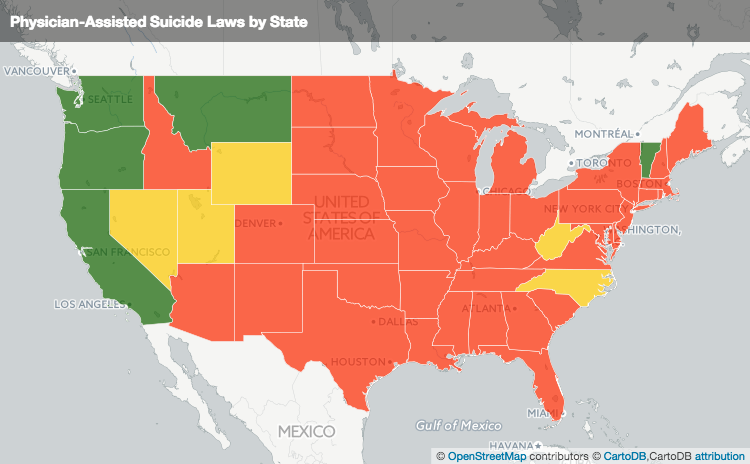
"content": "\u003cp>\u003c!-- iframe plugin v.4.3 wordpress.org/plugins/iframe/ -->\u003cbr>\n\u003ciframe width=\"100%\" height=\"700\" frameborder=\"0\" src=\"https://mgreen.cartodb.com/viz/65970b2e-6c4e-11e5-b372-0e5db1731f59/embed_map\" scrolling=\"yes\" class=\"iframe-class\">\u003c/iframe>\u003c/p>\n\u003cp>Following months of emotionally-charged debate, Gov. Jerry Brown on Monday signed \u003ca href=\"http://ww2.kqed.org/news/2015/10/05/governor-brown-signs-physician-assisted-suicide-bill-into-law\" target=\"_blank\">landmark legislation\u003c/a> allowing terminally-ill patients to obtain lethal medication. When the measures goes into effect in 2016, California will become the fifth state to legalize physician-assisted suicide.\u003c!--more-->\u003c/p>\n\u003cp>\u003cstrong>[For a comprehensive list of current state laws and a curated set of arguments for and against the practice, check out \u003ca href=\"http://ww2.kqed.org/lowdown/2015/10/06/california-becomes-fifth-state-to-legalize-physician-assisted-suicide-interactive-map/\" target=\"_blank\">ProCon.org\u003c/a>.] \u003c/strong>\u003c/p>\n\u003cp>The \"End of Life Option Act\" requires two different doctors to first determine that a patient has six months or less to live before prescribing lethal drugs. Patients must be physically able to swallow the pill-form medication themselves and have the mental capacity to make medical decisions.\u003c/p>\n\u003cp>“In the end, I was left to reflect on what I would want in the face of my own death,” Brown, who struggled with the decision, wrote in his signing message. “I do not know what I would do if I were dying in prolonged and excruciating pain. I am certain, however, that it would be a comfort to be able to consider the options afforded by this bill. And I wouldn’t deny that right to others.”\u003c/p>\n\u003cp>[ad fullwidth]\u003c/p>\n\u003cp>His signature at least temporarily halts a hotly-contested, 10-month debate that drew emotional testimony from lawmakers and cancer patients as well as disability advocates and members of the religious community.\u003c/p>\n\u003cp>The long-standing issue over physician-assisted suicide in California was reignited late last year amidst widespread media coverage of Brittany Maynard, a 29-year-old terminally-ill California resident, moved to Oregon to end her life legally, allowed under that state's Death With Dignity law.\u003c/p>\n\u003cp>Physician-assisted suicide is notably different from euthanasia. In the former, patients with a terminal diagnosis formally request a prescription from a doctor for a fatal dose of a drug (generally in pill form) which they can administer themselves privately when they wish, according to the end-of-life resource site \u003ca href=\"http://www.comfortcarechoices.com/index.php?option=com_content&view=article&id=89:whats-the-difference-between-physician-assisted-suicide-pas-and-euthanasia&catid=37:faqs&Itemid=72\" target=\"_blank\">Comfort Care Choices\u003c/a>.\u003c/p>\n\u003cp>Euthanasia, on the other hand, involves a physician or other healthcare provider deliberately administering treatment -- such as a lethal injection -- to end a patient's life, with or without the patient's consent. Although not allowed anywhere in the U.S., the practice is legal in several northern European nations, including Belgium and the Netherlands.\u003c/p>\n\u003cp>Supporters of physician-assisted suicide argue that these laws allow terminally ill patients to avoid unbearable suffering and die on their own terms in a humane and dignified way. It also allows greater accountability and state oversight of the process, they contend, without taking away other end-of-life care options, giving patients more autonomy to make their own end-of-life decisions.\u003c/p>\n\u003cp>Those against the law include the Catholic Church and a number of other religious institutions who argue that life is a gift from God and should not be prematurely shortened under any circumstance. Other opponents fear that the law could result in caregivers pressuring patients to end their lives as a way of saving money or easing the burden of care.\u003c/p>\n\u003cp>\u003c/p>\n\u003cp>There is also strong concern that because physician-assisted suicide is often cheaper than end-of-life care, it may influence decisions made by patients, doctors and insurance companies. And, some opponents argue, it can be very difficult for doctors to accurately predict how much time certain patients have left live and how much influence intensive care can have in prolonging their lives.\u003c/p>\n\n",
"disqusIdentifier": "19800 http://ww2.kqed.org/lowdown/?p=19800",
"disqusUrl": "https://ww2.kqed.org/lowdown/2015/10/06/california-becomes-fifth-state-to-legalize-physician-assisted-suicide-interactive-map/",
"stats": {
"hasVideo": false,
"hasChartOrMap": true,
"hasAudio": false,
"hasPolis": false,
"wordCount": 573,
"hasGoogleForm": false,
"hasGallery": false,
"hasHearkenModule": false,
"iframeSrcs": [
"https://mgreen.cartodb.com/viz/65970b2e-6c4e-11e5-b372-0e5db1731f59/embed_map"
],
"paragraphCount": 14
},
"modified": 1465489796,
"excerpt": null,
"headData": {
"twImgId": "",
"twTitle": "",
"ogTitle": "",
"ogImgId": "",
"twDescription": "",
"description": "Following months of emotionally-charged debate, Gov. Jerry Brown on Monday signed landmark legislation allowing terminally-ill patients to obtain lethal medication. When the measures goes into effect in 2016, California will become the fifth state to legalize physician-assisted suicide.",
"title": "MAP: Physician-Assisted Suicide Laws by State | KQED",
"ogDescription": "",
"schema": {
"@context": "https://schema.org",
"@type": "Article",
"headline": "MAP: Physician-Assisted Suicide Laws by State",
"datePublished": "2015-10-06T12:29:26-07:00",
"dateModified": "2016-06-09T09:29:56-07:00",
"image": "https://cdn.kqed.org/wp-content/uploads/2020/02/KQED-OG-Image@1x.png"
}
},
"guestAuthors": [],
"slug": "california-becomes-fifth-state-to-legalize-physician-assisted-suicide-interactive-map",
"status": "publish",
"path": "/lowdown/19800/california-becomes-fifth-state-to-legalize-physician-assisted-suicide-interactive-map",
"audioTrackLength": null,
"parsedContent": [
{
"type": "contentString",
"content": "\u003cdiv class=\"post-body\">\u003cp>\u003cp>\u003c!-- iframe plugin v.4.3 wordpress.org/plugins/iframe/ -->\u003cbr>\n\u003ciframe width=\"100%\" height=\"700\" frameborder=\"0\" src=\"https://mgreen.cartodb.com/viz/65970b2e-6c4e-11e5-b372-0e5db1731f59/embed_map\" scrolling=\"yes\" class=\"iframe-class\">\u003c/iframe>\u003c/p>\n\u003cp>Following months of emotionally-charged debate, Gov. Jerry Brown on Monday signed \u003ca href=\"http://ww2.kqed.org/news/2015/10/05/governor-brown-signs-physician-assisted-suicide-bill-into-law\" target=\"_blank\">landmark legislation\u003c/a> allowing terminally-ill patients to obtain lethal medication. When the measures goes into effect in 2016, California will become the fifth state to legalize physician-assisted suicide.\u003c!--more-->\u003c/p>\n\u003cp>\u003cstrong>[For a comprehensive list of current state laws and a curated set of arguments for and against the practice, check out \u003ca href=\"http://ww2.kqed.org/lowdown/2015/10/06/california-becomes-fifth-state-to-legalize-physician-assisted-suicide-interactive-map/\" target=\"_blank\">ProCon.org\u003c/a>.] \u003c/strong>\u003c/p>\n\u003cp>The \"End of Life Option Act\" requires two different doctors to first determine that a patient has six months or less to live before prescribing lethal drugs. Patients must be physically able to swallow the pill-form medication themselves and have the mental capacity to make medical decisions.\u003c/p>\n\u003cp>“In the end, I was left to reflect on what I would want in the face of my own death,” Brown, who struggled with the decision, wrote in his signing message. “I do not know what I would do if I were dying in prolonged and excruciating pain. I am certain, however, that it would be a comfort to be able to consider the options afforded by this bill. And I wouldn’t deny that right to others.”\u003c/p>\n\u003cp>\u003c/p>\u003c/div>",
"attributes": {
"named": {},
"numeric": []
}
},
{
"type": "component",
"content": "",
"name": "ad",
"attributes": {
"named": {
"label": "fullwidth"
},
"numeric": [
"fullwidth"
]
}
},
{
"type": "contentString",
"content": "\u003cdiv class=\"post-body\">\u003cp>\u003c/p>\n\u003cp>His signature at least temporarily halts a hotly-contested, 10-month debate that drew emotional testimony from lawmakers and cancer patients as well as disability advocates and members of the religious community.\u003c/p>\n\u003cp>The long-standing issue over physician-assisted suicide in California was reignited late last year amidst widespread media coverage of Brittany Maynard, a 29-year-old terminally-ill California resident, moved to Oregon to end her life legally, allowed under that state's Death With Dignity law.\u003c/p>\n\u003cp>Physician-assisted suicide is notably different from euthanasia. In the former, patients with a terminal diagnosis formally request a prescription from a doctor for a fatal dose of a drug (generally in pill form) which they can administer themselves privately when they wish, according to the end-of-life resource site \u003ca href=\"http://www.comfortcarechoices.com/index.php?option=com_content&view=article&id=89:whats-the-difference-between-physician-assisted-suicide-pas-and-euthanasia&catid=37:faqs&Itemid=72\" target=\"_blank\">Comfort Care Choices\u003c/a>.\u003c/p>\n\u003cp>Euthanasia, on the other hand, involves a physician or other healthcare provider deliberately administering treatment -- such as a lethal injection -- to end a patient's life, with or without the patient's consent. Although not allowed anywhere in the U.S., the practice is legal in several northern European nations, including Belgium and the Netherlands.\u003c/p>\n\u003cp>Supporters of physician-assisted suicide argue that these laws allow terminally ill patients to avoid unbearable suffering and die on their own terms in a humane and dignified way. It also allows greater accountability and state oversight of the process, they contend, without taking away other end-of-life care options, giving patients more autonomy to make their own end-of-life decisions.\u003c/p>\n\u003cp>Those against the law include the Catholic Church and a number of other religious institutions who argue that life is a gift from God and should not be prematurely shortened under any circumstance. Other opponents fear that the law could result in caregivers pressuring patients to end their lives as a way of saving money or easing the burden of care.\u003c/p>\n\u003cp>\u003c/p>\n\u003cp>There is also strong concern that because physician-assisted suicide is often cheaper than end-of-life care, it may influence decisions made by patients, doctors and insurance companies. And, some opponents argue, it can be very difficult for doctors to accurately predict how much time certain patients have left live and how much influence intensive care can have in prolonging their lives.\u003c/p>\n\n\u003c/div>\u003c/p>",
"attributes": {
"named": {},
"numeric": []
}
}
],
"link": "/lowdown/19800/california-becomes-fifth-state-to-legalize-physician-assisted-suicide-interactive-map",
"authors": [
"1263"
],
"categories": [
"lowdown_2409",
"lowdown_242",
"lowdown_1"
],
"tags": [
"lowdown_2482",
"lowdown_2481",
"lowdown_2337",
"lowdown_2480"
],
"featImg": "lowdown_19816",
"label": "lowdown"
},
"lowdown_18609": {
"type": "posts",
"id": "lowdown_18609",
"meta": {
"index": "posts_1716263798",
"site": "lowdown",
"id": "18609",
"score": null,
"sort": [
1469849415000
]
},
"parent": 0,
"labelTerm": {
"site": "lowdown"
},
"blocks": [],
"publishDate": 1469849415,
"format": "aside",
"disqusTitle": "EXPLAINER: What's the Deal with the TPP?",
"title": "EXPLAINER: What's the Deal with the TPP?",
"headTitle": "The Lowdown | KQED News",
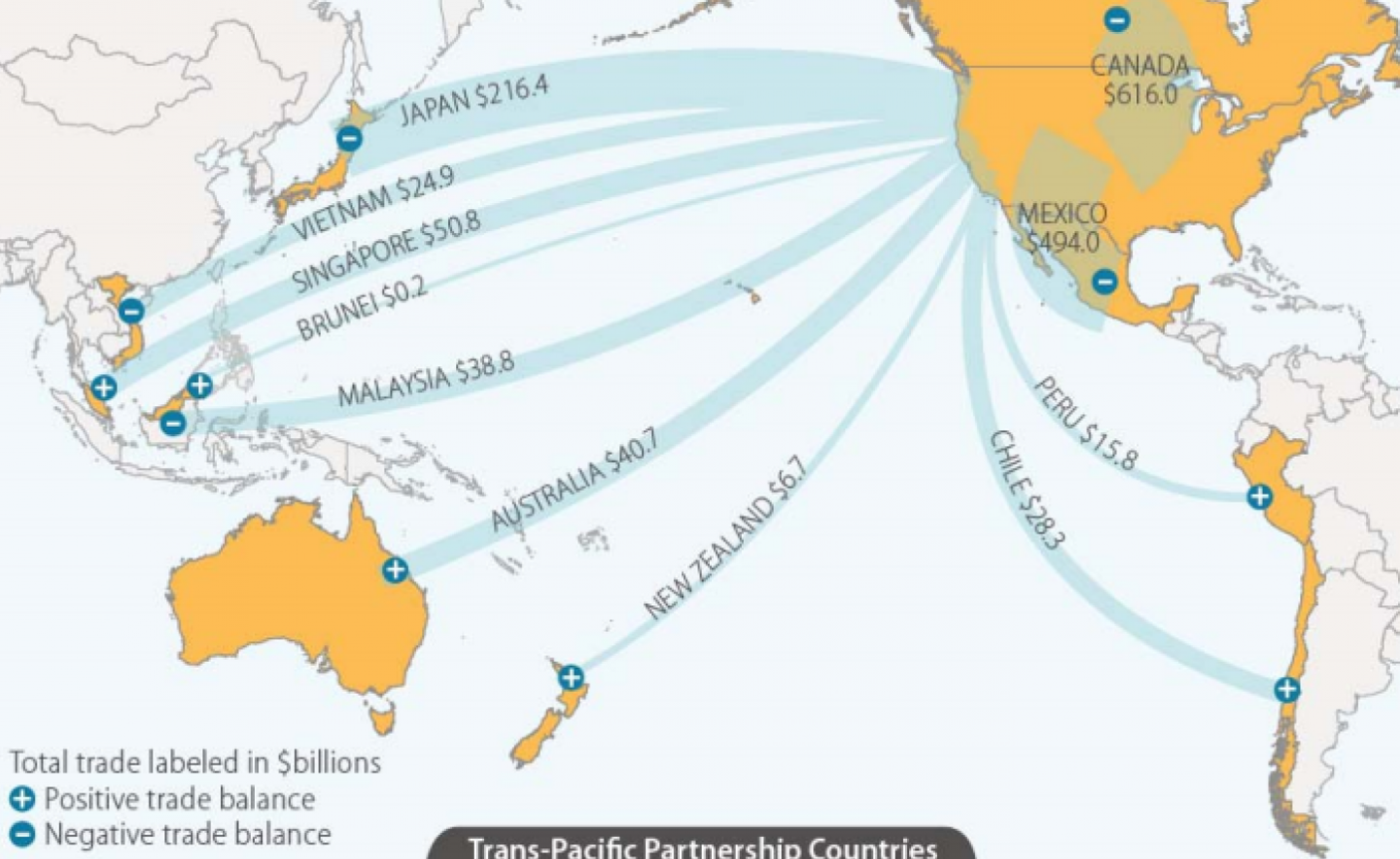
"content": "\u003cp>https://youtu.be/y1uZcXsf8fs\u003c/p>\n\u003cp>\u003cstrong>UPDATED July 29, 2016\u003c/strong>\u003c!--more-->\u003c/p>\n\u003cp>If you watched any part of the Democratic National Convention this week, you probably noticed a small but visible group of attendees protesting something called the “TPP.” Some held signs and banners. Some even heckled during various speeches, including President Obama’s address Wednesday night.\u003c/p>\n\u003cp>The focus of discontent is a massive trade deal called the Trans-Pacific Partnership, a plan spearheaded by the Obama Administration that would set new trade rules between the United States and other eleven Pacific Rim nations. It has yet to be approved by Congress, and both major party nominees say they oppose the deal. The issue nevertheless has become a flashpoint in this year’s presidential campaign, particularly among some ardent supporters of former candidate Bernie Sanders, who remain suspicious of Hillary Clinton’s intentions.\u003c/p>\n\u003cp>So why all the drama?\u003c/p>\n\u003cp>[ad fullwidth]\u003c/p>\n\u003cp>To help make some sense of it, we’ve put together a quick guide to the TPP. If you have questions that aren’t answered here, feel free to leave us a comment – we’ll do our best to get back to you.\u003c/p>\n\u003ch4>What is the TPP?\u003c/h4>\n\u003cp>The TPP is a trade agreement between the United States and 11 other Pacific-Rim nations: Australia, Brunei, Canada, Chile, Japan, Malaysia, Mexico, New Zealand, Peru, Singapore and Vietnam. The deal would reduce trade costs between these 12 countries, which are collectively responsible for about 40 percent of global GDP and roughly a third of global trade.\u003c/p>\n\u003cfigure id=\"attachment_18638\" class=\"wp-caption alignright\" style=\"max-width: 641px\">\u003ca href=\"http://ww2.kqed.org/lowdown/wp-content/uploads/sites/26/2015/06/CRB.jpg\">\u003cimg class=\"wp-image-18638 size-full\" src=\"http://ww2.kqed.org/lowdown/wp-content/uploads/sites/26/2015/06/CRB.jpg\" alt=\"Congressional Research Bureau\" width=\"641\" height=\"817\" srcset=\"https://ww2.kqed.org/app/uploads/sites/26/2015/06/CRB.jpg 641w, https://ww2.kqed.org/app/uploads/sites/26/2015/06/CRB-400x510.jpg 400w\" sizes=\"(max-width: 641px) 100vw, 641px\">\u003c/a>\u003cfigcaption class=\"wp-caption-text\">Congressional Research Service\u003c/figcaption>\u003c/figure>\n\u003cp>After five years of negotiations, \u003ca href=\"http://www.reuters.com/article/us-trade-tpp-idUSKCN0VD08S\">the agreement\u003c/a> was agreed to and signed in February by representatives of all 12 member nations. But the deal can't go into effect until at least six of them individually ratify it -- and the U.S. and Japan must be included (because of the size of their economies)\u003cstrong>.\u003c/strong> In other words, if either Japanese or U.S. lawmakers fail to approve it, the TPP is dead in the water.\u003c/p>\n\u003cp>In Japan, lawmakers are \u003ca href=\"http://thediplomat.com/2015/10/what-the-tpp-means-for-japan/\">divided\u003c/a> about the merits of the deal, and unlikely to vote on it before 2017. And in the United States, Congress probably won't take it up until after the election. President Obama has said he's confident about the deal's chances, but a decent number of Democratic lawmakers continue to oppose it -- so ratification is far from assured.\u003c/p>\n\u003cp>Most notably absent from the deal is China, Asia’s largest economy, which already has free trade agreements with many of the TPP countries. It could, though, potentially\u003ca href=\"http://www.nytimes.com/2015/04/29/business/international/once-concerned-china-is-quiet-about-trans-pacific-trade-deal.html?_r=0\"> sign on in the future\u003c/a>.\u003c/p>\n\u003ch4>What’s covered in the TPP?\u003c/h4>\n\u003cp>The deal is literally \u003ca href=\"https://ustr.gov/trade-agreements/free-trade-agreements/trans-pacific-partnership/tpp-full-text\">thousands of pages long\u003c/a>, and leisure reading it ain’t. So unless you’re game to scrutinize the whole thing, here are some key details:\u003c/p>\n\u003cp>\u003cstrong>Tariffs - \u003c/strong>The TPP would reduce or eliminate tariffs (taxes on imports and exports) among signatory countries, making it easier and cheaper for those countries to trade with each other.\u003c/p>\n\u003cp>\u003cstrong>Environmental and labor standards -\u003c/strong> The TPP also addresses a host of issues that are less obviously trade-related, from illegal fishing to climate change to labor rights. For instance, it includes efforts to reduce forced labor, illegally traded plants and animals, and overfishing.\u003c/p>\n\u003cp>\u003cstrong>Intellectual property rights\u003c/strong>. The United States has pushed for stricter international enforcement of intellectual property rights, like patents and trademarks. Right now, U.S. law provides for longer copyright terms (life + 70 years) than most of the other TPP countries. The TPP would require those other countries to lengthen their copyright terms to match the U.S. standard.\u003c/p>\n\u003cp>\u003cstrong>Investor-state dispute settlement. \u003c/strong>These measures would, under certain circumstances, allow a private company to take legal action against the government of another member state. Let’s say, for example, that the Canadian government bans a certain pesticide because of environmental concerns. A U.S, chemical company that manufactures that pesticide could potentially sue the Canadian government to recover financial losses.\u003c/p>\n\u003cp>Read a more detailed rundown of provisions \u003ca href=\"https://www.fas.org/sgp/crs/row/R44278.pdf\">here\u003c/a>, or the full text \u003ca href=\"https://ustr.gov/trade-agreements/free-trade-agreements/trans-pacific-partnership/tpp-full-text\">here\u003c/a>.\u003c/p>\n\u003cp>https://youtu.be/7gBfiQQAuwQ\u003c/p>\n\u003ch4>Who supports the deal?\u003c/h4>\n\u003cp>The Obama Administration has pushed hard for the deal, arguing that it will \u003ca href=\"https://ustr.gov/tpp\">strengthen the U.S. economy\u003c/a> and help increase American exports to fast-growing Asian economies. If it takes effect, the TPP would be a powerful demonstration of the administration’s “pivot to Asia,” and a major foreign policy \u003ca href=\"http://www.nytimes.com/2015/06/15/world/asia/the-trans-pacific-trade-deal-and-a-presidents-legacy.html\">legacy\u003c/a> for the president. Interestingly, many Republican leaders in Congress who don’t usually agree with the president on much of anything also support the TPP. There’s actually more support in Congress from Republicans than from Democrats on this issue.\u003c/p>\n\u003cp>A lot of \u003ca href=\"http://tppcoalition.org/about/\">business leaders\u003c/a> are also pushing for the deal, including many of America’s largest corporations: Exxon Mobil, General Electric, Walmart, Boeing, Coca Cola, Disney, Pfizer, Microsoft, Facebook, and many others. Entertainment and drug companies – like Disney and Pfizer – like the deal’s stringent intellectual property protections, while retailers and manufacturers – like Walmart and Boeing – want to be able to more easily sell their products in Asian markets. The deal could yield $78 billion in annual income gains for the U.S. – and global income gains of $295 billion annually, according to an \u003ca href=\"http://www.iie.com/publications/pb/pb12-16.pdf\">analysis\u003c/a> by the Peterson Institute for International Economics.\u003c/p>\n\u003cp>The more controversial question, however, is how the deal would impact U.S. jobs.\u003c/p>\n\u003cp>A majority of Americans have a generally \u003ca href=\"http://www.gallup.com/opinion/polling-matters/190427/american-public-opinion-foreign-trade.aspx\">positive\u003c/a> view of free trade, according to several recent surveys. But the same polls also show real concern about the impact free trade can have on U.S. jobs. Along those lines, anti-trade rhetoric on the campaign trail often resonates strongly with those struggling to get by.\u003c/p>\n\u003ch4>Who opposes it?\u003c/h4>\n\u003cp>This is one of the few issues that Donald Trump supporters and liberal Democrats actually seem to agree on.\u003c/p>\n\u003cp>Donald Trump and Hillary Clinton both oppose the deal, but with very different levels of fervor. Trump has called it \"\u003ca href=\"https://ballotpedia.org/File:TrumpTPP,_2015-10-05_at_9.50.56_PM.png\">terrible deal\u003c/a>\" that would be a \"\u003ca href=\"http://www.politico.com/story/2016/06/full-transcript-trump-job-plan-speech-224891\">death blow\u003c/a> for American manufacturing.\" For Clinton, the issue is more nuanced. After initially wavering, she announced last fall that the final version of the agreement \u003ca href=\"https://www.washingtonpost.com/news/the-fix/wp/2015/10/13/the-oct-13-democratic-debate-who-said-what-and-what-it-means/\">did not meet her standards\u003c/a>. However, as Secretary of State in the Obama Administration, she \u003ca href=\"http://www.state.gov/secretary/20092013clinton/rm/2012/11/200565.htm\">supported\u003c/a> the initial workings of the deal. And that’s a big reason why some Bernie Sanders supporters don’t trust her on the issue.\u003c/p>\n\u003cp>A number of left-leaning Democratic leaders -- notably Sanders and Elizabeth Warren -- strongly oppose the TPP on economic grounds. One of the main points of contention is that the deal was negotiated secretly; few knew what was on the table until after it had been signed.\u003c/p>\n\u003cp>Labor and environmental groups are also generally skeptical.\u003c/p>\n\u003cp>The \u003ca href=\"http://www.aflcio.org/Issues/Trade/Trans-Pacific-Partnership-Free-Trade-Agreement-TPP\">AFL-CIO\u003c/a> argues that the TPP focuses more on increasing corporate profits than on protecting American jobs and wages, and a \u003ca href=\"http://www.cepr.net/documents/publications/TPP-2013-09.pdf\">report\u003c/a> from the left-leaning Center for Economic and Policy Research makes the case that the TPP could actually increase income inequality. Unions are worried that the deal will make it easier for U.S. companies to move jobs out of the country to places where labor and production costs are much lower.\u003c/p>\n\u003cp>Meanwhile, the \u003ca href=\"http://action.sierraclub.org/site/DocServer/TPP_Enviro_Analysis.pdf?docID=14842\">Sierra Club\u003c/a> and a number of other green groups say that the deal’s environmental regulations are too weak. And other activists have voiced concern that the deal’s stronger intellectual property laws could \u003ca href=\"http://www.msfaccess.org/spotlight-on/trans-pacific-partnership-agreement\">limit access to generic drugs\u003c/a> in developing countries and restrict \u003ca href=\"https://www.eff.org/issues/tpp\">internet freedom\u003c/a>.\u003c/p>\n\u003cp>\u003c!-- iframe plugin v.4.3 wordpress.org/plugins/iframe/ -->\u003cbr>\n\u003ciframe width=\"100%\" height=\"166\" scrolling=\"no\" frameborder=\"no\" src=\"https://w.soundcloud.com/player/?url=https%3A//api.soundcloud.com/tracks/211684101&color=ff5500&auto_play=false&hide_related=false&show_comments=true&show_user=true&show_reposts=false\" class=\"iframe-class\">\u003c/iframe>\u003c/p>\n\u003ch4>How similar is the TPP to NAFTA?\u003c/h4>\n\u003cp>The North American Free Trade Agreement is a trade deal between the U.S., Mexico and Canada that took effect in 1994, under President Bill Clinton. The agreement got rid of most tariffs on goods traded between the three countries. It’s similar to the TPP, but much smaller in scope.\u003c/p>\n\u003cp>Like the TPP, NAFTA was highly contested when it passed, and Americans have \u003ca href=\"http://www.nytimes.com/2012/12/07/us/twenty-years-later-nafta-remains-a-source-of-tension.html\">continued\u003c/a> to disagree about its costs and benefits. Those who believe NAFTA has been good for the United States, argue that the TPP will expand \u003ca href=\"http://blogs.wsj.com/washwire/2013/12/11/qa-explaining-the-trans-pacific-partnership-talks/\">those benefits\u003c/a>; those who think NAFTA’s impact has been detrimental, \u003ca href=\"http://www.thenation.com/article/168627/nafta-steroids\">argue\u003c/a> it'll just make things that much worse.\u003c/p>\n\u003cp>For his part, President Obama has tried to make the case that the TPP is \u003ca href=\"https://www.whitehouse.gov/blog/2015/04/23/chart-week-how-trans-pacific-partnership-improves-nafta\">different and better than NAFTA\u003c/a>.\u003c/p>\n\u003cp>It’s hard to tease out the exact impact that NAFTA's had on the U.S. economy. After it took effect, trade among the three countries did increase, and some U.S. manufacturing moved to Mexico.\u003c/p>\n\u003cp>The nonpartisan Congressional Research Service comes to a muted \u003ca href=\"http://www.fas.org/sgp/crs/row/R42965.pdf\">conclusion\u003c/a>: in the end, NAFTA “did not cause the huge job losses feared by the critics or the large economic gains predicted by supporters.”\u003c/p>\n\u003cfigure id=\"attachment_18634\" class=\"wp-caption alignright\" style=\"max-width: 444px\">\u003cimg class=\" wp-image-18634\" src=\"http://ww2.kqed.org/lowdown/wp-content/uploads/sites/26/2015/06/wto-protest3.jpg\" alt=\"WTO protestors in Seattle, 1999.\" width=\"444\" height=\"286\">\u003cfigcaption class=\"wp-caption-text\">WTO protestors in Seattle, 1999. \u003ccite>(Photo by Al Crespo, courtesy University of Washington)\u003c/cite>\u003c/figcaption>\u003c/figure>\n\u003cp>In the years since NAFTA was passed, trade deals have continued to stir up strong emotions. In 1999, some \u003ca href=\"http://www.seattlepi.com/local/article/WTO-riots-in-Seattle-15-years-ago-5915088.php\">40,000 protestors\u003c/a> set up camp around the World Trade Organization meeting in Seattle. The activists there included many of the groups that opposed NAFTA and that now oppose the TPP – unions, environmental groups, and consumer protection organizations. The event became known as the “Battle in Seattle,” after a series of serious clashes between protestors and police.\u003c/p>\n\u003ch4>And finally ... why should I care about any of this?\u003c/h4>\n\u003cp>Let’s be honest: there’s nothing too sexy about international trade deals.\u003c/p>\n\u003cp>But like it or not, we live in a globalized world. And if you buy stuff on a regular basis, you're probably more affected by international trade agreements than you might realize.\u003c/p>\n\u003cp>The majority of products we purchase -- from cars to clothing, computers to smartphones, even lots of foods -- are manufactured (or grown) through a vast global production process.\u003c/p>\n\u003cp>Trade deals can make it easier or harder for companies to produce things -- impacting jobs, pay, working conditions, and the price tag of products once they hit the store … like that shiny new iPhone you’ve been eyeing.\u003c/p>\n\u003cp>And unlike those painfully dull 19\u003csup>th\u003c/sup> century trade deals you likely snoozed through in history class, modern-day trade agreements address all kinds of controversial political issues that hardly seem connected to trade at all, like climate change, collective bargaining rights, music piracy -- even rules about how your online data is stored.\u003c/p>\n\u003cp>[ad floatright]\u003c/p>\n\u003cp>So stay tuned.\u003c/p>\n\n",
"disqusIdentifier": "18609 http://ww2.kqed.org/lowdown/?p=18609",
"disqusUrl": "https://ww2.kqed.org/lowdown/2016/07/29/the-trans-pacific-partnership-explained/",
"stats": {
"hasVideo": false,
"hasChartOrMap": true,
"hasAudio": true,
"hasPolis": false,
"wordCount": 1747,
"hasGoogleForm": false,
"hasGallery": false,
"hasHearkenModule": false,
"iframeSrcs": [
"https://w.soundcloud.com/player/"
],
"paragraphCount": 40
},
"modified": 1469894633,
"excerpt": null,
"headData": {
"twImgId": "",
"twTitle": "",
"ogTitle": "",
"ogImgId": "",
"twDescription": "",
"description": "https://youtu.be/y1uZcXsf8fs UPDATED July 29, 2016",
"title": "EXPLAINER: What's the Deal with the TPP? | KQED",
"ogDescription": "",
"schema": {
"@context": "https://schema.org",
"@type": "Article",
"headline": "EXPLAINER: What's the Deal with the TPP?",
"datePublished": "2016-07-29T20:30:15-07:00",
"dateModified": "2016-07-30T09:03:53-07:00",
"image": "https://cdn.kqed.org/wp-content/uploads/2020/02/KQED-OG-Image@1x.png"
}
},
"guestAuthors": [],
"slug": "the-trans-pacific-partnership-explained",
"status": "publish",
"audioUrl": "https://soundcloud.com/matthewgreen-4/krishna-interview",
"path": "/lowdown/18609/the-trans-pacific-partnership-explained",
"audioTrackLength": null,
"parsedContent": [
{
"type": "contentString",
"content": "\u003cdiv class=\"post-body\">\u003cp>\u003c/p>\u003cp>\u003cspan class='utils-parseShortcode-shortcodes-__youtubeShortcode__embedYoutube'>\n \u003cspan class='utils-parseShortcode-shortcodes-__youtubeShortcode__embedYoutubeInside'>\n \u003ciframe\n loading='lazy'\n class='utils-parseShortcode-shortcodes-__youtubeShortcode__youtubePlayer'\n type='text/html'\n src='//www.youtube.com/embed/y1uZcXsf8fs'\n title='//www.youtube.com/embed/y1uZcXsf8fs'\n allowfullscreen='true'\n style='border:0;'>\u003c/iframe>\n \u003c/span>\n \u003c/span>\u003c/p>\u003cp>\u003cp>\u003cstrong>UPDATED July 29, 2016\u003c/strong>\u003c!--more-->\u003c/p>\n\u003cp>If you watched any part of the Democratic National Convention this week, you probably noticed a small but visible group of attendees protesting something called the “TPP.” Some held signs and banners. Some even heckled during various speeches, including President Obama’s address Wednesday night.\u003c/p>\n\u003cp>The focus of discontent is a massive trade deal called the Trans-Pacific Partnership, a plan spearheaded by the Obama Administration that would set new trade rules between the United States and other eleven Pacific Rim nations. It has yet to be approved by Congress, and both major party nominees say they oppose the deal. The issue nevertheless has become a flashpoint in this year’s presidential campaign, particularly among some ardent supporters of former candidate Bernie Sanders, who remain suspicious of Hillary Clinton’s intentions.\u003c/p>\n\u003cp>So why all the drama?\u003c/p>\n\u003cp>\u003c/p>\u003c/div>",
"attributes": {
"named": {},
"numeric": []
}
},
{
"type": "component",
"content": "",
"name": "ad",
"attributes": {
"named": {
"label": "fullwidth"
},
"numeric": [
"fullwidth"
]
}
},
{
"type": "contentString",
"content": "\u003cdiv class=\"post-body\">\u003cp>\u003c/p>\n\u003cp>To help make some sense of it, we’ve put together a quick guide to the TPP. If you have questions that aren’t answered here, feel free to leave us a comment – we’ll do our best to get back to you.\u003c/p>\n\u003ch4>What is the TPP?\u003c/h4>\n\u003cp>The TPP is a trade agreement between the United States and 11 other Pacific-Rim nations: Australia, Brunei, Canada, Chile, Japan, Malaysia, Mexico, New Zealand, Peru, Singapore and Vietnam. The deal would reduce trade costs between these 12 countries, which are collectively responsible for about 40 percent of global GDP and roughly a third of global trade.\u003c/p>\n\u003cfigure id=\"attachment_18638\" class=\"wp-caption alignright\" style=\"max-width: 641px\">\u003ca href=\"http://ww2.kqed.org/lowdown/wp-content/uploads/sites/26/2015/06/CRB.jpg\">\u003cimg class=\"wp-image-18638 size-full\" src=\"http://ww2.kqed.org/lowdown/wp-content/uploads/sites/26/2015/06/CRB.jpg\" alt=\"Congressional Research Bureau\" width=\"641\" height=\"817\" srcset=\"https://ww2.kqed.org/app/uploads/sites/26/2015/06/CRB.jpg 641w, https://ww2.kqed.org/app/uploads/sites/26/2015/06/CRB-400x510.jpg 400w\" sizes=\"(max-width: 641px) 100vw, 641px\">\u003c/a>\u003cfigcaption class=\"wp-caption-text\">Congressional Research Service\u003c/figcaption>\u003c/figure>\n\u003cp>After five years of negotiations, \u003ca href=\"http://www.reuters.com/article/us-trade-tpp-idUSKCN0VD08S\">the agreement\u003c/a> was agreed to and signed in February by representatives of all 12 member nations. But the deal can't go into effect until at least six of them individually ratify it -- and the U.S. and Japan must be included (because of the size of their economies)\u003cstrong>.\u003c/strong> In other words, if either Japanese or U.S. lawmakers fail to approve it, the TPP is dead in the water.\u003c/p>\n\u003cp>In Japan, lawmakers are \u003ca href=\"http://thediplomat.com/2015/10/what-the-tpp-means-for-japan/\">divided\u003c/a> about the merits of the deal, and unlikely to vote on it before 2017. And in the United States, Congress probably won't take it up until after the election. President Obama has said he's confident about the deal's chances, but a decent number of Democratic lawmakers continue to oppose it -- so ratification is far from assured.\u003c/p>\n\u003cp>Most notably absent from the deal is China, Asia’s largest economy, which already has free trade agreements with many of the TPP countries. It could, though, potentially\u003ca href=\"http://www.nytimes.com/2015/04/29/business/international/once-concerned-china-is-quiet-about-trans-pacific-trade-deal.html?_r=0\"> sign on in the future\u003c/a>.\u003c/p>\n\u003ch4>What’s covered in the TPP?\u003c/h4>\n\u003cp>The deal is literally \u003ca href=\"https://ustr.gov/trade-agreements/free-trade-agreements/trans-pacific-partnership/tpp-full-text\">thousands of pages long\u003c/a>, and leisure reading it ain’t. So unless you’re game to scrutinize the whole thing, here are some key details:\u003c/p>\n\u003cp>\u003cstrong>Tariffs - \u003c/strong>The TPP would reduce or eliminate tariffs (taxes on imports and exports) among signatory countries, making it easier and cheaper for those countries to trade with each other.\u003c/p>\n\u003cp>\u003cstrong>Environmental and labor standards -\u003c/strong> The TPP also addresses a host of issues that are less obviously trade-related, from illegal fishing to climate change to labor rights. For instance, it includes efforts to reduce forced labor, illegally traded plants and animals, and overfishing.\u003c/p>\n\u003cp>\u003cstrong>Intellectual property rights\u003c/strong>. The United States has pushed for stricter international enforcement of intellectual property rights, like patents and trademarks. Right now, U.S. law provides for longer copyright terms (life + 70 years) than most of the other TPP countries. The TPP would require those other countries to lengthen their copyright terms to match the U.S. standard.\u003c/p>\n\u003cp>\u003cstrong>Investor-state dispute settlement. \u003c/strong>These measures would, under certain circumstances, allow a private company to take legal action against the government of another member state. Let’s say, for example, that the Canadian government bans a certain pesticide because of environmental concerns. A U.S, chemical company that manufactures that pesticide could potentially sue the Canadian government to recover financial losses.\u003c/p>\n\u003cp>Read a more detailed rundown of provisions \u003ca href=\"https://www.fas.org/sgp/crs/row/R44278.pdf\">here\u003c/a>, or the full text \u003ca href=\"https://ustr.gov/trade-agreements/free-trade-agreements/trans-pacific-partnership/tpp-full-text\">here\u003c/a>.\u003c/p>\u003c/p>\u003cp>\u003cspan class='utils-parseShortcode-shortcodes-__youtubeShortcode__embedYoutube'>\n \u003cspan class='utils-parseShortcode-shortcodes-__youtubeShortcode__embedYoutubeInside'>\n \u003ciframe\n loading='lazy'\n class='utils-parseShortcode-shortcodes-__youtubeShortcode__youtubePlayer'\n type='text/html'\n src='//www.youtube.com/embed/7gBfiQQAuwQ'\n title='//www.youtube.com/embed/7gBfiQQAuwQ'\n allowfullscreen='true'\n style='border:0;'>\u003c/iframe>\n \u003c/span>\n \u003c/span>\u003c/p>\u003cp>\u003ch4>Who supports the deal?\u003c/h4>\n\u003cp>The Obama Administration has pushed hard for the deal, arguing that it will \u003ca href=\"https://ustr.gov/tpp\">strengthen the U.S. economy\u003c/a> and help increase American exports to fast-growing Asian economies. If it takes effect, the TPP would be a powerful demonstration of the administration’s “pivot to Asia,” and a major foreign policy \u003ca href=\"http://www.nytimes.com/2015/06/15/world/asia/the-trans-pacific-trade-deal-and-a-presidents-legacy.html\">legacy\u003c/a> for the president. Interestingly, many Republican leaders in Congress who don’t usually agree with the president on much of anything also support the TPP. There’s actually more support in Congress from Republicans than from Democrats on this issue.\u003c/p>\n\u003cp>A lot of \u003ca href=\"http://tppcoalition.org/about/\">business leaders\u003c/a> are also pushing for the deal, including many of America’s largest corporations: Exxon Mobil, General Electric, Walmart, Boeing, Coca Cola, Disney, Pfizer, Microsoft, Facebook, and many others. Entertainment and drug companies – like Disney and Pfizer – like the deal’s stringent intellectual property protections, while retailers and manufacturers – like Walmart and Boeing – want to be able to more easily sell their products in Asian markets. The deal could yield $78 billion in annual income gains for the U.S. – and global income gains of $295 billion annually, according to an \u003ca href=\"http://www.iie.com/publications/pb/pb12-16.pdf\">analysis\u003c/a> by the Peterson Institute for International Economics.\u003c/p>\n\u003cp>The more controversial question, however, is how the deal would impact U.S. jobs.\u003c/p>\n\u003cp>A majority of Americans have a generally \u003ca href=\"http://www.gallup.com/opinion/polling-matters/190427/american-public-opinion-foreign-trade.aspx\">positive\u003c/a> view of free trade, according to several recent surveys. But the same polls also show real concern about the impact free trade can have on U.S. jobs. Along those lines, anti-trade rhetoric on the campaign trail often resonates strongly with those struggling to get by.\u003c/p>\n\u003ch4>Who opposes it?\u003c/h4>\n\u003cp>This is one of the few issues that Donald Trump supporters and liberal Democrats actually seem to agree on.\u003c/p>\n\u003cp>Donald Trump and Hillary Clinton both oppose the deal, but with very different levels of fervor. Trump has called it \"\u003ca href=\"https://ballotpedia.org/File:TrumpTPP,_2015-10-05_at_9.50.56_PM.png\">terrible deal\u003c/a>\" that would be a \"\u003ca href=\"http://www.politico.com/story/2016/06/full-transcript-trump-job-plan-speech-224891\">death blow\u003c/a> for American manufacturing.\" For Clinton, the issue is more nuanced. After initially wavering, she announced last fall that the final version of the agreement \u003ca href=\"https://www.washingtonpost.com/news/the-fix/wp/2015/10/13/the-oct-13-democratic-debate-who-said-what-and-what-it-means/\">did not meet her standards\u003c/a>. However, as Secretary of State in the Obama Administration, she \u003ca href=\"http://www.state.gov/secretary/20092013clinton/rm/2012/11/200565.htm\">supported\u003c/a> the initial workings of the deal. And that’s a big reason why some Bernie Sanders supporters don’t trust her on the issue.\u003c/p>\n\u003cp>A number of left-leaning Democratic leaders -- notably Sanders and Elizabeth Warren -- strongly oppose the TPP on economic grounds. One of the main points of contention is that the deal was negotiated secretly; few knew what was on the table until after it had been signed.\u003c/p>\n\u003cp>Labor and environmental groups are also generally skeptical.\u003c/p>\n\u003cp>The \u003ca href=\"http://www.aflcio.org/Issues/Trade/Trans-Pacific-Partnership-Free-Trade-Agreement-TPP\">AFL-CIO\u003c/a> argues that the TPP focuses more on increasing corporate profits than on protecting American jobs and wages, and a \u003ca href=\"http://www.cepr.net/documents/publications/TPP-2013-09.pdf\">report\u003c/a> from the left-leaning Center for Economic and Policy Research makes the case that the TPP could actually increase income inequality. Unions are worried that the deal will make it easier for U.S. companies to move jobs out of the country to places where labor and production costs are much lower.\u003c/p>\n\u003cp>Meanwhile, the \u003ca href=\"http://action.sierraclub.org/site/DocServer/TPP_Enviro_Analysis.pdf?docID=14842\">Sierra Club\u003c/a> and a number of other green groups say that the deal’s environmental regulations are too weak. And other activists have voiced concern that the deal’s stronger intellectual property laws could \u003ca href=\"http://www.msfaccess.org/spotlight-on/trans-pacific-partnership-agreement\">limit access to generic drugs\u003c/a> in developing countries and restrict \u003ca href=\"https://www.eff.org/issues/tpp\">internet freedom\u003c/a>.\u003c/p>\n\u003cp>\u003c!-- iframe plugin v.4.3 wordpress.org/plugins/iframe/ -->\u003cbr>\n\u003ciframe width=\"100%\" height=\"166\" scrolling=\"no\" frameborder=\"no\" src=\"https://w.soundcloud.com/player/?url=https%3A//api.soundcloud.com/tracks/211684101&color=ff5500&auto_play=false&hide_related=false&show_comments=true&show_user=true&show_reposts=false\" class=\"iframe-class\">\u003c/iframe>\u003c/p>\n\u003ch4>How similar is the TPP to NAFTA?\u003c/h4>\n\u003cp>The North American Free Trade Agreement is a trade deal between the U.S., Mexico and Canada that took effect in 1994, under President Bill Clinton. The agreement got rid of most tariffs on goods traded between the three countries. It’s similar to the TPP, but much smaller in scope.\u003c/p>\n\u003cp>Like the TPP, NAFTA was highly contested when it passed, and Americans have \u003ca href=\"http://www.nytimes.com/2012/12/07/us/twenty-years-later-nafta-remains-a-source-of-tension.html\">continued\u003c/a> to disagree about its costs and benefits. Those who believe NAFTA has been good for the United States, argue that the TPP will expand \u003ca href=\"http://blogs.wsj.com/washwire/2013/12/11/qa-explaining-the-trans-pacific-partnership-talks/\">those benefits\u003c/a>; those who think NAFTA’s impact has been detrimental, \u003ca href=\"http://www.thenation.com/article/168627/nafta-steroids\">argue\u003c/a> it'll just make things that much worse.\u003c/p>\n\u003cp>For his part, President Obama has tried to make the case that the TPP is \u003ca href=\"https://www.whitehouse.gov/blog/2015/04/23/chart-week-how-trans-pacific-partnership-improves-nafta\">different and better than NAFTA\u003c/a>.\u003c/p>\n\u003cp>It’s hard to tease out the exact impact that NAFTA's had on the U.S. economy. After it took effect, trade among the three countries did increase, and some U.S. manufacturing moved to Mexico.\u003c/p>\n\u003cp>The nonpartisan Congressional Research Service comes to a muted \u003ca href=\"http://www.fas.org/sgp/crs/row/R42965.pdf\">conclusion\u003c/a>: in the end, NAFTA “did not cause the huge job losses feared by the critics or the large economic gains predicted by supporters.”\u003c/p>\n\u003cfigure id=\"attachment_18634\" class=\"wp-caption alignright\" style=\"max-width: 444px\">\u003cimg class=\" wp-image-18634\" src=\"http://ww2.kqed.org/lowdown/wp-content/uploads/sites/26/2015/06/wto-protest3.jpg\" alt=\"WTO protestors in Seattle, 1999.\" width=\"444\" height=\"286\">\u003cfigcaption class=\"wp-caption-text\">WTO protestors in Seattle, 1999. \u003ccite>(Photo by Al Crespo, courtesy University of Washington)\u003c/cite>\u003c/figcaption>\u003c/figure>\n\u003cp>In the years since NAFTA was passed, trade deals have continued to stir up strong emotions. In 1999, some \u003ca href=\"http://www.seattlepi.com/local/article/WTO-riots-in-Seattle-15-years-ago-5915088.php\">40,000 protestors\u003c/a> set up camp around the World Trade Organization meeting in Seattle. The activists there included many of the groups that opposed NAFTA and that now oppose the TPP – unions, environmental groups, and consumer protection organizations. The event became known as the “Battle in Seattle,” after a series of serious clashes between protestors and police.\u003c/p>\n\u003ch4>And finally ... why should I care about any of this?\u003c/h4>\n\u003cp>Let’s be honest: there’s nothing too sexy about international trade deals.\u003c/p>\n\u003cp>But like it or not, we live in a globalized world. And if you buy stuff on a regular basis, you're probably more affected by international trade agreements than you might realize.\u003c/p>\n\u003cp>The majority of products we purchase -- from cars to clothing, computers to smartphones, even lots of foods -- are manufactured (or grown) through a vast global production process.\u003c/p>\n\u003cp>Trade deals can make it easier or harder for companies to produce things -- impacting jobs, pay, working conditions, and the price tag of products once they hit the store … like that shiny new iPhone you’ve been eyeing.\u003c/p>\n\u003cp>And unlike those painfully dull 19\u003csup>th\u003c/sup> century trade deals you likely snoozed through in history class, modern-day trade agreements address all kinds of controversial political issues that hardly seem connected to trade at all, like climate change, collective bargaining rights, music piracy -- even rules about how your online data is stored.\u003c/p>\n\u003cp>\u003c/p>\u003c/div>",
"attributes": {
"named": {},
"numeric": []
}
},
{
"type": "component",
"content": "",
"name": "ad",
"attributes": {
"named": {
"label": "floatright"
},
"numeric": [
"floatright"
]
}
},
{
"type": "contentString",
"content": "\u003cdiv class=\"post-body\">\u003cp>\u003c/p>\n\u003cp>So stay tuned.\u003c/p>\n\n\u003c/div>\u003c/p>",
"attributes": {
"named": {},
"numeric": []
}
}
],
"link": "/lowdown/18609/the-trans-pacific-partnership-explained",
"authors": [
"8628"
],
"categories": [
"lowdown_1",
"lowdown_2370",
"lowdown_2397"
],
"tags": [
"lowdown_2337",
"lowdown_2437",
"lowdown_2436"
],
"featImg": "lowdown_18612",
"label": "lowdown"
},
"lowdown_7832": {
"type": "posts",
"id": "lowdown_7832",
"meta": {
"index": "posts_1716263798",
"site": "lowdown",
"id": "7832",
"score": null,
"sort": [
1443913211000
]
},
"parent": 0,
"labelTerm": {
"site": "lowdown"
},
"blocks": [],
"publishDate": 1443913211,
"format": "standard",
"disqusTitle": "A Guide for Teaching about Gun Violence and Gun Control [Lesson Plan]",
"title": "A Guide for Teaching about Gun Violence and Gun Control [Lesson Plan]",
"headTitle": "The Lowdown | KQED News",
"content": "\u003cp>On the morning of Thursday, Oct. 1, a heavily armed gunman walked into a community college classroom in Roseburg, OR, slaughtering nine people before taking his own life. It marks yet another mass shooting in a nation where gun deaths occur with alarming frequency.\u003c!--more-->\u003c/p>\n\u003cp>The following guide suggests balanced ways for teachers to explore and navigate the highly-charged political and emotional issues behind the topic of gun control and gun violence.\u003c/p>\n\u003cp>Produced in 2013 in the wake of the Sandy Hook Elementary School massacre, this project is a collaboration with the \u003ca href=\"www.nwp.org\" target=\"_blank\">National Writing Project\u003c/a>, and was written by two English language arts high school teachers - Kirsten Spall of Natomas Charter High School (Sacramento) and Chris Sloan of Judge Memorial Catholic School (Salt Lake City).\u003c/p>\n\u003cp>Based on content featured on The Lowdown, the guide provides ideas for integrating these heated issues into English language arts and social studies curriculum. It includes Common Core Standards Alignment, a synopsis of key background information, integration tips, and lists of issue pros and cons, creative writing prompts and best classroom practices.\u003c/p>\n\u003cp>\u003ca href=\"https://ww2.kqed.org/lowdown/wp-content/uploads/sites/26/2015/10/guncontrol_guide_final.pdf\" target=\"_blank\">Download the guide (PDF)\u003c/a>\u003c/p>\n\u003cp>[ad fullwidth]\u003c/p>\n\u003cp>\u003c/p>\n\u003cp>https://ww2.kqed.org/lowdown/wp-content/uploads/sites/26/2015/10/guncontrol_guide_final.pdf\u003c/p>\n\n",
"disqusIdentifier": "7832 http://blogs.kqed.org/lowdown/?p=7832",
"disqusUrl": "https://ww2.kqed.org/lowdown/2015/10/03/gun-control-an-educator-produced-lesson-plan/",
"stats": {
"hasVideo": false,
"hasChartOrMap": false,
"hasAudio": false,
"hasPolis": false,
"wordCount": 197,
"hasGoogleForm": false,
"hasGallery": false,
"hasHearkenModule": false,
"iframeSrcs": [],
"paragraphCount": 7
},
"modified": 1507671695,
"excerpt": null,
"headData": {
"twImgId": "",
"twTitle": "",
"ogTitle": "",
"ogImgId": "",
"twDescription": "",
"description": "On the morning of Thursday, Oct. 1, a heavily armed gunman walked into a community college classroom in Roseburg, OR, slaughtering nine people before taking his own life. It marks yet another mass shooting in a nation where gun deaths occur with alarming frequency.",
"title": "A Guide for Teaching about Gun Violence and Gun Control [Lesson Plan] | KQED",
"ogDescription": "",
"schema": {
"@context": "https://schema.org",
"@type": "Article",
"headline": "A Guide for Teaching about Gun Violence and Gun Control [Lesson Plan]",
"datePublished": "2015-10-03T16:00:11-07:00",
"dateModified": "2017-10-10T14:41:35-07:00",
"image": "https://cdn.kqed.org/wp-content/uploads/2020/02/KQED-OG-Image@1x.png"
}
},
"guestAuthors": [],
"slug": "gun-control-an-educator-produced-lesson-plan",
"status": "publish",
"path": "/lowdown/7832/gun-control-an-educator-produced-lesson-plan",
"audioTrackLength": null,
"parsedContent": [
{
"type": "contentString",
"content": "\u003cdiv class=\"post-body\">\u003cp>\u003cp>On the morning of Thursday, Oct. 1, a heavily armed gunman walked into a community college classroom in Roseburg, OR, slaughtering nine people before taking his own life. It marks yet another mass shooting in a nation where gun deaths occur with alarming frequency.\u003c!--more-->\u003c/p>\n\u003cp>The following guide suggests balanced ways for teachers to explore and navigate the highly-charged political and emotional issues behind the topic of gun control and gun violence.\u003c/p>\n\u003cp>Produced in 2013 in the wake of the Sandy Hook Elementary School massacre, this project is a collaboration with the \u003ca href=\"www.nwp.org\" target=\"_blank\">National Writing Project\u003c/a>, and was written by two English language arts high school teachers - Kirsten Spall of Natomas Charter High School (Sacramento) and Chris Sloan of Judge Memorial Catholic School (Salt Lake City).\u003c/p>\n\u003cp>Based on content featured on The Lowdown, the guide provides ideas for integrating these heated issues into English language arts and social studies curriculum. It includes Common Core Standards Alignment, a synopsis of key background information, integration tips, and lists of issue pros and cons, creative writing prompts and best classroom practices.\u003c/p>\n\u003cp>\u003ca href=\"https://ww2.kqed.org/lowdown/wp-content/uploads/sites/26/2015/10/guncontrol_guide_final.pdf\" target=\"_blank\">Download the guide (PDF)\u003c/a>\u003c/p>\n\u003cp>\u003c/p>\u003c/div>",
"attributes": {
"named": {},
"numeric": []
}
},
{
"type": "component",
"content": "",
"name": "ad",
"attributes": {
"named": {
"label": "fullwidth"
},
"numeric": [
"fullwidth"
]
}
},
{
"type": "contentString",
"content": "\u003cdiv class=\"post-body\">\u003cp>\u003c/p>\n\u003cp>\u003c/p>\u003c/p>\u003c/div>",
"attributes": {
"named": {},
"numeric": []
}
},
{
"type": "component",
"content": "",
"name": "kqedEmbed",
"attributes": {
"named": {
"url": "https://ww2.kqed.org/lowdown/wp-content/uploads/sites/26/2015/10/guncontrol_guide_final.pdf"
},
"numeric": []
}
},
{
"type": "contentString",
"content": "\u003cdiv class=\"post-body\">\u003cp>\n\u003c/div>\u003c/p>",
"attributes": {
"named": {},
"numeric": []
}
}
],
"link": "/lowdown/7832/gun-control-an-educator-produced-lesson-plan",
"authors": [
"1263"
],
"categories": [
"lowdown_311",
"lowdown_2399"
],
"tags": [
"lowdown_2337",
"lowdown_209",
"lowdown_324",
"lowdown_231"
],
"featImg": "lowdown_19789",
"label": "lowdown"
},
"lowdown_19739": {
"type": "posts",
"id": "lowdown_19739",
"meta": {
"index": "posts_1716263798",
"site": "lowdown",
"id": "19739",
"score": null,
"sort": [
1443765192000
]
},
"parent": 0,
"labelTerm": {
"site": "lowdown"
},
"blocks": [],
"publishDate": 1443765192,
"format": "aside",
"disqusTitle": "How A 50-Year-Old Immigration Law Helped Change the Face of America [Interactive Map]",
"title": "How A 50-Year-Old Immigration Law Helped Change the Face of America [Interactive Map]",
"headTitle": "The Lowdown | KQED News",
"content": "\u003cp>[http_redir]\u003cbr>\n\u003ca href=\"http://ww2.kqed.org/lowdown/wp-content/uploads/sites/26/2015/10/FT_15.09.28_ImmigationMapsGIF.gif\">\u003cimg class=\"alignnone size-full wp-image-19836\" src=\"http://ww2.kqed.org/lowdown/wp-content/uploads/sites/26/2015/10/FT_15.09.28_ImmigationMapsGIF.gif\" alt=\"FT_15.09.28_ImmigationMapsGIF\" width=\"889\" height=\"719\">\u003c/a>\u003c/p>\n\u003caside class=\"alignright\">\n\u003ch4>Teaching suggestions\u003c/h4>\n\u003cp>\u003cem>Ideas provided by Jessica Tyson, a 9th grade social studies teacher at Oakland Technical High School\u003c/em>\u003c/p>\n\u003cul>\n\u003cli>Ask students to choose two different decades on the map or the timeline below it, and describe the population change that occurred between them\u003c/li>\n\u003cli>Have students research and come up with an explanation for this change. What factors influenced that change?\u003c/li>\n\u003cli>Ask students to deliver mini-presentations using the map/timeline as visual aids to explain causes and effects of specific population changes in certain states over time.\u003c/li>\n\u003cli>If you're in the middle of a longer immigration unit, strategically assign the two points to different students with the goal of the whole class creating a continuous narrative.\u003c/li>\n\u003cli>Download this free lesson plan produced by the UC Berkeley History-Social Science Project: \u003ca href=\"http://ww2.kqed.org/lowdown/wp-content/uploads/sites/26/2015/10/Mexican-Immigration-in-the-20th-Century-Lesson.pdf\" target=\"_blank\" rel=\"noopener\">Mexican Immigration in the 20th Century\u003c/a>\u003c/li>\n\u003c/ul>\n\u003c/aside>\n\u003cp>An immigration bill passed by Congress fifty years ago this week led to dramatic changes in America's racial and ethnic composition.\u003c!--more-->\u003c/p>\n\u003cp>In 1965, fewer than 5 percent of Americans were foreign-born, the vast majority white from European countries. Today, 14 percent of the U.S. population is foreign-born (45 million). Of those, nearly half are from Latin America and more than a quarter from Asia, according to a recent \u003ca href=\"http://www.pewhispanic.org/2015/09/28/modern-immigration-wave-brings-59-million-to-u-s-driving-population-growth-and-change-through-2065/\" target=\"_blank\" rel=\"noopener\">Pew Research\u003c/a> analysis. By 2065, Pew predicts, the foreign-born population will grow to nearly 18 percent -- about 78 million people -- with Asians surpassing Hispanics as the largest immigrant group.\u003c/p>\n\u003cp>\u003ca href=\"http://ww2.kqed.org/lowdown/wp-content/uploads/sites/26/2015/10/asians-projected-to-become-the-largest-immigrant-group-surpassing-hispanics-e1443765624828.png\">\u003cimg class=\"alignnone size-full wp-image-19764\" src=\"http://ww2.kqed.org/lowdown/wp-content/uploads/sites/26/2015/10/asians-projected-to-become-the-largest-immigrant-group-surpassing-hispanics-e1443765624828.png\" alt=\"asians-projected-to-become-the-largest-immigrant-group-surpassing-hispanics\" width=\"415\" height=\"434\" srcset=\"https://ww2.kqed.org/app/uploads/sites/26/2015/10/asians-projected-to-become-the-largest-immigrant-group-surpassing-hispanics-e1443765624828.png 415w, https://ww2.kqed.org/app/uploads/sites/26/2015/10/asians-projected-to-become-the-largest-immigrant-group-surpassing-hispanics-e1443765624828-400x418.png 400w, https://ww2.kqed.org/app/uploads/sites/26/2015/10/asians-projected-to-become-the-largest-immigrant-group-surpassing-hispanics-e1443765624828-32x32.png 32w\" sizes=\"(max-width: 415px) 100vw, 415px\">\u003c/a>\u003c/p>\n\u003cp>This trajectory is rooted in the \u003ca href=\"http://library.uwb.edu/guides/usimmigration/1965_immigration_and_nationality_act.html\" target=\"_blank\" rel=\"noopener\">Immigration and Nationality Act of 1965. \u003c/a>Signed by President Lyndon Johnson on October 3, it eliminated the race-based quota system that had dictated U.S. immigration policy since the 1920s. The new law prioritized immigrants' skills and family reunification and almost doubled the number of annual visas allotted, opening the doors to a new tide of immigrants from Latin America and Asia. Since then, nearly 59 million immigrants have come to live in the U.S. Along with their children, they make up more than half of America's population growth in the last 50 years, literally reshaping the face of the nation.\u003c/p>\n\u003cp>[ad fullwidth]\u003c/p>\n\u003cp>\u003cem>Explore this interactive timeline of U.S. immigration laws and they're impact on the relative size of the foreign-born population.\u003c/em>\u003c/p>\n\u003cp>\u003c!-- iframe plugin v.4.3 wordpress.org/plugins/iframe/ -->\u003cbr>\n\u003ciframe src=\"http://www.pewhispanic.org/interactives/immigration-law-timeline/iframe/\" width=\"650\" height=\"900\" scrolling=\"yes\" class=\"iframe-class\" frameborder=\"0\">\u003c/iframe>\u003c/p>\n\u003cp>More than 40 million current U.S. residents — legal and undocumented — were born elsewhere. That makes America the top destination in the world for immigrants.\u003c/p>\n\u003cp>Not surprisingly, more U.S. immigrants come from Mexico than anywhere else: roughly 11.7 million people — or 29 percent of all U.S. immigrants. That’s about five times the number of immigrants from China, the second-largest group.\u003c/p>\n\u003cp>Mexicans now make up the largest foreign-born population in 33 states. But, as Jens Manuel Kroogstad at\u003ca href=\"http://www.pewresearch.org/fact-tank/2014/05/27/a-shift-from-germany-to-mexico-for-americas-immigrants/\" target=\"_blank\" rel=\"noopener\"> Pew Research\u003c/a> notes, it wasn’t always this way. A century ago, another huge wave of immigrants flooded into the United States: between 1890 and 1919, more than 18 million newcomers, mostly from Europe, settled here.\u003c/p>\n\u003cp>\u003c/p>\n\u003cp>In his analysis of U.S. Census data from 1910, Kroogstad found that 18 percent of all U.S. immigrants — about 2.5 million people — came from Germany, far more than any other country. Germans made up the largest immigrant group in 17 states and the the District of Columbia. Immigrants from Russia and other former Soviet countries were the second largest group (11 percent, or 1.6 million). Mexicans, by contrast, were the majority immigrant population in only three states: Arizona, New Mexico and Texas.\u003c/p>\n\n",
"disqusIdentifier": "19739 http://ww2.kqed.org/lowdown/?p=19739",
"disqusUrl": "https://ww2.kqed.org/lowdown/2015/10/01/how-a-50-year-old-immigration-law-changed-the-face-of-america-interactive-maps/",
"stats": {
"hasVideo": false,
"hasChartOrMap": true,
"hasAudio": false,
"hasPolis": false,
"wordCount": 597,
"hasGoogleForm": false,
"hasGallery": false,
"hasHearkenModule": false,
"iframeSrcs": [
"http://www.pewhispanic.org/interactives/immigration-law-timeline/iframe/"
],
"paragraphCount": 14
},
"modified": 1509487739,
"excerpt": null,
"headData": {
"twImgId": "",
"twTitle": "",
"ogTitle": "",
"ogImgId": "",
"twDescription": "",
"description": " Teaching suggestions Ideas provided by Jessica Tyson, a 9th grade social studies teacher at Oakland Technical High School Ask students to choose two different decades on the map or the timeline below it, and describe the population change that occurred between them Have students research and come up with an explanation for this change.",
"title": "How A 50-Year-Old Immigration Law Helped Change the Face of America [Interactive Map] | KQED",
"ogDescription": "",
"schema": {
"@context": "https://schema.org",
"@type": "Article",
"headline": "How A 50-Year-Old Immigration Law Helped Change the Face of America [Interactive Map]",
"datePublished": "2015-10-01T22:53:12-07:00",
"dateModified": "2017-10-31T15:08:59-07:00",
"image": "https://cdn.kqed.org/wp-content/uploads/2020/02/KQED-OG-Image@1x.png"
}
},
"guestAuthors": [],
"slug": "how-a-50-year-old-immigration-law-changed-the-face-of-america-interactive-maps",
"status": "publish",
"path": "/lowdown/19739/how-a-50-year-old-immigration-law-changed-the-face-of-america-interactive-maps",
"audioTrackLength": null,
"parsedContent": [
{
"type": "contentString",
"content": "\u003cdiv class=\"post-body\">\u003cp>\u003cp>[http_redir]\u003cbr>\n\u003ca href=\"http://ww2.kqed.org/lowdown/wp-content/uploads/sites/26/2015/10/FT_15.09.28_ImmigationMapsGIF.gif\">\u003cimg class=\"alignnone size-full wp-image-19836\" src=\"http://ww2.kqed.org/lowdown/wp-content/uploads/sites/26/2015/10/FT_15.09.28_ImmigationMapsGIF.gif\" alt=\"FT_15.09.28_ImmigationMapsGIF\" width=\"889\" height=\"719\">\u003c/a>\u003c/p>\n\u003caside class=\"alignright\">\n\u003ch4>Teaching suggestions\u003c/h4>\n\u003cp>\u003cem>Ideas provided by Jessica Tyson, a 9th grade social studies teacher at Oakland Technical High School\u003c/em>\u003c/p>\n\u003cul>\n\u003cli>Ask students to choose two different decades on the map or the timeline below it, and describe the population change that occurred between them\u003c/li>\n\u003cli>Have students research and come up with an explanation for this change. What factors influenced that change?\u003c/li>\n\u003cli>Ask students to deliver mini-presentations using the map/timeline as visual aids to explain causes and effects of specific population changes in certain states over time.\u003c/li>\n\u003cli>If you're in the middle of a longer immigration unit, strategically assign the two points to different students with the goal of the whole class creating a continuous narrative.\u003c/li>\n\u003cli>Download this free lesson plan produced by the UC Berkeley History-Social Science Project: \u003ca href=\"http://ww2.kqed.org/lowdown/wp-content/uploads/sites/26/2015/10/Mexican-Immigration-in-the-20th-Century-Lesson.pdf\" target=\"_blank\" rel=\"noopener\">Mexican Immigration in the 20th Century\u003c/a>\u003c/li>\n\u003c/ul>\n\u003c/aside>\n\u003cp>An immigration bill passed by Congress fifty years ago this week led to dramatic changes in America's racial and ethnic composition.\u003c!--more-->\u003c/p>\n\u003cp>In 1965, fewer than 5 percent of Americans were foreign-born, the vast majority white from European countries. Today, 14 percent of the U.S. population is foreign-born (45 million). Of those, nearly half are from Latin America and more than a quarter from Asia, according to a recent \u003ca href=\"http://www.pewhispanic.org/2015/09/28/modern-immigration-wave-brings-59-million-to-u-s-driving-population-growth-and-change-through-2065/\" target=\"_blank\" rel=\"noopener\">Pew Research\u003c/a> analysis. By 2065, Pew predicts, the foreign-born population will grow to nearly 18 percent -- about 78 million people -- with Asians surpassing Hispanics as the largest immigrant group.\u003c/p>\n\u003cp>\u003ca href=\"http://ww2.kqed.org/lowdown/wp-content/uploads/sites/26/2015/10/asians-projected-to-become-the-largest-immigrant-group-surpassing-hispanics-e1443765624828.png\">\u003cimg class=\"alignnone size-full wp-image-19764\" src=\"http://ww2.kqed.org/lowdown/wp-content/uploads/sites/26/2015/10/asians-projected-to-become-the-largest-immigrant-group-surpassing-hispanics-e1443765624828.png\" alt=\"asians-projected-to-become-the-largest-immigrant-group-surpassing-hispanics\" width=\"415\" height=\"434\" srcset=\"https://ww2.kqed.org/app/uploads/sites/26/2015/10/asians-projected-to-become-the-largest-immigrant-group-surpassing-hispanics-e1443765624828.png 415w, https://ww2.kqed.org/app/uploads/sites/26/2015/10/asians-projected-to-become-the-largest-immigrant-group-surpassing-hispanics-e1443765624828-400x418.png 400w, https://ww2.kqed.org/app/uploads/sites/26/2015/10/asians-projected-to-become-the-largest-immigrant-group-surpassing-hispanics-e1443765624828-32x32.png 32w\" sizes=\"(max-width: 415px) 100vw, 415px\">\u003c/a>\u003c/p>\n\u003cp>This trajectory is rooted in the \u003ca href=\"http://library.uwb.edu/guides/usimmigration/1965_immigration_and_nationality_act.html\" target=\"_blank\" rel=\"noopener\">Immigration and Nationality Act of 1965. \u003c/a>Signed by President Lyndon Johnson on October 3, it eliminated the race-based quota system that had dictated U.S. immigration policy since the 1920s. The new law prioritized immigrants' skills and family reunification and almost doubled the number of annual visas allotted, opening the doors to a new tide of immigrants from Latin America and Asia. Since then, nearly 59 million immigrants have come to live in the U.S. Along with their children, they make up more than half of America's population growth in the last 50 years, literally reshaping the face of the nation.\u003c/p>\n\u003cp>\u003c/p>\u003c/div>",
"attributes": {
"named": {},
"numeric": []
}
},
{
"type": "component",
"content": "",
"name": "ad",
"attributes": {
"named": {
"label": "fullwidth"
},
"numeric": [
"fullwidth"
]
}
},
{
"type": "contentString",
"content": "\u003cdiv class=\"post-body\">\u003cp>\u003c/p>\n\u003cp>\u003cem>Explore this interactive timeline of U.S. immigration laws and they're impact on the relative size of the foreign-born population.\u003c/em>\u003c/p>\n\u003cp>\u003c!-- iframe plugin v.4.3 wordpress.org/plugins/iframe/ -->\u003cbr>\n\u003ciframe src=\"http://www.pewhispanic.org/interactives/immigration-law-timeline/iframe/\" width=\"650\" height=\"900\" scrolling=\"yes\" class=\"iframe-class\" frameborder=\"0\">\u003c/iframe>\u003c/p>\n\u003cp>More than 40 million current U.S. residents — legal and undocumented — were born elsewhere. That makes America the top destination in the world for immigrants.\u003c/p>\n\u003cp>Not surprisingly, more U.S. immigrants come from Mexico than anywhere else: roughly 11.7 million people — or 29 percent of all U.S. immigrants. That’s about five times the number of immigrants from China, the second-largest group.\u003c/p>\n\u003cp>Mexicans now make up the largest foreign-born population in 33 states. But, as Jens Manuel Kroogstad at\u003ca href=\"http://www.pewresearch.org/fact-tank/2014/05/27/a-shift-from-germany-to-mexico-for-americas-immigrants/\" target=\"_blank\" rel=\"noopener\"> Pew Research\u003c/a> notes, it wasn’t always this way. A century ago, another huge wave of immigrants flooded into the United States: between 1890 and 1919, more than 18 million newcomers, mostly from Europe, settled here.\u003c/p>\n\u003cp>\u003c/p>\n\u003cp>In his analysis of U.S. Census data from 1910, Kroogstad found that 18 percent of all U.S. immigrants — about 2.5 million people — came from Germany, far more than any other country. Germans made up the largest immigrant group in 17 states and the the District of Columbia. Immigrants from Russia and other former Soviet countries were the second largest group (11 percent, or 1.6 million). Mexicans, by contrast, were the majority immigrant population in only three states: Arizona, New Mexico and Texas.\u003c/p>\n\n\u003c/div>\u003c/p>",
"attributes": {
"named": {},
"numeric": []
}
}
],
"link": "/lowdown/19739/how-a-50-year-old-immigration-law-changed-the-face-of-america-interactive-maps",
"authors": [
"1263"
],
"categories": [
"lowdown_2362"
],
"tags": [
"lowdown_2337",
"lowdown_349"
],
"featImg": "lowdown_19781",
"label": "lowdown"
},
"lowdown_19689": {
"type": "posts",
"id": "lowdown_19689",
"meta": {
"index": "posts_1716263798",
"site": "lowdown",
"id": "19689",
"score": null,
"sort": [
1443441656000
]
},
"parent": 0,
"labelTerm": {
"site": "lowdown"
},
"blocks": [],
"publishDate": 1443441656,
"format": "aside",
"disqusTitle": "The Refugee Crisis: What You Need to Know [A Comic Infographic]",
"title": "The Refugee Crisis: What You Need to Know [A Comic Infographic]",
"headTitle": "The Lowdown | KQED News",
"content": "\u003cp>Click to view as a slideshow, or download the full piece \u003ca href=\"http://ww2.kqed.org/lowdown/wp-content/uploads/sites/26/2015/09/Migrant_full_edit.jpg\" target=\"_blank\">here\u003c/a>.\u003c/p>\n\u003cp>[gallery columns=\"1\" size=\"full\" ids=\"19691,20205,19693,19694,19695,19696,19697,19698,19699,19700,20203\"]\u003c/p>\n\u003ch4>Sources\u003c/h4>\n\u003cul>\n\u003cli>\u003ca href=\"http://ec.europa.eu/eurostat/statistics-explained/index.php/Asylum_quarterly_report\" target=\"_blank\">Eurostat\u003c/a>\u003c/li>\n\u003cli>\u003ca href=\"http://www.unhcr.org/3b66c2aa10.html\" target=\"_blank\">1951 UN Convention Relating to the Status of Refugees\u003c/a>\u003c/li>\n\u003cli>\u003ca href=\"http://frontex.europa.eu/trends-and-routes/migratory-routes-map/\" target=\"_blank\">Frontex\u003c/a>\u003c/li>\n\u003cli>\u003ca href=\"https://www.cia.gov/library/publications/the-world-factbook/geos/sy.html\" target=\"_blank\">CIA World Factbook\u003c/a>\u003c/li>\n\u003cli>\u003ca href=\"http://data.unhcr.org/syrianrefugees/regional.php\" target=\"_blank\">UNHCR\u003c/a>\u003c/li>\n\u003c/ul>\n\u003cp>[ad fullwidth]\u003c/p>\u003cp>\u003c/p>\n",
"disqusIdentifier": "19689 http://ww2.kqed.org/lowdown/?p=19689",
"disqusUrl": "https://ww2.kqed.org/lowdown/2015/09/28/searching-for-safety-europes-refugee-crisis-explained-comic-infographic/",
"stats": {
"hasVideo": false,
"hasChartOrMap": false,
"hasAudio": false,
"hasPolis": false,
"wordCount": 47,
"hasGoogleForm": false,
"hasGallery": true,
"hasHearkenModule": false,
"iframeSrcs": [],
"paragraphCount": 4
},
"modified": 1487371018,
"excerpt": "An comic infographic on the European refugee crisis.",
"headData": {
"twImgId": "",
"twTitle": "",
"ogTitle": "",
"ogImgId": "",
"twDescription": "",
"description": "An comic infographic on the European refugee crisis.",
"title": "The Refugee Crisis: What You Need to Know [A Comic Infographic] | KQED",
"ogDescription": "",
"schema": {
"@context": "https://schema.org",
"@type": "Article",
"headline": "The Refugee Crisis: What You Need to Know [A Comic Infographic]",
"datePublished": "2015-09-28T05:00:56-07:00",
"dateModified": "2017-02-17T14:36:58-08:00",
"image": "https://cdn.kqed.org/wp-content/uploads/2020/02/KQED-OG-Image@1x.png"
}
},
"guestAuthors": [],
"slug": "searching-for-safety-europes-refugee-crisis-explained-comic-infographic",
"status": "publish",
"path": "/lowdown/19689/searching-for-safety-europes-refugee-crisis-explained-comic-infographic",
"audioTrackLength": null,
"parsedContent": [
{
"type": "contentString",
"content": "\u003cdiv class=\"post-body\">\u003cp>\u003cp>Click to view as a slideshow, or download the full piece \u003ca href=\"http://ww2.kqed.org/lowdown/wp-content/uploads/sites/26/2015/09/Migrant_full_edit.jpg\" target=\"_blank\">here\u003c/a>.\u003c/p>\n\u003cp>\u003c/p>\u003c/div>",
"attributes": {
"named": {},
"numeric": []
}
},
{
"type": "component",
"content": "",
"name": "gallery",
"attributes": {
"named": {
"columns": "1",
"size": "full",
"ids": "19691,20205,19693,19694,19695,19696,19697,19698,19699,19700,20203",
"label": ""
},
"numeric": []
}
},
{
"type": "contentString",
"content": "\u003cdiv class=\"post-body\">\u003cp>\u003c/p>\n\u003ch4>Sources\u003c/h4>\n\u003cul>\n\u003cli>\u003ca href=\"http://ec.europa.eu/eurostat/statistics-explained/index.php/Asylum_quarterly_report\" target=\"_blank\">Eurostat\u003c/a>\u003c/li>\n\u003cli>\u003ca href=\"http://www.unhcr.org/3b66c2aa10.html\" target=\"_blank\">1951 UN Convention Relating to the Status of Refugees\u003c/a>\u003c/li>\n\u003cli>\u003ca href=\"http://frontex.europa.eu/trends-and-routes/migratory-routes-map/\" target=\"_blank\">Frontex\u003c/a>\u003c/li>\n\u003cli>\u003ca href=\"https://www.cia.gov/library/publications/the-world-factbook/geos/sy.html\" target=\"_blank\">CIA World Factbook\u003c/a>\u003c/li>\n\u003cli>\u003ca href=\"http://data.unhcr.org/syrianrefugees/regional.php\" target=\"_blank\">UNHCR\u003c/a>\u003c/li>\n\u003c/ul>\n\u003cp>\u003c/p>\u003c/div>",
"attributes": {
"named": {},
"numeric": []
}
},
{
"type": "component",
"content": "",
"name": "ad",
"attributes": {
"named": {
"label": "fullwidth"
},
"numeric": [
"fullwidth"
]
}
},
{
"type": "contentString",
"content": "\u003cdiv class=\"post-body\">\u003cp>\u003c/p>\u003cp>\u003c/p>\n\u003c/div>\u003c/p>",
"attributes": {
"named": {},
"numeric": []
}
}
],
"link": "/lowdown/19689/searching-for-safety-europes-refugee-crisis-explained-comic-infographic",
"authors": [
"7506"
],
"categories": [
"lowdown_588",
"lowdown_509",
"lowdown_2406",
"lowdown_2402"
],
"tags": [
"lowdown_2337",
"lowdown_2479",
"lowdown_2466",
"lowdown_2465"
],
"featImg": "lowdown_19724",
"label": "lowdown"
},
"lowdown_19672": {
"type": "posts",
"id": "lowdown_19672",
"meta": {
"index": "posts_1716263798",
"site": "lowdown",
"id": "19672",
"score": null,
"sort": [
1443229914000
]
},
"guestAuthors": [],
"slug": "where-pope-francis-stands-on-six-controversial-issues-infographic",
"title": "Where Pope Francis Stands on Six Hot Button Political Issues [Infographic]",
"publishDate": 1443229914,
"format": "aside",
"headTitle": "Where Pope Francis Stands on Six Hot Button Political Issues [Infographic] | KQED",
"labelTerm": {
"site": "lowdown"
},
"content": "\u003cp>Since assuming the papacy in 2013, Pope Francis has brought a new and at times quite controversial energy to the Catholic Church and its 1.25 billion followers. \u003c!--more-->\u003c/p>\n\u003cp>As evident in his address to a joint session of Congress on Thursday, the Pope diverges in style and substance from his predecessors. He’s been consistently outspoken — to the chagrin of many conservatives — in his defense of the world’s poor and his criticism of unbridled capitalism. He’s also frequently expressed his grave concern about environmental degradation and climate change. And although continuing to oppose homosexuality, contraception and abortion, he’s taken a softer approach to these issues.\u003c/p>\n\u003cp>This infographic outlines his unique positions on six particularly controversial issues. Download it \u003ca href=\"http://ww2.kqed.org/lowdown/wp-content/uploads/sites/26/2015/09/Pope-Copy-13.png\" target=\"_blank\" rel=\"noopener\">here\u003c/a>.\u003c/p>\n\u003cp>\u003ca href=\"http://ww2.kqed.org/lowdown/wp-content/uploads/sites/26/2015/09/Pope-Copy-13.png\">\u003cimg loading=\"lazy\" decoding=\"async\" class=\"alignnone size-full wp-image-19715\" src=\"http://ww2.kqed.org/lowdown/wp-content/uploads/sites/26/2015/09/Pope-Copy-13.png\" alt=\"Pope Copy-1\" width=\"640\" height=\"2147\" srcset=\"https://cdn.kqed.org/wp-content/uploads/sites/26/2015/09/Pope-Copy-13.png 640w, https://cdn.kqed.org/wp-content/uploads/sites/26/2015/09/Pope-Copy-13-400x1342.png 400w\" sizes=\"(max-width: 640px) 100vw, 640px\">\u003c/a>\u003c/p>\n\u003cp> \u003c/p>\n\u003cp>[ad fullwidth]\u003c/p>\u003cp>\u003c/p>\n",
"blocks": [],
"excerpt": null,
"status": "publish",
"parent": 0,
"modified": 1720822522,
"stats": {
"hasAudio": false,
"hasVideo": false,
"hasChartOrMap": false,
"iframeSrcs": [],
"hasGoogleForm": false,
"hasGallery": false,
"hasHearkenModule": false,
"hasPolis": false,
"paragraphCount": 6,
"wordCount": 133
},
"headData": {
"title": "Where Pope Francis Stands on Six Hot Button Political Issues [Infographic] | KQED",
"description": "Since assuming the papacy in 2013, Pope Francis has brought a new and at times quite controversial energy to the Catholic Church and its 1.25 billion followers. ",
"ogTitle": "",
"ogDescription": "",
"ogImgId": "",
"twTitle": "",
"twDescription": "",
"twImgId": "",
"schema": {
"@context": "https://schema.org",
"@type": "Article",
"headline": "Where Pope Francis Stands on Six Hot Button Political Issues [Infographic]",
"datePublished": "2015-09-25T18:11:54-07:00",
"dateModified": "2024-07-12T15:15:22-07:00",
"image": "https://cdn.kqed.org/wp-content/uploads/2020/02/KQED-OG-Image@1x.png"
}
},
"sticky": false,
"path": "/lowdown/19672/where-pope-francis-stands-on-six-controversial-issues-infographic",
"audioTrackLength": null,
"parsedContent": [
{
"type": "contentString",
"content": "\u003cdiv class=\"post-body\">\u003cp>\u003cp>Since assuming the papacy in 2013, Pope Francis has brought a new and at times quite controversial energy to the Catholic Church and its 1.25 billion followers. \u003c!--more-->\u003c/p>\n\u003cp>As evident in his address to a joint session of Congress on Thursday, the Pope diverges in style and substance from his predecessors. He’s been consistently outspoken — to the chagrin of many conservatives — in his defense of the world’s poor and his criticism of unbridled capitalism. He’s also frequently expressed his grave concern about environmental degradation and climate change. And although continuing to oppose homosexuality, contraception and abortion, he’s taken a softer approach to these issues.\u003c/p>\n\u003cp>This infographic outlines his unique positions on six particularly controversial issues. Download it \u003ca href=\"http://ww2.kqed.org/lowdown/wp-content/uploads/sites/26/2015/09/Pope-Copy-13.png\" target=\"_blank\" rel=\"noopener\">here\u003c/a>.\u003c/p>\n\u003cp>\u003ca href=\"http://ww2.kqed.org/lowdown/wp-content/uploads/sites/26/2015/09/Pope-Copy-13.png\">\u003cimg loading=\"lazy\" decoding=\"async\" class=\"alignnone size-full wp-image-19715\" src=\"http://ww2.kqed.org/lowdown/wp-content/uploads/sites/26/2015/09/Pope-Copy-13.png\" alt=\"Pope Copy-1\" width=\"640\" height=\"2147\" srcset=\"https://cdn.kqed.org/wp-content/uploads/sites/26/2015/09/Pope-Copy-13.png 640w, https://cdn.kqed.org/wp-content/uploads/sites/26/2015/09/Pope-Copy-13-400x1342.png 400w\" sizes=\"(max-width: 640px) 100vw, 640px\">\u003c/a>\u003c/p>\n\u003cp> \u003c/p>\n\u003cp>\u003c/p>\u003c/div>",
"attributes": {
"named": {},
"numeric": []
}
},
{
"type": "component",
"content": "",
"name": "ad",
"attributes": {
"named": {
"label": "fullwidth"
},
"numeric": [
"fullwidth"
]
}
},
{
"type": "contentString",
"content": "\u003cdiv class=\"post-body\">\u003cp>\u003c/p>\u003cp>\u003c/p>\n\u003c/div>\u003c/p>",
"attributes": {
"named": {},
"numeric": []
}
}
],
"link": "/lowdown/19672/where-pope-francis-stands-on-six-controversial-issues-infographic",
"authors": [
"9625",
"1263"
],
"categories": [
"lowdown_256",
"lowdown_1",
"lowdown_450"
],
"tags": [
"lowdown_2337",
"lowdown_2476"
],
"featImg": "lowdown_19686",
"label": "lowdown"
},
"lowdown_19613": {
"type": "posts",
"id": "lowdown_19613",
"meta": {
"index": "posts_1716263798",
"site": "lowdown",
"id": "19613",
"score": null,
"sort": [
1486684859000
]
},
"parent": 0,
"labelTerm": {
"site": "lowdown"
},
"blocks": [],
"publishDate": 1486684859,
"format": "standard",
"disqusTitle": "MAP: What California's Reservoir and Snowpack Levels Look Like Now",
"title": "MAP: What California's Reservoir and Snowpack Levels Look Like Now",
"headTitle": "The Lowdown | KQED News",
"content": "\u003cp>\u003c!--more-->Drought? What drought?\u003c/p>\n\u003cp>A series of powerful winter storms has restored California's once-withering snowpack to levels well above average, with most of the state's reservoirs now filled at or near capacity.\u003c/p>\n\u003cp>The suddenly swollen state of California's reservoirs \u003ca href=\"https://ww2.kqed.org/news/tag/oroville-dam/\" target=\"_blank\" rel=\"noopener\">made big news\u003c/a> in mid-February when nearly 200,000 people living near Lake Oroville in Butte County were evacuated after the reservoir reached capacity and the dam's spillway failed.\u003c/p>\n\u003cp>The recent inundation of wet weather makes it's easy to forget that California was very recently mired in a historic five-year drought. And even while epic levels of rain and snow continue to pummel much of the state, the California Water Resources Control Board \u003ca href=\"https://ww2.kqed.org/science/2017/02/08/as-rains-continue-state-extends-drought-regulations-through-summer/\" target=\"_blank\" rel=\"noopener\">voted unanimously\u003c/a> on Feb. 8 to extend current water conservation rules through September, a nod to the fickle weather patterns of recent years and the still diminished groundwater levels in areas of the agricultural-heavy Central Valley.\u003c/p>\n\u003cp>The map below shows fluctuations since 2010 in California's 30-largest reservoirs, using CA Department of Water Resources data.\u003c/p>\n\u003cp>[ad fullwidth]\u003c/p>\n\u003cp>Click on the reservoir map below to view the interactive version. Grey borders mark the maximum capacity of each reservoir, while the blue circles show fluctuating storage levels over time. All reservoirs are scaled relative to maximum storage capacity (with the largest -- Shasta Lake -- at 30 pixels). Click on each reservoir to see the change in capacity since 2010, and view changing percentages over time by mousing over the reservoir pop-out to the left of the chart.\u003c/p>\n\u003cp>\u003ca href=\"http://kroodsma.com/KQED/water-supply-master/public/map.html\" target=\"_blank\" rel=\"noopener\">\u003cimg class=\"alignnone wp-image-30372 size-full\" src=\"https://ww2.kqed.org/lowdown/wp-content/uploads/sites/26/2017/02/Screen-Shot-2018-03-13-at-11.46.27-AM.png\" alt=\"\" width=\"1562\" height=\"1504\" srcset=\"https://ww2.kqed.org/app/uploads/sites/26/2017/02/Screen-Shot-2018-03-13-at-11.46.27-AM.png 1562w, https://ww2.kqed.org/app/uploads/sites/26/2017/02/Screen-Shot-2018-03-13-at-11.46.27-AM-160x154.png 160w, https://ww2.kqed.org/app/uploads/sites/26/2017/02/Screen-Shot-2018-03-13-at-11.46.27-AM-800x770.png 800w, https://ww2.kqed.org/app/uploads/sites/26/2017/02/Screen-Shot-2018-03-13-at-11.46.27-AM-768x739.png 768w, https://ww2.kqed.org/app/uploads/sites/26/2017/02/Screen-Shot-2018-03-13-at-11.46.27-AM-1020x982.png 1020w, https://ww2.kqed.org/app/uploads/sites/26/2017/02/Screen-Shot-2018-03-13-at-11.46.27-AM-1180x1136.png 1180w, https://ww2.kqed.org/app/uploads/sites/26/2017/02/Screen-Shot-2018-03-13-at-11.46.27-AM-960x924.png 960w, https://ww2.kqed.org/app/uploads/sites/26/2017/02/Screen-Shot-2018-03-13-at-11.46.27-AM-240x231.png 240w, https://ww2.kqed.org/app/uploads/sites/26/2017/02/Screen-Shot-2018-03-13-at-11.46.27-AM-375x361.png 375w, https://ww2.kqed.org/app/uploads/sites/26/2017/02/Screen-Shot-2018-03-13-at-11.46.27-AM-520x501.png 520w, https://ww2.kqed.org/app/uploads/sites/26/2017/02/Screen-Shot-2018-03-13-at-11.46.27-AM-32x32.png 32w\" sizes=\"(max-width: 1562px) 100vw, 1562px\">\u003c/a>\u003cspan style=\"font-size: small;\">Source: \u003ca href=\"http://cdec.water.ca.gov/cgi-progs/reservoirs/RES\" target=\"_blank\" rel=\"noopener\">California Department of Water Resources\u003c/a>\u003c/span>\u003c/p>\n\u003ch4>Major Bay Area water sources\u003c/h4>\n\u003cp>\u003c!-- iframe plugin v.4.3 wordpress.org/plugins/iframe/ -->\u003cbr>\n\u003ciframe src=\"https://www.google.com/fusiontables/embedviz?q=select+col3+from+1NIm7PuuPiHOm1RAm-VjyIsNslYCnTSSCWzLDS3c&viz=MAP&h=false&lat=37.72079799420169&lng=-122.23845001696753&t=1&z=8&l=col3&y=2&tmplt=2&hml=KML\" frameborder=\"no\" scrolling=\"no\" width=\"640\" height=\"500\" class=\"iframe-class\">\u003c/iframe>\u003c/p>\n\u003cp>\u003c/p>\n\u003cp>\u003ca href=\"http://ww2.kqed.org/lowdown/wp-content/uploads/sites/26/2015/09/key6.jpg\">\u003cimg class=\"alignright size-full wp-image-19617\" src=\"http://ww2.kqed.org/lowdown/wp-content/uploads/sites/26/2015/09/key6.jpg\" alt=\"key6\" width=\"640\" height=\"153\" srcset=\"https://ww2.kqed.org/app/uploads/sites/26/2015/09/key6.jpg 640w, https://ww2.kqed.org/app/uploads/sites/26/2015/09/key6-400x96.jpg 400w\" sizes=\"(max-width: 640px) 100vw, 640px\">\u003c/a>\u003c/p>\n\u003ch4>More on California's water sources\u003c/h4>\n\u003cul>\n\u003cli>\u003ca href=\"http://www.nrdc.org/water/california-water-systems/\" target=\"_blank\" rel=\"noopener\">NRDC's water district finder interactive\u003c/a>\u003c/li>\n\u003cli>\u003ca href=\"http://www.water-ed.org/watersources/\" target=\"_blank\" rel=\"noopener\">Water Education Foundation's regional water tracker\u003c/a>\u003c/li>\n\u003c/ul>\n\n",
"disqusIdentifier": "19613 http://ww2.kqed.org/lowdown/?p=19613",
"disqusUrl": "https://ww2.kqed.org/lowdown/2017/02/09/now-that-summers-over-what-do-californias-reservoirs-look-like-a-real-time-visualization/",
"stats": {
"hasVideo": false,
"hasChartOrMap": true,
"hasAudio": false,
"hasPolis": false,
"wordCount": 286,
"hasGoogleForm": false,
"hasGallery": false,
"hasHearkenModule": false,
"iframeSrcs": [
"https://www.google.com/fusiontables/embedviz"
],
"paragraphCount": 11
},
"modified": 1523464498,
"excerpt": null,
"headData": {
"twImgId": "",
"twTitle": "",
"ogTitle": "",
"ogImgId": "",
"twDescription": "",
"description": "",
"title": "MAP: What California's Reservoir and Snowpack Levels Look Like Now | KQED",
"ogDescription": "",
"schema": {
"@context": "https://schema.org",
"@type": "Article",
"headline": "MAP: What California's Reservoir and Snowpack Levels Look Like Now",
"datePublished": "2017-02-09T16:00:59-08:00",
"dateModified": "2018-04-11T09:34:58-07:00",
"image": "https://cdn.kqed.org/wp-content/uploads/2020/02/KQED-OG-Image@1x.png"
}
},
"guestAuthors": [],
"slug": "now-that-summers-over-what-do-californias-reservoirs-look-like-a-real-time-visualization",
"status": "publish",
"customPermalink": "2015/09/21/now-that-summers-over-what-do-californias-reservoirs-look-like-a-real-time-visualization/",
"path": "/lowdown/19613/now-that-summers-over-what-do-californias-reservoirs-look-like-a-real-time-visualization",
"audioTrackLength": null,
"parsedContent": [
{
"type": "contentString",
"content": "\u003cdiv class=\"post-body\">\u003cp>\u003cp>\u003c!--more-->Drought? What drought?\u003c/p>\n\u003cp>A series of powerful winter storms has restored California's once-withering snowpack to levels well above average, with most of the state's reservoirs now filled at or near capacity.\u003c/p>\n\u003cp>The suddenly swollen state of California's reservoirs \u003ca href=\"https://ww2.kqed.org/news/tag/oroville-dam/\" target=\"_blank\" rel=\"noopener\">made big news\u003c/a> in mid-February when nearly 200,000 people living near Lake Oroville in Butte County were evacuated after the reservoir reached capacity and the dam's spillway failed.\u003c/p>\n\u003cp>The recent inundation of wet weather makes it's easy to forget that California was very recently mired in a historic five-year drought. And even while epic levels of rain and snow continue to pummel much of the state, the California Water Resources Control Board \u003ca href=\"https://ww2.kqed.org/science/2017/02/08/as-rains-continue-state-extends-drought-regulations-through-summer/\" target=\"_blank\" rel=\"noopener\">voted unanimously\u003c/a> on Feb. 8 to extend current water conservation rules through September, a nod to the fickle weather patterns of recent years and the still diminished groundwater levels in areas of the agricultural-heavy Central Valley.\u003c/p>\n\u003cp>The map below shows fluctuations since 2010 in California's 30-largest reservoirs, using CA Department of Water Resources data.\u003c/p>\n\u003cp>\u003c/p>\u003c/div>",
"attributes": {
"named": {},
"numeric": []
}
},
{
"type": "component",
"content": "",
"name": "ad",
"attributes": {
"named": {
"label": "fullwidth"
},
"numeric": [
"fullwidth"
]
}
},
{
"type": "contentString",
"content": "\u003cdiv class=\"post-body\">\u003cp>\u003c/p>\n\u003cp>Click on the reservoir map below to view the interactive version. Grey borders mark the maximum capacity of each reservoir, while the blue circles show fluctuating storage levels over time. All reservoirs are scaled relative to maximum storage capacity (with the largest -- Shasta Lake -- at 30 pixels). Click on each reservoir to see the change in capacity since 2010, and view changing percentages over time by mousing over the reservoir pop-out to the left of the chart.\u003c/p>\n\u003cp>\u003ca href=\"http://kroodsma.com/KQED/water-supply-master/public/map.html\" target=\"_blank\" rel=\"noopener\">\u003cimg class=\"alignnone wp-image-30372 size-full\" src=\"https://ww2.kqed.org/lowdown/wp-content/uploads/sites/26/2017/02/Screen-Shot-2018-03-13-at-11.46.27-AM.png\" alt=\"\" width=\"1562\" height=\"1504\" srcset=\"https://ww2.kqed.org/app/uploads/sites/26/2017/02/Screen-Shot-2018-03-13-at-11.46.27-AM.png 1562w, https://ww2.kqed.org/app/uploads/sites/26/2017/02/Screen-Shot-2018-03-13-at-11.46.27-AM-160x154.png 160w, https://ww2.kqed.org/app/uploads/sites/26/2017/02/Screen-Shot-2018-03-13-at-11.46.27-AM-800x770.png 800w, https://ww2.kqed.org/app/uploads/sites/26/2017/02/Screen-Shot-2018-03-13-at-11.46.27-AM-768x739.png 768w, https://ww2.kqed.org/app/uploads/sites/26/2017/02/Screen-Shot-2018-03-13-at-11.46.27-AM-1020x982.png 1020w, https://ww2.kqed.org/app/uploads/sites/26/2017/02/Screen-Shot-2018-03-13-at-11.46.27-AM-1180x1136.png 1180w, https://ww2.kqed.org/app/uploads/sites/26/2017/02/Screen-Shot-2018-03-13-at-11.46.27-AM-960x924.png 960w, https://ww2.kqed.org/app/uploads/sites/26/2017/02/Screen-Shot-2018-03-13-at-11.46.27-AM-240x231.png 240w, https://ww2.kqed.org/app/uploads/sites/26/2017/02/Screen-Shot-2018-03-13-at-11.46.27-AM-375x361.png 375w, https://ww2.kqed.org/app/uploads/sites/26/2017/02/Screen-Shot-2018-03-13-at-11.46.27-AM-520x501.png 520w, https://ww2.kqed.org/app/uploads/sites/26/2017/02/Screen-Shot-2018-03-13-at-11.46.27-AM-32x32.png 32w\" sizes=\"(max-width: 1562px) 100vw, 1562px\">\u003c/a>\u003cspan style=\"font-size: small;\">Source: \u003ca href=\"http://cdec.water.ca.gov/cgi-progs/reservoirs/RES\" target=\"_blank\" rel=\"noopener\">California Department of Water Resources\u003c/a>\u003c/span>\u003c/p>\n\u003ch4>Major Bay Area water sources\u003c/h4>\n\u003cp>\u003c!-- iframe plugin v.4.3 wordpress.org/plugins/iframe/ -->\u003cbr>\n\u003ciframe src=\"https://www.google.com/fusiontables/embedviz?q=select+col3+from+1NIm7PuuPiHOm1RAm-VjyIsNslYCnTSSCWzLDS3c&viz=MAP&h=false&lat=37.72079799420169&lng=-122.23845001696753&t=1&z=8&l=col3&y=2&tmplt=2&hml=KML\" frameborder=\"no\" scrolling=\"no\" width=\"640\" height=\"500\" class=\"iframe-class\">\u003c/iframe>\u003c/p>\n\u003cp>\u003c/p>\n\u003cp>\u003ca href=\"http://ww2.kqed.org/lowdown/wp-content/uploads/sites/26/2015/09/key6.jpg\">\u003cimg class=\"alignright size-full wp-image-19617\" src=\"http://ww2.kqed.org/lowdown/wp-content/uploads/sites/26/2015/09/key6.jpg\" alt=\"key6\" width=\"640\" height=\"153\" srcset=\"https://ww2.kqed.org/app/uploads/sites/26/2015/09/key6.jpg 640w, https://ww2.kqed.org/app/uploads/sites/26/2015/09/key6-400x96.jpg 400w\" sizes=\"(max-width: 640px) 100vw, 640px\">\u003c/a>\u003c/p>\n\u003ch4>More on California's water sources\u003c/h4>\n\u003cul>\n\u003cli>\u003ca href=\"http://www.nrdc.org/water/california-water-systems/\" target=\"_blank\" rel=\"noopener\">NRDC's water district finder interactive\u003c/a>\u003c/li>\n\u003cli>\u003ca href=\"http://www.water-ed.org/watersources/\" target=\"_blank\" rel=\"noopener\">Water Education Foundation's regional water tracker\u003c/a>\u003c/li>\n\u003c/ul>\n\n\u003c/div>\u003c/p>",
"attributes": {
"named": {},
"numeric": []
}
}
],
"link": "/lowdown/19613/now-that-summers-over-what-do-californias-reservoirs-look-like-a-real-time-visualization",
"authors": [
"1263"
],
"categories": [
"lowdown_572",
"lowdown_514"
],
"tags": [
"lowdown_467",
"lowdown_2337",
"lowdown_2473"
],
"featImg": "lowdown_25703",
"label": "lowdown"
},
"lowdown_19498": {
"type": "posts",
"id": "lowdown_19498",
"meta": {
"index": "posts_1716263798",
"site": "lowdown",
"id": "19498",
"score": null,
"sort": [
1442423559000
]
},
"parent": 0,
"labelTerm": {
"site": "lowdown"
},
"blocks": [],
"publishDate": 1442423559,
"format": "standard",
"disqusTitle": "Third Party Platforms: Where Do America's Smaller Parties Stand on the Big Issues? [Downloadable Chart]",
"title": "Third Party Platforms: Where Do America's Smaller Parties Stand on the Big Issues? [Downloadable Chart]",
"headTitle": "The Lowdown | KQED News",
"content": "\u003cp>Didn't qualify for the \u003ca href=\"http://In%20order%20to%20get%20on%20the%20ballot,%20a%20candidate%20or%20party%20must%20meet%20a%20variety%20of%20complex,%20state-specific%20filing%20requirements%20and%20deadlines.%20These%20regulations,%20known%20as%20ballot%20access%20laws,%20determine%20whether%20and%20how%20a%20candidate%20or%20party%20can%20appear%20on%20an%20election%20ballot.%20These%20laws%20are%20set%20at%20the%20state%20level%20and%20apply%20to%20state%20and%20congressional%20candidates.\" target=\"_blank\">debates\u003c/a>\u003c/p>\n\u003cp>https://youtu.be/rqhw6W0K5t0\u003c/p>\n\u003cp>But what about those other political parties?\u003c/p>\n\u003cp>The dominance of America's two-party system makes it all-too-easy to forget that there are actually other parties out there crusading through the political wilderness.\u003c/p>\n\u003cp>Although largely overlooked today in mainstream political circles, third parties -- or minority parties -- have historically held significant influence in national politics.\u003c/p>\n\u003cp>[ad fullwidth]\u003c/p>\n\u003cp>[contextly_sidebar id=\"HgIu6NsbL3VYk4GquuPxtlQ6Yk3RfQxR\"]Today there are 37 ballot-qualified minority parties in the U.S. (despite its name, the Tea Party is not an official party, but rather a Republican contingent). Only three of them, however, are recognized in more than five states: the Green Party (left wing, environmentalist), Libertarian Party (individual rights) and Constitution Party (staunchly conservative, religious). Each is wholly unique, but they all share a staunch belief in the need for alternatives to the two-party system.\u003c/p>\n\u003cp>\u003ca href=\"https://ballotpedia.org/Green_Party\" target=\"_blank\">Green Party\u003c/a> - founded in 1984, Jill Stein presidential candidate, The group generally supports a left-leaning, liberal platform on the American political spectrum with an emphasis on the core tenets of environmental protection, social justice, grassroots democracy and pacifism. The party also supports campaign finance reform to limit corporate political influence and declines corporate contributions.\u003cbr>\n- ballot access in 20 states\u003c/p>\n\u003cp>\u003ca href=\"https://ballotpedia.org/Libertarian_Party\" target=\"_blank\">Libertarian Party\u003c/a> - \"Maximum freedom, minimum government\" The Libertarian Party (LP) is a libertarian political party in the United States that promotes civil liberties, non-interventionism, laissez-faire capitalism and the abolition of the welfare state. - founded 1971[7]\u003cbr>\nIn 2012, Libertarian presidential candidate Gary Johnson received about 1.3 million votes -- more than any other third-party candidate.\u003cbr>\nThe Libertarian Party is the third largest political party in the United States after the Republican and Democratic parties. The group aims to emphasize a commitment to free-market principles, civil rights, personal freedom, non-interventionism, peace and free trade.[1]\u003c/p>\n\u003cp>According to the party, \"Our vision is for a world in which all individuals can freely exercise the natural right of sole dominion over their own lives, liberty and property by building a political party that elects Libertarians to public office, and moving public policy in a libertarian direction.\"\u003c/p>\n\u003cp>Embedded below, (and \u003ca href=\"http://ww2.kqed.org/lowdown/wp-content/uploads/sites/26/2015/09/ThirdPartyChart.pdf\">downloadable here as a PDF\u003c/a>), this chart compares the positions of America’s three largest minority parties differ on 11 key national issues. Excerpts are taken directly from the political platforms of each party.\u003c/p>\n\u003cp>[Article continues below]\u003c/p>\n\u003cp>\u003ciframe src=\"https://drive.google.com/a/kqed.org/file/d/0B2-1-PoBoCHiM1hQYU9FZ1J2dms/preview\" width=\"640\" height=\"480\">\u003c/iframe>\u003c/p>\n\u003ch4>Few and far between\u003c/h4>\n\u003cp>It’s been a hot minute since anyone besides a Republican or Democrat was president of the United States.\u003c/p>\n\u003cp>Not since 1853, in fact, when Millard Fillmore of the Whig Party left the White House.\u003c/p>\n\u003cp>Today, third parties – are relegated to the sidelines of the U.S. politics. Currently, only two U.S. senators identify as independent (although both of them caucus with Democrats). The U.S. House of Representatives is currently composed of only Democrats and Republicans. And of the more than \u003ca href=\"http://ballotpedia.org/Partisan_composition_of_state_houses\">7,000 state senators\u003c/a> and representatives in state legislatures across the country, only 67 are independent and a whopping seven belong to a third party (all of them members of the Vermont Progressive Party).\u003c/p>\n\u003cp>Yet, in a \u003ca href=\"http://www.gallup.com/poll/177284/americans-continue-say-third-political-party-needed.aspx\">2014 Gallup poll\u003c/a>, 58 percent of adults said that a third major U.S. political party is necessary because Republicans and Democrats “'do such a poor job’ representing the American people.”\u003c/p>\n\u003ch4>Winner-take-all\u003c/h4>\n\u003cp>So when Election Day rolls around, why do so few people generally vote for third party candidates?\u003c/p>\n\u003cp>For starters, the U.S. electoral system is winner-take-all. We’re talking “lose or go home.” And that doesn’t make it too easy for the little guy to get anywhere (but home). It also dissuades voters from supporting a third party candidate they may support, as it can seem like a wasted vote.\u003c/p>\n\u003cp>In Canada, the United Kingdom, Australia and other parliamentary governments, \u003ca href=\"https://en.wikipedia.org/wiki/Proportional_representation\">proportional representation\u003c/a> opens the door for members of smaller political parties to win seats in government and gain influence.\u003c/p>\n\u003cp>Not so much in the U.S.\u003c/p>\n\u003ch4>Notable efforts\u003c/h4>\n\u003cp>America’s two-party mold, though, hasn’t prevented some notable third party efforts. Most recently, Ralph Nader’s 2000 presidential run as the Green Party candidate landed him a substantial 2.8 million votes. It’s widely believed that Nader’s relatively successful campaign took away critical votes from Al Gore, causing the Democratic candidate to lose Florida, and ultimately the election.\u003c/p>\n\u003cp>Similarly, in the 1992 presidential election, many believe that independent candidate Ross Perot hurt President George H.W. Bush’s re-election bid. Perot amassed nearly 20 million votes – close to 19 percent of the electorate – many of whom would likely have otherwise voted for Bush. It marked the most successful third party run in recent history, and inadvertently helped Bill Clinton reach the White House.\u003c/p>\n\u003ch4>The once mighty Whigs\u003c/h4>\n\u003cp>Historically, there are several third parties that have had significant influence in national politics. Among them, the Socialist and Progressive parties of the early 1900s, both of which championed labor rights and women’s suffrage. President Fillmore’s Whig Party, which rose to prominence in the 1830’s in opposition to the policies President Andrew Jackson, won three presidential elections in the 1840s and 50s (although Fillmore was the fourth Whig president, he didn’t actually win an election – he was Zachary Taylor’s vice president and took over after his death).\u003c/p>\n\u003cp>\u003c/p>\n\u003cp>The Whig Party ultimately disintegrated in 1854, though, in large part because of disagreements over the increasingly divisive issue of slavery in the U.S. The party’s exit led to the emergence of the Republican Party.\u003c/p>\n\n",
"disqusIdentifier": "19498 http://ww2.kqed.org/lowdown/?p=19498",
"disqusUrl": "https://ww2.kqed.org/lowdown/2015/09/16/where-do-americas-third-parties-stand-on-key-national-issues-downloadable-chart/",
"stats": {
"hasVideo": false,
"hasChartOrMap": true,
"hasAudio": false,
"hasPolis": false,
"wordCount": 953,
"hasGoogleForm": false,
"hasGallery": false,
"hasHearkenModule": false,
"iframeSrcs": [
"https://drive.google.com/a/kqed.org/file/d/0B2-1-PoBoCHiM1hQYU9FZ1J2dms/preview"
],
"paragraphCount": 25
},
"modified": 1474328515,
"excerpt": null,
"headData": {
"twImgId": "",
"twTitle": "",
"ogTitle": "",
"ogImgId": "",
"twDescription": "",
"description": "Didn't qualify for the debates https://youtu.be/rqhw6W0K5t0 But what about those other political parties? The dominance of America's two-party system makes it all-too-easy to forget that there are actually other parties out there crusading through the political wilderness. Although largely overlooked today in mainstream political circles, third parties -- or minority parties -- have historically held significant",
"title": "Third Party Platforms: Where Do America's Smaller Parties Stand on the Big Issues? [Downloadable Chart] | KQED",
"ogDescription": "",
"schema": {
"@context": "https://schema.org",
"@type": "Article",
"headline": "Third Party Platforms: Where Do America's Smaller Parties Stand on the Big Issues? [Downloadable Chart]",
"datePublished": "2015-09-16T10:12:39-07:00",
"dateModified": "2016-09-19T16:41:55-07:00",
"image": "https://cdn.kqed.org/wp-content/uploads/2020/02/KQED-OG-Image@1x.png"
}
},
"guestAuthors": [],
"slug": "where-do-americas-third-parties-stand-on-key-national-issues-downloadable-chart",
"status": "publish",
"path": "/lowdown/19498/where-do-americas-third-parties-stand-on-key-national-issues-downloadable-chart",
"audioTrackLength": null,
"parsedContent": [
{
"type": "contentString",
"content": "\u003cdiv class=\"post-body\">\u003cp>\u003cp>Didn't qualify for the \u003ca href=\"http://In%20order%20to%20get%20on%20the%20ballot,%20a%20candidate%20or%20party%20must%20meet%20a%20variety%20of%20complex,%20state-specific%20filing%20requirements%20and%20deadlines.%20These%20regulations,%20known%20as%20ballot%20access%20laws,%20determine%20whether%20and%20how%20a%20candidate%20or%20party%20can%20appear%20on%20an%20election%20ballot.%20These%20laws%20are%20set%20at%20the%20state%20level%20and%20apply%20to%20state%20and%20congressional%20candidates.\" target=\"_blank\">debates\u003c/a>\u003c/p>\u003c/p>\u003cp>\u003cspan class='utils-parseShortcode-shortcodes-__youtubeShortcode__embedYoutube'>\n \u003cspan class='utils-parseShortcode-shortcodes-__youtubeShortcode__embedYoutubeInside'>\n \u003ciframe\n loading='lazy'\n class='utils-parseShortcode-shortcodes-__youtubeShortcode__youtubePlayer'\n type='text/html'\n src='//www.youtube.com/embed/rqhw6W0K5t0'\n title='//www.youtube.com/embed/rqhw6W0K5t0'\n allowfullscreen='true'\n style='border:0;'>\u003c/iframe>\n \u003c/span>\n \u003c/span>\u003c/p>\u003cp>\u003cp>But what about those other political parties?\u003c/p>\n\u003cp>The dominance of America's two-party system makes it all-too-easy to forget that there are actually other parties out there crusading through the political wilderness.\u003c/p>\n\u003cp>Although largely overlooked today in mainstream political circles, third parties -- or minority parties -- have historically held significant influence in national politics.\u003c/p>\n\u003cp>\u003c/p>\u003c/div>",
"attributes": {
"named": {},
"numeric": []
}
},
{
"type": "component",
"content": "",
"name": "ad",
"attributes": {
"named": {
"label": "fullwidth"
},
"numeric": [
"fullwidth"
]
}
},
{
"type": "contentString",
"content": "\u003cdiv class=\"post-body\">\u003cp>\u003c/p>\n\u003cp>\u003c/p>\u003cp>\u003c/p>\u003cp>Today there are 37 ballot-qualified minority parties in the U.S. (despite its name, the Tea Party is not an official party, but rather a Republican contingent). Only three of them, however, are recognized in more than five states: the Green Party (left wing, environmentalist), Libertarian Party (individual rights) and Constitution Party (staunchly conservative, religious). Each is wholly unique, but they all share a staunch belief in the need for alternatives to the two-party system.\u003c/p>\n\u003cp>\u003ca href=\"https://ballotpedia.org/Green_Party\" target=\"_blank\">Green Party\u003c/a> - founded in 1984, Jill Stein presidential candidate, The group generally supports a left-leaning, liberal platform on the American political spectrum with an emphasis on the core tenets of environmental protection, social justice, grassroots democracy and pacifism. The party also supports campaign finance reform to limit corporate political influence and declines corporate contributions.\u003cbr>\n- ballot access in 20 states\u003c/p>\n\u003cp>\u003ca href=\"https://ballotpedia.org/Libertarian_Party\" target=\"_blank\">Libertarian Party\u003c/a> - \"Maximum freedom, minimum government\" The Libertarian Party (LP) is a libertarian political party in the United States that promotes civil liberties, non-interventionism, laissez-faire capitalism and the abolition of the welfare state. - founded 1971[7]\u003cbr>\nIn 2012, Libertarian presidential candidate Gary Johnson received about 1.3 million votes -- more than any other third-party candidate.\u003cbr>\nThe Libertarian Party is the third largest political party in the United States after the Republican and Democratic parties. The group aims to emphasize a commitment to free-market principles, civil rights, personal freedom, non-interventionism, peace and free trade.[1]\u003c/p>\n\u003cp>According to the party, \"Our vision is for a world in which all individuals can freely exercise the natural right of sole dominion over their own lives, liberty and property by building a political party that elects Libertarians to public office, and moving public policy in a libertarian direction.\"\u003c/p>\n\u003cp>Embedded below, (and \u003ca href=\"http://ww2.kqed.org/lowdown/wp-content/uploads/sites/26/2015/09/ThirdPartyChart.pdf\">downloadable here as a PDF\u003c/a>), this chart compares the positions of America’s three largest minority parties differ on 11 key national issues. Excerpts are taken directly from the political platforms of each party.\u003c/p>\n\u003cp>[Article continues below]\u003c/p>\n\u003cp>\u003ciframe src=\"https://drive.google.com/a/kqed.org/file/d/0B2-1-PoBoCHiM1hQYU9FZ1J2dms/preview\" width=\"640\" height=\"480\">\u003c/iframe>\u003c/p>\n\u003ch4>Few and far between\u003c/h4>\n\u003cp>It’s been a hot minute since anyone besides a Republican or Democrat was president of the United States.\u003c/p>\n\u003cp>Not since 1853, in fact, when Millard Fillmore of the Whig Party left the White House.\u003c/p>\n\u003cp>Today, third parties – are relegated to the sidelines of the U.S. politics. Currently, only two U.S. senators identify as independent (although both of them caucus with Democrats). The U.S. House of Representatives is currently composed of only Democrats and Republicans. And of the more than \u003ca href=\"http://ballotpedia.org/Partisan_composition_of_state_houses\">7,000 state senators\u003c/a> and representatives in state legislatures across the country, only 67 are independent and a whopping seven belong to a third party (all of them members of the Vermont Progressive Party).\u003c/p>\n\u003cp>Yet, in a \u003ca href=\"http://www.gallup.com/poll/177284/americans-continue-say-third-political-party-needed.aspx\">2014 Gallup poll\u003c/a>, 58 percent of adults said that a third major U.S. political party is necessary because Republicans and Democrats “'do such a poor job’ representing the American people.”\u003c/p>\n\u003ch4>Winner-take-all\u003c/h4>\n\u003cp>So when Election Day rolls around, why do so few people generally vote for third party candidates?\u003c/p>\n\u003cp>For starters, the U.S. electoral system is winner-take-all. We’re talking “lose or go home.” And that doesn’t make it too easy for the little guy to get anywhere (but home). It also dissuades voters from supporting a third party candidate they may support, as it can seem like a wasted vote.\u003c/p>\n\u003cp>In Canada, the United Kingdom, Australia and other parliamentary governments, \u003ca href=\"https://en.wikipedia.org/wiki/Proportional_representation\">proportional representation\u003c/a> opens the door for members of smaller political parties to win seats in government and gain influence.\u003c/p>\n\u003cp>Not so much in the U.S.\u003c/p>\n\u003ch4>Notable efforts\u003c/h4>\n\u003cp>America’s two-party mold, though, hasn’t prevented some notable third party efforts. Most recently, Ralph Nader’s 2000 presidential run as the Green Party candidate landed him a substantial 2.8 million votes. It’s widely believed that Nader’s relatively successful campaign took away critical votes from Al Gore, causing the Democratic candidate to lose Florida, and ultimately the election.\u003c/p>\n\u003cp>Similarly, in the 1992 presidential election, many believe that independent candidate Ross Perot hurt President George H.W. Bush’s re-election bid. Perot amassed nearly 20 million votes – close to 19 percent of the electorate – many of whom would likely have otherwise voted for Bush. It marked the most successful third party run in recent history, and inadvertently helped Bill Clinton reach the White House.\u003c/p>\n\u003ch4>The once mighty Whigs\u003c/h4>\n\u003cp>Historically, there are several third parties that have had significant influence in national politics. Among them, the Socialist and Progressive parties of the early 1900s, both of which championed labor rights and women’s suffrage. President Fillmore’s Whig Party, which rose to prominence in the 1830’s in opposition to the policies President Andrew Jackson, won three presidential elections in the 1840s and 50s (although Fillmore was the fourth Whig president, he didn’t actually win an election – he was Zachary Taylor’s vice president and took over after his death).\u003c/p>\n\u003cp>\u003c/p>\n\u003cp>The Whig Party ultimately disintegrated in 1854, though, in large part because of disagreements over the increasingly divisive issue of slavery in the U.S. The party’s exit led to the emergence of the Republican Party.\u003c/p>\n\n\u003c/div>\u003c/p>",
"attributes": {
"named": {},
"numeric": []
}
}
],
"link": "/lowdown/19498/where-do-americas-third-parties-stand-on-key-national-issues-downloadable-chart",
"authors": [
"7610"
],
"categories": [
"lowdown_1",
"lowdown_2392",
"lowdown_2391"
],
"tags": [
"lowdown_2337",
"lowdown_213",
"lowdown_2470"
],
"featImg": "lowdown_19569",
"label": "lowdown"
},
"lowdown_14066": {
"type": "posts",
"id": "lowdown_14066",
"meta": {
"index": "posts_1716263798",
"site": "lowdown",
"id": "14066",
"score": null,
"sort": [
1504893632000
]
},
"guestAuthors": [],
"slug": "13-years-later-four-major-lasting-impacts-of-911",
"title": "How 9/11 Changed America: Four Major Lasting Impacts (with Lesson Plan)",
"publishDate": 1504893632,
"format": "image",
"headTitle": "How 9/11 Changed America: Four Major Lasting Impacts (with Lesson Plan) | KQED",
"labelTerm": {
"site": "lowdown"
},
"content": "\u003cblockquote>\u003cp>TEACHERS: Your students are too young to have lived through the 9/11 attack, but that doesn’t mean it hasn’t impacted their lives. The \u003ca href=\"https://learn.kqed.org/challenges/teachers/perspectives/?utm_source=kqed-edu&utm_medium=blog&utm_campaign=lowdown\">Perspectives Youth Media Challenge\u003c/a> offers them a chance to tell their stories. Maybe they have a parent, older sibling or cousin who served in Afghanistan. Maybe they have seen anti-Muslim sentiment in their own communities. Invite them to share how 9/11 has affected their lives with the Perspectives Challenge. (Preview the \u003ca class=\"c-link\" href=\"https://learn.kqed.org/challenges/curriculum/perspectives/?utm_source=kqed-edu&utm_medium=blog&utm_campaign=lowdown\" target=\"_blank\" rel=\"noopener noreferrer\" data-sk=\"tooltip_parent\">curriculum here\u003c/a>.)\u003c/p>\u003c/blockquote>\n\u003cp>\u003cem>Updated Sept. 10, 2024\u003c/em>\u003c/p>\n\u003cp>Twenty-three years ago, the United States wasn’t officially engaged in any wars. Few of us had ever heard of al-Qaeda or Osama bin Laden, and ISIS didn’t even exist.\u003c/p>\n\u003cp>We deported half the number of people we do today. Our surveillance state was a fraction of its current size. And — perhaps hardest to believe — we didn’t have to take off our shoes to go through airport security.\u003c/p>\n\u003cp>America’s involvement in the War on Terror — prompted by the 9/11 terrorist attacks — resulted in a dramatic change in our nation’s attitudes and concerns about safety, vigilance and privacy.\u003c/p>\n\u003cp>It ushered in a new generation of policies like the \u003ca href=\"http://www.pbs.org/newshour/indepth_coverage/terrorism/homeland/patriotact.html\">USA Patriot Act\u003c/a>, prioritizing national security and defense, often at the expense of civil liberties.\u003c/p>\n\u003cdiv>\n\u003caside class=\"alignright\">\n\u003cdiv>\u003cb>\u003cspan style=\"font-size: x-large;\">\u003cspan style=\"color: #993300;\">Teach with the Lowdown\u003c/span>\u003c/span>\u003c/b>\u003cbr>\n\u003cimg loading=\"lazy\" decoding=\"async\" class=\"alignnone wp-image-22868\" src=\"http://ww2.kqed.org/lowdown/wp-content/uploads/sites/26/2016/07/hands-e1469568663680-400x143.jpg\" width=\"340\" height=\"122\" srcset=\"https://cdn.kqed.org/wp-content/uploads/sites/26/2016/07/hands-e1469568663680-400x143.jpg 400w, https://cdn.kqed.org/wp-content/uploads/sites/26/2016/07/hands-e1469568663680-800x286.jpg 800w, https://cdn.kqed.org/wp-content/uploads/sites/26/2016/07/hands-e1469568663680-768x274.jpg 768w, https://cdn.kqed.org/wp-content/uploads/sites/26/2016/07/hands-e1469568663680.jpg 957w\" sizes=\"(max-width: 340px) 100vw, 340px\">\u003c/div>\n\u003cp>Suggestions for nonfiction analysis, writing/discussion prompts and multimedia projects. Browse our entire lesson plan collection \u003ca href=\"https://ww2.kqed.org/lowdown/category/lesson-plans-and-guides/\" target=\"_blank\" rel=\"noopener noreferrer\">here\u003c/a>.\u003c/p>\n\u003cul>\n\u003cli>\u003ca href=\"https://ww2.kqed.org/lowdown/wp-content/uploads/sites/26/2017/09/Sept-11-lesson-plan-2017-1.pdf\" target=\"_blank\" rel=\"noopener noreferrer\">Lasting impacts of 9/11 lesson plan (PDF)\u003c/a>\u003c/li>\n\u003c/ul>\n\u003c/aside>\n\u003c/div>\n\u003cp>These changes continue to have ripple effects across the globe, particularly in the Middle East, where American-led military operations helped foment rebellions and ongoing warfare throughout the region.\u003c/p>\n\u003cp>Below are four of the many dramatic impacts — nationwide and in California — resulting from the events of that one tragic day.\u003c/p>\n\u003ch3>\u003cstrong>I. ‘Forever Wars’\u003cbr>\n\u003c/strong>\u003c/h3>\n\u003cp>Less than a month after 9/11, U.S. troops invaded Afghanistan in an attempt to dismantle al-Qaeda — the terrorist group that claimed responsibility for the attacks — and remove the Taliban government harboring it. Two years later, in March 2003, the United States invaded Iraq and deposed President Saddam Hussein. Although not directly linked to the terrorist attacks, Hussein was suspected of producing weapons of mass destruction (none were ever found). The invasion was a key part of America’s newly launched War on Terror, under the leadership of President George W. Bush.\u003c/p>\n\u003cp>Our military involvement in Afghanistan — which just ended calamitously last year, with the Taliban reclaiming control of the country — was the longest war in American history.\u003c/p>\n\u003cp>https://www.youtube.com/watch?v=zS0qENVESv0\u003c/p>\n\u003cp>In December 2011, remaining U.S. troops were pulled out of \u003ca href=\"http://www.cfr.org/iraq/timeline-iraq-war/p18876\" target=\"_blank\" rel=\"noopener noreferrer\">Iraq\u003c/a>, leaving that nation in a far more volatile state than when military operations first began in 2003. But the U.S. soon after resumed intermittent air strikes following the emergence of the Islamic State extremist group, which sprouted from the chaos of war and terrorized the region.\u003c/p>\n\u003cp>In 2002, the Bush Administration also opened the Guantanamo Bay detention center in Cuba, where it began sending suspected enemy combatants. Held indefinitely, prisoners were denied access to trials or legal representation, and were subject to brutal interrogation techniques. There were more than 650 foreign inmates at the facility by 2003.\u003c/p>\n\u003cp>Critics have long pushed to shut down the Guantanamo facility, calling it a gross violation of basic human rights and a stain on America’s image abroad. And although early in his first term, Obama vowed to close it — and significantly reduced the population\u003ca href=\"https://www.nytimes.com/interactive/projects/guantanamo/detainees?mcubz=1\" target=\"_blank\" rel=\"noopener noreferrer\"> \u003c/a>— he failed to completely shut it down. Former President Donald Trump was intent on keeping it open, and even sought, unsuccessfully, to refill it. Today, Guantanamo has \u003ca href=\"https://www.nytimes.com/interactive/2021/us/guantanamo-bay-detainees.html?mcubz=1\">fewer than 40 prisoners\u003c/a>, but still remains operational.\u003c/p>\n\u003cp>After 9/11, budgets for defense-related agencies skyrocketed: Homeland Security’s discretionary budget jumped from about $16 billion in 2002 to \u003ca href=\"http://www.dhs.gov/xlibrary/assets/budget-bib-fy2012.pdf\" target=\"_blank\" rel=\"noopener noreferrer\">more than $43 billion\u003c/a> in 2011. Meanwhile, the budgets of the Coast Guard, Transportation Security Administration and Border Patrol have all more than doubled since 2001.\u003c/p>\n\u003cp>Over the last 20 years, millions of young U.S. soldiers have been deployed overseas, thousands have been killed and many have returned home with debilitating physical and mental injuries.\u003c/p>\n\u003cp>Since the start of post-9/11 U.S. military operations, some 7,000 American troops have been killed in Afghanistan and Iraq, according to \u003ca href=\"https://www.defense.gov/casualty.pdf\">the latest figures\u003c/a> from the U.S. Department of Defense. That marks just a tiny fraction of total casualties in the two conflicts, which have claimed the lives of \u003ca href=\"https://watson.brown.edu/costsofwar/figures/2019/direct-war-death-toll-2001-801000\">hundreds of thousands\u003c/a> of Iraqi and Afghan civilians, as well as contractors, journalists, allied troops and opposition fighters.\u003c/p>\n\u003cp>Meanwhile, more than 52,000 U.S. troops in Afghanistan and Iraq have been wounded in action over the last 20 years. And many more have returned home physically intact but suffering from severe long-term mental health issues, like post-traumatic stress disorder (PTSD), depression and psychological ailments linked to traumatic brain injury (TBI). Thousands of veterans of the two conflicts have taken their own lives.\u003c/p>\n\u003cp>\u003cstrong>\u003cem>California impact\u003c/em>\u003c/strong>\u003c/p>\n\u003cp>California is second only to Texas in its contribution of recruits to the U.S. military.\u003c/p>\n\u003cp>As of this year, 776 men and women from across the state have been killed in Iraq and Afghanistan since 2001, accounting for 11% of total U.S. casualties — more than any other state — according to an\u003ca href=\"http://projects.latimes.com/wardead/\" target=\"_blank\" rel=\"noopener noreferrer\"> LA Times database\u003c/a>.\u003c/p>\n\u003cp>As the Times reports, “Nearly 20% of California’s war dead were old enough to die for their country but too young to buy a drink. They left behind 453 children.”\u003c/p>\n\u003cp>Four of the 13 U.S. troops killed In the \u003ca class=\"link\" href=\"https://www.latimes.com/politics/story/2021-08-26/us-troops-killed-afghanistan-airport-bombing\" target=\"_blank\" rel=\"noopener noreferrer\">Aug. 26 suicide bombing\u003c/a> at the Kabul airport gate were Marines from California. Occurring just days before the official end of U.S. military operations in Afghanistan, the attack also killed dozens of Afghan civilians — one of the deadliest bombings in the almost two decades since the U.S.-led invasion.\u003c/p>\n\u003cp>http://www.youtube.com/embed/iNUX8W5_oxk\u003c/p>\n\u003ch3>\u003cstrong>II. Immigration and Deportation\u003c/strong>\u003c/h3>\n\u003cp>The Bush Administration created the \u003ca href=\"http://www.dhs.gov/\" target=\"_blank\" rel=\"noopener noreferrer\">Department of Homeland Security\u003c/a> in 2002, a cabinet-level office that merged 22 government agencies. The Immigration and Naturalization Service and the U.S. Customs Service — both formerly part of the Department of Justice — were consolidated into the newly formed \u003ca title=\"Multimedia Resource Roundup\" href=\"https://www.ice.gov/\" target=\"_blank\" rel=\"noopener noreferrer\">U.S. Immigration and Customs Enforcement (ICE)\u003c/a>. The agency has overseen a massive increase in deportations; they have nearly doubled since 9/11.\u003c/p>\n\u003cp>According to the Department of Homeland Security’s\u003ca href=\"http://www.google.com/url?sa=t&rct=j&q=&esrc=s&source=web&cd=1&ved=0CCAQFjAA&url=http%3A%2F%2Fwww.dhs.gov%2Fyearbook-immigration-statistics&ei=NKxPUPu5K87hiwKn14HADQ&usg=AFQjCNFZCr-MNftShOtU3Ycc8HPUr1M1Zg&sig2=agIJsVoj7kiDoBqPasJOQQ\" target=\"_blank\" rel=\"noopener noreferrer\"> Yearbook of Immigration Statistics\u003c/a>, there were roughly 200,000 annual deportations a year between 1999 and 2001. While that number dropped slightly in 2002, it began to steadily climb the following year. In the first two years of the Obama Administration (2009 – 2010), deportations hit a record high: nearly 400,000 annually. About half of those deported during that period were convicted of a criminal offense, although mostly low-level, non-violent crimes.\u003c/p>\n\u003cp>[ad fullwidth]\u003c/p>\n\u003cp>The \u003ca href=\"http://www.ice.gov/secure_communities/\" target=\"_blank\" rel=\"noopener noreferrer\">Secure Communities\u003c/a> program, established in 2008 and officially phased out in 2014, allowed local law enforcement to check the immigration status of every person booked in a county or local jail — even if not ultimately convicted of a crime — by comparing fingerprints against federal immigration records. The program resulted in numerous instances of undocumented immigrants entering deportation proceedings after being stopped for minor infractions (like not using a turn signal while driving).\u003c/p>\n\u003cp>By 2014, when Obama announced plans to phase out the program, ICE had established Secure Communities partnerships with every single\u003ca href=\"https://www.ice.gov/doclib/secure-communities/pdf/sc-activated.pdf\" target=\"_blank\" rel=\"noopener noreferrer\"> law enforcement jurisdiction \u003c/a>in the nation (all 3,181 of them).\u003c/p>\n\u003cp>\u003cstrong>\u003cem>California impact\u003c/em>\u003c/strong>\u003c/p>\n\u003cp>In 2009, Jerry Brown — then California’s Attorney General — agreed to implement the Secure Communities. As of 2012, ICE reported it had taken nearly 48,000 “convicted criminal aliens” in California into custody. Almost half of them were deported, even though less than a quarter had been convicted of offenses considered “serious or violent.”\u003c/p>\n\u003cp>California is the primary destination for foreign nationals entering the country, and home to a quarter of America’s immigrant population. Of the nearly 10 million immigrants (both naturalized and undocumented) residing in the state, an estimated 4.3 million are Mexican, 28% of whom are naturalized, according to the \u003ca title=\"Multimedia Resource Roundup\" href=\"http://www.ppic.org\" target=\"_blank\" rel=\"noopener noreferrer\">Public Policy Institute of California\u003c/a>.\u003c/p>\n\u003cp>http://www.youtube.com/embed/XrKd_2MoKpE\u003c/p>\n\u003ch3>\u003cstrong>III. The Friendly-ish Skies\u003cbr>\n\u003c/strong>\u003c/h3>\n\u003cp>Long airport lines, full body scans, the occasional pat-down (for the lucky ones). It’s all par for the course when you fly these days. But not so long ago, it wasn’t unusual to show up at the airport a half-hour before a domestic flight, keep your shoes tied tight, and skip through the metal detector while sipping a Big Gulp, all without ever having to show an ID.\u003c/p>\n\u003cp>Before the advent of color-coded security threat warnings, pat downs were rare, liquids were allowed, and the notion of having to go through full-body scanners was the stuff of science fiction. Heck, prior to 9/11, some airport security teams even allowed passengers to take box cutters aboard (the supposed weapon used by the 9/11 hijackers). Any knife with a blade up to four inches long was permitted. And cigarette lighters? No problem!\u003c/p>\n\u003cp>In the wake of the terrorist attacks, airport security underwent a series of major overhauls. And a service that was once largely provided by private companies is now primarily overseen by the massive \u003ca href=\"http://www.tsa.gov/\" target=\"_blank\" rel=\"noopener noreferrer\">Transportation Security Administration\u003c/a>.\u003c/p>\n\u003cp>Created in the wake of the 9/11 attacks, the TSA is tasked with instituting new security procedures and managing screenings at every commercial airport checkpoint in the country (although, private contractors still operate at some airports). It marks the single largest federal start-up since the days of World War II. The agency is authorized to refer to watch lists of individuals who could pose flight safety risks.\u003c/p>\n\u003cp>Although advocates argue that the changes have made air travel safer, the additional security steps have also tacked on a significant amount of travel time for the average passenger, while sometimes infringing on privacy rights and, in many instances, increasing scrutiny of minority travelers, particularly those of Middle Eastern descent.\u003c/p>\n\u003cp>http://www.youtube.com/embed/HsDAvCOFT9M\u003c/p>\n\u003ch3>\u003cstrong>IV. Big surveillance\u003c/strong>\u003c/h3>\n\u003cp>The U.S. intelligence state boomed in the wake of 9/11. The growth resulted in a marked increase in government oversight, primarily through a vast, clandestine network of phone and web surveillance.\u003c/p>\n\u003cp>Classified documents that were leaked in 2013 by former government contractor Edward Snowden detail the expansion of a colossal surveillance state that’s seeped into the lives of millions of ordinary Americans. The exponential growth of this apparatus — armed with a $52.6 billion budget in 2013 — was brought to light when the \u003ca href=\"http://www.washingtonpost.com/world/national-security/black-budget-summary-details-us-spy-networks-successes-failures-and-objectives/2013/08/29/7e57bb78-10ab-11e3-8cdd-bcdc09410972_story.html\" target=\"_blank\" rel=\"noopener noreferrer\">Washington Post\u003c/a> obtained a “black budget” report from Snowden, detailing the bureaucratic and operational landscape of the 16 spy agencies and more than 107,000 employees that now make up the U.S. intelligence community.\u003c/p>\n\u003cp>Further audits reveal that the National Security Agency alone has annually scooped up as many as 56,000 emails and other communications by Americans with no connection to terrorism, and in doing so, had violated privacy laws thousands of times per year.\u003c/p>\n\u003cp>http://www.youtube.com/embed/S61eL_06RZ4\u003c/p>\n\u003cp>[ad floatright]\u003c/p>\n",
"blocks": [],
"excerpt": "America’s involvement in the War on Terror — prompted by the 9/11 terrorist attacks — resulted in dramatic changes in our nation's attitudes and concerns about safety, vigilance and privacy.",
"status": "publish",
"parent": 0,
"modified": 1726007754,
"stats": {
"hasAudio": false,
"hasVideo": true,
"hasChartOrMap": false,
"iframeSrcs": [],
"hasGoogleForm": false,
"hasGallery": false,
"hasHearkenModule": false,
"hasPolis": false,
"paragraphCount": 40,
"wordCount": 1927
},
"headData": {
"title": "How 9/11 Changed America: Four Major Lasting Impacts (with Lesson Plan) | KQED",
"description": "America’s involvement in the War on Terror — prompted by the 9/11 terrorist attacks — resulted in dramatic changes in our nation's attitudes and concerns about safety, vigilance and privacy.",
"ogTitle": "",
"ogDescription": "",
"ogImgId": "",
"twTitle": "",
"twDescription": "",
"twImgId": "",
"schema": {
"@context": "https://schema.org",
"@type": "Article",
"headline": "How 9/11 Changed America: Four Major Lasting Impacts (with Lesson Plan)",
"datePublished": "2017-09-08T11:00:32-07:00",
"dateModified": "2024-09-10T15:35:54-07:00",
"image": "https://cdn.kqed.org/wp-content/uploads/2020/02/KQED-OG-Image@1x.png"
}
},
"sticky": false,
"customPermalink": "2014/09/10/13-years-later-four-major-lasting-impacts-of-911/",
"templateType": "standard",
"featuredImageType": "standard",
"excludeFromSiteSearch": "Include",
"articleAge": "0",
"path": "/lowdown/14066/13-years-later-four-major-lasting-impacts-of-911",
"audioTrackLength": null,
"parsedContent": [
{
"type": "contentString",
"content": "\u003cdiv class=\"post-body\">\u003cp>\u003cblockquote>\u003cp>TEACHERS: Your students are too young to have lived through the 9/11 attack, but that doesn’t mean it hasn’t impacted their lives. The \u003ca href=\"https://learn.kqed.org/challenges/teachers/perspectives/?utm_source=kqed-edu&utm_medium=blog&utm_campaign=lowdown\">Perspectives Youth Media Challenge\u003c/a> offers them a chance to tell their stories. Maybe they have a parent, older sibling or cousin who served in Afghanistan. Maybe they have seen anti-Muslim sentiment in their own communities. Invite them to share how 9/11 has affected their lives with the Perspectives Challenge. (Preview the \u003ca class=\"c-link\" href=\"https://learn.kqed.org/challenges/curriculum/perspectives/?utm_source=kqed-edu&utm_medium=blog&utm_campaign=lowdown\" target=\"_blank\" rel=\"noopener noreferrer\" data-sk=\"tooltip_parent\">curriculum here\u003c/a>.)\u003c/p>\u003c/blockquote>\n\u003cp>\u003cem>Updated Sept. 10, 2024\u003c/em>\u003c/p>\n\u003cp>Twenty-three years ago, the United States wasn’t officially engaged in any wars. Few of us had ever heard of al-Qaeda or Osama bin Laden, and ISIS didn’t even exist.\u003c/p>\n\u003cp>We deported half the number of people we do today. Our surveillance state was a fraction of its current size. And — perhaps hardest to believe — we didn’t have to take off our shoes to go through airport security.\u003c/p>\n\u003cp>America’s involvement in the War on Terror — prompted by the 9/11 terrorist attacks — resulted in a dramatic change in our nation’s attitudes and concerns about safety, vigilance and privacy.\u003c/p>\n\u003cp>It ushered in a new generation of policies like the \u003ca href=\"http://www.pbs.org/newshour/indepth_coverage/terrorism/homeland/patriotact.html\">USA Patriot Act\u003c/a>, prioritizing national security and defense, often at the expense of civil liberties.\u003c/p>\n\u003cdiv>\n\u003caside class=\"alignright\">\n\u003cdiv>\u003cb>\u003cspan style=\"font-size: x-large;\">\u003cspan style=\"color: #993300;\">Teach with the Lowdown\u003c/span>\u003c/span>\u003c/b>\u003cbr>\n\u003cimg loading=\"lazy\" decoding=\"async\" class=\"alignnone wp-image-22868\" src=\"http://ww2.kqed.org/lowdown/wp-content/uploads/sites/26/2016/07/hands-e1469568663680-400x143.jpg\" width=\"340\" height=\"122\" srcset=\"https://cdn.kqed.org/wp-content/uploads/sites/26/2016/07/hands-e1469568663680-400x143.jpg 400w, https://cdn.kqed.org/wp-content/uploads/sites/26/2016/07/hands-e1469568663680-800x286.jpg 800w, https://cdn.kqed.org/wp-content/uploads/sites/26/2016/07/hands-e1469568663680-768x274.jpg 768w, https://cdn.kqed.org/wp-content/uploads/sites/26/2016/07/hands-e1469568663680.jpg 957w\" sizes=\"(max-width: 340px) 100vw, 340px\">\u003c/div>\n\u003cp>Suggestions for nonfiction analysis, writing/discussion prompts and multimedia projects. Browse our entire lesson plan collection \u003ca href=\"https://ww2.kqed.org/lowdown/category/lesson-plans-and-guides/\" target=\"_blank\" rel=\"noopener noreferrer\">here\u003c/a>.\u003c/p>\n\u003cul>\n\u003cli>\u003ca href=\"https://ww2.kqed.org/lowdown/wp-content/uploads/sites/26/2017/09/Sept-11-lesson-plan-2017-1.pdf\" target=\"_blank\" rel=\"noopener noreferrer\">Lasting impacts of 9/11 lesson plan (PDF)\u003c/a>\u003c/li>\n\u003c/ul>\n\u003c/aside>\n\u003c/div>\n\u003cp>These changes continue to have ripple effects across the globe, particularly in the Middle East, where American-led military operations helped foment rebellions and ongoing warfare throughout the region.\u003c/p>\n\u003cp>Below are four of the many dramatic impacts — nationwide and in California — resulting from the events of that one tragic day.\u003c/p>\n\u003ch3>\u003cstrong>I. ‘Forever Wars’\u003cbr>\n\u003c/strong>\u003c/h3>\n\u003cp>Less than a month after 9/11, U.S. troops invaded Afghanistan in an attempt to dismantle al-Qaeda — the terrorist group that claimed responsibility for the attacks — and remove the Taliban government harboring it. Two years later, in March 2003, the United States invaded Iraq and deposed President Saddam Hussein. Although not directly linked to the terrorist attacks, Hussein was suspected of producing weapons of mass destruction (none were ever found). The invasion was a key part of America’s newly launched War on Terror, under the leadership of President George W. Bush.\u003c/p>\n\u003cp>Our military involvement in Afghanistan — which just ended calamitously last year, with the Taliban reclaiming control of the country — was the longest war in American history.\u003c/p>\u003c/p>\u003cp>\u003cspan class='utils-parseShortcode-shortcodes-__youtubeShortcode__embedYoutube'>\n \u003cspan class='utils-parseShortcode-shortcodes-__youtubeShortcode__embedYoutubeInside'>\n \u003ciframe\n loading='lazy'\n class='utils-parseShortcode-shortcodes-__youtubeShortcode__youtubePlayer'\n type='text/html'\n src='//www.youtube.com/embed/zS0qENVESv0'\n title='//www.youtube.com/embed/zS0qENVESv0'\n allowfullscreen='true'\n style='border:0;'>\u003c/iframe>\n \u003c/span>\n \u003c/span>\u003c/p>\u003cp>\u003cp>In December 2011, remaining U.S. troops were pulled out of \u003ca href=\"http://www.cfr.org/iraq/timeline-iraq-war/p18876\" target=\"_blank\" rel=\"noopener noreferrer\">Iraq\u003c/a>, leaving that nation in a far more volatile state than when military operations first began in 2003. But the U.S. soon after resumed intermittent air strikes following the emergence of the Islamic State extremist group, which sprouted from the chaos of war and terrorized the region.\u003c/p>\n\u003cp>In 2002, the Bush Administration also opened the Guantanamo Bay detention center in Cuba, where it began sending suspected enemy combatants. Held indefinitely, prisoners were denied access to trials or legal representation, and were subject to brutal interrogation techniques. There were more than 650 foreign inmates at the facility by 2003.\u003c/p>\n\u003cp>Critics have long pushed to shut down the Guantanamo facility, calling it a gross violation of basic human rights and a stain on America’s image abroad. And although early in his first term, Obama vowed to close it — and significantly reduced the population\u003ca href=\"https://www.nytimes.com/interactive/projects/guantanamo/detainees?mcubz=1\" target=\"_blank\" rel=\"noopener noreferrer\"> \u003c/a>— he failed to completely shut it down. Former President Donald Trump was intent on keeping it open, and even sought, unsuccessfully, to refill it. Today, Guantanamo has \u003ca href=\"https://www.nytimes.com/interactive/2021/us/guantanamo-bay-detainees.html?mcubz=1\">fewer than 40 prisoners\u003c/a>, but still remains operational.\u003c/p>\n\u003cp>After 9/11, budgets for defense-related agencies skyrocketed: Homeland Security’s discretionary budget jumped from about $16 billion in 2002 to \u003ca href=\"http://www.dhs.gov/xlibrary/assets/budget-bib-fy2012.pdf\" target=\"_blank\" rel=\"noopener noreferrer\">more than $43 billion\u003c/a> in 2011. Meanwhile, the budgets of the Coast Guard, Transportation Security Administration and Border Patrol have all more than doubled since 2001.\u003c/p>\n\u003cp>Over the last 20 years, millions of young U.S. soldiers have been deployed overseas, thousands have been killed and many have returned home with debilitating physical and mental injuries.\u003c/p>\n\u003cp>Since the start of post-9/11 U.S. military operations, some 7,000 American troops have been killed in Afghanistan and Iraq, according to \u003ca href=\"https://www.defense.gov/casualty.pdf\">the latest figures\u003c/a> from the U.S. Department of Defense. That marks just a tiny fraction of total casualties in the two conflicts, which have claimed the lives of \u003ca href=\"https://watson.brown.edu/costsofwar/figures/2019/direct-war-death-toll-2001-801000\">hundreds of thousands\u003c/a> of Iraqi and Afghan civilians, as well as contractors, journalists, allied troops and opposition fighters.\u003c/p>\n\u003cp>Meanwhile, more than 52,000 U.S. troops in Afghanistan and Iraq have been wounded in action over the last 20 years. And many more have returned home physically intact but suffering from severe long-term mental health issues, like post-traumatic stress disorder (PTSD), depression and psychological ailments linked to traumatic brain injury (TBI). Thousands of veterans of the two conflicts have taken their own lives.\u003c/p>\n\u003cp>\u003cstrong>\u003cem>California impact\u003c/em>\u003c/strong>\u003c/p>\n\u003cp>California is second only to Texas in its contribution of recruits to the U.S. military.\u003c/p>\n\u003cp>As of this year, 776 men and women from across the state have been killed in Iraq and Afghanistan since 2001, accounting for 11% of total U.S. casualties — more than any other state — according to an\u003ca href=\"http://projects.latimes.com/wardead/\" target=\"_blank\" rel=\"noopener noreferrer\"> LA Times database\u003c/a>.\u003c/p>\n\u003cp>As the Times reports, “Nearly 20% of California’s war dead were old enough to die for their country but too young to buy a drink. They left behind 453 children.”\u003c/p>\n\u003cp>Four of the 13 U.S. troops killed In the \u003ca class=\"link\" href=\"https://www.latimes.com/politics/story/2021-08-26/us-troops-killed-afghanistan-airport-bombing\" target=\"_blank\" rel=\"noopener noreferrer\">Aug. 26 suicide bombing\u003c/a> at the Kabul airport gate were Marines from California. Occurring just days before the official end of U.S. military operations in Afghanistan, the attack also killed dozens of Afghan civilians — one of the deadliest bombings in the almost two decades since the U.S.-led invasion.\u003c/p>\u003c/p>\u003cp>\u003cspan class='utils-parseShortcode-shortcodes-__youtubeShortcode__embedYoutube'>\n \u003cspan class='utils-parseShortcode-shortcodes-__youtubeShortcode__embedYoutubeInside'>\n \u003ciframe\n loading='lazy'\n class='utils-parseShortcode-shortcodes-__youtubeShortcode__youtubePlayer'\n type='text/html'\n src='//www.youtube.com/embed/iNUX8W5_oxk'\n title='//www.youtube.com/embed/iNUX8W5_oxk'\n allowfullscreen='true'\n style='border:0;'>\u003c/iframe>\n \u003c/span>\n \u003c/span>\u003c/p>\u003cp>\u003ch3>\u003cstrong>II. Immigration and Deportation\u003c/strong>\u003c/h3>\n\u003cp>The Bush Administration created the \u003ca href=\"http://www.dhs.gov/\" target=\"_blank\" rel=\"noopener noreferrer\">Department of Homeland Security\u003c/a> in 2002, a cabinet-level office that merged 22 government agencies. The Immigration and Naturalization Service and the U.S. Customs Service — both formerly part of the Department of Justice — were consolidated into the newly formed \u003ca title=\"Multimedia Resource Roundup\" href=\"https://www.ice.gov/\" target=\"_blank\" rel=\"noopener noreferrer\">U.S. Immigration and Customs Enforcement (ICE)\u003c/a>. The agency has overseen a massive increase in deportations; they have nearly doubled since 9/11.\u003c/p>\n\u003cp>According to the Department of Homeland Security’s\u003ca href=\"http://www.google.com/url?sa=t&rct=j&q=&esrc=s&source=web&cd=1&ved=0CCAQFjAA&url=http%3A%2F%2Fwww.dhs.gov%2Fyearbook-immigration-statistics&ei=NKxPUPu5K87hiwKn14HADQ&usg=AFQjCNFZCr-MNftShOtU3Ycc8HPUr1M1Zg&sig2=agIJsVoj7kiDoBqPasJOQQ\" target=\"_blank\" rel=\"noopener noreferrer\"> Yearbook of Immigration Statistics\u003c/a>, there were roughly 200,000 annual deportations a year between 1999 and 2001. While that number dropped slightly in 2002, it began to steadily climb the following year. In the first two years of the Obama Administration (2009 – 2010), deportations hit a record high: nearly 400,000 annually. About half of those deported during that period were convicted of a criminal offense, although mostly low-level, non-violent crimes.\u003c/p>\n\u003cp>\u003c/p>\u003c/div>",
"attributes": {
"named": {},
"numeric": []
}
},
{
"type": "component",
"content": "",
"name": "ad",
"attributes": {
"named": {
"label": "fullwidth"
},
"numeric": [
"fullwidth"
]
}
},
{
"type": "contentString",
"content": "\u003cdiv class=\"post-body\">\u003cp>\u003c/p>\n\u003cp>The \u003ca href=\"http://www.ice.gov/secure_communities/\" target=\"_blank\" rel=\"noopener noreferrer\">Secure Communities\u003c/a> program, established in 2008 and officially phased out in 2014, allowed local law enforcement to check the immigration status of every person booked in a county or local jail — even if not ultimately convicted of a crime — by comparing fingerprints against federal immigration records. The program resulted in numerous instances of undocumented immigrants entering deportation proceedings after being stopped for minor infractions (like not using a turn signal while driving).\u003c/p>\n\u003cp>By 2014, when Obama announced plans to phase out the program, ICE had established Secure Communities partnerships with every single\u003ca href=\"https://www.ice.gov/doclib/secure-communities/pdf/sc-activated.pdf\" target=\"_blank\" rel=\"noopener noreferrer\"> law enforcement jurisdiction \u003c/a>in the nation (all 3,181 of them).\u003c/p>\n\u003cp>\u003cstrong>\u003cem>California impact\u003c/em>\u003c/strong>\u003c/p>\n\u003cp>In 2009, Jerry Brown — then California’s Attorney General — agreed to implement the Secure Communities. As of 2012, ICE reported it had taken nearly 48,000 “convicted criminal aliens” in California into custody. Almost half of them were deported, even though less than a quarter had been convicted of offenses considered “serious or violent.”\u003c/p>\n\u003cp>California is the primary destination for foreign nationals entering the country, and home to a quarter of America’s immigrant population. Of the nearly 10 million immigrants (both naturalized and undocumented) residing in the state, an estimated 4.3 million are Mexican, 28% of whom are naturalized, according to the \u003ca title=\"Multimedia Resource Roundup\" href=\"http://www.ppic.org\" target=\"_blank\" rel=\"noopener noreferrer\">Public Policy Institute of California\u003c/a>.\u003c/p>\u003c/p>\u003cp>\u003cspan class='utils-parseShortcode-shortcodes-__youtubeShortcode__embedYoutube'>\n \u003cspan class='utils-parseShortcode-shortcodes-__youtubeShortcode__embedYoutubeInside'>\n \u003ciframe\n loading='lazy'\n class='utils-parseShortcode-shortcodes-__youtubeShortcode__youtubePlayer'\n type='text/html'\n src='//www.youtube.com/embed/XrKd_2MoKpE'\n title='//www.youtube.com/embed/XrKd_2MoKpE'\n allowfullscreen='true'\n style='border:0;'>\u003c/iframe>\n \u003c/span>\n \u003c/span>\u003c/p>\u003cp>\u003ch3>\u003cstrong>III. The Friendly-ish Skies\u003cbr>\n\u003c/strong>\u003c/h3>\n\u003cp>Long airport lines, full body scans, the occasional pat-down (for the lucky ones). It’s all par for the course when you fly these days. But not so long ago, it wasn’t unusual to show up at the airport a half-hour before a domestic flight, keep your shoes tied tight, and skip through the metal detector while sipping a Big Gulp, all without ever having to show an ID.\u003c/p>\n\u003cp>Before the advent of color-coded security threat warnings, pat downs were rare, liquids were allowed, and the notion of having to go through full-body scanners was the stuff of science fiction. Heck, prior to 9/11, some airport security teams even allowed passengers to take box cutters aboard (the supposed weapon used by the 9/11 hijackers). Any knife with a blade up to four inches long was permitted. And cigarette lighters? No problem!\u003c/p>\n\u003cp>In the wake of the terrorist attacks, airport security underwent a series of major overhauls. And a service that was once largely provided by private companies is now primarily overseen by the massive \u003ca href=\"http://www.tsa.gov/\" target=\"_blank\" rel=\"noopener noreferrer\">Transportation Security Administration\u003c/a>.\u003c/p>\n\u003cp>Created in the wake of the 9/11 attacks, the TSA is tasked with instituting new security procedures and managing screenings at every commercial airport checkpoint in the country (although, private contractors still operate at some airports). It marks the single largest federal start-up since the days of World War II. The agency is authorized to refer to watch lists of individuals who could pose flight safety risks.\u003c/p>\n\u003cp>Although advocates argue that the changes have made air travel safer, the additional security steps have also tacked on a significant amount of travel time for the average passenger, while sometimes infringing on privacy rights and, in many instances, increasing scrutiny of minority travelers, particularly those of Middle Eastern descent.\u003c/p>\u003c/p>\u003cp>\u003cspan class='utils-parseShortcode-shortcodes-__youtubeShortcode__embedYoutube'>\n \u003cspan class='utils-parseShortcode-shortcodes-__youtubeShortcode__embedYoutubeInside'>\n \u003ciframe\n loading='lazy'\n class='utils-parseShortcode-shortcodes-__youtubeShortcode__youtubePlayer'\n type='text/html'\n src='//www.youtube.com/embed/HsDAvCOFT9M'\n title='//www.youtube.com/embed/HsDAvCOFT9M'\n allowfullscreen='true'\n style='border:0;'>\u003c/iframe>\n \u003c/span>\n \u003c/span>\u003c/p>\u003cp>\u003ch3>\u003cstrong>IV. Big surveillance\u003c/strong>\u003c/h3>\n\u003cp>The U.S. intelligence state boomed in the wake of 9/11. The growth resulted in a marked increase in government oversight, primarily through a vast, clandestine network of phone and web surveillance.\u003c/p>\n\u003cp>Classified documents that were leaked in 2013 by former government contractor Edward Snowden detail the expansion of a colossal surveillance state that’s seeped into the lives of millions of ordinary Americans. The exponential growth of this apparatus — armed with a $52.6 billion budget in 2013 — was brought to light when the \u003ca href=\"http://www.washingtonpost.com/world/national-security/black-budget-summary-details-us-spy-networks-successes-failures-and-objectives/2013/08/29/7e57bb78-10ab-11e3-8cdd-bcdc09410972_story.html\" target=\"_blank\" rel=\"noopener noreferrer\">Washington Post\u003c/a> obtained a “black budget” report from Snowden, detailing the bureaucratic and operational landscape of the 16 spy agencies and more than 107,000 employees that now make up the U.S. intelligence community.\u003c/p>\n\u003cp>Further audits reveal that the National Security Agency alone has annually scooped up as many as 56,000 emails and other communications by Americans with no connection to terrorism, and in doing so, had violated privacy laws thousands of times per year.\u003c/p>\u003c/p>\u003cp>\u003cspan class='utils-parseShortcode-shortcodes-__youtubeShortcode__embedYoutube'>\n \u003cspan class='utils-parseShortcode-shortcodes-__youtubeShortcode__embedYoutubeInside'>\n \u003ciframe\n loading='lazy'\n class='utils-parseShortcode-shortcodes-__youtubeShortcode__youtubePlayer'\n type='text/html'\n src='//www.youtube.com/embed/S61eL_06RZ4'\n title='//www.youtube.com/embed/S61eL_06RZ4'\n allowfullscreen='true'\n style='border:0;'>\u003c/iframe>\n \u003c/span>\n \u003c/span>\u003c/p>\u003cp>\u003cp>\u003c/p>\u003c/div>",
"attributes": {
"named": {},
"numeric": []
}
},
{
"type": "component",
"content": "",
"name": "ad",
"attributes": {
"named": {
"label": "floatright"
},
"numeric": [
"floatright"
]
}
},
{
"type": "contentString",
"content": "\u003cdiv class=\"post-body\">\u003cp>\u003c/p>\n\u003c/div>\u003c/p>",
"attributes": {
"named": {},
"numeric": []
}
}
],
"link": "/lowdown/14066/13-years-later-four-major-lasting-impacts-of-911",
"authors": [
"1263"
],
"categories": [
"lowdown_245",
"lowdown_509",
"lowdown_2362",
"lowdown_2399",
"lowdown_457",
"lowdown_2365",
"lowdown_2359",
"lowdown_2397"
],
"tags": [
"lowdown_168",
"lowdown_2337",
"lowdown_524"
],
"featImg": "lowdown_23785",
"label": "lowdown"
}
},
"podcastsReducer": {
"isFetching": false,
"fetchFailed": false,
"hasFetched": false,
"podcasts": {}
},
"radioProgramsReducer": {
"isFetching": false,
"fetchFailed": false,
"hasFetched": false,
"radioPrograms": {}
},
"radioSearchSegmentsReducer": {},
"programsReducer": {
"all-things-considered": {
"id": "all-things-considered",
"title": "All Things Considered",
"info": "Every weekday, \u003cem>All Things Considered\u003c/em> hosts Robert Siegel, Audie Cornish, Ari Shapiro, and Kelly McEvers present the program's trademark mix of news, interviews, commentaries, reviews, and offbeat features. Michel Martin hosts on the weekends.",
"airtime": "MON-FRI 1pm-2pm, 4:30pm-6:30pm\u003cbr />SAT-SUN 5pm-6pm",
"imageSrc": "https://cdn.kqed.org/wp-content/uploads/2024/04/All-Things-Considered-Podcast-Tile-360x360-1.jpg",
"officialWebsiteLink": "https://www.npr.org/programs/all-things-considered/",
"meta": {
"site": "news",
"source": "npr"
},
"link": "/radio/program/all-things-considered"
},
"american-suburb-podcast": {
"id": "american-suburb-podcast",
"title": "American Suburb: The Podcast",
"tagline": "The flip side of gentrification, told through one town",
"info": "Gentrification is changing cities across America, forcing people from neighborhoods they have long called home. Call them the displaced. Now those priced out of the Bay Area are looking for a better life in an unlikely place. American Suburb follows this migration to one California town along the Delta, 45 miles from San Francisco. But is this once sleepy suburb ready for them?",
"imageSrc": "https://cdn.kqed.org/wp-content/uploads/2024/04/American-Suburb-Podcast-Tile-703x703-1.jpg",
"officialWebsiteLink": "/news/series/american-suburb-podcast",
"meta": {
"site": "news",
"source": "kqed",
"order": 19
},
"link": "/news/series/american-suburb-podcast/",
"subscribe": {
"npr": "https://rpb3r.app.goo.gl/RBrW",
"apple": "https://itunes.apple.com/WebObjects/MZStore.woa/wa/viewPodcast?mt=2&id=1287748328",
"tuneIn": "https://tunein.com/radio/American-Suburb-p1086805/",
"rss": "https://ww2.kqed.org/news/series/american-suburb-podcast/feed/podcast",
"google": "https://podcasts.google.com/feed/aHR0cHM6Ly9mZWVkcy5tZWdhcGhvbmUuZm0vS1FJTkMzMDExODgxNjA5"
}
},
"baycurious": {
"id": "baycurious",
"title": "Bay Curious",
"tagline": "Exploring the Bay Area, one question at a time",
"info": "KQED’s new podcast, Bay Curious, gets to the bottom of the mysteries — both profound and peculiar — that give the Bay Area its unique identity. And we’ll do it with your help! You ask the questions. You decide what Bay Curious investigates. And you join us on the journey to find the answers.",
"imageSrc": "https://cdn.kqed.org/wp-content/uploads/2024/04/Bay-Curious-Podcast-Tile-703x703-1.jpg",
"imageAlt": "KQED Bay Curious",
"officialWebsiteLink": "/news/series/baycurious",
"meta": {
"site": "news",
"source": "kqed",
"order": 3
},
"link": "/podcasts/baycurious",
"subscribe": {
"apple": "https://podcasts.apple.com/us/podcast/bay-curious/id1172473406",
"npr": "https://www.npr.org/podcasts/500557090/bay-curious",
"rss": "https://ww2.kqed.org/news/category/bay-curious-podcast/feed/podcast",
"amazon": "https://music.amazon.com/podcasts/9a90d476-aa04-455d-9a4c-0871ed6216d4/bay-curious",
"stitcher": "https://www.stitcher.com/podcast/kqed/bay-curious",
"spotify": "https://open.spotify.com/show/6O76IdmhixfijmhTZLIJ8k"
}
},
"bbc-world-service": {
"id": "bbc-world-service",
"title": "BBC World Service",
"info": "The day's top stories from BBC News compiled twice daily in the week, once at weekends.",
"airtime": "MON-FRI 9pm-10pm, TUE-FRI 1am-2am",
"imageSrc": "https://cdn.kqed.org/wp-content/uploads/2024/04/BBC-World-Service-Podcast-Tile-360x360-1.jpg",
"officialWebsiteLink": "https://www.bbc.co.uk/sounds/play/live:bbc_world_service",
"meta": {
"site": "news",
"source": "BBC World Service"
},
"link": "/radio/program/bbc-world-service",
"subscribe": {
"apple": "https://itunes.apple.com/us/podcast/global-news-podcast/id135067274?mt=2",
"tuneIn": "https://tunein.com/radio/BBC-World-Service-p455581/",
"rss": "https://podcasts.files.bbci.co.uk/p02nq0gn.rss"
}
},
"californiareport": {
"id": "californiareport",
"title": "The California Report",
"tagline": "California, day by day",
"info": "KQED’s statewide radio news program providing daily coverage of issues, trends and public policy decisions.",
"imageSrc": "https://cdn.kqed.org/wp-content/uploads/2024/04/The-California-Report-Podcast-Tile-703x703-1.jpg",
"imageAlt": "KQED The California Report",
"officialWebsiteLink": "/californiareport",
"meta": {
"site": "news",
"source": "kqed",
"order": 8
},
"link": "/californiareport",
"subscribe": {
"apple": "https://podcasts.apple.com/us/podcast/kqeds-the-california-report/id79681292",
"amazon": "https://music.amazon.com/podcasts/26099305-72af-4542-9dde-ac1807fe36d5/kqed-s-the-california-report",
"npr": "https://www.npr.org/podcasts/432285393/the-california-report",
"stitcher": "https://www.stitcher.com/podcast/kqedfm-kqeds-the-california-report-podcast-8838",
"rss": "https://ww2.kqed.org/news/tag/tcram/feed/podcast"
}
},
"californiareportmagazine": {
"id": "californiareportmagazine",
"title": "The California Report Magazine",
"tagline": "Your state, your stories",
"info": "Every week, The California Report Magazine takes you on a road trip for the ears: to visit the places and meet the people who make California unique. The in-depth storytelling podcast from the California Report.",
"airtime": "FRI 4:30pm-5pm, 6:30pm-7pm, 11pm-11:30pm",
"imageSrc": "https://cdn.kqed.org/wp-content/uploads/2024/04/The-California-Report-Magazine-Podcast-Tile-703x703-1.jpg",
"imageAlt": "KQED The California Report Magazine",
"officialWebsiteLink": "/californiareportmagazine",
"meta": {
"site": "news",
"source": "kqed",
"order": 10
},
"link": "/californiareportmagazine",
"subscribe": {
"apple": "https://podcasts.apple.com/us/podcast/the-california-report-magazine/id1314750545",
"google": "https://podcasts.google.com/feed/aHR0cHM6Ly9mZWVkcy5tZWdhcGhvbmUuZm0vS1FJTkM3NjkwNjk1OTAz",
"npr": "https://www.npr.org/podcasts/564733126/the-california-report-magazine",
"stitcher": "https://www.stitcher.com/podcast/kqed/the-california-report-magazine",
"rss": "https://ww2.kqed.org/news/tag/tcrmag/feed/podcast"
}
},
"city-arts": {
"id": "city-arts",
"title": "City Arts & Lectures",
"info": "A one-hour radio program to hear celebrated writers, artists and thinkers address contemporary ideas and values, often discussing the creative process. Please note: tapes or transcripts are not available",
"imageSrc": "https://ww2.kqed.org/radio/wp-content/uploads/sites/50/2018/05/cityartsandlecture-300x300.jpg",
"officialWebsiteLink": "https://www.cityarts.net/",
"airtime": "SUN 1pm-2pm, TUE 10pm, WED 1am",
"meta": {
"site": "news",
"source": "City Arts & Lectures"
},
"link": "https://www.cityarts.net",
"subscribe": {
"tuneIn": "https://tunein.com/radio/City-Arts-and-Lectures-p692/",
"rss": "https://www.cityarts.net/feed/"
}
},
"closealltabs": {
"id": "closealltabs",
"title": "Close All Tabs",
"tagline": "Your irreverent guide to the trends redefining our world",
"info": "Close All Tabs breaks down how digital culture shapes our world through thoughtful insights and irreverent humor.",
"imageSrc": "https://cdn.kqed.org/wp-content/uploads/2025/02/CAT_2_Tile-scaled.jpg",
"imageAlt": "KQED Close All Tabs",
"officialWebsiteLink": "/podcasts/closealltabs",
"meta": {
"site": "news",
"source": "kqed",
"order": 1
},
"link": "/podcasts/closealltabs",
"subscribe": {
"apple": "https://podcasts.apple.com/us/podcast/close-all-tabs/id214663465",
"rss": "https://feeds.megaphone.fm/KQINC6993880386",
"amazon": "https://music.amazon.com/podcasts/92d9d4ac-67a3-4eed-b10a-fb45d45b1ef2/close-all-tabs",
"spotify": "https://open.spotify.com/show/6LAJFHnGK1pYXYzv6SIol6?si=deb0cae19813417c"
}
},
"code-switch-life-kit": {
"id": "code-switch-life-kit",
"title": "Code Switch / Life Kit",
"info": "\u003cem>Code Switch\u003c/em>, which listeners will hear in the first part of the hour, has fearless and much-needed conversations about race. Hosted by journalists of color, the show tackles the subject of race head-on, exploring how it impacts every part of society — from politics and pop culture to history, sports and more.\u003cbr />\u003cbr />\u003cem>Life Kit\u003c/em>, which will be in the second part of the hour, guides you through spaces and feelings no one prepares you for — from finances to mental health, from workplace microaggressions to imposter syndrome, from relationships to parenting. The show features experts with real world experience and shares their knowledge. Because everyone needs a little help being human.\u003cbr />\u003cbr />\u003ca href=\"https://www.npr.org/podcasts/510312/codeswitch\">\u003cem>Code Switch\u003c/em> offical site and podcast\u003c/a>\u003cbr />\u003ca href=\"https://www.npr.org/lifekit\">\u003cem>Life Kit\u003c/em> offical site and podcast\u003c/a>\u003cbr />",
"airtime": "SUN 9pm-10pm",
"imageSrc": "https://cdn.kqed.org/wp-content/uploads/2024/04/Code-Switch-Life-Kit-Podcast-Tile-360x360-1.jpg",
"meta": {
"site": "radio",
"source": "npr"
},
"link": "/radio/program/code-switch-life-kit",
"subscribe": {
"apple": "https://podcasts.apple.com/podcast/1112190608?mt=2&at=11l79Y&ct=nprdirectory",
"google": "https://podcasts.google.com/feed/aHR0cHM6Ly93d3cubnByLm9yZy9yc3MvcG9kY2FzdC5waHA_aWQ9NTEwMzEy",
"spotify": "https://open.spotify.com/show/3bExJ9JQpkwNhoHvaIIuyV",
"rss": "https://feeds.npr.org/510312/podcast.xml"
}
},
"commonwealth-club": {
"id": "commonwealth-club",
"title": "Commonwealth Club of California Podcast",
"info": "The Commonwealth Club of California is the nation's oldest and largest public affairs forum. As a non-partisan forum, The Club brings to the public airwaves diverse viewpoints on important topics. The Club's weekly radio broadcast - the oldest in the U.S., dating back to 1924 - is carried across the nation on public radio stations and is now podcasting. Our website archive features audio of our recent programs, as well as selected speeches from our long and distinguished history. This podcast feed is usually updated twice a week and is always un-edited.",
"airtime": "THU 10pm, FRI 1am",
"imageSrc": "https://cdn.kqed.org/wp-content/uploads/2024/04/Commonwealth-Club-Podcast-Tile-360x360-1.jpg",
"officialWebsiteLink": "https://www.commonwealthclub.org/podcasts",
"meta": {
"site": "news",
"source": "Commonwealth Club of California"
},
"link": "/radio/program/commonwealth-club",
"subscribe": {
"apple": "https://itunes.apple.com/us/podcast/commonwealth-club-of-california-podcast/id976334034?mt=2",
"google": "https://podcasts.google.com/feed/aHR0cDovL3d3dy5jb21tb253ZWFsdGhjbHViLm9yZy9hdWRpby9wb2RjYXN0L3dlZWtseS54bWw",
"tuneIn": "https://tunein.com/radio/Commonwealth-Club-of-California-p1060/"
}
},
"forum": {
"id": "forum",
"title": "Forum",
"tagline": "The conversation starts here",
"info": "KQED’s live call-in program discussing local, state, national and international issues, as well as in-depth interviews.",
"airtime": "MON-FRI 9am-11am, 10pm-11pm",
"imageSrc": "https://cdn.kqed.org/wp-content/uploads/2024/04/Forum-Podcast-Tile-703x703-1.jpg",
"imageAlt": "KQED Forum with Mina Kim and Alexis Madrigal",
"officialWebsiteLink": "/forum",
"meta": {
"site": "news",
"source": "kqed",
"order": 9
},
"link": "/forum",
"subscribe": {
"apple": "https://podcasts.apple.com/us/podcast/kqeds-forum/id73329719",
"google": "https://podcasts.google.com/feed/aHR0cHM6Ly9mZWVkcy5tZWdhcGhvbmUuZm0vS1FJTkM5NTU3MzgxNjMz",
"npr": "https://www.npr.org/podcasts/432307980/forum",
"stitcher": "https://www.stitcher.com/podcast/kqedfm-kqeds-forum-podcast",
"rss": "https://feeds.megaphone.fm/KQINC9557381633"
}
},
"freakonomics-radio": {
"id": "freakonomics-radio",
"title": "Freakonomics Radio",
"info": "Freakonomics Radio is a one-hour award-winning podcast and public-radio project hosted by Stephen Dubner, with co-author Steve Levitt as a regular guest. It is produced in partnership with WNYC.",
"imageSrc": "https://ww2.kqed.org/news/wp-content/uploads/sites/10/2018/05/freakonomicsRadio.png",
"officialWebsiteLink": "http://freakonomics.com/",
"airtime": "SUN 1am-2am, SAT 3pm-4pm",
"meta": {
"site": "radio",
"source": "WNYC"
},
"link": "/radio/program/freakonomics-radio",
"subscribe": {
"npr": "https://rpb3r.app.goo.gl/4s8b",
"apple": "https://itunes.apple.com/us/podcast/freakonomics-radio/id354668519",
"tuneIn": "https://tunein.com/podcasts/WNYC-Podcasts/Freakonomics-Radio-p272293/",
"rss": "https://feeds.feedburner.com/freakonomicsradio"
}
},
"fresh-air": {
"id": "fresh-air",
"title": "Fresh Air",
"info": "Hosted by Terry Gross, \u003cem>Fresh Air from WHYY\u003c/em> is the Peabody Award-winning weekday magazine of contemporary arts and issues. One of public radio's most popular programs, Fresh Air features intimate conversations with today's biggest luminaries.",
"airtime": "MON-FRI 7pm-8pm",
"imageSrc": "https://cdn.kqed.org/wp-content/uploads/2024/04/Fresh-Air-Podcast-Tile-360x360-1.jpg",
"officialWebsiteLink": "https://www.npr.org/programs/fresh-air/",
"meta": {
"site": "radio",
"source": "npr"
},
"link": "/radio/program/fresh-air",
"subscribe": {
"npr": "https://rpb3r.app.goo.gl/4s8b",
"apple": "https://itunes.apple.com/WebObjects/MZStore.woa/wa/viewPodcast?s=143441&mt=2&id=214089682&at=11l79Y&ct=nprdirectory",
"tuneIn": "https://tunein.com/radio/Fresh-Air-p17/",
"rss": "https://feeds.npr.org/381444908/podcast.xml"
}
},
"here-and-now": {
"id": "here-and-now",
"title": "Here & Now",
"info": "A live production of NPR and WBUR Boston, in collaboration with stations across the country, Here & Now reflects the fluid world of news as it's happening in the middle of the day, with timely, in-depth news, interviews and conversation. Hosted by Robin Young, Jeremy Hobson and Tonya Mosley.",
"airtime": "MON-THU 11am-12pm",
"imageSrc": "https://cdn.kqed.org/wp-content/uploads/2024/04/Here-And-Now-Podcast-Tile-360x360-1.jpg",
"officialWebsiteLink": "http://www.wbur.org/hereandnow",
"meta": {
"site": "news",
"source": "npr"
},
"link": "/radio/program/here-and-now",
"subsdcribe": {
"apple": "https://itunes.apple.com/WebObjects/MZStore.woa/wa/viewPodcast?mt=2&id=426698661",
"tuneIn": "https://tunein.com/radio/Here--Now-p211/",
"rss": "https://feeds.npr.org/510051/podcast.xml"
}
},
"hidden-brain": {
"id": "hidden-brain",
"title": "Hidden Brain",
"info": "Shankar Vedantam uses science and storytelling to reveal the unconscious patterns that drive human behavior, shape our choices and direct our relationships.",
"imageSrc": "https://ww2.kqed.org/radio/wp-content/uploads/sites/50/2018/05/hiddenbrain.jpg",
"officialWebsiteLink": "https://www.npr.org/series/423302056/hidden-brain",
"airtime": "SUN 7pm-8pm",
"meta": {
"site": "news",
"source": "NPR"
},
"link": "/radio/program/hidden-brain",
"subscribe": {
"apple": "https://itunes.apple.com/us/podcast/hidden-brain/id1028908750?mt=2",
"tuneIn": "https://tunein.com/podcasts/Science-Podcasts/Hidden-Brain-p787503/",
"rss": "https://feeds.npr.org/510308/podcast.xml"
}
},
"how-i-built-this": {
"id": "how-i-built-this",
"title": "How I Built This with Guy Raz",
"info": "Guy Raz dives into the stories behind some of the world's best known companies. How I Built This weaves a narrative journey about innovators, entrepreneurs and idealists—and the movements they built.",
"imageSrc": "https://ww2.kqed.org/news/wp-content/uploads/sites/10/2018/05/howIBuiltThis.png",
"officialWebsiteLink": "https://www.npr.org/podcasts/510313/how-i-built-this",
"airtime": "SUN 7:30pm-8pm",
"meta": {
"site": "news",
"source": "npr"
},
"link": "/radio/program/how-i-built-this",
"subscribe": {
"npr": "https://rpb3r.app.goo.gl/3zxy",
"apple": "https://itunes.apple.com/us/podcast/how-i-built-this-with-guy-raz/id1150510297?mt=2",
"tuneIn": "https://tunein.com/podcasts/Arts--Culture-Podcasts/How-I-Built-This-p910896/",
"rss": "https://feeds.npr.org/510313/podcast.xml"
}
},
"hyphenacion": {
"id": "hyphenacion",
"title": "Hyphenación",
"tagline": "Where conversation and cultura meet",
"info": "What kind of no sabo word is Hyphenación? For us, it’s about living within a hyphenation. Like being a third-gen Mexican-American from the Texas border now living that Bay Area Chicano life. Like Xorje! Each week we bring together a couple of hyphenated Latinos to talk all about personal life choices: family, careers, relationships, belonging … everything is on the table. ",
"imageSrc": "https://cdn.kqed.org/wp-content/uploads/2025/03/Hyphenacion_FinalAssets_PodcastTile.png",
"imageAlt": "KQED Hyphenación",
"officialWebsiteLink": "/podcasts/hyphenacion",
"meta": {
"site": "news",
"source": "kqed",
"order": 15
},
"link": "/podcasts/hyphenacion",
"subscribe": {
"apple": "https://podcasts.apple.com/us/podcast/hyphenaci%C3%B3n/id1191591838",
"spotify": "https://open.spotify.com/show/2p3Fifq96nw9BPcmFdIq0o?si=39209f7b25774f38",
"youtube": "https://www.youtube.com/c/kqedarts",
"amazon": "https://music.amazon.com/podcasts/6c3dd23c-93fb-4aab-97ba-1725fa6315f1/hyphenaci%C3%B3n",
"rss": "https://feeds.megaphone.fm/KQINC2275451163"
}
},
"jerrybrown": {
"id": "jerrybrown",
"title": "The Political Mind of Jerry Brown",
"tagline": "Lessons from a lifetime in politics",
"info": "The Political Mind of Jerry Brown brings listeners the wisdom of the former Governor, Mayor, and presidential candidate. Scott Shafer interviewed Brown for more than 40 hours, covering the former governor's life and half-century in the political game – and Brown has some lessons he'd like to share. ",
"imageSrc": "https://cdn.kqed.org/wp-content/uploads/2024/04/The-Political-Mind-of-Jerry-Brown-Podcast-Tile-703x703-1.jpg",
"imageAlt": "KQED The Political Mind of Jerry Brown",
"officialWebsiteLink": "/podcasts/jerrybrown",
"meta": {
"site": "news",
"source": "kqed",
"order": 18
},
"link": "/podcasts/jerrybrown",
"subscribe": {
"npr": "https://www.npr.org/podcasts/790253322/the-political-mind-of-jerry-brown",
"apple": "https://itunes.apple.com/us/podcast/id1492194549",
"rss": "https://ww2.kqed.org/news/series/jerrybrown/feed/podcast/",
"tuneIn": "http://tun.in/pjGcK",
"stitcher": "https://www.stitcher.com/podcast/kqed/the-political-mind-of-jerry-brown",
"spotify": "https://open.spotify.com/show/54C1dmuyFyKMFttY6X2j6r?si=K8SgRCoISNK6ZbjpXrX5-w",
"amazon": "https://music.amazon.com/podcasts/44420f75-3b0e-4301-ab3b-16da6b09e543/the-political-mind-of-jerry-brown"
}
},
"latino-usa": {
"id": "latino-usa",
"title": "Latino USA",
"airtime": "MON 1am-2am, SUN 6pm-7pm",
"info": "Latino USA, the radio journal of news and culture, is the only national, English-language radio program produced from a Latino perspective.",
"imageSrc": "https://ww2.kqed.org/radio/wp-content/uploads/sites/50/2018/04/latinoUsa.jpg",
"officialWebsiteLink": "http://latinousa.org/",
"meta": {
"site": "news",
"source": "npr"
},
"link": "/radio/program/latino-usa",
"subscribe": {
"npr": "https://rpb3r.app.goo.gl/xtTd",
"apple": "https://itunes.apple.com/WebObjects/MZStore.woa/wa/viewPodcast?s=143441&mt=2&id=79681317&at=11l79Y&ct=nprdirectory",
"tuneIn": "https://tunein.com/radio/Latino-USA-p621/",
"rss": "https://feeds.npr.org/510016/podcast.xml"
}
},
"marketplace": {
"id": "marketplace",
"title": "Marketplace",
"info": "Our flagship program, helmed by Kai Ryssdal, examines what the day in money delivered, through stories, conversations, newsworthy numbers and more. Updated Monday through Friday at about 3:30 p.m. PT.",
"airtime": "MON-FRI 4pm-4:30pm, MON-WED 6:30pm-7pm",
"imageSrc": "https://cdn.kqed.org/wp-content/uploads/2024/04/Marketplace-Podcast-Tile-360x360-1.jpg",
"officialWebsiteLink": "https://www.marketplace.org/",
"meta": {
"site": "news",
"source": "American Public Media"
},
"link": "/radio/program/marketplace",
"subscribe": {
"apple": "https://itunes.apple.com/WebObjects/MZStore.woa/wa/viewPodcast?s=143441&mt=2&id=201853034&at=11l79Y&ct=nprdirectory",
"tuneIn": "https://tunein.com/radio/APM-Marketplace-p88/",
"rss": "https://feeds.publicradio.org/public_feeds/marketplace-pm/rss/rss"
}
},
"masters-of-scale": {
"id": "masters-of-scale",
"title": "Masters of Scale",
"info": "Masters of Scale is an original podcast in which LinkedIn co-founder and Greylock Partner Reid Hoffman sets out to describe and prove theories that explain how great entrepreneurs take their companies from zero to a gazillion in ingenious fashion.",
"airtime": "Every other Wednesday June 12 through October 16 at 8pm (repeats Thursdays at 2am)",
"imageSrc": "https://cdn.kqed.org/wp-content/uploads/2024/04/Masters-of-Scale-Podcast-Tile-360x360-1.jpg",
"officialWebsiteLink": "https://mastersofscale.com/",
"meta": {
"site": "radio",
"source": "WaitWhat"
},
"link": "/radio/program/masters-of-scale",
"subscribe": {
"apple": "http://mastersofscale.app.link/",
"rss": "https://rss.art19.com/masters-of-scale"
}
},
"mindshift": {
"id": "mindshift",
"title": "MindShift",
"tagline": "A podcast about the future of learning and how we raise our kids",
"info": "The MindShift podcast explores the innovations in education that are shaping how kids learn. Hosts Ki Sung and Katrina Schwartz introduce listeners to educators, researchers, parents and students who are developing effective ways to improve how kids learn. We cover topics like how fed-up administrators are developing surprising tactics to deal with classroom disruptions; how listening to podcasts are helping kids develop reading skills; the consequences of overparenting; and why interdisciplinary learning can engage students on all ends of the traditional achievement spectrum. This podcast is part of the MindShift education site, a division of KQED News. KQED is an NPR/PBS member station based in San Francisco. You can also visit the MindShift website for episodes and supplemental blog posts or tweet us \u003ca href=\"https://twitter.com/MindShiftKQED\">@MindShiftKQED\u003c/a> or visit us at \u003ca href=\"/mindshift\">MindShift.KQED.org\u003c/a>",
"imageSrc": "https://cdn.kqed.org/wp-content/uploads/2024/04/Mindshift-Podcast-Tile-703x703-1.jpg",
"imageAlt": "KQED MindShift: How We Will Learn",
"officialWebsiteLink": "/mindshift/",
"meta": {
"site": "news",
"source": "kqed",
"order": 12
},
"link": "/podcasts/mindshift",
"subscribe": {
"apple": "https://podcasts.apple.com/us/podcast/mindshift-podcast/id1078765985",
"google": "https://podcasts.google.com/feed/aHR0cHM6Ly9mZWVkcy5tZWdhcGhvbmUuZm0vS1FJTkM1NzY0NjAwNDI5",
"npr": "https://www.npr.org/podcasts/464615685/mind-shift-podcast",
"stitcher": "https://www.stitcher.com/podcast/kqed/stories-teachers-share",
"spotify": "https://open.spotify.com/show/0MxSpNYZKNprFLCl7eEtyx"
}
},
"morning-edition": {
"id": "morning-edition",
"title": "Morning Edition",
"info": "\u003cem>Morning Edition\u003c/em> takes listeners around the country and the world with multi-faceted stories and commentaries every weekday. Hosts Steve Inskeep, David Greene and Rachel Martin bring you the latest breaking news and features to prepare you for the day.",
"airtime": "MON-FRI 3am-9am",
"imageSrc": "https://cdn.kqed.org/wp-content/uploads/2024/04/Morning-Edition-Podcast-Tile-360x360-1.jpg",
"officialWebsiteLink": "https://www.npr.org/programs/morning-edition/",
"meta": {
"site": "news",
"source": "npr"
},
"link": "/radio/program/morning-edition"
},
"onourwatch": {
"id": "onourwatch",
"title": "On Our Watch",
"tagline": "Deeply-reported investigative journalism",
"info": "For decades, the process for how police police themselves has been inconsistent – if not opaque. In some states, like California, these proceedings were completely hidden. After a new police transparency law unsealed scores of internal affairs files, our reporters set out to examine these cases and the shadow world of police discipline. On Our Watch brings listeners into the rooms where officers are questioned and witnesses are interrogated to find out who this system is really protecting. Is it the officers, or the public they've sworn to serve?",
"imageSrc": "https://cdn.kqed.org/wp-content/uploads/2024/04/On-Our-Watch-Podcast-Tile-703x703-1.jpg",
"imageAlt": "On Our Watch from NPR and KQED",
"officialWebsiteLink": "/podcasts/onourwatch",
"meta": {
"site": "news",
"source": "kqed",
"order": 11
},
"link": "/podcasts/onourwatch",
"subscribe": {
"apple": "https://podcasts.apple.com/podcast/id1567098962",
"google": "https://podcasts.google.com/feed/aHR0cHM6Ly9mZWVkcy5ucHIub3JnLzUxMDM2MC9wb2RjYXN0LnhtbD9zYz1nb29nbGVwb2RjYXN0cw",
"npr": "https://rpb3r.app.goo.gl/onourwatch",
"spotify": "https://open.spotify.com/show/0OLWoyizopu6tY1XiuX70x",
"tuneIn": "https://tunein.com/radio/On-Our-Watch-p1436229/",
"stitcher": "https://www.stitcher.com/show/on-our-watch",
"rss": "https://feeds.npr.org/510360/podcast.xml"
}
},
"on-the-media": {
"id": "on-the-media",
"title": "On The Media",
"info": "Our weekly podcast explores how the media 'sausage' is made, casts an incisive eye on fluctuations in the marketplace of ideas, and examines threats to the freedom of information and expression in America and abroad. For one hour a week, the show tries to lift the veil from the process of \"making media,\" especially news media, because it's through that lens that we see the world and the world sees us",
"airtime": "SUN 2pm-3pm, MON 12am-1am",
"imageSrc": "https://ww2.kqed.org/radio/wp-content/uploads/sites/50/2018/04/onTheMedia.png",
"officialWebsiteLink": "https://www.wnycstudios.org/shows/otm",
"meta": {
"site": "news",
"source": "wnyc"
},
"link": "/radio/program/on-the-media",
"subscribe": {
"apple": "https://itunes.apple.com/us/podcast/on-the-media/id73330715?mt=2",
"tuneIn": "https://tunein.com/radio/On-the-Media-p69/",
"rss": "http://feeds.wnyc.org/onthemedia"
}
},
"pbs-newshour": {
"id": "pbs-newshour",
"title": "PBS NewsHour",
"info": "Analysis, background reports and updates from the PBS NewsHour putting today's news in context.",
"airtime": "MON-FRI 3pm-4pm",
"imageSrc": "https://cdn.kqed.org/wp-content/uploads/2024/04/PBS-News-Hour-Podcast-Tile-360x360-1.jpg",
"officialWebsiteLink": "https://www.pbs.org/newshour/",
"meta": {
"site": "news",
"source": "pbs"
},
"link": "/radio/program/pbs-newshour",
"subscribe": {
"apple": "https://itunes.apple.com/us/podcast/pbs-newshour-full-show/id394432287?mt=2",
"tuneIn": "https://tunein.com/radio/PBS-NewsHour---Full-Show-p425698/",
"rss": "https://www.pbs.org/newshour/feeds/rss/podcasts/show"
}
},
"perspectives": {
"id": "perspectives",
"title": "Perspectives",
"tagline": "KQED's series of daily listener commentaries since 1991",
"info": "KQED's series of daily listener commentaries since 1991.",
"imageSrc": "https://cdn.kqed.org/wp-content/uploads/2025/01/Perspectives_Tile_Final.jpg",
"imageAlt": "KQED Perspectives",
"officialWebsiteLink": "/perspectives/",
"meta": {
"site": "radio",
"source": "kqed",
"order": 14
},
"link": "/perspectives",
"subscribe": {
"apple": "https://podcasts.apple.com/us/podcast/id73801135",
"npr": "https://www.npr.org/podcasts/432309616/perspectives",
"rss": "https://ww2.kqed.org/perspectives/category/perspectives/feed/",
"google": "https://podcasts.google.com/feed/aHR0cHM6Ly93dzIua3FlZC5vcmcvcGVyc3BlY3RpdmVzL2NhdGVnb3J5L3BlcnNwZWN0aXZlcy9mZWVkLw"
}
},
"planet-money": {
"id": "planet-money",
"title": "Planet Money",
"info": "The economy explained. Imagine you could call up a friend and say, Meet me at the bar and tell me what's going on with the economy. Now imagine that's actually a fun evening.",
"airtime": "SUN 3pm-4pm",
"imageSrc": "https://ww2.kqed.org/radio/wp-content/uploads/sites/50/2018/04/planetmoney.jpg",
"officialWebsiteLink": "https://www.npr.org/sections/money/",
"meta": {
"site": "news",
"source": "npr"
},
"link": "/radio/program/planet-money",
"subscribe": {
"npr": "https://rpb3r.app.goo.gl/M4f5",
"apple": "https://itunes.apple.com/us/podcast/planet-money/id290783428?mt=2",
"tuneIn": "https://tunein.com/podcasts/Business--Economics-Podcasts/Planet-Money-p164680/",
"rss": "https://feeds.npr.org/510289/podcast.xml"
}
},
"politicalbreakdown": {
"id": "politicalbreakdown",
"title": "Political Breakdown",
"tagline": "Politics from a personal perspective",
"info": "Political Breakdown is a new series that explores the political intersection of California and the nation. Each week hosts Scott Shafer and Marisa Lagos are joined with a new special guest to unpack politics -- with personality — and offer an insider’s glimpse at how politics happens.",
"airtime": "THU 6:30pm-7pm",
"imageSrc": "https://cdn.kqed.org/wp-content/uploads/2024/04/Political-Breakdown-2024-Podcast-Tile-703x703-1.jpg",
"imageAlt": "KQED Political Breakdown",
"officialWebsiteLink": "/podcasts/politicalbreakdown",
"meta": {
"site": "radio",
"source": "kqed",
"order": 5
},
"link": "/podcasts/politicalbreakdown",
"subscribe": {
"apple": "https://podcasts.apple.com/us/podcast/political-breakdown/id1327641087",
"amazon": "https://music.amazon.com/podcasts/e0c2d153-ad36-4c8d-901d-f1da6a724824/political-breakdown",
"npr": "https://www.npr.org/podcasts/572155894/political-breakdown",
"stitcher": "https://www.stitcher.com/podcast/kqed/political-breakdown",
"spotify": "https://open.spotify.com/show/07RVyIjIdk2WDuVehvBMoN",
"rss": "https://ww2.kqed.org/news/tag/political-breakdown/feed/podcast"
}
},
"possible": {
"id": "possible",
"title": "Possible",
"info": "Possible is hosted by entrepreneur Reid Hoffman and writer Aria Finger. Together in Possible, Hoffman and Finger lead enlightening discussions about building a brighter collective future. The show features interviews with visionary guests like Trevor Noah, Sam Altman and Janette Sadik-Khan. Possible paints an optimistic portrait of the world we can create through science, policy, business, art and our shared humanity. It asks: What if everything goes right for once? How can we get there? Each episode also includes a short fiction story generated by advanced AI GPT-4, serving as a thought-provoking springboard to speculate how humanity could leverage technology for good.",
"airtime": "SUN 2pm",
"imageSrc": "https://cdn.kqed.org/wp-content/uploads/2024/04/Possible-Podcast-Tile-360x360-1.jpg",
"officialWebsiteLink": "https://www.possible.fm/",
"meta": {
"site": "news",
"source": "Possible"
},
"link": "/radio/program/possible",
"subscribe": {
"apple": "https://podcasts.apple.com/us/podcast/possible/id1677184070",
"spotify": "https://open.spotify.com/show/730YpdUSNlMyPQwNnyjp4k"
}
},
"pri-the-world": {
"id": "pri-the-world",
"title": "PRI's The World: Latest Edition",
"info": "Each weekday, host Marco Werman and his team of producers bring you the world's most interesting stories in an hour of radio that reminds us just how small our planet really is.",
"airtime": "MON-FRI 2pm-3pm",
"imageSrc": "https://cdn.kqed.org/wp-content/uploads/2024/04/The-World-Podcast-Tile-360x360-1.jpg",
"officialWebsiteLink": "https://www.pri.org/programs/the-world",
"meta": {
"site": "news",
"source": "PRI"
},
"link": "/radio/program/pri-the-world",
"subscribe": {
"apple": "https://itunes.apple.com/us/podcast/pris-the-world-latest-edition/id278196007?mt=2",
"tuneIn": "https://tunein.com/podcasts/News--Politics-Podcasts/PRIs-The-World-p24/",
"rss": "http://feeds.feedburner.com/pri/theworld"
}
},
"radiolab": {
"id": "radiolab",
"title": "Radiolab",
"info": "A two-time Peabody Award-winner, Radiolab is an investigation told through sounds and stories, and centered around one big idea. In the Radiolab world, information sounds like music and science and culture collide. Hosted by Jad Abumrad and Robert Krulwich, the show is designed for listeners who demand skepticism, but appreciate wonder. WNYC Studios is the producer of other leading podcasts including Freakonomics Radio, Death, Sex & Money, On the Media and many more.",
"airtime": "SUN 12am-1am, SAT 2pm-3pm",
"imageSrc": "https://ww2.kqed.org/radio/wp-content/uploads/sites/50/2018/04/radiolab1400.png",
"officialWebsiteLink": "https://www.wnycstudios.org/shows/radiolab/",
"meta": {
"site": "science",
"source": "WNYC"
},
"link": "/radio/program/radiolab",
"subscribe": {
"apple": "https://itunes.apple.com/us/podcast/radiolab/id152249110?mt=2",
"tuneIn": "https://tunein.com/radio/RadioLab-p68032/",
"rss": "https://feeds.wnyc.org/radiolab"
}
},
"reveal": {
"id": "reveal",
"title": "Reveal",
"info": "Created by The Center for Investigative Reporting and PRX, Reveal is public radios first one-hour weekly radio show and podcast dedicated to investigative reporting. Credible, fact based and without a partisan agenda, Reveal combines the power and artistry of driveway moment storytelling with data-rich reporting on critically important issues. The result is stories that inform and inspire, arming our listeners with information to right injustices, hold the powerful accountable and improve lives.Reveal is hosted by Al Letson and showcases the award-winning work of CIR and newsrooms large and small across the nation. In a radio and podcast market crowded with choices, Reveal focuses on important and often surprising stories that illuminate the world for our listeners.",
"airtime": "SAT 4pm-5pm",
"imageSrc": "https://ww2.kqed.org/radio/wp-content/uploads/sites/50/2018/04/reveal300px.png",
"officialWebsiteLink": "https://www.revealnews.org/episodes/",
"meta": {
"site": "news",
"source": "npr"
},
"link": "/radio/program/reveal",
"subscribe": {
"apple": "https://itunes.apple.com/us/podcast/reveal/id886009669",
"tuneIn": "https://tunein.com/radio/Reveal-p679597/",
"rss": "http://feeds.revealradio.org/revealpodcast"
}
},
"rightnowish": {
"id": "rightnowish",
"title": "Rightnowish",
"tagline": "Art is where you find it",
"info": "Rightnowish digs into life in the Bay Area right now… ish. Journalist Pendarvis Harshaw takes us to galleries painted on the sides of liquor stores in West Oakland. We'll dance in warehouses in the Bayview, make smoothies with kids in South Berkeley, and listen to classical music in a 1984 Cutlass Supreme in Richmond. Every week, Pen talks to movers and shakers about how the Bay Area shapes what they create, and how they shape the place we call home.",
"imageSrc": "https://cdn.kqed.org/wp-content/uploads/2024/04/Rightnowish-Podcast-Tile-500x500-1.jpg",
"imageAlt": "KQED Rightnowish with Pendarvis Harshaw",
"officialWebsiteLink": "/podcasts/rightnowish",
"meta": {
"site": "arts",
"source": "kqed",
"order": 16
},
"link": "/podcasts/rightnowish",
"subscribe": {
"npr": "https://www.npr.org/podcasts/721590300/rightnowish",
"rss": "https://ww2.kqed.org/arts/programs/rightnowish/feed/podcast",
"apple": "https://podcasts.apple.com/us/podcast/rightnowish/id1482187648",
"stitcher": "https://www.stitcher.com/podcast/kqed/rightnowish",
"google": "https://podcasts.google.com/feed/aHR0cHM6Ly9mZWVkcy5tZWdhcGhvbmUuZm0vS1FJTkMxMjU5MTY3NDc4",
"spotify": "https://open.spotify.com/show/7kEJuafTzTVan7B78ttz1I"
}
},
"science-friday": {
"id": "science-friday",
"title": "Science Friday",
"info": "Science Friday is a weekly science talk show, broadcast live over public radio stations nationwide. Each week, the show focuses on science topics that are in the news and tries to bring an educated, balanced discussion to bear on the scientific issues at hand. Panels of expert guests join host Ira Flatow, a veteran science journalist, to discuss science and to take questions from listeners during the call-in portion of the program.",
"airtime": "FRI 11am-1pm",
"imageSrc": "https://cdn.kqed.org/wp-content/uploads/2024/04/Science-Friday-Podcast-Tile-360x360-1.jpg",
"officialWebsiteLink": "https://www.wnycstudios.org/shows/science-friday",
"meta": {
"site": "news",
"source": "npr"
},
"link": "/radio/program/science-friday",
"subscribe": {
"apple": "https://itunes.apple.com/WebObjects/MZStore.woa/wa/viewPodcast?s=143441&mt=2&id=73329284&at=11l79Y&ct=nprdirectory",
"tuneIn": "https://tunein.com/radio/Science-Friday-p394/",
"rss": "http://feeds.wnyc.org/science-friday"
}
},
"snap-judgment": {
"id": "snap-judgment",
"title": "Snap Judgment",
"tagline": "Real stories with killer beats",
"info": "The Snap Judgment radio show and podcast mixes real stories with killer beats to produce cinematic, dramatic radio. Snap's musical brand of storytelling dares listeners to see the world through the eyes of another. This is storytelling... with a BEAT!! Snap first aired on public radio stations nationwide in July 2010. Today, Snap Judgment airs on over 450 public radio stations and is brought to the airwaves by KQED & PRX.",
"airtime": "SAT 1pm-2pm, 9pm-10pm",
"imageSrc": "https://cdn.kqed.org/wp-content/uploads/2024/05/Snap-Judgment-Podcast-Tile-703x703-1.jpg",
"imageAlt": "KQED Snap Judgment",
"officialWebsiteLink": "https://snapjudgment.org",
"meta": {
"site": "arts",
"source": "kqed",
"order": 4
},
"link": "https://snapjudgment.org",
"subscribe": {
"apple": "https://podcasts.apple.com/us/podcast/snap-judgment/id283657561",
"npr": "https://www.npr.org/podcasts/449018144/snap-judgment",
"stitcher": "https://www.pandora.com/podcast/snap-judgment/PC:241?source=stitcher-sunset",
"spotify": "https://open.spotify.com/show/3Cct7ZWmxHNAtLgBTqjC5v",
"rss": "https://snap.feed.snapjudgment.org/"
}
},
"soldout": {
"id": "soldout",
"title": "SOLD OUT: Rethinking Housing in America",
"tagline": "A new future for housing",
"info": "Sold Out: Rethinking Housing in America",
"imageSrc": "https://cdn.kqed.org/wp-content/uploads/2024/04/Sold-Out-Podcast-Tile-703x703-1.jpg",
"imageAlt": "KQED Sold Out: Rethinking Housing in America",
"officialWebsiteLink": "/podcasts/soldout",
"meta": {
"site": "news",
"source": "kqed",
"order": 13
},
"link": "/podcasts/soldout",
"subscribe": {
"npr": "https://www.npr.org/podcasts/911586047/s-o-l-d-o-u-t-a-new-future-for-housing",
"apple": "https://podcasts.apple.com/us/podcast/introducing-sold-out-rethinking-housing-in-america/id1531354937",
"rss": "https://feeds.megaphone.fm/soldout",
"spotify": "https://open.spotify.com/show/38dTBSk2ISFoPiyYNoKn1X",
"stitcher": "https://www.stitcher.com/podcast/kqed/sold-out-rethinking-housing-in-america",
"tunein": "https://tunein.com/radio/SOLD-OUT-Rethinking-Housing-in-America-p1365871/"
}
},
"spooked": {
"id": "spooked",
"title": "Spooked",
"tagline": "True-life supernatural stories",
"info": "",
"imageSrc": "https://cdn.kqed.org/wp-content/uploads/2024/10/Spooked-Podcast-Tile-703x703-1.jpg",
"imageAlt": "KQED Spooked",
"officialWebsiteLink": "https://spookedpodcast.org/",
"meta": {
"site": "news",
"source": "kqed",
"order": 7
},
"link": "https://spookedpodcast.org/",
"subscribe": {
"apple": "https://podcasts.apple.com/us/podcast/spooked/id1279361017",
"npr": "https://www.npr.org/podcasts/549547848/snap-judgment-presents-spooked",
"spotify": "https://open.spotify.com/show/76571Rfl3m7PLJQZKQIGCT",
"rss": "https://feeds.simplecast.com/TBotaapn"
}
},
"tech-nation": {
"id": "tech-nation",
"title": "Tech Nation Radio Podcast",
"info": "Tech Nation is a weekly public radio program, hosted by Dr. Moira Gunn. Founded in 1993, it has grown from a simple interview show to a multi-faceted production, featuring conversations with noted technology and science leaders, and a weekly science and technology-related commentary.",
"airtime": "FRI 10pm",
"imageSrc": "https://cdn.kqed.org/wp-content/uploads/2024/04/Tech-Nation-Radio-Podcast-Tile-360x360-1.jpg",
"officialWebsiteLink": "http://technation.podomatic.com/",
"meta": {
"site": "science",
"source": "Tech Nation Media"
},
"link": "/radio/program/tech-nation",
"subscribe": {
"rss": "https://technation.podomatic.com/rss2.xml"
}
},
"ted-radio-hour": {
"id": "ted-radio-hour",
"title": "TED Radio Hour",
"info": "The TED Radio Hour is a journey through fascinating ideas, astonishing inventions, fresh approaches to old problems, and new ways to think and create.",
"airtime": "SUN 3pm-4pm, SAT 10pm-11pm",
"imageSrc": "https://ww2.kqed.org/radio/wp-content/uploads/sites/50/2018/04/tedRadioHour.jpg",
"officialWebsiteLink": "https://www.npr.org/programs/ted-radio-hour/?showDate=2018-06-22",
"meta": {
"site": "news",
"source": "npr"
},
"link": "/radio/program/ted-radio-hour",
"subscribe": {
"npr": "https://rpb3r.app.goo.gl/8vsS",
"apple": "https://itunes.apple.com/WebObjects/MZStore.woa/wa/viewPodcast?s=143441&mt=2&id=523121474&at=11l79Y&ct=nprdirectory",
"tuneIn": "https://tunein.com/radio/TED-Radio-Hour-p418021/",
"rss": "https://feeds.npr.org/510298/podcast.xml"
}
},
"thebay": {
"id": "thebay",
"title": "The Bay",
"tagline": "Local news to keep you rooted",
"info": "Host Devin Katayama walks you through the biggest story of the day with reporters and newsmakers.",
"imageSrc": "https://cdn.kqed.org/wp-content/uploads/2024/04/The-Bay-Podcast-Tile-703x703-1.jpg",
"imageAlt": "KQED The Bay",
"officialWebsiteLink": "/podcasts/thebay",
"meta": {
"site": "radio",
"source": "kqed",
"order": 2
},
"link": "/podcasts/thebay",
"subscribe": {
"apple": "https://podcasts.apple.com/us/podcast/the-bay/id1350043452",
"amazon": "https://music.amazon.com/podcasts/d800ea4c-7a2c-42f2-b861-edaf78a5db0b/the-bay",
"npr": "https://www.npr.org/podcasts/586725995/the-bay",
"stitcher": "https://www.stitcher.com/podcast/kqed/the-bay",
"spotify": "https://open.spotify.com/show/4BIKBKIujizLHlIlBNaAqQ",
"rss": "https://feeds.megaphone.fm/KQINC8259786327"
}
},
"thelatest": {
"id": "thelatest",
"title": "The Latest",
"tagline": "Trusted local news in real time",
"info": "",
"imageSrc": "https://cdn.kqed.org/wp-content/uploads/2025/05/The-Latest-2025-Podcast-Tile-703x703-1.jpg",
"imageAlt": "KQED The Latest",
"officialWebsiteLink": "/thelatest",
"meta": {
"site": "news",
"source": "kqed",
"order": 6
},
"link": "/thelatest",
"subscribe": {
"apple": "https://podcasts.apple.com/us/podcast/the-latest-from-kqed/id1197721799",
"npr": "https://www.npr.org/podcasts/1257949365/the-latest-from-k-q-e-d",
"spotify": "https://open.spotify.com/show/5KIIXMgM9GTi5AepwOYvIZ?si=bd3053fec7244dba",
"rss": "https://feeds.megaphone.fm/KQINC9137121918"
}
},
"theleap": {
"id": "theleap",
"title": "The Leap",
"tagline": "What if you closed your eyes, and jumped?",
"info": "Stories about people making dramatic, risky changes, told by award-winning public radio reporter Judy Campbell.",
"imageSrc": "https://cdn.kqed.org/wp-content/uploads/2024/04/The-Leap-Podcast-Tile-703x703-1.jpg",
"imageAlt": "KQED The Leap",
"officialWebsiteLink": "/podcasts/theleap",
"meta": {
"site": "news",
"source": "kqed",
"order": 17
},
"link": "/podcasts/theleap",
"subscribe": {
"apple": "https://podcasts.apple.com/us/podcast/the-leap/id1046668171",
"npr": "https://www.npr.org/podcasts/447248267/the-leap",
"stitcher": "https://www.stitcher.com/podcast/kqed/the-leap",
"spotify": "https://open.spotify.com/show/3sSlVHHzU0ytLwuGs1SD1U",
"rss": "https://ww2.kqed.org/news/programs/the-leap/feed/podcast"
}
},
"the-moth-radio-hour": {
"id": "the-moth-radio-hour",
"title": "The Moth Radio Hour",
"info": "Since its launch in 1997, The Moth has presented thousands of true stories, told live and without notes, to standing-room-only crowds worldwide. Moth storytellers stand alone, under a spotlight, with only a microphone and a roomful of strangers. The storyteller and the audience embark on a high-wire act of shared experience which is both terrifying and exhilarating. Since 2008, The Moth podcast has featured many of our favorite stories told live on Moth stages around the country. For information on all of our programs and live events, visit themoth.org.",
"airtime": "SAT 8pm-9pm and SUN 11am-12pm",
"imageSrc": "https://ww2.kqed.org/radio/wp-content/uploads/sites/50/2018/04/theMoth.jpg",
"officialWebsiteLink": "https://themoth.org/",
"meta": {
"site": "arts",
"source": "prx"
},
"link": "/radio/program/the-moth-radio-hour",
"subscribe": {
"apple": "https://itunes.apple.com/us/podcast/the-moth-podcast/id275699983?mt=2",
"tuneIn": "https://tunein.com/radio/The-Moth-p273888/",
"rss": "http://feeds.themoth.org/themothpodcast"
}
},
"the-new-yorker-radio-hour": {
"id": "the-new-yorker-radio-hour",
"title": "The New Yorker Radio Hour",
"info": "The New Yorker Radio Hour is a weekly program presented by the magazine's editor, David Remnick, and produced by WNYC Studios and The New Yorker. Each episode features a diverse mix of interviews, profiles, storytelling, and an occasional burst of humor inspired by the magazine, and shaped by its writers, artists, and editors. This isn't a radio version of a magazine, but something all its own, reflecting the rich possibilities of audio storytelling and conversation. Theme music for the show was composed and performed by Merrill Garbus of tUnE-YArDs.",
"airtime": "SAT 10am-11am",
"imageSrc": "https://cdn.kqed.org/wp-content/uploads/2024/04/The-New-Yorker-Podcast-Tile-360x360-1.jpg",
"officialWebsiteLink": "https://www.wnycstudios.org/shows/tnyradiohour",
"meta": {
"site": "arts",
"source": "WNYC"
},
"link": "/radio/program/the-new-yorker-radio-hour",
"subscribe": {
"apple": "https://itunes.apple.com/us/podcast/id1050430296",
"tuneIn": "https://tunein.com/podcasts/WNYC-Podcasts/New-Yorker-Radio-Hour-p803804/",
"rss": "https://feeds.feedburner.com/newyorkerradiohour"
}
},
"the-sam-sanders-show": {
"id": "the-sam-sanders-show",
"title": "The Sam Sanders Show",
"info": "One of public radio's most dynamic voices, Sam Sanders helped launch The NPR Politics Podcast and hosted NPR's hit show It's Been A Minute. Now, the award-winning host returns with something brand new, The Sam Sanders Show. Every week, Sam Sanders and friends dig into the culture that shapes our lives: what's driving the biggest trends, how artists really think, and even the memes you can't stop scrolling past. Sam is beloved for his way of unpacking the world and bringing you up close to fresh currents and engaging conversations. The Sam Sanders Show is smart, funny and always a good time.",
"airtime": "FRI 12-1pm AND SAT 11am-12pm",
"imageSrc": "https://cdn.kqed.org/wp-content/uploads/2025/11/The-Sam-Sanders-Show-Podcast-Tile-400x400-1.jpg",
"officialWebsiteLink": "https://www.kcrw.com/shows/the-sam-sanders-show/latest",
"meta": {
"site": "arts",
"source": "KCRW"
},
"link": "https://www.kcrw.com/shows/the-sam-sanders-show/latest",
"subscribe": {
"rss": "https://feed.cdnstream1.com/zjb/feed/download/ac/28/59/ac28594c-e1d0-4231-8728-61865cdc80e8.xml"
}
},
"the-splendid-table": {
"id": "the-splendid-table",
"title": "The Splendid Table",
"info": "\u003cem>The Splendid Table\u003c/em> hosts our nation's conversations about cooking, sustainability and food culture.",
"imageSrc": "https://cdn.kqed.org/wp-content/uploads/2024/04/The-Splendid-Table-Podcast-Tile-360x360-1.jpg",
"officialWebsiteLink": "https://www.splendidtable.org/",
"airtime": "SUN 10-11 pm",
"meta": {
"site": "radio",
"source": "npr"
},
"link": "/radio/program/the-splendid-table"
},
"this-american-life": {
"id": "this-american-life",
"title": "This American Life",
"info": "This American Life is a weekly public radio show, heard by 2.2 million people on more than 500 stations. Another 2.5 million people download the weekly podcast. It is hosted by Ira Glass, produced in collaboration with Chicago Public Media, delivered to stations by PRX The Public Radio Exchange, and has won all of the major broadcasting awards.",
"airtime": "SAT 12pm-1pm, 7pm-8pm",
"imageSrc": "https://ww2.kqed.org/radio/wp-content/uploads/sites/50/2018/04/thisAmericanLife.png",
"officialWebsiteLink": "https://www.thisamericanlife.org/",
"meta": {
"site": "news",
"source": "wbez"
},
"link": "/radio/program/this-american-life",
"subscribe": {
"apple": "https://itunes.apple.com/WebObjects/MZStore.woa/wa/viewPodcast?s=143441&mt=2&id=201671138&at=11l79Y&ct=nprdirectory",
"rss": "https://www.thisamericanlife.org/podcast/rss.xml"
}
},
"tinydeskradio": {
"id": "tinydeskradio",
"title": "Tiny Desk Radio",
"info": "We're bringing the best of Tiny Desk to the airwaves, only on public radio.",
"airtime": "SUN 8pm and SAT 9pm",
"imageSrc": "https://cdn.kqed.org/wp-content/uploads/2025/04/300x300-For-Member-Station-Logo-Tiny-Desk-Radio-@2x.png",
"officialWebsiteLink": "https://www.npr.org/series/g-s1-52030/tiny-desk-radio",
"meta": {
"site": "news",
"source": "npr"
},
"link": "/radio/program/tinydeskradio",
"subscribe": {
"rss": "https://feeds.npr.org/g-s1-52030/rss.xml"
}
},
"wait-wait-dont-tell-me": {
"id": "wait-wait-dont-tell-me",
"title": "Wait Wait... Don't Tell Me!",
"info": "Peter Sagal and Bill Kurtis host the weekly NPR News quiz show alongside some of the best and brightest news and entertainment personalities.",
"airtime": "SUN 10am-11am, SAT 11am-12pm, SAT 6pm-7pm",
"imageSrc": "https://cdn.kqed.org/wp-content/uploads/2024/04/Wait-Wait-Podcast-Tile-300x300-1.jpg",
"officialWebsiteLink": "https://www.npr.org/programs/wait-wait-dont-tell-me/",
"meta": {
"site": "news",
"source": "npr"
},
"link": "/radio/program/wait-wait-dont-tell-me",
"subscribe": {
"npr": "https://rpb3r.app.goo.gl/Xogv",
"apple": "https://itunes.apple.com/WebObjects/MZStore.woa/wa/viewPodcast?s=143441&mt=2&id=121493804&at=11l79Y&ct=nprdirectory",
"tuneIn": "https://tunein.com/radio/Wait-Wait-Dont-Tell-Me-p46/",
"rss": "https://feeds.npr.org/344098539/podcast.xml"
}
},
"weekend-edition-saturday": {
"id": "weekend-edition-saturday",
"title": "Weekend Edition Saturday",
"info": "Weekend Edition Saturday wraps up the week's news and offers a mix of analysis and features on a wide range of topics, including arts, sports, entertainment, and human interest stories. The two-hour program is hosted by NPR's Peabody Award-winning Scott Simon.",
"airtime": "SAT 5am-10am",
"imageSrc": "https://cdn.kqed.org/wp-content/uploads/2024/04/Weekend-Edition-Podcast-Tile-360x360-1.jpg",
"officialWebsiteLink": "https://www.npr.org/programs/weekend-edition-saturday/",
"meta": {
"site": "news",
"source": "npr"
},
"link": "/radio/program/weekend-edition-saturday"
},
"weekend-edition-sunday": {
"id": "weekend-edition-sunday",
"title": "Weekend Edition Sunday",
"info": "Weekend Edition Sunday features interviews with newsmakers, artists, scientists, politicians, musicians, writers, theologians and historians. The program has covered news events from Nelson Mandela's 1990 release from a South African prison to the capture of Saddam Hussein.",
"airtime": "SUN 5am-10am",
"imageSrc": "https://cdn.kqed.org/wp-content/uploads/2024/04/Weekend-Edition-Podcast-Tile-360x360-1.jpg",
"officialWebsiteLink": "https://www.npr.org/programs/weekend-edition-sunday/",
"meta": {
"site": "news",
"source": "npr"
},
"link": "/radio/program/weekend-edition-sunday"
}
},
"racesReducer": {},
"racesGenElectionReducer": {},
"racesGenElection2026Reducer": {},
"racesGenElection2026PresidentialReducer": {},
"radioSchedulesReducer": {},
"listsReducer": {
"posts/education?category=news-and-civics": {
"isFetching": false,
"latestQuery": {
"from": 297,
"size": 9
},
"vitalsOnly": false,
"totalRequested": 9,
"isLoading": false,
"isLoadingMore": true,
"total": {
"value": 511,
"relation": "eq"
},
"items": [
"lowdown_19800",
"lowdown_18609",
"lowdown_7832",
"lowdown_19739",
"lowdown_19689",
"lowdown_19672",
"lowdown_19613",
"lowdown_19498",
"lowdown_14066"
],
"complete": true
}
},
"recallGuideReducer": {
"intros": {},
"policy": {},
"candidates": {}
},
"savedArticleReducer": {
"articles": [],
"status": {}
},
"newslettersReducer": {
"isFetching": false,
"fetchFailed": false,
"hasFetched": false,
"newsletters": {},
"isSubscribing": false,
"isUnsubscribing": false,
"subscribedNewsletters": {}
},
"termsReducer": {
"about": {
"name": "About",
"type": "terms",
"id": "about",
"slug": "about",
"link": "/about",
"taxonomy": "site"
},
"arts": {
"name": "Arts & Culture",
"grouping": [
"arts",
"pop",
"trulyca"
],
"description": "KQED Arts provides daily in-depth coverage of the Bay Area's music, art, film, performing arts, literature and arts news, as well as cultural commentary and criticism.",
"type": "terms",
"id": "arts",
"slug": "arts",
"link": "/arts",
"taxonomy": "site"
},
"artschool": {
"name": "Art School",
"parent": "arts",
"type": "terms",
"id": "artschool",
"slug": "artschool",
"link": "/artschool",
"taxonomy": "site"
},
"bayareabites": {
"name": "KQED food",
"grouping": [
"food",
"bayareabites",
"checkplease"
],
"parent": "food",
"type": "terms",
"id": "bayareabites",
"slug": "bayareabites",
"link": "/food",
"taxonomy": "site"
},
"bayareahiphop": {
"name": "Bay Area Hiphop",
"type": "terms",
"id": "bayareahiphop",
"slug": "bayareahiphop",
"link": "/bayareahiphop",
"taxonomy": "site"
},
"campaign21": {
"name": "Campaign 21",
"type": "terms",
"id": "campaign21",
"slug": "campaign21",
"link": "/campaign21",
"taxonomy": "site"
},
"careers": {
"name": "Careers",
"type": "terms",
"id": "careers",
"slug": "careers",
"link": "/careers",
"taxonomy": "site"
},
"checkplease": {
"name": "KQED food",
"grouping": [
"food",
"bayareabites",
"checkplease"
],
"parent": "food",
"type": "terms",
"id": "checkplease",
"slug": "checkplease",
"link": "/food",
"taxonomy": "site"
},
"education": {
"name": "Education",
"grouping": [
"education"
],
"type": "terms",
"id": "education",
"slug": "education",
"link": "/education",
"taxonomy": "site"
},
"elections": {
"name": "Elections",
"type": "terms",
"id": "elections",
"slug": "elections",
"link": "/elections",
"taxonomy": "site"
},
"events": {
"name": "Events",
"type": "terms",
"id": "events",
"slug": "events",
"link": "/events",
"taxonomy": "site"
},
"event": {
"name": "Event",
"alias": "events",
"type": "terms",
"id": "event",
"slug": "event",
"link": "/event",
"taxonomy": "site"
},
"filmschoolshorts": {
"name": "Film School Shorts",
"type": "terms",
"id": "filmschoolshorts",
"slug": "filmschoolshorts",
"link": "/filmschoolshorts",
"taxonomy": "site"
},
"food": {
"name": "KQED food",
"grouping": [
"food",
"bayareabites",
"checkplease"
],
"type": "terms",
"id": "food",
"slug": "food",
"link": "/food",
"taxonomy": "site"
},
"forum": {
"name": "Forum",
"relatedContentQuery": "posts/forum?",
"parent": "news",
"type": "terms",
"id": "forum",
"slug": "forum",
"link": "/forum",
"taxonomy": "site"
},
"futureofyou": {
"name": "Future of You",
"grouping": [
"science",
"futureofyou"
],
"parent": "science",
"type": "terms",
"id": "futureofyou",
"slug": "futureofyou",
"link": "/futureofyou",
"taxonomy": "site"
},
"jpepinheart": {
"name": "KQED food",
"relatedContentQuery": "posts/food,bayareabites,checkplease",
"parent": "food",
"type": "terms",
"id": "jpepinheart",
"slug": "jpepinheart",
"link": "/food",
"taxonomy": "site"
},
"liveblog": {
"name": "Live Blog",
"type": "terms",
"id": "liveblog",
"slug": "liveblog",
"link": "/liveblog",
"taxonomy": "site"
},
"livetv": {
"name": "Live TV",
"parent": "tv",
"type": "terms",
"id": "livetv",
"slug": "livetv",
"link": "/livetv",
"taxonomy": "site"
},
"lowdown": {
"name": "The Lowdown",
"relatedContentQuery": "posts/lowdown?",
"parent": "news",
"type": "terms",
"id": "lowdown",
"slug": "lowdown",
"link": "/lowdown",
"taxonomy": "site"
},
"mindshift": {
"name": "Mindshift",
"parent": "news",
"description": "MindShift explores the future of education by highlighting the innovative – and sometimes counterintuitive – ways educators and parents are helping all children succeed.",
"type": "terms",
"id": "mindshift",
"slug": "mindshift",
"link": "/mindshift",
"taxonomy": "site"
},
"news": {
"name": "News",
"grouping": [
"news",
"forum"
],
"type": "terms",
"id": "news",
"slug": "news",
"link": "/news",
"taxonomy": "site"
},
"newsletters": {
"name": "newsletters",
"type": "terms",
"id": "newsletters",
"slug": "newsletters",
"link": "/newsletters",
"taxonomy": "site"
},
"perspectives": {
"name": "Perspectives",
"parent": "radio",
"type": "terms",
"id": "perspectives",
"slug": "perspectives",
"link": "/perspectives",
"taxonomy": "site"
},
"podcasts": {
"name": "Podcasts",
"type": "terms",
"id": "podcasts",
"slug": "podcasts",
"link": "/podcasts",
"taxonomy": "site"
},
"pop": {
"name": "Pop",
"parent": "arts",
"type": "terms",
"id": "pop",
"slug": "pop",
"link": "/pop",
"taxonomy": "site"
},
"pressroom": {
"name": "Pressroom",
"type": "terms",
"id": "pressroom",
"slug": "pressroom",
"link": "/pressroom",
"taxonomy": "site"
},
"quest": {
"name": "Quest",
"parent": "science",
"type": "terms",
"id": "quest",
"slug": "quest",
"link": "/quest",
"taxonomy": "site"
},
"radio": {
"name": "Radio",
"grouping": [
"forum",
"perspectives"
],
"description": "Listen to KQED Public Radio – home of Forum and The California Report – on 88.5 FM in San Francisco, 89.3 FM in Sacramento, 88.3 FM in Santa Rosa and 88.1 FM in Martinez.",
"type": "terms",
"id": "radio",
"slug": "radio",
"link": "/radio",
"taxonomy": "site"
},
"root": {
"name": "KQED",
"image": "https://ww2.kqed.org/app/uploads/2020/02/KQED-OG-Image@1x.png",
"imageWidth": 1200,
"imageHeight": 630,
"headData": {
"title": "KQED | News, Radio, Podcasts, TV | Public Media for Northern California",
"description": "KQED provides public radio, television, and independent reporting on issues that matter to the Bay Area. We’re the NPR and PBS member station for Northern California."
},
"type": "terms",
"id": "root",
"slug": "root",
"link": "/root",
"taxonomy": "site"
},
"science": {
"name": "Science",
"grouping": [
"science",
"futureofyou"
],
"description": "KQED Science brings you award-winning science and environment coverage from the Bay Area and beyond.",
"type": "terms",
"id": "science",
"slug": "science",
"link": "/science",
"taxonomy": "site"
},
"stateofhealth": {
"name": "State of Health",
"parent": "science",
"type": "terms",
"id": "stateofhealth",
"slug": "stateofhealth",
"link": "/stateofhealth",
"taxonomy": "site"
},
"support": {
"name": "Support",
"type": "terms",
"id": "support",
"slug": "support",
"link": "/support",
"taxonomy": "site"
},
"thedolist": {
"name": "The Do List",
"parent": "arts",
"type": "terms",
"id": "thedolist",
"slug": "thedolist",
"link": "/thedolist",
"taxonomy": "site"
},
"trulyca": {
"name": "Truly CA",
"grouping": [
"arts",
"pop",
"trulyca"
],
"parent": "arts",
"type": "terms",
"id": "trulyca",
"slug": "trulyca",
"link": "/trulyca",
"taxonomy": "site"
},
"tv": {
"name": "TV",
"type": "terms",
"id": "tv",
"slug": "tv",
"link": "/tv",
"taxonomy": "site"
},
"voterguide": {
"name": "Voter Guide",
"parent": "elections",
"alias": "elections",
"type": "terms",
"id": "voterguide",
"slug": "voterguide",
"link": "/voterguide",
"taxonomy": "site"
},
"guiaelectoral": {
"name": "Guia Electoral",
"parent": "elections",
"alias": "elections",
"type": "terms",
"id": "guiaelectoral",
"slug": "guiaelectoral",
"link": "/guiaelectoral",
"taxonomy": "site"
},
"education_category_news-and-civics": {
"isLoading": true
},
"education_50": {
"type": "terms",
"id": "education_50",
"meta": {
"index": "terms_1716263798",
"site": "education",
"id": "50",
"score": 13.896352
},
"relationships": {},
"featImg": null,
"name": "News & Civics",
"description": "Find civics lesson plans and teaching resources for high school and middle school, including lesson plan ideas on the latest news topics.",
"taxonomy": "category",
"headData": {
"twImgId": null,
"twTitle": null,
"ogTitle": null,
"ogImgId": null,
"twDescription": null,
"description": "Find civics lesson plans and teaching resources for high school and middle school, including lesson plan ideas on the latest news topics.",
"title": "News & Civics | KQED Education",
"ogDescription": null
},
"ttid": 58,
"slug": "news-and-civics",
"isLoading": false,
"link": "/education/category/news-and-civics"
},
"lowdown_2409": {
"type": "terms",
"id": "lowdown_2409",
"meta": {
"index": "terms_1716263798",
"site": "lowdown",
"id": "2409",
"found": true
},
"relationships": {},
"featImg": null,
"name": "Health & Population",
"description": null,
"taxonomy": "category",
"headData": {
"twImgId": null,
"twTitle": null,
"ogTitle": null,
"ogImgId": null,
"twDescription": null,
"description": null,
"title": "Health & Population Archives | KQED Arts",
"ogDescription": null
},
"ttid": 2419,
"slug": "our-population",
"isLoading": false,
"link": "/lowdown/category/our-population"
},
"lowdown_242": {
"type": "terms",
"id": "lowdown_242",
"meta": {
"index": "terms_1716263798",
"site": "lowdown",
"id": "242",
"found": true
},
"relationships": {},
"featImg": null,
"name": "Interactive Maps",
"description": "Interactive maps ",
"taxonomy": "category",
"headData": {
"twImgId": null,
"twTitle": null,
"ogTitle": null,
"ogImgId": null,
"twDescription": null,
"description": "Interactive maps",
"title": "Interactive Maps Archives | KQED Arts",
"ogDescription": null
},
"ttid": 244,
"slug": "maps",
"isLoading": false,
"link": "/lowdown/category/maps"
},
"lowdown_1": {
"type": "terms",
"id": "lowdown_1",
"meta": {
"index": "terms_1716263798",
"site": "lowdown",
"id": "1",
"found": true
},
"relationships": {},
"featImg": null,
"name": "Lowdown",
"description": null,
"taxonomy": "category",
"headData": {
"twImgId": null,
"twTitle": null,
"ogTitle": null,
"ogImgId": null,
"twDescription": null,
"description": null,
"title": "Lowdown Archives | KQED Arts",
"ogDescription": null
},
"ttid": 1,
"slug": "lowdown",
"isLoading": false,
"link": "/lowdown/category/lowdown"
},
"lowdown_2482": {
"type": "terms",
"id": "lowdown_2482",
"meta": {
"index": "terms_1716263798",
"site": "lowdown",
"id": "2482",
"found": true
},
"relationships": {},
"featImg": null,
"name": "aid in dying",
"description": null,
"taxonomy": "tag",
"headData": {
"twImgId": null,
"twTitle": null,
"ogTitle": null,
"ogImgId": null,
"twDescription": null,
"description": null,
"title": "aid in dying Archives | KQED Arts",
"ogDescription": null
},
"ttid": 2492,
"slug": "aid-in-dying",
"isLoading": false,
"link": "/lowdown/tag/aid-in-dying"
},
"lowdown_2481": {
"type": "terms",
"id": "lowdown_2481",
"meta": {
"index": "terms_1716263798",
"site": "lowdown",
"id": "2481",
"found": true
},
"relationships": {},
"featImg": null,
"name": "death with dignity",
"description": null,
"taxonomy": "tag",
"headData": {
"twImgId": null,
"twTitle": null,
"ogTitle": null,
"ogImgId": null,
"twDescription": null,
"description": null,
"title": "death with dignity Archives | KQED Arts",
"ogDescription": null
},
"ttid": 2491,
"slug": "death-with-dignity",
"isLoading": false,
"link": "/lowdown/tag/death-with-dignity"
},
"lowdown_2337": {
"type": "terms",
"id": "lowdown_2337",
"meta": {
"index": "terms_1716263798",
"site": "lowdown",
"id": "2337",
"found": true
},
"relationships": {},
"featImg": null,
"name": "featured",
"description": null,
"taxonomy": "tag",
"headData": {
"twImgId": null,
"twTitle": null,
"ogTitle": null,
"ogImgId": null,
"twDescription": null,
"description": null,
"title": "featured Archives | KQED Arts",
"ogDescription": null
},
"ttid": 2349,
"slug": "featured",
"isLoading": false,
"link": "/lowdown/tag/featured"
},
"lowdown_2480": {
"type": "terms",
"id": "lowdown_2480",
"meta": {
"index": "terms_1716263798",
"site": "lowdown",
"id": "2480",
"found": true
},
"relationships": {},
"featImg": null,
"name": "physician-assisted suicide",
"description": null,
"taxonomy": "tag",
"headData": {
"twImgId": null,
"twTitle": null,
"ogTitle": null,
"ogImgId": null,
"twDescription": null,
"description": null,
"title": "physician-assisted suicide Archives | KQED Arts",
"ogDescription": null
},
"ttid": 2490,
"slug": "physician-assisted-suicide",
"isLoading": false,
"link": "/lowdown/tag/physician-assisted-suicide"
},
"lowdown_2370": {
"type": "terms",
"id": "lowdown_2370",
"meta": {
"index": "terms_1716263798",
"site": "lowdown",
"id": "2370",
"found": true
},
"relationships": {},
"featImg": null,
"name": "Money & Taxes",
"description": null,
"taxonomy": "category",
"headData": {
"twImgId": null,
"twTitle": null,
"ogTitle": null,
"ogImgId": null,
"twDescription": null,
"description": null,
"title": "Money & Taxes Archives | KQED Arts",
"ogDescription": null
},
"ttid": 2381,
"slug": "money-and-taxes",
"isLoading": false,
"link": "/lowdown/category/money-and-taxes"
},
"lowdown_2397": {
"type": "terms",
"id": "lowdown_2397",
"meta": {
"index": "terms_1716263798",
"site": "lowdown",
"id": "2397",
"found": true
},
"relationships": {},
"featImg": null,
"name": "U.S. Foreign Policy",
"description": null,
"taxonomy": "category",
"headData": {
"twImgId": null,
"twTitle": null,
"ogTitle": null,
"ogImgId": null,
"twDescription": null,
"description": null,
"title": "U.S. Foreign Policy Archives | KQED Arts",
"ogDescription": null
},
"ttid": 2407,
"slug": "u-s-foreign-policy",
"isLoading": false,
"link": "/lowdown/category/u-s-foreign-policy"
},
"lowdown_2437": {
"type": "terms",
"id": "lowdown_2437",
"meta": {
"index": "terms_1716263798",
"site": "lowdown",
"id": "2437",
"found": true
},
"relationships": {},
"featImg": null,
"name": "Trade agreements",
"description": null,
"taxonomy": "tag",
"headData": {
"twImgId": null,
"twTitle": null,
"ogTitle": null,
"ogImgId": null,
"twDescription": null,
"description": null,
"title": "Trade agreements Archives | KQED Arts",
"ogDescription": null
},
"ttid": 2447,
"slug": "trade-agreements",
"isLoading": false,
"link": "/lowdown/tag/trade-agreements"
},
"lowdown_2436": {
"type": "terms",
"id": "lowdown_2436",
"meta": {
"index": "terms_1716263798",
"site": "lowdown",
"id": "2436",
"found": true
},
"relationships": {},
"featImg": null,
"name": "Trans-Pacific Partnership",
"description": null,
"taxonomy": "tag",
"headData": {
"twImgId": null,
"twTitle": null,
"ogTitle": null,
"ogImgId": null,
"twDescription": null,
"description": null,
"title": "Trans-Pacific Partnership Archives | KQED Arts",
"ogDescription": null
},
"ttid": 2446,
"slug": "trans-pacific-partnership",
"isLoading": false,
"link": "/lowdown/tag/trans-pacific-partnership"
},
"lowdown_311": {
"type": "terms",
"id": "lowdown_311",
"meta": {
"index": "terms_1716263798",
"site": "lowdown",
"id": "311",
"found": true
},
"relationships": {},
"featImg": null,
"name": "Gun Control",
"description": "The fight over gun rights and gun violence. \u003c/ br>\r\n\u003ca href=\"http://ww2.kqed.org/lowdown/files/2013/05/guncontrol_guide_final2.pdf\">\u003cstrong>\u003cspan style=\"font-size: 81%\">With downloadable educator guide\u003c/strong>\u003cimg src=\"http://ww2.kqed.org/lowdown/files/2012/04/list_icon_pdf.png\">",
"taxonomy": "category",
"headData": {
"twImgId": null,
"twTitle": null,
"ogTitle": null,
"ogImgId": null,
"twDescription": null,
"description": "The fight over gun rights and gun violence. With downloadable educator guide",
"title": "Gun Control Archives | KQED Arts",
"ogDescription": null
},
"ttid": 314,
"slug": "gun-violence",
"isLoading": false,
"link": "/lowdown/category/gun-violence"
},
"lowdown_2399": {
"type": "terms",
"id": "lowdown_2399",
"meta": {
"index": "terms_1716263798",
"site": "lowdown",
"id": "2399",
"found": true
},
"relationships": {},
"featImg": null,
"name": "Lesson Plans and Educator Guides",
"description": null,
"taxonomy": "category",
"headData": {
"twImgId": null,
"twTitle": null,
"ogTitle": null,
"ogImgId": null,
"twDescription": null,
"description": null,
"title": "Lesson Plans and Educator Guides Archives | KQED Arts",
"ogDescription": null
},
"ttid": 2409,
"slug": "lesson-plans-and-guides",
"isLoading": false,
"link": "/lowdown/category/lesson-plans-and-guides"
},
"lowdown_209": {
"type": "terms",
"id": "lowdown_209",
"meta": {
"index": "terms_1716263798",
"site": "lowdown",
"id": "209",
"found": true
},
"relationships": {},
"featImg": null,
"name": "gun control",
"description": null,
"taxonomy": "tag",
"headData": {
"twImgId": null,
"twTitle": null,
"ogTitle": null,
"ogImgId": null,
"twDescription": null,
"description": null,
"title": "gun control Archives | KQED Arts",
"ogDescription": null
},
"ttid": 211,
"slug": "gun-control",
"isLoading": false,
"link": "/lowdown/tag/gun-control"
},
"lowdown_324": {
"type": "terms",
"id": "lowdown_324",
"meta": {
"index": "terms_1716263798",
"site": "lowdown",
"id": "324",
"found": true
},
"relationships": {},
"featImg": null,
"name": "gun violence",
"description": null,
"taxonomy": "tag",
"headData": {
"twImgId": null,
"twTitle": null,
"ogTitle": null,
"ogImgId": null,
"twDescription": null,
"description": null,
"title": "gun violence Archives | KQED Arts",
"ogDescription": null
},
"ttid": 327,
"slug": "gun-violence-2",
"isLoading": false,
"link": "/lowdown/tag/gun-violence-2"
},
"lowdown_231": {
"type": "terms",
"id": "lowdown_231",
"meta": {
"index": "terms_1716263798",
"site": "lowdown",
"id": "231",
"found": true
},
"relationships": {},
"featImg": null,
"name": "lesson plan",
"description": null,
"taxonomy": "tag",
"headData": {
"twImgId": null,
"twTitle": null,
"ogTitle": null,
"ogImgId": null,
"twDescription": null,
"description": null,
"title": "lesson plan Archives | KQED Arts",
"ogDescription": null
},
"ttid": 233,
"slug": "lesson-plan",
"isLoading": false,
"link": "/lowdown/tag/lesson-plan"
},
"lowdown_2362": {
"type": "terms",
"id": "lowdown_2362",
"meta": {
"index": "terms_1716263798",
"site": "lowdown",
"id": "2362",
"found": true
},
"relationships": {},
"featImg": null,
"name": "Immigration",
"description": "America's complicated, ever-changing relationship with its most recent residents.",
"taxonomy": "category",
"headData": {
"twImgId": null,
"twTitle": null,
"ogTitle": null,
"ogImgId": null,
"twDescription": null,
"description": "America's complicated, ever-changing relationship with its most recent residents.",
"title": "Immigration Archives | KQED Arts",
"ogDescription": null
},
"ttid": 459,
"slug": "immigration",
"isLoading": false,
"link": "/lowdown/category/immigration"
},
"lowdown_349": {
"type": "terms",
"id": "lowdown_349",
"meta": {
"index": "terms_1716263798",
"site": "lowdown",
"id": "349",
"found": true
},
"relationships": {},
"featImg": null,
"name": "immigration policy",
"description": null,
"taxonomy": "tag",
"headData": {
"twImgId": null,
"twTitle": null,
"ogTitle": null,
"ogImgId": null,
"twDescription": null,
"description": null,
"title": "immigration policy Archives | KQED Arts",
"ogDescription": null
},
"ttid": 352,
"slug": "immigration-policy",
"isLoading": false,
"link": "/lowdown/tag/immigration-policy"
},
"lowdown_588": {
"type": "terms",
"id": "lowdown_588",
"meta": {
"index": "terms_1716263798",
"site": "lowdown",
"id": "588",
"found": true
},
"relationships": {},
"featImg": null,
"name": "Comics",
"description": "A collection of comic journalism pieces by illustrator Andy Warner. ",
"taxonomy": "category",
"headData": {
"twImgId": null,
"twTitle": null,
"ogTitle": null,
"ogImgId": null,
"twDescription": null,
"description": "A collection of comic journalism pieces by illustrator Andy Warner.",
"title": "Comics Archives | KQED Arts",
"ogDescription": null
},
"ttid": 593,
"slug": "comic-journalism",
"isLoading": false,
"link": "/lowdown/category/comic-journalism"
},
"lowdown_509": {
"type": "terms",
"id": "lowdown_509",
"meta": {
"index": "terms_1716263798",
"site": "lowdown",
"id": "509",
"found": true
},
"relationships": {},
"featImg": null,
"name": "Foreign Affairs",
"description": null,
"taxonomy": "category",
"headData": {
"twImgId": null,
"twTitle": null,
"ogTitle": null,
"ogImgId": null,
"twDescription": null,
"description": null,
"title": "Foreign Affairs Archives | KQED Arts",
"ogDescription": null
},
"ttid": 514,
"slug": "foreign-affairs",
"isLoading": false,
"link": "/lowdown/category/foreign-affairs"
},
"lowdown_2406": {
"type": "terms",
"id": "lowdown_2406",
"meta": {
"index": "terms_1716263798",
"site": "lowdown",
"id": "2406",
"found": true
},
"relationships": {},
"featImg": null,
"name": "Human Geography",
"description": null,
"taxonomy": "category",
"headData": {
"twImgId": null,
"twTitle": null,
"ogTitle": null,
"ogImgId": null,
"twDescription": null,
"description": null,
"title": "Human Geography Archives | KQED Arts",
"ogDescription": null
},
"ttid": 2416,
"slug": "human-geography",
"isLoading": false,
"link": "/lowdown/category/human-geography"
},
"lowdown_2402": {
"type": "terms",
"id": "lowdown_2402",
"meta": {
"index": "terms_1716263798",
"site": "lowdown",
"id": "2402",
"found": true
},
"relationships": {},
"featImg": null,
"name": "Human Rights",
"description": null,
"taxonomy": "category",
"headData": {
"twImgId": null,
"twTitle": null,
"ogTitle": null,
"ogImgId": null,
"twDescription": null,
"description": null,
"title": "Human Rights Archives | KQED Arts",
"ogDescription": null
},
"ttid": 2412,
"slug": "human-rights",
"isLoading": false,
"link": "/lowdown/category/human-rights"
},
"lowdown_2479": {
"type": "terms",
"id": "lowdown_2479",
"meta": {
"index": "terms_1716263798",
"site": "lowdown",
"id": "2479",
"found": true
},
"relationships": {},
"featImg": null,
"name": "migration",
"description": null,
"taxonomy": "tag",
"headData": {
"twImgId": null,
"twTitle": null,
"ogTitle": null,
"ogImgId": null,
"twDescription": null,
"description": null,
"title": "migration Archives | KQED Arts",
"ogDescription": null
},
"ttid": 2489,
"slug": "migration",
"isLoading": false,
"link": "/lowdown/tag/migration"
},
"lowdown_2466": {
"type": "terms",
"id": "lowdown_2466",
"meta": {
"index": "terms_1716263798",
"site": "lowdown",
"id": "2466",
"found": true
},
"relationships": {},
"featImg": null,
"name": "refugee crisis",
"description": null,
"taxonomy": "tag",
"headData": {
"twImgId": null,
"twTitle": null,
"ogTitle": null,
"ogImgId": null,
"twDescription": null,
"description": null,
"title": "refugee crisis Archives | KQED Arts",
"ogDescription": null
},
"ttid": 2476,
"slug": "refugee-crisis",
"isLoading": false,
"link": "/lowdown/tag/refugee-crisis"
},
"lowdown_2465": {
"type": "terms",
"id": "lowdown_2465",
"meta": {
"index": "terms_1716263798",
"site": "lowdown",
"id": "2465",
"found": true
},
"relationships": {},
"featImg": null,
"name": "refugees",
"description": null,
"taxonomy": "tag",
"headData": {
"twImgId": null,
"twTitle": null,
"ogTitle": null,
"ogImgId": null,
"twDescription": null,
"description": null,
"title": "refugees Archives | KQED Arts",
"ogDescription": null
},
"ttid": 2475,
"slug": "refugees",
"isLoading": false,
"link": "/lowdown/tag/refugees"
},
"lowdown_256": {
"type": "terms",
"id": "lowdown_256",
"meta": {
"index": "terms_1716263798",
"site": "lowdown",
"id": "256",
"found": true
},
"relationships": {},
"featImg": null,
"name": "Charts & Infographics",
"description": "Charts and infographics illustrating key statistics",
"taxonomy": "category",
"headData": {
"twImgId": null,
"twTitle": null,
"ogTitle": null,
"ogImgId": null,
"twDescription": null,
"description": "Charts and infographics illustrating key statistics",
"title": "Charts & Infographics Archives | KQED Arts",
"ogDescription": null
},
"ttid": 258,
"slug": "charts",
"isLoading": false,
"link": "/lowdown/category/charts"
},
"lowdown_450": {
"type": "terms",
"id": "lowdown_450",
"meta": {
"index": "terms_1716263798",
"site": "lowdown",
"id": "450",
"found": true
},
"relationships": {},
"featImg": null,
"name": "Religion",
"description": null,
"taxonomy": "category",
"headData": {
"twImgId": null,
"twTitle": null,
"ogTitle": null,
"ogImgId": null,
"twDescription": null,
"description": null,
"title": "Religion Archives | KQED Arts",
"ogDescription": null
},
"ttid": 453,
"slug": "religion",
"isLoading": false,
"link": "/lowdown/category/religion"
},
"lowdown_2476": {
"type": "terms",
"id": "lowdown_2476",
"meta": {
"index": "terms_1716263798",
"site": "lowdown",
"id": "2476",
"found": true
},
"relationships": {},
"featImg": null,
"name": "Pope Francis",
"description": null,
"taxonomy": "tag",
"headData": {
"twImgId": null,
"twTitle": null,
"ogTitle": null,
"ogImgId": null,
"twDescription": null,
"description": null,
"title": "Pope Francis Archives | KQED Arts",
"ogDescription": null
},
"ttid": 2486,
"slug": "pope-francis",
"isLoading": false,
"link": "/lowdown/tag/pope-francis"
},
"lowdown_572": {
"type": "terms",
"id": "lowdown_572",
"meta": {
"index": "terms_1716263798",
"site": "lowdown",
"id": "572",
"found": true
},
"relationships": {},
"featImg": null,
"name": "Science and Environment",
"description": null,
"taxonomy": "category",
"headData": {
"twImgId": null,
"twTitle": null,
"ogTitle": null,
"ogImgId": null,
"twDescription": null,
"description": null,
"title": "Science and Environment Archives | KQED Arts",
"ogDescription": null
},
"ttid": 577,
"slug": "climate-change-2",
"isLoading": false,
"link": "/lowdown/category/climate-change-2"
},
"lowdown_514": {
"type": "terms",
"id": "lowdown_514",
"meta": {
"index": "terms_1716263798",
"site": "lowdown",
"id": "514",
"found": true
},
"relationships": {},
"featImg": null,
"name": "Water and Drought",
"description": "These are dry times for the Golden State. Explore California's historic drought in this multimedia series.",
"taxonomy": "category",
"headData": {
"twImgId": null,
"twTitle": null,
"ogTitle": null,
"ogImgId": null,
"twDescription": null,
"description": "These are dry times for the Golden State. Explore California's historic drought in this multimedia series.",
"title": "Water and Drought Archives | KQED Arts",
"ogDescription": null
},
"ttid": 519,
"slug": "california-drought-green-space-2",
"isLoading": false,
"link": "/lowdown/category/california-drought-green-space-2"
},
"lowdown_467": {
"type": "terms",
"id": "lowdown_467",
"meta": {
"index": "terms_1716263798",
"site": "lowdown",
"id": "467",
"found": true
},
"relationships": {},
"featImg": null,
"name": "California drought",
"description": null,
"taxonomy": "tag",
"headData": {
"twImgId": null,
"twTitle": null,
"ogTitle": null,
"ogImgId": null,
"twDescription": null,
"description": null,
"title": "California drought Archives | KQED Arts",
"ogDescription": null
},
"ttid": 472,
"slug": "california-drought",
"isLoading": false,
"link": "/lowdown/tag/california-drought"
},
"lowdown_2473": {
"type": "terms",
"id": "lowdown_2473",
"meta": {
"index": "terms_1716263798",
"site": "lowdown",
"id": "2473",
"found": true
},
"relationships": {},
"featImg": null,
"name": "KQEDscience",
"description": null,
"taxonomy": "tag",
"headData": {
"twImgId": null,
"twTitle": null,
"ogTitle": null,
"ogImgId": null,
"twDescription": null,
"description": null,
"title": "KQEDscience Archives | KQED Arts",
"ogDescription": null
},
"ttid": 2483,
"slug": "kqedscience",
"isLoading": false,
"link": "/lowdown/tag/kqedscience"
},
"lowdown_2392": {
"type": "terms",
"id": "lowdown_2392",
"meta": {
"index": "terms_1716263798",
"site": "lowdown",
"id": "2392",
"found": true
},
"relationships": {},
"featImg": null,
"name": "Political Parties & Campaigns",
"description": null,
"taxonomy": "category",
"headData": {
"twImgId": null,
"twTitle": null,
"ogTitle": null,
"ogImgId": null,
"twDescription": null,
"description": null,
"title": "Political Parties & Campaigns Archives | KQED Arts",
"ogDescription": null
},
"ttid": 2402,
"slug": "the-parties",
"isLoading": false,
"link": "/lowdown/category/the-parties"
},
"lowdown_2391": {
"type": "terms",
"id": "lowdown_2391",
"meta": {
"index": "terms_1716263798",
"site": "lowdown",
"id": "2391",
"found": true
},
"relationships": {},
"featImg": null,
"name": "Politics & Elections",
"description": null,
"taxonomy": "category",
"headData": {
"twImgId": null,
"twTitle": null,
"ogTitle": null,
"ogImgId": null,
"twDescription": null,
"description": null,
"title": "Politics & Elections Archives | KQED Arts",
"ogDescription": null
},
"ttid": 2401,
"slug": "politics-and-elections",
"isLoading": false,
"link": "/lowdown/category/politics-and-elections"
},
"lowdown_213": {
"type": "terms",
"id": "lowdown_213",
"meta": {
"index": "terms_1716263798",
"site": "lowdown",
"id": "213",
"found": true
},
"relationships": {},
"featImg": null,
"name": "party platforms",
"description": null,
"taxonomy": "tag",
"headData": {
"twImgId": null,
"twTitle": null,
"ogTitle": null,
"ogImgId": null,
"twDescription": null,
"description": null,
"title": "party platforms Archives | KQED Arts",
"ogDescription": null
},
"ttid": 215,
"slug": "party-platforms",
"isLoading": false,
"link": "/lowdown/tag/party-platforms"
},
"lowdown_2470": {
"type": "terms",
"id": "lowdown_2470",
"meta": {
"index": "terms_1716263798",
"site": "lowdown",
"id": "2470",
"found": true
},
"relationships": {},
"featImg": null,
"name": "Third parties",
"description": null,
"taxonomy": "tag",
"headData": {
"twImgId": null,
"twTitle": null,
"ogTitle": null,
"ogImgId": null,
"twDescription": null,
"description": null,
"title": "Third parties Archives | KQED Arts",
"ogDescription": null
},
"ttid": 2480,
"slug": "third-parties",
"isLoading": false,
"link": "/lowdown/tag/third-parties"
},
"lowdown_245": {
"type": "terms",
"id": "lowdown_245",
"meta": {
"index": "terms_1716263798",
"site": "lowdown",
"id": "245",
"found": true
},
"relationships": {},
"featImg": null,
"name": "All Videos",
"description": "A collection of embedded short news clips, animations, commentary and originally-produced videos ",
"taxonomy": "category",
"headData": {
"twImgId": null,
"twTitle": null,
"ogTitle": null,
"ogImgId": null,
"twDescription": null,
"description": "A collection of embedded short news clips, animations, commentary and originally-produced videos",
"title": "All Videos Archives | KQED Arts",
"ogDescription": null
},
"ttid": 247,
"slug": "video",
"isLoading": false,
"link": "/lowdown/category/video"
},
"lowdown_457": {
"type": "terms",
"id": "lowdown_457",
"meta": {
"index": "terms_1716263798",
"site": "lowdown",
"id": "457",
"found": true
},
"relationships": {},
"featImg": null,
"name": "Multimedia",
"description": "A collection of original and featured multimedia resources ",
"taxonomy": "category",
"headData": {
"twImgId": null,
"twTitle": null,
"ogTitle": null,
"ogImgId": null,
"twDescription": null,
"description": "A collection of original and featured multimedia resources",
"title": "Multimedia Archives | KQED Arts",
"ogDescription": null
},
"ttid": 462,
"slug": "multimedia",
"isLoading": false,
"link": "/lowdown/category/multimedia"
},
"lowdown_2365": {
"type": "terms",
"id": "lowdown_2365",
"meta": {
"index": "terms_1716263798",
"site": "lowdown",
"id": "2365",
"found": true
},
"relationships": {},
"featImg": null,
"name": "National Policy",
"description": null,
"taxonomy": "category",
"headData": {
"twImgId": null,
"twTitle": null,
"ogTitle": null,
"ogImgId": null,
"twDescription": null,
"description": null,
"title": "National Policy Archives | KQED Arts",
"ogDescription": null
},
"ttid": 2376,
"slug": "domestic-policy",
"isLoading": false,
"link": "/lowdown/category/domestic-policy"
},
"lowdown_2359": {
"type": "terms",
"id": "lowdown_2359",
"meta": {
"index": "terms_1716263798",
"site": "lowdown",
"id": "2359",
"found": true
},
"relationships": {},
"featImg": null,
"name": "Privacy and Security",
"description": null,
"taxonomy": "category",
"headData": {
"twImgId": null,
"twTitle": null,
"ogTitle": null,
"ogImgId": null,
"twDescription": null,
"description": null,
"title": "Privacy and Security Archives | KQED Arts",
"ogDescription": null
},
"ttid": 2371,
"slug": "privacy-and-security",
"isLoading": false,
"link": "/lowdown/category/privacy-and-security"
},
"lowdown_168": {
"type": "terms",
"id": "lowdown_168",
"meta": {
"index": "terms_1716263798",
"site": "lowdown",
"id": "168",
"found": true
},
"relationships": {},
"featImg": null,
"name": "9/11",
"description": null,
"taxonomy": "tag",
"headData": {
"twImgId": null,
"twTitle": null,
"ogTitle": null,
"ogImgId": null,
"twDescription": null,
"description": null,
"title": "9/11 Archives | KQED Arts",
"ogDescription": null
},
"ttid": 170,
"slug": "911",
"isLoading": false,
"link": "/lowdown/tag/911"
},
"lowdown_524": {
"type": "terms",
"id": "lowdown_524",
"meta": {
"index": "terms_1716263798",
"site": "lowdown",
"id": "524",
"found": true
},
"relationships": {},
"featImg": null,
"name": "major impacts",
"description": null,
"taxonomy": "tag",
"headData": {
"twImgId": null,
"twTitle": null,
"ogTitle": null,
"ogImgId": null,
"twDescription": null,
"description": null,
"title": "major impacts Archives | KQED Arts",
"ogDescription": null
},
"ttid": 529,
"slug": "major-impacts",
"isLoading": false,
"link": "/lowdown/tag/major-impacts"
}
},
"userPermissionsReducer": {
"wpLoggedIn": false
},
"eventsReducer": {},
"fssReducer": {},
"tvDailyScheduleReducer": {},
"tvWeeklyScheduleReducer": {},
"tvPrimetimeScheduleReducer": {},
"tvMonthlyScheduleReducer": {},
"userAccountReducer": {
"user": {
"email": null,
"emailStatus": "EMAIL_UNVALIDATED",
"loggedStatus": "LOGGED_OUT",
"loggingChecked": false,
"articles": [],
"firstName": null,
"lastName": null,
"phoneNumber": null,
"fetchingMembership": false,
"membershipError": false,
"memberships": [
{
"id": null,
"startDate": null,
"firstName": null,
"lastName": null,
"familyNumber": null,
"memberNumber": null,
"memberSince": null,
"expirationDate": null,
"pfsEligible": false,
"isSustaining": false,
"membershipLevel": "Prospect",
"membershipStatus": "Non Member",
"lastGiftDate": null,
"renewalDate": null,
"lastDonationAmount": null
}
]
},
"authModal": {
"isOpen": false,
"view": "LANDING_VIEW"
},
"error": null
},
"youthMediaReducer": {},
"checkPleaseReducer": {
"filterData": {
"region": {
"key": "Restaurant Region",
"filters": [
"Any Region"
]
},
"cuisine": {
"key": "Restaurant Cuisine",
"filters": [
"Any Cuisine"
]
}
},
"restaurantDataById": {},
"restaurantIdsSorted": [],
"error": null
},
"userAgentReducer": {
"userAgent": "Mozilla/5.0 AppleWebKit/537.36 (KHTML, like Gecko; compatible; ClaudeBot/1.0; +claudebot@anthropic.com)",
"isBot": true
},
"requestOutcomesReducer": {
"notFound": []
},
"navPromosReducer": {
"isFetching": false,
"fetchFailed": false,
"hasFetched": true,
"promos": {
"news": {
"name": "2026 Voter Guide",
"link": "/voterguide",
"imageURL": "https://cdn.kqed.org/wp-content/uploads/2026/10/Nav-News-Nov2026ElectionCoverage@2x-7bd4aad4.png",
"description": "Get informed in minutes with our Voter Guide for California’s November 3 election."
},
"podcasts-radio": {},
"video-tv": {},
"events": {},
"support": {}
}
}
}