window.__IS_SSR__=true
window.__INITIAL_STATE__={
"attachmentsReducer": {
"audio_0": {
"type": "attachments",
"id": "audio_0",
"imgSizes": {
"kqedFullSize": {
"file": "https://ww2.kqed.org/news/wp-content/themes/KQED-unified/img/audio_bgs/background0.jpg"
}
}
},
"audio_1": {
"type": "attachments",
"id": "audio_1",
"imgSizes": {
"kqedFullSize": {
"file": "https://ww2.kqed.org/news/wp-content/themes/KQED-unified/img/audio_bgs/background1.jpg"
}
}
},
"audio_2": {
"type": "attachments",
"id": "audio_2",
"imgSizes": {
"kqedFullSize": {
"file": "https://ww2.kqed.org/news/wp-content/themes/KQED-unified/img/audio_bgs/background2.jpg"
}
}
},
"audio_3": {
"type": "attachments",
"id": "audio_3",
"imgSizes": {
"kqedFullSize": {
"file": "https://ww2.kqed.org/news/wp-content/themes/KQED-unified/img/audio_bgs/background3.jpg"
}
}
},
"audio_4": {
"type": "attachments",
"id": "audio_4",
"imgSizes": {
"kqedFullSize": {
"file": "https://ww2.kqed.org/news/wp-content/themes/KQED-unified/img/audio_bgs/background4.jpg"
}
}
},
"placeholder": {
"type": "attachments",
"id": "placeholder",
"imgSizes": {
"thumbnail": {
"file": "https://cdn.kqed.org/wp-content/uploads/2024/12/KQED-Default-Image-816638274-2000x1333-1-160x107.jpg",
"width": 160,
"height": 107,
"mimeType": "image/jpeg"
},
"medium": {
"file": "https://cdn.kqed.org/wp-content/uploads/2024/12/KQED-Default-Image-816638274-2000x1333-1-800x533.jpg",
"width": 800,
"height": 533,
"mimeType": "image/jpeg"
},
"medium_large": {
"file": "https://cdn.kqed.org/wp-content/uploads/2024/12/KQED-Default-Image-816638274-2000x1333-1-768x512.jpg",
"width": 768,
"height": 512,
"mimeType": "image/jpeg"
},
"large": {
"file": "https://cdn.kqed.org/wp-content/uploads/2024/12/KQED-Default-Image-816638274-2000x1333-1-1020x680.jpg",
"width": 1020,
"height": 680,
"mimeType": "image/jpeg"
},
"1536x1536": {
"file": "https://cdn.kqed.org/wp-content/uploads/2024/12/KQED-Default-Image-816638274-2000x1333-1-1536x1024.jpg",
"width": 1536,
"height": 1024,
"mimeType": "image/jpeg"
},
"fd-lrg": {
"file": "https://cdn.kqed.org/wp-content/uploads/2024/12/KQED-Default-Image-816638274-2000x1333-1-1536x1024.jpg",
"width": 1536,
"height": 1024,
"mimeType": "image/jpeg"
},
"fd-med": {
"file": "https://cdn.kqed.org/wp-content/uploads/2024/12/KQED-Default-Image-816638274-2000x1333-1-1020x680.jpg",
"width": 1020,
"height": 680,
"mimeType": "image/jpeg"
},
"fd-sm": {
"file": "https://cdn.kqed.org/wp-content/uploads/2024/12/KQED-Default-Image-816638274-2000x1333-1-800x533.jpg",
"width": 800,
"height": 533,
"mimeType": "image/jpeg"
},
"post-thumbnail": {
"file": "https://cdn.kqed.org/wp-content/uploads/2024/12/KQED-Default-Image-816638274-2000x1333-1-672x372.jpg",
"width": 672,
"height": 372,
"mimeType": "image/jpeg"
},
"twentyfourteen-full-width": {
"file": "https://cdn.kqed.org/wp-content/uploads/2024/12/KQED-Default-Image-816638274-2000x1333-1-1038x576.jpg",
"width": 1038,
"height": 576,
"mimeType": "image/jpeg"
},
"xxsmall": {
"file": "https://cdn.kqed.org/wp-content/uploads/2024/12/KQED-Default-Image-816638274-2000x1333-1-160x107.jpg",
"width": 160,
"height": 107,
"mimeType": "image/jpeg"
},
"xsmall": {
"file": "https://cdn.kqed.org/wp-content/uploads/2024/12/KQED-Default-Image-816638274-2000x1333-1-672x372.jpg",
"width": 672,
"height": 372,
"mimeType": "image/jpeg"
},
"small": {
"file": "https://cdn.kqed.org/wp-content/uploads/2024/12/KQED-Default-Image-816638274-2000x1333-1-672x372.jpg",
"width": 672,
"height": 372,
"mimeType": "image/jpeg"
},
"xlarge": {
"file": "https://cdn.kqed.org/wp-content/uploads/2024/12/KQED-Default-Image-816638274-2000x1333-1-1020x680.jpg",
"width": 1020,
"height": 680,
"mimeType": "image/jpeg"
},
"full-width": {
"file": "https://cdn.kqed.org/wp-content/uploads/2024/12/KQED-Default-Image-816638274-2000x1333-1-1920x1280.jpg",
"width": 1920,
"height": 1280,
"mimeType": "image/jpeg"
},
"guest-author-32": {
"file": "https://cdn.kqed.org/wp-content/uploads/2025/01/KQED-Default-Image-816638274-1333x1333-1-160x160.jpg",
"width": 32,
"height": 32,
"mimeType": "image/jpeg"
},
"guest-author-50": {
"file": "https://cdn.kqed.org/wp-content/uploads/2025/01/KQED-Default-Image-816638274-1333x1333-1-160x160.jpg",
"width": 50,
"height": 50,
"mimeType": "image/jpeg"
},
"guest-author-64": {
"file": "https://cdn.kqed.org/wp-content/uploads/2025/01/KQED-Default-Image-816638274-1333x1333-1-160x160.jpg",
"width": 64,
"height": 64,
"mimeType": "image/jpeg"
},
"guest-author-96": {
"file": "https://cdn.kqed.org/wp-content/uploads/2025/01/KQED-Default-Image-816638274-1333x1333-1-160x160.jpg",
"width": 96,
"height": 96,
"mimeType": "image/jpeg"
},
"guest-author-128": {
"file": "https://cdn.kqed.org/wp-content/uploads/2025/01/KQED-Default-Image-816638274-1333x1333-1-160x160.jpg",
"width": 128,
"height": 128,
"mimeType": "image/jpeg"
},
"detail": {
"file": "https://cdn.kqed.org/wp-content/uploads/2025/01/KQED-Default-Image-816638274-1333x1333-1-160x160.jpg",
"width": 160,
"height": 160,
"mimeType": "image/jpeg"
},
"kqedFullSize": {
"file": "https://cdn.kqed.org/wp-content/uploads/2024/12/KQED-Default-Image-816638274-2000x1333-1.jpg",
"width": 2000,
"height": 1333
}
}
},
"education_323834": {
"type": "attachments",
"id": "education_323834",
"meta": {
"index": "attachments_1716263798",
"site": "education",
"id": "323834",
"found": true
},
"parent": 321899,
"imgSizes": {
"small": {
"file": "https://ww2.kqed.org/app/uploads/sites/38/2016/10/3186345089_11d1c7a50c_b-520x390.jpg",
"width": 520,
"mimeType": "image/jpeg",
"height": 390
},
"twentyfourteen-full-width": {
"file": "https://ww2.kqed.org/app/uploads/sites/38/2016/10/3186345089_11d1c7a50c_b-1024x576.jpg",
"width": 1024,
"mimeType": "image/jpeg",
"height": 576
},
"thumbnail": {
"file": "https://ww2.kqed.org/app/uploads/sites/38/2016/10/3186345089_11d1c7a50c_b-160x120.jpg",
"width": 160,
"mimeType": "image/jpeg",
"height": 120
},
"fd-sm": {
"file": "https://ww2.kqed.org/app/uploads/sites/38/2016/10/3186345089_11d1c7a50c_b-960x720.jpg",
"width": 960,
"mimeType": "image/jpeg",
"height": 720
},
"post-thumbnail": {
"file": "https://ww2.kqed.org/app/uploads/sites/38/2016/10/3186345089_11d1c7a50c_b-672x372.jpg",
"width": 672,
"mimeType": "image/jpeg",
"height": 372
},
"xsmall": {
"file": "https://ww2.kqed.org/app/uploads/sites/38/2016/10/3186345089_11d1c7a50c_b-375x281.jpg",
"width": 375,
"mimeType": "image/jpeg",
"height": 281
},
"kqedFullSize": {
"file": "https://ww2.kqed.org/app/uploads/sites/38/2016/10/3186345089_11d1c7a50c_b.jpg",
"width": 1024,
"height": 768
},
"large": {
"file": "https://ww2.kqed.org/app/uploads/sites/38/2016/10/3186345089_11d1c7a50c_b-1020x765.jpg",
"width": 1020,
"mimeType": "image/jpeg",
"height": 765
},
"guest-author-50": {
"file": "https://ww2.kqed.org/app/uploads/sites/38/2016/10/3186345089_11d1c7a50c_b-50x50.jpg",
"width": 50,
"mimeType": "image/jpeg",
"height": 50
},
"guest-author-96": {
"file": "https://ww2.kqed.org/app/uploads/sites/38/2016/10/3186345089_11d1c7a50c_b-96x96.jpg",
"width": 96,
"mimeType": "image/jpeg",
"height": 96
},
"medium": {
"file": "https://ww2.kqed.org/app/uploads/sites/38/2016/10/3186345089_11d1c7a50c_b-800x600.jpg",
"width": 800,
"mimeType": "image/jpeg",
"height": 600
},
"guest-author-64": {
"file": "https://ww2.kqed.org/app/uploads/sites/38/2016/10/3186345089_11d1c7a50c_b-64x64.jpg",
"width": 64,
"mimeType": "image/jpeg",
"height": 64
},
"guest-author-32": {
"file": "https://ww2.kqed.org/app/uploads/sites/38/2016/10/3186345089_11d1c7a50c_b-32x32.jpg",
"width": 32,
"mimeType": "image/jpeg",
"height": 32
},
"detail": {
"file": "https://ww2.kqed.org/app/uploads/sites/38/2016/10/3186345089_11d1c7a50c_b-150x150.jpg",
"width": 150,
"mimeType": "image/jpeg",
"height": 150
},
"medium_large": {
"file": "https://ww2.kqed.org/app/uploads/sites/38/2016/10/3186345089_11d1c7a50c_b-768x576.jpg",
"width": 768,
"mimeType": "image/jpeg",
"height": 576
},
"guest-author-128": {
"file": "https://ww2.kqed.org/app/uploads/sites/38/2016/10/3186345089_11d1c7a50c_b-128x128.jpg",
"width": 128,
"mimeType": "image/jpeg",
"height": 128
},
"xxsmall": {
"file": "https://ww2.kqed.org/app/uploads/sites/38/2016/10/3186345089_11d1c7a50c_b-240x180.jpg",
"width": 240,
"mimeType": "image/jpeg",
"height": 180
}
},
"publishDate": 1478121110,
"modified": 1478121143,
"caption": null,
"description": null,
"title": "3186345089_11d1c7a50c_b",
"credit": "Flickr/brooklyntheborough",
"status": "inherit",
"isLoading": false,
"fetchFailed": false
},
"education_324647": {
"type": "attachments",
"id": "education_324647",
"meta": {
"index": "attachments_1716263798",
"site": "education",
"id": "324647",
"found": true
},
"parent": 323950,
"imgSizes": {
"small": {
"file": "https://ww2.kqed.org/app/uploads/sites/38/2016/11/IMG_20161103_093206-520x520.jpg",
"width": 520,
"mimeType": "image/jpeg",
"height": 520
},
"twentyfourteen-full-width": {
"file": "https://ww2.kqed.org/app/uploads/sites/38/2016/11/IMG_20161103_093206-1038x576.jpg",
"width": 1038,
"mimeType": "image/jpeg",
"height": 576
},
"thumbnail": {
"file": "https://ww2.kqed.org/app/uploads/sites/38/2016/11/IMG_20161103_093206-160x160.jpg",
"width": 160,
"mimeType": "image/jpeg",
"height": 160
},
"fd-sm": {
"file": "https://ww2.kqed.org/app/uploads/sites/38/2016/11/IMG_20161103_093206-960x960.jpg",
"width": 960,
"mimeType": "image/jpeg",
"height": 960
},
"post-thumbnail": {
"file": "https://ww2.kqed.org/app/uploads/sites/38/2016/11/IMG_20161103_093206-672x372.jpg",
"width": 672,
"mimeType": "image/jpeg",
"height": 372
},
"xsmall": {
"file": "https://ww2.kqed.org/app/uploads/sites/38/2016/11/IMG_20161103_093206-375x375.jpg",
"width": 375,
"mimeType": "image/jpeg",
"height": 375
},
"kqedFullSize": {
"file": "https://ww2.kqed.org/app/uploads/sites/38/2016/11/IMG_20161103_093206.jpg",
"width": 3024,
"height": 3024
},
"large": {
"file": "https://ww2.kqed.org/app/uploads/sites/38/2016/11/IMG_20161103_093206-1020x1020.jpg",
"width": 1020,
"mimeType": "image/jpeg",
"height": 1020
},
"xlarge": {
"file": "https://ww2.kqed.org/app/uploads/sites/38/2016/11/IMG_20161103_093206-1180x1180.jpg",
"width": 1180,
"mimeType": "image/jpeg",
"height": 1180
},
"guest-author-50": {
"file": "https://ww2.kqed.org/app/uploads/sites/38/2016/11/IMG_20161103_093206-50x50.jpg",
"width": 50,
"mimeType": "image/jpeg",
"height": 50
},
"guest-author-96": {
"file": "https://ww2.kqed.org/app/uploads/sites/38/2016/11/IMG_20161103_093206-96x96.jpg",
"width": 96,
"mimeType": "image/jpeg",
"height": 96
},
"medium": {
"file": "https://ww2.kqed.org/app/uploads/sites/38/2016/11/IMG_20161103_093206-800x800.jpg",
"width": 800,
"mimeType": "image/jpeg",
"height": 800
},
"guest-author-64": {
"file": "https://ww2.kqed.org/app/uploads/sites/38/2016/11/IMG_20161103_093206-64x64.jpg",
"width": 64,
"mimeType": "image/jpeg",
"height": 64
},
"guest-author-32": {
"file": "https://ww2.kqed.org/app/uploads/sites/38/2016/11/IMG_20161103_093206-32x32.jpg",
"width": 32,
"mimeType": "image/jpeg",
"height": 32
},
"fd-lrg": {
"file": "https://ww2.kqed.org/app/uploads/sites/38/2016/11/IMG_20161103_093206-1920x1920.jpg",
"width": 1920,
"mimeType": "image/jpeg",
"height": 1920
},
"fd-med": {
"file": "https://ww2.kqed.org/app/uploads/sites/38/2016/11/IMG_20161103_093206-1180x1180.jpg",
"width": 1180,
"mimeType": "image/jpeg",
"height": 1180
},
"full-width": {
"file": "https://ww2.kqed.org/app/uploads/sites/38/2016/11/IMG_20161103_093206-1920x1920.jpg",
"width": 1920,
"mimeType": "image/jpeg",
"height": 1920
},
"detail": {
"file": "https://ww2.kqed.org/app/uploads/sites/38/2016/11/IMG_20161103_093206-150x150.jpg",
"width": 150,
"mimeType": "image/jpeg",
"height": 150
},
"medium_large": {
"file": "https://ww2.kqed.org/app/uploads/sites/38/2016/11/IMG_20161103_093206-768x768.jpg",
"width": 768,
"mimeType": "image/jpeg",
"height": 768
},
"guest-author-128": {
"file": "https://ww2.kqed.org/app/uploads/sites/38/2016/11/IMG_20161103_093206-128x128.jpg",
"width": 128,
"mimeType": "image/jpeg",
"height": 128
},
"xxsmall": {
"file": "https://ww2.kqed.org/app/uploads/sites/38/2016/11/IMG_20161103_093206-240x240.jpg",
"width": 240,
"mimeType": "image/jpeg",
"height": 240
}
},
"publishDate": 1478198048,
"modified": 1478198048,
"caption": null,
"description": null,
"title": "img_20161103_093206",
"credit": null,
"status": "inherit",
"isLoading": false,
"fetchFailed": false
},
"education_322308": {
"type": "attachments",
"id": "education_322308",
"meta": {
"index": "attachments_1716263798",
"site": "education",
"id": "322308",
"found": true
},
"parent": 322307,
"imgSizes": {
"small": {
"file": "https://ww2.kqed.org/app/uploads/sites/38/2016/10/322307-thumb-520x347.jpg",
"width": 520,
"mimeType": "image/jpeg",
"height": 347
},
"twentyfourteen-full-width": {
"file": "https://ww2.kqed.org/app/uploads/sites/38/2016/10/322307-thumb-1038x576.jpg",
"width": 1038,
"mimeType": "image/jpeg",
"height": 576
},
"thumbnail": {
"file": "https://ww2.kqed.org/app/uploads/sites/38/2016/10/322307-thumb-160x107.jpg",
"width": 160,
"mimeType": "image/jpeg",
"height": 107
},
"fd-sm": {
"file": "https://ww2.kqed.org/app/uploads/sites/38/2016/10/322307-thumb-960x640.jpg",
"width": 960,
"mimeType": "image/jpeg",
"height": 640
},
"post-thumbnail": {
"file": "https://ww2.kqed.org/app/uploads/sites/38/2016/10/322307-thumb-672x372.jpg",
"width": 672,
"mimeType": "image/jpeg",
"height": 372
},
"xsmall": {
"file": "https://ww2.kqed.org/app/uploads/sites/38/2016/10/322307-thumb-375x250.jpg",
"width": 375,
"mimeType": "image/jpeg",
"height": 250
},
"kqedFullSize": {
"file": "https://ww2.kqed.org/app/uploads/sites/38/2016/10/322307-thumb.jpg",
"width": 1920,
"height": 1280
},
"large": {
"file": "https://ww2.kqed.org/app/uploads/sites/38/2016/10/322307-thumb-1020x680.jpg",
"width": 1020,
"mimeType": "image/jpeg",
"height": 680
},
"xlarge": {
"file": "https://ww2.kqed.org/app/uploads/sites/38/2016/10/322307-thumb-1180x787.jpg",
"width": 1180,
"mimeType": "image/jpeg",
"height": 787
},
"guest-author-50": {
"file": "https://ww2.kqed.org/app/uploads/sites/38/2016/10/322307-thumb-50x50.jpg",
"width": 50,
"mimeType": "image/jpeg",
"height": 50
},
"guest-author-96": {
"file": "https://ww2.kqed.org/app/uploads/sites/38/2016/10/322307-thumb-96x96.jpg",
"width": 96,
"mimeType": "image/jpeg",
"height": 96
},
"medium": {
"file": "https://ww2.kqed.org/app/uploads/sites/38/2016/10/322307-thumb-800x533.jpg",
"width": 800,
"mimeType": "image/jpeg",
"height": 533
},
"guest-author-64": {
"file": "https://ww2.kqed.org/app/uploads/sites/38/2016/10/322307-thumb-64x64.jpg",
"width": 64,
"mimeType": "image/jpeg",
"height": 64
},
"guest-author-32": {
"file": "https://ww2.kqed.org/app/uploads/sites/38/2016/10/322307-thumb-32x32.jpg",
"width": 32,
"mimeType": "image/jpeg",
"height": 32
},
"fd-lrg": {
"file": "https://ww2.kqed.org/app/uploads/sites/38/2016/10/322307-thumb-1920x1280.jpg",
"width": 1920,
"mimeType": "image/jpeg",
"height": 1280
},
"fd-med": {
"file": "https://ww2.kqed.org/app/uploads/sites/38/2016/10/322307-thumb-1180x787.jpg",
"width": 1180,
"mimeType": "image/jpeg",
"height": 787
},
"full-width": {
"file": "https://ww2.kqed.org/app/uploads/sites/38/2016/10/322307-thumb-1920x1280.jpg",
"width": 1920,
"mimeType": "image/jpeg",
"height": 1280
},
"detail": {
"file": "https://ww2.kqed.org/app/uploads/sites/38/2016/10/322307-thumb-150x150.jpg",
"width": 150,
"mimeType": "image/jpeg",
"height": 150
},
"medium_large": {
"file": "https://ww2.kqed.org/app/uploads/sites/38/2016/10/322307-thumb-768x512.jpg",
"width": 768,
"mimeType": "image/jpeg",
"height": 512
},
"guest-author-128": {
"file": "https://ww2.kqed.org/app/uploads/sites/38/2016/10/322307-thumb-128x128.jpg",
"width": 128,
"mimeType": "image/jpeg",
"height": 128
},
"xxsmall": {
"file": "https://ww2.kqed.org/app/uploads/sites/38/2016/10/322307-thumb-240x160.jpg",
"width": 240,
"mimeType": "image/jpeg",
"height": 160
}
},
"publishDate": 1477966451,
"modified": 1477966451,
"caption": null,
"description": null,
"title": "Thumbnail for 322307",
"credit": null,
"status": "inherit",
"isLoading": false,
"fetchFailed": false
},
"lowdown_24323": {
"type": "attachments",
"id": "lowdown_24323",
"meta": {
"index": "attachments_1716263798",
"site": "lowdown",
"id": "24323",
"found": true
},
"parent": 24303,
"imgSizes": {
"small": {
"file": "https://ww2.kqed.org/app/uploads/sites/26/2016/10/2330348917_eff123efd3_b-520x347.jpg",
"width": 520,
"mimeType": "image/jpeg",
"height": 347
},
"twentyfourteen-full-width": {
"file": "https://ww2.kqed.org/app/uploads/sites/26/2016/10/2330348917_eff123efd3_b-1024x576.jpg",
"width": 1024,
"mimeType": "image/jpeg",
"height": 576
},
"thumbnail": {
"file": "https://ww2.kqed.org/app/uploads/sites/26/2016/10/2330348917_eff123efd3_b-160x107.jpg",
"width": 160,
"mimeType": "image/jpeg",
"height": 107
},
"fd-sm": {
"file": "https://ww2.kqed.org/app/uploads/sites/26/2016/10/2330348917_eff123efd3_b-960x640.jpg",
"width": 960,
"mimeType": "image/jpeg",
"height": 640
},
"post-thumbnail": {
"file": "https://ww2.kqed.org/app/uploads/sites/26/2016/10/2330348917_eff123efd3_b-672x372.jpg",
"width": 672,
"mimeType": "image/jpeg",
"height": 372
},
"xsmall": {
"file": "https://ww2.kqed.org/app/uploads/sites/26/2016/10/2330348917_eff123efd3_b-375x250.jpg",
"width": 375,
"mimeType": "image/jpeg",
"height": 250
},
"kqedFullSize": {
"file": "https://ww2.kqed.org/app/uploads/sites/26/2016/10/2330348917_eff123efd3_b.jpg",
"width": 1024,
"height": 683
},
"large": {
"file": "https://ww2.kqed.org/app/uploads/sites/26/2016/10/2330348917_eff123efd3_b-1020x680.jpg",
"width": 1020,
"mimeType": "image/jpeg",
"height": 680
},
"guest-author-50": {
"file": "https://ww2.kqed.org/app/uploads/sites/26/2016/10/2330348917_eff123efd3_b-50x50.jpg",
"width": 50,
"mimeType": "image/jpeg",
"height": 50
},
"guest-author-96": {
"file": "https://ww2.kqed.org/app/uploads/sites/26/2016/10/2330348917_eff123efd3_b-96x96.jpg",
"width": 96,
"mimeType": "image/jpeg",
"height": 96
},
"medium": {
"file": "https://ww2.kqed.org/app/uploads/sites/26/2016/10/2330348917_eff123efd3_b-800x534.jpg",
"width": 800,
"mimeType": "image/jpeg",
"height": 534
},
"guest-author-64": {
"file": "https://ww2.kqed.org/app/uploads/sites/26/2016/10/2330348917_eff123efd3_b-64x64.jpg",
"width": 64,
"mimeType": "image/jpeg",
"height": 64
},
"guest-author-32": {
"file": "https://ww2.kqed.org/app/uploads/sites/26/2016/10/2330348917_eff123efd3_b-32x32.jpg",
"width": 32,
"mimeType": "image/jpeg",
"height": 32
},
"detail": {
"file": "https://ww2.kqed.org/app/uploads/sites/26/2016/10/2330348917_eff123efd3_b-150x150.jpg",
"width": 150,
"mimeType": "image/jpeg",
"height": 150
},
"medium_large": {
"file": "https://ww2.kqed.org/app/uploads/sites/26/2016/10/2330348917_eff123efd3_b-768x512.jpg",
"width": 768,
"mimeType": "image/jpeg",
"height": 512
},
"guest-author-128": {
"file": "https://ww2.kqed.org/app/uploads/sites/26/2016/10/2330348917_eff123efd3_b-128x128.jpg",
"width": 128,
"mimeType": "image/jpeg",
"height": 128
},
"xxsmall": {
"file": "https://ww2.kqed.org/app/uploads/sites/26/2016/10/2330348917_eff123efd3_b-240x160.jpg",
"width": 240,
"mimeType": "image/jpeg",
"height": 160
}
},
"publishDate": 1477631090,
"modified": 1477708007,
"caption": null,
"description": null,
"title": "2330348917_eff123efd3_b",
"credit": "redjar/Flickr",
"status": "inherit",
"isLoading": false,
"fetchFailed": false
},
"lowdown_22161": {
"type": "attachments",
"id": "lowdown_22161",
"meta": {
"index": "attachments_1716263798",
"site": "lowdown",
"id": "22161",
"found": true
},
"parent": 13116,
"imgSizes": {
"twentyfourteen-full-width": {
"file": "https://ww2.kqed.org/app/uploads/sites/26/2016/05/GettyImages-515752436-young-voter-Sara-D.-Davis-Getty-Image-1920x1080-1038x576.jpg",
"width": 1038,
"mimeType": "image/jpeg",
"height": 576
},
"thumbnail": {
"file": "https://ww2.kqed.org/app/uploads/sites/26/2016/05/GettyImages-515752436-young-voter-Sara-D.-Davis-Getty-Image-1920x1080-400x225.jpg",
"width": 400,
"mimeType": "image/jpeg",
"height": 225
},
"fd-sm": {
"file": "https://ww2.kqed.org/app/uploads/sites/26/2016/05/GettyImages-515752436-young-voter-Sara-D.-Davis-Getty-Image-1920x1080-960x540.jpg",
"width": 960,
"mimeType": "image/jpeg",
"height": 540
},
"post-thumbnail": {
"file": "https://ww2.kqed.org/app/uploads/sites/26/2016/05/GettyImages-515752436-young-voter-Sara-D.-Davis-Getty-Image-1920x1080-672x372.jpg",
"width": 672,
"mimeType": "image/jpeg",
"height": 372
},
"kqedFullSize": {
"file": "https://ww2.kqed.org/app/uploads/sites/26/2016/05/GettyImages-515752436-young-voter-Sara-D.-Davis-Getty-Image-1920x1080.jpg",
"width": 1920,
"height": 1080
},
"large": {
"file": "https://ww2.kqed.org/app/uploads/sites/26/2016/05/GettyImages-515752436-young-voter-Sara-D.-Davis-Getty-Image-1920x1080-1440x810.jpg",
"width": 1440,
"mimeType": "image/jpeg",
"height": 810
},
"guest-author-50": {
"file": "https://ww2.kqed.org/app/uploads/sites/26/2016/05/GettyImages-515752436-young-voter-Sara-D.-Davis-Getty-Image-1920x1080-50x50.jpg",
"width": 50,
"mimeType": "image/jpeg",
"height": 50
},
"guest-author-96": {
"file": "https://ww2.kqed.org/app/uploads/sites/26/2016/05/GettyImages-515752436-young-voter-Sara-D.-Davis-Getty-Image-1920x1080-96x96.jpg",
"width": 96,
"mimeType": "image/jpeg",
"height": 96
},
"medium": {
"file": "https://ww2.kqed.org/app/uploads/sites/26/2016/05/GettyImages-515752436-young-voter-Sara-D.-Davis-Getty-Image-1920x1080-800x450.jpg",
"width": 800,
"mimeType": "image/jpeg",
"height": 450
},
"guest-author-64": {
"file": "https://ww2.kqed.org/app/uploads/sites/26/2016/05/GettyImages-515752436-young-voter-Sara-D.-Davis-Getty-Image-1920x1080-64x64.jpg",
"width": 64,
"mimeType": "image/jpeg",
"height": 64
},
"guest-author-32": {
"file": "https://ww2.kqed.org/app/uploads/sites/26/2016/05/GettyImages-515752436-young-voter-Sara-D.-Davis-Getty-Image-1920x1080-32x32.jpg",
"width": 32,
"mimeType": "image/jpeg",
"height": 32
},
"fd-lrg": {
"file": "https://ww2.kqed.org/app/uploads/sites/26/2016/05/GettyImages-515752436-young-voter-Sara-D.-Davis-Getty-Image-1920x1080-1920x1080.jpg",
"width": 1920,
"mimeType": "image/jpeg",
"height": 1080
},
"fd-med": {
"file": "https://ww2.kqed.org/app/uploads/sites/26/2016/05/GettyImages-515752436-young-voter-Sara-D.-Davis-Getty-Image-1920x1080-1180x664.jpg",
"width": 1180,
"mimeType": "image/jpeg",
"height": 664
},
"detail": {
"file": "https://ww2.kqed.org/app/uploads/sites/26/2016/05/GettyImages-515752436-young-voter-Sara-D.-Davis-Getty-Image-1920x1080-150x150.jpg",
"width": 150,
"mimeType": "image/jpeg",
"height": 150
},
"medium_large": {
"file": "https://ww2.kqed.org/app/uploads/sites/26/2016/05/GettyImages-515752436-young-voter-Sara-D.-Davis-Getty-Image-1920x1080-768x432.jpg",
"width": 768,
"mimeType": "image/jpeg",
"height": 432
},
"guest-author-128": {
"file": "https://ww2.kqed.org/app/uploads/sites/26/2016/05/GettyImages-515752436-young-voter-Sara-D.-Davis-Getty-Image-1920x1080-128x128.jpg",
"width": 128,
"mimeType": "image/jpeg",
"height": 128
}
},
"publishDate": 1464215123,
"modified": 1479234274,
"caption": null,
"description": null,
"title": "GettyImages-515752436-young-voter-Sara-D.-Davis-Getty-Image-1920x1080",
"credit": "Getty Images",
"status": "inherit",
"isLoading": false,
"fetchFailed": false
},
"lowdown_23173": {
"type": "attachments",
"id": "lowdown_23173",
"meta": {
"index": "attachments_1716263798",
"site": "lowdown",
"id": "23173",
"found": true
},
"parent": 23130,
"imgSizes": {
"twentyfourteen-full-width": {
"file": "https://ww2.kqed.org/app/uploads/sites/26/2016/08/Trump__Clinton-1038x576.jpg",
"width": 1038,
"mimeType": "image/jpeg",
"height": 576
},
"thumbnail": {
"file": "https://ww2.kqed.org/app/uploads/sites/26/2016/08/Trump__Clinton-400x275.jpg",
"width": 400,
"mimeType": "image/jpeg",
"height": 275
},
"fd-sm": {
"file": "https://ww2.kqed.org/app/uploads/sites/26/2016/08/Trump__Clinton-960x660.jpg",
"width": 960,
"mimeType": "image/jpeg",
"height": 660
},
"post-thumbnail": {
"file": "https://ww2.kqed.org/app/uploads/sites/26/2016/08/Trump__Clinton-672x372.jpg",
"width": 672,
"mimeType": "image/jpeg",
"height": 372
},
"kqedFullSize": {
"file": "https://ww2.kqed.org/app/uploads/sites/26/2016/08/Trump__Clinton.jpg",
"width": 2115,
"height": 1453
},
"large": {
"file": "https://ww2.kqed.org/app/uploads/sites/26/2016/08/Trump__Clinton-1440x989.jpg",
"width": 1440,
"mimeType": "image/jpeg",
"height": 989
},
"guest-author-50": {
"file": "https://ww2.kqed.org/app/uploads/sites/26/2016/08/Trump__Clinton-50x50.jpg",
"width": 50,
"mimeType": "image/jpeg",
"height": 50
},
"guest-author-96": {
"file": "https://ww2.kqed.org/app/uploads/sites/26/2016/08/Trump__Clinton-96x96.jpg",
"width": 96,
"mimeType": "image/jpeg",
"height": 96
},
"medium": {
"file": "https://ww2.kqed.org/app/uploads/sites/26/2016/08/Trump__Clinton-800x550.jpg",
"width": 800,
"mimeType": "image/jpeg",
"height": 550
},
"guest-author-64": {
"file": "https://ww2.kqed.org/app/uploads/sites/26/2016/08/Trump__Clinton-64x64.jpg",
"width": 64,
"mimeType": "image/jpeg",
"height": 64
},
"guest-author-32": {
"file": "https://ww2.kqed.org/app/uploads/sites/26/2016/08/Trump__Clinton-32x32.jpg",
"width": 32,
"mimeType": "image/jpeg",
"height": 32
},
"fd-lrg": {
"file": "https://ww2.kqed.org/app/uploads/sites/26/2016/08/Trump__Clinton-1920x1319.jpg",
"width": 1920,
"mimeType": "image/jpeg",
"height": 1319
},
"fd-med": {
"file": "https://ww2.kqed.org/app/uploads/sites/26/2016/08/Trump__Clinton-1180x811.jpg",
"width": 1180,
"mimeType": "image/jpeg",
"height": 811
},
"detail": {
"file": "https://ww2.kqed.org/app/uploads/sites/26/2016/08/Trump__Clinton-150x150.jpg",
"width": 150,
"mimeType": "image/jpeg",
"height": 150
},
"medium_large": {
"file": "https://ww2.kqed.org/app/uploads/sites/26/2016/08/Trump__Clinton-768x528.jpg",
"width": 768,
"mimeType": "image/jpeg",
"height": 528
},
"guest-author-128": {
"file": "https://ww2.kqed.org/app/uploads/sites/26/2016/08/Trump__Clinton-128x128.jpg",
"width": 128,
"mimeType": "image/jpeg",
"height": 128
}
},
"publishDate": 1471901719,
"modified": 1471901785,
"caption": "Donald Trump and Hillary Clinton, the 2016 Republican and Democratic presidential nominees",
"description": null,
"title": "Trump_&_Clinton",
"credit": "Wikipedia",
"status": "inherit",
"isLoading": false,
"fetchFailed": false
},
"education_310941": {
"type": "attachments",
"id": "education_310941",
"meta": {
"index": "attachments_1716263798",
"site": "education",
"id": "310941",
"found": true
},
"parent": 310940,
"imgSizes": {
"twentyfourteen-full-width": {
"file": "https://ww2.kqed.org/app/uploads/sites/38/2016/10/310940-thumb-1038x576.jpg",
"width": 1038,
"mimeType": "image/jpeg",
"height": 576
},
"thumbnail": {
"file": "https://ww2.kqed.org/app/uploads/sites/38/2016/10/310940-thumb-400x275.jpg",
"width": 400,
"mimeType": "image/jpeg",
"height": 275
},
"fd-sm": {
"file": "https://ww2.kqed.org/app/uploads/sites/38/2016/10/310940-thumb-960x660.jpg",
"width": 960,
"mimeType": "image/jpeg",
"height": 660
},
"post-thumbnail": {
"file": "https://ww2.kqed.org/app/uploads/sites/38/2016/10/310940-thumb-672x372.jpg",
"width": 672,
"mimeType": "image/jpeg",
"height": 372
},
"kqedFullSize": {
"file": "https://ww2.kqed.org/app/uploads/sites/38/2016/10/310940-thumb.jpg",
"width": 2115,
"height": 1453
},
"large": {
"file": "https://ww2.kqed.org/app/uploads/sites/38/2016/10/310940-thumb-1440x989.jpg",
"width": 1440,
"mimeType": "image/jpeg",
"height": 989
},
"guest-author-50": {
"file": "https://ww2.kqed.org/app/uploads/sites/38/2016/10/310940-thumb-50x50.jpg",
"width": 50,
"mimeType": "image/jpeg",
"height": 50
},
"guest-author-96": {
"file": "https://ww2.kqed.org/app/uploads/sites/38/2016/10/310940-thumb-96x96.jpg",
"width": 96,
"mimeType": "image/jpeg",
"height": 96
},
"medium": {
"file": "https://ww2.kqed.org/app/uploads/sites/38/2016/10/310940-thumb-800x550.jpg",
"width": 800,
"mimeType": "image/jpeg",
"height": 550
},
"guest-author-64": {
"file": "https://ww2.kqed.org/app/uploads/sites/38/2016/10/310940-thumb-64x64.jpg",
"width": 64,
"mimeType": "image/jpeg",
"height": 64
},
"guest-author-32": {
"file": "https://ww2.kqed.org/app/uploads/sites/38/2016/10/310940-thumb-32x32.jpg",
"width": 32,
"mimeType": "image/jpeg",
"height": 32
},
"fd-lrg": {
"file": "https://ww2.kqed.org/app/uploads/sites/38/2016/10/310940-thumb-1920x1319.jpg",
"width": 1920,
"mimeType": "image/jpeg",
"height": 1319
},
"fd-med": {
"file": "https://ww2.kqed.org/app/uploads/sites/38/2016/10/310940-thumb-1180x811.jpg",
"width": 1180,
"mimeType": "image/jpeg",
"height": 811
},
"detail": {
"file": "https://ww2.kqed.org/app/uploads/sites/38/2016/10/310940-thumb-150x150.jpg",
"width": 150,
"mimeType": "image/jpeg",
"height": 150
},
"medium_large": {
"file": "https://ww2.kqed.org/app/uploads/sites/38/2016/10/310940-thumb-768x528.jpg",
"width": 768,
"mimeType": "image/jpeg",
"height": 528
},
"guest-author-128": {
"file": "https://ww2.kqed.org/app/uploads/sites/38/2016/10/310940-thumb-128x128.jpg",
"width": 128,
"mimeType": "image/jpeg",
"height": 128
}
},
"publishDate": 1476845014,
"modified": 1476845014,
"caption": null,
"description": null,
"title": "Thumbnail for 310940",
"credit": null,
"status": "inherit",
"isLoading": false,
"fetchFailed": false
},
"lowdown_24263": {
"type": "attachments",
"id": "lowdown_24263",
"meta": {
"index": "attachments_1716263798",
"site": "lowdown",
"id": "24263",
"found": true
},
"parent": 24194,
"imgSizes": {
"twentyfourteen-full-width": {
"file": "https://ww2.kqed.org/app/uploads/sites/26/2016/10/RS21213_GettyImages-589931494-1038x576.jpg",
"width": 1038,
"mimeType": "image/jpeg",
"height": 576
},
"thumbnail": {
"file": "https://ww2.kqed.org/app/uploads/sites/26/2016/10/RS21213_GettyImages-589931494-400x272.jpg",
"width": 400,
"mimeType": "image/jpeg",
"height": 272
},
"fd-sm": {
"file": "https://ww2.kqed.org/app/uploads/sites/26/2016/10/RS21213_GettyImages-589931494-960x652.jpg",
"width": 960,
"mimeType": "image/jpeg",
"height": 652
},
"post-thumbnail": {
"file": "https://ww2.kqed.org/app/uploads/sites/26/2016/10/RS21213_GettyImages-589931494-672x372.jpg",
"width": 672,
"mimeType": "image/jpeg",
"height": 372
},
"kqedFullSize": {
"file": "https://ww2.kqed.org/app/uploads/sites/26/2016/10/RS21213_GettyImages-589931494.jpg",
"width": 3000,
"height": 2039
},
"large": {
"file": "https://ww2.kqed.org/app/uploads/sites/26/2016/10/RS21213_GettyImages-589931494-1440x979.jpg",
"width": 1440,
"mimeType": "image/jpeg",
"height": 979
},
"guest-author-50": {
"file": "https://ww2.kqed.org/app/uploads/sites/26/2016/10/RS21213_GettyImages-589931494-50x50.jpg",
"width": 50,
"mimeType": "image/jpeg",
"height": 50
},
"guest-author-96": {
"file": "https://ww2.kqed.org/app/uploads/sites/26/2016/10/RS21213_GettyImages-589931494-96x96.jpg",
"width": 96,
"mimeType": "image/jpeg",
"height": 96
},
"medium": {
"file": "https://ww2.kqed.org/app/uploads/sites/26/2016/10/RS21213_GettyImages-589931494-800x544.jpg",
"width": 800,
"mimeType": "image/jpeg",
"height": 544
},
"guest-author-64": {
"file": "https://ww2.kqed.org/app/uploads/sites/26/2016/10/RS21213_GettyImages-589931494-64x64.jpg",
"width": 64,
"mimeType": "image/jpeg",
"height": 64
},
"guest-author-32": {
"file": "https://ww2.kqed.org/app/uploads/sites/26/2016/10/RS21213_GettyImages-589931494-32x32.jpg",
"width": 32,
"mimeType": "image/jpeg",
"height": 32
},
"fd-lrg": {
"file": "https://ww2.kqed.org/app/uploads/sites/26/2016/10/RS21213_GettyImages-589931494-1920x1305.jpg",
"width": 1920,
"mimeType": "image/jpeg",
"height": 1305
},
"fd-med": {
"file": "https://ww2.kqed.org/app/uploads/sites/26/2016/10/RS21213_GettyImages-589931494-1180x802.jpg",
"width": 1180,
"mimeType": "image/jpeg",
"height": 802
},
"detail": {
"file": "https://ww2.kqed.org/app/uploads/sites/26/2016/10/RS21213_GettyImages-589931494-150x150.jpg",
"width": 150,
"mimeType": "image/jpeg",
"height": 150
},
"medium_large": {
"file": "https://ww2.kqed.org/app/uploads/sites/26/2016/10/RS21213_GettyImages-589931494-768x522.jpg",
"width": 768,
"mimeType": "image/jpeg",
"height": 522
},
"guest-author-128": {
"file": "https://ww2.kqed.org/app/uploads/sites/26/2016/10/RS21213_GettyImages-589931494-128x128.jpg",
"width": 128,
"mimeType": "image/jpeg",
"height": 128
}
},
"publishDate": 1476832655,
"modified": 1477173957,
"caption": "A prison guard escorts an inmate on San Quentin State Prison's death row, which houses nearly all of California's condemned men. ",
"description": null,
"title": "San Quentin State Prison's Death Row",
"credit": "Justin Sullivan/Getty Images",
"status": "inherit",
"isLoading": false,
"fetchFailed": false
},
"lowdown_31391": {
"type": "attachments",
"id": "lowdown_31391",
"meta": {
"index": "attachments_1716263798",
"site": "lowdown",
"id": "31391",
"found": true
},
"title": "KQED_EarlyVoting",
"publishDate": 1729901894,
"status": "inherit",
"parent": 3825,
"modified": 1729902098,
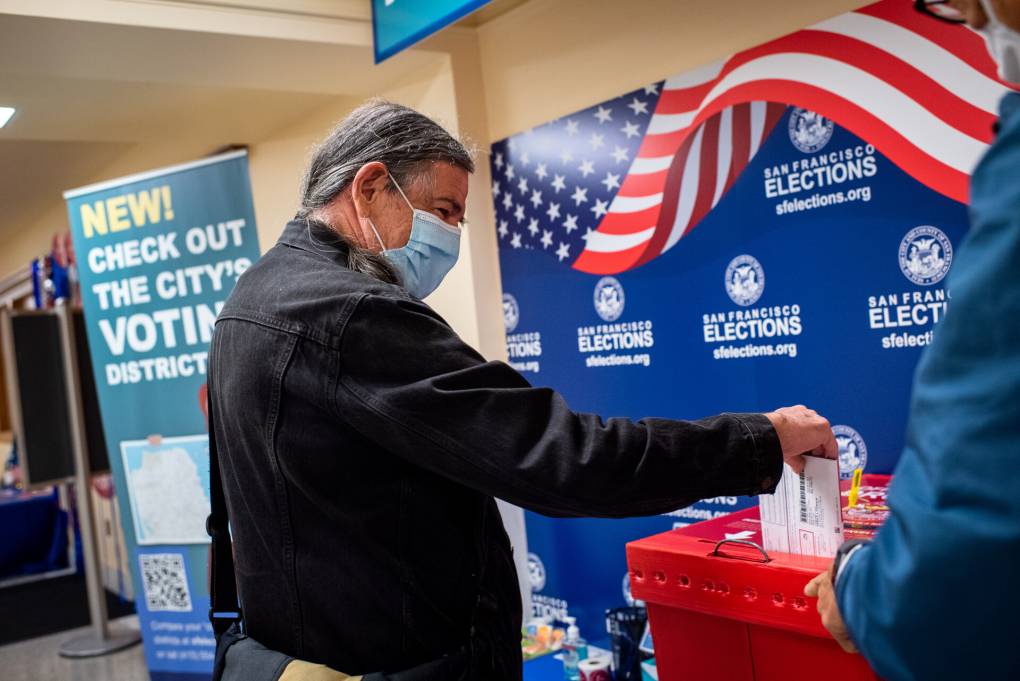
"caption": "Harold Turner of San Francisco drops off his ballot early at City Hall in San Francisco on Tuesday, Oct. 11, 2022.",
"credit": "Marlena Sloss/KQED",
"altTag": "A man with a mask drops his ballot into a ballot box.",
"description": null,
"imgSizes": {
"medium": {
"file": "https://cdn.kqed.org/wp-content/uploads/sites/26/2016/10/RS59244_Early_Voting_003-qut-800x534.jpg",
"width": 800,
"height": 534,
"mimeType": "image/jpeg"
},
"large": {
"file": "https://cdn.kqed.org/wp-content/uploads/sites/26/2016/10/RS59244_Early_Voting_003-qut-1020x681.jpg",
"width": 1020,
"height": 681,
"mimeType": "image/jpeg"
},
"thumbnail": {
"file": "https://cdn.kqed.org/wp-content/uploads/sites/26/2016/10/RS59244_Early_Voting_003-qut-160x107.jpg",
"width": 160,
"height": 107,
"mimeType": "image/jpeg"
},
"medium_large": {
"file": "https://cdn.kqed.org/wp-content/uploads/sites/26/2016/10/RS59244_Early_Voting_003-qut-768x513.jpg",
"width": 768,
"height": 513,
"mimeType": "image/jpeg"
},
"1536x1536": {
"file": "https://cdn.kqed.org/wp-content/uploads/sites/26/2016/10/RS59244_Early_Voting_003-qut-1536x1026.jpg",
"width": 1536,
"height": 1026,
"mimeType": "image/jpeg"
},
"post-thumbnail": {
"file": "https://cdn.kqed.org/wp-content/uploads/sites/26/2016/10/RS59244_Early_Voting_003-qut-672x372.jpg",
"width": 672,
"height": 372,
"mimeType": "image/jpeg"
},
"twentyfourteen-full-width": {
"file": "https://cdn.kqed.org/wp-content/uploads/sites/26/2016/10/RS59244_Early_Voting_003-qut-1038x576.jpg",
"width": 1038,
"height": 576,
"mimeType": "image/jpeg"
},
"kqedFullSize": {
"file": "https://cdn.kqed.org/wp-content/uploads/sites/26/2016/10/RS59244_Early_Voting_003-qut.jpg",
"width": 1920,
"height": 1282
}
},
"isLoading": false,
"fetchFailed": false
}
},
"audioPlayerReducer": {
"postId": "stream_live",
"isPaused": true,
"isPlaying": false,
"pfsActive": false,
"pledgeModalIsOpen": true,
"playerDrawerIsOpen": false,
"liveAudioPlayStartedAt": 0,
"liveAudioPlayContext": ""
},
"authorsReducer": {
"matthewgreen": {
"type": "authors",
"id": "1263",
"meta": {
"index": "authors_1716337520",
"id": "1263",
"found": true
},
"name": "Matthew Green",
"firstName": "Matthew",
"lastName": "Green",
"slug": "matthewgreen",
"email": "mgreen@kqed.org",
"display_author_email": false,
"staff_mastheads": [],
"title": "KQED Editor/Reporter",
"bio": "Matthew Green is a digital media producer for KQED News. He previously produced \u003ca href=\"http://www.kqed.org/lowdown\">The Lowdown\u003c/a>, KQED’s multimedia news education blog. Matthew's written for numerous Bay Area publications, including the Oakland Tribune and San Francisco Chronicle. He also taught journalism classes at Fremont High School in East Oakland.\r\n\r\nEmail: mgreen@kqed.org; Twitter: @MGreenKQED",
"avatar": "https://secure.gravatar.com/avatar/3bf498d1267ca02c8494f33d8cfc575e?s=600&d=blank&r=g",
"twitter": "MGreenKQED",
"facebook": null,
"instagram": null,
"linkedin": null,
"sites": [
{
"site": "news",
"roles": []
},
{
"site": "lowdown",
"roles": []
},
{
"site": "science",
"roles": []
},
{
"site": "education",
"roles": []
},
{
"site": "quest",
"roles": []
},
{
"site": "liveblog",
"roles": []
}
],
"headData": {
"title": "Matthew Green | KQED",
"description": "KQED Editor/Reporter",
"ogImgSrc": "https://secure.gravatar.com/avatar/3bf498d1267ca02c8494f33d8cfc575e?s=600&d=blank&r=g",
"twImgSrc": "https://secure.gravatar.com/avatar/3bf498d1267ca02c8494f33d8cfc575e?s=600&d=blank&r=g"
},
"isLoading": false,
"link": "/author/matthewgreen"
},
"cignant": {
"type": "authors",
"id": "11207",
"meta": {
"index": "authors_1716337520",
"id": "11207",
"found": true
},
"name": "Chanelle Ignant",
"firstName": "Chanelle",
"lastName": "Ignant",
"slug": "cignant",
"email": "cignant@KQED.org",
"display_author_email": false,
"staff_mastheads": [],
"title": "KQED Contributor",
"bio": "Chanelle is the Youth Media Specialist for KQED. She has worked with various Bay Area youth media organizations and is an independent media maker.",
"avatar": "https://secure.gravatar.com/avatar/89efb7b8c7b3a7dc5b89a558612c83fc?s=600&d=mm&r=g",
"twitter": "chi_was_here",
"bluesky": null,
"facebook": null,
"instagram": null,
"linkedin": null,
"sites": [
{
"site": "news",
"roles": []
},
{
"site": "lowdown",
"roles": [
"editor"
]
},
{
"site": "education",
"roles": []
},
{
"site": "quest",
"roles": [
"editor"
]
}
],
"headData": {
"title": "Chanelle Ignant | KQED",
"description": "KQED Contributor",
"ogImgSrc": "https://secure.gravatar.com/avatar/89efb7b8c7b3a7dc5b89a558612c83fc?s=600&d=mm&r=g",
"twImgSrc": "https://secure.gravatar.com/avatar/89efb7b8c7b3a7dc5b89a558612c83fc?s=600&d=mm&r=g"
},
"isLoading": false,
"link": "/author/cignant"
},
"rroberson": {
"type": "authors",
"id": "11274",
"meta": {
"index": "authors_1716337520",
"id": "11274",
"found": true
},
"name": "Rachel Roberson",
"firstName": "Rachel",
"lastName": "Roberson",
"slug": "rroberson",
"email": "rroberson@kqed.org",
"display_author_email": false,
"staff_mastheads": [],
"title": null,
"bio": "Rachel Roberson is KQED's news education manager. Previously, she was a reading, writing and social studies teacher leader on three continents, having served on the founding staff of KIPP Bayview Academy in San Francisco before moving to schools in Abu Dhabi and Austin, Texas. She started her teaching career as a Peace Corps volunteer in Cameroon. Before she was a teacher, Rachel was a journalist in the East Bay.",
"avatar": "https://secure.gravatar.com/avatar/d0516373a400e4059f65bd29bc026a20?s=600&d=mm&r=g",
"twitter": null,
"facebook": null,
"instagram": null,
"linkedin": null,
"sites": [
{
"site": "news",
"roles": [
"editor"
]
},
{
"site": "lowdown",
"roles": [
"editor"
]
},
{
"site": "stateofhealth",
"roles": [
"editor"
]
},
{
"site": "science",
"roles": [
"editor"
]
},
{
"site": "education",
"roles": [
"editor"
]
},
{
"site": "perspectives",
"roles": [
"editor"
]
},
{
"site": "youthmedia",
"roles": [
"editor"
]
}
],
"headData": {
"title": "Rachel Roberson | KQED",
"description": null,
"ogImgSrc": "https://secure.gravatar.com/avatar/d0516373a400e4059f65bd29bc026a20?s=600&d=mm&r=g",
"twImgSrc": "https://secure.gravatar.com/avatar/d0516373a400e4059f65bd29bc026a20?s=600&d=mm&r=g"
},
"isLoading": false,
"link": "/author/rroberson"
}
},
"pagesReducer": {
"education_category_news-and-civics": {
"type": "terms",
"id": "education_50",
"meta": {
"index": "terms_1716263798",
"site": "education",
"id": "50",
"score": 13.896141
},
"featImg": null,
"name": "News & Civics",
"description": "Find civics lesson plans and teaching resources for high school and middle school, including lesson plan ideas on the latest news topics.",
"taxonomy": "category",
"headData": {
"twImgId": null,
"twTitle": null,
"ogTitle": null,
"ogImgId": null,
"twDescription": null,
"description": "Find civics lesson plans and teaching resources for high school and middle school, including lesson plan ideas on the latest news topics.",
"title": "News & Civics | KQED Education",
"ogDescription": null
},
"ttid": 58,
"slug": "news-and-civics",
"isLoading": false,
"title": "News & Civics",
"pageMeta": {
"site": "education",
"WpPageTemplate": "page-topic-company",
"currentPage": 20
},
"blocks": [
{
"blockName": "kqed/company-paragraph",
"content": "Find civics lesson plans and teaching resources for high school and middle school, including lesson plan ideas on the latest news topics."
},
{
"blockName": "kqed/post-list",
"attrs": {
"layout": "cardCompany2",
"query": "posts/education?category=news-and-civics",
"seeMore": false,
"paginated": true,
"page": 20
}
},
{
"blockName": "kqed/ad"
}
]
}
},
"pfsSessionReducer": {},
"postsReducer": {
"stream_live": {
"type": "live",
"id": "stream_live",
"audioUrl": "https://streams.kqed.org/kqedradio",
"title": "Live Stream",
"excerpt": "Live Stream information currently unavailable.",
"link": "/radio",
"featImg": "",
"label": {
"name": "KQED Live",
"link": "/"
}
},
"stream_kqedNewscast": {
"type": "posts",
"id": "stream_kqedNewscast",
"audioUrl": "https://www.kqed.org/.stream/anon/radio/RDnews/newscast.mp3?_=1",
"title": "KQED Newscast",
"featImg": "",
"label": {
"name": "88.5 FM",
"link": "/"
}
},
"education_321899": {
"type": "posts",
"id": "education_321899",
"meta": {
"index": "posts_1716263798",
"site": "education",
"id": "321899",
"score": null,
"sort": [
1478269233000
]
},
"parent": 0,
"labelTerm": {
"site": "education",
"term": 2815
},
"blocks": [],
"publishDate": 1478269233,
"format": "standard",
"title": "Get Ready for Election Day and Beyond",
"headTitle": "Get Ready for Election Day and Beyond | KQED",
"content": "\u003cp>\u003cspan style=\"font-weight: 400\">We’re in the home stretch. Election Day 2016 is almost here and will mark the end of a historic–and historically contentious–campaign season. Here are some suggestions for bringing election-related projects and lessons to a close with a special focus on Election Day and what comes next. \u003c/span>\u003c/p>\n\u003cp>\u003ca href=\"https://ww2.kqed.org/lowdown/2016/10/13/what-is-the-electoral-college-and-is-it-time-to-get-rid-of-it/\">\u003cspan style=\"font-weight: 400\">Explainer: What Is the Deal With the Electoral College? \u003c/span>\u003c/a>\u003cspan style=\"font-weight: 400\">\u003cbr>\nThis video and post on KQED’s The Lowdown breaks down the history and inner workings on one of the quirkiest (and confusing) parts of our democracy. \u003c/span>\u003c/p>\n\u003cp>\u003ca href=\"http://ca.pbslearningmedia.org/resource/pbs-electoral-decoder/pbs-electoral-decoder/\">\u003cspan style=\"font-weight: 400\">PBS Electoral Decoder from PBS Election Central\u003cbr>\n\u003c/span>\u003c/a>\u003cspan style=\"font-weight: 400\">Get ready for the election night with this interactive look at the returns from every election in U.S. history! The map + timeline tool gives a summary of each campaign as well as the key issues of the day. In 2012, Mitt Romney and Barack Obama squared off over the Iraq War and the Great Recession. Compare that to the election of 1860 when Abraham Lincoln was confronting the dissolution of the union and the start of the Civil War. \u003c/span>\u003c/p>\n\u003cp>\u003ca href=\"http://www.pbs.org/pov/electionday/lesson-plan/\">\u003cspan style=\"font-weight: 400\">Improving Elections in the United States\u003c/span>\u003c/a>\u003cspan style=\"font-weight: 400\">\u003cbr>\nThis lesson plan and the documentary \u003c/span>\u003ca href=\"http://www.pbs.org/pov/electionday/\">\u003cspan style=\"font-weight: 400\">Election Day\u003c/span>\u003c/a>\u003cspan style=\"font-weight: 400\"> offers a “street level” look at how Americans vote and highlights the diversity of polling places, ballots and voting methods in our country, where elections are managed by each county or municipality. \u003c/span>\u003c/p>\n\u003cp>\u003ca href=\"http://elections.kqed.org/article/4062/what-exactly-is-the-presidents-job-description\">\u003cspan style=\"font-weight: 400\">What Is the Actual Job Description of the President of the United States?\u003cbr>\n\u003c/span>\u003c/a>\u003cspan style=\"font-weight: 400\">We vote for the president, but how much power does the he/she \u003c/span>\u003ci>\u003cspan style=\"font-weight: 400\">really \u003c/span>\u003c/i>\u003cspan style=\"font-weight: 400\">have? Can all those campaign promises become reality? This post, also from The Lowdown, explains it all and includes a lesson plan, as well as videos from PBS’s Crash Course Government series.\u003c/span>\u003c/p>\n\u003cp>[ad fullwidth]\u003c/p>\n\u003cp>\u003ca href=\"http://actioncivicscollaborative.org/resources/toolbox/\">\u003cspan style=\"font-weight: 400\">Action Civics Toolbox\u003cbr>\n\u003c/span>\u003c/a>\u003cspan style=\"font-weight: 400\">The election will soon be decided and the campaigns will close up shop. But the issues at the center of our national conversation are here to stay. These tools from the National Action Civics Collaborative provides ways for students make their voices heard.\u003c/span>\u003c/p>\n\u003cp>\u003c/p>\n\u003cp>\u003ca href=\"https://letters2president.org/\">\u003cspan style=\"font-weight: 400\">Letters to the Next President 2.0 archive\u003cbr>\n\u003c/span>\u003c/a>\u003cspan style=\"font-weight: 400\"> The Letters to the Next President project closes on Election Day, but the thousands of letters created by teens will remain online and accessible to all. Students can discover where their peers across the country stand on issues that matter most to them. Issues trending this week? Immigration, gun control, abortion rights and education. \u003c/span>\u003c/p>\n\n",
"stats": {
"hasVideo": false,
"hasChartOrMap": false,
"hasAudio": false,
"hasPolis": false,
"wordCount": 397,
"hasGoogleForm": false,
"hasGallery": false,
"hasHearkenModule": false,
"iframeSrcs": [],
"paragraphCount": 9
},
"modified": 1704762190,
"excerpt": "Election Day 2016 will mark the end of a historic campaign season. Here are some suggestions for bringing election-related projects and lessons to a close with a special focus on Election Day and what comes next. ",
"headData": {
"twImgId": "",
"twTitle": "",
"ogTitle": "",
"ogImgId": "",
"twDescription": "",
"description": "Election Day 2016 will mark the end of a historic campaign season. Here are some suggestions for bringing election-related projects and lessons to a close with a special focus on Election Day and what comes next. ",
"title": "Get Ready for Election Day and Beyond | KQED",
"ogDescription": "",
"schema": {
"@context": "https://schema.org",
"@type": "Article",
"headline": "Get Ready for Election Day and Beyond",
"datePublished": "2016-11-04T07:20:33-07:00",
"dateModified": "2024-01-08T17:03:10-08:00",
"image": "https://cdn.kqed.org/wp-content/uploads/2020/02/KQED-OG-Image@1x.png"
}
},
"guestAuthors": [],
"slug": "get-ready-for-election-day-and-beyond",
"status": "publish",
"sticky": false,
"path": "/education/321899/get-ready-for-election-day-and-beyond",
"audioTrackLength": null,
"parsedContent": [
{
"type": "contentString",
"content": "\u003cdiv class=\"post-body\">\u003cp>\u003cp>\u003cspan style=\"font-weight: 400\">We’re in the home stretch. Election Day 2016 is almost here and will mark the end of a historic–and historically contentious–campaign season. Here are some suggestions for bringing election-related projects and lessons to a close with a special focus on Election Day and what comes next. \u003c/span>\u003c/p>\n\u003cp>\u003ca href=\"https://ww2.kqed.org/lowdown/2016/10/13/what-is-the-electoral-college-and-is-it-time-to-get-rid-of-it/\">\u003cspan style=\"font-weight: 400\">Explainer: What Is the Deal With the Electoral College? \u003c/span>\u003c/a>\u003cspan style=\"font-weight: 400\">\u003cbr>\nThis video and post on KQED’s The Lowdown breaks down the history and inner workings on one of the quirkiest (and confusing) parts of our democracy. \u003c/span>\u003c/p>\n\u003cp>\u003ca href=\"http://ca.pbslearningmedia.org/resource/pbs-electoral-decoder/pbs-electoral-decoder/\">\u003cspan style=\"font-weight: 400\">PBS Electoral Decoder from PBS Election Central\u003cbr>\n\u003c/span>\u003c/a>\u003cspan style=\"font-weight: 400\">Get ready for the election night with this interactive look at the returns from every election in U.S. history! The map + timeline tool gives a summary of each campaign as well as the key issues of the day. In 2012, Mitt Romney and Barack Obama squared off over the Iraq War and the Great Recession. Compare that to the election of 1860 when Abraham Lincoln was confronting the dissolution of the union and the start of the Civil War. \u003c/span>\u003c/p>\n\u003cp>\u003ca href=\"http://www.pbs.org/pov/electionday/lesson-plan/\">\u003cspan style=\"font-weight: 400\">Improving Elections in the United States\u003c/span>\u003c/a>\u003cspan style=\"font-weight: 400\">\u003cbr>\nThis lesson plan and the documentary \u003c/span>\u003ca href=\"http://www.pbs.org/pov/electionday/\">\u003cspan style=\"font-weight: 400\">Election Day\u003c/span>\u003c/a>\u003cspan style=\"font-weight: 400\"> offers a “street level” look at how Americans vote and highlights the diversity of polling places, ballots and voting methods in our country, where elections are managed by each county or municipality. \u003c/span>\u003c/p>\n\u003cp>\u003ca href=\"http://elections.kqed.org/article/4062/what-exactly-is-the-presidents-job-description\">\u003cspan style=\"font-weight: 400\">What Is the Actual Job Description of the President of the United States?\u003cbr>\n\u003c/span>\u003c/a>\u003cspan style=\"font-weight: 400\">We vote for the president, but how much power does the he/she \u003c/span>\u003ci>\u003cspan style=\"font-weight: 400\">really \u003c/span>\u003c/i>\u003cspan style=\"font-weight: 400\">have? Can all those campaign promises become reality? This post, also from The Lowdown, explains it all and includes a lesson plan, as well as videos from PBS’s Crash Course Government series.\u003c/span>\u003c/p>\n\u003cp>\u003c/p>\u003c/div>",
"attributes": {
"named": {},
"numeric": []
}
},
{
"type": "component",
"content": "",
"name": "ad",
"attributes": {
"named": {
"label": "fullwidth"
},
"numeric": [
"fullwidth"
]
}
},
{
"type": "contentString",
"content": "\u003cdiv class=\"post-body\">\u003cp>\u003c/p>\n\u003cp>\u003ca href=\"http://actioncivicscollaborative.org/resources/toolbox/\">\u003cspan style=\"font-weight: 400\">Action Civics Toolbox\u003cbr>\n\u003c/span>\u003c/a>\u003cspan style=\"font-weight: 400\">The election will soon be decided and the campaigns will close up shop. But the issues at the center of our national conversation are here to stay. These tools from the National Action Civics Collaborative provides ways for students make their voices heard.\u003c/span>\u003c/p>\n\u003cp>\u003c/p>\n\u003cp>\u003ca href=\"https://letters2president.org/\">\u003cspan style=\"font-weight: 400\">Letters to the Next President 2.0 archive\u003cbr>\n\u003c/span>\u003c/a>\u003cspan style=\"font-weight: 400\"> The Letters to the Next President project closes on Election Day, but the thousands of letters created by teens will remain online and accessible to all. Students can discover where their peers across the country stand on issues that matter most to them. Issues trending this week? Immigration, gun control, abortion rights and education. \u003c/span>\u003c/p>\n\n\u003c/div>\u003c/p>",
"attributes": {
"named": {},
"numeric": []
}
}
],
"link": "/education/321899/get-ready-for-election-day-and-beyond",
"authors": [
"11274"
],
"categories": [
"education_1",
"education_50"
],
"tags": [
"education_5"
],
"collections": [
"education_2815"
],
"featImg": "education_323834",
"label": "education_2815"
},
"education_323950": {
"type": "posts",
"id": "education_323950",
"meta": {
"index": "posts_1716263798",
"site": "education",
"id": "323950",
"score": null,
"sort": [
1478217637000
]
},
"parent": 0,
"labelTerm": {
"site": "education"
},
"blocks": [],
"publishDate": 1478217637,
"format": "standard",
"title": "Bay Area Teens Explore the Political Process During State Capital Visit",
"headTitle": "Bay Area Teens Explore the Political Process During State Capital Visit | KQED",
"content": "\u003cp>KQED partnered with BAVC’s NextGen youth program for an exploration into the local election process. \u003cspan style=\"font-weight: 400\">Students from BAVC’s youth leadership council, Gears, visited Sacramento to learn more about this year’s ballot measures affecting California’s youth.\u003c/span>\u003c/p>\n\u003cp>\u003cspan style=\"font-weight: 400\">Speakers emphasized the value of youth voice in the election process.\u003c/span>\u003c/p>\n\u003cp>\u003cspan style=\"font-weight: 400\">“The extent to which you as younger voters share your opinions, you’re helping to play a role in a wider process, helping to make sure it’s not just one segment of the population who is affecting all of these laws,” said Dan Kaplan of the Legislative Analyst’s Office.\u003c/span>\u003c/p>\n\u003cp>\u003cspan style=\"font-weight: 400\">“The extent to which you can voice your opinion about what problems you see in your local communities to the legislature helps inform us about what’s really going on,” said Kaplan.\u003c/span>\u003c/p>\n\u003cfigure id=\"attachment_324649\" class=\"wp-caption alignright\" style=\"max-width: 438px\">\u003cimg loading=\"lazy\" decoding=\"async\" class=\"wp-image-324649 \" src=\"http://ww2.kqed.org/education/wp-content/uploads/sites/38/2016/11/IMG_20161103_112302-800x452.jpg\" width=\"438\" height=\"248\" srcset=\"https://cdn.kqed.org/wp-content/uploads/sites/38/2016/11/IMG_20161103_112302-800x452.jpg 800w, https://cdn.kqed.org/wp-content/uploads/sites/38/2016/11/IMG_20161103_112302-160x90.jpg 160w, https://cdn.kqed.org/wp-content/uploads/sites/38/2016/11/IMG_20161103_112302-768x434.jpg 768w, https://cdn.kqed.org/wp-content/uploads/sites/38/2016/11/IMG_20161103_112302-1020x577.jpg 1020w, https://cdn.kqed.org/wp-content/uploads/sites/38/2016/11/IMG_20161103_112302-1920x1086.jpg 1920w, https://cdn.kqed.org/wp-content/uploads/sites/38/2016/11/IMG_20161103_112302-1180x667.jpg 1180w, https://cdn.kqed.org/wp-content/uploads/sites/38/2016/11/IMG_20161103_112302-960x543.jpg 960w, https://cdn.kqed.org/wp-content/uploads/sites/38/2016/11/IMG_20161103_112302-240x136.jpg 240w, https://cdn.kqed.org/wp-content/uploads/sites/38/2016/11/IMG_20161103_112302-375x212.jpg 375w, https://cdn.kqed.org/wp-content/uploads/sites/38/2016/11/IMG_20161103_112302-520x294.jpg 520w\" sizes=\"(max-width: 438px) 100vw, 438px\">\u003cfigcaption class=\"wp-caption-text\">BAVC’s NextGen students meet with Teri Burns from the California School Board Association on October 22, 2016.\u003c/figcaption>\u003c/figure>\n\u003cp>For those not old enough to vote in this year’s election, speakers suggested other practical ways to reach major decision makers.\u003c/p>\n\u003cp>[ad fullwidth]\u003c/p>\n\u003cp>Teri Burns from the California School Board Association encouraged students to approach school officials, attend school board meetings and write letters to local representatives with ideas and concerns about issues impacting their communities.\u003c/p>\n\u003cp>\u003cspan style=\"font-weight: 400\">“Getting started now, learning about public policy, learning about how to become engaged in your communities politically is important because that’s how you move up to bigger decision making jobs,” said Colin Grinnell, the Staff Director of the Senate Governance and Finance Committee.\u003c/span>\u003c/p>\n\u003cp>\u003c/p>\n\u003cp>\u003cspan style=\"font-weight: 400\"> \u003c/span>\u003c/p>\n\n",
"stats": {
"hasVideo": false,
"hasChartOrMap": false,
"hasAudio": false,
"hasPolis": false,
"wordCount": 275,
"hasGoogleForm": false,
"hasGallery": false,
"hasHearkenModule": false,
"iframeSrcs": [],
"paragraphCount": 9
},
"modified": 1704762194,
"excerpt": null,
"headData": {
"twImgId": "",
"twTitle": "",
"ogTitle": "",
"ogImgId": "",
"twDescription": "",
"description": "KQED partnered with BAVC’s NextGen youth program for an exploration into the local election process. Students from BAVC’s youth leadership council, Gears, visited Sacramento to learn more about this year’s ballot measures affecting California’s youth. Speakers emphasized the value of youth voice in the election process. “The extent to which you as younger voters share your opinions, you’re",
"title": "Bay Area Teens Explore the Political Process During State Capital Visit | KQED",
"ogDescription": "",
"schema": {
"@context": "https://schema.org",
"@type": "Article",
"headline": "Bay Area Teens Explore the Political Process During State Capital Visit",
"datePublished": "2016-11-03T17:00:37-07:00",
"dateModified": "2024-01-08T17:03:14-08:00",
"image": "https://cdn.kqed.org/wp-content/uploads/2020/02/KQED-OG-Image@1x.png"
}
},
"guestAuthors": [],
"slug": "bay-area-teens-explore-the-political-process-during-state-capital-visit",
"status": "publish",
"sticky": false,
"path": "/education/323950/bay-area-teens-explore-the-political-process-during-state-capital-visit",
"audioTrackLength": null,
"parsedContent": [
{
"type": "contentString",
"content": "\u003cdiv class=\"post-body\">\u003cp>\u003cp>KQED partnered with BAVC’s NextGen youth program for an exploration into the local election process. \u003cspan style=\"font-weight: 400\">Students from BAVC’s youth leadership council, Gears, visited Sacramento to learn more about this year’s ballot measures affecting California’s youth.\u003c/span>\u003c/p>\n\u003cp>\u003cspan style=\"font-weight: 400\">Speakers emphasized the value of youth voice in the election process.\u003c/span>\u003c/p>\n\u003cp>\u003cspan style=\"font-weight: 400\">“The extent to which you as younger voters share your opinions, you’re helping to play a role in a wider process, helping to make sure it’s not just one segment of the population who is affecting all of these laws,” said Dan Kaplan of the Legislative Analyst’s Office.\u003c/span>\u003c/p>\n\u003cp>\u003cspan style=\"font-weight: 400\">“The extent to which you can voice your opinion about what problems you see in your local communities to the legislature helps inform us about what’s really going on,” said Kaplan.\u003c/span>\u003c/p>\n\u003cfigure id=\"attachment_324649\" class=\"wp-caption alignright\" style=\"max-width: 438px\">\u003cimg loading=\"lazy\" decoding=\"async\" class=\"wp-image-324649 \" src=\"http://ww2.kqed.org/education/wp-content/uploads/sites/38/2016/11/IMG_20161103_112302-800x452.jpg\" width=\"438\" height=\"248\" srcset=\"https://cdn.kqed.org/wp-content/uploads/sites/38/2016/11/IMG_20161103_112302-800x452.jpg 800w, https://cdn.kqed.org/wp-content/uploads/sites/38/2016/11/IMG_20161103_112302-160x90.jpg 160w, https://cdn.kqed.org/wp-content/uploads/sites/38/2016/11/IMG_20161103_112302-768x434.jpg 768w, https://cdn.kqed.org/wp-content/uploads/sites/38/2016/11/IMG_20161103_112302-1020x577.jpg 1020w, https://cdn.kqed.org/wp-content/uploads/sites/38/2016/11/IMG_20161103_112302-1920x1086.jpg 1920w, https://cdn.kqed.org/wp-content/uploads/sites/38/2016/11/IMG_20161103_112302-1180x667.jpg 1180w, https://cdn.kqed.org/wp-content/uploads/sites/38/2016/11/IMG_20161103_112302-960x543.jpg 960w, https://cdn.kqed.org/wp-content/uploads/sites/38/2016/11/IMG_20161103_112302-240x136.jpg 240w, https://cdn.kqed.org/wp-content/uploads/sites/38/2016/11/IMG_20161103_112302-375x212.jpg 375w, https://cdn.kqed.org/wp-content/uploads/sites/38/2016/11/IMG_20161103_112302-520x294.jpg 520w\" sizes=\"(max-width: 438px) 100vw, 438px\">\u003cfigcaption class=\"wp-caption-text\">BAVC’s NextGen students meet with Teri Burns from the California School Board Association on October 22, 2016.\u003c/figcaption>\u003c/figure>\n\u003cp>For those not old enough to vote in this year’s election, speakers suggested other practical ways to reach major decision makers.\u003c/p>\n\u003cp>\u003c/p>\u003c/div>",
"attributes": {
"named": {},
"numeric": []
}
},
{
"type": "component",
"content": "",
"name": "ad",
"attributes": {
"named": {
"label": "fullwidth"
},
"numeric": [
"fullwidth"
]
}
},
{
"type": "contentString",
"content": "\u003cdiv class=\"post-body\">\u003cp>\u003c/p>\n\u003cp>Teri Burns from the California School Board Association encouraged students to approach school officials, attend school board meetings and write letters to local representatives with ideas and concerns about issues impacting their communities.\u003c/p>\n\u003cp>\u003cspan style=\"font-weight: 400\">“Getting started now, learning about public policy, learning about how to become engaged in your communities politically is important because that’s how you move up to bigger decision making jobs,” said Colin Grinnell, the Staff Director of the Senate Governance and Finance Committee.\u003c/span>\u003c/p>\n\u003cp>\u003c/p>\n\u003cp>\u003cspan style=\"font-weight: 400\"> \u003c/span>\u003c/p>\n\n\u003c/div>\u003c/p>",
"attributes": {
"named": {},
"numeric": []
}
}
],
"link": "/education/323950/bay-area-teens-explore-the-political-process-during-state-capital-visit",
"authors": [
"11207"
],
"categories": [
"education_50"
],
"tags": [
"education_428",
"education_1242"
],
"featImg": "education_324647",
"label": "education"
},
"education_322307": {
"type": "posts",
"id": "education_322307",
"meta": {
"index": "posts_1716263798",
"site": "education",
"id": "322307",
"score": null,
"sort": [
1477940765000
]
},
"parent": 0,
"labelTerm": {
"site": "lowdown"
},
"blocks": [],
"publishDate": 1477940765,
"format": "standard",
"title": "Should California to Raise Its Tobacco Tax? (Includes Lesson Plan)",
"headTitle": "Should California to Raise Its Tobacco Tax? (Includes Lesson Plan) | KQED",
"content": "\u003cp>\u003cspan>\u003c/span>\u003c/p>\n\u003cp>Depending on what voters decide next week, smoking in California could soon become a much pricier habit.\u003c/p>\n\u003cp>\u003ca target=\"_self\" href=\"http://elections.kqed.org/measure/2019/info/proposition-56\" rel=\"noopener\">Proposition 56\u003c/a>, one of 17 statewide measures on the ballot this November, would increase the state’s tobacco tax by $2 per pack, a huge leap from the current rate of \u003c/p>\n\u003cp>Source:: \u003ca href=\"https://ww2.kqed.org/lowdown/2016/10/31/prop-29-should-smoking-in-california-be-more-expensive-2/\" target=\"_self\" title=\"Should California to Raise Its Tobacco Tax? (Includes Lesson Plan)\" rel=\"noopener\">The Lowdown\u003c/a>\u003c/p>\n\u003cp>[ad fullwidth]\u003c/p>\u003cp>\u003c/p>\n",
"stats": {
"hasVideo": false,
"hasChartOrMap": false,
"hasAudio": false,
"hasPolis": false,
"wordCount": 54,
"hasGoogleForm": false,
"hasGallery": false,
"hasHearkenModule": false,
"iframeSrcs": [],
"paragraphCount": 6
},
"modified": 1704762210,
"excerpt": "\u003cp>\u003cspan>\u003c/span>\u003c/p>\n\u003cp>Depending on what voters decide next week, smoking in California could soon become a much pricier habit.\u003c/p>\n\u003cp>\u003ca target=\"_self\" href=\"http://elections.kqed.org/measure/2019/info/proposition-56\" rel=\"noopener\">Proposition 56\u003c/a>, one of 17 statewide measures on the ballot this November, would increase the state's tobacco tax by $2 per pack, a huge leap from the current rate of",
"headData": {
"twImgId": "",
"twTitle": "",
"ogTitle": "",
"ogImgId": "",
"twDescription": "",
"description": "\nDepending on what voters decide next week, smoking in California could soon become a much pricier habit.\nProposition 56, one of 17 statewide measures on the ballot this November, would increase the state's tobacco tax by $2 per pack, a huge leap from the current rate of",
"title": "Should California to Raise Its Tobacco Tax? (Includes Lesson Plan) | KQED",
"ogDescription": "",
"schema": {
"@context": "https://schema.org",
"@type": "Article",
"headline": "Should California to Raise Its Tobacco Tax? (Includes Lesson Plan)",
"datePublished": "2016-10-31T12:06:05-07:00",
"dateModified": "2024-01-08T17:03:30-08:00",
"image": "https://cdn.kqed.org/wp-content/uploads/2020/02/KQED-OG-Image@1x.png"
}
},
"guestAuthors": [],
"slug": "should-california-to-raise-its-tobacco-tax-includes-lesson-plan",
"status": "publish",
"redirect": {
"type": "external",
"url": "https://ww2.kqed.org/lowdown/2016/10/31/prop-29-should-smoking-in-california-be-more-expensive-2/"
},
"rssmiSourceLink": "https://ww2.kqed.org/lowdown/2016/10/31/prop-29-should-smoking-in-california-be-more-expensive-2/",
"sticky": false,
"path": "/education/322307/should-california-to-raise-its-tobacco-tax-includes-lesson-plan",
"audioTrackLength": null,
"parsedContent": [
{
"type": "contentString",
"content": "\u003cdiv class=\"post-body\">\u003cp>\u003cp>\u003cspan>\u003c/span>\u003c/p>\n\u003cp>Depending on what voters decide next week, smoking in California could soon become a much pricier habit.\u003c/p>\n\u003cp>\u003ca target=\"_self\" href=\"http://elections.kqed.org/measure/2019/info/proposition-56\" rel=\"noopener\">Proposition 56\u003c/a>, one of 17 statewide measures on the ballot this November, would increase the state’s tobacco tax by $2 per pack, a huge leap from the current rate of \u003c/p>\n\u003cp>Source:: \u003ca href=\"https://ww2.kqed.org/lowdown/2016/10/31/prop-29-should-smoking-in-california-be-more-expensive-2/\" target=\"_self\" title=\"Should California to Raise Its Tobacco Tax? (Includes Lesson Plan)\" rel=\"noopener\">The Lowdown\u003c/a>\u003c/p>\n\u003cp>\u003c/p>\u003c/div>",
"attributes": {
"named": {},
"numeric": []
}
},
{
"type": "component",
"content": "",
"name": "ad",
"attributes": {
"named": {
"label": "fullwidth"
},
"numeric": [
"fullwidth"
]
}
},
{
"type": "contentString",
"content": "\u003cdiv class=\"post-body\">\u003cp>\u003c/p>\u003cp>\u003c/p>\n\u003c/div>\u003c/p>",
"attributes": {
"named": {},
"numeric": []
}
}
],
"link": "https://ww2.kqed.org/lowdown/2016/10/31/prop-29-should-smoking-in-california-be-more-expensive-2/",
"authors": [
"1263"
],
"series": [
"education_2838"
],
"categories": [
"education_50"
],
"tags": [
"education_3378"
],
"featImg": "education_322308",
"label": "education"
},
"lowdown_24303": {
"type": "posts",
"id": "lowdown_24303",
"meta": {
"index": "posts_1716263798",
"site": "lowdown",
"id": "24303",
"score": null,
"sort": [
1477631452000
]
},
"parent": 0,
"labelTerm": {
"site": "lowdown"
},
"blocks": [],
"publishDate": 1477631452,
"format": "standard",
"disqusTitle": "Just In Case You Forgot: How Ranked-Choice Voting Works",
"title": "Just In Case You Forgot: How Ranked-Choice Voting Works",
"headTitle": "The Lowdown | KQED News",
"content": "\u003cp>On Election Day, Maine voters will decide whether to adopt ranked-choice voting (RCV) for future statewide races, including U.S. Senate, Congress and governor.\u003c/p>\n\u003cp>If the measure passes, Maine would become the first state to adopt a statewide RCV system.\u003c/p>\n\u003cp>Eleven cities nationwide now use RCV, or instant-runoff voting for citywide elections, four of which are in the Bay Area: Oakland, San Leandro, Berkeley (all since 2010) and San Francisco (citywide since 2011).\u003c/p>\n\u003ch4>How does RCV work?\u003c/h4>\n\u003cp>RCV ballots vary somewhat by city, but generally follow a similar format. Assuming there are more than two candidates running for a given position, RCV races on the ballot include a first choice, second choice and third choice column, with every candidate listed in each column.\u003c/p>\n\u003cfigure id=\"attachment_24311\" class=\"wp-caption aligncenter\" style=\"max-width: 607px\">\u003ca href=\"http://ww2.kqed.org/lowdown/wp-content/uploads/sites/26/2016/10/alameda-county-registrar-of-voters-rankedchoice-voting-presentation-4-638-e1477631656752.jpg\" target=\"_blank\" rel=\"noopener noreferrer\">\u003cimg class=\"wp-image-24311 size-full\" src=\"http://ww2.kqed.org/lowdown/wp-content/uploads/sites/26/2016/10/alameda-county-registrar-of-voters-rankedchoice-voting-presentation-4-638-e1477631656752.jpg\" alt=\"alameda-county-registrar-of-voters-rankedchoice-voting-presentation-4-638\" width=\"607\" height=\"302\" srcset=\"https://ww2.kqed.org/app/uploads/sites/26/2016/10/alameda-county-registrar-of-voters-rankedchoice-voting-presentation-4-638-e1477631656752.jpg 607w, https://ww2.kqed.org/app/uploads/sites/26/2016/10/alameda-county-registrar-of-voters-rankedchoice-voting-presentation-4-638-e1477631656752-160x80.jpg 160w, https://ww2.kqed.org/app/uploads/sites/26/2016/10/alameda-county-registrar-of-voters-rankedchoice-voting-presentation-4-638-e1477631656752-240x119.jpg 240w, https://ww2.kqed.org/app/uploads/sites/26/2016/10/alameda-county-registrar-of-voters-rankedchoice-voting-presentation-4-638-e1477631656752-375x187.jpg 375w, https://ww2.kqed.org/app/uploads/sites/26/2016/10/alameda-county-registrar-of-voters-rankedchoice-voting-presentation-4-638-e1477631656752-520x259.jpg 520w\" sizes=\"(max-width: 607px) 100vw, 607px\">\u003c/a>\u003cfigcaption class=\"wp-caption-text\">A sample RCV ballot created by the Alameda County Registrar of Voters. \u003ccite>(Alameda County Registrar of Voters)\u003c/cite>\u003c/figcaption>\u003c/figure>\n\u003cp>Voters pick their first, second and third choices, regardless of party. (Note: You don’t have to pick three; you can still just pick your first choice, or your first two choices, etc. It also doesn’t do much good to select your first choice three times -- it’ll be counted only once.)\u003c/p>\n\u003cp>[ad fullwidth]\u003c/p>\n\u003cp>If any candidate receives more than 50 percent of first-choice votes, that candidate is automatically elected. Game over. But if no one receives a majority, a second round of counting proceeds. The candidate who received the least number of votes is eliminated (and if you voted for that candidate, your vote goes to your second choice pick). This process is repeated until one candidate has a clean majority.\u003c/p>\n\u003cp>In it's endorsement of the state's RCV measure, the \u003ca href=\"http://www.lwvme.org/RCV.html\" target=\"_blank\" rel=\"noopener noreferrer\">League of Women Voters of Maine\u003c/a> note that in nine of Maine's last 11 gubernatorial elections, the winner failed to receive a majority of votes. RCV, it concludes, is \"the best way to ensure a majority vote in competitive, single-seat, multi-candidate elections.\"\u003c/p>\n\u003cp>Keep in mind that RCV is different from California's top-two primary system, in which all candidates are listed on the same ballot and the top two vote-getters, regardless of party affiliations, advance to the general election.\u003c/p>\n\u003ch4>Round 1: The Sesame Street Power Grab\u003c/h4>\n\u003cp>So just for kicks (and because puppets are more fun than politicians), let’s pretend we’re observing a heated street council race on \"Sesame Street.\" There are four candidates running, and a total of 24 neighborhood voters casting ballots.\u003c/p>\n\u003cp>Cookie Monster (the clear front-runner, of course, well-loved for his oratorical gifts and promises of free pastries to the electorate) gets 10 first-place votes.\u003c/p>\n\u003cp>Oscar the Grouch gets eight first-place votes (with strong support from the waste management industry and a large contingent of the generally disgruntled).\u003c/p>\n\u003cp>Big Bird gets four first-place votes (from aviary supporters). And poor, impetuous Grover gets only two first-place votes (because no one knows who he really is).\u003c/p>\n\u003cp>Because no candidate received more than 12 votes, there’s no clear majority after the initial round. But we do have our first loser -- better luck next time, Grover -- so we move on to Round 2.\u003c/p>\n\u003ch4>Round 2: The First Elimination\u003c/h4>\n\u003cp>Grover, the candidate with the least amount of first-choice votes, is outta here! But for the two voters who picked Grover as a first choice, their second-choice votes still count. Here’s how:\u003c/p>\n\u003cp>One of the voters who chose Grover picked Oscar as a second choice. So that vote goes to Oscar (who now has a total of nine votes). The other voter in Grover’s fan club picked Cookie Monster as a second choice. So, that vote goes to Cookie Monster (who now has 11 votes).\u003c/p>\n\u003cp>At the end of Round 2, here’s the tally:\u003c/p>\n\u003cp>C. Monster: 11 votes\u003cbr>\nOscar: 9 votes\u003cbr>\nB. Bird: 4 votes\u003c/p>\n\u003cp>Still no clear winner (because there are still three candidates standing), so on to Round 3 we go!\u003c/p>\n\u003ch4>Round 3: The Deciding Moment\u003c/h4>\n\u003cp>Three candidates left, and Big Bird’s got the least amount of first-choice votes (only four), so that oversized avian is cooked!\u003c/p>\n\u003cp>Now, we look at the second-choice votes of those four voters who picked Big Bird as their first choice. Remarkably, as it turns out, all four of Big Bird’s second-choice votes were for Oscar! That means Oscar picks up four more votes, giving him (or it?) a final tally of 13 votes to Cookie Monster’s 11.\u003c/p>\n\u003cp>And thus, that grumpy, trash-dwelling green goon is the new boss in town.\u003c/p>\n\u003cp>In your city's races, things might not be quite that simple (and all the candidates will likely have noses). But hopefully you're beginning to get the idea of how a candidate can viably receive the most first-choice votes and still lose the election.\u003c/p>\n\u003cp>In 2010, for instance, Oakland first used RCV for its mayoral race and witnessed a similar outcome: there were 10 candidates, and Don Perata, the clear front-runner (who vastly outspent his opponents during the campaign), got 35 percent of the first-choice votes. That left Jean Quan in a distant second with only 24 percent of first-choice votes. But Quan -- who anticipated this outcome and allied herself with other underdog candidates and their supporters -- received many more second-choice votes than did Perata. And after all the elimination rounds, with second- and third-choice votes factored in, Quan ended up with 51 percent of the vote to Perata’s 49 percent.\u003c/p>\n\u003ch4>The Pundits\u003c/h4>\n\u003cp>So is RCV a good thing? It really depends on who you ask. (Jean Quan, I’m guessing would say yes; Don Perata … not so much. And Oscar the Grouch ... definitely a big fan.)\u003c/p>\n\u003cp>Like pretty much everything in politics, the system’s got its strong supporters and staunch enemies.\u003c/p>\n\u003cp>\u003cstrong>RCV supporters say:\u003c/strong>\u003c/p>\n\u003cul>\n\u003cli>It could save taxpayers millions by eliminating the need for local primaries and separate runoff elections.\u003c/li>\n\u003cli>It lessens the influence of campaign spending. Because RCV eliminates primaries, candidates only need to raise money for one election per cycle, not two or three.\u003c/li>\n\u003cli>It gives underdog and third party candidates a fighting chance and produces a winner who is supported by a clear majority.\u003c/li>\n\u003cli>It discourages mudslinging and negative campaigning; candidates are now more likely to ally with each.\u003c/li>\n\u003c/ul>\n\u003cp>[ad floatright]\u003c/p>\n\u003cp>\u003cstrong>RCV Opponents say:\u003c/strong>\u003c/p>\n\u003cul>\n\u003cli>It’s too confusing for voters and unnecessarily adds to the complexity of an already complicated ballot.\u003c/li>\n\u003cli>There's lots of room for technical error as election computers tally results through the use of a complicated algorithm.\u003c/li>\n\u003cli>It encourages less popular candidates to game the system by teaming up against the front-runner.\u003c/li>\n\u003cli>It’s discriminatory against less educated or knowledgeable members of the voting public who haven’t received sufficient instruction on how the system works.\u003c/li>\n\u003c/ul>\n\n",
"disqusIdentifier": "24303 http://ww2.kqed.org/lowdown/?p=24303",
"disqusUrl": "https://ww2.kqed.org/lowdown/2016/10/27/explainer-a-ranked-choice-voting-refresher/",
"stats": {
"hasVideo": false,
"hasChartOrMap": false,
"hasAudio": false,
"hasPolis": false,
"wordCount": 1153,
"hasGoogleForm": false,
"hasGallery": false,
"hasHearkenModule": false,
"iframeSrcs": [],
"paragraphCount": 29
},
"modified": 1668141701,
"excerpt": null,
"headData": {
"twImgId": "",
"twTitle": "",
"ogTitle": "",
"ogImgId": "",
"twDescription": "",
"description": "On Election Day, Maine voters will decide whether to adopt ranked-choice voting (RCV) for future statewide races, including U.S. Senate, Congress and governor. If the measure passes, Maine would become the first state to adopt a statewide RCV system. Eleven cities nationwide now use RCV, or instant-runoff voting for citywide elections, four of which are",
"title": "Just In Case You Forgot: How Ranked-Choice Voting Works - The Lowdown",
"ogDescription": "",
"schema": {
"@context": "https://schema.org",
"@type": "Article",
"headline": "Just In Case You Forgot: How Ranked-Choice Voting Works",
"datePublished": "2016-10-27T22:10:52-07:00",
"dateModified": "2022-11-10T20:41:41-08:00",
"image": "https://cdn.kqed.org/wp-content/uploads/2020/02/KQED-OG-Image@1x.png"
}
},
"guestAuthors": [],
"slug": "explainer-a-ranked-choice-voting-refresher",
"status": "publish",
"excludeFromSiteSearch": "Include",
"path": "/lowdown/24303/explainer-a-ranked-choice-voting-refresher",
"audioTrackLength": null,
"parsedContent": [
{
"type": "contentString",
"content": "\u003cdiv class=\"post-body\">\u003cp>\u003cp>On Election Day, Maine voters will decide whether to adopt ranked-choice voting (RCV) for future statewide races, including U.S. Senate, Congress and governor.\u003c/p>\n\u003cp>If the measure passes, Maine would become the first state to adopt a statewide RCV system.\u003c/p>\n\u003cp>Eleven cities nationwide now use RCV, or instant-runoff voting for citywide elections, four of which are in the Bay Area: Oakland, San Leandro, Berkeley (all since 2010) and San Francisco (citywide since 2011).\u003c/p>\n\u003ch4>How does RCV work?\u003c/h4>\n\u003cp>RCV ballots vary somewhat by city, but generally follow a similar format. Assuming there are more than two candidates running for a given position, RCV races on the ballot include a first choice, second choice and third choice column, with every candidate listed in each column.\u003c/p>\n\u003cfigure id=\"attachment_24311\" class=\"wp-caption aligncenter\" style=\"max-width: 607px\">\u003ca href=\"http://ww2.kqed.org/lowdown/wp-content/uploads/sites/26/2016/10/alameda-county-registrar-of-voters-rankedchoice-voting-presentation-4-638-e1477631656752.jpg\" target=\"_blank\" rel=\"noopener noreferrer\">\u003cimg class=\"wp-image-24311 size-full\" src=\"http://ww2.kqed.org/lowdown/wp-content/uploads/sites/26/2016/10/alameda-county-registrar-of-voters-rankedchoice-voting-presentation-4-638-e1477631656752.jpg\" alt=\"alameda-county-registrar-of-voters-rankedchoice-voting-presentation-4-638\" width=\"607\" height=\"302\" srcset=\"https://ww2.kqed.org/app/uploads/sites/26/2016/10/alameda-county-registrar-of-voters-rankedchoice-voting-presentation-4-638-e1477631656752.jpg 607w, https://ww2.kqed.org/app/uploads/sites/26/2016/10/alameda-county-registrar-of-voters-rankedchoice-voting-presentation-4-638-e1477631656752-160x80.jpg 160w, https://ww2.kqed.org/app/uploads/sites/26/2016/10/alameda-county-registrar-of-voters-rankedchoice-voting-presentation-4-638-e1477631656752-240x119.jpg 240w, https://ww2.kqed.org/app/uploads/sites/26/2016/10/alameda-county-registrar-of-voters-rankedchoice-voting-presentation-4-638-e1477631656752-375x187.jpg 375w, https://ww2.kqed.org/app/uploads/sites/26/2016/10/alameda-county-registrar-of-voters-rankedchoice-voting-presentation-4-638-e1477631656752-520x259.jpg 520w\" sizes=\"(max-width: 607px) 100vw, 607px\">\u003c/a>\u003cfigcaption class=\"wp-caption-text\">A sample RCV ballot created by the Alameda County Registrar of Voters. \u003ccite>(Alameda County Registrar of Voters)\u003c/cite>\u003c/figcaption>\u003c/figure>\n\u003cp>Voters pick their first, second and third choices, regardless of party. (Note: You don’t have to pick three; you can still just pick your first choice, or your first two choices, etc. It also doesn’t do much good to select your first choice three times -- it’ll be counted only once.)\u003c/p>\n\u003cp>\u003c/p>\u003c/div>",
"attributes": {
"named": {},
"numeric": []
}
},
{
"type": "component",
"content": "",
"name": "ad",
"attributes": {
"named": {
"label": "fullwidth"
},
"numeric": [
"fullwidth"
]
}
},
{
"type": "contentString",
"content": "\u003cdiv class=\"post-body\">\u003cp>\u003c/p>\n\u003cp>If any candidate receives more than 50 percent of first-choice votes, that candidate is automatically elected. Game over. But if no one receives a majority, a second round of counting proceeds. The candidate who received the least number of votes is eliminated (and if you voted for that candidate, your vote goes to your second choice pick). This process is repeated until one candidate has a clean majority.\u003c/p>\n\u003cp>In it's endorsement of the state's RCV measure, the \u003ca href=\"http://www.lwvme.org/RCV.html\" target=\"_blank\" rel=\"noopener noreferrer\">League of Women Voters of Maine\u003c/a> note that in nine of Maine's last 11 gubernatorial elections, the winner failed to receive a majority of votes. RCV, it concludes, is \"the best way to ensure a majority vote in competitive, single-seat, multi-candidate elections.\"\u003c/p>\n\u003cp>Keep in mind that RCV is different from California's top-two primary system, in which all candidates are listed on the same ballot and the top two vote-getters, regardless of party affiliations, advance to the general election.\u003c/p>\n\u003ch4>Round 1: The Sesame Street Power Grab\u003c/h4>\n\u003cp>So just for kicks (and because puppets are more fun than politicians), let’s pretend we’re observing a heated street council race on \"Sesame Street.\" There are four candidates running, and a total of 24 neighborhood voters casting ballots.\u003c/p>\n\u003cp>Cookie Monster (the clear front-runner, of course, well-loved for his oratorical gifts and promises of free pastries to the electorate) gets 10 first-place votes.\u003c/p>\n\u003cp>Oscar the Grouch gets eight first-place votes (with strong support from the waste management industry and a large contingent of the generally disgruntled).\u003c/p>\n\u003cp>Big Bird gets four first-place votes (from aviary supporters). And poor, impetuous Grover gets only two first-place votes (because no one knows who he really is).\u003c/p>\n\u003cp>Because no candidate received more than 12 votes, there’s no clear majority after the initial round. But we do have our first loser -- better luck next time, Grover -- so we move on to Round 2.\u003c/p>\n\u003ch4>Round 2: The First Elimination\u003c/h4>\n\u003cp>Grover, the candidate with the least amount of first-choice votes, is outta here! But for the two voters who picked Grover as a first choice, their second-choice votes still count. Here’s how:\u003c/p>\n\u003cp>One of the voters who chose Grover picked Oscar as a second choice. So that vote goes to Oscar (who now has a total of nine votes). The other voter in Grover’s fan club picked Cookie Monster as a second choice. So, that vote goes to Cookie Monster (who now has 11 votes).\u003c/p>\n\u003cp>At the end of Round 2, here’s the tally:\u003c/p>\n\u003cp>C. Monster: 11 votes\u003cbr>\nOscar: 9 votes\u003cbr>\nB. Bird: 4 votes\u003c/p>\n\u003cp>Still no clear winner (because there are still three candidates standing), so on to Round 3 we go!\u003c/p>\n\u003ch4>Round 3: The Deciding Moment\u003c/h4>\n\u003cp>Three candidates left, and Big Bird’s got the least amount of first-choice votes (only four), so that oversized avian is cooked!\u003c/p>\n\u003cp>Now, we look at the second-choice votes of those four voters who picked Big Bird as their first choice. Remarkably, as it turns out, all four of Big Bird’s second-choice votes were for Oscar! That means Oscar picks up four more votes, giving him (or it?) a final tally of 13 votes to Cookie Monster’s 11.\u003c/p>\n\u003cp>And thus, that grumpy, trash-dwelling green goon is the new boss in town.\u003c/p>\n\u003cp>In your city's races, things might not be quite that simple (and all the candidates will likely have noses). But hopefully you're beginning to get the idea of how a candidate can viably receive the most first-choice votes and still lose the election.\u003c/p>\n\u003cp>In 2010, for instance, Oakland first used RCV for its mayoral race and witnessed a similar outcome: there were 10 candidates, and Don Perata, the clear front-runner (who vastly outspent his opponents during the campaign), got 35 percent of the first-choice votes. That left Jean Quan in a distant second with only 24 percent of first-choice votes. But Quan -- who anticipated this outcome and allied herself with other underdog candidates and their supporters -- received many more second-choice votes than did Perata. And after all the elimination rounds, with second- and third-choice votes factored in, Quan ended up with 51 percent of the vote to Perata’s 49 percent.\u003c/p>\n\u003ch4>The Pundits\u003c/h4>\n\u003cp>So is RCV a good thing? It really depends on who you ask. (Jean Quan, I’m guessing would say yes; Don Perata … not so much. And Oscar the Grouch ... definitely a big fan.)\u003c/p>\n\u003cp>Like pretty much everything in politics, the system’s got its strong supporters and staunch enemies.\u003c/p>\n\u003cp>\u003cstrong>RCV supporters say:\u003c/strong>\u003c/p>\n\u003cul>\n\u003cli>It could save taxpayers millions by eliminating the need for local primaries and separate runoff elections.\u003c/li>\n\u003cli>It lessens the influence of campaign spending. Because RCV eliminates primaries, candidates only need to raise money for one election per cycle, not two or three.\u003c/li>\n\u003cli>It gives underdog and third party candidates a fighting chance and produces a winner who is supported by a clear majority.\u003c/li>\n\u003cli>It discourages mudslinging and negative campaigning; candidates are now more likely to ally with each.\u003c/li>\n\u003c/ul>\n\u003cp>\u003c/p>\u003c/div>",
"attributes": {
"named": {},
"numeric": []
}
},
{
"type": "component",
"content": "",
"name": "ad",
"attributes": {
"named": {
"label": "floatright"
},
"numeric": [
"floatright"
]
}
},
{
"type": "contentString",
"content": "\u003cdiv class=\"post-body\">\u003cp>\u003c/p>\n\u003cp>\u003cstrong>RCV Opponents say:\u003c/strong>\u003c/p>\n\u003cul>\n\u003cli>It’s too confusing for voters and unnecessarily adds to the complexity of an already complicated ballot.\u003c/li>\n\u003cli>There's lots of room for technical error as election computers tally results through the use of a complicated algorithm.\u003c/li>\n\u003cli>It encourages less popular candidates to game the system by teaming up against the front-runner.\u003c/li>\n\u003cli>It’s discriminatory against less educated or knowledgeable members of the voting public who haven’t received sufficient instruction on how the system works.\u003c/li>\n\u003c/ul>\n\n\u003c/div>\u003c/p>",
"attributes": {
"named": {},
"numeric": []
}
}
],
"link": "/lowdown/24303/explainer-a-ranked-choice-voting-refresher",
"authors": [
"1263"
],
"categories": [
"lowdown_2498",
"lowdown_245",
"lowdown_2398",
"lowdown_2363",
"lowdown_2361"
],
"tags": [
"lowdown_2337",
"lowdown_28"
],
"featImg": "lowdown_24323",
"label": "lowdown"
},
"lowdown_13116": {
"type": "posts",
"id": "lowdown_13116",
"meta": {
"index": "posts_1716263798",
"site": "lowdown",
"id": "13116",
"score": null,
"sort": [
1477328446000
]
},
"parent": 0,
"labelTerm": {
"site": "lowdown"
},
"blocks": [],
"publishDate": 1477328446,
"format": "video",
"disqusTitle": "VIDEO: Should San Francisco Lower Its Voting Age? (with Lesson Plan)",
"title": "VIDEO: Should San Francisco Lower Its Voting Age? (with Lesson Plan)",
"headTitle": "The Lowdown | KQED News",
"content": "\u003cp>\u003c!--more-->\u003cbr>\nThey pay taxes. They have to abide by the same laws as everyone else. And many are old enough to work and get behind the wheel.\u003c/p>\n\u003cp>But for teens under 18, the right to vote is still out of reach.\u003c/p>\n\u003cdiv>\n\u003caside class=\"alignright\">\n\u003cdiv>\u003cb>\u003cspan style=\"font-size: x-large;\">\u003cspan style=\"color: #993300;\">Teach with the Lowdown\u003c/span>\u003c/span>\u003c/b>\u003cbr>\n\u003cimg class=\"alignnone wp-image-22868\" src=\"http://ww2.kqed.org/lowdown/wp-content/uploads/sites/26/2016/07/hands-e1469568663680-400x143.jpg\" width=\"340\" height=\"122\" srcset=\"https://ww2.kqed.org/app/uploads/sites/26/2016/07/hands-e1469568663680-400x143.jpg 400w, https://ww2.kqed.org/app/uploads/sites/26/2016/07/hands-e1469568663680-800x286.jpg 800w, https://ww2.kqed.org/app/uploads/sites/26/2016/07/hands-e1469568663680-768x274.jpg 768w, https://ww2.kqed.org/app/uploads/sites/26/2016/07/hands-e1469568663680.jpg 957w\" sizes=\"(max-width: 340px) 100vw, 340px\">\u003c/div>\n\u003cp>Suggestions for nonfiction analysis, writing/discussion prompts and multimedia projects. Browse our lesson plan collection \u003ca href=\"https://ww2.kqed.org/lowdown/category/lesson-plans-and-guides/\" target=\"_blank\" rel=\"noopener noreferrer\">here\u003c/a>.\u003c/p>\n\u003cul>\n\u003cli>\u003ca href=\"http://ww2.kqed.org/lowdown/wp-content/uploads/sites/26/2016/05/Lowering-the-youth-voting-age-lesson-plan.pdf\" target=\"_blank\" rel=\"noopener noreferrer\">Lesson Plan: Lowering the voting age (PDF)\u003c/a>\u003c/li>\n\u003c/ul>\n\u003c/aside>\n\u003c/div>\n\u003cp>And that’s not fair, say a number of youth rights groups, who for years have pushed to lower America's voting age to 16. In a nation with notoriously low voter turnout -- particularly \u003ca href=\"http://www.electproject.org/home/voter-turnout/demographics\" target=\"_blank\" rel=\"noopener noreferrer\">among 18- to 24-year-olds\u003c/a> -- allowing more young people to vote, advocates claim, would boost civic participation and give students a voice in local public affairs.\u003c/p>\n\u003cp>And some local campaigns to lower the voting age in various cities around the country have started to gain traction, as have the broader efforts of national youth civics groups like \u003ca href=\"http://www.generationcitizen.org/vote16usa-a-campaign-to-lower-the-voting-age/\" target=\"_blank\" rel=\"noopener noreferrer\">Generation Citizen\u003c/a> and the \u003ca href=\"http://www.youthrights.org/\" target=\"_blank\" rel=\"noopener noreferrer\">National Youth Rights Association\u003c/a>.\u003c/p>\n\u003cp>This year, San Francisco supervisors approved \u003ca href=\"http://sfpublicpress.org/election2016/prop-f\" target=\"_blank\" rel=\"noopener noreferrer\">Proposition F\u003c/a> for the November 2016 ballot. The measure would lower the city's voting age for local elections, allowing 16- and 17-year-olds to vote for mayor and other city officials, as well as school board and citywide initiatives. It follows a multi-year organizing effort by \u003ca href=\"http://vote16sf.org/\" target=\"_blank\" rel=\"noopener noreferrer\">Vote16 SF\u003c/a> and the \u003ca href=\"http://www.sfbos.org/index.aspx?page=5585\" target=\"_blank\" rel=\"noopener noreferrer\">San Francisco Youth Commission.\u003c/a> If the measure passes, San Francisco would become the first major city in the country to extend voting rights to 16- and 17-year-olds (effective for the next municipal election).\u003c/p>\n\u003cp>[ad fullwidth]\u003c/p>\n\u003cp>A similar initiative in Berkeley -- \u003ca href=\"http://www.dailycal.org/2016/10/27/measure-y1-could-implement-lower-voting-age-for-certain-elections-in-berkeley/\" target=\"_blank\" rel=\"noopener noreferrer\">Measure Y1\u003c/a> -- would allow16- and 17-year-olds to vote, but only for school board members. There are also \u003ca href=\"http://www.youthrights.org/issues/voting-age/voting-age-status-report/#success\" target=\"_blank\" rel=\"noopener noreferrer\">efforts to get similar measures\u003c/a> up for a vote in states across the country.\u003c/p>\n\u003cp>\u003ciframe src=\"https://w.soundcloud.com/player/?url=https%3A//api.soundcloud.com/tracks/291237947&color=ff5500&auto_play=false&hide_related=false&show_comments=true&show_user=true&show_reposts=false\" width=\"100%\" height=\"166\" frameborder=\"no\" scrolling=\"no\">\u003c/iframe>\u003cbr>\nNationwide, only two municipalities -- the Maryland cities of Hyattsville and Tacoma Park -- have passed ordinances lowering their voting ages to 16 for local elections.\u003c/p>\n\u003cp>Although the voting age is still 18 in a majority of the world's democracies, several nations including Austria, Argentina, Brazil, and Nicaragua have already lowered the voting age for national elections to 16.\u003c/p>\n\u003ch4>Not everyone agrees ...\u003c/h4>\n\u003cp>Skeptics, however, argue that too many young people simply lack the life experience and knowledge to make informed decisions in the voting booth.\u003c/p>\n\u003cp>\"I think it's a dumb idea,\" argued \u003ca href=\"http://csaelectorate.blogspot.com/\" target=\"_blank\" rel=\"noopener noreferrer\">Curtis Gans\u003c/a>, former director of the Committee for the Study of the American Electorate at American University. \"The voting age was set at 18 because that's the age at which people could be drafted and die for their country. [Those under 18] don't have enough life experience or history and don't know the issues in enough detail.\"\u003c/p>\n\u003cp>Additionally, opponents argue, the nation's minimum voting age often sets the precedent for other age ceilings. Sexual consent and criminal responsibility age limits, for instance, vary state by state but never exceed 18. If the voting age were lowered to 16, some fear, states could start treating 16-year-olds as adults in matters of consent and criminal prosecution.\u003c/p>\n\u003ch4>The slow path to the ballot\u003c/h4>\n\u003cp>Throughout U.S. history, voting has gradually grown more inclusive, a result of hard-fought political battles waged by disenfranchised populations.\u003c/p>\n\u003cp>Upon adoption of the U.S. Constitution, voting in most states was reserved for white male property owners. In fact, the nation's founding document, as originally drafted, never explicitly guarantees the right to vote to anyone.\u003c/p>\n\u003cp>By the mid-Nineteenth Century, most states had dropped property requirements. And with the ratification of the Fifteenth Amendment in 1870, voting rights were granted to all male citizens, 21 and older, regardless of color. It took another half-century before the passage of the 19th Amendment, extending the vote to women.\u003c/p>\n\u003cfigure id=\"attachment_24280\" class=\"wp-caption alignright\" style=\"max-width: 450px\">\u003ca href=\"http://ww2.kqed.org/lowdown/wp-content/uploads/sites/26/2016/05/Student_march_full.jpg\" target=\"_blank\" rel=\"noopener noreferrer\">\u003cimg class=\"wp-image-24280 size-full\" src=\"http://ww2.kqed.org/lowdown/wp-content/uploads/sites/26/2016/05/Student_march_full.jpg\" alt=\"Young people in Seattle march in support of lowering the national voting age to 18.\" width=\"450\" height=\"302\" srcset=\"https://ww2.kqed.org/app/uploads/sites/26/2016/05/Student_march_full.jpg 450w, https://ww2.kqed.org/app/uploads/sites/26/2016/05/Student_march_full-160x107.jpg 160w, https://ww2.kqed.org/app/uploads/sites/26/2016/05/Student_march_full-240x161.jpg 240w, https://ww2.kqed.org/app/uploads/sites/26/2016/05/Student_march_full-375x252.jpg 375w\" sizes=\"(max-width: 450px) 100vw, 450px\">\u003c/a>\u003cfigcaption class=\"wp-caption-text\">Young people in Seattle march in support of lowering the national voting age to 18 (1969). \u003ccite>(Post-Intelligencer Collection, Museum of History & Industry )\u003c/cite>\u003c/figcaption>\u003c/figure>\n\u003cp>But it wasn't until 1971 that America lowered its voting age to 18. The 26th Amendment was ratified largely as a result of heated student opposition to the Vietnam War and the contention that if an 18-year-old was old enough to be drafted into the military and fight for his country, he should also be considered mature enough to influence political outcomes.\u003c/p>\n\u003cp>\"Old enough to fight, old enough to vote,” became the movement's campaign slogan.\u003c/p>\n\u003cp>\u003c/p>\n\u003cp>The effort extended suffrage to millions of 18-20-year-olds.\u003c/p>\n\n",
"disqusIdentifier": "13116 http://blogs.kqed.org/lowdown/?p=13116",
"disqusUrl": "https://ww2.kqed.org/lowdown/2016/10/24/should-high-school-students-under-18-be-allowed-to-vote/",
"stats": {
"hasVideo": false,
"hasChartOrMap": true,
"hasAudio": true,
"hasPolis": false,
"wordCount": 765,
"hasGoogleForm": false,
"hasGallery": false,
"hasHearkenModule": false,
"iframeSrcs": [
"https://w.soundcloud.com/player/"
],
"paragraphCount": 20
},
"modified": 1513630005,
"excerpt": null,
"headData": {
"twImgId": "",
"twTitle": "",
"ogTitle": "",
"ogImgId": "",
"twDescription": "",
"description": "",
"title": "VIDEO: Should San Francisco Lower Its Voting Age? (with Lesson Plan) | KQED",
"ogDescription": "",
"schema": {
"@context": "https://schema.org",
"@type": "Article",
"headline": "VIDEO: Should San Francisco Lower Its Voting Age? (with Lesson Plan)",
"datePublished": "2016-10-24T10:00:46-07:00",
"dateModified": "2017-12-18T12:46:45-08:00",
"image": "https://cdn.kqed.org/wp-content/uploads/2020/02/KQED-OG-Image@1x.png"
}
},
"guestAuthors": [],
"slug": "should-high-school-students-under-18-be-allowed-to-vote",
"status": "publish",
"videoEmbed": "https://youtu.be/BALbuqWVSjU",
"audioUrl": "https://www.kqed.org/.stream/mp3splice/radio/perspectives/2016/04/PerspYoungVote.mp3",
"path": "/lowdown/13116/should-high-school-students-under-18-be-allowed-to-vote",
"audioTrackLength": null,
"parsedContent": [
{
"type": "contentString",
"content": "\u003cdiv class=\"post-body\">\u003cp>\u003cp>\u003c!--more-->\u003cbr>\nThey pay taxes. They have to abide by the same laws as everyone else. And many are old enough to work and get behind the wheel.\u003c/p>\n\u003cp>But for teens under 18, the right to vote is still out of reach.\u003c/p>\n\u003cdiv>\n\u003caside class=\"alignright\">\n\u003cdiv>\u003cb>\u003cspan style=\"font-size: x-large;\">\u003cspan style=\"color: #993300;\">Teach with the Lowdown\u003c/span>\u003c/span>\u003c/b>\u003cbr>\n\u003cimg class=\"alignnone wp-image-22868\" src=\"http://ww2.kqed.org/lowdown/wp-content/uploads/sites/26/2016/07/hands-e1469568663680-400x143.jpg\" width=\"340\" height=\"122\" srcset=\"https://ww2.kqed.org/app/uploads/sites/26/2016/07/hands-e1469568663680-400x143.jpg 400w, https://ww2.kqed.org/app/uploads/sites/26/2016/07/hands-e1469568663680-800x286.jpg 800w, https://ww2.kqed.org/app/uploads/sites/26/2016/07/hands-e1469568663680-768x274.jpg 768w, https://ww2.kqed.org/app/uploads/sites/26/2016/07/hands-e1469568663680.jpg 957w\" sizes=\"(max-width: 340px) 100vw, 340px\">\u003c/div>\n\u003cp>Suggestions for nonfiction analysis, writing/discussion prompts and multimedia projects. Browse our lesson plan collection \u003ca href=\"https://ww2.kqed.org/lowdown/category/lesson-plans-and-guides/\" target=\"_blank\" rel=\"noopener noreferrer\">here\u003c/a>.\u003c/p>\n\u003cul>\n\u003cli>\u003ca href=\"http://ww2.kqed.org/lowdown/wp-content/uploads/sites/26/2016/05/Lowering-the-youth-voting-age-lesson-plan.pdf\" target=\"_blank\" rel=\"noopener noreferrer\">Lesson Plan: Lowering the voting age (PDF)\u003c/a>\u003c/li>\n\u003c/ul>\n\u003c/aside>\n\u003c/div>\n\u003cp>And that’s not fair, say a number of youth rights groups, who for years have pushed to lower America's voting age to 16. In a nation with notoriously low voter turnout -- particularly \u003ca href=\"http://www.electproject.org/home/voter-turnout/demographics\" target=\"_blank\" rel=\"noopener noreferrer\">among 18- to 24-year-olds\u003c/a> -- allowing more young people to vote, advocates claim, would boost civic participation and give students a voice in local public affairs.\u003c/p>\n\u003cp>And some local campaigns to lower the voting age in various cities around the country have started to gain traction, as have the broader efforts of national youth civics groups like \u003ca href=\"http://www.generationcitizen.org/vote16usa-a-campaign-to-lower-the-voting-age/\" target=\"_blank\" rel=\"noopener noreferrer\">Generation Citizen\u003c/a> and the \u003ca href=\"http://www.youthrights.org/\" target=\"_blank\" rel=\"noopener noreferrer\">National Youth Rights Association\u003c/a>.\u003c/p>\n\u003cp>This year, San Francisco supervisors approved \u003ca href=\"http://sfpublicpress.org/election2016/prop-f\" target=\"_blank\" rel=\"noopener noreferrer\">Proposition F\u003c/a> for the November 2016 ballot. The measure would lower the city's voting age for local elections, allowing 16- and 17-year-olds to vote for mayor and other city officials, as well as school board and citywide initiatives. It follows a multi-year organizing effort by \u003ca href=\"http://vote16sf.org/\" target=\"_blank\" rel=\"noopener noreferrer\">Vote16 SF\u003c/a> and the \u003ca href=\"http://www.sfbos.org/index.aspx?page=5585\" target=\"_blank\" rel=\"noopener noreferrer\">San Francisco Youth Commission.\u003c/a> If the measure passes, San Francisco would become the first major city in the country to extend voting rights to 16- and 17-year-olds (effective for the next municipal election).\u003c/p>\n\u003cp>\u003c/p>\u003c/div>",
"attributes": {
"named": {},
"numeric": []
}
},
{
"type": "component",
"content": "",
"name": "ad",
"attributes": {
"named": {
"label": "fullwidth"
},
"numeric": [
"fullwidth"
]
}
},
{
"type": "contentString",
"content": "\u003cdiv class=\"post-body\">\u003cp>\u003c/p>\n\u003cp>A similar initiative in Berkeley -- \u003ca href=\"http://www.dailycal.org/2016/10/27/measure-y1-could-implement-lower-voting-age-for-certain-elections-in-berkeley/\" target=\"_blank\" rel=\"noopener noreferrer\">Measure Y1\u003c/a> -- would allow16- and 17-year-olds to vote, but only for school board members. There are also \u003ca href=\"http://www.youthrights.org/issues/voting-age/voting-age-status-report/#success\" target=\"_blank\" rel=\"noopener noreferrer\">efforts to get similar measures\u003c/a> up for a vote in states across the country.\u003c/p>\n\u003cp>\u003ciframe src=\"https://w.soundcloud.com/player/?url=https%3A//api.soundcloud.com/tracks/291237947&color=ff5500&auto_play=false&hide_related=false&show_comments=true&show_user=true&show_reposts=false\" width=\"100%\" height=\"166\" frameborder=\"no\" scrolling=\"no\">\u003c/iframe>\u003cbr>\nNationwide, only two municipalities -- the Maryland cities of Hyattsville and Tacoma Park -- have passed ordinances lowering their voting ages to 16 for local elections.\u003c/p>\n\u003cp>Although the voting age is still 18 in a majority of the world's democracies, several nations including Austria, Argentina, Brazil, and Nicaragua have already lowered the voting age for national elections to 16.\u003c/p>\n\u003ch4>Not everyone agrees ...\u003c/h4>\n\u003cp>Skeptics, however, argue that too many young people simply lack the life experience and knowledge to make informed decisions in the voting booth.\u003c/p>\n\u003cp>\"I think it's a dumb idea,\" argued \u003ca href=\"http://csaelectorate.blogspot.com/\" target=\"_blank\" rel=\"noopener noreferrer\">Curtis Gans\u003c/a>, former director of the Committee for the Study of the American Electorate at American University. \"The voting age was set at 18 because that's the age at which people could be drafted and die for their country. [Those under 18] don't have enough life experience or history and don't know the issues in enough detail.\"\u003c/p>\n\u003cp>Additionally, opponents argue, the nation's minimum voting age often sets the precedent for other age ceilings. Sexual consent and criminal responsibility age limits, for instance, vary state by state but never exceed 18. If the voting age were lowered to 16, some fear, states could start treating 16-year-olds as adults in matters of consent and criminal prosecution.\u003c/p>\n\u003ch4>The slow path to the ballot\u003c/h4>\n\u003cp>Throughout U.S. history, voting has gradually grown more inclusive, a result of hard-fought political battles waged by disenfranchised populations.\u003c/p>\n\u003cp>Upon adoption of the U.S. Constitution, voting in most states was reserved for white male property owners. In fact, the nation's founding document, as originally drafted, never explicitly guarantees the right to vote to anyone.\u003c/p>\n\u003cp>By the mid-Nineteenth Century, most states had dropped property requirements. And with the ratification of the Fifteenth Amendment in 1870, voting rights were granted to all male citizens, 21 and older, regardless of color. It took another half-century before the passage of the 19th Amendment, extending the vote to women.\u003c/p>\n\u003cfigure id=\"attachment_24280\" class=\"wp-caption alignright\" style=\"max-width: 450px\">\u003ca href=\"http://ww2.kqed.org/lowdown/wp-content/uploads/sites/26/2016/05/Student_march_full.jpg\" target=\"_blank\" rel=\"noopener noreferrer\">\u003cimg class=\"wp-image-24280 size-full\" src=\"http://ww2.kqed.org/lowdown/wp-content/uploads/sites/26/2016/05/Student_march_full.jpg\" alt=\"Young people in Seattle march in support of lowering the national voting age to 18.\" width=\"450\" height=\"302\" srcset=\"https://ww2.kqed.org/app/uploads/sites/26/2016/05/Student_march_full.jpg 450w, https://ww2.kqed.org/app/uploads/sites/26/2016/05/Student_march_full-160x107.jpg 160w, https://ww2.kqed.org/app/uploads/sites/26/2016/05/Student_march_full-240x161.jpg 240w, https://ww2.kqed.org/app/uploads/sites/26/2016/05/Student_march_full-375x252.jpg 375w\" sizes=\"(max-width: 450px) 100vw, 450px\">\u003c/a>\u003cfigcaption class=\"wp-caption-text\">Young people in Seattle march in support of lowering the national voting age to 18 (1969). \u003ccite>(Post-Intelligencer Collection, Museum of History & Industry )\u003c/cite>\u003c/figcaption>\u003c/figure>\n\u003cp>But it wasn't until 1971 that America lowered its voting age to 18. The 26th Amendment was ratified largely as a result of heated student opposition to the Vietnam War and the contention that if an 18-year-old was old enough to be drafted into the military and fight for his country, he should also be considered mature enough to influence political outcomes.\u003c/p>\n\u003cp>\"Old enough to fight, old enough to vote,” became the movement's campaign slogan.\u003c/p>\n\u003cp>\u003c/p>\n\u003cp>The effort extended suffrage to millions of 18-20-year-olds.\u003c/p>\n\n\u003c/div>\u003c/p>",
"attributes": {
"named": {},
"numeric": []
}
}
],
"link": "/lowdown/13116/should-high-school-students-under-18-be-allowed-to-vote",
"authors": [
"1263"
],
"categories": [
"lowdown_245",
"lowdown_2398",
"lowdown_2399",
"lowdown_457",
"lowdown_2392",
"lowdown_2361"
],
"tags": [
"lowdown_2337",
"lowdown_2570",
"lowdown_2530"
],
"featImg": "lowdown_22161",
"label": "lowdown"
},
"lowdown_24109": {
"type": "posts",
"id": "lowdown_24109",
"meta": {
"index": "posts_1716263798",
"site": "lowdown",
"id": "24109",
"score": null,
"sort": [
1476824402000
]
},
"parent": 0,
"labelTerm": {
"site": "lowdown"
},
"blocks": [],
"publishDate": 1476824402,
"format": "standard",
"disqusTitle": "Debate Bingo and Other Essentials for the Third Presidential Debate",
"title": "Debate Bingo and Other Essentials for the Third Presidential Debate",
"headTitle": "The Lowdown | KQED News",
"content": "\u003cp>\u003c!--more-->Missed the first two presidential debates?\u003c/p>\n\u003cp>Don't fret. There's still one more to go, and plenty of mud left to sling.\u003c/p>\n\u003cdiv>\n\u003caside class=\"alignright\">\u003cb>\u003cspan style=\"font-size: x-large;\">\u003cspan style=\"color: #993300;\">Teach with the Lowdown\u003c/span>\u003c/span>\u003c/b>\u003cbr>\n\u003cimg class=\"alignnone wp-image-22868\" src=\"http://ww2.kqed.org/lowdown/wp-content/uploads/sites/26/2016/07/hands-e1469568663680-400x143.jpg\" width=\"340\" height=\"122\" srcset=\"https://ww2.kqed.org/app/uploads/sites/26/2016/07/hands-e1469568663680-400x143.jpg 400w, https://ww2.kqed.org/app/uploads/sites/26/2016/07/hands-e1469568663680-800x286.jpg 800w, https://ww2.kqed.org/app/uploads/sites/26/2016/07/hands-e1469568663680-768x274.jpg 768w, https://ww2.kqed.org/app/uploads/sites/26/2016/07/hands-e1469568663680.jpg 957w\" sizes=\"(max-width: 340px) 100vw, 340px\">\n\u003cp>Suggestions for nonfiction analysis, writing/discussion prompts and multimedia projects. Browse our lesson plan collection \u003ca href=\"https://ww2.kqed.org/lowdown/category/lesson-plans-and-guides/\" target=\"_blank\">here\u003c/a>.\u003c/p>\n\u003cul>\n\u003cli>\u003ca href=\"http://ww2.kqed.org/lowdown/wp-content/uploads/sites/26/2016/09/Debate-lesson-plan1.pdf\" target=\"_blank\">Lesson Plan: History of Debates (PDF)\u003c/a>\u003c/li>\n\u003cli>\u003ca href=\"http://ww2.kqed.org/lowdown/wp-content/uploads/sites/26/2016/10/Presidental-debate-bingo.pdf\" target=\"_blank\">Presidential Debate Bingo! (PDF)\u003c/a>\u003c/li>\n\u003c/ul>\n\u003c/aside>\n\u003c/div>\n\u003cp>Donald Trump and Hillary Clinton \u003ca href=\"http://www.politico.com/story/2016/10/everything-you-need-to-know-about-the-third-presidential-debate-229804\" target=\"_blank\">face off again\u003c/a> on Wednesday night at the University of Nevada in Las Vegas (UNLV). Their third and final debate runs 90 minutes, commercial-free (starting at 6 p.m. E.T.), and will be split into six 15-minute segments. Both candidates will be given two minutes to respond to questions and follow-up opportunity to respond to their opponent. \u003c/p>\n\u003cp>The debate will be hosted by Chris Wallace, the anchor of Fox News Sunday, whose questions are expected to address topics ranging from immigration, the Supreme Court, the economy and foreign policy.\u003c/p>\n\u003cp>A record \u003ca href=\"http://www.nielsen.com/us/en/insights/news/2016/first-presidential-debate-of-2016-draws-84-million-viewers.html\" target=\"_blank\">84 million viewers\u003c/a> tuned into the first debate on Sept. 26. Viewership decreased but remained impressively high for the second debate on Oct. 9, a \u003ca href=\"//www.politico.com/story/2016/10/everything-you-need-to-know-second-presidential-debate-229235#ixzz4MMfGvHfo\" target=\"_blank\">town hall-style format\u003c/a> that included questions asked by undecided voters in the audience. Typically, the third presidential debate draws less attention than the first two. But this election is anything but typical, and the final candidate will likely attract an impressive number of eyes.\u003c/p>\n\u003ch4>Some debate history\u003c/h4>\n\u003cp>https://youtu.be/LY1GvXXWdHA\u003c/p>\n\u003cp>[ad fullwidth]\u003c/p>\n\u003cp>The first-ever televised presidential debate didn't happen until 1960. Candidates Richard Nixon and John F. Kennedy squared off -- just once -- in front of the camera, an event that proved extremely beneficial to the smoother and more youthful Kennedy, who went on to win the election against his stodgier opponent.\u003c/p>\n\u003cp>It took another 16 years for the next presidential debate to happen. In the 1976 election, when President Gerald Ford faced off against his Democratic challenger, Jimmy Carter, he made a notorious gaffe about the Soviet Union, an oversight that proved detrimental to his campaign.\u003c/p>\n\u003cp>Ever since, debates have become a fixture of U.S. presidential elections. It's now standard protocol for candidates to face off three times in the grueling months leading up to Election Day, providing Americans with a rare, unscripted glimpse of their personalities and how they handle themselves under pressure.\u003c/p>\n\u003cp>For more on the debate system and full-length videos and transcripts of past debates, go to the \u003ca href=\"http://www.debates.org\" target=\"_blank\">Commission on Presidential Debates\u003c/a>.\u003c/p>\n\u003cp>\u003c/p>\n\u003cp>https://vimeo.com/179463321\u003c/p>\n\n",
"disqusIdentifier": "24109 http://ww2.kqed.org/lowdown/?p=24109",
"disqusUrl": "https://ww2.kqed.org/lowdown/2016/10/18/debate-bingo-and-other-essentials-for-the-second-presidential-debate/",
"stats": {
"hasVideo": false,
"hasChartOrMap": false,
"hasAudio": false,
"hasPolis": false,
"wordCount": 407,
"hasGoogleForm": false,
"hasGallery": false,
"hasHearkenModule": false,
"iframeSrcs": [],
"paragraphCount": 12
},
"modified": 1476844662,
"excerpt": null,
"headData": {
"twImgId": "",
"twTitle": "",
"ogTitle": "",
"ogImgId": "",
"twDescription": "",
"description": "",
"title": "Debate Bingo and Other Essentials for the Third Presidential Debate | KQED",
"ogDescription": "",
"schema": {
"@context": "https://schema.org",
"@type": "Article",
"headline": "Debate Bingo and Other Essentials for the Third Presidential Debate",
"datePublished": "2016-10-18T14:00:02-07:00",
"dateModified": "2016-10-18T19:37:42-07:00",
"image": "https://cdn.kqed.org/wp-content/uploads/2020/02/KQED-OG-Image@1x.png"
}
},
"guestAuthors": [],
"slug": "debate-bingo-and-other-essentials-for-the-second-presidential-debate",
"status": "publish",
"customPermalink": "2016/10/18/debate-bingo-and-other-essentials-for-the-third-presidential-debate/",
"path": "/lowdown/24109/debate-bingo-and-other-essentials-for-the-second-presidential-debate",
"audioTrackLength": null,
"parsedContent": [
{
"type": "contentString",
"content": "\u003cdiv class=\"post-body\">\u003cp>\u003cp>\u003c!--more-->Missed the first two presidential debates?\u003c/p>\n\u003cp>Don't fret. There's still one more to go, and plenty of mud left to sling.\u003c/p>\n\u003cdiv>\n\u003caside class=\"alignright\">\u003cb>\u003cspan style=\"font-size: x-large;\">\u003cspan style=\"color: #993300;\">Teach with the Lowdown\u003c/span>\u003c/span>\u003c/b>\u003cbr>\n\u003cimg class=\"alignnone wp-image-22868\" src=\"http://ww2.kqed.org/lowdown/wp-content/uploads/sites/26/2016/07/hands-e1469568663680-400x143.jpg\" width=\"340\" height=\"122\" srcset=\"https://ww2.kqed.org/app/uploads/sites/26/2016/07/hands-e1469568663680-400x143.jpg 400w, https://ww2.kqed.org/app/uploads/sites/26/2016/07/hands-e1469568663680-800x286.jpg 800w, https://ww2.kqed.org/app/uploads/sites/26/2016/07/hands-e1469568663680-768x274.jpg 768w, https://ww2.kqed.org/app/uploads/sites/26/2016/07/hands-e1469568663680.jpg 957w\" sizes=\"(max-width: 340px) 100vw, 340px\">\n\u003cp>Suggestions for nonfiction analysis, writing/discussion prompts and multimedia projects. Browse our lesson plan collection \u003ca href=\"https://ww2.kqed.org/lowdown/category/lesson-plans-and-guides/\" target=\"_blank\">here\u003c/a>.\u003c/p>\n\u003cul>\n\u003cli>\u003ca href=\"http://ww2.kqed.org/lowdown/wp-content/uploads/sites/26/2016/09/Debate-lesson-plan1.pdf\" target=\"_blank\">Lesson Plan: History of Debates (PDF)\u003c/a>\u003c/li>\n\u003cli>\u003ca href=\"http://ww2.kqed.org/lowdown/wp-content/uploads/sites/26/2016/10/Presidental-debate-bingo.pdf\" target=\"_blank\">Presidential Debate Bingo! (PDF)\u003c/a>\u003c/li>\n\u003c/ul>\n\u003c/aside>\n\u003c/div>\n\u003cp>Donald Trump and Hillary Clinton \u003ca href=\"http://www.politico.com/story/2016/10/everything-you-need-to-know-about-the-third-presidential-debate-229804\" target=\"_blank\">face off again\u003c/a> on Wednesday night at the University of Nevada in Las Vegas (UNLV). Their third and final debate runs 90 minutes, commercial-free (starting at 6 p.m. E.T.), and will be split into six 15-minute segments. Both candidates will be given two minutes to respond to questions and follow-up opportunity to respond to their opponent. \u003c/p>\n\u003cp>The debate will be hosted by Chris Wallace, the anchor of Fox News Sunday, whose questions are expected to address topics ranging from immigration, the Supreme Court, the economy and foreign policy.\u003c/p>\n\u003cp>A record \u003ca href=\"http://www.nielsen.com/us/en/insights/news/2016/first-presidential-debate-of-2016-draws-84-million-viewers.html\" target=\"_blank\">84 million viewers\u003c/a> tuned into the first debate on Sept. 26. Viewership decreased but remained impressively high for the second debate on Oct. 9, a \u003ca href=\"//www.politico.com/story/2016/10/everything-you-need-to-know-second-presidential-debate-229235#ixzz4MMfGvHfo\" target=\"_blank\">town hall-style format\u003c/a> that included questions asked by undecided voters in the audience. Typically, the third presidential debate draws less attention than the first two. But this election is anything but typical, and the final candidate will likely attract an impressive number of eyes.\u003c/p>\n\u003ch4>Some debate history\u003c/h4>\u003c/p>\u003cp>\u003cspan class='utils-parseShortcode-shortcodes-__youtubeShortcode__embedYoutube'>\n \u003cspan class='utils-parseShortcode-shortcodes-__youtubeShortcode__embedYoutubeInside'>\n \u003ciframe\n loading='lazy'\n class='utils-parseShortcode-shortcodes-__youtubeShortcode__youtubePlayer'\n type='text/html'\n src='//www.youtube.com/embed/LY1GvXXWdHA'\n title='//www.youtube.com/embed/LY1GvXXWdHA'\n allowfullscreen='true'\n style='border:0;'>\u003c/iframe>\n \u003c/span>\n \u003c/span>\u003c/p>\u003cp>\u003cp>\u003c/p>\u003c/div>",
"attributes": {
"named": {},
"numeric": []
}
},
{
"type": "component",
"content": "",
"name": "ad",
"attributes": {
"named": {
"label": "fullwidth"
},
"numeric": [
"fullwidth"
]
}
},
{
"type": "contentString",
"content": "\u003cdiv class=\"post-body\">\u003cp>\u003c/p>\n\u003cp>The first-ever televised presidential debate didn't happen until 1960. Candidates Richard Nixon and John F. Kennedy squared off -- just once -- in front of the camera, an event that proved extremely beneficial to the smoother and more youthful Kennedy, who went on to win the election against his stodgier opponent.\u003c/p>\n\u003cp>It took another 16 years for the next presidential debate to happen. In the 1976 election, when President Gerald Ford faced off against his Democratic challenger, Jimmy Carter, he made a notorious gaffe about the Soviet Union, an oversight that proved detrimental to his campaign.\u003c/p>\n\u003cp>Ever since, debates have become a fixture of U.S. presidential elections. It's now standard protocol for candidates to face off three times in the grueling months leading up to Election Day, providing Americans with a rare, unscripted glimpse of their personalities and how they handle themselves under pressure.\u003c/p>\n\u003cp>For more on the debate system and full-length videos and transcripts of past debates, go to the \u003ca href=\"http://www.debates.org\" target=\"_blank\">Commission on Presidential Debates\u003c/a>.\u003c/p>\n\u003cp>\u003c/p>\u003c/p>\u003c/div>",
"attributes": {
"named": {},
"numeric": []
}
},
{
"type": "component",
"content": "",
"name": "vimeoLink",
"attributes": {
"named": {
"vimeoId": "179463321"
},
"numeric": []
}
},
{
"type": "contentString",
"content": "\u003cdiv class=\"post-body\">\u003cp>\n\u003c/div>\u003c/p>",
"attributes": {
"named": {},
"numeric": []
}
}
],
"link": "/lowdown/24109/debate-bingo-and-other-essentials-for-the-second-presidential-debate",
"authors": [
"1263"
],
"categories": [
"lowdown_2498",
"lowdown_245",
"lowdown_2399",
"lowdown_2392",
"lowdown_2391"
],
"tags": [
"lowdown_2337",
"lowdown_197"
],
"featImg": "lowdown_23173",
"label": "lowdown"
},
"education_310940": {
"type": "posts",
"id": "education_310940",
"meta": {
"index": "posts_1716263798",
"site": "education",
"id": "310940",
"score": null,
"sort": [
1476799202000
]
},
"parent": 0,
"labelTerm": {
"site": "lowdown"
},
"blocks": [],
"publishDate": 1476799202,
"format": "standard",
"title": "Debate Bingo and Other Essentials for the Third Presidential Debate",
"headTitle": "Debate Bingo and Other Essentials for the Third Presidential Debate | KQED",
"content": "\u003cp>\u003cspan>\u003c/span>Missed the first two presidential debates?\u003c/p>\n\u003cp>Don’t fret. There’s still one more to go, and plenty of mud left to sling.\u003c/p>\n\u003cdiv>\n\u003caside>\u003cb>\u003cspan>\u003cspan>Teach with the Lowdown\u003c/span>\u003c/span>\u003c/b>\n\u003cp>Suggestions for nonfiction analysis, writing/discussion prompts and multimedia projects. Browse our lesson plan collection \u003ca target=\"_self\" href=\"https://ww2.kqed.org/lowdown/category/lesson-plans-and-guides/\" rel=\"noopener\">here\u003c/a>.\u003c/p>\n\u003cul>\n\u003cli>\u003ca target=\"_self\" href=\"http://ww2.kqed.org/lowdown/wp-content/uploads/sites/26/2016/09/Debate-lesson-plan1.pdf\" rel=\"noopener\">Lesson Plan: History of Debates (PDF)\u003c/a>\u003c/li>\n\u003cli>\u003ca target=\"_self\" href=\"http://ww2.kqed.org/lowdown/wp-content/uploads/sites/26/2016/10/Presidental-debate-bingo.pdf\" rel=\"noopener\">Presidential Debate Bingo!\n\u003cp>Source:: \u003ca href=\"https://ww2.kqed.org/lowdown/2016/10/18/debate-bingo-and-other-essentials-for-the-third-presidential-debate/\" target=\"_self\" title=\"Debate Bingo and Other Essentials for the Third Presidential Debate\" rel=\"noopener\">The Lowdown\u003c/a>\u003c/p>\n\u003c/a>\u003c/li>\u003c/ul>\u003c/aside>\u003c/div>\u003cp>[ad fullwidth]\u003c/p>\u003cp>\u003c/p>\n",
"stats": {
"hasVideo": false,
"hasChartOrMap": false,
"hasAudio": false,
"hasPolis": false,
"wordCount": 59,
"hasGoogleForm": false,
"hasGallery": false,
"hasHearkenModule": false,
"iframeSrcs": [],
"paragraphCount": 6
},
"modified": 1704762244,
"excerpt": "\u003cp>\u003cspan>\u003c/span>Missed the first two presidential debates?\u003c/p>\n\u003cp>Don't fret. There's still one more to go, and plenty of mud left to sling.\u003c/p>\n\u003cdiv>\n\u003caside>\u003cb>\u003cspan>\u003cspan>Teach with the Lowdown\u003c/span>\u003c/span>\u003c/b>\u003cbr>\u003cp>Suggestions for nonfiction analysis, writing/discussion prompts and multimedia projects. Browse our lesson plan collection \u003ca target=\"_self\" href=\"https://ww2.kqed.org/lowdown/category/lesson-plans-and-guides/\" rel=\"noopener\">here\u003c/a>.\u003c/p>\n\u003cul>\u003cli>\u003ca target=\"_self\" href=\"http://ww2.kqed.org/lowdown/wp-content/uploads/sites/26/2016/09/Debate-lesson-plan1.pdf\" rel=\"noopener\">Lesson Plan: History of Debates (PDF)\u003c/a>\u003c/li>\n\u003cli>\u003ca target=\"_self\" href=\"http://ww2.kqed.org/lowdown/wp-content/uploads/sites/26/2016/10/Presidental-debate-bingo.pdf\" rel=\"noopener\">Presidential Debate Bingo!",
"headData": {
"twImgId": "",
"twTitle": "",
"ogTitle": "",
"ogImgId": "",
"twDescription": "",
"description": "Missed the first two presidential debates?\nDon't fret. There's still one more to go, and plenty of mud left to sling.\n\nTeach with the LowdownSuggestions for nonfiction analysis, writing/discussion prompts and multimedia projects. Browse our lesson plan collection here.\nLesson Plan: History of Debates (PDF)\nPresidential Debate Bingo!",
"title": "Debate Bingo and Other Essentials for the Third Presidential Debate | KQED",
"ogDescription": "",
"schema": {
"@context": "https://schema.org",
"@type": "Article",
"headline": "Debate Bingo and Other Essentials for the Third Presidential Debate",
"datePublished": "2016-10-18T07:00:02-07:00",
"dateModified": "2024-01-08T17:04:04-08:00",
"image": "https://cdn.kqed.org/wp-content/uploads/2020/02/KQED-OG-Image@1x.png"
}
},
"guestAuthors": [],
"slug": "debate-bingo-and-other-essentials-for-the-third-presidential-debate-2",
"status": "publish",
"redirect": {
"type": "external",
"url": "https://ww2.kqed.org/lowdown/2016/10/18/debate-bingo-and-other-essentials-for-the-third-presidential-debate/"
},
"rssmiSourceLink": "https://ww2.kqed.org/lowdown/2016/10/18/debate-bingo-and-other-essentials-for-the-third-presidential-debate/",
"sticky": false,
"path": "/education/310940/debate-bingo-and-other-essentials-for-the-third-presidential-debate-2",
"audioTrackLength": null,
"parsedContent": [
{
"type": "contentString",
"content": "\u003cdiv class=\"post-body\">\u003cp>\u003cp>\u003cspan>\u003c/span>Missed the first two presidential debates?\u003c/p>\n\u003cp>Don’t fret. There’s still one more to go, and plenty of mud left to sling.\u003c/p>\n\u003cdiv>\n\u003caside>\u003cb>\u003cspan>\u003cspan>Teach with the Lowdown\u003c/span>\u003c/span>\u003c/b>\n\u003cp>Suggestions for nonfiction analysis, writing/discussion prompts and multimedia projects. Browse our lesson plan collection \u003ca target=\"_self\" href=\"https://ww2.kqed.org/lowdown/category/lesson-plans-and-guides/\" rel=\"noopener\">here\u003c/a>.\u003c/p>\n\u003cul>\n\u003cli>\u003ca target=\"_self\" href=\"http://ww2.kqed.org/lowdown/wp-content/uploads/sites/26/2016/09/Debate-lesson-plan1.pdf\" rel=\"noopener\">Lesson Plan: History of Debates (PDF)\u003c/a>\u003c/li>\n\u003cli>\u003ca target=\"_self\" href=\"http://ww2.kqed.org/lowdown/wp-content/uploads/sites/26/2016/10/Presidental-debate-bingo.pdf\" rel=\"noopener\">Presidential Debate Bingo!\n\u003cp>Source:: \u003ca href=\"https://ww2.kqed.org/lowdown/2016/10/18/debate-bingo-and-other-essentials-for-the-third-presidential-debate/\" target=\"_self\" title=\"Debate Bingo and Other Essentials for the Third Presidential Debate\" rel=\"noopener\">The Lowdown\u003c/a>\u003c/p>\n\u003c/a>\u003c/li>\u003c/ul>\u003c/aside>\u003c/div>\u003cp>\u003c/p>\u003c/div>",
"attributes": {
"named": {},
"numeric": []
}
},
{
"type": "component",
"content": "",
"name": "ad",
"attributes": {
"named": {
"label": "fullwidth"
},
"numeric": [
"fullwidth"
]
}
},
{
"type": "contentString",
"content": "\u003cdiv class=\"post-body\">\u003cp>\u003c/p>\u003cp>\u003c/p>\n\u003c/div>\u003c/p>",
"attributes": {
"named": {},
"numeric": []
}
}
],
"link": "https://ww2.kqed.org/lowdown/2016/10/18/debate-bingo-and-other-essentials-for-the-third-presidential-debate/",
"authors": [
"1263"
],
"series": [
"education_2838"
],
"categories": [
"education_50"
],
"tags": [
"education_3378"
],
"featImg": "education_310941",
"label": "education"
},
"lowdown_24194": {
"type": "posts",
"id": "lowdown_24194",
"meta": {
"index": "posts_1716263798",
"site": "lowdown",
"id": "24194",
"score": null,
"sort": [
1476758580000
]
},
"parent": 0,
"labelTerm": {
"site": "lowdown"
},
"blocks": [],
"publishDate": 1476758580,
"format": "video",
"disqusTitle": "VIDEO: Should California Abolish the Death Penalty or Make It Easier to Execute?",
"title": "VIDEO: Should California Abolish the Death Penalty or Make It Easier to Execute?",
"headTitle": "The Lowdown | KQED News",
"content": "\u003cp>\u003c!--more-->\u003cbr>\nAmong the heap of statewide propositions California voters weigh in on next month, two are literally life and death decisions.\u003c/p>\n\u003cdiv>\n\u003caside class=\"alignright\">\u003cfont size=\"5\" color=\"#993300\">Teach with the Lowdown\u003c/font>\u003cbr>\n\u003cimg class=\"alignnone wp-image-22868\" src=\"http://ww2.kqed.org/lowdown/wp-content/uploads/sites/26/2016/07/hands-e1469568663680-400x143.jpg\" width=\"340\" height=\"122\" srcset=\"https://ww2.kqed.org/app/uploads/sites/26/2016/07/hands-e1469568663680-400x143.jpg 400w, https://ww2.kqed.org/app/uploads/sites/26/2016/07/hands-e1469568663680-800x286.jpg 800w, https://ww2.kqed.org/app/uploads/sites/26/2016/07/hands-e1469568663680-768x274.jpg 768w, https://ww2.kqed.org/app/uploads/sites/26/2016/07/hands-e1469568663680.jpg 957w\" sizes=\"(max-width: 340px) 100vw, 340px\">\n\u003cp>Suggestions for nonfiction analysis, writing/discussion prompts and multimedia projects. Browse our lesson plan collection \u003ca href=\"https://ww2.kqed.org/lowdown/category/lesson-plans-and-guides/\" target=\"_blank\">here\u003c/a>.\u003c/p>\n\u003cul>\n\u003cli>\u003ca href=\"http://ww2.kqed.org/lowdown/wp-content/uploads/sites/26/2016/10/Proposition-62-and-66-lesson-plan-2.pdf\" target=\"_blank\">Lesson Plan: California's Death Penalty Debate (PDF)\u003c/a>\u003c/li>\n\u003cli>\u003ca href=\"http://elections.kqed.org/\" target=\"_blank\">KQED's statewide voter guide\u003c/a>\u003c/li>\n\u003c/ul>\n\u003c/aside>\n\u003c/div>\n\u003cp>\u003ca href=\"http://elections.kqed.org/measure/2025/info/proposition-62\" target=\"_blank\">Proposition 62\u003c/a> would abolish capital punishment in California, making life without the possibility of parole the maximum punishment for murder. The \u003ca href=\"http://yeson62.com/\" target=\"_blank\">Yes on 62 \u003c/a>campaign argues that the death penalty in California is a failed, immoral and incredibly expensive system, costing taxpayers upwards of $150 million a year.\u003c/p>\n\u003cp>On the other hand, \u003ca href=\"http://elections.kqed.org/measure/2025/info/proposition-66\" target=\"_blank\">Proposition 66\u003c/a> would not only keep the state's death penalty intact, it would speed up the notoriously long appeals process for those cases, potentially accelerating the rate of executions. The \u003ca href=\"http://noprop62yesprop66.com/2016/07/yes-on-prop-66-death-penalty-reform-fixing-californias-broken-system/\" target=\"_blank\">Yes on 66 campaign\u003c/a> advocates for reforming the system by making it more efficient. \"Mend, don't end, California's death penalty\" is its slogan.\u003c/p>\n\u003cp>In the extreme unlikelihood that both measures receive more than 50 percent approval, only the one with the most votes would be enacted.\u003c/p>\n\u003ch4>An Indecisive History\u003c/h4>\n\u003cp>California has had a tough time making up its mind about the death penalty. In 1872, the state authorized capital punishment in its penal code (until then, executions were generally conducted by county sheriffs). 23 years later, a guy named Jose Gabriel, convicted of murdering an elderly couple, was hung inside San Quentin Prison, marking California’s first official execution at the hands of the state.\u003c/p>\n\u003cp>[ad fullwidth]\u003c/p>\n\u003cp>For the next 75-odd years, California executed nearly 500 inmates, four of them women.\u003c/p>\n\u003cp>And then things got really confusing.\u003c/p>\n\u003cp>In early 1972, the California Supreme Court ruled that the state’s death penalty law constituted cruel and unusual punishment.. But just nine months later, California voters approved a ballot initiative that amended the state constitution to make capital punishment permissible. A year later, the state passed legislation that actually made the death penalty mandatory for certain crimes. But once again, the state Supreme Court struck back, ruling that law unconstitutional as well.\u003c/p>\n\u003cp>Fast forward six years. In 1978, California voters approved \u003ca href=\"http://ballotpedia.org/wiki/index.php/California_Proposition_7,_the_Death_Penalty_Act_%281978%29\" target=\"_blank\">Proposition 7\u003c/a> by a whopping 70 percent. The initiative not only reinstated the state's death penalty, but also broadened the list of circumstances under which a convicted prisoner could receive a death sentence. It also increased prison terms for first and second degree murder.\u003c/p>\n\u003cp>And its this law that currently stands in California. The last attempt to abolish capital punishment in California came in 2012, when voters narrowly defeated \u003ca href=\"https://ballotpedia.org/California_Proposition_34,_the_End_the_Death_Penalty_Initiative_(2012)\" target=\"_blank\">Proposition 34\u003c/a>.\u003c/p>\n\u003ch4>Slow and expensive\u003c/h4>\n\u003cp>Since 1978, the state has only executed 13 prisoners (a 14th was convicted in California but executed in Missouri). More death row inmates in California have died from natural causes than been executed. The last execution - of \u003ca href=\"http://articles.latimes.com/2006/jan/17/local/me-allen17\" target=\"_blank\">Clarence Ray Allen\u003c/a> - in January 2006. There are nearly 750 prisoners currently residing on California's death row, according to the \u003ca href=\"https://www.google.com/url?sa=t&rct=j&q=&esrc=s&source=web&cd=1&ved=0ahUKEwiGiuPwwOXPAhXJhlQKHYd8BigQFggeMAA&url=http%3A%2F%2Fwww.cdcr.ca.gov%2Fcapital_punishment%2Fdocs%2Fcondemnedinmatelistsecure.pdf&usg=AFQjCNHf-XW9urxRM87uMh7B1QqSYnsfpA&sig2=VEuKpiWwFE3G3qtuQfpahg&cad=rja\" target=\"_blank\">California Department of Corrections and Rehabilitation\u003c/a>. The vast majority of them are men housed at San Quentin State Prison in Marin County, less than 20 miles from downtown San Francisco. \u003c/p>\n\u003cp>Interestingly, many capital punishment opponents in California argue for repealing the death penalty largely on economic grounds. They contend that the current system is horribly inefficient and a financial burden to the already cash-strapped state. Due to the number of legal appeals and required long-term special supervision for death row inmates, the financial costs of executing a prisoner far outweigh that of life imprisonment. Repealing the death penalty would save the state an estimated $100 million a year, according to the \u003ca href=\"http://www.lao.ca.gov/laoapp/ballot_source/Propositions.aspx\" target=\"_blank\">Legislative Analyst's Office\u003c/a>.\u003c/p>\n\u003cp>But supporters of the death penalty argue that criminals convicted of the most heinous crimes deserve to be put to death. Some believe the death penalty deters criminal behavior, and for the families and friends of victims, is the only way that justice can be truly served.\u003c/p>\n\u003ch4>The U.S. stands alone\u003c/h4>\n\u003cp>Among western democracies, the U.S. stands alone in its continued use of capital punishment. Since 1976, when the Supreme Court ended a brief moratorium, \u003ca href=\"http://www.deathpenaltyinfo.org/number-executions-state-and-region-1976\" target=\"_blank\">more than 1400 inmates\u003c/a> have been executed. Of these, Texas has led the way, executing nearly 540 inmates in the last four decades.\u003c/p>\n\u003cdiv>\n\u003c!-- iframe plugin v.4.3 wordpress.org/plugins/iframe/ -->\u003cbr>\n\u003ciframe width=\"800\" height=\"650\" frameborder=\"0\" src=\"https://mgreen.cartodb.com/viz/c4163d48-0559-11e5-a30f-0e018d66dc29/embed_map\" scrolling=\"yes\" class=\"iframe-class\">\u003c/iframe>\n\u003c/div>\n\u003cp>The death penalty is legal in 31 states, including California, where a \u003ca href=\"http://ww2.kqed.org/lowdown/2012/10/23/should-california-kill-its-death-penalty/\" target=\"_blank\">2012 voter initiative\u003c/a> to abolish it was narrowly defeated. 17 states have had executions in the last five years. However, executions have been idled in a growing number of states with large death row populations, including California and Pennsylvania, due to ongoing appeals and other legal constraints.\u003c/p>\n\u003cp>The practice also remains legal in the federal justice system, as evidenced by the recent death sentence of Boston Marathon bomber \u003cspan class=\"_dwd st s std\">Dzhokhar Tsarnaev. But he now joins more than 60 other death row inmates in a federal system that has conducted only three executions in the last half century. \u003c/span>\u003c/p>\n\u003cp>But a series of factors, including recent high-profile botched executions, lethal injection drug shortages, last minute exonerations, evidence of racial discrimination in sentencing, huge legal costs and dropping crime rates have all contributed to a growing uneasiness with capital punishment among both liberals and a growing number of conservatives.\u003c/p>\n\u003cp>Although a solid majority of Americans still believe that convicted murderers should be executed, support has waned considerably in recent decades, according to \u003ca href=\"http://www.gallup.com/poll/1606/death-penalty.aspx\" target=\"_blank\">recent polls\u003c/a>. Of the 19 states (and Washington D.C.) that have abolished the death penalty, six have done so in the last ten years.\u003c/p>\n\u003cp>\u003c/p>\n\u003cp>\u003cstrong>About the filmmaker\u003c/strong>\u003cbr>\n\u003cem>Jazmin Jones is a filmmaker and graduate of the Bay Area Video Coalition's Digital Pathways Program. She studied at the City College of San Francisco.\u003c/em>\u003c/p>\n\n",
"disqusIdentifier": "24194 http://ww2.kqed.org/lowdown/?p=24194",
"disqusUrl": "https://ww2.kqed.org/lowdown/2016/10/17/video-californias-death-penalty-divide/",
"stats": {
"hasVideo": false,
"hasChartOrMap": true,
"hasAudio": false,
"hasPolis": false,
"wordCount": 946,
"hasGoogleForm": false,
"hasGallery": false,
"hasHearkenModule": false,
"iframeSrcs": [
"https://mgreen.cartodb.com/viz/c4163d48-0559-11e5-a30f-0e018d66dc29/embed_map"
],
"paragraphCount": 22
},
"modified": 1476833818,
"excerpt": null,
"headData": {
"twImgId": "",
"twTitle": "",
"ogTitle": "",
"ogImgId": "",
"twDescription": "",
"description": "",
"title": "VIDEO: Should California Abolish the Death Penalty or Make It Easier to Execute? | KQED",
"ogDescription": "",
"schema": {
"@context": "https://schema.org",
"@type": "Article",
"headline": "VIDEO: Should California Abolish the Death Penalty or Make It Easier to Execute?",
"datePublished": "2016-10-17T19:43:00-07:00",
"dateModified": "2016-10-18T16:36:58-07:00",
"image": "https://cdn.kqed.org/wp-content/uploads/2020/02/KQED-OG-Image@1x.png"
}
},
"guestAuthors": [],
"slug": "video-californias-death-penalty-divide",
"status": "publish",
"videoEmbed": "https://youtu.be/46RsxlcNWDA",
"path": "/lowdown/24194/video-californias-death-penalty-divide",
"audioTrackLength": null,
"parsedContent": [
{
"type": "contentString",
"content": "\u003cdiv class=\"post-body\">\u003cp>\u003cp>\u003c!--more-->\u003cbr>\nAmong the heap of statewide propositions California voters weigh in on next month, two are literally life and death decisions.\u003c/p>\n\u003cdiv>\n\u003caside class=\"alignright\">\u003cfont size=\"5\" color=\"#993300\">Teach with the Lowdown\u003c/font>\u003cbr>\n\u003cimg class=\"alignnone wp-image-22868\" src=\"http://ww2.kqed.org/lowdown/wp-content/uploads/sites/26/2016/07/hands-e1469568663680-400x143.jpg\" width=\"340\" height=\"122\" srcset=\"https://ww2.kqed.org/app/uploads/sites/26/2016/07/hands-e1469568663680-400x143.jpg 400w, https://ww2.kqed.org/app/uploads/sites/26/2016/07/hands-e1469568663680-800x286.jpg 800w, https://ww2.kqed.org/app/uploads/sites/26/2016/07/hands-e1469568663680-768x274.jpg 768w, https://ww2.kqed.org/app/uploads/sites/26/2016/07/hands-e1469568663680.jpg 957w\" sizes=\"(max-width: 340px) 100vw, 340px\">\n\u003cp>Suggestions for nonfiction analysis, writing/discussion prompts and multimedia projects. Browse our lesson plan collection \u003ca href=\"https://ww2.kqed.org/lowdown/category/lesson-plans-and-guides/\" target=\"_blank\">here\u003c/a>.\u003c/p>\n\u003cul>\n\u003cli>\u003ca href=\"http://ww2.kqed.org/lowdown/wp-content/uploads/sites/26/2016/10/Proposition-62-and-66-lesson-plan-2.pdf\" target=\"_blank\">Lesson Plan: California's Death Penalty Debate (PDF)\u003c/a>\u003c/li>\n\u003cli>\u003ca href=\"http://elections.kqed.org/\" target=\"_blank\">KQED's statewide voter guide\u003c/a>\u003c/li>\n\u003c/ul>\n\u003c/aside>\n\u003c/div>\n\u003cp>\u003ca href=\"http://elections.kqed.org/measure/2025/info/proposition-62\" target=\"_blank\">Proposition 62\u003c/a> would abolish capital punishment in California, making life without the possibility of parole the maximum punishment for murder. The \u003ca href=\"http://yeson62.com/\" target=\"_blank\">Yes on 62 \u003c/a>campaign argues that the death penalty in California is a failed, immoral and incredibly expensive system, costing taxpayers upwards of $150 million a year.\u003c/p>\n\u003cp>On the other hand, \u003ca href=\"http://elections.kqed.org/measure/2025/info/proposition-66\" target=\"_blank\">Proposition 66\u003c/a> would not only keep the state's death penalty intact, it would speed up the notoriously long appeals process for those cases, potentially accelerating the rate of executions. The \u003ca href=\"http://noprop62yesprop66.com/2016/07/yes-on-prop-66-death-penalty-reform-fixing-californias-broken-system/\" target=\"_blank\">Yes on 66 campaign\u003c/a> advocates for reforming the system by making it more efficient. \"Mend, don't end, California's death penalty\" is its slogan.\u003c/p>\n\u003cp>In the extreme unlikelihood that both measures receive more than 50 percent approval, only the one with the most votes would be enacted.\u003c/p>\n\u003ch4>An Indecisive History\u003c/h4>\n\u003cp>California has had a tough time making up its mind about the death penalty. In 1872, the state authorized capital punishment in its penal code (until then, executions were generally conducted by county sheriffs). 23 years later, a guy named Jose Gabriel, convicted of murdering an elderly couple, was hung inside San Quentin Prison, marking California’s first official execution at the hands of the state.\u003c/p>\n\u003cp>\u003c/p>\u003c/div>",
"attributes": {
"named": {},
"numeric": []
}
},
{
"type": "component",
"content": "",
"name": "ad",
"attributes": {
"named": {
"label": "fullwidth"
},
"numeric": [
"fullwidth"
]
}
},
{
"type": "contentString",
"content": "\u003cdiv class=\"post-body\">\u003cp>\u003c/p>\n\u003cp>For the next 75-odd years, California executed nearly 500 inmates, four of them women.\u003c/p>\n\u003cp>And then things got really confusing.\u003c/p>\n\u003cp>In early 1972, the California Supreme Court ruled that the state’s death penalty law constituted cruel and unusual punishment.. But just nine months later, California voters approved a ballot initiative that amended the state constitution to make capital punishment permissible. A year later, the state passed legislation that actually made the death penalty mandatory for certain crimes. But once again, the state Supreme Court struck back, ruling that law unconstitutional as well.\u003c/p>\n\u003cp>Fast forward six years. In 1978, California voters approved \u003ca href=\"http://ballotpedia.org/wiki/index.php/California_Proposition_7,_the_Death_Penalty_Act_%281978%29\" target=\"_blank\">Proposition 7\u003c/a> by a whopping 70 percent. The initiative not only reinstated the state's death penalty, but also broadened the list of circumstances under which a convicted prisoner could receive a death sentence. It also increased prison terms for first and second degree murder.\u003c/p>\n\u003cp>And its this law that currently stands in California. The last attempt to abolish capital punishment in California came in 2012, when voters narrowly defeated \u003ca href=\"https://ballotpedia.org/California_Proposition_34,_the_End_the_Death_Penalty_Initiative_(2012)\" target=\"_blank\">Proposition 34\u003c/a>.\u003c/p>\n\u003ch4>Slow and expensive\u003c/h4>\n\u003cp>Since 1978, the state has only executed 13 prisoners (a 14th was convicted in California but executed in Missouri). More death row inmates in California have died from natural causes than been executed. The last execution - of \u003ca href=\"http://articles.latimes.com/2006/jan/17/local/me-allen17\" target=\"_blank\">Clarence Ray Allen\u003c/a> - in January 2006. There are nearly 750 prisoners currently residing on California's death row, according to the \u003ca href=\"https://www.google.com/url?sa=t&rct=j&q=&esrc=s&source=web&cd=1&ved=0ahUKEwiGiuPwwOXPAhXJhlQKHYd8BigQFggeMAA&url=http%3A%2F%2Fwww.cdcr.ca.gov%2Fcapital_punishment%2Fdocs%2Fcondemnedinmatelistsecure.pdf&usg=AFQjCNHf-XW9urxRM87uMh7B1QqSYnsfpA&sig2=VEuKpiWwFE3G3qtuQfpahg&cad=rja\" target=\"_blank\">California Department of Corrections and Rehabilitation\u003c/a>. The vast majority of them are men housed at San Quentin State Prison in Marin County, less than 20 miles from downtown San Francisco. \u003c/p>\n\u003cp>Interestingly, many capital punishment opponents in California argue for repealing the death penalty largely on economic grounds. They contend that the current system is horribly inefficient and a financial burden to the already cash-strapped state. Due to the number of legal appeals and required long-term special supervision for death row inmates, the financial costs of executing a prisoner far outweigh that of life imprisonment. Repealing the death penalty would save the state an estimated $100 million a year, according to the \u003ca href=\"http://www.lao.ca.gov/laoapp/ballot_source/Propositions.aspx\" target=\"_blank\">Legislative Analyst's Office\u003c/a>.\u003c/p>\n\u003cp>But supporters of the death penalty argue that criminals convicted of the most heinous crimes deserve to be put to death. Some believe the death penalty deters criminal behavior, and for the families and friends of victims, is the only way that justice can be truly served.\u003c/p>\n\u003ch4>The U.S. stands alone\u003c/h4>\n\u003cp>Among western democracies, the U.S. stands alone in its continued use of capital punishment. Since 1976, when the Supreme Court ended a brief moratorium, \u003ca href=\"http://www.deathpenaltyinfo.org/number-executions-state-and-region-1976\" target=\"_blank\">more than 1400 inmates\u003c/a> have been executed. Of these, Texas has led the way, executing nearly 540 inmates in the last four decades.\u003c/p>\n\u003cdiv>\n\u003c!-- iframe plugin v.4.3 wordpress.org/plugins/iframe/ -->\u003cbr>\n\u003ciframe width=\"800\" height=\"650\" frameborder=\"0\" src=\"https://mgreen.cartodb.com/viz/c4163d48-0559-11e5-a30f-0e018d66dc29/embed_map\" scrolling=\"yes\" class=\"iframe-class\">\u003c/iframe>\n\u003c/div>\n\u003cp>The death penalty is legal in 31 states, including California, where a \u003ca href=\"http://ww2.kqed.org/lowdown/2012/10/23/should-california-kill-its-death-penalty/\" target=\"_blank\">2012 voter initiative\u003c/a> to abolish it was narrowly defeated. 17 states have had executions in the last five years. However, executions have been idled in a growing number of states with large death row populations, including California and Pennsylvania, due to ongoing appeals and other legal constraints.\u003c/p>\n\u003cp>The practice also remains legal in the federal justice system, as evidenced by the recent death sentence of Boston Marathon bomber \u003cspan class=\"_dwd st s std\">Dzhokhar Tsarnaev. But he now joins more than 60 other death row inmates in a federal system that has conducted only three executions in the last half century. \u003c/span>\u003c/p>\n\u003cp>But a series of factors, including recent high-profile botched executions, lethal injection drug shortages, last minute exonerations, evidence of racial discrimination in sentencing, huge legal costs and dropping crime rates have all contributed to a growing uneasiness with capital punishment among both liberals and a growing number of conservatives.\u003c/p>\n\u003cp>Although a solid majority of Americans still believe that convicted murderers should be executed, support has waned considerably in recent decades, according to \u003ca href=\"http://www.gallup.com/poll/1606/death-penalty.aspx\" target=\"_blank\">recent polls\u003c/a>. Of the 19 states (and Washington D.C.) that have abolished the death penalty, six have done so in the last ten years.\u003c/p>\n\u003cp>\u003c/p>\n\u003cp>\u003cstrong>About the filmmaker\u003c/strong>\u003cbr>\n\u003cem>Jazmin Jones is a filmmaker and graduate of the Bay Area Video Coalition's Digital Pathways Program. She studied at the City College of San Francisco.\u003c/em>\u003c/p>\n\n\u003c/div>\u003c/p>",
"attributes": {
"named": {},
"numeric": []
}
}
],
"link": "/lowdown/24194/video-californias-death-penalty-divide",
"authors": [
"1263"
],
"categories": [
"lowdown_2498",
"lowdown_245",
"lowdown_2399",
"lowdown_475",
"lowdown_2372",
"lowdown_2374"
],
"tags": [
"lowdown_203",
"lowdown_2337",
"lowdown_2568",
"lowdown_2569"
],
"featImg": "lowdown_24263",
"label": "lowdown"
},
"lowdown_3825": {
"type": "posts",
"id": "lowdown_3825",
"meta": {
"index": "posts_1716263798",
"site": "lowdown",
"id": "3825",
"score": null,
"sort": [
1729940503000
]
},
"guestAuthors": [],
"slug": "what-is-the-electoral-college-and-is-it-time-to-get-rid-of-it",
"title": "How the Electoral College Works and Why It's So Controversial",
"publishDate": 1729940503,
"format": "standard",
"headTitle": "How the Electoral College Works and Why It’s So Controversial | KQED",
"labelTerm": {
"term": 2693,
"site": "lowdown"
},
"content": "\u003cp>Here’s a little factual nugget that never fails to baffle:\u003c/p>\n\u003cp>American voters do not directly elect the president.\u003c/p>\n\u003cp>Yes, you read that correctly: The U.S. president is not chosen through a one-person, one-vote system of direct democracy.\u003c/p>\n\u003cp>When \u003ca href=\"https://www.kqed.org/voterguide\">voters fill out their ballots\u003c/a> in this tightly contested (and seemingly never ending) presidential election, they’re not actually voting for any one person. Instead, they’re throwing their support behind a group of “electors” who belong to a curious institution called the \u003ca href=\"http://www.archives.gov/federal-register/electoral-college/about.html\" target=\"_blank\" rel=\"noopener noreferrer\">Electoral College\u003c/a> – a mysterious group of 538 members who directly cast the votes that actually determine who the next president will be. The threshold to win: 270 electoral votes.\u003c/p>\n\u003cp>Don’t believe me? Check out \u003ca href=\"http://constitutioncenter.org/interactive-constitution/articles/article-ii\" target=\"_blank\" rel=\"noopener noreferrer\">Article II, Section I \u003c/a>of the U.S. Constitution. Says it right there. Honest.\u003c/p>\n\u003cp>[ad fullwidth]\u003c/p>\n\u003cp>Keep reading for everything you need to know about the Electoral College. And if you’re looking for information about what’s on your ballot, \u003ca href=\"https://www.kqed.org/voterguide\">take a look at KQED’s Voter Guide\u003c/a>, which unpacks ballot measures and compares candidates in every race in the Bay Area.\u003c/p>\n\u003ch2>So, what is this Electoral College?\u003c/h2>\n\u003cp>Every four years, during presidential elections, state political parties each appoint a group of “electors.” They are usually committed party activists who have pledged to support whichever party candidate has won the state’s popular vote.\u003c/p>\n\u003cp>In other words, if “Democratic Candidate A” got the most votes from California voters, then each of the Democratic electors from California would, in turn, be expected to throw their support behind that candidate in the Electoral College vote.\u003c/p>\n\u003cp>(Note that it doesn’t always play out that smoothly – more on that later.)\u003c/p>\n\u003ch2>How many electors does each state get?\u003c/h2>\n\u003cp>It’s based on a simple equation: each state’s total number of congressional representatives plus its two senators.[aside label=”From the 2024 Voter Guide” link1=’https://www.kqed.org/voterguide/president,Learn about the U.S. Presidential Election’ hero=https://cdn.kqed.org/wp-content/uploads/sites/80/2024/09/Aside-Presidential-2024-General-Election-1200×1200-1.png]Every state (and Washington, D.C.) is guaranteed at least three electoral votes. So a sparsely populated state like North Dakota – which has two senators but only one congressional representative – gets just three electoral votes. Meanwhile, crowded California – the most populous state – gets 54 electoral votes, based on its 52 congressional representatives and two senators.\u003c/p>\n\u003cp>Interestingly, California actually has one fewer electoral vote than it did in the 2020 presidential election. That’s because \u003ca href=\"https://calmatters.org/politics/2021/04/california-congress-census/\">the state lost one of its House seats\u003c/a> following the release of 2020 Census results, which showed a slight decline in the state’s population.\u003c/p>\n\u003cp>And then you have the U.S territories. Controversially, the more than 4 million people living in places like Puerto Rico and Guam get no electors at all. So even though most of them are U.S. citizens and can participate in their party’s presidential primaries, they have no influence in the general election.\u003c/p>\n\u003ch2>How does a presidential candidate win electors?\u003c/h2>\n\u003cp>The presidential election is a grueling state-by-state battle, and in nearly every one of those states, it’s a winner-take-all scenario. That means the candidate who receives the most popular votes (a plurality) in each state gets all that state’s Republican or Democratic electors.\u003c/p>\n\u003cp>That means that even if your candidate loses the popular vote by even a single vote, they walk away completely empty handed.\u003c/p>\n\u003cp>So purely hypothetically: If Donald Trump were to very narrowly beat Kamala Harris in a swing state like Michigan – let’s say by 500 votes – he would get all 15 of that state’s electors … and she wouldn’t get any.\u003c/p>\n\u003cp>As if this wasn’t complicated enough, there are actually two states that follow different rules. Maine and Nebraska use a proportional system, in which two electors go to the candidate that wins the state’s popular vote and the remaining electors are decided by popular vote \u003cem>within\u003c/em> each congressional district.\u003c/p>\n\u003cp>In most previous presidential elections, the electoral process in these two small states has been largely overlooked. But in a presidential race as agonizingly close as this one, that unique electoral calculus could potentially tip the balance. That’s because unlike most of solidly Republican Nebraska, its Second Congressional District – which includes Omaha – \u003ca href=\"https://www.npr.org/2024/10/15/nx-s1-5144673/nebraskas-blue-dot-a-thorn-for-gop-puts-republican-congressional-seat-in-jeopardy\">is considered a “swing district,”\u003c/a> meaning it could go either way in terms of which candidate the majority of its voters choose. And that single electoral vote may be enough to give one of the candidates the 270 electoral votes they need to move into the White House.\u003c/p>\n\u003ch2>Why is 270 the magic Electoral College number to win the presidential race?\u003c/h2>\n\u003cp>There are 538 electors nationwide, and to win the presidency, a candidate needs half of them (269) plus one – hence the 270.\u003c/p>\n\u003cp>So, if a candidate wins a state like California (even by a single measly vote), they’ve just secured 20% of the electoral votes needed to be sitting pretty in the White House come January.\u003c/p>\n\u003cp>And that’s why on the campaign trail, the candidates generally don’t spend too much time in relatively small states where electors are scarce (with Nebraska as the big exception). You also usually won’t find them spending too much time campaigning in big but generally politically predictable states like Democratic-leaning California or New York or Republican-leaning Texas or Florida – even though the latter was a prized swing state not too long ago.\u003c/p>\n\u003cp>It’s the big swing states (a.k.a. the battleground states) – like Pennsylvania, Wisconsin, Michigan, Nevada, Arizona – that they’re spending most of their time in, trying hard to win over undecided voters. These are the states that are still up for grabs and chock full of electors; the ones that will almost definitely decide the election.\u003c/p>\n\u003cp>The site \u003ca href=\"http://www.270towin.com/\" target=\"_blank\" rel=\"noopener noreferrer\">270 To Win\u003c/a> provides good interactive maps that let you simulate different outcomes. It also shows state-by-state breakdowns and results from previous presidential elections.\u003c/p>\n\u003cp>https://youtu.be/hlQE4IGFc5A?si=jpb5uHKjlk4hdRvC\u003c/p>\n\u003ch2>But what if neither candidate gets to 270 Electoral College votes?\u003c/h2>\n\u003cp>The chances of this happening are incredibly slim.\u003c/p>\n\u003cp>But if it did, the House of Representatives would elect the next president from a pool of the three candidates who received the most electoral votes. Each state delegation has one vote.\u003c/p>\n\u003cp>The Senate would then elect the vice president, with all 100 senators each casting one vote.\u003c/p>\n\u003cp>This has only happened once before. In the \u003ca href=\"http://www.history.com/this-day-in-history/congress-decides-outcome-of-presidential-election\" target=\"_blank\" rel=\"noopener noreferrer\">1824 presidential election\u003c/a>, Andrew Jackson won the most popular vote and led the pack in electoral votes. But because it was a competitive race among four candidates, Jackson fell short of winning the requisite electoral majority. Congress decided the outcome, and ultimately elected Jackson’s rival, John Quincy Adams. Trivial Pursuit, anyone?\u003c/p>\n\u003ch2>When do electors cast their official votes?\u003c/h2>\n\u003cp>Oddly, it’s not until about a month after Election Day.\u003c/p>\n\u003cp>On the Monday following the second Wednesday of December (stay with me here), each state’s electors meet in their respective state capitals and cast their votes – one for president, and one for vice president.\u003c/p>\n\u003cp>These events don’t \u003cem>usually\u003c/em> get a whole lot of attention because everyone already knows that those electors are almost certainly going to vote for the candidate in their own party.\u003c/p>\n\u003cp>\u003ca href=\"http://www.time.com/time/nation/article/0,8599,55439,00.html\">Technically, electors \u003cem>can\u003c/em> change their minds\u003c/a>, but it’s only happened a handful of times. These electors are labeled “faithless electors.”\u003c/p>\n\u003cp>Several weeks later, a joint session of Congress meets to officially count the electoral votes and announce the winner. This process is presided over by the vice president, in his or her role as president of the Senate, who then announces the official winner. This whole process is largely ceremonial, the outcome a foregone conclusion.\u003c/p>\n\u003cp>However, in 2020, as you may remember, \u003ca href=\"https://www.npr.org/2022/01/05/1069977469/a-timeline-of-how-the-jan-6-attack-unfolded-including-who-said-what-and-when\">things got pretty crazy\u003c/a> when a mob of pro-Trump supporters stormed the halls of Congress on Jan. 6, in a Hail Mary attempt to stop legislators and Vice President Mike Pence from counting and affirming the results. Things got ugly fast, \u003ca href=\"https://www.nytimes.com/2022/01/05/us/politics/jan-6-capitol-deaths.html\">resulting in the multiple deaths\u003c/a>, including one rioter – an Air Force veteran – who was shot by Capitol Police as she tried to breach the House chamber, along with three police officers (one who was attacked by the mob and two who took their own lives afterward).\u003c/p>\n\u003cp>Needless to say, the congressional electoral-count process was postponed and \u003ca href=\"https://www.cnn.com/2021/01/06/politics/2020-election-congress-electoral-college-vote-count/index.html\">taken back up again the following day\u003c/a>, with Pence affirming Joe Biden’s victory. This time around, \u003ca href=\"https://www.archives.gov/electoral-college/key-dates#:~:text=The%20electors%20record%20their%20votes,and%20one%20Certificate%20of%20Vote.\">Congress is scheduled\u003c/a> to count the electoral votes on the same day: Jan. 6, 2025.\u003c/p>\n\u003ch2>\u003cstrong>This is really confusing. How about a real example?\u003c/strong>\u003c/h2>\n\u003cp>Fine! Let’s look back at the historic 2008 election when Democrat Barack Obama handily defeated Republican John McCain. First off, in terms of electoral votes, Obama killed it – he ended up with more than twice what John McCain had: 365 to 173.\u003c/p>\n\u003cp>But Obama won the election by less than 10 million popular votes. Why? Because he was able to squeak out wins in the big critical swing states (including, at the time: Pennsylvania, Florida and Ohio), amassing all of those electoral votes.\u003c/p>\n\u003ch2>\u003cstrong>Can a candidate win the presidency without winning the popular vote?\u003c/strong>\u003c/h2>\n\u003cp>Indeed they can.\u003c/p>\n\u003cp>This has actually occurred five different times: In 1876 and 1888, Rutherford B. Hayes and Benjamin Harrison, respectively, won the White House even though they lost the popular vote (but won the electoral vote). There was also that strange aforementioned 1824 election, decided by the U.S. House of Representatives, which handed the presidency to John Quincy Adams over Andrew Jackson.\u003c/p>\n\u003cp>And then there was the infamous 2000 election, ultimately decided by the U.S. Supreme Court, in which Democrat Al Gore won more popular votes than George W. Bush, but came up short on electoral votes following a controversial Florida recount. Guess who then became a staunch advocate for getting rid of the Electoral College?\u003c/p>\n\u003cp>Most recently was the 2016 presidential election. Democrat Hillary Clinton got nearly 3 million more popular votes than Republican Donald Trump, but still lost the race.\u003c/p>\n\u003cp>That’s because Trump won a decisive victory in the Electoral College, with 306 pledged electors, based on the 30 states he carried. He did that by not only winning Florida, Iowa and Ohio (which were still considered solid swing states at the time), but also flipping Michigan, Pennsylvania and Wisconsin – states that have historically voted Democrat, and that pundits love to refer to as the “Blue Wall.”\u003c/p>\n\u003ch2>\u003cstrong>Why did the founders come up with such a zany system? \u003c/strong>\u003c/h2>\n\u003cp>Three main reasons:\u003c/p>\n\u003cp>1. They sought to steer clear of the British parliamentary model, in which the chief executive (prime minister) is chosen by elected representatives of the majority party. The founders thought that it was more democratic to appoint electors from each state than to have a system in which the president was elected by Congress. Of course, the irony with this logic is that in 1787, only white, landholding men could vote. Not very democratic.\u003c/p>\n\u003cp>2. It came down to an issue of old-school logistics: Back in the day, long distance communication and travel was, to put it mildly, a challenge. Voting for delegates at a local level was easier and less susceptible to tampering and corruption than was counting every last person’s vote across the whole country.What are some of the arguments for keeping the Electoral College?\u003c/p>\n\u003cp>3. The slavery issue: Back in 1787, as the Founders wrestled over the question of apportionment, the Southern states demanded that enslaved people be included in the general population count, even though they were considered chattel. That’s because the bigger a state’s population, the more representation it would get in Congress and the more federal money it would receive.\u003c/p>\n\u003cp>At the time, a large majority of the nation’s fledgling citizenry lived in northern cities like Philadelphia and Boston, dwarfing the white population of the agrarian South. To give the South more influence, James Madison and other influential slave-holding members of the Constitutional Convention advocated for counting slaves, who made up an \u003ca href=\"https://books.google.com/books?id=6gbQHxb_P0QC&lpg=RA3-PA358&dq=three-fifths%20compromise%20%2240%20percent%22&pg=RA3-PA358#v=onepage&q=three-fifths%20compromise%20%2240%20percent%22&f=falsehttp://www.crf-usa.org/black-history-month/the-constitution-and-slavery\" target=\"_blank\" rel=\"noopener\">estimated 40%\u003c/a> of the South’s population.\u003c/p>\n\u003cp>As Michael Klarman, a Harvard Law School professor, explains in “\u003ca href=\"https://www.amazon.com/Framers-Coup-Making-United-Constitution/dp/019994203X\" target=\"_blank\" rel=\"noopener\">The Framer’s Coup\u003c/a>,” the framers “rejected direct election of the president mostly because they distrusted the people and because Southern slaves would not count in a direct vote.”\u003c/p>\n\u003cp>As part of the “compromise,” the framers determined that each slave would be counted as \u003ca href=\"http://www.smithsonianmag.com/history/electoral-college-has-been-divisive-day-one-180961171/\" target=\"_blank\" rel=\"noopener\">three-fifths\u003c/a> of a person, a major power grab for Southern states, guaranteeing they would have a much stronger national influence. For more on this, check out \u003ca href=\"https://www.npr.org/2020/10/30/929609038/how-electoral-college-came-to-choose-the-president-of-the-u-s\">this episode of Throughline\u003c/a>, NPR’s history podcast.\u003c/p>\n\u003ch2>What are some arguments for keeping the Electoral College?\u003c/h2>\n\u003cul>\n\u003cli>It’s intended to make candidates pay at least some attention to less-populated states and rural regions (whose electors can add up) rather than focusing entirely on voter-rich urban centers.\u003c/li>\n\u003cli>It avoids the need for a nationwide recount in the event of a very close race.\u003c/li>\n\u003cli>It’s consistent with America’s representative system of government.\u003c/li>\n\u003cli>It’s in our Constitution and what our founders wanted – so just leave it be!\u003c/li>\n\u003c/ul>\n\u003ch2>And how about against?\u003c/h2>\n\u003cp>Ever since the Founders concocted the Electoral College nearly 240 years ago, there have been hundreds of ultimately unsuccessful attempts to abolish or reform what many consider an inherently flawed system. \u003ca href=\"https://www.washingtonpost.com/history/2020/12/04/abolish-electoral-college-george-wallace-trump-bayh/\">But one effort came pretty darn close\u003c/a>: In 1969, the year after a chaotic presidential election, the House overwhelmingly approved a constitutional amendment to abolish it altogether. But it ultimately died in the Senate after a group of segregationist Southern senators blocked it from moving forward with a filibuster.\u003c/p>\n\u003cp>Here are just some of the reasons many people want to get rid of it:\u003c/p>\n\u003cul>\n\u003cli>Under our current electoral system, not all votes are created equal. One vote in a swing state or less populous state matters more than a vote in a larger Democratic or Republican leaning state. In a direct democracy, everyone’s vote should have the same weight, regardless of geography.\u003c/li>\n\u003cli>It encourages candidates to focus their campaigns largely in swing states while often ignoring the millions of voters in more populous states that tend to predictably favor one party.\u003c/li>\n\u003cli>It’s a super-outdated system that does not reflect the will of the people, enabling a candidate to win the presidency despite losing the popular vote – sometimes by millions of votes.\u003c/li>\n\u003cli>Because it’s a system that was originally designed to benefit slaveholders, and is so deeply rooted in that shameful legacy.\u003c/li>\n\u003c/ul>\n\u003cp>[ad floatright]\u003c/p>\n\u003cp>\u003cem>An earlier version of this story originally published in Oct., 2016.\u003c/em>\u003c/p>\n\n",
"blocks": [],
"excerpt": "Who actually elects the U.S. president? That would be a curious institution called the Electoral College, not voters. Here's how it works.",
"status": "publish",
"parent": 0,
"modified": 1730311311,
"stats": {
"hasAudio": false,
"hasVideo": false,
"hasChartOrMap": false,
"iframeSrcs": [],
"hasGoogleForm": false,
"hasGallery": false,
"hasHearkenModule": false,
"hasPolis": false,
"paragraphCount": 52,
"wordCount": 2540
},
"headData": {
"title": "How the Electoral College Works and Why It's So Controversial | KQED",
"description": "Who actually elects the U.S. president? That would be a curious institution called the Electoral College, not voters. Here's how it works.",
"ogTitle": "",
"ogDescription": "",
"ogImgId": "",
"twTitle": "",
"twDescription": "",
"twImgId": "",
"schema": {
"@context": "https://schema.org",
"@type": "Article",
"headline": "How the Electoral College Works and Why It's So Controversial",
"datePublished": "2024-10-26T04:01:43-07:00",
"dateModified": "2024-10-30T11:01:51-07:00",
"image": "https://cdn.kqed.org/wp-content/uploads/2020/02/KQED-OG-Image@1x.png"
}
},
"sticky": false,
"excludeFromSiteSearch": "Include",
"articleAge": "0",
"path": "/lowdown/3825/what-is-the-electoral-college-and-is-it-time-to-get-rid-of-it",
"audioTrackLength": null,
"parsedContent": [
{
"type": "contentString",
"content": "\u003cdiv class=\"post-body\">\u003cp>\u003cp>Here’s a little factual nugget that never fails to baffle:\u003c/p>\n\u003cp>American voters do not directly elect the president.\u003c/p>\n\u003cp>Yes, you read that correctly: The U.S. president is not chosen through a one-person, one-vote system of direct democracy.\u003c/p>\n\u003cp>When \u003ca href=\"https://www.kqed.org/voterguide\">voters fill out their ballots\u003c/a> in this tightly contested (and seemingly never ending) presidential election, they’re not actually voting for any one person. Instead, they’re throwing their support behind a group of “electors” who belong to a curious institution called the \u003ca href=\"http://www.archives.gov/federal-register/electoral-college/about.html\" target=\"_blank\" rel=\"noopener noreferrer\">Electoral College\u003c/a> – a mysterious group of 538 members who directly cast the votes that actually determine who the next president will be. The threshold to win: 270 electoral votes.\u003c/p>\n\u003cp>Don’t believe me? Check out \u003ca href=\"http://constitutioncenter.org/interactive-constitution/articles/article-ii\" target=\"_blank\" rel=\"noopener noreferrer\">Article II, Section I \u003c/a>of the U.S. Constitution. Says it right there. Honest.\u003c/p>\n\u003cp>\u003c/p>\u003c/div>",
"attributes": {
"named": {},
"numeric": []
}
},
{
"type": "component",
"content": "",
"name": "ad",
"attributes": {
"named": {
"label": "fullwidth"
},
"numeric": [
"fullwidth"
]
}
},
{
"type": "contentString",
"content": "\u003cdiv class=\"post-body\">\u003cp>\u003c/p>\n\u003cp>Keep reading for everything you need to know about the Electoral College. And if you’re looking for information about what’s on your ballot, \u003ca href=\"https://www.kqed.org/voterguide\">take a look at KQED’s Voter Guide\u003c/a>, which unpacks ballot measures and compares candidates in every race in the Bay Area.\u003c/p>\n\u003ch2>So, what is this Electoral College?\u003c/h2>\n\u003cp>Every four years, during presidential elections, state political parties each appoint a group of “electors.” They are usually committed party activists who have pledged to support whichever party candidate has won the state’s popular vote.\u003c/p>\n\u003cp>In other words, if “Democratic Candidate A” got the most votes from California voters, then each of the Democratic electors from California would, in turn, be expected to throw their support behind that candidate in the Electoral College vote.\u003c/p>\n\u003cp>(Note that it doesn’t always play out that smoothly – more on that later.)\u003c/p>\n\u003ch2>How many electors does each state get?\u003c/h2>\n\u003cp>It’s based on a simple equation: each state’s total number of congressional representatives plus its two senators.\u003c/p>\u003c/div>",
"attributes": {
"named": {},
"numeric": []
}
},
{
"type": "component",
"content": "",
"name": "aside",
"attributes": {
"named": {
"label": "From the 2024 Voter Guide about the U.S. Presidential Election",
"link1": "’https://www.kqed.org/voterguide/president,Learn",
"hero": "https://cdn.kqed.org/wp-content/uploads/sites/80/2024/09/Aside-Presidential-2024-General-Election-1200×1200-1.png"
},
"numeric": [
"the",
"2024",
"Voter",
"Guide”",
"about",
"the",
"U.S.",
"Presidential",
"Election’"
]
}
},
{
"type": "contentString",
"content": "\u003cdiv class=\"post-body\">\u003cp>Every state (and Washington, D.C.) is guaranteed at least three electoral votes. So a sparsely populated state like North Dakota – which has two senators but only one congressional representative – gets just three electoral votes. Meanwhile, crowded California – the most populous state – gets 54 electoral votes, based on its 52 congressional representatives and two senators.\u003c/p>\n\u003cp>Interestingly, California actually has one fewer electoral vote than it did in the 2020 presidential election. That’s because \u003ca href=\"https://calmatters.org/politics/2021/04/california-congress-census/\">the state lost one of its House seats\u003c/a> following the release of 2020 Census results, which showed a slight decline in the state’s population.\u003c/p>\n\u003cp>And then you have the U.S territories. Controversially, the more than 4 million people living in places like Puerto Rico and Guam get no electors at all. So even though most of them are U.S. citizens and can participate in their party’s presidential primaries, they have no influence in the general election.\u003c/p>\n\u003ch2>How does a presidential candidate win electors?\u003c/h2>\n\u003cp>The presidential election is a grueling state-by-state battle, and in nearly every one of those states, it’s a winner-take-all scenario. That means the candidate who receives the most popular votes (a plurality) in each state gets all that state’s Republican or Democratic electors.\u003c/p>\n\u003cp>That means that even if your candidate loses the popular vote by even a single vote, they walk away completely empty handed.\u003c/p>\n\u003cp>So purely hypothetically: If Donald Trump were to very narrowly beat Kamala Harris in a swing state like Michigan – let’s say by 500 votes – he would get all 15 of that state’s electors … and she wouldn’t get any.\u003c/p>\n\u003cp>As if this wasn’t complicated enough, there are actually two states that follow different rules. Maine and Nebraska use a proportional system, in which two electors go to the candidate that wins the state’s popular vote and the remaining electors are decided by popular vote \u003cem>within\u003c/em> each congressional district.\u003c/p>\n\u003cp>In most previous presidential elections, the electoral process in these two small states has been largely overlooked. But in a presidential race as agonizingly close as this one, that unique electoral calculus could potentially tip the balance. That’s because unlike most of solidly Republican Nebraska, its Second Congressional District – which includes Omaha – \u003ca href=\"https://www.npr.org/2024/10/15/nx-s1-5144673/nebraskas-blue-dot-a-thorn-for-gop-puts-republican-congressional-seat-in-jeopardy\">is considered a “swing district,”\u003c/a> meaning it could go either way in terms of which candidate the majority of its voters choose. And that single electoral vote may be enough to give one of the candidates the 270 electoral votes they need to move into the White House.\u003c/p>\n\u003ch2>Why is 270 the magic Electoral College number to win the presidential race?\u003c/h2>\n\u003cp>There are 538 electors nationwide, and to win the presidency, a candidate needs half of them (269) plus one – hence the 270.\u003c/p>\n\u003cp>So, if a candidate wins a state like California (even by a single measly vote), they’ve just secured 20% of the electoral votes needed to be sitting pretty in the White House come January.\u003c/p>\n\u003cp>And that’s why on the campaign trail, the candidates generally don’t spend too much time in relatively small states where electors are scarce (with Nebraska as the big exception). You also usually won’t find them spending too much time campaigning in big but generally politically predictable states like Democratic-leaning California or New York or Republican-leaning Texas or Florida – even though the latter was a prized swing state not too long ago.\u003c/p>\n\u003cp>It’s the big swing states (a.k.a. the battleground states) – like Pennsylvania, Wisconsin, Michigan, Nevada, Arizona – that they’re spending most of their time in, trying hard to win over undecided voters. These are the states that are still up for grabs and chock full of electors; the ones that will almost definitely decide the election.\u003c/p>\n\u003cp>The site \u003ca href=\"http://www.270towin.com/\" target=\"_blank\" rel=\"noopener noreferrer\">270 To Win\u003c/a> provides good interactive maps that let you simulate different outcomes. It also shows state-by-state breakdowns and results from previous presidential elections.\u003c/p>\u003c/p>\u003cp>\u003cspan class='utils-parseShortcode-shortcodes-__youtubeShortcode__embedYoutube'>\n \u003cspan class='utils-parseShortcode-shortcodes-__youtubeShortcode__embedYoutubeInside'>\n \u003ciframe\n loading='lazy'\n class='utils-parseShortcode-shortcodes-__youtubeShortcode__youtubePlayer'\n type='text/html'\n src='//www.youtube.com/embed/hlQE4IGFc5A'\n title='//www.youtube.com/embed/hlQE4IGFc5A'\n allowfullscreen='true'\n style='border:0;'>\u003c/iframe>\n \u003c/span>\n \u003c/span>\u003c/p>\u003cp>\u003ch2>But what if neither candidate gets to 270 Electoral College votes?\u003c/h2>\n\u003cp>The chances of this happening are incredibly slim.\u003c/p>\n\u003cp>But if it did, the House of Representatives would elect the next president from a pool of the three candidates who received the most electoral votes. Each state delegation has one vote.\u003c/p>\n\u003cp>The Senate would then elect the vice president, with all 100 senators each casting one vote.\u003c/p>\n\u003cp>This has only happened once before. In the \u003ca href=\"http://www.history.com/this-day-in-history/congress-decides-outcome-of-presidential-election\" target=\"_blank\" rel=\"noopener noreferrer\">1824 presidential election\u003c/a>, Andrew Jackson won the most popular vote and led the pack in electoral votes. But because it was a competitive race among four candidates, Jackson fell short of winning the requisite electoral majority. Congress decided the outcome, and ultimately elected Jackson’s rival, John Quincy Adams. Trivial Pursuit, anyone?\u003c/p>\n\u003ch2>When do electors cast their official votes?\u003c/h2>\n\u003cp>Oddly, it’s not until about a month after Election Day.\u003c/p>\n\u003cp>On the Monday following the second Wednesday of December (stay with me here), each state’s electors meet in their respective state capitals and cast their votes – one for president, and one for vice president.\u003c/p>\n\u003cp>These events don’t \u003cem>usually\u003c/em> get a whole lot of attention because everyone already knows that those electors are almost certainly going to vote for the candidate in their own party.\u003c/p>\n\u003cp>\u003ca href=\"http://www.time.com/time/nation/article/0,8599,55439,00.html\">Technically, electors \u003cem>can\u003c/em> change their minds\u003c/a>, but it’s only happened a handful of times. These electors are labeled “faithless electors.”\u003c/p>\n\u003cp>Several weeks later, a joint session of Congress meets to officially count the electoral votes and announce the winner. This process is presided over by the vice president, in his or her role as president of the Senate, who then announces the official winner. This whole process is largely ceremonial, the outcome a foregone conclusion.\u003c/p>\n\u003cp>However, in 2020, as you may remember, \u003ca href=\"https://www.npr.org/2022/01/05/1069977469/a-timeline-of-how-the-jan-6-attack-unfolded-including-who-said-what-and-when\">things got pretty crazy\u003c/a> when a mob of pro-Trump supporters stormed the halls of Congress on Jan. 6, in a Hail Mary attempt to stop legislators and Vice President Mike Pence from counting and affirming the results. Things got ugly fast, \u003ca href=\"https://www.nytimes.com/2022/01/05/us/politics/jan-6-capitol-deaths.html\">resulting in the multiple deaths\u003c/a>, including one rioter – an Air Force veteran – who was shot by Capitol Police as she tried to breach the House chamber, along with three police officers (one who was attacked by the mob and two who took their own lives afterward).\u003c/p>\n\u003cp>Needless to say, the congressional electoral-count process was postponed and \u003ca href=\"https://www.cnn.com/2021/01/06/politics/2020-election-congress-electoral-college-vote-count/index.html\">taken back up again the following day\u003c/a>, with Pence affirming Joe Biden’s victory. This time around, \u003ca href=\"https://www.archives.gov/electoral-college/key-dates#:~:text=The%20electors%20record%20their%20votes,and%20one%20Certificate%20of%20Vote.\">Congress is scheduled\u003c/a> to count the electoral votes on the same day: Jan. 6, 2025.\u003c/p>\n\u003ch2>\u003cstrong>This is really confusing. How about a real example?\u003c/strong>\u003c/h2>\n\u003cp>Fine! Let’s look back at the historic 2008 election when Democrat Barack Obama handily defeated Republican John McCain. First off, in terms of electoral votes, Obama killed it – he ended up with more than twice what John McCain had: 365 to 173.\u003c/p>\n\u003cp>But Obama won the election by less than 10 million popular votes. Why? Because he was able to squeak out wins in the big critical swing states (including, at the time: Pennsylvania, Florida and Ohio), amassing all of those electoral votes.\u003c/p>\n\u003ch2>\u003cstrong>Can a candidate win the presidency without winning the popular vote?\u003c/strong>\u003c/h2>\n\u003cp>Indeed they can.\u003c/p>\n\u003cp>This has actually occurred five different times: In 1876 and 1888, Rutherford B. Hayes and Benjamin Harrison, respectively, won the White House even though they lost the popular vote (but won the electoral vote). There was also that strange aforementioned 1824 election, decided by the U.S. House of Representatives, which handed the presidency to John Quincy Adams over Andrew Jackson.\u003c/p>\n\u003cp>And then there was the infamous 2000 election, ultimately decided by the U.S. Supreme Court, in which Democrat Al Gore won more popular votes than George W. Bush, but came up short on electoral votes following a controversial Florida recount. Guess who then became a staunch advocate for getting rid of the Electoral College?\u003c/p>\n\u003cp>Most recently was the 2016 presidential election. Democrat Hillary Clinton got nearly 3 million more popular votes than Republican Donald Trump, but still lost the race.\u003c/p>\n\u003cp>That’s because Trump won a decisive victory in the Electoral College, with 306 pledged electors, based on the 30 states he carried. He did that by not only winning Florida, Iowa and Ohio (which were still considered solid swing states at the time), but also flipping Michigan, Pennsylvania and Wisconsin – states that have historically voted Democrat, and that pundits love to refer to as the “Blue Wall.”\u003c/p>\n\u003ch2>\u003cstrong>Why did the founders come up with such a zany system? \u003c/strong>\u003c/h2>\n\u003cp>Three main reasons:\u003c/p>\n\u003cp>1. They sought to steer clear of the British parliamentary model, in which the chief executive (prime minister) is chosen by elected representatives of the majority party. The founders thought that it was more democratic to appoint electors from each state than to have a system in which the president was elected by Congress. Of course, the irony with this logic is that in 1787, only white, landholding men could vote. Not very democratic.\u003c/p>\n\u003cp>2. It came down to an issue of old-school logistics: Back in the day, long distance communication and travel was, to put it mildly, a challenge. Voting for delegates at a local level was easier and less susceptible to tampering and corruption than was counting every last person’s vote across the whole country.What are some of the arguments for keeping the Electoral College?\u003c/p>\n\u003cp>3. The slavery issue: Back in 1787, as the Founders wrestled over the question of apportionment, the Southern states demanded that enslaved people be included in the general population count, even though they were considered chattel. That’s because the bigger a state’s population, the more representation it would get in Congress and the more federal money it would receive.\u003c/p>\n\u003cp>At the time, a large majority of the nation’s fledgling citizenry lived in northern cities like Philadelphia and Boston, dwarfing the white population of the agrarian South. To give the South more influence, James Madison and other influential slave-holding members of the Constitutional Convention advocated for counting slaves, who made up an \u003ca href=\"https://books.google.com/books?id=6gbQHxb_P0QC&lpg=RA3-PA358&dq=three-fifths%20compromise%20%2240%20percent%22&pg=RA3-PA358#v=onepage&q=three-fifths%20compromise%20%2240%20percent%22&f=falsehttp://www.crf-usa.org/black-history-month/the-constitution-and-slavery\" target=\"_blank\" rel=\"noopener\">estimated 40%\u003c/a> of the South’s population.\u003c/p>\n\u003cp>As Michael Klarman, a Harvard Law School professor, explains in “\u003ca href=\"https://www.amazon.com/Framers-Coup-Making-United-Constitution/dp/019994203X\" target=\"_blank\" rel=\"noopener\">The Framer’s Coup\u003c/a>,” the framers “rejected direct election of the president mostly because they distrusted the people and because Southern slaves would not count in a direct vote.”\u003c/p>\n\u003cp>As part of the “compromise,” the framers determined that each slave would be counted as \u003ca href=\"http://www.smithsonianmag.com/history/electoral-college-has-been-divisive-day-one-180961171/\" target=\"_blank\" rel=\"noopener\">three-fifths\u003c/a> of a person, a major power grab for Southern states, guaranteeing they would have a much stronger national influence. For more on this, check out \u003ca href=\"https://www.npr.org/2020/10/30/929609038/how-electoral-college-came-to-choose-the-president-of-the-u-s\">this episode of Throughline\u003c/a>, NPR’s history podcast.\u003c/p>\n\u003ch2>What are some arguments for keeping the Electoral College?\u003c/h2>\n\u003cul>\n\u003cli>It’s intended to make candidates pay at least some attention to less-populated states and rural regions (whose electors can add up) rather than focusing entirely on voter-rich urban centers.\u003c/li>\n\u003cli>It avoids the need for a nationwide recount in the event of a very close race.\u003c/li>\n\u003cli>It’s consistent with America’s representative system of government.\u003c/li>\n\u003cli>It’s in our Constitution and what our founders wanted – so just leave it be!\u003c/li>\n\u003c/ul>\n\u003ch2>And how about against?\u003c/h2>\n\u003cp>Ever since the Founders concocted the Electoral College nearly 240 years ago, there have been hundreds of ultimately unsuccessful attempts to abolish or reform what many consider an inherently flawed system. \u003ca href=\"https://www.washingtonpost.com/history/2020/12/04/abolish-electoral-college-george-wallace-trump-bayh/\">But one effort came pretty darn close\u003c/a>: In 1969, the year after a chaotic presidential election, the House overwhelmingly approved a constitutional amendment to abolish it altogether. But it ultimately died in the Senate after a group of segregationist Southern senators blocked it from moving forward with a filibuster.\u003c/p>\n\u003cp>Here are just some of the reasons many people want to get rid of it:\u003c/p>\n\u003cul>\n\u003cli>Under our current electoral system, not all votes are created equal. One vote in a swing state or less populous state matters more than a vote in a larger Democratic or Republican leaning state. In a direct democracy, everyone’s vote should have the same weight, regardless of geography.\u003c/li>\n\u003cli>It encourages candidates to focus their campaigns largely in swing states while often ignoring the millions of voters in more populous states that tend to predictably favor one party.\u003c/li>\n\u003cli>It’s a super-outdated system that does not reflect the will of the people, enabling a candidate to win the presidency despite losing the popular vote – sometimes by millions of votes.\u003c/li>\n\u003cli>Because it’s a system that was originally designed to benefit slaveholders, and is so deeply rooted in that shameful legacy.\u003c/li>\n\u003c/ul>\n\u003cp>\u003c/p>\u003c/div>",
"attributes": {
"named": {},
"numeric": []
}
},
{
"type": "component",
"content": "",
"name": "ad",
"attributes": {
"named": {
"label": "floatright"
},
"numeric": [
"floatright"
]
}
},
{
"type": "contentString",
"content": "\u003cdiv class=\"post-body\">\u003cp>\u003c/p>\n\u003cp>\u003cem>An earlier version of this story originally published in Oct., 2016.\u003c/em>\u003c/p>\n\n\u003c/div>\u003c/p>",
"attributes": {
"named": {},
"numeric": []
}
}
],
"link": "/lowdown/3825/what-is-the-electoral-college-and-is-it-time-to-get-rid-of-it",
"authors": [
"1263"
],
"programs": [
"lowdown_2693"
],
"categories": [
"lowdown_2498",
"lowdown_245",
"lowdown_2398",
"lowdown_243"
],
"tags": [
"lowdown_2692",
"lowdown_2691",
"lowdown_173",
"lowdown_29"
],
"featImg": "lowdown_31391",
"label": "lowdown_2693"
}
},
"podcastsReducer": {
"isFetching": false,
"fetchFailed": false,
"hasFetched": false,
"podcasts": {}
},
"radioProgramsReducer": {
"isFetching": false,
"fetchFailed": false,
"hasFetched": false,
"radioPrograms": {}
},
"radioSearchSegmentsReducer": {},
"programsReducer": {
"all-things-considered": {
"id": "all-things-considered",
"title": "All Things Considered",
"info": "Every weekday, \u003cem>All Things Considered\u003c/em> hosts Robert Siegel, Audie Cornish, Ari Shapiro, and Kelly McEvers present the program's trademark mix of news, interviews, commentaries, reviews, and offbeat features. Michel Martin hosts on the weekends.",
"airtime": "MON-FRI 1pm-2pm, 4:30pm-6:30pm\u003cbr />SAT-SUN 5pm-6pm",
"imageSrc": "https://cdn.kqed.org/wp-content/uploads/2024/04/All-Things-Considered-Podcast-Tile-360x360-1.jpg",
"officialWebsiteLink": "https://www.npr.org/programs/all-things-considered/",
"meta": {
"site": "news",
"source": "npr"
},
"link": "/radio/program/all-things-considered"
},
"american-suburb-podcast": {
"id": "american-suburb-podcast",
"title": "American Suburb: The Podcast",
"tagline": "The flip side of gentrification, told through one town",
"info": "Gentrification is changing cities across America, forcing people from neighborhoods they have long called home. Call them the displaced. Now those priced out of the Bay Area are looking for a better life in an unlikely place. American Suburb follows this migration to one California town along the Delta, 45 miles from San Francisco. But is this once sleepy suburb ready for them?",
"imageSrc": "https://cdn.kqed.org/wp-content/uploads/2024/04/American-Suburb-Podcast-Tile-703x703-1.jpg",
"officialWebsiteLink": "/news/series/american-suburb-podcast",
"meta": {
"site": "news",
"source": "kqed",
"order": 19
},
"link": "/news/series/american-suburb-podcast/",
"subscribe": {
"npr": "https://rpb3r.app.goo.gl/RBrW",
"apple": "https://itunes.apple.com/WebObjects/MZStore.woa/wa/viewPodcast?mt=2&id=1287748328",
"tuneIn": "https://tunein.com/radio/American-Suburb-p1086805/",
"rss": "https://ww2.kqed.org/news/series/american-suburb-podcast/feed/podcast",
"google": "https://podcasts.google.com/feed/aHR0cHM6Ly9mZWVkcy5tZWdhcGhvbmUuZm0vS1FJTkMzMDExODgxNjA5"
}
},
"baycurious": {
"id": "baycurious",
"title": "Bay Curious",
"tagline": "Exploring the Bay Area, one question at a time",
"info": "KQED’s new podcast, Bay Curious, gets to the bottom of the mysteries — both profound and peculiar — that give the Bay Area its unique identity. And we’ll do it with your help! You ask the questions. You decide what Bay Curious investigates. And you join us on the journey to find the answers.",
"imageSrc": "https://cdn.kqed.org/wp-content/uploads/2024/04/Bay-Curious-Podcast-Tile-703x703-1.jpg",
"imageAlt": "KQED Bay Curious",
"officialWebsiteLink": "/news/series/baycurious",
"meta": {
"site": "news",
"source": "kqed",
"order": 3
},
"link": "/podcasts/baycurious",
"subscribe": {
"apple": "https://podcasts.apple.com/us/podcast/bay-curious/id1172473406",
"npr": "https://www.npr.org/podcasts/500557090/bay-curious",
"rss": "https://ww2.kqed.org/news/category/bay-curious-podcast/feed/podcast",
"amazon": "https://music.amazon.com/podcasts/9a90d476-aa04-455d-9a4c-0871ed6216d4/bay-curious",
"stitcher": "https://www.stitcher.com/podcast/kqed/bay-curious",
"spotify": "https://open.spotify.com/show/6O76IdmhixfijmhTZLIJ8k"
}
},
"bbc-world-service": {
"id": "bbc-world-service",
"title": "BBC World Service",
"info": "The day's top stories from BBC News compiled twice daily in the week, once at weekends.",
"airtime": "MON-FRI 9pm-10pm, TUE-FRI 1am-2am",
"imageSrc": "https://cdn.kqed.org/wp-content/uploads/2024/04/BBC-World-Service-Podcast-Tile-360x360-1.jpg",
"officialWebsiteLink": "https://www.bbc.co.uk/sounds/play/live:bbc_world_service",
"meta": {
"site": "news",
"source": "BBC World Service"
},
"link": "/radio/program/bbc-world-service",
"subscribe": {
"apple": "https://itunes.apple.com/us/podcast/global-news-podcast/id135067274?mt=2",
"tuneIn": "https://tunein.com/radio/BBC-World-Service-p455581/",
"rss": "https://podcasts.files.bbci.co.uk/p02nq0gn.rss"
}
},
"californiareport": {
"id": "californiareport",
"title": "The California Report",
"tagline": "California, day by day",
"info": "KQED’s statewide radio news program providing daily coverage of issues, trends and public policy decisions.",
"imageSrc": "https://cdn.kqed.org/wp-content/uploads/2024/04/The-California-Report-Podcast-Tile-703x703-1.jpg",
"imageAlt": "KQED The California Report",
"officialWebsiteLink": "/californiareport",
"meta": {
"site": "news",
"source": "kqed",
"order": 8
},
"link": "/californiareport",
"subscribe": {
"apple": "https://podcasts.apple.com/us/podcast/kqeds-the-california-report/id79681292",
"amazon": "https://music.amazon.com/podcasts/26099305-72af-4542-9dde-ac1807fe36d5/kqed-s-the-california-report",
"npr": "https://www.npr.org/podcasts/432285393/the-california-report",
"stitcher": "https://www.stitcher.com/podcast/kqedfm-kqeds-the-california-report-podcast-8838",
"rss": "https://ww2.kqed.org/news/tag/tcram/feed/podcast"
}
},
"californiareportmagazine": {
"id": "californiareportmagazine",
"title": "The California Report Magazine",
"tagline": "Your state, your stories",
"info": "Every week, The California Report Magazine takes you on a road trip for the ears: to visit the places and meet the people who make California unique. The in-depth storytelling podcast from the California Report.",
"airtime": "FRI 4:30pm-5pm, 6:30pm-7pm, 11pm-11:30pm",
"imageSrc": "https://cdn.kqed.org/wp-content/uploads/2024/04/The-California-Report-Magazine-Podcast-Tile-703x703-1.jpg",
"imageAlt": "KQED The California Report Magazine",
"officialWebsiteLink": "/californiareportmagazine",
"meta": {
"site": "news",
"source": "kqed",
"order": 10
},
"link": "/californiareportmagazine",
"subscribe": {
"apple": "https://podcasts.apple.com/us/podcast/the-california-report-magazine/id1314750545",
"google": "https://podcasts.google.com/feed/aHR0cHM6Ly9mZWVkcy5tZWdhcGhvbmUuZm0vS1FJTkM3NjkwNjk1OTAz",
"npr": "https://www.npr.org/podcasts/564733126/the-california-report-magazine",
"stitcher": "https://www.stitcher.com/podcast/kqed/the-california-report-magazine",
"rss": "https://ww2.kqed.org/news/tag/tcrmag/feed/podcast"
}
},
"city-arts": {
"id": "city-arts",
"title": "City Arts & Lectures",
"info": "A one-hour radio program to hear celebrated writers, artists and thinkers address contemporary ideas and values, often discussing the creative process. Please note: tapes or transcripts are not available",
"imageSrc": "https://ww2.kqed.org/radio/wp-content/uploads/sites/50/2018/05/cityartsandlecture-300x300.jpg",
"officialWebsiteLink": "https://www.cityarts.net/",
"airtime": "SUN 1pm-2pm, TUE 10pm, WED 1am",
"meta": {
"site": "news",
"source": "City Arts & Lectures"
},
"link": "https://www.cityarts.net",
"subscribe": {
"tuneIn": "https://tunein.com/radio/City-Arts-and-Lectures-p692/",
"rss": "https://www.cityarts.net/feed/"
}
},
"closealltabs": {
"id": "closealltabs",
"title": "Close All Tabs",
"tagline": "Your irreverent guide to the trends redefining our world",
"info": "Close All Tabs breaks down how digital culture shapes our world through thoughtful insights and irreverent humor.",
"imageSrc": "https://cdn.kqed.org/wp-content/uploads/2025/02/CAT_2_Tile-scaled.jpg",
"imageAlt": "KQED Close All Tabs",
"officialWebsiteLink": "/podcasts/closealltabs",
"meta": {
"site": "news",
"source": "kqed",
"order": 1
},
"link": "/podcasts/closealltabs",
"subscribe": {
"apple": "https://podcasts.apple.com/us/podcast/close-all-tabs/id214663465",
"rss": "https://feeds.megaphone.fm/KQINC6993880386",
"amazon": "https://music.amazon.com/podcasts/92d9d4ac-67a3-4eed-b10a-fb45d45b1ef2/close-all-tabs",
"spotify": "https://open.spotify.com/show/6LAJFHnGK1pYXYzv6SIol6?si=deb0cae19813417c"
}
},
"code-switch-life-kit": {
"id": "code-switch-life-kit",
"title": "Code Switch / Life Kit",
"info": "\u003cem>Code Switch\u003c/em>, which listeners will hear in the first part of the hour, has fearless and much-needed conversations about race. Hosted by journalists of color, the show tackles the subject of race head-on, exploring how it impacts every part of society — from politics and pop culture to history, sports and more.\u003cbr />\u003cbr />\u003cem>Life Kit\u003c/em>, which will be in the second part of the hour, guides you through spaces and feelings no one prepares you for — from finances to mental health, from workplace microaggressions to imposter syndrome, from relationships to parenting. The show features experts with real world experience and shares their knowledge. Because everyone needs a little help being human.\u003cbr />\u003cbr />\u003ca href=\"https://www.npr.org/podcasts/510312/codeswitch\">\u003cem>Code Switch\u003c/em> offical site and podcast\u003c/a>\u003cbr />\u003ca href=\"https://www.npr.org/lifekit\">\u003cem>Life Kit\u003c/em> offical site and podcast\u003c/a>\u003cbr />",
"airtime": "SUN 9pm-10pm",
"imageSrc": "https://cdn.kqed.org/wp-content/uploads/2024/04/Code-Switch-Life-Kit-Podcast-Tile-360x360-1.jpg",
"meta": {
"site": "radio",
"source": "npr"
},
"link": "/radio/program/code-switch-life-kit",
"subscribe": {
"apple": "https://podcasts.apple.com/podcast/1112190608?mt=2&at=11l79Y&ct=nprdirectory",
"google": "https://podcasts.google.com/feed/aHR0cHM6Ly93d3cubnByLm9yZy9yc3MvcG9kY2FzdC5waHA_aWQ9NTEwMzEy",
"spotify": "https://open.spotify.com/show/3bExJ9JQpkwNhoHvaIIuyV",
"rss": "https://feeds.npr.org/510312/podcast.xml"
}
},
"commonwealth-club": {
"id": "commonwealth-club",
"title": "Commonwealth Club of California Podcast",
"info": "The Commonwealth Club of California is the nation's oldest and largest public affairs forum. As a non-partisan forum, The Club brings to the public airwaves diverse viewpoints on important topics. The Club's weekly radio broadcast - the oldest in the U.S., dating back to 1924 - is carried across the nation on public radio stations and is now podcasting. Our website archive features audio of our recent programs, as well as selected speeches from our long and distinguished history. This podcast feed is usually updated twice a week and is always un-edited.",
"airtime": "THU 10pm, FRI 1am",
"imageSrc": "https://cdn.kqed.org/wp-content/uploads/2024/04/Commonwealth-Club-Podcast-Tile-360x360-1.jpg",
"officialWebsiteLink": "https://www.commonwealthclub.org/podcasts",
"meta": {
"site": "news",
"source": "Commonwealth Club of California"
},
"link": "/radio/program/commonwealth-club",
"subscribe": {
"apple": "https://itunes.apple.com/us/podcast/commonwealth-club-of-california-podcast/id976334034?mt=2",
"google": "https://podcasts.google.com/feed/aHR0cDovL3d3dy5jb21tb253ZWFsdGhjbHViLm9yZy9hdWRpby9wb2RjYXN0L3dlZWtseS54bWw",
"tuneIn": "https://tunein.com/radio/Commonwealth-Club-of-California-p1060/"
}
},
"forum": {
"id": "forum",
"title": "Forum",
"tagline": "The conversation starts here",
"info": "KQED’s live call-in program discussing local, state, national and international issues, as well as in-depth interviews.",
"airtime": "MON-FRI 9am-11am, 10pm-11pm",
"imageSrc": "https://cdn.kqed.org/wp-content/uploads/2024/04/Forum-Podcast-Tile-703x703-1.jpg",
"imageAlt": "KQED Forum with Mina Kim and Alexis Madrigal",
"officialWebsiteLink": "/forum",
"meta": {
"site": "news",
"source": "kqed",
"order": 9
},
"link": "/forum",
"subscribe": {
"apple": "https://podcasts.apple.com/us/podcast/kqeds-forum/id73329719",
"google": "https://podcasts.google.com/feed/aHR0cHM6Ly9mZWVkcy5tZWdhcGhvbmUuZm0vS1FJTkM5NTU3MzgxNjMz",
"npr": "https://www.npr.org/podcasts/432307980/forum",
"stitcher": "https://www.stitcher.com/podcast/kqedfm-kqeds-forum-podcast",
"rss": "https://feeds.megaphone.fm/KQINC9557381633"
}
},
"freakonomics-radio": {
"id": "freakonomics-radio",
"title": "Freakonomics Radio",
"info": "Freakonomics Radio is a one-hour award-winning podcast and public-radio project hosted by Stephen Dubner, with co-author Steve Levitt as a regular guest. It is produced in partnership with WNYC.",
"imageSrc": "https://ww2.kqed.org/news/wp-content/uploads/sites/10/2018/05/freakonomicsRadio.png",
"officialWebsiteLink": "http://freakonomics.com/",
"airtime": "SUN 1am-2am, SAT 3pm-4pm",
"meta": {
"site": "radio",
"source": "WNYC"
},
"link": "/radio/program/freakonomics-radio",
"subscribe": {
"npr": "https://rpb3r.app.goo.gl/4s8b",
"apple": "https://itunes.apple.com/us/podcast/freakonomics-radio/id354668519",
"tuneIn": "https://tunein.com/podcasts/WNYC-Podcasts/Freakonomics-Radio-p272293/",
"rss": "https://feeds.feedburner.com/freakonomicsradio"
}
},
"fresh-air": {
"id": "fresh-air",
"title": "Fresh Air",
"info": "Hosted by Terry Gross, \u003cem>Fresh Air from WHYY\u003c/em> is the Peabody Award-winning weekday magazine of contemporary arts and issues. One of public radio's most popular programs, Fresh Air features intimate conversations with today's biggest luminaries.",
"airtime": "MON-FRI 7pm-8pm",
"imageSrc": "https://cdn.kqed.org/wp-content/uploads/2024/04/Fresh-Air-Podcast-Tile-360x360-1.jpg",
"officialWebsiteLink": "https://www.npr.org/programs/fresh-air/",
"meta": {
"site": "radio",
"source": "npr"
},
"link": "/radio/program/fresh-air",
"subscribe": {
"npr": "https://rpb3r.app.goo.gl/4s8b",
"apple": "https://itunes.apple.com/WebObjects/MZStore.woa/wa/viewPodcast?s=143441&mt=2&id=214089682&at=11l79Y&ct=nprdirectory",
"tuneIn": "https://tunein.com/radio/Fresh-Air-p17/",
"rss": "https://feeds.npr.org/381444908/podcast.xml"
}
},
"here-and-now": {
"id": "here-and-now",
"title": "Here & Now",
"info": "A live production of NPR and WBUR Boston, in collaboration with stations across the country, Here & Now reflects the fluid world of news as it's happening in the middle of the day, with timely, in-depth news, interviews and conversation. Hosted by Robin Young, Jeremy Hobson and Tonya Mosley.",
"airtime": "MON-THU 11am-12pm",
"imageSrc": "https://cdn.kqed.org/wp-content/uploads/2024/04/Here-And-Now-Podcast-Tile-360x360-1.jpg",
"officialWebsiteLink": "http://www.wbur.org/hereandnow",
"meta": {
"site": "news",
"source": "npr"
},
"link": "/radio/program/here-and-now",
"subsdcribe": {
"apple": "https://itunes.apple.com/WebObjects/MZStore.woa/wa/viewPodcast?mt=2&id=426698661",
"tuneIn": "https://tunein.com/radio/Here--Now-p211/",
"rss": "https://feeds.npr.org/510051/podcast.xml"
}
},
"hidden-brain": {
"id": "hidden-brain",
"title": "Hidden Brain",
"info": "Shankar Vedantam uses science and storytelling to reveal the unconscious patterns that drive human behavior, shape our choices and direct our relationships.",
"imageSrc": "https://ww2.kqed.org/radio/wp-content/uploads/sites/50/2018/05/hiddenbrain.jpg",
"officialWebsiteLink": "https://www.npr.org/series/423302056/hidden-brain",
"airtime": "SUN 7pm-8pm",
"meta": {
"site": "news",
"source": "NPR"
},
"link": "/radio/program/hidden-brain",
"subscribe": {
"apple": "https://itunes.apple.com/us/podcast/hidden-brain/id1028908750?mt=2",
"tuneIn": "https://tunein.com/podcasts/Science-Podcasts/Hidden-Brain-p787503/",
"rss": "https://feeds.npr.org/510308/podcast.xml"
}
},
"how-i-built-this": {
"id": "how-i-built-this",
"title": "How I Built This with Guy Raz",
"info": "Guy Raz dives into the stories behind some of the world's best known companies. How I Built This weaves a narrative journey about innovators, entrepreneurs and idealists—and the movements they built.",
"imageSrc": "https://ww2.kqed.org/news/wp-content/uploads/sites/10/2018/05/howIBuiltThis.png",
"officialWebsiteLink": "https://www.npr.org/podcasts/510313/how-i-built-this",
"airtime": "SUN 7:30pm-8pm",
"meta": {
"site": "news",
"source": "npr"
},
"link": "/radio/program/how-i-built-this",
"subscribe": {
"npr": "https://rpb3r.app.goo.gl/3zxy",
"apple": "https://itunes.apple.com/us/podcast/how-i-built-this-with-guy-raz/id1150510297?mt=2",
"tuneIn": "https://tunein.com/podcasts/Arts--Culture-Podcasts/How-I-Built-This-p910896/",
"rss": "https://feeds.npr.org/510313/podcast.xml"
}
},
"hyphenacion": {
"id": "hyphenacion",
"title": "Hyphenación",
"tagline": "Where conversation and cultura meet",
"info": "What kind of no sabo word is Hyphenación? For us, it’s about living within a hyphenation. Like being a third-gen Mexican-American from the Texas border now living that Bay Area Chicano life. Like Xorje! Each week we bring together a couple of hyphenated Latinos to talk all about personal life choices: family, careers, relationships, belonging … everything is on the table. ",
"imageSrc": "https://cdn.kqed.org/wp-content/uploads/2025/03/Hyphenacion_FinalAssets_PodcastTile.png",
"imageAlt": "KQED Hyphenación",
"officialWebsiteLink": "/podcasts/hyphenacion",
"meta": {
"site": "news",
"source": "kqed",
"order": 15
},
"link": "/podcasts/hyphenacion",
"subscribe": {
"apple": "https://podcasts.apple.com/us/podcast/hyphenaci%C3%B3n/id1191591838",
"spotify": "https://open.spotify.com/show/2p3Fifq96nw9BPcmFdIq0o?si=39209f7b25774f38",
"youtube": "https://www.youtube.com/c/kqedarts",
"amazon": "https://music.amazon.com/podcasts/6c3dd23c-93fb-4aab-97ba-1725fa6315f1/hyphenaci%C3%B3n",
"rss": "https://feeds.megaphone.fm/KQINC2275451163"
}
},
"jerrybrown": {
"id": "jerrybrown",
"title": "The Political Mind of Jerry Brown",
"tagline": "Lessons from a lifetime in politics",
"info": "The Political Mind of Jerry Brown brings listeners the wisdom of the former Governor, Mayor, and presidential candidate. Scott Shafer interviewed Brown for more than 40 hours, covering the former governor's life and half-century in the political game – and Brown has some lessons he'd like to share. ",
"imageSrc": "https://cdn.kqed.org/wp-content/uploads/2024/04/The-Political-Mind-of-Jerry-Brown-Podcast-Tile-703x703-1.jpg",
"imageAlt": "KQED The Political Mind of Jerry Brown",
"officialWebsiteLink": "/podcasts/jerrybrown",
"meta": {
"site": "news",
"source": "kqed",
"order": 18
},
"link": "/podcasts/jerrybrown",
"subscribe": {
"npr": "https://www.npr.org/podcasts/790253322/the-political-mind-of-jerry-brown",
"apple": "https://itunes.apple.com/us/podcast/id1492194549",
"rss": "https://ww2.kqed.org/news/series/jerrybrown/feed/podcast/",
"tuneIn": "http://tun.in/pjGcK",
"stitcher": "https://www.stitcher.com/podcast/kqed/the-political-mind-of-jerry-brown",
"spotify": "https://open.spotify.com/show/54C1dmuyFyKMFttY6X2j6r?si=K8SgRCoISNK6ZbjpXrX5-w",
"amazon": "https://music.amazon.com/podcasts/44420f75-3b0e-4301-ab3b-16da6b09e543/the-political-mind-of-jerry-brown"
}
},
"latino-usa": {
"id": "latino-usa",
"title": "Latino USA",
"airtime": "MON 1am-2am, SUN 6pm-7pm",
"info": "Latino USA, the radio journal of news and culture, is the only national, English-language radio program produced from a Latino perspective.",
"imageSrc": "https://ww2.kqed.org/radio/wp-content/uploads/sites/50/2018/04/latinoUsa.jpg",
"officialWebsiteLink": "http://latinousa.org/",
"meta": {
"site": "news",
"source": "npr"
},
"link": "/radio/program/latino-usa",
"subscribe": {
"npr": "https://rpb3r.app.goo.gl/xtTd",
"apple": "https://itunes.apple.com/WebObjects/MZStore.woa/wa/viewPodcast?s=143441&mt=2&id=79681317&at=11l79Y&ct=nprdirectory",
"tuneIn": "https://tunein.com/radio/Latino-USA-p621/",
"rss": "https://feeds.npr.org/510016/podcast.xml"
}
},
"marketplace": {
"id": "marketplace",
"title": "Marketplace",
"info": "Our flagship program, helmed by Kai Ryssdal, examines what the day in money delivered, through stories, conversations, newsworthy numbers and more. Updated Monday through Friday at about 3:30 p.m. PT.",
"airtime": "MON-FRI 4pm-4:30pm, MON-WED 6:30pm-7pm",
"imageSrc": "https://cdn.kqed.org/wp-content/uploads/2024/04/Marketplace-Podcast-Tile-360x360-1.jpg",
"officialWebsiteLink": "https://www.marketplace.org/",
"meta": {
"site": "news",
"source": "American Public Media"
},
"link": "/radio/program/marketplace",
"subscribe": {
"apple": "https://itunes.apple.com/WebObjects/MZStore.woa/wa/viewPodcast?s=143441&mt=2&id=201853034&at=11l79Y&ct=nprdirectory",
"tuneIn": "https://tunein.com/radio/APM-Marketplace-p88/",
"rss": "https://feeds.publicradio.org/public_feeds/marketplace-pm/rss/rss"
}
},
"masters-of-scale": {
"id": "masters-of-scale",
"title": "Masters of Scale",
"info": "Masters of Scale is an original podcast in which LinkedIn co-founder and Greylock Partner Reid Hoffman sets out to describe and prove theories that explain how great entrepreneurs take their companies from zero to a gazillion in ingenious fashion.",
"airtime": "Every other Wednesday June 12 through October 16 at 8pm (repeats Thursdays at 2am)",
"imageSrc": "https://cdn.kqed.org/wp-content/uploads/2024/04/Masters-of-Scale-Podcast-Tile-360x360-1.jpg",
"officialWebsiteLink": "https://mastersofscale.com/",
"meta": {
"site": "radio",
"source": "WaitWhat"
},
"link": "/radio/program/masters-of-scale",
"subscribe": {
"apple": "http://mastersofscale.app.link/",
"rss": "https://rss.art19.com/masters-of-scale"
}
},
"mindshift": {
"id": "mindshift",
"title": "MindShift",
"tagline": "A podcast about the future of learning and how we raise our kids",
"info": "The MindShift podcast explores the innovations in education that are shaping how kids learn. Hosts Ki Sung and Katrina Schwartz introduce listeners to educators, researchers, parents and students who are developing effective ways to improve how kids learn. We cover topics like how fed-up administrators are developing surprising tactics to deal with classroom disruptions; how listening to podcasts are helping kids develop reading skills; the consequences of overparenting; and why interdisciplinary learning can engage students on all ends of the traditional achievement spectrum. This podcast is part of the MindShift education site, a division of KQED News. KQED is an NPR/PBS member station based in San Francisco. You can also visit the MindShift website for episodes and supplemental blog posts or tweet us \u003ca href=\"https://twitter.com/MindShiftKQED\">@MindShiftKQED\u003c/a> or visit us at \u003ca href=\"/mindshift\">MindShift.KQED.org\u003c/a>",
"imageSrc": "https://cdn.kqed.org/wp-content/uploads/2024/04/Mindshift-Podcast-Tile-703x703-1.jpg",
"imageAlt": "KQED MindShift: How We Will Learn",
"officialWebsiteLink": "/mindshift/",
"meta": {
"site": "news",
"source": "kqed",
"order": 12
},
"link": "/podcasts/mindshift",
"subscribe": {
"apple": "https://podcasts.apple.com/us/podcast/mindshift-podcast/id1078765985",
"google": "https://podcasts.google.com/feed/aHR0cHM6Ly9mZWVkcy5tZWdhcGhvbmUuZm0vS1FJTkM1NzY0NjAwNDI5",
"npr": "https://www.npr.org/podcasts/464615685/mind-shift-podcast",
"stitcher": "https://www.stitcher.com/podcast/kqed/stories-teachers-share",
"spotify": "https://open.spotify.com/show/0MxSpNYZKNprFLCl7eEtyx"
}
},
"morning-edition": {
"id": "morning-edition",
"title": "Morning Edition",
"info": "\u003cem>Morning Edition\u003c/em> takes listeners around the country and the world with multi-faceted stories and commentaries every weekday. Hosts Steve Inskeep, David Greene and Rachel Martin bring you the latest breaking news and features to prepare you for the day.",
"airtime": "MON-FRI 3am-9am",
"imageSrc": "https://cdn.kqed.org/wp-content/uploads/2024/04/Morning-Edition-Podcast-Tile-360x360-1.jpg",
"officialWebsiteLink": "https://www.npr.org/programs/morning-edition/",
"meta": {
"site": "news",
"source": "npr"
},
"link": "/radio/program/morning-edition"
},
"onourwatch": {
"id": "onourwatch",
"title": "On Our Watch",
"tagline": "Deeply-reported investigative journalism",
"info": "For decades, the process for how police police themselves has been inconsistent – if not opaque. In some states, like California, these proceedings were completely hidden. After a new police transparency law unsealed scores of internal affairs files, our reporters set out to examine these cases and the shadow world of police discipline. On Our Watch brings listeners into the rooms where officers are questioned and witnesses are interrogated to find out who this system is really protecting. Is it the officers, or the public they've sworn to serve?",
"imageSrc": "https://cdn.kqed.org/wp-content/uploads/2024/04/On-Our-Watch-Podcast-Tile-703x703-1.jpg",
"imageAlt": "On Our Watch from NPR and KQED",
"officialWebsiteLink": "/podcasts/onourwatch",
"meta": {
"site": "news",
"source": "kqed",
"order": 11
},
"link": "/podcasts/onourwatch",
"subscribe": {
"apple": "https://podcasts.apple.com/podcast/id1567098962",
"google": "https://podcasts.google.com/feed/aHR0cHM6Ly9mZWVkcy5ucHIub3JnLzUxMDM2MC9wb2RjYXN0LnhtbD9zYz1nb29nbGVwb2RjYXN0cw",
"npr": "https://rpb3r.app.goo.gl/onourwatch",
"spotify": "https://open.spotify.com/show/0OLWoyizopu6tY1XiuX70x",
"tuneIn": "https://tunein.com/radio/On-Our-Watch-p1436229/",
"stitcher": "https://www.stitcher.com/show/on-our-watch",
"rss": "https://feeds.npr.org/510360/podcast.xml"
}
},
"on-the-media": {
"id": "on-the-media",
"title": "On The Media",
"info": "Our weekly podcast explores how the media 'sausage' is made, casts an incisive eye on fluctuations in the marketplace of ideas, and examines threats to the freedom of information and expression in America and abroad. For one hour a week, the show tries to lift the veil from the process of \"making media,\" especially news media, because it's through that lens that we see the world and the world sees us",
"airtime": "SUN 2pm-3pm, MON 12am-1am",
"imageSrc": "https://ww2.kqed.org/radio/wp-content/uploads/sites/50/2018/04/onTheMedia.png",
"officialWebsiteLink": "https://www.wnycstudios.org/shows/otm",
"meta": {
"site": "news",
"source": "wnyc"
},
"link": "/radio/program/on-the-media",
"subscribe": {
"apple": "https://itunes.apple.com/us/podcast/on-the-media/id73330715?mt=2",
"tuneIn": "https://tunein.com/radio/On-the-Media-p69/",
"rss": "http://feeds.wnyc.org/onthemedia"
}
},
"pbs-newshour": {
"id": "pbs-newshour",
"title": "PBS NewsHour",
"info": "Analysis, background reports and updates from the PBS NewsHour putting today's news in context.",
"airtime": "MON-FRI 3pm-4pm",
"imageSrc": "https://cdn.kqed.org/wp-content/uploads/2024/04/PBS-News-Hour-Podcast-Tile-360x360-1.jpg",
"officialWebsiteLink": "https://www.pbs.org/newshour/",
"meta": {
"site": "news",
"source": "pbs"
},
"link": "/radio/program/pbs-newshour",
"subscribe": {
"apple": "https://itunes.apple.com/us/podcast/pbs-newshour-full-show/id394432287?mt=2",
"tuneIn": "https://tunein.com/radio/PBS-NewsHour---Full-Show-p425698/",
"rss": "https://www.pbs.org/newshour/feeds/rss/podcasts/show"
}
},
"perspectives": {
"id": "perspectives",
"title": "Perspectives",
"tagline": "KQED's series of daily listener commentaries since 1991",
"info": "KQED's series of daily listener commentaries since 1991.",
"imageSrc": "https://cdn.kqed.org/wp-content/uploads/2025/01/Perspectives_Tile_Final.jpg",
"imageAlt": "KQED Perspectives",
"officialWebsiteLink": "/perspectives/",
"meta": {
"site": "radio",
"source": "kqed",
"order": 14
},
"link": "/perspectives",
"subscribe": {
"apple": "https://podcasts.apple.com/us/podcast/id73801135",
"npr": "https://www.npr.org/podcasts/432309616/perspectives",
"rss": "https://ww2.kqed.org/perspectives/category/perspectives/feed/",
"google": "https://podcasts.google.com/feed/aHR0cHM6Ly93dzIua3FlZC5vcmcvcGVyc3BlY3RpdmVzL2NhdGVnb3J5L3BlcnNwZWN0aXZlcy9mZWVkLw"
}
},
"planet-money": {
"id": "planet-money",
"title": "Planet Money",
"info": "The economy explained. Imagine you could call up a friend and say, Meet me at the bar and tell me what's going on with the economy. Now imagine that's actually a fun evening.",
"airtime": "SUN 3pm-4pm",
"imageSrc": "https://ww2.kqed.org/radio/wp-content/uploads/sites/50/2018/04/planetmoney.jpg",
"officialWebsiteLink": "https://www.npr.org/sections/money/",
"meta": {
"site": "news",
"source": "npr"
},
"link": "/radio/program/planet-money",
"subscribe": {
"npr": "https://rpb3r.app.goo.gl/M4f5",
"apple": "https://itunes.apple.com/us/podcast/planet-money/id290783428?mt=2",
"tuneIn": "https://tunein.com/podcasts/Business--Economics-Podcasts/Planet-Money-p164680/",
"rss": "https://feeds.npr.org/510289/podcast.xml"
}
},
"politicalbreakdown": {
"id": "politicalbreakdown",
"title": "Political Breakdown",
"tagline": "Politics from a personal perspective",
"info": "Political Breakdown is a new series that explores the political intersection of California and the nation. Each week hosts Scott Shafer and Marisa Lagos are joined with a new special guest to unpack politics -- with personality — and offer an insider’s glimpse at how politics happens.",
"airtime": "THU 6:30pm-7pm",
"imageSrc": "https://cdn.kqed.org/wp-content/uploads/2024/04/Political-Breakdown-2024-Podcast-Tile-703x703-1.jpg",
"imageAlt": "KQED Political Breakdown",
"officialWebsiteLink": "/podcasts/politicalbreakdown",
"meta": {
"site": "radio",
"source": "kqed",
"order": 5
},
"link": "/podcasts/politicalbreakdown",
"subscribe": {
"apple": "https://podcasts.apple.com/us/podcast/political-breakdown/id1327641087",
"amazon": "https://music.amazon.com/podcasts/e0c2d153-ad36-4c8d-901d-f1da6a724824/political-breakdown",
"npr": "https://www.npr.org/podcasts/572155894/political-breakdown",
"stitcher": "https://www.stitcher.com/podcast/kqed/political-breakdown",
"spotify": "https://open.spotify.com/show/07RVyIjIdk2WDuVehvBMoN",
"rss": "https://ww2.kqed.org/news/tag/political-breakdown/feed/podcast"
}
},
"possible": {
"id": "possible",
"title": "Possible",
"info": "Possible is hosted by entrepreneur Reid Hoffman and writer Aria Finger. Together in Possible, Hoffman and Finger lead enlightening discussions about building a brighter collective future. The show features interviews with visionary guests like Trevor Noah, Sam Altman and Janette Sadik-Khan. Possible paints an optimistic portrait of the world we can create through science, policy, business, art and our shared humanity. It asks: What if everything goes right for once? How can we get there? Each episode also includes a short fiction story generated by advanced AI GPT-4, serving as a thought-provoking springboard to speculate how humanity could leverage technology for good.",
"airtime": "SUN 2pm",
"imageSrc": "https://cdn.kqed.org/wp-content/uploads/2024/04/Possible-Podcast-Tile-360x360-1.jpg",
"officialWebsiteLink": "https://www.possible.fm/",
"meta": {
"site": "news",
"source": "Possible"
},
"link": "/radio/program/possible",
"subscribe": {
"apple": "https://podcasts.apple.com/us/podcast/possible/id1677184070",
"spotify": "https://open.spotify.com/show/730YpdUSNlMyPQwNnyjp4k"
}
},
"pri-the-world": {
"id": "pri-the-world",
"title": "PRI's The World: Latest Edition",
"info": "Each weekday, host Marco Werman and his team of producers bring you the world's most interesting stories in an hour of radio that reminds us just how small our planet really is.",
"airtime": "MON-FRI 2pm-3pm",
"imageSrc": "https://cdn.kqed.org/wp-content/uploads/2024/04/The-World-Podcast-Tile-360x360-1.jpg",
"officialWebsiteLink": "https://www.pri.org/programs/the-world",
"meta": {
"site": "news",
"source": "PRI"
},
"link": "/radio/program/pri-the-world",
"subscribe": {
"apple": "https://itunes.apple.com/us/podcast/pris-the-world-latest-edition/id278196007?mt=2",
"tuneIn": "https://tunein.com/podcasts/News--Politics-Podcasts/PRIs-The-World-p24/",
"rss": "http://feeds.feedburner.com/pri/theworld"
}
},
"radiolab": {
"id": "radiolab",
"title": "Radiolab",
"info": "A two-time Peabody Award-winner, Radiolab is an investigation told through sounds and stories, and centered around one big idea. In the Radiolab world, information sounds like music and science and culture collide. Hosted by Jad Abumrad and Robert Krulwich, the show is designed for listeners who demand skepticism, but appreciate wonder. WNYC Studios is the producer of other leading podcasts including Freakonomics Radio, Death, Sex & Money, On the Media and many more.",
"airtime": "SUN 12am-1am, SAT 2pm-3pm",
"imageSrc": "https://ww2.kqed.org/radio/wp-content/uploads/sites/50/2018/04/radiolab1400.png",
"officialWebsiteLink": "https://www.wnycstudios.org/shows/radiolab/",
"meta": {
"site": "science",
"source": "WNYC"
},
"link": "/radio/program/radiolab",
"subscribe": {
"apple": "https://itunes.apple.com/us/podcast/radiolab/id152249110?mt=2",
"tuneIn": "https://tunein.com/radio/RadioLab-p68032/",
"rss": "https://feeds.wnyc.org/radiolab"
}
},
"reveal": {
"id": "reveal",
"title": "Reveal",
"info": "Created by The Center for Investigative Reporting and PRX, Reveal is public radios first one-hour weekly radio show and podcast dedicated to investigative reporting. Credible, fact based and without a partisan agenda, Reveal combines the power and artistry of driveway moment storytelling with data-rich reporting on critically important issues. The result is stories that inform and inspire, arming our listeners with information to right injustices, hold the powerful accountable and improve lives.Reveal is hosted by Al Letson and showcases the award-winning work of CIR and newsrooms large and small across the nation. In a radio and podcast market crowded with choices, Reveal focuses on important and often surprising stories that illuminate the world for our listeners.",
"airtime": "SAT 4pm-5pm",
"imageSrc": "https://ww2.kqed.org/radio/wp-content/uploads/sites/50/2018/04/reveal300px.png",
"officialWebsiteLink": "https://www.revealnews.org/episodes/",
"meta": {
"site": "news",
"source": "npr"
},
"link": "/radio/program/reveal",
"subscribe": {
"apple": "https://itunes.apple.com/us/podcast/reveal/id886009669",
"tuneIn": "https://tunein.com/radio/Reveal-p679597/",
"rss": "http://feeds.revealradio.org/revealpodcast"
}
},
"rightnowish": {
"id": "rightnowish",
"title": "Rightnowish",
"tagline": "Art is where you find it",
"info": "Rightnowish digs into life in the Bay Area right now… ish. Journalist Pendarvis Harshaw takes us to galleries painted on the sides of liquor stores in West Oakland. We'll dance in warehouses in the Bayview, make smoothies with kids in South Berkeley, and listen to classical music in a 1984 Cutlass Supreme in Richmond. Every week, Pen talks to movers and shakers about how the Bay Area shapes what they create, and how they shape the place we call home.",
"imageSrc": "https://cdn.kqed.org/wp-content/uploads/2024/04/Rightnowish-Podcast-Tile-500x500-1.jpg",
"imageAlt": "KQED Rightnowish with Pendarvis Harshaw",
"officialWebsiteLink": "/podcasts/rightnowish",
"meta": {
"site": "arts",
"source": "kqed",
"order": 16
},
"link": "/podcasts/rightnowish",
"subscribe": {
"npr": "https://www.npr.org/podcasts/721590300/rightnowish",
"rss": "https://ww2.kqed.org/arts/programs/rightnowish/feed/podcast",
"apple": "https://podcasts.apple.com/us/podcast/rightnowish/id1482187648",
"stitcher": "https://www.stitcher.com/podcast/kqed/rightnowish",
"google": "https://podcasts.google.com/feed/aHR0cHM6Ly9mZWVkcy5tZWdhcGhvbmUuZm0vS1FJTkMxMjU5MTY3NDc4",
"spotify": "https://open.spotify.com/show/7kEJuafTzTVan7B78ttz1I"
}
},
"science-friday": {
"id": "science-friday",
"title": "Science Friday",
"info": "Science Friday is a weekly science talk show, broadcast live over public radio stations nationwide. Each week, the show focuses on science topics that are in the news and tries to bring an educated, balanced discussion to bear on the scientific issues at hand. Panels of expert guests join host Ira Flatow, a veteran science journalist, to discuss science and to take questions from listeners during the call-in portion of the program.",
"airtime": "FRI 11am-1pm",
"imageSrc": "https://cdn.kqed.org/wp-content/uploads/2024/04/Science-Friday-Podcast-Tile-360x360-1.jpg",
"officialWebsiteLink": "https://www.wnycstudios.org/shows/science-friday",
"meta": {
"site": "news",
"source": "npr"
},
"link": "/radio/program/science-friday",
"subscribe": {
"apple": "https://itunes.apple.com/WebObjects/MZStore.woa/wa/viewPodcast?s=143441&mt=2&id=73329284&at=11l79Y&ct=nprdirectory",
"tuneIn": "https://tunein.com/radio/Science-Friday-p394/",
"rss": "http://feeds.wnyc.org/science-friday"
}
},
"snap-judgment": {
"id": "snap-judgment",
"title": "Snap Judgment",
"tagline": "Real stories with killer beats",
"info": "The Snap Judgment radio show and podcast mixes real stories with killer beats to produce cinematic, dramatic radio. Snap's musical brand of storytelling dares listeners to see the world through the eyes of another. This is storytelling... with a BEAT!! Snap first aired on public radio stations nationwide in July 2010. Today, Snap Judgment airs on over 450 public radio stations and is brought to the airwaves by KQED & PRX.",
"airtime": "SAT 1pm-2pm, 9pm-10pm",
"imageSrc": "https://cdn.kqed.org/wp-content/uploads/2024/05/Snap-Judgment-Podcast-Tile-703x703-1.jpg",
"imageAlt": "KQED Snap Judgment",
"officialWebsiteLink": "https://snapjudgment.org",
"meta": {
"site": "arts",
"source": "kqed",
"order": 4
},
"link": "https://snapjudgment.org",
"subscribe": {
"apple": "https://podcasts.apple.com/us/podcast/snap-judgment/id283657561",
"npr": "https://www.npr.org/podcasts/449018144/snap-judgment",
"stitcher": "https://www.pandora.com/podcast/snap-judgment/PC:241?source=stitcher-sunset",
"spotify": "https://open.spotify.com/show/3Cct7ZWmxHNAtLgBTqjC5v",
"rss": "https://snap.feed.snapjudgment.org/"
}
},
"soldout": {
"id": "soldout",
"title": "SOLD OUT: Rethinking Housing in America",
"tagline": "A new future for housing",
"info": "Sold Out: Rethinking Housing in America",
"imageSrc": "https://cdn.kqed.org/wp-content/uploads/2024/04/Sold-Out-Podcast-Tile-703x703-1.jpg",
"imageAlt": "KQED Sold Out: Rethinking Housing in America",
"officialWebsiteLink": "/podcasts/soldout",
"meta": {
"site": "news",
"source": "kqed",
"order": 13
},
"link": "/podcasts/soldout",
"subscribe": {
"npr": "https://www.npr.org/podcasts/911586047/s-o-l-d-o-u-t-a-new-future-for-housing",
"apple": "https://podcasts.apple.com/us/podcast/introducing-sold-out-rethinking-housing-in-america/id1531354937",
"rss": "https://feeds.megaphone.fm/soldout",
"spotify": "https://open.spotify.com/show/38dTBSk2ISFoPiyYNoKn1X",
"stitcher": "https://www.stitcher.com/podcast/kqed/sold-out-rethinking-housing-in-america",
"tunein": "https://tunein.com/radio/SOLD-OUT-Rethinking-Housing-in-America-p1365871/"
}
},
"spooked": {
"id": "spooked",
"title": "Spooked",
"tagline": "True-life supernatural stories",
"info": "",
"imageSrc": "https://cdn.kqed.org/wp-content/uploads/2024/10/Spooked-Podcast-Tile-703x703-1.jpg",
"imageAlt": "KQED Spooked",
"officialWebsiteLink": "https://spookedpodcast.org/",
"meta": {
"site": "news",
"source": "kqed",
"order": 7
},
"link": "https://spookedpodcast.org/",
"subscribe": {
"apple": "https://podcasts.apple.com/us/podcast/spooked/id1279361017",
"npr": "https://www.npr.org/podcasts/549547848/snap-judgment-presents-spooked",
"spotify": "https://open.spotify.com/show/76571Rfl3m7PLJQZKQIGCT",
"rss": "https://feeds.simplecast.com/TBotaapn"
}
},
"tech-nation": {
"id": "tech-nation",
"title": "Tech Nation Radio Podcast",
"info": "Tech Nation is a weekly public radio program, hosted by Dr. Moira Gunn. Founded in 1993, it has grown from a simple interview show to a multi-faceted production, featuring conversations with noted technology and science leaders, and a weekly science and technology-related commentary.",
"airtime": "FRI 10pm",
"imageSrc": "https://cdn.kqed.org/wp-content/uploads/2024/04/Tech-Nation-Radio-Podcast-Tile-360x360-1.jpg",
"officialWebsiteLink": "http://technation.podomatic.com/",
"meta": {
"site": "science",
"source": "Tech Nation Media"
},
"link": "/radio/program/tech-nation",
"subscribe": {
"rss": "https://technation.podomatic.com/rss2.xml"
}
},
"ted-radio-hour": {
"id": "ted-radio-hour",
"title": "TED Radio Hour",
"info": "The TED Radio Hour is a journey through fascinating ideas, astonishing inventions, fresh approaches to old problems, and new ways to think and create.",
"airtime": "SUN 3pm-4pm, SAT 10pm-11pm",
"imageSrc": "https://ww2.kqed.org/radio/wp-content/uploads/sites/50/2018/04/tedRadioHour.jpg",
"officialWebsiteLink": "https://www.npr.org/programs/ted-radio-hour/?showDate=2018-06-22",
"meta": {
"site": "news",
"source": "npr"
},
"link": "/radio/program/ted-radio-hour",
"subscribe": {
"npr": "https://rpb3r.app.goo.gl/8vsS",
"apple": "https://itunes.apple.com/WebObjects/MZStore.woa/wa/viewPodcast?s=143441&mt=2&id=523121474&at=11l79Y&ct=nprdirectory",
"tuneIn": "https://tunein.com/radio/TED-Radio-Hour-p418021/",
"rss": "https://feeds.npr.org/510298/podcast.xml"
}
},
"thebay": {
"id": "thebay",
"title": "The Bay",
"tagline": "Local news to keep you rooted",
"info": "Host Devin Katayama walks you through the biggest story of the day with reporters and newsmakers.",
"imageSrc": "https://cdn.kqed.org/wp-content/uploads/2024/04/The-Bay-Podcast-Tile-703x703-1.jpg",
"imageAlt": "KQED The Bay",
"officialWebsiteLink": "/podcasts/thebay",
"meta": {
"site": "radio",
"source": "kqed",
"order": 2
},
"link": "/podcasts/thebay",
"subscribe": {
"apple": "https://podcasts.apple.com/us/podcast/the-bay/id1350043452",
"amazon": "https://music.amazon.com/podcasts/d800ea4c-7a2c-42f2-b861-edaf78a5db0b/the-bay",
"npr": "https://www.npr.org/podcasts/586725995/the-bay",
"stitcher": "https://www.stitcher.com/podcast/kqed/the-bay",
"spotify": "https://open.spotify.com/show/4BIKBKIujizLHlIlBNaAqQ",
"rss": "https://feeds.megaphone.fm/KQINC8259786327"
}
},
"thelatest": {
"id": "thelatest",
"title": "The Latest",
"tagline": "Trusted local news in real time",
"info": "",
"imageSrc": "https://cdn.kqed.org/wp-content/uploads/2025/05/The-Latest-2025-Podcast-Tile-703x703-1.jpg",
"imageAlt": "KQED The Latest",
"officialWebsiteLink": "/thelatest",
"meta": {
"site": "news",
"source": "kqed",
"order": 6
},
"link": "/thelatest",
"subscribe": {
"apple": "https://podcasts.apple.com/us/podcast/the-latest-from-kqed/id1197721799",
"npr": "https://www.npr.org/podcasts/1257949365/the-latest-from-k-q-e-d",
"spotify": "https://open.spotify.com/show/5KIIXMgM9GTi5AepwOYvIZ?si=bd3053fec7244dba",
"rss": "https://feeds.megaphone.fm/KQINC9137121918"
}
},
"theleap": {
"id": "theleap",
"title": "The Leap",
"tagline": "What if you closed your eyes, and jumped?",
"info": "Stories about people making dramatic, risky changes, told by award-winning public radio reporter Judy Campbell.",
"imageSrc": "https://cdn.kqed.org/wp-content/uploads/2024/04/The-Leap-Podcast-Tile-703x703-1.jpg",
"imageAlt": "KQED The Leap",
"officialWebsiteLink": "/podcasts/theleap",
"meta": {
"site": "news",
"source": "kqed",
"order": 17
},
"link": "/podcasts/theleap",
"subscribe": {
"apple": "https://podcasts.apple.com/us/podcast/the-leap/id1046668171",
"npr": "https://www.npr.org/podcasts/447248267/the-leap",
"stitcher": "https://www.stitcher.com/podcast/kqed/the-leap",
"spotify": "https://open.spotify.com/show/3sSlVHHzU0ytLwuGs1SD1U",
"rss": "https://ww2.kqed.org/news/programs/the-leap/feed/podcast"
}
},
"the-moth-radio-hour": {
"id": "the-moth-radio-hour",
"title": "The Moth Radio Hour",
"info": "Since its launch in 1997, The Moth has presented thousands of true stories, told live and without notes, to standing-room-only crowds worldwide. Moth storytellers stand alone, under a spotlight, with only a microphone and a roomful of strangers. The storyteller and the audience embark on a high-wire act of shared experience which is both terrifying and exhilarating. Since 2008, The Moth podcast has featured many of our favorite stories told live on Moth stages around the country. For information on all of our programs and live events, visit themoth.org.",
"airtime": "SAT 8pm-9pm and SUN 11am-12pm",
"imageSrc": "https://ww2.kqed.org/radio/wp-content/uploads/sites/50/2018/04/theMoth.jpg",
"officialWebsiteLink": "https://themoth.org/",
"meta": {
"site": "arts",
"source": "prx"
},
"link": "/radio/program/the-moth-radio-hour",
"subscribe": {
"apple": "https://itunes.apple.com/us/podcast/the-moth-podcast/id275699983?mt=2",
"tuneIn": "https://tunein.com/radio/The-Moth-p273888/",
"rss": "http://feeds.themoth.org/themothpodcast"
}
},
"the-new-yorker-radio-hour": {
"id": "the-new-yorker-radio-hour",
"title": "The New Yorker Radio Hour",
"info": "The New Yorker Radio Hour is a weekly program presented by the magazine's editor, David Remnick, and produced by WNYC Studios and The New Yorker. Each episode features a diverse mix of interviews, profiles, storytelling, and an occasional burst of humor inspired by the magazine, and shaped by its writers, artists, and editors. This isn't a radio version of a magazine, but something all its own, reflecting the rich possibilities of audio storytelling and conversation. Theme music for the show was composed and performed by Merrill Garbus of tUnE-YArDs.",
"airtime": "SAT 10am-11am",
"imageSrc": "https://cdn.kqed.org/wp-content/uploads/2024/04/The-New-Yorker-Podcast-Tile-360x360-1.jpg",
"officialWebsiteLink": "https://www.wnycstudios.org/shows/tnyradiohour",
"meta": {
"site": "arts",
"source": "WNYC"
},
"link": "/radio/program/the-new-yorker-radio-hour",
"subscribe": {
"apple": "https://itunes.apple.com/us/podcast/id1050430296",
"tuneIn": "https://tunein.com/podcasts/WNYC-Podcasts/New-Yorker-Radio-Hour-p803804/",
"rss": "https://feeds.feedburner.com/newyorkerradiohour"
}
},
"the-sam-sanders-show": {
"id": "the-sam-sanders-show",
"title": "The Sam Sanders Show",
"info": "One of public radio's most dynamic voices, Sam Sanders helped launch The NPR Politics Podcast and hosted NPR's hit show It's Been A Minute. Now, the award-winning host returns with something brand new, The Sam Sanders Show. Every week, Sam Sanders and friends dig into the culture that shapes our lives: what's driving the biggest trends, how artists really think, and even the memes you can't stop scrolling past. Sam is beloved for his way of unpacking the world and bringing you up close to fresh currents and engaging conversations. The Sam Sanders Show is smart, funny and always a good time.",
"airtime": "FRI 12-1pm AND SAT 11am-12pm",
"imageSrc": "https://cdn.kqed.org/wp-content/uploads/2025/11/The-Sam-Sanders-Show-Podcast-Tile-400x400-1.jpg",
"officialWebsiteLink": "https://www.kcrw.com/shows/the-sam-sanders-show/latest",
"meta": {
"site": "arts",
"source": "KCRW"
},
"link": "https://www.kcrw.com/shows/the-sam-sanders-show/latest",
"subscribe": {
"rss": "https://feed.cdnstream1.com/zjb/feed/download/ac/28/59/ac28594c-e1d0-4231-8728-61865cdc80e8.xml"
}
},
"the-splendid-table": {
"id": "the-splendid-table",
"title": "The Splendid Table",
"info": "\u003cem>The Splendid Table\u003c/em> hosts our nation's conversations about cooking, sustainability and food culture.",
"imageSrc": "https://cdn.kqed.org/wp-content/uploads/2024/04/The-Splendid-Table-Podcast-Tile-360x360-1.jpg",
"officialWebsiteLink": "https://www.splendidtable.org/",
"airtime": "SUN 10-11 pm",
"meta": {
"site": "radio",
"source": "npr"
},
"link": "/radio/program/the-splendid-table"
},
"this-american-life": {
"id": "this-american-life",
"title": "This American Life",
"info": "This American Life is a weekly public radio show, heard by 2.2 million people on more than 500 stations. Another 2.5 million people download the weekly podcast. It is hosted by Ira Glass, produced in collaboration with Chicago Public Media, delivered to stations by PRX The Public Radio Exchange, and has won all of the major broadcasting awards.",
"airtime": "SAT 12pm-1pm, 7pm-8pm",
"imageSrc": "https://ww2.kqed.org/radio/wp-content/uploads/sites/50/2018/04/thisAmericanLife.png",
"officialWebsiteLink": "https://www.thisamericanlife.org/",
"meta": {
"site": "news",
"source": "wbez"
},
"link": "/radio/program/this-american-life",
"subscribe": {
"apple": "https://itunes.apple.com/WebObjects/MZStore.woa/wa/viewPodcast?s=143441&mt=2&id=201671138&at=11l79Y&ct=nprdirectory",
"rss": "https://www.thisamericanlife.org/podcast/rss.xml"
}
},
"tinydeskradio": {
"id": "tinydeskradio",
"title": "Tiny Desk Radio",
"info": "We're bringing the best of Tiny Desk to the airwaves, only on public radio.",
"airtime": "SUN 8pm and SAT 9pm",
"imageSrc": "https://cdn.kqed.org/wp-content/uploads/2025/04/300x300-For-Member-Station-Logo-Tiny-Desk-Radio-@2x.png",
"officialWebsiteLink": "https://www.npr.org/series/g-s1-52030/tiny-desk-radio",
"meta": {
"site": "news",
"source": "npr"
},
"link": "/radio/program/tinydeskradio",
"subscribe": {
"rss": "https://feeds.npr.org/g-s1-52030/rss.xml"
}
},
"wait-wait-dont-tell-me": {
"id": "wait-wait-dont-tell-me",
"title": "Wait Wait... Don't Tell Me!",
"info": "Peter Sagal and Bill Kurtis host the weekly NPR News quiz show alongside some of the best and brightest news and entertainment personalities.",
"airtime": "SUN 10am-11am, SAT 11am-12pm, SAT 6pm-7pm",
"imageSrc": "https://cdn.kqed.org/wp-content/uploads/2024/04/Wait-Wait-Podcast-Tile-300x300-1.jpg",
"officialWebsiteLink": "https://www.npr.org/programs/wait-wait-dont-tell-me/",
"meta": {
"site": "news",
"source": "npr"
},
"link": "/radio/program/wait-wait-dont-tell-me",
"subscribe": {
"npr": "https://rpb3r.app.goo.gl/Xogv",
"apple": "https://itunes.apple.com/WebObjects/MZStore.woa/wa/viewPodcast?s=143441&mt=2&id=121493804&at=11l79Y&ct=nprdirectory",
"tuneIn": "https://tunein.com/radio/Wait-Wait-Dont-Tell-Me-p46/",
"rss": "https://feeds.npr.org/344098539/podcast.xml"
}
},
"weekend-edition-saturday": {
"id": "weekend-edition-saturday",
"title": "Weekend Edition Saturday",
"info": "Weekend Edition Saturday wraps up the week's news and offers a mix of analysis and features on a wide range of topics, including arts, sports, entertainment, and human interest stories. The two-hour program is hosted by NPR's Peabody Award-winning Scott Simon.",
"airtime": "SAT 5am-10am",
"imageSrc": "https://cdn.kqed.org/wp-content/uploads/2024/04/Weekend-Edition-Podcast-Tile-360x360-1.jpg",
"officialWebsiteLink": "https://www.npr.org/programs/weekend-edition-saturday/",
"meta": {
"site": "news",
"source": "npr"
},
"link": "/radio/program/weekend-edition-saturday"
},
"weekend-edition-sunday": {
"id": "weekend-edition-sunday",
"title": "Weekend Edition Sunday",
"info": "Weekend Edition Sunday features interviews with newsmakers, artists, scientists, politicians, musicians, writers, theologians and historians. The program has covered news events from Nelson Mandela's 1990 release from a South African prison to the capture of Saddam Hussein.",
"airtime": "SUN 5am-10am",
"imageSrc": "https://cdn.kqed.org/wp-content/uploads/2024/04/Weekend-Edition-Podcast-Tile-360x360-1.jpg",
"officialWebsiteLink": "https://www.npr.org/programs/weekend-edition-sunday/",
"meta": {
"site": "news",
"source": "npr"
},
"link": "/radio/program/weekend-edition-sunday"
}
},
"racesReducer": {},
"racesGenElectionReducer": {},
"racesGenElection2026Reducer": {},
"racesGenElection2026PresidentialReducer": {},
"radioSchedulesReducer": {},
"listsReducer": {
"posts/education?category=news-and-civics": {
"isFetching": false,
"latestQuery": {
"from": 171,
"size": 9
},
"vitalsOnly": false,
"totalRequested": 9,
"isLoading": false,
"isLoadingMore": true,
"total": {
"value": 511,
"relation": "eq"
},
"items": [
"education_321899",
"education_323950",
"education_322307",
"lowdown_24303",
"lowdown_13116",
"lowdown_24109",
"education_310940",
"lowdown_24194",
"lowdown_3825"
],
"complete": true
}
},
"recallGuideReducer": {
"intros": {},
"policy": {},
"candidates": {}
},
"savedArticleReducer": {
"articles": [],
"status": {}
},
"newslettersReducer": {
"isFetching": false,
"fetchFailed": false,
"hasFetched": false,
"newsletters": {},
"isSubscribing": false,
"isUnsubscribing": false,
"subscribedNewsletters": {}
},
"termsReducer": {
"about": {
"name": "About",
"type": "terms",
"id": "about",
"slug": "about",
"link": "/about",
"taxonomy": "site"
},
"arts": {
"name": "Arts & Culture",
"grouping": [
"arts",
"pop",
"trulyca"
],
"description": "KQED Arts provides daily in-depth coverage of the Bay Area's music, art, film, performing arts, literature and arts news, as well as cultural commentary and criticism.",
"type": "terms",
"id": "arts",
"slug": "arts",
"link": "/arts",
"taxonomy": "site"
},
"artschool": {
"name": "Art School",
"parent": "arts",
"type": "terms",
"id": "artschool",
"slug": "artschool",
"link": "/artschool",
"taxonomy": "site"
},
"bayareabites": {
"name": "KQED food",
"grouping": [
"food",
"bayareabites",
"checkplease"
],
"parent": "food",
"type": "terms",
"id": "bayareabites",
"slug": "bayareabites",
"link": "/food",
"taxonomy": "site"
},
"bayareahiphop": {
"name": "Bay Area Hiphop",
"type": "terms",
"id": "bayareahiphop",
"slug": "bayareahiphop",
"link": "/bayareahiphop",
"taxonomy": "site"
},
"campaign21": {
"name": "Campaign 21",
"type": "terms",
"id": "campaign21",
"slug": "campaign21",
"link": "/campaign21",
"taxonomy": "site"
},
"careers": {
"name": "Careers",
"type": "terms",
"id": "careers",
"slug": "careers",
"link": "/careers",
"taxonomy": "site"
},
"checkplease": {
"name": "KQED food",
"grouping": [
"food",
"bayareabites",
"checkplease"
],
"parent": "food",
"type": "terms",
"id": "checkplease",
"slug": "checkplease",
"link": "/food",
"taxonomy": "site"
},
"education": {
"name": "Education",
"grouping": [
"education"
],
"type": "terms",
"id": "education",
"slug": "education",
"link": "/education",
"taxonomy": "site"
},
"elections": {
"name": "Elections",
"type": "terms",
"id": "elections",
"slug": "elections",
"link": "/elections",
"taxonomy": "site"
},
"events": {
"name": "Events",
"type": "terms",
"id": "events",
"slug": "events",
"link": "/events",
"taxonomy": "site"
},
"event": {
"name": "Event",
"alias": "events",
"type": "terms",
"id": "event",
"slug": "event",
"link": "/event",
"taxonomy": "site"
},
"filmschoolshorts": {
"name": "Film School Shorts",
"type": "terms",
"id": "filmschoolshorts",
"slug": "filmschoolshorts",
"link": "/filmschoolshorts",
"taxonomy": "site"
},
"food": {
"name": "KQED food",
"grouping": [
"food",
"bayareabites",
"checkplease"
],
"type": "terms",
"id": "food",
"slug": "food",
"link": "/food",
"taxonomy": "site"
},
"forum": {
"name": "Forum",
"relatedContentQuery": "posts/forum?",
"parent": "news",
"type": "terms",
"id": "forum",
"slug": "forum",
"link": "/forum",
"taxonomy": "site"
},
"futureofyou": {
"name": "Future of You",
"grouping": [
"science",
"futureofyou"
],
"parent": "science",
"type": "terms",
"id": "futureofyou",
"slug": "futureofyou",
"link": "/futureofyou",
"taxonomy": "site"
},
"jpepinheart": {
"name": "KQED food",
"relatedContentQuery": "posts/food,bayareabites,checkplease",
"parent": "food",
"type": "terms",
"id": "jpepinheart",
"slug": "jpepinheart",
"link": "/food",
"taxonomy": "site"
},
"liveblog": {
"name": "Live Blog",
"type": "terms",
"id": "liveblog",
"slug": "liveblog",
"link": "/liveblog",
"taxonomy": "site"
},
"livetv": {
"name": "Live TV",
"parent": "tv",
"type": "terms",
"id": "livetv",
"slug": "livetv",
"link": "/livetv",
"taxonomy": "site"
},
"lowdown": {
"name": "The Lowdown",
"relatedContentQuery": "posts/lowdown?",
"parent": "news",
"type": "terms",
"id": "lowdown",
"slug": "lowdown",
"link": "/lowdown",
"taxonomy": "site"
},
"mindshift": {
"name": "Mindshift",
"parent": "news",
"description": "MindShift explores the future of education by highlighting the innovative – and sometimes counterintuitive – ways educators and parents are helping all children succeed.",
"type": "terms",
"id": "mindshift",
"slug": "mindshift",
"link": "/mindshift",
"taxonomy": "site"
},
"news": {
"name": "News",
"grouping": [
"news",
"forum"
],
"type": "terms",
"id": "news",
"slug": "news",
"link": "/news",
"taxonomy": "site"
},
"newsletters": {
"name": "newsletters",
"type": "terms",
"id": "newsletters",
"slug": "newsletters",
"link": "/newsletters",
"taxonomy": "site"
},
"perspectives": {
"name": "Perspectives",
"parent": "radio",
"type": "terms",
"id": "perspectives",
"slug": "perspectives",
"link": "/perspectives",
"taxonomy": "site"
},
"podcasts": {
"name": "Podcasts",
"type": "terms",
"id": "podcasts",
"slug": "podcasts",
"link": "/podcasts",
"taxonomy": "site"
},
"pop": {
"name": "Pop",
"parent": "arts",
"type": "terms",
"id": "pop",
"slug": "pop",
"link": "/pop",
"taxonomy": "site"
},
"pressroom": {
"name": "Pressroom",
"type": "terms",
"id": "pressroom",
"slug": "pressroom",
"link": "/pressroom",
"taxonomy": "site"
},
"quest": {
"name": "Quest",
"parent": "science",
"type": "terms",
"id": "quest",
"slug": "quest",
"link": "/quest",
"taxonomy": "site"
},
"radio": {
"name": "Radio",
"grouping": [
"forum",
"perspectives"
],
"description": "Listen to KQED Public Radio – home of Forum and The California Report – on 88.5 FM in San Francisco, 89.3 FM in Sacramento, 88.3 FM in Santa Rosa and 88.1 FM in Martinez.",
"type": "terms",
"id": "radio",
"slug": "radio",
"link": "/radio",
"taxonomy": "site"
},
"root": {
"name": "KQED",
"image": "https://ww2.kqed.org/app/uploads/2020/02/KQED-OG-Image@1x.png",
"imageWidth": 1200,
"imageHeight": 630,
"headData": {
"title": "KQED | News, Radio, Podcasts, TV | Public Media for Northern California",
"description": "KQED provides public radio, television, and independent reporting on issues that matter to the Bay Area. We’re the NPR and PBS member station for Northern California."
},
"type": "terms",
"id": "root",
"slug": "root",
"link": "/root",
"taxonomy": "site"
},
"science": {
"name": "Science",
"grouping": [
"science",
"futureofyou"
],
"description": "KQED Science brings you award-winning science and environment coverage from the Bay Area and beyond.",
"type": "terms",
"id": "science",
"slug": "science",
"link": "/science",
"taxonomy": "site"
},
"stateofhealth": {
"name": "State of Health",
"parent": "science",
"type": "terms",
"id": "stateofhealth",
"slug": "stateofhealth",
"link": "/stateofhealth",
"taxonomy": "site"
},
"support": {
"name": "Support",
"type": "terms",
"id": "support",
"slug": "support",
"link": "/support",
"taxonomy": "site"
},
"thedolist": {
"name": "The Do List",
"parent": "arts",
"type": "terms",
"id": "thedolist",
"slug": "thedolist",
"link": "/thedolist",
"taxonomy": "site"
},
"trulyca": {
"name": "Truly CA",
"grouping": [
"arts",
"pop",
"trulyca"
],
"parent": "arts",
"type": "terms",
"id": "trulyca",
"slug": "trulyca",
"link": "/trulyca",
"taxonomy": "site"
},
"tv": {
"name": "TV",
"type": "terms",
"id": "tv",
"slug": "tv",
"link": "/tv",
"taxonomy": "site"
},
"voterguide": {
"name": "Voter Guide",
"parent": "elections",
"alias": "elections",
"type": "terms",
"id": "voterguide",
"slug": "voterguide",
"link": "/voterguide",
"taxonomy": "site"
},
"guiaelectoral": {
"name": "Guia Electoral",
"parent": "elections",
"alias": "elections",
"type": "terms",
"id": "guiaelectoral",
"slug": "guiaelectoral",
"link": "/guiaelectoral",
"taxonomy": "site"
},
"education_category_news-and-civics": {
"isLoading": true
},
"education_50": {
"type": "terms",
"id": "education_50",
"meta": {
"index": "terms_1716263798",
"site": "education",
"id": "50",
"found": true
},
"relationships": {},
"featImg": null,
"name": "News & Civics",
"description": "Find civics lesson plans and teaching resources for high school and middle school, including lesson plan ideas on the latest news topics.",
"taxonomy": "category",
"headData": {
"twImgId": null,
"twTitle": null,
"ogTitle": null,
"ogImgId": null,
"twDescription": null,
"description": "Find civics lesson plans and teaching resources for high school and middle school, including lesson plan ideas on the latest news topics.",
"title": "News & Civics | KQED Education",
"ogDescription": null
},
"ttid": 58,
"slug": "news-and-civics",
"isLoading": false,
"link": "/education/category/news-and-civics"
},
"education_1": {
"type": "terms",
"id": "education_1",
"meta": {
"index": "terms_1716263798",
"site": "education",
"id": "1",
"found": true
},
"relationships": {},
"name": "Education Blog",
"slug": "blog",
"taxonomy": "category",
"description": "Sign up for the \u003ca href=\"https://www.kqed.org/newsletters/kqed-education\" target=\"_blank\" rel=\"noopener noreferrer\">KQED Education newsletter\u003c/a>.",
"featImg": null,
"headData": {
"title": "Bay Area Education Insights: Stories & Resources from KQED's Blog",
"description": "Discover insightful articles, captivating stories, and practical resources for educators, parents, and learners of all ages.",
"ogTitle": null,
"ogDescription": null,
"ogImgId": null,
"twTitle": null,
"twDescription": null,
"twImgId": null,
"socialTitle": "Bay Area Education Insights: Stories & Resources from KQED's Blog"
},
"ttid": 1,
"isLoading": false,
"link": "/education/category/blog"
},
"education_5": {
"type": "terms",
"id": "education_5",
"meta": {
"index": "terms_1716263798",
"site": "education",
"id": "5",
"found": true
},
"relationships": {},
"featImg": null,
"name": "featured",
"description": null,
"taxonomy": "tag",
"headData": {
"twImgId": null,
"twTitle": null,
"ogTitle": null,
"ogImgId": null,
"twDescription": null,
"description": null,
"title": "featured | KQED Education",
"ogDescription": null
},
"ttid": 6,
"slug": "featured",
"isLoading": false,
"link": "/education/tag/featured"
},
"education_2815": {
"type": "terms",
"id": "education_2815",
"meta": {
"index": "terms_1716263798",
"site": "education",
"id": "2815",
"found": true
},
"relationships": {},
"featImg": null,
"name": "Letters to the Next President",
"description": "Join teachers and mentors to power civic participation for a new generation of youth.",
"taxonomy": "collection",
"headData": {
"twImgId": null,
"twTitle": null,
"ogTitle": null,
"ogImgId": null,
"twDescription": null,
"description": "Join teachers and mentors to power civic participation for a new generation of youth.",
"title": "Letters to the Next President | KQED Education",
"ogDescription": null
},
"ttid": 2804,
"slug": "letters-to-the-next-president",
"isLoading": false,
"link": "/education/collection/letters-to-the-next-president"
},
"education_428": {
"type": "terms",
"id": "education_428",
"meta": {
"index": "terms_1716263798",
"site": "education",
"id": "428",
"found": true
},
"relationships": {},
"featImg": null,
"name": "election",
"description": null,
"taxonomy": "tag",
"headData": {
"twImgId": null,
"twTitle": null,
"ogTitle": null,
"ogImgId": null,
"twDescription": null,
"description": null,
"title": "election | KQED Education",
"ogDescription": null
},
"ttid": 438,
"slug": "election",
"isLoading": false,
"link": "/education/tag/election"
},
"education_1242": {
"type": "terms",
"id": "education_1242",
"meta": {
"index": "terms_1716263798",
"site": "education",
"id": "1242",
"found": true
},
"relationships": {},
"featImg": null,
"name": "youth media",
"description": null,
"taxonomy": "tag",
"headData": {
"twImgId": null,
"twTitle": null,
"ogTitle": null,
"ogImgId": null,
"twDescription": null,
"description": null,
"title": "youth media | KQED Education",
"ogDescription": null
},
"ttid": 1256,
"slug": "youth-media",
"isLoading": false,
"link": "/education/tag/youth-media"
},
"education_2838": {
"type": "terms",
"id": "education_2838",
"meta": {
"index": "terms_1716263798",
"site": "education",
"id": "2838",
"found": true
},
"relationships": {},
"featImg": null,
"name": "Videos & Interactives",
"description": null,
"taxonomy": "series",
"headData": {
"twImgId": null,
"twTitle": null,
"ogTitle": null,
"ogImgId": null,
"twDescription": null,
"description": null,
"title": "Videos & Interactives | KQED Education",
"ogDescription": null
},
"ttid": 2827,
"slug": "videos-and-interactives",
"isLoading": false,
"link": "/education/series/videos-and-interactives"
},
"education_3378": {
"type": "terms",
"id": "education_3378",
"meta": {
"index": "terms_1716263798",
"site": "education",
"id": "3378",
"found": true
},
"relationships": {},
"featImg": null,
"name": "news and civics",
"description": null,
"taxonomy": "tag",
"headData": {
"twImgId": null,
"twTitle": null,
"ogTitle": null,
"ogImgId": null,
"twDescription": null,
"description": null,
"title": "news and civics | KQED Education",
"ogDescription": null
},
"ttid": 3367,
"slug": "news-and-civics",
"isLoading": false,
"link": "/education/tag/news-and-civics"
},
"lowdown_2498": {
"type": "terms",
"id": "lowdown_2498",
"meta": {
"index": "terms_1716263798",
"site": "lowdown",
"id": "2498",
"found": true
},
"relationships": {},
"featImg": null,
"name": "2016 Election",
"description": null,
"taxonomy": "category",
"headData": {
"twImgId": null,
"twTitle": null,
"ogTitle": null,
"ogImgId": null,
"twDescription": null,
"description": null,
"title": "2016 Election Archives | KQED Arts",
"ogDescription": null
},
"ttid": 2508,
"slug": "election-2016",
"isLoading": false,
"link": "/lowdown/category/election-2016"
},
"lowdown_245": {
"type": "terms",
"id": "lowdown_245",
"meta": {
"index": "terms_1716263798",
"site": "lowdown",
"id": "245",
"found": true
},
"relationships": {},
"featImg": null,
"name": "All Videos",
"description": "A collection of embedded short news clips, animations, commentary and originally-produced videos ",
"taxonomy": "category",
"headData": {
"twImgId": null,
"twTitle": null,
"ogTitle": null,
"ogImgId": null,
"twDescription": null,
"description": "A collection of embedded short news clips, animations, commentary and originally-produced videos",
"title": "All Videos Archives | KQED Arts",
"ogDescription": null
},
"ttid": 247,
"slug": "video",
"isLoading": false,
"link": "/lowdown/category/video"
},
"lowdown_2398": {
"type": "terms",
"id": "lowdown_2398",
"meta": {
"index": "terms_1716263798",
"site": "lowdown",
"id": "2398",
"found": true
},
"relationships": {},
"featImg": null,
"name": "Electoral Process",
"description": null,
"taxonomy": "category",
"headData": {
"twImgId": null,
"twTitle": null,
"ogTitle": null,
"ogImgId": null,
"twDescription": null,
"description": null,
"title": "Electoral Process Archives | KQED Arts",
"ogDescription": null
},
"ttid": 2408,
"slug": "electoral-process",
"isLoading": false,
"link": "/lowdown/category/electoral-process"
},
"lowdown_2363": {
"type": "terms",
"id": "lowdown_2363",
"meta": {
"index": "terms_1716263798",
"site": "lowdown",
"id": "2363",
"found": true
},
"relationships": {},
"featImg": null,
"name": "Golden State of Mind",
"description": null,
"taxonomy": "category",
"headData": {
"twImgId": null,
"twTitle": null,
"ogTitle": null,
"ogImgId": null,
"twDescription": null,
"description": null,
"title": "Golden State of Mind Archives | KQED Arts",
"ogDescription": null
},
"ttid": 2374,
"slug": "california-dreamin",
"isLoading": false,
"link": "/lowdown/category/california-dreamin"
},
"lowdown_2361": {
"type": "terms",
"id": "lowdown_2361",
"meta": {
"index": "terms_1716263798",
"site": "lowdown",
"id": "2361",
"found": true
},
"relationships": {},
"featImg": null,
"name": "State Politics and Elections",
"description": null,
"taxonomy": "category",
"headData": {
"twImgId": null,
"twTitle": null,
"ogTitle": null,
"ogImgId": null,
"twDescription": null,
"description": null,
"title": "State Politics and Elections Archives | KQED Arts",
"ogDescription": null
},
"ttid": 2373,
"slug": "california-elections",
"isLoading": false,
"link": "/lowdown/category/california-elections"
},
"lowdown_2337": {
"type": "terms",
"id": "lowdown_2337",
"meta": {
"index": "terms_1716263798",
"site": "lowdown",
"id": "2337",
"found": true
},
"relationships": {},
"featImg": null,
"name": "featured",
"description": null,
"taxonomy": "tag",
"headData": {
"twImgId": null,
"twTitle": null,
"ogTitle": null,
"ogImgId": null,
"twDescription": null,
"description": null,
"title": "featured Archives | KQED Arts",
"ogDescription": null
},
"ttid": 2349,
"slug": "featured",
"isLoading": false,
"link": "/lowdown/tag/featured"
},
"lowdown_28": {
"type": "terms",
"id": "lowdown_28",
"meta": {
"index": "terms_1716263798",
"site": "lowdown",
"id": "28",
"found": true
},
"relationships": {},
"featImg": null,
"name": "ranked-choice",
"description": null,
"taxonomy": "tag",
"headData": {
"twImgId": null,
"twTitle": null,
"ogTitle": null,
"ogImgId": null,
"twDescription": null,
"description": null,
"title": "ranked-choice Archives | KQED Arts",
"ogDescription": null
},
"ttid": 28,
"slug": "ranked-choice",
"isLoading": false,
"link": "/lowdown/tag/ranked-choice"
},
"lowdown_2399": {
"type": "terms",
"id": "lowdown_2399",
"meta": {
"index": "terms_1716263798",
"site": "lowdown",
"id": "2399",
"found": true
},
"relationships": {},
"featImg": null,
"name": "Lesson Plans and Educator Guides",
"description": null,
"taxonomy": "category",
"headData": {
"twImgId": null,
"twTitle": null,
"ogTitle": null,
"ogImgId": null,
"twDescription": null,
"description": null,
"title": "Lesson Plans and Educator Guides Archives | KQED Arts",
"ogDescription": null
},
"ttid": 2409,
"slug": "lesson-plans-and-guides",
"isLoading": false,
"link": "/lowdown/category/lesson-plans-and-guides"
},
"lowdown_457": {
"type": "terms",
"id": "lowdown_457",
"meta": {
"index": "terms_1716263798",
"site": "lowdown",
"id": "457",
"found": true
},
"relationships": {},
"featImg": null,
"name": "Multimedia",
"description": "A collection of original and featured multimedia resources ",
"taxonomy": "category",
"headData": {
"twImgId": null,
"twTitle": null,
"ogTitle": null,
"ogImgId": null,
"twDescription": null,
"description": "A collection of original and featured multimedia resources",
"title": "Multimedia Archives | KQED Arts",
"ogDescription": null
},
"ttid": 462,
"slug": "multimedia",
"isLoading": false,
"link": "/lowdown/category/multimedia"
},
"lowdown_2392": {
"type": "terms",
"id": "lowdown_2392",
"meta": {
"index": "terms_1716263798",
"site": "lowdown",
"id": "2392",
"found": true
},
"relationships": {},
"featImg": null,
"name": "Political Parties & Campaigns",
"description": null,
"taxonomy": "category",
"headData": {
"twImgId": null,
"twTitle": null,
"ogTitle": null,
"ogImgId": null,
"twDescription": null,
"description": null,
"title": "Political Parties & Campaigns Archives | KQED Arts",
"ogDescription": null
},
"ttid": 2402,
"slug": "the-parties",
"isLoading": false,
"link": "/lowdown/category/the-parties"
},
"lowdown_2570": {
"type": "terms",
"id": "lowdown_2570",
"meta": {
"index": "terms_1716263798",
"site": "lowdown",
"id": "2570",
"found": true
},
"relationships": {},
"featImg": null,
"name": "Proposition F",
"description": null,
"taxonomy": "tag",
"headData": {
"twImgId": null,
"twTitle": null,
"ogTitle": null,
"ogImgId": null,
"twDescription": null,
"description": null,
"title": "Proposition F Archives | KQED Arts",
"ogDescription": null
},
"ttid": 2580,
"slug": "proposition-f",
"isLoading": false,
"link": "/lowdown/tag/proposition-f"
},
"lowdown_2530": {
"type": "terms",
"id": "lowdown_2530",
"meta": {
"index": "terms_1716263798",
"site": "lowdown",
"id": "2530",
"found": true
},
"relationships": {},
"featImg": null,
"name": "youth voting",
"description": null,
"taxonomy": "tag",
"headData": {
"twImgId": null,
"twTitle": null,
"ogTitle": null,
"ogImgId": null,
"twDescription": null,
"description": null,
"title": "youth voting Archives | KQED Arts",
"ogDescription": null
},
"ttid": 2540,
"slug": "youth-voting",
"isLoading": false,
"link": "/lowdown/tag/youth-voting"
},
"lowdown_2391": {
"type": "terms",
"id": "lowdown_2391",
"meta": {
"index": "terms_1716263798",
"site": "lowdown",
"id": "2391",
"found": true
},
"relationships": {},
"featImg": null,
"name": "Politics & Elections",
"description": null,
"taxonomy": "category",
"headData": {
"twImgId": null,
"twTitle": null,
"ogTitle": null,
"ogImgId": null,
"twDescription": null,
"description": null,
"title": "Politics & Elections Archives | KQED Arts",
"ogDescription": null
},
"ttid": 2401,
"slug": "politics-and-elections",
"isLoading": false,
"link": "/lowdown/category/politics-and-elections"
},
"lowdown_197": {
"type": "terms",
"id": "lowdown_197",
"meta": {
"index": "terms_1716263798",
"site": "lowdown",
"id": "197",
"found": true
},
"relationships": {},
"featImg": null,
"name": "presidential debates",
"description": null,
"taxonomy": "tag",
"headData": {
"twImgId": null,
"twTitle": null,
"ogTitle": null,
"ogImgId": null,
"twDescription": null,
"description": null,
"title": "presidential debates Archives | KQED Arts",
"ogDescription": null
},
"ttid": 199,
"slug": "presidential-debates",
"isLoading": false,
"link": "/lowdown/tag/presidential-debates"
},
"lowdown_475": {
"type": "terms",
"id": "lowdown_475",
"meta": {
"index": "terms_1716263798",
"site": "lowdown",
"id": "475",
"found": true
},
"relationships": {},
"featImg": null,
"name": "Original videos",
"description": "Original videos produced by The Lowdown",
"taxonomy": "category",
"headData": {
"twImgId": null,
"twTitle": null,
"ogTitle": null,
"ogImgId": null,
"twDescription": null,
"description": "Original videos produced by The Lowdown",
"title": "Original videos Archives | KQED Arts",
"ogDescription": null
},
"ttid": 480,
"slug": "original-videos",
"isLoading": false,
"link": "/lowdown/category/original-videos"
},
"lowdown_2372": {
"type": "terms",
"id": "lowdown_2372",
"meta": {
"index": "terms_1716263798",
"site": "lowdown",
"id": "2372",
"found": true
},
"relationships": {},
"featImg": null,
"name": "Prison and Punishment",
"description": null,
"taxonomy": "category",
"headData": {
"twImgId": null,
"twTitle": null,
"ogTitle": null,
"ogImgId": null,
"twDescription": null,
"description": null,
"title": "Prison and Punishment Archives | KQED Arts",
"ogDescription": null
},
"ttid": 2383,
"slug": "death-penalty",
"isLoading": false,
"link": "/lowdown/category/death-penalty"
},
"lowdown_2374": {
"type": "terms",
"id": "lowdown_2374",
"meta": {
"index": "terms_1716263798",
"site": "lowdown",
"id": "2374",
"found": true
},
"relationships": {},
"featImg": null,
"name": "State Prisons",
"description": "\u003ca href=\"http://ww2.kqed.org/lowdown/wp-content/uploads/sites/26/2012/04/News_Education_prisons_edguide-R1.pdf\">\u003cstrong>With downloadable lesson plan\u003c/strong>\u003cimg src=\"http://ww2.kqed.org/lowdown/files/2012/04/list_icon_pdf.png\">",
"taxonomy": "category",
"headData": {
"twImgId": null,
"twTitle": null,
"ogTitle": null,
"ogImgId": null,
"twDescription": null,
"description": "With downloadable lesson plan",
"title": "State Prisons Archives | KQED Arts",
"ogDescription": null
},
"ttid": 2385,
"slug": "prisons",
"isLoading": false,
"link": "/lowdown/category/prisons"
},
"lowdown_203": {
"type": "terms",
"id": "lowdown_203",
"meta": {
"index": "terms_1716263798",
"site": "lowdown",
"id": "203",
"found": true
},
"relationships": {},
"featImg": null,
"name": "death penalty",
"description": null,
"taxonomy": "tag",
"headData": {
"twImgId": null,
"twTitle": null,
"ogTitle": null,
"ogImgId": null,
"twDescription": null,
"description": null,
"title": "death penalty Archives | KQED Arts",
"ogDescription": null
},
"ttid": 205,
"slug": "death-penalty",
"isLoading": false,
"link": "/lowdown/tag/death-penalty"
},
"lowdown_2568": {
"type": "terms",
"id": "lowdown_2568",
"meta": {
"index": "terms_1716263798",
"site": "lowdown",
"id": "2568",
"found": true
},
"relationships": {},
"featImg": null,
"name": "Prop 62",
"description": null,
"taxonomy": "tag",
"headData": {
"twImgId": null,
"twTitle": null,
"ogTitle": null,
"ogImgId": null,
"twDescription": null,
"description": null,
"title": "Prop 62 Archives | KQED Arts",
"ogDescription": null
},
"ttid": 2578,
"slug": "prop-62",
"isLoading": false,
"link": "/lowdown/tag/prop-62"
},
"lowdown_2569": {
"type": "terms",
"id": "lowdown_2569",
"meta": {
"index": "terms_1716263798",
"site": "lowdown",
"id": "2569",
"found": true
},
"relationships": {},
"featImg": null,
"name": "Prop 66",
"description": null,
"taxonomy": "tag",
"headData": {
"twImgId": null,
"twTitle": null,
"ogTitle": null,
"ogImgId": null,
"twDescription": null,
"description": null,
"title": "Prop 66 Archives | KQED Arts",
"ogDescription": null
},
"ttid": 2579,
"slug": "prop-66",
"isLoading": false,
"link": "/lowdown/tag/prop-66"
},
"lowdown_2693": {
"type": "terms",
"id": "lowdown_2693",
"meta": {
"index": "terms_1716263798",
"site": "lowdown",
"id": "2693",
"found": true
},
"relationships": {},
"name": "News",
"slug": "news",
"taxonomy": "program",
"description": null,
"featImg": null,
"headData": {
"title": "News - The Lowdown",
"description": null,
"ogTitle": null,
"ogDescription": null,
"ogImgId": null,
"twTitle": null,
"twDescription": null,
"twImgId": null
},
"ttid": 2703,
"isLoading": false,
"link": "/lowdown/program/news"
},
"lowdown_243": {
"type": "terms",
"id": "lowdown_243",
"meta": {
"index": "terms_1716263798",
"site": "lowdown",
"id": "243",
"found": true
},
"relationships": {},
"featImg": null,
"name": "Timelines & Visualizations",
"description": "Includes multimedia timelines, Prezis, and additional exploratory presentation formats",
"taxonomy": "category",
"headData": {
"twImgId": null,
"twTitle": null,
"ogTitle": null,
"ogImgId": null,
"twDescription": null,
"description": "Includes multimedia timelines, Prezis, and additional exploratory presentation formats",
"title": "Timelines & Visualizations Archives | KQED Arts",
"ogDescription": null
},
"ttid": 245,
"slug": "multimedia-presentations",
"isLoading": false,
"link": "/lowdown/category/multimedia-presentations"
},
"lowdown_2692": {
"type": "terms",
"id": "lowdown_2692",
"meta": {
"index": "terms_1716263798",
"site": "lowdown",
"id": "2692",
"found": true
},
"relationships": {},
"name": "audience-news",
"slug": "audience-news",
"taxonomy": "tag",
"description": null,
"featImg": null,
"headData": {
"title": "audience-news - The Lowdown",
"description": null,
"ogTitle": null,
"ogDescription": null,
"ogImgId": null,
"twTitle": null,
"twDescription": null,
"twImgId": null
},
"ttid": 2702,
"isLoading": false,
"link": "/lowdown/tag/audience-news"
},
"lowdown_2691": {
"type": "terms",
"id": "lowdown_2691",
"meta": {
"index": "terms_1716263798",
"site": "lowdown",
"id": "2691",
"found": true
},
"relationships": {},
"name": "election 2024",
"slug": "election-2024",
"taxonomy": "tag",
"description": null,
"featImg": null,
"headData": {
"title": "election 2024 - The Lowdown",
"description": null,
"ogTitle": null,
"ogDescription": null,
"ogImgId": null,
"twTitle": null,
"twDescription": null,
"twImgId": null
},
"ttid": 2701,
"isLoading": false,
"link": "/lowdown/tag/election-2024"
},
"lowdown_173": {
"type": "terms",
"id": "lowdown_173",
"meta": {
"index": "terms_1716263798",
"site": "lowdown",
"id": "173",
"found": true
},
"relationships": {},
"featImg": null,
"name": "electoral college",
"description": null,
"taxonomy": "tag",
"headData": {
"twImgId": null,
"twTitle": null,
"ogTitle": null,
"ogImgId": null,
"twDescription": null,
"description": null,
"title": "electoral college Archives | KQED Arts",
"ogDescription": null
},
"ttid": 175,
"slug": "electoral-college",
"isLoading": false,
"link": "/lowdown/tag/electoral-college"
},
"lowdown_29": {
"type": "terms",
"id": "lowdown_29",
"meta": {
"index": "terms_1716263798",
"site": "lowdown",
"id": "29",
"found": true
},
"relationships": {},
"featImg": null,
"name": "voting",
"description": null,
"taxonomy": "tag",
"headData": {
"twImgId": null,
"twTitle": null,
"ogTitle": null,
"ogImgId": null,
"twDescription": null,
"description": null,
"title": "voting Archives | KQED Arts",
"ogDescription": null
},
"ttid": 29,
"slug": "voting",
"isLoading": false,
"link": "/lowdown/tag/voting"
},
"lowdown_2672": {
"type": "terms",
"id": "lowdown_2672",
"meta": {
"index": "terms_1716263798",
"site": "lowdown",
"id": "2672",
"found": true
},
"relationships": {},
"featImg": null,
"name": "News",
"description": null,
"taxonomy": "interest",
"headData": {
"twImgId": null,
"twTitle": null,
"ogTitle": null,
"ogImgId": null,
"twDescription": null,
"description": null,
"title": "News Archives - The Lowdown",
"ogDescription": null
},
"ttid": 2682,
"slug": "news",
"isLoading": false,
"link": "/lowdown/interest/news"
}
},
"userPermissionsReducer": {
"wpLoggedIn": false
},
"eventsReducer": {},
"fssReducer": {},
"tvDailyScheduleReducer": {},
"tvWeeklyScheduleReducer": {},
"tvPrimetimeScheduleReducer": {},
"tvMonthlyScheduleReducer": {},
"userAccountReducer": {
"user": {
"email": null,
"emailStatus": "EMAIL_UNVALIDATED",
"loggedStatus": "LOGGED_OUT",
"loggingChecked": false,
"articles": [],
"firstName": null,
"lastName": null,
"phoneNumber": null,
"fetchingMembership": false,
"membershipError": false,
"memberships": [
{
"id": null,
"startDate": null,
"firstName": null,
"lastName": null,
"familyNumber": null,
"memberNumber": null,
"memberSince": null,
"expirationDate": null,
"pfsEligible": false,
"isSustaining": false,
"membershipLevel": "Prospect",
"membershipStatus": "Non Member",
"lastGiftDate": null,
"renewalDate": null,
"lastDonationAmount": null
}
]
},
"authModal": {
"isOpen": false,
"view": "LANDING_VIEW"
},
"error": null
},
"youthMediaReducer": {},
"checkPleaseReducer": {
"filterData": {
"region": {
"key": "Restaurant Region",
"filters": [
"Any Region"
]
},
"cuisine": {
"key": "Restaurant Cuisine",
"filters": [
"Any Cuisine"
]
}
},
"restaurantDataById": {},
"restaurantIdsSorted": [],
"error": null
},
"userAgentReducer": {
"userAgent": "Mozilla/5.0 AppleWebKit/537.36 (KHTML, like Gecko; compatible; ClaudeBot/1.0; +claudebot@anthropic.com)",
"isBot": true
},
"requestOutcomesReducer": {
"notFound": []
},
"navPromosReducer": {
"isFetching": false,
"fetchFailed": false,
"hasFetched": true,
"promos": {
"news": {
"name": "2026 Voter Guide",
"link": "/voterguide",
"imageURL": "https://cdn.kqed.org/wp-content/uploads/2026/10/Nav-News-Nov2026ElectionCoverage@2x-7bd4aad4.png",
"description": "Get informed in minutes with our Voter Guide for California’s November 3 election."
},
"podcasts-radio": {},
"video-tv": {},
"events": {},
"support": {}
}
}
}