window.__IS_SSR__=true
window.__INITIAL_STATE__={
"attachmentsReducer": {
"audio_0": {
"type": "attachments",
"id": "audio_0",
"imgSizes": {
"kqedFullSize": {
"file": "https://ww2.kqed.org/news/wp-content/themes/KQED-unified/img/audio_bgs/background0.jpg"
}
}
},
"audio_1": {
"type": "attachments",
"id": "audio_1",
"imgSizes": {
"kqedFullSize": {
"file": "https://ww2.kqed.org/news/wp-content/themes/KQED-unified/img/audio_bgs/background1.jpg"
}
}
},
"audio_2": {
"type": "attachments",
"id": "audio_2",
"imgSizes": {
"kqedFullSize": {
"file": "https://ww2.kqed.org/news/wp-content/themes/KQED-unified/img/audio_bgs/background2.jpg"
}
}
},
"audio_3": {
"type": "attachments",
"id": "audio_3",
"imgSizes": {
"kqedFullSize": {
"file": "https://ww2.kqed.org/news/wp-content/themes/KQED-unified/img/audio_bgs/background3.jpg"
}
}
},
"audio_4": {
"type": "attachments",
"id": "audio_4",
"imgSizes": {
"kqedFullSize": {
"file": "https://ww2.kqed.org/news/wp-content/themes/KQED-unified/img/audio_bgs/background4.jpg"
}
}
},
"placeholder": {
"type": "attachments",
"id": "placeholder",
"imgSizes": {
"thumbnail": {
"file": "https://cdn.kqed.org/wp-content/uploads/2024/12/KQED-Default-Image-816638274-2000x1333-1-160x107.jpg",
"width": 160,
"height": 107,
"mimeType": "image/jpeg"
},
"medium": {
"file": "https://cdn.kqed.org/wp-content/uploads/2024/12/KQED-Default-Image-816638274-2000x1333-1-800x533.jpg",
"width": 800,
"height": 533,
"mimeType": "image/jpeg"
},
"medium_large": {
"file": "https://cdn.kqed.org/wp-content/uploads/2024/12/KQED-Default-Image-816638274-2000x1333-1-768x512.jpg",
"width": 768,
"height": 512,
"mimeType": "image/jpeg"
},
"large": {
"file": "https://cdn.kqed.org/wp-content/uploads/2024/12/KQED-Default-Image-816638274-2000x1333-1-1020x680.jpg",
"width": 1020,
"height": 680,
"mimeType": "image/jpeg"
},
"1536x1536": {
"file": "https://cdn.kqed.org/wp-content/uploads/2024/12/KQED-Default-Image-816638274-2000x1333-1-1536x1024.jpg",
"width": 1536,
"height": 1024,
"mimeType": "image/jpeg"
},
"fd-lrg": {
"file": "https://cdn.kqed.org/wp-content/uploads/2024/12/KQED-Default-Image-816638274-2000x1333-1-1536x1024.jpg",
"width": 1536,
"height": 1024,
"mimeType": "image/jpeg"
},
"fd-med": {
"file": "https://cdn.kqed.org/wp-content/uploads/2024/12/KQED-Default-Image-816638274-2000x1333-1-1020x680.jpg",
"width": 1020,
"height": 680,
"mimeType": "image/jpeg"
},
"fd-sm": {
"file": "https://cdn.kqed.org/wp-content/uploads/2024/12/KQED-Default-Image-816638274-2000x1333-1-800x533.jpg",
"width": 800,
"height": 533,
"mimeType": "image/jpeg"
},
"post-thumbnail": {
"file": "https://cdn.kqed.org/wp-content/uploads/2024/12/KQED-Default-Image-816638274-2000x1333-1-672x372.jpg",
"width": 672,
"height": 372,
"mimeType": "image/jpeg"
},
"twentyfourteen-full-width": {
"file": "https://cdn.kqed.org/wp-content/uploads/2024/12/KQED-Default-Image-816638274-2000x1333-1-1038x576.jpg",
"width": 1038,
"height": 576,
"mimeType": "image/jpeg"
},
"xxsmall": {
"file": "https://cdn.kqed.org/wp-content/uploads/2024/12/KQED-Default-Image-816638274-2000x1333-1-160x107.jpg",
"width": 160,
"height": 107,
"mimeType": "image/jpeg"
},
"xsmall": {
"file": "https://cdn.kqed.org/wp-content/uploads/2024/12/KQED-Default-Image-816638274-2000x1333-1-672x372.jpg",
"width": 672,
"height": 372,
"mimeType": "image/jpeg"
},
"small": {
"file": "https://cdn.kqed.org/wp-content/uploads/2024/12/KQED-Default-Image-816638274-2000x1333-1-672x372.jpg",
"width": 672,
"height": 372,
"mimeType": "image/jpeg"
},
"xlarge": {
"file": "https://cdn.kqed.org/wp-content/uploads/2024/12/KQED-Default-Image-816638274-2000x1333-1-1020x680.jpg",
"width": 1020,
"height": 680,
"mimeType": "image/jpeg"
},
"full-width": {
"file": "https://cdn.kqed.org/wp-content/uploads/2024/12/KQED-Default-Image-816638274-2000x1333-1-1920x1280.jpg",
"width": 1920,
"height": 1280,
"mimeType": "image/jpeg"
},
"guest-author-32": {
"file": "https://cdn.kqed.org/wp-content/uploads/2025/01/KQED-Default-Image-816638274-1333x1333-1-160x160.jpg",
"width": 32,
"height": 32,
"mimeType": "image/jpeg"
},
"guest-author-50": {
"file": "https://cdn.kqed.org/wp-content/uploads/2025/01/KQED-Default-Image-816638274-1333x1333-1-160x160.jpg",
"width": 50,
"height": 50,
"mimeType": "image/jpeg"
},
"guest-author-64": {
"file": "https://cdn.kqed.org/wp-content/uploads/2025/01/KQED-Default-Image-816638274-1333x1333-1-160x160.jpg",
"width": 64,
"height": 64,
"mimeType": "image/jpeg"
},
"guest-author-96": {
"file": "https://cdn.kqed.org/wp-content/uploads/2025/01/KQED-Default-Image-816638274-1333x1333-1-160x160.jpg",
"width": 96,
"height": 96,
"mimeType": "image/jpeg"
},
"guest-author-128": {
"file": "https://cdn.kqed.org/wp-content/uploads/2025/01/KQED-Default-Image-816638274-1333x1333-1-160x160.jpg",
"width": 128,
"height": 128,
"mimeType": "image/jpeg"
},
"detail": {
"file": "https://cdn.kqed.org/wp-content/uploads/2025/01/KQED-Default-Image-816638274-1333x1333-1-160x160.jpg",
"width": 160,
"height": 160,
"mimeType": "image/jpeg"
},
"kqedFullSize": {
"file": "https://cdn.kqed.org/wp-content/uploads/2024/12/KQED-Default-Image-816638274-2000x1333-1.jpg",
"width": 2000,
"height": 1333
}
}
},
"bayareabites_117931": {
"type": "attachments",
"id": "bayareabites_117931",
"meta": {
"index": "attachments_1716263798",
"site": "bayareabites",
"id": "117931",
"found": true
},
"parent": 117913,
"imgSizes": {
"small": {
"file": "https://ww2.kqed.org/app/uploads/sites/24/2017/06/Cagle_CivilEats_meatUSAheader-front-520x347.jpg",
"width": 520,
"mimeType": "image/jpeg",
"height": 347
},
"twentyfourteen-full-width": {
"file": "https://ww2.kqed.org/app/uploads/sites/24/2017/06/Cagle_CivilEats_meatUSAheader-front-1038x576.jpg",
"width": 1038,
"mimeType": "image/jpeg",
"height": 576
},
"thumbnail": {
"file": "https://ww2.kqed.org/app/uploads/sites/24/2017/06/Cagle_CivilEats_meatUSAheader-front-160x107.jpg",
"width": 160,
"mimeType": "image/jpeg",
"height": 107
},
"fd-sm": {
"file": "https://ww2.kqed.org/app/uploads/sites/24/2017/06/Cagle_CivilEats_meatUSAheader-front-960x640.jpg",
"width": 960,
"mimeType": "image/jpeg",
"height": 640
},
"post-thumbnail": {
"file": "https://ww2.kqed.org/app/uploads/sites/24/2017/06/Cagle_CivilEats_meatUSAheader-front-672x372.jpg",
"width": 672,
"mimeType": "image/jpeg",
"height": 372
},
"xsmall": {
"file": "https://ww2.kqed.org/app/uploads/sites/24/2017/06/Cagle_CivilEats_meatUSAheader-front-375x250.jpg",
"width": 375,
"mimeType": "image/jpeg",
"height": 250
},
"kqedFullSize": {
"file": "https://ww2.kqed.org/app/uploads/sites/24/2017/06/Cagle_CivilEats_meatUSAheader-front.jpg",
"width": 1200,
"height": 800
},
"large": {
"file": "https://ww2.kqed.org/app/uploads/sites/24/2017/06/Cagle_CivilEats_meatUSAheader-front-1020x680.jpg",
"width": 1020,
"mimeType": "image/jpeg",
"height": 680
},
"xlarge": {
"file": "https://ww2.kqed.org/app/uploads/sites/24/2017/06/Cagle_CivilEats_meatUSAheader-front-1180x787.jpg",
"width": 1180,
"mimeType": "image/jpeg",
"height": 787
},
"guest-author-50": {
"file": "https://ww2.kqed.org/app/uploads/sites/24/2017/06/Cagle_CivilEats_meatUSAheader-front-50x50.jpg",
"width": 50,
"mimeType": "image/jpeg",
"height": 50
},
"guest-author-96": {
"file": "https://ww2.kqed.org/app/uploads/sites/24/2017/06/Cagle_CivilEats_meatUSAheader-front-96x96.jpg",
"width": 96,
"mimeType": "image/jpeg",
"height": 96
},
"medium": {
"file": "https://ww2.kqed.org/app/uploads/sites/24/2017/06/Cagle_CivilEats_meatUSAheader-front-800x533.jpg",
"width": 800,
"mimeType": "image/jpeg",
"height": 533
},
"guest-author-64": {
"file": "https://ww2.kqed.org/app/uploads/sites/24/2017/06/Cagle_CivilEats_meatUSAheader-front-64x64.jpg",
"width": 64,
"mimeType": "image/jpeg",
"height": 64
},
"guest-author-32": {
"file": "https://ww2.kqed.org/app/uploads/sites/24/2017/06/Cagle_CivilEats_meatUSAheader-front-32x32.jpg",
"width": 32,
"mimeType": "image/jpeg",
"height": 32
},
"fd-med": {
"file": "https://ww2.kqed.org/app/uploads/sites/24/2017/06/Cagle_CivilEats_meatUSAheader-front-1180x787.jpg",
"width": 1180,
"mimeType": "image/jpeg",
"height": 787
},
"detail": {
"file": "https://ww2.kqed.org/app/uploads/sites/24/2017/06/Cagle_CivilEats_meatUSAheader-front-150x150.jpg",
"width": 150,
"mimeType": "image/jpeg",
"height": 150
},
"medium_large": {
"file": "https://ww2.kqed.org/app/uploads/sites/24/2017/06/Cagle_CivilEats_meatUSAheader-front-768x512.jpg",
"width": 768,
"mimeType": "image/jpeg",
"height": 512
},
"guest-author-128": {
"file": "https://ww2.kqed.org/app/uploads/sites/24/2017/06/Cagle_CivilEats_meatUSAheader-front-128x128.jpg",
"width": 128,
"mimeType": "image/jpeg",
"height": 128
},
"xxsmall": {
"file": "https://ww2.kqed.org/app/uploads/sites/24/2017/06/Cagle_CivilEats_meatUSAheader-front-240x160.jpg",
"width": 240,
"mimeType": "image/jpeg",
"height": 160
}
},
"publishDate": 1496437113,
"modified": 1496437188,
"caption": null,
"description": null,
"title": "Cagle_CivilEats_meatUSAheader-front",
"credit": "Susie Cagle",
"status": "inherit",
"isLoading": false,
"fetchFailed": false
},
"bayareabites_117857": {
"type": "attachments",
"id": "bayareabites_117857",
"meta": {
"index": "attachments_1716263798",
"site": "bayareabites",
"id": "117857",
"found": true
},
"parent": 117856,
"imgSizes": {
"small": {
"file": "https://ww2.kqed.org/app/uploads/sites/24/2017/06/img_5203_custom-f7d2820cd0a2165dcf0c20a53ad0ec23a4fa7e3d-520x334.jpg",
"width": 520,
"mimeType": "image/jpeg",
"height": 334
},
"twentyfourteen-full-width": {
"file": "https://ww2.kqed.org/app/uploads/sites/24/2017/06/img_5203_custom-f7d2820cd0a2165dcf0c20a53ad0ec23a4fa7e3d-1038x576.jpg",
"width": 1038,
"mimeType": "image/jpeg",
"height": 576
},
"thumbnail": {
"file": "https://ww2.kqed.org/app/uploads/sites/24/2017/06/img_5203_custom-f7d2820cd0a2165dcf0c20a53ad0ec23a4fa7e3d-160x103.jpg",
"width": 160,
"mimeType": "image/jpeg",
"height": 103
},
"fd-sm": {
"file": "https://ww2.kqed.org/app/uploads/sites/24/2017/06/img_5203_custom-f7d2820cd0a2165dcf0c20a53ad0ec23a4fa7e3d-960x616.jpg",
"width": 960,
"mimeType": "image/jpeg",
"height": 616
},
"post-thumbnail": {
"file": "https://ww2.kqed.org/app/uploads/sites/24/2017/06/img_5203_custom-f7d2820cd0a2165dcf0c20a53ad0ec23a4fa7e3d-672x372.jpg",
"width": 672,
"mimeType": "image/jpeg",
"height": 372
},
"xsmall": {
"file": "https://ww2.kqed.org/app/uploads/sites/24/2017/06/img_5203_custom-f7d2820cd0a2165dcf0c20a53ad0ec23a4fa7e3d-375x241.jpg",
"width": 375,
"mimeType": "image/jpeg",
"height": 241
},
"kqedFullSize": {
"file": "https://ww2.kqed.org/app/uploads/sites/24/2017/06/img_5203_custom-f7d2820cd0a2165dcf0c20a53ad0ec23a4fa7e3d.jpg",
"width": 2000,
"height": 1283
},
"large": {
"file": "https://ww2.kqed.org/app/uploads/sites/24/2017/06/img_5203_custom-f7d2820cd0a2165dcf0c20a53ad0ec23a4fa7e3d-1020x654.jpg",
"width": 1020,
"mimeType": "image/jpeg",
"height": 654
},
"xlarge": {
"file": "https://ww2.kqed.org/app/uploads/sites/24/2017/06/img_5203_custom-f7d2820cd0a2165dcf0c20a53ad0ec23a4fa7e3d-1180x757.jpg",
"width": 1180,
"mimeType": "image/jpeg",
"height": 757
},
"guest-author-50": {
"file": "https://ww2.kqed.org/app/uploads/sites/24/2017/06/img_5203_custom-f7d2820cd0a2165dcf0c20a53ad0ec23a4fa7e3d-50x50.jpg",
"width": 50,
"mimeType": "image/jpeg",
"height": 50
},
"guest-author-96": {
"file": "https://ww2.kqed.org/app/uploads/sites/24/2017/06/img_5203_custom-f7d2820cd0a2165dcf0c20a53ad0ec23a4fa7e3d-96x96.jpg",
"width": 96,
"mimeType": "image/jpeg",
"height": 96
},
"medium": {
"file": "https://ww2.kqed.org/app/uploads/sites/24/2017/06/img_5203_custom-f7d2820cd0a2165dcf0c20a53ad0ec23a4fa7e3d-800x513.jpg",
"width": 800,
"mimeType": "image/jpeg",
"height": 513
},
"guest-author-64": {
"file": "https://ww2.kqed.org/app/uploads/sites/24/2017/06/img_5203_custom-f7d2820cd0a2165dcf0c20a53ad0ec23a4fa7e3d-64x64.jpg",
"width": 64,
"mimeType": "image/jpeg",
"height": 64
},
"guest-author-32": {
"file": "https://ww2.kqed.org/app/uploads/sites/24/2017/06/img_5203_custom-f7d2820cd0a2165dcf0c20a53ad0ec23a4fa7e3d-32x32.jpg",
"width": 32,
"mimeType": "image/jpeg",
"height": 32
},
"fd-lrg": {
"file": "https://ww2.kqed.org/app/uploads/sites/24/2017/06/img_5203_custom-f7d2820cd0a2165dcf0c20a53ad0ec23a4fa7e3d-1920x1232.jpg",
"width": 1920,
"mimeType": "image/jpeg",
"height": 1232
},
"fd-med": {
"file": "https://ww2.kqed.org/app/uploads/sites/24/2017/06/img_5203_custom-f7d2820cd0a2165dcf0c20a53ad0ec23a4fa7e3d-1180x757.jpg",
"width": 1180,
"mimeType": "image/jpeg",
"height": 757
},
"full-width": {
"file": "https://ww2.kqed.org/app/uploads/sites/24/2017/06/img_5203_custom-f7d2820cd0a2165dcf0c20a53ad0ec23a4fa7e3d-1920x1232.jpg",
"width": 1920,
"mimeType": "image/jpeg",
"height": 1232
},
"detail": {
"file": "https://ww2.kqed.org/app/uploads/sites/24/2017/06/img_5203_custom-f7d2820cd0a2165dcf0c20a53ad0ec23a4fa7e3d-150x150.jpg",
"width": 150,
"mimeType": "image/jpeg",
"height": 150
},
"medium_large": {
"file": "https://ww2.kqed.org/app/uploads/sites/24/2017/06/img_5203_custom-f7d2820cd0a2165dcf0c20a53ad0ec23a4fa7e3d-768x493.jpg",
"width": 768,
"mimeType": "image/jpeg",
"height": 493
},
"guest-author-128": {
"file": "https://ww2.kqed.org/app/uploads/sites/24/2017/06/img_5203_custom-f7d2820cd0a2165dcf0c20a53ad0ec23a4fa7e3d-128x128.jpg",
"width": 128,
"mimeType": "image/jpeg",
"height": 128
},
"xxsmall": {
"file": "https://ww2.kqed.org/app/uploads/sites/24/2017/06/img_5203_custom-f7d2820cd0a2165dcf0c20a53ad0ec23a4fa7e3d-240x154.jpg",
"width": 240,
"mimeType": "image/jpeg",
"height": 154
}
},
"publishDate": 1496335694,
"modified": 1496336110,
"caption": "A bed of apple roots at Willow Drive Nursery, in Ephrata, Wash. These roots are a vital part of the apple industry.",
"description": "A bed of apple roots at Willow Drive Nursery, in Ephrata, Wash. These roots are a vital part of the apple industry.",
"title": "A bed of apple roots at Willow Drive Nursery, in Ephrata, Wash. These roots are a vital part of the apple industry.",
"credit": "Dan Charles/NPR",
"status": "inherit",
"isLoading": false,
"fetchFailed": false
},
"bayareabites_117787": {
"type": "attachments",
"id": "bayareabites_117787",
"meta": {
"index": "attachments_1716263798",
"site": "bayareabites",
"id": "117787",
"found": true
},
"parent": 117784,
"imgSizes": {
"small": {
"file": "https://ww2.kqed.org/app/uploads/sites/24/2017/05/Black-Ant-NYC-appetizers-520x293.jpeg",
"width": 520,
"mimeType": "image/jpeg",
"height": 293
},
"twentyfourteen-full-width": {
"file": "https://ww2.kqed.org/app/uploads/sites/24/2017/05/Black-Ant-NYC-appetizers-1038x576.jpeg",
"width": 1038,
"mimeType": "image/jpeg",
"height": 576
},
"thumbnail": {
"file": "https://ww2.kqed.org/app/uploads/sites/24/2017/05/Black-Ant-NYC-appetizers-160x90.jpeg",
"width": 160,
"mimeType": "image/jpeg",
"height": 90
},
"fd-sm": {
"file": "https://ww2.kqed.org/app/uploads/sites/24/2017/05/Black-Ant-NYC-appetizers-960x540.jpeg",
"width": 960,
"mimeType": "image/jpeg",
"height": 540
},
"post-thumbnail": {
"file": "https://ww2.kqed.org/app/uploads/sites/24/2017/05/Black-Ant-NYC-appetizers-672x372.jpeg",
"width": 672,
"mimeType": "image/jpeg",
"height": 372
},
"xsmall": {
"file": "https://ww2.kqed.org/app/uploads/sites/24/2017/05/Black-Ant-NYC-appetizers-375x211.jpeg",
"width": 375,
"mimeType": "image/jpeg",
"height": 211
},
"kqedFullSize": {
"file": "https://ww2.kqed.org/app/uploads/sites/24/2017/05/Black-Ant-NYC-appetizers.jpeg",
"width": 1280,
"height": 720
},
"large": {
"file": "https://ww2.kqed.org/app/uploads/sites/24/2017/05/Black-Ant-NYC-appetizers-1020x574.jpeg",
"width": 1020,
"mimeType": "image/jpeg",
"height": 574
},
"xlarge": {
"file": "https://ww2.kqed.org/app/uploads/sites/24/2017/05/Black-Ant-NYC-appetizers-1180x664.jpeg",
"width": 1180,
"mimeType": "image/jpeg",
"height": 664
},
"guest-author-50": {
"file": "https://ww2.kqed.org/app/uploads/sites/24/2017/05/Black-Ant-NYC-appetizers-50x50.jpeg",
"width": 50,
"mimeType": "image/jpeg",
"height": 50
},
"guest-author-96": {
"file": "https://ww2.kqed.org/app/uploads/sites/24/2017/05/Black-Ant-NYC-appetizers-96x96.jpeg",
"width": 96,
"mimeType": "image/jpeg",
"height": 96
},
"medium": {
"file": "https://ww2.kqed.org/app/uploads/sites/24/2017/05/Black-Ant-NYC-appetizers-800x450.jpeg",
"width": 800,
"mimeType": "image/jpeg",
"height": 450
},
"guest-author-64": {
"file": "https://ww2.kqed.org/app/uploads/sites/24/2017/05/Black-Ant-NYC-appetizers-64x64.jpeg",
"width": 64,
"mimeType": "image/jpeg",
"height": 64
},
"guest-author-32": {
"file": "https://ww2.kqed.org/app/uploads/sites/24/2017/05/Black-Ant-NYC-appetizers-32x32.jpeg",
"width": 32,
"mimeType": "image/jpeg",
"height": 32
},
"fd-med": {
"file": "https://ww2.kqed.org/app/uploads/sites/24/2017/05/Black-Ant-NYC-appetizers-1180x664.jpeg",
"width": 1180,
"mimeType": "image/jpeg",
"height": 664
},
"detail": {
"file": "https://ww2.kqed.org/app/uploads/sites/24/2017/05/Black-Ant-NYC-appetizers-150x150.jpeg",
"width": 150,
"mimeType": "image/jpeg",
"height": 150
},
"medium_large": {
"file": "https://ww2.kqed.org/app/uploads/sites/24/2017/05/Black-Ant-NYC-appetizers-768x432.jpeg",
"width": 768,
"mimeType": "image/jpeg",
"height": 432
},
"guest-author-128": {
"file": "https://ww2.kqed.org/app/uploads/sites/24/2017/05/Black-Ant-NYC-appetizers-128x128.jpeg",
"width": 128,
"mimeType": "image/jpeg",
"height": 128
},
"xxsmall": {
"file": "https://ww2.kqed.org/app/uploads/sites/24/2017/05/Black-Ant-NYC-appetizers-240x135.jpeg",
"width": 240,
"mimeType": "image/jpeg",
"height": 135
}
},
"publishDate": 1496116872,
"modified": 1496191055,
"caption": "Black Ant NYC appetizers",
"description": null,
"title": "Black Ant NYC appetizers",
"credit": "courtesy The Gateway Bug",
"status": "inherit",
"isLoading": false,
"fetchFailed": false
},
"bayareabites_117522": {
"type": "attachments",
"id": "bayareabites_117522",
"meta": {
"index": "attachments_1716263798",
"site": "bayareabites",
"id": "117522",
"found": true
},
"parent": 117521,
"imgSizes": {
"small": {
"file": "https://ww2.kqed.org/app/uploads/sites/24/2017/05/gettyimages-486096459_custom-4e343f76bfd6033cae6a8f0c2b792249cfa6da63-520x360.jpg",
"width": 520,
"mimeType": "image/jpeg",
"height": 360
},
"twentyfourteen-full-width": {
"file": "https://ww2.kqed.org/app/uploads/sites/24/2017/05/gettyimages-486096459_custom-4e343f76bfd6033cae6a8f0c2b792249cfa6da63-1038x576.jpg",
"width": 1038,
"mimeType": "image/jpeg",
"height": 576
},
"thumbnail": {
"file": "https://ww2.kqed.org/app/uploads/sites/24/2017/05/gettyimages-486096459_custom-4e343f76bfd6033cae6a8f0c2b792249cfa6da63-160x111.jpg",
"width": 160,
"mimeType": "image/jpeg",
"height": 111
},
"fd-sm": {
"file": "https://ww2.kqed.org/app/uploads/sites/24/2017/05/gettyimages-486096459_custom-4e343f76bfd6033cae6a8f0c2b792249cfa6da63-960x665.jpg",
"width": 960,
"mimeType": "image/jpeg",
"height": 665
},
"post-thumbnail": {
"file": "https://ww2.kqed.org/app/uploads/sites/24/2017/05/gettyimages-486096459_custom-4e343f76bfd6033cae6a8f0c2b792249cfa6da63-672x372.jpg",
"width": 672,
"mimeType": "image/jpeg",
"height": 372
},
"xsmall": {
"file": "https://ww2.kqed.org/app/uploads/sites/24/2017/05/gettyimages-486096459_custom-4e343f76bfd6033cae6a8f0c2b792249cfa6da63-375x260.jpg",
"width": 375,
"mimeType": "image/jpeg",
"height": 260
},
"kqedFullSize": {
"file": "https://ww2.kqed.org/app/uploads/sites/24/2017/05/gettyimages-486096459_custom-4e343f76bfd6033cae6a8f0c2b792249cfa6da63.jpg",
"width": 1145,
"height": 793
},
"large": {
"file": "https://ww2.kqed.org/app/uploads/sites/24/2017/05/gettyimages-486096459_custom-4e343f76bfd6033cae6a8f0c2b792249cfa6da63-1020x706.jpg",
"width": 1020,
"mimeType": "image/jpeg",
"height": 706
},
"guest-author-50": {
"file": "https://ww2.kqed.org/app/uploads/sites/24/2017/05/gettyimages-486096459_custom-4e343f76bfd6033cae6a8f0c2b792249cfa6da63-50x50.jpg",
"width": 50,
"mimeType": "image/jpeg",
"height": 50
},
"guest-author-96": {
"file": "https://ww2.kqed.org/app/uploads/sites/24/2017/05/gettyimages-486096459_custom-4e343f76bfd6033cae6a8f0c2b792249cfa6da63-96x96.jpg",
"width": 96,
"mimeType": "image/jpeg",
"height": 96
},
"medium": {
"file": "https://ww2.kqed.org/app/uploads/sites/24/2017/05/gettyimages-486096459_custom-4e343f76bfd6033cae6a8f0c2b792249cfa6da63-800x554.jpg",
"width": 800,
"mimeType": "image/jpeg",
"height": 554
},
"guest-author-64": {
"file": "https://ww2.kqed.org/app/uploads/sites/24/2017/05/gettyimages-486096459_custom-4e343f76bfd6033cae6a8f0c2b792249cfa6da63-64x64.jpg",
"width": 64,
"mimeType": "image/jpeg",
"height": 64
},
"guest-author-32": {
"file": "https://ww2.kqed.org/app/uploads/sites/24/2017/05/gettyimages-486096459_custom-4e343f76bfd6033cae6a8f0c2b792249cfa6da63-32x32.jpg",
"width": 32,
"mimeType": "image/jpeg",
"height": 32
},
"detail": {
"file": "https://ww2.kqed.org/app/uploads/sites/24/2017/05/gettyimages-486096459_custom-4e343f76bfd6033cae6a8f0c2b792249cfa6da63-150x150.jpg",
"width": 150,
"mimeType": "image/jpeg",
"height": 150
},
"medium_large": {
"file": "https://ww2.kqed.org/app/uploads/sites/24/2017/05/gettyimages-486096459_custom-4e343f76bfd6033cae6a8f0c2b792249cfa6da63-768x532.jpg",
"width": 768,
"mimeType": "image/jpeg",
"height": 532
},
"guest-author-128": {
"file": "https://ww2.kqed.org/app/uploads/sites/24/2017/05/gettyimages-486096459_custom-4e343f76bfd6033cae6a8f0c2b792249cfa6da63-128x128.jpg",
"width": 128,
"mimeType": "image/jpeg",
"height": 128
},
"xxsmall": {
"file": "https://ww2.kqed.org/app/uploads/sites/24/2017/05/gettyimages-486096459_custom-4e343f76bfd6033cae6a8f0c2b792249cfa6da63-240x166.jpg",
"width": 240,
"mimeType": "image/jpeg",
"height": 166
}
},
"publishDate": 1495119561,
"modified": 1495122654,
"caption": "Workers prepare to release thousands of fingerling Chinook salmon into the Mare Island Strait in Vallejo, Calif., in 2014. A new report names climate change, dams and agriculture as the major threats to the prized and iconic fish, which is still the core of the state's robust fishing industry.",
"description": "Workers prepare to release thousands of fingerling Chinook salmon into the Mare Island Strait in Vallejo, Calif., in 2014. A new report names climate change, dams and agriculture as the major threats to the prized and iconic fish, which is still the core of the state's robust fishing industry",
"title": "Workers prepare to release thousands of fingerling Chinook salmon into the Mare Island Strait in Vallejo, Calif., in 2014. A new report names climate change, dams and agriculture as the major threats to the prized and iconic fish, which is still the core of the state's robust fishing industry.",
"credit": "Justin Sullivan/Getty Images",
"status": "inherit",
"isLoading": false,
"fetchFailed": false
},
"bayareabites_116944": {
"type": "attachments",
"id": "bayareabites_116944",
"meta": {
"index": "attachments_1716263798",
"site": "bayareabites",
"id": "116944",
"found": true
},
"parent": 116943,
"imgSizes": {
"small": {
"file": "https://ww2.kqed.org/app/uploads/sites/24/2017/04/ugly-food-3-2_custom-cc92226033db64c1a304ffb194c5bb1bbda670ce-520x350.jpg",
"width": 520,
"mimeType": "image/jpeg",
"height": 350
},
"twentyfourteen-full-width": {
"file": "https://ww2.kqed.org/app/uploads/sites/24/2017/04/ugly-food-3-2_custom-cc92226033db64c1a304ffb194c5bb1bbda670ce-1038x576.jpg",
"width": 1038,
"mimeType": "image/jpeg",
"height": 576
},
"thumbnail": {
"file": "https://ww2.kqed.org/app/uploads/sites/24/2017/04/ugly-food-3-2_custom-cc92226033db64c1a304ffb194c5bb1bbda670ce-160x108.jpg",
"width": 160,
"mimeType": "image/jpeg",
"height": 108
},
"fd-sm": {
"file": "https://ww2.kqed.org/app/uploads/sites/24/2017/04/ugly-food-3-2_custom-cc92226033db64c1a304ffb194c5bb1bbda670ce-960x646.jpg",
"width": 960,
"mimeType": "image/jpeg",
"height": 646
},
"post-thumbnail": {
"file": "https://ww2.kqed.org/app/uploads/sites/24/2017/04/ugly-food-3-2_custom-cc92226033db64c1a304ffb194c5bb1bbda670ce-672x372.jpg",
"width": 672,
"mimeType": "image/jpeg",
"height": 372
},
"xsmall": {
"file": "https://ww2.kqed.org/app/uploads/sites/24/2017/04/ugly-food-3-2_custom-cc92226033db64c1a304ffb194c5bb1bbda670ce-375x252.jpg",
"width": 375,
"mimeType": "image/jpeg",
"height": 252
},
"kqedFullSize": {
"file": "https://ww2.kqed.org/app/uploads/sites/24/2017/04/ugly-food-3-2_custom-cc92226033db64c1a304ffb194c5bb1bbda670ce.jpg",
"width": 1979,
"height": 1332
},
"large": {
"file": "https://ww2.kqed.org/app/uploads/sites/24/2017/04/ugly-food-3-2_custom-cc92226033db64c1a304ffb194c5bb1bbda670ce-1020x687.jpg",
"width": 1020,
"mimeType": "image/jpeg",
"height": 687
},
"xlarge": {
"file": "https://ww2.kqed.org/app/uploads/sites/24/2017/04/ugly-food-3-2_custom-cc92226033db64c1a304ffb194c5bb1bbda670ce-1180x794.jpg",
"width": 1180,
"mimeType": "image/jpeg",
"height": 794
},
"guest-author-50": {
"file": "https://ww2.kqed.org/app/uploads/sites/24/2017/04/ugly-food-3-2_custom-cc92226033db64c1a304ffb194c5bb1bbda670ce-50x50.jpg",
"width": 50,
"mimeType": "image/jpeg",
"height": 50
},
"guest-author-96": {
"file": "https://ww2.kqed.org/app/uploads/sites/24/2017/04/ugly-food-3-2_custom-cc92226033db64c1a304ffb194c5bb1bbda670ce-96x96.jpg",
"width": 96,
"mimeType": "image/jpeg",
"height": 96
},
"medium": {
"file": "https://ww2.kqed.org/app/uploads/sites/24/2017/04/ugly-food-3-2_custom-cc92226033db64c1a304ffb194c5bb1bbda670ce-800x538.jpg",
"width": 800,
"mimeType": "image/jpeg",
"height": 538
},
"guest-author-64": {
"file": "https://ww2.kqed.org/app/uploads/sites/24/2017/04/ugly-food-3-2_custom-cc92226033db64c1a304ffb194c5bb1bbda670ce-64x64.jpg",
"width": 64,
"mimeType": "image/jpeg",
"height": 64
},
"guest-author-32": {
"file": "https://ww2.kqed.org/app/uploads/sites/24/2017/04/ugly-food-3-2_custom-cc92226033db64c1a304ffb194c5bb1bbda670ce-32x32.jpg",
"width": 32,
"mimeType": "image/jpeg",
"height": 32
},
"fd-lrg": {
"file": "https://ww2.kqed.org/app/uploads/sites/24/2017/04/ugly-food-3-2_custom-cc92226033db64c1a304ffb194c5bb1bbda670ce-1920x1292.jpg",
"width": 1920,
"mimeType": "image/jpeg",
"height": 1292
},
"fd-med": {
"file": "https://ww2.kqed.org/app/uploads/sites/24/2017/04/ugly-food-3-2_custom-cc92226033db64c1a304ffb194c5bb1bbda670ce-1180x794.jpg",
"width": 1180,
"mimeType": "image/jpeg",
"height": 794
},
"full-width": {
"file": "https://ww2.kqed.org/app/uploads/sites/24/2017/04/ugly-food-3-2_custom-cc92226033db64c1a304ffb194c5bb1bbda670ce-1920x1292.jpg",
"width": 1920,
"mimeType": "image/jpeg",
"height": 1292
},
"detail": {
"file": "https://ww2.kqed.org/app/uploads/sites/24/2017/04/ugly-food-3-2_custom-cc92226033db64c1a304ffb194c5bb1bbda670ce-150x150.jpg",
"width": 150,
"mimeType": "image/jpeg",
"height": 150
},
"medium_large": {
"file": "https://ww2.kqed.org/app/uploads/sites/24/2017/04/ugly-food-3-2_custom-cc92226033db64c1a304ffb194c5bb1bbda670ce-768x517.jpg",
"width": 768,
"mimeType": "image/jpeg",
"height": 517
},
"guest-author-128": {
"file": "https://ww2.kqed.org/app/uploads/sites/24/2017/04/ugly-food-3-2_custom-cc92226033db64c1a304ffb194c5bb1bbda670ce-128x128.jpg",
"width": 128,
"mimeType": "image/jpeg",
"height": 128
},
"xxsmall": {
"file": "https://ww2.kqed.org/app/uploads/sites/24/2017/04/ugly-food-3-2_custom-cc92226033db64c1a304ffb194c5bb1bbda670ce-240x162.jpg",
"width": 240,
"mimeType": "image/jpeg",
"height": 162
}
},
"publishDate": 1492842864,
"modified": 1492843189,
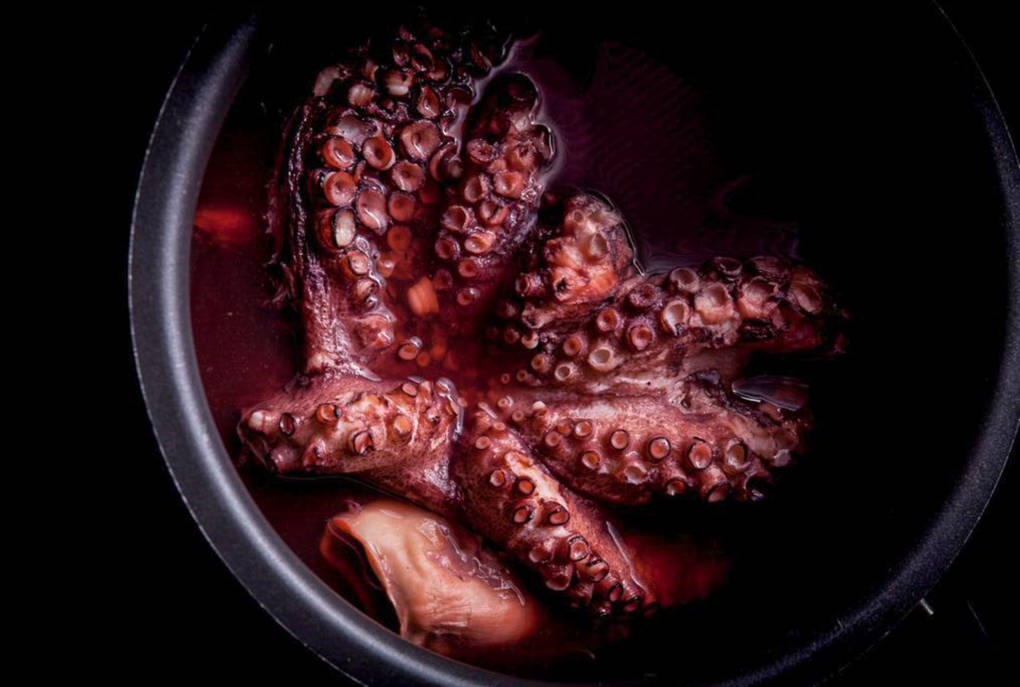
"caption": "Boiled octopus, a recipe for \"reliably tender, flavorful octopus that can be used as it is, or as a basis for fried or grilled octopus dishes,\" write Richard Horsey and Tim Wharton in Ugly Food. \"Octopus is also totally sustainable, very economical and incredibly versatile — the various methods of preparation and cooking lend it subtly different flavors,\" says Wharton.",
"description": "Boiled octopus, a recipe for \"reliably tender, flavorful octopus that can be used as it is, or as a basis for fried or grilled octopus dishes,\" write Richard Horsey and Tim Wharton in \u003cem>Ugly Food\u003c/em>. \"Octopus is also totally sustainable, very economical and incredibly versatile — the various methods of preparation and cooking lend it subtly different flavors,\" says Wharto",
"title": "Boiled octopus, a recipe for \"reliably tender, flavorful octopus that can be used as it is, or as a basis for fried or grilled octopus dishes,\" write Richard Horsey and Tim Wharton in Ugly Food. \"Octopus is also totally sustainable, very economical and incredibly versatile — the various methods of preparation and cooking lend it subtly different flavors,\" says Wharton.",
"credit": "Courtesy of Tanya Ghosh",
"status": "inherit",
"isLoading": false,
"fetchFailed": false
},
"bayareabites_116928": {
"type": "attachments",
"id": "bayareabites_116928",
"meta": {
"index": "attachments_1716263798",
"site": "bayareabites",
"id": "116928",
"found": true
},
"parent": 116901,
"imgSizes": {
"small": {
"file": "https://ww2.kqed.org/app/uploads/sites/24/2017/04/Good-Eggs-Packaging-2-Image-by-Colin-Price-for-Good-Eggs-520x325.jpg",
"width": 520,
"mimeType": "image/jpeg",
"height": 325
},
"twentyfourteen-full-width": {
"file": "https://ww2.kqed.org/app/uploads/sites/24/2017/04/Good-Eggs-Packaging-2-Image-by-Colin-Price-for-Good-Eggs-1038x576.jpg",
"width": 1038,
"mimeType": "image/jpeg",
"height": 576
},
"thumbnail": {
"file": "https://ww2.kqed.org/app/uploads/sites/24/2017/04/Good-Eggs-Packaging-2-Image-by-Colin-Price-for-Good-Eggs-160x100.jpg",
"width": 160,
"mimeType": "image/jpeg",
"height": 100
},
"fd-sm": {
"file": "https://ww2.kqed.org/app/uploads/sites/24/2017/04/Good-Eggs-Packaging-2-Image-by-Colin-Price-for-Good-Eggs-960x600.jpg",
"width": 960,
"mimeType": "image/jpeg",
"height": 600
},
"post-thumbnail": {
"file": "https://ww2.kqed.org/app/uploads/sites/24/2017/04/Good-Eggs-Packaging-2-Image-by-Colin-Price-for-Good-Eggs-672x372.jpg",
"width": 672,
"mimeType": "image/jpeg",
"height": 372
},
"xsmall": {
"file": "https://ww2.kqed.org/app/uploads/sites/24/2017/04/Good-Eggs-Packaging-2-Image-by-Colin-Price-for-Good-Eggs-375x234.jpg",
"width": 375,
"mimeType": "image/jpeg",
"height": 234
},
"kqedFullSize": {
"file": "https://ww2.kqed.org/app/uploads/sites/24/2017/04/Good-Eggs-Packaging-2-Image-by-Colin-Price-for-Good-Eggs.jpg",
"width": 5760,
"height": 3600
},
"large": {
"file": "https://ww2.kqed.org/app/uploads/sites/24/2017/04/Good-Eggs-Packaging-2-Image-by-Colin-Price-for-Good-Eggs-1020x638.jpg",
"width": 1020,
"mimeType": "image/jpeg",
"height": 638
},
"xlarge": {
"file": "https://ww2.kqed.org/app/uploads/sites/24/2017/04/Good-Eggs-Packaging-2-Image-by-Colin-Price-for-Good-Eggs-1180x738.jpg",
"width": 1180,
"mimeType": "image/jpeg",
"height": 738
},
"guest-author-50": {
"file": "https://ww2.kqed.org/app/uploads/sites/24/2017/04/Good-Eggs-Packaging-2-Image-by-Colin-Price-for-Good-Eggs-50x50.jpg",
"width": 50,
"mimeType": "image/jpeg",
"height": 50
},
"guest-author-96": {
"file": "https://ww2.kqed.org/app/uploads/sites/24/2017/04/Good-Eggs-Packaging-2-Image-by-Colin-Price-for-Good-Eggs-96x96.jpg",
"width": 96,
"mimeType": "image/jpeg",
"height": 96
},
"medium": {
"file": "https://ww2.kqed.org/app/uploads/sites/24/2017/04/Good-Eggs-Packaging-2-Image-by-Colin-Price-for-Good-Eggs-800x500.jpg",
"width": 800,
"mimeType": "image/jpeg",
"height": 500
},
"guest-author-64": {
"file": "https://ww2.kqed.org/app/uploads/sites/24/2017/04/Good-Eggs-Packaging-2-Image-by-Colin-Price-for-Good-Eggs-64x64.jpg",
"width": 64,
"mimeType": "image/jpeg",
"height": 64
},
"guest-author-32": {
"file": "https://ww2.kqed.org/app/uploads/sites/24/2017/04/Good-Eggs-Packaging-2-Image-by-Colin-Price-for-Good-Eggs-32x32.jpg",
"width": 32,
"mimeType": "image/jpeg",
"height": 32
},
"fd-lrg": {
"file": "https://ww2.kqed.org/app/uploads/sites/24/2017/04/Good-Eggs-Packaging-2-Image-by-Colin-Price-for-Good-Eggs-1920x1200.jpg",
"width": 1920,
"mimeType": "image/jpeg",
"height": 1200
},
"fd-med": {
"file": "https://ww2.kqed.org/app/uploads/sites/24/2017/04/Good-Eggs-Packaging-2-Image-by-Colin-Price-for-Good-Eggs-1180x738.jpg",
"width": 1180,
"mimeType": "image/jpeg",
"height": 738
},
"full-width": {
"file": "https://ww2.kqed.org/app/uploads/sites/24/2017/04/Good-Eggs-Packaging-2-Image-by-Colin-Price-for-Good-Eggs-1920x1200.jpg",
"width": 1920,
"mimeType": "image/jpeg",
"height": 1200
},
"detail": {
"file": "https://ww2.kqed.org/app/uploads/sites/24/2017/04/Good-Eggs-Packaging-2-Image-by-Colin-Price-for-Good-Eggs-150x150.jpg",
"width": 150,
"mimeType": "image/jpeg",
"height": 150
},
"medium_large": {
"file": "https://ww2.kqed.org/app/uploads/sites/24/2017/04/Good-Eggs-Packaging-2-Image-by-Colin-Price-for-Good-Eggs-768x480.jpg",
"width": 768,
"mimeType": "image/jpeg",
"height": 480
},
"guest-author-128": {
"file": "https://ww2.kqed.org/app/uploads/sites/24/2017/04/Good-Eggs-Packaging-2-Image-by-Colin-Price-for-Good-Eggs-128x128.jpg",
"width": 128,
"mimeType": "image/jpeg",
"height": 128
},
"xxsmall": {
"file": "https://ww2.kqed.org/app/uploads/sites/24/2017/04/Good-Eggs-Packaging-2-Image-by-Colin-Price-for-Good-Eggs-240x150.jpg",
"width": 240,
"mimeType": "image/jpeg",
"height": 150
}
},
"publishDate": 1492799088,
"modified": 1492799128,
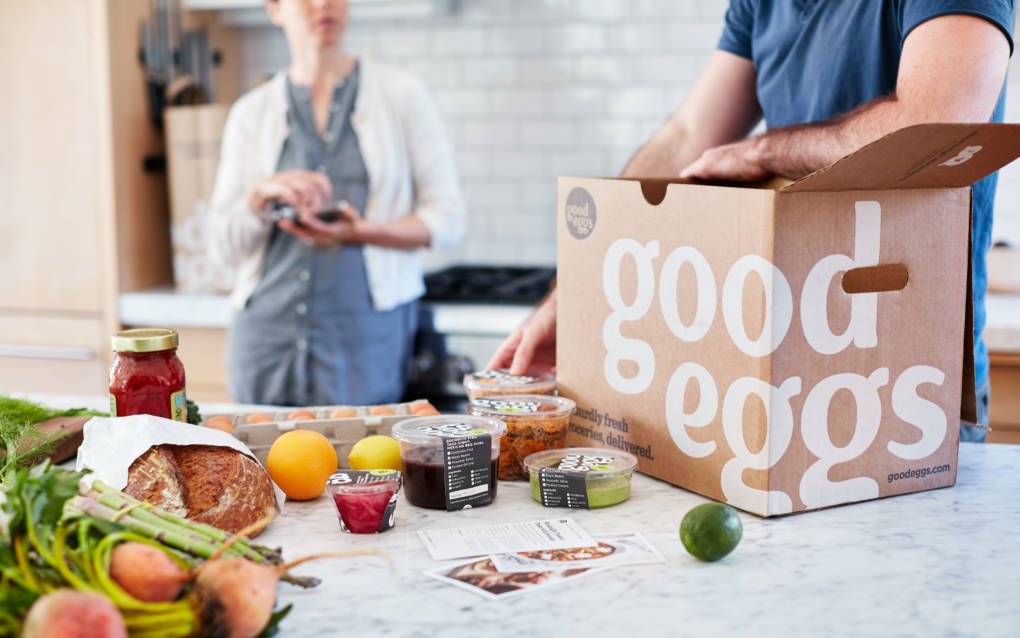
"caption": "Good Eggs meal kit ",
"description": "Good Eggs meal kit ",
"title": "Good Eggs Packaging 2 Image by Colin Price for Good Eggs",
"credit": "Colin Price/Courtesy of Good Eggs",
"status": "inherit",
"isLoading": false,
"fetchFailed": false
},
"bayareabites_116892": {
"type": "attachments",
"id": "bayareabites_116892",
"meta": {
"index": "attachments_1716263798",
"site": "bayareabites",
"id": "116892",
"found": true
},
"parent": 116891,
"imgSizes": {
"small": {
"file": "https://ww2.kqed.org/app/uploads/sites/24/2017/04/amado-packing-shots-80-_custom-45cb17dcdc9a99e57bfb26b0cf32756ff23b9d26-520x344.jpg",
"width": 520,
"mimeType": "image/jpeg",
"height": 344
},
"twentyfourteen-full-width": {
"file": "https://ww2.kqed.org/app/uploads/sites/24/2017/04/amado-packing-shots-80-_custom-45cb17dcdc9a99e57bfb26b0cf32756ff23b9d26-931x576.jpg",
"width": 931,
"mimeType": "image/jpeg",
"height": 576
},
"thumbnail": {
"file": "https://ww2.kqed.org/app/uploads/sites/24/2017/04/amado-packing-shots-80-_custom-45cb17dcdc9a99e57bfb26b0cf32756ff23b9d26-160x106.jpg",
"width": 160,
"mimeType": "image/jpeg",
"height": 106
},
"post-thumbnail": {
"file": "https://ww2.kqed.org/app/uploads/sites/24/2017/04/amado-packing-shots-80-_custom-45cb17dcdc9a99e57bfb26b0cf32756ff23b9d26-672x372.jpg",
"width": 672,
"mimeType": "image/jpeg",
"height": 372
},
"xsmall": {
"file": "https://ww2.kqed.org/app/uploads/sites/24/2017/04/amado-packing-shots-80-_custom-45cb17dcdc9a99e57bfb26b0cf32756ff23b9d26-375x248.jpg",
"width": 375,
"mimeType": "image/jpeg",
"height": 248
},
"kqedFullSize": {
"file": "https://ww2.kqed.org/app/uploads/sites/24/2017/04/amado-packing-shots-80-_custom-45cb17dcdc9a99e57bfb26b0cf32756ff23b9d26.jpg",
"width": 931,
"height": 616
},
"guest-author-50": {
"file": "https://ww2.kqed.org/app/uploads/sites/24/2017/04/amado-packing-shots-80-_custom-45cb17dcdc9a99e57bfb26b0cf32756ff23b9d26-50x50.jpg",
"width": 50,
"mimeType": "image/jpeg",
"height": 50
},
"guest-author-96": {
"file": "https://ww2.kqed.org/app/uploads/sites/24/2017/04/amado-packing-shots-80-_custom-45cb17dcdc9a99e57bfb26b0cf32756ff23b9d26-96x96.jpg",
"width": 96,
"mimeType": "image/jpeg",
"height": 96
},
"medium": {
"file": "https://ww2.kqed.org/app/uploads/sites/24/2017/04/amado-packing-shots-80-_custom-45cb17dcdc9a99e57bfb26b0cf32756ff23b9d26-800x529.jpg",
"width": 800,
"mimeType": "image/jpeg",
"height": 529
},
"guest-author-64": {
"file": "https://ww2.kqed.org/app/uploads/sites/24/2017/04/amado-packing-shots-80-_custom-45cb17dcdc9a99e57bfb26b0cf32756ff23b9d26-64x64.jpg",
"width": 64,
"mimeType": "image/jpeg",
"height": 64
},
"guest-author-32": {
"file": "https://ww2.kqed.org/app/uploads/sites/24/2017/04/amado-packing-shots-80-_custom-45cb17dcdc9a99e57bfb26b0cf32756ff23b9d26-32x32.jpg",
"width": 32,
"mimeType": "image/jpeg",
"height": 32
},
"detail": {
"file": "https://ww2.kqed.org/app/uploads/sites/24/2017/04/amado-packing-shots-80-_custom-45cb17dcdc9a99e57bfb26b0cf32756ff23b9d26-150x150.jpg",
"width": 150,
"mimeType": "image/jpeg",
"height": 150
},
"medium_large": {
"file": "https://ww2.kqed.org/app/uploads/sites/24/2017/04/amado-packing-shots-80-_custom-45cb17dcdc9a99e57bfb26b0cf32756ff23b9d26-768x508.jpg",
"width": 768,
"mimeType": "image/jpeg",
"height": 508
},
"guest-author-128": {
"file": "https://ww2.kqed.org/app/uploads/sites/24/2017/04/amado-packing-shots-80-_custom-45cb17dcdc9a99e57bfb26b0cf32756ff23b9d26-128x128.jpg",
"width": 128,
"mimeType": "image/jpeg",
"height": 128
},
"xxsmall": {
"file": "https://ww2.kqed.org/app/uploads/sites/24/2017/04/amado-packing-shots-80-_custom-45cb17dcdc9a99e57bfb26b0cf32756ff23b9d26-240x159.jpg",
"width": 240,
"mimeType": "image/jpeg",
"height": 159
}
},
"publishDate": 1492640794,
"modified": 1492641045,
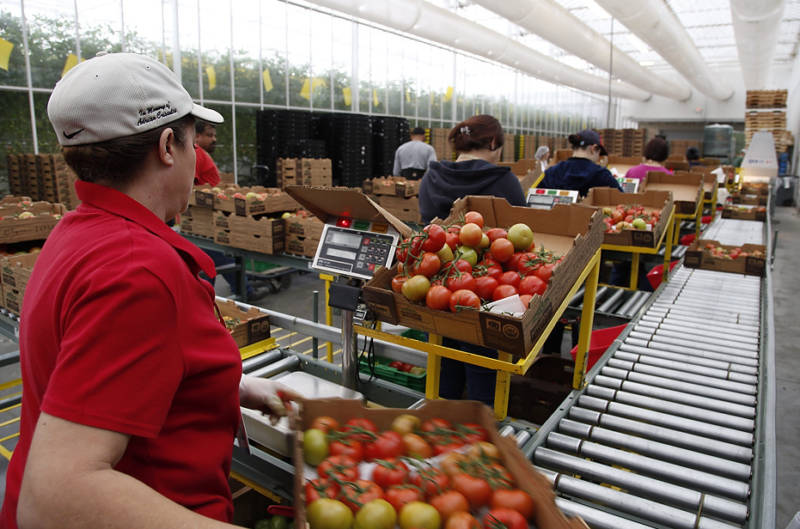
"caption": "The family-owned Wholesum Harvest had to meet a checklist of more than 300 standards — including many worker protections — to become the first American farm certified by Fair Trade USA. Workers at its Nogales, Ariz., tomato farm recently received a check for more than $30,000 — workers will collectively decide how to spend it.",
"description": "The family-owned Wholesum Harvest had to meet a checklist of more than 300 standards — including many worker protections — to become the first American farm certified by Fair Trade USA. Workers at its Nogales, Ariz., tomato farm recently received a check for more than $30,000 — workers will collectively decide how to spe",
"title": "The family-owned Wholesum Harvest had to meet a checklist of more than 300 standards — including many worker protections — to become the first American farm certified by Fair Trade USA. Workers at its Nogales, Ariz., tomato farm recently received a check for more than $30,000 — workers will collectively decide how to spend it.",
"credit": "Courtesy of Wholesum Harvest",
"status": "inherit",
"isLoading": false,
"fetchFailed": false
},
"bayareabites_116888": {
"type": "attachments",
"id": "bayareabites_116888",
"meta": {
"index": "attachments_1716263798",
"site": "bayareabites",
"id": "116888",
"found": true
},
"parent": 116883,
"imgSizes": {
"small": {
"file": "https://ww2.kqed.org/app/uploads/sites/24/2017/04/170413-chlorpyrifos-520x347.jpg",
"width": 520,
"mimeType": "image/jpeg",
"height": 347
},
"twentyfourteen-full-width": {
"file": "https://ww2.kqed.org/app/uploads/sites/24/2017/04/170413-chlorpyrifos-1038x576.jpg",
"width": 1038,
"mimeType": "image/jpeg",
"height": 576
},
"thumbnail": {
"file": "https://ww2.kqed.org/app/uploads/sites/24/2017/04/170413-chlorpyrifos-160x107.jpg",
"width": 160,
"mimeType": "image/jpeg",
"height": 107
},
"fd-sm": {
"file": "https://ww2.kqed.org/app/uploads/sites/24/2017/04/170413-chlorpyrifos-960x640.jpg",
"width": 960,
"mimeType": "image/jpeg",
"height": 640
},
"post-thumbnail": {
"file": "https://ww2.kqed.org/app/uploads/sites/24/2017/04/170413-chlorpyrifos-672x372.jpg",
"width": 672,
"mimeType": "image/jpeg",
"height": 372
},
"xsmall": {
"file": "https://ww2.kqed.org/app/uploads/sites/24/2017/04/170413-chlorpyrifos-375x250.jpg",
"width": 375,
"mimeType": "image/jpeg",
"height": 250
},
"kqedFullSize": {
"file": "https://ww2.kqed.org/app/uploads/sites/24/2017/04/170413-chlorpyrifos.jpg",
"width": 1200,
"height": 800
},
"large": {
"file": "https://ww2.kqed.org/app/uploads/sites/24/2017/04/170413-chlorpyrifos-1020x680.jpg",
"width": 1020,
"mimeType": "image/jpeg",
"height": 680
},
"xlarge": {
"file": "https://ww2.kqed.org/app/uploads/sites/24/2017/04/170413-chlorpyrifos-1180x787.jpg",
"width": 1180,
"mimeType": "image/jpeg",
"height": 787
},
"guest-author-50": {
"file": "https://ww2.kqed.org/app/uploads/sites/24/2017/04/170413-chlorpyrifos-50x50.jpg",
"width": 50,
"mimeType": "image/jpeg",
"height": 50
},
"guest-author-96": {
"file": "https://ww2.kqed.org/app/uploads/sites/24/2017/04/170413-chlorpyrifos-96x96.jpg",
"width": 96,
"mimeType": "image/jpeg",
"height": 96
},
"medium": {
"file": "https://ww2.kqed.org/app/uploads/sites/24/2017/04/170413-chlorpyrifos-800x533.jpg",
"width": 800,
"mimeType": "image/jpeg",
"height": 533
},
"guest-author-64": {
"file": "https://ww2.kqed.org/app/uploads/sites/24/2017/04/170413-chlorpyrifos-64x64.jpg",
"width": 64,
"mimeType": "image/jpeg",
"height": 64
},
"guest-author-32": {
"file": "https://ww2.kqed.org/app/uploads/sites/24/2017/04/170413-chlorpyrifos-32x32.jpg",
"width": 32,
"mimeType": "image/jpeg",
"height": 32
},
"fd-med": {
"file": "https://ww2.kqed.org/app/uploads/sites/24/2017/04/170413-chlorpyrifos-1180x787.jpg",
"width": 1180,
"mimeType": "image/jpeg",
"height": 787
},
"detail": {
"file": "https://ww2.kqed.org/app/uploads/sites/24/2017/04/170413-chlorpyrifos-150x150.jpg",
"width": 150,
"mimeType": "image/jpeg",
"height": 150
},
"medium_large": {
"file": "https://ww2.kqed.org/app/uploads/sites/24/2017/04/170413-chlorpyrifos-768x512.jpg",
"width": 768,
"mimeType": "image/jpeg",
"height": 512
},
"guest-author-128": {
"file": "https://ww2.kqed.org/app/uploads/sites/24/2017/04/170413-chlorpyrifos-128x128.jpg",
"width": 128,
"mimeType": "image/jpeg",
"height": 128
},
"xxsmall": {
"file": "https://ww2.kqed.org/app/uploads/sites/24/2017/04/170413-chlorpyrifos-240x160.jpg",
"width": 240,
"mimeType": "image/jpeg",
"height": 160
}
},
"publishDate": 1492632138,
"modified": 1492632138,
"caption": null,
"description": null,
"title": "170413-chlorpyrifos",
"credit": null,
"status": "inherit",
"isLoading": false,
"fetchFailed": false
},
"bayareabites_116824": {
"type": "attachments",
"id": "bayareabites_116824",
"meta": {
"index": "attachments_1716263798",
"site": "bayareabites",
"id": "116824",
"found": true
},
"parent": 116823,
"imgSizes": {
"small": {
"file": "https://ww2.kqed.org/app/uploads/sites/24/2017/04/FOT_1956_Farallones-Institute-Group-Photo-1970s-520x414.jpg",
"width": 520,
"mimeType": "image/jpeg",
"height": 414
},
"twentyfourteen-full-width": {
"file": "https://ww2.kqed.org/app/uploads/sites/24/2017/04/FOT_1956_Farallones-Institute-Group-Photo-1970s-1038x576.jpg",
"width": 1038,
"mimeType": "image/jpeg",
"height": 576
},
"thumbnail": {
"file": "https://ww2.kqed.org/app/uploads/sites/24/2017/04/FOT_1956_Farallones-Institute-Group-Photo-1970s-160x127.jpg",
"width": 160,
"mimeType": "image/jpeg",
"height": 127
},
"fd-sm": {
"file": "https://ww2.kqed.org/app/uploads/sites/24/2017/04/FOT_1956_Farallones-Institute-Group-Photo-1970s-960x764.jpg",
"width": 960,
"mimeType": "image/jpeg",
"height": 764
},
"post-thumbnail": {
"file": "https://ww2.kqed.org/app/uploads/sites/24/2017/04/FOT_1956_Farallones-Institute-Group-Photo-1970s-672x372.jpg",
"width": 672,
"mimeType": "image/jpeg",
"height": 372
},
"xsmall": {
"file": "https://ww2.kqed.org/app/uploads/sites/24/2017/04/FOT_1956_Farallones-Institute-Group-Photo-1970s-375x298.jpg",
"width": 375,
"mimeType": "image/jpeg",
"height": 298
},
"kqedFullSize": {
"file": "https://ww2.kqed.org/app/uploads/sites/24/2017/04/FOT_1956_Farallones-Institute-Group-Photo-1970s.jpg",
"width": 1400,
"height": 1114
},
"large": {
"file": "https://ww2.kqed.org/app/uploads/sites/24/2017/04/FOT_1956_Farallones-Institute-Group-Photo-1970s-1020x812.jpg",
"width": 1020,
"mimeType": "image/jpeg",
"height": 812
},
"xlarge": {
"file": "https://ww2.kqed.org/app/uploads/sites/24/2017/04/FOT_1956_Farallones-Institute-Group-Photo-1970s-1180x939.jpg",
"width": 1180,
"mimeType": "image/jpeg",
"height": 939
},
"guest-author-50": {
"file": "https://ww2.kqed.org/app/uploads/sites/24/2017/04/FOT_1956_Farallones-Institute-Group-Photo-1970s-50x50.jpg",
"width": 50,
"mimeType": "image/jpeg",
"height": 50
},
"guest-author-96": {
"file": "https://ww2.kqed.org/app/uploads/sites/24/2017/04/FOT_1956_Farallones-Institute-Group-Photo-1970s-96x96.jpg",
"width": 96,
"mimeType": "image/jpeg",
"height": 96
},
"medium": {
"file": "https://ww2.kqed.org/app/uploads/sites/24/2017/04/FOT_1956_Farallones-Institute-Group-Photo-1970s-800x637.jpg",
"width": 800,
"mimeType": "image/jpeg",
"height": 637
},
"guest-author-64": {
"file": "https://ww2.kqed.org/app/uploads/sites/24/2017/04/FOT_1956_Farallones-Institute-Group-Photo-1970s-64x64.jpg",
"width": 64,
"mimeType": "image/jpeg",
"height": 64
},
"guest-author-32": {
"file": "https://ww2.kqed.org/app/uploads/sites/24/2017/04/FOT_1956_Farallones-Institute-Group-Photo-1970s-32x32.jpg",
"width": 32,
"mimeType": "image/jpeg",
"height": 32
},
"fd-med": {
"file": "https://ww2.kqed.org/app/uploads/sites/24/2017/04/FOT_1956_Farallones-Institute-Group-Photo-1970s-1180x939.jpg",
"width": 1180,
"mimeType": "image/jpeg",
"height": 939
},
"detail": {
"file": "https://ww2.kqed.org/app/uploads/sites/24/2017/04/FOT_1956_Farallones-Institute-Group-Photo-1970s-150x150.jpg",
"width": 150,
"mimeType": "image/jpeg",
"height": 150
},
"medium_large": {
"file": "https://ww2.kqed.org/app/uploads/sites/24/2017/04/FOT_1956_Farallones-Institute-Group-Photo-1970s-768x611.jpg",
"width": 768,
"mimeType": "image/jpeg",
"height": 611
},
"guest-author-128": {
"file": "https://ww2.kqed.org/app/uploads/sites/24/2017/04/FOT_1956_Farallones-Institute-Group-Photo-1970s-128x128.jpg",
"width": 128,
"mimeType": "image/jpeg",
"height": 128
},
"xxsmall": {
"file": "https://ww2.kqed.org/app/uploads/sites/24/2017/04/FOT_1956_Farallones-Institute-Group-Photo-1970s-240x191.jpg",
"width": 240,
"mimeType": "image/jpeg",
"height": 191
}
},
"publishDate": 1492453706,
"modified": 1492453767,
"caption": "Farollones Institute Group Photo 1970s; courtesy Mark Kitchell's Evolution of Organic",
"description": null,
"title": "FOT_1956_Farallones Institute - Group Photo - 1970s",
"credit": null,
"status": "inherit",
"isLoading": false,
"fetchFailed": false
},
"bayareabites_116813": {
"type": "attachments",
"id": "bayareabites_116813",
"meta": {
"index": "attachments_1716263798",
"site": "bayareabites",
"id": "116813",
"found": true
},
"parent": 116810,
"imgSizes": {
"small": {
"file": "https://ww2.kqed.org/app/uploads/sites/24/2017/04/170410-crispr-520x347.jpg",
"width": 520,
"mimeType": "image/jpeg",
"height": 347
},
"twentyfourteen-full-width": {
"file": "https://ww2.kqed.org/app/uploads/sites/24/2017/04/170410-crispr-1038x576.jpg",
"width": 1038,
"mimeType": "image/jpeg",
"height": 576
},
"thumbnail": {
"file": "https://ww2.kqed.org/app/uploads/sites/24/2017/04/170410-crispr-160x107.jpg",
"width": 160,
"mimeType": "image/jpeg",
"height": 107
},
"fd-sm": {
"file": "https://ww2.kqed.org/app/uploads/sites/24/2017/04/170410-crispr-960x640.jpg",
"width": 960,
"mimeType": "image/jpeg",
"height": 640
},
"post-thumbnail": {
"file": "https://ww2.kqed.org/app/uploads/sites/24/2017/04/170410-crispr-672x372.jpg",
"width": 672,
"mimeType": "image/jpeg",
"height": 372
},
"xsmall": {
"file": "https://ww2.kqed.org/app/uploads/sites/24/2017/04/170410-crispr-375x250.jpg",
"width": 375,
"mimeType": "image/jpeg",
"height": 250
},
"kqedFullSize": {
"file": "https://ww2.kqed.org/app/uploads/sites/24/2017/04/170410-crispr.jpg",
"width": 1200,
"height": 800
},
"large": {
"file": "https://ww2.kqed.org/app/uploads/sites/24/2017/04/170410-crispr-1020x680.jpg",
"width": 1020,
"mimeType": "image/jpeg",
"height": 680
},
"xlarge": {
"file": "https://ww2.kqed.org/app/uploads/sites/24/2017/04/170410-crispr-1180x787.jpg",
"width": 1180,
"mimeType": "image/jpeg",
"height": 787
},
"guest-author-50": {
"file": "https://ww2.kqed.org/app/uploads/sites/24/2017/04/170410-crispr-50x50.jpg",
"width": 50,
"mimeType": "image/jpeg",
"height": 50
},
"guest-author-96": {
"file": "https://ww2.kqed.org/app/uploads/sites/24/2017/04/170410-crispr-96x96.jpg",
"width": 96,
"mimeType": "image/jpeg",
"height": 96
},
"medium": {
"file": "https://ww2.kqed.org/app/uploads/sites/24/2017/04/170410-crispr-800x533.jpg",
"width": 800,
"mimeType": "image/jpeg",
"height": 533
},
"guest-author-64": {
"file": "https://ww2.kqed.org/app/uploads/sites/24/2017/04/170410-crispr-64x64.jpg",
"width": 64,
"mimeType": "image/jpeg",
"height": 64
},
"guest-author-32": {
"file": "https://ww2.kqed.org/app/uploads/sites/24/2017/04/170410-crispr-32x32.jpg",
"width": 32,
"mimeType": "image/jpeg",
"height": 32
},
"fd-med": {
"file": "https://ww2.kqed.org/app/uploads/sites/24/2017/04/170410-crispr-1180x787.jpg",
"width": 1180,
"mimeType": "image/jpeg",
"height": 787
},
"detail": {
"file": "https://ww2.kqed.org/app/uploads/sites/24/2017/04/170410-crispr-150x150.jpg",
"width": 150,
"mimeType": "image/jpeg",
"height": 150
},
"medium_large": {
"file": "https://ww2.kqed.org/app/uploads/sites/24/2017/04/170410-crispr-768x512.jpg",
"width": 768,
"mimeType": "image/jpeg",
"height": 512
},
"guest-author-128": {
"file": "https://ww2.kqed.org/app/uploads/sites/24/2017/04/170410-crispr-128x128.jpg",
"width": 128,
"mimeType": "image/jpeg",
"height": 128
},
"xxsmall": {
"file": "https://ww2.kqed.org/app/uploads/sites/24/2017/04/170410-crispr-240x160.jpg",
"width": 240,
"mimeType": "image/jpeg",
"height": 160
}
},
"publishDate": 1492065167,
"modified": 1492065167,
"caption": null,
"description": null,
"title": "170410-crispr",
"credit": null,
"status": "inherit",
"isLoading": false,
"fetchFailed": false
},
"bayareabites_116659": {
"type": "attachments",
"id": "bayareabites_116659",
"meta": {
"index": "attachments_1716263798",
"site": "bayareabites",
"id": "116659",
"found": true
},
"parent": 116656,
"imgSizes": {
"small": {
"file": "https://ww2.kqed.org/app/uploads/sites/24/2017/04/170405-marin-local-slaughter-1-520x347.jpg",
"width": 520,
"mimeType": "image/jpeg",
"height": 347
},
"twentyfourteen-full-width": {
"file": "https://ww2.kqed.org/app/uploads/sites/24/2017/04/170405-marin-local-slaughter-1-1038x576.jpg",
"width": 1038,
"mimeType": "image/jpeg",
"height": 576
},
"thumbnail": {
"file": "https://ww2.kqed.org/app/uploads/sites/24/2017/04/170405-marin-local-slaughter-1-160x107.jpg",
"width": 160,
"mimeType": "image/jpeg",
"height": 107
},
"fd-sm": {
"file": "https://ww2.kqed.org/app/uploads/sites/24/2017/04/170405-marin-local-slaughter-1-960x640.jpg",
"width": 960,
"mimeType": "image/jpeg",
"height": 640
},
"post-thumbnail": {
"file": "https://ww2.kqed.org/app/uploads/sites/24/2017/04/170405-marin-local-slaughter-1-672x372.jpg",
"width": 672,
"mimeType": "image/jpeg",
"height": 372
},
"xsmall": {
"file": "https://ww2.kqed.org/app/uploads/sites/24/2017/04/170405-marin-local-slaughter-1-375x250.jpg",
"width": 375,
"mimeType": "image/jpeg",
"height": 250
},
"kqedFullSize": {
"file": "https://ww2.kqed.org/app/uploads/sites/24/2017/04/170405-marin-local-slaughter-1.jpg",
"width": 1200,
"height": 800
},
"large": {
"file": "https://ww2.kqed.org/app/uploads/sites/24/2017/04/170405-marin-local-slaughter-1-1020x680.jpg",
"width": 1020,
"mimeType": "image/jpeg",
"height": 680
},
"xlarge": {
"file": "https://ww2.kqed.org/app/uploads/sites/24/2017/04/170405-marin-local-slaughter-1-1180x787.jpg",
"width": 1180,
"mimeType": "image/jpeg",
"height": 787
},
"guest-author-50": {
"file": "https://ww2.kqed.org/app/uploads/sites/24/2017/04/170405-marin-local-slaughter-1-50x50.jpg",
"width": 50,
"mimeType": "image/jpeg",
"height": 50
},
"guest-author-96": {
"file": "https://ww2.kqed.org/app/uploads/sites/24/2017/04/170405-marin-local-slaughter-1-96x96.jpg",
"width": 96,
"mimeType": "image/jpeg",
"height": 96
},
"medium": {
"file": "https://ww2.kqed.org/app/uploads/sites/24/2017/04/170405-marin-local-slaughter-1-800x533.jpg",
"width": 800,
"mimeType": "image/jpeg",
"height": 533
},
"guest-author-64": {
"file": "https://ww2.kqed.org/app/uploads/sites/24/2017/04/170405-marin-local-slaughter-1-64x64.jpg",
"width": 64,
"mimeType": "image/jpeg",
"height": 64
},
"guest-author-32": {
"file": "https://ww2.kqed.org/app/uploads/sites/24/2017/04/170405-marin-local-slaughter-1-32x32.jpg",
"width": 32,
"mimeType": "image/jpeg",
"height": 32
},
"fd-med": {
"file": "https://ww2.kqed.org/app/uploads/sites/24/2017/04/170405-marin-local-slaughter-1-1180x787.jpg",
"width": 1180,
"mimeType": "image/jpeg",
"height": 787
},
"detail": {
"file": "https://ww2.kqed.org/app/uploads/sites/24/2017/04/170405-marin-local-slaughter-1-150x150.jpg",
"width": 150,
"mimeType": "image/jpeg",
"height": 150
},
"medium_large": {
"file": "https://ww2.kqed.org/app/uploads/sites/24/2017/04/170405-marin-local-slaughter-1-768x512.jpg",
"width": 768,
"mimeType": "image/jpeg",
"height": 512
},
"guest-author-128": {
"file": "https://ww2.kqed.org/app/uploads/sites/24/2017/04/170405-marin-local-slaughter-1-128x128.jpg",
"width": 128,
"mimeType": "image/jpeg",
"height": 128
},
"xxsmall": {
"file": "https://ww2.kqed.org/app/uploads/sites/24/2017/04/170405-marin-local-slaughter-1-240x160.jpg",
"width": 240,
"mimeType": "image/jpeg",
"height": 160
}
},
"publishDate": 1491586428,
"modified": 1491586564,
"caption": "Marin Sun Farms Processing Plant - Oscar",
"description": "Marin Sun Farms Processing Plant - Oscar",
"title": "170405-marin-local-slaughter-1",
"credit": "Marin Sun Farm photo CC-licensed by \u003ca href=\"https://www.flickr.com/photos/artbandito/4744345974\">Carrie Cizauskas\u003c/a>",
"status": "inherit",
"isLoading": false,
"fetchFailed": false
},
"bayareabites_116473": {
"type": "attachments",
"id": "bayareabites_116473",
"meta": {
"index": "attachments_1716263798",
"site": "bayareabites",
"id": "116473",
"found": true
},
"parent": 116469,
"imgSizes": {
"small": {
"file": "https://ww2.kqed.org/app/uploads/sites/24/2017/03/170329-meat-1-520x347.jpg",
"width": 520,
"mimeType": "image/jpeg",
"height": 347
},
"twentyfourteen-full-width": {
"file": "https://ww2.kqed.org/app/uploads/sites/24/2017/03/170329-meat-1-1038x576.jpg",
"width": 1038,
"mimeType": "image/jpeg",
"height": 576
},
"thumbnail": {
"file": "https://ww2.kqed.org/app/uploads/sites/24/2017/03/170329-meat-1-160x107.jpg",
"width": 160,
"mimeType": "image/jpeg",
"height": 107
},
"fd-sm": {
"file": "https://ww2.kqed.org/app/uploads/sites/24/2017/03/170329-meat-1-960x640.jpg",
"width": 960,
"mimeType": "image/jpeg",
"height": 640
},
"post-thumbnail": {
"file": "https://ww2.kqed.org/app/uploads/sites/24/2017/03/170329-meat-1-672x372.jpg",
"width": 672,
"mimeType": "image/jpeg",
"height": 372
},
"xsmall": {
"file": "https://ww2.kqed.org/app/uploads/sites/24/2017/03/170329-meat-1-375x250.jpg",
"width": 375,
"mimeType": "image/jpeg",
"height": 250
},
"kqedFullSize": {
"file": "https://ww2.kqed.org/app/uploads/sites/24/2017/03/170329-meat-1.jpg",
"width": 1200,
"height": 800
},
"large": {
"file": "https://ww2.kqed.org/app/uploads/sites/24/2017/03/170329-meat-1-1020x680.jpg",
"width": 1020,
"mimeType": "image/jpeg",
"height": 680
},
"xlarge": {
"file": "https://ww2.kqed.org/app/uploads/sites/24/2017/03/170329-meat-1-1180x787.jpg",
"width": 1180,
"mimeType": "image/jpeg",
"height": 787
},
"guest-author-50": {
"file": "https://ww2.kqed.org/app/uploads/sites/24/2017/03/170329-meat-1-50x50.jpg",
"width": 50,
"mimeType": "image/jpeg",
"height": 50
},
"guest-author-96": {
"file": "https://ww2.kqed.org/app/uploads/sites/24/2017/03/170329-meat-1-96x96.jpg",
"width": 96,
"mimeType": "image/jpeg",
"height": 96
},
"medium": {
"file": "https://ww2.kqed.org/app/uploads/sites/24/2017/03/170329-meat-1-800x533.jpg",
"width": 800,
"mimeType": "image/jpeg",
"height": 533
},
"guest-author-64": {
"file": "https://ww2.kqed.org/app/uploads/sites/24/2017/03/170329-meat-1-64x64.jpg",
"width": 64,
"mimeType": "image/jpeg",
"height": 64
},
"guest-author-32": {
"file": "https://ww2.kqed.org/app/uploads/sites/24/2017/03/170329-meat-1-32x32.jpg",
"width": 32,
"mimeType": "image/jpeg",
"height": 32
},
"fd-med": {
"file": "https://ww2.kqed.org/app/uploads/sites/24/2017/03/170329-meat-1-1180x787.jpg",
"width": 1180,
"mimeType": "image/jpeg",
"height": 787
},
"detail": {
"file": "https://ww2.kqed.org/app/uploads/sites/24/2017/03/170329-meat-1-150x150.jpg",
"width": 150,
"mimeType": "image/jpeg",
"height": 150
},
"medium_large": {
"file": "https://ww2.kqed.org/app/uploads/sites/24/2017/03/170329-meat-1-768x512.jpg",
"width": 768,
"mimeType": "image/jpeg",
"height": 512
},
"guest-author-128": {
"file": "https://ww2.kqed.org/app/uploads/sites/24/2017/03/170329-meat-1-128x128.jpg",
"width": 128,
"mimeType": "image/jpeg",
"height": 128
},
"xxsmall": {
"file": "https://ww2.kqed.org/app/uploads/sites/24/2017/03/170329-meat-1-240x160.jpg",
"width": 240,
"mimeType": "image/jpeg",
"height": 160
}
},
"publishDate": 1490975110,
"modified": 1490975191,
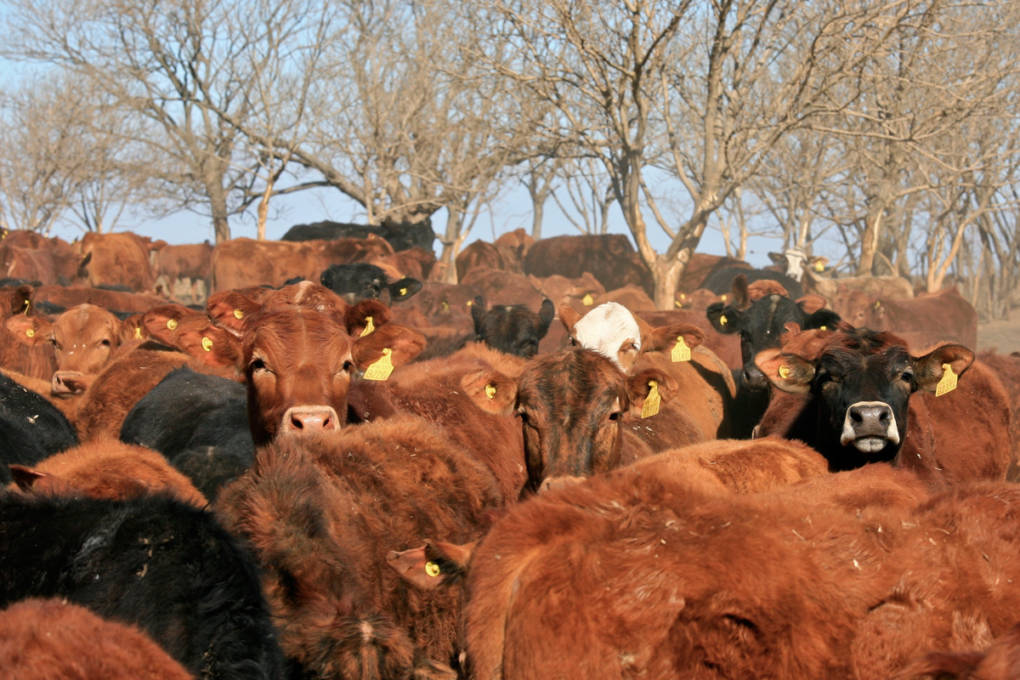
"caption": "Cattle",
"description": null,
"title": "170329-meat-1",
"credit": "CC-licensed by \u003ca href=\"https://www.flickr.com/photos/proimos/6076471109\">Alex Proimos\u003c/a>",
"status": "inherit",
"isLoading": false,
"fetchFailed": false
}
},
"audioPlayerReducer": {
"postId": "stream_live",
"isPaused": true,
"isPlaying": false,
"pfsActive": false,
"pledgeModalIsOpen": true,
"playerDrawerIsOpen": false,
"liveAudioPlayStartedAt": 0,
"liveAudioPlayContext": ""
},
"authorsReducer": {
"byline_bayareabites_117913": {
"type": "authors",
"id": "byline_bayareabites_117913",
"meta": {
"override": true
},
"slug": "byline_bayareabites_117913",
"name": "\u003ca href=\"http://civileats.com/author/scagle/\">Susie Cagle\u003c/a>, \u003ca href=\"https://ww2.kqed.org/bayareabites/author/civileat/\">Civil Eats\u003c/a>",
"isLoading": false
},
"byline_bayareabites_117856": {
"type": "authors",
"id": "byline_bayareabites_117856",
"meta": {
"override": true
},
"slug": "byline_bayareabites_117856",
"name": "Dan Charles, NPR Food",
"isLoading": false
},
"byline_bayareabites_117521": {
"type": "authors",
"id": "byline_bayareabites_117521",
"meta": {
"override": true
},
"slug": "byline_bayareabites_117521",
"name": "Alastair Bland, \u003ca href=\"https://ww2.kqed.org/bayareabites/author/nprfood/\">NPR Food\u003c/a>",
"isLoading": false
},
"byline_bayareabites_116943": {
"type": "authors",
"id": "byline_bayareabites_116943",
"meta": {
"override": true
},
"slug": "byline_bayareabites_116943",
"name": "Stephen Phillips, \u003cstrong>\u003ca href=\"http://www.npr.org/sections/thesalt/2017/04/20/524725995/the-truth-about-ugly-food-theyre-delicious-abundant-and-good-for-the-planet\">NPR Food\u003c/a>\u003c/strong>",
"isLoading": false
},
"byline_bayareabites_116891": {
"type": "authors",
"id": "byline_bayareabites_116891",
"meta": {
"override": true
},
"slug": "byline_bayareabites_116891",
"name": "Nick Romeo, \u003ca href=\"https://ww2.kqed.org/bayareabites/author/nprfood/\">NPR Food\u003c/a>",
"isLoading": false
},
"byline_bayareabites_116883": {
"type": "authors",
"id": "byline_bayareabites_116883",
"meta": {
"override": true
},
"slug": "byline_bayareabites_116883",
"name": "\u003ca href=\"http://civileats.com/author/egrossman/\">Elizabeth Grossman\u003c/a>, \u003ca href=\"https://ww2.kqed.org/bayareabites/author/civileat/\">Civil Eats\u003c/a>",
"isLoading": false
},
"byline_bayareabites_116810": {
"type": "authors",
"id": "byline_bayareabites_116810",
"meta": {
"override": true
},
"slug": "byline_bayareabites_116810",
"name": "\u003ca href=\"http://civileats.com/author/tgreenaway/\">Twilight Greenaway\u003c/a>, \u003ca href=\"https://ww2.kqed.org/bayareabites/author/civileat/\">Civil Eats\u003c/a>",
"isLoading": false
},
"byline_bayareabites_116656": {
"type": "authors",
"id": "byline_bayareabites_116656",
"meta": {
"override": true
},
"slug": "byline_bayareabites_116656",
"name": "\u003ca href=\"http://civileats.com/author/aorlowski/\">Aaron Orlowski\u003c/a>, \u003ca href=\"https://ww2.kqed.org/bayareabites/author/civileat/\">Civil Eats\u003c/a>",
"isLoading": false
},
"byline_bayareabites_116469": {
"type": "authors",
"id": "byline_bayareabites_116469",
"meta": {
"override": true
},
"slug": "byline_bayareabites_116469",
"name": "\u003ca href=\"http://civileats.com/author/grain/\">Grain\u003c/a> and \u003ca href=\"http://civileats.com/author/rpatel/\">Raj Patel\u003c/a>, \u003ca href=\"https://ww2.kqed.org/bayareabites/author/civileat/\">Civil Eats\u003c/a>",
"isLoading": false
},
"marktaylor-2": {
"type": "authors",
"id": "8",
"meta": {
"index": "authors_1716337520",
"id": "8",
"found": true
},
"name": "Mark Taylor",
"firstName": "Mark",
"lastName": "Taylor",
"slug": "marktaylor-2",
"email": "mark@emptypictures.net",
"display_author_email": false,
"staff_mastheads": [],
"title": null,
"bio": "Mark Taylor founded KQED Arts in 2005 and served as Senior Interactive Producer for Arts and Culture through 2014. Taylor was the online arts editor of KQED's daily arts blog for nine years and created the station's first web-original podcasts, Gallery Crawl and The Writers' Block.\r\n\r\nTaylor is an experimental filmmaker and visual artist whose work has been collected by the Library of Congress, Stanford University and the New York Museum of Modern Art, among many others. He teaches Media Studies at the University of San Francisco and is exploring the connection between film and food. \u003ca href=\"http://emptypictures.net/\">Visit Mark Taylor's website\u003c/a> at emptypictures.net.",
"avatar": "https://secure.gravatar.com/avatar/3452322b4dec4379500b11b74718f5da?s=600&d=blank&r=g",
"twitter": null,
"facebook": null,
"instagram": null,
"linkedin": null,
"sites": [
{
"site": "arts",
"roles": [
"Administrator",
"contributor"
]
},
{
"site": "bayareabites",
"roles": [
"author"
]
},
{
"site": "checkplease",
"roles": [
"subscriber"
]
},
{
"site": "food",
"roles": [
"contributor"
]
}
],
"headData": {
"title": "Mark Taylor | KQED",
"description": null,
"ogImgSrc": "https://secure.gravatar.com/avatar/3452322b4dec4379500b11b74718f5da?s=600&d=blank&r=g",
"twImgSrc": "https://secure.gravatar.com/avatar/3452322b4dec4379500b11b74718f5da?s=600&d=blank&r=g"
},
"isLoading": false,
"link": "/author/marktaylor-2"
},
"kdomara": {
"type": "authors",
"id": "1459",
"meta": {
"index": "authors_1716337520",
"id": "1459",
"found": true
},
"name": "Kelly O'Mara",
"firstName": "Kelly",
"lastName": "O'Mara",
"slug": "kdomara",
"email": "komara@kqed.org",
"display_author_email": false,
"staff_mastheads": [
"news"
],
"title": "KQED Contributor",
"bio": "Kelly O'Mara is a writer and reporter in the San Francisco Bay Area. She writes about food, health, sports, travel, business and California news. Her work has appeared on KQED, online for Outside Magazine, epsnW, VICE and in Competitor Magazine, among others. Follow Kelly on Twitter \u003ca href=\"https://twitter.com/kellydomara\">@kellydomara\u003c/a>.",
"avatar": "https://secure.gravatar.com/avatar/768fec7412028b72f13bdd0f5f9d8186?s=600&d=blank&r=g",
"twitter": null,
"facebook": null,
"instagram": null,
"linkedin": null,
"sites": [
{
"site": "arts",
"roles": []
},
{
"site": "news",
"roles": []
},
{
"site": "bayareabites",
"roles": []
},
{
"site": "stateofhealth",
"roles": []
},
{
"site": "science",
"roles": []
},
{
"site": "checkplease",
"roles": [
"editor"
]
},
{
"site": "food",
"roles": []
},
{
"site": "forum",
"roles": [
"editor"
]
},
{
"site": "liveblog",
"roles": [
"editor"
]
}
],
"headData": {
"title": "Kelly O'Mara | KQED",
"description": "KQED Contributor",
"ogImgSrc": "https://secure.gravatar.com/avatar/768fec7412028b72f13bdd0f5f9d8186?s=600&d=blank&r=g",
"twImgSrc": "https://secure.gravatar.com/avatar/768fec7412028b72f13bdd0f5f9d8186?s=600&d=blank&r=g"
},
"isLoading": false,
"link": "/author/kdomara"
}
},
"pagesReducer": {
"bayareabites_category_sustainability": {
"type": "terms",
"id": "bayareabites_60",
"meta": {
"index": "terms_1716263798",
"site": "bayareabites",
"id": "60",
"score": 12.370369
},
"featImg": null,
"name": "sustainability, environment, climate change",
"description": null,
"taxonomy": "category",
"headData": {
"twImgId": null,
"twTitle": null,
"ogTitle": null,
"ogImgId": null,
"twDescription": null,
"description": null,
"title": "sustainability, environment, climate change Archives | KQED Bay Area Bites",
"ogDescription": null
},
"ttid": 23,
"slug": "sustainability",
"isLoading": false,
"title": "sustainability, environment, climate change",
"pageMeta": {
"site": "bayareabites",
"WpPageTemplate": "page-topic-editorial",
"currentPage": 9
},
"blocks": [
{
"blockName": "kqed/post-list",
"attrs": {
"layout": "cardArticle2",
"query": "posts/bayareabites?category=sustainability",
"seeMore": false,
"paginated": true,
"page": 9
}
},
{
"blockName": "kqed/ad"
}
]
}
},
"pfsSessionReducer": {},
"postsReducer": {
"stream_live": {
"type": "live",
"id": "stream_live",
"audioUrl": "https://streams.kqed.org/kqedradio",
"title": "Live Stream",
"excerpt": "Live Stream information currently unavailable.",
"link": "/radio",
"featImg": "",
"label": {
"name": "KQED Live",
"link": "/"
}
},
"stream_kqedNewscast": {
"type": "posts",
"id": "stream_kqedNewscast",
"audioUrl": "https://www.kqed.org/.stream/anon/radio/RDnews/newscast.mp3?_=1",
"title": "KQED Newscast",
"featImg": "",
"label": {
"name": "88.5 FM",
"link": "/"
}
},
"bayareabites_117913": {
"type": "posts",
"id": "bayareabites_117913",
"meta": {
"index": "posts_1716263798",
"site": "bayareabites",
"id": "117913",
"score": null,
"sort": [
1496498075000
]
},
"parent": 0,
"labelTerm": {
"site": "bayareabites"
},
"blocks": [],
"publishDate": 1496498075,
"format": "standard",
"disqusTitle": "Eat Less Meat: A Small Change with a Big Impact",
"title": "Eat Less Meat: A Small Change with a Big Impact",
"headTitle": "Bay Area Bites | KQED Food",
"content": "\u003cp>Industrial agriculture is reshaping the world, from our atmosphere to our dinner plates. Familiarize yourself with the current landscape: Meet your meats.\u003c/p>\n\u003cp>\u003cimg class=\"aligncenter size-full wp-image-117917\" src=\"https://ww2.kqed.org/bayareabites/wp-content/uploads/sites/24/2017/06/Cagle_CivilEats_meat1new-700px.jpg\" alt=\"\" width=\"700\" height=\"2291\" srcset=\"https://ww2.kqed.org/app/uploads/sites/24/2017/06/Cagle_CivilEats_meat1new-700px.jpg 700w, https://ww2.kqed.org/app/uploads/sites/24/2017/06/Cagle_CivilEats_meat1new-700px-160x524.jpg 160w, https://ww2.kqed.org/app/uploads/sites/24/2017/06/Cagle_CivilEats_meat1new-700px-240x785.jpg 240w, https://ww2.kqed.org/app/uploads/sites/24/2017/06/Cagle_CivilEats_meat1new-700px-375x1227.jpg 375w, https://ww2.kqed.org/app/uploads/sites/24/2017/06/Cagle_CivilEats_meat1new-700px-520x1702.jpg 520w\" sizes=\"(max-width: 700px) 100vw, 700px\">\u003cbr>\n\u003cimg class=\"aligncenter size-full wp-image-117918\" src=\"https://ww2.kqed.org/bayareabites/wp-content/uploads/sites/24/2017/06/Cagle_CivilEats_meat2-700px.jpg\" alt=\"\" width=\"700\" height=\"440\" srcset=\"https://ww2.kqed.org/app/uploads/sites/24/2017/06/Cagle_CivilEats_meat2-700px.jpg 700w, https://ww2.kqed.org/app/uploads/sites/24/2017/06/Cagle_CivilEats_meat2-700px-160x101.jpg 160w, https://ww2.kqed.org/app/uploads/sites/24/2017/06/Cagle_CivilEats_meat2-700px-240x151.jpg 240w, https://ww2.kqed.org/app/uploads/sites/24/2017/06/Cagle_CivilEats_meat2-700px-375x236.jpg 375w, https://ww2.kqed.org/app/uploads/sites/24/2017/06/Cagle_CivilEats_meat2-700px-520x327.jpg 520w\" sizes=\"(max-width: 700px) 100vw, 700px\">\u003cbr>\n\u003cimg class=\"aligncenter size-full wp-image-117919\" src=\"https://ww2.kqed.org/bayareabites/wp-content/uploads/sites/24/2017/06/Cagle_CivilEats_meat3-4-700px.jpg\" alt=\"\" width=\"700\" height=\"876\" srcset=\"https://ww2.kqed.org/app/uploads/sites/24/2017/06/Cagle_CivilEats_meat3-4-700px.jpg 700w, https://ww2.kqed.org/app/uploads/sites/24/2017/06/Cagle_CivilEats_meat3-4-700px-160x200.jpg 160w, https://ww2.kqed.org/app/uploads/sites/24/2017/06/Cagle_CivilEats_meat3-4-700px-240x300.jpg 240w, https://ww2.kqed.org/app/uploads/sites/24/2017/06/Cagle_CivilEats_meat3-4-700px-375x469.jpg 375w, https://ww2.kqed.org/app/uploads/sites/24/2017/06/Cagle_CivilEats_meat3-4-700px-520x651.jpg 520w\" sizes=\"(max-width: 700px) 100vw, 700px\">\u003cimg class=\"aligncenter size-full wp-image-117920\" src=\"https://ww2.kqed.org/bayareabites/wp-content/uploads/sites/24/2017/06/Cagle_CivilEats_meat5-700px.jpg\" alt=\"\" width=\"700\" height=\"616\" srcset=\"https://ww2.kqed.org/app/uploads/sites/24/2017/06/Cagle_CivilEats_meat5-700px.jpg 700w, https://ww2.kqed.org/app/uploads/sites/24/2017/06/Cagle_CivilEats_meat5-700px-160x141.jpg 160w, https://ww2.kqed.org/app/uploads/sites/24/2017/06/Cagle_CivilEats_meat5-700px-240x211.jpg 240w, https://ww2.kqed.org/app/uploads/sites/24/2017/06/Cagle_CivilEats_meat5-700px-375x330.jpg 375w, https://ww2.kqed.org/app/uploads/sites/24/2017/06/Cagle_CivilEats_meat5-700px-520x458.jpg 520w\" sizes=\"(max-width: 700px) 100vw, 700px\">\u003cimg class=\"aligncenter size-full wp-image-117921\" src=\"https://ww2.kqed.org/bayareabites/wp-content/uploads/sites/24/2017/06/Cagle_CivilEats_meat6-7-8-700px.jpg\" alt=\"\" width=\"700\" height=\"1324\" srcset=\"https://ww2.kqed.org/app/uploads/sites/24/2017/06/Cagle_CivilEats_meat6-7-8-700px.jpg 700w, https://ww2.kqed.org/app/uploads/sites/24/2017/06/Cagle_CivilEats_meat6-7-8-700px-160x303.jpg 160w, https://ww2.kqed.org/app/uploads/sites/24/2017/06/Cagle_CivilEats_meat6-7-8-700px-240x454.jpg 240w, https://ww2.kqed.org/app/uploads/sites/24/2017/06/Cagle_CivilEats_meat6-7-8-700px-375x709.jpg 375w, https://ww2.kqed.org/app/uploads/sites/24/2017/06/Cagle_CivilEats_meat6-7-8-700px-520x984.jpg 520w\" sizes=\"(max-width: 700px) 100vw, 700px\">\u003cimg class=\"aligncenter size-full wp-image-117922\" src=\"https://ww2.kqed.org/bayareabites/wp-content/uploads/sites/24/2017/06/Cagle_CivilEats_meat9-700px.jpg\" alt=\"\" width=\"700\" height=\"663\" srcset=\"https://ww2.kqed.org/app/uploads/sites/24/2017/06/Cagle_CivilEats_meat9-700px.jpg 700w, https://ww2.kqed.org/app/uploads/sites/24/2017/06/Cagle_CivilEats_meat9-700px-160x152.jpg 160w, https://ww2.kqed.org/app/uploads/sites/24/2017/06/Cagle_CivilEats_meat9-700px-240x227.jpg 240w, https://ww2.kqed.org/app/uploads/sites/24/2017/06/Cagle_CivilEats_meat9-700px-375x355.jpg 375w, https://ww2.kqed.org/app/uploads/sites/24/2017/06/Cagle_CivilEats_meat9-700px-520x493.jpg 520w\" sizes=\"(max-width: 700px) 100vw, 700px\">\u003cimg class=\"aligncenter size-full wp-image-117923\" src=\"https://ww2.kqed.org/bayareabites/wp-content/uploads/sites/24/2017/06/Cagle_CivilEats_meat10-700px.jpg\" alt=\"\" width=\"700\" height=\"784\" srcset=\"https://ww2.kqed.org/app/uploads/sites/24/2017/06/Cagle_CivilEats_meat10-700px.jpg 700w, https://ww2.kqed.org/app/uploads/sites/24/2017/06/Cagle_CivilEats_meat10-700px-160x179.jpg 160w, https://ww2.kqed.org/app/uploads/sites/24/2017/06/Cagle_CivilEats_meat10-700px-240x269.jpg 240w, https://ww2.kqed.org/app/uploads/sites/24/2017/06/Cagle_CivilEats_meat10-700px-375x420.jpg 375w, https://ww2.kqed.org/app/uploads/sites/24/2017/06/Cagle_CivilEats_meat10-700px-520x582.jpg 520w\" sizes=\"(max-width: 700px) 100vw, 700px\">\u003cimg class=\"aligncenter size-full wp-image-117924\" src=\"https://ww2.kqed.org/bayareabites/wp-content/uploads/sites/24/2017/06/Cagle_CivilEats_meat11.gif\" alt=\"\" width=\"700\" height=\"937\">\u003cimg class=\"aligncenter size-full wp-image-117925\" src=\"https://ww2.kqed.org/bayareabites/wp-content/uploads/sites/24/2017/06/Cagle_CivilEats_meat12-13new-700px.jpg\" alt=\"\" width=\"700\" height=\"1535\" srcset=\"https://ww2.kqed.org/app/uploads/sites/24/2017/06/Cagle_CivilEats_meat12-13new-700px.jpg 700w, https://ww2.kqed.org/app/uploads/sites/24/2017/06/Cagle_CivilEats_meat12-13new-700px-160x351.jpg 160w, https://ww2.kqed.org/app/uploads/sites/24/2017/06/Cagle_CivilEats_meat12-13new-700px-240x526.jpg 240w, https://ww2.kqed.org/app/uploads/sites/24/2017/06/Cagle_CivilEats_meat12-13new-700px-375x822.jpg 375w, https://ww2.kqed.org/app/uploads/sites/24/2017/06/Cagle_CivilEats_meat12-13new-700px-520x1140.jpg 520w\" sizes=\"(max-width: 700px) 100vw, 700px\">\u003cimg class=\"aligncenter size-full wp-image-117926\" src=\"https://ww2.kqed.org/bayareabites/wp-content/uploads/sites/24/2017/06/Cagle_CivilEats_meat14-15-700px.jpg\" alt=\"\" width=\"700\" height=\"1258\" srcset=\"https://ww2.kqed.org/app/uploads/sites/24/2017/06/Cagle_CivilEats_meat14-15-700px.jpg 700w, https://ww2.kqed.org/app/uploads/sites/24/2017/06/Cagle_CivilEats_meat14-15-700px-160x288.jpg 160w, https://ww2.kqed.org/app/uploads/sites/24/2017/06/Cagle_CivilEats_meat14-15-700px-240x431.jpg 240w, https://ww2.kqed.org/app/uploads/sites/24/2017/06/Cagle_CivilEats_meat14-15-700px-375x674.jpg 375w, https://ww2.kqed.org/app/uploads/sites/24/2017/06/Cagle_CivilEats_meat14-15-700px-520x935.jpg 520w\" sizes=\"(max-width: 700px) 100vw, 700px\">\u003cimg class=\"aligncenter size-full wp-image-117927\" src=\"https://ww2.kqed.org/bayareabites/wp-content/uploads/sites/24/2017/06/Cagle_CivilEats_meat16-17new-700px.jpg\" alt=\"\" width=\"700\" height=\"1644\" srcset=\"https://ww2.kqed.org/app/uploads/sites/24/2017/06/Cagle_CivilEats_meat16-17new-700px.jpg 700w, https://ww2.kqed.org/app/uploads/sites/24/2017/06/Cagle_CivilEats_meat16-17new-700px-160x376.jpg 160w, https://ww2.kqed.org/app/uploads/sites/24/2017/06/Cagle_CivilEats_meat16-17new-700px-240x564.jpg 240w, https://ww2.kqed.org/app/uploads/sites/24/2017/06/Cagle_CivilEats_meat16-17new-700px-375x881.jpg 375w, https://ww2.kqed.org/app/uploads/sites/24/2017/06/Cagle_CivilEats_meat16-17new-700px-520x1221.jpg 520w\" sizes=\"(max-width: 700px) 100vw, 700px\">\u003cimg class=\"aligncenter size-full wp-image-117928\" src=\"https://ww2.kqed.org/bayareabites/wp-content/uploads/sites/24/2017/06/Cagle_CivilEats_meat18-700px.jpg\" alt=\"\" width=\"700\" height=\"564\" srcset=\"https://ww2.kqed.org/app/uploads/sites/24/2017/06/Cagle_CivilEats_meat18-700px.jpg 700w, https://ww2.kqed.org/app/uploads/sites/24/2017/06/Cagle_CivilEats_meat18-700px-160x129.jpg 160w, https://ww2.kqed.org/app/uploads/sites/24/2017/06/Cagle_CivilEats_meat18-700px-240x193.jpg 240w, https://ww2.kqed.org/app/uploads/sites/24/2017/06/Cagle_CivilEats_meat18-700px-375x302.jpg 375w, https://ww2.kqed.org/app/uploads/sites/24/2017/06/Cagle_CivilEats_meat18-700px-520x419.jpg 520w\" sizes=\"(max-width: 700px) 100vw, 700px\">\u003cimg class=\"aligncenter size-full wp-image-117929\" src=\"https://ww2.kqed.org/bayareabites/wp-content/uploads/sites/24/2017/06/Cagle_CivilEats_meat19new-700px.jpg\" alt=\"\" width=\"700\" height=\"680\" srcset=\"https://ww2.kqed.org/app/uploads/sites/24/2017/06/Cagle_CivilEats_meat19new-700px.jpg 700w, https://ww2.kqed.org/app/uploads/sites/24/2017/06/Cagle_CivilEats_meat19new-700px-160x155.jpg 160w, https://ww2.kqed.org/app/uploads/sites/24/2017/06/Cagle_CivilEats_meat19new-700px-240x233.jpg 240w, https://ww2.kqed.org/app/uploads/sites/24/2017/06/Cagle_CivilEats_meat19new-700px-375x364.jpg 375w, https://ww2.kqed.org/app/uploads/sites/24/2017/06/Cagle_CivilEats_meat19new-700px-520x505.jpg 520w, https://ww2.kqed.org/app/uploads/sites/24/2017/06/Cagle_CivilEats_meat19new-700px-32x32.jpg 32w, https://ww2.kqed.org/app/uploads/sites/24/2017/06/Cagle_CivilEats_meat19new-700px-50x50.jpg 50w\" sizes=\"(max-width: 700px) 100vw, 700px\">\u003cimg class=\"aligncenter size-full wp-image-117930\" src=\"https://ww2.kqed.org/bayareabites/wp-content/uploads/sites/24/2017/06/Cagle_CivilEats_meat20-700px.jpg\" alt=\"\" width=\"700\" height=\"674\" srcset=\"https://ww2.kqed.org/app/uploads/sites/24/2017/06/Cagle_CivilEats_meat20-700px.jpg 700w, https://ww2.kqed.org/app/uploads/sites/24/2017/06/Cagle_CivilEats_meat20-700px-160x154.jpg 160w, https://ww2.kqed.org/app/uploads/sites/24/2017/06/Cagle_CivilEats_meat20-700px-240x231.jpg 240w, https://ww2.kqed.org/app/uploads/sites/24/2017/06/Cagle_CivilEats_meat20-700px-375x361.jpg 375w, https://ww2.kqed.org/app/uploads/sites/24/2017/06/Cagle_CivilEats_meat20-700px-520x501.jpg 520w, https://ww2.kqed.org/app/uploads/sites/24/2017/06/Cagle_CivilEats_meat20-700px-32x32.jpg 32w\" sizes=\"(max-width: 700px) 100vw, 700px\">\u003c/p>\n\u003cul>\n\u003ch3>\u003cstrong>FURTHER READING AND DATA SOURCES\u003c/strong>\u003c/h3>\n\u003cli>\u003ca href=\"http://www.nationalchickencouncil.org/about-the-industry/statistics/per-capita-consumption-of-poultry-and-livestock-1965-to-estimated-2012-in-pounds/\">American poultry and livestock consumption through history\u003c/a>\u003c/li>\n\u003cli>\u003ca href=\"https://www.nrdc.org/sites/default/files/less-beef-less-carbon-ip.pdf\">The Natural Resources Defense Council’s meat-eating study\u003c/a>\u003c/li>\n\u003cli>\u003ca href=\"http://www.worldwatch.org/node/6294\">The climate price of meat production\u003c/a>\u003c/li>\n\u003cli>\u003ca href=\"http://chartsbin.com/view/12730\">The growing demand for meat products worldwide\u003c/a>\u003c/li>\n\u003cli>\u003ca href=\"https://www.boell.de/sites/default/files/meat_atlas2014_kommentierbar.pdf\">The Meat Atlas 2014\u003c/a>\u003c/li>\n\u003cli>\u003ca href=\"https://data.oecd.org/agroutput/meat-consumption.htm\">OECD’s global per-capita meat consumption data\u003c/a>\u003c/li>\n\u003cli>\u003ca href=\"http://www.telegraph.co.uk/travel/maps-and-graphics/world-according-to-meat-consumption/\">The Nation that Eats the Least Meat per Capita\u003c/a>\u003c/li>\n\u003cli>\u003ca href=\"http://factoryfarmmap.org/#animal:all;location:US;year:2012\">The concentration of animal agriculture in the U.S.\u003c/a>\u003c/li>\n\u003cli>\u003ca href=\"https://www.thedodo.com/bigger-chickens-breed-select-754013461.html\">Average farmed chicken size\u003c/a>\u003c/li>\n\u003cli>\u003ca href=\"http://www.takepart.com/article/2015/10/13/china-meat-consumption\">The Chinese government’s unease over the country’s shifting meat-eating habits\u003c/a>\u003c/li>\n\u003cli>\u003ca href=\"http://fusion.net/story/317473/china-wants-to-cut-meat-eating-in-half/\">China wants to cut meat-eating in half\u003c/a>\u003c/li>\n\u003cli>\u003ca href=\"https://www.nytimes.com/2017/03/21/dining/beef-consumption-emissions.html\">The real reasons why Americans are cutting back on their meat consumption\u003c/a>\u003c/li>\n\u003cli>\u003ca href=\"http://www.npr.org/sections/thesalt/2016/02/26/465431695/eat-less-meat-were-told-but-americans-habits-are-slow-to-change\">Eat Less Meat, We’re Told. But Americans’ Habits Are Slow To Change\u003c/a>\u003c/li>\n\u003cli>\u003ca href=\"https://www.aspca.org/animal-protection/public-policy/ag-gag-legislation-state\">Ag-gag laws across the country\u003c/a>\u003c/li>\n\u003cli>\u003ca href=\"http://www.fao.org/soils-portal/soil-management/soil-carbon-sequestration/en/\">The largely untapped promise of carbon farming\u003c/a>\u003c/li>\n\u003cli>\u003ca href=\"http://www.marincarbonproject.org/carbon-farming/carbon-farm-plans\">Carbon Farm plans\u003c/a>\u003c/li>\n\u003cli>And the bad news: \u003ca href=\"https://www.ers.usda.gov/amber-waves/2016/september/us-beef-and-pork-consumption-projected-to-rebound/\">American meat-eating is likely to rebound from its modest dip\u003c/a>\u003c/li>\n\u003c/ul>\n\u003cp>[ad fullwidth]\u003c/p>\u003cp>\u003c/p>\n",
"disqusIdentifier": "117913 https://ww2.kqed.org/bayareabites/?p=117913",
"disqusUrl": "https://ww2.kqed.org/bayareabites/2017/06/03/eat-less-meat-a-small-change-with-a-big-impact/",
"stats": {
"hasVideo": false,
"hasChartOrMap": false,
"hasAudio": false,
"hasPolis": false,
"wordCount": 175,
"hasGoogleForm": false,
"hasGallery": false,
"hasHearkenModule": false,
"iframeSrcs": [],
"paragraphCount": 4
},
"modified": 1496498075,
"excerpt": "Industrial agriculture is reshaping the world, from our atmosphere to our dinner plates. Familiarize yourself with the current landscape: Meet your meats.\r\n\r\n",
"headData": {
"twImgId": "",
"twTitle": "",
"ogTitle": "",
"ogImgId": "",
"twDescription": "",
"description": "Industrial agriculture is reshaping the world, from our atmosphere to our dinner plates. Familiarize yourself with the current landscape: Meet your meats.\r\n\r\n",
"title": "Eat Less Meat: A Small Change with a Big Impact | KQED",
"ogDescription": "",
"schema": {
"@context": "https://schema.org",
"@type": "Article",
"headline": "Eat Less Meat: A Small Change with a Big Impact",
"datePublished": "2017-06-03T06:54:35-07:00",
"dateModified": "2017-06-03T06:54:35-07:00",
"image": "https://cdn.kqed.org/wp-content/uploads/2020/02/KQED-OG-Image@1x.png"
}
},
"guestAuthors": [],
"slug": "eat-less-meat-a-small-change-with-a-big-impact",
"status": "publish",
"nprByline": "\u003ca href=\"http://civileats.com/author/scagle/\">Susie Cagle\u003c/a>, \u003ca href=\"https://ww2.kqed.org/bayareabites/author/civileat/\">Civil Eats\u003c/a>",
"path": "/bayareabites/117913/eat-less-meat-a-small-change-with-a-big-impact",
"audioTrackLength": null,
"parsedContent": [
{
"type": "contentString",
"content": "\u003cdiv class=\"post-body\">\u003cp>\u003cp>Industrial agriculture is reshaping the world, from our atmosphere to our dinner plates. Familiarize yourself with the current landscape: Meet your meats.\u003c/p>\n\u003cp>\u003cimg class=\"aligncenter size-full wp-image-117917\" src=\"https://ww2.kqed.org/bayareabites/wp-content/uploads/sites/24/2017/06/Cagle_CivilEats_meat1new-700px.jpg\" alt=\"\" width=\"700\" height=\"2291\" srcset=\"https://ww2.kqed.org/app/uploads/sites/24/2017/06/Cagle_CivilEats_meat1new-700px.jpg 700w, https://ww2.kqed.org/app/uploads/sites/24/2017/06/Cagle_CivilEats_meat1new-700px-160x524.jpg 160w, https://ww2.kqed.org/app/uploads/sites/24/2017/06/Cagle_CivilEats_meat1new-700px-240x785.jpg 240w, https://ww2.kqed.org/app/uploads/sites/24/2017/06/Cagle_CivilEats_meat1new-700px-375x1227.jpg 375w, https://ww2.kqed.org/app/uploads/sites/24/2017/06/Cagle_CivilEats_meat1new-700px-520x1702.jpg 520w\" sizes=\"(max-width: 700px) 100vw, 700px\">\u003cbr>\n\u003cimg class=\"aligncenter size-full wp-image-117918\" src=\"https://ww2.kqed.org/bayareabites/wp-content/uploads/sites/24/2017/06/Cagle_CivilEats_meat2-700px.jpg\" alt=\"\" width=\"700\" height=\"440\" srcset=\"https://ww2.kqed.org/app/uploads/sites/24/2017/06/Cagle_CivilEats_meat2-700px.jpg 700w, https://ww2.kqed.org/app/uploads/sites/24/2017/06/Cagle_CivilEats_meat2-700px-160x101.jpg 160w, https://ww2.kqed.org/app/uploads/sites/24/2017/06/Cagle_CivilEats_meat2-700px-240x151.jpg 240w, https://ww2.kqed.org/app/uploads/sites/24/2017/06/Cagle_CivilEats_meat2-700px-375x236.jpg 375w, https://ww2.kqed.org/app/uploads/sites/24/2017/06/Cagle_CivilEats_meat2-700px-520x327.jpg 520w\" sizes=\"(max-width: 700px) 100vw, 700px\">\u003cbr>\n\u003cimg class=\"aligncenter size-full wp-image-117919\" src=\"https://ww2.kqed.org/bayareabites/wp-content/uploads/sites/24/2017/06/Cagle_CivilEats_meat3-4-700px.jpg\" alt=\"\" width=\"700\" height=\"876\" srcset=\"https://ww2.kqed.org/app/uploads/sites/24/2017/06/Cagle_CivilEats_meat3-4-700px.jpg 700w, https://ww2.kqed.org/app/uploads/sites/24/2017/06/Cagle_CivilEats_meat3-4-700px-160x200.jpg 160w, https://ww2.kqed.org/app/uploads/sites/24/2017/06/Cagle_CivilEats_meat3-4-700px-240x300.jpg 240w, https://ww2.kqed.org/app/uploads/sites/24/2017/06/Cagle_CivilEats_meat3-4-700px-375x469.jpg 375w, https://ww2.kqed.org/app/uploads/sites/24/2017/06/Cagle_CivilEats_meat3-4-700px-520x651.jpg 520w\" sizes=\"(max-width: 700px) 100vw, 700px\">\u003cimg class=\"aligncenter size-full wp-image-117920\" src=\"https://ww2.kqed.org/bayareabites/wp-content/uploads/sites/24/2017/06/Cagle_CivilEats_meat5-700px.jpg\" alt=\"\" width=\"700\" height=\"616\" srcset=\"https://ww2.kqed.org/app/uploads/sites/24/2017/06/Cagle_CivilEats_meat5-700px.jpg 700w, https://ww2.kqed.org/app/uploads/sites/24/2017/06/Cagle_CivilEats_meat5-700px-160x141.jpg 160w, https://ww2.kqed.org/app/uploads/sites/24/2017/06/Cagle_CivilEats_meat5-700px-240x211.jpg 240w, https://ww2.kqed.org/app/uploads/sites/24/2017/06/Cagle_CivilEats_meat5-700px-375x330.jpg 375w, https://ww2.kqed.org/app/uploads/sites/24/2017/06/Cagle_CivilEats_meat5-700px-520x458.jpg 520w\" sizes=\"(max-width: 700px) 100vw, 700px\">\u003cimg class=\"aligncenter size-full wp-image-117921\" src=\"https://ww2.kqed.org/bayareabites/wp-content/uploads/sites/24/2017/06/Cagle_CivilEats_meat6-7-8-700px.jpg\" alt=\"\" width=\"700\" height=\"1324\" srcset=\"https://ww2.kqed.org/app/uploads/sites/24/2017/06/Cagle_CivilEats_meat6-7-8-700px.jpg 700w, https://ww2.kqed.org/app/uploads/sites/24/2017/06/Cagle_CivilEats_meat6-7-8-700px-160x303.jpg 160w, https://ww2.kqed.org/app/uploads/sites/24/2017/06/Cagle_CivilEats_meat6-7-8-700px-240x454.jpg 240w, https://ww2.kqed.org/app/uploads/sites/24/2017/06/Cagle_CivilEats_meat6-7-8-700px-375x709.jpg 375w, https://ww2.kqed.org/app/uploads/sites/24/2017/06/Cagle_CivilEats_meat6-7-8-700px-520x984.jpg 520w\" sizes=\"(max-width: 700px) 100vw, 700px\">\u003cimg class=\"aligncenter size-full wp-image-117922\" src=\"https://ww2.kqed.org/bayareabites/wp-content/uploads/sites/24/2017/06/Cagle_CivilEats_meat9-700px.jpg\" alt=\"\" width=\"700\" height=\"663\" srcset=\"https://ww2.kqed.org/app/uploads/sites/24/2017/06/Cagle_CivilEats_meat9-700px.jpg 700w, https://ww2.kqed.org/app/uploads/sites/24/2017/06/Cagle_CivilEats_meat9-700px-160x152.jpg 160w, https://ww2.kqed.org/app/uploads/sites/24/2017/06/Cagle_CivilEats_meat9-700px-240x227.jpg 240w, https://ww2.kqed.org/app/uploads/sites/24/2017/06/Cagle_CivilEats_meat9-700px-375x355.jpg 375w, https://ww2.kqed.org/app/uploads/sites/24/2017/06/Cagle_CivilEats_meat9-700px-520x493.jpg 520w\" sizes=\"(max-width: 700px) 100vw, 700px\">\u003cimg class=\"aligncenter size-full wp-image-117923\" src=\"https://ww2.kqed.org/bayareabites/wp-content/uploads/sites/24/2017/06/Cagle_CivilEats_meat10-700px.jpg\" alt=\"\" width=\"700\" height=\"784\" srcset=\"https://ww2.kqed.org/app/uploads/sites/24/2017/06/Cagle_CivilEats_meat10-700px.jpg 700w, https://ww2.kqed.org/app/uploads/sites/24/2017/06/Cagle_CivilEats_meat10-700px-160x179.jpg 160w, https://ww2.kqed.org/app/uploads/sites/24/2017/06/Cagle_CivilEats_meat10-700px-240x269.jpg 240w, https://ww2.kqed.org/app/uploads/sites/24/2017/06/Cagle_CivilEats_meat10-700px-375x420.jpg 375w, https://ww2.kqed.org/app/uploads/sites/24/2017/06/Cagle_CivilEats_meat10-700px-520x582.jpg 520w\" sizes=\"(max-width: 700px) 100vw, 700px\">\u003cimg class=\"aligncenter size-full wp-image-117924\" src=\"https://ww2.kqed.org/bayareabites/wp-content/uploads/sites/24/2017/06/Cagle_CivilEats_meat11.gif\" alt=\"\" width=\"700\" height=\"937\">\u003cimg class=\"aligncenter size-full wp-image-117925\" src=\"https://ww2.kqed.org/bayareabites/wp-content/uploads/sites/24/2017/06/Cagle_CivilEats_meat12-13new-700px.jpg\" alt=\"\" width=\"700\" height=\"1535\" srcset=\"https://ww2.kqed.org/app/uploads/sites/24/2017/06/Cagle_CivilEats_meat12-13new-700px.jpg 700w, https://ww2.kqed.org/app/uploads/sites/24/2017/06/Cagle_CivilEats_meat12-13new-700px-160x351.jpg 160w, https://ww2.kqed.org/app/uploads/sites/24/2017/06/Cagle_CivilEats_meat12-13new-700px-240x526.jpg 240w, https://ww2.kqed.org/app/uploads/sites/24/2017/06/Cagle_CivilEats_meat12-13new-700px-375x822.jpg 375w, https://ww2.kqed.org/app/uploads/sites/24/2017/06/Cagle_CivilEats_meat12-13new-700px-520x1140.jpg 520w\" sizes=\"(max-width: 700px) 100vw, 700px\">\u003cimg class=\"aligncenter size-full wp-image-117926\" src=\"https://ww2.kqed.org/bayareabites/wp-content/uploads/sites/24/2017/06/Cagle_CivilEats_meat14-15-700px.jpg\" alt=\"\" width=\"700\" height=\"1258\" srcset=\"https://ww2.kqed.org/app/uploads/sites/24/2017/06/Cagle_CivilEats_meat14-15-700px.jpg 700w, https://ww2.kqed.org/app/uploads/sites/24/2017/06/Cagle_CivilEats_meat14-15-700px-160x288.jpg 160w, https://ww2.kqed.org/app/uploads/sites/24/2017/06/Cagle_CivilEats_meat14-15-700px-240x431.jpg 240w, https://ww2.kqed.org/app/uploads/sites/24/2017/06/Cagle_CivilEats_meat14-15-700px-375x674.jpg 375w, https://ww2.kqed.org/app/uploads/sites/24/2017/06/Cagle_CivilEats_meat14-15-700px-520x935.jpg 520w\" sizes=\"(max-width: 700px) 100vw, 700px\">\u003cimg class=\"aligncenter size-full wp-image-117927\" src=\"https://ww2.kqed.org/bayareabites/wp-content/uploads/sites/24/2017/06/Cagle_CivilEats_meat16-17new-700px.jpg\" alt=\"\" width=\"700\" height=\"1644\" srcset=\"https://ww2.kqed.org/app/uploads/sites/24/2017/06/Cagle_CivilEats_meat16-17new-700px.jpg 700w, https://ww2.kqed.org/app/uploads/sites/24/2017/06/Cagle_CivilEats_meat16-17new-700px-160x376.jpg 160w, https://ww2.kqed.org/app/uploads/sites/24/2017/06/Cagle_CivilEats_meat16-17new-700px-240x564.jpg 240w, https://ww2.kqed.org/app/uploads/sites/24/2017/06/Cagle_CivilEats_meat16-17new-700px-375x881.jpg 375w, https://ww2.kqed.org/app/uploads/sites/24/2017/06/Cagle_CivilEats_meat16-17new-700px-520x1221.jpg 520w\" sizes=\"(max-width: 700px) 100vw, 700px\">\u003cimg class=\"aligncenter size-full wp-image-117928\" src=\"https://ww2.kqed.org/bayareabites/wp-content/uploads/sites/24/2017/06/Cagle_CivilEats_meat18-700px.jpg\" alt=\"\" width=\"700\" height=\"564\" srcset=\"https://ww2.kqed.org/app/uploads/sites/24/2017/06/Cagle_CivilEats_meat18-700px.jpg 700w, https://ww2.kqed.org/app/uploads/sites/24/2017/06/Cagle_CivilEats_meat18-700px-160x129.jpg 160w, https://ww2.kqed.org/app/uploads/sites/24/2017/06/Cagle_CivilEats_meat18-700px-240x193.jpg 240w, https://ww2.kqed.org/app/uploads/sites/24/2017/06/Cagle_CivilEats_meat18-700px-375x302.jpg 375w, https://ww2.kqed.org/app/uploads/sites/24/2017/06/Cagle_CivilEats_meat18-700px-520x419.jpg 520w\" sizes=\"(max-width: 700px) 100vw, 700px\">\u003cimg class=\"aligncenter size-full wp-image-117929\" src=\"https://ww2.kqed.org/bayareabites/wp-content/uploads/sites/24/2017/06/Cagle_CivilEats_meat19new-700px.jpg\" alt=\"\" width=\"700\" height=\"680\" srcset=\"https://ww2.kqed.org/app/uploads/sites/24/2017/06/Cagle_CivilEats_meat19new-700px.jpg 700w, https://ww2.kqed.org/app/uploads/sites/24/2017/06/Cagle_CivilEats_meat19new-700px-160x155.jpg 160w, https://ww2.kqed.org/app/uploads/sites/24/2017/06/Cagle_CivilEats_meat19new-700px-240x233.jpg 240w, https://ww2.kqed.org/app/uploads/sites/24/2017/06/Cagle_CivilEats_meat19new-700px-375x364.jpg 375w, https://ww2.kqed.org/app/uploads/sites/24/2017/06/Cagle_CivilEats_meat19new-700px-520x505.jpg 520w, https://ww2.kqed.org/app/uploads/sites/24/2017/06/Cagle_CivilEats_meat19new-700px-32x32.jpg 32w, https://ww2.kqed.org/app/uploads/sites/24/2017/06/Cagle_CivilEats_meat19new-700px-50x50.jpg 50w\" sizes=\"(max-width: 700px) 100vw, 700px\">\u003cimg class=\"aligncenter size-full wp-image-117930\" src=\"https://ww2.kqed.org/bayareabites/wp-content/uploads/sites/24/2017/06/Cagle_CivilEats_meat20-700px.jpg\" alt=\"\" width=\"700\" height=\"674\" srcset=\"https://ww2.kqed.org/app/uploads/sites/24/2017/06/Cagle_CivilEats_meat20-700px.jpg 700w, https://ww2.kqed.org/app/uploads/sites/24/2017/06/Cagle_CivilEats_meat20-700px-160x154.jpg 160w, https://ww2.kqed.org/app/uploads/sites/24/2017/06/Cagle_CivilEats_meat20-700px-240x231.jpg 240w, https://ww2.kqed.org/app/uploads/sites/24/2017/06/Cagle_CivilEats_meat20-700px-375x361.jpg 375w, https://ww2.kqed.org/app/uploads/sites/24/2017/06/Cagle_CivilEats_meat20-700px-520x501.jpg 520w, https://ww2.kqed.org/app/uploads/sites/24/2017/06/Cagle_CivilEats_meat20-700px-32x32.jpg 32w\" sizes=\"(max-width: 700px) 100vw, 700px\">\u003c/p>\n\u003cul>\n\u003ch3>\u003cstrong>FURTHER READING AND DATA SOURCES\u003c/strong>\u003c/h3>\n\u003cli>\u003ca href=\"http://www.nationalchickencouncil.org/about-the-industry/statistics/per-capita-consumption-of-poultry-and-livestock-1965-to-estimated-2012-in-pounds/\">American poultry and livestock consumption through history\u003c/a>\u003c/li>\n\u003cli>\u003ca href=\"https://www.nrdc.org/sites/default/files/less-beef-less-carbon-ip.pdf\">The Natural Resources Defense Council’s meat-eating study\u003c/a>\u003c/li>\n\u003cli>\u003ca href=\"http://www.worldwatch.org/node/6294\">The climate price of meat production\u003c/a>\u003c/li>\n\u003cli>\u003ca href=\"http://chartsbin.com/view/12730\">The growing demand for meat products worldwide\u003c/a>\u003c/li>\n\u003cli>\u003ca href=\"https://www.boell.de/sites/default/files/meat_atlas2014_kommentierbar.pdf\">The Meat Atlas 2014\u003c/a>\u003c/li>\n\u003cli>\u003ca href=\"https://data.oecd.org/agroutput/meat-consumption.htm\">OECD’s global per-capita meat consumption data\u003c/a>\u003c/li>\n\u003cli>\u003ca href=\"http://www.telegraph.co.uk/travel/maps-and-graphics/world-according-to-meat-consumption/\">The Nation that Eats the Least Meat per Capita\u003c/a>\u003c/li>\n\u003cli>\u003ca href=\"http://factoryfarmmap.org/#animal:all;location:US;year:2012\">The concentration of animal agriculture in the U.S.\u003c/a>\u003c/li>\n\u003cli>\u003ca href=\"https://www.thedodo.com/bigger-chickens-breed-select-754013461.html\">Average farmed chicken size\u003c/a>\u003c/li>\n\u003cli>\u003ca href=\"http://www.takepart.com/article/2015/10/13/china-meat-consumption\">The Chinese government’s unease over the country’s shifting meat-eating habits\u003c/a>\u003c/li>\n\u003cli>\u003ca href=\"http://fusion.net/story/317473/china-wants-to-cut-meat-eating-in-half/\">China wants to cut meat-eating in half\u003c/a>\u003c/li>\n\u003cli>\u003ca href=\"https://www.nytimes.com/2017/03/21/dining/beef-consumption-emissions.html\">The real reasons why Americans are cutting back on their meat consumption\u003c/a>\u003c/li>\n\u003cli>\u003ca href=\"http://www.npr.org/sections/thesalt/2016/02/26/465431695/eat-less-meat-were-told-but-americans-habits-are-slow-to-change\">Eat Less Meat, We’re Told. But Americans’ Habits Are Slow To Change\u003c/a>\u003c/li>\n\u003cli>\u003ca href=\"https://www.aspca.org/animal-protection/public-policy/ag-gag-legislation-state\">Ag-gag laws across the country\u003c/a>\u003c/li>\n\u003cli>\u003ca href=\"http://www.fao.org/soils-portal/soil-management/soil-carbon-sequestration/en/\">The largely untapped promise of carbon farming\u003c/a>\u003c/li>\n\u003cli>\u003ca href=\"http://www.marincarbonproject.org/carbon-farming/carbon-farm-plans\">Carbon Farm plans\u003c/a>\u003c/li>\n\u003cli>And the bad news: \u003ca href=\"https://www.ers.usda.gov/amber-waves/2016/september/us-beef-and-pork-consumption-projected-to-rebound/\">American meat-eating is likely to rebound from its modest dip\u003c/a>\u003c/li>\n\u003c/ul>\n\u003cp>\u003c/p>\u003c/div>",
"attributes": {
"named": {},
"numeric": []
}
},
{
"type": "component",
"content": "",
"name": "ad",
"attributes": {
"named": {
"label": "fullwidth"
},
"numeric": [
"fullwidth"
]
}
},
{
"type": "contentString",
"content": "\u003cdiv class=\"post-body\">\u003cp>\u003c/p>\u003cp>\u003c/p>\n\u003c/div>\u003c/p>",
"attributes": {
"named": {},
"numeric": []
}
}
],
"link": "/bayareabites/117913/eat-less-meat-a-small-change-with-a-big-impact",
"authors": [
"byline_bayareabites_117913"
],
"categories": [
"bayareabites_1874",
"bayareabites_11028",
"bayareabites_10028",
"bayareabites_4084",
"bayareabites_2035",
"bayareabites_60"
],
"tags": [
"bayareabites_12807",
"bayareabites_243"
],
"featImg": "bayareabites_117931",
"label": "bayareabites"
},
"bayareabites_117856": {
"type": "posts",
"id": "bayareabites_117856",
"meta": {
"index": "posts_1716263798",
"site": "bayareabites",
"id": "117856",
"score": null,
"sort": [
1496336448000
]
},
"parent": 0,
"labelTerm": {
"site": "bayareabites"
},
"blocks": [],
"publishDate": 1496336448,
"format": "standard",
"disqusTitle": "How New Roots Are Driving An Apple Renaissance",
"title": "How New Roots Are Driving An Apple Renaissance",
"headTitle": "Bay Area Bites | KQED Food",
"content": "\u003cp>\"That's the old industry,\" Tom Auvil tells me, nodding toward an apple orchard that we're driving past. We're near Wenatchee, Wash., which calls itself the Apple Capital of the World. Auvil grew up in the apple business, and until recently, he was a horticulturist for the \u003ca href=\"http://www.treefruitresearch.com/\">Washington Tree Fruit Research Commission\u003c/a>.\u003c/p>\n\u003cp>The trees do look old, but that's not what Auvil is getting at. He's talking about their size and shape. They're large and round, far enough apart to let their branches spread. In the fall, workers will have to climb ladders to pick their fruit.\u003c/p>\n\u003cfigure id=\"attachment_117858\" class=\"wp-caption aligncenter\" style=\"max-width: 2000px\">\u003cimg src=\"https://ww2.kqed.org/bayareabites/wp-content/uploads/sites/24/2017/06/img_5331_custom-3ff9c9862c41e411b7d90c938fdd5c01f58dc664.jpg\" alt=\"An old-style apple orchard near Malaga, Wash.\" width=\"2000\" height=\"1332\" class=\"size-full wp-image-117858\" srcset=\"https://ww2.kqed.org/app/uploads/sites/24/2017/06/img_5331_custom-3ff9c9862c41e411b7d90c938fdd5c01f58dc664.jpg 2000w, https://ww2.kqed.org/app/uploads/sites/24/2017/06/img_5331_custom-3ff9c9862c41e411b7d90c938fdd5c01f58dc664-160x107.jpg 160w, https://ww2.kqed.org/app/uploads/sites/24/2017/06/img_5331_custom-3ff9c9862c41e411b7d90c938fdd5c01f58dc664-800x533.jpg 800w, https://ww2.kqed.org/app/uploads/sites/24/2017/06/img_5331_custom-3ff9c9862c41e411b7d90c938fdd5c01f58dc664-768x511.jpg 768w, https://ww2.kqed.org/app/uploads/sites/24/2017/06/img_5331_custom-3ff9c9862c41e411b7d90c938fdd5c01f58dc664-1020x679.jpg 1020w, https://ww2.kqed.org/app/uploads/sites/24/2017/06/img_5331_custom-3ff9c9862c41e411b7d90c938fdd5c01f58dc664-1180x786.jpg 1180w, https://ww2.kqed.org/app/uploads/sites/24/2017/06/img_5331_custom-3ff9c9862c41e411b7d90c938fdd5c01f58dc664-960x639.jpg 960w, https://ww2.kqed.org/app/uploads/sites/24/2017/06/img_5331_custom-3ff9c9862c41e411b7d90c938fdd5c01f58dc664-240x160.jpg 240w, https://ww2.kqed.org/app/uploads/sites/24/2017/06/img_5331_custom-3ff9c9862c41e411b7d90c938fdd5c01f58dc664-375x250.jpg 375w, https://ww2.kqed.org/app/uploads/sites/24/2017/06/img_5331_custom-3ff9c9862c41e411b7d90c938fdd5c01f58dc664-520x346.jpg 520w\" sizes=\"(max-width: 2000px) 100vw, 2000px\">\u003cfigcaption class=\"wp-caption-text\">An old-style apple orchard near Malaga, Wash. \u003ccite>(Dan Charles/NPR)\u003c/cite>\u003c/figcaption>\u003c/figure>\n\u003cp>That's the image of the old apple industry: stately rows of Red Delicious and Golden Delicious apples.\u003c/p>\n\u003cp>But here is what the new apple industry looks like. This orchard looks more like a vineyard.\u003c/p>\n\u003cfigure id=\"attachment_117859\" class=\"wp-caption aligncenter\" style=\"max-width: 2000px\">\u003cimg src=\"https://ww2.kqed.org/bayareabites/wp-content/uploads/sites/24/2017/06/img_5062_custom-e4c0e20a70bb460c63286bcdc40809572ed092e3.jpg\" alt=\"Dwarf trees aren't strong enough on their own to support a load of fruit. They're held erect by a trellis system of poles and wires.\" width=\"2000\" height=\"1332\" class=\"size-full wp-image-117859\" srcset=\"https://ww2.kqed.org/app/uploads/sites/24/2017/06/img_5062_custom-e4c0e20a70bb460c63286bcdc40809572ed092e3.jpg 2000w, https://ww2.kqed.org/app/uploads/sites/24/2017/06/img_5062_custom-e4c0e20a70bb460c63286bcdc40809572ed092e3-160x107.jpg 160w, https://ww2.kqed.org/app/uploads/sites/24/2017/06/img_5062_custom-e4c0e20a70bb460c63286bcdc40809572ed092e3-800x533.jpg 800w, https://ww2.kqed.org/app/uploads/sites/24/2017/06/img_5062_custom-e4c0e20a70bb460c63286bcdc40809572ed092e3-768x511.jpg 768w, https://ww2.kqed.org/app/uploads/sites/24/2017/06/img_5062_custom-e4c0e20a70bb460c63286bcdc40809572ed092e3-1020x679.jpg 1020w, https://ww2.kqed.org/app/uploads/sites/24/2017/06/img_5062_custom-e4c0e20a70bb460c63286bcdc40809572ed092e3-1180x786.jpg 1180w, https://ww2.kqed.org/app/uploads/sites/24/2017/06/img_5062_custom-e4c0e20a70bb460c63286bcdc40809572ed092e3-960x639.jpg 960w, https://ww2.kqed.org/app/uploads/sites/24/2017/06/img_5062_custom-e4c0e20a70bb460c63286bcdc40809572ed092e3-240x160.jpg 240w, https://ww2.kqed.org/app/uploads/sites/24/2017/06/img_5062_custom-e4c0e20a70bb460c63286bcdc40809572ed092e3-375x250.jpg 375w, https://ww2.kqed.org/app/uploads/sites/24/2017/06/img_5062_custom-e4c0e20a70bb460c63286bcdc40809572ed092e3-520x346.jpg 520w\" sizes=\"(max-width: 2000px) 100vw, 2000px\">\u003cfigcaption class=\"wp-caption-text\">Dwarf trees aren't strong enough on their own to support a load of fruit. They're held erect by a trellis system of poles and wires. \u003ccite>(Dan Charles/NPR)\u003c/cite>\u003c/figcaption>\u003c/figure>\n\u003cp>These trees are young, so they're tiny. But they'll never get very big. They're packed closely together, thousands of them on a single acre. Each tree is supported by poles or wires. Workers can harvest the apples while standing on platforms that roll slowly past the row of trees.\u003c/p>\n\u003cp>[ad fullwidth]\u003c/p>\n\u003cp>The source of this transformation is something that we can't even see: the roots.\u003c/p>\n\u003cp>Commercial apple trees, you see, don't grow from seeds. They're spliced together from two different sources. To create a new Honeycrisp or Fuji tree, you have to cut a small branch, or just a bud, from a parent tree of that variety. This branch needs roots to survive and grow, so you have to graft that branch onto the root from some other apple tree.\u003c/p>\n\u003cp>Each new tree that goes into an orchard has a tag that identifies both parts of the tree: the variety of the buds, in this case Cosmic Crisp, and the variety of the \"rootstock,\" in this case a line of roots known as M.9.\u003c/p>\n\u003cfigure id=\"attachment_117860\" class=\"wp-caption aligncenter\" style=\"max-width: 2000px\">\u003cimg src=\"https://ww2.kqed.org/bayareabites/wp-content/uploads/sites/24/2017/06/img_5229_custom-2d449d1c2d8373c6af9fa2d4391340200c0688d3.jpg\" alt=\"This new Cosmic Crisp tree at Willow Drive Nursery, in Ephrata, Wash., relies on a rootstock called M9-337.\" width=\"2000\" height=\"1332\" class=\"size-full wp-image-117860\" srcset=\"https://ww2.kqed.org/app/uploads/sites/24/2017/06/img_5229_custom-2d449d1c2d8373c6af9fa2d4391340200c0688d3.jpg 2000w, https://ww2.kqed.org/app/uploads/sites/24/2017/06/img_5229_custom-2d449d1c2d8373c6af9fa2d4391340200c0688d3-160x107.jpg 160w, https://ww2.kqed.org/app/uploads/sites/24/2017/06/img_5229_custom-2d449d1c2d8373c6af9fa2d4391340200c0688d3-800x533.jpg 800w, https://ww2.kqed.org/app/uploads/sites/24/2017/06/img_5229_custom-2d449d1c2d8373c6af9fa2d4391340200c0688d3-768x511.jpg 768w, https://ww2.kqed.org/app/uploads/sites/24/2017/06/img_5229_custom-2d449d1c2d8373c6af9fa2d4391340200c0688d3-1020x679.jpg 1020w, https://ww2.kqed.org/app/uploads/sites/24/2017/06/img_5229_custom-2d449d1c2d8373c6af9fa2d4391340200c0688d3-1180x786.jpg 1180w, https://ww2.kqed.org/app/uploads/sites/24/2017/06/img_5229_custom-2d449d1c2d8373c6af9fa2d4391340200c0688d3-960x639.jpg 960w, https://ww2.kqed.org/app/uploads/sites/24/2017/06/img_5229_custom-2d449d1c2d8373c6af9fa2d4391340200c0688d3-240x160.jpg 240w, https://ww2.kqed.org/app/uploads/sites/24/2017/06/img_5229_custom-2d449d1c2d8373c6af9fa2d4391340200c0688d3-375x250.jpg 375w, https://ww2.kqed.org/app/uploads/sites/24/2017/06/img_5229_custom-2d449d1c2d8373c6af9fa2d4391340200c0688d3-520x346.jpg 520w\" sizes=\"(max-width: 2000px) 100vw, 2000px\">\u003cfigcaption class=\"wp-caption-text\">This new Cosmic Crisp tree at Willow Drive Nursery, in Ephrata, Wash., relies on a rootstock called M9-337. \u003ccite>(Dan Charles/NPR)\u003c/cite>\u003c/figcaption>\u003c/figure>\n\u003cp>In the old days, most tree nurseries in the United States didn't really care what roots they used. They'd just grow seedlings from random apple seeds and use them as their \"rootstock.\"\u003c/p>\n\u003cp>Seedling roots were genetically diverse, which meant that each tree in the orchard was slightly different from its neighbor, and the apple grower had to prune each one with individual care. \"It took an artistic eye to figure out how to grow a tree large enough and in a productive enough form,\" says Auvil.\u003c/p>\n\u003cp>The trees in new-style orchards, though, are grafted onto the roots of \"dwarf\" trees. And that rootstock revolution \"was a massive switch,\" says Kate Evans, who manages apple breeding at Washington State University. \"\"That dwarfing rootstock enabled this more intensive production system that we have. As we move forward, it means that we can move into having orchards where our fruit is much more uniform, we're not having problems of managing a big three-dimensional canopy, we can move forward with mechanization, we can lose ladders, which are dangerous.\"\u003c/p>\n\u003cp>In Washington, dwarfing rootstocks transformed the state's apple industry, starting in the 1970s.\u003c/p>\n\u003cfigure id=\"attachment_117861\" class=\"wp-caption aligncenter\" style=\"max-width: 2000px\">\u003cimg src=\"https://ww2.kqed.org/bayareabites/wp-content/uploads/sites/24/2017/06/img_5103_custom-b6da310edfef5d31c6990886916382be33677adc.jpg\" alt=\"A modern orchard near Wenatchee, Wash. The trees in the foreground have just been planted. In the background, an orchard of young trees.\" width=\"2000\" height=\"1332\" class=\"size-full wp-image-117861\" srcset=\"https://ww2.kqed.org/app/uploads/sites/24/2017/06/img_5103_custom-b6da310edfef5d31c6990886916382be33677adc.jpg 2000w, https://ww2.kqed.org/app/uploads/sites/24/2017/06/img_5103_custom-b6da310edfef5d31c6990886916382be33677adc-160x107.jpg 160w, https://ww2.kqed.org/app/uploads/sites/24/2017/06/img_5103_custom-b6da310edfef5d31c6990886916382be33677adc-800x533.jpg 800w, https://ww2.kqed.org/app/uploads/sites/24/2017/06/img_5103_custom-b6da310edfef5d31c6990886916382be33677adc-768x511.jpg 768w, https://ww2.kqed.org/app/uploads/sites/24/2017/06/img_5103_custom-b6da310edfef5d31c6990886916382be33677adc-1020x679.jpg 1020w, https://ww2.kqed.org/app/uploads/sites/24/2017/06/img_5103_custom-b6da310edfef5d31c6990886916382be33677adc-1180x786.jpg 1180w, https://ww2.kqed.org/app/uploads/sites/24/2017/06/img_5103_custom-b6da310edfef5d31c6990886916382be33677adc-960x639.jpg 960w, https://ww2.kqed.org/app/uploads/sites/24/2017/06/img_5103_custom-b6da310edfef5d31c6990886916382be33677adc-240x160.jpg 240w, https://ww2.kqed.org/app/uploads/sites/24/2017/06/img_5103_custom-b6da310edfef5d31c6990886916382be33677adc-375x250.jpg 375w, https://ww2.kqed.org/app/uploads/sites/24/2017/06/img_5103_custom-b6da310edfef5d31c6990886916382be33677adc-520x346.jpg 520w\" sizes=\"(max-width: 2000px) 100vw, 2000px\">\u003cfigcaption class=\"wp-caption-text\">A modern orchard near Wenatchee, Wash. The trees in the foreground have just been planted. In the background, an orchard of young trees. \u003ccite>(Dan Charles/NPR)\u003c/cite>\u003c/figcaption>\u003c/figure>\n\u003cp>Now a second wave in that rootstock revolution is underway. Because the first wave was built on a startling vulnerability.\u003c/p>\n\u003cp>It was based on just a handful of dwarfing rootstocks, known as \"\u003ca href=\"http://www.emr.ac.uk/projects/rootstock-research-east-malling-history/\">Malling\u003c/a>\" rootstocks because they were selected at a research center in East Malling, England. In fact, for decades, a single type of dwarfing roots dominated the industry — that one called M.9, or Malling 9. \"Up to 2013, M.9 was the global standard for dwarf rootstock production around the world,\" says Auvil.\u003c/p>\n\u003cp>This meant that any weakness in Malling 9, any vulnerability to disease, made much of the world's apple production vulnerable as well. And M.9 did have vulnerabilities — to a disease called fire blight, for instance, as well as to diseases caused by soil fungi.\u003c/p>\n\u003cp>A few foresighted apple breeders at Cornell University and the U.S. Department of Agriculture's research station in Geneva, N.Y., came riding to the rescue. In the 1970s, two of them, James Cummins and Herbert Aldwinckle, started \u003ca href=\"http://www.nationalgeographic.com/people-and-culture/food/the-plate/2016/october/to-combat-disease--apples-return-to-their-roots/\">looking\u003c/a> for other, hardier, dwarf trees that also could serve as rootstocks. They \u003ca href=\"https://www.ars.usda.gov/ARSUserFiles/80600500/gennaro/generaldescriptionofthegenevabreedingprogram.pdf\">tested\u003c/a> seedlings that were grown from the seeds of wild apple trees that collectors brought back from the apple's ancestral homeland of central Asia.\u003c/p>\n\u003cp>\"They basically tried to kill every seedling,\" says Auvil. \"They would flood these trays of seedlings with a cocktail of fungal diseases to see if they could kill them with root rots. And then they'd take the survivors and inoculate them with fire blight.\"\u003c/p>\n\u003cp>It took decades, and the researchers who started this effort have since retired, but a USDA plant breeder named Gennaro Fazio has carried on their work. In recent years, he has tested and released a \u003ca href=\"http://www.ctl.cornell.edu/plants/GENEVA-Apple-Rootstocks-Comparison-Chart.pdf\">series\u003c/a> of new dwarfing rootstocks, known as the Geneva rootstocks.\u003c/p>\n\u003cp>These Geneva rootstocks have become the first choice for apple growers planting new orchards — especially when they're replanting, putting new trees into the same land where apple trees previously grew, because that soil usually is full of fungi that attack apple roots.\u003c/p>\n\u003cp>Geneva rootstocks are in short supply, though. Nurseries have to multiply their supply of them by cutting pieces of the roots and replanting them, just as they have to take cuttings of Honeycrisp branches in order to create new trees. It's a slow, laborious process.\u003c/p>\n\u003cp>But it's the future — and the present, as shown by this tag on a newly planted tree near Wenatchee. The roots of this tree, named G.41, are from Geneva.\u003c/p>\n\u003cfigure id=\"attachment_117862\" class=\"wp-caption aligncenter\" style=\"max-width: 2000px\">\u003cimg src=\"https://ww2.kqed.org/bayareabites/wp-content/uploads/sites/24/2017/06/img_5031_custom-e863d9566bfdca08aa28df11f113487b3443f38c.jpg\" alt=\"A freshly planted Cosmic Crisp tree, grafted onto a Geneva 41 root.\" width=\"2000\" height=\"1453\" class=\"size-full wp-image-117862\" srcset=\"https://ww2.kqed.org/app/uploads/sites/24/2017/06/img_5031_custom-e863d9566bfdca08aa28df11f113487b3443f38c.jpg 2000w, https://ww2.kqed.org/app/uploads/sites/24/2017/06/img_5031_custom-e863d9566bfdca08aa28df11f113487b3443f38c-160x116.jpg 160w, https://ww2.kqed.org/app/uploads/sites/24/2017/06/img_5031_custom-e863d9566bfdca08aa28df11f113487b3443f38c-800x581.jpg 800w, https://ww2.kqed.org/app/uploads/sites/24/2017/06/img_5031_custom-e863d9566bfdca08aa28df11f113487b3443f38c-768x558.jpg 768w, https://ww2.kqed.org/app/uploads/sites/24/2017/06/img_5031_custom-e863d9566bfdca08aa28df11f113487b3443f38c-1020x741.jpg 1020w, https://ww2.kqed.org/app/uploads/sites/24/2017/06/img_5031_custom-e863d9566bfdca08aa28df11f113487b3443f38c-1180x857.jpg 1180w, https://ww2.kqed.org/app/uploads/sites/24/2017/06/img_5031_custom-e863d9566bfdca08aa28df11f113487b3443f38c-960x697.jpg 960w, https://ww2.kqed.org/app/uploads/sites/24/2017/06/img_5031_custom-e863d9566bfdca08aa28df11f113487b3443f38c-240x174.jpg 240w, https://ww2.kqed.org/app/uploads/sites/24/2017/06/img_5031_custom-e863d9566bfdca08aa28df11f113487b3443f38c-375x272.jpg 375w, https://ww2.kqed.org/app/uploads/sites/24/2017/06/img_5031_custom-e863d9566bfdca08aa28df11f113487b3443f38c-520x378.jpg 520w\" sizes=\"(max-width: 2000px) 100vw, 2000px\">\u003cfigcaption class=\"wp-caption-text\">A freshly planted Cosmic Crisp tree, grafted onto a Geneva 41 root. \u003ccite>(Dan Charles/NPR)\u003c/cite>\u003c/figcaption>\u003c/figure>\n\u003cp>\u003c/p>\n\u003cp>\u003cem>Copyright 2017 \u003ca href=\"http://www.npr.org/\" target=\"_blank\">NPR\u003c/a>.\u003c/em> \u003c/p>\n\n",
"disqusIdentifier": "117856 https://ww2.kqed.org/bayareabites/?p=117856",
"disqusUrl": "https://ww2.kqed.org/bayareabites/2017/06/01/how-new-roots-are-driving-an-apple-renaissance/",
"stats": {
"hasVideo": false,
"hasChartOrMap": false,
"hasAudio": false,
"hasPolis": false,
"wordCount": 1040,
"hasGoogleForm": false,
"hasGallery": false,
"hasHearkenModule": false,
"iframeSrcs": [],
"paragraphCount": 24
},
"modified": 1496336448,
"excerpt": "The apple renaissance of recent years has given us new varieties of fruit. But that's only half of the story, and half of the tree. Another revolution is happening below ground, in the tree roots.",
"headData": {
"twImgId": "",
"twTitle": "",
"ogTitle": "",
"ogImgId": "",
"twDescription": "",
"description": "The apple renaissance of recent years has given us new varieties of fruit. But that's only half of the story, and half of the tree. Another revolution is happening below ground, in the tree roots.",
"title": "How New Roots Are Driving An Apple Renaissance | KQED",
"ogDescription": "",
"schema": {
"@context": "https://schema.org",
"@type": "Article",
"headline": "How New Roots Are Driving An Apple Renaissance",
"datePublished": "2017-06-01T10:00:48-07:00",
"dateModified": "2017-06-01T10:00:48-07:00",
"image": "https://cdn.kqed.org/wp-content/uploads/2020/02/KQED-OG-Image@1x.png"
}
},
"guestAuthors": [],
"slug": "how-new-roots-are-driving-an-apple-renaissance",
"status": "publish",
"nprApiLink": "http://api.npr.org/query?id=529546810&apiKey=MDAxOTAwOTE4MDEyMTkxMDAzNjczZDljZA004",
"nprByline": "Dan Charles, NPR Food",
"nprStoryDate": "Thu, 01 Jun 2017 10:00:00 -0400",
"nprLastModifiedDate": "Thu, 01 Jun 2017 12:06:56 -0400",
"nprHtmlLink": "http://www.npr.org/sections/thesalt/2017/06/01/529546810/how-new-roots-are-driving-an-apple-renaissance?ft=nprml&f=529546810",
"nprImageAgency": "Dan Charles/NPR",
"nprStoryId": "529546810",
"nprRetrievedStory": "1",
"nprPubDate": "Thu, 01 Jun 2017 12:06:00 -0400",
"path": "/bayareabites/117856/how-new-roots-are-driving-an-apple-renaissance",
"audioTrackLength": null,
"parsedContent": [
{
"type": "contentString",
"content": "\u003cdiv class=\"post-body\">\u003cp>\u003cp>\"That's the old industry,\" Tom Auvil tells me, nodding toward an apple orchard that we're driving past. We're near Wenatchee, Wash., which calls itself the Apple Capital of the World. Auvil grew up in the apple business, and until recently, he was a horticulturist for the \u003ca href=\"http://www.treefruitresearch.com/\">Washington Tree Fruit Research Commission\u003c/a>.\u003c/p>\n\u003cp>The trees do look old, but that's not what Auvil is getting at. He's talking about their size and shape. They're large and round, far enough apart to let their branches spread. In the fall, workers will have to climb ladders to pick their fruit.\u003c/p>\n\u003cfigure id=\"attachment_117858\" class=\"wp-caption aligncenter\" style=\"max-width: 2000px\">\u003cimg src=\"https://ww2.kqed.org/bayareabites/wp-content/uploads/sites/24/2017/06/img_5331_custom-3ff9c9862c41e411b7d90c938fdd5c01f58dc664.jpg\" alt=\"An old-style apple orchard near Malaga, Wash.\" width=\"2000\" height=\"1332\" class=\"size-full wp-image-117858\" srcset=\"https://ww2.kqed.org/app/uploads/sites/24/2017/06/img_5331_custom-3ff9c9862c41e411b7d90c938fdd5c01f58dc664.jpg 2000w, https://ww2.kqed.org/app/uploads/sites/24/2017/06/img_5331_custom-3ff9c9862c41e411b7d90c938fdd5c01f58dc664-160x107.jpg 160w, https://ww2.kqed.org/app/uploads/sites/24/2017/06/img_5331_custom-3ff9c9862c41e411b7d90c938fdd5c01f58dc664-800x533.jpg 800w, https://ww2.kqed.org/app/uploads/sites/24/2017/06/img_5331_custom-3ff9c9862c41e411b7d90c938fdd5c01f58dc664-768x511.jpg 768w, https://ww2.kqed.org/app/uploads/sites/24/2017/06/img_5331_custom-3ff9c9862c41e411b7d90c938fdd5c01f58dc664-1020x679.jpg 1020w, https://ww2.kqed.org/app/uploads/sites/24/2017/06/img_5331_custom-3ff9c9862c41e411b7d90c938fdd5c01f58dc664-1180x786.jpg 1180w, https://ww2.kqed.org/app/uploads/sites/24/2017/06/img_5331_custom-3ff9c9862c41e411b7d90c938fdd5c01f58dc664-960x639.jpg 960w, https://ww2.kqed.org/app/uploads/sites/24/2017/06/img_5331_custom-3ff9c9862c41e411b7d90c938fdd5c01f58dc664-240x160.jpg 240w, https://ww2.kqed.org/app/uploads/sites/24/2017/06/img_5331_custom-3ff9c9862c41e411b7d90c938fdd5c01f58dc664-375x250.jpg 375w, https://ww2.kqed.org/app/uploads/sites/24/2017/06/img_5331_custom-3ff9c9862c41e411b7d90c938fdd5c01f58dc664-520x346.jpg 520w\" sizes=\"(max-width: 2000px) 100vw, 2000px\">\u003cfigcaption class=\"wp-caption-text\">An old-style apple orchard near Malaga, Wash. \u003ccite>(Dan Charles/NPR)\u003c/cite>\u003c/figcaption>\u003c/figure>\n\u003cp>That's the image of the old apple industry: stately rows of Red Delicious and Golden Delicious apples.\u003c/p>\n\u003cp>But here is what the new apple industry looks like. This orchard looks more like a vineyard.\u003c/p>\n\u003cfigure id=\"attachment_117859\" class=\"wp-caption aligncenter\" style=\"max-width: 2000px\">\u003cimg src=\"https://ww2.kqed.org/bayareabites/wp-content/uploads/sites/24/2017/06/img_5062_custom-e4c0e20a70bb460c63286bcdc40809572ed092e3.jpg\" alt=\"Dwarf trees aren't strong enough on their own to support a load of fruit. They're held erect by a trellis system of poles and wires.\" width=\"2000\" height=\"1332\" class=\"size-full wp-image-117859\" srcset=\"https://ww2.kqed.org/app/uploads/sites/24/2017/06/img_5062_custom-e4c0e20a70bb460c63286bcdc40809572ed092e3.jpg 2000w, https://ww2.kqed.org/app/uploads/sites/24/2017/06/img_5062_custom-e4c0e20a70bb460c63286bcdc40809572ed092e3-160x107.jpg 160w, https://ww2.kqed.org/app/uploads/sites/24/2017/06/img_5062_custom-e4c0e20a70bb460c63286bcdc40809572ed092e3-800x533.jpg 800w, https://ww2.kqed.org/app/uploads/sites/24/2017/06/img_5062_custom-e4c0e20a70bb460c63286bcdc40809572ed092e3-768x511.jpg 768w, https://ww2.kqed.org/app/uploads/sites/24/2017/06/img_5062_custom-e4c0e20a70bb460c63286bcdc40809572ed092e3-1020x679.jpg 1020w, https://ww2.kqed.org/app/uploads/sites/24/2017/06/img_5062_custom-e4c0e20a70bb460c63286bcdc40809572ed092e3-1180x786.jpg 1180w, https://ww2.kqed.org/app/uploads/sites/24/2017/06/img_5062_custom-e4c0e20a70bb460c63286bcdc40809572ed092e3-960x639.jpg 960w, https://ww2.kqed.org/app/uploads/sites/24/2017/06/img_5062_custom-e4c0e20a70bb460c63286bcdc40809572ed092e3-240x160.jpg 240w, https://ww2.kqed.org/app/uploads/sites/24/2017/06/img_5062_custom-e4c0e20a70bb460c63286bcdc40809572ed092e3-375x250.jpg 375w, https://ww2.kqed.org/app/uploads/sites/24/2017/06/img_5062_custom-e4c0e20a70bb460c63286bcdc40809572ed092e3-520x346.jpg 520w\" sizes=\"(max-width: 2000px) 100vw, 2000px\">\u003cfigcaption class=\"wp-caption-text\">Dwarf trees aren't strong enough on their own to support a load of fruit. They're held erect by a trellis system of poles and wires. \u003ccite>(Dan Charles/NPR)\u003c/cite>\u003c/figcaption>\u003c/figure>\n\u003cp>These trees are young, so they're tiny. But they'll never get very big. They're packed closely together, thousands of them on a single acre. Each tree is supported by poles or wires. Workers can harvest the apples while standing on platforms that roll slowly past the row of trees.\u003c/p>\n\u003cp>\u003c/p>\u003c/div>",
"attributes": {
"named": {},
"numeric": []
}
},
{
"type": "component",
"content": "",
"name": "ad",
"attributes": {
"named": {
"label": "fullwidth"
},
"numeric": [
"fullwidth"
]
}
},
{
"type": "contentString",
"content": "\u003cdiv class=\"post-body\">\u003cp>\u003c/p>\n\u003cp>The source of this transformation is something that we can't even see: the roots.\u003c/p>\n\u003cp>Commercial apple trees, you see, don't grow from seeds. They're spliced together from two different sources. To create a new Honeycrisp or Fuji tree, you have to cut a small branch, or just a bud, from a parent tree of that variety. This branch needs roots to survive and grow, so you have to graft that branch onto the root from some other apple tree.\u003c/p>\n\u003cp>Each new tree that goes into an orchard has a tag that identifies both parts of the tree: the variety of the buds, in this case Cosmic Crisp, and the variety of the \"rootstock,\" in this case a line of roots known as M.9.\u003c/p>\n\u003cfigure id=\"attachment_117860\" class=\"wp-caption aligncenter\" style=\"max-width: 2000px\">\u003cimg src=\"https://ww2.kqed.org/bayareabites/wp-content/uploads/sites/24/2017/06/img_5229_custom-2d449d1c2d8373c6af9fa2d4391340200c0688d3.jpg\" alt=\"This new Cosmic Crisp tree at Willow Drive Nursery, in Ephrata, Wash., relies on a rootstock called M9-337.\" width=\"2000\" height=\"1332\" class=\"size-full wp-image-117860\" srcset=\"https://ww2.kqed.org/app/uploads/sites/24/2017/06/img_5229_custom-2d449d1c2d8373c6af9fa2d4391340200c0688d3.jpg 2000w, https://ww2.kqed.org/app/uploads/sites/24/2017/06/img_5229_custom-2d449d1c2d8373c6af9fa2d4391340200c0688d3-160x107.jpg 160w, https://ww2.kqed.org/app/uploads/sites/24/2017/06/img_5229_custom-2d449d1c2d8373c6af9fa2d4391340200c0688d3-800x533.jpg 800w, https://ww2.kqed.org/app/uploads/sites/24/2017/06/img_5229_custom-2d449d1c2d8373c6af9fa2d4391340200c0688d3-768x511.jpg 768w, https://ww2.kqed.org/app/uploads/sites/24/2017/06/img_5229_custom-2d449d1c2d8373c6af9fa2d4391340200c0688d3-1020x679.jpg 1020w, https://ww2.kqed.org/app/uploads/sites/24/2017/06/img_5229_custom-2d449d1c2d8373c6af9fa2d4391340200c0688d3-1180x786.jpg 1180w, https://ww2.kqed.org/app/uploads/sites/24/2017/06/img_5229_custom-2d449d1c2d8373c6af9fa2d4391340200c0688d3-960x639.jpg 960w, https://ww2.kqed.org/app/uploads/sites/24/2017/06/img_5229_custom-2d449d1c2d8373c6af9fa2d4391340200c0688d3-240x160.jpg 240w, https://ww2.kqed.org/app/uploads/sites/24/2017/06/img_5229_custom-2d449d1c2d8373c6af9fa2d4391340200c0688d3-375x250.jpg 375w, https://ww2.kqed.org/app/uploads/sites/24/2017/06/img_5229_custom-2d449d1c2d8373c6af9fa2d4391340200c0688d3-520x346.jpg 520w\" sizes=\"(max-width: 2000px) 100vw, 2000px\">\u003cfigcaption class=\"wp-caption-text\">This new Cosmic Crisp tree at Willow Drive Nursery, in Ephrata, Wash., relies on a rootstock called M9-337. \u003ccite>(Dan Charles/NPR)\u003c/cite>\u003c/figcaption>\u003c/figure>\n\u003cp>In the old days, most tree nurseries in the United States didn't really care what roots they used. They'd just grow seedlings from random apple seeds and use them as their \"rootstock.\"\u003c/p>\n\u003cp>Seedling roots were genetically diverse, which meant that each tree in the orchard was slightly different from its neighbor, and the apple grower had to prune each one with individual care. \"It took an artistic eye to figure out how to grow a tree large enough and in a productive enough form,\" says Auvil.\u003c/p>\n\u003cp>The trees in new-style orchards, though, are grafted onto the roots of \"dwarf\" trees. And that rootstock revolution \"was a massive switch,\" says Kate Evans, who manages apple breeding at Washington State University. \"\"That dwarfing rootstock enabled this more intensive production system that we have. As we move forward, it means that we can move into having orchards where our fruit is much more uniform, we're not having problems of managing a big three-dimensional canopy, we can move forward with mechanization, we can lose ladders, which are dangerous.\"\u003c/p>\n\u003cp>In Washington, dwarfing rootstocks transformed the state's apple industry, starting in the 1970s.\u003c/p>\n\u003cfigure id=\"attachment_117861\" class=\"wp-caption aligncenter\" style=\"max-width: 2000px\">\u003cimg src=\"https://ww2.kqed.org/bayareabites/wp-content/uploads/sites/24/2017/06/img_5103_custom-b6da310edfef5d31c6990886916382be33677adc.jpg\" alt=\"A modern orchard near Wenatchee, Wash. The trees in the foreground have just been planted. In the background, an orchard of young trees.\" width=\"2000\" height=\"1332\" class=\"size-full wp-image-117861\" srcset=\"https://ww2.kqed.org/app/uploads/sites/24/2017/06/img_5103_custom-b6da310edfef5d31c6990886916382be33677adc.jpg 2000w, https://ww2.kqed.org/app/uploads/sites/24/2017/06/img_5103_custom-b6da310edfef5d31c6990886916382be33677adc-160x107.jpg 160w, https://ww2.kqed.org/app/uploads/sites/24/2017/06/img_5103_custom-b6da310edfef5d31c6990886916382be33677adc-800x533.jpg 800w, https://ww2.kqed.org/app/uploads/sites/24/2017/06/img_5103_custom-b6da310edfef5d31c6990886916382be33677adc-768x511.jpg 768w, https://ww2.kqed.org/app/uploads/sites/24/2017/06/img_5103_custom-b6da310edfef5d31c6990886916382be33677adc-1020x679.jpg 1020w, https://ww2.kqed.org/app/uploads/sites/24/2017/06/img_5103_custom-b6da310edfef5d31c6990886916382be33677adc-1180x786.jpg 1180w, https://ww2.kqed.org/app/uploads/sites/24/2017/06/img_5103_custom-b6da310edfef5d31c6990886916382be33677adc-960x639.jpg 960w, https://ww2.kqed.org/app/uploads/sites/24/2017/06/img_5103_custom-b6da310edfef5d31c6990886916382be33677adc-240x160.jpg 240w, https://ww2.kqed.org/app/uploads/sites/24/2017/06/img_5103_custom-b6da310edfef5d31c6990886916382be33677adc-375x250.jpg 375w, https://ww2.kqed.org/app/uploads/sites/24/2017/06/img_5103_custom-b6da310edfef5d31c6990886916382be33677adc-520x346.jpg 520w\" sizes=\"(max-width: 2000px) 100vw, 2000px\">\u003cfigcaption class=\"wp-caption-text\">A modern orchard near Wenatchee, Wash. The trees in the foreground have just been planted. In the background, an orchard of young trees. \u003ccite>(Dan Charles/NPR)\u003c/cite>\u003c/figcaption>\u003c/figure>\n\u003cp>Now a second wave in that rootstock revolution is underway. Because the first wave was built on a startling vulnerability.\u003c/p>\n\u003cp>It was based on just a handful of dwarfing rootstocks, known as \"\u003ca href=\"http://www.emr.ac.uk/projects/rootstock-research-east-malling-history/\">Malling\u003c/a>\" rootstocks because they were selected at a research center in East Malling, England. In fact, for decades, a single type of dwarfing roots dominated the industry — that one called M.9, or Malling 9. \"Up to 2013, M.9 was the global standard for dwarf rootstock production around the world,\" says Auvil.\u003c/p>\n\u003cp>This meant that any weakness in Malling 9, any vulnerability to disease, made much of the world's apple production vulnerable as well. And M.9 did have vulnerabilities — to a disease called fire blight, for instance, as well as to diseases caused by soil fungi.\u003c/p>\n\u003cp>A few foresighted apple breeders at Cornell University and the U.S. Department of Agriculture's research station in Geneva, N.Y., came riding to the rescue. In the 1970s, two of them, James Cummins and Herbert Aldwinckle, started \u003ca href=\"http://www.nationalgeographic.com/people-and-culture/food/the-plate/2016/october/to-combat-disease--apples-return-to-their-roots/\">looking\u003c/a> for other, hardier, dwarf trees that also could serve as rootstocks. They \u003ca href=\"https://www.ars.usda.gov/ARSUserFiles/80600500/gennaro/generaldescriptionofthegenevabreedingprogram.pdf\">tested\u003c/a> seedlings that were grown from the seeds of wild apple trees that collectors brought back from the apple's ancestral homeland of central Asia.\u003c/p>\n\u003cp>\"They basically tried to kill every seedling,\" says Auvil. \"They would flood these trays of seedlings with a cocktail of fungal diseases to see if they could kill them with root rots. And then they'd take the survivors and inoculate them with fire blight.\"\u003c/p>\n\u003cp>It took decades, and the researchers who started this effort have since retired, but a USDA plant breeder named Gennaro Fazio has carried on their work. In recent years, he has tested and released a \u003ca href=\"http://www.ctl.cornell.edu/plants/GENEVA-Apple-Rootstocks-Comparison-Chart.pdf\">series\u003c/a> of new dwarfing rootstocks, known as the Geneva rootstocks.\u003c/p>\n\u003cp>These Geneva rootstocks have become the first choice for apple growers planting new orchards — especially when they're replanting, putting new trees into the same land where apple trees previously grew, because that soil usually is full of fungi that attack apple roots.\u003c/p>\n\u003cp>Geneva rootstocks are in short supply, though. Nurseries have to multiply their supply of them by cutting pieces of the roots and replanting them, just as they have to take cuttings of Honeycrisp branches in order to create new trees. It's a slow, laborious process.\u003c/p>\n\u003cp>But it's the future — and the present, as shown by this tag on a newly planted tree near Wenatchee. The roots of this tree, named G.41, are from Geneva.\u003c/p>\n\u003cfigure id=\"attachment_117862\" class=\"wp-caption aligncenter\" style=\"max-width: 2000px\">\u003cimg src=\"https://ww2.kqed.org/bayareabites/wp-content/uploads/sites/24/2017/06/img_5031_custom-e863d9566bfdca08aa28df11f113487b3443f38c.jpg\" alt=\"A freshly planted Cosmic Crisp tree, grafted onto a Geneva 41 root.\" width=\"2000\" height=\"1453\" class=\"size-full wp-image-117862\" srcset=\"https://ww2.kqed.org/app/uploads/sites/24/2017/06/img_5031_custom-e863d9566bfdca08aa28df11f113487b3443f38c.jpg 2000w, https://ww2.kqed.org/app/uploads/sites/24/2017/06/img_5031_custom-e863d9566bfdca08aa28df11f113487b3443f38c-160x116.jpg 160w, https://ww2.kqed.org/app/uploads/sites/24/2017/06/img_5031_custom-e863d9566bfdca08aa28df11f113487b3443f38c-800x581.jpg 800w, https://ww2.kqed.org/app/uploads/sites/24/2017/06/img_5031_custom-e863d9566bfdca08aa28df11f113487b3443f38c-768x558.jpg 768w, https://ww2.kqed.org/app/uploads/sites/24/2017/06/img_5031_custom-e863d9566bfdca08aa28df11f113487b3443f38c-1020x741.jpg 1020w, https://ww2.kqed.org/app/uploads/sites/24/2017/06/img_5031_custom-e863d9566bfdca08aa28df11f113487b3443f38c-1180x857.jpg 1180w, https://ww2.kqed.org/app/uploads/sites/24/2017/06/img_5031_custom-e863d9566bfdca08aa28df11f113487b3443f38c-960x697.jpg 960w, https://ww2.kqed.org/app/uploads/sites/24/2017/06/img_5031_custom-e863d9566bfdca08aa28df11f113487b3443f38c-240x174.jpg 240w, https://ww2.kqed.org/app/uploads/sites/24/2017/06/img_5031_custom-e863d9566bfdca08aa28df11f113487b3443f38c-375x272.jpg 375w, https://ww2.kqed.org/app/uploads/sites/24/2017/06/img_5031_custom-e863d9566bfdca08aa28df11f113487b3443f38c-520x378.jpg 520w\" sizes=\"(max-width: 2000px) 100vw, 2000px\">\u003cfigcaption class=\"wp-caption-text\">A freshly planted Cosmic Crisp tree, grafted onto a Geneva 41 root. \u003ccite>(Dan Charles/NPR)\u003c/cite>\u003c/figcaption>\u003c/figure>\n\u003cp>\u003c/p>\n\u003cp>\u003cem>Copyright 2017 \u003ca href=\"http://www.npr.org/\" target=\"_blank\">NPR\u003c/a>.\u003c/em> \u003c/p>\n\n\u003c/div>\u003c/p>",
"attributes": {
"named": {},
"numeric": []
}
}
],
"link": "/bayareabites/117856/how-new-roots-are-driving-an-apple-renaissance",
"authors": [
"byline_bayareabites_117856"
],
"categories": [
"bayareabites_1874",
"bayareabites_11028",
"bayareabites_10028",
"bayareabites_4084",
"bayareabites_2554",
"bayareabites_358",
"bayareabites_60"
],
"tags": [
"bayareabites_469",
"bayareabites_15869"
],
"featImg": "bayareabites_117857",
"label": "bayareabites"
},
"bayareabites_117784": {
"type": "posts",
"id": "bayareabites_117784",
"meta": {
"index": "posts_1716263798",
"site": "bayareabites",
"id": "117784",
"score": null,
"sort": [
1496184054000
]
},
"parent": 0,
"labelTerm": {},
"blocks": [],
"publishDate": 1496184054,
"format": "video",
"disqusTitle": "Buggin' Out at the 2017 SF DocFest",
"title": "Buggin' Out at the 2017 SF DocFest",
"headTitle": "Bay Area Bites | KQED Food",
"content": "\u003cp>I don’t generally eat insects, except on the rare occasion when that green worm that lives in the arugula makes its way from the garden to my salad. And then, it is that squishy, uncomfortable mouth feeling that causes shudders and elicits laughter (and closer inspection of their own greens) from friends around the dinner table. Accidental entomophagy — the eating of insects — aside, I wonder why such an easy and abundant source of protein remains stubbornly taboo on the western plate. \u003c/p>\n\u003cp>A 2013 United Nations report, \u003ca href=\"http://www.fao.org/docrep/018/i3253e/i3253e.pdf\" target=\"_blank\">\"Edible Insects: Future Prospects for Food and Feed Security,\"\u003c/a> notes that insects are part of the traditional diet for nearly 2 billion people who utilize close to 2000 species as food. The subject of entomophagy has been popping up with greater frequency over the past decade in the U.S. (Well, at least in the Bay Area. I have recently learned not to extrapolate local experience for national reality.) We encounter youngsters daring us to try a “new” delicacy at street fairs or on sunny days in the park. Hmmm, crunchy and a little nutty…\u003c/p>\n\u003cfigure id=\"attachment_117789\" class=\"wp-caption aligncenter\" style=\"max-width: 1280px\">\u003cimg src=\"https://ww2.kqed.org/bayareabites/wp-content/uploads/sites/24/2017/05/zZl10MUS3CzL35HTj6qH_Crickets-on-Hot-Dog-at-Susies-Dogs-in-Youngstown-Ohio.jpeg\" alt=\"\" width=\"1280\" height=\"720\" class=\"size-full wp-image-117789\" srcset=\"https://ww2.kqed.org/app/uploads/sites/24/2017/05/zZl10MUS3CzL35HTj6qH_Crickets-on-Hot-Dog-at-Susies-Dogs-in-Youngstown-Ohio.jpeg 1280w, https://ww2.kqed.org/app/uploads/sites/24/2017/05/zZl10MUS3CzL35HTj6qH_Crickets-on-Hot-Dog-at-Susies-Dogs-in-Youngstown-Ohio-160x90.jpeg 160w, https://ww2.kqed.org/app/uploads/sites/24/2017/05/zZl10MUS3CzL35HTj6qH_Crickets-on-Hot-Dog-at-Susies-Dogs-in-Youngstown-Ohio-800x450.jpeg 800w, https://ww2.kqed.org/app/uploads/sites/24/2017/05/zZl10MUS3CzL35HTj6qH_Crickets-on-Hot-Dog-at-Susies-Dogs-in-Youngstown-Ohio-768x432.jpeg 768w, https://ww2.kqed.org/app/uploads/sites/24/2017/05/zZl10MUS3CzL35HTj6qH_Crickets-on-Hot-Dog-at-Susies-Dogs-in-Youngstown-Ohio-1020x574.jpeg 1020w, https://ww2.kqed.org/app/uploads/sites/24/2017/05/zZl10MUS3CzL35HTj6qH_Crickets-on-Hot-Dog-at-Susies-Dogs-in-Youngstown-Ohio-1180x664.jpeg 1180w, https://ww2.kqed.org/app/uploads/sites/24/2017/05/zZl10MUS3CzL35HTj6qH_Crickets-on-Hot-Dog-at-Susies-Dogs-in-Youngstown-Ohio-960x540.jpeg 960w, https://ww2.kqed.org/app/uploads/sites/24/2017/05/zZl10MUS3CzL35HTj6qH_Crickets-on-Hot-Dog-at-Susies-Dogs-in-Youngstown-Ohio-240x135.jpeg 240w, https://ww2.kqed.org/app/uploads/sites/24/2017/05/zZl10MUS3CzL35HTj6qH_Crickets-on-Hot-Dog-at-Susies-Dogs-in-Youngstown-Ohio-375x211.jpeg 375w, https://ww2.kqed.org/app/uploads/sites/24/2017/05/zZl10MUS3CzL35HTj6qH_Crickets-on-Hot-Dog-at-Susies-Dogs-in-Youngstown-Ohio-520x293.jpeg 520w\" sizes=\"(max-width: 1280px) 100vw, 1280px\">\u003cfigcaption class=\"wp-caption-text\">Big Cricket Farm crickets on a Susie's Dog in Youngstown, OH\u003c/figcaption>\u003c/figure>\n\u003cp>Coinciding with the rise of gluten-free cooking, more packaged products (protein bars, pasta) are being produced with cricket flour. Moving away from the fringe and toward the culinary mainstream more traditional recipes (from Mexico, Thailand, Botswana and beyond) are being passed around for adventurous eaters to try — usually deep-fried — beetles, ants and crickets, among a host of other insects. \u003c/p>\n\u003cp>This persistent chirp will get louder when the SF DocFest (May 31 - June 15, 2017) kicks off its 16th anniversary at the Roxie, Vogue and New Mission theaters. The festival opens with the world premiere of Corbett Redford’s \u003ca href=\"https://ww2.kqed.org/arts/2017/05/16/the-definitive-documentary-on-east-bay-punk-is-coming-pit-warning/\" target=\"_blank\">\u003cem>Turn It Around: The Story of East Bay Punk\u003c/em>\u003c/a>, and features films that document huge swaths of real life, from art to activism to the environment and beyond. The festival features two food-related documentaries: \u003cem>Charged\u003c/em>, the miraculous story of chef Eduardo Garcia's recovery from electrocution and \u003cem>The Gateway Bug\u003c/em>, the reason I am contemplating eating insects (again).\u003c/p>\n\u003cp>While Johanna B. Kelly's \u003ca href=\"http://thegatewaybug.com/\" target=\"_blank\">\u003cem>The Gateway Bug\u003c/em>\u003c/a> (Saturday, June 10, 9:15pm, Vogue Theater; Tuesday, June 13, 9:30pm, Roxie Theater) outlines the efforts of several (most notably young) entrepreneurs to produce and package insect protein in acceptable edible form for humans, its real subject is denial. It has been evident for decades that current farming, ranching and fishing practices that produce large amounts of greenhouse gasses, food stream waste and pollution will not be up to the task of effectively feeding a population projected at over 9 billion by mid-2050. “The conversation about re-examining our assumptions around what food is is something we had to have 45 years ago, and we didn’t. So, now we’ve got to be responsible adults and have the conversation that our parents didn’t have.” So says, Big Cricket Farm founder Kevin Bachhuber, whose story is interwoven with a cast of other millennials attempting to address the need for sustainable calorie production for the future. \u003c/p>\n\u003cp>[ad fullwidth]\u003c/p>\n\u003cp>https://youtu.be/Ovbe1pyaoko\u003c/p>\n\u003cp>Insects are much more efficient at producing protein than any of the other food sources currently in cultivation. Crickets, for example, require 2 kilograms of feed for every 1 kilogram of body weight. Insects utilize organic side streams, emit far fewer greenhouse gasses and less ammonia than cattle or pigs, and require less land and water. While the figures vary across insect species and depend on metamorphic stage (larva vs. adult) when consumed, insects tend to be highly nutritious with high fat, protein, fiber, vitamin and mineral content. Mealworms contain as much omega-3 and other fatty acids as fish (and substantially more than pigs or cattle).\u003c/p>\n\u003cp>But there are challenges to the development of an at-once traditional and novel source of food. Yes, the characters in \u003cem>The Gateway Bug\u003c/em> must first overcome the \"Yuck\" factor, but beyond that lie other, more institutional challenges. Insect nutritional values must be more rigorously documented and contrasted with traditional sources alongside comparisons of the environmental impacts of farming animals versus insects. Meanwhile, clear regulatory frameworks must be produced and standardized to ensure food safety. \u003c/p>\n\u003cp>\u003cem>The Gateway Bug's\u003c/em> most heartbreaking story follows the above-mentioned Kevin Bachhuber’s Big Cricket Farm in Youngstown, OH. The start-up's young entrepreneurs wager their own futures alongside the revitalizing efforts of a rust belt city, faithfully locating their business in an area where a history of lax regulatory standards once brought the municipality close to self-extinction. What happens to Big Cricket Farm is a demonstration of a generational divide that seems to only get wider with each passing year. Many of \u003cem>The Gateway Bug’s\u003c/em> characters demonstrate fortitude similar to Bachhuber’s, overcoming tests that only clarify their vision and solidify their determination.\u003c/p>\n\u003cfigure id=\"attachment_117785\" class=\"wp-caption aligncenter\" style=\"max-width: 1000px\">\u003cimg src=\"https://ww2.kqed.org/bayareabites/wp-content/uploads/sites/24/2017/05/EduardoandJenToday.jpg\" alt=\"\" width=\"1000\" height=\"649\" class=\"size-full wp-image-117785\" srcset=\"https://ww2.kqed.org/app/uploads/sites/24/2017/05/EduardoandJenToday.jpg 1000w, https://ww2.kqed.org/app/uploads/sites/24/2017/05/EduardoandJenToday-160x104.jpg 160w, https://ww2.kqed.org/app/uploads/sites/24/2017/05/EduardoandJenToday-800x519.jpg 800w, https://ww2.kqed.org/app/uploads/sites/24/2017/05/EduardoandJenToday-768x498.jpg 768w, https://ww2.kqed.org/app/uploads/sites/24/2017/05/EduardoandJenToday-960x623.jpg 960w, https://ww2.kqed.org/app/uploads/sites/24/2017/05/EduardoandJenToday-240x156.jpg 240w, https://ww2.kqed.org/app/uploads/sites/24/2017/05/EduardoandJenToday-375x243.jpg 375w, https://ww2.kqed.org/app/uploads/sites/24/2017/05/EduardoandJenToday-520x337.jpg 520w\" sizes=\"(max-width: 1000px) 100vw, 1000px\">\u003cfigcaption class=\"wp-caption-text\">Eduardo and Jen\u003c/figcaption>\u003c/figure>\n\u003cp>Speaking of determination, there is probably no more personal portrait of endurance than \u003ca href=\"http://www.chargedfilm.com/\" target=\"_blank\">\u003cem>Charged\u003c/em>\u003c/a> (Wednesday, June 7, 7:16pm and Saturday, June 10, 2:45pm, Roxie Theatre). While hiking in the Montana backcountry, chef Eduardo Garcia encountered the corpse of a bear and moved to investigate further, taking 2400 volts of electricity from an unmarked power source. Miraculously, Garcia stumbled through the wilderness, found help and was airlifted to the burn trauma ICU in Salt Lake City, UT. He was joined immediately by his ex-girlfriend, business partner and best friend, Jennifer Jane, who immediately began filming the ordeal, hoping to give Garcia something to concentrate on outside of his pain. The chef lost his hand and forearm, four ribs, part of his skull, and several patches of dead muscle mass from his legs and arm. \u003c/p>\n\u003cp>https://youtu.be/Cok4f84lrmE\u003c/p>\n\u003cp>Phillip Baribeau's documentary follows Garcia's struggle back to health over the next several years. But it is through Jane's intimate footage that we see the power of love to heal and witness Garcia’s transformation from a callow youth to a changed, super-charged man. \u003c/p>\n\u003cp>\u003c/p>\n\u003cp>SF DocFest runs May 31 - June 15, 2017 at various San Francisco locations. For \u003ca href=\"http://sfindie.com/festivals/sf-docfest/\" target=\"_blank\">tickets and information\u003c/a> visit sfindie.com.\u003c/p>\n\n",
"disqusIdentifier": "117784 https://ww2.kqed.org/bayareabites/?p=117784",
"disqusUrl": "https://ww2.kqed.org/bayareabites/2017/05/30/buggin-out-at-the-2017-sf-docfest/",
"stats": {
"hasVideo": false,
"hasChartOrMap": false,
"hasAudio": false,
"hasPolis": false,
"wordCount": 1044,
"hasGoogleForm": false,
"hasGallery": false,
"hasHearkenModule": false,
"iframeSrcs": [],
"paragraphCount": 13
},
"modified": 1496415159,
"excerpt": "Check out The Gateway Bug at SF DocFest and find out what's keeping us from eating bugs right now. SF DocFest runs May 31 - June 15, 2017 at various San Francisco locations.",
"headData": {
"twImgId": "",
"twTitle": "",
"ogTitle": "",
"ogImgId": "",
"twDescription": "",
"description": "Check out The Gateway Bug at SF DocFest and find out what's keeping us from eating bugs right now. SF DocFest runs May 31 - June 15, 2017 at various San Francisco locations.",
"title": "Buggin' Out at the 2017 SF DocFest | KQED",
"ogDescription": "",
"schema": {
"@context": "https://schema.org",
"@type": "Article",
"headline": "Buggin' Out at the 2017 SF DocFest",
"datePublished": "2017-05-30T15:40:54-07:00",
"dateModified": "2017-06-02T07:52:39-07:00",
"image": "https://cdn.kqed.org/wp-content/uploads/2020/02/KQED-OG-Image@1x.png"
}
},
"guestAuthors": [],
"slug": "buggin-out-at-the-2017-sf-docfest",
"status": "publish",
"sourceUrl": "https://ww2.kqed.org/bayareabites/category/tv-film-video/",
"source": "TV, Film, Video, Photography",
"path": "/bayareabites/117784/buggin-out-at-the-2017-sf-docfest",
"audioTrackLength": null,
"parsedContent": [
{
"type": "contentString",
"content": "\u003cdiv class=\"post-body\">\u003cp>\u003cp>I don’t generally eat insects, except on the rare occasion when that green worm that lives in the arugula makes its way from the garden to my salad. And then, it is that squishy, uncomfortable mouth feeling that causes shudders and elicits laughter (and closer inspection of their own greens) from friends around the dinner table. Accidental entomophagy — the eating of insects — aside, I wonder why such an easy and abundant source of protein remains stubbornly taboo on the western plate. \u003c/p>\n\u003cp>A 2013 United Nations report, \u003ca href=\"http://www.fao.org/docrep/018/i3253e/i3253e.pdf\" target=\"_blank\">\"Edible Insects: Future Prospects for Food and Feed Security,\"\u003c/a> notes that insects are part of the traditional diet for nearly 2 billion people who utilize close to 2000 species as food. The subject of entomophagy has been popping up with greater frequency over the past decade in the U.S. (Well, at least in the Bay Area. I have recently learned not to extrapolate local experience for national reality.) We encounter youngsters daring us to try a “new” delicacy at street fairs or on sunny days in the park. Hmmm, crunchy and a little nutty…\u003c/p>\n\u003cfigure id=\"attachment_117789\" class=\"wp-caption aligncenter\" style=\"max-width: 1280px\">\u003cimg src=\"https://ww2.kqed.org/bayareabites/wp-content/uploads/sites/24/2017/05/zZl10MUS3CzL35HTj6qH_Crickets-on-Hot-Dog-at-Susies-Dogs-in-Youngstown-Ohio.jpeg\" alt=\"\" width=\"1280\" height=\"720\" class=\"size-full wp-image-117789\" srcset=\"https://ww2.kqed.org/app/uploads/sites/24/2017/05/zZl10MUS3CzL35HTj6qH_Crickets-on-Hot-Dog-at-Susies-Dogs-in-Youngstown-Ohio.jpeg 1280w, https://ww2.kqed.org/app/uploads/sites/24/2017/05/zZl10MUS3CzL35HTj6qH_Crickets-on-Hot-Dog-at-Susies-Dogs-in-Youngstown-Ohio-160x90.jpeg 160w, https://ww2.kqed.org/app/uploads/sites/24/2017/05/zZl10MUS3CzL35HTj6qH_Crickets-on-Hot-Dog-at-Susies-Dogs-in-Youngstown-Ohio-800x450.jpeg 800w, https://ww2.kqed.org/app/uploads/sites/24/2017/05/zZl10MUS3CzL35HTj6qH_Crickets-on-Hot-Dog-at-Susies-Dogs-in-Youngstown-Ohio-768x432.jpeg 768w, https://ww2.kqed.org/app/uploads/sites/24/2017/05/zZl10MUS3CzL35HTj6qH_Crickets-on-Hot-Dog-at-Susies-Dogs-in-Youngstown-Ohio-1020x574.jpeg 1020w, https://ww2.kqed.org/app/uploads/sites/24/2017/05/zZl10MUS3CzL35HTj6qH_Crickets-on-Hot-Dog-at-Susies-Dogs-in-Youngstown-Ohio-1180x664.jpeg 1180w, https://ww2.kqed.org/app/uploads/sites/24/2017/05/zZl10MUS3CzL35HTj6qH_Crickets-on-Hot-Dog-at-Susies-Dogs-in-Youngstown-Ohio-960x540.jpeg 960w, https://ww2.kqed.org/app/uploads/sites/24/2017/05/zZl10MUS3CzL35HTj6qH_Crickets-on-Hot-Dog-at-Susies-Dogs-in-Youngstown-Ohio-240x135.jpeg 240w, https://ww2.kqed.org/app/uploads/sites/24/2017/05/zZl10MUS3CzL35HTj6qH_Crickets-on-Hot-Dog-at-Susies-Dogs-in-Youngstown-Ohio-375x211.jpeg 375w, https://ww2.kqed.org/app/uploads/sites/24/2017/05/zZl10MUS3CzL35HTj6qH_Crickets-on-Hot-Dog-at-Susies-Dogs-in-Youngstown-Ohio-520x293.jpeg 520w\" sizes=\"(max-width: 1280px) 100vw, 1280px\">\u003cfigcaption class=\"wp-caption-text\">Big Cricket Farm crickets on a Susie's Dog in Youngstown, OH\u003c/figcaption>\u003c/figure>\n\u003cp>Coinciding with the rise of gluten-free cooking, more packaged products (protein bars, pasta) are being produced with cricket flour. Moving away from the fringe and toward the culinary mainstream more traditional recipes (from Mexico, Thailand, Botswana and beyond) are being passed around for adventurous eaters to try — usually deep-fried — beetles, ants and crickets, among a host of other insects. \u003c/p>\n\u003cp>This persistent chirp will get louder when the SF DocFest (May 31 - June 15, 2017) kicks off its 16th anniversary at the Roxie, Vogue and New Mission theaters. The festival opens with the world premiere of Corbett Redford’s \u003ca href=\"https://ww2.kqed.org/arts/2017/05/16/the-definitive-documentary-on-east-bay-punk-is-coming-pit-warning/\" target=\"_blank\">\u003cem>Turn It Around: The Story of East Bay Punk\u003c/em>\u003c/a>, and features films that document huge swaths of real life, from art to activism to the environment and beyond. The festival features two food-related documentaries: \u003cem>Charged\u003c/em>, the miraculous story of chef Eduardo Garcia's recovery from electrocution and \u003cem>The Gateway Bug\u003c/em>, the reason I am contemplating eating insects (again).\u003c/p>\n\u003cp>While Johanna B. Kelly's \u003ca href=\"http://thegatewaybug.com/\" target=\"_blank\">\u003cem>The Gateway Bug\u003c/em>\u003c/a> (Saturday, June 10, 9:15pm, Vogue Theater; Tuesday, June 13, 9:30pm, Roxie Theater) outlines the efforts of several (most notably young) entrepreneurs to produce and package insect protein in acceptable edible form for humans, its real subject is denial. It has been evident for decades that current farming, ranching and fishing practices that produce large amounts of greenhouse gasses, food stream waste and pollution will not be up to the task of effectively feeding a population projected at over 9 billion by mid-2050. “The conversation about re-examining our assumptions around what food is is something we had to have 45 years ago, and we didn’t. So, now we’ve got to be responsible adults and have the conversation that our parents didn’t have.” So says, Big Cricket Farm founder Kevin Bachhuber, whose story is interwoven with a cast of other millennials attempting to address the need for sustainable calorie production for the future. \u003c/p>\n\u003cp>\u003c/p>\u003c/div>",
"attributes": {
"named": {},
"numeric": []
}
},
{
"type": "component",
"content": "",
"name": "ad",
"attributes": {
"named": {
"label": "fullwidth"
},
"numeric": [
"fullwidth"
]
}
},
{
"type": "contentString",
"content": "\u003cdiv class=\"post-body\">\u003cp>\u003c/p>\u003c/p>\u003cp>\u003cspan class='utils-parseShortcode-shortcodes-__youtubeShortcode__embedYoutube'>\n \u003cspan class='utils-parseShortcode-shortcodes-__youtubeShortcode__embedYoutubeInside'>\n \u003ciframe\n loading='lazy'\n class='utils-parseShortcode-shortcodes-__youtubeShortcode__youtubePlayer'\n type='text/html'\n src='//www.youtube.com/embed/Ovbe1pyaoko'\n title='//www.youtube.com/embed/Ovbe1pyaoko'\n allowfullscreen='true'\n style='border:0;'>\u003c/iframe>\n \u003c/span>\n \u003c/span>\u003c/p>\u003cp>\u003cp>Insects are much more efficient at producing protein than any of the other food sources currently in cultivation. Crickets, for example, require 2 kilograms of feed for every 1 kilogram of body weight. Insects utilize organic side streams, emit far fewer greenhouse gasses and less ammonia than cattle or pigs, and require less land and water. While the figures vary across insect species and depend on metamorphic stage (larva vs. adult) when consumed, insects tend to be highly nutritious with high fat, protein, fiber, vitamin and mineral content. Mealworms contain as much omega-3 and other fatty acids as fish (and substantially more than pigs or cattle).\u003c/p>\n\u003cp>But there are challenges to the development of an at-once traditional and novel source of food. Yes, the characters in \u003cem>The Gateway Bug\u003c/em> must first overcome the \"Yuck\" factor, but beyond that lie other, more institutional challenges. Insect nutritional values must be more rigorously documented and contrasted with traditional sources alongside comparisons of the environmental impacts of farming animals versus insects. Meanwhile, clear regulatory frameworks must be produced and standardized to ensure food safety. \u003c/p>\n\u003cp>\u003cem>The Gateway Bug's\u003c/em> most heartbreaking story follows the above-mentioned Kevin Bachhuber’s Big Cricket Farm in Youngstown, OH. The start-up's young entrepreneurs wager their own futures alongside the revitalizing efforts of a rust belt city, faithfully locating their business in an area where a history of lax regulatory standards once brought the municipality close to self-extinction. What happens to Big Cricket Farm is a demonstration of a generational divide that seems to only get wider with each passing year. Many of \u003cem>The Gateway Bug’s\u003c/em> characters demonstrate fortitude similar to Bachhuber’s, overcoming tests that only clarify their vision and solidify their determination.\u003c/p>\n\u003cfigure id=\"attachment_117785\" class=\"wp-caption aligncenter\" style=\"max-width: 1000px\">\u003cimg src=\"https://ww2.kqed.org/bayareabites/wp-content/uploads/sites/24/2017/05/EduardoandJenToday.jpg\" alt=\"\" width=\"1000\" height=\"649\" class=\"size-full wp-image-117785\" srcset=\"https://ww2.kqed.org/app/uploads/sites/24/2017/05/EduardoandJenToday.jpg 1000w, https://ww2.kqed.org/app/uploads/sites/24/2017/05/EduardoandJenToday-160x104.jpg 160w, https://ww2.kqed.org/app/uploads/sites/24/2017/05/EduardoandJenToday-800x519.jpg 800w, https://ww2.kqed.org/app/uploads/sites/24/2017/05/EduardoandJenToday-768x498.jpg 768w, https://ww2.kqed.org/app/uploads/sites/24/2017/05/EduardoandJenToday-960x623.jpg 960w, https://ww2.kqed.org/app/uploads/sites/24/2017/05/EduardoandJenToday-240x156.jpg 240w, https://ww2.kqed.org/app/uploads/sites/24/2017/05/EduardoandJenToday-375x243.jpg 375w, https://ww2.kqed.org/app/uploads/sites/24/2017/05/EduardoandJenToday-520x337.jpg 520w\" sizes=\"(max-width: 1000px) 100vw, 1000px\">\u003cfigcaption class=\"wp-caption-text\">Eduardo and Jen\u003c/figcaption>\u003c/figure>\n\u003cp>Speaking of determination, there is probably no more personal portrait of endurance than \u003ca href=\"http://www.chargedfilm.com/\" target=\"_blank\">\u003cem>Charged\u003c/em>\u003c/a> (Wednesday, June 7, 7:16pm and Saturday, June 10, 2:45pm, Roxie Theatre). While hiking in the Montana backcountry, chef Eduardo Garcia encountered the corpse of a bear and moved to investigate further, taking 2400 volts of electricity from an unmarked power source. Miraculously, Garcia stumbled through the wilderness, found help and was airlifted to the burn trauma ICU in Salt Lake City, UT. He was joined immediately by his ex-girlfriend, business partner and best friend, Jennifer Jane, who immediately began filming the ordeal, hoping to give Garcia something to concentrate on outside of his pain. The chef lost his hand and forearm, four ribs, part of his skull, and several patches of dead muscle mass from his legs and arm. \u003c/p>\u003c/p>\u003cp>\u003cspan class='utils-parseShortcode-shortcodes-__youtubeShortcode__embedYoutube'>\n \u003cspan class='utils-parseShortcode-shortcodes-__youtubeShortcode__embedYoutubeInside'>\n \u003ciframe\n loading='lazy'\n class='utils-parseShortcode-shortcodes-__youtubeShortcode__youtubePlayer'\n type='text/html'\n src='//www.youtube.com/embed/Cok4f84lrmE'\n title='//www.youtube.com/embed/Cok4f84lrmE'\n allowfullscreen='true'\n style='border:0;'>\u003c/iframe>\n \u003c/span>\n \u003c/span>\u003c/p>\u003cp>\u003cp>Phillip Baribeau's documentary follows Garcia's struggle back to health over the next several years. But it is through Jane's intimate footage that we see the power of love to heal and witness Garcia’s transformation from a callow youth to a changed, super-charged man. \u003c/p>\n\u003cp>\u003c/p>\n\u003cp>SF DocFest runs May 31 - June 15, 2017 at various San Francisco locations. For \u003ca href=\"http://sfindie.com/festivals/sf-docfest/\" target=\"_blank\">tickets and information\u003c/a> visit sfindie.com.\u003c/p>\n\n\u003c/div>\u003c/p>",
"attributes": {
"named": {},
"numeric": []
}
}
],
"link": "/bayareabites/117784/buggin-out-at-the-2017-sf-docfest",
"authors": [
"8"
],
"categories": [
"bayareabites_11028",
"bayareabites_10028",
"bayareabites_4084",
"bayareabites_358",
"bayareabites_60",
"bayareabites_1593",
"bayareabites_316"
],
"tags": [
"bayareabites_9874",
"bayareabites_10015",
"bayareabites_10360",
"bayareabites_15866"
],
"featImg": "bayareabites_117787",
"label": "source_bayareabites_117784"
},
"bayareabites_117521": {
"type": "posts",
"id": "bayareabites_117521",
"meta": {
"index": "posts_1716263798",
"site": "bayareabites",
"id": "117521",
"score": null,
"sort": [
1495123008000
]
},
"parent": 0,
"labelTerm": {
"site": "bayareabites"
},
"blocks": [],
"publishDate": 1495123008,
"format": "standard",
"disqusTitle": "Many Of California's Salmon Populations Unlikely To Survive The Century",
"title": "Many Of California's Salmon Populations Unlikely To Survive The Century",
"headTitle": "Bay Area Bites | KQED Food",
"content": "\u003cp>Wild Chinook salmon, probably the most prized seafood item on the West Coast, could all but vanish from California within a hundred years, according to a report released Tuesday.\u003c/p>\n\u003cp>The authors, with the University of California, Davis, and the conservation group California Trout, name climate change, dams and agriculture as the major threats to the prized and iconic fish, which is still the core of the state's robust fishing industry.\u003c/p>\n\u003cp>Chinook salmon are just one species at risk of disappearing. All told, California is home to 31 genetically distinct kinds of salmon and trout — 23 of which are at risk of going extinct sometime in the next century, according to the report.\u003c/p>\n\u003cp>The report, titled \u003cem>State of the Salmonids II: Fish in Hot Water\u003c/em>, comes as an update to a 2008 assessment that made similar conclusions – except that nine years ago, the outlook wasn't nearly so bad. At the time, the authors – among them UC Davis fisheries biologist Peter Moyle, who works at the university's Center for Watershed Sciences and also contributed to the new report – concluded that five genetically distinct types of California salmon might vanish in the next five decades.\u003c/p>\n\u003cp>Now, the 50-year outlook is three times as bad, with 14 species and subspecies deemed likely to disappear if current trends continue. Though some factors affecting fish, like degraded river habitat and excessive diversions for irrigation, can be reversed, the report says climate change, already underway, could devastate California's salmon and trout populations.\u003c/p>\n\u003cp>[ad fullwidth]\u003c/p>\n\u003cp>\"As we began drafting the 2017 report, we realized that the new information and increasingly obvious impacts of climate change required us to rethink the metrics used in the 2008 report to evaluate status [of each species],\" says Moyle, who wrote the new report with UC Davis colleague Robert Lusardi and California Trout's conservation program coordinator, Patrick J. Samuel.\u003c/p>\n\u003cp>Salmon and trout depend on clean – and, especially – cold water. But as the Earth warms, there will be less snow and cold water in the mountains where rivers, like the once salmon-rich Sacramento and the Klamath, begin. Many waterways will become too warm for the fish to tolerate, or even dry up completely, in the summer months, the authors predict.\u003c/p>\n\u003cp>Agriculture can have similar impacts on watersheds, and in their 106-page report, the authors repeatedly cite production of food, marijuana, wine and other crops as a major threat to California's salmon and trout. Farming and grazing can foul waterways with eroded sediments and chemicals. Irrigating crops also means pumping large amounts of water out of rivers, which can disrupt salmon migration patterns or strand them in warm, shallow water.\u003c/p>\n\u003cp>On California's North Coast, in a region known as the \"emerald triangle\" for its marijuana production, Coho salmon – once thick in nearly every small coastal creek as far south as Santa Cruz – are critically threatened, according to the report. The authors estimate that, as recently as 75 years ago, 100,000 to 300,000 Coho spawned each year in northern California's and southern Oregon's coastal streams. Today, less than 5,000 still swim upstream to lay and fertilize their eggs.\u003c/p>\n\u003cfigure id=\"attachment_117528\" class=\"wp-caption aligncenter\" style=\"max-width: 1456px\">\u003cimg src=\"https://ww2.kqed.org/bayareabites/wp-content/uploads/sites/24/2017/05/gettyimages-480522079_custom-bb125b7888cf706145f830d4601a5eff6387a844-s1500-c85.jpg\" alt=\"Fingerling Chinook salmon are dumped into a holding pen as they are transfered from a truck into the Sacramento River in Rio Vista, Calif., in March 2014.\" width=\"1456\" height=\"2000\" class=\"size-full wp-image-117528\" srcset=\"https://ww2.kqed.org/app/uploads/sites/24/2017/05/gettyimages-480522079_custom-bb125b7888cf706145f830d4601a5eff6387a844-s1500-c85.jpg 1456w, https://ww2.kqed.org/app/uploads/sites/24/2017/05/gettyimages-480522079_custom-bb125b7888cf706145f830d4601a5eff6387a844-s1500-c85-160x220.jpg 160w, https://ww2.kqed.org/app/uploads/sites/24/2017/05/gettyimages-480522079_custom-bb125b7888cf706145f830d4601a5eff6387a844-s1500-c85-800x1099.jpg 800w, https://ww2.kqed.org/app/uploads/sites/24/2017/05/gettyimages-480522079_custom-bb125b7888cf706145f830d4601a5eff6387a844-s1500-c85-768x1055.jpg 768w, https://ww2.kqed.org/app/uploads/sites/24/2017/05/gettyimages-480522079_custom-bb125b7888cf706145f830d4601a5eff6387a844-s1500-c85-1020x1401.jpg 1020w, https://ww2.kqed.org/app/uploads/sites/24/2017/05/gettyimages-480522079_custom-bb125b7888cf706145f830d4601a5eff6387a844-s1500-c85-1180x1621.jpg 1180w, https://ww2.kqed.org/app/uploads/sites/24/2017/05/gettyimages-480522079_custom-bb125b7888cf706145f830d4601a5eff6387a844-s1500-c85-960x1319.jpg 960w, https://ww2.kqed.org/app/uploads/sites/24/2017/05/gettyimages-480522079_custom-bb125b7888cf706145f830d4601a5eff6387a844-s1500-c85-240x330.jpg 240w, https://ww2.kqed.org/app/uploads/sites/24/2017/05/gettyimages-480522079_custom-bb125b7888cf706145f830d4601a5eff6387a844-s1500-c85-375x515.jpg 375w, https://ww2.kqed.org/app/uploads/sites/24/2017/05/gettyimages-480522079_custom-bb125b7888cf706145f830d4601a5eff6387a844-s1500-c85-520x714.jpg 520w\" sizes=\"(max-width: 1456px) 100vw, 1456px\">\u003cfigcaption class=\"wp-caption-text\">Fingerling Chinook salmon are dumped into a holding pen as they are transfered from a truck into the Sacramento River in Rio Vista, Calif., in March 2014. \u003ccite>( Justin Sullivan/Getty Images)\u003c/cite>\u003c/figcaption>\u003c/figure>\n\u003cp>Northern California marijuana growers — whose crop was legalized late last year – are \u003ca href=\"http://www.npr.org/sections/thesalt/2014/01/08/260788863/californias-pot-farms-could-leave-salmon-runs-truly-smoked\">known to suck dry creeks\u003c/a> where Coho salmon spawn, especially in the summer, when virtually no rain falls in most of the state and growers become especially reliant on irrigation.\u003c/p>\n\u003cp>The juveniles of Chinook salmon, by contrast, spend just a few months in freshwater before migrating to the sea, which makes them somewhat less vulnerable to inland habitat loss. Still, Chinook salmon – the only salmon species that is commercially fished and marketed in California – are not doing well, either. The report says six of California's eight genetically distinct Chinook populations are likely to disappear.\u003c/p>\n\u003cp>While hundreds of thousands of Chinook still spawn in California in a productive year, these prized fish are mostly the products of hatcheries that fertilize salmon eggs in tanks and release babies into the wild at several months of age. According to the authors, this life-support system, though good for fishermen in the short term, is bad for wild, self-sustaining runs of salmon and steelhead. That's because the hatchery fish often spawn with wild fish, weakening gene lines and blurring the genetic distinctions between different populations.\u003c/p>\n\u003cp>California's salmon are not necessarily all goners. The authors suggest restoring riverside floodplains and coastal marshes, where young fish find abundant food. They also recommend focusing conservation efforts on streams that arise from mountain springs. Such spring-fed creeks will likely remain cold even as the planet warms, and they might be the only places for salmon to spawn in the future. Removing dams also could allow salmon access to cold-water tributaries, the authors say.\u003c/p>\n\u003cp>During a media teleconference call on Tuesday, California Trout's executive director Curtis Knight said native salmon might still be a part of California's culture, economy and diet in the future.\u003c/p>\n\u003cp>\"We do still have time, and we are optimistic that with some effort, we can have a future that involves these fish,\" he said.\u003c/p>\n\u003cp>\u003c/p>\n\u003cp> \u003cem>Copyright 2017 \u003ca href=\"http://www.npr.org/\" target=\"_blank\">NPR\u003c/a>.\u003c/em> \u003c/p>\n\n",
"disqusIdentifier": "117521 https://ww2.kqed.org/bayareabites/?p=117521",
"disqusUrl": "https://ww2.kqed.org/bayareabites/2017/05/18/many-of-californias-salmon-populations-unlikely-to-survive-the-century/",
"stats": {
"hasVideo": false,
"hasChartOrMap": false,
"hasAudio": false,
"hasPolis": false,
"wordCount": 902,
"hasGoogleForm": false,
"hasGallery": false,
"hasHearkenModule": false,
"iframeSrcs": [],
"paragraphCount": 18
},
"modified": 1495123008,
"excerpt": "Climate change, dams and agriculture are threatening Chinook salmon, the iconic fish at the core of the state's fishing industry, a report predicts. And 23 other fish species are also at risk.",
"headData": {
"twImgId": "",
"twTitle": "",
"ogTitle": "",
"ogImgId": "",
"twDescription": "",
"description": "Climate change, dams and agriculture are threatening Chinook salmon, the iconic fish at the core of the state's fishing industry, a report predicts. And 23 other fish species are also at risk.",
"title": "Many Of California's Salmon Populations Unlikely To Survive The Century | KQED",
"ogDescription": "",
"schema": {
"@context": "https://schema.org",
"@type": "Article",
"headline": "Many Of California's Salmon Populations Unlikely To Survive The Century",
"datePublished": "2017-05-18T08:56:48-07:00",
"dateModified": "2017-05-18T08:56:48-07:00",
"image": "https://cdn.kqed.org/wp-content/uploads/2020/02/KQED-OG-Image@1x.png"
}
},
"guestAuthors": [],
"slug": "many-of-californias-salmon-populations-unlikely-to-survive-the-century",
"status": "publish",
"nprApiLink": "http://api.npr.org/query?id=528826774&apiKey=MDAxOTAwOTE4MDEyMTkxMDAzNjczZDljZA004",
"nprByline": "Alastair Bland, \u003ca href=\"https://ww2.kqed.org/bayareabites/author/nprfood/\">NPR Food\u003c/a>",
"nprStoryDate": "Wed, 17 May 2017 18:00:00 -0400",
"nprLastModifiedDate": "Wed, 17 May 2017 19:08:12 -0400",
"nprHtmlLink": "http://www.npr.org/sections/thesalt/2017/05/17/528826774/many-of-california-s-salmon-populations-unlikely-to-survive-the-century?ft=nprml&f=528826774",
"nprImageAgency": "Justin Sullivan/Getty Images",
"nprStoryId": "528826774",
"nprRetrievedStory": "1",
"nprPubDate": "Wed, 17 May 2017 19:08:00 -0400",
"path": "/bayareabites/117521/many-of-californias-salmon-populations-unlikely-to-survive-the-century",
"audioTrackLength": null,
"parsedContent": [
{
"type": "contentString",
"content": "\u003cdiv class=\"post-body\">\u003cp>\u003cp>Wild Chinook salmon, probably the most prized seafood item on the West Coast, could all but vanish from California within a hundred years, according to a report released Tuesday.\u003c/p>\n\u003cp>The authors, with the University of California, Davis, and the conservation group California Trout, name climate change, dams and agriculture as the major threats to the prized and iconic fish, which is still the core of the state's robust fishing industry.\u003c/p>\n\u003cp>Chinook salmon are just one species at risk of disappearing. All told, California is home to 31 genetically distinct kinds of salmon and trout — 23 of which are at risk of going extinct sometime in the next century, according to the report.\u003c/p>\n\u003cp>The report, titled \u003cem>State of the Salmonids II: Fish in Hot Water\u003c/em>, comes as an update to a 2008 assessment that made similar conclusions – except that nine years ago, the outlook wasn't nearly so bad. At the time, the authors – among them UC Davis fisheries biologist Peter Moyle, who works at the university's Center for Watershed Sciences and also contributed to the new report – concluded that five genetically distinct types of California salmon might vanish in the next five decades.\u003c/p>\n\u003cp>Now, the 50-year outlook is three times as bad, with 14 species and subspecies deemed likely to disappear if current trends continue. Though some factors affecting fish, like degraded river habitat and excessive diversions for irrigation, can be reversed, the report says climate change, already underway, could devastate California's salmon and trout populations.\u003c/p>\n\u003cp>\u003c/p>\u003c/div>",
"attributes": {
"named": {},
"numeric": []
}
},
{
"type": "component",
"content": "",
"name": "ad",
"attributes": {
"named": {
"label": "fullwidth"
},
"numeric": [
"fullwidth"
]
}
},
{
"type": "contentString",
"content": "\u003cdiv class=\"post-body\">\u003cp>\u003c/p>\n\u003cp>\"As we began drafting the 2017 report, we realized that the new information and increasingly obvious impacts of climate change required us to rethink the metrics used in the 2008 report to evaluate status [of each species],\" says Moyle, who wrote the new report with UC Davis colleague Robert Lusardi and California Trout's conservation program coordinator, Patrick J. Samuel.\u003c/p>\n\u003cp>Salmon and trout depend on clean – and, especially – cold water. But as the Earth warms, there will be less snow and cold water in the mountains where rivers, like the once salmon-rich Sacramento and the Klamath, begin. Many waterways will become too warm for the fish to tolerate, or even dry up completely, in the summer months, the authors predict.\u003c/p>\n\u003cp>Agriculture can have similar impacts on watersheds, and in their 106-page report, the authors repeatedly cite production of food, marijuana, wine and other crops as a major threat to California's salmon and trout. Farming and grazing can foul waterways with eroded sediments and chemicals. Irrigating crops also means pumping large amounts of water out of rivers, which can disrupt salmon migration patterns or strand them in warm, shallow water.\u003c/p>\n\u003cp>On California's North Coast, in a region known as the \"emerald triangle\" for its marijuana production, Coho salmon – once thick in nearly every small coastal creek as far south as Santa Cruz – are critically threatened, according to the report. The authors estimate that, as recently as 75 years ago, 100,000 to 300,000 Coho spawned each year in northern California's and southern Oregon's coastal streams. Today, less than 5,000 still swim upstream to lay and fertilize their eggs.\u003c/p>\n\u003cfigure id=\"attachment_117528\" class=\"wp-caption aligncenter\" style=\"max-width: 1456px\">\u003cimg src=\"https://ww2.kqed.org/bayareabites/wp-content/uploads/sites/24/2017/05/gettyimages-480522079_custom-bb125b7888cf706145f830d4601a5eff6387a844-s1500-c85.jpg\" alt=\"Fingerling Chinook salmon are dumped into a holding pen as they are transfered from a truck into the Sacramento River in Rio Vista, Calif., in March 2014.\" width=\"1456\" height=\"2000\" class=\"size-full wp-image-117528\" srcset=\"https://ww2.kqed.org/app/uploads/sites/24/2017/05/gettyimages-480522079_custom-bb125b7888cf706145f830d4601a5eff6387a844-s1500-c85.jpg 1456w, https://ww2.kqed.org/app/uploads/sites/24/2017/05/gettyimages-480522079_custom-bb125b7888cf706145f830d4601a5eff6387a844-s1500-c85-160x220.jpg 160w, https://ww2.kqed.org/app/uploads/sites/24/2017/05/gettyimages-480522079_custom-bb125b7888cf706145f830d4601a5eff6387a844-s1500-c85-800x1099.jpg 800w, https://ww2.kqed.org/app/uploads/sites/24/2017/05/gettyimages-480522079_custom-bb125b7888cf706145f830d4601a5eff6387a844-s1500-c85-768x1055.jpg 768w, https://ww2.kqed.org/app/uploads/sites/24/2017/05/gettyimages-480522079_custom-bb125b7888cf706145f830d4601a5eff6387a844-s1500-c85-1020x1401.jpg 1020w, https://ww2.kqed.org/app/uploads/sites/24/2017/05/gettyimages-480522079_custom-bb125b7888cf706145f830d4601a5eff6387a844-s1500-c85-1180x1621.jpg 1180w, https://ww2.kqed.org/app/uploads/sites/24/2017/05/gettyimages-480522079_custom-bb125b7888cf706145f830d4601a5eff6387a844-s1500-c85-960x1319.jpg 960w, https://ww2.kqed.org/app/uploads/sites/24/2017/05/gettyimages-480522079_custom-bb125b7888cf706145f830d4601a5eff6387a844-s1500-c85-240x330.jpg 240w, https://ww2.kqed.org/app/uploads/sites/24/2017/05/gettyimages-480522079_custom-bb125b7888cf706145f830d4601a5eff6387a844-s1500-c85-375x515.jpg 375w, https://ww2.kqed.org/app/uploads/sites/24/2017/05/gettyimages-480522079_custom-bb125b7888cf706145f830d4601a5eff6387a844-s1500-c85-520x714.jpg 520w\" sizes=\"(max-width: 1456px) 100vw, 1456px\">\u003cfigcaption class=\"wp-caption-text\">Fingerling Chinook salmon are dumped into a holding pen as they are transfered from a truck into the Sacramento River in Rio Vista, Calif., in March 2014. \u003ccite>( Justin Sullivan/Getty Images)\u003c/cite>\u003c/figcaption>\u003c/figure>\n\u003cp>Northern California marijuana growers — whose crop was legalized late last year – are \u003ca href=\"http://www.npr.org/sections/thesalt/2014/01/08/260788863/californias-pot-farms-could-leave-salmon-runs-truly-smoked\">known to suck dry creeks\u003c/a> where Coho salmon spawn, especially in the summer, when virtually no rain falls in most of the state and growers become especially reliant on irrigation.\u003c/p>\n\u003cp>The juveniles of Chinook salmon, by contrast, spend just a few months in freshwater before migrating to the sea, which makes them somewhat less vulnerable to inland habitat loss. Still, Chinook salmon – the only salmon species that is commercially fished and marketed in California – are not doing well, either. The report says six of California's eight genetically distinct Chinook populations are likely to disappear.\u003c/p>\n\u003cp>While hundreds of thousands of Chinook still spawn in California in a productive year, these prized fish are mostly the products of hatcheries that fertilize salmon eggs in tanks and release babies into the wild at several months of age. According to the authors, this life-support system, though good for fishermen in the short term, is bad for wild, self-sustaining runs of salmon and steelhead. That's because the hatchery fish often spawn with wild fish, weakening gene lines and blurring the genetic distinctions between different populations.\u003c/p>\n\u003cp>California's salmon are not necessarily all goners. The authors suggest restoring riverside floodplains and coastal marshes, where young fish find abundant food. They also recommend focusing conservation efforts on streams that arise from mountain springs. Such spring-fed creeks will likely remain cold even as the planet warms, and they might be the only places for salmon to spawn in the future. Removing dams also could allow salmon access to cold-water tributaries, the authors say.\u003c/p>\n\u003cp>During a media teleconference call on Tuesday, California Trout's executive director Curtis Knight said native salmon might still be a part of California's culture, economy and diet in the future.\u003c/p>\n\u003cp>\"We do still have time, and we are optimistic that with some effort, we can have a future that involves these fish,\" he said.\u003c/p>\n\u003cp>\u003c/p>\n\u003cp> \u003cem>Copyright 2017 \u003ca href=\"http://www.npr.org/\" target=\"_blank\">NPR\u003c/a>.\u003c/em> \u003c/p>\n\n\u003c/div>\u003c/p>",
"attributes": {
"named": {},
"numeric": []
}
}
],
"link": "/bayareabites/117521/many-of-californias-salmon-populations-unlikely-to-survive-the-century",
"authors": [
"byline_bayareabites_117521"
],
"categories": [
"bayareabites_10028",
"bayareabites_358",
"bayareabites_60"
],
"tags": [
"bayareabites_10489",
"bayareabites_836",
"bayareabites_80"
],
"featImg": "bayareabites_117522",
"label": "bayareabites"
},
"bayareabites_116943": {
"type": "posts",
"id": "bayareabites_116943",
"meta": {
"index": "posts_1716263798",
"site": "bayareabites",
"id": "116943",
"score": null,
"sort": [
1492869628000
]
},
"parent": 0,
"labelTerm": {
"site": "bayareabites"
},
"blocks": [],
"publishDate": 1492869628,
"format": "standard",
"disqusTitle": "The Truth About Ugly Foods: They're Delicious, Abundant And Good For The Planet",
"title": "The Truth About Ugly Foods: They're Delicious, Abundant And Good For The Planet",
"headTitle": "Bay Area Bites | KQED Food",
"content": "\u003cp>Tim Wharton bristles at being called a \"foodie,\" with its connotation of lush, sumptuous \"food porn.\" He prefers \"gastronaut,\" a label popularized by late British television chef \u003ca href=\"http://www.bbc.co.uk/food/chefs/keith_floyd\">Keith Floyd\u003c/a>, for its evocation of intrepid culinary exploration.\u003c/p>\n\u003cp>Wharton's provocative new book \u003ca href=\"http://www.hurstpublishers.com/book/ugly-food/\">Ugly Food: Overlooked and Undercooked\u003c/a>, written with fellow gourmet Richard Horsey, is a celebration of the gustatory pleasures of octopus and other beasts and plants less eaten. The authors make an impassioned case for why we should prefer the likes of sea robin, a plug-ugly whiskered fish found along America's eastern seaboard, to the comelier but parlously-overfished Atlantic cod and its kin.\u003c/p>\n\u003cp>Horsey and Wharton met as grad students at the University of London in the 1990s, bonding over a mutual love of food on a trip to California. They found the academic conference they were attending underwhelming, but accomplished their extra-curricular mission, says Horsey, \"to blow all (our) money on the best food we could get.\" \u003cstrong>\u003c/strong>\u003c/p>\n\u003cp>\u003cem>Ugly Food\u003c/em> is a love letter to the dishes Horsey, an international political analyst based in Myanmar, and Wharton, a musician-turned-academic at the University of Brighton in southern England, have encountered in their quest to delve \"beyond the [chicken] breast.\" But the recipes it serves up — Maldivian curried octopus, boiled sheep's head from Scandinavia, rabbit stifado from Greece, French giblet pie and, of their own devising, ice-filtered squirrel consommé among other delicacies — throw into sharp relief a mainstream Anglo-American food culture fixated on the sanitized presentation of flawless specimens of a few favored foods. Besides being a cookbook, \u003cem>Ugly Food\u003c/em> is equal parts culinary \"manifesto,\" earthy polemic and disquisition into why we embrace some ingredients but balk at others no less nourishing and delicious and often considerably cheaper.\u003c/p>\n\u003cp>Actually, ugliness isn't the half of it. For every homely fish in \u003cem>Ugly Food\u003c/em> there are cute critters like rabbit or squirrel that are similarly spurned — anything in fact that evokes an \"emotional reaction, positive or negative,\" according to Horsey and Wharton.\u003c/p>\n\u003cp>[ad fullwidth]\u003c/p>\n\u003cp>\"The food industry, like the fashion industry, seems driven by the pursuit of impossible perfection,\" they write. \"Endless rows of blemish-free fruit and vegetables in supermarkets that taste of not-very-much. Pre-packaged meats with nary a head or foot or tail in sight. And a steady stream of cookbooks and articles with Photoshopped, super-saturated photos of beautiful dishes bathed in summer sunlight.\"\u003c/p>\n\u003cfigure id=\"attachment_116947\" class=\"wp-caption alignright\" style=\"max-width: 600px\">\u003ca href=\"https://ww2.kqed.org/bayareabites/wp-content/uploads/sites/24/2017/04/ugly-food-7-2_custom-270ef64d30fa1a530eb7f0e7a157361de5b70e9f-s600-c85.jpg\">\u003cimg src=\"https://ww2.kqed.org/bayareabites/wp-content/uploads/sites/24/2017/04/ugly-food-7-2_custom-270ef64d30fa1a530eb7f0e7a157361de5b70e9f-s600-c85.jpg\" alt=\"Rabbit, skinned and gutted, and ready to be made into rabbit stifado (a Greek stew with wine and onions) or rabbit ragu with penne and parmesan, a recipe devised by Horsey that has received rave reviews from 'Ugly Food' readers in the UK.\" width=\"600\" height=\"757\" class=\"size-full wp-image-116947\" srcset=\"https://ww2.kqed.org/app/uploads/sites/24/2017/04/ugly-food-7-2_custom-270ef64d30fa1a530eb7f0e7a157361de5b70e9f-s600-c85.jpg 600w, https://ww2.kqed.org/app/uploads/sites/24/2017/04/ugly-food-7-2_custom-270ef64d30fa1a530eb7f0e7a157361de5b70e9f-s600-c85-160x202.jpg 160w, https://ww2.kqed.org/app/uploads/sites/24/2017/04/ugly-food-7-2_custom-270ef64d30fa1a530eb7f0e7a157361de5b70e9f-s600-c85-240x303.jpg 240w, https://ww2.kqed.org/app/uploads/sites/24/2017/04/ugly-food-7-2_custom-270ef64d30fa1a530eb7f0e7a157361de5b70e9f-s600-c85-375x473.jpg 375w, https://ww2.kqed.org/app/uploads/sites/24/2017/04/ugly-food-7-2_custom-270ef64d30fa1a530eb7f0e7a157361de5b70e9f-s600-c85-520x656.jpg 520w\" sizes=\"(max-width: 600px) 100vw, 600px\">\u003c/a>\u003cfigcaption class=\"wp-caption-text\">Rabbit, skinned and gutted, and ready to be made into rabbit stifado (a Greek stew with wine and onions) or rabbit ragu with penne and parmesan, a recipe devised by Horsey that has received rave reviews from 'Ugly Food' readers in the UK. \u003ccite>(Courtesy of Tanya Ghosh)\u003c/cite>\u003c/figcaption>\u003c/figure>\n\u003cp>As a result, we've become estranged from the \"messy reality\" of the origins of food, says Horsey. Any sign of life — blood, guts, feathers, mud — is \"suspect.\"\u003c/p>\n\u003cp>This is a relatively recent phenomenon, Horsey and Wharton note. Many foods we shun now were once staples in Britain, Ireland and America.\u003c/p>\n\u003cp>In perhaps the most celebrated English-language novel of the 20\u003csup>th\u003c/sup> century, set in Dublin on June 16, 1904, James Joyce introduces \u003cem>Ulysses\u003c/em>' everyman lead character with a description of his culinary habits:\u003c/p>\n\u003cp>\"Mr. Leopold Bloom ate with relish the inner organs of beasts and fowls. He liked thick giblet soup, nutty gizzards, a stuffed roast heart, liver slices fried with crustcrumbs, fried hencod's roes. Most of all he liked grilled mutton kidneys which gave to his palate a fine tang of faintly scented urine.\"\u003c/p>\n\u003cp>It's a menu of items that have long since disappeared from most of our plates. But it isn't only the impoverishment of diets and loss of culinary heritage that Horsey and Wharton lament. Confining ourselves to a narrow range of foodstuffs promotes unsustainable fishing practices, focused on a few prized species, and intensive factory farming, they write. Then there's the sheer waste from discarding perfectly edible fish outside the approved canon, not to mention the carbon footprint of shipping produce from afar when it's unavailable locally.\u003c/p>\n\u003cp>Horsey applauds the movement to rehabilitate \"misshapen\" fruit and vegetables and push supermarkets to stock them at markdowns for \"highlighting waste in the supply chain.\" But he worries that selling them at a discount stigmatizes them as inferior when they're no less tasty than their perfectly formed brethren along the aisle. Besides, it reinforces a food production system that extols beauty over flavor, he adds. No supermarket carrots, pristine or otherwise, are going to taste very good, he says, because they're \"cultivated for appearance rather than taste.\"\u003c/p>\n\u003cp>\u003cem>Ugly Food\u003c/em> pushes a more radical agenda. \"[We can] get tasty, sustainable, environmentally sound ingredients,\" says Horsey, \"if [we] move away from the idea of the food industry as a purveyor of impossibly perfect ideals and start seeing it as a purveyor of grubby things that... taste great.\"\u003c/p>\n\u003cp>Horsey applauds the efforts of certain food TV personalities to \"demythologize\" unfamiliar and, yes, ugly food. Still, this often takes the form of a \"dare me to eat it\" approach that \"exceptionalizes\" such items, he says.\u003c/p>\n\u003cp>Horsey and Wharton conceive of their mission in more practical terms. Many of the ingredients they spotlight can seem a little\u003cstrong> \u003c/strong>exotic and far from table-ready. So \u003cem>Ugly Food\u003c/em> offers techniques to cook ingredients like octopus (delicious braised, boiled, blanched or dried) and make them more approachable.\u003c/p>\n\u003cp>\"People [don't] need to visit an expensive restaurant to experience this,\" says Wharton. \"[It's] something they can do themselves.\" For example, buying a whole fish and freezing the head and bones to make soup or stew, he says.\u003c/p>\n\u003cp>Horsey and Wharton are already plotting a sequel to show home cooks how to shop for cheap and flavorful ugly food.\u003c/p>\n\u003cp>Take giblets, says Horsey. \"They're not expensive and really are quite delicate and approachable.\"\u003c/p>\n\u003cp>\"A char-grilled chicken heart... with plenty of salt and some lemon is my favorite part of a chicken,\" adds Wharton. \"It's just a shame they only have one small heart.\"\u003c/p>\n\u003chr>\n\u003cp>Stephen Phillips is a writer in Portland, OR. His work has appeared in \u003cem>The Los Angeles Times\u003c/em>, \u003cem>The San Francisco Chronicle,\u003c/em> \u003cem>The Financial Times\u003c/em>, \u003cem>Times\u003c/em>\u003cem> \u003c/em>\u003cem>Higher Education, \u003c/em>the \u003cem>South China Morning \u003c/em>Post and on \u003cem>The Atlantic\u003c/em>'s website. \u003c/p>\n\u003cp>[ad floatright]\u003c/p>\n\u003cp>\u003cem>Copyright 2017 \u003ca href=\"http://www.npr.org/\" target=\"_blank\">NPR\u003c/a>. \u003c/em>\u003c/p>\n\n",
"disqusIdentifier": "116943 https://ww2.kqed.org/bayareabites/?p=116943",
"disqusUrl": "https://ww2.kqed.org/bayareabites/2017/04/22/the-truth-about-ugly-foods-theyre-delicious-abundant-and-good-for-the-planet/",
"stats": {
"hasVideo": false,
"hasChartOrMap": false,
"hasAudio": false,
"hasPolis": false,
"wordCount": 1058,
"hasGoogleForm": false,
"hasGallery": false,
"hasHearkenModule": false,
"iframeSrcs": [],
"paragraphCount": 23
},
"modified": 1492843324,
"excerpt": "From ugly fish like sea robin to the discarded parts of livestock, like ox cheeks and chicken feet, a new book celebrates repugnant-looking but flavorful foods, and urges us to eat more of them.",
"headData": {
"twImgId": "",
"twTitle": "",
"ogTitle": "",
"ogImgId": "",
"twDescription": "",
"description": "From ugly fish like sea robin to the discarded parts of livestock, like ox cheeks and chicken feet, a new book celebrates repugnant-looking but flavorful foods, and urges us to eat more of them.",
"title": "The Truth About Ugly Foods: They're Delicious, Abundant And Good For The Planet | KQED",
"ogDescription": "",
"schema": {
"@context": "https://schema.org",
"@type": "Article",
"headline": "The Truth About Ugly Foods: They're Delicious, Abundant And Good For The Planet",
"datePublished": "2017-04-22T07:00:28-07:00",
"dateModified": "2017-04-21T23:42:04-07:00",
"image": "https://cdn.kqed.org/wp-content/uploads/2020/02/KQED-OG-Image@1x.png"
}
},
"guestAuthors": [],
"slug": "the-truth-about-ugly-foods-theyre-delicious-abundant-and-good-for-the-planet",
"status": "publish",
"nprApiLink": "http://api.npr.org/query?id=524725995&apiKey=MDAxOTAwOTE4MDEyMTkxMDAzNjczZDljZA004",
"nprByline": "Stephen Phillips, \u003cstrong>\u003ca href=\"http://www.npr.org/sections/thesalt/2017/04/20/524725995/the-truth-about-ugly-food-theyre-delicious-abundant-and-good-for-the-planet\">NPR Food\u003c/a>\u003c/strong>",
"nprStoryDate": "Thu, 20 Apr 2017 14:25:00 -0400",
"nprLastModifiedDate": "Thu, 20 Apr 2017 14:29:00 -0400",
"nprHtmlLink": "http://www.npr.org/sections/thesalt/2017/04/20/524725995/the-truth-about-ugly-food-theyre-delicious-abundant-and-good-for-the-planet?ft=nprml&f=524725995",
"nprImageAgency": "Couresty of Tanya Ghosh",
"nprStoryId": "524725995",
"nprRetrievedStory": "1",
"nprPubDate": "Thu, 20 Apr 2017 14:28:00 -0400",
"path": "/bayareabites/116943/the-truth-about-ugly-foods-theyre-delicious-abundant-and-good-for-the-planet",
"audioTrackLength": null,
"parsedContent": [
{
"type": "contentString",
"content": "\u003cdiv class=\"post-body\">\u003cp>\u003cp>Tim Wharton bristles at being called a \"foodie,\" with its connotation of lush, sumptuous \"food porn.\" He prefers \"gastronaut,\" a label popularized by late British television chef \u003ca href=\"http://www.bbc.co.uk/food/chefs/keith_floyd\">Keith Floyd\u003c/a>, for its evocation of intrepid culinary exploration.\u003c/p>\n\u003cp>Wharton's provocative new book \u003ca href=\"http://www.hurstpublishers.com/book/ugly-food/\">Ugly Food: Overlooked and Undercooked\u003c/a>, written with fellow gourmet Richard Horsey, is a celebration of the gustatory pleasures of octopus and other beasts and plants less eaten. The authors make an impassioned case for why we should prefer the likes of sea robin, a plug-ugly whiskered fish found along America's eastern seaboard, to the comelier but parlously-overfished Atlantic cod and its kin.\u003c/p>\n\u003cp>Horsey and Wharton met as grad students at the University of London in the 1990s, bonding over a mutual love of food on a trip to California. They found the academic conference they were attending underwhelming, but accomplished their extra-curricular mission, says Horsey, \"to blow all (our) money on the best food we could get.\" \u003cstrong>\u003c/strong>\u003c/p>\n\u003cp>\u003cem>Ugly Food\u003c/em> is a love letter to the dishes Horsey, an international political analyst based in Myanmar, and Wharton, a musician-turned-academic at the University of Brighton in southern England, have encountered in their quest to delve \"beyond the [chicken] breast.\" But the recipes it serves up — Maldivian curried octopus, boiled sheep's head from Scandinavia, rabbit stifado from Greece, French giblet pie and, of their own devising, ice-filtered squirrel consommé among other delicacies — throw into sharp relief a mainstream Anglo-American food culture fixated on the sanitized presentation of flawless specimens of a few favored foods. Besides being a cookbook, \u003cem>Ugly Food\u003c/em> is equal parts culinary \"manifesto,\" earthy polemic and disquisition into why we embrace some ingredients but balk at others no less nourishing and delicious and often considerably cheaper.\u003c/p>\n\u003cp>Actually, ugliness isn't the half of it. For every homely fish in \u003cem>Ugly Food\u003c/em> there are cute critters like rabbit or squirrel that are similarly spurned — anything in fact that evokes an \"emotional reaction, positive or negative,\" according to Horsey and Wharton.\u003c/p>\n\u003cp>\u003c/p>\u003c/div>",
"attributes": {
"named": {},
"numeric": []
}
},
{
"type": "component",
"content": "",
"name": "ad",
"attributes": {
"named": {
"label": "fullwidth"
},
"numeric": [
"fullwidth"
]
}
},
{
"type": "contentString",
"content": "\u003cdiv class=\"post-body\">\u003cp>\u003c/p>\n\u003cp>\"The food industry, like the fashion industry, seems driven by the pursuit of impossible perfection,\" they write. \"Endless rows of blemish-free fruit and vegetables in supermarkets that taste of not-very-much. Pre-packaged meats with nary a head or foot or tail in sight. And a steady stream of cookbooks and articles with Photoshopped, super-saturated photos of beautiful dishes bathed in summer sunlight.\"\u003c/p>\n\u003cfigure id=\"attachment_116947\" class=\"wp-caption alignright\" style=\"max-width: 600px\">\u003ca href=\"https://ww2.kqed.org/bayareabites/wp-content/uploads/sites/24/2017/04/ugly-food-7-2_custom-270ef64d30fa1a530eb7f0e7a157361de5b70e9f-s600-c85.jpg\">\u003cimg src=\"https://ww2.kqed.org/bayareabites/wp-content/uploads/sites/24/2017/04/ugly-food-7-2_custom-270ef64d30fa1a530eb7f0e7a157361de5b70e9f-s600-c85.jpg\" alt=\"Rabbit, skinned and gutted, and ready to be made into rabbit stifado (a Greek stew with wine and onions) or rabbit ragu with penne and parmesan, a recipe devised by Horsey that has received rave reviews from 'Ugly Food' readers in the UK.\" width=\"600\" height=\"757\" class=\"size-full wp-image-116947\" srcset=\"https://ww2.kqed.org/app/uploads/sites/24/2017/04/ugly-food-7-2_custom-270ef64d30fa1a530eb7f0e7a157361de5b70e9f-s600-c85.jpg 600w, https://ww2.kqed.org/app/uploads/sites/24/2017/04/ugly-food-7-2_custom-270ef64d30fa1a530eb7f0e7a157361de5b70e9f-s600-c85-160x202.jpg 160w, https://ww2.kqed.org/app/uploads/sites/24/2017/04/ugly-food-7-2_custom-270ef64d30fa1a530eb7f0e7a157361de5b70e9f-s600-c85-240x303.jpg 240w, https://ww2.kqed.org/app/uploads/sites/24/2017/04/ugly-food-7-2_custom-270ef64d30fa1a530eb7f0e7a157361de5b70e9f-s600-c85-375x473.jpg 375w, https://ww2.kqed.org/app/uploads/sites/24/2017/04/ugly-food-7-2_custom-270ef64d30fa1a530eb7f0e7a157361de5b70e9f-s600-c85-520x656.jpg 520w\" sizes=\"(max-width: 600px) 100vw, 600px\">\u003c/a>\u003cfigcaption class=\"wp-caption-text\">Rabbit, skinned and gutted, and ready to be made into rabbit stifado (a Greek stew with wine and onions) or rabbit ragu with penne and parmesan, a recipe devised by Horsey that has received rave reviews from 'Ugly Food' readers in the UK. \u003ccite>(Courtesy of Tanya Ghosh)\u003c/cite>\u003c/figcaption>\u003c/figure>\n\u003cp>As a result, we've become estranged from the \"messy reality\" of the origins of food, says Horsey. Any sign of life — blood, guts, feathers, mud — is \"suspect.\"\u003c/p>\n\u003cp>This is a relatively recent phenomenon, Horsey and Wharton note. Many foods we shun now were once staples in Britain, Ireland and America.\u003c/p>\n\u003cp>In perhaps the most celebrated English-language novel of the 20\u003csup>th\u003c/sup> century, set in Dublin on June 16, 1904, James Joyce introduces \u003cem>Ulysses\u003c/em>' everyman lead character with a description of his culinary habits:\u003c/p>\n\u003cp>\"Mr. Leopold Bloom ate with relish the inner organs of beasts and fowls. He liked thick giblet soup, nutty gizzards, a stuffed roast heart, liver slices fried with crustcrumbs, fried hencod's roes. Most of all he liked grilled mutton kidneys which gave to his palate a fine tang of faintly scented urine.\"\u003c/p>\n\u003cp>It's a menu of items that have long since disappeared from most of our plates. But it isn't only the impoverishment of diets and loss of culinary heritage that Horsey and Wharton lament. Confining ourselves to a narrow range of foodstuffs promotes unsustainable fishing practices, focused on a few prized species, and intensive factory farming, they write. Then there's the sheer waste from discarding perfectly edible fish outside the approved canon, not to mention the carbon footprint of shipping produce from afar when it's unavailable locally.\u003c/p>\n\u003cp>Horsey applauds the movement to rehabilitate \"misshapen\" fruit and vegetables and push supermarkets to stock them at markdowns for \"highlighting waste in the supply chain.\" But he worries that selling them at a discount stigmatizes them as inferior when they're no less tasty than their perfectly formed brethren along the aisle. Besides, it reinforces a food production system that extols beauty over flavor, he adds. No supermarket carrots, pristine or otherwise, are going to taste very good, he says, because they're \"cultivated for appearance rather than taste.\"\u003c/p>\n\u003cp>\u003cem>Ugly Food\u003c/em> pushes a more radical agenda. \"[We can] get tasty, sustainable, environmentally sound ingredients,\" says Horsey, \"if [we] move away from the idea of the food industry as a purveyor of impossibly perfect ideals and start seeing it as a purveyor of grubby things that... taste great.\"\u003c/p>\n\u003cp>Horsey applauds the efforts of certain food TV personalities to \"demythologize\" unfamiliar and, yes, ugly food. Still, this often takes the form of a \"dare me to eat it\" approach that \"exceptionalizes\" such items, he says.\u003c/p>\n\u003cp>Horsey and Wharton conceive of their mission in more practical terms. Many of the ingredients they spotlight can seem a little\u003cstrong> \u003c/strong>exotic and far from table-ready. So \u003cem>Ugly Food\u003c/em> offers techniques to cook ingredients like octopus (delicious braised, boiled, blanched or dried) and make them more approachable.\u003c/p>\n\u003cp>\"People [don't] need to visit an expensive restaurant to experience this,\" says Wharton. \"[It's] something they can do themselves.\" For example, buying a whole fish and freezing the head and bones to make soup or stew, he says.\u003c/p>\n\u003cp>Horsey and Wharton are already plotting a sequel to show home cooks how to shop for cheap and flavorful ugly food.\u003c/p>\n\u003cp>Take giblets, says Horsey. \"They're not expensive and really are quite delicate and approachable.\"\u003c/p>\n\u003cp>\"A char-grilled chicken heart... with plenty of salt and some lemon is my favorite part of a chicken,\" adds Wharton. \"It's just a shame they only have one small heart.\"\u003c/p>\n\u003chr>\n\u003cp>Stephen Phillips is a writer in Portland, OR. His work has appeared in \u003cem>The Los Angeles Times\u003c/em>, \u003cem>The San Francisco Chronicle,\u003c/em> \u003cem>The Financial Times\u003c/em>, \u003cem>Times\u003c/em>\u003cem> \u003c/em>\u003cem>Higher Education, \u003c/em>the \u003cem>South China Morning \u003c/em>Post and on \u003cem>The Atlantic\u003c/em>'s website. \u003c/p>\n\u003cp>\u003c/p>\u003c/div>",
"attributes": {
"named": {},
"numeric": []
}
},
{
"type": "component",
"content": "",
"name": "ad",
"attributes": {
"named": {
"label": "floatright"
},
"numeric": [
"floatright"
]
}
},
{
"type": "contentString",
"content": "\u003cdiv class=\"post-body\">\u003cp>\u003c/p>\n\u003cp>\u003cem>Copyright 2017 \u003ca href=\"http://www.npr.org/\" target=\"_blank\">NPR\u003c/a>. \u003c/em>\u003c/p>\n\n\u003c/div>\u003c/p>",
"attributes": {
"named": {},
"numeric": []
}
}
],
"link": "/bayareabites/116943/the-truth-about-ugly-foods-theyre-delicious-abundant-and-good-for-the-planet",
"authors": [
"byline_bayareabites_116943"
],
"categories": [
"bayareabites_4084",
"bayareabites_10916",
"bayareabites_60"
],
"tags": [
"bayareabites_8932",
"bayareabites_10492"
],
"featImg": "bayareabites_116944",
"label": "bayareabites"
},
"bayareabites_116901": {
"type": "posts",
"id": "bayareabites_116901",
"meta": {
"index": "posts_1716263798",
"site": "bayareabites",
"id": "116901",
"score": null,
"sort": [
1492805164000
]
},
"parent": 0,
"labelTerm": {
"site": "bayareabites"
},
"blocks": [],
"publishDate": 1492805164,
"format": "standard",
"disqusTitle": "Are Meal Kit Delivery Services Good or Bad for the Environment?",
"title": "Are Meal Kit Delivery Services Good or Bad for the Environment?",
"headTitle": "Bay Area Bites | KQED Food",
"content": "\u003cp>If you've ever ordered a meal kit from \u003ca href=\"https://www.blueapron.com/\" target=\"_blank\">Blue Apron\u003c/a> or \u003ca href=\"https://www.plated.com\" target=\"_blank\">Plated\u003c/a> or \u003ca href=\"https://www.hellofresh.com/tasty/\" target=\"_blank\">Hello Fresh\u003c/a> or one of the many companies in the business of mailing boxes of ingredients and instructions, you've probably had this experience: A large cardboard box shows up on a delivery truck from one of the company's few distribution centers around the country, filled with ice packs and insulation (to keep the produce cold on its long journey), and many, many small plastic packages of food.\u003c/p>\n\u003cp>It ends up looking something like this:\u003c/p>\n\u003cfigure id=\"attachment_116926\" class=\"wp-caption aligncenter\" style=\"max-width: 610px\">\u003ca href=\"https://ww2.kqed.org/bayareabites/wp-content/uploads/sites/24/2017/04/20130404-blue-apron-1.jpg\">\u003cimg src=\"https://ww2.kqed.org/bayareabites/wp-content/uploads/sites/24/2017/04/20130404-blue-apron-1.jpg\" alt=\"A Blue Apron unboxing photo\" width=\"610\" height=\"458\" class=\"size-full wp-image-116926\" srcset=\"https://ww2.kqed.org/app/uploads/sites/24/2017/04/20130404-blue-apron-1.jpg 610w, https://ww2.kqed.org/app/uploads/sites/24/2017/04/20130404-blue-apron-1-160x120.jpg 160w, https://ww2.kqed.org/app/uploads/sites/24/2017/04/20130404-blue-apron-1-240x180.jpg 240w, https://ww2.kqed.org/app/uploads/sites/24/2017/04/20130404-blue-apron-1-375x282.jpg 375w, https://ww2.kqed.org/app/uploads/sites/24/2017/04/20130404-blue-apron-1-520x390.jpg 520w\" sizes=\"(max-width: 610px) 100vw, 610px\">\u003c/a>\u003cfigcaption class=\"wp-caption-text\">A Blue Apron unboxing photo\u003c/figcaption>\u003c/figure>\n\u003cp>Once you cook the three meals, you're left with, well, lots and lots of garbage. And if Blue Apron, for example, is really delivering 5 million meals per month, then that adds up to a significant amount of waste overall. This visible reminder of the environmental impact (combined with \u003ca href=\"https://www.buzzfeed.com/carolineodonovan/the-not-so-wholesome-reality-behind-the-making-of-your-meal\" target=\"_blank\">some bad publicity\u003c/a> and a few \u003ca href=\"https://techcrunch.com/2016/09/01/blue-aprons-farm-egg-makes-me-question-everything/\" target=\"_blank\">screeds\u003c/a> \u003ca href=\"http://grist.org/food/dear-blue-apron-youre-just-making-it-worse/\" target=\"_blank\">on the internet\u003c/a>) has caused enough concern that most of the major meal kits delivery services are attempting to make their products more sustainable.\u003c/p>\n\u003cp>\"We know there is a lot of concern about the packaging impact associated with the meal kit category,\" said\tBlue Apron spokesperson Allie Evarts, by email, \"and we are committed to leading the industry in finding sustainable, scalable solutions.\"\u003c/p>\n\u003cp>\"All of our packaging materials are chosen with environmental impact in mind. Our packaging is recyclable, and we offer customers the option of returning our packaging to us for recycling free of charge through our returns program,\" she said. \u003c/p>\n\u003cp>[ad fullwidth]\u003c/p>\n\u003cp>So, how well is that working out?\u003c/p>\n\u003cfigure id=\"attachment_116933\" class=\"wp-caption aligncenter\" style=\"max-width: 2340px\">\u003ca href=\"https://ww2.kqed.org/bayareabites/wp-content/uploads/sites/24/2017/04/blueapronbox.jpg\">\u003cimg src=\"https://ww2.kqed.org/bayareabites/wp-content/uploads/sites/24/2017/04/blueapronbox.jpg\" alt=\"Blue Apron box.\" width=\"2340\" height=\"1400\" class=\"size-full wp-image-116933\" srcset=\"https://ww2.kqed.org/app/uploads/sites/24/2017/04/blueapronbox.jpg 2340w, https://ww2.kqed.org/app/uploads/sites/24/2017/04/blueapronbox-160x96.jpg 160w, https://ww2.kqed.org/app/uploads/sites/24/2017/04/blueapronbox-800x479.jpg 800w, https://ww2.kqed.org/app/uploads/sites/24/2017/04/blueapronbox-768x459.jpg 768w, https://ww2.kqed.org/app/uploads/sites/24/2017/04/blueapronbox-1020x610.jpg 1020w, https://ww2.kqed.org/app/uploads/sites/24/2017/04/blueapronbox-1180x706.jpg 1180w, https://ww2.kqed.org/app/uploads/sites/24/2017/04/blueapronbox-960x574.jpg 960w, https://ww2.kqed.org/app/uploads/sites/24/2017/04/blueapronbox-240x144.jpg 240w, https://ww2.kqed.org/app/uploads/sites/24/2017/04/blueapronbox-375x224.jpg 375w, https://ww2.kqed.org/app/uploads/sites/24/2017/04/blueapronbox-520x311.jpg 520w\" sizes=\"(max-width: 2340px) 100vw, 2340px\">\u003c/a>\u003cfigcaption class=\"wp-caption-text\">Blue Apron box. \u003ccite>(Courtesy of Blue Apron)\u003c/cite>\u003c/figcaption>\u003c/figure>\n\u003cp>\u003cstrong>The Bad: The Packaging\u003c/strong>\u003c/p>\n\u003cp>You're a conscientious consumer. Once you're done cooking, you want to recycle or reuse the plastic bags and containers. And Blue Apron outlines a number of ways its boxes, ice packs, and containers can be \u003ca href=\"http://blog.blueapron.com/how-were-upcycling-our-blue-apron-boxes/\" target=\"_blank\">reused\u003c/a>. This does work for a certain number of shipments, but after so many weeks you really don't need any more ice packs.\u003c/p>\n\u003cp>Next, you try to recycle. The cardboard boxes can be broken down and put in the recycling. Hello Fresh's boxes are made from \"non-recycled cardboard to provide sturdier support during transport,\" said a spokesperson, and the box insulation is made of recycled cotton, plastic #4, and kraft paper or, in the winter, it's made of mylar and plastic #4. The company is also testing new box materials in some locations. Plated has similar efforts, though it's insulation materials are largely compostable. \u003c/p>\n\u003cp>For the many of the major companies -- I've tried both Blue Apron and Plated -- it can be difficult to actually recycle their recyclables.\u003c/p>\n\u003cfigure id=\"attachment_116930\" class=\"wp-caption aligncenter\" style=\"max-width: 1476px\">\u003ca href=\"https://ww2.kqed.org/bayareabites/wp-content/uploads/sites/24/2017/04/screen-shot-2016-08-31-at-11-39-20-am.png\">\u003cimg src=\"https://ww2.kqed.org/bayareabites/wp-content/uploads/sites/24/2017/04/screen-shot-2016-08-31-at-11-39-20-am.png\" alt=\"Blue Apron's recycling guide.\" width=\"1476\" height=\"1063\" class=\"size-full wp-image-116930\" srcset=\"https://ww2.kqed.org/app/uploads/sites/24/2017/04/screen-shot-2016-08-31-at-11-39-20-am.png 1476w, https://ww2.kqed.org/app/uploads/sites/24/2017/04/screen-shot-2016-08-31-at-11-39-20-am-160x115.png 160w, https://ww2.kqed.org/app/uploads/sites/24/2017/04/screen-shot-2016-08-31-at-11-39-20-am-800x576.png 800w, https://ww2.kqed.org/app/uploads/sites/24/2017/04/screen-shot-2016-08-31-at-11-39-20-am-768x553.png 768w, https://ww2.kqed.org/app/uploads/sites/24/2017/04/screen-shot-2016-08-31-at-11-39-20-am-1020x735.png 1020w, https://ww2.kqed.org/app/uploads/sites/24/2017/04/screen-shot-2016-08-31-at-11-39-20-am-1180x850.png 1180w, https://ww2.kqed.org/app/uploads/sites/24/2017/04/screen-shot-2016-08-31-at-11-39-20-am-960x691.png 960w, https://ww2.kqed.org/app/uploads/sites/24/2017/04/screen-shot-2016-08-31-at-11-39-20-am-240x173.png 240w, https://ww2.kqed.org/app/uploads/sites/24/2017/04/screen-shot-2016-08-31-at-11-39-20-am-375x270.png 375w, https://ww2.kqed.org/app/uploads/sites/24/2017/04/screen-shot-2016-08-31-at-11-39-20-am-520x374.png 520w\" sizes=\"(max-width: 1476px) 100vw, 1476px\">\u003c/a>\u003cfigcaption class=\"wp-caption-text\">Blue Apron's recycling guide.\u003c/figcaption>\u003c/figure>\n\u003cp>Much of the plastic in the small bags is made from low-density polyethylene and is often not accepted for curbside recycling because of its minimal recycling value, \u003ca href=\"https://www.buzzfeed.com/ellencushing/these-are-the-trashy-consequences-of-blue-apron-delivery?utm_term=.fizorq14a#.rjxm2w3A8\" target=\"_blank\">as has been pointed out before by those who've tried\u003c/a>. You can use a recycling locator tool to find where the plastic bags can be recycled -- at your nearby grocery store, at times, or at a municipal waste facility. (Presumably, though, if you're too busy to go to the grocery store and need your food shipped to you, this is a tough sell.)\u003c/p>\n\u003cp>Blue Apron has also launched \u003ca href=\"http://blog.blueapron.com/recycling-faq/\" target=\"_blank\">a returns program\u003c/a>, so you can put all the packaging from a few shipments back into one of its boxes, print up a label, and mail it back for them to recycle.\u003c/p>\n\u003cp>\u003cstrong>The Bad: The Shipping\u003c/strong>\u003c/p>\n\u003cp>Even if you went to the store or farmers market yourself, you'd likely have some packaging and trash anyway -- unless you're very mindful of always bringing your own bags. For the meal kit delivery services, the larger environmental impact may come from all the shipping food back and forth across the country.\u003c/p>\n\u003cp>Blue Apron, for example, has just three distribution centers: one in Richmond, one in New Jersey, and one in Texas. HelloFresh also has three distribution center in those same three states.\u003c/p>\n\u003cp>That means it's entirely possible, for example, for a customer in Georgia to be getting food that was first shipped to New Jersey and then back to them. All those trucks driving around also requires more ice packs and insulation to keep the food fresh -- making the boxes heavier, requiring more energy to ship, etc.\u003c/p>\n\u003cp>\"We are not able to provide a metric for how far food travels between our fulfillment centers and customers’ homes, but we have developed a delivery network that optimizes outbound logistics to ensure the most efficient, timely and safe delivery of our orders,\" said Evarts.\u003c/p>\n\u003cp>To a degree, the only way to avoid this is to always get food locally -- which isn't scalable necessarily and makes it harder to create efficiencies and profitability.\u003c/p>\n\u003cfigure id=\"attachment_116931\" class=\"wp-caption aligncenter\" style=\"max-width: 2048px\">\u003ca href=\"https://ww2.kqed.org/bayareabites/wp-content/uploads/sites/24/2017/04/16707666_1562051493822696_6891262578483594271_o.jpg\">\u003cimg src=\"https://ww2.kqed.org/bayareabites/wp-content/uploads/sites/24/2017/04/16707666_1562051493822696_6891262578483594271_o.jpg\" alt=\"HelloFresh's meals\" width=\"2048\" height=\"1365\" class=\"size-full wp-image-116931\" srcset=\"https://ww2.kqed.org/app/uploads/sites/24/2017/04/16707666_1562051493822696_6891262578483594271_o.jpg 2048w, https://ww2.kqed.org/app/uploads/sites/24/2017/04/16707666_1562051493822696_6891262578483594271_o-160x107.jpg 160w, https://ww2.kqed.org/app/uploads/sites/24/2017/04/16707666_1562051493822696_6891262578483594271_o-800x533.jpg 800w, https://ww2.kqed.org/app/uploads/sites/24/2017/04/16707666_1562051493822696_6891262578483594271_o-768x512.jpg 768w, https://ww2.kqed.org/app/uploads/sites/24/2017/04/16707666_1562051493822696_6891262578483594271_o-1020x680.jpg 1020w, https://ww2.kqed.org/app/uploads/sites/24/2017/04/16707666_1562051493822696_6891262578483594271_o-1180x786.jpg 1180w, https://ww2.kqed.org/app/uploads/sites/24/2017/04/16707666_1562051493822696_6891262578483594271_o-960x640.jpg 960w, https://ww2.kqed.org/app/uploads/sites/24/2017/04/16707666_1562051493822696_6891262578483594271_o-240x160.jpg 240w, https://ww2.kqed.org/app/uploads/sites/24/2017/04/16707666_1562051493822696_6891262578483594271_o-375x250.jpg 375w, https://ww2.kqed.org/app/uploads/sites/24/2017/04/16707666_1562051493822696_6891262578483594271_o-520x347.jpg 520w\" sizes=\"(max-width: 2048px) 100vw, 2048px\">\u003c/a>\u003cfigcaption class=\"wp-caption-text\">HelloFresh's meals \u003ccite>(Courtesy of HelloFresh)\u003c/cite>\u003c/figcaption>\u003c/figure>\n\u003cp>\u003cstrong>The Good: Food Waste\u003c/strong>\u003c/p>\n\u003cp>On the plus side, for these services, food production is incredibly resource-intensive, and yet, left to our own devices, we \u003ca href=\"https://ww2.kqed.org/bayareabites/2015/09/16/its-time-to-get-serious-about-reducing-food-waste-feds-say/\" target=\"_blank\">waste huge amounts of food\u003c/a>. It seems reasonable that many meal kits, by providing only the amounts of food you need, cut down on overall waste. You're less likely to throw out potatoes that went bad because you never used them, if you have only the exact number you need and exact directions on what you need to do.\u003c/p>\n\u003cp>Blue Apron did sign on to \u003ca href=\"https://www.epa.gov/sustainable-management-food/united-states-food-loss-and-waste-2030-champions\" target=\"_blank\">the U.S. Food Loss and Waste 2030 Champions\u003c/a> pledge from the EPA, which aims to cut down waste by 50 percent by 2030.\u003c/p>\n\u003cp>Evarts also said the company donates any surplus food from its fulfillment centers to local food banks. Here, from its Richmond center, that food goes to \u003ca href=\"https://www.sfmfoodbank.org/\" target=\"_blank\">the SF-Marin Food Bank\u003c/a>.\u003c/p>\n\u003cp>\u003cstrong>Is Local the Answer?\u003c/strong>\u003c/p>\n\u003cp>\u003ca href=\"https://www.goodeggs.com/sfbay/home\" target=\"_blank\">Good Eggs\u003c/a>, the Bay Area-based farmers market delivery service, launched its own meal kits last week. Given that their customer base would not be receptive to perceived excesses of waste or consumerism, the company has made an effort to eliminate much of the packaging and capitalize on their local roots. As Andrew Johnson, the company's creative director, said, \"Our users know what a carrot is.\" You won't find plastic bags labeled \"carrots.\"\u003c/p>\n\u003cp>That makes sense, but does it really cut down on the environmental costs?\u003c/p>\n\u003cp>I tried Good Eggs' new service this past weekend. It came in one small cardboard box and a regular paper grocery bag. There were fewer plastic bags and excess paper. Because it comes from San Francisco directly, the company doesn't have to use insulation -- there was nearly none -- or ship the food as far.\u003c/p>\n\u003cfigure id=\"attachment_116934\" class=\"wp-caption aligncenter\" style=\"max-width: 1500px\">\u003ca href=\"https://ww2.kqed.org/bayareabites/wp-content/uploads/sites/24/2017/04/Favorites-DinnerKitsfromGoodEggs2Fwww.goodonpaperdesign.jpeg\">\u003cimg src=\"https://ww2.kqed.org/bayareabites/wp-content/uploads/sites/24/2017/04/Favorites-DinnerKitsfromGoodEggs2Fwww.goodonpaperdesign.jpeg\" alt=\"A Good Eggs dinner kit.\" width=\"1500\" height=\"1698\" class=\"size-full wp-image-116934\" srcset=\"https://ww2.kqed.org/app/uploads/sites/24/2017/04/Favorites-DinnerKitsfromGoodEggs2Fwww.goodonpaperdesign.jpeg 1500w, https://ww2.kqed.org/app/uploads/sites/24/2017/04/Favorites-DinnerKitsfromGoodEggs2Fwww.goodonpaperdesign-160x181.jpeg 160w, https://ww2.kqed.org/app/uploads/sites/24/2017/04/Favorites-DinnerKitsfromGoodEggs2Fwww.goodonpaperdesign-800x906.jpeg 800w, https://ww2.kqed.org/app/uploads/sites/24/2017/04/Favorites-DinnerKitsfromGoodEggs2Fwww.goodonpaperdesign-768x869.jpeg 768w, https://ww2.kqed.org/app/uploads/sites/24/2017/04/Favorites-DinnerKitsfromGoodEggs2Fwww.goodonpaperdesign-1020x1155.jpeg 1020w, https://ww2.kqed.org/app/uploads/sites/24/2017/04/Favorites-DinnerKitsfromGoodEggs2Fwww.goodonpaperdesign-1180x1336.jpeg 1180w, https://ww2.kqed.org/app/uploads/sites/24/2017/04/Favorites-DinnerKitsfromGoodEggs2Fwww.goodonpaperdesign-960x1087.jpeg 960w, https://ww2.kqed.org/app/uploads/sites/24/2017/04/Favorites-DinnerKitsfromGoodEggs2Fwww.goodonpaperdesign-240x272.jpeg 240w, https://ww2.kqed.org/app/uploads/sites/24/2017/04/Favorites-DinnerKitsfromGoodEggs2Fwww.goodonpaperdesign-375x425.jpeg 375w, https://ww2.kqed.org/app/uploads/sites/24/2017/04/Favorites-DinnerKitsfromGoodEggs2Fwww.goodonpaperdesign-520x589.jpeg 520w\" sizes=\"(max-width: 1500px) 100vw, 1500px\">\u003c/a>\u003cfigcaption class=\"wp-caption-text\">A Good Eggs dinner kit. \u003ccite>(Lisa Wong Jackson)\u003c/cite>\u003c/figcaption>\u003c/figure>\n\u003cp>Largely, things came either without any packaging -- a lime is a lime -- or in plastic containers, which seemed slightly easier to recycle or reuse than small plastic bags. There were also no extra bags holding together all the ingredients for a given meal and fewer paper instructions. Good Eggs also already has vans out on the road, with its regular deliveries, and it doesn't contract with a third-party delivery service (like UPS or FedEx), which gives it slightly more control. That means that if you want to return your packaging, you can simply leave it in front of your door during your next delivery and they'll take it back.\u003c/p>\n\u003cp>Given that Good Eggs' roots are in delivery for local farmers and farmers markets, it makes sense that 85 percent of its food comes from nearby. But that makes it harder to scale. If the company wants to expand beyond the Bay Area, they'll have to re-create similar local-based networks in other towns.\u003c/p>\n\u003cp>\"The way we scale local food is to make it more accessible,\" said Johnson.\u003c/p>\n\u003cp>Given that Good Eggs previously \u003ca href=\"https://techcrunch.com/2015/08/05/good-eggs-layoffs/\" target=\"_blank\">had to layoff people and cut its services outside San Francisco\u003c/a>, this will be a challenge.\u003c/p>\n\u003cp>While most of these services are contracting with sustainable providers -- Blue Apron just acquired \u003ca href=\"https://www.bnranch.com/\" target=\"_blank\">BN Ranch\u003c/a> -- there's a degree to which surviving in the competitive industry on a large scale requires efficiency and standardization. Already, the space is \u003ca href=\"http://www.motherjones.com/environment/2016/10/half-meal-kit-customers-bolt-after-free-offer-runs-out\" target=\"_blank\">struggling to keep customers\u003c/a> and stand out in the crowded field.\u003c/p>\n\u003cp>--\u003c/p>\n\u003cp>Evarts said Blue Apron's goal is to \"build a better food system.\" Good Eggs staff, too, outlined a vision for the future where delivery vans go door-to-door, like the milkmen of old, and drop off just the food you need for the week, fresh from the farmer. \u003c/p>\n\u003cp>Ultimately, this would make it easier for people to eat sustainably and locally, and would be better for the environment than each of us individually driving to the store, buying more food than we need, creating waste, driving home, and throwing out the extra food. It's also better than ordering takeout or restaurant delivery, which Good Eggs staff noted research suggests is what most of us actually do when we don't have time to prep and cook a locally-sourced, sustainable, healthy dinner.\u003c/p>\n\u003cp>But when I asked if it's more environmentally friendly \u003cem>right now\u003c/em> to use their meal kit service or to do all your shopping individually yourself, they paused.\u003c/p>\n\u003cp>[ad floatright]\u003c/p>\n\u003cp>\"That's an interesting question,\" said Dani Fisher, Good Eggs' head of marketing. Maybe the other question is: What's the alternative? Would you really go shopping, or would you just order takeout? Then, which one's better for the environment?\u003c/p>\n\n",
"disqusIdentifier": "116901 https://ww2.kqed.org/bayareabites/?p=116901",
"disqusUrl": "https://ww2.kqed.org/bayareabites/2017/04/21/are-meal-kits-and-delivery-services-good-or-bad-for-the-environment/",
"stats": {
"hasVideo": false,
"hasChartOrMap": false,
"hasAudio": false,
"hasPolis": false,
"wordCount": 1565,
"hasGoogleForm": false,
"hasGallery": false,
"hasHearkenModule": false,
"iframeSrcs": [],
"paragraphCount": 38
},
"modified": 1493088647,
"excerpt": "Meal kits raise some concerns about their environmental impact, but could they ultimately be better for the environment? It depends on the alternative.",
"headData": {
"twImgId": "",
"twTitle": "",
"ogTitle": "",
"ogImgId": "",
"twDescription": "",
"description": "Meal kits raise some concerns about their environmental impact, but could they ultimately be better for the environment? It depends on the alternative.",
"title": "Are Meal Kit Delivery Services Good or Bad for the Environment? | KQED",
"ogDescription": "",
"schema": {
"@context": "https://schema.org",
"@type": "Article",
"headline": "Are Meal Kit Delivery Services Good or Bad for the Environment?",
"datePublished": "2017-04-21T13:06:04-07:00",
"dateModified": "2017-04-24T19:50:47-07:00",
"image": "https://cdn.kqed.org/wp-content/uploads/2020/02/KQED-OG-Image@1x.png"
}
},
"guestAuthors": [],
"slug": "are-meal-kits-and-delivery-services-good-or-bad-for-the-environment",
"status": "publish",
"path": "/bayareabites/116901/are-meal-kits-and-delivery-services-good-or-bad-for-the-environment",
"audioTrackLength": null,
"parsedContent": [
{
"type": "contentString",
"content": "\u003cdiv class=\"post-body\">\u003cp>\u003cp>If you've ever ordered a meal kit from \u003ca href=\"https://www.blueapron.com/\" target=\"_blank\">Blue Apron\u003c/a> or \u003ca href=\"https://www.plated.com\" target=\"_blank\">Plated\u003c/a> or \u003ca href=\"https://www.hellofresh.com/tasty/\" target=\"_blank\">Hello Fresh\u003c/a> or one of the many companies in the business of mailing boxes of ingredients and instructions, you've probably had this experience: A large cardboard box shows up on a delivery truck from one of the company's few distribution centers around the country, filled with ice packs and insulation (to keep the produce cold on its long journey), and many, many small plastic packages of food.\u003c/p>\n\u003cp>It ends up looking something like this:\u003c/p>\n\u003cfigure id=\"attachment_116926\" class=\"wp-caption aligncenter\" style=\"max-width: 610px\">\u003ca href=\"https://ww2.kqed.org/bayareabites/wp-content/uploads/sites/24/2017/04/20130404-blue-apron-1.jpg\">\u003cimg src=\"https://ww2.kqed.org/bayareabites/wp-content/uploads/sites/24/2017/04/20130404-blue-apron-1.jpg\" alt=\"A Blue Apron unboxing photo\" width=\"610\" height=\"458\" class=\"size-full wp-image-116926\" srcset=\"https://ww2.kqed.org/app/uploads/sites/24/2017/04/20130404-blue-apron-1.jpg 610w, https://ww2.kqed.org/app/uploads/sites/24/2017/04/20130404-blue-apron-1-160x120.jpg 160w, https://ww2.kqed.org/app/uploads/sites/24/2017/04/20130404-blue-apron-1-240x180.jpg 240w, https://ww2.kqed.org/app/uploads/sites/24/2017/04/20130404-blue-apron-1-375x282.jpg 375w, https://ww2.kqed.org/app/uploads/sites/24/2017/04/20130404-blue-apron-1-520x390.jpg 520w\" sizes=\"(max-width: 610px) 100vw, 610px\">\u003c/a>\u003cfigcaption class=\"wp-caption-text\">A Blue Apron unboxing photo\u003c/figcaption>\u003c/figure>\n\u003cp>Once you cook the three meals, you're left with, well, lots and lots of garbage. And if Blue Apron, for example, is really delivering 5 million meals per month, then that adds up to a significant amount of waste overall. This visible reminder of the environmental impact (combined with \u003ca href=\"https://www.buzzfeed.com/carolineodonovan/the-not-so-wholesome-reality-behind-the-making-of-your-meal\" target=\"_blank\">some bad publicity\u003c/a> and a few \u003ca href=\"https://techcrunch.com/2016/09/01/blue-aprons-farm-egg-makes-me-question-everything/\" target=\"_blank\">screeds\u003c/a> \u003ca href=\"http://grist.org/food/dear-blue-apron-youre-just-making-it-worse/\" target=\"_blank\">on the internet\u003c/a>) has caused enough concern that most of the major meal kits delivery services are attempting to make their products more sustainable.\u003c/p>\n\u003cp>\"We know there is a lot of concern about the packaging impact associated with the meal kit category,\" said\tBlue Apron spokesperson Allie Evarts, by email, \"and we are committed to leading the industry in finding sustainable, scalable solutions.\"\u003c/p>\n\u003cp>\"All of our packaging materials are chosen with environmental impact in mind. Our packaging is recyclable, and we offer customers the option of returning our packaging to us for recycling free of charge through our returns program,\" she said. \u003c/p>\n\u003cp>\u003c/p>\u003c/div>",
"attributes": {
"named": {},
"numeric": []
}
},
{
"type": "component",
"content": "",
"name": "ad",
"attributes": {
"named": {
"label": "fullwidth"
},
"numeric": [
"fullwidth"
]
}
},
{
"type": "contentString",
"content": "\u003cdiv class=\"post-body\">\u003cp>\u003c/p>\n\u003cp>So, how well is that working out?\u003c/p>\n\u003cfigure id=\"attachment_116933\" class=\"wp-caption aligncenter\" style=\"max-width: 2340px\">\u003ca href=\"https://ww2.kqed.org/bayareabites/wp-content/uploads/sites/24/2017/04/blueapronbox.jpg\">\u003cimg src=\"https://ww2.kqed.org/bayareabites/wp-content/uploads/sites/24/2017/04/blueapronbox.jpg\" alt=\"Blue Apron box.\" width=\"2340\" height=\"1400\" class=\"size-full wp-image-116933\" srcset=\"https://ww2.kqed.org/app/uploads/sites/24/2017/04/blueapronbox.jpg 2340w, https://ww2.kqed.org/app/uploads/sites/24/2017/04/blueapronbox-160x96.jpg 160w, https://ww2.kqed.org/app/uploads/sites/24/2017/04/blueapronbox-800x479.jpg 800w, https://ww2.kqed.org/app/uploads/sites/24/2017/04/blueapronbox-768x459.jpg 768w, https://ww2.kqed.org/app/uploads/sites/24/2017/04/blueapronbox-1020x610.jpg 1020w, https://ww2.kqed.org/app/uploads/sites/24/2017/04/blueapronbox-1180x706.jpg 1180w, https://ww2.kqed.org/app/uploads/sites/24/2017/04/blueapronbox-960x574.jpg 960w, https://ww2.kqed.org/app/uploads/sites/24/2017/04/blueapronbox-240x144.jpg 240w, https://ww2.kqed.org/app/uploads/sites/24/2017/04/blueapronbox-375x224.jpg 375w, https://ww2.kqed.org/app/uploads/sites/24/2017/04/blueapronbox-520x311.jpg 520w\" sizes=\"(max-width: 2340px) 100vw, 2340px\">\u003c/a>\u003cfigcaption class=\"wp-caption-text\">Blue Apron box. \u003ccite>(Courtesy of Blue Apron)\u003c/cite>\u003c/figcaption>\u003c/figure>\n\u003cp>\u003cstrong>The Bad: The Packaging\u003c/strong>\u003c/p>\n\u003cp>You're a conscientious consumer. Once you're done cooking, you want to recycle or reuse the plastic bags and containers. And Blue Apron outlines a number of ways its boxes, ice packs, and containers can be \u003ca href=\"http://blog.blueapron.com/how-were-upcycling-our-blue-apron-boxes/\" target=\"_blank\">reused\u003c/a>. This does work for a certain number of shipments, but after so many weeks you really don't need any more ice packs.\u003c/p>\n\u003cp>Next, you try to recycle. The cardboard boxes can be broken down and put in the recycling. Hello Fresh's boxes are made from \"non-recycled cardboard to provide sturdier support during transport,\" said a spokesperson, and the box insulation is made of recycled cotton, plastic #4, and kraft paper or, in the winter, it's made of mylar and plastic #4. The company is also testing new box materials in some locations. Plated has similar efforts, though it's insulation materials are largely compostable. \u003c/p>\n\u003cp>For the many of the major companies -- I've tried both Blue Apron and Plated -- it can be difficult to actually recycle their recyclables.\u003c/p>\n\u003cfigure id=\"attachment_116930\" class=\"wp-caption aligncenter\" style=\"max-width: 1476px\">\u003ca href=\"https://ww2.kqed.org/bayareabites/wp-content/uploads/sites/24/2017/04/screen-shot-2016-08-31-at-11-39-20-am.png\">\u003cimg src=\"https://ww2.kqed.org/bayareabites/wp-content/uploads/sites/24/2017/04/screen-shot-2016-08-31-at-11-39-20-am.png\" alt=\"Blue Apron's recycling guide.\" width=\"1476\" height=\"1063\" class=\"size-full wp-image-116930\" srcset=\"https://ww2.kqed.org/app/uploads/sites/24/2017/04/screen-shot-2016-08-31-at-11-39-20-am.png 1476w, https://ww2.kqed.org/app/uploads/sites/24/2017/04/screen-shot-2016-08-31-at-11-39-20-am-160x115.png 160w, https://ww2.kqed.org/app/uploads/sites/24/2017/04/screen-shot-2016-08-31-at-11-39-20-am-800x576.png 800w, https://ww2.kqed.org/app/uploads/sites/24/2017/04/screen-shot-2016-08-31-at-11-39-20-am-768x553.png 768w, https://ww2.kqed.org/app/uploads/sites/24/2017/04/screen-shot-2016-08-31-at-11-39-20-am-1020x735.png 1020w, https://ww2.kqed.org/app/uploads/sites/24/2017/04/screen-shot-2016-08-31-at-11-39-20-am-1180x850.png 1180w, https://ww2.kqed.org/app/uploads/sites/24/2017/04/screen-shot-2016-08-31-at-11-39-20-am-960x691.png 960w, https://ww2.kqed.org/app/uploads/sites/24/2017/04/screen-shot-2016-08-31-at-11-39-20-am-240x173.png 240w, https://ww2.kqed.org/app/uploads/sites/24/2017/04/screen-shot-2016-08-31-at-11-39-20-am-375x270.png 375w, https://ww2.kqed.org/app/uploads/sites/24/2017/04/screen-shot-2016-08-31-at-11-39-20-am-520x374.png 520w\" sizes=\"(max-width: 1476px) 100vw, 1476px\">\u003c/a>\u003cfigcaption class=\"wp-caption-text\">Blue Apron's recycling guide.\u003c/figcaption>\u003c/figure>\n\u003cp>Much of the plastic in the small bags is made from low-density polyethylene and is often not accepted for curbside recycling because of its minimal recycling value, \u003ca href=\"https://www.buzzfeed.com/ellencushing/these-are-the-trashy-consequences-of-blue-apron-delivery?utm_term=.fizorq14a#.rjxm2w3A8\" target=\"_blank\">as has been pointed out before by those who've tried\u003c/a>. You can use a recycling locator tool to find where the plastic bags can be recycled -- at your nearby grocery store, at times, or at a municipal waste facility. (Presumably, though, if you're too busy to go to the grocery store and need your food shipped to you, this is a tough sell.)\u003c/p>\n\u003cp>Blue Apron has also launched \u003ca href=\"http://blog.blueapron.com/recycling-faq/\" target=\"_blank\">a returns program\u003c/a>, so you can put all the packaging from a few shipments back into one of its boxes, print up a label, and mail it back for them to recycle.\u003c/p>\n\u003cp>\u003cstrong>The Bad: The Shipping\u003c/strong>\u003c/p>\n\u003cp>Even if you went to the store or farmers market yourself, you'd likely have some packaging and trash anyway -- unless you're very mindful of always bringing your own bags. For the meal kit delivery services, the larger environmental impact may come from all the shipping food back and forth across the country.\u003c/p>\n\u003cp>Blue Apron, for example, has just three distribution centers: one in Richmond, one in New Jersey, and one in Texas. HelloFresh also has three distribution center in those same three states.\u003c/p>\n\u003cp>That means it's entirely possible, for example, for a customer in Georgia to be getting food that was first shipped to New Jersey and then back to them. All those trucks driving around also requires more ice packs and insulation to keep the food fresh -- making the boxes heavier, requiring more energy to ship, etc.\u003c/p>\n\u003cp>\"We are not able to provide a metric for how far food travels between our fulfillment centers and customers’ homes, but we have developed a delivery network that optimizes outbound logistics to ensure the most efficient, timely and safe delivery of our orders,\" said Evarts.\u003c/p>\n\u003cp>To a degree, the only way to avoid this is to always get food locally -- which isn't scalable necessarily and makes it harder to create efficiencies and profitability.\u003c/p>\n\u003cfigure id=\"attachment_116931\" class=\"wp-caption aligncenter\" style=\"max-width: 2048px\">\u003ca href=\"https://ww2.kqed.org/bayareabites/wp-content/uploads/sites/24/2017/04/16707666_1562051493822696_6891262578483594271_o.jpg\">\u003cimg src=\"https://ww2.kqed.org/bayareabites/wp-content/uploads/sites/24/2017/04/16707666_1562051493822696_6891262578483594271_o.jpg\" alt=\"HelloFresh's meals\" width=\"2048\" height=\"1365\" class=\"size-full wp-image-116931\" srcset=\"https://ww2.kqed.org/app/uploads/sites/24/2017/04/16707666_1562051493822696_6891262578483594271_o.jpg 2048w, https://ww2.kqed.org/app/uploads/sites/24/2017/04/16707666_1562051493822696_6891262578483594271_o-160x107.jpg 160w, https://ww2.kqed.org/app/uploads/sites/24/2017/04/16707666_1562051493822696_6891262578483594271_o-800x533.jpg 800w, https://ww2.kqed.org/app/uploads/sites/24/2017/04/16707666_1562051493822696_6891262578483594271_o-768x512.jpg 768w, https://ww2.kqed.org/app/uploads/sites/24/2017/04/16707666_1562051493822696_6891262578483594271_o-1020x680.jpg 1020w, https://ww2.kqed.org/app/uploads/sites/24/2017/04/16707666_1562051493822696_6891262578483594271_o-1180x786.jpg 1180w, https://ww2.kqed.org/app/uploads/sites/24/2017/04/16707666_1562051493822696_6891262578483594271_o-960x640.jpg 960w, https://ww2.kqed.org/app/uploads/sites/24/2017/04/16707666_1562051493822696_6891262578483594271_o-240x160.jpg 240w, https://ww2.kqed.org/app/uploads/sites/24/2017/04/16707666_1562051493822696_6891262578483594271_o-375x250.jpg 375w, https://ww2.kqed.org/app/uploads/sites/24/2017/04/16707666_1562051493822696_6891262578483594271_o-520x347.jpg 520w\" sizes=\"(max-width: 2048px) 100vw, 2048px\">\u003c/a>\u003cfigcaption class=\"wp-caption-text\">HelloFresh's meals \u003ccite>(Courtesy of HelloFresh)\u003c/cite>\u003c/figcaption>\u003c/figure>\n\u003cp>\u003cstrong>The Good: Food Waste\u003c/strong>\u003c/p>\n\u003cp>On the plus side, for these services, food production is incredibly resource-intensive, and yet, left to our own devices, we \u003ca href=\"https://ww2.kqed.org/bayareabites/2015/09/16/its-time-to-get-serious-about-reducing-food-waste-feds-say/\" target=\"_blank\">waste huge amounts of food\u003c/a>. It seems reasonable that many meal kits, by providing only the amounts of food you need, cut down on overall waste. You're less likely to throw out potatoes that went bad because you never used them, if you have only the exact number you need and exact directions on what you need to do.\u003c/p>\n\u003cp>Blue Apron did sign on to \u003ca href=\"https://www.epa.gov/sustainable-management-food/united-states-food-loss-and-waste-2030-champions\" target=\"_blank\">the U.S. Food Loss and Waste 2030 Champions\u003c/a> pledge from the EPA, which aims to cut down waste by 50 percent by 2030.\u003c/p>\n\u003cp>Evarts also said the company donates any surplus food from its fulfillment centers to local food banks. Here, from its Richmond center, that food goes to \u003ca href=\"https://www.sfmfoodbank.org/\" target=\"_blank\">the SF-Marin Food Bank\u003c/a>.\u003c/p>\n\u003cp>\u003cstrong>Is Local the Answer?\u003c/strong>\u003c/p>\n\u003cp>\u003ca href=\"https://www.goodeggs.com/sfbay/home\" target=\"_blank\">Good Eggs\u003c/a>, the Bay Area-based farmers market delivery service, launched its own meal kits last week. Given that their customer base would not be receptive to perceived excesses of waste or consumerism, the company has made an effort to eliminate much of the packaging and capitalize on their local roots. As Andrew Johnson, the company's creative director, said, \"Our users know what a carrot is.\" You won't find plastic bags labeled \"carrots.\"\u003c/p>\n\u003cp>That makes sense, but does it really cut down on the environmental costs?\u003c/p>\n\u003cp>I tried Good Eggs' new service this past weekend. It came in one small cardboard box and a regular paper grocery bag. There were fewer plastic bags and excess paper. Because it comes from San Francisco directly, the company doesn't have to use insulation -- there was nearly none -- or ship the food as far.\u003c/p>\n\u003cfigure id=\"attachment_116934\" class=\"wp-caption aligncenter\" style=\"max-width: 1500px\">\u003ca href=\"https://ww2.kqed.org/bayareabites/wp-content/uploads/sites/24/2017/04/Favorites-DinnerKitsfromGoodEggs2Fwww.goodonpaperdesign.jpeg\">\u003cimg src=\"https://ww2.kqed.org/bayareabites/wp-content/uploads/sites/24/2017/04/Favorites-DinnerKitsfromGoodEggs2Fwww.goodonpaperdesign.jpeg\" alt=\"A Good Eggs dinner kit.\" width=\"1500\" height=\"1698\" class=\"size-full wp-image-116934\" srcset=\"https://ww2.kqed.org/app/uploads/sites/24/2017/04/Favorites-DinnerKitsfromGoodEggs2Fwww.goodonpaperdesign.jpeg 1500w, https://ww2.kqed.org/app/uploads/sites/24/2017/04/Favorites-DinnerKitsfromGoodEggs2Fwww.goodonpaperdesign-160x181.jpeg 160w, https://ww2.kqed.org/app/uploads/sites/24/2017/04/Favorites-DinnerKitsfromGoodEggs2Fwww.goodonpaperdesign-800x906.jpeg 800w, https://ww2.kqed.org/app/uploads/sites/24/2017/04/Favorites-DinnerKitsfromGoodEggs2Fwww.goodonpaperdesign-768x869.jpeg 768w, https://ww2.kqed.org/app/uploads/sites/24/2017/04/Favorites-DinnerKitsfromGoodEggs2Fwww.goodonpaperdesign-1020x1155.jpeg 1020w, https://ww2.kqed.org/app/uploads/sites/24/2017/04/Favorites-DinnerKitsfromGoodEggs2Fwww.goodonpaperdesign-1180x1336.jpeg 1180w, https://ww2.kqed.org/app/uploads/sites/24/2017/04/Favorites-DinnerKitsfromGoodEggs2Fwww.goodonpaperdesign-960x1087.jpeg 960w, https://ww2.kqed.org/app/uploads/sites/24/2017/04/Favorites-DinnerKitsfromGoodEggs2Fwww.goodonpaperdesign-240x272.jpeg 240w, https://ww2.kqed.org/app/uploads/sites/24/2017/04/Favorites-DinnerKitsfromGoodEggs2Fwww.goodonpaperdesign-375x425.jpeg 375w, https://ww2.kqed.org/app/uploads/sites/24/2017/04/Favorites-DinnerKitsfromGoodEggs2Fwww.goodonpaperdesign-520x589.jpeg 520w\" sizes=\"(max-width: 1500px) 100vw, 1500px\">\u003c/a>\u003cfigcaption class=\"wp-caption-text\">A Good Eggs dinner kit. \u003ccite>(Lisa Wong Jackson)\u003c/cite>\u003c/figcaption>\u003c/figure>\n\u003cp>Largely, things came either without any packaging -- a lime is a lime -- or in plastic containers, which seemed slightly easier to recycle or reuse than small plastic bags. There were also no extra bags holding together all the ingredients for a given meal and fewer paper instructions. Good Eggs also already has vans out on the road, with its regular deliveries, and it doesn't contract with a third-party delivery service (like UPS or FedEx), which gives it slightly more control. That means that if you want to return your packaging, you can simply leave it in front of your door during your next delivery and they'll take it back.\u003c/p>\n\u003cp>Given that Good Eggs' roots are in delivery for local farmers and farmers markets, it makes sense that 85 percent of its food comes from nearby. But that makes it harder to scale. If the company wants to expand beyond the Bay Area, they'll have to re-create similar local-based networks in other towns.\u003c/p>\n\u003cp>\"The way we scale local food is to make it more accessible,\" said Johnson.\u003c/p>\n\u003cp>Given that Good Eggs previously \u003ca href=\"https://techcrunch.com/2015/08/05/good-eggs-layoffs/\" target=\"_blank\">had to layoff people and cut its services outside San Francisco\u003c/a>, this will be a challenge.\u003c/p>\n\u003cp>While most of these services are contracting with sustainable providers -- Blue Apron just acquired \u003ca href=\"https://www.bnranch.com/\" target=\"_blank\">BN Ranch\u003c/a> -- there's a degree to which surviving in the competitive industry on a large scale requires efficiency and standardization. Already, the space is \u003ca href=\"http://www.motherjones.com/environment/2016/10/half-meal-kit-customers-bolt-after-free-offer-runs-out\" target=\"_blank\">struggling to keep customers\u003c/a> and stand out in the crowded field.\u003c/p>\n\u003cp>--\u003c/p>\n\u003cp>Evarts said Blue Apron's goal is to \"build a better food system.\" Good Eggs staff, too, outlined a vision for the future where delivery vans go door-to-door, like the milkmen of old, and drop off just the food you need for the week, fresh from the farmer. \u003c/p>\n\u003cp>Ultimately, this would make it easier for people to eat sustainably and locally, and would be better for the environment than each of us individually driving to the store, buying more food than we need, creating waste, driving home, and throwing out the extra food. It's also better than ordering takeout or restaurant delivery, which Good Eggs staff noted research suggests is what most of us actually do when we don't have time to prep and cook a locally-sourced, sustainable, healthy dinner.\u003c/p>\n\u003cp>But when I asked if it's more environmentally friendly \u003cem>right now\u003c/em> to use their meal kit service or to do all your shopping individually yourself, they paused.\u003c/p>\n\u003cp>\u003c/p>\u003c/div>",
"attributes": {
"named": {},
"numeric": []
}
},
{
"type": "component",
"content": "",
"name": "ad",
"attributes": {
"named": {
"label": "floatright"
},
"numeric": [
"floatright"
]
}
},
{
"type": "contentString",
"content": "\u003cdiv class=\"post-body\">\u003cp>\u003c/p>\n\u003cp>\"That's an interesting question,\" said Dani Fisher, Good Eggs' head of marketing. Maybe the other question is: What's the alternative? Would you really go shopping, or would you just order takeout? Then, which one's better for the environment?\u003c/p>\n\n\u003c/div>\u003c/p>",
"attributes": {
"named": {},
"numeric": []
}
}
],
"link": "/bayareabites/116901/are-meal-kits-and-delivery-services-good-or-bad-for-the-environment",
"authors": [
"1459"
],
"categories": [
"bayareabites_1962",
"bayareabites_4084",
"bayareabites_1875",
"bayareabites_60"
],
"tags": [
"bayareabites_15637",
"bayareabites_14381",
"bayareabites_11039",
"bayareabites_15830",
"bayareabites_11030"
],
"featImg": "bayareabites_116928",
"label": "bayareabites"
},
"bayareabites_116891": {
"type": "posts",
"id": "bayareabites_116891",
"meta": {
"index": "posts_1716263798",
"site": "bayareabites",
"id": "116891",
"score": null,
"sort": [
1492641710000
]
},
"parent": 0,
"labelTerm": {},
"blocks": [],
"publishDate": 1492641710,
"format": "standard",
"disqusTitle": "Not Just For Foreign Foods: Fair-Trade Label Comes To U.S. Farms",
"title": "Not Just For Foreign Foods: Fair-Trade Label Comes To U.S. Farms",
"headTitle": "Bay Area Bites | KQED Food",
"content": "\u003cp>Workers at a tomato farm in Nogales, Ariz., got a check this month for more than $30,000. And they expect more money to come.\u003c/p>\n\u003cp>The approximately 130 workers of Wholesum Harvest are still deciding how to spend the money, but they say their initial priorities include subsidizing transportation, recreation areas and medical insurance.\u003c/p>\n\u003cp>Located just north of the Mexican border, the family-owned Wholesum Harvest is the first farm in the United States to receive certification from Fair Trade USA, which means it has demonstrated compliance with a checklist of more than 300 standards detailing working conditions and environmental protection.\u003c/p>\n\u003cp>Every fair-trade purchase involves a small financial premium paid by retailers and, ultimately, consumers. As the funds from these premiums accumulate, workers receive distribution checks and organize into committees to decide how best to spend the money.\u003c/p>\n\u003cp>Consumers in the United States have likely seen fair-trade labels on coffee beans or cocoa grown by farmers in countries like Ethiopia or Guatemala. But fair-trade certification now covers everything from clothing to seafood, and Fair Trade USA wants to expand its labels to cover domestic operations as well.\u003c/p>\n\u003cp>[ad fullwidth]\u003c/p>\n\u003cp>When the organization got started, \"the feeling was that workers and farmers in the States didn't need it,\" says Paul Rice, president of Fair Trade USA. But that sentiment is changing.\u003c/p>\n\u003cp>Officials at Fair Trade USA expect another dozen American farms to become certified in the next year. And over the past few years, other nonprofits, such as the Agricultural Justice Project and the Equitable Food Initiative, have launched their own labeling efforts. \u003c/p>\n\u003cp>When Fair Trade USA opened its doors in 1998, the nonprofit's focus was improving pay and working conditions for farmers in countries with the fewest legal protections. By providing a standard label that indicated adherence to a clear set of ethical and environmental standards, the organization aimed to help retailers and consumers decide which products to stock or purchase. (Fair Trade USA split from the umbrella organization Fairtrade International at the end of 2011, citing the desire to certify a broader range of producers and companies as Fair Trade.)\u003c/p>\n\u003cp>But while the United States has stronger labor laws and environmental safeguards than some countries, conditions for many agricultural workers are still far below Fair Trade USA's standards.\u003c/p>\n\u003cp>Wholesum, which grows organic cucumbers, squash, eggplant and bell peppers in addition to tomatoes, was already fair-trade certified at its farm in Sonora, Mexico, so it was a natural step to apply for the label at its U.S. operation. It became certified in October, roughly four months after it began the lengthy process of audits and inspections.\u003c/p>\n\u003cfigure id=\"attachment_116893\" class=\"wp-caption aligncenter\" style=\"max-width: 960px\">\u003cimg src=\"https://ww2.kqed.org/bayareabites/wp-content/uploads/sites/24/2017/04/amado-packing-shots-62-_custom-ecbb57661a7632bb6e8695c9fbb41708af83beb2.jpg\" alt=\"Wholesum Harvest made many changes as part of its fair-trade certification, including switching to carbon-neutral pallets and working to protect an endangered species of cactus.\" width=\"960\" height=\"639\" class=\"size-full wp-image-116893\" srcset=\"https://ww2.kqed.org/app/uploads/sites/24/2017/04/amado-packing-shots-62-_custom-ecbb57661a7632bb6e8695c9fbb41708af83beb2.jpg 960w, https://ww2.kqed.org/app/uploads/sites/24/2017/04/amado-packing-shots-62-_custom-ecbb57661a7632bb6e8695c9fbb41708af83beb2-160x107.jpg 160w, https://ww2.kqed.org/app/uploads/sites/24/2017/04/amado-packing-shots-62-_custom-ecbb57661a7632bb6e8695c9fbb41708af83beb2-800x533.jpg 800w, https://ww2.kqed.org/app/uploads/sites/24/2017/04/amado-packing-shots-62-_custom-ecbb57661a7632bb6e8695c9fbb41708af83beb2-768x511.jpg 768w, https://ww2.kqed.org/app/uploads/sites/24/2017/04/amado-packing-shots-62-_custom-ecbb57661a7632bb6e8695c9fbb41708af83beb2-240x160.jpg 240w, https://ww2.kqed.org/app/uploads/sites/24/2017/04/amado-packing-shots-62-_custom-ecbb57661a7632bb6e8695c9fbb41708af83beb2-375x250.jpg 375w, https://ww2.kqed.org/app/uploads/sites/24/2017/04/amado-packing-shots-62-_custom-ecbb57661a7632bb6e8695c9fbb41708af83beb2-520x346.jpg 520w\" sizes=\"(max-width: 960px) 100vw, 960px\">\u003cfigcaption class=\"wp-caption-text\">Wholesum Harvest made many changes as part of its fair-trade certification, including switching to carbon-neutral pallets and working to protect an endangered species of cactus. \u003ccite>(Courtesy of Wholesum Harvest)\u003c/cite>\u003c/figcaption>\u003c/figure>\n\u003cp>\"Fair trade is meant to do what laws have been unable to do,\" says Hannah La Luzerne, Wholesum's sustainability manager. The farm was voluntarily meeting many of the fair-trade standards, but she saw the label as a way to communicate the company's values with greater credibility.\u003c/p>\n\u003cp>\"People have always been central to our mission, but this is a way to show we're not just talking about it – the third-party audit is a kind of guarantee to our customers,\" she says.\u003c/p>\n\u003cp>Still, what exactly the label guarantees is not always clear to consumers.\u003c/p>\n\u003cp>\"There's still a big lack of understanding of what fair trade is,\" says Ricardo Crisantes, a member of the family that has owned and operated Wholesum for three generations. \"Most people associate it with something good, but they couldn't say exactly what that good is.\"\u003c/p>\n\u003cp>Rice groups the standards into three broad categories: better working conditions, better pay and worker empowerment. They cover things like the frequency of worker breaks, wages, safety conditions, working hours, pesticide use and product packaging.\u003c/p>\n\u003cp>The certification process prompted many changes at Wholesum. The staff has established a permanent nondevelopment zone to protect an endangered species of cactus; switched to carbon-neutral pallets; spent dozens of hours interviewing workers about their needs and educating them about their rights; and invested in a record-keeping system to document their compliance with fair-trade standards.\u003c/p>\n\u003cp>The certification has given the workers additional responsibilities as well. Important decisions are voted on by the entire community of workers, and they have elected a committee to research and analyze projects they might pay for with their fair-trade premiums.\u003c/p>\n\u003cp>The workers at Wholesum's Sonora location, for example, have purchased school buses to help their children get to school; built a soccer field and a tortilla factory that sells its tortillas back to the community at cost; and subsidized medical vouchers for dental and vision care. After hurricanes devastated parts of central Mexico a few years ago, the workers voted to send a sizable check to the Red Cross to help recovery in the region.\u003c/p>\n\u003cp>Many of the workers on fair-trade committees end up learning skills in accounting, project management and community organizing. \"You might have a guy who makes $18,000 a year managing a budget of $200,000,\" Crisantes says.\u003c/p>\n\u003cp>Hazzany Ibarra has worked as a tomato packer at Wholesum's Arizona warehouse for five years and is now vice president of its workers' committee. He spends about five hours a week in meetings, conversations or research related to fair trade.\u003c/p>\n\u003cp>Now that the workers have received their first check, \"I'm excited but also nervous,\" he says. \"We know we have to do things, but we don't always know how to do them yet.\"\u003c/p>\n\u003cp>But he says he wants consumers considering whether to buy a fair-trade product to understand that \"it really does mean something.\"\u003c/p>\n\u003cp>\"It's not a lie,\" he says. \"All of it's true – fair-trade premiums pay for projects that really matter.\"\u003c/p>\n\u003chr>\n\u003cp>\u003cem>Nick Romeo is a journalist based in Palo Alto, Calif. His work has appeared in publications including \u003c/em>The New Yorker, The Washington Post\u003cem> and \u003c/em>National Geographic\u003cem>.\u003c/em> \u003c/p>\n\u003cp>\u003c/p>\n\u003cp> \u003cem>Copyright 2017 \u003ca href=\"http://www.npr.org/\" target=\"_blank\">NPR\u003c/a>.\u003c/em> \u003c/p>\n\n",
"disqusIdentifier": "116891 https://ww2.kqed.org/bayareabites/?p=116891",
"disqusUrl": "https://ww2.kqed.org/bayareabites/2017/04/19/not-just-for-foreign-foods-fair-trade-label-comes-to-u-s-farms/",
"stats": {
"hasVideo": false,
"hasChartOrMap": false,
"hasAudio": false,
"hasPolis": false,
"wordCount": 1017,
"hasGoogleForm": false,
"hasGallery": false,
"hasHearkenModule": false,
"iframeSrcs": [],
"paragraphCount": 27
},
"modified": 1492641710,
"excerpt": "Since 1998, Fair Trade USA has been certifying farms overseas that met its standards for workers and the environment. Now, the group is looking closer to home, starting with an Arizona organic farm.",
"headData": {
"twImgId": "",
"twTitle": "",
"ogTitle": "",
"ogImgId": "",
"twDescription": "",
"description": "Since 1998, Fair Trade USA has been certifying farms overseas that met its standards for workers and the environment. Now, the group is looking closer to home, starting with an Arizona organic farm.",
"title": "Not Just For Foreign Foods: Fair-Trade Label Comes To U.S. Farms | KQED",
"ogDescription": "",
"schema": {
"@context": "https://schema.org",
"@type": "Article",
"headline": "Not Just For Foreign Foods: Fair-Trade Label Comes To U.S. Farms",
"datePublished": "2017-04-19T15:41:50-07:00",
"dateModified": "2017-04-19T15:41:50-07:00",
"image": "https://cdn.kqed.org/wp-content/uploads/2020/02/KQED-OG-Image@1x.png"
}
},
"guestAuthors": [],
"slug": "not-just-for-foreign-foods-fair-trade-label-comes-to-u-s-farms",
"status": "publish",
"sourceUrl": "https://ww2.kqed.org/bayareabites/category/politics-activism-food-safety/",
"nprApiLink": "http://api.npr.org/query?id=524377647&apiKey=MDAxOTAwOTE4MDEyMTkxMDAzNjczZDljZA004",
"nprByline": "Nick Romeo, \u003ca href=\"https://ww2.kqed.org/bayareabites/author/nprfood/\">NPR Food\u003c/a>",
"nprStoryDate": "Wed, 19 Apr 2017 13:32:00 -0400",
"nprLastModifiedDate": "Wed, 19 Apr 2017 13:32:19 -0400",
"nprHtmlLink": "http://www.npr.org/sections/thesalt/2017/04/19/524377647/not-just-for-foreign-foods-fair-trade-label-comes-to-u-s-farms?ft=nprml&f=524377647",
"nprImageAgency": "Courtesy of Wholesum Harvest",
"source": "Politics, Activism, Food Safety",
"nprStoryId": "524377647",
"nprRetrievedStory": "1",
"nprPubDate": "Wed, 19 Apr 2017 13:32:00 -0400",
"path": "/bayareabites/116891/not-just-for-foreign-foods-fair-trade-label-comes-to-u-s-farms",
"audioTrackLength": null,
"parsedContent": [
{
"type": "contentString",
"content": "\u003cdiv class=\"post-body\">\u003cp>\u003cp>Workers at a tomato farm in Nogales, Ariz., got a check this month for more than $30,000. And they expect more money to come.\u003c/p>\n\u003cp>The approximately 130 workers of Wholesum Harvest are still deciding how to spend the money, but they say their initial priorities include subsidizing transportation, recreation areas and medical insurance.\u003c/p>\n\u003cp>Located just north of the Mexican border, the family-owned Wholesum Harvest is the first farm in the United States to receive certification from Fair Trade USA, which means it has demonstrated compliance with a checklist of more than 300 standards detailing working conditions and environmental protection.\u003c/p>\n\u003cp>Every fair-trade purchase involves a small financial premium paid by retailers and, ultimately, consumers. As the funds from these premiums accumulate, workers receive distribution checks and organize into committees to decide how best to spend the money.\u003c/p>\n\u003cp>Consumers in the United States have likely seen fair-trade labels on coffee beans or cocoa grown by farmers in countries like Ethiopia or Guatemala. But fair-trade certification now covers everything from clothing to seafood, and Fair Trade USA wants to expand its labels to cover domestic operations as well.\u003c/p>\n\u003cp>\u003c/p>\u003c/div>",
"attributes": {
"named": {},
"numeric": []
}
},
{
"type": "component",
"content": "",
"name": "ad",
"attributes": {
"named": {
"label": "fullwidth"
},
"numeric": [
"fullwidth"
]
}
},
{
"type": "contentString",
"content": "\u003cdiv class=\"post-body\">\u003cp>\u003c/p>\n\u003cp>When the organization got started, \"the feeling was that workers and farmers in the States didn't need it,\" says Paul Rice, president of Fair Trade USA. But that sentiment is changing.\u003c/p>\n\u003cp>Officials at Fair Trade USA expect another dozen American farms to become certified in the next year. And over the past few years, other nonprofits, such as the Agricultural Justice Project and the Equitable Food Initiative, have launched their own labeling efforts. \u003c/p>\n\u003cp>When Fair Trade USA opened its doors in 1998, the nonprofit's focus was improving pay and working conditions for farmers in countries with the fewest legal protections. By providing a standard label that indicated adherence to a clear set of ethical and environmental standards, the organization aimed to help retailers and consumers decide which products to stock or purchase. (Fair Trade USA split from the umbrella organization Fairtrade International at the end of 2011, citing the desire to certify a broader range of producers and companies as Fair Trade.)\u003c/p>\n\u003cp>But while the United States has stronger labor laws and environmental safeguards than some countries, conditions for many agricultural workers are still far below Fair Trade USA's standards.\u003c/p>\n\u003cp>Wholesum, which grows organic cucumbers, squash, eggplant and bell peppers in addition to tomatoes, was already fair-trade certified at its farm in Sonora, Mexico, so it was a natural step to apply for the label at its U.S. operation. It became certified in October, roughly four months after it began the lengthy process of audits and inspections.\u003c/p>\n\u003cfigure id=\"attachment_116893\" class=\"wp-caption aligncenter\" style=\"max-width: 960px\">\u003cimg src=\"https://ww2.kqed.org/bayareabites/wp-content/uploads/sites/24/2017/04/amado-packing-shots-62-_custom-ecbb57661a7632bb6e8695c9fbb41708af83beb2.jpg\" alt=\"Wholesum Harvest made many changes as part of its fair-trade certification, including switching to carbon-neutral pallets and working to protect an endangered species of cactus.\" width=\"960\" height=\"639\" class=\"size-full wp-image-116893\" srcset=\"https://ww2.kqed.org/app/uploads/sites/24/2017/04/amado-packing-shots-62-_custom-ecbb57661a7632bb6e8695c9fbb41708af83beb2.jpg 960w, https://ww2.kqed.org/app/uploads/sites/24/2017/04/amado-packing-shots-62-_custom-ecbb57661a7632bb6e8695c9fbb41708af83beb2-160x107.jpg 160w, https://ww2.kqed.org/app/uploads/sites/24/2017/04/amado-packing-shots-62-_custom-ecbb57661a7632bb6e8695c9fbb41708af83beb2-800x533.jpg 800w, https://ww2.kqed.org/app/uploads/sites/24/2017/04/amado-packing-shots-62-_custom-ecbb57661a7632bb6e8695c9fbb41708af83beb2-768x511.jpg 768w, https://ww2.kqed.org/app/uploads/sites/24/2017/04/amado-packing-shots-62-_custom-ecbb57661a7632bb6e8695c9fbb41708af83beb2-240x160.jpg 240w, https://ww2.kqed.org/app/uploads/sites/24/2017/04/amado-packing-shots-62-_custom-ecbb57661a7632bb6e8695c9fbb41708af83beb2-375x250.jpg 375w, https://ww2.kqed.org/app/uploads/sites/24/2017/04/amado-packing-shots-62-_custom-ecbb57661a7632bb6e8695c9fbb41708af83beb2-520x346.jpg 520w\" sizes=\"(max-width: 960px) 100vw, 960px\">\u003cfigcaption class=\"wp-caption-text\">Wholesum Harvest made many changes as part of its fair-trade certification, including switching to carbon-neutral pallets and working to protect an endangered species of cactus. \u003ccite>(Courtesy of Wholesum Harvest)\u003c/cite>\u003c/figcaption>\u003c/figure>\n\u003cp>\"Fair trade is meant to do what laws have been unable to do,\" says Hannah La Luzerne, Wholesum's sustainability manager. The farm was voluntarily meeting many of the fair-trade standards, but she saw the label as a way to communicate the company's values with greater credibility.\u003c/p>\n\u003cp>\"People have always been central to our mission, but this is a way to show we're not just talking about it – the third-party audit is a kind of guarantee to our customers,\" she says.\u003c/p>\n\u003cp>Still, what exactly the label guarantees is not always clear to consumers.\u003c/p>\n\u003cp>\"There's still a big lack of understanding of what fair trade is,\" says Ricardo Crisantes, a member of the family that has owned and operated Wholesum for three generations. \"Most people associate it with something good, but they couldn't say exactly what that good is.\"\u003c/p>\n\u003cp>Rice groups the standards into three broad categories: better working conditions, better pay and worker empowerment. They cover things like the frequency of worker breaks, wages, safety conditions, working hours, pesticide use and product packaging.\u003c/p>\n\u003cp>The certification process prompted many changes at Wholesum. The staff has established a permanent nondevelopment zone to protect an endangered species of cactus; switched to carbon-neutral pallets; spent dozens of hours interviewing workers about their needs and educating them about their rights; and invested in a record-keeping system to document their compliance with fair-trade standards.\u003c/p>\n\u003cp>The certification has given the workers additional responsibilities as well. Important decisions are voted on by the entire community of workers, and they have elected a committee to research and analyze projects they might pay for with their fair-trade premiums.\u003c/p>\n\u003cp>The workers at Wholesum's Sonora location, for example, have purchased school buses to help their children get to school; built a soccer field and a tortilla factory that sells its tortillas back to the community at cost; and subsidized medical vouchers for dental and vision care. After hurricanes devastated parts of central Mexico a few years ago, the workers voted to send a sizable check to the Red Cross to help recovery in the region.\u003c/p>\n\u003cp>Many of the workers on fair-trade committees end up learning skills in accounting, project management and community organizing. \"You might have a guy who makes $18,000 a year managing a budget of $200,000,\" Crisantes says.\u003c/p>\n\u003cp>Hazzany Ibarra has worked as a tomato packer at Wholesum's Arizona warehouse for five years and is now vice president of its workers' committee. He spends about five hours a week in meetings, conversations or research related to fair trade.\u003c/p>\n\u003cp>Now that the workers have received their first check, \"I'm excited but also nervous,\" he says. \"We know we have to do things, but we don't always know how to do them yet.\"\u003c/p>\n\u003cp>But he says he wants consumers considering whether to buy a fair-trade product to understand that \"it really does mean something.\"\u003c/p>\n\u003cp>\"It's not a lie,\" he says. \"All of it's true – fair-trade premiums pay for projects that really matter.\"\u003c/p>\n\u003chr>\n\u003cp>\u003cem>Nick Romeo is a journalist based in Palo Alto, Calif. His work has appeared in publications including \u003c/em>The New Yorker, The Washington Post\u003cem> and \u003c/em>National Geographic\u003cem>.\u003c/em> \u003c/p>\n\u003cp>\u003c/p>\n\u003cp> \u003cem>Copyright 2017 \u003ca href=\"http://www.npr.org/\" target=\"_blank\">NPR\u003c/a>.\u003c/em> \u003c/p>\n\n\u003c/div>\u003c/p>",
"attributes": {
"named": {},
"numeric": []
}
}
],
"link": "/bayareabites/116891/not-just-for-foreign-foods-fair-trade-label-comes-to-u-s-farms",
"authors": [
"byline_bayareabites_116891"
],
"categories": [
"bayareabites_1874",
"bayareabites_2035",
"bayareabites_60"
],
"tags": [
"bayareabites_98",
"bayareabites_15828",
"bayareabites_15266"
],
"featImg": "bayareabites_116892",
"label": "source_bayareabites_116891"
},
"bayareabites_116883": {
"type": "posts",
"id": "bayareabites_116883",
"meta": {
"index": "posts_1716263798",
"site": "bayareabites",
"id": "116883",
"score": null,
"sort": [
1492635736000
]
},
"parent": 0,
"labelTerm": {
"site": "bayareabites"
},
"blocks": [],
"publishDate": 1492635736,
"format": "image",
"disqusTitle": "Can California Reverse EPA’s U-Turn on Pesticide Ban?",
"title": "Can California Reverse EPA’s U-Turn on Pesticide Ban?",
"headTitle": "Bay Area Bites | KQED Food",
"content": "\u003cp>A year and a half ago, the Environmental Protection Agency (EPA) \u003ca href=\"http://www.foxnews.com/politics/2015/10/30/epa-may-ban-common-pesticide-used-on-fruits-and-vegetables.html\">announced\u003c/a> it would ban the use of the neurotoxic \u003ca href=\"https://www.epa.gov/ingredients-used-pesticide-products/order-denying-petition-revoke-all-tolerances-pesticide\">insecticide chlorpyrifos\u003c/a> on food crops. Then, at the end of March—reversing course on decades of agency science and a decision that was years in the making—EPA Administrator Scott Pruitt announced that the agency \u003ca href=\"https://www.epa.gov/ingredients-used-pesticide-products/order-denying-petition-revoke-all-tolerances-pesticide\">would not ban\u003c/a> the pesticide after all.\u003c/p>\n\u003cp>In the wake of Pruitt’s decision, and given overwhelming scientific evidence of adverse impacts on \u003ca href=\"http://civileats.com/2017/02/02/as-trumps-epa-takes-shape-heres-your-pesticide-cheat-sheet/\">children’s neurological development\u003c/a>, environmental and farmworker \u003ca href=\"http://www.panna.org/press-release/trumps-epa-ignores-its-own-science-farmworker-communities-call-california-ban\">advocates in California\u003c/a> are calling on their state, which uses more chlorpyrifos than any other, to ban the insecticide. As it has for other environmental issues—air quality, for example—California could take action on chlorpyrifos that would have nationwide impacts.\u003c/p>\n\u003cp>Chlorpyrifos has long been on the radar of California’s environmental health advocates. Since 1999, University of California, Berkeley \u003ca href=\"http://www.healthresearchforaction.org/sph/chamacos-cohort-study\">researchers have been studying\u003c/a> the effects of \u003ca href=\"http://bit.ly/2oNPjW8\">organophosphate\u003c/a>pesticides—including \u003ca href=\"http://civileats.com/2015/09/16/5-reasons-to-care-whether-the-epa-bans-chlorpyrifos-on-your-food/\">chlorpyrifos\u003c/a>—on children in the state’s farming communities. They’ve consistently found that exposure, which often begins prenatally, is linked to lower IQ, \u003ca href=\"http://e360.yale.edu/features/from_the_fields_to_inner_city_pesticides_affect_childrens_iq\">cognition\u003c/a> and\u003ca href=\"http://pediatrics.aappublications.org/content/118/6/e1845?download=true&sso=1&sso_redirect_count=2&nfstatus=401&nftoken=00000000-0000-0000-0000-000000000000&nfstatusdescription=ERROR%3A%20No%20local%20token&nfstatus=401&nftoken=00000000-0000-0000-0000-000000000000&nfstatusdescription=ERROR%3a+No+local+token\">attention problems\u003c/a>, and other adverse effects. State data also shows children’s exposure to be widespread.\u003c/p>\n\u003cp>A \u003ca href=\"http://www.cehtp.org/file/pesticides_schools_report_april2014_pdf\">2014 California Department of Public Health report\u003c/a> found chlorpyrifos among the top 10 pesticides used within a quarter-mile of schools in the 15 agricultural counties studied. This puts thousands of children at risk of exposure.\u003c/p>\n\u003cp>Approximately one million pounds of chlorpyrifos—about 20 percent of what’s used nationwide—are applied annually in California to dozens of food crops, including almonds, citrus, grapes, and broccoli. The greatest use is in agricultural counties, like Fresno, Kern, and Tulare counties, where homes and schools are often adjacent to agricultural fields. State air monitoring in several of these communities has found chlorpyrifos levels that \u003ca href=\"https://www.nrdc.org/experts/miriam-rotkin-ellman/federal-reversal-means-ca-must-ban-pesticide-toxic-kids\">exceed EPA safety targets by three to 44 times\u003c/a>.\u003c/p>\n\u003cp>[ad fullwidth]\u003c/p>\n\u003cp>“It’s time to get it out of the fields,” said United Farm Workers national vice president, Erik Nicholson.\u003c/p>\n\u003cp>\u003cstrong>EPA’s Contradictory Decision\u003c/strong>\u003c/p>\n\u003cp>With \u003ca href=\"http://civileats.com/2015/09/16/5-reasons-to-care-whether-the-epa-bans-chlorpyrifos-on-your-food/\">adverse neurodevelopmental effects\u003c/a> well documented, the \u003ca href=\"https://www.epa.gov/ingredients-used-pesticide-products/chlorpyrifos\">EPA has been restricting chlorpyrifos’ use\u003c/a>. Most indoor residential uses, and use on tomatoes, are now banned. Use on various other food crops is restricted. The EPA also requires buffer zones around public spaces and homes. And in its 2016 \u003ca href=\"https://www.epa.gov/ingredients-used-pesticide-products/revised-human-health-risk-assessment-chlorpyrifos\">human health risk assessment\u003c/a>, the agency concluded that chlorpyrifos may be causing \u003ca href=\"https://www.regulations.gov/document?D=EPA-HQ-OPP-2015-0653-0454\">neurodevelopmental problems\u003c/a> at \u003ca href=\"https://www.regulations.gov/document?D=EPA-HQ-OPP-2015-0653-0454\">extremely low levels\u003c/a> of exposure. The EPA has also found \u003ca href=\"https://www.nrdc.org/experts/miriam-rotkin-ellman/epa-toxic-pesticide-fruitsveggies-puts-kids-risk\">residues on food at levels far above\u003c/a> what it considers safe.\u003c/p>\n\u003cp>These neurodevelopmental effects have been found in lab studies and long-term studies of children exposed to chlorpyrifos. Additional research has found \u003ca href=\"https://www.ncbi.nlm.nih.gov/pubmed/22547821\">physical alterations in the brains\u003c/a> of chlorpyrifos-exposed children that correspond to learning and behavior disorders.\u003c/p>\n\u003cp>“These results are really very consistent,” said Irva Hertz-Picciotto, professor of public health at the University of California, Davis and director of the university’s Environmental Health Sciences Center. She calls the outcome of children’s exposure to neurotoxic chemicals like chlorpyrifos “\u003ca href=\"https://ehp.niehs.nih.gov/EHP358/\">a chronic, silent epidemic\u003c/a>.”\u003c/p>\n\u003cp>The EPA’s current decision results from a 10-year legal process that began in 2007. In October 2015, the agency proposed (in a \u003ca href=\"https://web.archive.org/web/20160415171542/https://www.epa.gov/pesticides/epa-proposes-revoke-chlorpyrifos-food-residue-tolerances\">press release\u003c/a> that is \u003ca href=\"https://www.epa.gov/newsreleases/search/year/2015?filter=&page=11\">no longer available\u003c/a> on the EPA’s \u003ca href=\"https://www.epa.gov/pesticides/epa-proposes-revoke-chlorpyrifos-food-residue-tolerances\">website\u003c/a>) to \u003ca href=\"https://www.epa.gov/sites/production/files/2015-10/documents/chlorpyrifos_nprm_prepublicationcopy_2015-10-28.pdf\">ban\u003c/a>chlorpyrifos for food crops because cumulative food and drinking water exposures could exceed safety limits.\u003c/p>\n\u003cp>Now, under Pruitt, the EPA says more study is needed and chlorpyrifos’ safety doesn’t have to be reconsidered until 2022.\u003c/p>\n\u003cp>“I think this is a very unfortunate decision,” said Philip Landrigan, dean of global health and a pediatrics professor at Mt. Sinai Hospital in New York. “Not only is it scientifically wrong but it’s also morally wrong. And it shows a blatant disregard for a very strong body of science.”\u003c/p>\n\u003cp>\u003ca href=\"https://www.epa.gov/newsreleases/agriculture-community-reacts-recent-epa-action\">Agricultural trade groups,\u003c/a> including the American Farm Bureau Federation and Corn Growers Association, \u003ca href=\"https://www.ccgga.org/epa-denies-activist-petition-aimed-to-ban-chlorpyrifos/\">welcomed the EPA decision\u003c/a>, as did \u003ca href=\"http://www.chlorpyrifos.com/news-and-resources/news/2017/20170329a.htm\">Dow AgroSciences\u003c/a>, a major chlorpyrifos producer.\u003c/p>\n\u003cp>\u003cstrong>California has Authority to Ban Chlorpyrifos\u003c/strong>\u003c/p>\n\u003cp>On March 31, Californians for Pesticide Reform held \u003ca href=\"http://www.panna.org/press-release/trumps-epa-ignores-its-own-science-farmworker-communities-call-california-ban\">rallies protesting the EPA’s decision\u003c/a>—and calling for a state ban on chlorpyrifos—in Salinas, Fresno, and other agricultural communities in the state. “California has the independent authority to ban chlorpyrifos here,” Natural Resource Defense Council (NRDC) senior scientist Miriam Rotkin-Ellman told Civil Eats. “What we need is for California to follow the science.”\u003c/p>\n\u003cp>In fact, California can do just that. If state authorities determine the science doesn’t support its use, state-level authorities have the authority to ban a pesticide. For example, due to concern for its toxicity to bees, California refused to allow the pesticide \u003ca href=\"https://www.pressreader.com/usa/los-angeles-times/20150911/281835757480818\">sulfloxaflor\u003c/a> to be used in the same way the EPA did. And under the state’s safe drinking water law, California is in the process of listing\u003ca href=\"http://civileats.com/2017/02/02/as-trumps-epa-takes-shape-heres-your-pesticide-cheat-sheet/\">glyphosate\u003c/a>—the active ingredient in Roundup—as a \u003ca href=\"http://civileats.com/2017/02/02/as-trumps-epa-takes-shape-heres-your-pesticide-cheat-sheet/\">carcinogen\u003c/a>, a move that goes well beyond the EPA.\u003c/p>\n\u003cp>A California chlorpyrifos ban would be a powerful market signal, since the state grows \u003ca href=\"https://www.cdfa.ca.gov/statistics/\">more than a third\u003c/a> of U.S. vegetables and \u003ca href=\"https://www.cdfa.ca.gov/statistics/\">two-thirds\u003c/a> of U.S. fruits and nuts. It could also significantly reduce children’s exposures, given the proximity of California homes and schools to active farm fields.\u003c/p>\n\u003cp>“It’s my hope that our Governor will follow through on his promise to lead when the feds fail us,” said Lucia Calderon, \u003ca href=\"http://safeagsafeschools.org/\">Safe Ag Safe Schools coalition\u003c/a> coordinator in California’s Monterey and Santa Cruz Counties.\u003c/p>\n\u003cp>The state’s chlorpyrifos restrictions already exceed federal requirements. “In California, the pesticide cannot be used without licensing, training, and oversight by a county agricultural commission,” explained California Department of Pesticide Regulation (CDPR) spokesperson Charlotte Fadipe. California growers must explain “when, where, and how they want to use the pesticide,” and obtain county permits. Some counties require buffers of up to 150 feet between pesticide application and schools, rivers, or other sensitive sites.\u003c/p>\n\u003cp>In January, CDPR announced it would increase air monitoring for pesticides, including chlorpyrifos. “California,” Fadipe explained, “is the only state that monitors air as part of its continuous reevaluation of pesticides to ensure the protection of workers, public health, and the environment.”\u003c/p>\n\u003cp>But \u003ca href=\"https://www.nrdc.org/experts/miriam-rotkin-ellman/federal-reversal-means-ca-must-ban-pesticide-toxic-kids\">environmental health advocates\u003c/a> say more rigorous monitoring is warranted, given the \u003ca href=\"https://www.nrdc.org/experts/miriam-rotkin-ellman/federal-reversal-means-ca-must-ban-pesticide-toxic-kids\">high levels found\u003c/a> in \u003ca href=\"https://www.nrdc.org/experts/miriam-rotkin-ellman/federal-reversal-means-ca-must-ban-pesticide-toxic-kids\">agricultural communities\u003c/a>. They’d also like to see tighter restrictions on pesticide use around schools, including for chlorpyrifos, which can easily drift from where it’s applied. “It’s fairly clear that the buffer zones currently proposed are nowhere [near] what’s needed to protect against chlorpyrifos,” said Rotkin-Ellman.\u003c/p>\n\u003cp>“The implication of the EPA’s decision could be far-reaching and that concerns me,” said Brenda Eskenazi, director of the University of California Berkeley’s \u003ca href=\"http://cerch.berkeley.edu/\">Center for Environment Research and Children’s Health\u003c/a>, who has led \u003ca href=\"http://sph.berkeley.edu/brenda-eskenazi\">groundbreaking research\u003c/a> investigating organophosphate pesticides’ impacts on children’s health. “These chemicals are poison and we have enough doubt about their safety that we need to be reconsidering their use.”\u003c/p>\n\u003cp>As for the EPA decision, “It’s not over yet,” said Patti Goldman, managing attorney with \u003ca href=\"http://earthjustice.org/features/what-you-need-to-know-about-chlorpyrifos\">Earthjustice\u003c/a>, which is representing NRDC and PANNA in a lawsuit aimed at compelling the EPA to act rather than wait for more evidence. “The real tragedy,” said Goldman, is “as the delay keeps going on, more children are being exposed every year.”\u003c/p>\n\u003cp>“It’s an outrage that the science is being ignored at the federal level but a real travesty to have it ignored in the state when we know what’s at stake for children’s lives,” said Rotkin-Ellman.\u003c/p>\n\u003cp>\u003cem>Editor’s note: This post has been updated to reflect the fact that sulfloxaflor is not a neonicotinoid pesticide, though it does also have significant negative impacts to bees, and that California significantly restricted but did not fully ban its use.\u003c/em>\u003c/p>\n\u003chr>\n\u003cp>[ad floatright]\u003c/p>\n\u003cp>\u003cstrong>About the Author\u003c/strong>\u003cbr>\nElizabeth Grossman is a senior reporter for Civil Eats focused on environmental and science issues. She is the author of \u003cem>Chasing Molecules\u003c/em>, \u003cem>High Tech Trash\u003c/em>, \u003cem>Watershed\u003c/em> and other books. Her work has appeared in a variety of publications, including National Geographic News, \u003cem>The Guardian\u003c/em>, The Intercept, \u003cem>Scientific American\u003c/em>, \u003cem>Environmental Health Perspectives\u003c/em>, Yale e360, Ensia, \u003cem>High Country News\u003c/em>, \u003cem>The Washington Post\u003c/em>, Salon, \u003cem>The Nation\u003c/em>, and \u003cem>Mother Jones\u003c/em>.\u003c/p>\n\n",
"disqusIdentifier": "116883 https://ww2.kqed.org/bayareabites/?p=116883",
"disqusUrl": "https://ww2.kqed.org/bayareabites/2017/04/19/can-california-reverse-epas-u-turn-on-pesticide-ban/",
"stats": {
"hasVideo": false,
"hasChartOrMap": false,
"hasAudio": false,
"hasPolis": false,
"wordCount": 1440,
"hasGoogleForm": false,
"hasGallery": false,
"hasHearkenModule": false,
"iframeSrcs": [],
"paragraphCount": 29
},
"modified": 1492637810,
"excerpt": "Lawmakers in the Golden State have the power to go beyond the agency’s recent decision not to ban chlorpyrifos, a neurotoxin that impacts thousands of children, farmworkers, and rural communities.",
"headData": {
"twImgId": "",
"twTitle": "",
"ogTitle": "",
"ogImgId": "",
"twDescription": "",
"description": "Lawmakers in the Golden State have the power to go beyond the agency’s recent decision not to ban chlorpyrifos, a neurotoxin that impacts thousands of children, farmworkers, and rural communities.",
"title": "Can California Reverse EPA’s U-Turn on Pesticide Ban? | KQED",
"ogDescription": "",
"schema": {
"@context": "https://schema.org",
"@type": "Article",
"headline": "Can California Reverse EPA’s U-Turn on Pesticide Ban?",
"datePublished": "2017-04-19T14:02:16-07:00",
"dateModified": "2017-04-19T14:36:50-07:00",
"image": "https://cdn.kqed.org/wp-content/uploads/2020/02/KQED-OG-Image@1x.png"
}
},
"guestAuthors": [],
"slug": "can-california-reverse-epas-u-turn-on-pesticide-ban",
"status": "publish",
"nprByline": "\u003ca href=\"http://civileats.com/author/egrossman/\">Elizabeth Grossman\u003c/a>, \u003ca href=\"https://ww2.kqed.org/bayareabites/author/civileat/\">Civil Eats\u003c/a>",
"path": "/bayareabites/116883/can-california-reverse-epas-u-turn-on-pesticide-ban",
"audioTrackLength": null,
"parsedContent": [
{
"type": "contentString",
"content": "\u003cdiv class=\"post-body\">\u003cp>\u003cp>A year and a half ago, the Environmental Protection Agency (EPA) \u003ca href=\"http://www.foxnews.com/politics/2015/10/30/epa-may-ban-common-pesticide-used-on-fruits-and-vegetables.html\">announced\u003c/a> it would ban the use of the neurotoxic \u003ca href=\"https://www.epa.gov/ingredients-used-pesticide-products/order-denying-petition-revoke-all-tolerances-pesticide\">insecticide chlorpyrifos\u003c/a> on food crops. Then, at the end of March—reversing course on decades of agency science and a decision that was years in the making—EPA Administrator Scott Pruitt announced that the agency \u003ca href=\"https://www.epa.gov/ingredients-used-pesticide-products/order-denying-petition-revoke-all-tolerances-pesticide\">would not ban\u003c/a> the pesticide after all.\u003c/p>\n\u003cp>In the wake of Pruitt’s decision, and given overwhelming scientific evidence of adverse impacts on \u003ca href=\"http://civileats.com/2017/02/02/as-trumps-epa-takes-shape-heres-your-pesticide-cheat-sheet/\">children’s neurological development\u003c/a>, environmental and farmworker \u003ca href=\"http://www.panna.org/press-release/trumps-epa-ignores-its-own-science-farmworker-communities-call-california-ban\">advocates in California\u003c/a> are calling on their state, which uses more chlorpyrifos than any other, to ban the insecticide. As it has for other environmental issues—air quality, for example—California could take action on chlorpyrifos that would have nationwide impacts.\u003c/p>\n\u003cp>Chlorpyrifos has long been on the radar of California’s environmental health advocates. Since 1999, University of California, Berkeley \u003ca href=\"http://www.healthresearchforaction.org/sph/chamacos-cohort-study\">researchers have been studying\u003c/a> the effects of \u003ca href=\"http://bit.ly/2oNPjW8\">organophosphate\u003c/a>pesticides—including \u003ca href=\"http://civileats.com/2015/09/16/5-reasons-to-care-whether-the-epa-bans-chlorpyrifos-on-your-food/\">chlorpyrifos\u003c/a>—on children in the state’s farming communities. They’ve consistently found that exposure, which often begins prenatally, is linked to lower IQ, \u003ca href=\"http://e360.yale.edu/features/from_the_fields_to_inner_city_pesticides_affect_childrens_iq\">cognition\u003c/a> and\u003ca href=\"http://pediatrics.aappublications.org/content/118/6/e1845?download=true&sso=1&sso_redirect_count=2&nfstatus=401&nftoken=00000000-0000-0000-0000-000000000000&nfstatusdescription=ERROR%3A%20No%20local%20token&nfstatus=401&nftoken=00000000-0000-0000-0000-000000000000&nfstatusdescription=ERROR%3a+No+local+token\">attention problems\u003c/a>, and other adverse effects. State data also shows children’s exposure to be widespread.\u003c/p>\n\u003cp>A \u003ca href=\"http://www.cehtp.org/file/pesticides_schools_report_april2014_pdf\">2014 California Department of Public Health report\u003c/a> found chlorpyrifos among the top 10 pesticides used within a quarter-mile of schools in the 15 agricultural counties studied. This puts thousands of children at risk of exposure.\u003c/p>\n\u003cp>Approximately one million pounds of chlorpyrifos—about 20 percent of what’s used nationwide—are applied annually in California to dozens of food crops, including almonds, citrus, grapes, and broccoli. The greatest use is in agricultural counties, like Fresno, Kern, and Tulare counties, where homes and schools are often adjacent to agricultural fields. State air monitoring in several of these communities has found chlorpyrifos levels that \u003ca href=\"https://www.nrdc.org/experts/miriam-rotkin-ellman/federal-reversal-means-ca-must-ban-pesticide-toxic-kids\">exceed EPA safety targets by three to 44 times\u003c/a>.\u003c/p>\n\u003cp>\u003c/p>\u003c/div>",
"attributes": {
"named": {},
"numeric": []
}
},
{
"type": "component",
"content": "",
"name": "ad",
"attributes": {
"named": {
"label": "fullwidth"
},
"numeric": [
"fullwidth"
]
}
},
{
"type": "contentString",
"content": "\u003cdiv class=\"post-body\">\u003cp>\u003c/p>\n\u003cp>“It’s time to get it out of the fields,” said United Farm Workers national vice president, Erik Nicholson.\u003c/p>\n\u003cp>\u003cstrong>EPA’s Contradictory Decision\u003c/strong>\u003c/p>\n\u003cp>With \u003ca href=\"http://civileats.com/2015/09/16/5-reasons-to-care-whether-the-epa-bans-chlorpyrifos-on-your-food/\">adverse neurodevelopmental effects\u003c/a> well documented, the \u003ca href=\"https://www.epa.gov/ingredients-used-pesticide-products/chlorpyrifos\">EPA has been restricting chlorpyrifos’ use\u003c/a>. Most indoor residential uses, and use on tomatoes, are now banned. Use on various other food crops is restricted. The EPA also requires buffer zones around public spaces and homes. And in its 2016 \u003ca href=\"https://www.epa.gov/ingredients-used-pesticide-products/revised-human-health-risk-assessment-chlorpyrifos\">human health risk assessment\u003c/a>, the agency concluded that chlorpyrifos may be causing \u003ca href=\"https://www.regulations.gov/document?D=EPA-HQ-OPP-2015-0653-0454\">neurodevelopmental problems\u003c/a> at \u003ca href=\"https://www.regulations.gov/document?D=EPA-HQ-OPP-2015-0653-0454\">extremely low levels\u003c/a> of exposure. The EPA has also found \u003ca href=\"https://www.nrdc.org/experts/miriam-rotkin-ellman/epa-toxic-pesticide-fruitsveggies-puts-kids-risk\">residues on food at levels far above\u003c/a> what it considers safe.\u003c/p>\n\u003cp>These neurodevelopmental effects have been found in lab studies and long-term studies of children exposed to chlorpyrifos. Additional research has found \u003ca href=\"https://www.ncbi.nlm.nih.gov/pubmed/22547821\">physical alterations in the brains\u003c/a> of chlorpyrifos-exposed children that correspond to learning and behavior disorders.\u003c/p>\n\u003cp>“These results are really very consistent,” said Irva Hertz-Picciotto, professor of public health at the University of California, Davis and director of the university’s Environmental Health Sciences Center. She calls the outcome of children’s exposure to neurotoxic chemicals like chlorpyrifos “\u003ca href=\"https://ehp.niehs.nih.gov/EHP358/\">a chronic, silent epidemic\u003c/a>.”\u003c/p>\n\u003cp>The EPA’s current decision results from a 10-year legal process that began in 2007. In October 2015, the agency proposed (in a \u003ca href=\"https://web.archive.org/web/20160415171542/https://www.epa.gov/pesticides/epa-proposes-revoke-chlorpyrifos-food-residue-tolerances\">press release\u003c/a> that is \u003ca href=\"https://www.epa.gov/newsreleases/search/year/2015?filter=&page=11\">no longer available\u003c/a> on the EPA’s \u003ca href=\"https://www.epa.gov/pesticides/epa-proposes-revoke-chlorpyrifos-food-residue-tolerances\">website\u003c/a>) to \u003ca href=\"https://www.epa.gov/sites/production/files/2015-10/documents/chlorpyrifos_nprm_prepublicationcopy_2015-10-28.pdf\">ban\u003c/a>chlorpyrifos for food crops because cumulative food and drinking water exposures could exceed safety limits.\u003c/p>\n\u003cp>Now, under Pruitt, the EPA says more study is needed and chlorpyrifos’ safety doesn’t have to be reconsidered until 2022.\u003c/p>\n\u003cp>“I think this is a very unfortunate decision,” said Philip Landrigan, dean of global health and a pediatrics professor at Mt. Sinai Hospital in New York. “Not only is it scientifically wrong but it’s also morally wrong. And it shows a blatant disregard for a very strong body of science.”\u003c/p>\n\u003cp>\u003ca href=\"https://www.epa.gov/newsreleases/agriculture-community-reacts-recent-epa-action\">Agricultural trade groups,\u003c/a> including the American Farm Bureau Federation and Corn Growers Association, \u003ca href=\"https://www.ccgga.org/epa-denies-activist-petition-aimed-to-ban-chlorpyrifos/\">welcomed the EPA decision\u003c/a>, as did \u003ca href=\"http://www.chlorpyrifos.com/news-and-resources/news/2017/20170329a.htm\">Dow AgroSciences\u003c/a>, a major chlorpyrifos producer.\u003c/p>\n\u003cp>\u003cstrong>California has Authority to Ban Chlorpyrifos\u003c/strong>\u003c/p>\n\u003cp>On March 31, Californians for Pesticide Reform held \u003ca href=\"http://www.panna.org/press-release/trumps-epa-ignores-its-own-science-farmworker-communities-call-california-ban\">rallies protesting the EPA’s decision\u003c/a>—and calling for a state ban on chlorpyrifos—in Salinas, Fresno, and other agricultural communities in the state. “California has the independent authority to ban chlorpyrifos here,” Natural Resource Defense Council (NRDC) senior scientist Miriam Rotkin-Ellman told Civil Eats. “What we need is for California to follow the science.”\u003c/p>\n\u003cp>In fact, California can do just that. If state authorities determine the science doesn’t support its use, state-level authorities have the authority to ban a pesticide. For example, due to concern for its toxicity to bees, California refused to allow the pesticide \u003ca href=\"https://www.pressreader.com/usa/los-angeles-times/20150911/281835757480818\">sulfloxaflor\u003c/a> to be used in the same way the EPA did. And under the state’s safe drinking water law, California is in the process of listing\u003ca href=\"http://civileats.com/2017/02/02/as-trumps-epa-takes-shape-heres-your-pesticide-cheat-sheet/\">glyphosate\u003c/a>—the active ingredient in Roundup—as a \u003ca href=\"http://civileats.com/2017/02/02/as-trumps-epa-takes-shape-heres-your-pesticide-cheat-sheet/\">carcinogen\u003c/a>, a move that goes well beyond the EPA.\u003c/p>\n\u003cp>A California chlorpyrifos ban would be a powerful market signal, since the state grows \u003ca href=\"https://www.cdfa.ca.gov/statistics/\">more than a third\u003c/a> of U.S. vegetables and \u003ca href=\"https://www.cdfa.ca.gov/statistics/\">two-thirds\u003c/a> of U.S. fruits and nuts. It could also significantly reduce children’s exposures, given the proximity of California homes and schools to active farm fields.\u003c/p>\n\u003cp>“It’s my hope that our Governor will follow through on his promise to lead when the feds fail us,” said Lucia Calderon, \u003ca href=\"http://safeagsafeschools.org/\">Safe Ag Safe Schools coalition\u003c/a> coordinator in California’s Monterey and Santa Cruz Counties.\u003c/p>\n\u003cp>The state’s chlorpyrifos restrictions already exceed federal requirements. “In California, the pesticide cannot be used without licensing, training, and oversight by a county agricultural commission,” explained California Department of Pesticide Regulation (CDPR) spokesperson Charlotte Fadipe. California growers must explain “when, where, and how they want to use the pesticide,” and obtain county permits. Some counties require buffers of up to 150 feet between pesticide application and schools, rivers, or other sensitive sites.\u003c/p>\n\u003cp>In January, CDPR announced it would increase air monitoring for pesticides, including chlorpyrifos. “California,” Fadipe explained, “is the only state that monitors air as part of its continuous reevaluation of pesticides to ensure the protection of workers, public health, and the environment.”\u003c/p>\n\u003cp>But \u003ca href=\"https://www.nrdc.org/experts/miriam-rotkin-ellman/federal-reversal-means-ca-must-ban-pesticide-toxic-kids\">environmental health advocates\u003c/a> say more rigorous monitoring is warranted, given the \u003ca href=\"https://www.nrdc.org/experts/miriam-rotkin-ellman/federal-reversal-means-ca-must-ban-pesticide-toxic-kids\">high levels found\u003c/a> in \u003ca href=\"https://www.nrdc.org/experts/miriam-rotkin-ellman/federal-reversal-means-ca-must-ban-pesticide-toxic-kids\">agricultural communities\u003c/a>. They’d also like to see tighter restrictions on pesticide use around schools, including for chlorpyrifos, which can easily drift from where it’s applied. “It’s fairly clear that the buffer zones currently proposed are nowhere [near] what’s needed to protect against chlorpyrifos,” said Rotkin-Ellman.\u003c/p>\n\u003cp>“The implication of the EPA’s decision could be far-reaching and that concerns me,” said Brenda Eskenazi, director of the University of California Berkeley’s \u003ca href=\"http://cerch.berkeley.edu/\">Center for Environment Research and Children’s Health\u003c/a>, who has led \u003ca href=\"http://sph.berkeley.edu/brenda-eskenazi\">groundbreaking research\u003c/a> investigating organophosphate pesticides’ impacts on children’s health. “These chemicals are poison and we have enough doubt about their safety that we need to be reconsidering their use.”\u003c/p>\n\u003cp>As for the EPA decision, “It’s not over yet,” said Patti Goldman, managing attorney with \u003ca href=\"http://earthjustice.org/features/what-you-need-to-know-about-chlorpyrifos\">Earthjustice\u003c/a>, which is representing NRDC and PANNA in a lawsuit aimed at compelling the EPA to act rather than wait for more evidence. “The real tragedy,” said Goldman, is “as the delay keeps going on, more children are being exposed every year.”\u003c/p>\n\u003cp>“It’s an outrage that the science is being ignored at the federal level but a real travesty to have it ignored in the state when we know what’s at stake for children’s lives,” said Rotkin-Ellman.\u003c/p>\n\u003cp>\u003cem>Editor’s note: This post has been updated to reflect the fact that sulfloxaflor is not a neonicotinoid pesticide, though it does also have significant negative impacts to bees, and that California significantly restricted but did not fully ban its use.\u003c/em>\u003c/p>\n\u003chr>\n\u003cp>\u003c/p>\u003c/div>",
"attributes": {
"named": {},
"numeric": []
}
},
{
"type": "component",
"content": "",
"name": "ad",
"attributes": {
"named": {
"label": "floatright"
},
"numeric": [
"floatright"
]
}
},
{
"type": "contentString",
"content": "\u003cdiv class=\"post-body\">\u003cp>\u003c/p>\n\u003cp>\u003cstrong>About the Author\u003c/strong>\u003cbr>\nElizabeth Grossman is a senior reporter for Civil Eats focused on environmental and science issues. She is the author of \u003cem>Chasing Molecules\u003c/em>, \u003cem>High Tech Trash\u003c/em>, \u003cem>Watershed\u003c/em> and other books. Her work has appeared in a variety of publications, including National Geographic News, \u003cem>The Guardian\u003c/em>, The Intercept, \u003cem>Scientific American\u003c/em>, \u003cem>Environmental Health Perspectives\u003c/em>, Yale e360, Ensia, \u003cem>High Country News\u003c/em>, \u003cem>The Washington Post\u003c/em>, Salon, \u003cem>The Nation\u003c/em>, and \u003cem>Mother Jones\u003c/em>.\u003c/p>\n\n\u003c/div>\u003c/p>",
"attributes": {
"named": {},
"numeric": []
}
}
],
"link": "/bayareabites/116883/can-california-reverse-epas-u-turn-on-pesticide-ban",
"authors": [
"byline_bayareabites_116883"
],
"categories": [
"bayareabites_1874",
"bayareabites_10028",
"bayareabites_1245",
"bayareabites_2035",
"bayareabites_358",
"bayareabites_60"
],
"tags": [
"bayareabites_15827",
"bayareabites_11952",
"bayareabites_15714",
"bayareabites_11445"
],
"featImg": "bayareabites_116888",
"label": "bayareabites"
},
"bayareabites_116823": {
"type": "posts",
"id": "bayareabites_116823",
"meta": {
"index": "posts_1716263798",
"site": "bayareabites",
"id": "116823",
"score": null,
"sort": [
1492473545000
]
},
"parent": 0,
"labelTerm": {},
"blocks": [],
"publishDate": 1492473545,
"format": "video",
"disqusTitle": "It's Not Easy Being Green: Food Activism at the 2017 SF Green Film Festival",
"title": "It's Not Easy Being Green: Food Activism at the 2017 SF Green Film Festival",
"headTitle": "Bay Area Bites | KQED Food",
"content": "\u003cp>Three films at the\u003ca href=\"http://www.greenfilmfest.org/\" target=\"_blank\"> 2017 San Francisco Green Film Festival\u003c/a> (April 20-26) highlight, perhaps unintentionally, how hard it is to do the right thing. Or maybe they demonstrate how easy it is, but how often the right thing is ignored in favor of the expedient. This dilemma is familiar to anyone paying attention, vexing arguments that range across the landscape of human activity. Yes, it might be true that a particular practice is harmful in the long run, but the short-term benefits (usually jobs, economics) trump all other concerns. \u003c/p>\n\u003cp>What I mean is best expressed in the story of Dick Goin, a man whose decades-long fight to remove two dams and return Chinook salmon to their ancestral spawning grounds in Washington's Elwha River is poetically profiled in Jennifer Galvin & Sachi Cunningham's \u003ca href=\"http://www.thememoryoffish.com/\" target=\"_blank\">\u003cem>The Memory of Fish\u003c/em>\u003c/a> (Saturday, April 22, 3pm, Roxie Cinema).\u003c/p>\n\u003cfigure id=\"attachment_116825\" class=\"wp-caption aligncenter\" style=\"max-width: 1400px\">\u003cimg src=\"https://ww2.kqed.org/bayareabites/wp-content/uploads/sites/24/2017/04/The-Memory-of-Fish-3.jpg\" alt=\"Dick Goin, The Memory of Fish\" width=\"1400\" height=\"788\" class=\"size-full wp-image-116825\" srcset=\"https://ww2.kqed.org/app/uploads/sites/24/2017/04/The-Memory-of-Fish-3.jpg 1400w, https://ww2.kqed.org/app/uploads/sites/24/2017/04/The-Memory-of-Fish-3-160x90.jpg 160w, https://ww2.kqed.org/app/uploads/sites/24/2017/04/The-Memory-of-Fish-3-800x450.jpg 800w, https://ww2.kqed.org/app/uploads/sites/24/2017/04/The-Memory-of-Fish-3-768x432.jpg 768w, https://ww2.kqed.org/app/uploads/sites/24/2017/04/The-Memory-of-Fish-3-1020x574.jpg 1020w, https://ww2.kqed.org/app/uploads/sites/24/2017/04/The-Memory-of-Fish-3-1180x664.jpg 1180w, https://ww2.kqed.org/app/uploads/sites/24/2017/04/The-Memory-of-Fish-3-960x540.jpg 960w, https://ww2.kqed.org/app/uploads/sites/24/2017/04/The-Memory-of-Fish-3-240x135.jpg 240w, https://ww2.kqed.org/app/uploads/sites/24/2017/04/The-Memory-of-Fish-3-375x211.jpg 375w, https://ww2.kqed.org/app/uploads/sites/24/2017/04/The-Memory-of-Fish-3-520x293.jpg 520w\" sizes=\"(max-width: 1400px) 100vw, 1400px\">\u003cfigcaption class=\"wp-caption-text\">Dick Goin, The Memory of Fish\u003c/figcaption>\u003c/figure>\n\u003cp>Goin's relationship with the river began when he was just a kid. His family suffered the ravages of the infamous Dust Bowl, sold what little they had and headed west from southwestern Iowa. They arrived on the banks of the Elwha \"poor as rats,\" surviving starvation because of the river's rich natural resources, most particularly the hefty salmon that thrived there. Goin spent his whole life on the river, which was dammed early in the 20th century to produce hydro-electricity, fueling mills that produced everything from tires to canned fish. At 18, Goin went to work at Rayonier Incorporated, servicing the machines powered by the dams he despised for 41 1/2 years. He recounts witnessing juvenile salmonids hit the pollution generated by Rayonier and going belly up and wonders at his inaction. \"Should I have then said, 'Hell, I won't work here anymore?'\" How would he have put food on the table for his young family? He says, \"You accept the necessities of life...\"\u003c/p>\n\u003cp>https://youtu.be/5GwGlEX0ktw\u003c/p>\n\u003cp>The combination of the dams, which inhibited spawning, the canneries that chopped and packaged the fish and other companies that spewed pollution resulted in a huge decline of the Chinook population. Goin's own fishing records track reductions in the size and quantity of the fish. Once Goin retired, and most of the factories previously powered by the dams went out of business, he began to lobby for the restoration of the river. Of course there was resistance. No one had ever undertaken such a \u003ca href=\"http://projects.seattletimes.com/2016/elwha/\" target=\"_blank\">massive dam removal project\u003c/a>. What would happen to the river if it was returned to its former state?\u003c/p>\n\u003cp>[ad fullwidth]\u003c/p>\n\u003cp>This timeline brings up a troubling question. Did Goin advocate for the river's restoration when his livelihood depended on the power generated by its two dams? This is the complicated heart of the conservation question, the sticky point located at the center of enlightenment, convenience and self interest. Why is it so difficult to do the right thing?\u003c/p>\n\u003cfigure id=\"attachment_116826\" class=\"wp-caption aligncenter\" style=\"max-width: 1400px\">\u003cimg src=\"https://ww2.kqed.org/bayareabites/wp-content/uploads/sites/24/2017/04/FOT_2257_Sunburst-Farm_Apple-pickers.jpg\" alt=\"Sunburst Farm apple pickers; Evolution of Organic\" width=\"1400\" height=\"1013\" class=\"size-full wp-image-116826\" srcset=\"https://ww2.kqed.org/app/uploads/sites/24/2017/04/FOT_2257_Sunburst-Farm_Apple-pickers.jpg 1400w, https://ww2.kqed.org/app/uploads/sites/24/2017/04/FOT_2257_Sunburst-Farm_Apple-pickers-160x116.jpg 160w, https://ww2.kqed.org/app/uploads/sites/24/2017/04/FOT_2257_Sunburst-Farm_Apple-pickers-800x579.jpg 800w, https://ww2.kqed.org/app/uploads/sites/24/2017/04/FOT_2257_Sunburst-Farm_Apple-pickers-768x556.jpg 768w, https://ww2.kqed.org/app/uploads/sites/24/2017/04/FOT_2257_Sunburst-Farm_Apple-pickers-1020x738.jpg 1020w, https://ww2.kqed.org/app/uploads/sites/24/2017/04/FOT_2257_Sunburst-Farm_Apple-pickers-1180x854.jpg 1180w, https://ww2.kqed.org/app/uploads/sites/24/2017/04/FOT_2257_Sunburst-Farm_Apple-pickers-960x695.jpg 960w, https://ww2.kqed.org/app/uploads/sites/24/2017/04/FOT_2257_Sunburst-Farm_Apple-pickers-240x174.jpg 240w, https://ww2.kqed.org/app/uploads/sites/24/2017/04/FOT_2257_Sunburst-Farm_Apple-pickers-375x271.jpg 375w, https://ww2.kqed.org/app/uploads/sites/24/2017/04/FOT_2257_Sunburst-Farm_Apple-pickers-520x376.jpg 520w\" sizes=\"(max-width: 1400px) 100vw, 1400px\">\u003cfigcaption class=\"wp-caption-text\">Sunburst Farm apple pickers; Evolution of Organic\u003c/figcaption>\u003c/figure>\n\u003cp>The festival's opening night film, Mark Kitchell's \u003ca href=\"http://evolutionoforganic.com/\" target=\"_blank\">Evolution of Organic\u003c/a> (Thursday, April 20, 7:30pm, Castro Theatre) provides a partial answer. There were indeed people devoted to a principle that was a little more enlightened than it was self-interested. In reaction to the industrial farming practices of the late 1960s and early 1970s, a small band of \"hippies\" sought natural food alternatives for themselves, their families and their communities. However, making a living as an organic farmer was exceedingly difficult in an era when the term was at best obscure and at worst denigrated. This core group of true believers persisted because growing healthy food and responsibly stewarding the land was the right thing to do. They adopted farming practices and innovated food distribution operations out of necessity. \u003c/p>\n\u003cp>Images of this early movement are endearingly hilarious, looking how you would expect coastal Californians looked in the early 1970s. One image, the one I would have liked to use to promote this post, is of a group of naked, long-haired men and women crouched together on a patch of land, boobs and penises dangling freely, arms draped over one another as the afternoon sun kisses their honey-colored skin. One can only imagine the night ahead after a day's work digging in the dirt! \u003c/p>\n\u003cp>https://youtu.be/Mh_9ojGcYoE\u003c/p>\n\u003cp>The film -- in four acts -- tracks the rise of the \"organic\" movement, which has come to mean so much (and sometimes so little) in today's supermarket. Inspired by Rachel Carson's \u003ca href=\"https://en.wikipedia.org/wiki/Silent_Spring\" target=\"_blank\">\u003cem>Silent Spring\u003c/em>\u003c/a>, an influential tome documenting the detrimental effects of pesticides, and the arrival of English master gardener \u003ca href=\"https://en.wikipedia.org/wiki/Alan_Chadwick\" target=\"_blank\">Alan Chadwick\u003c/a> at the University of California, Santa Cruz, early organic farmers had to resist prevalent farming practices and rediscover a history of seemingly lost knowledge. (Funny that. A few decades of industrial farming could somehow wipe away millennia of practice. How easily we humans forget.) \u003c/p>\n\u003cfigure id=\"attachment_116827\" class=\"wp-caption aligncenter\" style=\"max-width: 1400px\">\u003cimg src=\"https://ww2.kqed.org/bayareabites/wp-content/uploads/sites/24/2017/04/FOT_2098_RMarks-PVF-Annie-Marks-Apples.jpg\" alt=\"Evolution of Organic\" width=\"1400\" height=\"930\" class=\"size-full wp-image-116827\" srcset=\"https://ww2.kqed.org/app/uploads/sites/24/2017/04/FOT_2098_RMarks-PVF-Annie-Marks-Apples.jpg 1400w, https://ww2.kqed.org/app/uploads/sites/24/2017/04/FOT_2098_RMarks-PVF-Annie-Marks-Apples-160x106.jpg 160w, https://ww2.kqed.org/app/uploads/sites/24/2017/04/FOT_2098_RMarks-PVF-Annie-Marks-Apples-800x531.jpg 800w, https://ww2.kqed.org/app/uploads/sites/24/2017/04/FOT_2098_RMarks-PVF-Annie-Marks-Apples-768x510.jpg 768w, https://ww2.kqed.org/app/uploads/sites/24/2017/04/FOT_2098_RMarks-PVF-Annie-Marks-Apples-1020x678.jpg 1020w, https://ww2.kqed.org/app/uploads/sites/24/2017/04/FOT_2098_RMarks-PVF-Annie-Marks-Apples-1180x784.jpg 1180w, https://ww2.kqed.org/app/uploads/sites/24/2017/04/FOT_2098_RMarks-PVF-Annie-Marks-Apples-960x638.jpg 960w, https://ww2.kqed.org/app/uploads/sites/24/2017/04/FOT_2098_RMarks-PVF-Annie-Marks-Apples-240x159.jpg 240w, https://ww2.kqed.org/app/uploads/sites/24/2017/04/FOT_2098_RMarks-PVF-Annie-Marks-Apples-375x249.jpg 375w, https://ww2.kqed.org/app/uploads/sites/24/2017/04/FOT_2098_RMarks-PVF-Annie-Marks-Apples-520x345.jpg 520w\" sizes=\"(max-width: 1400px) 100vw, 1400px\">\u003cfigcaption class=\"wp-caption-text\">Evolution of Organic \u003ccite>(Annie Marks)\u003c/cite>\u003c/figcaption>\u003c/figure>\n\u003cp>Starting with the beginnings of the movement, when the desire for clean food meant either growing it or distributing it yourself, the film documents the rise of organic practice, illuminating an era when producers shared knowledge on the tailgates of their pick-up trucks. As with all things, organic farming grew because there was a demand. The cash register really is capitalism's ballot box. After a couple of decades in obscurity, the baby lettuce (AKA \"spring mix\") craze of the early 1990s put organic on the map. A couple well-publicized pesticide health scares later, large supermarket chains began to feel the demand. Increased value brought larger producers, many switching their commercial practices to organic. The film's final act locates the current seeds of the movement's future, perhaps even as a redress to atmospheric carbon. \u003c/p>\n\u003cp>An interesting point that quickly rushed by was the impending retirement of the organic \"elders.\" This made me wonder about the fate of all the organic farmland this group of pioneers has cleared and converted. Is it in the process of sub-division, turning into vineyards or remote homes for California's coastal elite?\u003c/p>\n\u003cp>Again, the question arises: what is the right action? Is it favorably aligned with the self interests of those who struggled in obscurity for decades before finding themselves at the vanguard of a food movement that generated a great deal of health and wealth? \u003c/p>\n\u003cfigure id=\"attachment_116828\" class=\"wp-caption aligncenter\" style=\"max-width: 1400px\">\u003cimg src=\"https://ww2.kqed.org/bayareabites/wp-content/uploads/sites/24/2017/04/6_Rancher-Dusty-Crary-visiting-fathers-grave_Beth-Aala.jpg\" alt=\"Dusty Crary visits his father's grave; Rancher, Farmer, Fisherman\" width=\"1400\" height=\"1050\" class=\"size-full wp-image-116828\" srcset=\"https://ww2.kqed.org/app/uploads/sites/24/2017/04/6_Rancher-Dusty-Crary-visiting-fathers-grave_Beth-Aala.jpg 1400w, https://ww2.kqed.org/app/uploads/sites/24/2017/04/6_Rancher-Dusty-Crary-visiting-fathers-grave_Beth-Aala-160x120.jpg 160w, https://ww2.kqed.org/app/uploads/sites/24/2017/04/6_Rancher-Dusty-Crary-visiting-fathers-grave_Beth-Aala-800x600.jpg 800w, https://ww2.kqed.org/app/uploads/sites/24/2017/04/6_Rancher-Dusty-Crary-visiting-fathers-grave_Beth-Aala-768x576.jpg 768w, https://ww2.kqed.org/app/uploads/sites/24/2017/04/6_Rancher-Dusty-Crary-visiting-fathers-grave_Beth-Aala-1020x765.jpg 1020w, https://ww2.kqed.org/app/uploads/sites/24/2017/04/6_Rancher-Dusty-Crary-visiting-fathers-grave_Beth-Aala-1180x885.jpg 1180w, https://ww2.kqed.org/app/uploads/sites/24/2017/04/6_Rancher-Dusty-Crary-visiting-fathers-grave_Beth-Aala-960x720.jpg 960w, https://ww2.kqed.org/app/uploads/sites/24/2017/04/6_Rancher-Dusty-Crary-visiting-fathers-grave_Beth-Aala-240x180.jpg 240w, https://ww2.kqed.org/app/uploads/sites/24/2017/04/6_Rancher-Dusty-Crary-visiting-fathers-grave_Beth-Aala-375x281.jpg 375w, https://ww2.kqed.org/app/uploads/sites/24/2017/04/6_Rancher-Dusty-Crary-visiting-fathers-grave_Beth-Aala-520x390.jpg 520w\" sizes=\"(max-width: 1400px) 100vw, 1400px\">\u003cfigcaption class=\"wp-caption-text\">Dusty Crary visits his father's grave; Rancher, Farmer, Fisherman \u003ccite>(Beth AAla)\u003c/cite>\u003c/figcaption>\u003c/figure>\n\u003cp>If Susan Froemke and John Hoffman's Discovery Channel documentary \u003ca href=\"http://rancherfarmerfisherman.com/\" target=\"_blank\">\u003cem>Rancher, Farmer, Fisherman\u003c/em>\u003c/a> (Wednesday, April 26, 6pm, Castro Theatre) is any indication, the answer would be ... complicated. Ultimately, the documentary's characters fight a good fight, protecting land from oil drilling, adopting till-free farming practices and creating fishing quotas to responsibly steward the delicate resources of a fishery. But what motivates these people to ultimately do the right thing? \u003c/p>\n\u003cp>https://youtu.be/evg6U1mo3kg\u003c/p>\n\u003cp>In the case of the Montana ranchers, the large tracts of property their families have inhabited for generations became threatened by proposed drilling on nearby federal lands. They fought not only to shut this activity down, but worked with conservation groups to permanently secure adjacent areas and limit the uses for their own properties for generations. Their self interest conserves the landscape for their descendants, while also protecting over a million acres from development. It's a net good, with direct benefits for a select few. \u003c/p>\n\u003cp>Similarly, the cadre of Louisiana commercial fishermen featured in the film created fishing quotas for themselves, but only after the stocks of red snapper from which they made their living very nearly collapsed. Finally, after years of warning, they came together to cooperatively save the fishery on which their lives depended. Why did this action take so long? What is it about the human species that makes this kind of enlightened action so elusive? \u003c/p>\n\u003cp>[ad floatright]\u003c/p>\n\u003cp>I suppose there is no answer to this question, only a willingness to continue asking that is the hallmark of the San Francisco Green Film Festival. The festival runs April 20-26, 2017. For tickets and information visit \u003ca href=\"http://www.greenfilmfest.org/\" target=\"_blank\">greenfilmfest.org\u003c/a>.\u003c/p>\n\n",
"disqusIdentifier": "116823 https://ww2.kqed.org/bayareabites/?p=116823",
"disqusUrl": "https://ww2.kqed.org/bayareabites/2017/04/17/its-not-easy-being-green-food-activism-at-the-2017-sf-green-film-festival/",
"stats": {
"hasVideo": false,
"hasChartOrMap": false,
"hasAudio": false,
"hasPolis": false,
"wordCount": 1344,
"hasGoogleForm": false,
"hasGallery": false,
"hasHearkenModule": false,
"iframeSrcs": [],
"paragraphCount": 17
},
"modified": 1546993454,
"excerpt": "Three food-related films at the 2017 SF Green Film Festival highlight the challenges of conservation. The festival runs April 20-26, 2017.",
"headData": {
"twImgId": "",
"twTitle": "",
"ogTitle": "",
"ogImgId": "",
"twDescription": "",
"description": "Three food-related films at the 2017 SF Green Film Festival highlight the challenges of conservation. The festival runs April 20-26, 2017.",
"title": "It's Not Easy Being Green: Food Activism at the 2017 SF Green Film Festival | KQED",
"ogDescription": "",
"schema": {
"@context": "https://schema.org",
"@type": "Article",
"headline": "It's Not Easy Being Green: Food Activism at the 2017 SF Green Film Festival",
"datePublished": "2017-04-17T16:59:05-07:00",
"dateModified": "2019-01-08T16:24:14-08:00",
"image": "https://cdn.kqed.org/wp-content/uploads/2020/02/KQED-OG-Image@1x.png"
}
},
"guestAuthors": [],
"slug": "its-not-easy-being-green-food-activism-at-the-2017-sf-green-film-festival",
"status": "publish",
"sourceUrl": "https://ww2.kqed.org/bayareabites/category/sustainability/",
"source": "Sustainability, Environment, Climate Change",
"path": "/bayareabites/116823/its-not-easy-being-green-food-activism-at-the-2017-sf-green-film-festival",
"audioTrackLength": null,
"parsedContent": [
{
"type": "contentString",
"content": "\u003cdiv class=\"post-body\">\u003cp>\u003cp>Three films at the\u003ca href=\"http://www.greenfilmfest.org/\" target=\"_blank\"> 2017 San Francisco Green Film Festival\u003c/a> (April 20-26) highlight, perhaps unintentionally, how hard it is to do the right thing. Or maybe they demonstrate how easy it is, but how often the right thing is ignored in favor of the expedient. This dilemma is familiar to anyone paying attention, vexing arguments that range across the landscape of human activity. Yes, it might be true that a particular practice is harmful in the long run, but the short-term benefits (usually jobs, economics) trump all other concerns. \u003c/p>\n\u003cp>What I mean is best expressed in the story of Dick Goin, a man whose decades-long fight to remove two dams and return Chinook salmon to their ancestral spawning grounds in Washington's Elwha River is poetically profiled in Jennifer Galvin & Sachi Cunningham's \u003ca href=\"http://www.thememoryoffish.com/\" target=\"_blank\">\u003cem>The Memory of Fish\u003c/em>\u003c/a> (Saturday, April 22, 3pm, Roxie Cinema).\u003c/p>\n\u003cfigure id=\"attachment_116825\" class=\"wp-caption aligncenter\" style=\"max-width: 1400px\">\u003cimg src=\"https://ww2.kqed.org/bayareabites/wp-content/uploads/sites/24/2017/04/The-Memory-of-Fish-3.jpg\" alt=\"Dick Goin, The Memory of Fish\" width=\"1400\" height=\"788\" class=\"size-full wp-image-116825\" srcset=\"https://ww2.kqed.org/app/uploads/sites/24/2017/04/The-Memory-of-Fish-3.jpg 1400w, https://ww2.kqed.org/app/uploads/sites/24/2017/04/The-Memory-of-Fish-3-160x90.jpg 160w, https://ww2.kqed.org/app/uploads/sites/24/2017/04/The-Memory-of-Fish-3-800x450.jpg 800w, https://ww2.kqed.org/app/uploads/sites/24/2017/04/The-Memory-of-Fish-3-768x432.jpg 768w, https://ww2.kqed.org/app/uploads/sites/24/2017/04/The-Memory-of-Fish-3-1020x574.jpg 1020w, https://ww2.kqed.org/app/uploads/sites/24/2017/04/The-Memory-of-Fish-3-1180x664.jpg 1180w, https://ww2.kqed.org/app/uploads/sites/24/2017/04/The-Memory-of-Fish-3-960x540.jpg 960w, https://ww2.kqed.org/app/uploads/sites/24/2017/04/The-Memory-of-Fish-3-240x135.jpg 240w, https://ww2.kqed.org/app/uploads/sites/24/2017/04/The-Memory-of-Fish-3-375x211.jpg 375w, https://ww2.kqed.org/app/uploads/sites/24/2017/04/The-Memory-of-Fish-3-520x293.jpg 520w\" sizes=\"(max-width: 1400px) 100vw, 1400px\">\u003cfigcaption class=\"wp-caption-text\">Dick Goin, The Memory of Fish\u003c/figcaption>\u003c/figure>\n\u003cp>Goin's relationship with the river began when he was just a kid. His family suffered the ravages of the infamous Dust Bowl, sold what little they had and headed west from southwestern Iowa. They arrived on the banks of the Elwha \"poor as rats,\" surviving starvation because of the river's rich natural resources, most particularly the hefty salmon that thrived there. Goin spent his whole life on the river, which was dammed early in the 20th century to produce hydro-electricity, fueling mills that produced everything from tires to canned fish. At 18, Goin went to work at Rayonier Incorporated, servicing the machines powered by the dams he despised for 41 1/2 years. He recounts witnessing juvenile salmonids hit the pollution generated by Rayonier and going belly up and wonders at his inaction. \"Should I have then said, 'Hell, I won't work here anymore?'\" How would he have put food on the table for his young family? He says, \"You accept the necessities of life...\"\u003c/p>\u003c/p>\u003cp>\u003cspan class='utils-parseShortcode-shortcodes-__youtubeShortcode__embedYoutube'>\n \u003cspan class='utils-parseShortcode-shortcodes-__youtubeShortcode__embedYoutubeInside'>\n \u003ciframe\n loading='lazy'\n class='utils-parseShortcode-shortcodes-__youtubeShortcode__youtubePlayer'\n type='text/html'\n src='//www.youtube.com/embed/5GwGlEX0ktw'\n title='//www.youtube.com/embed/5GwGlEX0ktw'\n allowfullscreen='true'\n style='border:0;'>\u003c/iframe>\n \u003c/span>\n \u003c/span>\u003c/p>\u003cp>\u003cp>The combination of the dams, which inhibited spawning, the canneries that chopped and packaged the fish and other companies that spewed pollution resulted in a huge decline of the Chinook population. Goin's own fishing records track reductions in the size and quantity of the fish. Once Goin retired, and most of the factories previously powered by the dams went out of business, he began to lobby for the restoration of the river. Of course there was resistance. No one had ever undertaken such a \u003ca href=\"http://projects.seattletimes.com/2016/elwha/\" target=\"_blank\">massive dam removal project\u003c/a>. What would happen to the river if it was returned to its former state?\u003c/p>\n\u003cp>\u003c/p>\u003c/div>",
"attributes": {
"named": {},
"numeric": []
}
},
{
"type": "component",
"content": "",
"name": "ad",
"attributes": {
"named": {
"label": "fullwidth"
},
"numeric": [
"fullwidth"
]
}
},
{
"type": "contentString",
"content": "\u003cdiv class=\"post-body\">\u003cp>\u003c/p>\n\u003cp>This timeline brings up a troubling question. Did Goin advocate for the river's restoration when his livelihood depended on the power generated by its two dams? This is the complicated heart of the conservation question, the sticky point located at the center of enlightenment, convenience and self interest. Why is it so difficult to do the right thing?\u003c/p>\n\u003cfigure id=\"attachment_116826\" class=\"wp-caption aligncenter\" style=\"max-width: 1400px\">\u003cimg src=\"https://ww2.kqed.org/bayareabites/wp-content/uploads/sites/24/2017/04/FOT_2257_Sunburst-Farm_Apple-pickers.jpg\" alt=\"Sunburst Farm apple pickers; Evolution of Organic\" width=\"1400\" height=\"1013\" class=\"size-full wp-image-116826\" srcset=\"https://ww2.kqed.org/app/uploads/sites/24/2017/04/FOT_2257_Sunburst-Farm_Apple-pickers.jpg 1400w, https://ww2.kqed.org/app/uploads/sites/24/2017/04/FOT_2257_Sunburst-Farm_Apple-pickers-160x116.jpg 160w, https://ww2.kqed.org/app/uploads/sites/24/2017/04/FOT_2257_Sunburst-Farm_Apple-pickers-800x579.jpg 800w, https://ww2.kqed.org/app/uploads/sites/24/2017/04/FOT_2257_Sunburst-Farm_Apple-pickers-768x556.jpg 768w, https://ww2.kqed.org/app/uploads/sites/24/2017/04/FOT_2257_Sunburst-Farm_Apple-pickers-1020x738.jpg 1020w, https://ww2.kqed.org/app/uploads/sites/24/2017/04/FOT_2257_Sunburst-Farm_Apple-pickers-1180x854.jpg 1180w, https://ww2.kqed.org/app/uploads/sites/24/2017/04/FOT_2257_Sunburst-Farm_Apple-pickers-960x695.jpg 960w, https://ww2.kqed.org/app/uploads/sites/24/2017/04/FOT_2257_Sunburst-Farm_Apple-pickers-240x174.jpg 240w, https://ww2.kqed.org/app/uploads/sites/24/2017/04/FOT_2257_Sunburst-Farm_Apple-pickers-375x271.jpg 375w, https://ww2.kqed.org/app/uploads/sites/24/2017/04/FOT_2257_Sunburst-Farm_Apple-pickers-520x376.jpg 520w\" sizes=\"(max-width: 1400px) 100vw, 1400px\">\u003cfigcaption class=\"wp-caption-text\">Sunburst Farm apple pickers; Evolution of Organic\u003c/figcaption>\u003c/figure>\n\u003cp>The festival's opening night film, Mark Kitchell's \u003ca href=\"http://evolutionoforganic.com/\" target=\"_blank\">Evolution of Organic\u003c/a> (Thursday, April 20, 7:30pm, Castro Theatre) provides a partial answer. There were indeed people devoted to a principle that was a little more enlightened than it was self-interested. In reaction to the industrial farming practices of the late 1960s and early 1970s, a small band of \"hippies\" sought natural food alternatives for themselves, their families and their communities. However, making a living as an organic farmer was exceedingly difficult in an era when the term was at best obscure and at worst denigrated. This core group of true believers persisted because growing healthy food and responsibly stewarding the land was the right thing to do. They adopted farming practices and innovated food distribution operations out of necessity. \u003c/p>\n\u003cp>Images of this early movement are endearingly hilarious, looking how you would expect coastal Californians looked in the early 1970s. One image, the one I would have liked to use to promote this post, is of a group of naked, long-haired men and women crouched together on a patch of land, boobs and penises dangling freely, arms draped over one another as the afternoon sun kisses their honey-colored skin. One can only imagine the night ahead after a day's work digging in the dirt! \u003c/p>\u003c/p>\u003cp>\u003cspan class='utils-parseShortcode-shortcodes-__youtubeShortcode__embedYoutube'>\n \u003cspan class='utils-parseShortcode-shortcodes-__youtubeShortcode__embedYoutubeInside'>\n \u003ciframe\n loading='lazy'\n class='utils-parseShortcode-shortcodes-__youtubeShortcode__youtubePlayer'\n type='text/html'\n src='//www.youtube.com/embed/Mh_9ojGcYoE'\n title='//www.youtube.com/embed/Mh_9ojGcYoE'\n allowfullscreen='true'\n style='border:0;'>\u003c/iframe>\n \u003c/span>\n \u003c/span>\u003c/p>\u003cp>\u003cp>The film -- in four acts -- tracks the rise of the \"organic\" movement, which has come to mean so much (and sometimes so little) in today's supermarket. Inspired by Rachel Carson's \u003ca href=\"https://en.wikipedia.org/wiki/Silent_Spring\" target=\"_blank\">\u003cem>Silent Spring\u003c/em>\u003c/a>, an influential tome documenting the detrimental effects of pesticides, and the arrival of English master gardener \u003ca href=\"https://en.wikipedia.org/wiki/Alan_Chadwick\" target=\"_blank\">Alan Chadwick\u003c/a> at the University of California, Santa Cruz, early organic farmers had to resist prevalent farming practices and rediscover a history of seemingly lost knowledge. (Funny that. A few decades of industrial farming could somehow wipe away millennia of practice. How easily we humans forget.) \u003c/p>\n\u003cfigure id=\"attachment_116827\" class=\"wp-caption aligncenter\" style=\"max-width: 1400px\">\u003cimg src=\"https://ww2.kqed.org/bayareabites/wp-content/uploads/sites/24/2017/04/FOT_2098_RMarks-PVF-Annie-Marks-Apples.jpg\" alt=\"Evolution of Organic\" width=\"1400\" height=\"930\" class=\"size-full wp-image-116827\" srcset=\"https://ww2.kqed.org/app/uploads/sites/24/2017/04/FOT_2098_RMarks-PVF-Annie-Marks-Apples.jpg 1400w, https://ww2.kqed.org/app/uploads/sites/24/2017/04/FOT_2098_RMarks-PVF-Annie-Marks-Apples-160x106.jpg 160w, https://ww2.kqed.org/app/uploads/sites/24/2017/04/FOT_2098_RMarks-PVF-Annie-Marks-Apples-800x531.jpg 800w, https://ww2.kqed.org/app/uploads/sites/24/2017/04/FOT_2098_RMarks-PVF-Annie-Marks-Apples-768x510.jpg 768w, https://ww2.kqed.org/app/uploads/sites/24/2017/04/FOT_2098_RMarks-PVF-Annie-Marks-Apples-1020x678.jpg 1020w, https://ww2.kqed.org/app/uploads/sites/24/2017/04/FOT_2098_RMarks-PVF-Annie-Marks-Apples-1180x784.jpg 1180w, https://ww2.kqed.org/app/uploads/sites/24/2017/04/FOT_2098_RMarks-PVF-Annie-Marks-Apples-960x638.jpg 960w, https://ww2.kqed.org/app/uploads/sites/24/2017/04/FOT_2098_RMarks-PVF-Annie-Marks-Apples-240x159.jpg 240w, https://ww2.kqed.org/app/uploads/sites/24/2017/04/FOT_2098_RMarks-PVF-Annie-Marks-Apples-375x249.jpg 375w, https://ww2.kqed.org/app/uploads/sites/24/2017/04/FOT_2098_RMarks-PVF-Annie-Marks-Apples-520x345.jpg 520w\" sizes=\"(max-width: 1400px) 100vw, 1400px\">\u003cfigcaption class=\"wp-caption-text\">Evolution of Organic \u003ccite>(Annie Marks)\u003c/cite>\u003c/figcaption>\u003c/figure>\n\u003cp>Starting with the beginnings of the movement, when the desire for clean food meant either growing it or distributing it yourself, the film documents the rise of organic practice, illuminating an era when producers shared knowledge on the tailgates of their pick-up trucks. As with all things, organic farming grew because there was a demand. The cash register really is capitalism's ballot box. After a couple of decades in obscurity, the baby lettuce (AKA \"spring mix\") craze of the early 1990s put organic on the map. A couple well-publicized pesticide health scares later, large supermarket chains began to feel the demand. Increased value brought larger producers, many switching their commercial practices to organic. The film's final act locates the current seeds of the movement's future, perhaps even as a redress to atmospheric carbon. \u003c/p>\n\u003cp>An interesting point that quickly rushed by was the impending retirement of the organic \"elders.\" This made me wonder about the fate of all the organic farmland this group of pioneers has cleared and converted. Is it in the process of sub-division, turning into vineyards or remote homes for California's coastal elite?\u003c/p>\n\u003cp>Again, the question arises: what is the right action? Is it favorably aligned with the self interests of those who struggled in obscurity for decades before finding themselves at the vanguard of a food movement that generated a great deal of health and wealth? \u003c/p>\n\u003cfigure id=\"attachment_116828\" class=\"wp-caption aligncenter\" style=\"max-width: 1400px\">\u003cimg src=\"https://ww2.kqed.org/bayareabites/wp-content/uploads/sites/24/2017/04/6_Rancher-Dusty-Crary-visiting-fathers-grave_Beth-Aala.jpg\" alt=\"Dusty Crary visits his father's grave; Rancher, Farmer, Fisherman\" width=\"1400\" height=\"1050\" class=\"size-full wp-image-116828\" srcset=\"https://ww2.kqed.org/app/uploads/sites/24/2017/04/6_Rancher-Dusty-Crary-visiting-fathers-grave_Beth-Aala.jpg 1400w, https://ww2.kqed.org/app/uploads/sites/24/2017/04/6_Rancher-Dusty-Crary-visiting-fathers-grave_Beth-Aala-160x120.jpg 160w, https://ww2.kqed.org/app/uploads/sites/24/2017/04/6_Rancher-Dusty-Crary-visiting-fathers-grave_Beth-Aala-800x600.jpg 800w, https://ww2.kqed.org/app/uploads/sites/24/2017/04/6_Rancher-Dusty-Crary-visiting-fathers-grave_Beth-Aala-768x576.jpg 768w, https://ww2.kqed.org/app/uploads/sites/24/2017/04/6_Rancher-Dusty-Crary-visiting-fathers-grave_Beth-Aala-1020x765.jpg 1020w, https://ww2.kqed.org/app/uploads/sites/24/2017/04/6_Rancher-Dusty-Crary-visiting-fathers-grave_Beth-Aala-1180x885.jpg 1180w, https://ww2.kqed.org/app/uploads/sites/24/2017/04/6_Rancher-Dusty-Crary-visiting-fathers-grave_Beth-Aala-960x720.jpg 960w, https://ww2.kqed.org/app/uploads/sites/24/2017/04/6_Rancher-Dusty-Crary-visiting-fathers-grave_Beth-Aala-240x180.jpg 240w, https://ww2.kqed.org/app/uploads/sites/24/2017/04/6_Rancher-Dusty-Crary-visiting-fathers-grave_Beth-Aala-375x281.jpg 375w, https://ww2.kqed.org/app/uploads/sites/24/2017/04/6_Rancher-Dusty-Crary-visiting-fathers-grave_Beth-Aala-520x390.jpg 520w\" sizes=\"(max-width: 1400px) 100vw, 1400px\">\u003cfigcaption class=\"wp-caption-text\">Dusty Crary visits his father's grave; Rancher, Farmer, Fisherman \u003ccite>(Beth AAla)\u003c/cite>\u003c/figcaption>\u003c/figure>\n\u003cp>If Susan Froemke and John Hoffman's Discovery Channel documentary \u003ca href=\"http://rancherfarmerfisherman.com/\" target=\"_blank\">\u003cem>Rancher, Farmer, Fisherman\u003c/em>\u003c/a> (Wednesday, April 26, 6pm, Castro Theatre) is any indication, the answer would be ... complicated. Ultimately, the documentary's characters fight a good fight, protecting land from oil drilling, adopting till-free farming practices and creating fishing quotas to responsibly steward the delicate resources of a fishery. But what motivates these people to ultimately do the right thing? \u003c/p>\u003c/p>\u003cp>\u003cspan class='utils-parseShortcode-shortcodes-__youtubeShortcode__embedYoutube'>\n \u003cspan class='utils-parseShortcode-shortcodes-__youtubeShortcode__embedYoutubeInside'>\n \u003ciframe\n loading='lazy'\n class='utils-parseShortcode-shortcodes-__youtubeShortcode__youtubePlayer'\n type='text/html'\n src='//www.youtube.com/embed/evg6U1mo3kg'\n title='//www.youtube.com/embed/evg6U1mo3kg'\n allowfullscreen='true'\n style='border:0;'>\u003c/iframe>\n \u003c/span>\n \u003c/span>\u003c/p>\u003cp>\u003cp>In the case of the Montana ranchers, the large tracts of property their families have inhabited for generations became threatened by proposed drilling on nearby federal lands. They fought not only to shut this activity down, but worked with conservation groups to permanently secure adjacent areas and limit the uses for their own properties for generations. Their self interest conserves the landscape for their descendants, while also protecting over a million acres from development. It's a net good, with direct benefits for a select few. \u003c/p>\n\u003cp>Similarly, the cadre of Louisiana commercial fishermen featured in the film created fishing quotas for themselves, but only after the stocks of red snapper from which they made their living very nearly collapsed. Finally, after years of warning, they came together to cooperatively save the fishery on which their lives depended. Why did this action take so long? What is it about the human species that makes this kind of enlightened action so elusive? \u003c/p>\n\u003cp>\u003c/p>\u003c/div>",
"attributes": {
"named": {},
"numeric": []
}
},
{
"type": "component",
"content": "",
"name": "ad",
"attributes": {
"named": {
"label": "floatright"
},
"numeric": [
"floatright"
]
}
},
{
"type": "contentString",
"content": "\u003cdiv class=\"post-body\">\u003cp>\u003c/p>\n\u003cp>I suppose there is no answer to this question, only a willingness to continue asking that is the hallmark of the San Francisco Green Film Festival. The festival runs April 20-26, 2017. For tickets and information visit \u003ca href=\"http://www.greenfilmfest.org/\" target=\"_blank\">greenfilmfest.org\u003c/a>.\u003c/p>\n\n\u003c/div>\u003c/p>",
"attributes": {
"named": {},
"numeric": []
}
}
],
"link": "/bayareabites/116823/its-not-easy-being-green-food-activism-at-the-2017-sf-green-film-festival",
"authors": [
"8"
],
"categories": [
"bayareabites_50",
"bayareabites_11028",
"bayareabites_2090",
"bayareabites_2035",
"bayareabites_60",
"bayareabites_1593",
"bayareabites_316"
],
"tags": [
"bayareabites_14453",
"bayareabites_16263",
"bayareabites_3905",
"bayareabites_1121",
"bayareabites_14780",
"bayareabites_3707"
],
"featImg": "bayareabites_116824",
"label": "source_bayareabites_116823"
},
"bayareabites_116810": {
"type": "posts",
"id": "bayareabites_116810",
"meta": {
"index": "posts_1716263798",
"site": "bayareabites",
"id": "116810",
"score": null,
"sort": [
1492181846000
]
},
"parent": 0,
"labelTerm": {
"site": "bayareabites"
},
"blocks": [],
"publishDate": 1492181846,
"format": "image",
"disqusTitle": "Monsanto’s Driverless Car: Is CRISPR Gene Editing Driving Seed Consolidation?",
"title": "Monsanto’s Driverless Car: Is CRISPR Gene Editing Driving Seed Consolidation?",
"headTitle": "Bay Area Bites | KQED Food",
"content": "\u003cp>When the CEOs of both Monsanto and Bayer met with Donald Trump to talk about their potential merger just three days before the inauguration, they made some \u003ca href=\"https://www.bloomberg.com/politics/articles/2017-01-17/bayer-to-invest-8-billion-and-add-3-000-jobs-trump-aide-says\">big promises\u003c/a>. If the union between the world’s largest seed company and the German multinational chemical, pharmaceutical, and life-sciences company is blessed by antitrust regulators, the companies have pledged to add 3,000 high-tech American jobs and to combine—rather than consolidate and trim—their R&D budgets to the tune of $16 billion over the next six years, or $2.7 billion a year.\u003c/p>\n\u003cp>The two companies have been locked in a dance since May 2016, when Monsanto \u003ca href=\"https://www.wsj.com/articles/monsanto-rejects-bayer-merger-offer-says-its-open-to-talks-1464110057\">rejected\u003c/a> Bayer’s initial $62 billion offer. Then, last fall, the merger reappeared in the news in a noteworthy chain of events.\u003c/p>\n\u003cp>On September 14, Bayer upped its offer to $66 billion and Monsanto accepted, putting a third major seed company merger on the table, beside ChemChina’s \u003ca href=\"https://www.wsj.com/articles/chemchina-offers-more-than-43-billion-for-syngenta-1454480529\">$43 billion takeover\u003c/a> of Syngenta and Dow Chemical’s \u003ca href=\"https://www.bloomberg.com/news/articles/2017-01-24/dupont-earnings-top-estimates-on-sales-of-plastics-to-carmakers\">intended merger\u003c/a> with DuPont. On the day it was announced, the \u003cem>Washington Post\u003c/em> \u003ca href=\"https://www.washingtonpost.com/news/business/wp/2016/09/14/bayer-and-monsanto-merge-in-mega-deal-aimed-at-domi-worlds-food-supply/?utm_term=.70f457ae8a04\">called the Bayer-Monsanto deal\u003c/a> the “mega-deal that could reshape [the] world’s food supply.”\u003c/p>\n\u003cp>Less than a week later, spokespeople for the companies behind all three mergers were asked to \u003ca href=\"https://www.judiciary.senate.gov/meetings/consolidation-and-competition-in-the-us-seed-and-agrochemical-industry\">testify\u003c/a> before the senate judiciary committee, on what senator Chuck Grassley (R-Iowa) called a “\u003ca href=\"http://bigstory.ap.org/article/05fc5120c295442fbc7c0f2a11ce19cd/senate-panel-scrutinize-proposed-bayer-monsanto-merger\">merger tsunami\u003c/a>.” Then, just two days later, Monsanto \u003ca href=\"http://news.monsanto.com/press-release/corporate/monsanto-announces-global-licensing-agreement-broad-institute-key-genome-edi\">announced\u003c/a> it had licensed the rights to use CRISPR/Cas9 gene editing—a technology that has been \u003ca href=\"http://www.newyorker.com/magazine/2015/11/16/the-gene-hackers\">called\u003c/a> the “Model T of genetics” for its power to change the way we live.\u003c/p>\n\u003cp>This rapid-fire timing may have been a coincidence, but it also may be a sign of what’s to come. And it’s just one of many indications that CRISPR/Cas9 and other next-generation gene editing technologies will likely be at the forefront of the seed industry in the years ahead. Some even see gene editing, which is said to be simpler, less expensive, and more consumer-friendly than traditional genetic engineering, as one factor \u003ca href=\"http://www.theepochtimes.com/n3/2162211-why-crispr-is-key-to-massive-agribusiness-consolidations/\">driving\u003c/a> the mergers. And while that’s up for debate, it’s clearly an important part of the strategy for companies looking to control, and profit from, the world’s seeds.\u003c/p>\n\u003cp>[ad fullwidth]\u003c/p>\n\u003cp>Last week the European Union \u003ca href=\"https://www.nytimes.com/2017/04/05/business/syngenta-chemchina-takeover.html?mwrsm=Email&_r=0\">cleared the way\u003c/a> for the ChemChina–Syngenta takeover, suggesting the other two mergers may be imminent. If that happens, the resulting three companies would control nearly 60 percent of global seedstocks (including as much as 80 percent of U.S. corn seeds) and 70 percent of the global pesticide market. And these companies are also making a bid to control much more than seeds and pesticides. Monsanto, for example, is already making a play to control many other facets of modern agriculture—including tools for precision planting and high-tech \u003ca href=\"https://techcrunch.com/2013/10/02/monsanto-acquires-weather-big-data-company-climate-corporation-for-930m/\">weather prediction\u003c/a>.\u003c/p>\n\u003cp>So while much of the \u003ca href=\"http://www.nationalgeographic.com/magazine/2016/08/dna-crispr-gene-editing-science-ethics/\">media coverage\u003c/a> of \u003ca href=\"http://gizmodo.com/everything-you-need-to-know-about-crispr-the-new-tool-1702114381\">gene editing\u003c/a> has pointed to its potential to break molds and change the genetic playing field, when it comes to agriculture, it will likely follow a more familiar path: CRISPR and other similar technology will most likely be used by scientists mainly to continue developing seeds that withstand consistent doses of pesticides on large, industrialized farms.\u003c/p>\n\u003cp>“Monsanto has been conducting research with genome-editing techniques for years, and we are excited to be integrating additional technology from licensing partners in to this body of work,” Tom Adams, biotechnology lead for Monsanto, said in an email. Over the past year, the company has announced several licensing agreements that will allow it to access gene-editing technologies, such as CRISPR/Cas9 and CRISPR-Cpf1 (which is said to be \u003ca href=\"http://www.nature.com/articles/ncomms14406\">more precise\u003c/a>), as well as a tool from Dow AgroScience called EXZACT™ Precision Technology\u003csup>®\u003c/sup> Platform\u003cu>,\u003c/u> among others.\u003c/p>\n\u003cp>Although Adams said this work is still in its early days, he added, “we believe that genome-editing techniques have great potential to improve and unlock capabilities across our leading germplasm and genome libraries to enable a wide variety of improvements across crop systems.” However, he added, “We do not view it as a replacement for plant biotechnology.”\u003c/p>\n\u003cp>\u003cstrong>SEED: The Untold Story will premiere on the PBS series \u003ci>Independent Lens\u003c/i> on \u003cspan class=\"aBn\" tabindex=\"0\" data-term=\"goog_1829742120\">\u003cspan class=\"aQJ\">April 17, 2017 at 10PM\u003c/span>\u003c/span>. \u003ca href=\"http://www.pbs.org/independentlens/films/seed-the-untold-story/\">Learn more\u003c/a>. \u003c/strong>\u003c/p>\n\u003cp>https://youtu.be/3ys0fgZ7hmA\u003c/p>\n\u003cp>\u003cstrong>Gene Editing vs. Genetic Engineering\u003c/strong>\u003c/p>\n\u003cp>Since 1996, Monsanto has released a series of genetically engineered herbicide-resistant seeds, beginning with Roundup Ready soybeans in 1996, and moving on to corn, cotton, sugar beets, canola, and more. Today, Roundup Ready crops account for over \u003ca href=\"https://www.ers.usda.gov/data-products/adoption-of-genetically-engineered-crops-in-the-us/recent-trends-in-ge-adoption.aspx\">94 percent of the soybeans and 89 percent of the corn\u003c/a> grown in the United States.\u003c/p>\n\u003cp>As these products have come to dominate the farm landscape, weeds have also become resistant to Roundup. According to the \u003ca href=\"http://wssa.net/wp-content/uploads/WSSA-Fact-Sheet-on-Superweeds_16-Sep-2014.pdf\">Weed Science Society of America\u003c/a>, “overreliance on herbicides with a single mechanism of action to control certain weeds has led to the selection of weeds resistant to that mechanism of action.” Similarly, incidents of pesticide resistance have also \u003ca href=\"https://www.wsj.com/articles/limits-sought-on-gmo-corn-as-pest-resistance-grows-1425587078\">been on the rise\u003c/a>.\u003c/p>\n\u003cfigure id=\"attachment_116814\" class=\"wp-caption alignright\" style=\"max-width: 400px\">\u003cimg src=\"https://ww2.kqed.org/bayareabites/wp-content/uploads/sites/24/2017/04/170410-crispr-2.jpg\" alt=\"Roundup\" width=\"400\" height=\"300\" class=\"size-full wp-image-116814\" srcset=\"https://ww2.kqed.org/app/uploads/sites/24/2017/04/170410-crispr-2.jpg 400w, https://ww2.kqed.org/app/uploads/sites/24/2017/04/170410-crispr-2-160x120.jpg 160w, https://ww2.kqed.org/app/uploads/sites/24/2017/04/170410-crispr-2-240x180.jpg 240w, https://ww2.kqed.org/app/uploads/sites/24/2017/04/170410-crispr-2-375x281.jpg 375w\" sizes=\"(max-width: 400px) 100vw, 400px\">\u003cfigcaption class=\"wp-caption-text\">Roundup \u003ccite>( \u003ca href=\"https://www.flickr.com/photos/jeepersmedia/26673445341\">Mike Mozart\u003c/a>)\u003c/cite>\u003c/figcaption>\u003c/figure>\n\u003cp>As a result, farmers often find themselves on what critics call a \u003ca href=\"http://www.panna.org/gmos-pesticides-profit/pesticide-treadmill\">pesticide treadmill\u003c/a>, where each new form of resistance requires a more powerful solution. Companies have spent the last several years working on seeds with “stacked traits,” which combine two or more genes of interest into a single plant. In the case of Monsanto, that has meant, for instance, \u003ca href=\"https://www.fool.com/investing/2016/09/03/are-you-ready-for-monsantos-1-billion-herbicide-fa.aspx\">breeding seeds\u003c/a> that tolerate both glyphosate and a second herbicide called dicamba.\u003c/p>\n\u003cp>The main difference between gene editing and classical genetic engineering is that the former allows scientists to manipulate the genetic makeup of an organism—by changing or “knocking out” the function of a gene—without introducing genes from other organisms. This last part is key, because it’s often the combination of parts of various organisms—such as genes from bacteria added to corn to create herbicide resistance or genes from an arctic flounder added to strawberries to make them able to withstand cold weather—that has made the public wary of GMOs in their food.\u003c/p>\n\u003cp>But the image of CRISPR/Cas9 and other gene editing tools as an “entirely pristine” technology that rules out all foreign DNA isn’t entirely accurate, says Maywa Montenegro, a Ph.D. candidate in Environmental Science, Policy, and Management at University of California, Berkeley.\u003c/p>\n\u003cp>“They aren’t wrong in saying CRISPR doesn’t need to introduce foreign DNA, but it absolutely can. That’s what it’s very good at,” she said. “But it’s also important for people to understand that you can create huge, impactful changes in a plant’s functioning without introducing anything foreign.” De-activating, or knocking out, a gene function, can significantly change the plants and animals involved.\u003c/p>\n\u003cp>In the case of the \u003ca href=\"http://www.nature.com/nbt/journal/v32/n9/full/nbt.2969.html\">mildew-resistant wheat\u003c/a> developed in China, for instance, scientists were able to introduce “targeted mutations” using CRISPR/Cas9 without inserting new genes. In another example, Cibus, a San Diego-based startup, has produced (and commercialized) an \u003ca href=\"https://www.cibus.com/\">herbicide-resistant canola\u003c/a> using another early gene-editing technique called Rapid Trait Development System (RTDS).\u003c/p>\n\u003cp>The company also \u003ca href=\"http://www.agriculture.com/technology/how-gene-editing-will-change-agriculture\">says\u003c/a> it has other crops, such as herbicide-resistant rice and flax seeds, in the pipeline. DuPont is also working with the Berkeley-based start-up Caribou Biosciences (founded by \u003ca href=\"http://www.dailycal.org/2016/02/18/caribou-biosciences-co-founded-campus-researcher-jennifer-doudna-receives-intellectual-property-rights-crispr-technology/\">Jennifer Doudna\u003c/a>, one of the founders and patent-holders of CRISPR/Cas9 technology) to develop gene-edited, drought-resistant corn and wheat varieties.\u003c/p>\n\u003cp>The most widely discussed food produced using gene editing today is a \u003ca href=\"http://agsci.psu.edu/magazine/articles/2016/fall-winter/a-crispr-mushroom\">non-browning mushroom\u003c/a> developed using CRISPR/Cas9 at Pennsylvania State University. The mushroom received a great deal of media attention last spring, when the Penn State scientists received \u003ca href=\"https://www.aphis.usda.gov/biotechnology/downloads/reg_loi/15-321-01_air_response_signed.pdf\">a letter\u003c/a> from the U.S. Department of Agriculture (USDA) informing them that the agency would not be regulating its field testing.\u003c/p>\n\u003cp>At the time, a number of media outlets reported that the mushroom had “\u003ca href=\"http://www.nature.com/news/gene-edited-crispr-mushroom-escapes-us-regulation-1.19754\">escaped regulation\u003c/a>,” suggesting that gene editing was not only remarkably different than tradition genetic engineering in crucial ways, but that it also might be the key to avoiding government oversight. But on both accounts, the reality may be less cut and dried.\u003c/p>\n\u003cp>\u003cstrong>Will Gene-Edited Seeds be Regulated?\u003c/strong>\u003c/p>\n\u003cp>Doug Gurian-Sherman, director of sustainable agriculture and senior scientist for the \u003ca href=\"http://www.centerforfoodsafety.org/\">Center for Food Safety\u003c/a> (CFS), says the letter USDA sent to Penn State about the non-browning mushroom was just one of over 30 that went out at that time in response to requests by a variety of entities working with gene-editing technology.\u003c/p>\n\u003cp>While the USDA did clearly mention the fact that the mushroom didn’t contain any foreign DNA in its response, that wasn’t the only reason it abdicated its regulatory authority. Just as important, it seems, is the fact that the mushroom was not in any way considered a “plant pest.”\u003c/p>\n\u003cp>You see, when it comes to regulating GMO crops, plant pests have been at the heart of the USDA’s regulation approach; all other genetically engineered products fall under the auspices of either the U.S. Food and Drug Administration (FDA) or the Environmental Protection Agency (EPA). (A document from the Pew Charitable Trusts includes a \u003ca href=\"http://www.pewtrusts.org/~/media/legacy/uploadedfiles/wwwpewtrustsorg/reports/food_and_biotechnology/hhsbiotech0901pdf.pdf\">handy chart\u003c/a> detailing which agency is supposed to regulate what types of organisms.)\u003c/p>\n\u003cp>In fact, the \u003ca href=\"https://www.aphis.usda.gov/biotechnology/downloads/reg_loi/15-321-01_air_response_signed.pdf\">letter\u003c/a> sent to Penn State concluded with this sentence: “Please be advised that the white button mushroom variety described in your letter may still be subject to other regulatory authorities such as the FDA or EPA.”\u003c/p>\n\u003cp>So gene editing was by no means the only factor at hand. “As soon as they put genes in from any plant pest they would immediately become regulated by USDA,” said Gurian-Sherman.\u003c/p>\n\u003cp>Of course, exactly how the FDA plans to regulate gene editing is yet to be seen. Since January, the agency has been \u003ca href=\"https://s3.amazonaws.com/public-inspection.federalregister.gov/2017-00840.pdf\">seeking public input\u003c/a> on the topic in both medical research and agriculture. One core question at hand is whether gene editing will be considered “genetic engineering.” And at a time when a growing number of consumers want to know exactly what’s in their food—and around \u003ca href=\"http://abcnews.go.com/Technology/story?id=97567&page=1\">90 percent\u003c/a> of Americans say they want to see genetically engineered ingredients in food labeled—this is as much a question of consumer demand as it is a question of regulation.\u003c/p>\n\u003cp>“We already see lots of people who are supportive of genetic engineering, calling [gene editing] ‘advanced breeding,’” said Gurian-Sherman. But, he added, “In terms of most of the legal definitions of genetic engineering that are out there right now, it applies. I think it is a legitimate area for argument whether this is generally safer or not or more acceptable, but they clearly don’t want to label it genetic engineering.”\u003c/p>\n\u003cp>According to Michael Hansen, senior staff scientist at Consumers Union, “the FDA’s documents now \u003ca href=\"https://www.fda.gov/Food/GuidanceRegulation/GuidanceDocumentsRegulatoryInformation/ucm059098.htm\">clearly say\u003c/a> their definition of bioengineering is the same as the \u003ca href=\"http://civileats.com/2017/04/10/monsantos-driverless-car-is-crispr-gene-editing-driving-seed-consolidation/definition%2520of%2520modern%2520biotechnolgy\">definition\u003c/a> of modern biotechnology held by \u003ca href=\"http://www.fao.org/fao-who-codexalimentarius/en/\">Codex Alimentarius\u003c/a>.” That’s the “Food Code” established by the U.N. Food and Agriculture Organization and the World Health Organization. The Codex definition refers to any organism made using “the application of in vitro nucleic acid techniques.” And since gene editing does precisely that, Hansen believes the answer is clear: Gene editing should be seen as genetic engineering.\u003c/p>\n\u003cp>But not everyone agrees. In an \u003ca href=\"http://www.nature.com/ng/journal/v48/n2/full/ng.3505.html\">editorial\u003c/a> last January, for instance, the editors of \u003cem>Nature\u003c/em> endorsed “the principle of transparency in the production of genome-edited crops and livestock…with no further need for regulation or distinction of these goods from the products of traditional breeding.”\u003c/p>\n\u003cp>U.C. Berkeley’s Montenegro describes CRISPR/Cas9 as a kind of Swiss army knife with the potential to be paradigm-shifting. But, she adds that, for that reason, it calls for a lot more scrutiny and regulatory oversight\u003c/p>\n\u003cp>Hansen agrees. Using gene editing, he said, “You can identify a key sequence you want to cut. But wherever that sequence occurs in the genome, you would get a cut. And you will also get a cut at sequences that look similar.”\u003c/p>\n\u003cp>Hansen also points to the fact that scientists have experienced at least some \u003ca href=\"http://onlinelibrary.wiley.com/doi/10.1111/febs.13586/full\">off-target effects\u003c/a> with most gene editing technology to date. He points to the case of an \u003ca href=\"http://www.nature.com/news/hiv-overcomes-crispr-gene-editing-attack-1.19712\">effort to destroy the HIV virus\u003c/a> with CRISPR/Cas9. Although scientists engineered T-cells with CRISPR to recognize and destroy HIV, he said, “it took the HIV just a couple of weeks to evolve resistance to CRISPR.”\u003c/p>\n\u003cp>And in a recent effort to \u003ca href=\"http://arep.med.harvard.edu/pdf/Ostrov_Church_2016.pdf\">artificially synthesize\u003c/a> a new genome for \u003cem>E. coli\u003c/em>, a group of scientists decided not to use gene editing because, they wrote, “these strategies…likely would introduce off-target mutations.”\u003c/p>\n\u003cp>Despite these concerns, CFS’s Gurian-Sherman says there are big questions about how regulatory bodies under the Trump administration will choose to respond to the technology. For one, he says, gene editing could be much harder to test for.\u003c/p>\n\u003cp>“Detecting [transgenic] engineered changes, for a molecular biologist is really, really easy,” he said. But some of these [gene edits] are not going to leave much of a fingerprint, if at all, and they’re going to be very hard to trace,” he said. “So something like the kind of testing the \u003ca href=\"https://www.nongmoproject.org/\">Non-GMO Project\u003c/a> does probably wouldn’t be possible in foods edited with CRISPR.”\u003c/p>\n\u003cp>Ultimately, Monsanto appears to be preparing for the possibility of regulation. When Lux Research, an independent technology research and advisory firm, looked into the Monsanto-Bayer merger in December, they surmised that gene editing was an important part of Monsanto’s appeal to Bayer, but that it was by no means the only technology they’re banking on.\u003c/p>\n\u003cp>“Monsanto’s advantage in the space is that they’re super diverse and they have their hands in all the cookie jars,” said Laura Lee, the author of \u003ca href=\"https://members.luxresearchinc.com/research/report/21808\">Lux’s report\u003c/a>. “So they’d be able to advance traits using CRISPR, or if the regulatory bodies step in and decide to classify CRISPR as genetic modification or put a harmful label on it, they’ll have of other options.”\u003c/p>\n\u003cp>\u003cstrong>“More Accessible” Technology\u003c/strong>\u003c/p>\n\u003cp>While CRISPR and other gene editing tools are seen as more affordable and more efficient, they’re also being touted as more accessible than traditional genetic engineering—and they are already being used in small private laboratories.\u003c/p>\n\u003cp>“We think the fact that this science is accessible to and being explored by many researchers across the public and private sectors is exciting—and will only improve the types of products that will ultimately be accessible to farmers,” said Monsanto’s Tom Adams.\u003c/p>\n\u003cp>Indeed, most traditional genetically engineered traits take years and cost millions to produce (an average of $\u003ca href=\"https://croplife.org/wp-content/uploads/pdf_files/Getting-a-Biotech-Crop-to-Market-Phillips-McDougall-Study.pdf\">136 million\u003c/a> to be exact). So bringing that number down could bring more constituents into the fold, despite the consolidation at the top.\u003c/p>\n\u003cp>But seeds produced this way will still be subject to strict intellectual property fines, says Gurian-Sherman. “[CRISPR] won’t be as controllable by the big companies, but the patenting (or lack thereof) could really be a limiting factor for smaller companies,” he said. Case in point, a non-exclusive license to use CRISPR/Cas9 is valued at \u003ca href=\"https://www.forbes.com/sites/jacobsherkow/2017/02/21/how-much-is-a-crispr-patent-license-worth/#141d34066b77\">$265 million\u003c/a>.\u003c/p>\n\u003cp>Of course, if that license is used to create a handful of seed traits, it could be more than worth the investment for a company like Monsanto—particularly if it can deliver on sought-after traits such as drought tolerance. And it might lead one to deduce that a newly merged company such as Monsanto-Bayer would use gene editing to bring down its overall R&D budget.\u003c/p>\n\u003cp>But that’s not necessarily the case, says Montenegro. In addition to facing pressure from the Trump Administration to spend mightily in the U.S., she points to an economic phenomenon called \u003ca href=\"https://en.wikipedia.org/wiki/Jevons_paradox\">Jevons paradox\u003c/a>, wherein technology makes a process more efficient, but that efficiency ends up leading to increasing demand. (Jevon first observed the phenomenon while observing the coal industry of the 19th Century.)\u003c/p>\n\u003cp>Another important question is whether this more accessible technology will be put to use to create seeds designed for alternative or more sustainable farming systems.\u003c/p>\n\u003cp>Montenegro says she has heard from one plant breeder at the University of Minnesota who was interested in using CRISPR/Cas9 for \u003ca href=\"http://open-pollinated-seeds.org.uk/participatory-plant-breeding/\">participatory plant breeding\u003c/a>—a tactic involving farmers that is often used in the developing world—and to breed plants that could be amenable to diversified organic farming systems. But she says it’s not likely that a wider playing field will change the basic premise of the bulk of the work done using gene-editing technology—which is to engineer seeds used on large-scale industrial farms.\u003c/p>\n\u003cp>“While I don’t want to foreclose the possibility of using CRISPR for agroecology, [companies and institutions] are underinvesting and undercutting basic agroecology research to such a large degree that even the lower-hanging fruit hasn’t yet been picked,” Montenegro said. This “massive asymmetry” makes her doubtful that the technology will help researchers tread new paths when it comes to sustainable practices.\u003c/p>\n\u003cp>Gurian-Sherman is no more optimistic. “There are ways you can breed or adapt crops for sustainable agricultural systems that don’t rely on inputs like fertilizers and pesticides as much,” he said. “You can breed crops that attract natural enemies, or take advantage of the slower release of organic nutrients from cover crops and manure. I can go on and on about traits that are valuable to sustainable farming. But that’s not going to be of interest to these companies because they’re actually antithetical to their business models.”\u003c/p>\n\u003cp>Consumers Union’s Hansen says the current excitement about gene editing reminds him of the very early days or genetic engineering. “In the late 80s and early 90s, they were saying they’d be able to do everything with GE. Thirty years later, all you have is herbicide-tolerant plants and Bt plants. Or that’s the vast majority.”\u003c/p>\n\u003cp>\u003cem>This story was created in partnership with \u003ca href=\"https://itvs.org/\">ITVS\u003c/a>.\u003c/em>\u003c/p>\n\u003cp>[ad floatright]\u003c/p>\n\u003cp>\u003cstrong>About the Author\u003c/strong>\u003cbr>\nTwilight Greenaway is the Managing Editor of Civil Eats. Her articles about food and farming have appeared in The New York Times, NPR.org, The Guardian, TakePart, Modern Farmer, Gastronomica and on Grist, where she served as the food editor from 2011-2012. See more at \u003ca href=\"http://www.twilightgreenaway.com/\">TwilightGreenaway.com\u003c/a>.\u003c/p>\n\n",
"disqusIdentifier": "116810 https://ww2.kqed.org/bayareabites/?p=116810",
"disqusUrl": "https://ww2.kqed.org/bayareabites/2017/04/14/monsantos-driverless-car-is-crispr-gene-editing-driving-seed-consolidation/",
"stats": {
"hasVideo": false,
"hasChartOrMap": false,
"hasAudio": false,
"hasPolis": false,
"wordCount": 3177,
"hasGoogleForm": false,
"hasGallery": false,
"hasHearkenModule": false,
"iframeSrcs": [],
"paragraphCount": 55
},
"modified": 1492181846,
"excerpt": "Gene editing technology is being heralded as a game-changer, but it raises serious questions as five of the Big Six agriculture and chemical companies seek to merge.",
"headData": {
"twImgId": "",
"twTitle": "",
"ogTitle": "",
"ogImgId": "",
"twDescription": "",
"description": "Gene editing technology is being heralded as a game-changer, but it raises serious questions as five of the Big Six agriculture and chemical companies seek to merge.",
"title": "Monsanto’s Driverless Car: Is CRISPR Gene Editing Driving Seed Consolidation? | KQED",
"ogDescription": "",
"schema": {
"@context": "https://schema.org",
"@type": "Article",
"headline": "Monsanto’s Driverless Car: Is CRISPR Gene Editing Driving Seed Consolidation?",
"datePublished": "2017-04-14T07:57:26-07:00",
"dateModified": "2017-04-14T07:57:26-07:00",
"image": "https://cdn.kqed.org/wp-content/uploads/2020/02/KQED-OG-Image@1x.png"
}
},
"guestAuthors": [],
"slug": "monsantos-driverless-car-is-crispr-gene-editing-driving-seed-consolidation",
"status": "publish",
"nprByline": "\u003ca href=\"http://civileats.com/author/tgreenaway/\">Twilight Greenaway\u003c/a>, \u003ca href=\"https://ww2.kqed.org/bayareabites/author/civileat/\">Civil Eats\u003c/a>",
"path": "/bayareabites/116810/monsantos-driverless-car-is-crispr-gene-editing-driving-seed-consolidation",
"audioTrackLength": null,
"parsedContent": [
{
"type": "contentString",
"content": "\u003cdiv class=\"post-body\">\u003cp>\u003cp>When the CEOs of both Monsanto and Bayer met with Donald Trump to talk about their potential merger just three days before the inauguration, they made some \u003ca href=\"https://www.bloomberg.com/politics/articles/2017-01-17/bayer-to-invest-8-billion-and-add-3-000-jobs-trump-aide-says\">big promises\u003c/a>. If the union between the world’s largest seed company and the German multinational chemical, pharmaceutical, and life-sciences company is blessed by antitrust regulators, the companies have pledged to add 3,000 high-tech American jobs and to combine—rather than consolidate and trim—their R&D budgets to the tune of $16 billion over the next six years, or $2.7 billion a year.\u003c/p>\n\u003cp>The two companies have been locked in a dance since May 2016, when Monsanto \u003ca href=\"https://www.wsj.com/articles/monsanto-rejects-bayer-merger-offer-says-its-open-to-talks-1464110057\">rejected\u003c/a> Bayer’s initial $62 billion offer. Then, last fall, the merger reappeared in the news in a noteworthy chain of events.\u003c/p>\n\u003cp>On September 14, Bayer upped its offer to $66 billion and Monsanto accepted, putting a third major seed company merger on the table, beside ChemChina’s \u003ca href=\"https://www.wsj.com/articles/chemchina-offers-more-than-43-billion-for-syngenta-1454480529\">$43 billion takeover\u003c/a> of Syngenta and Dow Chemical’s \u003ca href=\"https://www.bloomberg.com/news/articles/2017-01-24/dupont-earnings-top-estimates-on-sales-of-plastics-to-carmakers\">intended merger\u003c/a> with DuPont. On the day it was announced, the \u003cem>Washington Post\u003c/em> \u003ca href=\"https://www.washingtonpost.com/news/business/wp/2016/09/14/bayer-and-monsanto-merge-in-mega-deal-aimed-at-domi-worlds-food-supply/?utm_term=.70f457ae8a04\">called the Bayer-Monsanto deal\u003c/a> the “mega-deal that could reshape [the] world’s food supply.”\u003c/p>\n\u003cp>Less than a week later, spokespeople for the companies behind all three mergers were asked to \u003ca href=\"https://www.judiciary.senate.gov/meetings/consolidation-and-competition-in-the-us-seed-and-agrochemical-industry\">testify\u003c/a> before the senate judiciary committee, on what senator Chuck Grassley (R-Iowa) called a “\u003ca href=\"http://bigstory.ap.org/article/05fc5120c295442fbc7c0f2a11ce19cd/senate-panel-scrutinize-proposed-bayer-monsanto-merger\">merger tsunami\u003c/a>.” Then, just two days later, Monsanto \u003ca href=\"http://news.monsanto.com/press-release/corporate/monsanto-announces-global-licensing-agreement-broad-institute-key-genome-edi\">announced\u003c/a> it had licensed the rights to use CRISPR/Cas9 gene editing—a technology that has been \u003ca href=\"http://www.newyorker.com/magazine/2015/11/16/the-gene-hackers\">called\u003c/a> the “Model T of genetics” for its power to change the way we live.\u003c/p>\n\u003cp>This rapid-fire timing may have been a coincidence, but it also may be a sign of what’s to come. And it’s just one of many indications that CRISPR/Cas9 and other next-generation gene editing technologies will likely be at the forefront of the seed industry in the years ahead. Some even see gene editing, which is said to be simpler, less expensive, and more consumer-friendly than traditional genetic engineering, as one factor \u003ca href=\"http://www.theepochtimes.com/n3/2162211-why-crispr-is-key-to-massive-agribusiness-consolidations/\">driving\u003c/a> the mergers. And while that’s up for debate, it’s clearly an important part of the strategy for companies looking to control, and profit from, the world’s seeds.\u003c/p>\n\u003cp>\u003c/p>\u003c/div>",
"attributes": {
"named": {},
"numeric": []
}
},
{
"type": "component",
"content": "",
"name": "ad",
"attributes": {
"named": {
"label": "fullwidth"
},
"numeric": [
"fullwidth"
]
}
},
{
"type": "contentString",
"content": "\u003cdiv class=\"post-body\">\u003cp>\u003c/p>\n\u003cp>Last week the European Union \u003ca href=\"https://www.nytimes.com/2017/04/05/business/syngenta-chemchina-takeover.html?mwrsm=Email&_r=0\">cleared the way\u003c/a> for the ChemChina–Syngenta takeover, suggesting the other two mergers may be imminent. If that happens, the resulting three companies would control nearly 60 percent of global seedstocks (including as much as 80 percent of U.S. corn seeds) and 70 percent of the global pesticide market. And these companies are also making a bid to control much more than seeds and pesticides. Monsanto, for example, is already making a play to control many other facets of modern agriculture—including tools for precision planting and high-tech \u003ca href=\"https://techcrunch.com/2013/10/02/monsanto-acquires-weather-big-data-company-climate-corporation-for-930m/\">weather prediction\u003c/a>.\u003c/p>\n\u003cp>So while much of the \u003ca href=\"http://www.nationalgeographic.com/magazine/2016/08/dna-crispr-gene-editing-science-ethics/\">media coverage\u003c/a> of \u003ca href=\"http://gizmodo.com/everything-you-need-to-know-about-crispr-the-new-tool-1702114381\">gene editing\u003c/a> has pointed to its potential to break molds and change the genetic playing field, when it comes to agriculture, it will likely follow a more familiar path: CRISPR and other similar technology will most likely be used by scientists mainly to continue developing seeds that withstand consistent doses of pesticides on large, industrialized farms.\u003c/p>\n\u003cp>“Monsanto has been conducting research with genome-editing techniques for years, and we are excited to be integrating additional technology from licensing partners in to this body of work,” Tom Adams, biotechnology lead for Monsanto, said in an email. Over the past year, the company has announced several licensing agreements that will allow it to access gene-editing technologies, such as CRISPR/Cas9 and CRISPR-Cpf1 (which is said to be \u003ca href=\"http://www.nature.com/articles/ncomms14406\">more precise\u003c/a>), as well as a tool from Dow AgroScience called EXZACT™ Precision Technology\u003csup>®\u003c/sup> Platform\u003cu>,\u003c/u> among others.\u003c/p>\n\u003cp>Although Adams said this work is still in its early days, he added, “we believe that genome-editing techniques have great potential to improve and unlock capabilities across our leading germplasm and genome libraries to enable a wide variety of improvements across crop systems.” However, he added, “We do not view it as a replacement for plant biotechnology.”\u003c/p>\n\u003cp>\u003cstrong>SEED: The Untold Story will premiere on the PBS series \u003ci>Independent Lens\u003c/i> on \u003cspan class=\"aBn\" tabindex=\"0\" data-term=\"goog_1829742120\">\u003cspan class=\"aQJ\">April 17, 2017 at 10PM\u003c/span>\u003c/span>. \u003ca href=\"http://www.pbs.org/independentlens/films/seed-the-untold-story/\">Learn more\u003c/a>. \u003c/strong>\u003c/p>\u003c/p>\u003cp>\u003cspan class='utils-parseShortcode-shortcodes-__youtubeShortcode__embedYoutube'>\n \u003cspan class='utils-parseShortcode-shortcodes-__youtubeShortcode__embedYoutubeInside'>\n \u003ciframe\n loading='lazy'\n class='utils-parseShortcode-shortcodes-__youtubeShortcode__youtubePlayer'\n type='text/html'\n src='//www.youtube.com/embed/3ys0fgZ7hmA'\n title='//www.youtube.com/embed/3ys0fgZ7hmA'\n allowfullscreen='true'\n style='border:0;'>\u003c/iframe>\n \u003c/span>\n \u003c/span>\u003c/p>\u003cp>\u003cp>\u003cstrong>Gene Editing vs. Genetic Engineering\u003c/strong>\u003c/p>\n\u003cp>Since 1996, Monsanto has released a series of genetically engineered herbicide-resistant seeds, beginning with Roundup Ready soybeans in 1996, and moving on to corn, cotton, sugar beets, canola, and more. Today, Roundup Ready crops account for over \u003ca href=\"https://www.ers.usda.gov/data-products/adoption-of-genetically-engineered-crops-in-the-us/recent-trends-in-ge-adoption.aspx\">94 percent of the soybeans and 89 percent of the corn\u003c/a> grown in the United States.\u003c/p>\n\u003cp>As these products have come to dominate the farm landscape, weeds have also become resistant to Roundup. According to the \u003ca href=\"http://wssa.net/wp-content/uploads/WSSA-Fact-Sheet-on-Superweeds_16-Sep-2014.pdf\">Weed Science Society of America\u003c/a>, “overreliance on herbicides with a single mechanism of action to control certain weeds has led to the selection of weeds resistant to that mechanism of action.” Similarly, incidents of pesticide resistance have also \u003ca href=\"https://www.wsj.com/articles/limits-sought-on-gmo-corn-as-pest-resistance-grows-1425587078\">been on the rise\u003c/a>.\u003c/p>\n\u003cfigure id=\"attachment_116814\" class=\"wp-caption alignright\" style=\"max-width: 400px\">\u003cimg src=\"https://ww2.kqed.org/bayareabites/wp-content/uploads/sites/24/2017/04/170410-crispr-2.jpg\" alt=\"Roundup\" width=\"400\" height=\"300\" class=\"size-full wp-image-116814\" srcset=\"https://ww2.kqed.org/app/uploads/sites/24/2017/04/170410-crispr-2.jpg 400w, https://ww2.kqed.org/app/uploads/sites/24/2017/04/170410-crispr-2-160x120.jpg 160w, https://ww2.kqed.org/app/uploads/sites/24/2017/04/170410-crispr-2-240x180.jpg 240w, https://ww2.kqed.org/app/uploads/sites/24/2017/04/170410-crispr-2-375x281.jpg 375w\" sizes=\"(max-width: 400px) 100vw, 400px\">\u003cfigcaption class=\"wp-caption-text\">Roundup \u003ccite>( \u003ca href=\"https://www.flickr.com/photos/jeepersmedia/26673445341\">Mike Mozart\u003c/a>)\u003c/cite>\u003c/figcaption>\u003c/figure>\n\u003cp>As a result, farmers often find themselves on what critics call a \u003ca href=\"http://www.panna.org/gmos-pesticides-profit/pesticide-treadmill\">pesticide treadmill\u003c/a>, where each new form of resistance requires a more powerful solution. Companies have spent the last several years working on seeds with “stacked traits,” which combine two or more genes of interest into a single plant. In the case of Monsanto, that has meant, for instance, \u003ca href=\"https://www.fool.com/investing/2016/09/03/are-you-ready-for-monsantos-1-billion-herbicide-fa.aspx\">breeding seeds\u003c/a> that tolerate both glyphosate and a second herbicide called dicamba.\u003c/p>\n\u003cp>The main difference between gene editing and classical genetic engineering is that the former allows scientists to manipulate the genetic makeup of an organism—by changing or “knocking out” the function of a gene—without introducing genes from other organisms. This last part is key, because it’s often the combination of parts of various organisms—such as genes from bacteria added to corn to create herbicide resistance or genes from an arctic flounder added to strawberries to make them able to withstand cold weather—that has made the public wary of GMOs in their food.\u003c/p>\n\u003cp>But the image of CRISPR/Cas9 and other gene editing tools as an “entirely pristine” technology that rules out all foreign DNA isn’t entirely accurate, says Maywa Montenegro, a Ph.D. candidate in Environmental Science, Policy, and Management at University of California, Berkeley.\u003c/p>\n\u003cp>“They aren’t wrong in saying CRISPR doesn’t need to introduce foreign DNA, but it absolutely can. That’s what it’s very good at,” she said. “But it’s also important for people to understand that you can create huge, impactful changes in a plant’s functioning without introducing anything foreign.” De-activating, or knocking out, a gene function, can significantly change the plants and animals involved.\u003c/p>\n\u003cp>In the case of the \u003ca href=\"http://www.nature.com/nbt/journal/v32/n9/full/nbt.2969.html\">mildew-resistant wheat\u003c/a> developed in China, for instance, scientists were able to introduce “targeted mutations” using CRISPR/Cas9 without inserting new genes. In another example, Cibus, a San Diego-based startup, has produced (and commercialized) an \u003ca href=\"https://www.cibus.com/\">herbicide-resistant canola\u003c/a> using another early gene-editing technique called Rapid Trait Development System (RTDS).\u003c/p>\n\u003cp>The company also \u003ca href=\"http://www.agriculture.com/technology/how-gene-editing-will-change-agriculture\">says\u003c/a> it has other crops, such as herbicide-resistant rice and flax seeds, in the pipeline. DuPont is also working with the Berkeley-based start-up Caribou Biosciences (founded by \u003ca href=\"http://www.dailycal.org/2016/02/18/caribou-biosciences-co-founded-campus-researcher-jennifer-doudna-receives-intellectual-property-rights-crispr-technology/\">Jennifer Doudna\u003c/a>, one of the founders and patent-holders of CRISPR/Cas9 technology) to develop gene-edited, drought-resistant corn and wheat varieties.\u003c/p>\n\u003cp>The most widely discussed food produced using gene editing today is a \u003ca href=\"http://agsci.psu.edu/magazine/articles/2016/fall-winter/a-crispr-mushroom\">non-browning mushroom\u003c/a> developed using CRISPR/Cas9 at Pennsylvania State University. The mushroom received a great deal of media attention last spring, when the Penn State scientists received \u003ca href=\"https://www.aphis.usda.gov/biotechnology/downloads/reg_loi/15-321-01_air_response_signed.pdf\">a letter\u003c/a> from the U.S. Department of Agriculture (USDA) informing them that the agency would not be regulating its field testing.\u003c/p>\n\u003cp>At the time, a number of media outlets reported that the mushroom had “\u003ca href=\"http://www.nature.com/news/gene-edited-crispr-mushroom-escapes-us-regulation-1.19754\">escaped regulation\u003c/a>,” suggesting that gene editing was not only remarkably different than tradition genetic engineering in crucial ways, but that it also might be the key to avoiding government oversight. But on both accounts, the reality may be less cut and dried.\u003c/p>\n\u003cp>\u003cstrong>Will Gene-Edited Seeds be Regulated?\u003c/strong>\u003c/p>\n\u003cp>Doug Gurian-Sherman, director of sustainable agriculture and senior scientist for the \u003ca href=\"http://www.centerforfoodsafety.org/\">Center for Food Safety\u003c/a> (CFS), says the letter USDA sent to Penn State about the non-browning mushroom was just one of over 30 that went out at that time in response to requests by a variety of entities working with gene-editing technology.\u003c/p>\n\u003cp>While the USDA did clearly mention the fact that the mushroom didn’t contain any foreign DNA in its response, that wasn’t the only reason it abdicated its regulatory authority. Just as important, it seems, is the fact that the mushroom was not in any way considered a “plant pest.”\u003c/p>\n\u003cp>You see, when it comes to regulating GMO crops, plant pests have been at the heart of the USDA’s regulation approach; all other genetically engineered products fall under the auspices of either the U.S. Food and Drug Administration (FDA) or the Environmental Protection Agency (EPA). (A document from the Pew Charitable Trusts includes a \u003ca href=\"http://www.pewtrusts.org/~/media/legacy/uploadedfiles/wwwpewtrustsorg/reports/food_and_biotechnology/hhsbiotech0901pdf.pdf\">handy chart\u003c/a> detailing which agency is supposed to regulate what types of organisms.)\u003c/p>\n\u003cp>In fact, the \u003ca href=\"https://www.aphis.usda.gov/biotechnology/downloads/reg_loi/15-321-01_air_response_signed.pdf\">letter\u003c/a> sent to Penn State concluded with this sentence: “Please be advised that the white button mushroom variety described in your letter may still be subject to other regulatory authorities such as the FDA or EPA.”\u003c/p>\n\u003cp>So gene editing was by no means the only factor at hand. “As soon as they put genes in from any plant pest they would immediately become regulated by USDA,” said Gurian-Sherman.\u003c/p>\n\u003cp>Of course, exactly how the FDA plans to regulate gene editing is yet to be seen. Since January, the agency has been \u003ca href=\"https://s3.amazonaws.com/public-inspection.federalregister.gov/2017-00840.pdf\">seeking public input\u003c/a> on the topic in both medical research and agriculture. One core question at hand is whether gene editing will be considered “genetic engineering.” And at a time when a growing number of consumers want to know exactly what’s in their food—and around \u003ca href=\"http://abcnews.go.com/Technology/story?id=97567&page=1\">90 percent\u003c/a> of Americans say they want to see genetically engineered ingredients in food labeled—this is as much a question of consumer demand as it is a question of regulation.\u003c/p>\n\u003cp>“We already see lots of people who are supportive of genetic engineering, calling [gene editing] ‘advanced breeding,’” said Gurian-Sherman. But, he added, “In terms of most of the legal definitions of genetic engineering that are out there right now, it applies. I think it is a legitimate area for argument whether this is generally safer or not or more acceptable, but they clearly don’t want to label it genetic engineering.”\u003c/p>\n\u003cp>According to Michael Hansen, senior staff scientist at Consumers Union, “the FDA’s documents now \u003ca href=\"https://www.fda.gov/Food/GuidanceRegulation/GuidanceDocumentsRegulatoryInformation/ucm059098.htm\">clearly say\u003c/a> their definition of bioengineering is the same as the \u003ca href=\"http://civileats.com/2017/04/10/monsantos-driverless-car-is-crispr-gene-editing-driving-seed-consolidation/definition%2520of%2520modern%2520biotechnolgy\">definition\u003c/a> of modern biotechnology held by \u003ca href=\"http://www.fao.org/fao-who-codexalimentarius/en/\">Codex Alimentarius\u003c/a>.” That’s the “Food Code” established by the U.N. Food and Agriculture Organization and the World Health Organization. The Codex definition refers to any organism made using “the application of in vitro nucleic acid techniques.” And since gene editing does precisely that, Hansen believes the answer is clear: Gene editing should be seen as genetic engineering.\u003c/p>\n\u003cp>But not everyone agrees. In an \u003ca href=\"http://www.nature.com/ng/journal/v48/n2/full/ng.3505.html\">editorial\u003c/a> last January, for instance, the editors of \u003cem>Nature\u003c/em> endorsed “the principle of transparency in the production of genome-edited crops and livestock…with no further need for regulation or distinction of these goods from the products of traditional breeding.”\u003c/p>\n\u003cp>U.C. Berkeley’s Montenegro describes CRISPR/Cas9 as a kind of Swiss army knife with the potential to be paradigm-shifting. But, she adds that, for that reason, it calls for a lot more scrutiny and regulatory oversight\u003c/p>\n\u003cp>Hansen agrees. Using gene editing, he said, “You can identify a key sequence you want to cut. But wherever that sequence occurs in the genome, you would get a cut. And you will also get a cut at sequences that look similar.”\u003c/p>\n\u003cp>Hansen also points to the fact that scientists have experienced at least some \u003ca href=\"http://onlinelibrary.wiley.com/doi/10.1111/febs.13586/full\">off-target effects\u003c/a> with most gene editing technology to date. He points to the case of an \u003ca href=\"http://www.nature.com/news/hiv-overcomes-crispr-gene-editing-attack-1.19712\">effort to destroy the HIV virus\u003c/a> with CRISPR/Cas9. Although scientists engineered T-cells with CRISPR to recognize and destroy HIV, he said, “it took the HIV just a couple of weeks to evolve resistance to CRISPR.”\u003c/p>\n\u003cp>And in a recent effort to \u003ca href=\"http://arep.med.harvard.edu/pdf/Ostrov_Church_2016.pdf\">artificially synthesize\u003c/a> a new genome for \u003cem>E. coli\u003c/em>, a group of scientists decided not to use gene editing because, they wrote, “these strategies…likely would introduce off-target mutations.”\u003c/p>\n\u003cp>Despite these concerns, CFS’s Gurian-Sherman says there are big questions about how regulatory bodies under the Trump administration will choose to respond to the technology. For one, he says, gene editing could be much harder to test for.\u003c/p>\n\u003cp>“Detecting [transgenic] engineered changes, for a molecular biologist is really, really easy,” he said. But some of these [gene edits] are not going to leave much of a fingerprint, if at all, and they’re going to be very hard to trace,” he said. “So something like the kind of testing the \u003ca href=\"https://www.nongmoproject.org/\">Non-GMO Project\u003c/a> does probably wouldn’t be possible in foods edited with CRISPR.”\u003c/p>\n\u003cp>Ultimately, Monsanto appears to be preparing for the possibility of regulation. When Lux Research, an independent technology research and advisory firm, looked into the Monsanto-Bayer merger in December, they surmised that gene editing was an important part of Monsanto’s appeal to Bayer, but that it was by no means the only technology they’re banking on.\u003c/p>\n\u003cp>“Monsanto’s advantage in the space is that they’re super diverse and they have their hands in all the cookie jars,” said Laura Lee, the author of \u003ca href=\"https://members.luxresearchinc.com/research/report/21808\">Lux’s report\u003c/a>. “So they’d be able to advance traits using CRISPR, or if the regulatory bodies step in and decide to classify CRISPR as genetic modification or put a harmful label on it, they’ll have of other options.”\u003c/p>\n\u003cp>\u003cstrong>“More Accessible” Technology\u003c/strong>\u003c/p>\n\u003cp>While CRISPR and other gene editing tools are seen as more affordable and more efficient, they’re also being touted as more accessible than traditional genetic engineering—and they are already being used in small private laboratories.\u003c/p>\n\u003cp>“We think the fact that this science is accessible to and being explored by many researchers across the public and private sectors is exciting—and will only improve the types of products that will ultimately be accessible to farmers,” said Monsanto’s Tom Adams.\u003c/p>\n\u003cp>Indeed, most traditional genetically engineered traits take years and cost millions to produce (an average of $\u003ca href=\"https://croplife.org/wp-content/uploads/pdf_files/Getting-a-Biotech-Crop-to-Market-Phillips-McDougall-Study.pdf\">136 million\u003c/a> to be exact). So bringing that number down could bring more constituents into the fold, despite the consolidation at the top.\u003c/p>\n\u003cp>But seeds produced this way will still be subject to strict intellectual property fines, says Gurian-Sherman. “[CRISPR] won’t be as controllable by the big companies, but the patenting (or lack thereof) could really be a limiting factor for smaller companies,” he said. Case in point, a non-exclusive license to use CRISPR/Cas9 is valued at \u003ca href=\"https://www.forbes.com/sites/jacobsherkow/2017/02/21/how-much-is-a-crispr-patent-license-worth/#141d34066b77\">$265 million\u003c/a>.\u003c/p>\n\u003cp>Of course, if that license is used to create a handful of seed traits, it could be more than worth the investment for a company like Monsanto—particularly if it can deliver on sought-after traits such as drought tolerance. And it might lead one to deduce that a newly merged company such as Monsanto-Bayer would use gene editing to bring down its overall R&D budget.\u003c/p>\n\u003cp>But that’s not necessarily the case, says Montenegro. In addition to facing pressure from the Trump Administration to spend mightily in the U.S., she points to an economic phenomenon called \u003ca href=\"https://en.wikipedia.org/wiki/Jevons_paradox\">Jevons paradox\u003c/a>, wherein technology makes a process more efficient, but that efficiency ends up leading to increasing demand. (Jevon first observed the phenomenon while observing the coal industry of the 19th Century.)\u003c/p>\n\u003cp>Another important question is whether this more accessible technology will be put to use to create seeds designed for alternative or more sustainable farming systems.\u003c/p>\n\u003cp>Montenegro says she has heard from one plant breeder at the University of Minnesota who was interested in using CRISPR/Cas9 for \u003ca href=\"http://open-pollinated-seeds.org.uk/participatory-plant-breeding/\">participatory plant breeding\u003c/a>—a tactic involving farmers that is often used in the developing world—and to breed plants that could be amenable to diversified organic farming systems. But she says it’s not likely that a wider playing field will change the basic premise of the bulk of the work done using gene-editing technology—which is to engineer seeds used on large-scale industrial farms.\u003c/p>\n\u003cp>“While I don’t want to foreclose the possibility of using CRISPR for agroecology, [companies and institutions] are underinvesting and undercutting basic agroecology research to such a large degree that even the lower-hanging fruit hasn’t yet been picked,” Montenegro said. This “massive asymmetry” makes her doubtful that the technology will help researchers tread new paths when it comes to sustainable practices.\u003c/p>\n\u003cp>Gurian-Sherman is no more optimistic. “There are ways you can breed or adapt crops for sustainable agricultural systems that don’t rely on inputs like fertilizers and pesticides as much,” he said. “You can breed crops that attract natural enemies, or take advantage of the slower release of organic nutrients from cover crops and manure. I can go on and on about traits that are valuable to sustainable farming. But that’s not going to be of interest to these companies because they’re actually antithetical to their business models.”\u003c/p>\n\u003cp>Consumers Union’s Hansen says the current excitement about gene editing reminds him of the very early days or genetic engineering. “In the late 80s and early 90s, they were saying they’d be able to do everything with GE. Thirty years later, all you have is herbicide-tolerant plants and Bt plants. Or that’s the vast majority.”\u003c/p>\n\u003cp>\u003cem>This story was created in partnership with \u003ca href=\"https://itvs.org/\">ITVS\u003c/a>.\u003c/em>\u003c/p>\n\u003cp>\u003c/p>\u003c/div>",
"attributes": {
"named": {},
"numeric": []
}
},
{
"type": "component",
"content": "",
"name": "ad",
"attributes": {
"named": {
"label": "floatright"
},
"numeric": [
"floatright"
]
}
},
{
"type": "contentString",
"content": "\u003cdiv class=\"post-body\">\u003cp>\u003c/p>\n\u003cp>\u003cstrong>About the Author\u003c/strong>\u003cbr>\nTwilight Greenaway is the Managing Editor of Civil Eats. Her articles about food and farming have appeared in The New York Times, NPR.org, The Guardian, TakePart, Modern Farmer, Gastronomica and on Grist, where she served as the food editor from 2011-2012. See more at \u003ca href=\"http://www.twilightgreenaway.com/\">TwilightGreenaway.com\u003c/a>.\u003c/p>\n\n\u003c/div>\u003c/p>",
"attributes": {
"named": {},
"numeric": []
}
}
],
"link": "/bayareabites/116810/monsantos-driverless-car-is-crispr-gene-editing-driving-seed-consolidation",
"authors": [
"byline_bayareabites_116810"
],
"categories": [
"bayareabites_1874",
"bayareabites_11028",
"bayareabites_10028",
"bayareabites_4084",
"bayareabites_1245",
"bayareabites_2035",
"bayareabites_358",
"bayareabites_60"
],
"tags": [
"bayareabites_15412",
"bayareabites_12277",
"bayareabites_10787",
"bayareabites_10773",
"bayareabites_14236",
"bayareabites_15823",
"bayareabites_8523"
],
"featImg": "bayareabites_116813",
"label": "bayareabites"
},
"bayareabites_116656": {
"type": "posts",
"id": "bayareabites_116656",
"meta": {
"index": "posts_1716263798",
"site": "bayareabites",
"id": "116656",
"score": null,
"sort": [
1491588309000
]
},
"parent": 0,
"labelTerm": {
"site": "bayareabites"
},
"blocks": [],
"publishDate": 1491588309,
"format": "standard",
"disqusTitle": "Marin County Decision to Allow Local Slaughter Fires Up a Debate",
"title": "Marin County Decision to Allow Local Slaughter Fires Up a Debate",
"headTitle": "Bay Area Bites | KQED Food",
"content": "\u003cp>One vision of a progressive food system celebrates diverse local farms and an approach to meat production that reduces the suffering of animals eventually slated to be slaughtered.\u003c/p>\n\u003cp>But another vision insists that animal slaughter will never expunge its inherently inhumane nature, and that only plants should feed a growing global population.\u003c/p>\n\u003cp>Which is more progressive? And which is more sustainable? In many communities, food activists are too busy combating new concentrated animal feeding operations (CAFOs) or looking for alternatives to large-scale commodity crop production to debate the finer points of niche issues like local animal slaughter.\u003c/p>\n\u003cp>That’s not the case in Marin County, California, \u003ca href=\"http://www.nytimes.com/2005/11/05/us/organic-farmings-american-heartland-awaits-royals.html\">a stronghold of the organic and local food movements\u003c/a>, where a recent choice by the county board of supervisors \u003ca href=\"http://www.marincounty.org/~/media/files/maringov/board-actions/2017/march/17031414cdadevpcodeltr.pdf?la=en\">to allow small-scale local animal slaughter\u003c/a> has fueled a fight over the meaning of sustainable food policies.\u003c/p>\n\u003cp>To some locals, the reversal of the ban on all animal slaughter that the board enacted in 2003 adds another positive chapter to the county’s storied local food ethos.\u003c/p>\n\u003cp>[ad fullwidth]\u003c/p>\n\u003cp>“If you do not encourage the model of more local, sustainable, transparent food systems, then you’re going to end up with Monsanto and Swift and the large conglomerates producing food in a manner that is unhealthy and environmentally completely inappropriate,” said Mark Pasternak, a rabbit farmer and the owner of \u003ca href=\"http://www.devilsgulchranch.com/index.html\">Devil’s Gulch Ranch\u003c/a>.\u003c/p>\n\u003cp>But to others, \u003ca href=\"http://civileats.com/2017/01/10/sustainable-meat-supporters-and-vegan-activists-both-claim-bullying/\">the very phrase “sustainable meat” is an oxymoron\u003c/a>, an impossibility. By permitting any animal slaughter—even the small-scale, local kind—Marin County is regressing and papering over the sins of animal agriculture, they say.\u003c/p>\n\u003cp>\u003cstrong>Small-Scale Slaughter Permitted\u003cbr>\n\u003c/strong>\u003cbr>\nThe change in the code, \u003ca href=\"http://www.marinij.com/article/NO/20170314/NEWS/170319891\">unanimously approved by the board of supervisors last month\u003c/a>, allows small-scale slaughter of poultry—less than 20,000 birds or rabbits per year—and permits mobile slaughter units for all kinds of animals, including cows, pigs, and poultry to visit farms. The county won’t be inspecting slaughter operations, said Jeremy Tejirian, a planning manager for the county, although the \u003ca href=\"https://www.fsis.usda.gov/wps/portal/fsis/topics/food-safety-education/get-answers/food-safety-fact-sheets/production-and-inspection/slaughter-inspection-101/slaughter-inspection-101\">USDA inspects all slaughter units\u003c/a> for cows and pigs, including the mobile units that Marin is now using.\u003c/p>\n\u003cp>Marin County had considered allowing brick-and-mortar slaughterhouses, but decided against it. Officials also thought about retaining a rabbit slaughter ban when some residents protested the killing of animals that are also popular household pets, but ended up lifting it as well.\u003c/p>\n\u003cp>Supporters say lifting the ban will allow them to keep a great portion of the meat supply chain local, while also growing new aspects of their businesses. The rule change also highlights the limited number of options for small farmers everywhere, even in a place like Marin County, where there exists both demand for and supply of locally raised meat. Previously, farmers and ranchers had to send their animals to sometimes far-distant slaughterhouses for processing. Some Marin poultry farmers send their birds to Stockton or Sacramento, nearly 100 miles away. And though \u003ca href=\"http://www.marinsunfarms.com/about-us/\">the nearest beef processing plant\u003c/a> is just over the Sonoma county line to the north of Marin, \u003ca href=\"http://civileats.com/2017/03/28/meat-processing-in-a-box/\">minimizing or eliminating animal transport\u003c/a> is key to humane treatment of poultry and livestock.\u003c/p>\n\u003cp>And that Sonoma County slaughterhouse has taken over the operations from Rancho Feeding, which earned notoriety after employees admitted to \u003ca href=\"http://www.pressdemocrat.com/news/5185001-181/rancho-feeding-corp-co-owner-sentenced\">slaughtering diseased and uninspected cows\u003c/a>, leading to a federal recall of 8.7 million pounds of beef.\u003c/p>\n\u003cp>Fifty years ago, there were about 10,000 slaughtering facilities scattered throughout the United States. Then in 1967, Congress passed the \u003ca href=\"https://www.farmtoconsumer.org/blog/2015/09/10/the-wholesome-meat-act-of-1967-disaster-for-small-slaughterhouses-from-the-start/\">Wholesome Meat Act\u003c/a>, which mandated that state slaughter rules be at least as strict as federal ones. The act ended up driving major consolidation in the meat processing industry, and today, there are fewer than 3,000 slaughterhouses throughout the country.\u003c/p>\n\u003cp>Federal inspections are required for all large animal slaughter operations, and for poultry slaughter operations that process more than 20,000 animals per year. State regulations govern smaller poultry operations, and in California, only county rules cover poultry operations slaughtering fewer than 5,000 animals per year.\u003c/p>\n\u003cp>Across California’s 58 counties, rules regulating animal slaughter vary considerably, with urbanized areas generally having stricter limits, said Dave Runsten, the policy director for the \u003ca href=\"http://www.caff.org/\">Community Alliance with Family Farmers\u003c/a>, a California advocacy group.\u003c/p>\n\u003cp>\u003cstrong>The Debate Rages On\u003c/strong>\u003c/p>\n\u003cp>People on both sides of the issue hold strong opinions.\u003c/p>\n\u003cp>\u003ca href=\"http://miyokoskitchen.com/\">Miyoko Schinner\u003c/a>, an author, \u003ca href=\"http://www.artisanveganlife.com/\">vegan chef\u003c/a>, and animal rights activist based in Marin takes issue with the growing local, grass-fed beef movement. When applied to meat, terms like “local,” “humane,” and “farm-to-table” are just catch phrases that obscure the reality that meat will never feed the 9 billion people projected to populate the world by 2050, she said.\u003c/p>\n\u003cp>“Grass-fed may be more sustainable than CAFOs, but it’s not as sustainable as plants,” she said. “In my view, there’s so much more you can do with seven acres to grow plants and feed people.”\u003c/p>\n\u003cp>Lifting the ban on animal slaughter will encourage more meat consumption, Schinner said. “What that is doing is promoting the myth of sustainable animal agriculture,” she added. “It’s making people feel better about continuing to eat animal products.”\u003c/p>\n\u003cp>On the other hand, humane meat advocated say that allowing on-farm and small-scale animal slaughter enables farmers of pasture-raised chickens to retain more control over their product. It’s also a more humane alternative to industrialized slaughterhouses, in which dozens of chickens stream by on an assembly line every minute, making inspection difficult, Runsten said.\u003c/p>\n\u003cp>“It’s a thing that used to be done on farms all the time,” he added. “If more of them took the path that Marin took, and said this is a right of farmers to do that, I think it would open up more opportunities for people.”\u003c/p>\n\u003cp>Additionally, there’s a bottleneck in the local food supply chain under current practices as farmers end up having to reserve slots in slaughterhouses months ahead of time, said Pete Kennedy, who is on the board of directors for the \u003ca href=\"https://www.farmtoconsumer.org/\">Farm-to-Consumer Legal Defense Fund\u003c/a>, which advocates for less restrictive regulations on raw milk and small-scale animal slaughter. On-farm slaughter will help relieve the holdup.\u003c/p>\n\u003cp>Allowing local, on-farm slaughter “is really just a chance to improve the local infrastructure and better meet the demand for locally-produced meat,” said Kennedy, whose group is advocating for\u003ca href=\"http://civileats.com/2015/11/04/could-this-bill-make-local-meat-more-affordable-prime-act/\">legislation that would legalize the sale of custom-processed meat\u003c/a>.\u003c/p>\n\u003cp>In addition, unspoken don’t-ask-don’t-tell animal slaughter practices common in California leave farmers in legal limbo, said Pasternak of Devil’s Gulch Ranch. Better to explicitly approve slaughter, as Marin County has now done, he said.\u003c/p>\n\u003cp>“You need to know before you spend the money, time, and effort that you’re able to do it,” said Pasternak, whose farm is outside the areas zoned for animal slaughter. “It’s critical for young farmers, beginning farmers, and any farmers, if they want to invest the money in diversifying, in selling their products.”\u003c/p>\n\u003cp>Pasternak also pointed to aesthetic benefits of lifting the ban. Farms are commercial enterprises, and dirty, sometimes noisy activities—such as slaughtering animals, spraying fields, and driving tractors—are necessary to retain the open space Marin residents cherish. Many wealthy people in the area near his farm “want to look at nice green pastures with a cow, but don’t want any commercial activity with smells or sounds or dust,” Pasternak said.\u003c/p>\n\u003cp>But in Marin County, \u003ca href=\"http://www.marineconomicconsulting.com/Presentations/CAMS%20Forum%20030117.pdf\">some residents worry\u003c/a> animal slaughter could harm the local economy. “I think it has the potential to be an unmitigated disaster,” said \u003ca href=\"http://www.marineconomicconsulting.com/consultants.php\">Jon Haveman, an economist in Marin County\u003c/a>. He said he doesn’t oppose all animal slaughter and just believes it needs to be done in more suitable places with fewer tourists and residents.\u003c/p>\n\u003cp>Declining residential property values could threaten the county’s budget, he said. Tourism could decline. Additionally, he worries about water use in a drought-prone area. Slaughtering requires large amounts of water–130 gallons per cow, and five to 10 gallons per chicken–and the guts and offal have to be disposed of lest predators cart them off. Less stringent inspection rules for smaller slaughter operations could lead people to cheat.\u003c/p>\n\u003cp>Some people in Marin County are already plotting legal recourse. “There are people looking at it pretty aggressively, and I’d be pretty surprised if there was not legal action brought,” Haveman said.\u003c/p>\n\u003chr>\n\u003cp>[ad floatright]\u003c/p>\n\u003cp>\u003cstrong>About the Author\u003c/strong>\u003cbr>\n\u003ca href=\"http://civileats.com/author/aorlowski/\" target=\"_blank\">Aaron Orlowski\u003c/a> is a California-based environment, food and science journalist. He often writes about agriculture, fish (both farmed and wild), water resources, and renewable energy. Before settling on the West Coast, he worked for newspapers in North and South Dakota. In his spare time, he attempts to salvage untested recipes in the kitchen.\u003c/p>\n\n",
"disqusIdentifier": "116656 https://ww2.kqed.org/bayareabites/?p=116656",
"disqusUrl": "https://ww2.kqed.org/bayareabites/2017/04/07/marin-county-decision-to-allow-local-slaughter-fires-up-a-debate/",
"stats": {
"hasVideo": false,
"hasChartOrMap": false,
"hasAudio": false,
"hasPolis": false,
"wordCount": 1522,
"hasGoogleForm": false,
"hasGallery": false,
"hasHearkenModule": false,
"iframeSrcs": [],
"paragraphCount": 32
},
"modified": 1491588666,
"excerpt": "In a county famous for its support of local food, the uproar over lifting Marin’s ban on local slaughter raises questions about sustainable food policy.",
"headData": {
"twImgId": "",
"twTitle": "",
"ogTitle": "",
"ogImgId": "",
"twDescription": "",
"description": "In a county famous for its support of local food, the uproar over lifting Marin’s ban on local slaughter raises questions about sustainable food policy.",
"title": "Marin County Decision to Allow Local Slaughter Fires Up a Debate | KQED",
"ogDescription": "",
"schema": {
"@context": "https://schema.org",
"@type": "Article",
"headline": "Marin County Decision to Allow Local Slaughter Fires Up a Debate",
"datePublished": "2017-04-07T11:05:09-07:00",
"dateModified": "2017-04-07T11:11:06-07:00",
"image": "https://cdn.kqed.org/wp-content/uploads/2020/02/KQED-OG-Image@1x.png"
}
},
"guestAuthors": [],
"slug": "marin-county-decision-to-allow-local-slaughter-fires-up-a-debate",
"status": "publish",
"nprByline": "\u003ca href=\"http://civileats.com/author/aorlowski/\">Aaron Orlowski\u003c/a>, \u003ca href=\"https://ww2.kqed.org/bayareabites/author/civileat/\">Civil Eats\u003c/a>",
"path": "/bayareabites/116656/marin-county-decision-to-allow-local-slaughter-fires-up-a-debate",
"audioTrackLength": null,
"parsedContent": [
{
"type": "contentString",
"content": "\u003cdiv class=\"post-body\">\u003cp>\u003cp>One vision of a progressive food system celebrates diverse local farms and an approach to meat production that reduces the suffering of animals eventually slated to be slaughtered.\u003c/p>\n\u003cp>But another vision insists that animal slaughter will never expunge its inherently inhumane nature, and that only plants should feed a growing global population.\u003c/p>\n\u003cp>Which is more progressive? And which is more sustainable? In many communities, food activists are too busy combating new concentrated animal feeding operations (CAFOs) or looking for alternatives to large-scale commodity crop production to debate the finer points of niche issues like local animal slaughter.\u003c/p>\n\u003cp>That’s not the case in Marin County, California, \u003ca href=\"http://www.nytimes.com/2005/11/05/us/organic-farmings-american-heartland-awaits-royals.html\">a stronghold of the organic and local food movements\u003c/a>, where a recent choice by the county board of supervisors \u003ca href=\"http://www.marincounty.org/~/media/files/maringov/board-actions/2017/march/17031414cdadevpcodeltr.pdf?la=en\">to allow small-scale local animal slaughter\u003c/a> has fueled a fight over the meaning of sustainable food policies.\u003c/p>\n\u003cp>To some locals, the reversal of the ban on all animal slaughter that the board enacted in 2003 adds another positive chapter to the county’s storied local food ethos.\u003c/p>\n\u003cp>\u003c/p>\u003c/div>",
"attributes": {
"named": {},
"numeric": []
}
},
{
"type": "component",
"content": "",
"name": "ad",
"attributes": {
"named": {
"label": "fullwidth"
},
"numeric": [
"fullwidth"
]
}
},
{
"type": "contentString",
"content": "\u003cdiv class=\"post-body\">\u003cp>\u003c/p>\n\u003cp>“If you do not encourage the model of more local, sustainable, transparent food systems, then you’re going to end up with Monsanto and Swift and the large conglomerates producing food in a manner that is unhealthy and environmentally completely inappropriate,” said Mark Pasternak, a rabbit farmer and the owner of \u003ca href=\"http://www.devilsgulchranch.com/index.html\">Devil’s Gulch Ranch\u003c/a>.\u003c/p>\n\u003cp>But to others, \u003ca href=\"http://civileats.com/2017/01/10/sustainable-meat-supporters-and-vegan-activists-both-claim-bullying/\">the very phrase “sustainable meat” is an oxymoron\u003c/a>, an impossibility. By permitting any animal slaughter—even the small-scale, local kind—Marin County is regressing and papering over the sins of animal agriculture, they say.\u003c/p>\n\u003cp>\u003cstrong>Small-Scale Slaughter Permitted\u003cbr>\n\u003c/strong>\u003cbr>\nThe change in the code, \u003ca href=\"http://www.marinij.com/article/NO/20170314/NEWS/170319891\">unanimously approved by the board of supervisors last month\u003c/a>, allows small-scale slaughter of poultry—less than 20,000 birds or rabbits per year—and permits mobile slaughter units for all kinds of animals, including cows, pigs, and poultry to visit farms. The county won’t be inspecting slaughter operations, said Jeremy Tejirian, a planning manager for the county, although the \u003ca href=\"https://www.fsis.usda.gov/wps/portal/fsis/topics/food-safety-education/get-answers/food-safety-fact-sheets/production-and-inspection/slaughter-inspection-101/slaughter-inspection-101\">USDA inspects all slaughter units\u003c/a> for cows and pigs, including the mobile units that Marin is now using.\u003c/p>\n\u003cp>Marin County had considered allowing brick-and-mortar slaughterhouses, but decided against it. Officials also thought about retaining a rabbit slaughter ban when some residents protested the killing of animals that are also popular household pets, but ended up lifting it as well.\u003c/p>\n\u003cp>Supporters say lifting the ban will allow them to keep a great portion of the meat supply chain local, while also growing new aspects of their businesses. The rule change also highlights the limited number of options for small farmers everywhere, even in a place like Marin County, where there exists both demand for and supply of locally raised meat. Previously, farmers and ranchers had to send their animals to sometimes far-distant slaughterhouses for processing. Some Marin poultry farmers send their birds to Stockton or Sacramento, nearly 100 miles away. And though \u003ca href=\"http://www.marinsunfarms.com/about-us/\">the nearest beef processing plant\u003c/a> is just over the Sonoma county line to the north of Marin, \u003ca href=\"http://civileats.com/2017/03/28/meat-processing-in-a-box/\">minimizing or eliminating animal transport\u003c/a> is key to humane treatment of poultry and livestock.\u003c/p>\n\u003cp>And that Sonoma County slaughterhouse has taken over the operations from Rancho Feeding, which earned notoriety after employees admitted to \u003ca href=\"http://www.pressdemocrat.com/news/5185001-181/rancho-feeding-corp-co-owner-sentenced\">slaughtering diseased and uninspected cows\u003c/a>, leading to a federal recall of 8.7 million pounds of beef.\u003c/p>\n\u003cp>Fifty years ago, there were about 10,000 slaughtering facilities scattered throughout the United States. Then in 1967, Congress passed the \u003ca href=\"https://www.farmtoconsumer.org/blog/2015/09/10/the-wholesome-meat-act-of-1967-disaster-for-small-slaughterhouses-from-the-start/\">Wholesome Meat Act\u003c/a>, which mandated that state slaughter rules be at least as strict as federal ones. The act ended up driving major consolidation in the meat processing industry, and today, there are fewer than 3,000 slaughterhouses throughout the country.\u003c/p>\n\u003cp>Federal inspections are required for all large animal slaughter operations, and for poultry slaughter operations that process more than 20,000 animals per year. State regulations govern smaller poultry operations, and in California, only county rules cover poultry operations slaughtering fewer than 5,000 animals per year.\u003c/p>\n\u003cp>Across California’s 58 counties, rules regulating animal slaughter vary considerably, with urbanized areas generally having stricter limits, said Dave Runsten, the policy director for the \u003ca href=\"http://www.caff.org/\">Community Alliance with Family Farmers\u003c/a>, a California advocacy group.\u003c/p>\n\u003cp>\u003cstrong>The Debate Rages On\u003c/strong>\u003c/p>\n\u003cp>People on both sides of the issue hold strong opinions.\u003c/p>\n\u003cp>\u003ca href=\"http://miyokoskitchen.com/\">Miyoko Schinner\u003c/a>, an author, \u003ca href=\"http://www.artisanveganlife.com/\">vegan chef\u003c/a>, and animal rights activist based in Marin takes issue with the growing local, grass-fed beef movement. When applied to meat, terms like “local,” “humane,” and “farm-to-table” are just catch phrases that obscure the reality that meat will never feed the 9 billion people projected to populate the world by 2050, she said.\u003c/p>\n\u003cp>“Grass-fed may be more sustainable than CAFOs, but it’s not as sustainable as plants,” she said. “In my view, there’s so much more you can do with seven acres to grow plants and feed people.”\u003c/p>\n\u003cp>Lifting the ban on animal slaughter will encourage more meat consumption, Schinner said. “What that is doing is promoting the myth of sustainable animal agriculture,” she added. “It’s making people feel better about continuing to eat animal products.”\u003c/p>\n\u003cp>On the other hand, humane meat advocated say that allowing on-farm and small-scale animal slaughter enables farmers of pasture-raised chickens to retain more control over their product. It’s also a more humane alternative to industrialized slaughterhouses, in which dozens of chickens stream by on an assembly line every minute, making inspection difficult, Runsten said.\u003c/p>\n\u003cp>“It’s a thing that used to be done on farms all the time,” he added. “If more of them took the path that Marin took, and said this is a right of farmers to do that, I think it would open up more opportunities for people.”\u003c/p>\n\u003cp>Additionally, there’s a bottleneck in the local food supply chain under current practices as farmers end up having to reserve slots in slaughterhouses months ahead of time, said Pete Kennedy, who is on the board of directors for the \u003ca href=\"https://www.farmtoconsumer.org/\">Farm-to-Consumer Legal Defense Fund\u003c/a>, which advocates for less restrictive regulations on raw milk and small-scale animal slaughter. On-farm slaughter will help relieve the holdup.\u003c/p>\n\u003cp>Allowing local, on-farm slaughter “is really just a chance to improve the local infrastructure and better meet the demand for locally-produced meat,” said Kennedy, whose group is advocating for\u003ca href=\"http://civileats.com/2015/11/04/could-this-bill-make-local-meat-more-affordable-prime-act/\">legislation that would legalize the sale of custom-processed meat\u003c/a>.\u003c/p>\n\u003cp>In addition, unspoken don’t-ask-don’t-tell animal slaughter practices common in California leave farmers in legal limbo, said Pasternak of Devil’s Gulch Ranch. Better to explicitly approve slaughter, as Marin County has now done, he said.\u003c/p>\n\u003cp>“You need to know before you spend the money, time, and effort that you’re able to do it,” said Pasternak, whose farm is outside the areas zoned for animal slaughter. “It’s critical for young farmers, beginning farmers, and any farmers, if they want to invest the money in diversifying, in selling their products.”\u003c/p>\n\u003cp>Pasternak also pointed to aesthetic benefits of lifting the ban. Farms are commercial enterprises, and dirty, sometimes noisy activities—such as slaughtering animals, spraying fields, and driving tractors—are necessary to retain the open space Marin residents cherish. Many wealthy people in the area near his farm “want to look at nice green pastures with a cow, but don’t want any commercial activity with smells or sounds or dust,” Pasternak said.\u003c/p>\n\u003cp>But in Marin County, \u003ca href=\"http://www.marineconomicconsulting.com/Presentations/CAMS%20Forum%20030117.pdf\">some residents worry\u003c/a> animal slaughter could harm the local economy. “I think it has the potential to be an unmitigated disaster,” said \u003ca href=\"http://www.marineconomicconsulting.com/consultants.php\">Jon Haveman, an economist in Marin County\u003c/a>. He said he doesn’t oppose all animal slaughter and just believes it needs to be done in more suitable places with fewer tourists and residents.\u003c/p>\n\u003cp>Declining residential property values could threaten the county’s budget, he said. Tourism could decline. Additionally, he worries about water use in a drought-prone area. Slaughtering requires large amounts of water–130 gallons per cow, and five to 10 gallons per chicken–and the guts and offal have to be disposed of lest predators cart them off. Less stringent inspection rules for smaller slaughter operations could lead people to cheat.\u003c/p>\n\u003cp>Some people in Marin County are already plotting legal recourse. “There are people looking at it pretty aggressively, and I’d be pretty surprised if there was not legal action brought,” Haveman said.\u003c/p>\n\u003chr>\n\u003cp>\u003c/p>\u003c/div>",
"attributes": {
"named": {},
"numeric": []
}
},
{
"type": "component",
"content": "",
"name": "ad",
"attributes": {
"named": {
"label": "floatright"
},
"numeric": [
"floatright"
]
}
},
{
"type": "contentString",
"content": "\u003cdiv class=\"post-body\">\u003cp>\u003c/p>\n\u003cp>\u003cstrong>About the Author\u003c/strong>\u003cbr>\n\u003ca href=\"http://civileats.com/author/aorlowski/\" target=\"_blank\">Aaron Orlowski\u003c/a> is a California-based environment, food and science journalist. He often writes about agriculture, fish (both farmed and wild), water resources, and renewable energy. Before settling on the West Coast, he worked for newspapers in North and South Dakota. In his spare time, he attempts to salvage untested recipes in the kitchen.\u003c/p>\n\n\u003c/div>\u003c/p>",
"attributes": {
"named": {},
"numeric": []
}
}
],
"link": "/bayareabites/116656/marin-county-decision-to-allow-local-slaughter-fires-up-a-debate",
"authors": [
"byline_bayareabites_116656"
],
"categories": [
"bayareabites_11028",
"bayareabites_10028",
"bayareabites_15153",
"bayareabites_15155",
"bayareabites_2035",
"bayareabites_358",
"bayareabites_60"
],
"tags": [
"bayareabites_9887",
"bayareabites_243",
"bayareabites_8967"
],
"featImg": "bayareabites_116659",
"label": "bayareabites"
},
"bayareabites_116469": {
"type": "posts",
"id": "bayareabites_116469",
"meta": {
"index": "posts_1716263798",
"site": "bayareabites",
"id": "116469",
"score": null,
"sort": [
1490976163000
]
},
"parent": 0,
"labelTerm": {
"site": "bayareabites"
},
"blocks": [],
"publishDate": 1490976163,
"format": "standard",
"disqusTitle": "The Global Dangers of Industrial Meat",
"title": "The Global Dangers of Industrial Meat",
"headTitle": "Bay Area Bites | KQED Food",
"content": "\u003cp>The world’s largest beef manufacturer is in trouble. \u003ca href=\"https://www.bloomberg.com/news/articles/2017-03-17/brazil-meat-producers-jbs-brf-probed-in-alleged-bribery-scheme\">Reports have emerged\u003c/a> that employees in over a dozen plants knowingly packed rancid meat, covering up the smell with acid, slabs of which were then sold on to schools and Walmart.\u003c/p>\n\u003cp>All this happened not in the U.S., though, but in Brazil, headquarters to meatpacking giant JBS. Named for its founder, Jose Batista Sobrinho, the company turns over almost as much as the next three largest U.S. beef producers—Tyson, Cargill, and National Beef—combined.\u003c/p>\n\u003cp>In response, Egypt has already banned Brazilian beef, and U.S. Senator John Tester (D-Montana) recently introduced legislation to prevent Brazilian beef from entering into the country, even as JBS \u003ca href=\"http://agnetwest.com/2017/03/27/jbs-suspends-brazil-product-meat-scandal/\">suspended meat production\u003c/a> at 33 of its 36 Brazilian meatpacking plants.\u003c/p>\n\u003cp>But choosing “America First” for your steak misses two far larger points. The Brazilian giant is simply striving \u003ca href=\"https://www.bloomberg.com/news/articles/2013-09-19/brazilian-meatpacker-jbs-wrangles-the-u-dot-s-dot-beef-industry\">to adopt ideas from, and buy out companies\u003c/a> in, the U.S. meat industry. \u003ca href=\"http://jbssa.com/about/history/\">Pilgrim’s, Cargill’s pork business and Smithfield’s beef operation\u003c/a> have been acquired by what Bloomberg once called \u003ca href=\"https://seekingalpha.com/article/3086336-jbs-corporation-getting-to-know-one-of-the-largest-food-companies-in-the-world\">the world’s second largest packaged food company\u003c/a> (behind Nestlé).\u003c/p>\n\u003cp>And even if you could stop the import of dodgy sausage, you still couldn’t avoid the bigger planetary impact of the beef industry, because it’s airborne. According to the UN Food and Agriculture Organization (FAO), meat and dairy production alone now generates \u003ca href=\"http://www.fao.org/Newsroom/en/news/2006/1000448/index.html\">more greenhouse gas emissions\u003c/a> than all the world’s transport combined.\u003c/p>\n\u003cp>[ad fullwidth]\u003c/p>\n\u003cp>Much of the greenhouse gas emissions generated by industrial livestock occur indirectly, through the production of grains to feed to animals that then get fed to humans. In 2010, about one-third of all cereals on Earth went to animal feed, and the FAO predicts this figure will reach \u003ca href=\"http://www.fao.org/cfs/cfs-hlpe/reports/report-10-elaboration-process/en/\">50 percent\u003c/a> by 2050. More feed means more land under cultivation. And feed crops like soybean, maize, and sorghum are usually grown with chemical fertilizers, \u003ca href=\"http://www.nature.com/ngeo/journal/v1/n10/pdf/ngeo325.pdf\">themselves another potent source of greenhouse gas emissions.\u003c/a>\u003c/p>\n\u003cp>Meanwhile, consumption is soaring, made possible by widespread marketing and producing meat that’s cheap to buy—even if those low prices are made possible through dangerous and poorly paid jobs, lax environmental practices, corporate subsidies, and dreadful living conditions for animals. If current trends continue, the FAO predicts world meat consumption will grow a further 76 percent by 2050. If, on the other hand, people kept their level of meat consumption to the World Health Organization’s recommended guidelines, the world could reduce \u003ca href=\"http://ehp.niehs.nih.gov/isee/2016-o-035-3305/\">40 percent\u003c/a> of all current greenhouse gas emissions.\u003c/p>\n\u003cp>Unsurprisingly, this advice hasn’t been well received by the meat, fertilizer, pesticide, and processing industries. Industrial meat concerns \u003ca href=\"https://www.theguardian.com/environment/2010/sep/22/food-firms-lobbying-samuel-jutzi\">blasted the FAO\u003c/a> after they put out a report in 2006 on the role of livestock in the climate crisis. “You wouldn’t believe how much we were attacked,” said Samuel Jutzi, director of the animal production and health division this UN agency. The FAO soon buckled under the pressure and agreed to establish a \u003ca href=\"https://bittman.blogs.nytimes.com/2012/07/11/fao-yields-to-meat-industry-pressure-on-climate-change/?_r=0\">partnership\u003c/a> with the meat industry’s main lobby groups and shifted the focus of its work accordingly.\u003c/p>\n\u003cp>Canadian academic \u003ca href=\"http://ecologicalhoofprint.org/\">Tony Weis\u003c/a> has a term for what’s happening here: the world’s diet, food system, and food policy are being “meatified.” The corporations doing it are increasingly based in the global South, where most of the world’s future industrial meat eaters live, and those firms are doing roaring business.\u003c/p>\n\u003cp>For example, a \u003ca href=\"https://www.grain.org/article/entries/5639-grabbing-the-bull-by-the-horns-it-s-time-to-cut-industrial-meat-and-dairy-to-save-the-climate\">recent report by GRAIN shows\u003c/a> that JBS is also the world’s largest poultry producer. The world’s largest pork producer is the Chinese WH Group, and France’s Lactalis Group is the world’s largest dairy producer. These firms, together with more-established U.S. and European ones, work hard to increase their control over the market: They blunt domestic government attempts to regulate them, they spur demand across the world, and they destroy the livestock practices of small-scale farmers in the process.\u003c/p>\n\u003cp>\u003cstrong>Propping Up the Meat Market\u003c/strong>\u003c/p>\n\u003cp>When Germany drafted guidelines to reduce meat consumption, demonstrating that a 50 percent cut by 2030 would be “crucial to climate protection,” the industry lobbied. Hard. By the November 2016 launch date, the country’s climate change plan \u003ca href=\"https://www.cleanenergywire.org/factsheets/germanys-trimmed-down-climate-action-plan\">had been gutted\u003c/a>, and stripped of any reference at all to greenhouse gases in the agriculture sector. Similar stories can be told of U.S. efforts and those, predictably, in Brazil.\u003c/p>\n\u003cp>Despite industry opposition to certain kinds of regulation, they’re very happy to suck at the teat of government subsidy. In 2013, OECD countries \u003ca href=\"https://www.chathamhouse.org/publication/livestock-climate-change-forgotten-sector-global-public-opinion-meat-and-dairy\">dished out\u003c/a> $53 billion to livestock producers, with the EU paying $731 million to its cattle industry alone The same year, the U.S. Department of Agriculture \u003ca href=\"http://www.pcrm.org/sites/default/files/pdfs/Who's-Making-Money-from-Overweight-Kids.pdf\">paid more than $500 million to just 62 producers\u003c/a> (starting with Tyson Foods) in order to get meat and dairy on school meal trays, compared to just a fraction of that to fruit and vegetable suppliers.\u003c/p>\n\u003cp>But the big guns in the industry’s arsenal are “free trade” agreements. These trade deals \u003ca href=\"https://www.grain.org/e/5639\">artificially prop up production and consumption\u003c/a> by promoting the dumping of cheap meat and dairy into poor countries’ economies. They include clauses that eliminate protections for local farmers from foreign competitors. They also make it illegal to grant preference to local suppliers or products and they make government regulations subject to investor-state dispute settlement under which a foreign company can sue governments that adopt social or environmental legislation that they think undermines their profits.\u003c/p>\n\u003cfigure id=\"attachment_116472\" class=\"wp-caption aligncenter\" style=\"max-width: 1200px\">\u003cimg src=\"https://ww2.kqed.org/bayareabites/wp-content/uploads/sites/24/2017/03/170329-meat-2.jpg\" alt=\"Contrasting the broader carbon footprint of factory farm animals vs animals from small-scale, mixed farms using a systems lens.\" width=\"1200\" height=\"808\" class=\"size-full wp-image-116472\" srcset=\"https://ww2.kqed.org/app/uploads/sites/24/2017/03/170329-meat-2.jpg 1200w, https://ww2.kqed.org/app/uploads/sites/24/2017/03/170329-meat-2-160x108.jpg 160w, https://ww2.kqed.org/app/uploads/sites/24/2017/03/170329-meat-2-800x539.jpg 800w, https://ww2.kqed.org/app/uploads/sites/24/2017/03/170329-meat-2-768x517.jpg 768w, https://ww2.kqed.org/app/uploads/sites/24/2017/03/170329-meat-2-1020x687.jpg 1020w, https://ww2.kqed.org/app/uploads/sites/24/2017/03/170329-meat-2-1180x795.jpg 1180w, https://ww2.kqed.org/app/uploads/sites/24/2017/03/170329-meat-2-960x646.jpg 960w, https://ww2.kqed.org/app/uploads/sites/24/2017/03/170329-meat-2-240x162.jpg 240w, https://ww2.kqed.org/app/uploads/sites/24/2017/03/170329-meat-2-375x253.jpg 375w, https://ww2.kqed.org/app/uploads/sites/24/2017/03/170329-meat-2-520x350.jpg 520w\" sizes=\"(max-width: 1200px) 100vw, 1200px\">\u003cfigcaption class=\"wp-caption-text\">Contrasting the broader carbon footprint of factory farm animals vs animals from small-scale, mixed farms using a systems lens.\u003c/figcaption>\u003c/figure>\n\u003cp>Not all meat production is the same, of course. Small scale mixed farmers and herders who graze animals on land where crops often cannot be grown are the sustainable old-guard. Their production and consumption systems contribute relatively few greenhouse gases, while improving family nutrition and livelihoods and forming an integral part of people’s cultural and religious traditions.\u003c/p>\n\u003cp>But even if they’re better for the planet, small-scale farmers and ranchers don’t have the political clout that industry has. Factory farms are the most rapidly growing segment of meat and dairy production, accounting for \u003ca href=\"http://www.worldwatch.org/rising-number-farm-animals-poses-environmental-and-public-health-risks-0\">80 percent of the growth\u003c/a> of global meat and dairy in recent years. Industrial livestock production has grown at twice the annual rate of traditional, diversified farming systems, and at more than six times the annual growth rate of production based on grazing.\u003c/p>\n\u003cp>\u003cstrong>Change is Possible\u003c/strong>\u003c/p>\n\u003cp>Yet it’s not unimaginable to shift, at scale, away from industrial meat. Last month, Friends of the Earth and Oakland Unified School District\u003ca href=\"http://civileats.com/2017/03/09/less-meat-better-food-happier-kids-oakland-unified-reinvents-its-school-lunch/\"> published the result\u003c/a> of a unique two-year experiment. The district reduced animal protein on school menus by 30 percent while increasing fruit, vegetables, and legumes. When kids ate meat, it came from local organic producers. The result: a 14 percent reduction in the school’s food carbon footprint and $42,000 savings in the cost of the meals. Perhaps most remarkable: the children reported increased satisfaction with the healthy, regionally sourced meals.\u003c/p>\n\u003cp>The Oakland school initiative is smart and, unlike the U.S. meat industry’s practices, deserves to be shared and spread widely. But we can’t just default to letting our children solve climate change for us. Voting with one’s fork or school menu is important, but that alone won’t restore small-scale production, and it won’t detoxify agricultural politics of corporate influence. Larger-scale policy change is vital. Some governments—including \u003ca href=\"http://www.jordbruksverket.se/download/18.5df17f1c13c13e5bc4f800039403/En+h%8Cllbar+k%9Attkonsumtion.pdf\">Sweden\u003c/a>, the \u003ca href=\"http://www.triplepundit.com/2016/03/cut-meat-say-new-netherlands-dietary-guidelines/\">Netherlands\u003c/a> and \u003ca href=\"https://www.theguardian.com/world/2016/jun/20/chinas-meat-consumption-climate-change\">China\u003c/a>—have started formulating recommendations that people eat less meat in the interest of reducing climate emissions.\u003c/p>\n\u003cp>De-meatifying the world will require more from legislators, and more from consumers. It will mean rejecting the meat-marketing and the fertilizer, feed, and fossil fuel industries, too. It will mean pushing back on the trade agreements of which these industries are so fond—and doing so without backing into the nationalism of the right. (It is striking that earlier this year we saw \u003ca href=\"https://www.facebook.com/TomiLahren/videos/1190032107756641/\">a Trump supporter\u003c/a> go head-to-head against \u003ca href=\"https://www.facebook.com/BeefUSA/videos/vb.119381467680/10154282483617681/?type=3&theater\">the U.S. meatpacking industry\u003c/a> in defense of sustainable beef.)\u003c/p>\n\u003cp>The rift between the left and the right around climate change turns on whether you think industrial meatification is an unintended consequence of the food system or its embodiment. If it’s no accident that today’s food system exploits animals, humans and nature, then it’s clear that a radically transformed system—one that moves beyond capitalism—is what’s needed.\u003c/p>\n\u003cp>Buying America First won’t save us from the worst of Big Meat. But it looks as if there are \u003ca href=\"https://www.r-calfusa.com/\">many\u003c/a>\u003ca href=\"http://www.worc.org/\">ranchers\u003c/a>, educators, and \u003ca href=\"http://nffc.net/\">small-scale farmers\u003c/a> who are ready to take a more radical stand. If consumers are ready to boycott Big Meat for good, permanently choosing to support sustainable animal raising by paying more for it, there’s hope for us all.\u003c/p>\n\u003cp>\u003cstrong>About the Authors\u003c/strong>\u003cbr>\n\u003ca href=\"https://www.grain.org/\">GRAIN\u003c/a> is a small, international non-profit collective that works to support small farmers and social movements in their struggles for community-controlled and biodiversity-based food systems.\u003c/p>\n\u003cp>[ad floatright]\u003c/p>\n\u003cp>Raj Patel is an activist, academic and author of Stuffed and Starved and The Value of Nothing. You can follow him on \u003ca href=\"https://twitter.com/_RajPatel\">Twitter\u003c/a>.\u003c/p>\n\n",
"disqusIdentifier": "116469 https://ww2.kqed.org/bayareabites/?p=116469",
"disqusUrl": "https://ww2.kqed.org/bayareabites/2017/03/31/the-global-dangers-of-industrial-meat/",
"stats": {
"hasVideo": false,
"hasChartOrMap": false,
"hasAudio": false,
"hasPolis": false,
"wordCount": 1583,
"hasGoogleForm": false,
"hasGallery": false,
"hasHearkenModule": false,
"iframeSrcs": [],
"paragraphCount": 26
},
"modified": 1490976163,
"excerpt": "Through lobbying, marketing, and proselytizing about cheap meat, the global meat industry is working hard to keep industrially produced meat on the menu, sometimes with disastrous consequences.",
"headData": {
"twImgId": "",
"twTitle": "",
"ogTitle": "",
"ogImgId": "",
"twDescription": "",
"description": "Through lobbying, marketing, and proselytizing about cheap meat, the global meat industry is working hard to keep industrially produced meat on the menu, sometimes with disastrous consequences.",
"title": "The Global Dangers of Industrial Meat | KQED",
"ogDescription": "",
"schema": {
"@context": "https://schema.org",
"@type": "Article",
"headline": "The Global Dangers of Industrial Meat",
"datePublished": "2017-03-31T09:02:43-07:00",
"dateModified": "2017-03-31T09:02:43-07:00",
"image": "https://cdn.kqed.org/wp-content/uploads/2020/02/KQED-OG-Image@1x.png"
}
},
"guestAuthors": [],
"slug": "the-global-dangers-of-industrial-meat",
"status": "publish",
"nprByline": "\u003ca href=\"http://civileats.com/author/grain/\">Grain\u003c/a> and \u003ca href=\"http://civileats.com/author/rpatel/\">Raj Patel\u003c/a>, \u003ca href=\"https://ww2.kqed.org/bayareabites/author/civileat/\">Civil Eats\u003c/a>",
"path": "/bayareabites/116469/the-global-dangers-of-industrial-meat",
"audioTrackLength": null,
"parsedContent": [
{
"type": "contentString",
"content": "\u003cdiv class=\"post-body\">\u003cp>\u003cp>The world’s largest beef manufacturer is in trouble. \u003ca href=\"https://www.bloomberg.com/news/articles/2017-03-17/brazil-meat-producers-jbs-brf-probed-in-alleged-bribery-scheme\">Reports have emerged\u003c/a> that employees in over a dozen plants knowingly packed rancid meat, covering up the smell with acid, slabs of which were then sold on to schools and Walmart.\u003c/p>\n\u003cp>All this happened not in the U.S., though, but in Brazil, headquarters to meatpacking giant JBS. Named for its founder, Jose Batista Sobrinho, the company turns over almost as much as the next three largest U.S. beef producers—Tyson, Cargill, and National Beef—combined.\u003c/p>\n\u003cp>In response, Egypt has already banned Brazilian beef, and U.S. Senator John Tester (D-Montana) recently introduced legislation to prevent Brazilian beef from entering into the country, even as JBS \u003ca href=\"http://agnetwest.com/2017/03/27/jbs-suspends-brazil-product-meat-scandal/\">suspended meat production\u003c/a> at 33 of its 36 Brazilian meatpacking plants.\u003c/p>\n\u003cp>But choosing “America First” for your steak misses two far larger points. The Brazilian giant is simply striving \u003ca href=\"https://www.bloomberg.com/news/articles/2013-09-19/brazilian-meatpacker-jbs-wrangles-the-u-dot-s-dot-beef-industry\">to adopt ideas from, and buy out companies\u003c/a> in, the U.S. meat industry. \u003ca href=\"http://jbssa.com/about/history/\">Pilgrim’s, Cargill’s pork business and Smithfield’s beef operation\u003c/a> have been acquired by what Bloomberg once called \u003ca href=\"https://seekingalpha.com/article/3086336-jbs-corporation-getting-to-know-one-of-the-largest-food-companies-in-the-world\">the world’s second largest packaged food company\u003c/a> (behind Nestlé).\u003c/p>\n\u003cp>And even if you could stop the import of dodgy sausage, you still couldn’t avoid the bigger planetary impact of the beef industry, because it’s airborne. According to the UN Food and Agriculture Organization (FAO), meat and dairy production alone now generates \u003ca href=\"http://www.fao.org/Newsroom/en/news/2006/1000448/index.html\">more greenhouse gas emissions\u003c/a> than all the world’s transport combined.\u003c/p>\n\u003cp>\u003c/p>\u003c/div>",
"attributes": {
"named": {},
"numeric": []
}
},
{
"type": "component",
"content": "",
"name": "ad",
"attributes": {
"named": {
"label": "fullwidth"
},
"numeric": [
"fullwidth"
]
}
},
{
"type": "contentString",
"content": "\u003cdiv class=\"post-body\">\u003cp>\u003c/p>\n\u003cp>Much of the greenhouse gas emissions generated by industrial livestock occur indirectly, through the production of grains to feed to animals that then get fed to humans. In 2010, about one-third of all cereals on Earth went to animal feed, and the FAO predicts this figure will reach \u003ca href=\"http://www.fao.org/cfs/cfs-hlpe/reports/report-10-elaboration-process/en/\">50 percent\u003c/a> by 2050. More feed means more land under cultivation. And feed crops like soybean, maize, and sorghum are usually grown with chemical fertilizers, \u003ca href=\"http://www.nature.com/ngeo/journal/v1/n10/pdf/ngeo325.pdf\">themselves another potent source of greenhouse gas emissions.\u003c/a>\u003c/p>\n\u003cp>Meanwhile, consumption is soaring, made possible by widespread marketing and producing meat that’s cheap to buy—even if those low prices are made possible through dangerous and poorly paid jobs, lax environmental practices, corporate subsidies, and dreadful living conditions for animals. If current trends continue, the FAO predicts world meat consumption will grow a further 76 percent by 2050. If, on the other hand, people kept their level of meat consumption to the World Health Organization’s recommended guidelines, the world could reduce \u003ca href=\"http://ehp.niehs.nih.gov/isee/2016-o-035-3305/\">40 percent\u003c/a> of all current greenhouse gas emissions.\u003c/p>\n\u003cp>Unsurprisingly, this advice hasn’t been well received by the meat, fertilizer, pesticide, and processing industries. Industrial meat concerns \u003ca href=\"https://www.theguardian.com/environment/2010/sep/22/food-firms-lobbying-samuel-jutzi\">blasted the FAO\u003c/a> after they put out a report in 2006 on the role of livestock in the climate crisis. “You wouldn’t believe how much we were attacked,” said Samuel Jutzi, director of the animal production and health division this UN agency. The FAO soon buckled under the pressure and agreed to establish a \u003ca href=\"https://bittman.blogs.nytimes.com/2012/07/11/fao-yields-to-meat-industry-pressure-on-climate-change/?_r=0\">partnership\u003c/a> with the meat industry’s main lobby groups and shifted the focus of its work accordingly.\u003c/p>\n\u003cp>Canadian academic \u003ca href=\"http://ecologicalhoofprint.org/\">Tony Weis\u003c/a> has a term for what’s happening here: the world’s diet, food system, and food policy are being “meatified.” The corporations doing it are increasingly based in the global South, where most of the world’s future industrial meat eaters live, and those firms are doing roaring business.\u003c/p>\n\u003cp>For example, a \u003ca href=\"https://www.grain.org/article/entries/5639-grabbing-the-bull-by-the-horns-it-s-time-to-cut-industrial-meat-and-dairy-to-save-the-climate\">recent report by GRAIN shows\u003c/a> that JBS is also the world’s largest poultry producer. The world’s largest pork producer is the Chinese WH Group, and France’s Lactalis Group is the world’s largest dairy producer. These firms, together with more-established U.S. and European ones, work hard to increase their control over the market: They blunt domestic government attempts to regulate them, they spur demand across the world, and they destroy the livestock practices of small-scale farmers in the process.\u003c/p>\n\u003cp>\u003cstrong>Propping Up the Meat Market\u003c/strong>\u003c/p>\n\u003cp>When Germany drafted guidelines to reduce meat consumption, demonstrating that a 50 percent cut by 2030 would be “crucial to climate protection,” the industry lobbied. Hard. By the November 2016 launch date, the country’s climate change plan \u003ca href=\"https://www.cleanenergywire.org/factsheets/germanys-trimmed-down-climate-action-plan\">had been gutted\u003c/a>, and stripped of any reference at all to greenhouse gases in the agriculture sector. Similar stories can be told of U.S. efforts and those, predictably, in Brazil.\u003c/p>\n\u003cp>Despite industry opposition to certain kinds of regulation, they’re very happy to suck at the teat of government subsidy. In 2013, OECD countries \u003ca href=\"https://www.chathamhouse.org/publication/livestock-climate-change-forgotten-sector-global-public-opinion-meat-and-dairy\">dished out\u003c/a> $53 billion to livestock producers, with the EU paying $731 million to its cattle industry alone The same year, the U.S. Department of Agriculture \u003ca href=\"http://www.pcrm.org/sites/default/files/pdfs/Who's-Making-Money-from-Overweight-Kids.pdf\">paid more than $500 million to just 62 producers\u003c/a> (starting with Tyson Foods) in order to get meat and dairy on school meal trays, compared to just a fraction of that to fruit and vegetable suppliers.\u003c/p>\n\u003cp>But the big guns in the industry’s arsenal are “free trade” agreements. These trade deals \u003ca href=\"https://www.grain.org/e/5639\">artificially prop up production and consumption\u003c/a> by promoting the dumping of cheap meat and dairy into poor countries’ economies. They include clauses that eliminate protections for local farmers from foreign competitors. They also make it illegal to grant preference to local suppliers or products and they make government regulations subject to investor-state dispute settlement under which a foreign company can sue governments that adopt social or environmental legislation that they think undermines their profits.\u003c/p>\n\u003cfigure id=\"attachment_116472\" class=\"wp-caption aligncenter\" style=\"max-width: 1200px\">\u003cimg src=\"https://ww2.kqed.org/bayareabites/wp-content/uploads/sites/24/2017/03/170329-meat-2.jpg\" alt=\"Contrasting the broader carbon footprint of factory farm animals vs animals from small-scale, mixed farms using a systems lens.\" width=\"1200\" height=\"808\" class=\"size-full wp-image-116472\" srcset=\"https://ww2.kqed.org/app/uploads/sites/24/2017/03/170329-meat-2.jpg 1200w, https://ww2.kqed.org/app/uploads/sites/24/2017/03/170329-meat-2-160x108.jpg 160w, https://ww2.kqed.org/app/uploads/sites/24/2017/03/170329-meat-2-800x539.jpg 800w, https://ww2.kqed.org/app/uploads/sites/24/2017/03/170329-meat-2-768x517.jpg 768w, https://ww2.kqed.org/app/uploads/sites/24/2017/03/170329-meat-2-1020x687.jpg 1020w, https://ww2.kqed.org/app/uploads/sites/24/2017/03/170329-meat-2-1180x795.jpg 1180w, https://ww2.kqed.org/app/uploads/sites/24/2017/03/170329-meat-2-960x646.jpg 960w, https://ww2.kqed.org/app/uploads/sites/24/2017/03/170329-meat-2-240x162.jpg 240w, https://ww2.kqed.org/app/uploads/sites/24/2017/03/170329-meat-2-375x253.jpg 375w, https://ww2.kqed.org/app/uploads/sites/24/2017/03/170329-meat-2-520x350.jpg 520w\" sizes=\"(max-width: 1200px) 100vw, 1200px\">\u003cfigcaption class=\"wp-caption-text\">Contrasting the broader carbon footprint of factory farm animals vs animals from small-scale, mixed farms using a systems lens.\u003c/figcaption>\u003c/figure>\n\u003cp>Not all meat production is the same, of course. Small scale mixed farmers and herders who graze animals on land where crops often cannot be grown are the sustainable old-guard. Their production and consumption systems contribute relatively few greenhouse gases, while improving family nutrition and livelihoods and forming an integral part of people’s cultural and religious traditions.\u003c/p>\n\u003cp>But even if they’re better for the planet, small-scale farmers and ranchers don’t have the political clout that industry has. Factory farms are the most rapidly growing segment of meat and dairy production, accounting for \u003ca href=\"http://www.worldwatch.org/rising-number-farm-animals-poses-environmental-and-public-health-risks-0\">80 percent of the growth\u003c/a> of global meat and dairy in recent years. Industrial livestock production has grown at twice the annual rate of traditional, diversified farming systems, and at more than six times the annual growth rate of production based on grazing.\u003c/p>\n\u003cp>\u003cstrong>Change is Possible\u003c/strong>\u003c/p>\n\u003cp>Yet it’s not unimaginable to shift, at scale, away from industrial meat. Last month, Friends of the Earth and Oakland Unified School District\u003ca href=\"http://civileats.com/2017/03/09/less-meat-better-food-happier-kids-oakland-unified-reinvents-its-school-lunch/\"> published the result\u003c/a> of a unique two-year experiment. The district reduced animal protein on school menus by 30 percent while increasing fruit, vegetables, and legumes. When kids ate meat, it came from local organic producers. The result: a 14 percent reduction in the school’s food carbon footprint and $42,000 savings in the cost of the meals. Perhaps most remarkable: the children reported increased satisfaction with the healthy, regionally sourced meals.\u003c/p>\n\u003cp>The Oakland school initiative is smart and, unlike the U.S. meat industry’s practices, deserves to be shared and spread widely. But we can’t just default to letting our children solve climate change for us. Voting with one’s fork or school menu is important, but that alone won’t restore small-scale production, and it won’t detoxify agricultural politics of corporate influence. Larger-scale policy change is vital. Some governments—including \u003ca href=\"http://www.jordbruksverket.se/download/18.5df17f1c13c13e5bc4f800039403/En+h%8Cllbar+k%9Attkonsumtion.pdf\">Sweden\u003c/a>, the \u003ca href=\"http://www.triplepundit.com/2016/03/cut-meat-say-new-netherlands-dietary-guidelines/\">Netherlands\u003c/a> and \u003ca href=\"https://www.theguardian.com/world/2016/jun/20/chinas-meat-consumption-climate-change\">China\u003c/a>—have started formulating recommendations that people eat less meat in the interest of reducing climate emissions.\u003c/p>\n\u003cp>De-meatifying the world will require more from legislators, and more from consumers. It will mean rejecting the meat-marketing and the fertilizer, feed, and fossil fuel industries, too. It will mean pushing back on the trade agreements of which these industries are so fond—and doing so without backing into the nationalism of the right. (It is striking that earlier this year we saw \u003ca href=\"https://www.facebook.com/TomiLahren/videos/1190032107756641/\">a Trump supporter\u003c/a> go head-to-head against \u003ca href=\"https://www.facebook.com/BeefUSA/videos/vb.119381467680/10154282483617681/?type=3&theater\">the U.S. meatpacking industry\u003c/a> in defense of sustainable beef.)\u003c/p>\n\u003cp>The rift between the left and the right around climate change turns on whether you think industrial meatification is an unintended consequence of the food system or its embodiment. If it’s no accident that today’s food system exploits animals, humans and nature, then it’s clear that a radically transformed system—one that moves beyond capitalism—is what’s needed.\u003c/p>\n\u003cp>Buying America First won’t save us from the worst of Big Meat. But it looks as if there are \u003ca href=\"https://www.r-calfusa.com/\">many\u003c/a>\u003ca href=\"http://www.worc.org/\">ranchers\u003c/a>, educators, and \u003ca href=\"http://nffc.net/\">small-scale farmers\u003c/a> who are ready to take a more radical stand. If consumers are ready to boycott Big Meat for good, permanently choosing to support sustainable animal raising by paying more for it, there’s hope for us all.\u003c/p>\n\u003cp>\u003cstrong>About the Authors\u003c/strong>\u003cbr>\n\u003ca href=\"https://www.grain.org/\">GRAIN\u003c/a> is a small, international non-profit collective that works to support small farmers and social movements in their struggles for community-controlled and biodiversity-based food systems.\u003c/p>\n\u003cp>\u003c/p>\u003c/div>",
"attributes": {
"named": {},
"numeric": []
}
},
{
"type": "component",
"content": "",
"name": "ad",
"attributes": {
"named": {
"label": "floatright"
},
"numeric": [
"floatright"
]
}
},
{
"type": "contentString",
"content": "\u003cdiv class=\"post-body\">\u003cp>\u003c/p>\n\u003cp>Raj Patel is an activist, academic and author of Stuffed and Starved and The Value of Nothing. You can follow him on \u003ca href=\"https://twitter.com/_RajPatel\">Twitter\u003c/a>.\u003c/p>\n\n\u003c/div>\u003c/p>",
"attributes": {
"named": {},
"numeric": []
}
}
],
"link": "/bayareabites/116469/the-global-dangers-of-industrial-meat",
"authors": [
"byline_bayareabites_116469"
],
"categories": [
"bayareabites_11028",
"bayareabites_10028",
"bayareabites_4084",
"bayareabites_358",
"bayareabites_60"
],
"tags": [
"bayareabites_13636",
"bayareabites_12363",
"bayareabites_15800",
"bayareabites_8914",
"bayareabites_243"
],
"featImg": "bayareabites_116473",
"label": "bayareabites"
}
},
"podcastsReducer": {
"isFetching": false,
"fetchFailed": false,
"hasFetched": false,
"podcasts": {}
},
"radioProgramsReducer": {
"isFetching": false,
"fetchFailed": false,
"hasFetched": false,
"radioPrograms": {}
},
"radioSearchSegmentsReducer": {},
"programsReducer": {
"all-things-considered": {
"id": "all-things-considered",
"title": "All Things Considered",
"info": "Every weekday, \u003cem>All Things Considered\u003c/em> hosts Robert Siegel, Audie Cornish, Ari Shapiro, and Kelly McEvers present the program's trademark mix of news, interviews, commentaries, reviews, and offbeat features. Michel Martin hosts on the weekends.",
"airtime": "MON-FRI 1pm-2pm, 4:30pm-6:30pm\u003cbr />SAT-SUN 5pm-6pm",
"imageSrc": "https://cdn.kqed.org/wp-content/uploads/2024/04/All-Things-Considered-Podcast-Tile-360x360-1.jpg",
"officialWebsiteLink": "https://www.npr.org/programs/all-things-considered/",
"meta": {
"site": "news",
"source": "npr"
},
"link": "/radio/program/all-things-considered"
},
"american-suburb-podcast": {
"id": "american-suburb-podcast",
"title": "American Suburb: The Podcast",
"tagline": "The flip side of gentrification, told through one town",
"info": "Gentrification is changing cities across America, forcing people from neighborhoods they have long called home. Call them the displaced. Now those priced out of the Bay Area are looking for a better life in an unlikely place. American Suburb follows this migration to one California town along the Delta, 45 miles from San Francisco. But is this once sleepy suburb ready for them?",
"imageSrc": "https://cdn.kqed.org/wp-content/uploads/2024/04/American-Suburb-Podcast-Tile-703x703-1.jpg",
"officialWebsiteLink": "/news/series/american-suburb-podcast",
"meta": {
"site": "news",
"source": "kqed",
"order": 19
},
"link": "/news/series/american-suburb-podcast/",
"subscribe": {
"npr": "https://rpb3r.app.goo.gl/RBrW",
"apple": "https://itunes.apple.com/WebObjects/MZStore.woa/wa/viewPodcast?mt=2&id=1287748328",
"tuneIn": "https://tunein.com/radio/American-Suburb-p1086805/",
"rss": "https://ww2.kqed.org/news/series/american-suburb-podcast/feed/podcast",
"google": "https://podcasts.google.com/feed/aHR0cHM6Ly9mZWVkcy5tZWdhcGhvbmUuZm0vS1FJTkMzMDExODgxNjA5"
}
},
"baycurious": {
"id": "baycurious",
"title": "Bay Curious",
"tagline": "Exploring the Bay Area, one question at a time",
"info": "KQED’s new podcast, Bay Curious, gets to the bottom of the mysteries — both profound and peculiar — that give the Bay Area its unique identity. And we’ll do it with your help! You ask the questions. You decide what Bay Curious investigates. And you join us on the journey to find the answers.",
"imageSrc": "https://cdn.kqed.org/wp-content/uploads/2024/04/Bay-Curious-Podcast-Tile-703x703-1.jpg",
"imageAlt": "KQED Bay Curious",
"officialWebsiteLink": "/news/series/baycurious",
"meta": {
"site": "news",
"source": "kqed",
"order": 3
},
"link": "/podcasts/baycurious",
"subscribe": {
"apple": "https://podcasts.apple.com/us/podcast/bay-curious/id1172473406",
"npr": "https://www.npr.org/podcasts/500557090/bay-curious",
"rss": "https://ww2.kqed.org/news/category/bay-curious-podcast/feed/podcast",
"amazon": "https://music.amazon.com/podcasts/9a90d476-aa04-455d-9a4c-0871ed6216d4/bay-curious",
"stitcher": "https://www.stitcher.com/podcast/kqed/bay-curious",
"spotify": "https://open.spotify.com/show/6O76IdmhixfijmhTZLIJ8k"
}
},
"bbc-world-service": {
"id": "bbc-world-service",
"title": "BBC World Service",
"info": "The day's top stories from BBC News compiled twice daily in the week, once at weekends.",
"airtime": "MON-FRI 9pm-10pm, TUE-FRI 1am-2am",
"imageSrc": "https://cdn.kqed.org/wp-content/uploads/2024/04/BBC-World-Service-Podcast-Tile-360x360-1.jpg",
"officialWebsiteLink": "https://www.bbc.co.uk/sounds/play/live:bbc_world_service",
"meta": {
"site": "news",
"source": "BBC World Service"
},
"link": "/radio/program/bbc-world-service",
"subscribe": {
"apple": "https://itunes.apple.com/us/podcast/global-news-podcast/id135067274?mt=2",
"tuneIn": "https://tunein.com/radio/BBC-World-Service-p455581/",
"rss": "https://podcasts.files.bbci.co.uk/p02nq0gn.rss"
}
},
"californiareport": {
"id": "californiareport",
"title": "The California Report",
"tagline": "California, day by day",
"info": "KQED’s statewide radio news program providing daily coverage of issues, trends and public policy decisions.",
"imageSrc": "https://cdn.kqed.org/wp-content/uploads/2024/04/The-California-Report-Podcast-Tile-703x703-1.jpg",
"imageAlt": "KQED The California Report",
"officialWebsiteLink": "/californiareport",
"meta": {
"site": "news",
"source": "kqed",
"order": 8
},
"link": "/californiareport",
"subscribe": {
"apple": "https://podcasts.apple.com/us/podcast/kqeds-the-california-report/id79681292",
"amazon": "https://music.amazon.com/podcasts/26099305-72af-4542-9dde-ac1807fe36d5/kqed-s-the-california-report",
"npr": "https://www.npr.org/podcasts/432285393/the-california-report",
"stitcher": "https://www.stitcher.com/podcast/kqedfm-kqeds-the-california-report-podcast-8838",
"rss": "https://ww2.kqed.org/news/tag/tcram/feed/podcast"
}
},
"californiareportmagazine": {
"id": "californiareportmagazine",
"title": "The California Report Magazine",
"tagline": "Your state, your stories",
"info": "Every week, The California Report Magazine takes you on a road trip for the ears: to visit the places and meet the people who make California unique. The in-depth storytelling podcast from the California Report.",
"airtime": "FRI 4:30pm-5pm, 6:30pm-7pm, 11pm-11:30pm",
"imageSrc": "https://cdn.kqed.org/wp-content/uploads/2024/04/The-California-Report-Magazine-Podcast-Tile-703x703-1.jpg",
"imageAlt": "KQED The California Report Magazine",
"officialWebsiteLink": "/californiareportmagazine",
"meta": {
"site": "news",
"source": "kqed",
"order": 10
},
"link": "/californiareportmagazine",
"subscribe": {
"apple": "https://podcasts.apple.com/us/podcast/the-california-report-magazine/id1314750545",
"google": "https://podcasts.google.com/feed/aHR0cHM6Ly9mZWVkcy5tZWdhcGhvbmUuZm0vS1FJTkM3NjkwNjk1OTAz",
"npr": "https://www.npr.org/podcasts/564733126/the-california-report-magazine",
"stitcher": "https://www.stitcher.com/podcast/kqed/the-california-report-magazine",
"rss": "https://ww2.kqed.org/news/tag/tcrmag/feed/podcast"
}
},
"city-arts": {
"id": "city-arts",
"title": "City Arts & Lectures",
"info": "A one-hour radio program to hear celebrated writers, artists and thinkers address contemporary ideas and values, often discussing the creative process. Please note: tapes or transcripts are not available",
"imageSrc": "https://ww2.kqed.org/radio/wp-content/uploads/sites/50/2018/05/cityartsandlecture-300x300.jpg",
"officialWebsiteLink": "https://www.cityarts.net/",
"airtime": "SUN 1pm-2pm, TUE 10pm, WED 1am",
"meta": {
"site": "news",
"source": "City Arts & Lectures"
},
"link": "https://www.cityarts.net",
"subscribe": {
"tuneIn": "https://tunein.com/radio/City-Arts-and-Lectures-p692/",
"rss": "https://www.cityarts.net/feed/"
}
},
"closealltabs": {
"id": "closealltabs",
"title": "Close All Tabs",
"tagline": "Your irreverent guide to the trends redefining our world",
"info": "Close All Tabs breaks down how digital culture shapes our world through thoughtful insights and irreverent humor.",
"imageSrc": "https://cdn.kqed.org/wp-content/uploads/2025/02/CAT_2_Tile-scaled.jpg",
"imageAlt": "KQED Close All Tabs",
"officialWebsiteLink": "/podcasts/closealltabs",
"meta": {
"site": "news",
"source": "kqed",
"order": 1
},
"link": "/podcasts/closealltabs",
"subscribe": {
"apple": "https://podcasts.apple.com/us/podcast/close-all-tabs/id214663465",
"rss": "https://feeds.megaphone.fm/KQINC6993880386",
"amazon": "https://music.amazon.com/podcasts/92d9d4ac-67a3-4eed-b10a-fb45d45b1ef2/close-all-tabs",
"spotify": "https://open.spotify.com/show/6LAJFHnGK1pYXYzv6SIol6?si=deb0cae19813417c"
}
},
"code-switch-life-kit": {
"id": "code-switch-life-kit",
"title": "Code Switch / Life Kit",
"info": "\u003cem>Code Switch\u003c/em>, which listeners will hear in the first part of the hour, has fearless and much-needed conversations about race. Hosted by journalists of color, the show tackles the subject of race head-on, exploring how it impacts every part of society — from politics and pop culture to history, sports and more.\u003cbr />\u003cbr />\u003cem>Life Kit\u003c/em>, which will be in the second part of the hour, guides you through spaces and feelings no one prepares you for — from finances to mental health, from workplace microaggressions to imposter syndrome, from relationships to parenting. The show features experts with real world experience and shares their knowledge. Because everyone needs a little help being human.\u003cbr />\u003cbr />\u003ca href=\"https://www.npr.org/podcasts/510312/codeswitch\">\u003cem>Code Switch\u003c/em> offical site and podcast\u003c/a>\u003cbr />\u003ca href=\"https://www.npr.org/lifekit\">\u003cem>Life Kit\u003c/em> offical site and podcast\u003c/a>\u003cbr />",
"airtime": "SUN 9pm-10pm",
"imageSrc": "https://cdn.kqed.org/wp-content/uploads/2024/04/Code-Switch-Life-Kit-Podcast-Tile-360x360-1.jpg",
"meta": {
"site": "radio",
"source": "npr"
},
"link": "/radio/program/code-switch-life-kit",
"subscribe": {
"apple": "https://podcasts.apple.com/podcast/1112190608?mt=2&at=11l79Y&ct=nprdirectory",
"google": "https://podcasts.google.com/feed/aHR0cHM6Ly93d3cubnByLm9yZy9yc3MvcG9kY2FzdC5waHA_aWQ9NTEwMzEy",
"spotify": "https://open.spotify.com/show/3bExJ9JQpkwNhoHvaIIuyV",
"rss": "https://feeds.npr.org/510312/podcast.xml"
}
},
"commonwealth-club": {
"id": "commonwealth-club",
"title": "Commonwealth Club of California Podcast",
"info": "The Commonwealth Club of California is the nation's oldest and largest public affairs forum. As a non-partisan forum, The Club brings to the public airwaves diverse viewpoints on important topics. The Club's weekly radio broadcast - the oldest in the U.S., dating back to 1924 - is carried across the nation on public radio stations and is now podcasting. Our website archive features audio of our recent programs, as well as selected speeches from our long and distinguished history. This podcast feed is usually updated twice a week and is always un-edited.",
"airtime": "THU 10pm, FRI 1am",
"imageSrc": "https://cdn.kqed.org/wp-content/uploads/2024/04/Commonwealth-Club-Podcast-Tile-360x360-1.jpg",
"officialWebsiteLink": "https://www.commonwealthclub.org/podcasts",
"meta": {
"site": "news",
"source": "Commonwealth Club of California"
},
"link": "/radio/program/commonwealth-club",
"subscribe": {
"apple": "https://itunes.apple.com/us/podcast/commonwealth-club-of-california-podcast/id976334034?mt=2",
"google": "https://podcasts.google.com/feed/aHR0cDovL3d3dy5jb21tb253ZWFsdGhjbHViLm9yZy9hdWRpby9wb2RjYXN0L3dlZWtseS54bWw",
"tuneIn": "https://tunein.com/radio/Commonwealth-Club-of-California-p1060/"
}
},
"forum": {
"id": "forum",
"title": "Forum",
"tagline": "The conversation starts here",
"info": "KQED’s live call-in program discussing local, state, national and international issues, as well as in-depth interviews.",
"airtime": "MON-FRI 9am-11am, 10pm-11pm",
"imageSrc": "https://cdn.kqed.org/wp-content/uploads/2024/04/Forum-Podcast-Tile-703x703-1.jpg",
"imageAlt": "KQED Forum with Mina Kim and Alexis Madrigal",
"officialWebsiteLink": "/forum",
"meta": {
"site": "news",
"source": "kqed",
"order": 9
},
"link": "/forum",
"subscribe": {
"apple": "https://podcasts.apple.com/us/podcast/kqeds-forum/id73329719",
"google": "https://podcasts.google.com/feed/aHR0cHM6Ly9mZWVkcy5tZWdhcGhvbmUuZm0vS1FJTkM5NTU3MzgxNjMz",
"npr": "https://www.npr.org/podcasts/432307980/forum",
"stitcher": "https://www.stitcher.com/podcast/kqedfm-kqeds-forum-podcast",
"rss": "https://feeds.megaphone.fm/KQINC9557381633"
}
},
"freakonomics-radio": {
"id": "freakonomics-radio",
"title": "Freakonomics Radio",
"info": "Freakonomics Radio is a one-hour award-winning podcast and public-radio project hosted by Stephen Dubner, with co-author Steve Levitt as a regular guest. It is produced in partnership with WNYC.",
"imageSrc": "https://ww2.kqed.org/news/wp-content/uploads/sites/10/2018/05/freakonomicsRadio.png",
"officialWebsiteLink": "http://freakonomics.com/",
"airtime": "SUN 1am-2am, SAT 3pm-4pm",
"meta": {
"site": "radio",
"source": "WNYC"
},
"link": "/radio/program/freakonomics-radio",
"subscribe": {
"npr": "https://rpb3r.app.goo.gl/4s8b",
"apple": "https://itunes.apple.com/us/podcast/freakonomics-radio/id354668519",
"tuneIn": "https://tunein.com/podcasts/WNYC-Podcasts/Freakonomics-Radio-p272293/",
"rss": "https://feeds.feedburner.com/freakonomicsradio"
}
},
"fresh-air": {
"id": "fresh-air",
"title": "Fresh Air",
"info": "Hosted by Terry Gross, \u003cem>Fresh Air from WHYY\u003c/em> is the Peabody Award-winning weekday magazine of contemporary arts and issues. One of public radio's most popular programs, Fresh Air features intimate conversations with today's biggest luminaries.",
"airtime": "MON-FRI 7pm-8pm",
"imageSrc": "https://cdn.kqed.org/wp-content/uploads/2024/04/Fresh-Air-Podcast-Tile-360x360-1.jpg",
"officialWebsiteLink": "https://www.npr.org/programs/fresh-air/",
"meta": {
"site": "radio",
"source": "npr"
},
"link": "/radio/program/fresh-air",
"subscribe": {
"npr": "https://rpb3r.app.goo.gl/4s8b",
"apple": "https://itunes.apple.com/WebObjects/MZStore.woa/wa/viewPodcast?s=143441&mt=2&id=214089682&at=11l79Y&ct=nprdirectory",
"tuneIn": "https://tunein.com/radio/Fresh-Air-p17/",
"rss": "https://feeds.npr.org/381444908/podcast.xml"
}
},
"here-and-now": {
"id": "here-and-now",
"title": "Here & Now",
"info": "A live production of NPR and WBUR Boston, in collaboration with stations across the country, Here & Now reflects the fluid world of news as it's happening in the middle of the day, with timely, in-depth news, interviews and conversation. Hosted by Robin Young, Jeremy Hobson and Tonya Mosley.",
"airtime": "MON-THU 11am-12pm",
"imageSrc": "https://cdn.kqed.org/wp-content/uploads/2024/04/Here-And-Now-Podcast-Tile-360x360-1.jpg",
"officialWebsiteLink": "http://www.wbur.org/hereandnow",
"meta": {
"site": "news",
"source": "npr"
},
"link": "/radio/program/here-and-now",
"subsdcribe": {
"apple": "https://itunes.apple.com/WebObjects/MZStore.woa/wa/viewPodcast?mt=2&id=426698661",
"tuneIn": "https://tunein.com/radio/Here--Now-p211/",
"rss": "https://feeds.npr.org/510051/podcast.xml"
}
},
"hidden-brain": {
"id": "hidden-brain",
"title": "Hidden Brain",
"info": "Shankar Vedantam uses science and storytelling to reveal the unconscious patterns that drive human behavior, shape our choices and direct our relationships.",
"imageSrc": "https://ww2.kqed.org/radio/wp-content/uploads/sites/50/2018/05/hiddenbrain.jpg",
"officialWebsiteLink": "https://www.npr.org/series/423302056/hidden-brain",
"airtime": "SUN 7pm-8pm",
"meta": {
"site": "news",
"source": "NPR"
},
"link": "/radio/program/hidden-brain",
"subscribe": {
"apple": "https://itunes.apple.com/us/podcast/hidden-brain/id1028908750?mt=2",
"tuneIn": "https://tunein.com/podcasts/Science-Podcasts/Hidden-Brain-p787503/",
"rss": "https://feeds.npr.org/510308/podcast.xml"
}
},
"how-i-built-this": {
"id": "how-i-built-this",
"title": "How I Built This with Guy Raz",
"info": "Guy Raz dives into the stories behind some of the world's best known companies. How I Built This weaves a narrative journey about innovators, entrepreneurs and idealists—and the movements they built.",
"imageSrc": "https://ww2.kqed.org/news/wp-content/uploads/sites/10/2018/05/howIBuiltThis.png",
"officialWebsiteLink": "https://www.npr.org/podcasts/510313/how-i-built-this",
"airtime": "SUN 7:30pm-8pm",
"meta": {
"site": "news",
"source": "npr"
},
"link": "/radio/program/how-i-built-this",
"subscribe": {
"npr": "https://rpb3r.app.goo.gl/3zxy",
"apple": "https://itunes.apple.com/us/podcast/how-i-built-this-with-guy-raz/id1150510297?mt=2",
"tuneIn": "https://tunein.com/podcasts/Arts--Culture-Podcasts/How-I-Built-This-p910896/",
"rss": "https://feeds.npr.org/510313/podcast.xml"
}
},
"hyphenacion": {
"id": "hyphenacion",
"title": "Hyphenación",
"tagline": "Where conversation and cultura meet",
"info": "What kind of no sabo word is Hyphenación? For us, it’s about living within a hyphenation. Like being a third-gen Mexican-American from the Texas border now living that Bay Area Chicano life. Like Xorje! Each week we bring together a couple of hyphenated Latinos to talk all about personal life choices: family, careers, relationships, belonging … everything is on the table. ",
"imageSrc": "https://cdn.kqed.org/wp-content/uploads/2025/03/Hyphenacion_FinalAssets_PodcastTile.png",
"imageAlt": "KQED Hyphenación",
"officialWebsiteLink": "/podcasts/hyphenacion",
"meta": {
"site": "news",
"source": "kqed",
"order": 15
},
"link": "/podcasts/hyphenacion",
"subscribe": {
"apple": "https://podcasts.apple.com/us/podcast/hyphenaci%C3%B3n/id1191591838",
"spotify": "https://open.spotify.com/show/2p3Fifq96nw9BPcmFdIq0o?si=39209f7b25774f38",
"youtube": "https://www.youtube.com/c/kqedarts",
"amazon": "https://music.amazon.com/podcasts/6c3dd23c-93fb-4aab-97ba-1725fa6315f1/hyphenaci%C3%B3n",
"rss": "https://feeds.megaphone.fm/KQINC2275451163"
}
},
"jerrybrown": {
"id": "jerrybrown",
"title": "The Political Mind of Jerry Brown",
"tagline": "Lessons from a lifetime in politics",
"info": "The Political Mind of Jerry Brown brings listeners the wisdom of the former Governor, Mayor, and presidential candidate. Scott Shafer interviewed Brown for more than 40 hours, covering the former governor's life and half-century in the political game – and Brown has some lessons he'd like to share. ",
"imageSrc": "https://cdn.kqed.org/wp-content/uploads/2024/04/The-Political-Mind-of-Jerry-Brown-Podcast-Tile-703x703-1.jpg",
"imageAlt": "KQED The Political Mind of Jerry Brown",
"officialWebsiteLink": "/podcasts/jerrybrown",
"meta": {
"site": "news",
"source": "kqed",
"order": 18
},
"link": "/podcasts/jerrybrown",
"subscribe": {
"npr": "https://www.npr.org/podcasts/790253322/the-political-mind-of-jerry-brown",
"apple": "https://itunes.apple.com/us/podcast/id1492194549",
"rss": "https://ww2.kqed.org/news/series/jerrybrown/feed/podcast/",
"tuneIn": "http://tun.in/pjGcK",
"stitcher": "https://www.stitcher.com/podcast/kqed/the-political-mind-of-jerry-brown",
"spotify": "https://open.spotify.com/show/54C1dmuyFyKMFttY6X2j6r?si=K8SgRCoISNK6ZbjpXrX5-w",
"amazon": "https://music.amazon.com/podcasts/44420f75-3b0e-4301-ab3b-16da6b09e543/the-political-mind-of-jerry-brown"
}
},
"latino-usa": {
"id": "latino-usa",
"title": "Latino USA",
"airtime": "MON 1am-2am, SUN 6pm-7pm",
"info": "Latino USA, the radio journal of news and culture, is the only national, English-language radio program produced from a Latino perspective.",
"imageSrc": "https://ww2.kqed.org/radio/wp-content/uploads/sites/50/2018/04/latinoUsa.jpg",
"officialWebsiteLink": "http://latinousa.org/",
"meta": {
"site": "news",
"source": "npr"
},
"link": "/radio/program/latino-usa",
"subscribe": {
"npr": "https://rpb3r.app.goo.gl/xtTd",
"apple": "https://itunes.apple.com/WebObjects/MZStore.woa/wa/viewPodcast?s=143441&mt=2&id=79681317&at=11l79Y&ct=nprdirectory",
"tuneIn": "https://tunein.com/radio/Latino-USA-p621/",
"rss": "https://feeds.npr.org/510016/podcast.xml"
}
},
"marketplace": {
"id": "marketplace",
"title": "Marketplace",
"info": "Our flagship program, helmed by Kai Ryssdal, examines what the day in money delivered, through stories, conversations, newsworthy numbers and more. Updated Monday through Friday at about 3:30 p.m. PT.",
"airtime": "MON-FRI 4pm-4:30pm, MON-WED 6:30pm-7pm",
"imageSrc": "https://cdn.kqed.org/wp-content/uploads/2024/04/Marketplace-Podcast-Tile-360x360-1.jpg",
"officialWebsiteLink": "https://www.marketplace.org/",
"meta": {
"site": "news",
"source": "American Public Media"
},
"link": "/radio/program/marketplace",
"subscribe": {
"apple": "https://itunes.apple.com/WebObjects/MZStore.woa/wa/viewPodcast?s=143441&mt=2&id=201853034&at=11l79Y&ct=nprdirectory",
"tuneIn": "https://tunein.com/radio/APM-Marketplace-p88/",
"rss": "https://feeds.publicradio.org/public_feeds/marketplace-pm/rss/rss"
}
},
"masters-of-scale": {
"id": "masters-of-scale",
"title": "Masters of Scale",
"info": "Masters of Scale is an original podcast in which LinkedIn co-founder and Greylock Partner Reid Hoffman sets out to describe and prove theories that explain how great entrepreneurs take their companies from zero to a gazillion in ingenious fashion.",
"airtime": "Every other Wednesday June 12 through October 16 at 8pm (repeats Thursdays at 2am)",
"imageSrc": "https://cdn.kqed.org/wp-content/uploads/2024/04/Masters-of-Scale-Podcast-Tile-360x360-1.jpg",
"officialWebsiteLink": "https://mastersofscale.com/",
"meta": {
"site": "radio",
"source": "WaitWhat"
},
"link": "/radio/program/masters-of-scale",
"subscribe": {
"apple": "http://mastersofscale.app.link/",
"rss": "https://rss.art19.com/masters-of-scale"
}
},
"mindshift": {
"id": "mindshift",
"title": "MindShift",
"tagline": "A podcast about the future of learning and how we raise our kids",
"info": "The MindShift podcast explores the innovations in education that are shaping how kids learn. Hosts Ki Sung and Katrina Schwartz introduce listeners to educators, researchers, parents and students who are developing effective ways to improve how kids learn. We cover topics like how fed-up administrators are developing surprising tactics to deal with classroom disruptions; how listening to podcasts are helping kids develop reading skills; the consequences of overparenting; and why interdisciplinary learning can engage students on all ends of the traditional achievement spectrum. This podcast is part of the MindShift education site, a division of KQED News. KQED is an NPR/PBS member station based in San Francisco. You can also visit the MindShift website for episodes and supplemental blog posts or tweet us \u003ca href=\"https://twitter.com/MindShiftKQED\">@MindShiftKQED\u003c/a> or visit us at \u003ca href=\"/mindshift\">MindShift.KQED.org\u003c/a>",
"imageSrc": "https://cdn.kqed.org/wp-content/uploads/2024/04/Mindshift-Podcast-Tile-703x703-1.jpg",
"imageAlt": "KQED MindShift: How We Will Learn",
"officialWebsiteLink": "/mindshift/",
"meta": {
"site": "news",
"source": "kqed",
"order": 12
},
"link": "/podcasts/mindshift",
"subscribe": {
"apple": "https://podcasts.apple.com/us/podcast/mindshift-podcast/id1078765985",
"google": "https://podcasts.google.com/feed/aHR0cHM6Ly9mZWVkcy5tZWdhcGhvbmUuZm0vS1FJTkM1NzY0NjAwNDI5",
"npr": "https://www.npr.org/podcasts/464615685/mind-shift-podcast",
"stitcher": "https://www.stitcher.com/podcast/kqed/stories-teachers-share",
"spotify": "https://open.spotify.com/show/0MxSpNYZKNprFLCl7eEtyx"
}
},
"morning-edition": {
"id": "morning-edition",
"title": "Morning Edition",
"info": "\u003cem>Morning Edition\u003c/em> takes listeners around the country and the world with multi-faceted stories and commentaries every weekday. Hosts Steve Inskeep, David Greene and Rachel Martin bring you the latest breaking news and features to prepare you for the day.",
"airtime": "MON-FRI 3am-9am",
"imageSrc": "https://cdn.kqed.org/wp-content/uploads/2024/04/Morning-Edition-Podcast-Tile-360x360-1.jpg",
"officialWebsiteLink": "https://www.npr.org/programs/morning-edition/",
"meta": {
"site": "news",
"source": "npr"
},
"link": "/radio/program/morning-edition"
},
"onourwatch": {
"id": "onourwatch",
"title": "On Our Watch",
"tagline": "Deeply-reported investigative journalism",
"info": "For decades, the process for how police police themselves has been inconsistent – if not opaque. In some states, like California, these proceedings were completely hidden. After a new police transparency law unsealed scores of internal affairs files, our reporters set out to examine these cases and the shadow world of police discipline. On Our Watch brings listeners into the rooms where officers are questioned and witnesses are interrogated to find out who this system is really protecting. Is it the officers, or the public they've sworn to serve?",
"imageSrc": "https://cdn.kqed.org/wp-content/uploads/2024/04/On-Our-Watch-Podcast-Tile-703x703-1.jpg",
"imageAlt": "On Our Watch from NPR and KQED",
"officialWebsiteLink": "/podcasts/onourwatch",
"meta": {
"site": "news",
"source": "kqed",
"order": 11
},
"link": "/podcasts/onourwatch",
"subscribe": {
"apple": "https://podcasts.apple.com/podcast/id1567098962",
"google": "https://podcasts.google.com/feed/aHR0cHM6Ly9mZWVkcy5ucHIub3JnLzUxMDM2MC9wb2RjYXN0LnhtbD9zYz1nb29nbGVwb2RjYXN0cw",
"npr": "https://rpb3r.app.goo.gl/onourwatch",
"spotify": "https://open.spotify.com/show/0OLWoyizopu6tY1XiuX70x",
"tuneIn": "https://tunein.com/radio/On-Our-Watch-p1436229/",
"stitcher": "https://www.stitcher.com/show/on-our-watch",
"rss": "https://feeds.npr.org/510360/podcast.xml"
}
},
"on-the-media": {
"id": "on-the-media",
"title": "On The Media",
"info": "Our weekly podcast explores how the media 'sausage' is made, casts an incisive eye on fluctuations in the marketplace of ideas, and examines threats to the freedom of information and expression in America and abroad. For one hour a week, the show tries to lift the veil from the process of \"making media,\" especially news media, because it's through that lens that we see the world and the world sees us",
"airtime": "SUN 2pm-3pm, MON 12am-1am",
"imageSrc": "https://ww2.kqed.org/radio/wp-content/uploads/sites/50/2018/04/onTheMedia.png",
"officialWebsiteLink": "https://www.wnycstudios.org/shows/otm",
"meta": {
"site": "news",
"source": "wnyc"
},
"link": "/radio/program/on-the-media",
"subscribe": {
"apple": "https://itunes.apple.com/us/podcast/on-the-media/id73330715?mt=2",
"tuneIn": "https://tunein.com/radio/On-the-Media-p69/",
"rss": "http://feeds.wnyc.org/onthemedia"
}
},
"pbs-newshour": {
"id": "pbs-newshour",
"title": "PBS NewsHour",
"info": "Analysis, background reports and updates from the PBS NewsHour putting today's news in context.",
"airtime": "MON-FRI 3pm-4pm",
"imageSrc": "https://cdn.kqed.org/wp-content/uploads/2024/04/PBS-News-Hour-Podcast-Tile-360x360-1.jpg",
"officialWebsiteLink": "https://www.pbs.org/newshour/",
"meta": {
"site": "news",
"source": "pbs"
},
"link": "/radio/program/pbs-newshour",
"subscribe": {
"apple": "https://itunes.apple.com/us/podcast/pbs-newshour-full-show/id394432287?mt=2",
"tuneIn": "https://tunein.com/radio/PBS-NewsHour---Full-Show-p425698/",
"rss": "https://www.pbs.org/newshour/feeds/rss/podcasts/show"
}
},
"perspectives": {
"id": "perspectives",
"title": "Perspectives",
"tagline": "KQED's series of daily listener commentaries since 1991",
"info": "KQED's series of daily listener commentaries since 1991.",
"imageSrc": "https://cdn.kqed.org/wp-content/uploads/2025/01/Perspectives_Tile_Final.jpg",
"imageAlt": "KQED Perspectives",
"officialWebsiteLink": "/perspectives/",
"meta": {
"site": "radio",
"source": "kqed",
"order": 14
},
"link": "/perspectives",
"subscribe": {
"apple": "https://podcasts.apple.com/us/podcast/id73801135",
"npr": "https://www.npr.org/podcasts/432309616/perspectives",
"rss": "https://ww2.kqed.org/perspectives/category/perspectives/feed/",
"google": "https://podcasts.google.com/feed/aHR0cHM6Ly93dzIua3FlZC5vcmcvcGVyc3BlY3RpdmVzL2NhdGVnb3J5L3BlcnNwZWN0aXZlcy9mZWVkLw"
}
},
"planet-money": {
"id": "planet-money",
"title": "Planet Money",
"info": "The economy explained. Imagine you could call up a friend and say, Meet me at the bar and tell me what's going on with the economy. Now imagine that's actually a fun evening.",
"airtime": "SUN 3pm-4pm",
"imageSrc": "https://ww2.kqed.org/radio/wp-content/uploads/sites/50/2018/04/planetmoney.jpg",
"officialWebsiteLink": "https://www.npr.org/sections/money/",
"meta": {
"site": "news",
"source": "npr"
},
"link": "/radio/program/planet-money",
"subscribe": {
"npr": "https://rpb3r.app.goo.gl/M4f5",
"apple": "https://itunes.apple.com/us/podcast/planet-money/id290783428?mt=2",
"tuneIn": "https://tunein.com/podcasts/Business--Economics-Podcasts/Planet-Money-p164680/",
"rss": "https://feeds.npr.org/510289/podcast.xml"
}
},
"politicalbreakdown": {
"id": "politicalbreakdown",
"title": "Political Breakdown",
"tagline": "Politics from a personal perspective",
"info": "Political Breakdown is a new series that explores the political intersection of California and the nation. Each week hosts Scott Shafer and Marisa Lagos are joined with a new special guest to unpack politics -- with personality — and offer an insider’s glimpse at how politics happens.",
"airtime": "THU 6:30pm-7pm",
"imageSrc": "https://cdn.kqed.org/wp-content/uploads/2024/04/Political-Breakdown-2024-Podcast-Tile-703x703-1.jpg",
"imageAlt": "KQED Political Breakdown",
"officialWebsiteLink": "/podcasts/politicalbreakdown",
"meta": {
"site": "radio",
"source": "kqed",
"order": 5
},
"link": "/podcasts/politicalbreakdown",
"subscribe": {
"apple": "https://podcasts.apple.com/us/podcast/political-breakdown/id1327641087",
"amazon": "https://music.amazon.com/podcasts/e0c2d153-ad36-4c8d-901d-f1da6a724824/political-breakdown",
"npr": "https://www.npr.org/podcasts/572155894/political-breakdown",
"stitcher": "https://www.stitcher.com/podcast/kqed/political-breakdown",
"spotify": "https://open.spotify.com/show/07RVyIjIdk2WDuVehvBMoN",
"rss": "https://ww2.kqed.org/news/tag/political-breakdown/feed/podcast"
}
},
"possible": {
"id": "possible",
"title": "Possible",
"info": "Possible is hosted by entrepreneur Reid Hoffman and writer Aria Finger. Together in Possible, Hoffman and Finger lead enlightening discussions about building a brighter collective future. The show features interviews with visionary guests like Trevor Noah, Sam Altman and Janette Sadik-Khan. Possible paints an optimistic portrait of the world we can create through science, policy, business, art and our shared humanity. It asks: What if everything goes right for once? How can we get there? Each episode also includes a short fiction story generated by advanced AI GPT-4, serving as a thought-provoking springboard to speculate how humanity could leverage technology for good.",
"airtime": "SUN 2pm",
"imageSrc": "https://cdn.kqed.org/wp-content/uploads/2024/04/Possible-Podcast-Tile-360x360-1.jpg",
"officialWebsiteLink": "https://www.possible.fm/",
"meta": {
"site": "news",
"source": "Possible"
},
"link": "/radio/program/possible",
"subscribe": {
"apple": "https://podcasts.apple.com/us/podcast/possible/id1677184070",
"spotify": "https://open.spotify.com/show/730YpdUSNlMyPQwNnyjp4k"
}
},
"pri-the-world": {
"id": "pri-the-world",
"title": "PRI's The World: Latest Edition",
"info": "Each weekday, host Marco Werman and his team of producers bring you the world's most interesting stories in an hour of radio that reminds us just how small our planet really is.",
"airtime": "MON-FRI 2pm-3pm",
"imageSrc": "https://cdn.kqed.org/wp-content/uploads/2024/04/The-World-Podcast-Tile-360x360-1.jpg",
"officialWebsiteLink": "https://www.pri.org/programs/the-world",
"meta": {
"site": "news",
"source": "PRI"
},
"link": "/radio/program/pri-the-world",
"subscribe": {
"apple": "https://itunes.apple.com/us/podcast/pris-the-world-latest-edition/id278196007?mt=2",
"tuneIn": "https://tunein.com/podcasts/News--Politics-Podcasts/PRIs-The-World-p24/",
"rss": "http://feeds.feedburner.com/pri/theworld"
}
},
"radiolab": {
"id": "radiolab",
"title": "Radiolab",
"info": "A two-time Peabody Award-winner, Radiolab is an investigation told through sounds and stories, and centered around one big idea. In the Radiolab world, information sounds like music and science and culture collide. Hosted by Jad Abumrad and Robert Krulwich, the show is designed for listeners who demand skepticism, but appreciate wonder. WNYC Studios is the producer of other leading podcasts including Freakonomics Radio, Death, Sex & Money, On the Media and many more.",
"airtime": "SUN 12am-1am, SAT 2pm-3pm",
"imageSrc": "https://ww2.kqed.org/radio/wp-content/uploads/sites/50/2018/04/radiolab1400.png",
"officialWebsiteLink": "https://www.wnycstudios.org/shows/radiolab/",
"meta": {
"site": "science",
"source": "WNYC"
},
"link": "/radio/program/radiolab",
"subscribe": {
"apple": "https://itunes.apple.com/us/podcast/radiolab/id152249110?mt=2",
"tuneIn": "https://tunein.com/radio/RadioLab-p68032/",
"rss": "https://feeds.wnyc.org/radiolab"
}
},
"reveal": {
"id": "reveal",
"title": "Reveal",
"info": "Created by The Center for Investigative Reporting and PRX, Reveal is public radios first one-hour weekly radio show and podcast dedicated to investigative reporting. Credible, fact based and without a partisan agenda, Reveal combines the power and artistry of driveway moment storytelling with data-rich reporting on critically important issues. The result is stories that inform and inspire, arming our listeners with information to right injustices, hold the powerful accountable and improve lives.Reveal is hosted by Al Letson and showcases the award-winning work of CIR and newsrooms large and small across the nation. In a radio and podcast market crowded with choices, Reveal focuses on important and often surprising stories that illuminate the world for our listeners.",
"airtime": "SAT 4pm-5pm",
"imageSrc": "https://ww2.kqed.org/radio/wp-content/uploads/sites/50/2018/04/reveal300px.png",
"officialWebsiteLink": "https://www.revealnews.org/episodes/",
"meta": {
"site": "news",
"source": "npr"
},
"link": "/radio/program/reveal",
"subscribe": {
"apple": "https://itunes.apple.com/us/podcast/reveal/id886009669",
"tuneIn": "https://tunein.com/radio/Reveal-p679597/",
"rss": "http://feeds.revealradio.org/revealpodcast"
}
},
"rightnowish": {
"id": "rightnowish",
"title": "Rightnowish",
"tagline": "Art is where you find it",
"info": "Rightnowish digs into life in the Bay Area right now… ish. Journalist Pendarvis Harshaw takes us to galleries painted on the sides of liquor stores in West Oakland. We'll dance in warehouses in the Bayview, make smoothies with kids in South Berkeley, and listen to classical music in a 1984 Cutlass Supreme in Richmond. Every week, Pen talks to movers and shakers about how the Bay Area shapes what they create, and how they shape the place we call home.",
"imageSrc": "https://cdn.kqed.org/wp-content/uploads/2024/04/Rightnowish-Podcast-Tile-500x500-1.jpg",
"imageAlt": "KQED Rightnowish with Pendarvis Harshaw",
"officialWebsiteLink": "/podcasts/rightnowish",
"meta": {
"site": "arts",
"source": "kqed",
"order": 16
},
"link": "/podcasts/rightnowish",
"subscribe": {
"npr": "https://www.npr.org/podcasts/721590300/rightnowish",
"rss": "https://ww2.kqed.org/arts/programs/rightnowish/feed/podcast",
"apple": "https://podcasts.apple.com/us/podcast/rightnowish/id1482187648",
"stitcher": "https://www.stitcher.com/podcast/kqed/rightnowish",
"google": "https://podcasts.google.com/feed/aHR0cHM6Ly9mZWVkcy5tZWdhcGhvbmUuZm0vS1FJTkMxMjU5MTY3NDc4",
"spotify": "https://open.spotify.com/show/7kEJuafTzTVan7B78ttz1I"
}
},
"science-friday": {
"id": "science-friday",
"title": "Science Friday",
"info": "Science Friday is a weekly science talk show, broadcast live over public radio stations nationwide. Each week, the show focuses on science topics that are in the news and tries to bring an educated, balanced discussion to bear on the scientific issues at hand. Panels of expert guests join host Ira Flatow, a veteran science journalist, to discuss science and to take questions from listeners during the call-in portion of the program.",
"airtime": "FRI 11am-1pm",
"imageSrc": "https://cdn.kqed.org/wp-content/uploads/2024/04/Science-Friday-Podcast-Tile-360x360-1.jpg",
"officialWebsiteLink": "https://www.wnycstudios.org/shows/science-friday",
"meta": {
"site": "news",
"source": "npr"
},
"link": "/radio/program/science-friday",
"subscribe": {
"apple": "https://itunes.apple.com/WebObjects/MZStore.woa/wa/viewPodcast?s=143441&mt=2&id=73329284&at=11l79Y&ct=nprdirectory",
"tuneIn": "https://tunein.com/radio/Science-Friday-p394/",
"rss": "http://feeds.wnyc.org/science-friday"
}
},
"snap-judgment": {
"id": "snap-judgment",
"title": "Snap Judgment",
"tagline": "Real stories with killer beats",
"info": "The Snap Judgment radio show and podcast mixes real stories with killer beats to produce cinematic, dramatic radio. Snap's musical brand of storytelling dares listeners to see the world through the eyes of another. This is storytelling... with a BEAT!! Snap first aired on public radio stations nationwide in July 2010. Today, Snap Judgment airs on over 450 public radio stations and is brought to the airwaves by KQED & PRX.",
"airtime": "SAT 1pm-2pm, 9pm-10pm",
"imageSrc": "https://cdn.kqed.org/wp-content/uploads/2024/05/Snap-Judgment-Podcast-Tile-703x703-1.jpg",
"imageAlt": "KQED Snap Judgment",
"officialWebsiteLink": "https://snapjudgment.org",
"meta": {
"site": "arts",
"source": "kqed",
"order": 4
},
"link": "https://snapjudgment.org",
"subscribe": {
"apple": "https://podcasts.apple.com/us/podcast/snap-judgment/id283657561",
"npr": "https://www.npr.org/podcasts/449018144/snap-judgment",
"stitcher": "https://www.pandora.com/podcast/snap-judgment/PC:241?source=stitcher-sunset",
"spotify": "https://open.spotify.com/show/3Cct7ZWmxHNAtLgBTqjC5v",
"rss": "https://snap.feed.snapjudgment.org/"
}
},
"soldout": {
"id": "soldout",
"title": "SOLD OUT: Rethinking Housing in America",
"tagline": "A new future for housing",
"info": "Sold Out: Rethinking Housing in America",
"imageSrc": "https://cdn.kqed.org/wp-content/uploads/2024/04/Sold-Out-Podcast-Tile-703x703-1.jpg",
"imageAlt": "KQED Sold Out: Rethinking Housing in America",
"officialWebsiteLink": "/podcasts/soldout",
"meta": {
"site": "news",
"source": "kqed",
"order": 13
},
"link": "/podcasts/soldout",
"subscribe": {
"npr": "https://www.npr.org/podcasts/911586047/s-o-l-d-o-u-t-a-new-future-for-housing",
"apple": "https://podcasts.apple.com/us/podcast/introducing-sold-out-rethinking-housing-in-america/id1531354937",
"rss": "https://feeds.megaphone.fm/soldout",
"spotify": "https://open.spotify.com/show/38dTBSk2ISFoPiyYNoKn1X",
"stitcher": "https://www.stitcher.com/podcast/kqed/sold-out-rethinking-housing-in-america",
"tunein": "https://tunein.com/radio/SOLD-OUT-Rethinking-Housing-in-America-p1365871/"
}
},
"spooked": {
"id": "spooked",
"title": "Spooked",
"tagline": "True-life supernatural stories",
"info": "",
"imageSrc": "https://cdn.kqed.org/wp-content/uploads/2024/10/Spooked-Podcast-Tile-703x703-1.jpg",
"imageAlt": "KQED Spooked",
"officialWebsiteLink": "https://spookedpodcast.org/",
"meta": {
"site": "news",
"source": "kqed",
"order": 7
},
"link": "https://spookedpodcast.org/",
"subscribe": {
"apple": "https://podcasts.apple.com/us/podcast/spooked/id1279361017",
"npr": "https://www.npr.org/podcasts/549547848/snap-judgment-presents-spooked",
"spotify": "https://open.spotify.com/show/76571Rfl3m7PLJQZKQIGCT",
"rss": "https://feeds.simplecast.com/TBotaapn"
}
},
"tech-nation": {
"id": "tech-nation",
"title": "Tech Nation Radio Podcast",
"info": "Tech Nation is a weekly public radio program, hosted by Dr. Moira Gunn. Founded in 1993, it has grown from a simple interview show to a multi-faceted production, featuring conversations with noted technology and science leaders, and a weekly science and technology-related commentary.",
"airtime": "FRI 10pm",
"imageSrc": "https://cdn.kqed.org/wp-content/uploads/2024/04/Tech-Nation-Radio-Podcast-Tile-360x360-1.jpg",
"officialWebsiteLink": "http://technation.podomatic.com/",
"meta": {
"site": "science",
"source": "Tech Nation Media"
},
"link": "/radio/program/tech-nation",
"subscribe": {
"rss": "https://technation.podomatic.com/rss2.xml"
}
},
"ted-radio-hour": {
"id": "ted-radio-hour",
"title": "TED Radio Hour",
"info": "The TED Radio Hour is a journey through fascinating ideas, astonishing inventions, fresh approaches to old problems, and new ways to think and create.",
"airtime": "SUN 3pm-4pm, SAT 10pm-11pm",
"imageSrc": "https://ww2.kqed.org/radio/wp-content/uploads/sites/50/2018/04/tedRadioHour.jpg",
"officialWebsiteLink": "https://www.npr.org/programs/ted-radio-hour/?showDate=2018-06-22",
"meta": {
"site": "news",
"source": "npr"
},
"link": "/radio/program/ted-radio-hour",
"subscribe": {
"npr": "https://rpb3r.app.goo.gl/8vsS",
"apple": "https://itunes.apple.com/WebObjects/MZStore.woa/wa/viewPodcast?s=143441&mt=2&id=523121474&at=11l79Y&ct=nprdirectory",
"tuneIn": "https://tunein.com/radio/TED-Radio-Hour-p418021/",
"rss": "https://feeds.npr.org/510298/podcast.xml"
}
},
"thebay": {
"id": "thebay",
"title": "The Bay",
"tagline": "Local news to keep you rooted",
"info": "Host Devin Katayama walks you through the biggest story of the day with reporters and newsmakers.",
"imageSrc": "https://cdn.kqed.org/wp-content/uploads/2024/04/The-Bay-Podcast-Tile-703x703-1.jpg",
"imageAlt": "KQED The Bay",
"officialWebsiteLink": "/podcasts/thebay",
"meta": {
"site": "radio",
"source": "kqed",
"order": 2
},
"link": "/podcasts/thebay",
"subscribe": {
"apple": "https://podcasts.apple.com/us/podcast/the-bay/id1350043452",
"amazon": "https://music.amazon.com/podcasts/d800ea4c-7a2c-42f2-b861-edaf78a5db0b/the-bay",
"npr": "https://www.npr.org/podcasts/586725995/the-bay",
"stitcher": "https://www.stitcher.com/podcast/kqed/the-bay",
"spotify": "https://open.spotify.com/show/4BIKBKIujizLHlIlBNaAqQ",
"rss": "https://feeds.megaphone.fm/KQINC8259786327"
}
},
"thelatest": {
"id": "thelatest",
"title": "The Latest",
"tagline": "Trusted local news in real time",
"info": "",
"imageSrc": "https://cdn.kqed.org/wp-content/uploads/2025/05/The-Latest-2025-Podcast-Tile-703x703-1.jpg",
"imageAlt": "KQED The Latest",
"officialWebsiteLink": "/thelatest",
"meta": {
"site": "news",
"source": "kqed",
"order": 6
},
"link": "/thelatest",
"subscribe": {
"apple": "https://podcasts.apple.com/us/podcast/the-latest-from-kqed/id1197721799",
"npr": "https://www.npr.org/podcasts/1257949365/the-latest-from-k-q-e-d",
"spotify": "https://open.spotify.com/show/5KIIXMgM9GTi5AepwOYvIZ?si=bd3053fec7244dba",
"rss": "https://feeds.megaphone.fm/KQINC9137121918"
}
},
"theleap": {
"id": "theleap",
"title": "The Leap",
"tagline": "What if you closed your eyes, and jumped?",
"info": "Stories about people making dramatic, risky changes, told by award-winning public radio reporter Judy Campbell.",
"imageSrc": "https://cdn.kqed.org/wp-content/uploads/2024/04/The-Leap-Podcast-Tile-703x703-1.jpg",
"imageAlt": "KQED The Leap",
"officialWebsiteLink": "/podcasts/theleap",
"meta": {
"site": "news",
"source": "kqed",
"order": 17
},
"link": "/podcasts/theleap",
"subscribe": {
"apple": "https://podcasts.apple.com/us/podcast/the-leap/id1046668171",
"npr": "https://www.npr.org/podcasts/447248267/the-leap",
"stitcher": "https://www.stitcher.com/podcast/kqed/the-leap",
"spotify": "https://open.spotify.com/show/3sSlVHHzU0ytLwuGs1SD1U",
"rss": "https://ww2.kqed.org/news/programs/the-leap/feed/podcast"
}
},
"the-moth-radio-hour": {
"id": "the-moth-radio-hour",
"title": "The Moth Radio Hour",
"info": "Since its launch in 1997, The Moth has presented thousands of true stories, told live and without notes, to standing-room-only crowds worldwide. Moth storytellers stand alone, under a spotlight, with only a microphone and a roomful of strangers. The storyteller and the audience embark on a high-wire act of shared experience which is both terrifying and exhilarating. Since 2008, The Moth podcast has featured many of our favorite stories told live on Moth stages around the country. For information on all of our programs and live events, visit themoth.org.",
"airtime": "SAT 8pm-9pm and SUN 11am-12pm",
"imageSrc": "https://ww2.kqed.org/radio/wp-content/uploads/sites/50/2018/04/theMoth.jpg",
"officialWebsiteLink": "https://themoth.org/",
"meta": {
"site": "arts",
"source": "prx"
},
"link": "/radio/program/the-moth-radio-hour",
"subscribe": {
"apple": "https://itunes.apple.com/us/podcast/the-moth-podcast/id275699983?mt=2",
"tuneIn": "https://tunein.com/radio/The-Moth-p273888/",
"rss": "http://feeds.themoth.org/themothpodcast"
}
},
"the-new-yorker-radio-hour": {
"id": "the-new-yorker-radio-hour",
"title": "The New Yorker Radio Hour",
"info": "The New Yorker Radio Hour is a weekly program presented by the magazine's editor, David Remnick, and produced by WNYC Studios and The New Yorker. Each episode features a diverse mix of interviews, profiles, storytelling, and an occasional burst of humor inspired by the magazine, and shaped by its writers, artists, and editors. This isn't a radio version of a magazine, but something all its own, reflecting the rich possibilities of audio storytelling and conversation. Theme music for the show was composed and performed by Merrill Garbus of tUnE-YArDs.",
"airtime": "SAT 10am-11am",
"imageSrc": "https://cdn.kqed.org/wp-content/uploads/2024/04/The-New-Yorker-Podcast-Tile-360x360-1.jpg",
"officialWebsiteLink": "https://www.wnycstudios.org/shows/tnyradiohour",
"meta": {
"site": "arts",
"source": "WNYC"
},
"link": "/radio/program/the-new-yorker-radio-hour",
"subscribe": {
"apple": "https://itunes.apple.com/us/podcast/id1050430296",
"tuneIn": "https://tunein.com/podcasts/WNYC-Podcasts/New-Yorker-Radio-Hour-p803804/",
"rss": "https://feeds.feedburner.com/newyorkerradiohour"
}
},
"the-sam-sanders-show": {
"id": "the-sam-sanders-show",
"title": "The Sam Sanders Show",
"info": "One of public radio's most dynamic voices, Sam Sanders helped launch The NPR Politics Podcast and hosted NPR's hit show It's Been A Minute. Now, the award-winning host returns with something brand new, The Sam Sanders Show. Every week, Sam Sanders and friends dig into the culture that shapes our lives: what's driving the biggest trends, how artists really think, and even the memes you can't stop scrolling past. Sam is beloved for his way of unpacking the world and bringing you up close to fresh currents and engaging conversations. The Sam Sanders Show is smart, funny and always a good time.",
"airtime": "FRI 12-1pm AND SAT 11am-12pm",
"imageSrc": "https://cdn.kqed.org/wp-content/uploads/2025/11/The-Sam-Sanders-Show-Podcast-Tile-400x400-1.jpg",
"officialWebsiteLink": "https://www.kcrw.com/shows/the-sam-sanders-show/latest",
"meta": {
"site": "arts",
"source": "KCRW"
},
"link": "https://www.kcrw.com/shows/the-sam-sanders-show/latest",
"subscribe": {
"rss": "https://feed.cdnstream1.com/zjb/feed/download/ac/28/59/ac28594c-e1d0-4231-8728-61865cdc80e8.xml"
}
},
"the-splendid-table": {
"id": "the-splendid-table",
"title": "The Splendid Table",
"info": "\u003cem>The Splendid Table\u003c/em> hosts our nation's conversations about cooking, sustainability and food culture.",
"imageSrc": "https://cdn.kqed.org/wp-content/uploads/2024/04/The-Splendid-Table-Podcast-Tile-360x360-1.jpg",
"officialWebsiteLink": "https://www.splendidtable.org/",
"airtime": "SUN 10-11 pm",
"meta": {
"site": "radio",
"source": "npr"
},
"link": "/radio/program/the-splendid-table"
},
"this-american-life": {
"id": "this-american-life",
"title": "This American Life",
"info": "This American Life is a weekly public radio show, heard by 2.2 million people on more than 500 stations. Another 2.5 million people download the weekly podcast. It is hosted by Ira Glass, produced in collaboration with Chicago Public Media, delivered to stations by PRX The Public Radio Exchange, and has won all of the major broadcasting awards.",
"airtime": "SAT 12pm-1pm, 7pm-8pm",
"imageSrc": "https://ww2.kqed.org/radio/wp-content/uploads/sites/50/2018/04/thisAmericanLife.png",
"officialWebsiteLink": "https://www.thisamericanlife.org/",
"meta": {
"site": "news",
"source": "wbez"
},
"link": "/radio/program/this-american-life",
"subscribe": {
"apple": "https://itunes.apple.com/WebObjects/MZStore.woa/wa/viewPodcast?s=143441&mt=2&id=201671138&at=11l79Y&ct=nprdirectory",
"rss": "https://www.thisamericanlife.org/podcast/rss.xml"
}
},
"tinydeskradio": {
"id": "tinydeskradio",
"title": "Tiny Desk Radio",
"info": "We're bringing the best of Tiny Desk to the airwaves, only on public radio.",
"airtime": "SUN 8pm and SAT 9pm",
"imageSrc": "https://cdn.kqed.org/wp-content/uploads/2025/04/300x300-For-Member-Station-Logo-Tiny-Desk-Radio-@2x.png",
"officialWebsiteLink": "https://www.npr.org/series/g-s1-52030/tiny-desk-radio",
"meta": {
"site": "news",
"source": "npr"
},
"link": "/radio/program/tinydeskradio",
"subscribe": {
"rss": "https://feeds.npr.org/g-s1-52030/rss.xml"
}
},
"wait-wait-dont-tell-me": {
"id": "wait-wait-dont-tell-me",
"title": "Wait Wait... Don't Tell Me!",
"info": "Peter Sagal and Bill Kurtis host the weekly NPR News quiz show alongside some of the best and brightest news and entertainment personalities.",
"airtime": "SUN 10am-11am, SAT 11am-12pm, SAT 6pm-7pm",
"imageSrc": "https://cdn.kqed.org/wp-content/uploads/2024/04/Wait-Wait-Podcast-Tile-300x300-1.jpg",
"officialWebsiteLink": "https://www.npr.org/programs/wait-wait-dont-tell-me/",
"meta": {
"site": "news",
"source": "npr"
},
"link": "/radio/program/wait-wait-dont-tell-me",
"subscribe": {
"npr": "https://rpb3r.app.goo.gl/Xogv",
"apple": "https://itunes.apple.com/WebObjects/MZStore.woa/wa/viewPodcast?s=143441&mt=2&id=121493804&at=11l79Y&ct=nprdirectory",
"tuneIn": "https://tunein.com/radio/Wait-Wait-Dont-Tell-Me-p46/",
"rss": "https://feeds.npr.org/344098539/podcast.xml"
}
},
"weekend-edition-saturday": {
"id": "weekend-edition-saturday",
"title": "Weekend Edition Saturday",
"info": "Weekend Edition Saturday wraps up the week's news and offers a mix of analysis and features on a wide range of topics, including arts, sports, entertainment, and human interest stories. The two-hour program is hosted by NPR's Peabody Award-winning Scott Simon.",
"airtime": "SAT 5am-10am",
"imageSrc": "https://cdn.kqed.org/wp-content/uploads/2024/04/Weekend-Edition-Podcast-Tile-360x360-1.jpg",
"officialWebsiteLink": "https://www.npr.org/programs/weekend-edition-saturday/",
"meta": {
"site": "news",
"source": "npr"
},
"link": "/radio/program/weekend-edition-saturday"
},
"weekend-edition-sunday": {
"id": "weekend-edition-sunday",
"title": "Weekend Edition Sunday",
"info": "Weekend Edition Sunday features interviews with newsmakers, artists, scientists, politicians, musicians, writers, theologians and historians. The program has covered news events from Nelson Mandela's 1990 release from a South African prison to the capture of Saddam Hussein.",
"airtime": "SUN 5am-10am",
"imageSrc": "https://cdn.kqed.org/wp-content/uploads/2024/04/Weekend-Edition-Podcast-Tile-360x360-1.jpg",
"officialWebsiteLink": "https://www.npr.org/programs/weekend-edition-sunday/",
"meta": {
"site": "news",
"source": "npr"
},
"link": "/radio/program/weekend-edition-sunday"
}
},
"racesReducer": {},
"racesGenElectionReducer": {},
"racesGenElection2026Reducer": {},
"racesGenElection2026PresidentialReducer": {},
"radioSchedulesReducer": {},
"listsReducer": {
"posts/bayareabites?category=sustainability": {
"isFetching": false,
"latestQuery": {
"from": 96,
"size": 12
},
"vitalsOnly": false,
"totalRequested": 12,
"isLoading": false,
"isLoadingMore": true,
"total": {
"value": 513,
"relation": "eq"
},
"items": [
"bayareabites_117913",
"bayareabites_117856",
"bayareabites_117784",
"bayareabites_117521",
"bayareabites_116943",
"bayareabites_116901",
"bayareabites_116891",
"bayareabites_116883",
"bayareabites_116823",
"bayareabites_116810",
"bayareabites_116656",
"bayareabites_116469"
],
"complete": true
}
},
"recallGuideReducer": {
"intros": {},
"policy": {},
"candidates": {}
},
"savedArticleReducer": {
"articles": [],
"status": {}
},
"newslettersReducer": {
"isFetching": false,
"fetchFailed": false,
"hasFetched": false,
"newsletters": {},
"isSubscribing": false,
"isUnsubscribing": false,
"subscribedNewsletters": {}
},
"termsReducer": {
"about": {
"name": "About",
"type": "terms",
"id": "about",
"slug": "about",
"link": "/about",
"taxonomy": "site"
},
"arts": {
"name": "Arts & Culture",
"grouping": [
"arts",
"pop",
"trulyca"
],
"description": "KQED Arts provides daily in-depth coverage of the Bay Area's music, art, film, performing arts, literature and arts news, as well as cultural commentary and criticism.",
"type": "terms",
"id": "arts",
"slug": "arts",
"link": "/arts",
"taxonomy": "site"
},
"artschool": {
"name": "Art School",
"parent": "arts",
"type": "terms",
"id": "artschool",
"slug": "artschool",
"link": "/artschool",
"taxonomy": "site"
},
"bayareabites": {
"name": "KQED food",
"grouping": [
"food",
"bayareabites",
"checkplease"
],
"parent": "food",
"type": "terms",
"id": "bayareabites",
"slug": "bayareabites",
"link": "/food",
"taxonomy": "site"
},
"bayareahiphop": {
"name": "Bay Area Hiphop",
"type": "terms",
"id": "bayareahiphop",
"slug": "bayareahiphop",
"link": "/bayareahiphop",
"taxonomy": "site"
},
"campaign21": {
"name": "Campaign 21",
"type": "terms",
"id": "campaign21",
"slug": "campaign21",
"link": "/campaign21",
"taxonomy": "site"
},
"careers": {
"name": "Careers",
"type": "terms",
"id": "careers",
"slug": "careers",
"link": "/careers",
"taxonomy": "site"
},
"checkplease": {
"name": "KQED food",
"grouping": [
"food",
"bayareabites",
"checkplease"
],
"parent": "food",
"type": "terms",
"id": "checkplease",
"slug": "checkplease",
"link": "/food",
"taxonomy": "site"
},
"education": {
"name": "Education",
"grouping": [
"education"
],
"type": "terms",
"id": "education",
"slug": "education",
"link": "/education",
"taxonomy": "site"
},
"elections": {
"name": "Elections",
"type": "terms",
"id": "elections",
"slug": "elections",
"link": "/elections",
"taxonomy": "site"
},
"events": {
"name": "Events",
"type": "terms",
"id": "events",
"slug": "events",
"link": "/events",
"taxonomy": "site"
},
"event": {
"name": "Event",
"alias": "events",
"type": "terms",
"id": "event",
"slug": "event",
"link": "/event",
"taxonomy": "site"
},
"filmschoolshorts": {
"name": "Film School Shorts",
"type": "terms",
"id": "filmschoolshorts",
"slug": "filmschoolshorts",
"link": "/filmschoolshorts",
"taxonomy": "site"
},
"food": {
"name": "KQED food",
"grouping": [
"food",
"bayareabites",
"checkplease"
],
"type": "terms",
"id": "food",
"slug": "food",
"link": "/food",
"taxonomy": "site"
},
"forum": {
"name": "Forum",
"relatedContentQuery": "posts/forum?",
"parent": "news",
"type": "terms",
"id": "forum",
"slug": "forum",
"link": "/forum",
"taxonomy": "site"
},
"futureofyou": {
"name": "Future of You",
"grouping": [
"science",
"futureofyou"
],
"parent": "science",
"type": "terms",
"id": "futureofyou",
"slug": "futureofyou",
"link": "/futureofyou",
"taxonomy": "site"
},
"jpepinheart": {
"name": "KQED food",
"relatedContentQuery": "posts/food,bayareabites,checkplease",
"parent": "food",
"type": "terms",
"id": "jpepinheart",
"slug": "jpepinheart",
"link": "/food",
"taxonomy": "site"
},
"liveblog": {
"name": "Live Blog",
"type": "terms",
"id": "liveblog",
"slug": "liveblog",
"link": "/liveblog",
"taxonomy": "site"
},
"livetv": {
"name": "Live TV",
"parent": "tv",
"type": "terms",
"id": "livetv",
"slug": "livetv",
"link": "/livetv",
"taxonomy": "site"
},
"lowdown": {
"name": "The Lowdown",
"relatedContentQuery": "posts/lowdown?",
"parent": "news",
"type": "terms",
"id": "lowdown",
"slug": "lowdown",
"link": "/lowdown",
"taxonomy": "site"
},
"mindshift": {
"name": "Mindshift",
"parent": "news",
"description": "MindShift explores the future of education by highlighting the innovative – and sometimes counterintuitive – ways educators and parents are helping all children succeed.",
"type": "terms",
"id": "mindshift",
"slug": "mindshift",
"link": "/mindshift",
"taxonomy": "site"
},
"news": {
"name": "News",
"grouping": [
"news",
"forum"
],
"type": "terms",
"id": "news",
"slug": "news",
"link": "/news",
"taxonomy": "site"
},
"newsletters": {
"name": "newsletters",
"type": "terms",
"id": "newsletters",
"slug": "newsletters",
"link": "/newsletters",
"taxonomy": "site"
},
"perspectives": {
"name": "Perspectives",
"parent": "radio",
"type": "terms",
"id": "perspectives",
"slug": "perspectives",
"link": "/perspectives",
"taxonomy": "site"
},
"podcasts": {
"name": "Podcasts",
"type": "terms",
"id": "podcasts",
"slug": "podcasts",
"link": "/podcasts",
"taxonomy": "site"
},
"pop": {
"name": "Pop",
"parent": "arts",
"type": "terms",
"id": "pop",
"slug": "pop",
"link": "/pop",
"taxonomy": "site"
},
"pressroom": {
"name": "Pressroom",
"type": "terms",
"id": "pressroom",
"slug": "pressroom",
"link": "/pressroom",
"taxonomy": "site"
},
"quest": {
"name": "Quest",
"parent": "science",
"type": "terms",
"id": "quest",
"slug": "quest",
"link": "/quest",
"taxonomy": "site"
},
"radio": {
"name": "Radio",
"grouping": [
"forum",
"perspectives"
],
"description": "Listen to KQED Public Radio – home of Forum and The California Report – on 88.5 FM in San Francisco, 89.3 FM in Sacramento, 88.3 FM in Santa Rosa and 88.1 FM in Martinez.",
"type": "terms",
"id": "radio",
"slug": "radio",
"link": "/radio",
"taxonomy": "site"
},
"root": {
"name": "KQED",
"image": "https://ww2.kqed.org/app/uploads/2020/02/KQED-OG-Image@1x.png",
"imageWidth": 1200,
"imageHeight": 630,
"headData": {
"title": "KQED | News, Radio, Podcasts, TV | Public Media for Northern California",
"description": "KQED provides public radio, television, and independent reporting on issues that matter to the Bay Area. We’re the NPR and PBS member station for Northern California."
},
"type": "terms",
"id": "root",
"slug": "root",
"link": "/root",
"taxonomy": "site"
},
"science": {
"name": "Science",
"grouping": [
"science",
"futureofyou"
],
"description": "KQED Science brings you award-winning science and environment coverage from the Bay Area and beyond.",
"type": "terms",
"id": "science",
"slug": "science",
"link": "/science",
"taxonomy": "site"
},
"stateofhealth": {
"name": "State of Health",
"parent": "science",
"type": "terms",
"id": "stateofhealth",
"slug": "stateofhealth",
"link": "/stateofhealth",
"taxonomy": "site"
},
"support": {
"name": "Support",
"type": "terms",
"id": "support",
"slug": "support",
"link": "/support",
"taxonomy": "site"
},
"thedolist": {
"name": "The Do List",
"parent": "arts",
"type": "terms",
"id": "thedolist",
"slug": "thedolist",
"link": "/thedolist",
"taxonomy": "site"
},
"trulyca": {
"name": "Truly CA",
"grouping": [
"arts",
"pop",
"trulyca"
],
"parent": "arts",
"type": "terms",
"id": "trulyca",
"slug": "trulyca",
"link": "/trulyca",
"taxonomy": "site"
},
"tv": {
"name": "TV",
"type": "terms",
"id": "tv",
"slug": "tv",
"link": "/tv",
"taxonomy": "site"
},
"voterguide": {
"name": "Voter Guide",
"parent": "elections",
"alias": "elections",
"type": "terms",
"id": "voterguide",
"slug": "voterguide",
"link": "/voterguide",
"taxonomy": "site"
},
"guiaelectoral": {
"name": "Guia Electoral",
"parent": "elections",
"alias": "elections",
"type": "terms",
"id": "guiaelectoral",
"slug": "guiaelectoral",
"link": "/guiaelectoral",
"taxonomy": "site"
},
"bayareabites_category_sustainability": {
"isLoading": true
},
"bayareabites_60": {
"type": "terms",
"id": "bayareabites_60",
"meta": {
"index": "terms_1716263798",
"site": "bayareabites",
"id": "60",
"found": true
},
"relationships": {},
"featImg": null,
"name": "sustainability, environment, climate change",
"description": null,
"taxonomy": "category",
"headData": {
"twImgId": null,
"twTitle": null,
"ogTitle": null,
"ogImgId": null,
"twDescription": null,
"description": null,
"title": "sustainability, environment, climate change Archives | KQED Bay Area Bites",
"ogDescription": null
},
"ttid": 23,
"slug": "sustainability",
"isLoading": false,
"link": "/bayareabites/category/sustainability"
},
"source_bayareabites_117784": {
"type": "terms",
"id": "source_bayareabites_117784",
"meta": {
"override": true
},
"name": "TV, Film, Video, Photography",
"link": "https://ww2.kqed.org/bayareabites/category/tv-film-video/",
"isLoading": false
},
"source_bayareabites_116891": {
"type": "terms",
"id": "source_bayareabites_116891",
"meta": {
"override": true
},
"name": "Politics, Activism, Food Safety",
"link": "https://ww2.kqed.org/bayareabites/category/politics-activism-food-safety/",
"isLoading": false
},
"source_bayareabites_116823": {
"type": "terms",
"id": "source_bayareabites_116823",
"meta": {
"override": true
},
"name": "Sustainability, Environment, Climate Change",
"link": "https://ww2.kqed.org/bayareabites/category/sustainability/",
"isLoading": false
},
"bayareabites_1874": {
"type": "terms",
"id": "bayareabites_1874",
"meta": {
"index": "terms_1716263798",
"site": "bayareabites",
"id": "1874",
"found": true
},
"relationships": {},
"featImg": null,
"name": "farmers and farms",
"description": null,
"taxonomy": "category",
"headData": {
"twImgId": null,
"twTitle": null,
"ogTitle": null,
"ogImgId": null,
"twDescription": null,
"description": null,
"title": "farmers and farms Archives | KQED Bay Area Bites",
"ogDescription": null
},
"ttid": 1452,
"slug": "farmers-farmers-markets",
"isLoading": false,
"link": "/bayareabites/category/farmers-farmers-markets"
},
"bayareabites_11028": {
"type": "terms",
"id": "bayareabites_11028",
"meta": {
"index": "terms_1716263798",
"site": "bayareabites",
"id": "11028",
"found": true
},
"relationships": {},
"featImg": null,
"name": "food art",
"description": null,
"taxonomy": "category",
"headData": {
"twImgId": null,
"twTitle": null,
"ogTitle": null,
"ogImgId": null,
"twDescription": null,
"description": null,
"title": "food art Archives | KQED Bay Area Bites",
"ogDescription": null
},
"ttid": 7736,
"slug": "food-art",
"isLoading": false,
"link": "/bayareabites/category/food-art"
},
"bayareabites_10028": {
"type": "terms",
"id": "bayareabites_10028",
"meta": {
"index": "terms_1716263798",
"site": "bayareabites",
"id": "10028",
"found": true
},
"relationships": {},
"featImg": null,
"name": "food news",
"description": null,
"taxonomy": "category",
"headData": {
"twImgId": null,
"twTitle": null,
"ogTitle": null,
"ogImgId": null,
"twDescription": null,
"description": null,
"title": "food news Archives | KQED Bay Area Bites",
"ogDescription": null
},
"ttid": 8301,
"slug": "food-news",
"isLoading": false,
"link": "/bayareabites/category/food-news"
},
"bayareabites_4084": {
"type": "terms",
"id": "bayareabites_4084",
"meta": {
"index": "terms_1716263798",
"site": "bayareabites",
"id": "4084",
"found": true
},
"relationships": {},
"featImg": null,
"name": "food trends and technology",
"description": null,
"taxonomy": "category",
"headData": {
"twImgId": null,
"twTitle": null,
"ogTitle": null,
"ogImgId": null,
"twDescription": null,
"description": null,
"title": "food trends and technology Archives | KQED Bay Area Bites",
"ogDescription": null
},
"ttid": 2573,
"slug": "food-and-technology",
"isLoading": false,
"link": "/bayareabites/category/food-and-technology"
},
"bayareabites_2035": {
"type": "terms",
"id": "bayareabites_2035",
"meta": {
"index": "terms_1716263798",
"site": "bayareabites",
"id": "2035",
"found": true
},
"relationships": {},
"featImg": null,
"name": "politics, activism, food safety",
"description": null,
"taxonomy": "category",
"headData": {
"twImgId": null,
"twTitle": null,
"ogTitle": null,
"ogImgId": null,
"twDescription": null,
"description": null,
"title": "politics, activism, food safety Archives | KQED Bay Area Bites",
"ogDescription": null
},
"ttid": 943,
"slug": "politics-activism-food-safety",
"isLoading": false,
"link": "/bayareabites/category/politics-activism-food-safety"
},
"bayareabites_12807": {
"type": "terms",
"id": "bayareabites_12807",
"meta": {
"index": "terms_1716263798",
"site": "bayareabites",
"id": "12807",
"found": true
},
"relationships": {},
"featImg": null,
"name": "industrialized meat",
"description": null,
"taxonomy": "tag",
"headData": {
"twImgId": null,
"twTitle": null,
"ogTitle": null,
"ogImgId": null,
"twDescription": null,
"description": null,
"title": "industrialized meat Archives | KQED Bay Area Bites",
"ogDescription": null
},
"ttid": 7270,
"slug": "industrialized-meat",
"isLoading": false,
"link": "/bayareabites/tag/industrialized-meat"
},
"bayareabites_243": {
"type": "terms",
"id": "bayareabites_243",
"meta": {
"index": "terms_1716263798",
"site": "bayareabites",
"id": "243",
"found": true
},
"relationships": {},
"featImg": null,
"name": "meat",
"description": null,
"taxonomy": "tag",
"headData": {
"twImgId": null,
"twTitle": null,
"ogTitle": null,
"ogImgId": null,
"twDescription": null,
"description": null,
"title": "meat Archives | KQED Bay Area Bites",
"ogDescription": null
},
"ttid": 208,
"slug": "meat",
"isLoading": false,
"link": "/bayareabites/tag/meat"
},
"bayareabites_2554": {
"type": "terms",
"id": "bayareabites_2554",
"meta": {
"index": "terms_1716263798",
"site": "bayareabites",
"id": "2554",
"found": true
},
"relationships": {},
"featImg": null,
"name": "gardening and urban farming",
"description": null,
"taxonomy": "category",
"headData": {
"twImgId": null,
"twTitle": null,
"ogTitle": null,
"ogImgId": null,
"twDescription": null,
"description": null,
"title": "gardening and urban farming Archives | KQED Bay Area Bites",
"ogDescription": null
},
"ttid": 1016,
"slug": "gardening-and-urban-farming",
"isLoading": false,
"link": "/bayareabites/category/gardening-and-urban-farming"
},
"bayareabites_358": {
"type": "terms",
"id": "bayareabites_358",
"meta": {
"index": "terms_1716263798",
"site": "bayareabites",
"id": "358",
"found": true
},
"relationships": {},
"featImg": null,
"name": "science",
"description": null,
"taxonomy": "category",
"headData": {
"twImgId": null,
"twTitle": null,
"ogTitle": null,
"ogImgId": null,
"twDescription": null,
"description": null,
"title": "science Archives | KQED Bay Area Bites",
"ogDescription": null
},
"ttid": 7943,
"slug": "science",
"isLoading": false,
"link": "/bayareabites/category/science"
},
"bayareabites_469": {
"type": "terms",
"id": "bayareabites_469",
"meta": {
"index": "terms_1716263798",
"site": "bayareabites",
"id": "469",
"found": true
},
"relationships": {},
"featImg": null,
"name": "apples",
"description": null,
"taxonomy": "tag",
"headData": {
"twImgId": null,
"twTitle": null,
"ogTitle": null,
"ogImgId": null,
"twDescription": null,
"description": null,
"title": "apples Archives | KQED Bay Area Bites",
"ogDescription": null
},
"ttid": 434,
"slug": "apples",
"isLoading": false,
"link": "/bayareabites/tag/apples"
},
"bayareabites_15869": {
"type": "terms",
"id": "bayareabites_15869",
"meta": {
"index": "terms_1716263798",
"site": "bayareabites",
"id": "15869",
"found": true
},
"relationships": {},
"featImg": null,
"name": "rootstocks",
"description": null,
"taxonomy": "tag",
"headData": {
"twImgId": null,
"twTitle": null,
"ogTitle": null,
"ogImgId": null,
"twDescription": null,
"description": null,
"title": "rootstocks Archives | KQED Bay Area Bites",
"ogDescription": null
},
"ttid": 100199,
"slug": "rootstocks",
"isLoading": false,
"link": "/bayareabites/tag/rootstocks"
},
"bayareabites_1593": {
"type": "terms",
"id": "bayareabites_1593",
"meta": {
"index": "terms_1716263798",
"site": "bayareabites",
"id": "1593",
"found": true
},
"relationships": {},
"featImg": null,
"name": "tv, film, video, photography",
"description": null,
"taxonomy": "category",
"headData": {
"twImgId": null,
"twTitle": null,
"ogTitle": null,
"ogImgId": null,
"twDescription": null,
"description": null,
"title": "tv, film, video, photography Archives | KQED Bay Area Bites",
"ogDescription": null
},
"ttid": 9,
"slug": "tv-film-video",
"isLoading": false,
"link": "/bayareabites/category/tv-film-video"
},
"bayareabites_316": {
"type": "terms",
"id": "bayareabites_316",
"meta": {
"index": "terms_1716263798",
"site": "bayareabites",
"id": "316",
"found": true
},
"relationships": {},
"featImg": null,
"name": "video",
"description": null,
"taxonomy": "category",
"headData": {
"twImgId": null,
"twTitle": null,
"ogTitle": null,
"ogImgId": null,
"twDescription": null,
"description": null,
"title": "video Archives | KQED Bay Area Bites",
"ogDescription": null
},
"ttid": 5360,
"slug": "video",
"isLoading": false,
"link": "/bayareabites/category/video"
},
"bayareabites_9874": {
"type": "terms",
"id": "bayareabites_9874",
"meta": {
"index": "terms_1716263798",
"site": "bayareabites",
"id": "9874",
"found": true
},
"relationships": {},
"featImg": null,
"name": "bugs",
"description": null,
"taxonomy": "tag",
"headData": {
"twImgId": null,
"twTitle": null,
"ogTitle": null,
"ogImgId": null,
"twDescription": null,
"description": null,
"title": "bugs Archives | KQED Bay Area Bites",
"ogDescription": null
},
"ttid": 4328,
"slug": "bugs",
"isLoading": false,
"link": "/bayareabites/tag/bugs"
},
"bayareabites_10015": {
"type": "terms",
"id": "bayareabites_10015",
"meta": {
"index": "terms_1716263798",
"site": "bayareabites",
"id": "10015",
"found": true
},
"relationships": {},
"featImg": null,
"name": "eating insects",
"description": null,
"taxonomy": "tag",
"headData": {
"twImgId": null,
"twTitle": null,
"ogTitle": null,
"ogImgId": null,
"twDescription": null,
"description": null,
"title": "eating insects Archives | KQED Bay Area Bites",
"ogDescription": null
},
"ttid": 4469,
"slug": "eating-insects",
"isLoading": false,
"link": "/bayareabites/tag/eating-insects"
},
"bayareabites_10360": {
"type": "terms",
"id": "bayareabites_10360",
"meta": {
"index": "terms_1716263798",
"site": "bayareabites",
"id": "10360",
"found": true
},
"relationships": {},
"featImg": null,
"name": "entomophagy",
"description": null,
"taxonomy": "tag",
"headData": {
"twImgId": null,
"twTitle": null,
"ogTitle": null,
"ogImgId": null,
"twDescription": null,
"description": null,
"title": "entomophagy Archives | KQED Bay Area Bites",
"ogDescription": null
},
"ttid": 4814,
"slug": "entomophagy",
"isLoading": false,
"link": "/bayareabites/tag/entomophagy"
},
"bayareabites_15866": {
"type": "terms",
"id": "bayareabites_15866",
"meta": {
"index": "terms_1716263798",
"site": "bayareabites",
"id": "15866",
"found": true
},
"relationships": {},
"featImg": null,
"name": "SF DocFest",
"description": null,
"taxonomy": "tag",
"headData": {
"twImgId": null,
"twTitle": null,
"ogTitle": null,
"ogImgId": null,
"twDescription": null,
"description": null,
"title": "SF DocFest Archives | KQED Bay Area Bites",
"ogDescription": null
},
"ttid": 100196,
"slug": "sf-docfest",
"isLoading": false,
"link": "/bayareabites/tag/sf-docfest"
},
"bayareabites_10489": {
"type": "terms",
"id": "bayareabites_10489",
"meta": {
"index": "terms_1716263798",
"site": "bayareabites",
"id": "10489",
"found": true
},
"relationships": {},
"featImg": null,
"name": "Chinook salmon",
"description": null,
"taxonomy": "tag",
"headData": {
"twImgId": null,
"twTitle": null,
"ogTitle": null,
"ogImgId": null,
"twDescription": null,
"description": null,
"title": "Chinook salmon Archives | KQED Bay Area Bites",
"ogDescription": null
},
"ttid": 4943,
"slug": "chinook-salmon",
"isLoading": false,
"link": "/bayareabites/tag/chinook-salmon"
},
"bayareabites_836": {
"type": "terms",
"id": "bayareabites_836",
"meta": {
"index": "terms_1716263798",
"site": "bayareabites",
"id": "836",
"found": true
},
"relationships": {},
"featImg": null,
"name": "climate change",
"description": null,
"taxonomy": "tag",
"headData": {
"twImgId": null,
"twTitle": null,
"ogTitle": null,
"ogImgId": null,
"twDescription": null,
"description": null,
"title": "climate change Archives | KQED Bay Area Bites",
"ogDescription": null
},
"ttid": 834,
"slug": "climate-change",
"isLoading": false,
"link": "/bayareabites/tag/climate-change"
},
"bayareabites_80": {
"type": "terms",
"id": "bayareabites_80",
"meta": {
"index": "terms_1716263798",
"site": "bayareabites",
"id": "80",
"found": true
},
"relationships": {},
"featImg": null,
"name": "salmon",
"description": null,
"taxonomy": "tag",
"headData": {
"twImgId": null,
"twTitle": null,
"ogTitle": null,
"ogImgId": null,
"twDescription": null,
"description": null,
"title": "salmon Archives | KQED Bay Area Bites",
"ogDescription": null
},
"ttid": 44,
"slug": "salmon",
"isLoading": false,
"link": "/bayareabites/tag/salmon"
},
"bayareabites_10916": {
"type": "terms",
"id": "bayareabites_10916",
"meta": {
"index": "terms_1716263798",
"site": "bayareabites",
"id": "10916",
"found": true
},
"relationships": {},
"featImg": null,
"name": "NPR food",
"description": null,
"taxonomy": "category",
"headData": {
"twImgId": null,
"twTitle": null,
"ogTitle": null,
"ogImgId": null,
"twDescription": null,
"description": null,
"title": "NPR food Archives | KQED Bay Area Bites",
"ogDescription": null
},
"ttid": 5375,
"slug": "npr-food",
"isLoading": false,
"link": "/bayareabites/category/npr-food"
},
"bayareabites_8932": {
"type": "terms",
"id": "bayareabites_8932",
"meta": {
"index": "terms_1716263798",
"site": "bayareabites",
"id": "8932",
"found": true
},
"relationships": {},
"featImg": null,
"name": "environment",
"description": null,
"taxonomy": "tag",
"headData": {
"twImgId": null,
"twTitle": null,
"ogTitle": null,
"ogImgId": null,
"twDescription": null,
"description": null,
"title": "environment Archives | KQED Bay Area Bites",
"ogDescription": null
},
"ttid": 3385,
"slug": "environment",
"isLoading": false,
"link": "/bayareabites/tag/environment"
},
"bayareabites_10492": {
"type": "terms",
"id": "bayareabites_10492",
"meta": {
"index": "terms_1716263798",
"site": "bayareabites",
"id": "10492",
"found": true
},
"relationships": {},
"featImg": null,
"name": "sustainable food",
"description": null,
"taxonomy": "tag",
"headData": {
"twImgId": null,
"twTitle": null,
"ogTitle": null,
"ogImgId": null,
"twDescription": null,
"description": null,
"title": "sustainable food Archives | KQED Bay Area Bites",
"ogDescription": null
},
"ttid": 4946,
"slug": "sustainable-food",
"isLoading": false,
"link": "/bayareabites/tag/sustainable-food"
},
"bayareabites_1962": {
"type": "terms",
"id": "bayareabites_1962",
"meta": {
"index": "terms_1716263798",
"site": "bayareabites",
"id": "1962",
"found": true
},
"relationships": {},
"featImg": null,
"name": "economy and food costs",
"description": null,
"taxonomy": "category",
"headData": {
"twImgId": null,
"twTitle": null,
"ogTitle": null,
"ogImgId": null,
"twDescription": null,
"description": null,
"title": "economy and food costs Archives | KQED Bay Area Bites",
"ogDescription": null
},
"ttid": 1488,
"slug": "economy-and-food-costs",
"isLoading": false,
"link": "/bayareabites/category/economy-and-food-costs"
},
"bayareabites_1875": {
"type": "terms",
"id": "bayareabites_1875",
"meta": {
"index": "terms_1716263798",
"site": "bayareabites",
"id": "1875",
"found": true
},
"relationships": {},
"featImg": null,
"name": "local food businesses",
"description": null,
"taxonomy": "category",
"headData": {
"twImgId": null,
"twTitle": null,
"ogTitle": null,
"ogImgId": null,
"twDescription": null,
"description": null,
"title": "local food businesses Archives | KQED Bay Area Bites",
"ogDescription": null
},
"ttid": 1453,
"slug": "local-food-businesses",
"isLoading": false,
"link": "/bayareabites/category/local-food-businesses"
},
"bayareabites_15637": {
"type": "terms",
"id": "bayareabites_15637",
"meta": {
"index": "terms_1716263798",
"site": "bayareabites",
"id": "15637",
"found": true
},
"relationships": {},
"featImg": null,
"name": "Blue Apron",
"description": null,
"taxonomy": "tag",
"headData": {
"twImgId": null,
"twTitle": null,
"ogTitle": null,
"ogImgId": null,
"twDescription": null,
"description": null,
"title": "Blue Apron Archives | KQED Bay Area Bites",
"ogDescription": null
},
"ttid": 99967,
"slug": "blue-apron",
"isLoading": false,
"link": "/bayareabites/tag/blue-apron"
},
"bayareabites_14381": {
"type": "terms",
"id": "bayareabites_14381",
"meta": {
"index": "terms_1716263798",
"site": "bayareabites",
"id": "14381",
"found": true
},
"relationships": {},
"featImg": null,
"name": "food delivery",
"description": null,
"taxonomy": "tag",
"headData": {
"twImgId": null,
"twTitle": null,
"ogTitle": null,
"ogImgId": null,
"twDescription": null,
"description": null,
"title": "food delivery Archives | KQED Bay Area Bites",
"ogDescription": null
},
"ttid": 98757,
"slug": "food-delivery",
"isLoading": false,
"link": "/bayareabites/tag/food-delivery"
},
"bayareabites_11039": {
"type": "terms",
"id": "bayareabites_11039",
"meta": {
"index": "terms_1716263798",
"site": "bayareabites",
"id": "11039",
"found": true
},
"relationships": {},
"featImg": null,
"name": "Good Eggs",
"description": null,
"taxonomy": "tag",
"headData": {
"twImgId": null,
"twTitle": null,
"ogTitle": null,
"ogImgId": null,
"twDescription": null,
"description": null,
"title": "Good Eggs Archives | KQED Bay Area Bites",
"ogDescription": null
},
"ttid": 5498,
"slug": "good-eggs",
"isLoading": false,
"link": "/bayareabites/tag/good-eggs"
},
"bayareabites_15830": {
"type": "terms",
"id": "bayareabites_15830",
"meta": {
"index": "terms_1716263798",
"site": "bayareabites",
"id": "15830",
"found": true
},
"relationships": {},
"featImg": null,
"name": "Hello Fresh",
"description": null,
"taxonomy": "tag",
"headData": {
"twImgId": null,
"twTitle": null,
"ogTitle": null,
"ogImgId": null,
"twDescription": null,
"description": null,
"title": "Hello Fresh Archives | KQED Bay Area Bites",
"ogDescription": null
},
"ttid": 100160,
"slug": "hello-fresh",
"isLoading": false,
"link": "/bayareabites/tag/hello-fresh"
},
"bayareabites_11030": {
"type": "terms",
"id": "bayareabites_11030",
"meta": {
"index": "terms_1716263798",
"site": "bayareabites",
"id": "11030",
"found": true
},
"relationships": {},
"featImg": null,
"name": "meal kits",
"description": null,
"taxonomy": "tag",
"headData": {
"twImgId": null,
"twTitle": null,
"ogTitle": null,
"ogImgId": null,
"twDescription": null,
"description": null,
"title": "meal kits Archives | KQED Bay Area Bites",
"ogDescription": null
},
"ttid": 5489,
"slug": "meal-kits",
"isLoading": false,
"link": "/bayareabites/tag/meal-kits"
},
"bayareabites_98": {
"type": "terms",
"id": "bayareabites_98",
"meta": {
"index": "terms_1716263798",
"site": "bayareabites",
"id": "98",
"found": true
},
"relationships": {},
"featImg": null,
"name": "fair trade",
"description": null,
"taxonomy": "tag",
"headData": {
"twImgId": null,
"twTitle": null,
"ogTitle": null,
"ogImgId": null,
"twDescription": null,
"description": null,
"title": "fair trade Archives | KQED Bay Area Bites",
"ogDescription": null
},
"ttid": 62,
"slug": "fair-trade",
"isLoading": false,
"link": "/bayareabites/tag/fair-trade"
},
"bayareabites_15828": {
"type": "terms",
"id": "bayareabites_15828",
"meta": {
"index": "terms_1716263798",
"site": "bayareabites",
"id": "15828",
"found": true
},
"relationships": {},
"featImg": null,
"name": "Fair Trade USA",
"description": null,
"taxonomy": "tag",
"headData": {
"twImgId": null,
"twTitle": null,
"ogTitle": null,
"ogImgId": null,
"twDescription": null,
"description": null,
"title": "Fair Trade USA Archives | KQED Bay Area Bites",
"ogDescription": null
},
"ttid": 100158,
"slug": "fair-trade-usa",
"isLoading": false,
"link": "/bayareabites/tag/fair-trade-usa"
},
"bayareabites_15266": {
"type": "terms",
"id": "bayareabites_15266",
"meta": {
"index": "terms_1716263798",
"site": "bayareabites",
"id": "15266",
"found": true
},
"relationships": {},
"featImg": null,
"name": "workers rights",
"description": null,
"taxonomy": "tag",
"headData": {
"twImgId": null,
"twTitle": null,
"ogTitle": null,
"ogImgId": null,
"twDescription": null,
"description": null,
"title": "workers rights Archives | KQED Bay Area Bites",
"ogDescription": null
},
"ttid": 99596,
"slug": "workers-rights",
"isLoading": false,
"link": "/bayareabites/tag/workers-rights"
},
"bayareabites_1245": {
"type": "terms",
"id": "bayareabites_1245",
"meta": {
"index": "terms_1716263798",
"site": "bayareabites",
"id": "1245",
"found": true
},
"relationships": {},
"featImg": null,
"name": "health and nutrition",
"description": null,
"taxonomy": "category",
"headData": {
"twImgId": null,
"twTitle": null,
"ogTitle": null,
"ogImgId": null,
"twDescription": null,
"description": null,
"title": "health and nutrition Archives | KQED Bay Area Bites",
"ogDescription": null
},
"ttid": 1078,
"slug": "health-and-nutrition",
"isLoading": false,
"link": "/bayareabites/category/health-and-nutrition"
},
"bayareabites_15827": {
"type": "terms",
"id": "bayareabites_15827",
"meta": {
"index": "terms_1716263798",
"site": "bayareabites",
"id": "15827",
"found": true
},
"relationships": {},
"featImg": null,
"name": "chlorpyrifos",
"description": null,
"taxonomy": "tag",
"headData": {
"twImgId": null,
"twTitle": null,
"ogTitle": null,
"ogImgId": null,
"twDescription": null,
"description": null,
"title": "chlorpyrifos Archives | KQED Bay Area Bites",
"ogDescription": null
},
"ttid": 100157,
"slug": "chlorpyrifos",
"isLoading": false,
"link": "/bayareabites/tag/chlorpyrifos"
},
"bayareabites_11952": {
"type": "terms",
"id": "bayareabites_11952",
"meta": {
"index": "terms_1716263798",
"site": "bayareabites",
"id": "11952",
"found": true
},
"relationships": {},
"featImg": null,
"name": "EPA",
"description": null,
"taxonomy": "tag",
"headData": {
"twImgId": null,
"twTitle": null,
"ogTitle": null,
"ogImgId": null,
"twDescription": null,
"description": null,
"title": "EPA Archives | KQED Bay Area Bites",
"ogDescription": null
},
"ttid": 6414,
"slug": "epa",
"isLoading": false,
"link": "/bayareabites/tag/epa"
},
"bayareabites_15714": {
"type": "terms",
"id": "bayareabites_15714",
"meta": {
"index": "terms_1716263798",
"site": "bayareabites",
"id": "15714",
"found": true
},
"relationships": {},
"featImg": null,
"name": "neurotoxin",
"description": null,
"taxonomy": "tag",
"headData": {
"twImgId": null,
"twTitle": null,
"ogTitle": null,
"ogImgId": null,
"twDescription": null,
"description": null,
"title": "neurotoxin Archives | KQED Bay Area Bites",
"ogDescription": null
},
"ttid": 100044,
"slug": "neurotoxin",
"isLoading": false,
"link": "/bayareabites/tag/neurotoxin"
},
"bayareabites_11445": {
"type": "terms",
"id": "bayareabites_11445",
"meta": {
"index": "terms_1716263798",
"site": "bayareabites",
"id": "11445",
"found": true
},
"relationships": {},
"featImg": null,
"name": "pesticides",
"description": null,
"taxonomy": "tag",
"headData": {
"twImgId": null,
"twTitle": null,
"ogTitle": null,
"ogImgId": null,
"twDescription": null,
"description": null,
"title": "pesticides Archives | KQED Bay Area Bites",
"ogDescription": null
},
"ttid": 5905,
"slug": "pesticides",
"isLoading": false,
"link": "/bayareabites/tag/pesticides"
},
"bayareabites_50": {
"type": "terms",
"id": "bayareabites_50",
"meta": {
"index": "terms_1716263798",
"site": "bayareabites",
"id": "50",
"found": true
},
"relationships": {},
"featImg": null,
"name": "events",
"description": null,
"taxonomy": "category",
"headData": {
"twImgId": null,
"twTitle": null,
"ogTitle": null,
"ogImgId": null,
"twDescription": null,
"description": null,
"title": "events Archives | KQED Bay Area Bites",
"ogDescription": null
},
"ttid": 750,
"slug": "events",
"isLoading": false,
"link": "/bayareabites/category/events"
},
"bayareabites_2090": {
"type": "terms",
"id": "bayareabites_2090",
"meta": {
"index": "terms_1716263798",
"site": "bayareabites",
"id": "2090",
"found": true
},
"relationships": {},
"featImg": null,
"name": "food history and celebrities",
"description": null,
"taxonomy": "category",
"headData": {
"twImgId": null,
"twTitle": null,
"ogTitle": null,
"ogImgId": null,
"twDescription": null,
"description": null,
"title": "food history and celebrities Archives | KQED Bay Area Bites",
"ogDescription": null
},
"ttid": 1561,
"slug": "food-history-and-celebrities",
"isLoading": false,
"link": "/bayareabites/category/food-history-and-celebrities"
},
"bayareabites_14453": {
"type": "terms",
"id": "bayareabites_14453",
"meta": {
"index": "terms_1716263798",
"site": "bayareabites",
"id": "14453",
"found": true
},
"relationships": {},
"featImg": null,
"name": "bay area",
"description": null,
"taxonomy": "tag",
"headData": {
"twImgId": null,
"twTitle": null,
"ogTitle": null,
"ogImgId": null,
"twDescription": null,
"description": null,
"title": "bay area Archives | KQED Bay Area Bites",
"ogDescription": null
},
"ttid": 98829,
"slug": "bay-area",
"isLoading": false,
"link": "/bayareabites/tag/bay-area"
},
"bayareabites_16263": {
"type": "terms",
"id": "bayareabites_16263",
"meta": {
"index": "terms_1716263798",
"site": "bayareabites",
"id": "16263",
"found": true
},
"relationships": {},
"featImg": null,
"name": "culture",
"description": null,
"taxonomy": "tag",
"headData": {
"twImgId": null,
"twTitle": null,
"ogTitle": null,
"ogImgId": null,
"twDescription": null,
"description": null,
"title": "culture Archives | KQED Bay Area Bites",
"ogDescription": null
},
"ttid": 100593,
"slug": "culture",
"isLoading": false,
"link": "/bayareabites/tag/culture"
},
"bayareabites_3905": {
"type": "terms",
"id": "bayareabites_3905",
"meta": {
"index": "terms_1716263798",
"site": "bayareabites",
"id": "3905",
"found": true
},
"relationships": {},
"featImg": null,
"name": "earth day",
"description": null,
"taxonomy": "tag",
"headData": {
"twImgId": null,
"twTitle": null,
"ogTitle": null,
"ogImgId": null,
"twDescription": null,
"description": null,
"title": "earth day Archives | KQED Bay Area Bites",
"ogDescription": null
},
"ttid": 2492,
"slug": "earth-day",
"isLoading": false,
"link": "/bayareabites/tag/earth-day"
},
"bayareabites_1121": {
"type": "terms",
"id": "bayareabites_1121",
"meta": {
"index": "terms_1716263798",
"site": "bayareabites",
"id": "1121",
"found": true
},
"relationships": {},
"featImg": null,
"name": "event",
"description": null,
"taxonomy": "tag",
"headData": {
"twImgId": null,
"twTitle": null,
"ogTitle": null,
"ogImgId": null,
"twDescription": null,
"description": null,
"title": "event Archives | KQED Bay Area Bites",
"ogDescription": null
},
"ttid": 1000,
"slug": "event",
"isLoading": false,
"link": "/bayareabites/tag/event"
},
"bayareabites_14780": {
"type": "terms",
"id": "bayareabites_14780",
"meta": {
"index": "terms_1716263798",
"site": "bayareabites",
"id": "14780",
"found": true
},
"relationships": {},
"featImg": null,
"name": "food art",
"description": null,
"taxonomy": "tag",
"headData": {
"twImgId": null,
"twTitle": null,
"ogTitle": null,
"ogImgId": null,
"twDescription": null,
"description": null,
"title": "food art Archives | KQED Bay Area Bites",
"ogDescription": null
},
"ttid": 5487,
"slug": "food-art",
"isLoading": false,
"link": "/bayareabites/tag/food-art"
},
"bayareabites_3707": {
"type": "terms",
"id": "bayareabites_3707",
"meta": {
"index": "terms_1716263798",
"site": "bayareabites",
"id": "3707",
"found": true
},
"relationships": {},
"featImg": null,
"name": "food waste",
"description": null,
"taxonomy": "tag",
"headData": {
"twImgId": null,
"twTitle": null,
"ogTitle": null,
"ogImgId": null,
"twDescription": null,
"description": null,
"title": "food waste Archives | KQED Bay Area Bites",
"ogDescription": null
},
"ttid": 2448,
"slug": "food-waste",
"isLoading": false,
"link": "/bayareabites/tag/food-waste"
},
"bayareabites_15412": {
"type": "terms",
"id": "bayareabites_15412",
"meta": {
"index": "terms_1716263798",
"site": "bayareabites",
"id": "15412",
"found": true
},
"relationships": {},
"featImg": null,
"name": "CRISPR",
"description": null,
"taxonomy": "tag",
"headData": {
"twImgId": null,
"twTitle": null,
"ogTitle": null,
"ogImgId": null,
"twDescription": null,
"description": null,
"title": "CRISPR Archives | KQED Bay Area Bites",
"ogDescription": null
},
"ttid": 99742,
"slug": "crispr",
"isLoading": false,
"link": "/bayareabites/tag/crispr"
},
"bayareabites_12277": {
"type": "terms",
"id": "bayareabites_12277",
"meta": {
"index": "terms_1716263798",
"site": "bayareabites",
"id": "12277",
"found": true
},
"relationships": {},
"featImg": null,
"name": "genetic engineering",
"description": null,
"taxonomy": "tag",
"headData": {
"twImgId": null,
"twTitle": null,
"ogTitle": null,
"ogImgId": null,
"twDescription": null,
"description": null,
"title": "genetic engineering Archives | KQED Bay Area Bites",
"ogDescription": null
},
"ttid": 6739,
"slug": "genetic-engineering",
"isLoading": false,
"link": "/bayareabites/tag/genetic-engineering"
},
"bayareabites_10787": {
"type": "terms",
"id": "bayareabites_10787",
"meta": {
"index": "terms_1716263798",
"site": "bayareabites",
"id": "10787",
"found": true
},
"relationships": {},
"featImg": null,
"name": "GMOs",
"description": null,
"taxonomy": "tag",
"headData": {
"twImgId": null,
"twTitle": null,
"ogTitle": null,
"ogImgId": null,
"twDescription": null,
"description": null,
"title": "GMOs Archives | KQED Bay Area Bites",
"ogDescription": null
},
"ttid": 5241,
"slug": "gmos",
"isLoading": false,
"link": "/bayareabites/tag/gmos"
},
"bayareabites_10773": {
"type": "terms",
"id": "bayareabites_10773",
"meta": {
"index": "terms_1716263798",
"site": "bayareabites",
"id": "10773",
"found": true
},
"relationships": {},
"featImg": null,
"name": "Monsanto",
"description": null,
"taxonomy": "tag",
"headData": {
"twImgId": null,
"twTitle": null,
"ogTitle": null,
"ogImgId": null,
"twDescription": null,
"description": null,
"title": "Monsanto Archives | KQED Bay Area Bites",
"ogDescription": null
},
"ttid": 5227,
"slug": "monsanto",
"isLoading": false,
"link": "/bayareabites/tag/monsanto"
},
"bayareabites_14236": {
"type": "terms",
"id": "bayareabites_14236",
"meta": {
"index": "terms_1716263798",
"site": "bayareabites",
"id": "14236",
"found": true
},
"relationships": {},
"featImg": null,
"name": "roundup",
"description": null,
"taxonomy": "tag",
"headData": {
"twImgId": null,
"twTitle": null,
"ogTitle": null,
"ogImgId": null,
"twDescription": null,
"description": null,
"title": "roundup Archives | KQED Bay Area Bites",
"ogDescription": null
},
"ttid": 8712,
"slug": "roundup",
"isLoading": false,
"link": "/bayareabites/tag/roundup"
},
"bayareabites_15823": {
"type": "terms",
"id": "bayareabites_15823",
"meta": {
"index": "terms_1716263798",
"site": "bayareabites",
"id": "15823",
"found": true
},
"relationships": {},
"featImg": null,
"name": "Seed",
"description": null,
"taxonomy": "tag",
"headData": {
"twImgId": null,
"twTitle": null,
"ogTitle": null,
"ogImgId": null,
"twDescription": null,
"description": null,
"title": "Seed Archives | KQED Bay Area Bites",
"ogDescription": null
},
"ttid": 100153,
"slug": "seed",
"isLoading": false,
"link": "/bayareabites/tag/seed"
},
"bayareabites_8523": {
"type": "terms",
"id": "bayareabites_8523",
"meta": {
"index": "terms_1716263798",
"site": "bayareabites",
"id": "8523",
"found": true
},
"relationships": {},
"featImg": null,
"name": "seeds",
"description": null,
"taxonomy": "tag",
"headData": {
"twImgId": null,
"twTitle": null,
"ogTitle": null,
"ogImgId": null,
"twDescription": null,
"description": null,
"title": "seeds Archives | KQED Bay Area Bites",
"ogDescription": null
},
"ttid": 2976,
"slug": "seeds",
"isLoading": false,
"link": "/bayareabites/tag/seeds"
},
"bayareabites_15153": {
"type": "terms",
"id": "bayareabites_15153",
"meta": {
"index": "terms_1716263798",
"site": "bayareabites",
"id": "15153",
"found": true
},
"relationships": {},
"featImg": null,
"name": "marin",
"description": null,
"taxonomy": "category",
"headData": {
"twImgId": null,
"twTitle": null,
"ogTitle": null,
"ogImgId": null,
"twDescription": null,
"description": null,
"title": "marin Archives | KQED Bay Area Bites",
"ogDescription": null
},
"ttid": 99483,
"slug": "marin",
"isLoading": false,
"link": "/bayareabites/category/marin"
},
"bayareabites_15155": {
"type": "terms",
"id": "bayareabites_15155",
"meta": {
"index": "terms_1716263798",
"site": "bayareabites",
"id": "15155",
"found": true
},
"relationships": {},
"featImg": null,
"name": "north bay",
"description": null,
"taxonomy": "category",
"headData": {
"twImgId": null,
"twTitle": null,
"ogTitle": null,
"ogImgId": null,
"twDescription": null,
"description": null,
"title": "north bay Archives | KQED Bay Area Bites",
"ogDescription": null
},
"ttid": 99485,
"slug": "north-bay",
"isLoading": false,
"link": "/bayareabites/category/north-bay"
},
"bayareabites_9887": {
"type": "terms",
"id": "bayareabites_9887",
"meta": {
"index": "terms_1716263798",
"site": "bayareabites",
"id": "9887",
"found": true
},
"relationships": {},
"featImg": null,
"name": "animal rights",
"description": null,
"taxonomy": "tag",
"headData": {
"twImgId": null,
"twTitle": null,
"ogTitle": null,
"ogImgId": null,
"twDescription": null,
"description": null,
"title": "animal rights Archives | KQED Bay Area Bites",
"ogDescription": null
},
"ttid": 4341,
"slug": "animal-rights",
"isLoading": false,
"link": "/bayareabites/tag/animal-rights"
},
"bayareabites_8967": {
"type": "terms",
"id": "bayareabites_8967",
"meta": {
"index": "terms_1716263798",
"site": "bayareabites",
"id": "8967",
"found": true
},
"relationships": {},
"featImg": null,
"name": "slaughterhouse",
"description": null,
"taxonomy": "tag",
"headData": {
"twImgId": null,
"twTitle": null,
"ogTitle": null,
"ogImgId": null,
"twDescription": null,
"description": null,
"title": "slaughterhouse Archives | KQED Bay Area Bites",
"ogDescription": null
},
"ttid": 3420,
"slug": "slaughterhouse",
"isLoading": false,
"link": "/bayareabites/tag/slaughterhouse"
},
"bayareabites_13636": {
"type": "terms",
"id": "bayareabites_13636",
"meta": {
"index": "terms_1716263798",
"site": "bayareabites",
"id": "13636",
"found": true
},
"relationships": {},
"featImg": null,
"name": "carbon footprint",
"description": null,
"taxonomy": "tag",
"headData": {
"twImgId": null,
"twTitle": null,
"ogTitle": null,
"ogImgId": null,
"twDescription": null,
"description": null,
"title": "carbon footprint Archives | KQED Bay Area Bites",
"ogDescription": null
},
"ttid": 8106,
"slug": "carbon-footprint",
"isLoading": false,
"link": "/bayareabites/tag/carbon-footprint"
},
"bayareabites_12363": {
"type": "terms",
"id": "bayareabites_12363",
"meta": {
"index": "terms_1716263798",
"site": "bayareabites",
"id": "12363",
"found": true
},
"relationships": {},
"featImg": null,
"name": "greenhouse gas",
"description": null,
"taxonomy": "tag",
"headData": {
"twImgId": null,
"twTitle": null,
"ogTitle": null,
"ogImgId": null,
"twDescription": null,
"description": null,
"title": "greenhouse gas Archives | KQED Bay Area Bites",
"ogDescription": null
},
"ttid": 6825,
"slug": "greenhouse-gas",
"isLoading": false,
"link": "/bayareabites/tag/greenhouse-gas"
},
"bayareabites_15800": {
"type": "terms",
"id": "bayareabites_15800",
"meta": {
"index": "terms_1716263798",
"site": "bayareabites",
"id": "15800",
"found": true
},
"relationships": {},
"featImg": null,
"name": "industrial meat",
"description": null,
"taxonomy": "tag",
"headData": {
"twImgId": null,
"twTitle": null,
"ogTitle": null,
"ogImgId": null,
"twDescription": null,
"description": null,
"title": "industrial meat Archives | KQED Bay Area Bites",
"ogDescription": null
},
"ttid": 100130,
"slug": "industrial-meat",
"isLoading": false,
"link": "/bayareabites/tag/industrial-meat"
},
"bayareabites_8914": {
"type": "terms",
"id": "bayareabites_8914",
"meta": {
"index": "terms_1716263798",
"site": "bayareabites",
"id": "8914",
"found": true
},
"relationships": {},
"featImg": null,
"name": "livestock",
"description": null,
"taxonomy": "tag",
"headData": {
"twImgId": null,
"twTitle": null,
"ogTitle": null,
"ogImgId": null,
"twDescription": null,
"description": null,
"title": "livestock Archives | KQED Bay Area Bites",
"ogDescription": null
},
"ttid": 3367,
"slug": "livestock",
"isLoading": false,
"link": "/bayareabites/tag/livestock"
}
},
"userPermissionsReducer": {
"wpLoggedIn": false
},
"eventsReducer": {},
"fssReducer": {},
"tvDailyScheduleReducer": {},
"tvWeeklyScheduleReducer": {},
"tvPrimetimeScheduleReducer": {},
"tvMonthlyScheduleReducer": {},
"userAccountReducer": {
"user": {
"email": null,
"emailStatus": "EMAIL_UNVALIDATED",
"loggedStatus": "LOGGED_OUT",
"loggingChecked": false,
"articles": [],
"firstName": null,
"lastName": null,
"phoneNumber": null,
"fetchingMembership": false,
"membershipError": false,
"memberships": [
{
"id": null,
"startDate": null,
"firstName": null,
"lastName": null,
"familyNumber": null,
"memberNumber": null,
"memberSince": null,
"expirationDate": null,
"pfsEligible": false,
"isSustaining": false,
"membershipLevel": "Prospect",
"membershipStatus": "Non Member",
"lastGiftDate": null,
"renewalDate": null,
"lastDonationAmount": null
}
]
},
"authModal": {
"isOpen": false,
"view": "LANDING_VIEW"
},
"error": null
},
"youthMediaReducer": {},
"checkPleaseReducer": {
"filterData": {
"region": {
"key": "Restaurant Region",
"filters": [
"Any Region"
]
},
"cuisine": {
"key": "Restaurant Cuisine",
"filters": [
"Any Cuisine"
]
}
},
"restaurantDataById": {},
"restaurantIdsSorted": [],
"error": null
},
"userAgentReducer": {
"userAgent": "Mozilla/5.0 AppleWebKit/537.36 (KHTML, like Gecko; compatible; ClaudeBot/1.0; +claudebot@anthropic.com)",
"isBot": true
},
"requestOutcomesReducer": {
"notFound": []
}
}