window.__IS_SSR__=true
window.__INITIAL_STATE__={
"attachmentsReducer": {
"audio_0": {
"type": "attachments",
"id": "audio_0",
"imgSizes": {
"kqedFullSize": {
"file": "https://ww2.kqed.org/news/wp-content/themes/KQED-unified/img/audio_bgs/background0.jpg"
}
}
},
"audio_1": {
"type": "attachments",
"id": "audio_1",
"imgSizes": {
"kqedFullSize": {
"file": "https://ww2.kqed.org/news/wp-content/themes/KQED-unified/img/audio_bgs/background1.jpg"
}
}
},
"audio_2": {
"type": "attachments",
"id": "audio_2",
"imgSizes": {
"kqedFullSize": {
"file": "https://ww2.kqed.org/news/wp-content/themes/KQED-unified/img/audio_bgs/background2.jpg"
}
}
},
"audio_3": {
"type": "attachments",
"id": "audio_3",
"imgSizes": {
"kqedFullSize": {
"file": "https://ww2.kqed.org/news/wp-content/themes/KQED-unified/img/audio_bgs/background3.jpg"
}
}
},
"audio_4": {
"type": "attachments",
"id": "audio_4",
"imgSizes": {
"kqedFullSize": {
"file": "https://ww2.kqed.org/news/wp-content/themes/KQED-unified/img/audio_bgs/background4.jpg"
}
}
},
"placeholder": {
"type": "attachments",
"id": "placeholder",
"imgSizes": {
"thumbnail": {
"file": "https://cdn.kqed.org/wp-content/uploads/2024/12/KQED-Default-Image-816638274-2000x1333-1-160x107.jpg",
"width": 160,
"height": 107,
"mimeType": "image/jpeg"
},
"medium": {
"file": "https://cdn.kqed.org/wp-content/uploads/2024/12/KQED-Default-Image-816638274-2000x1333-1-800x533.jpg",
"width": 800,
"height": 533,
"mimeType": "image/jpeg"
},
"medium_large": {
"file": "https://cdn.kqed.org/wp-content/uploads/2024/12/KQED-Default-Image-816638274-2000x1333-1-768x512.jpg",
"width": 768,
"height": 512,
"mimeType": "image/jpeg"
},
"large": {
"file": "https://cdn.kqed.org/wp-content/uploads/2024/12/KQED-Default-Image-816638274-2000x1333-1-1020x680.jpg",
"width": 1020,
"height": 680,
"mimeType": "image/jpeg"
},
"1536x1536": {
"file": "https://cdn.kqed.org/wp-content/uploads/2024/12/KQED-Default-Image-816638274-2000x1333-1-1536x1024.jpg",
"width": 1536,
"height": 1024,
"mimeType": "image/jpeg"
},
"fd-lrg": {
"file": "https://cdn.kqed.org/wp-content/uploads/2024/12/KQED-Default-Image-816638274-2000x1333-1-1536x1024.jpg",
"width": 1536,
"height": 1024,
"mimeType": "image/jpeg"
},
"fd-med": {
"file": "https://cdn.kqed.org/wp-content/uploads/2024/12/KQED-Default-Image-816638274-2000x1333-1-1020x680.jpg",
"width": 1020,
"height": 680,
"mimeType": "image/jpeg"
},
"fd-sm": {
"file": "https://cdn.kqed.org/wp-content/uploads/2024/12/KQED-Default-Image-816638274-2000x1333-1-800x533.jpg",
"width": 800,
"height": 533,
"mimeType": "image/jpeg"
},
"post-thumbnail": {
"file": "https://cdn.kqed.org/wp-content/uploads/2024/12/KQED-Default-Image-816638274-2000x1333-1-672x372.jpg",
"width": 672,
"height": 372,
"mimeType": "image/jpeg"
},
"twentyfourteen-full-width": {
"file": "https://cdn.kqed.org/wp-content/uploads/2024/12/KQED-Default-Image-816638274-2000x1333-1-1038x576.jpg",
"width": 1038,
"height": 576,
"mimeType": "image/jpeg"
},
"xxsmall": {
"file": "https://cdn.kqed.org/wp-content/uploads/2024/12/KQED-Default-Image-816638274-2000x1333-1-160x107.jpg",
"width": 160,
"height": 107,
"mimeType": "image/jpeg"
},
"xsmall": {
"file": "https://cdn.kqed.org/wp-content/uploads/2024/12/KQED-Default-Image-816638274-2000x1333-1-672x372.jpg",
"width": 672,
"height": 372,
"mimeType": "image/jpeg"
},
"small": {
"file": "https://cdn.kqed.org/wp-content/uploads/2024/12/KQED-Default-Image-816638274-2000x1333-1-672x372.jpg",
"width": 672,
"height": 372,
"mimeType": "image/jpeg"
},
"xlarge": {
"file": "https://cdn.kqed.org/wp-content/uploads/2024/12/KQED-Default-Image-816638274-2000x1333-1-1020x680.jpg",
"width": 1020,
"height": 680,
"mimeType": "image/jpeg"
},
"full-width": {
"file": "https://cdn.kqed.org/wp-content/uploads/2024/12/KQED-Default-Image-816638274-2000x1333-1-1920x1280.jpg",
"width": 1920,
"height": 1280,
"mimeType": "image/jpeg"
},
"guest-author-32": {
"file": "https://cdn.kqed.org/wp-content/uploads/2025/01/KQED-Default-Image-816638274-1333x1333-1-160x160.jpg",
"width": 32,
"height": 32,
"mimeType": "image/jpeg"
},
"guest-author-50": {
"file": "https://cdn.kqed.org/wp-content/uploads/2025/01/KQED-Default-Image-816638274-1333x1333-1-160x160.jpg",
"width": 50,
"height": 50,
"mimeType": "image/jpeg"
},
"guest-author-64": {
"file": "https://cdn.kqed.org/wp-content/uploads/2025/01/KQED-Default-Image-816638274-1333x1333-1-160x160.jpg",
"width": 64,
"height": 64,
"mimeType": "image/jpeg"
},
"guest-author-96": {
"file": "https://cdn.kqed.org/wp-content/uploads/2025/01/KQED-Default-Image-816638274-1333x1333-1-160x160.jpg",
"width": 96,
"height": 96,
"mimeType": "image/jpeg"
},
"guest-author-128": {
"file": "https://cdn.kqed.org/wp-content/uploads/2025/01/KQED-Default-Image-816638274-1333x1333-1-160x160.jpg",
"width": 128,
"height": 128,
"mimeType": "image/jpeg"
},
"detail": {
"file": "https://cdn.kqed.org/wp-content/uploads/2025/01/KQED-Default-Image-816638274-1333x1333-1-160x160.jpg",
"width": 160,
"height": 160,
"mimeType": "image/jpeg"
},
"kqedFullSize": {
"file": "https://cdn.kqed.org/wp-content/uploads/2024/12/KQED-Default-Image-816638274-2000x1333-1.jpg",
"width": 2000,
"height": 1333
}
}
},
"bayareabites_116213": {
"type": "attachments",
"id": "bayareabites_116213",
"meta": {
"index": "attachments_1716263798",
"site": "bayareabites",
"id": "116213",
"found": true
},
"parent": 116212,
"imgSizes": {
"small": {
"file": "https://ww2.kqed.org/app/uploads/sites/24/2017/03/canned_tuna_high_res-2_custom-68cbfd17121e7b46a72cfad66317b1ee6760bd5b-520x416.jpg",
"width": 520,
"mimeType": "image/jpeg",
"height": 416
},
"twentyfourteen-full-width": {
"file": "https://ww2.kqed.org/app/uploads/sites/24/2017/03/canned_tuna_high_res-2_custom-68cbfd17121e7b46a72cfad66317b1ee6760bd5b-1038x576.jpg",
"width": 1038,
"mimeType": "image/jpeg",
"height": 576
},
"thumbnail": {
"file": "https://ww2.kqed.org/app/uploads/sites/24/2017/03/canned_tuna_high_res-2_custom-68cbfd17121e7b46a72cfad66317b1ee6760bd5b-160x128.jpg",
"width": 160,
"mimeType": "image/jpeg",
"height": 128
},
"fd-sm": {
"file": "https://ww2.kqed.org/app/uploads/sites/24/2017/03/canned_tuna_high_res-2_custom-68cbfd17121e7b46a72cfad66317b1ee6760bd5b-960x768.jpg",
"width": 960,
"mimeType": "image/jpeg",
"height": 768
},
"post-thumbnail": {
"file": "https://ww2.kqed.org/app/uploads/sites/24/2017/03/canned_tuna_high_res-2_custom-68cbfd17121e7b46a72cfad66317b1ee6760bd5b-672x372.jpg",
"width": 672,
"mimeType": "image/jpeg",
"height": 372
},
"xsmall": {
"file": "https://ww2.kqed.org/app/uploads/sites/24/2017/03/canned_tuna_high_res-2_custom-68cbfd17121e7b46a72cfad66317b1ee6760bd5b-375x300.jpg",
"width": 375,
"mimeType": "image/jpeg",
"height": 300
},
"kqedFullSize": {
"file": "https://ww2.kqed.org/app/uploads/sites/24/2017/03/canned_tuna_high_res-2_custom-68cbfd17121e7b46a72cfad66317b1ee6760bd5b.jpg",
"width": 2000,
"height": 1600
},
"large": {
"file": "https://ww2.kqed.org/app/uploads/sites/24/2017/03/canned_tuna_high_res-2_custom-68cbfd17121e7b46a72cfad66317b1ee6760bd5b-1020x816.jpg",
"width": 1020,
"mimeType": "image/jpeg",
"height": 816
},
"xlarge": {
"file": "https://ww2.kqed.org/app/uploads/sites/24/2017/03/canned_tuna_high_res-2_custom-68cbfd17121e7b46a72cfad66317b1ee6760bd5b-1180x944.jpg",
"width": 1180,
"mimeType": "image/jpeg",
"height": 944
},
"guest-author-50": {
"file": "https://ww2.kqed.org/app/uploads/sites/24/2017/03/canned_tuna_high_res-2_custom-68cbfd17121e7b46a72cfad66317b1ee6760bd5b-50x50.jpg",
"width": 50,
"mimeType": "image/jpeg",
"height": 50
},
"guest-author-96": {
"file": "https://ww2.kqed.org/app/uploads/sites/24/2017/03/canned_tuna_high_res-2_custom-68cbfd17121e7b46a72cfad66317b1ee6760bd5b-96x96.jpg",
"width": 96,
"mimeType": "image/jpeg",
"height": 96
},
"medium": {
"file": "https://ww2.kqed.org/app/uploads/sites/24/2017/03/canned_tuna_high_res-2_custom-68cbfd17121e7b46a72cfad66317b1ee6760bd5b-800x640.jpg",
"width": 800,
"mimeType": "image/jpeg",
"height": 640
},
"guest-author-64": {
"file": "https://ww2.kqed.org/app/uploads/sites/24/2017/03/canned_tuna_high_res-2_custom-68cbfd17121e7b46a72cfad66317b1ee6760bd5b-64x64.jpg",
"width": 64,
"mimeType": "image/jpeg",
"height": 64
},
"guest-author-32": {
"file": "https://ww2.kqed.org/app/uploads/sites/24/2017/03/canned_tuna_high_res-2_custom-68cbfd17121e7b46a72cfad66317b1ee6760bd5b-32x32.jpg",
"width": 32,
"mimeType": "image/jpeg",
"height": 32
},
"fd-lrg": {
"file": "https://ww2.kqed.org/app/uploads/sites/24/2017/03/canned_tuna_high_res-2_custom-68cbfd17121e7b46a72cfad66317b1ee6760bd5b-1920x1536.jpg",
"width": 1920,
"mimeType": "image/jpeg",
"height": 1536
},
"fd-med": {
"file": "https://ww2.kqed.org/app/uploads/sites/24/2017/03/canned_tuna_high_res-2_custom-68cbfd17121e7b46a72cfad66317b1ee6760bd5b-1180x944.jpg",
"width": 1180,
"mimeType": "image/jpeg",
"height": 944
},
"full-width": {
"file": "https://ww2.kqed.org/app/uploads/sites/24/2017/03/canned_tuna_high_res-2_custom-68cbfd17121e7b46a72cfad66317b1ee6760bd5b-1920x1536.jpg",
"width": 1920,
"mimeType": "image/jpeg",
"height": 1536
},
"detail": {
"file": "https://ww2.kqed.org/app/uploads/sites/24/2017/03/canned_tuna_high_res-2_custom-68cbfd17121e7b46a72cfad66317b1ee6760bd5b-150x150.jpg",
"width": 150,
"mimeType": "image/jpeg",
"height": 150
},
"medium_large": {
"file": "https://ww2.kqed.org/app/uploads/sites/24/2017/03/canned_tuna_high_res-2_custom-68cbfd17121e7b46a72cfad66317b1ee6760bd5b-768x614.jpg",
"width": 768,
"mimeType": "image/jpeg",
"height": 614
},
"guest-author-128": {
"file": "https://ww2.kqed.org/app/uploads/sites/24/2017/03/canned_tuna_high_res-2_custom-68cbfd17121e7b46a72cfad66317b1ee6760bd5b-128x128.jpg",
"width": 128,
"mimeType": "image/jpeg",
"height": 128
},
"xxsmall": {
"file": "https://ww2.kqed.org/app/uploads/sites/24/2017/03/canned_tuna_high_res-2_custom-68cbfd17121e7b46a72cfad66317b1ee6760bd5b-240x192.jpg",
"width": 240,
"mimeType": "image/jpeg",
"height": 192
}
},
"publishDate": 1490200183,
"modified": 1490200275,
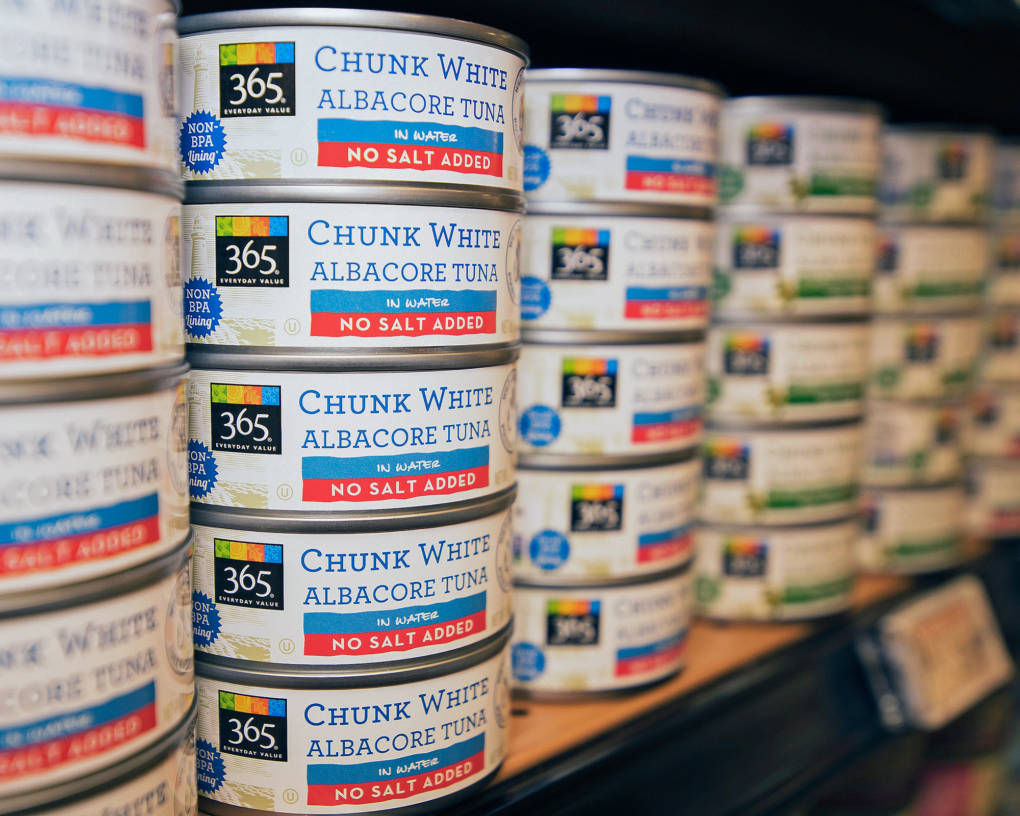
"caption": "While tuna poke may be winning over American palates today, our consumption of fresh tuna is still dwarfed by our collective appetite for the canned stuff.",
"description": "While tuna poke may be winning over American palates today, our consumption of fresh tuna is still dwarfed by our collective appetite for the canned stuff.",
"title": "While tuna poke may be winning over American palates today, our consumption of fresh tuna is still dwarfed by our collective appetite for the canned stuff.",
"credit": "Whole Foods Market",
"status": "inherit",
"isLoading": false,
"fetchFailed": false
},
"bayareabites_115713": {
"type": "attachments",
"id": "bayareabites_115713",
"meta": {
"index": "attachments_1716263798",
"site": "bayareabites",
"id": "115713",
"found": true
},
"parent": 115711,
"imgSizes": {
"small": {
"file": "https://ww2.kqed.org/app/uploads/sites/24/2017/03/cover_custom-abc71c114c9d5c80e078996d0d07245dc1818a46-520x525.jpg",
"width": 520,
"mimeType": "image/jpeg",
"height": 525
},
"twentyfourteen-full-width": {
"file": "https://ww2.kqed.org/app/uploads/sites/24/2017/03/cover_custom-abc71c114c9d5c80e078996d0d07245dc1818a46-1038x576.jpg",
"width": 1038,
"mimeType": "image/jpeg",
"height": 576
},
"thumbnail": {
"file": "https://ww2.kqed.org/app/uploads/sites/24/2017/03/cover_custom-abc71c114c9d5c80e078996d0d07245dc1818a46-160x162.jpg",
"width": 160,
"mimeType": "image/jpeg",
"height": 162
},
"fd-sm": {
"file": "https://ww2.kqed.org/app/uploads/sites/24/2017/03/cover_custom-abc71c114c9d5c80e078996d0d07245dc1818a46-960x970.jpg",
"width": 960,
"mimeType": "image/jpeg",
"height": 970
},
"post-thumbnail": {
"file": "https://ww2.kqed.org/app/uploads/sites/24/2017/03/cover_custom-abc71c114c9d5c80e078996d0d07245dc1818a46-672x372.jpg",
"width": 672,
"mimeType": "image/jpeg",
"height": 372
},
"xsmall": {
"file": "https://ww2.kqed.org/app/uploads/sites/24/2017/03/cover_custom-abc71c114c9d5c80e078996d0d07245dc1818a46-375x379.jpg",
"width": 375,
"mimeType": "image/jpeg",
"height": 379
},
"kqedFullSize": {
"file": "https://ww2.kqed.org/app/uploads/sites/24/2017/03/cover_custom-abc71c114c9d5c80e078996d0d07245dc1818a46.jpg",
"width": 2798,
"height": 2826
},
"large": {
"file": "https://ww2.kqed.org/app/uploads/sites/24/2017/03/cover_custom-abc71c114c9d5c80e078996d0d07245dc1818a46-1020x1030.jpg",
"width": 1020,
"mimeType": "image/jpeg",
"height": 1030
},
"xlarge": {
"file": "https://ww2.kqed.org/app/uploads/sites/24/2017/03/cover_custom-abc71c114c9d5c80e078996d0d07245dc1818a46-1180x1192.jpg",
"width": 1180,
"mimeType": "image/jpeg",
"height": 1192
},
"guest-author-50": {
"file": "https://ww2.kqed.org/app/uploads/sites/24/2017/03/cover_custom-abc71c114c9d5c80e078996d0d07245dc1818a46-50x50.jpg",
"width": 50,
"mimeType": "image/jpeg",
"height": 50
},
"guest-author-96": {
"file": "https://ww2.kqed.org/app/uploads/sites/24/2017/03/cover_custom-abc71c114c9d5c80e078996d0d07245dc1818a46-96x96.jpg",
"width": 96,
"mimeType": "image/jpeg",
"height": 96
},
"medium": {
"file": "https://ww2.kqed.org/app/uploads/sites/24/2017/03/cover_custom-abc71c114c9d5c80e078996d0d07245dc1818a46-800x808.jpg",
"width": 800,
"mimeType": "image/jpeg",
"height": 808
},
"guest-author-64": {
"file": "https://ww2.kqed.org/app/uploads/sites/24/2017/03/cover_custom-abc71c114c9d5c80e078996d0d07245dc1818a46-64x64.jpg",
"width": 64,
"mimeType": "image/jpeg",
"height": 64
},
"guest-author-32": {
"file": "https://ww2.kqed.org/app/uploads/sites/24/2017/03/cover_custom-abc71c114c9d5c80e078996d0d07245dc1818a46-32x32.jpg",
"width": 32,
"mimeType": "image/jpeg",
"height": 32
},
"fd-lrg": {
"file": "https://ww2.kqed.org/app/uploads/sites/24/2017/03/cover_custom-abc71c114c9d5c80e078996d0d07245dc1818a46-1920x1939.jpg",
"width": 1920,
"mimeType": "image/jpeg",
"height": 1939
},
"fd-med": {
"file": "https://ww2.kqed.org/app/uploads/sites/24/2017/03/cover_custom-abc71c114c9d5c80e078996d0d07245dc1818a46-1180x1192.jpg",
"width": 1180,
"mimeType": "image/jpeg",
"height": 1192
},
"full-width": {
"file": "https://ww2.kqed.org/app/uploads/sites/24/2017/03/cover_custom-abc71c114c9d5c80e078996d0d07245dc1818a46-1920x1939.jpg",
"width": 1920,
"mimeType": "image/jpeg",
"height": 1939
},
"detail": {
"file": "https://ww2.kqed.org/app/uploads/sites/24/2017/03/cover_custom-abc71c114c9d5c80e078996d0d07245dc1818a46-150x150.jpg",
"width": 150,
"mimeType": "image/jpeg",
"height": 150
},
"medium_large": {
"file": "https://ww2.kqed.org/app/uploads/sites/24/2017/03/cover_custom-abc71c114c9d5c80e078996d0d07245dc1818a46-768x776.jpg",
"width": 768,
"mimeType": "image/jpeg",
"height": 776
},
"guest-author-128": {
"file": "https://ww2.kqed.org/app/uploads/sites/24/2017/03/cover_custom-abc71c114c9d5c80e078996d0d07245dc1818a46-128x128.jpg",
"width": 128,
"mimeType": "image/jpeg",
"height": 128
},
"xxsmall": {
"file": "https://ww2.kqed.org/app/uploads/sites/24/2017/03/cover_custom-abc71c114c9d5c80e078996d0d07245dc1818a46-240x242.jpg",
"width": 240,
"mimeType": "image/jpeg",
"height": 242
}
},
"publishDate": 1488573424,
"modified": 1488574715,
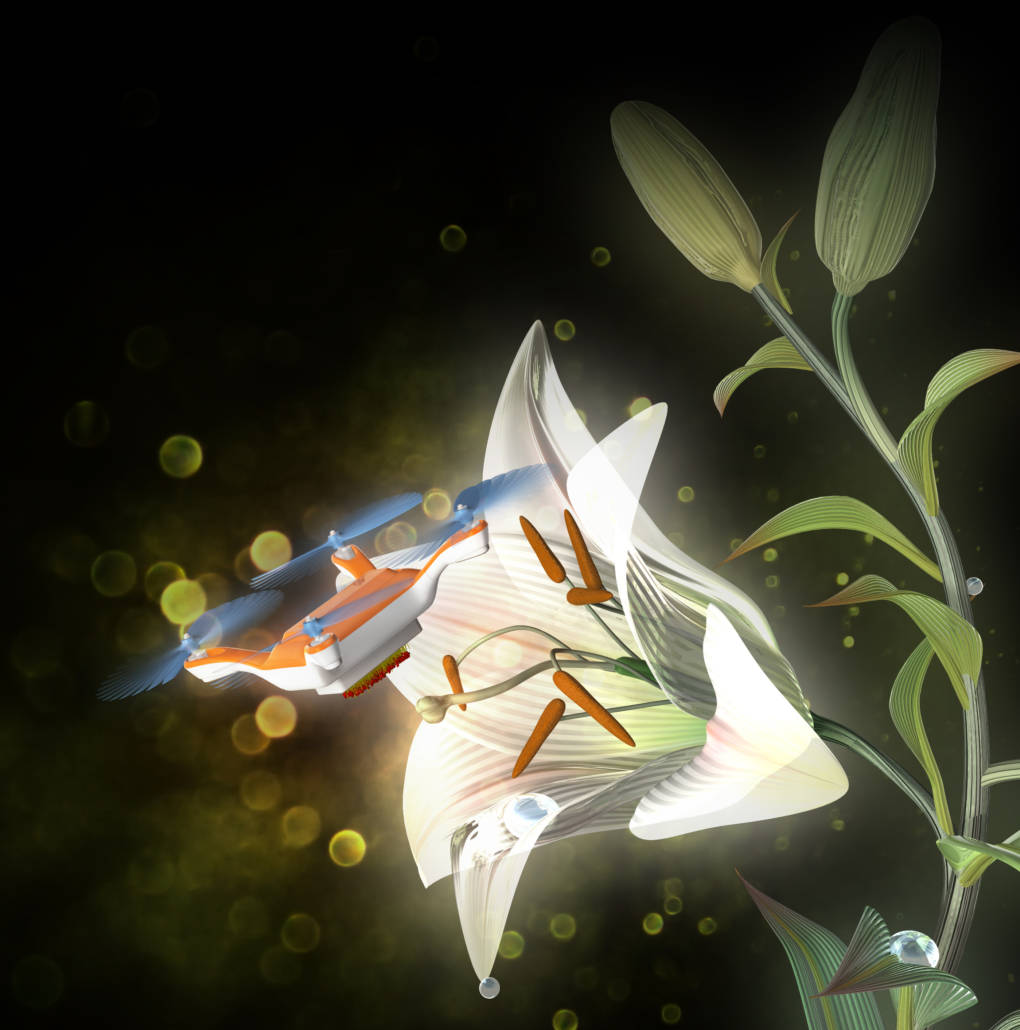
"caption": "An artist's illustration shows how a remote-controlled drone might one day be used to pollinate flowers.",
"description": "An artist's illustration shows how a remote-controlled drone might one day be used to pollinate flowers.",
"title": "An artist's illustration shows how a remote-controlled drone might one day be used to pollinate flowers.",
"credit": "Courtesy of Dr. Eijiro Miyako",
"status": "inherit",
"isLoading": false,
"fetchFailed": false
},
"bayareabites_115237": {
"type": "attachments",
"id": "bayareabites_115237",
"meta": {
"index": "attachments_1716263798",
"site": "bayareabites",
"id": "115237",
"found": true
},
"parent": 115236,
"imgSizes": {
"small": {
"file": "https://ww2.kqed.org/app/uploads/sites/24/2017/02/img_3488_1-8397daa5f5a65bb13ae2ba32fb6927b7eacf395e-520x390.jpg",
"width": 520,
"mimeType": "image/jpeg",
"height": 390
},
"twentyfourteen-full-width": {
"file": "https://ww2.kqed.org/app/uploads/sites/24/2017/02/img_3488_1-8397daa5f5a65bb13ae2ba32fb6927b7eacf395e-1038x576.jpg",
"width": 1038,
"mimeType": "image/jpeg",
"height": 576
},
"thumbnail": {
"file": "https://ww2.kqed.org/app/uploads/sites/24/2017/02/img_3488_1-8397daa5f5a65bb13ae2ba32fb6927b7eacf395e-160x120.jpg",
"width": 160,
"mimeType": "image/jpeg",
"height": 120
},
"fd-sm": {
"file": "https://ww2.kqed.org/app/uploads/sites/24/2017/02/img_3488_1-8397daa5f5a65bb13ae2ba32fb6927b7eacf395e-960x720.jpg",
"width": 960,
"mimeType": "image/jpeg",
"height": 720
},
"post-thumbnail": {
"file": "https://ww2.kqed.org/app/uploads/sites/24/2017/02/img_3488_1-8397daa5f5a65bb13ae2ba32fb6927b7eacf395e-672x372.jpg",
"width": 672,
"mimeType": "image/jpeg",
"height": 372
},
"xsmall": {
"file": "https://ww2.kqed.org/app/uploads/sites/24/2017/02/img_3488_1-8397daa5f5a65bb13ae2ba32fb6927b7eacf395e-375x281.jpg",
"width": 375,
"mimeType": "image/jpeg",
"height": 281
},
"kqedFullSize": {
"file": "https://ww2.kqed.org/app/uploads/sites/24/2017/02/img_3488_1-8397daa5f5a65bb13ae2ba32fb6927b7eacf395e.jpg",
"width": 2000,
"height": 1500
},
"large": {
"file": "https://ww2.kqed.org/app/uploads/sites/24/2017/02/img_3488_1-8397daa5f5a65bb13ae2ba32fb6927b7eacf395e-1020x765.jpg",
"width": 1020,
"mimeType": "image/jpeg",
"height": 765
},
"xlarge": {
"file": "https://ww2.kqed.org/app/uploads/sites/24/2017/02/img_3488_1-8397daa5f5a65bb13ae2ba32fb6927b7eacf395e-1180x885.jpg",
"width": 1180,
"mimeType": "image/jpeg",
"height": 885
},
"guest-author-50": {
"file": "https://ww2.kqed.org/app/uploads/sites/24/2017/02/img_3488_1-8397daa5f5a65bb13ae2ba32fb6927b7eacf395e-50x50.jpg",
"width": 50,
"mimeType": "image/jpeg",
"height": 50
},
"guest-author-96": {
"file": "https://ww2.kqed.org/app/uploads/sites/24/2017/02/img_3488_1-8397daa5f5a65bb13ae2ba32fb6927b7eacf395e-96x96.jpg",
"width": 96,
"mimeType": "image/jpeg",
"height": 96
},
"medium": {
"file": "https://ww2.kqed.org/app/uploads/sites/24/2017/02/img_3488_1-8397daa5f5a65bb13ae2ba32fb6927b7eacf395e-800x600.jpg",
"width": 800,
"mimeType": "image/jpeg",
"height": 600
},
"guest-author-64": {
"file": "https://ww2.kqed.org/app/uploads/sites/24/2017/02/img_3488_1-8397daa5f5a65bb13ae2ba32fb6927b7eacf395e-64x64.jpg",
"width": 64,
"mimeType": "image/jpeg",
"height": 64
},
"guest-author-32": {
"file": "https://ww2.kqed.org/app/uploads/sites/24/2017/02/img_3488_1-8397daa5f5a65bb13ae2ba32fb6927b7eacf395e-32x32.jpg",
"width": 32,
"mimeType": "image/jpeg",
"height": 32
},
"fd-lrg": {
"file": "https://ww2.kqed.org/app/uploads/sites/24/2017/02/img_3488_1-8397daa5f5a65bb13ae2ba32fb6927b7eacf395e-1920x1440.jpg",
"width": 1920,
"mimeType": "image/jpeg",
"height": 1440
},
"fd-med": {
"file": "https://ww2.kqed.org/app/uploads/sites/24/2017/02/img_3488_1-8397daa5f5a65bb13ae2ba32fb6927b7eacf395e-1180x885.jpg",
"width": 1180,
"mimeType": "image/jpeg",
"height": 885
},
"full-width": {
"file": "https://ww2.kqed.org/app/uploads/sites/24/2017/02/img_3488_1-8397daa5f5a65bb13ae2ba32fb6927b7eacf395e-1920x1440.jpg",
"width": 1920,
"mimeType": "image/jpeg",
"height": 1440
},
"detail": {
"file": "https://ww2.kqed.org/app/uploads/sites/24/2017/02/img_3488_1-8397daa5f5a65bb13ae2ba32fb6927b7eacf395e-150x150.jpg",
"width": 150,
"mimeType": "image/jpeg",
"height": 150
},
"medium_large": {
"file": "https://ww2.kqed.org/app/uploads/sites/24/2017/02/img_3488_1-8397daa5f5a65bb13ae2ba32fb6927b7eacf395e-768x576.jpg",
"width": 768,
"mimeType": "image/jpeg",
"height": 576
},
"guest-author-128": {
"file": "https://ww2.kqed.org/app/uploads/sites/24/2017/02/img_3488_1-8397daa5f5a65bb13ae2ba32fb6927b7eacf395e-128x128.jpg",
"width": 128,
"mimeType": "image/jpeg",
"height": 128
},
"xxsmall": {
"file": "https://ww2.kqed.org/app/uploads/sites/24/2017/02/img_3488_1-8397daa5f5a65bb13ae2ba32fb6927b7eacf395e-240x180.jpg",
"width": 240,
"mimeType": "image/jpeg",
"height": 180
}
},
"publishDate": 1486886598,
"modified": 1486887038,
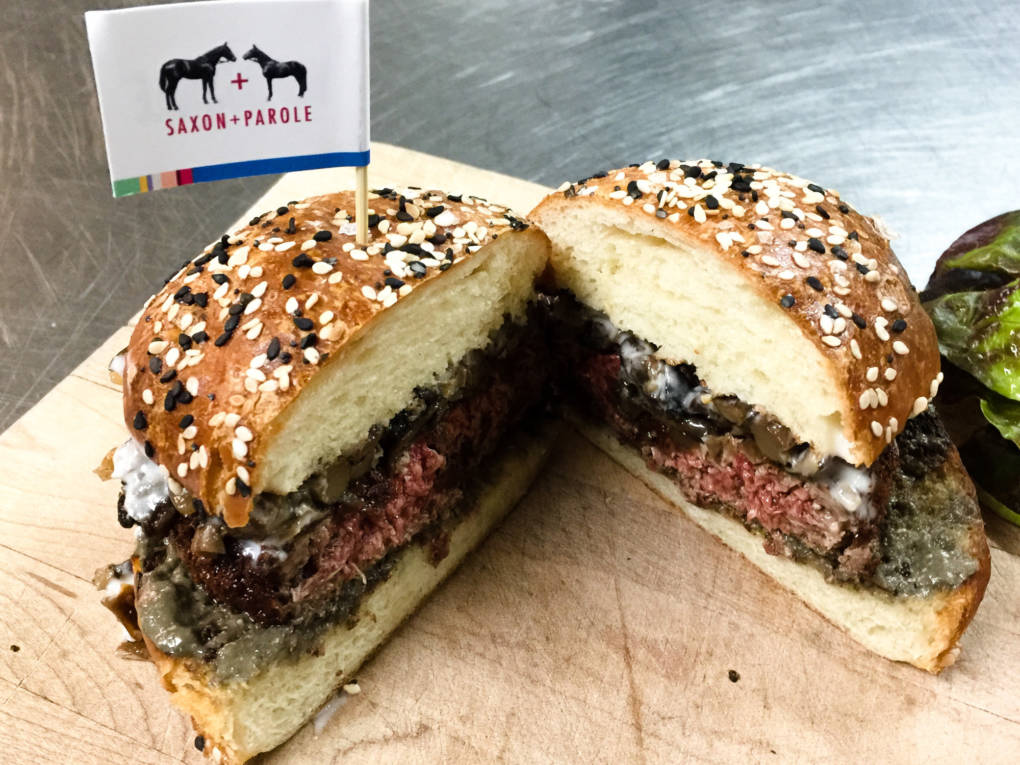
"caption": "At Saxon + Parole, a New York City restaurant, chef Brad Farmerie serves up the Impossible Burger, a plant-based burger that sizzles, smells and even bleeds like the real thing.",
"description": "At Saxon Parole, a New York City restaurant, chef Brad Farmerie serves up the Impossible Burger, a plant-based burger that sizzles, smells and even bleeds like the real thing",
"title": "At Saxon + Parole, a New York City restaurant, chef Brad Farmerie serves up the Impossible Burger, a plant-based burger that sizzles, smells and even bleeds like the real thing.",
"credit": "Allison Aubrey/NPR",
"status": "inherit",
"isLoading": false,
"fetchFailed": false
},
"bayareabites_115077": {
"type": "attachments",
"id": "bayareabites_115077",
"meta": {
"index": "attachments_1716263798",
"site": "bayareabites",
"id": "115077",
"found": true
},
"parent": 115076,
"imgSizes": {
"small": {
"file": "https://ww2.kqed.org/app/uploads/sites/24/2017/02/fleece-jackets_enl-bd0b1a3f6bf6953a759cc76901c3387dea709409-520x348.jpg",
"width": 520,
"mimeType": "image/jpeg",
"height": 348
},
"twentyfourteen-full-width": {
"file": "https://ww2.kqed.org/app/uploads/sites/24/2017/02/fleece-jackets_enl-bd0b1a3f6bf6953a759cc76901c3387dea709409-1038x576.jpg",
"width": 1038,
"mimeType": "image/jpeg",
"height": 576
},
"thumbnail": {
"file": "https://ww2.kqed.org/app/uploads/sites/24/2017/02/fleece-jackets_enl-bd0b1a3f6bf6953a759cc76901c3387dea709409-160x107.jpg",
"width": 160,
"mimeType": "image/jpeg",
"height": 107
},
"fd-sm": {
"file": "https://ww2.kqed.org/app/uploads/sites/24/2017/02/fleece-jackets_enl-bd0b1a3f6bf6953a759cc76901c3387dea709409-960x642.jpg",
"width": 960,
"mimeType": "image/jpeg",
"height": 642
},
"post-thumbnail": {
"file": "https://ww2.kqed.org/app/uploads/sites/24/2017/02/fleece-jackets_enl-bd0b1a3f6bf6953a759cc76901c3387dea709409-672x372.jpg",
"width": 672,
"mimeType": "image/jpeg",
"height": 372
},
"xsmall": {
"file": "https://ww2.kqed.org/app/uploads/sites/24/2017/02/fleece-jackets_enl-bd0b1a3f6bf6953a759cc76901c3387dea709409-375x251.jpg",
"width": 375,
"mimeType": "image/jpeg",
"height": 251
},
"kqedFullSize": {
"file": "https://ww2.kqed.org/app/uploads/sites/24/2017/02/fleece-jackets_enl-bd0b1a3f6bf6953a759cc76901c3387dea709409.jpg",
"width": 1980,
"height": 1325
},
"large": {
"file": "https://ww2.kqed.org/app/uploads/sites/24/2017/02/fleece-jackets_enl-bd0b1a3f6bf6953a759cc76901c3387dea709409-1020x683.jpg",
"width": 1020,
"mimeType": "image/jpeg",
"height": 683
},
"xlarge": {
"file": "https://ww2.kqed.org/app/uploads/sites/24/2017/02/fleece-jackets_enl-bd0b1a3f6bf6953a759cc76901c3387dea709409-1180x790.jpg",
"width": 1180,
"mimeType": "image/jpeg",
"height": 790
},
"guest-author-50": {
"file": "https://ww2.kqed.org/app/uploads/sites/24/2017/02/fleece-jackets_enl-bd0b1a3f6bf6953a759cc76901c3387dea709409-50x50.jpg",
"width": 50,
"mimeType": "image/jpeg",
"height": 50
},
"guest-author-96": {
"file": "https://ww2.kqed.org/app/uploads/sites/24/2017/02/fleece-jackets_enl-bd0b1a3f6bf6953a759cc76901c3387dea709409-96x96.jpg",
"width": 96,
"mimeType": "image/jpeg",
"height": 96
},
"medium": {
"file": "https://ww2.kqed.org/app/uploads/sites/24/2017/02/fleece-jackets_enl-bd0b1a3f6bf6953a759cc76901c3387dea709409-800x535.jpg",
"width": 800,
"mimeType": "image/jpeg",
"height": 535
},
"guest-author-64": {
"file": "https://ww2.kqed.org/app/uploads/sites/24/2017/02/fleece-jackets_enl-bd0b1a3f6bf6953a759cc76901c3387dea709409-64x64.jpg",
"width": 64,
"mimeType": "image/jpeg",
"height": 64
},
"guest-author-32": {
"file": "https://ww2.kqed.org/app/uploads/sites/24/2017/02/fleece-jackets_enl-bd0b1a3f6bf6953a759cc76901c3387dea709409-32x32.jpg",
"width": 32,
"mimeType": "image/jpeg",
"height": 32
},
"fd-lrg": {
"file": "https://ww2.kqed.org/app/uploads/sites/24/2017/02/fleece-jackets_enl-bd0b1a3f6bf6953a759cc76901c3387dea709409-1920x1285.jpg",
"width": 1920,
"mimeType": "image/jpeg",
"height": 1285
},
"fd-med": {
"file": "https://ww2.kqed.org/app/uploads/sites/24/2017/02/fleece-jackets_enl-bd0b1a3f6bf6953a759cc76901c3387dea709409-1180x790.jpg",
"width": 1180,
"mimeType": "image/jpeg",
"height": 790
},
"full-width": {
"file": "https://ww2.kqed.org/app/uploads/sites/24/2017/02/fleece-jackets_enl-bd0b1a3f6bf6953a759cc76901c3387dea709409-1920x1285.jpg",
"width": 1920,
"mimeType": "image/jpeg",
"height": 1285
},
"detail": {
"file": "https://ww2.kqed.org/app/uploads/sites/24/2017/02/fleece-jackets_enl-bd0b1a3f6bf6953a759cc76901c3387dea709409-150x150.jpg",
"width": 150,
"mimeType": "image/jpeg",
"height": 150
},
"medium_large": {
"file": "https://ww2.kqed.org/app/uploads/sites/24/2017/02/fleece-jackets_enl-bd0b1a3f6bf6953a759cc76901c3387dea709409-768x514.jpg",
"width": 768,
"mimeType": "image/jpeg",
"height": 514
},
"guest-author-128": {
"file": "https://ww2.kqed.org/app/uploads/sites/24/2017/02/fleece-jackets_enl-bd0b1a3f6bf6953a759cc76901c3387dea709409-128x128.jpg",
"width": 128,
"mimeType": "image/jpeg",
"height": 128
},
"xxsmall": {
"file": "https://ww2.kqed.org/app/uploads/sites/24/2017/02/fleece-jackets_enl-bd0b1a3f6bf6953a759cc76901c3387dea709409-240x161.jpg",
"width": 240,
"mimeType": "image/jpeg",
"height": 161
}
},
"publishDate": 1486427138,
"modified": 1486427419,
"caption": "Synthetic fibers from fleece jackets could be ending up in rivers, fields and our diet.",
"description": "Synthetic fibers from fleece jackets could be ending up in rivers, fields and our diet.",
"title": "Synthetic fibers from fleece jackets could be ending up in rivers, fields and our diet.",
"credit": "emholk/iStockphoto/Getty Images",
"status": "inherit",
"isLoading": false,
"fetchFailed": false
},
"bayareabites_115048": {
"type": "attachments",
"id": "bayareabites_115048",
"meta": {
"index": "attachments_1716263798",
"site": "bayareabites",
"id": "115048",
"found": true
},
"parent": 115032,
"imgSizes": {
"small": {
"file": "https://ww2.kqed.org/app/uploads/sites/24/2017/02/penisiandco-1200x800-520x347.jpg",
"width": 520,
"mimeType": "image/jpeg",
"height": 347
},
"twentyfourteen-full-width": {
"file": "https://ww2.kqed.org/app/uploads/sites/24/2017/02/penisiandco-1200x800-1038x576.jpg",
"width": 1038,
"mimeType": "image/jpeg",
"height": 576
},
"thumbnail": {
"file": "https://ww2.kqed.org/app/uploads/sites/24/2017/02/penisiandco-1200x800-160x107.jpg",
"width": 160,
"mimeType": "image/jpeg",
"height": 107
},
"fd-sm": {
"file": "https://ww2.kqed.org/app/uploads/sites/24/2017/02/penisiandco-1200x800-960x640.jpg",
"width": 960,
"mimeType": "image/jpeg",
"height": 640
},
"post-thumbnail": {
"file": "https://ww2.kqed.org/app/uploads/sites/24/2017/02/penisiandco-1200x800-672x372.jpg",
"width": 672,
"mimeType": "image/jpeg",
"height": 372
},
"xsmall": {
"file": "https://ww2.kqed.org/app/uploads/sites/24/2017/02/penisiandco-1200x800-375x250.jpg",
"width": 375,
"mimeType": "image/jpeg",
"height": 250
},
"kqedFullSize": {
"file": "https://ww2.kqed.org/app/uploads/sites/24/2017/02/penisiandco-1200x800.jpg",
"width": 1200,
"height": 800
},
"large": {
"file": "https://ww2.kqed.org/app/uploads/sites/24/2017/02/penisiandco-1200x800-1020x680.jpg",
"width": 1020,
"mimeType": "image/jpeg",
"height": 680
},
"xlarge": {
"file": "https://ww2.kqed.org/app/uploads/sites/24/2017/02/penisiandco-1200x800-1180x787.jpg",
"width": 1180,
"mimeType": "image/jpeg",
"height": 787
},
"guest-author-50": {
"file": "https://ww2.kqed.org/app/uploads/sites/24/2017/02/penisiandco-1200x800-50x50.jpg",
"width": 50,
"mimeType": "image/jpeg",
"height": 50
},
"guest-author-96": {
"file": "https://ww2.kqed.org/app/uploads/sites/24/2017/02/penisiandco-1200x800-96x96.jpg",
"width": 96,
"mimeType": "image/jpeg",
"height": 96
},
"medium": {
"file": "https://ww2.kqed.org/app/uploads/sites/24/2017/02/penisiandco-1200x800-800x533.jpg",
"width": 800,
"mimeType": "image/jpeg",
"height": 533
},
"guest-author-64": {
"file": "https://ww2.kqed.org/app/uploads/sites/24/2017/02/penisiandco-1200x800-64x64.jpg",
"width": 64,
"mimeType": "image/jpeg",
"height": 64
},
"guest-author-32": {
"file": "https://ww2.kqed.org/app/uploads/sites/24/2017/02/penisiandco-1200x800-32x32.jpg",
"width": 32,
"mimeType": "image/jpeg",
"height": 32
},
"fd-med": {
"file": "https://ww2.kqed.org/app/uploads/sites/24/2017/02/penisiandco-1200x800-1180x787.jpg",
"width": 1180,
"mimeType": "image/jpeg",
"height": 787
},
"detail": {
"file": "https://ww2.kqed.org/app/uploads/sites/24/2017/02/penisiandco-1200x800-150x150.jpg",
"width": 150,
"mimeType": "image/jpeg",
"height": 150
},
"medium_large": {
"file": "https://ww2.kqed.org/app/uploads/sites/24/2017/02/penisiandco-1200x800-768x512.jpg",
"width": 768,
"mimeType": "image/jpeg",
"height": 512
},
"guest-author-128": {
"file": "https://ww2.kqed.org/app/uploads/sites/24/2017/02/penisiandco-1200x800-128x128.jpg",
"width": 128,
"mimeType": "image/jpeg",
"height": 128
},
"xxsmall": {
"file": "https://ww2.kqed.org/app/uploads/sites/24/2017/02/penisiandco-1200x800-240x160.jpg",
"width": 240,
"mimeType": "image/jpeg",
"height": 160
}
},
"publishDate": 1486169396,
"modified": 1486169530,
"caption": null,
"description": null,
"title": "penisiandco-1200x800",
"credit": "courtesy of Joe Pennisi",
"status": "inherit",
"isLoading": false,
"fetchFailed": false
},
"bayareabites_114703": {
"type": "attachments",
"id": "bayareabites_114703",
"meta": {
"index": "attachments_1716263798",
"site": "bayareabites",
"id": "114703",
"found": true
},
"parent": 114702,
"imgSizes": {
"small": {
"file": "https://ww2.kqed.org/app/uploads/sites/24/2017/01/ap_16197600754915_wide-b2bfa95a23bee1e423b7a1b18cd340bd1ddaa93d-520x293.jpg",
"width": 520,
"mimeType": "image/jpeg",
"height": 293
},
"twentyfourteen-full-width": {
"file": "https://ww2.kqed.org/app/uploads/sites/24/2017/01/ap_16197600754915_wide-b2bfa95a23bee1e423b7a1b18cd340bd1ddaa93d-1038x576.jpg",
"width": 1038,
"mimeType": "image/jpeg",
"height": 576
},
"thumbnail": {
"file": "https://ww2.kqed.org/app/uploads/sites/24/2017/01/ap_16197600754915_wide-b2bfa95a23bee1e423b7a1b18cd340bd1ddaa93d-160x90.jpg",
"width": 160,
"mimeType": "image/jpeg",
"height": 90
},
"fd-sm": {
"file": "https://ww2.kqed.org/app/uploads/sites/24/2017/01/ap_16197600754915_wide-b2bfa95a23bee1e423b7a1b18cd340bd1ddaa93d-960x540.jpg",
"width": 960,
"mimeType": "image/jpeg",
"height": 540
},
"post-thumbnail": {
"file": "https://ww2.kqed.org/app/uploads/sites/24/2017/01/ap_16197600754915_wide-b2bfa95a23bee1e423b7a1b18cd340bd1ddaa93d-672x372.jpg",
"width": 672,
"mimeType": "image/jpeg",
"height": 372
},
"xsmall": {
"file": "https://ww2.kqed.org/app/uploads/sites/24/2017/01/ap_16197600754915_wide-b2bfa95a23bee1e423b7a1b18cd340bd1ddaa93d-375x211.jpg",
"width": 375,
"mimeType": "image/jpeg",
"height": 211
},
"kqedFullSize": {
"file": "https://ww2.kqed.org/app/uploads/sites/24/2017/01/ap_16197600754915_wide-b2bfa95a23bee1e423b7a1b18cd340bd1ddaa93d.jpg",
"width": 4339,
"height": 2441
},
"large": {
"file": "https://ww2.kqed.org/app/uploads/sites/24/2017/01/ap_16197600754915_wide-b2bfa95a23bee1e423b7a1b18cd340bd1ddaa93d-1020x574.jpg",
"width": 1020,
"mimeType": "image/jpeg",
"height": 574
},
"xlarge": {
"file": "https://ww2.kqed.org/app/uploads/sites/24/2017/01/ap_16197600754915_wide-b2bfa95a23bee1e423b7a1b18cd340bd1ddaa93d-1180x664.jpg",
"width": 1180,
"mimeType": "image/jpeg",
"height": 664
},
"guest-author-50": {
"file": "https://ww2.kqed.org/app/uploads/sites/24/2017/01/ap_16197600754915_wide-b2bfa95a23bee1e423b7a1b18cd340bd1ddaa93d-50x50.jpg",
"width": 50,
"mimeType": "image/jpeg",
"height": 50
},
"guest-author-96": {
"file": "https://ww2.kqed.org/app/uploads/sites/24/2017/01/ap_16197600754915_wide-b2bfa95a23bee1e423b7a1b18cd340bd1ddaa93d-96x96.jpg",
"width": 96,
"mimeType": "image/jpeg",
"height": 96
},
"medium": {
"file": "https://ww2.kqed.org/app/uploads/sites/24/2017/01/ap_16197600754915_wide-b2bfa95a23bee1e423b7a1b18cd340bd1ddaa93d-800x450.jpg",
"width": 800,
"mimeType": "image/jpeg",
"height": 450
},
"guest-author-64": {
"file": "https://ww2.kqed.org/app/uploads/sites/24/2017/01/ap_16197600754915_wide-b2bfa95a23bee1e423b7a1b18cd340bd1ddaa93d-64x64.jpg",
"width": 64,
"mimeType": "image/jpeg",
"height": 64
},
"guest-author-32": {
"file": "https://ww2.kqed.org/app/uploads/sites/24/2017/01/ap_16197600754915_wide-b2bfa95a23bee1e423b7a1b18cd340bd1ddaa93d-32x32.jpg",
"width": 32,
"mimeType": "image/jpeg",
"height": 32
},
"fd-lrg": {
"file": "https://ww2.kqed.org/app/uploads/sites/24/2017/01/ap_16197600754915_wide-b2bfa95a23bee1e423b7a1b18cd340bd1ddaa93d-1920x1080.jpg",
"width": 1920,
"mimeType": "image/jpeg",
"height": 1080
},
"fd-med": {
"file": "https://ww2.kqed.org/app/uploads/sites/24/2017/01/ap_16197600754915_wide-b2bfa95a23bee1e423b7a1b18cd340bd1ddaa93d-1180x664.jpg",
"width": 1180,
"mimeType": "image/jpeg",
"height": 664
},
"full-width": {
"file": "https://ww2.kqed.org/app/uploads/sites/24/2017/01/ap_16197600754915_wide-b2bfa95a23bee1e423b7a1b18cd340bd1ddaa93d-1920x1080.jpg",
"width": 1920,
"mimeType": "image/jpeg",
"height": 1080
},
"detail": {
"file": "https://ww2.kqed.org/app/uploads/sites/24/2017/01/ap_16197600754915_wide-b2bfa95a23bee1e423b7a1b18cd340bd1ddaa93d-150x150.jpg",
"width": 150,
"mimeType": "image/jpeg",
"height": 150
},
"medium_large": {
"file": "https://ww2.kqed.org/app/uploads/sites/24/2017/01/ap_16197600754915_wide-b2bfa95a23bee1e423b7a1b18cd340bd1ddaa93d-768x432.jpg",
"width": 768,
"mimeType": "image/jpeg",
"height": 432
},
"guest-author-128": {
"file": "https://ww2.kqed.org/app/uploads/sites/24/2017/01/ap_16197600754915_wide-b2bfa95a23bee1e423b7a1b18cd340bd1ddaa93d-128x128.jpg",
"width": 128,
"mimeType": "image/jpeg",
"height": 128
},
"xxsmall": {
"file": "https://ww2.kqed.org/app/uploads/sites/24/2017/01/ap_16197600754915_wide-b2bfa95a23bee1e423b7a1b18cd340bd1ddaa93d-240x135.jpg",
"width": 240,
"mimeType": "image/jpeg",
"height": 135
}
},
"publishDate": 1484859185,
"modified": 1484859364,
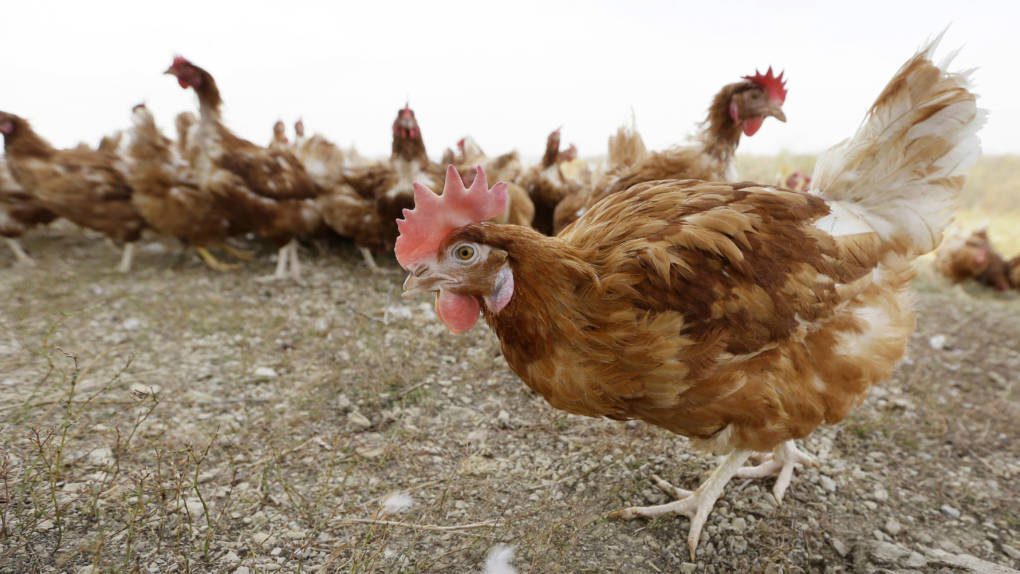
"caption": "Cage-free chickens walk in a fenced pasture at an organic farm near Waukon, Iowa.",
"description": "Cage-free chickens walk in a fenced pasture at an organic farm near Waukon, Iowa.",
"title": "Cage-free chickens walk in a fenced pasture at an organic farm near Waukon, Iowa.",
"credit": "Charlie Neibergall/AP",
"status": "inherit",
"isLoading": false,
"fetchFailed": false
},
"bayareabites_114607": {
"type": "attachments",
"id": "bayareabites_114607",
"meta": {
"index": "attachments_1716263798",
"site": "bayareabites",
"id": "114607",
"found": true
},
"parent": 114606,
"imgSizes": {
"small": {
"file": "https://ww2.kqed.org/app/uploads/sites/24/2017/01/modesto_orchard_enl-ae8f35a9365a7aed4dd7655e31dfef6576ffc1a8-520x347.jpg",
"width": 520,
"mimeType": "image/jpeg",
"height": 347
},
"twentyfourteen-full-width": {
"file": "https://ww2.kqed.org/app/uploads/sites/24/2017/01/modesto_orchard_enl-ae8f35a9365a7aed4dd7655e31dfef6576ffc1a8-1038x576.jpg",
"width": 1038,
"mimeType": "image/jpeg",
"height": 576
},
"thumbnail": {
"file": "https://ww2.kqed.org/app/uploads/sites/24/2017/01/modesto_orchard_enl-ae8f35a9365a7aed4dd7655e31dfef6576ffc1a8-160x107.jpg",
"width": 160,
"mimeType": "image/jpeg",
"height": 107
},
"fd-sm": {
"file": "https://ww2.kqed.org/app/uploads/sites/24/2017/01/modesto_orchard_enl-ae8f35a9365a7aed4dd7655e31dfef6576ffc1a8-960x641.jpg",
"width": 960,
"mimeType": "image/jpeg",
"height": 641
},
"post-thumbnail": {
"file": "https://ww2.kqed.org/app/uploads/sites/24/2017/01/modesto_orchard_enl-ae8f35a9365a7aed4dd7655e31dfef6576ffc1a8-672x372.jpg",
"width": 672,
"mimeType": "image/jpeg",
"height": 372
},
"xsmall": {
"file": "https://ww2.kqed.org/app/uploads/sites/24/2017/01/modesto_orchard_enl-ae8f35a9365a7aed4dd7655e31dfef6576ffc1a8-375x251.jpg",
"width": 375,
"mimeType": "image/jpeg",
"height": 251
},
"kqedFullSize": {
"file": "https://ww2.kqed.org/app/uploads/sites/24/2017/01/modesto_orchard_enl-ae8f35a9365a7aed4dd7655e31dfef6576ffc1a8.jpg",
"width": 1994,
"height": 1332
},
"large": {
"file": "https://ww2.kqed.org/app/uploads/sites/24/2017/01/modesto_orchard_enl-ae8f35a9365a7aed4dd7655e31dfef6576ffc1a8-1020x681.jpg",
"width": 1020,
"mimeType": "image/jpeg",
"height": 681
},
"xlarge": {
"file": "https://ww2.kqed.org/app/uploads/sites/24/2017/01/modesto_orchard_enl-ae8f35a9365a7aed4dd7655e31dfef6576ffc1a8-1180x788.jpg",
"width": 1180,
"mimeType": "image/jpeg",
"height": 788
},
"guest-author-50": {
"file": "https://ww2.kqed.org/app/uploads/sites/24/2017/01/modesto_orchard_enl-ae8f35a9365a7aed4dd7655e31dfef6576ffc1a8-50x50.jpg",
"width": 50,
"mimeType": "image/jpeg",
"height": 50
},
"guest-author-96": {
"file": "https://ww2.kqed.org/app/uploads/sites/24/2017/01/modesto_orchard_enl-ae8f35a9365a7aed4dd7655e31dfef6576ffc1a8-96x96.jpg",
"width": 96,
"mimeType": "image/jpeg",
"height": 96
},
"medium": {
"file": "https://ww2.kqed.org/app/uploads/sites/24/2017/01/modesto_orchard_enl-ae8f35a9365a7aed4dd7655e31dfef6576ffc1a8-800x534.jpg",
"width": 800,
"mimeType": "image/jpeg",
"height": 534
},
"guest-author-64": {
"file": "https://ww2.kqed.org/app/uploads/sites/24/2017/01/modesto_orchard_enl-ae8f35a9365a7aed4dd7655e31dfef6576ffc1a8-64x64.jpg",
"width": 64,
"mimeType": "image/jpeg",
"height": 64
},
"guest-author-32": {
"file": "https://ww2.kqed.org/app/uploads/sites/24/2017/01/modesto_orchard_enl-ae8f35a9365a7aed4dd7655e31dfef6576ffc1a8-32x32.jpg",
"width": 32,
"mimeType": "image/jpeg",
"height": 32
},
"fd-lrg": {
"file": "https://ww2.kqed.org/app/uploads/sites/24/2017/01/modesto_orchard_enl-ae8f35a9365a7aed4dd7655e31dfef6576ffc1a8-1920x1283.jpg",
"width": 1920,
"mimeType": "image/jpeg",
"height": 1283
},
"fd-med": {
"file": "https://ww2.kqed.org/app/uploads/sites/24/2017/01/modesto_orchard_enl-ae8f35a9365a7aed4dd7655e31dfef6576ffc1a8-1180x788.jpg",
"width": 1180,
"mimeType": "image/jpeg",
"height": 788
},
"full-width": {
"file": "https://ww2.kqed.org/app/uploads/sites/24/2017/01/modesto_orchard_enl-ae8f35a9365a7aed4dd7655e31dfef6576ffc1a8-1920x1283.jpg",
"width": 1920,
"mimeType": "image/jpeg",
"height": 1283
},
"detail": {
"file": "https://ww2.kqed.org/app/uploads/sites/24/2017/01/modesto_orchard_enl-ae8f35a9365a7aed4dd7655e31dfef6576ffc1a8-150x150.jpg",
"width": 150,
"mimeType": "image/jpeg",
"height": 150
},
"medium_large": {
"file": "https://ww2.kqed.org/app/uploads/sites/24/2017/01/modesto_orchard_enl-ae8f35a9365a7aed4dd7655e31dfef6576ffc1a8-768x513.jpg",
"width": 768,
"mimeType": "image/jpeg",
"height": 513
},
"guest-author-128": {
"file": "https://ww2.kqed.org/app/uploads/sites/24/2017/01/modesto_orchard_enl-ae8f35a9365a7aed4dd7655e31dfef6576ffc1a8-128x128.jpg",
"width": 128,
"mimeType": "image/jpeg",
"height": 128
},
"xxsmall": {
"file": "https://ww2.kqed.org/app/uploads/sites/24/2017/01/modesto_orchard_enl-ae8f35a9365a7aed4dd7655e31dfef6576ffc1a8-240x160.jpg",
"width": 240,
"mimeType": "image/jpeg",
"height": 160
}
},
"publishDate": 1484331592,
"modified": 1484331888,
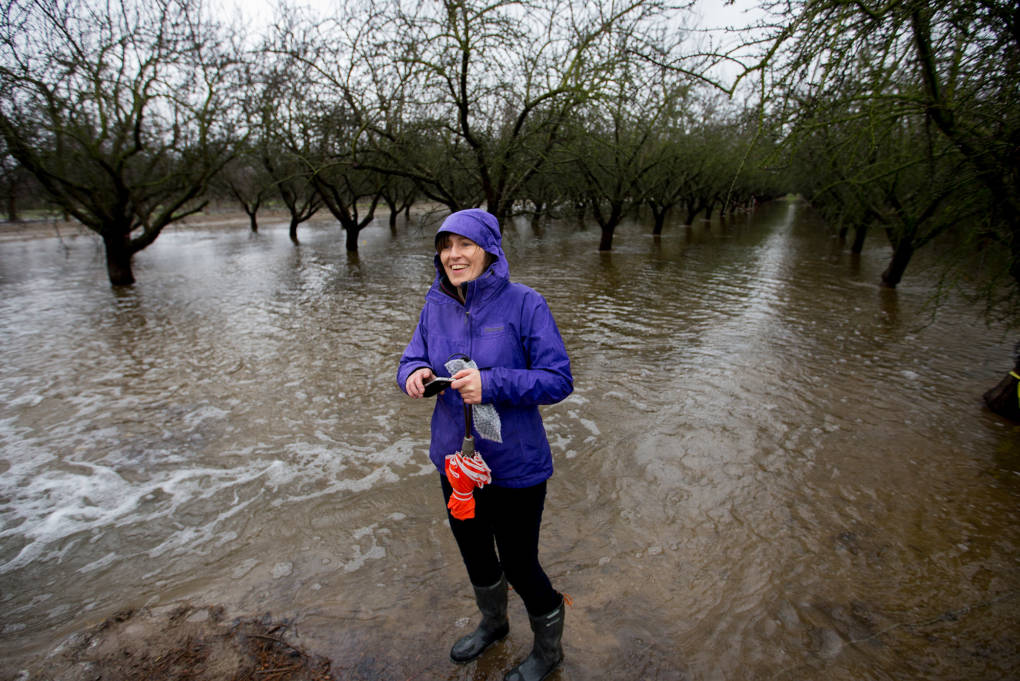
"caption": "Helen Dahlke, a scientist from the University of California, Davis, stands in an almond orchard outside Modesto that's being deliberately flooded. This experiment is examining how flooding farmland in the winter can help replenish the state's depleted aquifers.",
"description": "Helen Dahlke, a scientist from the University of California, Davis, stands in an almond orchard outside Modesto that's being deliberately flooded. This experiment is examining how flooding farmland in the winter can help replenish the state's depleted aquifers",
"title": "Helen Dahlke, a scientist from the University of California, Davis, stands in an almond orchard outside Modesto that's being deliberately flooded. This experiment is examining how flooding farmland in the winter can help replenish the state's depleted aquifers.",
"credit": "Joe Proudman/Joe Proudman / Courtesy of UC Davis",
"status": "inherit",
"isLoading": false,
"fetchFailed": false
},
"bayareabites_114593": {
"type": "attachments",
"id": "bayareabites_114593",
"meta": {
"index": "attachments_1716263798",
"site": "bayareabites",
"id": "114593",
"found": true
},
"parent": 114592,
"imgSizes": {
"small": {
"file": "https://ww2.kqed.org/app/uploads/sites/24/2017/01/ap_070615051672_custom-c5063f68d2db09a505af77b462270eddb493b8b9-520x341.jpg",
"width": 520,
"mimeType": "image/jpeg",
"height": 341
},
"twentyfourteen-full-width": {
"file": "https://ww2.kqed.org/app/uploads/sites/24/2017/01/ap_070615051672_custom-c5063f68d2db09a505af77b462270eddb493b8b9-1038x576.jpg",
"width": 1038,
"mimeType": "image/jpeg",
"height": 576
},
"thumbnail": {
"file": "https://ww2.kqed.org/app/uploads/sites/24/2017/01/ap_070615051672_custom-c5063f68d2db09a505af77b462270eddb493b8b9-160x105.jpg",
"width": 160,
"mimeType": "image/jpeg",
"height": 105
},
"fd-sm": {
"file": "https://ww2.kqed.org/app/uploads/sites/24/2017/01/ap_070615051672_custom-c5063f68d2db09a505af77b462270eddb493b8b9-960x630.jpg",
"width": 960,
"mimeType": "image/jpeg",
"height": 630
},
"post-thumbnail": {
"file": "https://ww2.kqed.org/app/uploads/sites/24/2017/01/ap_070615051672_custom-c5063f68d2db09a505af77b462270eddb493b8b9-672x372.jpg",
"width": 672,
"mimeType": "image/jpeg",
"height": 372
},
"xsmall": {
"file": "https://ww2.kqed.org/app/uploads/sites/24/2017/01/ap_070615051672_custom-c5063f68d2db09a505af77b462270eddb493b8b9-375x246.jpg",
"width": 375,
"mimeType": "image/jpeg",
"height": 246
},
"kqedFullSize": {
"file": "https://ww2.kqed.org/app/uploads/sites/24/2017/01/ap_070615051672_custom-c5063f68d2db09a505af77b462270eddb493b8b9.jpg",
"width": 2989,
"height": 1961
},
"large": {
"file": "https://ww2.kqed.org/app/uploads/sites/24/2017/01/ap_070615051672_custom-c5063f68d2db09a505af77b462270eddb493b8b9-1020x669.jpg",
"width": 1020,
"mimeType": "image/jpeg",
"height": 669
},
"xlarge": {
"file": "https://ww2.kqed.org/app/uploads/sites/24/2017/01/ap_070615051672_custom-c5063f68d2db09a505af77b462270eddb493b8b9-1180x774.jpg",
"width": 1180,
"mimeType": "image/jpeg",
"height": 774
},
"guest-author-50": {
"file": "https://ww2.kqed.org/app/uploads/sites/24/2017/01/ap_070615051672_custom-c5063f68d2db09a505af77b462270eddb493b8b9-50x50.jpg",
"width": 50,
"mimeType": "image/jpeg",
"height": 50
},
"guest-author-96": {
"file": "https://ww2.kqed.org/app/uploads/sites/24/2017/01/ap_070615051672_custom-c5063f68d2db09a505af77b462270eddb493b8b9-96x96.jpg",
"width": 96,
"mimeType": "image/jpeg",
"height": 96
},
"medium": {
"file": "https://ww2.kqed.org/app/uploads/sites/24/2017/01/ap_070615051672_custom-c5063f68d2db09a505af77b462270eddb493b8b9-800x525.jpg",
"width": 800,
"mimeType": "image/jpeg",
"height": 525
},
"guest-author-64": {
"file": "https://ww2.kqed.org/app/uploads/sites/24/2017/01/ap_070615051672_custom-c5063f68d2db09a505af77b462270eddb493b8b9-64x64.jpg",
"width": 64,
"mimeType": "image/jpeg",
"height": 64
},
"guest-author-32": {
"file": "https://ww2.kqed.org/app/uploads/sites/24/2017/01/ap_070615051672_custom-c5063f68d2db09a505af77b462270eddb493b8b9-32x32.jpg",
"width": 32,
"mimeType": "image/jpeg",
"height": 32
},
"fd-lrg": {
"file": "https://ww2.kqed.org/app/uploads/sites/24/2017/01/ap_070615051672_custom-c5063f68d2db09a505af77b462270eddb493b8b9-1920x1260.jpg",
"width": 1920,
"mimeType": "image/jpeg",
"height": 1260
},
"fd-med": {
"file": "https://ww2.kqed.org/app/uploads/sites/24/2017/01/ap_070615051672_custom-c5063f68d2db09a505af77b462270eddb493b8b9-1180x774.jpg",
"width": 1180,
"mimeType": "image/jpeg",
"height": 774
},
"full-width": {
"file": "https://ww2.kqed.org/app/uploads/sites/24/2017/01/ap_070615051672_custom-c5063f68d2db09a505af77b462270eddb493b8b9-1920x1260.jpg",
"width": 1920,
"mimeType": "image/jpeg",
"height": 1260
},
"detail": {
"file": "https://ww2.kqed.org/app/uploads/sites/24/2017/01/ap_070615051672_custom-c5063f68d2db09a505af77b462270eddb493b8b9-150x150.jpg",
"width": 150,
"mimeType": "image/jpeg",
"height": 150
},
"medium_large": {
"file": "https://ww2.kqed.org/app/uploads/sites/24/2017/01/ap_070615051672_custom-c5063f68d2db09a505af77b462270eddb493b8b9-768x504.jpg",
"width": 768,
"mimeType": "image/jpeg",
"height": 504
},
"guest-author-128": {
"file": "https://ww2.kqed.org/app/uploads/sites/24/2017/01/ap_070615051672_custom-c5063f68d2db09a505af77b462270eddb493b8b9-128x128.jpg",
"width": 128,
"mimeType": "image/jpeg",
"height": 128
},
"xxsmall": {
"file": "https://ww2.kqed.org/app/uploads/sites/24/2017/01/ap_070615051672_custom-c5063f68d2db09a505af77b462270eddb493b8b9-240x157.jpg",
"width": 240,
"mimeType": "image/jpeg",
"height": 157
}
},
"publishDate": 1484182374,
"modified": 1484182374,
"caption": null,
"description": "Organic produce for sale at a supermarket in Quincy, Mass",
"title": "Organic produce for sale at a supermarket in Quincy, Mass.",
"credit": null,
"status": "inherit",
"isLoading": false,
"fetchFailed": false
},
"bayareabites_114579": {
"type": "attachments",
"id": "bayareabites_114579",
"meta": {
"index": "attachments_1716263798",
"site": "bayareabites",
"id": "114579",
"found": true
},
"parent": 114578,
"imgSizes": {
"small": {
"file": "https://ww2.kqed.org/app/uploads/sites/24/2017/01/cedar-mesa_custom-9a3a50559155b425ce843161fd16dbc99ee94b2c-520x346.jpg",
"width": 520,
"mimeType": "image/jpeg",
"height": 346
},
"twentyfourteen-full-width": {
"file": "https://ww2.kqed.org/app/uploads/sites/24/2017/01/cedar-mesa_custom-9a3a50559155b425ce843161fd16dbc99ee94b2c-1038x576.jpg",
"width": 1038,
"mimeType": "image/jpeg",
"height": 576
},
"thumbnail": {
"file": "https://ww2.kqed.org/app/uploads/sites/24/2017/01/cedar-mesa_custom-9a3a50559155b425ce843161fd16dbc99ee94b2c-160x107.jpg",
"width": 160,
"mimeType": "image/jpeg",
"height": 107
},
"fd-sm": {
"file": "https://ww2.kqed.org/app/uploads/sites/24/2017/01/cedar-mesa_custom-9a3a50559155b425ce843161fd16dbc99ee94b2c-960x639.jpg",
"width": 960,
"mimeType": "image/jpeg",
"height": 639
},
"post-thumbnail": {
"file": "https://ww2.kqed.org/app/uploads/sites/24/2017/01/cedar-mesa_custom-9a3a50559155b425ce843161fd16dbc99ee94b2c-672x372.jpg",
"width": 672,
"mimeType": "image/jpeg",
"height": 372
},
"xsmall": {
"file": "https://ww2.kqed.org/app/uploads/sites/24/2017/01/cedar-mesa_custom-9a3a50559155b425ce843161fd16dbc99ee94b2c-375x250.jpg",
"width": 375,
"mimeType": "image/jpeg",
"height": 250
},
"kqedFullSize": {
"file": "https://ww2.kqed.org/app/uploads/sites/24/2017/01/cedar-mesa_custom-9a3a50559155b425ce843161fd16dbc99ee94b2c.jpg",
"width": 2550,
"height": 1698
},
"large": {
"file": "https://ww2.kqed.org/app/uploads/sites/24/2017/01/cedar-mesa_custom-9a3a50559155b425ce843161fd16dbc99ee94b2c-1020x679.jpg",
"width": 1020,
"mimeType": "image/jpeg",
"height": 679
},
"xlarge": {
"file": "https://ww2.kqed.org/app/uploads/sites/24/2017/01/cedar-mesa_custom-9a3a50559155b425ce843161fd16dbc99ee94b2c-1180x786.jpg",
"width": 1180,
"mimeType": "image/jpeg",
"height": 786
},
"guest-author-50": {
"file": "https://ww2.kqed.org/app/uploads/sites/24/2017/01/cedar-mesa_custom-9a3a50559155b425ce843161fd16dbc99ee94b2c-50x50.jpg",
"width": 50,
"mimeType": "image/jpeg",
"height": 50
},
"guest-author-96": {
"file": "https://ww2.kqed.org/app/uploads/sites/24/2017/01/cedar-mesa_custom-9a3a50559155b425ce843161fd16dbc99ee94b2c-96x96.jpg",
"width": 96,
"mimeType": "image/jpeg",
"height": 96
},
"medium": {
"file": "https://ww2.kqed.org/app/uploads/sites/24/2017/01/cedar-mesa_custom-9a3a50559155b425ce843161fd16dbc99ee94b2c-800x533.jpg",
"width": 800,
"mimeType": "image/jpeg",
"height": 533
},
"guest-author-64": {
"file": "https://ww2.kqed.org/app/uploads/sites/24/2017/01/cedar-mesa_custom-9a3a50559155b425ce843161fd16dbc99ee94b2c-64x64.jpg",
"width": 64,
"mimeType": "image/jpeg",
"height": 64
},
"guest-author-32": {
"file": "https://ww2.kqed.org/app/uploads/sites/24/2017/01/cedar-mesa_custom-9a3a50559155b425ce843161fd16dbc99ee94b2c-32x32.jpg",
"width": 32,
"mimeType": "image/jpeg",
"height": 32
},
"fd-lrg": {
"file": "https://ww2.kqed.org/app/uploads/sites/24/2017/01/cedar-mesa_custom-9a3a50559155b425ce843161fd16dbc99ee94b2c-1920x1278.jpg",
"width": 1920,
"mimeType": "image/jpeg",
"height": 1278
},
"fd-med": {
"file": "https://ww2.kqed.org/app/uploads/sites/24/2017/01/cedar-mesa_custom-9a3a50559155b425ce843161fd16dbc99ee94b2c-1180x786.jpg",
"width": 1180,
"mimeType": "image/jpeg",
"height": 786
},
"full-width": {
"file": "https://ww2.kqed.org/app/uploads/sites/24/2017/01/cedar-mesa_custom-9a3a50559155b425ce843161fd16dbc99ee94b2c-1920x1278.jpg",
"width": 1920,
"mimeType": "image/jpeg",
"height": 1278
},
"detail": {
"file": "https://ww2.kqed.org/app/uploads/sites/24/2017/01/cedar-mesa_custom-9a3a50559155b425ce843161fd16dbc99ee94b2c-150x150.jpg",
"width": 150,
"mimeType": "image/jpeg",
"height": 150
},
"medium_large": {
"file": "https://ww2.kqed.org/app/uploads/sites/24/2017/01/cedar-mesa_custom-9a3a50559155b425ce843161fd16dbc99ee94b2c-768x511.jpg",
"width": 768,
"mimeType": "image/jpeg",
"height": 511
},
"guest-author-128": {
"file": "https://ww2.kqed.org/app/uploads/sites/24/2017/01/cedar-mesa_custom-9a3a50559155b425ce843161fd16dbc99ee94b2c-128x128.jpg",
"width": 128,
"mimeType": "image/jpeg",
"height": 128
},
"xxsmall": {
"file": "https://ww2.kqed.org/app/uploads/sites/24/2017/01/cedar-mesa_custom-9a3a50559155b425ce843161fd16dbc99ee94b2c-240x160.jpg",
"width": 240,
"mimeType": "image/jpeg",
"height": 160
}
},
"publishDate": 1484095627,
"modified": 1484097502,
"caption": "A prehistoric granary overlooking Cedar Mesa, a site inside the newly created Bears Ears National Monument in Utah that is sacred to many Native American tribes. Natives still hunt and forage for food and medicine throughout the Bears Ears region.",
"description": "A prehistoric granary overlooking Cedar Mesa, a site inside the newly created Bears Ears National Monument in Utah that is sacred to many Native American tribes. Natives still hunt and forage for food and medicine throughout the Bears Ears region.",
"title": "A prehistoric granary overlooking Cedar Mesa, a site inside the newly created Bears Ears National Monument in Utah that is sacred to many Native American tribes. Natives still hunt and forage for food and medicine throughout the Bears Ears region.",
"credit": "Josh Ewing/Courtesy of Bears Ears Inter-Tribal Coalition",
"status": "inherit",
"isLoading": false,
"fetchFailed": false
},
"bayareabites_114567": {
"type": "attachments",
"id": "bayareabites_114567",
"meta": {
"index": "attachments_1716263798",
"site": "bayareabites",
"id": "114567",
"found": true
},
"parent": 114566,
"imgSizes": {
"small": {
"file": "https://ww2.kqed.org/app/uploads/sites/24/2017/01/ap_286343091944-fde3f0195c0d8ba31807211641a55917b2c8b73e-520x390.jpg",
"width": 520,
"mimeType": "image/jpeg",
"height": 390
},
"twentyfourteen-full-width": {
"file": "https://ww2.kqed.org/app/uploads/sites/24/2017/01/ap_286343091944-fde3f0195c0d8ba31807211641a55917b2c8b73e-1038x576.jpg",
"width": 1038,
"mimeType": "image/jpeg",
"height": 576
},
"thumbnail": {
"file": "https://ww2.kqed.org/app/uploads/sites/24/2017/01/ap_286343091944-fde3f0195c0d8ba31807211641a55917b2c8b73e-160x120.jpg",
"width": 160,
"mimeType": "image/jpeg",
"height": 120
},
"fd-sm": {
"file": "https://ww2.kqed.org/app/uploads/sites/24/2017/01/ap_286343091944-fde3f0195c0d8ba31807211641a55917b2c8b73e-960x720.jpg",
"width": 960,
"mimeType": "image/jpeg",
"height": 720
},
"post-thumbnail": {
"file": "https://ww2.kqed.org/app/uploads/sites/24/2017/01/ap_286343091944-fde3f0195c0d8ba31807211641a55917b2c8b73e-672x372.jpg",
"width": 672,
"mimeType": "image/jpeg",
"height": 372
},
"xsmall": {
"file": "https://ww2.kqed.org/app/uploads/sites/24/2017/01/ap_286343091944-fde3f0195c0d8ba31807211641a55917b2c8b73e-375x281.jpg",
"width": 375,
"mimeType": "image/jpeg",
"height": 281
},
"kqedFullSize": {
"file": "https://ww2.kqed.org/app/uploads/sites/24/2017/01/ap_286343091944-fde3f0195c0d8ba31807211641a55917b2c8b73e.jpg",
"width": 2657,
"height": 1993
},
"large": {
"file": "https://ww2.kqed.org/app/uploads/sites/24/2017/01/ap_286343091944-fde3f0195c0d8ba31807211641a55917b2c8b73e-1020x765.jpg",
"width": 1020,
"mimeType": "image/jpeg",
"height": 765
},
"xlarge": {
"file": "https://ww2.kqed.org/app/uploads/sites/24/2017/01/ap_286343091944-fde3f0195c0d8ba31807211641a55917b2c8b73e-1180x885.jpg",
"width": 1180,
"mimeType": "image/jpeg",
"height": 885
},
"guest-author-50": {
"file": "https://ww2.kqed.org/app/uploads/sites/24/2017/01/ap_286343091944-fde3f0195c0d8ba31807211641a55917b2c8b73e-50x50.jpg",
"width": 50,
"mimeType": "image/jpeg",
"height": 50
},
"guest-author-96": {
"file": "https://ww2.kqed.org/app/uploads/sites/24/2017/01/ap_286343091944-fde3f0195c0d8ba31807211641a55917b2c8b73e-96x96.jpg",
"width": 96,
"mimeType": "image/jpeg",
"height": 96
},
"medium": {
"file": "https://ww2.kqed.org/app/uploads/sites/24/2017/01/ap_286343091944-fde3f0195c0d8ba31807211641a55917b2c8b73e-800x600.jpg",
"width": 800,
"mimeType": "image/jpeg",
"height": 600
},
"guest-author-64": {
"file": "https://ww2.kqed.org/app/uploads/sites/24/2017/01/ap_286343091944-fde3f0195c0d8ba31807211641a55917b2c8b73e-64x64.jpg",
"width": 64,
"mimeType": "image/jpeg",
"height": 64
},
"guest-author-32": {
"file": "https://ww2.kqed.org/app/uploads/sites/24/2017/01/ap_286343091944-fde3f0195c0d8ba31807211641a55917b2c8b73e-32x32.jpg",
"width": 32,
"mimeType": "image/jpeg",
"height": 32
},
"fd-lrg": {
"file": "https://ww2.kqed.org/app/uploads/sites/24/2017/01/ap_286343091944-fde3f0195c0d8ba31807211641a55917b2c8b73e-1920x1440.jpg",
"width": 1920,
"mimeType": "image/jpeg",
"height": 1440
},
"fd-med": {
"file": "https://ww2.kqed.org/app/uploads/sites/24/2017/01/ap_286343091944-fde3f0195c0d8ba31807211641a55917b2c8b73e-1180x885.jpg",
"width": 1180,
"mimeType": "image/jpeg",
"height": 885
},
"full-width": {
"file": "https://ww2.kqed.org/app/uploads/sites/24/2017/01/ap_286343091944-fde3f0195c0d8ba31807211641a55917b2c8b73e-1920x1440.jpg",
"width": 1920,
"mimeType": "image/jpeg",
"height": 1440
},
"detail": {
"file": "https://ww2.kqed.org/app/uploads/sites/24/2017/01/ap_286343091944-fde3f0195c0d8ba31807211641a55917b2c8b73e-150x150.jpg",
"width": 150,
"mimeType": "image/jpeg",
"height": 150
},
"medium_large": {
"file": "https://ww2.kqed.org/app/uploads/sites/24/2017/01/ap_286343091944-fde3f0195c0d8ba31807211641a55917b2c8b73e-768x576.jpg",
"width": 768,
"mimeType": "image/jpeg",
"height": 576
},
"guest-author-128": {
"file": "https://ww2.kqed.org/app/uploads/sites/24/2017/01/ap_286343091944-fde3f0195c0d8ba31807211641a55917b2c8b73e-128x128.jpg",
"width": 128,
"mimeType": "image/jpeg",
"height": 128
},
"xxsmall": {
"file": "https://ww2.kqed.org/app/uploads/sites/24/2017/01/ap_286343091944-fde3f0195c0d8ba31807211641a55917b2c8b73e-240x180.jpg",
"width": 240,
"mimeType": "image/jpeg",
"height": 180
}
},
"publishDate": 1484067794,
"modified": 1484068453,
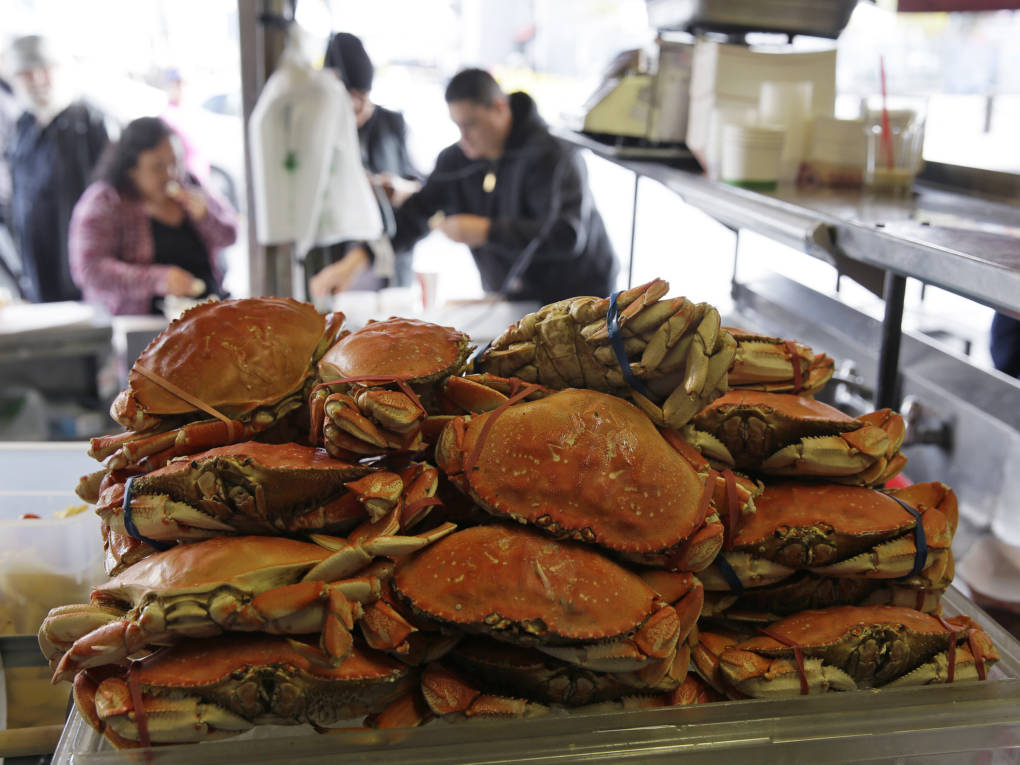
"caption": "Dungeness crabs for sale at Fisherman's Wharf in San Francisco. California's Dungeness crab season was shut down in 2015, when record high ocean temperatures and lingering toxic algae blooms raised the domoic acid in shellfish to unsafe levels. A new study links dangerously high levels of the neurotoxin to warmer ocean temperatures, suggesting such closures could become more common in the future.",
"description": "Dungeness crabs for sale at Fisherman's Wharf in San Francisco. California's Dungeness crab season was shut down in 2015, when record high ocean temperatures and lingering toxic algae blooms raised the domoic acid in shellfish to unsafe levels. A new study links dangerously high levels of the neurotoxin to warmer ocean temperatures, suggesting such closures could become more common in the future",
"title": "Dungeness crabs for sale at Fisherman's Wharf in San Francisco. California's Dungeness crab season was shut down in 2015, when record high ocean temperatures and lingering toxic algae blooms raised the domoic acid in shellfish to unsafe levels. A new study links dangerously high levels of the neurotoxin to warmer ocean temperatures, suggesting such closures could become more common in the future.",
"credit": "Eric Risberg/AP",
"status": "inherit",
"isLoading": false,
"fetchFailed": false
},
"bayareabites_114400": {
"type": "attachments",
"id": "bayareabites_114400",
"meta": {
"index": "attachments_1716263798",
"site": "bayareabites",
"id": "114400",
"found": true
},
"parent": 114399,
"imgSizes": {
"small": {
"file": "https://ww2.kqed.org/app/uploads/sites/24/2016/12/farm-workers_slide-7dac7935e215c1cb2790d2f6510e4e595f71e9ba-520x347.jpg",
"width": 520,
"mimeType": "image/jpeg",
"height": 347
},
"twentyfourteen-full-width": {
"file": "https://ww2.kqed.org/app/uploads/sites/24/2016/12/farm-workers_slide-7dac7935e215c1cb2790d2f6510e4e595f71e9ba-1038x576.jpg",
"width": 1038,
"mimeType": "image/jpeg",
"height": 576
},
"thumbnail": {
"file": "https://ww2.kqed.org/app/uploads/sites/24/2016/12/farm-workers_slide-7dac7935e215c1cb2790d2f6510e4e595f71e9ba-160x107.jpg",
"width": 160,
"mimeType": "image/jpeg",
"height": 107
},
"fd-sm": {
"file": "https://ww2.kqed.org/app/uploads/sites/24/2016/12/farm-workers_slide-7dac7935e215c1cb2790d2f6510e4e595f71e9ba-960x640.jpg",
"width": 960,
"mimeType": "image/jpeg",
"height": 640
},
"post-thumbnail": {
"file": "https://ww2.kqed.org/app/uploads/sites/24/2016/12/farm-workers_slide-7dac7935e215c1cb2790d2f6510e4e595f71e9ba-672x372.jpg",
"width": 672,
"mimeType": "image/jpeg",
"height": 372
},
"xsmall": {
"file": "https://ww2.kqed.org/app/uploads/sites/24/2016/12/farm-workers_slide-7dac7935e215c1cb2790d2f6510e4e595f71e9ba-375x250.jpg",
"width": 375,
"mimeType": "image/jpeg",
"height": 250
},
"kqedFullSize": {
"file": "https://ww2.kqed.org/app/uploads/sites/24/2016/12/farm-workers_slide-7dac7935e215c1cb2790d2f6510e4e595f71e9ba.jpg",
"width": 1998,
"height": 1332
},
"large": {
"file": "https://ww2.kqed.org/app/uploads/sites/24/2016/12/farm-workers_slide-7dac7935e215c1cb2790d2f6510e4e595f71e9ba-1020x680.jpg",
"width": 1020,
"mimeType": "image/jpeg",
"height": 680
},
"xlarge": {
"file": "https://ww2.kqed.org/app/uploads/sites/24/2016/12/farm-workers_slide-7dac7935e215c1cb2790d2f6510e4e595f71e9ba-1180x787.jpg",
"width": 1180,
"mimeType": "image/jpeg",
"height": 787
},
"guest-author-50": {
"file": "https://ww2.kqed.org/app/uploads/sites/24/2016/12/farm-workers_slide-7dac7935e215c1cb2790d2f6510e4e595f71e9ba-50x50.jpg",
"width": 50,
"mimeType": "image/jpeg",
"height": 50
},
"guest-author-96": {
"file": "https://ww2.kqed.org/app/uploads/sites/24/2016/12/farm-workers_slide-7dac7935e215c1cb2790d2f6510e4e595f71e9ba-96x96.jpg",
"width": 96,
"mimeType": "image/jpeg",
"height": 96
},
"medium": {
"file": "https://ww2.kqed.org/app/uploads/sites/24/2016/12/farm-workers_slide-7dac7935e215c1cb2790d2f6510e4e595f71e9ba-800x533.jpg",
"width": 800,
"mimeType": "image/jpeg",
"height": 533
},
"guest-author-64": {
"file": "https://ww2.kqed.org/app/uploads/sites/24/2016/12/farm-workers_slide-7dac7935e215c1cb2790d2f6510e4e595f71e9ba-64x64.jpg",
"width": 64,
"mimeType": "image/jpeg",
"height": 64
},
"guest-author-32": {
"file": "https://ww2.kqed.org/app/uploads/sites/24/2016/12/farm-workers_slide-7dac7935e215c1cb2790d2f6510e4e595f71e9ba-32x32.jpg",
"width": 32,
"mimeType": "image/jpeg",
"height": 32
},
"fd-lrg": {
"file": "https://ww2.kqed.org/app/uploads/sites/24/2016/12/farm-workers_slide-7dac7935e215c1cb2790d2f6510e4e595f71e9ba-1920x1280.jpg",
"width": 1920,
"mimeType": "image/jpeg",
"height": 1280
},
"fd-med": {
"file": "https://ww2.kqed.org/app/uploads/sites/24/2016/12/farm-workers_slide-7dac7935e215c1cb2790d2f6510e4e595f71e9ba-1180x787.jpg",
"width": 1180,
"mimeType": "image/jpeg",
"height": 787
},
"full-width": {
"file": "https://ww2.kqed.org/app/uploads/sites/24/2016/12/farm-workers_slide-7dac7935e215c1cb2790d2f6510e4e595f71e9ba-1920x1280.jpg",
"width": 1920,
"mimeType": "image/jpeg",
"height": 1280
},
"detail": {
"file": "https://ww2.kqed.org/app/uploads/sites/24/2016/12/farm-workers_slide-7dac7935e215c1cb2790d2f6510e4e595f71e9ba-150x150.jpg",
"width": 150,
"mimeType": "image/jpeg",
"height": 150
},
"medium_large": {
"file": "https://ww2.kqed.org/app/uploads/sites/24/2016/12/farm-workers_slide-7dac7935e215c1cb2790d2f6510e4e595f71e9ba-768x512.jpg",
"width": 768,
"mimeType": "image/jpeg",
"height": 512
},
"guest-author-128": {
"file": "https://ww2.kqed.org/app/uploads/sites/24/2016/12/farm-workers_slide-7dac7935e215c1cb2790d2f6510e4e595f71e9ba-128x128.jpg",
"width": 128,
"mimeType": "image/jpeg",
"height": 128
},
"xxsmall": {
"file": "https://ww2.kqed.org/app/uploads/sites/24/2016/12/farm-workers_slide-7dac7935e215c1cb2790d2f6510e4e595f71e9ba-240x160.jpg",
"width": 240,
"mimeType": "image/jpeg",
"height": 160
}
},
"publishDate": 1483030981,
"modified": 1483031812,
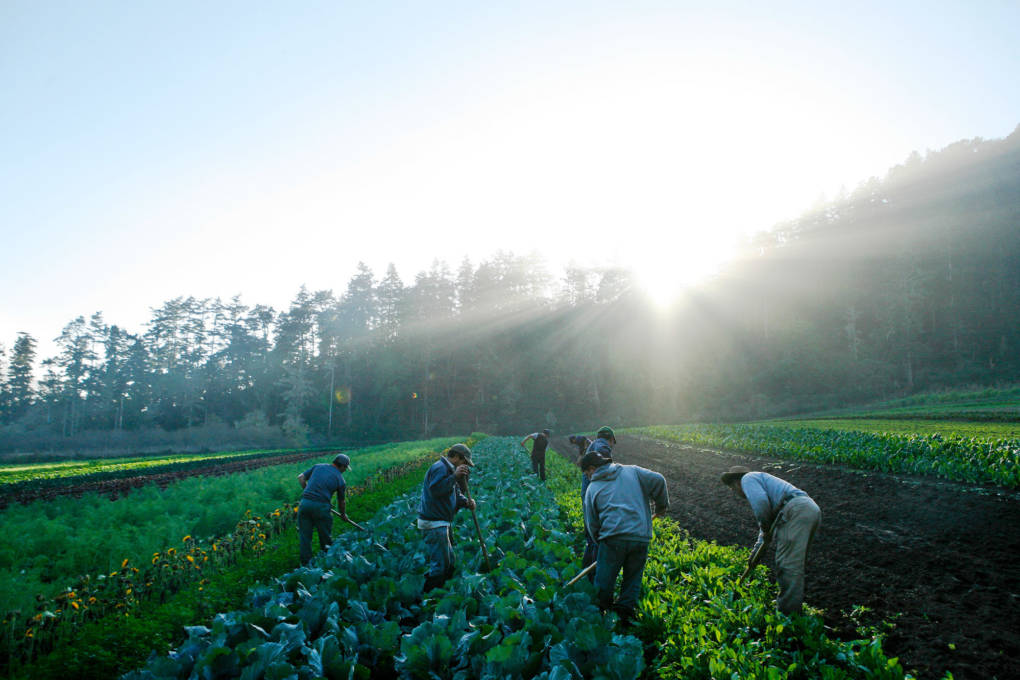
"caption": "Many large-scale farms rely heavily on immigrant labor. And many farmers are opposed to Donald Trump's strong stance against illegal immigrant.",
"description": "Many large-scale farms rely heavily on immigrant labor. And many farmers are opposed to Donald Trump's strong stance against illegal immigrant",
"title": "Many large-scale farms rely heavily on immigrant labor. And many farmers are opposed to Donald Trump's strong stance against illegal immigrant.",
"credit": "Ryan Anson/Bloomberg via Getty Images",
"status": "inherit",
"isLoading": false,
"fetchFailed": false
},
"bayareabites_113801": {
"type": "attachments",
"id": "bayareabites_113801",
"meta": {
"index": "attachments_1716263798",
"site": "bayareabites",
"id": "113801",
"found": true
},
"parent": 113800,
"imgSizes": {
"small": {
"file": "https://ww2.kqed.org/app/uploads/sites/24/2016/12/gettyimages-564013449-55_custom-e4d96b9fd560c0d9d6f8cfbfe10992625bc68405-520x346.jpg",
"width": 520,
"mimeType": "image/jpeg",
"height": 346
},
"twentyfourteen-full-width": {
"file": "https://ww2.kqed.org/app/uploads/sites/24/2016/12/gettyimages-564013449-55_custom-e4d96b9fd560c0d9d6f8cfbfe10992625bc68405-1038x576.jpg",
"width": 1038,
"mimeType": "image/jpeg",
"height": 576
},
"thumbnail": {
"file": "https://ww2.kqed.org/app/uploads/sites/24/2016/12/gettyimages-564013449-55_custom-e4d96b9fd560c0d9d6f8cfbfe10992625bc68405-160x107.jpg",
"width": 160,
"mimeType": "image/jpeg",
"height": 107
},
"fd-sm": {
"file": "https://ww2.kqed.org/app/uploads/sites/24/2016/12/gettyimages-564013449-55_custom-e4d96b9fd560c0d9d6f8cfbfe10992625bc68405-960x639.jpg",
"width": 960,
"mimeType": "image/jpeg",
"height": 639
},
"post-thumbnail": {
"file": "https://ww2.kqed.org/app/uploads/sites/24/2016/12/gettyimages-564013449-55_custom-e4d96b9fd560c0d9d6f8cfbfe10992625bc68405-672x372.jpg",
"width": 672,
"mimeType": "image/jpeg",
"height": 372
},
"xsmall": {
"file": "https://ww2.kqed.org/app/uploads/sites/24/2016/12/gettyimages-564013449-55_custom-e4d96b9fd560c0d9d6f8cfbfe10992625bc68405-375x250.jpg",
"width": 375,
"mimeType": "image/jpeg",
"height": 250
},
"kqedFullSize": {
"file": "https://ww2.kqed.org/app/uploads/sites/24/2016/12/gettyimages-564013449-55_custom-e4d96b9fd560c0d9d6f8cfbfe10992625bc68405.jpg",
"width": 3000,
"height": 1998
},
"large": {
"file": "https://ww2.kqed.org/app/uploads/sites/24/2016/12/gettyimages-564013449-55_custom-e4d96b9fd560c0d9d6f8cfbfe10992625bc68405-1020x679.jpg",
"width": 1020,
"mimeType": "image/jpeg",
"height": 679
},
"xlarge": {
"file": "https://ww2.kqed.org/app/uploads/sites/24/2016/12/gettyimages-564013449-55_custom-e4d96b9fd560c0d9d6f8cfbfe10992625bc68405-1180x786.jpg",
"width": 1180,
"mimeType": "image/jpeg",
"height": 786
},
"guest-author-50": {
"file": "https://ww2.kqed.org/app/uploads/sites/24/2016/12/gettyimages-564013449-55_custom-e4d96b9fd560c0d9d6f8cfbfe10992625bc68405-50x50.jpg",
"width": 50,
"mimeType": "image/jpeg",
"height": 50
},
"guest-author-96": {
"file": "https://ww2.kqed.org/app/uploads/sites/24/2016/12/gettyimages-564013449-55_custom-e4d96b9fd560c0d9d6f8cfbfe10992625bc68405-96x96.jpg",
"width": 96,
"mimeType": "image/jpeg",
"height": 96
},
"medium": {
"file": "https://ww2.kqed.org/app/uploads/sites/24/2016/12/gettyimages-564013449-55_custom-e4d96b9fd560c0d9d6f8cfbfe10992625bc68405-800x533.jpg",
"width": 800,
"mimeType": "image/jpeg",
"height": 533
},
"guest-author-64": {
"file": "https://ww2.kqed.org/app/uploads/sites/24/2016/12/gettyimages-564013449-55_custom-e4d96b9fd560c0d9d6f8cfbfe10992625bc68405-64x64.jpg",
"width": 64,
"mimeType": "image/jpeg",
"height": 64
},
"guest-author-32": {
"file": "https://ww2.kqed.org/app/uploads/sites/24/2016/12/gettyimages-564013449-55_custom-e4d96b9fd560c0d9d6f8cfbfe10992625bc68405-32x32.jpg",
"width": 32,
"mimeType": "image/jpeg",
"height": 32
},
"fd-lrg": {
"file": "https://ww2.kqed.org/app/uploads/sites/24/2016/12/gettyimages-564013449-55_custom-e4d96b9fd560c0d9d6f8cfbfe10992625bc68405-1920x1279.jpg",
"width": 1920,
"mimeType": "image/jpeg",
"height": 1279
},
"fd-med": {
"file": "https://ww2.kqed.org/app/uploads/sites/24/2016/12/gettyimages-564013449-55_custom-e4d96b9fd560c0d9d6f8cfbfe10992625bc68405-1180x786.jpg",
"width": 1180,
"mimeType": "image/jpeg",
"height": 786
},
"full-width": {
"file": "https://ww2.kqed.org/app/uploads/sites/24/2016/12/gettyimages-564013449-55_custom-e4d96b9fd560c0d9d6f8cfbfe10992625bc68405-1920x1279.jpg",
"width": 1920,
"mimeType": "image/jpeg",
"height": 1279
},
"detail": {
"file": "https://ww2.kqed.org/app/uploads/sites/24/2016/12/gettyimages-564013449-55_custom-e4d96b9fd560c0d9d6f8cfbfe10992625bc68405-150x150.jpg",
"width": 150,
"mimeType": "image/jpeg",
"height": 150
},
"medium_large": {
"file": "https://ww2.kqed.org/app/uploads/sites/24/2016/12/gettyimages-564013449-55_custom-e4d96b9fd560c0d9d6f8cfbfe10992625bc68405-768x511.jpg",
"width": 768,
"mimeType": "image/jpeg",
"height": 511
},
"guest-author-128": {
"file": "https://ww2.kqed.org/app/uploads/sites/24/2016/12/gettyimages-564013449-55_custom-e4d96b9fd560c0d9d6f8cfbfe10992625bc68405-128x128.jpg",
"width": 128,
"mimeType": "image/jpeg",
"height": 128
},
"xxsmall": {
"file": "https://ww2.kqed.org/app/uploads/sites/24/2016/12/gettyimages-564013449-55_custom-e4d96b9fd560c0d9d6f8cfbfe10992625bc68405-240x160.jpg",
"width": 240,
"mimeType": "image/jpeg",
"height": 160
}
},
"publishDate": 1480618133,
"modified": 1480618378,
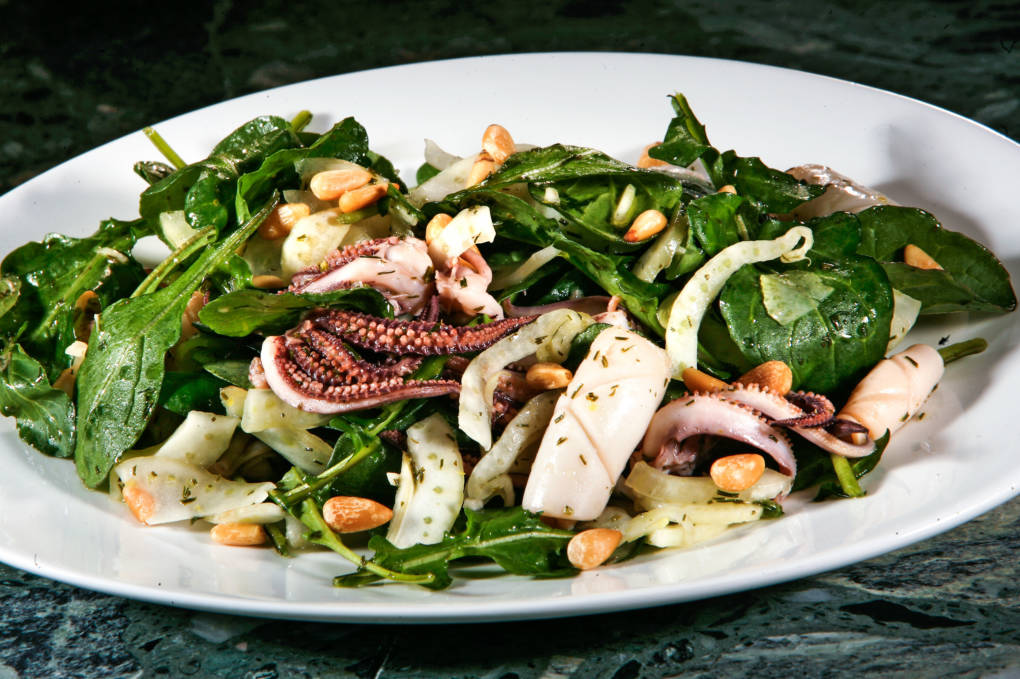
"caption": "A squid salad in Los Angeles. In California, squid is an economic driver of the seafood industry. Bit most of this squid is frozen and exported overseas to China to be processed and distributed across the globe.",
"description": "A squid salad in Los Angeles. In California, squid is an economic driver of the seafood industry. Bit most of this squid is frozen and exported overseas to China to be processed and distributed across the globe",
"title": "A squid salad in Los Angeles. In California, squid is an economic driver of the seafood industry. Bit most of this squid is frozen and exported overseas to China to be processed and distributed across the globe.",
"credit": "Rick Loomis/LA Times via Getty Images",
"status": "inherit",
"isLoading": false,
"fetchFailed": false
}
},
"audioPlayerReducer": {
"postId": "stream_live",
"isPaused": true,
"isPlaying": false,
"pfsActive": false,
"pledgeModalIsOpen": true,
"playerDrawerIsOpen": false,
"liveAudioPlayStartedAt": 0,
"liveAudioPlayContext": ""
},
"authorsReducer": {
"byline_bayareabites_116212": {
"type": "authors",
"id": "byline_bayareabites_116212",
"meta": {
"override": true
},
"slug": "byline_bayareabites_116212",
"name": "Clare Leschin-Hoar, \u003ca href=\"https://ww2.kqed.org/bayareabites/contributors/\">NPR Food\u003c/a>",
"isLoading": false
},
"byline_bayareabites_115711": {
"type": "authors",
"id": "byline_bayareabites_115711",
"meta": {
"override": true
},
"slug": "byline_bayareabites_115711",
"name": "Crystal Ponti, \u003ca href=\"https://ww2.kqed.org/bayareabites/author/nprfood/\">NPR Food\u003c/a>",
"isLoading": false
},
"byline_bayareabites_115236": {
"type": "authors",
"id": "byline_bayareabites_115236",
"meta": {
"override": true
},
"slug": "byline_bayareabites_115236",
"name": "Allison Aubrey, NPR Food",
"isLoading": false
},
"byline_bayareabites_115076": {
"type": "authors",
"id": "byline_bayareabites_115076",
"meta": {
"override": true
},
"slug": "byline_bayareabites_115076",
"name": "Jessica Boddy, \u003ca href=\"https://ww2.kqed.org/bayareabites/author/nprfood/\">NPR Food\u003c/a>",
"isLoading": false
},
"byline_bayareabites_115032": {
"type": "authors",
"id": "byline_bayareabites_115032",
"meta": {
"override": true
},
"slug": "byline_bayareabites_115032",
"name": "\u003ca href=\"http://civileats.com/author/aguth/\">Anna Guth\u003c/a>, \u003ca href=\"https://ww2.kqed.org/bayareabites/author/civileat/\">Civil Eats\u003c/a>",
"isLoading": false
},
"byline_bayareabites_114702": {
"type": "authors",
"id": "byline_bayareabites_114702",
"meta": {
"override": true
},
"slug": "byline_bayareabites_114702",
"name": "Dan Charles, NPR Food",
"isLoading": false
},
"byline_bayareabites_114606": {
"type": "authors",
"id": "byline_bayareabites_114606",
"meta": {
"override": true
},
"slug": "byline_bayareabites_114606",
"name": "Dan Charles, NPR Food",
"isLoading": false
},
"byline_bayareabites_114592": {
"type": "authors",
"id": "byline_bayareabites_114592",
"meta": {
"override": true
},
"slug": "byline_bayareabites_114592",
"name": "Dan Charles, NPR Food",
"isLoading": false
},
"byline_bayareabites_114578": {
"type": "authors",
"id": "byline_bayareabites_114578",
"meta": {
"override": true
},
"slug": "byline_bayareabites_114578",
"name": "Kristina Johnson, \u003ca href=\"https://thefern.org/\">FERN\u003c/a> at \u003ca href=\"https://ww2.kqed.org/bayareabites/author/nprfood/\">NPR Food\u003c/a>",
"isLoading": false
},
"byline_bayareabites_114566": {
"type": "authors",
"id": "byline_bayareabites_114566",
"meta": {
"override": true
},
"slug": "byline_bayareabites_114566",
"name": "Clare Leschin-Hoar, \u003ca href=\"https://ww2.kqed.org/bayareabites/author/nprfood/\">NPR Food\u003c/a>",
"isLoading": false
},
"byline_bayareabites_114399": {
"type": "authors",
"id": "byline_bayareabites_114399",
"meta": {
"override": true
},
"slug": "byline_bayareabites_114399",
"name": "Dan Charles and Allison Aubrey, NPR Food",
"isLoading": false
},
"byline_bayareabites_113800": {
"type": "authors",
"id": "byline_bayareabites_113800",
"meta": {
"override": true
},
"slug": "byline_bayareabites_113800",
"name": "Clarissa Wei, \u003ca href=\"https://ww2.kqed.org/bayareabites/author/nprfood/\">NPR Food\u003c/a>",
"isLoading": false
}
},
"pagesReducer": {
"bayareabites_category_sustainability": {
"type": "terms",
"id": "bayareabites_60",
"meta": {
"index": "terms_1716263798",
"site": "bayareabites",
"id": "60",
"score": 12.370369
},
"featImg": null,
"name": "sustainability, environment, climate change",
"description": null,
"taxonomy": "category",
"headData": {
"twImgId": null,
"twTitle": null,
"ogTitle": null,
"ogImgId": null,
"twDescription": null,
"description": null,
"title": "sustainability, environment, climate change Archives | KQED Bay Area Bites",
"ogDescription": null
},
"ttid": 23,
"slug": "sustainability",
"isLoading": false,
"title": "sustainability, environment, climate change",
"pageMeta": {
"site": "bayareabites",
"WpPageTemplate": "page-topic-editorial",
"currentPage": 10
},
"blocks": [
{
"blockName": "kqed/post-list",
"attrs": {
"layout": "cardArticle2",
"query": "posts/bayareabites?category=sustainability",
"seeMore": false,
"paginated": true,
"page": 10
}
},
{
"blockName": "kqed/ad"
}
]
}
},
"pfsSessionReducer": {},
"postsReducer": {
"stream_live": {
"type": "live",
"id": "stream_live",
"audioUrl": "https://streams.kqed.org/kqedradio",
"title": "Live Stream",
"excerpt": "Live Stream information currently unavailable.",
"link": "/radio",
"featImg": "",
"label": {
"name": "KQED Live",
"link": "/"
}
},
"stream_kqedNewscast": {
"type": "posts",
"id": "stream_kqedNewscast",
"audioUrl": "https://www.kqed.org/.stream/anon/radio/RDnews/newscast.mp3?_=1",
"title": "KQED Newscast",
"featImg": "",
"label": {
"name": "88.5 FM",
"link": "/"
}
},
"bayareabites_116212": {
"type": "posts",
"id": "bayareabites_116212",
"meta": {
"index": "posts_1716263798",
"site": "bayareabites",
"id": "116212",
"score": null,
"sort": [
1490201147000
]
},
"parent": 0,
"labelTerm": {
"site": "bayareabites"
},
"blocks": [],
"publishDate": 1490201147,
"format": "standard",
"disqusTitle": "Love Canned Tuna? More Grocers Want To Make Sure It Was Caught Responsibly",
"title": "Love Canned Tuna? More Grocers Want To Make Sure It Was Caught Responsibly",
"headTitle": "Bay Area Bites | KQED Food",
"content": "\u003cp>For the last 20 years, Americans have been having a conversation about sustainable seafood that was largely focused on fish purchased at restaurants or fresh seafood counters. Armed with seafood guides, thoughtful customers were encouraged to pose questions about where their fish was caught and what type of gear was used — questions that are far trickier to pose in front of a wall of canned tuna in the middle of a supermarket.\u003c/p>\n\u003cp>While\u003ca href=\"http://www.nrn.com/seafood-trends/poke-sweeps-nation\"> tuna poke\u003c/a> may be winning over American palates today, our consumption of fresh tuna is still dwarfed by our collective appetite for the canned stuff. According to the National Fisheries Institute, Americans ate more than 700 million pounds of canned tuna in 2015. That's 2.2 pounds per person, enough to keep it firmly among the top three seafood items Americans consume, a ranking held for more\u003ca href=\"http://www.aboutseafood.com/about/top-ten-list-for-seafood-consumption/\"> than a decade\u003c/a>.\u003c/p>\n\u003cp>Unlike the sustainability conversations we tend to have over farmed vs. wild salmon — or on issues like bycatch, mangrove destruction or human slavery that swirl around shrimp — the hand-wringing over canned tuna has largely been focused on contaminants like mercury, rather than fishing methods or the health of fish stocks.\u003c/p>\n\u003cp>A handful of retailers are about to change that.\u003c/p>\n\u003cp>Last Wednesday Whole Foods Market announced that by January 2018, all canned tuna sold in its stores or used in its prepared foods departments will be sourced from fisheries that use only pole-and-line, troll or handline catch methods that eliminate bycatch (accidental harvest of other fish, birds or mammals) because fishermen are catching tuna one at a time.\u003c/p>\n\u003cp>[ad fullwidth]\u003c/p>\n\u003cp>The new Whole Foods' policy also requires canned tuna products to come from fisheries that are certified by the Marine Stewardship Council (MSC) or are sourced from fisheries rated green (best choice) or yellow (good alternative) by the Monterey Bay Aquarium and The Safina Center. And Whole Foods has included a traceability requirement as well.\u003c/p>\n\u003cp>\"There are a lot of points in the supply chain where tuna changes hands. We want to map it from catch to can. That's critical,\" says Carrie Brownstein, global seafood quality standards coordinator for Whole Foods Market.\u003c/p>\n\u003cp>The new requirements coincide with many of the new compliance rules designed to improve traceability of imported seafood in NOAA's\u003ca href=\"https://www.federalregister.gov/documents/2016/12/09/2016-29324/magnuson-stevens-fishery-conservation-and-management-act-seafood-import-monitoring-program\"> Seafood Import Monitoring Program\u003c/a>, which also goes into effect in January 2018. Like the vast majority of seafood in the U.S., much of the canned tuna we eat\u003ca href=\"https://www.st.nmfs.noaa.gov/Assets/commercial/fus/fus15/documents/FUS2015.pdf\"> is imported\u003c/a> from overseas, with Thailand, Ecuador, Vietnam, Philippines and Indonesia topping the list.\u003c/p>\n\u003cp>Brands like American Tuna, Wild Planet, Pole and Line, Henry and Lisa's and the in-house 365 Everyday Value brand are already sold by Whole Foods, and should fare well under the store's new rules, but they aren't found in every supermarket.\u003c/p>\n\u003cp>Also rethinking the tuna aisle is Hy-Vee, a 240-store grocery chain found in the Midwest. Once the chain met its sustainable seafood goals for its fresh and frozen seafood departments, Brett Bremser, executive vice president of perishables, says the company was ready to get its private canned tuna label up to spec as well.\u003c/p>\n\u003cp>In late January, Hy-Vee announced its\u003ca href=\"https://www.hy-vee.com/company/press-room/press-releases/hy-vee-paves-way-in-sustainable-seafood-with-new-shelf-stable-tuna-policy.aspx\"> new canned tuna policy\u003c/a>, citing concerns over high levels of bycatch in fisheries that use fish-aggregating devices, also known as FADs, used by some of the larger canned tuna companies\u003ca href=\"http://www.bumblebee.com/tracemycatch/results#method\"> like Bumble Bee Foods\u003c/a> to catch skipjack tuna.\u003c/p>\n\u003cp>\"There's a huge issue of bycatch with those,\" says Ryan Bigelow, program engagement manager with Seafood Watch. \"FADs can be anything from a bamboo raft in the ocean to a large platform. You wait for the little fish to congregate under it, and then other fish come, and soon, you have all sorts of animals swarming around the platform. A purse seine is used to surround it, and it all goes into the net\" — including animals like dolphins, sea birds, rays, juvenile tuna and other non-targeted fish.\u003c/p>\n\u003cp>Like Whole Foods, Hy-Vee will be sourcing canned tuna that is certified by the MSC, or is harvested from fisheries that are rated green or yellow by the Monterey Bay Aquarium's Seafood Watch program. However, Hy-Vee is not yet incorporating these standards into its prepared foods department.\u003c/p>\n\u003cp>Pittsburgh-based Giant Eagle\u003ca href=\"http://www.csnews.com/node/88244?nopaging=1\"> announced\u003c/a> its own \"ethical canned tuna policy\" — pledging to source tuna from well-managed stocks for its store brand — last year. And back in 2012, Safeway led the way, committing to source its\u003ca href=\"https://www.sustainablefoodnews.com/printstory.php?news_id=15260\"> private label skipjack\u003c/a> canned tuna from FAD-free fisheries.\u003c/p>\n\u003cp>Kathleen Mullen-Ley, a project director with\u003ca href=\"https://www.fishwise.org/\"> FishWise\u003c/a>, a nonprofit sustainable seafood consultancy that helped Hy-Vee develop its canned tuna policy, says she expects more retailers to follow suit.\u003c/p>\n\u003cp>\"In the past, the canned fish aisle was not associated with a retailer's brand in nearly the same way as fresh and frozen seafood,\" she says in an email to NPR. \"It's not intuitive for people to associate a small gray can of tuna back with the ocean.\"\u003c/p>\n\u003cp>Most canned tuna products sold by retailers don't have their name on it. Brands like Chicken of the Sea, Starkist and Bumble Bee dominate the market, so there was less incentive for retailers to focus their attention here, she says.\u003c/p>\n\u003cp>But Hy-Vee's Bremser says the segment is ripe for change.\u003c/p>\n\u003cp>\"The manufacturers have to understand it's important to us and to our customers. As more stores like Hy-Vee, Whole Foods and Giant Eagle take strong positions on canned tuna, the major label suppliers will have to step up as well,\" says Bremser.\u003c/p>\n\u003cp>The industry does seem to be moving in that direction. In 2015, Bumble Bee launched its\u003ca href=\"http://www.bumblebee.com/tracemycatch/\"> Trace My Catch\u003c/a> program, where consumers can type in a code found on their can of tuna to get more information on the species and gear used. But David Pinsky, senior oceans campaigner for Greenpeace, which developed its own\u003ca href=\"http://www.greenpeace.org/usa/oceans/tuna-guide/\"> tuna shopping guide\u003c/a>, says it doesn't go far enough.\u003c/p>\n\u003cp>\"It gives the consumer the impression that Bumble Bee is sourcing sustainable seafood, but it lacks information on the impacts on species. FADS and long lines have significant impacts on juvenile tuna, sharks, rays and seabirds. That's not mentioned in the traceability,\" he says. \"And there's no mention of human rights concerns.\"\u003c/p>\n\u003cp>Bigelow of Seafood Watch says what's important to understand is that just because canned tuna looks the same, doesn't mean it is. And he says there are a few key phrases consumers should look for on can labels.\u003c/p>\n\u003cp>\"Dolphin-safe isn't enough anymore,\" he says. \"Look for pole and line caught, labels that say FAD free, and some kind of certification is usually a helpful guide. Those are the big ones.\"\u003c/p>\n\u003chr>\n\u003cp>\u003ca href=\"http://www.leschin-hoar.com/\">Clare Leschin-Hoar\u003c/a>\u003cem> is a journalist based in San Diego who covers food policy and sustainability issues.\u003c/em> \u003c/p>\n\u003cp>[ad floatright]\u003c/p>\n\u003cp> \u003cem>Copyright 2017 \u003ca href=\"http://www.npr.org/\" target=\"_blank\">NPR\u003c/a>.\u003c/em> \u003c/p>\n\n",
"disqusIdentifier": "116212 https://ww2.kqed.org/bayareabites/?p=116212",
"disqusUrl": "https://ww2.kqed.org/bayareabites/2017/03/22/love-canned-tuna-more-grocers-want-to-make-sure-it-was-caught-responsibly/",
"stats": {
"hasVideo": false,
"hasChartOrMap": false,
"hasAudio": false,
"hasPolis": false,
"wordCount": 1153,
"hasGoogleForm": false,
"hasGallery": false,
"hasHearkenModule": false,
"iframeSrcs": [],
"paragraphCount": 27
},
"modified": 1490201182,
"excerpt": "Whole Foods this month became the latest retailer to adopt a policy to ensure the canned tuna it sells is caught with methods that don't decimate fish stocks or trap other animals.",
"headData": {
"twImgId": "",
"twTitle": "",
"ogTitle": "",
"ogImgId": "",
"twDescription": "",
"description": "Whole Foods this month became the latest retailer to adopt a policy to ensure the canned tuna it sells is caught with methods that don't decimate fish stocks or trap other animals.",
"title": "Love Canned Tuna? More Grocers Want To Make Sure It Was Caught Responsibly | KQED",
"ogDescription": "",
"schema": {
"@context": "https://schema.org",
"@type": "Article",
"headline": "Love Canned Tuna? More Grocers Want To Make Sure It Was Caught Responsibly",
"datePublished": "2017-03-22T09:45:47-07:00",
"dateModified": "2017-03-22T09:46:22-07:00",
"image": "https://cdn.kqed.org/wp-content/uploads/2020/02/KQED-OG-Image@1x.png"
}
},
"guestAuthors": [],
"slug": "love-canned-tuna-more-grocers-want-to-make-sure-it-was-caught-responsibly",
"status": "publish",
"nprApiLink": "http://api.npr.org/query?id=520566711&apiKey=MDAxOTAwOTE4MDEyMTkxMDAzNjczZDljZA004",
"nprByline": "Clare Leschin-Hoar, \u003ca href=\"https://ww2.kqed.org/bayareabites/contributors/\">NPR Food\u003c/a>",
"nprStoryDate": "Wed, 22 Mar 2017 07:00:00 -0400",
"nprLastModifiedDate": "Wed, 22 Mar 2017 11:18:02 -0400",
"nprHtmlLink": "http://www.npr.org/sections/thesalt/2017/03/22/520566711/love-canned-tuna-more-grocers-want-to-make-sure-it-was-caught-responsibly?ft=nprml&f=520566711",
"nprImageAgency": "Whole Foods Market",
"nprStoryId": "520566711",
"nprRetrievedStory": "1",
"nprPubDate": "Wed, 22 Mar 2017 11:18:00 -0400",
"path": "/bayareabites/116212/love-canned-tuna-more-grocers-want-to-make-sure-it-was-caught-responsibly",
"audioTrackLength": null,
"parsedContent": [
{
"type": "contentString",
"content": "\u003cdiv class=\"post-body\">\u003cp>\u003cp>For the last 20 years, Americans have been having a conversation about sustainable seafood that was largely focused on fish purchased at restaurants or fresh seafood counters. Armed with seafood guides, thoughtful customers were encouraged to pose questions about where their fish was caught and what type of gear was used — questions that are far trickier to pose in front of a wall of canned tuna in the middle of a supermarket.\u003c/p>\n\u003cp>While\u003ca href=\"http://www.nrn.com/seafood-trends/poke-sweeps-nation\"> tuna poke\u003c/a> may be winning over American palates today, our consumption of fresh tuna is still dwarfed by our collective appetite for the canned stuff. According to the National Fisheries Institute, Americans ate more than 700 million pounds of canned tuna in 2015. That's 2.2 pounds per person, enough to keep it firmly among the top three seafood items Americans consume, a ranking held for more\u003ca href=\"http://www.aboutseafood.com/about/top-ten-list-for-seafood-consumption/\"> than a decade\u003c/a>.\u003c/p>\n\u003cp>Unlike the sustainability conversations we tend to have over farmed vs. wild salmon — or on issues like bycatch, mangrove destruction or human slavery that swirl around shrimp — the hand-wringing over canned tuna has largely been focused on contaminants like mercury, rather than fishing methods or the health of fish stocks.\u003c/p>\n\u003cp>A handful of retailers are about to change that.\u003c/p>\n\u003cp>Last Wednesday Whole Foods Market announced that by January 2018, all canned tuna sold in its stores or used in its prepared foods departments will be sourced from fisheries that use only pole-and-line, troll or handline catch methods that eliminate bycatch (accidental harvest of other fish, birds or mammals) because fishermen are catching tuna one at a time.\u003c/p>\n\u003cp>\u003c/p>\u003c/div>",
"attributes": {
"named": {},
"numeric": []
}
},
{
"type": "component",
"content": "",
"name": "ad",
"attributes": {
"named": {
"label": "fullwidth"
},
"numeric": [
"fullwidth"
]
}
},
{
"type": "contentString",
"content": "\u003cdiv class=\"post-body\">\u003cp>\u003c/p>\n\u003cp>The new Whole Foods' policy also requires canned tuna products to come from fisheries that are certified by the Marine Stewardship Council (MSC) or are sourced from fisheries rated green (best choice) or yellow (good alternative) by the Monterey Bay Aquarium and The Safina Center. And Whole Foods has included a traceability requirement as well.\u003c/p>\n\u003cp>\"There are a lot of points in the supply chain where tuna changes hands. We want to map it from catch to can. That's critical,\" says Carrie Brownstein, global seafood quality standards coordinator for Whole Foods Market.\u003c/p>\n\u003cp>The new requirements coincide with many of the new compliance rules designed to improve traceability of imported seafood in NOAA's\u003ca href=\"https://www.federalregister.gov/documents/2016/12/09/2016-29324/magnuson-stevens-fishery-conservation-and-management-act-seafood-import-monitoring-program\"> Seafood Import Monitoring Program\u003c/a>, which also goes into effect in January 2018. Like the vast majority of seafood in the U.S., much of the canned tuna we eat\u003ca href=\"https://www.st.nmfs.noaa.gov/Assets/commercial/fus/fus15/documents/FUS2015.pdf\"> is imported\u003c/a> from overseas, with Thailand, Ecuador, Vietnam, Philippines and Indonesia topping the list.\u003c/p>\n\u003cp>Brands like American Tuna, Wild Planet, Pole and Line, Henry and Lisa's and the in-house 365 Everyday Value brand are already sold by Whole Foods, and should fare well under the store's new rules, but they aren't found in every supermarket.\u003c/p>\n\u003cp>Also rethinking the tuna aisle is Hy-Vee, a 240-store grocery chain found in the Midwest. Once the chain met its sustainable seafood goals for its fresh and frozen seafood departments, Brett Bremser, executive vice president of perishables, says the company was ready to get its private canned tuna label up to spec as well.\u003c/p>\n\u003cp>In late January, Hy-Vee announced its\u003ca href=\"https://www.hy-vee.com/company/press-room/press-releases/hy-vee-paves-way-in-sustainable-seafood-with-new-shelf-stable-tuna-policy.aspx\"> new canned tuna policy\u003c/a>, citing concerns over high levels of bycatch in fisheries that use fish-aggregating devices, also known as FADs, used by some of the larger canned tuna companies\u003ca href=\"http://www.bumblebee.com/tracemycatch/results#method\"> like Bumble Bee Foods\u003c/a> to catch skipjack tuna.\u003c/p>\n\u003cp>\"There's a huge issue of bycatch with those,\" says Ryan Bigelow, program engagement manager with Seafood Watch. \"FADs can be anything from a bamboo raft in the ocean to a large platform. You wait for the little fish to congregate under it, and then other fish come, and soon, you have all sorts of animals swarming around the platform. A purse seine is used to surround it, and it all goes into the net\" — including animals like dolphins, sea birds, rays, juvenile tuna and other non-targeted fish.\u003c/p>\n\u003cp>Like Whole Foods, Hy-Vee will be sourcing canned tuna that is certified by the MSC, or is harvested from fisheries that are rated green or yellow by the Monterey Bay Aquarium's Seafood Watch program. However, Hy-Vee is not yet incorporating these standards into its prepared foods department.\u003c/p>\n\u003cp>Pittsburgh-based Giant Eagle\u003ca href=\"http://www.csnews.com/node/88244?nopaging=1\"> announced\u003c/a> its own \"ethical canned tuna policy\" — pledging to source tuna from well-managed stocks for its store brand — last year. And back in 2012, Safeway led the way, committing to source its\u003ca href=\"https://www.sustainablefoodnews.com/printstory.php?news_id=15260\"> private label skipjack\u003c/a> canned tuna from FAD-free fisheries.\u003c/p>\n\u003cp>Kathleen Mullen-Ley, a project director with\u003ca href=\"https://www.fishwise.org/\"> FishWise\u003c/a>, a nonprofit sustainable seafood consultancy that helped Hy-Vee develop its canned tuna policy, says she expects more retailers to follow suit.\u003c/p>\n\u003cp>\"In the past, the canned fish aisle was not associated with a retailer's brand in nearly the same way as fresh and frozen seafood,\" she says in an email to NPR. \"It's not intuitive for people to associate a small gray can of tuna back with the ocean.\"\u003c/p>\n\u003cp>Most canned tuna products sold by retailers don't have their name on it. Brands like Chicken of the Sea, Starkist and Bumble Bee dominate the market, so there was less incentive for retailers to focus their attention here, she says.\u003c/p>\n\u003cp>But Hy-Vee's Bremser says the segment is ripe for change.\u003c/p>\n\u003cp>\"The manufacturers have to understand it's important to us and to our customers. As more stores like Hy-Vee, Whole Foods and Giant Eagle take strong positions on canned tuna, the major label suppliers will have to step up as well,\" says Bremser.\u003c/p>\n\u003cp>The industry does seem to be moving in that direction. In 2015, Bumble Bee launched its\u003ca href=\"http://www.bumblebee.com/tracemycatch/\"> Trace My Catch\u003c/a> program, where consumers can type in a code found on their can of tuna to get more information on the species and gear used. But David Pinsky, senior oceans campaigner for Greenpeace, which developed its own\u003ca href=\"http://www.greenpeace.org/usa/oceans/tuna-guide/\"> tuna shopping guide\u003c/a>, says it doesn't go far enough.\u003c/p>\n\u003cp>\"It gives the consumer the impression that Bumble Bee is sourcing sustainable seafood, but it lacks information on the impacts on species. FADS and long lines have significant impacts on juvenile tuna, sharks, rays and seabirds. That's not mentioned in the traceability,\" he says. \"And there's no mention of human rights concerns.\"\u003c/p>\n\u003cp>Bigelow of Seafood Watch says what's important to understand is that just because canned tuna looks the same, doesn't mean it is. And he says there are a few key phrases consumers should look for on can labels.\u003c/p>\n\u003cp>\"Dolphin-safe isn't enough anymore,\" he says. \"Look for pole and line caught, labels that say FAD free, and some kind of certification is usually a helpful guide. Those are the big ones.\"\u003c/p>\n\u003chr>\n\u003cp>\u003ca href=\"http://www.leschin-hoar.com/\">Clare Leschin-Hoar\u003c/a>\u003cem> is a journalist based in San Diego who covers food policy and sustainability issues.\u003c/em> \u003c/p>\n\u003cp>\u003c/p>\u003c/div>",
"attributes": {
"named": {},
"numeric": []
}
},
{
"type": "component",
"content": "",
"name": "ad",
"attributes": {
"named": {
"label": "floatright"
},
"numeric": [
"floatright"
]
}
},
{
"type": "contentString",
"content": "\u003cdiv class=\"post-body\">\u003cp>\u003c/p>\n\u003cp> \u003cem>Copyright 2017 \u003ca href=\"http://www.npr.org/\" target=\"_blank\">NPR\u003c/a>.\u003c/em> \u003c/p>\n\n\u003c/div>\u003c/p>",
"attributes": {
"named": {},
"numeric": []
}
}
],
"link": "/bayareabites/116212/love-canned-tuna-more-grocers-want-to-make-sure-it-was-caught-responsibly",
"authors": [
"byline_bayareabites_116212"
],
"categories": [
"bayareabites_10028",
"bayareabites_358",
"bayareabites_60"
],
"tags": [
"bayareabites_1956",
"bayareabites_3063"
],
"featImg": "bayareabites_116213",
"label": "bayareabites"
},
"bayareabites_115711": {
"type": "posts",
"id": "bayareabites_115711",
"meta": {
"index": "posts_1716263798",
"site": "bayareabites",
"id": "115711",
"score": null,
"sort": [
1488575173000
]
},
"parent": 0,
"labelTerm": {
"site": "bayareabites"
},
"blocks": [],
"publishDate": 1488575173,
"format": "standard",
"disqusTitle": "Rise Of The Robot Bees: Tiny Drones Turned Into Artificial Pollinators",
"title": "Rise Of The Robot Bees: Tiny Drones Turned Into Artificial Pollinators",
"headTitle": "Bay Area Bites | KQED Food",
"content": "\u003cp>Near Esparto, in the beautiful Capay Valley region of central California, 1,400 young almond trees flourish in a century-old orchard overlooking the hills. Since November, they've stood in perfect rows without a hint of foliage — resting, naked and dormant, for the upcoming growing season. Their branches now swell with bright pastel blooms in preparation for pollination.\u003c/p>\n\u003cp>Like most almond growers, Brian Paddock, owner of \u003ca href=\"http://chorganicalmonds.com/index.html\">Capay Hills Orchard\u003c/a>, relies on bees to provide this important aspect of crop development. \"No bees, no almonds. It's that simple,\" he says.\u003c/p>\n\u003cp>Often considered pests, frightful little creatures with a nasty sting, bees play a critical role in agriculture and the pollination of countless crops. Without them, many varieties of fruits and vegetables would come to an end. It's an agricultural doomsday scenario that has Paddock worried.\u003c/p>\n\u003cp>Bee deaths have been on the rise, with losses outpacing colonies' ability to regenerate. Last year, the U.S. \u003ca href=\"https://beeinformed.org/2016/05/10/nations-beekeepers-lost-44-percent-of-bees-in-2015-16/\">lost 44 percent\u003c/a> of all honeybee colonies — a species essential to commercial pollination in this country. Other species of bees have neared mass extinction, including the \u003ca href=\"https://www.fws.gov/midwest/endangered/insects/rpbb/factsheetrpbb.html\">rusty patch bumble bee\u003c/a> and seven species of \u003ca href=\"http://www.xerces.org/hawaiian-yellow-faced-bees/\">Hawaiian yellow-faced bees\u003c/a>.\u003c/p>\n\u003cp>A world without bees may seem far-fetched, but experts are looking for ways to help plants survive without them. Eijiro Miyako, a researcher at Japan's National Institute of Advanced Industrial Science and Technology, has designed what he believes could one day be a partial solution: \u003ca href=\"http://www.sciencedirect.com/science/article/pii/S2451929417300323\">an insect-sized drone capable of artificial pollination\u003c/a>. Coated with a patch of horse hair bristles and an ionic liquid gel, these pint-sized robots can collect and transfer pollen from one plant to another.\u003c/p>\n\u003cp>[ad fullwidth]\u003c/p>\n\u003cp>The project stems from a serendipitous moment. Miyako had previously experimented with using the specialized gel for electrochemical applications. When the gel performed poorly, he tucked the bottles away in a drawer and forgot about them — until he moved out of his lab two years ago. As soon as he rediscovered the gel, he thought about the pollination crisis and honeybee decline.\u003c/p>\n\u003cp>Conventional gels, Miyako explains, are mainly made of water and lose their stickiness over time. But his ionic liquid gel, by contrast, is a substance with a long-lasting \"lift-and-stick-again\" adhesive quality – ideal for moving pollen from one plant to the next.\u003c/p>\n\u003cp>\"The continued adhesiveness and non-volatility of the ionic liquid gel was exciting,\" says Miyako.\u003c/p>\n\u003cfigure id=\"attachment_115712\" class=\"wp-caption aligncenter\" style=\"max-width: 812px\">\u003cimg src=\"https://ww2.kqed.org/bayareabites/wp-content/uploads/sites/24/2017/03/drone2_custom-506189190b4a2b015b8b71a86bd39219e4bd11b9.png\" alt=\"The insect-sized drones use horse hairs coated with ionic liquid gel to mimic the fuzzy exterior of bees and provide an electric charge to keep the grains attached.\" width=\"812\" height=\"608\" class=\"size-full wp-image-115712\" srcset=\"https://ww2.kqed.org/app/uploads/sites/24/2017/03/drone2_custom-506189190b4a2b015b8b71a86bd39219e4bd11b9.png 812w, https://ww2.kqed.org/app/uploads/sites/24/2017/03/drone2_custom-506189190b4a2b015b8b71a86bd39219e4bd11b9-160x120.png 160w, https://ww2.kqed.org/app/uploads/sites/24/2017/03/drone2_custom-506189190b4a2b015b8b71a86bd39219e4bd11b9-800x599.png 800w, https://ww2.kqed.org/app/uploads/sites/24/2017/03/drone2_custom-506189190b4a2b015b8b71a86bd39219e4bd11b9-768x575.png 768w, https://ww2.kqed.org/app/uploads/sites/24/2017/03/drone2_custom-506189190b4a2b015b8b71a86bd39219e4bd11b9-240x180.png 240w, https://ww2.kqed.org/app/uploads/sites/24/2017/03/drone2_custom-506189190b4a2b015b8b71a86bd39219e4bd11b9-375x281.png 375w, https://ww2.kqed.org/app/uploads/sites/24/2017/03/drone2_custom-506189190b4a2b015b8b71a86bd39219e4bd11b9-520x389.png 520w\" sizes=\"(max-width: 812px) 100vw, 812px\">\u003cfigcaption class=\"wp-caption-text\">The insect-sized drones use horse hairs coated with ionic liquid gel to mimic the fuzzy exterior of bees and provide an electric charge to keep the grains attached. \u003ccite>(Courtesy of Dr. Eijiro Miyako)\u003c/cite>\u003c/figcaption>\u003c/figure>\n\u003cp>The team first tested the biocompatibility and eco-friendliness of the gel against ants (which are also pollinators) and cells from mice, and found that it had no harmful effects after three days. And when a drop landed on the floor and attached to an ordinary piece of dust, he was sold.\u003c/p>\n\u003cp>Miyako performed additional tests on living samples. In one experiment, he placed ants in a box of tulips. One subset of the insects had the gel applied to their backs, while the others remained untouched. Those with the sticky residue collected pollen from the flowers.\u003c/p>\n\u003cp>Another experiment, involving houseflies (\u003cem>Musca domestica\u003c/em>), showed that the gel had a camouflage effect, changing color with different sources of light, which could help the pollinators avoid predators. (Yep, houseflies are pollinators, too.)\u003c/p>\n\u003cp>With the live-model tests deemed a success, Miyako turned his attention to drones. He settled on a bee-sized, four-propeller drone, commercially available for around $100 each. He and his colleagues found that the gel alone was not enough to hold the pollen, so they added horse hair to mimic the fuzzy exterior of bees and provide an electric charge to keep the grains attached. Using fluorescent microscopy, the team observed pollen glowing in test tubes – offering strong proof that fertilization was successful.\u003c/p>\n\u003cp>Although artificial pollination is already possible, it's a tedious, time-consuming process. When done by hand, using a brush to apply the pollen, a person can pollinate five to 10 trees a day, depending on the size of the trees. Tackling thousands of trees takes major manpower and a hefty budget.\u003c/p>\n\u003cp>But even if cost were no object, an army of pollinating robot bees would face myriad obstacles.\u003c/p>\n\u003cp>\"There are 1 million acres of almond trees in California,\" says \u003ca href=\"https://www.beelab.umn.edu/meet-us/spivak-honey-bee-lab\">Marla Spivak\u003c/a>, a MacArthur Fellow and entomologist at the University of Minnesota. \"Every flower needs to be pollinated to set the nut. Two million colonies of bees are trucked in to pollinate the almonds, and each colony has between ten and twenty thousand foragers. How many robots would be needed?\"\u003c/p>\n\u003cp>She notes there are 20,000 species of bees in the world, each with unique flight patterns and body sizes to get into different flowers. Bumble bees, for example, are far better pollinators for tomatoes, while leafcutter bees are aces at alfalfa. The diversity of bees and flight patterns leads to more efficient and effective pollination.\u003c/p>\n\u003cp>Although Spivak is skeptical about using drones for fertilization, she believes robots could be beneficial in delivering pesticides — which \u003ca href=\"http://www.npr.org/sections/thesalt/2016/10/18/496100190/cut-down-on-bee-killing-pesticides-easier-said-than-done\">can harm bee health\u003c/a> — in a very precise way to reduce drift and overuse.\u003c/p>\n\u003cp>Miyako's current robo-bee prototype is still very much a work in progress, far from a real-world field test. For one thing, it's not autonomous. The drones must be remote-controlled, by humans, and can be difficult to maneuver. \"It was hard to control the robotic pollinators so that they would precisely hit the target sites,\" says Miyako. He's looking into incorporating artificial intelligence, GPS, and a high-resolution camera in future prototypes.\u003c/p>\n\u003cp>\u003ca href=\"http://www.entomology.ucr.edu/faculty/McFrederick.html\">Quinn McFrederick\u003c/a>, an entomologist at the University of California, Riverside, sees some potential for eventually using drones to pollinate commercial crops, especially if programmed with artificial intelligence. But he, like many experts, says it makes much more sense to protect our natural pollinators than to develop new technology.\u003c/p>\n\u003cp>\"On top of more practical arguments, such as costs to smaller farms,\" he says, \"I would not like to live in a world where bees are replaced by plastic machines. Let's focus on protecting the biodiversity we still have left.\"\u003c/p>\n\u003cp>Miyako acknowledges the skepticism about his project, but notes that he sees his drones not as a replacement for bees, but as a potential future ally in the face of extinction.\u003c/p>\n\u003chr>\n\u003cp>\u003cem>Crystal Ponti is a science, technology and health reporter based in Augusta, Maine.\u003c/em> \u003c/p>\n\u003cp>[ad floatright]\u003c/p>\n\u003cp>\u003cem>Copyright 2017 \u003ca href=\"http://www.npr.org/\" target=\"_blank\">NPR\u003c/a>.\u003c/em> \u003c/p>\n\n",
"disqusIdentifier": "115711 https://ww2.kqed.org/bayareabites/?p=115711",
"disqusUrl": "https://ww2.kqed.org/bayareabites/2017/03/03/rise-of-the-robot-bees-tiny-drones-turned-into-artificial-pollinators/",
"stats": {
"hasVideo": false,
"hasChartOrMap": false,
"hasAudio": false,
"hasPolis": false,
"wordCount": 1090,
"hasGoogleForm": false,
"hasGallery": false,
"hasHearkenModule": false,
"iframeSrcs": [],
"paragraphCount": 25
},
"modified": 1488575173,
"excerpt": "Honeybees are a critical part of agriculture, pollinating many of our favorite crops. But bee deaths are on the rise. In Japan, scientists are testing whether insect-sized drones can help do the job.",
"headData": {
"twImgId": "",
"twTitle": "",
"ogTitle": "",
"ogImgId": "",
"twDescription": "",
"description": "Honeybees are a critical part of agriculture, pollinating many of our favorite crops. But bee deaths are on the rise. In Japan, scientists are testing whether insect-sized drones can help do the job.",
"title": "Rise Of The Robot Bees: Tiny Drones Turned Into Artificial Pollinators | KQED",
"ogDescription": "",
"schema": {
"@context": "https://schema.org",
"@type": "Article",
"headline": "Rise Of The Robot Bees: Tiny Drones Turned Into Artificial Pollinators",
"datePublished": "2017-03-03T13:06:13-08:00",
"dateModified": "2017-03-03T13:06:13-08:00",
"image": "https://cdn.kqed.org/wp-content/uploads/2020/02/KQED-OG-Image@1x.png"
}
},
"guestAuthors": [],
"slug": "rise-of-the-robot-bees-tiny-drones-turned-into-artificial-pollinators",
"status": "publish",
"nprApiLink": "http://api.npr.org/query?id=517785082&apiKey=MDAxOTAwOTE4MDEyMTkxMDAzNjczZDljZA004",
"nprByline": "Crystal Ponti, \u003ca href=\"https://ww2.kqed.org/bayareabites/author/nprfood/\">NPR Food\u003c/a>",
"nprStoryDate": "Fri, 03 Mar 2017 08:00:14 -0500",
"nprLastModifiedDate": "Fri, 03 Mar 2017 08:00:14 -0500",
"nprHtmlLink": "http://www.npr.org/sections/thesalt/2017/03/03/517785082/rise-of-the-robot-bees-tiny-drones-turned-into-artificial-pollinators?ft=nprml&f=517785082",
"nprImageAgency": "Courtesy of Dr. Eijiro Miyako",
"nprStoryId": "517785082",
"nprRetrievedStory": "1",
"nprPubDate": "Fri, 03 Mar 2017 08:00:00 -0500",
"path": "/bayareabites/115711/rise-of-the-robot-bees-tiny-drones-turned-into-artificial-pollinators",
"audioTrackLength": null,
"parsedContent": [
{
"type": "contentString",
"content": "\u003cdiv class=\"post-body\">\u003cp>\u003cp>Near Esparto, in the beautiful Capay Valley region of central California, 1,400 young almond trees flourish in a century-old orchard overlooking the hills. Since November, they've stood in perfect rows without a hint of foliage — resting, naked and dormant, for the upcoming growing season. Their branches now swell with bright pastel blooms in preparation for pollination.\u003c/p>\n\u003cp>Like most almond growers, Brian Paddock, owner of \u003ca href=\"http://chorganicalmonds.com/index.html\">Capay Hills Orchard\u003c/a>, relies on bees to provide this important aspect of crop development. \"No bees, no almonds. It's that simple,\" he says.\u003c/p>\n\u003cp>Often considered pests, frightful little creatures with a nasty sting, bees play a critical role in agriculture and the pollination of countless crops. Without them, many varieties of fruits and vegetables would come to an end. It's an agricultural doomsday scenario that has Paddock worried.\u003c/p>\n\u003cp>Bee deaths have been on the rise, with losses outpacing colonies' ability to regenerate. Last year, the U.S. \u003ca href=\"https://beeinformed.org/2016/05/10/nations-beekeepers-lost-44-percent-of-bees-in-2015-16/\">lost 44 percent\u003c/a> of all honeybee colonies — a species essential to commercial pollination in this country. Other species of bees have neared mass extinction, including the \u003ca href=\"https://www.fws.gov/midwest/endangered/insects/rpbb/factsheetrpbb.html\">rusty patch bumble bee\u003c/a> and seven species of \u003ca href=\"http://www.xerces.org/hawaiian-yellow-faced-bees/\">Hawaiian yellow-faced bees\u003c/a>.\u003c/p>\n\u003cp>A world without bees may seem far-fetched, but experts are looking for ways to help plants survive without them. Eijiro Miyako, a researcher at Japan's National Institute of Advanced Industrial Science and Technology, has designed what he believes could one day be a partial solution: \u003ca href=\"http://www.sciencedirect.com/science/article/pii/S2451929417300323\">an insect-sized drone capable of artificial pollination\u003c/a>. Coated with a patch of horse hair bristles and an ionic liquid gel, these pint-sized robots can collect and transfer pollen from one plant to another.\u003c/p>\n\u003cp>\u003c/p>\u003c/div>",
"attributes": {
"named": {},
"numeric": []
}
},
{
"type": "component",
"content": "",
"name": "ad",
"attributes": {
"named": {
"label": "fullwidth"
},
"numeric": [
"fullwidth"
]
}
},
{
"type": "contentString",
"content": "\u003cdiv class=\"post-body\">\u003cp>\u003c/p>\n\u003cp>The project stems from a serendipitous moment. Miyako had previously experimented with using the specialized gel for electrochemical applications. When the gel performed poorly, he tucked the bottles away in a drawer and forgot about them — until he moved out of his lab two years ago. As soon as he rediscovered the gel, he thought about the pollination crisis and honeybee decline.\u003c/p>\n\u003cp>Conventional gels, Miyako explains, are mainly made of water and lose their stickiness over time. But his ionic liquid gel, by contrast, is a substance with a long-lasting \"lift-and-stick-again\" adhesive quality – ideal for moving pollen from one plant to the next.\u003c/p>\n\u003cp>\"The continued adhesiveness and non-volatility of the ionic liquid gel was exciting,\" says Miyako.\u003c/p>\n\u003cfigure id=\"attachment_115712\" class=\"wp-caption aligncenter\" style=\"max-width: 812px\">\u003cimg src=\"https://ww2.kqed.org/bayareabites/wp-content/uploads/sites/24/2017/03/drone2_custom-506189190b4a2b015b8b71a86bd39219e4bd11b9.png\" alt=\"The insect-sized drones use horse hairs coated with ionic liquid gel to mimic the fuzzy exterior of bees and provide an electric charge to keep the grains attached.\" width=\"812\" height=\"608\" class=\"size-full wp-image-115712\" srcset=\"https://ww2.kqed.org/app/uploads/sites/24/2017/03/drone2_custom-506189190b4a2b015b8b71a86bd39219e4bd11b9.png 812w, https://ww2.kqed.org/app/uploads/sites/24/2017/03/drone2_custom-506189190b4a2b015b8b71a86bd39219e4bd11b9-160x120.png 160w, https://ww2.kqed.org/app/uploads/sites/24/2017/03/drone2_custom-506189190b4a2b015b8b71a86bd39219e4bd11b9-800x599.png 800w, https://ww2.kqed.org/app/uploads/sites/24/2017/03/drone2_custom-506189190b4a2b015b8b71a86bd39219e4bd11b9-768x575.png 768w, https://ww2.kqed.org/app/uploads/sites/24/2017/03/drone2_custom-506189190b4a2b015b8b71a86bd39219e4bd11b9-240x180.png 240w, https://ww2.kqed.org/app/uploads/sites/24/2017/03/drone2_custom-506189190b4a2b015b8b71a86bd39219e4bd11b9-375x281.png 375w, https://ww2.kqed.org/app/uploads/sites/24/2017/03/drone2_custom-506189190b4a2b015b8b71a86bd39219e4bd11b9-520x389.png 520w\" sizes=\"(max-width: 812px) 100vw, 812px\">\u003cfigcaption class=\"wp-caption-text\">The insect-sized drones use horse hairs coated with ionic liquid gel to mimic the fuzzy exterior of bees and provide an electric charge to keep the grains attached. \u003ccite>(Courtesy of Dr. Eijiro Miyako)\u003c/cite>\u003c/figcaption>\u003c/figure>\n\u003cp>The team first tested the biocompatibility and eco-friendliness of the gel against ants (which are also pollinators) and cells from mice, and found that it had no harmful effects after three days. And when a drop landed on the floor and attached to an ordinary piece of dust, he was sold.\u003c/p>\n\u003cp>Miyako performed additional tests on living samples. In one experiment, he placed ants in a box of tulips. One subset of the insects had the gel applied to their backs, while the others remained untouched. Those with the sticky residue collected pollen from the flowers.\u003c/p>\n\u003cp>Another experiment, involving houseflies (\u003cem>Musca domestica\u003c/em>), showed that the gel had a camouflage effect, changing color with different sources of light, which could help the pollinators avoid predators. (Yep, houseflies are pollinators, too.)\u003c/p>\n\u003cp>With the live-model tests deemed a success, Miyako turned his attention to drones. He settled on a bee-sized, four-propeller drone, commercially available for around $100 each. He and his colleagues found that the gel alone was not enough to hold the pollen, so they added horse hair to mimic the fuzzy exterior of bees and provide an electric charge to keep the grains attached. Using fluorescent microscopy, the team observed pollen glowing in test tubes – offering strong proof that fertilization was successful.\u003c/p>\n\u003cp>Although artificial pollination is already possible, it's a tedious, time-consuming process. When done by hand, using a brush to apply the pollen, a person can pollinate five to 10 trees a day, depending on the size of the trees. Tackling thousands of trees takes major manpower and a hefty budget.\u003c/p>\n\u003cp>But even if cost were no object, an army of pollinating robot bees would face myriad obstacles.\u003c/p>\n\u003cp>\"There are 1 million acres of almond trees in California,\" says \u003ca href=\"https://www.beelab.umn.edu/meet-us/spivak-honey-bee-lab\">Marla Spivak\u003c/a>, a MacArthur Fellow and entomologist at the University of Minnesota. \"Every flower needs to be pollinated to set the nut. Two million colonies of bees are trucked in to pollinate the almonds, and each colony has between ten and twenty thousand foragers. How many robots would be needed?\"\u003c/p>\n\u003cp>She notes there are 20,000 species of bees in the world, each with unique flight patterns and body sizes to get into different flowers. Bumble bees, for example, are far better pollinators for tomatoes, while leafcutter bees are aces at alfalfa. The diversity of bees and flight patterns leads to more efficient and effective pollination.\u003c/p>\n\u003cp>Although Spivak is skeptical about using drones for fertilization, she believes robots could be beneficial in delivering pesticides — which \u003ca href=\"http://www.npr.org/sections/thesalt/2016/10/18/496100190/cut-down-on-bee-killing-pesticides-easier-said-than-done\">can harm bee health\u003c/a> — in a very precise way to reduce drift and overuse.\u003c/p>\n\u003cp>Miyako's current robo-bee prototype is still very much a work in progress, far from a real-world field test. For one thing, it's not autonomous. The drones must be remote-controlled, by humans, and can be difficult to maneuver. \"It was hard to control the robotic pollinators so that they would precisely hit the target sites,\" says Miyako. He's looking into incorporating artificial intelligence, GPS, and a high-resolution camera in future prototypes.\u003c/p>\n\u003cp>\u003ca href=\"http://www.entomology.ucr.edu/faculty/McFrederick.html\">Quinn McFrederick\u003c/a>, an entomologist at the University of California, Riverside, sees some potential for eventually using drones to pollinate commercial crops, especially if programmed with artificial intelligence. But he, like many experts, says it makes much more sense to protect our natural pollinators than to develop new technology.\u003c/p>\n\u003cp>\"On top of more practical arguments, such as costs to smaller farms,\" he says, \"I would not like to live in a world where bees are replaced by plastic machines. Let's focus on protecting the biodiversity we still have left.\"\u003c/p>\n\u003cp>Miyako acknowledges the skepticism about his project, but notes that he sees his drones not as a replacement for bees, but as a potential future ally in the face of extinction.\u003c/p>\n\u003chr>\n\u003cp>\u003cem>Crystal Ponti is a science, technology and health reporter based in Augusta, Maine.\u003c/em> \u003c/p>\n\u003cp>\u003c/p>\u003c/div>",
"attributes": {
"named": {},
"numeric": []
}
},
{
"type": "component",
"content": "",
"name": "ad",
"attributes": {
"named": {
"label": "floatright"
},
"numeric": [
"floatright"
]
}
},
{
"type": "contentString",
"content": "\u003cdiv class=\"post-body\">\u003cp>\u003c/p>\n\u003cp>\u003cem>Copyright 2017 \u003ca href=\"http://www.npr.org/\" target=\"_blank\">NPR\u003c/a>.\u003c/em> \u003c/p>\n\n\u003c/div>\u003c/p>",
"attributes": {
"named": {},
"numeric": []
}
}
],
"link": "/bayareabites/115711/rise-of-the-robot-bees-tiny-drones-turned-into-artificial-pollinators",
"authors": [
"byline_bayareabites_115711"
],
"categories": [
"bayareabites_10028",
"bayareabites_4084",
"bayareabites_358",
"bayareabites_60"
],
"tags": [
"bayareabites_13593",
"bayareabites_877"
],
"featImg": "bayareabites_115713",
"label": "bayareabites"
},
"bayareabites_115236": {
"type": "posts",
"id": "bayareabites_115236",
"meta": {
"index": "posts_1716263798",
"site": "bayareabites",
"id": "115236",
"score": null,
"sort": [
1486887549000
]
},
"parent": 0,
"labelTerm": {
"site": "bayareabites"
},
"blocks": [],
"publishDate": 1486887549,
"format": "audio",
"disqusTitle": "Saving The Planet, One Burger At A Time: This Juicy Patty Is Meat-Free",
"title": "Saving The Planet, One Burger At A Time: This Juicy Patty Is Meat-Free",
"headTitle": "Bay Area Bites | KQED Food",
"content": "\u003cp>Listen to the story on \u003ca href=\"http://www.npr.org/programs/weekend-edition-saturday/2017/02/11/514650882/weekend-edition-saturday-for-february-11-2017\" target=\"_blank\">Weekend Edition Saturday\u003c/a>:\u003cbr>\nhttps://ondemand.npr.org/anon.npr-mp3/npr/wesat/2017/02/20170211_wesat_saving_the_planet_one_burger_at_a_time_this_juicy_patty_is_meat-free.mp3\u003c/p>\n\u003cp>A Michelin-starred restaurant in New York City debuted a new dish last week that's getting a lot of buzz. It's a burger made entirely from plants.\u003c/p>\n\u003cp>This isn't just another veggie knock off. The rap is that this burger looks, cooks and even bleeds like the real thing.\u003c/p>\n\u003cp>The Impossible Burger, as it's known, is the culmination of a dream for Pat Brown. For 25 years, Brown was a professor at Stanford University. He was one of the stars in his field, studying a range of biomedical topics.\u003c/p>\n\u003cp>\"Genetics and genomics ... cancer research — nothing to do with food,\" says Brown.\u003c/p>\n\u003cp>[ad fullwidth]\u003c/p>\n\u003cp>But about seven years ago, his work took a turn when, during a sabbatical, he decided to tackle what he saw as a really big problem for the planet: animal livestock farming.\u003c/p>\n\u003cp>\"The use of animals as a technology for food production is the most destructive technology on Earth,\" Brown says.\u003c/p>\n\u003cp>It's a strong position. But he says there's a lot of science to back him up.\u003c/p>\n\u003ch2>What It Takes To Make A Quarter-Pound Hamburger\u003c/h2>\n\u003cfigure id=\"attachment_115244\" class=\"wp-caption aligncenter\" style=\"max-width: 462px\">\u003cimg src=\"https://ww2.kqed.org/bayareabites/wp-content/uploads/sites/24/2017/02/gr-burgers-462.gif\" alt=\"Source: J.L. Capper, Journal of Animal Science, December, 2011.\" width=\"462\" height=\"479\" class=\"size-full wp-image-115244\">\u003cfigcaption class=\"wp-caption-text\">Source: J.L. Capper, Journal of Animal Science, December, 2011. \u003ccite>(Credit: Producers: Eliza Barclay, Jessica Stoller-Conrad; Designer: Kevin Uhrmacher/NPR)\u003c/cite>\u003c/figcaption>\u003c/figure>\n\u003cp>Think of all U.S. crop land. \u003ca href=\"http://www.environmentreports.com/change-your-diet-change-our-destiny/\">Two-thirds\u003c/a> of all the calories produced from the crops are used for animal feed to produce meat, dairy and other animal products. Livestock production also uses lots of water and is a major contributor to climate change. Animal farming produces \u003ca href=\"http://www.wri.org/blog/2016/04/sustainable-diets-what-you-need-know-12-charts\">about as many greenhouse gas emissions\u003c/a> as the entire Southern Hemisphere, for example.\u003c/p>\n\u003cp>The ecological footprint of meat production is not sustainable, Brown argues. But the obvious problem is this: Billions of people around the world love meat. We've been eating it for thousands of years.\u003c/p>\n\u003cp>\"You're not going to get people to change their diets. You know, stop eating meat, fish and dairy — ain't gonna happen,\" Brown says.\u003c/p>\n\u003cp>After all, veggie burgers have been around a long time and they certainly haven't replaced beef in people's diets.\u003c/p>\n\u003cp>Now, what Brown wanted was to literally re-create the taste of beef — without cows. So he started by deconstructing the composition of meat, down to the molecular level.\u003c/p>\n\u003cp>\"Why does meat taste like meat? We had to take on that question,\" he says.\u003c/p>\n\u003cp>There had to be something that gave beef its unmistakable flavor. Early on, he and his team honed in on one compound in the blood of cows. It's called heme. You and I have it, too — in the hemoglobin in our blood.\u003c/p>\n\u003cfigure id=\"attachment_115238\" class=\"wp-caption aligncenter\" style=\"max-width: 1998px\">\u003cimg src=\"https://ww2.kqed.org/bayareabites/wp-content/uploads/sites/24/2017/02/img_3483-a39e824de6a2c48ab03b02375ead7a41bc39d929.jpg\" alt=\"The Impossible Burger is made of textured wheat protein and potato protein. The fat comes from coconut oil. There's also soy protein and bits of konjac, which is a yam. But the key to its burger taste is the plant-based heme.\" width=\"1998\" height=\"1499\" class=\"size-full wp-image-115238\" srcset=\"https://ww2.kqed.org/app/uploads/sites/24/2017/02/img_3483-a39e824de6a2c48ab03b02375ead7a41bc39d929.jpg 1998w, https://ww2.kqed.org/app/uploads/sites/24/2017/02/img_3483-a39e824de6a2c48ab03b02375ead7a41bc39d929-160x120.jpg 160w, https://ww2.kqed.org/app/uploads/sites/24/2017/02/img_3483-a39e824de6a2c48ab03b02375ead7a41bc39d929-800x600.jpg 800w, https://ww2.kqed.org/app/uploads/sites/24/2017/02/img_3483-a39e824de6a2c48ab03b02375ead7a41bc39d929-768x576.jpg 768w, https://ww2.kqed.org/app/uploads/sites/24/2017/02/img_3483-a39e824de6a2c48ab03b02375ead7a41bc39d929-1020x765.jpg 1020w, https://ww2.kqed.org/app/uploads/sites/24/2017/02/img_3483-a39e824de6a2c48ab03b02375ead7a41bc39d929-1180x885.jpg 1180w, https://ww2.kqed.org/app/uploads/sites/24/2017/02/img_3483-a39e824de6a2c48ab03b02375ead7a41bc39d929-960x720.jpg 960w, https://ww2.kqed.org/app/uploads/sites/24/2017/02/img_3483-a39e824de6a2c48ab03b02375ead7a41bc39d929-240x180.jpg 240w, https://ww2.kqed.org/app/uploads/sites/24/2017/02/img_3483-a39e824de6a2c48ab03b02375ead7a41bc39d929-375x281.jpg 375w, https://ww2.kqed.org/app/uploads/sites/24/2017/02/img_3483-a39e824de6a2c48ab03b02375ead7a41bc39d929-520x390.jpg 520w\" sizes=\"(max-width: 1998px) 100vw, 1998px\">\u003cfigcaption class=\"wp-caption-text\">The Impossible Burger is made of textured wheat protein and potato protein. The fat comes from coconut oil. There's also soy protein and bits of konjac, which is a yam. But the key to its burger taste is the plant-based heme. \u003ccite>( Allison Aubrey/NPR)\u003c/cite>\u003c/figcaption>\u003c/figure>\n\u003cp>\"Heme is responsible for the bloody flavor of raw meat, and you generate this explosion of flavor and raw meat when you cook it,\" Brown explains.\u003c/p>\n\u003cp>He says discovering this was the key to his quest, because it turns out that plants have heme, too, but in very small amounts. For instance, soybeans have heme in their roots.\u003c/p>\n\u003cp>So to re-create the taste of beef, Brown had to figure out how to produce heme from plants in vast amounts. To do that, he and the scientists he works with isolated the gene that produces heme in soybeans and put it in yeast, which ferments in a big steel tank.\u003c/p>\n\u003cfigure id=\"attachment_115239\" class=\"wp-caption aligncenter\" style=\"max-width: 1998px\">\u003cimg src=\"https://ww2.kqed.org/bayareabites/wp-content/uploads/sites/24/2017/02/img_3487-7f378c7e8cea1a38b15c64645cc8701798f850af.jpg\" alt=\"Heme is found in lots of plants, including the roots of soybeans. Impossible Foods has harnessed yeast to grow vast amounts of heme, which is what makes its burger taste so much like real beef.\" width=\"1998\" height=\"1499\" class=\"size-full wp-image-115239\" srcset=\"https://ww2.kqed.org/app/uploads/sites/24/2017/02/img_3487-7f378c7e8cea1a38b15c64645cc8701798f850af.jpg 1998w, https://ww2.kqed.org/app/uploads/sites/24/2017/02/img_3487-7f378c7e8cea1a38b15c64645cc8701798f850af-160x120.jpg 160w, https://ww2.kqed.org/app/uploads/sites/24/2017/02/img_3487-7f378c7e8cea1a38b15c64645cc8701798f850af-800x600.jpg 800w, https://ww2.kqed.org/app/uploads/sites/24/2017/02/img_3487-7f378c7e8cea1a38b15c64645cc8701798f850af-768x576.jpg 768w, https://ww2.kqed.org/app/uploads/sites/24/2017/02/img_3487-7f378c7e8cea1a38b15c64645cc8701798f850af-1020x765.jpg 1020w, https://ww2.kqed.org/app/uploads/sites/24/2017/02/img_3487-7f378c7e8cea1a38b15c64645cc8701798f850af-1180x885.jpg 1180w, https://ww2.kqed.org/app/uploads/sites/24/2017/02/img_3487-7f378c7e8cea1a38b15c64645cc8701798f850af-960x720.jpg 960w, https://ww2.kqed.org/app/uploads/sites/24/2017/02/img_3487-7f378c7e8cea1a38b15c64645cc8701798f850af-240x180.jpg 240w, https://ww2.kqed.org/app/uploads/sites/24/2017/02/img_3487-7f378c7e8cea1a38b15c64645cc8701798f850af-375x281.jpg 375w, https://ww2.kqed.org/app/uploads/sites/24/2017/02/img_3487-7f378c7e8cea1a38b15c64645cc8701798f850af-520x390.jpg 520w\" sizes=\"(max-width: 1998px) 100vw, 1998px\">\u003cfigcaption class=\"wp-caption-text\">Heme is found in lots of plants, including the roots of soybeans. Impossible Foods has harnessed yeast to grow vast amounts of heme, which is what makes its burger taste so much like real beef. \u003ccite>(Allison Aubrey/NPR)\u003c/cite>\u003c/figcaption>\u003c/figure>\n\u003cp>\"It's just like making beer, basically,\" Brown says. \"You grow vast quantities of this. It's scalable and [has a] very low environmental footprint.\" The end result is a juicy burger made entirely from plants.\u003c/p>\n\u003cp>Brown has lots of people excited about his burger. Bill Gates has invested in his start-up, Impossible Foods, which is already supplying burgers to seven high-end restaurants, including the Michelin-starred Public in New York City. Just last week, chef Brad Farmerie put Brown's burger on the menu at Public and a second restaurant where he's executive chef, Saxon + Parole.\u003c/p>\n\u003cp>Farmerie prepares one for me to sample. In the skillet, the patty looks remarkably similar to ground chuck. As he puts one in a hot pan, he tells me that, in addition to all that heme, the patty also contains bits of wheat and potato protein to add bulk.\u003c/p>\n\u003cp>\"It looks, cooks and sizzles like beef,\" he says. \"And when I flip it over, you'll be amazed. It caramelizes like beef as well.\"\u003c/p>\n\u003cp>After a few minutes in the pan, Farmerie nestles the burger in a bun and tops it with a béchamel sauce and truffle paste, then hands it to me to taste. Of course, with the star-chef treatment, it's undeniably delicious and, I can vouch, it's juicy like a real burger. \"I like it a lot — I think it has that nuttiness you get from good beef. I think it has great moisture, great mouthfeel,\" Farmerie says.\u003c/p>\n\u003cp>Farmerie is known for his unusual and fancy meat offerings, like kangaroo and sweetbreads. So his customers weren't expecting a bleeding plant burger.\u003c/p>\n\u003cfigure id=\"attachment_115240\" class=\"wp-caption aligncenter\" style=\"max-width: 1998px\">\u003cimg src=\"https://ww2.kqed.org/bayareabites/wp-content/uploads/sites/24/2017/02/img_3485_1-96604e430ec1c44782758525e7119e7d6a0a5dec.jpg\" alt=\"Ashley Kleckner of Impossible Foods demonstrates to chef Brad Farmerie how the Impossible Burger is assembled.\" width=\"1998\" height=\"1499\" class=\"size-full wp-image-115240\" srcset=\"https://ww2.kqed.org/app/uploads/sites/24/2017/02/img_3485_1-96604e430ec1c44782758525e7119e7d6a0a5dec.jpg 1998w, https://ww2.kqed.org/app/uploads/sites/24/2017/02/img_3485_1-96604e430ec1c44782758525e7119e7d6a0a5dec-160x120.jpg 160w, https://ww2.kqed.org/app/uploads/sites/24/2017/02/img_3485_1-96604e430ec1c44782758525e7119e7d6a0a5dec-800x600.jpg 800w, https://ww2.kqed.org/app/uploads/sites/24/2017/02/img_3485_1-96604e430ec1c44782758525e7119e7d6a0a5dec-768x576.jpg 768w, https://ww2.kqed.org/app/uploads/sites/24/2017/02/img_3485_1-96604e430ec1c44782758525e7119e7d6a0a5dec-1020x765.jpg 1020w, https://ww2.kqed.org/app/uploads/sites/24/2017/02/img_3485_1-96604e430ec1c44782758525e7119e7d6a0a5dec-1180x885.jpg 1180w, https://ww2.kqed.org/app/uploads/sites/24/2017/02/img_3485_1-96604e430ec1c44782758525e7119e7d6a0a5dec-960x720.jpg 960w, https://ww2.kqed.org/app/uploads/sites/24/2017/02/img_3485_1-96604e430ec1c44782758525e7119e7d6a0a5dec-240x180.jpg 240w, https://ww2.kqed.org/app/uploads/sites/24/2017/02/img_3485_1-96604e430ec1c44782758525e7119e7d6a0a5dec-375x281.jpg 375w, https://ww2.kqed.org/app/uploads/sites/24/2017/02/img_3485_1-96604e430ec1c44782758525e7119e7d6a0a5dec-520x390.jpg 520w\" sizes=\"(max-width: 1998px) 100vw, 1998px\">\u003cfigcaption class=\"wp-caption-text\">Ashley Kleckner of Impossible Foods demonstrates to chef Brad Farmerie how the Impossible Burger is assembled. \u003ccite>(Allison Aubrey/NPR)\u003c/cite>\u003c/figcaption>\u003c/figure>\n\u003cp>\"This would be a surprising place to find it,\" says Phillip Duff, a customer sitting at the bar. At my request, he tries one. \"This is a tasty burger,\" he says, but he notices the texture is a little different. \"It kind of falls apart a bit.\"\u003c/p>\n\u003cp>The burger is on the Saxon + Parole menu for $17, which seems on par with other items on the menu. When I asked Duff how much he thought people would pay for it, he replied, \"I think this would sell about the same price as a regular burger.\"\u003c/p>\n\u003cp>To charge a premium, Duff says, the makers will have to work hard to tell the story that this burger is better for the Earth, because he doesn't think the taste alone will stand out for people.\u003c/p>\n\u003cp>If you never told people what's in the burger, Duff says, \"they quite literally would not know.\"\u003c/p>\n\u003cp>But that's exactly what Pat Brown wants — for his burger to be so tasty that it's indistinguishable from a regular beef burger. He knows he has to bring the price down. Eventually he wants to out-compete beef, even if it takes him years to get there.\u003c/p>\n\u003cp>Next month Impossible Foods plans to debut the Impossible Burger at a regional burger chain based on the East Coast. At first, it'll only be sold at one location, but the goal is to expand to more franchises. \u003c/p>\n\u003cp>[ad floatright]\u003c/p>\n\u003cp> \u003cem>Copyright 2017 \u003ca href=\"http://www.npr.org/\" target=\"_blank\">NPR\u003c/a>.\u003c/em> \u003c/p>\n\n",
"disqusIdentifier": "115236 https://ww2.kqed.org/bayareabites/?p=115236",
"disqusUrl": "https://ww2.kqed.org/bayareabites/2017/02/12/saving-the-planet-one-burger-at-a-time-this-juicy-patty-is-meat-free/",
"stats": {
"hasVideo": false,
"hasChartOrMap": false,
"hasAudio": false,
"hasPolis": false,
"wordCount": 1198,
"hasGoogleForm": false,
"hasGallery": false,
"hasHearkenModule": false,
"iframeSrcs": [],
"paragraphCount": 33
},
"modified": 1486887549,
"excerpt": "Pat Brown was a renowned biomedical researcher. But he left that to tackle what he saw as the biggest problem facing Earth: animal agriculture. His solution: a veggie burger so beef-like it bleeds.",
"headData": {
"twImgId": "",
"twTitle": "",
"ogTitle": "",
"ogImgId": "",
"twDescription": "",
"description": "Pat Brown was a renowned biomedical researcher. But he left that to tackle what he saw as the biggest problem facing Earth: animal agriculture. His solution: a veggie burger so beef-like it bleeds.",
"title": "Saving The Planet, One Burger At A Time: This Juicy Patty Is Meat-Free | KQED",
"ogDescription": "",
"schema": {
"@context": "https://schema.org",
"@type": "Article",
"headline": "Saving The Planet, One Burger At A Time: This Juicy Patty Is Meat-Free",
"datePublished": "2017-02-12T00:19:09-08:00",
"dateModified": "2017-02-12T00:19:09-08:00",
"image": "https://cdn.kqed.org/wp-content/uploads/2020/02/KQED-OG-Image@1x.png"
}
},
"guestAuthors": [],
"slug": "saving-the-planet-one-burger-at-a-time-this-juicy-patty-is-meat-free",
"status": "publish",
"nprApiLink": "http://api.npr.org/query?id=514544431&apiKey=MDAxOTAwOTE4MDEyMTkxMDAzNjczZDljZA004",
"nprByline": "Allison Aubrey, NPR Food",
"nprStoryDate": "Sat, 11 Feb 2017 06:21:00 -0500",
"nprLastModifiedDate": "Sat, 11 Feb 2017 06:21:10 -0500",
"nprHtmlLink": "http://www.npr.org/sections/thesalt/2017/02/11/514544431/saving-the-planet-one-burger-at-a-time-this-juicy-patty-is-meat-free?ft=nprml&f=514544431",
"nprAudio": "https://ondemand.npr.org/anon.npr-mp3/npr/wesat/2017/02/20170211_wesat_saving_the_planet_one_burger_at_a_time_this_juicy_patty_is_meat-free.mp3?orgId=1&topicId=1053&d=336&p=7&story=514544431&t=progseg&e=514650882&seg=6&ft=nprml&f=514544431",
"nprImageAgency": "NPR",
"nprImageCredit": "Allison Aubrey",
"nprAudioM3u": "http://api.npr.org/m3u/1514650972-ce6b1d.m3u?orgId=1&topicId=1053&d=336&p=7&story=514544431&t=progseg&e=514650882&seg=6&ft=nprml&f=514544431",
"nprStoryId": "514544431",
"nprRetrievedStory": "1",
"nprPubDate": "Sat, 11 Feb 2017 10:58:00 -0500",
"path": "/bayareabites/115236/saving-the-planet-one-burger-at-a-time-this-juicy-patty-is-meat-free",
"audioUrl": "https://ondemand.npr.org/anon.npr-mp3/npr/wesat/2017/02/20170211_wesat_saving_the_planet_one_burger_at_a_time_this_juicy_patty_is_meat-free.mp3?orgId=1&topicId=1053&d=336&p=7&story=514544431&t=progseg&e=514650882&seg=6&ft=nprml&f=514544431",
"audioTrackLength": null,
"parsedContent": [
{
"type": "contentString",
"content": "\u003cdiv class=\"post-body\">\u003cp>\u003cp>Listen to the story on \u003ca href=\"http://www.npr.org/programs/weekend-edition-saturday/2017/02/11/514650882/weekend-edition-saturday-for-february-11-2017\" target=\"_blank\">Weekend Edition Saturday\u003c/a>:\u003cbr>\n\u003c/p>\u003c/div>",
"attributes": {
"named": {},
"numeric": []
}
},
{
"type": "component",
"content": "",
"name": "nprOneAudioLink",
"attributes": {
"named": {
"src": "https://ondemand.npr.org/anon.npr-mp3/npr/wesat/2017/02/20170211_wesat_saving_the_planet_one_burger_at_a_time_this_juicy_patty_is_meat-free.mp3"
},
"numeric": []
}
},
{
"type": "contentString",
"content": "\u003cdiv class=\"post-body\">\u003cp>\u003c/p>\n\u003cp>A Michelin-starred restaurant in New York City debuted a new dish last week that's getting a lot of buzz. It's a burger made entirely from plants.\u003c/p>\n\u003cp>This isn't just another veggie knock off. The rap is that this burger looks, cooks and even bleeds like the real thing.\u003c/p>\n\u003cp>The Impossible Burger, as it's known, is the culmination of a dream for Pat Brown. For 25 years, Brown was a professor at Stanford University. He was one of the stars in his field, studying a range of biomedical topics.\u003c/p>\n\u003cp>\"Genetics and genomics ... cancer research — nothing to do with food,\" says Brown.\u003c/p>\n\u003cp>\u003c/p>\u003c/div>",
"attributes": {
"named": {},
"numeric": []
}
},
{
"type": "component",
"content": "",
"name": "ad",
"attributes": {
"named": {
"label": "fullwidth"
},
"numeric": [
"fullwidth"
]
}
},
{
"type": "contentString",
"content": "\u003cdiv class=\"post-body\">\u003cp>\u003c/p>\n\u003cp>But about seven years ago, his work took a turn when, during a sabbatical, he decided to tackle what he saw as a really big problem for the planet: animal livestock farming.\u003c/p>\n\u003cp>\"The use of animals as a technology for food production is the most destructive technology on Earth,\" Brown says.\u003c/p>\n\u003cp>It's a strong position. But he says there's a lot of science to back him up.\u003c/p>\n\u003ch2>What It Takes To Make A Quarter-Pound Hamburger\u003c/h2>\n\u003cfigure id=\"attachment_115244\" class=\"wp-caption aligncenter\" style=\"max-width: 462px\">\u003cimg src=\"https://ww2.kqed.org/bayareabites/wp-content/uploads/sites/24/2017/02/gr-burgers-462.gif\" alt=\"Source: J.L. Capper, Journal of Animal Science, December, 2011.\" width=\"462\" height=\"479\" class=\"size-full wp-image-115244\">\u003cfigcaption class=\"wp-caption-text\">Source: J.L. Capper, Journal of Animal Science, December, 2011. \u003ccite>(Credit: Producers: Eliza Barclay, Jessica Stoller-Conrad; Designer: Kevin Uhrmacher/NPR)\u003c/cite>\u003c/figcaption>\u003c/figure>\n\u003cp>Think of all U.S. crop land. \u003ca href=\"http://www.environmentreports.com/change-your-diet-change-our-destiny/\">Two-thirds\u003c/a> of all the calories produced from the crops are used for animal feed to produce meat, dairy and other animal products. Livestock production also uses lots of water and is a major contributor to climate change. Animal farming produces \u003ca href=\"http://www.wri.org/blog/2016/04/sustainable-diets-what-you-need-know-12-charts\">about as many greenhouse gas emissions\u003c/a> as the entire Southern Hemisphere, for example.\u003c/p>\n\u003cp>The ecological footprint of meat production is not sustainable, Brown argues. But the obvious problem is this: Billions of people around the world love meat. We've been eating it for thousands of years.\u003c/p>\n\u003cp>\"You're not going to get people to change their diets. You know, stop eating meat, fish and dairy — ain't gonna happen,\" Brown says.\u003c/p>\n\u003cp>After all, veggie burgers have been around a long time and they certainly haven't replaced beef in people's diets.\u003c/p>\n\u003cp>Now, what Brown wanted was to literally re-create the taste of beef — without cows. So he started by deconstructing the composition of meat, down to the molecular level.\u003c/p>\n\u003cp>\"Why does meat taste like meat? We had to take on that question,\" he says.\u003c/p>\n\u003cp>There had to be something that gave beef its unmistakable flavor. Early on, he and his team honed in on one compound in the blood of cows. It's called heme. You and I have it, too — in the hemoglobin in our blood.\u003c/p>\n\u003cfigure id=\"attachment_115238\" class=\"wp-caption aligncenter\" style=\"max-width: 1998px\">\u003cimg src=\"https://ww2.kqed.org/bayareabites/wp-content/uploads/sites/24/2017/02/img_3483-a39e824de6a2c48ab03b02375ead7a41bc39d929.jpg\" alt=\"The Impossible Burger is made of textured wheat protein and potato protein. The fat comes from coconut oil. There's also soy protein and bits of konjac, which is a yam. But the key to its burger taste is the plant-based heme.\" width=\"1998\" height=\"1499\" class=\"size-full wp-image-115238\" srcset=\"https://ww2.kqed.org/app/uploads/sites/24/2017/02/img_3483-a39e824de6a2c48ab03b02375ead7a41bc39d929.jpg 1998w, https://ww2.kqed.org/app/uploads/sites/24/2017/02/img_3483-a39e824de6a2c48ab03b02375ead7a41bc39d929-160x120.jpg 160w, https://ww2.kqed.org/app/uploads/sites/24/2017/02/img_3483-a39e824de6a2c48ab03b02375ead7a41bc39d929-800x600.jpg 800w, https://ww2.kqed.org/app/uploads/sites/24/2017/02/img_3483-a39e824de6a2c48ab03b02375ead7a41bc39d929-768x576.jpg 768w, https://ww2.kqed.org/app/uploads/sites/24/2017/02/img_3483-a39e824de6a2c48ab03b02375ead7a41bc39d929-1020x765.jpg 1020w, https://ww2.kqed.org/app/uploads/sites/24/2017/02/img_3483-a39e824de6a2c48ab03b02375ead7a41bc39d929-1180x885.jpg 1180w, https://ww2.kqed.org/app/uploads/sites/24/2017/02/img_3483-a39e824de6a2c48ab03b02375ead7a41bc39d929-960x720.jpg 960w, https://ww2.kqed.org/app/uploads/sites/24/2017/02/img_3483-a39e824de6a2c48ab03b02375ead7a41bc39d929-240x180.jpg 240w, https://ww2.kqed.org/app/uploads/sites/24/2017/02/img_3483-a39e824de6a2c48ab03b02375ead7a41bc39d929-375x281.jpg 375w, https://ww2.kqed.org/app/uploads/sites/24/2017/02/img_3483-a39e824de6a2c48ab03b02375ead7a41bc39d929-520x390.jpg 520w\" sizes=\"(max-width: 1998px) 100vw, 1998px\">\u003cfigcaption class=\"wp-caption-text\">The Impossible Burger is made of textured wheat protein and potato protein. The fat comes from coconut oil. There's also soy protein and bits of konjac, which is a yam. But the key to its burger taste is the plant-based heme. \u003ccite>( Allison Aubrey/NPR)\u003c/cite>\u003c/figcaption>\u003c/figure>\n\u003cp>\"Heme is responsible for the bloody flavor of raw meat, and you generate this explosion of flavor and raw meat when you cook it,\" Brown explains.\u003c/p>\n\u003cp>He says discovering this was the key to his quest, because it turns out that plants have heme, too, but in very small amounts. For instance, soybeans have heme in their roots.\u003c/p>\n\u003cp>So to re-create the taste of beef, Brown had to figure out how to produce heme from plants in vast amounts. To do that, he and the scientists he works with isolated the gene that produces heme in soybeans and put it in yeast, which ferments in a big steel tank.\u003c/p>\n\u003cfigure id=\"attachment_115239\" class=\"wp-caption aligncenter\" style=\"max-width: 1998px\">\u003cimg src=\"https://ww2.kqed.org/bayareabites/wp-content/uploads/sites/24/2017/02/img_3487-7f378c7e8cea1a38b15c64645cc8701798f850af.jpg\" alt=\"Heme is found in lots of plants, including the roots of soybeans. Impossible Foods has harnessed yeast to grow vast amounts of heme, which is what makes its burger taste so much like real beef.\" width=\"1998\" height=\"1499\" class=\"size-full wp-image-115239\" srcset=\"https://ww2.kqed.org/app/uploads/sites/24/2017/02/img_3487-7f378c7e8cea1a38b15c64645cc8701798f850af.jpg 1998w, https://ww2.kqed.org/app/uploads/sites/24/2017/02/img_3487-7f378c7e8cea1a38b15c64645cc8701798f850af-160x120.jpg 160w, https://ww2.kqed.org/app/uploads/sites/24/2017/02/img_3487-7f378c7e8cea1a38b15c64645cc8701798f850af-800x600.jpg 800w, https://ww2.kqed.org/app/uploads/sites/24/2017/02/img_3487-7f378c7e8cea1a38b15c64645cc8701798f850af-768x576.jpg 768w, https://ww2.kqed.org/app/uploads/sites/24/2017/02/img_3487-7f378c7e8cea1a38b15c64645cc8701798f850af-1020x765.jpg 1020w, https://ww2.kqed.org/app/uploads/sites/24/2017/02/img_3487-7f378c7e8cea1a38b15c64645cc8701798f850af-1180x885.jpg 1180w, https://ww2.kqed.org/app/uploads/sites/24/2017/02/img_3487-7f378c7e8cea1a38b15c64645cc8701798f850af-960x720.jpg 960w, https://ww2.kqed.org/app/uploads/sites/24/2017/02/img_3487-7f378c7e8cea1a38b15c64645cc8701798f850af-240x180.jpg 240w, https://ww2.kqed.org/app/uploads/sites/24/2017/02/img_3487-7f378c7e8cea1a38b15c64645cc8701798f850af-375x281.jpg 375w, https://ww2.kqed.org/app/uploads/sites/24/2017/02/img_3487-7f378c7e8cea1a38b15c64645cc8701798f850af-520x390.jpg 520w\" sizes=\"(max-width: 1998px) 100vw, 1998px\">\u003cfigcaption class=\"wp-caption-text\">Heme is found in lots of plants, including the roots of soybeans. Impossible Foods has harnessed yeast to grow vast amounts of heme, which is what makes its burger taste so much like real beef. \u003ccite>(Allison Aubrey/NPR)\u003c/cite>\u003c/figcaption>\u003c/figure>\n\u003cp>\"It's just like making beer, basically,\" Brown says. \"You grow vast quantities of this. It's scalable and [has a] very low environmental footprint.\" The end result is a juicy burger made entirely from plants.\u003c/p>\n\u003cp>Brown has lots of people excited about his burger. Bill Gates has invested in his start-up, Impossible Foods, which is already supplying burgers to seven high-end restaurants, including the Michelin-starred Public in New York City. Just last week, chef Brad Farmerie put Brown's burger on the menu at Public and a second restaurant where he's executive chef, Saxon + Parole.\u003c/p>\n\u003cp>Farmerie prepares one for me to sample. In the skillet, the patty looks remarkably similar to ground chuck. As he puts one in a hot pan, he tells me that, in addition to all that heme, the patty also contains bits of wheat and potato protein to add bulk.\u003c/p>\n\u003cp>\"It looks, cooks and sizzles like beef,\" he says. \"And when I flip it over, you'll be amazed. It caramelizes like beef as well.\"\u003c/p>\n\u003cp>After a few minutes in the pan, Farmerie nestles the burger in a bun and tops it with a béchamel sauce and truffle paste, then hands it to me to taste. Of course, with the star-chef treatment, it's undeniably delicious and, I can vouch, it's juicy like a real burger. \"I like it a lot — I think it has that nuttiness you get from good beef. I think it has great moisture, great mouthfeel,\" Farmerie says.\u003c/p>\n\u003cp>Farmerie is known for his unusual and fancy meat offerings, like kangaroo and sweetbreads. So his customers weren't expecting a bleeding plant burger.\u003c/p>\n\u003cfigure id=\"attachment_115240\" class=\"wp-caption aligncenter\" style=\"max-width: 1998px\">\u003cimg src=\"https://ww2.kqed.org/bayareabites/wp-content/uploads/sites/24/2017/02/img_3485_1-96604e430ec1c44782758525e7119e7d6a0a5dec.jpg\" alt=\"Ashley Kleckner of Impossible Foods demonstrates to chef Brad Farmerie how the Impossible Burger is assembled.\" width=\"1998\" height=\"1499\" class=\"size-full wp-image-115240\" srcset=\"https://ww2.kqed.org/app/uploads/sites/24/2017/02/img_3485_1-96604e430ec1c44782758525e7119e7d6a0a5dec.jpg 1998w, https://ww2.kqed.org/app/uploads/sites/24/2017/02/img_3485_1-96604e430ec1c44782758525e7119e7d6a0a5dec-160x120.jpg 160w, https://ww2.kqed.org/app/uploads/sites/24/2017/02/img_3485_1-96604e430ec1c44782758525e7119e7d6a0a5dec-800x600.jpg 800w, https://ww2.kqed.org/app/uploads/sites/24/2017/02/img_3485_1-96604e430ec1c44782758525e7119e7d6a0a5dec-768x576.jpg 768w, https://ww2.kqed.org/app/uploads/sites/24/2017/02/img_3485_1-96604e430ec1c44782758525e7119e7d6a0a5dec-1020x765.jpg 1020w, https://ww2.kqed.org/app/uploads/sites/24/2017/02/img_3485_1-96604e430ec1c44782758525e7119e7d6a0a5dec-1180x885.jpg 1180w, https://ww2.kqed.org/app/uploads/sites/24/2017/02/img_3485_1-96604e430ec1c44782758525e7119e7d6a0a5dec-960x720.jpg 960w, https://ww2.kqed.org/app/uploads/sites/24/2017/02/img_3485_1-96604e430ec1c44782758525e7119e7d6a0a5dec-240x180.jpg 240w, https://ww2.kqed.org/app/uploads/sites/24/2017/02/img_3485_1-96604e430ec1c44782758525e7119e7d6a0a5dec-375x281.jpg 375w, https://ww2.kqed.org/app/uploads/sites/24/2017/02/img_3485_1-96604e430ec1c44782758525e7119e7d6a0a5dec-520x390.jpg 520w\" sizes=\"(max-width: 1998px) 100vw, 1998px\">\u003cfigcaption class=\"wp-caption-text\">Ashley Kleckner of Impossible Foods demonstrates to chef Brad Farmerie how the Impossible Burger is assembled. \u003ccite>(Allison Aubrey/NPR)\u003c/cite>\u003c/figcaption>\u003c/figure>\n\u003cp>\"This would be a surprising place to find it,\" says Phillip Duff, a customer sitting at the bar. At my request, he tries one. \"This is a tasty burger,\" he says, but he notices the texture is a little different. \"It kind of falls apart a bit.\"\u003c/p>\n\u003cp>The burger is on the Saxon + Parole menu for $17, which seems on par with other items on the menu. When I asked Duff how much he thought people would pay for it, he replied, \"I think this would sell about the same price as a regular burger.\"\u003c/p>\n\u003cp>To charge a premium, Duff says, the makers will have to work hard to tell the story that this burger is better for the Earth, because he doesn't think the taste alone will stand out for people.\u003c/p>\n\u003cp>If you never told people what's in the burger, Duff says, \"they quite literally would not know.\"\u003c/p>\n\u003cp>But that's exactly what Pat Brown wants — for his burger to be so tasty that it's indistinguishable from a regular beef burger. He knows he has to bring the price down. Eventually he wants to out-compete beef, even if it takes him years to get there.\u003c/p>\n\u003cp>Next month Impossible Foods plans to debut the Impossible Burger at a regional burger chain based on the East Coast. At first, it'll only be sold at one location, but the goal is to expand to more franchises. \u003c/p>\n\u003cp>\u003c/p>\u003c/div>",
"attributes": {
"named": {},
"numeric": []
}
},
{
"type": "component",
"content": "",
"name": "ad",
"attributes": {
"named": {
"label": "floatright"
},
"numeric": [
"floatright"
]
}
},
{
"type": "contentString",
"content": "\u003cdiv class=\"post-body\">\u003cp>\u003c/p>\n\u003cp> \u003cem>Copyright 2017 \u003ca href=\"http://www.npr.org/\" target=\"_blank\">NPR\u003c/a>.\u003c/em> \u003c/p>\n\n\u003c/div>\u003c/p>",
"attributes": {
"named": {},
"numeric": []
}
}
],
"link": "/bayareabites/115236/saving-the-planet-one-burger-at-a-time-this-juicy-patty-is-meat-free",
"authors": [
"byline_bayareabites_115236"
],
"categories": [
"bayareabites_11028",
"bayareabites_10028",
"bayareabites_4084",
"bayareabites_1245",
"bayareabites_358",
"bayareabites_60",
"bayareabites_1873"
],
"tags": [
"bayareabites_15751",
"bayareabites_15750",
"bayareabites_9321"
],
"featImg": "bayareabites_115237",
"label": "bayareabites"
},
"bayareabites_115076": {
"type": "posts",
"id": "bayareabites_115076",
"meta": {
"index": "posts_1716263798",
"site": "bayareabites",
"id": "115076",
"score": null,
"sort": [
1486427976000
]
},
"parent": 0,
"labelTerm": {
"site": "bayareabites"
},
"blocks": [],
"publishDate": 1486427976,
"format": "standard",
"disqusTitle": "Are We Eating Our Fleece Jackets? Microfibers Are Migrating Into Field And Food",
"title": "Are We Eating Our Fleece Jackets? Microfibers Are Migrating Into Field And Food",
"headTitle": "Bay Area Bites | KQED Food",
"content": "\u003cp>The innovation of synthetic fleece has allowed many outdoor enthusiasts to hike with warmth and comfort. But what many of these fleece-wearing nature-lovers don't know is that each wash of their jackets and pullovers releases thousands of microscopic\u003cstrong> \u003c/strong>plastic fibers, or microfibers into the environment — from their favorite national park, to agricultural lands, to waters with fish that make it back onto our plates.\u003c/p>\n\u003cp>This has scientists wondering: are we eating our sweaters' synthetic microfibers?\u003c/p>\n\u003cp>Probably, says \u003ca href=\"https://rochmanlab.com/people/\">Chelsea Rochman\u003c/a>, an ecologist and evolutionary biologist at the University of Toronto, St. George. \"Microfibers seem to be one of the most common plastic debris items in animals and environmental samples,\" Rochman says.\u003c/p>\n\u003cp>In fact, peer-reviewed studies have shown that these synthetic microfibers — a type of plastic smaller than a millimeter in length and made up of various synthetic polymers — have popped up in \u003ca href=\"http://pubs.acs.org/doi/abs/10.1021/acs.est.5b03163\">table salt\u003c/a> in China, in arctic waters and in \u003ca href=\"http://www.nature.com/articles/srep14340\">fish caught off the coast of California\u003c/a>. These tiny fibers make up 85 percent of human debris on shorelines across the globe, according to a 2011 \u003ca href=\"http://pubs.acs.org/doi/abs/10.1021/es201811s\">study\u003c/a>. They're basically inescapable. So it's not unlikely they're finding their way into the human diet, especially in seafood.\u003c/p>\n\u003cp>In an effort to increase transparency and minimize pollution from their products, California-based clothing company Patagonia, popular for their microfiber-containing \u003ca href=\"http://www.patagonia.com/search/?cgid=root&start=0&sz=36#tile-12\">vests, pullovers, and jackets\u003c/a>, has started to partner with research groups to get to the bottom of how these fibers might be affecting both wildlife and human health.\u003c/p>\n\u003cp>[ad fullwidth]\u003c/p>\n\u003cp>Last year, the company worked with a research group led by \u003ca href=\"http://www.esm.ucsb.edu/people/Faculty/patricia_holden.htm\">Patricia Holden\u003c/a>, a professor of environmental microbiology at University of California, Santa Barbara, on a \u003ca href=\"http://pubs.acs.org/doi/abs/10.1021/acs.est.6b03045\">study \u003c/a>to quantify microfiber release in washing machines. The group ran both name-brand and off-brand polyester fleece jackets through the wash without detergent to get a handle on the mass of microfibers shed each time.\u003c/p>\n\u003cp>The results, published in September of last year in \u003cem>Environmental Science and Technology\u003c/em>, were eye-opening. Each wash of a jacket shed microfibers up to two grams. (For reference, a paperclip weighs 1.5 grams.) Also, each fleece jacket released seven times more fibers when washed in a top-load washing machine versus a front-load.\u003c/p>\n\u003cp>The dryer traps extra fuzz in the lint filter, says Holden. \"But in the washer, they're carried down the drain.\" From there, they end up in wastewater treatment plants, where many fibers can't be filtered out, and are released into the environment. Holden notes that this is just one pathway microfibers take into the environment. There could be additional pathways that scientists have yet to understand, she says.\u003c/p>\n\u003cp>And then there is the larger question: are these tiny synthetic fibers harmful to humans and wildlife?\u003c/p>\n\u003cp>The answer is still fuzzy. Some research shows certain wildlife might be affected: two studies showed that ingesting microfibers leads to \u003ca href=\"http://www.sciencedirect.com/science/article/pii/S0269749116310533\">increased mortality\u003c/a> in water fleas and makes common crabs \u003ca href=\"http://pubs.acs.org/doi/abs/10.1021/acs.est.5b04026?journalCode=esthag\">eat less\u003c/a> food overall. But it's unclear what effects, if any, they have on you and me.\u003c/p>\n\u003cp>So the question for us is: Do we choose to eat seafood, knowing that we'll probably get a few microfibers woven in? Or do we quit seafood altogether at the chance that they could have adverse health effects?\u003c/p>\n\u003cp>\"I have no doubt that every time I eat oysters and mussels I eat at least one microfiber,\" says Rochman, who studies microplastics in marine habitats and continues to indulge in seafood.\u003cstrong> \u003c/strong>\"I see dust in the air and we inhale that. The question is, at what point does it become a problem? Here, the benefits outweigh the costs.\"\u003c/p>\n\u003cp>\u003ca href=\"http://www.adventurescience.org/staff.html#Gregg\">Gregg Treinish\u003c/a>, founder and executive director of the non-profit Adventurers and Scientists for Conservation, has a different take. \"If you're eating fish, you're eating plastic,\" Treinish says. \"There's no proven causal relationship with health issues, but I don't want to spend the next 50 years eating it and then learn I shouldn't have been.\"\u003c/p>\n\u003cp>Holden, Rochman, Treinish, and others all agree that we don't understand everything about how microfibers traverse ecosystems and what they do inside human and wildlife bodies. But to minimize pollution in the first place, there are short-term solutions we can adopt.\u003c/p>\n\u003cp>Treinish rigged his washing machine with \u003ca href=\"http://www.septicsafe.com/filtrol-160-lint-filter-with-1-filter-bag/\">a filter\u003c/a> designed for septic systems, hoping to catch some microfibers before they escape into the waterways. So far, he's filled two Nalgene water bottles with the filtrate. He continues to use the filter.\u003c/p>\n\u003cp>And he suggests a simpler solution: just wash your fleece less often. \"Obviously I'll wash my jacket if a kid throws up on it,\" Treinish says, \"but not if I just wore it once. It's important what individuals do. I hope that doesn't get lost.\" \u003c/p>\n\u003cp>\u003c/p>\n\u003cp>\u003cem>Copyright 2017 \u003ca href=\"http://www.npr.org/\" target=\"_blank\">NPR\u003c/a>.\u003c/em> \u003c/p>\n\n",
"disqusIdentifier": "115076 https://ww2.kqed.org/bayareabites/?p=115076",
"disqusUrl": "https://ww2.kqed.org/bayareabites/2017/02/06/are-we-eating-our-fleece-jackets-microfibers-are-migrating-into-field-and-food/",
"stats": {
"hasVideo": false,
"hasChartOrMap": false,
"hasAudio": false,
"hasPolis": false,
"wordCount": 804,
"hasGoogleForm": false,
"hasGallery": false,
"hasHearkenModule": false,
"iframeSrcs": [],
"paragraphCount": 19
},
"modified": 1486427976,
"excerpt": "Fleece jackets and pullovers have transformed our experience of the outdoors. But the little, tiny synthetic fibers that fleece is made of could also be ending up in our diets.",
"headData": {
"twImgId": "",
"twTitle": "",
"ogTitle": "",
"ogImgId": "",
"twDescription": "",
"description": "Fleece jackets and pullovers have transformed our experience of the outdoors. But the little, tiny synthetic fibers that fleece is made of could also be ending up in our diets.",
"title": "Are We Eating Our Fleece Jackets? Microfibers Are Migrating Into Field And Food | KQED",
"ogDescription": "",
"schema": {
"@context": "https://schema.org",
"@type": "Article",
"headline": "Are We Eating Our Fleece Jackets? Microfibers Are Migrating Into Field And Food",
"datePublished": "2017-02-06T16:39:36-08:00",
"dateModified": "2017-02-06T16:39:36-08:00",
"image": "https://cdn.kqed.org/wp-content/uploads/2020/02/KQED-OG-Image@1x.png"
}
},
"guestAuthors": [],
"slug": "are-we-eating-our-fleece-jackets-microfibers-are-migrating-into-field-and-food",
"status": "publish",
"nprApiLink": "http://api.npr.org/query?id=511843443&apiKey=MDAxOTAwOTE4MDEyMTkxMDAzNjczZDljZA004",
"nprByline": "Jessica Boddy, \u003ca href=\"https://ww2.kqed.org/bayareabites/author/nprfood/\">NPR Food\u003c/a>",
"nprStoryDate": "Mon, 06 Feb 2017 13:21:00 -0500",
"nprLastModifiedDate": "Mon, 06 Feb 2017 16:57:13 -0500",
"nprHtmlLink": "http://www.npr.org/sections/thesalt/2017/02/06/511843443/are-we-eating-our-fleece-jackets-microfibers-are-migrating-into-field-and-food?ft=nprml&f=511843443",
"nprImageAgency": "iStockphoto/Getty Images",
"nprImageCredit": "emholk",
"nprStoryId": "511843443",
"nprRetrievedStory": "1",
"nprPubDate": "Mon, 06 Feb 2017 16:57:00 -0500",
"path": "/bayareabites/115076/are-we-eating-our-fleece-jackets-microfibers-are-migrating-into-field-and-food",
"audioTrackLength": null,
"parsedContent": [
{
"type": "contentString",
"content": "\u003cdiv class=\"post-body\">\u003cp>\u003cp>The innovation of synthetic fleece has allowed many outdoor enthusiasts to hike with warmth and comfort. But what many of these fleece-wearing nature-lovers don't know is that each wash of their jackets and pullovers releases thousands of microscopic\u003cstrong> \u003c/strong>plastic fibers, or microfibers into the environment — from their favorite national park, to agricultural lands, to waters with fish that make it back onto our plates.\u003c/p>\n\u003cp>This has scientists wondering: are we eating our sweaters' synthetic microfibers?\u003c/p>\n\u003cp>Probably, says \u003ca href=\"https://rochmanlab.com/people/\">Chelsea Rochman\u003c/a>, an ecologist and evolutionary biologist at the University of Toronto, St. George. \"Microfibers seem to be one of the most common plastic debris items in animals and environmental samples,\" Rochman says.\u003c/p>\n\u003cp>In fact, peer-reviewed studies have shown that these synthetic microfibers — a type of plastic smaller than a millimeter in length and made up of various synthetic polymers — have popped up in \u003ca href=\"http://pubs.acs.org/doi/abs/10.1021/acs.est.5b03163\">table salt\u003c/a> in China, in arctic waters and in \u003ca href=\"http://www.nature.com/articles/srep14340\">fish caught off the coast of California\u003c/a>. These tiny fibers make up 85 percent of human debris on shorelines across the globe, according to a 2011 \u003ca href=\"http://pubs.acs.org/doi/abs/10.1021/es201811s\">study\u003c/a>. They're basically inescapable. So it's not unlikely they're finding their way into the human diet, especially in seafood.\u003c/p>\n\u003cp>In an effort to increase transparency and minimize pollution from their products, California-based clothing company Patagonia, popular for their microfiber-containing \u003ca href=\"http://www.patagonia.com/search/?cgid=root&start=0&sz=36#tile-12\">vests, pullovers, and jackets\u003c/a>, has started to partner with research groups to get to the bottom of how these fibers might be affecting both wildlife and human health.\u003c/p>\n\u003cp>\u003c/p>\u003c/div>",
"attributes": {
"named": {},
"numeric": []
}
},
{
"type": "component",
"content": "",
"name": "ad",
"attributes": {
"named": {
"label": "fullwidth"
},
"numeric": [
"fullwidth"
]
}
},
{
"type": "contentString",
"content": "\u003cdiv class=\"post-body\">\u003cp>\u003c/p>\n\u003cp>Last year, the company worked with a research group led by \u003ca href=\"http://www.esm.ucsb.edu/people/Faculty/patricia_holden.htm\">Patricia Holden\u003c/a>, a professor of environmental microbiology at University of California, Santa Barbara, on a \u003ca href=\"http://pubs.acs.org/doi/abs/10.1021/acs.est.6b03045\">study \u003c/a>to quantify microfiber release in washing machines. The group ran both name-brand and off-brand polyester fleece jackets through the wash without detergent to get a handle on the mass of microfibers shed each time.\u003c/p>\n\u003cp>The results, published in September of last year in \u003cem>Environmental Science and Technology\u003c/em>, were eye-opening. Each wash of a jacket shed microfibers up to two grams. (For reference, a paperclip weighs 1.5 grams.) Also, each fleece jacket released seven times more fibers when washed in a top-load washing machine versus a front-load.\u003c/p>\n\u003cp>The dryer traps extra fuzz in the lint filter, says Holden. \"But in the washer, they're carried down the drain.\" From there, they end up in wastewater treatment plants, where many fibers can't be filtered out, and are released into the environment. Holden notes that this is just one pathway microfibers take into the environment. There could be additional pathways that scientists have yet to understand, she says.\u003c/p>\n\u003cp>And then there is the larger question: are these tiny synthetic fibers harmful to humans and wildlife?\u003c/p>\n\u003cp>The answer is still fuzzy. Some research shows certain wildlife might be affected: two studies showed that ingesting microfibers leads to \u003ca href=\"http://www.sciencedirect.com/science/article/pii/S0269749116310533\">increased mortality\u003c/a> in water fleas and makes common crabs \u003ca href=\"http://pubs.acs.org/doi/abs/10.1021/acs.est.5b04026?journalCode=esthag\">eat less\u003c/a> food overall. But it's unclear what effects, if any, they have on you and me.\u003c/p>\n\u003cp>So the question for us is: Do we choose to eat seafood, knowing that we'll probably get a few microfibers woven in? Or do we quit seafood altogether at the chance that they could have adverse health effects?\u003c/p>\n\u003cp>\"I have no doubt that every time I eat oysters and mussels I eat at least one microfiber,\" says Rochman, who studies microplastics in marine habitats and continues to indulge in seafood.\u003cstrong> \u003c/strong>\"I see dust in the air and we inhale that. The question is, at what point does it become a problem? Here, the benefits outweigh the costs.\"\u003c/p>\n\u003cp>\u003ca href=\"http://www.adventurescience.org/staff.html#Gregg\">Gregg Treinish\u003c/a>, founder and executive director of the non-profit Adventurers and Scientists for Conservation, has a different take. \"If you're eating fish, you're eating plastic,\" Treinish says. \"There's no proven causal relationship with health issues, but I don't want to spend the next 50 years eating it and then learn I shouldn't have been.\"\u003c/p>\n\u003cp>Holden, Rochman, Treinish, and others all agree that we don't understand everything about how microfibers traverse ecosystems and what they do inside human and wildlife bodies. But to minimize pollution in the first place, there are short-term solutions we can adopt.\u003c/p>\n\u003cp>Treinish rigged his washing machine with \u003ca href=\"http://www.septicsafe.com/filtrol-160-lint-filter-with-1-filter-bag/\">a filter\u003c/a> designed for septic systems, hoping to catch some microfibers before they escape into the waterways. So far, he's filled two Nalgene water bottles with the filtrate. He continues to use the filter.\u003c/p>\n\u003cp>And he suggests a simpler solution: just wash your fleece less often. \"Obviously I'll wash my jacket if a kid throws up on it,\" Treinish says, \"but not if I just wore it once. It's important what individuals do. I hope that doesn't get lost.\" \u003c/p>\n\u003cp>\u003c/p>\n\u003cp>\u003cem>Copyright 2017 \u003ca href=\"http://www.npr.org/\" target=\"_blank\">NPR\u003c/a>.\u003c/em> \u003c/p>\n\n\u003c/div>\u003c/p>",
"attributes": {
"named": {},
"numeric": []
}
}
],
"link": "/bayareabites/115076/are-we-eating-our-fleece-jackets-microfibers-are-migrating-into-field-and-food",
"authors": [
"byline_bayareabites_115076"
],
"categories": [
"bayareabites_10028",
"bayareabites_358",
"bayareabites_60"
],
"tags": [
"bayareabites_15740",
"bayareabites_15741"
],
"featImg": "bayareabites_115077",
"label": "bayareabites"
},
"bayareabites_115032": {
"type": "posts",
"id": "bayareabites_115032",
"meta": {
"index": "posts_1716263798",
"site": "bayareabites",
"id": "115032",
"score": null,
"sort": [
1486238240000
]
},
"parent": 0,
"labelTerm": {},
"blocks": [],
"publishDate": 1486238240,
"format": "standard",
"disqusTitle": "Can Fish Hubs Rebuild Demand for Local Fish?",
"title": "Can Fish Hubs Rebuild Demand for Local Fish?",
"headTitle": "Bay Area Bites | KQED Food",
"content": "\u003cp>\u003cem>Now that the West Coast groundfish are back, the Monterey Bay Fisheries Trust is launching a project to spur consumer demand.\u003c/em>\u003c/p>\n\u003cp>Once a major source of local fish in California, the coastal city of Monterey is now filled with restaurants serving farmed salmon and imported Asian shrimp. But a conservation group there wants to change that fact. Borrowing a marketing and distribution idea from its land-based counterparts, the Monterey Bay Fisheries Trust is planning to launch a “fish hub,” designed to market and sell products from a variety of local producers in one central location.\u003c/p>\n\u003cp>Still in the planning stages, the Monterey fish hub could take many forms—it could be a facility, entirely virtual, or simply shared marketing. But the idea is a transparent business that brings Monterey fish, identified by the region and by the name and practices of fisherman who caught it, to both individual customers and large institutions in the area.\u003c/p>\n\u003cp>“Fishermen need a place where we can actually meet the public and introduce our products, and it can’t just come from one source—it needs to be a community effort,” says third-generation fisherman Giuseppe “Joe” Pennisi, who first generated the fish hub idea with Fisheries Trust Executive Director Sherry Flumerfelt back in January, 2015. Based out of the port in Monterey, Pennisi says he has no local market for his catch.\u003c/p>\n\u003cfigure id=\"attachment_115046\" class=\"wp-caption aligncenter\" style=\"max-width: 1200px\">\u003cimg src=\"https://ww2.kqed.org/bayareabites/wp-content/uploads/sites/24/2017/02/140817_pioneer_Joe-e1485890789700.jpg\" alt=\"Giuseppe “Joe” Pennisi\" width=\"1200\" height=\"800\" class=\"size-full wp-image-115046\" srcset=\"https://ww2.kqed.org/app/uploads/sites/24/2017/02/140817_pioneer_Joe-e1485890789700.jpg 1200w, https://ww2.kqed.org/app/uploads/sites/24/2017/02/140817_pioneer_Joe-e1485890789700-160x107.jpg 160w, https://ww2.kqed.org/app/uploads/sites/24/2017/02/140817_pioneer_Joe-e1485890789700-800x533.jpg 800w, https://ww2.kqed.org/app/uploads/sites/24/2017/02/140817_pioneer_Joe-e1485890789700-768x512.jpg 768w, https://ww2.kqed.org/app/uploads/sites/24/2017/02/140817_pioneer_Joe-e1485890789700-1020x680.jpg 1020w, https://ww2.kqed.org/app/uploads/sites/24/2017/02/140817_pioneer_Joe-e1485890789700-1180x787.jpg 1180w, https://ww2.kqed.org/app/uploads/sites/24/2017/02/140817_pioneer_Joe-e1485890789700-960x640.jpg 960w, https://ww2.kqed.org/app/uploads/sites/24/2017/02/140817_pioneer_Joe-e1485890789700-240x160.jpg 240w, https://ww2.kqed.org/app/uploads/sites/24/2017/02/140817_pioneer_Joe-e1485890789700-375x250.jpg 375w, https://ww2.kqed.org/app/uploads/sites/24/2017/02/140817_pioneer_Joe-e1485890789700-520x347.jpg 520w\" sizes=\"(max-width: 1200px) 100vw, 1200px\">\u003cfigcaption class=\"wp-caption-text\">Giuseppe “Joe” Pennisi \u003ccite>(courtesy of \u003ca href=\"http://www.coreyfishes.com/\">Corey Arnold\u003c/a>)\u003c/cite>\u003c/figcaption>\u003c/figure>\n\u003cp>The Fisheries Trust—which was founded by the city of Monterey and the Monterey Bay Aquarium in 2013—kicked off the fish hub discussion a few weeks ago, inviting board members and informal advisors including the city’s harbormaster, national environmental organizations’ representatives, business owners, and of course, fishermen, to weigh in. \u003c/p>\n\u003cp>[ad fullwidth]\u003c/p>\n\u003cp>“Everyone always asks me where they can find good local, fresh fish,” says Monterey cook and fishermen Kevin Butler, who attended the first Fisheries Trust meeting. “I tell them, ‘Well you’re going to need a boat.’ It’s that hard to find.”\u003c/p>\n\u003cp>Butler hopes establishing a fish hub will help reignite local demand. He brought a clear vision to the first meeting. In a perfect world, he says, he comes back in from fishing, and then goes directly to one, central location to first sell his fish to a distributor and then have it prepared by a fishmonger (like a fish butcher). And just a doorway away, there’s an open market with all the local fish, laid out on heaps of ice, in front of the customers. No endless phone calls while he looks for a buyer and his fish heats up in the sun; no frantic ice runs; no selling his fish to a middleman for the cheapest price and sending it off to a place where no one knows where, how, or who caught it.\u003c/p>\n\u003cp>“A proper local fish market that actually focuses on the local could make a difference,” Butler says, citing \u003ca href=\"https://www.pikeplacefish.com/\">Pike Place Market\u003c/a> in Seattle as a shining example. “Everyone who lives here is proud of being here,” Butler continues. “They’d walk into a place that’s half consumption and half education about where exactly that fish was landed, and with that knowledge there would be pride.”\u003c/p>\n\u003cp>While there are just a handful of other fish hubs across the country (there’s \u003ca href=\"https://www.redsbest.com/redsbest/\">Red’s Best\u003c/a> in Massachusetts and the \u003ca href=\"http://www.akmarine.org/alaska-community-seafood-hub-shines-as-a-winner-at-fish-2-0-and-with-usda-grant/\">Alaska Community Seafood Hub\u003c/a>) to look to as models, successful food hubs are paving the way. With more than 350 across the country now, the number of food hubs has \u003ca href=\"http://civileats.com/2016/06/20/want-to-launch-the-next-food-hub-heres-what-you-need-to-know/\">doubled\u003c/a> in the last eight years. With both for-profit and non-profit structures, food hubs initially began aggregating local food products at facility-based distribution centers; now, some websites are also serving as virtual hubs.\u003c/p>\n\u003cp>Karen Karp, a consultant who has helped launch local food projects for over 25 years (including \u003ca href=\"http://civileats.com/2016/09/13/the-hub-of-hubs-new-york-is-investing-15-million-in-a-large-scale-regional-food-distribution/\">the big new food hub\u003c/a> in New York), is in the process of conducting an initial assessment of a fish hub’s feasibility in Monterey. Funded by the National Fish and Wildlife Foundation, as well as a supplementary grant from the Monterey Bay Aquarium, her report is expected to be complete by late spring this year.\u003c/p>\n\u003cp>Although fish hubs in other areas have been successful, Karp recognizes the importance of tailoring a system to its particular community. “Often groups believe food distribution is so broken that there’s no opportunity to be using or leveraging the existing distribution mechanisms to achieve the goals they have,” Karp says. “Our first goal is always to understand what problem they are trying to solve.”\u003c/p>\n\u003cp>\u003cb>A Fishery Rebounds, But Not the Demand\u003c/b>\u003cbr>\nIn 2000, the federal government \u003ca href=\"http://www.publicaffairs.noaa.gov/releases2000/jan00/noaa00r103.html\">declared\u003c/a> the West Coast “groundfish” fishery a disaster and began enforcing some of the strictest regulations on the industry worldwide. Over the last decade, the groundfish fishery—which includes popular, bottom-dwelling species like cod, flounder, and sole—in Monterey has rebounded, and is now considered a \u003ca href=\"http://civileats.com/2015/12/16/the-west-coast-groundfish-recovery-the-best-fish-news-you-havent-heard-yet/\">success story\u003c/a> among scientists and environmentalists.\u003c/p>\n\u003cp>But the local fishing industry has been slow to recover: fishermen are buried under regulatory costs, processing infrastructure has deteriorated, and many consumers, who still believe the fishery to be unsustainable, remain alienated. While the market is slightly better for Dungeness crab, salmon, and squid in the region, these fisheries are not as resilient and reliable as the groundfish fishery, which now can provide fish year-round.\u003c/p>\n\u003cp>Pennisi was one of the few in his home port who refused to sell his boat during the difficult years. After taking a hiatus from fishing and getting his contractor’s license to make ends meet, he returned to his boat full-time in 2011. Nevertheless, Pennisi’s “Pioneer” was the only groundfish trawl boat that left the dock this year out of Monterey Bay ports—and it only went out twice. (Pennisi spent the rest of his season working in other fisheries, in regions such as Alaska and Oregon, where he was guaranteed a good market for the salmon and crab he caught.)\u003c/p>\n\u003cp>Rather than trawlers \u003ca href=\"http://www.pioneerseafoods.com/light-touch-trawl-gear\">like Pennisi’s\u003c/a>, which pull in greater loads of fish with big sweeping nets, the Fort Bragg-to-Monterey coastline is primarily occupied by “hook and line” fishermen who are taxed less for their smaller boats that typically have a lower environmental impact. But they also bring in significantly less fish. And, unfortunately for everyone, they are forced to compete with lower global prices when they do bring in a catch, because no one is willing to pay a premium price for local, sustainably and ethically caught seafood in Monterey—yet. \u003c/p>\n\u003cp>\u003cb>Building Capacity for Wholesale Buyers\u003c/b>\u003cbr>\nWhile Butler is a hook-and-line fisherman and Pennisi a trawler, they seem to agree on one thing: the small and big boats need to work together to create one, consistent local market. While Butler may only be able to come back with a couple hundred pounds of rockfish, he could add this to Pennisi’s catch for a large-scale buyer.\u003c/p>\n\u003cfigure id=\"attachment_115047\" class=\"wp-caption alignright\" style=\"max-width: 350px\">\u003cimg src=\"https://ww2.kqed.org/bayareabites/wp-content/uploads/sites/24/2017/02/fish-350x465.jpg\" alt=\"Photo courtesy of Joe Pennisi\" width=\"350\" height=\"465\" class=\"size-full wp-image-115047\" srcset=\"https://ww2.kqed.org/app/uploads/sites/24/2017/02/fish-350x465.jpg 350w, https://ww2.kqed.org/app/uploads/sites/24/2017/02/fish-350x465-160x213.jpg 160w, https://ww2.kqed.org/app/uploads/sites/24/2017/02/fish-350x465-240x319.jpg 240w\" sizes=\"(max-width: 350px) 100vw, 350px\">\u003cfigcaption class=\"wp-caption-text\">Photo courtesy of Joe Pennisi\u003c/figcaption>\u003c/figure>\n\u003cp>\u003cstrong>How large are we talking?\u003c/strong>\u003cbr>\nButler is also the operations manager at Real Good Fish, a \u003ca href=\"http://civileats.com/2016/11/07/boat-to-school-programs-source-fresh-seafood-for-students/\">Monterey-based community supported fishery\u003c/a> (CSF) that, since its founding in 2012, has provided local seafood direct to consumers in the area through a subscription service that works similar to a community supported-agriculture (CSA) program. But founder and CEO Alan Lovewell, who is also serving as an advisor to the fish hub project, points out that his business can only grow so much—there simply isn’t enough fish in the area right now for Real Good Fish to sell to large institutions. “This project is completely aligned with what we are trying to do,” says Lovewell.\u003c/p>\n\u003cp>In order to gain insight on the art of scaling up production while still staying true to good fishing practices, the Fisheries Trust has referred to those with experience in sustainable agriculture. Advisor Brett Melone, who helped start \u003ca href=\"http://www.albafarmers.org/\">ALBA Organics Food Hub\u003c/a> in Salinas, CA, and is now the director of lending for \u003ca href=\"http://www.californiafarmlink.org/\">California FarmLink\u003c/a>, summarizes it well: “It’s amazing that fishermen are struggling like farmers were struggling 15 years ago. There’s interest in producing and harvesting fish that has an identity and that is done in an environmentally responsible way, but that identity and that value isn’t being passed on through the value chain.”\u003c/p>\n\u003cp>Melone emphasizes that it’s important to keep the identity and the story behind the food attached to the product throughout the different steps of the supply chain, and to make sure that information reaches the customers.\u003c/p>\n\u003cp>As the initial stage of the fish hub is set in motion, the Monterey Bay Fisheries Trust hopes to stay true to Melone’s advice. The best resource they have on hand is a tremendous story of a fishery rebounding and the fishermen and women who have committed their lives to being its stewards.\u003c/p>\n\u003cp>There’s so much enthusiasm from everyone around the fish hub, Flumerfelt says. “The point is, they’re landing this fish that should be recognized as sustainable, and ‘Joe caught it yesterday!’ —but instead it’s getting carted off to another town where it’s being merged in with fish from all over, where it loses its identity and its value.” She makes it clear that, one way or another, she’s out to keep the fish in Monterey.\u003c/p>\n\u003chr>\n\u003cp>[ad floatright]\u003c/p>\n\u003cp>\u003cstrong>About the Writer\u003c/strong>\u003cbr>\nAnna Guth has a degree in English and environmental studies from Wesleyan University. Currently a communications assistant for the Pesticide Action Network, she’s also written regularly for the Point Reyes Light. Previously, she managed her own Community Supported Agriculture Program and grew vegetables and fruit for more than 20 families.\u003c/p>\n\n",
"disqusIdentifier": "115032 https://ww2.kqed.org/bayareabites/?p=115032",
"disqusUrl": "https://ww2.kqed.org/bayareabites/2017/02/04/can-fish-hubs-rebuild-demand-for-local-fish/",
"stats": {
"hasVideo": false,
"hasChartOrMap": false,
"hasAudio": false,
"hasPolis": false,
"wordCount": 1689,
"hasGoogleForm": false,
"hasGallery": false,
"hasHearkenModule": false,
"iframeSrcs": [],
"paragraphCount": 24
},
"modified": 1486238240,
"excerpt": "Now that the West Coast groundfish are back, the Monterey Bay Fisheries Trust is launching a project to spur consumer demand.",
"headData": {
"twImgId": "",
"twTitle": "",
"ogTitle": "",
"ogImgId": "",
"twDescription": "",
"description": "Now that the West Coast groundfish are back, the Monterey Bay Fisheries Trust is launching a project to spur consumer demand.",
"title": "Can Fish Hubs Rebuild Demand for Local Fish? | KQED",
"ogDescription": "",
"schema": {
"@context": "https://schema.org",
"@type": "Article",
"headline": "Can Fish Hubs Rebuild Demand for Local Fish?",
"datePublished": "2017-02-04T11:57:20-08:00",
"dateModified": "2017-02-04T11:57:20-08:00",
"image": "https://cdn.kqed.org/wp-content/uploads/2020/02/KQED-OG-Image@1x.png"
}
},
"guestAuthors": [],
"slug": "can-fish-hubs-rebuild-demand-for-local-fish",
"status": "publish",
"sourceUrl": "https://ww2.kqed.org/bayareabites/category/bay-area/local-food-businesses/",
"nprByline": "\u003ca href=\"http://civileats.com/author/aguth/\">Anna Guth\u003c/a>, \u003ca href=\"https://ww2.kqed.org/bayareabites/author/civileat/\">Civil Eats\u003c/a>",
"source": "Local Food Businesses",
"path": "/bayareabites/115032/can-fish-hubs-rebuild-demand-for-local-fish",
"audioTrackLength": null,
"parsedContent": [
{
"type": "contentString",
"content": "\u003cdiv class=\"post-body\">\u003cp>\u003cp>\u003cem>Now that the West Coast groundfish are back, the Monterey Bay Fisheries Trust is launching a project to spur consumer demand.\u003c/em>\u003c/p>\n\u003cp>Once a major source of local fish in California, the coastal city of Monterey is now filled with restaurants serving farmed salmon and imported Asian shrimp. But a conservation group there wants to change that fact. Borrowing a marketing and distribution idea from its land-based counterparts, the Monterey Bay Fisheries Trust is planning to launch a “fish hub,” designed to market and sell products from a variety of local producers in one central location.\u003c/p>\n\u003cp>Still in the planning stages, the Monterey fish hub could take many forms—it could be a facility, entirely virtual, or simply shared marketing. But the idea is a transparent business that brings Monterey fish, identified by the region and by the name and practices of fisherman who caught it, to both individual customers and large institutions in the area.\u003c/p>\n\u003cp>“Fishermen need a place where we can actually meet the public and introduce our products, and it can’t just come from one source—it needs to be a community effort,” says third-generation fisherman Giuseppe “Joe” Pennisi, who first generated the fish hub idea with Fisheries Trust Executive Director Sherry Flumerfelt back in January, 2015. Based out of the port in Monterey, Pennisi says he has no local market for his catch.\u003c/p>\n\u003cfigure id=\"attachment_115046\" class=\"wp-caption aligncenter\" style=\"max-width: 1200px\">\u003cimg src=\"https://ww2.kqed.org/bayareabites/wp-content/uploads/sites/24/2017/02/140817_pioneer_Joe-e1485890789700.jpg\" alt=\"Giuseppe “Joe” Pennisi\" width=\"1200\" height=\"800\" class=\"size-full wp-image-115046\" srcset=\"https://ww2.kqed.org/app/uploads/sites/24/2017/02/140817_pioneer_Joe-e1485890789700.jpg 1200w, https://ww2.kqed.org/app/uploads/sites/24/2017/02/140817_pioneer_Joe-e1485890789700-160x107.jpg 160w, https://ww2.kqed.org/app/uploads/sites/24/2017/02/140817_pioneer_Joe-e1485890789700-800x533.jpg 800w, https://ww2.kqed.org/app/uploads/sites/24/2017/02/140817_pioneer_Joe-e1485890789700-768x512.jpg 768w, https://ww2.kqed.org/app/uploads/sites/24/2017/02/140817_pioneer_Joe-e1485890789700-1020x680.jpg 1020w, https://ww2.kqed.org/app/uploads/sites/24/2017/02/140817_pioneer_Joe-e1485890789700-1180x787.jpg 1180w, https://ww2.kqed.org/app/uploads/sites/24/2017/02/140817_pioneer_Joe-e1485890789700-960x640.jpg 960w, https://ww2.kqed.org/app/uploads/sites/24/2017/02/140817_pioneer_Joe-e1485890789700-240x160.jpg 240w, https://ww2.kqed.org/app/uploads/sites/24/2017/02/140817_pioneer_Joe-e1485890789700-375x250.jpg 375w, https://ww2.kqed.org/app/uploads/sites/24/2017/02/140817_pioneer_Joe-e1485890789700-520x347.jpg 520w\" sizes=\"(max-width: 1200px) 100vw, 1200px\">\u003cfigcaption class=\"wp-caption-text\">Giuseppe “Joe” Pennisi \u003ccite>(courtesy of \u003ca href=\"http://www.coreyfishes.com/\">Corey Arnold\u003c/a>)\u003c/cite>\u003c/figcaption>\u003c/figure>\n\u003cp>The Fisheries Trust—which was founded by the city of Monterey and the Monterey Bay Aquarium in 2013—kicked off the fish hub discussion a few weeks ago, inviting board members and informal advisors including the city’s harbormaster, national environmental organizations’ representatives, business owners, and of course, fishermen, to weigh in. \u003c/p>\n\u003cp>\u003c/p>\u003c/div>",
"attributes": {
"named": {},
"numeric": []
}
},
{
"type": "component",
"content": "",
"name": "ad",
"attributes": {
"named": {
"label": "fullwidth"
},
"numeric": [
"fullwidth"
]
}
},
{
"type": "contentString",
"content": "\u003cdiv class=\"post-body\">\u003cp>\u003c/p>\n\u003cp>“Everyone always asks me where they can find good local, fresh fish,” says Monterey cook and fishermen Kevin Butler, who attended the first Fisheries Trust meeting. “I tell them, ‘Well you’re going to need a boat.’ It’s that hard to find.”\u003c/p>\n\u003cp>Butler hopes establishing a fish hub will help reignite local demand. He brought a clear vision to the first meeting. In a perfect world, he says, he comes back in from fishing, and then goes directly to one, central location to first sell his fish to a distributor and then have it prepared by a fishmonger (like a fish butcher). And just a doorway away, there’s an open market with all the local fish, laid out on heaps of ice, in front of the customers. No endless phone calls while he looks for a buyer and his fish heats up in the sun; no frantic ice runs; no selling his fish to a middleman for the cheapest price and sending it off to a place where no one knows where, how, or who caught it.\u003c/p>\n\u003cp>“A proper local fish market that actually focuses on the local could make a difference,” Butler says, citing \u003ca href=\"https://www.pikeplacefish.com/\">Pike Place Market\u003c/a> in Seattle as a shining example. “Everyone who lives here is proud of being here,” Butler continues. “They’d walk into a place that’s half consumption and half education about where exactly that fish was landed, and with that knowledge there would be pride.”\u003c/p>\n\u003cp>While there are just a handful of other fish hubs across the country (there’s \u003ca href=\"https://www.redsbest.com/redsbest/\">Red’s Best\u003c/a> in Massachusetts and the \u003ca href=\"http://www.akmarine.org/alaska-community-seafood-hub-shines-as-a-winner-at-fish-2-0-and-with-usda-grant/\">Alaska Community Seafood Hub\u003c/a>) to look to as models, successful food hubs are paving the way. With more than 350 across the country now, the number of food hubs has \u003ca href=\"http://civileats.com/2016/06/20/want-to-launch-the-next-food-hub-heres-what-you-need-to-know/\">doubled\u003c/a> in the last eight years. With both for-profit and non-profit structures, food hubs initially began aggregating local food products at facility-based distribution centers; now, some websites are also serving as virtual hubs.\u003c/p>\n\u003cp>Karen Karp, a consultant who has helped launch local food projects for over 25 years (including \u003ca href=\"http://civileats.com/2016/09/13/the-hub-of-hubs-new-york-is-investing-15-million-in-a-large-scale-regional-food-distribution/\">the big new food hub\u003c/a> in New York), is in the process of conducting an initial assessment of a fish hub’s feasibility in Monterey. Funded by the National Fish and Wildlife Foundation, as well as a supplementary grant from the Monterey Bay Aquarium, her report is expected to be complete by late spring this year.\u003c/p>\n\u003cp>Although fish hubs in other areas have been successful, Karp recognizes the importance of tailoring a system to its particular community. “Often groups believe food distribution is so broken that there’s no opportunity to be using or leveraging the existing distribution mechanisms to achieve the goals they have,” Karp says. “Our first goal is always to understand what problem they are trying to solve.”\u003c/p>\n\u003cp>\u003cb>A Fishery Rebounds, But Not the Demand\u003c/b>\u003cbr>\nIn 2000, the federal government \u003ca href=\"http://www.publicaffairs.noaa.gov/releases2000/jan00/noaa00r103.html\">declared\u003c/a> the West Coast “groundfish” fishery a disaster and began enforcing some of the strictest regulations on the industry worldwide. Over the last decade, the groundfish fishery—which includes popular, bottom-dwelling species like cod, flounder, and sole—in Monterey has rebounded, and is now considered a \u003ca href=\"http://civileats.com/2015/12/16/the-west-coast-groundfish-recovery-the-best-fish-news-you-havent-heard-yet/\">success story\u003c/a> among scientists and environmentalists.\u003c/p>\n\u003cp>But the local fishing industry has been slow to recover: fishermen are buried under regulatory costs, processing infrastructure has deteriorated, and many consumers, who still believe the fishery to be unsustainable, remain alienated. While the market is slightly better for Dungeness crab, salmon, and squid in the region, these fisheries are not as resilient and reliable as the groundfish fishery, which now can provide fish year-round.\u003c/p>\n\u003cp>Pennisi was one of the few in his home port who refused to sell his boat during the difficult years. After taking a hiatus from fishing and getting his contractor’s license to make ends meet, he returned to his boat full-time in 2011. Nevertheless, Pennisi’s “Pioneer” was the only groundfish trawl boat that left the dock this year out of Monterey Bay ports—and it only went out twice. (Pennisi spent the rest of his season working in other fisheries, in regions such as Alaska and Oregon, where he was guaranteed a good market for the salmon and crab he caught.)\u003c/p>\n\u003cp>Rather than trawlers \u003ca href=\"http://www.pioneerseafoods.com/light-touch-trawl-gear\">like Pennisi’s\u003c/a>, which pull in greater loads of fish with big sweeping nets, the Fort Bragg-to-Monterey coastline is primarily occupied by “hook and line” fishermen who are taxed less for their smaller boats that typically have a lower environmental impact. But they also bring in significantly less fish. And, unfortunately for everyone, they are forced to compete with lower global prices when they do bring in a catch, because no one is willing to pay a premium price for local, sustainably and ethically caught seafood in Monterey—yet. \u003c/p>\n\u003cp>\u003cb>Building Capacity for Wholesale Buyers\u003c/b>\u003cbr>\nWhile Butler is a hook-and-line fisherman and Pennisi a trawler, they seem to agree on one thing: the small and big boats need to work together to create one, consistent local market. While Butler may only be able to come back with a couple hundred pounds of rockfish, he could add this to Pennisi’s catch for a large-scale buyer.\u003c/p>\n\u003cfigure id=\"attachment_115047\" class=\"wp-caption alignright\" style=\"max-width: 350px\">\u003cimg src=\"https://ww2.kqed.org/bayareabites/wp-content/uploads/sites/24/2017/02/fish-350x465.jpg\" alt=\"Photo courtesy of Joe Pennisi\" width=\"350\" height=\"465\" class=\"size-full wp-image-115047\" srcset=\"https://ww2.kqed.org/app/uploads/sites/24/2017/02/fish-350x465.jpg 350w, https://ww2.kqed.org/app/uploads/sites/24/2017/02/fish-350x465-160x213.jpg 160w, https://ww2.kqed.org/app/uploads/sites/24/2017/02/fish-350x465-240x319.jpg 240w\" sizes=\"(max-width: 350px) 100vw, 350px\">\u003cfigcaption class=\"wp-caption-text\">Photo courtesy of Joe Pennisi\u003c/figcaption>\u003c/figure>\n\u003cp>\u003cstrong>How large are we talking?\u003c/strong>\u003cbr>\nButler is also the operations manager at Real Good Fish, a \u003ca href=\"http://civileats.com/2016/11/07/boat-to-school-programs-source-fresh-seafood-for-students/\">Monterey-based community supported fishery\u003c/a> (CSF) that, since its founding in 2012, has provided local seafood direct to consumers in the area through a subscription service that works similar to a community supported-agriculture (CSA) program. But founder and CEO Alan Lovewell, who is also serving as an advisor to the fish hub project, points out that his business can only grow so much—there simply isn’t enough fish in the area right now for Real Good Fish to sell to large institutions. “This project is completely aligned with what we are trying to do,” says Lovewell.\u003c/p>\n\u003cp>In order to gain insight on the art of scaling up production while still staying true to good fishing practices, the Fisheries Trust has referred to those with experience in sustainable agriculture. Advisor Brett Melone, who helped start \u003ca href=\"http://www.albafarmers.org/\">ALBA Organics Food Hub\u003c/a> in Salinas, CA, and is now the director of lending for \u003ca href=\"http://www.californiafarmlink.org/\">California FarmLink\u003c/a>, summarizes it well: “It’s amazing that fishermen are struggling like farmers were struggling 15 years ago. There’s interest in producing and harvesting fish that has an identity and that is done in an environmentally responsible way, but that identity and that value isn’t being passed on through the value chain.”\u003c/p>\n\u003cp>Melone emphasizes that it’s important to keep the identity and the story behind the food attached to the product throughout the different steps of the supply chain, and to make sure that information reaches the customers.\u003c/p>\n\u003cp>As the initial stage of the fish hub is set in motion, the Monterey Bay Fisheries Trust hopes to stay true to Melone’s advice. The best resource they have on hand is a tremendous story of a fishery rebounding and the fishermen and women who have committed their lives to being its stewards.\u003c/p>\n\u003cp>There’s so much enthusiasm from everyone around the fish hub, Flumerfelt says. “The point is, they’re landing this fish that should be recognized as sustainable, and ‘Joe caught it yesterday!’ —but instead it’s getting carted off to another town where it’s being merged in with fish from all over, where it loses its identity and its value.” She makes it clear that, one way or another, she’s out to keep the fish in Monterey.\u003c/p>\n\u003chr>\n\u003cp>\u003c/p>\u003c/div>",
"attributes": {
"named": {},
"numeric": []
}
},
{
"type": "component",
"content": "",
"name": "ad",
"attributes": {
"named": {
"label": "floatright"
},
"numeric": [
"floatright"
]
}
},
{
"type": "contentString",
"content": "\u003cdiv class=\"post-body\">\u003cp>\u003c/p>\n\u003cp>\u003cstrong>About the Writer\u003c/strong>\u003cbr>\nAnna Guth has a degree in English and environmental studies from Wesleyan University. Currently a communications assistant for the Pesticide Action Network, she’s also written regularly for the Point Reyes Light. Previously, she managed her own Community Supported Agriculture Program and grew vegetables and fruit for more than 20 families.\u003c/p>\n\n\u003c/div>\u003c/p>",
"attributes": {
"named": {},
"numeric": []
}
}
],
"link": "/bayareabites/115032/can-fish-hubs-rebuild-demand-for-local-fish",
"authors": [
"byline_bayareabites_115032"
],
"categories": [
"bayareabites_10028",
"bayareabites_4084",
"bayareabites_1875",
"bayareabites_12555",
"bayareabites_358",
"bayareabites_60"
],
"tags": [
"bayareabites_376",
"bayareabites_15738",
"bayareabites_15070",
"bayareabites_15737",
"bayareabites_15739",
"bayareabites_15736"
],
"featImg": "bayareabites_115048",
"label": "source_bayareabites_115032"
},
"bayareabites_114702": {
"type": "posts",
"id": "bayareabites_114702",
"meta": {
"index": "posts_1716263798",
"site": "bayareabites",
"id": "114702",
"score": null,
"sort": [
1484859478000
]
},
"parent": 0,
"labelTerm": {},
"blocks": [],
"publishDate": 1484859478,
"format": "standard",
"disqusTitle": "Organic Chickens Get More Room To Roam",
"title": "Organic Chickens Get More Room To Roam",
"headTitle": "Bay Area Bites | KQED Food",
"content": "\u003cp>It took years of heated debate, but the federal government has finally decided just how much living space an organic chicken should have.\u003c/p>\n\u003cp>It's part of a new set of \u003ca href=\"https://www.ams.usda.gov/press-release/usda-strengthens-rules-organic-livestock-and-poultry-ensures-fairness-organic\">rules\u003c/a> that cover many aspects of animal welfare in the organic food industry. But the biggest impact of the rule will be felt in the organic egg industry.\u003c/p>\n\u003cp>Organic egg producers always were required to let their hens go outside. But the organic rules didn't define exactly how much space the animals needed. So some organic egg producers built large chicken houses, containing tens of thousands of hens, while allowing those hens access only to a small enclosed porch, rather than pasture.\u003c/p>\n\u003cp>Organic activists, such as the Cornucopia Institute, have \u003ca href=\"https://www.cornucopia.org/scrambled-eggs-separating-factory-farm-egg-production-from-authentic-organic-agriculture/\">accused\u003c/a> those large-scale organic egg producers of violating the spirit of the organic rules, and called on the USDA to crack down on them.\u003c/p>\n\u003cp>According to the new rules, farmers must provide at least one square foot of outdoor space for each 2.25 pounds of poultry in their flock. According to Jesse Laflamme, CEO of \u003ca href=\"http://peteandgerrys.com/\">Pete and Gerry's Organic Eggs\u003c/a>, that translates to about two square feet per egg-laying hen, or about an acre for a flock of 20,000.\u003c/p>\n\u003cp>[ad fullwidth]\u003c/p>\n\u003cp>Elanor Starmer, who's in charge of the USDA's Agriculture Marketing Service Administrator, which runs the National Organic Program, said in a telephone call with reporters that \"\"this rule will level the playing field and provide clarity to the industry.\" Laflamme, who also participated in the call, said that the rule also will help small-scale farmers survive in the industry. \"This is an issue of concentrated organic production versus distributed organic production,\" he said.\u003c/p>\n\u003cp>According to a survey of organic egg producers that the USDA cited in its rule, about a quarter of all organic egg production currently comes from farms that don't meet the new standard. But the USDA is allowing them a lengthy transition period to adapt. According to the new rule they'll have up to five years to change their operations, building new houses or creating more pasture for their hens, if they want to keep selling certified organic eggs.\u003c/p>\n\u003cp>The Organic Trade Association, which represents many of the largest organic food companies, praised the new rule, calling it \"not only welcome but essential\" in order to strengthen consumer confidence in the organic label.\u003c/p>\n\u003cp>But the rule also met some harsh criticism.\u003c/p>\n\u003cp>The Cornucopia Institute, in a \u003ca href=\"https://www.cornucopia.org/2017/01/years-making-organic-welfare-rule-way-little-way-late/\">statement\u003c/a>, called the rule \"(way) too little and (way) too late.\" According to Mark Kastel, Cornucopia's senior farm policy analyst, two square feet per hen is \"woefully inadequate\" and is far less than organically raised hens in Europe get.\u003c/p>\n\u003cp>On the other side of the debate, the National Pork Producers Council \u003ca href=\"http://nppc.org/another-midnight-regulation-dumped-on-farmers/\">condemned\u003c/a> the new rule as an \"unnecessary, unscientific midnight regulation.\" Dave Warner, a spokesman for the pork producers, wrote in an email to The Salt that the new rule doesn't affect many pork producers directly, because little pork is raised organically, but\"we oppose the rule on principle and because it sets a bad precedent.\"\u003c/p>\n\u003cp>According to the NPPC, the National Organic Program has no authority to issue animal welfare regulations, because animal welfare is outside the scope of the law that established the organic program in the first place. In a statement, NPPC president John Weber said that \"this is precisely the type of executive branch overreach that Congress will reign in through regulatory reform.\" \u003c/p>\n\u003cp>\u003c/p>\n\u003cp>\u003cem>Copyright 2017 \u003ca href=\"http://www.npr.org/\" target=\"_blank\">NPR\u003c/a>.\u003c/em> \u003c/p>\n\n",
"disqusIdentifier": "114702 https://ww2.kqed.org/bayareabites/?p=114702",
"disqusUrl": "https://ww2.kqed.org/bayareabites/2017/01/19/organic-chickens-get-more-room-to-roam/",
"stats": {
"hasVideo": false,
"hasChartOrMap": false,
"hasAudio": false,
"hasPolis": false,
"wordCount": 584,
"hasGoogleForm": false,
"hasGallery": false,
"hasHearkenModule": false,
"iframeSrcs": [],
"paragraphCount": 15
},
"modified": 1484859561,
"excerpt": "New rules for organic farming will require farmers to give chickens more pasture. Some of the biggest organic egg producers will have to change their practices, or stop calling their eggs organic.",
"headData": {
"twImgId": "",
"twTitle": "",
"ogTitle": "",
"ogImgId": "",
"twDescription": "",
"description": "New rules for organic farming will require farmers to give chickens more pasture. Some of the biggest organic egg producers will have to change their practices, or stop calling their eggs organic.",
"title": "Organic Chickens Get More Room To Roam | KQED",
"ogDescription": "",
"schema": {
"@context": "https://schema.org",
"@type": "Article",
"headline": "Organic Chickens Get More Room To Roam",
"datePublished": "2017-01-19T12:57:58-08:00",
"dateModified": "2017-01-19T12:59:21-08:00",
"image": "https://cdn.kqed.org/wp-content/uploads/2020/02/KQED-OG-Image@1x.png"
}
},
"guestAuthors": [],
"slug": "organic-chickens-get-more-room-to-roam",
"status": "publish",
"sourceUrl": "https://ww2.kqed.org/bayareabites/category/politics-activism-food-safety/",
"nprApiLink": "http://api.npr.org/query?id=510474179&apiKey=MDAxOTAwOTE4MDEyMTkxMDAzNjczZDljZA004",
"nprByline": "Dan Charles, NPR Food",
"nprStoryDate": "Wed, 18 Jan 2017 19:20:00 -0500",
"nprLastModifiedDate": "Wed, 18 Jan 2017 19:20:40 -0500",
"nprHtmlLink": "http://www.npr.org/sections/thesalt/2017/01/18/510474179/organic-chickens-get-more-room-to-roam?ft=nprml&f=510474179",
"nprImageAgency": "AP",
"nprImageCredit": "Charlie Neibergall",
"source": "Politics, Activism, Food Safety",
"nprStoryId": "510474179",
"nprRetrievedStory": "1",
"nprPubDate": "Wed, 18 Jan 2017 19:20:00 -0500",
"path": "/bayareabites/114702/organic-chickens-get-more-room-to-roam",
"audioTrackLength": null,
"parsedContent": [
{
"type": "contentString",
"content": "\u003cdiv class=\"post-body\">\u003cp>\u003cp>It took years of heated debate, but the federal government has finally decided just how much living space an organic chicken should have.\u003c/p>\n\u003cp>It's part of a new set of \u003ca href=\"https://www.ams.usda.gov/press-release/usda-strengthens-rules-organic-livestock-and-poultry-ensures-fairness-organic\">rules\u003c/a> that cover many aspects of animal welfare in the organic food industry. But the biggest impact of the rule will be felt in the organic egg industry.\u003c/p>\n\u003cp>Organic egg producers always were required to let their hens go outside. But the organic rules didn't define exactly how much space the animals needed. So some organic egg producers built large chicken houses, containing tens of thousands of hens, while allowing those hens access only to a small enclosed porch, rather than pasture.\u003c/p>\n\u003cp>Organic activists, such as the Cornucopia Institute, have \u003ca href=\"https://www.cornucopia.org/scrambled-eggs-separating-factory-farm-egg-production-from-authentic-organic-agriculture/\">accused\u003c/a> those large-scale organic egg producers of violating the spirit of the organic rules, and called on the USDA to crack down on them.\u003c/p>\n\u003cp>According to the new rules, farmers must provide at least one square foot of outdoor space for each 2.25 pounds of poultry in their flock. According to Jesse Laflamme, CEO of \u003ca href=\"http://peteandgerrys.com/\">Pete and Gerry's Organic Eggs\u003c/a>, that translates to about two square feet per egg-laying hen, or about an acre for a flock of 20,000.\u003c/p>\n\u003cp>\u003c/p>\u003c/div>",
"attributes": {
"named": {},
"numeric": []
}
},
{
"type": "component",
"content": "",
"name": "ad",
"attributes": {
"named": {
"label": "fullwidth"
},
"numeric": [
"fullwidth"
]
}
},
{
"type": "contentString",
"content": "\u003cdiv class=\"post-body\">\u003cp>\u003c/p>\n\u003cp>Elanor Starmer, who's in charge of the USDA's Agriculture Marketing Service Administrator, which runs the National Organic Program, said in a telephone call with reporters that \"\"this rule will level the playing field and provide clarity to the industry.\" Laflamme, who also participated in the call, said that the rule also will help small-scale farmers survive in the industry. \"This is an issue of concentrated organic production versus distributed organic production,\" he said.\u003c/p>\n\u003cp>According to a survey of organic egg producers that the USDA cited in its rule, about a quarter of all organic egg production currently comes from farms that don't meet the new standard. But the USDA is allowing them a lengthy transition period to adapt. According to the new rule they'll have up to five years to change their operations, building new houses or creating more pasture for their hens, if they want to keep selling certified organic eggs.\u003c/p>\n\u003cp>The Organic Trade Association, which represents many of the largest organic food companies, praised the new rule, calling it \"not only welcome but essential\" in order to strengthen consumer confidence in the organic label.\u003c/p>\n\u003cp>But the rule also met some harsh criticism.\u003c/p>\n\u003cp>The Cornucopia Institute, in a \u003ca href=\"https://www.cornucopia.org/2017/01/years-making-organic-welfare-rule-way-little-way-late/\">statement\u003c/a>, called the rule \"(way) too little and (way) too late.\" According to Mark Kastel, Cornucopia's senior farm policy analyst, two square feet per hen is \"woefully inadequate\" and is far less than organically raised hens in Europe get.\u003c/p>\n\u003cp>On the other side of the debate, the National Pork Producers Council \u003ca href=\"http://nppc.org/another-midnight-regulation-dumped-on-farmers/\">condemned\u003c/a> the new rule as an \"unnecessary, unscientific midnight regulation.\" Dave Warner, a spokesman for the pork producers, wrote in an email to The Salt that the new rule doesn't affect many pork producers directly, because little pork is raised organically, but\"we oppose the rule on principle and because it sets a bad precedent.\"\u003c/p>\n\u003cp>According to the NPPC, the National Organic Program has no authority to issue animal welfare regulations, because animal welfare is outside the scope of the law that established the organic program in the first place. In a statement, NPPC president John Weber said that \"this is precisely the type of executive branch overreach that Congress will reign in through regulatory reform.\" \u003c/p>\n\u003cp>\u003c/p>\n\u003cp>\u003cem>Copyright 2017 \u003ca href=\"http://www.npr.org/\" target=\"_blank\">NPR\u003c/a>.\u003c/em> \u003c/p>\n\n\u003c/div>\u003c/p>",
"attributes": {
"named": {},
"numeric": []
}
}
],
"link": "/bayareabites/114702/organic-chickens-get-more-room-to-roam",
"authors": [
"byline_bayareabites_114702"
],
"categories": [
"bayareabites_1874",
"bayareabites_10028",
"bayareabites_4084",
"bayareabites_2035",
"bayareabites_358",
"bayareabites_60"
],
"tags": [
"bayareabites_8249",
"bayareabites_33",
"bayareabites_65"
],
"featImg": "bayareabites_114703",
"label": "source_bayareabites_114702"
},
"bayareabites_114606": {
"type": "posts",
"id": "bayareabites_114606",
"meta": {
"index": "posts_1716263798",
"site": "bayareabites",
"id": "114606",
"score": null,
"sort": [
1484331947000
]
},
"parent": 0,
"labelTerm": {
"site": "bayareabites"
},
"blocks": [],
"publishDate": 1484331947,
"format": "audio",
"disqusTitle": "As Rains Soak California, Farmers Test How To Store Water Underground",
"title": "As Rains Soak California, Farmers Test How To Store Water Underground",
"headTitle": "Bay Area Bites | KQED Food",
"content": "\u003cp>\u003cstrong>Listen to the story on All Things Considered:\u003c/strong>\u003cbr>\nhttps://ondemand.npr.org/anon.npr-mp3/npr/atc/2017/01/20170112_atc_as_rains_soak_california_farmers_test_how_to_store_water_underground.mp3\u003c/p>\n\u003cp>Six years ago, Don Cameron, the general manager of \u003ca href=\"http://www.terranovaranch.com/\">Terranova Ranch\u003c/a>, southwest of Fresno, Calif., did something that seemed kind of crazy.\u003c/p>\n\u003cp>He went out to a nearby river, which was running high because of recent rains, and he opened an irrigation gate. Water rushed down a canal and flooded hundreds of acres of vineyards — even though it was wintertime. The vineyards were quiet. Nothing was growing.\u003c/p>\n\u003cp>\"We started in February, and we flooded grapes continuously, for the most part, until May,\" Cameron says.\u003c/p>\n\u003cp>Cameron was doing this because for years, he and his neighbors have been digging wells and pumping water out of the ground to irrigate their crops. That groundwater supply has been \u003ca href=\"https://www.newsdeeply.com/water/community/2016/07/15/the-hidden-treasure-of-californias-groundwater\">running low\u003c/a>. \"I became really concerned about it,\" Cameron says.\u003c/p>\n\u003cp>[ad fullwidth]\u003c/p>\n\u003cp>So his idea was pretty simple: Flood his fields and let gravity do the rest. Water would seep into the ground all the way to the aquifer.\u003c/p>\n\u003cp>The idea \u003ca href=\"http://www.terranovaranch.com/sustainability/sustainability-water-recharge/on-farm-flood-capture-could-reduce-groundwater-overdraft-in-kings-river-basin/\">worked\u003c/a>. Over four months, \u003cstrong>\u003c/strong>Cameron was able to flood his fields with a large amount of water — equivalent to water three feet deep across 1,000 acres. It all went into the ground, and it didn't harm his grapes.\u003c/p>\n\u003cp>These days, Cameron's unconventional idea has become a hot new \u003ca href=\"http://waterinthewest.stanford.edu/groundwater/recharge/\">trend\u003c/a> in California's water management circles — especially this week, with rivers flooding all over the state.\u003c/p>\n\u003cp>\"This is going to be the future for California,\" Cameron says. \"If we don't store the water during flood periods, we're not going to make it through the droughts.\"\u003c/p>\n\u003cp>\u003ca href=\"http://dahlke.ucdavis.edu/\">Helen Dahlke\u003c/a>, a groundwater hydrologist at the University of California, Davis, is working with a half-dozen farmers who are ready to flood their fields this year. \"We have \u003ca href=\"http://dahlke.ucdavis.edu/research/groundwater-banking/\">test sites\u003c/a> set up on almonds, pistachios and alfalfa, just to test how those crops tolerate water that we put on in the winter,\" she says.\u003c/p>\n\u003cp>There are two big reasons for these experiments.\u003c/p>\n\u003cp>The first is simply that California's aquifers are depleted. It got really bad during the recent drought, when farmers couldn't get much water from the state's surface reservoirs. They \u003ca href=\"http://www.npr.org/sections/thesalt/2015/08/27/434649587/despite-the-drought-california-farms-see-record-sales\">pumped\u003c/a> so much groundwater that many wells ran dry. The water table in some areas dropped by 10, 20, or even 100 feet. Aquifers are especially \u003ca href=\"http://waterinthewest.stanford.edu/groundwater/overdraft/\">depleted\u003c/a> in the southern part of California's Central Valley, south of Fresno. Flooding fields could help the aquifers recover.\u003c/p>\n\u003cp>The second reason to put water underground is climate change.\u003c/p>\n\u003cp>California has always counted on snow, piling up in the Sierra Nevada mountains, to act as a giant water reservoir. Water is released gradually as the snow melts.\u003c/p>\n\u003cp>But because of a warming climate, California now is getting \u003ca href=\"https://www.epa.gov/climate-indicators/climate-change-indicators-snowpack\">less snow\u003c/a> in winter, and more rain. The trend is expected to intensify. But heavy rain isn't as useful because it quickly outstrips the capacity of the state's reservoirs and just runs into the ocean. Meanwhile, the state gets very little rain during the summer, when crops need water.\u003c/p>\n\u003cp>\"We really have to find new ways of storing and capturing rainfall in the winter, when it's available,\" says Dahlke.\u003c/p>\n\u003cp>There's no better place to store water than underground. Over the years, California's farmers have extracted twice as much water from the state's aquifers as the total storage capacity of the state's dams and man-made lakes. In theory, farmers could replace that water.\u003c/p>\n\u003cp>\u003ca href=\"http://pacinst.org/about-us/staff-and-board/dr-peter-h-gleick/\">Peter Gleick\u003c/a>, a water expert and co-founder of the Pacific Institute, says that after winter storms, there is enough water available to recharge those groundwater aquifers.\u003c/p>\n\u003cfigure id=\"attachment_114608\" class=\"wp-caption aligncenter\" style=\"max-width: 1998px\">\u003cimg src=\"http://ww2.kqed.org/bayareabites/wp-content/uploads/sites/24/2017/01/vineyards-8a88931af694ee3ac37250b130584faa9155c133.jpg\" alt=\"Don Cameron, general manager of Terranova Ranch, flooded his grapevines with floodwaters from a branch of King's River, southwest of Fresno, Calif.\" width=\"1998\" height=\"1499\" class=\"size-full wp-image-114608\" srcset=\"https://ww2.kqed.org/app/uploads/sites/24/2017/01/vineyards-8a88931af694ee3ac37250b130584faa9155c133.jpg 1998w, https://ww2.kqed.org/app/uploads/sites/24/2017/01/vineyards-8a88931af694ee3ac37250b130584faa9155c133-160x120.jpg 160w, https://ww2.kqed.org/app/uploads/sites/24/2017/01/vineyards-8a88931af694ee3ac37250b130584faa9155c133-800x600.jpg 800w, https://ww2.kqed.org/app/uploads/sites/24/2017/01/vineyards-8a88931af694ee3ac37250b130584faa9155c133-768x576.jpg 768w, https://ww2.kqed.org/app/uploads/sites/24/2017/01/vineyards-8a88931af694ee3ac37250b130584faa9155c133-1020x765.jpg 1020w, https://ww2.kqed.org/app/uploads/sites/24/2017/01/vineyards-8a88931af694ee3ac37250b130584faa9155c133-1180x885.jpg 1180w, https://ww2.kqed.org/app/uploads/sites/24/2017/01/vineyards-8a88931af694ee3ac37250b130584faa9155c133-960x720.jpg 960w, https://ww2.kqed.org/app/uploads/sites/24/2017/01/vineyards-8a88931af694ee3ac37250b130584faa9155c133-240x180.jpg 240w, https://ww2.kqed.org/app/uploads/sites/24/2017/01/vineyards-8a88931af694ee3ac37250b130584faa9155c133-375x281.jpg 375w, https://ww2.kqed.org/app/uploads/sites/24/2017/01/vineyards-8a88931af694ee3ac37250b130584faa9155c133-520x390.jpg 520w\" sizes=\"(max-width: 1998px) 100vw, 1998px\">\u003cfigcaption class=\"wp-caption-text\">Don Cameron, general manager of Terranova Ranch, flooded his grapevines with floodwaters from a branch of King's River, southwest of Fresno, Calif. \u003ccite>(Courtesy of Don Cameron)\u003c/cite>\u003c/figcaption>\u003c/figure>\n\u003cp>The hard part, he says, will be getting the state's farmers and irrigation managers to go along with the plan. Because it will require flooding hundreds of thousands — and possibly millions — of acres. \u003c/p>\n\u003cp>\"I'm cautiously optimistic that we can do this,\" he says. But it's going to require a different way of thinking. It's going to require a lot of farmers and owners of ag land to be willing to flood land when the water's available.\"\u003c/p>\n\u003cp>And Gleick says, even if this large-scale flooding can be accomplished, it won't be enough, by itself, to protect groundwater supplies. It will have to be accompanied by strict limits on how much water farmers can pump from aquifers. Groundwater — which until recently was almost completely unregulated — will have to be managed so that water is there when farmers really need it, when the rains don't fall. \u003c/p>\n\u003cp>\u003c/p>\n\u003cp>Copyright 2017 \u003ca href=\"http://www.npr.org/\" target=\"_blank\">NPR\u003c/a>. \u003c/p>\n\n",
"disqusIdentifier": "114606 http://ww2.kqed.org/bayareabites/?p=114606",
"disqusUrl": "https://ww2.kqed.org/bayareabites/2017/01/13/as-rains-soak-california-farmers-test-how-to-store-water-underground/",
"stats": {
"hasVideo": false,
"hasChartOrMap": false,
"hasAudio": false,
"hasPolis": false,
"wordCount": 800,
"hasGoogleForm": false,
"hasGallery": false,
"hasHearkenModule": false,
"iframeSrcs": [],
"paragraphCount": 24
},
"modified": 1484345007,
"excerpt": "After years of drought, California is getting drenched with rains. Some scientists and farmers are testing a way to capture that water by filling the state's depleted groundwater aquifers.",
"headData": {
"twImgId": "",
"twTitle": "",
"ogTitle": "",
"ogImgId": "",
"twDescription": "",
"description": "After years of drought, California is getting drenched with rains. Some scientists and farmers are testing a way to capture that water by filling the state's depleted groundwater aquifers.",
"title": "As Rains Soak California, Farmers Test How To Store Water Underground | KQED",
"ogDescription": "",
"schema": {
"@context": "https://schema.org",
"@type": "Article",
"headline": "As Rains Soak California, Farmers Test How To Store Water Underground",
"datePublished": "2017-01-13T10:25:47-08:00",
"dateModified": "2017-01-13T14:03:27-08:00",
"image": "https://cdn.kqed.org/wp-content/uploads/2020/02/KQED-OG-Image@1x.png"
}
},
"guestAuthors": [],
"slug": "as-rains-soak-california-farmers-test-how-to-store-water-underground",
"status": "publish",
"nprApiLink": "http://api.npr.org/query?id=509179190&apiKey=MDAxOTAwOTE4MDEyMTkxMDAzNjczZDljZA004",
"nprByline": "Dan Charles, NPR Food",
"nprStoryDate": "Thu, 12 Jan 2017 15:01:00 -0500",
"nprLastModifiedDate": "Thu, 12 Jan 2017 20:39:41 -0500",
"nprHtmlLink": "http://www.npr.org/sections/thesalt/2017/01/12/509179190/as-rains-soak-california-farmers-test-how-to-store-water-underground?ft=nprml&f=509179190",
"nprAudio": "https://ondemand.npr.org/anon.npr-mp3/npr/atc/2017/01/20170112_atc_as_rains_soak_california_farmers_test_how_to_store_water_underground.mp3?orgId=1&topicId=1053&d=260&p=2&story=509179190&t=progseg&e=509445863&seg=7&ft=nprml&f=509179190",
"nprImageAgency": "Joe Proudman / Courtesy of UC Davis",
"nprImageCredit": "Joe Proudman",
"nprAudioM3u": "http://api.npr.org/m3u/1509542872-bdd1e0.m3u?orgId=1&topicId=1053&d=260&p=2&story=509179190&t=progseg&e=509445863&seg=7&ft=nprml&f=509179190",
"nprStoryId": "509179190",
"nprRetrievedStory": "1",
"nprPubDate": "Thu, 12 Jan 2017 18:22:00 -0500",
"path": "/bayareabites/114606/as-rains-soak-california-farmers-test-how-to-store-water-underground",
"audioUrl": "https://ondemand.npr.org/anon.npr-mp3/npr/atc/2017/01/20170112_atc_as_rains_soak_california_farmers_test_how_to_store_water_underground.mp3?orgId=1&topicId=1053&d=260&p=2&story=509179190&t=progseg&e=509445863&seg=7&ft=nprml&f=509179190",
"audioTrackLength": null,
"parsedContent": [
{
"type": "contentString",
"content": "\u003cdiv class=\"post-body\">\u003cp>\u003cp>\u003cstrong>Listen to the story on All Things Considered:\u003c/strong>\u003cbr>\n\u003c/p>\u003c/div>",
"attributes": {
"named": {},
"numeric": []
}
},
{
"type": "component",
"content": "",
"name": "nprOneAudioLink",
"attributes": {
"named": {
"src": "https://ondemand.npr.org/anon.npr-mp3/npr/atc/2017/01/20170112_atc_as_rains_soak_california_farmers_test_how_to_store_water_underground.mp3"
},
"numeric": []
}
},
{
"type": "contentString",
"content": "\u003cdiv class=\"post-body\">\u003cp>\u003c/p>\n\u003cp>Six years ago, Don Cameron, the general manager of \u003ca href=\"http://www.terranovaranch.com/\">Terranova Ranch\u003c/a>, southwest of Fresno, Calif., did something that seemed kind of crazy.\u003c/p>\n\u003cp>He went out to a nearby river, which was running high because of recent rains, and he opened an irrigation gate. Water rushed down a canal and flooded hundreds of acres of vineyards — even though it was wintertime. The vineyards were quiet. Nothing was growing.\u003c/p>\n\u003cp>\"We started in February, and we flooded grapes continuously, for the most part, until May,\" Cameron says.\u003c/p>\n\u003cp>Cameron was doing this because for years, he and his neighbors have been digging wells and pumping water out of the ground to irrigate their crops. That groundwater supply has been \u003ca href=\"https://www.newsdeeply.com/water/community/2016/07/15/the-hidden-treasure-of-californias-groundwater\">running low\u003c/a>. \"I became really concerned about it,\" Cameron says.\u003c/p>\n\u003cp>\u003c/p>\u003c/div>",
"attributes": {
"named": {},
"numeric": []
}
},
{
"type": "component",
"content": "",
"name": "ad",
"attributes": {
"named": {
"label": "fullwidth"
},
"numeric": [
"fullwidth"
]
}
},
{
"type": "contentString",
"content": "\u003cdiv class=\"post-body\">\u003cp>\u003c/p>\n\u003cp>So his idea was pretty simple: Flood his fields and let gravity do the rest. Water would seep into the ground all the way to the aquifer.\u003c/p>\n\u003cp>The idea \u003ca href=\"http://www.terranovaranch.com/sustainability/sustainability-water-recharge/on-farm-flood-capture-could-reduce-groundwater-overdraft-in-kings-river-basin/\">worked\u003c/a>. Over four months, \u003cstrong>\u003c/strong>Cameron was able to flood his fields with a large amount of water — equivalent to water three feet deep across 1,000 acres. It all went into the ground, and it didn't harm his grapes.\u003c/p>\n\u003cp>These days, Cameron's unconventional idea has become a hot new \u003ca href=\"http://waterinthewest.stanford.edu/groundwater/recharge/\">trend\u003c/a> in California's water management circles — especially this week, with rivers flooding all over the state.\u003c/p>\n\u003cp>\"This is going to be the future for California,\" Cameron says. \"If we don't store the water during flood periods, we're not going to make it through the droughts.\"\u003c/p>\n\u003cp>\u003ca href=\"http://dahlke.ucdavis.edu/\">Helen Dahlke\u003c/a>, a groundwater hydrologist at the University of California, Davis, is working with a half-dozen farmers who are ready to flood their fields this year. \"We have \u003ca href=\"http://dahlke.ucdavis.edu/research/groundwater-banking/\">test sites\u003c/a> set up on almonds, pistachios and alfalfa, just to test how those crops tolerate water that we put on in the winter,\" she says.\u003c/p>\n\u003cp>There are two big reasons for these experiments.\u003c/p>\n\u003cp>The first is simply that California's aquifers are depleted. It got really bad during the recent drought, when farmers couldn't get much water from the state's surface reservoirs. They \u003ca href=\"http://www.npr.org/sections/thesalt/2015/08/27/434649587/despite-the-drought-california-farms-see-record-sales\">pumped\u003c/a> so much groundwater that many wells ran dry. The water table in some areas dropped by 10, 20, or even 100 feet. Aquifers are especially \u003ca href=\"http://waterinthewest.stanford.edu/groundwater/overdraft/\">depleted\u003c/a> in the southern part of California's Central Valley, south of Fresno. Flooding fields could help the aquifers recover.\u003c/p>\n\u003cp>The second reason to put water underground is climate change.\u003c/p>\n\u003cp>California has always counted on snow, piling up in the Sierra Nevada mountains, to act as a giant water reservoir. Water is released gradually as the snow melts.\u003c/p>\n\u003cp>But because of a warming climate, California now is getting \u003ca href=\"https://www.epa.gov/climate-indicators/climate-change-indicators-snowpack\">less snow\u003c/a> in winter, and more rain. The trend is expected to intensify. But heavy rain isn't as useful because it quickly outstrips the capacity of the state's reservoirs and just runs into the ocean. Meanwhile, the state gets very little rain during the summer, when crops need water.\u003c/p>\n\u003cp>\"We really have to find new ways of storing and capturing rainfall in the winter, when it's available,\" says Dahlke.\u003c/p>\n\u003cp>There's no better place to store water than underground. Over the years, California's farmers have extracted twice as much water from the state's aquifers as the total storage capacity of the state's dams and man-made lakes. In theory, farmers could replace that water.\u003c/p>\n\u003cp>\u003ca href=\"http://pacinst.org/about-us/staff-and-board/dr-peter-h-gleick/\">Peter Gleick\u003c/a>, a water expert and co-founder of the Pacific Institute, says that after winter storms, there is enough water available to recharge those groundwater aquifers.\u003c/p>\n\u003cfigure id=\"attachment_114608\" class=\"wp-caption aligncenter\" style=\"max-width: 1998px\">\u003cimg src=\"http://ww2.kqed.org/bayareabites/wp-content/uploads/sites/24/2017/01/vineyards-8a88931af694ee3ac37250b130584faa9155c133.jpg\" alt=\"Don Cameron, general manager of Terranova Ranch, flooded his grapevines with floodwaters from a branch of King's River, southwest of Fresno, Calif.\" width=\"1998\" height=\"1499\" class=\"size-full wp-image-114608\" srcset=\"https://ww2.kqed.org/app/uploads/sites/24/2017/01/vineyards-8a88931af694ee3ac37250b130584faa9155c133.jpg 1998w, https://ww2.kqed.org/app/uploads/sites/24/2017/01/vineyards-8a88931af694ee3ac37250b130584faa9155c133-160x120.jpg 160w, https://ww2.kqed.org/app/uploads/sites/24/2017/01/vineyards-8a88931af694ee3ac37250b130584faa9155c133-800x600.jpg 800w, https://ww2.kqed.org/app/uploads/sites/24/2017/01/vineyards-8a88931af694ee3ac37250b130584faa9155c133-768x576.jpg 768w, https://ww2.kqed.org/app/uploads/sites/24/2017/01/vineyards-8a88931af694ee3ac37250b130584faa9155c133-1020x765.jpg 1020w, https://ww2.kqed.org/app/uploads/sites/24/2017/01/vineyards-8a88931af694ee3ac37250b130584faa9155c133-1180x885.jpg 1180w, https://ww2.kqed.org/app/uploads/sites/24/2017/01/vineyards-8a88931af694ee3ac37250b130584faa9155c133-960x720.jpg 960w, https://ww2.kqed.org/app/uploads/sites/24/2017/01/vineyards-8a88931af694ee3ac37250b130584faa9155c133-240x180.jpg 240w, https://ww2.kqed.org/app/uploads/sites/24/2017/01/vineyards-8a88931af694ee3ac37250b130584faa9155c133-375x281.jpg 375w, https://ww2.kqed.org/app/uploads/sites/24/2017/01/vineyards-8a88931af694ee3ac37250b130584faa9155c133-520x390.jpg 520w\" sizes=\"(max-width: 1998px) 100vw, 1998px\">\u003cfigcaption class=\"wp-caption-text\">Don Cameron, general manager of Terranova Ranch, flooded his grapevines with floodwaters from a branch of King's River, southwest of Fresno, Calif. \u003ccite>(Courtesy of Don Cameron)\u003c/cite>\u003c/figcaption>\u003c/figure>\n\u003cp>The hard part, he says, will be getting the state's farmers and irrigation managers to go along with the plan. Because it will require flooding hundreds of thousands — and possibly millions — of acres. \u003c/p>\n\u003cp>\"I'm cautiously optimistic that we can do this,\" he says. But it's going to require a different way of thinking. It's going to require a lot of farmers and owners of ag land to be willing to flood land when the water's available.\"\u003c/p>\n\u003cp>And Gleick says, even if this large-scale flooding can be accomplished, it won't be enough, by itself, to protect groundwater supplies. It will have to be accompanied by strict limits on how much water farmers can pump from aquifers. Groundwater — which until recently was almost completely unregulated — will have to be managed so that water is there when farmers really need it, when the rains don't fall. \u003c/p>\n\u003cp>\u003c/p>\n\u003cp>Copyright 2017 \u003ca href=\"http://www.npr.org/\" target=\"_blank\">NPR\u003c/a>. \u003c/p>\n\n\u003c/div>\u003c/p>",
"attributes": {
"named": {},
"numeric": []
}
}
],
"link": "/bayareabites/114606/as-rains-soak-california-farmers-test-how-to-store-water-underground",
"authors": [
"byline_bayareabites_114606"
],
"categories": [
"bayareabites_1874",
"bayareabites_10028",
"bayareabites_358",
"bayareabites_60"
],
"tags": [
"bayareabites_11813",
"bayareabites_15716"
],
"featImg": "bayareabites_114607",
"label": "bayareabites"
},
"bayareabites_114592": {
"type": "posts",
"id": "bayareabites_114592",
"meta": {
"index": "posts_1716263798",
"site": "bayareabites",
"id": "114592",
"score": null,
"sort": [
1484186485000
]
},
"parent": 0,
"labelTerm": {
"site": "bayareabites"
},
"blocks": [],
"publishDate": 1484186485,
"format": "standard",
"disqusTitle": "Why Going Organic Just Got Easier For Farmers",
"title": "Why Going Organic Just Got Easier For Farmers",
"headTitle": "Bay Area Bites | KQED Food",
"content": "\u003cp>Let's say you're a farmer in the Midwest, growing conventional corn and soybeans. Times are tough right now. Prices are in the toilet.\u003c/p>\n\u003cp>If only you were selling organic soybeans and corn. They're worth almost \u003ca href=\"http://rodaleinstitute.org/farm/organic-price-report-tool/\">twice as much\u003c/a>, per bushel, as your conventional crops.\u003c/p>\n\u003cp>So why not grow organic crops instead? There's a catch. You'd have to follow the organic rules, renouncing synthetic pesticides and fertilizer, for three entire years before any of your crops could be sold as organic. For those three \"transition\" years, you'd have the worst of all worlds: Low organic yields and low conventional prices.\u003c/p>\n\u003cp>The Organic Trade Association, which represents America's biggest organic food companies, wants to make it easier for farmers to get over this hurdle. And its \u003ca href=\"https://www.ota.com/advocacy/organic-standards/organic-trade-association-usda-certified-transitional-program\">proposal\u003c/a> has just been \u003ca href=\"https://www.ams.usda.gov/content/ams-announces-accreditation-program-transitional-agricultural-products\">approved\u003c/a> by the U.S. Department of Agriculture. It's a new certification for food grown during this transition period. This certification, the OTA hopes, will put money in farmers' pockets and encourage them to take the leap into organic certification.\u003c/p>\n\u003cp>\"This is all about creating more organic farms here in America,\" says George Kalogridis, who works for the \u003ca href=\"http://www.clarksongrain.com/\">Clarkson Grain Company\u003c/a> in Cerro Gordo, Ill. Clarkson Grain buys and sells both organic and non-GMO corn and soybeans.\u003c/p>\n\u003cp>[ad fullwidth]\u003c/p>\n\u003cp>\"What's driven this is the organic animal-feed market,\" says Kalogridis. There's been a chronic shortage of organic grain in the United States in recent years, and without more organic grain to feed chickens and cows, it's hard to satisfy consumers' hunger for organic meat, milk and eggs.\u003c/p>\n\u003cp>Kalogridis says that many farmers are ready to go organic, and this new certification will make it feasible. \"We've identified 150,000 to 250,000 acres that could be transitioned,\" he says, \"and that could be ramped up rather quickly.\"\u003c/p>\n\u003cp>Clarkson Grain, he says, expects to offer farmers higher prices for transitional crops, about halfway between the prices of organic and conventional grain. The company will pass that increased price along to buyers, such as poultry farmers, who also are moving into organic production.\u003c/p>\n\u003cp>It's not clear, however, whether \"transitional\" food will fetch higher prices in a supermarket. One problem is the wording of a label for such food. The word \"transitional\" isn't exactly catchy marketing, and food companies may not be allowed to say much more than that.\u003c/p>\n\u003cp>\"On-package labeling [of transitional food] is going to be a challenge for retailers, says Nate Lewis, OTA's director of farm policy. According to Nate Lewis, food companies can't imply that \"transitional\" food is organic. In fact, the label on this food can't even mention the word organic. \"The O-word is clearly regulated by the National Organic Program,\" he says.\u003c/p>\n\u003cp>The value of this certification, Lewis say, may lie not in the supermarket but farther back the supply chain. Many egg producers or dairies also are interested in getting into organic production, and they're looking for new suppliers. They may pay extra for certified transitional grain, if it helps them lock in a reliable supply of organic animal feed for the future. \u003c/p>\n\u003cp>\u003c/p>\n\u003cp> \u003cem>Copyright 2017 \u003ca href=\"http://www.npr.org/\" target=\"_blank\">NPR\u003c/a>.\u003c/em>\u003c/p>\n\n",
"disqusIdentifier": "114592 http://ww2.kqed.org/bayareabites/?p=114592",
"disqusUrl": "https://ww2.kqed.org/bayareabites/2017/01/11/why-going-organic-just-got-easier-for-farmers/",
"stats": {
"hasVideo": false,
"hasChartOrMap": false,
"hasAudio": false,
"hasPolis": false,
"wordCount": 529,
"hasGoogleForm": false,
"hasGallery": false,
"hasHearkenModule": false,
"iframeSrcs": [],
"paragraphCount": 14
},
"modified": 1484187850,
"excerpt": "Farmers have to follow organic rules for three years before they can sell their food as certified organic. That transition period can mean much lower profits. But a new certification may change that.",
"headData": {
"twImgId": "",
"twTitle": "",
"ogTitle": "",
"ogImgId": "",
"twDescription": "",
"description": "Farmers have to follow organic rules for three years before they can sell their food as certified organic. That transition period can mean much lower profits. But a new certification may change that.",
"title": "Why Going Organic Just Got Easier For Farmers | KQED",
"ogDescription": "",
"schema": {
"@context": "https://schema.org",
"@type": "Article",
"headline": "Why Going Organic Just Got Easier For Farmers",
"datePublished": "2017-01-11T18:01:25-08:00",
"dateModified": "2017-01-11T18:24:10-08:00",
"image": "https://cdn.kqed.org/wp-content/uploads/2020/02/KQED-OG-Image@1x.png"
}
},
"guestAuthors": [],
"slug": "why-going-organic-just-got-easier-for-farmers",
"status": "publish",
"nprApiLink": "http://api.npr.org/query?id=509317400&apiKey=MDAxOTAwOTE4MDEyMTkxMDAzNjczZDljZA004",
"nprByline": "Dan Charles, NPR Food",
"nprStoryDate": "Wed, 11 Jan 2017 17:35:00 -0500",
"nprLastModifiedDate": "Wed, 11 Jan 2017 17:35:35 -0500",
"nprHtmlLink": "http://www.npr.org/sections/thesalt/2017/01/11/509317400/why-going-organic-just-got-easier-for-farmers?ft=nprml&f=509317400",
"nprImageAgency": "AP",
"nprImageCredit": "Stephan Savoia",
"nprStoryId": "509317400",
"nprRetrievedStory": "1",
"nprPubDate": "Wed, 11 Jan 2017 17:35:00 -0500",
"path": "/bayareabites/114592/why-going-organic-just-got-easier-for-farmers",
"audioTrackLength": null,
"parsedContent": [
{
"type": "contentString",
"content": "\u003cdiv class=\"post-body\">\u003cp>\u003cp>Let's say you're a farmer in the Midwest, growing conventional corn and soybeans. Times are tough right now. Prices are in the toilet.\u003c/p>\n\u003cp>If only you were selling organic soybeans and corn. They're worth almost \u003ca href=\"http://rodaleinstitute.org/farm/organic-price-report-tool/\">twice as much\u003c/a>, per bushel, as your conventional crops.\u003c/p>\n\u003cp>So why not grow organic crops instead? There's a catch. You'd have to follow the organic rules, renouncing synthetic pesticides and fertilizer, for three entire years before any of your crops could be sold as organic. For those three \"transition\" years, you'd have the worst of all worlds: Low organic yields and low conventional prices.\u003c/p>\n\u003cp>The Organic Trade Association, which represents America's biggest organic food companies, wants to make it easier for farmers to get over this hurdle. And its \u003ca href=\"https://www.ota.com/advocacy/organic-standards/organic-trade-association-usda-certified-transitional-program\">proposal\u003c/a> has just been \u003ca href=\"https://www.ams.usda.gov/content/ams-announces-accreditation-program-transitional-agricultural-products\">approved\u003c/a> by the U.S. Department of Agriculture. It's a new certification for food grown during this transition period. This certification, the OTA hopes, will put money in farmers' pockets and encourage them to take the leap into organic certification.\u003c/p>\n\u003cp>\"This is all about creating more organic farms here in America,\" says George Kalogridis, who works for the \u003ca href=\"http://www.clarksongrain.com/\">Clarkson Grain Company\u003c/a> in Cerro Gordo, Ill. Clarkson Grain buys and sells both organic and non-GMO corn and soybeans.\u003c/p>\n\u003cp>\u003c/p>\u003c/div>",
"attributes": {
"named": {},
"numeric": []
}
},
{
"type": "component",
"content": "",
"name": "ad",
"attributes": {
"named": {
"label": "fullwidth"
},
"numeric": [
"fullwidth"
]
}
},
{
"type": "contentString",
"content": "\u003cdiv class=\"post-body\">\u003cp>\u003c/p>\n\u003cp>\"What's driven this is the organic animal-feed market,\" says Kalogridis. There's been a chronic shortage of organic grain in the United States in recent years, and without more organic grain to feed chickens and cows, it's hard to satisfy consumers' hunger for organic meat, milk and eggs.\u003c/p>\n\u003cp>Kalogridis says that many farmers are ready to go organic, and this new certification will make it feasible. \"We've identified 150,000 to 250,000 acres that could be transitioned,\" he says, \"and that could be ramped up rather quickly.\"\u003c/p>\n\u003cp>Clarkson Grain, he says, expects to offer farmers higher prices for transitional crops, about halfway between the prices of organic and conventional grain. The company will pass that increased price along to buyers, such as poultry farmers, who also are moving into organic production.\u003c/p>\n\u003cp>It's not clear, however, whether \"transitional\" food will fetch higher prices in a supermarket. One problem is the wording of a label for such food. The word \"transitional\" isn't exactly catchy marketing, and food companies may not be allowed to say much more than that.\u003c/p>\n\u003cp>\"On-package labeling [of transitional food] is going to be a challenge for retailers, says Nate Lewis, OTA's director of farm policy. According to Nate Lewis, food companies can't imply that \"transitional\" food is organic. In fact, the label on this food can't even mention the word organic. \"The O-word is clearly regulated by the National Organic Program,\" he says.\u003c/p>\n\u003cp>The value of this certification, Lewis say, may lie not in the supermarket but farther back the supply chain. Many egg producers or dairies also are interested in getting into organic production, and they're looking for new suppliers. They may pay extra for certified transitional grain, if it helps them lock in a reliable supply of organic animal feed for the future. \u003c/p>\n\u003cp>\u003c/p>\n\u003cp> \u003cem>Copyright 2017 \u003ca href=\"http://www.npr.org/\" target=\"_blank\">NPR\u003c/a>.\u003c/em>\u003c/p>\n\n\u003c/div>\u003c/p>",
"attributes": {
"named": {},
"numeric": []
}
}
],
"link": "/bayareabites/114592/why-going-organic-just-got-easier-for-farmers",
"authors": [
"byline_bayareabites_114592"
],
"categories": [
"bayareabites_1874",
"bayareabites_10028",
"bayareabites_4084",
"bayareabites_1245",
"bayareabites_12555",
"bayareabites_2035",
"bayareabites_358",
"bayareabites_60"
],
"tags": [
"bayareabites_65"
],
"featImg": "bayareabites_114593",
"label": "bayareabites"
},
"bayareabites_114578": {
"type": "posts",
"id": "bayareabites_114578",
"meta": {
"index": "posts_1716263798",
"site": "bayareabites",
"id": "114578",
"score": null,
"sort": [
1484098832000
]
},
"parent": 0,
"labelTerm": {
"site": "bayareabites"
},
"blocks": [],
"publishDate": 1484098832,
"format": "image",
"disqusTitle": "Bears Ears Monument Is A Win For Tribal Food Sovereignty. Will Trump Undo It?",
"title": "Bears Ears Monument Is A Win For Tribal Food Sovereignty. Will Trump Undo It?",
"headTitle": "Bay Area Bites | KQED Food",
"content": "\u003cp>Seven years ago, the Navajo tribal council in southeastern Utah started mapping the secret sites where medicine men and women forage for healing plants and Native people source wild foods. They wanted to make a case for protecting the landscape known as Bears Ears, a place sacred not only to their tribe but to many other tribes in the region, going back thousands of years. In one of his final acts in office, President Obama late last month \u003ca href=\"http://www.npr.org/sections/thetwo-way/2016/12/28/507314596/obama-designates-two-new-national-monuments-in-nevada-and-utah\">created\u003c/a> the 1.35 million-acre Bears Ears National Monument, a move that proponents say will safeguard the area's ecology and guarantee food sovereignty for the region's Native Americans.\u003c/p>\n\u003cp>\"Up to 20,000 Natives of various tribes live within 45 minutes of Bears Ears, including 10,000 Navajos that live just across the border in Arizona,\" says Gavin Noyes, director of the \u003ca href=\"http://utahdinebikeyah.org\">Utah Diné Bikéyah\u003c/a>, the Navajo nonprofit that developed the initial draft of the monument proposal in 2013. \"It's one of the wildest, most intact landscapes in Utah.\"\u003c/p>\n\u003cp> About 16,000 people live in San Juan County, where Bears Ears is located. Roughly half are Navajo, and many in the tribe lack running water and electricity, says Noyes. But the land still provides.\u003c/p>\n\u003cp>Women hike into the hills to gather wild onions and sumac berries for soup. They bundle juniper branches to burn, so they can stir the ashes into their family's blue corn mush. And they forage for piñon nuts, which saved tribes from starvation during times of drought.\u003c/p>\n\u003cfigure id=\"attachment_114580\" class=\"wp-caption aligncenter\" style=\"max-width: 1899px\">\u003cimg src=\"http://ww2.kqed.org/bayareabites/wp-content/uploads/sites/24/2017/01/crane-petroglyph-josh-ewing-1920x1080_wide-f4117ba36b6977379cab7e1a004619232a6ac7ed.jpg\" alt=\"A petroglyph of a crane on Comb Ridge, part of the Bears Ears National Monument. The Ancestral Puebloans lived in the area's alcoves and grew corn in its washes, according to the Bears Ears Inter-Tribal Coalition.\" width=\"1899\" height=\"1068\" class=\"size-full wp-image-114580\" srcset=\"https://ww2.kqed.org/app/uploads/sites/24/2017/01/crane-petroglyph-josh-ewing-1920x1080_wide-f4117ba36b6977379cab7e1a004619232a6ac7ed.jpg 1899w, https://ww2.kqed.org/app/uploads/sites/24/2017/01/crane-petroglyph-josh-ewing-1920x1080_wide-f4117ba36b6977379cab7e1a004619232a6ac7ed-160x90.jpg 160w, https://ww2.kqed.org/app/uploads/sites/24/2017/01/crane-petroglyph-josh-ewing-1920x1080_wide-f4117ba36b6977379cab7e1a004619232a6ac7ed-800x450.jpg 800w, https://ww2.kqed.org/app/uploads/sites/24/2017/01/crane-petroglyph-josh-ewing-1920x1080_wide-f4117ba36b6977379cab7e1a004619232a6ac7ed-768x432.jpg 768w, https://ww2.kqed.org/app/uploads/sites/24/2017/01/crane-petroglyph-josh-ewing-1920x1080_wide-f4117ba36b6977379cab7e1a004619232a6ac7ed-1020x574.jpg 1020w, https://ww2.kqed.org/app/uploads/sites/24/2017/01/crane-petroglyph-josh-ewing-1920x1080_wide-f4117ba36b6977379cab7e1a004619232a6ac7ed-1180x664.jpg 1180w, https://ww2.kqed.org/app/uploads/sites/24/2017/01/crane-petroglyph-josh-ewing-1920x1080_wide-f4117ba36b6977379cab7e1a004619232a6ac7ed-960x540.jpg 960w, https://ww2.kqed.org/app/uploads/sites/24/2017/01/crane-petroglyph-josh-ewing-1920x1080_wide-f4117ba36b6977379cab7e1a004619232a6ac7ed-240x135.jpg 240w, https://ww2.kqed.org/app/uploads/sites/24/2017/01/crane-petroglyph-josh-ewing-1920x1080_wide-f4117ba36b6977379cab7e1a004619232a6ac7ed-375x211.jpg 375w, https://ww2.kqed.org/app/uploads/sites/24/2017/01/crane-petroglyph-josh-ewing-1920x1080_wide-f4117ba36b6977379cab7e1a004619232a6ac7ed-520x292.jpg 520w\" sizes=\"(max-width: 1899px) 100vw, 1899px\">\u003cfigcaption class=\"wp-caption-text\">A petroglyph of a crane on Comb Ridge, part of the Bears Ears National Monument. The Ancestral Puebloans lived in the area's alcoves and grew corn in its washes, according to the Bears Ears Inter-Tribal Coalition. \u003ccite>(Josh Ewing/Bears Ears Inter-Tribal Coalition)\u003c/cite>\u003c/figcaption>\u003c/figure>\n\u003cp>Native hunters seek deer and rabbits, while elders collect sage leaves to throw over the fire in the sweat lodge, purifying the air and the thoughts of those inside. And when doctors fail to cure ailments, healers look to the sky for bird medicine in the prayerful flight of a red-tailed hawk or a golden eagle rising over flat-backed mesas.\u003c/p>\n\u003cp>[ad fullwidth]\u003c/p>\n\u003cp>Under the Bears Ears Monument designation, an intertribal coalition will partner with the U.S. Forest Service and the Bureau of Land Management to manage the area — which is slightly bigger than the state of Delaware — ensuring that tribes have access to food supplies and firewood. Such a partnership has never been attempted before in the 48 contiguous states.\u003c/p>\n\u003cp>For whites, conservation is a matter of not using the land, Noyes says. For Natives, it means actively tending it as they have for generations. \"Our goal is to change how Americans view landscapes so that they include cultures\" as well as plants and animals, he says.\u003c/p>\n\u003cp>But not everyone sees Bears Ears as a sacred source of food and healing — instead viewing the area for its energy-extraction and mineral potential, or for ranching. The Democratic president's most prominent critics – many of them Republican lawmakers at the state and federal levels — are already calling on fellow Republican Donald Trump to reverse the order after he takes office. That's something no president has done in the 111-year history of the Antiquities Act, the law that allows presidents to designate monuments. Especially in Utah, many of Obama's opponents would like to see the area stay open to potential energy extraction.\u003c/p>\n\u003cfigure id=\"attachment_114581\" class=\"wp-caption aligncenter\" style=\"max-width: 3330px\">\u003cimg src=\"http://ww2.kqed.org/bayareabites/wp-content/uploads/sites/24/2017/01/ap_16210709498363-9d60ab6aef8d7dcd0dc7e9b6f52d08a8bb9379a7.jpg\" alt=\"Last summer, protesters opposed to the creation of the Bears Ears monument held signs after U.S. Interior Secretary Sally Jewell arrived for a meeting with San Juan County Commissioners in Monticello, Utah. Now that the area has received monument designation, critics are calling on Donald Trump to undo it.\" width=\"3330\" height=\"2494\" class=\"size-full wp-image-114581\" srcset=\"https://ww2.kqed.org/app/uploads/sites/24/2017/01/ap_16210709498363-9d60ab6aef8d7dcd0dc7e9b6f52d08a8bb9379a7.jpg 3330w, https://ww2.kqed.org/app/uploads/sites/24/2017/01/ap_16210709498363-9d60ab6aef8d7dcd0dc7e9b6f52d08a8bb9379a7-160x120.jpg 160w, https://ww2.kqed.org/app/uploads/sites/24/2017/01/ap_16210709498363-9d60ab6aef8d7dcd0dc7e9b6f52d08a8bb9379a7-800x599.jpg 800w, https://ww2.kqed.org/app/uploads/sites/24/2017/01/ap_16210709498363-9d60ab6aef8d7dcd0dc7e9b6f52d08a8bb9379a7-768x575.jpg 768w, https://ww2.kqed.org/app/uploads/sites/24/2017/01/ap_16210709498363-9d60ab6aef8d7dcd0dc7e9b6f52d08a8bb9379a7-1020x764.jpg 1020w, https://ww2.kqed.org/app/uploads/sites/24/2017/01/ap_16210709498363-9d60ab6aef8d7dcd0dc7e9b6f52d08a8bb9379a7-1180x884.jpg 1180w, https://ww2.kqed.org/app/uploads/sites/24/2017/01/ap_16210709498363-9d60ab6aef8d7dcd0dc7e9b6f52d08a8bb9379a7-960x719.jpg 960w, https://ww2.kqed.org/app/uploads/sites/24/2017/01/ap_16210709498363-9d60ab6aef8d7dcd0dc7e9b6f52d08a8bb9379a7-240x180.jpg 240w, https://ww2.kqed.org/app/uploads/sites/24/2017/01/ap_16210709498363-9d60ab6aef8d7dcd0dc7e9b6f52d08a8bb9379a7-375x281.jpg 375w, https://ww2.kqed.org/app/uploads/sites/24/2017/01/ap_16210709498363-9d60ab6aef8d7dcd0dc7e9b6f52d08a8bb9379a7-520x389.jpg 520w\" sizes=\"(max-width: 3330px) 100vw, 3330px\">\u003cfigcaption class=\"wp-caption-text\">Last summer, protesters opposed to the creation of the Bears Ears monument held signs after U.S. Interior Secretary Sally Jewell arrived for a meeting with San Juan County Commissioners in Monticello, Utah. Now that the area has received monument designation, critics are calling on Donald Trump to undo it. \u003ccite>(Rick Bowmer/AP)\u003c/cite>\u003c/figcaption>\u003c/figure>\n\u003cp>Bruce Adams is a cattle rancher and San Juan County commissioner. Last year, Adams said that while it's important to look out for the rights of Natives, the white \"people who came to the area in the late 1800s\" need to survive, too. And for them, that means raising livestock, but also extracting oil, gas, copper and uranium. \"Why should one group of people be given consideration over the rest of us?\" he said.\u003c/p>\n\u003cp>The state's top politicians are just as disturbed at the news. Utah Rep. Rob Bishop says in a \u003ca href=\"http://fox13now.com/2016/12/28/utah-republicans-critical-of-bears-ears-national-monument-designation/\">video\u003c/a>, \"Utahns will use every tool at our disposal ... whether it is judicial action, legislative action or even executive action\" to repeal the Bears Ears decision.\u003c/p>\n\u003cp>Utah Attorney General Sean Reyes says his office is readying a lawsuit against the federal government. And Utah Rep. Jason Chaffetz, the chairman of the House Committee on Oversight and Government Reform, sent subpoenas to Interior Secretary Sally Jewell and Christy Goldfuss, managing director of the White House Council on Environmental Quality, demanding all documents related to the Bears Ears designation dating to 2013.\u003c/p>\n\u003cp>But even some tribal members worry that greater federal presence under the new monument designation will make it harder for them to access wild resources. They've been failed by the U.S. government before and aren't inclined to trust it this time around. \"As Native American[s], we understand what broken treaties and broken promises mean. We've lived it for the last 200 years,\" said Rebecca Benally, a Native American and the first woman elected to the San Juan County Commission, at a news conference. Benally has opposed the monument proposal from the start, saying the federal government should focus instead on paving the county's 700 miles of dirt roads and lowering unemployment.\u003c/p>\n\u003cfigure id=\"attachment_114582\" class=\"wp-caption aligncenter\" style=\"max-width: 3600px\">\u003cimg src=\"http://ww2.kqed.org/bayareabites/wp-content/uploads/sites/24/2017/01/ap_16210709588146_custom-41c4ccd518dd3a584fb385bf03b087d738f303ff.jpg\" alt=\"The Moon House is a stunning structure created by the Ancestral Puebloans in the 13th century. It's located on Cedar Mesa, in the McCloyd Canyon, part of the new Bears Ears monument.\" width=\"3600\" height=\"2285\" class=\"size-full wp-image-114582\" srcset=\"https://ww2.kqed.org/app/uploads/sites/24/2017/01/ap_16210709588146_custom-41c4ccd518dd3a584fb385bf03b087d738f303ff.jpg 3600w, https://ww2.kqed.org/app/uploads/sites/24/2017/01/ap_16210709588146_custom-41c4ccd518dd3a584fb385bf03b087d738f303ff-160x102.jpg 160w, https://ww2.kqed.org/app/uploads/sites/24/2017/01/ap_16210709588146_custom-41c4ccd518dd3a584fb385bf03b087d738f303ff-800x508.jpg 800w, https://ww2.kqed.org/app/uploads/sites/24/2017/01/ap_16210709588146_custom-41c4ccd518dd3a584fb385bf03b087d738f303ff-768x487.jpg 768w, https://ww2.kqed.org/app/uploads/sites/24/2017/01/ap_16210709588146_custom-41c4ccd518dd3a584fb385bf03b087d738f303ff-1020x647.jpg 1020w, https://ww2.kqed.org/app/uploads/sites/24/2017/01/ap_16210709588146_custom-41c4ccd518dd3a584fb385bf03b087d738f303ff-1180x749.jpg 1180w, https://ww2.kqed.org/app/uploads/sites/24/2017/01/ap_16210709588146_custom-41c4ccd518dd3a584fb385bf03b087d738f303ff-960x609.jpg 960w, https://ww2.kqed.org/app/uploads/sites/24/2017/01/ap_16210709588146_custom-41c4ccd518dd3a584fb385bf03b087d738f303ff-240x152.jpg 240w, https://ww2.kqed.org/app/uploads/sites/24/2017/01/ap_16210709588146_custom-41c4ccd518dd3a584fb385bf03b087d738f303ff-375x238.jpg 375w, https://ww2.kqed.org/app/uploads/sites/24/2017/01/ap_16210709588146_custom-41c4ccd518dd3a584fb385bf03b087d738f303ff-520x330.jpg 520w\" sizes=\"(max-width: 3600px) 100vw, 3600px\">\u003cfigcaption class=\"wp-caption-text\">The Moon House is a stunning structure created by the Ancestral Puebloans in the 13th century. It's located on Cedar Mesa, in the McCloyd Canyon, part of the new Bears Ears monument. \u003ccite>(Rick Bowmer/AP)\u003c/cite>\u003c/figcaption>\u003c/figure>\n\u003cp>The anger in Utah is part of the larger discord over public lands in the West, where almost half of all land is \u003ca href=\"https://fas.org/sgp/crs/misc/R42346.pdf\">federally owned\u003c/a>. But in the case of Bears Ears, the battle lines feel especially deep because of the fissures between Native peoples and the descendants of Mormon settlers.\u003c/p>\n\u003cp>In 2015, members of the \u003ca href=\"http://utahdinebikeyah.org\">Utah Diné Bikéyah\u003c/a> formed the Bears Ears \u003ca href=\"http://bearsearscoalition.org/\">intertribal coalition\u003c/a> with five other tribes to draw up a plan to safeguard 1.9 million acres from energy extraction. The coalition sent its plan to the San Juan County Commission, but nothing happened. The tribes claim discrimination, citing the fact that a majority of the commissioners are white.\u003c/p>\n\u003cp>But county leaders say race had nothing to with it. \"San Juan County is the 29th-poorest county in the country. To say we don't want to even look for oil is stupid,\" former San Juan County commissioner Phil Lyman said. Lyman served \u003ca href=\"http://www.sltrib.com/home/3796711-155/phil-lyman-begins-10-day-jail-sentence\">10 days in jail\u003c/a> last year and was put on probation from the commission after he led an ATV ride over a Native American archaeological site to protest the closure of Recapture Canyon by federal authorities who sought to protect the artifacts.\u003c/p>\n\u003cp>Ultimately, the county commissioners rejected the tribal proposal. Instead they sent their own plan, which maintained land for energy extraction, to Bishop and Chaffetz, who at the time were drafting a master proposal for managing Utah's controversial public lands.\u003c/p>\n\u003cp>Both Bishop and Chaffetz are part of the chorus of voices in the West calling for the federal government to cede control of public land to the states. Bishop is chairman of the House Natural Resources Committee and his biggest campaign donors are from the \u003ca href=\"http://www.sltrib.com/home/4765799-155/inside-obamas-decision-to-name-the\">oil and gas industry\u003c/a>, according to \u003cem>The Salt Lake Tribune.\u003c/em>\u003c/p>\n\u003cp>Beginning in 2013, Bishop and Chaffetz conducted more than \u003ca href=\"http://robbishop.house.gov/uploadedfiles/pli_by_the_numbers_-_introduction.pdf\">1,200 stakeholder\u003c/a> meetings with energy companies, ranchers and environmentalists. The intertribal council says it was intentionally excluded. Last year, when the two politicians revealed their \u003ca href=\"http://robbishop.house.gov/issues/issue/?IssueID=3623\">Public Lands Initiative\u003c/a>, the tribes argued that large swaths of land in the Bears Ears had been left out, leaving it vulnerable to energy companies. Environmentalists raged that the bill \u003ca href=\"http://www.hcn.org/issues/48.3/the-failed-compromises-of-rep-rob-bishops-public-lands-masterplan\">favored fossil fuels\u003c/a>.\u003c/p>\n\u003cp>By the time the Public Lands Initiative was released, the intertribal coalition, convinced that it had no other choice, had reached out to Obama on its own. The bill failed to get to a floor vote before Congress adjourned for the year.\u003c/p>\n\u003cp>The White House, though, kept talking with the tribes, and they got what they wanted. So too did the \u003ca href=\"http://www.sltrib.com/home/3898005-155/as-utah-lawmakers-prepare-to-protest\">71 percent \u003c/a>of people in Utah who said they supported protecting Bears Ears, according to one poll.\u003c/p>\n\u003cp>The Bears Ears Monument will cover 1.35 million acres, less than the 1.9 million acres that the tribal coalition had requested. And the final plan\u003ca href=\"http://www.hcn.org/articles/obama-designates-bears-ears-national-monument\"> didn't entirely ignore\u003c/a> the Public Lands Initiative. For instance, the monument boundaries exclude the Daneros uranium mine, which mine operators say they hope to expand soon.\u003c/p>\n\u003cp>Mining within the monument will be prohibited, but ranchers can still graze there, according to a \u003ca href=\"https://content.govdelivery.com/accounts/USDAOC/bulletins/17ccc61\">statement\u003c/a> by the Department of the Interior.\u003c/p>\n\u003cp>Adams \u003ca href=\"http://fox13now.com/2017/01/02/utah-ag-says-lawsuit-pending-over-bears-ears-national-monument/\">told reporters\u003c/a> that San Juan County will join the state in suing the federal government over Bears Ears. Meanwhile, Utah Sen. Orrin Hatch says he is scheduling a meeting with Montana Rep. Ryan Zinke, Trump's pick for secretary of the interior, to discuss what can be done about Bears Ears.\u003c/p>\n\u003cp>And while no president has ever undone a predecessor's monument designation, it's possible Trump could try to be the first, even though some experts doubt he could win the legal case. Even if he doesn't try, Congress \u003ca href=\"http://www.sltrib.com/news/4563968-155/if-obama-declares-a-bears-ears\">could cancel the monument\u003c/a>. It has done so in the past, but only 11 times — and only \u003ca href=\"http://www.usatoday.com/story/news/politics/2016/06/26/obamas-national-monuments-more-than-conservation/82931356/\">once\u003c/a> in the last 50 years.\u003c/p>\n\u003chr>\n\u003cp>\u003cem>This story comes to us from the \u003c/em>\u003ca href=\"http://www.thefern.org/\" target=\"_blank\">Food & Environment Reporting Network\u003c/a>,\u003cem> an independent, nonprofit investigative news organization where Kristina Johnson is associate editor. A version of the story first appeared in FERN's\u003c/em> Ag Insider. \u003c/p>\n\u003cp>[ad floatright]\u003c/p>\n\u003cp>\u003cem>Copyright 2017 \u003ca href=\"http://www.npr.org/\" target=\"_blank\">NPR\u003c/a>.\u003c/em>\u003c/p>\n\n",
"disqusIdentifier": "114578 http://ww2.kqed.org/bayareabites/?p=114578",
"disqusUrl": "https://ww2.kqed.org/bayareabites/2017/01/10/bears-ears-monument-is-a-win-for-tribal-food-sovereignty-will-trump-undo-it/",
"stats": {
"hasVideo": false,
"hasChartOrMap": false,
"hasAudio": false,
"hasPolis": false,
"wordCount": 1650,
"hasGoogleForm": false,
"hasGallery": false,
"hasHearkenModule": false,
"iframeSrcs": [],
"paragraphCount": 28
},
"modified": 1484098832,
"excerpt": "The newly created monument preserves 1.3 million acres in Utah where natives have foraged for millennia. But critics who point to the land's energy extraction potential want the designation undone.",
"headData": {
"twImgId": "",
"twTitle": "",
"ogTitle": "",
"ogImgId": "",
"twDescription": "",
"description": "The newly created monument preserves 1.3 million acres in Utah where natives have foraged for millennia. But critics who point to the land's energy extraction potential want the designation undone.",
"title": "Bears Ears Monument Is A Win For Tribal Food Sovereignty. Will Trump Undo It? | KQED",
"ogDescription": "",
"schema": {
"@context": "https://schema.org",
"@type": "Article",
"headline": "Bears Ears Monument Is A Win For Tribal Food Sovereignty. Will Trump Undo It?",
"datePublished": "2017-01-10T17:40:32-08:00",
"dateModified": "2017-01-10T17:40:32-08:00",
"image": "https://cdn.kqed.org/wp-content/uploads/2020/02/KQED-OG-Image@1x.png"
}
},
"guestAuthors": [],
"slug": "bears-ears-monument-is-a-win-for-tribal-food-sovereignty-will-trump-undo-it",
"status": "publish",
"nprApiLink": "http://api.npr.org/query?id=508586040&apiKey=MDAxOTAwOTE4MDEyMTkxMDAzNjczZDljZA004",
"nprByline": "Kristina Johnson, \u003ca href=\"https://thefern.org/\">FERN\u003c/a> at \u003ca href=\"https://ww2.kqed.org/bayareabites/author/nprfood/\">NPR Food\u003c/a>",
"nprStoryDate": "Mon, 09 Jan 2017 12:51:00 -0500",
"nprLastModifiedDate": "Mon, 09 Jan 2017 16:36:33 -0500",
"nprHtmlLink": "http://www.npr.org/sections/thesalt/2017/01/09/508586040/bears-ears-monument-is-a-win-for-tribal-food-sovereignty-will-trump-undo-it?ft=nprml&f=508586040",
"nprImageAgency": "Courtesy of Bears Ears Inter-Tribal Coalition",
"nprImageCredit": "Josh Ewing",
"nprStoryId": "508586040",
"nprRetrievedStory": "1",
"nprPubDate": "Mon, 09 Jan 2017 16:36:00 -0500",
"path": "/bayareabites/114578/bears-ears-monument-is-a-win-for-tribal-food-sovereignty-will-trump-undo-it",
"audioTrackLength": null,
"parsedContent": [
{
"type": "contentString",
"content": "\u003cdiv class=\"post-body\">\u003cp>\u003cp>Seven years ago, the Navajo tribal council in southeastern Utah started mapping the secret sites where medicine men and women forage for healing plants and Native people source wild foods. They wanted to make a case for protecting the landscape known as Bears Ears, a place sacred not only to their tribe but to many other tribes in the region, going back thousands of years. In one of his final acts in office, President Obama late last month \u003ca href=\"http://www.npr.org/sections/thetwo-way/2016/12/28/507314596/obama-designates-two-new-national-monuments-in-nevada-and-utah\">created\u003c/a> the 1.35 million-acre Bears Ears National Monument, a move that proponents say will safeguard the area's ecology and guarantee food sovereignty for the region's Native Americans.\u003c/p>\n\u003cp>\"Up to 20,000 Natives of various tribes live within 45 minutes of Bears Ears, including 10,000 Navajos that live just across the border in Arizona,\" says Gavin Noyes, director of the \u003ca href=\"http://utahdinebikeyah.org\">Utah Diné Bikéyah\u003c/a>, the Navajo nonprofit that developed the initial draft of the monument proposal in 2013. \"It's one of the wildest, most intact landscapes in Utah.\"\u003c/p>\n\u003cp> About 16,000 people live in San Juan County, where Bears Ears is located. Roughly half are Navajo, and many in the tribe lack running water and electricity, says Noyes. But the land still provides.\u003c/p>\n\u003cp>Women hike into the hills to gather wild onions and sumac berries for soup. They bundle juniper branches to burn, so they can stir the ashes into their family's blue corn mush. And they forage for piñon nuts, which saved tribes from starvation during times of drought.\u003c/p>\n\u003cfigure id=\"attachment_114580\" class=\"wp-caption aligncenter\" style=\"max-width: 1899px\">\u003cimg src=\"http://ww2.kqed.org/bayareabites/wp-content/uploads/sites/24/2017/01/crane-petroglyph-josh-ewing-1920x1080_wide-f4117ba36b6977379cab7e1a004619232a6ac7ed.jpg\" alt=\"A petroglyph of a crane on Comb Ridge, part of the Bears Ears National Monument. The Ancestral Puebloans lived in the area's alcoves and grew corn in its washes, according to the Bears Ears Inter-Tribal Coalition.\" width=\"1899\" height=\"1068\" class=\"size-full wp-image-114580\" srcset=\"https://ww2.kqed.org/app/uploads/sites/24/2017/01/crane-petroglyph-josh-ewing-1920x1080_wide-f4117ba36b6977379cab7e1a004619232a6ac7ed.jpg 1899w, https://ww2.kqed.org/app/uploads/sites/24/2017/01/crane-petroglyph-josh-ewing-1920x1080_wide-f4117ba36b6977379cab7e1a004619232a6ac7ed-160x90.jpg 160w, https://ww2.kqed.org/app/uploads/sites/24/2017/01/crane-petroglyph-josh-ewing-1920x1080_wide-f4117ba36b6977379cab7e1a004619232a6ac7ed-800x450.jpg 800w, https://ww2.kqed.org/app/uploads/sites/24/2017/01/crane-petroglyph-josh-ewing-1920x1080_wide-f4117ba36b6977379cab7e1a004619232a6ac7ed-768x432.jpg 768w, https://ww2.kqed.org/app/uploads/sites/24/2017/01/crane-petroglyph-josh-ewing-1920x1080_wide-f4117ba36b6977379cab7e1a004619232a6ac7ed-1020x574.jpg 1020w, https://ww2.kqed.org/app/uploads/sites/24/2017/01/crane-petroglyph-josh-ewing-1920x1080_wide-f4117ba36b6977379cab7e1a004619232a6ac7ed-1180x664.jpg 1180w, https://ww2.kqed.org/app/uploads/sites/24/2017/01/crane-petroglyph-josh-ewing-1920x1080_wide-f4117ba36b6977379cab7e1a004619232a6ac7ed-960x540.jpg 960w, https://ww2.kqed.org/app/uploads/sites/24/2017/01/crane-petroglyph-josh-ewing-1920x1080_wide-f4117ba36b6977379cab7e1a004619232a6ac7ed-240x135.jpg 240w, https://ww2.kqed.org/app/uploads/sites/24/2017/01/crane-petroglyph-josh-ewing-1920x1080_wide-f4117ba36b6977379cab7e1a004619232a6ac7ed-375x211.jpg 375w, https://ww2.kqed.org/app/uploads/sites/24/2017/01/crane-petroglyph-josh-ewing-1920x1080_wide-f4117ba36b6977379cab7e1a004619232a6ac7ed-520x292.jpg 520w\" sizes=\"(max-width: 1899px) 100vw, 1899px\">\u003cfigcaption class=\"wp-caption-text\">A petroglyph of a crane on Comb Ridge, part of the Bears Ears National Monument. The Ancestral Puebloans lived in the area's alcoves and grew corn in its washes, according to the Bears Ears Inter-Tribal Coalition. \u003ccite>(Josh Ewing/Bears Ears Inter-Tribal Coalition)\u003c/cite>\u003c/figcaption>\u003c/figure>\n\u003cp>Native hunters seek deer and rabbits, while elders collect sage leaves to throw over the fire in the sweat lodge, purifying the air and the thoughts of those inside. And when doctors fail to cure ailments, healers look to the sky for bird medicine in the prayerful flight of a red-tailed hawk or a golden eagle rising over flat-backed mesas.\u003c/p>\n\u003cp>\u003c/p>\u003c/div>",
"attributes": {
"named": {},
"numeric": []
}
},
{
"type": "component",
"content": "",
"name": "ad",
"attributes": {
"named": {
"label": "fullwidth"
},
"numeric": [
"fullwidth"
]
}
},
{
"type": "contentString",
"content": "\u003cdiv class=\"post-body\">\u003cp>\u003c/p>\n\u003cp>Under the Bears Ears Monument designation, an intertribal coalition will partner with the U.S. Forest Service and the Bureau of Land Management to manage the area — which is slightly bigger than the state of Delaware — ensuring that tribes have access to food supplies and firewood. Such a partnership has never been attempted before in the 48 contiguous states.\u003c/p>\n\u003cp>For whites, conservation is a matter of not using the land, Noyes says. For Natives, it means actively tending it as they have for generations. \"Our goal is to change how Americans view landscapes so that they include cultures\" as well as plants and animals, he says.\u003c/p>\n\u003cp>But not everyone sees Bears Ears as a sacred source of food and healing — instead viewing the area for its energy-extraction and mineral potential, or for ranching. The Democratic president's most prominent critics – many of them Republican lawmakers at the state and federal levels — are already calling on fellow Republican Donald Trump to reverse the order after he takes office. That's something no president has done in the 111-year history of the Antiquities Act, the law that allows presidents to designate monuments. Especially in Utah, many of Obama's opponents would like to see the area stay open to potential energy extraction.\u003c/p>\n\u003cfigure id=\"attachment_114581\" class=\"wp-caption aligncenter\" style=\"max-width: 3330px\">\u003cimg src=\"http://ww2.kqed.org/bayareabites/wp-content/uploads/sites/24/2017/01/ap_16210709498363-9d60ab6aef8d7dcd0dc7e9b6f52d08a8bb9379a7.jpg\" alt=\"Last summer, protesters opposed to the creation of the Bears Ears monument held signs after U.S. Interior Secretary Sally Jewell arrived for a meeting with San Juan County Commissioners in Monticello, Utah. Now that the area has received monument designation, critics are calling on Donald Trump to undo it.\" width=\"3330\" height=\"2494\" class=\"size-full wp-image-114581\" srcset=\"https://ww2.kqed.org/app/uploads/sites/24/2017/01/ap_16210709498363-9d60ab6aef8d7dcd0dc7e9b6f52d08a8bb9379a7.jpg 3330w, https://ww2.kqed.org/app/uploads/sites/24/2017/01/ap_16210709498363-9d60ab6aef8d7dcd0dc7e9b6f52d08a8bb9379a7-160x120.jpg 160w, https://ww2.kqed.org/app/uploads/sites/24/2017/01/ap_16210709498363-9d60ab6aef8d7dcd0dc7e9b6f52d08a8bb9379a7-800x599.jpg 800w, https://ww2.kqed.org/app/uploads/sites/24/2017/01/ap_16210709498363-9d60ab6aef8d7dcd0dc7e9b6f52d08a8bb9379a7-768x575.jpg 768w, https://ww2.kqed.org/app/uploads/sites/24/2017/01/ap_16210709498363-9d60ab6aef8d7dcd0dc7e9b6f52d08a8bb9379a7-1020x764.jpg 1020w, https://ww2.kqed.org/app/uploads/sites/24/2017/01/ap_16210709498363-9d60ab6aef8d7dcd0dc7e9b6f52d08a8bb9379a7-1180x884.jpg 1180w, https://ww2.kqed.org/app/uploads/sites/24/2017/01/ap_16210709498363-9d60ab6aef8d7dcd0dc7e9b6f52d08a8bb9379a7-960x719.jpg 960w, https://ww2.kqed.org/app/uploads/sites/24/2017/01/ap_16210709498363-9d60ab6aef8d7dcd0dc7e9b6f52d08a8bb9379a7-240x180.jpg 240w, https://ww2.kqed.org/app/uploads/sites/24/2017/01/ap_16210709498363-9d60ab6aef8d7dcd0dc7e9b6f52d08a8bb9379a7-375x281.jpg 375w, https://ww2.kqed.org/app/uploads/sites/24/2017/01/ap_16210709498363-9d60ab6aef8d7dcd0dc7e9b6f52d08a8bb9379a7-520x389.jpg 520w\" sizes=\"(max-width: 3330px) 100vw, 3330px\">\u003cfigcaption class=\"wp-caption-text\">Last summer, protesters opposed to the creation of the Bears Ears monument held signs after U.S. Interior Secretary Sally Jewell arrived for a meeting with San Juan County Commissioners in Monticello, Utah. Now that the area has received monument designation, critics are calling on Donald Trump to undo it. \u003ccite>(Rick Bowmer/AP)\u003c/cite>\u003c/figcaption>\u003c/figure>\n\u003cp>Bruce Adams is a cattle rancher and San Juan County commissioner. Last year, Adams said that while it's important to look out for the rights of Natives, the white \"people who came to the area in the late 1800s\" need to survive, too. And for them, that means raising livestock, but also extracting oil, gas, copper and uranium. \"Why should one group of people be given consideration over the rest of us?\" he said.\u003c/p>\n\u003cp>The state's top politicians are just as disturbed at the news. Utah Rep. Rob Bishop says in a \u003ca href=\"http://fox13now.com/2016/12/28/utah-republicans-critical-of-bears-ears-national-monument-designation/\">video\u003c/a>, \"Utahns will use every tool at our disposal ... whether it is judicial action, legislative action or even executive action\" to repeal the Bears Ears decision.\u003c/p>\n\u003cp>Utah Attorney General Sean Reyes says his office is readying a lawsuit against the federal government. And Utah Rep. Jason Chaffetz, the chairman of the House Committee on Oversight and Government Reform, sent subpoenas to Interior Secretary Sally Jewell and Christy Goldfuss, managing director of the White House Council on Environmental Quality, demanding all documents related to the Bears Ears designation dating to 2013.\u003c/p>\n\u003cp>But even some tribal members worry that greater federal presence under the new monument designation will make it harder for them to access wild resources. They've been failed by the U.S. government before and aren't inclined to trust it this time around. \"As Native American[s], we understand what broken treaties and broken promises mean. We've lived it for the last 200 years,\" said Rebecca Benally, a Native American and the first woman elected to the San Juan County Commission, at a news conference. Benally has opposed the monument proposal from the start, saying the federal government should focus instead on paving the county's 700 miles of dirt roads and lowering unemployment.\u003c/p>\n\u003cfigure id=\"attachment_114582\" class=\"wp-caption aligncenter\" style=\"max-width: 3600px\">\u003cimg src=\"http://ww2.kqed.org/bayareabites/wp-content/uploads/sites/24/2017/01/ap_16210709588146_custom-41c4ccd518dd3a584fb385bf03b087d738f303ff.jpg\" alt=\"The Moon House is a stunning structure created by the Ancestral Puebloans in the 13th century. It's located on Cedar Mesa, in the McCloyd Canyon, part of the new Bears Ears monument.\" width=\"3600\" height=\"2285\" class=\"size-full wp-image-114582\" srcset=\"https://ww2.kqed.org/app/uploads/sites/24/2017/01/ap_16210709588146_custom-41c4ccd518dd3a584fb385bf03b087d738f303ff.jpg 3600w, https://ww2.kqed.org/app/uploads/sites/24/2017/01/ap_16210709588146_custom-41c4ccd518dd3a584fb385bf03b087d738f303ff-160x102.jpg 160w, https://ww2.kqed.org/app/uploads/sites/24/2017/01/ap_16210709588146_custom-41c4ccd518dd3a584fb385bf03b087d738f303ff-800x508.jpg 800w, https://ww2.kqed.org/app/uploads/sites/24/2017/01/ap_16210709588146_custom-41c4ccd518dd3a584fb385bf03b087d738f303ff-768x487.jpg 768w, https://ww2.kqed.org/app/uploads/sites/24/2017/01/ap_16210709588146_custom-41c4ccd518dd3a584fb385bf03b087d738f303ff-1020x647.jpg 1020w, https://ww2.kqed.org/app/uploads/sites/24/2017/01/ap_16210709588146_custom-41c4ccd518dd3a584fb385bf03b087d738f303ff-1180x749.jpg 1180w, https://ww2.kqed.org/app/uploads/sites/24/2017/01/ap_16210709588146_custom-41c4ccd518dd3a584fb385bf03b087d738f303ff-960x609.jpg 960w, https://ww2.kqed.org/app/uploads/sites/24/2017/01/ap_16210709588146_custom-41c4ccd518dd3a584fb385bf03b087d738f303ff-240x152.jpg 240w, https://ww2.kqed.org/app/uploads/sites/24/2017/01/ap_16210709588146_custom-41c4ccd518dd3a584fb385bf03b087d738f303ff-375x238.jpg 375w, https://ww2.kqed.org/app/uploads/sites/24/2017/01/ap_16210709588146_custom-41c4ccd518dd3a584fb385bf03b087d738f303ff-520x330.jpg 520w\" sizes=\"(max-width: 3600px) 100vw, 3600px\">\u003cfigcaption class=\"wp-caption-text\">The Moon House is a stunning structure created by the Ancestral Puebloans in the 13th century. It's located on Cedar Mesa, in the McCloyd Canyon, part of the new Bears Ears monument. \u003ccite>(Rick Bowmer/AP)\u003c/cite>\u003c/figcaption>\u003c/figure>\n\u003cp>The anger in Utah is part of the larger discord over public lands in the West, where almost half of all land is \u003ca href=\"https://fas.org/sgp/crs/misc/R42346.pdf\">federally owned\u003c/a>. But in the case of Bears Ears, the battle lines feel especially deep because of the fissures between Native peoples and the descendants of Mormon settlers.\u003c/p>\n\u003cp>In 2015, members of the \u003ca href=\"http://utahdinebikeyah.org\">Utah Diné Bikéyah\u003c/a> formed the Bears Ears \u003ca href=\"http://bearsearscoalition.org/\">intertribal coalition\u003c/a> with five other tribes to draw up a plan to safeguard 1.9 million acres from energy extraction. The coalition sent its plan to the San Juan County Commission, but nothing happened. The tribes claim discrimination, citing the fact that a majority of the commissioners are white.\u003c/p>\n\u003cp>But county leaders say race had nothing to with it. \"San Juan County is the 29th-poorest county in the country. To say we don't want to even look for oil is stupid,\" former San Juan County commissioner Phil Lyman said. Lyman served \u003ca href=\"http://www.sltrib.com/home/3796711-155/phil-lyman-begins-10-day-jail-sentence\">10 days in jail\u003c/a> last year and was put on probation from the commission after he led an ATV ride over a Native American archaeological site to protest the closure of Recapture Canyon by federal authorities who sought to protect the artifacts.\u003c/p>\n\u003cp>Ultimately, the county commissioners rejected the tribal proposal. Instead they sent their own plan, which maintained land for energy extraction, to Bishop and Chaffetz, who at the time were drafting a master proposal for managing Utah's controversial public lands.\u003c/p>\n\u003cp>Both Bishop and Chaffetz are part of the chorus of voices in the West calling for the federal government to cede control of public land to the states. Bishop is chairman of the House Natural Resources Committee and his biggest campaign donors are from the \u003ca href=\"http://www.sltrib.com/home/4765799-155/inside-obamas-decision-to-name-the\">oil and gas industry\u003c/a>, according to \u003cem>The Salt Lake Tribune.\u003c/em>\u003c/p>\n\u003cp>Beginning in 2013, Bishop and Chaffetz conducted more than \u003ca href=\"http://robbishop.house.gov/uploadedfiles/pli_by_the_numbers_-_introduction.pdf\">1,200 stakeholder\u003c/a> meetings with energy companies, ranchers and environmentalists. The intertribal council says it was intentionally excluded. Last year, when the two politicians revealed their \u003ca href=\"http://robbishop.house.gov/issues/issue/?IssueID=3623\">Public Lands Initiative\u003c/a>, the tribes argued that large swaths of land in the Bears Ears had been left out, leaving it vulnerable to energy companies. Environmentalists raged that the bill \u003ca href=\"http://www.hcn.org/issues/48.3/the-failed-compromises-of-rep-rob-bishops-public-lands-masterplan\">favored fossil fuels\u003c/a>.\u003c/p>\n\u003cp>By the time the Public Lands Initiative was released, the intertribal coalition, convinced that it had no other choice, had reached out to Obama on its own. The bill failed to get to a floor vote before Congress adjourned for the year.\u003c/p>\n\u003cp>The White House, though, kept talking with the tribes, and they got what they wanted. So too did the \u003ca href=\"http://www.sltrib.com/home/3898005-155/as-utah-lawmakers-prepare-to-protest\">71 percent \u003c/a>of people in Utah who said they supported protecting Bears Ears, according to one poll.\u003c/p>\n\u003cp>The Bears Ears Monument will cover 1.35 million acres, less than the 1.9 million acres that the tribal coalition had requested. And the final plan\u003ca href=\"http://www.hcn.org/articles/obama-designates-bears-ears-national-monument\"> didn't entirely ignore\u003c/a> the Public Lands Initiative. For instance, the monument boundaries exclude the Daneros uranium mine, which mine operators say they hope to expand soon.\u003c/p>\n\u003cp>Mining within the monument will be prohibited, but ranchers can still graze there, according to a \u003ca href=\"https://content.govdelivery.com/accounts/USDAOC/bulletins/17ccc61\">statement\u003c/a> by the Department of the Interior.\u003c/p>\n\u003cp>Adams \u003ca href=\"http://fox13now.com/2017/01/02/utah-ag-says-lawsuit-pending-over-bears-ears-national-monument/\">told reporters\u003c/a> that San Juan County will join the state in suing the federal government over Bears Ears. Meanwhile, Utah Sen. Orrin Hatch says he is scheduling a meeting with Montana Rep. Ryan Zinke, Trump's pick for secretary of the interior, to discuss what can be done about Bears Ears.\u003c/p>\n\u003cp>And while no president has ever undone a predecessor's monument designation, it's possible Trump could try to be the first, even though some experts doubt he could win the legal case. Even if he doesn't try, Congress \u003ca href=\"http://www.sltrib.com/news/4563968-155/if-obama-declares-a-bears-ears\">could cancel the monument\u003c/a>. It has done so in the past, but only 11 times — and only \u003ca href=\"http://www.usatoday.com/story/news/politics/2016/06/26/obamas-national-monuments-more-than-conservation/82931356/\">once\u003c/a> in the last 50 years.\u003c/p>\n\u003chr>\n\u003cp>\u003cem>This story comes to us from the \u003c/em>\u003ca href=\"http://www.thefern.org/\" target=\"_blank\">Food & Environment Reporting Network\u003c/a>,\u003cem> an independent, nonprofit investigative news organization where Kristina Johnson is associate editor. A version of the story first appeared in FERN's\u003c/em> Ag Insider. \u003c/p>\n\u003cp>\u003c/p>\u003c/div>",
"attributes": {
"named": {},
"numeric": []
}
},
{
"type": "component",
"content": "",
"name": "ad",
"attributes": {
"named": {
"label": "floatright"
},
"numeric": [
"floatright"
]
}
},
{
"type": "contentString",
"content": "\u003cdiv class=\"post-body\">\u003cp>\u003c/p>\n\u003cp>\u003cem>Copyright 2017 \u003ca href=\"http://www.npr.org/\" target=\"_blank\">NPR\u003c/a>.\u003c/em>\u003c/p>\n\n\u003c/div>\u003c/p>",
"attributes": {
"named": {},
"numeric": []
}
}
],
"link": "/bayareabites/114578/bears-ears-monument-is-a-win-for-tribal-food-sovereignty-will-trump-undo-it",
"authors": [
"byline_bayareabites_114578"
],
"categories": [
"bayareabites_2035",
"bayareabites_60"
],
"tags": [
"bayareabites_15715"
],
"featImg": "bayareabites_114579",
"label": "bayareabites"
},
"bayareabites_114566": {
"type": "posts",
"id": "bayareabites_114566",
"meta": {
"index": "posts_1716263798",
"site": "bayareabites",
"id": "114566",
"score": null,
"sort": [
1484068815000
]
},
"parent": 0,
"labelTerm": {
"site": "bayareabites"
},
"blocks": [],
"publishDate": 1484068815,
"format": "standard",
"disqusTitle": "Warmer Oceans Could Boost The Toxins In Your Shellfish Dinner",
"title": "Warmer Oceans Could Boost The Toxins In Your Shellfish Dinner",
"headTitle": "Bay Area Bites | KQED Food",
"content": "\u003cp>West Coast crab fishermen just ended an \u003ca href=\"http://www.kgw.com/news/local/strike-by-west-coast-crab-fishermen-ends-after-11-days/383612717\">11-day strike\u003c/a> over a price dispute. But a more ominous and long-term threat to their livelihood may be on the horizon. A \u003ca href=\"http://www.pnas.org/content/early/2017/01/03/1606798114\">new study \u003c/a>in the \u003cem>Proceedings of the National Academy of Sciences\u003c/em> has found a link between warming ocean conditions and a dangerous neurotoxin that builds up in sea life: domoic acid.\u003c/p>\n\u003cp>Seafood lovers got a glimpse of that threat in 2015, when record high ocean temperatures and lingering toxic algae blooms raised the domoic acid in shellfish to unsafe levels, \u003ca href=\"http://www.npr.org/sections/thesalt/2015/11/07/455049713/why-a-neurotoxin-is-closing-crab-season-in-california\">shutting down\u003c/a> the West Coast Dungeness crab fishery from Alaska to Southern California for several months. Though less dramatic, the problem emerged again this season, when harvesting was again \u003ca href=\"http://sanfrancisco.cbslocal.com/2016/11/25/dungeness-crab-season-delay-domoic-acid-point-reyes-eureka/\">delayed\u003c/a> for portions of the coasts.\u003c/p>\n\u003cp>Domoic acid is a toxin produced by Pseudo-nitzschia, a micro algae which can accumulate in species like Dungeness crab, clams, mussels and anchovy. It can be harmful to both humans and \u003ca href=\"http://www.marinemammalcenter.org/about-us/News-Room/2015-news-archives/toxic-algal-bloom.html?referrer=https://www.google.com/\">wildlife\u003c/a>, including sea lions and birds. Remember the famous Alfred Hitchcock movie, \u003cem>The Birds\u003c/em>? It was inspired by a \u003ca href=\"http://www.livescience.com/17713-hitchcock-birds-movie-algae-toxin.html\">real-life incident \u003c/a>of California seabirds driven into a frenzy by the neurotoxin.\u003c/p>\n\u003cp>Although we're starting to hear about domoic acid more often, it's been on the radar of public health officials since a Canadian\u003ca href=\"https://www.nwfsc.noaa.gov/hab/habs_toxins/marine_biotoxins/da/\"> outbreak in 1987\u003c/a> killed three and sickened over 100. In mild cases, it can cause vomiting, diarrhea and abdominal cramps. Severe cases can cause trouble breathing, memory loss, and even coma or death.\u003c/p>\n\u003cp>In the case of Dungeness crabs, the food chain looks like this: The phytoplankton Pseudo-nitzschia produces the toxin domoic acid during an algae bloom. Zooplankton and filter feeders, like clams and mussels, then eat that phytoplankton. (Interestingly, not all shellfish react the same way. Mussels, for example, are able to rid themselves of the toxin within a few weeks, while domoic acid may linger in clams for several months, even up to a year.) Those delicious Dungeness crabs we like so much have a taste for clams, which is where domoic acid can be passed up the food chain to us humans.\u003c/p>\n\u003cp>[ad fullwidth]\u003c/p>\n\u003cp>Officials are able to test for unsafe levels, keeping tainted seafood out of restaurants and away from seafood counters, but scientists haven't been able to predict when natural algae blooms may take a toxic turn — until now.\u003c/p>\n\u003cp>\"The record of domoic acid is now 20 years long, allowing us to look at it from a different perspective than anyone has previously,\" says Morgaine McKibben, a Ph.D. candidate at Oregon State University and lead author of the new study.\u003c/p>\n\u003cfigure id=\"attachment_114574\" class=\"wp-caption alignright\" style=\"max-width: 699px\">\u003cimg src=\"http://ww2.kqed.org/bayareabites/wp-content/uploads/sites/24/2017/01/3196_custom-7cabf257511af547ead3f820968faa77036ae963-s700-c85.jpg\" alt=\"A sign warning beach goers against digging for razor clams along the coast of Washington state.\" width=\"699\" height=\"927\" class=\"size-full wp-image-114574\" srcset=\"https://ww2.kqed.org/app/uploads/sites/24/2017/01/3196_custom-7cabf257511af547ead3f820968faa77036ae963-s700-c85.jpg 699w, https://ww2.kqed.org/app/uploads/sites/24/2017/01/3196_custom-7cabf257511af547ead3f820968faa77036ae963-s700-c85-160x212.jpg 160w, https://ww2.kqed.org/app/uploads/sites/24/2017/01/3196_custom-7cabf257511af547ead3f820968faa77036ae963-s700-c85-240x318.jpg 240w, https://ww2.kqed.org/app/uploads/sites/24/2017/01/3196_custom-7cabf257511af547ead3f820968faa77036ae963-s700-c85-375x497.jpg 375w, https://ww2.kqed.org/app/uploads/sites/24/2017/01/3196_custom-7cabf257511af547ead3f820968faa77036ae963-s700-c85-520x690.jpg 520w\" sizes=\"(max-width: 699px) 100vw, 699px\">\u003cfigcaption class=\"wp-caption-text\">A sign warning beach goers against digging for razor clams along the coast of Washington state. \u003ccite>(Washington State Department of Health)\u003c/cite>\u003c/figcaption>\u003c/figure>\n\u003cp>The researchers looked at long-term data collected from Oregon razor clams, copepods (zooplankton that drift with the currents and are studied to predict salmon runs), and recurring climate patterns known as the Pacific Decadal Oscillation and El Nino Southern Oscillation. And they were able to establish that domoic acid events, like those that have been impacting the West Coast Dungeness crab fishery, are strongly related to warm phases in the ocean.\u003c/p>\n\u003cp>\"The most important takeaway from the study is that it's telling us about changes in the food web based on long-term observations of changes in the oceans. It's a very zoomed out view of how the food web responds to natural changes to ocean conditions. That's very important when you talk about resource management,\" says McKibben.\u003c/p>\n\u003cp>These types of long-term records are somewhat rare in oceanography, she says, because \"it's hard to find funding to keep consistent observations like this going.\"\u003c/p>\n\u003cp>And a future with more frequent domoic acid events seems likely, says says Bill Peterson, a NOAA senior scientist and co-author of the study. \"We're having more and more of these warm ocean events and we're going to have more domoic acid blooms each year. It might become a chronic problem,\" he says.\u003c/p>\n\u003cp>That paints a troubling picture for crab fishermen like Bob Eder of Newport, Ore. While domoic acid might go away for a year or two as a problem, it \"is something we'll now be dealing with for a long time,\" he says.\u003c/p>\n\u003cp>He also worries about how future domoic acid events could impact exports — critically important to boosting the overall price of whole crabs. While Americans typically eat only the meat from the crab, Chinese consumers also eat what's known as the \"butter\" (or guts) of the crab, where domoic acid tends to be more concentrated.\u003c/p>\n\u003cp>Officials from the California Department of Public Health say they test year-round for toxic phytoplankton at more than 100 sampling sites along the entire California coastline, and that 2015 was the first year domoic acid was found in crab meat. Oregon and Washington have similar sampling strategies, and have collaborated with California on Dungeness crab testing over the last two years.\u003c/p>\n\u003cp>But Peterson thinks states vulnerable to domoic acid events should be doing even more testing.\u003c/p>\n\u003cp>\"They should sample more often and over a wider ... area,\" says Peterson. \"Crab harvests are a huge money maker on the West Coast. You can't have people think they're going to get sick from eating crabs. Pretty soon [states] are going to have to sample more often and more places to keep better tabs on what's going on in the ocean.\"\u003c/p>\n\u003cp>Patrick Kennelly, chief of the food safety section for the California Department of Public Health, says he's confident the state's monitoring program is strong and able to ramp up as needed. He notes that officials have already started testing Dungeness crab months before the season begins. \u003c/p>\n\u003cp>\u003c/p>\n\u003cp> \u003cem>Copyright 2017 \u003ca href=\"http://www.npr.org/\" target=\"_blank\">NPR\u003c/a>.\u003c/em> \u003c/p>\n\n",
"disqusIdentifier": "114566 http://ww2.kqed.org/bayareabites/?p=114566",
"disqusUrl": "https://ww2.kqed.org/bayareabites/2017/01/10/warmer-oceans-could-boost-the-toxins-in-your-shellfish-dinner/",
"stats": {
"hasVideo": false,
"hasChartOrMap": false,
"hasAudio": false,
"hasPolis": false,
"wordCount": 960,
"hasGoogleForm": false,
"hasGallery": false,
"hasHearkenModule": false,
"iframeSrcs": [],
"paragraphCount": 20
},
"modified": 1484069270,
"excerpt": "A new study finds a link between warming waters and a dangerous neurotoxin that builds up in species like Dungeness crab, clams and mussels — and harms us if we eat them.",
"headData": {
"twImgId": "",
"twTitle": "",
"ogTitle": "",
"ogImgId": "",
"twDescription": "",
"description": "A new study finds a link between warming waters and a dangerous neurotoxin that builds up in species like Dungeness crab, clams and mussels — and harms us if we eat them.",
"title": "Warmer Oceans Could Boost The Toxins In Your Shellfish Dinner | KQED",
"ogDescription": "",
"schema": {
"@context": "https://schema.org",
"@type": "Article",
"headline": "Warmer Oceans Could Boost The Toxins In Your Shellfish Dinner",
"datePublished": "2017-01-10T09:20:15-08:00",
"dateModified": "2017-01-10T09:27:50-08:00",
"image": "https://cdn.kqed.org/wp-content/uploads/2020/02/KQED-OG-Image@1x.png"
}
},
"guestAuthors": [],
"slug": "warmer-oceans-could-boost-the-toxins-in-your-shellfish-dinner",
"status": "publish",
"nprApiLink": "http://api.npr.org/query?id=509008803&apiKey=MDAxOTAwOTE4MDEyMTkxMDAzNjczZDljZA004",
"nprByline": "Clare Leschin-Hoar, \u003ca href=\"https://ww2.kqed.org/bayareabites/author/nprfood/\">NPR Food\u003c/a>",
"nprStoryDate": "Tue, 10 Jan 2017 07:00:07 -0500",
"nprLastModifiedDate": "Tue, 10 Jan 2017 07:00:07 -0500",
"nprHtmlLink": "http://www.npr.org/sections/thesalt/2017/01/10/509008803/warmer-oceans-could-boost-the-toxins-in-your-shellfish-dinner?ft=nprml&f=509008803",
"nprImageAgency": "AP",
"nprImageCredit": "Eric Risberg",
"nprStoryId": "509008803",
"nprRetrievedStory": "1",
"nprPubDate": "Tue, 10 Jan 2017 07:00:00 -0500",
"path": "/bayareabites/114566/warmer-oceans-could-boost-the-toxins-in-your-shellfish-dinner",
"audioTrackLength": null,
"parsedContent": [
{
"type": "contentString",
"content": "\u003cdiv class=\"post-body\">\u003cp>\u003cp>West Coast crab fishermen just ended an \u003ca href=\"http://www.kgw.com/news/local/strike-by-west-coast-crab-fishermen-ends-after-11-days/383612717\">11-day strike\u003c/a> over a price dispute. But a more ominous and long-term threat to their livelihood may be on the horizon. A \u003ca href=\"http://www.pnas.org/content/early/2017/01/03/1606798114\">new study \u003c/a>in the \u003cem>Proceedings of the National Academy of Sciences\u003c/em> has found a link between warming ocean conditions and a dangerous neurotoxin that builds up in sea life: domoic acid.\u003c/p>\n\u003cp>Seafood lovers got a glimpse of that threat in 2015, when record high ocean temperatures and lingering toxic algae blooms raised the domoic acid in shellfish to unsafe levels, \u003ca href=\"http://www.npr.org/sections/thesalt/2015/11/07/455049713/why-a-neurotoxin-is-closing-crab-season-in-california\">shutting down\u003c/a> the West Coast Dungeness crab fishery from Alaska to Southern California for several months. Though less dramatic, the problem emerged again this season, when harvesting was again \u003ca href=\"http://sanfrancisco.cbslocal.com/2016/11/25/dungeness-crab-season-delay-domoic-acid-point-reyes-eureka/\">delayed\u003c/a> for portions of the coasts.\u003c/p>\n\u003cp>Domoic acid is a toxin produced by Pseudo-nitzschia, a micro algae which can accumulate in species like Dungeness crab, clams, mussels and anchovy. It can be harmful to both humans and \u003ca href=\"http://www.marinemammalcenter.org/about-us/News-Room/2015-news-archives/toxic-algal-bloom.html?referrer=https://www.google.com/\">wildlife\u003c/a>, including sea lions and birds. Remember the famous Alfred Hitchcock movie, \u003cem>The Birds\u003c/em>? It was inspired by a \u003ca href=\"http://www.livescience.com/17713-hitchcock-birds-movie-algae-toxin.html\">real-life incident \u003c/a>of California seabirds driven into a frenzy by the neurotoxin.\u003c/p>\n\u003cp>Although we're starting to hear about domoic acid more often, it's been on the radar of public health officials since a Canadian\u003ca href=\"https://www.nwfsc.noaa.gov/hab/habs_toxins/marine_biotoxins/da/\"> outbreak in 1987\u003c/a> killed three and sickened over 100. In mild cases, it can cause vomiting, diarrhea and abdominal cramps. Severe cases can cause trouble breathing, memory loss, and even coma or death.\u003c/p>\n\u003cp>In the case of Dungeness crabs, the food chain looks like this: The phytoplankton Pseudo-nitzschia produces the toxin domoic acid during an algae bloom. Zooplankton and filter feeders, like clams and mussels, then eat that phytoplankton. (Interestingly, not all shellfish react the same way. Mussels, for example, are able to rid themselves of the toxin within a few weeks, while domoic acid may linger in clams for several months, even up to a year.) Those delicious Dungeness crabs we like so much have a taste for clams, which is where domoic acid can be passed up the food chain to us humans.\u003c/p>\n\u003cp>\u003c/p>\u003c/div>",
"attributes": {
"named": {},
"numeric": []
}
},
{
"type": "component",
"content": "",
"name": "ad",
"attributes": {
"named": {
"label": "fullwidth"
},
"numeric": [
"fullwidth"
]
}
},
{
"type": "contentString",
"content": "\u003cdiv class=\"post-body\">\u003cp>\u003c/p>\n\u003cp>Officials are able to test for unsafe levels, keeping tainted seafood out of restaurants and away from seafood counters, but scientists haven't been able to predict when natural algae blooms may take a toxic turn — until now.\u003c/p>\n\u003cp>\"The record of domoic acid is now 20 years long, allowing us to look at it from a different perspective than anyone has previously,\" says Morgaine McKibben, a Ph.D. candidate at Oregon State University and lead author of the new study.\u003c/p>\n\u003cfigure id=\"attachment_114574\" class=\"wp-caption alignright\" style=\"max-width: 699px\">\u003cimg src=\"http://ww2.kqed.org/bayareabites/wp-content/uploads/sites/24/2017/01/3196_custom-7cabf257511af547ead3f820968faa77036ae963-s700-c85.jpg\" alt=\"A sign warning beach goers against digging for razor clams along the coast of Washington state.\" width=\"699\" height=\"927\" class=\"size-full wp-image-114574\" srcset=\"https://ww2.kqed.org/app/uploads/sites/24/2017/01/3196_custom-7cabf257511af547ead3f820968faa77036ae963-s700-c85.jpg 699w, https://ww2.kqed.org/app/uploads/sites/24/2017/01/3196_custom-7cabf257511af547ead3f820968faa77036ae963-s700-c85-160x212.jpg 160w, https://ww2.kqed.org/app/uploads/sites/24/2017/01/3196_custom-7cabf257511af547ead3f820968faa77036ae963-s700-c85-240x318.jpg 240w, https://ww2.kqed.org/app/uploads/sites/24/2017/01/3196_custom-7cabf257511af547ead3f820968faa77036ae963-s700-c85-375x497.jpg 375w, https://ww2.kqed.org/app/uploads/sites/24/2017/01/3196_custom-7cabf257511af547ead3f820968faa77036ae963-s700-c85-520x690.jpg 520w\" sizes=\"(max-width: 699px) 100vw, 699px\">\u003cfigcaption class=\"wp-caption-text\">A sign warning beach goers against digging for razor clams along the coast of Washington state. \u003ccite>(Washington State Department of Health)\u003c/cite>\u003c/figcaption>\u003c/figure>\n\u003cp>The researchers looked at long-term data collected from Oregon razor clams, copepods (zooplankton that drift with the currents and are studied to predict salmon runs), and recurring climate patterns known as the Pacific Decadal Oscillation and El Nino Southern Oscillation. And they were able to establish that domoic acid events, like those that have been impacting the West Coast Dungeness crab fishery, are strongly related to warm phases in the ocean.\u003c/p>\n\u003cp>\"The most important takeaway from the study is that it's telling us about changes in the food web based on long-term observations of changes in the oceans. It's a very zoomed out view of how the food web responds to natural changes to ocean conditions. That's very important when you talk about resource management,\" says McKibben.\u003c/p>\n\u003cp>These types of long-term records are somewhat rare in oceanography, she says, because \"it's hard to find funding to keep consistent observations like this going.\"\u003c/p>\n\u003cp>And a future with more frequent domoic acid events seems likely, says says Bill Peterson, a NOAA senior scientist and co-author of the study. \"We're having more and more of these warm ocean events and we're going to have more domoic acid blooms each year. It might become a chronic problem,\" he says.\u003c/p>\n\u003cp>That paints a troubling picture for crab fishermen like Bob Eder of Newport, Ore. While domoic acid might go away for a year or two as a problem, it \"is something we'll now be dealing with for a long time,\" he says.\u003c/p>\n\u003cp>He also worries about how future domoic acid events could impact exports — critically important to boosting the overall price of whole crabs. While Americans typically eat only the meat from the crab, Chinese consumers also eat what's known as the \"butter\" (or guts) of the crab, where domoic acid tends to be more concentrated.\u003c/p>\n\u003cp>Officials from the California Department of Public Health say they test year-round for toxic phytoplankton at more than 100 sampling sites along the entire California coastline, and that 2015 was the first year domoic acid was found in crab meat. Oregon and Washington have similar sampling strategies, and have collaborated with California on Dungeness crab testing over the last two years.\u003c/p>\n\u003cp>But Peterson thinks states vulnerable to domoic acid events should be doing even more testing.\u003c/p>\n\u003cp>\"They should sample more often and over a wider ... area,\" says Peterson. \"Crab harvests are a huge money maker on the West Coast. You can't have people think they're going to get sick from eating crabs. Pretty soon [states] are going to have to sample more often and more places to keep better tabs on what's going on in the ocean.\"\u003c/p>\n\u003cp>Patrick Kennelly, chief of the food safety section for the California Department of Public Health, says he's confident the state's monitoring program is strong and able to ramp up as needed. He notes that officials have already started testing Dungeness crab months before the season begins. \u003c/p>\n\u003cp>\u003c/p>\n\u003cp> \u003cem>Copyright 2017 \u003ca href=\"http://www.npr.org/\" target=\"_blank\">NPR\u003c/a>.\u003c/em> \u003c/p>\n\n\u003c/div>\u003c/p>",
"attributes": {
"named": {},
"numeric": []
}
}
],
"link": "/bayareabites/114566/warmer-oceans-could-boost-the-toxins-in-your-shellfish-dinner",
"authors": [
"byline_bayareabites_114566"
],
"categories": [
"bayareabites_10028",
"bayareabites_1245",
"bayareabites_358",
"bayareabites_60"
],
"tags": [
"bayareabites_564",
"bayareabites_523",
"bayareabites_15714",
"bayareabites_323",
"bayareabites_11318",
"bayareabites_13075"
],
"featImg": "bayareabites_114567",
"label": "bayareabites"
},
"bayareabites_114399": {
"type": "posts",
"id": "bayareabites_114399",
"meta": {
"index": "posts_1716263798",
"site": "bayareabites",
"id": "114399",
"score": null,
"sort": [
1483032072000
]
},
"parent": 0,
"labelTerm": {},
"blocks": [],
"publishDate": 1483032072,
"format": "standard",
"disqusTitle": "Big Battles Over Farm And Food Policies May Be Brewing As Trump Era Begins",
"title": "Big Battles Over Farm And Food Policies May Be Brewing As Trump Era Begins",
"headTitle": "Bay Area Bites | KQED Food",
"content": "\u003cp>At first glance, food policy seems to be an afterthought in the Trump administration. The campaign saw few debates about food or farming. And the president-elect hasn't yet nominated someone to head the Department of Agriculture or the Food and Drug Administration.\u003c/p>\n\u003cp>But Donald Trump's lack of attention won't make future food battles any less cutthroat. Plenty of people in Washington, including powerful factions within the Republican majority in Congress, are hoping to change a wide variety of food-related policies, and believe that the new administration offers a prime opportunity to make those changes happen. Kip Tom, a farmer in Indiana who was a member of Trump's advisory committee on agricultural policy, recently told The Salt that this is a time to \"swing for the fences.\"\u003c/p>\n\u003cp>Parke Wilde, an expert on food policy at Tufts University, told us in an email that shortly after the election, he had predicted that food policies would escape radical changes simply because they enjoyed a lower profile. He has changed his mind since, because \"every news report seems to show that the incoming administration plans to pursue 100 fights simultaneously. I have never seen that approach work in American politics previously. But, in these wild times, who knows?\"\u003c/p>\n\u003cp>Here is a list of potential changes to watch for.\u003c/p>\n\u003cp>\u003cstrong>1. Will the successful alliance of farmers and poverty advocates crumble?\u003c/strong>\u003c/p>\n\u003cp>[ad fullwidth]\u003c/p>\n\u003cp>The Farm Bill, which funds both food stamps (now known as SNAP) and farm subsidies, is due to be renegotiated by the end of 2018. Some conservative Republicans probably will renew their efforts, previously unsuccessful, to scuttle the whole package, separating the farm-related provisions and the nutrition programs into separate bills. Many observers believe that this would leave each of them more vulnerable to attack. The political factions that have traditionally supported this bill, though, including farm groups and poverty advocates, are likely to mount a fierce counterattack. The stakes are high. SNAP, in particular, is one of the country's most important \"safety net\" programs for the poor.\u003c/p>\n\u003cp>\u003cstrong>2. School lunch reforms and nutrition standards may be under attack\u003c/strong>\u003c/p>\n\u003cp>There could be attempts to roll back parts of the school lunch reforms ushered in during the Obama administration. Margo Wootan of the Center for Science in the Public Interest, who has been a key player in pushing for healthier food in schools, told us that \"given the deregulatory, anti-science rhetoric during the [Trump] campaign, we are on high alert.\" She says Congress \"might try to rollback school meal standards or try to dismantle the National School Lunch Program\" by converting them into \"block grants\" that states could manage with only limited federal oversight.\u003c/p>\n\u003cp>Wootan says other nutrition policies at risk include new menu labeling rules. Federal standards requiring chain restaurants to list calories on menus or menu boards are set to go into effect in 2017. Those rules were mandated by the Affordable Care Act. But Wootan says she's concerned that changes being considered by the incoming administration could \"weaken the provision of information to consumers.\" And she says the Dietary Guidelines for Americans that were updated this year and serve as the basis for national nutrition programs \"could be part of anti-science efforts\" during the Trump administration. The guidelines are set to be updated again in 2020.\u003c/p>\n\u003cp>\u003cstrong>3. Will the administration compromise on farmworkers?\u003c/strong>\u003c/p>\n\u003cp>Hostility to illegal immigration was central to Trump's campaign. But farm groups, many of them bedrock supporters of the Republican Party, are adamantly opposed to any wholesale deportation of immigrants who aren't in the country legally. Many large-scale dairy farmers, and growers of fruits and vegetables, rely heavily on immigrant labor. This promises to be a delicate backroom negotiation.\u003c/p>\n\u003cp>\u003cstrong>4. Environmental regulations. Which will go first?\u003c/strong>\u003c/p>\n\u003cp>Among farmers, few regulations have inspired more hostility than the Environmental Protection Agency's Clean Water Rule. It laid out, among other things, a definition of which waterways should be subject to regulation under the Clean Water Act. Farmers were outraged to discover that some of their streams and ponds might be subject to federal regulation. It's likely that the EPA, under Scott Pruitt, will look for ways to withdraw or revise that rule.\u003c/p>\n\u003cp>Other environmental regulations that are less well-known but probably more significant may also face scrutiny. Among them are the \"conservation compliance\" provisions of the Farm Bill. Under this law, farmers who plow up native grasslands or drain wetlands can lose their federal crop subsidies. The EPA also could reduce the number of large-scale animal feeding operations that it regulates as \"point sources\" of pollution.\u003c/p>\n\u003cp>Environmental groups are concerned about what Trump's pick for EPA administrator will mean for the plight of bees. Bees are important to agriculture since so many crops rely on the pollination services they provide. And as \u003ca href=\"http://www.npr.org/sections/thesalt/2015/11/24/457130929/as-beekeepers-lose-more-hives-time-for-new-rules-on-pesticides\">we've reported\u003c/a>, scientists are concerned that the widespread use of neonicotinoid (neonic) pesticides on crops such as corn and soybeans is linked to bee decline. Under the Obama administration, the EPA has been reviewing the safety of neonics. The Sierra Club is watching this issue closely. It pointed out in an email to its supporters that \"If Scott Pruitt is confirmed as EPA head ... it is clear he will severely weaken the EPA's power.\" The Sierra Club email continues: \"the fate of bees — and all the crops and ecosystems that depend on them — may come down to a standoff between the Trump administration and science itself.\"\u003c/p>\n\u003cp>\u003cstrong>5. Will political inertia trump Trump?\u003c/strong>\u003c/p>\n\u003cp>Ferd Hoefner is one of the true veterans of Washington's food policy community. He has been part of these debates for almost four decades and has been policy director of the National Sustainable Agriculture Coalition, which represents small farmers, for 28 years. And Hoefner, in contrast to every other policy advocate and lobbyist whom we contacted, believes that the Trump administration may choose to continue some pieces of\u003cstrong> \u003c/strong>Obama's legacy in food and farm policy.\u003c/p>\n\u003cp>Take the environment, he says. Alongside the predictable push to dismantle some environmental regulations, Hoefner sees a good chance that the next Farm Bill might actually contain a new initiative that environmentalists will welcome. It will focus on ways to improve the fertility and microbial health of farmland soil. Soil health has always been central to the concerns of organic farmers. \"We have witnessed in the last several years a tremendous amount of interest in soil health from more conventional farms and organizations,\" Hoefner writes, in an email to The Salt.\u003c/p>\n\u003cp>Hoefner also predicts that the Trump administration will end up supporting another piece of the Obama legacy, a controversial regulation issued in recent weeks, that protects farmers from abuse at the hands of meat packers and large-scale poultry producers. According to Hoefner, it makes little sense, politically, for Trump to dump a rule that benefits some of his strongest supporters, small farmers who raise cattle, hogs and poultry.\u003c/p>\n\u003cp>[ad floatright]\u003c/p>\n\u003cp> \u003cem>Copyright 2016 \u003ca href=\"http://www.npr.org/\" target=\"_blank\">NPR\u003c/a>.\u003c/em> \u003c/p>\n\n",
"disqusIdentifier": "114399 http://ww2.kqed.org/bayareabites/?p=114399",
"disqusUrl": "https://ww2.kqed.org/bayareabites/2016/12/29/big-battles-over-farm-and-food-policies-may-be-brewing-as-trump-era-begins/",
"stats": {
"hasVideo": false,
"hasChartOrMap": false,
"hasAudio": false,
"hasPolis": false,
"wordCount": 1168,
"hasGoogleForm": false,
"hasGallery": false,
"hasHearkenModule": false,
"iframeSrcs": [],
"paragraphCount": 22
},
"modified": 1483032072,
"excerpt": "President-elect Donald Trump hasn't said much about food and farm policy or named his choices for top food-related jobs. But the coming years will likely see profound battles over food and nutrition.",
"headData": {
"twImgId": "",
"twTitle": "",
"ogTitle": "",
"ogImgId": "",
"twDescription": "",
"description": "President-elect Donald Trump hasn't said much about food and farm policy or named his choices for top food-related jobs. But the coming years will likely see profound battles over food and nutrition.",
"title": "Big Battles Over Farm And Food Policies May Be Brewing As Trump Era Begins | KQED",
"ogDescription": "",
"schema": {
"@context": "https://schema.org",
"@type": "Article",
"headline": "Big Battles Over Farm And Food Policies May Be Brewing As Trump Era Begins",
"datePublished": "2016-12-29T09:21:12-08:00",
"dateModified": "2016-12-29T09:21:12-08:00",
"image": "https://cdn.kqed.org/wp-content/uploads/2020/02/KQED-OG-Image@1x.png"
}
},
"guestAuthors": [],
"slug": "big-battles-over-farm-and-food-policies-may-be-brewing-as-trump-era-begins",
"status": "publish",
"sourceUrl": "https://ww2.kqed.org/bayareabites/category/politics-activism-food-safety/",
"nprApiLink": "http://api.npr.org/query?id=506592753&apiKey=MDAxOTAwOTE4MDEyMTkxMDAzNjczZDljZA004",
"nprByline": "Dan Charles and Allison Aubrey, NPR Food",
"nprStoryDate": "Wed, 28 Dec 2016 15:00:00 -0500",
"nprLastModifiedDate": "Wed, 28 Dec 2016 15:30:00 -0500",
"nprHtmlLink": "http://www.npr.org/sections/thesalt/2016/12/28/506592753/big-battles-over-farm-and-food-policies-may-be-brewing-as-trump-era-begins?ft=nprml&f=506592753",
"nprImageAgency": "Bloomberg via Getty Images",
"nprImageCredit": "Ryan Anson",
"source": "Food Politics",
"nprStoryId": "506592753",
"nprRetrievedStory": "1",
"nprPubDate": "Wed, 28 Dec 2016 15:30:00 -0500",
"path": "/bayareabites/114399/big-battles-over-farm-and-food-policies-may-be-brewing-as-trump-era-begins",
"audioTrackLength": null,
"parsedContent": [
{
"type": "contentString",
"content": "\u003cdiv class=\"post-body\">\u003cp>\u003cp>At first glance, food policy seems to be an afterthought in the Trump administration. The campaign saw few debates about food or farming. And the president-elect hasn't yet nominated someone to head the Department of Agriculture or the Food and Drug Administration.\u003c/p>\n\u003cp>But Donald Trump's lack of attention won't make future food battles any less cutthroat. Plenty of people in Washington, including powerful factions within the Republican majority in Congress, are hoping to change a wide variety of food-related policies, and believe that the new administration offers a prime opportunity to make those changes happen. Kip Tom, a farmer in Indiana who was a member of Trump's advisory committee on agricultural policy, recently told The Salt that this is a time to \"swing for the fences.\"\u003c/p>\n\u003cp>Parke Wilde, an expert on food policy at Tufts University, told us in an email that shortly after the election, he had predicted that food policies would escape radical changes simply because they enjoyed a lower profile. He has changed his mind since, because \"every news report seems to show that the incoming administration plans to pursue 100 fights simultaneously. I have never seen that approach work in American politics previously. But, in these wild times, who knows?\"\u003c/p>\n\u003cp>Here is a list of potential changes to watch for.\u003c/p>\n\u003cp>\u003cstrong>1. Will the successful alliance of farmers and poverty advocates crumble?\u003c/strong>\u003c/p>\n\u003cp>\u003c/p>\u003c/div>",
"attributes": {
"named": {},
"numeric": []
}
},
{
"type": "component",
"content": "",
"name": "ad",
"attributes": {
"named": {
"label": "fullwidth"
},
"numeric": [
"fullwidth"
]
}
},
{
"type": "contentString",
"content": "\u003cdiv class=\"post-body\">\u003cp>\u003c/p>\n\u003cp>The Farm Bill, which funds both food stamps (now known as SNAP) and farm subsidies, is due to be renegotiated by the end of 2018. Some conservative Republicans probably will renew their efforts, previously unsuccessful, to scuttle the whole package, separating the farm-related provisions and the nutrition programs into separate bills. Many observers believe that this would leave each of them more vulnerable to attack. The political factions that have traditionally supported this bill, though, including farm groups and poverty advocates, are likely to mount a fierce counterattack. The stakes are high. SNAP, in particular, is one of the country's most important \"safety net\" programs for the poor.\u003c/p>\n\u003cp>\u003cstrong>2. School lunch reforms and nutrition standards may be under attack\u003c/strong>\u003c/p>\n\u003cp>There could be attempts to roll back parts of the school lunch reforms ushered in during the Obama administration. Margo Wootan of the Center for Science in the Public Interest, who has been a key player in pushing for healthier food in schools, told us that \"given the deregulatory, anti-science rhetoric during the [Trump] campaign, we are on high alert.\" She says Congress \"might try to rollback school meal standards or try to dismantle the National School Lunch Program\" by converting them into \"block grants\" that states could manage with only limited federal oversight.\u003c/p>\n\u003cp>Wootan says other nutrition policies at risk include new menu labeling rules. Federal standards requiring chain restaurants to list calories on menus or menu boards are set to go into effect in 2017. Those rules were mandated by the Affordable Care Act. But Wootan says she's concerned that changes being considered by the incoming administration could \"weaken the provision of information to consumers.\" And she says the Dietary Guidelines for Americans that were updated this year and serve as the basis for national nutrition programs \"could be part of anti-science efforts\" during the Trump administration. The guidelines are set to be updated again in 2020.\u003c/p>\n\u003cp>\u003cstrong>3. Will the administration compromise on farmworkers?\u003c/strong>\u003c/p>\n\u003cp>Hostility to illegal immigration was central to Trump's campaign. But farm groups, many of them bedrock supporters of the Republican Party, are adamantly opposed to any wholesale deportation of immigrants who aren't in the country legally. Many large-scale dairy farmers, and growers of fruits and vegetables, rely heavily on immigrant labor. This promises to be a delicate backroom negotiation.\u003c/p>\n\u003cp>\u003cstrong>4. Environmental regulations. Which will go first?\u003c/strong>\u003c/p>\n\u003cp>Among farmers, few regulations have inspired more hostility than the Environmental Protection Agency's Clean Water Rule. It laid out, among other things, a definition of which waterways should be subject to regulation under the Clean Water Act. Farmers were outraged to discover that some of their streams and ponds might be subject to federal regulation. It's likely that the EPA, under Scott Pruitt, will look for ways to withdraw or revise that rule.\u003c/p>\n\u003cp>Other environmental regulations that are less well-known but probably more significant may also face scrutiny. Among them are the \"conservation compliance\" provisions of the Farm Bill. Under this law, farmers who plow up native grasslands or drain wetlands can lose their federal crop subsidies. The EPA also could reduce the number of large-scale animal feeding operations that it regulates as \"point sources\" of pollution.\u003c/p>\n\u003cp>Environmental groups are concerned about what Trump's pick for EPA administrator will mean for the plight of bees. Bees are important to agriculture since so many crops rely on the pollination services they provide. And as \u003ca href=\"http://www.npr.org/sections/thesalt/2015/11/24/457130929/as-beekeepers-lose-more-hives-time-for-new-rules-on-pesticides\">we've reported\u003c/a>, scientists are concerned that the widespread use of neonicotinoid (neonic) pesticides on crops such as corn and soybeans is linked to bee decline. Under the Obama administration, the EPA has been reviewing the safety of neonics. The Sierra Club is watching this issue closely. It pointed out in an email to its supporters that \"If Scott Pruitt is confirmed as EPA head ... it is clear he will severely weaken the EPA's power.\" The Sierra Club email continues: \"the fate of bees — and all the crops and ecosystems that depend on them — may come down to a standoff between the Trump administration and science itself.\"\u003c/p>\n\u003cp>\u003cstrong>5. Will political inertia trump Trump?\u003c/strong>\u003c/p>\n\u003cp>Ferd Hoefner is one of the true veterans of Washington's food policy community. He has been part of these debates for almost four decades and has been policy director of the National Sustainable Agriculture Coalition, which represents small farmers, for 28 years. And Hoefner, in contrast to every other policy advocate and lobbyist whom we contacted, believes that the Trump administration may choose to continue some pieces of\u003cstrong> \u003c/strong>Obama's legacy in food and farm policy.\u003c/p>\n\u003cp>Take the environment, he says. Alongside the predictable push to dismantle some environmental regulations, Hoefner sees a good chance that the next Farm Bill might actually contain a new initiative that environmentalists will welcome. It will focus on ways to improve the fertility and microbial health of farmland soil. Soil health has always been central to the concerns of organic farmers. \"We have witnessed in the last several years a tremendous amount of interest in soil health from more conventional farms and organizations,\" Hoefner writes, in an email to The Salt.\u003c/p>\n\u003cp>Hoefner also predicts that the Trump administration will end up supporting another piece of the Obama legacy, a controversial regulation issued in recent weeks, that protects farmers from abuse at the hands of meat packers and large-scale poultry producers. According to Hoefner, it makes little sense, politically, for Trump to dump a rule that benefits some of his strongest supporters, small farmers who raise cattle, hogs and poultry.\u003c/p>\n\u003cp>\u003c/p>\u003c/div>",
"attributes": {
"named": {},
"numeric": []
}
},
{
"type": "component",
"content": "",
"name": "ad",
"attributes": {
"named": {
"label": "floatright"
},
"numeric": [
"floatright"
]
}
},
{
"type": "contentString",
"content": "\u003cdiv class=\"post-body\">\u003cp>\u003c/p>\n\u003cp> \u003cem>Copyright 2016 \u003ca href=\"http://www.npr.org/\" target=\"_blank\">NPR\u003c/a>.\u003c/em> \u003c/p>\n\n\u003c/div>\u003c/p>",
"attributes": {
"named": {},
"numeric": []
}
}
],
"link": "/bayareabites/114399/big-battles-over-farm-and-food-policies-may-be-brewing-as-trump-era-begins",
"authors": [
"byline_bayareabites_114399"
],
"categories": [
"bayareabites_1874",
"bayareabites_10028",
"bayareabites_4084",
"bayareabites_2035",
"bayareabites_358",
"bayareabites_60"
],
"tags": [
"bayareabites_1111",
"bayareabites_11497",
"bayareabites_450"
],
"featImg": "bayareabites_114400",
"label": "source_bayareabites_114399"
},
"bayareabites_113800": {
"type": "posts",
"id": "bayareabites_113800",
"meta": {
"index": "posts_1716263798",
"site": "bayareabites",
"id": "113800",
"score": null,
"sort": [
1480618421000
]
},
"parent": 0,
"labelTerm": {
"site": "bayareabites"
},
"blocks": [],
"publishDate": 1480618421,
"format": "standard",
"disqusTitle": "In California, Squid Is Big Business. But Good Luck Eating Local Calamari",
"title": "In California, Squid Is Big Business. But Good Luck Eating Local Calamari",
"headTitle": "Bay Area Bites | KQED Food",
"content": "\u003cp>Calamari is a favorite on American dinner tables. But while the U.S. has a thriving squid industry, chances are the calamari you are eating made a 12,000-mile round trip before ending up on your dinner plate. That, or it wasn't caught in the U.S. at all.\u003c/p>\n\u003cp>More than 80 percent of U.S. squid landings are exported — most of it to China. The rare percentage of that catch that stays domestically goes to Asian fresh fish markets or is used as bait.\u003c/p>\n\u003cp>Ironically, the lion's share of the squid consumed in the United States is imported.\u003c/p>\n\u003cp>\"Squid is a labor-intensive product,\" says Emily Tripp, founder of \u003ca href=\"https://marinesciencetoday.com/\">Marine Science Today,\u003c/a> a website on the latest ocean-based research. \"It's cheaper in some situations to ship it to China to be processed and ship it back.\"\u003c/p>\n\u003cp>Tripp, who recently graduated with a masters from the Scripps Institute of Oceanography, did her thesis project on California market squid, which, during non-El Niño years, is California's most valuable fishery.\u003c/p>\n\u003cp>[ad fullwidth]\u003c/p>\n\u003cp>In California, squid is an economic driver of the seafood industry – it's the fifth-largest fishery in the United States by weight. Yet most of this squid is frozen and exported overseas to China to be processed and distributed to over 42 countries across the globe. It's an export market that, according to 2011 figures, is valued at $107 million. Only 1.4 percent of it, on average, makes it back to the U.S. In 2015, that figure was 0.46 percent.\u003c/p>\n\u003cp>\"It has to do with the American desire for a larger squid,\" explains Diane Pleschner-Steele, executive director of the California Wetfish Producers Association. \"A lot of squid that is shipped overseas stays overseas because they prefer it. They eat it over there. Our consumers typically prefer a larger squid, and so there's just a ton of squid imported into this country that comes in at a far lower price.\"\u003c/p>\n\u003cp>In the U.S., the squid that ends up on our dinner table is typically Patagonian squid from the Falkland Islands or Humboldt squid — a jumbo cephalopod fished predominantly in Mexico and Peru.\u003c/p>\n\u003cp>California market squid isn't usually desired because of its smaller size.\u003c/p>\n\u003cp>\"Our squid is a learning curve,\" Pleschner-Steele says. \"If you overcook it, it can taste like a rubber band. But in my opinion, if you do it right, it tastes more like abalone than any other squid. It's nutty, sweet and delicate.\"\u003c/p>\n\u003cp>The cost of labor is another, perhaps more significant, factor. Squid cleaning and processing is an extremely time-consuming practice. The eyes, cartilage, skin and guts need to be removed ahead of time, and it's cheaper to have this done overseas than domestically.\u003c/p>\n\u003cp>A round-trip freight cost to China is $0.10 per pound and labor is just $7 a day there. By contrast, California wages — with tax and health insurance — amount to $12 an hour, according to Pleschner-Steele.\u003c/p>\n\u003cp>Also, supply chains and markets are incredibly opaque. Pleschner-Steele suspects that as the Chinese middle-class economy has blossomed, a lot of the squid processing facilities are now based in Thailand.\u003c/p>\n\u003cp>Tripp says during her research, it was nearly impossible to track down where exactly the squid was being processed abroad.\u003c/p>\n\u003cp>\"The biggest challenge was trying to find out where the squid goes when it leaves to the United States,\" she says. \"No one wants to say where they partner. It's a bit of a challenge. In the United States we keep such good records of all of our fish and seafood. There's no comparable system in China. I couldn't follow the chain backwards.\"\u003c/p>\n\u003cp>Regardless, the narrative is the same: Californians aren't eating Californian squid. And if they are, it likely wasn't processed in California.\u003c/p>\n\u003cp>At Mitch's Seafood, a restaurant in San Diego committed to local fish, the owners spent three years looking for a California-based squid processor for their calamari. They eventually found a company in San Pedro called Tri-Marine.\u003c/p>\n\u003cp>\"We have to pay twice as much for it, but it's worth it so that we can say we offer California-caught and processed squid,\" owner Mitch Conniff says. \"Squid that's caught two to three miles away takes a 10,000-mile round-trip journey before I can get it back into my restaurant.\"\u003c/p>\n\u003cp>All Californian fish processors are capable of dealing with squid, Pleschner-Steele says. However, it's not a money-making operation because people aren't willing to pay for it.\u003c/p>\n\u003cp>\"It has to be on request,\" she says. \"We simply can't compete with the cost of other imported squid. \"\u003c/p>\n\u003cp>Supporting the local squid industry is much more than just helping the local economy – it's helpful from a sustainability angle as well.\u003c/p>\n\u003cp>Even with squid being sent on a round-trip journey across the world, the California market squid fishery has one of the lowest carbon footprints in the industry.\u003c/p>\n\u003cp>\"California squid fishing fleets are one of the most energy efficient in the world because [they're] so close to port,\" Pleschner-Steele says. \"Our boats can produce a ton of proteins for about six gallons of diesel fuel. ... Efficiency is key.\"\u003c/p>\n\u003cp>Further efficiency, she says, could be achieved if consumers would be keen to fork over $1.50 a pound more for California-caught and processed squid.\u003c/p>\n\u003cp>But the \"truth is that Americans aren't willing to pay for it,\" she says. \"If people were willing to pay the price, we can definitely feed the demand.\"\u003c/p>\n\u003chr>\n\u003cp>\u003cem>Clarissa Wei is a freelance journalist based in Los Angeles and Taipei. She writes about sustainability and food.\u003c/em> \u003c/p>\n\u003cp>\u003c/p>\n\u003cp>Copyright 2016 \u003ca href=\"http://www.npr.org/\" target=\"_blank\">NPR\u003c/a>. \u003c/p>\n\n",
"disqusIdentifier": "113800 http://ww2.kqed.org/bayareabites/?p=113800",
"disqusUrl": "https://ww2.kqed.org/bayareabites/2016/12/01/in-california-squid-is-big-business-but-good-luck-eating-local-calamari/",
"stats": {
"hasVideo": false,
"hasChartOrMap": false,
"hasAudio": false,
"hasPolis": false,
"wordCount": 965,
"hasGoogleForm": false,
"hasGallery": false,
"hasHearkenModule": false,
"iframeSrcs": [],
"paragraphCount": 29
},
"modified": 1480618550,
"excerpt": "While the U.S. has a thriving squid industry, chances are the calamari you are eating made a 12,000-mile round trip before ending up on your dinner plate.",
"headData": {
"twImgId": "",
"twTitle": "",
"ogTitle": "",
"ogImgId": "",
"twDescription": "",
"description": "While the U.S. has a thriving squid industry, chances are the calamari you are eating made a 12,000-mile round trip before ending up on your dinner plate.",
"title": "In California, Squid Is Big Business. But Good Luck Eating Local Calamari | KQED",
"ogDescription": "",
"schema": {
"@context": "https://schema.org",
"@type": "Article",
"headline": "In California, Squid Is Big Business. But Good Luck Eating Local Calamari",
"datePublished": "2016-12-01T10:53:41-08:00",
"dateModified": "2016-12-01T10:55:50-08:00",
"image": "https://cdn.kqed.org/wp-content/uploads/2020/02/KQED-OG-Image@1x.png"
}
},
"guestAuthors": [],
"slug": "in-california-squid-is-big-business-but-good-luck-eating-local-calamari",
"status": "publish",
"nprApiLink": "http://api.npr.org/query?id=503614175&apiKey=MDAxOTAwOTE4MDEyMTkxMDAzNjczZDljZA004",
"nprByline": "Clarissa Wei, \u003ca href=\"https://ww2.kqed.org/bayareabites/author/nprfood/\">NPR Food\u003c/a>",
"nprStoryDate": "Thu, 01 Dec 2016 11:42:00 -0500",
"nprLastModifiedDate": "Thu, 01 Dec 2016 11:42:31 -0500",
"nprHtmlLink": "http://www.npr.org/sections/thesalt/2016/12/01/503614175/in-california-squid-is-big-business-but-good-luck-eating-local-calamari?ft=nprml&f=503614175",
"nprImageAgency": "LA Times via Getty Images",
"nprImageCredit": "Rick Loomis",
"nprStoryId": "503614175",
"nprRetrievedStory": "1",
"nprPubDate": "Thu, 01 Dec 2016 11:42:00 -0500",
"path": "/bayareabites/113800/in-california-squid-is-big-business-but-good-luck-eating-local-calamari",
"audioTrackLength": null,
"parsedContent": [
{
"type": "contentString",
"content": "\u003cdiv class=\"post-body\">\u003cp>\u003cp>Calamari is a favorite on American dinner tables. But while the U.S. has a thriving squid industry, chances are the calamari you are eating made a 12,000-mile round trip before ending up on your dinner plate. That, or it wasn't caught in the U.S. at all.\u003c/p>\n\u003cp>More than 80 percent of U.S. squid landings are exported — most of it to China. The rare percentage of that catch that stays domestically goes to Asian fresh fish markets or is used as bait.\u003c/p>\n\u003cp>Ironically, the lion's share of the squid consumed in the United States is imported.\u003c/p>\n\u003cp>\"Squid is a labor-intensive product,\" says Emily Tripp, founder of \u003ca href=\"https://marinesciencetoday.com/\">Marine Science Today,\u003c/a> a website on the latest ocean-based research. \"It's cheaper in some situations to ship it to China to be processed and ship it back.\"\u003c/p>\n\u003cp>Tripp, who recently graduated with a masters from the Scripps Institute of Oceanography, did her thesis project on California market squid, which, during non-El Niño years, is California's most valuable fishery.\u003c/p>\n\u003cp>\u003c/p>\u003c/div>",
"attributes": {
"named": {},
"numeric": []
}
},
{
"type": "component",
"content": "",
"name": "ad",
"attributes": {
"named": {
"label": "fullwidth"
},
"numeric": [
"fullwidth"
]
}
},
{
"type": "contentString",
"content": "\u003cdiv class=\"post-body\">\u003cp>\u003c/p>\n\u003cp>In California, squid is an economic driver of the seafood industry – it's the fifth-largest fishery in the United States by weight. Yet most of this squid is frozen and exported overseas to China to be processed and distributed to over 42 countries across the globe. It's an export market that, according to 2011 figures, is valued at $107 million. Only 1.4 percent of it, on average, makes it back to the U.S. In 2015, that figure was 0.46 percent.\u003c/p>\n\u003cp>\"It has to do with the American desire for a larger squid,\" explains Diane Pleschner-Steele, executive director of the California Wetfish Producers Association. \"A lot of squid that is shipped overseas stays overseas because they prefer it. They eat it over there. Our consumers typically prefer a larger squid, and so there's just a ton of squid imported into this country that comes in at a far lower price.\"\u003c/p>\n\u003cp>In the U.S., the squid that ends up on our dinner table is typically Patagonian squid from the Falkland Islands or Humboldt squid — a jumbo cephalopod fished predominantly in Mexico and Peru.\u003c/p>\n\u003cp>California market squid isn't usually desired because of its smaller size.\u003c/p>\n\u003cp>\"Our squid is a learning curve,\" Pleschner-Steele says. \"If you overcook it, it can taste like a rubber band. But in my opinion, if you do it right, it tastes more like abalone than any other squid. It's nutty, sweet and delicate.\"\u003c/p>\n\u003cp>The cost of labor is another, perhaps more significant, factor. Squid cleaning and processing is an extremely time-consuming practice. The eyes, cartilage, skin and guts need to be removed ahead of time, and it's cheaper to have this done overseas than domestically.\u003c/p>\n\u003cp>A round-trip freight cost to China is $0.10 per pound and labor is just $7 a day there. By contrast, California wages — with tax and health insurance — amount to $12 an hour, according to Pleschner-Steele.\u003c/p>\n\u003cp>Also, supply chains and markets are incredibly opaque. Pleschner-Steele suspects that as the Chinese middle-class economy has blossomed, a lot of the squid processing facilities are now based in Thailand.\u003c/p>\n\u003cp>Tripp says during her research, it was nearly impossible to track down where exactly the squid was being processed abroad.\u003c/p>\n\u003cp>\"The biggest challenge was trying to find out where the squid goes when it leaves to the United States,\" she says. \"No one wants to say where they partner. It's a bit of a challenge. In the United States we keep such good records of all of our fish and seafood. There's no comparable system in China. I couldn't follow the chain backwards.\"\u003c/p>\n\u003cp>Regardless, the narrative is the same: Californians aren't eating Californian squid. And if they are, it likely wasn't processed in California.\u003c/p>\n\u003cp>At Mitch's Seafood, a restaurant in San Diego committed to local fish, the owners spent three years looking for a California-based squid processor for their calamari. They eventually found a company in San Pedro called Tri-Marine.\u003c/p>\n\u003cp>\"We have to pay twice as much for it, but it's worth it so that we can say we offer California-caught and processed squid,\" owner Mitch Conniff says. \"Squid that's caught two to three miles away takes a 10,000-mile round-trip journey before I can get it back into my restaurant.\"\u003c/p>\n\u003cp>All Californian fish processors are capable of dealing with squid, Pleschner-Steele says. However, it's not a money-making operation because people aren't willing to pay for it.\u003c/p>\n\u003cp>\"It has to be on request,\" she says. \"We simply can't compete with the cost of other imported squid. \"\u003c/p>\n\u003cp>Supporting the local squid industry is much more than just helping the local economy – it's helpful from a sustainability angle as well.\u003c/p>\n\u003cp>Even with squid being sent on a round-trip journey across the world, the California market squid fishery has one of the lowest carbon footprints in the industry.\u003c/p>\n\u003cp>\"California squid fishing fleets are one of the most energy efficient in the world because [they're] so close to port,\" Pleschner-Steele says. \"Our boats can produce a ton of proteins for about six gallons of diesel fuel. ... Efficiency is key.\"\u003c/p>\n\u003cp>Further efficiency, she says, could be achieved if consumers would be keen to fork over $1.50 a pound more for California-caught and processed squid.\u003c/p>\n\u003cp>But the \"truth is that Americans aren't willing to pay for it,\" she says. \"If people were willing to pay the price, we can definitely feed the demand.\"\u003c/p>\n\u003chr>\n\u003cp>\u003cem>Clarissa Wei is a freelance journalist based in Los Angeles and Taipei. She writes about sustainability and food.\u003c/em> \u003c/p>\n\u003cp>\u003c/p>\n\u003cp>Copyright 2016 \u003ca href=\"http://www.npr.org/\" target=\"_blank\">NPR\u003c/a>. \u003c/p>\n\n\u003c/div>\u003c/p>",
"attributes": {
"named": {},
"numeric": []
}
}
],
"link": "/bayareabites/113800/in-california-squid-is-big-business-but-good-luck-eating-local-calamari",
"authors": [
"byline_bayareabites_113800"
],
"categories": [
"bayareabites_2035",
"bayareabites_358",
"bayareabites_60"
],
"tags": [
"bayareabites_15691",
"bayareabites_2839"
],
"featImg": "bayareabites_113801",
"label": "bayareabites"
}
},
"podcastsReducer": {
"isFetching": false,
"fetchFailed": false,
"hasFetched": false,
"podcasts": {}
},
"radioProgramsReducer": {
"isFetching": false,
"fetchFailed": false,
"hasFetched": false,
"radioPrograms": {}
},
"radioSearchSegmentsReducer": {},
"programsReducer": {
"all-things-considered": {
"id": "all-things-considered",
"title": "All Things Considered",
"info": "Every weekday, \u003cem>All Things Considered\u003c/em> hosts Robert Siegel, Audie Cornish, Ari Shapiro, and Kelly McEvers present the program's trademark mix of news, interviews, commentaries, reviews, and offbeat features. Michel Martin hosts on the weekends.",
"airtime": "MON-FRI 1pm-2pm, 4:30pm-6:30pm\u003cbr />SAT-SUN 5pm-6pm",
"imageSrc": "https://cdn.kqed.org/wp-content/uploads/2024/04/All-Things-Considered-Podcast-Tile-360x360-1.jpg",
"officialWebsiteLink": "https://www.npr.org/programs/all-things-considered/",
"meta": {
"site": "news",
"source": "npr"
},
"link": "/radio/program/all-things-considered"
},
"american-suburb-podcast": {
"id": "american-suburb-podcast",
"title": "American Suburb: The Podcast",
"tagline": "The flip side of gentrification, told through one town",
"info": "Gentrification is changing cities across America, forcing people from neighborhoods they have long called home. Call them the displaced. Now those priced out of the Bay Area are looking for a better life in an unlikely place. American Suburb follows this migration to one California town along the Delta, 45 miles from San Francisco. But is this once sleepy suburb ready for them?",
"imageSrc": "https://cdn.kqed.org/wp-content/uploads/2024/04/American-Suburb-Podcast-Tile-703x703-1.jpg",
"officialWebsiteLink": "/news/series/american-suburb-podcast",
"meta": {
"site": "news",
"source": "kqed",
"order": 19
},
"link": "/news/series/american-suburb-podcast/",
"subscribe": {
"npr": "https://rpb3r.app.goo.gl/RBrW",
"apple": "https://itunes.apple.com/WebObjects/MZStore.woa/wa/viewPodcast?mt=2&id=1287748328",
"tuneIn": "https://tunein.com/radio/American-Suburb-p1086805/",
"rss": "https://ww2.kqed.org/news/series/american-suburb-podcast/feed/podcast",
"google": "https://podcasts.google.com/feed/aHR0cHM6Ly9mZWVkcy5tZWdhcGhvbmUuZm0vS1FJTkMzMDExODgxNjA5"
}
},
"baycurious": {
"id": "baycurious",
"title": "Bay Curious",
"tagline": "Exploring the Bay Area, one question at a time",
"info": "KQED’s new podcast, Bay Curious, gets to the bottom of the mysteries — both profound and peculiar — that give the Bay Area its unique identity. And we’ll do it with your help! You ask the questions. You decide what Bay Curious investigates. And you join us on the journey to find the answers.",
"imageSrc": "https://cdn.kqed.org/wp-content/uploads/2024/04/Bay-Curious-Podcast-Tile-703x703-1.jpg",
"imageAlt": "KQED Bay Curious",
"officialWebsiteLink": "/news/series/baycurious",
"meta": {
"site": "news",
"source": "kqed",
"order": 3
},
"link": "/podcasts/baycurious",
"subscribe": {
"apple": "https://podcasts.apple.com/us/podcast/bay-curious/id1172473406",
"npr": "https://www.npr.org/podcasts/500557090/bay-curious",
"rss": "https://ww2.kqed.org/news/category/bay-curious-podcast/feed/podcast",
"amazon": "https://music.amazon.com/podcasts/9a90d476-aa04-455d-9a4c-0871ed6216d4/bay-curious",
"stitcher": "https://www.stitcher.com/podcast/kqed/bay-curious",
"spotify": "https://open.spotify.com/show/6O76IdmhixfijmhTZLIJ8k"
}
},
"bbc-world-service": {
"id": "bbc-world-service",
"title": "BBC World Service",
"info": "The day's top stories from BBC News compiled twice daily in the week, once at weekends.",
"airtime": "MON-FRI 9pm-10pm, TUE-FRI 1am-2am",
"imageSrc": "https://cdn.kqed.org/wp-content/uploads/2024/04/BBC-World-Service-Podcast-Tile-360x360-1.jpg",
"officialWebsiteLink": "https://www.bbc.co.uk/sounds/play/live:bbc_world_service",
"meta": {
"site": "news",
"source": "BBC World Service"
},
"link": "/radio/program/bbc-world-service",
"subscribe": {
"apple": "https://itunes.apple.com/us/podcast/global-news-podcast/id135067274?mt=2",
"tuneIn": "https://tunein.com/radio/BBC-World-Service-p455581/",
"rss": "https://podcasts.files.bbci.co.uk/p02nq0gn.rss"
}
},
"californiareport": {
"id": "californiareport",
"title": "The California Report",
"tagline": "California, day by day",
"info": "KQED’s statewide radio news program providing daily coverage of issues, trends and public policy decisions.",
"imageSrc": "https://cdn.kqed.org/wp-content/uploads/2024/04/The-California-Report-Podcast-Tile-703x703-1.jpg",
"imageAlt": "KQED The California Report",
"officialWebsiteLink": "/californiareport",
"meta": {
"site": "news",
"source": "kqed",
"order": 8
},
"link": "/californiareport",
"subscribe": {
"apple": "https://podcasts.apple.com/us/podcast/kqeds-the-california-report/id79681292",
"amazon": "https://music.amazon.com/podcasts/26099305-72af-4542-9dde-ac1807fe36d5/kqed-s-the-california-report",
"npr": "https://www.npr.org/podcasts/432285393/the-california-report",
"stitcher": "https://www.stitcher.com/podcast/kqedfm-kqeds-the-california-report-podcast-8838",
"rss": "https://ww2.kqed.org/news/tag/tcram/feed/podcast"
}
},
"californiareportmagazine": {
"id": "californiareportmagazine",
"title": "The California Report Magazine",
"tagline": "Your state, your stories",
"info": "Every week, The California Report Magazine takes you on a road trip for the ears: to visit the places and meet the people who make California unique. The in-depth storytelling podcast from the California Report.",
"airtime": "FRI 4:30pm-5pm, 6:30pm-7pm, 11pm-11:30pm",
"imageSrc": "https://cdn.kqed.org/wp-content/uploads/2024/04/The-California-Report-Magazine-Podcast-Tile-703x703-1.jpg",
"imageAlt": "KQED The California Report Magazine",
"officialWebsiteLink": "/californiareportmagazine",
"meta": {
"site": "news",
"source": "kqed",
"order": 10
},
"link": "/californiareportmagazine",
"subscribe": {
"apple": "https://podcasts.apple.com/us/podcast/the-california-report-magazine/id1314750545",
"google": "https://podcasts.google.com/feed/aHR0cHM6Ly9mZWVkcy5tZWdhcGhvbmUuZm0vS1FJTkM3NjkwNjk1OTAz",
"npr": "https://www.npr.org/podcasts/564733126/the-california-report-magazine",
"stitcher": "https://www.stitcher.com/podcast/kqed/the-california-report-magazine",
"rss": "https://ww2.kqed.org/news/tag/tcrmag/feed/podcast"
}
},
"city-arts": {
"id": "city-arts",
"title": "City Arts & Lectures",
"info": "A one-hour radio program to hear celebrated writers, artists and thinkers address contemporary ideas and values, often discussing the creative process. Please note: tapes or transcripts are not available",
"imageSrc": "https://ww2.kqed.org/radio/wp-content/uploads/sites/50/2018/05/cityartsandlecture-300x300.jpg",
"officialWebsiteLink": "https://www.cityarts.net/",
"airtime": "SUN 1pm-2pm, TUE 10pm, WED 1am",
"meta": {
"site": "news",
"source": "City Arts & Lectures"
},
"link": "https://www.cityarts.net",
"subscribe": {
"tuneIn": "https://tunein.com/radio/City-Arts-and-Lectures-p692/",
"rss": "https://www.cityarts.net/feed/"
}
},
"closealltabs": {
"id": "closealltabs",
"title": "Close All Tabs",
"tagline": "Your irreverent guide to the trends redefining our world",
"info": "Close All Tabs breaks down how digital culture shapes our world through thoughtful insights and irreverent humor.",
"imageSrc": "https://cdn.kqed.org/wp-content/uploads/2025/02/CAT_2_Tile-scaled.jpg",
"imageAlt": "KQED Close All Tabs",
"officialWebsiteLink": "/podcasts/closealltabs",
"meta": {
"site": "news",
"source": "kqed",
"order": 1
},
"link": "/podcasts/closealltabs",
"subscribe": {
"apple": "https://podcasts.apple.com/us/podcast/close-all-tabs/id214663465",
"rss": "https://feeds.megaphone.fm/KQINC6993880386",
"amazon": "https://music.amazon.com/podcasts/92d9d4ac-67a3-4eed-b10a-fb45d45b1ef2/close-all-tabs",
"spotify": "https://open.spotify.com/show/6LAJFHnGK1pYXYzv6SIol6?si=deb0cae19813417c"
}
},
"code-switch-life-kit": {
"id": "code-switch-life-kit",
"title": "Code Switch / Life Kit",
"info": "\u003cem>Code Switch\u003c/em>, which listeners will hear in the first part of the hour, has fearless and much-needed conversations about race. Hosted by journalists of color, the show tackles the subject of race head-on, exploring how it impacts every part of society — from politics and pop culture to history, sports and more.\u003cbr />\u003cbr />\u003cem>Life Kit\u003c/em>, which will be in the second part of the hour, guides you through spaces and feelings no one prepares you for — from finances to mental health, from workplace microaggressions to imposter syndrome, from relationships to parenting. The show features experts with real world experience and shares their knowledge. Because everyone needs a little help being human.\u003cbr />\u003cbr />\u003ca href=\"https://www.npr.org/podcasts/510312/codeswitch\">\u003cem>Code Switch\u003c/em> offical site and podcast\u003c/a>\u003cbr />\u003ca href=\"https://www.npr.org/lifekit\">\u003cem>Life Kit\u003c/em> offical site and podcast\u003c/a>\u003cbr />",
"airtime": "SUN 9pm-10pm",
"imageSrc": "https://cdn.kqed.org/wp-content/uploads/2024/04/Code-Switch-Life-Kit-Podcast-Tile-360x360-1.jpg",
"meta": {
"site": "radio",
"source": "npr"
},
"link": "/radio/program/code-switch-life-kit",
"subscribe": {
"apple": "https://podcasts.apple.com/podcast/1112190608?mt=2&at=11l79Y&ct=nprdirectory",
"google": "https://podcasts.google.com/feed/aHR0cHM6Ly93d3cubnByLm9yZy9yc3MvcG9kY2FzdC5waHA_aWQ9NTEwMzEy",
"spotify": "https://open.spotify.com/show/3bExJ9JQpkwNhoHvaIIuyV",
"rss": "https://feeds.npr.org/510312/podcast.xml"
}
},
"commonwealth-club": {
"id": "commonwealth-club",
"title": "Commonwealth Club of California Podcast",
"info": "The Commonwealth Club of California is the nation's oldest and largest public affairs forum. As a non-partisan forum, The Club brings to the public airwaves diverse viewpoints on important topics. The Club's weekly radio broadcast - the oldest in the U.S., dating back to 1924 - is carried across the nation on public radio stations and is now podcasting. Our website archive features audio of our recent programs, as well as selected speeches from our long and distinguished history. This podcast feed is usually updated twice a week and is always un-edited.",
"airtime": "THU 10pm, FRI 1am",
"imageSrc": "https://cdn.kqed.org/wp-content/uploads/2024/04/Commonwealth-Club-Podcast-Tile-360x360-1.jpg",
"officialWebsiteLink": "https://www.commonwealthclub.org/podcasts",
"meta": {
"site": "news",
"source": "Commonwealth Club of California"
},
"link": "/radio/program/commonwealth-club",
"subscribe": {
"apple": "https://itunes.apple.com/us/podcast/commonwealth-club-of-california-podcast/id976334034?mt=2",
"google": "https://podcasts.google.com/feed/aHR0cDovL3d3dy5jb21tb253ZWFsdGhjbHViLm9yZy9hdWRpby9wb2RjYXN0L3dlZWtseS54bWw",
"tuneIn": "https://tunein.com/radio/Commonwealth-Club-of-California-p1060/"
}
},
"forum": {
"id": "forum",
"title": "Forum",
"tagline": "The conversation starts here",
"info": "KQED’s live call-in program discussing local, state, national and international issues, as well as in-depth interviews.",
"airtime": "MON-FRI 9am-11am, 10pm-11pm",
"imageSrc": "https://cdn.kqed.org/wp-content/uploads/2024/04/Forum-Podcast-Tile-703x703-1.jpg",
"imageAlt": "KQED Forum with Mina Kim and Alexis Madrigal",
"officialWebsiteLink": "/forum",
"meta": {
"site": "news",
"source": "kqed",
"order": 9
},
"link": "/forum",
"subscribe": {
"apple": "https://podcasts.apple.com/us/podcast/kqeds-forum/id73329719",
"google": "https://podcasts.google.com/feed/aHR0cHM6Ly9mZWVkcy5tZWdhcGhvbmUuZm0vS1FJTkM5NTU3MzgxNjMz",
"npr": "https://www.npr.org/podcasts/432307980/forum",
"stitcher": "https://www.stitcher.com/podcast/kqedfm-kqeds-forum-podcast",
"rss": "https://feeds.megaphone.fm/KQINC9557381633"
}
},
"freakonomics-radio": {
"id": "freakonomics-radio",
"title": "Freakonomics Radio",
"info": "Freakonomics Radio is a one-hour award-winning podcast and public-radio project hosted by Stephen Dubner, with co-author Steve Levitt as a regular guest. It is produced in partnership with WNYC.",
"imageSrc": "https://ww2.kqed.org/news/wp-content/uploads/sites/10/2018/05/freakonomicsRadio.png",
"officialWebsiteLink": "http://freakonomics.com/",
"airtime": "SUN 1am-2am, SAT 3pm-4pm",
"meta": {
"site": "radio",
"source": "WNYC"
},
"link": "/radio/program/freakonomics-radio",
"subscribe": {
"npr": "https://rpb3r.app.goo.gl/4s8b",
"apple": "https://itunes.apple.com/us/podcast/freakonomics-radio/id354668519",
"tuneIn": "https://tunein.com/podcasts/WNYC-Podcasts/Freakonomics-Radio-p272293/",
"rss": "https://feeds.feedburner.com/freakonomicsradio"
}
},
"fresh-air": {
"id": "fresh-air",
"title": "Fresh Air",
"info": "Hosted by Terry Gross, \u003cem>Fresh Air from WHYY\u003c/em> is the Peabody Award-winning weekday magazine of contemporary arts and issues. One of public radio's most popular programs, Fresh Air features intimate conversations with today's biggest luminaries.",
"airtime": "MON-FRI 7pm-8pm",
"imageSrc": "https://cdn.kqed.org/wp-content/uploads/2024/04/Fresh-Air-Podcast-Tile-360x360-1.jpg",
"officialWebsiteLink": "https://www.npr.org/programs/fresh-air/",
"meta": {
"site": "radio",
"source": "npr"
},
"link": "/radio/program/fresh-air",
"subscribe": {
"npr": "https://rpb3r.app.goo.gl/4s8b",
"apple": "https://itunes.apple.com/WebObjects/MZStore.woa/wa/viewPodcast?s=143441&mt=2&id=214089682&at=11l79Y&ct=nprdirectory",
"tuneIn": "https://tunein.com/radio/Fresh-Air-p17/",
"rss": "https://feeds.npr.org/381444908/podcast.xml"
}
},
"here-and-now": {
"id": "here-and-now",
"title": "Here & Now",
"info": "A live production of NPR and WBUR Boston, in collaboration with stations across the country, Here & Now reflects the fluid world of news as it's happening in the middle of the day, with timely, in-depth news, interviews and conversation. Hosted by Robin Young, Jeremy Hobson and Tonya Mosley.",
"airtime": "MON-THU 11am-12pm",
"imageSrc": "https://cdn.kqed.org/wp-content/uploads/2024/04/Here-And-Now-Podcast-Tile-360x360-1.jpg",
"officialWebsiteLink": "http://www.wbur.org/hereandnow",
"meta": {
"site": "news",
"source": "npr"
},
"link": "/radio/program/here-and-now",
"subsdcribe": {
"apple": "https://itunes.apple.com/WebObjects/MZStore.woa/wa/viewPodcast?mt=2&id=426698661",
"tuneIn": "https://tunein.com/radio/Here--Now-p211/",
"rss": "https://feeds.npr.org/510051/podcast.xml"
}
},
"hidden-brain": {
"id": "hidden-brain",
"title": "Hidden Brain",
"info": "Shankar Vedantam uses science and storytelling to reveal the unconscious patterns that drive human behavior, shape our choices and direct our relationships.",
"imageSrc": "https://ww2.kqed.org/radio/wp-content/uploads/sites/50/2018/05/hiddenbrain.jpg",
"officialWebsiteLink": "https://www.npr.org/series/423302056/hidden-brain",
"airtime": "SUN 7pm-8pm",
"meta": {
"site": "news",
"source": "NPR"
},
"link": "/radio/program/hidden-brain",
"subscribe": {
"apple": "https://itunes.apple.com/us/podcast/hidden-brain/id1028908750?mt=2",
"tuneIn": "https://tunein.com/podcasts/Science-Podcasts/Hidden-Brain-p787503/",
"rss": "https://feeds.npr.org/510308/podcast.xml"
}
},
"how-i-built-this": {
"id": "how-i-built-this",
"title": "How I Built This with Guy Raz",
"info": "Guy Raz dives into the stories behind some of the world's best known companies. How I Built This weaves a narrative journey about innovators, entrepreneurs and idealists—and the movements they built.",
"imageSrc": "https://ww2.kqed.org/news/wp-content/uploads/sites/10/2018/05/howIBuiltThis.png",
"officialWebsiteLink": "https://www.npr.org/podcasts/510313/how-i-built-this",
"airtime": "SUN 7:30pm-8pm",
"meta": {
"site": "news",
"source": "npr"
},
"link": "/radio/program/how-i-built-this",
"subscribe": {
"npr": "https://rpb3r.app.goo.gl/3zxy",
"apple": "https://itunes.apple.com/us/podcast/how-i-built-this-with-guy-raz/id1150510297?mt=2",
"tuneIn": "https://tunein.com/podcasts/Arts--Culture-Podcasts/How-I-Built-This-p910896/",
"rss": "https://feeds.npr.org/510313/podcast.xml"
}
},
"hyphenacion": {
"id": "hyphenacion",
"title": "Hyphenación",
"tagline": "Where conversation and cultura meet",
"info": "What kind of no sabo word is Hyphenación? For us, it’s about living within a hyphenation. Like being a third-gen Mexican-American from the Texas border now living that Bay Area Chicano life. Like Xorje! Each week we bring together a couple of hyphenated Latinos to talk all about personal life choices: family, careers, relationships, belonging … everything is on the table. ",
"imageSrc": "https://cdn.kqed.org/wp-content/uploads/2025/03/Hyphenacion_FinalAssets_PodcastTile.png",
"imageAlt": "KQED Hyphenación",
"officialWebsiteLink": "/podcasts/hyphenacion",
"meta": {
"site": "news",
"source": "kqed",
"order": 15
},
"link": "/podcasts/hyphenacion",
"subscribe": {
"apple": "https://podcasts.apple.com/us/podcast/hyphenaci%C3%B3n/id1191591838",
"spotify": "https://open.spotify.com/show/2p3Fifq96nw9BPcmFdIq0o?si=39209f7b25774f38",
"youtube": "https://www.youtube.com/c/kqedarts",
"amazon": "https://music.amazon.com/podcasts/6c3dd23c-93fb-4aab-97ba-1725fa6315f1/hyphenaci%C3%B3n",
"rss": "https://feeds.megaphone.fm/KQINC2275451163"
}
},
"jerrybrown": {
"id": "jerrybrown",
"title": "The Political Mind of Jerry Brown",
"tagline": "Lessons from a lifetime in politics",
"info": "The Political Mind of Jerry Brown brings listeners the wisdom of the former Governor, Mayor, and presidential candidate. Scott Shafer interviewed Brown for more than 40 hours, covering the former governor's life and half-century in the political game – and Brown has some lessons he'd like to share. ",
"imageSrc": "https://cdn.kqed.org/wp-content/uploads/2024/04/The-Political-Mind-of-Jerry-Brown-Podcast-Tile-703x703-1.jpg",
"imageAlt": "KQED The Political Mind of Jerry Brown",
"officialWebsiteLink": "/podcasts/jerrybrown",
"meta": {
"site": "news",
"source": "kqed",
"order": 18
},
"link": "/podcasts/jerrybrown",
"subscribe": {
"npr": "https://www.npr.org/podcasts/790253322/the-political-mind-of-jerry-brown",
"apple": "https://itunes.apple.com/us/podcast/id1492194549",
"rss": "https://ww2.kqed.org/news/series/jerrybrown/feed/podcast/",
"tuneIn": "http://tun.in/pjGcK",
"stitcher": "https://www.stitcher.com/podcast/kqed/the-political-mind-of-jerry-brown",
"spotify": "https://open.spotify.com/show/54C1dmuyFyKMFttY6X2j6r?si=K8SgRCoISNK6ZbjpXrX5-w",
"amazon": "https://music.amazon.com/podcasts/44420f75-3b0e-4301-ab3b-16da6b09e543/the-political-mind-of-jerry-brown"
}
},
"latino-usa": {
"id": "latino-usa",
"title": "Latino USA",
"airtime": "MON 1am-2am, SUN 6pm-7pm",
"info": "Latino USA, the radio journal of news and culture, is the only national, English-language radio program produced from a Latino perspective.",
"imageSrc": "https://ww2.kqed.org/radio/wp-content/uploads/sites/50/2018/04/latinoUsa.jpg",
"officialWebsiteLink": "http://latinousa.org/",
"meta": {
"site": "news",
"source": "npr"
},
"link": "/radio/program/latino-usa",
"subscribe": {
"npr": "https://rpb3r.app.goo.gl/xtTd",
"apple": "https://itunes.apple.com/WebObjects/MZStore.woa/wa/viewPodcast?s=143441&mt=2&id=79681317&at=11l79Y&ct=nprdirectory",
"tuneIn": "https://tunein.com/radio/Latino-USA-p621/",
"rss": "https://feeds.npr.org/510016/podcast.xml"
}
},
"marketplace": {
"id": "marketplace",
"title": "Marketplace",
"info": "Our flagship program, helmed by Kai Ryssdal, examines what the day in money delivered, through stories, conversations, newsworthy numbers and more. Updated Monday through Friday at about 3:30 p.m. PT.",
"airtime": "MON-FRI 4pm-4:30pm, MON-WED 6:30pm-7pm",
"imageSrc": "https://cdn.kqed.org/wp-content/uploads/2024/04/Marketplace-Podcast-Tile-360x360-1.jpg",
"officialWebsiteLink": "https://www.marketplace.org/",
"meta": {
"site": "news",
"source": "American Public Media"
},
"link": "/radio/program/marketplace",
"subscribe": {
"apple": "https://itunes.apple.com/WebObjects/MZStore.woa/wa/viewPodcast?s=143441&mt=2&id=201853034&at=11l79Y&ct=nprdirectory",
"tuneIn": "https://tunein.com/radio/APM-Marketplace-p88/",
"rss": "https://feeds.publicradio.org/public_feeds/marketplace-pm/rss/rss"
}
},
"masters-of-scale": {
"id": "masters-of-scale",
"title": "Masters of Scale",
"info": "Masters of Scale is an original podcast in which LinkedIn co-founder and Greylock Partner Reid Hoffman sets out to describe and prove theories that explain how great entrepreneurs take their companies from zero to a gazillion in ingenious fashion.",
"airtime": "Every other Wednesday June 12 through October 16 at 8pm (repeats Thursdays at 2am)",
"imageSrc": "https://cdn.kqed.org/wp-content/uploads/2024/04/Masters-of-Scale-Podcast-Tile-360x360-1.jpg",
"officialWebsiteLink": "https://mastersofscale.com/",
"meta": {
"site": "radio",
"source": "WaitWhat"
},
"link": "/radio/program/masters-of-scale",
"subscribe": {
"apple": "http://mastersofscale.app.link/",
"rss": "https://rss.art19.com/masters-of-scale"
}
},
"mindshift": {
"id": "mindshift",
"title": "MindShift",
"tagline": "A podcast about the future of learning and how we raise our kids",
"info": "The MindShift podcast explores the innovations in education that are shaping how kids learn. Hosts Ki Sung and Katrina Schwartz introduce listeners to educators, researchers, parents and students who are developing effective ways to improve how kids learn. We cover topics like how fed-up administrators are developing surprising tactics to deal with classroom disruptions; how listening to podcasts are helping kids develop reading skills; the consequences of overparenting; and why interdisciplinary learning can engage students on all ends of the traditional achievement spectrum. This podcast is part of the MindShift education site, a division of KQED News. KQED is an NPR/PBS member station based in San Francisco. You can also visit the MindShift website for episodes and supplemental blog posts or tweet us \u003ca href=\"https://twitter.com/MindShiftKQED\">@MindShiftKQED\u003c/a> or visit us at \u003ca href=\"/mindshift\">MindShift.KQED.org\u003c/a>",
"imageSrc": "https://cdn.kqed.org/wp-content/uploads/2024/04/Mindshift-Podcast-Tile-703x703-1.jpg",
"imageAlt": "KQED MindShift: How We Will Learn",
"officialWebsiteLink": "/mindshift/",
"meta": {
"site": "news",
"source": "kqed",
"order": 12
},
"link": "/podcasts/mindshift",
"subscribe": {
"apple": "https://podcasts.apple.com/us/podcast/mindshift-podcast/id1078765985",
"google": "https://podcasts.google.com/feed/aHR0cHM6Ly9mZWVkcy5tZWdhcGhvbmUuZm0vS1FJTkM1NzY0NjAwNDI5",
"npr": "https://www.npr.org/podcasts/464615685/mind-shift-podcast",
"stitcher": "https://www.stitcher.com/podcast/kqed/stories-teachers-share",
"spotify": "https://open.spotify.com/show/0MxSpNYZKNprFLCl7eEtyx"
}
},
"morning-edition": {
"id": "morning-edition",
"title": "Morning Edition",
"info": "\u003cem>Morning Edition\u003c/em> takes listeners around the country and the world with multi-faceted stories and commentaries every weekday. Hosts Steve Inskeep, David Greene and Rachel Martin bring you the latest breaking news and features to prepare you for the day.",
"airtime": "MON-FRI 3am-9am",
"imageSrc": "https://cdn.kqed.org/wp-content/uploads/2024/04/Morning-Edition-Podcast-Tile-360x360-1.jpg",
"officialWebsiteLink": "https://www.npr.org/programs/morning-edition/",
"meta": {
"site": "news",
"source": "npr"
},
"link": "/radio/program/morning-edition"
},
"onourwatch": {
"id": "onourwatch",
"title": "On Our Watch",
"tagline": "Deeply-reported investigative journalism",
"info": "For decades, the process for how police police themselves has been inconsistent – if not opaque. In some states, like California, these proceedings were completely hidden. After a new police transparency law unsealed scores of internal affairs files, our reporters set out to examine these cases and the shadow world of police discipline. On Our Watch brings listeners into the rooms where officers are questioned and witnesses are interrogated to find out who this system is really protecting. Is it the officers, or the public they've sworn to serve?",
"imageSrc": "https://cdn.kqed.org/wp-content/uploads/2024/04/On-Our-Watch-Podcast-Tile-703x703-1.jpg",
"imageAlt": "On Our Watch from NPR and KQED",
"officialWebsiteLink": "/podcasts/onourwatch",
"meta": {
"site": "news",
"source": "kqed",
"order": 11
},
"link": "/podcasts/onourwatch",
"subscribe": {
"apple": "https://podcasts.apple.com/podcast/id1567098962",
"google": "https://podcasts.google.com/feed/aHR0cHM6Ly9mZWVkcy5ucHIub3JnLzUxMDM2MC9wb2RjYXN0LnhtbD9zYz1nb29nbGVwb2RjYXN0cw",
"npr": "https://rpb3r.app.goo.gl/onourwatch",
"spotify": "https://open.spotify.com/show/0OLWoyizopu6tY1XiuX70x",
"tuneIn": "https://tunein.com/radio/On-Our-Watch-p1436229/",
"stitcher": "https://www.stitcher.com/show/on-our-watch",
"rss": "https://feeds.npr.org/510360/podcast.xml"
}
},
"on-the-media": {
"id": "on-the-media",
"title": "On The Media",
"info": "Our weekly podcast explores how the media 'sausage' is made, casts an incisive eye on fluctuations in the marketplace of ideas, and examines threats to the freedom of information and expression in America and abroad. For one hour a week, the show tries to lift the veil from the process of \"making media,\" especially news media, because it's through that lens that we see the world and the world sees us",
"airtime": "SUN 2pm-3pm, MON 12am-1am",
"imageSrc": "https://ww2.kqed.org/radio/wp-content/uploads/sites/50/2018/04/onTheMedia.png",
"officialWebsiteLink": "https://www.wnycstudios.org/shows/otm",
"meta": {
"site": "news",
"source": "wnyc"
},
"link": "/radio/program/on-the-media",
"subscribe": {
"apple": "https://itunes.apple.com/us/podcast/on-the-media/id73330715?mt=2",
"tuneIn": "https://tunein.com/radio/On-the-Media-p69/",
"rss": "http://feeds.wnyc.org/onthemedia"
}
},
"pbs-newshour": {
"id": "pbs-newshour",
"title": "PBS NewsHour",
"info": "Analysis, background reports and updates from the PBS NewsHour putting today's news in context.",
"airtime": "MON-FRI 3pm-4pm",
"imageSrc": "https://cdn.kqed.org/wp-content/uploads/2024/04/PBS-News-Hour-Podcast-Tile-360x360-1.jpg",
"officialWebsiteLink": "https://www.pbs.org/newshour/",
"meta": {
"site": "news",
"source": "pbs"
},
"link": "/radio/program/pbs-newshour",
"subscribe": {
"apple": "https://itunes.apple.com/us/podcast/pbs-newshour-full-show/id394432287?mt=2",
"tuneIn": "https://tunein.com/radio/PBS-NewsHour---Full-Show-p425698/",
"rss": "https://www.pbs.org/newshour/feeds/rss/podcasts/show"
}
},
"perspectives": {
"id": "perspectives",
"title": "Perspectives",
"tagline": "KQED's series of daily listener commentaries since 1991",
"info": "KQED's series of daily listener commentaries since 1991.",
"imageSrc": "https://cdn.kqed.org/wp-content/uploads/2025/01/Perspectives_Tile_Final.jpg",
"imageAlt": "KQED Perspectives",
"officialWebsiteLink": "/perspectives/",
"meta": {
"site": "radio",
"source": "kqed",
"order": 14
},
"link": "/perspectives",
"subscribe": {
"apple": "https://podcasts.apple.com/us/podcast/id73801135",
"npr": "https://www.npr.org/podcasts/432309616/perspectives",
"rss": "https://ww2.kqed.org/perspectives/category/perspectives/feed/",
"google": "https://podcasts.google.com/feed/aHR0cHM6Ly93dzIua3FlZC5vcmcvcGVyc3BlY3RpdmVzL2NhdGVnb3J5L3BlcnNwZWN0aXZlcy9mZWVkLw"
}
},
"planet-money": {
"id": "planet-money",
"title": "Planet Money",
"info": "The economy explained. Imagine you could call up a friend and say, Meet me at the bar and tell me what's going on with the economy. Now imagine that's actually a fun evening.",
"airtime": "SUN 3pm-4pm",
"imageSrc": "https://ww2.kqed.org/radio/wp-content/uploads/sites/50/2018/04/planetmoney.jpg",
"officialWebsiteLink": "https://www.npr.org/sections/money/",
"meta": {
"site": "news",
"source": "npr"
},
"link": "/radio/program/planet-money",
"subscribe": {
"npr": "https://rpb3r.app.goo.gl/M4f5",
"apple": "https://itunes.apple.com/us/podcast/planet-money/id290783428?mt=2",
"tuneIn": "https://tunein.com/podcasts/Business--Economics-Podcasts/Planet-Money-p164680/",
"rss": "https://feeds.npr.org/510289/podcast.xml"
}
},
"politicalbreakdown": {
"id": "politicalbreakdown",
"title": "Political Breakdown",
"tagline": "Politics from a personal perspective",
"info": "Political Breakdown is a new series that explores the political intersection of California and the nation. Each week hosts Scott Shafer and Marisa Lagos are joined with a new special guest to unpack politics -- with personality — and offer an insider’s glimpse at how politics happens.",
"airtime": "THU 6:30pm-7pm",
"imageSrc": "https://cdn.kqed.org/wp-content/uploads/2024/04/Political-Breakdown-2024-Podcast-Tile-703x703-1.jpg",
"imageAlt": "KQED Political Breakdown",
"officialWebsiteLink": "/podcasts/politicalbreakdown",
"meta": {
"site": "radio",
"source": "kqed",
"order": 5
},
"link": "/podcasts/politicalbreakdown",
"subscribe": {
"apple": "https://podcasts.apple.com/us/podcast/political-breakdown/id1327641087",
"amazon": "https://music.amazon.com/podcasts/e0c2d153-ad36-4c8d-901d-f1da6a724824/political-breakdown",
"npr": "https://www.npr.org/podcasts/572155894/political-breakdown",
"stitcher": "https://www.stitcher.com/podcast/kqed/political-breakdown",
"spotify": "https://open.spotify.com/show/07RVyIjIdk2WDuVehvBMoN",
"rss": "https://ww2.kqed.org/news/tag/political-breakdown/feed/podcast"
}
},
"possible": {
"id": "possible",
"title": "Possible",
"info": "Possible is hosted by entrepreneur Reid Hoffman and writer Aria Finger. Together in Possible, Hoffman and Finger lead enlightening discussions about building a brighter collective future. The show features interviews with visionary guests like Trevor Noah, Sam Altman and Janette Sadik-Khan. Possible paints an optimistic portrait of the world we can create through science, policy, business, art and our shared humanity. It asks: What if everything goes right for once? How can we get there? Each episode also includes a short fiction story generated by advanced AI GPT-4, serving as a thought-provoking springboard to speculate how humanity could leverage technology for good.",
"airtime": "SUN 2pm",
"imageSrc": "https://cdn.kqed.org/wp-content/uploads/2024/04/Possible-Podcast-Tile-360x360-1.jpg",
"officialWebsiteLink": "https://www.possible.fm/",
"meta": {
"site": "news",
"source": "Possible"
},
"link": "/radio/program/possible",
"subscribe": {
"apple": "https://podcasts.apple.com/us/podcast/possible/id1677184070",
"spotify": "https://open.spotify.com/show/730YpdUSNlMyPQwNnyjp4k"
}
},
"pri-the-world": {
"id": "pri-the-world",
"title": "PRI's The World: Latest Edition",
"info": "Each weekday, host Marco Werman and his team of producers bring you the world's most interesting stories in an hour of radio that reminds us just how small our planet really is.",
"airtime": "MON-FRI 2pm-3pm",
"imageSrc": "https://cdn.kqed.org/wp-content/uploads/2024/04/The-World-Podcast-Tile-360x360-1.jpg",
"officialWebsiteLink": "https://www.pri.org/programs/the-world",
"meta": {
"site": "news",
"source": "PRI"
},
"link": "/radio/program/pri-the-world",
"subscribe": {
"apple": "https://itunes.apple.com/us/podcast/pris-the-world-latest-edition/id278196007?mt=2",
"tuneIn": "https://tunein.com/podcasts/News--Politics-Podcasts/PRIs-The-World-p24/",
"rss": "http://feeds.feedburner.com/pri/theworld"
}
},
"radiolab": {
"id": "radiolab",
"title": "Radiolab",
"info": "A two-time Peabody Award-winner, Radiolab is an investigation told through sounds and stories, and centered around one big idea. In the Radiolab world, information sounds like music and science and culture collide. Hosted by Jad Abumrad and Robert Krulwich, the show is designed for listeners who demand skepticism, but appreciate wonder. WNYC Studios is the producer of other leading podcasts including Freakonomics Radio, Death, Sex & Money, On the Media and many more.",
"airtime": "SUN 12am-1am, SAT 2pm-3pm",
"imageSrc": "https://ww2.kqed.org/radio/wp-content/uploads/sites/50/2018/04/radiolab1400.png",
"officialWebsiteLink": "https://www.wnycstudios.org/shows/radiolab/",
"meta": {
"site": "science",
"source": "WNYC"
},
"link": "/radio/program/radiolab",
"subscribe": {
"apple": "https://itunes.apple.com/us/podcast/radiolab/id152249110?mt=2",
"tuneIn": "https://tunein.com/radio/RadioLab-p68032/",
"rss": "https://feeds.wnyc.org/radiolab"
}
},
"reveal": {
"id": "reveal",
"title": "Reveal",
"info": "Created by The Center for Investigative Reporting and PRX, Reveal is public radios first one-hour weekly radio show and podcast dedicated to investigative reporting. Credible, fact based and without a partisan agenda, Reveal combines the power and artistry of driveway moment storytelling with data-rich reporting on critically important issues. The result is stories that inform and inspire, arming our listeners with information to right injustices, hold the powerful accountable and improve lives.Reveal is hosted by Al Letson and showcases the award-winning work of CIR and newsrooms large and small across the nation. In a radio and podcast market crowded with choices, Reveal focuses on important and often surprising stories that illuminate the world for our listeners.",
"airtime": "SAT 4pm-5pm",
"imageSrc": "https://ww2.kqed.org/radio/wp-content/uploads/sites/50/2018/04/reveal300px.png",
"officialWebsiteLink": "https://www.revealnews.org/episodes/",
"meta": {
"site": "news",
"source": "npr"
},
"link": "/radio/program/reveal",
"subscribe": {
"apple": "https://itunes.apple.com/us/podcast/reveal/id886009669",
"tuneIn": "https://tunein.com/radio/Reveal-p679597/",
"rss": "http://feeds.revealradio.org/revealpodcast"
}
},
"rightnowish": {
"id": "rightnowish",
"title": "Rightnowish",
"tagline": "Art is where you find it",
"info": "Rightnowish digs into life in the Bay Area right now… ish. Journalist Pendarvis Harshaw takes us to galleries painted on the sides of liquor stores in West Oakland. We'll dance in warehouses in the Bayview, make smoothies with kids in South Berkeley, and listen to classical music in a 1984 Cutlass Supreme in Richmond. Every week, Pen talks to movers and shakers about how the Bay Area shapes what they create, and how they shape the place we call home.",
"imageSrc": "https://cdn.kqed.org/wp-content/uploads/2024/04/Rightnowish-Podcast-Tile-500x500-1.jpg",
"imageAlt": "KQED Rightnowish with Pendarvis Harshaw",
"officialWebsiteLink": "/podcasts/rightnowish",
"meta": {
"site": "arts",
"source": "kqed",
"order": 16
},
"link": "/podcasts/rightnowish",
"subscribe": {
"npr": "https://www.npr.org/podcasts/721590300/rightnowish",
"rss": "https://ww2.kqed.org/arts/programs/rightnowish/feed/podcast",
"apple": "https://podcasts.apple.com/us/podcast/rightnowish/id1482187648",
"stitcher": "https://www.stitcher.com/podcast/kqed/rightnowish",
"google": "https://podcasts.google.com/feed/aHR0cHM6Ly9mZWVkcy5tZWdhcGhvbmUuZm0vS1FJTkMxMjU5MTY3NDc4",
"spotify": "https://open.spotify.com/show/7kEJuafTzTVan7B78ttz1I"
}
},
"science-friday": {
"id": "science-friday",
"title": "Science Friday",
"info": "Science Friday is a weekly science talk show, broadcast live over public radio stations nationwide. Each week, the show focuses on science topics that are in the news and tries to bring an educated, balanced discussion to bear on the scientific issues at hand. Panels of expert guests join host Ira Flatow, a veteran science journalist, to discuss science and to take questions from listeners during the call-in portion of the program.",
"airtime": "FRI 11am-1pm",
"imageSrc": "https://cdn.kqed.org/wp-content/uploads/2024/04/Science-Friday-Podcast-Tile-360x360-1.jpg",
"officialWebsiteLink": "https://www.wnycstudios.org/shows/science-friday",
"meta": {
"site": "news",
"source": "npr"
},
"link": "/radio/program/science-friday",
"subscribe": {
"apple": "https://itunes.apple.com/WebObjects/MZStore.woa/wa/viewPodcast?s=143441&mt=2&id=73329284&at=11l79Y&ct=nprdirectory",
"tuneIn": "https://tunein.com/radio/Science-Friday-p394/",
"rss": "http://feeds.wnyc.org/science-friday"
}
},
"snap-judgment": {
"id": "snap-judgment",
"title": "Snap Judgment",
"tagline": "Real stories with killer beats",
"info": "The Snap Judgment radio show and podcast mixes real stories with killer beats to produce cinematic, dramatic radio. Snap's musical brand of storytelling dares listeners to see the world through the eyes of another. This is storytelling... with a BEAT!! Snap first aired on public radio stations nationwide in July 2010. Today, Snap Judgment airs on over 450 public radio stations and is brought to the airwaves by KQED & PRX.",
"airtime": "SAT 1pm-2pm, 9pm-10pm",
"imageSrc": "https://cdn.kqed.org/wp-content/uploads/2024/05/Snap-Judgment-Podcast-Tile-703x703-1.jpg",
"imageAlt": "KQED Snap Judgment",
"officialWebsiteLink": "https://snapjudgment.org",
"meta": {
"site": "arts",
"source": "kqed",
"order": 4
},
"link": "https://snapjudgment.org",
"subscribe": {
"apple": "https://podcasts.apple.com/us/podcast/snap-judgment/id283657561",
"npr": "https://www.npr.org/podcasts/449018144/snap-judgment",
"stitcher": "https://www.pandora.com/podcast/snap-judgment/PC:241?source=stitcher-sunset",
"spotify": "https://open.spotify.com/show/3Cct7ZWmxHNAtLgBTqjC5v",
"rss": "https://snap.feed.snapjudgment.org/"
}
},
"soldout": {
"id": "soldout",
"title": "SOLD OUT: Rethinking Housing in America",
"tagline": "A new future for housing",
"info": "Sold Out: Rethinking Housing in America",
"imageSrc": "https://cdn.kqed.org/wp-content/uploads/2024/04/Sold-Out-Podcast-Tile-703x703-1.jpg",
"imageAlt": "KQED Sold Out: Rethinking Housing in America",
"officialWebsiteLink": "/podcasts/soldout",
"meta": {
"site": "news",
"source": "kqed",
"order": 13
},
"link": "/podcasts/soldout",
"subscribe": {
"npr": "https://www.npr.org/podcasts/911586047/s-o-l-d-o-u-t-a-new-future-for-housing",
"apple": "https://podcasts.apple.com/us/podcast/introducing-sold-out-rethinking-housing-in-america/id1531354937",
"rss": "https://feeds.megaphone.fm/soldout",
"spotify": "https://open.spotify.com/show/38dTBSk2ISFoPiyYNoKn1X",
"stitcher": "https://www.stitcher.com/podcast/kqed/sold-out-rethinking-housing-in-america",
"tunein": "https://tunein.com/radio/SOLD-OUT-Rethinking-Housing-in-America-p1365871/"
}
},
"spooked": {
"id": "spooked",
"title": "Spooked",
"tagline": "True-life supernatural stories",
"info": "",
"imageSrc": "https://cdn.kqed.org/wp-content/uploads/2024/10/Spooked-Podcast-Tile-703x703-1.jpg",
"imageAlt": "KQED Spooked",
"officialWebsiteLink": "https://spookedpodcast.org/",
"meta": {
"site": "news",
"source": "kqed",
"order": 7
},
"link": "https://spookedpodcast.org/",
"subscribe": {
"apple": "https://podcasts.apple.com/us/podcast/spooked/id1279361017",
"npr": "https://www.npr.org/podcasts/549547848/snap-judgment-presents-spooked",
"spotify": "https://open.spotify.com/show/76571Rfl3m7PLJQZKQIGCT",
"rss": "https://feeds.simplecast.com/TBotaapn"
}
},
"tech-nation": {
"id": "tech-nation",
"title": "Tech Nation Radio Podcast",
"info": "Tech Nation is a weekly public radio program, hosted by Dr. Moira Gunn. Founded in 1993, it has grown from a simple interview show to a multi-faceted production, featuring conversations with noted technology and science leaders, and a weekly science and technology-related commentary.",
"airtime": "FRI 10pm",
"imageSrc": "https://cdn.kqed.org/wp-content/uploads/2024/04/Tech-Nation-Radio-Podcast-Tile-360x360-1.jpg",
"officialWebsiteLink": "http://technation.podomatic.com/",
"meta": {
"site": "science",
"source": "Tech Nation Media"
},
"link": "/radio/program/tech-nation",
"subscribe": {
"rss": "https://technation.podomatic.com/rss2.xml"
}
},
"ted-radio-hour": {
"id": "ted-radio-hour",
"title": "TED Radio Hour",
"info": "The TED Radio Hour is a journey through fascinating ideas, astonishing inventions, fresh approaches to old problems, and new ways to think and create.",
"airtime": "SUN 3pm-4pm, SAT 10pm-11pm",
"imageSrc": "https://ww2.kqed.org/radio/wp-content/uploads/sites/50/2018/04/tedRadioHour.jpg",
"officialWebsiteLink": "https://www.npr.org/programs/ted-radio-hour/?showDate=2018-06-22",
"meta": {
"site": "news",
"source": "npr"
},
"link": "/radio/program/ted-radio-hour",
"subscribe": {
"npr": "https://rpb3r.app.goo.gl/8vsS",
"apple": "https://itunes.apple.com/WebObjects/MZStore.woa/wa/viewPodcast?s=143441&mt=2&id=523121474&at=11l79Y&ct=nprdirectory",
"tuneIn": "https://tunein.com/radio/TED-Radio-Hour-p418021/",
"rss": "https://feeds.npr.org/510298/podcast.xml"
}
},
"thebay": {
"id": "thebay",
"title": "The Bay",
"tagline": "Local news to keep you rooted",
"info": "Host Devin Katayama walks you through the biggest story of the day with reporters and newsmakers.",
"imageSrc": "https://cdn.kqed.org/wp-content/uploads/2024/04/The-Bay-Podcast-Tile-703x703-1.jpg",
"imageAlt": "KQED The Bay",
"officialWebsiteLink": "/podcasts/thebay",
"meta": {
"site": "radio",
"source": "kqed",
"order": 2
},
"link": "/podcasts/thebay",
"subscribe": {
"apple": "https://podcasts.apple.com/us/podcast/the-bay/id1350043452",
"amazon": "https://music.amazon.com/podcasts/d800ea4c-7a2c-42f2-b861-edaf78a5db0b/the-bay",
"npr": "https://www.npr.org/podcasts/586725995/the-bay",
"stitcher": "https://www.stitcher.com/podcast/kqed/the-bay",
"spotify": "https://open.spotify.com/show/4BIKBKIujizLHlIlBNaAqQ",
"rss": "https://feeds.megaphone.fm/KQINC8259786327"
}
},
"thelatest": {
"id": "thelatest",
"title": "The Latest",
"tagline": "Trusted local news in real time",
"info": "",
"imageSrc": "https://cdn.kqed.org/wp-content/uploads/2025/05/The-Latest-2025-Podcast-Tile-703x703-1.jpg",
"imageAlt": "KQED The Latest",
"officialWebsiteLink": "/thelatest",
"meta": {
"site": "news",
"source": "kqed",
"order": 6
},
"link": "/thelatest",
"subscribe": {
"apple": "https://podcasts.apple.com/us/podcast/the-latest-from-kqed/id1197721799",
"npr": "https://www.npr.org/podcasts/1257949365/the-latest-from-k-q-e-d",
"spotify": "https://open.spotify.com/show/5KIIXMgM9GTi5AepwOYvIZ?si=bd3053fec7244dba",
"rss": "https://feeds.megaphone.fm/KQINC9137121918"
}
},
"theleap": {
"id": "theleap",
"title": "The Leap",
"tagline": "What if you closed your eyes, and jumped?",
"info": "Stories about people making dramatic, risky changes, told by award-winning public radio reporter Judy Campbell.",
"imageSrc": "https://cdn.kqed.org/wp-content/uploads/2024/04/The-Leap-Podcast-Tile-703x703-1.jpg",
"imageAlt": "KQED The Leap",
"officialWebsiteLink": "/podcasts/theleap",
"meta": {
"site": "news",
"source": "kqed",
"order": 17
},
"link": "/podcasts/theleap",
"subscribe": {
"apple": "https://podcasts.apple.com/us/podcast/the-leap/id1046668171",
"npr": "https://www.npr.org/podcasts/447248267/the-leap",
"stitcher": "https://www.stitcher.com/podcast/kqed/the-leap",
"spotify": "https://open.spotify.com/show/3sSlVHHzU0ytLwuGs1SD1U",
"rss": "https://ww2.kqed.org/news/programs/the-leap/feed/podcast"
}
},
"the-moth-radio-hour": {
"id": "the-moth-radio-hour",
"title": "The Moth Radio Hour",
"info": "Since its launch in 1997, The Moth has presented thousands of true stories, told live and without notes, to standing-room-only crowds worldwide. Moth storytellers stand alone, under a spotlight, with only a microphone and a roomful of strangers. The storyteller and the audience embark on a high-wire act of shared experience which is both terrifying and exhilarating. Since 2008, The Moth podcast has featured many of our favorite stories told live on Moth stages around the country. For information on all of our programs and live events, visit themoth.org.",
"airtime": "SAT 8pm-9pm and SUN 11am-12pm",
"imageSrc": "https://ww2.kqed.org/radio/wp-content/uploads/sites/50/2018/04/theMoth.jpg",
"officialWebsiteLink": "https://themoth.org/",
"meta": {
"site": "arts",
"source": "prx"
},
"link": "/radio/program/the-moth-radio-hour",
"subscribe": {
"apple": "https://itunes.apple.com/us/podcast/the-moth-podcast/id275699983?mt=2",
"tuneIn": "https://tunein.com/radio/The-Moth-p273888/",
"rss": "http://feeds.themoth.org/themothpodcast"
}
},
"the-new-yorker-radio-hour": {
"id": "the-new-yorker-radio-hour",
"title": "The New Yorker Radio Hour",
"info": "The New Yorker Radio Hour is a weekly program presented by the magazine's editor, David Remnick, and produced by WNYC Studios and The New Yorker. Each episode features a diverse mix of interviews, profiles, storytelling, and an occasional burst of humor inspired by the magazine, and shaped by its writers, artists, and editors. This isn't a radio version of a magazine, but something all its own, reflecting the rich possibilities of audio storytelling and conversation. Theme music for the show was composed and performed by Merrill Garbus of tUnE-YArDs.",
"airtime": "SAT 10am-11am",
"imageSrc": "https://cdn.kqed.org/wp-content/uploads/2024/04/The-New-Yorker-Podcast-Tile-360x360-1.jpg",
"officialWebsiteLink": "https://www.wnycstudios.org/shows/tnyradiohour",
"meta": {
"site": "arts",
"source": "WNYC"
},
"link": "/radio/program/the-new-yorker-radio-hour",
"subscribe": {
"apple": "https://itunes.apple.com/us/podcast/id1050430296",
"tuneIn": "https://tunein.com/podcasts/WNYC-Podcasts/New-Yorker-Radio-Hour-p803804/",
"rss": "https://feeds.feedburner.com/newyorkerradiohour"
}
},
"the-sam-sanders-show": {
"id": "the-sam-sanders-show",
"title": "The Sam Sanders Show",
"info": "One of public radio's most dynamic voices, Sam Sanders helped launch The NPR Politics Podcast and hosted NPR's hit show It's Been A Minute. Now, the award-winning host returns with something brand new, The Sam Sanders Show. Every week, Sam Sanders and friends dig into the culture that shapes our lives: what's driving the biggest trends, how artists really think, and even the memes you can't stop scrolling past. Sam is beloved for his way of unpacking the world and bringing you up close to fresh currents and engaging conversations. The Sam Sanders Show is smart, funny and always a good time.",
"airtime": "FRI 12-1pm AND SAT 11am-12pm",
"imageSrc": "https://cdn.kqed.org/wp-content/uploads/2025/11/The-Sam-Sanders-Show-Podcast-Tile-400x400-1.jpg",
"officialWebsiteLink": "https://www.kcrw.com/shows/the-sam-sanders-show/latest",
"meta": {
"site": "arts",
"source": "KCRW"
},
"link": "https://www.kcrw.com/shows/the-sam-sanders-show/latest",
"subscribe": {
"rss": "https://feed.cdnstream1.com/zjb/feed/download/ac/28/59/ac28594c-e1d0-4231-8728-61865cdc80e8.xml"
}
},
"the-splendid-table": {
"id": "the-splendid-table",
"title": "The Splendid Table",
"info": "\u003cem>The Splendid Table\u003c/em> hosts our nation's conversations about cooking, sustainability and food culture.",
"imageSrc": "https://cdn.kqed.org/wp-content/uploads/2024/04/The-Splendid-Table-Podcast-Tile-360x360-1.jpg",
"officialWebsiteLink": "https://www.splendidtable.org/",
"airtime": "SUN 10-11 pm",
"meta": {
"site": "radio",
"source": "npr"
},
"link": "/radio/program/the-splendid-table"
},
"this-american-life": {
"id": "this-american-life",
"title": "This American Life",
"info": "This American Life is a weekly public radio show, heard by 2.2 million people on more than 500 stations. Another 2.5 million people download the weekly podcast. It is hosted by Ira Glass, produced in collaboration with Chicago Public Media, delivered to stations by PRX The Public Radio Exchange, and has won all of the major broadcasting awards.",
"airtime": "SAT 12pm-1pm, 7pm-8pm",
"imageSrc": "https://ww2.kqed.org/radio/wp-content/uploads/sites/50/2018/04/thisAmericanLife.png",
"officialWebsiteLink": "https://www.thisamericanlife.org/",
"meta": {
"site": "news",
"source": "wbez"
},
"link": "/radio/program/this-american-life",
"subscribe": {
"apple": "https://itunes.apple.com/WebObjects/MZStore.woa/wa/viewPodcast?s=143441&mt=2&id=201671138&at=11l79Y&ct=nprdirectory",
"rss": "https://www.thisamericanlife.org/podcast/rss.xml"
}
},
"tinydeskradio": {
"id": "tinydeskradio",
"title": "Tiny Desk Radio",
"info": "We're bringing the best of Tiny Desk to the airwaves, only on public radio.",
"airtime": "SUN 8pm and SAT 9pm",
"imageSrc": "https://cdn.kqed.org/wp-content/uploads/2025/04/300x300-For-Member-Station-Logo-Tiny-Desk-Radio-@2x.png",
"officialWebsiteLink": "https://www.npr.org/series/g-s1-52030/tiny-desk-radio",
"meta": {
"site": "news",
"source": "npr"
},
"link": "/radio/program/tinydeskradio",
"subscribe": {
"rss": "https://feeds.npr.org/g-s1-52030/rss.xml"
}
},
"wait-wait-dont-tell-me": {
"id": "wait-wait-dont-tell-me",
"title": "Wait Wait... Don't Tell Me!",
"info": "Peter Sagal and Bill Kurtis host the weekly NPR News quiz show alongside some of the best and brightest news and entertainment personalities.",
"airtime": "SUN 10am-11am, SAT 11am-12pm, SAT 6pm-7pm",
"imageSrc": "https://cdn.kqed.org/wp-content/uploads/2024/04/Wait-Wait-Podcast-Tile-300x300-1.jpg",
"officialWebsiteLink": "https://www.npr.org/programs/wait-wait-dont-tell-me/",
"meta": {
"site": "news",
"source": "npr"
},
"link": "/radio/program/wait-wait-dont-tell-me",
"subscribe": {
"npr": "https://rpb3r.app.goo.gl/Xogv",
"apple": "https://itunes.apple.com/WebObjects/MZStore.woa/wa/viewPodcast?s=143441&mt=2&id=121493804&at=11l79Y&ct=nprdirectory",
"tuneIn": "https://tunein.com/radio/Wait-Wait-Dont-Tell-Me-p46/",
"rss": "https://feeds.npr.org/344098539/podcast.xml"
}
},
"weekend-edition-saturday": {
"id": "weekend-edition-saturday",
"title": "Weekend Edition Saturday",
"info": "Weekend Edition Saturday wraps up the week's news and offers a mix of analysis and features on a wide range of topics, including arts, sports, entertainment, and human interest stories. The two-hour program is hosted by NPR's Peabody Award-winning Scott Simon.",
"airtime": "SAT 5am-10am",
"imageSrc": "https://cdn.kqed.org/wp-content/uploads/2024/04/Weekend-Edition-Podcast-Tile-360x360-1.jpg",
"officialWebsiteLink": "https://www.npr.org/programs/weekend-edition-saturday/",
"meta": {
"site": "news",
"source": "npr"
},
"link": "/radio/program/weekend-edition-saturday"
},
"weekend-edition-sunday": {
"id": "weekend-edition-sunday",
"title": "Weekend Edition Sunday",
"info": "Weekend Edition Sunday features interviews with newsmakers, artists, scientists, politicians, musicians, writers, theologians and historians. The program has covered news events from Nelson Mandela's 1990 release from a South African prison to the capture of Saddam Hussein.",
"airtime": "SUN 5am-10am",
"imageSrc": "https://cdn.kqed.org/wp-content/uploads/2024/04/Weekend-Edition-Podcast-Tile-360x360-1.jpg",
"officialWebsiteLink": "https://www.npr.org/programs/weekend-edition-sunday/",
"meta": {
"site": "news",
"source": "npr"
},
"link": "/radio/program/weekend-edition-sunday"
}
},
"racesReducer": {},
"racesGenElectionReducer": {},
"racesGenElection2026Reducer": {},
"racesGenElection2026PresidentialReducer": {},
"radioSchedulesReducer": {},
"listsReducer": {
"posts/bayareabites?category=sustainability": {
"isFetching": false,
"latestQuery": {
"from": 108,
"size": 12
},
"vitalsOnly": false,
"totalRequested": 12,
"isLoading": false,
"isLoadingMore": true,
"total": {
"value": 513,
"relation": "eq"
},
"items": [
"bayareabites_116212",
"bayareabites_115711",
"bayareabites_115236",
"bayareabites_115076",
"bayareabites_115032",
"bayareabites_114702",
"bayareabites_114606",
"bayareabites_114592",
"bayareabites_114578",
"bayareabites_114566",
"bayareabites_114399",
"bayareabites_113800"
],
"complete": true
}
},
"recallGuideReducer": {
"intros": {},
"policy": {},
"candidates": {}
},
"savedArticleReducer": {
"articles": [],
"status": {}
},
"newslettersReducer": {
"isFetching": false,
"fetchFailed": false,
"hasFetched": false,
"newsletters": {},
"isSubscribing": false,
"isUnsubscribing": false,
"subscribedNewsletters": {}
},
"termsReducer": {
"about": {
"name": "About",
"type": "terms",
"id": "about",
"slug": "about",
"link": "/about",
"taxonomy": "site"
},
"arts": {
"name": "Arts & Culture",
"grouping": [
"arts",
"pop",
"trulyca"
],
"description": "KQED Arts provides daily in-depth coverage of the Bay Area's music, art, film, performing arts, literature and arts news, as well as cultural commentary and criticism.",
"type": "terms",
"id": "arts",
"slug": "arts",
"link": "/arts",
"taxonomy": "site"
},
"artschool": {
"name": "Art School",
"parent": "arts",
"type": "terms",
"id": "artschool",
"slug": "artschool",
"link": "/artschool",
"taxonomy": "site"
},
"bayareabites": {
"name": "KQED food",
"grouping": [
"food",
"bayareabites",
"checkplease"
],
"parent": "food",
"type": "terms",
"id": "bayareabites",
"slug": "bayareabites",
"link": "/food",
"taxonomy": "site"
},
"bayareahiphop": {
"name": "Bay Area Hiphop",
"type": "terms",
"id": "bayareahiphop",
"slug": "bayareahiphop",
"link": "/bayareahiphop",
"taxonomy": "site"
},
"campaign21": {
"name": "Campaign 21",
"type": "terms",
"id": "campaign21",
"slug": "campaign21",
"link": "/campaign21",
"taxonomy": "site"
},
"careers": {
"name": "Careers",
"type": "terms",
"id": "careers",
"slug": "careers",
"link": "/careers",
"taxonomy": "site"
},
"checkplease": {
"name": "KQED food",
"grouping": [
"food",
"bayareabites",
"checkplease"
],
"parent": "food",
"type": "terms",
"id": "checkplease",
"slug": "checkplease",
"link": "/food",
"taxonomy": "site"
},
"education": {
"name": "Education",
"grouping": [
"education"
],
"type": "terms",
"id": "education",
"slug": "education",
"link": "/education",
"taxonomy": "site"
},
"elections": {
"name": "Elections",
"type": "terms",
"id": "elections",
"slug": "elections",
"link": "/elections",
"taxonomy": "site"
},
"events": {
"name": "Events",
"type": "terms",
"id": "events",
"slug": "events",
"link": "/events",
"taxonomy": "site"
},
"event": {
"name": "Event",
"alias": "events",
"type": "terms",
"id": "event",
"slug": "event",
"link": "/event",
"taxonomy": "site"
},
"filmschoolshorts": {
"name": "Film School Shorts",
"type": "terms",
"id": "filmschoolshorts",
"slug": "filmschoolshorts",
"link": "/filmschoolshorts",
"taxonomy": "site"
},
"food": {
"name": "KQED food",
"grouping": [
"food",
"bayareabites",
"checkplease"
],
"type": "terms",
"id": "food",
"slug": "food",
"link": "/food",
"taxonomy": "site"
},
"forum": {
"name": "Forum",
"relatedContentQuery": "posts/forum?",
"parent": "news",
"type": "terms",
"id": "forum",
"slug": "forum",
"link": "/forum",
"taxonomy": "site"
},
"futureofyou": {
"name": "Future of You",
"grouping": [
"science",
"futureofyou"
],
"parent": "science",
"type": "terms",
"id": "futureofyou",
"slug": "futureofyou",
"link": "/futureofyou",
"taxonomy": "site"
},
"jpepinheart": {
"name": "KQED food",
"relatedContentQuery": "posts/food,bayareabites,checkplease",
"parent": "food",
"type": "terms",
"id": "jpepinheart",
"slug": "jpepinheart",
"link": "/food",
"taxonomy": "site"
},
"liveblog": {
"name": "Live Blog",
"type": "terms",
"id": "liveblog",
"slug": "liveblog",
"link": "/liveblog",
"taxonomy": "site"
},
"livetv": {
"name": "Live TV",
"parent": "tv",
"type": "terms",
"id": "livetv",
"slug": "livetv",
"link": "/livetv",
"taxonomy": "site"
},
"lowdown": {
"name": "The Lowdown",
"relatedContentQuery": "posts/lowdown?",
"parent": "news",
"type": "terms",
"id": "lowdown",
"slug": "lowdown",
"link": "/lowdown",
"taxonomy": "site"
},
"mindshift": {
"name": "Mindshift",
"parent": "news",
"description": "MindShift explores the future of education by highlighting the innovative – and sometimes counterintuitive – ways educators and parents are helping all children succeed.",
"type": "terms",
"id": "mindshift",
"slug": "mindshift",
"link": "/mindshift",
"taxonomy": "site"
},
"news": {
"name": "News",
"grouping": [
"news",
"forum"
],
"type": "terms",
"id": "news",
"slug": "news",
"link": "/news",
"taxonomy": "site"
},
"newsletters": {
"name": "newsletters",
"type": "terms",
"id": "newsletters",
"slug": "newsletters",
"link": "/newsletters",
"taxonomy": "site"
},
"perspectives": {
"name": "Perspectives",
"parent": "radio",
"type": "terms",
"id": "perspectives",
"slug": "perspectives",
"link": "/perspectives",
"taxonomy": "site"
},
"podcasts": {
"name": "Podcasts",
"type": "terms",
"id": "podcasts",
"slug": "podcasts",
"link": "/podcasts",
"taxonomy": "site"
},
"pop": {
"name": "Pop",
"parent": "arts",
"type": "terms",
"id": "pop",
"slug": "pop",
"link": "/pop",
"taxonomy": "site"
},
"pressroom": {
"name": "Pressroom",
"type": "terms",
"id": "pressroom",
"slug": "pressroom",
"link": "/pressroom",
"taxonomy": "site"
},
"quest": {
"name": "Quest",
"parent": "science",
"type": "terms",
"id": "quest",
"slug": "quest",
"link": "/quest",
"taxonomy": "site"
},
"radio": {
"name": "Radio",
"grouping": [
"forum",
"perspectives"
],
"description": "Listen to KQED Public Radio – home of Forum and The California Report – on 88.5 FM in San Francisco, 89.3 FM in Sacramento, 88.3 FM in Santa Rosa and 88.1 FM in Martinez.",
"type": "terms",
"id": "radio",
"slug": "radio",
"link": "/radio",
"taxonomy": "site"
},
"root": {
"name": "KQED",
"image": "https://ww2.kqed.org/app/uploads/2020/02/KQED-OG-Image@1x.png",
"imageWidth": 1200,
"imageHeight": 630,
"headData": {
"title": "KQED | News, Radio, Podcasts, TV | Public Media for Northern California",
"description": "KQED provides public radio, television, and independent reporting on issues that matter to the Bay Area. We’re the NPR and PBS member station for Northern California."
},
"type": "terms",
"id": "root",
"slug": "root",
"link": "/root",
"taxonomy": "site"
},
"science": {
"name": "Science",
"grouping": [
"science",
"futureofyou"
],
"description": "KQED Science brings you award-winning science and environment coverage from the Bay Area and beyond.",
"type": "terms",
"id": "science",
"slug": "science",
"link": "/science",
"taxonomy": "site"
},
"stateofhealth": {
"name": "State of Health",
"parent": "science",
"type": "terms",
"id": "stateofhealth",
"slug": "stateofhealth",
"link": "/stateofhealth",
"taxonomy": "site"
},
"support": {
"name": "Support",
"type": "terms",
"id": "support",
"slug": "support",
"link": "/support",
"taxonomy": "site"
},
"thedolist": {
"name": "The Do List",
"parent": "arts",
"type": "terms",
"id": "thedolist",
"slug": "thedolist",
"link": "/thedolist",
"taxonomy": "site"
},
"trulyca": {
"name": "Truly CA",
"grouping": [
"arts",
"pop",
"trulyca"
],
"parent": "arts",
"type": "terms",
"id": "trulyca",
"slug": "trulyca",
"link": "/trulyca",
"taxonomy": "site"
},
"tv": {
"name": "TV",
"type": "terms",
"id": "tv",
"slug": "tv",
"link": "/tv",
"taxonomy": "site"
},
"voterguide": {
"name": "Voter Guide",
"parent": "elections",
"alias": "elections",
"type": "terms",
"id": "voterguide",
"slug": "voterguide",
"link": "/voterguide",
"taxonomy": "site"
},
"guiaelectoral": {
"name": "Guia Electoral",
"parent": "elections",
"alias": "elections",
"type": "terms",
"id": "guiaelectoral",
"slug": "guiaelectoral",
"link": "/guiaelectoral",
"taxonomy": "site"
},
"bayareabites_category_sustainability": {
"isLoading": true
},
"bayareabites_60": {
"type": "terms",
"id": "bayareabites_60",
"meta": {
"index": "terms_1716263798",
"site": "bayareabites",
"id": "60",
"found": true
},
"relationships": {},
"featImg": null,
"name": "sustainability, environment, climate change",
"description": null,
"taxonomy": "category",
"headData": {
"twImgId": null,
"twTitle": null,
"ogTitle": null,
"ogImgId": null,
"twDescription": null,
"description": null,
"title": "sustainability, environment, climate change Archives | KQED Bay Area Bites",
"ogDescription": null
},
"ttid": 23,
"slug": "sustainability",
"isLoading": false,
"link": "/bayareabites/category/sustainability"
},
"source_bayareabites_115032": {
"type": "terms",
"id": "source_bayareabites_115032",
"meta": {
"override": true
},
"name": "Local Food Businesses",
"link": "https://ww2.kqed.org/bayareabites/category/bay-area/local-food-businesses/",
"isLoading": false
},
"source_bayareabites_114702": {
"type": "terms",
"id": "source_bayareabites_114702",
"meta": {
"override": true
},
"name": "Politics, Activism, Food Safety",
"link": "https://ww2.kqed.org/bayareabites/category/politics-activism-food-safety/",
"isLoading": false
},
"source_bayareabites_114399": {
"type": "terms",
"id": "source_bayareabites_114399",
"meta": {
"override": true
},
"name": "Food Politics",
"link": "https://ww2.kqed.org/bayareabites/category/politics-activism-food-safety/",
"isLoading": false
},
"bayareabites_10028": {
"type": "terms",
"id": "bayareabites_10028",
"meta": {
"index": "terms_1716263798",
"site": "bayareabites",
"id": "10028",
"found": true
},
"relationships": {},
"featImg": null,
"name": "food news",
"description": null,
"taxonomy": "category",
"headData": {
"twImgId": null,
"twTitle": null,
"ogTitle": null,
"ogImgId": null,
"twDescription": null,
"description": null,
"title": "food news Archives | KQED Bay Area Bites",
"ogDescription": null
},
"ttid": 8301,
"slug": "food-news",
"isLoading": false,
"link": "/bayareabites/category/food-news"
},
"bayareabites_358": {
"type": "terms",
"id": "bayareabites_358",
"meta": {
"index": "terms_1716263798",
"site": "bayareabites",
"id": "358",
"found": true
},
"relationships": {},
"featImg": null,
"name": "science",
"description": null,
"taxonomy": "category",
"headData": {
"twImgId": null,
"twTitle": null,
"ogTitle": null,
"ogImgId": null,
"twDescription": null,
"description": null,
"title": "science Archives | KQED Bay Area Bites",
"ogDescription": null
},
"ttid": 7943,
"slug": "science",
"isLoading": false,
"link": "/bayareabites/category/science"
},
"bayareabites_1956": {
"type": "terms",
"id": "bayareabites_1956",
"meta": {
"index": "terms_1716263798",
"site": "bayareabites",
"id": "1956",
"found": true
},
"relationships": {},
"featImg": null,
"name": "tuna",
"description": null,
"taxonomy": "tag",
"headData": {
"twImgId": null,
"twTitle": null,
"ogTitle": null,
"ogImgId": null,
"twDescription": null,
"description": null,
"title": "tuna Archives | KQED Bay Area Bites",
"ogDescription": null
},
"ttid": 2191,
"slug": "tuna",
"isLoading": false,
"link": "/bayareabites/tag/tuna"
},
"bayareabites_3063": {
"type": "terms",
"id": "bayareabites_3063",
"meta": {
"index": "terms_1716263798",
"site": "bayareabites",
"id": "3063",
"found": true
},
"relationships": {},
"featImg": null,
"name": "Whole Foods",
"description": null,
"taxonomy": "tag",
"headData": {
"twImgId": null,
"twTitle": null,
"ogTitle": null,
"ogImgId": null,
"twDescription": null,
"description": null,
"title": "Whole Foods Archives | KQED Bay Area Bites",
"ogDescription": null
},
"ttid": 2130,
"slug": "whole-foods",
"isLoading": false,
"link": "/bayareabites/tag/whole-foods"
},
"bayareabites_4084": {
"type": "terms",
"id": "bayareabites_4084",
"meta": {
"index": "terms_1716263798",
"site": "bayareabites",
"id": "4084",
"found": true
},
"relationships": {},
"featImg": null,
"name": "food trends and technology",
"description": null,
"taxonomy": "category",
"headData": {
"twImgId": null,
"twTitle": null,
"ogTitle": null,
"ogImgId": null,
"twDescription": null,
"description": null,
"title": "food trends and technology Archives | KQED Bay Area Bites",
"ogDescription": null
},
"ttid": 2573,
"slug": "food-and-technology",
"isLoading": false,
"link": "/bayareabites/category/food-and-technology"
},
"bayareabites_13593": {
"type": "terms",
"id": "bayareabites_13593",
"meta": {
"index": "terms_1716263798",
"site": "bayareabites",
"id": "13593",
"found": true
},
"relationships": {},
"featImg": null,
"name": "drones",
"description": null,
"taxonomy": "tag",
"headData": {
"twImgId": null,
"twTitle": null,
"ogTitle": null,
"ogImgId": null,
"twDescription": null,
"description": null,
"title": "drones Archives | KQED Bay Area Bites",
"ogDescription": null
},
"ttid": 8063,
"slug": "drones",
"isLoading": false,
"link": "/bayareabites/tag/drones"
},
"bayareabites_877": {
"type": "terms",
"id": "bayareabites_877",
"meta": {
"index": "terms_1716263798",
"site": "bayareabites",
"id": "877",
"found": true
},
"relationships": {},
"featImg": null,
"name": "honeybees",
"description": null,
"taxonomy": "tag",
"headData": {
"twImgId": null,
"twTitle": null,
"ogTitle": null,
"ogImgId": null,
"twDescription": null,
"description": null,
"title": "honeybees Archives | KQED Bay Area Bites",
"ogDescription": null
},
"ttid": 854,
"slug": "honeybees",
"isLoading": false,
"link": "/bayareabites/tag/honeybees"
},
"bayareabites_11028": {
"type": "terms",
"id": "bayareabites_11028",
"meta": {
"index": "terms_1716263798",
"site": "bayareabites",
"id": "11028",
"found": true
},
"relationships": {},
"featImg": null,
"name": "food art",
"description": null,
"taxonomy": "category",
"headData": {
"twImgId": null,
"twTitle": null,
"ogTitle": null,
"ogImgId": null,
"twDescription": null,
"description": null,
"title": "food art Archives | KQED Bay Area Bites",
"ogDescription": null
},
"ttid": 7736,
"slug": "food-art",
"isLoading": false,
"link": "/bayareabites/category/food-art"
},
"bayareabites_1245": {
"type": "terms",
"id": "bayareabites_1245",
"meta": {
"index": "terms_1716263798",
"site": "bayareabites",
"id": "1245",
"found": true
},
"relationships": {},
"featImg": null,
"name": "health and nutrition",
"description": null,
"taxonomy": "category",
"headData": {
"twImgId": null,
"twTitle": null,
"ogTitle": null,
"ogImgId": null,
"twDescription": null,
"description": null,
"title": "health and nutrition Archives | KQED Bay Area Bites",
"ogDescription": null
},
"ttid": 1078,
"slug": "health-and-nutrition",
"isLoading": false,
"link": "/bayareabites/category/health-and-nutrition"
},
"bayareabites_1873": {
"type": "terms",
"id": "bayareabites_1873",
"meta": {
"index": "terms_1716263798",
"site": "bayareabites",
"id": "1873",
"found": true
},
"relationships": {},
"featImg": null,
"name": "vegetarian and vegan",
"description": null,
"taxonomy": "category",
"headData": {
"twImgId": null,
"twTitle": null,
"ogTitle": null,
"ogImgId": null,
"twDescription": null,
"description": null,
"title": "vegetarian and vegan Archives | KQED Bay Area Bites",
"ogDescription": null
},
"ttid": 1451,
"slug": "vegetarian-and-vegan",
"isLoading": false,
"link": "/bayareabites/category/vegetarian-and-vegan"
},
"bayareabites_15751": {
"type": "terms",
"id": "bayareabites_15751",
"meta": {
"index": "terms_1716263798",
"site": "bayareabites",
"id": "15751",
"found": true
},
"relationships": {},
"featImg": null,
"name": "heme",
"description": null,
"taxonomy": "tag",
"headData": {
"twImgId": null,
"twTitle": null,
"ogTitle": null,
"ogImgId": null,
"twDescription": null,
"description": null,
"title": "heme Archives | KQED Bay Area Bites",
"ogDescription": null
},
"ttid": 100081,
"slug": "heme",
"isLoading": false,
"link": "/bayareabites/tag/heme"
},
"bayareabites_15750": {
"type": "terms",
"id": "bayareabites_15750",
"meta": {
"index": "terms_1716263798",
"site": "bayareabites",
"id": "15750",
"found": true
},
"relationships": {},
"featImg": null,
"name": "impossible burger",
"description": null,
"taxonomy": "tag",
"headData": {
"twImgId": null,
"twTitle": null,
"ogTitle": null,
"ogImgId": null,
"twDescription": null,
"description": null,
"title": "impossible burger Archives | KQED Bay Area Bites",
"ogDescription": null
},
"ttid": 100080,
"slug": "impossible-burger",
"isLoading": false,
"link": "/bayareabites/tag/impossible-burger"
},
"bayareabites_9321": {
"type": "terms",
"id": "bayareabites_9321",
"meta": {
"index": "terms_1716263798",
"site": "bayareabites",
"id": "9321",
"found": true
},
"relationships": {},
"featImg": null,
"name": "veggie burger",
"description": null,
"taxonomy": "tag",
"headData": {
"twImgId": null,
"twTitle": null,
"ogTitle": null,
"ogImgId": null,
"twDescription": null,
"description": null,
"title": "veggie burger Archives | KQED Bay Area Bites",
"ogDescription": null
},
"ttid": 3775,
"slug": "veggie-burger",
"isLoading": false,
"link": "/bayareabites/tag/veggie-burger"
},
"bayareabites_15740": {
"type": "terms",
"id": "bayareabites_15740",
"meta": {
"index": "terms_1716263798",
"site": "bayareabites",
"id": "15740",
"found": true
},
"relationships": {},
"featImg": null,
"name": "fleece",
"description": null,
"taxonomy": "tag",
"headData": {
"twImgId": null,
"twTitle": null,
"ogTitle": null,
"ogImgId": null,
"twDescription": null,
"description": null,
"title": "fleece Archives | KQED Bay Area Bites",
"ogDescription": null
},
"ttid": 100070,
"slug": "fleece",
"isLoading": false,
"link": "/bayareabites/tag/fleece"
},
"bayareabites_15741": {
"type": "terms",
"id": "bayareabites_15741",
"meta": {
"index": "terms_1716263798",
"site": "bayareabites",
"id": "15741",
"found": true
},
"relationships": {},
"featImg": null,
"name": "microfibers",
"description": null,
"taxonomy": "tag",
"headData": {
"twImgId": null,
"twTitle": null,
"ogTitle": null,
"ogImgId": null,
"twDescription": null,
"description": null,
"title": "microfibers Archives | KQED Bay Area Bites",
"ogDescription": null
},
"ttid": 100071,
"slug": "microfibers",
"isLoading": false,
"link": "/bayareabites/tag/microfibers"
},
"bayareabites_1875": {
"type": "terms",
"id": "bayareabites_1875",
"meta": {
"index": "terms_1716263798",
"site": "bayareabites",
"id": "1875",
"found": true
},
"relationships": {},
"featImg": null,
"name": "local food businesses",
"description": null,
"taxonomy": "category",
"headData": {
"twImgId": null,
"twTitle": null,
"ogTitle": null,
"ogImgId": null,
"twDescription": null,
"description": null,
"title": "local food businesses Archives | KQED Bay Area Bites",
"ogDescription": null
},
"ttid": 1453,
"slug": "local-food-businesses",
"isLoading": false,
"link": "/bayareabites/category/local-food-businesses"
},
"bayareabites_12555": {
"type": "terms",
"id": "bayareabites_12555",
"meta": {
"index": "terms_1716263798",
"site": "bayareabites",
"id": "12555",
"found": true
},
"relationships": {},
"featImg": null,
"name": "marketing, advertising & labeling",
"description": null,
"taxonomy": "category",
"headData": {
"twImgId": null,
"twTitle": null,
"ogTitle": null,
"ogImgId": null,
"twDescription": null,
"description": null,
"title": "marketing, advertising & labeling Archives | KQED Bay Area Bites",
"ogDescription": null
},
"ttid": 7018,
"slug": "marketing-and-advertising",
"isLoading": false,
"link": "/bayareabites/category/marketing-and-advertising"
},
"bayareabites_376": {
"type": "terms",
"id": "bayareabites_376",
"meta": {
"index": "terms_1716263798",
"site": "bayareabites",
"id": "376",
"found": true
},
"relationships": {},
"featImg": null,
"name": "fish",
"description": null,
"taxonomy": "tag",
"headData": {
"twImgId": null,
"twTitle": null,
"ogTitle": null,
"ogImgId": null,
"twDescription": null,
"description": null,
"title": "fish Archives | KQED Bay Area Bites",
"ogDescription": null
},
"ttid": 341,
"slug": "fish",
"isLoading": false,
"link": "/bayareabites/tag/fish"
},
"bayareabites_15738": {
"type": "terms",
"id": "bayareabites_15738",
"meta": {
"index": "terms_1716263798",
"site": "bayareabites",
"id": "15738",
"found": true
},
"relationships": {},
"featImg": null,
"name": "fish hub",
"description": null,
"taxonomy": "tag",
"headData": {
"twImgId": null,
"twTitle": null,
"ogTitle": null,
"ogImgId": null,
"twDescription": null,
"description": null,
"title": "fish hub Archives | KQED Bay Area Bites",
"ogDescription": null
},
"ttid": 100068,
"slug": "fish-hub",
"isLoading": false,
"link": "/bayareabites/tag/fish-hub"
},
"bayareabites_15070": {
"type": "terms",
"id": "bayareabites_15070",
"meta": {
"index": "terms_1716263798",
"site": "bayareabites",
"id": "15070",
"found": true
},
"relationships": {},
"featImg": null,
"name": "fisherman",
"description": null,
"taxonomy": "tag",
"headData": {
"twImgId": null,
"twTitle": null,
"ogTitle": null,
"ogImgId": null,
"twDescription": null,
"description": null,
"title": "fisherman Archives | KQED Bay Area Bites",
"ogDescription": null
},
"ttid": 99400,
"slug": "fisherman",
"isLoading": false,
"link": "/bayareabites/tag/fisherman"
},
"bayareabites_15737": {
"type": "terms",
"id": "bayareabites_15737",
"meta": {
"index": "terms_1716263798",
"site": "bayareabites",
"id": "15737",
"found": true
},
"relationships": {},
"featImg": null,
"name": "food hub",
"description": null,
"taxonomy": "tag",
"headData": {
"twImgId": null,
"twTitle": null,
"ogTitle": null,
"ogImgId": null,
"twDescription": null,
"description": null,
"title": "food hub Archives | KQED Bay Area Bites",
"ogDescription": null
},
"ttid": 100067,
"slug": "food-hub",
"isLoading": false,
"link": "/bayareabites/tag/food-hub"
},
"bayareabites_15739": {
"type": "terms",
"id": "bayareabites_15739",
"meta": {
"index": "terms_1716263798",
"site": "bayareabites",
"id": "15739",
"found": true
},
"relationships": {},
"featImg": null,
"name": "Monterey",
"description": null,
"taxonomy": "tag",
"headData": {
"twImgId": null,
"twTitle": null,
"ogTitle": null,
"ogImgId": null,
"twDescription": null,
"description": null,
"title": "Monterey Archives | KQED Bay Area Bites",
"ogDescription": null
},
"ttid": 100069,
"slug": "monterey",
"isLoading": false,
"link": "/bayareabites/tag/monterey"
},
"bayareabites_15736": {
"type": "terms",
"id": "bayareabites_15736",
"meta": {
"index": "terms_1716263798",
"site": "bayareabites",
"id": "15736",
"found": true
},
"relationships": {},
"featImg": null,
"name": "Monterey Bay Fisheries Trust",
"description": null,
"taxonomy": "tag",
"headData": {
"twImgId": null,
"twTitle": null,
"ogTitle": null,
"ogImgId": null,
"twDescription": null,
"description": null,
"title": "Monterey Bay Fisheries Trust Archives | KQED Bay Area Bites",
"ogDescription": null
},
"ttid": 100066,
"slug": "monterey-bay-fisheries-trust",
"isLoading": false,
"link": "/bayareabites/tag/monterey-bay-fisheries-trust"
},
"bayareabites_1874": {
"type": "terms",
"id": "bayareabites_1874",
"meta": {
"index": "terms_1716263798",
"site": "bayareabites",
"id": "1874",
"found": true
},
"relationships": {},
"featImg": null,
"name": "farmers and farms",
"description": null,
"taxonomy": "category",
"headData": {
"twImgId": null,
"twTitle": null,
"ogTitle": null,
"ogImgId": null,
"twDescription": null,
"description": null,
"title": "farmers and farms Archives | KQED Bay Area Bites",
"ogDescription": null
},
"ttid": 1452,
"slug": "farmers-farmers-markets",
"isLoading": false,
"link": "/bayareabites/category/farmers-farmers-markets"
},
"bayareabites_2035": {
"type": "terms",
"id": "bayareabites_2035",
"meta": {
"index": "terms_1716263798",
"site": "bayareabites",
"id": "2035",
"found": true
},
"relationships": {},
"featImg": null,
"name": "politics, activism, food safety",
"description": null,
"taxonomy": "category",
"headData": {
"twImgId": null,
"twTitle": null,
"ogTitle": null,
"ogImgId": null,
"twDescription": null,
"description": null,
"title": "politics, activism, food safety Archives | KQED Bay Area Bites",
"ogDescription": null
},
"ttid": 943,
"slug": "politics-activism-food-safety",
"isLoading": false,
"link": "/bayareabites/category/politics-activism-food-safety"
},
"bayareabites_8249": {
"type": "terms",
"id": "bayareabites_8249",
"meta": {
"index": "terms_1716263798",
"site": "bayareabites",
"id": "8249",
"found": true
},
"relationships": {},
"featImg": null,
"name": "chickens",
"description": null,
"taxonomy": "tag",
"headData": {
"twImgId": null,
"twTitle": null,
"ogTitle": null,
"ogImgId": null,
"twDescription": null,
"description": null,
"title": "chickens Archives | KQED Bay Area Bites",
"ogDescription": null
},
"ttid": 2702,
"slug": "chickens",
"isLoading": false,
"link": "/bayareabites/tag/chickens"
},
"bayareabites_33": {
"type": "terms",
"id": "bayareabites_33",
"meta": {
"index": "terms_1716263798",
"site": "bayareabites",
"id": "33",
"found": true
},
"relationships": {},
"featImg": null,
"name": "eggs",
"description": null,
"taxonomy": "tag",
"headData": {
"twImgId": null,
"twTitle": null,
"ogTitle": null,
"ogImgId": null,
"twDescription": null,
"description": null,
"title": "eggs Archives | KQED Bay Area Bites",
"ogDescription": null
},
"ttid": 1497,
"slug": "eggs",
"isLoading": false,
"link": "/bayareabites/tag/eggs"
},
"bayareabites_65": {
"type": "terms",
"id": "bayareabites_65",
"meta": {
"index": "terms_1716263798",
"site": "bayareabites",
"id": "65",
"found": true
},
"relationships": {},
"featImg": null,
"name": "organic",
"description": null,
"taxonomy": "tag",
"headData": {
"twImgId": null,
"twTitle": null,
"ogTitle": null,
"ogImgId": null,
"twDescription": null,
"description": null,
"title": "organic Archives | KQED Bay Area Bites",
"ogDescription": null
},
"ttid": 29,
"slug": "organic",
"isLoading": false,
"link": "/bayareabites/tag/organic"
},
"bayareabites_11813": {
"type": "terms",
"id": "bayareabites_11813",
"meta": {
"index": "terms_1716263798",
"site": "bayareabites",
"id": "11813",
"found": true
},
"relationships": {},
"featImg": null,
"name": "drought",
"description": null,
"taxonomy": "tag",
"headData": {
"twImgId": null,
"twTitle": null,
"ogTitle": null,
"ogImgId": null,
"twDescription": null,
"description": null,
"title": "drought Archives | KQED Bay Area Bites",
"ogDescription": null
},
"ttid": 6275,
"slug": "drought",
"isLoading": false,
"link": "/bayareabites/tag/drought"
},
"bayareabites_15716": {
"type": "terms",
"id": "bayareabites_15716",
"meta": {
"index": "terms_1716263798",
"site": "bayareabites",
"id": "15716",
"found": true
},
"relationships": {},
"featImg": null,
"name": "rain",
"description": null,
"taxonomy": "tag",
"headData": {
"twImgId": null,
"twTitle": null,
"ogTitle": null,
"ogImgId": null,
"twDescription": null,
"description": null,
"title": "rain Archives | KQED Bay Area Bites",
"ogDescription": null
},
"ttid": 100046,
"slug": "rain",
"isLoading": false,
"link": "/bayareabites/tag/rain"
},
"bayareabites_15715": {
"type": "terms",
"id": "bayareabites_15715",
"meta": {
"index": "terms_1716263798",
"site": "bayareabites",
"id": "15715",
"found": true
},
"relationships": {},
"featImg": null,
"name": "Bears Ears Monument",
"description": null,
"taxonomy": "tag",
"headData": {
"twImgId": null,
"twTitle": null,
"ogTitle": null,
"ogImgId": null,
"twDescription": null,
"description": null,
"title": "Bears Ears Monument Archives | KQED Bay Area Bites",
"ogDescription": null
},
"ttid": 100045,
"slug": "bears-ears-monument",
"isLoading": false,
"link": "/bayareabites/tag/bears-ears-monument"
},
"bayareabites_564": {
"type": "terms",
"id": "bayareabites_564",
"meta": {
"index": "terms_1716263798",
"site": "bayareabites",
"id": "564",
"found": true
},
"relationships": {},
"featImg": null,
"name": "crab",
"description": null,
"taxonomy": "tag",
"headData": {
"twImgId": null,
"twTitle": null,
"ogTitle": null,
"ogImgId": null,
"twDescription": null,
"description": null,
"title": "crab Archives | KQED Bay Area Bites",
"ogDescription": null
},
"ttid": 529,
"slug": "crab",
"isLoading": false,
"link": "/bayareabites/tag/crab"
},
"bayareabites_523": {
"type": "terms",
"id": "bayareabites_523",
"meta": {
"index": "terms_1716263798",
"site": "bayareabites",
"id": "523",
"found": true
},
"relationships": {},
"featImg": null,
"name": "Dungeness crab",
"description": null,
"taxonomy": "tag",
"headData": {
"twImgId": null,
"twTitle": null,
"ogTitle": null,
"ogImgId": null,
"twDescription": null,
"description": null,
"title": "Dungeness crab Archives | KQED Bay Area Bites",
"ogDescription": null
},
"ttid": 488,
"slug": "dungeness-crab",
"isLoading": false,
"link": "/bayareabites/tag/dungeness-crab"
},
"bayareabites_15714": {
"type": "terms",
"id": "bayareabites_15714",
"meta": {
"index": "terms_1716263798",
"site": "bayareabites",
"id": "15714",
"found": true
},
"relationships": {},
"featImg": null,
"name": "neurotoxin",
"description": null,
"taxonomy": "tag",
"headData": {
"twImgId": null,
"twTitle": null,
"ogTitle": null,
"ogImgId": null,
"twDescription": null,
"description": null,
"title": "neurotoxin Archives | KQED Bay Area Bites",
"ogDescription": null
},
"ttid": 100044,
"slug": "neurotoxin",
"isLoading": false,
"link": "/bayareabites/tag/neurotoxin"
},
"bayareabites_323": {
"type": "terms",
"id": "bayareabites_323",
"meta": {
"index": "terms_1716263798",
"site": "bayareabites",
"id": "323",
"found": true
},
"relationships": {},
"featImg": null,
"name": "seafood",
"description": null,
"taxonomy": "tag",
"headData": {
"twImgId": null,
"twTitle": null,
"ogTitle": null,
"ogImgId": null,
"twDescription": null,
"description": null,
"title": "seafood Archives | KQED Bay Area Bites",
"ogDescription": null
},
"ttid": 288,
"slug": "seafood",
"isLoading": false,
"link": "/bayareabites/tag/seafood"
},
"bayareabites_11318": {
"type": "terms",
"id": "bayareabites_11318",
"meta": {
"index": "terms_1716263798",
"site": "bayareabites",
"id": "11318",
"found": true
},
"relationships": {},
"featImg": null,
"name": "study",
"description": null,
"taxonomy": "tag",
"headData": {
"twImgId": null,
"twTitle": null,
"ogTitle": null,
"ogImgId": null,
"twDescription": null,
"description": null,
"title": "study Archives | KQED Bay Area Bites",
"ogDescription": null
},
"ttid": 5777,
"slug": "study",
"isLoading": false,
"link": "/bayareabites/tag/study"
},
"bayareabites_13075": {
"type": "terms",
"id": "bayareabites_13075",
"meta": {
"index": "terms_1716263798",
"site": "bayareabites",
"id": "13075",
"found": true
},
"relationships": {},
"featImg": null,
"name": "toxins",
"description": null,
"taxonomy": "tag",
"headData": {
"twImgId": null,
"twTitle": null,
"ogTitle": null,
"ogImgId": null,
"twDescription": null,
"description": null,
"title": "toxins Archives | KQED Bay Area Bites",
"ogDescription": null
},
"ttid": 7538,
"slug": "toxins",
"isLoading": false,
"link": "/bayareabites/tag/toxins"
},
"bayareabites_1111": {
"type": "terms",
"id": "bayareabites_1111",
"meta": {
"index": "terms_1716263798",
"site": "bayareabites",
"id": "1111",
"found": true
},
"relationships": {},
"featImg": null,
"name": "Donald Trump",
"description": null,
"taxonomy": "tag",
"headData": {
"twImgId": null,
"twTitle": null,
"ogTitle": null,
"ogImgId": null,
"twDescription": null,
"description": null,
"title": "Donald Trump Archives | KQED Bay Area Bites",
"ogDescription": null
},
"ttid": 994,
"slug": "donald-trump",
"isLoading": false,
"link": "/bayareabites/tag/donald-trump"
},
"bayareabites_11497": {
"type": "terms",
"id": "bayareabites_11497",
"meta": {
"index": "terms_1716263798",
"site": "bayareabites",
"id": "11497",
"found": true
},
"relationships": {},
"featImg": null,
"name": "food policy",
"description": null,
"taxonomy": "tag",
"headData": {
"twImgId": null,
"twTitle": null,
"ogTitle": null,
"ogImgId": null,
"twDescription": null,
"description": null,
"title": "food policy Archives | KQED Bay Area Bites",
"ogDescription": null
},
"ttid": 5958,
"slug": "food-policy",
"isLoading": false,
"link": "/bayareabites/tag/food-policy"
},
"bayareabites_450": {
"type": "terms",
"id": "bayareabites_450",
"meta": {
"index": "terms_1716263798",
"site": "bayareabites",
"id": "450",
"found": true
},
"relationships": {},
"featImg": null,
"name": "school lunch",
"description": null,
"taxonomy": "tag",
"headData": {
"twImgId": null,
"twTitle": null,
"ogTitle": null,
"ogImgId": null,
"twDescription": null,
"description": null,
"title": "school lunch Archives | KQED Bay Area Bites",
"ogDescription": null
},
"ttid": 415,
"slug": "school-lunch",
"isLoading": false,
"link": "/bayareabites/tag/school-lunch"
},
"bayareabites_15691": {
"type": "terms",
"id": "bayareabites_15691",
"meta": {
"index": "terms_1716263798",
"site": "bayareabites",
"id": "15691",
"found": true
},
"relationships": {},
"featImg": null,
"name": "calamari",
"description": null,
"taxonomy": "tag",
"headData": {
"twImgId": null,
"twTitle": null,
"ogTitle": null,
"ogImgId": null,
"twDescription": null,
"description": null,
"title": "calamari Archives | KQED Bay Area Bites",
"ogDescription": null
},
"ttid": 100021,
"slug": "calamari",
"isLoading": false,
"link": "/bayareabites/tag/calamari"
},
"bayareabites_2839": {
"type": "terms",
"id": "bayareabites_2839",
"meta": {
"index": "terms_1716263798",
"site": "bayareabites",
"id": "2839",
"found": true
},
"relationships": {},
"featImg": null,
"name": "squid",
"description": null,
"taxonomy": "tag",
"headData": {
"twImgId": null,
"twTitle": null,
"ogTitle": null,
"ogImgId": null,
"twDescription": null,
"description": null,
"title": "squid Archives | KQED Bay Area Bites",
"ogDescription": null
},
"ttid": 1995,
"slug": "squid",
"isLoading": false,
"link": "/bayareabites/tag/squid"
}
},
"userPermissionsReducer": {
"wpLoggedIn": false
},
"eventsReducer": {},
"fssReducer": {},
"tvDailyScheduleReducer": {},
"tvWeeklyScheduleReducer": {},
"tvPrimetimeScheduleReducer": {},
"tvMonthlyScheduleReducer": {},
"userAccountReducer": {
"user": {
"email": null,
"emailStatus": "EMAIL_UNVALIDATED",
"loggedStatus": "LOGGED_OUT",
"loggingChecked": false,
"articles": [],
"firstName": null,
"lastName": null,
"phoneNumber": null,
"fetchingMembership": false,
"membershipError": false,
"memberships": [
{
"id": null,
"startDate": null,
"firstName": null,
"lastName": null,
"familyNumber": null,
"memberNumber": null,
"memberSince": null,
"expirationDate": null,
"pfsEligible": false,
"isSustaining": false,
"membershipLevel": "Prospect",
"membershipStatus": "Non Member",
"lastGiftDate": null,
"renewalDate": null,
"lastDonationAmount": null
}
]
},
"authModal": {
"isOpen": false,
"view": "LANDING_VIEW"
},
"error": null
},
"youthMediaReducer": {},
"checkPleaseReducer": {
"filterData": {
"region": {
"key": "Restaurant Region",
"filters": [
"Any Region"
]
},
"cuisine": {
"key": "Restaurant Cuisine",
"filters": [
"Any Cuisine"
]
}
},
"restaurantDataById": {},
"restaurantIdsSorted": [],
"error": null
},
"userAgentReducer": {
"userAgent": "Mozilla/5.0 AppleWebKit/537.36 (KHTML, like Gecko; compatible; ClaudeBot/1.0; +claudebot@anthropic.com)",
"isBot": true
},
"requestOutcomesReducer": {
"notFound": []
}
}