window.__IS_SSR__=true
window.__INITIAL_STATE__={
"attachmentsReducer": {
"audio_0": {
"type": "attachments",
"id": "audio_0",
"imgSizes": {
"kqedFullSize": {
"file": "https://ww2.kqed.org/news/wp-content/themes/KQED-unified/img/audio_bgs/background0.jpg"
}
}
},
"audio_1": {
"type": "attachments",
"id": "audio_1",
"imgSizes": {
"kqedFullSize": {
"file": "https://ww2.kqed.org/news/wp-content/themes/KQED-unified/img/audio_bgs/background1.jpg"
}
}
},
"audio_2": {
"type": "attachments",
"id": "audio_2",
"imgSizes": {
"kqedFullSize": {
"file": "https://ww2.kqed.org/news/wp-content/themes/KQED-unified/img/audio_bgs/background2.jpg"
}
}
},
"audio_3": {
"type": "attachments",
"id": "audio_3",
"imgSizes": {
"kqedFullSize": {
"file": "https://ww2.kqed.org/news/wp-content/themes/KQED-unified/img/audio_bgs/background3.jpg"
}
}
},
"audio_4": {
"type": "attachments",
"id": "audio_4",
"imgSizes": {
"kqedFullSize": {
"file": "https://ww2.kqed.org/news/wp-content/themes/KQED-unified/img/audio_bgs/background4.jpg"
}
}
},
"placeholder": {
"type": "attachments",
"id": "placeholder",
"imgSizes": {
"thumbnail": {
"file": "https://cdn.kqed.org/wp-content/uploads/2024/12/KQED-Default-Image-816638274-2000x1333-1-160x107.jpg",
"width": 160,
"height": 107,
"mimeType": "image/jpeg"
},
"medium": {
"file": "https://cdn.kqed.org/wp-content/uploads/2024/12/KQED-Default-Image-816638274-2000x1333-1-800x533.jpg",
"width": 800,
"height": 533,
"mimeType": "image/jpeg"
},
"medium_large": {
"file": "https://cdn.kqed.org/wp-content/uploads/2024/12/KQED-Default-Image-816638274-2000x1333-1-768x512.jpg",
"width": 768,
"height": 512,
"mimeType": "image/jpeg"
},
"large": {
"file": "https://cdn.kqed.org/wp-content/uploads/2024/12/KQED-Default-Image-816638274-2000x1333-1-1020x680.jpg",
"width": 1020,
"height": 680,
"mimeType": "image/jpeg"
},
"1536x1536": {
"file": "https://cdn.kqed.org/wp-content/uploads/2024/12/KQED-Default-Image-816638274-2000x1333-1-1536x1024.jpg",
"width": 1536,
"height": 1024,
"mimeType": "image/jpeg"
},
"fd-lrg": {
"file": "https://cdn.kqed.org/wp-content/uploads/2024/12/KQED-Default-Image-816638274-2000x1333-1-1536x1024.jpg",
"width": 1536,
"height": 1024,
"mimeType": "image/jpeg"
},
"fd-med": {
"file": "https://cdn.kqed.org/wp-content/uploads/2024/12/KQED-Default-Image-816638274-2000x1333-1-1020x680.jpg",
"width": 1020,
"height": 680,
"mimeType": "image/jpeg"
},
"fd-sm": {
"file": "https://cdn.kqed.org/wp-content/uploads/2024/12/KQED-Default-Image-816638274-2000x1333-1-800x533.jpg",
"width": 800,
"height": 533,
"mimeType": "image/jpeg"
},
"post-thumbnail": {
"file": "https://cdn.kqed.org/wp-content/uploads/2024/12/KQED-Default-Image-816638274-2000x1333-1-672x372.jpg",
"width": 672,
"height": 372,
"mimeType": "image/jpeg"
},
"twentyfourteen-full-width": {
"file": "https://cdn.kqed.org/wp-content/uploads/2024/12/KQED-Default-Image-816638274-2000x1333-1-1038x576.jpg",
"width": 1038,
"height": 576,
"mimeType": "image/jpeg"
},
"xxsmall": {
"file": "https://cdn.kqed.org/wp-content/uploads/2024/12/KQED-Default-Image-816638274-2000x1333-1-160x107.jpg",
"width": 160,
"height": 107,
"mimeType": "image/jpeg"
},
"xsmall": {
"file": "https://cdn.kqed.org/wp-content/uploads/2024/12/KQED-Default-Image-816638274-2000x1333-1-672x372.jpg",
"width": 672,
"height": 372,
"mimeType": "image/jpeg"
},
"small": {
"file": "https://cdn.kqed.org/wp-content/uploads/2024/12/KQED-Default-Image-816638274-2000x1333-1-672x372.jpg",
"width": 672,
"height": 372,
"mimeType": "image/jpeg"
},
"xlarge": {
"file": "https://cdn.kqed.org/wp-content/uploads/2024/12/KQED-Default-Image-816638274-2000x1333-1-1020x680.jpg",
"width": 1020,
"height": 680,
"mimeType": "image/jpeg"
},
"full-width": {
"file": "https://cdn.kqed.org/wp-content/uploads/2024/12/KQED-Default-Image-816638274-2000x1333-1-1920x1280.jpg",
"width": 1920,
"height": 1280,
"mimeType": "image/jpeg"
},
"guest-author-32": {
"file": "https://cdn.kqed.org/wp-content/uploads/2025/01/KQED-Default-Image-816638274-1333x1333-1-160x160.jpg",
"width": 32,
"height": 32,
"mimeType": "image/jpeg"
},
"guest-author-50": {
"file": "https://cdn.kqed.org/wp-content/uploads/2025/01/KQED-Default-Image-816638274-1333x1333-1-160x160.jpg",
"width": 50,
"height": 50,
"mimeType": "image/jpeg"
},
"guest-author-64": {
"file": "https://cdn.kqed.org/wp-content/uploads/2025/01/KQED-Default-Image-816638274-1333x1333-1-160x160.jpg",
"width": 64,
"height": 64,
"mimeType": "image/jpeg"
},
"guest-author-96": {
"file": "https://cdn.kqed.org/wp-content/uploads/2025/01/KQED-Default-Image-816638274-1333x1333-1-160x160.jpg",
"width": 96,
"height": 96,
"mimeType": "image/jpeg"
},
"guest-author-128": {
"file": "https://cdn.kqed.org/wp-content/uploads/2025/01/KQED-Default-Image-816638274-1333x1333-1-160x160.jpg",
"width": 128,
"height": 128,
"mimeType": "image/jpeg"
},
"detail": {
"file": "https://cdn.kqed.org/wp-content/uploads/2025/01/KQED-Default-Image-816638274-1333x1333-1-160x160.jpg",
"width": 160,
"height": 160,
"mimeType": "image/jpeg"
},
"kqedFullSize": {
"file": "https://cdn.kqed.org/wp-content/uploads/2024/12/KQED-Default-Image-816638274-2000x1333-1.jpg",
"width": 2000,
"height": 1333
}
}
},
"bayareabites_113738": {
"type": "attachments",
"id": "bayareabites_113738",
"meta": {
"index": "attachments_1716263798",
"site": "bayareabites",
"id": "113738",
"found": true
},
"parent": 113737,
"imgSizes": {
"small": {
"file": "https://ww2.kqed.org/app/uploads/sites/24/2016/11/dsc_0080-90-beea8781c209d5611d13eacd9f03985d6f1a805d-520x390.jpg",
"width": 520,
"mimeType": "image/jpeg",
"height": 390
},
"twentyfourteen-full-width": {
"file": "https://ww2.kqed.org/app/uploads/sites/24/2016/11/dsc_0080-90-beea8781c209d5611d13eacd9f03985d6f1a805d-1038x576.jpg",
"width": 1038,
"mimeType": "image/jpeg",
"height": 576
},
"thumbnail": {
"file": "https://ww2.kqed.org/app/uploads/sites/24/2016/11/dsc_0080-90-beea8781c209d5611d13eacd9f03985d6f1a805d-160x120.jpg",
"width": 160,
"mimeType": "image/jpeg",
"height": 120
},
"fd-sm": {
"file": "https://ww2.kqed.org/app/uploads/sites/24/2016/11/dsc_0080-90-beea8781c209d5611d13eacd9f03985d6f1a805d-960x720.jpg",
"width": 960,
"mimeType": "image/jpeg",
"height": 720
},
"post-thumbnail": {
"file": "https://ww2.kqed.org/app/uploads/sites/24/2016/11/dsc_0080-90-beea8781c209d5611d13eacd9f03985d6f1a805d-672x372.jpg",
"width": 672,
"mimeType": "image/jpeg",
"height": 372
},
"xsmall": {
"file": "https://ww2.kqed.org/app/uploads/sites/24/2016/11/dsc_0080-90-beea8781c209d5611d13eacd9f03985d6f1a805d-375x281.jpg",
"width": 375,
"mimeType": "image/jpeg",
"height": 281
},
"kqedFullSize": {
"file": "https://ww2.kqed.org/app/uploads/sites/24/2016/11/dsc_0080-90-beea8781c209d5611d13eacd9f03985d6f1a805d.jpg",
"width": 1776,
"height": 1332
},
"large": {
"file": "https://ww2.kqed.org/app/uploads/sites/24/2016/11/dsc_0080-90-beea8781c209d5611d13eacd9f03985d6f1a805d-1020x765.jpg",
"width": 1020,
"mimeType": "image/jpeg",
"height": 765
},
"xlarge": {
"file": "https://ww2.kqed.org/app/uploads/sites/24/2016/11/dsc_0080-90-beea8781c209d5611d13eacd9f03985d6f1a805d-1180x885.jpg",
"width": 1180,
"mimeType": "image/jpeg",
"height": 885
},
"guest-author-50": {
"file": "https://ww2.kqed.org/app/uploads/sites/24/2016/11/dsc_0080-90-beea8781c209d5611d13eacd9f03985d6f1a805d-50x50.jpg",
"width": 50,
"mimeType": "image/jpeg",
"height": 50
},
"guest-author-96": {
"file": "https://ww2.kqed.org/app/uploads/sites/24/2016/11/dsc_0080-90-beea8781c209d5611d13eacd9f03985d6f1a805d-96x96.jpg",
"width": 96,
"mimeType": "image/jpeg",
"height": 96
},
"medium": {
"file": "https://ww2.kqed.org/app/uploads/sites/24/2016/11/dsc_0080-90-beea8781c209d5611d13eacd9f03985d6f1a805d-800x600.jpg",
"width": 800,
"mimeType": "image/jpeg",
"height": 600
},
"guest-author-64": {
"file": "https://ww2.kqed.org/app/uploads/sites/24/2016/11/dsc_0080-90-beea8781c209d5611d13eacd9f03985d6f1a805d-64x64.jpg",
"width": 64,
"mimeType": "image/jpeg",
"height": 64
},
"guest-author-32": {
"file": "https://ww2.kqed.org/app/uploads/sites/24/2016/11/dsc_0080-90-beea8781c209d5611d13eacd9f03985d6f1a805d-32x32.jpg",
"width": 32,
"mimeType": "image/jpeg",
"height": 32
},
"fd-med": {
"file": "https://ww2.kqed.org/app/uploads/sites/24/2016/11/dsc_0080-90-beea8781c209d5611d13eacd9f03985d6f1a805d-1180x885.jpg",
"width": 1180,
"mimeType": "image/jpeg",
"height": 885
},
"detail": {
"file": "https://ww2.kqed.org/app/uploads/sites/24/2016/11/dsc_0080-90-beea8781c209d5611d13eacd9f03985d6f1a805d-150x150.jpg",
"width": 150,
"mimeType": "image/jpeg",
"height": 150
},
"medium_large": {
"file": "https://ww2.kqed.org/app/uploads/sites/24/2016/11/dsc_0080-90-beea8781c209d5611d13eacd9f03985d6f1a805d-768x576.jpg",
"width": 768,
"mimeType": "image/jpeg",
"height": 576
},
"guest-author-128": {
"file": "https://ww2.kqed.org/app/uploads/sites/24/2016/11/dsc_0080-90-beea8781c209d5611d13eacd9f03985d6f1a805d-128x128.jpg",
"width": 128,
"mimeType": "image/jpeg",
"height": 128
},
"xxsmall": {
"file": "https://ww2.kqed.org/app/uploads/sites/24/2016/11/dsc_0080-90-beea8781c209d5611d13eacd9f03985d6f1a805d-240x180.jpg",
"width": 240,
"mimeType": "image/jpeg",
"height": 180
}
},
"publishDate": 1479846869,
"modified": 1479847070,
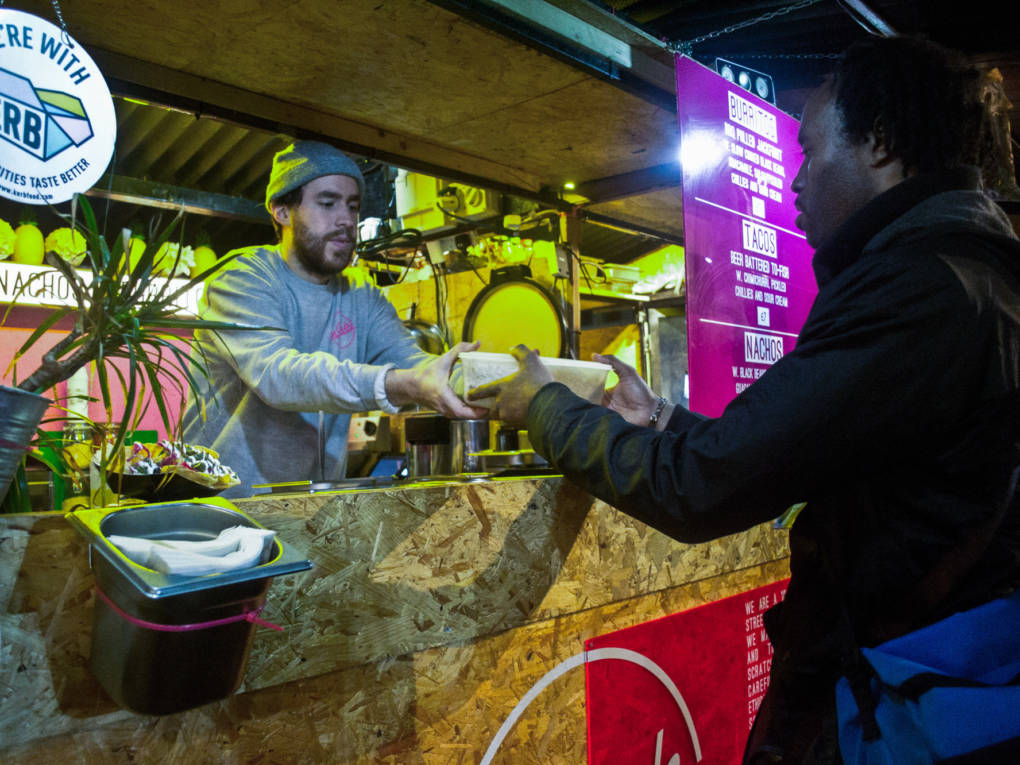
"caption": "Junior Herbert, a volunteer with Olio, collects leftovers from vendors at London's Camden Market. London has become a hub for apps and small-scale businesses that let restaurants and food vendors share leftovers with the public for free, and otherwise reduce the amount of edibles they toss.",
"description": "Junior Herbert, a volunteer with Olio, collects leftovers from vendors at London's Camden Market. London has become a hub for apps and small-scale businesses that let restaurants and food vendors share leftovers with the public for free, and otherwise reduce the amount of edibles they toss.",
"title": "Junior Herbert, a volunteer with Olio, collects leftovers from vendors at London's Camden Market. London has become a hub for apps and small-scale businesses that let restaurants and food vendors share leftovers with the public for free, and otherwise reduce the amount of edibles they toss.",
"credit": "Maanvi Singh for NPR",
"status": "inherit",
"isLoading": false,
"fetchFailed": false
},
"bayareabites_113136": {
"type": "attachments",
"id": "bayareabites_113136",
"meta": {
"index": "attachments_1716263798",
"site": "bayareabites",
"id": "113136",
"found": true
},
"parent": 113135,
"imgSizes": {
"small": {
"file": "https://ww2.kqed.org/app/uploads/sites/24/2016/10/gettyimages-511530458-80_custom-e1514ae78fade488fe3c4e443cd01db56c5f43da-520x346.jpg",
"width": 520,
"mimeType": "image/jpeg",
"height": 346
},
"twentyfourteen-full-width": {
"file": "https://ww2.kqed.org/app/uploads/sites/24/2016/10/gettyimages-511530458-80_custom-e1514ae78fade488fe3c4e443cd01db56c5f43da-1038x576.jpg",
"width": 1038,
"mimeType": "image/jpeg",
"height": 576
},
"thumbnail": {
"file": "https://ww2.kqed.org/app/uploads/sites/24/2016/10/gettyimages-511530458-80_custom-e1514ae78fade488fe3c4e443cd01db56c5f43da-160x107.jpg",
"width": 160,
"mimeType": "image/jpeg",
"height": 107
},
"fd-sm": {
"file": "https://ww2.kqed.org/app/uploads/sites/24/2016/10/gettyimages-511530458-80_custom-e1514ae78fade488fe3c4e443cd01db56c5f43da-960x639.jpg",
"width": 960,
"mimeType": "image/jpeg",
"height": 639
},
"post-thumbnail": {
"file": "https://ww2.kqed.org/app/uploads/sites/24/2016/10/gettyimages-511530458-80_custom-e1514ae78fade488fe3c4e443cd01db56c5f43da-672x372.jpg",
"width": 672,
"mimeType": "image/jpeg",
"height": 372
},
"xsmall": {
"file": "https://ww2.kqed.org/app/uploads/sites/24/2016/10/gettyimages-511530458-80_custom-e1514ae78fade488fe3c4e443cd01db56c5f43da-375x250.jpg",
"width": 375,
"mimeType": "image/jpeg",
"height": 250
},
"kqedFullSize": {
"file": "https://ww2.kqed.org/app/uploads/sites/24/2016/10/gettyimages-511530458-80_custom-e1514ae78fade488fe3c4e443cd01db56c5f43da.jpg",
"width": 3000,
"height": 1998
},
"large": {
"file": "https://ww2.kqed.org/app/uploads/sites/24/2016/10/gettyimages-511530458-80_custom-e1514ae78fade488fe3c4e443cd01db56c5f43da-1020x679.jpg",
"width": 1020,
"mimeType": "image/jpeg",
"height": 679
},
"xlarge": {
"file": "https://ww2.kqed.org/app/uploads/sites/24/2016/10/gettyimages-511530458-80_custom-e1514ae78fade488fe3c4e443cd01db56c5f43da-1180x786.jpg",
"width": 1180,
"mimeType": "image/jpeg",
"height": 786
},
"guest-author-50": {
"file": "https://ww2.kqed.org/app/uploads/sites/24/2016/10/gettyimages-511530458-80_custom-e1514ae78fade488fe3c4e443cd01db56c5f43da-50x50.jpg",
"width": 50,
"mimeType": "image/jpeg",
"height": 50
},
"guest-author-96": {
"file": "https://ww2.kqed.org/app/uploads/sites/24/2016/10/gettyimages-511530458-80_custom-e1514ae78fade488fe3c4e443cd01db56c5f43da-96x96.jpg",
"width": 96,
"mimeType": "image/jpeg",
"height": 96
},
"medium": {
"file": "https://ww2.kqed.org/app/uploads/sites/24/2016/10/gettyimages-511530458-80_custom-e1514ae78fade488fe3c4e443cd01db56c5f43da-800x533.jpg",
"width": 800,
"mimeType": "image/jpeg",
"height": 533
},
"guest-author-64": {
"file": "https://ww2.kqed.org/app/uploads/sites/24/2016/10/gettyimages-511530458-80_custom-e1514ae78fade488fe3c4e443cd01db56c5f43da-64x64.jpg",
"width": 64,
"mimeType": "image/jpeg",
"height": 64
},
"guest-author-32": {
"file": "https://ww2.kqed.org/app/uploads/sites/24/2016/10/gettyimages-511530458-80_custom-e1514ae78fade488fe3c4e443cd01db56c5f43da-32x32.jpg",
"width": 32,
"mimeType": "image/jpeg",
"height": 32
},
"fd-lrg": {
"file": "https://ww2.kqed.org/app/uploads/sites/24/2016/10/gettyimages-511530458-80_custom-e1514ae78fade488fe3c4e443cd01db56c5f43da-1920x1279.jpg",
"width": 1920,
"mimeType": "image/jpeg",
"height": 1279
},
"fd-med": {
"file": "https://ww2.kqed.org/app/uploads/sites/24/2016/10/gettyimages-511530458-80_custom-e1514ae78fade488fe3c4e443cd01db56c5f43da-1180x786.jpg",
"width": 1180,
"mimeType": "image/jpeg",
"height": 786
},
"full-width": {
"file": "https://ww2.kqed.org/app/uploads/sites/24/2016/10/gettyimages-511530458-80_custom-e1514ae78fade488fe3c4e443cd01db56c5f43da-1920x1279.jpg",
"width": 1920,
"mimeType": "image/jpeg",
"height": 1279
},
"detail": {
"file": "https://ww2.kqed.org/app/uploads/sites/24/2016/10/gettyimages-511530458-80_custom-e1514ae78fade488fe3c4e443cd01db56c5f43da-150x150.jpg",
"width": 150,
"mimeType": "image/jpeg",
"height": 150
},
"medium_large": {
"file": "https://ww2.kqed.org/app/uploads/sites/24/2016/10/gettyimages-511530458-80_custom-e1514ae78fade488fe3c4e443cd01db56c5f43da-768x511.jpg",
"width": 768,
"mimeType": "image/jpeg",
"height": 511
},
"guest-author-128": {
"file": "https://ww2.kqed.org/app/uploads/sites/24/2016/10/gettyimages-511530458-80_custom-e1514ae78fade488fe3c4e443cd01db56c5f43da-128x128.jpg",
"width": 128,
"mimeType": "image/jpeg",
"height": 128
},
"xxsmall": {
"file": "https://ww2.kqed.org/app/uploads/sites/24/2016/10/gettyimages-511530458-80_custom-e1514ae78fade488fe3c4e443cd01db56c5f43da-240x160.jpg",
"width": 240,
"mimeType": "image/jpeg",
"height": 160
}
},
"publishDate": 1477932327,
"modified": 1477932751,
"caption": "Americans are often chastised for what we eat. Now we're getting a pat on the back. A new report finds seafood consumption is up by nearly a pound from the previous year, the biggest leap in 20 years.",
"description": "Americans are often chastised for what we eat. Now we're getting a pat on the back. A new report finds seafood consumption is up by nearly a pound from the previous year, the biggest leap in 20 years.",
"title": "Americans are often chastised for what we eat. Now we're getting a pat on the back. A new report finds seafood consumption is up by nearly a pound from the previous year, the biggest leap in 20 years.",
"credit": "fcafotodigital/Getty Images",
"status": "inherit",
"isLoading": false,
"fetchFailed": false
},
"bayareabites_112921": {
"type": "attachments",
"id": "bayareabites_112921",
"meta": {
"index": "attachments_1716263798",
"site": "bayareabites",
"id": "112921",
"found": true
},
"parent": 112919,
"imgSizes": {
"small": {
"file": "https://ww2.kqed.org/app/uploads/sites/24/2016/10/CivilEatsMethane1-680x452-520x346.jpg",
"width": 520,
"mimeType": "image/jpeg",
"height": 346
},
"thumbnail": {
"file": "https://ww2.kqed.org/app/uploads/sites/24/2016/10/CivilEatsMethane1-680x452-160x106.jpg",
"width": 160,
"mimeType": "image/jpeg",
"height": 106
},
"post-thumbnail": {
"file": "https://ww2.kqed.org/app/uploads/sites/24/2016/10/CivilEatsMethane1-680x452-672x372.jpg",
"width": 672,
"mimeType": "image/jpeg",
"height": 372
},
"xsmall": {
"file": "https://ww2.kqed.org/app/uploads/sites/24/2016/10/CivilEatsMethane1-680x452-375x249.jpg",
"width": 375,
"mimeType": "image/jpeg",
"height": 249
},
"kqedFullSize": {
"file": "https://ww2.kqed.org/app/uploads/sites/24/2016/10/CivilEatsMethane1-680x452.jpg",
"width": 680,
"height": 452
},
"guest-author-50": {
"file": "https://ww2.kqed.org/app/uploads/sites/24/2016/10/CivilEatsMethane1-680x452-50x50.jpg",
"width": 50,
"mimeType": "image/jpeg",
"height": 50
},
"guest-author-96": {
"file": "https://ww2.kqed.org/app/uploads/sites/24/2016/10/CivilEatsMethane1-680x452-96x96.jpg",
"width": 96,
"mimeType": "image/jpeg",
"height": 96
},
"guest-author-64": {
"file": "https://ww2.kqed.org/app/uploads/sites/24/2016/10/CivilEatsMethane1-680x452-64x64.jpg",
"width": 64,
"mimeType": "image/jpeg",
"height": 64
},
"detail": {
"file": "https://ww2.kqed.org/app/uploads/sites/24/2016/10/CivilEatsMethane1-680x452-150x150.jpg",
"width": 150,
"mimeType": "image/jpeg",
"height": 150
},
"guest-author-32": {
"file": "https://ww2.kqed.org/app/uploads/sites/24/2016/10/CivilEatsMethane1-680x452-32x32.jpg",
"width": 32,
"mimeType": "image/jpeg",
"height": 32
},
"guest-author-128": {
"file": "https://ww2.kqed.org/app/uploads/sites/24/2016/10/CivilEatsMethane1-680x452-128x128.jpg",
"width": 128,
"mimeType": "image/jpeg",
"height": 128
},
"xxsmall": {
"file": "https://ww2.kqed.org/app/uploads/sites/24/2016/10/CivilEatsMethane1-680x452-240x160.jpg",
"width": 240,
"mimeType": "image/jpeg",
"height": 160
}
},
"publishDate": 1477439108,
"modified": 1477439916,
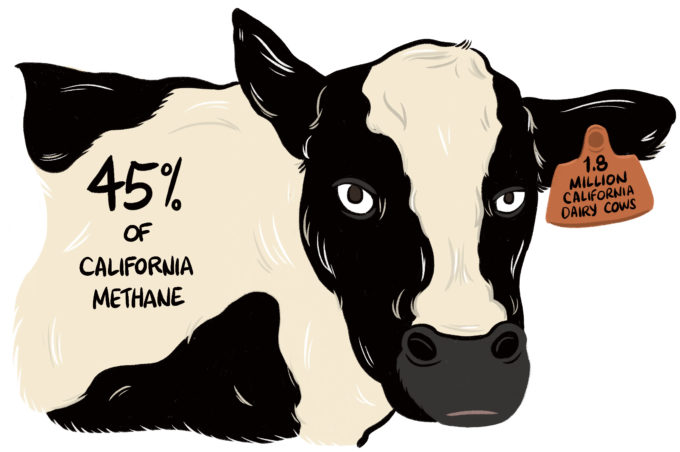
"caption": "Illustration by Susie Cagle",
"description": "Illustration by Susie Cagle",
"title": "CivilEatsMethane1-680x452",
"credit": null,
"status": "inherit",
"isLoading": false,
"fetchFailed": false
},
"bayareabites_112981": {
"type": "attachments",
"id": "bayareabites_112981",
"meta": {
"index": "attachments_1716263798",
"site": "bayareabites",
"id": "112981",
"found": true
},
"parent": 112980,
"imgSizes": {
"small": {
"file": "https://ww2.kqed.org/app/uploads/sites/24/2016/10/bringing-in-the-sheaves-cropped-70_custom-90868149efe1f87a37ab22a3186d68350b794086-520x365.jpg",
"width": 520,
"mimeType": "image/jpeg",
"height": 365
},
"twentyfourteen-full-width": {
"file": "https://ww2.kqed.org/app/uploads/sites/24/2016/10/bringing-in-the-sheaves-cropped-70_custom-90868149efe1f87a37ab22a3186d68350b794086-1038x576.jpg",
"width": 1038,
"mimeType": "image/jpeg",
"height": 576
},
"thumbnail": {
"file": "https://ww2.kqed.org/app/uploads/sites/24/2016/10/bringing-in-the-sheaves-cropped-70_custom-90868149efe1f87a37ab22a3186d68350b794086-160x112.jpg",
"width": 160,
"mimeType": "image/jpeg",
"height": 112
},
"fd-sm": {
"file": "https://ww2.kqed.org/app/uploads/sites/24/2016/10/bringing-in-the-sheaves-cropped-70_custom-90868149efe1f87a37ab22a3186d68350b794086-960x674.jpg",
"width": 960,
"mimeType": "image/jpeg",
"height": 674
},
"post-thumbnail": {
"file": "https://ww2.kqed.org/app/uploads/sites/24/2016/10/bringing-in-the-sheaves-cropped-70_custom-90868149efe1f87a37ab22a3186d68350b794086-672x372.jpg",
"width": 672,
"mimeType": "image/jpeg",
"height": 372
},
"xsmall": {
"file": "https://ww2.kqed.org/app/uploads/sites/24/2016/10/bringing-in-the-sheaves-cropped-70_custom-90868149efe1f87a37ab22a3186d68350b794086-375x263.jpg",
"width": 375,
"mimeType": "image/jpeg",
"height": 263
},
"kqedFullSize": {
"file": "https://ww2.kqed.org/app/uploads/sites/24/2016/10/bringing-in-the-sheaves-cropped-70_custom-90868149efe1f87a37ab22a3186d68350b794086.jpg",
"width": 2000,
"height": 1404
},
"large": {
"file": "https://ww2.kqed.org/app/uploads/sites/24/2016/10/bringing-in-the-sheaves-cropped-70_custom-90868149efe1f87a37ab22a3186d68350b794086-1020x716.jpg",
"width": 1020,
"mimeType": "image/jpeg",
"height": 716
},
"xlarge": {
"file": "https://ww2.kqed.org/app/uploads/sites/24/2016/10/bringing-in-the-sheaves-cropped-70_custom-90868149efe1f87a37ab22a3186d68350b794086-1180x828.jpg",
"width": 1180,
"mimeType": "image/jpeg",
"height": 828
},
"guest-author-50": {
"file": "https://ww2.kqed.org/app/uploads/sites/24/2016/10/bringing-in-the-sheaves-cropped-70_custom-90868149efe1f87a37ab22a3186d68350b794086-50x50.jpg",
"width": 50,
"mimeType": "image/jpeg",
"height": 50
},
"guest-author-96": {
"file": "https://ww2.kqed.org/app/uploads/sites/24/2016/10/bringing-in-the-sheaves-cropped-70_custom-90868149efe1f87a37ab22a3186d68350b794086-96x96.jpg",
"width": 96,
"mimeType": "image/jpeg",
"height": 96
},
"medium": {
"file": "https://ww2.kqed.org/app/uploads/sites/24/2016/10/bringing-in-the-sheaves-cropped-70_custom-90868149efe1f87a37ab22a3186d68350b794086-800x562.jpg",
"width": 800,
"mimeType": "image/jpeg",
"height": 562
},
"guest-author-64": {
"file": "https://ww2.kqed.org/app/uploads/sites/24/2016/10/bringing-in-the-sheaves-cropped-70_custom-90868149efe1f87a37ab22a3186d68350b794086-64x64.jpg",
"width": 64,
"mimeType": "image/jpeg",
"height": 64
},
"guest-author-32": {
"file": "https://ww2.kqed.org/app/uploads/sites/24/2016/10/bringing-in-the-sheaves-cropped-70_custom-90868149efe1f87a37ab22a3186d68350b794086-32x32.jpg",
"width": 32,
"mimeType": "image/jpeg",
"height": 32
},
"fd-lrg": {
"file": "https://ww2.kqed.org/app/uploads/sites/24/2016/10/bringing-in-the-sheaves-cropped-70_custom-90868149efe1f87a37ab22a3186d68350b794086-1920x1348.jpg",
"width": 1920,
"mimeType": "image/jpeg",
"height": 1348
},
"fd-med": {
"file": "https://ww2.kqed.org/app/uploads/sites/24/2016/10/bringing-in-the-sheaves-cropped-70_custom-90868149efe1f87a37ab22a3186d68350b794086-1180x828.jpg",
"width": 1180,
"mimeType": "image/jpeg",
"height": 828
},
"full-width": {
"file": "https://ww2.kqed.org/app/uploads/sites/24/2016/10/bringing-in-the-sheaves-cropped-70_custom-90868149efe1f87a37ab22a3186d68350b794086-1920x1348.jpg",
"width": 1920,
"mimeType": "image/jpeg",
"height": 1348
},
"detail": {
"file": "https://ww2.kqed.org/app/uploads/sites/24/2016/10/bringing-in-the-sheaves-cropped-70_custom-90868149efe1f87a37ab22a3186d68350b794086-150x150.jpg",
"width": 150,
"mimeType": "image/jpeg",
"height": 150
},
"medium_large": {
"file": "https://ww2.kqed.org/app/uploads/sites/24/2016/10/bringing-in-the-sheaves-cropped-70_custom-90868149efe1f87a37ab22a3186d68350b794086-768x539.jpg",
"width": 768,
"mimeType": "image/jpeg",
"height": 539
},
"guest-author-128": {
"file": "https://ww2.kqed.org/app/uploads/sites/24/2016/10/bringing-in-the-sheaves-cropped-70_custom-90868149efe1f87a37ab22a3186d68350b794086-128x128.jpg",
"width": 128,
"mimeType": "image/jpeg",
"height": 128
},
"xxsmall": {
"file": "https://ww2.kqed.org/app/uploads/sites/24/2016/10/bringing-in-the-sheaves-cropped-70_custom-90868149efe1f87a37ab22a3186d68350b794086-240x168.jpg",
"width": 240,
"mimeType": "image/jpeg",
"height": 168
}
},
"publishDate": 1477516666,
"modified": 1477516854,
"caption": "Laura Kemp, a technician at The Land Institute, hand harvests an experimental crop of Kernza in Kansas. Scientists think that this perennial crop could help fight climate change by trapping more carbon in the soil.",
"description": "Laura Kemp, a technician at The Land Institute, hand harvests an experimental crop of Kernza in Kansas. Scientists think that this perennial crop could help fight climate change by trapping more carbon in the soil",
"title": "Laura Kemp, a technician at The Land Institute, hand harvests an experimental crop of Kernza in Kansas. Scientists think that this perennial crop could help fight climate change by trapping more carbon in the soil.",
"credit": "Courtesy of The Land Institute",
"status": "inherit",
"isLoading": false,
"fetchFailed": false
},
"bayareabites_112827": {
"type": "attachments",
"id": "bayareabites_112827",
"meta": {
"index": "attachments_1716263798",
"site": "bayareabites",
"id": "112827",
"found": true
},
"parent": 112825,
"imgSizes": {
"small": {
"file": "https://ww2.kqed.org/app/uploads/sites/24/2016/10/paigegreenAnnaLappe-1920-520x347.jpg",
"width": 520,
"mimeType": "image/jpeg",
"height": 347
},
"twentyfourteen-full-width": {
"file": "https://ww2.kqed.org/app/uploads/sites/24/2016/10/paigegreenAnnaLappe-1920-1038x576.jpg",
"width": 1038,
"mimeType": "image/jpeg",
"height": 576
},
"thumbnail": {
"file": "https://ww2.kqed.org/app/uploads/sites/24/2016/10/paigegreenAnnaLappe-1920-160x107.jpg",
"width": 160,
"mimeType": "image/jpeg",
"height": 107
},
"fd-sm": {
"file": "https://ww2.kqed.org/app/uploads/sites/24/2016/10/paigegreenAnnaLappe-1920-960x640.jpg",
"width": 960,
"mimeType": "image/jpeg",
"height": 640
},
"post-thumbnail": {
"file": "https://ww2.kqed.org/app/uploads/sites/24/2016/10/paigegreenAnnaLappe-1920-672x372.jpg",
"width": 672,
"mimeType": "image/jpeg",
"height": 372
},
"xsmall": {
"file": "https://ww2.kqed.org/app/uploads/sites/24/2016/10/paigegreenAnnaLappe-1920-375x250.jpg",
"width": 375,
"mimeType": "image/jpeg",
"height": 250
},
"kqedFullSize": {
"file": "https://ww2.kqed.org/app/uploads/sites/24/2016/10/paigegreenAnnaLappe-1920.jpg",
"width": 1920,
"height": 1280
},
"large": {
"file": "https://ww2.kqed.org/app/uploads/sites/24/2016/10/paigegreenAnnaLappe-1920-1020x680.jpg",
"width": 1020,
"mimeType": "image/jpeg",
"height": 680
},
"xlarge": {
"file": "https://ww2.kqed.org/app/uploads/sites/24/2016/10/paigegreenAnnaLappe-1920-1180x787.jpg",
"width": 1180,
"mimeType": "image/jpeg",
"height": 787
},
"guest-author-50": {
"file": "https://ww2.kqed.org/app/uploads/sites/24/2016/10/paigegreenAnnaLappe-1920-50x50.jpg",
"width": 50,
"mimeType": "image/jpeg",
"height": 50
},
"guest-author-96": {
"file": "https://ww2.kqed.org/app/uploads/sites/24/2016/10/paigegreenAnnaLappe-1920-96x96.jpg",
"width": 96,
"mimeType": "image/jpeg",
"height": 96
},
"medium": {
"file": "https://ww2.kqed.org/app/uploads/sites/24/2016/10/paigegreenAnnaLappe-1920-800x533.jpg",
"width": 800,
"mimeType": "image/jpeg",
"height": 533
},
"guest-author-64": {
"file": "https://ww2.kqed.org/app/uploads/sites/24/2016/10/paigegreenAnnaLappe-1920-64x64.jpg",
"width": 64,
"mimeType": "image/jpeg",
"height": 64
},
"guest-author-32": {
"file": "https://ww2.kqed.org/app/uploads/sites/24/2016/10/paigegreenAnnaLappe-1920-32x32.jpg",
"width": 32,
"mimeType": "image/jpeg",
"height": 32
},
"fd-lrg": {
"file": "https://ww2.kqed.org/app/uploads/sites/24/2016/10/paigegreenAnnaLappe-1920-1920x1280.jpg",
"width": 1920,
"mimeType": "image/jpeg",
"height": 1280
},
"fd-med": {
"file": "https://ww2.kqed.org/app/uploads/sites/24/2016/10/paigegreenAnnaLappe-1920-1180x787.jpg",
"width": 1180,
"mimeType": "image/jpeg",
"height": 787
},
"full-width": {
"file": "https://ww2.kqed.org/app/uploads/sites/24/2016/10/paigegreenAnnaLappe-1920-1920x1280.jpg",
"width": 1920,
"mimeType": "image/jpeg",
"height": 1280
},
"detail": {
"file": "https://ww2.kqed.org/app/uploads/sites/24/2016/10/paigegreenAnnaLappe-1920-150x150.jpg",
"width": 150,
"mimeType": "image/jpeg",
"height": 150
},
"medium_large": {
"file": "https://ww2.kqed.org/app/uploads/sites/24/2016/10/paigegreenAnnaLappe-1920-768x512.jpg",
"width": 768,
"mimeType": "image/jpeg",
"height": 512
},
"guest-author-128": {
"file": "https://ww2.kqed.org/app/uploads/sites/24/2016/10/paigegreenAnnaLappe-1920-128x128.jpg",
"width": 128,
"mimeType": "image/jpeg",
"height": 128
},
"xxsmall": {
"file": "https://ww2.kqed.org/app/uploads/sites/24/2016/10/paigegreenAnnaLappe-1920-240x160.jpg",
"width": 240,
"mimeType": "image/jpeg",
"height": 160
}
},
"publishDate": 1477083115,
"modified": 1477084282,
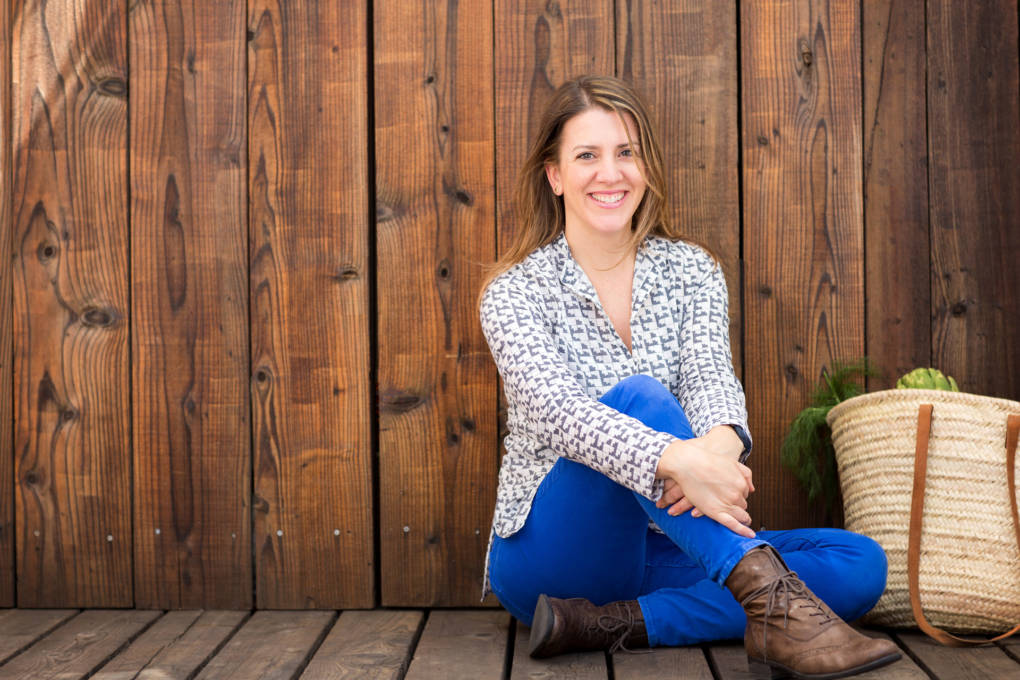
"caption": "Anna Lappe",
"description": null,
"title": "paigegreenAnnaLappe-1920",
"credit": "Paige Green",
"status": "inherit",
"isLoading": false,
"fetchFailed": false
},
"bayareabites_112671": {
"type": "attachments",
"id": "bayareabites_112671",
"meta": {
"index": "attachments_1716263798",
"site": "bayareabites",
"id": "112671",
"found": true
},
"parent": 112670,
"imgSizes": {
"twentyfourteen-full-width": {
"file": "https://ww2.kqed.org/app/uploads/sites/24/2016/10/smallwater-70138a1d2714ea6d3c39f251bc11000908b3de36-1038x576.jpg",
"width": 1038,
"mimeType": "image/jpeg",
"height": 576
},
"thumbnail": {
"file": "https://ww2.kqed.org/app/uploads/sites/24/2016/10/smallwater-70138a1d2714ea6d3c39f251bc11000908b3de36-400x300.jpg",
"width": 400,
"mimeType": "image/jpeg",
"height": 300
},
"fd-sm": {
"file": "https://ww2.kqed.org/app/uploads/sites/24/2016/10/smallwater-70138a1d2714ea6d3c39f251bc11000908b3de36-960x720.jpg",
"width": 960,
"mimeType": "image/jpeg",
"height": 720
},
"post-thumbnail": {
"file": "https://ww2.kqed.org/app/uploads/sites/24/2016/10/smallwater-70138a1d2714ea6d3c39f251bc11000908b3de36-672x372.jpg",
"width": 672,
"mimeType": "image/jpeg",
"height": 372
},
"kqedFullSize": {
"file": "https://ww2.kqed.org/app/uploads/sites/24/2016/10/smallwater-70138a1d2714ea6d3c39f251bc11000908b3de36.jpg",
"width": 1766,
"height": 1325
},
"large": {
"file": "https://ww2.kqed.org/app/uploads/sites/24/2016/10/smallwater-70138a1d2714ea6d3c39f251bc11000908b3de36-1440x1080.jpg",
"width": 1440,
"mimeType": "image/jpeg",
"height": 1080
},
"guest-author-50": {
"file": "https://ww2.kqed.org/app/uploads/sites/24/2016/10/smallwater-70138a1d2714ea6d3c39f251bc11000908b3de36-50x50.jpg",
"width": 50,
"mimeType": "image/jpeg",
"height": 50
},
"guest-author-96": {
"file": "https://ww2.kqed.org/app/uploads/sites/24/2016/10/smallwater-70138a1d2714ea6d3c39f251bc11000908b3de36-96x96.jpg",
"width": 96,
"mimeType": "image/jpeg",
"height": 96
},
"medium": {
"file": "https://ww2.kqed.org/app/uploads/sites/24/2016/10/smallwater-70138a1d2714ea6d3c39f251bc11000908b3de36-800x600.jpg",
"width": 800,
"mimeType": "image/jpeg",
"height": 600
},
"guest-author-64": {
"file": "https://ww2.kqed.org/app/uploads/sites/24/2016/10/smallwater-70138a1d2714ea6d3c39f251bc11000908b3de36-64x64.jpg",
"width": 64,
"mimeType": "image/jpeg",
"height": 64
},
"guest-author-32": {
"file": "https://ww2.kqed.org/app/uploads/sites/24/2016/10/smallwater-70138a1d2714ea6d3c39f251bc11000908b3de36-32x32.jpg",
"width": 32,
"mimeType": "image/jpeg",
"height": 32
},
"cat_post_thumb_sizecategory-posts-2": {
"file": "https://ww2.kqed.org/app/uploads/sites/24/2016/10/smallwater-70138a1d2714ea6d3c39f251bc11000908b3de36-150x150.jpg",
"width": 150,
"mimeType": "image/jpeg",
"height": 150
},
"fd-med": {
"file": "https://ww2.kqed.org/app/uploads/sites/24/2016/10/smallwater-70138a1d2714ea6d3c39f251bc11000908b3de36-1180x885.jpg",
"width": 1180,
"mimeType": "image/jpeg",
"height": 885
},
"detail": {
"file": "https://ww2.kqed.org/app/uploads/sites/24/2016/10/smallwater-70138a1d2714ea6d3c39f251bc11000908b3de36-150x150.jpg",
"width": 150,
"mimeType": "image/jpeg",
"height": 150
},
"medium_large": {
"file": "https://ww2.kqed.org/app/uploads/sites/24/2016/10/smallwater-70138a1d2714ea6d3c39f251bc11000908b3de36-768x576.jpg",
"width": 768,
"mimeType": "image/jpeg",
"height": 576
},
"guest-author-128": {
"file": "https://ww2.kqed.org/app/uploads/sites/24/2016/10/smallwater-70138a1d2714ea6d3c39f251bc11000908b3de36-128x128.jpg",
"width": 128,
"mimeType": "image/jpeg",
"height": 128
}
},
"publishDate": 1476393859,
"modified": 1476393889,
"caption": "Land in the Red River Valley of Minnesota and North Dakota, as in much of the country, is dominated by farming.",
"description": "Land in the Red River Valley of Minnesota and North Dakota, as in much of the country, is dominated by farming.",
"title": "Land in the Red River Valley of Minnesota and North Dakota, as in much of the country, is dominated by farming.",
"credit": "Richard Hamilton Smith/Getty Images",
"status": "inherit",
"isLoading": false,
"fetchFailed": false
},
"bayareabites_112623": {
"type": "attachments",
"id": "bayareabites_112623",
"meta": {
"index": "attachments_1716263798",
"site": "bayareabites",
"id": "112623",
"found": true
},
"parent": 112619,
"imgSizes": {
"thumbnail": {
"file": "https://ww2.kqed.org/app/uploads/sites/24/2016/10/cropped_seed_table-680x448-400x264.jpg",
"width": 400,
"mimeType": "image/jpeg",
"height": 264
},
"post-thumbnail": {
"file": "https://ww2.kqed.org/app/uploads/sites/24/2016/10/cropped_seed_table-680x448-672x372.jpg",
"width": 672,
"mimeType": "image/jpeg",
"height": 372
},
"kqedFullSize": {
"file": "https://ww2.kqed.org/app/uploads/sites/24/2016/10/cropped_seed_table-680x448.jpg",
"width": 680,
"height": 448
},
"cat_post_thumb_sizecategory-posts-2": {
"file": "https://ww2.kqed.org/app/uploads/sites/24/2016/10/cropped_seed_table-680x448-150x150.jpg",
"width": 150,
"mimeType": "image/jpeg",
"height": 150
},
"guest-author-50": {
"file": "https://ww2.kqed.org/app/uploads/sites/24/2016/10/cropped_seed_table-680x448-50x50.jpg",
"width": 50,
"mimeType": "image/jpeg",
"height": 50
},
"guest-author-96": {
"file": "https://ww2.kqed.org/app/uploads/sites/24/2016/10/cropped_seed_table-680x448-96x96.jpg",
"width": 96,
"mimeType": "image/jpeg",
"height": 96
},
"guest-author-64": {
"file": "https://ww2.kqed.org/app/uploads/sites/24/2016/10/cropped_seed_table-680x448-64x64.jpg",
"width": 64,
"mimeType": "image/jpeg",
"height": 64
},
"detail": {
"file": "https://ww2.kqed.org/app/uploads/sites/24/2016/10/cropped_seed_table-680x448-150x150.jpg",
"width": 150,
"mimeType": "image/jpeg",
"height": 150
},
"guest-author-32": {
"file": "https://ww2.kqed.org/app/uploads/sites/24/2016/10/cropped_seed_table-680x448-32x32.jpg",
"width": 32,
"mimeType": "image/jpeg",
"height": 32
},
"guest-author-128": {
"file": "https://ww2.kqed.org/app/uploads/sites/24/2016/10/cropped_seed_table-680x448-128x128.jpg",
"width": 128,
"mimeType": "image/jpeg",
"height": 128
}
},
"publishDate": 1476216690,
"modified": 1476216714,
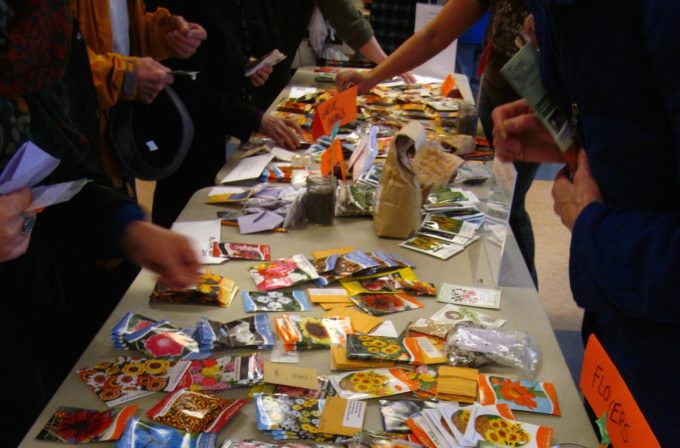
"caption": "Edible Garden Project / Flickr",
"description": null,
"title": "cropped_seed_table-680x448",
"credit": null,
"status": "inherit",
"isLoading": false,
"fetchFailed": false
},
"bayareabites_112200": {
"type": "attachments",
"id": "bayareabites_112200",
"meta": {
"index": "attachments_1716263798",
"site": "bayareabites",
"id": "112200",
"found": true
},
"parent": 112197,
"imgSizes": {
"twentyfourteen-full-width": {
"file": "https://ww2.kqed.org/app/uploads/sites/24/2016/09/francesmoorelappe_custom-26643367f2ff952a0c18bd5ea1895a083147b6ad-s1600-c85-1038x576.jpg",
"width": 1038,
"mimeType": "image/jpeg",
"height": 576
},
"thumbnail": {
"file": "https://ww2.kqed.org/app/uploads/sites/24/2016/09/francesmoorelappe_custom-26643367f2ff952a0c18bd5ea1895a083147b6ad-s1600-c85-400x266.jpg",
"width": 400,
"mimeType": "image/jpeg",
"height": 266
},
"fd-sm": {
"file": "https://ww2.kqed.org/app/uploads/sites/24/2016/09/francesmoorelappe_custom-26643367f2ff952a0c18bd5ea1895a083147b6ad-s1600-c85-960x639.jpg",
"width": 960,
"mimeType": "image/jpeg",
"height": 639
},
"post-thumbnail": {
"file": "https://ww2.kqed.org/app/uploads/sites/24/2016/09/francesmoorelappe_custom-26643367f2ff952a0c18bd5ea1895a083147b6ad-s1600-c85-672x372.jpg",
"width": 672,
"mimeType": "image/jpeg",
"height": 372
},
"kqedFullSize": {
"file": "https://ww2.kqed.org/app/uploads/sites/24/2016/09/francesmoorelappe_custom-26643367f2ff952a0c18bd5ea1895a083147b6ad-s1600-c85.jpg",
"width": 1600,
"height": 1065
},
"large": {
"file": "https://ww2.kqed.org/app/uploads/sites/24/2016/09/francesmoorelappe_custom-26643367f2ff952a0c18bd5ea1895a083147b6ad-s1600-c85-1440x959.jpg",
"width": 1440,
"mimeType": "image/jpeg",
"height": 959
},
"guest-author-50": {
"file": "https://ww2.kqed.org/app/uploads/sites/24/2016/09/francesmoorelappe_custom-26643367f2ff952a0c18bd5ea1895a083147b6ad-s1600-c85-50x50.jpg",
"width": 50,
"mimeType": "image/jpeg",
"height": 50
},
"guest-author-96": {
"file": "https://ww2.kqed.org/app/uploads/sites/24/2016/09/francesmoorelappe_custom-26643367f2ff952a0c18bd5ea1895a083147b6ad-s1600-c85-96x96.jpg",
"width": 96,
"mimeType": "image/jpeg",
"height": 96
},
"medium": {
"file": "https://ww2.kqed.org/app/uploads/sites/24/2016/09/francesmoorelappe_custom-26643367f2ff952a0c18bd5ea1895a083147b6ad-s1600-c85-800x533.jpg",
"width": 800,
"mimeType": "image/jpeg",
"height": 533
},
"guest-author-64": {
"file": "https://ww2.kqed.org/app/uploads/sites/24/2016/09/francesmoorelappe_custom-26643367f2ff952a0c18bd5ea1895a083147b6ad-s1600-c85-64x64.jpg",
"width": 64,
"mimeType": "image/jpeg",
"height": 64
},
"guest-author-32": {
"file": "https://ww2.kqed.org/app/uploads/sites/24/2016/09/francesmoorelappe_custom-26643367f2ff952a0c18bd5ea1895a083147b6ad-s1600-c85-32x32.jpg",
"width": 32,
"mimeType": "image/jpeg",
"height": 32
},
"cat_post_thumb_sizecategory-posts-2": {
"file": "https://ww2.kqed.org/app/uploads/sites/24/2016/09/francesmoorelappe_custom-26643367f2ff952a0c18bd5ea1895a083147b6ad-s1600-c85-150x150.jpg",
"width": 150,
"mimeType": "image/jpeg",
"height": 150
},
"fd-med": {
"file": "https://ww2.kqed.org/app/uploads/sites/24/2016/09/francesmoorelappe_custom-26643367f2ff952a0c18bd5ea1895a083147b6ad-s1600-c85-1180x785.jpg",
"width": 1180,
"mimeType": "image/jpeg",
"height": 785
},
"detail": {
"file": "https://ww2.kqed.org/app/uploads/sites/24/2016/09/francesmoorelappe_custom-26643367f2ff952a0c18bd5ea1895a083147b6ad-s1600-c85-150x150.jpg",
"width": 150,
"mimeType": "image/jpeg",
"height": 150
},
"medium_large": {
"file": "https://ww2.kqed.org/app/uploads/sites/24/2016/09/francesmoorelappe_custom-26643367f2ff952a0c18bd5ea1895a083147b6ad-s1600-c85-768x511.jpg",
"width": 768,
"mimeType": "image/jpeg",
"height": 511
},
"guest-author-128": {
"file": "https://ww2.kqed.org/app/uploads/sites/24/2016/09/francesmoorelappe_custom-26643367f2ff952a0c18bd5ea1895a083147b6ad-s1600-c85-128x128.jpg",
"width": 128,
"mimeType": "image/jpeg",
"height": 128
}
},
"publishDate": 1474646479,
"modified": 1474646517,
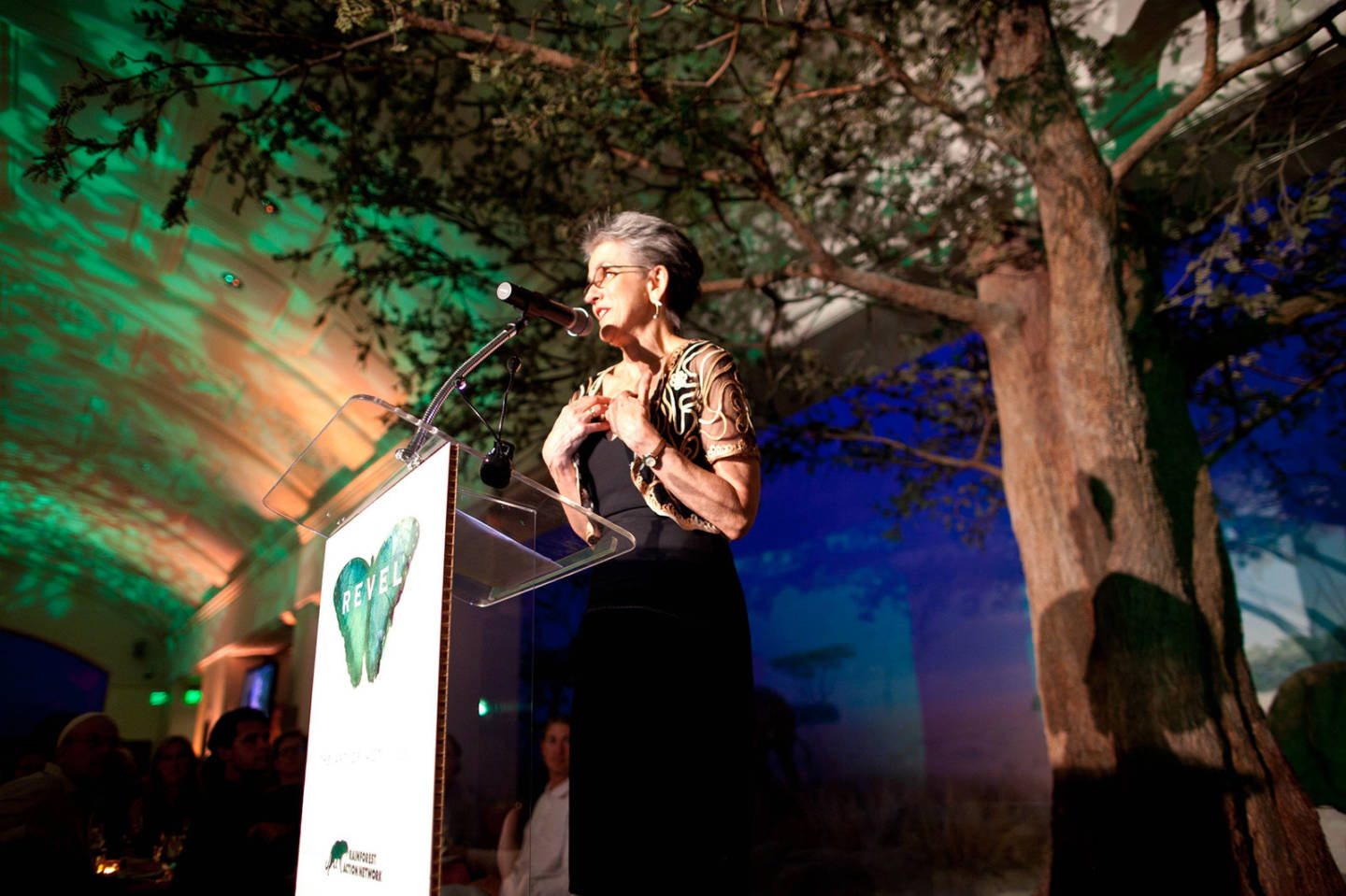
"caption": "Frances Moore Lappe speaks at a Rainforest Action Network event. When she wrote the best-selling Diet For A Small Planet back in 1971, she helped start a conversation about the social and environmental impacts of the foods we choose.",
"description": "Frances Moore Lappe speaks at a Rainforest Action Network event. When she wrote the best-selling Diet For A Small Planet back in 1971, she helped start a conversation about the social and environmental impacts of the foods we choose.",
"title": "francesmoorelappe_custom-26643367f2ff952a0c18bd5ea1895a083147b6ad-s1600-c85",
"credit": "Rainforest Action Network/Flickr",
"status": "inherit",
"isLoading": false,
"fetchFailed": false
},
"bayareabites_111818": {
"type": "attachments",
"id": "bayareabites_111818",
"meta": {
"index": "attachments_1716263798",
"site": "bayareabites",
"id": "111818",
"found": true
},
"parent": 111808,
"imgSizes": {
"twentyfourteen-full-width": {
"file": "https://ww2.kqed.org/app/uploads/sites/24/2016/08/nopales-pic-1024x682-1024x576.jpg",
"width": 1024,
"mimeType": "image/jpeg",
"height": 576
},
"thumbnail": {
"file": "https://ww2.kqed.org/app/uploads/sites/24/2016/08/nopales-pic-1024x682-400x266.jpg",
"width": 400,
"mimeType": "image/jpeg",
"height": 266
},
"fd-sm": {
"file": "https://ww2.kqed.org/app/uploads/sites/24/2016/08/nopales-pic-1024x682-960x639.jpg",
"width": 960,
"mimeType": "image/jpeg",
"height": 639
},
"post-thumbnail": {
"file": "https://ww2.kqed.org/app/uploads/sites/24/2016/08/nopales-pic-1024x682-672x372.jpg",
"width": 672,
"mimeType": "image/jpeg",
"height": 372
},
"kqedFullSize": {
"file": "https://ww2.kqed.org/app/uploads/sites/24/2016/08/nopales-pic-1024x682.jpg",
"width": 1024,
"height": 682
},
"guest-author-50": {
"file": "https://ww2.kqed.org/app/uploads/sites/24/2016/08/nopales-pic-1024x682-50x50.jpg",
"width": 50,
"mimeType": "image/jpeg",
"height": 50
},
"guest-author-96": {
"file": "https://ww2.kqed.org/app/uploads/sites/24/2016/08/nopales-pic-1024x682-96x96.jpg",
"width": 96,
"mimeType": "image/jpeg",
"height": 96
},
"medium": {
"file": "https://ww2.kqed.org/app/uploads/sites/24/2016/08/nopales-pic-1024x682-800x533.jpg",
"width": 800,
"mimeType": "image/jpeg",
"height": 533
},
"guest-author-64": {
"file": "https://ww2.kqed.org/app/uploads/sites/24/2016/08/nopales-pic-1024x682-64x64.jpg",
"width": 64,
"mimeType": "image/jpeg",
"height": 64
},
"guest-author-32": {
"file": "https://ww2.kqed.org/app/uploads/sites/24/2016/08/nopales-pic-1024x682-32x32.jpg",
"width": 32,
"mimeType": "image/jpeg",
"height": 32
},
"cat_post_thumb_sizecategory-posts-2": {
"file": "https://ww2.kqed.org/app/uploads/sites/24/2016/08/nopales-pic-1024x682-150x150.jpg",
"width": 150,
"mimeType": "image/jpeg",
"height": 150
},
"detail": {
"file": "https://ww2.kqed.org/app/uploads/sites/24/2016/08/nopales-pic-1024x682-150x150.jpg",
"width": 150,
"mimeType": "image/jpeg",
"height": 150
},
"medium_large": {
"file": "https://ww2.kqed.org/app/uploads/sites/24/2016/08/nopales-pic-1024x682-768x512.jpg",
"width": 768,
"mimeType": "image/jpeg",
"height": 512
},
"guest-author-128": {
"file": "https://ww2.kqed.org/app/uploads/sites/24/2016/08/nopales-pic-1024x682-128x128.jpg",
"width": 128,
"mimeType": "image/jpeg",
"height": 128
}
},
"publishDate": 1472687608,
"modified": 1472687608,
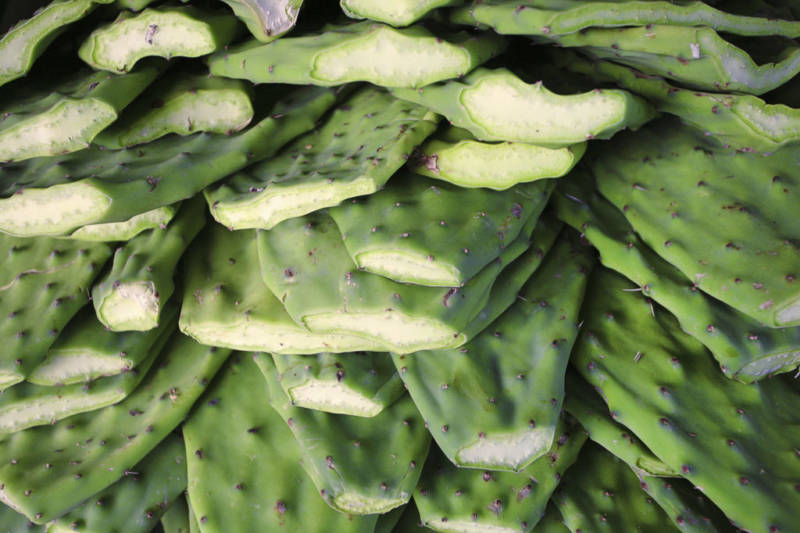
"caption": "Nopales / Cactus paddles in market, San Francisco, California",
"description": null,
"title": "Nopales / Cactus paddles in market",
"credit": null,
"status": "inherit",
"isLoading": false,
"fetchFailed": false
},
"bayareabites_111829": {
"type": "attachments",
"id": "bayareabites_111829",
"meta": {
"index": "attachments_1716263798",
"site": "bayareabites",
"id": "111829",
"found": true
},
"parent": 111828,
"imgSizes": {
"twentyfourteen-full-width": {
"file": "https://ww2.kqed.org/app/uploads/sites/24/2016/09/cropspraying_wide-5b4c1af546ef534eba831d46a929d59781786d69-1038x576.jpg",
"width": 1038,
"mimeType": "image/jpeg",
"height": 576
},
"thumbnail": {
"file": "https://ww2.kqed.org/app/uploads/sites/24/2016/09/cropspraying_wide-5b4c1af546ef534eba831d46a929d59781786d69-400x225.jpg",
"width": 400,
"mimeType": "image/jpeg",
"height": 225
},
"fd-sm": {
"file": "https://ww2.kqed.org/app/uploads/sites/24/2016/09/cropspraying_wide-5b4c1af546ef534eba831d46a929d59781786d69-960x540.jpg",
"width": 960,
"mimeType": "image/jpeg",
"height": 540
},
"post-thumbnail": {
"file": "https://ww2.kqed.org/app/uploads/sites/24/2016/09/cropspraying_wide-5b4c1af546ef534eba831d46a929d59781786d69-672x372.jpg",
"width": 672,
"mimeType": "image/jpeg",
"height": 372
},
"kqedFullSize": {
"file": "https://ww2.kqed.org/app/uploads/sites/24/2016/09/cropspraying_wide-5b4c1af546ef534eba831d46a929d59781786d69.jpg",
"width": 1978,
"height": 1113
},
"large": {
"file": "https://ww2.kqed.org/app/uploads/sites/24/2016/09/cropspraying_wide-5b4c1af546ef534eba831d46a929d59781786d69-1440x810.jpg",
"width": 1440,
"mimeType": "image/jpeg",
"height": 810
},
"guest-author-50": {
"file": "https://ww2.kqed.org/app/uploads/sites/24/2016/09/cropspraying_wide-5b4c1af546ef534eba831d46a929d59781786d69-50x50.jpg",
"width": 50,
"mimeType": "image/jpeg",
"height": 50
},
"guest-author-96": {
"file": "https://ww2.kqed.org/app/uploads/sites/24/2016/09/cropspraying_wide-5b4c1af546ef534eba831d46a929d59781786d69-96x96.jpg",
"width": 96,
"mimeType": "image/jpeg",
"height": 96
},
"medium": {
"file": "https://ww2.kqed.org/app/uploads/sites/24/2016/09/cropspraying_wide-5b4c1af546ef534eba831d46a929d59781786d69-800x450.jpg",
"width": 800,
"mimeType": "image/jpeg",
"height": 450
},
"guest-author-64": {
"file": "https://ww2.kqed.org/app/uploads/sites/24/2016/09/cropspraying_wide-5b4c1af546ef534eba831d46a929d59781786d69-64x64.jpg",
"width": 64,
"mimeType": "image/jpeg",
"height": 64
},
"guest-author-32": {
"file": "https://ww2.kqed.org/app/uploads/sites/24/2016/09/cropspraying_wide-5b4c1af546ef534eba831d46a929d59781786d69-32x32.jpg",
"width": 32,
"mimeType": "image/jpeg",
"height": 32
},
"cat_post_thumb_sizecategory-posts-2": {
"file": "https://ww2.kqed.org/app/uploads/sites/24/2016/09/cropspraying_wide-5b4c1af546ef534eba831d46a929d59781786d69-150x150.jpg",
"width": 150,
"mimeType": "image/jpeg",
"height": 150
},
"fd-lrg": {
"file": "https://ww2.kqed.org/app/uploads/sites/24/2016/09/cropspraying_wide-5b4c1af546ef534eba831d46a929d59781786d69-1920x1080.jpg",
"width": 1920,
"mimeType": "image/jpeg",
"height": 1080
},
"fd-med": {
"file": "https://ww2.kqed.org/app/uploads/sites/24/2016/09/cropspraying_wide-5b4c1af546ef534eba831d46a929d59781786d69-1180x664.jpg",
"width": 1180,
"mimeType": "image/jpeg",
"height": 664
},
"detail": {
"file": "https://ww2.kqed.org/app/uploads/sites/24/2016/09/cropspraying_wide-5b4c1af546ef534eba831d46a929d59781786d69-150x150.jpg",
"width": 150,
"mimeType": "image/jpeg",
"height": 150
},
"medium_large": {
"file": "https://ww2.kqed.org/app/uploads/sites/24/2016/09/cropspraying_wide-5b4c1af546ef534eba831d46a929d59781786d69-768x432.jpg",
"width": 768,
"mimeType": "image/jpeg",
"height": 432
},
"guest-author-128": {
"file": "https://ww2.kqed.org/app/uploads/sites/24/2016/09/cropspraying_wide-5b4c1af546ef534eba831d46a929d59781786d69-128x128.jpg",
"width": 128,
"mimeType": "image/jpeg",
"height": 128
}
},
"publishDate": 1472749775,
"modified": 1472751844,
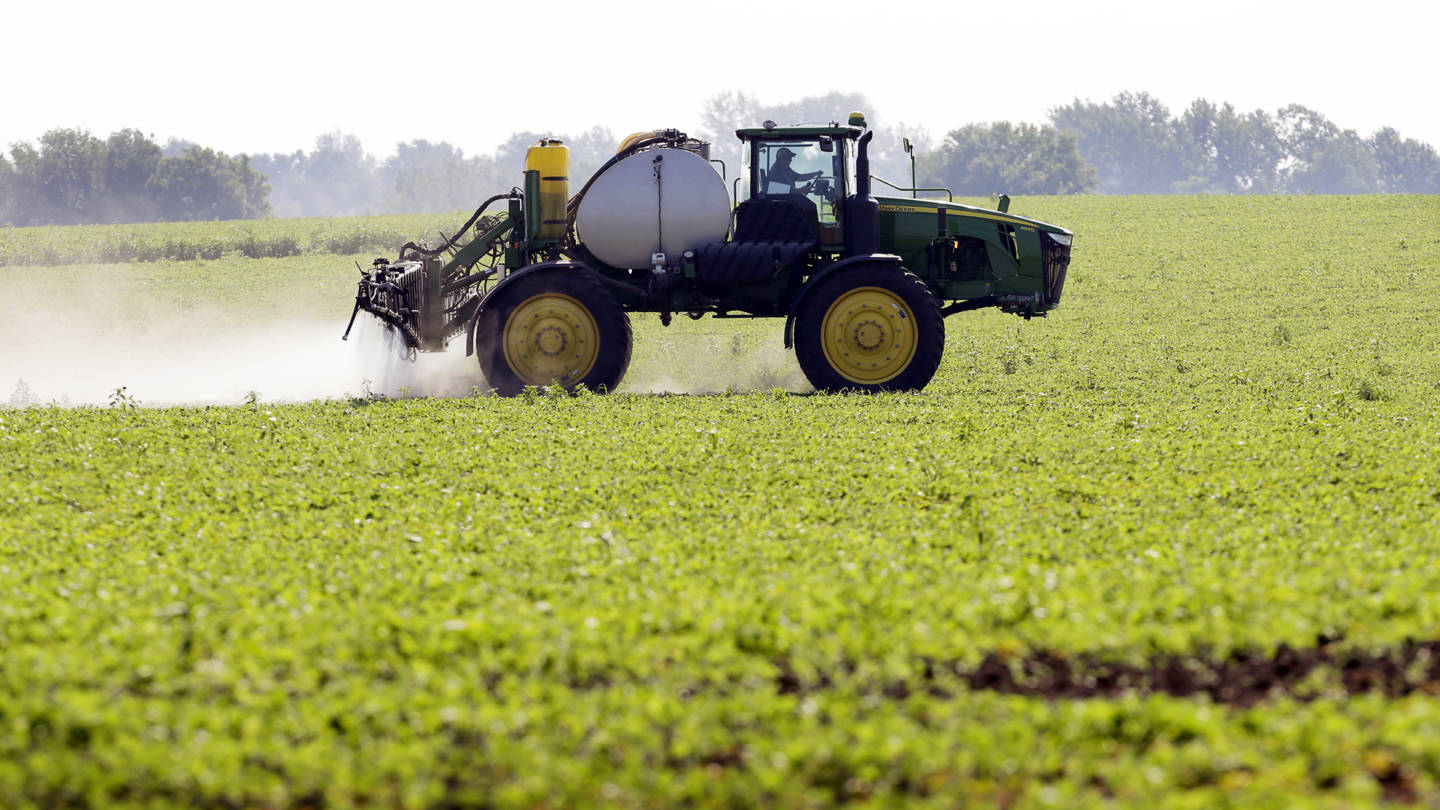
"caption": "A farmer sprays a soybean field in Granger, Iowa. There's new and detailed data on the impact of genetically modified crops on pesticide use. Those crops replaced insecticides, and, at first, some herbicides. But herbicide use has rebounded.",
"description": "A farmer sprays a soybean field in Granger, Iowa. There's new and detailed data on the impact of genetically modified crops on pesticide use. Those crops replaced insecticides, and, at first, some herbicides. But herbicide use has rebounded",
"title": "A farmer sprays a soybean field in Granger, Iowa. There's new and detailed data on the impact of genetically modified crops on pesticide use. Those crops replaced insecticides, and, at first, some herbicides. But herbicide use has rebounded.",
"credit": "Charlie Neibergall/AP",
"status": "inherit",
"isLoading": false,
"fetchFailed": false
},
"bayareabites_111772": {
"type": "attachments",
"id": "bayareabites_111772",
"meta": {
"index": "attachments_1716263798",
"site": "bayareabites",
"id": "111772",
"found": true
},
"parent": 111771,
"imgSizes": {
"twentyfourteen-full-width": {
"file": "https://ww2.kqed.org/app/uploads/sites/24/2016/08/2351849-drought-indoor-growing-photo-3-b2f8225558f3630309d8fa8f98873f7d47e92377-1038x576.jpg",
"width": 1038,
"mimeType": "image/jpeg",
"height": 576
},
"thumbnail": {
"file": "https://ww2.kqed.org/app/uploads/sites/24/2016/08/2351849-drought-indoor-growing-photo-3-b2f8225558f3630309d8fa8f98873f7d47e92377-400x300.jpg",
"width": 400,
"mimeType": "image/jpeg",
"height": 300
},
"fd-sm": {
"file": "https://ww2.kqed.org/app/uploads/sites/24/2016/08/2351849-drought-indoor-growing-photo-3-b2f8225558f3630309d8fa8f98873f7d47e92377-960x720.jpg",
"width": 960,
"mimeType": "image/jpeg",
"height": 720
},
"post-thumbnail": {
"file": "https://ww2.kqed.org/app/uploads/sites/24/2016/08/2351849-drought-indoor-growing-photo-3-b2f8225558f3630309d8fa8f98873f7d47e92377-672x372.jpg",
"width": 672,
"mimeType": "image/jpeg",
"height": 372
},
"kqedFullSize": {
"file": "https://ww2.kqed.org/app/uploads/sites/24/2016/08/2351849-drought-indoor-growing-photo-3-b2f8225558f3630309d8fa8f98873f7d47e92377.jpg",
"width": 1599,
"height": 1199
},
"large": {
"file": "https://ww2.kqed.org/app/uploads/sites/24/2016/08/2351849-drought-indoor-growing-photo-3-b2f8225558f3630309d8fa8f98873f7d47e92377-1440x1080.jpg",
"width": 1440,
"mimeType": "image/jpeg",
"height": 1080
},
"guest-author-50": {
"file": "https://ww2.kqed.org/app/uploads/sites/24/2016/08/2351849-drought-indoor-growing-photo-3-b2f8225558f3630309d8fa8f98873f7d47e92377-50x50.jpg",
"width": 50,
"mimeType": "image/jpeg",
"height": 50
},
"guest-author-96": {
"file": "https://ww2.kqed.org/app/uploads/sites/24/2016/08/2351849-drought-indoor-growing-photo-3-b2f8225558f3630309d8fa8f98873f7d47e92377-96x96.jpg",
"width": 96,
"mimeType": "image/jpeg",
"height": 96
},
"medium": {
"file": "https://ww2.kqed.org/app/uploads/sites/24/2016/08/2351849-drought-indoor-growing-photo-3-b2f8225558f3630309d8fa8f98873f7d47e92377-800x600.jpg",
"width": 800,
"mimeType": "image/jpeg",
"height": 600
},
"guest-author-64": {
"file": "https://ww2.kqed.org/app/uploads/sites/24/2016/08/2351849-drought-indoor-growing-photo-3-b2f8225558f3630309d8fa8f98873f7d47e92377-64x64.jpg",
"width": 64,
"mimeType": "image/jpeg",
"height": 64
},
"guest-author-32": {
"file": "https://ww2.kqed.org/app/uploads/sites/24/2016/08/2351849-drought-indoor-growing-photo-3-b2f8225558f3630309d8fa8f98873f7d47e92377-32x32.jpg",
"width": 32,
"mimeType": "image/jpeg",
"height": 32
},
"cat_post_thumb_sizecategory-posts-2": {
"file": "https://ww2.kqed.org/app/uploads/sites/24/2016/08/2351849-drought-indoor-growing-photo-3-b2f8225558f3630309d8fa8f98873f7d47e92377-150x150.jpg",
"width": 150,
"mimeType": "image/jpeg",
"height": 150
},
"fd-med": {
"file": "https://ww2.kqed.org/app/uploads/sites/24/2016/08/2351849-drought-indoor-growing-photo-3-b2f8225558f3630309d8fa8f98873f7d47e92377-1180x885.jpg",
"width": 1180,
"mimeType": "image/jpeg",
"height": 885
},
"detail": {
"file": "https://ww2.kqed.org/app/uploads/sites/24/2016/08/2351849-drought-indoor-growing-photo-3-b2f8225558f3630309d8fa8f98873f7d47e92377-150x150.jpg",
"width": 150,
"mimeType": "image/jpeg",
"height": 150
},
"medium_large": {
"file": "https://ww2.kqed.org/app/uploads/sites/24/2016/08/2351849-drought-indoor-growing-photo-3-b2f8225558f3630309d8fa8f98873f7d47e92377-768x576.jpg",
"width": 768,
"mimeType": "image/jpeg",
"height": 576
},
"guest-author-128": {
"file": "https://ww2.kqed.org/app/uploads/sites/24/2016/08/2351849-drought-indoor-growing-photo-3-b2f8225558f3630309d8fa8f98873f7d47e92377-128x128.jpg",
"width": 128,
"mimeType": "image/jpeg",
"height": 128
}
},
"publishDate": 1472668258,
"modified": 1472668585,
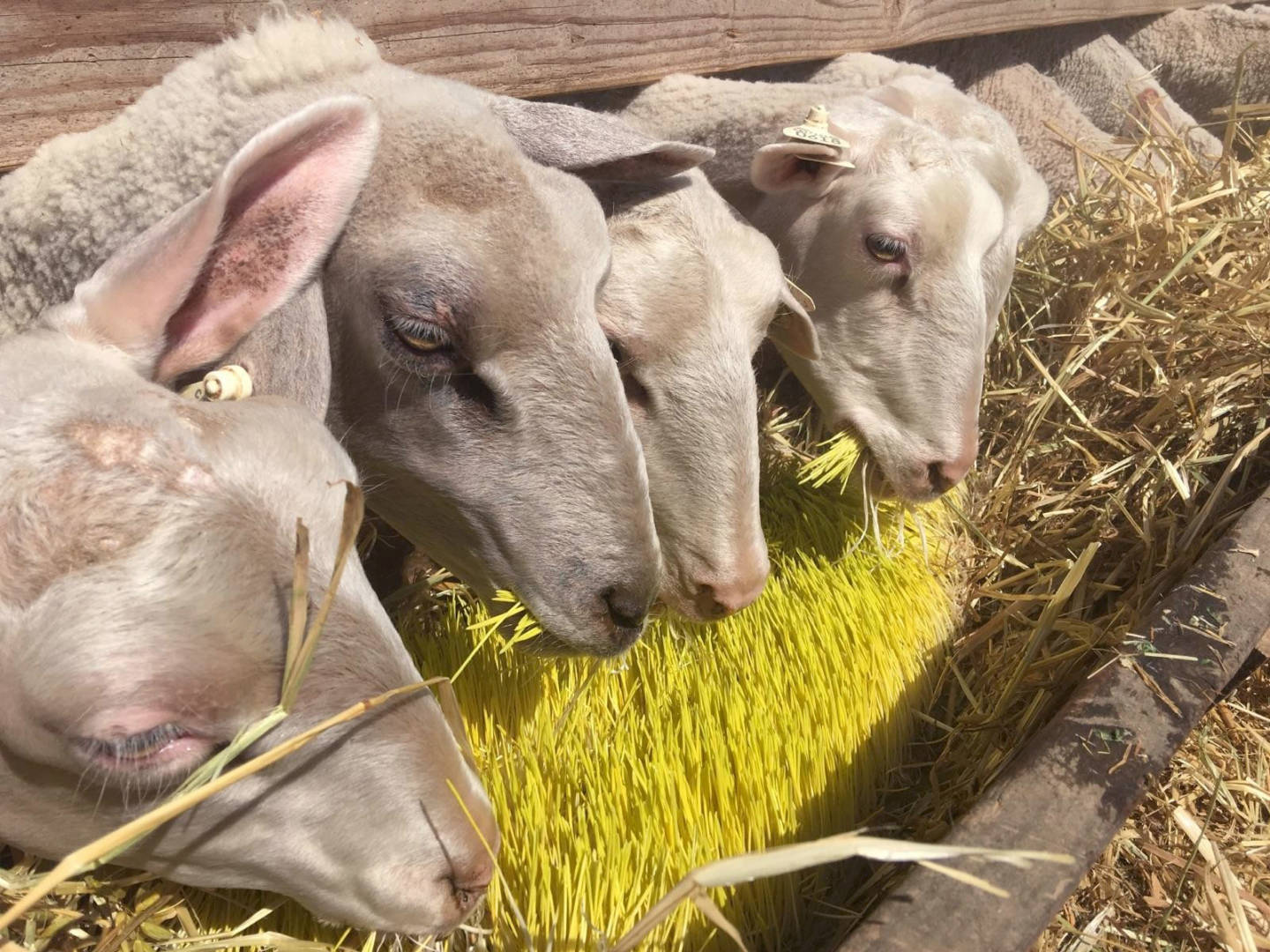
"caption": "These Central Valley sheep are happily munching on sprouted barley grown indoors. Farmer Mario Daccarett says the barley, grown in shipping containers, is sweet and keeps his sheep full longer.",
"description": "These Central Valley sheep are happily munching on sprouted barley grown indoors. Farmer Mario Daccarett says the barley, grown in shipping containers, is sweet and keeps his sheep full longer.",
"title": "These Central Valley sheep are happily munching on sprouted barley grown indoors. Farmer Mario Daccarett says the barley, grown in shipping containers, is sweet and keeps his sheep full longer.",
"credit": "Ezra David Romero/Valley Public Radio",
"status": "inherit",
"isLoading": false,
"fetchFailed": false
},
"bayareabites_111676": {
"type": "attachments",
"id": "bayareabites_111676",
"meta": {
"index": "attachments_1716263798",
"site": "bayareabites",
"id": "111676",
"found": true
},
"parent": 111675,
"imgSizes": {
"twentyfourteen-full-width": {
"file": "https://ww2.kqed.org/app/uploads/sites/24/2016/08/loavesofbread_enl-8c09f6106bcaa3bfcfb587ce9186b49270cb537b-1038x576.jpg",
"width": 1038,
"mimeType": "image/jpeg",
"height": 576
},
"thumbnail": {
"file": "https://ww2.kqed.org/app/uploads/sites/24/2016/08/loavesofbread_enl-8c09f6106bcaa3bfcfb587ce9186b49270cb537b-400x266.jpg",
"width": 400,
"mimeType": "image/jpeg",
"height": 266
},
"fd-sm": {
"file": "https://ww2.kqed.org/app/uploads/sites/24/2016/08/loavesofbread_enl-8c09f6106bcaa3bfcfb587ce9186b49270cb537b-960x637.jpg",
"width": 960,
"mimeType": "image/jpeg",
"height": 637
},
"post-thumbnail": {
"file": "https://ww2.kqed.org/app/uploads/sites/24/2016/08/loavesofbread_enl-8c09f6106bcaa3bfcfb587ce9186b49270cb537b-672x372.jpg",
"width": 672,
"mimeType": "image/jpeg",
"height": 372
},
"kqedFullSize": {
"file": "https://ww2.kqed.org/app/uploads/sites/24/2016/08/loavesofbread_enl-8c09f6106bcaa3bfcfb587ce9186b49270cb537b.jpg",
"width": 1624,
"height": 1078
},
"large": {
"file": "https://ww2.kqed.org/app/uploads/sites/24/2016/08/loavesofbread_enl-8c09f6106bcaa3bfcfb587ce9186b49270cb537b-1440x956.jpg",
"width": 1440,
"mimeType": "image/jpeg",
"height": 956
},
"guest-author-50": {
"file": "https://ww2.kqed.org/app/uploads/sites/24/2016/08/loavesofbread_enl-8c09f6106bcaa3bfcfb587ce9186b49270cb537b-50x50.jpg",
"width": 50,
"mimeType": "image/jpeg",
"height": 50
},
"guest-author-96": {
"file": "https://ww2.kqed.org/app/uploads/sites/24/2016/08/loavesofbread_enl-8c09f6106bcaa3bfcfb587ce9186b49270cb537b-96x96.jpg",
"width": 96,
"mimeType": "image/jpeg",
"height": 96
},
"medium": {
"file": "https://ww2.kqed.org/app/uploads/sites/24/2016/08/loavesofbread_enl-8c09f6106bcaa3bfcfb587ce9186b49270cb537b-800x531.jpg",
"width": 800,
"mimeType": "image/jpeg",
"height": 531
},
"guest-author-64": {
"file": "https://ww2.kqed.org/app/uploads/sites/24/2016/08/loavesofbread_enl-8c09f6106bcaa3bfcfb587ce9186b49270cb537b-64x64.jpg",
"width": 64,
"mimeType": "image/jpeg",
"height": 64
},
"guest-author-32": {
"file": "https://ww2.kqed.org/app/uploads/sites/24/2016/08/loavesofbread_enl-8c09f6106bcaa3bfcfb587ce9186b49270cb537b-32x32.jpg",
"width": 32,
"mimeType": "image/jpeg",
"height": 32
},
"cat_post_thumb_sizecategory-posts-2": {
"file": "https://ww2.kqed.org/app/uploads/sites/24/2016/08/loavesofbread_enl-8c09f6106bcaa3bfcfb587ce9186b49270cb537b-150x150.jpg",
"width": 150,
"mimeType": "image/jpeg",
"height": 150
},
"fd-med": {
"file": "https://ww2.kqed.org/app/uploads/sites/24/2016/08/loavesofbread_enl-8c09f6106bcaa3bfcfb587ce9186b49270cb537b-1180x783.jpg",
"width": 1180,
"mimeType": "image/jpeg",
"height": 783
},
"detail": {
"file": "https://ww2.kqed.org/app/uploads/sites/24/2016/08/loavesofbread_enl-8c09f6106bcaa3bfcfb587ce9186b49270cb537b-150x150.jpg",
"width": 150,
"mimeType": "image/jpeg",
"height": 150
},
"medium_large": {
"file": "https://ww2.kqed.org/app/uploads/sites/24/2016/08/loavesofbread_enl-8c09f6106bcaa3bfcfb587ce9186b49270cb537b-768x510.jpg",
"width": 768,
"mimeType": "image/jpeg",
"height": 510
},
"guest-author-128": {
"file": "https://ww2.kqed.org/app/uploads/sites/24/2016/08/loavesofbread_enl-8c09f6106bcaa3bfcfb587ce9186b49270cb537b-128x128.jpg",
"width": 128,
"mimeType": "image/jpeg",
"height": 128
}
},
"publishDate": 1472071449,
"modified": 1472072107,
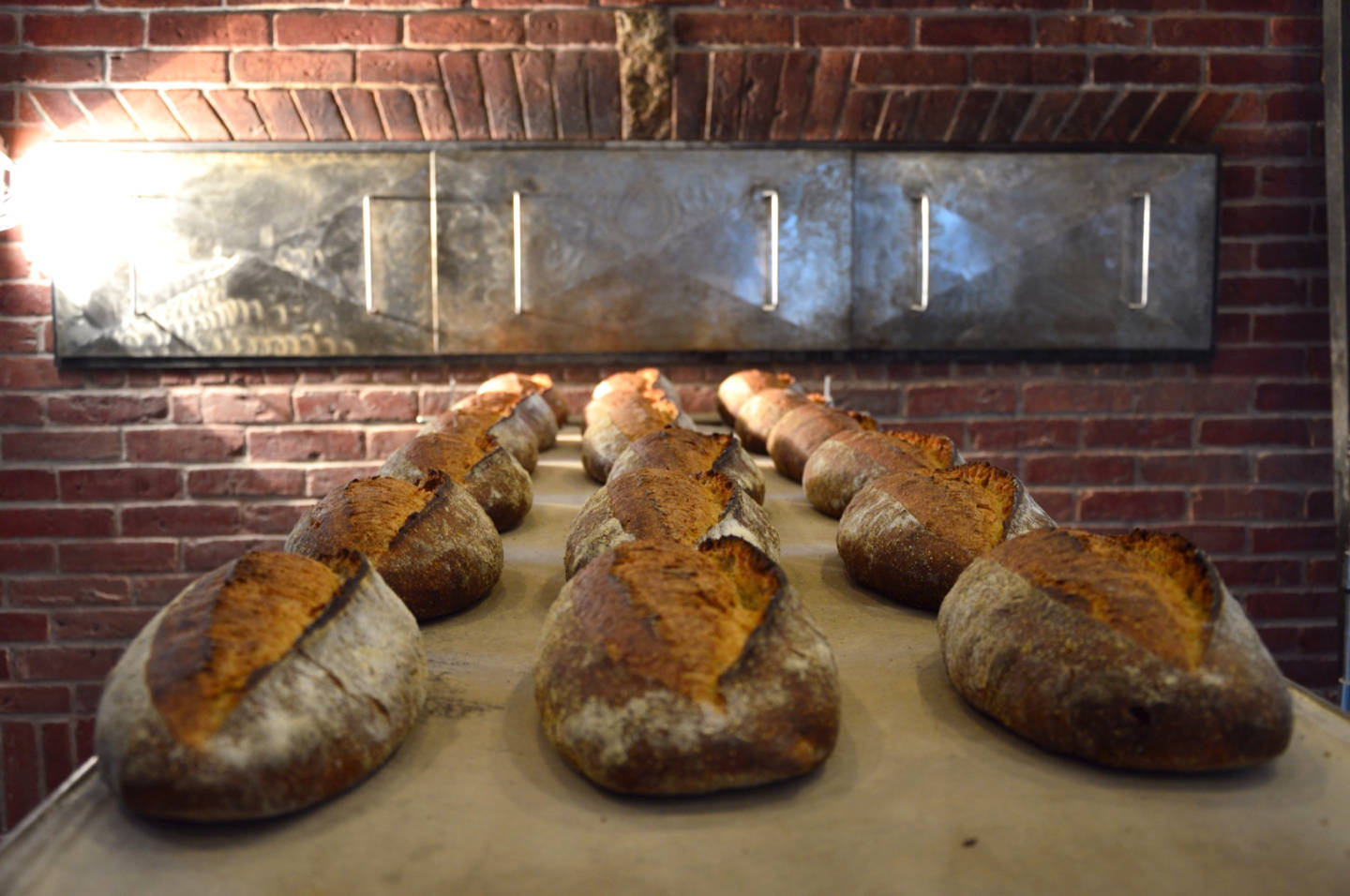
"caption": "Breads baked at the Elmore Mountain Bread use freshly stone milled flour.",
"description": "Breads baked at the Elmore Mountain Bread use freshly stone milled flour.",
"title": "Breads baked at the Elmore Mountain Bread use freshly stone milled flour.",
"credit": " Blair Marvin/Courtesy of Elmore Mountain Bread",
"status": "inherit",
"isLoading": false,
"fetchFailed": false
}
},
"audioPlayerReducer": {
"postId": "stream_live",
"isPaused": true,
"isPlaying": false,
"pfsActive": false,
"pledgeModalIsOpen": true,
"playerDrawerIsOpen": false,
"liveAudioPlayStartedAt": 0,
"liveAudioPlayContext": ""
},
"authorsReducer": {
"byline_bayareabites_113737": {
"type": "authors",
"id": "byline_bayareabites_113737",
"meta": {
"override": true
},
"slug": "byline_bayareabites_113737",
"name": "Maanvi Singh, NPR Food",
"isLoading": false
},
"byline_bayareabites_113135": {
"type": "authors",
"id": "byline_bayareabites_113135",
"meta": {
"override": true
},
"slug": "byline_bayareabites_113135",
"name": "Clare Leschin-Hoar, \u003ca href=\"https://ww2.kqed.org/bayareabites/author/nprfood/\">NPR Food\u003c/a>",
"isLoading": false
},
"byline_bayareabites_112919": {
"type": "authors",
"id": "byline_bayareabites_112919",
"meta": {
"override": true
},
"slug": "byline_bayareabites_112919",
"name": "\u003ca href=\"http://civileats.com/author/scagle/\">Susie Cagle\u003c/a>, \u003ca href=\"https://ww2.kqed.org/bayareabites/author/civileat/\">CIvil Eats\u003c/a>",
"isLoading": false
},
"byline_bayareabites_112980": {
"type": "authors",
"id": "byline_bayareabites_112980",
"meta": {
"override": true
},
"slug": "byline_bayareabites_112980",
"name": "Alastair Bland, \u003ca href=\"https://ww2.kqed.org/bayareabites/author/nprfood/\">NPR Food\u003c/a>",
"isLoading": false
},
"byline_bayareabites_112670": {
"type": "authors",
"id": "byline_bayareabites_112670",
"meta": {
"override": true
},
"slug": "byline_bayareabites_112670",
"name": "Dan Charles, NPR Food",
"isLoading": false
},
"byline_bayareabites_112619": {
"type": "authors",
"id": "byline_bayareabites_112619",
"meta": {
"override": true
},
"slug": "byline_bayareabites_112619",
"name": "\u003ca href=\"http://civileats.com/author/kwong/\">Kristine Wong\u003c/a>, \u003ca href=\"https://ww2.kqed.org/bayareabites/author/civileat/\">Civil Eats\u003c/a>",
"isLoading": false
},
"byline_bayareabites_112197": {
"type": "authors",
"id": "byline_bayareabites_112197",
"meta": {
"override": true
},
"slug": "byline_bayareabites_112197",
"name": "Allison Aubrey, NPR Food",
"isLoading": false
},
"byline_bayareabites_111808": {
"type": "authors",
"id": "byline_bayareabites_111808",
"meta": {
"override": true
},
"slug": "byline_bayareabites_111808",
"name": "\u003ca href=\"http://civileats.com/author/rcernansky/\">Rachel Cernansky\u003c/a>, \u003ca href=\"https://ww2.kqed.org/bayareabites/author/civileat/\">Civil Eats\u003c/a>",
"isLoading": false
},
"byline_bayareabites_111828": {
"type": "authors",
"id": "byline_bayareabites_111828",
"meta": {
"override": true
},
"slug": "byline_bayareabites_111828",
"name": "Dan Charles, NPR Food",
"isLoading": false
},
"byline_bayareabites_111771": {
"type": "authors",
"id": "byline_bayareabites_111771",
"meta": {
"override": true
},
"slug": "byline_bayareabites_111771",
"name": "Ezra David Romero, NPR Food",
"isLoading": false
},
"byline_bayareabites_111675": {
"type": "authors",
"id": "byline_bayareabites_111675",
"meta": {
"override": true
},
"slug": "byline_bayareabites_111675",
"name": "Sujata Gupta, \u003ca href=\"https://ww2.kqed.org/bayareabites/author/nprfood/\">NPR Food\u003c/a>",
"isLoading": false
},
"kimwesterman": {
"type": "authors",
"id": "5575",
"meta": {
"index": "authors_1716337520",
"id": "5575",
"found": true
},
"name": "Kim Westerman",
"firstName": "Kim",
"lastName": "Westerman",
"slug": "kimwesterman",
"email": "kim.westerman@gmail.com",
"display_author_email": false,
"staff_mastheads": [],
"title": null,
"bio": "Kim Westerman has been writing about food and wine for most of her adult life. Originally from North Carolina, she moved to Berkeley in 2006 to pursue the California dream, which, it turns out, is all it’s cracked up to be. She’s a farmers' market junkie, a lover of all things tomato, and Champagne-obsessed. She loves to cook with her kids, eight and three, and she makes frequent pilgrimages to International Boulevard in search of her next favorite Mexican dish. She spends an inordinate amount of time thinking about food and wine pairing, often starting with the wine and working backwards when planning menus. She is a Level I Sommelier and a Licensed Q-Grader. Her work has appeared in KQED's Bay Area Bites, Forbes.com, the New York Times, the San Francisco Chronicle, Tasting Table, Fodor’s Travel Guides, and lots of other publications. You can follow Kim on Twitter and Instagram @throughtraveler.",
"avatar": "https://secure.gravatar.com/avatar/2eb7f890ab19ead33f77fd8554ac4c39?s=600&d=blank&r=g",
"twitter": null,
"facebook": null,
"instagram": null,
"linkedin": null,
"sites": [
{
"site": "bayareabites",
"roles": [
"contributor"
]
},
{
"site": "food",
"roles": [
"contributor"
]
}
],
"headData": {
"title": "Kim Westerman | KQED",
"description": null,
"ogImgSrc": "https://secure.gravatar.com/avatar/2eb7f890ab19ead33f77fd8554ac4c39?s=600&d=blank&r=g",
"twImgSrc": "https://secure.gravatar.com/avatar/2eb7f890ab19ead33f77fd8554ac4c39?s=600&d=blank&r=g"
},
"isLoading": false,
"link": "/author/kimwesterman"
}
},
"pagesReducer": {
"bayareabites_category_sustainability": {
"type": "terms",
"id": "bayareabites_60",
"meta": {
"index": "terms_1716263798",
"site": "bayareabites",
"id": "60",
"score": 12.370327
},
"featImg": null,
"name": "sustainability, environment, climate change",
"description": null,
"taxonomy": "category",
"headData": {
"twImgId": null,
"twTitle": null,
"ogTitle": null,
"ogImgId": null,
"twDescription": null,
"description": null,
"title": "sustainability, environment, climate change Archives | KQED Bay Area Bites",
"ogDescription": null
},
"ttid": 23,
"slug": "sustainability",
"isLoading": false,
"title": "sustainability, environment, climate change",
"pageMeta": {
"site": "bayareabites",
"WpPageTemplate": "page-topic-editorial",
"currentPage": 11
},
"blocks": [
{
"blockName": "kqed/post-list",
"attrs": {
"layout": "cardArticle2",
"query": "posts/bayareabites?category=sustainability",
"seeMore": false,
"paginated": true,
"page": 11
}
},
{
"blockName": "kqed/ad"
}
]
}
},
"pfsSessionReducer": {},
"postsReducer": {
"stream_live": {
"type": "live",
"id": "stream_live",
"audioUrl": "https://streams.kqed.org/kqedradio",
"title": "Live Stream",
"excerpt": "Live Stream information currently unavailable.",
"link": "/radio",
"featImg": "",
"label": {
"name": "KQED Live",
"link": "/"
}
},
"stream_kqedNewscast": {
"type": "posts",
"id": "stream_kqedNewscast",
"audioUrl": "https://www.kqed.org/.stream/anon/radio/RDnews/newscast.mp3?_=1",
"title": "KQED Newscast",
"featImg": "",
"label": {
"name": "88.5 FM",
"link": "/"
}
},
"bayareabites_113737": {
"type": "posts",
"id": "bayareabites_113737",
"meta": {
"index": "posts_1716263798",
"site": "bayareabites",
"id": "113737",
"score": null,
"sort": [
1479847695000
]
},
"parent": 0,
"labelTerm": {},
"blocks": [],
"publishDate": 1479847695,
"format": "standard",
"disqusTitle": "Eat It, Don't Leave It: How London Became A Leader In Anti-Food Waste",
"title": "Eat It, Don't Leave It: How London Became A Leader In Anti-Food Waste",
"headTitle": "Bay Area Bites | KQED Food",
"content": "\u003cp>It's around 6 o'clock on a Sunday evening, and Anne-Charlotte Mornington is running around the food market in London's super-hip Camden neighborhood with a rolling suitcase and a giant tarp bag filled with empty tupperware boxes. She's going around from stall to stalll, asking for leftovers.\u003c/p>\n\u003cp>Mornington works for the food-sharing app \u003ca href=\"https://olioex.com/\">Olio\u003c/a>. \"If ever you have anything that you can't sell tomorrow but it's still edible,\" she explains to the vendors, \"I'll take it and make sure that it's eaten.\"\u003c/p>\n\u003cp>Olio wants to make it easy for busy food sellers to avoid wasting food. \"These vendors usually don't have enough surplus to donate to a charity or something, but they still end up having to throw away quite a lot at the end of the day,\" Mornington explains. \"So either I or some volunteers will come everyday to collect any scraps and put it on the app.\"\u003c/p>\n\u003cp>In fact, anybody in London with a smartphone — be it a restaurant, grocer or just a regular Joe — can upload pictures of their leftover lunches and dinners, spare ingredients or unwanted produce onto the app. Those hankering for a free meal can then peruse the offerings, message those who've got food to spare and then go collect it — for free.\u003c/p>\n\u003cp>Olio is just one of many start-ups and small enterprises working to reduce food waste in London. When researchers at Trinity College Dublin recently launched \u003ca href=\"http://sharecity.ie/research/sharecity100-database/\">a database\u003c/a> identifying more than 4,000 food-sharing and waste-reducing enterprises in 100 cities around the world, they found that London — with 198 such enterprises — had more than any other city.\u003c/p>\n\u003cp>[ad fullwidth]\u003c/p>\n\u003cp>\"We decided to focus on cities, because more than half of the world's population now lives in cities,\" explains \u003ca href=\"https://www.tcd.ie/Geography/research/gradprojects/AD.php\">Anna Davies\u003c/a>, a professor of geography and environment at Trinity who led the research. City dwellers produce more than a billion tons of solid waste annually — and about half of that is food waste. But cities are also centers of innovation, Davies says. \"So we were curious — what difference is technology making to the way we share food in cities?\"\u003c/p>\n\u003cp>Quite a lot, it turns out.\u003c/p>\n\u003cp>Over the past three years, technology has transformed the way Londoners are approaching food waste, says Laura Hopper, the CEO of Plan Zheroes, a social network that connects charities that need food with local businesses that have a surplus. \"We have so many organizations in London doing good work.\"\u003c/p>\n\u003cp>Initially, the idea for Plan Zheroes came from Lottie Henley, a nonagenarian whose experiences as a refugee during World War II motivated her to do something about food poverty in London. Back in 2011, through a city-wide program designed to encourage green entrepreneurship, Henley got some seed money and teamed up with some techie types to design Plan Zheroes.\u003c/p>\n\u003cp>Now restaurants, coffee shops and small grocers that have just a little bit extra can use the platform to find nearby homeless shelters and food banks in need. The organization also recruits a small army of volunteers who help run food between the businesses and the charities.\u003c/p>\n\u003cp>\"This isn't a large-scale thing. It\"s really about helping communities connect,\" Hopper says. \"Plan Zheroes fills a very specific niche.\"\u003c/p>\n\u003cp>Several other London-based enterprises do the same — they aim to reduce food waste in one or two small, specific ways. London-based startup \u003ca href=\"http://www.snact.co.uk/\">Snact\u003c/a> makes snacks out of produce that would otherwise be wasted, and \u003ca href=\"http://www.rejuce.co.uk/\">Rejuce\u003c/a>, turns waste from London's wholesale markets into smoothies and juices. A company called \u003ca href=\"https://rubiesintherubble.com/\">Rubies in the Rubble \u003c/a>uses surplus fruit and veg to make relishes, and another called \u003ca href=\"http://www.chicp.co.uk/\">ChicP\u003c/a> uses vegetables that are past their prime to make hummus.\u003c/p>\n\u003cp>Then there's \u003ca href=\"http://www.soleshare.net/\">Sole Share\u003c/a> — a sort of Blue Apron for seafood — which helps both consumers and fishermen avoid waste by allowing the former to specify online exactly how much they need so that the latter can deliver exactly that, no more and no less. And \u003ca href=\"http://www.dayoldeats.com/\">Day Old\u003c/a> is an online catering service that will bring boxes of day-old donuts, pastries and other baked goods straight to your office — and the proceeds all go to charities that tackle child hunger.\u003c/p>\n\u003cp>\"Of course, technology alone isn't enough to build a sustainable food-sharing community,\" says Davies from Trinity College. \"The social connections are important — but what technology can do is help people make those connections.\"\u003c/p>\n\u003cp>Back at London's Camden market, Anne-Charlotte Mornington from Olio has collected over 30 portions of food. Anna Kidd, who works as a volunteer with Olio, has joined Mornington in the task of cataloguing and photographing all the nosh: several servings of fragrant, spiced rice from an Indian food stall, Thai chicken curry, a chicken masala wrap and a bag full of hot dogs.\u003c/p>\n\u003cp>It'll all be gone within a day or two, as hungry Londoners come to collect it all. About 85,000 Londoners interested in either donating or collecting surplus food have made accounts on Olio so far.\u003c/p>\n\u003cp>\"It feels so good that we've saved all of this from going in the bin,\" says Kidd, who herself uses the app to pick up odds and ends for her pantry.\u003c/p>\n\u003cp>\"I don't think I've bought any spices since I've got the app,\" Kidd says. \"It's amazing.\" Plus, Olio has an added benefit, she says. \"You get to meet people and have conversations when you pick up the food. I've really gotten to know my area better.\"\u003c/p>\n\u003cp>\u003cem>Maanvi Singh is a writer based in London.\u003c/em>\u003c/p>\n\u003cp>\u003c/p>\n\u003cp> \u003cem>Copyright 2016 \u003ca href=\"http://www.npr.org/\" target=\"_blank\">NPR\u003c/a>.\u003c/em> \u003c/p>\n\n",
"disqusIdentifier": "113737 http://ww2.kqed.org/bayareabites/?p=113737",
"disqusUrl": "https://ww2.kqed.org/bayareabites/2016/11/22/eat-it-dont-leave-it-how-london-became-a-leader-in-anti-food-waste/",
"stats": {
"hasVideo": false,
"hasChartOrMap": false,
"hasAudio": false,
"hasPolis": false,
"wordCount": 948,
"hasGoogleForm": false,
"hasGallery": false,
"hasHearkenModule": false,
"iframeSrcs": [],
"paragraphCount": 22
},
"modified": 1479847695,
"excerpt": "In the English capital, apps and small-scale businesses abound that let restaurants and food vendors share leftovers with the public for free, and otherwise reduce the amount of edibles they toss.",
"headData": {
"twImgId": "",
"twTitle": "",
"ogTitle": "",
"ogImgId": "",
"twDescription": "",
"description": "In the English capital, apps and small-scale businesses abound that let restaurants and food vendors share leftovers with the public for free, and otherwise reduce the amount of edibles they toss.",
"title": "Eat It, Don't Leave It: How London Became A Leader In Anti-Food Waste | KQED",
"ogDescription": "",
"schema": {
"@context": "https://schema.org",
"@type": "Article",
"headline": "Eat It, Don't Leave It: How London Became A Leader In Anti-Food Waste",
"datePublished": "2016-11-22T12:48:15-08:00",
"dateModified": "2016-11-22T12:48:15-08:00",
"image": "https://cdn.kqed.org/wp-content/uploads/2020/02/KQED-OG-Image@1x.png"
}
},
"guestAuthors": [],
"slug": "eat-it-dont-leave-it-how-london-became-a-leader-in-anti-food-waste",
"status": "publish",
"sourceUrl": "https://ww2.kqed.org/bayareabites/category/food-and-technology/",
"nprApiLink": "http://api.npr.org/query?id=502933703&apiKey=MDAxOTAwOTE4MDEyMTkxMDAzNjczZDljZA004",
"nprByline": "Maanvi Singh, NPR Food",
"nprStoryDate": "Tue, 22 Nov 2016 15:11:00 -0500",
"nprLastModifiedDate": "Tue, 22 Nov 2016 15:12:24 -0500",
"nprHtmlLink": "http://www.npr.org/sections/thesalt/2016/11/22/502933703/eat-it-dont-leave-it-how-london-became-a-leader-in-anti-food-waste?ft=nprml&f=502933703",
"nprImageAgency": "Maanvi Singh for NPR",
"source": "Food Trends and Technology",
"nprStoryId": "502933703",
"nprRetrievedStory": "1",
"nprPubDate": "Tue, 22 Nov 2016 15:12:00 -0500",
"path": "/bayareabites/113737/eat-it-dont-leave-it-how-london-became-a-leader-in-anti-food-waste",
"audioTrackLength": null,
"parsedContent": [
{
"type": "contentString",
"content": "\u003cdiv class=\"post-body\">\u003cp>\u003cp>It's around 6 o'clock on a Sunday evening, and Anne-Charlotte Mornington is running around the food market in London's super-hip Camden neighborhood with a rolling suitcase and a giant tarp bag filled with empty tupperware boxes. She's going around from stall to stalll, asking for leftovers.\u003c/p>\n\u003cp>Mornington works for the food-sharing app \u003ca href=\"https://olioex.com/\">Olio\u003c/a>. \"If ever you have anything that you can't sell tomorrow but it's still edible,\" she explains to the vendors, \"I'll take it and make sure that it's eaten.\"\u003c/p>\n\u003cp>Olio wants to make it easy for busy food sellers to avoid wasting food. \"These vendors usually don't have enough surplus to donate to a charity or something, but they still end up having to throw away quite a lot at the end of the day,\" Mornington explains. \"So either I or some volunteers will come everyday to collect any scraps and put it on the app.\"\u003c/p>\n\u003cp>In fact, anybody in London with a smartphone — be it a restaurant, grocer or just a regular Joe — can upload pictures of their leftover lunches and dinners, spare ingredients or unwanted produce onto the app. Those hankering for a free meal can then peruse the offerings, message those who've got food to spare and then go collect it — for free.\u003c/p>\n\u003cp>Olio is just one of many start-ups and small enterprises working to reduce food waste in London. When researchers at Trinity College Dublin recently launched \u003ca href=\"http://sharecity.ie/research/sharecity100-database/\">a database\u003c/a> identifying more than 4,000 food-sharing and waste-reducing enterprises in 100 cities around the world, they found that London — with 198 such enterprises — had more than any other city.\u003c/p>\n\u003cp>\u003c/p>\u003c/div>",
"attributes": {
"named": {},
"numeric": []
}
},
{
"type": "component",
"content": "",
"name": "ad",
"attributes": {
"named": {
"label": "fullwidth"
},
"numeric": [
"fullwidth"
]
}
},
{
"type": "contentString",
"content": "\u003cdiv class=\"post-body\">\u003cp>\u003c/p>\n\u003cp>\"We decided to focus on cities, because more than half of the world's population now lives in cities,\" explains \u003ca href=\"https://www.tcd.ie/Geography/research/gradprojects/AD.php\">Anna Davies\u003c/a>, a professor of geography and environment at Trinity who led the research. City dwellers produce more than a billion tons of solid waste annually — and about half of that is food waste. But cities are also centers of innovation, Davies says. \"So we were curious — what difference is technology making to the way we share food in cities?\"\u003c/p>\n\u003cp>Quite a lot, it turns out.\u003c/p>\n\u003cp>Over the past three years, technology has transformed the way Londoners are approaching food waste, says Laura Hopper, the CEO of Plan Zheroes, a social network that connects charities that need food with local businesses that have a surplus. \"We have so many organizations in London doing good work.\"\u003c/p>\n\u003cp>Initially, the idea for Plan Zheroes came from Lottie Henley, a nonagenarian whose experiences as a refugee during World War II motivated her to do something about food poverty in London. Back in 2011, through a city-wide program designed to encourage green entrepreneurship, Henley got some seed money and teamed up with some techie types to design Plan Zheroes.\u003c/p>\n\u003cp>Now restaurants, coffee shops and small grocers that have just a little bit extra can use the platform to find nearby homeless shelters and food banks in need. The organization also recruits a small army of volunteers who help run food between the businesses and the charities.\u003c/p>\n\u003cp>\"This isn't a large-scale thing. It\"s really about helping communities connect,\" Hopper says. \"Plan Zheroes fills a very specific niche.\"\u003c/p>\n\u003cp>Several other London-based enterprises do the same — they aim to reduce food waste in one or two small, specific ways. London-based startup \u003ca href=\"http://www.snact.co.uk/\">Snact\u003c/a> makes snacks out of produce that would otherwise be wasted, and \u003ca href=\"http://www.rejuce.co.uk/\">Rejuce\u003c/a>, turns waste from London's wholesale markets into smoothies and juices. A company called \u003ca href=\"https://rubiesintherubble.com/\">Rubies in the Rubble \u003c/a>uses surplus fruit and veg to make relishes, and another called \u003ca href=\"http://www.chicp.co.uk/\">ChicP\u003c/a> uses vegetables that are past their prime to make hummus.\u003c/p>\n\u003cp>Then there's \u003ca href=\"http://www.soleshare.net/\">Sole Share\u003c/a> — a sort of Blue Apron for seafood — which helps both consumers and fishermen avoid waste by allowing the former to specify online exactly how much they need so that the latter can deliver exactly that, no more and no less. And \u003ca href=\"http://www.dayoldeats.com/\">Day Old\u003c/a> is an online catering service that will bring boxes of day-old donuts, pastries and other baked goods straight to your office — and the proceeds all go to charities that tackle child hunger.\u003c/p>\n\u003cp>\"Of course, technology alone isn't enough to build a sustainable food-sharing community,\" says Davies from Trinity College. \"The social connections are important — but what technology can do is help people make those connections.\"\u003c/p>\n\u003cp>Back at London's Camden market, Anne-Charlotte Mornington from Olio has collected over 30 portions of food. Anna Kidd, who works as a volunteer with Olio, has joined Mornington in the task of cataloguing and photographing all the nosh: several servings of fragrant, spiced rice from an Indian food stall, Thai chicken curry, a chicken masala wrap and a bag full of hot dogs.\u003c/p>\n\u003cp>It'll all be gone within a day or two, as hungry Londoners come to collect it all. About 85,000 Londoners interested in either donating or collecting surplus food have made accounts on Olio so far.\u003c/p>\n\u003cp>\"It feels so good that we've saved all of this from going in the bin,\" says Kidd, who herself uses the app to pick up odds and ends for her pantry.\u003c/p>\n\u003cp>\"I don't think I've bought any spices since I've got the app,\" Kidd says. \"It's amazing.\" Plus, Olio has an added benefit, she says. \"You get to meet people and have conversations when you pick up the food. I've really gotten to know my area better.\"\u003c/p>\n\u003cp>\u003cem>Maanvi Singh is a writer based in London.\u003c/em>\u003c/p>\n\u003cp>\u003c/p>\n\u003cp> \u003cem>Copyright 2016 \u003ca href=\"http://www.npr.org/\" target=\"_blank\">NPR\u003c/a>.\u003c/em> \u003c/p>\n\n\u003c/div>\u003c/p>",
"attributes": {
"named": {},
"numeric": []
}
}
],
"link": "/bayareabites/113737/eat-it-dont-leave-it-how-london-became-a-leader-in-anti-food-waste",
"authors": [
"byline_bayareabites_113737"
],
"categories": [
"bayareabites_10028",
"bayareabites_4084",
"bayareabites_2035",
"bayareabites_358",
"bayareabites_60"
],
"tags": [
"bayareabites_12108",
"bayareabites_3707",
"bayareabites_11955",
"bayareabites_15690"
],
"featImg": "bayareabites_113738",
"label": "source_bayareabites_113737"
},
"bayareabites_113135": {
"type": "posts",
"id": "bayareabites_113135",
"meta": {
"index": "posts_1716263798",
"site": "bayareabites",
"id": "113135",
"score": null,
"sort": [
1477932864000
]
},
"parent": 0,
"labelTerm": {
"site": "bayareabites"
},
"blocks": [],
"publishDate": 1477932864,
"format": "standard",
"disqusTitle": "Hey, Looks Like Americans Are Finally Eating More Fish",
"title": "Hey, Looks Like Americans Are Finally Eating More Fish",
"headTitle": "Bay Area Bites | KQED Food",
"content": "\u003cp>San Diego native Megan Olbur didn't grow up eating much seafood beyond tuna sandwiches, fish sticks or the occasional salmon dinners her parents made. But in 2015, when Olbur became pregnant with a daughter of her own, she heeded the advice of her physician and deliberately began adding more seafood to her diet as a way to boost brain development and to ensure the health of her growing baby.\u003c/p>\n\u003cp>It turns out, she wasn't alone in upping her fish fare.\u003c/p>\n\u003cp>According to the annual\u003ca href=\"http://www.st.nmfs.noaa.gov/commercial-fisheries/fus/fus15/index\"> Fisheries of the United States Report\u003c/a> released by NOAA last week, Americans increased their seafood consumption to 15.5 pounds of fish and shellfish per person in 2015, up nearly a pound from the previous year, making it the biggest leap in seafood consumption in 20 years.\u003c/p>\n\u003cp>\"It's terrific news,\" says Tom Brenna, professor of human nutrition at Cornell University and a member of the 2015 Dietary Guideline Committee. \"We're moving in the right direction.\"\u003c/p>\n\u003cp>It's a rare nutritional pat-on-the-back for Americans, who routinely get chastised over their diets, but the good news comes with some caveats.\u003c/p>\n\u003cp>[ad fullwidth]\u003c/p>\n\u003cp>The bump in seafood consumption may mean that we're enjoying four additional seafood meals a year, but we're still only eating about 4.77 ounces of seafood a week. That's better than where we were just a few years ago, but nowhere close to the 8 ounces of seafood per week most of us should be eating according to the most current \u003ca href=\"https://health.gov/dietaryguidelines/2015/guidelines/\">Dietary Guidelines\u003c/a>. (For women who are pregnant, may become pregnant or are breastfeeding, the recommendation is to consume at least 8 ounces and up to 12 ounces of a variety of seafood per week, from choices lower in methylmercury.)\u003c/p>\n\u003cp>And we're still not doing a very good job of getting a variety of seafood into our diets. According to the National Fisheries Institute, shrimp, salmon and tuna continue to dominate the top of their \u003ca href=\"http://www.aboutseafood.com/video_blog/2015-top-ten-list/\">most-consumed seafood list\u003c/a>, just as those tasty species have for the past decade. But even a small uptick in seafood consumption is seen as a boon to public health and is a step in the right direction toward reduced risks of cardiovascular disease and improving the neurodevelopment of children.\u003c/p>\n\u003cp>\"Any fish is better than none, and any fish is better than fried, empty-calorie junk food,\" says Joe Hibbeln, a researcher with the National Institutes of Health who has studied the effects of fish and omega-3 fatty acids in reducing depression, suicide and violence. Hibbeln says the nutritional value of seafood is so important to health, he'd like to see it served more frequently in the school lunch program.\u003c/p>\n\u003cp>NOAA doesn't break out individual species or products in its latest report, but Michael Liddel, a statistician with the agency, notes that one-third of the increase in consumption came from canned seafood products, particularly canned salmon. That increase may stem from \u003ca href=\"http://www.fns.usda.gov/tefap/emergency-food-assistance-program-tefap\">The Emergency Food Assistance Program\u003c/a> at the USDA, which purchased more than $40 million in surplus canned Alaskan salmon in \u003ca href=\"http://juneauempire.com/local/2014-09-03/usda-buy-13m-alaska-salmon\">2014\u003c/a> and\u003ca href=\"http://www.alaskapublic.org/2015/08/10/government-to-buy-30m-of-canned-sockeye/\"> 2015\u003c/a> and distributed it to food banks across the country.\u003c/p>\n\u003cp>While the 15.5 pounds of seafood is worth noting, and makes the U.S. the second-largest consumer of seafood after China (and ahead of Japan), it's still an amount that's dwarfed by our national appetite for chicken and beef. Janet M. Riley, senior vice president at the North American Meat Institute, says Americans ate approximately 59.2 pounds of chicken and 51.7 pounds of beef in 2014 — each more than double our seafood intake.\u003c/p>\n\u003cp>It's worth noting that, while NOAA's consumption figures are considered reliable, they're calculated using what's called a \"disappearance\" model. Broadly, that means they add domestic landings and seafood imports together, while subtracting out exports to determine domestic consumption. That's very different than the way the Centers for Disease Control and Prevention looks at consumption through its National Health and Nutrition Examination Survey (NHANES). There, interviews are used to determine what Americans are actually eating, and differences in data may appear. (NHANES data is what the Dietary Guidelines Committee relies on.) But according to CDC officials, analyzed NHANES data from 2015 is not yet available, so we can't compare the numbers with the NOAA finding. Still, Brenna thinks the NOAA figures are a strong sign that consumption is up.\u003c/p>\n\u003cp>So what's holding Americans back from reaching the magic number of 8 to 12 ounces of seafood a week?\u003c/p>\n\u003cp>Gavin Gibbons, spokesperson for the National Fisheries Institute, cites \"years of confusing messages over what's sustainable and healthy.\" He has a point. As recently as 2014, the EPA and FDA were \u003ca href=\"https://www.theguardian.com/sustainable-business/2014/jun/14/pregnant-women-should-eat-more-seafood-usda-epa\">tweaking warnings\u003c/a> on mercury and seafood consumption for pregnant and nursing women issued a decade earlier — advice that many Americans outside that demographic had taken to heart, limiting their own seafood consumption.\u003c/p>\n\u003cp>Industry and government advice over seafood consumption, mercury warnings and health benefits may have improved in recent years, but for new moms like Olbur, the message of what's both safe and healthy for her family is still fairly muddled.\u003c/p>\n\u003cp>\"It's so confusing. When we're pregnant, we're told to eat more fish, but to avoid having too much mercury, and don't eat raw fish like sushi. At some point, you stick your fingers in your ears and just do what you already know,\" she says. \"Nutrition is a confusing topic for everyone.\"\u003c/p>\n\u003cp>\u003ca href=\"http://www.leschin-hoar.com/\">Clare Leschin-Hoar\u003c/a>\u003cem> is a journalist based in San Diego who covers food policy and sustainability issues.\u003c/em> \u003c/p>\n\u003cp>\u003c/p>\n\u003cp>\u003cem>Copyright 2016 \u003ca href=\"http://www.npr.org/\" target=\"_blank\">NPR\u003c/a>.\u003c/em> \u003c/p>\n\n",
"disqusIdentifier": "113135 http://ww2.kqed.org/bayareabites/?p=113135",
"disqusUrl": "https://ww2.kqed.org/bayareabites/2016/10/31/hey-looks-like-americans-are-finally-eating-more-fish/",
"stats": {
"hasVideo": false,
"hasChartOrMap": false,
"hasAudio": false,
"hasPolis": false,
"wordCount": 943,
"hasGoogleForm": false,
"hasGallery": false,
"hasHearkenModule": false,
"iframeSrcs": [],
"paragraphCount": 19
},
"modified": 1477932864,
"excerpt": "Americans are often chastised for what we eat. Now we're getting a pat on the back. A new report finds seafood consumption is up by nearly a pound from the previous year, the biggest leap in 20 years.",
"headData": {
"twImgId": "",
"twTitle": "",
"ogTitle": "",
"ogImgId": "",
"twDescription": "",
"description": "Americans are often chastised for what we eat. Now we're getting a pat on the back. A new report finds seafood consumption is up by nearly a pound from the previous year, the biggest leap in 20 years.",
"title": "Hey, Looks Like Americans Are Finally Eating More Fish | KQED",
"ogDescription": "",
"schema": {
"@context": "https://schema.org",
"@type": "Article",
"headline": "Hey, Looks Like Americans Are Finally Eating More Fish",
"datePublished": "2016-10-31T09:54:24-07:00",
"dateModified": "2016-10-31T09:54:24-07:00",
"image": "https://cdn.kqed.org/wp-content/uploads/2020/02/KQED-OG-Image@1x.png"
}
},
"guestAuthors": [],
"slug": "hey-looks-like-americans-are-finally-eating-more-fish",
"status": "publish",
"nprApiLink": "http://api.npr.org/query?id=499780982&apiKey=MDAxOTAwOTE4MDEyMTkxMDAzNjczZDljZA004",
"nprByline": "Clare Leschin-Hoar, \u003ca href=\"https://ww2.kqed.org/bayareabites/author/nprfood/\">NPR Food\u003c/a>",
"nprStoryDate": "Mon, 31 Oct 2016 07:00:00 -0400",
"nprLastModifiedDate": "Mon, 31 Oct 2016 12:01:13 -0400",
"nprHtmlLink": "http://www.npr.org/sections/thesalt/2016/10/31/499780982/hey-looks-like-americans-are-finally-eating-more-fish?ft=nprml&f=499780982",
"nprImageAgency": "Getty Images",
"nprImageCredit": "fcafotodigital",
"nprStoryId": "499780982",
"nprRetrievedStory": "1",
"nprPubDate": "Mon, 31 Oct 2016 12:01:00 -0400",
"path": "/bayareabites/113135/hey-looks-like-americans-are-finally-eating-more-fish",
"audioTrackLength": null,
"parsedContent": [
{
"type": "contentString",
"content": "\u003cdiv class=\"post-body\">\u003cp>\u003cp>San Diego native Megan Olbur didn't grow up eating much seafood beyond tuna sandwiches, fish sticks or the occasional salmon dinners her parents made. But in 2015, when Olbur became pregnant with a daughter of her own, she heeded the advice of her physician and deliberately began adding more seafood to her diet as a way to boost brain development and to ensure the health of her growing baby.\u003c/p>\n\u003cp>It turns out, she wasn't alone in upping her fish fare.\u003c/p>\n\u003cp>According to the annual\u003ca href=\"http://www.st.nmfs.noaa.gov/commercial-fisheries/fus/fus15/index\"> Fisheries of the United States Report\u003c/a> released by NOAA last week, Americans increased their seafood consumption to 15.5 pounds of fish and shellfish per person in 2015, up nearly a pound from the previous year, making it the biggest leap in seafood consumption in 20 years.\u003c/p>\n\u003cp>\"It's terrific news,\" says Tom Brenna, professor of human nutrition at Cornell University and a member of the 2015 Dietary Guideline Committee. \"We're moving in the right direction.\"\u003c/p>\n\u003cp>It's a rare nutritional pat-on-the-back for Americans, who routinely get chastised over their diets, but the good news comes with some caveats.\u003c/p>\n\u003cp>\u003c/p>\u003c/div>",
"attributes": {
"named": {},
"numeric": []
}
},
{
"type": "component",
"content": "",
"name": "ad",
"attributes": {
"named": {
"label": "fullwidth"
},
"numeric": [
"fullwidth"
]
}
},
{
"type": "contentString",
"content": "\u003cdiv class=\"post-body\">\u003cp>\u003c/p>\n\u003cp>The bump in seafood consumption may mean that we're enjoying four additional seafood meals a year, but we're still only eating about 4.77 ounces of seafood a week. That's better than where we were just a few years ago, but nowhere close to the 8 ounces of seafood per week most of us should be eating according to the most current \u003ca href=\"https://health.gov/dietaryguidelines/2015/guidelines/\">Dietary Guidelines\u003c/a>. (For women who are pregnant, may become pregnant or are breastfeeding, the recommendation is to consume at least 8 ounces and up to 12 ounces of a variety of seafood per week, from choices lower in methylmercury.)\u003c/p>\n\u003cp>And we're still not doing a very good job of getting a variety of seafood into our diets. According to the National Fisheries Institute, shrimp, salmon and tuna continue to dominate the top of their \u003ca href=\"http://www.aboutseafood.com/video_blog/2015-top-ten-list/\">most-consumed seafood list\u003c/a>, just as those tasty species have for the past decade. But even a small uptick in seafood consumption is seen as a boon to public health and is a step in the right direction toward reduced risks of cardiovascular disease and improving the neurodevelopment of children.\u003c/p>\n\u003cp>\"Any fish is better than none, and any fish is better than fried, empty-calorie junk food,\" says Joe Hibbeln, a researcher with the National Institutes of Health who has studied the effects of fish and omega-3 fatty acids in reducing depression, suicide and violence. Hibbeln says the nutritional value of seafood is so important to health, he'd like to see it served more frequently in the school lunch program.\u003c/p>\n\u003cp>NOAA doesn't break out individual species or products in its latest report, but Michael Liddel, a statistician with the agency, notes that one-third of the increase in consumption came from canned seafood products, particularly canned salmon. That increase may stem from \u003ca href=\"http://www.fns.usda.gov/tefap/emergency-food-assistance-program-tefap\">The Emergency Food Assistance Program\u003c/a> at the USDA, which purchased more than $40 million in surplus canned Alaskan salmon in \u003ca href=\"http://juneauempire.com/local/2014-09-03/usda-buy-13m-alaska-salmon\">2014\u003c/a> and\u003ca href=\"http://www.alaskapublic.org/2015/08/10/government-to-buy-30m-of-canned-sockeye/\"> 2015\u003c/a> and distributed it to food banks across the country.\u003c/p>\n\u003cp>While the 15.5 pounds of seafood is worth noting, and makes the U.S. the second-largest consumer of seafood after China (and ahead of Japan), it's still an amount that's dwarfed by our national appetite for chicken and beef. Janet M. Riley, senior vice president at the North American Meat Institute, says Americans ate approximately 59.2 pounds of chicken and 51.7 pounds of beef in 2014 — each more than double our seafood intake.\u003c/p>\n\u003cp>It's worth noting that, while NOAA's consumption figures are considered reliable, they're calculated using what's called a \"disappearance\" model. Broadly, that means they add domestic landings and seafood imports together, while subtracting out exports to determine domestic consumption. That's very different than the way the Centers for Disease Control and Prevention looks at consumption through its National Health and Nutrition Examination Survey (NHANES). There, interviews are used to determine what Americans are actually eating, and differences in data may appear. (NHANES data is what the Dietary Guidelines Committee relies on.) But according to CDC officials, analyzed NHANES data from 2015 is not yet available, so we can't compare the numbers with the NOAA finding. Still, Brenna thinks the NOAA figures are a strong sign that consumption is up.\u003c/p>\n\u003cp>So what's holding Americans back from reaching the magic number of 8 to 12 ounces of seafood a week?\u003c/p>\n\u003cp>Gavin Gibbons, spokesperson for the National Fisheries Institute, cites \"years of confusing messages over what's sustainable and healthy.\" He has a point. As recently as 2014, the EPA and FDA were \u003ca href=\"https://www.theguardian.com/sustainable-business/2014/jun/14/pregnant-women-should-eat-more-seafood-usda-epa\">tweaking warnings\u003c/a> on mercury and seafood consumption for pregnant and nursing women issued a decade earlier — advice that many Americans outside that demographic had taken to heart, limiting their own seafood consumption.\u003c/p>\n\u003cp>Industry and government advice over seafood consumption, mercury warnings and health benefits may have improved in recent years, but for new moms like Olbur, the message of what's both safe and healthy for her family is still fairly muddled.\u003c/p>\n\u003cp>\"It's so confusing. When we're pregnant, we're told to eat more fish, but to avoid having too much mercury, and don't eat raw fish like sushi. At some point, you stick your fingers in your ears and just do what you already know,\" she says. \"Nutrition is a confusing topic for everyone.\"\u003c/p>\n\u003cp>\u003ca href=\"http://www.leschin-hoar.com/\">Clare Leschin-Hoar\u003c/a>\u003cem> is a journalist based in San Diego who covers food policy and sustainability issues.\u003c/em> \u003c/p>\n\u003cp>\u003c/p>\n\u003cp>\u003cem>Copyright 2016 \u003ca href=\"http://www.npr.org/\" target=\"_blank\">NPR\u003c/a>.\u003c/em> \u003c/p>\n\n\u003c/div>\u003c/p>",
"attributes": {
"named": {},
"numeric": []
}
}
],
"link": "/bayareabites/113135/hey-looks-like-americans-are-finally-eating-more-fish",
"authors": [
"byline_bayareabites_113135"
],
"categories": [
"bayareabites_10028",
"bayareabites_4084",
"bayareabites_1245",
"bayareabites_2035",
"bayareabites_358",
"bayareabites_60"
],
"tags": [
"bayareabites_376",
"bayareabites_323"
],
"featImg": "bayareabites_113136",
"label": "bayareabites"
},
"bayareabites_112919": {
"type": "posts",
"id": "bayareabites_112919",
"meta": {
"index": "posts_1716263798",
"site": "bayareabites",
"id": "112919",
"score": null,
"sort": [
1477579206000
]
},
"parent": 0,
"labelTerm": {
"site": "bayareabites"
},
"blocks": [],
"publishDate": 1477579206,
"format": "standard",
"disqusTitle": "Wrangling the Climate Impact of California Dairy",
"title": "Wrangling the Climate Impact of California Dairy",
"headTitle": "Bay Area Bites | KQED Food",
"content": "\u003cp>\u003cstrong>\u003cem>Could new methane emissions regulations tend a greener California, or sour the state’s dairy industry?\u003c/em>\u003c/strong>\u003c/p>\n\u003cp>Away from its sparkling coastal cities and picturesque natural wonders, California hides its massive, steaming pools of literal liquefied shit.\u003c/p>\n\u003cp>You can find them all across the Golden State, with particular density in the fertile Central Valley. They are the most visible—and the worst smelling—impact of the largest dairy industry in America. And they’re a problem.\u003c/p>\n\u003cp>Those hot, churning fecal lagoons are but one byproduct of California’s massive dairy industry, by far the biggest in the U.S. And they in turn create another, in the form of large quantities of methane gas produced as bacteria breakdown the poop—gas that is nearly \u003ca href=\"https://www.epa.gov/ghgemissions/overview-greenhouse-gases#methane\">25 times more destructive\u003c/a> to the climate than carbon dioxide (CO2).\u003c/p>\n\u003cfigure id=\"attachment_112923\" class=\"wp-caption aligncenter\" style=\"max-width: 1024px\">\u003cimg src=\"http://ww2.kqed.org/bayareabites/wp-content/uploads/sites/24/2016/10/CivilEatsMethane2-1024x805.jpg\" alt=\"Illustration by Susie Cagle\" width=\"1024\" height=\"805\" class=\"size-full wp-image-112923\" srcset=\"https://ww2.kqed.org/app/uploads/sites/24/2016/10/CivilEatsMethane2-1024x805.jpg 1024w, https://ww2.kqed.org/app/uploads/sites/24/2016/10/CivilEatsMethane2-1024x805-160x126.jpg 160w, https://ww2.kqed.org/app/uploads/sites/24/2016/10/CivilEatsMethane2-1024x805-800x629.jpg 800w, https://ww2.kqed.org/app/uploads/sites/24/2016/10/CivilEatsMethane2-1024x805-768x604.jpg 768w, https://ww2.kqed.org/app/uploads/sites/24/2016/10/CivilEatsMethane2-1024x805-1020x802.jpg 1020w, https://ww2.kqed.org/app/uploads/sites/24/2016/10/CivilEatsMethane2-1024x805-960x755.jpg 960w, https://ww2.kqed.org/app/uploads/sites/24/2016/10/CivilEatsMethane2-1024x805-240x189.jpg 240w, https://ww2.kqed.org/app/uploads/sites/24/2016/10/CivilEatsMethane2-1024x805-375x295.jpg 375w, https://ww2.kqed.org/app/uploads/sites/24/2016/10/CivilEatsMethane2-1024x805-520x409.jpg 520w\" sizes=\"(max-width: 1024px) 100vw, 1024px\">\u003cfigcaption class=\"wp-caption-text\">Illustration by Susie Cagle\u003c/figcaption>\u003c/figure>\n\u003cp>\u003cstrong>Emissions Contradictions\u003c/strong>\u003c/p>\n\u003cp>[ad fullwidth]\u003c/p>\n\u003cp>California’s industry and the state’s drive to reduce its environmental impact have long been at tenuous odds. The state is at once a paragon of environmental responsibility, and home to some of the worst air and water pollution in the country; a leader in both regulating business, and incubating innovations that have helped it become the sixth-largest economy in the world.\u003c/p>\n\u003cp>That confusion was laid bare in a pair of new laws passed this fall. In September, Governor Jerry Brown signed \u003ca href=\"http://www.latimes.com/politics/la-pol-ca-jerry-brown-signs-climate-laws-20160908-snap-story.html\">an ambitious bill\u003c/a> aimed at slashing greenhouse gas emissions, including methane, to 40 percent below 1990 levels by 2030. Those lofty goals would require new regulations of the state’s dairy farms—were it not for \u003ca href=\"http://bigstory.ap.org/article/5b1f0a6b25ee443b951ad61dd0334784/california-governor-backs-rules-cow-landfill-emissions\">the bill Brown signed\u003c/a> several days later, setting aside $50 million from the state’s \u003ca href=\"http://civileats.com/2016/02/02/californias-grand-plan-to-fight-climate-change-on-the-farm-jerry-brown/\">cap and trade funds\u003c/a> to help retrofit gassy dairies and giving the Air Resources Board discretion over how much those dairies would ultimately have to cut emissions.\u003c/p>\n\u003cp>On its face, the law appears to be an environmental victory—but not all advocates are so optimistic.\u003c/p>\n\u003cp>“History has shown that the [Air Resources Board] does not want to regulate dairies,” says Brent Newell, legal director for the \u003ca href=\"http://www.crpe-ej.org/\">Center on Race, Poverty and the Environment\u003c/a>. “Even though it’s had the authority for 10 years, it has not imposed any mandatory regulations, and the dairy industry has used its political power to prevent that.”\u003c/p>\n\u003cp>The Western United Dairymen and Milk Producers Council together spent more than $97,000 lobbying state legislators in the first half of 2016, and another $83,500 in campaign contributions this election cycle, according to state records.\u003c/p>\n\u003cp>The new law “provides a lot of special treatment for dairies that other industries don’t get,” says Newell. “It entrenches the industrial form of dairy production which is the cause of all this methane and air pollution and water pollution in the first place.”\u003c/p>\n\u003cp>There is, at least with current technology, a hard limit on how much methane can really be cut from our current system of animal agriculture. Cows are naturally gassy creatures, producing significant amounts of methane in their basic digestion process. In their fight against SB 1383, the Western United Dairymen and Milk Producers Council \u003ca href=\"http://www.thebusinessjournal.com/news/agriculture/23707-dairy-officials-blast-air-board-over-proposed-methane-reduction-goals\">produced ads\u003c/a> suggesting that environmentalists would go so far as to prevent natural cattle off-gassing, creating unnaturally exploding cows.\u003c/p>\n\u003cp>“You feed a cow and she makes milk and the rest comes out the back end,” says U.C. Davis livestock waste management specialist Deanne Meyer. “You can’t mess with biology.”\u003c/p>\n\u003cp>Nonetheless, that’s exactly what some scientists are trying to do.\u003c/p>\n\u003cfigure id=\"attachment_112924\" class=\"wp-caption aligncenter\" style=\"max-width: 1500px\">\u003cimg src=\"http://ww2.kqed.org/bayareabites/wp-content/uploads/sites/24/2016/10/CivilEatsMethane3.gif\" alt=\"Animation by Susie Cagle\" width=\"1500\" height=\"904\" class=\"size-full wp-image-112924\">\u003cfigcaption class=\"wp-caption-text\">Animation by Susie Cagle\u003c/figcaption>\u003c/figure>\n\u003cp>In 2014, Argentinean government \u003ca href=\"https://www.fastcoexist.com/3028933/these-backpacks-for-cows-collect-their-fart-gas-and-store-it-for-energy\">researchers unveiled backpacks\u003c/a> that collect cows’ digestive gases before they’re released into the atmosphere, through a tube inserted into their gut. About a quarter of that gas is methane, which can then be separated and used for fuel.\u003c/p>\n\u003cp>But the backpacks are currently just a proof of concept, and they’ve been largely dismissed stateside, as have other attempts to hack cow digestion, including the recent development in Denmark of a \u003ca href=\"http://www.bbc.com/news/blogs-news-from-elsewhere-37618474\">super grass\u003c/a> that is easier for cows to digest. Enteric methane emissions are taken for granted, at least for now. Which puts us back into the shit.\u003c/p>\n\u003cp>Most California dairy farms are big operations, with hundreds if not thousands of head of cattle that spend much of their lives in close quarters. To clean them quickly and easily, those quarters are flushed with water, concentrating the cows’ waste into manure ponds that in turn offgas more than half of dairy methane.\u003c/p>\n\u003cp>\u003cstrong>Is There a Methane Digester Strategy?\u003c/strong>\u003c/p>\n\u003cp>Over the past 30 years, some dairies have sought to cut their emissions voluntarily, treating poo pools more as a usable byproduct than a toxic environmental impact. At scale, decomposing cow manure can be broken down in anaerobic digesters.\u003c/p>\n\u003cfigure id=\"attachment_112925\" class=\"wp-caption aligncenter\" style=\"max-width: 1500px\">\u003cimg src=\"http://ww2.kqed.org/bayareabites/wp-content/uploads/sites/24/2016/10/CivilEatsMethane4-justlabels.gif\" alt=\"Animation by Susie Cagle\" width=\"1500\" height=\"956\" class=\"size-full wp-image-112925\">\u003cfigcaption class=\"wp-caption-text\">Animation by Susie Cagle\u003c/figcaption>\u003c/figure>\n\u003cp>“Methane is a big enough issue in California and throughout the world that we need to deal with, and SB 1383 is kind of the direction we’ve been going in all along,” says Albert Straus, who began operating a digester on his Marin County farm, \u003ca href=\"http://strausfamilycreamery.com/\">Straus Family Creamery\u003c/a>, in 2004.\u003c/p>\n\u003cp>Today, his facility captures enough methane processed into electricity to run the farm, while the leftover power gets sent back to the grid. But for all the latent potential these digesters have to offset the climate impact of California’s dairies, fewer than 1 percent of the state’s facilities are currently using them, due to a combination of high initial costs, difficult ongoing maintenance, and limited ability to use or store the energy they create.\u003c/p>\n\u003cp>“We haven’t yet really figured out if we can afford the digester strategy,” says Jeanne Merrill, policy director at \u003ca href=\"http://calclimateag.org/\">California Climate and Agriculture Network\u003c/a>.\u003c/p>\n\u003cp>“They’re not economical to operate without massive public subsidies,” says Newell.\u003c/p>\n\u003cp>Between build-out, equipment, and connecting to the existing electric grid, the cost of a digester is generally accepted to be at least a half million dollars, with some estimates closer to $2 million. But Straus doesn’t think it needs to be that way. “Most of those systems take so long to pay off that it’s not realistic,” he says. But his digester cost less than $350,000, with about $150,000 of that covered through government aid, “by simplifying it and making it not built like a Mercedes Benz.”\u003c/p>\n\u003cp>“At the end of the day you have to be concerned about the cost,” says Straus. “If you don’t survive as a business, there won’t be digesters operating anyway.”\u003c/p>\n\u003cp>A “digester-first” approach to manure management presumes that manure lagoons are an inevitable cost of the dairy business—and that the other pollutants created in the digestion process are worth it. But environmental advocates disagree. Instead of being flushed into lagoons, manure can also be \u003ca href=\"https://www.marincarbonproject.org/\">scraped, gathered, and composted\u003c/a>, or cows can be let out to pasture with the manure allowed to decompose in small amounts across the land, which naturally results in less methane—both strategies that would incur other costs in tools, labor, and additional land. But at least some of the funding earmarked for dairy retrofitting in SB 1383 could be spent on these other methods.\u003c/p>\n\u003cp>“We would like to see at least 50 percent of those funds go to a diversity of dairy management strategies beyond digesters,” says Merrill.\u003c/p>\n\u003cp>“We have to make sure that this money will be spent in a way that won’t cause more harm,” says Newell. “The silver lining is we made sure that pasture was a recognized manure methane reduction strategy. The other victory we got was a limit on how that $50 million would be spent so it would not lead to an increase in air pollution.”\u003c/p>\n\u003cp>If every scrap of decomposing dairy dung were absorbed by pasture, composted, or digested, the industry as a whole might have an outside, theoretical shot at cutting its methane emissions by 40 percent. But these efforts likely come at great capital, labor, and time costs when the industry is already struggling, so it’s unclear from where the will to change might come.\u003c/p>\n\u003cp>“California dairymen are incredibly innovative and resilient and the people who are here today have made huge modifications to their operations to be more efficient and more mindful about how they use their resources,” says U.C. Davis’ Deanne Meyer. “If you look at our carbon footprint per gallon of milk produced, it’s not going to get much more efficient than what we have going on in California.”\u003c/p>\n\u003cp>But regardless of any green goals, lofty or otherwise, California’s dairy farms and their manure lagoons aren’t in imminent danger of sweeping change. The new law provides for an eight-year research period, with the Air Resources Board expected to issue recommendations for emission cuts in 2024.\u003c/p>\n\u003cp>\u003cstrong>Dairy Demand May Be Biggest Challenge\u003c/strong>\u003c/p>\n\u003cp>To some degree, California’s dairy majority allows the state to lead U.S. agriculture by example: either toward a more sustainable future, or more of the status quo. But it is hardly a closed economy. Golden State dairy farmers are already grappling with the basic harsh realities of agriculture business, in the form of \u003ca href=\"http://www.cnbc.com/2015/02/10/california-drought-states-tempt-california-dairy-farms--we-have-water.html\">state-wide drought\u003c/a> and a global dip in milk prices. The state has lost hundreds of dairy farms in recent years, both to other states with more water and fewer regulations, and full-scale closure, even as consumers are demanding more dairy than ever.\u003c/p>\n\u003cfigure id=\"attachment_112926\" class=\"wp-caption aligncenter\" style=\"max-width: 1024px\">\u003cimg src=\"http://ww2.kqed.org/bayareabites/wp-content/uploads/sites/24/2016/10/CivilEatsMethane5-1024x563.jpg\" alt=\"Illustration by Susie Cagle\" width=\"1024\" height=\"563\" class=\"size-full wp-image-112926\" srcset=\"https://ww2.kqed.org/app/uploads/sites/24/2016/10/CivilEatsMethane5-1024x563.jpg 1024w, https://ww2.kqed.org/app/uploads/sites/24/2016/10/CivilEatsMethane5-1024x563-160x88.jpg 160w, https://ww2.kqed.org/app/uploads/sites/24/2016/10/CivilEatsMethane5-1024x563-800x440.jpg 800w, https://ww2.kqed.org/app/uploads/sites/24/2016/10/CivilEatsMethane5-1024x563-768x422.jpg 768w, https://ww2.kqed.org/app/uploads/sites/24/2016/10/CivilEatsMethane5-1024x563-1020x561.jpg 1020w, https://ww2.kqed.org/app/uploads/sites/24/2016/10/CivilEatsMethane5-1024x563-960x528.jpg 960w, https://ww2.kqed.org/app/uploads/sites/24/2016/10/CivilEatsMethane5-1024x563-240x132.jpg 240w, https://ww2.kqed.org/app/uploads/sites/24/2016/10/CivilEatsMethane5-1024x563-375x206.jpg 375w, https://ww2.kqed.org/app/uploads/sites/24/2016/10/CivilEatsMethane5-1024x563-520x286.jpg 520w\" sizes=\"(max-width: 1024px) 100vw, 1024px\">\u003cfigcaption class=\"wp-caption-text\">Illustration by Susie Cagle\u003c/figcaption>\u003c/figure>\n\u003cp>In their 2011 \u003ca href=\"http://www.ewg.org/meateatersguide/a-meat-eaters-guide-to-climate-change-health-what-you-eat-matters/climate-and-environmental-impacts/\">Meat-Eater’s Guide to Climate Change and Health\u003c/a>, the Environmental Working Group ranked cheese third highest for emissions on a list of 20 foods, just below beef and lamb, but higher than pork, chicken, turkey, farmed salmon, and eggs. And \u003ca href=\"http://www.fao.org/publications/sofa/sofa2016/en/\">a new U.N. report\u003c/a> on climate change and food security urges the adoption of more plant-based alternatives.\u003c/p>\n\u003cp>Yet despite mounting evidence of its environmental impact, dairy production still outpaces that rising demand, as farmers try to milk more profits from falling prices. The U.S. Department of Agriculture recently announced it would be \u003ca href=\"http://www.wsj.com/articles/usda-to-buy-additional-20-million-of-cheese-1476217829\">buying millions of pounds of cheese \u003c/a>in an attempt to offset a growing glut, but it’ll be a small bite. Some farmers are simply \u003ca href=\"http://www.wsj.com/articles/americas-dairy-farmers-dump-43-million-gallons-of-excess-milk-1476284353\">dumping their surplus milk\u003c/a>—more than 43 million gallons of it.\u003c/p>\n\u003cp>As \u003ca href=\"http://mobile.reuters.com/article/idUSKCN11X1TG\">methane emissions\u003c/a> continue to rise precipitously—in no small part due to expanding animal agriculture operations worldwide—the potential impact of California’s new rules is still as murky as an industrial farm’s manure lagoon. If any state is to successfully retrofit otherwise harmful animal agriculture practices, it will have to strike an effective balance between industry and the rest of society—a balance that environmental advocates say is entirely achievable.\u003c/p>\n\u003cp>“There’s room for eating ice cream and cheese and butter we just need to produce it in a climate-responsible way,” says Brent Newell. “We can’t have forms of food production that have massive climate impacts.”\u003c/p>\n\u003cp>“The system we’ve had does not work, so how do we create a system that’s more sustainable? Methane digestion is a piece of it, organic farming is a piece, carbon farming is a piece, being a good member of the community,” says Albert Straus. “Sustainability is all those components. But at the end of the day, you still have to be a profitable business.”\u003c/p>\n\u003cp>And at the end of the day, California’s eyes may be bigger than its plate.\u003c/p>\n\u003cp>“How do you keep the price of the product reasonable and resource use accountable?” asks Meyer. After all: “We’re just California.”\u003c/p>\n\u003ch3>ABOUT THE WRITER\u003c/h3>\n\u003cp>[ad floatright]\u003c/p>\n\u003cp>Susie Cagle is a journalist and illustrator in Oakland, California. She has written and drawn for \u003cem>The New York Times\u003c/em>, \u003cem>The Guardian\u003c/em>, ProPublica, and others.\u003c/p>\n\n",
"disqusIdentifier": "112919 http://ww2.kqed.org/bayareabites/?p=112919",
"disqusUrl": "https://ww2.kqed.org/bayareabites/2016/10/27/wrangling-the-climate-impact-of-california-dairy/",
"stats": {
"hasVideo": false,
"hasChartOrMap": false,
"hasAudio": false,
"hasPolis": false,
"wordCount": 2046,
"hasGoogleForm": false,
"hasGallery": false,
"hasHearkenModule": false,
"iframeSrcs": [],
"paragraphCount": 43
},
"modified": 1477579206,
"excerpt": "Could new methane emissions regulations tend a greener California, or sour the state’s dairy industry?",
"headData": {
"twImgId": "",
"twTitle": "",
"ogTitle": "",
"ogImgId": "",
"twDescription": "",
"description": "Could new methane emissions regulations tend a greener California, or sour the state’s dairy industry?",
"title": "Wrangling the Climate Impact of California Dairy | KQED",
"ogDescription": "",
"schema": {
"@context": "https://schema.org",
"@type": "Article",
"headline": "Wrangling the Climate Impact of California Dairy",
"datePublished": "2016-10-27T07:40:06-07:00",
"dateModified": "2016-10-27T07:40:06-07:00",
"image": "https://cdn.kqed.org/wp-content/uploads/2020/02/KQED-OG-Image@1x.png"
}
},
"guestAuthors": [],
"slug": "wrangling-the-climate-impact-of-california-dairy",
"status": "publish",
"nprByline": "\u003ca href=\"http://civileats.com/author/scagle/\">Susie Cagle\u003c/a>, \u003ca href=\"https://ww2.kqed.org/bayareabites/author/civileat/\">CIvil Eats\u003c/a>",
"path": "/bayareabites/112919/wrangling-the-climate-impact-of-california-dairy",
"audioTrackLength": null,
"parsedContent": [
{
"type": "contentString",
"content": "\u003cdiv class=\"post-body\">\u003cp>\u003cp>\u003cstrong>\u003cem>Could new methane emissions regulations tend a greener California, or sour the state’s dairy industry?\u003c/em>\u003c/strong>\u003c/p>\n\u003cp>Away from its sparkling coastal cities and picturesque natural wonders, California hides its massive, steaming pools of literal liquefied shit.\u003c/p>\n\u003cp>You can find them all across the Golden State, with particular density in the fertile Central Valley. They are the most visible—and the worst smelling—impact of the largest dairy industry in America. And they’re a problem.\u003c/p>\n\u003cp>Those hot, churning fecal lagoons are but one byproduct of California’s massive dairy industry, by far the biggest in the U.S. And they in turn create another, in the form of large quantities of methane gas produced as bacteria breakdown the poop—gas that is nearly \u003ca href=\"https://www.epa.gov/ghgemissions/overview-greenhouse-gases#methane\">25 times more destructive\u003c/a> to the climate than carbon dioxide (CO2).\u003c/p>\n\u003cfigure id=\"attachment_112923\" class=\"wp-caption aligncenter\" style=\"max-width: 1024px\">\u003cimg src=\"http://ww2.kqed.org/bayareabites/wp-content/uploads/sites/24/2016/10/CivilEatsMethane2-1024x805.jpg\" alt=\"Illustration by Susie Cagle\" width=\"1024\" height=\"805\" class=\"size-full wp-image-112923\" srcset=\"https://ww2.kqed.org/app/uploads/sites/24/2016/10/CivilEatsMethane2-1024x805.jpg 1024w, https://ww2.kqed.org/app/uploads/sites/24/2016/10/CivilEatsMethane2-1024x805-160x126.jpg 160w, https://ww2.kqed.org/app/uploads/sites/24/2016/10/CivilEatsMethane2-1024x805-800x629.jpg 800w, https://ww2.kqed.org/app/uploads/sites/24/2016/10/CivilEatsMethane2-1024x805-768x604.jpg 768w, https://ww2.kqed.org/app/uploads/sites/24/2016/10/CivilEatsMethane2-1024x805-1020x802.jpg 1020w, https://ww2.kqed.org/app/uploads/sites/24/2016/10/CivilEatsMethane2-1024x805-960x755.jpg 960w, https://ww2.kqed.org/app/uploads/sites/24/2016/10/CivilEatsMethane2-1024x805-240x189.jpg 240w, https://ww2.kqed.org/app/uploads/sites/24/2016/10/CivilEatsMethane2-1024x805-375x295.jpg 375w, https://ww2.kqed.org/app/uploads/sites/24/2016/10/CivilEatsMethane2-1024x805-520x409.jpg 520w\" sizes=\"(max-width: 1024px) 100vw, 1024px\">\u003cfigcaption class=\"wp-caption-text\">Illustration by Susie Cagle\u003c/figcaption>\u003c/figure>\n\u003cp>\u003cstrong>Emissions Contradictions\u003c/strong>\u003c/p>\n\u003cp>\u003c/p>\u003c/div>",
"attributes": {
"named": {},
"numeric": []
}
},
{
"type": "component",
"content": "",
"name": "ad",
"attributes": {
"named": {
"label": "fullwidth"
},
"numeric": [
"fullwidth"
]
}
},
{
"type": "contentString",
"content": "\u003cdiv class=\"post-body\">\u003cp>\u003c/p>\n\u003cp>California’s industry and the state’s drive to reduce its environmental impact have long been at tenuous odds. The state is at once a paragon of environmental responsibility, and home to some of the worst air and water pollution in the country; a leader in both regulating business, and incubating innovations that have helped it become the sixth-largest economy in the world.\u003c/p>\n\u003cp>That confusion was laid bare in a pair of new laws passed this fall. In September, Governor Jerry Brown signed \u003ca href=\"http://www.latimes.com/politics/la-pol-ca-jerry-brown-signs-climate-laws-20160908-snap-story.html\">an ambitious bill\u003c/a> aimed at slashing greenhouse gas emissions, including methane, to 40 percent below 1990 levels by 2030. Those lofty goals would require new regulations of the state’s dairy farms—were it not for \u003ca href=\"http://bigstory.ap.org/article/5b1f0a6b25ee443b951ad61dd0334784/california-governor-backs-rules-cow-landfill-emissions\">the bill Brown signed\u003c/a> several days later, setting aside $50 million from the state’s \u003ca href=\"http://civileats.com/2016/02/02/californias-grand-plan-to-fight-climate-change-on-the-farm-jerry-brown/\">cap and trade funds\u003c/a> to help retrofit gassy dairies and giving the Air Resources Board discretion over how much those dairies would ultimately have to cut emissions.\u003c/p>\n\u003cp>On its face, the law appears to be an environmental victory—but not all advocates are so optimistic.\u003c/p>\n\u003cp>“History has shown that the [Air Resources Board] does not want to regulate dairies,” says Brent Newell, legal director for the \u003ca href=\"http://www.crpe-ej.org/\">Center on Race, Poverty and the Environment\u003c/a>. “Even though it’s had the authority for 10 years, it has not imposed any mandatory regulations, and the dairy industry has used its political power to prevent that.”\u003c/p>\n\u003cp>The Western United Dairymen and Milk Producers Council together spent more than $97,000 lobbying state legislators in the first half of 2016, and another $83,500 in campaign contributions this election cycle, according to state records.\u003c/p>\n\u003cp>The new law “provides a lot of special treatment for dairies that other industries don’t get,” says Newell. “It entrenches the industrial form of dairy production which is the cause of all this methane and air pollution and water pollution in the first place.”\u003c/p>\n\u003cp>There is, at least with current technology, a hard limit on how much methane can really be cut from our current system of animal agriculture. Cows are naturally gassy creatures, producing significant amounts of methane in their basic digestion process. In their fight against SB 1383, the Western United Dairymen and Milk Producers Council \u003ca href=\"http://www.thebusinessjournal.com/news/agriculture/23707-dairy-officials-blast-air-board-over-proposed-methane-reduction-goals\">produced ads\u003c/a> suggesting that environmentalists would go so far as to prevent natural cattle off-gassing, creating unnaturally exploding cows.\u003c/p>\n\u003cp>“You feed a cow and she makes milk and the rest comes out the back end,” says U.C. Davis livestock waste management specialist Deanne Meyer. “You can’t mess with biology.”\u003c/p>\n\u003cp>Nonetheless, that’s exactly what some scientists are trying to do.\u003c/p>\n\u003cfigure id=\"attachment_112924\" class=\"wp-caption aligncenter\" style=\"max-width: 1500px\">\u003cimg src=\"http://ww2.kqed.org/bayareabites/wp-content/uploads/sites/24/2016/10/CivilEatsMethane3.gif\" alt=\"Animation by Susie Cagle\" width=\"1500\" height=\"904\" class=\"size-full wp-image-112924\">\u003cfigcaption class=\"wp-caption-text\">Animation by Susie Cagle\u003c/figcaption>\u003c/figure>\n\u003cp>In 2014, Argentinean government \u003ca href=\"https://www.fastcoexist.com/3028933/these-backpacks-for-cows-collect-their-fart-gas-and-store-it-for-energy\">researchers unveiled backpacks\u003c/a> that collect cows’ digestive gases before they’re released into the atmosphere, through a tube inserted into their gut. About a quarter of that gas is methane, which can then be separated and used for fuel.\u003c/p>\n\u003cp>But the backpacks are currently just a proof of concept, and they’ve been largely dismissed stateside, as have other attempts to hack cow digestion, including the recent development in Denmark of a \u003ca href=\"http://www.bbc.com/news/blogs-news-from-elsewhere-37618474\">super grass\u003c/a> that is easier for cows to digest. Enteric methane emissions are taken for granted, at least for now. Which puts us back into the shit.\u003c/p>\n\u003cp>Most California dairy farms are big operations, with hundreds if not thousands of head of cattle that spend much of their lives in close quarters. To clean them quickly and easily, those quarters are flushed with water, concentrating the cows’ waste into manure ponds that in turn offgas more than half of dairy methane.\u003c/p>\n\u003cp>\u003cstrong>Is There a Methane Digester Strategy?\u003c/strong>\u003c/p>\n\u003cp>Over the past 30 years, some dairies have sought to cut their emissions voluntarily, treating poo pools more as a usable byproduct than a toxic environmental impact. At scale, decomposing cow manure can be broken down in anaerobic digesters.\u003c/p>\n\u003cfigure id=\"attachment_112925\" class=\"wp-caption aligncenter\" style=\"max-width: 1500px\">\u003cimg src=\"http://ww2.kqed.org/bayareabites/wp-content/uploads/sites/24/2016/10/CivilEatsMethane4-justlabels.gif\" alt=\"Animation by Susie Cagle\" width=\"1500\" height=\"956\" class=\"size-full wp-image-112925\">\u003cfigcaption class=\"wp-caption-text\">Animation by Susie Cagle\u003c/figcaption>\u003c/figure>\n\u003cp>“Methane is a big enough issue in California and throughout the world that we need to deal with, and SB 1383 is kind of the direction we’ve been going in all along,” says Albert Straus, who began operating a digester on his Marin County farm, \u003ca href=\"http://strausfamilycreamery.com/\">Straus Family Creamery\u003c/a>, in 2004.\u003c/p>\n\u003cp>Today, his facility captures enough methane processed into electricity to run the farm, while the leftover power gets sent back to the grid. But for all the latent potential these digesters have to offset the climate impact of California’s dairies, fewer than 1 percent of the state’s facilities are currently using them, due to a combination of high initial costs, difficult ongoing maintenance, and limited ability to use or store the energy they create.\u003c/p>\n\u003cp>“We haven’t yet really figured out if we can afford the digester strategy,” says Jeanne Merrill, policy director at \u003ca href=\"http://calclimateag.org/\">California Climate and Agriculture Network\u003c/a>.\u003c/p>\n\u003cp>“They’re not economical to operate without massive public subsidies,” says Newell.\u003c/p>\n\u003cp>Between build-out, equipment, and connecting to the existing electric grid, the cost of a digester is generally accepted to be at least a half million dollars, with some estimates closer to $2 million. But Straus doesn’t think it needs to be that way. “Most of those systems take so long to pay off that it’s not realistic,” he says. But his digester cost less than $350,000, with about $150,000 of that covered through government aid, “by simplifying it and making it not built like a Mercedes Benz.”\u003c/p>\n\u003cp>“At the end of the day you have to be concerned about the cost,” says Straus. “If you don’t survive as a business, there won’t be digesters operating anyway.”\u003c/p>\n\u003cp>A “digester-first” approach to manure management presumes that manure lagoons are an inevitable cost of the dairy business—and that the other pollutants created in the digestion process are worth it. But environmental advocates disagree. Instead of being flushed into lagoons, manure can also be \u003ca href=\"https://www.marincarbonproject.org/\">scraped, gathered, and composted\u003c/a>, or cows can be let out to pasture with the manure allowed to decompose in small amounts across the land, which naturally results in less methane—both strategies that would incur other costs in tools, labor, and additional land. But at least some of the funding earmarked for dairy retrofitting in SB 1383 could be spent on these other methods.\u003c/p>\n\u003cp>“We would like to see at least 50 percent of those funds go to a diversity of dairy management strategies beyond digesters,” says Merrill.\u003c/p>\n\u003cp>“We have to make sure that this money will be spent in a way that won’t cause more harm,” says Newell. “The silver lining is we made sure that pasture was a recognized manure methane reduction strategy. The other victory we got was a limit on how that $50 million would be spent so it would not lead to an increase in air pollution.”\u003c/p>\n\u003cp>If every scrap of decomposing dairy dung were absorbed by pasture, composted, or digested, the industry as a whole might have an outside, theoretical shot at cutting its methane emissions by 40 percent. But these efforts likely come at great capital, labor, and time costs when the industry is already struggling, so it’s unclear from where the will to change might come.\u003c/p>\n\u003cp>“California dairymen are incredibly innovative and resilient and the people who are here today have made huge modifications to their operations to be more efficient and more mindful about how they use their resources,” says U.C. Davis’ Deanne Meyer. “If you look at our carbon footprint per gallon of milk produced, it’s not going to get much more efficient than what we have going on in California.”\u003c/p>\n\u003cp>But regardless of any green goals, lofty or otherwise, California’s dairy farms and their manure lagoons aren’t in imminent danger of sweeping change. The new law provides for an eight-year research period, with the Air Resources Board expected to issue recommendations for emission cuts in 2024.\u003c/p>\n\u003cp>\u003cstrong>Dairy Demand May Be Biggest Challenge\u003c/strong>\u003c/p>\n\u003cp>To some degree, California’s dairy majority allows the state to lead U.S. agriculture by example: either toward a more sustainable future, or more of the status quo. But it is hardly a closed economy. Golden State dairy farmers are already grappling with the basic harsh realities of agriculture business, in the form of \u003ca href=\"http://www.cnbc.com/2015/02/10/california-drought-states-tempt-california-dairy-farms--we-have-water.html\">state-wide drought\u003c/a> and a global dip in milk prices. The state has lost hundreds of dairy farms in recent years, both to other states with more water and fewer regulations, and full-scale closure, even as consumers are demanding more dairy than ever.\u003c/p>\n\u003cfigure id=\"attachment_112926\" class=\"wp-caption aligncenter\" style=\"max-width: 1024px\">\u003cimg src=\"http://ww2.kqed.org/bayareabites/wp-content/uploads/sites/24/2016/10/CivilEatsMethane5-1024x563.jpg\" alt=\"Illustration by Susie Cagle\" width=\"1024\" height=\"563\" class=\"size-full wp-image-112926\" srcset=\"https://ww2.kqed.org/app/uploads/sites/24/2016/10/CivilEatsMethane5-1024x563.jpg 1024w, https://ww2.kqed.org/app/uploads/sites/24/2016/10/CivilEatsMethane5-1024x563-160x88.jpg 160w, https://ww2.kqed.org/app/uploads/sites/24/2016/10/CivilEatsMethane5-1024x563-800x440.jpg 800w, https://ww2.kqed.org/app/uploads/sites/24/2016/10/CivilEatsMethane5-1024x563-768x422.jpg 768w, https://ww2.kqed.org/app/uploads/sites/24/2016/10/CivilEatsMethane5-1024x563-1020x561.jpg 1020w, https://ww2.kqed.org/app/uploads/sites/24/2016/10/CivilEatsMethane5-1024x563-960x528.jpg 960w, https://ww2.kqed.org/app/uploads/sites/24/2016/10/CivilEatsMethane5-1024x563-240x132.jpg 240w, https://ww2.kqed.org/app/uploads/sites/24/2016/10/CivilEatsMethane5-1024x563-375x206.jpg 375w, https://ww2.kqed.org/app/uploads/sites/24/2016/10/CivilEatsMethane5-1024x563-520x286.jpg 520w\" sizes=\"(max-width: 1024px) 100vw, 1024px\">\u003cfigcaption class=\"wp-caption-text\">Illustration by Susie Cagle\u003c/figcaption>\u003c/figure>\n\u003cp>In their 2011 \u003ca href=\"http://www.ewg.org/meateatersguide/a-meat-eaters-guide-to-climate-change-health-what-you-eat-matters/climate-and-environmental-impacts/\">Meat-Eater’s Guide to Climate Change and Health\u003c/a>, the Environmental Working Group ranked cheese third highest for emissions on a list of 20 foods, just below beef and lamb, but higher than pork, chicken, turkey, farmed salmon, and eggs. And \u003ca href=\"http://www.fao.org/publications/sofa/sofa2016/en/\">a new U.N. report\u003c/a> on climate change and food security urges the adoption of more plant-based alternatives.\u003c/p>\n\u003cp>Yet despite mounting evidence of its environmental impact, dairy production still outpaces that rising demand, as farmers try to milk more profits from falling prices. The U.S. Department of Agriculture recently announced it would be \u003ca href=\"http://www.wsj.com/articles/usda-to-buy-additional-20-million-of-cheese-1476217829\">buying millions of pounds of cheese \u003c/a>in an attempt to offset a growing glut, but it’ll be a small bite. Some farmers are simply \u003ca href=\"http://www.wsj.com/articles/americas-dairy-farmers-dump-43-million-gallons-of-excess-milk-1476284353\">dumping their surplus milk\u003c/a>—more than 43 million gallons of it.\u003c/p>\n\u003cp>As \u003ca href=\"http://mobile.reuters.com/article/idUSKCN11X1TG\">methane emissions\u003c/a> continue to rise precipitously—in no small part due to expanding animal agriculture operations worldwide—the potential impact of California’s new rules is still as murky as an industrial farm’s manure lagoon. If any state is to successfully retrofit otherwise harmful animal agriculture practices, it will have to strike an effective balance between industry and the rest of society—a balance that environmental advocates say is entirely achievable.\u003c/p>\n\u003cp>“There’s room for eating ice cream and cheese and butter we just need to produce it in a climate-responsible way,” says Brent Newell. “We can’t have forms of food production that have massive climate impacts.”\u003c/p>\n\u003cp>“The system we’ve had does not work, so how do we create a system that’s more sustainable? Methane digestion is a piece of it, organic farming is a piece, carbon farming is a piece, being a good member of the community,” says Albert Straus. “Sustainability is all those components. But at the end of the day, you still have to be a profitable business.”\u003c/p>\n\u003cp>And at the end of the day, California’s eyes may be bigger than its plate.\u003c/p>\n\u003cp>“How do you keep the price of the product reasonable and resource use accountable?” asks Meyer. After all: “We’re just California.”\u003c/p>\n\u003ch3>ABOUT THE WRITER\u003c/h3>\n\u003cp>\u003c/p>\u003c/div>",
"attributes": {
"named": {},
"numeric": []
}
},
{
"type": "component",
"content": "",
"name": "ad",
"attributes": {
"named": {
"label": "floatright"
},
"numeric": [
"floatright"
]
}
},
{
"type": "contentString",
"content": "\u003cdiv class=\"post-body\">\u003cp>\u003c/p>\n\u003cp>Susie Cagle is a journalist and illustrator in Oakland, California. She has written and drawn for \u003cem>The New York Times\u003c/em>, \u003cem>The Guardian\u003c/em>, ProPublica, and others.\u003c/p>\n\n\u003c/div>\u003c/p>",
"attributes": {
"named": {},
"numeric": []
}
}
],
"link": "/bayareabites/112919/wrangling-the-climate-impact-of-california-dairy",
"authors": [
"byline_bayareabites_112919"
],
"categories": [
"bayareabites_60"
],
"tags": [
"bayareabites_250",
"bayareabites_9541",
"bayareabites_10480",
"bayareabites_15662"
],
"featImg": "bayareabites_112921",
"label": "bayareabites"
},
"bayareabites_112980": {
"type": "posts",
"id": "bayareabites_112980",
"meta": {
"index": "posts_1716263798",
"site": "bayareabites",
"id": "112980",
"score": null,
"sort": [
1477517181000
]
},
"parent": 0,
"labelTerm": {
"site": "bayareabites"
},
"blocks": [],
"publishDate": 1477517181,
"format": "standard",
"disqusTitle": "After A Long Day Of Fighting Climate Change, This Grain Is Ready For A Beer",
"title": "After A Long Day Of Fighting Climate Change, This Grain Is Ready For A Beer",
"headTitle": "Bay Area Bites | KQED Food",
"content": "\u003cp>If you want to feel virtuous the next time you chug a brewski, consider the Long Root Ale. This new beer, mildly fragrant and with a rye-like spiciness, is the first to use Kernza, a kind of wheat that could make agriculture more sustainable, especially in the face of climate change.\u003c/p>\n\u003cp>What makes Kernza environmentally friendly is its biology. It's a perennial plant, meaning it grows year-round, season after season. So, farmers who produce it don't need to plow up their land and replant the crop every year, as they do with annuals like corn, wheat, barley and most other staple crops. Plowing causes soil erosion and also lets carbon in the ground escape into the atmosphere — a major source of global warming. Kernza's long roots, which may plunge 10 to 20 feet underground, holds the soil together and at the same time allows the plant to find its own water rather than depend entirely on irrigation.\u003c/p>\n\u003cp>These valuable attributes are why the grain has been the subject of intense study and breeding at \u003ca href=\"https://landinstitute.org/\">The Land Institute\u003c/a>, a non-profit, agricultural research organization based in Kansas.\u003c/p>\n\u003cfigure id=\"attachment_112990\" class=\"wp-caption alignright\" style=\"max-width: 400px\">\u003cimg src=\"http://ww2.kqed.org/bayareabites/wp-content/uploads/sites/24/2016/10/img_2201-1-70_sq-92fd55b48ee007c2bd8a757cd51607d0b06520fe-s400-c85.jpg\" alt=\"Long Root Ale is a new beer made by Hopworks Urban Brewery, in Portland, Oregon, and Patagonia Provisions, a subsidiary of the Patagonia outdoors brand. It is the fist commercially available product to use Kernza.\" width=\"400\" height=\"400\" class=\"size-full wp-image-112990\" srcset=\"https://ww2.kqed.org/app/uploads/sites/24/2016/10/img_2201-1-70_sq-92fd55b48ee007c2bd8a757cd51607d0b06520fe-s400-c85.jpg 400w, https://ww2.kqed.org/app/uploads/sites/24/2016/10/img_2201-1-70_sq-92fd55b48ee007c2bd8a757cd51607d0b06520fe-s400-c85-160x160.jpg 160w, https://ww2.kqed.org/app/uploads/sites/24/2016/10/img_2201-1-70_sq-92fd55b48ee007c2bd8a757cd51607d0b06520fe-s400-c85-240x240.jpg 240w, https://ww2.kqed.org/app/uploads/sites/24/2016/10/img_2201-1-70_sq-92fd55b48ee007c2bd8a757cd51607d0b06520fe-s400-c85-375x375.jpg 375w, https://ww2.kqed.org/app/uploads/sites/24/2016/10/img_2201-1-70_sq-92fd55b48ee007c2bd8a757cd51607d0b06520fe-s400-c85-32x32.jpg 32w, https://ww2.kqed.org/app/uploads/sites/24/2016/10/img_2201-1-70_sq-92fd55b48ee007c2bd8a757cd51607d0b06520fe-s400-c85-50x50.jpg 50w, https://ww2.kqed.org/app/uploads/sites/24/2016/10/img_2201-1-70_sq-92fd55b48ee007c2bd8a757cd51607d0b06520fe-s400-c85-64x64.jpg 64w, https://ww2.kqed.org/app/uploads/sites/24/2016/10/img_2201-1-70_sq-92fd55b48ee007c2bd8a757cd51607d0b06520fe-s400-c85-96x96.jpg 96w, https://ww2.kqed.org/app/uploads/sites/24/2016/10/img_2201-1-70_sq-92fd55b48ee007c2bd8a757cd51607d0b06520fe-s400-c85-128x128.jpg 128w, https://ww2.kqed.org/app/uploads/sites/24/2016/10/img_2201-1-70_sq-92fd55b48ee007c2bd8a757cd51607d0b06520fe-s400-c85-150x150.jpg 150w\" sizes=\"(max-width: 400px) 100vw, 400px\">\u003cfigcaption class=\"wp-caption-text\">Long Root Ale is a new beer made by Hopworks Urban Brewery, in Portland, Oregon, and Patagonia Provisions, a subsidiary of the Patagonia outdoors brand. It is the fist commercially available product to use Kernza. \u003ccite>(Alastair Bland for NPR)\u003c/cite>\u003c/figcaption>\u003c/figure>\n\u003cp>Kernza is the trademark name for a kind of wheat believed to have originated in central Asia, in the region between what are now Turkey, Pakistan and Russia. The plant is short and grassy, and produces an edible nutritious kernel, much like wheat or barley.\u003c/p>\n\u003cp>Lee DeHaan, a plant geneticist with The Land Institute who has studied Kernza since 2003, says the crop has been grown for decades in the United States as a feed supply for livestock.\u003c/p>\n\u003cp>[ad fullwidth]\u003c/p>\n\u003cp>However, there is little evidence, if any, that the plant was ever eaten by people. That isn't because the grain isn't edible, says DeHaan. Rather, it's simply because perennials haven't been cultivated for food as much as annuals like rice, wheat and lentils. He explains that \"the process of harvesting and replanting an annual crop\" makes it easier to select for and breed newer, preferred varieties. Early farmers saw these improvements appear rapidly in the annual crops they were working with — and perennial grains, like the ancestral Kernza, were largely left behind by the agricultural revolution.\u003c/p>\n\u003cp>Now, scientists aware of the ecological benefits of perennials are trying to bring Kernza up to speed with mainstream agriculture. DeHaan and others at The Land Institute, which registered the grain's new name in 2011, have been selectively breeding the plant for more than a decade to boost yields and seed size and to increase its resistance to diseases. While there is still room to improve — Kernza could use a larger kernel, for example — some people in the food and beverage industry are already interested in using the grain.\u003c/p>\n\u003cp>Long Root Ale is one of the first products to introduce the grain into the American diet.\u003c/p>\n\u003cp>The idea behind the new beer — which is a collaboration between Patagonia Provisions, The Land Institute, Hopworks Urban Brewery and the University of Minnesota — is to promote Kernza as a food of the future. The beer is available at Whole Foods stores on the West Coast.\u003c/p>\n\u003cp>\"Beer is a far-reaching product, and the idea here is to just highlight a better path forward,\" says Birgit Cameron, senior director of \u003ca href=\"http://www.patagoniaprovisions.com/\">Patagonia Provisions\u003c/a>, a subsidiary of the Patagonia outdoors brand. Patagonia Provisions approached Hopworks with the idea of making a Kernza beer in 2015. \"We recognized the incredible attributes this crop could bring to agriculture. It's delicious, it's nutritious and it acts as a sponge to carbon.\"\u003c/p>\n\u003cp>While all plants soak up carbon from the air, most conventional farming systems result in net carbon emissions. That's because of all the carbon released from plowing every season. Tilling also causes soil to deteriorate and wash away, leaving cropland less productive over the years while contaminating rivers and causing pollution and harmful algae blooms in the ocean.\u003c/p>\n\u003cp>Replacing annual crops with perennial crops could be a huge step forward in developing a more sustainable agriculture system, DeHaan says.\u003c/p>\n\u003cp>For now though, Kernza is an experimental crop, at best. DeHaan says only about 250 acres are growing in the United States, mostly on small private farms. By comparison, U.S. farmers harvested \u003ca href=\"https://www.nass.usda.gov/Statistics_by_Subject/result.php?8EA2B6C1-39DE-33EA-ABC7-A3D1A1081EE0§or=CROPS&group=FIELD%20CROPS&comm=WHEAT\">47 million acres of wheat\u003c/a> and\u003ca href=\"https://www.nass.usda.gov/Statistics_by_Subject/result.php?4D20A7D8-9B12-3A93-9314-FFFF75857CB1§or=CROPS&group=FIELD%20CROPS&comm=BARLEY\"> 3.1 million acres of barley\u003c/a> in 2015.\u003c/p>\n\u003cfigure id=\"attachment_112983\" class=\"wp-caption alignright\" style=\"max-width: 640px\">\u003cimg src=\"http://ww2.kqed.org/bayareabites/wp-content/uploads/sites/24/2016/10/kernza-grain-1-3.25.16-70-dfe2364ce69cebecc0065ccbf5b39ca583873a7b-1020x765.jpg\" alt=\"Kernza grain is too small to be milled on equipment designed for wheat. Large-scale use of the grain in the future will probably require equipment better suited to its size.\" width=\"640\" height=\"480\" class=\"size-large wp-image-112983\" srcset=\"https://ww2.kqed.org/app/uploads/sites/24/2016/10/kernza-grain-1-3.25.16-70-dfe2364ce69cebecc0065ccbf5b39ca583873a7b-1020x765.jpg 1020w, https://ww2.kqed.org/app/uploads/sites/24/2016/10/kernza-grain-1-3.25.16-70-dfe2364ce69cebecc0065ccbf5b39ca583873a7b-160x120.jpg 160w, https://ww2.kqed.org/app/uploads/sites/24/2016/10/kernza-grain-1-3.25.16-70-dfe2364ce69cebecc0065ccbf5b39ca583873a7b-800x600.jpg 800w, https://ww2.kqed.org/app/uploads/sites/24/2016/10/kernza-grain-1-3.25.16-70-dfe2364ce69cebecc0065ccbf5b39ca583873a7b-768x576.jpg 768w, https://ww2.kqed.org/app/uploads/sites/24/2016/10/kernza-grain-1-3.25.16-70-dfe2364ce69cebecc0065ccbf5b39ca583873a7b-1180x885.jpg 1180w, https://ww2.kqed.org/app/uploads/sites/24/2016/10/kernza-grain-1-3.25.16-70-dfe2364ce69cebecc0065ccbf5b39ca583873a7b-960x720.jpg 960w, https://ww2.kqed.org/app/uploads/sites/24/2016/10/kernza-grain-1-3.25.16-70-dfe2364ce69cebecc0065ccbf5b39ca583873a7b-240x180.jpg 240w, https://ww2.kqed.org/app/uploads/sites/24/2016/10/kernza-grain-1-3.25.16-70-dfe2364ce69cebecc0065ccbf5b39ca583873a7b-375x281.jpg 375w, https://ww2.kqed.org/app/uploads/sites/24/2016/10/kernza-grain-1-3.25.16-70-dfe2364ce69cebecc0065ccbf5b39ca583873a7b-520x390.jpg 520w\" sizes=\"(max-width: 640px) 100vw, 640px\">\u003cfigcaption class=\"wp-caption-text\">Kernza grain is too small to be milled on equipment designed for wheat. Large-scale use of the grain in the future will probably require equipment better suited to its size. \u003ccite>(Scott Seirer/Courtesy The Land Institute)\u003c/cite>\u003c/figcaption>\u003c/figure>\n\u003cp>\"But if we can get a large buyer that's able to absorb large quantities, that will allow more farmers to enter into production,\" he says.\u003c/p>\n\u003cp>Ideally, DeHaan says, Kernza would be planted in diverse croplands mimicking a wild prairie. The benefits would follow: healthier, more stable soils rich in carbon, wildlife habitat and fewer fertilizers.\u003c/p>\n\u003cp>But there are challenges to scaling up. For one, Kernza doesn't yield huge crops. Another problem is that its kernels are too small to be milled on equipment designed for wheat. The small kernel size also means that brewers cannot use conventional equipment to malt the grain — the first step in converting its starches into sugar, an essential part of making beer.\u003c/p>\n\u003cp>DeHaan says it may take decades more of research and breeding trials to create a Kernza variety profitable for farmers to grow and process instead of other mainstream annual grains.\u003c/p>\n\u003cp>But, some bakers, chefs and distillers are already demanding a cut of the Kernza crop.\u003c/p>\n\u003cp>\"We have people lined up saying, 'If you grow it, we'll buy it,'\" DeHaan says.\u003c/p>\n\u003cp>Dumpling and Strand, a noodle making house in Minneapolis, recently made Kernza fettuccine. The Perennial, a restaurant in San Francisco, has made bread with house-milled Kernza. Ventura Spirits Company has made a whiskey with the grain, according to Henry Tarmy, cofounder of the southern California distillery.\u003c/p>\n\u003cp>Brooklyn baker Zachary Golper, owner of the bakery Bien Cuit, has made a 75-percent Kernza flour bread. He says Kernza tastes great — of sweet corn and barley — mainly because of the grain's relatively high ratio of bran to starchy endosperm. Other grains are mainly starch, which equals greater flour yields but thinner flavor.\u003c/p>\n\u003cp>\"If you're a baker, a brewer or a distiller, this is a great thing,\" he says. \"But if you're a farmer, it means smaller yields.\"\u003c/p>\n\u003cp>He thinks it's a bit too soon for mainstream Kernza production.\u003c/p>\n\u003cp>\"I worry that if we generate too much hype too early, the seeds that we proliferate to meet the demand will not be the seeds we're looking for,\" Golper says.\u003c/p>\n\u003cp>But Christian Ettinger, the brewer at Hopworks Urban Brewery who made the Long Root Ale, is looking far ahead. For his beer, he replaced 15 percent of the usual barley additions in the beer's recipe with Kernza, and he has tentative plans to make a 50-50 Kernza-barley beer in 2017.\u003c/p>\n\u003cp>\"It will be a huge victory to replace some of the annual grains in the beer industry with perennials,\" Ettinger says.\u003c/p>\n\u003cp>He says he's excited to be taking part in a possible agricultural revolution that could slow or help stop climate change — but he knows the shift will take time.\u003c/p>\n\u003cp>\"Kernza is not a household word yet,\" Ettinger says. \"But it will be.\"\u003c/p>\n\u003cp>\u003cem>Alastair Bland is a freelance writer based in San Francisco who covers food, agriculture and the environment.\u003c/em> \u003c/p>\n\u003cp>[ad floatright]\u003c/p>\n\u003cp>\u003cem>Copyright 2016 \u003ca href=\"http://www.npr.org/\" target=\"_blank\">NPR\u003c/a>.\u003c/em> \u003c/p>\n\n",
"disqusIdentifier": "112980 http://ww2.kqed.org/bayareabites/?p=112980",
"disqusUrl": "https://ww2.kqed.org/bayareabites/2016/10/26/after-a-long-day-of-fighting-climate-change-this-grain-is-ready-for-a-beer/",
"stats": {
"hasVideo": false,
"hasChartOrMap": false,
"hasAudio": false,
"hasPolis": false,
"wordCount": 1300,
"hasGoogleForm": false,
"hasGallery": false,
"hasHearkenModule": false,
"iframeSrcs": [],
"paragraphCount": 32
},
"modified": 1477517181,
"excerpt": "Kernza is a kind of grassy wheat that traps more carbon in the soil than crops like wheat and rice. Now, a West Coast brewery is using the grain in its new beer called Long Root Ale.",
"headData": {
"twImgId": "",
"twTitle": "",
"ogTitle": "",
"ogImgId": "",
"twDescription": "",
"description": "Kernza is a kind of grassy wheat that traps more carbon in the soil than crops like wheat and rice. Now, a West Coast brewery is using the grain in its new beer called Long Root Ale.",
"title": "After A Long Day Of Fighting Climate Change, This Grain Is Ready For A Beer | KQED",
"ogDescription": "",
"schema": {
"@context": "https://schema.org",
"@type": "Article",
"headline": "After A Long Day Of Fighting Climate Change, This Grain Is Ready For A Beer",
"datePublished": "2016-10-26T14:26:21-07:00",
"dateModified": "2016-10-26T14:26:21-07:00",
"image": "https://cdn.kqed.org/wp-content/uploads/2020/02/KQED-OG-Image@1x.png"
}
},
"guestAuthors": [],
"slug": "after-a-long-day-of-fighting-climate-change-this-grain-is-ready-for-a-beer",
"status": "publish",
"nprApiLink": "http://api.npr.org/query?id=499336902&apiKey=MDAxOTAwOTE4MDEyMTkxMDAzNjczZDljZA004",
"nprByline": "Alastair Bland, \u003ca href=\"https://ww2.kqed.org/bayareabites/author/nprfood/\">NPR Food\u003c/a>",
"nprStoryDate": "Wed, 26 Oct 2016 16:00:35 -0400",
"nprLastModifiedDate": "Wed, 26 Oct 2016 16:00:35 -0400",
"nprHtmlLink": "http://www.npr.org/sections/thesalt/2016/10/26/499336902/after-a-long-day-of-fighting-climate-change-this-grain-is-ready-for-a-beer?ft=nprml&f=499336902",
"nprImageAgency": "Courtesy of The Land Institute",
"nprStoryId": "499336902",
"nprRetrievedStory": "1",
"nprPubDate": "Wed, 26 Oct 2016 16:00:00 -0400",
"path": "/bayareabites/112980/after-a-long-day-of-fighting-climate-change-this-grain-is-ready-for-a-beer",
"audioTrackLength": null,
"parsedContent": [
{
"type": "contentString",
"content": "\u003cdiv class=\"post-body\">\u003cp>\u003cp>If you want to feel virtuous the next time you chug a brewski, consider the Long Root Ale. This new beer, mildly fragrant and with a rye-like spiciness, is the first to use Kernza, a kind of wheat that could make agriculture more sustainable, especially in the face of climate change.\u003c/p>\n\u003cp>What makes Kernza environmentally friendly is its biology. It's a perennial plant, meaning it grows year-round, season after season. So, farmers who produce it don't need to plow up their land and replant the crop every year, as they do with annuals like corn, wheat, barley and most other staple crops. Plowing causes soil erosion and also lets carbon in the ground escape into the atmosphere — a major source of global warming. Kernza's long roots, which may plunge 10 to 20 feet underground, holds the soil together and at the same time allows the plant to find its own water rather than depend entirely on irrigation.\u003c/p>\n\u003cp>These valuable attributes are why the grain has been the subject of intense study and breeding at \u003ca href=\"https://landinstitute.org/\">The Land Institute\u003c/a>, a non-profit, agricultural research organization based in Kansas.\u003c/p>\n\u003cfigure id=\"attachment_112990\" class=\"wp-caption alignright\" style=\"max-width: 400px\">\u003cimg src=\"http://ww2.kqed.org/bayareabites/wp-content/uploads/sites/24/2016/10/img_2201-1-70_sq-92fd55b48ee007c2bd8a757cd51607d0b06520fe-s400-c85.jpg\" alt=\"Long Root Ale is a new beer made by Hopworks Urban Brewery, in Portland, Oregon, and Patagonia Provisions, a subsidiary of the Patagonia outdoors brand. It is the fist commercially available product to use Kernza.\" width=\"400\" height=\"400\" class=\"size-full wp-image-112990\" srcset=\"https://ww2.kqed.org/app/uploads/sites/24/2016/10/img_2201-1-70_sq-92fd55b48ee007c2bd8a757cd51607d0b06520fe-s400-c85.jpg 400w, https://ww2.kqed.org/app/uploads/sites/24/2016/10/img_2201-1-70_sq-92fd55b48ee007c2bd8a757cd51607d0b06520fe-s400-c85-160x160.jpg 160w, https://ww2.kqed.org/app/uploads/sites/24/2016/10/img_2201-1-70_sq-92fd55b48ee007c2bd8a757cd51607d0b06520fe-s400-c85-240x240.jpg 240w, https://ww2.kqed.org/app/uploads/sites/24/2016/10/img_2201-1-70_sq-92fd55b48ee007c2bd8a757cd51607d0b06520fe-s400-c85-375x375.jpg 375w, https://ww2.kqed.org/app/uploads/sites/24/2016/10/img_2201-1-70_sq-92fd55b48ee007c2bd8a757cd51607d0b06520fe-s400-c85-32x32.jpg 32w, https://ww2.kqed.org/app/uploads/sites/24/2016/10/img_2201-1-70_sq-92fd55b48ee007c2bd8a757cd51607d0b06520fe-s400-c85-50x50.jpg 50w, https://ww2.kqed.org/app/uploads/sites/24/2016/10/img_2201-1-70_sq-92fd55b48ee007c2bd8a757cd51607d0b06520fe-s400-c85-64x64.jpg 64w, https://ww2.kqed.org/app/uploads/sites/24/2016/10/img_2201-1-70_sq-92fd55b48ee007c2bd8a757cd51607d0b06520fe-s400-c85-96x96.jpg 96w, https://ww2.kqed.org/app/uploads/sites/24/2016/10/img_2201-1-70_sq-92fd55b48ee007c2bd8a757cd51607d0b06520fe-s400-c85-128x128.jpg 128w, https://ww2.kqed.org/app/uploads/sites/24/2016/10/img_2201-1-70_sq-92fd55b48ee007c2bd8a757cd51607d0b06520fe-s400-c85-150x150.jpg 150w\" sizes=\"(max-width: 400px) 100vw, 400px\">\u003cfigcaption class=\"wp-caption-text\">Long Root Ale is a new beer made by Hopworks Urban Brewery, in Portland, Oregon, and Patagonia Provisions, a subsidiary of the Patagonia outdoors brand. It is the fist commercially available product to use Kernza. \u003ccite>(Alastair Bland for NPR)\u003c/cite>\u003c/figcaption>\u003c/figure>\n\u003cp>Kernza is the trademark name for a kind of wheat believed to have originated in central Asia, in the region between what are now Turkey, Pakistan and Russia. The plant is short and grassy, and produces an edible nutritious kernel, much like wheat or barley.\u003c/p>\n\u003cp>Lee DeHaan, a plant geneticist with The Land Institute who has studied Kernza since 2003, says the crop has been grown for decades in the United States as a feed supply for livestock.\u003c/p>\n\u003cp>\u003c/p>\u003c/div>",
"attributes": {
"named": {},
"numeric": []
}
},
{
"type": "component",
"content": "",
"name": "ad",
"attributes": {
"named": {
"label": "fullwidth"
},
"numeric": [
"fullwidth"
]
}
},
{
"type": "contentString",
"content": "\u003cdiv class=\"post-body\">\u003cp>\u003c/p>\n\u003cp>However, there is little evidence, if any, that the plant was ever eaten by people. That isn't because the grain isn't edible, says DeHaan. Rather, it's simply because perennials haven't been cultivated for food as much as annuals like rice, wheat and lentils. He explains that \"the process of harvesting and replanting an annual crop\" makes it easier to select for and breed newer, preferred varieties. Early farmers saw these improvements appear rapidly in the annual crops they were working with — and perennial grains, like the ancestral Kernza, were largely left behind by the agricultural revolution.\u003c/p>\n\u003cp>Now, scientists aware of the ecological benefits of perennials are trying to bring Kernza up to speed with mainstream agriculture. DeHaan and others at The Land Institute, which registered the grain's new name in 2011, have been selectively breeding the plant for more than a decade to boost yields and seed size and to increase its resistance to diseases. While there is still room to improve — Kernza could use a larger kernel, for example — some people in the food and beverage industry are already interested in using the grain.\u003c/p>\n\u003cp>Long Root Ale is one of the first products to introduce the grain into the American diet.\u003c/p>\n\u003cp>The idea behind the new beer — which is a collaboration between Patagonia Provisions, The Land Institute, Hopworks Urban Brewery and the University of Minnesota — is to promote Kernza as a food of the future. The beer is available at Whole Foods stores on the West Coast.\u003c/p>\n\u003cp>\"Beer is a far-reaching product, and the idea here is to just highlight a better path forward,\" says Birgit Cameron, senior director of \u003ca href=\"http://www.patagoniaprovisions.com/\">Patagonia Provisions\u003c/a>, a subsidiary of the Patagonia outdoors brand. Patagonia Provisions approached Hopworks with the idea of making a Kernza beer in 2015. \"We recognized the incredible attributes this crop could bring to agriculture. It's delicious, it's nutritious and it acts as a sponge to carbon.\"\u003c/p>\n\u003cp>While all plants soak up carbon from the air, most conventional farming systems result in net carbon emissions. That's because of all the carbon released from plowing every season. Tilling also causes soil to deteriorate and wash away, leaving cropland less productive over the years while contaminating rivers and causing pollution and harmful algae blooms in the ocean.\u003c/p>\n\u003cp>Replacing annual crops with perennial crops could be a huge step forward in developing a more sustainable agriculture system, DeHaan says.\u003c/p>\n\u003cp>For now though, Kernza is an experimental crop, at best. DeHaan says only about 250 acres are growing in the United States, mostly on small private farms. By comparison, U.S. farmers harvested \u003ca href=\"https://www.nass.usda.gov/Statistics_by_Subject/result.php?8EA2B6C1-39DE-33EA-ABC7-A3D1A1081EE0§or=CROPS&group=FIELD%20CROPS&comm=WHEAT\">47 million acres of wheat\u003c/a> and\u003ca href=\"https://www.nass.usda.gov/Statistics_by_Subject/result.php?4D20A7D8-9B12-3A93-9314-FFFF75857CB1§or=CROPS&group=FIELD%20CROPS&comm=BARLEY\"> 3.1 million acres of barley\u003c/a> in 2015.\u003c/p>\n\u003cfigure id=\"attachment_112983\" class=\"wp-caption alignright\" style=\"max-width: 640px\">\u003cimg src=\"http://ww2.kqed.org/bayareabites/wp-content/uploads/sites/24/2016/10/kernza-grain-1-3.25.16-70-dfe2364ce69cebecc0065ccbf5b39ca583873a7b-1020x765.jpg\" alt=\"Kernza grain is too small to be milled on equipment designed for wheat. Large-scale use of the grain in the future will probably require equipment better suited to its size.\" width=\"640\" height=\"480\" class=\"size-large wp-image-112983\" srcset=\"https://ww2.kqed.org/app/uploads/sites/24/2016/10/kernza-grain-1-3.25.16-70-dfe2364ce69cebecc0065ccbf5b39ca583873a7b-1020x765.jpg 1020w, https://ww2.kqed.org/app/uploads/sites/24/2016/10/kernza-grain-1-3.25.16-70-dfe2364ce69cebecc0065ccbf5b39ca583873a7b-160x120.jpg 160w, https://ww2.kqed.org/app/uploads/sites/24/2016/10/kernza-grain-1-3.25.16-70-dfe2364ce69cebecc0065ccbf5b39ca583873a7b-800x600.jpg 800w, https://ww2.kqed.org/app/uploads/sites/24/2016/10/kernza-grain-1-3.25.16-70-dfe2364ce69cebecc0065ccbf5b39ca583873a7b-768x576.jpg 768w, https://ww2.kqed.org/app/uploads/sites/24/2016/10/kernza-grain-1-3.25.16-70-dfe2364ce69cebecc0065ccbf5b39ca583873a7b-1180x885.jpg 1180w, https://ww2.kqed.org/app/uploads/sites/24/2016/10/kernza-grain-1-3.25.16-70-dfe2364ce69cebecc0065ccbf5b39ca583873a7b-960x720.jpg 960w, https://ww2.kqed.org/app/uploads/sites/24/2016/10/kernza-grain-1-3.25.16-70-dfe2364ce69cebecc0065ccbf5b39ca583873a7b-240x180.jpg 240w, https://ww2.kqed.org/app/uploads/sites/24/2016/10/kernza-grain-1-3.25.16-70-dfe2364ce69cebecc0065ccbf5b39ca583873a7b-375x281.jpg 375w, https://ww2.kqed.org/app/uploads/sites/24/2016/10/kernza-grain-1-3.25.16-70-dfe2364ce69cebecc0065ccbf5b39ca583873a7b-520x390.jpg 520w\" sizes=\"(max-width: 640px) 100vw, 640px\">\u003cfigcaption class=\"wp-caption-text\">Kernza grain is too small to be milled on equipment designed for wheat. Large-scale use of the grain in the future will probably require equipment better suited to its size. \u003ccite>(Scott Seirer/Courtesy The Land Institute)\u003c/cite>\u003c/figcaption>\u003c/figure>\n\u003cp>\"But if we can get a large buyer that's able to absorb large quantities, that will allow more farmers to enter into production,\" he says.\u003c/p>\n\u003cp>Ideally, DeHaan says, Kernza would be planted in diverse croplands mimicking a wild prairie. The benefits would follow: healthier, more stable soils rich in carbon, wildlife habitat and fewer fertilizers.\u003c/p>\n\u003cp>But there are challenges to scaling up. For one, Kernza doesn't yield huge crops. Another problem is that its kernels are too small to be milled on equipment designed for wheat. The small kernel size also means that brewers cannot use conventional equipment to malt the grain — the first step in converting its starches into sugar, an essential part of making beer.\u003c/p>\n\u003cp>DeHaan says it may take decades more of research and breeding trials to create a Kernza variety profitable for farmers to grow and process instead of other mainstream annual grains.\u003c/p>\n\u003cp>But, some bakers, chefs and distillers are already demanding a cut of the Kernza crop.\u003c/p>\n\u003cp>\"We have people lined up saying, 'If you grow it, we'll buy it,'\" DeHaan says.\u003c/p>\n\u003cp>Dumpling and Strand, a noodle making house in Minneapolis, recently made Kernza fettuccine. The Perennial, a restaurant in San Francisco, has made bread with house-milled Kernza. Ventura Spirits Company has made a whiskey with the grain, according to Henry Tarmy, cofounder of the southern California distillery.\u003c/p>\n\u003cp>Brooklyn baker Zachary Golper, owner of the bakery Bien Cuit, has made a 75-percent Kernza flour bread. He says Kernza tastes great — of sweet corn and barley — mainly because of the grain's relatively high ratio of bran to starchy endosperm. Other grains are mainly starch, which equals greater flour yields but thinner flavor.\u003c/p>\n\u003cp>\"If you're a baker, a brewer or a distiller, this is a great thing,\" he says. \"But if you're a farmer, it means smaller yields.\"\u003c/p>\n\u003cp>He thinks it's a bit too soon for mainstream Kernza production.\u003c/p>\n\u003cp>\"I worry that if we generate too much hype too early, the seeds that we proliferate to meet the demand will not be the seeds we're looking for,\" Golper says.\u003c/p>\n\u003cp>But Christian Ettinger, the brewer at Hopworks Urban Brewery who made the Long Root Ale, is looking far ahead. For his beer, he replaced 15 percent of the usual barley additions in the beer's recipe with Kernza, and he has tentative plans to make a 50-50 Kernza-barley beer in 2017.\u003c/p>\n\u003cp>\"It will be a huge victory to replace some of the annual grains in the beer industry with perennials,\" Ettinger says.\u003c/p>\n\u003cp>He says he's excited to be taking part in a possible agricultural revolution that could slow or help stop climate change — but he knows the shift will take time.\u003c/p>\n\u003cp>\"Kernza is not a household word yet,\" Ettinger says. \"But it will be.\"\u003c/p>\n\u003cp>\u003cem>Alastair Bland is a freelance writer based in San Francisco who covers food, agriculture and the environment.\u003c/em> \u003c/p>\n\u003cp>\u003c/p>\u003c/div>",
"attributes": {
"named": {},
"numeric": []
}
},
{
"type": "component",
"content": "",
"name": "ad",
"attributes": {
"named": {
"label": "floatright"
},
"numeric": [
"floatright"
]
}
},
{
"type": "contentString",
"content": "\u003cdiv class=\"post-body\">\u003cp>\u003c/p>\n\u003cp>\u003cem>Copyright 2016 \u003ca href=\"http://www.npr.org/\" target=\"_blank\">NPR\u003c/a>.\u003c/em> \u003c/p>\n\n\u003c/div>\u003c/p>",
"attributes": {
"named": {},
"numeric": []
}
}
],
"link": "/bayareabites/112980/after-a-long-day-of-fighting-climate-change-this-grain-is-ready-for-a-beer",
"authors": [
"byline_bayareabites_112980"
],
"categories": [
"bayareabites_301",
"bayareabites_13306",
"bayareabites_4084",
"bayareabites_358",
"bayareabites_60"
],
"tags": [
"bayareabites_15664",
"bayareabites_15665"
],
"featImg": "bayareabites_112981",
"label": "bayareabites"
},
"bayareabites_112825": {
"type": "posts",
"id": "bayareabites_112825",
"meta": {
"index": "posts_1716263798",
"site": "bayareabites",
"id": "112825",
"score": null,
"sort": [
1477242467000
]
},
"parent": 0,
"labelTerm": {},
"blocks": [],
"publishDate": 1477242467,
"format": "standard",
"disqusTitle": "Food-Justice Rock Star Anna Lappé Wins 2016 James Beard Leadership Award",
"title": "Food-Justice Rock Star Anna Lappé Wins 2016 James Beard Leadership Award",
"headTitle": "Bay Area Bites | KQED Food",
"content": "\u003cp>At the heart of Anna Lappé's activism is an exploration of the root causes of hunger. Some of the most common questions she is asked when she presents her work to various communities include, “Can organic food really feed the world?” and “Isn’t this way of eating only for the elite?” She’s made it her life’s mission to address these questions, which she thinks often originate with messages pushed out by public relations machines of well-funded agribusiness corporations.\u003c/p>\n\u003cp>Battles like this are not new to her. Lappé comes from a family of activists, most notably her mother, Frances Moore Lappé, whose 1971 book \u003ca href=\"https://www.amazon.com/Diet-Small-Planet-20th-Anniversary/dp/0345321200\" target=\"_blank\">\u003cem>Diet For a Small Planet\u003c/em>\u003c/a> made the powerful environmental case for vegetarianism, citing the waste inherent in meat production and its contribution to world hunger. Anna’s work takes up this mantle in a uniquely 21\u003csup>st\u003c/sup> century way. She and her mom founded the \u003ca href=\"http://smallplanet.org\" target=\"_blank\">Small Planet Institute\u003c/a> in 2001 and \u003ca href=\"http://realfoodmedia.org\" target=\"_blank\">Real Food Media\u003c/a> a decade later. The Small Planet Institute researches, documents and shares solutions emerging around the world that address the interconnected root causes of hunger, poverty and environmental devastation. Real Food Media develops new ways of sharing stories and provides people with opportunities to dig into the complexities of our global food system.\u003c/p>\n\u003cp>Lappé was just honored as a recipient of a prestigious \u003ca href=\"https://www.jamesbeard.org/education-jbf-leadership-awards\" target=\"_blank\">2016 James Beard Foundation Leadership Award\u003c/a>. While the recent Beard award is a boon, Lappé doesn’t get much downtime. She’s just returned from the awards dinner in New York to host \u003ca href=\"http://annalappe.com/eventon/good-food-rising/\" target=\"_blank\">Good Food Rising\u003c/a>, an event in Berkeley on Monday, October 24, to celebrate the \u003ca href=\"http://www.goodfoodpurchasing.org\" target=\"_blank\">Good Food Purchasing Policy\u003c/a>. This policy transforms the way public institutions purchase food and is anticipated to be adopted by the Oakland Unified School District next week. There will also be a talk with local stakeholders about the state of our local food systems.\u003c/p>\n\u003cp>I sat down with Lappé last week to discuss her work.\u003c/p>\n\u003cp>\u003cstrong>Some kids rebel against their parents, but you've followed in your mom's footsteps with your food activism. When did you know that would be your path? \u003c/strong>\u003c/p>\n\u003cp>[ad fullwidth]\u003c/p>\n\u003cp>There is plenty in the world to rebel against; I didn’t need to rebel against my mother’s politics. I was raised in a family with a long tradition of standing up for our principles. My grandmother on my mother’s side helped to found the first racially integrated church in Fort Worth, Texas, and my grandmother on my father’s side was a leader in the Newark teacher’s union who helped to lead a strike there in 1971 that landed her and her colleagues in jail. Since my college days, I’ve been constantly seeking ways to align my life with my core values, but it wasn’t until I was 26 that I discovered my path would be, like my mother’s, connected to exploring the root causes of hunger. That was when I was in graduate school and my brother and I had the idea that it was time for my mother to return to her original book, \u003cem>Diet For a Small Planet\u003c/em>, and explore the communities, cities and social movements that are helping to create more sustainable and just food systems. The book that came out of that, \u003ca href=\"https://www.amazon.com/Hopes-Edge-Next-Small-Planet/dp/1585422371/ref=sr_1_1?s=books&ie=UTF8&qid=1477085603&sr=1-1&keywords=Hope%E2%80%99s+Edge\" target=\"_blank\">\u003cem>Hope’s Edge\u003c/em>\u003c/a>, is what really set me on my path.\u003c/p>\n\u003cp>\u003cstrong>Was Real Food Media a natural offshoot of the Small Planet Institute or did it have an altogether different genesis? How do the two organizations work together on food-justice issues?\u003c/strong>\u003c/p>\n\u003cp>Real Food Media was a natural outgrowth of this work. The project’s mission is to change the narrative about food, elevating the story of sustainable farming, farmers and food workers, while exposing the true costs of industrial agriculture. The ultimate outcome is to motivate more people to not only change how they think about the food they eat, but how they think about the role they can play in shaping the system that determines what food is available to them and how it’s produced.\u003c/p>\n\u003cp>We synthesize the complex ideas of food system change and translate them for the general public, empowering groups to own their own messages and develop vehicles to get those messages out. Real Food Media focuses on several core programs, including an international short films competition, a myth-busting resource center and partnerships with allied organizations.\u003c/p>\n\u003cp>In a communications context, where the food industry spends millions on marketing and public relations, we work to combat this misinformation by being a clear voice for the sustainable food movement, popularizing complex ideas and policy for a general audience. While this work, and other efforts of the food movement to tell these stories, will never have the marketing dollars that the food industry has, it is grounded in grassroots organizing, and the results have been extremely effective.\u003c/p>\n\u003cp>Together, the two organizations have published books, delivered hundreds of lectures and participated in more than 100 conferences and community events since we started in 2001.\u003c/p>\n\u003cp>\u003cstrong>It's great that the \u003ca href=\"https://www.jamesbeard.org/\" target=\"_blank\">James Beard Foundation\u003c/a> has recognized your work with a \u003ca href=\"https://www.jamesbeard.org/education-jbf-leadership-awards\" target=\"_blank\">2016 Leadership Award\u003c/a>. How, for you, is food tied to other basic human rights?\u003c/strong>\u003c/p>\n\u003cp>Food is at the very heart of human rights—and freedom. Our ability to feed ourselves and our communities with nutritious, culturally appropriate food is central to life.\u003c/p>\n\u003cp>\u003cstrong>What is the most critical work you see yourself being involved in over the next five years?\u003c/strong>\u003c/p>\n\u003cp>Over the next five years, I’m really excited to be part of three big campaigns: First, to promote the power of agro-ecological solutions worldwide to create more resilient food systems in the face of climate change and reduce the environmental impact of farming globally. Second, to join forces with people around the country—and the world—to take on the soda industry with initiatives like the soda taxes that have the power to reduce consumption of these harmful beverages and generate revenue for health education and diabetes-reduction programs. Third, to be involved with the coalition nationwide to win passage of “good food purchasing policies” in cities across the country. These procurement polices support city governments and school districts to look at their purchasing power through the lenses of five values: environmental sustainability, local economic development, worker rights, animal welfare, and nutrition. There is nearly limitless potential for these procurement policies to shift hundreds of millions of dollars every year toward the food production that’s better for people and the planet.\u003cstrong> \u003c/strong>\u003c/p>\n\u003cp>\u003cstrong>How can individuals get involved, both on a personal level and a more public, even political one?\u003c/strong>\u003c/p>\n\u003cp>What I love about working on food system change is that people can get involved in so many different ways and on so many levels. With the growth in the market for more sustainable and local food, more and more people are able to make diet choices that connect them to the values of health, environmental sustainability, regional economic growth, worker wellbeing, and animal welfare, for example.\u003c/p>\n\u003cp>Of course, many people still can’t make the choice for organic and locally owned food—because they don’t have either the resource or the access—but everyone can cut soda out of their lives. And that one choice has been found to have huge benefits, not only in money-saving, but improved health as well. Sugary drinks are the single largest source of sugar in our diet, and drinking just one or two sugary drinks per day can increase the chances of developing type 2 diabetes by 26 percent.\u003c/p>\n\u003cp>But the biggest way we can have an impact is not through our actions as consumers, but through our voice as voters and community members. We can elect officials who stand up for workers and condemn those who protect polluting factory farms, for example. Groups like \u003ca href=\"http://foodpolicyaction.org\" target=\"_blank\">Food Policy Action\u003c/a> provide us with transparency on where our leaders stand.\u003c/p>\n\u003cp>We can also speak up for policy change that can really make a difference, like food procurement policies that reflect shared values, farm-to-school programs in our cities, or food access initiatives that connect those in need with real food, not processed junk food.\u003c/p>\n\u003cp>\u003cstrong>If Hillary Clinton is elected president, what do you see as her top policy priorities around food?\u003c/strong>\u003c/p>\n\u003cp>[ad floatright]\u003c/p>\n\u003cp>Unfortunately, Clinton has a long history of defending agribusiness interests and multi-national food and drink corporations, like Coca-Cola. In fact, in a recent Wikileaks dump you can read the exchange among her team after she came out publicly for the soda tax initiative in Philadelphia earlier this year. Within 24 hours she was retracting her position in response to pressure from policy consultants for Coca-Cola. That said, I have some ideas about what one of her first policy priorities \u003cem>should\u003c/em> be. She should empower her administration to take bold action on antibiotics because of the alarming rise of antibiotic-resistant bacteria. This month, the \u003ca href=\"http://qz.com/788548/the-united-nations-historic-meeting-on-antibiotic-resistance-puts-the-threat-on-a-level-with-hiv-and-ebola/\" target=\"_blank\">United Nations\u003c/a> just categorized antibiotics in the food system as a crisis at the level of AIDS or Ebola. It’s only the fourth time in history that the United Nations has elevated a health concern to this level of crisis. Industrial animal factory farms have made it a common practice to give sub-therapeutic doses of medically important antibiotics to the nine billion livestock slaughtered in the United States every year to speed growth and prevent disease. It would show great leadership for the United States to stand with the member states of the UN General Assembly who, this month, signed a declaration to fight this epidemic of resistance.\u003c/p>\n\n",
"disqusIdentifier": "112825 http://ww2.kqed.org/bayareabites/?p=112825",
"disqusUrl": "https://ww2.kqed.org/bayareabites/2016/10/23/food-justice-rock-star-anna-lappe-wins-2016-james-beard-leadership-award/",
"stats": {
"hasVideo": false,
"hasChartOrMap": false,
"hasAudio": false,
"hasPolis": false,
"wordCount": 1639,
"hasGoogleForm": false,
"hasGallery": false,
"hasHearkenModule": false,
"iframeSrcs": [],
"paragraphCount": 24
},
"modified": 1477417663,
"excerpt": "Lappé’s work as an author, educator and sustainable-food advocate garnered a prestigious 2016 Leadership Award from the James Beard Foundation.",
"headData": {
"twImgId": "",
"twTitle": "",
"ogTitle": "",
"ogImgId": "",
"twDescription": "",
"description": "Lappé’s work as an author, educator and sustainable-food advocate garnered a prestigious 2016 Leadership Award from the James Beard Foundation.",
"title": "Food-Justice Rock Star Anna Lappé Wins 2016 James Beard Leadership Award | KQED",
"ogDescription": "",
"schema": {
"@context": "https://schema.org",
"@type": "Article",
"headline": "Food-Justice Rock Star Anna Lappé Wins 2016 James Beard Leadership Award",
"datePublished": "2016-10-23T10:07:47-07:00",
"dateModified": "2016-10-25T10:47:43-07:00",
"image": "https://cdn.kqed.org/wp-content/uploads/2020/02/KQED-OG-Image@1x.png"
}
},
"guestAuthors": [],
"slug": "food-justice-rock-star-anna-lappe-wins-2016-james-beard-leadership-award",
"status": "publish",
"sourceUrl": "https://ww2.kqed.org/bayareabites/category/politics-activism-food-safety/",
"source": "Politics, Activism, Food Safety",
"path": "/bayareabites/112825/food-justice-rock-star-anna-lappe-wins-2016-james-beard-leadership-award",
"audioTrackLength": null,
"parsedContent": [
{
"type": "contentString",
"content": "\u003cdiv class=\"post-body\">\u003cp>\u003cp>At the heart of Anna Lappé's activism is an exploration of the root causes of hunger. Some of the most common questions she is asked when she presents her work to various communities include, “Can organic food really feed the world?” and “Isn’t this way of eating only for the elite?” She’s made it her life’s mission to address these questions, which she thinks often originate with messages pushed out by public relations machines of well-funded agribusiness corporations.\u003c/p>\n\u003cp>Battles like this are not new to her. Lappé comes from a family of activists, most notably her mother, Frances Moore Lappé, whose 1971 book \u003ca href=\"https://www.amazon.com/Diet-Small-Planet-20th-Anniversary/dp/0345321200\" target=\"_blank\">\u003cem>Diet For a Small Planet\u003c/em>\u003c/a> made the powerful environmental case for vegetarianism, citing the waste inherent in meat production and its contribution to world hunger. Anna’s work takes up this mantle in a uniquely 21\u003csup>st\u003c/sup> century way. She and her mom founded the \u003ca href=\"http://smallplanet.org\" target=\"_blank\">Small Planet Institute\u003c/a> in 2001 and \u003ca href=\"http://realfoodmedia.org\" target=\"_blank\">Real Food Media\u003c/a> a decade later. The Small Planet Institute researches, documents and shares solutions emerging around the world that address the interconnected root causes of hunger, poverty and environmental devastation. Real Food Media develops new ways of sharing stories and provides people with opportunities to dig into the complexities of our global food system.\u003c/p>\n\u003cp>Lappé was just honored as a recipient of a prestigious \u003ca href=\"https://www.jamesbeard.org/education-jbf-leadership-awards\" target=\"_blank\">2016 James Beard Foundation Leadership Award\u003c/a>. While the recent Beard award is a boon, Lappé doesn’t get much downtime. She’s just returned from the awards dinner in New York to host \u003ca href=\"http://annalappe.com/eventon/good-food-rising/\" target=\"_blank\">Good Food Rising\u003c/a>, an event in Berkeley on Monday, October 24, to celebrate the \u003ca href=\"http://www.goodfoodpurchasing.org\" target=\"_blank\">Good Food Purchasing Policy\u003c/a>. This policy transforms the way public institutions purchase food and is anticipated to be adopted by the Oakland Unified School District next week. There will also be a talk with local stakeholders about the state of our local food systems.\u003c/p>\n\u003cp>I sat down with Lappé last week to discuss her work.\u003c/p>\n\u003cp>\u003cstrong>Some kids rebel against their parents, but you've followed in your mom's footsteps with your food activism. When did you know that would be your path? \u003c/strong>\u003c/p>\n\u003cp>\u003c/p>\u003c/div>",
"attributes": {
"named": {},
"numeric": []
}
},
{
"type": "component",
"content": "",
"name": "ad",
"attributes": {
"named": {
"label": "fullwidth"
},
"numeric": [
"fullwidth"
]
}
},
{
"type": "contentString",
"content": "\u003cdiv class=\"post-body\">\u003cp>\u003c/p>\n\u003cp>There is plenty in the world to rebel against; I didn’t need to rebel against my mother’s politics. I was raised in a family with a long tradition of standing up for our principles. My grandmother on my mother’s side helped to found the first racially integrated church in Fort Worth, Texas, and my grandmother on my father’s side was a leader in the Newark teacher’s union who helped to lead a strike there in 1971 that landed her and her colleagues in jail. Since my college days, I’ve been constantly seeking ways to align my life with my core values, but it wasn’t until I was 26 that I discovered my path would be, like my mother’s, connected to exploring the root causes of hunger. That was when I was in graduate school and my brother and I had the idea that it was time for my mother to return to her original book, \u003cem>Diet For a Small Planet\u003c/em>, and explore the communities, cities and social movements that are helping to create more sustainable and just food systems. The book that came out of that, \u003ca href=\"https://www.amazon.com/Hopes-Edge-Next-Small-Planet/dp/1585422371/ref=sr_1_1?s=books&ie=UTF8&qid=1477085603&sr=1-1&keywords=Hope%E2%80%99s+Edge\" target=\"_blank\">\u003cem>Hope’s Edge\u003c/em>\u003c/a>, is what really set me on my path.\u003c/p>\n\u003cp>\u003cstrong>Was Real Food Media a natural offshoot of the Small Planet Institute or did it have an altogether different genesis? How do the two organizations work together on food-justice issues?\u003c/strong>\u003c/p>\n\u003cp>Real Food Media was a natural outgrowth of this work. The project’s mission is to change the narrative about food, elevating the story of sustainable farming, farmers and food workers, while exposing the true costs of industrial agriculture. The ultimate outcome is to motivate more people to not only change how they think about the food they eat, but how they think about the role they can play in shaping the system that determines what food is available to them and how it’s produced.\u003c/p>\n\u003cp>We synthesize the complex ideas of food system change and translate them for the general public, empowering groups to own their own messages and develop vehicles to get those messages out. Real Food Media focuses on several core programs, including an international short films competition, a myth-busting resource center and partnerships with allied organizations.\u003c/p>\n\u003cp>In a communications context, where the food industry spends millions on marketing and public relations, we work to combat this misinformation by being a clear voice for the sustainable food movement, popularizing complex ideas and policy for a general audience. While this work, and other efforts of the food movement to tell these stories, will never have the marketing dollars that the food industry has, it is grounded in grassroots organizing, and the results have been extremely effective.\u003c/p>\n\u003cp>Together, the two organizations have published books, delivered hundreds of lectures and participated in more than 100 conferences and community events since we started in 2001.\u003c/p>\n\u003cp>\u003cstrong>It's great that the \u003ca href=\"https://www.jamesbeard.org/\" target=\"_blank\">James Beard Foundation\u003c/a> has recognized your work with a \u003ca href=\"https://www.jamesbeard.org/education-jbf-leadership-awards\" target=\"_blank\">2016 Leadership Award\u003c/a>. How, for you, is food tied to other basic human rights?\u003c/strong>\u003c/p>\n\u003cp>Food is at the very heart of human rights—and freedom. Our ability to feed ourselves and our communities with nutritious, culturally appropriate food is central to life.\u003c/p>\n\u003cp>\u003cstrong>What is the most critical work you see yourself being involved in over the next five years?\u003c/strong>\u003c/p>\n\u003cp>Over the next five years, I’m really excited to be part of three big campaigns: First, to promote the power of agro-ecological solutions worldwide to create more resilient food systems in the face of climate change and reduce the environmental impact of farming globally. Second, to join forces with people around the country—and the world—to take on the soda industry with initiatives like the soda taxes that have the power to reduce consumption of these harmful beverages and generate revenue for health education and diabetes-reduction programs. Third, to be involved with the coalition nationwide to win passage of “good food purchasing policies” in cities across the country. These procurement polices support city governments and school districts to look at their purchasing power through the lenses of five values: environmental sustainability, local economic development, worker rights, animal welfare, and nutrition. There is nearly limitless potential for these procurement policies to shift hundreds of millions of dollars every year toward the food production that’s better for people and the planet.\u003cstrong> \u003c/strong>\u003c/p>\n\u003cp>\u003cstrong>How can individuals get involved, both on a personal level and a more public, even political one?\u003c/strong>\u003c/p>\n\u003cp>What I love about working on food system change is that people can get involved in so many different ways and on so many levels. With the growth in the market for more sustainable and local food, more and more people are able to make diet choices that connect them to the values of health, environmental sustainability, regional economic growth, worker wellbeing, and animal welfare, for example.\u003c/p>\n\u003cp>Of course, many people still can’t make the choice for organic and locally owned food—because they don’t have either the resource or the access—but everyone can cut soda out of their lives. And that one choice has been found to have huge benefits, not only in money-saving, but improved health as well. Sugary drinks are the single largest source of sugar in our diet, and drinking just one or two sugary drinks per day can increase the chances of developing type 2 diabetes by 26 percent.\u003c/p>\n\u003cp>But the biggest way we can have an impact is not through our actions as consumers, but through our voice as voters and community members. We can elect officials who stand up for workers and condemn those who protect polluting factory farms, for example. Groups like \u003ca href=\"http://foodpolicyaction.org\" target=\"_blank\">Food Policy Action\u003c/a> provide us with transparency on where our leaders stand.\u003c/p>\n\u003cp>We can also speak up for policy change that can really make a difference, like food procurement policies that reflect shared values, farm-to-school programs in our cities, or food access initiatives that connect those in need with real food, not processed junk food.\u003c/p>\n\u003cp>\u003cstrong>If Hillary Clinton is elected president, what do you see as her top policy priorities around food?\u003c/strong>\u003c/p>\n\u003cp>\u003c/p>\u003c/div>",
"attributes": {
"named": {},
"numeric": []
}
},
{
"type": "component",
"content": "",
"name": "ad",
"attributes": {
"named": {
"label": "floatright"
},
"numeric": [
"floatright"
]
}
},
{
"type": "contentString",
"content": "\u003cdiv class=\"post-body\">\u003cp>\u003c/p>\n\u003cp>Unfortunately, Clinton has a long history of defending agribusiness interests and multi-national food and drink corporations, like Coca-Cola. In fact, in a recent Wikileaks dump you can read the exchange among her team after she came out publicly for the soda tax initiative in Philadelphia earlier this year. Within 24 hours she was retracting her position in response to pressure from policy consultants for Coca-Cola. That said, I have some ideas about what one of her first policy priorities \u003cem>should\u003c/em> be. She should empower her administration to take bold action on antibiotics because of the alarming rise of antibiotic-resistant bacteria. This month, the \u003ca href=\"http://qz.com/788548/the-united-nations-historic-meeting-on-antibiotic-resistance-puts-the-threat-on-a-level-with-hiv-and-ebola/\" target=\"_blank\">United Nations\u003c/a> just categorized antibiotics in the food system as a crisis at the level of AIDS or Ebola. It’s only the fourth time in history that the United Nations has elevated a health concern to this level of crisis. Industrial animal factory farms have made it a common practice to give sub-therapeutic doses of medically important antibiotics to the nine billion livestock slaughtered in the United States every year to speed growth and prevent disease. It would show great leadership for the United States to stand with the member states of the UN General Assembly who, this month, signed a declaration to fight this epidemic of resistance.\u003c/p>\n\n\u003c/div>\u003c/p>",
"attributes": {
"named": {},
"numeric": []
}
}
],
"link": "/bayareabites/112825/food-justice-rock-star-anna-lappe-wins-2016-james-beard-leadership-award",
"authors": [
"5575"
],
"categories": [
"bayareabites_109",
"bayareabites_11028",
"bayareabites_10028",
"bayareabites_4084",
"bayareabites_1245",
"bayareabites_2035",
"bayareabites_60",
"bayareabites_1873"
],
"tags": [
"bayareabites_13108",
"bayareabites_15624"
],
"featImg": "bayareabites_112827",
"label": "source_bayareabites_112825"
},
"bayareabites_112670": {
"type": "posts",
"id": "bayareabites_112670",
"meta": {
"index": "posts_1716263798",
"site": "bayareabites",
"id": "112670",
"score": null,
"sort": [
1476394004000
]
},
"parent": 0,
"labelTerm": {
"site": "bayareabites"
},
"blocks": [],
"publishDate": 1476394004,
"format": "standard",
"disqusTitle": "We Pay Billions For Greener Farms, So What Does That Buy Us?",
"title": "We Pay Billions For Greener Farms, So What Does That Buy Us?",
"headTitle": "Bay Area Bites | KQED Food",
"content": "\u003cp>Farmers, more than anyone else, manage America's land and water. They grow crops or graze cattle on more than half of the country's land outside of Alaska.\u003c/p>\n\u003cp>\"Farming has huge impacts on water. Huge impacts on wildlife. It has big impacts on air, especially from animal feeding operations,\" says \u003ca href=\"http://www.ewg.org/staff/craig-cox\">Craig Cox\u003c/a>, senior vice president for agriculture and natural resources at the \u003ca href=\"http://www.ewg.org/\">Environmental Working Group\u003c/a>, or EWG, a nonprofit environmental organization. Agriculture, for example, has been blamed for \u003ca href=\"http://lakeeriealgae.com/\">algae blooms\u003c/a> in Lake Erie, high levels of \u003ca href=\"http://www.npr.org/sections/thesalt/2015/01/12/376139473/iowas-largest-city-sues-over-farm-fertilizer-runoff-in-rivers\">nitrates\u003c/a> in Iowa's rivers and a giant \"\u003ca href=\"http://www.ncddc.noaa.gov/website/Hypoxia/viewer.htm\">dead zone\u003c/a>\" in the Gulf of Mexico. Plowing and draining the \u003ca href=\"http://www.worldwildlife.org/places/northern-great-plains\">Great Plains\u003c/a> to make way for crops has driven many species of animals, like the \u003ca href=\"http://www.defenders.org/black-footed-ferret/basic-facts\">black footed ferret\u003c/a>, closer to extinction.\u003c/p>\n\u003cp>Yet according to many environmentalists, the federal government does little to regulate farmers. If anything, they say, the government makes things worse by providing subsidies that cushion farmers from the impact of low prices, encouraging them simply to plant more corn and soybeans, the crops that cover most of the Midwest.\u003cstrong> \u003c/strong>(\u003ca href=\"https://farm.ewg.org/\">This database\u003c/a> created a decade ago by EWG shows exactly how much money each American farmer has been receiving from the government.)\u003c/p>\n\u003cp>But the government also provides some financial incentives for farmers to reduce their environmental impact. Farmers get government checks if, for instance, they voluntarily agree to plant strips of grass along streams, or create habitat for butterflies and native bees, or upgrade irrigation systems in order to use water or energy more efficiently.\u003c/p>\n\u003cp>These dollars are the government's main tool for getting farmers to do things that aren't in their economic self-interest, but which benefit the environment.\u003c/p>\n\u003cp>[ad fullwidth]\u003c/p>\n\u003cp>\"We've been a huge supporter of these programs,\" says Cox. \"But it's been difficult to know what they were doing.\"\u003c/p>\n\u003cp>Now it's possible to know a little more. This week, the EWG unveiled a database of \"conservation\" payments. They add up to almost $5 billion this year, or roughly a quarter of all farm subsidies.\u003c/p>\n\u003cp>Cox and his colleagues filed 28 separate requests under the Freedom of Information Act to collect details on every conservation payment, then assembled it all into a \u003ca href=\"https://conservation.ewg.org/index.php\">database\u003c/a>. Anyone now can go online to see where the money went and what agricultural practices it was supposed to encourage.\u003c/p>\n\u003cp>\"Now we can have an intelligent conversation about [these programs],\" Cox says. \"Are these are the right practices? Are payments going to the right places? Should we adjust the way these programs operate in order to make them more effective?\"\u003c/p>\n\u003cp>Cox thinks the government could buy more environmental progress for its $5 billion a year.\u003c/p>\n\u003cp>Many years ago, he says, the USDA used the term \"conservation\" to describe farm improvements that simply improved profitability. \"We paid farmers to drain wetlands until 1977,\" he says.\u003c/p>\n\u003cp>A vestige of that idea persists in \"conservation\" payments today, he says. Take, for example, the payments farmers can receive for upgraded irrigation equipment or tools for applying fertilizer where it's most needed. The payments should be focused on producing real public benefits to taxpayers, Cox says. For example, reducing fertilizer runoff into streams and rivers would improve water quality, and thereby benefit public health and quality of life. \"You should be able to float down the Skunk River in Iowa and not be disgusted by the experience,\" he says.\u003c/p>\n\u003cp>A recent \u003ca href=\"http://www.choicesmagazine.org/choices-magazine/theme-articles/theme-overview-water-scarcity-food-production-and-environmental-sustainabilitycan-policy-make-sense/cost-effective-conservation-programs-for-sustaining-environmental-quality\">report\u003c/a> from the USDA's Economic Research Service also called for greater attention to the \"major challenge\" of making the agency's environmental payments more cost-effective. It pointed out that \"a large share of pollution originates on a relatively small number of farms and fields,\" but because participation in the USDA conservation programs is voluntary, it's impossible to guarantee that those farms improve their practices.\u003c/p>\n\u003cp>The USDA's environmental payments are \"incredibly important,\" says \u003ca href=\"https://ag.purdue.edu/fnr/Pages/Profile.aspx?strAlias=lprokopy&\">Linda Prokopy\u003c/a>, a researcher at Purdue University who has interviewed farmers about their environmental practices. \"If farmers didn't have access to these payments, they couldn't afford to adopt new practices\" such as \u003ca href=\"http://www.npr.org/sections/thesalt/2015/02/02/382475870/heres-how-to-end-iowas-great-nitrate-fight\">cover crops\u003c/a>, which reduce both soil erosion and fertilizer runoff.\u003c/p>\n\u003cp>The payments are \"necessary, but not sufficient\" to change farmer behavior, she says. \"Many farmers are not willing to change their practices.\"\u003c/p>\n\u003cp>The USDA has tried, with mixed success, to aim conservation payments at specific \"conservation priority areas,\" such as limiting agriculture on steeply sloping land that is prone to soil erosion and fertilizer runoff.\u003c/p>\n\u003cp>\"We've heard, anecdotally, that there's a lot of resistance in Congress to targeting the money,\" Prokopy says. \"But farmers understand that not all land is created equal. Farmers completely understand the need to target these incentives\" toward land that requires more protection.\u003c/p>\n\u003cp>According to Prokopy, most farmers are interested in environmentally beneficial practices that offer some benefit to their bottom line as well. Cover crops, for instance, are supposed to reduce pollution in nearby streams, but they also promise a farmer more fertile soil and lower fertilizer bills. \"It's very hard to convince a farmer to adopt a practice that only has a downstream benefit,\" she says.\u003c/p>\n\u003cp>According to Cox, this shows that the USDA shouldn't just rely on the carrot of financial incentives when persuading farmers to change their practices, but also on the stick of regulations. \"We can't buy our way out of the increasing environmental issues that are mounting out there in the landscape,\" he says. \"There's never going to be enough money.\"\u003c/p>\n\u003cp>Cox says it's time to demand that farmers carry out environmental improvements if they receive any federal subsidies at all. Most of these payments act as an economic safety net for farmers. These conventional subsidies, not counting conservation payments, are estimated to reach $14 billion this year. \u003c/p>\n\u003cp>\u003c/p>\n\u003cp>\u003cem>Copyright 2016 \u003ca href=\"http://www.npr.org/\" target=\"_blank\">NPR\u003c/a>.\u003c/em> \u003c/p>\n\n",
"disqusIdentifier": "112670 http://ww2.kqed.org/bayareabites/?p=112670",
"disqusUrl": "https://ww2.kqed.org/bayareabites/2016/10/13/we-pay-billions-for-greener-farms-so-what-does-that-buy-us/",
"stats": {
"hasVideo": false,
"hasChartOrMap": false,
"hasAudio": false,
"hasPolis": false,
"wordCount": 963,
"hasGoogleForm": false,
"hasGallery": false,
"hasHearkenModule": false,
"iframeSrcs": [],
"paragraphCount": 23
},
"modified": 1476394004,
"excerpt": "American farmers receive billions of dollars each year in \"conservation payments\" that are intended to protect the environment. Some environmentalists say the payments deserve scrutiny — and reform.",
"headData": {
"twImgId": "",
"twTitle": "",
"ogTitle": "",
"ogImgId": "",
"twDescription": "",
"description": "American farmers receive billions of dollars each year in "conservation payments" that are intended to protect the environment. Some environmentalists say the payments deserve scrutiny — and reform.",
"title": "We Pay Billions For Greener Farms, So What Does That Buy Us? | KQED",
"ogDescription": "",
"schema": {
"@context": "https://schema.org",
"@type": "Article",
"headline": "We Pay Billions For Greener Farms, So What Does That Buy Us?",
"datePublished": "2016-10-13T14:26:44-07:00",
"dateModified": "2016-10-13T14:26:44-07:00",
"image": "https://cdn.kqed.org/wp-content/uploads/2020/02/KQED-OG-Image@1x.png"
}
},
"guestAuthors": [],
"slug": "we-pay-billions-for-greener-farms-so-what-does-that-buy-us",
"status": "publish",
"nprApiLink": "http://api.npr.org/query?id=497524216&apiKey=MDAxOTAwOTE4MDEyMTkxMDAzNjczZDljZA004",
"nprByline": "Dan Charles, NPR Food",
"nprStoryDate": "Thu, 13 Oct 2016 07:00:00 -0400",
"nprLastModifiedDate": "Thu, 13 Oct 2016 11:52:24 -0400",
"nprHtmlLink": "http://www.npr.org/sections/thesalt/2016/10/13/497524216/we-pay-billions-for-greener-farms-so-what-does-that-buy-us?ft=nprml&f=497524216",
"nprImageAgency": "Getty Images",
"nprImageCredit": "Richard Hamilton Smith",
"nprStoryId": "497524216",
"nprRetrievedStory": "1",
"nprPubDate": "Thu, 13 Oct 2016 11:52:00 -0400",
"path": "/bayareabites/112670/we-pay-billions-for-greener-farms-so-what-does-that-buy-us",
"audioTrackLength": null,
"parsedContent": [
{
"type": "contentString",
"content": "\u003cdiv class=\"post-body\">\u003cp>\u003cp>Farmers, more than anyone else, manage America's land and water. They grow crops or graze cattle on more than half of the country's land outside of Alaska.\u003c/p>\n\u003cp>\"Farming has huge impacts on water. Huge impacts on wildlife. It has big impacts on air, especially from animal feeding operations,\" says \u003ca href=\"http://www.ewg.org/staff/craig-cox\">Craig Cox\u003c/a>, senior vice president for agriculture and natural resources at the \u003ca href=\"http://www.ewg.org/\">Environmental Working Group\u003c/a>, or EWG, a nonprofit environmental organization. Agriculture, for example, has been blamed for \u003ca href=\"http://lakeeriealgae.com/\">algae blooms\u003c/a> in Lake Erie, high levels of \u003ca href=\"http://www.npr.org/sections/thesalt/2015/01/12/376139473/iowas-largest-city-sues-over-farm-fertilizer-runoff-in-rivers\">nitrates\u003c/a> in Iowa's rivers and a giant \"\u003ca href=\"http://www.ncddc.noaa.gov/website/Hypoxia/viewer.htm\">dead zone\u003c/a>\" in the Gulf of Mexico. Plowing and draining the \u003ca href=\"http://www.worldwildlife.org/places/northern-great-plains\">Great Plains\u003c/a> to make way for crops has driven many species of animals, like the \u003ca href=\"http://www.defenders.org/black-footed-ferret/basic-facts\">black footed ferret\u003c/a>, closer to extinction.\u003c/p>\n\u003cp>Yet according to many environmentalists, the federal government does little to regulate farmers. If anything, they say, the government makes things worse by providing subsidies that cushion farmers from the impact of low prices, encouraging them simply to plant more corn and soybeans, the crops that cover most of the Midwest.\u003cstrong> \u003c/strong>(\u003ca href=\"https://farm.ewg.org/\">This database\u003c/a> created a decade ago by EWG shows exactly how much money each American farmer has been receiving from the government.)\u003c/p>\n\u003cp>But the government also provides some financial incentives for farmers to reduce their environmental impact. Farmers get government checks if, for instance, they voluntarily agree to plant strips of grass along streams, or create habitat for butterflies and native bees, or upgrade irrigation systems in order to use water or energy more efficiently.\u003c/p>\n\u003cp>These dollars are the government's main tool for getting farmers to do things that aren't in their economic self-interest, but which benefit the environment.\u003c/p>\n\u003cp>\u003c/p>\u003c/div>",
"attributes": {
"named": {},
"numeric": []
}
},
{
"type": "component",
"content": "",
"name": "ad",
"attributes": {
"named": {
"label": "fullwidth"
},
"numeric": [
"fullwidth"
]
}
},
{
"type": "contentString",
"content": "\u003cdiv class=\"post-body\">\u003cp>\u003c/p>\n\u003cp>\"We've been a huge supporter of these programs,\" says Cox. \"But it's been difficult to know what they were doing.\"\u003c/p>\n\u003cp>Now it's possible to know a little more. This week, the EWG unveiled a database of \"conservation\" payments. They add up to almost $5 billion this year, or roughly a quarter of all farm subsidies.\u003c/p>\n\u003cp>Cox and his colleagues filed 28 separate requests under the Freedom of Information Act to collect details on every conservation payment, then assembled it all into a \u003ca href=\"https://conservation.ewg.org/index.php\">database\u003c/a>. Anyone now can go online to see where the money went and what agricultural practices it was supposed to encourage.\u003c/p>\n\u003cp>\"Now we can have an intelligent conversation about [these programs],\" Cox says. \"Are these are the right practices? Are payments going to the right places? Should we adjust the way these programs operate in order to make them more effective?\"\u003c/p>\n\u003cp>Cox thinks the government could buy more environmental progress for its $5 billion a year.\u003c/p>\n\u003cp>Many years ago, he says, the USDA used the term \"conservation\" to describe farm improvements that simply improved profitability. \"We paid farmers to drain wetlands until 1977,\" he says.\u003c/p>\n\u003cp>A vestige of that idea persists in \"conservation\" payments today, he says. Take, for example, the payments farmers can receive for upgraded irrigation equipment or tools for applying fertilizer where it's most needed. The payments should be focused on producing real public benefits to taxpayers, Cox says. For example, reducing fertilizer runoff into streams and rivers would improve water quality, and thereby benefit public health and quality of life. \"You should be able to float down the Skunk River in Iowa and not be disgusted by the experience,\" he says.\u003c/p>\n\u003cp>A recent \u003ca href=\"http://www.choicesmagazine.org/choices-magazine/theme-articles/theme-overview-water-scarcity-food-production-and-environmental-sustainabilitycan-policy-make-sense/cost-effective-conservation-programs-for-sustaining-environmental-quality\">report\u003c/a> from the USDA's Economic Research Service also called for greater attention to the \"major challenge\" of making the agency's environmental payments more cost-effective. It pointed out that \"a large share of pollution originates on a relatively small number of farms and fields,\" but because participation in the USDA conservation programs is voluntary, it's impossible to guarantee that those farms improve their practices.\u003c/p>\n\u003cp>The USDA's environmental payments are \"incredibly important,\" says \u003ca href=\"https://ag.purdue.edu/fnr/Pages/Profile.aspx?strAlias=lprokopy&\">Linda Prokopy\u003c/a>, a researcher at Purdue University who has interviewed farmers about their environmental practices. \"If farmers didn't have access to these payments, they couldn't afford to adopt new practices\" such as \u003ca href=\"http://www.npr.org/sections/thesalt/2015/02/02/382475870/heres-how-to-end-iowas-great-nitrate-fight\">cover crops\u003c/a>, which reduce both soil erosion and fertilizer runoff.\u003c/p>\n\u003cp>The payments are \"necessary, but not sufficient\" to change farmer behavior, she says. \"Many farmers are not willing to change their practices.\"\u003c/p>\n\u003cp>The USDA has tried, with mixed success, to aim conservation payments at specific \"conservation priority areas,\" such as limiting agriculture on steeply sloping land that is prone to soil erosion and fertilizer runoff.\u003c/p>\n\u003cp>\"We've heard, anecdotally, that there's a lot of resistance in Congress to targeting the money,\" Prokopy says. \"But farmers understand that not all land is created equal. Farmers completely understand the need to target these incentives\" toward land that requires more protection.\u003c/p>\n\u003cp>According to Prokopy, most farmers are interested in environmentally beneficial practices that offer some benefit to their bottom line as well. Cover crops, for instance, are supposed to reduce pollution in nearby streams, but they also promise a farmer more fertile soil and lower fertilizer bills. \"It's very hard to convince a farmer to adopt a practice that only has a downstream benefit,\" she says.\u003c/p>\n\u003cp>According to Cox, this shows that the USDA shouldn't just rely on the carrot of financial incentives when persuading farmers to change their practices, but also on the stick of regulations. \"We can't buy our way out of the increasing environmental issues that are mounting out there in the landscape,\" he says. \"There's never going to be enough money.\"\u003c/p>\n\u003cp>Cox says it's time to demand that farmers carry out environmental improvements if they receive any federal subsidies at all. Most of these payments act as an economic safety net for farmers. These conventional subsidies, not counting conservation payments, are estimated to reach $14 billion this year. \u003c/p>\n\u003cp>\u003c/p>\n\u003cp>\u003cem>Copyright 2016 \u003ca href=\"http://www.npr.org/\" target=\"_blank\">NPR\u003c/a>.\u003c/em> \u003c/p>\n\n\u003c/div>\u003c/p>",
"attributes": {
"named": {},
"numeric": []
}
}
],
"link": "/bayareabites/112670/we-pay-billions-for-greener-farms-so-what-does-that-buy-us",
"authors": [
"byline_bayareabites_112670"
],
"categories": [
"bayareabites_1874",
"bayareabites_10028",
"bayareabites_60"
],
"featImg": "bayareabites_112671",
"label": "bayareabites"
},
"bayareabites_112619": {
"type": "posts",
"id": "bayareabites_112619",
"meta": {
"index": "posts_1716263798",
"site": "bayareabites",
"id": "112619",
"score": null,
"sort": [
1476217086000
]
},
"parent": 0,
"labelTerm": {
"site": "bayareabites"
},
"blocks": [],
"publishDate": 1476217086,
"format": "standard",
"disqusTitle": "It’s Now Legal to Share Seeds in California",
"title": "It’s Now Legal to Share Seeds in California",
"headTitle": "Bay Area Bites | KQED Food",
"content": "\u003cp>Free seed libraries, swaps, and exchanges increase access to local food and can play a large role in both expanding and preserving biodiversity. Yet for almost 80 years, these non-commercial operations have been running afoul of the law.\u003c/p>\n\u003cp>That’s because the U.S. Department of Agriculture’s (USDA) \u003ca href=\"https://www.ams.usda.gov/rules-regulations/fsa\">Federal Seed Act\u003c/a> mandates that any activity involving non-commercial distribution of seed be labeled, permitted, and tested according to industrial regulations that would be both costly and burdensome to the \u003ca href=\"http://www.richmondgrowsseeds.org/sister-libraries.html\">over 460 estimated seed libraries\u003c/a> operating in 46 states.\u003c/p>\n\u003cp>Now the tide may be starting to turn.\u003cspan id=\"more-25452\">\u003c/span>\u003c/p>\n\u003cp>California—home to over 60 seed libraries and hundreds of swaps, according to Rebecca Newburn, co-founder and coordinator of the \u003ca href=\"http://www.richmondgrowsseeds.org/\">Richmond Grows Seed Lending Library\u003c/a>—recently became the fourth state in two years to pass a law that exempts non-commercial seed activities from regulatory requirements.\u003c/p>\n\u003cp>“We wanted to create the legal framework for an alternative system that is not reliant on large companies to provide open-pollinated seed varieties,” said Neil Thapar, the food and farm attorney at the \u003ca href=\"http://www.theselc.org/\">Sustainable Economies Law Center\u003c/a> (SELC). “Seed sharing has a direct connection to building local economic resilience.”\u003c/p>\n\u003cp>[ad fullwidth]\u003c/p>\n\u003cp>SELC partnered with a variety of groups throughout California—including local seed libraries, nonprofit organizations, and a class of fourth graders in Marin County—to advocate for \u003ca href=\"https://leginfo.legislature.ca.gov/faces/billTextClient.xhtml?bill_id=201520160AB1810\">AB 1810\u003c/a>, the legislation co-sponsored by Assemblymembers Marc Levine and Devon Mathis.\u003c/p>\n\u003cp>While none of the seed libraries and seed exchanges in California had reported being targeted by the government, Thapar said, advocates nationwide became concerned when state officials \u003ca href=\"http://www.wsj.com/articles/gardeners-on-alert-as-pennsylvania-targets-risks-of-seed-exchanges-1408626463\">shut down\u003c/a> a Pennsylvania seed sharing library in 2014, citing the violation of a law mirroring the Federal Seed Act. The next year, Nebraska and Minnesota libraries faced similar crackdowns (seed control law is mostly uniform across all 50 states).\u003c/p>\n\u003cp>But in the last two years, Nebraska, Illinois, and Minnesota have all passed laws protecting non-commercial seed activity from regulatory requirements. And the effort appears to be spreading. Thapar says he has been contacted by residents in Florida, Ohio, and New York.\u003c/p>\n\u003cp>SELC is taking action to get laws changed in all 50 states. Almost all state seed control officials use “model legislation” (officially dubbed the \u003ca href=\"http://www.oisc.purdue.edu/seed/pdf/russl.pdf\">Recommended Uniform State Seed Law\u003c/a> or RUSSL) developed by the \u003ca href=\"http://www.seedcontrol.org/\">Association of American Seed Control Officials\u003c/a>as the template for their own laws. SELC has been working with the Association to add a section to RUSSL specifying that noncommercial seed sharing activities be exempt from industrial labeling, permitting, and testing requirements.\u003c/p>\n\u003cp>“If we can get the RUSSL to change that, then it would facilitate more states to incorporate that language over time,” Thapar said.\u003c/p>\n\u003cp>Sara McCamant, the co-founder of \u003ca href=\"http://www.communityseedexchange.org/\">Community Seed Exchange\u003c/a>, a volunteer-run seed library and garden in Sonoma County, California, said she was never too concerned that state officials would attempt a crackdown.\u003c/p>\n\u003cp>“There are so many libraries here,” she said. “But there was concern that it could be a problem in the future. This legislation was a preventive action, as it’s becoming an issue with the seed controllers in every state.”\u003c/p>\n\u003cp>But McCamant emphasizes that the new protections for local seed sharing, saving, and swapping do have immediate significance for biodiversity in California\u003c/p>\n\u003cp>“Just one seed library can take [plant] varieties that have almost disappeared and are impossible to find and all of a sudden you can find it everywhere,” she says. By saving the seeds of the plants that appear to be the healthiest, gardeners can breed for strength of future seed generations.\u003c/p>\n\u003cp>Community Seed Exchange’s library includes 180 varieties of fruits, vegetables, and grains such as quinoa and amaranth. The group also maintains a garden and teaches classes on how to save seed.\u003c/p>\n\u003cp>But the most important impact of these programs, McCamant says, is that they build resilience in the local food system by taking power away from the handful of corporations that \u003ca href=\"https://www.theguardian.com/global-development/2016/sep/26/farming-mega-mergers-threaten-food-security-say-campaigners\">control the majority\u003c/a> of the global seed industry.\u003c/p>\n\u003cp>“If we don’t have access to the first link of a food chain, we have no control over what to grow and what food is available to us,” she said. “The scale can be small, but the impacts can be so large.”\u003c/p>\n\u003ch3 class=\"widget-title\">About The Writer\u003c/h3>\n\u003cp>\u003c/p>\n\u003cp>Kristine Wong is a multimedia journalist who reports on energy, the environment, green tech, sustainable business, and food. Her work has been featured in a number of publications, including\u003cem>The Guardian\u003c/em> US/UK, The Huffington Post, \u003cem>Modern Farmer\u003c/em>, TakePart and \u003cem>Sierra Magazine\u003c/em>. Before becoming a journalist, she worked in community-based environmental and public health organizations for more than 10 years.\u003c/p>\n\n",
"disqusIdentifier": "112619 http://ww2.kqed.org/bayareabites/?p=112619",
"disqusUrl": "https://ww2.kqed.org/bayareabites/2016/10/11/its-now-legal-to-share-seeds-in-california/",
"stats": {
"hasVideo": false,
"hasChartOrMap": false,
"hasAudio": false,
"hasPolis": false,
"wordCount": 795,
"hasGoogleForm": false,
"hasGallery": false,
"hasHearkenModule": false,
"iframeSrcs": [],
"paragraphCount": 20
},
"modified": 1476217086,
"excerpt": "California just became the fourth to pass a law making it legal to swap seeds and collect them in non-commercial libraries.\r\n",
"headData": {
"twImgId": "",
"twTitle": "",
"ogTitle": "",
"ogImgId": "",
"twDescription": "",
"description": "California just became the fourth to pass a law making it legal to swap seeds and collect them in non-commercial libraries.\r\n",
"title": "It’s Now Legal to Share Seeds in California | KQED",
"ogDescription": "",
"schema": {
"@context": "https://schema.org",
"@type": "Article",
"headline": "It’s Now Legal to Share Seeds in California",
"datePublished": "2016-10-11T13:18:06-07:00",
"dateModified": "2016-10-11T13:18:06-07:00",
"image": "https://cdn.kqed.org/wp-content/uploads/2020/02/KQED-OG-Image@1x.png"
}
},
"guestAuthors": [],
"slug": "its-now-legal-to-share-seeds-in-california",
"status": "publish",
"nprByline": "\u003ca href=\"http://civileats.com/author/kwong/\">Kristine Wong\u003c/a>, \u003ca href=\"https://ww2.kqed.org/bayareabites/author/civileat/\">Civil Eats\u003c/a>",
"path": "/bayareabites/112619/its-now-legal-to-share-seeds-in-california",
"audioTrackLength": null,
"parsedContent": [
{
"type": "contentString",
"content": "\u003cdiv class=\"post-body\">\u003cp>\u003cp>Free seed libraries, swaps, and exchanges increase access to local food and can play a large role in both expanding and preserving biodiversity. Yet for almost 80 years, these non-commercial operations have been running afoul of the law.\u003c/p>\n\u003cp>That’s because the U.S. Department of Agriculture’s (USDA) \u003ca href=\"https://www.ams.usda.gov/rules-regulations/fsa\">Federal Seed Act\u003c/a> mandates that any activity involving non-commercial distribution of seed be labeled, permitted, and tested according to industrial regulations that would be both costly and burdensome to the \u003ca href=\"http://www.richmondgrowsseeds.org/sister-libraries.html\">over 460 estimated seed libraries\u003c/a> operating in 46 states.\u003c/p>\n\u003cp>Now the tide may be starting to turn.\u003cspan id=\"more-25452\">\u003c/span>\u003c/p>\n\u003cp>California—home to over 60 seed libraries and hundreds of swaps, according to Rebecca Newburn, co-founder and coordinator of the \u003ca href=\"http://www.richmondgrowsseeds.org/\">Richmond Grows Seed Lending Library\u003c/a>—recently became the fourth state in two years to pass a law that exempts non-commercial seed activities from regulatory requirements.\u003c/p>\n\u003cp>“We wanted to create the legal framework for an alternative system that is not reliant on large companies to provide open-pollinated seed varieties,” said Neil Thapar, the food and farm attorney at the \u003ca href=\"http://www.theselc.org/\">Sustainable Economies Law Center\u003c/a> (SELC). “Seed sharing has a direct connection to building local economic resilience.”\u003c/p>\n\u003cp>\u003c/p>\u003c/div>",
"attributes": {
"named": {},
"numeric": []
}
},
{
"type": "component",
"content": "",
"name": "ad",
"attributes": {
"named": {
"label": "fullwidth"
},
"numeric": [
"fullwidth"
]
}
},
{
"type": "contentString",
"content": "\u003cdiv class=\"post-body\">\u003cp>\u003c/p>\n\u003cp>SELC partnered with a variety of groups throughout California—including local seed libraries, nonprofit organizations, and a class of fourth graders in Marin County—to advocate for \u003ca href=\"https://leginfo.legislature.ca.gov/faces/billTextClient.xhtml?bill_id=201520160AB1810\">AB 1810\u003c/a>, the legislation co-sponsored by Assemblymembers Marc Levine and Devon Mathis.\u003c/p>\n\u003cp>While none of the seed libraries and seed exchanges in California had reported being targeted by the government, Thapar said, advocates nationwide became concerned when state officials \u003ca href=\"http://www.wsj.com/articles/gardeners-on-alert-as-pennsylvania-targets-risks-of-seed-exchanges-1408626463\">shut down\u003c/a> a Pennsylvania seed sharing library in 2014, citing the violation of a law mirroring the Federal Seed Act. The next year, Nebraska and Minnesota libraries faced similar crackdowns (seed control law is mostly uniform across all 50 states).\u003c/p>\n\u003cp>But in the last two years, Nebraska, Illinois, and Minnesota have all passed laws protecting non-commercial seed activity from regulatory requirements. And the effort appears to be spreading. Thapar says he has been contacted by residents in Florida, Ohio, and New York.\u003c/p>\n\u003cp>SELC is taking action to get laws changed in all 50 states. Almost all state seed control officials use “model legislation” (officially dubbed the \u003ca href=\"http://www.oisc.purdue.edu/seed/pdf/russl.pdf\">Recommended Uniform State Seed Law\u003c/a> or RUSSL) developed by the \u003ca href=\"http://www.seedcontrol.org/\">Association of American Seed Control Officials\u003c/a>as the template for their own laws. SELC has been working with the Association to add a section to RUSSL specifying that noncommercial seed sharing activities be exempt from industrial labeling, permitting, and testing requirements.\u003c/p>\n\u003cp>“If we can get the RUSSL to change that, then it would facilitate more states to incorporate that language over time,” Thapar said.\u003c/p>\n\u003cp>Sara McCamant, the co-founder of \u003ca href=\"http://www.communityseedexchange.org/\">Community Seed Exchange\u003c/a>, a volunteer-run seed library and garden in Sonoma County, California, said she was never too concerned that state officials would attempt a crackdown.\u003c/p>\n\u003cp>“There are so many libraries here,” she said. “But there was concern that it could be a problem in the future. This legislation was a preventive action, as it’s becoming an issue with the seed controllers in every state.”\u003c/p>\n\u003cp>But McCamant emphasizes that the new protections for local seed sharing, saving, and swapping do have immediate significance for biodiversity in California\u003c/p>\n\u003cp>“Just one seed library can take [plant] varieties that have almost disappeared and are impossible to find and all of a sudden you can find it everywhere,” she says. By saving the seeds of the plants that appear to be the healthiest, gardeners can breed for strength of future seed generations.\u003c/p>\n\u003cp>Community Seed Exchange’s library includes 180 varieties of fruits, vegetables, and grains such as quinoa and amaranth. The group also maintains a garden and teaches classes on how to save seed.\u003c/p>\n\u003cp>But the most important impact of these programs, McCamant says, is that they build resilience in the local food system by taking power away from the handful of corporations that \u003ca href=\"https://www.theguardian.com/global-development/2016/sep/26/farming-mega-mergers-threaten-food-security-say-campaigners\">control the majority\u003c/a> of the global seed industry.\u003c/p>\n\u003cp>“If we don’t have access to the first link of a food chain, we have no control over what to grow and what food is available to us,” she said. “The scale can be small, but the impacts can be so large.”\u003c/p>\n\u003ch3 class=\"widget-title\">About The Writer\u003c/h3>\n\u003cp>\u003c/p>\n\u003cp>Kristine Wong is a multimedia journalist who reports on energy, the environment, green tech, sustainable business, and food. Her work has been featured in a number of publications, including\u003cem>The Guardian\u003c/em> US/UK, The Huffington Post, \u003cem>Modern Farmer\u003c/em>, TakePart and \u003cem>Sierra Magazine\u003c/em>. Before becoming a journalist, she worked in community-based environmental and public health organizations for more than 10 years.\u003c/p>\n\n\u003c/div>\u003c/p>",
"attributes": {
"named": {},
"numeric": []
}
}
],
"link": "/bayareabites/112619/its-now-legal-to-share-seeds-in-california",
"authors": [
"byline_bayareabites_112619"
],
"categories": [
"bayareabites_10028",
"bayareabites_2554",
"bayareabites_2035",
"bayareabites_60"
],
"featImg": "bayareabites_112623",
"label": "bayareabites"
},
"bayareabites_112197": {
"type": "posts",
"id": "bayareabites_112197",
"meta": {
"index": "posts_1716263798",
"site": "bayareabites",
"id": "112197",
"score": null,
"sort": [
1474646705000
]
},
"parent": 0,
"labelTerm": {},
"blocks": [],
"publishDate": 1474646705,
"format": "audio",
"disqusTitle": "If You Think Eating Is A Political Act, Say Thanks To Frances Moore Lappe",
"title": "If You Think Eating Is A Political Act, Say Thanks To Frances Moore Lappe",
"headTitle": "Bay Area Bites | KQED Food",
"content": "\u003cp>\u003cstrong>Listen to the story on Morning Edition:\u003c/strong>\u003cbr>\nhttps://ondemand.npr.org/anon.npr-mp3/npr/me/2016/09/20160922_me_anna_lappe_food_movement.mp3\u003c/p>\n\u003cp>When Frances Moore Lappe wrote the best-selling \u003cem>Diet For A Small Planet\u003c/em> back in 1971, she helped start a conversation about the social and environmental impacts of the foods we choose.\u003c/p>\n\u003cp>And, back then, what she had to say was revolutionary. Her idea that a plant-centered diet could be better for the planet — and our health — than a meat-centered diet was considered radical. \"It was heresy,\" Lappe told me during a recent interview.\u003c/p>\n\u003cp>So, what inspired her thinking? Well, let's go back in time a moment. When Americans turned on the evening news in the 1970s, they couldn't escape images of famine.\u003c/p>\n\u003cp>At the time, some experts were predicting a doomsday scenario. The argument was this: As the population grew, food shortages would worsen.\u003c/p>\n\u003cp>[ad fullwidth]\u003c/p>\n\u003cp>Back in 1982, Lappe described her thinking during an interview on NPR's \u003cem>All Things Considered\u003c/em>. \"When I first start looking at these issues, I was very much influenced by the ecology movement ... and metaphors that were telling us that we'd actually reached the Earth's limits to feed people,\" she said.\u003c/p>\n\u003cp>But Lappe argued it didn't need to be this way. She pointed out that there were more than enough calories being produced to feed the world. It's just that much of the grain being grown wasn't used to feed people.\u003c/p>\n\u003cp>\"One of the reasons for world hunger was the American demand for meat, which meant that much of the world's grain was going to feed cattle rather than people.\" This was how NPR's \u003cem>All Things Considered\u003c/em> host Noah Adams described Lappe's argument in the 1982 piece.\u003c/p>\n\u003cp>And as Lappe went on to tell Adams: \"So my message was, look, in fact we have this tremendous abundance\" of food grown. But \"it's the economic and political structures [that] determine whether or not that production is actually meeting the needs of human beings.\"\u003c/p>\n\u003cp>Now, remember, back in the 1970s, meat was at the center of Americans' plates. A steak dinner was a symbol of security and prosperity. Nobody was snacking on edamame, and kale was not yet celebrated.\u003c/p>\n\u003cp>So, when Lappe began promoting a diet rich in vegetables, beans and grains, people were dismayed. \"It was shocking,\" Lappe says, \"especially coming from a girl who grew up in cow town, Fort Worth, Texas.\"\u003c/p>\n\u003cp>\u003cem>Diet For A Small Planet\u003c/em> is filled with vegetarian recipes. Leafing through, I spot one for a spinach lasagna, soy burgers, vegetable enchiladas — nothing that seems too unfamiliar, and definitely not radical, today.\u003c/p>\n\u003cp>But back then, \"people told me their parents said they would die of malnutrition if they followed the advice I was giving in the book,\" Lappe recalls with a laugh.\u003c/p>\n\u003cp>Today, lots of us have have heard the arguments about the environmental impacts of meat production. As we've \u003ca href=\"http://www.npr.org/sections/thesalt/2012/06/27/155527365/visualizing-a-nation-of-meat-eaters\">reported\u003c/a>, recent studies estimate that it can take 6 pounds of grain and about 50 gallons of water to produce the meat for one hamburger.\u003c/p>\n\u003cp>And, today, we're also bombarded with \u003ca href=\"http://www.npr.org/sections/thesalt/2016/02/26/465431695/eat-less-meat-were-told-but-americans-habits-are-slow-to-change\">messages to eat less red meat\u003c/a>, from the \u003ca href=\"http://www.npr.org/templates/story/story.php?storyId=129025298\">Meatless Monday \u003c/a>campaign to the World Health Organization's proclamation that excessive red meat consumption is linked to cancer.\u003c/p>\n\u003cp>But back then, people hadn't begun to connect these dots.\u003c/p>\n\u003cp>So Lappe used the shock and dismay over her veggie recipes to her advantage. With the buzz her book created, she was invited on to talk shows. The shows all wanted to talk recipes and cooking. But she had a bigger message to deliver.\u003c/p>\n\u003cp>\"I remember when I finally made it on to the [NBC] \u003cem>Today\u003c/em> show, [host] Brian Gumbel asked me, 'Ms. Lappe, What did you have for breakfast?' And I went from that question to [explain] the political and economic roots of world hunger.\"\u003c/p>\n\u003cp> Lappe has never given up on this work. She's gone on to write many more books, including \u003cem>Food First: Beyond The Myth Of Scarcity\u003c/em>. And, along with her daughter, Anna Lappe, in 2003 she published \u003cem>Hope's Edge\u003c/em>, which picked up where \u003cem>Diet For A Small Planet\u003c/em> left off.\u003c/p>\n\u003cp>Anna Lappe has followed in her mother's footsteps. When I interviewed them together for this story, the mother-daughter duo could almost finish each other's sentences — even though they sat thousands of miles apart. (Frances was in a studio in Boston, Anna in the Oakland, Calif. area, where she now lives.) They're separated by coasts, but seem very much in sync.\u003c/p>\n\u003cp>Anna is advocating on a range of issues in the food system. She's written a book,\u003cem> Diet For A Hot Planet\u003c/em>, on how agriculture and our food choices influence greenhouse gas emissions and climate change. She's also \u003ca href=\"http://tedxtalks.ted.com/video/Marketing-Food-to-Children-Anna\">weighed in\u003c/a> on the way snacks and sugary drinks are marketed to children.\u003c/p>\n\u003cp>Now, among other projects, she has developed an initiative called \u003ca href=\"http://www.voicesofthefoodchain.com/\">Voices of the Food Chain\u003c/a>, aimed at helping share the stories of people who work in the food system. She is also working with groups across the country on the \u003ca href=\"http://www.goodfoodcities.org\" target=\"_blank\" data-saferedirecturl=\"https://www.google.com/url?hl=en&q=http://www.goodfoodcities.org&source=gmail&ust=1474671212007000&usg=AFQjCNHZ15kvoiwUXdIS6VuqA2983zxi-g\">Good Food Purchasing Program\u003c/a>; the goal is to \"promote the power of using our public food dollars to create a food system that aligns with the values of fairness to workers, animal welfare, nutrition and health, local economies and environmental sustainability.\"\u003c/p>\n\u003cp>Anna says there's still a lot of work to do to promote food choices that are healthy for people and the planet. But she told me she's encouraged. \"I think there's been enormous change ... over the last 45 years,\" she says. She points to the growth of farmers markets, farm-to-school programs, greater access to healthful food in schools and the growth of community-supported agriculture, or CSA, initiatives.\u003c/p>\n\u003cp>She says one particularly sweet moment for her came last year. Jim Cramer, the popular CNBC host of \u003cem>Mad Money,\u003c/em> did a whole segment on \"\u003ca href=\"http://www.cnbc.com/2015/03/30/organic-cropland-for-cash-yes-please.html\">organic cropland for cash\u003c/a>.\" The piece pointed out that sustainably farmed organic fruits and vegetables are becoming more mainstream. And big investors, such as\u003ca href=\"http://www.farmlandlp.com/\"> Farmland LP\u003c/a>, are converting conventional farmland into organic farmland.\u003c/p>\n\u003cp>\"Most people will tell you organic food is for rich people, that it can't feed the world. Well, guess what? None of that is true!\" Cramer intoned in his shock jock style.\u003c/p>\n\u003cp>Frances and Anna were both tickled by this. \"When Jim Cramer is starting to sound like Frances Moore Lappe, I think we can say some progress has been made,\" Anna told me. \"I love it,\" Frances chimed in.\u003c/p>\n\u003cp>Frances, now 72, says she is still optimistic. She acknowledges there's still hunger and malnutrition around the globe. But she tweeted out a quote from I.F. Stone earlier this week that read:\u003c/p>\n\u003cp>\"If you expect to see the final results of your work, you simply have not asked a big enough question.\"\u003c/p>\n\u003cp>[ad floatright]\u003c/p>\n\u003cp>\u003cem>Copyright 2016 \u003ca href=\"http://www.npr.org/\" target=\"_blank\">NPR\u003c/a>.\u003c/em> \u003c/p>\n\n",
"disqusIdentifier": "112197 http://ww2.kqed.org/bayareabites/?p=112197",
"disqusUrl": "https://ww2.kqed.org/bayareabites/2016/09/23/if-you-think-eating-is-a-political-act-say-thanks-to-frances-moore-lappe/",
"stats": {
"hasVideo": false,
"hasChartOrMap": false,
"hasAudio": false,
"hasPolis": false,
"wordCount": 1162,
"hasGoogleForm": false,
"hasGallery": false,
"hasHearkenModule": false,
"iframeSrcs": [],
"paragraphCount": 31
},
"modified": 1474647100,
"excerpt": "When Frances Moore Lappe wrote the best-selling \u003cem>Diet For A Small Planet\u003c/em> back in 1971, she helped start a conversation about the social and environmental impacts of the foods we choose.",
"headData": {
"twImgId": "",
"twTitle": "",
"ogTitle": "",
"ogImgId": "",
"twDescription": "",
"description": "When Frances Moore Lappe wrote the best-selling Diet For A Small Planet back in 1971, she helped start a conversation about the social and environmental impacts of the foods we choose.",
"title": "If You Think Eating Is A Political Act, Say Thanks To Frances Moore Lappe | KQED",
"ogDescription": "",
"schema": {
"@context": "https://schema.org",
"@type": "Article",
"headline": "If You Think Eating Is A Political Act, Say Thanks To Frances Moore Lappe",
"datePublished": "2016-09-23T09:05:05-07:00",
"dateModified": "2016-09-23T09:11:40-07:00",
"image": "https://cdn.kqed.org/wp-content/uploads/2020/02/KQED-OG-Image@1x.png"
}
},
"guestAuthors": [],
"slug": "if-you-think-eating-is-a-political-act-say-thanks-to-frances-moore-lappe",
"status": "publish",
"sourceUrl": "https://ww2.kqed.org/bayareabites/category/politics-activism-food-safety/",
"nprApiLink": "http://api.npr.org/query?id=494984095&apiKey=MDAxOTAwOTE4MDEyMTkxMDAzNjczZDljZA004",
"nprByline": "Allison Aubrey, NPR Food",
"nprStoryDate": "Thu, 22 Sep 2016 05:07:00 -0400",
"nprLastModifiedDate": "Fri, 23 Sep 2016 11:53:57 -0400",
"nprHtmlLink": "http://www.npr.org/sections/thesalt/2016/09/22/494984095/70s-food-movement-promoted-benefits-of-plant-based-diet?ft=nprml&f=494984095",
"nprAudio": "https://ondemand.npr.org/anon.npr-mp3/npr/me/2016/09/20160922_me_anna_lappe_food_movement.mp3?orgId=1&topicId=1053&aggIds=493136170&d=397&p=3&story=494984095&t=progseg&e=494976503&seg=9&ft=nprml&f=494984095",
"source": "Politics, Activism, Food Safety",
"nprAudioM3u": "http://api.npr.org/m3u/1494984096-5e973e.m3u?orgId=1&topicId=1053&aggIds=493136170&d=397&p=3&story=494984095&t=progseg&e=494976503&seg=9&ft=nprml&f=494984095",
"nprStoryId": "494984095",
"nprRetrievedStory": "1",
"nprPubDate": "Fri, 23 Sep 2016 11:53:00 -0400",
"path": "/bayareabites/112197/if-you-think-eating-is-a-political-act-say-thanks-to-frances-moore-lappe",
"audioUrl": "https://ondemand.npr.org/anon.npr-mp3/npr/me/2016/09/20160922_me_anna_lappe_food_movement.mp3?orgId=1&topicId=1053&aggIds=493136170&d=397&p=3&story=494984095&t=progseg&e=494976503&seg=9&ft=nprml&f=494984095",
"audioTrackLength": null,
"parsedContent": [
{
"type": "contentString",
"content": "\u003cdiv class=\"post-body\">\u003cp>\u003cp>\u003cstrong>Listen to the story on Morning Edition:\u003c/strong>\u003cbr>\n\u003c/p>\u003c/div>",
"attributes": {
"named": {},
"numeric": []
}
},
{
"type": "component",
"content": "",
"name": "nprOneAudioLink",
"attributes": {
"named": {
"src": "https://ondemand.npr.org/anon.npr-mp3/npr/me/2016/09/20160922_me_anna_lappe_food_movement.mp3"
},
"numeric": []
}
},
{
"type": "contentString",
"content": "\u003cdiv class=\"post-body\">\u003cp>\u003c/p>\n\u003cp>When Frances Moore Lappe wrote the best-selling \u003cem>Diet For A Small Planet\u003c/em> back in 1971, she helped start a conversation about the social and environmental impacts of the foods we choose.\u003c/p>\n\u003cp>And, back then, what she had to say was revolutionary. Her idea that a plant-centered diet could be better for the planet — and our health — than a meat-centered diet was considered radical. \"It was heresy,\" Lappe told me during a recent interview.\u003c/p>\n\u003cp>So, what inspired her thinking? Well, let's go back in time a moment. When Americans turned on the evening news in the 1970s, they couldn't escape images of famine.\u003c/p>\n\u003cp>At the time, some experts were predicting a doomsday scenario. The argument was this: As the population grew, food shortages would worsen.\u003c/p>\n\u003cp>\u003c/p>\u003c/div>",
"attributes": {
"named": {},
"numeric": []
}
},
{
"type": "component",
"content": "",
"name": "ad",
"attributes": {
"named": {
"label": "fullwidth"
},
"numeric": [
"fullwidth"
]
}
},
{
"type": "contentString",
"content": "\u003cdiv class=\"post-body\">\u003cp>\u003c/p>\n\u003cp>Back in 1982, Lappe described her thinking during an interview on NPR's \u003cem>All Things Considered\u003c/em>. \"When I first start looking at these issues, I was very much influenced by the ecology movement ... and metaphors that were telling us that we'd actually reached the Earth's limits to feed people,\" she said.\u003c/p>\n\u003cp>But Lappe argued it didn't need to be this way. She pointed out that there were more than enough calories being produced to feed the world. It's just that much of the grain being grown wasn't used to feed people.\u003c/p>\n\u003cp>\"One of the reasons for world hunger was the American demand for meat, which meant that much of the world's grain was going to feed cattle rather than people.\" This was how NPR's \u003cem>All Things Considered\u003c/em> host Noah Adams described Lappe's argument in the 1982 piece.\u003c/p>\n\u003cp>And as Lappe went on to tell Adams: \"So my message was, look, in fact we have this tremendous abundance\" of food grown. But \"it's the economic and political structures [that] determine whether or not that production is actually meeting the needs of human beings.\"\u003c/p>\n\u003cp>Now, remember, back in the 1970s, meat was at the center of Americans' plates. A steak dinner was a symbol of security and prosperity. Nobody was snacking on edamame, and kale was not yet celebrated.\u003c/p>\n\u003cp>So, when Lappe began promoting a diet rich in vegetables, beans and grains, people were dismayed. \"It was shocking,\" Lappe says, \"especially coming from a girl who grew up in cow town, Fort Worth, Texas.\"\u003c/p>\n\u003cp>\u003cem>Diet For A Small Planet\u003c/em> is filled with vegetarian recipes. Leafing through, I spot one for a spinach lasagna, soy burgers, vegetable enchiladas — nothing that seems too unfamiliar, and definitely not radical, today.\u003c/p>\n\u003cp>But back then, \"people told me their parents said they would die of malnutrition if they followed the advice I was giving in the book,\" Lappe recalls with a laugh.\u003c/p>\n\u003cp>Today, lots of us have have heard the arguments about the environmental impacts of meat production. As we've \u003ca href=\"http://www.npr.org/sections/thesalt/2012/06/27/155527365/visualizing-a-nation-of-meat-eaters\">reported\u003c/a>, recent studies estimate that it can take 6 pounds of grain and about 50 gallons of water to produce the meat for one hamburger.\u003c/p>\n\u003cp>And, today, we're also bombarded with \u003ca href=\"http://www.npr.org/sections/thesalt/2016/02/26/465431695/eat-less-meat-were-told-but-americans-habits-are-slow-to-change\">messages to eat less red meat\u003c/a>, from the \u003ca href=\"http://www.npr.org/templates/story/story.php?storyId=129025298\">Meatless Monday \u003c/a>campaign to the World Health Organization's proclamation that excessive red meat consumption is linked to cancer.\u003c/p>\n\u003cp>But back then, people hadn't begun to connect these dots.\u003c/p>\n\u003cp>So Lappe used the shock and dismay over her veggie recipes to her advantage. With the buzz her book created, she was invited on to talk shows. The shows all wanted to talk recipes and cooking. But she had a bigger message to deliver.\u003c/p>\n\u003cp>\"I remember when I finally made it on to the [NBC] \u003cem>Today\u003c/em> show, [host] Brian Gumbel asked me, 'Ms. Lappe, What did you have for breakfast?' And I went from that question to [explain] the political and economic roots of world hunger.\"\u003c/p>\n\u003cp> Lappe has never given up on this work. She's gone on to write many more books, including \u003cem>Food First: Beyond The Myth Of Scarcity\u003c/em>. And, along with her daughter, Anna Lappe, in 2003 she published \u003cem>Hope's Edge\u003c/em>, which picked up where \u003cem>Diet For A Small Planet\u003c/em> left off.\u003c/p>\n\u003cp>Anna Lappe has followed in her mother's footsteps. When I interviewed them together for this story, the mother-daughter duo could almost finish each other's sentences — even though they sat thousands of miles apart. (Frances was in a studio in Boston, Anna in the Oakland, Calif. area, where she now lives.) They're separated by coasts, but seem very much in sync.\u003c/p>\n\u003cp>Anna is advocating on a range of issues in the food system. She's written a book,\u003cem> Diet For A Hot Planet\u003c/em>, on how agriculture and our food choices influence greenhouse gas emissions and climate change. She's also \u003ca href=\"http://tedxtalks.ted.com/video/Marketing-Food-to-Children-Anna\">weighed in\u003c/a> on the way snacks and sugary drinks are marketed to children.\u003c/p>\n\u003cp>Now, among other projects, she has developed an initiative called \u003ca href=\"http://www.voicesofthefoodchain.com/\">Voices of the Food Chain\u003c/a>, aimed at helping share the stories of people who work in the food system. She is also working with groups across the country on the \u003ca href=\"http://www.goodfoodcities.org\" target=\"_blank\" data-saferedirecturl=\"https://www.google.com/url?hl=en&q=http://www.goodfoodcities.org&source=gmail&ust=1474671212007000&usg=AFQjCNHZ15kvoiwUXdIS6VuqA2983zxi-g\">Good Food Purchasing Program\u003c/a>; the goal is to \"promote the power of using our public food dollars to create a food system that aligns with the values of fairness to workers, animal welfare, nutrition and health, local economies and environmental sustainability.\"\u003c/p>\n\u003cp>Anna says there's still a lot of work to do to promote food choices that are healthy for people and the planet. But she told me she's encouraged. \"I think there's been enormous change ... over the last 45 years,\" she says. She points to the growth of farmers markets, farm-to-school programs, greater access to healthful food in schools and the growth of community-supported agriculture, or CSA, initiatives.\u003c/p>\n\u003cp>She says one particularly sweet moment for her came last year. Jim Cramer, the popular CNBC host of \u003cem>Mad Money,\u003c/em> did a whole segment on \"\u003ca href=\"http://www.cnbc.com/2015/03/30/organic-cropland-for-cash-yes-please.html\">organic cropland for cash\u003c/a>.\" The piece pointed out that sustainably farmed organic fruits and vegetables are becoming more mainstream. And big investors, such as\u003ca href=\"http://www.farmlandlp.com/\"> Farmland LP\u003c/a>, are converting conventional farmland into organic farmland.\u003c/p>\n\u003cp>\"Most people will tell you organic food is for rich people, that it can't feed the world. Well, guess what? None of that is true!\" Cramer intoned in his shock jock style.\u003c/p>\n\u003cp>Frances and Anna were both tickled by this. \"When Jim Cramer is starting to sound like Frances Moore Lappe, I think we can say some progress has been made,\" Anna told me. \"I love it,\" Frances chimed in.\u003c/p>\n\u003cp>Frances, now 72, says she is still optimistic. She acknowledges there's still hunger and malnutrition around the globe. But she tweeted out a quote from I.F. Stone earlier this week that read:\u003c/p>\n\u003cp>\"If you expect to see the final results of your work, you simply have not asked a big enough question.\"\u003c/p>\n\u003cp>\u003c/p>\u003c/div>",
"attributes": {
"named": {},
"numeric": []
}
},
{
"type": "component",
"content": "",
"name": "ad",
"attributes": {
"named": {
"label": "floatright"
},
"numeric": [
"floatright"
]
}
},
{
"type": "contentString",
"content": "\u003cdiv class=\"post-body\">\u003cp>\u003c/p>\n\u003cp>\u003cem>Copyright 2016 \u003ca href=\"http://www.npr.org/\" target=\"_blank\">NPR\u003c/a>.\u003c/em> \u003c/p>\n\n\u003c/div>\u003c/p>",
"attributes": {
"named": {},
"numeric": []
}
}
],
"link": "/bayareabites/112197/if-you-think-eating-is-a-political-act-say-thanks-to-frances-moore-lappe",
"authors": [
"byline_bayareabites_112197"
],
"categories": [
"bayareabites_2254",
"bayareabites_588",
"bayareabites_11028",
"bayareabites_2090",
"bayareabites_4084",
"bayareabites_1245",
"bayareabites_2035",
"bayareabites_60",
"bayareabites_1873"
],
"tags": [
"bayareabites_3899",
"bayareabites_15624"
],
"featImg": "bayareabites_112200",
"label": "source_bayareabites_112197"
},
"bayareabites_111808": {
"type": "posts",
"id": "bayareabites_111808",
"meta": {
"index": "posts_1716263798",
"site": "bayareabites",
"id": "111808",
"score": null,
"sort": [
1472927962000
]
},
"parent": 0,
"labelTerm": {
"site": "bayareabites"
},
"blocks": [],
"publishDate": 1472927962,
"format": "standard",
"disqusTitle": "The Wild and Native Foods We Should Be Eating",
"title": "The Wild and Native Foods We Should Be Eating",
"headTitle": "Bay Area Bites | KQED Food",
"content": "\u003cp>In the United States, kale has skyrocketed in popularity in recent years as consumers have discovered they enjoy the nutrient-dense green in many forms—stir-fried, in salads, in smoothies, even baked or fried into chips. \u003ca href=\"http://www.irbv.umontreal.ca/chercheurs/alain-cuerrier\">Alain Cuerrier\u003c/a>, botanist and adjunct professor in the University of Montreal’s biological sciences department, says we in the U.S. and Canada live among an under-tapped wealth of nutrients. Although kale is currently enjoying the spotlight, many other rock-star fruits and veggies—which are bursting with nutrients and, unlike kale, are native to this continent—deserve attention as well.\u003c/p>\n\u003cp>Following the lead of some local populations around the world that are \u003ca href=\"http://www.nature.com/news/the-rise-of-africa-s-super-vegetables-1.17712\">awakening to indigenous fruits and vegetables\u003c/a>, we wanted to explore some foods native to the Americas that also have a nutritional bounty to offer.\u003c/p>\n\u003cp>\u003cstrong>Weedy greens\u003c/strong>\u003c/p>\n\u003cp>Some of the most nutritious and accessible greens that call the U.S. home are actually treated as weeds.\u003c/p>\n\u003cp>\u003cstrong>Lambsquarters\u003c/strong>\u003c/p>\n\u003cfigure id=\"attachment_111816\" class=\"wp-caption aligncenter\" style=\"max-width: 1024px\">\u003cimg src=\"http://ww2.kqed.org/bayareabites/wp-content/uploads/sites/24/2016/08/lambsquartersphoto-1024x768.jpg\" alt=\"Lambsquarters\" width=\"1024\" height=\"768\" class=\"size-full wp-image-111816\" srcset=\"https://ww2.kqed.org/app/uploads/sites/24/2016/08/lambsquartersphoto-1024x768.jpg 1024w, https://ww2.kqed.org/app/uploads/sites/24/2016/08/lambsquartersphoto-1024x768-400x300.jpg 400w, https://ww2.kqed.org/app/uploads/sites/24/2016/08/lambsquartersphoto-1024x768-800x600.jpg 800w, https://ww2.kqed.org/app/uploads/sites/24/2016/08/lambsquartersphoto-1024x768-768x576.jpg 768w, https://ww2.kqed.org/app/uploads/sites/24/2016/08/lambsquartersphoto-1024x768-960x720.jpg 960w\" sizes=\"(max-width: 1024px) 100vw, 1024px\">\u003cfigcaption class=\"wp-caption-text\">Lambsquarters\u003c/figcaption>\u003c/figure>\n\u003cp>Google “lambsquarters,” and you’ll turn up weed-fighting resources from agricultural extension programs around the country. But this small-leafed green is actually rich in calcium, folate, manganese, vitamin K, and even protein, as well as health-boosting compounds like beta carotene and lutein. Though long regarded as a weed by the majority of U.S. residents (it’s a traditional food for many Native American communities), the plant is starting to make an appearance on dinner plates around the country. Raw, it’s similar to raw baby kale or a chewier spinach, but you can also boil or fry it. As it can grow in or adapt to most environments, farmers from New York to Colorado pick the green from around their farms and bring it to sell at their area farmers’ markets.\u003c/p>\n\u003cp>[ad fullwidth]\u003c/p>\n\u003cp>\u003cstrong>Purslane\u003c/strong>\u003c/p>\n\u003cfigure id=\"attachment_111819\" class=\"wp-caption aligncenter\" style=\"max-width: 1024px\">\u003cimg src=\"http://ww2.kqed.org/bayareabites/wp-content/uploads/sites/24/2016/08/purslane-pic.jpg\" alt=\"Purslane\" width=\"1024\" height=\"768\" class=\"size-full wp-image-111819\" srcset=\"https://ww2.kqed.org/app/uploads/sites/24/2016/08/purslane-pic.jpg 1024w, https://ww2.kqed.org/app/uploads/sites/24/2016/08/purslane-pic-400x300.jpg 400w, https://ww2.kqed.org/app/uploads/sites/24/2016/08/purslane-pic-800x600.jpg 800w, https://ww2.kqed.org/app/uploads/sites/24/2016/08/purslane-pic-768x576.jpg 768w, https://ww2.kqed.org/app/uploads/sites/24/2016/08/purslane-pic-960x720.jpg 960w\" sizes=\"(max-width: 1024px) 100vw, 1024px\">\u003cfigcaption class=\"wp-caption-text\">Purslane\u003c/figcaption>\u003c/figure>\n\u003cp>It’s a weed that gardeners everywhere know all too well. Because it thrives even in poor soils, it can be found in almost any part of the U.S. Despite its pervasiveness, it’s actually one of the best \u003ca href=\"http://www.globalsciencebooks.info/Online/GSBOnline/images/2010/EJPSB_4(SI1)/EJPSB_4(SI1)131-136o.pdf\">plant sources of omega-3 fatty acids\u003c/a>, alpha-linolenic acid, and \u003ca href=\"http://www.tandfonline.com/doi/abs/10.1080/07315724.1992.10718240\">several antioxidants\u003c/a>, including beta carotene, alpha-tocopherol, and glutathione. Its flavor is part cucumber, part lemon, part question mark, and it has a crunchy, almost refreshing (or inedible, depending who you ask) texture. You can eat it raw—on a salad, for example—or as a cooked vegetable.\u003c/p>\n\u003cp>\u003cstrong>Dandelion greens\u003c/strong>\u003c/p>\n\u003cfigure id=\"attachment_111810\" class=\"wp-caption aligncenter\" style=\"max-width: 1024px\">\u003cimg src=\"http://ww2.kqed.org/bayareabites/wp-content/uploads/sites/24/2016/08/3763209380_d6a8257377_b.jpg\" alt=\"Dandelion greens\" width=\"1024\" height=\"683\" class=\"size-full wp-image-111810\" srcset=\"https://ww2.kqed.org/app/uploads/sites/24/2016/08/3763209380_d6a8257377_b.jpg 1024w, https://ww2.kqed.org/app/uploads/sites/24/2016/08/3763209380_d6a8257377_b-400x267.jpg 400w, https://ww2.kqed.org/app/uploads/sites/24/2016/08/3763209380_d6a8257377_b-800x534.jpg 800w, https://ww2.kqed.org/app/uploads/sites/24/2016/08/3763209380_d6a8257377_b-768x512.jpg 768w, https://ww2.kqed.org/app/uploads/sites/24/2016/08/3763209380_d6a8257377_b-960x640.jpg 960w\" sizes=\"(max-width: 1024px) 100vw, 1024px\">\u003cfigcaption class=\"wp-caption-text\">Dandelion greens\u003c/figcaption>\u003c/figure>\n\u003cp>These bitter greens are \u003ca href=\"http://healthyeating.sfgate.com/health-benefits-eating-dandelion-greens-4433.html\">packed with\u003c/a> calcium, iron, and vitamins A, K, and E, as well aslutein, a carotenoid believed to help protect the eye from cataracts and macular degeneration, and zeaxanthin. They also provide \u003ca href=\"http://online.liebertpub.com/doi/abs/10.1089/jmf.2009.1249\">anti-inflammatory effects\u003c/a> in the body. Bonus: the bitter flavor profile is itself said to have \u003ca href=\"http://www.drweil.com/drw/u/QAA401077/Is-Bitter-Better.html\">inherent health benefits\u003c/a>.\u003c/p>\n\u003cp>\u003cstrong>Not-so-weedy greens\u003c/strong>\u003c/p>\n\u003cp>\u003cstrong>Stinging nettles\u003c/strong>\u003c/p>\n\u003cfigure id=\"attachment_111820\" class=\"wp-caption aligncenter\" style=\"max-width: 1024px\">\u003cimg src=\"http://ww2.kqed.org/bayareabites/wp-content/uploads/sites/24/2016/08/stinging-nettle-pic.jpg\" alt=\"Stinging nettles\" width=\"1024\" height=\"768\" class=\"size-full wp-image-111820\" srcset=\"https://ww2.kqed.org/app/uploads/sites/24/2016/08/stinging-nettle-pic.jpg 1024w, https://ww2.kqed.org/app/uploads/sites/24/2016/08/stinging-nettle-pic-400x300.jpg 400w, https://ww2.kqed.org/app/uploads/sites/24/2016/08/stinging-nettle-pic-800x600.jpg 800w, https://ww2.kqed.org/app/uploads/sites/24/2016/08/stinging-nettle-pic-768x576.jpg 768w, https://ww2.kqed.org/app/uploads/sites/24/2016/08/stinging-nettle-pic-960x720.jpg 960w\" sizes=\"(max-width: 1024px) 100vw, 1024px\">\u003cfigcaption class=\"wp-caption-text\">Stinging nettles\u003c/figcaption>\u003c/figure>\n\u003cp>Common \u003ca href=\"http://depts.washington.edu/propplnt/Plants/Urtica%252520dioica.htm\">throughout North America\u003c/a>, often as an understory plant in moist, wooded areas, these guys are a good source of iron, potassium, manganese, calcium, folate, and vitamins A and C. They are also rich in beta carotene and lutein, a carotenoid believed to help \u003ca href=\"http://jn.nutrition.org/content/132/3/518S.abstract\">protect the eye\u003c/a> from cataracts and macular degeneration, as well as have some\u003ca href=\"http://jn.nutrition.org/content/132/3/518S.abstract\">heart health\u003c/a> benefits.\u003c/p>\n\u003cp>True to their name, stinging nettles have fine hairs on their leaves and stems that release irritating chemicals when they come in contact with the skin. While the plant requires some care when harvesting, boiling the nettles takes the sting away. They can be turned into \u003ca href=\"http://www.sciencedirect.com/science/article/pii/S2210803312000978\">tea\u003c/a> (probably the most common way they’re consumed) as well as \u003ca href=\"http://www.bbcgoodfood.com/recipes/2137636/nettle-soup\">soup\u003c/a>,\u003ca href=\"http://www.thekitchn.com/stinging-nettles-8-recipes-for-145582\">pesto, and other springtime dishes\u003c/a>.\u003c/p>\n\u003cp>\u003cstrong>Watercress\u003c/strong>\u003c/p>\n\u003cfigure id=\"attachment_111821\" class=\"wp-caption aligncenter\" style=\"max-width: 1024px\">\u003cimg src=\"http://ww2.kqed.org/bayareabites/wp-content/uploads/sites/24/2016/08/watercress-pic-1024x768.jpg\" alt=\"Watercress\" width=\"1024\" height=\"768\" class=\"size-full wp-image-111821\" srcset=\"https://ww2.kqed.org/app/uploads/sites/24/2016/08/watercress-pic-1024x768.jpg 1024w, https://ww2.kqed.org/app/uploads/sites/24/2016/08/watercress-pic-1024x768-400x300.jpg 400w, https://ww2.kqed.org/app/uploads/sites/24/2016/08/watercress-pic-1024x768-800x600.jpg 800w, https://ww2.kqed.org/app/uploads/sites/24/2016/08/watercress-pic-1024x768-768x576.jpg 768w, https://ww2.kqed.org/app/uploads/sites/24/2016/08/watercress-pic-1024x768-960x720.jpg 960w\" sizes=\"(max-width: 1024px) 100vw, 1024px\">\u003cfigcaption class=\"wp-caption-text\">Watercress\u003c/figcaption>\u003c/figure>\n\u003cp>We’re cheating here. Watercress is actually native to Europe—and was supposedly popular with Hippocrates, the Greek physician often (if \u003ca href=\"http://www.sciencedirect.com/science/article/pii/S2212826313000924\">incorrectly\u003c/a>) credited with the quote, “Let food be thy medicine and medicine be thy food.” But watercress has been in North America long enough to be regarded as a traditional food in some Native American communities and now grows in almost every state.\u003c/p>\n\u003cp>Bursting with vitamin C, this overlooked green is a good source of calcium and vitamins E and K and is rich in glucosinolates, or compounds that activate cell defenses \u003ca href=\"http://econtent.hogrefe.com/doi/abs/10.1024/0300-9831.72.1.26\">against certain cancers\u003c/a>. “Watercress—that’s a very, very nutrient-dense food when it comes to bioactive [compounds],” said Pamela Pehrsson, researcher at the USDA’s Agricultural Research Service, who co-authored a 2014 \u003ca href=\"https://www.ars.usda.gov/SP2UserFiles/Place/80400525/Articles/JFCA34_136-152.pdf\">study\u003c/a> on the nutrient composition of Native American plant foods. A member of the mustard family, watercress is commonly eaten as a salad green, but it is also used as a garnish for its slightly spicy, peppery flavor.\u003c/p>\n\u003cp>\u003cstrong>Sorrel\u003c/strong>\u003c/p>\n\u003cfigure id=\"attachment_111811\" class=\"wp-caption aligncenter\" style=\"max-width: 1024px\">\u003cimg src=\"http://ww2.kqed.org/bayareabites/wp-content/uploads/sites/24/2016/08/5663059612_b6e85caacb_b.jpg\" alt=\"Sorrel\" width=\"1024\" height=\"683\" class=\"size-full wp-image-111811\" srcset=\"https://ww2.kqed.org/app/uploads/sites/24/2016/08/5663059612_b6e85caacb_b.jpg 1024w, https://ww2.kqed.org/app/uploads/sites/24/2016/08/5663059612_b6e85caacb_b-400x267.jpg 400w, https://ww2.kqed.org/app/uploads/sites/24/2016/08/5663059612_b6e85caacb_b-800x534.jpg 800w, https://ww2.kqed.org/app/uploads/sites/24/2016/08/5663059612_b6e85caacb_b-768x512.jpg 768w, https://ww2.kqed.org/app/uploads/sites/24/2016/08/5663059612_b6e85caacb_b-960x640.jpg 960w\" sizes=\"(max-width: 1024px) 100vw, 1024px\">\u003cfigcaption class=\"wp-caption-text\">Sorrel\u003c/figcaption>\u003c/figure>\n\u003cp>This sour-tasting \u003ca href=\"https://ndb.nal.usda.gov/ndb/foods/show/8344?fgcd=American+Indian%2525252FAlaska+Native+Foods&manu=&lfacet=&format=&count=&max=35&offset=35&sort=&qlookup=\">green\u003c/a> is a staple at some farmers’ markets. It offers up iron, phosphorus, vitamin C, and some B vitamins, and is usually found either mixed into salads to add a bright, astringent flavor to the greens, or blended into a sauce to accent the main dish.\u003c/p>\n\u003cp>\u003cstrong>Looking beyond greens…\u003c/strong>\u003c/p>\n\u003cp>\u003cstrong>Currants\u003c/strong>\u003c/p>\n\u003cfigure id=\"attachment_111814\" class=\"wp-caption aligncenter\" style=\"max-width: 1024px\">\u003cimg src=\"http://ww2.kqed.org/bayareabites/wp-content/uploads/sites/24/2016/08/currants-pic.jpg\" alt=\"Currants\" width=\"1024\" height=\"690\" class=\"size-full wp-image-111814\" srcset=\"https://ww2.kqed.org/app/uploads/sites/24/2016/08/currants-pic.jpg 1024w, https://ww2.kqed.org/app/uploads/sites/24/2016/08/currants-pic-400x270.jpg 400w, https://ww2.kqed.org/app/uploads/sites/24/2016/08/currants-pic-800x539.jpg 800w, https://ww2.kqed.org/app/uploads/sites/24/2016/08/currants-pic-768x518.jpg 768w, https://ww2.kqed.org/app/uploads/sites/24/2016/08/currants-pic-960x647.jpg 960w\" sizes=\"(max-width: 1024px) 100vw, 1024px\">\u003cfigcaption class=\"wp-caption-text\">Currants\u003c/figcaption>\u003c/figure>\n\u003cp>Some currants, which share a genus with gooseberries, are native to North America, and almost all provide a major boost to health. Blackcurrants may be the most popular, but the \u003ca href=\"http://www.ingentaconnect.com/content/ben/cnf/2005/00000001/00000001/art00008\">red ones\u003c/a> are worth another look. “The red berries have much value in terms of\u003ca href=\"http://www.sciencedirect.com/science/article/pii/S0308814606004833\">antioxidants\u003c/a> and also anthocyanins, and inflammatory problems,” said Cuerrier. Even if they do make it onto a plate, he says, they often end up passed over as garnish. “[Some restaurants will] put it on top of a cake,” Cuerrier says. “Usually people will leave them aside because they’re quite acidic and astringent, but they’re pretty good for health.”\u003c/p>\n\u003cp>\u003cstrong>Blueberries—\u003c/strong>\u003cstrong>the whole plant\u003c/strong>\u003c/p>\n\u003cfigure id=\"attachment_111812\" class=\"wp-caption aligncenter\" style=\"max-width: 1024px\">\u003cimg src=\"http://ww2.kqed.org/bayareabites/wp-content/uploads/sites/24/2016/08/blueberrypic-1024x768.jpg\" alt=\"Blueberries—the whole plant\" width=\"1024\" height=\"768\" class=\"size-full wp-image-111812\" srcset=\"https://ww2.kqed.org/app/uploads/sites/24/2016/08/blueberrypic-1024x768.jpg 1024w, https://ww2.kqed.org/app/uploads/sites/24/2016/08/blueberrypic-1024x768-400x300.jpg 400w, https://ww2.kqed.org/app/uploads/sites/24/2016/08/blueberrypic-1024x768-800x600.jpg 800w, https://ww2.kqed.org/app/uploads/sites/24/2016/08/blueberrypic-1024x768-768x576.jpg 768w, https://ww2.kqed.org/app/uploads/sites/24/2016/08/blueberrypic-1024x768-960x720.jpg 960w\" sizes=\"(max-width: 1024px) 100vw, 1024px\">\u003cfigcaption class=\"wp-caption-text\">Blueberries—the whole plant\u003c/figcaption>\u003c/figure>\n\u003cp>Unless you’ve been living under a rock for years, you’ve probably heard about the\u003ca href=\"http://www.medicalnewstoday.com/articles/287710.php\">health benefits of blueberries\u003c/a>, which include decreasing eaters’ risk of obesity, diabetes, and heart disease. What’s less known, Cuerrier says, is that the twigs, roots, and leaves of a blueberry plant, which is native to eastern and north-central North America, are also good for health. They can be made into a tea, he says, adding: “They’re more potent than the fruit itself.”\u003c/p>\n\u003cp>\u003cstrong>Chokecherries\u003c/strong>\u003c/p>\n\u003cfigure id=\"attachment_111813\" class=\"wp-caption aligncenter\" style=\"max-width: 1024px\">\u003cimg src=\"http://ww2.kqed.org/bayareabites/wp-content/uploads/sites/24/2016/08/chokecherriesphoto-1024x683.jpg\" alt=\"Chokecherries\" width=\"1024\" height=\"683\" class=\"size-full wp-image-111813\" srcset=\"https://ww2.kqed.org/app/uploads/sites/24/2016/08/chokecherriesphoto-1024x683.jpg 1024w, https://ww2.kqed.org/app/uploads/sites/24/2016/08/chokecherriesphoto-1024x683-400x267.jpg 400w, https://ww2.kqed.org/app/uploads/sites/24/2016/08/chokecherriesphoto-1024x683-800x534.jpg 800w, https://ww2.kqed.org/app/uploads/sites/24/2016/08/chokecherriesphoto-1024x683-768x512.jpg 768w, https://ww2.kqed.org/app/uploads/sites/24/2016/08/chokecherriesphoto-1024x683-960x640.jpg 960w\" sizes=\"(max-width: 1024px) 100vw, 1024px\">\u003cfigcaption class=\"wp-caption-text\">Chokecherries\u003c/figcaption>\u003c/figure>\n\u003cp>Native to much of North America, particularly higher-elevation areas, chokecherries have been used by some tribes in cooking as well as for some medicinal purposes. Today, they are primarily used to make jams, juice, and syrup, \u003ca href=\"http://plants.usda.gov/factsheet/pdf/fs_prvi.pdf\">according to the USDA\u003c/a>. Pehrsson’s study also showed that fruits that have a more astringent and bitter taste than most berries are rich in vitamins K and B6, riboflavin, pantothenic acid, and the antioxidants beta-cryptoxanthin, lutein, and zeaxanthin.\u003c/p>\n\u003cp>\u003cstrong>Jerusalem artichoke\u003c/strong>\u003c/p>\n\u003cfigure id=\"attachment_111815\" class=\"wp-caption aligncenter\" style=\"max-width: 1024px\">\u003cimg src=\"http://ww2.kqed.org/bayareabites/wp-content/uploads/sites/24/2016/08/jerusalem-artichoke.jpg\" alt=\"Jerusalem artichoke\" width=\"1024\" height=\"768\" class=\"size-full wp-image-111815\" srcset=\"https://ww2.kqed.org/app/uploads/sites/24/2016/08/jerusalem-artichoke.jpg 1024w, https://ww2.kqed.org/app/uploads/sites/24/2016/08/jerusalem-artichoke-400x300.jpg 400w, https://ww2.kqed.org/app/uploads/sites/24/2016/08/jerusalem-artichoke-800x600.jpg 800w, https://ww2.kqed.org/app/uploads/sites/24/2016/08/jerusalem-artichoke-768x576.jpg 768w, https://ww2.kqed.org/app/uploads/sites/24/2016/08/jerusalem-artichoke-960x720.jpg 960w\" sizes=\"(max-width: 1024px) 100vw, 1024px\">\u003cfigcaption class=\"wp-caption-text\">Jerusalem artichoke\u003c/figcaption>\u003c/figure>\n\u003cp>Native to eastern North America and also known as sunchokes, these starchy tubers boast iron, potassium, phosphorous, magnesium, and some B vitamins including thiamin, niacin, and riboflavin. Sunchokes have a slightly nutty flavor and may be best when they’re simply roasted, but they show up in other recipes as well and, for the Paleo crowd, as \u003ca href=\"http://www.oliveandherb.com/home/easy-roasted-sunchokes-paleo-fries/\">fries\u003c/a>.\u003c/p>\n\u003cp>\u003cstrong>Nopales\u003c/strong>\u003c/p>\n\u003cfigure id=\"attachment_111818\" class=\"wp-caption aligncenter\" style=\"max-width: 1024px\">\u003cimg src=\"http://ww2.kqed.org/bayareabites/wp-content/uploads/sites/24/2016/08/nopales-pic-1024x682.jpg\" alt=\"Nopales / Cactus paddles in market, San Francisco, California\" width=\"1024\" height=\"682\" class=\"size-full wp-image-111818\" srcset=\"https://ww2.kqed.org/app/uploads/sites/24/2016/08/nopales-pic-1024x682.jpg 1024w, https://ww2.kqed.org/app/uploads/sites/24/2016/08/nopales-pic-1024x682-400x266.jpg 400w, https://ww2.kqed.org/app/uploads/sites/24/2016/08/nopales-pic-1024x682-800x533.jpg 800w, https://ww2.kqed.org/app/uploads/sites/24/2016/08/nopales-pic-1024x682-768x512.jpg 768w, https://ww2.kqed.org/app/uploads/sites/24/2016/08/nopales-pic-1024x682-960x639.jpg 960w\" sizes=\"(max-width: 1024px) 100vw, 1024px\">\u003cfigcaption class=\"wp-caption-text\">Nopales / Cactus paddles in market, San Francisco, California\u003c/figcaption>\u003c/figure>\n\u003cp>Prickly pear cactus grows in the southwestern U.S. and is \u003ca href=\"https://ndb.nal.usda.gov/ndb/foods/show/8425?fgcd=American+Indian%2525252FAlaska+Native+Foods&man=&lfacet=&count=&max=35&sort=&qlookup=&offset=105&format=Full&new=&measureby=\">rich\u003c/a> in calcium, magnesium, folate, and vitamins A, C, and K, as well as betalain compounds, which \u003ca href=\"http://pubs.acs.org/doi/abs/10.1021/jf048134%2B?journalCode=jafcau\">may protect\u003c/a> some blood cells from damage by free radicals.\u003c/p>\n\u003cp>While Cuerrier says there are probably a lot of foods native to this region that go unnoticed or under-appreciated, he also laments the lack of research on this topic—we don’t really know what we’re missing out on.\u003c/p>\n\u003cp>For the time being, he offers two key takeaways for taking better advantage of North America’s native abundance. First, we could be taking much better advantage of the berries available to us. Almost universally packed with nutrients and health-boosting compounds, berries can also fit easily into a daily routine.\u003c/p>\n\u003cp>He points to Scandinavia as a model, where berries seem to be prized and ubiquitous on breakfast tables, at a minimum in the form of jam or jelly. “If you were to interview people in the U.S., how many buy jam made of small berries from locally harvested sources? Not that many,” he says.\u003c/p>\n\u003cp>Cuerrier also observes that restaurants have started to “rediscover” many of these overlooked native foods. Sorrel, for example, has been popping up on menus at high-end restaurants, and he’s noticed chefs turning to local plants, rather than—or at least in addition to—conventional sources like pepper, to provide spices in their cooking. Sean Sherman, an Oglala Lakota chef, has seen growing interest in his catering company, \u003ca href=\"http://sioux-chef.com/\">The Sioux Chef\u003c/a>, which focuses on “revitalizing \u003ca href=\"http://civileats.com/2014/12/09/the-sioux-chef-is-bring-native-food-culture-back/\">indigenous food systems\u003c/a> in a modern culinary context.”\u003c/p>\n\u003cp>When you’re \u003ca href=\"http://civileats.com/2014/12/05/foragers-delight-can-wild-foods-make-city-dwellers-healthier/\">strolling about town\u003c/a> or at your next farmers’ market, keep an eye out for mysterious-looking vegetables, and when you dine at restaurants that source local foods, scan the menu for names you don’t know—and then ask about them. As these native foods begin showing up on more menus and market tables around the U.S. and Canada, there are fewer and fewer excuses not to try them.\u003c/p>\n\u003cp>\u003cem>\u003cstrong>Photo credits:\u003c/strong> Flickr users Wendell Smith, Siaron James, Jessica and Lon Binder, brewbooks, wintersoul1, Cheeseslave, Rebecca Siegel, allispossible.org.uk, and Celeste Ramsay.\u003c/em>\u003c/p>\n\u003cp>[ad floatright]\u003c/p>\n\u003cp>\u003cstrong>ABOUT THE WRITER\u003c/strong>\u003cbr>\nRachel Cernansky is a Denver-based freelance journalist, primarily covering the environment, social justice, and nutrition. Her work has been published by \u003cem>The New York Times\u003c/em>, National Geographic News, Grist, \u003cem>The Christian Science Monitor\u003c/em>, \u003cem>5280\u003c/em> (The Denver Magazine), \u003cem>Real Simple\u003c/em>,\u003cem>Nutrition Business Journal\u003c/em>, \u003cem>The Colorado Independent\u003c/em>, The Daily Camera, Dowser, Satya and others.\u003c/p>\n\n",
"disqusIdentifier": "111808 http://ww2.kqed.org/bayareabites/?p=111808",
"disqusUrl": "https://ww2.kqed.org/bayareabites/2016/09/03/the-wild-and-native-foods-we-should-be-eating/",
"stats": {
"hasVideo": false,
"hasChartOrMap": false,
"hasAudio": false,
"hasPolis": false,
"wordCount": 1636,
"hasGoogleForm": false,
"hasGallery": false,
"hasHearkenModule": false,
"iframeSrcs": [],
"paragraphCount": 39
},
"modified": 1472927962,
"excerpt": "These often overlooked fruits and veggies are both packed with nutrients and indigenous to the U.S. and Canada.",
"headData": {
"twImgId": "",
"twTitle": "",
"ogTitle": "",
"ogImgId": "",
"twDescription": "",
"description": "These often overlooked fruits and veggies are both packed with nutrients and indigenous to the U.S. and Canada.",
"title": "The Wild and Native Foods We Should Be Eating | KQED",
"ogDescription": "",
"schema": {
"@context": "https://schema.org",
"@type": "Article",
"headline": "The Wild and Native Foods We Should Be Eating",
"datePublished": "2016-09-03T11:39:22-07:00",
"dateModified": "2016-09-03T11:39:22-07:00",
"image": "https://cdn.kqed.org/wp-content/uploads/2020/02/KQED-OG-Image@1x.png"
}
},
"guestAuthors": [],
"slug": "the-wild-and-native-foods-we-should-be-eating",
"status": "publish",
"nprByline": "\u003ca href=\"http://civileats.com/author/rcernansky/\">Rachel Cernansky\u003c/a>, \u003ca href=\"https://ww2.kqed.org/bayareabites/author/civileat/\">Civil Eats\u003c/a>",
"path": "/bayareabites/111808/the-wild-and-native-foods-we-should-be-eating",
"audioTrackLength": null,
"parsedContent": [
{
"type": "contentString",
"content": "\u003cdiv class=\"post-body\">\u003cp>\u003cp>In the United States, kale has skyrocketed in popularity in recent years as consumers have discovered they enjoy the nutrient-dense green in many forms—stir-fried, in salads, in smoothies, even baked or fried into chips. \u003ca href=\"http://www.irbv.umontreal.ca/chercheurs/alain-cuerrier\">Alain Cuerrier\u003c/a>, botanist and adjunct professor in the University of Montreal’s biological sciences department, says we in the U.S. and Canada live among an under-tapped wealth of nutrients. Although kale is currently enjoying the spotlight, many other rock-star fruits and veggies—which are bursting with nutrients and, unlike kale, are native to this continent—deserve attention as well.\u003c/p>\n\u003cp>Following the lead of some local populations around the world that are \u003ca href=\"http://www.nature.com/news/the-rise-of-africa-s-super-vegetables-1.17712\">awakening to indigenous fruits and vegetables\u003c/a>, we wanted to explore some foods native to the Americas that also have a nutritional bounty to offer.\u003c/p>\n\u003cp>\u003cstrong>Weedy greens\u003c/strong>\u003c/p>\n\u003cp>Some of the most nutritious and accessible greens that call the U.S. home are actually treated as weeds.\u003c/p>\n\u003cp>\u003cstrong>Lambsquarters\u003c/strong>\u003c/p>\n\u003cfigure id=\"attachment_111816\" class=\"wp-caption aligncenter\" style=\"max-width: 1024px\">\u003cimg src=\"http://ww2.kqed.org/bayareabites/wp-content/uploads/sites/24/2016/08/lambsquartersphoto-1024x768.jpg\" alt=\"Lambsquarters\" width=\"1024\" height=\"768\" class=\"size-full wp-image-111816\" srcset=\"https://ww2.kqed.org/app/uploads/sites/24/2016/08/lambsquartersphoto-1024x768.jpg 1024w, https://ww2.kqed.org/app/uploads/sites/24/2016/08/lambsquartersphoto-1024x768-400x300.jpg 400w, https://ww2.kqed.org/app/uploads/sites/24/2016/08/lambsquartersphoto-1024x768-800x600.jpg 800w, https://ww2.kqed.org/app/uploads/sites/24/2016/08/lambsquartersphoto-1024x768-768x576.jpg 768w, https://ww2.kqed.org/app/uploads/sites/24/2016/08/lambsquartersphoto-1024x768-960x720.jpg 960w\" sizes=\"(max-width: 1024px) 100vw, 1024px\">\u003cfigcaption class=\"wp-caption-text\">Lambsquarters\u003c/figcaption>\u003c/figure>\n\u003cp>Google “lambsquarters,” and you’ll turn up weed-fighting resources from agricultural extension programs around the country. But this small-leafed green is actually rich in calcium, folate, manganese, vitamin K, and even protein, as well as health-boosting compounds like beta carotene and lutein. Though long regarded as a weed by the majority of U.S. residents (it’s a traditional food for many Native American communities), the plant is starting to make an appearance on dinner plates around the country. Raw, it’s similar to raw baby kale or a chewier spinach, but you can also boil or fry it. As it can grow in or adapt to most environments, farmers from New York to Colorado pick the green from around their farms and bring it to sell at their area farmers’ markets.\u003c/p>\n\u003cp>\u003c/p>\u003c/div>",
"attributes": {
"named": {},
"numeric": []
}
},
{
"type": "component",
"content": "",
"name": "ad",
"attributes": {
"named": {
"label": "fullwidth"
},
"numeric": [
"fullwidth"
]
}
},
{
"type": "contentString",
"content": "\u003cdiv class=\"post-body\">\u003cp>\u003c/p>\n\u003cp>\u003cstrong>Purslane\u003c/strong>\u003c/p>\n\u003cfigure id=\"attachment_111819\" class=\"wp-caption aligncenter\" style=\"max-width: 1024px\">\u003cimg src=\"http://ww2.kqed.org/bayareabites/wp-content/uploads/sites/24/2016/08/purslane-pic.jpg\" alt=\"Purslane\" width=\"1024\" height=\"768\" class=\"size-full wp-image-111819\" srcset=\"https://ww2.kqed.org/app/uploads/sites/24/2016/08/purslane-pic.jpg 1024w, https://ww2.kqed.org/app/uploads/sites/24/2016/08/purslane-pic-400x300.jpg 400w, https://ww2.kqed.org/app/uploads/sites/24/2016/08/purslane-pic-800x600.jpg 800w, https://ww2.kqed.org/app/uploads/sites/24/2016/08/purslane-pic-768x576.jpg 768w, https://ww2.kqed.org/app/uploads/sites/24/2016/08/purslane-pic-960x720.jpg 960w\" sizes=\"(max-width: 1024px) 100vw, 1024px\">\u003cfigcaption class=\"wp-caption-text\">Purslane\u003c/figcaption>\u003c/figure>\n\u003cp>It’s a weed that gardeners everywhere know all too well. Because it thrives even in poor soils, it can be found in almost any part of the U.S. Despite its pervasiveness, it’s actually one of the best \u003ca href=\"http://www.globalsciencebooks.info/Online/GSBOnline/images/2010/EJPSB_4(SI1)/EJPSB_4(SI1)131-136o.pdf\">plant sources of omega-3 fatty acids\u003c/a>, alpha-linolenic acid, and \u003ca href=\"http://www.tandfonline.com/doi/abs/10.1080/07315724.1992.10718240\">several antioxidants\u003c/a>, including beta carotene, alpha-tocopherol, and glutathione. Its flavor is part cucumber, part lemon, part question mark, and it has a crunchy, almost refreshing (or inedible, depending who you ask) texture. You can eat it raw—on a salad, for example—or as a cooked vegetable.\u003c/p>\n\u003cp>\u003cstrong>Dandelion greens\u003c/strong>\u003c/p>\n\u003cfigure id=\"attachment_111810\" class=\"wp-caption aligncenter\" style=\"max-width: 1024px\">\u003cimg src=\"http://ww2.kqed.org/bayareabites/wp-content/uploads/sites/24/2016/08/3763209380_d6a8257377_b.jpg\" alt=\"Dandelion greens\" width=\"1024\" height=\"683\" class=\"size-full wp-image-111810\" srcset=\"https://ww2.kqed.org/app/uploads/sites/24/2016/08/3763209380_d6a8257377_b.jpg 1024w, https://ww2.kqed.org/app/uploads/sites/24/2016/08/3763209380_d6a8257377_b-400x267.jpg 400w, https://ww2.kqed.org/app/uploads/sites/24/2016/08/3763209380_d6a8257377_b-800x534.jpg 800w, https://ww2.kqed.org/app/uploads/sites/24/2016/08/3763209380_d6a8257377_b-768x512.jpg 768w, https://ww2.kqed.org/app/uploads/sites/24/2016/08/3763209380_d6a8257377_b-960x640.jpg 960w\" sizes=\"(max-width: 1024px) 100vw, 1024px\">\u003cfigcaption class=\"wp-caption-text\">Dandelion greens\u003c/figcaption>\u003c/figure>\n\u003cp>These bitter greens are \u003ca href=\"http://healthyeating.sfgate.com/health-benefits-eating-dandelion-greens-4433.html\">packed with\u003c/a> calcium, iron, and vitamins A, K, and E, as well aslutein, a carotenoid believed to help protect the eye from cataracts and macular degeneration, and zeaxanthin. They also provide \u003ca href=\"http://online.liebertpub.com/doi/abs/10.1089/jmf.2009.1249\">anti-inflammatory effects\u003c/a> in the body. Bonus: the bitter flavor profile is itself said to have \u003ca href=\"http://www.drweil.com/drw/u/QAA401077/Is-Bitter-Better.html\">inherent health benefits\u003c/a>.\u003c/p>\n\u003cp>\u003cstrong>Not-so-weedy greens\u003c/strong>\u003c/p>\n\u003cp>\u003cstrong>Stinging nettles\u003c/strong>\u003c/p>\n\u003cfigure id=\"attachment_111820\" class=\"wp-caption aligncenter\" style=\"max-width: 1024px\">\u003cimg src=\"http://ww2.kqed.org/bayareabites/wp-content/uploads/sites/24/2016/08/stinging-nettle-pic.jpg\" alt=\"Stinging nettles\" width=\"1024\" height=\"768\" class=\"size-full wp-image-111820\" srcset=\"https://ww2.kqed.org/app/uploads/sites/24/2016/08/stinging-nettle-pic.jpg 1024w, https://ww2.kqed.org/app/uploads/sites/24/2016/08/stinging-nettle-pic-400x300.jpg 400w, https://ww2.kqed.org/app/uploads/sites/24/2016/08/stinging-nettle-pic-800x600.jpg 800w, https://ww2.kqed.org/app/uploads/sites/24/2016/08/stinging-nettle-pic-768x576.jpg 768w, https://ww2.kqed.org/app/uploads/sites/24/2016/08/stinging-nettle-pic-960x720.jpg 960w\" sizes=\"(max-width: 1024px) 100vw, 1024px\">\u003cfigcaption class=\"wp-caption-text\">Stinging nettles\u003c/figcaption>\u003c/figure>\n\u003cp>Common \u003ca href=\"http://depts.washington.edu/propplnt/Plants/Urtica%252520dioica.htm\">throughout North America\u003c/a>, often as an understory plant in moist, wooded areas, these guys are a good source of iron, potassium, manganese, calcium, folate, and vitamins A and C. They are also rich in beta carotene and lutein, a carotenoid believed to help \u003ca href=\"http://jn.nutrition.org/content/132/3/518S.abstract\">protect the eye\u003c/a> from cataracts and macular degeneration, as well as have some\u003ca href=\"http://jn.nutrition.org/content/132/3/518S.abstract\">heart health\u003c/a> benefits.\u003c/p>\n\u003cp>True to their name, stinging nettles have fine hairs on their leaves and stems that release irritating chemicals when they come in contact with the skin. While the plant requires some care when harvesting, boiling the nettles takes the sting away. They can be turned into \u003ca href=\"http://www.sciencedirect.com/science/article/pii/S2210803312000978\">tea\u003c/a> (probably the most common way they’re consumed) as well as \u003ca href=\"http://www.bbcgoodfood.com/recipes/2137636/nettle-soup\">soup\u003c/a>,\u003ca href=\"http://www.thekitchn.com/stinging-nettles-8-recipes-for-145582\">pesto, and other springtime dishes\u003c/a>.\u003c/p>\n\u003cp>\u003cstrong>Watercress\u003c/strong>\u003c/p>\n\u003cfigure id=\"attachment_111821\" class=\"wp-caption aligncenter\" style=\"max-width: 1024px\">\u003cimg src=\"http://ww2.kqed.org/bayareabites/wp-content/uploads/sites/24/2016/08/watercress-pic-1024x768.jpg\" alt=\"Watercress\" width=\"1024\" height=\"768\" class=\"size-full wp-image-111821\" srcset=\"https://ww2.kqed.org/app/uploads/sites/24/2016/08/watercress-pic-1024x768.jpg 1024w, https://ww2.kqed.org/app/uploads/sites/24/2016/08/watercress-pic-1024x768-400x300.jpg 400w, https://ww2.kqed.org/app/uploads/sites/24/2016/08/watercress-pic-1024x768-800x600.jpg 800w, https://ww2.kqed.org/app/uploads/sites/24/2016/08/watercress-pic-1024x768-768x576.jpg 768w, https://ww2.kqed.org/app/uploads/sites/24/2016/08/watercress-pic-1024x768-960x720.jpg 960w\" sizes=\"(max-width: 1024px) 100vw, 1024px\">\u003cfigcaption class=\"wp-caption-text\">Watercress\u003c/figcaption>\u003c/figure>\n\u003cp>We’re cheating here. Watercress is actually native to Europe—and was supposedly popular with Hippocrates, the Greek physician often (if \u003ca href=\"http://www.sciencedirect.com/science/article/pii/S2212826313000924\">incorrectly\u003c/a>) credited with the quote, “Let food be thy medicine and medicine be thy food.” But watercress has been in North America long enough to be regarded as a traditional food in some Native American communities and now grows in almost every state.\u003c/p>\n\u003cp>Bursting with vitamin C, this overlooked green is a good source of calcium and vitamins E and K and is rich in glucosinolates, or compounds that activate cell defenses \u003ca href=\"http://econtent.hogrefe.com/doi/abs/10.1024/0300-9831.72.1.26\">against certain cancers\u003c/a>. “Watercress—that’s a very, very nutrient-dense food when it comes to bioactive [compounds],” said Pamela Pehrsson, researcher at the USDA’s Agricultural Research Service, who co-authored a 2014 \u003ca href=\"https://www.ars.usda.gov/SP2UserFiles/Place/80400525/Articles/JFCA34_136-152.pdf\">study\u003c/a> on the nutrient composition of Native American plant foods. A member of the mustard family, watercress is commonly eaten as a salad green, but it is also used as a garnish for its slightly spicy, peppery flavor.\u003c/p>\n\u003cp>\u003cstrong>Sorrel\u003c/strong>\u003c/p>\n\u003cfigure id=\"attachment_111811\" class=\"wp-caption aligncenter\" style=\"max-width: 1024px\">\u003cimg src=\"http://ww2.kqed.org/bayareabites/wp-content/uploads/sites/24/2016/08/5663059612_b6e85caacb_b.jpg\" alt=\"Sorrel\" width=\"1024\" height=\"683\" class=\"size-full wp-image-111811\" srcset=\"https://ww2.kqed.org/app/uploads/sites/24/2016/08/5663059612_b6e85caacb_b.jpg 1024w, https://ww2.kqed.org/app/uploads/sites/24/2016/08/5663059612_b6e85caacb_b-400x267.jpg 400w, https://ww2.kqed.org/app/uploads/sites/24/2016/08/5663059612_b6e85caacb_b-800x534.jpg 800w, https://ww2.kqed.org/app/uploads/sites/24/2016/08/5663059612_b6e85caacb_b-768x512.jpg 768w, https://ww2.kqed.org/app/uploads/sites/24/2016/08/5663059612_b6e85caacb_b-960x640.jpg 960w\" sizes=\"(max-width: 1024px) 100vw, 1024px\">\u003cfigcaption class=\"wp-caption-text\">Sorrel\u003c/figcaption>\u003c/figure>\n\u003cp>This sour-tasting \u003ca href=\"https://ndb.nal.usda.gov/ndb/foods/show/8344?fgcd=American+Indian%2525252FAlaska+Native+Foods&manu=&lfacet=&format=&count=&max=35&offset=35&sort=&qlookup=\">green\u003c/a> is a staple at some farmers’ markets. It offers up iron, phosphorus, vitamin C, and some B vitamins, and is usually found either mixed into salads to add a bright, astringent flavor to the greens, or blended into a sauce to accent the main dish.\u003c/p>\n\u003cp>\u003cstrong>Looking beyond greens…\u003c/strong>\u003c/p>\n\u003cp>\u003cstrong>Currants\u003c/strong>\u003c/p>\n\u003cfigure id=\"attachment_111814\" class=\"wp-caption aligncenter\" style=\"max-width: 1024px\">\u003cimg src=\"http://ww2.kqed.org/bayareabites/wp-content/uploads/sites/24/2016/08/currants-pic.jpg\" alt=\"Currants\" width=\"1024\" height=\"690\" class=\"size-full wp-image-111814\" srcset=\"https://ww2.kqed.org/app/uploads/sites/24/2016/08/currants-pic.jpg 1024w, https://ww2.kqed.org/app/uploads/sites/24/2016/08/currants-pic-400x270.jpg 400w, https://ww2.kqed.org/app/uploads/sites/24/2016/08/currants-pic-800x539.jpg 800w, https://ww2.kqed.org/app/uploads/sites/24/2016/08/currants-pic-768x518.jpg 768w, https://ww2.kqed.org/app/uploads/sites/24/2016/08/currants-pic-960x647.jpg 960w\" sizes=\"(max-width: 1024px) 100vw, 1024px\">\u003cfigcaption class=\"wp-caption-text\">Currants\u003c/figcaption>\u003c/figure>\n\u003cp>Some currants, which share a genus with gooseberries, are native to North America, and almost all provide a major boost to health. Blackcurrants may be the most popular, but the \u003ca href=\"http://www.ingentaconnect.com/content/ben/cnf/2005/00000001/00000001/art00008\">red ones\u003c/a> are worth another look. “The red berries have much value in terms of\u003ca href=\"http://www.sciencedirect.com/science/article/pii/S0308814606004833\">antioxidants\u003c/a> and also anthocyanins, and inflammatory problems,” said Cuerrier. Even if they do make it onto a plate, he says, they often end up passed over as garnish. “[Some restaurants will] put it on top of a cake,” Cuerrier says. “Usually people will leave them aside because they’re quite acidic and astringent, but they’re pretty good for health.”\u003c/p>\n\u003cp>\u003cstrong>Blueberries—\u003c/strong>\u003cstrong>the whole plant\u003c/strong>\u003c/p>\n\u003cfigure id=\"attachment_111812\" class=\"wp-caption aligncenter\" style=\"max-width: 1024px\">\u003cimg src=\"http://ww2.kqed.org/bayareabites/wp-content/uploads/sites/24/2016/08/blueberrypic-1024x768.jpg\" alt=\"Blueberries—the whole plant\" width=\"1024\" height=\"768\" class=\"size-full wp-image-111812\" srcset=\"https://ww2.kqed.org/app/uploads/sites/24/2016/08/blueberrypic-1024x768.jpg 1024w, https://ww2.kqed.org/app/uploads/sites/24/2016/08/blueberrypic-1024x768-400x300.jpg 400w, https://ww2.kqed.org/app/uploads/sites/24/2016/08/blueberrypic-1024x768-800x600.jpg 800w, https://ww2.kqed.org/app/uploads/sites/24/2016/08/blueberrypic-1024x768-768x576.jpg 768w, https://ww2.kqed.org/app/uploads/sites/24/2016/08/blueberrypic-1024x768-960x720.jpg 960w\" sizes=\"(max-width: 1024px) 100vw, 1024px\">\u003cfigcaption class=\"wp-caption-text\">Blueberries—the whole plant\u003c/figcaption>\u003c/figure>\n\u003cp>Unless you’ve been living under a rock for years, you’ve probably heard about the\u003ca href=\"http://www.medicalnewstoday.com/articles/287710.php\">health benefits of blueberries\u003c/a>, which include decreasing eaters’ risk of obesity, diabetes, and heart disease. What’s less known, Cuerrier says, is that the twigs, roots, and leaves of a blueberry plant, which is native to eastern and north-central North America, are also good for health. They can be made into a tea, he says, adding: “They’re more potent than the fruit itself.”\u003c/p>\n\u003cp>\u003cstrong>Chokecherries\u003c/strong>\u003c/p>\n\u003cfigure id=\"attachment_111813\" class=\"wp-caption aligncenter\" style=\"max-width: 1024px\">\u003cimg src=\"http://ww2.kqed.org/bayareabites/wp-content/uploads/sites/24/2016/08/chokecherriesphoto-1024x683.jpg\" alt=\"Chokecherries\" width=\"1024\" height=\"683\" class=\"size-full wp-image-111813\" srcset=\"https://ww2.kqed.org/app/uploads/sites/24/2016/08/chokecherriesphoto-1024x683.jpg 1024w, https://ww2.kqed.org/app/uploads/sites/24/2016/08/chokecherriesphoto-1024x683-400x267.jpg 400w, https://ww2.kqed.org/app/uploads/sites/24/2016/08/chokecherriesphoto-1024x683-800x534.jpg 800w, https://ww2.kqed.org/app/uploads/sites/24/2016/08/chokecherriesphoto-1024x683-768x512.jpg 768w, https://ww2.kqed.org/app/uploads/sites/24/2016/08/chokecherriesphoto-1024x683-960x640.jpg 960w\" sizes=\"(max-width: 1024px) 100vw, 1024px\">\u003cfigcaption class=\"wp-caption-text\">Chokecherries\u003c/figcaption>\u003c/figure>\n\u003cp>Native to much of North America, particularly higher-elevation areas, chokecherries have been used by some tribes in cooking as well as for some medicinal purposes. Today, they are primarily used to make jams, juice, and syrup, \u003ca href=\"http://plants.usda.gov/factsheet/pdf/fs_prvi.pdf\">according to the USDA\u003c/a>. Pehrsson’s study also showed that fruits that have a more astringent and bitter taste than most berries are rich in vitamins K and B6, riboflavin, pantothenic acid, and the antioxidants beta-cryptoxanthin, lutein, and zeaxanthin.\u003c/p>\n\u003cp>\u003cstrong>Jerusalem artichoke\u003c/strong>\u003c/p>\n\u003cfigure id=\"attachment_111815\" class=\"wp-caption aligncenter\" style=\"max-width: 1024px\">\u003cimg src=\"http://ww2.kqed.org/bayareabites/wp-content/uploads/sites/24/2016/08/jerusalem-artichoke.jpg\" alt=\"Jerusalem artichoke\" width=\"1024\" height=\"768\" class=\"size-full wp-image-111815\" srcset=\"https://ww2.kqed.org/app/uploads/sites/24/2016/08/jerusalem-artichoke.jpg 1024w, https://ww2.kqed.org/app/uploads/sites/24/2016/08/jerusalem-artichoke-400x300.jpg 400w, https://ww2.kqed.org/app/uploads/sites/24/2016/08/jerusalem-artichoke-800x600.jpg 800w, https://ww2.kqed.org/app/uploads/sites/24/2016/08/jerusalem-artichoke-768x576.jpg 768w, https://ww2.kqed.org/app/uploads/sites/24/2016/08/jerusalem-artichoke-960x720.jpg 960w\" sizes=\"(max-width: 1024px) 100vw, 1024px\">\u003cfigcaption class=\"wp-caption-text\">Jerusalem artichoke\u003c/figcaption>\u003c/figure>\n\u003cp>Native to eastern North America and also known as sunchokes, these starchy tubers boast iron, potassium, phosphorous, magnesium, and some B vitamins including thiamin, niacin, and riboflavin. Sunchokes have a slightly nutty flavor and may be best when they’re simply roasted, but they show up in other recipes as well and, for the Paleo crowd, as \u003ca href=\"http://www.oliveandherb.com/home/easy-roasted-sunchokes-paleo-fries/\">fries\u003c/a>.\u003c/p>\n\u003cp>\u003cstrong>Nopales\u003c/strong>\u003c/p>\n\u003cfigure id=\"attachment_111818\" class=\"wp-caption aligncenter\" style=\"max-width: 1024px\">\u003cimg src=\"http://ww2.kqed.org/bayareabites/wp-content/uploads/sites/24/2016/08/nopales-pic-1024x682.jpg\" alt=\"Nopales / Cactus paddles in market, San Francisco, California\" width=\"1024\" height=\"682\" class=\"size-full wp-image-111818\" srcset=\"https://ww2.kqed.org/app/uploads/sites/24/2016/08/nopales-pic-1024x682.jpg 1024w, https://ww2.kqed.org/app/uploads/sites/24/2016/08/nopales-pic-1024x682-400x266.jpg 400w, https://ww2.kqed.org/app/uploads/sites/24/2016/08/nopales-pic-1024x682-800x533.jpg 800w, https://ww2.kqed.org/app/uploads/sites/24/2016/08/nopales-pic-1024x682-768x512.jpg 768w, https://ww2.kqed.org/app/uploads/sites/24/2016/08/nopales-pic-1024x682-960x639.jpg 960w\" sizes=\"(max-width: 1024px) 100vw, 1024px\">\u003cfigcaption class=\"wp-caption-text\">Nopales / Cactus paddles in market, San Francisco, California\u003c/figcaption>\u003c/figure>\n\u003cp>Prickly pear cactus grows in the southwestern U.S. and is \u003ca href=\"https://ndb.nal.usda.gov/ndb/foods/show/8425?fgcd=American+Indian%2525252FAlaska+Native+Foods&man=&lfacet=&count=&max=35&sort=&qlookup=&offset=105&format=Full&new=&measureby=\">rich\u003c/a> in calcium, magnesium, folate, and vitamins A, C, and K, as well as betalain compounds, which \u003ca href=\"http://pubs.acs.org/doi/abs/10.1021/jf048134%2B?journalCode=jafcau\">may protect\u003c/a> some blood cells from damage by free radicals.\u003c/p>\n\u003cp>While Cuerrier says there are probably a lot of foods native to this region that go unnoticed or under-appreciated, he also laments the lack of research on this topic—we don’t really know what we’re missing out on.\u003c/p>\n\u003cp>For the time being, he offers two key takeaways for taking better advantage of North America’s native abundance. First, we could be taking much better advantage of the berries available to us. Almost universally packed with nutrients and health-boosting compounds, berries can also fit easily into a daily routine.\u003c/p>\n\u003cp>He points to Scandinavia as a model, where berries seem to be prized and ubiquitous on breakfast tables, at a minimum in the form of jam or jelly. “If you were to interview people in the U.S., how many buy jam made of small berries from locally harvested sources? Not that many,” he says.\u003c/p>\n\u003cp>Cuerrier also observes that restaurants have started to “rediscover” many of these overlooked native foods. Sorrel, for example, has been popping up on menus at high-end restaurants, and he’s noticed chefs turning to local plants, rather than—or at least in addition to—conventional sources like pepper, to provide spices in their cooking. Sean Sherman, an Oglala Lakota chef, has seen growing interest in his catering company, \u003ca href=\"http://sioux-chef.com/\">The Sioux Chef\u003c/a>, which focuses on “revitalizing \u003ca href=\"http://civileats.com/2014/12/09/the-sioux-chef-is-bring-native-food-culture-back/\">indigenous food systems\u003c/a> in a modern culinary context.”\u003c/p>\n\u003cp>When you’re \u003ca href=\"http://civileats.com/2014/12/05/foragers-delight-can-wild-foods-make-city-dwellers-healthier/\">strolling about town\u003c/a> or at your next farmers’ market, keep an eye out for mysterious-looking vegetables, and when you dine at restaurants that source local foods, scan the menu for names you don’t know—and then ask about them. As these native foods begin showing up on more menus and market tables around the U.S. and Canada, there are fewer and fewer excuses not to try them.\u003c/p>\n\u003cp>\u003cem>\u003cstrong>Photo credits:\u003c/strong> Flickr users Wendell Smith, Siaron James, Jessica and Lon Binder, brewbooks, wintersoul1, Cheeseslave, Rebecca Siegel, allispossible.org.uk, and Celeste Ramsay.\u003c/em>\u003c/p>\n\u003cp>\u003c/p>\u003c/div>",
"attributes": {
"named": {},
"numeric": []
}
},
{
"type": "component",
"content": "",
"name": "ad",
"attributes": {
"named": {
"label": "floatright"
},
"numeric": [
"floatright"
]
}
},
{
"type": "contentString",
"content": "\u003cdiv class=\"post-body\">\u003cp>\u003c/p>\n\u003cp>\u003cstrong>ABOUT THE WRITER\u003c/strong>\u003cbr>\nRachel Cernansky is a Denver-based freelance journalist, primarily covering the environment, social justice, and nutrition. Her work has been published by \u003cem>The New York Times\u003c/em>, National Geographic News, Grist, \u003cem>The Christian Science Monitor\u003c/em>, \u003cem>5280\u003c/em> (The Denver Magazine), \u003cem>Real Simple\u003c/em>,\u003cem>Nutrition Business Journal\u003c/em>, \u003cem>The Colorado Independent\u003c/em>, The Daily Camera, Dowser, Satya and others.\u003c/p>\n\n\u003c/div>\u003c/p>",
"attributes": {
"named": {},
"numeric": []
}
}
],
"link": "/bayareabites/111808/the-wild-and-native-foods-we-should-be-eating",
"authors": [
"byline_bayareabites_111808"
],
"categories": [
"bayareabites_4084",
"bayareabites_2554",
"bayareabites_1245",
"bayareabites_60"
],
"tags": [
"bayareabites_1183",
"bayareabites_15586",
"bayareabites_14446",
"bayareabites_12804",
"bayareabites_15584",
"bayareabites_15585",
"bayareabites_8666"
],
"featImg": "bayareabites_111818",
"label": "bayareabites"
},
"bayareabites_111828": {
"type": "posts",
"id": "bayareabites_111828",
"meta": {
"index": "posts_1716263798",
"site": "bayareabites",
"id": "111828",
"score": null,
"sort": [
1472751976000
]
},
"parent": 0,
"labelTerm": {
"site": "bayareabites"
},
"blocks": [],
"publishDate": 1472751976,
"format": "standard",
"disqusTitle": "How GMOs Cut The Use Of Pesticides — And Perhaps Boosted It Again",
"title": "How GMOs Cut The Use Of Pesticides — And Perhaps Boosted It Again",
"headTitle": "Bay Area Bites | KQED Food",
"content": "\u003cp>In the ferocious, sprawling brawl over genetically modified crops, one particular question seems like it should have a simple factual answer: Did those crops lead to more use of pesticides, or less?\u003c/p>\n\u003cp>Sadly, there's no simple answer.\u003c/p>\n\u003cp>Pesticides include both insecticides and herbicides. Backers of GMOs point to the example of crops containing new genes that fight off insect pests, so farmers don't have to spray insecticides. Biotech critics \u003ca href=\"https://www.organic-center.org/reportfiles/GE13YearsReport.pdf\">point\u003c/a> to the example of crops that have been altered to tolerate specific weedkillers, like glyphosate, thus encouraging farmers to rely more heavily on those herbicides.\u003c/p>\n\u003cp>This week, scientists at Iowa State made a fresh \u003ca href=\"http://advances.sciencemag.org/content/2/8/e1600850\">attempt\u003c/a> to answer this question. It's based on the most detailed data ever assembled to examine the issue. Those data came from a private company, which gathered information about the farm practices of 5,000 randomly selected farmers who grew corn and soybeans, the two most widely planted crops in the country. That information allowed detailed comparisons of pesticide use on fields planted with GMO corn and soybeans, compared to non-GMO fields.\u003c/p>\n\u003cp>Unfortunately, this study probably won't settle the debate. It's that complicated.\u003c/p>\n\u003cp>[ad fullwidth]\u003c/p>\n\u003cp>One of the study's conclusions is straightforward and difficult to dispute. Genetically modified, insect-protected corn has allowed farmers to reduce their use of insecticides to fight the corn rootworm and the European corn borer. There is, however, concern that this effect won't last. Corn rootworms have evolved resistance to one of the genes that's been deployed against them.\u003c/p>\n\u003cp>When it comes to weedkillers, though, the picture gets more murky. For one thing, the effect of GMOs has been different in corn than in soybeans. Farmers who switched to glyphosate-tolerant corn also switched herbicides, and used less total herbicide than farmers did on conventional corn — for a while. In the years since 2007, however, glyphosate-tolerant corn got sprayed with more weedkillers, as measured in kilograms per acre, than corn without that GMO trait.\u003c/p>\n\u003cp>Farmers who are growing genetically modified, glyphosate-tolerant soybeans, meanwhile, have been using more weedkillers than their non-GMO neighbors. In fact, that gap has been widening in recent years.\u003c/p>\n\u003cp>\u003ca href=\"http://www.ageconomics.k-state.edu/directory/faculty_directory/perry/\">Edward Perry\u003c/a> of Kansas State University, a co-author of the new study, which appears in the journal \u003cem>Science Advances\u003c/em>, says farmers may be using more herbicides on glyphosate-tolerant crops in recent years because they have to fight off an increasing number of weeds that have evolved to become resistant to glyphosate.\u003c/p>\n\u003cp>Complicating the picture, however, is the fact that the war on weeds involves many different herbicides, and they vary tremendously in their environmental effects.\u003c/p>\n\u003cp>The new study tries to account for that by comparing the \"environmental impact quotient,\" or EIQ, of the herbicides sprayed on each field, in addition to their weight.\u003c/p>\n\u003cp>But \u003ca href=\"http://www.uwyo.edu/plantsciences/department-directory/kniss.html\">Andrew Kniss\u003c/a>, a weed scientist at the University of Wyoming, says that the EIQ falls woefully short as a measure of real environmental impact. \"Toxicity can vary by a factor of 10 or a hundred,\" he says. The EIQ doesn't come anywhere close to capturing those large differences among chemicals, he says.\u003c/p>\n\u003cp>Much better, he says, is a \"risk quotient\" measure that's used by the Environmental Protection Agency. \"It is, frankly, disappointing to see continued use of the EIQ in the peer-reviewed literature,\" Kniss wrote in an email to The Salt.\u003c/p>\n\u003cp>Kniss says the EIQ is such a crude measure that this study can't convincingly show whether GMO crops have been helpful or harmful to the environment.\u003c/p>\n\u003cp>So the debate continues.\u003c/p>\n\u003cp>\u003c/p>\n\u003cp>\u003cem>Copyright 2016 \u003ca href=\"http://www.npr.org/\" target=\"_blank\">NPR\u003c/a>.\u003c/em> \u003c/p>\n\n",
"disqusIdentifier": "111828 http://ww2.kqed.org/bayareabites/?p=111828",
"disqusUrl": "https://ww2.kqed.org/bayareabites/2016/09/01/how-gmos-cut-the-use-of-pesticides-and-perhaps-boosted-it-again/",
"stats": {
"hasVideo": false,
"hasChartOrMap": false,
"hasAudio": false,
"hasPolis": false,
"wordCount": 598,
"hasGoogleForm": false,
"hasGallery": false,
"hasHearkenModule": false,
"iframeSrcs": [],
"paragraphCount": 18
},
"modified": 1472751976,
"excerpt": "There's new and detailed data on the impact of genetically modified crops on pesticide use. Those crops replaced insecticides, and, at first, some herbicides. But herbicide use has rebounded.",
"headData": {
"twImgId": "",
"twTitle": "",
"ogTitle": "",
"ogImgId": "",
"twDescription": "",
"description": "There's new and detailed data on the impact of genetically modified crops on pesticide use. Those crops replaced insecticides, and, at first, some herbicides. But herbicide use has rebounded.",
"title": "How GMOs Cut The Use Of Pesticides — And Perhaps Boosted It Again | KQED",
"ogDescription": "",
"schema": {
"@context": "https://schema.org",
"@type": "Article",
"headline": "How GMOs Cut The Use Of Pesticides — And Perhaps Boosted It Again",
"datePublished": "2016-09-01T10:46:16-07:00",
"dateModified": "2016-09-01T10:46:16-07:00",
"image": "https://cdn.kqed.org/wp-content/uploads/2020/02/KQED-OG-Image@1x.png"
}
},
"guestAuthors": [],
"slug": "how-gmos-cut-the-use-of-pesticides-and-perhaps-boosted-it-again",
"status": "publish",
"nprApiLink": "http://api.npr.org/query?id=492091546&apiKey=MDAxOTAwOTE4MDEyMTkxMDAzNjczZDljZA004",
"nprByline": "Dan Charles, NPR Food",
"nprStoryDate": "Thu, 01 Sep 2016 11:43:00 -0400",
"nprLastModifiedDate": "Thu, 01 Sep 2016 12:43:00 -0400",
"nprHtmlLink": "http://www.npr.org/sections/thesalt/2016/09/01/492091546/how-gmos-cut-the-use-of-pesticides-and-perhaps-boosted-them-again?ft=nprml&f=492091546",
"nprImageAgency": "AP",
"nprImageCredit": "Charlie Neibergall",
"nprStoryId": "492091546",
"nprRetrievedStory": "1",
"nprPubDate": "Thu, 01 Sep 2016 12:43:00 -0400",
"path": "/bayareabites/111828/how-gmos-cut-the-use-of-pesticides-and-perhaps-boosted-it-again",
"audioTrackLength": null,
"parsedContent": [
{
"type": "contentString",
"content": "\u003cdiv class=\"post-body\">\u003cp>\u003cp>In the ferocious, sprawling brawl over genetically modified crops, one particular question seems like it should have a simple factual answer: Did those crops lead to more use of pesticides, or less?\u003c/p>\n\u003cp>Sadly, there's no simple answer.\u003c/p>\n\u003cp>Pesticides include both insecticides and herbicides. Backers of GMOs point to the example of crops containing new genes that fight off insect pests, so farmers don't have to spray insecticides. Biotech critics \u003ca href=\"https://www.organic-center.org/reportfiles/GE13YearsReport.pdf\">point\u003c/a> to the example of crops that have been altered to tolerate specific weedkillers, like glyphosate, thus encouraging farmers to rely more heavily on those herbicides.\u003c/p>\n\u003cp>This week, scientists at Iowa State made a fresh \u003ca href=\"http://advances.sciencemag.org/content/2/8/e1600850\">attempt\u003c/a> to answer this question. It's based on the most detailed data ever assembled to examine the issue. Those data came from a private company, which gathered information about the farm practices of 5,000 randomly selected farmers who grew corn and soybeans, the two most widely planted crops in the country. That information allowed detailed comparisons of pesticide use on fields planted with GMO corn and soybeans, compared to non-GMO fields.\u003c/p>\n\u003cp>Unfortunately, this study probably won't settle the debate. It's that complicated.\u003c/p>\n\u003cp>\u003c/p>\u003c/div>",
"attributes": {
"named": {},
"numeric": []
}
},
{
"type": "component",
"content": "",
"name": "ad",
"attributes": {
"named": {
"label": "fullwidth"
},
"numeric": [
"fullwidth"
]
}
},
{
"type": "contentString",
"content": "\u003cdiv class=\"post-body\">\u003cp>\u003c/p>\n\u003cp>One of the study's conclusions is straightforward and difficult to dispute. Genetically modified, insect-protected corn has allowed farmers to reduce their use of insecticides to fight the corn rootworm and the European corn borer. There is, however, concern that this effect won't last. Corn rootworms have evolved resistance to one of the genes that's been deployed against them.\u003c/p>\n\u003cp>When it comes to weedkillers, though, the picture gets more murky. For one thing, the effect of GMOs has been different in corn than in soybeans. Farmers who switched to glyphosate-tolerant corn also switched herbicides, and used less total herbicide than farmers did on conventional corn — for a while. In the years since 2007, however, glyphosate-tolerant corn got sprayed with more weedkillers, as measured in kilograms per acre, than corn without that GMO trait.\u003c/p>\n\u003cp>Farmers who are growing genetically modified, glyphosate-tolerant soybeans, meanwhile, have been using more weedkillers than their non-GMO neighbors. In fact, that gap has been widening in recent years.\u003c/p>\n\u003cp>\u003ca href=\"http://www.ageconomics.k-state.edu/directory/faculty_directory/perry/\">Edward Perry\u003c/a> of Kansas State University, a co-author of the new study, which appears in the journal \u003cem>Science Advances\u003c/em>, says farmers may be using more herbicides on glyphosate-tolerant crops in recent years because they have to fight off an increasing number of weeds that have evolved to become resistant to glyphosate.\u003c/p>\n\u003cp>Complicating the picture, however, is the fact that the war on weeds involves many different herbicides, and they vary tremendously in their environmental effects.\u003c/p>\n\u003cp>The new study tries to account for that by comparing the \"environmental impact quotient,\" or EIQ, of the herbicides sprayed on each field, in addition to their weight.\u003c/p>\n\u003cp>But \u003ca href=\"http://www.uwyo.edu/plantsciences/department-directory/kniss.html\">Andrew Kniss\u003c/a>, a weed scientist at the University of Wyoming, says that the EIQ falls woefully short as a measure of real environmental impact. \"Toxicity can vary by a factor of 10 or a hundred,\" he says. The EIQ doesn't come anywhere close to capturing those large differences among chemicals, he says.\u003c/p>\n\u003cp>Much better, he says, is a \"risk quotient\" measure that's used by the Environmental Protection Agency. \"It is, frankly, disappointing to see continued use of the EIQ in the peer-reviewed literature,\" Kniss wrote in an email to The Salt.\u003c/p>\n\u003cp>Kniss says the EIQ is such a crude measure that this study can't convincingly show whether GMO crops have been helpful or harmful to the environment.\u003c/p>\n\u003cp>So the debate continues.\u003c/p>\n\u003cp>\u003c/p>\n\u003cp>\u003cem>Copyright 2016 \u003ca href=\"http://www.npr.org/\" target=\"_blank\">NPR\u003c/a>.\u003c/em> \u003c/p>\n\n\u003c/div>\u003c/p>",
"attributes": {
"named": {},
"numeric": []
}
}
],
"link": "/bayareabites/111828/how-gmos-cut-the-use-of-pesticides-and-perhaps-boosted-it-again",
"authors": [
"byline_bayareabites_111828"
],
"categories": [
"bayareabites_2035",
"bayareabites_60"
],
"tags": [
"bayareabites_10787",
"bayareabites_15583",
"bayareabites_14400",
"bayareabites_11445"
],
"featImg": "bayareabites_111829",
"label": "bayareabites"
},
"bayareabites_111771": {
"type": "posts",
"id": "bayareabites_111771",
"meta": {
"index": "posts_1716263798",
"site": "bayareabites",
"id": "111771",
"score": null,
"sort": [
1472668678000
]
},
"parent": 0,
"labelTerm": {
"site": "bayareabites"
},
"blocks": [],
"publishDate": 1472668678,
"format": "standard",
"disqusTitle": "With Water In Short Supply, One California Farmer Grows Feed Indoors",
"title": "With Water In Short Supply, One California Farmer Grows Feed Indoors",
"headTitle": "Bay Area Bites | KQED Food",
"content": "\u003cp>\u003cstrong>Listen to the story on Morning Edition:\u003c/strong>\u003cbr>\nhttps://ondemand.npr.org/anon.npr-mp3/npr/me/2016/08/20160831_me_with_water_in_short_supply_california_ranchers_grow_their_feed_indoors.mp3\u003c/p>\n\u003cp>The extended drought in California has farmers looking for ways to use less water. Among them: growing feed indoors using hydroponics. The new diet is making some Central Valley sheep very happy.\u003c/p>\n\u003cp>On Golden Valley Farm an hour north of Fresno, Mario Daccarett's employees milk 500 sheep every day, in rounds of 12. This creamy milk eventually is turned into cheese and sold at places like Whole Foods.\u003c/p>\n\u003cp>\"They tell me that our Golden Ewe cheese is the best for grilled cheese sandwich ever,\" Daccarett says. (I bought some and it was really tasty.)\u003cstrong>\u003c/strong>\u003c/p>\n\u003cp>He says he gets about 800 pounds of milk a year from each ewe. To make that much milk it takes a lot of feed – like oats and hay. And to cut the cost of all that feed, Daccarett says he has a secret ingredient that enriches his cheese while at the same time saves a lot of water. That ingredient? Sprouted barley grown indoors.\u003c/p>\n\u003cp>[ad fullwidth]\u003c/p>\n\u003cp>\"We plant every day and we harvest every day, and it takes six days to complete the cycle,\" Daccarett adds.\u003c/p>\n\u003cp>He feeds his sheep one part oats and hay and one part sprouted barley. Growing barley as feed isn't anything new, but Daccarett sprouts barley seeds inside shipping containers using hydroponic technology and indoor grow lights. He's using just 2 percent of the water it would take to grow the crop outside.\u003c/p>\n\u003cp>\"I think that's a big advantage if you don't have a lot of land,\" says Daccarett. You can produce a tremendous amount of feed in a very, very small area. With a very little amount of water.\"\u003c/p>\n\u003cp>Inside each 10 by 20 foot shipping container are five horizontal rows of shallow black trays. Daccarett's nephew Jose Quiñonez says the growing process is quite simple. \"We just get the tray, just dump the barley, and spread it really good.\"\u003c/p>\n\u003cfigure id=\"attachment_111773\" class=\"wp-caption aligncenter\" style=\"max-width: 800px\">\u003cimg src=\"http://ww2.kqed.org/bayareabites/wp-content/uploads/sites/24/2016/08/2351849-drought-indoor-growing-photo-2_enl-dfd16bcc09f1139fd47de7aa9a3e9bc93a15c43c.jpg\" alt=\"Jose Quiñonez says 2,400 pounds of sprouts are fed daily to about 1,100 sheep.\" width=\"800\" height=\"599\" class=\"size-full wp-image-111773\" srcset=\"https://ww2.kqed.org/app/uploads/sites/24/2016/08/2351849-drought-indoor-growing-photo-2_enl-dfd16bcc09f1139fd47de7aa9a3e9bc93a15c43c.jpg 800w, https://ww2.kqed.org/app/uploads/sites/24/2016/08/2351849-drought-indoor-growing-photo-2_enl-dfd16bcc09f1139fd47de7aa9a3e9bc93a15c43c-400x300.jpg 400w, https://ww2.kqed.org/app/uploads/sites/24/2016/08/2351849-drought-indoor-growing-photo-2_enl-dfd16bcc09f1139fd47de7aa9a3e9bc93a15c43c-768x575.jpg 768w\" sizes=\"(max-width: 800px) 100vw, 800px\">\u003cfigcaption class=\"wp-caption-text\">Jose Quiñonez says 2,400 pounds of sprouts are fed daily to about 1,100 sheep. \u003ccite>(Ezra David Romero/Valley Public Radio)\u003c/cite>\u003c/figcaption>\u003c/figure>\n\u003cp>After he fills each tray he pushes the row forward until the container is full and closes the door.\u003c/p>\n\u003cp>\"That's it ... wait seven days and it will be ready to feed,\" says Quiñonez.\u003c/p>\n\u003cp>Every hour, sprinklers mist the seeds for 20 seconds. That amount of water is just enough to start germination. In a matter of days these sprouts will stand 6 inches tall and be ready for the sheep to eat. The farm produces 2,400 pounds of sprouts every day.\u003c/p>\n\u003cp>But not everyone thinks growing indoors is worth it.\u003c/p>\n\u003cp>\"The margins are pretty slim,\" says University of California, Davis agronomy professor Daniel Putnam. He says the cost doesn't pencil out.\u003c/p>\n\u003cp>\"If you really apply a little bit of economics to it and animal nutrition to it, it doesn't appear quite as promising as one might think,\" says Putnam.\u003c/p>\n\u003cp>Putnam says these hydroponic containers are expensive, about $100,000 each. But for sheep rancher Mario Daccarett, it's working. He says his first two containers paid for themselves in just over a year.\u003c/p>\n\u003cp>\"The more pressure we have from water limitations or the more pressure to become more efficient ourselves and more sustainable — you're going to see more people doing it,\" he explains.\u003c/p>\n\u003cp>And when Quiñonez feeds the sprouts to the sheep, they come running.\u003c/p>\n\u003cp>\"They go crazy when they see it,\" he says. \"They really like it.\"\u003c/p>\n\u003cp>And just like sheep love the sprouts, Daccarett says he loves the financial savings from using this not so-widely-used farming practice. He hopes to buy three more shipping containers to grow even more sprouts in the coming year.\u003c/p>\n\u003cp>\u003c/p>\n\u003cp>\u003cem>Copyright 2016 \u003ca href=\"http://www.npr.org/\" target=\"_blank\">NPR\u003c/a>.\u003c/em>\u003c/p>\n\n",
"disqusIdentifier": "111771 http://ww2.kqed.org/bayareabites/?p=111771",
"disqusUrl": "https://ww2.kqed.org/bayareabites/2016/08/31/with-water-in-short-supply-one-california-farmer-grows-feed-indoors/",
"stats": {
"hasVideo": false,
"hasChartOrMap": false,
"hasAudio": false,
"hasPolis": false,
"wordCount": 645,
"hasGoogleForm": false,
"hasGallery": false,
"hasHearkenModule": false,
"iframeSrcs": [],
"paragraphCount": 23
},
"modified": 1472668678,
"excerpt": "The extended drought in California has farmers looking for ways to use less water. Among them, growing feed indoors using hydroponics. The new diet is making some Central Valley sheep very happy.",
"headData": {
"twImgId": "",
"twTitle": "",
"ogTitle": "",
"ogImgId": "",
"twDescription": "",
"description": "The extended drought in California has farmers looking for ways to use less water. Among them, growing feed indoors using hydroponics. The new diet is making some Central Valley sheep very happy.",
"title": "With Water In Short Supply, One California Farmer Grows Feed Indoors | KQED",
"ogDescription": "",
"schema": {
"@context": "https://schema.org",
"@type": "Article",
"headline": "With Water In Short Supply, One California Farmer Grows Feed Indoors",
"datePublished": "2016-08-31T11:37:58-07:00",
"dateModified": "2016-08-31T11:37:58-07:00",
"image": "https://cdn.kqed.org/wp-content/uploads/2020/02/KQED-OG-Image@1x.png"
}
},
"guestAuthors": [],
"slug": "with-water-in-short-supply-one-california-farmer-grows-feed-indoors",
"status": "publish",
"nprApiLink": "http://api.npr.org/query?id=491927486&apiKey=MDAxOTAwOTE4MDEyMTkxMDAzNjczZDljZA004",
"nprByline": "Ezra David Romero, NPR Food",
"nprStoryDate": "Wed, 31 Aug 2016 05:10:00 -0400",
"nprLastModifiedDate": "Wed, 31 Aug 2016 13:22:04 -0400",
"nprHtmlLink": "http://www.npr.org/sections/thesalt/2016/08/31/491927486/with-water-in-short-supply-california-ranchers-grow-their-feed-indoors?ft=nprml&f=491927486",
"nprAudio": "https://ondemand.npr.org/anon.npr-mp3/npr/me/2016/08/20160831_me_with_water_in_short_supply_california_ranchers_grow_their_feed_indoors.mp3?orgId=1&topicId=1053&d=233&p=3&story=491927486&t=progseg&e=492056904&seg=17&ft=nprml&f=491927486",
"nprImageAgency": "Ezra David Romero/Valley Public Radio",
"nprAudioM3u": "http://api.npr.org/m3u/1492057190-f06639.m3u?orgId=1&topicId=1053&d=233&p=3&story=491927486&t=progseg&e=492056904&seg=17&ft=nprml&f=491927486",
"nprStoryId": "491927486",
"nprRetrievedStory": "1",
"nprPubDate": "Wed, 31 Aug 2016 13:22:00 -0400",
"path": "/bayareabites/111771/with-water-in-short-supply-one-california-farmer-grows-feed-indoors",
"audioUrl": "https://ondemand.npr.org/anon.npr-mp3/npr/me/2016/08/20160831_me_with_water_in_short_supply_california_ranchers_grow_their_feed_indoors.mp3?orgId=1&topicId=1053&d=233&p=3&story=491927486&t=progseg&e=492056904&seg=17&ft=nprml&f=491927486",
"audioTrackLength": null,
"parsedContent": [
{
"type": "contentString",
"content": "\u003cdiv class=\"post-body\">\u003cp>\u003cp>\u003cstrong>Listen to the story on Morning Edition:\u003c/strong>\u003cbr>\n\u003c/p>\u003c/div>",
"attributes": {
"named": {},
"numeric": []
}
},
{
"type": "component",
"content": "",
"name": "nprOneAudioLink",
"attributes": {
"named": {
"src": "https://ondemand.npr.org/anon.npr-mp3/npr/me/2016/08/20160831_me_with_water_in_short_supply_california_ranchers_grow_their_feed_indoors.mp3"
},
"numeric": []
}
},
{
"type": "contentString",
"content": "\u003cdiv class=\"post-body\">\u003cp>\u003c/p>\n\u003cp>The extended drought in California has farmers looking for ways to use less water. Among them: growing feed indoors using hydroponics. The new diet is making some Central Valley sheep very happy.\u003c/p>\n\u003cp>On Golden Valley Farm an hour north of Fresno, Mario Daccarett's employees milk 500 sheep every day, in rounds of 12. This creamy milk eventually is turned into cheese and sold at places like Whole Foods.\u003c/p>\n\u003cp>\"They tell me that our Golden Ewe cheese is the best for grilled cheese sandwich ever,\" Daccarett says. (I bought some and it was really tasty.)\u003cstrong>\u003c/strong>\u003c/p>\n\u003cp>He says he gets about 800 pounds of milk a year from each ewe. To make that much milk it takes a lot of feed – like oats and hay. And to cut the cost of all that feed, Daccarett says he has a secret ingredient that enriches his cheese while at the same time saves a lot of water. That ingredient? Sprouted barley grown indoors.\u003c/p>\n\u003cp>\u003c/p>\u003c/div>",
"attributes": {
"named": {},
"numeric": []
}
},
{
"type": "component",
"content": "",
"name": "ad",
"attributes": {
"named": {
"label": "fullwidth"
},
"numeric": [
"fullwidth"
]
}
},
{
"type": "contentString",
"content": "\u003cdiv class=\"post-body\">\u003cp>\u003c/p>\n\u003cp>\"We plant every day and we harvest every day, and it takes six days to complete the cycle,\" Daccarett adds.\u003c/p>\n\u003cp>He feeds his sheep one part oats and hay and one part sprouted barley. Growing barley as feed isn't anything new, but Daccarett sprouts barley seeds inside shipping containers using hydroponic technology and indoor grow lights. He's using just 2 percent of the water it would take to grow the crop outside.\u003c/p>\n\u003cp>\"I think that's a big advantage if you don't have a lot of land,\" says Daccarett. You can produce a tremendous amount of feed in a very, very small area. With a very little amount of water.\"\u003c/p>\n\u003cp>Inside each 10 by 20 foot shipping container are five horizontal rows of shallow black trays. Daccarett's nephew Jose Quiñonez says the growing process is quite simple. \"We just get the tray, just dump the barley, and spread it really good.\"\u003c/p>\n\u003cfigure id=\"attachment_111773\" class=\"wp-caption aligncenter\" style=\"max-width: 800px\">\u003cimg src=\"http://ww2.kqed.org/bayareabites/wp-content/uploads/sites/24/2016/08/2351849-drought-indoor-growing-photo-2_enl-dfd16bcc09f1139fd47de7aa9a3e9bc93a15c43c.jpg\" alt=\"Jose Quiñonez says 2,400 pounds of sprouts are fed daily to about 1,100 sheep.\" width=\"800\" height=\"599\" class=\"size-full wp-image-111773\" srcset=\"https://ww2.kqed.org/app/uploads/sites/24/2016/08/2351849-drought-indoor-growing-photo-2_enl-dfd16bcc09f1139fd47de7aa9a3e9bc93a15c43c.jpg 800w, https://ww2.kqed.org/app/uploads/sites/24/2016/08/2351849-drought-indoor-growing-photo-2_enl-dfd16bcc09f1139fd47de7aa9a3e9bc93a15c43c-400x300.jpg 400w, https://ww2.kqed.org/app/uploads/sites/24/2016/08/2351849-drought-indoor-growing-photo-2_enl-dfd16bcc09f1139fd47de7aa9a3e9bc93a15c43c-768x575.jpg 768w\" sizes=\"(max-width: 800px) 100vw, 800px\">\u003cfigcaption class=\"wp-caption-text\">Jose Quiñonez says 2,400 pounds of sprouts are fed daily to about 1,100 sheep. \u003ccite>(Ezra David Romero/Valley Public Radio)\u003c/cite>\u003c/figcaption>\u003c/figure>\n\u003cp>After he fills each tray he pushes the row forward until the container is full and closes the door.\u003c/p>\n\u003cp>\"That's it ... wait seven days and it will be ready to feed,\" says Quiñonez.\u003c/p>\n\u003cp>Every hour, sprinklers mist the seeds for 20 seconds. That amount of water is just enough to start germination. In a matter of days these sprouts will stand 6 inches tall and be ready for the sheep to eat. The farm produces 2,400 pounds of sprouts every day.\u003c/p>\n\u003cp>But not everyone thinks growing indoors is worth it.\u003c/p>\n\u003cp>\"The margins are pretty slim,\" says University of California, Davis agronomy professor Daniel Putnam. He says the cost doesn't pencil out.\u003c/p>\n\u003cp>\"If you really apply a little bit of economics to it and animal nutrition to it, it doesn't appear quite as promising as one might think,\" says Putnam.\u003c/p>\n\u003cp>Putnam says these hydroponic containers are expensive, about $100,000 each. But for sheep rancher Mario Daccarett, it's working. He says his first two containers paid for themselves in just over a year.\u003c/p>\n\u003cp>\"The more pressure we have from water limitations or the more pressure to become more efficient ourselves and more sustainable — you're going to see more people doing it,\" he explains.\u003c/p>\n\u003cp>And when Quiñonez feeds the sprouts to the sheep, they come running.\u003c/p>\n\u003cp>\"They go crazy when they see it,\" he says. \"They really like it.\"\u003c/p>\n\u003cp>And just like sheep love the sprouts, Daccarett says he loves the financial savings from using this not so-widely-used farming practice. He hopes to buy three more shipping containers to grow even more sprouts in the coming year.\u003c/p>\n\u003cp>\u003c/p>\n\u003cp>\u003cem>Copyright 2016 \u003ca href=\"http://www.npr.org/\" target=\"_blank\">NPR\u003c/a>.\u003c/em>\u003c/p>\n\n\u003c/div>\u003c/p>",
"attributes": {
"named": {},
"numeric": []
}
}
],
"link": "/bayareabites/111771/with-water-in-short-supply-one-california-farmer-grows-feed-indoors",
"authors": [
"byline_bayareabites_111771"
],
"categories": [
"bayareabites_1874",
"bayareabites_10028",
"bayareabites_4084",
"bayareabites_2554",
"bayareabites_358",
"bayareabites_60"
],
"tags": [
"bayareabites_14958",
"bayareabites_11813",
"bayareabites_14168"
],
"featImg": "bayareabites_111772",
"label": "bayareabites"
},
"bayareabites_111675": {
"type": "posts",
"id": "bayareabites_111675",
"meta": {
"index": "posts_1716263798",
"site": "bayareabites",
"id": "111675",
"score": null,
"sort": [
1472072281000
]
},
"parent": 0,
"labelTerm": {
"site": "bayareabites"
},
"blocks": [],
"publishDate": 1472072281,
"format": "standard",
"disqusTitle": "Bread Grains: The Last Frontier In The Locavore Movement",
"title": "Bread Grains: The Last Frontier In The Locavore Movement",
"headTitle": "Bay Area Bites | KQED Food",
"content": "\u003cp>Nestled among rolling hills and grazing cows, Elmore Mountain Bread in central Vermont is quintessentially pastoral. The setting is apropos, given the owners' recent decision to start grinding their own flour by stone — a veritable step back in time.\u003c/p>\n\u003cp>Blair Marvin, who co-owns the bakery and mill with her husband, Andrew Heyn, says the motivation to build the mill came from a fellow baker in North Carolina, who sent them a surprise shipment of his own freshly milled flour about four years ago. Typically, flour has an almost dusty odor, but this flour smelled earthy, Marvin recalls. \"We were like, 'whoa, whoa, whoa!'\"\u003c/p>\n\u003cp>The couple had been thinking a lot about what they were putting into their bread. They'd recently had a baby — Phineas — whose foray into solids involved a diet heavy in baguettes. The flour they were using was organic but industrially produced. That shipment made them realize, says Marvin, \"that we could control every step of the process\" and create a loaf that tasted as good as the flour they were smelling.\u003c/p>\n\u003cp>In building their own mill, the couple joined a growing movement among bakers, chefs and pasta makers to go back to using grains pulverized the old-fashioned way. Wheat ground through a stone mill not only tastes better, argue these converts, it's also more nutritious than conventionally milled flours. What's more, small-scale millers tend to buy grains from farmers in the area, which supports the locavore movement.\u003c/p>\n\u003cp>\"The milling revolution,\" Marvin says, \"is happening right now.\"\u003c/p>\n\u003cp>[ad fullwidth]\u003c/p>\n\u003cp>The stone mill at Elmore Mountain Bread, which is housed in a garage just off the bakery, is as tall as the ceiling and contains a giant funnel. The grain, fed through this funnel, spills onto two 700-pound, circular granite stones, which grind anything atop it into flour.\u003c/p>\n\u003cp>Stone milling this way crushes and combines the wheatberry's exterior bran, starchy endosperm and oily germ — the grain's nutritional powerhouse — to create flour rich in fiber and omega 3s. But the presence of germ also means that the resulting flour will perish within weeks.\u003c/p>\n\u003cfigure id=\"attachment_111677\" class=\"wp-caption aligncenter\" style=\"max-width: 1080px\">\u003cimg src=\"http://ww2.kqed.org/bayareabites/wp-content/uploads/sites/24/2016/08/bakery-153_enl-d1fd03df5f0bb3891972b90e6ab79e499b609384.jpg\" alt=\"Elmore Mountain Bread has a custom-built stone mill.\" width=\"1080\" height=\"719\" class=\"size-full wp-image-111677\" srcset=\"https://ww2.kqed.org/app/uploads/sites/24/2016/08/bakery-153_enl-d1fd03df5f0bb3891972b90e6ab79e499b609384.jpg 1080w, https://ww2.kqed.org/app/uploads/sites/24/2016/08/bakery-153_enl-d1fd03df5f0bb3891972b90e6ab79e499b609384-400x266.jpg 400w, https://ww2.kqed.org/app/uploads/sites/24/2016/08/bakery-153_enl-d1fd03df5f0bb3891972b90e6ab79e499b609384-800x533.jpg 800w, https://ww2.kqed.org/app/uploads/sites/24/2016/08/bakery-153_enl-d1fd03df5f0bb3891972b90e6ab79e499b609384-768x511.jpg 768w, https://ww2.kqed.org/app/uploads/sites/24/2016/08/bakery-153_enl-d1fd03df5f0bb3891972b90e6ab79e499b609384-960x639.jpg 960w\" sizes=\"(max-width: 1080px) 100vw, 1080px\">\u003cfigcaption class=\"wp-caption-text\">Elmore Mountain Bread has a custom-built stone mill. \u003ccite>(Monica Jane Frisell/Courtesy of Elmore Mountain Bread)\u003c/cite>\u003c/figcaption>\u003c/figure>\n\u003cp>Humans have milled with stones for millennia. But in the late 1880s, roller mills began to replace that older technology. Those industrial mills contained enormous spinning cylinders that sheared away the bran and germ, leaving only the endosperm — aka white flour.\u003c/p>\n\u003cp>White roller-milled flour was nonperishable, easy to use, and meshed with consumers' growing preference for lily white, \"pure\" foods, says \u003ca href=\"http://thebreadlab.wsu.edu/dr-stephen-s-jones-director/\">Stephen Jones,\u003c/a> director of the Bread Lab at Washington State University. Roller milling gradually centralized and homogenized the flour production process.\u003c/p>\n\u003cp>It also promoted the growth of ever larger wheat farms, which wiped out the smaller guys. But those farmers are staging a slow comeback.\u003c/p>\n\u003cp>Jones has been working with hundreds of farmers from Alaska to southern California to breed and grow different varieties of wheat. \"You can't just use any wheat,\" Jones says. \"You have to find the right variety.\"\u003c/p>\n\u003cp>When a variety succeeds, the wheat is brought into a lab, where professional bakers try working with the product. Some wheat varieties end up being good for pizza dough or tortillas, while others are better suited for bread, Jones says. Other strains never make it past the testing stage.\u003c/p>\n\u003cp>Back in Vermont, Marvin found a local farmer who was growing a variety of wheat known as Redeemer. She bought his entire harvest, or about 12 tons of grain, to get started.\u003c/p>\n\u003cp>But worried that their new approach would alienate loyal customers, Marvin and Heyn decided to attach their mill to a sifter that could extract bran. Bread milled this way still contains the nutrient-rich germ and a bit more bran than white flour, but retains a more familiar taste and texture.\u003c/p>\n\u003cp>But this approach is controversial in the grain world. \"Some of these millers are recreating white flour by a different name,\" argues Jones, who sees a return to whole grain bread and pasta as the logical end product of stone-ground milling.\u003c/p>\n\u003cp>Nutritionally speaking, breads made with whole wheat flour are undoubtedly healthier than those made with white flour. But things get muddy when comparing, say, a loaf made at Elmore Mountain Bread versus a whole wheat loaf made from roller-milled flour that you might buy at the supermarket.\u003c/p>\n\u003cp>That \"whole wheat\" label at the supermarket can be misleading, because roller-milled whole wheat flour is typically made by first separating the endosperm, bran, and germ and then adding them all back together. According to Food and Drug Administration guidelines, flour can be called \"whole grain\" if only 51 percent of all those components are added back in. By contrast, the sifted flour at Elmore contains more than half the bran and all the germ. It's not clear how much bran and germ commercial bread producers are adding back in (it could be 51 percent, 100 percent, or somewhere in between), but it could be less than those components in flour milled at Elmore.\u003c/p>\n\u003cfigure id=\"attachment_111678\" class=\"wp-caption aligncenter\" style=\"max-width: 1500px\">\u003cimg src=\"http://ww2.kqed.org/bayareabites/wp-content/uploads/sites/24/2016/08/bread2_enl-7757a2672dbcd3faad3a087688b3f8a66eee9199.jpg\" alt=\"Blair Marvin working with the head baker at Elmore Mountain Bread.\" width=\"1500\" height=\"2000\" class=\"size-full wp-image-111678\" srcset=\"https://ww2.kqed.org/app/uploads/sites/24/2016/08/bread2_enl-7757a2672dbcd3faad3a087688b3f8a66eee9199.jpg 1500w, https://ww2.kqed.org/app/uploads/sites/24/2016/08/bread2_enl-7757a2672dbcd3faad3a087688b3f8a66eee9199-400x533.jpg 400w, https://ww2.kqed.org/app/uploads/sites/24/2016/08/bread2_enl-7757a2672dbcd3faad3a087688b3f8a66eee9199-800x1067.jpg 800w, https://ww2.kqed.org/app/uploads/sites/24/2016/08/bread2_enl-7757a2672dbcd3faad3a087688b3f8a66eee9199-768x1024.jpg 768w, https://ww2.kqed.org/app/uploads/sites/24/2016/08/bread2_enl-7757a2672dbcd3faad3a087688b3f8a66eee9199-1440x1920.jpg 1440w, https://ww2.kqed.org/app/uploads/sites/24/2016/08/bread2_enl-7757a2672dbcd3faad3a087688b3f8a66eee9199-1180x1573.jpg 1180w, https://ww2.kqed.org/app/uploads/sites/24/2016/08/bread2_enl-7757a2672dbcd3faad3a087688b3f8a66eee9199-960x1280.jpg 960w\" sizes=\"(max-width: 1500px) 100vw, 1500px\">\u003cfigcaption class=\"wp-caption-text\">Blair Marvin working with the head baker at Elmore Mountain Bread. \u003ccite>(Sujata Gupta for NPR)\u003c/cite>\u003c/figcaption>\u003c/figure>\n\u003cp>Moreover, the roller mill's separation step destroys many of the vitamins in the wheat layers, which remain better protected in the stone milling process.\u003c/p>\n\u003cp>What's needed is a way to compare the nutritional composition of flours across the spectrum, says Josey Baker, owner of The Mill in San Francisco. \"I want nutritional analyses of bread made with white flour, with sifted flour, with whole grain flour, with fresh whole grain flour.\"\u003c/p>\n\u003cp>\u003cstrong> \u003c/strong>No matter how a baker with a mill sources their wheatberries and makes flour, making bread remains the hardest step.\u003c/p>\n\u003cp>Baker says his early attempts at using freshly milled flour weren't very successful. \"We had customers say, 'What happened to your bread?'\"\u003c/p>\n\u003cp>That's because milling in-house means that a baker must decide everything from how finely to grind the flour to how much water to add for the right consistency. Recipes must be tweaked from season to season to accommodate for different varieties of wheat.\u003c/p>\n\u003cp>Through a lot of trial and error, Baker says he finally re-learned how to bake a loaf with great flavor and texture.\u003c/p>\n\u003cp>Ironically, Marvin says she only realized the new setup was working after receiving a call from a disgruntled customer, who claimed the Country French bread was \"too wheaty.\"\u003c/p>\n\u003cp>That the customer was complaining about the bread's central ingredient, Marvin says, \"was a backhanded compliment.\" Sure enough, the gentleman came around to his new, wheatier loaf and remains a loyal customer. Other customers followed suit.\u003c/p>\n\u003cp>So, too, did bakers, who regularly frequent little Elmore to check out the mill for themselves. And then there's Phineas, today a 5-year-old bread connoisseur who can distinguish among all those varieties of bread even if he's still partial to the baguette.\u003c/p>\n\u003cp>[ad floatright]\u003c/p>\n\u003cp>Marvin says the milling experiment gives her hope that kids will grow up knowing that bread can be wholesome and tasty, that it's more than \"something that can be squished into a tiny ball and sit on the counter for months.\"\u003c/p>\n\u003chr>\n\u003cem>Copyright 2016 \u003ca href=\"http://www.npr.org/\" target=\"_blank\">NPR\u003c/a>.\u003c/em> \n\n",
"disqusIdentifier": "111675 http://ww2.kqed.org/bayareabites/?p=111675",
"disqusUrl": "https://ww2.kqed.org/bayareabites/2016/08/24/bread-grains-the-last-frontier-in-the-locavore-movement/",
"stats": {
"hasVideo": false,
"hasChartOrMap": false,
"hasAudio": false,
"hasPolis": false,
"wordCount": 1214,
"hasGoogleForm": false,
"hasGallery": false,
"hasHearkenModule": false,
"iframeSrcs": [],
"paragraphCount": 29
},
"modified": 1472072281,
"excerpt": "Modern bakeries rely on industrial mills for their flour. But a small and growing number of bakers, chefs and pasta makers are making their own flour with the age-old method of stone milling.",
"headData": {
"twImgId": "",
"twTitle": "",
"ogTitle": "",
"ogImgId": "",
"twDescription": "",
"description": "Modern bakeries rely on industrial mills for their flour. But a small and growing number of bakers, chefs and pasta makers are making their own flour with the age-old method of stone milling.",
"title": "Bread Grains: The Last Frontier In The Locavore Movement | KQED",
"ogDescription": "",
"schema": {
"@context": "https://schema.org",
"@type": "Article",
"headline": "Bread Grains: The Last Frontier In The Locavore Movement",
"datePublished": "2016-08-24T13:58:01-07:00",
"dateModified": "2016-08-24T13:58:01-07:00",
"image": "https://cdn.kqed.org/wp-content/uploads/2020/02/KQED-OG-Image@1x.png"
}
},
"guestAuthors": [],
"slug": "bread-grains-the-last-frontier-in-the-locavore-movement",
"status": "publish",
"nprApiLink": "http://api.npr.org/query?id=490120509&apiKey=MDAxOTAwOTE4MDEyMTkxMDAzNjczZDljZA004",
"nprByline": "Sujata Gupta, \u003ca href=\"https://ww2.kqed.org/bayareabites/author/nprfood/\">NPR Food\u003c/a>",
"nprStoryDate": "Wed, 24 Aug 2016 12:19:22 -0400",
"nprLastModifiedDate": "Wed, 24 Aug 2016 12:19:22 -0400",
"nprHtmlLink": "http://www.npr.org/sections/thesalt/2016/08/24/490120509/bread-grains-the-last-frontier-in-the-locavore-movement?ft=nprml&f=490120509",
"nprImageAgency": "Courtesy of Elmore Mountain Bread",
"nprImageCredit": "Blair Marvin",
"nprStoryId": "490120509",
"nprRetrievedStory": "1",
"nprPubDate": "Wed, 24 Aug 2016 12:19:00 -0400",
"path": "/bayareabites/111675/bread-grains-the-last-frontier-in-the-locavore-movement",
"audioTrackLength": null,
"parsedContent": [
{
"type": "contentString",
"content": "\u003cdiv class=\"post-body\">\u003cp>\u003cp>Nestled among rolling hills and grazing cows, Elmore Mountain Bread in central Vermont is quintessentially pastoral. The setting is apropos, given the owners' recent decision to start grinding their own flour by stone — a veritable step back in time.\u003c/p>\n\u003cp>Blair Marvin, who co-owns the bakery and mill with her husband, Andrew Heyn, says the motivation to build the mill came from a fellow baker in North Carolina, who sent them a surprise shipment of his own freshly milled flour about four years ago. Typically, flour has an almost dusty odor, but this flour smelled earthy, Marvin recalls. \"We were like, 'whoa, whoa, whoa!'\"\u003c/p>\n\u003cp>The couple had been thinking a lot about what they were putting into their bread. They'd recently had a baby — Phineas — whose foray into solids involved a diet heavy in baguettes. The flour they were using was organic but industrially produced. That shipment made them realize, says Marvin, \"that we could control every step of the process\" and create a loaf that tasted as good as the flour they were smelling.\u003c/p>\n\u003cp>In building their own mill, the couple joined a growing movement among bakers, chefs and pasta makers to go back to using grains pulverized the old-fashioned way. Wheat ground through a stone mill not only tastes better, argue these converts, it's also more nutritious than conventionally milled flours. What's more, small-scale millers tend to buy grains from farmers in the area, which supports the locavore movement.\u003c/p>\n\u003cp>\"The milling revolution,\" Marvin says, \"is happening right now.\"\u003c/p>\n\u003cp>\u003c/p>\u003c/div>",
"attributes": {
"named": {},
"numeric": []
}
},
{
"type": "component",
"content": "",
"name": "ad",
"attributes": {
"named": {
"label": "fullwidth"
},
"numeric": [
"fullwidth"
]
}
},
{
"type": "contentString",
"content": "\u003cdiv class=\"post-body\">\u003cp>\u003c/p>\n\u003cp>The stone mill at Elmore Mountain Bread, which is housed in a garage just off the bakery, is as tall as the ceiling and contains a giant funnel. The grain, fed through this funnel, spills onto two 700-pound, circular granite stones, which grind anything atop it into flour.\u003c/p>\n\u003cp>Stone milling this way crushes and combines the wheatberry's exterior bran, starchy endosperm and oily germ — the grain's nutritional powerhouse — to create flour rich in fiber and omega 3s. But the presence of germ also means that the resulting flour will perish within weeks.\u003c/p>\n\u003cfigure id=\"attachment_111677\" class=\"wp-caption aligncenter\" style=\"max-width: 1080px\">\u003cimg src=\"http://ww2.kqed.org/bayareabites/wp-content/uploads/sites/24/2016/08/bakery-153_enl-d1fd03df5f0bb3891972b90e6ab79e499b609384.jpg\" alt=\"Elmore Mountain Bread has a custom-built stone mill.\" width=\"1080\" height=\"719\" class=\"size-full wp-image-111677\" srcset=\"https://ww2.kqed.org/app/uploads/sites/24/2016/08/bakery-153_enl-d1fd03df5f0bb3891972b90e6ab79e499b609384.jpg 1080w, https://ww2.kqed.org/app/uploads/sites/24/2016/08/bakery-153_enl-d1fd03df5f0bb3891972b90e6ab79e499b609384-400x266.jpg 400w, https://ww2.kqed.org/app/uploads/sites/24/2016/08/bakery-153_enl-d1fd03df5f0bb3891972b90e6ab79e499b609384-800x533.jpg 800w, https://ww2.kqed.org/app/uploads/sites/24/2016/08/bakery-153_enl-d1fd03df5f0bb3891972b90e6ab79e499b609384-768x511.jpg 768w, https://ww2.kqed.org/app/uploads/sites/24/2016/08/bakery-153_enl-d1fd03df5f0bb3891972b90e6ab79e499b609384-960x639.jpg 960w\" sizes=\"(max-width: 1080px) 100vw, 1080px\">\u003cfigcaption class=\"wp-caption-text\">Elmore Mountain Bread has a custom-built stone mill. \u003ccite>(Monica Jane Frisell/Courtesy of Elmore Mountain Bread)\u003c/cite>\u003c/figcaption>\u003c/figure>\n\u003cp>Humans have milled with stones for millennia. But in the late 1880s, roller mills began to replace that older technology. Those industrial mills contained enormous spinning cylinders that sheared away the bran and germ, leaving only the endosperm — aka white flour.\u003c/p>\n\u003cp>White roller-milled flour was nonperishable, easy to use, and meshed with consumers' growing preference for lily white, \"pure\" foods, says \u003ca href=\"http://thebreadlab.wsu.edu/dr-stephen-s-jones-director/\">Stephen Jones,\u003c/a> director of the Bread Lab at Washington State University. Roller milling gradually centralized and homogenized the flour production process.\u003c/p>\n\u003cp>It also promoted the growth of ever larger wheat farms, which wiped out the smaller guys. But those farmers are staging a slow comeback.\u003c/p>\n\u003cp>Jones has been working with hundreds of farmers from Alaska to southern California to breed and grow different varieties of wheat. \"You can't just use any wheat,\" Jones says. \"You have to find the right variety.\"\u003c/p>\n\u003cp>When a variety succeeds, the wheat is brought into a lab, where professional bakers try working with the product. Some wheat varieties end up being good for pizza dough or tortillas, while others are better suited for bread, Jones says. Other strains never make it past the testing stage.\u003c/p>\n\u003cp>Back in Vermont, Marvin found a local farmer who was growing a variety of wheat known as Redeemer. She bought his entire harvest, or about 12 tons of grain, to get started.\u003c/p>\n\u003cp>But worried that their new approach would alienate loyal customers, Marvin and Heyn decided to attach their mill to a sifter that could extract bran. Bread milled this way still contains the nutrient-rich germ and a bit more bran than white flour, but retains a more familiar taste and texture.\u003c/p>\n\u003cp>But this approach is controversial in the grain world. \"Some of these millers are recreating white flour by a different name,\" argues Jones, who sees a return to whole grain bread and pasta as the logical end product of stone-ground milling.\u003c/p>\n\u003cp>Nutritionally speaking, breads made with whole wheat flour are undoubtedly healthier than those made with white flour. But things get muddy when comparing, say, a loaf made at Elmore Mountain Bread versus a whole wheat loaf made from roller-milled flour that you might buy at the supermarket.\u003c/p>\n\u003cp>That \"whole wheat\" label at the supermarket can be misleading, because roller-milled whole wheat flour is typically made by first separating the endosperm, bran, and germ and then adding them all back together. According to Food and Drug Administration guidelines, flour can be called \"whole grain\" if only 51 percent of all those components are added back in. By contrast, the sifted flour at Elmore contains more than half the bran and all the germ. It's not clear how much bran and germ commercial bread producers are adding back in (it could be 51 percent, 100 percent, or somewhere in between), but it could be less than those components in flour milled at Elmore.\u003c/p>\n\u003cfigure id=\"attachment_111678\" class=\"wp-caption aligncenter\" style=\"max-width: 1500px\">\u003cimg src=\"http://ww2.kqed.org/bayareabites/wp-content/uploads/sites/24/2016/08/bread2_enl-7757a2672dbcd3faad3a087688b3f8a66eee9199.jpg\" alt=\"Blair Marvin working with the head baker at Elmore Mountain Bread.\" width=\"1500\" height=\"2000\" class=\"size-full wp-image-111678\" srcset=\"https://ww2.kqed.org/app/uploads/sites/24/2016/08/bread2_enl-7757a2672dbcd3faad3a087688b3f8a66eee9199.jpg 1500w, https://ww2.kqed.org/app/uploads/sites/24/2016/08/bread2_enl-7757a2672dbcd3faad3a087688b3f8a66eee9199-400x533.jpg 400w, https://ww2.kqed.org/app/uploads/sites/24/2016/08/bread2_enl-7757a2672dbcd3faad3a087688b3f8a66eee9199-800x1067.jpg 800w, https://ww2.kqed.org/app/uploads/sites/24/2016/08/bread2_enl-7757a2672dbcd3faad3a087688b3f8a66eee9199-768x1024.jpg 768w, https://ww2.kqed.org/app/uploads/sites/24/2016/08/bread2_enl-7757a2672dbcd3faad3a087688b3f8a66eee9199-1440x1920.jpg 1440w, https://ww2.kqed.org/app/uploads/sites/24/2016/08/bread2_enl-7757a2672dbcd3faad3a087688b3f8a66eee9199-1180x1573.jpg 1180w, https://ww2.kqed.org/app/uploads/sites/24/2016/08/bread2_enl-7757a2672dbcd3faad3a087688b3f8a66eee9199-960x1280.jpg 960w\" sizes=\"(max-width: 1500px) 100vw, 1500px\">\u003cfigcaption class=\"wp-caption-text\">Blair Marvin working with the head baker at Elmore Mountain Bread. \u003ccite>(Sujata Gupta for NPR)\u003c/cite>\u003c/figcaption>\u003c/figure>\n\u003cp>Moreover, the roller mill's separation step destroys many of the vitamins in the wheat layers, which remain better protected in the stone milling process.\u003c/p>\n\u003cp>What's needed is a way to compare the nutritional composition of flours across the spectrum, says Josey Baker, owner of The Mill in San Francisco. \"I want nutritional analyses of bread made with white flour, with sifted flour, with whole grain flour, with fresh whole grain flour.\"\u003c/p>\n\u003cp>\u003cstrong> \u003c/strong>No matter how a baker with a mill sources their wheatberries and makes flour, making bread remains the hardest step.\u003c/p>\n\u003cp>Baker says his early attempts at using freshly milled flour weren't very successful. \"We had customers say, 'What happened to your bread?'\"\u003c/p>\n\u003cp>That's because milling in-house means that a baker must decide everything from how finely to grind the flour to how much water to add for the right consistency. Recipes must be tweaked from season to season to accommodate for different varieties of wheat.\u003c/p>\n\u003cp>Through a lot of trial and error, Baker says he finally re-learned how to bake a loaf with great flavor and texture.\u003c/p>\n\u003cp>Ironically, Marvin says she only realized the new setup was working after receiving a call from a disgruntled customer, who claimed the Country French bread was \"too wheaty.\"\u003c/p>\n\u003cp>That the customer was complaining about the bread's central ingredient, Marvin says, \"was a backhanded compliment.\" Sure enough, the gentleman came around to his new, wheatier loaf and remains a loyal customer. Other customers followed suit.\u003c/p>\n\u003cp>So, too, did bakers, who regularly frequent little Elmore to check out the mill for themselves. And then there's Phineas, today a 5-year-old bread connoisseur who can distinguish among all those varieties of bread even if he's still partial to the baguette.\u003c/p>\n\u003cp>\u003c/p>\u003c/div>",
"attributes": {
"named": {},
"numeric": []
}
},
{
"type": "component",
"content": "",
"name": "ad",
"attributes": {
"named": {
"label": "floatright"
},
"numeric": [
"floatright"
]
}
},
{
"type": "contentString",
"content": "\u003cdiv class=\"post-body\">\u003cp>\u003c/p>\n\u003cp>Marvin says the milling experiment gives her hope that kids will grow up knowing that bread can be wholesome and tasty, that it's more than \"something that can be squished into a tiny ball and sit on the counter for months.\"\u003c/p>\n\u003chr>\n\u003cem>Copyright 2016 \u003ca href=\"http://www.npr.org/\" target=\"_blank\">NPR\u003c/a>.\u003c/em> \n\n\u003c/div>\u003c/p>",
"attributes": {
"named": {},
"numeric": []
}
}
],
"link": "/bayareabites/111675/bread-grains-the-last-frontier-in-the-locavore-movement",
"authors": [
"byline_bayareabites_111675"
],
"categories": [
"bayareabites_1516",
"bayareabites_1245",
"bayareabites_60"
],
"tags": [
"bayareabites_59",
"bayareabites_12232",
"bayareabites_13421",
"bayareabites_15577",
"bayareabites_245"
],
"featImg": "bayareabites_111676",
"label": "bayareabites"
}
},
"podcastsReducer": {
"isFetching": false,
"fetchFailed": false,
"hasFetched": false,
"podcasts": {}
},
"radioProgramsReducer": {
"isFetching": false,
"fetchFailed": false,
"hasFetched": false,
"radioPrograms": {}
},
"radioSearchSegmentsReducer": {},
"programsReducer": {
"all-things-considered": {
"id": "all-things-considered",
"title": "All Things Considered",
"info": "Every weekday, \u003cem>All Things Considered\u003c/em> hosts Robert Siegel, Audie Cornish, Ari Shapiro, and Kelly McEvers present the program's trademark mix of news, interviews, commentaries, reviews, and offbeat features. Michel Martin hosts on the weekends.",
"airtime": "MON-FRI 1pm-2pm, 4:30pm-6:30pm\u003cbr />SAT-SUN 5pm-6pm",
"imageSrc": "https://cdn.kqed.org/wp-content/uploads/2024/04/All-Things-Considered-Podcast-Tile-360x360-1.jpg",
"officialWebsiteLink": "https://www.npr.org/programs/all-things-considered/",
"meta": {
"site": "news",
"source": "npr"
},
"link": "/radio/program/all-things-considered"
},
"american-suburb-podcast": {
"id": "american-suburb-podcast",
"title": "American Suburb: The Podcast",
"tagline": "The flip side of gentrification, told through one town",
"info": "Gentrification is changing cities across America, forcing people from neighborhoods they have long called home. Call them the displaced. Now those priced out of the Bay Area are looking for a better life in an unlikely place. American Suburb follows this migration to one California town along the Delta, 45 miles from San Francisco. But is this once sleepy suburb ready for them?",
"imageSrc": "https://cdn.kqed.org/wp-content/uploads/2024/04/American-Suburb-Podcast-Tile-703x703-1.jpg",
"officialWebsiteLink": "/news/series/american-suburb-podcast",
"meta": {
"site": "news",
"source": "kqed",
"order": 19
},
"link": "/news/series/american-suburb-podcast/",
"subscribe": {
"npr": "https://rpb3r.app.goo.gl/RBrW",
"apple": "https://itunes.apple.com/WebObjects/MZStore.woa/wa/viewPodcast?mt=2&id=1287748328",
"tuneIn": "https://tunein.com/radio/American-Suburb-p1086805/",
"rss": "https://ww2.kqed.org/news/series/american-suburb-podcast/feed/podcast",
"google": "https://podcasts.google.com/feed/aHR0cHM6Ly9mZWVkcy5tZWdhcGhvbmUuZm0vS1FJTkMzMDExODgxNjA5"
}
},
"baycurious": {
"id": "baycurious",
"title": "Bay Curious",
"tagline": "Exploring the Bay Area, one question at a time",
"info": "KQED’s new podcast, Bay Curious, gets to the bottom of the mysteries — both profound and peculiar — that give the Bay Area its unique identity. And we’ll do it with your help! You ask the questions. You decide what Bay Curious investigates. And you join us on the journey to find the answers.",
"imageSrc": "https://cdn.kqed.org/wp-content/uploads/2024/04/Bay-Curious-Podcast-Tile-703x703-1.jpg",
"imageAlt": "KQED Bay Curious",
"officialWebsiteLink": "/news/series/baycurious",
"meta": {
"site": "news",
"source": "kqed",
"order": 3
},
"link": "/podcasts/baycurious",
"subscribe": {
"apple": "https://podcasts.apple.com/us/podcast/bay-curious/id1172473406",
"npr": "https://www.npr.org/podcasts/500557090/bay-curious",
"rss": "https://ww2.kqed.org/news/category/bay-curious-podcast/feed/podcast",
"amazon": "https://music.amazon.com/podcasts/9a90d476-aa04-455d-9a4c-0871ed6216d4/bay-curious",
"stitcher": "https://www.stitcher.com/podcast/kqed/bay-curious",
"spotify": "https://open.spotify.com/show/6O76IdmhixfijmhTZLIJ8k"
}
},
"bbc-world-service": {
"id": "bbc-world-service",
"title": "BBC World Service",
"info": "The day's top stories from BBC News compiled twice daily in the week, once at weekends.",
"airtime": "MON-FRI 9pm-10pm, TUE-FRI 1am-2am",
"imageSrc": "https://cdn.kqed.org/wp-content/uploads/2024/04/BBC-World-Service-Podcast-Tile-360x360-1.jpg",
"officialWebsiteLink": "https://www.bbc.co.uk/sounds/play/live:bbc_world_service",
"meta": {
"site": "news",
"source": "BBC World Service"
},
"link": "/radio/program/bbc-world-service",
"subscribe": {
"apple": "https://itunes.apple.com/us/podcast/global-news-podcast/id135067274?mt=2",
"tuneIn": "https://tunein.com/radio/BBC-World-Service-p455581/",
"rss": "https://podcasts.files.bbci.co.uk/p02nq0gn.rss"
}
},
"californiareport": {
"id": "californiareport",
"title": "The California Report",
"tagline": "California, day by day",
"info": "KQED’s statewide radio news program providing daily coverage of issues, trends and public policy decisions.",
"imageSrc": "https://cdn.kqed.org/wp-content/uploads/2024/04/The-California-Report-Podcast-Tile-703x703-1.jpg",
"imageAlt": "KQED The California Report",
"officialWebsiteLink": "/californiareport",
"meta": {
"site": "news",
"source": "kqed",
"order": 8
},
"link": "/californiareport",
"subscribe": {
"apple": "https://podcasts.apple.com/us/podcast/kqeds-the-california-report/id79681292",
"amazon": "https://music.amazon.com/podcasts/26099305-72af-4542-9dde-ac1807fe36d5/kqed-s-the-california-report",
"npr": "https://www.npr.org/podcasts/432285393/the-california-report",
"stitcher": "https://www.stitcher.com/podcast/kqedfm-kqeds-the-california-report-podcast-8838",
"rss": "https://ww2.kqed.org/news/tag/tcram/feed/podcast"
}
},
"californiareportmagazine": {
"id": "californiareportmagazine",
"title": "The California Report Magazine",
"tagline": "Your state, your stories",
"info": "Every week, The California Report Magazine takes you on a road trip for the ears: to visit the places and meet the people who make California unique. The in-depth storytelling podcast from the California Report.",
"airtime": "FRI 4:30pm-5pm, 6:30pm-7pm, 11pm-11:30pm",
"imageSrc": "https://cdn.kqed.org/wp-content/uploads/2024/04/The-California-Report-Magazine-Podcast-Tile-703x703-1.jpg",
"imageAlt": "KQED The California Report Magazine",
"officialWebsiteLink": "/californiareportmagazine",
"meta": {
"site": "news",
"source": "kqed",
"order": 10
},
"link": "/californiareportmagazine",
"subscribe": {
"apple": "https://podcasts.apple.com/us/podcast/the-california-report-magazine/id1314750545",
"google": "https://podcasts.google.com/feed/aHR0cHM6Ly9mZWVkcy5tZWdhcGhvbmUuZm0vS1FJTkM3NjkwNjk1OTAz",
"npr": "https://www.npr.org/podcasts/564733126/the-california-report-magazine",
"stitcher": "https://www.stitcher.com/podcast/kqed/the-california-report-magazine",
"rss": "https://ww2.kqed.org/news/tag/tcrmag/feed/podcast"
}
},
"city-arts": {
"id": "city-arts",
"title": "City Arts & Lectures",
"info": "A one-hour radio program to hear celebrated writers, artists and thinkers address contemporary ideas and values, often discussing the creative process. Please note: tapes or transcripts are not available",
"imageSrc": "https://ww2.kqed.org/radio/wp-content/uploads/sites/50/2018/05/cityartsandlecture-300x300.jpg",
"officialWebsiteLink": "https://www.cityarts.net/",
"airtime": "SUN 1pm-2pm, TUE 10pm, WED 1am",
"meta": {
"site": "news",
"source": "City Arts & Lectures"
},
"link": "https://www.cityarts.net",
"subscribe": {
"tuneIn": "https://tunein.com/radio/City-Arts-and-Lectures-p692/",
"rss": "https://www.cityarts.net/feed/"
}
},
"closealltabs": {
"id": "closealltabs",
"title": "Close All Tabs",
"tagline": "Your irreverent guide to the trends redefining our world",
"info": "Close All Tabs breaks down how digital culture shapes our world through thoughtful insights and irreverent humor.",
"imageSrc": "https://cdn.kqed.org/wp-content/uploads/2025/02/CAT_2_Tile-scaled.jpg",
"imageAlt": "KQED Close All Tabs",
"officialWebsiteLink": "/podcasts/closealltabs",
"meta": {
"site": "news",
"source": "kqed",
"order": 1
},
"link": "/podcasts/closealltabs",
"subscribe": {
"apple": "https://podcasts.apple.com/us/podcast/close-all-tabs/id214663465",
"rss": "https://feeds.megaphone.fm/KQINC6993880386",
"amazon": "https://music.amazon.com/podcasts/92d9d4ac-67a3-4eed-b10a-fb45d45b1ef2/close-all-tabs",
"spotify": "https://open.spotify.com/show/6LAJFHnGK1pYXYzv6SIol6?si=deb0cae19813417c"
}
},
"code-switch-life-kit": {
"id": "code-switch-life-kit",
"title": "Code Switch / Life Kit",
"info": "\u003cem>Code Switch\u003c/em>, which listeners will hear in the first part of the hour, has fearless and much-needed conversations about race. Hosted by journalists of color, the show tackles the subject of race head-on, exploring how it impacts every part of society — from politics and pop culture to history, sports and more.\u003cbr />\u003cbr />\u003cem>Life Kit\u003c/em>, which will be in the second part of the hour, guides you through spaces and feelings no one prepares you for — from finances to mental health, from workplace microaggressions to imposter syndrome, from relationships to parenting. The show features experts with real world experience and shares their knowledge. Because everyone needs a little help being human.\u003cbr />\u003cbr />\u003ca href=\"https://www.npr.org/podcasts/510312/codeswitch\">\u003cem>Code Switch\u003c/em> offical site and podcast\u003c/a>\u003cbr />\u003ca href=\"https://www.npr.org/lifekit\">\u003cem>Life Kit\u003c/em> offical site and podcast\u003c/a>\u003cbr />",
"airtime": "SUN 9pm-10pm",
"imageSrc": "https://cdn.kqed.org/wp-content/uploads/2024/04/Code-Switch-Life-Kit-Podcast-Tile-360x360-1.jpg",
"meta": {
"site": "radio",
"source": "npr"
},
"link": "/radio/program/code-switch-life-kit",
"subscribe": {
"apple": "https://podcasts.apple.com/podcast/1112190608?mt=2&at=11l79Y&ct=nprdirectory",
"google": "https://podcasts.google.com/feed/aHR0cHM6Ly93d3cubnByLm9yZy9yc3MvcG9kY2FzdC5waHA_aWQ9NTEwMzEy",
"spotify": "https://open.spotify.com/show/3bExJ9JQpkwNhoHvaIIuyV",
"rss": "https://feeds.npr.org/510312/podcast.xml"
}
},
"commonwealth-club": {
"id": "commonwealth-club",
"title": "Commonwealth Club of California Podcast",
"info": "The Commonwealth Club of California is the nation's oldest and largest public affairs forum. As a non-partisan forum, The Club brings to the public airwaves diverse viewpoints on important topics. The Club's weekly radio broadcast - the oldest in the U.S., dating back to 1924 - is carried across the nation on public radio stations and is now podcasting. Our website archive features audio of our recent programs, as well as selected speeches from our long and distinguished history. This podcast feed is usually updated twice a week and is always un-edited.",
"airtime": "THU 10pm, FRI 1am",
"imageSrc": "https://cdn.kqed.org/wp-content/uploads/2024/04/Commonwealth-Club-Podcast-Tile-360x360-1.jpg",
"officialWebsiteLink": "https://www.commonwealthclub.org/podcasts",
"meta": {
"site": "news",
"source": "Commonwealth Club of California"
},
"link": "/radio/program/commonwealth-club",
"subscribe": {
"apple": "https://itunes.apple.com/us/podcast/commonwealth-club-of-california-podcast/id976334034?mt=2",
"google": "https://podcasts.google.com/feed/aHR0cDovL3d3dy5jb21tb253ZWFsdGhjbHViLm9yZy9hdWRpby9wb2RjYXN0L3dlZWtseS54bWw",
"tuneIn": "https://tunein.com/radio/Commonwealth-Club-of-California-p1060/"
}
},
"forum": {
"id": "forum",
"title": "Forum",
"tagline": "The conversation starts here",
"info": "KQED’s live call-in program discussing local, state, national and international issues, as well as in-depth interviews.",
"airtime": "MON-FRI 9am-11am, 10pm-11pm",
"imageSrc": "https://cdn.kqed.org/wp-content/uploads/2024/04/Forum-Podcast-Tile-703x703-1.jpg",
"imageAlt": "KQED Forum with Mina Kim and Alexis Madrigal",
"officialWebsiteLink": "/forum",
"meta": {
"site": "news",
"source": "kqed",
"order": 9
},
"link": "/forum",
"subscribe": {
"apple": "https://podcasts.apple.com/us/podcast/kqeds-forum/id73329719",
"google": "https://podcasts.google.com/feed/aHR0cHM6Ly9mZWVkcy5tZWdhcGhvbmUuZm0vS1FJTkM5NTU3MzgxNjMz",
"npr": "https://www.npr.org/podcasts/432307980/forum",
"stitcher": "https://www.stitcher.com/podcast/kqedfm-kqeds-forum-podcast",
"rss": "https://feeds.megaphone.fm/KQINC9557381633"
}
},
"freakonomics-radio": {
"id": "freakonomics-radio",
"title": "Freakonomics Radio",
"info": "Freakonomics Radio is a one-hour award-winning podcast and public-radio project hosted by Stephen Dubner, with co-author Steve Levitt as a regular guest. It is produced in partnership with WNYC.",
"imageSrc": "https://ww2.kqed.org/news/wp-content/uploads/sites/10/2018/05/freakonomicsRadio.png",
"officialWebsiteLink": "http://freakonomics.com/",
"airtime": "SUN 1am-2am, SAT 3pm-4pm",
"meta": {
"site": "radio",
"source": "WNYC"
},
"link": "/radio/program/freakonomics-radio",
"subscribe": {
"npr": "https://rpb3r.app.goo.gl/4s8b",
"apple": "https://itunes.apple.com/us/podcast/freakonomics-radio/id354668519",
"tuneIn": "https://tunein.com/podcasts/WNYC-Podcasts/Freakonomics-Radio-p272293/",
"rss": "https://feeds.feedburner.com/freakonomicsradio"
}
},
"fresh-air": {
"id": "fresh-air",
"title": "Fresh Air",
"info": "Hosted by Terry Gross, \u003cem>Fresh Air from WHYY\u003c/em> is the Peabody Award-winning weekday magazine of contemporary arts and issues. One of public radio's most popular programs, Fresh Air features intimate conversations with today's biggest luminaries.",
"airtime": "MON-FRI 7pm-8pm",
"imageSrc": "https://cdn.kqed.org/wp-content/uploads/2024/04/Fresh-Air-Podcast-Tile-360x360-1.jpg",
"officialWebsiteLink": "https://www.npr.org/programs/fresh-air/",
"meta": {
"site": "radio",
"source": "npr"
},
"link": "/radio/program/fresh-air",
"subscribe": {
"npr": "https://rpb3r.app.goo.gl/4s8b",
"apple": "https://itunes.apple.com/WebObjects/MZStore.woa/wa/viewPodcast?s=143441&mt=2&id=214089682&at=11l79Y&ct=nprdirectory",
"tuneIn": "https://tunein.com/radio/Fresh-Air-p17/",
"rss": "https://feeds.npr.org/381444908/podcast.xml"
}
},
"here-and-now": {
"id": "here-and-now",
"title": "Here & Now",
"info": "A live production of NPR and WBUR Boston, in collaboration with stations across the country, Here & Now reflects the fluid world of news as it's happening in the middle of the day, with timely, in-depth news, interviews and conversation. Hosted by Robin Young, Jeremy Hobson and Tonya Mosley.",
"airtime": "MON-THU 11am-12pm",
"imageSrc": "https://cdn.kqed.org/wp-content/uploads/2024/04/Here-And-Now-Podcast-Tile-360x360-1.jpg",
"officialWebsiteLink": "http://www.wbur.org/hereandnow",
"meta": {
"site": "news",
"source": "npr"
},
"link": "/radio/program/here-and-now",
"subsdcribe": {
"apple": "https://itunes.apple.com/WebObjects/MZStore.woa/wa/viewPodcast?mt=2&id=426698661",
"tuneIn": "https://tunein.com/radio/Here--Now-p211/",
"rss": "https://feeds.npr.org/510051/podcast.xml"
}
},
"hidden-brain": {
"id": "hidden-brain",
"title": "Hidden Brain",
"info": "Shankar Vedantam uses science and storytelling to reveal the unconscious patterns that drive human behavior, shape our choices and direct our relationships.",
"imageSrc": "https://ww2.kqed.org/radio/wp-content/uploads/sites/50/2018/05/hiddenbrain.jpg",
"officialWebsiteLink": "https://www.npr.org/series/423302056/hidden-brain",
"airtime": "SUN 7pm-8pm",
"meta": {
"site": "news",
"source": "NPR"
},
"link": "/radio/program/hidden-brain",
"subscribe": {
"apple": "https://itunes.apple.com/us/podcast/hidden-brain/id1028908750?mt=2",
"tuneIn": "https://tunein.com/podcasts/Science-Podcasts/Hidden-Brain-p787503/",
"rss": "https://feeds.npr.org/510308/podcast.xml"
}
},
"how-i-built-this": {
"id": "how-i-built-this",
"title": "How I Built This with Guy Raz",
"info": "Guy Raz dives into the stories behind some of the world's best known companies. How I Built This weaves a narrative journey about innovators, entrepreneurs and idealists—and the movements they built.",
"imageSrc": "https://ww2.kqed.org/news/wp-content/uploads/sites/10/2018/05/howIBuiltThis.png",
"officialWebsiteLink": "https://www.npr.org/podcasts/510313/how-i-built-this",
"airtime": "SUN 7:30pm-8pm",
"meta": {
"site": "news",
"source": "npr"
},
"link": "/radio/program/how-i-built-this",
"subscribe": {
"npr": "https://rpb3r.app.goo.gl/3zxy",
"apple": "https://itunes.apple.com/us/podcast/how-i-built-this-with-guy-raz/id1150510297?mt=2",
"tuneIn": "https://tunein.com/podcasts/Arts--Culture-Podcasts/How-I-Built-This-p910896/",
"rss": "https://feeds.npr.org/510313/podcast.xml"
}
},
"hyphenacion": {
"id": "hyphenacion",
"title": "Hyphenación",
"tagline": "Where conversation and cultura meet",
"info": "What kind of no sabo word is Hyphenación? For us, it’s about living within a hyphenation. Like being a third-gen Mexican-American from the Texas border now living that Bay Area Chicano life. Like Xorje! Each week we bring together a couple of hyphenated Latinos to talk all about personal life choices: family, careers, relationships, belonging … everything is on the table. ",
"imageSrc": "https://cdn.kqed.org/wp-content/uploads/2025/03/Hyphenacion_FinalAssets_PodcastTile.png",
"imageAlt": "KQED Hyphenación",
"officialWebsiteLink": "/podcasts/hyphenacion",
"meta": {
"site": "news",
"source": "kqed",
"order": 15
},
"link": "/podcasts/hyphenacion",
"subscribe": {
"apple": "https://podcasts.apple.com/us/podcast/hyphenaci%C3%B3n/id1191591838",
"spotify": "https://open.spotify.com/show/2p3Fifq96nw9BPcmFdIq0o?si=39209f7b25774f38",
"youtube": "https://www.youtube.com/c/kqedarts",
"amazon": "https://music.amazon.com/podcasts/6c3dd23c-93fb-4aab-97ba-1725fa6315f1/hyphenaci%C3%B3n",
"rss": "https://feeds.megaphone.fm/KQINC2275451163"
}
},
"jerrybrown": {
"id": "jerrybrown",
"title": "The Political Mind of Jerry Brown",
"tagline": "Lessons from a lifetime in politics",
"info": "The Political Mind of Jerry Brown brings listeners the wisdom of the former Governor, Mayor, and presidential candidate. Scott Shafer interviewed Brown for more than 40 hours, covering the former governor's life and half-century in the political game – and Brown has some lessons he'd like to share. ",
"imageSrc": "https://cdn.kqed.org/wp-content/uploads/2024/04/The-Political-Mind-of-Jerry-Brown-Podcast-Tile-703x703-1.jpg",
"imageAlt": "KQED The Political Mind of Jerry Brown",
"officialWebsiteLink": "/podcasts/jerrybrown",
"meta": {
"site": "news",
"source": "kqed",
"order": 18
},
"link": "/podcasts/jerrybrown",
"subscribe": {
"npr": "https://www.npr.org/podcasts/790253322/the-political-mind-of-jerry-brown",
"apple": "https://itunes.apple.com/us/podcast/id1492194549",
"rss": "https://ww2.kqed.org/news/series/jerrybrown/feed/podcast/",
"tuneIn": "http://tun.in/pjGcK",
"stitcher": "https://www.stitcher.com/podcast/kqed/the-political-mind-of-jerry-brown",
"spotify": "https://open.spotify.com/show/54C1dmuyFyKMFttY6X2j6r?si=K8SgRCoISNK6ZbjpXrX5-w",
"amazon": "https://music.amazon.com/podcasts/44420f75-3b0e-4301-ab3b-16da6b09e543/the-political-mind-of-jerry-brown"
}
},
"latino-usa": {
"id": "latino-usa",
"title": "Latino USA",
"airtime": "MON 1am-2am, SUN 6pm-7pm",
"info": "Latino USA, the radio journal of news and culture, is the only national, English-language radio program produced from a Latino perspective.",
"imageSrc": "https://ww2.kqed.org/radio/wp-content/uploads/sites/50/2018/04/latinoUsa.jpg",
"officialWebsiteLink": "http://latinousa.org/",
"meta": {
"site": "news",
"source": "npr"
},
"link": "/radio/program/latino-usa",
"subscribe": {
"npr": "https://rpb3r.app.goo.gl/xtTd",
"apple": "https://itunes.apple.com/WebObjects/MZStore.woa/wa/viewPodcast?s=143441&mt=2&id=79681317&at=11l79Y&ct=nprdirectory",
"tuneIn": "https://tunein.com/radio/Latino-USA-p621/",
"rss": "https://feeds.npr.org/510016/podcast.xml"
}
},
"marketplace": {
"id": "marketplace",
"title": "Marketplace",
"info": "Our flagship program, helmed by Kai Ryssdal, examines what the day in money delivered, through stories, conversations, newsworthy numbers and more. Updated Monday through Friday at about 3:30 p.m. PT.",
"airtime": "MON-FRI 4pm-4:30pm, MON-WED 6:30pm-7pm",
"imageSrc": "https://cdn.kqed.org/wp-content/uploads/2024/04/Marketplace-Podcast-Tile-360x360-1.jpg",
"officialWebsiteLink": "https://www.marketplace.org/",
"meta": {
"site": "news",
"source": "American Public Media"
},
"link": "/radio/program/marketplace",
"subscribe": {
"apple": "https://itunes.apple.com/WebObjects/MZStore.woa/wa/viewPodcast?s=143441&mt=2&id=201853034&at=11l79Y&ct=nprdirectory",
"tuneIn": "https://tunein.com/radio/APM-Marketplace-p88/",
"rss": "https://feeds.publicradio.org/public_feeds/marketplace-pm/rss/rss"
}
},
"masters-of-scale": {
"id": "masters-of-scale",
"title": "Masters of Scale",
"info": "Masters of Scale is an original podcast in which LinkedIn co-founder and Greylock Partner Reid Hoffman sets out to describe and prove theories that explain how great entrepreneurs take their companies from zero to a gazillion in ingenious fashion.",
"airtime": "Every other Wednesday June 12 through October 16 at 8pm (repeats Thursdays at 2am)",
"imageSrc": "https://cdn.kqed.org/wp-content/uploads/2024/04/Masters-of-Scale-Podcast-Tile-360x360-1.jpg",
"officialWebsiteLink": "https://mastersofscale.com/",
"meta": {
"site": "radio",
"source": "WaitWhat"
},
"link": "/radio/program/masters-of-scale",
"subscribe": {
"apple": "http://mastersofscale.app.link/",
"rss": "https://rss.art19.com/masters-of-scale"
}
},
"mindshift": {
"id": "mindshift",
"title": "MindShift",
"tagline": "A podcast about the future of learning and how we raise our kids",
"info": "The MindShift podcast explores the innovations in education that are shaping how kids learn. Hosts Ki Sung and Katrina Schwartz introduce listeners to educators, researchers, parents and students who are developing effective ways to improve how kids learn. We cover topics like how fed-up administrators are developing surprising tactics to deal with classroom disruptions; how listening to podcasts are helping kids develop reading skills; the consequences of overparenting; and why interdisciplinary learning can engage students on all ends of the traditional achievement spectrum. This podcast is part of the MindShift education site, a division of KQED News. KQED is an NPR/PBS member station based in San Francisco. You can also visit the MindShift website for episodes and supplemental blog posts or tweet us \u003ca href=\"https://twitter.com/MindShiftKQED\">@MindShiftKQED\u003c/a> or visit us at \u003ca href=\"/mindshift\">MindShift.KQED.org\u003c/a>",
"imageSrc": "https://cdn.kqed.org/wp-content/uploads/2024/04/Mindshift-Podcast-Tile-703x703-1.jpg",
"imageAlt": "KQED MindShift: How We Will Learn",
"officialWebsiteLink": "/mindshift/",
"meta": {
"site": "news",
"source": "kqed",
"order": 12
},
"link": "/podcasts/mindshift",
"subscribe": {
"apple": "https://podcasts.apple.com/us/podcast/mindshift-podcast/id1078765985",
"google": "https://podcasts.google.com/feed/aHR0cHM6Ly9mZWVkcy5tZWdhcGhvbmUuZm0vS1FJTkM1NzY0NjAwNDI5",
"npr": "https://www.npr.org/podcasts/464615685/mind-shift-podcast",
"stitcher": "https://www.stitcher.com/podcast/kqed/stories-teachers-share",
"spotify": "https://open.spotify.com/show/0MxSpNYZKNprFLCl7eEtyx"
}
},
"morning-edition": {
"id": "morning-edition",
"title": "Morning Edition",
"info": "\u003cem>Morning Edition\u003c/em> takes listeners around the country and the world with multi-faceted stories and commentaries every weekday. Hosts Steve Inskeep, David Greene and Rachel Martin bring you the latest breaking news and features to prepare you for the day.",
"airtime": "MON-FRI 3am-9am",
"imageSrc": "https://cdn.kqed.org/wp-content/uploads/2024/04/Morning-Edition-Podcast-Tile-360x360-1.jpg",
"officialWebsiteLink": "https://www.npr.org/programs/morning-edition/",
"meta": {
"site": "news",
"source": "npr"
},
"link": "/radio/program/morning-edition"
},
"onourwatch": {
"id": "onourwatch",
"title": "On Our Watch",
"tagline": "Deeply-reported investigative journalism",
"info": "For decades, the process for how police police themselves has been inconsistent – if not opaque. In some states, like California, these proceedings were completely hidden. After a new police transparency law unsealed scores of internal affairs files, our reporters set out to examine these cases and the shadow world of police discipline. On Our Watch brings listeners into the rooms where officers are questioned and witnesses are interrogated to find out who this system is really protecting. Is it the officers, or the public they've sworn to serve?",
"imageSrc": "https://cdn.kqed.org/wp-content/uploads/2024/04/On-Our-Watch-Podcast-Tile-703x703-1.jpg",
"imageAlt": "On Our Watch from NPR and KQED",
"officialWebsiteLink": "/podcasts/onourwatch",
"meta": {
"site": "news",
"source": "kqed",
"order": 11
},
"link": "/podcasts/onourwatch",
"subscribe": {
"apple": "https://podcasts.apple.com/podcast/id1567098962",
"google": "https://podcasts.google.com/feed/aHR0cHM6Ly9mZWVkcy5ucHIub3JnLzUxMDM2MC9wb2RjYXN0LnhtbD9zYz1nb29nbGVwb2RjYXN0cw",
"npr": "https://rpb3r.app.goo.gl/onourwatch",
"spotify": "https://open.spotify.com/show/0OLWoyizopu6tY1XiuX70x",
"tuneIn": "https://tunein.com/radio/On-Our-Watch-p1436229/",
"stitcher": "https://www.stitcher.com/show/on-our-watch",
"rss": "https://feeds.npr.org/510360/podcast.xml"
}
},
"on-the-media": {
"id": "on-the-media",
"title": "On The Media",
"info": "Our weekly podcast explores how the media 'sausage' is made, casts an incisive eye on fluctuations in the marketplace of ideas, and examines threats to the freedom of information and expression in America and abroad. For one hour a week, the show tries to lift the veil from the process of \"making media,\" especially news media, because it's through that lens that we see the world and the world sees us",
"airtime": "SUN 2pm-3pm, MON 12am-1am",
"imageSrc": "https://ww2.kqed.org/radio/wp-content/uploads/sites/50/2018/04/onTheMedia.png",
"officialWebsiteLink": "https://www.wnycstudios.org/shows/otm",
"meta": {
"site": "news",
"source": "wnyc"
},
"link": "/radio/program/on-the-media",
"subscribe": {
"apple": "https://itunes.apple.com/us/podcast/on-the-media/id73330715?mt=2",
"tuneIn": "https://tunein.com/radio/On-the-Media-p69/",
"rss": "http://feeds.wnyc.org/onthemedia"
}
},
"pbs-newshour": {
"id": "pbs-newshour",
"title": "PBS NewsHour",
"info": "Analysis, background reports and updates from the PBS NewsHour putting today's news in context.",
"airtime": "MON-FRI 3pm-4pm",
"imageSrc": "https://cdn.kqed.org/wp-content/uploads/2024/04/PBS-News-Hour-Podcast-Tile-360x360-1.jpg",
"officialWebsiteLink": "https://www.pbs.org/newshour/",
"meta": {
"site": "news",
"source": "pbs"
},
"link": "/radio/program/pbs-newshour",
"subscribe": {
"apple": "https://itunes.apple.com/us/podcast/pbs-newshour-full-show/id394432287?mt=2",
"tuneIn": "https://tunein.com/radio/PBS-NewsHour---Full-Show-p425698/",
"rss": "https://www.pbs.org/newshour/feeds/rss/podcasts/show"
}
},
"perspectives": {
"id": "perspectives",
"title": "Perspectives",
"tagline": "KQED's series of daily listener commentaries since 1991",
"info": "KQED's series of daily listener commentaries since 1991.",
"imageSrc": "https://cdn.kqed.org/wp-content/uploads/2025/01/Perspectives_Tile_Final.jpg",
"imageAlt": "KQED Perspectives",
"officialWebsiteLink": "/perspectives/",
"meta": {
"site": "radio",
"source": "kqed",
"order": 14
},
"link": "/perspectives",
"subscribe": {
"apple": "https://podcasts.apple.com/us/podcast/id73801135",
"npr": "https://www.npr.org/podcasts/432309616/perspectives",
"rss": "https://ww2.kqed.org/perspectives/category/perspectives/feed/",
"google": "https://podcasts.google.com/feed/aHR0cHM6Ly93dzIua3FlZC5vcmcvcGVyc3BlY3RpdmVzL2NhdGVnb3J5L3BlcnNwZWN0aXZlcy9mZWVkLw"
}
},
"planet-money": {
"id": "planet-money",
"title": "Planet Money",
"info": "The economy explained. Imagine you could call up a friend and say, Meet me at the bar and tell me what's going on with the economy. Now imagine that's actually a fun evening.",
"airtime": "SUN 3pm-4pm",
"imageSrc": "https://ww2.kqed.org/radio/wp-content/uploads/sites/50/2018/04/planetmoney.jpg",
"officialWebsiteLink": "https://www.npr.org/sections/money/",
"meta": {
"site": "news",
"source": "npr"
},
"link": "/radio/program/planet-money",
"subscribe": {
"npr": "https://rpb3r.app.goo.gl/M4f5",
"apple": "https://itunes.apple.com/us/podcast/planet-money/id290783428?mt=2",
"tuneIn": "https://tunein.com/podcasts/Business--Economics-Podcasts/Planet-Money-p164680/",
"rss": "https://feeds.npr.org/510289/podcast.xml"
}
},
"politicalbreakdown": {
"id": "politicalbreakdown",
"title": "Political Breakdown",
"tagline": "Politics from a personal perspective",
"info": "Political Breakdown is a new series that explores the political intersection of California and the nation. Each week hosts Scott Shafer and Marisa Lagos are joined with a new special guest to unpack politics -- with personality — and offer an insider’s glimpse at how politics happens.",
"airtime": "THU 6:30pm-7pm",
"imageSrc": "https://cdn.kqed.org/wp-content/uploads/2024/04/Political-Breakdown-2024-Podcast-Tile-703x703-1.jpg",
"imageAlt": "KQED Political Breakdown",
"officialWebsiteLink": "/podcasts/politicalbreakdown",
"meta": {
"site": "radio",
"source": "kqed",
"order": 5
},
"link": "/podcasts/politicalbreakdown",
"subscribe": {
"apple": "https://podcasts.apple.com/us/podcast/political-breakdown/id1327641087",
"amazon": "https://music.amazon.com/podcasts/e0c2d153-ad36-4c8d-901d-f1da6a724824/political-breakdown",
"npr": "https://www.npr.org/podcasts/572155894/political-breakdown",
"stitcher": "https://www.stitcher.com/podcast/kqed/political-breakdown",
"spotify": "https://open.spotify.com/show/07RVyIjIdk2WDuVehvBMoN",
"rss": "https://ww2.kqed.org/news/tag/political-breakdown/feed/podcast"
}
},
"possible": {
"id": "possible",
"title": "Possible",
"info": "Possible is hosted by entrepreneur Reid Hoffman and writer Aria Finger. Together in Possible, Hoffman and Finger lead enlightening discussions about building a brighter collective future. The show features interviews with visionary guests like Trevor Noah, Sam Altman and Janette Sadik-Khan. Possible paints an optimistic portrait of the world we can create through science, policy, business, art and our shared humanity. It asks: What if everything goes right for once? How can we get there? Each episode also includes a short fiction story generated by advanced AI GPT-4, serving as a thought-provoking springboard to speculate how humanity could leverage technology for good.",
"airtime": "SUN 2pm",
"imageSrc": "https://cdn.kqed.org/wp-content/uploads/2024/04/Possible-Podcast-Tile-360x360-1.jpg",
"officialWebsiteLink": "https://www.possible.fm/",
"meta": {
"site": "news",
"source": "Possible"
},
"link": "/radio/program/possible",
"subscribe": {
"apple": "https://podcasts.apple.com/us/podcast/possible/id1677184070",
"spotify": "https://open.spotify.com/show/730YpdUSNlMyPQwNnyjp4k"
}
},
"pri-the-world": {
"id": "pri-the-world",
"title": "PRI's The World: Latest Edition",
"info": "Each weekday, host Marco Werman and his team of producers bring you the world's most interesting stories in an hour of radio that reminds us just how small our planet really is.",
"airtime": "MON-FRI 2pm-3pm",
"imageSrc": "https://cdn.kqed.org/wp-content/uploads/2024/04/The-World-Podcast-Tile-360x360-1.jpg",
"officialWebsiteLink": "https://www.pri.org/programs/the-world",
"meta": {
"site": "news",
"source": "PRI"
},
"link": "/radio/program/pri-the-world",
"subscribe": {
"apple": "https://itunes.apple.com/us/podcast/pris-the-world-latest-edition/id278196007?mt=2",
"tuneIn": "https://tunein.com/podcasts/News--Politics-Podcasts/PRIs-The-World-p24/",
"rss": "http://feeds.feedburner.com/pri/theworld"
}
},
"radiolab": {
"id": "radiolab",
"title": "Radiolab",
"info": "A two-time Peabody Award-winner, Radiolab is an investigation told through sounds and stories, and centered around one big idea. In the Radiolab world, information sounds like music and science and culture collide. Hosted by Jad Abumrad and Robert Krulwich, the show is designed for listeners who demand skepticism, but appreciate wonder. WNYC Studios is the producer of other leading podcasts including Freakonomics Radio, Death, Sex & Money, On the Media and many more.",
"airtime": "SUN 12am-1am, SAT 2pm-3pm",
"imageSrc": "https://ww2.kqed.org/radio/wp-content/uploads/sites/50/2018/04/radiolab1400.png",
"officialWebsiteLink": "https://www.wnycstudios.org/shows/radiolab/",
"meta": {
"site": "science",
"source": "WNYC"
},
"link": "/radio/program/radiolab",
"subscribe": {
"apple": "https://itunes.apple.com/us/podcast/radiolab/id152249110?mt=2",
"tuneIn": "https://tunein.com/radio/RadioLab-p68032/",
"rss": "https://feeds.wnyc.org/radiolab"
}
},
"reveal": {
"id": "reveal",
"title": "Reveal",
"info": "Created by The Center for Investigative Reporting and PRX, Reveal is public radios first one-hour weekly radio show and podcast dedicated to investigative reporting. Credible, fact based and without a partisan agenda, Reveal combines the power and artistry of driveway moment storytelling with data-rich reporting on critically important issues. The result is stories that inform and inspire, arming our listeners with information to right injustices, hold the powerful accountable and improve lives.Reveal is hosted by Al Letson and showcases the award-winning work of CIR and newsrooms large and small across the nation. In a radio and podcast market crowded with choices, Reveal focuses on important and often surprising stories that illuminate the world for our listeners.",
"airtime": "SAT 4pm-5pm",
"imageSrc": "https://ww2.kqed.org/radio/wp-content/uploads/sites/50/2018/04/reveal300px.png",
"officialWebsiteLink": "https://www.revealnews.org/episodes/",
"meta": {
"site": "news",
"source": "npr"
},
"link": "/radio/program/reveal",
"subscribe": {
"apple": "https://itunes.apple.com/us/podcast/reveal/id886009669",
"tuneIn": "https://tunein.com/radio/Reveal-p679597/",
"rss": "http://feeds.revealradio.org/revealpodcast"
}
},
"rightnowish": {
"id": "rightnowish",
"title": "Rightnowish",
"tagline": "Art is where you find it",
"info": "Rightnowish digs into life in the Bay Area right now… ish. Journalist Pendarvis Harshaw takes us to galleries painted on the sides of liquor stores in West Oakland. We'll dance in warehouses in the Bayview, make smoothies with kids in South Berkeley, and listen to classical music in a 1984 Cutlass Supreme in Richmond. Every week, Pen talks to movers and shakers about how the Bay Area shapes what they create, and how they shape the place we call home.",
"imageSrc": "https://cdn.kqed.org/wp-content/uploads/2024/04/Rightnowish-Podcast-Tile-500x500-1.jpg",
"imageAlt": "KQED Rightnowish with Pendarvis Harshaw",
"officialWebsiteLink": "/podcasts/rightnowish",
"meta": {
"site": "arts",
"source": "kqed",
"order": 16
},
"link": "/podcasts/rightnowish",
"subscribe": {
"npr": "https://www.npr.org/podcasts/721590300/rightnowish",
"rss": "https://ww2.kqed.org/arts/programs/rightnowish/feed/podcast",
"apple": "https://podcasts.apple.com/us/podcast/rightnowish/id1482187648",
"stitcher": "https://www.stitcher.com/podcast/kqed/rightnowish",
"google": "https://podcasts.google.com/feed/aHR0cHM6Ly9mZWVkcy5tZWdhcGhvbmUuZm0vS1FJTkMxMjU5MTY3NDc4",
"spotify": "https://open.spotify.com/show/7kEJuafTzTVan7B78ttz1I"
}
},
"science-friday": {
"id": "science-friday",
"title": "Science Friday",
"info": "Science Friday is a weekly science talk show, broadcast live over public radio stations nationwide. Each week, the show focuses on science topics that are in the news and tries to bring an educated, balanced discussion to bear on the scientific issues at hand. Panels of expert guests join host Ira Flatow, a veteran science journalist, to discuss science and to take questions from listeners during the call-in portion of the program.",
"airtime": "FRI 11am-1pm",
"imageSrc": "https://cdn.kqed.org/wp-content/uploads/2024/04/Science-Friday-Podcast-Tile-360x360-1.jpg",
"officialWebsiteLink": "https://www.wnycstudios.org/shows/science-friday",
"meta": {
"site": "news",
"source": "npr"
},
"link": "/radio/program/science-friday",
"subscribe": {
"apple": "https://itunes.apple.com/WebObjects/MZStore.woa/wa/viewPodcast?s=143441&mt=2&id=73329284&at=11l79Y&ct=nprdirectory",
"tuneIn": "https://tunein.com/radio/Science-Friday-p394/",
"rss": "http://feeds.wnyc.org/science-friday"
}
},
"snap-judgment": {
"id": "snap-judgment",
"title": "Snap Judgment",
"tagline": "Real stories with killer beats",
"info": "The Snap Judgment radio show and podcast mixes real stories with killer beats to produce cinematic, dramatic radio. Snap's musical brand of storytelling dares listeners to see the world through the eyes of another. This is storytelling... with a BEAT!! Snap first aired on public radio stations nationwide in July 2010. Today, Snap Judgment airs on over 450 public radio stations and is brought to the airwaves by KQED & PRX.",
"airtime": "SAT 1pm-2pm, 9pm-10pm",
"imageSrc": "https://cdn.kqed.org/wp-content/uploads/2024/05/Snap-Judgment-Podcast-Tile-703x703-1.jpg",
"imageAlt": "KQED Snap Judgment",
"officialWebsiteLink": "https://snapjudgment.org",
"meta": {
"site": "arts",
"source": "kqed",
"order": 4
},
"link": "https://snapjudgment.org",
"subscribe": {
"apple": "https://podcasts.apple.com/us/podcast/snap-judgment/id283657561",
"npr": "https://www.npr.org/podcasts/449018144/snap-judgment",
"stitcher": "https://www.pandora.com/podcast/snap-judgment/PC:241?source=stitcher-sunset",
"spotify": "https://open.spotify.com/show/3Cct7ZWmxHNAtLgBTqjC5v",
"rss": "https://snap.feed.snapjudgment.org/"
}
},
"soldout": {
"id": "soldout",
"title": "SOLD OUT: Rethinking Housing in America",
"tagline": "A new future for housing",
"info": "Sold Out: Rethinking Housing in America",
"imageSrc": "https://cdn.kqed.org/wp-content/uploads/2024/04/Sold-Out-Podcast-Tile-703x703-1.jpg",
"imageAlt": "KQED Sold Out: Rethinking Housing in America",
"officialWebsiteLink": "/podcasts/soldout",
"meta": {
"site": "news",
"source": "kqed",
"order": 13
},
"link": "/podcasts/soldout",
"subscribe": {
"npr": "https://www.npr.org/podcasts/911586047/s-o-l-d-o-u-t-a-new-future-for-housing",
"apple": "https://podcasts.apple.com/us/podcast/introducing-sold-out-rethinking-housing-in-america/id1531354937",
"rss": "https://feeds.megaphone.fm/soldout",
"spotify": "https://open.spotify.com/show/38dTBSk2ISFoPiyYNoKn1X",
"stitcher": "https://www.stitcher.com/podcast/kqed/sold-out-rethinking-housing-in-america",
"tunein": "https://tunein.com/radio/SOLD-OUT-Rethinking-Housing-in-America-p1365871/"
}
},
"spooked": {
"id": "spooked",
"title": "Spooked",
"tagline": "True-life supernatural stories",
"info": "",
"imageSrc": "https://cdn.kqed.org/wp-content/uploads/2024/10/Spooked-Podcast-Tile-703x703-1.jpg",
"imageAlt": "KQED Spooked",
"officialWebsiteLink": "https://spookedpodcast.org/",
"meta": {
"site": "news",
"source": "kqed",
"order": 7
},
"link": "https://spookedpodcast.org/",
"subscribe": {
"apple": "https://podcasts.apple.com/us/podcast/spooked/id1279361017",
"npr": "https://www.npr.org/podcasts/549547848/snap-judgment-presents-spooked",
"spotify": "https://open.spotify.com/show/76571Rfl3m7PLJQZKQIGCT",
"rss": "https://feeds.simplecast.com/TBotaapn"
}
},
"tech-nation": {
"id": "tech-nation",
"title": "Tech Nation Radio Podcast",
"info": "Tech Nation is a weekly public radio program, hosted by Dr. Moira Gunn. Founded in 1993, it has grown from a simple interview show to a multi-faceted production, featuring conversations with noted technology and science leaders, and a weekly science and technology-related commentary.",
"airtime": "FRI 10pm",
"imageSrc": "https://cdn.kqed.org/wp-content/uploads/2024/04/Tech-Nation-Radio-Podcast-Tile-360x360-1.jpg",
"officialWebsiteLink": "http://technation.podomatic.com/",
"meta": {
"site": "science",
"source": "Tech Nation Media"
},
"link": "/radio/program/tech-nation",
"subscribe": {
"rss": "https://technation.podomatic.com/rss2.xml"
}
},
"ted-radio-hour": {
"id": "ted-radio-hour",
"title": "TED Radio Hour",
"info": "The TED Radio Hour is a journey through fascinating ideas, astonishing inventions, fresh approaches to old problems, and new ways to think and create.",
"airtime": "SUN 3pm-4pm, SAT 10pm-11pm",
"imageSrc": "https://ww2.kqed.org/radio/wp-content/uploads/sites/50/2018/04/tedRadioHour.jpg",
"officialWebsiteLink": "https://www.npr.org/programs/ted-radio-hour/?showDate=2018-06-22",
"meta": {
"site": "news",
"source": "npr"
},
"link": "/radio/program/ted-radio-hour",
"subscribe": {
"npr": "https://rpb3r.app.goo.gl/8vsS",
"apple": "https://itunes.apple.com/WebObjects/MZStore.woa/wa/viewPodcast?s=143441&mt=2&id=523121474&at=11l79Y&ct=nprdirectory",
"tuneIn": "https://tunein.com/radio/TED-Radio-Hour-p418021/",
"rss": "https://feeds.npr.org/510298/podcast.xml"
}
},
"thebay": {
"id": "thebay",
"title": "The Bay",
"tagline": "Local news to keep you rooted",
"info": "Host Devin Katayama walks you through the biggest story of the day with reporters and newsmakers.",
"imageSrc": "https://cdn.kqed.org/wp-content/uploads/2024/04/The-Bay-Podcast-Tile-703x703-1.jpg",
"imageAlt": "KQED The Bay",
"officialWebsiteLink": "/podcasts/thebay",
"meta": {
"site": "radio",
"source": "kqed",
"order": 2
},
"link": "/podcasts/thebay",
"subscribe": {
"apple": "https://podcasts.apple.com/us/podcast/the-bay/id1350043452",
"amazon": "https://music.amazon.com/podcasts/d800ea4c-7a2c-42f2-b861-edaf78a5db0b/the-bay",
"npr": "https://www.npr.org/podcasts/586725995/the-bay",
"stitcher": "https://www.stitcher.com/podcast/kqed/the-bay",
"spotify": "https://open.spotify.com/show/4BIKBKIujizLHlIlBNaAqQ",
"rss": "https://feeds.megaphone.fm/KQINC8259786327"
}
},
"thelatest": {
"id": "thelatest",
"title": "The Latest",
"tagline": "Trusted local news in real time",
"info": "",
"imageSrc": "https://cdn.kqed.org/wp-content/uploads/2025/05/The-Latest-2025-Podcast-Tile-703x703-1.jpg",
"imageAlt": "KQED The Latest",
"officialWebsiteLink": "/thelatest",
"meta": {
"site": "news",
"source": "kqed",
"order": 6
},
"link": "/thelatest",
"subscribe": {
"apple": "https://podcasts.apple.com/us/podcast/the-latest-from-kqed/id1197721799",
"npr": "https://www.npr.org/podcasts/1257949365/the-latest-from-k-q-e-d",
"spotify": "https://open.spotify.com/show/5KIIXMgM9GTi5AepwOYvIZ?si=bd3053fec7244dba",
"rss": "https://feeds.megaphone.fm/KQINC9137121918"
}
},
"theleap": {
"id": "theleap",
"title": "The Leap",
"tagline": "What if you closed your eyes, and jumped?",
"info": "Stories about people making dramatic, risky changes, told by award-winning public radio reporter Judy Campbell.",
"imageSrc": "https://cdn.kqed.org/wp-content/uploads/2024/04/The-Leap-Podcast-Tile-703x703-1.jpg",
"imageAlt": "KQED The Leap",
"officialWebsiteLink": "/podcasts/theleap",
"meta": {
"site": "news",
"source": "kqed",
"order": 17
},
"link": "/podcasts/theleap",
"subscribe": {
"apple": "https://podcasts.apple.com/us/podcast/the-leap/id1046668171",
"npr": "https://www.npr.org/podcasts/447248267/the-leap",
"stitcher": "https://www.stitcher.com/podcast/kqed/the-leap",
"spotify": "https://open.spotify.com/show/3sSlVHHzU0ytLwuGs1SD1U",
"rss": "https://ww2.kqed.org/news/programs/the-leap/feed/podcast"
}
},
"the-moth-radio-hour": {
"id": "the-moth-radio-hour",
"title": "The Moth Radio Hour",
"info": "Since its launch in 1997, The Moth has presented thousands of true stories, told live and without notes, to standing-room-only crowds worldwide. Moth storytellers stand alone, under a spotlight, with only a microphone and a roomful of strangers. The storyteller and the audience embark on a high-wire act of shared experience which is both terrifying and exhilarating. Since 2008, The Moth podcast has featured many of our favorite stories told live on Moth stages around the country. For information on all of our programs and live events, visit themoth.org.",
"airtime": "SAT 8pm-9pm and SUN 11am-12pm",
"imageSrc": "https://ww2.kqed.org/radio/wp-content/uploads/sites/50/2018/04/theMoth.jpg",
"officialWebsiteLink": "https://themoth.org/",
"meta": {
"site": "arts",
"source": "prx"
},
"link": "/radio/program/the-moth-radio-hour",
"subscribe": {
"apple": "https://itunes.apple.com/us/podcast/the-moth-podcast/id275699983?mt=2",
"tuneIn": "https://tunein.com/radio/The-Moth-p273888/",
"rss": "http://feeds.themoth.org/themothpodcast"
}
},
"the-new-yorker-radio-hour": {
"id": "the-new-yorker-radio-hour",
"title": "The New Yorker Radio Hour",
"info": "The New Yorker Radio Hour is a weekly program presented by the magazine's editor, David Remnick, and produced by WNYC Studios and The New Yorker. Each episode features a diverse mix of interviews, profiles, storytelling, and an occasional burst of humor inspired by the magazine, and shaped by its writers, artists, and editors. This isn't a radio version of a magazine, but something all its own, reflecting the rich possibilities of audio storytelling and conversation. Theme music for the show was composed and performed by Merrill Garbus of tUnE-YArDs.",
"airtime": "SAT 10am-11am",
"imageSrc": "https://cdn.kqed.org/wp-content/uploads/2024/04/The-New-Yorker-Podcast-Tile-360x360-1.jpg",
"officialWebsiteLink": "https://www.wnycstudios.org/shows/tnyradiohour",
"meta": {
"site": "arts",
"source": "WNYC"
},
"link": "/radio/program/the-new-yorker-radio-hour",
"subscribe": {
"apple": "https://itunes.apple.com/us/podcast/id1050430296",
"tuneIn": "https://tunein.com/podcasts/WNYC-Podcasts/New-Yorker-Radio-Hour-p803804/",
"rss": "https://feeds.feedburner.com/newyorkerradiohour"
}
},
"the-sam-sanders-show": {
"id": "the-sam-sanders-show",
"title": "The Sam Sanders Show",
"info": "One of public radio's most dynamic voices, Sam Sanders helped launch The NPR Politics Podcast and hosted NPR's hit show It's Been A Minute. Now, the award-winning host returns with something brand new, The Sam Sanders Show. Every week, Sam Sanders and friends dig into the culture that shapes our lives: what's driving the biggest trends, how artists really think, and even the memes you can't stop scrolling past. Sam is beloved for his way of unpacking the world and bringing you up close to fresh currents and engaging conversations. The Sam Sanders Show is smart, funny and always a good time.",
"airtime": "FRI 12-1pm AND SAT 11am-12pm",
"imageSrc": "https://cdn.kqed.org/wp-content/uploads/2025/11/The-Sam-Sanders-Show-Podcast-Tile-400x400-1.jpg",
"officialWebsiteLink": "https://www.kcrw.com/shows/the-sam-sanders-show/latest",
"meta": {
"site": "arts",
"source": "KCRW"
},
"link": "https://www.kcrw.com/shows/the-sam-sanders-show/latest",
"subscribe": {
"rss": "https://feed.cdnstream1.com/zjb/feed/download/ac/28/59/ac28594c-e1d0-4231-8728-61865cdc80e8.xml"
}
},
"the-splendid-table": {
"id": "the-splendid-table",
"title": "The Splendid Table",
"info": "\u003cem>The Splendid Table\u003c/em> hosts our nation's conversations about cooking, sustainability and food culture.",
"imageSrc": "https://cdn.kqed.org/wp-content/uploads/2024/04/The-Splendid-Table-Podcast-Tile-360x360-1.jpg",
"officialWebsiteLink": "https://www.splendidtable.org/",
"airtime": "SUN 10-11 pm",
"meta": {
"site": "radio",
"source": "npr"
},
"link": "/radio/program/the-splendid-table"
},
"this-american-life": {
"id": "this-american-life",
"title": "This American Life",
"info": "This American Life is a weekly public radio show, heard by 2.2 million people on more than 500 stations. Another 2.5 million people download the weekly podcast. It is hosted by Ira Glass, produced in collaboration with Chicago Public Media, delivered to stations by PRX The Public Radio Exchange, and has won all of the major broadcasting awards.",
"airtime": "SAT 12pm-1pm, 7pm-8pm",
"imageSrc": "https://ww2.kqed.org/radio/wp-content/uploads/sites/50/2018/04/thisAmericanLife.png",
"officialWebsiteLink": "https://www.thisamericanlife.org/",
"meta": {
"site": "news",
"source": "wbez"
},
"link": "/radio/program/this-american-life",
"subscribe": {
"apple": "https://itunes.apple.com/WebObjects/MZStore.woa/wa/viewPodcast?s=143441&mt=2&id=201671138&at=11l79Y&ct=nprdirectory",
"rss": "https://www.thisamericanlife.org/podcast/rss.xml"
}
},
"tinydeskradio": {
"id": "tinydeskradio",
"title": "Tiny Desk Radio",
"info": "We're bringing the best of Tiny Desk to the airwaves, only on public radio.",
"airtime": "SUN 8pm and SAT 9pm",
"imageSrc": "https://cdn.kqed.org/wp-content/uploads/2025/04/300x300-For-Member-Station-Logo-Tiny-Desk-Radio-@2x.png",
"officialWebsiteLink": "https://www.npr.org/series/g-s1-52030/tiny-desk-radio",
"meta": {
"site": "news",
"source": "npr"
},
"link": "/radio/program/tinydeskradio",
"subscribe": {
"rss": "https://feeds.npr.org/g-s1-52030/rss.xml"
}
},
"wait-wait-dont-tell-me": {
"id": "wait-wait-dont-tell-me",
"title": "Wait Wait... Don't Tell Me!",
"info": "Peter Sagal and Bill Kurtis host the weekly NPR News quiz show alongside some of the best and brightest news and entertainment personalities.",
"airtime": "SUN 10am-11am, SAT 11am-12pm, SAT 6pm-7pm",
"imageSrc": "https://cdn.kqed.org/wp-content/uploads/2024/04/Wait-Wait-Podcast-Tile-300x300-1.jpg",
"officialWebsiteLink": "https://www.npr.org/programs/wait-wait-dont-tell-me/",
"meta": {
"site": "news",
"source": "npr"
},
"link": "/radio/program/wait-wait-dont-tell-me",
"subscribe": {
"npr": "https://rpb3r.app.goo.gl/Xogv",
"apple": "https://itunes.apple.com/WebObjects/MZStore.woa/wa/viewPodcast?s=143441&mt=2&id=121493804&at=11l79Y&ct=nprdirectory",
"tuneIn": "https://tunein.com/radio/Wait-Wait-Dont-Tell-Me-p46/",
"rss": "https://feeds.npr.org/344098539/podcast.xml"
}
},
"weekend-edition-saturday": {
"id": "weekend-edition-saturday",
"title": "Weekend Edition Saturday",
"info": "Weekend Edition Saturday wraps up the week's news and offers a mix of analysis and features on a wide range of topics, including arts, sports, entertainment, and human interest stories. The two-hour program is hosted by NPR's Peabody Award-winning Scott Simon.",
"airtime": "SAT 5am-10am",
"imageSrc": "https://cdn.kqed.org/wp-content/uploads/2024/04/Weekend-Edition-Podcast-Tile-360x360-1.jpg",
"officialWebsiteLink": "https://www.npr.org/programs/weekend-edition-saturday/",
"meta": {
"site": "news",
"source": "npr"
},
"link": "/radio/program/weekend-edition-saturday"
},
"weekend-edition-sunday": {
"id": "weekend-edition-sunday",
"title": "Weekend Edition Sunday",
"info": "Weekend Edition Sunday features interviews with newsmakers, artists, scientists, politicians, musicians, writers, theologians and historians. The program has covered news events from Nelson Mandela's 1990 release from a South African prison to the capture of Saddam Hussein.",
"airtime": "SUN 5am-10am",
"imageSrc": "https://cdn.kqed.org/wp-content/uploads/2024/04/Weekend-Edition-Podcast-Tile-360x360-1.jpg",
"officialWebsiteLink": "https://www.npr.org/programs/weekend-edition-sunday/",
"meta": {
"site": "news",
"source": "npr"
},
"link": "/radio/program/weekend-edition-sunday"
}
},
"racesReducer": {},
"racesGenElectionReducer": {},
"racesGenElection2026Reducer": {},
"racesGenElection2026PresidentialReducer": {},
"radioSchedulesReducer": {},
"listsReducer": {
"posts/bayareabites?category=sustainability": {
"isFetching": false,
"latestQuery": {
"from": 120,
"size": 12
},
"vitalsOnly": false,
"totalRequested": 12,
"isLoading": false,
"isLoadingMore": true,
"total": {
"value": 513,
"relation": "eq"
},
"items": [
"bayareabites_113737",
"bayareabites_113135",
"bayareabites_112919",
"bayareabites_112980",
"bayareabites_112825",
"bayareabites_112670",
"bayareabites_112619",
"bayareabites_112197",
"bayareabites_111808",
"bayareabites_111828",
"bayareabites_111771",
"bayareabites_111675"
],
"complete": true
}
},
"recallGuideReducer": {
"intros": {},
"policy": {},
"candidates": {}
},
"savedArticleReducer": {
"articles": [],
"status": {}
},
"newslettersReducer": {
"isFetching": false,
"fetchFailed": false,
"hasFetched": false,
"newsletters": {},
"isSubscribing": false,
"isUnsubscribing": false,
"subscribedNewsletters": {}
},
"termsReducer": {
"about": {
"name": "About",
"type": "terms",
"id": "about",
"slug": "about",
"link": "/about",
"taxonomy": "site"
},
"arts": {
"name": "Arts & Culture",
"grouping": [
"arts",
"pop",
"trulyca"
],
"description": "KQED Arts provides daily in-depth coverage of the Bay Area's music, art, film, performing arts, literature and arts news, as well as cultural commentary and criticism.",
"type": "terms",
"id": "arts",
"slug": "arts",
"link": "/arts",
"taxonomy": "site"
},
"artschool": {
"name": "Art School",
"parent": "arts",
"type": "terms",
"id": "artschool",
"slug": "artschool",
"link": "/artschool",
"taxonomy": "site"
},
"bayareabites": {
"name": "KQED food",
"grouping": [
"food",
"bayareabites",
"checkplease"
],
"parent": "food",
"type": "terms",
"id": "bayareabites",
"slug": "bayareabites",
"link": "/food",
"taxonomy": "site"
},
"bayareahiphop": {
"name": "Bay Area Hiphop",
"type": "terms",
"id": "bayareahiphop",
"slug": "bayareahiphop",
"link": "/bayareahiphop",
"taxonomy": "site"
},
"campaign21": {
"name": "Campaign 21",
"type": "terms",
"id": "campaign21",
"slug": "campaign21",
"link": "/campaign21",
"taxonomy": "site"
},
"careers": {
"name": "Careers",
"type": "terms",
"id": "careers",
"slug": "careers",
"link": "/careers",
"taxonomy": "site"
},
"checkplease": {
"name": "KQED food",
"grouping": [
"food",
"bayareabites",
"checkplease"
],
"parent": "food",
"type": "terms",
"id": "checkplease",
"slug": "checkplease",
"link": "/food",
"taxonomy": "site"
},
"education": {
"name": "Education",
"grouping": [
"education"
],
"type": "terms",
"id": "education",
"slug": "education",
"link": "/education",
"taxonomy": "site"
},
"elections": {
"name": "Elections",
"type": "terms",
"id": "elections",
"slug": "elections",
"link": "/elections",
"taxonomy": "site"
},
"events": {
"name": "Events",
"type": "terms",
"id": "events",
"slug": "events",
"link": "/events",
"taxonomy": "site"
},
"event": {
"name": "Event",
"alias": "events",
"type": "terms",
"id": "event",
"slug": "event",
"link": "/event",
"taxonomy": "site"
},
"filmschoolshorts": {
"name": "Film School Shorts",
"type": "terms",
"id": "filmschoolshorts",
"slug": "filmschoolshorts",
"link": "/filmschoolshorts",
"taxonomy": "site"
},
"food": {
"name": "KQED food",
"grouping": [
"food",
"bayareabites",
"checkplease"
],
"type": "terms",
"id": "food",
"slug": "food",
"link": "/food",
"taxonomy": "site"
},
"forum": {
"name": "Forum",
"relatedContentQuery": "posts/forum?",
"parent": "news",
"type": "terms",
"id": "forum",
"slug": "forum",
"link": "/forum",
"taxonomy": "site"
},
"futureofyou": {
"name": "Future of You",
"grouping": [
"science",
"futureofyou"
],
"parent": "science",
"type": "terms",
"id": "futureofyou",
"slug": "futureofyou",
"link": "/futureofyou",
"taxonomy": "site"
},
"jpepinheart": {
"name": "KQED food",
"relatedContentQuery": "posts/food,bayareabites,checkplease",
"parent": "food",
"type": "terms",
"id": "jpepinheart",
"slug": "jpepinheart",
"link": "/food",
"taxonomy": "site"
},
"liveblog": {
"name": "Live Blog",
"type": "terms",
"id": "liveblog",
"slug": "liveblog",
"link": "/liveblog",
"taxonomy": "site"
},
"livetv": {
"name": "Live TV",
"parent": "tv",
"type": "terms",
"id": "livetv",
"slug": "livetv",
"link": "/livetv",
"taxonomy": "site"
},
"lowdown": {
"name": "The Lowdown",
"relatedContentQuery": "posts/lowdown?",
"parent": "news",
"type": "terms",
"id": "lowdown",
"slug": "lowdown",
"link": "/lowdown",
"taxonomy": "site"
},
"mindshift": {
"name": "Mindshift",
"parent": "news",
"description": "MindShift explores the future of education by highlighting the innovative – and sometimes counterintuitive – ways educators and parents are helping all children succeed.",
"type": "terms",
"id": "mindshift",
"slug": "mindshift",
"link": "/mindshift",
"taxonomy": "site"
},
"news": {
"name": "News",
"grouping": [
"news",
"forum"
],
"type": "terms",
"id": "news",
"slug": "news",
"link": "/news",
"taxonomy": "site"
},
"newsletters": {
"name": "newsletters",
"type": "terms",
"id": "newsletters",
"slug": "newsletters",
"link": "/newsletters",
"taxonomy": "site"
},
"perspectives": {
"name": "Perspectives",
"parent": "radio",
"type": "terms",
"id": "perspectives",
"slug": "perspectives",
"link": "/perspectives",
"taxonomy": "site"
},
"podcasts": {
"name": "Podcasts",
"type": "terms",
"id": "podcasts",
"slug": "podcasts",
"link": "/podcasts",
"taxonomy": "site"
},
"pop": {
"name": "Pop",
"parent": "arts",
"type": "terms",
"id": "pop",
"slug": "pop",
"link": "/pop",
"taxonomy": "site"
},
"pressroom": {
"name": "Pressroom",
"type": "terms",
"id": "pressroom",
"slug": "pressroom",
"link": "/pressroom",
"taxonomy": "site"
},
"quest": {
"name": "Quest",
"parent": "science",
"type": "terms",
"id": "quest",
"slug": "quest",
"link": "/quest",
"taxonomy": "site"
},
"radio": {
"name": "Radio",
"grouping": [
"forum",
"perspectives"
],
"description": "Listen to KQED Public Radio – home of Forum and The California Report – on 88.5 FM in San Francisco, 89.3 FM in Sacramento, 88.3 FM in Santa Rosa and 88.1 FM in Martinez.",
"type": "terms",
"id": "radio",
"slug": "radio",
"link": "/radio",
"taxonomy": "site"
},
"root": {
"name": "KQED",
"image": "https://ww2.kqed.org/app/uploads/2020/02/KQED-OG-Image@1x.png",
"imageWidth": 1200,
"imageHeight": 630,
"headData": {
"title": "KQED | News, Radio, Podcasts, TV | Public Media for Northern California",
"description": "KQED provides public radio, television, and independent reporting on issues that matter to the Bay Area. We’re the NPR and PBS member station for Northern California."
},
"type": "terms",
"id": "root",
"slug": "root",
"link": "/root",
"taxonomy": "site"
},
"science": {
"name": "Science",
"grouping": [
"science",
"futureofyou"
],
"description": "KQED Science brings you award-winning science and environment coverage from the Bay Area and beyond.",
"type": "terms",
"id": "science",
"slug": "science",
"link": "/science",
"taxonomy": "site"
},
"stateofhealth": {
"name": "State of Health",
"parent": "science",
"type": "terms",
"id": "stateofhealth",
"slug": "stateofhealth",
"link": "/stateofhealth",
"taxonomy": "site"
},
"support": {
"name": "Support",
"type": "terms",
"id": "support",
"slug": "support",
"link": "/support",
"taxonomy": "site"
},
"thedolist": {
"name": "The Do List",
"parent": "arts",
"type": "terms",
"id": "thedolist",
"slug": "thedolist",
"link": "/thedolist",
"taxonomy": "site"
},
"trulyca": {
"name": "Truly CA",
"grouping": [
"arts",
"pop",
"trulyca"
],
"parent": "arts",
"type": "terms",
"id": "trulyca",
"slug": "trulyca",
"link": "/trulyca",
"taxonomy": "site"
},
"tv": {
"name": "TV",
"type": "terms",
"id": "tv",
"slug": "tv",
"link": "/tv",
"taxonomy": "site"
},
"voterguide": {
"name": "Voter Guide",
"parent": "elections",
"alias": "elections",
"type": "terms",
"id": "voterguide",
"slug": "voterguide",
"link": "/voterguide",
"taxonomy": "site"
},
"guiaelectoral": {
"name": "Guia Electoral",
"parent": "elections",
"alias": "elections",
"type": "terms",
"id": "guiaelectoral",
"slug": "guiaelectoral",
"link": "/guiaelectoral",
"taxonomy": "site"
},
"bayareabites_category_sustainability": {
"isLoading": true
},
"bayareabites_60": {
"type": "terms",
"id": "bayareabites_60",
"meta": {
"index": "terms_1716263798",
"site": "bayareabites",
"id": "60",
"found": true
},
"relationships": {},
"featImg": null,
"name": "sustainability, environment, climate change",
"description": null,
"taxonomy": "category",
"headData": {
"twImgId": null,
"twTitle": null,
"ogTitle": null,
"ogImgId": null,
"twDescription": null,
"description": null,
"title": "sustainability, environment, climate change Archives | KQED Bay Area Bites",
"ogDescription": null
},
"ttid": 23,
"slug": "sustainability",
"isLoading": false,
"link": "/bayareabites/category/sustainability"
},
"source_bayareabites_113737": {
"type": "terms",
"id": "source_bayareabites_113737",
"meta": {
"override": true
},
"name": "Food Trends and Technology",
"link": "https://ww2.kqed.org/bayareabites/category/food-and-technology/",
"isLoading": false
},
"source_bayareabites_112825": {
"type": "terms",
"id": "source_bayareabites_112825",
"meta": {
"override": true
},
"name": "Politics, Activism, Food Safety",
"link": "https://ww2.kqed.org/bayareabites/category/politics-activism-food-safety/",
"isLoading": false
},
"source_bayareabites_112197": {
"type": "terms",
"id": "source_bayareabites_112197",
"meta": {
"override": true
},
"name": "Politics, Activism, Food Safety",
"link": "https://ww2.kqed.org/bayareabites/category/politics-activism-food-safety/",
"isLoading": false
},
"bayareabites_10028": {
"type": "terms",
"id": "bayareabites_10028",
"meta": {
"index": "terms_1716263798",
"site": "bayareabites",
"id": "10028",
"found": true
},
"relationships": {},
"featImg": null,
"name": "food news",
"description": null,
"taxonomy": "category",
"headData": {
"twImgId": null,
"twTitle": null,
"ogTitle": null,
"ogImgId": null,
"twDescription": null,
"description": null,
"title": "food news Archives | KQED Bay Area Bites",
"ogDescription": null
},
"ttid": 8301,
"slug": "food-news",
"isLoading": false,
"link": "/bayareabites/category/food-news"
},
"bayareabites_4084": {
"type": "terms",
"id": "bayareabites_4084",
"meta": {
"index": "terms_1716263798",
"site": "bayareabites",
"id": "4084",
"found": true
},
"relationships": {},
"featImg": null,
"name": "food trends and technology",
"description": null,
"taxonomy": "category",
"headData": {
"twImgId": null,
"twTitle": null,
"ogTitle": null,
"ogImgId": null,
"twDescription": null,
"description": null,
"title": "food trends and technology Archives | KQED Bay Area Bites",
"ogDescription": null
},
"ttid": 2573,
"slug": "food-and-technology",
"isLoading": false,
"link": "/bayareabites/category/food-and-technology"
},
"bayareabites_2035": {
"type": "terms",
"id": "bayareabites_2035",
"meta": {
"index": "terms_1716263798",
"site": "bayareabites",
"id": "2035",
"found": true
},
"relationships": {},
"featImg": null,
"name": "politics, activism, food safety",
"description": null,
"taxonomy": "category",
"headData": {
"twImgId": null,
"twTitle": null,
"ogTitle": null,
"ogImgId": null,
"twDescription": null,
"description": null,
"title": "politics, activism, food safety Archives | KQED Bay Area Bites",
"ogDescription": null
},
"ttid": 943,
"slug": "politics-activism-food-safety",
"isLoading": false,
"link": "/bayareabites/category/politics-activism-food-safety"
},
"bayareabites_358": {
"type": "terms",
"id": "bayareabites_358",
"meta": {
"index": "terms_1716263798",
"site": "bayareabites",
"id": "358",
"found": true
},
"relationships": {},
"featImg": null,
"name": "science",
"description": null,
"taxonomy": "category",
"headData": {
"twImgId": null,
"twTitle": null,
"ogTitle": null,
"ogImgId": null,
"twDescription": null,
"description": null,
"title": "science Archives | KQED Bay Area Bites",
"ogDescription": null
},
"ttid": 7943,
"slug": "science",
"isLoading": false,
"link": "/bayareabites/category/science"
},
"bayareabites_12108": {
"type": "terms",
"id": "bayareabites_12108",
"meta": {
"index": "terms_1716263798",
"site": "bayareabites",
"id": "12108",
"found": true
},
"relationships": {},
"featImg": null,
"name": "app",
"description": null,
"taxonomy": "tag",
"headData": {
"twImgId": null,
"twTitle": null,
"ogTitle": null,
"ogImgId": null,
"twDescription": null,
"description": null,
"title": "app Archives | KQED Bay Area Bites",
"ogDescription": null
},
"ttid": 6570,
"slug": "app",
"isLoading": false,
"link": "/bayareabites/tag/app"
},
"bayareabites_3707": {
"type": "terms",
"id": "bayareabites_3707",
"meta": {
"index": "terms_1716263798",
"site": "bayareabites",
"id": "3707",
"found": true
},
"relationships": {},
"featImg": null,
"name": "food waste",
"description": null,
"taxonomy": "tag",
"headData": {
"twImgId": null,
"twTitle": null,
"ogTitle": null,
"ogImgId": null,
"twDescription": null,
"description": null,
"title": "food waste Archives | KQED Bay Area Bites",
"ogDescription": null
},
"ttid": 2448,
"slug": "food-waste",
"isLoading": false,
"link": "/bayareabites/tag/food-waste"
},
"bayareabites_11955": {
"type": "terms",
"id": "bayareabites_11955",
"meta": {
"index": "terms_1716263798",
"site": "bayareabites",
"id": "11955",
"found": true
},
"relationships": {},
"featImg": null,
"name": "london",
"description": null,
"taxonomy": "tag",
"headData": {
"twImgId": null,
"twTitle": null,
"ogTitle": null,
"ogImgId": null,
"twDescription": null,
"description": null,
"title": "london Archives | KQED Bay Area Bites",
"ogDescription": null
},
"ttid": 6417,
"slug": "london",
"isLoading": false,
"link": "/bayareabites/tag/london"
},
"bayareabites_15690": {
"type": "terms",
"id": "bayareabites_15690",
"meta": {
"index": "terms_1716263798",
"site": "bayareabites",
"id": "15690",
"found": true
},
"relationships": {},
"featImg": null,
"name": "Olio",
"description": null,
"taxonomy": "tag",
"headData": {
"twImgId": null,
"twTitle": null,
"ogTitle": null,
"ogImgId": null,
"twDescription": null,
"description": null,
"title": "Olio Archives | KQED Bay Area Bites",
"ogDescription": null
},
"ttid": 100020,
"slug": "olio",
"isLoading": false,
"link": "/bayareabites/tag/olio"
},
"bayareabites_1245": {
"type": "terms",
"id": "bayareabites_1245",
"meta": {
"index": "terms_1716263798",
"site": "bayareabites",
"id": "1245",
"found": true
},
"relationships": {},
"featImg": null,
"name": "health and nutrition",
"description": null,
"taxonomy": "category",
"headData": {
"twImgId": null,
"twTitle": null,
"ogTitle": null,
"ogImgId": null,
"twDescription": null,
"description": null,
"title": "health and nutrition Archives | KQED Bay Area Bites",
"ogDescription": null
},
"ttid": 1078,
"slug": "health-and-nutrition",
"isLoading": false,
"link": "/bayareabites/category/health-and-nutrition"
},
"bayareabites_376": {
"type": "terms",
"id": "bayareabites_376",
"meta": {
"index": "terms_1716263798",
"site": "bayareabites",
"id": "376",
"found": true
},
"relationships": {},
"featImg": null,
"name": "fish",
"description": null,
"taxonomy": "tag",
"headData": {
"twImgId": null,
"twTitle": null,
"ogTitle": null,
"ogImgId": null,
"twDescription": null,
"description": null,
"title": "fish Archives | KQED Bay Area Bites",
"ogDescription": null
},
"ttid": 341,
"slug": "fish",
"isLoading": false,
"link": "/bayareabites/tag/fish"
},
"bayareabites_323": {
"type": "terms",
"id": "bayareabites_323",
"meta": {
"index": "terms_1716263798",
"site": "bayareabites",
"id": "323",
"found": true
},
"relationships": {},
"featImg": null,
"name": "seafood",
"description": null,
"taxonomy": "tag",
"headData": {
"twImgId": null,
"twTitle": null,
"ogTitle": null,
"ogImgId": null,
"twDescription": null,
"description": null,
"title": "seafood Archives | KQED Bay Area Bites",
"ogDescription": null
},
"ttid": 288,
"slug": "seafood",
"isLoading": false,
"link": "/bayareabites/tag/seafood"
},
"bayareabites_250": {
"type": "terms",
"id": "bayareabites_250",
"meta": {
"index": "terms_1716263798",
"site": "bayareabites",
"id": "250",
"found": true
},
"relationships": {},
"featImg": null,
"name": "California",
"description": null,
"taxonomy": "tag",
"headData": {
"twImgId": null,
"twTitle": null,
"ogTitle": null,
"ogImgId": null,
"twDescription": null,
"description": null,
"title": "California Archives | KQED Bay Area Bites",
"ogDescription": null
},
"ttid": 215,
"slug": "california",
"isLoading": false,
"link": "/bayareabites/tag/california"
},
"bayareabites_9541": {
"type": "terms",
"id": "bayareabites_9541",
"meta": {
"index": "terms_1716263798",
"site": "bayareabites",
"id": "9541",
"found": true
},
"relationships": {},
"featImg": null,
"name": "cows",
"description": null,
"taxonomy": "tag",
"headData": {
"twImgId": null,
"twTitle": null,
"ogTitle": null,
"ogImgId": null,
"twDescription": null,
"description": null,
"title": "cows Archives | KQED Bay Area Bites",
"ogDescription": null
},
"ttid": 3995,
"slug": "cows",
"isLoading": false,
"link": "/bayareabites/tag/cows"
},
"bayareabites_10480": {
"type": "terms",
"id": "bayareabites_10480",
"meta": {
"index": "terms_1716263798",
"site": "bayareabites",
"id": "10480",
"found": true
},
"relationships": {},
"featImg": null,
"name": "dairy",
"description": null,
"taxonomy": "tag",
"headData": {
"twImgId": null,
"twTitle": null,
"ogTitle": null,
"ogImgId": null,
"twDescription": null,
"description": null,
"title": "dairy Archives | KQED Bay Area Bites",
"ogDescription": null
},
"ttid": 4934,
"slug": "dairy",
"isLoading": false,
"link": "/bayareabites/tag/dairy"
},
"bayareabites_15662": {
"type": "terms",
"id": "bayareabites_15662",
"meta": {
"index": "terms_1716263798",
"site": "bayareabites",
"id": "15662",
"found": true
},
"relationships": {},
"featImg": null,
"name": "methane",
"description": null,
"taxonomy": "tag",
"headData": {
"twImgId": null,
"twTitle": null,
"ogTitle": null,
"ogImgId": null,
"twDescription": null,
"description": null,
"title": "methane Archives | KQED Bay Area Bites",
"ogDescription": null
},
"ttid": 99992,
"slug": "methane",
"isLoading": false,
"link": "/bayareabites/tag/methane"
},
"bayareabites_301": {
"type": "terms",
"id": "bayareabites_301",
"meta": {
"index": "terms_1716263798",
"site": "bayareabites",
"id": "301",
"found": true
},
"relationships": {},
"featImg": null,
"name": "beer",
"description": "Beer",
"taxonomy": "category",
"headData": {
"twImgId": null,
"twTitle": null,
"ogTitle": null,
"ogImgId": null,
"twDescription": null,
"description": "beer",
"title": "beer Archives | KQED Bay Area Bites",
"ogDescription": null
},
"ttid": 1071,
"slug": "beer",
"isLoading": false,
"link": "/bayareabites/category/beer"
},
"bayareabites_13306": {
"type": "terms",
"id": "bayareabites_13306",
"meta": {
"index": "terms_1716263798",
"site": "bayareabites",
"id": "13306",
"found": true
},
"relationships": {},
"featImg": null,
"name": "beverages",
"description": null,
"taxonomy": "category",
"headData": {
"twImgId": null,
"twTitle": null,
"ogTitle": null,
"ogImgId": null,
"twDescription": null,
"description": null,
"title": "beverages Archives | KQED Bay Area Bites",
"ogDescription": null
},
"ttid": 7773,
"slug": "beverages",
"isLoading": false,
"link": "/bayareabites/category/beverages"
},
"bayareabites_15664": {
"type": "terms",
"id": "bayareabites_15664",
"meta": {
"index": "terms_1716263798",
"site": "bayareabites",
"id": "15664",
"found": true
},
"relationships": {},
"featImg": null,
"name": "Kernza",
"description": null,
"taxonomy": "tag",
"headData": {
"twImgId": null,
"twTitle": null,
"ogTitle": null,
"ogImgId": null,
"twDescription": null,
"description": null,
"title": "Kernza Archives | KQED Bay Area Bites",
"ogDescription": null
},
"ttid": 99994,
"slug": "kernza",
"isLoading": false,
"link": "/bayareabites/tag/kernza"
},
"bayareabites_15665": {
"type": "terms",
"id": "bayareabites_15665",
"meta": {
"index": "terms_1716263798",
"site": "bayareabites",
"id": "15665",
"found": true
},
"relationships": {},
"featImg": null,
"name": "Long Root Ale",
"description": null,
"taxonomy": "tag",
"headData": {
"twImgId": null,
"twTitle": null,
"ogTitle": null,
"ogImgId": null,
"twDescription": null,
"description": null,
"title": "Long Root Ale Archives | KQED Bay Area Bites",
"ogDescription": null
},
"ttid": 99995,
"slug": "long-root-ale",
"isLoading": false,
"link": "/bayareabites/tag/long-root-ale"
},
"bayareabites_109": {
"type": "terms",
"id": "bayareabites_109",
"meta": {
"index": "terms_1716263798",
"site": "bayareabites",
"id": "109",
"found": true
},
"relationships": {},
"featImg": null,
"name": "bay area",
"description": null,
"taxonomy": "category",
"headData": {
"twImgId": null,
"twTitle": null,
"ogTitle": null,
"ogImgId": null,
"twDescription": null,
"description": null,
"title": "bay area Archives | KQED Bay Area Bites",
"ogDescription": null
},
"ttid": 73,
"slug": "bay-area",
"isLoading": false,
"link": "/bayareabites/category/bay-area"
},
"bayareabites_11028": {
"type": "terms",
"id": "bayareabites_11028",
"meta": {
"index": "terms_1716263798",
"site": "bayareabites",
"id": "11028",
"found": true
},
"relationships": {},
"featImg": null,
"name": "food art",
"description": null,
"taxonomy": "category",
"headData": {
"twImgId": null,
"twTitle": null,
"ogTitle": null,
"ogImgId": null,
"twDescription": null,
"description": null,
"title": "food art Archives | KQED Bay Area Bites",
"ogDescription": null
},
"ttid": 7736,
"slug": "food-art",
"isLoading": false,
"link": "/bayareabites/category/food-art"
},
"bayareabites_1873": {
"type": "terms",
"id": "bayareabites_1873",
"meta": {
"index": "terms_1716263798",
"site": "bayareabites",
"id": "1873",
"found": true
},
"relationships": {},
"featImg": null,
"name": "vegetarian and vegan",
"description": null,
"taxonomy": "category",
"headData": {
"twImgId": null,
"twTitle": null,
"ogTitle": null,
"ogImgId": null,
"twDescription": null,
"description": null,
"title": "vegetarian and vegan Archives | KQED Bay Area Bites",
"ogDescription": null
},
"ttid": 1451,
"slug": "vegetarian-and-vegan",
"isLoading": false,
"link": "/bayareabites/category/vegetarian-and-vegan"
},
"bayareabites_13108": {
"type": "terms",
"id": "bayareabites_13108",
"meta": {
"index": "terms_1716263798",
"site": "bayareabites",
"id": "13108",
"found": true
},
"relationships": {},
"featImg": null,
"name": "anna lappe",
"description": null,
"taxonomy": "tag",
"headData": {
"twImgId": null,
"twTitle": null,
"ogTitle": null,
"ogImgId": null,
"twDescription": null,
"description": null,
"title": "anna lappe Archives | KQED Bay Area Bites",
"ogDescription": null
},
"ttid": 7571,
"slug": "anna-lappe",
"isLoading": false,
"link": "/bayareabites/tag/anna-lappe"
},
"bayareabites_15624": {
"type": "terms",
"id": "bayareabites_15624",
"meta": {
"index": "terms_1716263798",
"site": "bayareabites",
"id": "15624",
"found": true
},
"relationships": {},
"featImg": null,
"name": "Frances Moore Lappe",
"description": null,
"taxonomy": "tag",
"headData": {
"twImgId": null,
"twTitle": null,
"ogTitle": null,
"ogImgId": null,
"twDescription": null,
"description": null,
"title": "Frances Moore Lappe Archives | KQED Bay Area Bites",
"ogDescription": null
},
"ttid": 99954,
"slug": "frances-moore-lappe",
"isLoading": false,
"link": "/bayareabites/tag/frances-moore-lappe"
},
"bayareabites_1874": {
"type": "terms",
"id": "bayareabites_1874",
"meta": {
"index": "terms_1716263798",
"site": "bayareabites",
"id": "1874",
"found": true
},
"relationships": {},
"featImg": null,
"name": "farmers and farms",
"description": null,
"taxonomy": "category",
"headData": {
"twImgId": null,
"twTitle": null,
"ogTitle": null,
"ogImgId": null,
"twDescription": null,
"description": null,
"title": "farmers and farms Archives | KQED Bay Area Bites",
"ogDescription": null
},
"ttid": 1452,
"slug": "farmers-farmers-markets",
"isLoading": false,
"link": "/bayareabites/category/farmers-farmers-markets"
},
"bayareabites_2554": {
"type": "terms",
"id": "bayareabites_2554",
"meta": {
"index": "terms_1716263798",
"site": "bayareabites",
"id": "2554",
"found": true
},
"relationships": {},
"featImg": null,
"name": "gardening and urban farming",
"description": null,
"taxonomy": "category",
"headData": {
"twImgId": null,
"twTitle": null,
"ogTitle": null,
"ogImgId": null,
"twDescription": null,
"description": null,
"title": "gardening and urban farming Archives | KQED Bay Area Bites",
"ogDescription": null
},
"ttid": 1016,
"slug": "gardening-and-urban-farming",
"isLoading": false,
"link": "/bayareabites/category/gardening-and-urban-farming"
},
"bayareabites_2254": {
"type": "terms",
"id": "bayareabites_2254",
"meta": {
"index": "terms_1716263798",
"site": "bayareabites",
"id": "2254",
"found": true
},
"relationships": {},
"featImg": null,
"name": "books, magazines, newspapers",
"description": null,
"taxonomy": "category",
"headData": {
"twImgId": null,
"twTitle": null,
"ogTitle": null,
"ogImgId": null,
"twDescription": null,
"description": null,
"title": "books, magazines, newspapers Archives | KQED Bay Area Bites",
"ogDescription": null
},
"ttid": 11,
"slug": "books-and-magazines",
"isLoading": false,
"link": "/bayareabites/category/books-and-magazines"
},
"bayareabites_588": {
"type": "terms",
"id": "bayareabites_588",
"meta": {
"index": "terms_1716263798",
"site": "bayareabites",
"id": "588",
"found": true
},
"relationships": {},
"featImg": null,
"name": "cookbooks",
"description": null,
"taxonomy": "category",
"headData": {
"twImgId": null,
"twTitle": null,
"ogTitle": null,
"ogImgId": null,
"twDescription": null,
"description": null,
"title": "cookbooks Archives | KQED Bay Area Bites",
"ogDescription": null
},
"ttid": 76,
"slug": "cookbooks",
"isLoading": false,
"link": "/bayareabites/category/cookbooks"
},
"bayareabites_2090": {
"type": "terms",
"id": "bayareabites_2090",
"meta": {
"index": "terms_1716263798",
"site": "bayareabites",
"id": "2090",
"found": true
},
"relationships": {},
"featImg": null,
"name": "food history and celebrities",
"description": null,
"taxonomy": "category",
"headData": {
"twImgId": null,
"twTitle": null,
"ogTitle": null,
"ogImgId": null,
"twDescription": null,
"description": null,
"title": "food history and celebrities Archives | KQED Bay Area Bites",
"ogDescription": null
},
"ttid": 1561,
"slug": "food-history-and-celebrities",
"isLoading": false,
"link": "/bayareabites/category/food-history-and-celebrities"
},
"bayareabites_3899": {
"type": "terms",
"id": "bayareabites_3899",
"meta": {
"index": "terms_1716263798",
"site": "bayareabites",
"id": "3899",
"found": true
},
"relationships": {},
"featImg": null,
"name": "diet for a small planet",
"description": null,
"taxonomy": "tag",
"headData": {
"twImgId": null,
"twTitle": null,
"ogTitle": null,
"ogImgId": null,
"twDescription": null,
"description": null,
"title": "diet for a small planet Archives | KQED Bay Area Bites",
"ogDescription": null
},
"ttid": 2489,
"slug": "diet-for-a-small-planet",
"isLoading": false,
"link": "/bayareabites/tag/diet-for-a-small-planet"
},
"bayareabites_1183": {
"type": "terms",
"id": "bayareabites_1183",
"meta": {
"index": "terms_1716263798",
"site": "bayareabites",
"id": "1183",
"found": true
},
"relationships": {},
"featImg": null,
"name": "blueberries",
"description": null,
"taxonomy": "tag",
"headData": {
"twImgId": null,
"twTitle": null,
"ogTitle": null,
"ogImgId": null,
"twDescription": null,
"description": null,
"title": "blueberries Archives | KQED Bay Area Bites",
"ogDescription": null
},
"ttid": 1042,
"slug": "blueberries",
"isLoading": false,
"link": "/bayareabites/tag/blueberries"
},
"bayareabites_15586": {
"type": "terms",
"id": "bayareabites_15586",
"meta": {
"index": "terms_1716263798",
"site": "bayareabites",
"id": "15586",
"found": true
},
"relationships": {},
"featImg": null,
"name": "Currants",
"description": null,
"taxonomy": "tag",
"headData": {
"twImgId": null,
"twTitle": null,
"ogTitle": null,
"ogImgId": null,
"twDescription": null,
"description": null,
"title": "Currants Archives | KQED Bay Area Bites",
"ogDescription": null
},
"ttid": 99916,
"slug": "currants",
"isLoading": false,
"link": "/bayareabites/tag/currants"
},
"bayareabites_14446": {
"type": "terms",
"id": "bayareabites_14446",
"meta": {
"index": "terms_1716263798",
"site": "bayareabites",
"id": "14446",
"found": true
},
"relationships": {},
"featImg": null,
"name": "Dandelion Greens",
"description": null,
"taxonomy": "tag",
"headData": {
"twImgId": null,
"twTitle": null,
"ogTitle": null,
"ogImgId": null,
"twDescription": null,
"description": null,
"title": "Dandelion Greens Archives | KQED Bay Area Bites",
"ogDescription": null
},
"ttid": 98822,
"slug": "dandelion-greens",
"isLoading": false,
"link": "/bayareabites/tag/dandelion-greens"
},
"bayareabites_12804": {
"type": "terms",
"id": "bayareabites_12804",
"meta": {
"index": "terms_1716263798",
"site": "bayareabites",
"id": "12804",
"found": true
},
"relationships": {},
"featImg": null,
"name": "Jerusalem Artichoke",
"description": null,
"taxonomy": "tag",
"headData": {
"twImgId": null,
"twTitle": null,
"ogTitle": null,
"ogImgId": null,
"twDescription": null,
"description": null,
"title": "Jerusalem Artichoke Archives | KQED Bay Area Bites",
"ogDescription": null
},
"ttid": 7267,
"slug": "jerusalem-artichoke",
"isLoading": false,
"link": "/bayareabites/tag/jerusalem-artichoke"
},
"bayareabites_15584": {
"type": "terms",
"id": "bayareabites_15584",
"meta": {
"index": "terms_1716263798",
"site": "bayareabites",
"id": "15584",
"found": true
},
"relationships": {},
"featImg": null,
"name": "native plants",
"description": null,
"taxonomy": "tag",
"headData": {
"twImgId": null,
"twTitle": null,
"ogTitle": null,
"ogImgId": null,
"twDescription": null,
"description": null,
"title": "native plants Archives | KQED Bay Area Bites",
"ogDescription": null
},
"ttid": 99914,
"slug": "native-plants",
"isLoading": false,
"link": "/bayareabites/tag/native-plants"
},
"bayareabites_15585": {
"type": "terms",
"id": "bayareabites_15585",
"meta": {
"index": "terms_1716263798",
"site": "bayareabites",
"id": "15585",
"found": true
},
"relationships": {},
"featImg": null,
"name": "Nopales",
"description": null,
"taxonomy": "tag",
"headData": {
"twImgId": null,
"twTitle": null,
"ogTitle": null,
"ogImgId": null,
"twDescription": null,
"description": null,
"title": "Nopales Archives | KQED Bay Area Bites",
"ogDescription": null
},
"ttid": 99915,
"slug": "nopales",
"isLoading": false,
"link": "/bayareabites/tag/nopales"
},
"bayareabites_8666": {
"type": "terms",
"id": "bayareabites_8666",
"meta": {
"index": "terms_1716263798",
"site": "bayareabites",
"id": "8666",
"found": true
},
"relationships": {},
"featImg": null,
"name": "Stinging nettles",
"description": null,
"taxonomy": "tag",
"headData": {
"twImgId": null,
"twTitle": null,
"ogTitle": null,
"ogImgId": null,
"twDescription": null,
"description": null,
"title": "Stinging nettles Archives | KQED Bay Area Bites",
"ogDescription": null
},
"ttid": 3119,
"slug": "stinging-nettles",
"isLoading": false,
"link": "/bayareabites/tag/stinging-nettles"
},
"bayareabites_10787": {
"type": "terms",
"id": "bayareabites_10787",
"meta": {
"index": "terms_1716263798",
"site": "bayareabites",
"id": "10787",
"found": true
},
"relationships": {},
"featImg": null,
"name": "GMOs",
"description": null,
"taxonomy": "tag",
"headData": {
"twImgId": null,
"twTitle": null,
"ogTitle": null,
"ogImgId": null,
"twDescription": null,
"description": null,
"title": "GMOs Archives | KQED Bay Area Bites",
"ogDescription": null
},
"ttid": 5241,
"slug": "gmos",
"isLoading": false,
"link": "/bayareabites/tag/gmos"
},
"bayareabites_15583": {
"type": "terms",
"id": "bayareabites_15583",
"meta": {
"index": "terms_1716263798",
"site": "bayareabites",
"id": "15583",
"found": true
},
"relationships": {},
"featImg": null,
"name": "herbicides",
"description": null,
"taxonomy": "tag",
"headData": {
"twImgId": null,
"twTitle": null,
"ogTitle": null,
"ogImgId": null,
"twDescription": null,
"description": null,
"title": "herbicides Archives | KQED Bay Area Bites",
"ogDescription": null
},
"ttid": 99913,
"slug": "herbicides",
"isLoading": false,
"link": "/bayareabites/tag/herbicides"
},
"bayareabites_14400": {
"type": "terms",
"id": "bayareabites_14400",
"meta": {
"index": "terms_1716263798",
"site": "bayareabites",
"id": "14400",
"found": true
},
"relationships": {},
"featImg": null,
"name": "insecticides",
"description": null,
"taxonomy": "tag",
"headData": {
"twImgId": null,
"twTitle": null,
"ogTitle": null,
"ogImgId": null,
"twDescription": null,
"description": null,
"title": "insecticides Archives | KQED Bay Area Bites",
"ogDescription": null
},
"ttid": 98776,
"slug": "insecticides",
"isLoading": false,
"link": "/bayareabites/tag/insecticides"
},
"bayareabites_11445": {
"type": "terms",
"id": "bayareabites_11445",
"meta": {
"index": "terms_1716263798",
"site": "bayareabites",
"id": "11445",
"found": true
},
"relationships": {},
"featImg": null,
"name": "pesticides",
"description": null,
"taxonomy": "tag",
"headData": {
"twImgId": null,
"twTitle": null,
"ogTitle": null,
"ogImgId": null,
"twDescription": null,
"description": null,
"title": "pesticides Archives | KQED Bay Area Bites",
"ogDescription": null
},
"ttid": 5905,
"slug": "pesticides",
"isLoading": false,
"link": "/bayareabites/tag/pesticides"
},
"bayareabites_14958": {
"type": "terms",
"id": "bayareabites_14958",
"meta": {
"index": "terms_1716263798",
"site": "bayareabites",
"id": "14958",
"found": true
},
"relationships": {},
"featImg": null,
"name": "CA drought",
"description": null,
"taxonomy": "tag",
"headData": {
"twImgId": null,
"twTitle": null,
"ogTitle": null,
"ogImgId": null,
"twDescription": null,
"description": null,
"title": "CA drought Archives | KQED Bay Area Bites",
"ogDescription": null
},
"ttid": 99288,
"slug": "ca-drought",
"isLoading": false,
"link": "/bayareabites/tag/ca-drought"
},
"bayareabites_11813": {
"type": "terms",
"id": "bayareabites_11813",
"meta": {
"index": "terms_1716263798",
"site": "bayareabites",
"id": "11813",
"found": true
},
"relationships": {},
"featImg": null,
"name": "drought",
"description": null,
"taxonomy": "tag",
"headData": {
"twImgId": null,
"twTitle": null,
"ogTitle": null,
"ogImgId": null,
"twDescription": null,
"description": null,
"title": "drought Archives | KQED Bay Area Bites",
"ogDescription": null
},
"ttid": 6275,
"slug": "drought",
"isLoading": false,
"link": "/bayareabites/tag/drought"
},
"bayareabites_14168": {
"type": "terms",
"id": "bayareabites_14168",
"meta": {
"index": "terms_1716263798",
"site": "bayareabites",
"id": "14168",
"found": true
},
"relationships": {},
"featImg": null,
"name": "hydroponic farming",
"description": null,
"taxonomy": "tag",
"headData": {
"twImgId": null,
"twTitle": null,
"ogTitle": null,
"ogImgId": null,
"twDescription": null,
"description": null,
"title": "hydroponic farming Archives | KQED Bay Area Bites",
"ogDescription": null
},
"ttid": 8644,
"slug": "hydroponic-farming",
"isLoading": false,
"link": "/bayareabites/tag/hydroponic-farming"
},
"bayareabites_1516": {
"type": "terms",
"id": "bayareabites_1516",
"meta": {
"index": "terms_1716263798",
"site": "bayareabites",
"id": "1516",
"found": true
},
"relationships": {},
"featImg": null,
"name": "baking and bakeries",
"description": null,
"taxonomy": "category",
"headData": {
"twImgId": null,
"twTitle": null,
"ogTitle": null,
"ogImgId": null,
"twDescription": null,
"description": null,
"title": "baking and bakeries Archives | KQED Bay Area Bites",
"ogDescription": null
},
"ttid": 1253,
"slug": "baking-and-bakeries",
"isLoading": false,
"link": "/bayareabites/category/baking-and-bakeries"
},
"bayareabites_59": {
"type": "terms",
"id": "bayareabites_59",
"meta": {
"index": "terms_1716263798",
"site": "bayareabites",
"id": "59",
"found": true
},
"relationships": {},
"featImg": null,
"name": "bread",
"description": null,
"taxonomy": "tag",
"headData": {
"twImgId": null,
"twTitle": null,
"ogTitle": null,
"ogImgId": null,
"twDescription": null,
"description": null,
"title": "bread Archives | KQED Bay Area Bites",
"ogDescription": null
},
"ttid": 22,
"slug": "bread",
"isLoading": false,
"link": "/bayareabites/tag/bread"
},
"bayareabites_12232": {
"type": "terms",
"id": "bayareabites_12232",
"meta": {
"index": "terms_1716263798",
"site": "bayareabites",
"id": "12232",
"found": true
},
"relationships": {},
"featImg": null,
"name": "flour",
"description": null,
"taxonomy": "tag",
"headData": {
"twImgId": null,
"twTitle": null,
"ogTitle": null,
"ogImgId": null,
"twDescription": null,
"description": null,
"title": "flour Archives | KQED Bay Area Bites",
"ogDescription": null
},
"ttid": 6694,
"slug": "flour",
"isLoading": false,
"link": "/bayareabites/tag/flour"
},
"bayareabites_13421": {
"type": "terms",
"id": "bayareabites_13421",
"meta": {
"index": "terms_1716263798",
"site": "bayareabites",
"id": "13421",
"found": true
},
"relationships": {},
"featImg": null,
"name": "Josey Baker",
"description": null,
"taxonomy": "tag",
"headData": {
"twImgId": null,
"twTitle": null,
"ogTitle": null,
"ogImgId": null,
"twDescription": null,
"description": null,
"title": "Josey Baker Archives | KQED Bay Area Bites",
"ogDescription": null
},
"ttid": 7890,
"slug": "josey-baker",
"isLoading": false,
"link": "/bayareabites/tag/josey-baker"
},
"bayareabites_15577": {
"type": "terms",
"id": "bayareabites_15577",
"meta": {
"index": "terms_1716263798",
"site": "bayareabites",
"id": "15577",
"found": true
},
"relationships": {},
"featImg": null,
"name": "stone milling",
"description": null,
"taxonomy": "tag",
"headData": {
"twImgId": null,
"twTitle": null,
"ogTitle": null,
"ogImgId": null,
"twDescription": null,
"description": null,
"title": "stone milling Archives | KQED Bay Area Bites",
"ogDescription": null
},
"ttid": 99907,
"slug": "stone-milling",
"isLoading": false,
"link": "/bayareabites/tag/stone-milling"
},
"bayareabites_245": {
"type": "terms",
"id": "bayareabites_245",
"meta": {
"index": "terms_1716263798",
"site": "bayareabites",
"id": "245",
"found": true
},
"relationships": {},
"featImg": null,
"name": "whole grains",
"description": null,
"taxonomy": "tag",
"headData": {
"twImgId": null,
"twTitle": null,
"ogTitle": null,
"ogImgId": null,
"twDescription": null,
"description": null,
"title": "whole grains Archives | KQED Bay Area Bites",
"ogDescription": null
},
"ttid": 210,
"slug": "whole-grains",
"isLoading": false,
"link": "/bayareabites/tag/whole-grains"
}
},
"userPermissionsReducer": {
"wpLoggedIn": false
},
"eventsReducer": {},
"fssReducer": {},
"tvDailyScheduleReducer": {},
"tvWeeklyScheduleReducer": {},
"tvPrimetimeScheduleReducer": {},
"tvMonthlyScheduleReducer": {},
"userAccountReducer": {
"user": {
"email": null,
"emailStatus": "EMAIL_UNVALIDATED",
"loggedStatus": "LOGGED_OUT",
"loggingChecked": false,
"articles": [],
"firstName": null,
"lastName": null,
"phoneNumber": null,
"fetchingMembership": false,
"membershipError": false,
"memberships": [
{
"id": null,
"startDate": null,
"firstName": null,
"lastName": null,
"familyNumber": null,
"memberNumber": null,
"memberSince": null,
"expirationDate": null,
"pfsEligible": false,
"isSustaining": false,
"membershipLevel": "Prospect",
"membershipStatus": "Non Member",
"lastGiftDate": null,
"renewalDate": null,
"lastDonationAmount": null
}
]
},
"authModal": {
"isOpen": false,
"view": "LANDING_VIEW"
},
"error": null
},
"youthMediaReducer": {},
"checkPleaseReducer": {
"filterData": {
"region": {
"key": "Restaurant Region",
"filters": [
"Any Region"
]
},
"cuisine": {
"key": "Restaurant Cuisine",
"filters": [
"Any Cuisine"
]
}
},
"restaurantDataById": {},
"restaurantIdsSorted": [],
"error": null
},
"userAgentReducer": {
"userAgent": "Mozilla/5.0 AppleWebKit/537.36 (KHTML, like Gecko; compatible; ClaudeBot/1.0; +claudebot@anthropic.com)",
"isBot": true
},
"requestOutcomesReducer": {
"notFound": []
}
}