window.__IS_SSR__=true
window.__INITIAL_STATE__={
"attachmentsReducer": {
"audio_0": {
"type": "attachments",
"id": "audio_0",
"imgSizes": {
"kqedFullSize": {
"file": "https://ww2.kqed.org/news/wp-content/themes/KQED-unified/img/audio_bgs/background0.jpg"
}
}
},
"audio_1": {
"type": "attachments",
"id": "audio_1",
"imgSizes": {
"kqedFullSize": {
"file": "https://ww2.kqed.org/news/wp-content/themes/KQED-unified/img/audio_bgs/background1.jpg"
}
}
},
"audio_2": {
"type": "attachments",
"id": "audio_2",
"imgSizes": {
"kqedFullSize": {
"file": "https://ww2.kqed.org/news/wp-content/themes/KQED-unified/img/audio_bgs/background2.jpg"
}
}
},
"audio_3": {
"type": "attachments",
"id": "audio_3",
"imgSizes": {
"kqedFullSize": {
"file": "https://ww2.kqed.org/news/wp-content/themes/KQED-unified/img/audio_bgs/background3.jpg"
}
}
},
"audio_4": {
"type": "attachments",
"id": "audio_4",
"imgSizes": {
"kqedFullSize": {
"file": "https://ww2.kqed.org/news/wp-content/themes/KQED-unified/img/audio_bgs/background4.jpg"
}
}
},
"placeholder": {
"type": "attachments",
"id": "placeholder",
"imgSizes": {
"thumbnail": {
"file": "https://cdn.kqed.org/wp-content/uploads/2024/12/KQED-Default-Image-816638274-2000x1333-1-160x107.jpg",
"width": 160,
"height": 107,
"mimeType": "image/jpeg"
},
"medium": {
"file": "https://cdn.kqed.org/wp-content/uploads/2024/12/KQED-Default-Image-816638274-2000x1333-1-800x533.jpg",
"width": 800,
"height": 533,
"mimeType": "image/jpeg"
},
"medium_large": {
"file": "https://cdn.kqed.org/wp-content/uploads/2024/12/KQED-Default-Image-816638274-2000x1333-1-768x512.jpg",
"width": 768,
"height": 512,
"mimeType": "image/jpeg"
},
"large": {
"file": "https://cdn.kqed.org/wp-content/uploads/2024/12/KQED-Default-Image-816638274-2000x1333-1-1020x680.jpg",
"width": 1020,
"height": 680,
"mimeType": "image/jpeg"
},
"1536x1536": {
"file": "https://cdn.kqed.org/wp-content/uploads/2024/12/KQED-Default-Image-816638274-2000x1333-1-1536x1024.jpg",
"width": 1536,
"height": 1024,
"mimeType": "image/jpeg"
},
"fd-lrg": {
"file": "https://cdn.kqed.org/wp-content/uploads/2024/12/KQED-Default-Image-816638274-2000x1333-1-1536x1024.jpg",
"width": 1536,
"height": 1024,
"mimeType": "image/jpeg"
},
"fd-med": {
"file": "https://cdn.kqed.org/wp-content/uploads/2024/12/KQED-Default-Image-816638274-2000x1333-1-1020x680.jpg",
"width": 1020,
"height": 680,
"mimeType": "image/jpeg"
},
"fd-sm": {
"file": "https://cdn.kqed.org/wp-content/uploads/2024/12/KQED-Default-Image-816638274-2000x1333-1-800x533.jpg",
"width": 800,
"height": 533,
"mimeType": "image/jpeg"
},
"post-thumbnail": {
"file": "https://cdn.kqed.org/wp-content/uploads/2024/12/KQED-Default-Image-816638274-2000x1333-1-672x372.jpg",
"width": 672,
"height": 372,
"mimeType": "image/jpeg"
},
"twentyfourteen-full-width": {
"file": "https://cdn.kqed.org/wp-content/uploads/2024/12/KQED-Default-Image-816638274-2000x1333-1-1038x576.jpg",
"width": 1038,
"height": 576,
"mimeType": "image/jpeg"
},
"xxsmall": {
"file": "https://cdn.kqed.org/wp-content/uploads/2024/12/KQED-Default-Image-816638274-2000x1333-1-160x107.jpg",
"width": 160,
"height": 107,
"mimeType": "image/jpeg"
},
"xsmall": {
"file": "https://cdn.kqed.org/wp-content/uploads/2024/12/KQED-Default-Image-816638274-2000x1333-1-672x372.jpg",
"width": 672,
"height": 372,
"mimeType": "image/jpeg"
},
"small": {
"file": "https://cdn.kqed.org/wp-content/uploads/2024/12/KQED-Default-Image-816638274-2000x1333-1-672x372.jpg",
"width": 672,
"height": 372,
"mimeType": "image/jpeg"
},
"xlarge": {
"file": "https://cdn.kqed.org/wp-content/uploads/2024/12/KQED-Default-Image-816638274-2000x1333-1-1020x680.jpg",
"width": 1020,
"height": 680,
"mimeType": "image/jpeg"
},
"full-width": {
"file": "https://cdn.kqed.org/wp-content/uploads/2024/12/KQED-Default-Image-816638274-2000x1333-1-1920x1280.jpg",
"width": 1920,
"height": 1280,
"mimeType": "image/jpeg"
},
"guest-author-32": {
"file": "https://cdn.kqed.org/wp-content/uploads/2025/01/KQED-Default-Image-816638274-1333x1333-1-160x160.jpg",
"width": 32,
"height": 32,
"mimeType": "image/jpeg"
},
"guest-author-50": {
"file": "https://cdn.kqed.org/wp-content/uploads/2025/01/KQED-Default-Image-816638274-1333x1333-1-160x160.jpg",
"width": 50,
"height": 50,
"mimeType": "image/jpeg"
},
"guest-author-64": {
"file": "https://cdn.kqed.org/wp-content/uploads/2025/01/KQED-Default-Image-816638274-1333x1333-1-160x160.jpg",
"width": 64,
"height": 64,
"mimeType": "image/jpeg"
},
"guest-author-96": {
"file": "https://cdn.kqed.org/wp-content/uploads/2025/01/KQED-Default-Image-816638274-1333x1333-1-160x160.jpg",
"width": 96,
"height": 96,
"mimeType": "image/jpeg"
},
"guest-author-128": {
"file": "https://cdn.kqed.org/wp-content/uploads/2025/01/KQED-Default-Image-816638274-1333x1333-1-160x160.jpg",
"width": 128,
"height": 128,
"mimeType": "image/jpeg"
},
"detail": {
"file": "https://cdn.kqed.org/wp-content/uploads/2025/01/KQED-Default-Image-816638274-1333x1333-1-160x160.jpg",
"width": 160,
"height": 160,
"mimeType": "image/jpeg"
},
"kqedFullSize": {
"file": "https://cdn.kqed.org/wp-content/uploads/2024/12/KQED-Default-Image-816638274-2000x1333-1.jpg",
"width": 2000,
"height": 1333
}
}
},
"bayareabites_111622": {
"type": "attachments",
"id": "bayareabites_111622",
"meta": {
"index": "attachments_1716263798",
"site": "bayareabites",
"id": "111622",
"found": true
},
"parent": 111560,
"imgSizes": {
"twentyfourteen-full-width": {
"file": "https://ww2.kqed.org/app/uploads/sites/24/2016/08/panel-stage-1038x576.jpg",
"width": 1038,
"mimeType": "image/jpeg",
"height": 576
},
"thumbnail": {
"file": "https://ww2.kqed.org/app/uploads/sites/24/2016/08/panel-stage-400x267.jpg",
"width": 400,
"mimeType": "image/jpeg",
"height": 267
},
"fd-sm": {
"file": "https://ww2.kqed.org/app/uploads/sites/24/2016/08/panel-stage-960x640.jpg",
"width": 960,
"mimeType": "image/jpeg",
"height": 640
},
"post-thumbnail": {
"file": "https://ww2.kqed.org/app/uploads/sites/24/2016/08/panel-stage-672x372.jpg",
"width": 672,
"mimeType": "image/jpeg",
"height": 372
},
"kqedFullSize": {
"file": "https://ww2.kqed.org/app/uploads/sites/24/2016/08/panel-stage.jpg",
"width": 1920,
"height": 1280
},
"large": {
"file": "https://ww2.kqed.org/app/uploads/sites/24/2016/08/panel-stage-1440x960.jpg",
"width": 1440,
"mimeType": "image/jpeg",
"height": 960
},
"guest-author-50": {
"file": "https://ww2.kqed.org/app/uploads/sites/24/2016/08/panel-stage-50x50.jpg",
"width": 50,
"mimeType": "image/jpeg",
"height": 50
},
"guest-author-96": {
"file": "https://ww2.kqed.org/app/uploads/sites/24/2016/08/panel-stage-96x96.jpg",
"width": 96,
"mimeType": "image/jpeg",
"height": 96
},
"medium": {
"file": "https://ww2.kqed.org/app/uploads/sites/24/2016/08/panel-stage-800x533.jpg",
"width": 800,
"mimeType": "image/jpeg",
"height": 533
},
"guest-author-64": {
"file": "https://ww2.kqed.org/app/uploads/sites/24/2016/08/panel-stage-64x64.jpg",
"width": 64,
"mimeType": "image/jpeg",
"height": 64
},
"guest-author-32": {
"file": "https://ww2.kqed.org/app/uploads/sites/24/2016/08/panel-stage-32x32.jpg",
"width": 32,
"mimeType": "image/jpeg",
"height": 32
},
"cat_post_thumb_sizecategory-posts-2": {
"file": "https://ww2.kqed.org/app/uploads/sites/24/2016/08/panel-stage-150x150.jpg",
"width": 150,
"mimeType": "image/jpeg",
"height": 150
},
"fd-lrg": {
"file": "https://ww2.kqed.org/app/uploads/sites/24/2016/08/panel-stage-1920x1280.jpg",
"width": 1920,
"mimeType": "image/jpeg",
"height": 1280
},
"fd-med": {
"file": "https://ww2.kqed.org/app/uploads/sites/24/2016/08/panel-stage-1180x787.jpg",
"width": 1180,
"mimeType": "image/jpeg",
"height": 787
},
"detail": {
"file": "https://ww2.kqed.org/app/uploads/sites/24/2016/08/panel-stage-150x150.jpg",
"width": 150,
"mimeType": "image/jpeg",
"height": 150
},
"medium_large": {
"file": "https://ww2.kqed.org/app/uploads/sites/24/2016/08/panel-stage-768x512.jpg",
"width": 768,
"mimeType": "image/jpeg",
"height": 512
},
"guest-author-128": {
"file": "https://ww2.kqed.org/app/uploads/sites/24/2016/08/panel-stage-128x128.jpg",
"width": 128,
"mimeType": "image/jpeg",
"height": 128
}
},
"publishDate": 1471905381,
"modified": 1471910844,
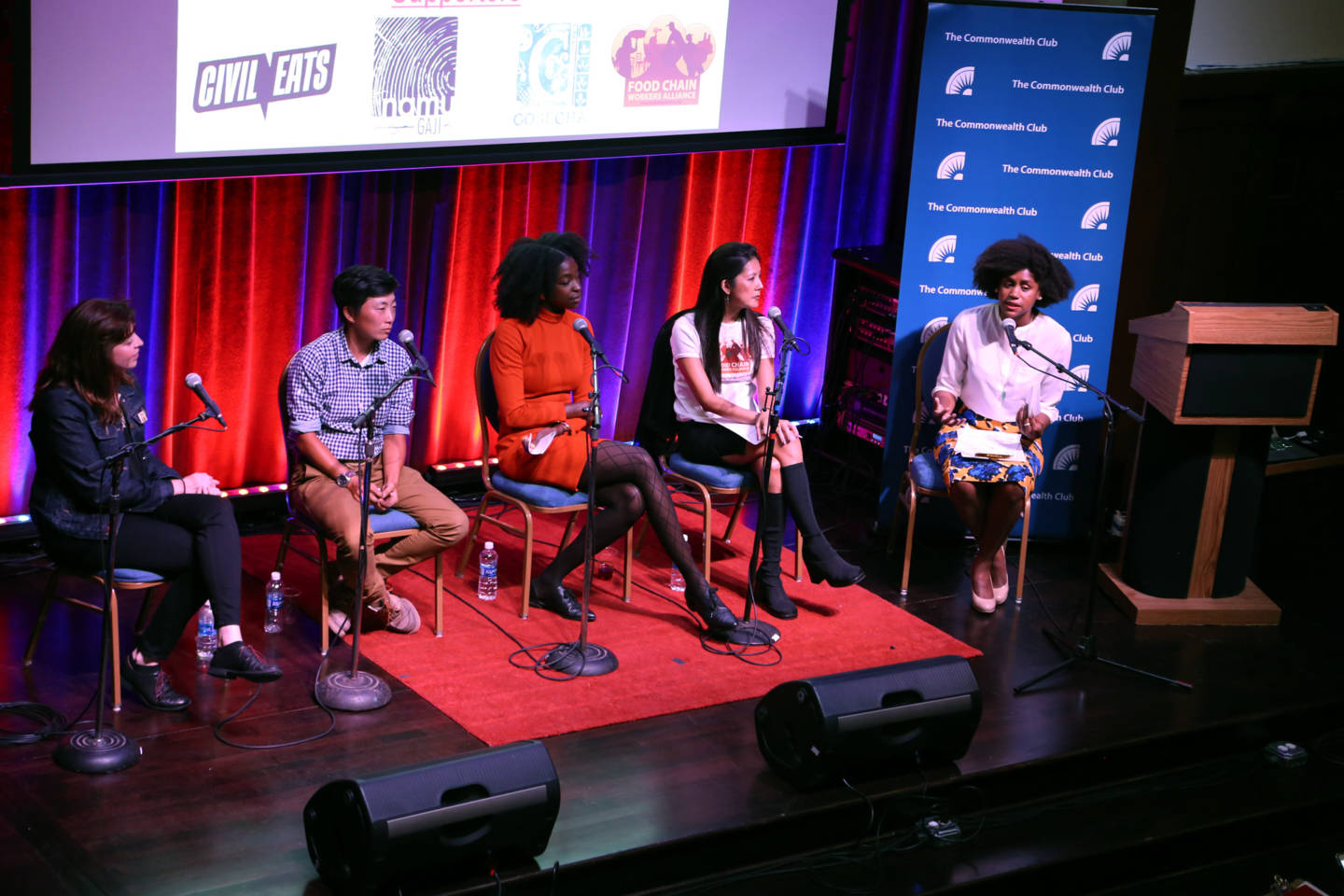
"caption": "Women Leaders at the Table moderator and panel (R to L): Shakirah Simley, Joann Lo, Brittni Chicuata, Kristyn Leach, Dominica Rice Cisneros",
"description": null,
"title": "panel-stage",
"credit": "Wendy Goodfriend",
"status": "inherit",
"isLoading": false,
"fetchFailed": false
},
"bayareabites_111566": {
"type": "attachments",
"id": "bayareabites_111566",
"meta": {
"index": "attachments_1716263798",
"site": "bayareabites",
"id": "111566",
"found": true
},
"parent": 111565,
"imgSizes": {
"twentyfourteen-full-width": {
"file": "https://ww2.kqed.org/app/uploads/sites/24/2016/08/rescued-relish_enl-995720e5b61e8ec6dc933e5e0bf4a377d428134c-1038x576.jpg",
"width": 1038,
"mimeType": "image/jpeg",
"height": 576
},
"thumbnail": {
"file": "https://ww2.kqed.org/app/uploads/sites/24/2016/08/rescued-relish_enl-995720e5b61e8ec6dc933e5e0bf4a377d428134c-400x262.jpg",
"width": 400,
"mimeType": "image/jpeg",
"height": 262
},
"fd-sm": {
"file": "https://ww2.kqed.org/app/uploads/sites/24/2016/08/rescued-relish_enl-995720e5b61e8ec6dc933e5e0bf4a377d428134c-960x629.jpg",
"width": 960,
"mimeType": "image/jpeg",
"height": 629
},
"post-thumbnail": {
"file": "https://ww2.kqed.org/app/uploads/sites/24/2016/08/rescued-relish_enl-995720e5b61e8ec6dc933e5e0bf4a377d428134c-672x372.jpg",
"width": 672,
"mimeType": "image/jpeg",
"height": 372
},
"kqedFullSize": {
"file": "https://ww2.kqed.org/app/uploads/sites/24/2016/08/rescued-relish_enl-995720e5b61e8ec6dc933e5e0bf4a377d428134c.jpg",
"width": 1714,
"height": 1123
},
"large": {
"file": "https://ww2.kqed.org/app/uploads/sites/24/2016/08/rescued-relish_enl-995720e5b61e8ec6dc933e5e0bf4a377d428134c-1440x943.jpg",
"width": 1440,
"mimeType": "image/jpeg",
"height": 943
},
"guest-author-50": {
"file": "https://ww2.kqed.org/app/uploads/sites/24/2016/08/rescued-relish_enl-995720e5b61e8ec6dc933e5e0bf4a377d428134c-50x50.jpg",
"width": 50,
"mimeType": "image/jpeg",
"height": 50
},
"guest-author-96": {
"file": "https://ww2.kqed.org/app/uploads/sites/24/2016/08/rescued-relish_enl-995720e5b61e8ec6dc933e5e0bf4a377d428134c-96x96.jpg",
"width": 96,
"mimeType": "image/jpeg",
"height": 96
},
"medium": {
"file": "https://ww2.kqed.org/app/uploads/sites/24/2016/08/rescued-relish_enl-995720e5b61e8ec6dc933e5e0bf4a377d428134c-800x524.jpg",
"width": 800,
"mimeType": "image/jpeg",
"height": 524
},
"guest-author-64": {
"file": "https://ww2.kqed.org/app/uploads/sites/24/2016/08/rescued-relish_enl-995720e5b61e8ec6dc933e5e0bf4a377d428134c-64x64.jpg",
"width": 64,
"mimeType": "image/jpeg",
"height": 64
},
"guest-author-32": {
"file": "https://ww2.kqed.org/app/uploads/sites/24/2016/08/rescued-relish_enl-995720e5b61e8ec6dc933e5e0bf4a377d428134c-32x32.jpg",
"width": 32,
"mimeType": "image/jpeg",
"height": 32
},
"cat_post_thumb_sizecategory-posts-2": {
"file": "https://ww2.kqed.org/app/uploads/sites/24/2016/08/rescued-relish_enl-995720e5b61e8ec6dc933e5e0bf4a377d428134c-150x150.jpg",
"width": 150,
"mimeType": "image/jpeg",
"height": 150
},
"fd-med": {
"file": "https://ww2.kqed.org/app/uploads/sites/24/2016/08/rescued-relish_enl-995720e5b61e8ec6dc933e5e0bf4a377d428134c-1180x773.jpg",
"width": 1180,
"mimeType": "image/jpeg",
"height": 773
},
"detail": {
"file": "https://ww2.kqed.org/app/uploads/sites/24/2016/08/rescued-relish_enl-995720e5b61e8ec6dc933e5e0bf4a377d428134c-150x150.jpg",
"width": 150,
"mimeType": "image/jpeg",
"height": 150
},
"medium_large": {
"file": "https://ww2.kqed.org/app/uploads/sites/24/2016/08/rescued-relish_enl-995720e5b61e8ec6dc933e5e0bf4a377d428134c-768x503.jpg",
"width": 768,
"mimeType": "image/jpeg",
"height": 503
},
"guest-author-128": {
"file": "https://ww2.kqed.org/app/uploads/sites/24/2016/08/rescued-relish_enl-995720e5b61e8ec6dc933e5e0bf4a377d428134c-128x128.jpg",
"width": 128,
"mimeType": "image/jpeg",
"height": 128
}
},
"publishDate": 1471626182,
"modified": 1471626875,
"caption": "Rescued Relish is an anything-goes condiment made from excess produce that Philabundance, a Philadelphia anti-hunger organization, can't move. The relish is modeled on a Pennsylvania Dutch chowchow recipe — a tangy mix of sweet, spicy and sour flavors.",
"description": "Rescued Relish is an anything-goes condiment made from excess produce that \u003ca href=\"https://www.philabundance.org\">Philabundance\u003c/a>, a Philadelphia anti-hunger organization, can't move. The relish is modeled on a Pennsylvania Dutch chowchow recipe -- a tangy mix of sweet, spicy and sour flavors",
"title": "Rescued Relish is an anything-goes condiment made from excess produce that Philabundance, a Philadelphia anti-hunger organization, can't move. The relish is modeled on a Pennsylvania Dutch chowchow recipe — a tangy mix of sweet, spicy and sour flavors.",
"credit": "Courtesy of Drexel Food Lab",
"status": "inherit",
"isLoading": false,
"fetchFailed": false
},
"bayareabites_111411": {
"type": "attachments",
"id": "bayareabites_111411",
"meta": {
"index": "attachments_1716263798",
"site": "bayareabites",
"id": "111411",
"found": true
},
"parent": 111409,
"imgSizes": {
"twentyfourteen-full-width": {
"file": "https://ww2.kqed.org/app/uploads/sites/24/2016/08/hawaiian_net-casting_1-copy_small_enl-df72d198b87937597d5fea24920f0bbf5ee8efe9-1038x576.jpg",
"width": 1038,
"mimeType": "image/jpeg",
"height": 576
},
"thumbnail": {
"file": "https://ww2.kqed.org/app/uploads/sites/24/2016/08/hawaiian_net-casting_1-copy_small_enl-df72d198b87937597d5fea24920f0bbf5ee8efe9-400x269.jpg",
"width": 400,
"mimeType": "image/jpeg",
"height": 269
},
"fd-sm": {
"file": "https://ww2.kqed.org/app/uploads/sites/24/2016/08/hawaiian_net-casting_1-copy_small_enl-df72d198b87937597d5fea24920f0bbf5ee8efe9-960x645.jpg",
"width": 960,
"mimeType": "image/jpeg",
"height": 645
},
"post-thumbnail": {
"file": "https://ww2.kqed.org/app/uploads/sites/24/2016/08/hawaiian_net-casting_1-copy_small_enl-df72d198b87937597d5fea24920f0bbf5ee8efe9-672x372.jpg",
"width": 672,
"mimeType": "image/jpeg",
"height": 372
},
"kqedFullSize": {
"file": "https://ww2.kqed.org/app/uploads/sites/24/2016/08/hawaiian_net-casting_1-copy_small_enl-df72d198b87937597d5fea24920f0bbf5ee8efe9.jpg",
"width": 1899,
"height": 1276
},
"large": {
"file": "https://ww2.kqed.org/app/uploads/sites/24/2016/08/hawaiian_net-casting_1-copy_small_enl-df72d198b87937597d5fea24920f0bbf5ee8efe9-1440x968.jpg",
"width": 1440,
"mimeType": "image/jpeg",
"height": 968
},
"guest-author-50": {
"file": "https://ww2.kqed.org/app/uploads/sites/24/2016/08/hawaiian_net-casting_1-copy_small_enl-df72d198b87937597d5fea24920f0bbf5ee8efe9-50x50.jpg",
"width": 50,
"mimeType": "image/jpeg",
"height": 50
},
"guest-author-96": {
"file": "https://ww2.kqed.org/app/uploads/sites/24/2016/08/hawaiian_net-casting_1-copy_small_enl-df72d198b87937597d5fea24920f0bbf5ee8efe9-96x96.jpg",
"width": 96,
"mimeType": "image/jpeg",
"height": 96
},
"medium": {
"file": "https://ww2.kqed.org/app/uploads/sites/24/2016/08/hawaiian_net-casting_1-copy_small_enl-df72d198b87937597d5fea24920f0bbf5ee8efe9-800x538.jpg",
"width": 800,
"mimeType": "image/jpeg",
"height": 538
},
"guest-author-64": {
"file": "https://ww2.kqed.org/app/uploads/sites/24/2016/08/hawaiian_net-casting_1-copy_small_enl-df72d198b87937597d5fea24920f0bbf5ee8efe9-64x64.jpg",
"width": 64,
"mimeType": "image/jpeg",
"height": 64
},
"guest-author-32": {
"file": "https://ww2.kqed.org/app/uploads/sites/24/2016/08/hawaiian_net-casting_1-copy_small_enl-df72d198b87937597d5fea24920f0bbf5ee8efe9-32x32.jpg",
"width": 32,
"mimeType": "image/jpeg",
"height": 32
},
"cat_post_thumb_sizecategory-posts-2": {
"file": "https://ww2.kqed.org/app/uploads/sites/24/2016/08/hawaiian_net-casting_1-copy_small_enl-df72d198b87937597d5fea24920f0bbf5ee8efe9-150x150.jpg",
"width": 150,
"mimeType": "image/jpeg",
"height": 150
},
"fd-med": {
"file": "https://ww2.kqed.org/app/uploads/sites/24/2016/08/hawaiian_net-casting_1-copy_small_enl-df72d198b87937597d5fea24920f0bbf5ee8efe9-1180x793.jpg",
"width": 1180,
"mimeType": "image/jpeg",
"height": 793
},
"detail": {
"file": "https://ww2.kqed.org/app/uploads/sites/24/2016/08/hawaiian_net-casting_1-copy_small_enl-df72d198b87937597d5fea24920f0bbf5ee8efe9-150x150.jpg",
"width": 150,
"mimeType": "image/jpeg",
"height": 150
},
"medium_large": {
"file": "https://ww2.kqed.org/app/uploads/sites/24/2016/08/hawaiian_net-casting_1-copy_small_enl-df72d198b87937597d5fea24920f0bbf5ee8efe9-768x516.jpg",
"width": 768,
"mimeType": "image/jpeg",
"height": 516
},
"guest-author-128": {
"file": "https://ww2.kqed.org/app/uploads/sites/24/2016/08/hawaiian_net-casting_1-copy_small_enl-df72d198b87937597d5fea24920f0bbf5ee8efe9-128x128.jpg",
"width": 128,
"mimeType": "image/jpeg",
"height": 128
}
},
"publishDate": 1471282469,
"modified": 1471282760,
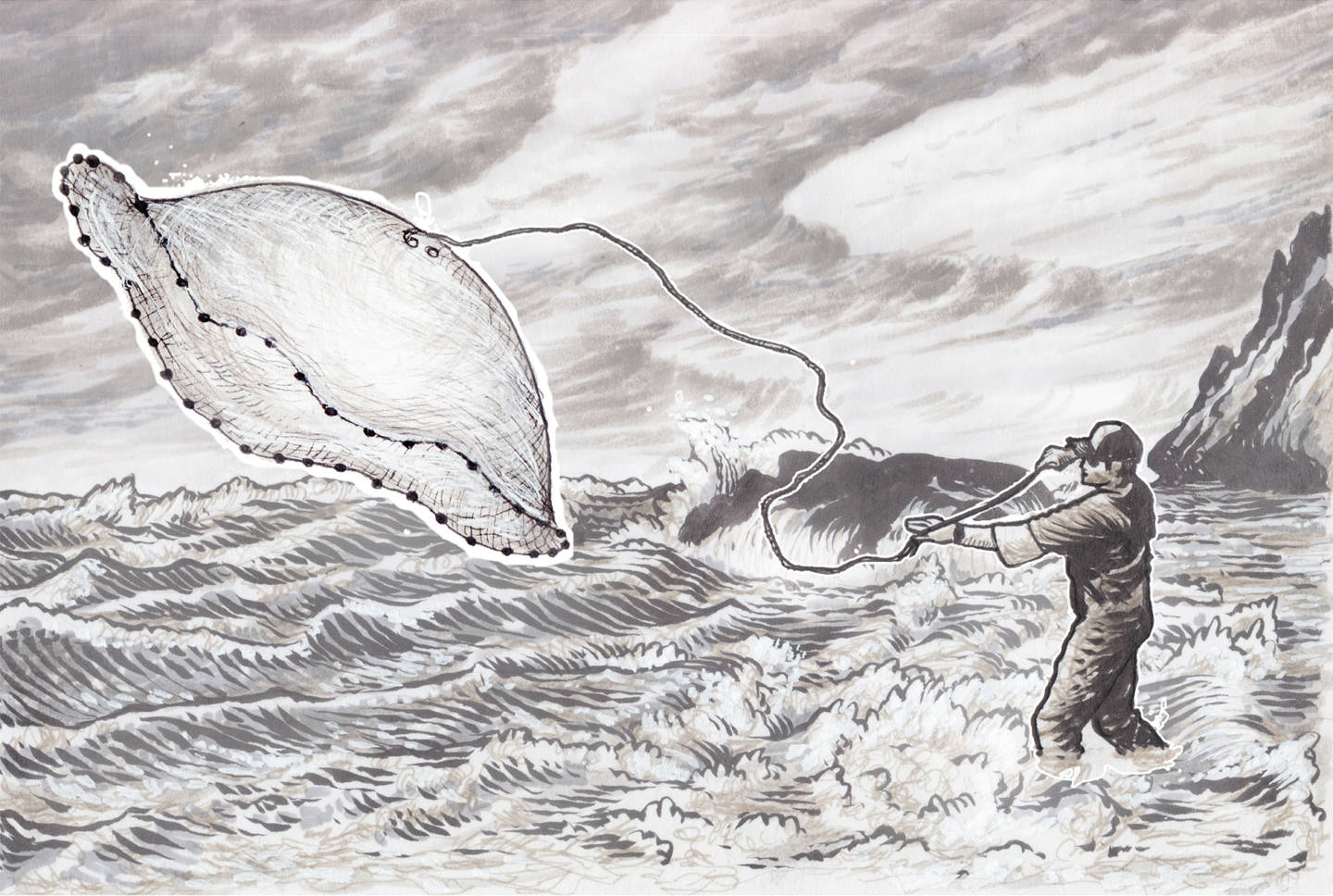
"caption": "An illustration from Lombard's new book, showing a man throwing a cast net into the surf.",
"description": "An illustration from Lombard's new book, showing a man throwing a cast net into the surf.",
"title": "An illustration from Lombard's new book, showing a man throwing a cast net into the surf.",
"credit": "Leighton Kelly/Courtesy of Heyday",
"status": "inherit",
"isLoading": false,
"fetchFailed": false
},
"bayareabites_111225": {
"type": "attachments",
"id": "bayareabites_111225",
"meta": {
"index": "attachments_1716263798",
"site": "bayareabites",
"id": "111225",
"found": true
},
"parent": 111224,
"imgSizes": {
"twentyfourteen-full-width": {
"file": "https://ww2.kqed.org/app/uploads/sites/24/2016/08/nongmo_enl-4ef4cf2447a862c9d36062823c3a65f18e6e7276-1038x576.jpg",
"width": 1038,
"mimeType": "image/jpeg",
"height": 576
},
"thumbnail": {
"file": "https://ww2.kqed.org/app/uploads/sites/24/2016/08/nongmo_enl-4ef4cf2447a862c9d36062823c3a65f18e6e7276-400x266.jpg",
"width": 400,
"mimeType": "image/jpeg",
"height": 266
},
"fd-sm": {
"file": "https://ww2.kqed.org/app/uploads/sites/24/2016/08/nongmo_enl-4ef4cf2447a862c9d36062823c3a65f18e6e7276-960x639.jpg",
"width": 960,
"mimeType": "image/jpeg",
"height": 639
},
"post-thumbnail": {
"file": "https://ww2.kqed.org/app/uploads/sites/24/2016/08/nongmo_enl-4ef4cf2447a862c9d36062823c3a65f18e6e7276-672x372.jpg",
"width": 672,
"mimeType": "image/jpeg",
"height": 372
},
"kqedFullSize": {
"file": "https://ww2.kqed.org/app/uploads/sites/24/2016/08/nongmo_enl-4ef4cf2447a862c9d36062823c3a65f18e6e7276.jpg",
"width": 2000,
"height": 1332
},
"large": {
"file": "https://ww2.kqed.org/app/uploads/sites/24/2016/08/nongmo_enl-4ef4cf2447a862c9d36062823c3a65f18e6e7276-1440x959.jpg",
"width": 1440,
"mimeType": "image/jpeg",
"height": 959
},
"guest-author-50": {
"file": "https://ww2.kqed.org/app/uploads/sites/24/2016/08/nongmo_enl-4ef4cf2447a862c9d36062823c3a65f18e6e7276-50x50.jpg",
"width": 50,
"mimeType": "image/jpeg",
"height": 50
},
"guest-author-96": {
"file": "https://ww2.kqed.org/app/uploads/sites/24/2016/08/nongmo_enl-4ef4cf2447a862c9d36062823c3a65f18e6e7276-96x96.jpg",
"width": 96,
"mimeType": "image/jpeg",
"height": 96
},
"medium": {
"file": "https://ww2.kqed.org/app/uploads/sites/24/2016/08/nongmo_enl-4ef4cf2447a862c9d36062823c3a65f18e6e7276-800x533.jpg",
"width": 800,
"mimeType": "image/jpeg",
"height": 533
},
"guest-author-64": {
"file": "https://ww2.kqed.org/app/uploads/sites/24/2016/08/nongmo_enl-4ef4cf2447a862c9d36062823c3a65f18e6e7276-64x64.jpg",
"width": 64,
"mimeType": "image/jpeg",
"height": 64
},
"guest-author-32": {
"file": "https://ww2.kqed.org/app/uploads/sites/24/2016/08/nongmo_enl-4ef4cf2447a862c9d36062823c3a65f18e6e7276-32x32.jpg",
"width": 32,
"mimeType": "image/jpeg",
"height": 32
},
"cat_post_thumb_sizecategory-posts-2": {
"file": "https://ww2.kqed.org/app/uploads/sites/24/2016/08/nongmo_enl-4ef4cf2447a862c9d36062823c3a65f18e6e7276-150x150.jpg",
"width": 150,
"mimeType": "image/jpeg",
"height": 150
},
"fd-lrg": {
"file": "https://ww2.kqed.org/app/uploads/sites/24/2016/08/nongmo_enl-4ef4cf2447a862c9d36062823c3a65f18e6e7276-1920x1279.jpg",
"width": 1920,
"mimeType": "image/jpeg",
"height": 1279
},
"fd-med": {
"file": "https://ww2.kqed.org/app/uploads/sites/24/2016/08/nongmo_enl-4ef4cf2447a862c9d36062823c3a65f18e6e7276-1180x786.jpg",
"width": 1180,
"mimeType": "image/jpeg",
"height": 786
},
"detail": {
"file": "https://ww2.kqed.org/app/uploads/sites/24/2016/08/nongmo_enl-4ef4cf2447a862c9d36062823c3a65f18e6e7276-150x150.jpg",
"width": 150,
"mimeType": "image/jpeg",
"height": 150
},
"medium_large": {
"file": "https://ww2.kqed.org/app/uploads/sites/24/2016/08/nongmo_enl-4ef4cf2447a862c9d36062823c3a65f18e6e7276-768x511.jpg",
"width": 768,
"mimeType": "image/jpeg",
"height": 511
},
"guest-author-128": {
"file": "https://ww2.kqed.org/app/uploads/sites/24/2016/08/nongmo_enl-4ef4cf2447a862c9d36062823c3a65f18e6e7276-128x128.jpg",
"width": 128,
"mimeType": "image/jpeg",
"height": 128
}
},
"publishDate": 1470264056,
"modified": 1470265066,
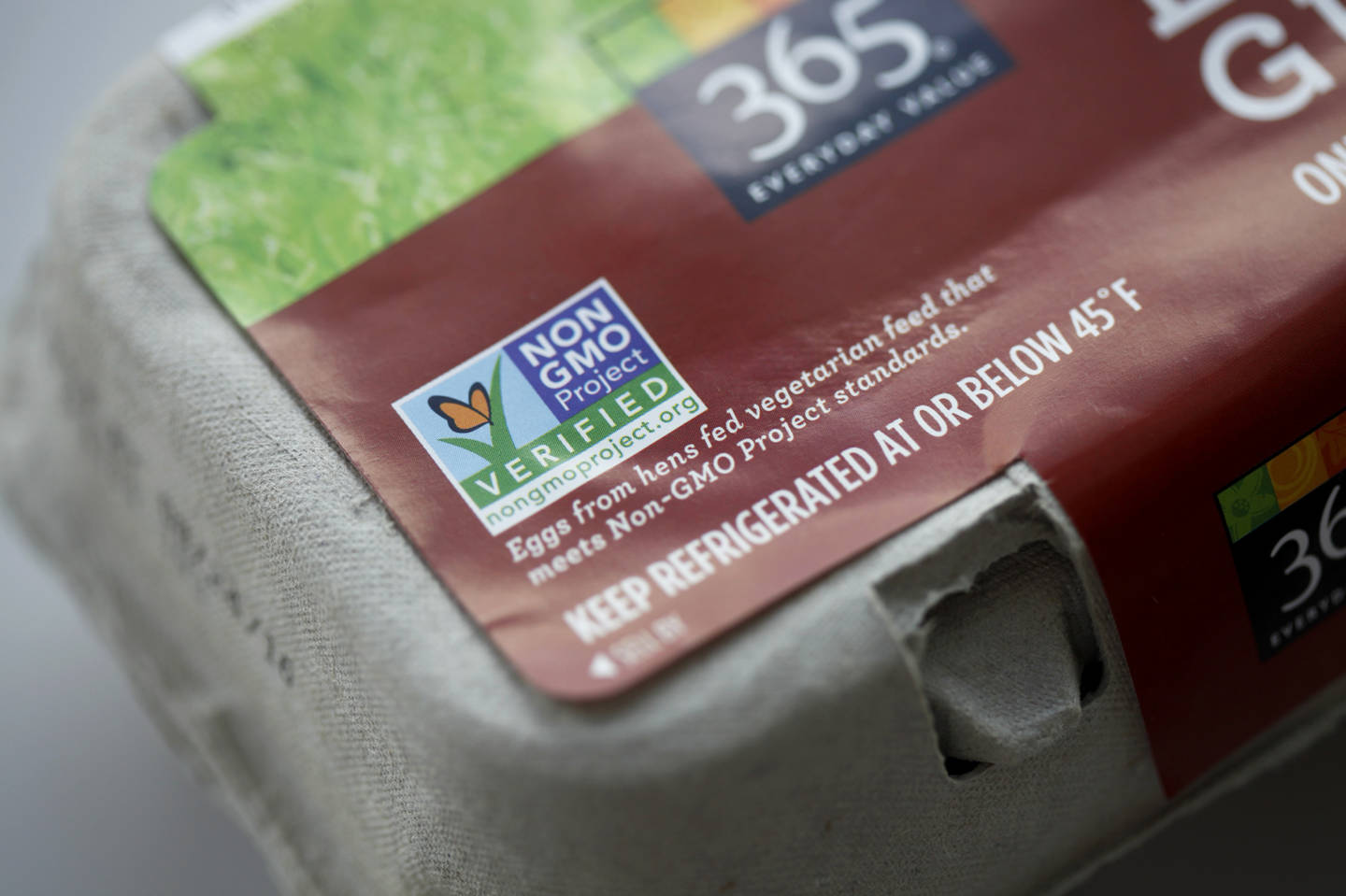
"caption": "Non-GMO eggs. (this photo is for promo only, not for the page)",
"description": "Non-GMO eggs. (this photo is for promo only, not for the page)",
"title": "Non-GMO eggs. (this photo is for promo only, not for the page)",
"credit": "Morgan McCloy/NPR",
"status": "inherit",
"isLoading": false,
"fetchFailed": false
},
"bayareabites_111122": {
"type": "attachments",
"id": "bayareabites_111122",
"meta": {
"index": "attachments_1716263798",
"site": "bayareabites",
"id": "111122",
"found": true
},
"parent": 111121,
"imgSizes": {
"twentyfourteen-full-width": {
"file": "https://ww2.kqed.org/app/uploads/sites/24/2016/08/img_3117_edited-8ee56f2024cb095b7e2552ed630ec23e085d621b-1038x576.jpg",
"width": 1038,
"mimeType": "image/jpeg",
"height": 576
},
"thumbnail": {
"file": "https://ww2.kqed.org/app/uploads/sites/24/2016/08/img_3117_edited-8ee56f2024cb095b7e2552ed630ec23e085d621b-400x300.jpg",
"width": 400,
"mimeType": "image/jpeg",
"height": 300
},
"fd-sm": {
"file": "https://ww2.kqed.org/app/uploads/sites/24/2016/08/img_3117_edited-8ee56f2024cb095b7e2552ed630ec23e085d621b-960x720.jpg",
"width": 960,
"mimeType": "image/jpeg",
"height": 720
},
"post-thumbnail": {
"file": "https://ww2.kqed.org/app/uploads/sites/24/2016/08/img_3117_edited-8ee56f2024cb095b7e2552ed630ec23e085d621b-672x372.jpg",
"width": 672,
"mimeType": "image/jpeg",
"height": 372
},
"kqedFullSize": {
"file": "https://ww2.kqed.org/app/uploads/sites/24/2016/08/img_3117_edited-8ee56f2024cb095b7e2552ed630ec23e085d621b.jpg",
"width": 1998,
"height": 1499
},
"large": {
"file": "https://ww2.kqed.org/app/uploads/sites/24/2016/08/img_3117_edited-8ee56f2024cb095b7e2552ed630ec23e085d621b-1440x1080.jpg",
"width": 1440,
"mimeType": "image/jpeg",
"height": 1080
},
"guest-author-50": {
"file": "https://ww2.kqed.org/app/uploads/sites/24/2016/08/img_3117_edited-8ee56f2024cb095b7e2552ed630ec23e085d621b-50x50.jpg",
"width": 50,
"mimeType": "image/jpeg",
"height": 50
},
"guest-author-96": {
"file": "https://ww2.kqed.org/app/uploads/sites/24/2016/08/img_3117_edited-8ee56f2024cb095b7e2552ed630ec23e085d621b-96x96.jpg",
"width": 96,
"mimeType": "image/jpeg",
"height": 96
},
"medium": {
"file": "https://ww2.kqed.org/app/uploads/sites/24/2016/08/img_3117_edited-8ee56f2024cb095b7e2552ed630ec23e085d621b-800x600.jpg",
"width": 800,
"mimeType": "image/jpeg",
"height": 600
},
"guest-author-64": {
"file": "https://ww2.kqed.org/app/uploads/sites/24/2016/08/img_3117_edited-8ee56f2024cb095b7e2552ed630ec23e085d621b-64x64.jpg",
"width": 64,
"mimeType": "image/jpeg",
"height": 64
},
"guest-author-32": {
"file": "https://ww2.kqed.org/app/uploads/sites/24/2016/08/img_3117_edited-8ee56f2024cb095b7e2552ed630ec23e085d621b-32x32.jpg",
"width": 32,
"mimeType": "image/jpeg",
"height": 32
},
"cat_post_thumb_sizecategory-posts-2": {
"file": "https://ww2.kqed.org/app/uploads/sites/24/2016/08/img_3117_edited-8ee56f2024cb095b7e2552ed630ec23e085d621b-150x150.jpg",
"width": 150,
"mimeType": "image/jpeg",
"height": 150
},
"fd-lrg": {
"file": "https://ww2.kqed.org/app/uploads/sites/24/2016/08/img_3117_edited-8ee56f2024cb095b7e2552ed630ec23e085d621b-1920x1440.jpg",
"width": 1920,
"mimeType": "image/jpeg",
"height": 1440
},
"fd-med": {
"file": "https://ww2.kqed.org/app/uploads/sites/24/2016/08/img_3117_edited-8ee56f2024cb095b7e2552ed630ec23e085d621b-1180x885.jpg",
"width": 1180,
"mimeType": "image/jpeg",
"height": 885
},
"detail": {
"file": "https://ww2.kqed.org/app/uploads/sites/24/2016/08/img_3117_edited-8ee56f2024cb095b7e2552ed630ec23e085d621b-150x150.jpg",
"width": 150,
"mimeType": "image/jpeg",
"height": 150
},
"medium_large": {
"file": "https://ww2.kqed.org/app/uploads/sites/24/2016/08/img_3117_edited-8ee56f2024cb095b7e2552ed630ec23e085d621b-768x576.jpg",
"width": 768,
"mimeType": "image/jpeg",
"height": 576
},
"guest-author-128": {
"file": "https://ww2.kqed.org/app/uploads/sites/24/2016/08/img_3117_edited-8ee56f2024cb095b7e2552ed630ec23e085d621b-128x128.jpg",
"width": 128,
"mimeType": "image/jpeg",
"height": 128
}
},
"publishDate": 1470071399,
"modified": 1470071631,
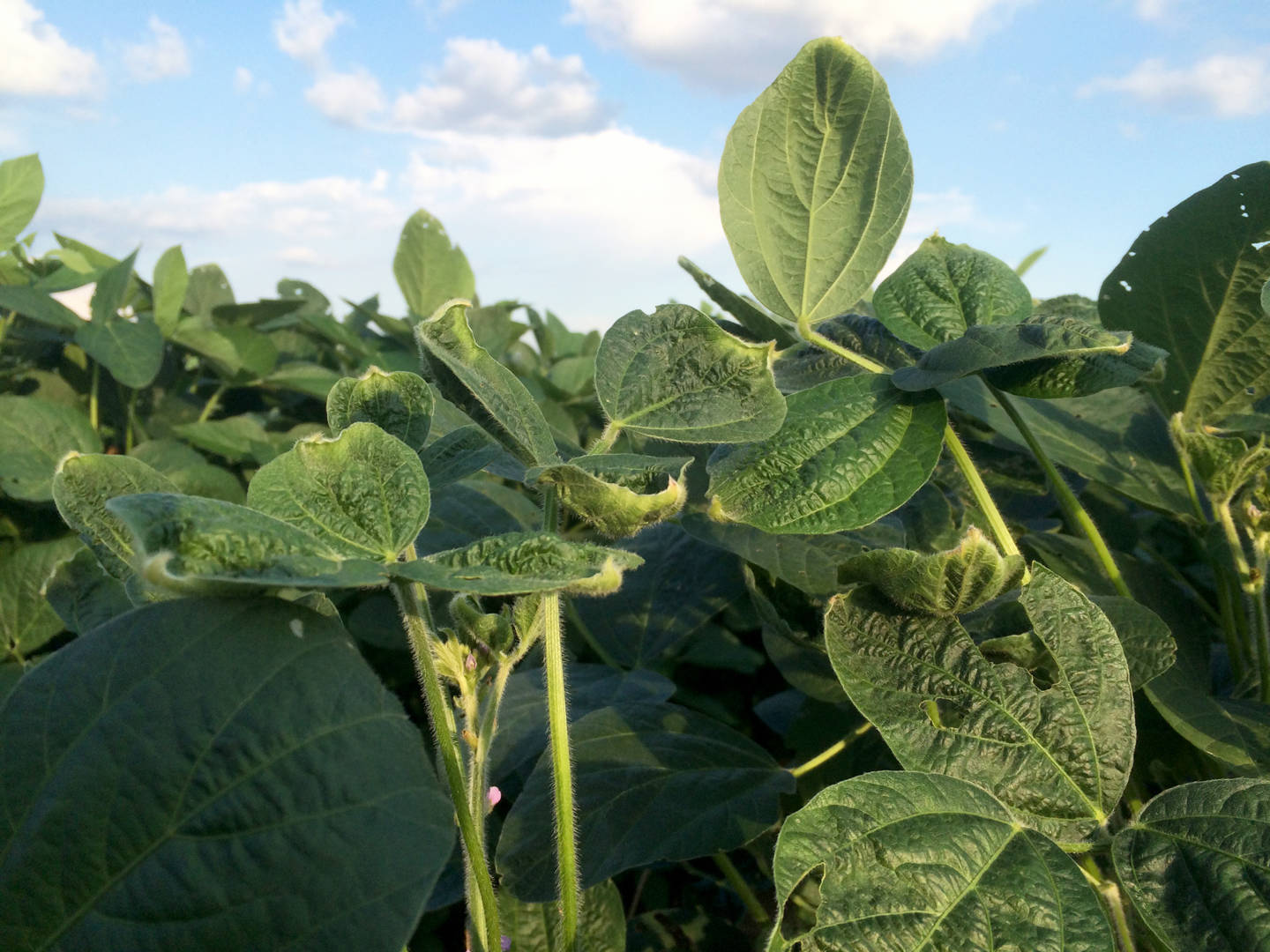
"caption": "These soybean leaves show evidence of damage from dicamba. It could cut the the harvest by 10 to 30 percent.",
"description": "These soybean leaves show evidence of damage from dicamba. It could cut the the harvest by 10 to 30 percent.",
"title": "These soybean leaves show evidence of damage from dicamba. It could cut the the harvest by 10 to 30 percent.",
"credit": "Courtesy of the University of Arkansas",
"status": "inherit",
"isLoading": false,
"fetchFailed": false
},
"bayareabites_111092": {
"type": "attachments",
"id": "bayareabites_111092",
"meta": {
"index": "attachments_1716263798",
"site": "bayareabites",
"id": "111092",
"found": true
},
"parent": 111091,
"imgSizes": {
"twentyfourteen-full-width": {
"file": "https://ww2.kqed.org/app/uploads/sites/24/2016/07/salvagesupperclub_enl-a8c6ccc7da776238ba4a2dadb091377879a5f791-1038x576.jpg",
"width": 1038,
"mimeType": "image/jpeg",
"height": 576
},
"thumbnail": {
"file": "https://ww2.kqed.org/app/uploads/sites/24/2016/07/salvagesupperclub_enl-a8c6ccc7da776238ba4a2dadb091377879a5f791-400x266.jpg",
"width": 400,
"mimeType": "image/jpeg",
"height": 266
},
"fd-sm": {
"file": "https://ww2.kqed.org/app/uploads/sites/24/2016/07/salvagesupperclub_enl-a8c6ccc7da776238ba4a2dadb091377879a5f791-960x639.jpg",
"width": 960,
"mimeType": "image/jpeg",
"height": 639
},
"post-thumbnail": {
"file": "https://ww2.kqed.org/app/uploads/sites/24/2016/07/salvagesupperclub_enl-a8c6ccc7da776238ba4a2dadb091377879a5f791-672x372.jpg",
"width": 672,
"mimeType": "image/jpeg",
"height": 372
},
"kqedFullSize": {
"file": "https://ww2.kqed.org/app/uploads/sites/24/2016/07/salvagesupperclub_enl-a8c6ccc7da776238ba4a2dadb091377879a5f791.jpg",
"width": 2000,
"height": 1332
},
"large": {
"file": "https://ww2.kqed.org/app/uploads/sites/24/2016/07/salvagesupperclub_enl-a8c6ccc7da776238ba4a2dadb091377879a5f791-1440x959.jpg",
"width": 1440,
"mimeType": "image/jpeg",
"height": 959
},
"guest-author-50": {
"file": "https://ww2.kqed.org/app/uploads/sites/24/2016/07/salvagesupperclub_enl-a8c6ccc7da776238ba4a2dadb091377879a5f791-50x50.jpg",
"width": 50,
"mimeType": "image/jpeg",
"height": 50
},
"guest-author-96": {
"file": "https://ww2.kqed.org/app/uploads/sites/24/2016/07/salvagesupperclub_enl-a8c6ccc7da776238ba4a2dadb091377879a5f791-96x96.jpg",
"width": 96,
"mimeType": "image/jpeg",
"height": 96
},
"medium": {
"file": "https://ww2.kqed.org/app/uploads/sites/24/2016/07/salvagesupperclub_enl-a8c6ccc7da776238ba4a2dadb091377879a5f791-800x533.jpg",
"width": 800,
"mimeType": "image/jpeg",
"height": 533
},
"guest-author-64": {
"file": "https://ww2.kqed.org/app/uploads/sites/24/2016/07/salvagesupperclub_enl-a8c6ccc7da776238ba4a2dadb091377879a5f791-64x64.jpg",
"width": 64,
"mimeType": "image/jpeg",
"height": 64
},
"guest-author-32": {
"file": "https://ww2.kqed.org/app/uploads/sites/24/2016/07/salvagesupperclub_enl-a8c6ccc7da776238ba4a2dadb091377879a5f791-32x32.jpg",
"width": 32,
"mimeType": "image/jpeg",
"height": 32
},
"cat_post_thumb_sizecategory-posts-2": {
"file": "https://ww2.kqed.org/app/uploads/sites/24/2016/07/salvagesupperclub_enl-a8c6ccc7da776238ba4a2dadb091377879a5f791-150x150.jpg",
"width": 150,
"mimeType": "image/jpeg",
"height": 150
},
"fd-lrg": {
"file": "https://ww2.kqed.org/app/uploads/sites/24/2016/07/salvagesupperclub_enl-a8c6ccc7da776238ba4a2dadb091377879a5f791-1920x1279.jpg",
"width": 1920,
"mimeType": "image/jpeg",
"height": 1279
},
"fd-med": {
"file": "https://ww2.kqed.org/app/uploads/sites/24/2016/07/salvagesupperclub_enl-a8c6ccc7da776238ba4a2dadb091377879a5f791-1180x786.jpg",
"width": 1180,
"mimeType": "image/jpeg",
"height": 786
},
"detail": {
"file": "https://ww2.kqed.org/app/uploads/sites/24/2016/07/salvagesupperclub_enl-a8c6ccc7da776238ba4a2dadb091377879a5f791-150x150.jpg",
"width": 150,
"mimeType": "image/jpeg",
"height": 150
},
"medium_large": {
"file": "https://ww2.kqed.org/app/uploads/sites/24/2016/07/salvagesupperclub_enl-a8c6ccc7da776238ba4a2dadb091377879a5f791-768x511.jpg",
"width": 768,
"mimeType": "image/jpeg",
"height": 511
},
"guest-author-128": {
"file": "https://ww2.kqed.org/app/uploads/sites/24/2016/07/salvagesupperclub_enl-a8c6ccc7da776238ba4a2dadb091377879a5f791-128x128.jpg",
"width": 128,
"mimeType": "image/jpeg",
"height": 128
}
},
"publishDate": 1469804298,
"modified": 1469804859,
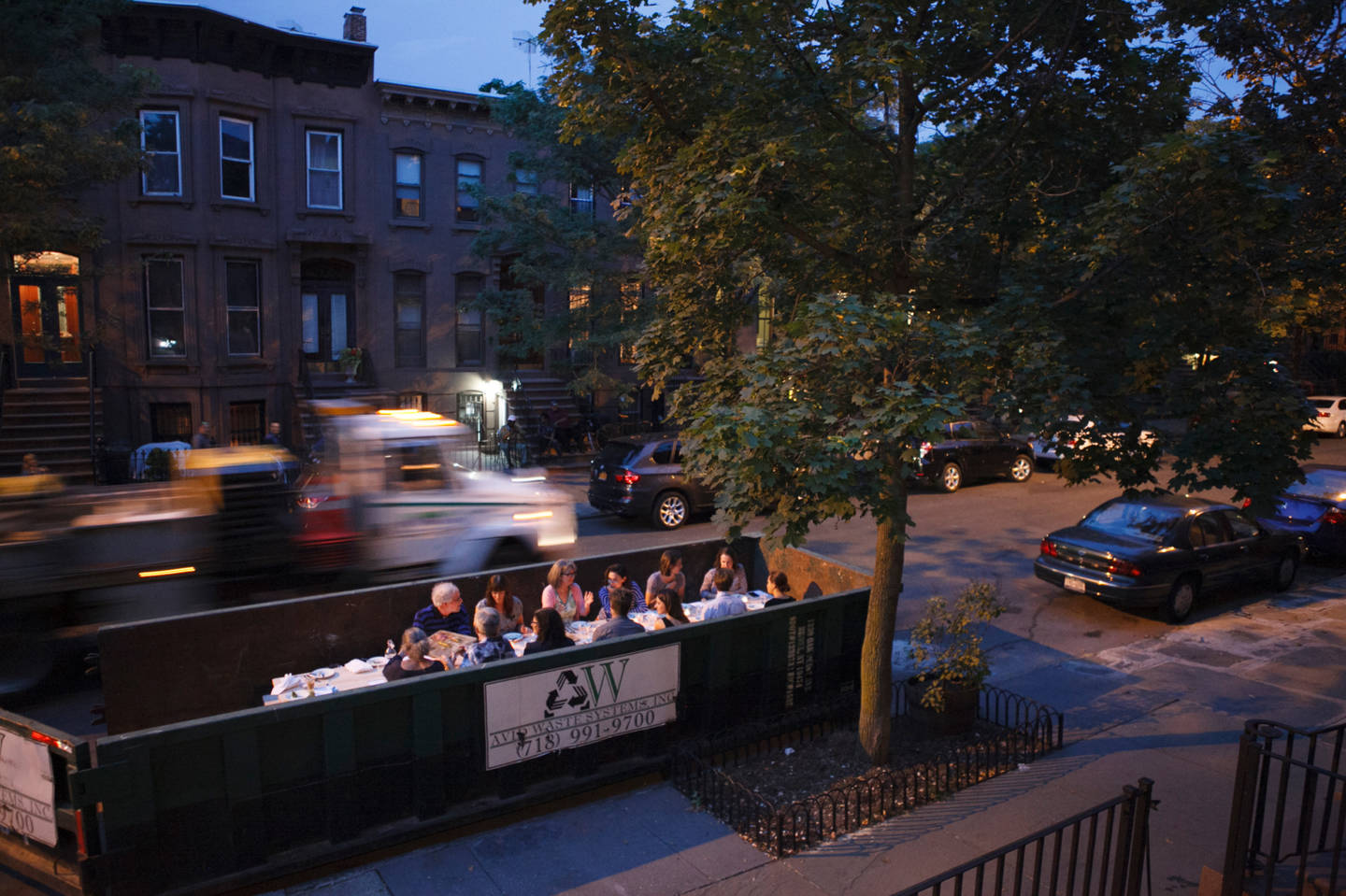
"caption": "The Salvage Supperclub hosts dinners in clean, tastefully decked out dumpsters. The menus highlight ingredients frequently tossed out by home cooks – think wilted basil or bruised plums — that could be put to tastier uses.",
"description": "The Salvage Supperclub hosts dinners in clean, tastefully decked out dumpsters. The menus highlight ingredients frequently tossed out by home cooks – think wilted basil or bruised plums — that could be put to tastier",
"title": "The Salvage Supperclub hosts dinners in clean, tastefully decked out dumpsters. The menus highlight ingredients frequently tossed out by home cooks – think wilted basil or bruised plums — that could be put to tastier uses.",
"credit": "Courtesy of Andrew Hinderaker",
"status": "inherit",
"isLoading": false,
"fetchFailed": false
},
"bayareabites_110757": {
"type": "attachments",
"id": "bayareabites_110757",
"meta": {
"index": "attachments_1716263798",
"site": "bayareabites",
"id": "110757",
"found": true
},
"parent": 110756,
"imgSizes": {
"twentyfourteen-full-width": {
"file": "https://ww2.kqed.org/app/uploads/sites/24/2016/07/ap_16183653665165_wide-36399eb037f4e796a168ce2606c99d18dd5d97a8-1038x576.jpg",
"width": 1038,
"mimeType": "image/jpeg",
"height": 576
},
"thumbnail": {
"file": "https://ww2.kqed.org/app/uploads/sites/24/2016/07/ap_16183653665165_wide-36399eb037f4e796a168ce2606c99d18dd5d97a8-400x225.jpg",
"width": 400,
"mimeType": "image/jpeg",
"height": 225
},
"fd-sm": {
"file": "https://ww2.kqed.org/app/uploads/sites/24/2016/07/ap_16183653665165_wide-36399eb037f4e796a168ce2606c99d18dd5d97a8-960x540.jpg",
"width": 960,
"mimeType": "image/jpeg",
"height": 540
},
"post-thumbnail": {
"file": "https://ww2.kqed.org/app/uploads/sites/24/2016/07/ap_16183653665165_wide-36399eb037f4e796a168ce2606c99d18dd5d97a8-672x372.jpg",
"width": 672,
"mimeType": "image/jpeg",
"height": 372
},
"kqedFullSize": {
"file": "https://ww2.kqed.org/app/uploads/sites/24/2016/07/ap_16183653665165_wide-36399eb037f4e796a168ce2606c99d18dd5d97a8.jpg",
"width": 3121,
"height": 1755
},
"large": {
"file": "https://ww2.kqed.org/app/uploads/sites/24/2016/07/ap_16183653665165_wide-36399eb037f4e796a168ce2606c99d18dd5d97a8-1440x810.jpg",
"width": 1440,
"mimeType": "image/jpeg",
"height": 810
},
"guest-author-50": {
"file": "https://ww2.kqed.org/app/uploads/sites/24/2016/07/ap_16183653665165_wide-36399eb037f4e796a168ce2606c99d18dd5d97a8-50x50.jpg",
"width": 50,
"mimeType": "image/jpeg",
"height": 50
},
"guest-author-96": {
"file": "https://ww2.kqed.org/app/uploads/sites/24/2016/07/ap_16183653665165_wide-36399eb037f4e796a168ce2606c99d18dd5d97a8-96x96.jpg",
"width": 96,
"mimeType": "image/jpeg",
"height": 96
},
"medium": {
"file": "https://ww2.kqed.org/app/uploads/sites/24/2016/07/ap_16183653665165_wide-36399eb037f4e796a168ce2606c99d18dd5d97a8-800x450.jpg",
"width": 800,
"mimeType": "image/jpeg",
"height": 450
},
"guest-author-64": {
"file": "https://ww2.kqed.org/app/uploads/sites/24/2016/07/ap_16183653665165_wide-36399eb037f4e796a168ce2606c99d18dd5d97a8-64x64.jpg",
"width": 64,
"mimeType": "image/jpeg",
"height": 64
},
"guest-author-32": {
"file": "https://ww2.kqed.org/app/uploads/sites/24/2016/07/ap_16183653665165_wide-36399eb037f4e796a168ce2606c99d18dd5d97a8-32x32.jpg",
"width": 32,
"mimeType": "image/jpeg",
"height": 32
},
"cat_post_thumb_sizecategory-posts-2": {
"file": "https://ww2.kqed.org/app/uploads/sites/24/2016/07/ap_16183653665165_wide-36399eb037f4e796a168ce2606c99d18dd5d97a8-150x150.jpg",
"width": 150,
"mimeType": "image/jpeg",
"height": 150
},
"fd-lrg": {
"file": "https://ww2.kqed.org/app/uploads/sites/24/2016/07/ap_16183653665165_wide-36399eb037f4e796a168ce2606c99d18dd5d97a8-1920x1080.jpg",
"width": 1920,
"mimeType": "image/jpeg",
"height": 1080
},
"fd-med": {
"file": "https://ww2.kqed.org/app/uploads/sites/24/2016/07/ap_16183653665165_wide-36399eb037f4e796a168ce2606c99d18dd5d97a8-1180x664.jpg",
"width": 1180,
"mimeType": "image/jpeg",
"height": 664
},
"detail": {
"file": "https://ww2.kqed.org/app/uploads/sites/24/2016/07/ap_16183653665165_wide-36399eb037f4e796a168ce2606c99d18dd5d97a8-150x150.jpg",
"width": 150,
"mimeType": "image/jpeg",
"height": 150
},
"medium_large": {
"file": "https://ww2.kqed.org/app/uploads/sites/24/2016/07/ap_16183653665165_wide-36399eb037f4e796a168ce2606c99d18dd5d97a8-768x432.jpg",
"width": 768,
"mimeType": "image/jpeg",
"height": 432
},
"guest-author-128": {
"file": "https://ww2.kqed.org/app/uploads/sites/24/2016/07/ap_16183653665165_wide-36399eb037f4e796a168ce2606c99d18dd5d97a8-128x128.jpg",
"width": 128,
"mimeType": "image/jpeg",
"height": 128
}
},
"publishDate": 1468535281,
"modified": 1468537228,
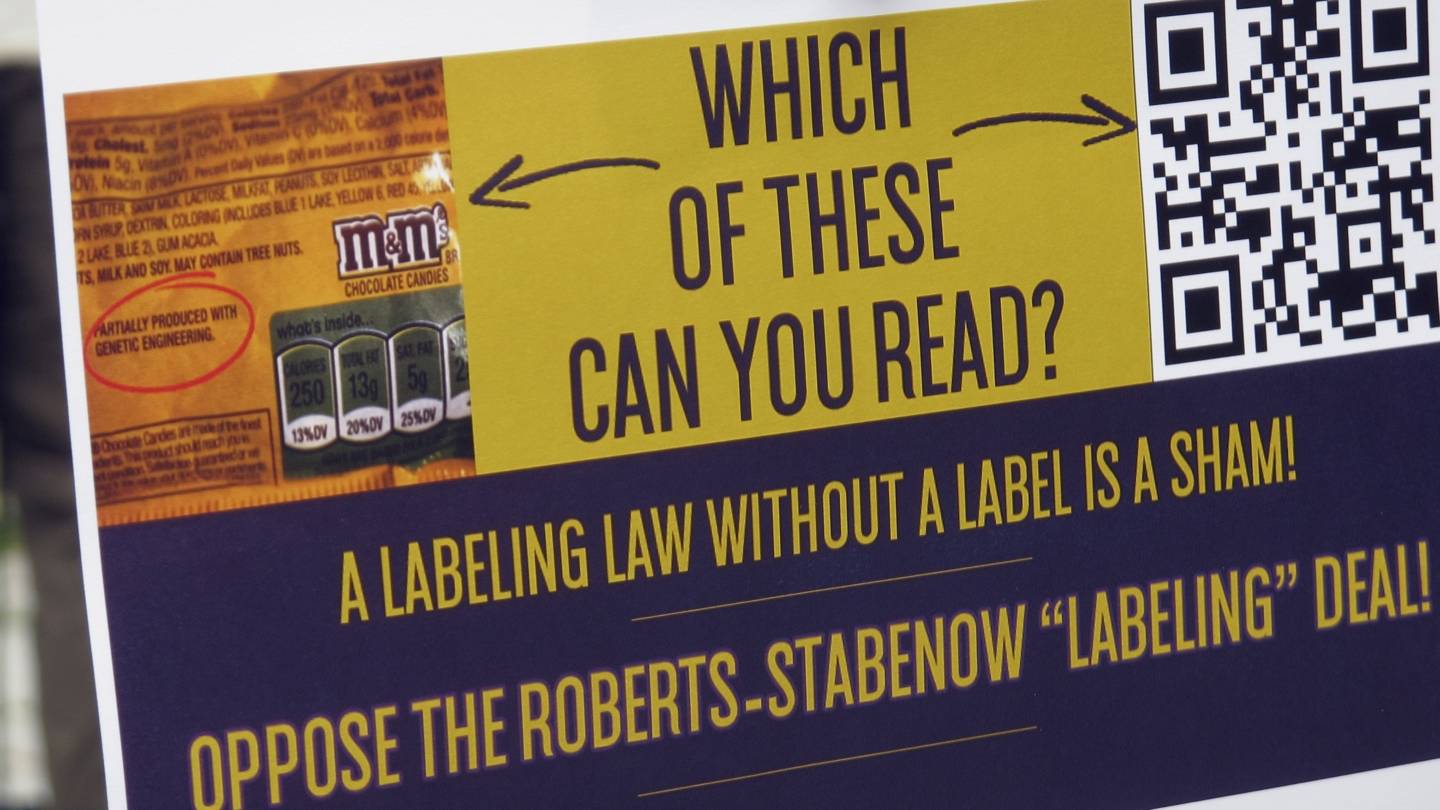
"caption": "Congress has passed a bill that will require food companies to disclose GMOs — but without necessarily using a GMO label on packaging. Companies would have several disclosure options, including using a QR code on packaging that customers could then scan with a smartphone to learn more. (Above) A sign at a July 1 rally in Montpelier, Vt., protests the bill.",
"description": "Congress has passed a bill that will require food companies to disclose GMOs — but without necessarily using a GMO label on packaging. Companies would have several disclosure options, including using a QR code on packaging that customers could then scan with a smartphone to learn more. (Above) A sign at a July 1 rally in Montpelier, Vt., protests the bi",
"title": "Congress has passed a bill that will require food companies to disclose GMOs — but without necessarily using a GMO label on packaging. Companies would have several disclosure options, including using a QR code on packaging that customers could then scan with a smartphone to learn more. (Above) A sign at a July 1 rally in Montpelier, Vt., protests the bill.",
"credit": "Wilson Ring/AP",
"status": "inherit",
"isLoading": false,
"fetchFailed": false
},
"bayareabites_110589": {
"type": "attachments",
"id": "bayareabites_110589",
"meta": {
"index": "attachments_1716263798",
"site": "bayareabites",
"id": "110589",
"found": true
},
"parent": 110588,
"imgSizes": {
"twentyfourteen-full-width": {
"file": "https://ww2.kqed.org/app/uploads/sites/24/2016/07/ap_16183653665165_wide-ea7d6a144dd233ab6508ce816087145f43b2c4c1-1038x576.jpg",
"width": 1038,
"mimeType": "image/jpeg",
"height": 576
},
"thumbnail": {
"file": "https://ww2.kqed.org/app/uploads/sites/24/2016/07/ap_16183653665165_wide-ea7d6a144dd233ab6508ce816087145f43b2c4c1-400x225.jpg",
"width": 400,
"mimeType": "image/jpeg",
"height": 225
},
"fd-sm": {
"file": "https://ww2.kqed.org/app/uploads/sites/24/2016/07/ap_16183653665165_wide-ea7d6a144dd233ab6508ce816087145f43b2c4c1-960x540.jpg",
"width": 960,
"mimeType": "image/jpeg",
"height": 540
},
"post-thumbnail": {
"file": "https://ww2.kqed.org/app/uploads/sites/24/2016/07/ap_16183653665165_wide-ea7d6a144dd233ab6508ce816087145f43b2c4c1-672x372.jpg",
"width": 672,
"mimeType": "image/jpeg",
"height": 372
},
"kqedFullSize": {
"file": "https://ww2.kqed.org/app/uploads/sites/24/2016/07/ap_16183653665165_wide-ea7d6a144dd233ab6508ce816087145f43b2c4c1.jpg",
"width": 3121,
"height": 1755
},
"large": {
"file": "https://ww2.kqed.org/app/uploads/sites/24/2016/07/ap_16183653665165_wide-ea7d6a144dd233ab6508ce816087145f43b2c4c1-1440x810.jpg",
"width": 1440,
"mimeType": "image/jpeg",
"height": 810
},
"guest-author-50": {
"file": "https://ww2.kqed.org/app/uploads/sites/24/2016/07/ap_16183653665165_wide-ea7d6a144dd233ab6508ce816087145f43b2c4c1-50x50.jpg",
"width": 50,
"mimeType": "image/jpeg",
"height": 50
},
"guest-author-96": {
"file": "https://ww2.kqed.org/app/uploads/sites/24/2016/07/ap_16183653665165_wide-ea7d6a144dd233ab6508ce816087145f43b2c4c1-96x96.jpg",
"width": 96,
"mimeType": "image/jpeg",
"height": 96
},
"medium": {
"file": "https://ww2.kqed.org/app/uploads/sites/24/2016/07/ap_16183653665165_wide-ea7d6a144dd233ab6508ce816087145f43b2c4c1-800x450.jpg",
"width": 800,
"mimeType": "image/jpeg",
"height": 450
},
"guest-author-64": {
"file": "https://ww2.kqed.org/app/uploads/sites/24/2016/07/ap_16183653665165_wide-ea7d6a144dd233ab6508ce816087145f43b2c4c1-64x64.jpg",
"width": 64,
"mimeType": "image/jpeg",
"height": 64
},
"guest-author-32": {
"file": "https://ww2.kqed.org/app/uploads/sites/24/2016/07/ap_16183653665165_wide-ea7d6a144dd233ab6508ce816087145f43b2c4c1-32x32.jpg",
"width": 32,
"mimeType": "image/jpeg",
"height": 32
},
"cat_post_thumb_sizecategory-posts-2": {
"file": "https://ww2.kqed.org/app/uploads/sites/24/2016/07/ap_16183653665165_wide-ea7d6a144dd233ab6508ce816087145f43b2c4c1-150x150.jpg",
"width": 150,
"mimeType": "image/jpeg",
"height": 150
},
"fd-lrg": {
"file": "https://ww2.kqed.org/app/uploads/sites/24/2016/07/ap_16183653665165_wide-ea7d6a144dd233ab6508ce816087145f43b2c4c1-1920x1080.jpg",
"width": 1920,
"mimeType": "image/jpeg",
"height": 1080
},
"fd-med": {
"file": "https://ww2.kqed.org/app/uploads/sites/24/2016/07/ap_16183653665165_wide-ea7d6a144dd233ab6508ce816087145f43b2c4c1-1180x664.jpg",
"width": 1180,
"mimeType": "image/jpeg",
"height": 664
},
"detail": {
"file": "https://ww2.kqed.org/app/uploads/sites/24/2016/07/ap_16183653665165_wide-ea7d6a144dd233ab6508ce816087145f43b2c4c1-150x150.jpg",
"width": 150,
"mimeType": "image/jpeg",
"height": 150
},
"medium_large": {
"file": "https://ww2.kqed.org/app/uploads/sites/24/2016/07/ap_16183653665165_wide-ea7d6a144dd233ab6508ce816087145f43b2c4c1-768x432.jpg",
"width": 768,
"mimeType": "image/jpeg",
"height": 432
},
"guest-author-128": {
"file": "https://ww2.kqed.org/app/uploads/sites/24/2016/07/ap_16183653665165_wide-ea7d6a144dd233ab6508ce816087145f43b2c4c1-128x128.jpg",
"width": 128,
"mimeType": "image/jpeg",
"height": 128
}
},
"publishDate": 1467993242,
"modified": 1467993400,
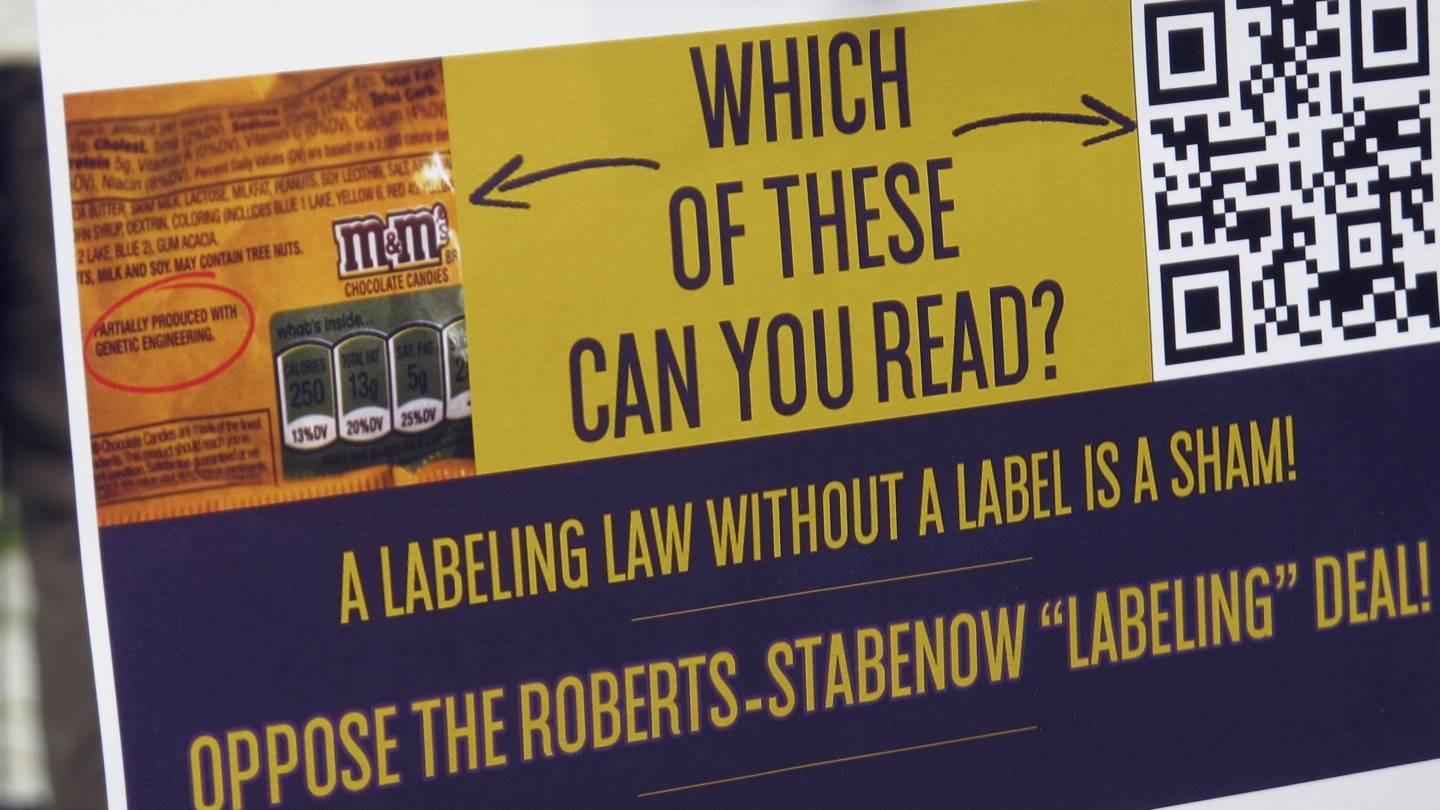
"caption": "The Senate on Thursday approved a measure that would require food companies to disclose GMOs — but without necessarily using a GMO label on packaging. Companies would have several disclosure options, including using a QR code on packaging that customers could then scan with a smartphone to learn more. Above, a sign at a July 1 rally in Montpelier, Vt., protesting the Senate bill.",
"description": "The Senate on Thursday approved a measure that would require food companies to disclose GMOs — but without necessarily using a GMO label on packaging. Companies would have several disclosure options, including using a QR code on packaging that customers could then scan with a smartphone to learn more. Above, a sign at a July 1 rally in Montpelier, Vt., protesting the Senate bil",
"title": "The Senate on Thursday approved a measure that would require food companies to disclose GMOs — but without necessarily using a GMO label on packaging. Companies would have several disclosure options, including using a QR code on packaging that customers could then scan with a smartphone to learn more. Above, a sign at a July 1 rally in Montpelier, Vt., protesting the Senate bill.",
"credit": "Wilson Ring/AP",
"status": "inherit",
"isLoading": false,
"fetchFailed": false
},
"bayareabites_110387": {
"type": "attachments",
"id": "bayareabites_110387",
"meta": {
"index": "attachments_1716263798",
"site": "bayareabites",
"id": "110387",
"found": true
},
"parent": 110386,
"imgSizes": {
"twentyfourteen-full-width": {
"file": "https://ww2.kqed.org/app/uploads/sites/24/2016/06/pacificbluefintuna_enl-f2c78c478b925ef126ba6932a6f5b362ea39adbe-1038x576.jpg",
"width": 1038,
"mimeType": "image/jpeg",
"height": 576
},
"thumbnail": {
"file": "https://ww2.kqed.org/app/uploads/sites/24/2016/06/pacificbluefintuna_enl-f2c78c478b925ef126ba6932a6f5b362ea39adbe-400x256.jpg",
"width": 400,
"mimeType": "image/jpeg",
"height": 256
},
"fd-sm": {
"file": "https://ww2.kqed.org/app/uploads/sites/24/2016/06/pacificbluefintuna_enl-f2c78c478b925ef126ba6932a6f5b362ea39adbe-960x615.jpg",
"width": 960,
"mimeType": "image/jpeg",
"height": 615
},
"post-thumbnail": {
"file": "https://ww2.kqed.org/app/uploads/sites/24/2016/06/pacificbluefintuna_enl-f2c78c478b925ef126ba6932a6f5b362ea39adbe-672x372.jpg",
"width": 672,
"mimeType": "image/jpeg",
"height": 372
},
"kqedFullSize": {
"file": "https://ww2.kqed.org/app/uploads/sites/24/2016/06/pacificbluefintuna_enl-f2c78c478b925ef126ba6932a6f5b362ea39adbe.jpg",
"width": 2000,
"height": 1282
},
"large": {
"file": "https://ww2.kqed.org/app/uploads/sites/24/2016/06/pacificbluefintuna_enl-f2c78c478b925ef126ba6932a6f5b362ea39adbe-1440x923.jpg",
"width": 1440,
"mimeType": "image/jpeg",
"height": 923
},
"guest-author-50": {
"file": "https://ww2.kqed.org/app/uploads/sites/24/2016/06/pacificbluefintuna_enl-f2c78c478b925ef126ba6932a6f5b362ea39adbe-50x50.jpg",
"width": 50,
"mimeType": "image/jpeg",
"height": 50
},
"guest-author-96": {
"file": "https://ww2.kqed.org/app/uploads/sites/24/2016/06/pacificbluefintuna_enl-f2c78c478b925ef126ba6932a6f5b362ea39adbe-96x96.jpg",
"width": 96,
"mimeType": "image/jpeg",
"height": 96
},
"medium": {
"file": "https://ww2.kqed.org/app/uploads/sites/24/2016/06/pacificbluefintuna_enl-f2c78c478b925ef126ba6932a6f5b362ea39adbe-800x513.jpg",
"width": 800,
"mimeType": "image/jpeg",
"height": 513
},
"guest-author-64": {
"file": "https://ww2.kqed.org/app/uploads/sites/24/2016/06/pacificbluefintuna_enl-f2c78c478b925ef126ba6932a6f5b362ea39adbe-64x64.jpg",
"width": 64,
"mimeType": "image/jpeg",
"height": 64
},
"guest-author-32": {
"file": "https://ww2.kqed.org/app/uploads/sites/24/2016/06/pacificbluefintuna_enl-f2c78c478b925ef126ba6932a6f5b362ea39adbe-32x32.jpg",
"width": 32,
"mimeType": "image/jpeg",
"height": 32
},
"cat_post_thumb_sizecategory-posts-2": {
"file": "https://ww2.kqed.org/app/uploads/sites/24/2016/06/pacificbluefintuna_enl-f2c78c478b925ef126ba6932a6f5b362ea39adbe-150x150.jpg",
"width": 150,
"mimeType": "image/jpeg",
"height": 150
},
"fd-lrg": {
"file": "https://ww2.kqed.org/app/uploads/sites/24/2016/06/pacificbluefintuna_enl-f2c78c478b925ef126ba6932a6f5b362ea39adbe-1920x1231.jpg",
"width": 1920,
"mimeType": "image/jpeg",
"height": 1231
},
"fd-med": {
"file": "https://ww2.kqed.org/app/uploads/sites/24/2016/06/pacificbluefintuna_enl-f2c78c478b925ef126ba6932a6f5b362ea39adbe-1180x756.jpg",
"width": 1180,
"mimeType": "image/jpeg",
"height": 756
},
"detail": {
"file": "https://ww2.kqed.org/app/uploads/sites/24/2016/06/pacificbluefintuna_enl-f2c78c478b925ef126ba6932a6f5b362ea39adbe-150x150.jpg",
"width": 150,
"mimeType": "image/jpeg",
"height": 150
},
"medium_large": {
"file": "https://ww2.kqed.org/app/uploads/sites/24/2016/06/pacificbluefintuna_enl-f2c78c478b925ef126ba6932a6f5b362ea39adbe-768x492.jpg",
"width": 768,
"mimeType": "image/jpeg",
"height": 492
},
"guest-author-128": {
"file": "https://ww2.kqed.org/app/uploads/sites/24/2016/06/pacificbluefintuna_enl-f2c78c478b925ef126ba6932a6f5b362ea39adbe-128x128.jpg",
"width": 128,
"mimeType": "image/jpeg",
"height": 128
}
},
"publishDate": 1467219123,
"modified": 1467297633,
"caption": "Tuna are arranged prior to the first auction of the year at Tsukiji Fish Market in Tokyo in January.",
"description": "Tuna are arranged prior to the first auction of the year at Tsukiji Fish Market in Tokyo in Januar",
"title": "Tuna are arranged prior to the first auction of the year at Tsukiji Fish Market in Tokyo in January.",
"credit": "The Asahi Shimbun/Getty Images",
"status": "inherit",
"isLoading": false,
"fetchFailed": false
},
"bayareabites_110289": {
"type": "attachments",
"id": "bayareabites_110289",
"meta": {
"index": "attachments_1716263798",
"site": "bayareabites",
"id": "110289",
"found": true
},
"parent": 110288,
"imgSizes": {
"twentyfourteen-full-width": {
"file": "https://ww2.kqed.org/app/uploads/sites/24/2016/06/ediblecutlery2_enl-f27e3b40e1c34376d8dad3bc85055521e949e59a-1038x576.jpg",
"width": 1038,
"mimeType": "image/jpeg",
"height": 576
},
"thumbnail": {
"file": "https://ww2.kqed.org/app/uploads/sites/24/2016/06/ediblecutlery2_enl-f27e3b40e1c34376d8dad3bc85055521e949e59a-400x268.jpg",
"width": 400,
"mimeType": "image/jpeg",
"height": 268
},
"fd-sm": {
"file": "https://ww2.kqed.org/app/uploads/sites/24/2016/06/ediblecutlery2_enl-f27e3b40e1c34376d8dad3bc85055521e949e59a-960x643.jpg",
"width": 960,
"mimeType": "image/jpeg",
"height": 643
},
"post-thumbnail": {
"file": "https://ww2.kqed.org/app/uploads/sites/24/2016/06/ediblecutlery2_enl-f27e3b40e1c34376d8dad3bc85055521e949e59a-672x372.jpg",
"width": 672,
"mimeType": "image/jpeg",
"height": 372
},
"kqedFullSize": {
"file": "https://ww2.kqed.org/app/uploads/sites/24/2016/06/ediblecutlery2_enl-f27e3b40e1c34376d8dad3bc85055521e949e59a.jpg",
"width": 2000,
"height": 1339
},
"large": {
"file": "https://ww2.kqed.org/app/uploads/sites/24/2016/06/ediblecutlery2_enl-f27e3b40e1c34376d8dad3bc85055521e949e59a-1440x964.jpg",
"width": 1440,
"mimeType": "image/jpeg",
"height": 964
},
"guest-author-50": {
"file": "https://ww2.kqed.org/app/uploads/sites/24/2016/06/ediblecutlery2_enl-f27e3b40e1c34376d8dad3bc85055521e949e59a-50x50.jpg",
"width": 50,
"mimeType": "image/jpeg",
"height": 50
},
"guest-author-96": {
"file": "https://ww2.kqed.org/app/uploads/sites/24/2016/06/ediblecutlery2_enl-f27e3b40e1c34376d8dad3bc85055521e949e59a-96x96.jpg",
"width": 96,
"mimeType": "image/jpeg",
"height": 96
},
"medium": {
"file": "https://ww2.kqed.org/app/uploads/sites/24/2016/06/ediblecutlery2_enl-f27e3b40e1c34376d8dad3bc85055521e949e59a-800x536.jpg",
"width": 800,
"mimeType": "image/jpeg",
"height": 536
},
"guest-author-64": {
"file": "https://ww2.kqed.org/app/uploads/sites/24/2016/06/ediblecutlery2_enl-f27e3b40e1c34376d8dad3bc85055521e949e59a-64x64.jpg",
"width": 64,
"mimeType": "image/jpeg",
"height": 64
},
"guest-author-32": {
"file": "https://ww2.kqed.org/app/uploads/sites/24/2016/06/ediblecutlery2_enl-f27e3b40e1c34376d8dad3bc85055521e949e59a-32x32.jpg",
"width": 32,
"mimeType": "image/jpeg",
"height": 32
},
"cat_post_thumb_sizecategory-posts-2": {
"file": "https://ww2.kqed.org/app/uploads/sites/24/2016/06/ediblecutlery2_enl-f27e3b40e1c34376d8dad3bc85055521e949e59a-150x150.jpg",
"width": 150,
"mimeType": "image/jpeg",
"height": 150
},
"fd-lrg": {
"file": "https://ww2.kqed.org/app/uploads/sites/24/2016/06/ediblecutlery2_enl-f27e3b40e1c34376d8dad3bc85055521e949e59a-1920x1285.jpg",
"width": 1920,
"mimeType": "image/jpeg",
"height": 1285
},
"fd-med": {
"file": "https://ww2.kqed.org/app/uploads/sites/24/2016/06/ediblecutlery2_enl-f27e3b40e1c34376d8dad3bc85055521e949e59a-1180x790.jpg",
"width": 1180,
"mimeType": "image/jpeg",
"height": 790
},
"detail": {
"file": "https://ww2.kqed.org/app/uploads/sites/24/2016/06/ediblecutlery2_enl-f27e3b40e1c34376d8dad3bc85055521e949e59a-150x150.jpg",
"width": 150,
"mimeType": "image/jpeg",
"height": 150
},
"medium_large": {
"file": "https://ww2.kqed.org/app/uploads/sites/24/2016/06/ediblecutlery2_enl-f27e3b40e1c34376d8dad3bc85055521e949e59a-768x514.jpg",
"width": 768,
"mimeType": "image/jpeg",
"height": 514
},
"guest-author-128": {
"file": "https://ww2.kqed.org/app/uploads/sites/24/2016/06/ediblecutlery2_enl-f27e3b40e1c34376d8dad3bc85055521e949e59a-128x128.jpg",
"width": 128,
"mimeType": "image/jpeg",
"height": 128
}
},
"publishDate": 1466716346,
"modified": 1466717184,
"caption": "Bakey's offers three spoon flavors — plain, sweet and savory.",
"description": "Bakey's offers three spoon flavors -- plain, sweet and savory.",
"title": "Bakey's offers three spoon flavors — plain, sweet and savory.",
"credit": " Courtesy of Bakey's",
"status": "inherit",
"isLoading": false,
"fetchFailed": false
},
"bayareabites_109904": {
"type": "attachments",
"id": "bayareabites_109904",
"meta": {
"index": "attachments_1716263798",
"site": "bayareabites",
"id": "109904",
"found": true
},
"parent": 109903,
"imgSizes": {
"twentyfourteen-full-width": {
"file": "https://ww2.kqed.org/app/uploads/sites/24/2016/06/almondsandbees_enl-6277764d25bc8dfc1a4ae8eb45068b19ce998de9-1038x576.jpg",
"width": 1038,
"mimeType": "image/jpeg",
"height": 576
},
"thumbnail": {
"file": "https://ww2.kqed.org/app/uploads/sites/24/2016/06/almondsandbees_enl-6277764d25bc8dfc1a4ae8eb45068b19ce998de9-400x257.jpg",
"width": 400,
"mimeType": "image/jpeg",
"height": 257
},
"fd-sm": {
"file": "https://ww2.kqed.org/app/uploads/sites/24/2016/06/almondsandbees_enl-6277764d25bc8dfc1a4ae8eb45068b19ce998de9-960x616.jpg",
"width": 960,
"mimeType": "image/jpeg",
"height": 616
},
"post-thumbnail": {
"file": "https://ww2.kqed.org/app/uploads/sites/24/2016/06/almondsandbees_enl-6277764d25bc8dfc1a4ae8eb45068b19ce998de9-672x372.jpg",
"width": 672,
"mimeType": "image/jpeg",
"height": 372
},
"kqedFullSize": {
"file": "https://ww2.kqed.org/app/uploads/sites/24/2016/06/almondsandbees_enl-6277764d25bc8dfc1a4ae8eb45068b19ce998de9.jpg",
"width": 2000,
"height": 1283
},
"large": {
"file": "https://ww2.kqed.org/app/uploads/sites/24/2016/06/almondsandbees_enl-6277764d25bc8dfc1a4ae8eb45068b19ce998de9-1440x924.jpg",
"width": 1440,
"mimeType": "image/jpeg",
"height": 924
},
"guest-author-50": {
"file": "https://ww2.kqed.org/app/uploads/sites/24/2016/06/almondsandbees_enl-6277764d25bc8dfc1a4ae8eb45068b19ce998de9-50x50.jpg",
"width": 50,
"mimeType": "image/jpeg",
"height": 50
},
"guest-author-96": {
"file": "https://ww2.kqed.org/app/uploads/sites/24/2016/06/almondsandbees_enl-6277764d25bc8dfc1a4ae8eb45068b19ce998de9-96x96.jpg",
"width": 96,
"mimeType": "image/jpeg",
"height": 96
},
"medium": {
"file": "https://ww2.kqed.org/app/uploads/sites/24/2016/06/almondsandbees_enl-6277764d25bc8dfc1a4ae8eb45068b19ce998de9-800x513.jpg",
"width": 800,
"mimeType": "image/jpeg",
"height": 513
},
"guest-author-64": {
"file": "https://ww2.kqed.org/app/uploads/sites/24/2016/06/almondsandbees_enl-6277764d25bc8dfc1a4ae8eb45068b19ce998de9-64x64.jpg",
"width": 64,
"mimeType": "image/jpeg",
"height": 64
},
"guest-author-32": {
"file": "https://ww2.kqed.org/app/uploads/sites/24/2016/06/almondsandbees_enl-6277764d25bc8dfc1a4ae8eb45068b19ce998de9-32x32.jpg",
"width": 32,
"mimeType": "image/jpeg",
"height": 32
},
"cat_post_thumb_sizecategory-posts-2": {
"file": "https://ww2.kqed.org/app/uploads/sites/24/2016/06/almondsandbees_enl-6277764d25bc8dfc1a4ae8eb45068b19ce998de9-150x150.jpg",
"width": 150,
"mimeType": "image/jpeg",
"height": 150
},
"fd-lrg": {
"file": "https://ww2.kqed.org/app/uploads/sites/24/2016/06/almondsandbees_enl-6277764d25bc8dfc1a4ae8eb45068b19ce998de9-1920x1232.jpg",
"width": 1920,
"mimeType": "image/jpeg",
"height": 1232
},
"fd-med": {
"file": "https://ww2.kqed.org/app/uploads/sites/24/2016/06/almondsandbees_enl-6277764d25bc8dfc1a4ae8eb45068b19ce998de9-1180x757.jpg",
"width": 1180,
"mimeType": "image/jpeg",
"height": 757
},
"detail": {
"file": "https://ww2.kqed.org/app/uploads/sites/24/2016/06/almondsandbees_enl-6277764d25bc8dfc1a4ae8eb45068b19ce998de9-150x150.jpg",
"width": 150,
"mimeType": "image/jpeg",
"height": 150
},
"medium_large": {
"file": "https://ww2.kqed.org/app/uploads/sites/24/2016/06/almondsandbees_enl-6277764d25bc8dfc1a4ae8eb45068b19ce998de9-768x493.jpg",
"width": 768,
"mimeType": "image/jpeg",
"height": 493
},
"guest-author-128": {
"file": "https://ww2.kqed.org/app/uploads/sites/24/2016/06/almondsandbees_enl-6277764d25bc8dfc1a4ae8eb45068b19ce998de9-128x128.jpg",
"width": 128,
"mimeType": "image/jpeg",
"height": 128
}
},
"publishDate": 1465232150,
"modified": 1465232347,
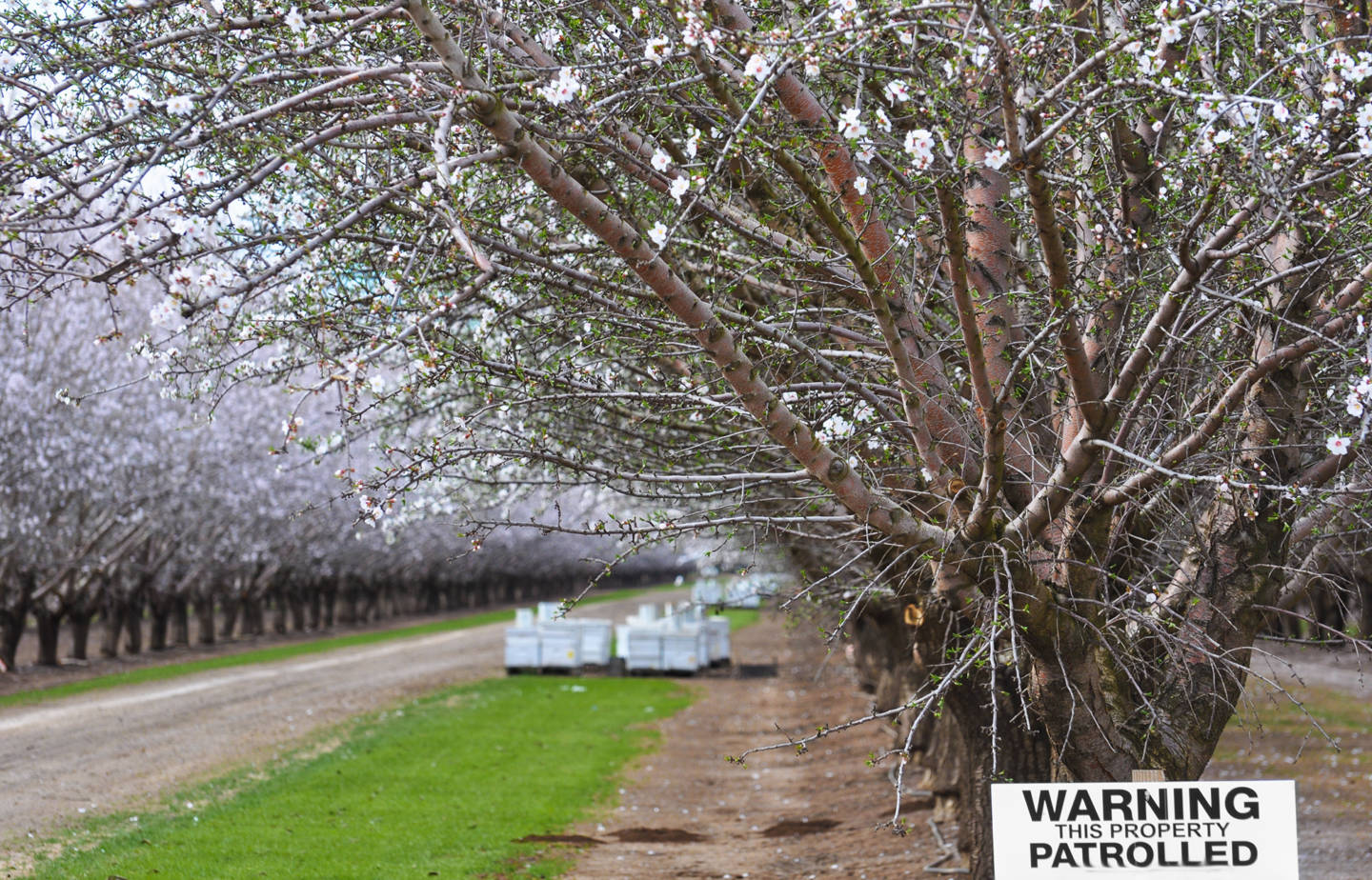
"caption": "Between January and March, beekeepers send millions of hives to California to pollinate almond trees. A sign in this almond orchard warns it is patrolled — a measure to combat rising beehive thefts.",
"description": "Between January and March, beekeepers send millions of hives to California to pollinate almond trees. A sign in this almond orchard warns it is patrolled -- a measure to combat rising beehive thefts",
"title": "Between January and March, beekeepers send millions of hives to California to pollinate almond trees. A sign in this almond orchard warns it is patrolled — a measure to combat rising beehive thefts.",
"credit": "Barbara Rich/Getty Images",
"status": "inherit",
"isLoading": false,
"fetchFailed": false
},
"bayareabites_109791": {
"type": "attachments",
"id": "bayareabites_109791",
"meta": {
"index": "attachments_1716263798",
"site": "bayareabites",
"id": "109791",
"found": true
},
"parent": 109789,
"imgSizes": {
"thumbnail": {
"file": "https://ww2.kqed.org/app/uploads/sites/24/2016/05/SamEmilioGFMercantile-680x449-400x264.jpg",
"width": 400,
"mimeType": "image/jpeg",
"height": 264
},
"post-thumbnail": {
"file": "https://ww2.kqed.org/app/uploads/sites/24/2016/05/SamEmilioGFMercantile-680x449-672x372.jpg",
"width": 672,
"mimeType": "image/jpeg",
"height": 372
},
"kqedFullSize": {
"file": "https://ww2.kqed.org/app/uploads/sites/24/2016/05/SamEmilioGFMercantile-680x449.jpg",
"width": 680,
"height": 449
},
"cat_post_thumb_sizecategory-posts-2": {
"file": "https://ww2.kqed.org/app/uploads/sites/24/2016/05/SamEmilioGFMercantile-680x449-150x150.jpg",
"width": 150,
"mimeType": "image/jpeg",
"height": 150
},
"guest-author-50": {
"file": "https://ww2.kqed.org/app/uploads/sites/24/2016/05/SamEmilioGFMercantile-680x449-50x50.jpg",
"width": 50,
"mimeType": "image/jpeg",
"height": 50
},
"guest-author-96": {
"file": "https://ww2.kqed.org/app/uploads/sites/24/2016/05/SamEmilioGFMercantile-680x449-96x96.jpg",
"width": 96,
"mimeType": "image/jpeg",
"height": 96
},
"guest-author-64": {
"file": "https://ww2.kqed.org/app/uploads/sites/24/2016/05/SamEmilioGFMercantile-680x449-64x64.jpg",
"width": 64,
"mimeType": "image/jpeg",
"height": 64
},
"detail": {
"file": "https://ww2.kqed.org/app/uploads/sites/24/2016/05/SamEmilioGFMercantile-680x449-150x150.jpg",
"width": 150,
"mimeType": "image/jpeg",
"height": 150
},
"guest-author-32": {
"file": "https://ww2.kqed.org/app/uploads/sites/24/2016/05/SamEmilioGFMercantile-680x449-32x32.jpg",
"width": 32,
"mimeType": "image/jpeg",
"height": 32
},
"guest-author-128": {
"file": "https://ww2.kqed.org/app/uploads/sites/24/2016/05/SamEmilioGFMercantile-680x449-128x128.jpg",
"width": 128,
"mimeType": "image/jpeg",
"height": 128
}
},
"publishDate": 1464739921,
"modified": 1464740068,
"caption": "Sam Mogannam, founder of San Francisco’s Bi-Rite (far left)",
"description": null,
"title": "SamEmilioGFMercantile-680x449",
"credit": "Gamma 9",
"status": "inherit",
"isLoading": false,
"fetchFailed": false
}
},
"audioPlayerReducer": {
"postId": "stream_live",
"isPaused": true,
"isPlaying": false,
"pfsActive": false,
"pledgeModalIsOpen": true,
"playerDrawerIsOpen": false,
"liveAudioPlayStartedAt": 0,
"liveAudioPlayContext": ""
},
"authorsReducer": {
"byline_bayareabites_111565": {
"type": "authors",
"id": "byline_bayareabites_111565",
"meta": {
"override": true
},
"slug": "byline_bayareabites_111565",
"name": "Jessica Leigh Hester, \u003ca href=\"https://ww2.kqed.org/bayareabites/author/nprfood/\">NPR Food\u003c/a>",
"isLoading": false
},
"byline_bayareabites_111409": {
"type": "authors",
"id": "byline_bayareabites_111409",
"meta": {
"override": true
},
"slug": "byline_bayareabites_111409",
"name": "Alastair Bland, \u003ca href=\"https://ww2.kqed.org/bayareabites/author/nprfood/\">NPR Food\u003c/a>",
"isLoading": false
},
"byline_bayareabites_111224": {
"type": "authors",
"id": "byline_bayareabites_111224",
"meta": {
"override": true
},
"slug": "byline_bayareabites_111224",
"name": "Dan Charles, NPR Food",
"isLoading": false
},
"byline_bayareabites_111121": {
"type": "authors",
"id": "byline_bayareabites_111121",
"meta": {
"override": true
},
"slug": "byline_bayareabites_111121",
"name": "Dan Charles, NPR Food",
"isLoading": false
},
"byline_bayareabites_111091": {
"type": "authors",
"id": "byline_bayareabites_111091",
"meta": {
"override": true
},
"slug": "byline_bayareabites_111091",
"name": "\u003ca href=\"https://ww2.kqed.org/bayareabites/author/sarahhenry/\">Sarah Henry\u003c/a>, \u003ca href=\"http://ediblesanfrancisco.ediblefeast.com/wasted\">Edible SF\u003c/a> at NPR Food",
"isLoading": false
},
"byline_bayareabites_110756": {
"type": "authors",
"id": "byline_bayareabites_110756",
"meta": {
"override": true
},
"slug": "byline_bayareabites_110756",
"name": "Dan Charles, NPR Food",
"isLoading": false
},
"byline_bayareabites_110588": {
"type": "authors",
"id": "byline_bayareabites_110588",
"meta": {
"override": true
},
"slug": "byline_bayareabites_110588",
"name": "Dan Charles, \u003cahref=\"https://ww2.kqed.org/bayareabites/author/nprfood/\">NPR Food\u003c/a>",
"isLoading": false
},
"byline_bayareabites_110386": {
"type": "authors",
"id": "byline_bayareabites_110386",
"meta": {
"override": true
},
"slug": "byline_bayareabites_110386",
"name": "Alastair Bland, \u003ca href=\"https://ww2.kqed.org/bayareabites/author/nprfood/\">NPR Food\u003c/a>",
"isLoading": false
},
"byline_bayareabites_110288": {
"type": "authors",
"id": "byline_bayareabites_110288",
"meta": {
"override": true
},
"slug": "byline_bayareabites_110288",
"name": "Didem Tali, \u003ca href=\"http://ww2.kqed.org/bayareabites/author/nprfood/\">NPR Food\u003c/a>",
"isLoading": false
},
"byline_bayareabites_109903": {
"type": "authors",
"id": "byline_bayareabites_109903",
"meta": {
"override": true
},
"slug": "byline_bayareabites_109903",
"name": "Jodi Helmer, \u003ca href=\"https://ww2.kqed.org/bayareabites/author/nprfood/\">NPR Food\u003c/a>",
"isLoading": false
},
"byline_bayareabites_109789": {
"type": "authors",
"id": "byline_bayareabites_109789",
"meta": {
"override": true
},
"slug": "byline_bayareabites_109789",
"name": "\u003ca href=\"http://civileats.com/author/dreiss/\">Dawn Reiss\u003c/a>, \u003ca href=\"https://ww2.kqed.org/bayareabites/author/civileat/\">Civil Eats\u003c/a>",
"isLoading": false
},
"wendy-goodfriend": {
"type": "authors",
"id": "5014",
"meta": {
"index": "authors_1716337520",
"id": "5014",
"found": true
},
"name": "Wendy Goodfriend",
"firstName": "Wendy",
"lastName": "Goodfriend",
"slug": "wendy-goodfriend",
"email": "wendy@wendygoodfriend.com",
"display_author_email": false,
"staff_mastheads": [],
"title": "KQED Contributor",
"bio": "I was the Senior Digital Producer for KQED Food up until July, 2018. Since 2001, I designed, produced, managed and contributed to mostly food-related websites and blogs for KQED including: KQED.org; KQED Food; Bay Area Bites; Check, Please! Bay Area; Taste This; Celebrity Chefs; seven of Jacques Pepin's TV series websites; and Joanne Weir's Cooking in the City. I initiated the majority of KQED Food's social media feeds and maintained them up until 2017. As far as content creation, photography is my passion and I also shoot video and write stories. My photos have been used in articles for KQED Food, News, Arts, and Science as well as for promotional purposes in print and online. Professional education and training includes: clinical psychology, photography, commercial cooking, web design, information architecture and UX.",
"avatar": "https://secure.gravatar.com/avatar/dfba64372339cc34cf17e446e6f18fa8?s=600&d=blank&r=g",
"twitter": null,
"facebook": "bayareabites",
"instagram": null,
"linkedin": "wendygoodfriend",
"sites": [
{
"site": "jpepinheart",
"roles": []
},
{
"site": "about",
"roles": [
"editor"
]
},
{
"site": "bayareabites",
"roles": [
"subscriber"
]
},
{
"site": "science",
"roles": [
"administrator"
]
},
{
"site": "checkplease",
"roles": [
"subscriber"
]
},
{
"site": "food",
"roles": [
"author"
]
},
{
"site": "essentialpepin",
"roles": [
"administrator"
]
}
],
"headData": {
"title": "Wendy Goodfriend | KQED",
"description": "KQED Contributor",
"ogImgSrc": "https://secure.gravatar.com/avatar/dfba64372339cc34cf17e446e6f18fa8?s=600&d=blank&r=g",
"twImgSrc": "https://secure.gravatar.com/avatar/dfba64372339cc34cf17e446e6f18fa8?s=600&d=blank&r=g"
},
"isLoading": false,
"link": "/author/wendy-goodfriend"
},
"stephanie-rosenbaum": {
"type": "authors",
"id": "5038",
"meta": {
"index": "authors_1716337520",
"id": "5038",
"found": true
},
"name": "Stephanie Rosenbaum Klassen",
"firstName": "Stephanie",
"lastName": "Rosenbaum Klassen",
"slug": "stephanie-rosenbaum",
"email": "dixieday@aol.com",
"display_author_email": false,
"staff_mastheads": [],
"title": "KQED Contributor",
"bio": "Stephanie Rosenbaum Klassen is a longtime local food writer, author, and cook. Her books include The Art of Vintage Cocktails (Egg & Dart Press), World of Doughnuts (Egg & Dart Press); Kids in the Kitchen: Fun Food (Williams Sonoma); Honey from Flower to Table (Chronicle Books) and The Astrology Cookbook: A Cosmic Guide to Feasts of Love (Manic D Press). She has studied organic farming at UCSC and holds a certificate in Ecological Horticulture from the Center for Agroecology and Sustainable Food Systems. She does frequent cooking demonstrations at local farmers’ markets and has taught food writing at Media Alliance in San Francisco and the Continuing Education program at Stanford University. She has been the lead restaurant critic for the San Francisco Bay Guardian as well as for San Francisco magazine. She has been an assistant chef at the Headlands Center for the Arts, an artists' residency program located in the Marin Headlands, and a production cook at the Marin Sun Farms Cafe in Pt Reyes Station. After some 20 years in San Francisco interspersed with stints in Oakland, Santa Cruz, Brooklyn, and Manhattan, she recently moved to Sonoma county but still writes in San Francisco several days a week.",
"avatar": "https://secure.gravatar.com/avatar/26520681f950a766c2c0eb9872646dec42b88de07cc4cdd65958385671e93cf7?s=600&d=mm&r=g",
"twitter": "sjrosenbaum",
"bluesky": null,
"facebook": null,
"instagram": null,
"linkedin": null,
"sites": [
{
"site": "bayareabites",
"roles": [
"subscriber"
]
},
{
"site": "food",
"roles": [
"subscriber"
]
}
],
"headData": {
"title": "Stephanie Rosenbaum Klassen | KQED",
"description": "KQED Contributor",
"ogImgSrc": "https://secure.gravatar.com/avatar/26520681f950a766c2c0eb9872646dec42b88de07cc4cdd65958385671e93cf7?s=600&d=mm&r=g",
"twImgSrc": "https://secure.gravatar.com/avatar/26520681f950a766c2c0eb9872646dec42b88de07cc4cdd65958385671e93cf7?s=600&d=mm&r=g"
},
"isLoading": false,
"link": "/author/stephanie-rosenbaum"
}
},
"pagesReducer": {
"bayareabites_category_sustainability": {
"type": "terms",
"id": "bayareabites_60",
"meta": {
"index": "terms_1716263798",
"site": "bayareabites",
"id": "60",
"score": 12.370369
},
"featImg": null,
"name": "sustainability, environment, climate change",
"description": null,
"taxonomy": "category",
"headData": {
"twImgId": null,
"twTitle": null,
"ogTitle": null,
"ogImgId": null,
"twDescription": null,
"description": null,
"title": "sustainability, environment, climate change Archives | KQED Bay Area Bites",
"ogDescription": null
},
"ttid": 23,
"slug": "sustainability",
"isLoading": false,
"title": "sustainability, environment, climate change",
"pageMeta": {
"site": "bayareabites",
"WpPageTemplate": "page-topic-editorial",
"currentPage": 12
},
"blocks": [
{
"blockName": "kqed/post-list",
"attrs": {
"layout": "cardArticle2",
"query": "posts/bayareabites?category=sustainability",
"seeMore": false,
"paginated": true,
"page": 12
}
},
{
"blockName": "kqed/ad"
}
]
}
},
"pfsSessionReducer": {},
"postsReducer": {
"stream_live": {
"type": "live",
"id": "stream_live",
"audioUrl": "https://streams.kqed.org/kqedradio",
"title": "Live Stream",
"excerpt": "Live Stream information currently unavailable.",
"link": "/radio",
"featImg": "",
"label": {
"name": "KQED Live",
"link": "/"
}
},
"stream_kqedNewscast": {
"type": "posts",
"id": "stream_kqedNewscast",
"audioUrl": "https://www.kqed.org/.stream/anon/radio/RDnews/newscast.mp3?_=1",
"title": "KQED Newscast",
"featImg": "",
"label": {
"name": "88.5 FM",
"link": "/"
}
},
"bayareabites_111560": {
"type": "posts",
"id": "bayareabites_111560",
"meta": {
"index": "posts_1716263798",
"site": "bayareabites",
"id": "111560",
"score": null,
"sort": [
1471962718000
]
},
"parent": 0,
"labelTerm": {},
"blocks": [],
"publishDate": 1471962718,
"format": "standard",
"disqusTitle": "Making a Place at the Table: Race and Equality in the Good Food Movement",
"title": "Making a Place at the Table: Race and Equality in the Good Food Movement",
"headTitle": "Bay Area Bites | KQED Food",
"content": "\u003cp>Listen to \u003cstrong>Women Leaders at the Table: Addressing Inequity in the Good Food Movement\u003c/strong>:\u003cbr>\nhttp://audio.commonwealthclub.org/audio/podcast/cc_20160815_Women_at_the_Table.mp3\u003c/p>\n\u003cp>A farmer, a restaurant owner, a labor supporter and a public-health community advocate walk into a room over a bar...and they're greeted like rock stars by a sold-out crowd. This was the scene at the Swedish American Hall on Monday night, August 15, when San Francisco's Commonwealth Club presented \u003ca href=\"https://www.commonwealthclub.org/events/2016-08-15/women-leaders-table-addressing-inequity-good-food-movement\" target=\"_blank\">Women Leaders at the Table: Addressing Inequity in the Good Food Movement\u003c/a>.\u003c/p>\n\u003cfigure id=\"attachment_111629\" class=\"wp-caption aligncenter\" style=\"max-width: 1920px\">\u003cimg src=\"http://ww2.kqed.org/bayareabites/wp-content/uploads/sites/24/2016/08/cathy-curtis.jpg\" alt=\"Cathy Curtis, organizer of the Commonwealth Club’s Food Matters program.\" width=\"1920\" height=\"1280\" class=\"size-full wp-image-111629\" srcset=\"https://ww2.kqed.org/app/uploads/sites/24/2016/08/cathy-curtis.jpg 1920w, https://ww2.kqed.org/app/uploads/sites/24/2016/08/cathy-curtis-400x267.jpg 400w, https://ww2.kqed.org/app/uploads/sites/24/2016/08/cathy-curtis-800x533.jpg 800w, https://ww2.kqed.org/app/uploads/sites/24/2016/08/cathy-curtis-768x512.jpg 768w, https://ww2.kqed.org/app/uploads/sites/24/2016/08/cathy-curtis-1440x960.jpg 1440w, https://ww2.kqed.org/app/uploads/sites/24/2016/08/cathy-curtis-1180x787.jpg 1180w, https://ww2.kqed.org/app/uploads/sites/24/2016/08/cathy-curtis-960x640.jpg 960w\" sizes=\"(max-width: 1920px) 100vw, 1920px\">\u003cfigcaption class=\"wp-caption-text\">Cathy Curtis (right), organizer of the Commonwealth Club’s Food Matters program. \u003ccite>(Wendy Goodfriend)\u003c/cite>\u003c/figcaption>\u003c/figure>\n\u003cp>When Cathy Curtis, the organizer of the Commonwealth Club's Food Matters program (formerly Bay Gourmet), began to put together a panel of women of color to address issues of inequity and race in the good-food movement, she had no idea it would draw such a crowd. Initially, the panel was set to take place in a small meeting room within the club, but once posted, the event sold out almost immediately, and Curtis and the panel's moderator, Shakirah Simley, were flooded with emails begging them to shift the event to a larger venue. After a last-minute scramble, the \u003ca href=\"http://www.netimeas.com/\" target=\"_blank\">Ne Timeas\u003c/a> restaurant group, which owns Aatxe in the Swedish American Hall (as well as Cafe du Nord next door), offered free use of the hall's large meeting room upstairs. \u003ca href=\"http://civileats.com/\" target=\"_blank\">Civil Eats\u003c/a> offered media support; \u003ca href=\"http://www.cuesa.org\" target=\"_blank\">CUESA\u003c/a> pulled in volunteers; \u003ca href=\"http://www.biritemarket.com/\" target=\"_blank\">Bi-Rite Market\u003c/a> donated wine and sandwiches for the post-meeting reception. \u003c/p>\n\u003cfigure id=\"attachment_111644\" class=\"wp-caption aligncenter\" style=\"max-width: 1920px\">\u003cimg src=\"http://ww2.kqed.org/bayareabites/wp-content/uploads/sites/24/2016/08/shakirah-simley.jpg\" alt=\"Moderator Shakirah Simley, founder of the preserving company Slow Jams and now community programs manager (and canner-in-residence) for Bi-Rite.\" width=\"1920\" height=\"1280\" class=\"size-full wp-image-111644\" srcset=\"https://ww2.kqed.org/app/uploads/sites/24/2016/08/shakirah-simley.jpg 1920w, https://ww2.kqed.org/app/uploads/sites/24/2016/08/shakirah-simley-400x267.jpg 400w, https://ww2.kqed.org/app/uploads/sites/24/2016/08/shakirah-simley-800x533.jpg 800w, https://ww2.kqed.org/app/uploads/sites/24/2016/08/shakirah-simley-768x512.jpg 768w, https://ww2.kqed.org/app/uploads/sites/24/2016/08/shakirah-simley-1440x960.jpg 1440w, https://ww2.kqed.org/app/uploads/sites/24/2016/08/shakirah-simley-1180x787.jpg 1180w, https://ww2.kqed.org/app/uploads/sites/24/2016/08/shakirah-simley-960x640.jpg 960w\" sizes=\"(max-width: 1920px) 100vw, 1920px\">\u003cfigcaption class=\"wp-caption-text\">Moderator Shakirah Simley, founder of the preserving company Slow Jams and now community programs manager (and canner-in-residence) for Bi-Rite. \u003ccite>(Wendy Goodfriend)\u003c/cite>\u003c/figcaption>\u003c/figure>\n\u003cp>By 7pm, the room was filled to capacity. This was not a meeting preaching the hazards of Big Food or Big Ag to the already-converted (although there were plenty of \u003ca href=\"http://www.nytimes.com/2015/11/22/fashion/snapping-new-clapping.html\" target=\"_blank\">finger-snapping \u003c/a>moments of approval), but rather an insightful dissection of some of the assumptions and privileges within the movement for \"good, clean, fair\" food, from the racial complications of soda taxes to the implications, benefits, and repercussions of direct action, from \u003ca href=\"http://ww2.kqed.org/news/2014/12/10/black-brunch-organizers-put-protest-on-the-menu/\" target=\"_blank\">Black Brunch\u003c/a> to the push for \u003ca href=\"http://abc7news.com/business/minimum-wage-increases-in-3-bay-area-cities-today/1409737/\" target=\"_blank\">higher minimum wages\u003c/a> across the state. \u003c/p>\n\u003cfigure id=\"attachment_111641\" class=\"wp-caption aligncenter\" style=\"max-width: 1920px\">\u003cimg src=\"http://ww2.kqed.org/bayareabites/wp-content/uploads/sites/24/2016/08/panel-audience.jpg\" alt=\"Women Leaders at the Table moderator and panel (R to L): Shakirah Simley, Joann Lo, Brittni Chicuata, Kristyn Leach, Dominica Rice Cisneros\" width=\"1920\" height=\"1280\" class=\"size-full wp-image-111641\" srcset=\"https://ww2.kqed.org/app/uploads/sites/24/2016/08/panel-audience.jpg 1920w, https://ww2.kqed.org/app/uploads/sites/24/2016/08/panel-audience-400x267.jpg 400w, https://ww2.kqed.org/app/uploads/sites/24/2016/08/panel-audience-800x533.jpg 800w, https://ww2.kqed.org/app/uploads/sites/24/2016/08/panel-audience-768x512.jpg 768w, https://ww2.kqed.org/app/uploads/sites/24/2016/08/panel-audience-1440x960.jpg 1440w, https://ww2.kqed.org/app/uploads/sites/24/2016/08/panel-audience-1180x787.jpg 1180w, https://ww2.kqed.org/app/uploads/sites/24/2016/08/panel-audience-960x640.jpg 960w\" sizes=\"(max-width: 1920px) 100vw, 1920px\">\u003cfigcaption class=\"wp-caption-text\">Women Leaders at the Table moderator and panel (R to L): Shakirah Simley, Joann Lo, Brittni Chicuata, Kristyn Leach, Dominica Rice Cisneros \u003ccite>(Wendy Goodfriend)\u003c/cite>\u003c/figcaption>\u003c/figure>\n\u003cp>On the panel were Joanne Lo, co-director of the \u003ca href=\"http://foodchainworkers.org/\" target=\"_blank\">Food Chain Workers Alliance\u003c/a> and chair of the Los Angeles Food Policy Council; Brittni Chicuata, government relations director for the Bay Area chapters of the \u003ca href=\"http://www.heart.org/HEARTORG/Affiliate/SanFrancisco/California/Home_UCM_WSA022_AffiliatePage.jsp\" target=\"_blank\">American Heart Association\u003c/a> and the American Stroke Association; Kristyn Leach, farmer at \u003ca href=\"http://www.sagecenter.org/work/agricultural-revitalization/sunol-agpark/sunol-agpark-farmers/namu-farm/\" target=\"_blank\">Namu Farm\u003c/a>; and Dominica Rice Cisneros, owner of \u003ca href=\"http://www.cosechacafe.com/\" target=\"_blank\">Cosecha Cafe\u003c/a> in Oakland, with moderator Shakirah Simley, founder of the preserving company Slow Jams and now community programs manager (and canner-in-residence) for \u003ca href=\"http://www.biritemarket.com\" target=\"_blank\">Bi-Rite\u003c/a>.\u003c/p>\n\u003cp>[ad fullwidth]\u003c/p>\n\u003cp>In her introduction, Curtis urged attendees to look not just at \"what's on the plate, but who's sitting at the table,\" as we work towards creating a more equitable good food movement. This isn't as easy as it sounds; when asked about how her work as a public health advocate, particularly among urban African-American communities, connects with the good food movement, Brittni Chicuata stated, \"When I think of the good food movement, or the slow food movement, or when a lot of folks think of it, it's 'that's bougie and inaccessible and not for me.'\" What matters to Chicuata is helping communities face, and overcome, what they (and she) see as systemic barriers to living healthy lives. In other words, it's less about the kale, and more about transportation, education, labor, the history of zoning laws, and the history of red-lining by banks that kept business loans out of low-income neighborhoods, says Chicuata, who grew up in the Fillmore and now lives in Oakland. \u003c/p>\n\u003cfigure id=\"attachment_111638\" class=\"wp-caption aligncenter\" style=\"max-width: 1920px\">\u003cimg src=\"http://ww2.kqed.org/bayareabites/wp-content/uploads/sites/24/2016/08/brittni-chicuata.jpg\" alt=\"Brittni Chicuata (center), Government Relations Director, American Heart Association | American Stroke Association.\" width=\"1920\" height=\"1280\" class=\"size-full wp-image-111638\" srcset=\"https://ww2.kqed.org/app/uploads/sites/24/2016/08/brittni-chicuata.jpg 1920w, https://ww2.kqed.org/app/uploads/sites/24/2016/08/brittni-chicuata-400x267.jpg 400w, https://ww2.kqed.org/app/uploads/sites/24/2016/08/brittni-chicuata-800x533.jpg 800w, https://ww2.kqed.org/app/uploads/sites/24/2016/08/brittni-chicuata-768x512.jpg 768w, https://ww2.kqed.org/app/uploads/sites/24/2016/08/brittni-chicuata-1440x960.jpg 1440w, https://ww2.kqed.org/app/uploads/sites/24/2016/08/brittni-chicuata-1180x787.jpg 1180w, https://ww2.kqed.org/app/uploads/sites/24/2016/08/brittni-chicuata-960x640.jpg 960w\" sizes=\"(max-width: 1920px) 100vw, 1920px\">\u003cfigcaption class=\"wp-caption-text\">Brittni Chicuata (center), Government Relations Director, American Heart Association | American Stroke Association. \u003ccite>(Wendy Goodfriend)\u003c/cite>\u003c/figcaption>\u003c/figure>\n\u003cp>Although, of course, the kale--or in this case, the shiso leaves and hot peppers--have to come from somewhere, and small-scale, sustainable farming is at the heart of the good food movement. At Namu Farm, Kristyn Leach describes her acre-and-a-half parcel of land in the Sunol Ag Park as an experiment in \"really kind of crazy and strange\" farming, with an emphasis on very slow, deliberate practices of carbon-sequestering, no-till cultivation with rotating cover crops, inspired by both permaculture and traditional Asian farming techniques. Said Leach, \"I became a farmer because it's a really direct way to care for the people around me,\" and be a responsible steward of the land. \u003c/p>\n\u003cfigure id=\"attachment_111621\" class=\"wp-caption aligncenter\" style=\"max-width: 1920px\">\u003cimg src=\"http://ww2.kqed.org/bayareabites/wp-content/uploads/sites/24/2016/08/kristyn-brittni.jpg\" alt=\"Kristyn Leach (left), Farmer, Namu Farm.\" width=\"1920\" height=\"1280\" class=\"size-full wp-image-111621\" srcset=\"https://ww2.kqed.org/app/uploads/sites/24/2016/08/kristyn-brittni.jpg 1920w, https://ww2.kqed.org/app/uploads/sites/24/2016/08/kristyn-brittni-400x267.jpg 400w, https://ww2.kqed.org/app/uploads/sites/24/2016/08/kristyn-brittni-800x533.jpg 800w, https://ww2.kqed.org/app/uploads/sites/24/2016/08/kristyn-brittni-768x512.jpg 768w, https://ww2.kqed.org/app/uploads/sites/24/2016/08/kristyn-brittni-1440x960.jpg 1440w, https://ww2.kqed.org/app/uploads/sites/24/2016/08/kristyn-brittni-1180x787.jpg 1180w, https://ww2.kqed.org/app/uploads/sites/24/2016/08/kristyn-brittni-960x640.jpg 960w\" sizes=\"(max-width: 1920px) 100vw, 1920px\">\u003cfigcaption class=\"wp-caption-text\">Kristyn Leach (left), Farmer, Namu Farm. \u003ccite>(Wendy Goodfriend)\u003c/cite>\u003c/figcaption>\u003c/figure>\n\u003cp>For business owner Dominica Rice Cisneros, whose downtown Oakland Cosecha Cafe is celebrating its 5th anniversary this week, being part of the good food movement meant helping to revitalize the part of Oakland where she lived, by opening a family-friendly cafe in the Swan's Market, and, as a small business, creating jobs that respect and reward the skills of women in her community. (She hires men, too, but her tortilla-making morning kitchen crew is all female.) \"We don't just sell tacos, we sell peace of mind. You bring your family to us, we're going to take care of them,\" said Cisneros. \u003c/p>\n\u003cfigure id=\"attachment_111639\" class=\"wp-caption aligncenter\" style=\"max-width: 1920px\">\u003cimg src=\"http://ww2.kqed.org/bayareabites/wp-content/uploads/sites/24/2016/08/dominica-rice-cisneros.jpg\" alt=\"Dominica Rice Cisneros, chef and owner of Cosecha Cafe in Oakland.\" width=\"1920\" height=\"1280\" class=\"size-full wp-image-111639\" srcset=\"https://ww2.kqed.org/app/uploads/sites/24/2016/08/dominica-rice-cisneros.jpg 1920w, https://ww2.kqed.org/app/uploads/sites/24/2016/08/dominica-rice-cisneros-400x267.jpg 400w, https://ww2.kqed.org/app/uploads/sites/24/2016/08/dominica-rice-cisneros-800x533.jpg 800w, https://ww2.kqed.org/app/uploads/sites/24/2016/08/dominica-rice-cisneros-768x512.jpg 768w, https://ww2.kqed.org/app/uploads/sites/24/2016/08/dominica-rice-cisneros-1440x960.jpg 1440w, https://ww2.kqed.org/app/uploads/sites/24/2016/08/dominica-rice-cisneros-1180x787.jpg 1180w, https://ww2.kqed.org/app/uploads/sites/24/2016/08/dominica-rice-cisneros-960x640.jpg 960w\" sizes=\"(max-width: 1920px) 100vw, 1920px\">\u003cfigcaption class=\"wp-caption-text\">Dominica Rice Cisneros, chef and owner of Cosecha Cafe in Oakland. \u003ccite>(Wendy Goodfriend)\u003c/cite>\u003c/figcaption>\u003c/figure>\n\u003cp>But what happens when different communities see \"good food\" in different ways? What happens when attempts at intersectionality come across more like bossiness, interference, or tokenism? As a public health advocate who sees people suffering every day with preventable diseases, Chicuata is a vocal proponent of soda taxes. She's no fan of the savvy strategies that big soda corporations use to protect their markets and promote their products in historically underfunded cities like Richmond, CA. But she also sees the willingness of some advocacy groups to call out communities of color around these issues as \"bad campaigning\" that weakens everyone. \"When folks of color, as stakeholders, are not at the table, and are only tokenized at the 25th hour to be your messenger, it doesn't work,\" said Chicuata. \"We need to be at the table making decisions about how the policy is written, how that money is coming back into the community, and what our outreach strategy is going to be. I can't just come help you when you have made all the decisions.\" \u003c/p>\n\u003cfigure id=\"attachment_111619\" class=\"wp-caption aligncenter\" style=\"max-width: 1920px\">\u003cimg src=\"http://ww2.kqed.org/bayareabites/wp-content/uploads/sites/24/2016/08/joann-shakirah.jpg\" alt=\"Joann Lo, Co-Director, Food Chain Workers Alliance; Chair, Los Angeles Food Policy Council.\" width=\"1920\" height=\"1280\" class=\"size-full wp-image-111619\" srcset=\"https://ww2.kqed.org/app/uploads/sites/24/2016/08/joann-shakirah.jpg 1920w, https://ww2.kqed.org/app/uploads/sites/24/2016/08/joann-shakirah-400x267.jpg 400w, https://ww2.kqed.org/app/uploads/sites/24/2016/08/joann-shakirah-800x533.jpg 800w, https://ww2.kqed.org/app/uploads/sites/24/2016/08/joann-shakirah-768x512.jpg 768w, https://ww2.kqed.org/app/uploads/sites/24/2016/08/joann-shakirah-1440x960.jpg 1440w, https://ww2.kqed.org/app/uploads/sites/24/2016/08/joann-shakirah-1180x787.jpg 1180w, https://ww2.kqed.org/app/uploads/sites/24/2016/08/joann-shakirah-960x640.jpg 960w\" sizes=\"(max-width: 1920px) 100vw, 1920px\">\u003cfigcaption class=\"wp-caption-text\">Joann Lo, Co-Director, Food Chain Workers Alliance; Chair, Los Angeles Food Policy Council. \u003ccite>(Wendy Goodfriend)\u003c/cite>\u003c/figcaption>\u003c/figure>\n\u003cp>Food activists who want to bring workers' issues, like livable wages and better working conditions, into the public eye can learn from the labor movement's emphasis on direct action, said Lo. Forging connections across communities can also break down isolation and help workers learn to speak up for themselves, and for each other. \"It's really important for us to develop leadership among workers, including women, people of color, immigrants...[for them to] share their stories, to feel connected. These workers are often invisible to most people, to most eaters, but we rely on them and their stories are important,\" said Lo, who has worked with Story Corps and Real Food Media on Voices of the Food Chain, a series of videos focusing on issues faced by farm and food workers. \u003c/p>\n\u003cp>[ad floatright]\u003c/p>\n\u003cp>Asked who else should be at the table, and whose contributions should be lifted up and acknowledged, Leach responded, \"Farmers and grandmas, not mutually exclusive.\" For Cisneros, it's the \"moms, moms and grandmas,\" while Chicuata pressed for more recognition and dignity, for family caretakers and farmworkers, and Simley acknowledged the contributions of young activists. Food justice is social justice, these women agreed, and there's room for everyone at the table. \u003c/p>\n\u003cfigure id=\"attachment_111617\" class=\"wp-caption aligncenter\" style=\"max-width: 1920px\">\u003cimg src=\"http://ww2.kqed.org/bayareabites/wp-content/uploads/sites/24/2016/08/group1920.jpg\" alt=\"Women Leaders at the Table panel (R to L): Kristyn Leach, Shakirah Simley, Brittni Chicuata, Joann Lo, Dominica Rice Cisneros\" width=\"1920\" height=\"1280\" class=\"size-full wp-image-111617\" srcset=\"https://ww2.kqed.org/app/uploads/sites/24/2016/08/group1920.jpg 1920w, https://ww2.kqed.org/app/uploads/sites/24/2016/08/group1920-400x267.jpg 400w, https://ww2.kqed.org/app/uploads/sites/24/2016/08/group1920-800x533.jpg 800w, https://ww2.kqed.org/app/uploads/sites/24/2016/08/group1920-768x512.jpg 768w, https://ww2.kqed.org/app/uploads/sites/24/2016/08/group1920-1440x960.jpg 1440w, https://ww2.kqed.org/app/uploads/sites/24/2016/08/group1920-1180x787.jpg 1180w, https://ww2.kqed.org/app/uploads/sites/24/2016/08/group1920-960x640.jpg 960w\" sizes=\"(max-width: 1920px) 100vw, 1920px\">\u003cfigcaption class=\"wp-caption-text\">Women Leaders at the Table panel and moderator (R to L): Kristyn Leach, Shakirah Simley, Brittni Chicuata, Joann Lo, Dominica Rice Cisneros \u003ccite>(Wendy Goodfriend)\u003c/cite>\u003c/figcaption>\u003c/figure>\n\n",
"disqusIdentifier": "111560 http://ww2.kqed.org/bayareabites/?p=111560",
"disqusUrl": "https://ww2.kqed.org/bayareabites/2016/08/23/making-a-place-at-the-table-race-and-equality-in-the-good-food-movement/",
"stats": {
"hasVideo": false,
"hasChartOrMap": false,
"hasAudio": false,
"hasPolis": false,
"wordCount": 1330,
"hasGoogleForm": false,
"hasGallery": false,
"hasHearkenModule": false,
"iframeSrcs": [],
"paragraphCount": 13
},
"modified": 1472133552,
"excerpt": "What will a fair, inclusive good food movement look like? Five women debate at the Commonwealth Club. ",
"headData": {
"twImgId": "",
"twTitle": "",
"ogTitle": "",
"ogImgId": "",
"twDescription": "",
"description": "What will a fair, inclusive good food movement look like? Five women debate at the Commonwealth Club. ",
"title": "Making a Place at the Table: Race and Equality in the Good Food Movement | KQED",
"ogDescription": "",
"schema": {
"@context": "https://schema.org",
"@type": "Article",
"headline": "Making a Place at the Table: Race and Equality in the Good Food Movement",
"datePublished": "2016-08-23T07:31:58-07:00",
"dateModified": "2016-08-25T06:59:12-07:00",
"image": "https://cdn.kqed.org/wp-content/uploads/2020/02/KQED-OG-Image@1x.png"
}
},
"guestAuthors": [],
"slug": "making-a-place-at-the-table-race-and-equality-in-the-good-food-movement",
"status": "publish",
"sourceUrl": "https://ww2.kqed.org/bayareabites/category/politics-activism-food-safety/",
"source": "Politics, Activism, Food Safety",
"path": "/bayareabites/111560/making-a-place-at-the-table-race-and-equality-in-the-good-food-movement",
"audioTrackLength": null,
"parsedContent": [
{
"type": "contentString",
"content": "\u003cdiv class=\"post-body\">\u003cp>\u003cp>Listen to \u003cstrong>Women Leaders at the Table: Addressing Inequity in the Good Food Movement\u003c/strong>:\u003cbr>\nhttp://audio.commonwealthclub.org/audio/podcast/cc_20160815_Women_at_the_Table.mp3\u003c/p>\n\u003cp>A farmer, a restaurant owner, a labor supporter and a public-health community advocate walk into a room over a bar...and they're greeted like rock stars by a sold-out crowd. This was the scene at the Swedish American Hall on Monday night, August 15, when San Francisco's Commonwealth Club presented \u003ca href=\"https://www.commonwealthclub.org/events/2016-08-15/women-leaders-table-addressing-inequity-good-food-movement\" target=\"_blank\">Women Leaders at the Table: Addressing Inequity in the Good Food Movement\u003c/a>.\u003c/p>\n\u003cfigure id=\"attachment_111629\" class=\"wp-caption aligncenter\" style=\"max-width: 1920px\">\u003cimg src=\"http://ww2.kqed.org/bayareabites/wp-content/uploads/sites/24/2016/08/cathy-curtis.jpg\" alt=\"Cathy Curtis, organizer of the Commonwealth Club’s Food Matters program.\" width=\"1920\" height=\"1280\" class=\"size-full wp-image-111629\" srcset=\"https://ww2.kqed.org/app/uploads/sites/24/2016/08/cathy-curtis.jpg 1920w, https://ww2.kqed.org/app/uploads/sites/24/2016/08/cathy-curtis-400x267.jpg 400w, https://ww2.kqed.org/app/uploads/sites/24/2016/08/cathy-curtis-800x533.jpg 800w, https://ww2.kqed.org/app/uploads/sites/24/2016/08/cathy-curtis-768x512.jpg 768w, https://ww2.kqed.org/app/uploads/sites/24/2016/08/cathy-curtis-1440x960.jpg 1440w, https://ww2.kqed.org/app/uploads/sites/24/2016/08/cathy-curtis-1180x787.jpg 1180w, https://ww2.kqed.org/app/uploads/sites/24/2016/08/cathy-curtis-960x640.jpg 960w\" sizes=\"(max-width: 1920px) 100vw, 1920px\">\u003cfigcaption class=\"wp-caption-text\">Cathy Curtis (right), organizer of the Commonwealth Club’s Food Matters program. \u003ccite>(Wendy Goodfriend)\u003c/cite>\u003c/figcaption>\u003c/figure>\n\u003cp>When Cathy Curtis, the organizer of the Commonwealth Club's Food Matters program (formerly Bay Gourmet), began to put together a panel of women of color to address issues of inequity and race in the good-food movement, she had no idea it would draw such a crowd. Initially, the panel was set to take place in a small meeting room within the club, but once posted, the event sold out almost immediately, and Curtis and the panel's moderator, Shakirah Simley, were flooded with emails begging them to shift the event to a larger venue. After a last-minute scramble, the \u003ca href=\"http://www.netimeas.com/\" target=\"_blank\">Ne Timeas\u003c/a> restaurant group, which owns Aatxe in the Swedish American Hall (as well as Cafe du Nord next door), offered free use of the hall's large meeting room upstairs. \u003ca href=\"http://civileats.com/\" target=\"_blank\">Civil Eats\u003c/a> offered media support; \u003ca href=\"http://www.cuesa.org\" target=\"_blank\">CUESA\u003c/a> pulled in volunteers; \u003ca href=\"http://www.biritemarket.com/\" target=\"_blank\">Bi-Rite Market\u003c/a> donated wine and sandwiches for the post-meeting reception. \u003c/p>\n\u003cfigure id=\"attachment_111644\" class=\"wp-caption aligncenter\" style=\"max-width: 1920px\">\u003cimg src=\"http://ww2.kqed.org/bayareabites/wp-content/uploads/sites/24/2016/08/shakirah-simley.jpg\" alt=\"Moderator Shakirah Simley, founder of the preserving company Slow Jams and now community programs manager (and canner-in-residence) for Bi-Rite.\" width=\"1920\" height=\"1280\" class=\"size-full wp-image-111644\" srcset=\"https://ww2.kqed.org/app/uploads/sites/24/2016/08/shakirah-simley.jpg 1920w, https://ww2.kqed.org/app/uploads/sites/24/2016/08/shakirah-simley-400x267.jpg 400w, https://ww2.kqed.org/app/uploads/sites/24/2016/08/shakirah-simley-800x533.jpg 800w, https://ww2.kqed.org/app/uploads/sites/24/2016/08/shakirah-simley-768x512.jpg 768w, https://ww2.kqed.org/app/uploads/sites/24/2016/08/shakirah-simley-1440x960.jpg 1440w, https://ww2.kqed.org/app/uploads/sites/24/2016/08/shakirah-simley-1180x787.jpg 1180w, https://ww2.kqed.org/app/uploads/sites/24/2016/08/shakirah-simley-960x640.jpg 960w\" sizes=\"(max-width: 1920px) 100vw, 1920px\">\u003cfigcaption class=\"wp-caption-text\">Moderator Shakirah Simley, founder of the preserving company Slow Jams and now community programs manager (and canner-in-residence) for Bi-Rite. \u003ccite>(Wendy Goodfriend)\u003c/cite>\u003c/figcaption>\u003c/figure>\n\u003cp>By 7pm, the room was filled to capacity. This was not a meeting preaching the hazards of Big Food or Big Ag to the already-converted (although there were plenty of \u003ca href=\"http://www.nytimes.com/2015/11/22/fashion/snapping-new-clapping.html\" target=\"_blank\">finger-snapping \u003c/a>moments of approval), but rather an insightful dissection of some of the assumptions and privileges within the movement for \"good, clean, fair\" food, from the racial complications of soda taxes to the implications, benefits, and repercussions of direct action, from \u003ca href=\"http://ww2.kqed.org/news/2014/12/10/black-brunch-organizers-put-protest-on-the-menu/\" target=\"_blank\">Black Brunch\u003c/a> to the push for \u003ca href=\"http://abc7news.com/business/minimum-wage-increases-in-3-bay-area-cities-today/1409737/\" target=\"_blank\">higher minimum wages\u003c/a> across the state. \u003c/p>\n\u003cfigure id=\"attachment_111641\" class=\"wp-caption aligncenter\" style=\"max-width: 1920px\">\u003cimg src=\"http://ww2.kqed.org/bayareabites/wp-content/uploads/sites/24/2016/08/panel-audience.jpg\" alt=\"Women Leaders at the Table moderator and panel (R to L): Shakirah Simley, Joann Lo, Brittni Chicuata, Kristyn Leach, Dominica Rice Cisneros\" width=\"1920\" height=\"1280\" class=\"size-full wp-image-111641\" srcset=\"https://ww2.kqed.org/app/uploads/sites/24/2016/08/panel-audience.jpg 1920w, https://ww2.kqed.org/app/uploads/sites/24/2016/08/panel-audience-400x267.jpg 400w, https://ww2.kqed.org/app/uploads/sites/24/2016/08/panel-audience-800x533.jpg 800w, https://ww2.kqed.org/app/uploads/sites/24/2016/08/panel-audience-768x512.jpg 768w, https://ww2.kqed.org/app/uploads/sites/24/2016/08/panel-audience-1440x960.jpg 1440w, https://ww2.kqed.org/app/uploads/sites/24/2016/08/panel-audience-1180x787.jpg 1180w, https://ww2.kqed.org/app/uploads/sites/24/2016/08/panel-audience-960x640.jpg 960w\" sizes=\"(max-width: 1920px) 100vw, 1920px\">\u003cfigcaption class=\"wp-caption-text\">Women Leaders at the Table moderator and panel (R to L): Shakirah Simley, Joann Lo, Brittni Chicuata, Kristyn Leach, Dominica Rice Cisneros \u003ccite>(Wendy Goodfriend)\u003c/cite>\u003c/figcaption>\u003c/figure>\n\u003cp>On the panel were Joanne Lo, co-director of the \u003ca href=\"http://foodchainworkers.org/\" target=\"_blank\">Food Chain Workers Alliance\u003c/a> and chair of the Los Angeles Food Policy Council; Brittni Chicuata, government relations director for the Bay Area chapters of the \u003ca href=\"http://www.heart.org/HEARTORG/Affiliate/SanFrancisco/California/Home_UCM_WSA022_AffiliatePage.jsp\" target=\"_blank\">American Heart Association\u003c/a> and the American Stroke Association; Kristyn Leach, farmer at \u003ca href=\"http://www.sagecenter.org/work/agricultural-revitalization/sunol-agpark/sunol-agpark-farmers/namu-farm/\" target=\"_blank\">Namu Farm\u003c/a>; and Dominica Rice Cisneros, owner of \u003ca href=\"http://www.cosechacafe.com/\" target=\"_blank\">Cosecha Cafe\u003c/a> in Oakland, with moderator Shakirah Simley, founder of the preserving company Slow Jams and now community programs manager (and canner-in-residence) for \u003ca href=\"http://www.biritemarket.com\" target=\"_blank\">Bi-Rite\u003c/a>.\u003c/p>\n\u003cp>\u003c/p>\u003c/div>",
"attributes": {
"named": {},
"numeric": []
}
},
{
"type": "component",
"content": "",
"name": "ad",
"attributes": {
"named": {
"label": "fullwidth"
},
"numeric": [
"fullwidth"
]
}
},
{
"type": "contentString",
"content": "\u003cdiv class=\"post-body\">\u003cp>\u003c/p>\n\u003cp>In her introduction, Curtis urged attendees to look not just at \"what's on the plate, but who's sitting at the table,\" as we work towards creating a more equitable good food movement. This isn't as easy as it sounds; when asked about how her work as a public health advocate, particularly among urban African-American communities, connects with the good food movement, Brittni Chicuata stated, \"When I think of the good food movement, or the slow food movement, or when a lot of folks think of it, it's 'that's bougie and inaccessible and not for me.'\" What matters to Chicuata is helping communities face, and overcome, what they (and she) see as systemic barriers to living healthy lives. In other words, it's less about the kale, and more about transportation, education, labor, the history of zoning laws, and the history of red-lining by banks that kept business loans out of low-income neighborhoods, says Chicuata, who grew up in the Fillmore and now lives in Oakland. \u003c/p>\n\u003cfigure id=\"attachment_111638\" class=\"wp-caption aligncenter\" style=\"max-width: 1920px\">\u003cimg src=\"http://ww2.kqed.org/bayareabites/wp-content/uploads/sites/24/2016/08/brittni-chicuata.jpg\" alt=\"Brittni Chicuata (center), Government Relations Director, American Heart Association | American Stroke Association.\" width=\"1920\" height=\"1280\" class=\"size-full wp-image-111638\" srcset=\"https://ww2.kqed.org/app/uploads/sites/24/2016/08/brittni-chicuata.jpg 1920w, https://ww2.kqed.org/app/uploads/sites/24/2016/08/brittni-chicuata-400x267.jpg 400w, https://ww2.kqed.org/app/uploads/sites/24/2016/08/brittni-chicuata-800x533.jpg 800w, https://ww2.kqed.org/app/uploads/sites/24/2016/08/brittni-chicuata-768x512.jpg 768w, https://ww2.kqed.org/app/uploads/sites/24/2016/08/brittni-chicuata-1440x960.jpg 1440w, https://ww2.kqed.org/app/uploads/sites/24/2016/08/brittni-chicuata-1180x787.jpg 1180w, https://ww2.kqed.org/app/uploads/sites/24/2016/08/brittni-chicuata-960x640.jpg 960w\" sizes=\"(max-width: 1920px) 100vw, 1920px\">\u003cfigcaption class=\"wp-caption-text\">Brittni Chicuata (center), Government Relations Director, American Heart Association | American Stroke Association. \u003ccite>(Wendy Goodfriend)\u003c/cite>\u003c/figcaption>\u003c/figure>\n\u003cp>Although, of course, the kale--or in this case, the shiso leaves and hot peppers--have to come from somewhere, and small-scale, sustainable farming is at the heart of the good food movement. At Namu Farm, Kristyn Leach describes her acre-and-a-half parcel of land in the Sunol Ag Park as an experiment in \"really kind of crazy and strange\" farming, with an emphasis on very slow, deliberate practices of carbon-sequestering, no-till cultivation with rotating cover crops, inspired by both permaculture and traditional Asian farming techniques. Said Leach, \"I became a farmer because it's a really direct way to care for the people around me,\" and be a responsible steward of the land. \u003c/p>\n\u003cfigure id=\"attachment_111621\" class=\"wp-caption aligncenter\" style=\"max-width: 1920px\">\u003cimg src=\"http://ww2.kqed.org/bayareabites/wp-content/uploads/sites/24/2016/08/kristyn-brittni.jpg\" alt=\"Kristyn Leach (left), Farmer, Namu Farm.\" width=\"1920\" height=\"1280\" class=\"size-full wp-image-111621\" srcset=\"https://ww2.kqed.org/app/uploads/sites/24/2016/08/kristyn-brittni.jpg 1920w, https://ww2.kqed.org/app/uploads/sites/24/2016/08/kristyn-brittni-400x267.jpg 400w, https://ww2.kqed.org/app/uploads/sites/24/2016/08/kristyn-brittni-800x533.jpg 800w, https://ww2.kqed.org/app/uploads/sites/24/2016/08/kristyn-brittni-768x512.jpg 768w, https://ww2.kqed.org/app/uploads/sites/24/2016/08/kristyn-brittni-1440x960.jpg 1440w, https://ww2.kqed.org/app/uploads/sites/24/2016/08/kristyn-brittni-1180x787.jpg 1180w, https://ww2.kqed.org/app/uploads/sites/24/2016/08/kristyn-brittni-960x640.jpg 960w\" sizes=\"(max-width: 1920px) 100vw, 1920px\">\u003cfigcaption class=\"wp-caption-text\">Kristyn Leach (left), Farmer, Namu Farm. \u003ccite>(Wendy Goodfriend)\u003c/cite>\u003c/figcaption>\u003c/figure>\n\u003cp>For business owner Dominica Rice Cisneros, whose downtown Oakland Cosecha Cafe is celebrating its 5th anniversary this week, being part of the good food movement meant helping to revitalize the part of Oakland where she lived, by opening a family-friendly cafe in the Swan's Market, and, as a small business, creating jobs that respect and reward the skills of women in her community. (She hires men, too, but her tortilla-making morning kitchen crew is all female.) \"We don't just sell tacos, we sell peace of mind. You bring your family to us, we're going to take care of them,\" said Cisneros. \u003c/p>\n\u003cfigure id=\"attachment_111639\" class=\"wp-caption aligncenter\" style=\"max-width: 1920px\">\u003cimg src=\"http://ww2.kqed.org/bayareabites/wp-content/uploads/sites/24/2016/08/dominica-rice-cisneros.jpg\" alt=\"Dominica Rice Cisneros, chef and owner of Cosecha Cafe in Oakland.\" width=\"1920\" height=\"1280\" class=\"size-full wp-image-111639\" srcset=\"https://ww2.kqed.org/app/uploads/sites/24/2016/08/dominica-rice-cisneros.jpg 1920w, https://ww2.kqed.org/app/uploads/sites/24/2016/08/dominica-rice-cisneros-400x267.jpg 400w, https://ww2.kqed.org/app/uploads/sites/24/2016/08/dominica-rice-cisneros-800x533.jpg 800w, https://ww2.kqed.org/app/uploads/sites/24/2016/08/dominica-rice-cisneros-768x512.jpg 768w, https://ww2.kqed.org/app/uploads/sites/24/2016/08/dominica-rice-cisneros-1440x960.jpg 1440w, https://ww2.kqed.org/app/uploads/sites/24/2016/08/dominica-rice-cisneros-1180x787.jpg 1180w, https://ww2.kqed.org/app/uploads/sites/24/2016/08/dominica-rice-cisneros-960x640.jpg 960w\" sizes=\"(max-width: 1920px) 100vw, 1920px\">\u003cfigcaption class=\"wp-caption-text\">Dominica Rice Cisneros, chef and owner of Cosecha Cafe in Oakland. \u003ccite>(Wendy Goodfriend)\u003c/cite>\u003c/figcaption>\u003c/figure>\n\u003cp>But what happens when different communities see \"good food\" in different ways? What happens when attempts at intersectionality come across more like bossiness, interference, or tokenism? As a public health advocate who sees people suffering every day with preventable diseases, Chicuata is a vocal proponent of soda taxes. She's no fan of the savvy strategies that big soda corporations use to protect their markets and promote their products in historically underfunded cities like Richmond, CA. But she also sees the willingness of some advocacy groups to call out communities of color around these issues as \"bad campaigning\" that weakens everyone. \"When folks of color, as stakeholders, are not at the table, and are only tokenized at the 25th hour to be your messenger, it doesn't work,\" said Chicuata. \"We need to be at the table making decisions about how the policy is written, how that money is coming back into the community, and what our outreach strategy is going to be. I can't just come help you when you have made all the decisions.\" \u003c/p>\n\u003cfigure id=\"attachment_111619\" class=\"wp-caption aligncenter\" style=\"max-width: 1920px\">\u003cimg src=\"http://ww2.kqed.org/bayareabites/wp-content/uploads/sites/24/2016/08/joann-shakirah.jpg\" alt=\"Joann Lo, Co-Director, Food Chain Workers Alliance; Chair, Los Angeles Food Policy Council.\" width=\"1920\" height=\"1280\" class=\"size-full wp-image-111619\" srcset=\"https://ww2.kqed.org/app/uploads/sites/24/2016/08/joann-shakirah.jpg 1920w, https://ww2.kqed.org/app/uploads/sites/24/2016/08/joann-shakirah-400x267.jpg 400w, https://ww2.kqed.org/app/uploads/sites/24/2016/08/joann-shakirah-800x533.jpg 800w, https://ww2.kqed.org/app/uploads/sites/24/2016/08/joann-shakirah-768x512.jpg 768w, https://ww2.kqed.org/app/uploads/sites/24/2016/08/joann-shakirah-1440x960.jpg 1440w, https://ww2.kqed.org/app/uploads/sites/24/2016/08/joann-shakirah-1180x787.jpg 1180w, https://ww2.kqed.org/app/uploads/sites/24/2016/08/joann-shakirah-960x640.jpg 960w\" sizes=\"(max-width: 1920px) 100vw, 1920px\">\u003cfigcaption class=\"wp-caption-text\">Joann Lo, Co-Director, Food Chain Workers Alliance; Chair, Los Angeles Food Policy Council. \u003ccite>(Wendy Goodfriend)\u003c/cite>\u003c/figcaption>\u003c/figure>\n\u003cp>Food activists who want to bring workers' issues, like livable wages and better working conditions, into the public eye can learn from the labor movement's emphasis on direct action, said Lo. Forging connections across communities can also break down isolation and help workers learn to speak up for themselves, and for each other. \"It's really important for us to develop leadership among workers, including women, people of color, immigrants...[for them to] share their stories, to feel connected. These workers are often invisible to most people, to most eaters, but we rely on them and their stories are important,\" said Lo, who has worked with Story Corps and Real Food Media on Voices of the Food Chain, a series of videos focusing on issues faced by farm and food workers. \u003c/p>\n\u003cp>\u003c/p>\u003c/div>",
"attributes": {
"named": {},
"numeric": []
}
},
{
"type": "component",
"content": "",
"name": "ad",
"attributes": {
"named": {
"label": "floatright"
},
"numeric": [
"floatright"
]
}
},
{
"type": "contentString",
"content": "\u003cdiv class=\"post-body\">\u003cp>\u003c/p>\n\u003cp>Asked who else should be at the table, and whose contributions should be lifted up and acknowledged, Leach responded, \"Farmers and grandmas, not mutually exclusive.\" For Cisneros, it's the \"moms, moms and grandmas,\" while Chicuata pressed for more recognition and dignity, for family caretakers and farmworkers, and Simley acknowledged the contributions of young activists. Food justice is social justice, these women agreed, and there's room for everyone at the table. \u003c/p>\n\u003cfigure id=\"attachment_111617\" class=\"wp-caption aligncenter\" style=\"max-width: 1920px\">\u003cimg src=\"http://ww2.kqed.org/bayareabites/wp-content/uploads/sites/24/2016/08/group1920.jpg\" alt=\"Women Leaders at the Table panel (R to L): Kristyn Leach, Shakirah Simley, Brittni Chicuata, Joann Lo, Dominica Rice Cisneros\" width=\"1920\" height=\"1280\" class=\"size-full wp-image-111617\" srcset=\"https://ww2.kqed.org/app/uploads/sites/24/2016/08/group1920.jpg 1920w, https://ww2.kqed.org/app/uploads/sites/24/2016/08/group1920-400x267.jpg 400w, https://ww2.kqed.org/app/uploads/sites/24/2016/08/group1920-800x533.jpg 800w, https://ww2.kqed.org/app/uploads/sites/24/2016/08/group1920-768x512.jpg 768w, https://ww2.kqed.org/app/uploads/sites/24/2016/08/group1920-1440x960.jpg 1440w, https://ww2.kqed.org/app/uploads/sites/24/2016/08/group1920-1180x787.jpg 1180w, https://ww2.kqed.org/app/uploads/sites/24/2016/08/group1920-960x640.jpg 960w\" sizes=\"(max-width: 1920px) 100vw, 1920px\">\u003cfigcaption class=\"wp-caption-text\">Women Leaders at the Table panel and moderator (R to L): Kristyn Leach, Shakirah Simley, Brittni Chicuata, Joann Lo, Dominica Rice Cisneros \u003ccite>(Wendy Goodfriend)\u003c/cite>\u003c/figcaption>\u003c/figure>\n\n\u003c/div>\u003c/p>",
"attributes": {
"named": {},
"numeric": []
}
}
],
"link": "/bayareabites/111560/making-a-place-at-the-table-race-and-equality-in-the-good-food-movement",
"authors": [
"5038",
"5014"
],
"categories": [
"bayareabites_109",
"bayareabites_1962",
"bayareabites_50",
"bayareabites_1874",
"bayareabites_11028",
"bayareabites_10028",
"bayareabites_2035",
"bayareabites_60"
],
"tags": [
"bayareabites_1268",
"bayareabites_15576",
"bayareabites_14803",
"bayareabites_15049"
],
"featImg": "bayareabites_111622",
"label": "source_bayareabites_111560"
},
"bayareabites_111565": {
"type": "posts",
"id": "bayareabites_111565",
"meta": {
"index": "posts_1716263798",
"site": "bayareabites",
"id": "111565",
"score": null,
"sort": [
1471627237000
]
},
"parent": 0,
"labelTerm": {
"site": "bayareabites"
},
"blocks": [],
"publishDate": 1471627237,
"format": "aside",
"disqusTitle": "Artisanal Food Waste: Can You Turn Scraps Into Premium Products?",
"title": "Artisanal Food Waste: Can You Turn Scraps Into Premium Products?",
"headTitle": "Bay Area Bites | KQED Food",
"content": "\u003cfigure id=\"attachment_111567\" class=\"wp-caption aligncenter\" style=\"max-width: 2000px\">\u003cimg src=\"http://ww2.kqed.org/bayareabites/wp-content/uploads/sites/24/2016/08/bread_enl-39e96317b98cadf39fc75b238809b86ca40c2701.jpg\" alt=\"Toast Ale is made with those knobby, crusty heels on loaves of bread that often get sliced off of premade sandwiches.\" width=\"2000\" height=\"1332\" class=\"size-full wp-image-111567\" srcset=\"https://ww2.kqed.org/app/uploads/sites/24/2016/08/bread_enl-39e96317b98cadf39fc75b238809b86ca40c2701.jpg 2000w, https://ww2.kqed.org/app/uploads/sites/24/2016/08/bread_enl-39e96317b98cadf39fc75b238809b86ca40c2701-400x266.jpg 400w, https://ww2.kqed.org/app/uploads/sites/24/2016/08/bread_enl-39e96317b98cadf39fc75b238809b86ca40c2701-800x533.jpg 800w, https://ww2.kqed.org/app/uploads/sites/24/2016/08/bread_enl-39e96317b98cadf39fc75b238809b86ca40c2701-768x511.jpg 768w, https://ww2.kqed.org/app/uploads/sites/24/2016/08/bread_enl-39e96317b98cadf39fc75b238809b86ca40c2701-1440x959.jpg 1440w, https://ww2.kqed.org/app/uploads/sites/24/2016/08/bread_enl-39e96317b98cadf39fc75b238809b86ca40c2701-1180x786.jpg 1180w, https://ww2.kqed.org/app/uploads/sites/24/2016/08/bread_enl-39e96317b98cadf39fc75b238809b86ca40c2701-960x639.jpg 960w\" sizes=\"(max-width: 2000px) 100vw, 2000px\">\u003cfigcaption class=\"wp-caption-text\">Toast Ale is made with those knobby, crusty heels on loaves of bread that often get sliced off of premade sandwiches. \u003ccite>(Courtesy of Tom Moggach)\u003c/cite>\u003c/figcaption>\u003c/figure>\n\u003cp>Many efforts to address \u003ca href=\"http://www.npr.org/sections/thesalt/2016/03/15/470434247/these-27-solutions-could-help-the-u-s-slash-food-waste\">the food waste crisis\u003c/a> hinge on getting consumers to buy fruits and vegetables that are adorably ugly — the bumpy tomato, the bulbous carrot, the dinged apple. Taste and nutritional value \u003ca href=\"http://www.npr.org/sections/thesalt/2016/04/26/475739569/beneath-an-ugly-outside-marred-fruit-may-pack-more-nutrition\">aren't compromised\u003c/a> by their irregular appearance. Still, many stores discount blemished produce — a concession to convention aimed at keeping the product moving briskly off the shelves and away from landfills. Earlier this summer, \u003ca href=\"http://www.npr.org/sections/thesalt/2016/07/20/486664266/walmart-world-s-largest-grocer-is-now-selling-ugly-fruit-and-veg\">Wal-Mart launched an ugly apple pilot program\u003c/a> at 300 of its outlets in Florida; grocery stores across the \u003ca href=\"https://www.theguardian.com/environment/2016/feb/05/asda-puts-uks-first-supermarket-wonky-veg-box-on-sale\">U.K.\u003c/a> and \u003ca href=\"http://www.cbc.ca/news/canada/kitchener-waterloo/loblaws-sells-discounted-ugly-produce-in-ontario-quebec-stores-1.2995926\">Canada\u003c/a> sell wonky-looking produce for 30 percent less than the shops' standard fare. The slashed price tags have a subtext: The quirky produce is a compromise.\u003c/p>\n\u003cp>But a new crop of entrepreneurs is inverting the equation by using salvaged foods as the main ingredients in artisanal items. They're hoping that, instead of paying bottom dollar for produce that might otherwise have been destined for the landfill, customers will pony up for premium products.\u003c/p>\n\u003cp>\u003ca href=\"http://www.toastale.com\">Toast Ale\u003c/a>, a London-based company that brews suds from surplus bread, believes it has found an environmentally friendly way to tap into the booming craft beer market.\u003c/p>\n\u003cp>At first, the company — founded in January by the food waste activist Tristram Stuart, who runs the nonprofit advocacy group Feedback — was a modest and distinctly local operation, ferrying bread from local bakeries to brewers in Hackney. It's quickly scaled up production, and is now is bottled by Hambleton Ales in Yorkshire. Toast has negotiated a contract with a sandwich company, which donates its rejected slices free of charge. The beer retails for £3.00 (nearly $4 U.S.) a bottle, sold in cases of 6. So far, 830 kilos of bread have gone in to 25,000 bottles of Toast's pale ale, estimates Louisa Ziane, who manages media and communications for the company.\u003c/p>\n\u003cfigure id=\"attachment_111568\" class=\"wp-caption aligncenter\" style=\"max-width: 2000px\">\u003cimg src=\"http://ww2.kqed.org/bayareabites/wp-content/uploads/sites/24/2016/08/toast-and-bread_enl-870190b090c9addef703182b43f84e6e801f690e.jpg\" alt=\"Toast Ale, a London-based company that brews suds from surplus bread, believes it has found an environmentally friendly way to tap into the booming craft beer market.\" width=\"2000\" height=\"1332\" class=\"size-full wp-image-111568\" srcset=\"https://ww2.kqed.org/app/uploads/sites/24/2016/08/toast-and-bread_enl-870190b090c9addef703182b43f84e6e801f690e.jpg 2000w, https://ww2.kqed.org/app/uploads/sites/24/2016/08/toast-and-bread_enl-870190b090c9addef703182b43f84e6e801f690e-400x266.jpg 400w, https://ww2.kqed.org/app/uploads/sites/24/2016/08/toast-and-bread_enl-870190b090c9addef703182b43f84e6e801f690e-800x533.jpg 800w, https://ww2.kqed.org/app/uploads/sites/24/2016/08/toast-and-bread_enl-870190b090c9addef703182b43f84e6e801f690e-768x511.jpg 768w, https://ww2.kqed.org/app/uploads/sites/24/2016/08/toast-and-bread_enl-870190b090c9addef703182b43f84e6e801f690e-1440x959.jpg 1440w, https://ww2.kqed.org/app/uploads/sites/24/2016/08/toast-and-bread_enl-870190b090c9addef703182b43f84e6e801f690e-1180x786.jpg 1180w, https://ww2.kqed.org/app/uploads/sites/24/2016/08/toast-and-bread_enl-870190b090c9addef703182b43f84e6e801f690e-960x639.jpg 960w\" sizes=\"(max-width: 2000px) 100vw, 2000px\">\u003cfigcaption class=\"wp-caption-text\">Toast Ale, a London-based company that brews suds from surplus bread, believes it has found an environmentally friendly way to tap into the booming craft beer market. \u003ccite>(Courtesy of Tom Moggach)\u003c/cite>\u003c/figcaption>\u003c/figure>\n\u003cp>Now, Toast Ale partners with restaurants, pubs, and retailers throughout the U.K., and is eyeing plans to expand to Iceland and New York City. A new brew — a bread pudding flavor — is set to launch this month.\u003c/p>\n\u003cp>[ad fullwidth]\u003c/p>\n\u003cp>Ziane says that the company aims to flag reasons that individuals should care about food waste — from its environmental impacts to the economic burdens — in a way that doesn't feel like a bummer. \"We don't want to do it in a way that's preachy or lecturing,\" she says. The branding is sleek and minimalist, taking a cue from old-timey stamped logos, but the website is full of startling stats outlining the scope of the problem — such as the fact that nearly 40 percent of bread baked in the U.K. goes to waste. To make more of a dent in the issue, Toast has also \u003ca href=\"http://www.toastale.com/toast-ale-recipe/\">published its recipe online\u003c/a> so that DIY brewers can take a stab at it.\u003c/p>\n\u003cp>That strategy of appealing to do-gooder impulses aligns with something that sustainability expert Roni Neff has found in her research: Conversations about waste don't have to carry connotations of self-flagellation. \"As a general marketing principal, people are going to be motivated by feeling like they're doing good for the Earth,\" says Neff, director of the research program in Food System Sustainability & Public Health at the \u003ca href=\"http://www.jhsph.edu/research/centers-and-institutes/johns-hopkins-center-for-a-livable-future/about/staff/Bios/roni.html\">Johns Hopkins Center for a Livable Future\u003c/a>. \"We want to be efficient stewards of our own resources.\" Products that add value to would-be waste are ideally situated to cater to a sector of ethically motivated shoppers. \"When you're eating a food that would have been wasted and tastes perfectly fine, there's no inconvenience for you,\" Neff says.\u003c/p>\n\u003cp>Toast Ale frames the beer as a clever way to make use of food that would be arbitrarily cast aside. There's nothing wrong with those knobby, crusty heels on loaves of bread, Ziane notes — it's just that, \"for reasons of taste preference or texture preference, it isn't part of the product that's sold\" as a premade sandwich.\u003c/p>\n\u003cp>Ziane hopes that the beer stands on its own — that it's, first and foremost, a solid brew. \"When people learn the story behind it, it adds that value,\" she says.\u003c/p>\n\u003cp>In Philadelphia, meanwhile, Jonathan Deutsch noticed that local soup kitchens and food pantries were often flush with food that hung around — and was more likely to languish if it looked imperfect.\u003c/p>\n\u003cp>\"People kept going through the line with chicken, salad ... they'd get to a case of brown bananas, but they kept walking,\" says Deutsch, the founder of the Drexel Food Lab, a culinary research group at Drexel University in Philadelphia. Conveying cast-off produce to hungry people seemed like a good idea — but only if consumers are game. Instead, even with the best intentions, Deutsch says, the store-to-pantry pipeline sometimes amounts to little more than \"shifting trash around the city.\"\u003c/p>\n\u003cp>Enter Rescued Relish, an anything-goes condiment and a way to preserve and monetize those would-be scraps. The Food Lab has enlisted \u003ca href=\"http://brinestreetpicklery.com\">Brine Street Picklery\u003c/a> to produce batches of relishes made from excess produce that \u003ca href=\"https://www.philabundance.org\">Philabundance\u003c/a>, the local anti-hunger organization, can't move.\u003c/p>\n\u003cfigure id=\"attachment_111566\" class=\"wp-caption aligncenter\" style=\"max-width: 1714px\">\u003cimg src=\"http://ww2.kqed.org/bayareabites/wp-content/uploads/sites/24/2016/08/rescued-relish_enl-995720e5b61e8ec6dc933e5e0bf4a377d428134c.jpg\" alt=\"Rescued Relish is an anything-goes condiment made from excess produce that Philabundance, a Philadelphia anti-hunger organization, can't move. The relish is modeled on a Pennsylvania Dutch chowchow recipe — a tangy mix of sweet, spicy and sour flavors.\" width=\"1714\" height=\"1123\" class=\"size-full wp-image-111566\" srcset=\"https://ww2.kqed.org/app/uploads/sites/24/2016/08/rescued-relish_enl-995720e5b61e8ec6dc933e5e0bf4a377d428134c.jpg 1714w, https://ww2.kqed.org/app/uploads/sites/24/2016/08/rescued-relish_enl-995720e5b61e8ec6dc933e5e0bf4a377d428134c-400x262.jpg 400w, https://ww2.kqed.org/app/uploads/sites/24/2016/08/rescued-relish_enl-995720e5b61e8ec6dc933e5e0bf4a377d428134c-800x524.jpg 800w, https://ww2.kqed.org/app/uploads/sites/24/2016/08/rescued-relish_enl-995720e5b61e8ec6dc933e5e0bf4a377d428134c-768x503.jpg 768w, https://ww2.kqed.org/app/uploads/sites/24/2016/08/rescued-relish_enl-995720e5b61e8ec6dc933e5e0bf4a377d428134c-1440x943.jpg 1440w, https://ww2.kqed.org/app/uploads/sites/24/2016/08/rescued-relish_enl-995720e5b61e8ec6dc933e5e0bf4a377d428134c-1180x773.jpg 1180w, https://ww2.kqed.org/app/uploads/sites/24/2016/08/rescued-relish_enl-995720e5b61e8ec6dc933e5e0bf4a377d428134c-960x629.jpg 960w\" sizes=\"(max-width: 1714px) 100vw, 1714px\">\u003cfigcaption class=\"wp-caption-text\">Rescued Relish is an anything-goes condiment made from excess produce that Philabundance, a Philadelphia anti-hunger organization, can't move. The relish is modeled on a Pennsylvania Dutch chowchow recipe — a tangy mix of sweet, spicy and sour flavors. \u003ccite>(Courtesy of Drexel Food Lab)\u003c/cite>\u003c/figcaption>\u003c/figure>\n\u003cp>The relish is modeled on a Pennsylvania Dutch chowchow recipe — a tangy mix of sweet, spicy and sour flavors. And it's a way to capitalize on, rather than complain about, the variation in food donated to the food bank. Relish, Deutsch explains, has a flexible identity. \"It's still relish if it has more cabbage this week than it did last week,\" he says. A pinch of this, a tablespoon of that — Deutsch appreciates that the condiment is \"a vegetable version of nose-to-tail eating,\" with a similar goal of putting scraps to work.\u003c/p>\n\u003cp>Once Philabundance transitions to a new facility, Deutsch says, the nonprofit could expand its workforce training program and adopt Rescued Relish as its own, keeping production in-house. The relish will be sold at \u003ca href=\"http://www.npr.org/sections/thesalt/2016/07/06/484819718/a-nonprofit-grocer-tries-to-sell-healthier-food-without-going-under\">Fare & Square\u003c/a>, a nonprofit grocery store in impoverished Chester, Pa. Deutsch hopes to expand from there.\u003c/p>\n\u003cp>Though they haven't settled on a retail value, Deutsch says that, when the product is sold in retailers other than Fare & Square, it will be priced as a premium good. He believes that a higher sticker price can help chip away at the stigma hanging onto surplus food. Deutsch says that when the team looks towards placing the product in other stores, they'll try to carve out a consumer base that is already versed in the lingo of sustainability and ethical food systems. \"We're looking for foodies and [people] who really vote with their dollar in terms of the causes they believe in,\" Deutsch says.\u003c/p>\n\u003cp>Neff speculates that value-added items might also telegraph an investment that consumers would recognize — that many hands contributed to making the final product. In other words, if someone went to the trouble to chop and preserve an ingredient, it must be worth something.\u003c/p>\n\u003cp>Neff says that by showing that would-be food waste really does have value, products like Deutsch's relish could help trigger a shift in the foodie community and wider culture.\u003c/p>\n\u003cp>Such products could also serve as a model for other cities looking to mount local interventions into global issues. \"I don't think we'll ever have a centralized food waste factory,\" Deutsch says. \"We're much more likely to see a constellation of micro-enterprises all over doing this kind of work.\"\u003c/p>\n\u003chr>\n\u003cp>[ad floatright]\u003c/p>\n\u003cp>\u003cem>Copyright 2016 \u003ca href=\"http://www.npr.org/\" target=\"_blank\">NPR\u003c/a>.\u003c/em> \u003c/p>\n\n",
"disqusIdentifier": "111565 http://ww2.kqed.org/bayareabites/?p=111565",
"disqusUrl": "https://ww2.kqed.org/bayareabites/2016/08/19/artisanal-food-waste-can-you-turn-scraps-into-premium-products/",
"stats": {
"hasVideo": false,
"hasChartOrMap": false,
"hasAudio": false,
"hasPolis": false,
"wordCount": 1361,
"hasGoogleForm": false,
"hasGallery": false,
"hasHearkenModule": false,
"iframeSrcs": [],
"paragraphCount": 21
},
"modified": 1471627237,
"excerpt": "Entrepreneurs hope that, instead of paying bottom dollar for produce that might otherwise have ended up in the landfill, customers will pony up for high-end foods made from rescued ingredients.",
"headData": {
"twImgId": "",
"twTitle": "",
"ogTitle": "",
"ogImgId": "",
"twDescription": "",
"description": "Entrepreneurs hope that, instead of paying bottom dollar for produce that might otherwise have ended up in the landfill, customers will pony up for high-end foods made from rescued ingredients.",
"title": "Artisanal Food Waste: Can You Turn Scraps Into Premium Products? | KQED",
"ogDescription": "",
"schema": {
"@context": "https://schema.org",
"@type": "Article",
"headline": "Artisanal Food Waste: Can You Turn Scraps Into Premium Products?",
"datePublished": "2016-08-19T10:20:37-07:00",
"dateModified": "2016-08-19T10:20:37-07:00",
"image": "https://cdn.kqed.org/wp-content/uploads/2020/02/KQED-OG-Image@1x.png"
}
},
"guestAuthors": [],
"slug": "artisanal-food-waste-can-you-turn-scraps-into-premium-products",
"status": "publish",
"nprApiLink": "http://api.npr.org/query?id=490499715&apiKey=MDAxOTAwOTE4MDEyMTkxMDAzNjczZDljZA004",
"nprByline": "Jessica Leigh Hester, \u003ca href=\"https://ww2.kqed.org/bayareabites/author/nprfood/\">NPR Food\u003c/a>",
"nprStoryDate": "Fri, 19 Aug 2016 07:00:00 -0400",
"nprLastModifiedDate": "Fri, 19 Aug 2016 11:58:16 -0400",
"nprHtmlLink": "http://www.npr.org/sections/thesalt/2016/08/19/490499715/artisanal-food-waste-can-you-turn-scraps-into-premium-products?ft=nprml&f=490499715",
"nprImageAgency": "Courtesy of Drexel Food Lab",
"nprStoryId": "490499715",
"nprRetrievedStory": "1",
"nprPubDate": "Fri, 19 Aug 2016 11:58:00 -0400",
"path": "/bayareabites/111565/artisanal-food-waste-can-you-turn-scraps-into-premium-products",
"audioTrackLength": null,
"parsedContent": [
{
"type": "contentString",
"content": "\u003cdiv class=\"post-body\">\u003cp>\u003cfigure id=\"attachment_111567\" class=\"wp-caption aligncenter\" style=\"max-width: 2000px\">\u003cimg src=\"http://ww2.kqed.org/bayareabites/wp-content/uploads/sites/24/2016/08/bread_enl-39e96317b98cadf39fc75b238809b86ca40c2701.jpg\" alt=\"Toast Ale is made with those knobby, crusty heels on loaves of bread that often get sliced off of premade sandwiches.\" width=\"2000\" height=\"1332\" class=\"size-full wp-image-111567\" srcset=\"https://ww2.kqed.org/app/uploads/sites/24/2016/08/bread_enl-39e96317b98cadf39fc75b238809b86ca40c2701.jpg 2000w, https://ww2.kqed.org/app/uploads/sites/24/2016/08/bread_enl-39e96317b98cadf39fc75b238809b86ca40c2701-400x266.jpg 400w, https://ww2.kqed.org/app/uploads/sites/24/2016/08/bread_enl-39e96317b98cadf39fc75b238809b86ca40c2701-800x533.jpg 800w, https://ww2.kqed.org/app/uploads/sites/24/2016/08/bread_enl-39e96317b98cadf39fc75b238809b86ca40c2701-768x511.jpg 768w, https://ww2.kqed.org/app/uploads/sites/24/2016/08/bread_enl-39e96317b98cadf39fc75b238809b86ca40c2701-1440x959.jpg 1440w, https://ww2.kqed.org/app/uploads/sites/24/2016/08/bread_enl-39e96317b98cadf39fc75b238809b86ca40c2701-1180x786.jpg 1180w, https://ww2.kqed.org/app/uploads/sites/24/2016/08/bread_enl-39e96317b98cadf39fc75b238809b86ca40c2701-960x639.jpg 960w\" sizes=\"(max-width: 2000px) 100vw, 2000px\">\u003cfigcaption class=\"wp-caption-text\">Toast Ale is made with those knobby, crusty heels on loaves of bread that often get sliced off of premade sandwiches. \u003ccite>(Courtesy of Tom Moggach)\u003c/cite>\u003c/figcaption>\u003c/figure>\n\u003cp>Many efforts to address \u003ca href=\"http://www.npr.org/sections/thesalt/2016/03/15/470434247/these-27-solutions-could-help-the-u-s-slash-food-waste\">the food waste crisis\u003c/a> hinge on getting consumers to buy fruits and vegetables that are adorably ugly — the bumpy tomato, the bulbous carrot, the dinged apple. Taste and nutritional value \u003ca href=\"http://www.npr.org/sections/thesalt/2016/04/26/475739569/beneath-an-ugly-outside-marred-fruit-may-pack-more-nutrition\">aren't compromised\u003c/a> by their irregular appearance. Still, many stores discount blemished produce — a concession to convention aimed at keeping the product moving briskly off the shelves and away from landfills. Earlier this summer, \u003ca href=\"http://www.npr.org/sections/thesalt/2016/07/20/486664266/walmart-world-s-largest-grocer-is-now-selling-ugly-fruit-and-veg\">Wal-Mart launched an ugly apple pilot program\u003c/a> at 300 of its outlets in Florida; grocery stores across the \u003ca href=\"https://www.theguardian.com/environment/2016/feb/05/asda-puts-uks-first-supermarket-wonky-veg-box-on-sale\">U.K.\u003c/a> and \u003ca href=\"http://www.cbc.ca/news/canada/kitchener-waterloo/loblaws-sells-discounted-ugly-produce-in-ontario-quebec-stores-1.2995926\">Canada\u003c/a> sell wonky-looking produce for 30 percent less than the shops' standard fare. The slashed price tags have a subtext: The quirky produce is a compromise.\u003c/p>\n\u003cp>But a new crop of entrepreneurs is inverting the equation by using salvaged foods as the main ingredients in artisanal items. They're hoping that, instead of paying bottom dollar for produce that might otherwise have been destined for the landfill, customers will pony up for premium products.\u003c/p>\n\u003cp>\u003ca href=\"http://www.toastale.com\">Toast Ale\u003c/a>, a London-based company that brews suds from surplus bread, believes it has found an environmentally friendly way to tap into the booming craft beer market.\u003c/p>\n\u003cp>At first, the company — founded in January by the food waste activist Tristram Stuart, who runs the nonprofit advocacy group Feedback — was a modest and distinctly local operation, ferrying bread from local bakeries to brewers in Hackney. It's quickly scaled up production, and is now is bottled by Hambleton Ales in Yorkshire. Toast has negotiated a contract with a sandwich company, which donates its rejected slices free of charge. The beer retails for £3.00 (nearly $4 U.S.) a bottle, sold in cases of 6. So far, 830 kilos of bread have gone in to 25,000 bottles of Toast's pale ale, estimates Louisa Ziane, who manages media and communications for the company.\u003c/p>\n\u003cfigure id=\"attachment_111568\" class=\"wp-caption aligncenter\" style=\"max-width: 2000px\">\u003cimg src=\"http://ww2.kqed.org/bayareabites/wp-content/uploads/sites/24/2016/08/toast-and-bread_enl-870190b090c9addef703182b43f84e6e801f690e.jpg\" alt=\"Toast Ale, a London-based company that brews suds from surplus bread, believes it has found an environmentally friendly way to tap into the booming craft beer market.\" width=\"2000\" height=\"1332\" class=\"size-full wp-image-111568\" srcset=\"https://ww2.kqed.org/app/uploads/sites/24/2016/08/toast-and-bread_enl-870190b090c9addef703182b43f84e6e801f690e.jpg 2000w, https://ww2.kqed.org/app/uploads/sites/24/2016/08/toast-and-bread_enl-870190b090c9addef703182b43f84e6e801f690e-400x266.jpg 400w, https://ww2.kqed.org/app/uploads/sites/24/2016/08/toast-and-bread_enl-870190b090c9addef703182b43f84e6e801f690e-800x533.jpg 800w, https://ww2.kqed.org/app/uploads/sites/24/2016/08/toast-and-bread_enl-870190b090c9addef703182b43f84e6e801f690e-768x511.jpg 768w, https://ww2.kqed.org/app/uploads/sites/24/2016/08/toast-and-bread_enl-870190b090c9addef703182b43f84e6e801f690e-1440x959.jpg 1440w, https://ww2.kqed.org/app/uploads/sites/24/2016/08/toast-and-bread_enl-870190b090c9addef703182b43f84e6e801f690e-1180x786.jpg 1180w, https://ww2.kqed.org/app/uploads/sites/24/2016/08/toast-and-bread_enl-870190b090c9addef703182b43f84e6e801f690e-960x639.jpg 960w\" sizes=\"(max-width: 2000px) 100vw, 2000px\">\u003cfigcaption class=\"wp-caption-text\">Toast Ale, a London-based company that brews suds from surplus bread, believes it has found an environmentally friendly way to tap into the booming craft beer market. \u003ccite>(Courtesy of Tom Moggach)\u003c/cite>\u003c/figcaption>\u003c/figure>\n\u003cp>Now, Toast Ale partners with restaurants, pubs, and retailers throughout the U.K., and is eyeing plans to expand to Iceland and New York City. A new brew — a bread pudding flavor — is set to launch this month.\u003c/p>\n\u003cp>\u003c/p>\u003c/div>",
"attributes": {
"named": {},
"numeric": []
}
},
{
"type": "component",
"content": "",
"name": "ad",
"attributes": {
"named": {
"label": "fullwidth"
},
"numeric": [
"fullwidth"
]
}
},
{
"type": "contentString",
"content": "\u003cdiv class=\"post-body\">\u003cp>\u003c/p>\n\u003cp>Ziane says that the company aims to flag reasons that individuals should care about food waste — from its environmental impacts to the economic burdens — in a way that doesn't feel like a bummer. \"We don't want to do it in a way that's preachy or lecturing,\" she says. The branding is sleek and minimalist, taking a cue from old-timey stamped logos, but the website is full of startling stats outlining the scope of the problem — such as the fact that nearly 40 percent of bread baked in the U.K. goes to waste. To make more of a dent in the issue, Toast has also \u003ca href=\"http://www.toastale.com/toast-ale-recipe/\">published its recipe online\u003c/a> so that DIY brewers can take a stab at it.\u003c/p>\n\u003cp>That strategy of appealing to do-gooder impulses aligns with something that sustainability expert Roni Neff has found in her research: Conversations about waste don't have to carry connotations of self-flagellation. \"As a general marketing principal, people are going to be motivated by feeling like they're doing good for the Earth,\" says Neff, director of the research program in Food System Sustainability & Public Health at the \u003ca href=\"http://www.jhsph.edu/research/centers-and-institutes/johns-hopkins-center-for-a-livable-future/about/staff/Bios/roni.html\">Johns Hopkins Center for a Livable Future\u003c/a>. \"We want to be efficient stewards of our own resources.\" Products that add value to would-be waste are ideally situated to cater to a sector of ethically motivated shoppers. \"When you're eating a food that would have been wasted and tastes perfectly fine, there's no inconvenience for you,\" Neff says.\u003c/p>\n\u003cp>Toast Ale frames the beer as a clever way to make use of food that would be arbitrarily cast aside. There's nothing wrong with those knobby, crusty heels on loaves of bread, Ziane notes — it's just that, \"for reasons of taste preference or texture preference, it isn't part of the product that's sold\" as a premade sandwich.\u003c/p>\n\u003cp>Ziane hopes that the beer stands on its own — that it's, first and foremost, a solid brew. \"When people learn the story behind it, it adds that value,\" she says.\u003c/p>\n\u003cp>In Philadelphia, meanwhile, Jonathan Deutsch noticed that local soup kitchens and food pantries were often flush with food that hung around — and was more likely to languish if it looked imperfect.\u003c/p>\n\u003cp>\"People kept going through the line with chicken, salad ... they'd get to a case of brown bananas, but they kept walking,\" says Deutsch, the founder of the Drexel Food Lab, a culinary research group at Drexel University in Philadelphia. Conveying cast-off produce to hungry people seemed like a good idea — but only if consumers are game. Instead, even with the best intentions, Deutsch says, the store-to-pantry pipeline sometimes amounts to little more than \"shifting trash around the city.\"\u003c/p>\n\u003cp>Enter Rescued Relish, an anything-goes condiment and a way to preserve and monetize those would-be scraps. The Food Lab has enlisted \u003ca href=\"http://brinestreetpicklery.com\">Brine Street Picklery\u003c/a> to produce batches of relishes made from excess produce that \u003ca href=\"https://www.philabundance.org\">Philabundance\u003c/a>, the local anti-hunger organization, can't move.\u003c/p>\n\u003cfigure id=\"attachment_111566\" class=\"wp-caption aligncenter\" style=\"max-width: 1714px\">\u003cimg src=\"http://ww2.kqed.org/bayareabites/wp-content/uploads/sites/24/2016/08/rescued-relish_enl-995720e5b61e8ec6dc933e5e0bf4a377d428134c.jpg\" alt=\"Rescued Relish is an anything-goes condiment made from excess produce that Philabundance, a Philadelphia anti-hunger organization, can't move. The relish is modeled on a Pennsylvania Dutch chowchow recipe — a tangy mix of sweet, spicy and sour flavors.\" width=\"1714\" height=\"1123\" class=\"size-full wp-image-111566\" srcset=\"https://ww2.kqed.org/app/uploads/sites/24/2016/08/rescued-relish_enl-995720e5b61e8ec6dc933e5e0bf4a377d428134c.jpg 1714w, https://ww2.kqed.org/app/uploads/sites/24/2016/08/rescued-relish_enl-995720e5b61e8ec6dc933e5e0bf4a377d428134c-400x262.jpg 400w, https://ww2.kqed.org/app/uploads/sites/24/2016/08/rescued-relish_enl-995720e5b61e8ec6dc933e5e0bf4a377d428134c-800x524.jpg 800w, https://ww2.kqed.org/app/uploads/sites/24/2016/08/rescued-relish_enl-995720e5b61e8ec6dc933e5e0bf4a377d428134c-768x503.jpg 768w, https://ww2.kqed.org/app/uploads/sites/24/2016/08/rescued-relish_enl-995720e5b61e8ec6dc933e5e0bf4a377d428134c-1440x943.jpg 1440w, https://ww2.kqed.org/app/uploads/sites/24/2016/08/rescued-relish_enl-995720e5b61e8ec6dc933e5e0bf4a377d428134c-1180x773.jpg 1180w, https://ww2.kqed.org/app/uploads/sites/24/2016/08/rescued-relish_enl-995720e5b61e8ec6dc933e5e0bf4a377d428134c-960x629.jpg 960w\" sizes=\"(max-width: 1714px) 100vw, 1714px\">\u003cfigcaption class=\"wp-caption-text\">Rescued Relish is an anything-goes condiment made from excess produce that Philabundance, a Philadelphia anti-hunger organization, can't move. The relish is modeled on a Pennsylvania Dutch chowchow recipe — a tangy mix of sweet, spicy and sour flavors. \u003ccite>(Courtesy of Drexel Food Lab)\u003c/cite>\u003c/figcaption>\u003c/figure>\n\u003cp>The relish is modeled on a Pennsylvania Dutch chowchow recipe — a tangy mix of sweet, spicy and sour flavors. And it's a way to capitalize on, rather than complain about, the variation in food donated to the food bank. Relish, Deutsch explains, has a flexible identity. \"It's still relish if it has more cabbage this week than it did last week,\" he says. A pinch of this, a tablespoon of that — Deutsch appreciates that the condiment is \"a vegetable version of nose-to-tail eating,\" with a similar goal of putting scraps to work.\u003c/p>\n\u003cp>Once Philabundance transitions to a new facility, Deutsch says, the nonprofit could expand its workforce training program and adopt Rescued Relish as its own, keeping production in-house. The relish will be sold at \u003ca href=\"http://www.npr.org/sections/thesalt/2016/07/06/484819718/a-nonprofit-grocer-tries-to-sell-healthier-food-without-going-under\">Fare & Square\u003c/a>, a nonprofit grocery store in impoverished Chester, Pa. Deutsch hopes to expand from there.\u003c/p>\n\u003cp>Though they haven't settled on a retail value, Deutsch says that, when the product is sold in retailers other than Fare & Square, it will be priced as a premium good. He believes that a higher sticker price can help chip away at the stigma hanging onto surplus food. Deutsch says that when the team looks towards placing the product in other stores, they'll try to carve out a consumer base that is already versed in the lingo of sustainability and ethical food systems. \"We're looking for foodies and [people] who really vote with their dollar in terms of the causes they believe in,\" Deutsch says.\u003c/p>\n\u003cp>Neff speculates that value-added items might also telegraph an investment that consumers would recognize — that many hands contributed to making the final product. In other words, if someone went to the trouble to chop and preserve an ingredient, it must be worth something.\u003c/p>\n\u003cp>Neff says that by showing that would-be food waste really does have value, products like Deutsch's relish could help trigger a shift in the foodie community and wider culture.\u003c/p>\n\u003cp>Such products could also serve as a model for other cities looking to mount local interventions into global issues. \"I don't think we'll ever have a centralized food waste factory,\" Deutsch says. \"We're much more likely to see a constellation of micro-enterprises all over doing this kind of work.\"\u003c/p>\n\u003chr>\n\u003cp>\u003c/p>\u003c/div>",
"attributes": {
"named": {},
"numeric": []
}
},
{
"type": "component",
"content": "",
"name": "ad",
"attributes": {
"named": {
"label": "floatright"
},
"numeric": [
"floatright"
]
}
},
{
"type": "contentString",
"content": "\u003cdiv class=\"post-body\">\u003cp>\u003c/p>\n\u003cp>\u003cem>Copyright 2016 \u003ca href=\"http://www.npr.org/\" target=\"_blank\">NPR\u003c/a>.\u003c/em> \u003c/p>\n\n\u003c/div>\u003c/p>",
"attributes": {
"named": {},
"numeric": []
}
}
],
"link": "/bayareabites/111565/artisanal-food-waste-can-you-turn-scraps-into-premium-products",
"authors": [
"byline_bayareabites_111565"
],
"categories": [
"bayareabites_3032",
"bayareabites_2035",
"bayareabites_60"
],
"tags": [
"bayareabites_3707"
],
"featImg": "bayareabites_111566",
"label": "bayareabites"
},
"bayareabites_111409": {
"type": "posts",
"id": "bayareabites_111409",
"meta": {
"index": "posts_1716263798",
"site": "bayareabites",
"id": "111409",
"score": null,
"sort": [
1471283046000
]
},
"parent": 0,
"labelTerm": {
"site": "bayareabites"
},
"blocks": [],
"publishDate": 1471283046,
"format": "standard",
"disqusTitle": "Fishing And Foraging: How To Catch Your Seafood, Ethically",
"title": "Fishing And Foraging: How To Catch Your Seafood, Ethically",
"headTitle": "Bay Area Bites | KQED Food",
"content": "\u003cp>Now, you can love your seafood and eat it, too. But first, you'll have to catch it. Fisherman Kirk Lombard's new book, \u003cem>\u003ca href=\"https://heydaybooks.com/book/the-sea-foragers-guide-to-the-northern-california-coast/\">The Sea Forager's Guide to the Northern California Coast\u003c/a>,\u003c/em> teaches the art, science, ethics and wisdom of fishing for your next meal in the ocean. Through wit, poetry and anecdotes, Lombard makes the case that the sincerest stewards of wild sea creatures are often those who intend to have them for dinner.\u003c/p>\n\u003cfigure id=\"attachment_111416\" class=\"wp-caption alignright\" style=\"max-width: 400px\">\u003cimg src=\"http://ww2.kqed.org/bayareabites/wp-content/uploads/sites/24/2016/08/seaforagercover_enl-1c2778777314bc15bbd4b544292b1dc51f0a9cbf-s1200-400x283.jpg\" alt=\"The cover of <em>The Sea Forager's Guide to the Northern California Coast.</em>\" width=\"400\" height=\"283\" class=\"size-thumbnail wp-image-111416\" srcset=\"https://ww2.kqed.org/app/uploads/sites/24/2016/08/seaforagercover_enl-1c2778777314bc15bbd4b544292b1dc51f0a9cbf-s1200-400x283.jpg 400w, https://ww2.kqed.org/app/uploads/sites/24/2016/08/seaforagercover_enl-1c2778777314bc15bbd4b544292b1dc51f0a9cbf-s1200-800x567.jpg 800w, https://ww2.kqed.org/app/uploads/sites/24/2016/08/seaforagercover_enl-1c2778777314bc15bbd4b544292b1dc51f0a9cbf-s1200-768x544.jpg 768w, https://ww2.kqed.org/app/uploads/sites/24/2016/08/seaforagercover_enl-1c2778777314bc15bbd4b544292b1dc51f0a9cbf-s1200-1180x836.jpg 1180w, https://ww2.kqed.org/app/uploads/sites/24/2016/08/seaforagercover_enl-1c2778777314bc15bbd4b544292b1dc51f0a9cbf-s1200-960x680.jpg 960w, https://ww2.kqed.org/app/uploads/sites/24/2016/08/seaforagercover_enl-1c2778777314bc15bbd4b544292b1dc51f0a9cbf-s1200.jpg 1200w\" sizes=\"(max-width: 400px) 100vw, 400px\">\u003cfigcaption class=\"wp-caption-text\">The cover of \u003cem>The Sea Forager's Guide to the Northern California Coast.\u003c/em> \u003ccite>(Leighton Kelly/Courtesy of Heyday)\u003c/cite>\u003c/figcaption>\u003c/figure>\n\u003cp>Lombard has been a San Francisco Bay Area commercial fisherman for years, and he has helped create small but profitable niche markets for relatively less popular things like surf smelt, monkeyface eels, seaweed and fresh Pacific herring. Lombard runs the well-known \u003ca href=\"http://www.seaforager.com/\">Sea Forager tours\u003c/a>. He takes small groups of customers on forays to the seashore, where he teaches them how to fish and forage, while encouraging them to harvest in moderation, follow state fishing regulations, and generally respect intertidal sea creatures and their habitats.\u003c/p>\n\u003cp>\u003cem>The Sea Forager's Guide\u003c/em>, coming out this month, boils much of Lombard's tour guide philosophy down into a compact paperback. In its pages, which include beautiful black-and-white illustrations by Leighton Kelly, Lombard asks foragers and fishermen to be observant \"citizens\" of the intertidal food web, not just greedy \"consumers.\" He promotes the take of creatures that are low on the food chain and thus naturally abundant, like anchovies, seaweed and clams. Lombard suggests avoiding areas heavily impacted by others and taking only mature fish that have had a chance to breed.\u003c/p>\n\u003cp>Lombard bestows particular love on the Pacific herring, which spawn in West Coast estuaries each winter by the millions. These events, Lombard writes, are spectacular shows of abundance, thousands of crying birds, feasting marine mammals and joyful fishermen.\u003c/p>\n\u003cfigure id=\"attachment_111412\" class=\"wp-caption aligncenter\" style=\"max-width: 2000px\">\u003cimg src=\"http://ww2.kqed.org/bayareabites/wp-content/uploads/sites/24/2016/08/2_herring_small_enl-aec5cc64ae8ffb481e6507a5a36ce3478d6910ec.jpg\" alt=\"The Pacific herring. Lombard advises using cast nets to catch this fish during its spawning season in the winter.\" width=\"2000\" height=\"1147\" class=\"size-full wp-image-111412\" srcset=\"https://ww2.kqed.org/app/uploads/sites/24/2016/08/2_herring_small_enl-aec5cc64ae8ffb481e6507a5a36ce3478d6910ec.jpg 2000w, https://ww2.kqed.org/app/uploads/sites/24/2016/08/2_herring_small_enl-aec5cc64ae8ffb481e6507a5a36ce3478d6910ec-400x229.jpg 400w, https://ww2.kqed.org/app/uploads/sites/24/2016/08/2_herring_small_enl-aec5cc64ae8ffb481e6507a5a36ce3478d6910ec-800x459.jpg 800w, https://ww2.kqed.org/app/uploads/sites/24/2016/08/2_herring_small_enl-aec5cc64ae8ffb481e6507a5a36ce3478d6910ec-768x440.jpg 768w, https://ww2.kqed.org/app/uploads/sites/24/2016/08/2_herring_small_enl-aec5cc64ae8ffb481e6507a5a36ce3478d6910ec-1440x826.jpg 1440w, https://ww2.kqed.org/app/uploads/sites/24/2016/08/2_herring_small_enl-aec5cc64ae8ffb481e6507a5a36ce3478d6910ec-1180x677.jpg 1180w, https://ww2.kqed.org/app/uploads/sites/24/2016/08/2_herring_small_enl-aec5cc64ae8ffb481e6507a5a36ce3478d6910ec-960x551.jpg 960w\" sizes=\"(max-width: 2000px) 100vw, 2000px\">\u003cfigcaption class=\"wp-caption-text\">The Pacific herring. Lombard advises using cast nets to catch this fish during its spawning season in the winter. \u003ccite>(Leighton Kelly/Courtesy of Heyday)\u003c/cite>\u003c/figcaption>\u003c/figure>\n\u003cp>\"[T]here are few natural events that occur inside an urban estuary that are as deeply awesome and life affirming as a herring spawn,\" Lombard writes.\u003c/p>\n\u003cp>[ad fullwidth]\u003c/p>\n\u003cp>During the spawning season, herring can easily be caught from shore or from piers with cast nets. They are also delicious and healthy, and Lombard offers instructions on pickling or smoking the catch.\u003c/p>\n\u003cp>Pacific herring populations have diminished in recent years, likely due in part to commercial fishermen. Recreational fishermen, who may fill buckets and small coolers, have a smaller impact, although Lombard admits some cast netters take too many herring.\u003c/p>\n\u003cp>\"These are not ideal citizens of the intertidal zone,\" he writes.\u003c/p>\n\u003cp>One of the book's highlights is a short and poignant creation allegory about one of the Northern Hemisphere's most iconic families of fishes.\u003c/p>\n\u003cp>\"I, Poseidon ... will now design a perfect fish, a fish to nourish and make human beings happy,\" the story begins. Poseidon, the Greek god of the sea, describes a glistening silver fish that will \"be so beautiful, many people will go insane over it, dedicate their lives to it, pray to it, make their livings off it, subsist off it, and follow it to remote areas of the globe.\" Poseidon waves his three-pronged spear, creates the envisioned fish, and weeps at the beautiful thing he has made. \"Now,\" the god declares, \"all you humans have to do \u003cem>is not screw it up\u003c/em>.\"\u003c/p>\n\u003cp>The fish is the salmon, and the tragedy is that humans have, of course, screwed it up. Badly. As Lombard writes, people have so severely transformed the West Coast rivers where Chinook salmon spawn — largely by building dams that blocked their migrations — that the fish are barely able to reproduce anymore. So, Lombard explains, fish hatcheries, which raise baby salmon in tanks and release them as smolts in the wild, artificially sustain California's Chinook through a laborious life-support system.\u003c/p>\n\u003cfigure id=\"attachment_111413\" class=\"wp-caption aligncenter\" style=\"max-width: 2000px\">\u003cimg src=\"http://ww2.kqed.org/bayareabites/wp-content/uploads/sites/24/2016/08/2_chinook_-salmon_1_small_enl-178c7c5c64598e1f9a6925cdd3f68b54131b6272.jpg\" alt=\"Fish hatcheries maintain Chinook salmon populations by raising baby salmon in tanks, then releasing them in the wild.\" width=\"2000\" height=\"928\" class=\"size-full wp-image-111413\" srcset=\"https://ww2.kqed.org/app/uploads/sites/24/2016/08/2_chinook_-salmon_1_small_enl-178c7c5c64598e1f9a6925cdd3f68b54131b6272.jpg 2000w, https://ww2.kqed.org/app/uploads/sites/24/2016/08/2_chinook_-salmon_1_small_enl-178c7c5c64598e1f9a6925cdd3f68b54131b6272-400x186.jpg 400w, https://ww2.kqed.org/app/uploads/sites/24/2016/08/2_chinook_-salmon_1_small_enl-178c7c5c64598e1f9a6925cdd3f68b54131b6272-800x371.jpg 800w, https://ww2.kqed.org/app/uploads/sites/24/2016/08/2_chinook_-salmon_1_small_enl-178c7c5c64598e1f9a6925cdd3f68b54131b6272-768x356.jpg 768w, https://ww2.kqed.org/app/uploads/sites/24/2016/08/2_chinook_-salmon_1_small_enl-178c7c5c64598e1f9a6925cdd3f68b54131b6272-1440x668.jpg 1440w, https://ww2.kqed.org/app/uploads/sites/24/2016/08/2_chinook_-salmon_1_small_enl-178c7c5c64598e1f9a6925cdd3f68b54131b6272-1180x548.jpg 1180w, https://ww2.kqed.org/app/uploads/sites/24/2016/08/2_chinook_-salmon_1_small_enl-178c7c5c64598e1f9a6925cdd3f68b54131b6272-960x445.jpg 960w\" sizes=\"(max-width: 2000px) 100vw, 2000px\">\u003cfigcaption class=\"wp-caption-text\">Fish hatcheries maintain Chinook salmon populations by raising baby salmon in tanks, then releasing them in the wild. \u003ccite>(Leighton Kelly/Courtesy of Heyday)\u003c/cite>\u003c/figcaption>\u003c/figure>\n\u003cp>If you feel reluctant to fish for such a beleaguered species, Lombard says you shouldn't. The state's salmon hatcheries are intended specifically to support fishing. So, it \"would be absurd for you not to\" try to catch a Chinook salmon, he writes.\u003c/p>\n\u003cp>As for cooking a salmon, Lombard encourages using the entire animal — fillets, the fatty collars behind the gill plates, the meaty carcasses, and the heads for soup broth. Since habitat loss, not overfishing, is considered the greatest threat to salmon abundance, your meal should be guilt-free, Lombard explains.\u003c/p>\n\u003cp>Lombard also discusses several species of sharks, but with a hint about the health risks of eating sharks and a not-so-subtle guilt trip about doing so.\u003c/p>\n\u003cp>\"If you have no compunction about eating creatures that are extremely high in methyl mercury and other toxins, the shark family is for you,\" he writes. \"If you are similarly unconcerned about the ethics of targeting top-of-the-food-chain apex species, again, you may want to consider these fish.\" Lombard describes the urine-like taste of poorly handled shark meat before reluctantly offering a few tips on catching and eating them.\u003c/p>\n\u003cp>Lombard tells The Salt in an interview that he had qualms about writing his book — in particular prompting a stampede of newbies to the seashore where they might overwhelm ocean resources, especially easy pickings like mussels.\u003c/p>\n\u003cp>\"If the book was to sell 8 million copies, I'd panic,\" he says.\u003c/p>\n\u003cp>So, Lombard says he did not name specific fishing locations so that it wouldn't be too easy for readers to go out and catch dinner.\u003c/p>\n\u003cp>What \u003cem>The Sea Forager's Guide\u003c/em> is intended to do, he says, is help put people back in touch with the natural world — even if they spend more time fishing than actually catching. \"It's not just a how-to-kill-fish book,\" he says. \u003c/p>\n\u003cp>\u003c/p>\n\u003cp>\u003cem>Copyright 2016 \u003ca href=\"http://www.npr.org/\" target=\"_blank\">NPR\u003c/a>.\u003c/em> \u003c/p>\n\n",
"disqusIdentifier": "111409 http://ww2.kqed.org/bayareabites/?p=111409",
"disqusUrl": "https://ww2.kqed.org/bayareabites/2016/08/15/fishing-and-foraging-how-to-catch-your-seafood-ethically/",
"stats": {
"hasVideo": false,
"hasChartOrMap": false,
"hasAudio": false,
"hasPolis": false,
"wordCount": 1002,
"hasGoogleForm": false,
"hasGallery": false,
"hasHearkenModule": false,
"iframeSrcs": [],
"paragraphCount": 22
},
"modified": 1471283217,
"excerpt": "Fisherman Kirk Lombard's new book teaches people to fish and forage along the northern California coast, while urging them to harvest in moderation, follow regulations and respect sea creatures.",
"headData": {
"twImgId": "",
"twTitle": "",
"ogTitle": "",
"ogImgId": "",
"twDescription": "",
"description": "Fisherman Kirk Lombard's new book teaches people to fish and forage along the northern California coast, while urging them to harvest in moderation, follow regulations and respect sea creatures.",
"title": "Fishing And Foraging: How To Catch Your Seafood, Ethically | KQED",
"ogDescription": "",
"schema": {
"@context": "https://schema.org",
"@type": "Article",
"headline": "Fishing And Foraging: How To Catch Your Seafood, Ethically",
"datePublished": "2016-08-15T10:44:06-07:00",
"dateModified": "2016-08-15T10:46:57-07:00",
"image": "https://cdn.kqed.org/wp-content/uploads/2020/02/KQED-OG-Image@1x.png"
}
},
"guestAuthors": [],
"slug": "fishing-and-foraging-how-to-catch-your-seafood-ethically",
"status": "publish",
"nprApiLink": "http://api.npr.org/query?id=489178305&apiKey=MDAxOTAwOTE4MDEyMTkxMDAzNjczZDljZA004",
"nprByline": "Alastair Bland, \u003ca href=\"https://ww2.kqed.org/bayareabites/author/nprfood/\">NPR Food\u003c/a>",
"nprStoryDate": "Mon, 15 Aug 2016 10:00:00 -0400",
"nprLastModifiedDate": "Mon, 15 Aug 2016 10:58:58 -0400",
"nprHtmlLink": "http://www.npr.org/sections/thesalt/2016/08/15/489178305/fishing-and-foraging-how-to-catch-your-seafood-ethically?ft=nprml&f=489178305",
"nprImageAgency": "Courtesy of Heyday",
"nprImageCredit": "Leighton Kelly",
"nprStoryId": "489178305",
"nprRetrievedStory": "1",
"nprPubDate": "Mon, 15 Aug 2016 10:58:00 -0400",
"path": "/bayareabites/111409/fishing-and-foraging-how-to-catch-your-seafood-ethically",
"audioTrackLength": null,
"parsedContent": [
{
"type": "contentString",
"content": "\u003cdiv class=\"post-body\">\u003cp>\u003cp>Now, you can love your seafood and eat it, too. But first, you'll have to catch it. Fisherman Kirk Lombard's new book, \u003cem>\u003ca href=\"https://heydaybooks.com/book/the-sea-foragers-guide-to-the-northern-california-coast/\">The Sea Forager's Guide to the Northern California Coast\u003c/a>,\u003c/em> teaches the art, science, ethics and wisdom of fishing for your next meal in the ocean. Through wit, poetry and anecdotes, Lombard makes the case that the sincerest stewards of wild sea creatures are often those who intend to have them for dinner.\u003c/p>\n\u003cfigure id=\"attachment_111416\" class=\"wp-caption alignright\" style=\"max-width: 400px\">\u003cimg src=\"http://ww2.kqed.org/bayareabites/wp-content/uploads/sites/24/2016/08/seaforagercover_enl-1c2778777314bc15bbd4b544292b1dc51f0a9cbf-s1200-400x283.jpg\" alt=\"The cover of <em>The Sea Forager's Guide to the Northern California Coast.</em>\" width=\"400\" height=\"283\" class=\"size-thumbnail wp-image-111416\" srcset=\"https://ww2.kqed.org/app/uploads/sites/24/2016/08/seaforagercover_enl-1c2778777314bc15bbd4b544292b1dc51f0a9cbf-s1200-400x283.jpg 400w, https://ww2.kqed.org/app/uploads/sites/24/2016/08/seaforagercover_enl-1c2778777314bc15bbd4b544292b1dc51f0a9cbf-s1200-800x567.jpg 800w, https://ww2.kqed.org/app/uploads/sites/24/2016/08/seaforagercover_enl-1c2778777314bc15bbd4b544292b1dc51f0a9cbf-s1200-768x544.jpg 768w, https://ww2.kqed.org/app/uploads/sites/24/2016/08/seaforagercover_enl-1c2778777314bc15bbd4b544292b1dc51f0a9cbf-s1200-1180x836.jpg 1180w, https://ww2.kqed.org/app/uploads/sites/24/2016/08/seaforagercover_enl-1c2778777314bc15bbd4b544292b1dc51f0a9cbf-s1200-960x680.jpg 960w, https://ww2.kqed.org/app/uploads/sites/24/2016/08/seaforagercover_enl-1c2778777314bc15bbd4b544292b1dc51f0a9cbf-s1200.jpg 1200w\" sizes=\"(max-width: 400px) 100vw, 400px\">\u003cfigcaption class=\"wp-caption-text\">The cover of \u003cem>The Sea Forager's Guide to the Northern California Coast.\u003c/em> \u003ccite>(Leighton Kelly/Courtesy of Heyday)\u003c/cite>\u003c/figcaption>\u003c/figure>\n\u003cp>Lombard has been a San Francisco Bay Area commercial fisherman for years, and he has helped create small but profitable niche markets for relatively less popular things like surf smelt, monkeyface eels, seaweed and fresh Pacific herring. Lombard runs the well-known \u003ca href=\"http://www.seaforager.com/\">Sea Forager tours\u003c/a>. He takes small groups of customers on forays to the seashore, where he teaches them how to fish and forage, while encouraging them to harvest in moderation, follow state fishing regulations, and generally respect intertidal sea creatures and their habitats.\u003c/p>\n\u003cp>\u003cem>The Sea Forager's Guide\u003c/em>, coming out this month, boils much of Lombard's tour guide philosophy down into a compact paperback. In its pages, which include beautiful black-and-white illustrations by Leighton Kelly, Lombard asks foragers and fishermen to be observant \"citizens\" of the intertidal food web, not just greedy \"consumers.\" He promotes the take of creatures that are low on the food chain and thus naturally abundant, like anchovies, seaweed and clams. Lombard suggests avoiding areas heavily impacted by others and taking only mature fish that have had a chance to breed.\u003c/p>\n\u003cp>Lombard bestows particular love on the Pacific herring, which spawn in West Coast estuaries each winter by the millions. These events, Lombard writes, are spectacular shows of abundance, thousands of crying birds, feasting marine mammals and joyful fishermen.\u003c/p>\n\u003cfigure id=\"attachment_111412\" class=\"wp-caption aligncenter\" style=\"max-width: 2000px\">\u003cimg src=\"http://ww2.kqed.org/bayareabites/wp-content/uploads/sites/24/2016/08/2_herring_small_enl-aec5cc64ae8ffb481e6507a5a36ce3478d6910ec.jpg\" alt=\"The Pacific herring. Lombard advises using cast nets to catch this fish during its spawning season in the winter.\" width=\"2000\" height=\"1147\" class=\"size-full wp-image-111412\" srcset=\"https://ww2.kqed.org/app/uploads/sites/24/2016/08/2_herring_small_enl-aec5cc64ae8ffb481e6507a5a36ce3478d6910ec.jpg 2000w, https://ww2.kqed.org/app/uploads/sites/24/2016/08/2_herring_small_enl-aec5cc64ae8ffb481e6507a5a36ce3478d6910ec-400x229.jpg 400w, https://ww2.kqed.org/app/uploads/sites/24/2016/08/2_herring_small_enl-aec5cc64ae8ffb481e6507a5a36ce3478d6910ec-800x459.jpg 800w, https://ww2.kqed.org/app/uploads/sites/24/2016/08/2_herring_small_enl-aec5cc64ae8ffb481e6507a5a36ce3478d6910ec-768x440.jpg 768w, https://ww2.kqed.org/app/uploads/sites/24/2016/08/2_herring_small_enl-aec5cc64ae8ffb481e6507a5a36ce3478d6910ec-1440x826.jpg 1440w, https://ww2.kqed.org/app/uploads/sites/24/2016/08/2_herring_small_enl-aec5cc64ae8ffb481e6507a5a36ce3478d6910ec-1180x677.jpg 1180w, https://ww2.kqed.org/app/uploads/sites/24/2016/08/2_herring_small_enl-aec5cc64ae8ffb481e6507a5a36ce3478d6910ec-960x551.jpg 960w\" sizes=\"(max-width: 2000px) 100vw, 2000px\">\u003cfigcaption class=\"wp-caption-text\">The Pacific herring. Lombard advises using cast nets to catch this fish during its spawning season in the winter. \u003ccite>(Leighton Kelly/Courtesy of Heyday)\u003c/cite>\u003c/figcaption>\u003c/figure>\n\u003cp>\"[T]here are few natural events that occur inside an urban estuary that are as deeply awesome and life affirming as a herring spawn,\" Lombard writes.\u003c/p>\n\u003cp>\u003c/p>\u003c/div>",
"attributes": {
"named": {},
"numeric": []
}
},
{
"type": "component",
"content": "",
"name": "ad",
"attributes": {
"named": {
"label": "fullwidth"
},
"numeric": [
"fullwidth"
]
}
},
{
"type": "contentString",
"content": "\u003cdiv class=\"post-body\">\u003cp>\u003c/p>\n\u003cp>During the spawning season, herring can easily be caught from shore or from piers with cast nets. They are also delicious and healthy, and Lombard offers instructions on pickling or smoking the catch.\u003c/p>\n\u003cp>Pacific herring populations have diminished in recent years, likely due in part to commercial fishermen. Recreational fishermen, who may fill buckets and small coolers, have a smaller impact, although Lombard admits some cast netters take too many herring.\u003c/p>\n\u003cp>\"These are not ideal citizens of the intertidal zone,\" he writes.\u003c/p>\n\u003cp>One of the book's highlights is a short and poignant creation allegory about one of the Northern Hemisphere's most iconic families of fishes.\u003c/p>\n\u003cp>\"I, Poseidon ... will now design a perfect fish, a fish to nourish and make human beings happy,\" the story begins. Poseidon, the Greek god of the sea, describes a glistening silver fish that will \"be so beautiful, many people will go insane over it, dedicate their lives to it, pray to it, make their livings off it, subsist off it, and follow it to remote areas of the globe.\" Poseidon waves his three-pronged spear, creates the envisioned fish, and weeps at the beautiful thing he has made. \"Now,\" the god declares, \"all you humans have to do \u003cem>is not screw it up\u003c/em>.\"\u003c/p>\n\u003cp>The fish is the salmon, and the tragedy is that humans have, of course, screwed it up. Badly. As Lombard writes, people have so severely transformed the West Coast rivers where Chinook salmon spawn — largely by building dams that blocked their migrations — that the fish are barely able to reproduce anymore. So, Lombard explains, fish hatcheries, which raise baby salmon in tanks and release them as smolts in the wild, artificially sustain California's Chinook through a laborious life-support system.\u003c/p>\n\u003cfigure id=\"attachment_111413\" class=\"wp-caption aligncenter\" style=\"max-width: 2000px\">\u003cimg src=\"http://ww2.kqed.org/bayareabites/wp-content/uploads/sites/24/2016/08/2_chinook_-salmon_1_small_enl-178c7c5c64598e1f9a6925cdd3f68b54131b6272.jpg\" alt=\"Fish hatcheries maintain Chinook salmon populations by raising baby salmon in tanks, then releasing them in the wild.\" width=\"2000\" height=\"928\" class=\"size-full wp-image-111413\" srcset=\"https://ww2.kqed.org/app/uploads/sites/24/2016/08/2_chinook_-salmon_1_small_enl-178c7c5c64598e1f9a6925cdd3f68b54131b6272.jpg 2000w, https://ww2.kqed.org/app/uploads/sites/24/2016/08/2_chinook_-salmon_1_small_enl-178c7c5c64598e1f9a6925cdd3f68b54131b6272-400x186.jpg 400w, https://ww2.kqed.org/app/uploads/sites/24/2016/08/2_chinook_-salmon_1_small_enl-178c7c5c64598e1f9a6925cdd3f68b54131b6272-800x371.jpg 800w, https://ww2.kqed.org/app/uploads/sites/24/2016/08/2_chinook_-salmon_1_small_enl-178c7c5c64598e1f9a6925cdd3f68b54131b6272-768x356.jpg 768w, https://ww2.kqed.org/app/uploads/sites/24/2016/08/2_chinook_-salmon_1_small_enl-178c7c5c64598e1f9a6925cdd3f68b54131b6272-1440x668.jpg 1440w, https://ww2.kqed.org/app/uploads/sites/24/2016/08/2_chinook_-salmon_1_small_enl-178c7c5c64598e1f9a6925cdd3f68b54131b6272-1180x548.jpg 1180w, https://ww2.kqed.org/app/uploads/sites/24/2016/08/2_chinook_-salmon_1_small_enl-178c7c5c64598e1f9a6925cdd3f68b54131b6272-960x445.jpg 960w\" sizes=\"(max-width: 2000px) 100vw, 2000px\">\u003cfigcaption class=\"wp-caption-text\">Fish hatcheries maintain Chinook salmon populations by raising baby salmon in tanks, then releasing them in the wild. \u003ccite>(Leighton Kelly/Courtesy of Heyday)\u003c/cite>\u003c/figcaption>\u003c/figure>\n\u003cp>If you feel reluctant to fish for such a beleaguered species, Lombard says you shouldn't. The state's salmon hatcheries are intended specifically to support fishing. So, it \"would be absurd for you not to\" try to catch a Chinook salmon, he writes.\u003c/p>\n\u003cp>As for cooking a salmon, Lombard encourages using the entire animal — fillets, the fatty collars behind the gill plates, the meaty carcasses, and the heads for soup broth. Since habitat loss, not overfishing, is considered the greatest threat to salmon abundance, your meal should be guilt-free, Lombard explains.\u003c/p>\n\u003cp>Lombard also discusses several species of sharks, but with a hint about the health risks of eating sharks and a not-so-subtle guilt trip about doing so.\u003c/p>\n\u003cp>\"If you have no compunction about eating creatures that are extremely high in methyl mercury and other toxins, the shark family is for you,\" he writes. \"If you are similarly unconcerned about the ethics of targeting top-of-the-food-chain apex species, again, you may want to consider these fish.\" Lombard describes the urine-like taste of poorly handled shark meat before reluctantly offering a few tips on catching and eating them.\u003c/p>\n\u003cp>Lombard tells The Salt in an interview that he had qualms about writing his book — in particular prompting a stampede of newbies to the seashore where they might overwhelm ocean resources, especially easy pickings like mussels.\u003c/p>\n\u003cp>\"If the book was to sell 8 million copies, I'd panic,\" he says.\u003c/p>\n\u003cp>So, Lombard says he did not name specific fishing locations so that it wouldn't be too easy for readers to go out and catch dinner.\u003c/p>\n\u003cp>What \u003cem>The Sea Forager's Guide\u003c/em> is intended to do, he says, is help put people back in touch with the natural world — even if they spend more time fishing than actually catching. \"It's not just a how-to-kill-fish book,\" he says. \u003c/p>\n\u003cp>\u003c/p>\n\u003cp>\u003cem>Copyright 2016 \u003ca href=\"http://www.npr.org/\" target=\"_blank\">NPR\u003c/a>.\u003c/em> \u003c/p>\n\n\u003c/div>\u003c/p>",
"attributes": {
"named": {},
"numeric": []
}
}
],
"link": "/bayareabites/111409/fishing-and-foraging-how-to-catch-your-seafood-ethically",
"authors": [
"byline_bayareabites_111409"
],
"categories": [
"bayareabites_2254",
"bayareabites_2638",
"bayareabites_2035",
"bayareabites_358",
"bayareabites_60"
],
"tags": [
"bayareabites_376",
"bayareabites_10592",
"bayareabites_14756",
"bayareabites_323"
],
"featImg": "bayareabites_111411",
"label": "bayareabites"
},
"bayareabites_111224": {
"type": "posts",
"id": "bayareabites_111224",
"meta": {
"index": "posts_1716263798",
"site": "bayareabites",
"id": "111224",
"score": null,
"sort": [
1470265135000
]
},
"parent": 0,
"labelTerm": {},
"blocks": [],
"publishDate": 1470265135,
"format": "audio",
"disqusTitle": "Organic Food Fights Back Against 'Non-GMO' Rival",
"title": "Organic Food Fights Back Against 'Non-GMO' Rival",
"headTitle": "Bay Area Bites | KQED Food",
"content": "\u003cp>\u003cstrong>Listen to the Story on All Things Considered:\u003c/strong>\u003cbr>\nhttp://pd.npr.org/anon.npr-mp3/npr/atc/2016/08/20160803_atc_organic_food_fights_back_against_non-gmo_rival.mp3\u003c/p>\n\u003cp>I did a little experiment the other day. I stood outside a Whole Foods Market in Washington, D.C., with two cartons of large brown eggs. One carton had the words \"Non-GMO Project Verified\" on it, with a little orange butterfly. It also said cage-free. The other carton had a different label; a green and white circle with the words \"USDA Organic.\" One other crucial difference: the organic carton cost 50 cents more.\u003c/p>\n\u003cp>I asked shoppers which carton they would buy.\u003c/p>\n\u003cp>\"They both sound good,\" says Anna Hansen, sounding indecisive. \"If it's non-GMO, great. If it's USDA organic, great. I don't know!\" Then she pointed at the non-GMO carton. \"This one's a little cheaper, I guess I'd go with this one.\"\u003c/p>\n\u003cp>Most of the shoppers I met made the same choice, and they're joined by millions of shoppers across the country. \"We've seen exponential growth since our label first launched in 2010,\" says Megan Westgate, Executive Director of the \u003ca href=\"http://www.nongmoproject.org/\">Non-GMO Project\u003c/a>, which is responsible for that label on the eggs. \"We're currently at about $16 billion in annual sales of products that have the butterfly on them. Just two years ago, we were at $7 billion.\"\u003c/p>\n\u003cp>[ad fullwidth]\u003c/p>\n\u003cp>Organic food sales are growing, too, but not as rapidly. And it's creating some soul-searching among organic companies, some of which actually launched the Non-GMO Project because they wanted to have their products tested for the presence of GMOs.\u003cstrong> \u003c/strong>The official organic rules, while they prohibit the use of genetic engineering, do not require organic food companies to test their ingredients for the presence of GMOs.\u003c/p>\n\u003cp>\"There's a concern, for sure, that consumers are getting ripped off, or that they're not getting what they think they're getting,\" says \u003ca href=\"http://us.naturespath.com/company-info/our-people/dagfalck\">Dag Falck\u003c/a>, the organic program manager at Nature's Path Organic Foods.\u003c/p>\n\u003cp>The non-GMO label has always had its critics. Some people say it's misleading because it implies that non-GMO foods are better for you. Scientists and the U.S. Food and Drug Administration have said repeatedly that this is not true.\u003c/p>\n\u003cp>Now, organic food companies are starting — cautiously — to voice concerns about the non-GMO label, too. They're worried that shoppers have become so fixated on GMOs that they don't realize how little it actually means, compared to organic.\u003c/p>\n\u003cp>\"It's a little frustrating, to be honest,\" says Jesse LaFlamme, CEO and owner of \u003ca href=\"http://peteandgerrys.com/\">Pete and Gerry's Organic Eggs\u003c/a>. \"OK, it's great that there's a non-GMO symbol on there. But do you understand that that product might have been produced with pesticides, antibiotics, and with no regard for animal welfare?\"\u003c/p>\n\u003cp>Laura Batcha, executive director of the \u003ca href=\"https://www.ota.com/\">Organic Trade Association\u003c/a>, puts it this way: \"Non-GMO is agriculture before GMOs were introduced, which is still chemical agriculture.\"\u003c/p>\n\u003cp>A good place to see what this means, in practice, is the farm near Cerro Gordo, Ill., where Allen Williams grows corn, soybeans and a variety of other crops. It's an unusual farm, because Williams grows crops three different ways: Some are organic, some are \"verified non-GMO\" and some are genetically modified.\u003c/p>\n\u003cp>But the way Williams sees it, there are basically two kinds of agriculture here: certified organic and conventional. He considers both the non-GMO and the GMO crops to be conventional, because when it comes to farming practices, both are very similar.\u003c/p>\n\u003cp>For both of those groups of crops, he uses factory-supplied fertilizers and chemical weedkillers. The only real difference is, he can use a cheaper weedkiller — glyphosate — on the genetically modified soybeans, and spray it right on top of the crops.\u003c/p>\n\u003cp>Then Williams shows me his organic farming. That's a whole different system. His organic soybeans are also non-GMO, but that's only a tiny part of what makes them organic.\u003c/p>\n\u003cp>He points out a huge pile of chicken manure, which he will use as fertilizer. To control the weeds, he doesn't spray chemicals. Instead, he brings in local high school students who walk the rows and clear out the weeds by hand.\u003c/p>\n\u003cp>A lot of farmers don't want to make the effort to grow crops this way, and as a result, there's a shortage of organic soybeans and corn, which are needed to feed organic animals. It's driven the price of organic crops sky-high. That's great for farmers like Allen Williams. He earned more than twice as much money for a bushel of his organic soybeans, compared to his non-GMO beans.\u003cstrong> \u003c/strong>\u003c/p>\n\u003cp>Expensive organic soybeans means expensive organic eggs.\u003c/p>\n\u003cp>Which brings us back to Hansen, the shopper who preferred the cheaper non-GMO eggs. When I tell her why the non-GMO eggs were cheaper, she changes her mind. \"Now that I know that, I'd definitely pick the USDA Organic,\" she says.\u003c/p>\n\u003cp>Organic food companies are trying to get that message out, but Falck says it's a tough fight. The big problem, he says, is that \"organic\" means \"literally hundreds of things.\" The organic rules cover everything from food additives to animal welfare to soil fertility. Consumers respond better, he says, to a message that focuses on just one thing — like a ban on GMOs.\u003c/p>\n\u003cp>\"We need to get better at talking about what organic means, and simplify that message,\" says Falck.\u003c/p>\n\u003cp>Megan Westgate, from the Non-GMO Project, says that her organization doesn't want to undermine the organic program, which she says \"covers a lot of important things that the Non-GMO project doesn't.\"\u003c/p>\n\u003cp>\"This is something that we are very sensitive to, and we talk about it a lot, how to protect that [organic] label,\" she says. \"We're trying not to step on anybody's toes. But at the same time, it's really important to test for GMOs.\" \u003c/p>\n\u003cp>\u003c/p>\n\u003cp>\u003cem>Copyright 2016 \u003ca href=\"http://www.npr.org/\" target=\"_blank\">NPR\u003c/a>.\u003c/em>\u003c/p>\n\n",
"disqusIdentifier": "111224 http://ww2.kqed.org/bayareabites/?p=111224",
"disqusUrl": "https://ww2.kqed.org/bayareabites/2016/08/03/organic-food-fights-back-against-non-gmo-rival/",
"stats": {
"hasVideo": false,
"hasChartOrMap": false,
"hasAudio": false,
"hasPolis": false,
"wordCount": 1012,
"hasGoogleForm": false,
"hasGallery": false,
"hasHearkenModule": false,
"iframeSrcs": [],
"paragraphCount": 26
},
"modified": 1470266121,
"excerpt": "Sales of food labeled \"non-GMO\" are booming, and it's starting to annoy organic food companies. They see the non-GMO label as cut-rate competition that doesn't deliver what shoppers imagine.",
"headData": {
"twImgId": "",
"twTitle": "",
"ogTitle": "",
"ogImgId": "",
"twDescription": "",
"description": "Sales of food labeled "non-GMO" are booming, and it's starting to annoy organic food companies. They see the non-GMO label as cut-rate competition that doesn't deliver what shoppers imagine.",
"title": "Organic Food Fights Back Against 'Non-GMO' Rival | KQED",
"ogDescription": "",
"schema": {
"@context": "https://schema.org",
"@type": "Article",
"headline": "Organic Food Fights Back Against 'Non-GMO' Rival",
"datePublished": "2016-08-03T15:58:55-07:00",
"dateModified": "2016-08-03T16:15:21-07:00",
"image": "https://cdn.kqed.org/wp-content/uploads/2020/02/KQED-OG-Image@1x.png"
}
},
"guestAuthors": [],
"slug": "organic-food-fights-back-against-non-gmo-rival",
"status": "publish",
"nprApiLink": "http://api.npr.org/query?id=487905333&apiKey=MDAxOTAwOTE4MDEyMTkxMDAzNjczZDljZA004",
"nprStoryDate": "Wed, 03 Aug 2016 16:30:00 -0400",
"nprLastModifiedDate": "Wed, 03 Aug 2016 18:30:11 -0400",
"nprHtmlLink": "http://www.npr.org/sections/thesalt/2016/08/03/487905333/organic-food-fights-back-against-non-gmo-rival?ft=nprml&f=487905333",
"nprAudio": "http://pd.npr.org/anon.npr-mp3/npr/atc/2016/08/20160803_atc_organic_food_fights_back_against_non-gmo_rival.mp3?orgId=1&topicId=1053&d=225&p=2&story=487905333&t=progseg&e=488477817&seg=8&ft=nprml&f=487905333",
"nprImageAgency": "NPR",
"source": "Marketing, Advertising & Labeling",
"nprAudioM3u": "http://api.npr.org/m3u/1488568448-76e53c.m3u?orgId=1&topicId=1053&d=225&p=2&story=487905333&t=progseg&e=488477817&seg=8&ft=nprml&f=487905333",
"nprStoryId": "487905333",
"sourceUrl": "https://ww2.kqed.org/bayareabites/category/marketing-and-advertising/",
"nprByline": "Dan Charles, NPR Food",
"nprImageCredit": "Morgan McCloy",
"nprRetrievedStory": "1",
"nprPubDate": "Wed, 03 Aug 2016 18:40:00 -0400",
"path": "/bayareabites/111224/organic-food-fights-back-against-non-gmo-rival",
"audioUrl": "http://pd.npr.org/anon.npr-mp3/npr/atc/2016/08/20160803_atc_organic_food_fights_back_against_non-gmo_rival.mp3?orgId=1&topicId=1053&d=225&p=2&story=487905333&t=progseg&e=488477817&seg=8&ft=nprml&f=487905333",
"audioTrackLength": null,
"parsedContent": [
{
"type": "contentString",
"content": "\u003cdiv class=\"post-body\">\u003cp>\u003cp>\u003cstrong>Listen to the Story on All Things Considered:\u003c/strong>\u003cbr>\nhttp://pd.npr.org/anon.npr-mp3/npr/atc/2016/08/20160803_atc_organic_food_fights_back_against_non-gmo_rival.mp3\u003c/p>\n\u003cp>I did a little experiment the other day. I stood outside a Whole Foods Market in Washington, D.C., with two cartons of large brown eggs. One carton had the words \"Non-GMO Project Verified\" on it, with a little orange butterfly. It also said cage-free. The other carton had a different label; a green and white circle with the words \"USDA Organic.\" One other crucial difference: the organic carton cost 50 cents more.\u003c/p>\n\u003cp>I asked shoppers which carton they would buy.\u003c/p>\n\u003cp>\"They both sound good,\" says Anna Hansen, sounding indecisive. \"If it's non-GMO, great. If it's USDA organic, great. I don't know!\" Then she pointed at the non-GMO carton. \"This one's a little cheaper, I guess I'd go with this one.\"\u003c/p>\n\u003cp>Most of the shoppers I met made the same choice, and they're joined by millions of shoppers across the country. \"We've seen exponential growth since our label first launched in 2010,\" says Megan Westgate, Executive Director of the \u003ca href=\"http://www.nongmoproject.org/\">Non-GMO Project\u003c/a>, which is responsible for that label on the eggs. \"We're currently at about $16 billion in annual sales of products that have the butterfly on them. Just two years ago, we were at $7 billion.\"\u003c/p>\n\u003cp>\u003c/p>\u003c/div>",
"attributes": {
"named": {},
"numeric": []
}
},
{
"type": "component",
"content": "",
"name": "ad",
"attributes": {
"named": {
"label": "fullwidth"
},
"numeric": [
"fullwidth"
]
}
},
{
"type": "contentString",
"content": "\u003cdiv class=\"post-body\">\u003cp>\u003c/p>\n\u003cp>Organic food sales are growing, too, but not as rapidly. And it's creating some soul-searching among organic companies, some of which actually launched the Non-GMO Project because they wanted to have their products tested for the presence of GMOs.\u003cstrong> \u003c/strong>The official organic rules, while they prohibit the use of genetic engineering, do not require organic food companies to test their ingredients for the presence of GMOs.\u003c/p>\n\u003cp>\"There's a concern, for sure, that consumers are getting ripped off, or that they're not getting what they think they're getting,\" says \u003ca href=\"http://us.naturespath.com/company-info/our-people/dagfalck\">Dag Falck\u003c/a>, the organic program manager at Nature's Path Organic Foods.\u003c/p>\n\u003cp>The non-GMO label has always had its critics. Some people say it's misleading because it implies that non-GMO foods are better for you. Scientists and the U.S. Food and Drug Administration have said repeatedly that this is not true.\u003c/p>\n\u003cp>Now, organic food companies are starting — cautiously — to voice concerns about the non-GMO label, too. They're worried that shoppers have become so fixated on GMOs that they don't realize how little it actually means, compared to organic.\u003c/p>\n\u003cp>\"It's a little frustrating, to be honest,\" says Jesse LaFlamme, CEO and owner of \u003ca href=\"http://peteandgerrys.com/\">Pete and Gerry's Organic Eggs\u003c/a>. \"OK, it's great that there's a non-GMO symbol on there. But do you understand that that product might have been produced with pesticides, antibiotics, and with no regard for animal welfare?\"\u003c/p>\n\u003cp>Laura Batcha, executive director of the \u003ca href=\"https://www.ota.com/\">Organic Trade Association\u003c/a>, puts it this way: \"Non-GMO is agriculture before GMOs were introduced, which is still chemical agriculture.\"\u003c/p>\n\u003cp>A good place to see what this means, in practice, is the farm near Cerro Gordo, Ill., where Allen Williams grows corn, soybeans and a variety of other crops. It's an unusual farm, because Williams grows crops three different ways: Some are organic, some are \"verified non-GMO\" and some are genetically modified.\u003c/p>\n\u003cp>But the way Williams sees it, there are basically two kinds of agriculture here: certified organic and conventional. He considers both the non-GMO and the GMO crops to be conventional, because when it comes to farming practices, both are very similar.\u003c/p>\n\u003cp>For both of those groups of crops, he uses factory-supplied fertilizers and chemical weedkillers. The only real difference is, he can use a cheaper weedkiller — glyphosate — on the genetically modified soybeans, and spray it right on top of the crops.\u003c/p>\n\u003cp>Then Williams shows me his organic farming. That's a whole different system. His organic soybeans are also non-GMO, but that's only a tiny part of what makes them organic.\u003c/p>\n\u003cp>He points out a huge pile of chicken manure, which he will use as fertilizer. To control the weeds, he doesn't spray chemicals. Instead, he brings in local high school students who walk the rows and clear out the weeds by hand.\u003c/p>\n\u003cp>A lot of farmers don't want to make the effort to grow crops this way, and as a result, there's a shortage of organic soybeans and corn, which are needed to feed organic animals. It's driven the price of organic crops sky-high. That's great for farmers like Allen Williams. He earned more than twice as much money for a bushel of his organic soybeans, compared to his non-GMO beans.\u003cstrong> \u003c/strong>\u003c/p>\n\u003cp>Expensive organic soybeans means expensive organic eggs.\u003c/p>\n\u003cp>Which brings us back to Hansen, the shopper who preferred the cheaper non-GMO eggs. When I tell her why the non-GMO eggs were cheaper, she changes her mind. \"Now that I know that, I'd definitely pick the USDA Organic,\" she says.\u003c/p>\n\u003cp>Organic food companies are trying to get that message out, but Falck says it's a tough fight. The big problem, he says, is that \"organic\" means \"literally hundreds of things.\" The organic rules cover everything from food additives to animal welfare to soil fertility. Consumers respond better, he says, to a message that focuses on just one thing — like a ban on GMOs.\u003c/p>\n\u003cp>\"We need to get better at talking about what organic means, and simplify that message,\" says Falck.\u003c/p>\n\u003cp>Megan Westgate, from the Non-GMO Project, says that her organization doesn't want to undermine the organic program, which she says \"covers a lot of important things that the Non-GMO project doesn't.\"\u003c/p>\n\u003cp>\"This is something that we are very sensitive to, and we talk about it a lot, how to protect that [organic] label,\" she says. \"We're trying not to step on anybody's toes. But at the same time, it's really important to test for GMOs.\" \u003c/p>\n\u003cp>\u003c/p>\n\u003cp>\u003cem>Copyright 2016 \u003ca href=\"http://www.npr.org/\" target=\"_blank\">NPR\u003c/a>.\u003c/em>\u003c/p>\n\n\u003c/div>\u003c/p>",
"attributes": {
"named": {},
"numeric": []
}
}
],
"link": "/bayareabites/111224/organic-food-fights-back-against-non-gmo-rival",
"authors": [
"byline_bayareabites_111224"
],
"categories": [
"bayareabites_10028",
"bayareabites_1245",
"bayareabites_12555",
"bayareabites_358",
"bayareabites_60"
],
"tags": [
"bayareabites_10787",
"bayareabites_10774",
"bayareabites_14080",
"bayareabites_65"
],
"featImg": "bayareabites_111225",
"label": "source_bayareabites_111224"
},
"bayareabites_111121": {
"type": "posts",
"id": "bayareabites_111121",
"meta": {
"index": "posts_1716263798",
"site": "bayareabites",
"id": "111121",
"score": null,
"sort": [
1470072146000
]
},
"parent": 0,
"labelTerm": {
"site": "bayareabites"
},
"blocks": [],
"publishDate": 1470072146,
"format": "standard",
"disqusTitle": "Crime In The Fields: How Monsanto And Scofflaw Farmers Hurt Soybeans In Arkansas",
"title": "Crime In The Fields: How Monsanto And Scofflaw Farmers Hurt Soybeans In Arkansas",
"headTitle": "Bay Area Bites | KQED Food",
"content": "\u003cp>When agricultural extension agent Tom Barber drives the country roads of eastern Arkansas this summer, his trained eye can spot the damage: soybean leaves contorted into cup-like shapes.\u003c/p>\n\u003cp>He's \u003ca href=\"http://www.arkansas-crops.com/2016/07/07/dicamba-potential-soybean/\">seeing\u003c/a> it in field after field. Similar damage is turning up in Tennessee and in the \"boot-heel\" region of Missouri. Tens of thousands of acres are affected.\u003c/p>\n\u003cp>This is no natural phenomenon of weather or disease. It's almost certainly the result of a crime. The disfigured leaves are evidence that a neighboring farmer sprayed a herbicide called \u003ca href=\"http://npic.orst.edu/factsheets/dicamba_gen.html\">dicamba\u003c/a>, probably in violation of the law.\u003c/p>\n\u003cp>Dicamba has been around for decades, and it is notorious for a couple of things: It vaporizes quickly and blows with the wind. And it's especially toxic to soybeans, even at ridiculously low concentrations.\u003c/p>\n\u003cp>Damage from drifting pesticides isn't unfamiliar to farmers. But the reason for this year's plague of dicamba damage is unprecedented. \"I've never seen anything like this before,\" says \u003ca href=\"http://personnel-directory.uaex.edu/People/uaex905809/Robert-Scott\">Bob Scott\u003c/a>, a weed specialist from the University of Arkansas. \"This is a unique situation that Monsanto created.\"\u003c/p>\n\u003cp>[ad fullwidth]\u003c/p>\n\u003cp>The story starts with Monsanto because the St. Louis-based biotech giant launched, this year, an updated version of its herbicide-tolerant soybean seeds. This new \u003ca href=\"http://www.monsanto.com/products/pages/roundup-ready-2-xtend-soybeans.aspx\">version\u003c/a>, which Monsanto calls \"Xtend,\" isn't just engineered to tolerate sprays of glyphosate, aka Roundup. It's also immune to dicamba.\u003c/p>\n\u003cp>Monsanto created dicamba-resistant soybeans (and cotton) in an effort to stay a step ahead of the weeds. The strategy of planting Roundup-resistant crops and spraying Roundup to kill weeds isn't working so well anymore, because weeds have evolved resistance to glyphosate. Adding genes for dicamba resistance, so the thinking went, would give farmers the option of spraying dicamba as well, which would clear out the weeds that survive glyphosate.\u003c/p>\n\u003cp>There was just one hitch in the plan. A very big hitch, as it turned out. The Environmental Protection Agency has not yet approved the new dicamba weedkiller that Monsanto created for farmers to spray on its new dicamba-resistant crops. That new formulation of dicamba, according to Monsanto, has been formulated so that it won't vaporize as easily, and won't be as likely to harm neighboring crops. If the EPA approves the new weedkiller, it may impose restrictions on how and when the chemical may be used.\u003c/p>\n\u003cp>But, Monsanto went ahead and started selling its dicamba-resistant soybeans before this herbicide was approved. It gave farmers a new weed-killing tool that they couldn't legally use.\u003c/p>\n\u003cp>Monsanto says it did so because these seeds weren't just resistant to dicamba; they also offered higher yields, which farmers wanted. In an email to The Salt, Phil Miller, Monsanto's vice president for global regulatory and government affairs, wrote that \"there's incredible value in the Xtend technology independent of herbicide applications: There is great demand for strong yield performance and our latest industry leading genetics.\" Monsanto says it also made it clear to farmers that they were not allowed to spray dicamba on these dicamba-resistant beans.\u003c/p>\n\u003cp>Farmers themselves, however, may have had other ideas. Robert Goodson, an agricultural extension agent in Phillips County, Ark., believes that some farmers were hoping that the EPA would approve the new dicamba weedkiller in the course of the growing season, so they'd get to spray it over their crops.\u003c/p>\n\u003cp>Or maybe some farmers secretly intended to violate the law, using regular old dicamba, even without EPA approval.\u003c/p>\n\u003cp>Farmers in this part of the country are struggling to control a weed called Palmer amaranth, also known as pigweed. Many of the weedkillers they've used in the past don't work anymore. Weed expert Bob Scott says they're desperate for new tools. \"If we didn't need this so bad, we wouldn't be having this conversation,\" he says.\u003c/p>\n\u003cp>\"Maybe in the back of their mind they thought, 'Well, I'm not going to hurt anything if I do [spray dicamba],' \" says Tom Barber. \"Some of these guys may have thought they didn't have an option, they had to use dicamba or they'd lose the crop. I don't know what they were thinking.\"\u003c/p>\n\u003cp>Whatever the original motivation for buying Xtend seed, some scofflaw farmers did try to take advantage of it by spraying dicamba on their soybean fields. Swaths of vulnerable soybeans on neighboring fields are \u003ca href=\"http://deltafarmpress.com/soybeans/dicamba-drift-incidents-have-ripple-effect?page=1\">showing\u003c/a> the damage. \"There's a tremendous amount of injury on soybean fields,\" says Barber. There also are reports of damage to vegetable crops.\u003c/p>\n\u003cp>Barber says farmers whose fields are damaged are especially angry, because they're already under economic stress because of low crop prices. \"They see their soybeans out there all cupped up and stunted, their reaction is not good,\" Barber says. \"We've seen cases of herbicide drift before. Usually the farmers work it out among themselves. But it's getting to the point now, it's made a lot of farmers upset with their neighbors. It's an unfortunate thing.\"\u003c/p>\n\u003cp>More than 100 farmers in Missouri have filed formal complaints with the state's Department of Agriculture. In Arkansas, 25 complaints have been filed. If investigators decide that a farmer has sprayed dicamba illegally, the farmer can be fined. In Arkansas, the maximum fine for a violation is $1,000, but \"our fines aren't stopping them,\" says Susie Nichols, who is in charge of pesticide regulation for Arkansas. State regulators are considering raising that to $5,000 or even more.\u003c/p>\n\u003cp>Nichols says the Arkansas Plant Board also is considering new regulations that could drastically restrict the use of dicamba, even if the EPA does approve the use of Monsanto's new and reformulated version.\u003c/p>\n\u003cp>Weed scientists from the University of Arkansas believe that the new version of dicamba also could damage nearby soybean fields. So if any farmers are permitted to use it on soybeans, other farmers may be forced to buy Monsanto's dicamba-resistant soybean varieties just to protect themselves.\u003c/p>\n\u003cp>According to Barber, that threat is adding to farmers' frustration. \"They're afraid that they're not going to be able to grow what they want to grow. They're afraid that they're going to be forced to go with that technology.\"\u003c/p>\n\u003cp>There's one final and, for farmers, unwelcome twist to this story. If they do manage to limit dicamba's collateral damage, and start to use it widely, there's new \u003ca href=\"http://www.uaex.edu/media-resources/news/january2016/01-26-2016-Ark-Pigweed-Dicamba.aspx\">evidence\u003c/a> that the chemical may quickly become ineffective.\u003c/p>\n\u003cp>\u003ca href=\"http://www.weedsummit.ca/speakers/jason-norsworthy\">Jason Norsworthy\u003c/a>, a weed expert at the University of Arkansas, wanted to see if pigweed could evolve resistance to dicamba. In a greenhouse, he sprayed pigweed plants with light doses of dicamba — not enough to kill most of the plants, but enough to give an advantage to any individual plants that might be slightly resistant to the herbicide. He recovered seeds from surviving plants and repeated the process. After just three generations, he found pigweed plants that were able to survive full-dose sprays of dicamba. Most likely, the same process would occur rather quickly in field conditions, leaving farmers once again desperate for a new solution to their pigweed problem.\u003c/p>\n\u003cp>Extension agent Robert Goodson says that in the long run, farmers in Arkansas may be forced to take a different approach to managing weeds, probably by growing different crops. Instead of soybeans, farmers may grow more sorghum, rice or other crops. \u003c/p>\n\u003cp>[ad floatright]\u003c/p>\n\u003cp>\u003cem>Copyright 2016 \u003ca href=\"http://www.npr.org/\" target=\"_blank\">NPR\u003c/a>.\u003c/em> \u003c/p>\n\n",
"disqusIdentifier": "111121 http://ww2.kqed.org/bayareabites/?p=111121",
"disqusUrl": "https://ww2.kqed.org/bayareabites/2016/08/01/crime-in-the-fields-how-monsanto-and-scofflaw-farmers-hurt-soybeans-in-arkansas/",
"stats": {
"hasVideo": false,
"hasChartOrMap": false,
"hasAudio": false,
"hasPolis": false,
"wordCount": 1240,
"hasGoogleForm": false,
"hasGallery": false,
"hasHearkenModule": false,
"iframeSrcs": [],
"paragraphCount": 26
},
"modified": 1470072146,
"excerpt": "A new type of genetically engineered crop is tempting farmers to use a weedkiller illegally. The illicit chemical use has damaged nearby crops and provoked conflict among neighbors.",
"headData": {
"twImgId": "",
"twTitle": "",
"ogTitle": "",
"ogImgId": "",
"twDescription": "",
"description": "A new type of genetically engineered crop is tempting farmers to use a weedkiller illegally. The illicit chemical use has damaged nearby crops and provoked conflict among neighbors.",
"title": "Crime In The Fields: How Monsanto And Scofflaw Farmers Hurt Soybeans In Arkansas | KQED",
"ogDescription": "",
"schema": {
"@context": "https://schema.org",
"@type": "Article",
"headline": "Crime In The Fields: How Monsanto And Scofflaw Farmers Hurt Soybeans In Arkansas",
"datePublished": "2016-08-01T10:22:26-07:00",
"dateModified": "2016-08-01T10:22:26-07:00",
"image": "https://cdn.kqed.org/wp-content/uploads/2020/02/KQED-OG-Image@1x.png"
}
},
"guestAuthors": [],
"slug": "crime-in-the-fields-how-monsanto-and-scofflaw-farmers-hurt-soybeans-in-arkansas",
"status": "publish",
"nprApiLink": "http://api.npr.org/query?id=487809643&apiKey=MDAxOTAwOTE4MDEyMTkxMDAzNjczZDljZA004",
"nprByline": "Dan Charles, NPR Food",
"nprStoryDate": "Mon, 01 Aug 2016 07:00:29 -0400",
"nprLastModifiedDate": "Mon, 01 Aug 2016 07:00:29 -0400",
"nprHtmlLink": "http://www.npr.org/sections/thesalt/2016/08/01/487809643/crime-in-the-fields-how-monsanto-and-scofflaw-farmers-hurt-soybeans-in-arkansas?ft=nprml&f=487809643",
"nprImageAgency": "Courtesy of the University of Arkansas",
"nprStoryId": "487809643",
"nprRetrievedStory": "1",
"nprPubDate": "Mon, 01 Aug 2016 07:00:00 -0400",
"path": "/bayareabites/111121/crime-in-the-fields-how-monsanto-and-scofflaw-farmers-hurt-soybeans-in-arkansas",
"audioTrackLength": null,
"parsedContent": [
{
"type": "contentString",
"content": "\u003cdiv class=\"post-body\">\u003cp>\u003cp>When agricultural extension agent Tom Barber drives the country roads of eastern Arkansas this summer, his trained eye can spot the damage: soybean leaves contorted into cup-like shapes.\u003c/p>\n\u003cp>He's \u003ca href=\"http://www.arkansas-crops.com/2016/07/07/dicamba-potential-soybean/\">seeing\u003c/a> it in field after field. Similar damage is turning up in Tennessee and in the \"boot-heel\" region of Missouri. Tens of thousands of acres are affected.\u003c/p>\n\u003cp>This is no natural phenomenon of weather or disease. It's almost certainly the result of a crime. The disfigured leaves are evidence that a neighboring farmer sprayed a herbicide called \u003ca href=\"http://npic.orst.edu/factsheets/dicamba_gen.html\">dicamba\u003c/a>, probably in violation of the law.\u003c/p>\n\u003cp>Dicamba has been around for decades, and it is notorious for a couple of things: It vaporizes quickly and blows with the wind. And it's especially toxic to soybeans, even at ridiculously low concentrations.\u003c/p>\n\u003cp>Damage from drifting pesticides isn't unfamiliar to farmers. But the reason for this year's plague of dicamba damage is unprecedented. \"I've never seen anything like this before,\" says \u003ca href=\"http://personnel-directory.uaex.edu/People/uaex905809/Robert-Scott\">Bob Scott\u003c/a>, a weed specialist from the University of Arkansas. \"This is a unique situation that Monsanto created.\"\u003c/p>\n\u003cp>\u003c/p>\u003c/div>",
"attributes": {
"named": {},
"numeric": []
}
},
{
"type": "component",
"content": "",
"name": "ad",
"attributes": {
"named": {
"label": "fullwidth"
},
"numeric": [
"fullwidth"
]
}
},
{
"type": "contentString",
"content": "\u003cdiv class=\"post-body\">\u003cp>\u003c/p>\n\u003cp>The story starts with Monsanto because the St. Louis-based biotech giant launched, this year, an updated version of its herbicide-tolerant soybean seeds. This new \u003ca href=\"http://www.monsanto.com/products/pages/roundup-ready-2-xtend-soybeans.aspx\">version\u003c/a>, which Monsanto calls \"Xtend,\" isn't just engineered to tolerate sprays of glyphosate, aka Roundup. It's also immune to dicamba.\u003c/p>\n\u003cp>Monsanto created dicamba-resistant soybeans (and cotton) in an effort to stay a step ahead of the weeds. The strategy of planting Roundup-resistant crops and spraying Roundup to kill weeds isn't working so well anymore, because weeds have evolved resistance to glyphosate. Adding genes for dicamba resistance, so the thinking went, would give farmers the option of spraying dicamba as well, which would clear out the weeds that survive glyphosate.\u003c/p>\n\u003cp>There was just one hitch in the plan. A very big hitch, as it turned out. The Environmental Protection Agency has not yet approved the new dicamba weedkiller that Monsanto created for farmers to spray on its new dicamba-resistant crops. That new formulation of dicamba, according to Monsanto, has been formulated so that it won't vaporize as easily, and won't be as likely to harm neighboring crops. If the EPA approves the new weedkiller, it may impose restrictions on how and when the chemical may be used.\u003c/p>\n\u003cp>But, Monsanto went ahead and started selling its dicamba-resistant soybeans before this herbicide was approved. It gave farmers a new weed-killing tool that they couldn't legally use.\u003c/p>\n\u003cp>Monsanto says it did so because these seeds weren't just resistant to dicamba; they also offered higher yields, which farmers wanted. In an email to The Salt, Phil Miller, Monsanto's vice president for global regulatory and government affairs, wrote that \"there's incredible value in the Xtend technology independent of herbicide applications: There is great demand for strong yield performance and our latest industry leading genetics.\" Monsanto says it also made it clear to farmers that they were not allowed to spray dicamba on these dicamba-resistant beans.\u003c/p>\n\u003cp>Farmers themselves, however, may have had other ideas. Robert Goodson, an agricultural extension agent in Phillips County, Ark., believes that some farmers were hoping that the EPA would approve the new dicamba weedkiller in the course of the growing season, so they'd get to spray it over their crops.\u003c/p>\n\u003cp>Or maybe some farmers secretly intended to violate the law, using regular old dicamba, even without EPA approval.\u003c/p>\n\u003cp>Farmers in this part of the country are struggling to control a weed called Palmer amaranth, also known as pigweed. Many of the weedkillers they've used in the past don't work anymore. Weed expert Bob Scott says they're desperate for new tools. \"If we didn't need this so bad, we wouldn't be having this conversation,\" he says.\u003c/p>\n\u003cp>\"Maybe in the back of their mind they thought, 'Well, I'm not going to hurt anything if I do [spray dicamba],' \" says Tom Barber. \"Some of these guys may have thought they didn't have an option, they had to use dicamba or they'd lose the crop. I don't know what they were thinking.\"\u003c/p>\n\u003cp>Whatever the original motivation for buying Xtend seed, some scofflaw farmers did try to take advantage of it by spraying dicamba on their soybean fields. Swaths of vulnerable soybeans on neighboring fields are \u003ca href=\"http://deltafarmpress.com/soybeans/dicamba-drift-incidents-have-ripple-effect?page=1\">showing\u003c/a> the damage. \"There's a tremendous amount of injury on soybean fields,\" says Barber. There also are reports of damage to vegetable crops.\u003c/p>\n\u003cp>Barber says farmers whose fields are damaged are especially angry, because they're already under economic stress because of low crop prices. \"They see their soybeans out there all cupped up and stunted, their reaction is not good,\" Barber says. \"We've seen cases of herbicide drift before. Usually the farmers work it out among themselves. But it's getting to the point now, it's made a lot of farmers upset with their neighbors. It's an unfortunate thing.\"\u003c/p>\n\u003cp>More than 100 farmers in Missouri have filed formal complaints with the state's Department of Agriculture. In Arkansas, 25 complaints have been filed. If investigators decide that a farmer has sprayed dicamba illegally, the farmer can be fined. In Arkansas, the maximum fine for a violation is $1,000, but \"our fines aren't stopping them,\" says Susie Nichols, who is in charge of pesticide regulation for Arkansas. State regulators are considering raising that to $5,000 or even more.\u003c/p>\n\u003cp>Nichols says the Arkansas Plant Board also is considering new regulations that could drastically restrict the use of dicamba, even if the EPA does approve the use of Monsanto's new and reformulated version.\u003c/p>\n\u003cp>Weed scientists from the University of Arkansas believe that the new version of dicamba also could damage nearby soybean fields. So if any farmers are permitted to use it on soybeans, other farmers may be forced to buy Monsanto's dicamba-resistant soybean varieties just to protect themselves.\u003c/p>\n\u003cp>According to Barber, that threat is adding to farmers' frustration. \"They're afraid that they're not going to be able to grow what they want to grow. They're afraid that they're going to be forced to go with that technology.\"\u003c/p>\n\u003cp>There's one final and, for farmers, unwelcome twist to this story. If they do manage to limit dicamba's collateral damage, and start to use it widely, there's new \u003ca href=\"http://www.uaex.edu/media-resources/news/january2016/01-26-2016-Ark-Pigweed-Dicamba.aspx\">evidence\u003c/a> that the chemical may quickly become ineffective.\u003c/p>\n\u003cp>\u003ca href=\"http://www.weedsummit.ca/speakers/jason-norsworthy\">Jason Norsworthy\u003c/a>, a weed expert at the University of Arkansas, wanted to see if pigweed could evolve resistance to dicamba. In a greenhouse, he sprayed pigweed plants with light doses of dicamba — not enough to kill most of the plants, but enough to give an advantage to any individual plants that might be slightly resistant to the herbicide. He recovered seeds from surviving plants and repeated the process. After just three generations, he found pigweed plants that were able to survive full-dose sprays of dicamba. Most likely, the same process would occur rather quickly in field conditions, leaving farmers once again desperate for a new solution to their pigweed problem.\u003c/p>\n\u003cp>Extension agent Robert Goodson says that in the long run, farmers in Arkansas may be forced to take a different approach to managing weeds, probably by growing different crops. Instead of soybeans, farmers may grow more sorghum, rice or other crops. \u003c/p>\n\u003cp>\u003c/p>\u003c/div>",
"attributes": {
"named": {},
"numeric": []
}
},
{
"type": "component",
"content": "",
"name": "ad",
"attributes": {
"named": {
"label": "floatright"
},
"numeric": [
"floatright"
]
}
},
{
"type": "contentString",
"content": "\u003cdiv class=\"post-body\">\u003cp>\u003c/p>\n\u003cp>\u003cem>Copyright 2016 \u003ca href=\"http://www.npr.org/\" target=\"_blank\">NPR\u003c/a>.\u003c/em> \u003c/p>\n\n\u003c/div>\u003c/p>",
"attributes": {
"named": {},
"numeric": []
}
}
],
"link": "/bayareabites/111121/crime-in-the-fields-how-monsanto-and-scofflaw-farmers-hurt-soybeans-in-arkansas",
"authors": [
"byline_bayareabites_111121"
],
"categories": [
"bayareabites_1874",
"bayareabites_10028",
"bayareabites_4084",
"bayareabites_2035",
"bayareabites_358",
"bayareabites_60"
],
"tags": [
"bayareabites_15550",
"bayareabites_10787",
"bayareabites_10773",
"bayareabites_14756",
"bayareabites_15549"
],
"featImg": "bayareabites_111122",
"label": "bayareabites"
},
"bayareabites_111091": {
"type": "posts",
"id": "bayareabites_111091",
"meta": {
"index": "posts_1716263798",
"site": "bayareabites",
"id": "111091",
"score": null,
"sort": [
1469805241000
]
},
"parent": 0,
"labelTerm": {
"site": "bayareabites"
},
"blocks": [],
"publishDate": 1469805241,
"format": "standard",
"disqusTitle": "Salvage Supperclub: A High-End Dinner In A Dumpster To Fight Food Waste",
"title": "Salvage Supperclub: A High-End Dinner In A Dumpster To Fight Food Waste",
"headTitle": "Bay Area Bites | KQED Food",
"content": "\u003cp>It's a balmy Sunday night in late June in San Francisco, post-Pride parade, and I'm about to eat dinner in a pristine blue dumpster in a dead-end SOMA (South of Market) street. The event, Salvage Supperclub, seeks to draw attention to food waste and encourage home cooks to not throw out less than ideal, yet still edible stuff.\u003c/p>\n\u003cp>A glance at the menu and the evening looks promising. The hosts are gracious, the guests friendly and the organizers earnest. The dumpster is simply but tastefully decked out: glass tea lights, long wooden benches, bar towel napkins.\u003c/p>\n\u003cp>But the bottom line: A dumpster dinner better be delicious or I'm out of here.\u003c/p>\n\u003cp>On tonight's menu: Wilted basil, bruised plums, past-their-prime tomatoes, vegetable pulp, surplus squash, whole favas (we're talking even the tough outer layer), garbanzo bean water, dairy whey, sweet potato skins and overripe, peel-on bananas. These ingredients, some of the most frequently tossed food items in home kitchens, don't exactly whet the appetite as advertised.\u003c/p>\n\u003cp>But, with the exception of the banana skin — it was hard to get past the slimy texture and scent of rot, even if the peel was reimagined as a crispy doughnut — it's all finger-licking good. And not too fancy: the sort of dishes — fava, corn and lettuce soup; tomato, eggplant and squash ratatouille; mini veggie burgers with crispy potatoes — that modest home cooks might actually make. Which is chef Pesha Perslweig's intention for the meal, the brainchild of New Yorker Josh Treuhaft, an industrial designer who has thrown similar dumpster dinners in Brooklyn, N.Y., and Berkeley, Calif.\u003c/p>\n\u003cp>[ad fullwidth]\u003c/p>\n\u003cp>\"The idea behind this multi-course, veg-forward tasting menu is for eaters to see the incredible potential many of us fail to see in our food,\" says Treuhaft, whose day job is as a designer focused on sustainability. He hopes Salvage Supperclub might play a role in modifying people's behavior for the greater good.\u003c/p>\n\u003cp>\"I want to engage people and get them excited about food waste prevention, so we send less food to the landfill or compost,\" he says. \"The goal here is to broaden the scope of what is edible.\"\u003c/p>\n\u003cp>Sure, the concept sounds gimmicky: Bring together a bunch of food-obsessed Bay Area dwellers willing to pay premium San Francisco prices to get cozy at a communal table in a pop-up venue typically associated with trash. Then, invite them to chow down on grub frequently destined for the green bin. But the assembled group of 16 seem less the sort in search of the next new foodie thing and more eager to eat well \u003cem>and\u003c/em> save the world, or at least be more mindful about waste. There's a retired high school math teacher and his family, a hairdresser friend of the chef and several guests with food-related jobs.\u003c/p>\n\u003cp>The San Francisco dinners (there were two back-to-back) also serve as benefits for Food Runners. The nonprofit has rescued excess food from the city's restaurants, corporations, caterers, hotels and others for almost 30 years. Food Runners helps perfectly edible, perishable and prepared food find its way to people in need — at soup kitchens, homeless shelters, group housing and senior and low-income apartments.\u003c/p>\n\u003cp>Demand for this service has ratcheted up in recent years, as the number of homeless and hungry in San Francisco has risen significantly. At the same time, the boom in tech companies with gourmet cafeterias has coincided with a dramatic uptick in donations from millennials who want to divert excess ready-to-eat fare to charity. About two tons of donations a week come from tech firms alone, Food Runners founder Mary Risley estimates. Food Runners delivers 16 tons of food a week, enough to make 5,000 meals a day.\u003c/p>\n\u003cp>Ingredients for the supper clubs are sourced from emerging local players in the food waste movement. In the mix: Emeryville-based Imperfect Produce, whose mission is to find homes for so-called ugly fruits and vegetables through a delivery subscription box; and San Francisco startup Cerplus, an online marketplace that connects farmers' and wholesalers' surplus and secondary produce with restaurants and food businesses.\u003c/p>\n\u003cfigure id=\"attachment_111093\" class=\"wp-caption alignright\" style=\"max-width: 1500px\">\u003cimg src=\"http://ww2.kqed.org/bayareabites/wp-content/uploads/sites/24/2016/07/dumpsterdinner_enl-f4a8ec3c5db0004d85a1aa0b0ca0194f8b3759c9.jpg\" alt=\"This San Francisco dumpster was decorated with glass tea lights, long wooden benches and bar towel napkins for the Salvage Supperclub dinner.\" width=\"1500\" height=\"2000\" class=\"size-full wp-image-111093\" srcset=\"https://ww2.kqed.org/app/uploads/sites/24/2016/07/dumpsterdinner_enl-f4a8ec3c5db0004d85a1aa0b0ca0194f8b3759c9.jpg 1500w, https://ww2.kqed.org/app/uploads/sites/24/2016/07/dumpsterdinner_enl-f4a8ec3c5db0004d85a1aa0b0ca0194f8b3759c9-400x533.jpg 400w, https://ww2.kqed.org/app/uploads/sites/24/2016/07/dumpsterdinner_enl-f4a8ec3c5db0004d85a1aa0b0ca0194f8b3759c9-800x1067.jpg 800w, https://ww2.kqed.org/app/uploads/sites/24/2016/07/dumpsterdinner_enl-f4a8ec3c5db0004d85a1aa0b0ca0194f8b3759c9-768x1024.jpg 768w, https://ww2.kqed.org/app/uploads/sites/24/2016/07/dumpsterdinner_enl-f4a8ec3c5db0004d85a1aa0b0ca0194f8b3759c9-1440x1920.jpg 1440w, https://ww2.kqed.org/app/uploads/sites/24/2016/07/dumpsterdinner_enl-f4a8ec3c5db0004d85a1aa0b0ca0194f8b3759c9-1180x1573.jpg 1180w, https://ww2.kqed.org/app/uploads/sites/24/2016/07/dumpsterdinner_enl-f4a8ec3c5db0004d85a1aa0b0ca0194f8b3759c9-960x1280.jpg 960w\" sizes=\"(max-width: 1500px) 100vw, 1500px\">\u003cfigcaption class=\"wp-caption-text\">This San Francisco dumpster was decorated with glass tea lights, long wooden benches and bar towel napkins for the Salvage Supperclub dinner. \u003ccite>(Sarah Henry for NPR)\u003c/cite>\u003c/figcaption>\u003c/figure>\n\u003cp>Self-taught, private chef Perlsweig grew up with a grandfather who survived the Depression. Food waste was practically unheard of in that house. \"Once I started working on this project, I realized that there is a lot we can all do to cut down on how much we waste,\" says Perlsweig, who uses the Instagram handle the_bruisedpeach.\u003c/p>\n\u003cp>Perlsweig enjoys the challenge of reclaiming food for the supper club: Aquafaba, the viscous canned chickpea liquid most of us dump down the drain, replaces egg in a basil aioli. It also works as a whipped cream substitute on top of a banana split. There are melon seeds in cocktail concoctions; stone-fruit-pit-infused sweet syrups; fava pods soaked and steamed and used in stock.\u003c/p>\n\u003cp>At this dinner, an entrepreneurial type dubs the vegetable-pulp sliders a potential food truck hit. The wine flows, the fog moves in, diners wrap blankets around their shoulders and open packet hand warmers. There's a comfortable lull in conversation. Into the void comes a city recycling truck, which noisily pulls up right beside the dumpster. This fortuitous turn of events perks up the guests, now mostly intent on keeping warm between courses. You couldn't script this stuff if you tried.\u003c/p>\n\u003cp>Treuhaft is delighted. There's a videographer on hand to document the sight and sound of the city's garbage guys on their routine rounds picking up this city's recyclables and waste. Not captured on camera: the aroma of decomposing organic matter destined for a landfill or compost location.\u003c/p>\n\u003cp>It's a timely and pungent reminder that, in this city of excess and squalor, where many eat like kings while many others barely stave off starvation, much still goes to waste.\u003c/p>\n\u003cp>\"I hope my guests come away from my dinners with a new outlook on how they're using and not using the food in their kitchens,\" says Perlsweig, who sports rose-hued hair and obligatory industry-inspired ink. \"It makes me happy to hear that a former guest made carrot top pesto or was inspired by a dish of mine. Change is hard. If I can move the dial, however small, in the right direction, then I feel like I've done my job.\"\u003c/p>\n\u003chr>\n\u003cp>\u003cem>Sarah Henry is a food writer based in the San Francisco Bay Area and the author of \u003c/em>\u003ca href=\"http://www.yellowpearpress.com/book/farmsteads-of-the-california-coast/\">Farmsteads of the California Coast\u003c/a>\u003cem>. A version of this story first appeared in \u003c/em>\u003ca href=\"http://ediblesanfrancisco.ediblefeast.com/wasted\">Edible San Francisco\u003c/a>\u003cem>.\u003c/em> \u003c/p>\n\u003cp>[ad floatright]\u003c/p>\n\u003cp>\u003cem>Copyright 2016 \u003ca href=\"http://www.npr.org/\" target=\"_blank\">NPR\u003c/a>.\u003c/em> \u003c/p>\n\n",
"disqusIdentifier": "111091 http://ww2.kqed.org/bayareabites/?p=111091",
"disqusUrl": "https://ww2.kqed.org/bayareabites/2016/07/29/salvage-supperclub-a-high-end-dinner-in-a-dumpster-to-fight-food-waste/",
"stats": {
"hasVideo": false,
"hasChartOrMap": false,
"hasAudio": false,
"hasPolis": false,
"wordCount": 1145,
"hasGoogleForm": false,
"hasGallery": false,
"hasHearkenModule": false,
"iframeSrcs": [],
"paragraphCount": 21
},
"modified": 1469806060,
"excerpt": "The ingredients — think wilted basil, bruised plums, garbanzo bean water — sound less than appetizing. Whipped together, they're a tasty meal that show how home cooks can use often-tossed foods.",
"headData": {
"twImgId": "",
"twTitle": "",
"ogTitle": "",
"ogImgId": "",
"twDescription": "",
"description": "The ingredients — think wilted basil, bruised plums, garbanzo bean water — sound less than appetizing. Whipped together, they're a tasty meal that show how home cooks can use often-tossed foods.",
"title": "Salvage Supperclub: A High-End Dinner In A Dumpster To Fight Food Waste | KQED",
"ogDescription": "",
"schema": {
"@context": "https://schema.org",
"@type": "Article",
"headline": "Salvage Supperclub: A High-End Dinner In A Dumpster To Fight Food Waste",
"datePublished": "2016-07-29T08:14:01-07:00",
"dateModified": "2016-07-29T08:27:40-07:00",
"image": "https://cdn.kqed.org/wp-content/uploads/2020/02/KQED-OG-Image@1x.png"
}
},
"guestAuthors": [],
"slug": "salvage-supperclub-a-high-end-dinner-in-a-dumpster-to-fight-food-waste",
"status": "publish",
"nprApiLink": "http://api.npr.org/query?id=487089896&apiKey=MDAxOTAwOTE4MDEyMTkxMDAzNjczZDljZA004",
"nprByline": "\u003ca href=\"https://ww2.kqed.org/bayareabites/author/sarahhenry/\">Sarah Henry\u003c/a>, \u003ca href=\"http://ediblesanfrancisco.ediblefeast.com/wasted\">Edible SF\u003c/a> at NPR Food",
"nprStoryDate": "Fri, 29 Jul 2016 07:00:27 -0400",
"nprLastModifiedDate": "Fri, 29 Jul 2016 07:00:27 -0400",
"nprHtmlLink": "http://www.npr.org/sections/thesalt/2016/07/29/487089896/salvage-supperclub-a-high-end-dinner-in-a-dumpster-to-fight-food-waste?ft=nprml&f=487089896",
"nprImageAgency": "Courtesy of Andrew Hinderaker",
"nprStoryId": "487089896",
"nprRetrievedStory": "1",
"nprPubDate": "Fri, 29 Jul 2016 07:00:00 -0400",
"path": "/bayareabites/111091/salvage-supperclub-a-high-end-dinner-in-a-dumpster-to-fight-food-waste",
"audioTrackLength": null,
"parsedContent": [
{
"type": "contentString",
"content": "\u003cdiv class=\"post-body\">\u003cp>\u003cp>It's a balmy Sunday night in late June in San Francisco, post-Pride parade, and I'm about to eat dinner in a pristine blue dumpster in a dead-end SOMA (South of Market) street. The event, Salvage Supperclub, seeks to draw attention to food waste and encourage home cooks to not throw out less than ideal, yet still edible stuff.\u003c/p>\n\u003cp>A glance at the menu and the evening looks promising. The hosts are gracious, the guests friendly and the organizers earnest. The dumpster is simply but tastefully decked out: glass tea lights, long wooden benches, bar towel napkins.\u003c/p>\n\u003cp>But the bottom line: A dumpster dinner better be delicious or I'm out of here.\u003c/p>\n\u003cp>On tonight's menu: Wilted basil, bruised plums, past-their-prime tomatoes, vegetable pulp, surplus squash, whole favas (we're talking even the tough outer layer), garbanzo bean water, dairy whey, sweet potato skins and overripe, peel-on bananas. These ingredients, some of the most frequently tossed food items in home kitchens, don't exactly whet the appetite as advertised.\u003c/p>\n\u003cp>But, with the exception of the banana skin — it was hard to get past the slimy texture and scent of rot, even if the peel was reimagined as a crispy doughnut — it's all finger-licking good. And not too fancy: the sort of dishes — fava, corn and lettuce soup; tomato, eggplant and squash ratatouille; mini veggie burgers with crispy potatoes — that modest home cooks might actually make. Which is chef Pesha Perslweig's intention for the meal, the brainchild of New Yorker Josh Treuhaft, an industrial designer who has thrown similar dumpster dinners in Brooklyn, N.Y., and Berkeley, Calif.\u003c/p>\n\u003cp>\u003c/p>\u003c/div>",
"attributes": {
"named": {},
"numeric": []
}
},
{
"type": "component",
"content": "",
"name": "ad",
"attributes": {
"named": {
"label": "fullwidth"
},
"numeric": [
"fullwidth"
]
}
},
{
"type": "contentString",
"content": "\u003cdiv class=\"post-body\">\u003cp>\u003c/p>\n\u003cp>\"The idea behind this multi-course, veg-forward tasting menu is for eaters to see the incredible potential many of us fail to see in our food,\" says Treuhaft, whose day job is as a designer focused on sustainability. He hopes Salvage Supperclub might play a role in modifying people's behavior for the greater good.\u003c/p>\n\u003cp>\"I want to engage people and get them excited about food waste prevention, so we send less food to the landfill or compost,\" he says. \"The goal here is to broaden the scope of what is edible.\"\u003c/p>\n\u003cp>Sure, the concept sounds gimmicky: Bring together a bunch of food-obsessed Bay Area dwellers willing to pay premium San Francisco prices to get cozy at a communal table in a pop-up venue typically associated with trash. Then, invite them to chow down on grub frequently destined for the green bin. But the assembled group of 16 seem less the sort in search of the next new foodie thing and more eager to eat well \u003cem>and\u003c/em> save the world, or at least be more mindful about waste. There's a retired high school math teacher and his family, a hairdresser friend of the chef and several guests with food-related jobs.\u003c/p>\n\u003cp>The San Francisco dinners (there were two back-to-back) also serve as benefits for Food Runners. The nonprofit has rescued excess food from the city's restaurants, corporations, caterers, hotels and others for almost 30 years. Food Runners helps perfectly edible, perishable and prepared food find its way to people in need — at soup kitchens, homeless shelters, group housing and senior and low-income apartments.\u003c/p>\n\u003cp>Demand for this service has ratcheted up in recent years, as the number of homeless and hungry in San Francisco has risen significantly. At the same time, the boom in tech companies with gourmet cafeterias has coincided with a dramatic uptick in donations from millennials who want to divert excess ready-to-eat fare to charity. About two tons of donations a week come from tech firms alone, Food Runners founder Mary Risley estimates. Food Runners delivers 16 tons of food a week, enough to make 5,000 meals a day.\u003c/p>\n\u003cp>Ingredients for the supper clubs are sourced from emerging local players in the food waste movement. In the mix: Emeryville-based Imperfect Produce, whose mission is to find homes for so-called ugly fruits and vegetables through a delivery subscription box; and San Francisco startup Cerplus, an online marketplace that connects farmers' and wholesalers' surplus and secondary produce with restaurants and food businesses.\u003c/p>\n\u003cfigure id=\"attachment_111093\" class=\"wp-caption alignright\" style=\"max-width: 1500px\">\u003cimg src=\"http://ww2.kqed.org/bayareabites/wp-content/uploads/sites/24/2016/07/dumpsterdinner_enl-f4a8ec3c5db0004d85a1aa0b0ca0194f8b3759c9.jpg\" alt=\"This San Francisco dumpster was decorated with glass tea lights, long wooden benches and bar towel napkins for the Salvage Supperclub dinner.\" width=\"1500\" height=\"2000\" class=\"size-full wp-image-111093\" srcset=\"https://ww2.kqed.org/app/uploads/sites/24/2016/07/dumpsterdinner_enl-f4a8ec3c5db0004d85a1aa0b0ca0194f8b3759c9.jpg 1500w, https://ww2.kqed.org/app/uploads/sites/24/2016/07/dumpsterdinner_enl-f4a8ec3c5db0004d85a1aa0b0ca0194f8b3759c9-400x533.jpg 400w, https://ww2.kqed.org/app/uploads/sites/24/2016/07/dumpsterdinner_enl-f4a8ec3c5db0004d85a1aa0b0ca0194f8b3759c9-800x1067.jpg 800w, https://ww2.kqed.org/app/uploads/sites/24/2016/07/dumpsterdinner_enl-f4a8ec3c5db0004d85a1aa0b0ca0194f8b3759c9-768x1024.jpg 768w, https://ww2.kqed.org/app/uploads/sites/24/2016/07/dumpsterdinner_enl-f4a8ec3c5db0004d85a1aa0b0ca0194f8b3759c9-1440x1920.jpg 1440w, https://ww2.kqed.org/app/uploads/sites/24/2016/07/dumpsterdinner_enl-f4a8ec3c5db0004d85a1aa0b0ca0194f8b3759c9-1180x1573.jpg 1180w, https://ww2.kqed.org/app/uploads/sites/24/2016/07/dumpsterdinner_enl-f4a8ec3c5db0004d85a1aa0b0ca0194f8b3759c9-960x1280.jpg 960w\" sizes=\"(max-width: 1500px) 100vw, 1500px\">\u003cfigcaption class=\"wp-caption-text\">This San Francisco dumpster was decorated with glass tea lights, long wooden benches and bar towel napkins for the Salvage Supperclub dinner. \u003ccite>(Sarah Henry for NPR)\u003c/cite>\u003c/figcaption>\u003c/figure>\n\u003cp>Self-taught, private chef Perlsweig grew up with a grandfather who survived the Depression. Food waste was practically unheard of in that house. \"Once I started working on this project, I realized that there is a lot we can all do to cut down on how much we waste,\" says Perlsweig, who uses the Instagram handle the_bruisedpeach.\u003c/p>\n\u003cp>Perlsweig enjoys the challenge of reclaiming food for the supper club: Aquafaba, the viscous canned chickpea liquid most of us dump down the drain, replaces egg in a basil aioli. It also works as a whipped cream substitute on top of a banana split. There are melon seeds in cocktail concoctions; stone-fruit-pit-infused sweet syrups; fava pods soaked and steamed and used in stock.\u003c/p>\n\u003cp>At this dinner, an entrepreneurial type dubs the vegetable-pulp sliders a potential food truck hit. The wine flows, the fog moves in, diners wrap blankets around their shoulders and open packet hand warmers. There's a comfortable lull in conversation. Into the void comes a city recycling truck, which noisily pulls up right beside the dumpster. This fortuitous turn of events perks up the guests, now mostly intent on keeping warm between courses. You couldn't script this stuff if you tried.\u003c/p>\n\u003cp>Treuhaft is delighted. There's a videographer on hand to document the sight and sound of the city's garbage guys on their routine rounds picking up this city's recyclables and waste. Not captured on camera: the aroma of decomposing organic matter destined for a landfill or compost location.\u003c/p>\n\u003cp>It's a timely and pungent reminder that, in this city of excess and squalor, where many eat like kings while many others barely stave off starvation, much still goes to waste.\u003c/p>\n\u003cp>\"I hope my guests come away from my dinners with a new outlook on how they're using and not using the food in their kitchens,\" says Perlsweig, who sports rose-hued hair and obligatory industry-inspired ink. \"It makes me happy to hear that a former guest made carrot top pesto or was inspired by a dish of mine. Change is hard. If I can move the dial, however small, in the right direction, then I feel like I've done my job.\"\u003c/p>\n\u003chr>\n\u003cp>\u003cem>Sarah Henry is a food writer based in the San Francisco Bay Area and the author of \u003c/em>\u003ca href=\"http://www.yellowpearpress.com/book/farmsteads-of-the-california-coast/\">Farmsteads of the California Coast\u003c/a>\u003cem>. A version of this story first appeared in \u003c/em>\u003ca href=\"http://ediblesanfrancisco.ediblefeast.com/wasted\">Edible San Francisco\u003c/a>\u003cem>.\u003c/em> \u003c/p>\n\u003cp>\u003c/p>\u003c/div>",
"attributes": {
"named": {},
"numeric": []
}
},
{
"type": "component",
"content": "",
"name": "ad",
"attributes": {
"named": {
"label": "floatright"
},
"numeric": [
"floatright"
]
}
},
{
"type": "contentString",
"content": "\u003cdiv class=\"post-body\">\u003cp>\u003c/p>\n\u003cp>\u003cem>Copyright 2016 \u003ca href=\"http://www.npr.org/\" target=\"_blank\">NPR\u003c/a>.\u003c/em> \u003c/p>\n\n\u003c/div>\u003c/p>",
"attributes": {
"named": {},
"numeric": []
}
}
],
"link": "/bayareabites/111091/salvage-supperclub-a-high-end-dinner-in-a-dumpster-to-fight-food-waste",
"authors": [
"byline_bayareabites_111091"
],
"categories": [
"bayareabites_1962",
"bayareabites_11028",
"bayareabites_4084",
"bayareabites_2035",
"bayareabites_1807",
"bayareabites_90",
"bayareabites_358",
"bayareabites_60"
],
"tags": [
"bayareabites_11003",
"bayareabites_3707",
"bayareabites_15546"
],
"featImg": "bayareabites_111092",
"label": "bayareabites"
},
"bayareabites_110756": {
"type": "posts",
"id": "bayareabites_110756",
"meta": {
"index": "posts_1716263798",
"site": "bayareabites",
"id": "110756",
"score": null,
"sort": [
1468537398000
]
},
"parent": 0,
"labelTerm": {
"site": "bayareabites"
},
"blocks": [],
"publishDate": 1468537398,
"format": "standard",
"disqusTitle": "Congress Just Passed A GMO Labeling Bill. Nobody's Super Happy About It",
"title": "Congress Just Passed A GMO Labeling Bill. Nobody's Super Happy About It",
"headTitle": "Bay Area Bites | KQED Food",
"content": "\u003cp>\u003cstrong>Listen to the Story on All Things Considered:\u003c/strong>\u003cbr>\nhttp://pd.npr.org/anon.npr-mp3/npr/atc/2016/07/20160714_atc_gmo_labels.mp3\u003c/p>\n\u003cp>After years of bitter debate and legislative stalemate over the labeling of genetically modified ingredients, a compromise proposal sailed through Congress in breathtaking speed over the past three weeks.\u003c/p>\n\u003cp>The House of Representative passed the \u003ca href=\"http://www.agriculture.senate.gov/imo/media/doc/Mandatory%20Labeling%20Bill.pdf\">measure\u003c/a> on Thursday with solid support from both Democrats and Republicans. It now goes to the White House, where President Obama is expected to sign it.\u003c/p>\n\u003cp>Within a few years, consumers will be able to find out whether any food in the supermarket contains GMO ingredients. But they won't necessarily see that information on the package. Instead, consumers may have to scan a \"QR code\" — those little square codes that you see on airline boarding passes — to get that information.\u003c/p>\n\u003cp>Neither side in the labeling battle sounded completely satisfied. \"I don't think that it's the best bill that we could have, but it's the best bill we could pass,\" says Richard Wilkins, a Delaware farmer who is president of the American Soybean Association, which opposes mandatory GMO labels.\u003c/p>\n\u003cp>[ad fullwidth]\u003c/p>\n\u003cp>\"We're not supporting the final bill, because it does allow companies to use the option of a QR code,\" says Scott Faber, from the Environmental Working Group, which supports mandatory labels.\u003c/p>\n\u003cp>Congress was forced into this compromise by Vermont, which passed its own GMO labeling law. It went into effect this month.\u003c/p>\n\u003cp>Faber says mandatory labeling is necessary in order to provide consumers the information they need to ensure \"that their values are reflected in their food dollar.\"\u003c/p>\n\u003cp>Food companies and farm groups, meanwhile, are convinced that pro-labeling groups are simply trying to use labels to drive consumers away from GMOs — a tactic that worked in Europe.\u003c/p>\n\u003cp>\"Their first step was to require a mandatory label, and their second step was to force those products out of the marketplace,\" Wilkins says.\u003c/p>\n\u003cp>Wilkins also says mandatory labeling of GMOs suggests that those foods are inferior or unsafe, which is simply not true. The U.S. Food and Drug Administration has said labeling isn't necessary because GMO foods aren't any different than regular ones.\u003c/p>\n\u003cp>This is why food companies and farm groups lobbied Congress to ban mandatory GMO labeling laws, including the one in Vermont. That previous proposal passed in the House, but not the Senate, where Michigan Sen. Debbie Stabenow — the ranking Democrat on the agriculture committee — dug in her heels against it.\u003c/p>\n\u003cp>In the end, the two sides settled on a compromise that does nullify Vermont's law, but still requires a form of GMO labeling.\u003c/p>\n\u003cp>Under this compromise, food companies will have to reveal whether products contain GMO ingredients, but they won't have to print it on the package label. Instead, they can make that information available through a QR code. Shoppers would have to scan it with their smartphones. Small food companies also have the option of printing a website URL or a phone number that customers can call for more information.\u003c/p>\n\u003cp>The proposal opened up sharp divisions among groups that had previously presented a united front in favor of GMO labeling. Some critics condemned the compromise as a \"\u003ca href=\"http://www.fooddemocracynow.org/blog/2016/jul/8\">betrayal\u003c/a>,\" a \"\u003ca href=\"http://consumersunion.org/news/three-reasons-the-senate-gmo-labeling-bill-is-a-sham/\">sham\u003c/a>\" and \"\u003ca href=\"https://www.organicconsumers.org/press/oca-statement-passage-bill-denying-consumers-clear-package-labeling-gmos\">inexcusable\u003c/a>.\"\u003c/p>\n\u003cp>Yet the Organic Trade Association, which supports GMO labeling, decided to \u003ca href=\"https://www.ota.com/advocacy/gmos/gmo-labeling\">support\u003c/a> the compromise, in part because the law includes some special benefits for the organic industry. It includes, for instance, a provision that allows organic food companies to label their products as non-GMO.\u003c/p>\n\u003cp>The \u003ca href=\"http://www.justlabelit.org/\">Just Label It\u003c/a> coalition, which includes the Environmental Working Group and a long list of food companies, declared the bill a victory of sorts, even while refusing to support it. \"It's not an insignificant achievement that a Republican Congress has decided to mandate a national GMO disclosure on every food package that contains genetically engineered ingredients,\" says Scott Faber.\u003c/p>\n\u003cp>At the same time, the GMO labeling battle isn't over. For one thing, the law leaves many details of the new labeling scheme to be worked out by the U.S. Department of Agriculture. These include, for instance, whether refined products like soy oil or sugar from beets will need to be labeled. While they are made from GMO crops, the final product doesn't contain any genetically modified material, such as proteins or DNA.\u003c/p>\n\u003cp>Gary Hirshberg, chairman of the Just Label It coalition, released a statement sayin that \"the fight for national mandatory GMO transparency now shifts to USDA and to the marketplace, where companies should think twice before they remove GMO labels from their packages.\" \u003c/p>\n\u003cp>\u003c/p>\n\u003cp>\u003cem>Copyright 2016 \u003ca href=\"http://www.npr.org/\" target=\"_blank\">NPR\u003c/a>.\u003c/em> \u003c/p>\n\n",
"disqusIdentifier": "110756 http://ww2.kqed.org/bayareabites/?p=110756",
"disqusUrl": "https://ww2.kqed.org/bayareabites/2016/07/14/congress-just-passed-a-gmo-labeling-bill-nobodys-super-happy-about-it/",
"stats": {
"hasVideo": false,
"hasChartOrMap": false,
"hasAudio": false,
"hasPolis": false,
"wordCount": 773,
"hasGoogleForm": false,
"hasGallery": false,
"hasHearkenModule": false,
"iframeSrcs": [],
"paragraphCount": 22
},
"modified": 1468537398,
"excerpt": "The proposal will require food companies to disclose their GMO ingredients, but that information doesn't have to be on the packaging. It's a compromise, and neither side is all that enthused.",
"headData": {
"twImgId": "",
"twTitle": "",
"ogTitle": "",
"ogImgId": "",
"twDescription": "",
"description": "The proposal will require food companies to disclose their GMO ingredients, but that information doesn't have to be on the packaging. It's a compromise, and neither side is all that enthused.",
"title": "Congress Just Passed A GMO Labeling Bill. Nobody's Super Happy About It | KQED",
"ogDescription": "",
"schema": {
"@context": "https://schema.org",
"@type": "Article",
"headline": "Congress Just Passed A GMO Labeling Bill. Nobody's Super Happy About It",
"datePublished": "2016-07-14T16:03:18-07:00",
"dateModified": "2016-07-14T16:03:18-07:00",
"image": "https://cdn.kqed.org/wp-content/uploads/2020/02/KQED-OG-Image@1x.png"
}
},
"guestAuthors": [],
"slug": "congress-just-passed-a-gmo-labeling-bill-nobodys-super-happy-about-it",
"status": "publish",
"nprApiLink": "http://api.npr.org/query?id=486060866&apiKey=MDAxOTAwOTE4MDEyMTkxMDAzNjczZDljZA004",
"nprStoryDate": "Thu, 14 Jul 2016 17:34:00 -0400",
"nprLastModifiedDate": "Thu, 14 Jul 2016 17:34:42 -0400",
"nprHtmlLink": "http://www.npr.org/sections/thesalt/2016/07/14/486060866/congress-just-passed-a-gmo-labeling-bill-nobodys-super-happy-about-it?ft=nprml&f=486060866",
"nprAudio": "http://pd.npr.org/anon.npr-mp3/npr/atc/2016/07/20160714_atc_gmo_labels.mp3?orgId=1&topicId=1053&d=148&p=2&story=486060866&t=progseg&e=485990833&seg=7&ft=nprml&f=486060866",
"nprImageAgency": "AP",
"nprAudioM3u": "http://api.npr.org/m3u/1486064365-1615a9.m3u?orgId=1&topicId=1053&d=148&p=2&story=486060866&t=progseg&e=485990833&seg=7&ft=nprml&f=486060866",
"nprStoryId": "486060866",
"nprByline": "Dan Charles, NPR Food",
"nprImageCredit": "Wilson Ring",
"nprRetrievedStory": "1",
"nprPubDate": "Thu, 14 Jul 2016 17:34:00 -0400",
"path": "/bayareabites/110756/congress-just-passed-a-gmo-labeling-bill-nobodys-super-happy-about-it",
"audioUrl": "http://pd.npr.org/anon.npr-mp3/npr/atc/2016/07/20160714_atc_gmo_labels.mp3",
"audioDuration": null,
"audioTrackLength": null,
"parsedContent": [
{
"type": "contentString",
"content": "\u003cdiv class=\"post-body\">\u003cp>\u003cp>\u003cstrong>Listen to the Story on All Things Considered:\u003c/strong>\u003cbr>\nhttp://pd.npr.org/anon.npr-mp3/npr/atc/2016/07/20160714_atc_gmo_labels.mp3\u003c/p>\n\u003cp>After years of bitter debate and legislative stalemate over the labeling of genetically modified ingredients, a compromise proposal sailed through Congress in breathtaking speed over the past three weeks.\u003c/p>\n\u003cp>The House of Representative passed the \u003ca href=\"http://www.agriculture.senate.gov/imo/media/doc/Mandatory%20Labeling%20Bill.pdf\">measure\u003c/a> on Thursday with solid support from both Democrats and Republicans. It now goes to the White House, where President Obama is expected to sign it.\u003c/p>\n\u003cp>Within a few years, consumers will be able to find out whether any food in the supermarket contains GMO ingredients. But they won't necessarily see that information on the package. Instead, consumers may have to scan a \"QR code\" — those little square codes that you see on airline boarding passes — to get that information.\u003c/p>\n\u003cp>Neither side in the labeling battle sounded completely satisfied. \"I don't think that it's the best bill that we could have, but it's the best bill we could pass,\" says Richard Wilkins, a Delaware farmer who is president of the American Soybean Association, which opposes mandatory GMO labels.\u003c/p>\n\u003cp>\u003c/p>\u003c/div>",
"attributes": {
"named": {},
"numeric": []
}
},
{
"type": "component",
"content": "",
"name": "ad",
"attributes": {
"named": {
"label": "fullwidth"
},
"numeric": [
"fullwidth"
]
}
},
{
"type": "contentString",
"content": "\u003cdiv class=\"post-body\">\u003cp>\u003c/p>\n\u003cp>\"We're not supporting the final bill, because it does allow companies to use the option of a QR code,\" says Scott Faber, from the Environmental Working Group, which supports mandatory labels.\u003c/p>\n\u003cp>Congress was forced into this compromise by Vermont, which passed its own GMO labeling law. It went into effect this month.\u003c/p>\n\u003cp>Faber says mandatory labeling is necessary in order to provide consumers the information they need to ensure \"that their values are reflected in their food dollar.\"\u003c/p>\n\u003cp>Food companies and farm groups, meanwhile, are convinced that pro-labeling groups are simply trying to use labels to drive consumers away from GMOs — a tactic that worked in Europe.\u003c/p>\n\u003cp>\"Their first step was to require a mandatory label, and their second step was to force those products out of the marketplace,\" Wilkins says.\u003c/p>\n\u003cp>Wilkins also says mandatory labeling of GMOs suggests that those foods are inferior or unsafe, which is simply not true. The U.S. Food and Drug Administration has said labeling isn't necessary because GMO foods aren't any different than regular ones.\u003c/p>\n\u003cp>This is why food companies and farm groups lobbied Congress to ban mandatory GMO labeling laws, including the one in Vermont. That previous proposal passed in the House, but not the Senate, where Michigan Sen. Debbie Stabenow — the ranking Democrat on the agriculture committee — dug in her heels against it.\u003c/p>\n\u003cp>In the end, the two sides settled on a compromise that does nullify Vermont's law, but still requires a form of GMO labeling.\u003c/p>\n\u003cp>Under this compromise, food companies will have to reveal whether products contain GMO ingredients, but they won't have to print it on the package label. Instead, they can make that information available through a QR code. Shoppers would have to scan it with their smartphones. Small food companies also have the option of printing a website URL or a phone number that customers can call for more information.\u003c/p>\n\u003cp>The proposal opened up sharp divisions among groups that had previously presented a united front in favor of GMO labeling. Some critics condemned the compromise as a \"\u003ca href=\"http://www.fooddemocracynow.org/blog/2016/jul/8\">betrayal\u003c/a>,\" a \"\u003ca href=\"http://consumersunion.org/news/three-reasons-the-senate-gmo-labeling-bill-is-a-sham/\">sham\u003c/a>\" and \"\u003ca href=\"https://www.organicconsumers.org/press/oca-statement-passage-bill-denying-consumers-clear-package-labeling-gmos\">inexcusable\u003c/a>.\"\u003c/p>\n\u003cp>Yet the Organic Trade Association, which supports GMO labeling, decided to \u003ca href=\"https://www.ota.com/advocacy/gmos/gmo-labeling\">support\u003c/a> the compromise, in part because the law includes some special benefits for the organic industry. It includes, for instance, a provision that allows organic food companies to label their products as non-GMO.\u003c/p>\n\u003cp>The \u003ca href=\"http://www.justlabelit.org/\">Just Label It\u003c/a> coalition, which includes the Environmental Working Group and a long list of food companies, declared the bill a victory of sorts, even while refusing to support it. \"It's not an insignificant achievement that a Republican Congress has decided to mandate a national GMO disclosure on every food package that contains genetically engineered ingredients,\" says Scott Faber.\u003c/p>\n\u003cp>At the same time, the GMO labeling battle isn't over. For one thing, the law leaves many details of the new labeling scheme to be worked out by the U.S. Department of Agriculture. These include, for instance, whether refined products like soy oil or sugar from beets will need to be labeled. While they are made from GMO crops, the final product doesn't contain any genetically modified material, such as proteins or DNA.\u003c/p>\n\u003cp>Gary Hirshberg, chairman of the Just Label It coalition, released a statement sayin that \"the fight for national mandatory GMO transparency now shifts to USDA and to the marketplace, where companies should think twice before they remove GMO labels from their packages.\" \u003c/p>\n\u003cp>\u003c/p>\n\u003cp>\u003cem>Copyright 2016 \u003ca href=\"http://www.npr.org/\" target=\"_blank\">NPR\u003c/a>.\u003c/em> \u003c/p>\n\n\u003c/div>\u003c/p>",
"attributes": {
"named": {},
"numeric": []
}
}
],
"link": "/bayareabites/110756/congress-just-passed-a-gmo-labeling-bill-nobodys-super-happy-about-it",
"authors": [
"byline_bayareabites_110756"
],
"categories": [
"bayareabites_1245",
"bayareabites_12555",
"bayareabites_2035",
"bayareabites_60"
],
"tags": [
"bayareabites_11722",
"bayareabites_10787",
"bayareabites_10774"
],
"featImg": "bayareabites_110757",
"label": "bayareabites"
},
"bayareabites_110588": {
"type": "posts",
"id": "bayareabites_110588",
"meta": {
"index": "posts_1716263798",
"site": "bayareabites",
"id": "110588",
"score": null,
"sort": [
1467993599000
]
},
"parent": 0,
"labelTerm": {},
"blocks": [],
"publishDate": 1467993599,
"format": "standard",
"disqusTitle": "Senate Passes A GMO Labeling Bill That The Food Industry Likes",
"title": "Senate Passes A GMO Labeling Bill That The Food Industry Likes",
"headTitle": "Bay Area Bites | KQED Food",
"content": "\u003cp>After months of bargaining and backroom arguments, the Senate has voted in favor of a new national standard for labeling food that contains ingredients from genetically modified crops. The essence of the deal: Companies will have to \u003cem>disclose\u003c/em> their GMO ingredients, but they won't have to put that information right on the label.\u003c/p>\n\u003cp>Many food companies are fiercely opposed to such GMO labels because they believe consumers will perceive them — incorrectly — as a warning that those products are nutritionally inferior or even unsafe to eat.\u003c/p>\n\u003cp>If this bill becomes law, companies will be allowed instead to disclose their GMO ingredients through a QR code on the package. That's the kind of square bar code that you've seen on airline boarding passes. Consumers could scan that code with their smartphones to retrieve the information. Small companies could just print a phone number or a web address where consumers could find out whether a particular product contains GMOs.\u003c/p>\n\u003cp>Many advocates of GMO labeling attacked the bill. Wenonah Hauter, executive director of Food and Water Watch, released a statement calling it \"a slap in the face for all of the activists\" who have worked to pass mandatory GMO labels. Senators from Vermont opposed the bill because it strikes down Vermont's own law that required GMO labels right on the package.\u003c/p>\n\u003cp>But the Senate proposal won support from the Organic Trade Association, which represents major organic food companies and has long supported labeling of GMOs. On June 27, the leaders of the OTA sent a long and occasionally anguished-sounding \u003ca href=\"https://www.ota.com/GMO-labeling-letter-from-leadership\">message\u003c/a> to the OTA membership, explaining why they supported the Senate bill. They argued that Congress was inevitably going to pass some sort of bill to preempt Vermont's labeling law, and that this proposal contained key advantages for the organic industry.\u003c/p>\n\u003cp>[ad fullwidth]\u003c/p>\n\u003cp>The Senate bill, for instance, says that any organic product can automatically be labeled \"non-GMO.\" Currently, some organic manufacturers pay substantial fees to organizations such as The Non-GMO Project in order to get their products certified as non-GMO.\u003c/p>\n\u003cp>The OTA letter also revealed deep concern in the organic industry about the rise of conventional, but non-GMO, food products, such as eggs or milk. These products are typically much cheaper to produce than organic products. The OTA letter called such non-GMO claims \"bogus, misleading and meaningless.\"\u003c/p>\n\u003cp>The Senate bill has not yet been considered in the House. \u003c/p>\n\u003cp>\u003c/p>\n\u003cp>\u003cem>Copyright 2016 \u003ca href=\"http://www.npr.org/\" target=\"_blank\">NPR\u003c/a>.\u003c/em> \u003c/p>\n\n",
"disqusIdentifier": "110588 http://ww2.kqed.org/bayareabites/?p=110588",
"disqusUrl": "https://ww2.kqed.org/bayareabites/2016/07/08/senate-passes-a-gmo-labeling-bill-that-the-food-industry-likes/",
"stats": {
"hasVideo": false,
"hasChartOrMap": false,
"hasAudio": false,
"hasPolis": false,
"wordCount": 410,
"hasGoogleForm": false,
"hasGallery": false,
"hasHearkenModule": false,
"iframeSrcs": [],
"paragraphCount": 11
},
"modified": 1467993599,
"excerpt": "The Senate has passed a bill that requires food companies to reveal whether their products contain GMOs. But those companies are pleased, because they won't have to print \"GMO\" on food packages.",
"headData": {
"twImgId": "",
"twTitle": "",
"ogTitle": "",
"ogImgId": "",
"twDescription": "",
"description": "The Senate has passed a bill that requires food companies to reveal whether their products contain GMOs. But those companies are pleased, because they won't have to print "GMO" on food packages.",
"title": "Senate Passes A GMO Labeling Bill That The Food Industry Likes | KQED",
"ogDescription": "",
"schema": {
"@context": "https://schema.org",
"@type": "Article",
"headline": "Senate Passes A GMO Labeling Bill That The Food Industry Likes",
"datePublished": "2016-07-08T08:59:59-07:00",
"dateModified": "2016-07-08T08:59:59-07:00",
"image": "https://cdn.kqed.org/wp-content/uploads/2020/02/KQED-OG-Image@1x.png"
}
},
"guestAuthors": [],
"slug": "senate-passes-a-gmo-labeling-bill-that-the-food-industry-likes",
"status": "publish",
"sourceUrl": "https://ww2.kqed.org/bayareabites/category/politics-activism-food-safety/",
"nprApiLink": "http://api.npr.org/query?id=485145450&apiKey=MDAxOTAwOTE4MDEyMTkxMDAzNjczZDljZA004",
"nprByline": "Dan Charles, \u003cahref=\"https://ww2.kqed.org/bayareabites/author/nprfood/\">NPR Food\u003c/a>",
"nprStoryDate": "Fri, 08 Jul 2016 09:43:00 -0400",
"nprLastModifiedDate": "Fri, 08 Jul 2016 09:43:22 -0400",
"nprHtmlLink": "http://www.npr.org/sections/thesalt/2016/07/08/485145450/senate-passes-a-gmo-labeling-bill-that-the-food-industry-likes?ft=nprml&f=485145450",
"nprImageAgency": "AP",
"nprImageCredit": "Wilson Ring",
"source": "Politics, Activism & Food Safety",
"nprStoryId": "485145450",
"nprRetrievedStory": "1",
"nprPubDate": "Fri, 08 Jul 2016 09:43:00 -0400",
"path": "/bayareabites/110588/senate-passes-a-gmo-labeling-bill-that-the-food-industry-likes",
"audioTrackLength": null,
"parsedContent": [
{
"type": "contentString",
"content": "\u003cdiv class=\"post-body\">\u003cp>\u003cp>After months of bargaining and backroom arguments, the Senate has voted in favor of a new national standard for labeling food that contains ingredients from genetically modified crops. The essence of the deal: Companies will have to \u003cem>disclose\u003c/em> their GMO ingredients, but they won't have to put that information right on the label.\u003c/p>\n\u003cp>Many food companies are fiercely opposed to such GMO labels because they believe consumers will perceive them — incorrectly — as a warning that those products are nutritionally inferior or even unsafe to eat.\u003c/p>\n\u003cp>If this bill becomes law, companies will be allowed instead to disclose their GMO ingredients through a QR code on the package. That's the kind of square bar code that you've seen on airline boarding passes. Consumers could scan that code with their smartphones to retrieve the information. Small companies could just print a phone number or a web address where consumers could find out whether a particular product contains GMOs.\u003c/p>\n\u003cp>Many advocates of GMO labeling attacked the bill. Wenonah Hauter, executive director of Food and Water Watch, released a statement calling it \"a slap in the face for all of the activists\" who have worked to pass mandatory GMO labels. Senators from Vermont opposed the bill because it strikes down Vermont's own law that required GMO labels right on the package.\u003c/p>\n\u003cp>But the Senate proposal won support from the Organic Trade Association, which represents major organic food companies and has long supported labeling of GMOs. On June 27, the leaders of the OTA sent a long and occasionally anguished-sounding \u003ca href=\"https://www.ota.com/GMO-labeling-letter-from-leadership\">message\u003c/a> to the OTA membership, explaining why they supported the Senate bill. They argued that Congress was inevitably going to pass some sort of bill to preempt Vermont's labeling law, and that this proposal contained key advantages for the organic industry.\u003c/p>\n\u003cp>\u003c/p>\u003c/div>",
"attributes": {
"named": {},
"numeric": []
}
},
{
"type": "component",
"content": "",
"name": "ad",
"attributes": {
"named": {
"label": "fullwidth"
},
"numeric": [
"fullwidth"
]
}
},
{
"type": "contentString",
"content": "\u003cdiv class=\"post-body\">\u003cp>\u003c/p>\n\u003cp>The Senate bill, for instance, says that any organic product can automatically be labeled \"non-GMO.\" Currently, some organic manufacturers pay substantial fees to organizations such as The Non-GMO Project in order to get their products certified as non-GMO.\u003c/p>\n\u003cp>The OTA letter also revealed deep concern in the organic industry about the rise of conventional, but non-GMO, food products, such as eggs or milk. These products are typically much cheaper to produce than organic products. The OTA letter called such non-GMO claims \"bogus, misleading and meaningless.\"\u003c/p>\n\u003cp>The Senate bill has not yet been considered in the House. \u003c/p>\n\u003cp>\u003c/p>\n\u003cp>\u003cem>Copyright 2016 \u003ca href=\"http://www.npr.org/\" target=\"_blank\">NPR\u003c/a>.\u003c/em> \u003c/p>\n\n\u003c/div>\u003c/p>",
"attributes": {
"named": {},
"numeric": []
}
}
],
"link": "/bayareabites/110588/senate-passes-a-gmo-labeling-bill-that-the-food-industry-likes",
"authors": [
"byline_bayareabites_110588"
],
"categories": [
"bayareabites_10028",
"bayareabites_1245",
"bayareabites_12555",
"bayareabites_2035",
"bayareabites_358",
"bayareabites_60"
],
"tags": [
"bayareabites_10787",
"bayareabites_10774",
"bayareabites_11802"
],
"featImg": "bayareabites_110589",
"label": "source_bayareabites_110588"
},
"bayareabites_110386": {
"type": "posts",
"id": "bayareabites_110386",
"meta": {
"index": "posts_1716263798",
"site": "bayareabites",
"id": "110386",
"score": null,
"sort": [
1467298407000
]
},
"parent": 0,
"labelTerm": {
"site": "bayareabites"
},
"blocks": [],
"publishDate": 1467298407,
"format": "standard",
"disqusTitle": "Should Pacific Bluefin Tuna Be Listed As An Endangered Species?",
"title": "Should Pacific Bluefin Tuna Be Listed As An Endangered Species?",
"headTitle": "Bay Area Bites | KQED Food",
"content": "\u003cp>Environmentalists are demanding that one of the most prized fishes on the planet be listed as an endangered species.\u003c/p>\n\u003cp>Last week, about a dozen environmental groups — including Greenpeace, the Center for Biological Diversity, Defenders of Wildlife and Earthjustice — formally petitioned the U.S. National Marine Fisheries Service to consider listing the Pacific bluefin tuna as endangered under the Endangered Species Act. That status mandates the highest levels of protection from harm.\u003c/p>\n\u003cp>Other endangered species include the California condor and the Florida panther. Some scientists and activists feel the chances of getting the fish listed are slim. However, many also feel the action is long overdue.\u003c/p>\n\u003cp>The Pacific bluefin tuna, a species distinct from the overfished Atlantic bluefin, has been depleted to less than 3 percent of its estimated unfished levels, according to numerous researchers.\u003c/p>\n\u003cp>This, scientists and environmentalists argue, is an ecological emergency.\u003c/p>\n\u003cp>[ad fullwidth]\u003c/p>\n\u003cp>\"The stock is down over 97 percent from pre-fishing levels, so there is no doubt the species needs to have some protections put in place,\" Duke University research scientist \u003ca href=\"https://nicholas.duke.edu/people/faculty/boustany\" target=\"_blank\">Andre Boustany\u003c/a> tells The Salt via email.\u003c/p>\n\u003cp>One of the problems with current fishing patterns, says Catherine Kilduff, a staff attorney with the Center for Biological Diversity, is that most – possibly more than 98 percent, she says – of the Pacific bluefin that are caught and processed are immature juveniles that have never reproduced.\u003c/p>\n\u003cp>\"So the baby fish never grow up to be moms and dads, and the adult fish eventually die,\" Kilduff says. \"We feel this is a recipe for extinction.\"\u003c/p>\n\u003cp>The international fishery essentially manages itself, setting its own quotas each year, and critics say too many tuna are taken. Boustany, for one, says the fishery managers' population recovery goals are much too modest: By 2024, he says, \"the current management measures are only aiming to rebuild the stock to\" around 6 percent of what it would be if the Pacific bluefin wasn't fished.\u003c/p>\n\u003cp>And \"almost all of the conservation measures that have been put in place to meet this low target are voluntary,\" writes Boustany. \"There is a reasonable probability that this target will not be met.\"\u003c/p>\n\u003cp>The process of considering the petition and eventually listing the Pacific bluefin could take about two years, says Kilduff.\u003c/p>\n\u003cp>She says an endangered status would make it illegal to catch and kill Pacific bluefin in American waters, which extend 200 nautical miles from shore. Kilduff says it would also forbid Americans from possessing the fish even when outside of the United States, and prohibit the sale or trade of Pacific bluefin within the United States. For instance, most of the Pacific bluefin captured by Mexico, and then fattened in open-ocean pens before being slaughtered, is sent to Tokyo via United States ports, according to Boustany. An endangered listing would ban this activity.\u003c/p>\n\u003cp>Bluefin tuna travel great distances across the ocean, through waters governed by many different nations – including Japan, where the bluefin's fatty pink flesh is highly prized as sashimi. The migratory nature of the bluefin has made sustainable fishery management a challenge, since it requires the close cooperation of numerous national governments.\u003c/p>\n\u003cp>It's also part of the reason why protection under the Endangered Species Act would have limited effects on the fishery and the species' population. Of the 37 million pounds of Pacific bluefin caught by fishermen in 2014, American fishermen caught just 2 percent, according to data provided by Michael Milstein, a public affairs officer with NOAA Fisheries. (Japan took about half and Mexico almost 30 percent.)\u003c/p>\n\u003cp>Likewise, a relatively small amount of Pacific bluefin is consumed in the United States. According to \u003ca href=\"http://www.st.nmfs.noaa.gov/pls/webpls/trade_prdct.data_in?qtype=IMP&qmnth=12&qyear=2015&qprod_name=TUNA+BLUEFIN&qoutput=TABLE\" target=\"_blank\">federal catch data\u003c/a>, the United States imported only about 3 percent of 2014's landings of Pacific bluefin tuna.\u003c/p>\n\u003cp>The United States' small role in the bluefin industry is why some conservationists feel listing the Pacific bluefin as endangered would be largely symbolic.\u003c/p>\n\u003cp>\"It would affect fishing for Pacific bluefin in U.S. waters and would also stop imports of Pacific bluefin into the States, and that would send a major signal to the global market\" that current fishing trends are not sustainable, says restaurateur and seafood sustainability consultant Casson Trenor, whose San Francisco sushi restaurant group \u003ca href=\"http://www.tatakisushibar.com/\" target=\"_blank\">Tataki\u003c/a> has \u003ca href=\"http://www.npr.org/sections/thesalt/2015/01/07/375366742/why-some-chefs-just-cant-quit-serving-bluefin-tuna\" target=\"_blank\">vowed never to serve bluefin tuna\u003c/a>.\u003c/p>\n\u003cp>While Pacific bluefin \u003ca href=\"https://swfsc.noaa.gov/news.aspx?ParentMenuId=287&id=21883&cmsMode=Preview&langtype=1033\" target=\"_blank\">stock assessments\u003c/a> show a slight population jump – from 2 percent to 2.6 percent of its unfished size – from 2012 to 2014, Boustany is skeptical that the rough modeling system used to make these estimates is actually capable of detecting such subtle changes. He tells The Salt he believes that, since the species has been in almost nonstop decline for decades, the Pacific bluefin's numbers are possibly still dropping.\u003c/p>\n\u003cp>The \u003ca href=\"https://www.wcpfc.int/\" target=\"_blank\">Western and Central Pacific Fisheries Commission\u003c/a> and the \u003ca href=\"https://www.iattc.org/HomeENG.htm\" target=\"_blank\">Inter-American Tropical Tuna Commission\u003c/a> are the two organizations that manage the bulk of the Pacific bluefin catch.\u003c/p>\n\u003cp>The IATTC, which is convening in southern California this week to consider the next year's fishing regulations, said no one was available to comment for this story. The WCPFC, based in Micronesia, did not reply to multiple emails.\u003c/p>\n\u003cp>Buzz Brizendine, captain of the San Diego-based recreational fishing boat \u003ca href=\"http://www.fishermanslanding.com/pages/Prowler.php\">The Prowler\u003c/a>, says he thinks listing Pacific bluefin, and thereby banning fishing for the species, would be unfair and relatively ineffective.\u003c/p>\n\u003cp>\"Recreational fishermen have already had their daily bag limit on Pacific bluefin reduced from 10 to 2 fish,\" says Brizendine, who takes customers fishing for bluefin in the summer months. \"We've already made a significant contribution to reducing the catch.\"\u003c/p>\n\u003cp>Brizendine sits on the Pacific Fishery Management Council, the advisory panel that makes recommendations to the U.S. government on how to manage many species. He says efforts to reduce mortality of Pacific bluefin must be focused on the western Pacific – the waters near Asia – where more than three-fourths of the catch is taken.\u003c/p>\n\u003cp>Some depleted but commercially valued fishes, like several strains of Chinook salmon and a handful of rockfish species, have been afforded strict protections by the federal government. Kilduff notes that her organization petitioned the U.S. fisheries service in 2014 to add the Pacific bluefin to its list of species that can't be fished under regulations.\u003c/p>\n\u003cp>\"They denied that petition [two weeks ago],\" she says. \"So, we've tried to get them to take action before, and they haven't.\"\u003c/p>\n\u003cp>That, says tuna researcher and author \u003ca href=\"http://safinacenter.org/\" target=\"_blank\">Carl Safina\u003c/a>, is simply because Pacific bluefin are so valuable. He signed the petition but thinks the odds of getting the Pacific bluefin listed are slim. \u003c/p>\n\u003cp>[ad floatright]\u003c/p>\n\u003cp>\u003cem>Copyright 2016 \u003ca href=\"http://www.npr.org/\" target=\"_blank\">NPR\u003c/a>.\u003c/em> \u003c/p>\n\n",
"disqusIdentifier": "110386 http://ww2.kqed.org/bayareabites/?p=110386",
"disqusUrl": "https://ww2.kqed.org/bayareabites/2016/06/30/should-pacific-bluefin-tuna-be-listed-as-an-endangered-species/",
"stats": {
"hasVideo": false,
"hasChartOrMap": false,
"hasAudio": false,
"hasPolis": false,
"wordCount": 1102,
"hasGoogleForm": false,
"hasGallery": false,
"hasHearkenModule": false,
"iframeSrcs": [],
"paragraphCount": 29
},
"modified": 1467298407,
"excerpt": "Environmental groups have asked the U.S. to give the prized fish protection under the Endangered Species Act. Some scientists and activists say the chances are slim but the action is long overdue.",
"headData": {
"twImgId": "",
"twTitle": "",
"ogTitle": "",
"ogImgId": "",
"twDescription": "",
"description": "Environmental groups have asked the U.S. to give the prized fish protection under the Endangered Species Act. Some scientists and activists say the chances are slim but the action is long overdue.",
"title": "Should Pacific Bluefin Tuna Be Listed As An Endangered Species? | KQED",
"ogDescription": "",
"schema": {
"@context": "https://schema.org",
"@type": "Article",
"headline": "Should Pacific Bluefin Tuna Be Listed As An Endangered Species?",
"datePublished": "2016-06-30T07:53:27-07:00",
"dateModified": "2016-06-30T07:53:27-07:00",
"image": "https://cdn.kqed.org/wp-content/uploads/2020/02/KQED-OG-Image@1x.png"
}
},
"guestAuthors": [],
"slug": "should-pacific-bluefin-tuna-be-listed-as-an-endangered-species",
"status": "publish",
"nprApiLink": "http://api.npr.org/query?id=483835875&apiKey=MDAxOTAwOTE4MDEyMTkxMDAzNjczZDljZA004",
"nprByline": "Alastair Bland, \u003ca href=\"https://ww2.kqed.org/bayareabites/author/nprfood/\">NPR Food\u003c/a>",
"nprStoryDate": "Wed, 29 Jun 2016 11:42:00 -0400",
"nprLastModifiedDate": "Wed, 29 Jun 2016 11:42:34 -0400",
"nprHtmlLink": "http://www.npr.org/sections/thesalt/2016/06/29/483835875/should-pacific-bluefin-tuna-be-listed-as-an-endangered-species?ft=nprml&f=483835875",
"nprImageAgency": "Getty Images",
"nprImageCredit": "The Asahi Shimbun",
"nprStoryId": "483835875",
"nprRetrievedStory": "1",
"nprPubDate": "Wed, 29 Jun 2016 11:42:00 -0400",
"path": "/bayareabites/110386/should-pacific-bluefin-tuna-be-listed-as-an-endangered-species",
"audioTrackLength": null,
"parsedContent": [
{
"type": "contentString",
"content": "\u003cdiv class=\"post-body\">\u003cp>\u003cp>Environmentalists are demanding that one of the most prized fishes on the planet be listed as an endangered species.\u003c/p>\n\u003cp>Last week, about a dozen environmental groups — including Greenpeace, the Center for Biological Diversity, Defenders of Wildlife and Earthjustice — formally petitioned the U.S. National Marine Fisheries Service to consider listing the Pacific bluefin tuna as endangered under the Endangered Species Act. That status mandates the highest levels of protection from harm.\u003c/p>\n\u003cp>Other endangered species include the California condor and the Florida panther. Some scientists and activists feel the chances of getting the fish listed are slim. However, many also feel the action is long overdue.\u003c/p>\n\u003cp>The Pacific bluefin tuna, a species distinct from the overfished Atlantic bluefin, has been depleted to less than 3 percent of its estimated unfished levels, according to numerous researchers.\u003c/p>\n\u003cp>This, scientists and environmentalists argue, is an ecological emergency.\u003c/p>\n\u003cp>\u003c/p>\u003c/div>",
"attributes": {
"named": {},
"numeric": []
}
},
{
"type": "component",
"content": "",
"name": "ad",
"attributes": {
"named": {
"label": "fullwidth"
},
"numeric": [
"fullwidth"
]
}
},
{
"type": "contentString",
"content": "\u003cdiv class=\"post-body\">\u003cp>\u003c/p>\n\u003cp>\"The stock is down over 97 percent from pre-fishing levels, so there is no doubt the species needs to have some protections put in place,\" Duke University research scientist \u003ca href=\"https://nicholas.duke.edu/people/faculty/boustany\" target=\"_blank\">Andre Boustany\u003c/a> tells The Salt via email.\u003c/p>\n\u003cp>One of the problems with current fishing patterns, says Catherine Kilduff, a staff attorney with the Center for Biological Diversity, is that most – possibly more than 98 percent, she says – of the Pacific bluefin that are caught and processed are immature juveniles that have never reproduced.\u003c/p>\n\u003cp>\"So the baby fish never grow up to be moms and dads, and the adult fish eventually die,\" Kilduff says. \"We feel this is a recipe for extinction.\"\u003c/p>\n\u003cp>The international fishery essentially manages itself, setting its own quotas each year, and critics say too many tuna are taken. Boustany, for one, says the fishery managers' population recovery goals are much too modest: By 2024, he says, \"the current management measures are only aiming to rebuild the stock to\" around 6 percent of what it would be if the Pacific bluefin wasn't fished.\u003c/p>\n\u003cp>And \"almost all of the conservation measures that have been put in place to meet this low target are voluntary,\" writes Boustany. \"There is a reasonable probability that this target will not be met.\"\u003c/p>\n\u003cp>The process of considering the petition and eventually listing the Pacific bluefin could take about two years, says Kilduff.\u003c/p>\n\u003cp>She says an endangered status would make it illegal to catch and kill Pacific bluefin in American waters, which extend 200 nautical miles from shore. Kilduff says it would also forbid Americans from possessing the fish even when outside of the United States, and prohibit the sale or trade of Pacific bluefin within the United States. For instance, most of the Pacific bluefin captured by Mexico, and then fattened in open-ocean pens before being slaughtered, is sent to Tokyo via United States ports, according to Boustany. An endangered listing would ban this activity.\u003c/p>\n\u003cp>Bluefin tuna travel great distances across the ocean, through waters governed by many different nations – including Japan, where the bluefin's fatty pink flesh is highly prized as sashimi. The migratory nature of the bluefin has made sustainable fishery management a challenge, since it requires the close cooperation of numerous national governments.\u003c/p>\n\u003cp>It's also part of the reason why protection under the Endangered Species Act would have limited effects on the fishery and the species' population. Of the 37 million pounds of Pacific bluefin caught by fishermen in 2014, American fishermen caught just 2 percent, according to data provided by Michael Milstein, a public affairs officer with NOAA Fisheries. (Japan took about half and Mexico almost 30 percent.)\u003c/p>\n\u003cp>Likewise, a relatively small amount of Pacific bluefin is consumed in the United States. According to \u003ca href=\"http://www.st.nmfs.noaa.gov/pls/webpls/trade_prdct.data_in?qtype=IMP&qmnth=12&qyear=2015&qprod_name=TUNA+BLUEFIN&qoutput=TABLE\" target=\"_blank\">federal catch data\u003c/a>, the United States imported only about 3 percent of 2014's landings of Pacific bluefin tuna.\u003c/p>\n\u003cp>The United States' small role in the bluefin industry is why some conservationists feel listing the Pacific bluefin as endangered would be largely symbolic.\u003c/p>\n\u003cp>\"It would affect fishing for Pacific bluefin in U.S. waters and would also stop imports of Pacific bluefin into the States, and that would send a major signal to the global market\" that current fishing trends are not sustainable, says restaurateur and seafood sustainability consultant Casson Trenor, whose San Francisco sushi restaurant group \u003ca href=\"http://www.tatakisushibar.com/\" target=\"_blank\">Tataki\u003c/a> has \u003ca href=\"http://www.npr.org/sections/thesalt/2015/01/07/375366742/why-some-chefs-just-cant-quit-serving-bluefin-tuna\" target=\"_blank\">vowed never to serve bluefin tuna\u003c/a>.\u003c/p>\n\u003cp>While Pacific bluefin \u003ca href=\"https://swfsc.noaa.gov/news.aspx?ParentMenuId=287&id=21883&cmsMode=Preview&langtype=1033\" target=\"_blank\">stock assessments\u003c/a> show a slight population jump – from 2 percent to 2.6 percent of its unfished size – from 2012 to 2014, Boustany is skeptical that the rough modeling system used to make these estimates is actually capable of detecting such subtle changes. He tells The Salt he believes that, since the species has been in almost nonstop decline for decades, the Pacific bluefin's numbers are possibly still dropping.\u003c/p>\n\u003cp>The \u003ca href=\"https://www.wcpfc.int/\" target=\"_blank\">Western and Central Pacific Fisheries Commission\u003c/a> and the \u003ca href=\"https://www.iattc.org/HomeENG.htm\" target=\"_blank\">Inter-American Tropical Tuna Commission\u003c/a> are the two organizations that manage the bulk of the Pacific bluefin catch.\u003c/p>\n\u003cp>The IATTC, which is convening in southern California this week to consider the next year's fishing regulations, said no one was available to comment for this story. The WCPFC, based in Micronesia, did not reply to multiple emails.\u003c/p>\n\u003cp>Buzz Brizendine, captain of the San Diego-based recreational fishing boat \u003ca href=\"http://www.fishermanslanding.com/pages/Prowler.php\">The Prowler\u003c/a>, says he thinks listing Pacific bluefin, and thereby banning fishing for the species, would be unfair and relatively ineffective.\u003c/p>\n\u003cp>\"Recreational fishermen have already had their daily bag limit on Pacific bluefin reduced from 10 to 2 fish,\" says Brizendine, who takes customers fishing for bluefin in the summer months. \"We've already made a significant contribution to reducing the catch.\"\u003c/p>\n\u003cp>Brizendine sits on the Pacific Fishery Management Council, the advisory panel that makes recommendations to the U.S. government on how to manage many species. He says efforts to reduce mortality of Pacific bluefin must be focused on the western Pacific – the waters near Asia – where more than three-fourths of the catch is taken.\u003c/p>\n\u003cp>Some depleted but commercially valued fishes, like several strains of Chinook salmon and a handful of rockfish species, have been afforded strict protections by the federal government. Kilduff notes that her organization petitioned the U.S. fisheries service in 2014 to add the Pacific bluefin to its list of species that can't be fished under regulations.\u003c/p>\n\u003cp>\"They denied that petition [two weeks ago],\" she says. \"So, we've tried to get them to take action before, and they haven't.\"\u003c/p>\n\u003cp>That, says tuna researcher and author \u003ca href=\"http://safinacenter.org/\" target=\"_blank\">Carl Safina\u003c/a>, is simply because Pacific bluefin are so valuable. He signed the petition but thinks the odds of getting the Pacific bluefin listed are slim. \u003c/p>\n\u003cp>\u003c/p>\u003c/div>",
"attributes": {
"named": {},
"numeric": []
}
},
{
"type": "component",
"content": "",
"name": "ad",
"attributes": {
"named": {
"label": "floatright"
},
"numeric": [
"floatright"
]
}
},
{
"type": "contentString",
"content": "\u003cdiv class=\"post-body\">\u003cp>\u003c/p>\n\u003cp>\u003cem>Copyright 2016 \u003ca href=\"http://www.npr.org/\" target=\"_blank\">NPR\u003c/a>.\u003c/em> \u003c/p>\n\n\u003c/div>\u003c/p>",
"attributes": {
"named": {},
"numeric": []
}
}
],
"link": "/bayareabites/110386/should-pacific-bluefin-tuna-be-listed-as-an-endangered-species",
"authors": [
"byline_bayareabites_110386"
],
"categories": [
"bayareabites_358",
"bayareabites_60"
],
"tags": [
"bayareabites_14559",
"bayareabites_14756"
],
"featImg": "bayareabites_110387",
"label": "bayareabites"
},
"bayareabites_110288": {
"type": "posts",
"id": "bayareabites_110288",
"meta": {
"index": "posts_1716263798",
"site": "bayareabites",
"id": "110288",
"score": null,
"sort": [
1466717427000
]
},
"parent": 0,
"labelTerm": {
"site": "bayareabites"
},
"blocks": [],
"publishDate": 1466717427,
"format": "standard",
"disqusTitle": "This Startup Wants You To Have Your Disposable Spoon And Eat It, Too",
"title": "This Startup Wants You To Have Your Disposable Spoon And Eat It, Too",
"headTitle": "Bay Area Bites | KQED Food",
"content": "\u003cp>During his daily bus commute in the bustling Indian city of Hyderabad, there was something that really bothered Narayana Peesapaty.\u003c/p>\n\u003cp>\"Everybody was eating something on their way to work,\" says Peesapaty, who was working as a sustainable farming researcher for a non-profit organization at the time. But it wasn't his fellow bus riders' snacking habits that troubled him. It was their plastic cutlery.\u003c/p>\n\u003cp>Every day, he'd see hundreds of people chuck their plastic spoons and forks in the garbage. Grasping the scale of this problem, Peesapaty had an epiphany: \"What if we could actually eat the cutlery, instead of throwing them away?\"\u003c/p>\n\u003cp>So, in 2010, he founded \u003ca href=\"http://www.bakeys.com/\">Bakey's\u003c/a> — a startup that sells edible spoons that taste just like crackers, made out of dried millet, rice and wheat.\u003c/p>\n\u003cfigure id=\"attachment_110290\" class=\"wp-caption alignright\" style=\"max-width: 400px\">\u003cimg src=\"http://ww2.kqed.org/bayareabites/wp-content/uploads/sites/24/2016/06/ediblespoons_enl-e36743415b19a2a3401e5ee3b3266341c3cbecf3-400x267.jpg\" alt=\"The spoons hold up pretty well when used to eat soups and other liquid foods.\" width=\"400\" height=\"267\" class=\"size-thumbnail wp-image-110290\" srcset=\"https://ww2.kqed.org/app/uploads/sites/24/2016/06/ediblespoons_enl-e36743415b19a2a3401e5ee3b3266341c3cbecf3-400x267.jpg 400w, https://ww2.kqed.org/app/uploads/sites/24/2016/06/ediblespoons_enl-e36743415b19a2a3401e5ee3b3266341c3cbecf3-800x534.jpg 800w, https://ww2.kqed.org/app/uploads/sites/24/2016/06/ediblespoons_enl-e36743415b19a2a3401e5ee3b3266341c3cbecf3-768x512.jpg 768w, https://ww2.kqed.org/app/uploads/sites/24/2016/06/ediblespoons_enl-e36743415b19a2a3401e5ee3b3266341c3cbecf3-1180x787.jpg 1180w, https://ww2.kqed.org/app/uploads/sites/24/2016/06/ediblespoons_enl-e36743415b19a2a3401e5ee3b3266341c3cbecf3-960x641.jpg 960w, https://ww2.kqed.org/app/uploads/sites/24/2016/06/ediblespoons_enl-e36743415b19a2a3401e5ee3b3266341c3cbecf3.jpg 1280w\" sizes=\"(max-width: 400px) 100vw, 400px\">\u003cfigcaption class=\"wp-caption-text\">The spoons hold up pretty well when used to eat soups and other liquid foods. \u003ccite>(Courtesy of Bakey's)\u003c/cite>\u003c/figcaption>\u003c/figure>\n\u003cp>The edible utensils come in three flavors — plain, sweet (baked with a bit of sugar) and savory (seasoned rock salt, black pepper, cardamom and cumin). For those with a gluten intolerance, Bakey's substitutes the wheat with barley and corn. The ingredients are all sourced from local farmers, Peesapaty says.\u003c/p>\n\u003cp>[ad fullwidth]\u003c/p>\n\u003cp>These spoons have a shelf life of three years and can decompose within days after use — if they're not eaten, that is. And because they're baked at high heat and contain very little moisture, Peesapaty says, it takes about 10 minutes of soaking before the spoons start to dissolve in yogurt or soup.\u003c/p>\n\u003cp>Edible and biodegradable cutlery can be a great alternative to non-biodegradable plastic, says \u003ca href=\"http://www.bureoskateboards.com/team.php\">Ben Kneppers\u003c/a>, a sustainability consultant and co-founder of the plastic waste social enterprise Bureo. But they come with their own set of ecological risks.\u003c/p>\n\u003cp>\"If you are producing crops which require land, water and energy solely for the purpose of making single-use cutlery, then you could still run into a big [ecological] footprint,\" he says, \"one that could compete with land meant for producing food.\"\u003c/p>\n\u003cfigure id=\"attachment_110291\" class=\"wp-caption alignright\" style=\"max-width: 400px\">\u003cimg src=\"http://ww2.kqed.org/bayareabites/wp-content/uploads/sites/24/2016/06/ediblecutlery1_enl-d7484d350e7483deca772adc4a1371312cc61190-400x267.jpg\" alt=\"Currently, Bakey's only sells spoons — but the company has developed prototypes of forks and chopsticks.\" width=\"400\" height=\"267\" class=\"size-thumbnail wp-image-110291\" srcset=\"https://ww2.kqed.org/app/uploads/sites/24/2016/06/ediblecutlery1_enl-d7484d350e7483deca772adc4a1371312cc61190-400x267.jpg 400w, https://ww2.kqed.org/app/uploads/sites/24/2016/06/ediblecutlery1_enl-d7484d350e7483deca772adc4a1371312cc61190-800x534.jpg 800w, https://ww2.kqed.org/app/uploads/sites/24/2016/06/ediblecutlery1_enl-d7484d350e7483deca772adc4a1371312cc61190-768x512.jpg 768w, https://ww2.kqed.org/app/uploads/sites/24/2016/06/ediblecutlery1_enl-d7484d350e7483deca772adc4a1371312cc61190-1180x787.jpg 1180w, https://ww2.kqed.org/app/uploads/sites/24/2016/06/ediblecutlery1_enl-d7484d350e7483deca772adc4a1371312cc61190-960x641.jpg 960w, https://ww2.kqed.org/app/uploads/sites/24/2016/06/ediblecutlery1_enl-d7484d350e7483deca772adc4a1371312cc61190.jpg 1280w\" sizes=\"(max-width: 400px) 100vw, 400px\">\u003cfigcaption class=\"wp-caption-text\">Currently, Bakey's only sells spoons — but the company has developed prototypes of forks and chopsticks. \u003ccite>(Courtesy of Bakey's)\u003c/cite>\u003c/figcaption>\u003c/figure>\n\u003cp>Kneppers also stresses the importance of safely disposing of the edible cutlery, as the spoons' high nutrient content could affect the balance of sensitive ecosystems, such as marine areas, so it's \"best just to eat them,\" he says\u003c/p>\n\u003cp>There's also the issue of cost. A set of 100 edible spoons cost about $4. \"They are now a bit more expensive than the [plastic cutlery],\" admits Peesapaty. \"But depending on the growing demand, it is possible to produce them for much cheaper than plastic.\"\u003c/p>\n\u003cp>For now, it seems that many consumers are willing to pay a premium for his products. The spoons are available for purchase online — but Bakey's only ships to customers within India. After being featured in several Indian and international news outlets, Peesapaty says the company has gotten a lot of requests from consumers all over the world. He is currently working to increase output, and he's developing more products — including forks and chopsticks. By early 2017, he says he hopes to start selling internationally.\u003c/p>\n\u003cp>After all, Peesapaty's fellow commuters aren't unique in their love for plastic cutlery. \"If health, hygiene and eco-friendliness are priorities for the governments and people,\" he says, \"such products will get momentum and will actually become the new need.\" \u003c/p>\n\u003cp>\u003c/p>\n\u003cp>\u003cem>Copyright 2016 \u003ca href=\"http://www.npr.org/\" target=\"_blank\">NPR\u003c/a>.\u003c/em> \u003c/p>\n\n",
"disqusIdentifier": "110288 http://ww2.kqed.org/bayareabites/?p=110288",
"disqusUrl": "https://ww2.kqed.org/bayareabites/2016/06/23/this-startup-wants-you-to-have-your-disposable-spoon-and-eat-it-too/",
"stats": {
"hasVideo": false,
"hasChartOrMap": false,
"hasAudio": false,
"hasPolis": false,
"wordCount": 580,
"hasGoogleForm": false,
"hasGallery": false,
"hasHearkenModule": false,
"iframeSrcs": [],
"paragraphCount": 15
},
"modified": 1466718359,
"excerpt": "An Indian startup sells edible spoons that taste just like crackers, made out of millet, rice and wheat. The company's founder says it's a fun way to encourage people to reduce their plastic waste.",
"headData": {
"twImgId": "",
"twTitle": "",
"ogTitle": "",
"ogImgId": "",
"twDescription": "",
"description": "An Indian startup sells edible spoons that taste just like crackers, made out of millet, rice and wheat. The company's founder says it's a fun way to encourage people to reduce their plastic waste.",
"title": "This Startup Wants You To Have Your Disposable Spoon And Eat It, Too | KQED",
"ogDescription": "",
"schema": {
"@context": "https://schema.org",
"@type": "Article",
"headline": "This Startup Wants You To Have Your Disposable Spoon And Eat It, Too",
"datePublished": "2016-06-23T14:30:27-07:00",
"dateModified": "2016-06-23T14:45:59-07:00",
"image": "https://cdn.kqed.org/wp-content/uploads/2020/02/KQED-OG-Image@1x.png"
}
},
"guestAuthors": [],
"slug": "this-startup-wants-you-to-have-your-disposable-spoon-and-eat-it-too",
"status": "publish",
"nprApiLink": "http://api.npr.org/query?id=483254639&apiKey=MDAxOTAwOTE4MDEyMTkxMDAzNjczZDljZA004",
"nprByline": "Didem Tali, \u003ca href=\"http://ww2.kqed.org/bayareabites/author/nprfood/\">NPR Food\u003c/a>",
"nprStoryDate": "Thu, 23 Jun 2016 16:39:03 -0400",
"nprLastModifiedDate": "Thu, 23 Jun 2016 16:39:03 -0400",
"nprHtmlLink": "http://www.npr.org/sections/thesalt/2016/06/23/483254639/this-startup-wants-you-to-have-your-disposable-spoon-and-eat-it-too?ft=nprml&f=483254639",
"nprImageAgency": "Courtesy of Bakey's",
"nprStoryId": "483254639",
"nprRetrievedStory": "1",
"nprPubDate": "Thu, 23 Jun 2016 16:39:00 -0400",
"path": "/bayareabites/110288/this-startup-wants-you-to-have-your-disposable-spoon-and-eat-it-too",
"audioTrackLength": null,
"parsedContent": [
{
"type": "contentString",
"content": "\u003cdiv class=\"post-body\">\u003cp>\u003cp>During his daily bus commute in the bustling Indian city of Hyderabad, there was something that really bothered Narayana Peesapaty.\u003c/p>\n\u003cp>\"Everybody was eating something on their way to work,\" says Peesapaty, who was working as a sustainable farming researcher for a non-profit organization at the time. But it wasn't his fellow bus riders' snacking habits that troubled him. It was their plastic cutlery.\u003c/p>\n\u003cp>Every day, he'd see hundreds of people chuck their plastic spoons and forks in the garbage. Grasping the scale of this problem, Peesapaty had an epiphany: \"What if we could actually eat the cutlery, instead of throwing them away?\"\u003c/p>\n\u003cp>So, in 2010, he founded \u003ca href=\"http://www.bakeys.com/\">Bakey's\u003c/a> — a startup that sells edible spoons that taste just like crackers, made out of dried millet, rice and wheat.\u003c/p>\n\u003cfigure id=\"attachment_110290\" class=\"wp-caption alignright\" style=\"max-width: 400px\">\u003cimg src=\"http://ww2.kqed.org/bayareabites/wp-content/uploads/sites/24/2016/06/ediblespoons_enl-e36743415b19a2a3401e5ee3b3266341c3cbecf3-400x267.jpg\" alt=\"The spoons hold up pretty well when used to eat soups and other liquid foods.\" width=\"400\" height=\"267\" class=\"size-thumbnail wp-image-110290\" srcset=\"https://ww2.kqed.org/app/uploads/sites/24/2016/06/ediblespoons_enl-e36743415b19a2a3401e5ee3b3266341c3cbecf3-400x267.jpg 400w, https://ww2.kqed.org/app/uploads/sites/24/2016/06/ediblespoons_enl-e36743415b19a2a3401e5ee3b3266341c3cbecf3-800x534.jpg 800w, https://ww2.kqed.org/app/uploads/sites/24/2016/06/ediblespoons_enl-e36743415b19a2a3401e5ee3b3266341c3cbecf3-768x512.jpg 768w, https://ww2.kqed.org/app/uploads/sites/24/2016/06/ediblespoons_enl-e36743415b19a2a3401e5ee3b3266341c3cbecf3-1180x787.jpg 1180w, https://ww2.kqed.org/app/uploads/sites/24/2016/06/ediblespoons_enl-e36743415b19a2a3401e5ee3b3266341c3cbecf3-960x641.jpg 960w, https://ww2.kqed.org/app/uploads/sites/24/2016/06/ediblespoons_enl-e36743415b19a2a3401e5ee3b3266341c3cbecf3.jpg 1280w\" sizes=\"(max-width: 400px) 100vw, 400px\">\u003cfigcaption class=\"wp-caption-text\">The spoons hold up pretty well when used to eat soups and other liquid foods. \u003ccite>(Courtesy of Bakey's)\u003c/cite>\u003c/figcaption>\u003c/figure>\n\u003cp>The edible utensils come in three flavors — plain, sweet (baked with a bit of sugar) and savory (seasoned rock salt, black pepper, cardamom and cumin). For those with a gluten intolerance, Bakey's substitutes the wheat with barley and corn. The ingredients are all sourced from local farmers, Peesapaty says.\u003c/p>\n\u003cp>\u003c/p>\u003c/div>",
"attributes": {
"named": {},
"numeric": []
}
},
{
"type": "component",
"content": "",
"name": "ad",
"attributes": {
"named": {
"label": "fullwidth"
},
"numeric": [
"fullwidth"
]
}
},
{
"type": "contentString",
"content": "\u003cdiv class=\"post-body\">\u003cp>\u003c/p>\n\u003cp>These spoons have a shelf life of three years and can decompose within days after use — if they're not eaten, that is. And because they're baked at high heat and contain very little moisture, Peesapaty says, it takes about 10 minutes of soaking before the spoons start to dissolve in yogurt or soup.\u003c/p>\n\u003cp>Edible and biodegradable cutlery can be a great alternative to non-biodegradable plastic, says \u003ca href=\"http://www.bureoskateboards.com/team.php\">Ben Kneppers\u003c/a>, a sustainability consultant and co-founder of the plastic waste social enterprise Bureo. But they come with their own set of ecological risks.\u003c/p>\n\u003cp>\"If you are producing crops which require land, water and energy solely for the purpose of making single-use cutlery, then you could still run into a big [ecological] footprint,\" he says, \"one that could compete with land meant for producing food.\"\u003c/p>\n\u003cfigure id=\"attachment_110291\" class=\"wp-caption alignright\" style=\"max-width: 400px\">\u003cimg src=\"http://ww2.kqed.org/bayareabites/wp-content/uploads/sites/24/2016/06/ediblecutlery1_enl-d7484d350e7483deca772adc4a1371312cc61190-400x267.jpg\" alt=\"Currently, Bakey's only sells spoons — but the company has developed prototypes of forks and chopsticks.\" width=\"400\" height=\"267\" class=\"size-thumbnail wp-image-110291\" srcset=\"https://ww2.kqed.org/app/uploads/sites/24/2016/06/ediblecutlery1_enl-d7484d350e7483deca772adc4a1371312cc61190-400x267.jpg 400w, https://ww2.kqed.org/app/uploads/sites/24/2016/06/ediblecutlery1_enl-d7484d350e7483deca772adc4a1371312cc61190-800x534.jpg 800w, https://ww2.kqed.org/app/uploads/sites/24/2016/06/ediblecutlery1_enl-d7484d350e7483deca772adc4a1371312cc61190-768x512.jpg 768w, https://ww2.kqed.org/app/uploads/sites/24/2016/06/ediblecutlery1_enl-d7484d350e7483deca772adc4a1371312cc61190-1180x787.jpg 1180w, https://ww2.kqed.org/app/uploads/sites/24/2016/06/ediblecutlery1_enl-d7484d350e7483deca772adc4a1371312cc61190-960x641.jpg 960w, https://ww2.kqed.org/app/uploads/sites/24/2016/06/ediblecutlery1_enl-d7484d350e7483deca772adc4a1371312cc61190.jpg 1280w\" sizes=\"(max-width: 400px) 100vw, 400px\">\u003cfigcaption class=\"wp-caption-text\">Currently, Bakey's only sells spoons — but the company has developed prototypes of forks and chopsticks. \u003ccite>(Courtesy of Bakey's)\u003c/cite>\u003c/figcaption>\u003c/figure>\n\u003cp>Kneppers also stresses the importance of safely disposing of the edible cutlery, as the spoons' high nutrient content could affect the balance of sensitive ecosystems, such as marine areas, so it's \"best just to eat them,\" he says\u003c/p>\n\u003cp>There's also the issue of cost. A set of 100 edible spoons cost about $4. \"They are now a bit more expensive than the [plastic cutlery],\" admits Peesapaty. \"But depending on the growing demand, it is possible to produce them for much cheaper than plastic.\"\u003c/p>\n\u003cp>For now, it seems that many consumers are willing to pay a premium for his products. The spoons are available for purchase online — but Bakey's only ships to customers within India. After being featured in several Indian and international news outlets, Peesapaty says the company has gotten a lot of requests from consumers all over the world. He is currently working to increase output, and he's developing more products — including forks and chopsticks. By early 2017, he says he hopes to start selling internationally.\u003c/p>\n\u003cp>After all, Peesapaty's fellow commuters aren't unique in their love for plastic cutlery. \"If health, hygiene and eco-friendliness are priorities for the governments and people,\" he says, \"such products will get momentum and will actually become the new need.\" \u003c/p>\n\u003cp>\u003c/p>\n\u003cp>\u003cem>Copyright 2016 \u003ca href=\"http://www.npr.org/\" target=\"_blank\">NPR\u003c/a>.\u003c/em> \u003c/p>\n\n\u003c/div>\u003c/p>",
"attributes": {
"named": {},
"numeric": []
}
}
],
"link": "/bayareabites/110288/this-startup-wants-you-to-have-your-disposable-spoon-and-eat-it-too",
"authors": [
"byline_bayareabites_110288"
],
"categories": [
"bayareabites_4084",
"bayareabites_60"
],
"tags": [
"bayareabites_15510"
],
"featImg": "bayareabites_110289",
"label": "bayareabites"
},
"bayareabites_109903": {
"type": "posts",
"id": "bayareabites_109903",
"meta": {
"index": "posts_1716263798",
"site": "bayareabites",
"id": "109903",
"score": null,
"sort": [
1465232869000
]
},
"parent": 0,
"labelTerm": {
"site": "bayareabites"
},
"blocks": [],
"publishDate": 1465232869,
"format": "standard",
"disqusTitle": "Beekeepers Feel The Sting Of Hives Stolen In California",
"title": "Beekeepers Feel The Sting Of Hives Stolen In California",
"headTitle": "Bay Area Bites | KQED Food",
"content": "\u003cp>Between December and March, beekeepers send millions of hives to California to pollinate almond trees. Not all of the hives make it back home.\u003c/p>\n\u003cp>\"The number of beehive thefts is increasing,\" explains Jay Freeman, a detective with the Butte County Sheriff's Office.\u003c/p>\n\u003cp>In California, 1,734 hives were stolen during peak almond pollination season in 2016. In Butte County alone, the number of stolen hives jumped from 200 in 2015 to 400 this year, according to Freeman.\u003c/p>\n\u003cp>Denise Qualls, a California bee broker who arranges contracts between beekeepers and almond growers, isn't surprised that beehive thefts are on the rise.\u003c/p>\n\u003cp>It takes more than 2 million beehives to pollinate California almonds. Currently, beekeepers are paid $200 per hive for pollination services (compared with $130 per hive in 2010).\u003c/p>\n\u003cp>[ad fullwidth]\u003c/p>\n\u003cp>To complicate matters, bee brokers who arrange contracts between beekeepers and almond growers are discovering that there are not enough beehives to go around, driving up demand, rental costs — and thefts.\u003c/p>\n\u003cp>Because of the expertise required to steal hives, the general consensus is that beekeepers are behind the heists.\u003c/p>\n\u003cp>\"Beekeepers have the knowledge and equipment to go in and take the hives and the market to profit from them,\" Qualls says.\u003c/p>\n\u003cp>Thieves targeting hives to rent during pollination season are not making off with one or two hives. In Butte County, several large-scale hive thefts occurred this year, with reports ranging from 64 to 200 hives swiped at a time.\u003c/p>\n\u003cp>\"Almond orchards are in rural areas with acres of trees, few homesteads and almost no surveillance,\" says Qualls, president and CEO of Pollination Connection. \"It's hard to monitor the hives.\"\u003c/p>\n\u003cp>Most hives are unmarked, making it impossible to identify hives that might be stolen. Beekeepers who do brand each of their hives with the names and numbers of their apiaries often fall victim to creative thieves who remove the frames (the guts of the hive that are covered with bees and laden with honey) and put them in new, unmarked hive bodies.\u003c/p>\n\u003cp>\"Thieves are going after easily accessible hives and unmarked hives,\" says Freeman. \"Someone who knows how to handle them can move 200 hives in a matter of minutes.\"\u003c/p>\n\u003cp>Because stolen hives are hard to detect, it's difficult for law enforcement to catch and prosecute thieves and return hives to beekeepers. When thieves are caught, the penalties are harsh.\u003c/p>\n\u003cp>Last week, a beekeeper stood trial for the theft of 64 hives that he pilfered from Butte County and rented to an almond grower (through a bee broker) in a neighboring county. At the trial for the February crime, he was convicted of grand theft of an animal — a felony in California — and sentenced to 90 days in county jail and three years' probation.\u003c/p>\n\u003cp>Insurance policies are cost prohibitive, according to Freeman, and few beekeepers are reimbursed for their losses. To combat bee theft, some beekeepers are putting GPS units in their hives. And some growers are hiring guards to patrol almond orchards overnight.\u003c/p>\n\u003cp>\"For the growers, this is their entire livelihood,\" Qualls says. \"If someone steals their bees, it hurts their crops.\"\u003c/p>\n\u003cp>It's not just large-scale apiaries and California almond growers feeling the sting.\u003c/p>\n\u003cp>In April, 184 hives valued at CA$200,000 were stolen in Quebec. Three hives were pinched from the garden at a dental office in Greenville, S.C., in February. And thieves made off with two hives from a clover field in Des Moines, Iowa, in May.\u003c/p>\n\u003cp>The Iowa theft was caught on a surveillance camera. The thieves pulled up in a pickup truck and loaded up the hives. None of the beehives, which belonged to the Iowa Honey Co., were branded, according to its owner, Rob Taylor.\u003c/p>\n\u003cp>Taylor, a beekeeper and member of the U.S. House of Representatives, lost the honey and equipment and spent more than $500 on replacements.\u003c/p>\n\u003cp>\"If someone steals the hives, they have no upfront costs,\" he says. \"Any honey they pull off at the end of the season is pure profit; they are short-cutting the system.\"\u003c/p>\n\u003cp>The sheriff who took the report said he'd never heard of a beehive theft before. When news of the stolen hives hit the local media, three more Iowa beekeepers came forward with similar reports.\u003c/p>\n\u003cp>Taylor hopes the surveillance footage will help local law enforcement catch the thieves and recover the stolen hives. In the meantime, he's branded the 17 additional hives he maintains in locations throughout Des Moines and installed GPS tracking systems in each one in case his hives are targeted again.\u003c/p>\n\u003cp>\"Who would have thought in the 21st century we'd have to worry about bee rustlers?\" he ponders.\u003c/p>\n\u003chr>\n\u003cp>\u003cem>Jodi Helmer is a North Carolina journalist and beekeeper who frequently writes about food and farming.\u003c/em> \u003c/p>\n\u003cp>\u003c/p>\n\u003cp>\u003cem>Copyright 2016 \u003ca href=\"http://www.npr.org/\" target=\"_blank\">NPR\u003c/a>.\u003c/em> \u003c/p>\n\n",
"disqusIdentifier": "109903 http://ww2.kqed.org/bayareabites/?p=109903",
"disqusUrl": "https://ww2.kqed.org/bayareabites/2016/06/06/beekeepers-feel-the-sting-of-hives-stolen-in-california/",
"stats": {
"hasVideo": false,
"hasChartOrMap": false,
"hasAudio": false,
"hasPolis": false,
"wordCount": 801,
"hasGoogleForm": false,
"hasGallery": false,
"hasHearkenModule": false,
"iframeSrcs": [],
"paragraphCount": 28
},
"modified": 1465232869,
"excerpt": "Beekeepers make money renting out hives to pollinate crops. But in California, thefts are on the rise. That's led to a hive shortage that is driving up demand, costs — and more thefts.",
"headData": {
"twImgId": "",
"twTitle": "",
"ogTitle": "",
"ogImgId": "",
"twDescription": "",
"description": "Beekeepers make money renting out hives to pollinate crops. But in California, thefts are on the rise. That's led to a hive shortage that is driving up demand, costs — and more thefts.",
"title": "Beekeepers Feel The Sting Of Hives Stolen In California | KQED",
"ogDescription": "",
"schema": {
"@context": "https://schema.org",
"@type": "Article",
"headline": "Beekeepers Feel The Sting Of Hives Stolen In California",
"datePublished": "2016-06-06T10:07:49-07:00",
"dateModified": "2016-06-06T10:07:49-07:00",
"image": "https://cdn.kqed.org/wp-content/uploads/2020/02/KQED-OG-Image@1x.png"
}
},
"guestAuthors": [],
"slug": "beekeepers-feel-the-sting-of-hives-stolen-in-california",
"status": "publish",
"nprApiLink": "http://api.npr.org/query?id=480192314&apiKey=MDAxOTAwOTE4MDEyMTkxMDAzNjczZDljZA004",
"nprByline": "Jodi Helmer, \u003ca href=\"https://ww2.kqed.org/bayareabites/author/nprfood/\">NPR Food\u003c/a>",
"nprStoryDate": "Mon, 06 Jun 2016 09:54:00 -0400",
"nprLastModifiedDate": "Mon, 06 Jun 2016 11:11:48 -0400",
"nprHtmlLink": "http://www.npr.org/sections/thesalt/2016/06/06/480192314/beekeepers-feel-the-sting-of-stolen-hives?ft=nprml&f=480192314",
"nprImageAgency": "Getty Images",
"nprImageCredit": "Barbara Rich",
"nprStoryId": "480192314",
"nprRetrievedStory": "1",
"nprPubDate": "Mon, 06 Jun 2016 09:55:00 -0400",
"path": "/bayareabites/109903/beekeepers-feel-the-sting-of-hives-stolen-in-california",
"audioTrackLength": null,
"parsedContent": [
{
"type": "contentString",
"content": "\u003cdiv class=\"post-body\">\u003cp>\u003cp>Between December and March, beekeepers send millions of hives to California to pollinate almond trees. Not all of the hives make it back home.\u003c/p>\n\u003cp>\"The number of beehive thefts is increasing,\" explains Jay Freeman, a detective with the Butte County Sheriff's Office.\u003c/p>\n\u003cp>In California, 1,734 hives were stolen during peak almond pollination season in 2016. In Butte County alone, the number of stolen hives jumped from 200 in 2015 to 400 this year, according to Freeman.\u003c/p>\n\u003cp>Denise Qualls, a California bee broker who arranges contracts between beekeepers and almond growers, isn't surprised that beehive thefts are on the rise.\u003c/p>\n\u003cp>It takes more than 2 million beehives to pollinate California almonds. Currently, beekeepers are paid $200 per hive for pollination services (compared with $130 per hive in 2010).\u003c/p>\n\u003cp>\u003c/p>\u003c/div>",
"attributes": {
"named": {},
"numeric": []
}
},
{
"type": "component",
"content": "",
"name": "ad",
"attributes": {
"named": {
"label": "fullwidth"
},
"numeric": [
"fullwidth"
]
}
},
{
"type": "contentString",
"content": "\u003cdiv class=\"post-body\">\u003cp>\u003c/p>\n\u003cp>To complicate matters, bee brokers who arrange contracts between beekeepers and almond growers are discovering that there are not enough beehives to go around, driving up demand, rental costs — and thefts.\u003c/p>\n\u003cp>Because of the expertise required to steal hives, the general consensus is that beekeepers are behind the heists.\u003c/p>\n\u003cp>\"Beekeepers have the knowledge and equipment to go in and take the hives and the market to profit from them,\" Qualls says.\u003c/p>\n\u003cp>Thieves targeting hives to rent during pollination season are not making off with one or two hives. In Butte County, several large-scale hive thefts occurred this year, with reports ranging from 64 to 200 hives swiped at a time.\u003c/p>\n\u003cp>\"Almond orchards are in rural areas with acres of trees, few homesteads and almost no surveillance,\" says Qualls, president and CEO of Pollination Connection. \"It's hard to monitor the hives.\"\u003c/p>\n\u003cp>Most hives are unmarked, making it impossible to identify hives that might be stolen. Beekeepers who do brand each of their hives with the names and numbers of their apiaries often fall victim to creative thieves who remove the frames (the guts of the hive that are covered with bees and laden with honey) and put them in new, unmarked hive bodies.\u003c/p>\n\u003cp>\"Thieves are going after easily accessible hives and unmarked hives,\" says Freeman. \"Someone who knows how to handle them can move 200 hives in a matter of minutes.\"\u003c/p>\n\u003cp>Because stolen hives are hard to detect, it's difficult for law enforcement to catch and prosecute thieves and return hives to beekeepers. When thieves are caught, the penalties are harsh.\u003c/p>\n\u003cp>Last week, a beekeeper stood trial for the theft of 64 hives that he pilfered from Butte County and rented to an almond grower (through a bee broker) in a neighboring county. At the trial for the February crime, he was convicted of grand theft of an animal — a felony in California — and sentenced to 90 days in county jail and three years' probation.\u003c/p>\n\u003cp>Insurance policies are cost prohibitive, according to Freeman, and few beekeepers are reimbursed for their losses. To combat bee theft, some beekeepers are putting GPS units in their hives. And some growers are hiring guards to patrol almond orchards overnight.\u003c/p>\n\u003cp>\"For the growers, this is their entire livelihood,\" Qualls says. \"If someone steals their bees, it hurts their crops.\"\u003c/p>\n\u003cp>It's not just large-scale apiaries and California almond growers feeling the sting.\u003c/p>\n\u003cp>In April, 184 hives valued at CA$200,000 were stolen in Quebec. Three hives were pinched from the garden at a dental office in Greenville, S.C., in February. And thieves made off with two hives from a clover field in Des Moines, Iowa, in May.\u003c/p>\n\u003cp>The Iowa theft was caught on a surveillance camera. The thieves pulled up in a pickup truck and loaded up the hives. None of the beehives, which belonged to the Iowa Honey Co., were branded, according to its owner, Rob Taylor.\u003c/p>\n\u003cp>Taylor, a beekeeper and member of the U.S. House of Representatives, lost the honey and equipment and spent more than $500 on replacements.\u003c/p>\n\u003cp>\"If someone steals the hives, they have no upfront costs,\" he says. \"Any honey they pull off at the end of the season is pure profit; they are short-cutting the system.\"\u003c/p>\n\u003cp>The sheriff who took the report said he'd never heard of a beehive theft before. When news of the stolen hives hit the local media, three more Iowa beekeepers came forward with similar reports.\u003c/p>\n\u003cp>Taylor hopes the surveillance footage will help local law enforcement catch the thieves and recover the stolen hives. In the meantime, he's branded the 17 additional hives he maintains in locations throughout Des Moines and installed GPS tracking systems in each one in case his hives are targeted again.\u003c/p>\n\u003cp>\"Who would have thought in the 21st century we'd have to worry about bee rustlers?\" he ponders.\u003c/p>\n\u003chr>\n\u003cp>\u003cem>Jodi Helmer is a North Carolina journalist and beekeeper who frequently writes about food and farming.\u003c/em> \u003c/p>\n\u003cp>\u003c/p>\n\u003cp>\u003cem>Copyright 2016 \u003ca href=\"http://www.npr.org/\" target=\"_blank\">NPR\u003c/a>.\u003c/em> \u003c/p>\n\n\u003c/div>\u003c/p>",
"attributes": {
"named": {},
"numeric": []
}
}
],
"link": "/bayareabites/109903/beekeepers-feel-the-sting-of-hives-stolen-in-california",
"authors": [
"byline_bayareabites_109903"
],
"categories": [
"bayareabites_1874",
"bayareabites_10028",
"bayareabites_358",
"bayareabites_60"
],
"tags": [
"bayareabites_15491",
"bayareabites_875",
"bayareabites_250",
"bayareabites_15492"
],
"featImg": "bayareabites_109904",
"label": "bayareabites"
},
"bayareabites_109789": {
"type": "posts",
"id": "bayareabites_109789",
"meta": {
"index": "posts_1716263798",
"site": "bayareabites",
"id": "109789",
"score": null,
"sort": [
1464884523000
]
},
"parent": 0,
"labelTerm": {},
"blocks": [],
"publishDate": 1464884523,
"format": "standard",
"disqusTitle": "How Small Grocers are Banding Together to Change Food Retail For the Good",
"title": "How Small Grocers are Banding Together to Change Food Retail For the Good",
"headTitle": "Bay Area Bites | KQED Food",
"content": "\u003cp>At a time when the food retail business is \u003ca href=\"http://www.foodandwaterwatch.org/sites/default/files/consolidation_buyer_power_grocery_fs_dec_2010.pdf\">controlled by a handful a large chains\u003c/a>, independent grocers are few and far between. But that’s only part of what makes Sam Mogannam, founder of San Francisco’s Bi-Rite, a unicorn.\u003c/p>\n\u003cp>The restaurateur-turned-grocer sources local products grown and made by small producers and does about \u003ca href=\"http://www.forbes.com/companies/bi-rite-market/\">$44 million in revenue\u003c/a> out of two retail locations, catering operations, and a creamery (run with his wife Anne Walker) that serves ice cream and baked goods. Despite having more than 300 employees, Mogannam said he pays 100 percent of his staffers’ medical benefits—including part-timers who work 20 or more hours a week. He also offers a 401(k) program that he matches at 4 percent and profit-sharing that ranges from 2 to 6 percent, as well as a host of other benefits including feeding his staff every day and giving them 25 percent off all in-store purchases. Additionally, he hosts training workshops and community cooking classes at a nonprofit called \u003ca href=\"https://18reasons.org/\">18 Reasons\u003c/a>.\u003c/p>\n\u003cp>Still, he said the number one complaint Bi-Rite receives is about how expensive it is to shop there. “There’s always someone out there whose willing to sell it for less, and often times it makes us look like assholes,” Mogannam said. “It’s really hard.”\u003c/p>\n\u003cp>That’s the type of uphill climb many independent grocers face these days as they try to provide a livable wage and adequate benefits to employees while selling food made by small-scale farms and artisans. According to the U.S. Department of Agriculture, Americans now spend less of their budget, only 9.9 percent in 2013 compared to 17.5 percent in 1960, on food. As food has gotten cheaper, many independent grocers have found it difficult to compete.\u003c/p>\n\u003cp>That’s part of the reason Mogannam opted to make Bi-Rite a co-sponsor of \u003ca href=\"http://www.goodfoodawards.org/\">The Good Food Awards\u003c/a>, an annual event that champions producers who are creating and growing responsibly and sustainably made, artisan food and drinks, since its inception in 2010.\u003c/p>\n\u003cp>[ad fullwidth]\u003c/p>\n\u003cp>For several years, the company shared the sponsorship stage with Whole Foods and Williams-Sonoma. But, Mogannam said, “At one point I was getting sick of seeing these two corporate behemoths being the champion of the food movement.”\u003c/p>\n\u003cp>So he told Sarah Weiner, who co-founded and runs the awards via the \u003ca href=\"http://seedlingprojects.org/\">Seedling Projects\u003c/a>, that he thought stores like his and other independents needed to pool together as the presenting sponsor of the Good Food Awards. “Through the process of talking through it and testing the idea out with a few people, the idea of the collaborative was born,” Mogannam said.\u003c/p>\n\u003cp>\u003cimg src=\"http://ww2.kqed.org/bayareabites/wp-content/uploads/sites/24/2016/05/Screen-Shot-2016-05-25-at-6.19.39-PM-300x300.png\" alt=\"Screen-Shot-2016-05-25-at-6.19.39-PM-300x300\" width=\"300\" height=\"300\" class=\"alignright size-full wp-image-109792\" srcset=\"https://ww2.kqed.org/app/uploads/sites/24/2016/05/Screen-Shot-2016-05-25-at-6.19.39-PM-300x300.png 300w, https://ww2.kqed.org/app/uploads/sites/24/2016/05/Screen-Shot-2016-05-25-at-6.19.39-PM-300x300-150x150.png 150w, https://ww2.kqed.org/app/uploads/sites/24/2016/05/Screen-Shot-2016-05-25-at-6.19.39-PM-300x300-32x32.png 32w, https://ww2.kqed.org/app/uploads/sites/24/2016/05/Screen-Shot-2016-05-25-at-6.19.39-PM-300x300-50x50.png 50w, https://ww2.kqed.org/app/uploads/sites/24/2016/05/Screen-Shot-2016-05-25-at-6.19.39-PM-300x300-64x64.png 64w, https://ww2.kqed.org/app/uploads/sites/24/2016/05/Screen-Shot-2016-05-25-at-6.19.39-PM-300x300-96x96.png 96w, https://ww2.kqed.org/app/uploads/sites/24/2016/05/Screen-Shot-2016-05-25-at-6.19.39-PM-300x300-128x128.png 128w\" sizes=\"(max-width: 300px) 100vw, 300px\">\u003c/p>\n\u003cp>The initial idea was two-fold. They would create a network of independent retailers who could sponsor the Good Food Awards collectively as an entity. They would also help to grow the sale of organic and sustainable products by championing the producers and pushing sales in their stores.\u003c/p>\n\u003cp>That was September 2014, and Mogannam and Weiner rounded up 11 retailers to start the collaborative with a three-year vision to grow it to 25. “It was all on paper. It was nothing,” Mogannam recalled. “The founding members of the collaborative took this huge leap of faith. That put a lot of pressure on me to come up with something that was going to actually work and deliver on that promise.”\u003c/p>\n\u003cp>Later that year, Whole Foods coincidentally backed out of their sponsorship. “If we hadn’t pulled together the group, the funding for the Good Food Awards might not have happened,” said Mogannam, adding that the awards were being operated on a “shoestring budget” of $30,000 at that time. “Instead we were able to step in and bring in more money and more legitimacy because all of a sudden there was a natural presence of independents, a retail version of these producers.”\u003c/p>\n\u003cp>In January 2015, the retailers collaborative began and has continued financially backing the Good Food Awards, which had 1,927 entries from 48 states and the District of Columbia in 2016—its sixth year of honoring local and artisan producers.\u003c/p>\n\u003cp>The \u003ca href=\"http://www.goodfoodawards.org/sponsors/\">Good Food Retailers Collaborative\u003c/a> now includes 17 retailers from across the nation. Besides Bi-Rite and Canyon Market in San Francisco, the list includes: The \u003ca href=\"http://www.thebrooklynkitchen.com/\">Brooklyn Kitchen\u003c/a>, \u003ca href=\"http://www.greenegrape.com/\">The Greene Grape\u003c/a>, and \u003ca href=\"https://foragersmarket.com/\">Foragers Market\u003c/a> in New York City, \u003ca href=\"https://www.glensgardenmarket.com/\">Glen’s Garden Market\u003c/a> in Washington, D.C., \u003ca href=\"http://www.pastoralartisan.com/\">Pastoral Artisan Cheese Bread & Wine\u003c/a> in Chicago,\u003ca href=\"https://www.zingermans.com/\">Zingerman’s\u003c/a> in Ann Arbor, \u003ca href=\"http://markethallfoods.com/\">Market Hall Foods\u003c/a> in Oakland, and \u003ca href=\"http://healdsburgshed.com/\">SHED\u003c/a> in Healdsburg, California, among others.\u003c/p>\n\u003cp>The collaborative has the potential to highlight the many things that set this type of retailers apart. “I had no idea independent retailers worked differently with producers than bigger retailers,” said Weiner.\u003c/p>\n\u003cp>For example, independent retailers are often willing to take smaller profit margins with products from small producers like organic jam and GMO-free pasta than most larger retailers are. The ordering and processing system is also typically more streamlined and easier with an independent retailer. “A lot of producers need that kind of step in order to scale up and make it,” Weiner said. These things make independent grocers an ideal match for the kinds of foods that were being promoted by the awards.\u003c/p>\n\u003cp>\u003cstrong>Incubating a More Sustainable System\u003c/strong>\u003c/p>\n\u003cp>These days, there’s a lot of talk about tech incubators, but Mogannam believes that every good retailer can be an incubator too. When a grocer gives prime shelf space to new products made by sustainable makers, it helps increase sales to a producer who is creating non-GMO mayonnaise, organic shallot oil, or a mustard made with sustainably-sourced jalapeños and honey. In turn those producers are often supporting small, independent farmers for another year. “We are trying to drive business to the small retailers so we can continue to support these producers, so there’s more product and more land being farmed well,” Mogannam said.\u003c/p>\n\u003cp>\u003cimg src=\"http://ww2.kqed.org/bayareabites/wp-content/uploads/sites/24/2016/05/Screen-Shot-2016-05-25-at-6.20.28-PM-300x297.png\" alt=\"Screen-Shot-2016-05-25-at-6.20.28-PM-300x297\" width=\"300\" height=\"297\" class=\"alignright size-full wp-image-109793\" srcset=\"https://ww2.kqed.org/app/uploads/sites/24/2016/05/Screen-Shot-2016-05-25-at-6.20.28-PM-300x297.png 300w, https://ww2.kqed.org/app/uploads/sites/24/2016/05/Screen-Shot-2016-05-25-at-6.20.28-PM-300x297-150x150.png 150w, https://ww2.kqed.org/app/uploads/sites/24/2016/05/Screen-Shot-2016-05-25-at-6.20.28-PM-300x297-32x32.png 32w, https://ww2.kqed.org/app/uploads/sites/24/2016/05/Screen-Shot-2016-05-25-at-6.20.28-PM-300x297-50x50.png 50w, https://ww2.kqed.org/app/uploads/sites/24/2016/05/Screen-Shot-2016-05-25-at-6.20.28-PM-300x297-64x64.png 64w, https://ww2.kqed.org/app/uploads/sites/24/2016/05/Screen-Shot-2016-05-25-at-6.20.28-PM-300x297-96x96.png 96w, https://ww2.kqed.org/app/uploads/sites/24/2016/05/Screen-Shot-2016-05-25-at-6.20.28-PM-300x297-128x128.png 128w\" sizes=\"(max-width: 300px) 100vw, 300px\">\u003c/p>\n\u003cp>That’s exactly why lawyer-turned-grocer Danielle Vogel of \u003ca href=\"https://www.glensgardenmarket.com/\">Glen’s Garden Market\u003c/a> in Washington, D.C. says one of her company’s core values is growing small businesses along with their own. In the three years since they’ve opened, Vogel says, they’ve helped launch 56 food businesses on their shelves. “In our store we give prime slotting to brands we are trying to incubate and accelerate,” she said.\u003c/p>\n\u003cp>Employees are also encouraged to share the names of three businesses the market has launched during their daily pre-shift meetings that include a “daily recitation” of company values. “Much of our inventory walks through the doors in the arms of the person that made it,” she said.\u003c/p>\n\u003cp>But sometimes the small food producers they work with grow too fast and can’t keep up with the demand without an infusion of cash—a problem that is all too common for small businesses who struggle to get funding from banks. Instead Glen’s Garden Market will barter with a small producer, like \u003ca href=\"http://www.milkcultdc.com/\">Milk Cult\u003c/a>, which makes ice cream and ice cream sandwiches, by purchasing equipment so the company can scale up and repay the grocer with inventory of the same value.\u003c/p>\n\u003cp>“When you’re making the cookie, making the ice cream, and cutting these things by hand, you can’t make that many in an operation of two people,” said Vogel. “So we were consuming their entire production inventory every single week. But that doesn’t help them grow as a business.”\u003c/p>\n\u003cp>After Milk Cult identified an ice cream sandwich cutter they’d like to have made for them, Vogel says her company wrote an $8,000 check—the price of the machine—and Glen’s received ice cream sandwiches in return. This allowed Milk Cult to take on Whole Foods accounts, she says, “and now they are growing their business throughout the city, and that’s good for all of us.”\u003c/p>\n\u003cp>\u003cstrong>Small Giants\u003c/strong>\u003c/p>\n\u003cp>The Good Food Retailers Collaborative came together earlier this month for the \u003ca href=\"http://www.goodfoodawards.org/mercantile/2016-good-food-mercantile-chicago-retailers/\">Good Food Mercantile\u003c/a>—a retail event held in Chicago after this year’s awards, featuring 80 food crafters and a number of the area’s chefs and other food community members. The day after the event, 13 members of the collaborative and a few others huddled up in a four-story Airbnb rental in the city’s West Loop and discussed how they could collectively grow their independent businesses.\u003c/p>\n\u003cp>Positioned on pillows on the floor and sofas, retailers spent the day talking about rising minimum wage trends, GMO labeling (a shift they all support), attracting and retaining talent, and best business practices. “We don’t have the same problems,” said Richard Tarlov of \u003ca href=\"http://www.canyonmarket.com/\">Canyon Market\u003c/a>. But he added, “we certainly want to learn from each other and bounce ideas around. It’s like a brotherhood of really serious merchants.”\u003c/p>\n\u003cp>Danielle Vogel shared that Glen’s Garden Market has an “extensive training process” and couples that with a “robust and quirky set of benefits that are specifically tailored to Millennials.” The laundry list includes sponsoring a women’s racing cycling team and offering a CSA through the company to hourly staff. For $10 a week, staff can receive a two-person share of vegetables or add a pound of locally ranched meat for another $10. “For $20 a week, they are eating like kings, and they are really participating in the best of what we offer, which also makes them brand advocates,” she said.\u003c/p>\n\u003cp>The astronomical housing costs in markets like San Francisco and New York coupled with the business impact of raising the minimum wage have impacted many of the retailers’ ability to retain talent. Greg O’Neill, co-owner and COO of Chicago’s \u003ca href=\"http://www.pastoralartisan.com/\">Pastoral Enterprises\u003c/a>, says being a specialty store requires extra training, which translates into higher labor costs that can’t usually be passed on to consumers.\u003c/p>\n\u003cp>“It’s one of the biggest struggles; you have to make the numbers work,” said O’Neill, who suggests that stores his size give performance-based feedback more frequently and tie an increase in wages to training and knowledge milestones with a “passport approach” and various hurdles to jump along the way.\u003c/p>\n\u003cp>That’s why Hunter Hopcroft of \u003ca href=\"http://www.stockprovisions.com/\">JM Stock Provisions\u003c/a> in Richmond, Virginia, said Mogannam sets “the gold standard” by including five extra paid vacation days, career development classes, bonuses for referring new hires, and even personalized birthday cards to every employee.\u003c/p>\n\u003cp>In all these efforts, the collaborative of retailers is trying to compete against convention grocers, and it’s an uphill battle to remain profitable. But Mogannam thinks that small can be mighty, especially when small grocers band together.\u003c/p>\n\u003cp>“Is this about creating small giants,” Mogannam said. “Everybody who is in the collaborative is a small giant. We take care of our people, we take care of [those] we do business with, we take care of our community, and, in the process, take care of our resources.”\u003c/p>\n\u003cp>\u003cem>Photo credits, from top: Gamma 9, Samantha Putman, Kassie Borreson.\u003c/em>\u003c/p>\n\u003cp>[ad floatright]\u003c/p>\n\u003cp>\u003cstrong>About the Writer\u003c/strong>\u003cbr>\nDawn Reiss is an award-winning Chicago-based journalist and a member of the American Society of Journalists and Authors. Her work has appeared in a variety of publications including TIME, U.S. News & World Report, \u003ca href=\"http://time.com/\">Time.com\u003c/a>, USA Today, The Atlantic, Reuters, Travel + Leisure, Plate magazine and Chicago Tribune. Find her on Twitter @dawnreiss or\u003ca href=\"http://www.dawnreiss.com/\">www.dawnreiss.com\u003c/a>.\u003c/p>\n\n",
"disqusIdentifier": "109789 http://ww2.kqed.org/bayareabites/?p=109789",
"disqusUrl": "https://ww2.kqed.org/bayareabites/2016/06/02/how-small-grocers-are-banding-together-to-change-food-retail-for-the-good/",
"stats": {
"hasVideo": false,
"hasChartOrMap": false,
"hasAudio": false,
"hasPolis": false,
"wordCount": 2015,
"hasGoogleForm": false,
"hasGallery": false,
"hasHearkenModule": false,
"iframeSrcs": [],
"paragraphCount": 36
},
"modified": 1464884523,
"excerpt": "Cultivating an independent grocery space can be challenging, but a group of retailers are building a collaborative to change the conversation.",
"headData": {
"twImgId": "",
"twTitle": "",
"ogTitle": "",
"ogImgId": "",
"twDescription": "",
"description": "Cultivating an independent grocery space can be challenging, but a group of retailers are building a collaborative to change the conversation.",
"title": "How Small Grocers are Banding Together to Change Food Retail For the Good | KQED",
"ogDescription": "",
"schema": {
"@context": "https://schema.org",
"@type": "Article",
"headline": "How Small Grocers are Banding Together to Change Food Retail For the Good",
"datePublished": "2016-06-02T09:22:03-07:00",
"dateModified": "2016-06-02T09:22:03-07:00",
"image": "https://cdn.kqed.org/wp-content/uploads/2020/02/KQED-OG-Image@1x.png"
}
},
"guestAuthors": [],
"slug": "how-small-grocers-are-banding-together-to-change-food-retail-for-the-good",
"status": "publish",
"sourceUrl": "https://ww2.kqed.org/bayareabites/category/food-and-technology/",
"nprByline": "\u003ca href=\"http://civileats.com/author/dreiss/\">Dawn Reiss\u003c/a>, \u003ca href=\"https://ww2.kqed.org/bayareabites/author/civileat/\">Civil Eats\u003c/a>",
"source": "Food Trends",
"path": "/bayareabites/109789/how-small-grocers-are-banding-together-to-change-food-retail-for-the-good",
"audioTrackLength": null,
"parsedContent": [
{
"type": "contentString",
"content": "\u003cdiv class=\"post-body\">\u003cp>\u003cp>At a time when the food retail business is \u003ca href=\"http://www.foodandwaterwatch.org/sites/default/files/consolidation_buyer_power_grocery_fs_dec_2010.pdf\">controlled by a handful a large chains\u003c/a>, independent grocers are few and far between. But that’s only part of what makes Sam Mogannam, founder of San Francisco’s Bi-Rite, a unicorn.\u003c/p>\n\u003cp>The restaurateur-turned-grocer sources local products grown and made by small producers and does about \u003ca href=\"http://www.forbes.com/companies/bi-rite-market/\">$44 million in revenue\u003c/a> out of two retail locations, catering operations, and a creamery (run with his wife Anne Walker) that serves ice cream and baked goods. Despite having more than 300 employees, Mogannam said he pays 100 percent of his staffers’ medical benefits—including part-timers who work 20 or more hours a week. He also offers a 401(k) program that he matches at 4 percent and profit-sharing that ranges from 2 to 6 percent, as well as a host of other benefits including feeding his staff every day and giving them 25 percent off all in-store purchases. Additionally, he hosts training workshops and community cooking classes at a nonprofit called \u003ca href=\"https://18reasons.org/\">18 Reasons\u003c/a>.\u003c/p>\n\u003cp>Still, he said the number one complaint Bi-Rite receives is about how expensive it is to shop there. “There’s always someone out there whose willing to sell it for less, and often times it makes us look like assholes,” Mogannam said. “It’s really hard.”\u003c/p>\n\u003cp>That’s the type of uphill climb many independent grocers face these days as they try to provide a livable wage and adequate benefits to employees while selling food made by small-scale farms and artisans. According to the U.S. Department of Agriculture, Americans now spend less of their budget, only 9.9 percent in 2013 compared to 17.5 percent in 1960, on food. As food has gotten cheaper, many independent grocers have found it difficult to compete.\u003c/p>\n\u003cp>That’s part of the reason Mogannam opted to make Bi-Rite a co-sponsor of \u003ca href=\"http://www.goodfoodawards.org/\">The Good Food Awards\u003c/a>, an annual event that champions producers who are creating and growing responsibly and sustainably made, artisan food and drinks, since its inception in 2010.\u003c/p>\n\u003cp>\u003c/p>\u003c/div>",
"attributes": {
"named": {},
"numeric": []
}
},
{
"type": "component",
"content": "",
"name": "ad",
"attributes": {
"named": {
"label": "fullwidth"
},
"numeric": [
"fullwidth"
]
}
},
{
"type": "contentString",
"content": "\u003cdiv class=\"post-body\">\u003cp>\u003c/p>\n\u003cp>For several years, the company shared the sponsorship stage with Whole Foods and Williams-Sonoma. But, Mogannam said, “At one point I was getting sick of seeing these two corporate behemoths being the champion of the food movement.”\u003c/p>\n\u003cp>So he told Sarah Weiner, who co-founded and runs the awards via the \u003ca href=\"http://seedlingprojects.org/\">Seedling Projects\u003c/a>, that he thought stores like his and other independents needed to pool together as the presenting sponsor of the Good Food Awards. “Through the process of talking through it and testing the idea out with a few people, the idea of the collaborative was born,” Mogannam said.\u003c/p>\n\u003cp>\u003cimg src=\"http://ww2.kqed.org/bayareabites/wp-content/uploads/sites/24/2016/05/Screen-Shot-2016-05-25-at-6.19.39-PM-300x300.png\" alt=\"Screen-Shot-2016-05-25-at-6.19.39-PM-300x300\" width=\"300\" height=\"300\" class=\"alignright size-full wp-image-109792\" srcset=\"https://ww2.kqed.org/app/uploads/sites/24/2016/05/Screen-Shot-2016-05-25-at-6.19.39-PM-300x300.png 300w, https://ww2.kqed.org/app/uploads/sites/24/2016/05/Screen-Shot-2016-05-25-at-6.19.39-PM-300x300-150x150.png 150w, https://ww2.kqed.org/app/uploads/sites/24/2016/05/Screen-Shot-2016-05-25-at-6.19.39-PM-300x300-32x32.png 32w, https://ww2.kqed.org/app/uploads/sites/24/2016/05/Screen-Shot-2016-05-25-at-6.19.39-PM-300x300-50x50.png 50w, https://ww2.kqed.org/app/uploads/sites/24/2016/05/Screen-Shot-2016-05-25-at-6.19.39-PM-300x300-64x64.png 64w, https://ww2.kqed.org/app/uploads/sites/24/2016/05/Screen-Shot-2016-05-25-at-6.19.39-PM-300x300-96x96.png 96w, https://ww2.kqed.org/app/uploads/sites/24/2016/05/Screen-Shot-2016-05-25-at-6.19.39-PM-300x300-128x128.png 128w\" sizes=\"(max-width: 300px) 100vw, 300px\">\u003c/p>\n\u003cp>The initial idea was two-fold. They would create a network of independent retailers who could sponsor the Good Food Awards collectively as an entity. They would also help to grow the sale of organic and sustainable products by championing the producers and pushing sales in their stores.\u003c/p>\n\u003cp>That was September 2014, and Mogannam and Weiner rounded up 11 retailers to start the collaborative with a three-year vision to grow it to 25. “It was all on paper. It was nothing,” Mogannam recalled. “The founding members of the collaborative took this huge leap of faith. That put a lot of pressure on me to come up with something that was going to actually work and deliver on that promise.”\u003c/p>\n\u003cp>Later that year, Whole Foods coincidentally backed out of their sponsorship. “If we hadn’t pulled together the group, the funding for the Good Food Awards might not have happened,” said Mogannam, adding that the awards were being operated on a “shoestring budget” of $30,000 at that time. “Instead we were able to step in and bring in more money and more legitimacy because all of a sudden there was a natural presence of independents, a retail version of these producers.”\u003c/p>\n\u003cp>In January 2015, the retailers collaborative began and has continued financially backing the Good Food Awards, which had 1,927 entries from 48 states and the District of Columbia in 2016—its sixth year of honoring local and artisan producers.\u003c/p>\n\u003cp>The \u003ca href=\"http://www.goodfoodawards.org/sponsors/\">Good Food Retailers Collaborative\u003c/a> now includes 17 retailers from across the nation. Besides Bi-Rite and Canyon Market in San Francisco, the list includes: The \u003ca href=\"http://www.thebrooklynkitchen.com/\">Brooklyn Kitchen\u003c/a>, \u003ca href=\"http://www.greenegrape.com/\">The Greene Grape\u003c/a>, and \u003ca href=\"https://foragersmarket.com/\">Foragers Market\u003c/a> in New York City, \u003ca href=\"https://www.glensgardenmarket.com/\">Glen’s Garden Market\u003c/a> in Washington, D.C., \u003ca href=\"http://www.pastoralartisan.com/\">Pastoral Artisan Cheese Bread & Wine\u003c/a> in Chicago,\u003ca href=\"https://www.zingermans.com/\">Zingerman’s\u003c/a> in Ann Arbor, \u003ca href=\"http://markethallfoods.com/\">Market Hall Foods\u003c/a> in Oakland, and \u003ca href=\"http://healdsburgshed.com/\">SHED\u003c/a> in Healdsburg, California, among others.\u003c/p>\n\u003cp>The collaborative has the potential to highlight the many things that set this type of retailers apart. “I had no idea independent retailers worked differently with producers than bigger retailers,” said Weiner.\u003c/p>\n\u003cp>For example, independent retailers are often willing to take smaller profit margins with products from small producers like organic jam and GMO-free pasta than most larger retailers are. The ordering and processing system is also typically more streamlined and easier with an independent retailer. “A lot of producers need that kind of step in order to scale up and make it,” Weiner said. These things make independent grocers an ideal match for the kinds of foods that were being promoted by the awards.\u003c/p>\n\u003cp>\u003cstrong>Incubating a More Sustainable System\u003c/strong>\u003c/p>\n\u003cp>These days, there’s a lot of talk about tech incubators, but Mogannam believes that every good retailer can be an incubator too. When a grocer gives prime shelf space to new products made by sustainable makers, it helps increase sales to a producer who is creating non-GMO mayonnaise, organic shallot oil, or a mustard made with sustainably-sourced jalapeños and honey. In turn those producers are often supporting small, independent farmers for another year. “We are trying to drive business to the small retailers so we can continue to support these producers, so there’s more product and more land being farmed well,” Mogannam said.\u003c/p>\n\u003cp>\u003cimg src=\"http://ww2.kqed.org/bayareabites/wp-content/uploads/sites/24/2016/05/Screen-Shot-2016-05-25-at-6.20.28-PM-300x297.png\" alt=\"Screen-Shot-2016-05-25-at-6.20.28-PM-300x297\" width=\"300\" height=\"297\" class=\"alignright size-full wp-image-109793\" srcset=\"https://ww2.kqed.org/app/uploads/sites/24/2016/05/Screen-Shot-2016-05-25-at-6.20.28-PM-300x297.png 300w, https://ww2.kqed.org/app/uploads/sites/24/2016/05/Screen-Shot-2016-05-25-at-6.20.28-PM-300x297-150x150.png 150w, https://ww2.kqed.org/app/uploads/sites/24/2016/05/Screen-Shot-2016-05-25-at-6.20.28-PM-300x297-32x32.png 32w, https://ww2.kqed.org/app/uploads/sites/24/2016/05/Screen-Shot-2016-05-25-at-6.20.28-PM-300x297-50x50.png 50w, https://ww2.kqed.org/app/uploads/sites/24/2016/05/Screen-Shot-2016-05-25-at-6.20.28-PM-300x297-64x64.png 64w, https://ww2.kqed.org/app/uploads/sites/24/2016/05/Screen-Shot-2016-05-25-at-6.20.28-PM-300x297-96x96.png 96w, https://ww2.kqed.org/app/uploads/sites/24/2016/05/Screen-Shot-2016-05-25-at-6.20.28-PM-300x297-128x128.png 128w\" sizes=\"(max-width: 300px) 100vw, 300px\">\u003c/p>\n\u003cp>That’s exactly why lawyer-turned-grocer Danielle Vogel of \u003ca href=\"https://www.glensgardenmarket.com/\">Glen’s Garden Market\u003c/a> in Washington, D.C. says one of her company’s core values is growing small businesses along with their own. In the three years since they’ve opened, Vogel says, they’ve helped launch 56 food businesses on their shelves. “In our store we give prime slotting to brands we are trying to incubate and accelerate,” she said.\u003c/p>\n\u003cp>Employees are also encouraged to share the names of three businesses the market has launched during their daily pre-shift meetings that include a “daily recitation” of company values. “Much of our inventory walks through the doors in the arms of the person that made it,” she said.\u003c/p>\n\u003cp>But sometimes the small food producers they work with grow too fast and can’t keep up with the demand without an infusion of cash—a problem that is all too common for small businesses who struggle to get funding from banks. Instead Glen’s Garden Market will barter with a small producer, like \u003ca href=\"http://www.milkcultdc.com/\">Milk Cult\u003c/a>, which makes ice cream and ice cream sandwiches, by purchasing equipment so the company can scale up and repay the grocer with inventory of the same value.\u003c/p>\n\u003cp>“When you’re making the cookie, making the ice cream, and cutting these things by hand, you can’t make that many in an operation of two people,” said Vogel. “So we were consuming their entire production inventory every single week. But that doesn’t help them grow as a business.”\u003c/p>\n\u003cp>After Milk Cult identified an ice cream sandwich cutter they’d like to have made for them, Vogel says her company wrote an $8,000 check—the price of the machine—and Glen’s received ice cream sandwiches in return. This allowed Milk Cult to take on Whole Foods accounts, she says, “and now they are growing their business throughout the city, and that’s good for all of us.”\u003c/p>\n\u003cp>\u003cstrong>Small Giants\u003c/strong>\u003c/p>\n\u003cp>The Good Food Retailers Collaborative came together earlier this month for the \u003ca href=\"http://www.goodfoodawards.org/mercantile/2016-good-food-mercantile-chicago-retailers/\">Good Food Mercantile\u003c/a>—a retail event held in Chicago after this year’s awards, featuring 80 food crafters and a number of the area’s chefs and other food community members. The day after the event, 13 members of the collaborative and a few others huddled up in a four-story Airbnb rental in the city’s West Loop and discussed how they could collectively grow their independent businesses.\u003c/p>\n\u003cp>Positioned on pillows on the floor and sofas, retailers spent the day talking about rising minimum wage trends, GMO labeling (a shift they all support), attracting and retaining talent, and best business practices. “We don’t have the same problems,” said Richard Tarlov of \u003ca href=\"http://www.canyonmarket.com/\">Canyon Market\u003c/a>. But he added, “we certainly want to learn from each other and bounce ideas around. It’s like a brotherhood of really serious merchants.”\u003c/p>\n\u003cp>Danielle Vogel shared that Glen’s Garden Market has an “extensive training process” and couples that with a “robust and quirky set of benefits that are specifically tailored to Millennials.” The laundry list includes sponsoring a women’s racing cycling team and offering a CSA through the company to hourly staff. For $10 a week, staff can receive a two-person share of vegetables or add a pound of locally ranched meat for another $10. “For $20 a week, they are eating like kings, and they are really participating in the best of what we offer, which also makes them brand advocates,” she said.\u003c/p>\n\u003cp>The astronomical housing costs in markets like San Francisco and New York coupled with the business impact of raising the minimum wage have impacted many of the retailers’ ability to retain talent. Greg O’Neill, co-owner and COO of Chicago’s \u003ca href=\"http://www.pastoralartisan.com/\">Pastoral Enterprises\u003c/a>, says being a specialty store requires extra training, which translates into higher labor costs that can’t usually be passed on to consumers.\u003c/p>\n\u003cp>“It’s one of the biggest struggles; you have to make the numbers work,” said O’Neill, who suggests that stores his size give performance-based feedback more frequently and tie an increase in wages to training and knowledge milestones with a “passport approach” and various hurdles to jump along the way.\u003c/p>\n\u003cp>That’s why Hunter Hopcroft of \u003ca href=\"http://www.stockprovisions.com/\">JM Stock Provisions\u003c/a> in Richmond, Virginia, said Mogannam sets “the gold standard” by including five extra paid vacation days, career development classes, bonuses for referring new hires, and even personalized birthday cards to every employee.\u003c/p>\n\u003cp>In all these efforts, the collaborative of retailers is trying to compete against convention grocers, and it’s an uphill battle to remain profitable. But Mogannam thinks that small can be mighty, especially when small grocers band together.\u003c/p>\n\u003cp>“Is this about creating small giants,” Mogannam said. “Everybody who is in the collaborative is a small giant. We take care of our people, we take care of [those] we do business with, we take care of our community, and, in the process, take care of our resources.”\u003c/p>\n\u003cp>\u003cem>Photo credits, from top: Gamma 9, Samantha Putman, Kassie Borreson.\u003c/em>\u003c/p>\n\u003cp>\u003c/p>\u003c/div>",
"attributes": {
"named": {},
"numeric": []
}
},
{
"type": "component",
"content": "",
"name": "ad",
"attributes": {
"named": {
"label": "floatright"
},
"numeric": [
"floatright"
]
}
},
{
"type": "contentString",
"content": "\u003cdiv class=\"post-body\">\u003cp>\u003c/p>\n\u003cp>\u003cstrong>About the Writer\u003c/strong>\u003cbr>\nDawn Reiss is an award-winning Chicago-based journalist and a member of the American Society of Journalists and Authors. Her work has appeared in a variety of publications including TIME, U.S. News & World Report, \u003ca href=\"http://time.com/\">Time.com\u003c/a>, USA Today, The Atlantic, Reuters, Travel + Leisure, Plate magazine and Chicago Tribune. Find her on Twitter @dawnreiss or\u003ca href=\"http://www.dawnreiss.com/\">www.dawnreiss.com\u003c/a>.\u003c/p>\n\n\u003c/div>\u003c/p>",
"attributes": {
"named": {},
"numeric": []
}
}
],
"link": "/bayareabites/109789/how-small-grocers-are-banding-together-to-change-food-retail-for-the-good",
"authors": [
"byline_bayareabites_109789"
],
"categories": [
"bayareabites_1962",
"bayareabites_4084",
"bayareabites_1875",
"bayareabites_2035",
"bayareabites_60"
],
"tags": [
"bayareabites_2345",
"bayareabites_8828",
"bayareabites_9574",
"bayareabites_15488"
],
"featImg": "bayareabites_109791",
"label": "source_bayareabites_109789"
}
},
"podcastsReducer": {
"isFetching": false,
"fetchFailed": false,
"hasFetched": false,
"podcasts": {}
},
"radioProgramsReducer": {
"isFetching": false,
"fetchFailed": false,
"hasFetched": false,
"radioPrograms": {}
},
"radioSearchSegmentsReducer": {},
"programsReducer": {
"all-things-considered": {
"id": "all-things-considered",
"title": "All Things Considered",
"info": "Every weekday, \u003cem>All Things Considered\u003c/em> hosts Robert Siegel, Audie Cornish, Ari Shapiro, and Kelly McEvers present the program's trademark mix of news, interviews, commentaries, reviews, and offbeat features. Michel Martin hosts on the weekends.",
"airtime": "MON-FRI 1pm-2pm, 4:30pm-6:30pm\u003cbr />SAT-SUN 5pm-6pm",
"imageSrc": "https://cdn.kqed.org/wp-content/uploads/2024/04/All-Things-Considered-Podcast-Tile-360x360-1.jpg",
"officialWebsiteLink": "https://www.npr.org/programs/all-things-considered/",
"meta": {
"site": "news",
"source": "npr"
},
"link": "/radio/program/all-things-considered"
},
"american-suburb-podcast": {
"id": "american-suburb-podcast",
"title": "American Suburb: The Podcast",
"tagline": "The flip side of gentrification, told through one town",
"info": "Gentrification is changing cities across America, forcing people from neighborhoods they have long called home. Call them the displaced. Now those priced out of the Bay Area are looking for a better life in an unlikely place. American Suburb follows this migration to one California town along the Delta, 45 miles from San Francisco. But is this once sleepy suburb ready for them?",
"imageSrc": "https://cdn.kqed.org/wp-content/uploads/2024/04/American-Suburb-Podcast-Tile-703x703-1.jpg",
"officialWebsiteLink": "/news/series/american-suburb-podcast",
"meta": {
"site": "news",
"source": "kqed",
"order": 19
},
"link": "/news/series/american-suburb-podcast/",
"subscribe": {
"npr": "https://rpb3r.app.goo.gl/RBrW",
"apple": "https://itunes.apple.com/WebObjects/MZStore.woa/wa/viewPodcast?mt=2&id=1287748328",
"tuneIn": "https://tunein.com/radio/American-Suburb-p1086805/",
"rss": "https://ww2.kqed.org/news/series/american-suburb-podcast/feed/podcast",
"google": "https://podcasts.google.com/feed/aHR0cHM6Ly9mZWVkcy5tZWdhcGhvbmUuZm0vS1FJTkMzMDExODgxNjA5"
}
},
"baycurious": {
"id": "baycurious",
"title": "Bay Curious",
"tagline": "Exploring the Bay Area, one question at a time",
"info": "KQED’s new podcast, Bay Curious, gets to the bottom of the mysteries — both profound and peculiar — that give the Bay Area its unique identity. And we’ll do it with your help! You ask the questions. You decide what Bay Curious investigates. And you join us on the journey to find the answers.",
"imageSrc": "https://cdn.kqed.org/wp-content/uploads/2024/04/Bay-Curious-Podcast-Tile-703x703-1.jpg",
"imageAlt": "KQED Bay Curious",
"officialWebsiteLink": "/news/series/baycurious",
"meta": {
"site": "news",
"source": "kqed",
"order": 3
},
"link": "/podcasts/baycurious",
"subscribe": {
"apple": "https://podcasts.apple.com/us/podcast/bay-curious/id1172473406",
"npr": "https://www.npr.org/podcasts/500557090/bay-curious",
"rss": "https://ww2.kqed.org/news/category/bay-curious-podcast/feed/podcast",
"amazon": "https://music.amazon.com/podcasts/9a90d476-aa04-455d-9a4c-0871ed6216d4/bay-curious",
"stitcher": "https://www.stitcher.com/podcast/kqed/bay-curious",
"spotify": "https://open.spotify.com/show/6O76IdmhixfijmhTZLIJ8k"
}
},
"bbc-world-service": {
"id": "bbc-world-service",
"title": "BBC World Service",
"info": "The day's top stories from BBC News compiled twice daily in the week, once at weekends.",
"airtime": "MON-FRI 9pm-10pm, TUE-FRI 1am-2am",
"imageSrc": "https://cdn.kqed.org/wp-content/uploads/2024/04/BBC-World-Service-Podcast-Tile-360x360-1.jpg",
"officialWebsiteLink": "https://www.bbc.co.uk/sounds/play/live:bbc_world_service",
"meta": {
"site": "news",
"source": "BBC World Service"
},
"link": "/radio/program/bbc-world-service",
"subscribe": {
"apple": "https://itunes.apple.com/us/podcast/global-news-podcast/id135067274?mt=2",
"tuneIn": "https://tunein.com/radio/BBC-World-Service-p455581/",
"rss": "https://podcasts.files.bbci.co.uk/p02nq0gn.rss"
}
},
"californiareport": {
"id": "californiareport",
"title": "The California Report",
"tagline": "California, day by day",
"info": "KQED’s statewide radio news program providing daily coverage of issues, trends and public policy decisions.",
"imageSrc": "https://cdn.kqed.org/wp-content/uploads/2024/04/The-California-Report-Podcast-Tile-703x703-1.jpg",
"imageAlt": "KQED The California Report",
"officialWebsiteLink": "/californiareport",
"meta": {
"site": "news",
"source": "kqed",
"order": 8
},
"link": "/californiareport",
"subscribe": {
"apple": "https://podcasts.apple.com/us/podcast/kqeds-the-california-report/id79681292",
"amazon": "https://music.amazon.com/podcasts/26099305-72af-4542-9dde-ac1807fe36d5/kqed-s-the-california-report",
"npr": "https://www.npr.org/podcasts/432285393/the-california-report",
"stitcher": "https://www.stitcher.com/podcast/kqedfm-kqeds-the-california-report-podcast-8838",
"rss": "https://ww2.kqed.org/news/tag/tcram/feed/podcast"
}
},
"californiareportmagazine": {
"id": "californiareportmagazine",
"title": "The California Report Magazine",
"tagline": "Your state, your stories",
"info": "Every week, The California Report Magazine takes you on a road trip for the ears: to visit the places and meet the people who make California unique. The in-depth storytelling podcast from the California Report.",
"airtime": "FRI 4:30pm-5pm, 6:30pm-7pm, 11pm-11:30pm",
"imageSrc": "https://cdn.kqed.org/wp-content/uploads/2024/04/The-California-Report-Magazine-Podcast-Tile-703x703-1.jpg",
"imageAlt": "KQED The California Report Magazine",
"officialWebsiteLink": "/californiareportmagazine",
"meta": {
"site": "news",
"source": "kqed",
"order": 10
},
"link": "/californiareportmagazine",
"subscribe": {
"apple": "https://podcasts.apple.com/us/podcast/the-california-report-magazine/id1314750545",
"google": "https://podcasts.google.com/feed/aHR0cHM6Ly9mZWVkcy5tZWdhcGhvbmUuZm0vS1FJTkM3NjkwNjk1OTAz",
"npr": "https://www.npr.org/podcasts/564733126/the-california-report-magazine",
"stitcher": "https://www.stitcher.com/podcast/kqed/the-california-report-magazine",
"rss": "https://ww2.kqed.org/news/tag/tcrmag/feed/podcast"
}
},
"city-arts": {
"id": "city-arts",
"title": "City Arts & Lectures",
"info": "A one-hour radio program to hear celebrated writers, artists and thinkers address contemporary ideas and values, often discussing the creative process. Please note: tapes or transcripts are not available",
"imageSrc": "https://ww2.kqed.org/radio/wp-content/uploads/sites/50/2018/05/cityartsandlecture-300x300.jpg",
"officialWebsiteLink": "https://www.cityarts.net/",
"airtime": "SUN 1pm-2pm, TUE 10pm, WED 1am",
"meta": {
"site": "news",
"source": "City Arts & Lectures"
},
"link": "https://www.cityarts.net",
"subscribe": {
"tuneIn": "https://tunein.com/radio/City-Arts-and-Lectures-p692/",
"rss": "https://www.cityarts.net/feed/"
}
},
"closealltabs": {
"id": "closealltabs",
"title": "Close All Tabs",
"tagline": "Your irreverent guide to the trends redefining our world",
"info": "Close All Tabs breaks down how digital culture shapes our world through thoughtful insights and irreverent humor.",
"imageSrc": "https://cdn.kqed.org/wp-content/uploads/2025/02/CAT_2_Tile-scaled.jpg",
"imageAlt": "KQED Close All Tabs",
"officialWebsiteLink": "/podcasts/closealltabs",
"meta": {
"site": "news",
"source": "kqed",
"order": 1
},
"link": "/podcasts/closealltabs",
"subscribe": {
"apple": "https://podcasts.apple.com/us/podcast/close-all-tabs/id214663465",
"rss": "https://feeds.megaphone.fm/KQINC6993880386",
"amazon": "https://music.amazon.com/podcasts/92d9d4ac-67a3-4eed-b10a-fb45d45b1ef2/close-all-tabs",
"spotify": "https://open.spotify.com/show/6LAJFHnGK1pYXYzv6SIol6?si=deb0cae19813417c"
}
},
"code-switch-life-kit": {
"id": "code-switch-life-kit",
"title": "Code Switch / Life Kit",
"info": "\u003cem>Code Switch\u003c/em>, which listeners will hear in the first part of the hour, has fearless and much-needed conversations about race. Hosted by journalists of color, the show tackles the subject of race head-on, exploring how it impacts every part of society — from politics and pop culture to history, sports and more.\u003cbr />\u003cbr />\u003cem>Life Kit\u003c/em>, which will be in the second part of the hour, guides you through spaces and feelings no one prepares you for — from finances to mental health, from workplace microaggressions to imposter syndrome, from relationships to parenting. The show features experts with real world experience and shares their knowledge. Because everyone needs a little help being human.\u003cbr />\u003cbr />\u003ca href=\"https://www.npr.org/podcasts/510312/codeswitch\">\u003cem>Code Switch\u003c/em> offical site and podcast\u003c/a>\u003cbr />\u003ca href=\"https://www.npr.org/lifekit\">\u003cem>Life Kit\u003c/em> offical site and podcast\u003c/a>\u003cbr />",
"airtime": "SUN 9pm-10pm",
"imageSrc": "https://cdn.kqed.org/wp-content/uploads/2024/04/Code-Switch-Life-Kit-Podcast-Tile-360x360-1.jpg",
"meta": {
"site": "radio",
"source": "npr"
},
"link": "/radio/program/code-switch-life-kit",
"subscribe": {
"apple": "https://podcasts.apple.com/podcast/1112190608?mt=2&at=11l79Y&ct=nprdirectory",
"google": "https://podcasts.google.com/feed/aHR0cHM6Ly93d3cubnByLm9yZy9yc3MvcG9kY2FzdC5waHA_aWQ9NTEwMzEy",
"spotify": "https://open.spotify.com/show/3bExJ9JQpkwNhoHvaIIuyV",
"rss": "https://feeds.npr.org/510312/podcast.xml"
}
},
"commonwealth-club": {
"id": "commonwealth-club",
"title": "Commonwealth Club of California Podcast",
"info": "The Commonwealth Club of California is the nation's oldest and largest public affairs forum. As a non-partisan forum, The Club brings to the public airwaves diverse viewpoints on important topics. The Club's weekly radio broadcast - the oldest in the U.S., dating back to 1924 - is carried across the nation on public radio stations and is now podcasting. Our website archive features audio of our recent programs, as well as selected speeches from our long and distinguished history. This podcast feed is usually updated twice a week and is always un-edited.",
"airtime": "THU 10pm, FRI 1am",
"imageSrc": "https://cdn.kqed.org/wp-content/uploads/2024/04/Commonwealth-Club-Podcast-Tile-360x360-1.jpg",
"officialWebsiteLink": "https://www.commonwealthclub.org/podcasts",
"meta": {
"site": "news",
"source": "Commonwealth Club of California"
},
"link": "/radio/program/commonwealth-club",
"subscribe": {
"apple": "https://itunes.apple.com/us/podcast/commonwealth-club-of-california-podcast/id976334034?mt=2",
"google": "https://podcasts.google.com/feed/aHR0cDovL3d3dy5jb21tb253ZWFsdGhjbHViLm9yZy9hdWRpby9wb2RjYXN0L3dlZWtseS54bWw",
"tuneIn": "https://tunein.com/radio/Commonwealth-Club-of-California-p1060/"
}
},
"forum": {
"id": "forum",
"title": "Forum",
"tagline": "The conversation starts here",
"info": "KQED’s live call-in program discussing local, state, national and international issues, as well as in-depth interviews.",
"airtime": "MON-FRI 9am-11am, 10pm-11pm",
"imageSrc": "https://cdn.kqed.org/wp-content/uploads/2024/04/Forum-Podcast-Tile-703x703-1.jpg",
"imageAlt": "KQED Forum with Mina Kim and Alexis Madrigal",
"officialWebsiteLink": "/forum",
"meta": {
"site": "news",
"source": "kqed",
"order": 9
},
"link": "/forum",
"subscribe": {
"apple": "https://podcasts.apple.com/us/podcast/kqeds-forum/id73329719",
"google": "https://podcasts.google.com/feed/aHR0cHM6Ly9mZWVkcy5tZWdhcGhvbmUuZm0vS1FJTkM5NTU3MzgxNjMz",
"npr": "https://www.npr.org/podcasts/432307980/forum",
"stitcher": "https://www.stitcher.com/podcast/kqedfm-kqeds-forum-podcast",
"rss": "https://feeds.megaphone.fm/KQINC9557381633"
}
},
"freakonomics-radio": {
"id": "freakonomics-radio",
"title": "Freakonomics Radio",
"info": "Freakonomics Radio is a one-hour award-winning podcast and public-radio project hosted by Stephen Dubner, with co-author Steve Levitt as a regular guest. It is produced in partnership with WNYC.",
"imageSrc": "https://ww2.kqed.org/news/wp-content/uploads/sites/10/2018/05/freakonomicsRadio.png",
"officialWebsiteLink": "http://freakonomics.com/",
"airtime": "SUN 1am-2am, SAT 3pm-4pm",
"meta": {
"site": "radio",
"source": "WNYC"
},
"link": "/radio/program/freakonomics-radio",
"subscribe": {
"npr": "https://rpb3r.app.goo.gl/4s8b",
"apple": "https://itunes.apple.com/us/podcast/freakonomics-radio/id354668519",
"tuneIn": "https://tunein.com/podcasts/WNYC-Podcasts/Freakonomics-Radio-p272293/",
"rss": "https://feeds.feedburner.com/freakonomicsradio"
}
},
"fresh-air": {
"id": "fresh-air",
"title": "Fresh Air",
"info": "Hosted by Terry Gross, \u003cem>Fresh Air from WHYY\u003c/em> is the Peabody Award-winning weekday magazine of contemporary arts and issues. One of public radio's most popular programs, Fresh Air features intimate conversations with today's biggest luminaries.",
"airtime": "MON-FRI 7pm-8pm",
"imageSrc": "https://cdn.kqed.org/wp-content/uploads/2024/04/Fresh-Air-Podcast-Tile-360x360-1.jpg",
"officialWebsiteLink": "https://www.npr.org/programs/fresh-air/",
"meta": {
"site": "radio",
"source": "npr"
},
"link": "/radio/program/fresh-air",
"subscribe": {
"npr": "https://rpb3r.app.goo.gl/4s8b",
"apple": "https://itunes.apple.com/WebObjects/MZStore.woa/wa/viewPodcast?s=143441&mt=2&id=214089682&at=11l79Y&ct=nprdirectory",
"tuneIn": "https://tunein.com/radio/Fresh-Air-p17/",
"rss": "https://feeds.npr.org/381444908/podcast.xml"
}
},
"here-and-now": {
"id": "here-and-now",
"title": "Here & Now",
"info": "A live production of NPR and WBUR Boston, in collaboration with stations across the country, Here & Now reflects the fluid world of news as it's happening in the middle of the day, with timely, in-depth news, interviews and conversation. Hosted by Robin Young, Jeremy Hobson and Tonya Mosley.",
"airtime": "MON-THU 11am-12pm",
"imageSrc": "https://cdn.kqed.org/wp-content/uploads/2024/04/Here-And-Now-Podcast-Tile-360x360-1.jpg",
"officialWebsiteLink": "http://www.wbur.org/hereandnow",
"meta": {
"site": "news",
"source": "npr"
},
"link": "/radio/program/here-and-now",
"subsdcribe": {
"apple": "https://itunes.apple.com/WebObjects/MZStore.woa/wa/viewPodcast?mt=2&id=426698661",
"tuneIn": "https://tunein.com/radio/Here--Now-p211/",
"rss": "https://feeds.npr.org/510051/podcast.xml"
}
},
"hidden-brain": {
"id": "hidden-brain",
"title": "Hidden Brain",
"info": "Shankar Vedantam uses science and storytelling to reveal the unconscious patterns that drive human behavior, shape our choices and direct our relationships.",
"imageSrc": "https://ww2.kqed.org/radio/wp-content/uploads/sites/50/2018/05/hiddenbrain.jpg",
"officialWebsiteLink": "https://www.npr.org/series/423302056/hidden-brain",
"airtime": "SUN 7pm-8pm",
"meta": {
"site": "news",
"source": "NPR"
},
"link": "/radio/program/hidden-brain",
"subscribe": {
"apple": "https://itunes.apple.com/us/podcast/hidden-brain/id1028908750?mt=2",
"tuneIn": "https://tunein.com/podcasts/Science-Podcasts/Hidden-Brain-p787503/",
"rss": "https://feeds.npr.org/510308/podcast.xml"
}
},
"how-i-built-this": {
"id": "how-i-built-this",
"title": "How I Built This with Guy Raz",
"info": "Guy Raz dives into the stories behind some of the world's best known companies. How I Built This weaves a narrative journey about innovators, entrepreneurs and idealists—and the movements they built.",
"imageSrc": "https://ww2.kqed.org/news/wp-content/uploads/sites/10/2018/05/howIBuiltThis.png",
"officialWebsiteLink": "https://www.npr.org/podcasts/510313/how-i-built-this",
"airtime": "SUN 7:30pm-8pm",
"meta": {
"site": "news",
"source": "npr"
},
"link": "/radio/program/how-i-built-this",
"subscribe": {
"npr": "https://rpb3r.app.goo.gl/3zxy",
"apple": "https://itunes.apple.com/us/podcast/how-i-built-this-with-guy-raz/id1150510297?mt=2",
"tuneIn": "https://tunein.com/podcasts/Arts--Culture-Podcasts/How-I-Built-This-p910896/",
"rss": "https://feeds.npr.org/510313/podcast.xml"
}
},
"hyphenacion": {
"id": "hyphenacion",
"title": "Hyphenación",
"tagline": "Where conversation and cultura meet",
"info": "What kind of no sabo word is Hyphenación? For us, it’s about living within a hyphenation. Like being a third-gen Mexican-American from the Texas border now living that Bay Area Chicano life. Like Xorje! Each week we bring together a couple of hyphenated Latinos to talk all about personal life choices: family, careers, relationships, belonging … everything is on the table. ",
"imageSrc": "https://cdn.kqed.org/wp-content/uploads/2025/03/Hyphenacion_FinalAssets_PodcastTile.png",
"imageAlt": "KQED Hyphenación",
"officialWebsiteLink": "/podcasts/hyphenacion",
"meta": {
"site": "news",
"source": "kqed",
"order": 15
},
"link": "/podcasts/hyphenacion",
"subscribe": {
"apple": "https://podcasts.apple.com/us/podcast/hyphenaci%C3%B3n/id1191591838",
"spotify": "https://open.spotify.com/show/2p3Fifq96nw9BPcmFdIq0o?si=39209f7b25774f38",
"youtube": "https://www.youtube.com/c/kqedarts",
"amazon": "https://music.amazon.com/podcasts/6c3dd23c-93fb-4aab-97ba-1725fa6315f1/hyphenaci%C3%B3n",
"rss": "https://feeds.megaphone.fm/KQINC2275451163"
}
},
"jerrybrown": {
"id": "jerrybrown",
"title": "The Political Mind of Jerry Brown",
"tagline": "Lessons from a lifetime in politics",
"info": "The Political Mind of Jerry Brown brings listeners the wisdom of the former Governor, Mayor, and presidential candidate. Scott Shafer interviewed Brown for more than 40 hours, covering the former governor's life and half-century in the political game – and Brown has some lessons he'd like to share. ",
"imageSrc": "https://cdn.kqed.org/wp-content/uploads/2024/04/The-Political-Mind-of-Jerry-Brown-Podcast-Tile-703x703-1.jpg",
"imageAlt": "KQED The Political Mind of Jerry Brown",
"officialWebsiteLink": "/podcasts/jerrybrown",
"meta": {
"site": "news",
"source": "kqed",
"order": 18
},
"link": "/podcasts/jerrybrown",
"subscribe": {
"npr": "https://www.npr.org/podcasts/790253322/the-political-mind-of-jerry-brown",
"apple": "https://itunes.apple.com/us/podcast/id1492194549",
"rss": "https://ww2.kqed.org/news/series/jerrybrown/feed/podcast/",
"tuneIn": "http://tun.in/pjGcK",
"stitcher": "https://www.stitcher.com/podcast/kqed/the-political-mind-of-jerry-brown",
"spotify": "https://open.spotify.com/show/54C1dmuyFyKMFttY6X2j6r?si=K8SgRCoISNK6ZbjpXrX5-w",
"amazon": "https://music.amazon.com/podcasts/44420f75-3b0e-4301-ab3b-16da6b09e543/the-political-mind-of-jerry-brown"
}
},
"latino-usa": {
"id": "latino-usa",
"title": "Latino USA",
"airtime": "MON 1am-2am, SUN 6pm-7pm",
"info": "Latino USA, the radio journal of news and culture, is the only national, English-language radio program produced from a Latino perspective.",
"imageSrc": "https://ww2.kqed.org/radio/wp-content/uploads/sites/50/2018/04/latinoUsa.jpg",
"officialWebsiteLink": "http://latinousa.org/",
"meta": {
"site": "news",
"source": "npr"
},
"link": "/radio/program/latino-usa",
"subscribe": {
"npr": "https://rpb3r.app.goo.gl/xtTd",
"apple": "https://itunes.apple.com/WebObjects/MZStore.woa/wa/viewPodcast?s=143441&mt=2&id=79681317&at=11l79Y&ct=nprdirectory",
"tuneIn": "https://tunein.com/radio/Latino-USA-p621/",
"rss": "https://feeds.npr.org/510016/podcast.xml"
}
},
"marketplace": {
"id": "marketplace",
"title": "Marketplace",
"info": "Our flagship program, helmed by Kai Ryssdal, examines what the day in money delivered, through stories, conversations, newsworthy numbers and more. Updated Monday through Friday at about 3:30 p.m. PT.",
"airtime": "MON-FRI 4pm-4:30pm, MON-WED 6:30pm-7pm",
"imageSrc": "https://cdn.kqed.org/wp-content/uploads/2024/04/Marketplace-Podcast-Tile-360x360-1.jpg",
"officialWebsiteLink": "https://www.marketplace.org/",
"meta": {
"site": "news",
"source": "American Public Media"
},
"link": "/radio/program/marketplace",
"subscribe": {
"apple": "https://itunes.apple.com/WebObjects/MZStore.woa/wa/viewPodcast?s=143441&mt=2&id=201853034&at=11l79Y&ct=nprdirectory",
"tuneIn": "https://tunein.com/radio/APM-Marketplace-p88/",
"rss": "https://feeds.publicradio.org/public_feeds/marketplace-pm/rss/rss"
}
},
"masters-of-scale": {
"id": "masters-of-scale",
"title": "Masters of Scale",
"info": "Masters of Scale is an original podcast in which LinkedIn co-founder and Greylock Partner Reid Hoffman sets out to describe and prove theories that explain how great entrepreneurs take their companies from zero to a gazillion in ingenious fashion.",
"airtime": "Every other Wednesday June 12 through October 16 at 8pm (repeats Thursdays at 2am)",
"imageSrc": "https://cdn.kqed.org/wp-content/uploads/2024/04/Masters-of-Scale-Podcast-Tile-360x360-1.jpg",
"officialWebsiteLink": "https://mastersofscale.com/",
"meta": {
"site": "radio",
"source": "WaitWhat"
},
"link": "/radio/program/masters-of-scale",
"subscribe": {
"apple": "http://mastersofscale.app.link/",
"rss": "https://rss.art19.com/masters-of-scale"
}
},
"mindshift": {
"id": "mindshift",
"title": "MindShift",
"tagline": "A podcast about the future of learning and how we raise our kids",
"info": "The MindShift podcast explores the innovations in education that are shaping how kids learn. Hosts Ki Sung and Katrina Schwartz introduce listeners to educators, researchers, parents and students who are developing effective ways to improve how kids learn. We cover topics like how fed-up administrators are developing surprising tactics to deal with classroom disruptions; how listening to podcasts are helping kids develop reading skills; the consequences of overparenting; and why interdisciplinary learning can engage students on all ends of the traditional achievement spectrum. This podcast is part of the MindShift education site, a division of KQED News. KQED is an NPR/PBS member station based in San Francisco. You can also visit the MindShift website for episodes and supplemental blog posts or tweet us \u003ca href=\"https://twitter.com/MindShiftKQED\">@MindShiftKQED\u003c/a> or visit us at \u003ca href=\"/mindshift\">MindShift.KQED.org\u003c/a>",
"imageSrc": "https://cdn.kqed.org/wp-content/uploads/2024/04/Mindshift-Podcast-Tile-703x703-1.jpg",
"imageAlt": "KQED MindShift: How We Will Learn",
"officialWebsiteLink": "/mindshift/",
"meta": {
"site": "news",
"source": "kqed",
"order": 12
},
"link": "/podcasts/mindshift",
"subscribe": {
"apple": "https://podcasts.apple.com/us/podcast/mindshift-podcast/id1078765985",
"google": "https://podcasts.google.com/feed/aHR0cHM6Ly9mZWVkcy5tZWdhcGhvbmUuZm0vS1FJTkM1NzY0NjAwNDI5",
"npr": "https://www.npr.org/podcasts/464615685/mind-shift-podcast",
"stitcher": "https://www.stitcher.com/podcast/kqed/stories-teachers-share",
"spotify": "https://open.spotify.com/show/0MxSpNYZKNprFLCl7eEtyx"
}
},
"morning-edition": {
"id": "morning-edition",
"title": "Morning Edition",
"info": "\u003cem>Morning Edition\u003c/em> takes listeners around the country and the world with multi-faceted stories and commentaries every weekday. Hosts Steve Inskeep, David Greene and Rachel Martin bring you the latest breaking news and features to prepare you for the day.",
"airtime": "MON-FRI 3am-9am",
"imageSrc": "https://cdn.kqed.org/wp-content/uploads/2024/04/Morning-Edition-Podcast-Tile-360x360-1.jpg",
"officialWebsiteLink": "https://www.npr.org/programs/morning-edition/",
"meta": {
"site": "news",
"source": "npr"
},
"link": "/radio/program/morning-edition"
},
"onourwatch": {
"id": "onourwatch",
"title": "On Our Watch",
"tagline": "Deeply-reported investigative journalism",
"info": "For decades, the process for how police police themselves has been inconsistent – if not opaque. In some states, like California, these proceedings were completely hidden. After a new police transparency law unsealed scores of internal affairs files, our reporters set out to examine these cases and the shadow world of police discipline. On Our Watch brings listeners into the rooms where officers are questioned and witnesses are interrogated to find out who this system is really protecting. Is it the officers, or the public they've sworn to serve?",
"imageSrc": "https://cdn.kqed.org/wp-content/uploads/2024/04/On-Our-Watch-Podcast-Tile-703x703-1.jpg",
"imageAlt": "On Our Watch from NPR and KQED",
"officialWebsiteLink": "/podcasts/onourwatch",
"meta": {
"site": "news",
"source": "kqed",
"order": 11
},
"link": "/podcasts/onourwatch",
"subscribe": {
"apple": "https://podcasts.apple.com/podcast/id1567098962",
"google": "https://podcasts.google.com/feed/aHR0cHM6Ly9mZWVkcy5ucHIub3JnLzUxMDM2MC9wb2RjYXN0LnhtbD9zYz1nb29nbGVwb2RjYXN0cw",
"npr": "https://rpb3r.app.goo.gl/onourwatch",
"spotify": "https://open.spotify.com/show/0OLWoyizopu6tY1XiuX70x",
"tuneIn": "https://tunein.com/radio/On-Our-Watch-p1436229/",
"stitcher": "https://www.stitcher.com/show/on-our-watch",
"rss": "https://feeds.npr.org/510360/podcast.xml"
}
},
"on-the-media": {
"id": "on-the-media",
"title": "On The Media",
"info": "Our weekly podcast explores how the media 'sausage' is made, casts an incisive eye on fluctuations in the marketplace of ideas, and examines threats to the freedom of information and expression in America and abroad. For one hour a week, the show tries to lift the veil from the process of \"making media,\" especially news media, because it's through that lens that we see the world and the world sees us",
"airtime": "SUN 2pm-3pm, MON 12am-1am",
"imageSrc": "https://ww2.kqed.org/radio/wp-content/uploads/sites/50/2018/04/onTheMedia.png",
"officialWebsiteLink": "https://www.wnycstudios.org/shows/otm",
"meta": {
"site": "news",
"source": "wnyc"
},
"link": "/radio/program/on-the-media",
"subscribe": {
"apple": "https://itunes.apple.com/us/podcast/on-the-media/id73330715?mt=2",
"tuneIn": "https://tunein.com/radio/On-the-Media-p69/",
"rss": "http://feeds.wnyc.org/onthemedia"
}
},
"pbs-newshour": {
"id": "pbs-newshour",
"title": "PBS NewsHour",
"info": "Analysis, background reports and updates from the PBS NewsHour putting today's news in context.",
"airtime": "MON-FRI 3pm-4pm",
"imageSrc": "https://cdn.kqed.org/wp-content/uploads/2024/04/PBS-News-Hour-Podcast-Tile-360x360-1.jpg",
"officialWebsiteLink": "https://www.pbs.org/newshour/",
"meta": {
"site": "news",
"source": "pbs"
},
"link": "/radio/program/pbs-newshour",
"subscribe": {
"apple": "https://itunes.apple.com/us/podcast/pbs-newshour-full-show/id394432287?mt=2",
"tuneIn": "https://tunein.com/radio/PBS-NewsHour---Full-Show-p425698/",
"rss": "https://www.pbs.org/newshour/feeds/rss/podcasts/show"
}
},
"perspectives": {
"id": "perspectives",
"title": "Perspectives",
"tagline": "KQED's series of daily listener commentaries since 1991",
"info": "KQED's series of daily listener commentaries since 1991.",
"imageSrc": "https://cdn.kqed.org/wp-content/uploads/2025/01/Perspectives_Tile_Final.jpg",
"imageAlt": "KQED Perspectives",
"officialWebsiteLink": "/perspectives/",
"meta": {
"site": "radio",
"source": "kqed",
"order": 14
},
"link": "/perspectives",
"subscribe": {
"apple": "https://podcasts.apple.com/us/podcast/id73801135",
"npr": "https://www.npr.org/podcasts/432309616/perspectives",
"rss": "https://ww2.kqed.org/perspectives/category/perspectives/feed/",
"google": "https://podcasts.google.com/feed/aHR0cHM6Ly93dzIua3FlZC5vcmcvcGVyc3BlY3RpdmVzL2NhdGVnb3J5L3BlcnNwZWN0aXZlcy9mZWVkLw"
}
},
"planet-money": {
"id": "planet-money",
"title": "Planet Money",
"info": "The economy explained. Imagine you could call up a friend and say, Meet me at the bar and tell me what's going on with the economy. Now imagine that's actually a fun evening.",
"airtime": "SUN 3pm-4pm",
"imageSrc": "https://ww2.kqed.org/radio/wp-content/uploads/sites/50/2018/04/planetmoney.jpg",
"officialWebsiteLink": "https://www.npr.org/sections/money/",
"meta": {
"site": "news",
"source": "npr"
},
"link": "/radio/program/planet-money",
"subscribe": {
"npr": "https://rpb3r.app.goo.gl/M4f5",
"apple": "https://itunes.apple.com/us/podcast/planet-money/id290783428?mt=2",
"tuneIn": "https://tunein.com/podcasts/Business--Economics-Podcasts/Planet-Money-p164680/",
"rss": "https://feeds.npr.org/510289/podcast.xml"
}
},
"politicalbreakdown": {
"id": "politicalbreakdown",
"title": "Political Breakdown",
"tagline": "Politics from a personal perspective",
"info": "Political Breakdown is a new series that explores the political intersection of California and the nation. Each week hosts Scott Shafer and Marisa Lagos are joined with a new special guest to unpack politics -- with personality — and offer an insider’s glimpse at how politics happens.",
"airtime": "THU 6:30pm-7pm",
"imageSrc": "https://cdn.kqed.org/wp-content/uploads/2024/04/Political-Breakdown-2024-Podcast-Tile-703x703-1.jpg",
"imageAlt": "KQED Political Breakdown",
"officialWebsiteLink": "/podcasts/politicalbreakdown",
"meta": {
"site": "radio",
"source": "kqed",
"order": 5
},
"link": "/podcasts/politicalbreakdown",
"subscribe": {
"apple": "https://podcasts.apple.com/us/podcast/political-breakdown/id1327641087",
"amazon": "https://music.amazon.com/podcasts/e0c2d153-ad36-4c8d-901d-f1da6a724824/political-breakdown",
"npr": "https://www.npr.org/podcasts/572155894/political-breakdown",
"stitcher": "https://www.stitcher.com/podcast/kqed/political-breakdown",
"spotify": "https://open.spotify.com/show/07RVyIjIdk2WDuVehvBMoN",
"rss": "https://ww2.kqed.org/news/tag/political-breakdown/feed/podcast"
}
},
"possible": {
"id": "possible",
"title": "Possible",
"info": "Possible is hosted by entrepreneur Reid Hoffman and writer Aria Finger. Together in Possible, Hoffman and Finger lead enlightening discussions about building a brighter collective future. The show features interviews with visionary guests like Trevor Noah, Sam Altman and Janette Sadik-Khan. Possible paints an optimistic portrait of the world we can create through science, policy, business, art and our shared humanity. It asks: What if everything goes right for once? How can we get there? Each episode also includes a short fiction story generated by advanced AI GPT-4, serving as a thought-provoking springboard to speculate how humanity could leverage technology for good.",
"airtime": "SUN 2pm",
"imageSrc": "https://cdn.kqed.org/wp-content/uploads/2024/04/Possible-Podcast-Tile-360x360-1.jpg",
"officialWebsiteLink": "https://www.possible.fm/",
"meta": {
"site": "news",
"source": "Possible"
},
"link": "/radio/program/possible",
"subscribe": {
"apple": "https://podcasts.apple.com/us/podcast/possible/id1677184070",
"spotify": "https://open.spotify.com/show/730YpdUSNlMyPQwNnyjp4k"
}
},
"pri-the-world": {
"id": "pri-the-world",
"title": "PRI's The World: Latest Edition",
"info": "Each weekday, host Marco Werman and his team of producers bring you the world's most interesting stories in an hour of radio that reminds us just how small our planet really is.",
"airtime": "MON-FRI 2pm-3pm",
"imageSrc": "https://cdn.kqed.org/wp-content/uploads/2024/04/The-World-Podcast-Tile-360x360-1.jpg",
"officialWebsiteLink": "https://www.pri.org/programs/the-world",
"meta": {
"site": "news",
"source": "PRI"
},
"link": "/radio/program/pri-the-world",
"subscribe": {
"apple": "https://itunes.apple.com/us/podcast/pris-the-world-latest-edition/id278196007?mt=2",
"tuneIn": "https://tunein.com/podcasts/News--Politics-Podcasts/PRIs-The-World-p24/",
"rss": "http://feeds.feedburner.com/pri/theworld"
}
},
"radiolab": {
"id": "radiolab",
"title": "Radiolab",
"info": "A two-time Peabody Award-winner, Radiolab is an investigation told through sounds and stories, and centered around one big idea. In the Radiolab world, information sounds like music and science and culture collide. Hosted by Jad Abumrad and Robert Krulwich, the show is designed for listeners who demand skepticism, but appreciate wonder. WNYC Studios is the producer of other leading podcasts including Freakonomics Radio, Death, Sex & Money, On the Media and many more.",
"airtime": "SUN 12am-1am, SAT 2pm-3pm",
"imageSrc": "https://ww2.kqed.org/radio/wp-content/uploads/sites/50/2018/04/radiolab1400.png",
"officialWebsiteLink": "https://www.wnycstudios.org/shows/radiolab/",
"meta": {
"site": "science",
"source": "WNYC"
},
"link": "/radio/program/radiolab",
"subscribe": {
"apple": "https://itunes.apple.com/us/podcast/radiolab/id152249110?mt=2",
"tuneIn": "https://tunein.com/radio/RadioLab-p68032/",
"rss": "https://feeds.wnyc.org/radiolab"
}
},
"reveal": {
"id": "reveal",
"title": "Reveal",
"info": "Created by The Center for Investigative Reporting and PRX, Reveal is public radios first one-hour weekly radio show and podcast dedicated to investigative reporting. Credible, fact based and without a partisan agenda, Reveal combines the power and artistry of driveway moment storytelling with data-rich reporting on critically important issues. The result is stories that inform and inspire, arming our listeners with information to right injustices, hold the powerful accountable and improve lives.Reveal is hosted by Al Letson and showcases the award-winning work of CIR and newsrooms large and small across the nation. In a radio and podcast market crowded with choices, Reveal focuses on important and often surprising stories that illuminate the world for our listeners.",
"airtime": "SAT 4pm-5pm",
"imageSrc": "https://ww2.kqed.org/radio/wp-content/uploads/sites/50/2018/04/reveal300px.png",
"officialWebsiteLink": "https://www.revealnews.org/episodes/",
"meta": {
"site": "news",
"source": "npr"
},
"link": "/radio/program/reveal",
"subscribe": {
"apple": "https://itunes.apple.com/us/podcast/reveal/id886009669",
"tuneIn": "https://tunein.com/radio/Reveal-p679597/",
"rss": "http://feeds.revealradio.org/revealpodcast"
}
},
"rightnowish": {
"id": "rightnowish",
"title": "Rightnowish",
"tagline": "Art is where you find it",
"info": "Rightnowish digs into life in the Bay Area right now… ish. Journalist Pendarvis Harshaw takes us to galleries painted on the sides of liquor stores in West Oakland. We'll dance in warehouses in the Bayview, make smoothies with kids in South Berkeley, and listen to classical music in a 1984 Cutlass Supreme in Richmond. Every week, Pen talks to movers and shakers about how the Bay Area shapes what they create, and how they shape the place we call home.",
"imageSrc": "https://cdn.kqed.org/wp-content/uploads/2024/04/Rightnowish-Podcast-Tile-500x500-1.jpg",
"imageAlt": "KQED Rightnowish with Pendarvis Harshaw",
"officialWebsiteLink": "/podcasts/rightnowish",
"meta": {
"site": "arts",
"source": "kqed",
"order": 16
},
"link": "/podcasts/rightnowish",
"subscribe": {
"npr": "https://www.npr.org/podcasts/721590300/rightnowish",
"rss": "https://ww2.kqed.org/arts/programs/rightnowish/feed/podcast",
"apple": "https://podcasts.apple.com/us/podcast/rightnowish/id1482187648",
"stitcher": "https://www.stitcher.com/podcast/kqed/rightnowish",
"google": "https://podcasts.google.com/feed/aHR0cHM6Ly9mZWVkcy5tZWdhcGhvbmUuZm0vS1FJTkMxMjU5MTY3NDc4",
"spotify": "https://open.spotify.com/show/7kEJuafTzTVan7B78ttz1I"
}
},
"science-friday": {
"id": "science-friday",
"title": "Science Friday",
"info": "Science Friday is a weekly science talk show, broadcast live over public radio stations nationwide. Each week, the show focuses on science topics that are in the news and tries to bring an educated, balanced discussion to bear on the scientific issues at hand. Panels of expert guests join host Ira Flatow, a veteran science journalist, to discuss science and to take questions from listeners during the call-in portion of the program.",
"airtime": "FRI 11am-1pm",
"imageSrc": "https://cdn.kqed.org/wp-content/uploads/2024/04/Science-Friday-Podcast-Tile-360x360-1.jpg",
"officialWebsiteLink": "https://www.wnycstudios.org/shows/science-friday",
"meta": {
"site": "news",
"source": "npr"
},
"link": "/radio/program/science-friday",
"subscribe": {
"apple": "https://itunes.apple.com/WebObjects/MZStore.woa/wa/viewPodcast?s=143441&mt=2&id=73329284&at=11l79Y&ct=nprdirectory",
"tuneIn": "https://tunein.com/radio/Science-Friday-p394/",
"rss": "http://feeds.wnyc.org/science-friday"
}
},
"snap-judgment": {
"id": "snap-judgment",
"title": "Snap Judgment",
"tagline": "Real stories with killer beats",
"info": "The Snap Judgment radio show and podcast mixes real stories with killer beats to produce cinematic, dramatic radio. Snap's musical brand of storytelling dares listeners to see the world through the eyes of another. This is storytelling... with a BEAT!! Snap first aired on public radio stations nationwide in July 2010. Today, Snap Judgment airs on over 450 public radio stations and is brought to the airwaves by KQED & PRX.",
"airtime": "SAT 1pm-2pm, 9pm-10pm",
"imageSrc": "https://cdn.kqed.org/wp-content/uploads/2024/05/Snap-Judgment-Podcast-Tile-703x703-1.jpg",
"imageAlt": "KQED Snap Judgment",
"officialWebsiteLink": "https://snapjudgment.org",
"meta": {
"site": "arts",
"source": "kqed",
"order": 4
},
"link": "https://snapjudgment.org",
"subscribe": {
"apple": "https://podcasts.apple.com/us/podcast/snap-judgment/id283657561",
"npr": "https://www.npr.org/podcasts/449018144/snap-judgment",
"stitcher": "https://www.pandora.com/podcast/snap-judgment/PC:241?source=stitcher-sunset",
"spotify": "https://open.spotify.com/show/3Cct7ZWmxHNAtLgBTqjC5v",
"rss": "https://snap.feed.snapjudgment.org/"
}
},
"soldout": {
"id": "soldout",
"title": "SOLD OUT: Rethinking Housing in America",
"tagline": "A new future for housing",
"info": "Sold Out: Rethinking Housing in America",
"imageSrc": "https://cdn.kqed.org/wp-content/uploads/2024/04/Sold-Out-Podcast-Tile-703x703-1.jpg",
"imageAlt": "KQED Sold Out: Rethinking Housing in America",
"officialWebsiteLink": "/podcasts/soldout",
"meta": {
"site": "news",
"source": "kqed",
"order": 13
},
"link": "/podcasts/soldout",
"subscribe": {
"npr": "https://www.npr.org/podcasts/911586047/s-o-l-d-o-u-t-a-new-future-for-housing",
"apple": "https://podcasts.apple.com/us/podcast/introducing-sold-out-rethinking-housing-in-america/id1531354937",
"rss": "https://feeds.megaphone.fm/soldout",
"spotify": "https://open.spotify.com/show/38dTBSk2ISFoPiyYNoKn1X",
"stitcher": "https://www.stitcher.com/podcast/kqed/sold-out-rethinking-housing-in-america",
"tunein": "https://tunein.com/radio/SOLD-OUT-Rethinking-Housing-in-America-p1365871/"
}
},
"spooked": {
"id": "spooked",
"title": "Spooked",
"tagline": "True-life supernatural stories",
"info": "",
"imageSrc": "https://cdn.kqed.org/wp-content/uploads/2024/10/Spooked-Podcast-Tile-703x703-1.jpg",
"imageAlt": "KQED Spooked",
"officialWebsiteLink": "https://spookedpodcast.org/",
"meta": {
"site": "news",
"source": "kqed",
"order": 7
},
"link": "https://spookedpodcast.org/",
"subscribe": {
"apple": "https://podcasts.apple.com/us/podcast/spooked/id1279361017",
"npr": "https://www.npr.org/podcasts/549547848/snap-judgment-presents-spooked",
"spotify": "https://open.spotify.com/show/76571Rfl3m7PLJQZKQIGCT",
"rss": "https://feeds.simplecast.com/TBotaapn"
}
},
"tech-nation": {
"id": "tech-nation",
"title": "Tech Nation Radio Podcast",
"info": "Tech Nation is a weekly public radio program, hosted by Dr. Moira Gunn. Founded in 1993, it has grown from a simple interview show to a multi-faceted production, featuring conversations with noted technology and science leaders, and a weekly science and technology-related commentary.",
"airtime": "FRI 10pm",
"imageSrc": "https://cdn.kqed.org/wp-content/uploads/2024/04/Tech-Nation-Radio-Podcast-Tile-360x360-1.jpg",
"officialWebsiteLink": "http://technation.podomatic.com/",
"meta": {
"site": "science",
"source": "Tech Nation Media"
},
"link": "/radio/program/tech-nation",
"subscribe": {
"rss": "https://technation.podomatic.com/rss2.xml"
}
},
"ted-radio-hour": {
"id": "ted-radio-hour",
"title": "TED Radio Hour",
"info": "The TED Radio Hour is a journey through fascinating ideas, astonishing inventions, fresh approaches to old problems, and new ways to think and create.",
"airtime": "SUN 3pm-4pm, SAT 10pm-11pm",
"imageSrc": "https://ww2.kqed.org/radio/wp-content/uploads/sites/50/2018/04/tedRadioHour.jpg",
"officialWebsiteLink": "https://www.npr.org/programs/ted-radio-hour/?showDate=2018-06-22",
"meta": {
"site": "news",
"source": "npr"
},
"link": "/radio/program/ted-radio-hour",
"subscribe": {
"npr": "https://rpb3r.app.goo.gl/8vsS",
"apple": "https://itunes.apple.com/WebObjects/MZStore.woa/wa/viewPodcast?s=143441&mt=2&id=523121474&at=11l79Y&ct=nprdirectory",
"tuneIn": "https://tunein.com/radio/TED-Radio-Hour-p418021/",
"rss": "https://feeds.npr.org/510298/podcast.xml"
}
},
"thebay": {
"id": "thebay",
"title": "The Bay",
"tagline": "Local news to keep you rooted",
"info": "Host Devin Katayama walks you through the biggest story of the day with reporters and newsmakers.",
"imageSrc": "https://cdn.kqed.org/wp-content/uploads/2024/04/The-Bay-Podcast-Tile-703x703-1.jpg",
"imageAlt": "KQED The Bay",
"officialWebsiteLink": "/podcasts/thebay",
"meta": {
"site": "radio",
"source": "kqed",
"order": 2
},
"link": "/podcasts/thebay",
"subscribe": {
"apple": "https://podcasts.apple.com/us/podcast/the-bay/id1350043452",
"amazon": "https://music.amazon.com/podcasts/d800ea4c-7a2c-42f2-b861-edaf78a5db0b/the-bay",
"npr": "https://www.npr.org/podcasts/586725995/the-bay",
"stitcher": "https://www.stitcher.com/podcast/kqed/the-bay",
"spotify": "https://open.spotify.com/show/4BIKBKIujizLHlIlBNaAqQ",
"rss": "https://feeds.megaphone.fm/KQINC8259786327"
}
},
"thelatest": {
"id": "thelatest",
"title": "The Latest",
"tagline": "Trusted local news in real time",
"info": "",
"imageSrc": "https://cdn.kqed.org/wp-content/uploads/2025/05/The-Latest-2025-Podcast-Tile-703x703-1.jpg",
"imageAlt": "KQED The Latest",
"officialWebsiteLink": "/thelatest",
"meta": {
"site": "news",
"source": "kqed",
"order": 6
},
"link": "/thelatest",
"subscribe": {
"apple": "https://podcasts.apple.com/us/podcast/the-latest-from-kqed/id1197721799",
"npr": "https://www.npr.org/podcasts/1257949365/the-latest-from-k-q-e-d",
"spotify": "https://open.spotify.com/show/5KIIXMgM9GTi5AepwOYvIZ?si=bd3053fec7244dba",
"rss": "https://feeds.megaphone.fm/KQINC9137121918"
}
},
"theleap": {
"id": "theleap",
"title": "The Leap",
"tagline": "What if you closed your eyes, and jumped?",
"info": "Stories about people making dramatic, risky changes, told by award-winning public radio reporter Judy Campbell.",
"imageSrc": "https://cdn.kqed.org/wp-content/uploads/2024/04/The-Leap-Podcast-Tile-703x703-1.jpg",
"imageAlt": "KQED The Leap",
"officialWebsiteLink": "/podcasts/theleap",
"meta": {
"site": "news",
"source": "kqed",
"order": 17
},
"link": "/podcasts/theleap",
"subscribe": {
"apple": "https://podcasts.apple.com/us/podcast/the-leap/id1046668171",
"npr": "https://www.npr.org/podcasts/447248267/the-leap",
"stitcher": "https://www.stitcher.com/podcast/kqed/the-leap",
"spotify": "https://open.spotify.com/show/3sSlVHHzU0ytLwuGs1SD1U",
"rss": "https://ww2.kqed.org/news/programs/the-leap/feed/podcast"
}
},
"the-moth-radio-hour": {
"id": "the-moth-radio-hour",
"title": "The Moth Radio Hour",
"info": "Since its launch in 1997, The Moth has presented thousands of true stories, told live and without notes, to standing-room-only crowds worldwide. Moth storytellers stand alone, under a spotlight, with only a microphone and a roomful of strangers. The storyteller and the audience embark on a high-wire act of shared experience which is both terrifying and exhilarating. Since 2008, The Moth podcast has featured many of our favorite stories told live on Moth stages around the country. For information on all of our programs and live events, visit themoth.org.",
"airtime": "SAT 8pm-9pm and SUN 11am-12pm",
"imageSrc": "https://ww2.kqed.org/radio/wp-content/uploads/sites/50/2018/04/theMoth.jpg",
"officialWebsiteLink": "https://themoth.org/",
"meta": {
"site": "arts",
"source": "prx"
},
"link": "/radio/program/the-moth-radio-hour",
"subscribe": {
"apple": "https://itunes.apple.com/us/podcast/the-moth-podcast/id275699983?mt=2",
"tuneIn": "https://tunein.com/radio/The-Moth-p273888/",
"rss": "http://feeds.themoth.org/themothpodcast"
}
},
"the-new-yorker-radio-hour": {
"id": "the-new-yorker-radio-hour",
"title": "The New Yorker Radio Hour",
"info": "The New Yorker Radio Hour is a weekly program presented by the magazine's editor, David Remnick, and produced by WNYC Studios and The New Yorker. Each episode features a diverse mix of interviews, profiles, storytelling, and an occasional burst of humor inspired by the magazine, and shaped by its writers, artists, and editors. This isn't a radio version of a magazine, but something all its own, reflecting the rich possibilities of audio storytelling and conversation. Theme music for the show was composed and performed by Merrill Garbus of tUnE-YArDs.",
"airtime": "SAT 10am-11am",
"imageSrc": "https://cdn.kqed.org/wp-content/uploads/2024/04/The-New-Yorker-Podcast-Tile-360x360-1.jpg",
"officialWebsiteLink": "https://www.wnycstudios.org/shows/tnyradiohour",
"meta": {
"site": "arts",
"source": "WNYC"
},
"link": "/radio/program/the-new-yorker-radio-hour",
"subscribe": {
"apple": "https://itunes.apple.com/us/podcast/id1050430296",
"tuneIn": "https://tunein.com/podcasts/WNYC-Podcasts/New-Yorker-Radio-Hour-p803804/",
"rss": "https://feeds.feedburner.com/newyorkerradiohour"
}
},
"the-sam-sanders-show": {
"id": "the-sam-sanders-show",
"title": "The Sam Sanders Show",
"info": "One of public radio's most dynamic voices, Sam Sanders helped launch The NPR Politics Podcast and hosted NPR's hit show It's Been A Minute. Now, the award-winning host returns with something brand new, The Sam Sanders Show. Every week, Sam Sanders and friends dig into the culture that shapes our lives: what's driving the biggest trends, how artists really think, and even the memes you can't stop scrolling past. Sam is beloved for his way of unpacking the world and bringing you up close to fresh currents and engaging conversations. The Sam Sanders Show is smart, funny and always a good time.",
"airtime": "FRI 12-1pm AND SAT 11am-12pm",
"imageSrc": "https://cdn.kqed.org/wp-content/uploads/2025/11/The-Sam-Sanders-Show-Podcast-Tile-400x400-1.jpg",
"officialWebsiteLink": "https://www.kcrw.com/shows/the-sam-sanders-show/latest",
"meta": {
"site": "arts",
"source": "KCRW"
},
"link": "https://www.kcrw.com/shows/the-sam-sanders-show/latest",
"subscribe": {
"rss": "https://feed.cdnstream1.com/zjb/feed/download/ac/28/59/ac28594c-e1d0-4231-8728-61865cdc80e8.xml"
}
},
"the-splendid-table": {
"id": "the-splendid-table",
"title": "The Splendid Table",
"info": "\u003cem>The Splendid Table\u003c/em> hosts our nation's conversations about cooking, sustainability and food culture.",
"imageSrc": "https://cdn.kqed.org/wp-content/uploads/2024/04/The-Splendid-Table-Podcast-Tile-360x360-1.jpg",
"officialWebsiteLink": "https://www.splendidtable.org/",
"airtime": "SUN 10-11 pm",
"meta": {
"site": "radio",
"source": "npr"
},
"link": "/radio/program/the-splendid-table"
},
"this-american-life": {
"id": "this-american-life",
"title": "This American Life",
"info": "This American Life is a weekly public radio show, heard by 2.2 million people on more than 500 stations. Another 2.5 million people download the weekly podcast. It is hosted by Ira Glass, produced in collaboration with Chicago Public Media, delivered to stations by PRX The Public Radio Exchange, and has won all of the major broadcasting awards.",
"airtime": "SAT 12pm-1pm, 7pm-8pm",
"imageSrc": "https://ww2.kqed.org/radio/wp-content/uploads/sites/50/2018/04/thisAmericanLife.png",
"officialWebsiteLink": "https://www.thisamericanlife.org/",
"meta": {
"site": "news",
"source": "wbez"
},
"link": "/radio/program/this-american-life",
"subscribe": {
"apple": "https://itunes.apple.com/WebObjects/MZStore.woa/wa/viewPodcast?s=143441&mt=2&id=201671138&at=11l79Y&ct=nprdirectory",
"rss": "https://www.thisamericanlife.org/podcast/rss.xml"
}
},
"tinydeskradio": {
"id": "tinydeskradio",
"title": "Tiny Desk Radio",
"info": "We're bringing the best of Tiny Desk to the airwaves, only on public radio.",
"airtime": "SUN 8pm and SAT 9pm",
"imageSrc": "https://cdn.kqed.org/wp-content/uploads/2025/04/300x300-For-Member-Station-Logo-Tiny-Desk-Radio-@2x.png",
"officialWebsiteLink": "https://www.npr.org/series/g-s1-52030/tiny-desk-radio",
"meta": {
"site": "news",
"source": "npr"
},
"link": "/radio/program/tinydeskradio",
"subscribe": {
"rss": "https://feeds.npr.org/g-s1-52030/rss.xml"
}
},
"wait-wait-dont-tell-me": {
"id": "wait-wait-dont-tell-me",
"title": "Wait Wait... Don't Tell Me!",
"info": "Peter Sagal and Bill Kurtis host the weekly NPR News quiz show alongside some of the best and brightest news and entertainment personalities.",
"airtime": "SUN 10am-11am, SAT 11am-12pm, SAT 6pm-7pm",
"imageSrc": "https://cdn.kqed.org/wp-content/uploads/2024/04/Wait-Wait-Podcast-Tile-300x300-1.jpg",
"officialWebsiteLink": "https://www.npr.org/programs/wait-wait-dont-tell-me/",
"meta": {
"site": "news",
"source": "npr"
},
"link": "/radio/program/wait-wait-dont-tell-me",
"subscribe": {
"npr": "https://rpb3r.app.goo.gl/Xogv",
"apple": "https://itunes.apple.com/WebObjects/MZStore.woa/wa/viewPodcast?s=143441&mt=2&id=121493804&at=11l79Y&ct=nprdirectory",
"tuneIn": "https://tunein.com/radio/Wait-Wait-Dont-Tell-Me-p46/",
"rss": "https://feeds.npr.org/344098539/podcast.xml"
}
},
"weekend-edition-saturday": {
"id": "weekend-edition-saturday",
"title": "Weekend Edition Saturday",
"info": "Weekend Edition Saturday wraps up the week's news and offers a mix of analysis and features on a wide range of topics, including arts, sports, entertainment, and human interest stories. The two-hour program is hosted by NPR's Peabody Award-winning Scott Simon.",
"airtime": "SAT 5am-10am",
"imageSrc": "https://cdn.kqed.org/wp-content/uploads/2024/04/Weekend-Edition-Podcast-Tile-360x360-1.jpg",
"officialWebsiteLink": "https://www.npr.org/programs/weekend-edition-saturday/",
"meta": {
"site": "news",
"source": "npr"
},
"link": "/radio/program/weekend-edition-saturday"
},
"weekend-edition-sunday": {
"id": "weekend-edition-sunday",
"title": "Weekend Edition Sunday",
"info": "Weekend Edition Sunday features interviews with newsmakers, artists, scientists, politicians, musicians, writers, theologians and historians. The program has covered news events from Nelson Mandela's 1990 release from a South African prison to the capture of Saddam Hussein.",
"airtime": "SUN 5am-10am",
"imageSrc": "https://cdn.kqed.org/wp-content/uploads/2024/04/Weekend-Edition-Podcast-Tile-360x360-1.jpg",
"officialWebsiteLink": "https://www.npr.org/programs/weekend-edition-sunday/",
"meta": {
"site": "news",
"source": "npr"
},
"link": "/radio/program/weekend-edition-sunday"
}
},
"racesReducer": {},
"racesGenElectionReducer": {},
"racesGenElection2026Reducer": {},
"racesGenElection2026PresidentialReducer": {},
"radioSchedulesReducer": {},
"listsReducer": {
"posts/bayareabites?category=sustainability": {
"isFetching": false,
"latestQuery": {
"from": 132,
"size": 12
},
"vitalsOnly": false,
"totalRequested": 12,
"isLoading": false,
"isLoadingMore": true,
"total": {
"value": 513,
"relation": "eq"
},
"items": [
"bayareabites_111560",
"bayareabites_111565",
"bayareabites_111409",
"bayareabites_111224",
"bayareabites_111121",
"bayareabites_111091",
"bayareabites_110756",
"bayareabites_110588",
"bayareabites_110386",
"bayareabites_110288",
"bayareabites_109903",
"bayareabites_109789"
],
"complete": true
}
},
"recallGuideReducer": {
"intros": {},
"policy": {},
"candidates": {}
},
"savedArticleReducer": {
"articles": [],
"status": {}
},
"newslettersReducer": {
"isFetching": false,
"fetchFailed": false,
"hasFetched": false,
"newsletters": {},
"isSubscribing": false,
"isUnsubscribing": false,
"subscribedNewsletters": {}
},
"termsReducer": {
"about": {
"name": "About",
"type": "terms",
"id": "about",
"slug": "about",
"link": "/about",
"taxonomy": "site"
},
"arts": {
"name": "Arts & Culture",
"grouping": [
"arts",
"pop",
"trulyca"
],
"description": "KQED Arts provides daily in-depth coverage of the Bay Area's music, art, film, performing arts, literature and arts news, as well as cultural commentary and criticism.",
"type": "terms",
"id": "arts",
"slug": "arts",
"link": "/arts",
"taxonomy": "site"
},
"artschool": {
"name": "Art School",
"parent": "arts",
"type": "terms",
"id": "artschool",
"slug": "artschool",
"link": "/artschool",
"taxonomy": "site"
},
"bayareabites": {
"name": "KQED food",
"grouping": [
"food",
"bayareabites",
"checkplease"
],
"parent": "food",
"type": "terms",
"id": "bayareabites",
"slug": "bayareabites",
"link": "/food",
"taxonomy": "site"
},
"bayareahiphop": {
"name": "Bay Area Hiphop",
"type": "terms",
"id": "bayareahiphop",
"slug": "bayareahiphop",
"link": "/bayareahiphop",
"taxonomy": "site"
},
"campaign21": {
"name": "Campaign 21",
"type": "terms",
"id": "campaign21",
"slug": "campaign21",
"link": "/campaign21",
"taxonomy": "site"
},
"careers": {
"name": "Careers",
"type": "terms",
"id": "careers",
"slug": "careers",
"link": "/careers",
"taxonomy": "site"
},
"checkplease": {
"name": "KQED food",
"grouping": [
"food",
"bayareabites",
"checkplease"
],
"parent": "food",
"type": "terms",
"id": "checkplease",
"slug": "checkplease",
"link": "/food",
"taxonomy": "site"
},
"education": {
"name": "Education",
"grouping": [
"education"
],
"type": "terms",
"id": "education",
"slug": "education",
"link": "/education",
"taxonomy": "site"
},
"elections": {
"name": "Elections",
"type": "terms",
"id": "elections",
"slug": "elections",
"link": "/elections",
"taxonomy": "site"
},
"events": {
"name": "Events",
"type": "terms",
"id": "events",
"slug": "events",
"link": "/events",
"taxonomy": "site"
},
"event": {
"name": "Event",
"alias": "events",
"type": "terms",
"id": "event",
"slug": "event",
"link": "/event",
"taxonomy": "site"
},
"filmschoolshorts": {
"name": "Film School Shorts",
"type": "terms",
"id": "filmschoolshorts",
"slug": "filmschoolshorts",
"link": "/filmschoolshorts",
"taxonomy": "site"
},
"food": {
"name": "KQED food",
"grouping": [
"food",
"bayareabites",
"checkplease"
],
"type": "terms",
"id": "food",
"slug": "food",
"link": "/food",
"taxonomy": "site"
},
"forum": {
"name": "Forum",
"relatedContentQuery": "posts/forum?",
"parent": "news",
"type": "terms",
"id": "forum",
"slug": "forum",
"link": "/forum",
"taxonomy": "site"
},
"futureofyou": {
"name": "Future of You",
"grouping": [
"science",
"futureofyou"
],
"parent": "science",
"type": "terms",
"id": "futureofyou",
"slug": "futureofyou",
"link": "/futureofyou",
"taxonomy": "site"
},
"jpepinheart": {
"name": "KQED food",
"relatedContentQuery": "posts/food,bayareabites,checkplease",
"parent": "food",
"type": "terms",
"id": "jpepinheart",
"slug": "jpepinheart",
"link": "/food",
"taxonomy": "site"
},
"liveblog": {
"name": "Live Blog",
"type": "terms",
"id": "liveblog",
"slug": "liveblog",
"link": "/liveblog",
"taxonomy": "site"
},
"livetv": {
"name": "Live TV",
"parent": "tv",
"type": "terms",
"id": "livetv",
"slug": "livetv",
"link": "/livetv",
"taxonomy": "site"
},
"lowdown": {
"name": "The Lowdown",
"relatedContentQuery": "posts/lowdown?",
"parent": "news",
"type": "terms",
"id": "lowdown",
"slug": "lowdown",
"link": "/lowdown",
"taxonomy": "site"
},
"mindshift": {
"name": "Mindshift",
"parent": "news",
"description": "MindShift explores the future of education by highlighting the innovative – and sometimes counterintuitive – ways educators and parents are helping all children succeed.",
"type": "terms",
"id": "mindshift",
"slug": "mindshift",
"link": "/mindshift",
"taxonomy": "site"
},
"news": {
"name": "News",
"grouping": [
"news",
"forum"
],
"type": "terms",
"id": "news",
"slug": "news",
"link": "/news",
"taxonomy": "site"
},
"newsletters": {
"name": "newsletters",
"type": "terms",
"id": "newsletters",
"slug": "newsletters",
"link": "/newsletters",
"taxonomy": "site"
},
"perspectives": {
"name": "Perspectives",
"parent": "radio",
"type": "terms",
"id": "perspectives",
"slug": "perspectives",
"link": "/perspectives",
"taxonomy": "site"
},
"podcasts": {
"name": "Podcasts",
"type": "terms",
"id": "podcasts",
"slug": "podcasts",
"link": "/podcasts",
"taxonomy": "site"
},
"pop": {
"name": "Pop",
"parent": "arts",
"type": "terms",
"id": "pop",
"slug": "pop",
"link": "/pop",
"taxonomy": "site"
},
"pressroom": {
"name": "Pressroom",
"type": "terms",
"id": "pressroom",
"slug": "pressroom",
"link": "/pressroom",
"taxonomy": "site"
},
"quest": {
"name": "Quest",
"parent": "science",
"type": "terms",
"id": "quest",
"slug": "quest",
"link": "/quest",
"taxonomy": "site"
},
"radio": {
"name": "Radio",
"grouping": [
"forum",
"perspectives"
],
"description": "Listen to KQED Public Radio – home of Forum and The California Report – on 88.5 FM in San Francisco, 89.3 FM in Sacramento, 88.3 FM in Santa Rosa and 88.1 FM in Martinez.",
"type": "terms",
"id": "radio",
"slug": "radio",
"link": "/radio",
"taxonomy": "site"
},
"root": {
"name": "KQED",
"image": "https://ww2.kqed.org/app/uploads/2020/02/KQED-OG-Image@1x.png",
"imageWidth": 1200,
"imageHeight": 630,
"headData": {
"title": "KQED | News, Radio, Podcasts, TV | Public Media for Northern California",
"description": "KQED provides public radio, television, and independent reporting on issues that matter to the Bay Area. We’re the NPR and PBS member station for Northern California."
},
"type": "terms",
"id": "root",
"slug": "root",
"link": "/root",
"taxonomy": "site"
},
"science": {
"name": "Science",
"grouping": [
"science",
"futureofyou"
],
"description": "KQED Science brings you award-winning science and environment coverage from the Bay Area and beyond.",
"type": "terms",
"id": "science",
"slug": "science",
"link": "/science",
"taxonomy": "site"
},
"stateofhealth": {
"name": "State of Health",
"parent": "science",
"type": "terms",
"id": "stateofhealth",
"slug": "stateofhealth",
"link": "/stateofhealth",
"taxonomy": "site"
},
"support": {
"name": "Support",
"type": "terms",
"id": "support",
"slug": "support",
"link": "/support",
"taxonomy": "site"
},
"thedolist": {
"name": "The Do List",
"parent": "arts",
"type": "terms",
"id": "thedolist",
"slug": "thedolist",
"link": "/thedolist",
"taxonomy": "site"
},
"trulyca": {
"name": "Truly CA",
"grouping": [
"arts",
"pop",
"trulyca"
],
"parent": "arts",
"type": "terms",
"id": "trulyca",
"slug": "trulyca",
"link": "/trulyca",
"taxonomy": "site"
},
"tv": {
"name": "TV",
"type": "terms",
"id": "tv",
"slug": "tv",
"link": "/tv",
"taxonomy": "site"
},
"voterguide": {
"name": "Voter Guide",
"parent": "elections",
"alias": "elections",
"type": "terms",
"id": "voterguide",
"slug": "voterguide",
"link": "/voterguide",
"taxonomy": "site"
},
"guiaelectoral": {
"name": "Guia Electoral",
"parent": "elections",
"alias": "elections",
"type": "terms",
"id": "guiaelectoral",
"slug": "guiaelectoral",
"link": "/guiaelectoral",
"taxonomy": "site"
},
"bayareabites_category_sustainability": {
"isLoading": true
},
"bayareabites_60": {
"type": "terms",
"id": "bayareabites_60",
"meta": {
"index": "terms_1716263798",
"site": "bayareabites",
"id": "60",
"found": true
},
"relationships": {},
"featImg": null,
"name": "sustainability, environment, climate change",
"description": null,
"taxonomy": "category",
"headData": {
"twImgId": null,
"twTitle": null,
"ogTitle": null,
"ogImgId": null,
"twDescription": null,
"description": null,
"title": "sustainability, environment, climate change Archives | KQED Bay Area Bites",
"ogDescription": null
},
"ttid": 23,
"slug": "sustainability",
"isLoading": false,
"link": "/bayareabites/category/sustainability"
},
"source_bayareabites_111560": {
"type": "terms",
"id": "source_bayareabites_111560",
"meta": {
"override": true
},
"name": "Politics, Activism, Food Safety",
"link": "https://ww2.kqed.org/bayareabites/category/politics-activism-food-safety/",
"isLoading": false
},
"source_bayareabites_111224": {
"type": "terms",
"id": "source_bayareabites_111224",
"meta": {
"override": true
},
"name": "Marketing, Advertising & Labeling",
"link": "https://ww2.kqed.org/bayareabites/category/marketing-and-advertising/",
"isLoading": false
},
"source_bayareabites_110588": {
"type": "terms",
"id": "source_bayareabites_110588",
"meta": {
"override": true
},
"name": "Politics, Activism & Food Safety",
"link": "https://ww2.kqed.org/bayareabites/category/politics-activism-food-safety/",
"isLoading": false
},
"source_bayareabites_109789": {
"type": "terms",
"id": "source_bayareabites_109789",
"meta": {
"override": true
},
"name": "Food Trends",
"link": "https://ww2.kqed.org/bayareabites/category/food-and-technology/",
"isLoading": false
},
"bayareabites_109": {
"type": "terms",
"id": "bayareabites_109",
"meta": {
"index": "terms_1716263798",
"site": "bayareabites",
"id": "109",
"found": true
},
"relationships": {},
"featImg": null,
"name": "bay area",
"description": null,
"taxonomy": "category",
"headData": {
"twImgId": null,
"twTitle": null,
"ogTitle": null,
"ogImgId": null,
"twDescription": null,
"description": null,
"title": "bay area Archives | KQED Bay Area Bites",
"ogDescription": null
},
"ttid": 73,
"slug": "bay-area",
"isLoading": false,
"link": "/bayareabites/category/bay-area"
},
"bayareabites_1962": {
"type": "terms",
"id": "bayareabites_1962",
"meta": {
"index": "terms_1716263798",
"site": "bayareabites",
"id": "1962",
"found": true
},
"relationships": {},
"featImg": null,
"name": "economy and food costs",
"description": null,
"taxonomy": "category",
"headData": {
"twImgId": null,
"twTitle": null,
"ogTitle": null,
"ogImgId": null,
"twDescription": null,
"description": null,
"title": "economy and food costs Archives | KQED Bay Area Bites",
"ogDescription": null
},
"ttid": 1488,
"slug": "economy-and-food-costs",
"isLoading": false,
"link": "/bayareabites/category/economy-and-food-costs"
},
"bayareabites_50": {
"type": "terms",
"id": "bayareabites_50",
"meta": {
"index": "terms_1716263798",
"site": "bayareabites",
"id": "50",
"found": true
},
"relationships": {},
"featImg": null,
"name": "events",
"description": null,
"taxonomy": "category",
"headData": {
"twImgId": null,
"twTitle": null,
"ogTitle": null,
"ogImgId": null,
"twDescription": null,
"description": null,
"title": "events Archives | KQED Bay Area Bites",
"ogDescription": null
},
"ttid": 750,
"slug": "events",
"isLoading": false,
"link": "/bayareabites/category/events"
},
"bayareabites_1874": {
"type": "terms",
"id": "bayareabites_1874",
"meta": {
"index": "terms_1716263798",
"site": "bayareabites",
"id": "1874",
"found": true
},
"relationships": {},
"featImg": null,
"name": "farmers and farms",
"description": null,
"taxonomy": "category",
"headData": {
"twImgId": null,
"twTitle": null,
"ogTitle": null,
"ogImgId": null,
"twDescription": null,
"description": null,
"title": "farmers and farms Archives | KQED Bay Area Bites",
"ogDescription": null
},
"ttid": 1452,
"slug": "farmers-farmers-markets",
"isLoading": false,
"link": "/bayareabites/category/farmers-farmers-markets"
},
"bayareabites_11028": {
"type": "terms",
"id": "bayareabites_11028",
"meta": {
"index": "terms_1716263798",
"site": "bayareabites",
"id": "11028",
"found": true
},
"relationships": {},
"featImg": null,
"name": "food art",
"description": null,
"taxonomy": "category",
"headData": {
"twImgId": null,
"twTitle": null,
"ogTitle": null,
"ogImgId": null,
"twDescription": null,
"description": null,
"title": "food art Archives | KQED Bay Area Bites",
"ogDescription": null
},
"ttid": 7736,
"slug": "food-art",
"isLoading": false,
"link": "/bayareabites/category/food-art"
},
"bayareabites_10028": {
"type": "terms",
"id": "bayareabites_10028",
"meta": {
"index": "terms_1716263798",
"site": "bayareabites",
"id": "10028",
"found": true
},
"relationships": {},
"featImg": null,
"name": "food news",
"description": null,
"taxonomy": "category",
"headData": {
"twImgId": null,
"twTitle": null,
"ogTitle": null,
"ogImgId": null,
"twDescription": null,
"description": null,
"title": "food news Archives | KQED Bay Area Bites",
"ogDescription": null
},
"ttid": 8301,
"slug": "food-news",
"isLoading": false,
"link": "/bayareabites/category/food-news"
},
"bayareabites_2035": {
"type": "terms",
"id": "bayareabites_2035",
"meta": {
"index": "terms_1716263798",
"site": "bayareabites",
"id": "2035",
"found": true
},
"relationships": {},
"featImg": null,
"name": "politics, activism, food safety",
"description": null,
"taxonomy": "category",
"headData": {
"twImgId": null,
"twTitle": null,
"ogTitle": null,
"ogImgId": null,
"twDescription": null,
"description": null,
"title": "politics, activism, food safety Archives | KQED Bay Area Bites",
"ogDescription": null
},
"ttid": 943,
"slug": "politics-activism-food-safety",
"isLoading": false,
"link": "/bayareabites/category/politics-activism-food-safety"
},
"bayareabites_1268": {
"type": "terms",
"id": "bayareabites_1268",
"meta": {
"index": "terms_1716263798",
"site": "bayareabites",
"id": "1268",
"found": true
},
"relationships": {},
"featImg": null,
"name": "commonwealth club",
"description": null,
"taxonomy": "tag",
"headData": {
"twImgId": null,
"twTitle": null,
"ogTitle": null,
"ogImgId": null,
"twDescription": null,
"description": null,
"title": "commonwealth club Archives | KQED Bay Area Bites",
"ogDescription": null
},
"ttid": 1111,
"slug": "commonwealth-club",
"isLoading": false,
"link": "/bayareabites/tag/commonwealth-club"
},
"bayareabites_15576": {
"type": "terms",
"id": "bayareabites_15576",
"meta": {
"index": "terms_1716263798",
"site": "bayareabites",
"id": "15576",
"found": true
},
"relationships": {},
"featImg": null,
"name": "equality",
"description": null,
"taxonomy": "tag",
"headData": {
"twImgId": null,
"twTitle": null,
"ogTitle": null,
"ogImgId": null,
"twDescription": null,
"description": null,
"title": "equality Archives | KQED Bay Area Bites",
"ogDescription": null
},
"ttid": 99906,
"slug": "equality",
"isLoading": false,
"link": "/bayareabites/tag/equality"
},
"bayareabites_14803": {
"type": "terms",
"id": "bayareabites_14803",
"meta": {
"index": "terms_1716263798",
"site": "bayareabites",
"id": "14803",
"found": true
},
"relationships": {},
"featImg": null,
"name": "race",
"description": null,
"taxonomy": "tag",
"headData": {
"twImgId": null,
"twTitle": null,
"ogTitle": null,
"ogImgId": null,
"twDescription": null,
"description": null,
"title": "race Archives | KQED Bay Area Bites",
"ogDescription": null
},
"ttid": 99133,
"slug": "race",
"isLoading": false,
"link": "/bayareabites/tag/race"
},
"bayareabites_15049": {
"type": "terms",
"id": "bayareabites_15049",
"meta": {
"index": "terms_1716263798",
"site": "bayareabites",
"id": "15049",
"found": true
},
"relationships": {},
"featImg": null,
"name": "women",
"description": null,
"taxonomy": "tag",
"headData": {
"twImgId": null,
"twTitle": null,
"ogTitle": null,
"ogImgId": null,
"twDescription": null,
"description": null,
"title": "women Archives | KQED Bay Area Bites",
"ogDescription": null
},
"ttid": 99379,
"slug": "women",
"isLoading": false,
"link": "/bayareabites/tag/women"
},
"bayareabites_3032": {
"type": "terms",
"id": "bayareabites_3032",
"meta": {
"index": "terms_1716263798",
"site": "bayareabites",
"id": "3032",
"found": true
},
"relationships": {},
"featImg": null,
"name": "food banks, hunger, volunteer",
"description": null,
"taxonomy": "category",
"headData": {
"twImgId": null,
"twTitle": null,
"ogTitle": null,
"ogImgId": null,
"twDescription": null,
"description": null,
"title": "food banks, hunger, volunteer Archives | KQED Bay Area Bites",
"ogDescription": null
},
"ttid": 2109,
"slug": "food-banks-hunger-volunteer",
"isLoading": false,
"link": "/bayareabites/category/food-banks-hunger-volunteer"
},
"bayareabites_3707": {
"type": "terms",
"id": "bayareabites_3707",
"meta": {
"index": "terms_1716263798",
"site": "bayareabites",
"id": "3707",
"found": true
},
"relationships": {},
"featImg": null,
"name": "food waste",
"description": null,
"taxonomy": "tag",
"headData": {
"twImgId": null,
"twTitle": null,
"ogTitle": null,
"ogImgId": null,
"twDescription": null,
"description": null,
"title": "food waste Archives | KQED Bay Area Bites",
"ogDescription": null
},
"ttid": 2448,
"slug": "food-waste",
"isLoading": false,
"link": "/bayareabites/tag/food-waste"
},
"bayareabites_2254": {
"type": "terms",
"id": "bayareabites_2254",
"meta": {
"index": "terms_1716263798",
"site": "bayareabites",
"id": "2254",
"found": true
},
"relationships": {},
"featImg": null,
"name": "books, magazines, newspapers",
"description": null,
"taxonomy": "category",
"headData": {
"twImgId": null,
"twTitle": null,
"ogTitle": null,
"ogImgId": null,
"twDescription": null,
"description": null,
"title": "books, magazines, newspapers Archives | KQED Bay Area Bites",
"ogDescription": null
},
"ttid": 11,
"slug": "books-and-magazines",
"isLoading": false,
"link": "/bayareabites/category/books-and-magazines"
},
"bayareabites_2638": {
"type": "terms",
"id": "bayareabites_2638",
"meta": {
"index": "terms_1716263798",
"site": "bayareabites",
"id": "2638",
"found": true
},
"relationships": {},
"featImg": null,
"name": "DIY, foraging, urban homesteading",
"description": null,
"taxonomy": "category",
"headData": {
"twImgId": null,
"twTitle": null,
"ogTitle": null,
"ogImgId": null,
"twDescription": null,
"description": null,
"title": "DIY, foraging, urban homesteading Archives | KQED Bay Area Bites",
"ogDescription": null
},
"ttid": 1880,
"slug": "diy-and-urban-homesteading",
"isLoading": false,
"link": "/bayareabites/category/diy-and-urban-homesteading"
},
"bayareabites_358": {
"type": "terms",
"id": "bayareabites_358",
"meta": {
"index": "terms_1716263798",
"site": "bayareabites",
"id": "358",
"found": true
},
"relationships": {},
"featImg": null,
"name": "science",
"description": null,
"taxonomy": "category",
"headData": {
"twImgId": null,
"twTitle": null,
"ogTitle": null,
"ogImgId": null,
"twDescription": null,
"description": null,
"title": "science Archives | KQED Bay Area Bites",
"ogDescription": null
},
"ttid": 7943,
"slug": "science",
"isLoading": false,
"link": "/bayareabites/category/science"
},
"bayareabites_376": {
"type": "terms",
"id": "bayareabites_376",
"meta": {
"index": "terms_1716263798",
"site": "bayareabites",
"id": "376",
"found": true
},
"relationships": {},
"featImg": null,
"name": "fish",
"description": null,
"taxonomy": "tag",
"headData": {
"twImgId": null,
"twTitle": null,
"ogTitle": null,
"ogImgId": null,
"twDescription": null,
"description": null,
"title": "fish Archives | KQED Bay Area Bites",
"ogDescription": null
},
"ttid": 341,
"slug": "fish",
"isLoading": false,
"link": "/bayareabites/tag/fish"
},
"bayareabites_10592": {
"type": "terms",
"id": "bayareabites_10592",
"meta": {
"index": "terms_1716263798",
"site": "bayareabites",
"id": "10592",
"found": true
},
"relationships": {},
"featImg": null,
"name": "Kirk Lombard",
"description": null,
"taxonomy": "tag",
"headData": {
"twImgId": null,
"twTitle": null,
"ogTitle": null,
"ogImgId": null,
"twDescription": null,
"description": null,
"title": "Kirk Lombard Archives | KQED Bay Area Bites",
"ogDescription": null
},
"ttid": 5046,
"slug": "kirk-lombard",
"isLoading": false,
"link": "/bayareabites/tag/kirk-lombard"
},
"bayareabites_14756": {
"type": "terms",
"id": "bayareabites_14756",
"meta": {
"index": "terms_1716263798",
"site": "bayareabites",
"id": "14756",
"found": true
},
"relationships": {},
"featImg": null,
"name": "science",
"description": null,
"taxonomy": "tag",
"headData": {
"twImgId": null,
"twTitle": null,
"ogTitle": null,
"ogImgId": null,
"twDescription": null,
"description": null,
"title": "science Archives | KQED Bay Area Bites",
"ogDescription": null
},
"ttid": 323,
"slug": "science",
"isLoading": false,
"link": "/bayareabites/tag/science"
},
"bayareabites_323": {
"type": "terms",
"id": "bayareabites_323",
"meta": {
"index": "terms_1716263798",
"site": "bayareabites",
"id": "323",
"found": true
},
"relationships": {},
"featImg": null,
"name": "seafood",
"description": null,
"taxonomy": "tag",
"headData": {
"twImgId": null,
"twTitle": null,
"ogTitle": null,
"ogImgId": null,
"twDescription": null,
"description": null,
"title": "seafood Archives | KQED Bay Area Bites",
"ogDescription": null
},
"ttid": 288,
"slug": "seafood",
"isLoading": false,
"link": "/bayareabites/tag/seafood"
},
"bayareabites_1245": {
"type": "terms",
"id": "bayareabites_1245",
"meta": {
"index": "terms_1716263798",
"site": "bayareabites",
"id": "1245",
"found": true
},
"relationships": {},
"featImg": null,
"name": "health and nutrition",
"description": null,
"taxonomy": "category",
"headData": {
"twImgId": null,
"twTitle": null,
"ogTitle": null,
"ogImgId": null,
"twDescription": null,
"description": null,
"title": "health and nutrition Archives | KQED Bay Area Bites",
"ogDescription": null
},
"ttid": 1078,
"slug": "health-and-nutrition",
"isLoading": false,
"link": "/bayareabites/category/health-and-nutrition"
},
"bayareabites_12555": {
"type": "terms",
"id": "bayareabites_12555",
"meta": {
"index": "terms_1716263798",
"site": "bayareabites",
"id": "12555",
"found": true
},
"relationships": {},
"featImg": null,
"name": "marketing, advertising & labeling",
"description": null,
"taxonomy": "category",
"headData": {
"twImgId": null,
"twTitle": null,
"ogTitle": null,
"ogImgId": null,
"twDescription": null,
"description": null,
"title": "marketing, advertising & labeling Archives | KQED Bay Area Bites",
"ogDescription": null
},
"ttid": 7018,
"slug": "marketing-and-advertising",
"isLoading": false,
"link": "/bayareabites/category/marketing-and-advertising"
},
"bayareabites_10787": {
"type": "terms",
"id": "bayareabites_10787",
"meta": {
"index": "terms_1716263798",
"site": "bayareabites",
"id": "10787",
"found": true
},
"relationships": {},
"featImg": null,
"name": "GMOs",
"description": null,
"taxonomy": "tag",
"headData": {
"twImgId": null,
"twTitle": null,
"ogTitle": null,
"ogImgId": null,
"twDescription": null,
"description": null,
"title": "GMOs Archives | KQED Bay Area Bites",
"ogDescription": null
},
"ttid": 5241,
"slug": "gmos",
"isLoading": false,
"link": "/bayareabites/tag/gmos"
},
"bayareabites_10774": {
"type": "terms",
"id": "bayareabites_10774",
"meta": {
"index": "terms_1716263798",
"site": "bayareabites",
"id": "10774",
"found": true
},
"relationships": {},
"featImg": null,
"name": "labeling",
"description": null,
"taxonomy": "tag",
"headData": {
"twImgId": null,
"twTitle": null,
"ogTitle": null,
"ogImgId": null,
"twDescription": null,
"description": null,
"title": "labeling Archives | KQED Bay Area Bites",
"ogDescription": null
},
"ttid": 5228,
"slug": "labeling",
"isLoading": false,
"link": "/bayareabites/tag/labeling"
},
"bayareabites_14080": {
"type": "terms",
"id": "bayareabites_14080",
"meta": {
"index": "terms_1716263798",
"site": "bayareabites",
"id": "14080",
"found": true
},
"relationships": {},
"featImg": null,
"name": "non-GMO",
"description": null,
"taxonomy": "tag",
"headData": {
"twImgId": null,
"twTitle": null,
"ogTitle": null,
"ogImgId": null,
"twDescription": null,
"description": null,
"title": "non-GMO Archives | KQED Bay Area Bites",
"ogDescription": null
},
"ttid": 8555,
"slug": "non-gmo",
"isLoading": false,
"link": "/bayareabites/tag/non-gmo"
},
"bayareabites_65": {
"type": "terms",
"id": "bayareabites_65",
"meta": {
"index": "terms_1716263798",
"site": "bayareabites",
"id": "65",
"found": true
},
"relationships": {},
"featImg": null,
"name": "organic",
"description": null,
"taxonomy": "tag",
"headData": {
"twImgId": null,
"twTitle": null,
"ogTitle": null,
"ogImgId": null,
"twDescription": null,
"description": null,
"title": "organic Archives | KQED Bay Area Bites",
"ogDescription": null
},
"ttid": 29,
"slug": "organic",
"isLoading": false,
"link": "/bayareabites/tag/organic"
},
"bayareabites_4084": {
"type": "terms",
"id": "bayareabites_4084",
"meta": {
"index": "terms_1716263798",
"site": "bayareabites",
"id": "4084",
"found": true
},
"relationships": {},
"featImg": null,
"name": "food trends and technology",
"description": null,
"taxonomy": "category",
"headData": {
"twImgId": null,
"twTitle": null,
"ogTitle": null,
"ogImgId": null,
"twDescription": null,
"description": null,
"title": "food trends and technology Archives | KQED Bay Area Bites",
"ogDescription": null
},
"ttid": 2573,
"slug": "food-and-technology",
"isLoading": false,
"link": "/bayareabites/category/food-and-technology"
},
"bayareabites_15550": {
"type": "terms",
"id": "bayareabites_15550",
"meta": {
"index": "terms_1716263798",
"site": "bayareabites",
"id": "15550",
"found": true
},
"relationships": {},
"featImg": null,
"name": "dicamba",
"description": null,
"taxonomy": "tag",
"headData": {
"twImgId": null,
"twTitle": null,
"ogTitle": null,
"ogImgId": null,
"twDescription": null,
"description": null,
"title": "dicamba Archives | KQED Bay Area Bites",
"ogDescription": null
},
"ttid": 99880,
"slug": "dicamba",
"isLoading": false,
"link": "/bayareabites/tag/dicamba"
},
"bayareabites_10773": {
"type": "terms",
"id": "bayareabites_10773",
"meta": {
"index": "terms_1716263798",
"site": "bayareabites",
"id": "10773",
"found": true
},
"relationships": {},
"featImg": null,
"name": "Monsanto",
"description": null,
"taxonomy": "tag",
"headData": {
"twImgId": null,
"twTitle": null,
"ogTitle": null,
"ogImgId": null,
"twDescription": null,
"description": null,
"title": "Monsanto Archives | KQED Bay Area Bites",
"ogDescription": null
},
"ttid": 5227,
"slug": "monsanto",
"isLoading": false,
"link": "/bayareabites/tag/monsanto"
},
"bayareabites_15549": {
"type": "terms",
"id": "bayareabites_15549",
"meta": {
"index": "terms_1716263798",
"site": "bayareabites",
"id": "15549",
"found": true
},
"relationships": {},
"featImg": null,
"name": "weedkiller",
"description": null,
"taxonomy": "tag",
"headData": {
"twImgId": null,
"twTitle": null,
"ogTitle": null,
"ogImgId": null,
"twDescription": null,
"description": null,
"title": "weedkiller Archives | KQED Bay Area Bites",
"ogDescription": null
},
"ttid": 99879,
"slug": "weedkiller",
"isLoading": false,
"link": "/bayareabites/tag/weedkiller"
},
"bayareabites_1807": {
"type": "terms",
"id": "bayareabites_1807",
"meta": {
"index": "terms_1716263798",
"site": "bayareabites",
"id": "1807",
"found": true
},
"relationships": {},
"featImg": null,
"name": "restaurants, bars, cafes, pop-ups",
"description": null,
"taxonomy": "category",
"headData": {
"twImgId": null,
"twTitle": null,
"ogTitle": null,
"ogImgId": null,
"twDescription": null,
"description": null,
"title": "restaurants, bars, cafes, pop-ups Archives | KQED Bay Area Bites",
"ogDescription": null
},
"ttid": 56,
"slug": "restaurants-and-bars",
"isLoading": false,
"link": "/bayareabites/category/restaurants-and-bars"
},
"bayareabites_90": {
"type": "terms",
"id": "bayareabites_90",
"meta": {
"index": "terms_1716263798",
"site": "bayareabites",
"id": "90",
"found": true
},
"relationships": {},
"featImg": null,
"name": "san francisco",
"description": null,
"taxonomy": "category",
"headData": {
"twImgId": null,
"twTitle": null,
"ogTitle": null,
"ogImgId": null,
"twDescription": null,
"description": null,
"title": "san francisco Archives | KQED Bay Area Bites",
"ogDescription": null
},
"ttid": 54,
"slug": "san-francisco",
"isLoading": false,
"link": "/bayareabites/category/san-francisco"
},
"bayareabites_11003": {
"type": "terms",
"id": "bayareabites_11003",
"meta": {
"index": "terms_1716263798",
"site": "bayareabites",
"id": "11003",
"found": true
},
"relationships": {},
"featImg": null,
"name": "dumpster diving",
"description": null,
"taxonomy": "tag",
"headData": {
"twImgId": null,
"twTitle": null,
"ogTitle": null,
"ogImgId": null,
"twDescription": null,
"description": null,
"title": "dumpster diving Archives | KQED Bay Area Bites",
"ogDescription": null
},
"ttid": 5462,
"slug": "dumpster-diving",
"isLoading": false,
"link": "/bayareabites/tag/dumpster-diving"
},
"bayareabites_15546": {
"type": "terms",
"id": "bayareabites_15546",
"meta": {
"index": "terms_1716263798",
"site": "bayareabites",
"id": "15546",
"found": true
},
"relationships": {},
"featImg": null,
"name": "Salvage Supperclub",
"description": null,
"taxonomy": "tag",
"headData": {
"twImgId": null,
"twTitle": null,
"ogTitle": null,
"ogImgId": null,
"twDescription": null,
"description": null,
"title": "Salvage Supperclub Archives | KQED Bay Area Bites",
"ogDescription": null
},
"ttid": 99876,
"slug": "salvage-supperclub",
"isLoading": false,
"link": "/bayareabites/tag/salvage-supperclub"
},
"bayareabites_11722": {
"type": "terms",
"id": "bayareabites_11722",
"meta": {
"index": "terms_1716263798",
"site": "bayareabites",
"id": "11722",
"found": true
},
"relationships": {},
"featImg": null,
"name": "congress",
"description": null,
"taxonomy": "tag",
"headData": {
"twImgId": null,
"twTitle": null,
"ogTitle": null,
"ogImgId": null,
"twDescription": null,
"description": null,
"title": "congress Archives | KQED Bay Area Bites",
"ogDescription": null
},
"ttid": 6184,
"slug": "congress",
"isLoading": false,
"link": "/bayareabites/tag/congress"
},
"bayareabites_11802": {
"type": "terms",
"id": "bayareabites_11802",
"meta": {
"index": "terms_1716263798",
"site": "bayareabites",
"id": "11802",
"found": true
},
"relationships": {},
"featImg": null,
"name": "senate",
"description": null,
"taxonomy": "tag",
"headData": {
"twImgId": null,
"twTitle": null,
"ogTitle": null,
"ogImgId": null,
"twDescription": null,
"description": null,
"title": "senate Archives | KQED Bay Area Bites",
"ogDescription": null
},
"ttid": 6264,
"slug": "senate",
"isLoading": false,
"link": "/bayareabites/tag/senate"
},
"bayareabites_14559": {
"type": "terms",
"id": "bayareabites_14559",
"meta": {
"index": "terms_1716263798",
"site": "bayareabites",
"id": "14559",
"found": true
},
"relationships": {},
"featImg": null,
"name": "Pacific bluefin tuna",
"description": null,
"taxonomy": "tag",
"headData": {
"twImgId": null,
"twTitle": null,
"ogTitle": null,
"ogImgId": null,
"twDescription": null,
"description": null,
"title": "Pacific bluefin tuna Archives | KQED Bay Area Bites",
"ogDescription": null
},
"ttid": 98935,
"slug": "pacific-bluefin-tuna",
"isLoading": false,
"link": "/bayareabites/tag/pacific-bluefin-tuna"
},
"bayareabites_15510": {
"type": "terms",
"id": "bayareabites_15510",
"meta": {
"index": "terms_1716263798",
"site": "bayareabites",
"id": "15510",
"found": true
},
"relationships": {},
"featImg": null,
"name": "edible spoons",
"description": null,
"taxonomy": "tag",
"headData": {
"twImgId": null,
"twTitle": null,
"ogTitle": null,
"ogImgId": null,
"twDescription": null,
"description": null,
"title": "edible spoons Archives | KQED Bay Area Bites",
"ogDescription": null
},
"ttid": 99840,
"slug": "edible-spoons",
"isLoading": false,
"link": "/bayareabites/tag/edible-spoons"
},
"bayareabites_15491": {
"type": "terms",
"id": "bayareabites_15491",
"meta": {
"index": "terms_1716263798",
"site": "bayareabites",
"id": "15491",
"found": true
},
"relationships": {},
"featImg": null,
"name": "beekeepers",
"description": null,
"taxonomy": "tag",
"headData": {
"twImgId": null,
"twTitle": null,
"ogTitle": null,
"ogImgId": null,
"twDescription": null,
"description": null,
"title": "beekeepers Archives | KQED Bay Area Bites",
"ogDescription": null
},
"ttid": 99821,
"slug": "beekeepers",
"isLoading": false,
"link": "/bayareabites/tag/beekeepers"
},
"bayareabites_875": {
"type": "terms",
"id": "bayareabites_875",
"meta": {
"index": "terms_1716263798",
"site": "bayareabites",
"id": "875",
"found": true
},
"relationships": {},
"featImg": null,
"name": "bees",
"description": null,
"taxonomy": "tag",
"headData": {
"twImgId": null,
"twTitle": null,
"ogTitle": null,
"ogImgId": null,
"twDescription": null,
"description": null,
"title": "bees Archives | KQED Bay Area Bites",
"ogDescription": null
},
"ttid": 852,
"slug": "bees",
"isLoading": false,
"link": "/bayareabites/tag/bees"
},
"bayareabites_250": {
"type": "terms",
"id": "bayareabites_250",
"meta": {
"index": "terms_1716263798",
"site": "bayareabites",
"id": "250",
"found": true
},
"relationships": {},
"featImg": null,
"name": "California",
"description": null,
"taxonomy": "tag",
"headData": {
"twImgId": null,
"twTitle": null,
"ogTitle": null,
"ogImgId": null,
"twDescription": null,
"description": null,
"title": "California Archives | KQED Bay Area Bites",
"ogDescription": null
},
"ttid": 215,
"slug": "california",
"isLoading": false,
"link": "/bayareabites/tag/california"
},
"bayareabites_15492": {
"type": "terms",
"id": "bayareabites_15492",
"meta": {
"index": "terms_1716263798",
"site": "bayareabites",
"id": "15492",
"found": true
},
"relationships": {},
"featImg": null,
"name": "hives",
"description": null,
"taxonomy": "tag",
"headData": {
"twImgId": null,
"twTitle": null,
"ogTitle": null,
"ogImgId": null,
"twDescription": null,
"description": null,
"title": "hives Archives | KQED Bay Area Bites",
"ogDescription": null
},
"ttid": 99822,
"slug": "hives",
"isLoading": false,
"link": "/bayareabites/tag/hives"
},
"bayareabites_1875": {
"type": "terms",
"id": "bayareabites_1875",
"meta": {
"index": "terms_1716263798",
"site": "bayareabites",
"id": "1875",
"found": true
},
"relationships": {},
"featImg": null,
"name": "local food businesses",
"description": null,
"taxonomy": "category",
"headData": {
"twImgId": null,
"twTitle": null,
"ogTitle": null,
"ogImgId": null,
"twDescription": null,
"description": null,
"title": "local food businesses Archives | KQED Bay Area Bites",
"ogDescription": null
},
"ttid": 1453,
"slug": "local-food-businesses",
"isLoading": false,
"link": "/bayareabites/category/local-food-businesses"
},
"bayareabites_2345": {
"type": "terms",
"id": "bayareabites_2345",
"meta": {
"index": "terms_1716263798",
"site": "bayareabites",
"id": "2345",
"found": true
},
"relationships": {},
"featImg": null,
"name": "Bi Rite",
"description": null,
"taxonomy": "tag",
"headData": {
"twImgId": null,
"twTitle": null,
"ogTitle": null,
"ogImgId": null,
"twDescription": null,
"description": null,
"title": "Bi Rite Archives | KQED Bay Area Bites",
"ogDescription": null
},
"ttid": 1742,
"slug": "bi-rite",
"isLoading": false,
"link": "/bayareabites/tag/bi-rite"
},
"bayareabites_8828": {
"type": "terms",
"id": "bayareabites_8828",
"meta": {
"index": "terms_1716263798",
"site": "bayareabites",
"id": "8828",
"found": true
},
"relationships": {},
"featImg": null,
"name": "Good Food Awards",
"description": null,
"taxonomy": "tag",
"headData": {
"twImgId": null,
"twTitle": null,
"ogTitle": null,
"ogImgId": null,
"twDescription": null,
"description": null,
"title": "Good Food Awards Archives | KQED Bay Area Bites",
"ogDescription": null
},
"ttid": 3281,
"slug": "good-food-awards",
"isLoading": false,
"link": "/bayareabites/tag/good-food-awards"
},
"bayareabites_9574": {
"type": "terms",
"id": "bayareabites_9574",
"meta": {
"index": "terms_1716263798",
"site": "bayareabites",
"id": "9574",
"found": true
},
"relationships": {},
"featImg": null,
"name": "Sam Mogannam",
"description": null,
"taxonomy": "tag",
"headData": {
"twImgId": null,
"twTitle": null,
"ogTitle": null,
"ogImgId": null,
"twDescription": null,
"description": null,
"title": "Sam Mogannam Archives | KQED Bay Area Bites",
"ogDescription": null
},
"ttid": 4028,
"slug": "sam-mogannam",
"isLoading": false,
"link": "/bayareabites/tag/sam-mogannam"
},
"bayareabites_15488": {
"type": "terms",
"id": "bayareabites_15488",
"meta": {
"index": "terms_1716263798",
"site": "bayareabites",
"id": "15488",
"found": true
},
"relationships": {},
"featImg": null,
"name": "The Good Food Retailers Collaborative",
"description": null,
"taxonomy": "tag",
"headData": {
"twImgId": null,
"twTitle": null,
"ogTitle": null,
"ogImgId": null,
"twDescription": null,
"description": null,
"title": "The Good Food Retailers Collaborative Archives | KQED Bay Area Bites",
"ogDescription": null
},
"ttid": 99818,
"slug": "the-good-food-retailers-collaborative",
"isLoading": false,
"link": "/bayareabites/tag/the-good-food-retailers-collaborative"
}
},
"userPermissionsReducer": {
"wpLoggedIn": false
},
"eventsReducer": {},
"fssReducer": {},
"tvDailyScheduleReducer": {},
"tvWeeklyScheduleReducer": {},
"tvPrimetimeScheduleReducer": {},
"tvMonthlyScheduleReducer": {},
"userAccountReducer": {
"user": {
"email": null,
"emailStatus": "EMAIL_UNVALIDATED",
"loggedStatus": "LOGGED_OUT",
"loggingChecked": false,
"articles": [],
"firstName": null,
"lastName": null,
"phoneNumber": null,
"fetchingMembership": false,
"membershipError": false,
"memberships": [
{
"id": null,
"startDate": null,
"firstName": null,
"lastName": null,
"familyNumber": null,
"memberNumber": null,
"memberSince": null,
"expirationDate": null,
"pfsEligible": false,
"isSustaining": false,
"membershipLevel": "Prospect",
"membershipStatus": "Non Member",
"lastGiftDate": null,
"renewalDate": null,
"lastDonationAmount": null
}
]
},
"authModal": {
"isOpen": false,
"view": "LANDING_VIEW"
},
"error": null
},
"youthMediaReducer": {},
"checkPleaseReducer": {
"filterData": {
"region": {
"key": "Restaurant Region",
"filters": [
"Any Region"
]
},
"cuisine": {
"key": "Restaurant Cuisine",
"filters": [
"Any Cuisine"
]
}
},
"restaurantDataById": {},
"restaurantIdsSorted": [],
"error": null
},
"userAgentReducer": {
"userAgent": "Mozilla/5.0 AppleWebKit/537.36 (KHTML, like Gecko; compatible; ClaudeBot/1.0; +claudebot@anthropic.com)",
"isBot": true
},
"requestOutcomesReducer": {
"notFound": []
}
}