window.__IS_SSR__=true
window.__INITIAL_STATE__={
"attachmentsReducer": {
"audio_0": {
"type": "attachments",
"id": "audio_0",
"imgSizes": {
"kqedFullSize": {
"file": "https://ww2.kqed.org/news/wp-content/themes/KQED-unified/img/audio_bgs/background0.jpg"
}
}
},
"audio_1": {
"type": "attachments",
"id": "audio_1",
"imgSizes": {
"kqedFullSize": {
"file": "https://ww2.kqed.org/news/wp-content/themes/KQED-unified/img/audio_bgs/background1.jpg"
}
}
},
"audio_2": {
"type": "attachments",
"id": "audio_2",
"imgSizes": {
"kqedFullSize": {
"file": "https://ww2.kqed.org/news/wp-content/themes/KQED-unified/img/audio_bgs/background2.jpg"
}
}
},
"audio_3": {
"type": "attachments",
"id": "audio_3",
"imgSizes": {
"kqedFullSize": {
"file": "https://ww2.kqed.org/news/wp-content/themes/KQED-unified/img/audio_bgs/background3.jpg"
}
}
},
"audio_4": {
"type": "attachments",
"id": "audio_4",
"imgSizes": {
"kqedFullSize": {
"file": "https://ww2.kqed.org/news/wp-content/themes/KQED-unified/img/audio_bgs/background4.jpg"
}
}
},
"placeholder": {
"type": "attachments",
"id": "placeholder",
"imgSizes": {
"thumbnail": {
"file": "https://cdn.kqed.org/wp-content/uploads/2024/12/KQED-Default-Image-816638274-2000x1333-1-160x107.jpg",
"width": 160,
"height": 107,
"mimeType": "image/jpeg"
},
"medium": {
"file": "https://cdn.kqed.org/wp-content/uploads/2024/12/KQED-Default-Image-816638274-2000x1333-1-800x533.jpg",
"width": 800,
"height": 533,
"mimeType": "image/jpeg"
},
"medium_large": {
"file": "https://cdn.kqed.org/wp-content/uploads/2024/12/KQED-Default-Image-816638274-2000x1333-1-768x512.jpg",
"width": 768,
"height": 512,
"mimeType": "image/jpeg"
},
"large": {
"file": "https://cdn.kqed.org/wp-content/uploads/2024/12/KQED-Default-Image-816638274-2000x1333-1-1020x680.jpg",
"width": 1020,
"height": 680,
"mimeType": "image/jpeg"
},
"1536x1536": {
"file": "https://cdn.kqed.org/wp-content/uploads/2024/12/KQED-Default-Image-816638274-2000x1333-1-1536x1024.jpg",
"width": 1536,
"height": 1024,
"mimeType": "image/jpeg"
},
"fd-lrg": {
"file": "https://cdn.kqed.org/wp-content/uploads/2024/12/KQED-Default-Image-816638274-2000x1333-1-1536x1024.jpg",
"width": 1536,
"height": 1024,
"mimeType": "image/jpeg"
},
"fd-med": {
"file": "https://cdn.kqed.org/wp-content/uploads/2024/12/KQED-Default-Image-816638274-2000x1333-1-1020x680.jpg",
"width": 1020,
"height": 680,
"mimeType": "image/jpeg"
},
"fd-sm": {
"file": "https://cdn.kqed.org/wp-content/uploads/2024/12/KQED-Default-Image-816638274-2000x1333-1-800x533.jpg",
"width": 800,
"height": 533,
"mimeType": "image/jpeg"
},
"post-thumbnail": {
"file": "https://cdn.kqed.org/wp-content/uploads/2024/12/KQED-Default-Image-816638274-2000x1333-1-672x372.jpg",
"width": 672,
"height": 372,
"mimeType": "image/jpeg"
},
"twentyfourteen-full-width": {
"file": "https://cdn.kqed.org/wp-content/uploads/2024/12/KQED-Default-Image-816638274-2000x1333-1-1038x576.jpg",
"width": 1038,
"height": 576,
"mimeType": "image/jpeg"
},
"xxsmall": {
"file": "https://cdn.kqed.org/wp-content/uploads/2024/12/KQED-Default-Image-816638274-2000x1333-1-160x107.jpg",
"width": 160,
"height": 107,
"mimeType": "image/jpeg"
},
"xsmall": {
"file": "https://cdn.kqed.org/wp-content/uploads/2024/12/KQED-Default-Image-816638274-2000x1333-1-672x372.jpg",
"width": 672,
"height": 372,
"mimeType": "image/jpeg"
},
"small": {
"file": "https://cdn.kqed.org/wp-content/uploads/2024/12/KQED-Default-Image-816638274-2000x1333-1-672x372.jpg",
"width": 672,
"height": 372,
"mimeType": "image/jpeg"
},
"xlarge": {
"file": "https://cdn.kqed.org/wp-content/uploads/2024/12/KQED-Default-Image-816638274-2000x1333-1-1020x680.jpg",
"width": 1020,
"height": 680,
"mimeType": "image/jpeg"
},
"full-width": {
"file": "https://cdn.kqed.org/wp-content/uploads/2024/12/KQED-Default-Image-816638274-2000x1333-1-1920x1280.jpg",
"width": 1920,
"height": 1280,
"mimeType": "image/jpeg"
},
"guest-author-32": {
"file": "https://cdn.kqed.org/wp-content/uploads/2025/01/KQED-Default-Image-816638274-1333x1333-1-160x160.jpg",
"width": 32,
"height": 32,
"mimeType": "image/jpeg"
},
"guest-author-50": {
"file": "https://cdn.kqed.org/wp-content/uploads/2025/01/KQED-Default-Image-816638274-1333x1333-1-160x160.jpg",
"width": 50,
"height": 50,
"mimeType": "image/jpeg"
},
"guest-author-64": {
"file": "https://cdn.kqed.org/wp-content/uploads/2025/01/KQED-Default-Image-816638274-1333x1333-1-160x160.jpg",
"width": 64,
"height": 64,
"mimeType": "image/jpeg"
},
"guest-author-96": {
"file": "https://cdn.kqed.org/wp-content/uploads/2025/01/KQED-Default-Image-816638274-1333x1333-1-160x160.jpg",
"width": 96,
"height": 96,
"mimeType": "image/jpeg"
},
"guest-author-128": {
"file": "https://cdn.kqed.org/wp-content/uploads/2025/01/KQED-Default-Image-816638274-1333x1333-1-160x160.jpg",
"width": 128,
"height": 128,
"mimeType": "image/jpeg"
},
"detail": {
"file": "https://cdn.kqed.org/wp-content/uploads/2025/01/KQED-Default-Image-816638274-1333x1333-1-160x160.jpg",
"width": 160,
"height": 160,
"mimeType": "image/jpeg"
},
"kqedFullSize": {
"file": "https://cdn.kqed.org/wp-content/uploads/2024/12/KQED-Default-Image-816638274-2000x1333-1.jpg",
"width": 2000,
"height": 1333
}
}
},
"bayareabites_121136": {
"type": "attachments",
"id": "bayareabites_121136",
"meta": {
"index": "attachments_1716263798",
"site": "bayareabites",
"id": "121136",
"found": true
},
"parent": 120872,
"imgSizes": {
"small": {
"file": "https://ww2.kqed.org/app/uploads/sites/24/2017/09/IMG_0987-520x351.png",
"width": 520,
"mimeType": "image/png",
"height": 351
},
"twentyfourteen-full-width": {
"file": "https://ww2.kqed.org/app/uploads/sites/24/2017/09/IMG_0987-1038x576.png",
"width": 1038,
"mimeType": "image/png",
"height": 576
},
"thumbnail": {
"file": "https://ww2.kqed.org/app/uploads/sites/24/2017/09/IMG_0987-160x108.png",
"width": 160,
"mimeType": "image/png",
"height": 108
},
"fd-sm": {
"file": "https://ww2.kqed.org/app/uploads/sites/24/2017/09/IMG_0987-960x648.png",
"width": 960,
"mimeType": "image/png",
"height": 648
},
"post-thumbnail": {
"file": "https://ww2.kqed.org/app/uploads/sites/24/2017/09/IMG_0987-672x372.png",
"width": 672,
"mimeType": "image/png",
"height": 372
},
"xsmall": {
"file": "https://ww2.kqed.org/app/uploads/sites/24/2017/09/IMG_0987-375x253.png",
"width": 375,
"mimeType": "image/png",
"height": 253
},
"kqedFullSize": {
"file": "https://ww2.kqed.org/app/uploads/sites/24/2017/09/IMG_0987.png",
"width": 1920,
"height": 1295
},
"large": {
"file": "https://ww2.kqed.org/app/uploads/sites/24/2017/09/IMG_0987-1020x688.png",
"width": 1020,
"mimeType": "image/png",
"height": 688
},
"xlarge": {
"file": "https://ww2.kqed.org/app/uploads/sites/24/2017/09/IMG_0987-1180x796.png",
"width": 1180,
"mimeType": "image/png",
"height": 796
},
"guest-author-50": {
"file": "https://ww2.kqed.org/app/uploads/sites/24/2017/09/IMG_0987-50x50.png",
"width": 50,
"mimeType": "image/png",
"height": 50
},
"guest-author-96": {
"file": "https://ww2.kqed.org/app/uploads/sites/24/2017/09/IMG_0987-96x96.png",
"width": 96,
"mimeType": "image/png",
"height": 96
},
"medium": {
"file": "https://ww2.kqed.org/app/uploads/sites/24/2017/09/IMG_0987-800x540.png",
"width": 800,
"mimeType": "image/png",
"height": 540
},
"guest-author-64": {
"file": "https://ww2.kqed.org/app/uploads/sites/24/2017/09/IMG_0987-64x64.png",
"width": 64,
"mimeType": "image/png",
"height": 64
},
"guest-author-32": {
"file": "https://ww2.kqed.org/app/uploads/sites/24/2017/09/IMG_0987-32x32.png",
"width": 32,
"mimeType": "image/png",
"height": 32
},
"fd-lrg": {
"file": "https://ww2.kqed.org/app/uploads/sites/24/2017/09/IMG_0987-1920x1295.png",
"width": 1920,
"mimeType": "image/png",
"height": 1295
},
"fd-med": {
"file": "https://ww2.kqed.org/app/uploads/sites/24/2017/09/IMG_0987-1180x796.png",
"width": 1180,
"mimeType": "image/png",
"height": 796
},
"full-width": {
"file": "https://ww2.kqed.org/app/uploads/sites/24/2017/09/IMG_0987-1920x1295.png",
"width": 1920,
"mimeType": "image/png",
"height": 1295
},
"detail": {
"file": "https://ww2.kqed.org/app/uploads/sites/24/2017/09/IMG_0987-150x150.png",
"width": 150,
"mimeType": "image/png",
"height": 150
},
"medium_large": {
"file": "https://ww2.kqed.org/app/uploads/sites/24/2017/09/IMG_0987-768x518.png",
"width": 768,
"mimeType": "image/png",
"height": 518
},
"guest-author-128": {
"file": "https://ww2.kqed.org/app/uploads/sites/24/2017/09/IMG_0987-128x128.png",
"width": 128,
"mimeType": "image/png",
"height": 128
},
"xxsmall": {
"file": "https://ww2.kqed.org/app/uploads/sites/24/2017/09/IMG_0987-240x162.png",
"width": 240,
"mimeType": "image/png",
"height": 162
}
},
"publishDate": 1506710697,
"modified": 1506717184,
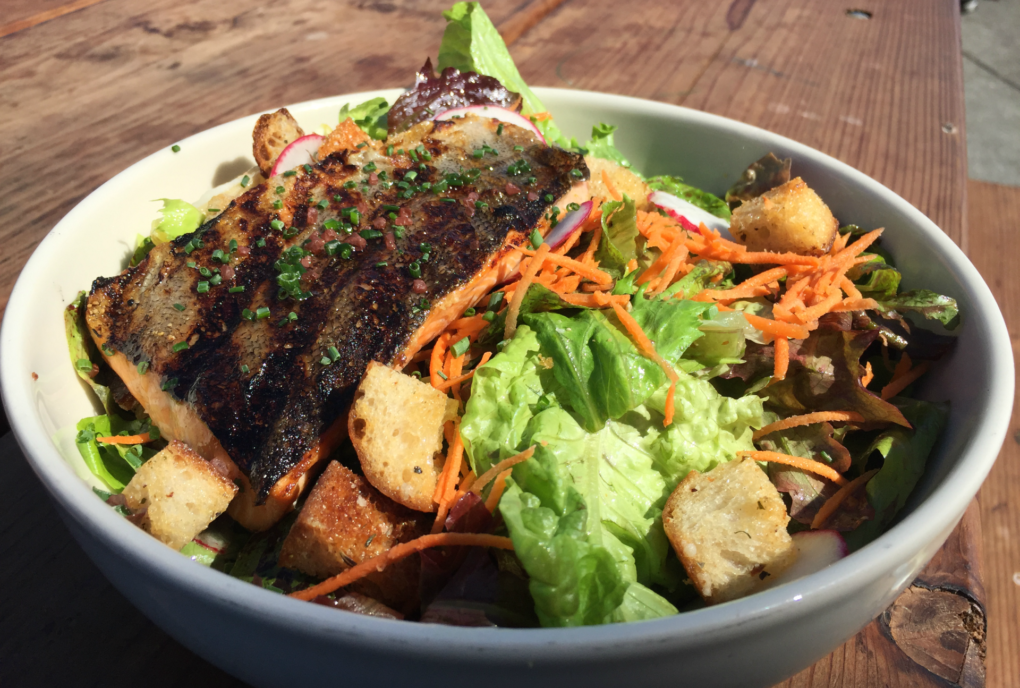
"caption": "You can get the fish of the day--here, a rainbow trout--with pasta, salad or as part of a sandwich. ",
"description": "You can get the fish of the day--here, a rainbow trout--with pasta, salad or as part of a sandwich. ",
"title": "You can get the fish of the day--here, a rainbow trout--with pasta, salad or as part of a sandwich.",
"credit": "Shelby Pope",
"status": "inherit",
"isLoading": false,
"fetchFailed": false
},
"bayareabites_120761": {
"type": "attachments",
"id": "bayareabites_120761",
"meta": {
"index": "attachments_1716263798",
"site": "bayareabites",
"id": "120761",
"found": true
},
"parent": 120760,
"imgSizes": {
"small": {
"file": "https://ww2.kqed.org/app/uploads/sites/24/2017/09/silo3_custom-49cdb81e9cf724865a35f86b3eabdd0fe6534f90-520x368.jpg",
"width": 520,
"mimeType": "image/jpeg",
"height": 368
},
"twentyfourteen-full-width": {
"file": "https://ww2.kqed.org/app/uploads/sites/24/2017/09/silo3_custom-49cdb81e9cf724865a35f86b3eabdd0fe6534f90-1024x576.jpg",
"width": 1024,
"mimeType": "image/jpeg",
"height": 576
},
"thumbnail": {
"file": "https://ww2.kqed.org/app/uploads/sites/24/2017/09/silo3_custom-49cdb81e9cf724865a35f86b3eabdd0fe6534f90-160x113.jpg",
"width": 160,
"mimeType": "image/jpeg",
"height": 113
},
"fd-sm": {
"file": "https://ww2.kqed.org/app/uploads/sites/24/2017/09/silo3_custom-49cdb81e9cf724865a35f86b3eabdd0fe6534f90-960x679.jpg",
"width": 960,
"mimeType": "image/jpeg",
"height": 679
},
"post-thumbnail": {
"file": "https://ww2.kqed.org/app/uploads/sites/24/2017/09/silo3_custom-49cdb81e9cf724865a35f86b3eabdd0fe6534f90-672x372.jpg",
"width": 672,
"mimeType": "image/jpeg",
"height": 372
},
"xsmall": {
"file": "https://ww2.kqed.org/app/uploads/sites/24/2017/09/silo3_custom-49cdb81e9cf724865a35f86b3eabdd0fe6534f90-375x265.jpg",
"width": 375,
"mimeType": "image/jpeg",
"height": 265
},
"kqedFullSize": {
"file": "https://ww2.kqed.org/app/uploads/sites/24/2017/09/silo3_custom-49cdb81e9cf724865a35f86b3eabdd0fe6534f90.jpg",
"width": 1024,
"height": 724
},
"large": {
"file": "https://ww2.kqed.org/app/uploads/sites/24/2017/09/silo3_custom-49cdb81e9cf724865a35f86b3eabdd0fe6534f90-1020x721.jpg",
"width": 1020,
"mimeType": "image/jpeg",
"height": 721
},
"guest-author-50": {
"file": "https://ww2.kqed.org/app/uploads/sites/24/2017/09/silo3_custom-49cdb81e9cf724865a35f86b3eabdd0fe6534f90-50x50.jpg",
"width": 50,
"mimeType": "image/jpeg",
"height": 50
},
"guest-author-96": {
"file": "https://ww2.kqed.org/app/uploads/sites/24/2017/09/silo3_custom-49cdb81e9cf724865a35f86b3eabdd0fe6534f90-96x96.jpg",
"width": 96,
"mimeType": "image/jpeg",
"height": 96
},
"medium": {
"file": "https://ww2.kqed.org/app/uploads/sites/24/2017/09/silo3_custom-49cdb81e9cf724865a35f86b3eabdd0fe6534f90-800x566.jpg",
"width": 800,
"mimeType": "image/jpeg",
"height": 566
},
"guest-author-64": {
"file": "https://ww2.kqed.org/app/uploads/sites/24/2017/09/silo3_custom-49cdb81e9cf724865a35f86b3eabdd0fe6534f90-64x64.jpg",
"width": 64,
"mimeType": "image/jpeg",
"height": 64
},
"guest-author-32": {
"file": "https://ww2.kqed.org/app/uploads/sites/24/2017/09/silo3_custom-49cdb81e9cf724865a35f86b3eabdd0fe6534f90-32x32.jpg",
"width": 32,
"mimeType": "image/jpeg",
"height": 32
},
"detail": {
"file": "https://ww2.kqed.org/app/uploads/sites/24/2017/09/silo3_custom-49cdb81e9cf724865a35f86b3eabdd0fe6534f90-150x150.jpg",
"width": 150,
"mimeType": "image/jpeg",
"height": 150
},
"medium_large": {
"file": "https://ww2.kqed.org/app/uploads/sites/24/2017/09/silo3_custom-49cdb81e9cf724865a35f86b3eabdd0fe6534f90-768x543.jpg",
"width": 768,
"mimeType": "image/jpeg",
"height": 543
},
"guest-author-128": {
"file": "https://ww2.kqed.org/app/uploads/sites/24/2017/09/silo3_custom-49cdb81e9cf724865a35f86b3eabdd0fe6534f90-128x128.jpg",
"width": 128,
"mimeType": "image/jpeg",
"height": 128
},
"xxsmall": {
"file": "https://ww2.kqed.org/app/uploads/sites/24/2017/09/silo3_custom-49cdb81e9cf724865a35f86b3eabdd0fe6534f90-240x170.jpg",
"width": 240,
"mimeType": "image/jpeg",
"height": 170
}
},
"publishDate": 1505502960,
"modified": 1505503078,
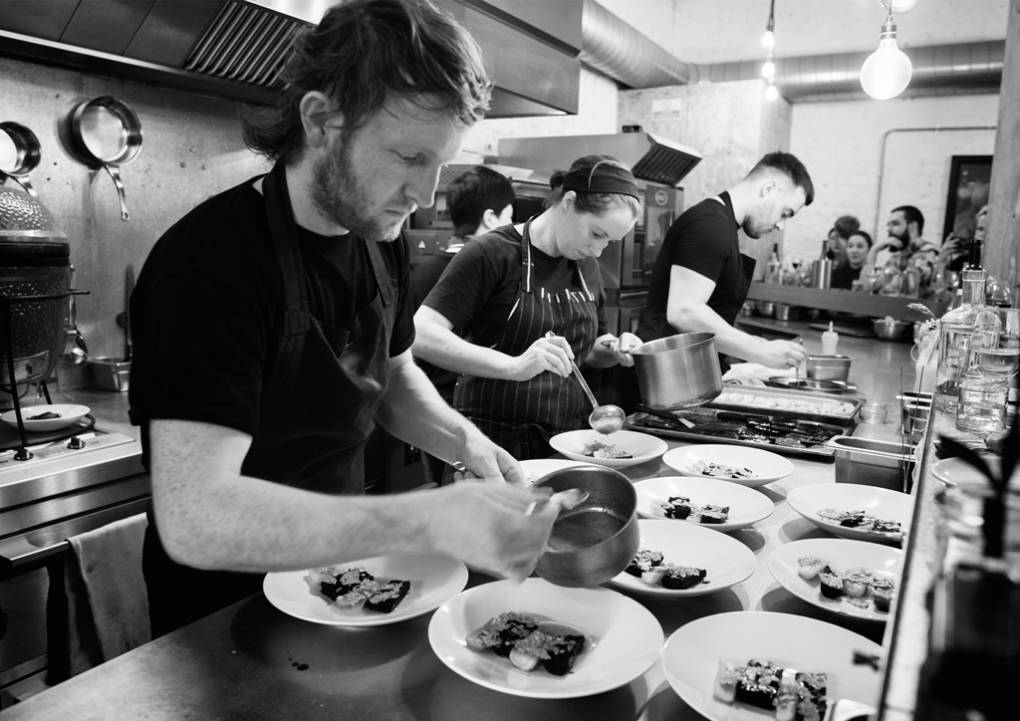
"caption": "Chef Douglas McMaster is committed to a \"zero waste\" ethos in his restaurants. Here, he plates up his creations at Silo, his flagship restaurant, in Brighton, England, about an hour south of London.",
"description": "Chef Douglas McMaster is committed to a \"zero waste\" ethos in his restaurants. Here, he plates up his creations at Silo, his flagship restaurant, in Brighton, England, about an hour south of London.",
"title": "Chef Douglas McMaster is committed to a \"zero waste\" ethos in his restaurants. Here, he plates up his creations at Silo, his flagship restaurant, in Brighton, England, about an hour south of London.",
"credit": "Xavier Buendia/Courtesy of Doug McMaster",
"status": "inherit",
"isLoading": false,
"fetchFailed": false
},
"bayareabites_120329": {
"type": "attachments",
"id": "bayareabites_120329",
"meta": {
"index": "attachments_1716263798",
"site": "bayareabites",
"id": "120329",
"found": true
},
"parent": 120327,
"imgSizes": {
"small": {
"file": "https://ww2.kqed.org/app/uploads/sites/24/2017/08/170828-aquaponic-farming-top1-520x347.jpg",
"width": 520,
"mimeType": "image/jpeg",
"height": 347
},
"twentyfourteen-full-width": {
"file": "https://ww2.kqed.org/app/uploads/sites/24/2017/08/170828-aquaponic-farming-top1-1038x576.jpg",
"width": 1038,
"mimeType": "image/jpeg",
"height": 576
},
"thumbnail": {
"file": "https://ww2.kqed.org/app/uploads/sites/24/2017/08/170828-aquaponic-farming-top1-160x107.jpg",
"width": 160,
"mimeType": "image/jpeg",
"height": 107
},
"fd-sm": {
"file": "https://ww2.kqed.org/app/uploads/sites/24/2017/08/170828-aquaponic-farming-top1-960x640.jpg",
"width": 960,
"mimeType": "image/jpeg",
"height": 640
},
"post-thumbnail": {
"file": "https://ww2.kqed.org/app/uploads/sites/24/2017/08/170828-aquaponic-farming-top1-672x372.jpg",
"width": 672,
"mimeType": "image/jpeg",
"height": 372
},
"xsmall": {
"file": "https://ww2.kqed.org/app/uploads/sites/24/2017/08/170828-aquaponic-farming-top1-375x250.jpg",
"width": 375,
"mimeType": "image/jpeg",
"height": 250
},
"kqedFullSize": {
"file": "https://ww2.kqed.org/app/uploads/sites/24/2017/08/170828-aquaponic-farming-top1.jpg",
"width": 1200,
"height": 800
},
"large": {
"file": "https://ww2.kqed.org/app/uploads/sites/24/2017/08/170828-aquaponic-farming-top1-1020x680.jpg",
"width": 1020,
"mimeType": "image/jpeg",
"height": 680
},
"xlarge": {
"file": "https://ww2.kqed.org/app/uploads/sites/24/2017/08/170828-aquaponic-farming-top1-1180x787.jpg",
"width": 1180,
"mimeType": "image/jpeg",
"height": 787
},
"guest-author-50": {
"file": "https://ww2.kqed.org/app/uploads/sites/24/2017/08/170828-aquaponic-farming-top1-50x50.jpg",
"width": 50,
"mimeType": "image/jpeg",
"height": 50
},
"guest-author-96": {
"file": "https://ww2.kqed.org/app/uploads/sites/24/2017/08/170828-aquaponic-farming-top1-96x96.jpg",
"width": 96,
"mimeType": "image/jpeg",
"height": 96
},
"medium": {
"file": "https://ww2.kqed.org/app/uploads/sites/24/2017/08/170828-aquaponic-farming-top1-800x533.jpg",
"width": 800,
"mimeType": "image/jpeg",
"height": 533
},
"guest-author-64": {
"file": "https://ww2.kqed.org/app/uploads/sites/24/2017/08/170828-aquaponic-farming-top1-64x64.jpg",
"width": 64,
"mimeType": "image/jpeg",
"height": 64
},
"guest-author-32": {
"file": "https://ww2.kqed.org/app/uploads/sites/24/2017/08/170828-aquaponic-farming-top1-32x32.jpg",
"width": 32,
"mimeType": "image/jpeg",
"height": 32
},
"fd-med": {
"file": "https://ww2.kqed.org/app/uploads/sites/24/2017/08/170828-aquaponic-farming-top1-1180x787.jpg",
"width": 1180,
"mimeType": "image/jpeg",
"height": 787
},
"detail": {
"file": "https://ww2.kqed.org/app/uploads/sites/24/2017/08/170828-aquaponic-farming-top1-150x150.jpg",
"width": 150,
"mimeType": "image/jpeg",
"height": 150
},
"medium_large": {
"file": "https://ww2.kqed.org/app/uploads/sites/24/2017/08/170828-aquaponic-farming-top1-768x512.jpg",
"width": 768,
"mimeType": "image/jpeg",
"height": 512
},
"guest-author-128": {
"file": "https://ww2.kqed.org/app/uploads/sites/24/2017/08/170828-aquaponic-farming-top1-128x128.jpg",
"width": 128,
"mimeType": "image/jpeg",
"height": 128
},
"xxsmall": {
"file": "https://ww2.kqed.org/app/uploads/sites/24/2017/08/170828-aquaponic-farming-top1-240x160.jpg",
"width": 240,
"mimeType": "image/jpeg",
"height": 160
}
},
"publishDate": 1504215423,
"modified": 1504215686,
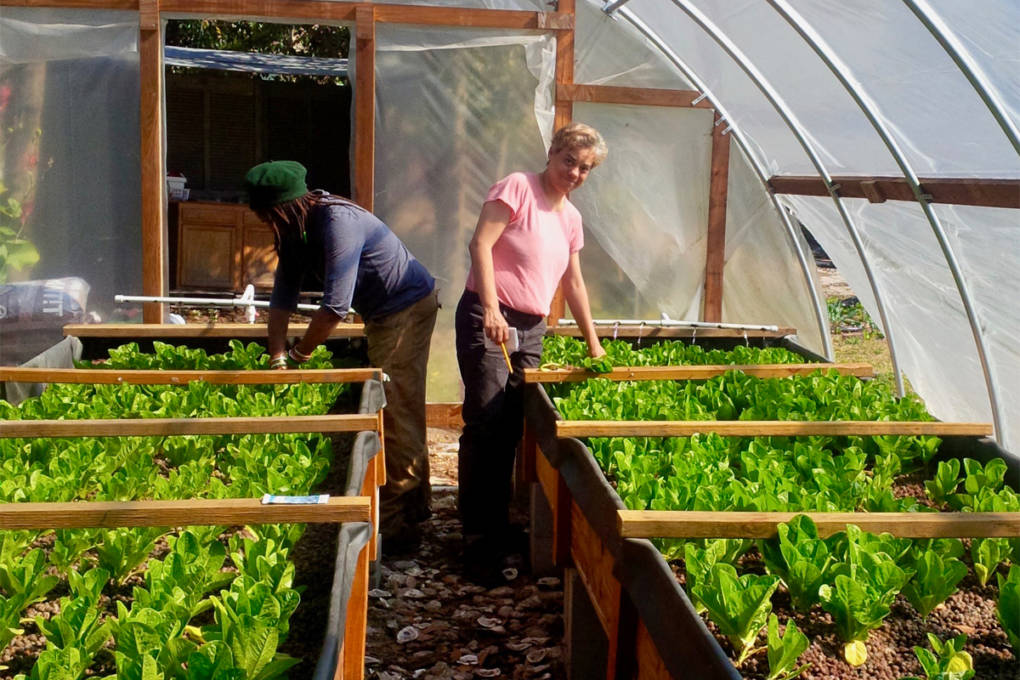
"caption": "Photo courtesy of Recirculating Farms Coalition.",
"description": null,
"title": "170828-aquaponic-farming-top1",
"credit": "Recirculating Farms Coalition",
"status": "inherit",
"isLoading": false,
"fetchFailed": false
},
"bayareabites_119892": {
"type": "attachments",
"id": "bayareabites_119892",
"meta": {
"index": "attachments_1716263798",
"site": "bayareabites",
"id": "119892",
"found": true
},
"parent": 119891,
"imgSizes": {
"small": {
"file": "https://ww2.kqed.org/app/uploads/sites/24/2017/08/nets-1_wide-01c3b5ebd0d717bd50433e402fd75dc5e35d6f44-520x293.jpg",
"width": 520,
"mimeType": "image/jpeg",
"height": 293
},
"twentyfourteen-full-width": {
"file": "https://ww2.kqed.org/app/uploads/sites/24/2017/08/nets-1_wide-01c3b5ebd0d717bd50433e402fd75dc5e35d6f44-1038x576.jpg",
"width": 1038,
"mimeType": "image/jpeg",
"height": 576
},
"thumbnail": {
"file": "https://ww2.kqed.org/app/uploads/sites/24/2017/08/nets-1_wide-01c3b5ebd0d717bd50433e402fd75dc5e35d6f44-160x90.jpg",
"width": 160,
"mimeType": "image/jpeg",
"height": 90
},
"fd-sm": {
"file": "https://ww2.kqed.org/app/uploads/sites/24/2017/08/nets-1_wide-01c3b5ebd0d717bd50433e402fd75dc5e35d6f44-960x540.jpg",
"width": 960,
"mimeType": "image/jpeg",
"height": 540
},
"post-thumbnail": {
"file": "https://ww2.kqed.org/app/uploads/sites/24/2017/08/nets-1_wide-01c3b5ebd0d717bd50433e402fd75dc5e35d6f44-672x372.jpg",
"width": 672,
"mimeType": "image/jpeg",
"height": 372
},
"xsmall": {
"file": "https://ww2.kqed.org/app/uploads/sites/24/2017/08/nets-1_wide-01c3b5ebd0d717bd50433e402fd75dc5e35d6f44-375x211.jpg",
"width": 375,
"mimeType": "image/jpeg",
"height": 211
},
"kqedFullSize": {
"file": "https://ww2.kqed.org/app/uploads/sites/24/2017/08/nets-1_wide-01c3b5ebd0d717bd50433e402fd75dc5e35d6f44.jpg",
"width": 2000,
"height": 1125
},
"large": {
"file": "https://ww2.kqed.org/app/uploads/sites/24/2017/08/nets-1_wide-01c3b5ebd0d717bd50433e402fd75dc5e35d6f44-1020x574.jpg",
"width": 1020,
"mimeType": "image/jpeg",
"height": 574
},
"xlarge": {
"file": "https://ww2.kqed.org/app/uploads/sites/24/2017/08/nets-1_wide-01c3b5ebd0d717bd50433e402fd75dc5e35d6f44-1180x664.jpg",
"width": 1180,
"mimeType": "image/jpeg",
"height": 664
},
"guest-author-50": {
"file": "https://ww2.kqed.org/app/uploads/sites/24/2017/08/nets-1_wide-01c3b5ebd0d717bd50433e402fd75dc5e35d6f44-50x50.jpg",
"width": 50,
"mimeType": "image/jpeg",
"height": 50
},
"guest-author-96": {
"file": "https://ww2.kqed.org/app/uploads/sites/24/2017/08/nets-1_wide-01c3b5ebd0d717bd50433e402fd75dc5e35d6f44-96x96.jpg",
"width": 96,
"mimeType": "image/jpeg",
"height": 96
},
"medium": {
"file": "https://ww2.kqed.org/app/uploads/sites/24/2017/08/nets-1_wide-01c3b5ebd0d717bd50433e402fd75dc5e35d6f44-800x450.jpg",
"width": 800,
"mimeType": "image/jpeg",
"height": 450
},
"guest-author-64": {
"file": "https://ww2.kqed.org/app/uploads/sites/24/2017/08/nets-1_wide-01c3b5ebd0d717bd50433e402fd75dc5e35d6f44-64x64.jpg",
"width": 64,
"mimeType": "image/jpeg",
"height": 64
},
"guest-author-32": {
"file": "https://ww2.kqed.org/app/uploads/sites/24/2017/08/nets-1_wide-01c3b5ebd0d717bd50433e402fd75dc5e35d6f44-32x32.jpg",
"width": 32,
"mimeType": "image/jpeg",
"height": 32
},
"fd-lrg": {
"file": "https://ww2.kqed.org/app/uploads/sites/24/2017/08/nets-1_wide-01c3b5ebd0d717bd50433e402fd75dc5e35d6f44-1920x1080.jpg",
"width": 1920,
"mimeType": "image/jpeg",
"height": 1080
},
"fd-med": {
"file": "https://ww2.kqed.org/app/uploads/sites/24/2017/08/nets-1_wide-01c3b5ebd0d717bd50433e402fd75dc5e35d6f44-1180x664.jpg",
"width": 1180,
"mimeType": "image/jpeg",
"height": 664
},
"full-width": {
"file": "https://ww2.kqed.org/app/uploads/sites/24/2017/08/nets-1_wide-01c3b5ebd0d717bd50433e402fd75dc5e35d6f44-1920x1080.jpg",
"width": 1920,
"mimeType": "image/jpeg",
"height": 1080
},
"detail": {
"file": "https://ww2.kqed.org/app/uploads/sites/24/2017/08/nets-1_wide-01c3b5ebd0d717bd50433e402fd75dc5e35d6f44-150x150.jpg",
"width": 150,
"mimeType": "image/jpeg",
"height": 150
},
"medium_large": {
"file": "https://ww2.kqed.org/app/uploads/sites/24/2017/08/nets-1_wide-01c3b5ebd0d717bd50433e402fd75dc5e35d6f44-768x432.jpg",
"width": 768,
"mimeType": "image/jpeg",
"height": 432
},
"guest-author-128": {
"file": "https://ww2.kqed.org/app/uploads/sites/24/2017/08/nets-1_wide-01c3b5ebd0d717bd50433e402fd75dc5e35d6f44-128x128.jpg",
"width": 128,
"mimeType": "image/jpeg",
"height": 128
},
"xxsmall": {
"file": "https://ww2.kqed.org/app/uploads/sites/24/2017/08/nets-1_wide-01c3b5ebd0d717bd50433e402fd75dc5e35d6f44-240x135.jpg",
"width": 240,
"mimeType": "image/jpeg",
"height": 135
}
},
"publishDate": 1502828418,
"modified": 1502830856,
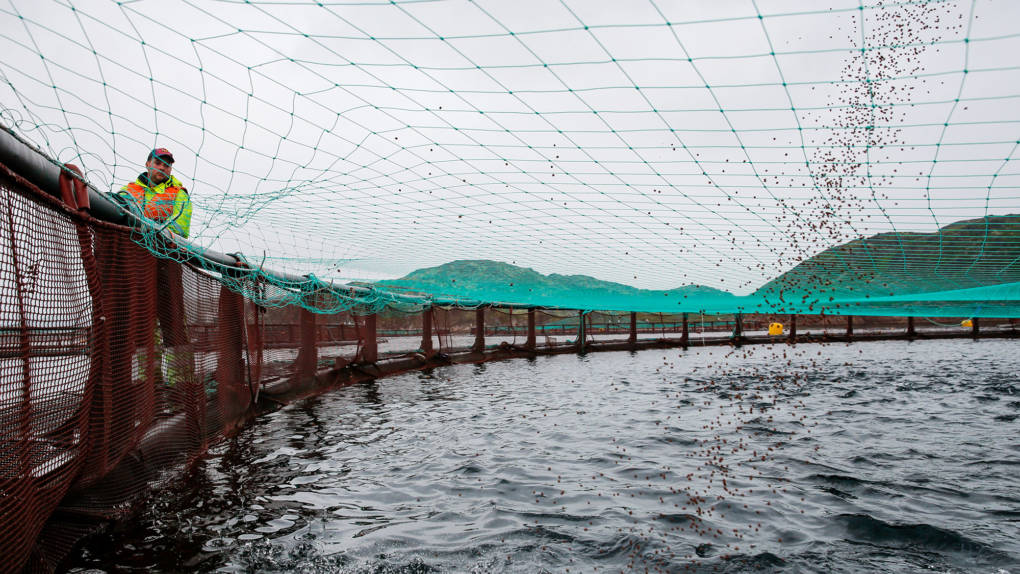
"caption": "A Russian fish farming operation in Ura Bay in the Barents Sea.",
"description": "A Russian fish farming operation in Ura Bay in the Barents Sea.",
"title": "A Russian fish farming operation in Ura Bay in the Barents Sea.",
"credit": "Maxim Zmeyev/AFP/Getty Images",
"status": "inherit",
"isLoading": false,
"fetchFailed": false
},
"bayareabites_119867": {
"type": "attachments",
"id": "bayareabites_119867",
"meta": {
"index": "attachments_1716263798",
"site": "bayareabites",
"id": "119867",
"found": true
},
"parent": 119864,
"imgSizes": {
"small": {
"file": "https://ww2.kqed.org/app/uploads/sites/24/2017/08/huckleberry_custom-8f6e4639a4b3e9059c31fa352a13fc521b22e11b-s1600-c85-520x348.jpg",
"width": 520,
"mimeType": "image/jpeg",
"height": 348
},
"twentyfourteen-full-width": {
"file": "https://ww2.kqed.org/app/uploads/sites/24/2017/08/huckleberry_custom-8f6e4639a4b3e9059c31fa352a13fc521b22e11b-s1600-c85-1038x576.jpg",
"width": 1038,
"mimeType": "image/jpeg",
"height": 576
},
"thumbnail": {
"file": "https://ww2.kqed.org/app/uploads/sites/24/2017/08/huckleberry_custom-8f6e4639a4b3e9059c31fa352a13fc521b22e11b-s1600-c85-160x107.jpg",
"width": 160,
"mimeType": "image/jpeg",
"height": 107
},
"fd-sm": {
"file": "https://ww2.kqed.org/app/uploads/sites/24/2017/08/huckleberry_custom-8f6e4639a4b3e9059c31fa352a13fc521b22e11b-s1600-c85-960x643.jpg",
"width": 960,
"mimeType": "image/jpeg",
"height": 643
},
"post-thumbnail": {
"file": "https://ww2.kqed.org/app/uploads/sites/24/2017/08/huckleberry_custom-8f6e4639a4b3e9059c31fa352a13fc521b22e11b-s1600-c85-672x372.jpg",
"width": 672,
"mimeType": "image/jpeg",
"height": 372
},
"xsmall": {
"file": "https://ww2.kqed.org/app/uploads/sites/24/2017/08/huckleberry_custom-8f6e4639a4b3e9059c31fa352a13fc521b22e11b-s1600-c85-375x251.jpg",
"width": 375,
"mimeType": "image/jpeg",
"height": 251
},
"kqedFullSize": {
"file": "https://ww2.kqed.org/app/uploads/sites/24/2017/08/huckleberry_custom-8f6e4639a4b3e9059c31fa352a13fc521b22e11b-s1600-c85.jpg",
"width": 1600,
"height": 1071
},
"large": {
"file": "https://ww2.kqed.org/app/uploads/sites/24/2017/08/huckleberry_custom-8f6e4639a4b3e9059c31fa352a13fc521b22e11b-s1600-c85-1020x683.jpg",
"width": 1020,
"mimeType": "image/jpeg",
"height": 683
},
"xlarge": {
"file": "https://ww2.kqed.org/app/uploads/sites/24/2017/08/huckleberry_custom-8f6e4639a4b3e9059c31fa352a13fc521b22e11b-s1600-c85-1180x790.jpg",
"width": 1180,
"mimeType": "image/jpeg",
"height": 790
},
"guest-author-50": {
"file": "https://ww2.kqed.org/app/uploads/sites/24/2017/08/huckleberry_custom-8f6e4639a4b3e9059c31fa352a13fc521b22e11b-s1600-c85-50x50.jpg",
"width": 50,
"mimeType": "image/jpeg",
"height": 50
},
"guest-author-96": {
"file": "https://ww2.kqed.org/app/uploads/sites/24/2017/08/huckleberry_custom-8f6e4639a4b3e9059c31fa352a13fc521b22e11b-s1600-c85-96x96.jpg",
"width": 96,
"mimeType": "image/jpeg",
"height": 96
},
"medium": {
"file": "https://ww2.kqed.org/app/uploads/sites/24/2017/08/huckleberry_custom-8f6e4639a4b3e9059c31fa352a13fc521b22e11b-s1600-c85-800x536.jpg",
"width": 800,
"mimeType": "image/jpeg",
"height": 536
},
"guest-author-64": {
"file": "https://ww2.kqed.org/app/uploads/sites/24/2017/08/huckleberry_custom-8f6e4639a4b3e9059c31fa352a13fc521b22e11b-s1600-c85-64x64.jpg",
"width": 64,
"mimeType": "image/jpeg",
"height": 64
},
"guest-author-32": {
"file": "https://ww2.kqed.org/app/uploads/sites/24/2017/08/huckleberry_custom-8f6e4639a4b3e9059c31fa352a13fc521b22e11b-s1600-c85-32x32.jpg",
"width": 32,
"mimeType": "image/jpeg",
"height": 32
},
"fd-med": {
"file": "https://ww2.kqed.org/app/uploads/sites/24/2017/08/huckleberry_custom-8f6e4639a4b3e9059c31fa352a13fc521b22e11b-s1600-c85-1180x790.jpg",
"width": 1180,
"mimeType": "image/jpeg",
"height": 790
},
"detail": {
"file": "https://ww2.kqed.org/app/uploads/sites/24/2017/08/huckleberry_custom-8f6e4639a4b3e9059c31fa352a13fc521b22e11b-s1600-c85-150x150.jpg",
"width": 150,
"mimeType": "image/jpeg",
"height": 150
},
"medium_large": {
"file": "https://ww2.kqed.org/app/uploads/sites/24/2017/08/huckleberry_custom-8f6e4639a4b3e9059c31fa352a13fc521b22e11b-s1600-c85-768x514.jpg",
"width": 768,
"mimeType": "image/jpeg",
"height": 514
},
"guest-author-128": {
"file": "https://ww2.kqed.org/app/uploads/sites/24/2017/08/huckleberry_custom-8f6e4639a4b3e9059c31fa352a13fc521b22e11b-s1600-c85-128x128.jpg",
"width": 128,
"mimeType": "image/jpeg",
"height": 128
},
"xxsmall": {
"file": "https://ww2.kqed.org/app/uploads/sites/24/2017/08/huckleberry_custom-8f6e4639a4b3e9059c31fa352a13fc521b22e11b-s1600-c85-240x161.jpg",
"width": 240,
"mimeType": "image/jpeg",
"height": 161
}
},
"publishDate": 1502730138,
"modified": 1502730394,
"caption": "Every year, lovers of tart, juicy huckleberries trek into the forests of the Northwest to pick them at great effort. No one's managed to grow them commercially just yet, but their fans keep trying.",
"description": null,
"title": "huckleberry_custom-8f6e4639a4b3e9059c31fa352a13fc521b22e11b-s1600-c85",
"credit": "\u003ca href=https://www.flickr.com/photos/p-r-b/9542358794/in/album-72157635125661829/\">Paul & Hien Brown/Flickr\u003c/a>",
"status": "inherit",
"isLoading": false,
"fetchFailed": false
},
"bayareabites_119236": {
"type": "attachments",
"id": "bayareabites_119236",
"meta": {
"index": "attachments_1716263798",
"site": "bayareabites",
"id": "119236",
"found": true
},
"parent": 119231,
"imgSizes": {
"small": {
"file": "https://ww2.kqed.org/app/uploads/sites/24/2017/07/170712-gleaning-top-520x347.jpg",
"width": 520,
"mimeType": "image/jpeg",
"height": 347
},
"twentyfourteen-full-width": {
"file": "https://ww2.kqed.org/app/uploads/sites/24/2017/07/170712-gleaning-top-1038x576.jpg",
"width": 1038,
"mimeType": "image/jpeg",
"height": 576
},
"thumbnail": {
"file": "https://ww2.kqed.org/app/uploads/sites/24/2017/07/170712-gleaning-top-160x107.jpg",
"width": 160,
"mimeType": "image/jpeg",
"height": 107
},
"fd-sm": {
"file": "https://ww2.kqed.org/app/uploads/sites/24/2017/07/170712-gleaning-top-960x640.jpg",
"width": 960,
"mimeType": "image/jpeg",
"height": 640
},
"post-thumbnail": {
"file": "https://ww2.kqed.org/app/uploads/sites/24/2017/07/170712-gleaning-top-672x372.jpg",
"width": 672,
"mimeType": "image/jpeg",
"height": 372
},
"xsmall": {
"file": "https://ww2.kqed.org/app/uploads/sites/24/2017/07/170712-gleaning-top-375x250.jpg",
"width": 375,
"mimeType": "image/jpeg",
"height": 250
},
"kqedFullSize": {
"file": "https://ww2.kqed.org/app/uploads/sites/24/2017/07/170712-gleaning-top.jpg",
"width": 1200,
"height": 800
},
"large": {
"file": "https://ww2.kqed.org/app/uploads/sites/24/2017/07/170712-gleaning-top-1020x680.jpg",
"width": 1020,
"mimeType": "image/jpeg",
"height": 680
},
"xlarge": {
"file": "https://ww2.kqed.org/app/uploads/sites/24/2017/07/170712-gleaning-top-1180x787.jpg",
"width": 1180,
"mimeType": "image/jpeg",
"height": 787
},
"guest-author-50": {
"file": "https://ww2.kqed.org/app/uploads/sites/24/2017/07/170712-gleaning-top-50x50.jpg",
"width": 50,
"mimeType": "image/jpeg",
"height": 50
},
"guest-author-96": {
"file": "https://ww2.kqed.org/app/uploads/sites/24/2017/07/170712-gleaning-top-96x96.jpg",
"width": 96,
"mimeType": "image/jpeg",
"height": 96
},
"medium": {
"file": "https://ww2.kqed.org/app/uploads/sites/24/2017/07/170712-gleaning-top-800x533.jpg",
"width": 800,
"mimeType": "image/jpeg",
"height": 533
},
"guest-author-64": {
"file": "https://ww2.kqed.org/app/uploads/sites/24/2017/07/170712-gleaning-top-64x64.jpg",
"width": 64,
"mimeType": "image/jpeg",
"height": 64
},
"guest-author-32": {
"file": "https://ww2.kqed.org/app/uploads/sites/24/2017/07/170712-gleaning-top-32x32.jpg",
"width": 32,
"mimeType": "image/jpeg",
"height": 32
},
"fd-med": {
"file": "https://ww2.kqed.org/app/uploads/sites/24/2017/07/170712-gleaning-top-1180x787.jpg",
"width": 1180,
"mimeType": "image/jpeg",
"height": 787
},
"detail": {
"file": "https://ww2.kqed.org/app/uploads/sites/24/2017/07/170712-gleaning-top-150x150.jpg",
"width": 150,
"mimeType": "image/jpeg",
"height": 150
},
"medium_large": {
"file": "https://ww2.kqed.org/app/uploads/sites/24/2017/07/170712-gleaning-top-768x512.jpg",
"width": 768,
"mimeType": "image/jpeg",
"height": 512
},
"guest-author-128": {
"file": "https://ww2.kqed.org/app/uploads/sites/24/2017/07/170712-gleaning-top-128x128.jpg",
"width": 128,
"mimeType": "image/jpeg",
"height": 128
},
"xxsmall": {
"file": "https://ww2.kqed.org/app/uploads/sites/24/2017/07/170712-gleaning-top-240x160.jpg",
"width": 240,
"mimeType": "image/jpeg",
"height": 160
}
},
"publishDate": 1500322781,
"modified": 1500322844,
"caption": "Urban gleaning",
"description": null,
"title": "170712-gleaning-top",
"credit": "\u003ca href=\"http://www.dessalohrey.com/\">Dessa Lohrey\u003c/a>",
"status": "inherit",
"isLoading": false,
"fetchFailed": false
},
"bayareabites_118962": {
"type": "attachments",
"id": "bayareabites_118962",
"meta": {
"index": "attachments_1716263798",
"site": "bayareabites",
"id": "118962",
"found": true
},
"parent": 118954,
"imgSizes": {
"small": {
"file": "https://ww2.kqed.org/app/uploads/sites/24/2017/07/sea-snail-BAB-520x356.jpg",
"width": 520,
"mimeType": "image/jpeg",
"height": 356
},
"twentyfourteen-full-width": {
"file": "https://ww2.kqed.org/app/uploads/sites/24/2017/07/sea-snail-BAB-1038x576.jpg",
"width": 1038,
"mimeType": "image/jpeg",
"height": 576
},
"thumbnail": {
"file": "https://ww2.kqed.org/app/uploads/sites/24/2017/07/sea-snail-BAB-160x109.jpg",
"width": 160,
"mimeType": "image/jpeg",
"height": 109
},
"fd-sm": {
"file": "https://ww2.kqed.org/app/uploads/sites/24/2017/07/sea-snail-BAB-960x657.jpg",
"width": 960,
"mimeType": "image/jpeg",
"height": 657
},
"post-thumbnail": {
"file": "https://ww2.kqed.org/app/uploads/sites/24/2017/07/sea-snail-BAB-672x372.jpg",
"width": 672,
"mimeType": "image/jpeg",
"height": 372
},
"xsmall": {
"file": "https://ww2.kqed.org/app/uploads/sites/24/2017/07/sea-snail-BAB-375x256.jpg",
"width": 375,
"mimeType": "image/jpeg",
"height": 256
},
"kqedFullSize": {
"file": "https://ww2.kqed.org/app/uploads/sites/24/2017/07/sea-snail-BAB.jpg",
"width": 1920,
"height": 1313
},
"large": {
"file": "https://ww2.kqed.org/app/uploads/sites/24/2017/07/sea-snail-BAB-1020x698.jpg",
"width": 1020,
"mimeType": "image/jpeg",
"height": 698
},
"xlarge": {
"file": "https://ww2.kqed.org/app/uploads/sites/24/2017/07/sea-snail-BAB-1180x807.jpg",
"width": 1180,
"mimeType": "image/jpeg",
"height": 807
},
"guest-author-50": {
"file": "https://ww2.kqed.org/app/uploads/sites/24/2017/07/sea-snail-BAB-50x50.jpg",
"width": 50,
"mimeType": "image/jpeg",
"height": 50
},
"guest-author-96": {
"file": "https://ww2.kqed.org/app/uploads/sites/24/2017/07/sea-snail-BAB-96x96.jpg",
"width": 96,
"mimeType": "image/jpeg",
"height": 96
},
"medium": {
"file": "https://ww2.kqed.org/app/uploads/sites/24/2017/07/sea-snail-BAB-800x547.jpg",
"width": 800,
"mimeType": "image/jpeg",
"height": 547
},
"guest-author-64": {
"file": "https://ww2.kqed.org/app/uploads/sites/24/2017/07/sea-snail-BAB-64x64.jpg",
"width": 64,
"mimeType": "image/jpeg",
"height": 64
},
"guest-author-32": {
"file": "https://ww2.kqed.org/app/uploads/sites/24/2017/07/sea-snail-BAB-32x32.jpg",
"width": 32,
"mimeType": "image/jpeg",
"height": 32
},
"fd-lrg": {
"file": "https://ww2.kqed.org/app/uploads/sites/24/2017/07/sea-snail-BAB-1920x1313.jpg",
"width": 1920,
"mimeType": "image/jpeg",
"height": 1313
},
"fd-med": {
"file": "https://ww2.kqed.org/app/uploads/sites/24/2017/07/sea-snail-BAB-1180x807.jpg",
"width": 1180,
"mimeType": "image/jpeg",
"height": 807
},
"full-width": {
"file": "https://ww2.kqed.org/app/uploads/sites/24/2017/07/sea-snail-BAB-1920x1313.jpg",
"width": 1920,
"mimeType": "image/jpeg",
"height": 1313
},
"detail": {
"file": "https://ww2.kqed.org/app/uploads/sites/24/2017/07/sea-snail-BAB-150x150.jpg",
"width": 150,
"mimeType": "image/jpeg",
"height": 150
},
"medium_large": {
"file": "https://ww2.kqed.org/app/uploads/sites/24/2017/07/sea-snail-BAB-768x525.jpg",
"width": 768,
"mimeType": "image/jpeg",
"height": 525
},
"guest-author-128": {
"file": "https://ww2.kqed.org/app/uploads/sites/24/2017/07/sea-snail-BAB-128x128.jpg",
"width": 128,
"mimeType": "image/jpeg",
"height": 128
},
"xxsmall": {
"file": "https://ww2.kqed.org/app/uploads/sites/24/2017/07/sea-snail-BAB-240x164.jpg",
"width": 240,
"mimeType": "image/jpeg",
"height": 164
}
},
"publishDate": 1499470972,
"modified": 1499729002,
"caption": "A large, very tasty variety of sea snail, red abalone is being grown directly in or next to the ocean by two Bay Area aquaculture operations.",
"description": "A large, very tasty variety of sea snail, red abalone is being grown directly in or next to the ocean by two Bay Area aquaculture operations.",
"title": "sea snail-BAB",
"credit": "Susan Hathaway",
"status": "inherit",
"isLoading": false,
"fetchFailed": false
},
"bayareabites_118933": {
"type": "attachments",
"id": "bayareabites_118933",
"meta": {
"index": "attachments_1716263798",
"site": "bayareabites",
"id": "118933",
"found": true
},
"parent": 118929,
"imgSizes": {
"small": {
"file": "https://ww2.kqed.org/app/uploads/sites/24/2017/07/170707-mushrooms-top-520x347.jpg",
"width": 520,
"mimeType": "image/jpeg",
"height": 347
},
"twentyfourteen-full-width": {
"file": "https://ww2.kqed.org/app/uploads/sites/24/2017/07/170707-mushrooms-top-1038x576.jpg",
"width": 1038,
"mimeType": "image/jpeg",
"height": 576
},
"thumbnail": {
"file": "https://ww2.kqed.org/app/uploads/sites/24/2017/07/170707-mushrooms-top-160x107.jpg",
"width": 160,
"mimeType": "image/jpeg",
"height": 107
},
"fd-sm": {
"file": "https://ww2.kqed.org/app/uploads/sites/24/2017/07/170707-mushrooms-top-960x640.jpg",
"width": 960,
"mimeType": "image/jpeg",
"height": 640
},
"post-thumbnail": {
"file": "https://ww2.kqed.org/app/uploads/sites/24/2017/07/170707-mushrooms-top-672x372.jpg",
"width": 672,
"mimeType": "image/jpeg",
"height": 372
},
"xsmall": {
"file": "https://ww2.kqed.org/app/uploads/sites/24/2017/07/170707-mushrooms-top-375x250.jpg",
"width": 375,
"mimeType": "image/jpeg",
"height": 250
},
"kqedFullSize": {
"file": "https://ww2.kqed.org/app/uploads/sites/24/2017/07/170707-mushrooms-top.jpg",
"width": 1200,
"height": 800
},
"large": {
"file": "https://ww2.kqed.org/app/uploads/sites/24/2017/07/170707-mushrooms-top-1020x680.jpg",
"width": 1020,
"mimeType": "image/jpeg",
"height": 680
},
"xlarge": {
"file": "https://ww2.kqed.org/app/uploads/sites/24/2017/07/170707-mushrooms-top-1180x787.jpg",
"width": 1180,
"mimeType": "image/jpeg",
"height": 787
},
"guest-author-50": {
"file": "https://ww2.kqed.org/app/uploads/sites/24/2017/07/170707-mushrooms-top-50x50.jpg",
"width": 50,
"mimeType": "image/jpeg",
"height": 50
},
"guest-author-96": {
"file": "https://ww2.kqed.org/app/uploads/sites/24/2017/07/170707-mushrooms-top-96x96.jpg",
"width": 96,
"mimeType": "image/jpeg",
"height": 96
},
"medium": {
"file": "https://ww2.kqed.org/app/uploads/sites/24/2017/07/170707-mushrooms-top-800x533.jpg",
"width": 800,
"mimeType": "image/jpeg",
"height": 533
},
"guest-author-64": {
"file": "https://ww2.kqed.org/app/uploads/sites/24/2017/07/170707-mushrooms-top-64x64.jpg",
"width": 64,
"mimeType": "image/jpeg",
"height": 64
},
"guest-author-32": {
"file": "https://ww2.kqed.org/app/uploads/sites/24/2017/07/170707-mushrooms-top-32x32.jpg",
"width": 32,
"mimeType": "image/jpeg",
"height": 32
},
"fd-med": {
"file": "https://ww2.kqed.org/app/uploads/sites/24/2017/07/170707-mushrooms-top-1180x787.jpg",
"width": 1180,
"mimeType": "image/jpeg",
"height": 787
},
"detail": {
"file": "https://ww2.kqed.org/app/uploads/sites/24/2017/07/170707-mushrooms-top-150x150.jpg",
"width": 150,
"mimeType": "image/jpeg",
"height": 150
},
"medium_large": {
"file": "https://ww2.kqed.org/app/uploads/sites/24/2017/07/170707-mushrooms-top-768x512.jpg",
"width": 768,
"mimeType": "image/jpeg",
"height": 512
},
"guest-author-128": {
"file": "https://ww2.kqed.org/app/uploads/sites/24/2017/07/170707-mushrooms-top-128x128.jpg",
"width": 128,
"mimeType": "image/jpeg",
"height": 128
},
"xxsmall": {
"file": "https://ww2.kqed.org/app/uploads/sites/24/2017/07/170707-mushrooms-top-240x160.jpg",
"width": 240,
"mimeType": "image/jpeg",
"height": 160
}
},
"publishDate": 1499465566,
"modified": 1499465582,
"caption": null,
"description": null,
"title": "170707-mushrooms-top",
"credit": null,
"status": "inherit",
"isLoading": false,
"fetchFailed": false
},
"bayareabites_118497": {
"type": "attachments",
"id": "bayareabites_118497",
"meta": {
"index": "attachments_1716263798",
"site": "bayareabites",
"id": "118497",
"found": true
},
"parent": 118478,
"imgSizes": {
"small": {
"file": "https://ww2.kqed.org/app/uploads/sites/24/2017/06/RS25759_Photo-May-25-12-53-19-PM-qut-520x293.jpg",
"width": 520,
"mimeType": "image/jpeg",
"height": 293
},
"twentyfourteen-full-width": {
"file": "https://ww2.kqed.org/app/uploads/sites/24/2017/06/RS25759_Photo-May-25-12-53-19-PM-qut-1038x576.jpg",
"width": 1038,
"mimeType": "image/jpeg",
"height": 576
},
"thumbnail": {
"file": "https://ww2.kqed.org/app/uploads/sites/24/2017/06/RS25759_Photo-May-25-12-53-19-PM-qut-160x90.jpg",
"width": 160,
"mimeType": "image/jpeg",
"height": 90
},
"fd-sm": {
"file": "https://ww2.kqed.org/app/uploads/sites/24/2017/06/RS25759_Photo-May-25-12-53-19-PM-qut-960x540.jpg",
"width": 960,
"mimeType": "image/jpeg",
"height": 540
},
"post-thumbnail": {
"file": "https://ww2.kqed.org/app/uploads/sites/24/2017/06/RS25759_Photo-May-25-12-53-19-PM-qut-672x372.jpg",
"width": 672,
"mimeType": "image/jpeg",
"height": 372
},
"xsmall": {
"file": "https://ww2.kqed.org/app/uploads/sites/24/2017/06/RS25759_Photo-May-25-12-53-19-PM-qut-375x211.jpg",
"width": 375,
"mimeType": "image/jpeg",
"height": 211
},
"kqedFullSize": {
"file": "https://ww2.kqed.org/app/uploads/sites/24/2017/06/RS25759_Photo-May-25-12-53-19-PM-qut.jpg",
"width": 1920,
"height": 1080
},
"large": {
"file": "https://ww2.kqed.org/app/uploads/sites/24/2017/06/RS25759_Photo-May-25-12-53-19-PM-qut-1020x574.jpg",
"width": 1020,
"mimeType": "image/jpeg",
"height": 574
},
"xlarge": {
"file": "https://ww2.kqed.org/app/uploads/sites/24/2017/06/RS25759_Photo-May-25-12-53-19-PM-qut-1180x664.jpg",
"width": 1180,
"mimeType": "image/jpeg",
"height": 664
},
"guest-author-50": {
"file": "https://ww2.kqed.org/app/uploads/sites/24/2017/06/RS25759_Photo-May-25-12-53-19-PM-qut-50x50.jpg",
"width": 50,
"mimeType": "image/jpeg",
"height": 50
},
"guest-author-96": {
"file": "https://ww2.kqed.org/app/uploads/sites/24/2017/06/RS25759_Photo-May-25-12-53-19-PM-qut-96x96.jpg",
"width": 96,
"mimeType": "image/jpeg",
"height": 96
},
"medium": {
"file": "https://ww2.kqed.org/app/uploads/sites/24/2017/06/RS25759_Photo-May-25-12-53-19-PM-qut-800x450.jpg",
"width": 800,
"mimeType": "image/jpeg",
"height": 450
},
"guest-author-64": {
"file": "https://ww2.kqed.org/app/uploads/sites/24/2017/06/RS25759_Photo-May-25-12-53-19-PM-qut-64x64.jpg",
"width": 64,
"mimeType": "image/jpeg",
"height": 64
},
"guest-author-32": {
"file": "https://ww2.kqed.org/app/uploads/sites/24/2017/06/RS25759_Photo-May-25-12-53-19-PM-qut-32x32.jpg",
"width": 32,
"mimeType": "image/jpeg",
"height": 32
},
"fd-lrg": {
"file": "https://ww2.kqed.org/app/uploads/sites/24/2017/06/RS25759_Photo-May-25-12-53-19-PM-qut-1920x1080.jpg",
"width": 1920,
"mimeType": "image/jpeg",
"height": 1080
},
"fd-med": {
"file": "https://ww2.kqed.org/app/uploads/sites/24/2017/06/RS25759_Photo-May-25-12-53-19-PM-qut-1180x664.jpg",
"width": 1180,
"mimeType": "image/jpeg",
"height": 664
},
"full-width": {
"file": "https://ww2.kqed.org/app/uploads/sites/24/2017/06/RS25759_Photo-May-25-12-53-19-PM-qut-1920x1080.jpg",
"width": 1920,
"mimeType": "image/jpeg",
"height": 1080
},
"detail": {
"file": "https://ww2.kqed.org/app/uploads/sites/24/2017/06/RS25759_Photo-May-25-12-53-19-PM-qut-150x150.jpg",
"width": 150,
"mimeType": "image/jpeg",
"height": 150
},
"medium_large": {
"file": "https://ww2.kqed.org/app/uploads/sites/24/2017/06/RS25759_Photo-May-25-12-53-19-PM-qut-768x432.jpg",
"width": 768,
"mimeType": "image/jpeg",
"height": 432
},
"guest-author-128": {
"file": "https://ww2.kqed.org/app/uploads/sites/24/2017/06/RS25759_Photo-May-25-12-53-19-PM-qut-128x128.jpg",
"width": 128,
"mimeType": "image/jpeg",
"height": 128
},
"xxsmall": {
"file": "https://ww2.kqed.org/app/uploads/sites/24/2017/06/RS25759_Photo-May-25-12-53-19-PM-qut-240x135.jpg",
"width": 240,
"mimeType": "image/jpeg",
"height": 135
}
},
"publishDate": 1498082007,
"modified": 1498082074,
"caption": "San Jose is the latest city to make use of a state law letting landlords to loan out urban land for agriculture.",
"description": "San Jose is the latest city to make use of a state law letting landlords to loan out urban land for agriculture.",
"title": "RS25759_Photo-May-25-12-53-19-PM-qut",
"credit": "Rachael Myrow",
"status": "inherit",
"isLoading": false,
"fetchFailed": false
},
"bayareabites_118414": {
"type": "attachments",
"id": "bayareabites_118414",
"meta": {
"index": "attachments_1716263798",
"site": "bayareabites",
"id": "118414",
"found": true
},
"parent": 118413,
"imgSizes": {
"small": {
"file": "https://ww2.kqed.org/app/uploads/sites/24/2017/06/thumbs_783029-b69d030346adbfd66f701318f64a39c8f375ca84-520x390.jpg",
"width": 520,
"mimeType": "image/jpeg",
"height": 390
},
"twentyfourteen-full-width": {
"file": "https://ww2.kqed.org/app/uploads/sites/24/2017/06/thumbs_783029-b69d030346adbfd66f701318f64a39c8f375ca84-1038x576.jpg",
"width": 1038,
"mimeType": "image/jpeg",
"height": 576
},
"thumbnail": {
"file": "https://ww2.kqed.org/app/uploads/sites/24/2017/06/thumbs_783029-b69d030346adbfd66f701318f64a39c8f375ca84-160x120.jpg",
"width": 160,
"mimeType": "image/jpeg",
"height": 120
},
"fd-sm": {
"file": "https://ww2.kqed.org/app/uploads/sites/24/2017/06/thumbs_783029-b69d030346adbfd66f701318f64a39c8f375ca84-960x720.jpg",
"width": 960,
"mimeType": "image/jpeg",
"height": 720
},
"post-thumbnail": {
"file": "https://ww2.kqed.org/app/uploads/sites/24/2017/06/thumbs_783029-b69d030346adbfd66f701318f64a39c8f375ca84-672x372.jpg",
"width": 672,
"mimeType": "image/jpeg",
"height": 372
},
"xsmall": {
"file": "https://ww2.kqed.org/app/uploads/sites/24/2017/06/thumbs_783029-b69d030346adbfd66f701318f64a39c8f375ca84-375x281.jpg",
"width": 375,
"mimeType": "image/jpeg",
"height": 281
},
"kqedFullSize": {
"file": "https://ww2.kqed.org/app/uploads/sites/24/2017/06/thumbs_783029-b69d030346adbfd66f701318f64a39c8f375ca84.jpg",
"width": 1086,
"height": 814
},
"large": {
"file": "https://ww2.kqed.org/app/uploads/sites/24/2017/06/thumbs_783029-b69d030346adbfd66f701318f64a39c8f375ca84-1020x765.jpg",
"width": 1020,
"mimeType": "image/jpeg",
"height": 765
},
"guest-author-50": {
"file": "https://ww2.kqed.org/app/uploads/sites/24/2017/06/thumbs_783029-b69d030346adbfd66f701318f64a39c8f375ca84-50x50.jpg",
"width": 50,
"mimeType": "image/jpeg",
"height": 50
},
"guest-author-96": {
"file": "https://ww2.kqed.org/app/uploads/sites/24/2017/06/thumbs_783029-b69d030346adbfd66f701318f64a39c8f375ca84-96x96.jpg",
"width": 96,
"mimeType": "image/jpeg",
"height": 96
},
"medium": {
"file": "https://ww2.kqed.org/app/uploads/sites/24/2017/06/thumbs_783029-b69d030346adbfd66f701318f64a39c8f375ca84-800x600.jpg",
"width": 800,
"mimeType": "image/jpeg",
"height": 600
},
"guest-author-64": {
"file": "https://ww2.kqed.org/app/uploads/sites/24/2017/06/thumbs_783029-b69d030346adbfd66f701318f64a39c8f375ca84-64x64.jpg",
"width": 64,
"mimeType": "image/jpeg",
"height": 64
},
"guest-author-32": {
"file": "https://ww2.kqed.org/app/uploads/sites/24/2017/06/thumbs_783029-b69d030346adbfd66f701318f64a39c8f375ca84-32x32.jpg",
"width": 32,
"mimeType": "image/jpeg",
"height": 32
},
"detail": {
"file": "https://ww2.kqed.org/app/uploads/sites/24/2017/06/thumbs_783029-b69d030346adbfd66f701318f64a39c8f375ca84-150x150.jpg",
"width": 150,
"mimeType": "image/jpeg",
"height": 150
},
"medium_large": {
"file": "https://ww2.kqed.org/app/uploads/sites/24/2017/06/thumbs_783029-b69d030346adbfd66f701318f64a39c8f375ca84-768x576.jpg",
"width": 768,
"mimeType": "image/jpeg",
"height": 576
},
"guest-author-128": {
"file": "https://ww2.kqed.org/app/uploads/sites/24/2017/06/thumbs_783029-b69d030346adbfd66f701318f64a39c8f375ca84-128x128.jpg",
"width": 128,
"mimeType": "image/jpeg",
"height": 128
},
"xxsmall": {
"file": "https://ww2.kqed.org/app/uploads/sites/24/2017/06/thumbs_783029-b69d030346adbfd66f701318f64a39c8f375ca84-240x180.jpg",
"width": 240,
"mimeType": "image/jpeg",
"height": 180
}
},
"publishDate": 1497984775,
"modified": 1497984775,
"caption": null,
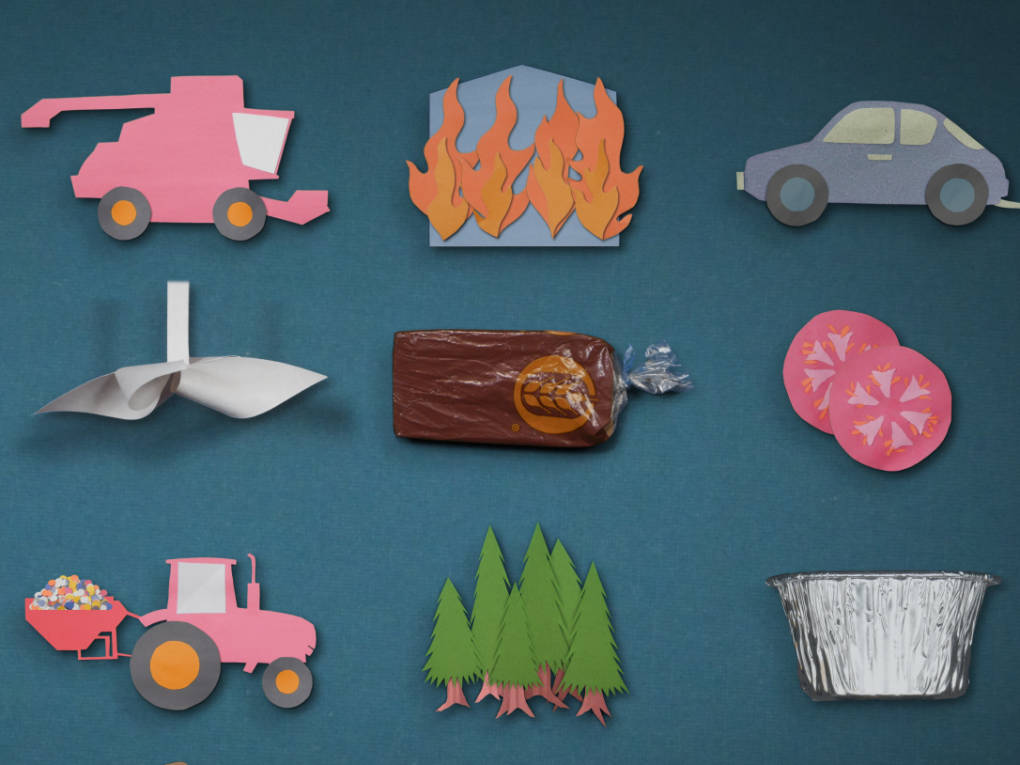
"description": "Elements from Skunk Bear's latest video on the past life of a sandwich.",
"title": "Elements from Skunk Bear's latest video on the past life of a sandwich.",
"credit": null,
"status": "inherit",
"isLoading": false,
"fetchFailed": false
},
"bayareabites_118366": {
"type": "attachments",
"id": "bayareabites_118366",
"meta": {
"index": "attachments_1716263798",
"site": "bayareabites",
"id": "118366",
"found": true
},
"parent": 118365,
"imgSizes": {
"small": {
"file": "https://ww2.kqed.org/app/uploads/sites/24/2017/06/gettyimages-535748630_wide-490532835dfb14ff2b96b3954d1c83839bb0bd15-520x292.jpg",
"width": 520,
"mimeType": "image/jpeg",
"height": 292
},
"twentyfourteen-full-width": {
"file": "https://ww2.kqed.org/app/uploads/sites/24/2017/06/gettyimages-535748630_wide-490532835dfb14ff2b96b3954d1c83839bb0bd15-1038x576.jpg",
"width": 1038,
"mimeType": "image/jpeg",
"height": 576
},
"thumbnail": {
"file": "https://ww2.kqed.org/app/uploads/sites/24/2017/06/gettyimages-535748630_wide-490532835dfb14ff2b96b3954d1c83839bb0bd15-160x90.jpg",
"width": 160,
"mimeType": "image/jpeg",
"height": 90
},
"fd-sm": {
"file": "https://ww2.kqed.org/app/uploads/sites/24/2017/06/gettyimages-535748630_wide-490532835dfb14ff2b96b3954d1c83839bb0bd15-960x540.jpg",
"width": 960,
"mimeType": "image/jpeg",
"height": 540
},
"post-thumbnail": {
"file": "https://ww2.kqed.org/app/uploads/sites/24/2017/06/gettyimages-535748630_wide-490532835dfb14ff2b96b3954d1c83839bb0bd15-672x372.jpg",
"width": 672,
"mimeType": "image/jpeg",
"height": 372
},
"xsmall": {
"file": "https://ww2.kqed.org/app/uploads/sites/24/2017/06/gettyimages-535748630_wide-490532835dfb14ff2b96b3954d1c83839bb0bd15-375x211.jpg",
"width": 375,
"mimeType": "image/jpeg",
"height": 211
},
"kqedFullSize": {
"file": "https://ww2.kqed.org/app/uploads/sites/24/2017/06/gettyimages-535748630_wide-490532835dfb14ff2b96b3954d1c83839bb0bd15.jpg",
"width": 3595,
"height": 2022
},
"large": {
"file": "https://ww2.kqed.org/app/uploads/sites/24/2017/06/gettyimages-535748630_wide-490532835dfb14ff2b96b3954d1c83839bb0bd15-1020x574.jpg",
"width": 1020,
"mimeType": "image/jpeg",
"height": 574
},
"xlarge": {
"file": "https://ww2.kqed.org/app/uploads/sites/24/2017/06/gettyimages-535748630_wide-490532835dfb14ff2b96b3954d1c83839bb0bd15-1180x664.jpg",
"width": 1180,
"mimeType": "image/jpeg",
"height": 664
},
"guest-author-50": {
"file": "https://ww2.kqed.org/app/uploads/sites/24/2017/06/gettyimages-535748630_wide-490532835dfb14ff2b96b3954d1c83839bb0bd15-50x50.jpg",
"width": 50,
"mimeType": "image/jpeg",
"height": 50
},
"guest-author-96": {
"file": "https://ww2.kqed.org/app/uploads/sites/24/2017/06/gettyimages-535748630_wide-490532835dfb14ff2b96b3954d1c83839bb0bd15-96x96.jpg",
"width": 96,
"mimeType": "image/jpeg",
"height": 96
},
"medium": {
"file": "https://ww2.kqed.org/app/uploads/sites/24/2017/06/gettyimages-535748630_wide-490532835dfb14ff2b96b3954d1c83839bb0bd15-800x450.jpg",
"width": 800,
"mimeType": "image/jpeg",
"height": 450
},
"guest-author-64": {
"file": "https://ww2.kqed.org/app/uploads/sites/24/2017/06/gettyimages-535748630_wide-490532835dfb14ff2b96b3954d1c83839bb0bd15-64x64.jpg",
"width": 64,
"mimeType": "image/jpeg",
"height": 64
},
"guest-author-32": {
"file": "https://ww2.kqed.org/app/uploads/sites/24/2017/06/gettyimages-535748630_wide-490532835dfb14ff2b96b3954d1c83839bb0bd15-32x32.jpg",
"width": 32,
"mimeType": "image/jpeg",
"height": 32
},
"fd-lrg": {
"file": "https://ww2.kqed.org/app/uploads/sites/24/2017/06/gettyimages-535748630_wide-490532835dfb14ff2b96b3954d1c83839bb0bd15-1920x1080.jpg",
"width": 1920,
"mimeType": "image/jpeg",
"height": 1080
},
"fd-med": {
"file": "https://ww2.kqed.org/app/uploads/sites/24/2017/06/gettyimages-535748630_wide-490532835dfb14ff2b96b3954d1c83839bb0bd15-1180x664.jpg",
"width": 1180,
"mimeType": "image/jpeg",
"height": 664
},
"full-width": {
"file": "https://ww2.kqed.org/app/uploads/sites/24/2017/06/gettyimages-535748630_wide-490532835dfb14ff2b96b3954d1c83839bb0bd15-1920x1080.jpg",
"width": 1920,
"mimeType": "image/jpeg",
"height": 1080
},
"detail": {
"file": "https://ww2.kqed.org/app/uploads/sites/24/2017/06/gettyimages-535748630_wide-490532835dfb14ff2b96b3954d1c83839bb0bd15-150x150.jpg",
"width": 150,
"mimeType": "image/jpeg",
"height": 150
},
"medium_large": {
"file": "https://ww2.kqed.org/app/uploads/sites/24/2017/06/gettyimages-535748630_wide-490532835dfb14ff2b96b3954d1c83839bb0bd15-768x432.jpg",
"width": 768,
"mimeType": "image/jpeg",
"height": 432
},
"guest-author-128": {
"file": "https://ww2.kqed.org/app/uploads/sites/24/2017/06/gettyimages-535748630_wide-490532835dfb14ff2b96b3954d1c83839bb0bd15-128x128.jpg",
"width": 128,
"mimeType": "image/jpeg",
"height": 128
},
"xxsmall": {
"file": "https://ww2.kqed.org/app/uploads/sites/24/2017/06/gettyimages-535748630_wide-490532835dfb14ff2b96b3954d1c83839bb0bd15-240x135.jpg",
"width": 240,
"mimeType": "image/jpeg",
"height": 135
}
},
"publishDate": 1497902840,
"modified": 1497903576,
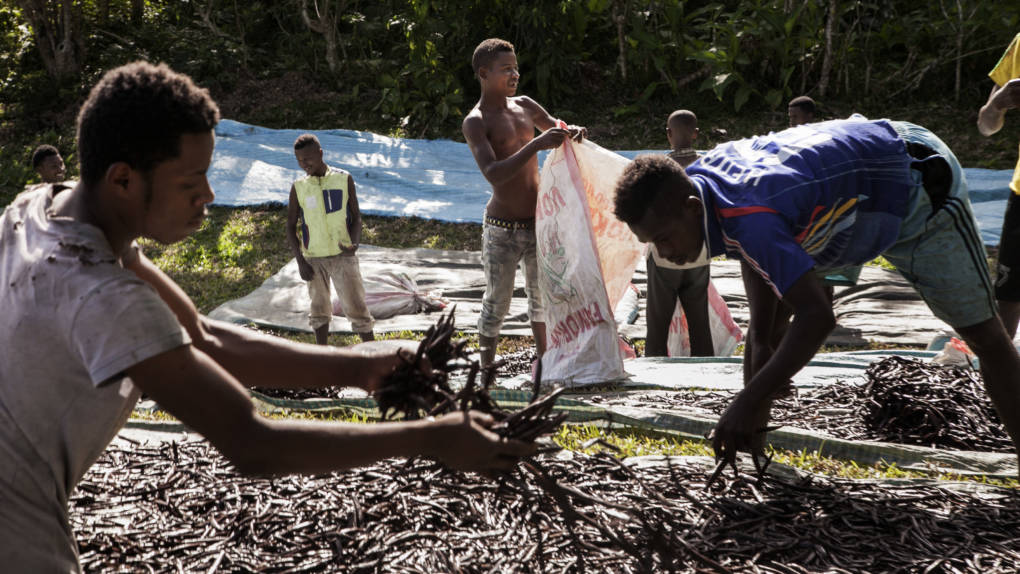
"caption": "Workers spread \"red vanilla\" (vanilla that has been treated by special cooking) in the sun to be dried near Sambava, Madagascar, in May 2016. Madagascar, producer of 80 percent of the world's vanilla, has seen huge jumps in the price. It's one of the most labor-intensive foods on Earth.",
"description": "Workers spread \"red vanilla\" (vanilla that has been treated by special cooking) in the sun to be dried near Sambava, Madagascar, in May 2016. Madagascar, producer of 80 percent of the world's vanilla, has seen huge jumps in the price. It's one of the most labor-intensive foods on Earth.",
"title": "Workers spread \"red vanilla\" (vanilla that has been treated by special cooking) in the sun to be dried near Sambava, Madagascar, in May 2016. Madagascar, producer of 80 percent of the world's vanilla, has seen huge jumps in the price. It's one of the most labor-intensive foods on Earth.",
"credit": "Rijasolo/AFP/Getty Images",
"status": "inherit",
"isLoading": false,
"fetchFailed": false
},
"bayareabites_117955": {
"type": "attachments",
"id": "bayareabites_117955",
"meta": {
"index": "attachments_1716263798",
"site": "bayareabites",
"id": "117955",
"found": true
},
"parent": 117954,
"imgSizes": {
"small": {
"file": "https://ww2.kqed.org/app/uploads/sites/24/2017/06/l_main-1_custom-384f4e682fb129b0a7074dd746dad6000f1c60a8-520x292.jpg",
"width": 520,
"mimeType": "image/jpeg",
"height": 292
},
"twentyfourteen-full-width": {
"file": "https://ww2.kqed.org/app/uploads/sites/24/2017/06/l_main-1_custom-384f4e682fb129b0a7074dd746dad6000f1c60a8-1038x576.jpg",
"width": 1038,
"mimeType": "image/jpeg",
"height": 576
},
"thumbnail": {
"file": "https://ww2.kqed.org/app/uploads/sites/24/2017/06/l_main-1_custom-384f4e682fb129b0a7074dd746dad6000f1c60a8-160x90.jpg",
"width": 160,
"mimeType": "image/jpeg",
"height": 90
},
"fd-sm": {
"file": "https://ww2.kqed.org/app/uploads/sites/24/2017/06/l_main-1_custom-384f4e682fb129b0a7074dd746dad6000f1c60a8-960x539.jpg",
"width": 960,
"mimeType": "image/jpeg",
"height": 539
},
"post-thumbnail": {
"file": "https://ww2.kqed.org/app/uploads/sites/24/2017/06/l_main-1_custom-384f4e682fb129b0a7074dd746dad6000f1c60a8-672x372.jpg",
"width": 672,
"mimeType": "image/jpeg",
"height": 372
},
"xsmall": {
"file": "https://ww2.kqed.org/app/uploads/sites/24/2017/06/l_main-1_custom-384f4e682fb129b0a7074dd746dad6000f1c60a8-375x211.jpg",
"width": 375,
"mimeType": "image/jpeg",
"height": 211
},
"kqedFullSize": {
"file": "https://ww2.kqed.org/app/uploads/sites/24/2017/06/l_main-1_custom-384f4e682fb129b0a7074dd746dad6000f1c60a8.jpg",
"width": 1200,
"height": 674
},
"large": {
"file": "https://ww2.kqed.org/app/uploads/sites/24/2017/06/l_main-1_custom-384f4e682fb129b0a7074dd746dad6000f1c60a8-1020x573.jpg",
"width": 1020,
"mimeType": "image/jpeg",
"height": 573
},
"xlarge": {
"file": "https://ww2.kqed.org/app/uploads/sites/24/2017/06/l_main-1_custom-384f4e682fb129b0a7074dd746dad6000f1c60a8-1180x663.jpg",
"width": 1180,
"mimeType": "image/jpeg",
"height": 663
},
"guest-author-50": {
"file": "https://ww2.kqed.org/app/uploads/sites/24/2017/06/l_main-1_custom-384f4e682fb129b0a7074dd746dad6000f1c60a8-50x50.jpg",
"width": 50,
"mimeType": "image/jpeg",
"height": 50
},
"guest-author-96": {
"file": "https://ww2.kqed.org/app/uploads/sites/24/2017/06/l_main-1_custom-384f4e682fb129b0a7074dd746dad6000f1c60a8-96x96.jpg",
"width": 96,
"mimeType": "image/jpeg",
"height": 96
},
"medium": {
"file": "https://ww2.kqed.org/app/uploads/sites/24/2017/06/l_main-1_custom-384f4e682fb129b0a7074dd746dad6000f1c60a8-800x449.jpg",
"width": 800,
"mimeType": "image/jpeg",
"height": 449
},
"guest-author-64": {
"file": "https://ww2.kqed.org/app/uploads/sites/24/2017/06/l_main-1_custom-384f4e682fb129b0a7074dd746dad6000f1c60a8-64x64.jpg",
"width": 64,
"mimeType": "image/jpeg",
"height": 64
},
"guest-author-32": {
"file": "https://ww2.kqed.org/app/uploads/sites/24/2017/06/l_main-1_custom-384f4e682fb129b0a7074dd746dad6000f1c60a8-32x32.jpg",
"width": 32,
"mimeType": "image/jpeg",
"height": 32
},
"fd-med": {
"file": "https://ww2.kqed.org/app/uploads/sites/24/2017/06/l_main-1_custom-384f4e682fb129b0a7074dd746dad6000f1c60a8-1180x663.jpg",
"width": 1180,
"mimeType": "image/jpeg",
"height": 663
},
"detail": {
"file": "https://ww2.kqed.org/app/uploads/sites/24/2017/06/l_main-1_custom-384f4e682fb129b0a7074dd746dad6000f1c60a8-150x150.jpg",
"width": 150,
"mimeType": "image/jpeg",
"height": 150
},
"medium_large": {
"file": "https://ww2.kqed.org/app/uploads/sites/24/2017/06/l_main-1_custom-384f4e682fb129b0a7074dd746dad6000f1c60a8-768x431.jpg",
"width": 768,
"mimeType": "image/jpeg",
"height": 431
},
"guest-author-128": {
"file": "https://ww2.kqed.org/app/uploads/sites/24/2017/06/l_main-1_custom-384f4e682fb129b0a7074dd746dad6000f1c60a8-128x128.jpg",
"width": 128,
"mimeType": "image/jpeg",
"height": 128
},
"xxsmall": {
"file": "https://ww2.kqed.org/app/uploads/sites/24/2017/06/l_main-1_custom-384f4e682fb129b0a7074dd746dad6000f1c60a8-240x135.jpg",
"width": 240,
"mimeType": "image/jpeg",
"height": 135
}
},
"publishDate": 1496693711,
"modified": 1496693945,
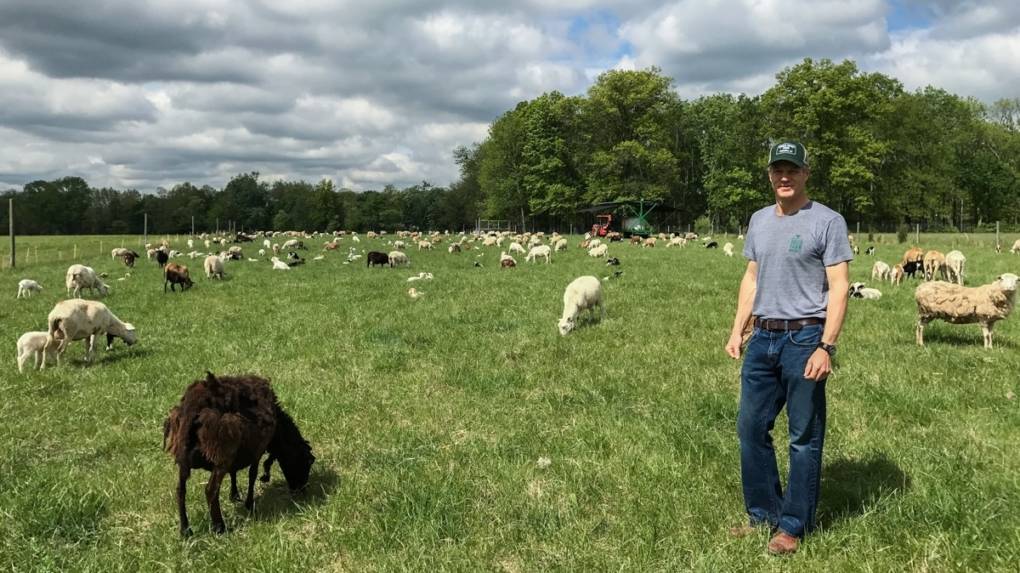
"caption": "Jon McConaughy, owner of Double Brook Farms, stands in the field with his flock of sheep.",
"description": "Jon McConaughy, owner of Double Brook Farms, stands in the field with his flock of sheep.",
"title": "Jon McConaughy, owner of Double Brook Farms, stands in the field with his flock of sheep.",
"credit": "Paige Pfleger/WHYY",
"status": "inherit",
"isLoading": false,
"fetchFailed": false
}
},
"audioPlayerReducer": {
"postId": "stream_live",
"isPaused": true,
"isPlaying": false,
"pfsActive": false,
"pledgeModalIsOpen": true,
"playerDrawerIsOpen": false,
"liveAudioPlayStartedAt": 0,
"liveAudioPlayContext": ""
},
"authorsReducer": {
"byline_bayareabites_120760": {
"type": "authors",
"id": "byline_bayareabites_120760",
"meta": {
"override": true
},
"slug": "byline_bayareabites_120760",
"name": "Maanvi Singh, NPR Food",
"isLoading": false
},
"byline_bayareabites_120327": {
"type": "authors",
"id": "byline_bayareabites_120327",
"meta": {
"override": true
},
"slug": "byline_bayareabites_120327",
"name": "Lela Nargi, \u003ca href=\"https://ww2.kqed.org/bayareabites/author/cuesa/\">Civil Eats\u003c/a>",
"isLoading": false
},
"byline_bayareabites_119891": {
"type": "authors",
"id": "byline_bayareabites_119891",
"meta": {
"override": true
},
"slug": "byline_bayareabites_119891",
"name": "Alastair Bland, \u003ca href=\"https://ww2.kqed.org/bayareabites/author/nprfood/\">NPR Food\u003c/a>",
"isLoading": false
},
"byline_bayareabites_119864": {
"type": "authors",
"id": "byline_bayareabites_119864",
"meta": {
"override": true
},
"slug": "byline_bayareabites_119864",
"name": "Tove Danovich, \u003ca href=\"https://ww2.kqed.org/bayareabites/author/nprfood/\">NPR Food\u003c/a>",
"isLoading": false
},
"byline_bayareabites_119231": {
"type": "authors",
"id": "byline_bayareabites_119231",
"meta": {
"override": true
},
"slug": "byline_bayareabites_119231",
"name": " \u003ca href=\"http://civileats.com/author/jfigueiredo/\">Jordan Figueiredo,\u003c/a> \u003ca href=\"https://ww2.kqed.org/bayareabites/author/civileat/\">Civil Eats\u003c/a> ",
"isLoading": false
},
"byline_bayareabites_118929": {
"type": "authors",
"id": "byline_bayareabites_118929",
"meta": {
"override": true
},
"slug": "byline_bayareabites_118929",
"name": "\u003ca href=\"http://civileats.com/author/pmccoy/\">Peter McCoy\u003c/a>, \u003ca href=\"https://ww2.kqed.org/bayareabites/author/civileat/\">Civil Eats\u003c/a> ",
"isLoading": false
},
"byline_bayareabites_118413": {
"type": "authors",
"id": "byline_bayareabites_118413",
"meta": {
"override": true
},
"slug": "byline_bayareabites_118413",
"name": "\u003ca href=\"http://www.npr.org/people/348732739/adam-cole\">Adam Cole\u003c/a> and \u003ca href=\"http://www.npr.org/people/513324587/ryan-kellman\">Ryan Kellman,\u003c/a> \u003ca href=\"https://ww2.kqed.org/bayareabites/author/nprfood/\">NPR Food\u003c/a>",
"isLoading": false
},
"byline_bayareabites_118365": {
"type": "authors",
"id": "byline_bayareabites_118365",
"meta": {
"override": true
},
"slug": "byline_bayareabites_118365",
"name": "Dan Charles, NPR Food",
"isLoading": false
},
"byline_bayareabites_117954": {
"type": "authors",
"id": "byline_bayareabites_117954",
"meta": {
"override": true
},
"slug": "byline_bayareabites_117954",
"name": "Paige Pfleger, \u003ca href=\"https://itunes.apple.com/us/podcast/the-pulse/id772127662?mt=2\">WHYY\u003c/a> at \u003ca href=https://ww2.kqed.org/bayareabites/author/nprfood/\">NPR Food\u003c/a>",
"isLoading": false
},
"rachael-myrow": {
"type": "authors",
"id": "251",
"meta": {
"index": "authors_1716337520",
"id": "251",
"found": true
},
"name": "Rachael Myrow",
"firstName": "Rachael",
"lastName": "Myrow",
"slug": "rachael-myrow",
"email": "rmyrow@kqed.org",
"display_author_email": true,
"staff_mastheads": [
"news"
],
"title": "Senior Editor of KQED's Silicon Valley News Desk",
"bio": "• I write and edit stories about how Silicon Valley power and policies shape everyday life in California. I’m also passionate about making Bay Area history and culture more accessible to a broad public. • I’ve been a journalist for most of my life, starting in high school with The Franklin Press in Los Angeles, where I grew up. While earning my first degree in English at UC Berkeley, I got my start in public radio at KALX-FM. After completing a second degree in journalism at Cal, I landed my first professional job at Marketplace, then moved on to KPCC (now LAist), and then KQED, where I hosted The California Report for more than seven years. • My reporting has appeared on NPR, The World, WBUR’s \u003ci>Here & Now\u003c/i>, and the BBC. I also guest host for KQED’s \u003ci>Forum\u003c/i>, as well as the Commonwealth Club in San Francisco. • I speak periodically on media, democracy and technology issues, and do voiceover work for documentaries and educational video projects. • Outside of the studio, you'll find me hiking Bay Area trails and whipping up Insta-ready meals in my kitchen. • I do not accept gifts, money, or favors from anyone connected to my reporting, I don't pay people for information, and I do not support or donate to political causes. • I strive to treat the people I report on with fairness, honesty, and respect. I also recognize there are often multiple sides to a story and work to verify information through multiple sources and documentation. If I get something wrong, I correct it.",
"avatar": "https://secure.gravatar.com/avatar/3ed8a3c5f26025e4a805ba634cda8cd764906b97438a6d9ce216b044e340da4e?s=600&d=blank&r=g",
"twitter": "rachaelmyrow",
"bluesky": null,
"facebook": null,
"instagram": null,
"linkedin": "https://www.linkedin.com/in/rachaelmyrow/",
"sites": [
{
"site": "arts",
"roles": [
"administrator"
]
},
{
"site": "news",
"roles": [
"edit_others_posts",
"editor"
]
},
{
"site": "futureofyou",
"roles": [
"editor"
]
},
{
"site": "bayareabites",
"roles": [
"editor"
]
},
{
"site": "stateofhealth",
"roles": [
"editor"
]
},
{
"site": "science",
"roles": [
"editor"
]
},
{
"site": "food",
"roles": [
"editor"
]
},
{
"site": "forum",
"roles": [
"editor"
]
},
{
"site": "liveblog",
"roles": [
"author"
]
}
],
"headData": {
"title": "Rachael Myrow | KQED",
"description": "Senior Editor of KQED's Silicon Valley News Desk",
"ogImgSrc": "https://secure.gravatar.com/avatar/3ed8a3c5f26025e4a805ba634cda8cd764906b97438a6d9ce216b044e340da4e?s=600&d=blank&r=g",
"twImgSrc": "https://secure.gravatar.com/avatar/3ed8a3c5f26025e4a805ba634cda8cd764906b97438a6d9ce216b044e340da4e?s=600&d=blank&r=g"
},
"isLoading": false,
"link": "/author/rachael-myrow"
},
"shelbypope": {
"type": "authors",
"id": "5566",
"meta": {
"index": "authors_1716337520",
"id": "5566",
"found": true
},
"name": "Shelby Pope",
"firstName": "Shelby",
"lastName": "Pope",
"slug": "shelbypope",
"email": "shelbylpope@gmail.com",
"display_author_email": false,
"staff_mastheads": [],
"title": "KQED Contributor",
"bio": "Shelby Pope is a freelance writer living and eating her way through the East Bay. She’s written about food, art and science for publications including the Smithsonian, Lucky Peach, and the Washington Post's pet blog. When she’s not taste testing sourdough bread to find the Bay Area’s best loaf, you can find her on Twitter \u003ca href=\"https://twitter.com/shelbylpope\">@shelbylpope\u003c/a> or at \u003ca href=\"https://shelbypope.com/\">shelbypope.com\u003c/a>",
"avatar": "https://secure.gravatar.com/avatar/df74e904399e45720e48e36c6e1ae7a90c32216eb2c9c82f3b2e1a9641b507d3?s=600&d=blank&r=g",
"twitter": "shelbylpope",
"bluesky": null,
"facebook": null,
"instagram": null,
"linkedin": null,
"sites": [
{
"site": "arts",
"roles": [
"subscriber"
]
},
{
"site": "food",
"roles": [
"subscriber"
]
}
],
"headData": {
"title": "Shelby Pope | KQED",
"description": "KQED Contributor",
"ogImgSrc": "https://secure.gravatar.com/avatar/df74e904399e45720e48e36c6e1ae7a90c32216eb2c9c82f3b2e1a9641b507d3?s=600&d=blank&r=g",
"twImgSrc": "https://secure.gravatar.com/avatar/df74e904399e45720e48e36c6e1ae7a90c32216eb2c9c82f3b2e1a9641b507d3?s=600&d=blank&r=g"
},
"isLoading": false,
"link": "/author/shelbypope"
},
"susanhathaway": {
"type": "authors",
"id": "5578",
"meta": {
"index": "authors_1716337520",
"id": "5578",
"found": true
},
"name": "Susan Hathaway",
"firstName": "Susan",
"lastName": "Hathaway",
"slug": "susanhathaway",
"email": "susan@redpenassoc.com",
"display_author_email": false,
"staff_mastheads": [],
"title": "KQED Contributor",
"bio": "From making blob-shaped pancakes for her family at age 6 to presumptuously reinventing recipes from well-known chefs, Susan has had a life-long food love affair. You'll usually find her sniffing out great ingredient sources, locating intriguing food stories, inventing recipes and exercising like a demon as an antidote to her passion. This Bay Area native is a longtime food & wine journalist and blogger who has contributed to regional publications such as the San Jose Mercury News and its affiliates, Metro, San Francisco Chronicle, South Bay Accent, Urbanspoon and other epistles that are lucky enough not to have been killed off yet by the publishing crisis.",
"avatar": "https://secure.gravatar.com/avatar/50460b73cde689778bd54c5eb183c0993d24c99dd4ed52f8207c15a3af0d7a33?s=600&d=blank&r=g",
"twitter": null,
"bluesky": null,
"facebook": null,
"instagram": null,
"linkedin": null,
"sites": [
{
"site": "bayareabites",
"roles": [
"subscriber"
]
},
{
"site": "food",
"roles": [
"subscriber"
]
}
],
"headData": {
"title": "Susan Hathaway | KQED",
"description": "KQED Contributor",
"ogImgSrc": "https://secure.gravatar.com/avatar/50460b73cde689778bd54c5eb183c0993d24c99dd4ed52f8207c15a3af0d7a33?s=600&d=blank&r=g",
"twImgSrc": "https://secure.gravatar.com/avatar/50460b73cde689778bd54c5eb183c0993d24c99dd4ed52f8207c15a3af0d7a33?s=600&d=blank&r=g"
},
"isLoading": false,
"link": "/author/susanhathaway"
}
},
"pagesReducer": {
"bayareabites_category_sustainability": {
"type": "terms",
"id": "bayareabites_60",
"meta": {
"index": "terms_1716263798",
"site": "bayareabites",
"id": "60",
"score": 12.370369
},
"featImg": null,
"name": "sustainability, environment, climate change",
"description": null,
"taxonomy": "category",
"headData": {
"twImgId": null,
"twTitle": null,
"ogTitle": null,
"ogImgId": null,
"twDescription": null,
"description": null,
"title": "sustainability, environment, climate change Archives | KQED Bay Area Bites",
"ogDescription": null
},
"ttid": 23,
"slug": "sustainability",
"isLoading": false,
"title": "sustainability, environment, climate change",
"pageMeta": {
"site": "bayareabites",
"WpPageTemplate": "page-topic-editorial",
"currentPage": 8
},
"blocks": [
{
"blockName": "kqed/post-list",
"attrs": {
"layout": "cardArticle2",
"query": "posts/bayareabites?category=sustainability",
"seeMore": false,
"paginated": true,
"page": 8
}
},
{
"blockName": "kqed/ad"
}
]
}
},
"pfsSessionReducer": {},
"postsReducer": {
"stream_live": {
"type": "live",
"id": "stream_live",
"audioUrl": "https://streams.kqed.org/kqedradio",
"title": "Live Stream",
"excerpt": "Live Stream information currently unavailable.",
"link": "/radio",
"featImg": "",
"label": {
"name": "KQED Live",
"link": "/"
}
},
"stream_kqedNewscast": {
"type": "posts",
"id": "stream_kqedNewscast",
"audioUrl": "https://www.kqed.org/.stream/anon/radio/RDnews/newscast.mp3?_=1",
"title": "KQED Newscast",
"featImg": "",
"label": {
"name": "88.5 FM",
"link": "/"
}
},
"bayareabites_120872": {
"type": "posts",
"id": "bayareabites_120872",
"meta": {
"index": "posts_1716263798",
"site": "bayareabites",
"id": "120872",
"score": null,
"sort": [
1507060974000
]
},
"parent": 0,
"labelTerm": {
"site": "bayareabites"
},
"blocks": [],
"publishDate": 1507060974,
"format": "image",
"disqusTitle": "Bay Area Bites Guide to 5 Sustainable Restaurants in San Francisco, Berkeley, Oakland and Sausalito",
"title": "Bay Area Bites Guide to 5 Sustainable Restaurants in San Francisco, Berkeley, Oakland and Sausalito",
"headTitle": "Bay Area Bites | KQED Food",
"content": "\u003cp>The Bay Area’s commitment to ethical food is almost taken for granted these day, with seemingly every new restaurant touting ingredients and sourcing that would make Michael Pollan proud. But that doesn’t mean that it’s become any less important to focus on sustainable food. Most of us don’t have the power to make the kind of large-scale decisions that affect our food systems the way say, a giant food conglomerate or the government can. But we can choose to buy organic, or select a restaurant that emphasizes sustainability for our Friday night date. Here are just a few of the restaurants in the Bay Area that are trying to create a better world through the growing, selection and preparation of the food they serve. But we know this list is just a sampling of the many great environmentally-friendly restaurants in the area. Did we miss your favorite? Let us know in the comments below.\u003c/p>\n\u003ch2>Fish\u003c/h2>\n\u003cfigure id=\"attachment_121137\" class=\"wp-caption aligncenter\" style=\"max-width: 1920px\">\u003cimg class=\"size-full wp-image-121137\" src=\"https://ww2.kqed.org/bayareabites/wp-content/uploads/sites/24/2017/09/IMG_0993.png\" alt=\"The fish and chips at Fish featured local cod.\" width=\"1920\" height=\"1238\" srcset=\"https://ww2.kqed.org/app/uploads/sites/24/2017/09/IMG_0993.png 1920w, https://ww2.kqed.org/app/uploads/sites/24/2017/09/IMG_0993-160x103.png 160w, https://ww2.kqed.org/app/uploads/sites/24/2017/09/IMG_0993-800x516.png 800w, https://ww2.kqed.org/app/uploads/sites/24/2017/09/IMG_0993-768x495.png 768w, https://ww2.kqed.org/app/uploads/sites/24/2017/09/IMG_0993-1020x658.png 1020w, https://ww2.kqed.org/app/uploads/sites/24/2017/09/IMG_0993-1180x761.png 1180w, https://ww2.kqed.org/app/uploads/sites/24/2017/09/IMG_0993-960x619.png 960w, https://ww2.kqed.org/app/uploads/sites/24/2017/09/IMG_0993-240x155.png 240w, https://ww2.kqed.org/app/uploads/sites/24/2017/09/IMG_0993-375x242.png 375w, https://ww2.kqed.org/app/uploads/sites/24/2017/09/IMG_0993-520x335.png 520w\" sizes=\"(max-width: 1920px) 100vw, 1920px\">\u003cfigcaption class=\"wp-caption-text\">The fish and chips at Fish featured local cod. \u003ccite>(Shelby Pope)\u003c/cite>\u003c/figcaption>\u003c/figure>\n\u003cp>If you have a craving for seafood and want to ensure you’re getting a sustainable option, head to Sausalito’s \u003cstrong>Fish.\u003c/strong> Just don’t forget your cash--or a pair of sunglasses. The cash-only restaurant features a selection of casual fish dishes like fish tacos, chowder and tuna melts similar to what you can find at any waterfront restaurant in the Bay Area with one significant difference: all the fish is sustainably sourced, much of it from local fishermen, with the higher prices that come with such conscientiousness. (The combination of casualness and high prices might not be for everyone: if you’re offended by the idea of a $36 crab roll paired with wine from a Mason jar, go elsewhere.)\u003c/p>\n\u003cfigure id=\"attachment_121136\" class=\"wp-caption aligncenter\" style=\"max-width: 1920px\">\u003cimg class=\"size-full wp-image-121136\" src=\"https://ww2.kqed.org/bayareabites/wp-content/uploads/sites/24/2017/09/IMG_0987.png\" alt=\"You can get the fish of the day--here, a rainbow trout--with pasta, salad or as part of a sandwich.\" width=\"1920\" height=\"1295\" srcset=\"https://ww2.kqed.org/app/uploads/sites/24/2017/09/IMG_0987.png 1920w, https://ww2.kqed.org/app/uploads/sites/24/2017/09/IMG_0987-160x108.png 160w, https://ww2.kqed.org/app/uploads/sites/24/2017/09/IMG_0987-800x540.png 800w, https://ww2.kqed.org/app/uploads/sites/24/2017/09/IMG_0987-768x518.png 768w, https://ww2.kqed.org/app/uploads/sites/24/2017/09/IMG_0987-1020x688.png 1020w, https://ww2.kqed.org/app/uploads/sites/24/2017/09/IMG_0987-1180x796.png 1180w, https://ww2.kqed.org/app/uploads/sites/24/2017/09/IMG_0987-960x648.png 960w, https://ww2.kqed.org/app/uploads/sites/24/2017/09/IMG_0987-240x162.png 240w, https://ww2.kqed.org/app/uploads/sites/24/2017/09/IMG_0987-375x253.png 375w, https://ww2.kqed.org/app/uploads/sites/24/2017/09/IMG_0987-520x351.png 520w\" sizes=\"(max-width: 1920px) 100vw, 1920px\">\u003cfigcaption class=\"wp-caption-text\">You can get the fish of the day--here, a rainbow trout--with pasta, salad or as part of a sandwich. \u003ccite>(Shelby Pope)\u003c/cite>\u003c/figcaption>\u003c/figure>\n\u003cfigure id=\"attachment_121134\" class=\"wp-caption aligncenter\" style=\"max-width: 1920px\">\u003cimg class=\"wp-image-121134 size-full\" src=\"https://ww2.kqed.org/bayareabites/wp-content/uploads/sites/24/2017/09/IMG_0945.png\" alt=\"Fish offers a several varieties types of sustainable fish. \" width=\"1920\" height=\"1440\" srcset=\"https://ww2.kqed.org/app/uploads/sites/24/2017/09/IMG_0945.png 1920w, https://ww2.kqed.org/app/uploads/sites/24/2017/09/IMG_0945-160x120.png 160w, https://ww2.kqed.org/app/uploads/sites/24/2017/09/IMG_0945-800x600.png 800w, https://ww2.kqed.org/app/uploads/sites/24/2017/09/IMG_0945-768x576.png 768w, https://ww2.kqed.org/app/uploads/sites/24/2017/09/IMG_0945-1020x765.png 1020w, https://ww2.kqed.org/app/uploads/sites/24/2017/09/IMG_0945-1180x885.png 1180w, https://ww2.kqed.org/app/uploads/sites/24/2017/09/IMG_0945-960x720.png 960w, https://ww2.kqed.org/app/uploads/sites/24/2017/09/IMG_0945-240x180.png 240w, https://ww2.kqed.org/app/uploads/sites/24/2017/09/IMG_0945-375x281.png 375w, https://ww2.kqed.org/app/uploads/sites/24/2017/09/IMG_0945-520x390.png 520w\" sizes=\"(max-width: 1920px) 100vw, 1920px\">\u003cfigcaption class=\"wp-caption-text\">Fish offers a several varieties types of sustainable fish. \u003ccite>(Shelby Pope)\u003c/cite>\u003c/figcaption>\u003c/figure>\n\u003cp>For those willing to spend the money, it’s a charming experience. The restaurant overlooks Richardson Bay, so there’s a waterfront view as you enjoy winning renditions of classic dishes like fish and chips--shatteringly crispy, served with plump steak fries and an herbaceous tartar sauce. Their clam chowder is far better than the bowls of cream you get at Pier 39. It’s thinner but boasts a stronger clam flavor, with large pieces of bacon and even larger chunks of potatoes. They also feature several fish of the day, which you can get in a sandwich, with pasta or with a salad. On our visit it was squid, herring and trout. The rainbow trout, \u003ca href=\"https://ww2.kqed.org/quest/2014/02/13/vegetarian-farmed-fish-may-be-key-to-sustainable-aquaculture/\">sustainably farmed from McFarland Springs\u003c/a>, was cooked perfectly, with a hint of char from their wood-fired grill. Atop a bed of greens and paired with a bright vinaigrette, it was an ideal lunch for a sunny Sausalito afternoon.\u003c/p>\n\u003cfigure id=\"attachment_121138\" class=\"wp-caption aligncenter\" style=\"max-width: 1920px\">\u003cimg class=\"size-full wp-image-121138\" src=\"https://ww2.kqed.org/bayareabites/wp-content/uploads/sites/24/2017/09/IMG_33652.png\" alt=\"Clam chowder from Fish.\" width=\"1920\" height=\"2560\" srcset=\"https://ww2.kqed.org/app/uploads/sites/24/2017/09/IMG_33652.png 1920w, https://ww2.kqed.org/app/uploads/sites/24/2017/09/IMG_33652-160x213.png 160w, https://ww2.kqed.org/app/uploads/sites/24/2017/09/IMG_33652-800x1067.png 800w, https://ww2.kqed.org/app/uploads/sites/24/2017/09/IMG_33652-768x1024.png 768w, https://ww2.kqed.org/app/uploads/sites/24/2017/09/IMG_33652-1020x1360.png 1020w, https://ww2.kqed.org/app/uploads/sites/24/2017/09/IMG_33652-1180x1573.png 1180w, https://ww2.kqed.org/app/uploads/sites/24/2017/09/IMG_33652-960x1280.png 960w, https://ww2.kqed.org/app/uploads/sites/24/2017/09/IMG_33652-240x320.png 240w, https://ww2.kqed.org/app/uploads/sites/24/2017/09/IMG_33652-375x500.png 375w, https://ww2.kqed.org/app/uploads/sites/24/2017/09/IMG_33652-520x693.png 520w\" sizes=\"(max-width: 1920px) 100vw, 1920px\">\u003cfigcaption class=\"wp-caption-text\">Clam chowder from Fish. \u003ccite>(Shelby Pope)\u003c/cite>\u003c/figcaption>\u003c/figure>\n\u003cp>\u003ca href=\"http://www.331fish.com/\">\u003cstrong>Fish\u003c/strong>\u003c/a>\u003cbr>\n350 Harbor Dr [\u003ca href=\"https://goo.gl/maps/ckHSKgeewGG2\">Map\u003c/a>]\u003cbr>\nSausalito, CA 94965\u003cbr>\nPh: (415) 331-3474\u003cbr>\nHours: Mon-Sun, 11:30m-8:30pm\u003cbr>\nFacebook: \u003ca href=\"https://www.facebook.com/Fish-Restaurant-177088469103/\">Fish Restaurant\u003c/a>\u003cbr>\nTwitter: \u003ca href=\"https://twitter.com/FishinSausalito\">@FishinSausalito\u003c/a>\u003cbr>\nInstagram: \u003ca href=\"https://www.instagram.com/fishrestaurantsausalito/\">@fishrestaurantsausalito\u003c/a>\u003cbr>\nPrice range: $$$ (Entrees $18-$24)\u003c/p>\n\u003ch2>Vik’s Chaat & Market\u003c/h2>\n\u003cfigure id=\"attachment_121118\" class=\"wp-caption aligncenter\" style=\"max-width: 1920px\">\u003cimg class=\"size-full wp-image-121118\" src=\"https://ww2.kqed.org/bayareabites/wp-content/uploads/sites/24/2017/09/IMG_0604.jpg\" alt=\"Crispy pani puri is just one of the delicious Indian snack foods Vik's offers.\" width=\"1920\" height=\"1440\" srcset=\"https://ww2.kqed.org/app/uploads/sites/24/2017/09/IMG_0604.jpg 1920w, https://ww2.kqed.org/app/uploads/sites/24/2017/09/IMG_0604-160x120.jpg 160w, https://ww2.kqed.org/app/uploads/sites/24/2017/09/IMG_0604-800x600.jpg 800w, https://ww2.kqed.org/app/uploads/sites/24/2017/09/IMG_0604-768x576.jpg 768w, https://ww2.kqed.org/app/uploads/sites/24/2017/09/IMG_0604-1020x765.jpg 1020w, https://ww2.kqed.org/app/uploads/sites/24/2017/09/IMG_0604-1180x885.jpg 1180w, https://ww2.kqed.org/app/uploads/sites/24/2017/09/IMG_0604-960x720.jpg 960w, https://ww2.kqed.org/app/uploads/sites/24/2017/09/IMG_0604-240x180.jpg 240w, https://ww2.kqed.org/app/uploads/sites/24/2017/09/IMG_0604-375x281.jpg 375w, https://ww2.kqed.org/app/uploads/sites/24/2017/09/IMG_0604-520x390.jpg 520w\" sizes=\"(max-width: 1920px) 100vw, 1920px\">\u003cfigcaption class=\"wp-caption-text\">Crispy pani puri is just one of the delicious Indian snack foods Vik's offers. \u003ccite>(Shelby Pope)\u003c/cite>\u003c/figcaption>\u003c/figure>\n\u003cp>Every day, people flock to an unassuming part of West Berkeley for the Indian street food at \u003cstrong>Vik’s Chaat\u003c/strong>. For its fans, which range from groups of coworkers out for a birthday lunch to spandex-clad bikers debating the best post-workout meal (a peanut butter sandwich, one argued), the draw is the restaurant's mix of entrees and smaller dishes.\u003c/p>\n\u003cfigure id=\"attachment_121120\" class=\"wp-caption aligncenter\" style=\"max-width: 1920px\">\u003cimg class=\"size-full wp-image-121120\" src=\"https://ww2.kqed.org/bayareabites/wp-content/uploads/sites/24/2017/09/IMG_0636.jpg\" alt=\"If you get the lunch special at Vik's, you'll receive a tray heavy with a variety of delicious sides.\" width=\"1920\" height=\"1440\" srcset=\"https://ww2.kqed.org/app/uploads/sites/24/2017/09/IMG_0636.jpg 1920w, https://ww2.kqed.org/app/uploads/sites/24/2017/09/IMG_0636-160x120.jpg 160w, https://ww2.kqed.org/app/uploads/sites/24/2017/09/IMG_0636-800x600.jpg 800w, https://ww2.kqed.org/app/uploads/sites/24/2017/09/IMG_0636-768x576.jpg 768w, https://ww2.kqed.org/app/uploads/sites/24/2017/09/IMG_0636-1020x765.jpg 1020w, https://ww2.kqed.org/app/uploads/sites/24/2017/09/IMG_0636-1180x885.jpg 1180w, https://ww2.kqed.org/app/uploads/sites/24/2017/09/IMG_0636-960x720.jpg 960w, https://ww2.kqed.org/app/uploads/sites/24/2017/09/IMG_0636-240x180.jpg 240w, https://ww2.kqed.org/app/uploads/sites/24/2017/09/IMG_0636-375x281.jpg 375w, https://ww2.kqed.org/app/uploads/sites/24/2017/09/IMG_0636-520x390.jpg 520w\" sizes=\"(max-width: 1920px) 100vw, 1920px\">\u003cfigcaption class=\"wp-caption-text\">If you get the lunch special at Vik's, you'll receive a tray heavy with a variety of delicious sides. \u003ccite>(Shelby Pope)\u003c/cite>\u003c/figcaption>\u003c/figure>\n\u003cfigure id=\"attachment_121119\" class=\"wp-caption aligncenter\" style=\"max-width: 1925px\">\u003cimg class=\"size-full wp-image-121119\" src=\"https://ww2.kqed.org/bayareabites/wp-content/uploads/sites/24/2017/09/IMG_0626.jpg\" alt=\"The rapidly-deflating cholle bhature makes a perfect vehicle for scooping up chana masala.\" width=\"1925\" height=\"1444\" srcset=\"https://ww2.kqed.org/app/uploads/sites/24/2017/09/IMG_0626.jpg 1925w, https://ww2.kqed.org/app/uploads/sites/24/2017/09/IMG_0626-160x120.jpg 160w, https://ww2.kqed.org/app/uploads/sites/24/2017/09/IMG_0626-800x600.jpg 800w, https://ww2.kqed.org/app/uploads/sites/24/2017/09/IMG_0626-768x576.jpg 768w, https://ww2.kqed.org/app/uploads/sites/24/2017/09/IMG_0626-1020x765.jpg 1020w, https://ww2.kqed.org/app/uploads/sites/24/2017/09/IMG_0626-1180x885.jpg 1180w, https://ww2.kqed.org/app/uploads/sites/24/2017/09/IMG_0626-960x720.jpg 960w, https://ww2.kqed.org/app/uploads/sites/24/2017/09/IMG_0626-240x180.jpg 240w, https://ww2.kqed.org/app/uploads/sites/24/2017/09/IMG_0626-375x281.jpg 375w, https://ww2.kqed.org/app/uploads/sites/24/2017/09/IMG_0626-520x390.jpg 520w\" sizes=\"(max-width: 1925px) 100vw, 1925px\">\u003cfigcaption class=\"wp-caption-text\">The rapidly-deflating cholle bhature makes a perfect vehicle for scooping up chana masala. \u003ccite>(Shelby Pope)\u003c/cite>\u003c/figcaption>\u003c/figure>\n\u003cp>You can get a lunch special, where you’ll be presented with heavy tray of well-seasoned lamb (or chicken or fish if that’s your preference) served with rice, chapati, dal, achar, raita and papad. Or you can get a variety of smaller dishes to share, like the crunchy pani puri--a deep fried puff filled with chickpeas, just waiting to be filled with the accompanying mint water or a dollop of tamarind chutney. And there’s the drama of the cholle bhature--labeled on the menu as “the big puffy thing”-- which comes out towering and slowly deflates so you’re able to rip a piece off and top it with chana masala. But what most people don’t know is the restaurant is also a model of sustainability. Sure, they have separate trash cans for composting, but the building itself boasts \u003ca href=\"http://vikschaat.com/green-features/\">several eco-friendly touches\u003c/a>: it relies on skylights for cooling, instead of air conditioning; the wooden benches and wainscoting are recycled from a San Francisco gym; and part of the building’s outside was made from sand.\u003c/p>\n\u003cfigure id=\"attachment_121121\" class=\"wp-caption aligncenter\" style=\"max-width: 1920px\">\u003cimg class=\"size-full wp-image-121121\" src=\"https://ww2.kqed.org/bayareabites/wp-content/uploads/sites/24/2017/09/IMG_0657.jpg\" alt=\"Popular Indian restaurant Vik's is housed in a building with several sustainable features, including skylights to moderate temperature instead of air conditioning.\" width=\"1920\" height=\"1440\" srcset=\"https://ww2.kqed.org/app/uploads/sites/24/2017/09/IMG_0657.jpg 1920w, https://ww2.kqed.org/app/uploads/sites/24/2017/09/IMG_0657-160x120.jpg 160w, https://ww2.kqed.org/app/uploads/sites/24/2017/09/IMG_0657-800x600.jpg 800w, https://ww2.kqed.org/app/uploads/sites/24/2017/09/IMG_0657-768x576.jpg 768w, https://ww2.kqed.org/app/uploads/sites/24/2017/09/IMG_0657-1020x765.jpg 1020w, https://ww2.kqed.org/app/uploads/sites/24/2017/09/IMG_0657-1180x885.jpg 1180w, https://ww2.kqed.org/app/uploads/sites/24/2017/09/IMG_0657-960x720.jpg 960w, https://ww2.kqed.org/app/uploads/sites/24/2017/09/IMG_0657-240x180.jpg 240w, https://ww2.kqed.org/app/uploads/sites/24/2017/09/IMG_0657-375x281.jpg 375w, https://ww2.kqed.org/app/uploads/sites/24/2017/09/IMG_0657-520x390.jpg 520w\" sizes=\"(max-width: 1920px) 100vw, 1920px\">\u003cfigcaption class=\"wp-caption-text\">Popular Indian restaurant Vik's is housed in a building with several sustainable features, including skylights to moderate temperature instead of air conditioning. \u003ccite>(Shelby Pope)\u003c/cite>\u003c/figcaption>\u003c/figure>\n\u003cp>\u003ca href=\"http://vikschaat.com/\">\u003cstrong>Vik’s Chaat & Market\u003c/strong>\u003c/a>\u003cbr>\n2390 Fourth St [\u003ca href=\"https://goo.gl/maps/QZhbkHpF1G82\">Map\u003c/a>]\u003cbr>\nBerkeley, CA 94710\u003cbr>\nPh: (510) 644-4432\u003cbr>\nHours: Mon-Thu, 11am-6pm; Fri-Sun, 11am-8pm\u003cbr>\nFacebook: \u003ca href=\"https://www.facebook.com/ViksChaat/\">Vik’s Chaat\u003c/a>\u003c/p>\n\u003ch2>The Plant Cafe Organic\u003c/h2>\n\u003cfigure id=\"attachment_121127\" class=\"wp-caption aligncenter\" style=\"max-width: 1920px\">\u003cimg class=\"size-full wp-image-121127\" src=\"https://ww2.kqed.org/bayareabites/wp-content/uploads/sites/24/2017/09/IMG_0844.jpg\" alt=\"Every ingredient at the Plant Cafe, including the condiments, are organic.\" width=\"1920\" height=\"1153\" srcset=\"https://ww2.kqed.org/app/uploads/sites/24/2017/09/IMG_0844.jpg 1920w, https://ww2.kqed.org/app/uploads/sites/24/2017/09/IMG_0844-160x96.jpg 160w, https://ww2.kqed.org/app/uploads/sites/24/2017/09/IMG_0844-800x480.jpg 800w, https://ww2.kqed.org/app/uploads/sites/24/2017/09/IMG_0844-768x461.jpg 768w, https://ww2.kqed.org/app/uploads/sites/24/2017/09/IMG_0844-1020x613.jpg 1020w, https://ww2.kqed.org/app/uploads/sites/24/2017/09/IMG_0844-1180x709.jpg 1180w, https://ww2.kqed.org/app/uploads/sites/24/2017/09/IMG_0844-960x577.jpg 960w, https://ww2.kqed.org/app/uploads/sites/24/2017/09/IMG_0844-240x144.jpg 240w, https://ww2.kqed.org/app/uploads/sites/24/2017/09/IMG_0844-375x225.jpg 375w, https://ww2.kqed.org/app/uploads/sites/24/2017/09/IMG_0844-520x312.jpg 520w\" sizes=\"(max-width: 1920px) 100vw, 1920px\">\u003cfigcaption class=\"wp-caption-text\">Every ingredient at the Plant Cafe, including the condiments, are organic. \u003ccite>(Shelby Pope)\u003c/cite>\u003c/figcaption>\u003c/figure>\n\u003cp>The inclusion of “organic” in the name is the first tip off that the Bay Area fast casual restaurant chain The \u003cstrong>Plant Cafe Organic\u003c/strong>, with six locations scattered around San Francisco and Mill Valley, is committed to sustainability. And indeed, they are, with 100% of the restaurant's ingredients coming from organic sources. Even the condiments--ketchup, mustard, hot sauce--are organic. Their menu includes lots of healthy options like grain bowls, meal-worthy salads and smoothies (on my visit, many besuited Financial District workers were happily slurping tumblers of green liquids) but there’s also less wholesome options. A fried chicken sandwich was appropriately crispy, topped with a pile of crunchy, mildly spicy slaw. The restaurant also changes seasonally. Their summer cobb had all the best parts of the original--egg, blue cheese, avocado--but with an added crunch from roasted chickpeas and green beans and a freshness from a zingy lemon flax vinaigrette.\u003c/p>\n\u003cfigure id=\"attachment_121129\" class=\"wp-caption aligncenter\" style=\"max-width: 1920px\">\u003cimg class=\"size-full wp-image-121129\" src=\"https://ww2.kqed.org/bayareabites/wp-content/uploads/sites/24/2017/09/IMG_0862.png\" alt=\"A crispy fried chicken sandwich with the soup of the day from the Plant Cafe Organic.\" width=\"1920\" height=\"1295\" srcset=\"https://ww2.kqed.org/app/uploads/sites/24/2017/09/IMG_0862.png 1920w, https://ww2.kqed.org/app/uploads/sites/24/2017/09/IMG_0862-160x108.png 160w, https://ww2.kqed.org/app/uploads/sites/24/2017/09/IMG_0862-800x540.png 800w, https://ww2.kqed.org/app/uploads/sites/24/2017/09/IMG_0862-768x518.png 768w, https://ww2.kqed.org/app/uploads/sites/24/2017/09/IMG_0862-1020x688.png 1020w, https://ww2.kqed.org/app/uploads/sites/24/2017/09/IMG_0862-1180x796.png 1180w, https://ww2.kqed.org/app/uploads/sites/24/2017/09/IMG_0862-960x648.png 960w, https://ww2.kqed.org/app/uploads/sites/24/2017/09/IMG_0862-240x162.png 240w, https://ww2.kqed.org/app/uploads/sites/24/2017/09/IMG_0862-375x253.png 375w, https://ww2.kqed.org/app/uploads/sites/24/2017/09/IMG_0862-520x351.png 520w\" sizes=\"(max-width: 1920px) 100vw, 1920px\">\u003cfigcaption class=\"wp-caption-text\">A crispy fried chicken sandwich with the soup of the day from the Plant Cafe Organic. \u003ccite>(Shelby Pope)\u003c/cite>\u003c/figcaption>\u003c/figure>\n\u003cfigure id=\"attachment_121188\" class=\"wp-caption aligncenter\" style=\"max-width: 1920px\">\u003cimg src=\"https://ww2.kqed.org/bayareabites/wp-content/uploads/sites/24/2017/10/IMG_0858.jpg\" alt=\"The menu at the Plant Cafe Organic changes seasonally to make room for dishes like this summer Cobb salad.\" width=\"1920\" height=\"1422\" class=\"size-full wp-image-121188\" srcset=\"https://ww2.kqed.org/app/uploads/sites/24/2017/10/IMG_0858.jpg 1920w, https://ww2.kqed.org/app/uploads/sites/24/2017/10/IMG_0858-160x119.jpg 160w, https://ww2.kqed.org/app/uploads/sites/24/2017/10/IMG_0858-800x593.jpg 800w, https://ww2.kqed.org/app/uploads/sites/24/2017/10/IMG_0858-768x569.jpg 768w, https://ww2.kqed.org/app/uploads/sites/24/2017/10/IMG_0858-1020x755.jpg 1020w, https://ww2.kqed.org/app/uploads/sites/24/2017/10/IMG_0858-1180x874.jpg 1180w, https://ww2.kqed.org/app/uploads/sites/24/2017/10/IMG_0858-960x711.jpg 960w, https://ww2.kqed.org/app/uploads/sites/24/2017/10/IMG_0858-240x178.jpg 240w, https://ww2.kqed.org/app/uploads/sites/24/2017/10/IMG_0858-375x278.jpg 375w, https://ww2.kqed.org/app/uploads/sites/24/2017/10/IMG_0858-520x385.jpg 520w\" sizes=\"(max-width: 1920px) 100vw, 1920px\">\u003cfigcaption class=\"wp-caption-text\">The menu at the Plant Cafe Organic changes seasonally to make room for dishes like this summer Cobb salad. \u003ccite>(Shelby Pope)\u003c/cite>\u003c/figcaption>\u003c/figure>\n\u003cp>\u003ca href=\"https://theplantcafe.com/\">\u003cstrong>The Plant Cafe Organic\u003c/strong>\u003c/a>\u003cbr>\nVarious locations in San Francisco and Mill Valley [\u003ca href=\"https://goo.gl/XKekUc\">Map\u003c/a>]\u003cbr>\nFacebook: \u003ca href=\"https://www.facebook.com/theplantcafeorganic/\">The Plant Cafe Organic\u003c/a>\u003cbr>\nTwitter: \u003ca href=\"https://twitter.com/theplantcafe\">@theplantcafe\u003c/a>\u003cbr>\nInstagram: \u003ca href=\"https://www.instagram.com/theplantcafeorganic/\">@theplantcafeorganic\u003c/a>\u003cbr>\nPrice range: $$ (Entrees $11-$17)\u003c/p>\n\u003ch2>Brown Sugar Kitchen\u003c/h2>\n\u003cfigure id=\"attachment_121126\" class=\"wp-caption aligncenter\" style=\"max-width: 1920px\">\u003cimg class=\"size-full wp-image-121126\" src=\"https://ww2.kqed.org/bayareabites/wp-content/uploads/sites/24/2017/09/IMG_0752.jpg\" alt=\"The gumbo featured smoked chicken and shrimp.\" width=\"1920\" height=\"1440\" srcset=\"https://ww2.kqed.org/app/uploads/sites/24/2017/09/IMG_0752.jpg 1920w, https://ww2.kqed.org/app/uploads/sites/24/2017/09/IMG_0752-160x120.jpg 160w, https://ww2.kqed.org/app/uploads/sites/24/2017/09/IMG_0752-800x600.jpg 800w, https://ww2.kqed.org/app/uploads/sites/24/2017/09/IMG_0752-768x576.jpg 768w, https://ww2.kqed.org/app/uploads/sites/24/2017/09/IMG_0752-1020x765.jpg 1020w, https://ww2.kqed.org/app/uploads/sites/24/2017/09/IMG_0752-1180x885.jpg 1180w, https://ww2.kqed.org/app/uploads/sites/24/2017/09/IMG_0752-960x720.jpg 960w, https://ww2.kqed.org/app/uploads/sites/24/2017/09/IMG_0752-240x180.jpg 240w, https://ww2.kqed.org/app/uploads/sites/24/2017/09/IMG_0752-375x281.jpg 375w, https://ww2.kqed.org/app/uploads/sites/24/2017/09/IMG_0752-520x390.jpg 520w\" sizes=\"(max-width: 1920px) 100vw, 1920px\">\u003cfigcaption class=\"wp-caption-text\">The gumbo featured smoked chicken and shrimp. \u003ccite>(Shelby Pope)\u003c/cite>\u003c/figcaption>\u003c/figure>\n\u003cp>\u003cstrong>Brown Sugar Kitchen\u003c/strong> has big plans for its future. There’s the forthcoming move from West Oakland \u003ca href=\"https://www.bizjournals.com/sanfrancisco/news/2017/06/07/uptown-oakland-restaurants-brown-sugar-bocanova.html\">to Uptown\u003c/a>, and new plans for a smaller spot \u003ca href=\"https://sf.eater.com/2017/9/21/16346774/tanya-holland-brown-sugar-kitchen-ferry-building\">at the Ferry Building\u003c/a>. It’s easy to understand why they’re eager to expand. They’re so beloved that a wait for their weekend brunch--featuring their star dish, chicken and waffles--can stretch into multiple hours.\u003c/p>\n\u003cfigure id=\"attachment_121139\" class=\"wp-caption aligncenter\" style=\"max-width: 1920px\">\u003cimg class=\"size-full wp-image-121139\" src=\"https://ww2.kqed.org/bayareabites/wp-content/uploads/sites/24/2017/09/IMG_07471yj.jpg\" alt=\"Brown Sugar Kitchen reduces their waste through composting with a local farm, and using ingredients in as many dishes as possible.\" width=\"1920\" height=\"1440\" srcset=\"https://ww2.kqed.org/app/uploads/sites/24/2017/09/IMG_07471yj.jpg 1920w, https://ww2.kqed.org/app/uploads/sites/24/2017/09/IMG_07471yj-160x120.jpg 160w, https://ww2.kqed.org/app/uploads/sites/24/2017/09/IMG_07471yj-800x600.jpg 800w, https://ww2.kqed.org/app/uploads/sites/24/2017/09/IMG_07471yj-768x576.jpg 768w, https://ww2.kqed.org/app/uploads/sites/24/2017/09/IMG_07471yj-1020x765.jpg 1020w, https://ww2.kqed.org/app/uploads/sites/24/2017/09/IMG_07471yj-1180x885.jpg 1180w, https://ww2.kqed.org/app/uploads/sites/24/2017/09/IMG_07471yj-960x720.jpg 960w, https://ww2.kqed.org/app/uploads/sites/24/2017/09/IMG_07471yj-240x180.jpg 240w, https://ww2.kqed.org/app/uploads/sites/24/2017/09/IMG_07471yj-375x281.jpg 375w, https://ww2.kqed.org/app/uploads/sites/24/2017/09/IMG_07471yj-520x390.jpg 520w\" sizes=\"(max-width: 1920px) 100vw, 1920px\">\u003cfigcaption class=\"wp-caption-text\">Brown Sugar Kitchen reduces their waste through composting with a local farm, and using ingredients in as many dishes as possible. \u003ccite>(Shelby Pope)\u003c/cite>\u003c/figcaption>\u003c/figure>\n\u003cfigure id=\"attachment_121125\" class=\"wp-caption aligncenter\" style=\"max-width: 1920px\">\u003cimg class=\"size-full wp-image-121125\" src=\"https://ww2.kqed.org/bayareabites/wp-content/uploads/sites/24/2017/09/IMG_0749.jpg\" alt=\"A pork hash exemplified the restaurant's zero waste policies, featuring pork leftover from making other dishes.\" width=\"1920\" height=\"1440\" srcset=\"https://ww2.kqed.org/app/uploads/sites/24/2017/09/IMG_0749.jpg 1920w, https://ww2.kqed.org/app/uploads/sites/24/2017/09/IMG_0749-160x120.jpg 160w, https://ww2.kqed.org/app/uploads/sites/24/2017/09/IMG_0749-800x600.jpg 800w, https://ww2.kqed.org/app/uploads/sites/24/2017/09/IMG_0749-768x576.jpg 768w, https://ww2.kqed.org/app/uploads/sites/24/2017/09/IMG_0749-1020x765.jpg 1020w, https://ww2.kqed.org/app/uploads/sites/24/2017/09/IMG_0749-1180x885.jpg 1180w, https://ww2.kqed.org/app/uploads/sites/24/2017/09/IMG_0749-960x720.jpg 960w, https://ww2.kqed.org/app/uploads/sites/24/2017/09/IMG_0749-240x180.jpg 240w, https://ww2.kqed.org/app/uploads/sites/24/2017/09/IMG_0749-375x281.jpg 375w, https://ww2.kqed.org/app/uploads/sites/24/2017/09/IMG_0749-520x390.jpg 520w\" sizes=\"(max-width: 1920px) 100vw, 1920px\">\u003cfigcaption class=\"wp-caption-text\">A pork hash exemplified the restaurant's zero waste policies, featuring pork leftover from making other dishes. \u003ccite>(Shelby Pope)\u003c/cite>\u003c/figcaption>\u003c/figure>\n\u003cp>In addition to their exemplary food, they’re also focused on reducing the amount of waste they produce. Chef Tanya Holland has committed to a new zero waste initiative, meaning that they’re focused on composting --a nearby community garden gets their food scraps and eggshells-- as well as stretching ingredients as far as they can. That means leftover vegetables from their veggie scramble might find their way into their swamp-colored gumbo, a rich, aromatic mix of vegetables and chilies tangled around shrimp and smoked chicken. Similarly, their hash features pork smoked in house and uses up leftovers from their pulled pork sandwiches. It’s then crisped together with potatoes, peppers and onions and topped with poached eggs for a filling, spicy meal.\u003c/p>\n\u003cp>[ad fullwidth]\u003c/p>\n\u003cp>\u003ca href=\"http://brownsugarkitchen.com/\">\u003cstrong>Brown Sugar Kitchen\u003c/strong>\u003c/a>\u003cbr>\n2534 Mandela Pkwy [\u003ca href=\"https://goo.gl/maps/tcWQj5Rppik\">map\u003c/a>]\u003cbr>\nOakland, CA 94607\u003cbr>\nPh: (510) 839-7685\u003cbr>\nHours: Closed Monday; Tue-Sat 7am-3pm; Sun 8am-3pm\u003cbr>\nFacebook: \u003ca href=\"https://www.facebook.com/brownsugarkitchen/\">Brown Sugar Kitchen\u003c/a>\u003cbr>\nTwitter: \u003ca href=\"https://twitter.com/BrownSugarKitch\">@BrownSugarKitch\u003c/a>\u003cbr>\nPrice Range: $$ Entrees ($11-$17)\u003c/p>\n\u003ch2>The Perennial\u003c/h2>\n\u003cfigure id=\"attachment_121130\" class=\"wp-caption aligncenter\" style=\"max-width: 1920px\">\u003cimg src=\"https://ww2.kqed.org/bayareabites/wp-content/uploads/sites/24/2017/09/IMG_0884.png\" alt=\"The Perennial has a small fish tank in the restaurant to demonstrate the aquaponic system they use to grow their lettuce.\" width=\"1920\" height=\"1718\" class=\"size-full wp-image-121130\" srcset=\"https://ww2.kqed.org/app/uploads/sites/24/2017/09/IMG_0884.png 1920w, https://ww2.kqed.org/app/uploads/sites/24/2017/09/IMG_0884-160x143.png 160w, https://ww2.kqed.org/app/uploads/sites/24/2017/09/IMG_0884-800x716.png 800w, https://ww2.kqed.org/app/uploads/sites/24/2017/09/IMG_0884-768x687.png 768w, https://ww2.kqed.org/app/uploads/sites/24/2017/09/IMG_0884-1020x913.png 1020w, https://ww2.kqed.org/app/uploads/sites/24/2017/09/IMG_0884-1180x1056.png 1180w, https://ww2.kqed.org/app/uploads/sites/24/2017/09/IMG_0884-960x859.png 960w, https://ww2.kqed.org/app/uploads/sites/24/2017/09/IMG_0884-240x215.png 240w, https://ww2.kqed.org/app/uploads/sites/24/2017/09/IMG_0884-375x336.png 375w, https://ww2.kqed.org/app/uploads/sites/24/2017/09/IMG_0884-520x465.png 520w\" sizes=\"(max-width: 1920px) 100vw, 1920px\">\u003cfigcaption class=\"wp-caption-text\">The Perennial has a small fish tank in the restaurant to demonstrate the aquaponic system they use to grow their lettuce. \u003ccite>(Shelby Pope)\u003c/cite>\u003c/figcaption>\u003c/figure>\n\u003cp>\u003cstrong>The Perennial\u003c/strong> wants to “fight climate change with delicious food and drinks.” This admirable goal is achieved through a \u003ca href=\"http://www.theperennialsf.com/projects/\">variety of creative methods\u003c/a> that go beyond the Bay Area mainstay of “local and organic produce.” They use an aquaponic greenhouse to raise their greens and fish. Their bread isn’t Acme or Tartine, but made in-house from Kernza, a perennial grain that’s better for the soil than wheat. Their meat comes from ranches that use carbon farming, a technique that produces less methane than traditional methods. They’ve received a lot of attention for their efforts--”Did you see the \u003ca href=\"https://www.nytimes.com/2017/09/20/dining/san-francisco-chefs-climate-change.html?mcubz=0\">\u003cem>New York Times\u003c/em> article\u003c/a>?” a beaming server asked the table next to us--and on a recent weeknight, the place was filled with couples on dates and cheerful groups of coworkers.\u003c/p>\n\u003cfigure id=\"attachment_121131\" class=\"wp-caption aligncenter\" style=\"max-width: 1920px\">\u003cimg class=\"size-full wp-image-121131\" src=\"https://ww2.kqed.org/bayareabites/wp-content/uploads/sites/24/2017/09/IMG_0895.jpg\" alt=\"The Perennial's bread is made from Kernza, an alternative to wheat that's better for the soil.\" width=\"1920\" height=\"1440\" srcset=\"https://ww2.kqed.org/app/uploads/sites/24/2017/09/IMG_0895.jpg 1920w, https://ww2.kqed.org/app/uploads/sites/24/2017/09/IMG_0895-160x120.jpg 160w, https://ww2.kqed.org/app/uploads/sites/24/2017/09/IMG_0895-800x600.jpg 800w, https://ww2.kqed.org/app/uploads/sites/24/2017/09/IMG_0895-768x576.jpg 768w, https://ww2.kqed.org/app/uploads/sites/24/2017/09/IMG_0895-1020x765.jpg 1020w, https://ww2.kqed.org/app/uploads/sites/24/2017/09/IMG_0895-1180x885.jpg 1180w, https://ww2.kqed.org/app/uploads/sites/24/2017/09/IMG_0895-960x720.jpg 960w, https://ww2.kqed.org/app/uploads/sites/24/2017/09/IMG_0895-240x180.jpg 240w, https://ww2.kqed.org/app/uploads/sites/24/2017/09/IMG_0895-375x281.jpg 375w, https://ww2.kqed.org/app/uploads/sites/24/2017/09/IMG_0895-520x390.jpg 520w\" sizes=\"(max-width: 1920px) 100vw, 1920px\">\u003cfigcaption class=\"wp-caption-text\">The Perennial's bread is made from Kernza, an alternative to wheat that's better for the soil. \u003ccite>(Shelby Pope)\u003c/cite>\u003c/figcaption>\u003c/figure>\n\u003cfigure id=\"attachment_121132\" class=\"wp-caption aligncenter\" style=\"max-width: 1920px\">\u003cimg class=\"size-full wp-image-121132\" src=\"https://ww2.kqed.org/bayareabites/wp-content/uploads/sites/24/2017/09/IMG_0907.png\" alt=\"The restaurant's greens come from an aquaponic farm in West Oakland.\" width=\"1920\" height=\"1436\" srcset=\"https://ww2.kqed.org/app/uploads/sites/24/2017/09/IMG_0907.png 1920w, https://ww2.kqed.org/app/uploads/sites/24/2017/09/IMG_0907-160x120.png 160w, https://ww2.kqed.org/app/uploads/sites/24/2017/09/IMG_0907-800x598.png 800w, https://ww2.kqed.org/app/uploads/sites/24/2017/09/IMG_0907-768x574.png 768w, https://ww2.kqed.org/app/uploads/sites/24/2017/09/IMG_0907-1020x763.png 1020w, https://ww2.kqed.org/app/uploads/sites/24/2017/09/IMG_0907-1180x883.png 1180w, https://ww2.kqed.org/app/uploads/sites/24/2017/09/IMG_0907-960x718.png 960w, https://ww2.kqed.org/app/uploads/sites/24/2017/09/IMG_0907-240x180.png 240w, https://ww2.kqed.org/app/uploads/sites/24/2017/09/IMG_0907-375x280.png 375w, https://ww2.kqed.org/app/uploads/sites/24/2017/09/IMG_0907-520x389.png 520w\" sizes=\"(max-width: 1920px) 100vw, 1920px\">\u003cfigcaption class=\"wp-caption-text\">The restaurant's greens come from an aquaponic farm in West Oakland. \u003ccite>(Shelby Pope)\u003c/cite>\u003c/figcaption>\u003c/figure>\n\u003cp>The menu is available as a three or four course meal, but is also available a la carte, our server said. When she found out that my friend and I wanted to order a few dishes and split an entree, she muttered something about needing to order two entrees and OpenTable points as she walked away. (I scoured my reservation email and the website, but didn’t see any such requirement.) Eventually she returned, dumping our dishes on the table. The Kernza bread was hearty and slightly nutty, similar to a levain sourdough. “If I could only eat this bread the rest of my life, I’d be ok with that,” my friend said, and I agreed. The aquaponic greens come from the restaurant's West Oakland greenhouse, and were crisp, delicately dressed in a vinaigrette atop a few dabs of a creamy, avocado based dressing. Our lamb (a note on the menu mentioned that a carbon ranching surcharge would be added to our bill “to reflect the true cost of beef and lamb”) was meltingly tender, surrounded by cauliflower prepared in a variety of methods. Some florets were pickled, others roasted, and the whole arrangement was accompanied by a slick of roasted cauliflower puree, assertively salted and almost cheesy tasting.\u003c/p>\n\u003cfigure id=\"attachment_121133\" class=\"wp-caption aligncenter\" style=\"max-width: 1920px\">\u003cimg class=\"size-full wp-image-121133\" src=\"https://ww2.kqed.org/bayareabites/wp-content/uploads/sites/24/2017/09/IMG_0924.png\" alt='The lamb and cauliflower entree included a surcharge to \"reflect the true cost of beef and lamb.\"' width=\"1920\" height=\"1440\" srcset=\"https://ww2.kqed.org/app/uploads/sites/24/2017/09/IMG_0924.png 1920w, https://ww2.kqed.org/app/uploads/sites/24/2017/09/IMG_0924-160x120.png 160w, https://ww2.kqed.org/app/uploads/sites/24/2017/09/IMG_0924-800x600.png 800w, https://ww2.kqed.org/app/uploads/sites/24/2017/09/IMG_0924-768x576.png 768w, https://ww2.kqed.org/app/uploads/sites/24/2017/09/IMG_0924-1020x765.png 1020w, https://ww2.kqed.org/app/uploads/sites/24/2017/09/IMG_0924-1180x885.png 1180w, https://ww2.kqed.org/app/uploads/sites/24/2017/09/IMG_0924-960x720.png 960w, https://ww2.kqed.org/app/uploads/sites/24/2017/09/IMG_0924-240x180.png 240w, https://ww2.kqed.org/app/uploads/sites/24/2017/09/IMG_0924-375x281.png 375w, https://ww2.kqed.org/app/uploads/sites/24/2017/09/IMG_0924-520x390.png 520w\" sizes=\"(max-width: 1920px) 100vw, 1920px\">\u003cfigcaption class=\"wp-caption-text\">The lamb and cauliflower entree included a surcharge to \"reflect the true cost of beef and lamb.\" \u003ccite>(Shelby Pope)\u003c/cite>\u003c/figcaption>\u003c/figure>\n\u003cp>[ad floatright]\u003c/p>\n\u003cp>\u003ca href=\"http://www.theperennialsf.com/\">\u003cstrong>The Perennial\u003c/strong>\u003c/a>\u003cbr>\n59 9th St [\u003ca href=\"https://goo.gl/maps/jipK63qpecB2\">Map\u003c/a>]\u003cbr>\nSan Francisco, CA 94103\u003cbr>\nPh: (415) 500-7788\u003cbr>\nHours: Mon-Sat, 5:30-9pm; Closed Sun\u003cbr>\nFacebook: \u003ca href=\"https://www.facebook.com/ThePerennialSF/\">The Perennial\u003c/a>\u003cbr>\nTwitter: \u003ca href=\"https://twitter.com/theperennialsf\">@theperennialsf\u003c/a>\u003cbr>\nInstagram: \u003ca href=\"https://www.instagram.com/theperennialsf/\">@theperennialsf\u003c/a>\u003cbr>\nPrice range: $$$ (Entrees $18-$24)\u003c/p>\n\n",
"disqusIdentifier": "120872 https://ww2.kqed.org/bayareabites/?p=120872",
"disqusUrl": "https://ww2.kqed.org/bayareabites/2017/10/03/bay-area-bites-guide-to-5-sustainable-restaurants-in-san-francisco-berkeley-oakland-and-sausalito/",
"stats": {
"hasVideo": false,
"hasChartOrMap": false,
"hasAudio": false,
"hasPolis": false,
"wordCount": 1902,
"hasGoogleForm": false,
"hasGallery": false,
"hasHearkenModule": false,
"iframeSrcs": [],
"paragraphCount": 17
},
"modified": 1507303757,
"excerpt": "Want to help the environment? Try of one of these Bay Area restaurants known for their commitment to sustainability—and delicious food.",
"headData": {
"twImgId": "",
"twTitle": "",
"ogTitle": "",
"ogImgId": "",
"twDescription": "",
"description": "Want to help the environment? Try of one of these Bay Area restaurants known for their commitment to sustainability—and delicious food.",
"title": "Bay Area Bites Guide to 5 Sustainable Restaurants in San Francisco, Berkeley, Oakland and Sausalito | KQED",
"ogDescription": "",
"schema": {
"@context": "https://schema.org",
"@type": "Article",
"headline": "Bay Area Bites Guide to 5 Sustainable Restaurants in San Francisco, Berkeley, Oakland and Sausalito",
"datePublished": "2017-10-03T13:02:54-07:00",
"dateModified": "2017-10-06T08:29:17-07:00",
"image": "https://cdn.kqed.org/wp-content/uploads/2020/02/KQED-OG-Image@1x.png"
}
},
"guestAuthors": [],
"slug": "bay-area-bites-guide-to-5-sustainable-restaurants-in-san-francisco-berkeley-oakland-and-sausalito",
"status": "publish",
"path": "/bayareabites/120872/bay-area-bites-guide-to-5-sustainable-restaurants-in-san-francisco-berkeley-oakland-and-sausalito",
"audioTrackLength": null,
"parsedContent": [
{
"type": "contentString",
"content": "\u003cdiv class=\"post-body\">\u003cp>\u003cp>The Bay Area’s commitment to ethical food is almost taken for granted these day, with seemingly every new restaurant touting ingredients and sourcing that would make Michael Pollan proud. But that doesn’t mean that it’s become any less important to focus on sustainable food. Most of us don’t have the power to make the kind of large-scale decisions that affect our food systems the way say, a giant food conglomerate or the government can. But we can choose to buy organic, or select a restaurant that emphasizes sustainability for our Friday night date. Here are just a few of the restaurants in the Bay Area that are trying to create a better world through the growing, selection and preparation of the food they serve. But we know this list is just a sampling of the many great environmentally-friendly restaurants in the area. Did we miss your favorite? Let us know in the comments below.\u003c/p>\n\u003ch2>Fish\u003c/h2>\n\u003cfigure id=\"attachment_121137\" class=\"wp-caption aligncenter\" style=\"max-width: 1920px\">\u003cimg class=\"size-full wp-image-121137\" src=\"https://ww2.kqed.org/bayareabites/wp-content/uploads/sites/24/2017/09/IMG_0993.png\" alt=\"The fish and chips at Fish featured local cod.\" width=\"1920\" height=\"1238\" srcset=\"https://ww2.kqed.org/app/uploads/sites/24/2017/09/IMG_0993.png 1920w, https://ww2.kqed.org/app/uploads/sites/24/2017/09/IMG_0993-160x103.png 160w, https://ww2.kqed.org/app/uploads/sites/24/2017/09/IMG_0993-800x516.png 800w, https://ww2.kqed.org/app/uploads/sites/24/2017/09/IMG_0993-768x495.png 768w, https://ww2.kqed.org/app/uploads/sites/24/2017/09/IMG_0993-1020x658.png 1020w, https://ww2.kqed.org/app/uploads/sites/24/2017/09/IMG_0993-1180x761.png 1180w, https://ww2.kqed.org/app/uploads/sites/24/2017/09/IMG_0993-960x619.png 960w, https://ww2.kqed.org/app/uploads/sites/24/2017/09/IMG_0993-240x155.png 240w, https://ww2.kqed.org/app/uploads/sites/24/2017/09/IMG_0993-375x242.png 375w, https://ww2.kqed.org/app/uploads/sites/24/2017/09/IMG_0993-520x335.png 520w\" sizes=\"(max-width: 1920px) 100vw, 1920px\">\u003cfigcaption class=\"wp-caption-text\">The fish and chips at Fish featured local cod. \u003ccite>(Shelby Pope)\u003c/cite>\u003c/figcaption>\u003c/figure>\n\u003cp>If you have a craving for seafood and want to ensure you’re getting a sustainable option, head to Sausalito’s \u003cstrong>Fish.\u003c/strong> Just don’t forget your cash--or a pair of sunglasses. The cash-only restaurant features a selection of casual fish dishes like fish tacos, chowder and tuna melts similar to what you can find at any waterfront restaurant in the Bay Area with one significant difference: all the fish is sustainably sourced, much of it from local fishermen, with the higher prices that come with such conscientiousness. (The combination of casualness and high prices might not be for everyone: if you’re offended by the idea of a $36 crab roll paired with wine from a Mason jar, go elsewhere.)\u003c/p>\n\u003cfigure id=\"attachment_121136\" class=\"wp-caption aligncenter\" style=\"max-width: 1920px\">\u003cimg class=\"size-full wp-image-121136\" src=\"https://ww2.kqed.org/bayareabites/wp-content/uploads/sites/24/2017/09/IMG_0987.png\" alt=\"You can get the fish of the day--here, a rainbow trout--with pasta, salad or as part of a sandwich.\" width=\"1920\" height=\"1295\" srcset=\"https://ww2.kqed.org/app/uploads/sites/24/2017/09/IMG_0987.png 1920w, https://ww2.kqed.org/app/uploads/sites/24/2017/09/IMG_0987-160x108.png 160w, https://ww2.kqed.org/app/uploads/sites/24/2017/09/IMG_0987-800x540.png 800w, https://ww2.kqed.org/app/uploads/sites/24/2017/09/IMG_0987-768x518.png 768w, https://ww2.kqed.org/app/uploads/sites/24/2017/09/IMG_0987-1020x688.png 1020w, https://ww2.kqed.org/app/uploads/sites/24/2017/09/IMG_0987-1180x796.png 1180w, https://ww2.kqed.org/app/uploads/sites/24/2017/09/IMG_0987-960x648.png 960w, https://ww2.kqed.org/app/uploads/sites/24/2017/09/IMG_0987-240x162.png 240w, https://ww2.kqed.org/app/uploads/sites/24/2017/09/IMG_0987-375x253.png 375w, https://ww2.kqed.org/app/uploads/sites/24/2017/09/IMG_0987-520x351.png 520w\" sizes=\"(max-width: 1920px) 100vw, 1920px\">\u003cfigcaption class=\"wp-caption-text\">You can get the fish of the day--here, a rainbow trout--with pasta, salad or as part of a sandwich. \u003ccite>(Shelby Pope)\u003c/cite>\u003c/figcaption>\u003c/figure>\n\u003cfigure id=\"attachment_121134\" class=\"wp-caption aligncenter\" style=\"max-width: 1920px\">\u003cimg class=\"wp-image-121134 size-full\" src=\"https://ww2.kqed.org/bayareabites/wp-content/uploads/sites/24/2017/09/IMG_0945.png\" alt=\"Fish offers a several varieties types of sustainable fish. \" width=\"1920\" height=\"1440\" srcset=\"https://ww2.kqed.org/app/uploads/sites/24/2017/09/IMG_0945.png 1920w, https://ww2.kqed.org/app/uploads/sites/24/2017/09/IMG_0945-160x120.png 160w, https://ww2.kqed.org/app/uploads/sites/24/2017/09/IMG_0945-800x600.png 800w, https://ww2.kqed.org/app/uploads/sites/24/2017/09/IMG_0945-768x576.png 768w, https://ww2.kqed.org/app/uploads/sites/24/2017/09/IMG_0945-1020x765.png 1020w, https://ww2.kqed.org/app/uploads/sites/24/2017/09/IMG_0945-1180x885.png 1180w, https://ww2.kqed.org/app/uploads/sites/24/2017/09/IMG_0945-960x720.png 960w, https://ww2.kqed.org/app/uploads/sites/24/2017/09/IMG_0945-240x180.png 240w, https://ww2.kqed.org/app/uploads/sites/24/2017/09/IMG_0945-375x281.png 375w, https://ww2.kqed.org/app/uploads/sites/24/2017/09/IMG_0945-520x390.png 520w\" sizes=\"(max-width: 1920px) 100vw, 1920px\">\u003cfigcaption class=\"wp-caption-text\">Fish offers a several varieties types of sustainable fish. \u003ccite>(Shelby Pope)\u003c/cite>\u003c/figcaption>\u003c/figure>\n\u003cp>For those willing to spend the money, it’s a charming experience. The restaurant overlooks Richardson Bay, so there’s a waterfront view as you enjoy winning renditions of classic dishes like fish and chips--shatteringly crispy, served with plump steak fries and an herbaceous tartar sauce. Their clam chowder is far better than the bowls of cream you get at Pier 39. It’s thinner but boasts a stronger clam flavor, with large pieces of bacon and even larger chunks of potatoes. They also feature several fish of the day, which you can get in a sandwich, with pasta or with a salad. On our visit it was squid, herring and trout. The rainbow trout, \u003ca href=\"https://ww2.kqed.org/quest/2014/02/13/vegetarian-farmed-fish-may-be-key-to-sustainable-aquaculture/\">sustainably farmed from McFarland Springs\u003c/a>, was cooked perfectly, with a hint of char from their wood-fired grill. Atop a bed of greens and paired with a bright vinaigrette, it was an ideal lunch for a sunny Sausalito afternoon.\u003c/p>\n\u003cfigure id=\"attachment_121138\" class=\"wp-caption aligncenter\" style=\"max-width: 1920px\">\u003cimg class=\"size-full wp-image-121138\" src=\"https://ww2.kqed.org/bayareabites/wp-content/uploads/sites/24/2017/09/IMG_33652.png\" alt=\"Clam chowder from Fish.\" width=\"1920\" height=\"2560\" srcset=\"https://ww2.kqed.org/app/uploads/sites/24/2017/09/IMG_33652.png 1920w, https://ww2.kqed.org/app/uploads/sites/24/2017/09/IMG_33652-160x213.png 160w, https://ww2.kqed.org/app/uploads/sites/24/2017/09/IMG_33652-800x1067.png 800w, https://ww2.kqed.org/app/uploads/sites/24/2017/09/IMG_33652-768x1024.png 768w, https://ww2.kqed.org/app/uploads/sites/24/2017/09/IMG_33652-1020x1360.png 1020w, https://ww2.kqed.org/app/uploads/sites/24/2017/09/IMG_33652-1180x1573.png 1180w, https://ww2.kqed.org/app/uploads/sites/24/2017/09/IMG_33652-960x1280.png 960w, https://ww2.kqed.org/app/uploads/sites/24/2017/09/IMG_33652-240x320.png 240w, https://ww2.kqed.org/app/uploads/sites/24/2017/09/IMG_33652-375x500.png 375w, https://ww2.kqed.org/app/uploads/sites/24/2017/09/IMG_33652-520x693.png 520w\" sizes=\"(max-width: 1920px) 100vw, 1920px\">\u003cfigcaption class=\"wp-caption-text\">Clam chowder from Fish. \u003ccite>(Shelby Pope)\u003c/cite>\u003c/figcaption>\u003c/figure>\n\u003cp>\u003ca href=\"http://www.331fish.com/\">\u003cstrong>Fish\u003c/strong>\u003c/a>\u003cbr>\n350 Harbor Dr [\u003ca href=\"https://goo.gl/maps/ckHSKgeewGG2\">Map\u003c/a>]\u003cbr>\nSausalito, CA 94965\u003cbr>\nPh: (415) 331-3474\u003cbr>\nHours: Mon-Sun, 11:30m-8:30pm\u003cbr>\nFacebook: \u003ca href=\"https://www.facebook.com/Fish-Restaurant-177088469103/\">Fish Restaurant\u003c/a>\u003cbr>\nTwitter: \u003ca href=\"https://twitter.com/FishinSausalito\">@FishinSausalito\u003c/a>\u003cbr>\nInstagram: \u003ca href=\"https://www.instagram.com/fishrestaurantsausalito/\">@fishrestaurantsausalito\u003c/a>\u003cbr>\nPrice range: $$$ (Entrees $18-$24)\u003c/p>\n\u003ch2>Vik’s Chaat & Market\u003c/h2>\n\u003cfigure id=\"attachment_121118\" class=\"wp-caption aligncenter\" style=\"max-width: 1920px\">\u003cimg class=\"size-full wp-image-121118\" src=\"https://ww2.kqed.org/bayareabites/wp-content/uploads/sites/24/2017/09/IMG_0604.jpg\" alt=\"Crispy pani puri is just one of the delicious Indian snack foods Vik's offers.\" width=\"1920\" height=\"1440\" srcset=\"https://ww2.kqed.org/app/uploads/sites/24/2017/09/IMG_0604.jpg 1920w, https://ww2.kqed.org/app/uploads/sites/24/2017/09/IMG_0604-160x120.jpg 160w, https://ww2.kqed.org/app/uploads/sites/24/2017/09/IMG_0604-800x600.jpg 800w, https://ww2.kqed.org/app/uploads/sites/24/2017/09/IMG_0604-768x576.jpg 768w, https://ww2.kqed.org/app/uploads/sites/24/2017/09/IMG_0604-1020x765.jpg 1020w, https://ww2.kqed.org/app/uploads/sites/24/2017/09/IMG_0604-1180x885.jpg 1180w, https://ww2.kqed.org/app/uploads/sites/24/2017/09/IMG_0604-960x720.jpg 960w, https://ww2.kqed.org/app/uploads/sites/24/2017/09/IMG_0604-240x180.jpg 240w, https://ww2.kqed.org/app/uploads/sites/24/2017/09/IMG_0604-375x281.jpg 375w, https://ww2.kqed.org/app/uploads/sites/24/2017/09/IMG_0604-520x390.jpg 520w\" sizes=\"(max-width: 1920px) 100vw, 1920px\">\u003cfigcaption class=\"wp-caption-text\">Crispy pani puri is just one of the delicious Indian snack foods Vik's offers. \u003ccite>(Shelby Pope)\u003c/cite>\u003c/figcaption>\u003c/figure>\n\u003cp>Every day, people flock to an unassuming part of West Berkeley for the Indian street food at \u003cstrong>Vik’s Chaat\u003c/strong>. For its fans, which range from groups of coworkers out for a birthday lunch to spandex-clad bikers debating the best post-workout meal (a peanut butter sandwich, one argued), the draw is the restaurant's mix of entrees and smaller dishes.\u003c/p>\n\u003cfigure id=\"attachment_121120\" class=\"wp-caption aligncenter\" style=\"max-width: 1920px\">\u003cimg class=\"size-full wp-image-121120\" src=\"https://ww2.kqed.org/bayareabites/wp-content/uploads/sites/24/2017/09/IMG_0636.jpg\" alt=\"If you get the lunch special at Vik's, you'll receive a tray heavy with a variety of delicious sides.\" width=\"1920\" height=\"1440\" srcset=\"https://ww2.kqed.org/app/uploads/sites/24/2017/09/IMG_0636.jpg 1920w, https://ww2.kqed.org/app/uploads/sites/24/2017/09/IMG_0636-160x120.jpg 160w, https://ww2.kqed.org/app/uploads/sites/24/2017/09/IMG_0636-800x600.jpg 800w, https://ww2.kqed.org/app/uploads/sites/24/2017/09/IMG_0636-768x576.jpg 768w, https://ww2.kqed.org/app/uploads/sites/24/2017/09/IMG_0636-1020x765.jpg 1020w, https://ww2.kqed.org/app/uploads/sites/24/2017/09/IMG_0636-1180x885.jpg 1180w, https://ww2.kqed.org/app/uploads/sites/24/2017/09/IMG_0636-960x720.jpg 960w, https://ww2.kqed.org/app/uploads/sites/24/2017/09/IMG_0636-240x180.jpg 240w, https://ww2.kqed.org/app/uploads/sites/24/2017/09/IMG_0636-375x281.jpg 375w, https://ww2.kqed.org/app/uploads/sites/24/2017/09/IMG_0636-520x390.jpg 520w\" sizes=\"(max-width: 1920px) 100vw, 1920px\">\u003cfigcaption class=\"wp-caption-text\">If you get the lunch special at Vik's, you'll receive a tray heavy with a variety of delicious sides. \u003ccite>(Shelby Pope)\u003c/cite>\u003c/figcaption>\u003c/figure>\n\u003cfigure id=\"attachment_121119\" class=\"wp-caption aligncenter\" style=\"max-width: 1925px\">\u003cimg class=\"size-full wp-image-121119\" src=\"https://ww2.kqed.org/bayareabites/wp-content/uploads/sites/24/2017/09/IMG_0626.jpg\" alt=\"The rapidly-deflating cholle bhature makes a perfect vehicle for scooping up chana masala.\" width=\"1925\" height=\"1444\" srcset=\"https://ww2.kqed.org/app/uploads/sites/24/2017/09/IMG_0626.jpg 1925w, https://ww2.kqed.org/app/uploads/sites/24/2017/09/IMG_0626-160x120.jpg 160w, https://ww2.kqed.org/app/uploads/sites/24/2017/09/IMG_0626-800x600.jpg 800w, https://ww2.kqed.org/app/uploads/sites/24/2017/09/IMG_0626-768x576.jpg 768w, https://ww2.kqed.org/app/uploads/sites/24/2017/09/IMG_0626-1020x765.jpg 1020w, https://ww2.kqed.org/app/uploads/sites/24/2017/09/IMG_0626-1180x885.jpg 1180w, https://ww2.kqed.org/app/uploads/sites/24/2017/09/IMG_0626-960x720.jpg 960w, https://ww2.kqed.org/app/uploads/sites/24/2017/09/IMG_0626-240x180.jpg 240w, https://ww2.kqed.org/app/uploads/sites/24/2017/09/IMG_0626-375x281.jpg 375w, https://ww2.kqed.org/app/uploads/sites/24/2017/09/IMG_0626-520x390.jpg 520w\" sizes=\"(max-width: 1925px) 100vw, 1925px\">\u003cfigcaption class=\"wp-caption-text\">The rapidly-deflating cholle bhature makes a perfect vehicle for scooping up chana masala. \u003ccite>(Shelby Pope)\u003c/cite>\u003c/figcaption>\u003c/figure>\n\u003cp>You can get a lunch special, where you’ll be presented with heavy tray of well-seasoned lamb (or chicken or fish if that’s your preference) served with rice, chapati, dal, achar, raita and papad. Or you can get a variety of smaller dishes to share, like the crunchy pani puri--a deep fried puff filled with chickpeas, just waiting to be filled with the accompanying mint water or a dollop of tamarind chutney. And there’s the drama of the cholle bhature--labeled on the menu as “the big puffy thing”-- which comes out towering and slowly deflates so you’re able to rip a piece off and top it with chana masala. But what most people don’t know is the restaurant is also a model of sustainability. Sure, they have separate trash cans for composting, but the building itself boasts \u003ca href=\"http://vikschaat.com/green-features/\">several eco-friendly touches\u003c/a>: it relies on skylights for cooling, instead of air conditioning; the wooden benches and wainscoting are recycled from a San Francisco gym; and part of the building’s outside was made from sand.\u003c/p>\n\u003cfigure id=\"attachment_121121\" class=\"wp-caption aligncenter\" style=\"max-width: 1920px\">\u003cimg class=\"size-full wp-image-121121\" src=\"https://ww2.kqed.org/bayareabites/wp-content/uploads/sites/24/2017/09/IMG_0657.jpg\" alt=\"Popular Indian restaurant Vik's is housed in a building with several sustainable features, including skylights to moderate temperature instead of air conditioning.\" width=\"1920\" height=\"1440\" srcset=\"https://ww2.kqed.org/app/uploads/sites/24/2017/09/IMG_0657.jpg 1920w, https://ww2.kqed.org/app/uploads/sites/24/2017/09/IMG_0657-160x120.jpg 160w, https://ww2.kqed.org/app/uploads/sites/24/2017/09/IMG_0657-800x600.jpg 800w, https://ww2.kqed.org/app/uploads/sites/24/2017/09/IMG_0657-768x576.jpg 768w, https://ww2.kqed.org/app/uploads/sites/24/2017/09/IMG_0657-1020x765.jpg 1020w, https://ww2.kqed.org/app/uploads/sites/24/2017/09/IMG_0657-1180x885.jpg 1180w, https://ww2.kqed.org/app/uploads/sites/24/2017/09/IMG_0657-960x720.jpg 960w, https://ww2.kqed.org/app/uploads/sites/24/2017/09/IMG_0657-240x180.jpg 240w, https://ww2.kqed.org/app/uploads/sites/24/2017/09/IMG_0657-375x281.jpg 375w, https://ww2.kqed.org/app/uploads/sites/24/2017/09/IMG_0657-520x390.jpg 520w\" sizes=\"(max-width: 1920px) 100vw, 1920px\">\u003cfigcaption class=\"wp-caption-text\">Popular Indian restaurant Vik's is housed in a building with several sustainable features, including skylights to moderate temperature instead of air conditioning. \u003ccite>(Shelby Pope)\u003c/cite>\u003c/figcaption>\u003c/figure>\n\u003cp>\u003ca href=\"http://vikschaat.com/\">\u003cstrong>Vik’s Chaat & Market\u003c/strong>\u003c/a>\u003cbr>\n2390 Fourth St [\u003ca href=\"https://goo.gl/maps/QZhbkHpF1G82\">Map\u003c/a>]\u003cbr>\nBerkeley, CA 94710\u003cbr>\nPh: (510) 644-4432\u003cbr>\nHours: Mon-Thu, 11am-6pm; Fri-Sun, 11am-8pm\u003cbr>\nFacebook: \u003ca href=\"https://www.facebook.com/ViksChaat/\">Vik’s Chaat\u003c/a>\u003c/p>\n\u003ch2>The Plant Cafe Organic\u003c/h2>\n\u003cfigure id=\"attachment_121127\" class=\"wp-caption aligncenter\" style=\"max-width: 1920px\">\u003cimg class=\"size-full wp-image-121127\" src=\"https://ww2.kqed.org/bayareabites/wp-content/uploads/sites/24/2017/09/IMG_0844.jpg\" alt=\"Every ingredient at the Plant Cafe, including the condiments, are organic.\" width=\"1920\" height=\"1153\" srcset=\"https://ww2.kqed.org/app/uploads/sites/24/2017/09/IMG_0844.jpg 1920w, https://ww2.kqed.org/app/uploads/sites/24/2017/09/IMG_0844-160x96.jpg 160w, https://ww2.kqed.org/app/uploads/sites/24/2017/09/IMG_0844-800x480.jpg 800w, https://ww2.kqed.org/app/uploads/sites/24/2017/09/IMG_0844-768x461.jpg 768w, https://ww2.kqed.org/app/uploads/sites/24/2017/09/IMG_0844-1020x613.jpg 1020w, https://ww2.kqed.org/app/uploads/sites/24/2017/09/IMG_0844-1180x709.jpg 1180w, https://ww2.kqed.org/app/uploads/sites/24/2017/09/IMG_0844-960x577.jpg 960w, https://ww2.kqed.org/app/uploads/sites/24/2017/09/IMG_0844-240x144.jpg 240w, https://ww2.kqed.org/app/uploads/sites/24/2017/09/IMG_0844-375x225.jpg 375w, https://ww2.kqed.org/app/uploads/sites/24/2017/09/IMG_0844-520x312.jpg 520w\" sizes=\"(max-width: 1920px) 100vw, 1920px\">\u003cfigcaption class=\"wp-caption-text\">Every ingredient at the Plant Cafe, including the condiments, are organic. \u003ccite>(Shelby Pope)\u003c/cite>\u003c/figcaption>\u003c/figure>\n\u003cp>The inclusion of “organic” in the name is the first tip off that the Bay Area fast casual restaurant chain The \u003cstrong>Plant Cafe Organic\u003c/strong>, with six locations scattered around San Francisco and Mill Valley, is committed to sustainability. And indeed, they are, with 100% of the restaurant's ingredients coming from organic sources. Even the condiments--ketchup, mustard, hot sauce--are organic. Their menu includes lots of healthy options like grain bowls, meal-worthy salads and smoothies (on my visit, many besuited Financial District workers were happily slurping tumblers of green liquids) but there’s also less wholesome options. A fried chicken sandwich was appropriately crispy, topped with a pile of crunchy, mildly spicy slaw. The restaurant also changes seasonally. Their summer cobb had all the best parts of the original--egg, blue cheese, avocado--but with an added crunch from roasted chickpeas and green beans and a freshness from a zingy lemon flax vinaigrette.\u003c/p>\n\u003cfigure id=\"attachment_121129\" class=\"wp-caption aligncenter\" style=\"max-width: 1920px\">\u003cimg class=\"size-full wp-image-121129\" src=\"https://ww2.kqed.org/bayareabites/wp-content/uploads/sites/24/2017/09/IMG_0862.png\" alt=\"A crispy fried chicken sandwich with the soup of the day from the Plant Cafe Organic.\" width=\"1920\" height=\"1295\" srcset=\"https://ww2.kqed.org/app/uploads/sites/24/2017/09/IMG_0862.png 1920w, https://ww2.kqed.org/app/uploads/sites/24/2017/09/IMG_0862-160x108.png 160w, https://ww2.kqed.org/app/uploads/sites/24/2017/09/IMG_0862-800x540.png 800w, https://ww2.kqed.org/app/uploads/sites/24/2017/09/IMG_0862-768x518.png 768w, https://ww2.kqed.org/app/uploads/sites/24/2017/09/IMG_0862-1020x688.png 1020w, https://ww2.kqed.org/app/uploads/sites/24/2017/09/IMG_0862-1180x796.png 1180w, https://ww2.kqed.org/app/uploads/sites/24/2017/09/IMG_0862-960x648.png 960w, https://ww2.kqed.org/app/uploads/sites/24/2017/09/IMG_0862-240x162.png 240w, https://ww2.kqed.org/app/uploads/sites/24/2017/09/IMG_0862-375x253.png 375w, https://ww2.kqed.org/app/uploads/sites/24/2017/09/IMG_0862-520x351.png 520w\" sizes=\"(max-width: 1920px) 100vw, 1920px\">\u003cfigcaption class=\"wp-caption-text\">A crispy fried chicken sandwich with the soup of the day from the Plant Cafe Organic. \u003ccite>(Shelby Pope)\u003c/cite>\u003c/figcaption>\u003c/figure>\n\u003cfigure id=\"attachment_121188\" class=\"wp-caption aligncenter\" style=\"max-width: 1920px\">\u003cimg src=\"https://ww2.kqed.org/bayareabites/wp-content/uploads/sites/24/2017/10/IMG_0858.jpg\" alt=\"The menu at the Plant Cafe Organic changes seasonally to make room for dishes like this summer Cobb salad.\" width=\"1920\" height=\"1422\" class=\"size-full wp-image-121188\" srcset=\"https://ww2.kqed.org/app/uploads/sites/24/2017/10/IMG_0858.jpg 1920w, https://ww2.kqed.org/app/uploads/sites/24/2017/10/IMG_0858-160x119.jpg 160w, https://ww2.kqed.org/app/uploads/sites/24/2017/10/IMG_0858-800x593.jpg 800w, https://ww2.kqed.org/app/uploads/sites/24/2017/10/IMG_0858-768x569.jpg 768w, https://ww2.kqed.org/app/uploads/sites/24/2017/10/IMG_0858-1020x755.jpg 1020w, https://ww2.kqed.org/app/uploads/sites/24/2017/10/IMG_0858-1180x874.jpg 1180w, https://ww2.kqed.org/app/uploads/sites/24/2017/10/IMG_0858-960x711.jpg 960w, https://ww2.kqed.org/app/uploads/sites/24/2017/10/IMG_0858-240x178.jpg 240w, https://ww2.kqed.org/app/uploads/sites/24/2017/10/IMG_0858-375x278.jpg 375w, https://ww2.kqed.org/app/uploads/sites/24/2017/10/IMG_0858-520x385.jpg 520w\" sizes=\"(max-width: 1920px) 100vw, 1920px\">\u003cfigcaption class=\"wp-caption-text\">The menu at the Plant Cafe Organic changes seasonally to make room for dishes like this summer Cobb salad. \u003ccite>(Shelby Pope)\u003c/cite>\u003c/figcaption>\u003c/figure>\n\u003cp>\u003ca href=\"https://theplantcafe.com/\">\u003cstrong>The Plant Cafe Organic\u003c/strong>\u003c/a>\u003cbr>\nVarious locations in San Francisco and Mill Valley [\u003ca href=\"https://goo.gl/XKekUc\">Map\u003c/a>]\u003cbr>\nFacebook: \u003ca href=\"https://www.facebook.com/theplantcafeorganic/\">The Plant Cafe Organic\u003c/a>\u003cbr>\nTwitter: \u003ca href=\"https://twitter.com/theplantcafe\">@theplantcafe\u003c/a>\u003cbr>\nInstagram: \u003ca href=\"https://www.instagram.com/theplantcafeorganic/\">@theplantcafeorganic\u003c/a>\u003cbr>\nPrice range: $$ (Entrees $11-$17)\u003c/p>\n\u003ch2>Brown Sugar Kitchen\u003c/h2>\n\u003cfigure id=\"attachment_121126\" class=\"wp-caption aligncenter\" style=\"max-width: 1920px\">\u003cimg class=\"size-full wp-image-121126\" src=\"https://ww2.kqed.org/bayareabites/wp-content/uploads/sites/24/2017/09/IMG_0752.jpg\" alt=\"The gumbo featured smoked chicken and shrimp.\" width=\"1920\" height=\"1440\" srcset=\"https://ww2.kqed.org/app/uploads/sites/24/2017/09/IMG_0752.jpg 1920w, https://ww2.kqed.org/app/uploads/sites/24/2017/09/IMG_0752-160x120.jpg 160w, https://ww2.kqed.org/app/uploads/sites/24/2017/09/IMG_0752-800x600.jpg 800w, https://ww2.kqed.org/app/uploads/sites/24/2017/09/IMG_0752-768x576.jpg 768w, https://ww2.kqed.org/app/uploads/sites/24/2017/09/IMG_0752-1020x765.jpg 1020w, https://ww2.kqed.org/app/uploads/sites/24/2017/09/IMG_0752-1180x885.jpg 1180w, https://ww2.kqed.org/app/uploads/sites/24/2017/09/IMG_0752-960x720.jpg 960w, https://ww2.kqed.org/app/uploads/sites/24/2017/09/IMG_0752-240x180.jpg 240w, https://ww2.kqed.org/app/uploads/sites/24/2017/09/IMG_0752-375x281.jpg 375w, https://ww2.kqed.org/app/uploads/sites/24/2017/09/IMG_0752-520x390.jpg 520w\" sizes=\"(max-width: 1920px) 100vw, 1920px\">\u003cfigcaption class=\"wp-caption-text\">The gumbo featured smoked chicken and shrimp. \u003ccite>(Shelby Pope)\u003c/cite>\u003c/figcaption>\u003c/figure>\n\u003cp>\u003cstrong>Brown Sugar Kitchen\u003c/strong> has big plans for its future. There’s the forthcoming move from West Oakland \u003ca href=\"https://www.bizjournals.com/sanfrancisco/news/2017/06/07/uptown-oakland-restaurants-brown-sugar-bocanova.html\">to Uptown\u003c/a>, and new plans for a smaller spot \u003ca href=\"https://sf.eater.com/2017/9/21/16346774/tanya-holland-brown-sugar-kitchen-ferry-building\">at the Ferry Building\u003c/a>. It’s easy to understand why they’re eager to expand. They’re so beloved that a wait for their weekend brunch--featuring their star dish, chicken and waffles--can stretch into multiple hours.\u003c/p>\n\u003cfigure id=\"attachment_121139\" class=\"wp-caption aligncenter\" style=\"max-width: 1920px\">\u003cimg class=\"size-full wp-image-121139\" src=\"https://ww2.kqed.org/bayareabites/wp-content/uploads/sites/24/2017/09/IMG_07471yj.jpg\" alt=\"Brown Sugar Kitchen reduces their waste through composting with a local farm, and using ingredients in as many dishes as possible.\" width=\"1920\" height=\"1440\" srcset=\"https://ww2.kqed.org/app/uploads/sites/24/2017/09/IMG_07471yj.jpg 1920w, https://ww2.kqed.org/app/uploads/sites/24/2017/09/IMG_07471yj-160x120.jpg 160w, https://ww2.kqed.org/app/uploads/sites/24/2017/09/IMG_07471yj-800x600.jpg 800w, https://ww2.kqed.org/app/uploads/sites/24/2017/09/IMG_07471yj-768x576.jpg 768w, https://ww2.kqed.org/app/uploads/sites/24/2017/09/IMG_07471yj-1020x765.jpg 1020w, https://ww2.kqed.org/app/uploads/sites/24/2017/09/IMG_07471yj-1180x885.jpg 1180w, https://ww2.kqed.org/app/uploads/sites/24/2017/09/IMG_07471yj-960x720.jpg 960w, https://ww2.kqed.org/app/uploads/sites/24/2017/09/IMG_07471yj-240x180.jpg 240w, https://ww2.kqed.org/app/uploads/sites/24/2017/09/IMG_07471yj-375x281.jpg 375w, https://ww2.kqed.org/app/uploads/sites/24/2017/09/IMG_07471yj-520x390.jpg 520w\" sizes=\"(max-width: 1920px) 100vw, 1920px\">\u003cfigcaption class=\"wp-caption-text\">Brown Sugar Kitchen reduces their waste through composting with a local farm, and using ingredients in as many dishes as possible. \u003ccite>(Shelby Pope)\u003c/cite>\u003c/figcaption>\u003c/figure>\n\u003cfigure id=\"attachment_121125\" class=\"wp-caption aligncenter\" style=\"max-width: 1920px\">\u003cimg class=\"size-full wp-image-121125\" src=\"https://ww2.kqed.org/bayareabites/wp-content/uploads/sites/24/2017/09/IMG_0749.jpg\" alt=\"A pork hash exemplified the restaurant's zero waste policies, featuring pork leftover from making other dishes.\" width=\"1920\" height=\"1440\" srcset=\"https://ww2.kqed.org/app/uploads/sites/24/2017/09/IMG_0749.jpg 1920w, https://ww2.kqed.org/app/uploads/sites/24/2017/09/IMG_0749-160x120.jpg 160w, https://ww2.kqed.org/app/uploads/sites/24/2017/09/IMG_0749-800x600.jpg 800w, https://ww2.kqed.org/app/uploads/sites/24/2017/09/IMG_0749-768x576.jpg 768w, https://ww2.kqed.org/app/uploads/sites/24/2017/09/IMG_0749-1020x765.jpg 1020w, https://ww2.kqed.org/app/uploads/sites/24/2017/09/IMG_0749-1180x885.jpg 1180w, https://ww2.kqed.org/app/uploads/sites/24/2017/09/IMG_0749-960x720.jpg 960w, https://ww2.kqed.org/app/uploads/sites/24/2017/09/IMG_0749-240x180.jpg 240w, https://ww2.kqed.org/app/uploads/sites/24/2017/09/IMG_0749-375x281.jpg 375w, https://ww2.kqed.org/app/uploads/sites/24/2017/09/IMG_0749-520x390.jpg 520w\" sizes=\"(max-width: 1920px) 100vw, 1920px\">\u003cfigcaption class=\"wp-caption-text\">A pork hash exemplified the restaurant's zero waste policies, featuring pork leftover from making other dishes. \u003ccite>(Shelby Pope)\u003c/cite>\u003c/figcaption>\u003c/figure>\n\u003cp>In addition to their exemplary food, they’re also focused on reducing the amount of waste they produce. Chef Tanya Holland has committed to a new zero waste initiative, meaning that they’re focused on composting --a nearby community garden gets their food scraps and eggshells-- as well as stretching ingredients as far as they can. That means leftover vegetables from their veggie scramble might find their way into their swamp-colored gumbo, a rich, aromatic mix of vegetables and chilies tangled around shrimp and smoked chicken. Similarly, their hash features pork smoked in house and uses up leftovers from their pulled pork sandwiches. It’s then crisped together with potatoes, peppers and onions and topped with poached eggs for a filling, spicy meal.\u003c/p>\n\u003cp>\u003c/p>\u003c/div>",
"attributes": {
"named": {},
"numeric": []
}
},
{
"type": "component",
"content": "",
"name": "ad",
"attributes": {
"named": {
"label": "fullwidth"
},
"numeric": [
"fullwidth"
]
}
},
{
"type": "contentString",
"content": "\u003cdiv class=\"post-body\">\u003cp>\u003c/p>\n\u003cp>\u003ca href=\"http://brownsugarkitchen.com/\">\u003cstrong>Brown Sugar Kitchen\u003c/strong>\u003c/a>\u003cbr>\n2534 Mandela Pkwy [\u003ca href=\"https://goo.gl/maps/tcWQj5Rppik\">map\u003c/a>]\u003cbr>\nOakland, CA 94607\u003cbr>\nPh: (510) 839-7685\u003cbr>\nHours: Closed Monday; Tue-Sat 7am-3pm; Sun 8am-3pm\u003cbr>\nFacebook: \u003ca href=\"https://www.facebook.com/brownsugarkitchen/\">Brown Sugar Kitchen\u003c/a>\u003cbr>\nTwitter: \u003ca href=\"https://twitter.com/BrownSugarKitch\">@BrownSugarKitch\u003c/a>\u003cbr>\nPrice Range: $$ Entrees ($11-$17)\u003c/p>\n\u003ch2>The Perennial\u003c/h2>\n\u003cfigure id=\"attachment_121130\" class=\"wp-caption aligncenter\" style=\"max-width: 1920px\">\u003cimg src=\"https://ww2.kqed.org/bayareabites/wp-content/uploads/sites/24/2017/09/IMG_0884.png\" alt=\"The Perennial has a small fish tank in the restaurant to demonstrate the aquaponic system they use to grow their lettuce.\" width=\"1920\" height=\"1718\" class=\"size-full wp-image-121130\" srcset=\"https://ww2.kqed.org/app/uploads/sites/24/2017/09/IMG_0884.png 1920w, https://ww2.kqed.org/app/uploads/sites/24/2017/09/IMG_0884-160x143.png 160w, https://ww2.kqed.org/app/uploads/sites/24/2017/09/IMG_0884-800x716.png 800w, https://ww2.kqed.org/app/uploads/sites/24/2017/09/IMG_0884-768x687.png 768w, https://ww2.kqed.org/app/uploads/sites/24/2017/09/IMG_0884-1020x913.png 1020w, https://ww2.kqed.org/app/uploads/sites/24/2017/09/IMG_0884-1180x1056.png 1180w, https://ww2.kqed.org/app/uploads/sites/24/2017/09/IMG_0884-960x859.png 960w, https://ww2.kqed.org/app/uploads/sites/24/2017/09/IMG_0884-240x215.png 240w, https://ww2.kqed.org/app/uploads/sites/24/2017/09/IMG_0884-375x336.png 375w, https://ww2.kqed.org/app/uploads/sites/24/2017/09/IMG_0884-520x465.png 520w\" sizes=\"(max-width: 1920px) 100vw, 1920px\">\u003cfigcaption class=\"wp-caption-text\">The Perennial has a small fish tank in the restaurant to demonstrate the aquaponic system they use to grow their lettuce. \u003ccite>(Shelby Pope)\u003c/cite>\u003c/figcaption>\u003c/figure>\n\u003cp>\u003cstrong>The Perennial\u003c/strong> wants to “fight climate change with delicious food and drinks.” This admirable goal is achieved through a \u003ca href=\"http://www.theperennialsf.com/projects/\">variety of creative methods\u003c/a> that go beyond the Bay Area mainstay of “local and organic produce.” They use an aquaponic greenhouse to raise their greens and fish. Their bread isn’t Acme or Tartine, but made in-house from Kernza, a perennial grain that’s better for the soil than wheat. Their meat comes from ranches that use carbon farming, a technique that produces less methane than traditional methods. They’ve received a lot of attention for their efforts--”Did you see the \u003ca href=\"https://www.nytimes.com/2017/09/20/dining/san-francisco-chefs-climate-change.html?mcubz=0\">\u003cem>New York Times\u003c/em> article\u003c/a>?” a beaming server asked the table next to us--and on a recent weeknight, the place was filled with couples on dates and cheerful groups of coworkers.\u003c/p>\n\u003cfigure id=\"attachment_121131\" class=\"wp-caption aligncenter\" style=\"max-width: 1920px\">\u003cimg class=\"size-full wp-image-121131\" src=\"https://ww2.kqed.org/bayareabites/wp-content/uploads/sites/24/2017/09/IMG_0895.jpg\" alt=\"The Perennial's bread is made from Kernza, an alternative to wheat that's better for the soil.\" width=\"1920\" height=\"1440\" srcset=\"https://ww2.kqed.org/app/uploads/sites/24/2017/09/IMG_0895.jpg 1920w, https://ww2.kqed.org/app/uploads/sites/24/2017/09/IMG_0895-160x120.jpg 160w, https://ww2.kqed.org/app/uploads/sites/24/2017/09/IMG_0895-800x600.jpg 800w, https://ww2.kqed.org/app/uploads/sites/24/2017/09/IMG_0895-768x576.jpg 768w, https://ww2.kqed.org/app/uploads/sites/24/2017/09/IMG_0895-1020x765.jpg 1020w, https://ww2.kqed.org/app/uploads/sites/24/2017/09/IMG_0895-1180x885.jpg 1180w, https://ww2.kqed.org/app/uploads/sites/24/2017/09/IMG_0895-960x720.jpg 960w, https://ww2.kqed.org/app/uploads/sites/24/2017/09/IMG_0895-240x180.jpg 240w, https://ww2.kqed.org/app/uploads/sites/24/2017/09/IMG_0895-375x281.jpg 375w, https://ww2.kqed.org/app/uploads/sites/24/2017/09/IMG_0895-520x390.jpg 520w\" sizes=\"(max-width: 1920px) 100vw, 1920px\">\u003cfigcaption class=\"wp-caption-text\">The Perennial's bread is made from Kernza, an alternative to wheat that's better for the soil. \u003ccite>(Shelby Pope)\u003c/cite>\u003c/figcaption>\u003c/figure>\n\u003cfigure id=\"attachment_121132\" class=\"wp-caption aligncenter\" style=\"max-width: 1920px\">\u003cimg class=\"size-full wp-image-121132\" src=\"https://ww2.kqed.org/bayareabites/wp-content/uploads/sites/24/2017/09/IMG_0907.png\" alt=\"The restaurant's greens come from an aquaponic farm in West Oakland.\" width=\"1920\" height=\"1436\" srcset=\"https://ww2.kqed.org/app/uploads/sites/24/2017/09/IMG_0907.png 1920w, https://ww2.kqed.org/app/uploads/sites/24/2017/09/IMG_0907-160x120.png 160w, https://ww2.kqed.org/app/uploads/sites/24/2017/09/IMG_0907-800x598.png 800w, https://ww2.kqed.org/app/uploads/sites/24/2017/09/IMG_0907-768x574.png 768w, https://ww2.kqed.org/app/uploads/sites/24/2017/09/IMG_0907-1020x763.png 1020w, https://ww2.kqed.org/app/uploads/sites/24/2017/09/IMG_0907-1180x883.png 1180w, https://ww2.kqed.org/app/uploads/sites/24/2017/09/IMG_0907-960x718.png 960w, https://ww2.kqed.org/app/uploads/sites/24/2017/09/IMG_0907-240x180.png 240w, https://ww2.kqed.org/app/uploads/sites/24/2017/09/IMG_0907-375x280.png 375w, https://ww2.kqed.org/app/uploads/sites/24/2017/09/IMG_0907-520x389.png 520w\" sizes=\"(max-width: 1920px) 100vw, 1920px\">\u003cfigcaption class=\"wp-caption-text\">The restaurant's greens come from an aquaponic farm in West Oakland. \u003ccite>(Shelby Pope)\u003c/cite>\u003c/figcaption>\u003c/figure>\n\u003cp>The menu is available as a three or four course meal, but is also available a la carte, our server said. When she found out that my friend and I wanted to order a few dishes and split an entree, she muttered something about needing to order two entrees and OpenTable points as she walked away. (I scoured my reservation email and the website, but didn’t see any such requirement.) Eventually she returned, dumping our dishes on the table. The Kernza bread was hearty and slightly nutty, similar to a levain sourdough. “If I could only eat this bread the rest of my life, I’d be ok with that,” my friend said, and I agreed. The aquaponic greens come from the restaurant's West Oakland greenhouse, and were crisp, delicately dressed in a vinaigrette atop a few dabs of a creamy, avocado based dressing. Our lamb (a note on the menu mentioned that a carbon ranching surcharge would be added to our bill “to reflect the true cost of beef and lamb”) was meltingly tender, surrounded by cauliflower prepared in a variety of methods. Some florets were pickled, others roasted, and the whole arrangement was accompanied by a slick of roasted cauliflower puree, assertively salted and almost cheesy tasting.\u003c/p>\n\u003cfigure id=\"attachment_121133\" class=\"wp-caption aligncenter\" style=\"max-width: 1920px\">\u003cimg class=\"size-full wp-image-121133\" src=\"https://ww2.kqed.org/bayareabites/wp-content/uploads/sites/24/2017/09/IMG_0924.png\" alt='The lamb and cauliflower entree included a surcharge to \"reflect the true cost of beef and lamb.\"' width=\"1920\" height=\"1440\" srcset=\"https://ww2.kqed.org/app/uploads/sites/24/2017/09/IMG_0924.png 1920w, https://ww2.kqed.org/app/uploads/sites/24/2017/09/IMG_0924-160x120.png 160w, https://ww2.kqed.org/app/uploads/sites/24/2017/09/IMG_0924-800x600.png 800w, https://ww2.kqed.org/app/uploads/sites/24/2017/09/IMG_0924-768x576.png 768w, https://ww2.kqed.org/app/uploads/sites/24/2017/09/IMG_0924-1020x765.png 1020w, https://ww2.kqed.org/app/uploads/sites/24/2017/09/IMG_0924-1180x885.png 1180w, https://ww2.kqed.org/app/uploads/sites/24/2017/09/IMG_0924-960x720.png 960w, https://ww2.kqed.org/app/uploads/sites/24/2017/09/IMG_0924-240x180.png 240w, https://ww2.kqed.org/app/uploads/sites/24/2017/09/IMG_0924-375x281.png 375w, https://ww2.kqed.org/app/uploads/sites/24/2017/09/IMG_0924-520x390.png 520w\" sizes=\"(max-width: 1920px) 100vw, 1920px\">\u003cfigcaption class=\"wp-caption-text\">The lamb and cauliflower entree included a surcharge to \"reflect the true cost of beef and lamb.\" \u003ccite>(Shelby Pope)\u003c/cite>\u003c/figcaption>\u003c/figure>\n\u003cp>\u003c/p>\u003c/div>",
"attributes": {
"named": {},
"numeric": []
}
},
{
"type": "component",
"content": "",
"name": "ad",
"attributes": {
"named": {
"label": "floatright"
},
"numeric": [
"floatright"
]
}
},
{
"type": "contentString",
"content": "\u003cdiv class=\"post-body\">\u003cp>\u003c/p>\n\u003cp>\u003ca href=\"http://www.theperennialsf.com/\">\u003cstrong>The Perennial\u003c/strong>\u003c/a>\u003cbr>\n59 9th St [\u003ca href=\"https://goo.gl/maps/jipK63qpecB2\">Map\u003c/a>]\u003cbr>\nSan Francisco, CA 94103\u003cbr>\nPh: (415) 500-7788\u003cbr>\nHours: Mon-Sat, 5:30-9pm; Closed Sun\u003cbr>\nFacebook: \u003ca href=\"https://www.facebook.com/ThePerennialSF/\">The Perennial\u003c/a>\u003cbr>\nTwitter: \u003ca href=\"https://twitter.com/theperennialsf\">@theperennialsf\u003c/a>\u003cbr>\nInstagram: \u003ca href=\"https://www.instagram.com/theperennialsf/\">@theperennialsf\u003c/a>\u003cbr>\nPrice range: $$$ (Entrees $18-$24)\u003c/p>\n\n\u003c/div>\u003c/p>",
"attributes": {
"named": {},
"numeric": []
}
}
],
"link": "/bayareabites/120872/bay-area-bites-guide-to-5-sustainable-restaurants-in-san-francisco-berkeley-oakland-and-sausalito",
"authors": [
"5566"
],
"categories": [
"bayareabites_109",
"bayareabites_264",
"bayareabites_8770",
"bayareabites_11028",
"bayareabites_10028",
"bayareabites_13746",
"bayareabites_1875",
"bayareabites_15153",
"bayareabites_15155",
"bayareabites_366",
"bayareabites_1807",
"bayareabites_10",
"bayareabites_90",
"bayareabites_358",
"bayareabites_60"
],
"tags": [
"bayareabites_8924",
"bayareabites_376",
"bayareabites_15977",
"bayareabites_2222",
"bayareabites_10492",
"bayareabites_9491",
"bayareabites_15978",
"bayareabites_9441"
],
"featImg": "bayareabites_121136",
"label": "bayareabites"
},
"bayareabites_120760": {
"type": "posts",
"id": "bayareabites_120760",
"meta": {
"index": "posts_1716263798",
"site": "bayareabites",
"id": "120760",
"score": null,
"sort": [
1505503266000
]
},
"parent": 0,
"labelTerm": {
"site": "bayareabites"
},
"blocks": [],
"publishDate": 1505503266,
"format": "standard",
"disqusTitle": "Warriors Against Waste: These Restaurants And Bars Are Aiming For Zero",
"title": "Warriors Against Waste: These Restaurants And Bars Are Aiming For Zero",
"headTitle": "Bay Area Bites | KQED Food",
"content": "\u003cp>Chef Douglas McMaster's flagship restaurant, Silo, takes that \u003ca href=\"http://www.npr.org/sections/thesalt/2016/06/29/483306505/why-does-every-new-restaurant-look-like-a-factory\">\"industrial chic\"\u003c/a> aesthetic that dominates the modern dining scene to a whole new level. Located an hour south of London, in Brighton, England, the restaurant inhabits a 180-year-old building that has been styled into something like a barn — or a grain silo. Let's call it preindustrial chic.\u003c/p>\n\u003cp>After all, McMaster has said that \u003ca href=\"http://www.silobrighton.com/\">Silo\u003c/a> isn't a restaurant so much as it is a \"a preindustrial food system that generates zero waste.\"\u003c/p>\n\u003cp>Zero waste has become a sort of buzzword in the foodie world recently. From San Francisco to New York, London to Amsterdam, restaurateurs are challenging themselves to reduce the staggering amount of food waste that the industry generates (an \u003ca href=\"http://www.refed.com/solutions/waste-tracking-and-analytics\">estimated 571,000 tons \u003c/a>annually by U.S. restaurants alone) and the amount of other resources they use — including electricity and water. From rejecting plastic straws to making byproducts like whey the star of a meal — restaurants are approaching that challenge in different ways.\u003c/p>\n\u003cp>Thirty-year-old McMaster has been at the helm of the movement — he opened Silo in 2014. And he's the first to say that it's nearly impossible to run a viable business that never generates \u003cem>any\u003c/em> waste.\u003c/p>\n\u003cp>\"Zero waste\" is the ideal. But ... he's not going to deny his customers toilet paper.\u003c/p>\n\u003cp>[ad fullwidth]\u003c/p>\n\u003cp>\"Really, it's about everything being natural and everything either going back into the system or going back into nature,\" McMaster says — or at least, it's about trying his very best to live up to that ideal.\u003c/p>\n\u003cp>Take, for example, the full English breakfast at Silo, which comes with all the classic components: toast, baked beans and mushrooms, topped with an egg and bacon. But the sourdough toast is baked in-house, from flour that's milled on site (so there's no fuel wasted in transporting it). The mushrooms are cultivated on site as well, in discarded coffee grounds. And everything else comes from mostly local growers — delivered sans packaging. It's all served up on a plate made from recycled plastic bags, for customers to enjoy while seated on stools made from recycled wood pulp. Anything that isn't eaten ends up inside \"Bertha,\" which is what McMaster calls the industrial composter prominently displayed in Silo's lobby.\u003c/p>\n\u003cfigure id=\"attachment_120767\" class=\"wp-caption aligncenter\" style=\"max-width: 1024px\">\u003cimg src=\"https://ww2.kqed.org/bayareabites/wp-content/uploads/sites/24/2017/09/silo2_custom-46e3511c228b68080eea383f6d66c90e49fc0eb8-s1600-c85.jpg\" alt=\"The menu at McMaster's Silo highlights byproducts and off-cuts — like broccoli stems.\" width=\"1024\" height=\"724\" class=\"size-full wp-image-120767\" srcset=\"https://ww2.kqed.org/app/uploads/sites/24/2017/09/silo2_custom-46e3511c228b68080eea383f6d66c90e49fc0eb8-s1600-c85.jpg 1024w, https://ww2.kqed.org/app/uploads/sites/24/2017/09/silo2_custom-46e3511c228b68080eea383f6d66c90e49fc0eb8-s1600-c85-160x113.jpg 160w, https://ww2.kqed.org/app/uploads/sites/24/2017/09/silo2_custom-46e3511c228b68080eea383f6d66c90e49fc0eb8-s1600-c85-800x566.jpg 800w, https://ww2.kqed.org/app/uploads/sites/24/2017/09/silo2_custom-46e3511c228b68080eea383f6d66c90e49fc0eb8-s1600-c85-768x543.jpg 768w, https://ww2.kqed.org/app/uploads/sites/24/2017/09/silo2_custom-46e3511c228b68080eea383f6d66c90e49fc0eb8-s1600-c85-1020x721.jpg 1020w, https://ww2.kqed.org/app/uploads/sites/24/2017/09/silo2_custom-46e3511c228b68080eea383f6d66c90e49fc0eb8-s1600-c85-960x679.jpg 960w, https://ww2.kqed.org/app/uploads/sites/24/2017/09/silo2_custom-46e3511c228b68080eea383f6d66c90e49fc0eb8-s1600-c85-240x170.jpg 240w, https://ww2.kqed.org/app/uploads/sites/24/2017/09/silo2_custom-46e3511c228b68080eea383f6d66c90e49fc0eb8-s1600-c85-375x265.jpg 375w, https://ww2.kqed.org/app/uploads/sites/24/2017/09/silo2_custom-46e3511c228b68080eea383f6d66c90e49fc0eb8-s1600-c85-520x368.jpg 520w\" sizes=\"(max-width: 1024px) 100vw, 1024px\">\u003cfigcaption class=\"wp-caption-text\">The menu at McMaster's Silo highlights byproducts and off-cuts — like broccoli stems. \u003ccite>(Xavier Buendia/Courtesy of Doug McMaster)\u003c/cite>\u003c/figcaption>\u003c/figure>\n\u003cp>Silo does generate some waste. \u003c/p>\n\u003cp>\"The big thing is wine — it would be ideal if we could get wine locally on tap,\" McMaster says. \"The problem is we don't have the right latitude to be growing wine, whereas they do in Italy and Spain and France.\"\u003c/p>\n\u003cp>And he does feel guilty about all the empty wine bottles he's left with at the end of each day. He can recycle the glass, but he'd rather not create any waste in the first place. McMaster is also hoping that local artists can come up with a way to repurpose the glass bottles as artwork. \"It is a compromise on zero waste,\" he says. \"But sometimes you have got to be realistic, and you've got to be commercial.\"\u003c/p>\n\u003cp>His newest venture, Cub — a fine dining restaurant in London that opened this month — serves bottles of high-end champagne. But it eliminates waste in other ways.\u003c/p>\n\u003cp>The goal is to create a delicious, luxurious experience for customers without creating unnecessary waste. At Cub, they're looking at the composter as a last resort, says \u003ca href=\"http://www.mrlyan.com/\">Ryan Chetiyawardana\u003c/a>, the zero-waste mastermind behind a couple of award-winning London bars and McMaster's collaborator for this latest venture. \"The idea is just reducing what we have coming in,\" Chetiyawardana says. \"So there's nothing left over.\"\u003c/p>\n\u003cp>The menu features food and drink that elevate ingredients most people might consider byproducts, or off-cuts. For example: \"Compost Smoked Carrot, Buffalo Curds and Whey.\"\u003c/p>\n\u003cp>Other dishes feature herbs and produce that are grown on site, with input from MIT flavor scientist Arielle Johnson. This includes two types of hydroponically raised radish seedlings — with completely different flavor profiles that come from manipulating the nutrients and stressors absorbed during cultivation. So you're basically getting two different flavors out of one, sustainably produced ingredient, Chetiyawardana explains.\u003c/p>\n\u003cp>His other operations have used slightly different eco-tactics. \"When I first started bartending, everybody thought that to make a cocktail, the default was you'd take two parts of spirit, and one part of citrus and one part sweetener,\" Chetiyawardana says. The problem was, \"with fresh fruit, you squeeze the juice out of it, you might use the zest and you throw the rest away,\" he says. \"So I started to explore other options.\"\u003c/p>\n\u003cfigure id=\"attachment_120768\" class=\"wp-caption aligncenter\" style=\"max-width: 1600px\">\u003cimg src=\"https://ww2.kqed.org/bayareabites/wp-content/uploads/sites/24/2017/09/cub_004_custom-8162bdbcec991c7dc4a11b4b3332fbbce6c21ee3-s1600-c85.jpg\" alt=\"McMaster's newest venture is Cub — a fine dining restaurant in London that opened this month. From rejecting plastic straws to making byproducts like whey the star of a meal — restaurants are approaching the challenge in different ways.\" width=\"1600\" height=\"1065\" class=\"size-full wp-image-120768\" srcset=\"https://ww2.kqed.org/app/uploads/sites/24/2017/09/cub_004_custom-8162bdbcec991c7dc4a11b4b3332fbbce6c21ee3-s1600-c85.jpg 1600w, https://ww2.kqed.org/app/uploads/sites/24/2017/09/cub_004_custom-8162bdbcec991c7dc4a11b4b3332fbbce6c21ee3-s1600-c85-160x107.jpg 160w, https://ww2.kqed.org/app/uploads/sites/24/2017/09/cub_004_custom-8162bdbcec991c7dc4a11b4b3332fbbce6c21ee3-s1600-c85-800x533.jpg 800w, https://ww2.kqed.org/app/uploads/sites/24/2017/09/cub_004_custom-8162bdbcec991c7dc4a11b4b3332fbbce6c21ee3-s1600-c85-768x511.jpg 768w, https://ww2.kqed.org/app/uploads/sites/24/2017/09/cub_004_custom-8162bdbcec991c7dc4a11b4b3332fbbce6c21ee3-s1600-c85-1020x679.jpg 1020w, https://ww2.kqed.org/app/uploads/sites/24/2017/09/cub_004_custom-8162bdbcec991c7dc4a11b4b3332fbbce6c21ee3-s1600-c85-1180x785.jpg 1180w, https://ww2.kqed.org/app/uploads/sites/24/2017/09/cub_004_custom-8162bdbcec991c7dc4a11b4b3332fbbce6c21ee3-s1600-c85-960x639.jpg 960w, https://ww2.kqed.org/app/uploads/sites/24/2017/09/cub_004_custom-8162bdbcec991c7dc4a11b4b3332fbbce6c21ee3-s1600-c85-240x160.jpg 240w, https://ww2.kqed.org/app/uploads/sites/24/2017/09/cub_004_custom-8162bdbcec991c7dc4a11b4b3332fbbce6c21ee3-s1600-c85-375x250.jpg 375w, https://ww2.kqed.org/app/uploads/sites/24/2017/09/cub_004_custom-8162bdbcec991c7dc4a11b4b3332fbbce6c21ee3-s1600-c85-520x346.jpg 520w\" sizes=\"(max-width: 1600px) 100vw, 1600px\">\u003cfigcaption class=\"wp-caption-text\">McMaster's newest venture is Cub — a fine dining restaurant in London that opened this month. From rejecting plastic straws to making byproducts like whey the star of a meal — restaurants are approaching the challenge in different ways. \u003ccite>(Kim Lightbody /Courtesy of Ryan Chetiyawardana)\u003c/cite>\u003c/figcaption>\u003c/figure>\n\u003cp>Instead of using fresh citrus for kick, at his first cocktail bar, White Lyan (which he closed this spring), Chetiyawardana experimented with vinegars and powdered acids. To avoid wasting water, he eschewed ice. Instead, each concoction was perfectly proportioned and pre-chilled. And to avoid creating waste packaging and burning away gasoline, he made his own spirits, tinctures and cordials in-house.\u003c/p>\n\u003cp>\"Of course, that was a very dramatic approach,\" Chetiyawardana says. \"But I don't think 'zero waste' has to be all or nothing.\"\u003c/p>\n\u003cp>That's the attitude of Claire Sprouse and Chad Arnholt, who run the New York-based \u003ca href=\"http://tinroofdrinkcommunity.com/\">Tin Roof Drink Community\u003c/a>, a sustainability consulting firm for bars that has worked with venues all over the U.S.\u003cstrong> \u003c/strong>\"There are so many things we do in the industry that are wasteful,\" Sprouse says. \"So it's really about chipping away at the things.\"\u003c/p>\n\u003cp>Adds Arnholt, \"This point cannot be overstated: Bars are a luxury business. At the end of the day, it is inherently wasteful because it's not fundamentally necessary.\"\u003cstrong> \u003c/strong>\u003c/p>\n\u003cp>Sprouse, who currently runs the bar \u003ca href=\"https://www.sundayinbrooklyn.com/\">Sunday in Brooklyn\u003c/a>, says: \"The chef and I work very closely together to use each others' byproducts.\" When the chef decides to make corn on the cob, for example, Sprouse uses the woody kernels at the ends to make a cream that's reminiscent of coconut milk. \"And I actually use that instead of coconut cream in cocktails,\" she says. The corncobs and corn silk are turned into stocks or tea. \"So we're getting to experiment and play,\" she says.\u003c/p>\n\u003cp>That's the fun bit. The frustrating bit? \"There's a multitude of other infrastructure and legislative barriers along the way,\" Arnholt says. Whereas Chetiyawardana was allowed to make his own spirits in the U.K., American bars and restaurants can't easily do so due to legal barriers. \"And buying bulk spirits is flatly illegal in the U.S.,\" Arnholt notes. \"You're not allowed to buy a spirit from a supplier that doesn't come in a single use container.\"\u003c/p>\n\u003cp>There are always limits, agrees Josh Fontaine — one of the founders of the Quixotic restaurant group in Paris. The group's latest restaurant, Les Grands Verres, which opened this July, sources locally whenever possible (to save fuel), aims to reduce food waste in the first place, and turns any leftover bits into natural gas.\u003c/p>\n\u003cp>\"There are certain health rules that are imposed on us, so we have to use plastic wrap,\" Fontaine says. \"And then there's things like — how do you order mop handles without them being in a box? How do you order your plates without boxes?\"\u003c/p>\n\u003cp>\"So I guess in that sense, we are far from zero waste,\" he adds. \"But we're doing the best we can.\" \u003c/p>\n\u003cp>[ad floatright]\u003c/p>\n\u003cp> \u003cem>Copyright 2017 \u003ca href=\"http://www.npr.org/\">NPR\u003c/a>.\u003c/em> \u003c/p>\n\n",
"disqusIdentifier": "120760 https://ww2.kqed.org/bayareabites/?p=120760",
"disqusUrl": "https://ww2.kqed.org/bayareabites/2017/09/15/warriors-against-waste-these-restaurants-and-bars-are-aiming-for-zero/",
"stats": {
"hasVideo": false,
"hasChartOrMap": false,
"hasAudio": false,
"hasPolis": false,
"wordCount": 1318,
"hasGoogleForm": false,
"hasGallery": false,
"hasHearkenModule": false,
"iframeSrcs": [],
"paragraphCount": 27
},
"modified": 1505503266,
"excerpt": "Restaurateurs are challenging themselves to reduce the staggering amount of food waste that the industry generates. But can any viable business generate zero waste?",
"headData": {
"twImgId": "",
"twTitle": "",
"ogTitle": "",
"ogImgId": "",
"twDescription": "",
"description": "Restaurateurs are challenging themselves to reduce the staggering amount of food waste that the industry generates. But can any viable business generate zero waste?",
"title": "Warriors Against Waste: These Restaurants And Bars Are Aiming For Zero | KQED",
"ogDescription": "",
"schema": {
"@context": "https://schema.org",
"@type": "Article",
"headline": "Warriors Against Waste: These Restaurants And Bars Are Aiming For Zero",
"datePublished": "2017-09-15T12:21:06-07:00",
"dateModified": "2017-09-15T12:21:06-07:00",
"image": "https://cdn.kqed.org/wp-content/uploads/2020/02/KQED-OG-Image@1x.png"
}
},
"guestAuthors": [],
"slug": "warriors-against-waste-these-restaurants-and-bars-are-aiming-for-zero",
"status": "publish",
"nprApiLink": "http://api.npr.org/query?id=548966458&apiKey=MDAxOTAwOTE4MDEyMTkxMDAzNjczZDljZA004",
"nprByline": "Maanvi Singh, NPR Food",
"nprStoryDate": "Thu, 14 Sep 2017 13:11:00 -0400",
"nprLastModifiedDate": "Thu, 14 Sep 2017 16:11:10 -0400",
"nprHtmlLink": "http://www.npr.org/sections/thesalt/2017/09/14/548966458/warriors-against-waste-these-restaurants-and-bars-are-aiming-for-zero?ft=nprml&f=548966458",
"nprImageAgency": "Xavier Buendia/Courtesy of Doug McMaster",
"nprStoryId": "548966458",
"nprRetrievedStory": "1",
"nprPubDate": "Thu, 14 Sep 2017 16:09:00 -0400",
"path": "/bayareabites/120760/warriors-against-waste-these-restaurants-and-bars-are-aiming-for-zero",
"audioTrackLength": null,
"parsedContent": [
{
"type": "contentString",
"content": "\u003cdiv class=\"post-body\">\u003cp>\u003cp>Chef Douglas McMaster's flagship restaurant, Silo, takes that \u003ca href=\"http://www.npr.org/sections/thesalt/2016/06/29/483306505/why-does-every-new-restaurant-look-like-a-factory\">\"industrial chic\"\u003c/a> aesthetic that dominates the modern dining scene to a whole new level. Located an hour south of London, in Brighton, England, the restaurant inhabits a 180-year-old building that has been styled into something like a barn — or a grain silo. Let's call it preindustrial chic.\u003c/p>\n\u003cp>After all, McMaster has said that \u003ca href=\"http://www.silobrighton.com/\">Silo\u003c/a> isn't a restaurant so much as it is a \"a preindustrial food system that generates zero waste.\"\u003c/p>\n\u003cp>Zero waste has become a sort of buzzword in the foodie world recently. From San Francisco to New York, London to Amsterdam, restaurateurs are challenging themselves to reduce the staggering amount of food waste that the industry generates (an \u003ca href=\"http://www.refed.com/solutions/waste-tracking-and-analytics\">estimated 571,000 tons \u003c/a>annually by U.S. restaurants alone) and the amount of other resources they use — including electricity and water. From rejecting plastic straws to making byproducts like whey the star of a meal — restaurants are approaching that challenge in different ways.\u003c/p>\n\u003cp>Thirty-year-old McMaster has been at the helm of the movement — he opened Silo in 2014. And he's the first to say that it's nearly impossible to run a viable business that never generates \u003cem>any\u003c/em> waste.\u003c/p>\n\u003cp>\"Zero waste\" is the ideal. But ... he's not going to deny his customers toilet paper.\u003c/p>\n\u003cp>\u003c/p>\u003c/div>",
"attributes": {
"named": {},
"numeric": []
}
},
{
"type": "component",
"content": "",
"name": "ad",
"attributes": {
"named": {
"label": "fullwidth"
},
"numeric": [
"fullwidth"
]
}
},
{
"type": "contentString",
"content": "\u003cdiv class=\"post-body\">\u003cp>\u003c/p>\n\u003cp>\"Really, it's about everything being natural and everything either going back into the system or going back into nature,\" McMaster says — or at least, it's about trying his very best to live up to that ideal.\u003c/p>\n\u003cp>Take, for example, the full English breakfast at Silo, which comes with all the classic components: toast, baked beans and mushrooms, topped with an egg and bacon. But the sourdough toast is baked in-house, from flour that's milled on site (so there's no fuel wasted in transporting it). The mushrooms are cultivated on site as well, in discarded coffee grounds. And everything else comes from mostly local growers — delivered sans packaging. It's all served up on a plate made from recycled plastic bags, for customers to enjoy while seated on stools made from recycled wood pulp. Anything that isn't eaten ends up inside \"Bertha,\" which is what McMaster calls the industrial composter prominently displayed in Silo's lobby.\u003c/p>\n\u003cfigure id=\"attachment_120767\" class=\"wp-caption aligncenter\" style=\"max-width: 1024px\">\u003cimg src=\"https://ww2.kqed.org/bayareabites/wp-content/uploads/sites/24/2017/09/silo2_custom-46e3511c228b68080eea383f6d66c90e49fc0eb8-s1600-c85.jpg\" alt=\"The menu at McMaster's Silo highlights byproducts and off-cuts — like broccoli stems.\" width=\"1024\" height=\"724\" class=\"size-full wp-image-120767\" srcset=\"https://ww2.kqed.org/app/uploads/sites/24/2017/09/silo2_custom-46e3511c228b68080eea383f6d66c90e49fc0eb8-s1600-c85.jpg 1024w, https://ww2.kqed.org/app/uploads/sites/24/2017/09/silo2_custom-46e3511c228b68080eea383f6d66c90e49fc0eb8-s1600-c85-160x113.jpg 160w, https://ww2.kqed.org/app/uploads/sites/24/2017/09/silo2_custom-46e3511c228b68080eea383f6d66c90e49fc0eb8-s1600-c85-800x566.jpg 800w, https://ww2.kqed.org/app/uploads/sites/24/2017/09/silo2_custom-46e3511c228b68080eea383f6d66c90e49fc0eb8-s1600-c85-768x543.jpg 768w, https://ww2.kqed.org/app/uploads/sites/24/2017/09/silo2_custom-46e3511c228b68080eea383f6d66c90e49fc0eb8-s1600-c85-1020x721.jpg 1020w, https://ww2.kqed.org/app/uploads/sites/24/2017/09/silo2_custom-46e3511c228b68080eea383f6d66c90e49fc0eb8-s1600-c85-960x679.jpg 960w, https://ww2.kqed.org/app/uploads/sites/24/2017/09/silo2_custom-46e3511c228b68080eea383f6d66c90e49fc0eb8-s1600-c85-240x170.jpg 240w, https://ww2.kqed.org/app/uploads/sites/24/2017/09/silo2_custom-46e3511c228b68080eea383f6d66c90e49fc0eb8-s1600-c85-375x265.jpg 375w, https://ww2.kqed.org/app/uploads/sites/24/2017/09/silo2_custom-46e3511c228b68080eea383f6d66c90e49fc0eb8-s1600-c85-520x368.jpg 520w\" sizes=\"(max-width: 1024px) 100vw, 1024px\">\u003cfigcaption class=\"wp-caption-text\">The menu at McMaster's Silo highlights byproducts and off-cuts — like broccoli stems. \u003ccite>(Xavier Buendia/Courtesy of Doug McMaster)\u003c/cite>\u003c/figcaption>\u003c/figure>\n\u003cp>Silo does generate some waste. \u003c/p>\n\u003cp>\"The big thing is wine — it would be ideal if we could get wine locally on tap,\" McMaster says. \"The problem is we don't have the right latitude to be growing wine, whereas they do in Italy and Spain and France.\"\u003c/p>\n\u003cp>And he does feel guilty about all the empty wine bottles he's left with at the end of each day. He can recycle the glass, but he'd rather not create any waste in the first place. McMaster is also hoping that local artists can come up with a way to repurpose the glass bottles as artwork. \"It is a compromise on zero waste,\" he says. \"But sometimes you have got to be realistic, and you've got to be commercial.\"\u003c/p>\n\u003cp>His newest venture, Cub — a fine dining restaurant in London that opened this month — serves bottles of high-end champagne. But it eliminates waste in other ways.\u003c/p>\n\u003cp>The goal is to create a delicious, luxurious experience for customers without creating unnecessary waste. At Cub, they're looking at the composter as a last resort, says \u003ca href=\"http://www.mrlyan.com/\">Ryan Chetiyawardana\u003c/a>, the zero-waste mastermind behind a couple of award-winning London bars and McMaster's collaborator for this latest venture. \"The idea is just reducing what we have coming in,\" Chetiyawardana says. \"So there's nothing left over.\"\u003c/p>\n\u003cp>The menu features food and drink that elevate ingredients most people might consider byproducts, or off-cuts. For example: \"Compost Smoked Carrot, Buffalo Curds and Whey.\"\u003c/p>\n\u003cp>Other dishes feature herbs and produce that are grown on site, with input from MIT flavor scientist Arielle Johnson. This includes two types of hydroponically raised radish seedlings — with completely different flavor profiles that come from manipulating the nutrients and stressors absorbed during cultivation. So you're basically getting two different flavors out of one, sustainably produced ingredient, Chetiyawardana explains.\u003c/p>\n\u003cp>His other operations have used slightly different eco-tactics. \"When I first started bartending, everybody thought that to make a cocktail, the default was you'd take two parts of spirit, and one part of citrus and one part sweetener,\" Chetiyawardana says. The problem was, \"with fresh fruit, you squeeze the juice out of it, you might use the zest and you throw the rest away,\" he says. \"So I started to explore other options.\"\u003c/p>\n\u003cfigure id=\"attachment_120768\" class=\"wp-caption aligncenter\" style=\"max-width: 1600px\">\u003cimg src=\"https://ww2.kqed.org/bayareabites/wp-content/uploads/sites/24/2017/09/cub_004_custom-8162bdbcec991c7dc4a11b4b3332fbbce6c21ee3-s1600-c85.jpg\" alt=\"McMaster's newest venture is Cub — a fine dining restaurant in London that opened this month. From rejecting plastic straws to making byproducts like whey the star of a meal — restaurants are approaching the challenge in different ways.\" width=\"1600\" height=\"1065\" class=\"size-full wp-image-120768\" srcset=\"https://ww2.kqed.org/app/uploads/sites/24/2017/09/cub_004_custom-8162bdbcec991c7dc4a11b4b3332fbbce6c21ee3-s1600-c85.jpg 1600w, https://ww2.kqed.org/app/uploads/sites/24/2017/09/cub_004_custom-8162bdbcec991c7dc4a11b4b3332fbbce6c21ee3-s1600-c85-160x107.jpg 160w, https://ww2.kqed.org/app/uploads/sites/24/2017/09/cub_004_custom-8162bdbcec991c7dc4a11b4b3332fbbce6c21ee3-s1600-c85-800x533.jpg 800w, https://ww2.kqed.org/app/uploads/sites/24/2017/09/cub_004_custom-8162bdbcec991c7dc4a11b4b3332fbbce6c21ee3-s1600-c85-768x511.jpg 768w, https://ww2.kqed.org/app/uploads/sites/24/2017/09/cub_004_custom-8162bdbcec991c7dc4a11b4b3332fbbce6c21ee3-s1600-c85-1020x679.jpg 1020w, https://ww2.kqed.org/app/uploads/sites/24/2017/09/cub_004_custom-8162bdbcec991c7dc4a11b4b3332fbbce6c21ee3-s1600-c85-1180x785.jpg 1180w, https://ww2.kqed.org/app/uploads/sites/24/2017/09/cub_004_custom-8162bdbcec991c7dc4a11b4b3332fbbce6c21ee3-s1600-c85-960x639.jpg 960w, https://ww2.kqed.org/app/uploads/sites/24/2017/09/cub_004_custom-8162bdbcec991c7dc4a11b4b3332fbbce6c21ee3-s1600-c85-240x160.jpg 240w, https://ww2.kqed.org/app/uploads/sites/24/2017/09/cub_004_custom-8162bdbcec991c7dc4a11b4b3332fbbce6c21ee3-s1600-c85-375x250.jpg 375w, https://ww2.kqed.org/app/uploads/sites/24/2017/09/cub_004_custom-8162bdbcec991c7dc4a11b4b3332fbbce6c21ee3-s1600-c85-520x346.jpg 520w\" sizes=\"(max-width: 1600px) 100vw, 1600px\">\u003cfigcaption class=\"wp-caption-text\">McMaster's newest venture is Cub — a fine dining restaurant in London that opened this month. From rejecting plastic straws to making byproducts like whey the star of a meal — restaurants are approaching the challenge in different ways. \u003ccite>(Kim Lightbody /Courtesy of Ryan Chetiyawardana)\u003c/cite>\u003c/figcaption>\u003c/figure>\n\u003cp>Instead of using fresh citrus for kick, at his first cocktail bar, White Lyan (which he closed this spring), Chetiyawardana experimented with vinegars and powdered acids. To avoid wasting water, he eschewed ice. Instead, each concoction was perfectly proportioned and pre-chilled. And to avoid creating waste packaging and burning away gasoline, he made his own spirits, tinctures and cordials in-house.\u003c/p>\n\u003cp>\"Of course, that was a very dramatic approach,\" Chetiyawardana says. \"But I don't think 'zero waste' has to be all or nothing.\"\u003c/p>\n\u003cp>That's the attitude of Claire Sprouse and Chad Arnholt, who run the New York-based \u003ca href=\"http://tinroofdrinkcommunity.com/\">Tin Roof Drink Community\u003c/a>, a sustainability consulting firm for bars that has worked with venues all over the U.S.\u003cstrong> \u003c/strong>\"There are so many things we do in the industry that are wasteful,\" Sprouse says. \"So it's really about chipping away at the things.\"\u003c/p>\n\u003cp>Adds Arnholt, \"This point cannot be overstated: Bars are a luxury business. At the end of the day, it is inherently wasteful because it's not fundamentally necessary.\"\u003cstrong> \u003c/strong>\u003c/p>\n\u003cp>Sprouse, who currently runs the bar \u003ca href=\"https://www.sundayinbrooklyn.com/\">Sunday in Brooklyn\u003c/a>, says: \"The chef and I work very closely together to use each others' byproducts.\" When the chef decides to make corn on the cob, for example, Sprouse uses the woody kernels at the ends to make a cream that's reminiscent of coconut milk. \"And I actually use that instead of coconut cream in cocktails,\" she says. The corncobs and corn silk are turned into stocks or tea. \"So we're getting to experiment and play,\" she says.\u003c/p>\n\u003cp>That's the fun bit. The frustrating bit? \"There's a multitude of other infrastructure and legislative barriers along the way,\" Arnholt says. Whereas Chetiyawardana was allowed to make his own spirits in the U.K., American bars and restaurants can't easily do so due to legal barriers. \"And buying bulk spirits is flatly illegal in the U.S.,\" Arnholt notes. \"You're not allowed to buy a spirit from a supplier that doesn't come in a single use container.\"\u003c/p>\n\u003cp>There are always limits, agrees Josh Fontaine — one of the founders of the Quixotic restaurant group in Paris. The group's latest restaurant, Les Grands Verres, which opened this July, sources locally whenever possible (to save fuel), aims to reduce food waste in the first place, and turns any leftover bits into natural gas.\u003c/p>\n\u003cp>\"There are certain health rules that are imposed on us, so we have to use plastic wrap,\" Fontaine says. \"And then there's things like — how do you order mop handles without them being in a box? How do you order your plates without boxes?\"\u003c/p>\n\u003cp>\"So I guess in that sense, we are far from zero waste,\" he adds. \"But we're doing the best we can.\" \u003c/p>\n\u003cp>\u003c/p>\u003c/div>",
"attributes": {
"named": {},
"numeric": []
}
},
{
"type": "component",
"content": "",
"name": "ad",
"attributes": {
"named": {
"label": "floatright"
},
"numeric": [
"floatright"
]
}
},
{
"type": "contentString",
"content": "\u003cdiv class=\"post-body\">\u003cp>\u003c/p>\n\u003cp> \u003cem>Copyright 2017 \u003ca href=\"http://www.npr.org/\">NPR\u003c/a>.\u003c/em> \u003c/p>\n\n\u003c/div>\u003c/p>",
"attributes": {
"named": {},
"numeric": []
}
}
],
"link": "/bayareabites/120760/warriors-against-waste-these-restaurants-and-bars-are-aiming-for-zero",
"authors": [
"byline_bayareabites_120760"
],
"categories": [
"bayareabites_10028",
"bayareabites_4084",
"bayareabites_2035",
"bayareabites_358",
"bayareabites_60"
],
"tags": [
"bayareabites_3707",
"bayareabites_15967"
],
"featImg": "bayareabites_120761",
"label": "bayareabites"
},
"bayareabites_120327": {
"type": "posts",
"id": "bayareabites_120327",
"meta": {
"index": "posts_1716263798",
"site": "bayareabites",
"id": "120327",
"score": null,
"sort": [
1504215884000
]
},
"parent": 0,
"labelTerm": {
"site": "bayareabites"
},
"blocks": [],
"publishDate": 1504215884,
"format": "standard",
"disqusTitle": "Aquaponics Farmers Band Together to Set Their Industry Apart",
"title": "Aquaponics Farmers Band Together to Set Their Industry Apart",
"headTitle": "Bay Area Bites | KQED Food",
"content": "\u003cp>\u003cem>Growers that add fish to their vegetable mix say they're combining the benefits of an ecosystem with the resource-efficiency of an water-based operation.\u003c/em>\u003c/p>\n\u003cp>Kimberly Aney, a recent graduate of the agriculture program at \u003ca href=\"http://www.cobleskill.edu/home.asp\">SUNY Cobleskill\u003c/a> in Upstate New York, has dreams of building a small farm that grows fish and lettuce in concert with one another. She says she sees the practice, known as aquaponics, as a cheap, clean, and compact alternative to the inefficiencies she observed on the dairy farm on which she grew up.\u003c/p>\n\u003cp>In southern Oregon, Michael Hasey extends the growing season of his 40-acre organic farm with an aquaponics system that produces greens and tilapia throughout the winter. It’s a way to squeak out an extra margin, rest his fields, and, he believes, improve both his own soil and the environment at large.\u003c/p>\n\u003cp>And, in New Orleans, Marianne Cufone uses her in-ground aquaponics system—in which ponds full of fish provide nutrients for the trays of herbs, cucumbers, and melons floating above them, and vice versa—partly as an educational tool. She wants more people to know about the myriad benefits she’s reaped while farming this way: about the hyper-local crops, the reliable fresh food in flood-prone regions, and the minimal waste inherent in the system.\u003c/p>\n\u003cfigure id=\"attachment_120330\" class=\"wp-caption aligncenter\" style=\"max-width: 768px\">\u003cimg src=\"https://ww2.kqed.org/bayareabites/wp-content/uploads/sites/24/2017/08/170830-aquaponics-figure-768x668.jpg\" alt=\"Diagram courtesy of Aquaponics Phillipines.\" width=\"768\" height=\"668\" class=\"size-full wp-image-120330\" srcset=\"https://ww2.kqed.org/app/uploads/sites/24/2017/08/170830-aquaponics-figure-768x668.jpg 768w, https://ww2.kqed.org/app/uploads/sites/24/2017/08/170830-aquaponics-figure-768x668-160x139.jpg 160w, https://ww2.kqed.org/app/uploads/sites/24/2017/08/170830-aquaponics-figure-768x668-240x209.jpg 240w, https://ww2.kqed.org/app/uploads/sites/24/2017/08/170830-aquaponics-figure-768x668-375x326.jpg 375w, https://ww2.kqed.org/app/uploads/sites/24/2017/08/170830-aquaponics-figure-768x668-520x452.jpg 520w\" sizes=\"(max-width: 768px) 100vw, 768px\">\u003cfigcaption class=\"wp-caption-text\">Diagram courtesy of \u003ca href=\"http://aquaponicsphilippines.com/\">Aquaponics Phillipines.\u003c/a>\u003c/figcaption>\u003c/figure>\n\u003cp>Unlike modern hydroponic farms, which can feed plants regular quantities of synthetic fertilizers, aquaponics harks back to early growing methods developed in Asia and South America that blend aquaculture (or fish farming) with agriculture. The practice functions in an ecosystem in which the fish eat things like duckweed and, when they’re housed outside, insects; their waste feeds the plants; and the plants filter the water for the fish. Any remaining waste is composted and, as in the case of Hasey’s farm, added back to the soil in which he grows his row crops.\u003c/p>\n\u003cp>[ad fullwidth]\u003c/p>\n\u003cp>Cufone also has a larger goal. What began as a community-based mission has expanded into a national effort as she seeks to drum up awareness about aquaponic farming in her role as executive director of the \u003ca href=\"http://www.recirculatingfarms.org/\">Recirculating Farms Coalition\u003c/a> (RFC), and to mobilize other farmers using the technology to become more vocal about its virtues and its future.\u003c/p>\n\u003cp>First, though, she has to find them.\u003c/p>\n\u003cfigure id=\"attachment_120331\" class=\"wp-caption aligncenter\" style=\"max-width: 1200px\">\u003cimg src=\"https://ww2.kqed.org/bayareabites/wp-content/uploads/sites/24/2017/08/180828-aquaponic-farming-cufone.jpg\" alt=\"Marianne Cufone.\" width=\"1200\" height=\"800\" class=\"size-full wp-image-120331\" srcset=\"https://ww2.kqed.org/app/uploads/sites/24/2017/08/180828-aquaponic-farming-cufone.jpg 1200w, https://ww2.kqed.org/app/uploads/sites/24/2017/08/180828-aquaponic-farming-cufone-160x107.jpg 160w, https://ww2.kqed.org/app/uploads/sites/24/2017/08/180828-aquaponic-farming-cufone-800x533.jpg 800w, https://ww2.kqed.org/app/uploads/sites/24/2017/08/180828-aquaponic-farming-cufone-768x512.jpg 768w, https://ww2.kqed.org/app/uploads/sites/24/2017/08/180828-aquaponic-farming-cufone-1020x680.jpg 1020w, https://ww2.kqed.org/app/uploads/sites/24/2017/08/180828-aquaponic-farming-cufone-1180x787.jpg 1180w, https://ww2.kqed.org/app/uploads/sites/24/2017/08/180828-aquaponic-farming-cufone-960x640.jpg 960w, https://ww2.kqed.org/app/uploads/sites/24/2017/08/180828-aquaponic-farming-cufone-240x160.jpg 240w, https://ww2.kqed.org/app/uploads/sites/24/2017/08/180828-aquaponic-farming-cufone-375x250.jpg 375w, https://ww2.kqed.org/app/uploads/sites/24/2017/08/180828-aquaponic-farming-cufone-520x347.jpg 520w\" sizes=\"(max-width: 1200px) 100vw, 1200px\">\u003cfigcaption class=\"wp-caption-text\">Marianne Cufone. \u003ccite>(Dulce Fernandes)\u003c/cite>\u003c/figcaption>\u003c/figure>\n\u003cp>“Even though [aquaponic farmers] have been operating in the U.S. for more than 30 years, we don’t have a good count,” Cufone says. That applies both to commercial operations such as Hasey’s that sell to regional supermarkets and also to backyard, or “recreational,” farms like the one Aney would like to set up. The latter are especially difficult to track. RFC wants to see aquaculture acknowledged as a positive addition to American agriculture and thereby boost its lobbying power. Haney, an RFC member, calls aquaponics, “the answer” to generating year-round income for farmers constrained by the seasons.\u003c/p>\n\u003cp>Cufone is currently working on a map of the larger outfits, and reaching out to organizations that keep track of the smaller ones. So far, estimates put the number of commercial aquafarms operating nationally at between 40 and 100, although Cufone says it’s likely higher if one includes backyard operations.\u003c/p>\n\u003cp>Cufone’s work comes at a critical juncture for American aquaculture. For over a decade, the USDA Organic label, through some third-party licensing organizations like Oregon Tilth, has been conferred upon compliant aquaponic and hydroponic farms. Recently, traditional “dirt first” organic farmers have been pushing the USDA’s National Organic Standards Board (NOSB) to make aquaponics and hydroponics ineligible for the Organic label.\u003c/p>\n\u003cp>Some opposed to the change, \u003ca href=\"http://civileats.com/2015/04/13/why-you-cant-have-organic-food-without-soil/\">such as Maine farmer and author Eliot Coleman\u003c/a>, say that food that isn’t grown in “biologically active, fertile soil” doesn’t deserve to use the moniker for which generations of farmers have built up a market.\u003c/p>\n\u003cp>One of the biggest targets of some dirt-first lobbyists is scaled-up operations that raise hydroponic produce in places like Mexico. They say these vast international operations siphon off revenue from American farmers as they drive down the price of organics. Aquaponic farmers, who claim to use best organic practices and challenge the assertion that their farms do not give back directly to the soil, may be caught in the crossfire of a bigger, thornier debate.\u003c/p>\n\u003cp>“Aquaponic farmers employ microbiology in their systems, in the same way dirt farmers do, and the waste [from it] builds beautiful topsoil,” says Hasey. In the process, “We grow copious amounts of food without taxing the land. It’s incredibly sustainable.” Sustainability is also Cufone’s virtue of choice when discussing aquaponics—both for lowering water and energy usage in produce growing as well as for raising fish. Cufone began her career in fisheries management and has seen aquaponics develop to the point where she thinks it now provides a viable, clean way for fishermen to grow some of the protein they can no longer catch in \u003ca href=\"https://www.ecowatch.com/one-third-of-commercial-fish-stocks-fished-at-unsustainable-levels-1910593830.html\">depleted oceans\u003c/a>.\u003c/p>\n\u003cp>Stacy Tollefson is a professor of agricultural and biosystems engineering at the University of Arizona. Along with Cufone, she was part of the most recent task force advising NOSB on the organic certification of aquaponic and hydroponic farms. The way she sees it, what organics-seeking consumers want most of all is pesticide-free produce.\u003c/p>\n\u003cp>And water-based systems “open the doors to more people getting access to that,” she says. “The traditional agriculture approach says organics have to be grown in soil—but that was when there was no other way to do it. There are still old-school philosophical folks who say, ‘You’re not saving the soil!’ But I think we are doing a lot to \u003cem>not\u003c/em> damage the earth.” (The dirt first response to this: That still doesn’t mean it fits the historical definition of \u003cem>organic\u003c/em>; they’re contemplating changing their own labeling if hydroponic and aquaponic farmers continue to be able to earn “organic” status.)\u003c/p>\n\u003cp>Cufone agrees with Tollefson, and also cites what she sees as another overlooked benefit to aquaponics. “The U.S. Department of Agriculture is always talking about attracting new people to farming. Well, this is one part of the industry that’s growing,” she says. She hopes RFC will play a pivotal role in bringing aquaponics further into the mainstream. “When I first learned about recirculating systems, I brought a bunch of people together in a room and had a conversation about the viability of the industry. At the end of two days I asked, ‘If you had $1 million, what would you do?’ And every one of them said, ‘Start an organization that would advertise our industry, and help change policy about it.’”\u003c/p>\n\u003cp>[ad floatright]\u003c/p>\n\u003cp>In the six years since RFC was founded, Hasey has come to rely on it to represent him and his needs. “As a farmer, I spend all day with my head in the plants. I just don’t have time to go out and campaign and get involved in issues,” he says. Both he and Cufone hope the organization will provide their segment of the farm industry with the necessary traction to grow, and thrive.\u003c/p>\n\n",
"disqusIdentifier": "120327 https://ww2.kqed.org/bayareabites/?p=120327",
"disqusUrl": "https://ww2.kqed.org/bayareabites/2017/08/31/aquaponics-farmers-band-together-to-set-their-industry-apart/",
"stats": {
"hasVideo": false,
"hasChartOrMap": false,
"hasAudio": false,
"hasPolis": false,
"wordCount": 1259,
"hasGoogleForm": false,
"hasGallery": false,
"hasHearkenModule": false,
"iframeSrcs": [],
"paragraphCount": 19
},
"modified": 1504215884,
"excerpt": "Growers that add fish to their vegetable mix say they're combining the benefits of an ecosystem with the resource-efficiency of an water-based operation.",
"headData": {
"twImgId": "",
"twTitle": "",
"ogTitle": "",
"ogImgId": "",
"twDescription": "",
"description": "Growers that add fish to their vegetable mix say they're combining the benefits of an ecosystem with the resource-efficiency of an water-based operation.",
"title": "Aquaponics Farmers Band Together to Set Their Industry Apart | KQED",
"ogDescription": "",
"schema": {
"@context": "https://schema.org",
"@type": "Article",
"headline": "Aquaponics Farmers Band Together to Set Their Industry Apart",
"datePublished": "2017-08-31T14:44:44-07:00",
"dateModified": "2017-08-31T14:44:44-07:00",
"image": "https://cdn.kqed.org/wp-content/uploads/2020/02/KQED-OG-Image@1x.png"
}
},
"guestAuthors": [],
"slug": "aquaponics-farmers-band-together-to-set-their-industry-apart",
"status": "publish",
"nprByline": "Lela Nargi, \u003ca href=\"https://ww2.kqed.org/bayareabites/author/cuesa/\">Civil Eats\u003c/a>",
"path": "/bayareabites/120327/aquaponics-farmers-band-together-to-set-their-industry-apart",
"audioTrackLength": null,
"parsedContent": [
{
"type": "contentString",
"content": "\u003cdiv class=\"post-body\">\u003cp>\u003cp>\u003cem>Growers that add fish to their vegetable mix say they're combining the benefits of an ecosystem with the resource-efficiency of an water-based operation.\u003c/em>\u003c/p>\n\u003cp>Kimberly Aney, a recent graduate of the agriculture program at \u003ca href=\"http://www.cobleskill.edu/home.asp\">SUNY Cobleskill\u003c/a> in Upstate New York, has dreams of building a small farm that grows fish and lettuce in concert with one another. She says she sees the practice, known as aquaponics, as a cheap, clean, and compact alternative to the inefficiencies she observed on the dairy farm on which she grew up.\u003c/p>\n\u003cp>In southern Oregon, Michael Hasey extends the growing season of his 40-acre organic farm with an aquaponics system that produces greens and tilapia throughout the winter. It’s a way to squeak out an extra margin, rest his fields, and, he believes, improve both his own soil and the environment at large.\u003c/p>\n\u003cp>And, in New Orleans, Marianne Cufone uses her in-ground aquaponics system—in which ponds full of fish provide nutrients for the trays of herbs, cucumbers, and melons floating above them, and vice versa—partly as an educational tool. She wants more people to know about the myriad benefits she’s reaped while farming this way: about the hyper-local crops, the reliable fresh food in flood-prone regions, and the minimal waste inherent in the system.\u003c/p>\n\u003cfigure id=\"attachment_120330\" class=\"wp-caption aligncenter\" style=\"max-width: 768px\">\u003cimg src=\"https://ww2.kqed.org/bayareabites/wp-content/uploads/sites/24/2017/08/170830-aquaponics-figure-768x668.jpg\" alt=\"Diagram courtesy of Aquaponics Phillipines.\" width=\"768\" height=\"668\" class=\"size-full wp-image-120330\" srcset=\"https://ww2.kqed.org/app/uploads/sites/24/2017/08/170830-aquaponics-figure-768x668.jpg 768w, https://ww2.kqed.org/app/uploads/sites/24/2017/08/170830-aquaponics-figure-768x668-160x139.jpg 160w, https://ww2.kqed.org/app/uploads/sites/24/2017/08/170830-aquaponics-figure-768x668-240x209.jpg 240w, https://ww2.kqed.org/app/uploads/sites/24/2017/08/170830-aquaponics-figure-768x668-375x326.jpg 375w, https://ww2.kqed.org/app/uploads/sites/24/2017/08/170830-aquaponics-figure-768x668-520x452.jpg 520w\" sizes=\"(max-width: 768px) 100vw, 768px\">\u003cfigcaption class=\"wp-caption-text\">Diagram courtesy of \u003ca href=\"http://aquaponicsphilippines.com/\">Aquaponics Phillipines.\u003c/a>\u003c/figcaption>\u003c/figure>\n\u003cp>Unlike modern hydroponic farms, which can feed plants regular quantities of synthetic fertilizers, aquaponics harks back to early growing methods developed in Asia and South America that blend aquaculture (or fish farming) with agriculture. The practice functions in an ecosystem in which the fish eat things like duckweed and, when they’re housed outside, insects; their waste feeds the plants; and the plants filter the water for the fish. Any remaining waste is composted and, as in the case of Hasey’s farm, added back to the soil in which he grows his row crops.\u003c/p>\n\u003cp>\u003c/p>\u003c/div>",
"attributes": {
"named": {},
"numeric": []
}
},
{
"type": "component",
"content": "",
"name": "ad",
"attributes": {
"named": {
"label": "fullwidth"
},
"numeric": [
"fullwidth"
]
}
},
{
"type": "contentString",
"content": "\u003cdiv class=\"post-body\">\u003cp>\u003c/p>\n\u003cp>Cufone also has a larger goal. What began as a community-based mission has expanded into a national effort as she seeks to drum up awareness about aquaponic farming in her role as executive director of the \u003ca href=\"http://www.recirculatingfarms.org/\">Recirculating Farms Coalition\u003c/a> (RFC), and to mobilize other farmers using the technology to become more vocal about its virtues and its future.\u003c/p>\n\u003cp>First, though, she has to find them.\u003c/p>\n\u003cfigure id=\"attachment_120331\" class=\"wp-caption aligncenter\" style=\"max-width: 1200px\">\u003cimg src=\"https://ww2.kqed.org/bayareabites/wp-content/uploads/sites/24/2017/08/180828-aquaponic-farming-cufone.jpg\" alt=\"Marianne Cufone.\" width=\"1200\" height=\"800\" class=\"size-full wp-image-120331\" srcset=\"https://ww2.kqed.org/app/uploads/sites/24/2017/08/180828-aquaponic-farming-cufone.jpg 1200w, https://ww2.kqed.org/app/uploads/sites/24/2017/08/180828-aquaponic-farming-cufone-160x107.jpg 160w, https://ww2.kqed.org/app/uploads/sites/24/2017/08/180828-aquaponic-farming-cufone-800x533.jpg 800w, https://ww2.kqed.org/app/uploads/sites/24/2017/08/180828-aquaponic-farming-cufone-768x512.jpg 768w, https://ww2.kqed.org/app/uploads/sites/24/2017/08/180828-aquaponic-farming-cufone-1020x680.jpg 1020w, https://ww2.kqed.org/app/uploads/sites/24/2017/08/180828-aquaponic-farming-cufone-1180x787.jpg 1180w, https://ww2.kqed.org/app/uploads/sites/24/2017/08/180828-aquaponic-farming-cufone-960x640.jpg 960w, https://ww2.kqed.org/app/uploads/sites/24/2017/08/180828-aquaponic-farming-cufone-240x160.jpg 240w, https://ww2.kqed.org/app/uploads/sites/24/2017/08/180828-aquaponic-farming-cufone-375x250.jpg 375w, https://ww2.kqed.org/app/uploads/sites/24/2017/08/180828-aquaponic-farming-cufone-520x347.jpg 520w\" sizes=\"(max-width: 1200px) 100vw, 1200px\">\u003cfigcaption class=\"wp-caption-text\">Marianne Cufone. \u003ccite>(Dulce Fernandes)\u003c/cite>\u003c/figcaption>\u003c/figure>\n\u003cp>“Even though [aquaponic farmers] have been operating in the U.S. for more than 30 years, we don’t have a good count,” Cufone says. That applies both to commercial operations such as Hasey’s that sell to regional supermarkets and also to backyard, or “recreational,” farms like the one Aney would like to set up. The latter are especially difficult to track. RFC wants to see aquaculture acknowledged as a positive addition to American agriculture and thereby boost its lobbying power. Haney, an RFC member, calls aquaponics, “the answer” to generating year-round income for farmers constrained by the seasons.\u003c/p>\n\u003cp>Cufone is currently working on a map of the larger outfits, and reaching out to organizations that keep track of the smaller ones. So far, estimates put the number of commercial aquafarms operating nationally at between 40 and 100, although Cufone says it’s likely higher if one includes backyard operations.\u003c/p>\n\u003cp>Cufone’s work comes at a critical juncture for American aquaculture. For over a decade, the USDA Organic label, through some third-party licensing organizations like Oregon Tilth, has been conferred upon compliant aquaponic and hydroponic farms. Recently, traditional “dirt first” organic farmers have been pushing the USDA’s National Organic Standards Board (NOSB) to make aquaponics and hydroponics ineligible for the Organic label.\u003c/p>\n\u003cp>Some opposed to the change, \u003ca href=\"http://civileats.com/2015/04/13/why-you-cant-have-organic-food-without-soil/\">such as Maine farmer and author Eliot Coleman\u003c/a>, say that food that isn’t grown in “biologically active, fertile soil” doesn’t deserve to use the moniker for which generations of farmers have built up a market.\u003c/p>\n\u003cp>One of the biggest targets of some dirt-first lobbyists is scaled-up operations that raise hydroponic produce in places like Mexico. They say these vast international operations siphon off revenue from American farmers as they drive down the price of organics. Aquaponic farmers, who claim to use best organic practices and challenge the assertion that their farms do not give back directly to the soil, may be caught in the crossfire of a bigger, thornier debate.\u003c/p>\n\u003cp>“Aquaponic farmers employ microbiology in their systems, in the same way dirt farmers do, and the waste [from it] builds beautiful topsoil,” says Hasey. In the process, “We grow copious amounts of food without taxing the land. It’s incredibly sustainable.” Sustainability is also Cufone’s virtue of choice when discussing aquaponics—both for lowering water and energy usage in produce growing as well as for raising fish. Cufone began her career in fisheries management and has seen aquaponics develop to the point where she thinks it now provides a viable, clean way for fishermen to grow some of the protein they can no longer catch in \u003ca href=\"https://www.ecowatch.com/one-third-of-commercial-fish-stocks-fished-at-unsustainable-levels-1910593830.html\">depleted oceans\u003c/a>.\u003c/p>\n\u003cp>Stacy Tollefson is a professor of agricultural and biosystems engineering at the University of Arizona. Along with Cufone, she was part of the most recent task force advising NOSB on the organic certification of aquaponic and hydroponic farms. The way she sees it, what organics-seeking consumers want most of all is pesticide-free produce.\u003c/p>\n\u003cp>And water-based systems “open the doors to more people getting access to that,” she says. “The traditional agriculture approach says organics have to be grown in soil—but that was when there was no other way to do it. There are still old-school philosophical folks who say, ‘You’re not saving the soil!’ But I think we are doing a lot to \u003cem>not\u003c/em> damage the earth.” (The dirt first response to this: That still doesn’t mean it fits the historical definition of \u003cem>organic\u003c/em>; they’re contemplating changing their own labeling if hydroponic and aquaponic farmers continue to be able to earn “organic” status.)\u003c/p>\n\u003cp>Cufone agrees with Tollefson, and also cites what she sees as another overlooked benefit to aquaponics. “The U.S. Department of Agriculture is always talking about attracting new people to farming. Well, this is one part of the industry that’s growing,” she says. She hopes RFC will play a pivotal role in bringing aquaponics further into the mainstream. “When I first learned about recirculating systems, I brought a bunch of people together in a room and had a conversation about the viability of the industry. At the end of two days I asked, ‘If you had $1 million, what would you do?’ And every one of them said, ‘Start an organization that would advertise our industry, and help change policy about it.’”\u003c/p>\n\u003cp>\u003c/p>\u003c/div>",
"attributes": {
"named": {},
"numeric": []
}
},
{
"type": "component",
"content": "",
"name": "ad",
"attributes": {
"named": {
"label": "floatright"
},
"numeric": [
"floatright"
]
}
},
{
"type": "contentString",
"content": "\u003cdiv class=\"post-body\">\u003cp>\u003c/p>\n\u003cp>In the six years since RFC was founded, Hasey has come to rely on it to represent him and his needs. “As a farmer, I spend all day with my head in the plants. I just don’t have time to go out and campaign and get involved in issues,” he says. Both he and Cufone hope the organization will provide their segment of the farm industry with the necessary traction to grow, and thrive.\u003c/p>\n\n\u003c/div>\u003c/p>",
"attributes": {
"named": {},
"numeric": []
}
}
],
"link": "/bayareabites/120327/aquaponics-farmers-band-together-to-set-their-industry-apart",
"authors": [
"byline_bayareabites_120327"
],
"categories": [
"bayareabites_1874",
"bayareabites_11028",
"bayareabites_10028",
"bayareabites_4084",
"bayareabites_2554",
"bayareabites_358",
"bayareabites_60"
],
"tags": [
"bayareabites_11963"
],
"featImg": "bayareabites_120329",
"label": "bayareabites"
},
"bayareabites_119891": {
"type": "posts",
"id": "bayareabites_119891",
"meta": {
"index": "posts_1716263798",
"site": "bayareabites",
"id": "119891",
"score": null,
"sort": [
1502831112000
]
},
"parent": 0,
"labelTerm": {
"site": "bayareabites"
},
"blocks": [],
"publishDate": 1502831112,
"format": "standard",
"disqusTitle": "Can We Feed The World With Farmed Fish?",
"title": "Can We Feed The World With Farmed Fish?",
"headTitle": "Bay Area Bites | KQED Food",
"content": "\u003cp>For years, scientists and activists have sounded the alarm that humans' appetite for seafood is outpacing what fishermen can sustainably catch.\u003c/p>\n\u003cp>But new research suggests there is space on the open ocean for farming essentially all the seafood humans can eat. A team of scientists led by Rebecca Gentry, of the University of California, Santa Barbara, found that widescale aquaculture utilizing much of the ocean's coastal waters could outproduce the global demand for seafood by a staggering 100 times.\u003c/p>\n\u003cp>Their \u003ca href=\"http://dx.doi.org/10.1038/s41559-017-0257-9\">paper,\u003c/a> published Monday in the journal \u003cem>Nature Ecology & Evolution\u003c/em>, could have significant implications for a planet whose human population is projected to reach 10 billion by 2050. Nearly every coastal country has the potential to meet its own domestic demand for seafood, \"typically using only a minute fraction of its ocean territory,\" write the authors.\u003c/p>\n\u003cp>In their research, the scientists analyzed the potential of virtually every square mile of the ocean's surface for producing 120 different species of fish and 60 species of bivalves – that is, mussels, clams, oysters and scallops. They immediately eliminated ocean waters deeper than about 650 feet, since ocean aquaculture generally requires anchoring floating pens and cages to the seafloor. They sought out areas rich in dissolved oxygen and phytoplankton – essential for bivalves, which filter microscopic food from the water.\u003c/p>\n\u003cp>The researchers also excluded marine protected areas and regions where floating pens and cages might block shipping lanes and port entries or interfere with oil extraction.\u003c/p>\n\u003cp>[ad fullwidth]\u003c/p>\n\u003cp>They calculated that marine aquaculture could produce 16.5 billion tons of fish per year, or about 4,000 pounds per person.\u003c/p>\n\u003cp>\"And we were being very, very conservative in our calculations,\" says co-author Halley Froehlich, a postdoctoral researcher at UC Santa Barbara.\u003c/p>\n\u003cp>Froehlich says it's not likely that aquaculture will be practiced in every feasible location. \"And we certainly would never need so much production,\" she says. \"That number was really an overestimate to show what the potential is.\"\u003c/p>\n\u003cp>Still, even with a downsized calculation using a much more realistic fraction of the ocean's surface, the numbers are impressive: The scientists' math shows that an area of water about the size of Lake Michigan – roughly 1/67th of a percent of the ocean's surface – could produce about 110 million tons of fish and shellfish per year. That's about the amount of seafood caught annually by commercial fishermen, and about five times the globe's current aquaculture production, Froehlich says.\u003c/p>\n\u003cp>While the production potential of aquaculture is clearly massive, such volumes of fish and shellfish could not be grown without costs. Aquaculture can offer environmental benefits – but only under certain circumstances, and there are many ways in which aquaculture can go wrong.\u003c/p>\n\u003cp>Salmon farming in British Columbia has been associated with declines in certain streams' runs of wild salmon, since a parasite called the sea louse that sometimes thrives amid densely raised farmed fish can attack wild fish. (The issue is a contentious one, and scientists, activists and fish farming lobbyists still disagree over how directly salmon farms have impacted wild salmon.)\u003c/p>\n\u003cp>Many aquaculture operations also rely on wild-caught fish as feed. This has driven overfishing in some places, like Peru, whose anchovy population has been. Shrimp farming operations in Southeast Asia have become notorious for destroying mangrove thickets and pouring harmful effluent into estuaries.\u003c/p>\n\u003cp>\"So, we know and we've seen how aquaculture can be done incorrectly, and we're looking at the potential for improvements,\" Froehlich says.\u003c/p>\n\u003cp>Max Troell, a scientist at the Stockholm Resilience Centre, co-authored an essay published in the same issue of \u003cem>Nature Ecology & Evolution\u003c/em> that analyzes Gentry's and Froehlich's findings.\u003c/p>\n\u003cp>\"The work of Gentry and colleagues shows that space is currently not a limiting factor for the expansion of oceanic aquaculture,\" Troell writes\u003cstrong>.\u003c/strong>\u003c/p>\n\u003cp>But there are other constraints. Growing fish means feeding them, and this, Troell tells The Salt in an email, requires either catching wild fish or growing high-protein vegetable crops on land. Since these are products already consumed by people, Troell notes in his commentary piece, \"reducing competition with human food resources will be key for sustainability.\"\u003c/p>\n\u003cp>In \u003ca href=\"http://www.pnas.org/content/111/37/13257.full.pdf\">a 2014 paper\u003c/a> in the \u003cem>Proceedings of the National Academy of Sciences\u003c/em>, Troell and several co-authors assessed aquaculture's potential to improve the resilience of the planet's food systems. In that paper they asked, \"[D]oes continued growth in aquaculture enhance or undermine the potential of the global food system\" to feed humanity?\u003c/p>\n\u003cp>The jury remains out on that question.\u003c/p>\n\u003cp>In an email interview, Troell tells The Salt that, if aquaculture production of fish is scaled up dramatically, \"[t]he link to terrestrial feed sources will increase,\" and so will environmental impacts.\u003c/p>\n\u003cp>\"For filter feeders like mussels, the story is different,\" he says.\u003c/p>\n\u003cp>Unlike fish, they don't need to be fed, since they filter naturally occurring nutrients and organic matter from the water.\u003c/p>\n\u003cp>This, says Troell, makes them \"very beneficial species to scale up\" in aquaculture.\u003c/p>\n\u003cp>Growing them could even be good for the environment. Froehlich tells The Salt that dense flotillas of shellfish pens could actually mitigate some types of pollution. For instance, such pens could be useful at river mouths, where nutrients from inland farmlands can cause algae blooms that, in turn, deplete the water's oxygen and create so-called \"dead zones\" – like \u003ca href=\"http://www.npr.org/sections/thesalt/2017/08/03/541222717/the-gulf-of-mexicos-dead-zone-is-the-biggest-ever-seen\">the massive one that develops every summer\u003c/a> in the Gulf of Mexico, thanks to polluted Mississippi River discharge.\u003c/p>\n\u003cp>Froehlich is continuing to study aquaculture's potential to sustainably feed the world, with some focus on different types of feed and how efficiently farmland can be used to help produce fish and shellfish. She notes that \"fish are extremely efficient at converting feed material into body mass,\" and that some species can turn food into fat, bone, muscle and other tissue at a conversion ratio of nearly one to one. \"That's a pound of feed in, and a pound of fish out,\" she notes.\u003c/p>\n\u003cp>Froehlich believes seafood consumption will eventually replace a considerable amount of land-based meat production, and she hopes to quantify the extent to which this could alleviate agricultural pressures on land and water resources.\u003c/p>\n\u003cp>\"There's a discussion and a movement of people switching to pescatarian diets,\" she says. \"So, we want to know, what will that translate into?\"\u003c/p>\n\u003chr>\n\u003cp>\u003cem>Alastair Bland is a freelance writer based in San Francisco who covers food, agriculture and the environment.\u003c/em>\u003c/p>\n\u003cp>[ad floatright]\u003c/p>\n\u003cp> \u003cem>Copyright 2017 \u003ca href=\"http://www.npr.org/\">NPR\u003c/a>.\u003c/em> \u003c/p>\n\n",
"disqusIdentifier": "119891 https://ww2.kqed.org/bayareabites/?p=119891",
"disqusUrl": "https://ww2.kqed.org/bayareabites/2017/08/15/can-we-feed-the-world-with-farmed-fish/",
"stats": {
"hasVideo": false,
"hasChartOrMap": false,
"hasAudio": false,
"hasPolis": false,
"wordCount": 1082,
"hasGoogleForm": false,
"hasGallery": false,
"hasHearkenModule": false,
"iframeSrcs": [],
"paragraphCount": 30
},
"modified": 1502831112,
"excerpt": "New research suggests there is space on the open ocean to farm essentially all the seafood humans can eat — and then some. But such volumes of fish and shellfish could not be grown without costs.",
"headData": {
"twImgId": "",
"twTitle": "",
"ogTitle": "",
"ogImgId": "",
"twDescription": "",
"description": "New research suggests there is space on the open ocean to farm essentially all the seafood humans can eat — and then some. But such volumes of fish and shellfish could not be grown without costs.",
"title": "Can We Feed The World With Farmed Fish? | KQED",
"ogDescription": "",
"schema": {
"@context": "https://schema.org",
"@type": "Article",
"headline": "Can We Feed The World With Farmed Fish?",
"datePublished": "2017-08-15T14:05:12-07:00",
"dateModified": "2017-08-15T14:05:12-07:00",
"image": "https://cdn.kqed.org/wp-content/uploads/2020/02/KQED-OG-Image@1x.png"
}
},
"guestAuthors": [],
"slug": "can-we-feed-the-world-with-farmed-fish",
"status": "publish",
"nprApiLink": "http://api.npr.org/query?id=543675398&apiKey=MDAxOTAwOTE4MDEyMTkxMDAzNjczZDljZA004",
"nprByline": "Alastair Bland, \u003ca href=\"https://ww2.kqed.org/bayareabites/author/nprfood/\">NPR Food\u003c/a>",
"nprStoryDate": "Tue, 15 Aug 2017 15:01:00 -0400",
"nprLastModifiedDate": "Tue, 15 Aug 2017 15:23:21 -0400",
"nprHtmlLink": "http://www.npr.org/2017/08/15/543675398/can-we-feed-the-world-with-farmed-fish?ft=nprml&f=543675398",
"nprImageAgency": "AFP/Getty Images",
"nprImageCredit": "Maxim Zmeyev",
"nprStoryId": "543675398",
"nprRetrievedStory": "1",
"nprPubDate": "Tue, 15 Aug 2017 15:23:00 -0400",
"path": "/bayareabites/119891/can-we-feed-the-world-with-farmed-fish",
"audioTrackLength": null,
"parsedContent": [
{
"type": "contentString",
"content": "\u003cdiv class=\"post-body\">\u003cp>\u003cp>For years, scientists and activists have sounded the alarm that humans' appetite for seafood is outpacing what fishermen can sustainably catch.\u003c/p>\n\u003cp>But new research suggests there is space on the open ocean for farming essentially all the seafood humans can eat. A team of scientists led by Rebecca Gentry, of the University of California, Santa Barbara, found that widescale aquaculture utilizing much of the ocean's coastal waters could outproduce the global demand for seafood by a staggering 100 times.\u003c/p>\n\u003cp>Their \u003ca href=\"http://dx.doi.org/10.1038/s41559-017-0257-9\">paper,\u003c/a> published Monday in the journal \u003cem>Nature Ecology & Evolution\u003c/em>, could have significant implications for a planet whose human population is projected to reach 10 billion by 2050. Nearly every coastal country has the potential to meet its own domestic demand for seafood, \"typically using only a minute fraction of its ocean territory,\" write the authors.\u003c/p>\n\u003cp>In their research, the scientists analyzed the potential of virtually every square mile of the ocean's surface for producing 120 different species of fish and 60 species of bivalves – that is, mussels, clams, oysters and scallops. They immediately eliminated ocean waters deeper than about 650 feet, since ocean aquaculture generally requires anchoring floating pens and cages to the seafloor. They sought out areas rich in dissolved oxygen and phytoplankton – essential for bivalves, which filter microscopic food from the water.\u003c/p>\n\u003cp>The researchers also excluded marine protected areas and regions where floating pens and cages might block shipping lanes and port entries or interfere with oil extraction.\u003c/p>\n\u003cp>\u003c/p>\u003c/div>",
"attributes": {
"named": {},
"numeric": []
}
},
{
"type": "component",
"content": "",
"name": "ad",
"attributes": {
"named": {
"label": "fullwidth"
},
"numeric": [
"fullwidth"
]
}
},
{
"type": "contentString",
"content": "\u003cdiv class=\"post-body\">\u003cp>\u003c/p>\n\u003cp>They calculated that marine aquaculture could produce 16.5 billion tons of fish per year, or about 4,000 pounds per person.\u003c/p>\n\u003cp>\"And we were being very, very conservative in our calculations,\" says co-author Halley Froehlich, a postdoctoral researcher at UC Santa Barbara.\u003c/p>\n\u003cp>Froehlich says it's not likely that aquaculture will be practiced in every feasible location. \"And we certainly would never need so much production,\" she says. \"That number was really an overestimate to show what the potential is.\"\u003c/p>\n\u003cp>Still, even with a downsized calculation using a much more realistic fraction of the ocean's surface, the numbers are impressive: The scientists' math shows that an area of water about the size of Lake Michigan – roughly 1/67th of a percent of the ocean's surface – could produce about 110 million tons of fish and shellfish per year. That's about the amount of seafood caught annually by commercial fishermen, and about five times the globe's current aquaculture production, Froehlich says.\u003c/p>\n\u003cp>While the production potential of aquaculture is clearly massive, such volumes of fish and shellfish could not be grown without costs. Aquaculture can offer environmental benefits – but only under certain circumstances, and there are many ways in which aquaculture can go wrong.\u003c/p>\n\u003cp>Salmon farming in British Columbia has been associated with declines in certain streams' runs of wild salmon, since a parasite called the sea louse that sometimes thrives amid densely raised farmed fish can attack wild fish. (The issue is a contentious one, and scientists, activists and fish farming lobbyists still disagree over how directly salmon farms have impacted wild salmon.)\u003c/p>\n\u003cp>Many aquaculture operations also rely on wild-caught fish as feed. This has driven overfishing in some places, like Peru, whose anchovy population has been. Shrimp farming operations in Southeast Asia have become notorious for destroying mangrove thickets and pouring harmful effluent into estuaries.\u003c/p>\n\u003cp>\"So, we know and we've seen how aquaculture can be done incorrectly, and we're looking at the potential for improvements,\" Froehlich says.\u003c/p>\n\u003cp>Max Troell, a scientist at the Stockholm Resilience Centre, co-authored an essay published in the same issue of \u003cem>Nature Ecology & Evolution\u003c/em> that analyzes Gentry's and Froehlich's findings.\u003c/p>\n\u003cp>\"The work of Gentry and colleagues shows that space is currently not a limiting factor for the expansion of oceanic aquaculture,\" Troell writes\u003cstrong>.\u003c/strong>\u003c/p>\n\u003cp>But there are other constraints. Growing fish means feeding them, and this, Troell tells The Salt in an email, requires either catching wild fish or growing high-protein vegetable crops on land. Since these are products already consumed by people, Troell notes in his commentary piece, \"reducing competition with human food resources will be key for sustainability.\"\u003c/p>\n\u003cp>In \u003ca href=\"http://www.pnas.org/content/111/37/13257.full.pdf\">a 2014 paper\u003c/a> in the \u003cem>Proceedings of the National Academy of Sciences\u003c/em>, Troell and several co-authors assessed aquaculture's potential to improve the resilience of the planet's food systems. In that paper they asked, \"[D]oes continued growth in aquaculture enhance or undermine the potential of the global food system\" to feed humanity?\u003c/p>\n\u003cp>The jury remains out on that question.\u003c/p>\n\u003cp>In an email interview, Troell tells The Salt that, if aquaculture production of fish is scaled up dramatically, \"[t]he link to terrestrial feed sources will increase,\" and so will environmental impacts.\u003c/p>\n\u003cp>\"For filter feeders like mussels, the story is different,\" he says.\u003c/p>\n\u003cp>Unlike fish, they don't need to be fed, since they filter naturally occurring nutrients and organic matter from the water.\u003c/p>\n\u003cp>This, says Troell, makes them \"very beneficial species to scale up\" in aquaculture.\u003c/p>\n\u003cp>Growing them could even be good for the environment. Froehlich tells The Salt that dense flotillas of shellfish pens could actually mitigate some types of pollution. For instance, such pens could be useful at river mouths, where nutrients from inland farmlands can cause algae blooms that, in turn, deplete the water's oxygen and create so-called \"dead zones\" – like \u003ca href=\"http://www.npr.org/sections/thesalt/2017/08/03/541222717/the-gulf-of-mexicos-dead-zone-is-the-biggest-ever-seen\">the massive one that develops every summer\u003c/a> in the Gulf of Mexico, thanks to polluted Mississippi River discharge.\u003c/p>\n\u003cp>Froehlich is continuing to study aquaculture's potential to sustainably feed the world, with some focus on different types of feed and how efficiently farmland can be used to help produce fish and shellfish. She notes that \"fish are extremely efficient at converting feed material into body mass,\" and that some species can turn food into fat, bone, muscle and other tissue at a conversion ratio of nearly one to one. \"That's a pound of feed in, and a pound of fish out,\" she notes.\u003c/p>\n\u003cp>Froehlich believes seafood consumption will eventually replace a considerable amount of land-based meat production, and she hopes to quantify the extent to which this could alleviate agricultural pressures on land and water resources.\u003c/p>\n\u003cp>\"There's a discussion and a movement of people switching to pescatarian diets,\" she says. \"So, we want to know, what will that translate into?\"\u003c/p>\n\u003chr>\n\u003cp>\u003cem>Alastair Bland is a freelance writer based in San Francisco who covers food, agriculture and the environment.\u003c/em>\u003c/p>\n\u003cp>\u003c/p>\u003c/div>",
"attributes": {
"named": {},
"numeric": []
}
},
{
"type": "component",
"content": "",
"name": "ad",
"attributes": {
"named": {
"label": "floatright"
},
"numeric": [
"floatright"
]
}
},
{
"type": "contentString",
"content": "\u003cdiv class=\"post-body\">\u003cp>\u003c/p>\n\u003cp> \u003cem>Copyright 2017 \u003ca href=\"http://www.npr.org/\">NPR\u003c/a>.\u003c/em> \u003c/p>\n\n\u003c/div>\u003c/p>",
"attributes": {
"named": {},
"numeric": []
}
}
],
"link": "/bayareabites/119891/can-we-feed-the-world-with-farmed-fish",
"authors": [
"byline_bayareabites_119891"
],
"categories": [
"bayareabites_10028",
"bayareabites_4084",
"bayareabites_358",
"bayareabites_60"
],
"tags": [
"bayareabites_9549",
"bayareabites_12718"
],
"featImg": "bayareabites_119892",
"label": "bayareabites"
},
"bayareabites_119864": {
"type": "posts",
"id": "bayareabites_119864",
"meta": {
"index": "posts_1716263798",
"site": "bayareabites",
"id": "119864",
"score": null,
"sort": [
1502730671000
]
},
"parent": 0,
"labelTerm": {},
"blocks": [],
"publishDate": 1502730671,
"format": "standard",
"disqusTitle": "For The Love Of Huckleberries: August Brings Out Hunters Of Elusive Fruit",
"title": "For The Love Of Huckleberries: August Brings Out Hunters Of Elusive Fruit",
"headTitle": "Bay Area Bites | KQED Food",
"content": "\u003cp>Starting in late summer, national forests in Northwestern states like Oregon, Washington, Montana, and Idaho fill with eager berry hunters hoping to find a cache of dark maroon huckleberries. It's common for demand to exceed supply, leading to conflicts between Native Americans who have certain reserved picking areas, commercial pickers, and families hoping to continue their summer traditions.\u003c/p>\n\u003cp>Related to both blueberries and cranberries, the fruit is so juicy that it has to be dried, processed, or eaten soon after picking – which makes huckleberry season feel especially fleeting, when it often only lasts from August through September. They were once a major food for local Native Americans like the Yakama, who helped huckleberry crops flourish through an annual burning at the picking grounds, and even sometimes moved to stay close to prime picking locations.\u003c/p>\n\u003cp>Throughout history, finding and picking huckleberries has been hard work, yet for people who love them, the effort is worth it.\u003c/p>\n\u003cp>Of all the products that can be foraged in Washington's Gifford Pinchot National Forest, huckleberries get the most attention, says forester Chris Starling.\u003c/p>\n\u003cp>To avoid scuffles or people going home with empty berry baskets, forest management in the most popular huckleberrying grounds sometimes has to consider cutting down trees to make room for more huckleberry plants. Like many who live in huckleberry country, Starling has been picking the berries his entire life, and it turns a simple walk in the woods into so much more.\u003c/p>\n\u003cp>[ad fullwidth]\u003c/p>\n\u003cp>\"You're out there for a good reason other than just to get to a certain point,\" Starling says. \"It's a relaxing mission — and a tasty one.\" The berries themselves taste like a tart blueberry that will stain pickers fingers and clothes with their red flesh.\u003c/p>\n\u003cp>Though many families have been huckleberry hunting for years, Starling and other forest employees regularly \u003ca href=\"https://www.fs.usda.gov/detail/giffordpinchot/passes-permits/forestproducts/?cid=fsbdev3_005071\">educate newcomers\u003c/a> on where the best huckleberry patches might be, how to pick them, and — importantly — which areas to avoid.\u003c/p>\n\u003cfigure id=\"attachment_119868\" class=\"wp-caption aligncenter\" style=\"max-width: 700px\">\u003cimg src=\"https://ww2.kqed.org/bayareabites/wp-content/uploads/sites/24/2017/08/21851401830_5d6265f53a_k_custom-eefda371afb869d73edb162afe4076039923eb90-s700-c85.jpg\" alt=\"A Native American woman picks huckleberries and puts them in a basket, circa 1900. The berries historically have been an important food source for tribes of the Northwest.\" width=\"700\" height=\"560\" class=\"size-full wp-image-119868\" srcset=\"https://ww2.kqed.org/app/uploads/sites/24/2017/08/21851401830_5d6265f53a_k_custom-eefda371afb869d73edb162afe4076039923eb90-s700-c85.jpg 700w, https://ww2.kqed.org/app/uploads/sites/24/2017/08/21851401830_5d6265f53a_k_custom-eefda371afb869d73edb162afe4076039923eb90-s700-c85-160x128.jpg 160w, https://ww2.kqed.org/app/uploads/sites/24/2017/08/21851401830_5d6265f53a_k_custom-eefda371afb869d73edb162afe4076039923eb90-s700-c85-240x192.jpg 240w, https://ww2.kqed.org/app/uploads/sites/24/2017/08/21851401830_5d6265f53a_k_custom-eefda371afb869d73edb162afe4076039923eb90-s700-c85-375x300.jpg 375w, https://ww2.kqed.org/app/uploads/sites/24/2017/08/21851401830_5d6265f53a_k_custom-eefda371afb869d73edb162afe4076039923eb90-s700-c85-520x416.jpg 520w\" sizes=\"(max-width: 700px) 100vw, 700px\">\u003cfigcaption class=\"wp-caption-text\">A Native American woman picks huckleberries and puts them in a basket, circa 1900. The berries historically have been an important food source for tribes of the Northwest. \u003ccite>( \u003ca href=\"https://www.flickr.com/photos/p-r-b/9542358794/in/album-72157635125661829/\">Department of Agriculture/Forest Service\u003c/a>)\u003c/cite>\u003c/figcaption>\u003c/figure>\n\u003cp>Since 1932, an area of the Sawtooth Berry Fields has been reserved for use by Native Americans, thanks to an agreement between Yakama Indian Chief William Yallup and the Gifford Pinchot Forest supervisor. Making sure huckleberry pickers follow best practices is important for the tribes — and for next year's huckleberry foragers, too. Most forests require a permit and limit the amount of berries a person can take home. Some rules also specify that berries be picked by hand, since equipment like berry rakes can damage the plants.\u003c/p>\n\u003cp>To continue having enough berries to go around, the forest management conducts periodical environmental assessments to find out how many huckleberries can be picked sustainably, says Joe Gates, the vegetation program manager for Gifford. But thanks to the popularity of huckleberries, Gates explains, \"conflict is prevalent.\"\u003c/p>\n\u003cp>A love of huckleberries — combined with their scarcity — has created a decades-long effort to produce the berry commercially. In the wild, the berries are hearty and were among the plants to survive the Mt. St. Helens eruption in 1980. A University of Idaho researcher named Dan Barney spent over two decades attempting to create a domesticated huckleberry that would reliably produce delicious fruit at home. He retired without accomplishing his mission. People started trying to domesticate the blueberry in 1906, Barney told \u003ca href=\"http://www.oregonlive.com/foodday/index.ssf/2008/08/the_flavor_of_wild.html\">\u003cem>The Oregonian\u003c/em>\u003c/a>\u003cem> \u003c/em>before his retirement. \"So we're behind on the development of a domesticated huckleberry crop. But call me back in 100 years and we'll be in really good shape.\"\u003c/p>\n\u003cp>Joe Culbreth relied on Barney's expertise to help him start a huckleberry crop at his Berry & Nut Farm. Culbreth loves huckleberries and has been picking them for decades. but reached an age where it was hard to get into the forest reliably to forage for himself.\u003c/p>\n\u003cp>\"I figured in my old days I could just set [up] my wheelchair and roll down the row and pick huckleberries,\" he says. He planted hundreds of huckleberries and proceeded to wait — for a very long time. \"On the seventh year I got my first berries, and not many people are going to plant something and see no return for seven years,\" he says.\u003c/p>\n\u003cp>The second year that his plants produced berries, he managed to get enough from his few hundred plants to make a \"nice pie.\" Though they're definitely huckleberries, he hasn't achieved the \"true huckleberry taste\" — which he says he can't describe but will know when he tastes it.\u003c/p>\n\u003cp>All this effort doesn't exactly make the huckleberry ripe for commercial production. Yet it would be a jackpot for any horticulturist that managed it — in the wild, there simply aren't enough berries to go around.\u003c/p>\n\u003cp>\"Domesticating the wild huckleberry is impossible,\" says Amit Dhingra, associate professor in the horticulture department at Washington State University. \"They have been established in the wild in certain conditions in the forest, and their genetics are suited specifically for that purpose.\"\u003c/p>\n\u003cp>Instead, Dhingra is heading an effort to make a totally new berry, with some of the qualities that makes the huckleberry so revered. The goal is to create a berry that can be grown in multiple environments — not just shaded areas of high elevations, like the huckleberry. Instead, berry production would be a bit more like the blueberry, which grows in bunches on the plant rather than single flowers like the huckleberry. The berry also has to be easy to store and transport and, of course, taste as good as a huckleberry.\u003c/p>\n\u003cp>\"The flavor of the huckleberry is legendary,\" Dhingra says. The project began in 2013, so huckleberry lovers shouldn't start checking the grocery stores just yet. These not-huckleberry hybrids have only just started to produce.\u003c/p>\n\u003cp>Until then, foragers will have to keep waiting until August to drive up to the mountains and pick huckleberries for themselves. And Culbreth will continue to try bringing his dreams of a home-grown huckleberry to life.\u003c/p>\n\u003cp>When asked why huckleberries are worth all this trouble, Culbreth laughed. \"I don't know,\" he says. \"But once you've eaten huckleberries in pancakes or cakes, you're hooked.\"\u003c/p>\n\u003cp>[ad floatright]\u003c/p>\n\u003cp>Copyright 2017\u003ca href=\"http://www.npr.org/\">NPR\u003c/a>. \u003c/p>\n\n",
"disqusIdentifier": "119864 https://ww2.kqed.org/bayareabites/?p=119864",
"disqusUrl": "https://ww2.kqed.org/bayareabites/2017/08/14/for-the-love-of-huckleberries-august-brings-out-hunters-of-elusive-fruit/",
"stats": {
"hasVideo": false,
"hasChartOrMap": false,
"hasAudio": false,
"hasPolis": false,
"wordCount": 1058,
"hasGoogleForm": false,
"hasGallery": false,
"hasHearkenModule": false,
"iframeSrcs": [],
"paragraphCount": 22
},
"modified": 1502950639,
"excerpt": "Every year, lovers of these tart, juicy berries trek into the forests of the Northwest to pick them at great effort. No one's managed to grow them commercially just yet, but their fans keep trying.",
"headData": {
"twImgId": "",
"twTitle": "",
"ogTitle": "",
"ogImgId": "",
"twDescription": "",
"description": "Every year, lovers of these tart, juicy berries trek into the forests of the Northwest to pick them at great effort. No one's managed to grow them commercially just yet, but their fans keep trying.",
"title": "For The Love Of Huckleberries: August Brings Out Hunters Of Elusive Fruit | KQED",
"ogDescription": "",
"schema": {
"@context": "https://schema.org",
"@type": "Article",
"headline": "For The Love Of Huckleberries: August Brings Out Hunters Of Elusive Fruit",
"datePublished": "2017-08-14T10:11:11-07:00",
"dateModified": "2017-08-16T23:17:19-07:00",
"image": "https://cdn.kqed.org/wp-content/uploads/2020/02/KQED-OG-Image@1x.png"
}
},
"guestAuthors": [],
"slug": "for-the-love-of-huckleberries-august-brings-out-hunters-of-elusive-fruit",
"status": "publish",
"sourceUrl": "https://ww2.kqed.org/bayareabites/category/sustainability/",
"nprApiLink": "http://api.npr.org/query?id=542690164&apiKey=MDAxOTAwOTE4MDEyMTkxMDAzNjczZDljZA004",
"nprByline": "Tove Danovich, \u003ca href=\"https://ww2.kqed.org/bayareabites/author/nprfood/\">NPR Food\u003c/a>",
"nprStoryDate": "Fri, 11 Aug 2017 11:41:00 -0400",
"nprLastModifiedDate": "Fri, 11 Aug 2017 11:41:26 -0400",
"nprHtmlLink": "http://www.npr.org/sections/thesalt/2017/08/11/542690164/for-the-love-of-huckleberries-august-brings-out-hunters-of-elusive-fruit?ft=nprml&f=542690164",
"source": "Sustainability, Environment, Climate Change",
"nprStoryId": "542690164",
"nprRetrievedStory": "1",
"nprPubDate": "Fri, 11 Aug 2017 11:41:00 -0400",
"path": "/bayareabites/119864/for-the-love-of-huckleberries-august-brings-out-hunters-of-elusive-fruit",
"audioTrackLength": null,
"parsedContent": [
{
"type": "contentString",
"content": "\u003cdiv class=\"post-body\">\u003cp>\u003cp>Starting in late summer, national forests in Northwestern states like Oregon, Washington, Montana, and Idaho fill with eager berry hunters hoping to find a cache of dark maroon huckleberries. It's common for demand to exceed supply, leading to conflicts between Native Americans who have certain reserved picking areas, commercial pickers, and families hoping to continue their summer traditions.\u003c/p>\n\u003cp>Related to both blueberries and cranberries, the fruit is so juicy that it has to be dried, processed, or eaten soon after picking – which makes huckleberry season feel especially fleeting, when it often only lasts from August through September. They were once a major food for local Native Americans like the Yakama, who helped huckleberry crops flourish through an annual burning at the picking grounds, and even sometimes moved to stay close to prime picking locations.\u003c/p>\n\u003cp>Throughout history, finding and picking huckleberries has been hard work, yet for people who love them, the effort is worth it.\u003c/p>\n\u003cp>Of all the products that can be foraged in Washington's Gifford Pinchot National Forest, huckleberries get the most attention, says forester Chris Starling.\u003c/p>\n\u003cp>To avoid scuffles or people going home with empty berry baskets, forest management in the most popular huckleberrying grounds sometimes has to consider cutting down trees to make room for more huckleberry plants. Like many who live in huckleberry country, Starling has been picking the berries his entire life, and it turns a simple walk in the woods into so much more.\u003c/p>\n\u003cp>\u003c/p>\u003c/div>",
"attributes": {
"named": {},
"numeric": []
}
},
{
"type": "component",
"content": "",
"name": "ad",
"attributes": {
"named": {
"label": "fullwidth"
},
"numeric": [
"fullwidth"
]
}
},
{
"type": "contentString",
"content": "\u003cdiv class=\"post-body\">\u003cp>\u003c/p>\n\u003cp>\"You're out there for a good reason other than just to get to a certain point,\" Starling says. \"It's a relaxing mission — and a tasty one.\" The berries themselves taste like a tart blueberry that will stain pickers fingers and clothes with their red flesh.\u003c/p>\n\u003cp>Though many families have been huckleberry hunting for years, Starling and other forest employees regularly \u003ca href=\"https://www.fs.usda.gov/detail/giffordpinchot/passes-permits/forestproducts/?cid=fsbdev3_005071\">educate newcomers\u003c/a> on where the best huckleberry patches might be, how to pick them, and — importantly — which areas to avoid.\u003c/p>\n\u003cfigure id=\"attachment_119868\" class=\"wp-caption aligncenter\" style=\"max-width: 700px\">\u003cimg src=\"https://ww2.kqed.org/bayareabites/wp-content/uploads/sites/24/2017/08/21851401830_5d6265f53a_k_custom-eefda371afb869d73edb162afe4076039923eb90-s700-c85.jpg\" alt=\"A Native American woman picks huckleberries and puts them in a basket, circa 1900. The berries historically have been an important food source for tribes of the Northwest.\" width=\"700\" height=\"560\" class=\"size-full wp-image-119868\" srcset=\"https://ww2.kqed.org/app/uploads/sites/24/2017/08/21851401830_5d6265f53a_k_custom-eefda371afb869d73edb162afe4076039923eb90-s700-c85.jpg 700w, https://ww2.kqed.org/app/uploads/sites/24/2017/08/21851401830_5d6265f53a_k_custom-eefda371afb869d73edb162afe4076039923eb90-s700-c85-160x128.jpg 160w, https://ww2.kqed.org/app/uploads/sites/24/2017/08/21851401830_5d6265f53a_k_custom-eefda371afb869d73edb162afe4076039923eb90-s700-c85-240x192.jpg 240w, https://ww2.kqed.org/app/uploads/sites/24/2017/08/21851401830_5d6265f53a_k_custom-eefda371afb869d73edb162afe4076039923eb90-s700-c85-375x300.jpg 375w, https://ww2.kqed.org/app/uploads/sites/24/2017/08/21851401830_5d6265f53a_k_custom-eefda371afb869d73edb162afe4076039923eb90-s700-c85-520x416.jpg 520w\" sizes=\"(max-width: 700px) 100vw, 700px\">\u003cfigcaption class=\"wp-caption-text\">A Native American woman picks huckleberries and puts them in a basket, circa 1900. The berries historically have been an important food source for tribes of the Northwest. \u003ccite>( \u003ca href=\"https://www.flickr.com/photos/p-r-b/9542358794/in/album-72157635125661829/\">Department of Agriculture/Forest Service\u003c/a>)\u003c/cite>\u003c/figcaption>\u003c/figure>\n\u003cp>Since 1932, an area of the Sawtooth Berry Fields has been reserved for use by Native Americans, thanks to an agreement between Yakama Indian Chief William Yallup and the Gifford Pinchot Forest supervisor. Making sure huckleberry pickers follow best practices is important for the tribes — and for next year's huckleberry foragers, too. Most forests require a permit and limit the amount of berries a person can take home. Some rules also specify that berries be picked by hand, since equipment like berry rakes can damage the plants.\u003c/p>\n\u003cp>To continue having enough berries to go around, the forest management conducts periodical environmental assessments to find out how many huckleberries can be picked sustainably, says Joe Gates, the vegetation program manager for Gifford. But thanks to the popularity of huckleberries, Gates explains, \"conflict is prevalent.\"\u003c/p>\n\u003cp>A love of huckleberries — combined with their scarcity — has created a decades-long effort to produce the berry commercially. In the wild, the berries are hearty and were among the plants to survive the Mt. St. Helens eruption in 1980. A University of Idaho researcher named Dan Barney spent over two decades attempting to create a domesticated huckleberry that would reliably produce delicious fruit at home. He retired without accomplishing his mission. People started trying to domesticate the blueberry in 1906, Barney told \u003ca href=\"http://www.oregonlive.com/foodday/index.ssf/2008/08/the_flavor_of_wild.html\">\u003cem>The Oregonian\u003c/em>\u003c/a>\u003cem> \u003c/em>before his retirement. \"So we're behind on the development of a domesticated huckleberry crop. But call me back in 100 years and we'll be in really good shape.\"\u003c/p>\n\u003cp>Joe Culbreth relied on Barney's expertise to help him start a huckleberry crop at his Berry & Nut Farm. Culbreth loves huckleberries and has been picking them for decades. but reached an age where it was hard to get into the forest reliably to forage for himself.\u003c/p>\n\u003cp>\"I figured in my old days I could just set [up] my wheelchair and roll down the row and pick huckleberries,\" he says. He planted hundreds of huckleberries and proceeded to wait — for a very long time. \"On the seventh year I got my first berries, and not many people are going to plant something and see no return for seven years,\" he says.\u003c/p>\n\u003cp>The second year that his plants produced berries, he managed to get enough from his few hundred plants to make a \"nice pie.\" Though they're definitely huckleberries, he hasn't achieved the \"true huckleberry taste\" — which he says he can't describe but will know when he tastes it.\u003c/p>\n\u003cp>All this effort doesn't exactly make the huckleberry ripe for commercial production. Yet it would be a jackpot for any horticulturist that managed it — in the wild, there simply aren't enough berries to go around.\u003c/p>\n\u003cp>\"Domesticating the wild huckleberry is impossible,\" says Amit Dhingra, associate professor in the horticulture department at Washington State University. \"They have been established in the wild in certain conditions in the forest, and their genetics are suited specifically for that purpose.\"\u003c/p>\n\u003cp>Instead, Dhingra is heading an effort to make a totally new berry, with some of the qualities that makes the huckleberry so revered. The goal is to create a berry that can be grown in multiple environments — not just shaded areas of high elevations, like the huckleberry. Instead, berry production would be a bit more like the blueberry, which grows in bunches on the plant rather than single flowers like the huckleberry. The berry also has to be easy to store and transport and, of course, taste as good as a huckleberry.\u003c/p>\n\u003cp>\"The flavor of the huckleberry is legendary,\" Dhingra says. The project began in 2013, so huckleberry lovers shouldn't start checking the grocery stores just yet. These not-huckleberry hybrids have only just started to produce.\u003c/p>\n\u003cp>Until then, foragers will have to keep waiting until August to drive up to the mountains and pick huckleberries for themselves. And Culbreth will continue to try bringing his dreams of a home-grown huckleberry to life.\u003c/p>\n\u003cp>When asked why huckleberries are worth all this trouble, Culbreth laughed. \"I don't know,\" he says. \"But once you've eaten huckleberries in pancakes or cakes, you're hooked.\"\u003c/p>\n\u003cp>\u003c/p>\u003c/div>",
"attributes": {
"named": {},
"numeric": []
}
},
{
"type": "component",
"content": "",
"name": "ad",
"attributes": {
"named": {
"label": "floatright"
},
"numeric": [
"floatright"
]
}
},
{
"type": "contentString",
"content": "\u003cdiv class=\"post-body\">\u003cp>\u003c/p>\n\u003cp>Copyright 2017\u003ca href=\"http://www.npr.org/\">NPR\u003c/a>. \u003c/p>\n\n\u003c/div>\u003c/p>",
"attributes": {
"named": {},
"numeric": []
}
}
],
"link": "/bayareabites/119864/for-the-love-of-huckleberries-august-brings-out-hunters-of-elusive-fruit",
"authors": [
"byline_bayareabites_119864"
],
"categories": [
"bayareabites_358",
"bayareabites_60"
],
"tags": [
"bayareabites_1182",
"bayareabites_15939"
],
"featImg": "bayareabites_119867",
"label": "source_bayareabites_119864"
},
"bayareabites_119231": {
"type": "posts",
"id": "bayareabites_119231",
"meta": {
"index": "posts_1716263798",
"site": "bayareabites",
"id": "119231",
"score": null,
"sort": [
1500328272000
]
},
"parent": 0,
"labelTerm": {
"site": "bayareabites"
},
"blocks": [],
"publishDate": 1500328272,
"format": "standard",
"disqusTitle": "Urban Gleaning Grows Up",
"title": "Urban Gleaning Grows Up",
"headTitle": "Bay Area Bites | KQED Food",
"content": "\u003cp>\u003cem>From branch-sensing technology and drones to supporting refugees, the urban gleaning movement is ripe with innovation.\u003c/em>\u003c/p>\n\u003cp>America’s 42 million home and community gardeners grow an estimated \u003ca href=\"http://www.ampleharvest.org/study\">11 billion\u003c/a> pounds more food than they can use. Meanwhile, \u003ca href=\"http://www.npr.org/sections/thesalt/2015/09/19/441494432/the-u-s-doesnt-have-enough-of-the-vegetables-were-supposed-to-eat\">87 percent of Americans\u003c/a> are not eating enough fruits and vegetables.\u003c/p>\n\u003cp>The good news is the movement of people who harvest that excess home-grown food, known as urban gleaning, has matured over the past decade or so from a weekend hobby for locavores to a growing sector of the food economy. In recent years, dozens of private and public groups around the U.S. have gotten organized around getting this extra food onto people’s tables.\u003c/p>\n\u003cp>At the recent \u003ca href=\"https://www.thegreenurbanlunchbox.com/symposium\">Gleaning Symposium\u003c/a>, hosted by \u003ca href=\"https://www.thegreenurbanlunchbox.com/\">the Green Urban Lunchbox\u003c/a> in April in Salt Lake City, today’s urban gleaning renaissance was on full display. More than 10 organizations from places as far flung as Atlanta, Philadelphia, and Tucson spent two days sharing information, strategy, and stories about building the urban gleaning movement around the U.S.\u003c/p>\n\u003cp>Among the participants were volunteer computer scientists from Boulder, Colorado, who have created \u003ca href=\"http://www.fallingfruit.org/\">an online map\u003c/a> that’s logged 1.2 million of the world’s edible (and gleanable) plants; a couple of guys from Atlanta who turned their old-fashioned \u003ca href=\"https://www.concrete-jungle.org/about-us/\">southern music jamboree cider fest\u003c/a> into a gleaning organization; and a \u003ca href=\"https://www.thegreenurbanlunchbox.com/\">Salt Lake City organization\u003c/a> that transformed a 35-foot school bus into an educational greenhouse and gleaning organization. It was clear from these innovations and more that gleaning organizations have come a long way in recent years.\u003c/p>\n\u003cp>[ad fullwidth]\u003c/p>\n\u003cp>\u003cstrong>Taking Care of Trees, People, and More\u003c/strong>\u003c/p>\n\u003cp>We’ve \u003ca href=\"http://www.seriouseats.com/2009/07/urban-harvesting-how-to-get-free-fruit-can-i-pick-the-fruit-off-my-neighbors-tree.html\">long known\u003c/a> that eaters benefit from urban gleaning, but it’s becoming increasingly clear that tree-owners do, too. “Before we can finish our pitch, [fruit tree owners] are already like, ‘just take it, take [the fruit] away,’” said Craig Durkin, co-founder and board member of Atlanta’s \u003ca href=\"https://www.concrete-jungle.org/\">Concrete Jungle\u003c/a>. “They are tired of the rotting fruit and flies that often arrive when a tree produces way more than they can handle.”\u003c/p>\n\u003cfigure id=\"attachment_119235\" class=\"wp-caption aligncenter\" style=\"max-width: 700px\">\u003cimg src=\"https://ww2.kqed.org/bayareabites/wp-content/uploads/sites/24/2017/07/170712-gleaning-2-700x467.jpg\" alt=\"Urban gleaning\" width=\"700\" height=\"467\" class=\"size-full wp-image-119235\" srcset=\"https://ww2.kqed.org/app/uploads/sites/24/2017/07/170712-gleaning-2-700x467.jpg 700w, https://ww2.kqed.org/app/uploads/sites/24/2017/07/170712-gleaning-2-700x467-160x107.jpg 160w, https://ww2.kqed.org/app/uploads/sites/24/2017/07/170712-gleaning-2-700x467-240x160.jpg 240w, https://ww2.kqed.org/app/uploads/sites/24/2017/07/170712-gleaning-2-700x467-375x250.jpg 375w, https://ww2.kqed.org/app/uploads/sites/24/2017/07/170712-gleaning-2-700x467-520x347.jpg 520w\" sizes=\"(max-width: 700px) 100vw, 700px\">\u003cfigcaption class=\"wp-caption-text\">Urban gleaning \u003ccite>(\u003ca href=\"http://www.dessalohrey.com/\">Dessa Lohrey\u003c/a>)\u003c/cite>\u003c/figcaption>\u003c/figure>\n\u003cp>There is a similar story being told in Utah. “A lot of homes in Salt Lake City sit on quarter-acre lots and the city was built around this idea that you would grow your own food,” said Shawn Peterson, founder and executive director of the Green Urban Lunchbox.\u003c/p>\n\u003cp>Peterson finds that many Salt Lake City homeowners can’t pay for the services to maintain their trees. So, in addition to gleaning, his organization also offers pruning, pest control, and fertilization services for fruit trees after the harvest season is over. The group has serviced and gleaned fruit from 2,500 trees over the last few years, but Peterson estimates there are 47,000 more out there.\u003c/p>\n\u003cp>Some urban gleaning organizations, like Tucson’s \u003ca href=\"http://www.iskashitaa.org/\">Iskashitaa\u003c/a>, go beyond fruit trees and provide other services to the community. Iskashitaa, named after the Ubuntu word for working cooperatively, helps the area’s refugee population from Africa, Asia, and the Middle East. In addition to connecting refugees through gleaning, Iskashitaa teaches English literacy and offers other community resources. As Iskashitaa founder and executive director Barbara Eiswerth explained, their participants may be isolated in other arenas, “but food is the common denominator—it brings us together, it empowers them.”\u003c/p>\n\u003cp>\u003cstrong>Stepping Up Gleaning Technology\u003c/strong>\u003c/p>\n\u003cp>Technology is increasingly connecting urban gleaning organizations to their communities in diverse ways. For example, Salesforce supports nonprofits in tracking volunteer statistics, pounds gleaned, donor contact information, and more, free of charge, making it much easier to run an organized gleaning operation than ever before.\u003c/p>\n\u003cp>Concrete Jungle’s Durkin partnered with Georgia Tech University to create tree-tracking software called \u003ca href=\"https://www.concrete-jungle.org/food-map/\">FoodParent\u003c/a>, which they offer for free to the community. The FoodParent maps also keep track of the seasons in which trees in the 500-square mile Atlanta area are ripe and ready to glean.\u003c/p>\n\u003cp>Durkin has also tested tree-surveying drones, “branch bending” sensors that can tell when trees are heavy with ripe fruit, and a branch-affixed device that photographs the trees (and fruit) and tweets out the pictures.\u003c/p>\n\u003cp>While technology can play a great role in advancing urban gleaning, several users did share some warnings at this spring’s Symposium. For instance, while open-source mapping has worked well for\u003ca href=\"http://fallingfruit.org/\">Falling Fruit\u003c/a>, the worldwide, online, open-source map of our edible urban landscapes, it did not provide the same result for \u003ca href=\"https://www.phillyorchards.org/\">the Philly Orchards Project\u003c/a>: When a selfish forager decided he wanted all Philly’s fruit to himself, he deleted their entire map! Ethan Welty, co-founder of Falling Fruit, also cautioned against using Google Maps for everything, as the technology makes it “so easy to move data that there are a lot of messed-up maps out there.”\u003c/p>\n\u003cp>\u003cstrong>Re-Connecting to Real Food\u003c/strong>\u003c/p>\n\u003cp>In a world over-saturated with processed food, the Jamie Oliver quote, “Real food doesn’t \u003cem>have\u003c/em> ingredients, real food \u003cem>is\u003c/em> ingredients,” hits the right mark. For this reason, empowering under-resourced (and unaware) folks to pick their own food—rather than requiring a team of volunteer gleaners—is a big part of the equation. Because much of that soon-to-be-wasted fruit grows in others’ yards, questions about \u003ca href=\"http://www.berkeleyside.com/2016/06/15/a-guide-to-urban-fruit-foraging-in-the-east-bay/\" target=\"_blank\" rel=\"noopener noreferrer\" data-saferedirecturl=\"https://www.google.com/url?hl=en&q=http://www.berkeleyside.com/2016/06/15/a-guide-to-urban-fruit-foraging-in-the-east-bay/&source=gmail&ust=1499955898015000&usg=AFQjCNGtfvDVYx09Y32P2z33yZXWQZOS-Q\">how to glean\u003c/a> without \u003ca href=\"http://communitylaw.org/urbanagriculturelawproject/urban-fruit-gleaning-trespass/\" target=\"_blank\" rel=\"noopener noreferrer\" data-saferedirecturl=\"https://www.google.com/url?hl=en&q=http://communitylaw.org/urbanagriculturelawproject/urban-fruit-gleaning-trespass/&source=gmail&ust=1499955898015000&usg=AFQjCNHX0SzmDrKwOA918YIGFu0_Z1EA9g\">trespassing\u003c/a> are \u003ca href=\"http://civileats.com/2009/10/23/why-we-harvest-an-urban-fruit-gleaning-manifesto/\" target=\"_blank\" rel=\"noopener noreferrer\" data-saferedirecturl=\"https://www.google.com/url?hl=en&q=http://civileats.com/2009/10/23/why-we-harvest-an-urban-fruit-gleaning-manifesto/&source=gmail&ust=1499955898015000&usg=AFQjCNE8iMZoOjXVk_FP4OPmfIlfCd-yHw\">regular aspect\u003c/a> of the movement.\u003c/p>\n\u003cp>“More than 50 percent of the population is living in urban areas—how can they play a role in how we feed ourselves?” Welty said. “[With gleaning] people can stay connected to where their food comes from.”\u003c/p>\n\u003cp>Robyn Mello, orchard director of the Philly Orchards Project, echoed that sentiment. “People just haven’t been told they can harvest these trees that are everywhere,” she said. With 1,100 trees planted over the last 10 years in 57 community public spaces, Philly Orchards bridges that gap, re-connecting the community to food growing all around them.\u003c/p>\n\u003cp>\u003c/p>\n\u003cp>“My vision is that somewhere in the future we are no longer necessary—and we get people harvesting all these trees on their own,” Mello said.\u003c/p>\n\n",
"disqusIdentifier": "119231 https://ww2.kqed.org/bayareabites/?p=119231",
"disqusUrl": "https://ww2.kqed.org/bayareabites/2017/07/17/urban-gleaning-grows-up/",
"stats": {
"hasVideo": false,
"hasChartOrMap": false,
"hasAudio": false,
"hasPolis": false,
"wordCount": 1051,
"hasGoogleForm": false,
"hasGallery": false,
"hasHearkenModule": false,
"iframeSrcs": [],
"paragraphCount": 22
},
"modified": 1500329007,
"excerpt": "From branch-sensing technology and drones to supporting refugees, the urban gleaning movement is ripe with innovation.",
"headData": {
"twImgId": "",
"twTitle": "",
"ogTitle": "",
"ogImgId": "",
"twDescription": "",
"description": "From branch-sensing technology and drones to supporting refugees, the urban gleaning movement is ripe with innovation.",
"title": "Urban Gleaning Grows Up | KQED",
"ogDescription": "",
"schema": {
"@context": "https://schema.org",
"@type": "Article",
"headline": "Urban Gleaning Grows Up",
"datePublished": "2017-07-17T14:51:12-07:00",
"dateModified": "2017-07-17T15:03:27-07:00",
"image": "https://cdn.kqed.org/wp-content/uploads/2020/02/KQED-OG-Image@1x.png"
}
},
"guestAuthors": [],
"slug": "urban-gleaning-grows-up",
"status": "publish",
"nprByline": " \u003ca href=\"http://civileats.com/author/jfigueiredo/\">Jordan Figueiredo,\u003c/a> \u003ca href=\"https://ww2.kqed.org/bayareabites/author/civileat/\">Civil Eats\u003c/a> ",
"path": "/bayareabites/119231/urban-gleaning-grows-up",
"audioTrackLength": null,
"parsedContent": [
{
"type": "contentString",
"content": "\u003cdiv class=\"post-body\">\u003cp>\u003cp>\u003cem>From branch-sensing technology and drones to supporting refugees, the urban gleaning movement is ripe with innovation.\u003c/em>\u003c/p>\n\u003cp>America’s 42 million home and community gardeners grow an estimated \u003ca href=\"http://www.ampleharvest.org/study\">11 billion\u003c/a> pounds more food than they can use. Meanwhile, \u003ca href=\"http://www.npr.org/sections/thesalt/2015/09/19/441494432/the-u-s-doesnt-have-enough-of-the-vegetables-were-supposed-to-eat\">87 percent of Americans\u003c/a> are not eating enough fruits and vegetables.\u003c/p>\n\u003cp>The good news is the movement of people who harvest that excess home-grown food, known as urban gleaning, has matured over the past decade or so from a weekend hobby for locavores to a growing sector of the food economy. In recent years, dozens of private and public groups around the U.S. have gotten organized around getting this extra food onto people’s tables.\u003c/p>\n\u003cp>At the recent \u003ca href=\"https://www.thegreenurbanlunchbox.com/symposium\">Gleaning Symposium\u003c/a>, hosted by \u003ca href=\"https://www.thegreenurbanlunchbox.com/\">the Green Urban Lunchbox\u003c/a> in April in Salt Lake City, today’s urban gleaning renaissance was on full display. More than 10 organizations from places as far flung as Atlanta, Philadelphia, and Tucson spent two days sharing information, strategy, and stories about building the urban gleaning movement around the U.S.\u003c/p>\n\u003cp>Among the participants were volunteer computer scientists from Boulder, Colorado, who have created \u003ca href=\"http://www.fallingfruit.org/\">an online map\u003c/a> that’s logged 1.2 million of the world’s edible (and gleanable) plants; a couple of guys from Atlanta who turned their old-fashioned \u003ca href=\"https://www.concrete-jungle.org/about-us/\">southern music jamboree cider fest\u003c/a> into a gleaning organization; and a \u003ca href=\"https://www.thegreenurbanlunchbox.com/\">Salt Lake City organization\u003c/a> that transformed a 35-foot school bus into an educational greenhouse and gleaning organization. It was clear from these innovations and more that gleaning organizations have come a long way in recent years.\u003c/p>\n\u003cp>\u003c/p>\u003c/div>",
"attributes": {
"named": {},
"numeric": []
}
},
{
"type": "component",
"content": "",
"name": "ad",
"attributes": {
"named": {
"label": "fullwidth"
},
"numeric": [
"fullwidth"
]
}
},
{
"type": "contentString",
"content": "\u003cdiv class=\"post-body\">\u003cp>\u003c/p>\n\u003cp>\u003cstrong>Taking Care of Trees, People, and More\u003c/strong>\u003c/p>\n\u003cp>We’ve \u003ca href=\"http://www.seriouseats.com/2009/07/urban-harvesting-how-to-get-free-fruit-can-i-pick-the-fruit-off-my-neighbors-tree.html\">long known\u003c/a> that eaters benefit from urban gleaning, but it’s becoming increasingly clear that tree-owners do, too. “Before we can finish our pitch, [fruit tree owners] are already like, ‘just take it, take [the fruit] away,’” said Craig Durkin, co-founder and board member of Atlanta’s \u003ca href=\"https://www.concrete-jungle.org/\">Concrete Jungle\u003c/a>. “They are tired of the rotting fruit and flies that often arrive when a tree produces way more than they can handle.”\u003c/p>\n\u003cfigure id=\"attachment_119235\" class=\"wp-caption aligncenter\" style=\"max-width: 700px\">\u003cimg src=\"https://ww2.kqed.org/bayareabites/wp-content/uploads/sites/24/2017/07/170712-gleaning-2-700x467.jpg\" alt=\"Urban gleaning\" width=\"700\" height=\"467\" class=\"size-full wp-image-119235\" srcset=\"https://ww2.kqed.org/app/uploads/sites/24/2017/07/170712-gleaning-2-700x467.jpg 700w, https://ww2.kqed.org/app/uploads/sites/24/2017/07/170712-gleaning-2-700x467-160x107.jpg 160w, https://ww2.kqed.org/app/uploads/sites/24/2017/07/170712-gleaning-2-700x467-240x160.jpg 240w, https://ww2.kqed.org/app/uploads/sites/24/2017/07/170712-gleaning-2-700x467-375x250.jpg 375w, https://ww2.kqed.org/app/uploads/sites/24/2017/07/170712-gleaning-2-700x467-520x347.jpg 520w\" sizes=\"(max-width: 700px) 100vw, 700px\">\u003cfigcaption class=\"wp-caption-text\">Urban gleaning \u003ccite>(\u003ca href=\"http://www.dessalohrey.com/\">Dessa Lohrey\u003c/a>)\u003c/cite>\u003c/figcaption>\u003c/figure>\n\u003cp>There is a similar story being told in Utah. “A lot of homes in Salt Lake City sit on quarter-acre lots and the city was built around this idea that you would grow your own food,” said Shawn Peterson, founder and executive director of the Green Urban Lunchbox.\u003c/p>\n\u003cp>Peterson finds that many Salt Lake City homeowners can’t pay for the services to maintain their trees. So, in addition to gleaning, his organization also offers pruning, pest control, and fertilization services for fruit trees after the harvest season is over. The group has serviced and gleaned fruit from 2,500 trees over the last few years, but Peterson estimates there are 47,000 more out there.\u003c/p>\n\u003cp>Some urban gleaning organizations, like Tucson’s \u003ca href=\"http://www.iskashitaa.org/\">Iskashitaa\u003c/a>, go beyond fruit trees and provide other services to the community. Iskashitaa, named after the Ubuntu word for working cooperatively, helps the area’s refugee population from Africa, Asia, and the Middle East. In addition to connecting refugees through gleaning, Iskashitaa teaches English literacy and offers other community resources. As Iskashitaa founder and executive director Barbara Eiswerth explained, their participants may be isolated in other arenas, “but food is the common denominator—it brings us together, it empowers them.”\u003c/p>\n\u003cp>\u003cstrong>Stepping Up Gleaning Technology\u003c/strong>\u003c/p>\n\u003cp>Technology is increasingly connecting urban gleaning organizations to their communities in diverse ways. For example, Salesforce supports nonprofits in tracking volunteer statistics, pounds gleaned, donor contact information, and more, free of charge, making it much easier to run an organized gleaning operation than ever before.\u003c/p>\n\u003cp>Concrete Jungle’s Durkin partnered with Georgia Tech University to create tree-tracking software called \u003ca href=\"https://www.concrete-jungle.org/food-map/\">FoodParent\u003c/a>, which they offer for free to the community. The FoodParent maps also keep track of the seasons in which trees in the 500-square mile Atlanta area are ripe and ready to glean.\u003c/p>\n\u003cp>Durkin has also tested tree-surveying drones, “branch bending” sensors that can tell when trees are heavy with ripe fruit, and a branch-affixed device that photographs the trees (and fruit) and tweets out the pictures.\u003c/p>\n\u003cp>While technology can play a great role in advancing urban gleaning, several users did share some warnings at this spring’s Symposium. For instance, while open-source mapping has worked well for\u003ca href=\"http://fallingfruit.org/\">Falling Fruit\u003c/a>, the worldwide, online, open-source map of our edible urban landscapes, it did not provide the same result for \u003ca href=\"https://www.phillyorchards.org/\">the Philly Orchards Project\u003c/a>: When a selfish forager decided he wanted all Philly’s fruit to himself, he deleted their entire map! Ethan Welty, co-founder of Falling Fruit, also cautioned against using Google Maps for everything, as the technology makes it “so easy to move data that there are a lot of messed-up maps out there.”\u003c/p>\n\u003cp>\u003cstrong>Re-Connecting to Real Food\u003c/strong>\u003c/p>\n\u003cp>In a world over-saturated with processed food, the Jamie Oliver quote, “Real food doesn’t \u003cem>have\u003c/em> ingredients, real food \u003cem>is\u003c/em> ingredients,” hits the right mark. For this reason, empowering under-resourced (and unaware) folks to pick their own food—rather than requiring a team of volunteer gleaners—is a big part of the equation. Because much of that soon-to-be-wasted fruit grows in others’ yards, questions about \u003ca href=\"http://www.berkeleyside.com/2016/06/15/a-guide-to-urban-fruit-foraging-in-the-east-bay/\" target=\"_blank\" rel=\"noopener noreferrer\" data-saferedirecturl=\"https://www.google.com/url?hl=en&q=http://www.berkeleyside.com/2016/06/15/a-guide-to-urban-fruit-foraging-in-the-east-bay/&source=gmail&ust=1499955898015000&usg=AFQjCNGtfvDVYx09Y32P2z33yZXWQZOS-Q\">how to glean\u003c/a> without \u003ca href=\"http://communitylaw.org/urbanagriculturelawproject/urban-fruit-gleaning-trespass/\" target=\"_blank\" rel=\"noopener noreferrer\" data-saferedirecturl=\"https://www.google.com/url?hl=en&q=http://communitylaw.org/urbanagriculturelawproject/urban-fruit-gleaning-trespass/&source=gmail&ust=1499955898015000&usg=AFQjCNHX0SzmDrKwOA918YIGFu0_Z1EA9g\">trespassing\u003c/a> are \u003ca href=\"http://civileats.com/2009/10/23/why-we-harvest-an-urban-fruit-gleaning-manifesto/\" target=\"_blank\" rel=\"noopener noreferrer\" data-saferedirecturl=\"https://www.google.com/url?hl=en&q=http://civileats.com/2009/10/23/why-we-harvest-an-urban-fruit-gleaning-manifesto/&source=gmail&ust=1499955898015000&usg=AFQjCNE8iMZoOjXVk_FP4OPmfIlfCd-yHw\">regular aspect\u003c/a> of the movement.\u003c/p>\n\u003cp>“More than 50 percent of the population is living in urban areas—how can they play a role in how we feed ourselves?” Welty said. “[With gleaning] people can stay connected to where their food comes from.”\u003c/p>\n\u003cp>Robyn Mello, orchard director of the Philly Orchards Project, echoed that sentiment. “People just haven’t been told they can harvest these trees that are everywhere,” she said. With 1,100 trees planted over the last 10 years in 57 community public spaces, Philly Orchards bridges that gap, re-connecting the community to food growing all around them.\u003c/p>\n\u003cp>\u003c/p>\n\u003cp>“My vision is that somewhere in the future we are no longer necessary—and we get people harvesting all these trees on their own,” Mello said.\u003c/p>\n\n\u003c/div>\u003c/p>",
"attributes": {
"named": {},
"numeric": []
}
}
],
"link": "/bayareabites/119231/urban-gleaning-grows-up",
"authors": [
"byline_bayareabites_119231"
],
"categories": [
"bayareabites_2638",
"bayareabites_11028",
"bayareabites_4084",
"bayareabites_2035",
"bayareabites_358",
"bayareabites_60"
],
"tags": [
"bayareabites_8572"
],
"featImg": "bayareabites_119236",
"label": "bayareabites"
},
"bayareabites_118954": {
"type": "posts",
"id": "bayareabites_118954",
"meta": {
"index": "posts_1716263798",
"site": "bayareabites",
"id": "118954",
"score": null,
"sort": [
1499789434000
]
},
"parent": 0,
"labelTerm": {
"site": "bayareabites"
},
"blocks": [],
"publishDate": 1499789434,
"format": "standard",
"disqusTitle": "Abalone, That Delicious Rarity, Being Farmed in Bay Area",
"title": "Abalone, That Delicious Rarity, Being Farmed in Bay Area",
"headTitle": "Bay Area Bites | KQED Food",
"content": "\u003cp>A quintessential California luxury ingredient, \u003ca href=\"https://en.wikipedia.org/wiki/Haliotis_rufescens\">red abalone\u003c/a> (haliotis rufescens) is beloved by eaters, top chefs, divers and, alas, the many poachers who have helped deplete the wild populations to such an extent that commercial harvesting has long been illegal. Fortunately, this largest, tastiest variety of the mollusk is being cultivated right here in the Bay Area, where live abalone or succulent, fresh steaks ready for a sauté pan are available if you know where to look.\u003c/p>\n\u003cp>Now considered akin to pricey, rare foodstuffs like beluga caviar, white truffles and true Kobe beef, abalone is not only delicious but the \u003ca href=\"http://www.seafoodwatch.org/seafood-recommendations/groups/abalone\">Monterey Bay Aquarium's Seafood Watch\u003c/a> program names California farmed abalone a \"best choice\" because it's a healthy, sustainable pick. High-end chefs across the country love it not just because it's a luxury item in limited quantities but because it's subtle, rich, not-like-anything-else flavor -- sweet, buttery with a whisper of ocean -- inspires their creativity.\u003c/p>\n\u003cp>Fortunately, Bay Area chefs don't have to go far to get fresh abalone and neither do consumers because the only abalone farms on the continent are in California. Two coastal aquaculture operations in the region are selling abalone right out of their doors and also supply chefs, retailers, \u003ca href=\"http://www.sfchronicle.com/food/article/Where-to-find-community-supported-fisheries-6403882.php\">CSFs\u003c/a> and some farmers' markets. Ranging from $20 to $96 per generous entree-sized portion (5 to 8 ounces) when bought directly from the source, California red abalone is a worthy purchase for home cooks looking for something special.\u003c/p>\n\u003cfigure id=\"attachment_118961\" class=\"wp-caption aligncenter\" style=\"max-width: 1920px\">\u003cimg class=\"size-full wp-image-118961\" src=\"https://ww2.kqed.org/bayareabites/wp-content/uploads/sites/24/2017/07/ready-to-eat-BAB.jpg\" alt=\"American Abalone sells 5-ounce packages of cleaned, pounded, ready-to-cook abalone for $20, which is supposed to serve one adult.\" width=\"1920\" height=\"1422\" srcset=\"https://ww2.kqed.org/app/uploads/sites/24/2017/07/ready-to-eat-BAB.jpg 1920w, https://ww2.kqed.org/app/uploads/sites/24/2017/07/ready-to-eat-BAB-160x119.jpg 160w, https://ww2.kqed.org/app/uploads/sites/24/2017/07/ready-to-eat-BAB-800x593.jpg 800w, https://ww2.kqed.org/app/uploads/sites/24/2017/07/ready-to-eat-BAB-768x569.jpg 768w, https://ww2.kqed.org/app/uploads/sites/24/2017/07/ready-to-eat-BAB-1020x755.jpg 1020w, https://ww2.kqed.org/app/uploads/sites/24/2017/07/ready-to-eat-BAB-1180x874.jpg 1180w, https://ww2.kqed.org/app/uploads/sites/24/2017/07/ready-to-eat-BAB-960x711.jpg 960w, https://ww2.kqed.org/app/uploads/sites/24/2017/07/ready-to-eat-BAB-240x178.jpg 240w, https://ww2.kqed.org/app/uploads/sites/24/2017/07/ready-to-eat-BAB-375x278.jpg 375w, https://ww2.kqed.org/app/uploads/sites/24/2017/07/ready-to-eat-BAB-520x385.jpg 520w\" sizes=\"(max-width: 1920px) 100vw, 1920px\">\u003cfigcaption class=\"wp-caption-text\">American Abalone sells 5-ounce packages of cleaned, pounded, ready-to-cook abalone for $20, which is supposed to serve one adult. \u003ccite>(Susan Hathaway)\u003c/cite>\u003c/figcaption>\u003c/figure>\n\u003cp>Locally, these gourmet gastropods are being cultivated under a commercial wharf in Monterey at the \u003ca href=\"http://www.montereyabalone.com/\">Monterey Abalone Company\u003c/a> and in seawater-filled tanks virtually on the beach in Davenport near Santa Cruz at \u003ca href=\"http://americanabalone.com/\">American Abalone Farms\u003c/a>. The only other domestic aquaculture abalone operations selling to the public are located on the Central Coast in Cayucos, near Santa Barbara and on the island of Hawaii.\u003c/p>\n\u003cp>For seafood lovers, a trip to the coast to buy fresh abalone can be quite an enjoyable outing, particularly for those who don't want to wait to get their purchases home. \"People want to come here and eat it here. That was kind of surprising,\" says Tom Ebert, owner of American Abalone Farms, located on a picturesque cove. A marine biologist whose father was an aquaculture pioneer, Ebert has encouraged this trend by selling other fresh-from-the-water local seafood like live oysters, clams, Dungeness crab, sea urchins, filleted wild salmon and other items at his farm, where he's in the process of building an official store and dining spot overlooking the ocean that will open in the fall.\u003c/p>\n\u003cfigure id=\"attachment_118963\" class=\"wp-caption aligncenter\" style=\"max-width: 1920px\">\u003cimg class=\"size-full wp-image-118963\" src=\"https://ww2.kqed.org/bayareabites/wp-content/uploads/sites/24/2017/07/Tom-Ebert-BAB.jpg\" alt=\"Tom Ebert and some of his hundreds of seawater-filled tanks where abalone grow from pencil-point size into marketable mollusks.\" width=\"1920\" height=\"2880\" srcset=\"https://ww2.kqed.org/app/uploads/sites/24/2017/07/Tom-Ebert-BAB.jpg 1920w, https://ww2.kqed.org/app/uploads/sites/24/2017/07/Tom-Ebert-BAB-160x240.jpg 160w, https://ww2.kqed.org/app/uploads/sites/24/2017/07/Tom-Ebert-BAB-800x1200.jpg 800w, https://ww2.kqed.org/app/uploads/sites/24/2017/07/Tom-Ebert-BAB-768x1152.jpg 768w, https://ww2.kqed.org/app/uploads/sites/24/2017/07/Tom-Ebert-BAB-1020x1530.jpg 1020w, https://ww2.kqed.org/app/uploads/sites/24/2017/07/Tom-Ebert-BAB-1180x1770.jpg 1180w, https://ww2.kqed.org/app/uploads/sites/24/2017/07/Tom-Ebert-BAB-960x1440.jpg 960w, https://ww2.kqed.org/app/uploads/sites/24/2017/07/Tom-Ebert-BAB-240x360.jpg 240w, https://ww2.kqed.org/app/uploads/sites/24/2017/07/Tom-Ebert-BAB-375x563.jpg 375w, https://ww2.kqed.org/app/uploads/sites/24/2017/07/Tom-Ebert-BAB-520x780.jpg 520w\" sizes=\"(max-width: 1920px) 100vw, 1920px\">\u003cfigcaption class=\"wp-caption-text\">Tom Ebert and some of his hundreds of seawater-filled tanks where abalone grow from pencil-point size into marketable mollusks. \u003ccite>(Susan Hathaway)\u003c/cite>\u003c/figcaption>\u003c/figure>\n\u003cp>In the commercial abalone business since 1989, Ebert admits abalone aquaculture isn't for the timid. \"It's not an easy business,\" he explains, burdened with extensive regulations, multiple permit requirements, major location issues, significant investment prerequisites and natural challenges such as the effects of adverse weather when the abalone's main diet, local kelp, might not be plentiful.\u003c/p>\n\u003cp>[ad fullwidth]\u003c/p>\n\u003cp>\"The only nice thing about winter storms is that it puts lots of bull kelp on the beach,\" Ebert says. Normally, he sends his crew out in a boat four times a week to harvest this abundant type of \u003ca href=\"http://allaboutalgae.com/what-are-algae/\">algae\u003c/a> for his tasty mollusks to feed on. His employees lop off the tops of this fast-growing seaweed, which can generate a foot or more of new fronds daily, and fill up the boat dedicated to this task.\u003c/p>\n\u003cp>The many hurdles in his profession have whittled down the approximately 20 abalone farms that existed in the '90s to the few left today, he reports. But lately, business has been good as more people discover a scenic source for this treasured marine mollusk. \"People come here and see live abalone crawling around in the tanks or get an abalone steak that was just processed yesterday,\" notes Ebert. If only that were true for some market-bought abs. \"It could have come out of the ocean five weeks ago. Maybe it was frozen for the last six months. You just don’t know,\" he says.\u003c/p>\n\u003cfigure id=\"attachment_118969\" class=\"wp-caption aligncenter\" style=\"max-width: 1920px\">\u003cimg class=\"size-full wp-image-118969\" src=\"https://ww2.kqed.org/bayareabites/wp-content/uploads/sites/24/2017/07/baby-abalone-BAB.jpg\" alt=\"This six-month-old abalone peeking out from its colorful shell will grow slowly -- an inch or so per year -- so aquaculture operations must be patient.\" width=\"1920\" height=\"1485\" srcset=\"https://ww2.kqed.org/app/uploads/sites/24/2017/07/baby-abalone-BAB.jpg 1920w, https://ww2.kqed.org/app/uploads/sites/24/2017/07/baby-abalone-BAB-160x124.jpg 160w, https://ww2.kqed.org/app/uploads/sites/24/2017/07/baby-abalone-BAB-800x619.jpg 800w, https://ww2.kqed.org/app/uploads/sites/24/2017/07/baby-abalone-BAB-768x594.jpg 768w, https://ww2.kqed.org/app/uploads/sites/24/2017/07/baby-abalone-BAB-1020x789.jpg 1020w, https://ww2.kqed.org/app/uploads/sites/24/2017/07/baby-abalone-BAB-1180x913.jpg 1180w, https://ww2.kqed.org/app/uploads/sites/24/2017/07/baby-abalone-BAB-960x743.jpg 960w, https://ww2.kqed.org/app/uploads/sites/24/2017/07/baby-abalone-BAB-240x186.jpg 240w, https://ww2.kqed.org/app/uploads/sites/24/2017/07/baby-abalone-BAB-375x290.jpg 375w, https://ww2.kqed.org/app/uploads/sites/24/2017/07/baby-abalone-BAB-520x402.jpg 520w\" sizes=\"(max-width: 1920px) 100vw, 1920px\">\u003cfigcaption class=\"wp-caption-text\">This six-month-old abalone peeking out from its colorful shell will grow slowly -- an inch or so per year -- so aquaculture operations must be patient. \u003ccite>(Susan Hathaway)\u003c/cite>\u003c/figcaption>\u003c/figure>\n\u003cp>The direct-to-the-public part of Ebert's business is now relatively small but he intends to increase it by adding Sunday to his current Saturday-only schedule starting in August. Given the crowds on sunny summer weekends who slurp down oysters and clams and have been cleaning out his other available, well-priced store offerings quickly, this is a wise strategy.\u003c/p>\n\u003cp>Approximately 50 miles down the coast, Monterey Abalone Company is also doing well. Unlike American Abalone, this sea-based aquaculture farm only sells live abalone and much of it within the immediate area. While Ebert's giant sea snails grow up in a series of tanks filled with continually freshened seawater from the adjacent Pacific, the abs at Monterey Abalone reside in cages under a municipal wharf, where the mollusks live on sheets of plastic in metal mesh enclosures that look sort of like large file drawers filled with snails. Frequently-harvested kelp and a little locally-cultured red algae are pushed into the cages and quickly consumed by the hungry critters.\u003c/p>\n\u003cfigure id=\"attachment_118970\" class=\"wp-caption aligncenter\" style=\"max-width: 1920px\">\u003cimg class=\"size-full wp-image-118970\" src=\"https://ww2.kqed.org/bayareabites/wp-content/uploads/sites/24/2017/07/pier-location-BAB.jpg\" alt=\"With its farm located under this municipal pier, Monterey Abalone Company (right) has a tiny office with a trapdoor and ladder that accesses its growing abalone population.\" width=\"1920\" height=\"1186\" srcset=\"https://ww2.kqed.org/app/uploads/sites/24/2017/07/pier-location-BAB.jpg 1920w, https://ww2.kqed.org/app/uploads/sites/24/2017/07/pier-location-BAB-160x99.jpg 160w, https://ww2.kqed.org/app/uploads/sites/24/2017/07/pier-location-BAB-800x494.jpg 800w, https://ww2.kqed.org/app/uploads/sites/24/2017/07/pier-location-BAB-768x474.jpg 768w, https://ww2.kqed.org/app/uploads/sites/24/2017/07/pier-location-BAB-1020x630.jpg 1020w, https://ww2.kqed.org/app/uploads/sites/24/2017/07/pier-location-BAB-1180x729.jpg 1180w, https://ww2.kqed.org/app/uploads/sites/24/2017/07/pier-location-BAB-960x593.jpg 960w, https://ww2.kqed.org/app/uploads/sites/24/2017/07/pier-location-BAB-240x148.jpg 240w, https://ww2.kqed.org/app/uploads/sites/24/2017/07/pier-location-BAB-375x232.jpg 375w, https://ww2.kqed.org/app/uploads/sites/24/2017/07/pier-location-BAB-520x321.jpg 520w\" sizes=\"(max-width: 1920px) 100vw, 1920px\">\u003cfigcaption class=\"wp-caption-text\">With its farm located under this municipal pier, Monterey Abalone Company (right) has a tiny office with a trapdoor and ladder that accesses its growing abalone population. \u003ccite>(Susan Hathaway)\u003c/cite>\u003c/figcaption>\u003c/figure>\n\u003cp>Around for 25 years, Monterey Abalone is run by Art Seavey and Trevor Fay, who try to duplicate the environment of wild abalone as much as possible while preventing natural predators like crabs, sea stars, octopuses, sea otters and other species from gobbling up their abs. The strong current that runs through the bay carries away waste from their farm, which then feeds other ocean residents, according to Fay.\u003c/p>\n\u003cp>\"We're about as much a farm-to-fork concept as it gets,\" he says, opining that his ocean-based mollusks are superior to tank-raised abalone -- and even the wild gastropods. \"In my book, there are no bad abalone, but if we put our smallest ones alongside our largest ones or a wild one, I like our small ones the best; those that are four years old. The only way you can ruin abalone is if it's overcooked,\" Fay explains.\u003c/p>\n\u003cp>His farm and livestock are reached via a tall ladder under a trap-door in the middle of his tiny facility at the end of a pier built in 1926 where John Steinbeck once trod. Multiple wet planks laid between the pilings under the pier give access to 250 stacked cages where about 4,000 abalones silently eat and slowly grow in the cool bay waters. A system of ropes and pulleys is used to lift the cages out of the water frequently so more kelp can be stuffed in to feed the hungry abalone.\u003c/p>\n\u003cfigure id=\"attachment_118968\" class=\"wp-caption aligncenter\" style=\"max-width: 1920px\">\u003cimg class=\"size-full wp-image-118968\" src=\"https://ww2.kqed.org/bayareabites/wp-content/uploads/sites/24/2017/07/abalone-file-drawer-BAB.jpg\" alt=\"Hundreds of abalone live on these plastic sheets inside wire cages with enough room for workers to stuff in kelp and red algae, which feed the hungry critters.\" width=\"1920\" height=\"2880\" srcset=\"https://ww2.kqed.org/app/uploads/sites/24/2017/07/abalone-file-drawer-BAB.jpg 1920w, https://ww2.kqed.org/app/uploads/sites/24/2017/07/abalone-file-drawer-BAB-160x240.jpg 160w, https://ww2.kqed.org/app/uploads/sites/24/2017/07/abalone-file-drawer-BAB-800x1200.jpg 800w, https://ww2.kqed.org/app/uploads/sites/24/2017/07/abalone-file-drawer-BAB-768x1152.jpg 768w, https://ww2.kqed.org/app/uploads/sites/24/2017/07/abalone-file-drawer-BAB-1020x1530.jpg 1020w, https://ww2.kqed.org/app/uploads/sites/24/2017/07/abalone-file-drawer-BAB-1180x1770.jpg 1180w, https://ww2.kqed.org/app/uploads/sites/24/2017/07/abalone-file-drawer-BAB-960x1440.jpg 960w, https://ww2.kqed.org/app/uploads/sites/24/2017/07/abalone-file-drawer-BAB-240x360.jpg 240w, https://ww2.kqed.org/app/uploads/sites/24/2017/07/abalone-file-drawer-BAB-375x563.jpg 375w, https://ww2.kqed.org/app/uploads/sites/24/2017/07/abalone-file-drawer-BAB-520x780.jpg 520w\" sizes=\"(max-width: 1920px) 100vw, 1920px\">\u003cfigcaption class=\"wp-caption-text\">Hundreds of abalone live on these plastic sheets inside wire cages with enough room for workers to stuff in kelp and red algae, which feed the hungry critters. \u003ccite>(Susan Hathaway)\u003c/cite>\u003c/figcaption>\u003c/figure>\n\u003cp>\"We go through about four or five tons of fresh kelp every week,\" Fay reports. \"We harvest by hand from the canopy near the surface. It's like cutting the grass out in the front yard; it's going to come right back.\" To keep his abs from drastic dieting during the periods when kelp is hard to find, his crew collects extra seaweed that's salted to preserve it so it's ready when the need arises.\u003c/p>\n\u003cp>As Seavey and Fay have performed research to fine-tune their operation, lucrative new sidelines have emerged. \"The California red abalone gets its color (and name) from the shell, and in the wild, their shell would be a solid brick red color because they have access to red algae,\" notes Fay. Since red algae is quite hard to collect, Monterey Abalone began growing it nearby so they could add a small amount to the diet of their abalone to \"enhance flavor and appearance,\" as Fay describes it.\u003c/p>\n\u003cp>After being contacted by Bay Area chef Daniel Patterson, who was looking for sources of algae for his high-end kitchens, Monterey Abalone added a new product to their business. Says Fay: \"We began culturing different species of algae and collecting sustainable wild species. Chefs are food scientists that can do 1,000 things with these ingredients. Daniel is the one that kicked that off,\" he states. \"All the \u003ca href=\"http://www.motherearthnews.com/real-food/guide-edible-seaweed-ze0z1404zjhar\">algae in the ocean is edible\u003c/a>; some is more palatable than others. It can be dried and used as seasoning, or eaten raw or used in soups or pickled. Bull kelp is just delicious,\" Fay notes, explaining that his algae supply is now being sold to consumers as well as chefs.\u003c/p>\n\u003cfigure id=\"attachment_118971\" class=\"wp-caption aligncenter\" style=\"max-width: 1920px\">\u003cimg class=\"size-full wp-image-118971\" src=\"https://ww2.kqed.org/bayareabites/wp-content/uploads/sites/24/2017/07/Trevor-BAB.jpg\" alt=\"Trevor Fay and Monterey Abalone Company also have a business of gathering sea creatures that are used by clients for education and research purposes.\" width=\"1920\" height=\"2519\" srcset=\"https://ww2.kqed.org/app/uploads/sites/24/2017/07/Trevor-BAB.jpg 1920w, https://ww2.kqed.org/app/uploads/sites/24/2017/07/Trevor-BAB-160x210.jpg 160w, https://ww2.kqed.org/app/uploads/sites/24/2017/07/Trevor-BAB-800x1050.jpg 800w, https://ww2.kqed.org/app/uploads/sites/24/2017/07/Trevor-BAB-768x1008.jpg 768w, https://ww2.kqed.org/app/uploads/sites/24/2017/07/Trevor-BAB-1020x1338.jpg 1020w, https://ww2.kqed.org/app/uploads/sites/24/2017/07/Trevor-BAB-1180x1548.jpg 1180w, https://ww2.kqed.org/app/uploads/sites/24/2017/07/Trevor-BAB-960x1260.jpg 960w, https://ww2.kqed.org/app/uploads/sites/24/2017/07/Trevor-BAB-240x315.jpg 240w, https://ww2.kqed.org/app/uploads/sites/24/2017/07/Trevor-BAB-375x492.jpg 375w, https://ww2.kqed.org/app/uploads/sites/24/2017/07/Trevor-BAB-520x682.jpg 520w\" sizes=\"(max-width: 1920px) 100vw, 1920px\">\u003cfigcaption class=\"wp-caption-text\">Trevor Fay and Monterey Abalone Company also have a business of gathering sea creatures that are used by clients for education and research purposes. \u003ccite>(Susan Hathaway)\u003c/cite>\u003c/figcaption>\u003c/figure>\n\u003cp>Like Tom Ebert, the crew at Monterey Abalone is plugged into the community of scientists, aquafarmers and fishermen whose life is the marine world. Thus Fay and team started selling other seafood obtained through their contacts. \"We carry, seasonally, California spiny lobsters -- it's my favorite seafood in the world. We buy them from Santa Barbara. We bring up a load every other week of lobsters, Kellet's whelks, sea cucumbers and giant red urchins,\" Fay reports. Chefs from notable restaurants and sushi bars now have Monterey Abalone on speed dial to get their hands on these items but consumers can buy them, too.\u003c/p>\n\u003cp>When it comes to abalone, the company only sells live mollusks, so shucking and cleaning must be executed by the buyer. Novices get an illustrated sheet explaining the process but those with practice can, like Fay and Seavey, produce a glistening steak in about two minutes, with four steaks considered an entree portion. While cooking preparations are unlimited, many ab lovers take the simple route of pounding the mollusk lightly, dredging in flour, sautéing in butter very quickly and squeezing fresh lemon on the result. Delicioso!\u003c/p>\n\u003cp>\u003cstrong>For those who want all the work done by others, fresh California red abalone is sometimes on the menu at a variety of Bay Area restaurants for a pretty price, including:\u003c/strong>\u003c/p>\n\u003cp>\u003cstrong>San Francisco\u003c/strong> - Tadich Grill, Saison, Quince, Prospect, The Progress, North Beach Restaurant, Commonwealth, Lazy Bear, Cala, Californios, In Situ, Boulevard, Michael Mina, Farallon, Benu, Scoma's, Pacific Cafe\u003c/p>\n\u003cp>\u003cstrong>Peninsula & South Bay\u003c/strong> - The Sea by Alexander's Steakhouse, Palo Alto; Chez TJ, Mountain View; Manresa, Los Gatos; Nick's Next Door, Los Gatos; Plumed Horse, Saratoga; Le Papillon, San Jose; TGI Sushi, San Jose; Doni Don BBQ, Santa Clara\u003c/p>\n\u003cp>\u003cstrong>Wine Country\u003c/strong> - Meadowood, St. Helena; French Laundry, St. Helena; Sloage Resort, Calistoga; Single Thread, Healdsburg\u003c/p>\n\u003cp>\u003cstrong>Coast\u003c/strong> - Aubergine, Carmel; Anton & Michel's, Carmel; Pacific's Edge, Carmel; Sardine Factory, Monterey; Firefish Grill, Santa Cruz; Oswald, Soquel; Home, Soquel; Duarte's Tavern, Pescadero; Navio (Ritz-Carlton), Half Moon Bay\u003c/p>\n\u003cfigure id=\"attachment_118964\" class=\"wp-caption aligncenter\" style=\"max-width: 1920px\">\u003cimg class=\"size-full wp-image-118964\" src=\"https://ww2.kqed.org/bayareabites/wp-content/uploads/sites/24/2017/07/abalone-cages-BAB.jpg\" alt=\"The sub-pier abalone farm at Monterey Abalone Company uses a system of ropes and pulleys to move the stacked, mollusk-filled cages in and out of the water.\" width=\"1920\" height=\"1280\" srcset=\"https://ww2.kqed.org/app/uploads/sites/24/2017/07/abalone-cages-BAB.jpg 1920w, https://ww2.kqed.org/app/uploads/sites/24/2017/07/abalone-cages-BAB-160x107.jpg 160w, https://ww2.kqed.org/app/uploads/sites/24/2017/07/abalone-cages-BAB-800x533.jpg 800w, https://ww2.kqed.org/app/uploads/sites/24/2017/07/abalone-cages-BAB-768x512.jpg 768w, https://ww2.kqed.org/app/uploads/sites/24/2017/07/abalone-cages-BAB-1020x680.jpg 1020w, https://ww2.kqed.org/app/uploads/sites/24/2017/07/abalone-cages-BAB-1180x787.jpg 1180w, https://ww2.kqed.org/app/uploads/sites/24/2017/07/abalone-cages-BAB-960x640.jpg 960w, https://ww2.kqed.org/app/uploads/sites/24/2017/07/abalone-cages-BAB-240x160.jpg 240w, https://ww2.kqed.org/app/uploads/sites/24/2017/07/abalone-cages-BAB-375x250.jpg 375w, https://ww2.kqed.org/app/uploads/sites/24/2017/07/abalone-cages-BAB-520x347.jpg 520w\" sizes=\"(max-width: 1920px) 100vw, 1920px\">\u003cfigcaption class=\"wp-caption-text\">The sub-pier abalone farm at Monterey Abalone Company uses a system of ropes and pulleys to move the stacked, mollusk-filled cages in and out of the water. \u003ccite>(Susan Hathaway)\u003c/cite>\u003c/figcaption>\u003c/figure>\n\u003cp>A renowned regional chef who's been a particular fan of local abalone is David Kinch of Michelin three-star \u003ca href=\"http://www.manresarestaurant.com/\">Manresa\u003c/a> in Los Gatos. The mollusk has appeared in some of his signature dishes such as Winter Tidal Pool, abalone porridge and braised abalone with panna cotta and abalone-dashi gelée. A sometime surfer, Kinch has said that farmed abalone is more tender than the wild variety -- an opinion shared by many other experts -- and he is so enamored of the flavorful sea snail that the cover of his cookbook, \u003ca href=\"https://www.amazon.com/dp/B00CK8CLK2/ref=dp-kindle-redirect?_encoding=UTF8&btkr=1,\">Manresa: An Edible Reflection\u003c/a>, pictures a stylized abalone shell.\u003c/p>\n\u003cp>Bay Area chef Jarad Gallagher of \u003ca href=\"http://cheztj.com/\">Chez TJ\u003c/a> in Mountain View keeps abalone on his menu and explains that \"It's as sweet as corn so it pairs well with corn.\" He notes that the mollusk also goes great with rich ingredients like pork belly and bacon, with a particular affinity for truffles. His own unique take involves a quick sear on a Japanese grill burning \u003ca href=\"https://en.wikipedia.org/wiki/Binch%C5%8Dtan\">binchō-tan charcoal\u003c/a>, after which \"It's so tender, you don't need to cut it with a knife,\" he says. Gallagher also uses the abalone's liver to create an umami-rich sauce for his preparations.\u003c/p>\n\u003cp>While local farmed abalone might win as a superior ingredient compared to wild abalone according to some, \u003ca href=\"http://www.latimes.com/local/abcarian/la-me-ra-abalone-dangers-20151007-column.html\">sport diving\u003c/a>-- without scuba gear, which is illegal -- is still a passionate pastime for many people, despite the fact that this sometimes-perilous activity kills upward of seven divers annually. The shortened season, shrinking of the allowed catch -- now 12 per year -- and \u003ca href=\"http://www.pressdemocrat.com/news/6830504-181/unprecedented-delay-in-california-abalone?artslide=0\">other restrictions\u003c/a> don't dent the throngs who search for wild mollusks, primarily in the murky waters of Sonoma and Mendocino counties. Catching abalone anywhere south of the Golden Gate Bridge is prohibited.\u003c/p>\n\u003cp>Some well-heeled divers spend at least $675 to participate in \u003ca href=\"https://www.littleriverinn.com/2018-abalone-camp/\">Abalone Camp\u003c/a> at the lovely Little River Inn on the Mendocino coast each June, which includes equipment, instruction, food, lodging, cooking demonstrations and more. The other big ab event is the \u003ca href=\"https://www.visitmendocino.com/event/24th-world-champion-abalone-cook-off-festival/\">World Championship Abalone Cook-Off & Festival\u003c/a> in Fort Bragg in October, where would-be chefs feed eager eaters and compete for the best recipes for the tasty mollusk.\u003c/p>\n\u003cfigure id=\"attachment_118965\" class=\"wp-caption aligncenter\" style=\"max-width: 1920px\">\u003cimg class=\"size-full wp-image-118965\" src=\"https://ww2.kqed.org/bayareabites/wp-content/uploads/sites/24/2017/07/American-Abalone-Farms-BAB.jpg\" alt=\"American Abalone Farms is located on a picturesque cove near Santa Cruz, where visitors can buy and consume abalone and other local seafood on Saturdays.\" width=\"1920\" height=\"1065\" srcset=\"https://ww2.kqed.org/app/uploads/sites/24/2017/07/American-Abalone-Farms-BAB.jpg 1920w, https://ww2.kqed.org/app/uploads/sites/24/2017/07/American-Abalone-Farms-BAB-160x89.jpg 160w, https://ww2.kqed.org/app/uploads/sites/24/2017/07/American-Abalone-Farms-BAB-800x444.jpg 800w, https://ww2.kqed.org/app/uploads/sites/24/2017/07/American-Abalone-Farms-BAB-768x426.jpg 768w, https://ww2.kqed.org/app/uploads/sites/24/2017/07/American-Abalone-Farms-BAB-1020x566.jpg 1020w, https://ww2.kqed.org/app/uploads/sites/24/2017/07/American-Abalone-Farms-BAB-1180x655.jpg 1180w, https://ww2.kqed.org/app/uploads/sites/24/2017/07/American-Abalone-Farms-BAB-960x533.jpg 960w, https://ww2.kqed.org/app/uploads/sites/24/2017/07/American-Abalone-Farms-BAB-672x372.jpg 672w, https://ww2.kqed.org/app/uploads/sites/24/2017/07/American-Abalone-Farms-BAB-1038x576.jpg 1038w, https://ww2.kqed.org/app/uploads/sites/24/2017/07/American-Abalone-Farms-BAB-240x133.jpg 240w, https://ww2.kqed.org/app/uploads/sites/24/2017/07/American-Abalone-Farms-BAB-375x208.jpg 375w, https://ww2.kqed.org/app/uploads/sites/24/2017/07/American-Abalone-Farms-BAB-520x288.jpg 520w\" sizes=\"(max-width: 1920px) 100vw, 1920px\">\u003cfigcaption class=\"wp-caption-text\">American Abalone Farms is located on a picturesque cove near Santa Cruz, where visitors can buy and consume abalone and other local seafood on Saturdays. \u003ccite>(Anne Roth)\u003c/cite>\u003c/figcaption>\u003c/figure>\n\u003cp>These events are attended by the rules-following abalone aficionados who adhere to the tight hunting restrictions imposed by the California Department of Fish and Wildlife. These legit divers pry out about 250,000 wild red abalone from the Pacific annually -- which must be at least seven inches long -- but at least that many abalone are filched by \u003ca href=\"https://www.nytimes.com/2014/07/27/sports/in-hunt-for-red-abalone-divers-face-risks-and-poachers-face-the-law.html?_r=0\">poachers\u003c/a> per year in a stolen catch with a street value that could be worth $25 million, say experts.\u003c/p>\n\u003cp>In huge demand particularly in the Asian community, by Asian markets and Asian restaurants, which treasure abalone not just for its taste but its supposed aphrodisiac qualities, the illegally obtained abs can easily fetch $100 per mollusk. Insiders like Tom Ebert report seeing large, clearly bootleg wild abalone for sale in Chinatown markets, a distressing sight. \"Given my background, that just turns my stomach,\" he says. \"To poach animals like that? That’s horrible. The poaching destroys everything.\"\u003c/p>\n\u003cp>Thieves in California have been caught not just with contraband red abalone but with other varieties from even more fragile populations. Of the 100-plus abalone species around the world, there are six present in our state in addition to the reds: blacks, whites, greens, pinks, pintos and threaded. None of these other species can legally be removed by anyone and many are dangerously endangered but to poachers, an abalone is viewed as a $100 bill lying on the sea floor. Ab rustlers use scuba gear and sneak to quiet, unmonitored corners of the long California coastline to steal their prizes, with plenty of buyers equally unbothered by the effect of these crimes on the wild habitats.\u003c/p>\n\u003cfigure id=\"attachment_118966\" class=\"wp-caption aligncenter\" style=\"max-width: 1920px\">\u003cimg class=\"size-full wp-image-118966\" src=\"https://ww2.kqed.org/bayareabites/wp-content/uploads/sites/24/2017/07/fully-revealed-BAB.jpg\" alt=\"The red abalone is an unlovely giant sea snail in its natural form and consumers typically buy four per main serving, with 40-45% of the live body weight ending up as meat after cleaning.\" width=\"1920\" height=\"1563\" srcset=\"https://ww2.kqed.org/app/uploads/sites/24/2017/07/fully-revealed-BAB.jpg 1920w, https://ww2.kqed.org/app/uploads/sites/24/2017/07/fully-revealed-BAB-160x130.jpg 160w, https://ww2.kqed.org/app/uploads/sites/24/2017/07/fully-revealed-BAB-800x651.jpg 800w, https://ww2.kqed.org/app/uploads/sites/24/2017/07/fully-revealed-BAB-768x625.jpg 768w, https://ww2.kqed.org/app/uploads/sites/24/2017/07/fully-revealed-BAB-1020x830.jpg 1020w, https://ww2.kqed.org/app/uploads/sites/24/2017/07/fully-revealed-BAB-1180x961.jpg 1180w, https://ww2.kqed.org/app/uploads/sites/24/2017/07/fully-revealed-BAB-960x782.jpg 960w, https://ww2.kqed.org/app/uploads/sites/24/2017/07/fully-revealed-BAB-240x195.jpg 240w, https://ww2.kqed.org/app/uploads/sites/24/2017/07/fully-revealed-BAB-375x305.jpg 375w, https://ww2.kqed.org/app/uploads/sites/24/2017/07/fully-revealed-BAB-520x423.jpg 520w\" sizes=\"(max-width: 1920px) 100vw, 1920px\">\u003cfigcaption class=\"wp-caption-text\">The red abalone is an unlovely giant sea snail in its natural form and consumers typically buy four per main serving, with 40-45% of the live body weight ending up as meat after cleaning. \u003ccite>(Susan Hathaway)\u003c/cite>\u003c/figcaption>\u003c/figure>\n\u003cp>Like many other native flora and fauna decimated by careless humans, abalone were once so abundant that they could be gathered from a beach at low tide. Vintage photos from the early 1900s show massive piles of abalone shells as commercial operations geared up. After scuba technology arrived, a diver could collect 2,000 or more abalone daily so not surprisingly, red abalone populations plummeted during the '70s and '80s. The California government finally took action in the '90s after the collapse of the commercial abalone fishery.\u003c/p>\n\u003cp>Closing the commercial fishery and tightening regulations on sport diving in California helped the local ecology but demand worldwide for the delicious, pricey mollusk is undiminished. Fortunately, abalone farming emerged in the modern era to feed the craving and aquaculture operations exist in many coastal countries. In fact, American abalone production is far below that of other nations like Chile, Australia, South Africa and, particularly, Asian countries.\u003c/p>\n\u003cp>The big kahuna is China, which grows as much farmed abalone as all other nations combined according to Tom Ebert. \"They don't export, really,\" he says. Nor are they concerned with environmental issues, apparently.\u003c/p>\n\u003cp>In abalone-mad nations like China and Japan, \"farming\" often means selecting a coastal bay, then hiring divers to remove or kill off all natural predators in that location before establishing abalone colonies, he says. \"Anything else living in that bay can go out the window,\" reports Ebert. \"If they come back, they’re killed. They'll put pipes straight across the beach, bring in bulldozers; they do whatever they have to do\" to maximize abalone production.\u003c/p>\n\u003cp>Meanwhile, California's highly-regulated abalone aquaculture industry is barely expanding. But for those lucky enough to live in the Bay Area, a short drive or signing up for a CSF box can put this exquisite treat on dinner tables virtually anytime.\u003c/p>\n\u003cfigure id=\"attachment_118967\" class=\"wp-caption aligncenter\" style=\"max-width: 1920px\">\u003cimg class=\"size-full wp-image-118967\" src=\"https://ww2.kqed.org/bayareabites/wp-content/uploads/sites/24/2017/07/ocean-pipes-BAB.jpg\" alt=\"These pipes at American Abalone Farms bring fresh seawater to the many tanks growing red abalone near the beach. Wild abalone can live many decades but cultivated abs are usually harvested by the age of four.\" width=\"1920\" height=\"1195\" srcset=\"https://ww2.kqed.org/app/uploads/sites/24/2017/07/ocean-pipes-BAB.jpg 1920w, https://ww2.kqed.org/app/uploads/sites/24/2017/07/ocean-pipes-BAB-160x100.jpg 160w, https://ww2.kqed.org/app/uploads/sites/24/2017/07/ocean-pipes-BAB-800x498.jpg 800w, https://ww2.kqed.org/app/uploads/sites/24/2017/07/ocean-pipes-BAB-768x478.jpg 768w, https://ww2.kqed.org/app/uploads/sites/24/2017/07/ocean-pipes-BAB-1020x635.jpg 1020w, https://ww2.kqed.org/app/uploads/sites/24/2017/07/ocean-pipes-BAB-1180x734.jpg 1180w, https://ww2.kqed.org/app/uploads/sites/24/2017/07/ocean-pipes-BAB-960x598.jpg 960w, https://ww2.kqed.org/app/uploads/sites/24/2017/07/ocean-pipes-BAB-240x149.jpg 240w, https://ww2.kqed.org/app/uploads/sites/24/2017/07/ocean-pipes-BAB-375x233.jpg 375w, https://ww2.kqed.org/app/uploads/sites/24/2017/07/ocean-pipes-BAB-520x324.jpg 520w\" sizes=\"(max-width: 1920px) 100vw, 1920px\">\u003cfigcaption class=\"wp-caption-text\">These pipes at American Abalone Farms bring fresh seawater to the many tanks growing red abalone near the beach. Wild abalone can live many decades but cultivated abs are usually harvested by the age of four. \u003ccite>(Susan Hathaway)\u003c/cite>\u003c/figcaption>\u003c/figure>\n\u003cp>\u003ca href=\"http://americanabalone.com/\">\u003cstrong>American Abalone Farms\u003c/strong>\u003c/a>\u003cbr>\n245 Davenport Landing, Davenport [\u003ca href=\"http://goo.gl/MdRudh\">Map\u003c/a>]\u003cbr>\nPh: (831) 457-2700\u003cbr>\nHours: Saturday, 10am-3pm (also Sunday, starting in August)\u003cbr>\nFacebook: \u003ca href=\"https://www.facebook.com/americanabalone\">American Abalone Farms\u003c/a>\u003cbr>\nInstagram: \u003ca href=\"https://www.instagram.com/americanabalone/\">americanabalone\u003c/a>\u003cbr>\nTwitter: \u003ca href=\"https://twitter.com/CAabalonefarm\">@CAabalonefarm\u003c/a>\u003cbr>\nProducts: live and fresh steaks; fresh shellfish, wild salmon and other local products\u003c/p>\n\u003cp>[ad floatright]\u003c/p>\n\u003cp>\u003ca href=\"http://montereyabalone.com/\">\u003cstrong>Monterey Abalone Company\u003c/strong>\u003c/a>\u003cbr>\n160 Municipal Wharf No.2, Monterey [\u003ca href=\"http://goo.gl/XMNdca\">Map\u003c/a>]\u003cbr>\nPh: (831) 646-0350\u003cbr>\nHours: Mon-Fri, 8am-4:30pm; Sat, 9am-3pm\u003cbr>\nFacebook: \u003ca href=\"https://www.facebook.com/montereyabalonecompany/?rf=235187209833316\">Monterey Abalone Company\u003c/a>\u003cbr>\nInstagram: \u003ca href=\"https://www.instagram.com/montereyabalone/\">montereyabalone\u003c/a>\u003cbr>\nProducts: live abalone, California spiny lobster, whelks, sea cucumbers, red sea urchin and several kinds of local algae.\u003c/p>\n\u003ch3>Fresh Abalone Retailers\u003c/h3>\n\u003cul>\n\u003cli>\u003ca href=\"https://www.facebook.com/pages/Lucky-Seafood-Market/166518760041171\">\u003cstrong>Lucky Seafood Market\u003c/strong>\u003c/a>\u003cbr>\n1201 E. 12th St., Oakland [\u003ca href=\"http://goo.gl/BvrLE3\">Map\u003c/a>]\u003cbr>\nPh: (510) 436-6068\u003c/li>\n\u003cli>\u003ca href=\"http://nj.hmart.com/stores/san-jose-de-anza/\">\u003cstrong>Hmart\u003c/strong>\u003c/a>\u003cbr>\n1179 S. De Anza Blvd., Cupertino [\u003ca href=\"http://goo.gl/PhVYYD\">Map\u003c/a>]\u003cbr>\nPh: (408) 418-1601\u003c/li>\n\u003cli>\u003ca href=\"http://ospreyseafood.com/contact.php\">\u003cstrong>Osprey Seafood\u003c/strong>\u003c/a>\u003cbr>\nPier 33, The Embarcadero, San Francisco [\u003ca href=\"http://goo.gl/KUF48T\">Map\u003c/a>]\u003cbr>\nPh: (415) 291-0156\u003c/li>\n\u003cli>\u003ca href=\"http://www.montereyfish.com/\">\u003cstrong>Monterey Fish Market\u003c/strong>\u003c/a>\u003cbr>\nPier 33, #37, The Embarcadero, San Francisco [\u003ca href=\"http://goo.gl/Cz9BQ3\">Map\u003c/a>]\u003cbr>\nPh: (415) 956-1985\u003c/li>\n\u003c/ul>\n\u003ch3>Farmers' Markets\u003c/h3>\n\u003cul>\n\u003cli>\u003ca href=\"http://www.hhfreshfish.com/\">\u003cstrong>H&H Fresh Fish\u003c/strong>\u003c/a>\u003cbr>\nThis Santa Cruz-based purveyor has booths at 17 farmers markets throughout the Bay Area.\u003cbr>\nPh: (831) 462-3474\u003c/li>\n\u003c/ul>\n\u003ch3>CSFs\u003c/h3>\n\u003cul>\n\u003cli>\u003ca href=\"https://www.realgoodfish.com/\">\u003cstrong>Real Good Fish\u003c/strong>\u003c/a>\u003cbr>\nPh: (831) 332-1234\u003c/li>\n\u003cli>\u003ca href=\"https://www.tryfreshcatch.com/\">\u003cstrong>Fresh Catch\u003c/strong>\u003c/a>\u003cbr>\nPh: (415) 305-1830\u003c/li>\n\u003cli>\u003ca href=\"http://www.seaforager.com/\">\u003cstrong>Sea Forager\u003c/strong>\u003c/a>\u003c/li>\n\u003cli>\u003ca href=\"https://www.getocean2table.com/\">\u003cstrong>Ocean2Table\u003c/strong>\u003c/a>\u003c/li>\n\u003c/ul>\n\n",
"disqusIdentifier": "118954 https://ww2.kqed.org/bayareabites/?p=118954",
"disqusUrl": "https://ww2.kqed.org/bayareabites/2017/07/11/abalone-that-delicious-rarity-being-farmed-in-bay-area/",
"stats": {
"hasVideo": false,
"hasChartOrMap": false,
"hasAudio": false,
"hasPolis": false,
"wordCount": 3160,
"hasGoogleForm": false,
"hasGallery": false,
"hasHearkenModule": false,
"iframeSrcs": [],
"paragraphCount": 39
},
"modified": 1552418005,
"excerpt": "Once harvested commercially until few were left in the wild, California red abalone is so delicious that demand is ongoing. Now the farmed abalone available at two Bay Area operations is said to taste even better than the wild kind and is a \"best choice\" according to the Monterey Bay Aquarium's Seafood Watch. ",
"headData": {
"twImgId": "",
"twTitle": "",
"ogTitle": "",
"ogImgId": "",
"twDescription": "",
"description": "Once harvested commercially until few were left in the wild, California red abalone is so delicious that demand is ongoing. Now the farmed abalone available at two Bay Area operations is said to taste even better than the wild kind and is a "best choice" according to the Monterey Bay Aquarium's Seafood Watch. ",
"title": "Abalone, That Delicious Rarity, Being Farmed in Bay Area | KQED",
"ogDescription": "",
"schema": {
"@context": "https://schema.org",
"@type": "Article",
"headline": "Abalone, That Delicious Rarity, Being Farmed in Bay Area",
"datePublished": "2017-07-11T09:10:34-07:00",
"dateModified": "2019-03-12T12:13:25-07:00",
"image": "https://cdn.kqed.org/wp-content/uploads/2020/02/KQED-OG-Image@1x.png"
}
},
"guestAuthors": [],
"slug": "abalone-that-delicious-rarity-being-farmed-in-bay-area",
"status": "publish",
"path": "/bayareabites/118954/abalone-that-delicious-rarity-being-farmed-in-bay-area",
"audioTrackLength": null,
"parsedContent": [
{
"type": "contentString",
"content": "\u003cdiv class=\"post-body\">\u003cp>\u003cp>A quintessential California luxury ingredient, \u003ca href=\"https://en.wikipedia.org/wiki/Haliotis_rufescens\">red abalone\u003c/a> (haliotis rufescens) is beloved by eaters, top chefs, divers and, alas, the many poachers who have helped deplete the wild populations to such an extent that commercial harvesting has long been illegal. Fortunately, this largest, tastiest variety of the mollusk is being cultivated right here in the Bay Area, where live abalone or succulent, fresh steaks ready for a sauté pan are available if you know where to look.\u003c/p>\n\u003cp>Now considered akin to pricey, rare foodstuffs like beluga caviar, white truffles and true Kobe beef, abalone is not only delicious but the \u003ca href=\"http://www.seafoodwatch.org/seafood-recommendations/groups/abalone\">Monterey Bay Aquarium's Seafood Watch\u003c/a> program names California farmed abalone a \"best choice\" because it's a healthy, sustainable pick. High-end chefs across the country love it not just because it's a luxury item in limited quantities but because it's subtle, rich, not-like-anything-else flavor -- sweet, buttery with a whisper of ocean -- inspires their creativity.\u003c/p>\n\u003cp>Fortunately, Bay Area chefs don't have to go far to get fresh abalone and neither do consumers because the only abalone farms on the continent are in California. Two coastal aquaculture operations in the region are selling abalone right out of their doors and also supply chefs, retailers, \u003ca href=\"http://www.sfchronicle.com/food/article/Where-to-find-community-supported-fisheries-6403882.php\">CSFs\u003c/a> and some farmers' markets. Ranging from $20 to $96 per generous entree-sized portion (5 to 8 ounces) when bought directly from the source, California red abalone is a worthy purchase for home cooks looking for something special.\u003c/p>\n\u003cfigure id=\"attachment_118961\" class=\"wp-caption aligncenter\" style=\"max-width: 1920px\">\u003cimg class=\"size-full wp-image-118961\" src=\"https://ww2.kqed.org/bayareabites/wp-content/uploads/sites/24/2017/07/ready-to-eat-BAB.jpg\" alt=\"American Abalone sells 5-ounce packages of cleaned, pounded, ready-to-cook abalone for $20, which is supposed to serve one adult.\" width=\"1920\" height=\"1422\" srcset=\"https://ww2.kqed.org/app/uploads/sites/24/2017/07/ready-to-eat-BAB.jpg 1920w, https://ww2.kqed.org/app/uploads/sites/24/2017/07/ready-to-eat-BAB-160x119.jpg 160w, https://ww2.kqed.org/app/uploads/sites/24/2017/07/ready-to-eat-BAB-800x593.jpg 800w, https://ww2.kqed.org/app/uploads/sites/24/2017/07/ready-to-eat-BAB-768x569.jpg 768w, https://ww2.kqed.org/app/uploads/sites/24/2017/07/ready-to-eat-BAB-1020x755.jpg 1020w, https://ww2.kqed.org/app/uploads/sites/24/2017/07/ready-to-eat-BAB-1180x874.jpg 1180w, https://ww2.kqed.org/app/uploads/sites/24/2017/07/ready-to-eat-BAB-960x711.jpg 960w, https://ww2.kqed.org/app/uploads/sites/24/2017/07/ready-to-eat-BAB-240x178.jpg 240w, https://ww2.kqed.org/app/uploads/sites/24/2017/07/ready-to-eat-BAB-375x278.jpg 375w, https://ww2.kqed.org/app/uploads/sites/24/2017/07/ready-to-eat-BAB-520x385.jpg 520w\" sizes=\"(max-width: 1920px) 100vw, 1920px\">\u003cfigcaption class=\"wp-caption-text\">American Abalone sells 5-ounce packages of cleaned, pounded, ready-to-cook abalone for $20, which is supposed to serve one adult. \u003ccite>(Susan Hathaway)\u003c/cite>\u003c/figcaption>\u003c/figure>\n\u003cp>Locally, these gourmet gastropods are being cultivated under a commercial wharf in Monterey at the \u003ca href=\"http://www.montereyabalone.com/\">Monterey Abalone Company\u003c/a> and in seawater-filled tanks virtually on the beach in Davenport near Santa Cruz at \u003ca href=\"http://americanabalone.com/\">American Abalone Farms\u003c/a>. The only other domestic aquaculture abalone operations selling to the public are located on the Central Coast in Cayucos, near Santa Barbara and on the island of Hawaii.\u003c/p>\n\u003cp>For seafood lovers, a trip to the coast to buy fresh abalone can be quite an enjoyable outing, particularly for those who don't want to wait to get their purchases home. \"People want to come here and eat it here. That was kind of surprising,\" says Tom Ebert, owner of American Abalone Farms, located on a picturesque cove. A marine biologist whose father was an aquaculture pioneer, Ebert has encouraged this trend by selling other fresh-from-the-water local seafood like live oysters, clams, Dungeness crab, sea urchins, filleted wild salmon and other items at his farm, where he's in the process of building an official store and dining spot overlooking the ocean that will open in the fall.\u003c/p>\n\u003cfigure id=\"attachment_118963\" class=\"wp-caption aligncenter\" style=\"max-width: 1920px\">\u003cimg class=\"size-full wp-image-118963\" src=\"https://ww2.kqed.org/bayareabites/wp-content/uploads/sites/24/2017/07/Tom-Ebert-BAB.jpg\" alt=\"Tom Ebert and some of his hundreds of seawater-filled tanks where abalone grow from pencil-point size into marketable mollusks.\" width=\"1920\" height=\"2880\" srcset=\"https://ww2.kqed.org/app/uploads/sites/24/2017/07/Tom-Ebert-BAB.jpg 1920w, https://ww2.kqed.org/app/uploads/sites/24/2017/07/Tom-Ebert-BAB-160x240.jpg 160w, https://ww2.kqed.org/app/uploads/sites/24/2017/07/Tom-Ebert-BAB-800x1200.jpg 800w, https://ww2.kqed.org/app/uploads/sites/24/2017/07/Tom-Ebert-BAB-768x1152.jpg 768w, https://ww2.kqed.org/app/uploads/sites/24/2017/07/Tom-Ebert-BAB-1020x1530.jpg 1020w, https://ww2.kqed.org/app/uploads/sites/24/2017/07/Tom-Ebert-BAB-1180x1770.jpg 1180w, https://ww2.kqed.org/app/uploads/sites/24/2017/07/Tom-Ebert-BAB-960x1440.jpg 960w, https://ww2.kqed.org/app/uploads/sites/24/2017/07/Tom-Ebert-BAB-240x360.jpg 240w, https://ww2.kqed.org/app/uploads/sites/24/2017/07/Tom-Ebert-BAB-375x563.jpg 375w, https://ww2.kqed.org/app/uploads/sites/24/2017/07/Tom-Ebert-BAB-520x780.jpg 520w\" sizes=\"(max-width: 1920px) 100vw, 1920px\">\u003cfigcaption class=\"wp-caption-text\">Tom Ebert and some of his hundreds of seawater-filled tanks where abalone grow from pencil-point size into marketable mollusks. \u003ccite>(Susan Hathaway)\u003c/cite>\u003c/figcaption>\u003c/figure>\n\u003cp>In the commercial abalone business since 1989, Ebert admits abalone aquaculture isn't for the timid. \"It's not an easy business,\" he explains, burdened with extensive regulations, multiple permit requirements, major location issues, significant investment prerequisites and natural challenges such as the effects of adverse weather when the abalone's main diet, local kelp, might not be plentiful.\u003c/p>\n\u003cp>\u003c/p>\u003c/div>",
"attributes": {
"named": {},
"numeric": []
}
},
{
"type": "component",
"content": "",
"name": "ad",
"attributes": {
"named": {
"label": "fullwidth"
},
"numeric": [
"fullwidth"
]
}
},
{
"type": "contentString",
"content": "\u003cdiv class=\"post-body\">\u003cp>\u003c/p>\n\u003cp>\"The only nice thing about winter storms is that it puts lots of bull kelp on the beach,\" Ebert says. Normally, he sends his crew out in a boat four times a week to harvest this abundant type of \u003ca href=\"http://allaboutalgae.com/what-are-algae/\">algae\u003c/a> for his tasty mollusks to feed on. His employees lop off the tops of this fast-growing seaweed, which can generate a foot or more of new fronds daily, and fill up the boat dedicated to this task.\u003c/p>\n\u003cp>The many hurdles in his profession have whittled down the approximately 20 abalone farms that existed in the '90s to the few left today, he reports. But lately, business has been good as more people discover a scenic source for this treasured marine mollusk. \"People come here and see live abalone crawling around in the tanks or get an abalone steak that was just processed yesterday,\" notes Ebert. If only that were true for some market-bought abs. \"It could have come out of the ocean five weeks ago. Maybe it was frozen for the last six months. You just don’t know,\" he says.\u003c/p>\n\u003cfigure id=\"attachment_118969\" class=\"wp-caption aligncenter\" style=\"max-width: 1920px\">\u003cimg class=\"size-full wp-image-118969\" src=\"https://ww2.kqed.org/bayareabites/wp-content/uploads/sites/24/2017/07/baby-abalone-BAB.jpg\" alt=\"This six-month-old abalone peeking out from its colorful shell will grow slowly -- an inch or so per year -- so aquaculture operations must be patient.\" width=\"1920\" height=\"1485\" srcset=\"https://ww2.kqed.org/app/uploads/sites/24/2017/07/baby-abalone-BAB.jpg 1920w, https://ww2.kqed.org/app/uploads/sites/24/2017/07/baby-abalone-BAB-160x124.jpg 160w, https://ww2.kqed.org/app/uploads/sites/24/2017/07/baby-abalone-BAB-800x619.jpg 800w, https://ww2.kqed.org/app/uploads/sites/24/2017/07/baby-abalone-BAB-768x594.jpg 768w, https://ww2.kqed.org/app/uploads/sites/24/2017/07/baby-abalone-BAB-1020x789.jpg 1020w, https://ww2.kqed.org/app/uploads/sites/24/2017/07/baby-abalone-BAB-1180x913.jpg 1180w, https://ww2.kqed.org/app/uploads/sites/24/2017/07/baby-abalone-BAB-960x743.jpg 960w, https://ww2.kqed.org/app/uploads/sites/24/2017/07/baby-abalone-BAB-240x186.jpg 240w, https://ww2.kqed.org/app/uploads/sites/24/2017/07/baby-abalone-BAB-375x290.jpg 375w, https://ww2.kqed.org/app/uploads/sites/24/2017/07/baby-abalone-BAB-520x402.jpg 520w\" sizes=\"(max-width: 1920px) 100vw, 1920px\">\u003cfigcaption class=\"wp-caption-text\">This six-month-old abalone peeking out from its colorful shell will grow slowly -- an inch or so per year -- so aquaculture operations must be patient. \u003ccite>(Susan Hathaway)\u003c/cite>\u003c/figcaption>\u003c/figure>\n\u003cp>The direct-to-the-public part of Ebert's business is now relatively small but he intends to increase it by adding Sunday to his current Saturday-only schedule starting in August. Given the crowds on sunny summer weekends who slurp down oysters and clams and have been cleaning out his other available, well-priced store offerings quickly, this is a wise strategy.\u003c/p>\n\u003cp>Approximately 50 miles down the coast, Monterey Abalone Company is also doing well. Unlike American Abalone, this sea-based aquaculture farm only sells live abalone and much of it within the immediate area. While Ebert's giant sea snails grow up in a series of tanks filled with continually freshened seawater from the adjacent Pacific, the abs at Monterey Abalone reside in cages under a municipal wharf, where the mollusks live on sheets of plastic in metal mesh enclosures that look sort of like large file drawers filled with snails. Frequently-harvested kelp and a little locally-cultured red algae are pushed into the cages and quickly consumed by the hungry critters.\u003c/p>\n\u003cfigure id=\"attachment_118970\" class=\"wp-caption aligncenter\" style=\"max-width: 1920px\">\u003cimg class=\"size-full wp-image-118970\" src=\"https://ww2.kqed.org/bayareabites/wp-content/uploads/sites/24/2017/07/pier-location-BAB.jpg\" alt=\"With its farm located under this municipal pier, Monterey Abalone Company (right) has a tiny office with a trapdoor and ladder that accesses its growing abalone population.\" width=\"1920\" height=\"1186\" srcset=\"https://ww2.kqed.org/app/uploads/sites/24/2017/07/pier-location-BAB.jpg 1920w, https://ww2.kqed.org/app/uploads/sites/24/2017/07/pier-location-BAB-160x99.jpg 160w, https://ww2.kqed.org/app/uploads/sites/24/2017/07/pier-location-BAB-800x494.jpg 800w, https://ww2.kqed.org/app/uploads/sites/24/2017/07/pier-location-BAB-768x474.jpg 768w, https://ww2.kqed.org/app/uploads/sites/24/2017/07/pier-location-BAB-1020x630.jpg 1020w, https://ww2.kqed.org/app/uploads/sites/24/2017/07/pier-location-BAB-1180x729.jpg 1180w, https://ww2.kqed.org/app/uploads/sites/24/2017/07/pier-location-BAB-960x593.jpg 960w, https://ww2.kqed.org/app/uploads/sites/24/2017/07/pier-location-BAB-240x148.jpg 240w, https://ww2.kqed.org/app/uploads/sites/24/2017/07/pier-location-BAB-375x232.jpg 375w, https://ww2.kqed.org/app/uploads/sites/24/2017/07/pier-location-BAB-520x321.jpg 520w\" sizes=\"(max-width: 1920px) 100vw, 1920px\">\u003cfigcaption class=\"wp-caption-text\">With its farm located under this municipal pier, Monterey Abalone Company (right) has a tiny office with a trapdoor and ladder that accesses its growing abalone population. \u003ccite>(Susan Hathaway)\u003c/cite>\u003c/figcaption>\u003c/figure>\n\u003cp>Around for 25 years, Monterey Abalone is run by Art Seavey and Trevor Fay, who try to duplicate the environment of wild abalone as much as possible while preventing natural predators like crabs, sea stars, octopuses, sea otters and other species from gobbling up their abs. The strong current that runs through the bay carries away waste from their farm, which then feeds other ocean residents, according to Fay.\u003c/p>\n\u003cp>\"We're about as much a farm-to-fork concept as it gets,\" he says, opining that his ocean-based mollusks are superior to tank-raised abalone -- and even the wild gastropods. \"In my book, there are no bad abalone, but if we put our smallest ones alongside our largest ones or a wild one, I like our small ones the best; those that are four years old. The only way you can ruin abalone is if it's overcooked,\" Fay explains.\u003c/p>\n\u003cp>His farm and livestock are reached via a tall ladder under a trap-door in the middle of his tiny facility at the end of a pier built in 1926 where John Steinbeck once trod. Multiple wet planks laid between the pilings under the pier give access to 250 stacked cages where about 4,000 abalones silently eat and slowly grow in the cool bay waters. A system of ropes and pulleys is used to lift the cages out of the water frequently so more kelp can be stuffed in to feed the hungry abalone.\u003c/p>\n\u003cfigure id=\"attachment_118968\" class=\"wp-caption aligncenter\" style=\"max-width: 1920px\">\u003cimg class=\"size-full wp-image-118968\" src=\"https://ww2.kqed.org/bayareabites/wp-content/uploads/sites/24/2017/07/abalone-file-drawer-BAB.jpg\" alt=\"Hundreds of abalone live on these plastic sheets inside wire cages with enough room for workers to stuff in kelp and red algae, which feed the hungry critters.\" width=\"1920\" height=\"2880\" srcset=\"https://ww2.kqed.org/app/uploads/sites/24/2017/07/abalone-file-drawer-BAB.jpg 1920w, https://ww2.kqed.org/app/uploads/sites/24/2017/07/abalone-file-drawer-BAB-160x240.jpg 160w, https://ww2.kqed.org/app/uploads/sites/24/2017/07/abalone-file-drawer-BAB-800x1200.jpg 800w, https://ww2.kqed.org/app/uploads/sites/24/2017/07/abalone-file-drawer-BAB-768x1152.jpg 768w, https://ww2.kqed.org/app/uploads/sites/24/2017/07/abalone-file-drawer-BAB-1020x1530.jpg 1020w, https://ww2.kqed.org/app/uploads/sites/24/2017/07/abalone-file-drawer-BAB-1180x1770.jpg 1180w, https://ww2.kqed.org/app/uploads/sites/24/2017/07/abalone-file-drawer-BAB-960x1440.jpg 960w, https://ww2.kqed.org/app/uploads/sites/24/2017/07/abalone-file-drawer-BAB-240x360.jpg 240w, https://ww2.kqed.org/app/uploads/sites/24/2017/07/abalone-file-drawer-BAB-375x563.jpg 375w, https://ww2.kqed.org/app/uploads/sites/24/2017/07/abalone-file-drawer-BAB-520x780.jpg 520w\" sizes=\"(max-width: 1920px) 100vw, 1920px\">\u003cfigcaption class=\"wp-caption-text\">Hundreds of abalone live on these plastic sheets inside wire cages with enough room for workers to stuff in kelp and red algae, which feed the hungry critters. \u003ccite>(Susan Hathaway)\u003c/cite>\u003c/figcaption>\u003c/figure>\n\u003cp>\"We go through about four or five tons of fresh kelp every week,\" Fay reports. \"We harvest by hand from the canopy near the surface. It's like cutting the grass out in the front yard; it's going to come right back.\" To keep his abs from drastic dieting during the periods when kelp is hard to find, his crew collects extra seaweed that's salted to preserve it so it's ready when the need arises.\u003c/p>\n\u003cp>As Seavey and Fay have performed research to fine-tune their operation, lucrative new sidelines have emerged. \"The California red abalone gets its color (and name) from the shell, and in the wild, their shell would be a solid brick red color because they have access to red algae,\" notes Fay. Since red algae is quite hard to collect, Monterey Abalone began growing it nearby so they could add a small amount to the diet of their abalone to \"enhance flavor and appearance,\" as Fay describes it.\u003c/p>\n\u003cp>After being contacted by Bay Area chef Daniel Patterson, who was looking for sources of algae for his high-end kitchens, Monterey Abalone added a new product to their business. Says Fay: \"We began culturing different species of algae and collecting sustainable wild species. Chefs are food scientists that can do 1,000 things with these ingredients. Daniel is the one that kicked that off,\" he states. \"All the \u003ca href=\"http://www.motherearthnews.com/real-food/guide-edible-seaweed-ze0z1404zjhar\">algae in the ocean is edible\u003c/a>; some is more palatable than others. It can be dried and used as seasoning, or eaten raw or used in soups or pickled. Bull kelp is just delicious,\" Fay notes, explaining that his algae supply is now being sold to consumers as well as chefs.\u003c/p>\n\u003cfigure id=\"attachment_118971\" class=\"wp-caption aligncenter\" style=\"max-width: 1920px\">\u003cimg class=\"size-full wp-image-118971\" src=\"https://ww2.kqed.org/bayareabites/wp-content/uploads/sites/24/2017/07/Trevor-BAB.jpg\" alt=\"Trevor Fay and Monterey Abalone Company also have a business of gathering sea creatures that are used by clients for education and research purposes.\" width=\"1920\" height=\"2519\" srcset=\"https://ww2.kqed.org/app/uploads/sites/24/2017/07/Trevor-BAB.jpg 1920w, https://ww2.kqed.org/app/uploads/sites/24/2017/07/Trevor-BAB-160x210.jpg 160w, https://ww2.kqed.org/app/uploads/sites/24/2017/07/Trevor-BAB-800x1050.jpg 800w, https://ww2.kqed.org/app/uploads/sites/24/2017/07/Trevor-BAB-768x1008.jpg 768w, https://ww2.kqed.org/app/uploads/sites/24/2017/07/Trevor-BAB-1020x1338.jpg 1020w, https://ww2.kqed.org/app/uploads/sites/24/2017/07/Trevor-BAB-1180x1548.jpg 1180w, https://ww2.kqed.org/app/uploads/sites/24/2017/07/Trevor-BAB-960x1260.jpg 960w, https://ww2.kqed.org/app/uploads/sites/24/2017/07/Trevor-BAB-240x315.jpg 240w, https://ww2.kqed.org/app/uploads/sites/24/2017/07/Trevor-BAB-375x492.jpg 375w, https://ww2.kqed.org/app/uploads/sites/24/2017/07/Trevor-BAB-520x682.jpg 520w\" sizes=\"(max-width: 1920px) 100vw, 1920px\">\u003cfigcaption class=\"wp-caption-text\">Trevor Fay and Monterey Abalone Company also have a business of gathering sea creatures that are used by clients for education and research purposes. \u003ccite>(Susan Hathaway)\u003c/cite>\u003c/figcaption>\u003c/figure>\n\u003cp>Like Tom Ebert, the crew at Monterey Abalone is plugged into the community of scientists, aquafarmers and fishermen whose life is the marine world. Thus Fay and team started selling other seafood obtained through their contacts. \"We carry, seasonally, California spiny lobsters -- it's my favorite seafood in the world. We buy them from Santa Barbara. We bring up a load every other week of lobsters, Kellet's whelks, sea cucumbers and giant red urchins,\" Fay reports. Chefs from notable restaurants and sushi bars now have Monterey Abalone on speed dial to get their hands on these items but consumers can buy them, too.\u003c/p>\n\u003cp>When it comes to abalone, the company only sells live mollusks, so shucking and cleaning must be executed by the buyer. Novices get an illustrated sheet explaining the process but those with practice can, like Fay and Seavey, produce a glistening steak in about two minutes, with four steaks considered an entree portion. While cooking preparations are unlimited, many ab lovers take the simple route of pounding the mollusk lightly, dredging in flour, sautéing in butter very quickly and squeezing fresh lemon on the result. Delicioso!\u003c/p>\n\u003cp>\u003cstrong>For those who want all the work done by others, fresh California red abalone is sometimes on the menu at a variety of Bay Area restaurants for a pretty price, including:\u003c/strong>\u003c/p>\n\u003cp>\u003cstrong>San Francisco\u003c/strong> - Tadich Grill, Saison, Quince, Prospect, The Progress, North Beach Restaurant, Commonwealth, Lazy Bear, Cala, Californios, In Situ, Boulevard, Michael Mina, Farallon, Benu, Scoma's, Pacific Cafe\u003c/p>\n\u003cp>\u003cstrong>Peninsula & South Bay\u003c/strong> - The Sea by Alexander's Steakhouse, Palo Alto; Chez TJ, Mountain View; Manresa, Los Gatos; Nick's Next Door, Los Gatos; Plumed Horse, Saratoga; Le Papillon, San Jose; TGI Sushi, San Jose; Doni Don BBQ, Santa Clara\u003c/p>\n\u003cp>\u003cstrong>Wine Country\u003c/strong> - Meadowood, St. Helena; French Laundry, St. Helena; Sloage Resort, Calistoga; Single Thread, Healdsburg\u003c/p>\n\u003cp>\u003cstrong>Coast\u003c/strong> - Aubergine, Carmel; Anton & Michel's, Carmel; Pacific's Edge, Carmel; Sardine Factory, Monterey; Firefish Grill, Santa Cruz; Oswald, Soquel; Home, Soquel; Duarte's Tavern, Pescadero; Navio (Ritz-Carlton), Half Moon Bay\u003c/p>\n\u003cfigure id=\"attachment_118964\" class=\"wp-caption aligncenter\" style=\"max-width: 1920px\">\u003cimg class=\"size-full wp-image-118964\" src=\"https://ww2.kqed.org/bayareabites/wp-content/uploads/sites/24/2017/07/abalone-cages-BAB.jpg\" alt=\"The sub-pier abalone farm at Monterey Abalone Company uses a system of ropes and pulleys to move the stacked, mollusk-filled cages in and out of the water.\" width=\"1920\" height=\"1280\" srcset=\"https://ww2.kqed.org/app/uploads/sites/24/2017/07/abalone-cages-BAB.jpg 1920w, https://ww2.kqed.org/app/uploads/sites/24/2017/07/abalone-cages-BAB-160x107.jpg 160w, https://ww2.kqed.org/app/uploads/sites/24/2017/07/abalone-cages-BAB-800x533.jpg 800w, https://ww2.kqed.org/app/uploads/sites/24/2017/07/abalone-cages-BAB-768x512.jpg 768w, https://ww2.kqed.org/app/uploads/sites/24/2017/07/abalone-cages-BAB-1020x680.jpg 1020w, https://ww2.kqed.org/app/uploads/sites/24/2017/07/abalone-cages-BAB-1180x787.jpg 1180w, https://ww2.kqed.org/app/uploads/sites/24/2017/07/abalone-cages-BAB-960x640.jpg 960w, https://ww2.kqed.org/app/uploads/sites/24/2017/07/abalone-cages-BAB-240x160.jpg 240w, https://ww2.kqed.org/app/uploads/sites/24/2017/07/abalone-cages-BAB-375x250.jpg 375w, https://ww2.kqed.org/app/uploads/sites/24/2017/07/abalone-cages-BAB-520x347.jpg 520w\" sizes=\"(max-width: 1920px) 100vw, 1920px\">\u003cfigcaption class=\"wp-caption-text\">The sub-pier abalone farm at Monterey Abalone Company uses a system of ropes and pulleys to move the stacked, mollusk-filled cages in and out of the water. \u003ccite>(Susan Hathaway)\u003c/cite>\u003c/figcaption>\u003c/figure>\n\u003cp>A renowned regional chef who's been a particular fan of local abalone is David Kinch of Michelin three-star \u003ca href=\"http://www.manresarestaurant.com/\">Manresa\u003c/a> in Los Gatos. The mollusk has appeared in some of his signature dishes such as Winter Tidal Pool, abalone porridge and braised abalone with panna cotta and abalone-dashi gelée. A sometime surfer, Kinch has said that farmed abalone is more tender than the wild variety -- an opinion shared by many other experts -- and he is so enamored of the flavorful sea snail that the cover of his cookbook, \u003ca href=\"https://www.amazon.com/dp/B00CK8CLK2/ref=dp-kindle-redirect?_encoding=UTF8&btkr=1,\">Manresa: An Edible Reflection\u003c/a>, pictures a stylized abalone shell.\u003c/p>\n\u003cp>Bay Area chef Jarad Gallagher of \u003ca href=\"http://cheztj.com/\">Chez TJ\u003c/a> in Mountain View keeps abalone on his menu and explains that \"It's as sweet as corn so it pairs well with corn.\" He notes that the mollusk also goes great with rich ingredients like pork belly and bacon, with a particular affinity for truffles. His own unique take involves a quick sear on a Japanese grill burning \u003ca href=\"https://en.wikipedia.org/wiki/Binch%C5%8Dtan\">binchō-tan charcoal\u003c/a>, after which \"It's so tender, you don't need to cut it with a knife,\" he says. Gallagher also uses the abalone's liver to create an umami-rich sauce for his preparations.\u003c/p>\n\u003cp>While local farmed abalone might win as a superior ingredient compared to wild abalone according to some, \u003ca href=\"http://www.latimes.com/local/abcarian/la-me-ra-abalone-dangers-20151007-column.html\">sport diving\u003c/a>-- without scuba gear, which is illegal -- is still a passionate pastime for many people, despite the fact that this sometimes-perilous activity kills upward of seven divers annually. The shortened season, shrinking of the allowed catch -- now 12 per year -- and \u003ca href=\"http://www.pressdemocrat.com/news/6830504-181/unprecedented-delay-in-california-abalone?artslide=0\">other restrictions\u003c/a> don't dent the throngs who search for wild mollusks, primarily in the murky waters of Sonoma and Mendocino counties. Catching abalone anywhere south of the Golden Gate Bridge is prohibited.\u003c/p>\n\u003cp>Some well-heeled divers spend at least $675 to participate in \u003ca href=\"https://www.littleriverinn.com/2018-abalone-camp/\">Abalone Camp\u003c/a> at the lovely Little River Inn on the Mendocino coast each June, which includes equipment, instruction, food, lodging, cooking demonstrations and more. The other big ab event is the \u003ca href=\"https://www.visitmendocino.com/event/24th-world-champion-abalone-cook-off-festival/\">World Championship Abalone Cook-Off & Festival\u003c/a> in Fort Bragg in October, where would-be chefs feed eager eaters and compete for the best recipes for the tasty mollusk.\u003c/p>\n\u003cfigure id=\"attachment_118965\" class=\"wp-caption aligncenter\" style=\"max-width: 1920px\">\u003cimg class=\"size-full wp-image-118965\" src=\"https://ww2.kqed.org/bayareabites/wp-content/uploads/sites/24/2017/07/American-Abalone-Farms-BAB.jpg\" alt=\"American Abalone Farms is located on a picturesque cove near Santa Cruz, where visitors can buy and consume abalone and other local seafood on Saturdays.\" width=\"1920\" height=\"1065\" srcset=\"https://ww2.kqed.org/app/uploads/sites/24/2017/07/American-Abalone-Farms-BAB.jpg 1920w, https://ww2.kqed.org/app/uploads/sites/24/2017/07/American-Abalone-Farms-BAB-160x89.jpg 160w, https://ww2.kqed.org/app/uploads/sites/24/2017/07/American-Abalone-Farms-BAB-800x444.jpg 800w, https://ww2.kqed.org/app/uploads/sites/24/2017/07/American-Abalone-Farms-BAB-768x426.jpg 768w, https://ww2.kqed.org/app/uploads/sites/24/2017/07/American-Abalone-Farms-BAB-1020x566.jpg 1020w, https://ww2.kqed.org/app/uploads/sites/24/2017/07/American-Abalone-Farms-BAB-1180x655.jpg 1180w, https://ww2.kqed.org/app/uploads/sites/24/2017/07/American-Abalone-Farms-BAB-960x533.jpg 960w, https://ww2.kqed.org/app/uploads/sites/24/2017/07/American-Abalone-Farms-BAB-672x372.jpg 672w, https://ww2.kqed.org/app/uploads/sites/24/2017/07/American-Abalone-Farms-BAB-1038x576.jpg 1038w, https://ww2.kqed.org/app/uploads/sites/24/2017/07/American-Abalone-Farms-BAB-240x133.jpg 240w, https://ww2.kqed.org/app/uploads/sites/24/2017/07/American-Abalone-Farms-BAB-375x208.jpg 375w, https://ww2.kqed.org/app/uploads/sites/24/2017/07/American-Abalone-Farms-BAB-520x288.jpg 520w\" sizes=\"(max-width: 1920px) 100vw, 1920px\">\u003cfigcaption class=\"wp-caption-text\">American Abalone Farms is located on a picturesque cove near Santa Cruz, where visitors can buy and consume abalone and other local seafood on Saturdays. \u003ccite>(Anne Roth)\u003c/cite>\u003c/figcaption>\u003c/figure>\n\u003cp>These events are attended by the rules-following abalone aficionados who adhere to the tight hunting restrictions imposed by the California Department of Fish and Wildlife. These legit divers pry out about 250,000 wild red abalone from the Pacific annually -- which must be at least seven inches long -- but at least that many abalone are filched by \u003ca href=\"https://www.nytimes.com/2014/07/27/sports/in-hunt-for-red-abalone-divers-face-risks-and-poachers-face-the-law.html?_r=0\">poachers\u003c/a> per year in a stolen catch with a street value that could be worth $25 million, say experts.\u003c/p>\n\u003cp>In huge demand particularly in the Asian community, by Asian markets and Asian restaurants, which treasure abalone not just for its taste but its supposed aphrodisiac qualities, the illegally obtained abs can easily fetch $100 per mollusk. Insiders like Tom Ebert report seeing large, clearly bootleg wild abalone for sale in Chinatown markets, a distressing sight. \"Given my background, that just turns my stomach,\" he says. \"To poach animals like that? That’s horrible. The poaching destroys everything.\"\u003c/p>\n\u003cp>Thieves in California have been caught not just with contraband red abalone but with other varieties from even more fragile populations. Of the 100-plus abalone species around the world, there are six present in our state in addition to the reds: blacks, whites, greens, pinks, pintos and threaded. None of these other species can legally be removed by anyone and many are dangerously endangered but to poachers, an abalone is viewed as a $100 bill lying on the sea floor. Ab rustlers use scuba gear and sneak to quiet, unmonitored corners of the long California coastline to steal their prizes, with plenty of buyers equally unbothered by the effect of these crimes on the wild habitats.\u003c/p>\n\u003cfigure id=\"attachment_118966\" class=\"wp-caption aligncenter\" style=\"max-width: 1920px\">\u003cimg class=\"size-full wp-image-118966\" src=\"https://ww2.kqed.org/bayareabites/wp-content/uploads/sites/24/2017/07/fully-revealed-BAB.jpg\" alt=\"The red abalone is an unlovely giant sea snail in its natural form and consumers typically buy four per main serving, with 40-45% of the live body weight ending up as meat after cleaning.\" width=\"1920\" height=\"1563\" srcset=\"https://ww2.kqed.org/app/uploads/sites/24/2017/07/fully-revealed-BAB.jpg 1920w, https://ww2.kqed.org/app/uploads/sites/24/2017/07/fully-revealed-BAB-160x130.jpg 160w, https://ww2.kqed.org/app/uploads/sites/24/2017/07/fully-revealed-BAB-800x651.jpg 800w, https://ww2.kqed.org/app/uploads/sites/24/2017/07/fully-revealed-BAB-768x625.jpg 768w, https://ww2.kqed.org/app/uploads/sites/24/2017/07/fully-revealed-BAB-1020x830.jpg 1020w, https://ww2.kqed.org/app/uploads/sites/24/2017/07/fully-revealed-BAB-1180x961.jpg 1180w, https://ww2.kqed.org/app/uploads/sites/24/2017/07/fully-revealed-BAB-960x782.jpg 960w, https://ww2.kqed.org/app/uploads/sites/24/2017/07/fully-revealed-BAB-240x195.jpg 240w, https://ww2.kqed.org/app/uploads/sites/24/2017/07/fully-revealed-BAB-375x305.jpg 375w, https://ww2.kqed.org/app/uploads/sites/24/2017/07/fully-revealed-BAB-520x423.jpg 520w\" sizes=\"(max-width: 1920px) 100vw, 1920px\">\u003cfigcaption class=\"wp-caption-text\">The red abalone is an unlovely giant sea snail in its natural form and consumers typically buy four per main serving, with 40-45% of the live body weight ending up as meat after cleaning. \u003ccite>(Susan Hathaway)\u003c/cite>\u003c/figcaption>\u003c/figure>\n\u003cp>Like many other native flora and fauna decimated by careless humans, abalone were once so abundant that they could be gathered from a beach at low tide. Vintage photos from the early 1900s show massive piles of abalone shells as commercial operations geared up. After scuba technology arrived, a diver could collect 2,000 or more abalone daily so not surprisingly, red abalone populations plummeted during the '70s and '80s. The California government finally took action in the '90s after the collapse of the commercial abalone fishery.\u003c/p>\n\u003cp>Closing the commercial fishery and tightening regulations on sport diving in California helped the local ecology but demand worldwide for the delicious, pricey mollusk is undiminished. Fortunately, abalone farming emerged in the modern era to feed the craving and aquaculture operations exist in many coastal countries. In fact, American abalone production is far below that of other nations like Chile, Australia, South Africa and, particularly, Asian countries.\u003c/p>\n\u003cp>The big kahuna is China, which grows as much farmed abalone as all other nations combined according to Tom Ebert. \"They don't export, really,\" he says. Nor are they concerned with environmental issues, apparently.\u003c/p>\n\u003cp>In abalone-mad nations like China and Japan, \"farming\" often means selecting a coastal bay, then hiring divers to remove or kill off all natural predators in that location before establishing abalone colonies, he says. \"Anything else living in that bay can go out the window,\" reports Ebert. \"If they come back, they’re killed. They'll put pipes straight across the beach, bring in bulldozers; they do whatever they have to do\" to maximize abalone production.\u003c/p>\n\u003cp>Meanwhile, California's highly-regulated abalone aquaculture industry is barely expanding. But for those lucky enough to live in the Bay Area, a short drive or signing up for a CSF box can put this exquisite treat on dinner tables virtually anytime.\u003c/p>\n\u003cfigure id=\"attachment_118967\" class=\"wp-caption aligncenter\" style=\"max-width: 1920px\">\u003cimg class=\"size-full wp-image-118967\" src=\"https://ww2.kqed.org/bayareabites/wp-content/uploads/sites/24/2017/07/ocean-pipes-BAB.jpg\" alt=\"These pipes at American Abalone Farms bring fresh seawater to the many tanks growing red abalone near the beach. Wild abalone can live many decades but cultivated abs are usually harvested by the age of four.\" width=\"1920\" height=\"1195\" srcset=\"https://ww2.kqed.org/app/uploads/sites/24/2017/07/ocean-pipes-BAB.jpg 1920w, https://ww2.kqed.org/app/uploads/sites/24/2017/07/ocean-pipes-BAB-160x100.jpg 160w, https://ww2.kqed.org/app/uploads/sites/24/2017/07/ocean-pipes-BAB-800x498.jpg 800w, https://ww2.kqed.org/app/uploads/sites/24/2017/07/ocean-pipes-BAB-768x478.jpg 768w, https://ww2.kqed.org/app/uploads/sites/24/2017/07/ocean-pipes-BAB-1020x635.jpg 1020w, https://ww2.kqed.org/app/uploads/sites/24/2017/07/ocean-pipes-BAB-1180x734.jpg 1180w, https://ww2.kqed.org/app/uploads/sites/24/2017/07/ocean-pipes-BAB-960x598.jpg 960w, https://ww2.kqed.org/app/uploads/sites/24/2017/07/ocean-pipes-BAB-240x149.jpg 240w, https://ww2.kqed.org/app/uploads/sites/24/2017/07/ocean-pipes-BAB-375x233.jpg 375w, https://ww2.kqed.org/app/uploads/sites/24/2017/07/ocean-pipes-BAB-520x324.jpg 520w\" sizes=\"(max-width: 1920px) 100vw, 1920px\">\u003cfigcaption class=\"wp-caption-text\">These pipes at American Abalone Farms bring fresh seawater to the many tanks growing red abalone near the beach. Wild abalone can live many decades but cultivated abs are usually harvested by the age of four. \u003ccite>(Susan Hathaway)\u003c/cite>\u003c/figcaption>\u003c/figure>\n\u003cp>\u003ca href=\"http://americanabalone.com/\">\u003cstrong>American Abalone Farms\u003c/strong>\u003c/a>\u003cbr>\n245 Davenport Landing, Davenport [\u003ca href=\"http://goo.gl/MdRudh\">Map\u003c/a>]\u003cbr>\nPh: (831) 457-2700\u003cbr>\nHours: Saturday, 10am-3pm (also Sunday, starting in August)\u003cbr>\nFacebook: \u003ca href=\"https://www.facebook.com/americanabalone\">American Abalone Farms\u003c/a>\u003cbr>\nInstagram: \u003ca href=\"https://www.instagram.com/americanabalone/\">americanabalone\u003c/a>\u003cbr>\nTwitter: \u003ca href=\"https://twitter.com/CAabalonefarm\">@CAabalonefarm\u003c/a>\u003cbr>\nProducts: live and fresh steaks; fresh shellfish, wild salmon and other local products\u003c/p>\n\u003cp>\u003c/p>\u003c/div>",
"attributes": {
"named": {},
"numeric": []
}
},
{
"type": "component",
"content": "",
"name": "ad",
"attributes": {
"named": {
"label": "floatright"
},
"numeric": [
"floatright"
]
}
},
{
"type": "contentString",
"content": "\u003cdiv class=\"post-body\">\u003cp>\u003c/p>\n\u003cp>\u003ca href=\"http://montereyabalone.com/\">\u003cstrong>Monterey Abalone Company\u003c/strong>\u003c/a>\u003cbr>\n160 Municipal Wharf No.2, Monterey [\u003ca href=\"http://goo.gl/XMNdca\">Map\u003c/a>]\u003cbr>\nPh: (831) 646-0350\u003cbr>\nHours: Mon-Fri, 8am-4:30pm; Sat, 9am-3pm\u003cbr>\nFacebook: \u003ca href=\"https://www.facebook.com/montereyabalonecompany/?rf=235187209833316\">Monterey Abalone Company\u003c/a>\u003cbr>\nInstagram: \u003ca href=\"https://www.instagram.com/montereyabalone/\">montereyabalone\u003c/a>\u003cbr>\nProducts: live abalone, California spiny lobster, whelks, sea cucumbers, red sea urchin and several kinds of local algae.\u003c/p>\n\u003ch3>Fresh Abalone Retailers\u003c/h3>\n\u003cul>\n\u003cli>\u003ca href=\"https://www.facebook.com/pages/Lucky-Seafood-Market/166518760041171\">\u003cstrong>Lucky Seafood Market\u003c/strong>\u003c/a>\u003cbr>\n1201 E. 12th St., Oakland [\u003ca href=\"http://goo.gl/BvrLE3\">Map\u003c/a>]\u003cbr>\nPh: (510) 436-6068\u003c/li>\n\u003cli>\u003ca href=\"http://nj.hmart.com/stores/san-jose-de-anza/\">\u003cstrong>Hmart\u003c/strong>\u003c/a>\u003cbr>\n1179 S. De Anza Blvd., Cupertino [\u003ca href=\"http://goo.gl/PhVYYD\">Map\u003c/a>]\u003cbr>\nPh: (408) 418-1601\u003c/li>\n\u003cli>\u003ca href=\"http://ospreyseafood.com/contact.php\">\u003cstrong>Osprey Seafood\u003c/strong>\u003c/a>\u003cbr>\nPier 33, The Embarcadero, San Francisco [\u003ca href=\"http://goo.gl/KUF48T\">Map\u003c/a>]\u003cbr>\nPh: (415) 291-0156\u003c/li>\n\u003cli>\u003ca href=\"http://www.montereyfish.com/\">\u003cstrong>Monterey Fish Market\u003c/strong>\u003c/a>\u003cbr>\nPier 33, #37, The Embarcadero, San Francisco [\u003ca href=\"http://goo.gl/Cz9BQ3\">Map\u003c/a>]\u003cbr>\nPh: (415) 956-1985\u003c/li>\n\u003c/ul>\n\u003ch3>Farmers' Markets\u003c/h3>\n\u003cul>\n\u003cli>\u003ca href=\"http://www.hhfreshfish.com/\">\u003cstrong>H&H Fresh Fish\u003c/strong>\u003c/a>\u003cbr>\nThis Santa Cruz-based purveyor has booths at 17 farmers markets throughout the Bay Area.\u003cbr>\nPh: (831) 462-3474\u003c/li>\n\u003c/ul>\n\u003ch3>CSFs\u003c/h3>\n\u003cul>\n\u003cli>\u003ca href=\"https://www.realgoodfish.com/\">\u003cstrong>Real Good Fish\u003c/strong>\u003c/a>\u003cbr>\nPh: (831) 332-1234\u003c/li>\n\u003cli>\u003ca href=\"https://www.tryfreshcatch.com/\">\u003cstrong>Fresh Catch\u003c/strong>\u003c/a>\u003cbr>\nPh: (415) 305-1830\u003c/li>\n\u003cli>\u003ca href=\"http://www.seaforager.com/\">\u003cstrong>Sea Forager\u003c/strong>\u003c/a>\u003c/li>\n\u003cli>\u003ca href=\"https://www.getocean2table.com/\">\u003cstrong>Ocean2Table\u003c/strong>\u003c/a>\u003c/li>\n\u003c/ul>\n\n\u003c/div>\u003c/p>",
"attributes": {
"named": {},
"numeric": []
}
}
],
"link": "/bayareabites/118954/abalone-that-delicious-rarity-being-farmed-in-bay-area",
"authors": [
"5578"
],
"categories": [
"bayareabites_109",
"bayareabites_11028",
"bayareabites_10028",
"bayareabites_13746",
"bayareabites_1875",
"bayareabites_358",
"bayareabites_60"
],
"tags": [
"bayareabites_15906"
],
"featImg": "bayareabites_118962",
"label": "bayareabites"
},
"bayareabites_118929": {
"type": "posts",
"id": "bayareabites_118929",
"meta": {
"index": "posts_1716263798",
"site": "bayareabites",
"id": "118929",
"score": null,
"sort": [
1499611675000
]
},
"parent": 0,
"labelTerm": {},
"blocks": [],
"publishDate": 1499611675,
"format": "standard",
"disqusTitle": "6 Reasons More Farms Should Grow Mushrooms",
"title": "6 Reasons More Farms Should Grow Mushrooms",
"headTitle": "Bay Area Bites | KQED Food",
"content": "\u003cp>\u003cem>From reducing waste to amending soil, fungi might be a farmer’s new best friend.\u003c/em>\u003c/p>\n\u003cp>It’s a lot easier to grow mushrooms today than it ever has been. For decades, most of the mushrooms we ate came from giant farms using lab-based cultivation practices that required expensive equipment and demanding degrees of precision. In recent years, however, small farmers and home growers have had access to more accessible and efficient practices—and they’re helping to spread those practices by \u003ca href=\"https://mycotopia.net/forum/180-fungi-all-edible-medicinal-and-other-fungi/\">sharing them online\u003c/a>.\u003c/p>\n\u003cp>But what most people don’t know is that mushrooms are more than a popular food. They can also be grown in ways that improve the overall health and efficiency of plant and animal systems. Here are six ways in which mushrooms are more than just a superfood.\u003c/p>\n\u003cp>\u003cstrong>1. Creating Food from Waste\u003c/strong>\u003c/p>\n\u003cp>Most farms produce tons of agricultural waste that is often burned or composted. But as nature’s great recyclers, fungi are able to break down nearly any carbon-based material, from woody trees to \u003ca href=\"https://link.springer.com/article/10.1186/s13568-014-0029-8\">industrial pollutants\u003c/a>. Multiple commercial mushroom species \u003ca href=\"https://books.google.com/books?hl=en&lr=&id=GdVHViGBqogC&oi=fnd&pg=PA3&dq=mushroom+200+agricultural+wastes&ots=N4Ba6KILjz&sig=pg24G7R9HJCGvJm_z0MfTga6s3Y#v=onepage&q=mushroom%20200%20agricultural%20wastes&f=false\">have been shown to grow\u003c/a> on over 200 agricultural residues, including corncobs, bamboo shoots, potato leaves, soybean hulls, and peanut shells. Rather than placing all the value on the seed or fruit of a given crop, farmers could start to see that the other 80 to 90 percent of the plant as food for another crop entirely: edible and medicinal mushrooms.\u003c/p>\n\u003cp>[ad fullwidth]\u003c/p>\n\u003cp>\u003cstrong>2. Filling the Downtime\u003c/strong>\u003c/p>\n\u003cp>Though mushrooms can be grown year-round, it’s especially ideal to grow them during the winter months when other local foods are only minimally available in most of the U.S. Not only is this a time when farmers are looking for a bump in revenue, it’s also perfect for growing mushrooms, as the cooler temperatures and higher humidity levels are ideal growing conditions. Their growing cycles take 1 to 3 months, depending on the species, allowing farmers to time their mushroom crops around their harvest season. Mushrooms can be also be grown indoors with minimum infrastructural investment during the summer months between planting and harvesting vegetable crops.\u003c/p>\n\u003cp>\u003cstrong>3. Provide Missing Nutrients\u003c/strong>\u003c/p>\n\u003cp>Cultivated varieties such as Shiitake and oyster mushrooms provide \u003ca href=\"http://www.tandfonline.com/doi/abs/10.1080/10408398809527480\">many nutrients\u003c/a> that \u003ca href=\"http://www.jfoodprotection.org/doi/abs/10.4315/0362-028X-53.10.883?code=fopr-site\">other \u003c/a>vegetables are low in or lack entirely. Most mushrooms species are high in various B vitamins, while others contain an abundance of vitamin C. All mushrooms have \u003ca href=\"https://en.wikipedia.org/wiki/Ergosterol#As_a_vitamin_D2_precursor\">ergosterol\u003c/a>—a compound called a vitamin D precursor—in their cell walls. When fresh or dried mushrooms are placed in direct sunlight, this compound naturally converts to vitamin D, often to significant levels within just a few hours.\u003c/p>\n\u003cp>Mushrooms are also an excellent source of macronutrients like calcium, magnesium, sodium, potassium, and phosphorus, as well as the microelements copper, iron, selenium, manganese, and zinc. Unlike many health supplements, the minerals in mushrooms are often found in an ionic form that is easy for the body to assimilate. Mushrooms are also one of the few organic sources of germanium and selenium, elements that have been \u003ca href=\"http://www.sciencedirect.com/science/article/pii/S0140673600024909\">shown to\u003c/a> \u003ca href=\"http://cebp.aacrjournals.org/content/19/9/2407\">increase resistance\u003c/a> to diseases and combat harmful free radicals. When fresh, mushrooms contain around 3.5 to 4 percent protein and around 19 to 35 percent when dried. Many mushrooms contain all of the essential amino acids, with some species being among the highest natural sources of lysine.\u003c/p>\n\u003cp>Beyond their nutritional value, mushrooms are also highly regarded for their medicinal value. Cultivated mushrooms such as \u003ca href=\"http://onlinelibrary.wiley.com/doi/10.1002/(SICI)1097-0215(19970317)70:6%3C699::AID-IJC12%3E3.0.CO;2-5/full\">Reishi\u003c/a> and \u003ca href=\"http://europepmc.org/abstract/med/1718146\">Turkey Tail\u003c/a> have also been found to stimulate and support immune function.\u003c/p>\n\u003cp>\u003cstrong>4. Improving Animal Feed\u003c/strong>\u003c/p>\n\u003cp>Once mushrooms have been harvested, the protein- and vitamin-rich fermented agricultural waste they grew on can be fed to ruminants and other farm animals. Many \u003ca href=\"http://www.sciencedirect.com/science/article/pii/S0044848611003759\">studies\u003c/a> have shown that \u003ca href=\"https://academic.oup.com/ps/article/89/2/303/1548160/Performance-and-antioxidant-status-of-broiler\">chickens\u003c/a>, \u003ca href=\"http://onlinelibrary.wiley.com/doi/10.1046/j.1365-2095.2002.00215.x/full\">fish\u003c/a>, lambs, cattle, and other farm animals all benefit from eating mushrooms and their mycelium. Researchers found that these animals showed significant improvements in overall health, digestion, and disease resistance. When medicinal \u003cem>Cordyceps\u003c/em> mushrooms are fed to chickens, some of the medicinal compounds in the mushroom can also pass \u003ca href=\"https://wildsingaporenews.blogspot.com/2008/02/singapore-designer-eggs-with-cordyceps.html#.WVF5sBPyvq1\">into the animal’s eggs\u003c/a>, suggesting the future production of many novel medicinal mushroom-egg-based products.\u003c/p>\n\u003cp>\u003cstrong>5. Building Soil\u003c/strong>\u003c/p>\n\u003cp>Another use for cultivation leftovers is as a soil amendment. Some nurseries sell commercial \u003ca href=\"http://www.mushroomcompost.org/\">mushroom compost\u003c/a>, which is nothing more than the residues of the Portobello mushroom industry. The homemade version offers the same benefits, such as increased water holding capacity and nutrient availability. Most mushroom growers don’t use this “waste.” So even if you don’t grow mushrooms, you might be able to get some of these leftovers (known in the trade as “spent spawn”) for free.\u003c/p>\n\u003cp>\u003cstrong>6. Supporting Crops and Cutting Fertilizer\u003c/strong>\u003c/p>\n\u003cp>Lastly, mycorrhizal fungi can \u003ca href=\"http://www.sciencedirect.com/science/article/pii/S0167880905004457\">significantly improve\u003c/a> the nutritional quality and overall health of crops. These important fungi connect with the roots of 90 to 95 percent of plants in the world, where they help acquire nutrients the plant roots cannot. This is most notable with phosphorus, which these fungi can make soluble (usable) from clays and rocks or through the digestion of organic matter. As a result, farmers can use significantly less fertilizer and produce the same quantity of food.\u003c/p>\n\u003cp>\u003c/p>\n\u003cp>These are just a few examples of the many ways fungi can be integrated into modern and future food systems. We have already seen mushroom-growing play a role in creating high-quality foods, healthy soils, and new industries—what else will the mycocultural revolution bring?\u003c/p>\n\n",
"disqusIdentifier": "118929 https://ww2.kqed.org/bayareabites/?p=118929",
"disqusUrl": "https://ww2.kqed.org/bayareabites/2017/07/09/6-reasons-more-farms-should-grow-mushrooms/",
"stats": {
"hasVideo": false,
"hasChartOrMap": false,
"hasAudio": false,
"hasPolis": false,
"wordCount": 920,
"hasGoogleForm": false,
"hasGallery": false,
"hasHearkenModule": false,
"iframeSrcs": [],
"paragraphCount": 20
},
"modified": 1499611675,
"excerpt": "From reducing waste to amending soil, fungi might be a farmer’s new best friend.",
"headData": {
"twImgId": "",
"twTitle": "",
"ogTitle": "",
"ogImgId": "",
"twDescription": "",
"description": "From reducing waste to amending soil, fungi might be a farmer’s new best friend.",
"title": "6 Reasons More Farms Should Grow Mushrooms | KQED",
"ogDescription": "",
"schema": {
"@context": "https://schema.org",
"@type": "Article",
"headline": "6 Reasons More Farms Should Grow Mushrooms",
"datePublished": "2017-07-09T07:47:55-07:00",
"dateModified": "2017-07-09T07:47:55-07:00",
"image": "https://cdn.kqed.org/wp-content/uploads/2020/02/KQED-OG-Image@1x.png"
}
},
"guestAuthors": [],
"slug": "6-reasons-more-farms-should-grow-mushrooms",
"status": "publish",
"sourceUrl": "https://ww2.kqed.org/bayareabites/category/sustainability/",
"nprByline": "\u003ca href=\"http://civileats.com/author/pmccoy/\">Peter McCoy\u003c/a>, \u003ca href=\"https://ww2.kqed.org/bayareabites/author/civileat/\">Civil Eats\u003c/a> ",
"source": "Sustainability, Environment, Climate Change",
"path": "/bayareabites/118929/6-reasons-more-farms-should-grow-mushrooms",
"audioTrackLength": null,
"parsedContent": [
{
"type": "contentString",
"content": "\u003cdiv class=\"post-body\">\u003cp>\u003cp>\u003cem>From reducing waste to amending soil, fungi might be a farmer’s new best friend.\u003c/em>\u003c/p>\n\u003cp>It’s a lot easier to grow mushrooms today than it ever has been. For decades, most of the mushrooms we ate came from giant farms using lab-based cultivation practices that required expensive equipment and demanding degrees of precision. In recent years, however, small farmers and home growers have had access to more accessible and efficient practices—and they’re helping to spread those practices by \u003ca href=\"https://mycotopia.net/forum/180-fungi-all-edible-medicinal-and-other-fungi/\">sharing them online\u003c/a>.\u003c/p>\n\u003cp>But what most people don’t know is that mushrooms are more than a popular food. They can also be grown in ways that improve the overall health and efficiency of plant and animal systems. Here are six ways in which mushrooms are more than just a superfood.\u003c/p>\n\u003cp>\u003cstrong>1. Creating Food from Waste\u003c/strong>\u003c/p>\n\u003cp>Most farms produce tons of agricultural waste that is often burned or composted. But as nature’s great recyclers, fungi are able to break down nearly any carbon-based material, from woody trees to \u003ca href=\"https://link.springer.com/article/10.1186/s13568-014-0029-8\">industrial pollutants\u003c/a>. Multiple commercial mushroom species \u003ca href=\"https://books.google.com/books?hl=en&lr=&id=GdVHViGBqogC&oi=fnd&pg=PA3&dq=mushroom+200+agricultural+wastes&ots=N4Ba6KILjz&sig=pg24G7R9HJCGvJm_z0MfTga6s3Y#v=onepage&q=mushroom%20200%20agricultural%20wastes&f=false\">have been shown to grow\u003c/a> on over 200 agricultural residues, including corncobs, bamboo shoots, potato leaves, soybean hulls, and peanut shells. Rather than placing all the value on the seed or fruit of a given crop, farmers could start to see that the other 80 to 90 percent of the plant as food for another crop entirely: edible and medicinal mushrooms.\u003c/p>\n\u003cp>\u003c/p>\u003c/div>",
"attributes": {
"named": {},
"numeric": []
}
},
{
"type": "component",
"content": "",
"name": "ad",
"attributes": {
"named": {
"label": "fullwidth"
},
"numeric": [
"fullwidth"
]
}
},
{
"type": "contentString",
"content": "\u003cdiv class=\"post-body\">\u003cp>\u003c/p>\n\u003cp>\u003cstrong>2. Filling the Downtime\u003c/strong>\u003c/p>\n\u003cp>Though mushrooms can be grown year-round, it’s especially ideal to grow them during the winter months when other local foods are only minimally available in most of the U.S. Not only is this a time when farmers are looking for a bump in revenue, it’s also perfect for growing mushrooms, as the cooler temperatures and higher humidity levels are ideal growing conditions. Their growing cycles take 1 to 3 months, depending on the species, allowing farmers to time their mushroom crops around their harvest season. Mushrooms can be also be grown indoors with minimum infrastructural investment during the summer months between planting and harvesting vegetable crops.\u003c/p>\n\u003cp>\u003cstrong>3. Provide Missing Nutrients\u003c/strong>\u003c/p>\n\u003cp>Cultivated varieties such as Shiitake and oyster mushrooms provide \u003ca href=\"http://www.tandfonline.com/doi/abs/10.1080/10408398809527480\">many nutrients\u003c/a> that \u003ca href=\"http://www.jfoodprotection.org/doi/abs/10.4315/0362-028X-53.10.883?code=fopr-site\">other \u003c/a>vegetables are low in or lack entirely. Most mushrooms species are high in various B vitamins, while others contain an abundance of vitamin C. All mushrooms have \u003ca href=\"https://en.wikipedia.org/wiki/Ergosterol#As_a_vitamin_D2_precursor\">ergosterol\u003c/a>—a compound called a vitamin D precursor—in their cell walls. When fresh or dried mushrooms are placed in direct sunlight, this compound naturally converts to vitamin D, often to significant levels within just a few hours.\u003c/p>\n\u003cp>Mushrooms are also an excellent source of macronutrients like calcium, magnesium, sodium, potassium, and phosphorus, as well as the microelements copper, iron, selenium, manganese, and zinc. Unlike many health supplements, the minerals in mushrooms are often found in an ionic form that is easy for the body to assimilate. Mushrooms are also one of the few organic sources of germanium and selenium, elements that have been \u003ca href=\"http://www.sciencedirect.com/science/article/pii/S0140673600024909\">shown to\u003c/a> \u003ca href=\"http://cebp.aacrjournals.org/content/19/9/2407\">increase resistance\u003c/a> to diseases and combat harmful free radicals. When fresh, mushrooms contain around 3.5 to 4 percent protein and around 19 to 35 percent when dried. Many mushrooms contain all of the essential amino acids, with some species being among the highest natural sources of lysine.\u003c/p>\n\u003cp>Beyond their nutritional value, mushrooms are also highly regarded for their medicinal value. Cultivated mushrooms such as \u003ca href=\"http://onlinelibrary.wiley.com/doi/10.1002/(SICI)1097-0215(19970317)70:6%3C699::AID-IJC12%3E3.0.CO;2-5/full\">Reishi\u003c/a> and \u003ca href=\"http://europepmc.org/abstract/med/1718146\">Turkey Tail\u003c/a> have also been found to stimulate and support immune function.\u003c/p>\n\u003cp>\u003cstrong>4. Improving Animal Feed\u003c/strong>\u003c/p>\n\u003cp>Once mushrooms have been harvested, the protein- and vitamin-rich fermented agricultural waste they grew on can be fed to ruminants and other farm animals. Many \u003ca href=\"http://www.sciencedirect.com/science/article/pii/S0044848611003759\">studies\u003c/a> have shown that \u003ca href=\"https://academic.oup.com/ps/article/89/2/303/1548160/Performance-and-antioxidant-status-of-broiler\">chickens\u003c/a>, \u003ca href=\"http://onlinelibrary.wiley.com/doi/10.1046/j.1365-2095.2002.00215.x/full\">fish\u003c/a>, lambs, cattle, and other farm animals all benefit from eating mushrooms and their mycelium. Researchers found that these animals showed significant improvements in overall health, digestion, and disease resistance. When medicinal \u003cem>Cordyceps\u003c/em> mushrooms are fed to chickens, some of the medicinal compounds in the mushroom can also pass \u003ca href=\"https://wildsingaporenews.blogspot.com/2008/02/singapore-designer-eggs-with-cordyceps.html#.WVF5sBPyvq1\">into the animal’s eggs\u003c/a>, suggesting the future production of many novel medicinal mushroom-egg-based products.\u003c/p>\n\u003cp>\u003cstrong>5. Building Soil\u003c/strong>\u003c/p>\n\u003cp>Another use for cultivation leftovers is as a soil amendment. Some nurseries sell commercial \u003ca href=\"http://www.mushroomcompost.org/\">mushroom compost\u003c/a>, which is nothing more than the residues of the Portobello mushroom industry. The homemade version offers the same benefits, such as increased water holding capacity and nutrient availability. Most mushroom growers don’t use this “waste.” So even if you don’t grow mushrooms, you might be able to get some of these leftovers (known in the trade as “spent spawn”) for free.\u003c/p>\n\u003cp>\u003cstrong>6. Supporting Crops and Cutting Fertilizer\u003c/strong>\u003c/p>\n\u003cp>Lastly, mycorrhizal fungi can \u003ca href=\"http://www.sciencedirect.com/science/article/pii/S0167880905004457\">significantly improve\u003c/a> the nutritional quality and overall health of crops. These important fungi connect with the roots of 90 to 95 percent of plants in the world, where they help acquire nutrients the plant roots cannot. This is most notable with phosphorus, which these fungi can make soluble (usable) from clays and rocks or through the digestion of organic matter. As a result, farmers can use significantly less fertilizer and produce the same quantity of food.\u003c/p>\n\u003cp>\u003c/p>\n\u003cp>These are just a few examples of the many ways fungi can be integrated into modern and future food systems. We have already seen mushroom-growing play a role in creating high-quality foods, healthy soils, and new industries—what else will the mycocultural revolution bring?\u003c/p>\n\n\u003c/div>\u003c/p>",
"attributes": {
"named": {},
"numeric": []
}
}
],
"link": "/bayareabites/118929/6-reasons-more-farms-should-grow-mushrooms",
"authors": [
"byline_bayareabites_118929"
],
"categories": [
"bayareabites_2638",
"bayareabites_1874",
"bayareabites_11028",
"bayareabites_4084",
"bayareabites_358",
"bayareabites_60",
"bayareabites_1873"
],
"tags": [
"bayareabites_12746",
"bayareabites_538"
],
"featImg": "bayareabites_118933",
"label": "source_bayareabites_118929"
},
"bayareabites_118478": {
"type": "posts",
"id": "bayareabites_118478",
"meta": {
"index": "posts_1716263798",
"site": "bayareabites",
"id": "118478",
"score": null,
"sort": [
1498135242000
]
},
"parent": 0,
"labelTerm": {},
"blocks": [],
"publishDate": 1498135242,
"format": "audio",
"disqusTitle": "Urban Gardening is Alive and Well and Living in Downtown San Jose",
"title": "Urban Gardening is Alive and Well and Living in Downtown San Jose",
"headTitle": "Bay Area Bites | KQED Food",
"content": "\u003cp>Ask any gardener: Nothing tastes so sweet as something you grew yourself, even in the big city.\u003c/p>\n\u003cp>Before Silicon Valley was paved over with concrete, it was the Valley of Heart’s Delight, boasting some of the world’s richest topsoil.\u003c/p>\n\u003cp>So there’s poetic irony in the fact that some techies can’t wait to get their hands in that soil.\u003c/p>\n\u003cp>\"It’s just soothing. It’s healing,\" says PayPal cloud manager Anant Kumar. He bought a home in San Jose in 2000. He tore out the grass straight away and planted a garden. \"I started out with what was easy: pumpkins, squashes, zucchinis, tomatoes, chili peppers.\"\u003c/p>\n\u003cp>Anant Kumar originally hails from the big city of New Delhi, in India, but his father grew up on a farm. Bitter melons – a taste of Kumar's home – are coming soon.\u003c/p>\n\u003cfigure id=\"attachment_118496\" class=\"wp-caption aligncenter\" style=\"max-width: 1920px\">\u003cimg class=\"size-full wp-image-118496\" src=\"https://ww2.kqed.org/bayareabites/wp-content/uploads/sites/24/2017/06/RS25757_Photo-May-25-11-43-22-AM-qut.jpg\" alt=\"Valley Verde is offering workshops for beginning urban gardeners, as well as seedlings to re-plant back home.\" width=\"1920\" height=\"1080\" srcset=\"https://ww2.kqed.org/app/uploads/sites/24/2017/06/RS25757_Photo-May-25-11-43-22-AM-qut.jpg 1920w, https://ww2.kqed.org/app/uploads/sites/24/2017/06/RS25757_Photo-May-25-11-43-22-AM-qut-160x90.jpg 160w, https://ww2.kqed.org/app/uploads/sites/24/2017/06/RS25757_Photo-May-25-11-43-22-AM-qut-800x450.jpg 800w, https://ww2.kqed.org/app/uploads/sites/24/2017/06/RS25757_Photo-May-25-11-43-22-AM-qut-768x432.jpg 768w, https://ww2.kqed.org/app/uploads/sites/24/2017/06/RS25757_Photo-May-25-11-43-22-AM-qut-1020x574.jpg 1020w, https://ww2.kqed.org/app/uploads/sites/24/2017/06/RS25757_Photo-May-25-11-43-22-AM-qut-1180x664.jpg 1180w, https://ww2.kqed.org/app/uploads/sites/24/2017/06/RS25757_Photo-May-25-11-43-22-AM-qut-960x540.jpg 960w, https://ww2.kqed.org/app/uploads/sites/24/2017/06/RS25757_Photo-May-25-11-43-22-AM-qut-240x135.jpg 240w, https://ww2.kqed.org/app/uploads/sites/24/2017/06/RS25757_Photo-May-25-11-43-22-AM-qut-375x211.jpg 375w, https://ww2.kqed.org/app/uploads/sites/24/2017/06/RS25757_Photo-May-25-11-43-22-AM-qut-520x293.jpg 520w\" sizes=\"(max-width: 1920px) 100vw, 1920px\">\u003cfigcaption class=\"wp-caption-text\">Valley Verde is offering workshops for beginning urban gardeners, as well as seedlings to re-plant back home. \u003ccite>(Rachael Myrow)\u003c/cite>\u003c/figcaption>\u003c/figure>\n\u003cp>\"You saute them with a few onions, maybe add a little bit of mango powder. You got to try it!\" Kumar insists.\u003c/p>\n\u003cp>[ad fullwidth]\u003c/p>\n\u003cp>Kumar is keen to spread the good word about gardening. Along with several PayPal colleagues, he volunteered to build a greenhouse for a San Jose non-profit called \u003ca href=\"http://www.valleyverde.org/\" target=\"_blank\" rel=\"noopener noreferrer\">Valley Verde\u003c/a>, which helps low-income families grow their own food.\u003c/p>\n\u003cp>On a recent sunny day, the group celebrated the greenhouse’s grand opening in San Jose’s first “urban agriculture incentive zone.” What was a used car lot is now covered with raised planting beds and stacks of bagged soil. \"It looks amazing,\" Kumar gushes, \"and I think we need more of this in the city.\"\u003c/p>\n\u003cp>There are workshops for beginners, and seedlings to replant back home. Property owner Thang Do says he does intend to develop on the land eventually, but in the meantime, he’s game to lend the land to gardeners. \"I mean, what’s not to like about this?\" he asks, rhetorically, before acknowledging, \"The city and the county take a hit on something like this because they’re giving landowners like me a property tax break.\"\u003c/p>\n\u003cfigure id=\"attachment_118498\" class=\"wp-caption aligncenter\" style=\"max-width: 1920px\">\u003cimg class=\"wp-image-118498 size-full\" src=\"https://ww2.kqed.org/app/uploads/sites/24/2017/06/RS25756_Photo-May-25-11-42-46-AM-qut.jpg\" alt='Thang Do addresses a crowd that gathered for the grand opening of the greenhouse on his property. He plans to develop after five years but is happy to let Valley Verde have the run of the place before then. Do says \"At a time when national politics is so divisive, nice to see local community come together.\"' width=\"1920\" height=\"1080\" srcset=\"https://ww2.kqed.org/app/uploads/sites/24/2017/06/RS25756_Photo-May-25-11-42-46-AM-qut.jpg 1920w, https://ww2.kqed.org/app/uploads/sites/24/2017/06/RS25756_Photo-May-25-11-42-46-AM-qut-160x90.jpg 160w, https://ww2.kqed.org/app/uploads/sites/24/2017/06/RS25756_Photo-May-25-11-42-46-AM-qut-800x450.jpg 800w, https://ww2.kqed.org/app/uploads/sites/24/2017/06/RS25756_Photo-May-25-11-42-46-AM-qut-768x432.jpg 768w, https://ww2.kqed.org/app/uploads/sites/24/2017/06/RS25756_Photo-May-25-11-42-46-AM-qut-1020x574.jpg 1020w, https://ww2.kqed.org/app/uploads/sites/24/2017/06/RS25756_Photo-May-25-11-42-46-AM-qut-1180x664.jpg 1180w, https://ww2.kqed.org/app/uploads/sites/24/2017/06/RS25756_Photo-May-25-11-42-46-AM-qut-960x540.jpg 960w, https://ww2.kqed.org/app/uploads/sites/24/2017/06/RS25756_Photo-May-25-11-42-46-AM-qut-240x135.jpg 240w, https://ww2.kqed.org/app/uploads/sites/24/2017/06/RS25756_Photo-May-25-11-42-46-AM-qut-375x211.jpg 375w, https://ww2.kqed.org/app/uploads/sites/24/2017/06/RS25756_Photo-May-25-11-42-46-AM-qut-520x293.jpg 520w\" sizes=\"(max-width: 1920px) 100vw, 1920px\">\u003cfigcaption class=\"wp-caption-text\">Thang Do addresses a crowd that gathered for the grand opening of the greenhouse on his property. He plans to develop on the land after five years, but is happy to let Valley Verde have the run of the place before then. Do says \"At a time when national politics is so divisive, nice to see local community come together.\" \u003ccite>(Rachael Myrow)\u003c/cite>\u003c/figcaption>\u003c/figure>\n\u003cp>State law \u003ca href=\"http://www.sfgate.com/food/article/Assembly-bill-would-extend-tax-break-to-turn-10963151.php\" target=\"_blank\" rel=\"noopener noreferrer\">changed in 2014\u003c/a> to incentivize landowners like Do by assessing the property value as relatively cheap farmland – not pricey downtown lots. But the concept is taking more time than anticipated to take root. It’s taken years to get counties and cities to make the necessary local rule changes.\u003c/p>\n\u003cp>\"It’s frustrating how long it takes because it seems like a no-brainer. It seems like you could just make it happen. But government is government,\" Do says.\u003c/p>\n\u003cp>Is it worth the bother? Yes, says Tori Truscheit, an organizer with \u003ca href=\"https://www.facebook.com/groups/SHCSLaMesaVerde/\" target=\"_blank\" rel=\"noopener noreferrer\">La Mesa Verde\u003c/a>, a network of home gardeners working in tandem with Valley Verde. \"Not only are they going to have beautiful vegetables, but they’re going to be connected to other people who care about where their food comes from,\" Truscheit says.\u003c/p>\n\u003cp>So far, only four cities have the zones: San Jose, San Francisco, Sacramento and San Diego. Los Angeles is working toward passing an ordinance. Unincorporated parts of Los Angeles County, as well as Santa Clara County, already offer the tax breaks.\u003c/p>\n\u003cp>\u003c/p>\n\u003cp>The state law, however, expires in 2019. But urban farmers have their eye on a new \u003ca href=\"https://a19.asmdc.org/press-releases/ting-pushes-extension-property-tax-breaks-community-gardens\" target=\"_blank\" rel=\"noopener noreferrer\">bill that would extend\u003c/a> the program for another decade, hoping it makes its way to the Governor’s desk before harvest time in October.\u003c/p>\n\n",
"disqusIdentifier": "118478 https://ww2.kqed.org/bayareabites/?p=118478",
"disqusUrl": "https://ww2.kqed.org/bayareabites/2017/06/22/urban-gardening-is-alive-and-well-and-living-in-downtown-san-jose/",
"stats": {
"hasVideo": false,
"hasChartOrMap": false,
"hasAudio": false,
"hasPolis": false,
"wordCount": 664,
"hasGoogleForm": false,
"hasGallery": false,
"hasHearkenModule": false,
"iframeSrcs": [],
"paragraphCount": 16
},
"modified": 1652276269,
"excerpt": "San Jose is the latest city to take advantage of a state law helping landlords lend land to urban farmers.",
"headData": {
"twImgId": "",
"twTitle": "",
"ogTitle": "",
"ogImgId": "",
"twDescription": "",
"description": "San Jose is the latest city to take advantage of a state law helping landlords lend land to urban farmers.",
"title": "Urban Gardening is Alive and Well and Living in Downtown San Jose | KQED",
"ogDescription": "",
"schema": {
"@context": "https://schema.org",
"@type": "Article",
"headline": "Urban Gardening is Alive and Well and Living in Downtown San Jose",
"datePublished": "2017-06-22T05:40:42-07:00",
"dateModified": "2022-05-11T06:37:49-07:00",
"image": "https://cdn.kqed.org/wp-content/uploads/2020/02/KQED-OG-Image@1x.png"
}
},
"guestAuthors": [],
"slug": "urban-gardening-is-alive-and-well-and-living-in-downtown-san-jose",
"status": "publish",
"sourceUrl": "https://ww2.kqed.org/bayareabites/category/gardening-and-urban-farming/",
"audioUrl": "http://www.kqed.org/.stream/anon/radio/RDnews/2017/06/20170621MyrowUrbanFarm.mp3",
"excludeFromSiteSearch": "Include",
"source": "Gardening And Urban Farming",
"path": "/bayareabites/118478/urban-gardening-is-alive-and-well-and-living-in-downtown-san-jose",
"audioTrackLength": null,
"parsedContent": [
{
"type": "contentString",
"content": "\u003cdiv class=\"post-body\">\u003cp>\u003cp>Ask any gardener: Nothing tastes so sweet as something you grew yourself, even in the big city.\u003c/p>\n\u003cp>Before Silicon Valley was paved over with concrete, it was the Valley of Heart’s Delight, boasting some of the world’s richest topsoil.\u003c/p>\n\u003cp>So there’s poetic irony in the fact that some techies can’t wait to get their hands in that soil.\u003c/p>\n\u003cp>\"It’s just soothing. It’s healing,\" says PayPal cloud manager Anant Kumar. He bought a home in San Jose in 2000. He tore out the grass straight away and planted a garden. \"I started out with what was easy: pumpkins, squashes, zucchinis, tomatoes, chili peppers.\"\u003c/p>\n\u003cp>Anant Kumar originally hails from the big city of New Delhi, in India, but his father grew up on a farm. Bitter melons – a taste of Kumar's home – are coming soon.\u003c/p>\n\u003cfigure id=\"attachment_118496\" class=\"wp-caption aligncenter\" style=\"max-width: 1920px\">\u003cimg class=\"size-full wp-image-118496\" src=\"https://ww2.kqed.org/bayareabites/wp-content/uploads/sites/24/2017/06/RS25757_Photo-May-25-11-43-22-AM-qut.jpg\" alt=\"Valley Verde is offering workshops for beginning urban gardeners, as well as seedlings to re-plant back home.\" width=\"1920\" height=\"1080\" srcset=\"https://ww2.kqed.org/app/uploads/sites/24/2017/06/RS25757_Photo-May-25-11-43-22-AM-qut.jpg 1920w, https://ww2.kqed.org/app/uploads/sites/24/2017/06/RS25757_Photo-May-25-11-43-22-AM-qut-160x90.jpg 160w, https://ww2.kqed.org/app/uploads/sites/24/2017/06/RS25757_Photo-May-25-11-43-22-AM-qut-800x450.jpg 800w, https://ww2.kqed.org/app/uploads/sites/24/2017/06/RS25757_Photo-May-25-11-43-22-AM-qut-768x432.jpg 768w, https://ww2.kqed.org/app/uploads/sites/24/2017/06/RS25757_Photo-May-25-11-43-22-AM-qut-1020x574.jpg 1020w, https://ww2.kqed.org/app/uploads/sites/24/2017/06/RS25757_Photo-May-25-11-43-22-AM-qut-1180x664.jpg 1180w, https://ww2.kqed.org/app/uploads/sites/24/2017/06/RS25757_Photo-May-25-11-43-22-AM-qut-960x540.jpg 960w, https://ww2.kqed.org/app/uploads/sites/24/2017/06/RS25757_Photo-May-25-11-43-22-AM-qut-240x135.jpg 240w, https://ww2.kqed.org/app/uploads/sites/24/2017/06/RS25757_Photo-May-25-11-43-22-AM-qut-375x211.jpg 375w, https://ww2.kqed.org/app/uploads/sites/24/2017/06/RS25757_Photo-May-25-11-43-22-AM-qut-520x293.jpg 520w\" sizes=\"(max-width: 1920px) 100vw, 1920px\">\u003cfigcaption class=\"wp-caption-text\">Valley Verde is offering workshops for beginning urban gardeners, as well as seedlings to re-plant back home. \u003ccite>(Rachael Myrow)\u003c/cite>\u003c/figcaption>\u003c/figure>\n\u003cp>\"You saute them with a few onions, maybe add a little bit of mango powder. You got to try it!\" Kumar insists.\u003c/p>\n\u003cp>\u003c/p>\u003c/div>",
"attributes": {
"named": {},
"numeric": []
}
},
{
"type": "component",
"content": "",
"name": "ad",
"attributes": {
"named": {
"label": "fullwidth"
},
"numeric": [
"fullwidth"
]
}
},
{
"type": "contentString",
"content": "\u003cdiv class=\"post-body\">\u003cp>\u003c/p>\n\u003cp>Kumar is keen to spread the good word about gardening. Along with several PayPal colleagues, he volunteered to build a greenhouse for a San Jose non-profit called \u003ca href=\"http://www.valleyverde.org/\" target=\"_blank\" rel=\"noopener noreferrer\">Valley Verde\u003c/a>, which helps low-income families grow their own food.\u003c/p>\n\u003cp>On a recent sunny day, the group celebrated the greenhouse’s grand opening in San Jose’s first “urban agriculture incentive zone.” What was a used car lot is now covered with raised planting beds and stacks of bagged soil. \"It looks amazing,\" Kumar gushes, \"and I think we need more of this in the city.\"\u003c/p>\n\u003cp>There are workshops for beginners, and seedlings to replant back home. Property owner Thang Do says he does intend to develop on the land eventually, but in the meantime, he’s game to lend the land to gardeners. \"I mean, what’s not to like about this?\" he asks, rhetorically, before acknowledging, \"The city and the county take a hit on something like this because they’re giving landowners like me a property tax break.\"\u003c/p>\n\u003cfigure id=\"attachment_118498\" class=\"wp-caption aligncenter\" style=\"max-width: 1920px\">\u003cimg class=\"wp-image-118498 size-full\" src=\"https://ww2.kqed.org/app/uploads/sites/24/2017/06/RS25756_Photo-May-25-11-42-46-AM-qut.jpg\" alt='Thang Do addresses a crowd that gathered for the grand opening of the greenhouse on his property. He plans to develop after five years but is happy to let Valley Verde have the run of the place before then. Do says \"At a time when national politics is so divisive, nice to see local community come together.\"' width=\"1920\" height=\"1080\" srcset=\"https://ww2.kqed.org/app/uploads/sites/24/2017/06/RS25756_Photo-May-25-11-42-46-AM-qut.jpg 1920w, https://ww2.kqed.org/app/uploads/sites/24/2017/06/RS25756_Photo-May-25-11-42-46-AM-qut-160x90.jpg 160w, https://ww2.kqed.org/app/uploads/sites/24/2017/06/RS25756_Photo-May-25-11-42-46-AM-qut-800x450.jpg 800w, https://ww2.kqed.org/app/uploads/sites/24/2017/06/RS25756_Photo-May-25-11-42-46-AM-qut-768x432.jpg 768w, https://ww2.kqed.org/app/uploads/sites/24/2017/06/RS25756_Photo-May-25-11-42-46-AM-qut-1020x574.jpg 1020w, https://ww2.kqed.org/app/uploads/sites/24/2017/06/RS25756_Photo-May-25-11-42-46-AM-qut-1180x664.jpg 1180w, https://ww2.kqed.org/app/uploads/sites/24/2017/06/RS25756_Photo-May-25-11-42-46-AM-qut-960x540.jpg 960w, https://ww2.kqed.org/app/uploads/sites/24/2017/06/RS25756_Photo-May-25-11-42-46-AM-qut-240x135.jpg 240w, https://ww2.kqed.org/app/uploads/sites/24/2017/06/RS25756_Photo-May-25-11-42-46-AM-qut-375x211.jpg 375w, https://ww2.kqed.org/app/uploads/sites/24/2017/06/RS25756_Photo-May-25-11-42-46-AM-qut-520x293.jpg 520w\" sizes=\"(max-width: 1920px) 100vw, 1920px\">\u003cfigcaption class=\"wp-caption-text\">Thang Do addresses a crowd that gathered for the grand opening of the greenhouse on his property. He plans to develop on the land after five years, but is happy to let Valley Verde have the run of the place before then. Do says \"At a time when national politics is so divisive, nice to see local community come together.\" \u003ccite>(Rachael Myrow)\u003c/cite>\u003c/figcaption>\u003c/figure>\n\u003cp>State law \u003ca href=\"http://www.sfgate.com/food/article/Assembly-bill-would-extend-tax-break-to-turn-10963151.php\" target=\"_blank\" rel=\"noopener noreferrer\">changed in 2014\u003c/a> to incentivize landowners like Do by assessing the property value as relatively cheap farmland – not pricey downtown lots. But the concept is taking more time than anticipated to take root. It’s taken years to get counties and cities to make the necessary local rule changes.\u003c/p>\n\u003cp>\"It’s frustrating how long it takes because it seems like a no-brainer. It seems like you could just make it happen. But government is government,\" Do says.\u003c/p>\n\u003cp>Is it worth the bother? Yes, says Tori Truscheit, an organizer with \u003ca href=\"https://www.facebook.com/groups/SHCSLaMesaVerde/\" target=\"_blank\" rel=\"noopener noreferrer\">La Mesa Verde\u003c/a>, a network of home gardeners working in tandem with Valley Verde. \"Not only are they going to have beautiful vegetables, but they’re going to be connected to other people who care about where their food comes from,\" Truscheit says.\u003c/p>\n\u003cp>So far, only four cities have the zones: San Jose, San Francisco, Sacramento and San Diego. Los Angeles is working toward passing an ordinance. Unincorporated parts of Los Angeles County, as well as Santa Clara County, already offer the tax breaks.\u003c/p>\n\u003cp>\u003c/p>\n\u003cp>The state law, however, expires in 2019. But urban farmers have their eye on a new \u003ca href=\"https://a19.asmdc.org/press-releases/ting-pushes-extension-property-tax-breaks-community-gardens\" target=\"_blank\" rel=\"noopener noreferrer\">bill that would extend\u003c/a> the program for another decade, hoping it makes its way to the Governor’s desk before harvest time in October.\u003c/p>\n\n\u003c/div>\u003c/p>",
"attributes": {
"named": {},
"numeric": []
}
}
],
"link": "/bayareabites/118478/urban-gardening-is-alive-and-well-and-living-in-downtown-san-jose",
"authors": [
"251"
],
"categories": [
"bayareabites_109",
"bayareabites_64",
"bayareabites_11028",
"bayareabites_10028",
"bayareabites_2554",
"bayareabites_1245",
"bayareabites_45",
"bayareabites_2035",
"bayareabites_34",
"bayareabites_265",
"bayareabites_358",
"bayareabites_91",
"bayareabites_60"
],
"tags": [
"bayareabites_17080",
"bayareabites_14752",
"bayareabites_2055"
],
"featImg": "bayareabites_118497",
"label": "source_bayareabites_118478"
},
"bayareabites_118413": {
"type": "posts",
"id": "bayareabites_118413",
"meta": {
"index": "posts_1716263798",
"site": "bayareabites",
"id": "118413",
"score": null,
"sort": [
1497985300000
]
},
"parent": 0,
"labelTerm": {},
"blocks": [],
"publishDate": 1497985300,
"format": "video",
"disqusTitle": "How Your Sandwich Changed The World",
"title": "How Your Sandwich Changed The World",
"headTitle": "Bay Area Bites | KQED Food",
"content": "\u003cp>What if you could go back in time and follow your food from the farm to your plate? What if you could see each step of your meal's journey — every ingredient that went into its creation, and every footprint it left behind?\u003c/p>\n\u003cp>Back in February, The Salt reported on English researchers \u003ca href=\"http://www.npr.org/sections/thesalt/2017/02/27/517531611/whats-the-environmental-footprint-of-a-loaf-of-bread-now-we-know\">who did just that\u003c/a>: They rigorously investigated the origin of a single loaf of bread, from wheat field to supermarket. Their report is full of incredible detail. How big a field would you need to grow enough wheat for a loaf of bread? Seven square feet. How much fertilizer? About a third of a cup. How much greenhouse gas is released in the creation of a loaf? The equivalent of 1.7 pounds of carbon dioxide.\u003c/p>\n\u003cp>Now, NPR's science YouTube channel \u003ca href=\"http://youtube.com/skunkbear\">Skunk Bear\u003c/a> has tackled a BLT in the same way. The latest video walks through the myriad steps involved in creating this simple sandwich, drawing on research into the production of \u003ca href=\"http://porkcdn.s3.amazonaws.com/sites/all/files/documents/NPB%20Scan%20Final%20-%20May%202011.pdf\">bacon\u003c/a>, the \u003ca href=\"https://www.ncbi.nlm.nih.gov/pmc/articles/PMC3394405/\">lettuce\u003c/a>, the \u003ca href=\"https://engineering.dartmouth.edu/~d30345d/courses/engs171/Tomatoes.pdf\">tomato\u003c/a> and the \u003ca href=\"http://opus.bath.ac.uk/42015/1/Hetherington_AC_Thesis_Approved.pdf\">mayonnaise\u003c/a>. Scientists have estimated the carbon footprint for each ingredient.\u003c/p>\n\u003cp>The video is a reminder that every product we buy or consume has traveled a long way before it enters our lives. By understanding those journeys, and the impact each step has on carbon emissions, we can figure out how to change our own impact on the world.\u003c/p>\n\u003cp>\u003cem>You can see more by subscribing to \u003ca href=\"http://www.youtube.com/skunkbear\" target=\"_blank\">the Skunk Bear YouTube channel\u003c/a>. If you have a question you'd like Skunk Bear to tackle, submit it \u003ca href=\"http://www.npr.org/skunkbear\">here\u003c/a>.\u003c/em>\u003cbr>\n\u003cem>\u003cbr>\nCopyright 2017 \u003ca href=\"http://www.npr.org/\">NPR\u003c/a>.\u003c/em> \u003c/p>\n\u003cp>[ad fullwidth]\u003c/p>\u003cp>\u003c/p>\n",
"disqusIdentifier": "118413 https://ww2.kqed.org/bayareabites/?p=118413",
"disqusUrl": "https://ww2.kqed.org/bayareabites/2017/06/20/how-your-sandwich-changed-the-world/",
"stats": {
"hasVideo": false,
"hasChartOrMap": false,
"hasAudio": false,
"hasPolis": false,
"wordCount": 263,
"hasGoogleForm": false,
"hasGallery": false,
"hasHearkenModule": false,
"iframeSrcs": [],
"paragraphCount": 7
},
"modified": 1497985300,
"excerpt": "What road did your lunch travel before it reached your plate? NPR's latest animated video follows a BLT from the fields where it began its journey.",
"headData": {
"twImgId": "",
"twTitle": "",
"ogTitle": "",
"ogImgId": "",
"twDescription": "",
"description": "What road did your lunch travel before it reached your plate? NPR's latest animated video follows a BLT from the fields where it began its journey.",
"title": "How Your Sandwich Changed The World | KQED",
"ogDescription": "",
"schema": {
"@context": "https://schema.org",
"@type": "Article",
"headline": "How Your Sandwich Changed The World",
"datePublished": "2017-06-20T12:01:40-07:00",
"dateModified": "2017-06-20T12:01:40-07:00",
"image": "https://cdn.kqed.org/wp-content/uploads/2020/02/KQED-OG-Image@1x.png"
}
},
"guestAuthors": [],
"slug": "how-your-sandwich-changed-the-world",
"status": "publish",
"nprApiLink": "http://api.npr.org/query?id=533128467&apiKey=MDAxOTAwOTE4MDEyMTkxMDAzNjczZDljZA004",
"videoEmbed": "https://youtu.be/jRQEi-C5GDg",
"nprStoryDate": "Tue, 20 Jun 2017 06:00:00 -0400",
"nprLastModifiedDate": "Tue, 20 Jun 2017 10:16:34 -0400",
"nprHtmlLink": "http://www.npr.org/sections/thesalt/2017/06/20/533128467/how-your-sandwich-changed-the-world?ft=nprml&f=533128467",
"nprImageAgency": "NPR",
"source": "Sustainability, Environment, Climate Change",
"nprStoryId": "533128467",
"sourceUrl": "https://ww2.kqed.org/bayareabites/category/sustainability/",
"nprByline": "\u003ca href=\"http://www.npr.org/people/348732739/adam-cole\">Adam Cole\u003c/a> and \u003ca href=\"http://www.npr.org/people/513324587/ryan-kellman\">Ryan Kellman,\u003c/a> \u003ca href=\"https://ww2.kqed.org/bayareabites/author/nprfood/\">NPR Food\u003c/a>",
"nprImageCredit": "Skunk Bear",
"nprRetrievedStory": "1",
"nprPubDate": "Tue, 20 Jun 2017 08:52:00 -0400",
"path": "/bayareabites/118413/how-your-sandwich-changed-the-world",
"audioTrackLength": null,
"parsedContent": [
{
"type": "contentString",
"content": "\u003cdiv class=\"post-body\">\u003cp>\u003cp>What if you could go back in time and follow your food from the farm to your plate? What if you could see each step of your meal's journey — every ingredient that went into its creation, and every footprint it left behind?\u003c/p>\n\u003cp>Back in February, The Salt reported on English researchers \u003ca href=\"http://www.npr.org/sections/thesalt/2017/02/27/517531611/whats-the-environmental-footprint-of-a-loaf-of-bread-now-we-know\">who did just that\u003c/a>: They rigorously investigated the origin of a single loaf of bread, from wheat field to supermarket. Their report is full of incredible detail. How big a field would you need to grow enough wheat for a loaf of bread? Seven square feet. How much fertilizer? About a third of a cup. How much greenhouse gas is released in the creation of a loaf? The equivalent of 1.7 pounds of carbon dioxide.\u003c/p>\n\u003cp>Now, NPR's science YouTube channel \u003ca href=\"http://youtube.com/skunkbear\">Skunk Bear\u003c/a> has tackled a BLT in the same way. The latest video walks through the myriad steps involved in creating this simple sandwich, drawing on research into the production of \u003ca href=\"http://porkcdn.s3.amazonaws.com/sites/all/files/documents/NPB%20Scan%20Final%20-%20May%202011.pdf\">bacon\u003c/a>, the \u003ca href=\"https://www.ncbi.nlm.nih.gov/pmc/articles/PMC3394405/\">lettuce\u003c/a>, the \u003ca href=\"https://engineering.dartmouth.edu/~d30345d/courses/engs171/Tomatoes.pdf\">tomato\u003c/a> and the \u003ca href=\"http://opus.bath.ac.uk/42015/1/Hetherington_AC_Thesis_Approved.pdf\">mayonnaise\u003c/a>. Scientists have estimated the carbon footprint for each ingredient.\u003c/p>\n\u003cp>The video is a reminder that every product we buy or consume has traveled a long way before it enters our lives. By understanding those journeys, and the impact each step has on carbon emissions, we can figure out how to change our own impact on the world.\u003c/p>\n\u003cp>\u003cem>You can see more by subscribing to \u003ca href=\"http://www.youtube.com/skunkbear\" target=\"_blank\">the Skunk Bear YouTube channel\u003c/a>. If you have a question you'd like Skunk Bear to tackle, submit it \u003ca href=\"http://www.npr.org/skunkbear\">here\u003c/a>.\u003c/em>\u003cbr>\n\u003cem>\u003cbr>\nCopyright 2017 \u003ca href=\"http://www.npr.org/\">NPR\u003c/a>.\u003c/em> \u003c/p>\n\u003cp>\u003c/p>\u003c/div>",
"attributes": {
"named": {},
"numeric": []
}
},
{
"type": "component",
"content": "",
"name": "ad",
"attributes": {
"named": {
"label": "fullwidth"
},
"numeric": [
"fullwidth"
]
}
},
{
"type": "contentString",
"content": "\u003cdiv class=\"post-body\">\u003cp>\u003c/p>\u003cp>\u003c/p>\n\u003c/div>\u003c/p>",
"attributes": {
"named": {},
"numeric": []
}
}
],
"link": "/bayareabites/118413/how-your-sandwich-changed-the-world",
"authors": [
"byline_bayareabites_118413"
],
"categories": [
"bayareabites_11028",
"bayareabites_10028",
"bayareabites_4084",
"bayareabites_1245",
"bayareabites_358",
"bayareabites_60"
],
"tags": [
"bayareabites_1267"
],
"featImg": "bayareabites_118414",
"label": "source_bayareabites_118413"
},
"bayareabites_118365": {
"type": "posts",
"id": "bayareabites_118365",
"meta": {
"index": "posts_1716263798",
"site": "bayareabites",
"id": "118365",
"score": null,
"sort": [
1497903875000
]
},
"parent": 0,
"labelTerm": {
"site": "bayareabites"
},
"blocks": [],
"publishDate": 1497903875,
"format": "audio",
"disqusTitle": "Our Love Of 'All Natural' Is Causing A Vanilla Shortage",
"title": "Our Love Of 'All Natural' Is Causing A Vanilla Shortage",
"headTitle": "Bay Area Bites | KQED Food",
"content": "\u003cp>Gerry Newman buys vanilla by the gallon. He's co-owner of \u003ca href=\"http://albemarlebakingco.com/\">Albemarle Baking Co.\u003c/a>, in Charlottesville, Va., and vanilla goes into everything from his cookies to pastry cream.\u003c/p>\n\u003cp>A few years ago, each 1-gallon bottle of organic, fair-trade vanilla set him back $64. Today, it's $245, more than Newman can comfortably stomach.\u003c/p>\n\u003cp>It's a global phenomenon, hitting pastry chefs and ice cream makers alike. Some have changed their recipes to use less vanilla. Newman has switched suppliers to find a cheaper product.\u003c/p>\n\u003cp>\"It's not certified organic. It's not fair trade,\" he says. \"There's a guilt I have over that, because we're talking about something that's all hand labor, and if these people aren't being treated fairly, it's really sad.\" \u003c/p>\n\u003cp>To understand the current vanilla crisis, this is the first thing to understand: It's one of the most labor-intensive foods on Earth.\u003c/p>\n\u003cp>[ad fullwidth]\u003c/p>\n\u003cp>Vanilla beans are the seeds of an orchid. It grows wild in Mexico, where its flowers are pollinated by birds and insects. Most of the world's vanilla now is grown in Madagascar, though, where those native pollinators don't exist. So it has to be done by hand. \"Every flower of this orchid has to be fertilized by hand, with a little stick,\" says Jürg Brand, who runs a small vanilla business in Madagascar called \u003ca href=\"http://pronatec.com/en/Origins/premium-spices-2.html\">Premium Spices\u003c/a>.\u003c/p>\n\u003cp>And that's just the start of it.\u003c/p>\n\u003cp>After you harvest the seed pods, you soak each one in hot water, \"and then you wrap it in woolen blankets for about 48 hours, and then you put it in a wooden box to sweat,\" Brand says. Later, the pods are laid out to dry in the sun, but for only one hour each day.\u003c/p>\n\u003cp>The whole process takes months. It's so time-consuming and labor-intensive that during the decade that preceded the recent run-up of prices, some farmers simply gave up. Prices for vanilla were so low, it just wasn't worth the effort. \"A lot of farmers abandoned their plantations during this time,\" Brand says.\u003c/p>\n\u003cp>This brings us to the second factor in today's vanilla crisis. During that period of low prices, a lot of food companies were content to use a synthetic version of vanilla. This factory-made version is composed of a single chemical compound, vanillin, which is the main flavor compound in natural vanilla.\u003c/p>\n\u003cp>Synthetic vanillin is much cheaper than natural vanilla. On the list of ingredients of, say, packaged cookies, it may show up as vanillin or simply \"artificial flavors.\"\u003c/p>\n\u003cp>The vanilla market began to flip when food companies noticed that consumers were avoiding foods with artificial flavors.\u003c/p>\n\u003cp>\"Consumers are reading the labels much more, and they're demanding all natural, and even organic,\" says Craig Nielsen, co-owner of the company \u003ca href=\"http://www.nielsenmassey.com/\">Nielsen-Massey\u003c/a>, which makes vanilla the traditional way, from beans.\u003c/p>\n\u003cp>About three years ago, several huge companies, including Nestle and Hershey's, announced that they were shifting to natural ingredients. That means they now want vanilla from orchid seeds, not factories.\u003c/p>\n\u003cp>The problem is, there aren't enough vanilla-producing orchids. \"We don't have the supply to meet the demand right now,\" says Nielsen.\u003c/p>\n\u003cp>Nielsen-Massey isn't taking orders from any new customers at the moment, because the supply of vanilla beans is so limited. Food companies — and small-town bakers like Gerry Newman — all are trying to secure a piece of that limited supply, bidding up the price. A bag of vanilla beans in Madagascar now costs more than 10 times what it did five years ago. \u003c/p>\n\u003cp>Bad news for bakers, though, is great news for vanilla-growing farmers in the coastal regions of Madagascar. \"There's really, really, a lot of cash around in these coastal towns now,\" says Jürg Brand.\u003c/p>\n\u003cp>So much cash is going to pay farmers, in fact, that an odd thing happened during the last vanilla harvest season.\u003c/p>\n\u003cp>\"The national central bank ran out of cash,\" says Brand — at least the large bills that vanilla traders use to pay farmers. Farmers don't trust banks, so they were hoarding that cash at home. \"All the money was somewhere on this coastal strip, under mattresses or locked in houses or I don't know where,\" he says.\u003c/p>\n\u003cp>Brand, who's been living in Madagascar for the past 25 years, expects the craze to end eventually. Farmers in Madagascar now are rebuilding vanilla plantations as quickly as they can, but it takes four or five years before those orchids start producing seeds.\u003c/p>\n\u003cp>This past March, there was a big setback: A cyclone hit Madagascar, destroying perhaps a third of the crop, \u003ca href=\"http://www.nielsenmassey.com/downloads/nmv-crop-report.pdf\">pushing\u003c/a> prices up even more.\u003c/p>\n\u003cp>Vanilla pods are so precious, theft has become a major problem. Farmers are so worried about their crops being stolen directly from their fields that they are harvesting the beans much too early. For vanilla lovers, it's doubly bad news. Not only are vanilla beans scarce and expensive, the quality is generally quite poor, too. \u003c/p>\n\u003cp>\u003c/p>\n\u003cp>\u003cem>Copyright 2017 \u003ca href=\"http://www.npr.org/\">NPR\u003c/a>.\u003c/em> \u003c/p>\n\n",
"disqusIdentifier": "118365 https://ww2.kqed.org/bayareabites/?p=118365",
"disqusUrl": "https://ww2.kqed.org/bayareabites/2017/06/19/our-love-of-all-natural-is-causing-a-vanilla-shortage/",
"stats": {
"hasVideo": false,
"hasChartOrMap": false,
"hasAudio": false,
"hasPolis": false,
"wordCount": 854,
"hasGoogleForm": false,
"hasGallery": false,
"hasHearkenModule": false,
"iframeSrcs": [],
"paragraphCount": 25
},
"modified": 1498597521,
"excerpt": "There's a global shortage of vanilla beans because big food companies now want natural vanilla, rather than the synthetic kind. Prices have soared, squeezing bakers and ice cream makers alike.",
"headData": {
"twImgId": "",
"twTitle": "",
"ogTitle": "",
"ogImgId": "",
"twDescription": "",
"description": "There's a global shortage of vanilla beans because big food companies now want natural vanilla, rather than the synthetic kind. Prices have soared, squeezing bakers and ice cream makers alike.",
"title": "Our Love Of 'All Natural' Is Causing A Vanilla Shortage | KQED",
"ogDescription": "",
"schema": {
"@context": "https://schema.org",
"@type": "Article",
"headline": "Our Love Of 'All Natural' Is Causing A Vanilla Shortage",
"datePublished": "2017-06-19T13:24:35-07:00",
"dateModified": "2017-06-27T14:05:21-07:00",
"image": "https://cdn.kqed.org/wp-content/uploads/2020/02/KQED-OG-Image@1x.png"
}
},
"guestAuthors": [],
"slug": "our-love-of-all-natural-is-causing-a-vanilla-shortage",
"status": "publish",
"nprApiLink": "http://api.npr.org/query?id=527576487&apiKey=MDAxOTAwOTE4MDEyMTkxMDAzNjczZDljZA004",
"nprStoryDate": "Fri, 16 Jun 2017 07:31:00 -0400",
"nprLastModifiedDate": "Fri, 16 Jun 2017 12:58:38 -0400",
"nprHtmlLink": "http://www.npr.org/sections/thesalt/2017/06/16/527576487/our-love-of-all-natural-is-causing-a-vanilla-shortage?ft=nprml&f=527576487",
"nprAudio": "https://ondemand.npr.org/anon.npr-mp3/npr/me/2017/06/20170616_me_vanilla_shortage.mp3?orgId=1&topicId=1053&d=249&p=3&story=527576487&t=progseg&e=533175795&seg=17&ft=nprml&f=527576487",
"nprImageAgency": "AFP/Getty Images",
"nprAudioM3u": "http://api.npr.org/m3u/1533192885-9ffd60.m3u?orgId=1&topicId=1053&d=249&p=3&story=527576487&t=progseg&e=533175795&seg=17&ft=nprml&f=527576487",
"nprStoryId": "527576487",
"audioUrl": "https://ondemand.npr.org/anon.npr-mp3/npr/me/2017/06/20170616_me_vanilla_shortage.mp3",
"nprByline": "Dan Charles, NPR Food",
"nprImageCredit": "Rijasolo",
"nprRetrievedStory": "1",
"nprPubDate": "Fri, 16 Jun 2017 12:58:00 -0400",
"path": "/bayareabites/118365/our-love-of-all-natural-is-causing-a-vanilla-shortage",
"audioTrackLength": null,
"parsedContent": [
{
"type": "contentString",
"content": "\u003cdiv class=\"post-body\">\u003cp>\u003cp>Gerry Newman buys vanilla by the gallon. He's co-owner of \u003ca href=\"http://albemarlebakingco.com/\">Albemarle Baking Co.\u003c/a>, in Charlottesville, Va., and vanilla goes into everything from his cookies to pastry cream.\u003c/p>\n\u003cp>A few years ago, each 1-gallon bottle of organic, fair-trade vanilla set him back $64. Today, it's $245, more than Newman can comfortably stomach.\u003c/p>\n\u003cp>It's a global phenomenon, hitting pastry chefs and ice cream makers alike. Some have changed their recipes to use less vanilla. Newman has switched suppliers to find a cheaper product.\u003c/p>\n\u003cp>\"It's not certified organic. It's not fair trade,\" he says. \"There's a guilt I have over that, because we're talking about something that's all hand labor, and if these people aren't being treated fairly, it's really sad.\" \u003c/p>\n\u003cp>To understand the current vanilla crisis, this is the first thing to understand: It's one of the most labor-intensive foods on Earth.\u003c/p>\n\u003cp>\u003c/p>\u003c/div>",
"attributes": {
"named": {},
"numeric": []
}
},
{
"type": "component",
"content": "",
"name": "ad",
"attributes": {
"named": {
"label": "fullwidth"
},
"numeric": [
"fullwidth"
]
}
},
{
"type": "contentString",
"content": "\u003cdiv class=\"post-body\">\u003cp>\u003c/p>\n\u003cp>Vanilla beans are the seeds of an orchid. It grows wild in Mexico, where its flowers are pollinated by birds and insects. Most of the world's vanilla now is grown in Madagascar, though, where those native pollinators don't exist. So it has to be done by hand. \"Every flower of this orchid has to be fertilized by hand, with a little stick,\" says Jürg Brand, who runs a small vanilla business in Madagascar called \u003ca href=\"http://pronatec.com/en/Origins/premium-spices-2.html\">Premium Spices\u003c/a>.\u003c/p>\n\u003cp>And that's just the start of it.\u003c/p>\n\u003cp>After you harvest the seed pods, you soak each one in hot water, \"and then you wrap it in woolen blankets for about 48 hours, and then you put it in a wooden box to sweat,\" Brand says. Later, the pods are laid out to dry in the sun, but for only one hour each day.\u003c/p>\n\u003cp>The whole process takes months. It's so time-consuming and labor-intensive that during the decade that preceded the recent run-up of prices, some farmers simply gave up. Prices for vanilla were so low, it just wasn't worth the effort. \"A lot of farmers abandoned their plantations during this time,\" Brand says.\u003c/p>\n\u003cp>This brings us to the second factor in today's vanilla crisis. During that period of low prices, a lot of food companies were content to use a synthetic version of vanilla. This factory-made version is composed of a single chemical compound, vanillin, which is the main flavor compound in natural vanilla.\u003c/p>\n\u003cp>Synthetic vanillin is much cheaper than natural vanilla. On the list of ingredients of, say, packaged cookies, it may show up as vanillin or simply \"artificial flavors.\"\u003c/p>\n\u003cp>The vanilla market began to flip when food companies noticed that consumers were avoiding foods with artificial flavors.\u003c/p>\n\u003cp>\"Consumers are reading the labels much more, and they're demanding all natural, and even organic,\" says Craig Nielsen, co-owner of the company \u003ca href=\"http://www.nielsenmassey.com/\">Nielsen-Massey\u003c/a>, which makes vanilla the traditional way, from beans.\u003c/p>\n\u003cp>About three years ago, several huge companies, including Nestle and Hershey's, announced that they were shifting to natural ingredients. That means they now want vanilla from orchid seeds, not factories.\u003c/p>\n\u003cp>The problem is, there aren't enough vanilla-producing orchids. \"We don't have the supply to meet the demand right now,\" says Nielsen.\u003c/p>\n\u003cp>Nielsen-Massey isn't taking orders from any new customers at the moment, because the supply of vanilla beans is so limited. Food companies — and small-town bakers like Gerry Newman — all are trying to secure a piece of that limited supply, bidding up the price. A bag of vanilla beans in Madagascar now costs more than 10 times what it did five years ago. \u003c/p>\n\u003cp>Bad news for bakers, though, is great news for vanilla-growing farmers in the coastal regions of Madagascar. \"There's really, really, a lot of cash around in these coastal towns now,\" says Jürg Brand.\u003c/p>\n\u003cp>So much cash is going to pay farmers, in fact, that an odd thing happened during the last vanilla harvest season.\u003c/p>\n\u003cp>\"The national central bank ran out of cash,\" says Brand — at least the large bills that vanilla traders use to pay farmers. Farmers don't trust banks, so they were hoarding that cash at home. \"All the money was somewhere on this coastal strip, under mattresses or locked in houses or I don't know where,\" he says.\u003c/p>\n\u003cp>Brand, who's been living in Madagascar for the past 25 years, expects the craze to end eventually. Farmers in Madagascar now are rebuilding vanilla plantations as quickly as they can, but it takes four or five years before those orchids start producing seeds.\u003c/p>\n\u003cp>This past March, there was a big setback: A cyclone hit Madagascar, destroying perhaps a third of the crop, \u003ca href=\"http://www.nielsenmassey.com/downloads/nmv-crop-report.pdf\">pushing\u003c/a> prices up even more.\u003c/p>\n\u003cp>Vanilla pods are so precious, theft has become a major problem. Farmers are so worried about their crops being stolen directly from their fields that they are harvesting the beans much too early. For vanilla lovers, it's doubly bad news. Not only are vanilla beans scarce and expensive, the quality is generally quite poor, too. \u003c/p>\n\u003cp>\u003c/p>\n\u003cp>\u003cem>Copyright 2017 \u003ca href=\"http://www.npr.org/\">NPR\u003c/a>.\u003c/em> \u003c/p>\n\n\u003c/div>\u003c/p>",
"attributes": {
"named": {},
"numeric": []
}
}
],
"link": "/bayareabites/118365/our-love-of-all-natural-is-causing-a-vanilla-shortage",
"authors": [
"byline_bayareabites_118365"
],
"categories": [
"bayareabites_11028",
"bayareabites_10028",
"bayareabites_358",
"bayareabites_60"
],
"tags": [
"bayareabites_12814"
],
"featImg": "bayareabites_118366",
"label": "bayareabites"
},
"bayareabites_117954": {
"type": "posts",
"id": "bayareabites_117954",
"meta": {
"index": "posts_1716263798",
"site": "bayareabites",
"id": "117954",
"score": null,
"sort": [
1496694195000
]
},
"parent": 0,
"labelTerm": {
"site": "bayareabites"
},
"blocks": [],
"publishDate": 1496694195,
"format": "audio",
"disqusTitle": "This Farmer Wants To Give Animals A Better Life — And Death",
"title": "This Farmer Wants To Give Animals A Better Life — And Death",
"headTitle": "Bay Area Bites | KQED Food",
"content": "\u003cp>As farmer Jon McConaughy wades through his flock of 400 sheep, lambs bleat, seemingly saying \"maaaaa\" as they look for their mothers in the huge pasture.\u003c/p>\n\u003cp>\"Between seven and 10 lambs a week is what we use,\" McConaughy says, looking across the field. \"That's what goes through the slaughterhouse.\"\u003c/p>\n\u003cp>McConaughy's Double Brook Farm has one of only two U.S. Department of Agriculture certified on-premises slaughter facilities in the country. That means that, instead of taking his animals to a large commercial slaughterhouse, he can slaughter his own pigs and lambs each week, all within the confines of the farm.\u003c/p>\n\u003cp>\"When it comes time for them to be harvested, we walk them to the slaughterhouse. So they never get on a trailer, they never have to experience the stress that goes along with most slaughterhouses,\" McConaughy says.\u003c/p>\n\u003cp>His livestock live their entire lives on this farm, from birth to harvest.\u003c/p>\n\u003cp>[ad fullwidth]\u003c/p>\n\u003cp>Double Brook works to reduce the stress on its animals for a few reasons: McConaughy thinks the quality of the life of an animal is just as important as the quality of its death. And, secondly, stress can ruin meat.\u003c/p>\n\u003cp>\"Stress hormones affect the acid levels, which affect the meat to the point in some cases where it's inedible,\" he explains.\u003c/p>\n\u003cp>On slaughter day, lambs and pigs are walked to the back of the slaughterhouse, which looks like a barn from the outside. The pigs grow up in the shadow of the building, and it's a short walk from their pasture to the holding pen. Then about 10 of each animal are selected for harvest.\u003c/p>\n\u003cp>\"I would say that's probably the hardest thing for me, is that on that particular day, why are those the ones chosen?\" McConaughy says.\u003c/p>\n\u003cp>The last pig of the day is waiting in the holding pen, snorting and walking around the enclosure that held nine of its litter mates before. He has beady black eyes like marbles and is covered in dirt and coarse black hairs. Butchers herd him down a curved path into the slaughterhouse. Once inside, a gate is closed behind him and he stands in what's called the knock box.\u003c/p>\n\u003cp>The butchers pet the pig and talk to him, while another butcher prepares the captive bolt — a bullet that is shot into the pig's head to render it unconscious.\u003c/p>\n\u003cp>\"In a commercial slaughterhouse, there is a pig every 15 to 20 seconds. We're watching the process right now and we have probably been sitting here for a minute and a half, watching this whole thing going on,\" McConaughy explains.\u003c/p>\n\u003cp>The butchers get the pig in place and the captive bolt fires with a loud crack. They open the gate and the pig falls to the floor. They take a knife and slice open its jugular vein, and the pig's blood spills out.\u003c/p>\n\u003cp>\"The heart will continue to beat for another three or four minutes after the brain has been killed. And so the animal will continue to move and convulse,\" McConaughy says.\u003c/p>\n\u003cp>The pig twists and writhes in its own blood until it stops moving. The butchers, clad in heavy aprons and black rubber boots, lift the lifeless body into a metal machine, which boils its hair off. When the pig comes out it looks less like an animal and more like meat — its flesh is pink and clean.\u003c/p>\n\u003cp>A butcher then pops the toenails off with a knife. Another takes a blowtorch to scorch the remainder of the hair. They saw into the breast plate until the bone cracks, and use a giant serrated knife to cut the head off. Chains jangle as they hoist the body to the ceiling. One butcher slices the stomach and the guts plop into a metal wheelbarrow.\u003c/p>\n\u003cp>\"I happen to think that the slaughter process is something that most people should watch if they're going to eat animals, and if it turns them away from animals, then that's probably a good thing,\" McConaughy says.\u003c/p>\n\u003cp>He thinks being exposed to the slaughter process helps people connect the meat on their plate to the animal it once was.\u003c/p>\n\u003cp>\"One of the big differences with our kids versus other kids is that they very, very rarely waste anything,\" McConaughy says. \"They understand that these animals gave their lives for us.\"\u003c/p>\n\u003cp>\u003cem>Paige Pfleger reports for WHYY's health and science show,\u003c/em>\u003cem> \u003c/em>\u003cem>\u003ca href=\"http://whyy.org/thepulse\">The Pulse\u003c/a>. \u003c/em>\u003cem>This story originally appeared on an episode of its podcast called \u003ca href=\"https://itunes.apple.com/us/podcast/the-pulse/id772127662?mt=2\">The Meat Show\u003c/a>.\u003c/em>\u003c/p>\n\u003cp>\u003c/p>\n\u003cp>\u003cem>Copyright 2017 \u003ca href=\"http://www.whyy.org\" target=\"_blank\">WHYY\u003c/a>, Inc.\u003c/em>\u003c/p>\n\n",
"disqusIdentifier": "117954 https://ww2.kqed.org/bayareabites/?p=117954",
"disqusUrl": "https://ww2.kqed.org/bayareabites/2017/06/05/this-farmer-wants-to-give-animals-a-better-life-and-death/",
"stats": {
"hasVideo": false,
"hasChartOrMap": false,
"hasAudio": false,
"hasPolis": false,
"wordCount": 758,
"hasGoogleForm": false,
"hasGallery": false,
"hasHearkenModule": false,
"iframeSrcs": [],
"paragraphCount": 23
},
"modified": 1496694195,
"excerpt": "Livestock farmer Jon McConaughy's animals live their whole lives on his farm - and die there, too, in his slaughterhouse. He tries to make the end as stress-free and respectful as he can, he says.",
"headData": {
"twImgId": "",
"twTitle": "",
"ogTitle": "",
"ogImgId": "",
"twDescription": "",
"description": "Livestock farmer Jon McConaughy's animals live their whole lives on his farm - and die there, too, in his slaughterhouse. He tries to make the end as stress-free and respectful as he can, he says.",
"title": "This Farmer Wants To Give Animals A Better Life — And Death | KQED",
"ogDescription": "",
"schema": {
"@context": "https://schema.org",
"@type": "Article",
"headline": "This Farmer Wants To Give Animals A Better Life — And Death",
"datePublished": "2017-06-05T13:23:15-07:00",
"dateModified": "2017-06-05T13:23:15-07:00",
"image": "https://cdn.kqed.org/wp-content/uploads/2020/02/KQED-OG-Image@1x.png"
}
},
"guestAuthors": [],
"slug": "this-farmer-wants-to-give-animals-a-better-life-and-death",
"status": "publish",
"nprApiLink": "http://api.npr.org/query?id=531234497&apiKey=MDAxOTAwOTE4MDEyMTkxMDAzNjczZDljZA004",
"audioUrl": "https://soundcloud.com/whyy-the-pulse/slaughter",
"nprByline": "Paige Pfleger, \u003ca href=\"https://itunes.apple.com/us/podcast/the-pulse/id772127662?mt=2\">WHYY\u003c/a> at \u003ca href=https://ww2.kqed.org/bayareabites/author/nprfood/\">NPR Food\u003c/a>",
"nprStoryDate": "Mon, 05 Jun 2017 12:52:00 -0400",
"nprLastModifiedDate": "Mon, 05 Jun 2017 13:25:34 -0400",
"nprHtmlLink": "http://www.npr.org/sections/thesalt/2017/06/05/531234497/this-farmer-wants-to-give-animals-a-better-life-and-death?ft=nprml&f=531234497",
"nprImageAgency": "Paige Pfleger/WHYY",
"nprStoryId": "531234497",
"nprRetrievedStory": "1",
"nprPubDate": "Mon, 05 Jun 2017 13:25:00 -0400",
"path": "/bayareabites/117954/this-farmer-wants-to-give-animals-a-better-life-and-death",
"audioTrackLength": null,
"parsedContent": [
{
"type": "contentString",
"content": "\u003cdiv class=\"post-body\">\u003cp>\u003cp>As farmer Jon McConaughy wades through his flock of 400 sheep, lambs bleat, seemingly saying \"maaaaa\" as they look for their mothers in the huge pasture.\u003c/p>\n\u003cp>\"Between seven and 10 lambs a week is what we use,\" McConaughy says, looking across the field. \"That's what goes through the slaughterhouse.\"\u003c/p>\n\u003cp>McConaughy's Double Brook Farm has one of only two U.S. Department of Agriculture certified on-premises slaughter facilities in the country. That means that, instead of taking his animals to a large commercial slaughterhouse, he can slaughter his own pigs and lambs each week, all within the confines of the farm.\u003c/p>\n\u003cp>\"When it comes time for them to be harvested, we walk them to the slaughterhouse. So they never get on a trailer, they never have to experience the stress that goes along with most slaughterhouses,\" McConaughy says.\u003c/p>\n\u003cp>His livestock live their entire lives on this farm, from birth to harvest.\u003c/p>\n\u003cp>\u003c/p>\u003c/div>",
"attributes": {
"named": {},
"numeric": []
}
},
{
"type": "component",
"content": "",
"name": "ad",
"attributes": {
"named": {
"label": "fullwidth"
},
"numeric": [
"fullwidth"
]
}
},
{
"type": "contentString",
"content": "\u003cdiv class=\"post-body\">\u003cp>\u003c/p>\n\u003cp>Double Brook works to reduce the stress on its animals for a few reasons: McConaughy thinks the quality of the life of an animal is just as important as the quality of its death. And, secondly, stress can ruin meat.\u003c/p>\n\u003cp>\"Stress hormones affect the acid levels, which affect the meat to the point in some cases where it's inedible,\" he explains.\u003c/p>\n\u003cp>On slaughter day, lambs and pigs are walked to the back of the slaughterhouse, which looks like a barn from the outside. The pigs grow up in the shadow of the building, and it's a short walk from their pasture to the holding pen. Then about 10 of each animal are selected for harvest.\u003c/p>\n\u003cp>\"I would say that's probably the hardest thing for me, is that on that particular day, why are those the ones chosen?\" McConaughy says.\u003c/p>\n\u003cp>The last pig of the day is waiting in the holding pen, snorting and walking around the enclosure that held nine of its litter mates before. He has beady black eyes like marbles and is covered in dirt and coarse black hairs. Butchers herd him down a curved path into the slaughterhouse. Once inside, a gate is closed behind him and he stands in what's called the knock box.\u003c/p>\n\u003cp>The butchers pet the pig and talk to him, while another butcher prepares the captive bolt — a bullet that is shot into the pig's head to render it unconscious.\u003c/p>\n\u003cp>\"In a commercial slaughterhouse, there is a pig every 15 to 20 seconds. We're watching the process right now and we have probably been sitting here for a minute and a half, watching this whole thing going on,\" McConaughy explains.\u003c/p>\n\u003cp>The butchers get the pig in place and the captive bolt fires with a loud crack. They open the gate and the pig falls to the floor. They take a knife and slice open its jugular vein, and the pig's blood spills out.\u003c/p>\n\u003cp>\"The heart will continue to beat for another three or four minutes after the brain has been killed. And so the animal will continue to move and convulse,\" McConaughy says.\u003c/p>\n\u003cp>The pig twists and writhes in its own blood until it stops moving. The butchers, clad in heavy aprons and black rubber boots, lift the lifeless body into a metal machine, which boils its hair off. When the pig comes out it looks less like an animal and more like meat — its flesh is pink and clean.\u003c/p>\n\u003cp>A butcher then pops the toenails off with a knife. Another takes a blowtorch to scorch the remainder of the hair. They saw into the breast plate until the bone cracks, and use a giant serrated knife to cut the head off. Chains jangle as they hoist the body to the ceiling. One butcher slices the stomach and the guts plop into a metal wheelbarrow.\u003c/p>\n\u003cp>\"I happen to think that the slaughter process is something that most people should watch if they're going to eat animals, and if it turns them away from animals, then that's probably a good thing,\" McConaughy says.\u003c/p>\n\u003cp>He thinks being exposed to the slaughter process helps people connect the meat on their plate to the animal it once was.\u003c/p>\n\u003cp>\"One of the big differences with our kids versus other kids is that they very, very rarely waste anything,\" McConaughy says. \"They understand that these animals gave their lives for us.\"\u003c/p>\n\u003cp>\u003cem>Paige Pfleger reports for WHYY's health and science show,\u003c/em>\u003cem> \u003c/em>\u003cem>\u003ca href=\"http://whyy.org/thepulse\">The Pulse\u003c/a>. \u003c/em>\u003cem>This story originally appeared on an episode of its podcast called \u003ca href=\"https://itunes.apple.com/us/podcast/the-pulse/id772127662?mt=2\">The Meat Show\u003c/a>.\u003c/em>\u003c/p>\n\u003cp>\u003c/p>\n\u003cp>\u003cem>Copyright 2017 \u003ca href=\"http://www.whyy.org\" target=\"_blank\">WHYY\u003c/a>, Inc.\u003c/em>\u003c/p>\n\n\u003c/div>\u003c/p>",
"attributes": {
"named": {},
"numeric": []
}
}
],
"link": "/bayareabites/117954/this-farmer-wants-to-give-animals-a-better-life-and-death",
"authors": [
"byline_bayareabites_117954"
],
"categories": [
"bayareabites_1874",
"bayareabites_4084",
"bayareabites_2035",
"bayareabites_60"
],
"tags": [
"bayareabites_9887",
"bayareabites_13253",
"bayareabites_8914"
],
"featImg": "bayareabites_117955",
"label": "bayareabites"
}
},
"podcastsReducer": {
"isFetching": false,
"fetchFailed": false,
"hasFetched": false,
"podcasts": {}
},
"radioProgramsReducer": {
"isFetching": false,
"fetchFailed": false,
"hasFetched": false,
"radioPrograms": {}
},
"radioSearchSegmentsReducer": {},
"programsReducer": {
"all-things-considered": {
"id": "all-things-considered",
"title": "All Things Considered",
"info": "Every weekday, \u003cem>All Things Considered\u003c/em> hosts Robert Siegel, Audie Cornish, Ari Shapiro, and Kelly McEvers present the program's trademark mix of news, interviews, commentaries, reviews, and offbeat features. Michel Martin hosts on the weekends.",
"airtime": "MON-FRI 1pm-2pm, 4:30pm-6:30pm\u003cbr />SAT-SUN 5pm-6pm",
"imageSrc": "https://cdn.kqed.org/wp-content/uploads/2024/04/All-Things-Considered-Podcast-Tile-360x360-1.jpg",
"officialWebsiteLink": "https://www.npr.org/programs/all-things-considered/",
"meta": {
"site": "news",
"source": "npr"
},
"link": "/radio/program/all-things-considered"
},
"american-suburb-podcast": {
"id": "american-suburb-podcast",
"title": "American Suburb: The Podcast",
"tagline": "The flip side of gentrification, told through one town",
"info": "Gentrification is changing cities across America, forcing people from neighborhoods they have long called home. Call them the displaced. Now those priced out of the Bay Area are looking for a better life in an unlikely place. American Suburb follows this migration to one California town along the Delta, 45 miles from San Francisco. But is this once sleepy suburb ready for them?",
"imageSrc": "https://cdn.kqed.org/wp-content/uploads/2024/04/American-Suburb-Podcast-Tile-703x703-1.jpg",
"officialWebsiteLink": "/news/series/american-suburb-podcast",
"meta": {
"site": "news",
"source": "kqed",
"order": 19
},
"link": "/news/series/american-suburb-podcast/",
"subscribe": {
"npr": "https://rpb3r.app.goo.gl/RBrW",
"apple": "https://itunes.apple.com/WebObjects/MZStore.woa/wa/viewPodcast?mt=2&id=1287748328",
"tuneIn": "https://tunein.com/radio/American-Suburb-p1086805/",
"rss": "https://ww2.kqed.org/news/series/american-suburb-podcast/feed/podcast",
"google": "https://podcasts.google.com/feed/aHR0cHM6Ly9mZWVkcy5tZWdhcGhvbmUuZm0vS1FJTkMzMDExODgxNjA5"
}
},
"baycurious": {
"id": "baycurious",
"title": "Bay Curious",
"tagline": "Exploring the Bay Area, one question at a time",
"info": "KQED’s new podcast, Bay Curious, gets to the bottom of the mysteries — both profound and peculiar — that give the Bay Area its unique identity. And we’ll do it with your help! You ask the questions. You decide what Bay Curious investigates. And you join us on the journey to find the answers.",
"imageSrc": "https://cdn.kqed.org/wp-content/uploads/2024/04/Bay-Curious-Podcast-Tile-703x703-1.jpg",
"imageAlt": "KQED Bay Curious",
"officialWebsiteLink": "/news/series/baycurious",
"meta": {
"site": "news",
"source": "kqed",
"order": 3
},
"link": "/podcasts/baycurious",
"subscribe": {
"apple": "https://podcasts.apple.com/us/podcast/bay-curious/id1172473406",
"npr": "https://www.npr.org/podcasts/500557090/bay-curious",
"rss": "https://ww2.kqed.org/news/category/bay-curious-podcast/feed/podcast",
"amazon": "https://music.amazon.com/podcasts/9a90d476-aa04-455d-9a4c-0871ed6216d4/bay-curious",
"stitcher": "https://www.stitcher.com/podcast/kqed/bay-curious",
"spotify": "https://open.spotify.com/show/6O76IdmhixfijmhTZLIJ8k"
}
},
"bbc-world-service": {
"id": "bbc-world-service",
"title": "BBC World Service",
"info": "The day's top stories from BBC News compiled twice daily in the week, once at weekends.",
"airtime": "MON-FRI 9pm-10pm, TUE-FRI 1am-2am",
"imageSrc": "https://cdn.kqed.org/wp-content/uploads/2024/04/BBC-World-Service-Podcast-Tile-360x360-1.jpg",
"officialWebsiteLink": "https://www.bbc.co.uk/sounds/play/live:bbc_world_service",
"meta": {
"site": "news",
"source": "BBC World Service"
},
"link": "/radio/program/bbc-world-service",
"subscribe": {
"apple": "https://itunes.apple.com/us/podcast/global-news-podcast/id135067274?mt=2",
"tuneIn": "https://tunein.com/radio/BBC-World-Service-p455581/",
"rss": "https://podcasts.files.bbci.co.uk/p02nq0gn.rss"
}
},
"californiareport": {
"id": "californiareport",
"title": "The California Report",
"tagline": "California, day by day",
"info": "KQED’s statewide radio news program providing daily coverage of issues, trends and public policy decisions.",
"imageSrc": "https://cdn.kqed.org/wp-content/uploads/2024/04/The-California-Report-Podcast-Tile-703x703-1.jpg",
"imageAlt": "KQED The California Report",
"officialWebsiteLink": "/californiareport",
"meta": {
"site": "news",
"source": "kqed",
"order": 8
},
"link": "/californiareport",
"subscribe": {
"apple": "https://podcasts.apple.com/us/podcast/kqeds-the-california-report/id79681292",
"amazon": "https://music.amazon.com/podcasts/26099305-72af-4542-9dde-ac1807fe36d5/kqed-s-the-california-report",
"npr": "https://www.npr.org/podcasts/432285393/the-california-report",
"stitcher": "https://www.stitcher.com/podcast/kqedfm-kqeds-the-california-report-podcast-8838",
"rss": "https://ww2.kqed.org/news/tag/tcram/feed/podcast"
}
},
"californiareportmagazine": {
"id": "californiareportmagazine",
"title": "The California Report Magazine",
"tagline": "Your state, your stories",
"info": "Every week, The California Report Magazine takes you on a road trip for the ears: to visit the places and meet the people who make California unique. The in-depth storytelling podcast from the California Report.",
"airtime": "FRI 4:30pm-5pm, 6:30pm-7pm, 11pm-11:30pm",
"imageSrc": "https://cdn.kqed.org/wp-content/uploads/2024/04/The-California-Report-Magazine-Podcast-Tile-703x703-1.jpg",
"imageAlt": "KQED The California Report Magazine",
"officialWebsiteLink": "/californiareportmagazine",
"meta": {
"site": "news",
"source": "kqed",
"order": 10
},
"link": "/californiareportmagazine",
"subscribe": {
"apple": "https://podcasts.apple.com/us/podcast/the-california-report-magazine/id1314750545",
"google": "https://podcasts.google.com/feed/aHR0cHM6Ly9mZWVkcy5tZWdhcGhvbmUuZm0vS1FJTkM3NjkwNjk1OTAz",
"npr": "https://www.npr.org/podcasts/564733126/the-california-report-magazine",
"stitcher": "https://www.stitcher.com/podcast/kqed/the-california-report-magazine",
"rss": "https://ww2.kqed.org/news/tag/tcrmag/feed/podcast"
}
},
"city-arts": {
"id": "city-arts",
"title": "City Arts & Lectures",
"info": "A one-hour radio program to hear celebrated writers, artists and thinkers address contemporary ideas and values, often discussing the creative process. Please note: tapes or transcripts are not available",
"imageSrc": "https://ww2.kqed.org/radio/wp-content/uploads/sites/50/2018/05/cityartsandlecture-300x300.jpg",
"officialWebsiteLink": "https://www.cityarts.net/",
"airtime": "SUN 1pm-2pm, TUE 10pm, WED 1am",
"meta": {
"site": "news",
"source": "City Arts & Lectures"
},
"link": "https://www.cityarts.net",
"subscribe": {
"tuneIn": "https://tunein.com/radio/City-Arts-and-Lectures-p692/",
"rss": "https://www.cityarts.net/feed/"
}
},
"closealltabs": {
"id": "closealltabs",
"title": "Close All Tabs",
"tagline": "Your irreverent guide to the trends redefining our world",
"info": "Close All Tabs breaks down how digital culture shapes our world through thoughtful insights and irreverent humor.",
"imageSrc": "https://cdn.kqed.org/wp-content/uploads/2025/02/CAT_2_Tile-scaled.jpg",
"imageAlt": "KQED Close All Tabs",
"officialWebsiteLink": "/podcasts/closealltabs",
"meta": {
"site": "news",
"source": "kqed",
"order": 1
},
"link": "/podcasts/closealltabs",
"subscribe": {
"apple": "https://podcasts.apple.com/us/podcast/close-all-tabs/id214663465",
"rss": "https://feeds.megaphone.fm/KQINC6993880386",
"amazon": "https://music.amazon.com/podcasts/92d9d4ac-67a3-4eed-b10a-fb45d45b1ef2/close-all-tabs",
"spotify": "https://open.spotify.com/show/6LAJFHnGK1pYXYzv6SIol6?si=deb0cae19813417c"
}
},
"code-switch-life-kit": {
"id": "code-switch-life-kit",
"title": "Code Switch / Life Kit",
"info": "\u003cem>Code Switch\u003c/em>, which listeners will hear in the first part of the hour, has fearless and much-needed conversations about race. Hosted by journalists of color, the show tackles the subject of race head-on, exploring how it impacts every part of society — from politics and pop culture to history, sports and more.\u003cbr />\u003cbr />\u003cem>Life Kit\u003c/em>, which will be in the second part of the hour, guides you through spaces and feelings no one prepares you for — from finances to mental health, from workplace microaggressions to imposter syndrome, from relationships to parenting. The show features experts with real world experience and shares their knowledge. Because everyone needs a little help being human.\u003cbr />\u003cbr />\u003ca href=\"https://www.npr.org/podcasts/510312/codeswitch\">\u003cem>Code Switch\u003c/em> offical site and podcast\u003c/a>\u003cbr />\u003ca href=\"https://www.npr.org/lifekit\">\u003cem>Life Kit\u003c/em> offical site and podcast\u003c/a>\u003cbr />",
"airtime": "SUN 9pm-10pm",
"imageSrc": "https://cdn.kqed.org/wp-content/uploads/2024/04/Code-Switch-Life-Kit-Podcast-Tile-360x360-1.jpg",
"meta": {
"site": "radio",
"source": "npr"
},
"link": "/radio/program/code-switch-life-kit",
"subscribe": {
"apple": "https://podcasts.apple.com/podcast/1112190608?mt=2&at=11l79Y&ct=nprdirectory",
"google": "https://podcasts.google.com/feed/aHR0cHM6Ly93d3cubnByLm9yZy9yc3MvcG9kY2FzdC5waHA_aWQ9NTEwMzEy",
"spotify": "https://open.spotify.com/show/3bExJ9JQpkwNhoHvaIIuyV",
"rss": "https://feeds.npr.org/510312/podcast.xml"
}
},
"commonwealth-club": {
"id": "commonwealth-club",
"title": "Commonwealth Club of California Podcast",
"info": "The Commonwealth Club of California is the nation's oldest and largest public affairs forum. As a non-partisan forum, The Club brings to the public airwaves diverse viewpoints on important topics. The Club's weekly radio broadcast - the oldest in the U.S., dating back to 1924 - is carried across the nation on public radio stations and is now podcasting. Our website archive features audio of our recent programs, as well as selected speeches from our long and distinguished history. This podcast feed is usually updated twice a week and is always un-edited.",
"airtime": "THU 10pm, FRI 1am",
"imageSrc": "https://cdn.kqed.org/wp-content/uploads/2024/04/Commonwealth-Club-Podcast-Tile-360x360-1.jpg",
"officialWebsiteLink": "https://www.commonwealthclub.org/podcasts",
"meta": {
"site": "news",
"source": "Commonwealth Club of California"
},
"link": "/radio/program/commonwealth-club",
"subscribe": {
"apple": "https://itunes.apple.com/us/podcast/commonwealth-club-of-california-podcast/id976334034?mt=2",
"google": "https://podcasts.google.com/feed/aHR0cDovL3d3dy5jb21tb253ZWFsdGhjbHViLm9yZy9hdWRpby9wb2RjYXN0L3dlZWtseS54bWw",
"tuneIn": "https://tunein.com/radio/Commonwealth-Club-of-California-p1060/"
}
},
"forum": {
"id": "forum",
"title": "Forum",
"tagline": "The conversation starts here",
"info": "KQED’s live call-in program discussing local, state, national and international issues, as well as in-depth interviews.",
"airtime": "MON-FRI 9am-11am, 10pm-11pm",
"imageSrc": "https://cdn.kqed.org/wp-content/uploads/2024/04/Forum-Podcast-Tile-703x703-1.jpg",
"imageAlt": "KQED Forum with Mina Kim and Alexis Madrigal",
"officialWebsiteLink": "/forum",
"meta": {
"site": "news",
"source": "kqed",
"order": 9
},
"link": "/forum",
"subscribe": {
"apple": "https://podcasts.apple.com/us/podcast/kqeds-forum/id73329719",
"google": "https://podcasts.google.com/feed/aHR0cHM6Ly9mZWVkcy5tZWdhcGhvbmUuZm0vS1FJTkM5NTU3MzgxNjMz",
"npr": "https://www.npr.org/podcasts/432307980/forum",
"stitcher": "https://www.stitcher.com/podcast/kqedfm-kqeds-forum-podcast",
"rss": "https://feeds.megaphone.fm/KQINC9557381633"
}
},
"freakonomics-radio": {
"id": "freakonomics-radio",
"title": "Freakonomics Radio",
"info": "Freakonomics Radio is a one-hour award-winning podcast and public-radio project hosted by Stephen Dubner, with co-author Steve Levitt as a regular guest. It is produced in partnership with WNYC.",
"imageSrc": "https://ww2.kqed.org/news/wp-content/uploads/sites/10/2018/05/freakonomicsRadio.png",
"officialWebsiteLink": "http://freakonomics.com/",
"airtime": "SUN 1am-2am, SAT 3pm-4pm",
"meta": {
"site": "radio",
"source": "WNYC"
},
"link": "/radio/program/freakonomics-radio",
"subscribe": {
"npr": "https://rpb3r.app.goo.gl/4s8b",
"apple": "https://itunes.apple.com/us/podcast/freakonomics-radio/id354668519",
"tuneIn": "https://tunein.com/podcasts/WNYC-Podcasts/Freakonomics-Radio-p272293/",
"rss": "https://feeds.feedburner.com/freakonomicsradio"
}
},
"fresh-air": {
"id": "fresh-air",
"title": "Fresh Air",
"info": "Hosted by Terry Gross, \u003cem>Fresh Air from WHYY\u003c/em> is the Peabody Award-winning weekday magazine of contemporary arts and issues. One of public radio's most popular programs, Fresh Air features intimate conversations with today's biggest luminaries.",
"airtime": "MON-FRI 7pm-8pm",
"imageSrc": "https://cdn.kqed.org/wp-content/uploads/2024/04/Fresh-Air-Podcast-Tile-360x360-1.jpg",
"officialWebsiteLink": "https://www.npr.org/programs/fresh-air/",
"meta": {
"site": "radio",
"source": "npr"
},
"link": "/radio/program/fresh-air",
"subscribe": {
"npr": "https://rpb3r.app.goo.gl/4s8b",
"apple": "https://itunes.apple.com/WebObjects/MZStore.woa/wa/viewPodcast?s=143441&mt=2&id=214089682&at=11l79Y&ct=nprdirectory",
"tuneIn": "https://tunein.com/radio/Fresh-Air-p17/",
"rss": "https://feeds.npr.org/381444908/podcast.xml"
}
},
"here-and-now": {
"id": "here-and-now",
"title": "Here & Now",
"info": "A live production of NPR and WBUR Boston, in collaboration with stations across the country, Here & Now reflects the fluid world of news as it's happening in the middle of the day, with timely, in-depth news, interviews and conversation. Hosted by Robin Young, Jeremy Hobson and Tonya Mosley.",
"airtime": "MON-THU 11am-12pm",
"imageSrc": "https://cdn.kqed.org/wp-content/uploads/2024/04/Here-And-Now-Podcast-Tile-360x360-1.jpg",
"officialWebsiteLink": "http://www.wbur.org/hereandnow",
"meta": {
"site": "news",
"source": "npr"
},
"link": "/radio/program/here-and-now",
"subsdcribe": {
"apple": "https://itunes.apple.com/WebObjects/MZStore.woa/wa/viewPodcast?mt=2&id=426698661",
"tuneIn": "https://tunein.com/radio/Here--Now-p211/",
"rss": "https://feeds.npr.org/510051/podcast.xml"
}
},
"hidden-brain": {
"id": "hidden-brain",
"title": "Hidden Brain",
"info": "Shankar Vedantam uses science and storytelling to reveal the unconscious patterns that drive human behavior, shape our choices and direct our relationships.",
"imageSrc": "https://ww2.kqed.org/radio/wp-content/uploads/sites/50/2018/05/hiddenbrain.jpg",
"officialWebsiteLink": "https://www.npr.org/series/423302056/hidden-brain",
"airtime": "SUN 7pm-8pm",
"meta": {
"site": "news",
"source": "NPR"
},
"link": "/radio/program/hidden-brain",
"subscribe": {
"apple": "https://itunes.apple.com/us/podcast/hidden-brain/id1028908750?mt=2",
"tuneIn": "https://tunein.com/podcasts/Science-Podcasts/Hidden-Brain-p787503/",
"rss": "https://feeds.npr.org/510308/podcast.xml"
}
},
"how-i-built-this": {
"id": "how-i-built-this",
"title": "How I Built This with Guy Raz",
"info": "Guy Raz dives into the stories behind some of the world's best known companies. How I Built This weaves a narrative journey about innovators, entrepreneurs and idealists—and the movements they built.",
"imageSrc": "https://ww2.kqed.org/news/wp-content/uploads/sites/10/2018/05/howIBuiltThis.png",
"officialWebsiteLink": "https://www.npr.org/podcasts/510313/how-i-built-this",
"airtime": "SUN 7:30pm-8pm",
"meta": {
"site": "news",
"source": "npr"
},
"link": "/radio/program/how-i-built-this",
"subscribe": {
"npr": "https://rpb3r.app.goo.gl/3zxy",
"apple": "https://itunes.apple.com/us/podcast/how-i-built-this-with-guy-raz/id1150510297?mt=2",
"tuneIn": "https://tunein.com/podcasts/Arts--Culture-Podcasts/How-I-Built-This-p910896/",
"rss": "https://feeds.npr.org/510313/podcast.xml"
}
},
"hyphenacion": {
"id": "hyphenacion",
"title": "Hyphenación",
"tagline": "Where conversation and cultura meet",
"info": "What kind of no sabo word is Hyphenación? For us, it’s about living within a hyphenation. Like being a third-gen Mexican-American from the Texas border now living that Bay Area Chicano life. Like Xorje! Each week we bring together a couple of hyphenated Latinos to talk all about personal life choices: family, careers, relationships, belonging … everything is on the table. ",
"imageSrc": "https://cdn.kqed.org/wp-content/uploads/2025/03/Hyphenacion_FinalAssets_PodcastTile.png",
"imageAlt": "KQED Hyphenación",
"officialWebsiteLink": "/podcasts/hyphenacion",
"meta": {
"site": "news",
"source": "kqed",
"order": 15
},
"link": "/podcasts/hyphenacion",
"subscribe": {
"apple": "https://podcasts.apple.com/us/podcast/hyphenaci%C3%B3n/id1191591838",
"spotify": "https://open.spotify.com/show/2p3Fifq96nw9BPcmFdIq0o?si=39209f7b25774f38",
"youtube": "https://www.youtube.com/c/kqedarts",
"amazon": "https://music.amazon.com/podcasts/6c3dd23c-93fb-4aab-97ba-1725fa6315f1/hyphenaci%C3%B3n",
"rss": "https://feeds.megaphone.fm/KQINC2275451163"
}
},
"jerrybrown": {
"id": "jerrybrown",
"title": "The Political Mind of Jerry Brown",
"tagline": "Lessons from a lifetime in politics",
"info": "The Political Mind of Jerry Brown brings listeners the wisdom of the former Governor, Mayor, and presidential candidate. Scott Shafer interviewed Brown for more than 40 hours, covering the former governor's life and half-century in the political game – and Brown has some lessons he'd like to share. ",
"imageSrc": "https://cdn.kqed.org/wp-content/uploads/2024/04/The-Political-Mind-of-Jerry-Brown-Podcast-Tile-703x703-1.jpg",
"imageAlt": "KQED The Political Mind of Jerry Brown",
"officialWebsiteLink": "/podcasts/jerrybrown",
"meta": {
"site": "news",
"source": "kqed",
"order": 18
},
"link": "/podcasts/jerrybrown",
"subscribe": {
"npr": "https://www.npr.org/podcasts/790253322/the-political-mind-of-jerry-brown",
"apple": "https://itunes.apple.com/us/podcast/id1492194549",
"rss": "https://ww2.kqed.org/news/series/jerrybrown/feed/podcast/",
"tuneIn": "http://tun.in/pjGcK",
"stitcher": "https://www.stitcher.com/podcast/kqed/the-political-mind-of-jerry-brown",
"spotify": "https://open.spotify.com/show/54C1dmuyFyKMFttY6X2j6r?si=K8SgRCoISNK6ZbjpXrX5-w",
"amazon": "https://music.amazon.com/podcasts/44420f75-3b0e-4301-ab3b-16da6b09e543/the-political-mind-of-jerry-brown"
}
},
"latino-usa": {
"id": "latino-usa",
"title": "Latino USA",
"airtime": "MON 1am-2am, SUN 6pm-7pm",
"info": "Latino USA, the radio journal of news and culture, is the only national, English-language radio program produced from a Latino perspective.",
"imageSrc": "https://ww2.kqed.org/radio/wp-content/uploads/sites/50/2018/04/latinoUsa.jpg",
"officialWebsiteLink": "http://latinousa.org/",
"meta": {
"site": "news",
"source": "npr"
},
"link": "/radio/program/latino-usa",
"subscribe": {
"npr": "https://rpb3r.app.goo.gl/xtTd",
"apple": "https://itunes.apple.com/WebObjects/MZStore.woa/wa/viewPodcast?s=143441&mt=2&id=79681317&at=11l79Y&ct=nprdirectory",
"tuneIn": "https://tunein.com/radio/Latino-USA-p621/",
"rss": "https://feeds.npr.org/510016/podcast.xml"
}
},
"marketplace": {
"id": "marketplace",
"title": "Marketplace",
"info": "Our flagship program, helmed by Kai Ryssdal, examines what the day in money delivered, through stories, conversations, newsworthy numbers and more. Updated Monday through Friday at about 3:30 p.m. PT.",
"airtime": "MON-FRI 4pm-4:30pm, MON-WED 6:30pm-7pm",
"imageSrc": "https://cdn.kqed.org/wp-content/uploads/2024/04/Marketplace-Podcast-Tile-360x360-1.jpg",
"officialWebsiteLink": "https://www.marketplace.org/",
"meta": {
"site": "news",
"source": "American Public Media"
},
"link": "/radio/program/marketplace",
"subscribe": {
"apple": "https://itunes.apple.com/WebObjects/MZStore.woa/wa/viewPodcast?s=143441&mt=2&id=201853034&at=11l79Y&ct=nprdirectory",
"tuneIn": "https://tunein.com/radio/APM-Marketplace-p88/",
"rss": "https://feeds.publicradio.org/public_feeds/marketplace-pm/rss/rss"
}
},
"masters-of-scale": {
"id": "masters-of-scale",
"title": "Masters of Scale",
"info": "Masters of Scale is an original podcast in which LinkedIn co-founder and Greylock Partner Reid Hoffman sets out to describe and prove theories that explain how great entrepreneurs take their companies from zero to a gazillion in ingenious fashion.",
"airtime": "Every other Wednesday June 12 through October 16 at 8pm (repeats Thursdays at 2am)",
"imageSrc": "https://cdn.kqed.org/wp-content/uploads/2024/04/Masters-of-Scale-Podcast-Tile-360x360-1.jpg",
"officialWebsiteLink": "https://mastersofscale.com/",
"meta": {
"site": "radio",
"source": "WaitWhat"
},
"link": "/radio/program/masters-of-scale",
"subscribe": {
"apple": "http://mastersofscale.app.link/",
"rss": "https://rss.art19.com/masters-of-scale"
}
},
"mindshift": {
"id": "mindshift",
"title": "MindShift",
"tagline": "A podcast about the future of learning and how we raise our kids",
"info": "The MindShift podcast explores the innovations in education that are shaping how kids learn. Hosts Ki Sung and Katrina Schwartz introduce listeners to educators, researchers, parents and students who are developing effective ways to improve how kids learn. We cover topics like how fed-up administrators are developing surprising tactics to deal with classroom disruptions; how listening to podcasts are helping kids develop reading skills; the consequences of overparenting; and why interdisciplinary learning can engage students on all ends of the traditional achievement spectrum. This podcast is part of the MindShift education site, a division of KQED News. KQED is an NPR/PBS member station based in San Francisco. You can also visit the MindShift website for episodes and supplemental blog posts or tweet us \u003ca href=\"https://twitter.com/MindShiftKQED\">@MindShiftKQED\u003c/a> or visit us at \u003ca href=\"/mindshift\">MindShift.KQED.org\u003c/a>",
"imageSrc": "https://cdn.kqed.org/wp-content/uploads/2024/04/Mindshift-Podcast-Tile-703x703-1.jpg",
"imageAlt": "KQED MindShift: How We Will Learn",
"officialWebsiteLink": "/mindshift/",
"meta": {
"site": "news",
"source": "kqed",
"order": 12
},
"link": "/podcasts/mindshift",
"subscribe": {
"apple": "https://podcasts.apple.com/us/podcast/mindshift-podcast/id1078765985",
"google": "https://podcasts.google.com/feed/aHR0cHM6Ly9mZWVkcy5tZWdhcGhvbmUuZm0vS1FJTkM1NzY0NjAwNDI5",
"npr": "https://www.npr.org/podcasts/464615685/mind-shift-podcast",
"stitcher": "https://www.stitcher.com/podcast/kqed/stories-teachers-share",
"spotify": "https://open.spotify.com/show/0MxSpNYZKNprFLCl7eEtyx"
}
},
"morning-edition": {
"id": "morning-edition",
"title": "Morning Edition",
"info": "\u003cem>Morning Edition\u003c/em> takes listeners around the country and the world with multi-faceted stories and commentaries every weekday. Hosts Steve Inskeep, David Greene and Rachel Martin bring you the latest breaking news and features to prepare you for the day.",
"airtime": "MON-FRI 3am-9am",
"imageSrc": "https://cdn.kqed.org/wp-content/uploads/2024/04/Morning-Edition-Podcast-Tile-360x360-1.jpg",
"officialWebsiteLink": "https://www.npr.org/programs/morning-edition/",
"meta": {
"site": "news",
"source": "npr"
},
"link": "/radio/program/morning-edition"
},
"onourwatch": {
"id": "onourwatch",
"title": "On Our Watch",
"tagline": "Deeply-reported investigative journalism",
"info": "For decades, the process for how police police themselves has been inconsistent – if not opaque. In some states, like California, these proceedings were completely hidden. After a new police transparency law unsealed scores of internal affairs files, our reporters set out to examine these cases and the shadow world of police discipline. On Our Watch brings listeners into the rooms where officers are questioned and witnesses are interrogated to find out who this system is really protecting. Is it the officers, or the public they've sworn to serve?",
"imageSrc": "https://cdn.kqed.org/wp-content/uploads/2024/04/On-Our-Watch-Podcast-Tile-703x703-1.jpg",
"imageAlt": "On Our Watch from NPR and KQED",
"officialWebsiteLink": "/podcasts/onourwatch",
"meta": {
"site": "news",
"source": "kqed",
"order": 11
},
"link": "/podcasts/onourwatch",
"subscribe": {
"apple": "https://podcasts.apple.com/podcast/id1567098962",
"google": "https://podcasts.google.com/feed/aHR0cHM6Ly9mZWVkcy5ucHIub3JnLzUxMDM2MC9wb2RjYXN0LnhtbD9zYz1nb29nbGVwb2RjYXN0cw",
"npr": "https://rpb3r.app.goo.gl/onourwatch",
"spotify": "https://open.spotify.com/show/0OLWoyizopu6tY1XiuX70x",
"tuneIn": "https://tunein.com/radio/On-Our-Watch-p1436229/",
"stitcher": "https://www.stitcher.com/show/on-our-watch",
"rss": "https://feeds.npr.org/510360/podcast.xml"
}
},
"on-the-media": {
"id": "on-the-media",
"title": "On The Media",
"info": "Our weekly podcast explores how the media 'sausage' is made, casts an incisive eye on fluctuations in the marketplace of ideas, and examines threats to the freedom of information and expression in America and abroad. For one hour a week, the show tries to lift the veil from the process of \"making media,\" especially news media, because it's through that lens that we see the world and the world sees us",
"airtime": "SUN 2pm-3pm, MON 12am-1am",
"imageSrc": "https://ww2.kqed.org/radio/wp-content/uploads/sites/50/2018/04/onTheMedia.png",
"officialWebsiteLink": "https://www.wnycstudios.org/shows/otm",
"meta": {
"site": "news",
"source": "wnyc"
},
"link": "/radio/program/on-the-media",
"subscribe": {
"apple": "https://itunes.apple.com/us/podcast/on-the-media/id73330715?mt=2",
"tuneIn": "https://tunein.com/radio/On-the-Media-p69/",
"rss": "http://feeds.wnyc.org/onthemedia"
}
},
"pbs-newshour": {
"id": "pbs-newshour",
"title": "PBS NewsHour",
"info": "Analysis, background reports and updates from the PBS NewsHour putting today's news in context.",
"airtime": "MON-FRI 3pm-4pm",
"imageSrc": "https://cdn.kqed.org/wp-content/uploads/2024/04/PBS-News-Hour-Podcast-Tile-360x360-1.jpg",
"officialWebsiteLink": "https://www.pbs.org/newshour/",
"meta": {
"site": "news",
"source": "pbs"
},
"link": "/radio/program/pbs-newshour",
"subscribe": {
"apple": "https://itunes.apple.com/us/podcast/pbs-newshour-full-show/id394432287?mt=2",
"tuneIn": "https://tunein.com/radio/PBS-NewsHour---Full-Show-p425698/",
"rss": "https://www.pbs.org/newshour/feeds/rss/podcasts/show"
}
},
"perspectives": {
"id": "perspectives",
"title": "Perspectives",
"tagline": "KQED's series of daily listener commentaries since 1991",
"info": "KQED's series of daily listener commentaries since 1991.",
"imageSrc": "https://cdn.kqed.org/wp-content/uploads/2025/01/Perspectives_Tile_Final.jpg",
"imageAlt": "KQED Perspectives",
"officialWebsiteLink": "/perspectives/",
"meta": {
"site": "radio",
"source": "kqed",
"order": 14
},
"link": "/perspectives",
"subscribe": {
"apple": "https://podcasts.apple.com/us/podcast/id73801135",
"npr": "https://www.npr.org/podcasts/432309616/perspectives",
"rss": "https://ww2.kqed.org/perspectives/category/perspectives/feed/",
"google": "https://podcasts.google.com/feed/aHR0cHM6Ly93dzIua3FlZC5vcmcvcGVyc3BlY3RpdmVzL2NhdGVnb3J5L3BlcnNwZWN0aXZlcy9mZWVkLw"
}
},
"planet-money": {
"id": "planet-money",
"title": "Planet Money",
"info": "The economy explained. Imagine you could call up a friend and say, Meet me at the bar and tell me what's going on with the economy. Now imagine that's actually a fun evening.",
"airtime": "SUN 3pm-4pm",
"imageSrc": "https://ww2.kqed.org/radio/wp-content/uploads/sites/50/2018/04/planetmoney.jpg",
"officialWebsiteLink": "https://www.npr.org/sections/money/",
"meta": {
"site": "news",
"source": "npr"
},
"link": "/radio/program/planet-money",
"subscribe": {
"npr": "https://rpb3r.app.goo.gl/M4f5",
"apple": "https://itunes.apple.com/us/podcast/planet-money/id290783428?mt=2",
"tuneIn": "https://tunein.com/podcasts/Business--Economics-Podcasts/Planet-Money-p164680/",
"rss": "https://feeds.npr.org/510289/podcast.xml"
}
},
"politicalbreakdown": {
"id": "politicalbreakdown",
"title": "Political Breakdown",
"tagline": "Politics from a personal perspective",
"info": "Political Breakdown is a new series that explores the political intersection of California and the nation. Each week hosts Scott Shafer and Marisa Lagos are joined with a new special guest to unpack politics -- with personality — and offer an insider’s glimpse at how politics happens.",
"airtime": "THU 6:30pm-7pm",
"imageSrc": "https://cdn.kqed.org/wp-content/uploads/2024/04/Political-Breakdown-2024-Podcast-Tile-703x703-1.jpg",
"imageAlt": "KQED Political Breakdown",
"officialWebsiteLink": "/podcasts/politicalbreakdown",
"meta": {
"site": "radio",
"source": "kqed",
"order": 5
},
"link": "/podcasts/politicalbreakdown",
"subscribe": {
"apple": "https://podcasts.apple.com/us/podcast/political-breakdown/id1327641087",
"amazon": "https://music.amazon.com/podcasts/e0c2d153-ad36-4c8d-901d-f1da6a724824/political-breakdown",
"npr": "https://www.npr.org/podcasts/572155894/political-breakdown",
"stitcher": "https://www.stitcher.com/podcast/kqed/political-breakdown",
"spotify": "https://open.spotify.com/show/07RVyIjIdk2WDuVehvBMoN",
"rss": "https://ww2.kqed.org/news/tag/political-breakdown/feed/podcast"
}
},
"possible": {
"id": "possible",
"title": "Possible",
"info": "Possible is hosted by entrepreneur Reid Hoffman and writer Aria Finger. Together in Possible, Hoffman and Finger lead enlightening discussions about building a brighter collective future. The show features interviews with visionary guests like Trevor Noah, Sam Altman and Janette Sadik-Khan. Possible paints an optimistic portrait of the world we can create through science, policy, business, art and our shared humanity. It asks: What if everything goes right for once? How can we get there? Each episode also includes a short fiction story generated by advanced AI GPT-4, serving as a thought-provoking springboard to speculate how humanity could leverage technology for good.",
"airtime": "SUN 2pm",
"imageSrc": "https://cdn.kqed.org/wp-content/uploads/2024/04/Possible-Podcast-Tile-360x360-1.jpg",
"officialWebsiteLink": "https://www.possible.fm/",
"meta": {
"site": "news",
"source": "Possible"
},
"link": "/radio/program/possible",
"subscribe": {
"apple": "https://podcasts.apple.com/us/podcast/possible/id1677184070",
"spotify": "https://open.spotify.com/show/730YpdUSNlMyPQwNnyjp4k"
}
},
"pri-the-world": {
"id": "pri-the-world",
"title": "PRI's The World: Latest Edition",
"info": "Each weekday, host Marco Werman and his team of producers bring you the world's most interesting stories in an hour of radio that reminds us just how small our planet really is.",
"airtime": "MON-FRI 2pm-3pm",
"imageSrc": "https://cdn.kqed.org/wp-content/uploads/2024/04/The-World-Podcast-Tile-360x360-1.jpg",
"officialWebsiteLink": "https://www.pri.org/programs/the-world",
"meta": {
"site": "news",
"source": "PRI"
},
"link": "/radio/program/pri-the-world",
"subscribe": {
"apple": "https://itunes.apple.com/us/podcast/pris-the-world-latest-edition/id278196007?mt=2",
"tuneIn": "https://tunein.com/podcasts/News--Politics-Podcasts/PRIs-The-World-p24/",
"rss": "http://feeds.feedburner.com/pri/theworld"
}
},
"radiolab": {
"id": "radiolab",
"title": "Radiolab",
"info": "A two-time Peabody Award-winner, Radiolab is an investigation told through sounds and stories, and centered around one big idea. In the Radiolab world, information sounds like music and science and culture collide. Hosted by Jad Abumrad and Robert Krulwich, the show is designed for listeners who demand skepticism, but appreciate wonder. WNYC Studios is the producer of other leading podcasts including Freakonomics Radio, Death, Sex & Money, On the Media and many more.",
"airtime": "SUN 12am-1am, SAT 2pm-3pm",
"imageSrc": "https://ww2.kqed.org/radio/wp-content/uploads/sites/50/2018/04/radiolab1400.png",
"officialWebsiteLink": "https://www.wnycstudios.org/shows/radiolab/",
"meta": {
"site": "science",
"source": "WNYC"
},
"link": "/radio/program/radiolab",
"subscribe": {
"apple": "https://itunes.apple.com/us/podcast/radiolab/id152249110?mt=2",
"tuneIn": "https://tunein.com/radio/RadioLab-p68032/",
"rss": "https://feeds.wnyc.org/radiolab"
}
},
"reveal": {
"id": "reveal",
"title": "Reveal",
"info": "Created by The Center for Investigative Reporting and PRX, Reveal is public radios first one-hour weekly radio show and podcast dedicated to investigative reporting. Credible, fact based and without a partisan agenda, Reveal combines the power and artistry of driveway moment storytelling with data-rich reporting on critically important issues. The result is stories that inform and inspire, arming our listeners with information to right injustices, hold the powerful accountable and improve lives.Reveal is hosted by Al Letson and showcases the award-winning work of CIR and newsrooms large and small across the nation. In a radio and podcast market crowded with choices, Reveal focuses on important and often surprising stories that illuminate the world for our listeners.",
"airtime": "SAT 4pm-5pm",
"imageSrc": "https://ww2.kqed.org/radio/wp-content/uploads/sites/50/2018/04/reveal300px.png",
"officialWebsiteLink": "https://www.revealnews.org/episodes/",
"meta": {
"site": "news",
"source": "npr"
},
"link": "/radio/program/reveal",
"subscribe": {
"apple": "https://itunes.apple.com/us/podcast/reveal/id886009669",
"tuneIn": "https://tunein.com/radio/Reveal-p679597/",
"rss": "http://feeds.revealradio.org/revealpodcast"
}
},
"rightnowish": {
"id": "rightnowish",
"title": "Rightnowish",
"tagline": "Art is where you find it",
"info": "Rightnowish digs into life in the Bay Area right now… ish. Journalist Pendarvis Harshaw takes us to galleries painted on the sides of liquor stores in West Oakland. We'll dance in warehouses in the Bayview, make smoothies with kids in South Berkeley, and listen to classical music in a 1984 Cutlass Supreme in Richmond. Every week, Pen talks to movers and shakers about how the Bay Area shapes what they create, and how they shape the place we call home.",
"imageSrc": "https://cdn.kqed.org/wp-content/uploads/2024/04/Rightnowish-Podcast-Tile-500x500-1.jpg",
"imageAlt": "KQED Rightnowish with Pendarvis Harshaw",
"officialWebsiteLink": "/podcasts/rightnowish",
"meta": {
"site": "arts",
"source": "kqed",
"order": 16
},
"link": "/podcasts/rightnowish",
"subscribe": {
"npr": "https://www.npr.org/podcasts/721590300/rightnowish",
"rss": "https://ww2.kqed.org/arts/programs/rightnowish/feed/podcast",
"apple": "https://podcasts.apple.com/us/podcast/rightnowish/id1482187648",
"stitcher": "https://www.stitcher.com/podcast/kqed/rightnowish",
"google": "https://podcasts.google.com/feed/aHR0cHM6Ly9mZWVkcy5tZWdhcGhvbmUuZm0vS1FJTkMxMjU5MTY3NDc4",
"spotify": "https://open.spotify.com/show/7kEJuafTzTVan7B78ttz1I"
}
},
"science-friday": {
"id": "science-friday",
"title": "Science Friday",
"info": "Science Friday is a weekly science talk show, broadcast live over public radio stations nationwide. Each week, the show focuses on science topics that are in the news and tries to bring an educated, balanced discussion to bear on the scientific issues at hand. Panels of expert guests join host Ira Flatow, a veteran science journalist, to discuss science and to take questions from listeners during the call-in portion of the program.",
"airtime": "FRI 11am-1pm",
"imageSrc": "https://cdn.kqed.org/wp-content/uploads/2024/04/Science-Friday-Podcast-Tile-360x360-1.jpg",
"officialWebsiteLink": "https://www.wnycstudios.org/shows/science-friday",
"meta": {
"site": "news",
"source": "npr"
},
"link": "/radio/program/science-friday",
"subscribe": {
"apple": "https://itunes.apple.com/WebObjects/MZStore.woa/wa/viewPodcast?s=143441&mt=2&id=73329284&at=11l79Y&ct=nprdirectory",
"tuneIn": "https://tunein.com/radio/Science-Friday-p394/",
"rss": "http://feeds.wnyc.org/science-friday"
}
},
"snap-judgment": {
"id": "snap-judgment",
"title": "Snap Judgment",
"tagline": "Real stories with killer beats",
"info": "The Snap Judgment radio show and podcast mixes real stories with killer beats to produce cinematic, dramatic radio. Snap's musical brand of storytelling dares listeners to see the world through the eyes of another. This is storytelling... with a BEAT!! Snap first aired on public radio stations nationwide in July 2010. Today, Snap Judgment airs on over 450 public radio stations and is brought to the airwaves by KQED & PRX.",
"airtime": "SAT 1pm-2pm, 9pm-10pm",
"imageSrc": "https://cdn.kqed.org/wp-content/uploads/2024/05/Snap-Judgment-Podcast-Tile-703x703-1.jpg",
"imageAlt": "KQED Snap Judgment",
"officialWebsiteLink": "https://snapjudgment.org",
"meta": {
"site": "arts",
"source": "kqed",
"order": 4
},
"link": "https://snapjudgment.org",
"subscribe": {
"apple": "https://podcasts.apple.com/us/podcast/snap-judgment/id283657561",
"npr": "https://www.npr.org/podcasts/449018144/snap-judgment",
"stitcher": "https://www.pandora.com/podcast/snap-judgment/PC:241?source=stitcher-sunset",
"spotify": "https://open.spotify.com/show/3Cct7ZWmxHNAtLgBTqjC5v",
"rss": "https://snap.feed.snapjudgment.org/"
}
},
"soldout": {
"id": "soldout",
"title": "SOLD OUT: Rethinking Housing in America",
"tagline": "A new future for housing",
"info": "Sold Out: Rethinking Housing in America",
"imageSrc": "https://cdn.kqed.org/wp-content/uploads/2024/04/Sold-Out-Podcast-Tile-703x703-1.jpg",
"imageAlt": "KQED Sold Out: Rethinking Housing in America",
"officialWebsiteLink": "/podcasts/soldout",
"meta": {
"site": "news",
"source": "kqed",
"order": 13
},
"link": "/podcasts/soldout",
"subscribe": {
"npr": "https://www.npr.org/podcasts/911586047/s-o-l-d-o-u-t-a-new-future-for-housing",
"apple": "https://podcasts.apple.com/us/podcast/introducing-sold-out-rethinking-housing-in-america/id1531354937",
"rss": "https://feeds.megaphone.fm/soldout",
"spotify": "https://open.spotify.com/show/38dTBSk2ISFoPiyYNoKn1X",
"stitcher": "https://www.stitcher.com/podcast/kqed/sold-out-rethinking-housing-in-america",
"tunein": "https://tunein.com/radio/SOLD-OUT-Rethinking-Housing-in-America-p1365871/"
}
},
"spooked": {
"id": "spooked",
"title": "Spooked",
"tagline": "True-life supernatural stories",
"info": "",
"imageSrc": "https://cdn.kqed.org/wp-content/uploads/2024/10/Spooked-Podcast-Tile-703x703-1.jpg",
"imageAlt": "KQED Spooked",
"officialWebsiteLink": "https://spookedpodcast.org/",
"meta": {
"site": "news",
"source": "kqed",
"order": 7
},
"link": "https://spookedpodcast.org/",
"subscribe": {
"apple": "https://podcasts.apple.com/us/podcast/spooked/id1279361017",
"npr": "https://www.npr.org/podcasts/549547848/snap-judgment-presents-spooked",
"spotify": "https://open.spotify.com/show/76571Rfl3m7PLJQZKQIGCT",
"rss": "https://feeds.simplecast.com/TBotaapn"
}
},
"tech-nation": {
"id": "tech-nation",
"title": "Tech Nation Radio Podcast",
"info": "Tech Nation is a weekly public radio program, hosted by Dr. Moira Gunn. Founded in 1993, it has grown from a simple interview show to a multi-faceted production, featuring conversations with noted technology and science leaders, and a weekly science and technology-related commentary.",
"airtime": "FRI 10pm",
"imageSrc": "https://cdn.kqed.org/wp-content/uploads/2024/04/Tech-Nation-Radio-Podcast-Tile-360x360-1.jpg",
"officialWebsiteLink": "http://technation.podomatic.com/",
"meta": {
"site": "science",
"source": "Tech Nation Media"
},
"link": "/radio/program/tech-nation",
"subscribe": {
"rss": "https://technation.podomatic.com/rss2.xml"
}
},
"ted-radio-hour": {
"id": "ted-radio-hour",
"title": "TED Radio Hour",
"info": "The TED Radio Hour is a journey through fascinating ideas, astonishing inventions, fresh approaches to old problems, and new ways to think and create.",
"airtime": "SUN 3pm-4pm, SAT 10pm-11pm",
"imageSrc": "https://ww2.kqed.org/radio/wp-content/uploads/sites/50/2018/04/tedRadioHour.jpg",
"officialWebsiteLink": "https://www.npr.org/programs/ted-radio-hour/?showDate=2018-06-22",
"meta": {
"site": "news",
"source": "npr"
},
"link": "/radio/program/ted-radio-hour",
"subscribe": {
"npr": "https://rpb3r.app.goo.gl/8vsS",
"apple": "https://itunes.apple.com/WebObjects/MZStore.woa/wa/viewPodcast?s=143441&mt=2&id=523121474&at=11l79Y&ct=nprdirectory",
"tuneIn": "https://tunein.com/radio/TED-Radio-Hour-p418021/",
"rss": "https://feeds.npr.org/510298/podcast.xml"
}
},
"thebay": {
"id": "thebay",
"title": "The Bay",
"tagline": "Local news to keep you rooted",
"info": "Host Devin Katayama walks you through the biggest story of the day with reporters and newsmakers.",
"imageSrc": "https://cdn.kqed.org/wp-content/uploads/2024/04/The-Bay-Podcast-Tile-703x703-1.jpg",
"imageAlt": "KQED The Bay",
"officialWebsiteLink": "/podcasts/thebay",
"meta": {
"site": "radio",
"source": "kqed",
"order": 2
},
"link": "/podcasts/thebay",
"subscribe": {
"apple": "https://podcasts.apple.com/us/podcast/the-bay/id1350043452",
"amazon": "https://music.amazon.com/podcasts/d800ea4c-7a2c-42f2-b861-edaf78a5db0b/the-bay",
"npr": "https://www.npr.org/podcasts/586725995/the-bay",
"stitcher": "https://www.stitcher.com/podcast/kqed/the-bay",
"spotify": "https://open.spotify.com/show/4BIKBKIujizLHlIlBNaAqQ",
"rss": "https://feeds.megaphone.fm/KQINC8259786327"
}
},
"thelatest": {
"id": "thelatest",
"title": "The Latest",
"tagline": "Trusted local news in real time",
"info": "",
"imageSrc": "https://cdn.kqed.org/wp-content/uploads/2025/05/The-Latest-2025-Podcast-Tile-703x703-1.jpg",
"imageAlt": "KQED The Latest",
"officialWebsiteLink": "/thelatest",
"meta": {
"site": "news",
"source": "kqed",
"order": 6
},
"link": "/thelatest",
"subscribe": {
"apple": "https://podcasts.apple.com/us/podcast/the-latest-from-kqed/id1197721799",
"npr": "https://www.npr.org/podcasts/1257949365/the-latest-from-k-q-e-d",
"spotify": "https://open.spotify.com/show/5KIIXMgM9GTi5AepwOYvIZ?si=bd3053fec7244dba",
"rss": "https://feeds.megaphone.fm/KQINC9137121918"
}
},
"theleap": {
"id": "theleap",
"title": "The Leap",
"tagline": "What if you closed your eyes, and jumped?",
"info": "Stories about people making dramatic, risky changes, told by award-winning public radio reporter Judy Campbell.",
"imageSrc": "https://cdn.kqed.org/wp-content/uploads/2024/04/The-Leap-Podcast-Tile-703x703-1.jpg",
"imageAlt": "KQED The Leap",
"officialWebsiteLink": "/podcasts/theleap",
"meta": {
"site": "news",
"source": "kqed",
"order": 17
},
"link": "/podcasts/theleap",
"subscribe": {
"apple": "https://podcasts.apple.com/us/podcast/the-leap/id1046668171",
"npr": "https://www.npr.org/podcasts/447248267/the-leap",
"stitcher": "https://www.stitcher.com/podcast/kqed/the-leap",
"spotify": "https://open.spotify.com/show/3sSlVHHzU0ytLwuGs1SD1U",
"rss": "https://ww2.kqed.org/news/programs/the-leap/feed/podcast"
}
},
"the-moth-radio-hour": {
"id": "the-moth-radio-hour",
"title": "The Moth Radio Hour",
"info": "Since its launch in 1997, The Moth has presented thousands of true stories, told live and without notes, to standing-room-only crowds worldwide. Moth storytellers stand alone, under a spotlight, with only a microphone and a roomful of strangers. The storyteller and the audience embark on a high-wire act of shared experience which is both terrifying and exhilarating. Since 2008, The Moth podcast has featured many of our favorite stories told live on Moth stages around the country. For information on all of our programs and live events, visit themoth.org.",
"airtime": "SAT 8pm-9pm and SUN 11am-12pm",
"imageSrc": "https://ww2.kqed.org/radio/wp-content/uploads/sites/50/2018/04/theMoth.jpg",
"officialWebsiteLink": "https://themoth.org/",
"meta": {
"site": "arts",
"source": "prx"
},
"link": "/radio/program/the-moth-radio-hour",
"subscribe": {
"apple": "https://itunes.apple.com/us/podcast/the-moth-podcast/id275699983?mt=2",
"tuneIn": "https://tunein.com/radio/The-Moth-p273888/",
"rss": "http://feeds.themoth.org/themothpodcast"
}
},
"the-new-yorker-radio-hour": {
"id": "the-new-yorker-radio-hour",
"title": "The New Yorker Radio Hour",
"info": "The New Yorker Radio Hour is a weekly program presented by the magazine's editor, David Remnick, and produced by WNYC Studios and The New Yorker. Each episode features a diverse mix of interviews, profiles, storytelling, and an occasional burst of humor inspired by the magazine, and shaped by its writers, artists, and editors. This isn't a radio version of a magazine, but something all its own, reflecting the rich possibilities of audio storytelling and conversation. Theme music for the show was composed and performed by Merrill Garbus of tUnE-YArDs.",
"airtime": "SAT 10am-11am",
"imageSrc": "https://cdn.kqed.org/wp-content/uploads/2024/04/The-New-Yorker-Podcast-Tile-360x360-1.jpg",
"officialWebsiteLink": "https://www.wnycstudios.org/shows/tnyradiohour",
"meta": {
"site": "arts",
"source": "WNYC"
},
"link": "/radio/program/the-new-yorker-radio-hour",
"subscribe": {
"apple": "https://itunes.apple.com/us/podcast/id1050430296",
"tuneIn": "https://tunein.com/podcasts/WNYC-Podcasts/New-Yorker-Radio-Hour-p803804/",
"rss": "https://feeds.feedburner.com/newyorkerradiohour"
}
},
"the-sam-sanders-show": {
"id": "the-sam-sanders-show",
"title": "The Sam Sanders Show",
"info": "One of public radio's most dynamic voices, Sam Sanders helped launch The NPR Politics Podcast and hosted NPR's hit show It's Been A Minute. Now, the award-winning host returns with something brand new, The Sam Sanders Show. Every week, Sam Sanders and friends dig into the culture that shapes our lives: what's driving the biggest trends, how artists really think, and even the memes you can't stop scrolling past. Sam is beloved for his way of unpacking the world and bringing you up close to fresh currents and engaging conversations. The Sam Sanders Show is smart, funny and always a good time.",
"airtime": "FRI 12-1pm AND SAT 11am-12pm",
"imageSrc": "https://cdn.kqed.org/wp-content/uploads/2025/11/The-Sam-Sanders-Show-Podcast-Tile-400x400-1.jpg",
"officialWebsiteLink": "https://www.kcrw.com/shows/the-sam-sanders-show/latest",
"meta": {
"site": "arts",
"source": "KCRW"
},
"link": "https://www.kcrw.com/shows/the-sam-sanders-show/latest",
"subscribe": {
"rss": "https://feed.cdnstream1.com/zjb/feed/download/ac/28/59/ac28594c-e1d0-4231-8728-61865cdc80e8.xml"
}
},
"the-splendid-table": {
"id": "the-splendid-table",
"title": "The Splendid Table",
"info": "\u003cem>The Splendid Table\u003c/em> hosts our nation's conversations about cooking, sustainability and food culture.",
"imageSrc": "https://cdn.kqed.org/wp-content/uploads/2024/04/The-Splendid-Table-Podcast-Tile-360x360-1.jpg",
"officialWebsiteLink": "https://www.splendidtable.org/",
"airtime": "SUN 10-11 pm",
"meta": {
"site": "radio",
"source": "npr"
},
"link": "/radio/program/the-splendid-table"
},
"this-american-life": {
"id": "this-american-life",
"title": "This American Life",
"info": "This American Life is a weekly public radio show, heard by 2.2 million people on more than 500 stations. Another 2.5 million people download the weekly podcast. It is hosted by Ira Glass, produced in collaboration with Chicago Public Media, delivered to stations by PRX The Public Radio Exchange, and has won all of the major broadcasting awards.",
"airtime": "SAT 12pm-1pm, 7pm-8pm",
"imageSrc": "https://ww2.kqed.org/radio/wp-content/uploads/sites/50/2018/04/thisAmericanLife.png",
"officialWebsiteLink": "https://www.thisamericanlife.org/",
"meta": {
"site": "news",
"source": "wbez"
},
"link": "/radio/program/this-american-life",
"subscribe": {
"apple": "https://itunes.apple.com/WebObjects/MZStore.woa/wa/viewPodcast?s=143441&mt=2&id=201671138&at=11l79Y&ct=nprdirectory",
"rss": "https://www.thisamericanlife.org/podcast/rss.xml"
}
},
"tinydeskradio": {
"id": "tinydeskradio",
"title": "Tiny Desk Radio",
"info": "We're bringing the best of Tiny Desk to the airwaves, only on public radio.",
"airtime": "SUN 8pm and SAT 9pm",
"imageSrc": "https://cdn.kqed.org/wp-content/uploads/2025/04/300x300-For-Member-Station-Logo-Tiny-Desk-Radio-@2x.png",
"officialWebsiteLink": "https://www.npr.org/series/g-s1-52030/tiny-desk-radio",
"meta": {
"site": "news",
"source": "npr"
},
"link": "/radio/program/tinydeskradio",
"subscribe": {
"rss": "https://feeds.npr.org/g-s1-52030/rss.xml"
}
},
"wait-wait-dont-tell-me": {
"id": "wait-wait-dont-tell-me",
"title": "Wait Wait... Don't Tell Me!",
"info": "Peter Sagal and Bill Kurtis host the weekly NPR News quiz show alongside some of the best and brightest news and entertainment personalities.",
"airtime": "SUN 10am-11am, SAT 11am-12pm, SAT 6pm-7pm",
"imageSrc": "https://cdn.kqed.org/wp-content/uploads/2024/04/Wait-Wait-Podcast-Tile-300x300-1.jpg",
"officialWebsiteLink": "https://www.npr.org/programs/wait-wait-dont-tell-me/",
"meta": {
"site": "news",
"source": "npr"
},
"link": "/radio/program/wait-wait-dont-tell-me",
"subscribe": {
"npr": "https://rpb3r.app.goo.gl/Xogv",
"apple": "https://itunes.apple.com/WebObjects/MZStore.woa/wa/viewPodcast?s=143441&mt=2&id=121493804&at=11l79Y&ct=nprdirectory",
"tuneIn": "https://tunein.com/radio/Wait-Wait-Dont-Tell-Me-p46/",
"rss": "https://feeds.npr.org/344098539/podcast.xml"
}
},
"weekend-edition-saturday": {
"id": "weekend-edition-saturday",
"title": "Weekend Edition Saturday",
"info": "Weekend Edition Saturday wraps up the week's news and offers a mix of analysis and features on a wide range of topics, including arts, sports, entertainment, and human interest stories. The two-hour program is hosted by NPR's Peabody Award-winning Scott Simon.",
"airtime": "SAT 5am-10am",
"imageSrc": "https://cdn.kqed.org/wp-content/uploads/2024/04/Weekend-Edition-Podcast-Tile-360x360-1.jpg",
"officialWebsiteLink": "https://www.npr.org/programs/weekend-edition-saturday/",
"meta": {
"site": "news",
"source": "npr"
},
"link": "/radio/program/weekend-edition-saturday"
},
"weekend-edition-sunday": {
"id": "weekend-edition-sunday",
"title": "Weekend Edition Sunday",
"info": "Weekend Edition Sunday features interviews with newsmakers, artists, scientists, politicians, musicians, writers, theologians and historians. The program has covered news events from Nelson Mandela's 1990 release from a South African prison to the capture of Saddam Hussein.",
"airtime": "SUN 5am-10am",
"imageSrc": "https://cdn.kqed.org/wp-content/uploads/2024/04/Weekend-Edition-Podcast-Tile-360x360-1.jpg",
"officialWebsiteLink": "https://www.npr.org/programs/weekend-edition-sunday/",
"meta": {
"site": "news",
"source": "npr"
},
"link": "/radio/program/weekend-edition-sunday"
}
},
"racesReducer": {},
"racesGenElectionReducer": {},
"racesGenElection2026Reducer": {},
"racesGenElection2026PresidentialReducer": {},
"radioSchedulesReducer": {},
"listsReducer": {
"posts/bayareabites?category=sustainability": {
"isFetching": false,
"latestQuery": {
"from": 84,
"size": 12
},
"vitalsOnly": false,
"totalRequested": 12,
"isLoading": false,
"isLoadingMore": true,
"total": {
"value": 513,
"relation": "eq"
},
"items": [
"bayareabites_120872",
"bayareabites_120760",
"bayareabites_120327",
"bayareabites_119891",
"bayareabites_119864",
"bayareabites_119231",
"bayareabites_118954",
"bayareabites_118929",
"bayareabites_118478",
"bayareabites_118413",
"bayareabites_118365",
"bayareabites_117954"
],
"complete": true
}
},
"recallGuideReducer": {
"intros": {},
"policy": {},
"candidates": {}
},
"savedArticleReducer": {
"articles": [],
"status": {}
},
"newslettersReducer": {
"isFetching": false,
"fetchFailed": false,
"hasFetched": false,
"newsletters": {},
"isSubscribing": false,
"isUnsubscribing": false,
"subscribedNewsletters": {}
},
"termsReducer": {
"about": {
"name": "About",
"type": "terms",
"id": "about",
"slug": "about",
"link": "/about",
"taxonomy": "site"
},
"arts": {
"name": "Arts & Culture",
"grouping": [
"arts",
"pop",
"trulyca"
],
"description": "KQED Arts provides daily in-depth coverage of the Bay Area's music, art, film, performing arts, literature and arts news, as well as cultural commentary and criticism.",
"type": "terms",
"id": "arts",
"slug": "arts",
"link": "/arts",
"taxonomy": "site"
},
"artschool": {
"name": "Art School",
"parent": "arts",
"type": "terms",
"id": "artschool",
"slug": "artschool",
"link": "/artschool",
"taxonomy": "site"
},
"bayareabites": {
"name": "KQED food",
"grouping": [
"food",
"bayareabites",
"checkplease"
],
"parent": "food",
"type": "terms",
"id": "bayareabites",
"slug": "bayareabites",
"link": "/food",
"taxonomy": "site"
},
"bayareahiphop": {
"name": "Bay Area Hiphop",
"type": "terms",
"id": "bayareahiphop",
"slug": "bayareahiphop",
"link": "/bayareahiphop",
"taxonomy": "site"
},
"campaign21": {
"name": "Campaign 21",
"type": "terms",
"id": "campaign21",
"slug": "campaign21",
"link": "/campaign21",
"taxonomy": "site"
},
"careers": {
"name": "Careers",
"type": "terms",
"id": "careers",
"slug": "careers",
"link": "/careers",
"taxonomy": "site"
},
"checkplease": {
"name": "KQED food",
"grouping": [
"food",
"bayareabites",
"checkplease"
],
"parent": "food",
"type": "terms",
"id": "checkplease",
"slug": "checkplease",
"link": "/food",
"taxonomy": "site"
},
"education": {
"name": "Education",
"grouping": [
"education"
],
"type": "terms",
"id": "education",
"slug": "education",
"link": "/education",
"taxonomy": "site"
},
"elections": {
"name": "Elections",
"type": "terms",
"id": "elections",
"slug": "elections",
"link": "/elections",
"taxonomy": "site"
},
"events": {
"name": "Events",
"type": "terms",
"id": "events",
"slug": "events",
"link": "/events",
"taxonomy": "site"
},
"event": {
"name": "Event",
"alias": "events",
"type": "terms",
"id": "event",
"slug": "event",
"link": "/event",
"taxonomy": "site"
},
"filmschoolshorts": {
"name": "Film School Shorts",
"type": "terms",
"id": "filmschoolshorts",
"slug": "filmschoolshorts",
"link": "/filmschoolshorts",
"taxonomy": "site"
},
"food": {
"name": "KQED food",
"grouping": [
"food",
"bayareabites",
"checkplease"
],
"type": "terms",
"id": "food",
"slug": "food",
"link": "/food",
"taxonomy": "site"
},
"forum": {
"name": "Forum",
"relatedContentQuery": "posts/forum?",
"parent": "news",
"type": "terms",
"id": "forum",
"slug": "forum",
"link": "/forum",
"taxonomy": "site"
},
"futureofyou": {
"name": "Future of You",
"grouping": [
"science",
"futureofyou"
],
"parent": "science",
"type": "terms",
"id": "futureofyou",
"slug": "futureofyou",
"link": "/futureofyou",
"taxonomy": "site"
},
"jpepinheart": {
"name": "KQED food",
"relatedContentQuery": "posts/food,bayareabites,checkplease",
"parent": "food",
"type": "terms",
"id": "jpepinheart",
"slug": "jpepinheart",
"link": "/food",
"taxonomy": "site"
},
"liveblog": {
"name": "Live Blog",
"type": "terms",
"id": "liveblog",
"slug": "liveblog",
"link": "/liveblog",
"taxonomy": "site"
},
"livetv": {
"name": "Live TV",
"parent": "tv",
"type": "terms",
"id": "livetv",
"slug": "livetv",
"link": "/livetv",
"taxonomy": "site"
},
"lowdown": {
"name": "The Lowdown",
"relatedContentQuery": "posts/lowdown?",
"parent": "news",
"type": "terms",
"id": "lowdown",
"slug": "lowdown",
"link": "/lowdown",
"taxonomy": "site"
},
"mindshift": {
"name": "Mindshift",
"parent": "news",
"description": "MindShift explores the future of education by highlighting the innovative – and sometimes counterintuitive – ways educators and parents are helping all children succeed.",
"type": "terms",
"id": "mindshift",
"slug": "mindshift",
"link": "/mindshift",
"taxonomy": "site"
},
"news": {
"name": "News",
"grouping": [
"news",
"forum"
],
"type": "terms",
"id": "news",
"slug": "news",
"link": "/news",
"taxonomy": "site"
},
"newsletters": {
"name": "newsletters",
"type": "terms",
"id": "newsletters",
"slug": "newsletters",
"link": "/newsletters",
"taxonomy": "site"
},
"perspectives": {
"name": "Perspectives",
"parent": "radio",
"type": "terms",
"id": "perspectives",
"slug": "perspectives",
"link": "/perspectives",
"taxonomy": "site"
},
"podcasts": {
"name": "Podcasts",
"type": "terms",
"id": "podcasts",
"slug": "podcasts",
"link": "/podcasts",
"taxonomy": "site"
},
"pop": {
"name": "Pop",
"parent": "arts",
"type": "terms",
"id": "pop",
"slug": "pop",
"link": "/pop",
"taxonomy": "site"
},
"pressroom": {
"name": "Pressroom",
"type": "terms",
"id": "pressroom",
"slug": "pressroom",
"link": "/pressroom",
"taxonomy": "site"
},
"quest": {
"name": "Quest",
"parent": "science",
"type": "terms",
"id": "quest",
"slug": "quest",
"link": "/quest",
"taxonomy": "site"
},
"radio": {
"name": "Radio",
"grouping": [
"forum",
"perspectives"
],
"description": "Listen to KQED Public Radio – home of Forum and The California Report – on 88.5 FM in San Francisco, 89.3 FM in Sacramento, 88.3 FM in Santa Rosa and 88.1 FM in Martinez.",
"type": "terms",
"id": "radio",
"slug": "radio",
"link": "/radio",
"taxonomy": "site"
},
"root": {
"name": "KQED",
"image": "https://ww2.kqed.org/app/uploads/2020/02/KQED-OG-Image@1x.png",
"imageWidth": 1200,
"imageHeight": 630,
"headData": {
"title": "KQED | News, Radio, Podcasts, TV | Public Media for Northern California",
"description": "KQED provides public radio, television, and independent reporting on issues that matter to the Bay Area. We’re the NPR and PBS member station for Northern California."
},
"type": "terms",
"id": "root",
"slug": "root",
"link": "/root",
"taxonomy": "site"
},
"science": {
"name": "Science",
"grouping": [
"science",
"futureofyou"
],
"description": "KQED Science brings you award-winning science and environment coverage from the Bay Area and beyond.",
"type": "terms",
"id": "science",
"slug": "science",
"link": "/science",
"taxonomy": "site"
},
"stateofhealth": {
"name": "State of Health",
"parent": "science",
"type": "terms",
"id": "stateofhealth",
"slug": "stateofhealth",
"link": "/stateofhealth",
"taxonomy": "site"
},
"support": {
"name": "Support",
"type": "terms",
"id": "support",
"slug": "support",
"link": "/support",
"taxonomy": "site"
},
"thedolist": {
"name": "The Do List",
"parent": "arts",
"type": "terms",
"id": "thedolist",
"slug": "thedolist",
"link": "/thedolist",
"taxonomy": "site"
},
"trulyca": {
"name": "Truly CA",
"grouping": [
"arts",
"pop",
"trulyca"
],
"parent": "arts",
"type": "terms",
"id": "trulyca",
"slug": "trulyca",
"link": "/trulyca",
"taxonomy": "site"
},
"tv": {
"name": "TV",
"type": "terms",
"id": "tv",
"slug": "tv",
"link": "/tv",
"taxonomy": "site"
},
"voterguide": {
"name": "Voter Guide",
"parent": "elections",
"alias": "elections",
"type": "terms",
"id": "voterguide",
"slug": "voterguide",
"link": "/voterguide",
"taxonomy": "site"
},
"guiaelectoral": {
"name": "Guia Electoral",
"parent": "elections",
"alias": "elections",
"type": "terms",
"id": "guiaelectoral",
"slug": "guiaelectoral",
"link": "/guiaelectoral",
"taxonomy": "site"
},
"bayareabites_category_sustainability": {
"isLoading": true
},
"bayareabites_60": {
"type": "terms",
"id": "bayareabites_60",
"meta": {
"index": "terms_1716263798",
"site": "bayareabites",
"id": "60",
"found": true
},
"relationships": {},
"featImg": null,
"name": "sustainability, environment, climate change",
"description": null,
"taxonomy": "category",
"headData": {
"twImgId": null,
"twTitle": null,
"ogTitle": null,
"ogImgId": null,
"twDescription": null,
"description": null,
"title": "sustainability, environment, climate change Archives | KQED Bay Area Bites",
"ogDescription": null
},
"ttid": 23,
"slug": "sustainability",
"isLoading": false,
"link": "/bayareabites/category/sustainability"
},
"source_bayareabites_119864": {
"type": "terms",
"id": "source_bayareabites_119864",
"meta": {
"override": true
},
"name": "Sustainability, Environment, Climate Change",
"link": "https://ww2.kqed.org/bayareabites/category/sustainability/",
"isLoading": false
},
"source_bayareabites_118929": {
"type": "terms",
"id": "source_bayareabites_118929",
"meta": {
"override": true
},
"name": "Sustainability, Environment, Climate Change",
"link": "https://ww2.kqed.org/bayareabites/category/sustainability/",
"isLoading": false
},
"source_bayareabites_118478": {
"type": "terms",
"id": "source_bayareabites_118478",
"meta": {
"override": true
},
"name": "Gardening And Urban Farming",
"link": "https://ww2.kqed.org/bayareabites/category/gardening-and-urban-farming/",
"isLoading": false
},
"source_bayareabites_118413": {
"type": "terms",
"id": "source_bayareabites_118413",
"meta": {
"override": true
},
"name": "Sustainability, Environment, Climate Change",
"link": "https://ww2.kqed.org/bayareabites/category/sustainability/",
"isLoading": false
},
"bayareabites_109": {
"type": "terms",
"id": "bayareabites_109",
"meta": {
"index": "terms_1716263798",
"site": "bayareabites",
"id": "109",
"found": true
},
"relationships": {},
"featImg": null,
"name": "bay area",
"description": null,
"taxonomy": "category",
"headData": {
"twImgId": null,
"twTitle": null,
"ogTitle": null,
"ogImgId": null,
"twDescription": null,
"description": null,
"title": "bay area Archives | KQED Bay Area Bites",
"ogDescription": null
},
"ttid": 73,
"slug": "bay-area",
"isLoading": false,
"link": "/bayareabites/category/bay-area"
},
"bayareabites_264": {
"type": "terms",
"id": "bayareabites_264",
"meta": {
"index": "terms_1716263798",
"site": "bayareabites",
"id": "264",
"found": true
},
"relationships": {},
"featImg": null,
"name": "berkeley",
"description": null,
"taxonomy": "category",
"headData": {
"twImgId": null,
"twTitle": null,
"ogTitle": null,
"ogImgId": null,
"twDescription": null,
"description": null,
"title": "berkeley Archives | KQED Bay Area Bites",
"ogDescription": null
},
"ttid": 7636,
"slug": "berkeley",
"isLoading": false,
"link": "/bayareabites/category/berkeley"
},
"bayareabites_8770": {
"type": "terms",
"id": "bayareabites_8770",
"meta": {
"index": "terms_1716263798",
"site": "bayareabites",
"id": "8770",
"found": true
},
"relationships": {},
"featImg": null,
"name": "east bay",
"description": null,
"taxonomy": "category",
"headData": {
"twImgId": null,
"twTitle": null,
"ogTitle": null,
"ogImgId": null,
"twDescription": null,
"description": null,
"title": "east bay Archives | KQED Bay Area Bites",
"ogDescription": null
},
"ttid": 7634,
"slug": "east-bay",
"isLoading": false,
"link": "/bayareabites/category/east-bay"
},
"bayareabites_11028": {
"type": "terms",
"id": "bayareabites_11028",
"meta": {
"index": "terms_1716263798",
"site": "bayareabites",
"id": "11028",
"found": true
},
"relationships": {},
"featImg": null,
"name": "food art",
"description": null,
"taxonomy": "category",
"headData": {
"twImgId": null,
"twTitle": null,
"ogTitle": null,
"ogImgId": null,
"twDescription": null,
"description": null,
"title": "food art Archives | KQED Bay Area Bites",
"ogDescription": null
},
"ttid": 7736,
"slug": "food-art",
"isLoading": false,
"link": "/bayareabites/category/food-art"
},
"bayareabites_10028": {
"type": "terms",
"id": "bayareabites_10028",
"meta": {
"index": "terms_1716263798",
"site": "bayareabites",
"id": "10028",
"found": true
},
"relationships": {},
"featImg": null,
"name": "food news",
"description": null,
"taxonomy": "category",
"headData": {
"twImgId": null,
"twTitle": null,
"ogTitle": null,
"ogImgId": null,
"twDescription": null,
"description": null,
"title": "food news Archives | KQED Bay Area Bites",
"ogDescription": null
},
"ttid": 8301,
"slug": "food-news",
"isLoading": false,
"link": "/bayareabites/category/food-news"
},
"bayareabites_13746": {
"type": "terms",
"id": "bayareabites_13746",
"meta": {
"index": "terms_1716263798",
"site": "bayareabites",
"id": "13746",
"found": true
},
"relationships": {},
"featImg": null,
"name": "guides",
"description": null,
"taxonomy": "category",
"headData": {
"twImgId": null,
"twTitle": null,
"ogTitle": null,
"ogImgId": null,
"twDescription": null,
"description": null,
"title": "guides Archives | KQED Bay Area Bites",
"ogDescription": null
},
"ttid": 8219,
"slug": "guides-2",
"isLoading": false,
"link": "/bayareabites/category/guides-2"
},
"bayareabites_1875": {
"type": "terms",
"id": "bayareabites_1875",
"meta": {
"index": "terms_1716263798",
"site": "bayareabites",
"id": "1875",
"found": true
},
"relationships": {},
"featImg": null,
"name": "local food businesses",
"description": null,
"taxonomy": "category",
"headData": {
"twImgId": null,
"twTitle": null,
"ogTitle": null,
"ogImgId": null,
"twDescription": null,
"description": null,
"title": "local food businesses Archives | KQED Bay Area Bites",
"ogDescription": null
},
"ttid": 1453,
"slug": "local-food-businesses",
"isLoading": false,
"link": "/bayareabites/category/local-food-businesses"
},
"bayareabites_15153": {
"type": "terms",
"id": "bayareabites_15153",
"meta": {
"index": "terms_1716263798",
"site": "bayareabites",
"id": "15153",
"found": true
},
"relationships": {},
"featImg": null,
"name": "marin",
"description": null,
"taxonomy": "category",
"headData": {
"twImgId": null,
"twTitle": null,
"ogTitle": null,
"ogImgId": null,
"twDescription": null,
"description": null,
"title": "marin Archives | KQED Bay Area Bites",
"ogDescription": null
},
"ttid": 99483,
"slug": "marin",
"isLoading": false,
"link": "/bayareabites/category/marin"
},
"bayareabites_15155": {
"type": "terms",
"id": "bayareabites_15155",
"meta": {
"index": "terms_1716263798",
"site": "bayareabites",
"id": "15155",
"found": true
},
"relationships": {},
"featImg": null,
"name": "north bay",
"description": null,
"taxonomy": "category",
"headData": {
"twImgId": null,
"twTitle": null,
"ogTitle": null,
"ogImgId": null,
"twDescription": null,
"description": null,
"title": "north bay Archives | KQED Bay Area Bites",
"ogDescription": null
},
"ttid": 99485,
"slug": "north-bay",
"isLoading": false,
"link": "/bayareabites/category/north-bay"
},
"bayareabites_366": {
"type": "terms",
"id": "bayareabites_366",
"meta": {
"index": "terms_1716263798",
"site": "bayareabites",
"id": "366",
"found": true
},
"relationships": {},
"featImg": null,
"name": "oakland",
"description": null,
"taxonomy": "category",
"headData": {
"twImgId": null,
"twTitle": null,
"ogTitle": null,
"ogImgId": null,
"twDescription": null,
"description": null,
"title": "oakland Archives | KQED Bay Area Bites",
"ogDescription": null
},
"ttid": 7635,
"slug": "oakland",
"isLoading": false,
"link": "/bayareabites/category/oakland"
},
"bayareabites_1807": {
"type": "terms",
"id": "bayareabites_1807",
"meta": {
"index": "terms_1716263798",
"site": "bayareabites",
"id": "1807",
"found": true
},
"relationships": {},
"featImg": null,
"name": "restaurants, bars, cafes, pop-ups",
"description": null,
"taxonomy": "category",
"headData": {
"twImgId": null,
"twTitle": null,
"ogTitle": null,
"ogImgId": null,
"twDescription": null,
"description": null,
"title": "restaurants, bars, cafes, pop-ups Archives | KQED Bay Area Bites",
"ogDescription": null
},
"ttid": 56,
"slug": "restaurants-and-bars",
"isLoading": false,
"link": "/bayareabites/category/restaurants-and-bars"
},
"bayareabites_10": {
"type": "terms",
"id": "bayareabites_10",
"meta": {
"index": "terms_1716263798",
"site": "bayareabites",
"id": "10",
"found": true
},
"relationships": {},
"featImg": null,
"name": "reviews",
"description": null,
"taxonomy": "category",
"headData": {
"twImgId": null,
"twTitle": null,
"ogTitle": null,
"ogImgId": null,
"twDescription": null,
"description": null,
"title": "reviews Archives | KQED Bay Area Bites",
"ogDescription": null
},
"ttid": 24,
"slug": "reviews",
"isLoading": false,
"link": "/bayareabites/category/reviews"
},
"bayareabites_90": {
"type": "terms",
"id": "bayareabites_90",
"meta": {
"index": "terms_1716263798",
"site": "bayareabites",
"id": "90",
"found": true
},
"relationships": {},
"featImg": null,
"name": "san francisco",
"description": null,
"taxonomy": "category",
"headData": {
"twImgId": null,
"twTitle": null,
"ogTitle": null,
"ogImgId": null,
"twDescription": null,
"description": null,
"title": "san francisco Archives | KQED Bay Area Bites",
"ogDescription": null
},
"ttid": 54,
"slug": "san-francisco",
"isLoading": false,
"link": "/bayareabites/category/san-francisco"
},
"bayareabites_358": {
"type": "terms",
"id": "bayareabites_358",
"meta": {
"index": "terms_1716263798",
"site": "bayareabites",
"id": "358",
"found": true
},
"relationships": {},
"featImg": null,
"name": "science",
"description": null,
"taxonomy": "category",
"headData": {
"twImgId": null,
"twTitle": null,
"ogTitle": null,
"ogImgId": null,
"twDescription": null,
"description": null,
"title": "science Archives | KQED Bay Area Bites",
"ogDescription": null
},
"ttid": 7943,
"slug": "science",
"isLoading": false,
"link": "/bayareabites/category/science"
},
"bayareabites_8924": {
"type": "terms",
"id": "bayareabites_8924",
"meta": {
"index": "terms_1716263798",
"site": "bayareabites",
"id": "8924",
"found": true
},
"relationships": {},
"featImg": null,
"name": "brown sugar kitchen",
"description": null,
"taxonomy": "tag",
"headData": {
"twImgId": null,
"twTitle": null,
"ogTitle": null,
"ogImgId": null,
"twDescription": null,
"description": null,
"title": "brown sugar kitchen Archives | KQED Bay Area Bites",
"ogDescription": null
},
"ttid": 3377,
"slug": "brown-sugar-kitchen",
"isLoading": false,
"link": "/bayareabites/tag/brown-sugar-kitchen"
},
"bayareabites_376": {
"type": "terms",
"id": "bayareabites_376",
"meta": {
"index": "terms_1716263798",
"site": "bayareabites",
"id": "376",
"found": true
},
"relationships": {},
"featImg": null,
"name": "fish",
"description": null,
"taxonomy": "tag",
"headData": {
"twImgId": null,
"twTitle": null,
"ogTitle": null,
"ogImgId": null,
"twDescription": null,
"description": null,
"title": "fish Archives | KQED Bay Area Bites",
"ogDescription": null
},
"ttid": 341,
"slug": "fish",
"isLoading": false,
"link": "/bayareabites/tag/fish"
},
"bayareabites_15977": {
"type": "terms",
"id": "bayareabites_15977",
"meta": {
"index": "terms_1716263798",
"site": "bayareabites",
"id": "15977",
"found": true
},
"relationships": {},
"featImg": null,
"name": "plant cafe",
"description": null,
"taxonomy": "tag",
"headData": {
"twImgId": null,
"twTitle": null,
"ogTitle": null,
"ogImgId": null,
"twDescription": null,
"description": null,
"title": "plant cafe Archives | KQED Bay Area Bites",
"ogDescription": null
},
"ttid": 100307,
"slug": "plant-cafe",
"isLoading": false,
"link": "/bayareabites/tag/plant-cafe"
},
"bayareabites_2222": {
"type": "terms",
"id": "bayareabites_2222",
"meta": {
"index": "terms_1716263798",
"site": "bayareabites",
"id": "2222",
"found": true
},
"relationships": {},
"featImg": null,
"name": "sustainable",
"description": null,
"taxonomy": "tag",
"headData": {
"twImgId": null,
"twTitle": null,
"ogTitle": null,
"ogImgId": null,
"twDescription": null,
"description": null,
"title": "sustainable Archives | KQED Bay Area Bites",
"ogDescription": null
},
"ttid": 1654,
"slug": "sustainable",
"isLoading": false,
"link": "/bayareabites/tag/sustainable"
},
"bayareabites_10492": {
"type": "terms",
"id": "bayareabites_10492",
"meta": {
"index": "terms_1716263798",
"site": "bayareabites",
"id": "10492",
"found": true
},
"relationships": {},
"featImg": null,
"name": "sustainable food",
"description": null,
"taxonomy": "tag",
"headData": {
"twImgId": null,
"twTitle": null,
"ogTitle": null,
"ogImgId": null,
"twDescription": null,
"description": null,
"title": "sustainable food Archives | KQED Bay Area Bites",
"ogDescription": null
},
"ttid": 4946,
"slug": "sustainable-food",
"isLoading": false,
"link": "/bayareabites/tag/sustainable-food"
},
"bayareabites_9491": {
"type": "terms",
"id": "bayareabites_9491",
"meta": {
"index": "terms_1716263798",
"site": "bayareabites",
"id": "9491",
"found": true
},
"relationships": {},
"featImg": null,
"name": "sustainable seafood",
"description": null,
"taxonomy": "tag",
"headData": {
"twImgId": null,
"twTitle": null,
"ogTitle": null,
"ogImgId": null,
"twDescription": null,
"description": null,
"title": "sustainable seafood Archives | KQED Bay Area Bites",
"ogDescription": null
},
"ttid": 3945,
"slug": "sustainable-seafood",
"isLoading": false,
"link": "/bayareabites/tag/sustainable-seafood"
},
"bayareabites_15978": {
"type": "terms",
"id": "bayareabites_15978",
"meta": {
"index": "terms_1716263798",
"site": "bayareabites",
"id": "15978",
"found": true
},
"relationships": {},
"featImg": null,
"name": "The Perennial",
"description": null,
"taxonomy": "tag",
"headData": {
"twImgId": null,
"twTitle": null,
"ogTitle": null,
"ogImgId": null,
"twDescription": null,
"description": null,
"title": "The Perennial Archives | KQED Bay Area Bites",
"ogDescription": null
},
"ttid": 100308,
"slug": "the-perennial",
"isLoading": false,
"link": "/bayareabites/tag/the-perennial"
},
"bayareabites_9441": {
"type": "terms",
"id": "bayareabites_9441",
"meta": {
"index": "terms_1716263798",
"site": "bayareabites",
"id": "9441",
"found": true
},
"relationships": {},
"featImg": null,
"name": "vik's chaat corner",
"description": null,
"taxonomy": "tag",
"headData": {
"twImgId": null,
"twTitle": null,
"ogTitle": null,
"ogImgId": null,
"twDescription": null,
"description": null,
"title": "vik's chaat corner Archives | KQED Bay Area Bites",
"ogDescription": null
},
"ttid": 3895,
"slug": "viks-chaat-corner",
"isLoading": false,
"link": "/bayareabites/tag/viks-chaat-corner"
},
"bayareabites_4084": {
"type": "terms",
"id": "bayareabites_4084",
"meta": {
"index": "terms_1716263798",
"site": "bayareabites",
"id": "4084",
"found": true
},
"relationships": {},
"featImg": null,
"name": "food trends and technology",
"description": null,
"taxonomy": "category",
"headData": {
"twImgId": null,
"twTitle": null,
"ogTitle": null,
"ogImgId": null,
"twDescription": null,
"description": null,
"title": "food trends and technology Archives | KQED Bay Area Bites",
"ogDescription": null
},
"ttid": 2573,
"slug": "food-and-technology",
"isLoading": false,
"link": "/bayareabites/category/food-and-technology"
},
"bayareabites_2035": {
"type": "terms",
"id": "bayareabites_2035",
"meta": {
"index": "terms_1716263798",
"site": "bayareabites",
"id": "2035",
"found": true
},
"relationships": {},
"featImg": null,
"name": "politics, activism, food safety",
"description": null,
"taxonomy": "category",
"headData": {
"twImgId": null,
"twTitle": null,
"ogTitle": null,
"ogImgId": null,
"twDescription": null,
"description": null,
"title": "politics, activism, food safety Archives | KQED Bay Area Bites",
"ogDescription": null
},
"ttid": 943,
"slug": "politics-activism-food-safety",
"isLoading": false,
"link": "/bayareabites/category/politics-activism-food-safety"
},
"bayareabites_3707": {
"type": "terms",
"id": "bayareabites_3707",
"meta": {
"index": "terms_1716263798",
"site": "bayareabites",
"id": "3707",
"found": true
},
"relationships": {},
"featImg": null,
"name": "food waste",
"description": null,
"taxonomy": "tag",
"headData": {
"twImgId": null,
"twTitle": null,
"ogTitle": null,
"ogImgId": null,
"twDescription": null,
"description": null,
"title": "food waste Archives | KQED Bay Area Bites",
"ogDescription": null
},
"ttid": 2448,
"slug": "food-waste",
"isLoading": false,
"link": "/bayareabites/tag/food-waste"
},
"bayareabites_15967": {
"type": "terms",
"id": "bayareabites_15967",
"meta": {
"index": "terms_1716263798",
"site": "bayareabites",
"id": "15967",
"found": true
},
"relationships": {},
"featImg": null,
"name": "zero waste",
"description": null,
"taxonomy": "tag",
"headData": {
"twImgId": null,
"twTitle": null,
"ogTitle": null,
"ogImgId": null,
"twDescription": null,
"description": null,
"title": "zero waste Archives | KQED Bay Area Bites",
"ogDescription": null
},
"ttid": 100297,
"slug": "zero-waste",
"isLoading": false,
"link": "/bayareabites/tag/zero-waste"
},
"bayareabites_1874": {
"type": "terms",
"id": "bayareabites_1874",
"meta": {
"index": "terms_1716263798",
"site": "bayareabites",
"id": "1874",
"found": true
},
"relationships": {},
"featImg": null,
"name": "farmers and farms",
"description": null,
"taxonomy": "category",
"headData": {
"twImgId": null,
"twTitle": null,
"ogTitle": null,
"ogImgId": null,
"twDescription": null,
"description": null,
"title": "farmers and farms Archives | KQED Bay Area Bites",
"ogDescription": null
},
"ttid": 1452,
"slug": "farmers-farmers-markets",
"isLoading": false,
"link": "/bayareabites/category/farmers-farmers-markets"
},
"bayareabites_2554": {
"type": "terms",
"id": "bayareabites_2554",
"meta": {
"index": "terms_1716263798",
"site": "bayareabites",
"id": "2554",
"found": true
},
"relationships": {},
"featImg": null,
"name": "gardening and urban farming",
"description": null,
"taxonomy": "category",
"headData": {
"twImgId": null,
"twTitle": null,
"ogTitle": null,
"ogImgId": null,
"twDescription": null,
"description": null,
"title": "gardening and urban farming Archives | KQED Bay Area Bites",
"ogDescription": null
},
"ttid": 1016,
"slug": "gardening-and-urban-farming",
"isLoading": false,
"link": "/bayareabites/category/gardening-and-urban-farming"
},
"bayareabites_11963": {
"type": "terms",
"id": "bayareabites_11963",
"meta": {
"index": "terms_1716263798",
"site": "bayareabites",
"id": "11963",
"found": true
},
"relationships": {},
"featImg": null,
"name": "aquaponics",
"description": null,
"taxonomy": "tag",
"headData": {
"twImgId": null,
"twTitle": null,
"ogTitle": null,
"ogImgId": null,
"twDescription": null,
"description": null,
"title": "aquaponics Archives | KQED Bay Area Bites",
"ogDescription": null
},
"ttid": 6425,
"slug": "aquaponics",
"isLoading": false,
"link": "/bayareabites/tag/aquaponics"
},
"bayareabites_9549": {
"type": "terms",
"id": "bayareabites_9549",
"meta": {
"index": "terms_1716263798",
"site": "bayareabites",
"id": "9549",
"found": true
},
"relationships": {},
"featImg": null,
"name": "aquaculture",
"description": null,
"taxonomy": "tag",
"headData": {
"twImgId": null,
"twTitle": null,
"ogTitle": null,
"ogImgId": null,
"twDescription": null,
"description": null,
"title": "aquaculture Archives | KQED Bay Area Bites",
"ogDescription": null
},
"ttid": 4003,
"slug": "aquaculture",
"isLoading": false,
"link": "/bayareabites/tag/aquaculture"
},
"bayareabites_12718": {
"type": "terms",
"id": "bayareabites_12718",
"meta": {
"index": "terms_1716263798",
"site": "bayareabites",
"id": "12718",
"found": true
},
"relationships": {},
"featImg": null,
"name": "farmed fish",
"description": null,
"taxonomy": "tag",
"headData": {
"twImgId": null,
"twTitle": null,
"ogTitle": null,
"ogImgId": null,
"twDescription": null,
"description": null,
"title": "farmed fish Archives | KQED Bay Area Bites",
"ogDescription": null
},
"ttid": 7181,
"slug": "farmed-fish",
"isLoading": false,
"link": "/bayareabites/tag/farmed-fish"
},
"bayareabites_1182": {
"type": "terms",
"id": "bayareabites_1182",
"meta": {
"index": "terms_1716263798",
"site": "bayareabites",
"id": "1182",
"found": true
},
"relationships": {},
"featImg": null,
"name": "berries",
"description": null,
"taxonomy": "tag",
"headData": {
"twImgId": null,
"twTitle": null,
"ogTitle": null,
"ogImgId": null,
"twDescription": null,
"description": null,
"title": "berries Archives | KQED Bay Area Bites",
"ogDescription": null
},
"ttid": 1041,
"slug": "berries",
"isLoading": false,
"link": "/bayareabites/tag/berries"
},
"bayareabites_15939": {
"type": "terms",
"id": "bayareabites_15939",
"meta": {
"index": "terms_1716263798",
"site": "bayareabites",
"id": "15939",
"found": true
},
"relationships": {},
"featImg": null,
"name": "huckleberries",
"description": null,
"taxonomy": "tag",
"headData": {
"twImgId": null,
"twTitle": null,
"ogTitle": null,
"ogImgId": null,
"twDescription": null,
"description": null,
"title": "huckleberries Archives | KQED Bay Area Bites",
"ogDescription": null
},
"ttid": 100269,
"slug": "huckleberries",
"isLoading": false,
"link": "/bayareabites/tag/huckleberries"
},
"bayareabites_2638": {
"type": "terms",
"id": "bayareabites_2638",
"meta": {
"index": "terms_1716263798",
"site": "bayareabites",
"id": "2638",
"found": true
},
"relationships": {},
"featImg": null,
"name": "DIY, foraging, urban homesteading",
"description": null,
"taxonomy": "category",
"headData": {
"twImgId": null,
"twTitle": null,
"ogTitle": null,
"ogImgId": null,
"twDescription": null,
"description": null,
"title": "DIY, foraging, urban homesteading Archives | KQED Bay Area Bites",
"ogDescription": null
},
"ttid": 1880,
"slug": "diy-and-urban-homesteading",
"isLoading": false,
"link": "/bayareabites/category/diy-and-urban-homesteading"
},
"bayareabites_8572": {
"type": "terms",
"id": "bayareabites_8572",
"meta": {
"index": "terms_1716263798",
"site": "bayareabites",
"id": "8572",
"found": true
},
"relationships": {},
"featImg": null,
"name": "gleaning",
"description": null,
"taxonomy": "tag",
"headData": {
"twImgId": null,
"twTitle": null,
"ogTitle": null,
"ogImgId": null,
"twDescription": null,
"description": null,
"title": "gleaning Archives | KQED Bay Area Bites",
"ogDescription": null
},
"ttid": 3025,
"slug": "gleaning",
"isLoading": false,
"link": "/bayareabites/tag/gleaning"
},
"bayareabites_15906": {
"type": "terms",
"id": "bayareabites_15906",
"meta": {
"index": "terms_1716263798",
"site": "bayareabites",
"id": "15906",
"found": true
},
"relationships": {},
"featImg": null,
"name": "abalone",
"description": null,
"taxonomy": "tag",
"headData": {
"twImgId": null,
"twTitle": null,
"ogTitle": null,
"ogImgId": null,
"twDescription": null,
"description": null,
"title": "abalone Archives | KQED Bay Area Bites",
"ogDescription": null
},
"ttid": 100236,
"slug": "abalone",
"isLoading": false,
"link": "/bayareabites/tag/abalone"
},
"bayareabites_1873": {
"type": "terms",
"id": "bayareabites_1873",
"meta": {
"index": "terms_1716263798",
"site": "bayareabites",
"id": "1873",
"found": true
},
"relationships": {},
"featImg": null,
"name": "vegetarian and vegan",
"description": null,
"taxonomy": "category",
"headData": {
"twImgId": null,
"twTitle": null,
"ogTitle": null,
"ogImgId": null,
"twDescription": null,
"description": null,
"title": "vegetarian and vegan Archives | KQED Bay Area Bites",
"ogDescription": null
},
"ttid": 1451,
"slug": "vegetarian-and-vegan",
"isLoading": false,
"link": "/bayareabites/category/vegetarian-and-vegan"
},
"bayareabites_12746": {
"type": "terms",
"id": "bayareabites_12746",
"meta": {
"index": "terms_1716263798",
"site": "bayareabites",
"id": "12746",
"found": true
},
"relationships": {},
"featImg": null,
"name": "fungi",
"description": null,
"taxonomy": "tag",
"headData": {
"twImgId": null,
"twTitle": null,
"ogTitle": null,
"ogImgId": null,
"twDescription": null,
"description": null,
"title": "fungi Archives | KQED Bay Area Bites",
"ogDescription": null
},
"ttid": 7209,
"slug": "fungi",
"isLoading": false,
"link": "/bayareabites/tag/fungi"
},
"bayareabites_538": {
"type": "terms",
"id": "bayareabites_538",
"meta": {
"index": "terms_1716263798",
"site": "bayareabites",
"id": "538",
"found": true
},
"relationships": {},
"featImg": null,
"name": "mushrooms",
"description": null,
"taxonomy": "tag",
"headData": {
"twImgId": null,
"twTitle": null,
"ogTitle": null,
"ogImgId": null,
"twDescription": null,
"description": null,
"title": "mushrooms Archives | KQED Bay Area Bites",
"ogDescription": null
},
"ttid": 503,
"slug": "mushrooms",
"isLoading": false,
"link": "/bayareabites/tag/mushrooms"
},
"bayareabites_64": {
"type": "terms",
"id": "bayareabites_64",
"meta": {
"index": "terms_1716263798",
"site": "bayareabites",
"id": "64",
"found": true
},
"relationships": {},
"featImg": null,
"name": "culinary education and classes",
"description": null,
"taxonomy": "category",
"headData": {
"twImgId": null,
"twTitle": null,
"ogTitle": null,
"ogImgId": null,
"twDescription": null,
"description": null,
"title": "culinary education and classes Archives | KQED Bay Area Bites",
"ogDescription": null
},
"ttid": 28,
"slug": "culinary-education",
"isLoading": false,
"link": "/bayareabites/category/culinary-education"
},
"bayareabites_1245": {
"type": "terms",
"id": "bayareabites_1245",
"meta": {
"index": "terms_1716263798",
"site": "bayareabites",
"id": "1245",
"found": true
},
"relationships": {},
"featImg": null,
"name": "health and nutrition",
"description": null,
"taxonomy": "category",
"headData": {
"twImgId": null,
"twTitle": null,
"ogTitle": null,
"ogImgId": null,
"twDescription": null,
"description": null,
"title": "health and nutrition Archives | KQED Bay Area Bites",
"ogDescription": null
},
"ttid": 1078,
"slug": "health-and-nutrition",
"isLoading": false,
"link": "/bayareabites/category/health-and-nutrition"
},
"bayareabites_45": {
"type": "terms",
"id": "bayareabites_45",
"meta": {
"index": "terms_1716263798",
"site": "bayareabites",
"id": "45",
"found": true
},
"relationships": {},
"featImg": null,
"name": "KQED",
"description": null,
"taxonomy": "category",
"headData": {
"twImgId": null,
"twTitle": null,
"ogTitle": null,
"ogImgId": null,
"twDescription": null,
"description": null,
"title": "KQED Archives | KQED Bay Area Bites",
"ogDescription": null
},
"ttid": 7,
"slug": "kqed",
"isLoading": false,
"link": "/bayareabites/category/kqed"
},
"bayareabites_34": {
"type": "terms",
"id": "bayareabites_34",
"meta": {
"index": "terms_1716263798",
"site": "bayareabites",
"id": "34",
"found": true
},
"relationships": {},
"featImg": null,
"name": "radio",
"description": null,
"taxonomy": "category",
"headData": {
"twImgId": null,
"twTitle": null,
"ogTitle": null,
"ogImgId": null,
"twDescription": null,
"description": null,
"title": "radio Archives | KQED Bay Area Bites",
"ogDescription": null
},
"ttid": 1158,
"slug": "radio",
"isLoading": false,
"link": "/bayareabites/category/radio"
},
"bayareabites_265": {
"type": "terms",
"id": "bayareabites_265",
"meta": {
"index": "terms_1716263798",
"site": "bayareabites",
"id": "265",
"found": true
},
"relationships": {},
"featImg": null,
"name": "san jose",
"description": null,
"taxonomy": "category",
"headData": {
"twImgId": null,
"twTitle": null,
"ogTitle": null,
"ogImgId": null,
"twDescription": null,
"description": null,
"title": "san jose Archives | KQED Bay Area Bites",
"ogDescription": null
},
"ttid": 8158,
"slug": "san-jose",
"isLoading": false,
"link": "/bayareabites/category/san-jose"
},
"bayareabites_91": {
"type": "terms",
"id": "bayareabites_91",
"meta": {
"index": "terms_1716263798",
"site": "bayareabites",
"id": "91",
"found": true
},
"relationships": {},
"featImg": null,
"name": "south bay",
"description": null,
"taxonomy": "category",
"headData": {
"twImgId": null,
"twTitle": null,
"ogTitle": null,
"ogImgId": null,
"twDescription": null,
"description": null,
"title": "south bay Archives | KQED Bay Area Bites",
"ogDescription": null
},
"ttid": 8157,
"slug": "south-bay",
"isLoading": false,
"link": "/bayareabites/category/south-bay"
},
"bayareabites_17080": {
"type": "terms",
"id": "bayareabites_17080",
"meta": {
"index": "terms_1716263798",
"site": "bayareabites",
"id": "17080",
"found": true
},
"relationships": {},
"featImg": null,
"name": "Rachael Myrow",
"description": null,
"taxonomy": "tag",
"headData": {
"twImgId": null,
"twTitle": null,
"ogTitle": null,
"ogImgId": null,
"twDescription": null,
"description": null,
"title": "Rachael Myrow Archives | KQED Bay Area Bites",
"ogDescription": null
},
"ttid": 101410,
"slug": "rachael-myrow",
"isLoading": false,
"link": "/bayareabites/tag/rachael-myrow"
},
"bayareabites_14752": {
"type": "terms",
"id": "bayareabites_14752",
"meta": {
"index": "terms_1716263798",
"site": "bayareabites",
"id": "14752",
"found": true
},
"relationships": {},
"featImg": null,
"name": "san jose",
"description": null,
"taxonomy": "tag",
"headData": {
"twImgId": null,
"twTitle": null,
"ogTitle": null,
"ogImgId": null,
"twDescription": null,
"description": null,
"title": "san jose Archives | KQED Bay Area Bites",
"ogDescription": null
},
"ttid": 230,
"slug": "san-jose",
"isLoading": false,
"link": "/bayareabites/tag/san-jose"
},
"bayareabites_2055": {
"type": "terms",
"id": "bayareabites_2055",
"meta": {
"index": "terms_1716263798",
"site": "bayareabites",
"id": "2055",
"found": true
},
"relationships": {},
"featImg": null,
"name": "urban farming",
"description": null,
"taxonomy": "tag",
"headData": {
"twImgId": null,
"twTitle": null,
"ogTitle": null,
"ogImgId": null,
"twDescription": null,
"description": null,
"title": "urban farming Archives | KQED Bay Area Bites",
"ogDescription": null
},
"ttid": 1546,
"slug": "urban-farming",
"isLoading": false,
"link": "/bayareabites/tag/urban-farming"
},
"bayareabites_1267": {
"type": "terms",
"id": "bayareabites_1267",
"meta": {
"index": "terms_1716263798",
"site": "bayareabites",
"id": "1267",
"found": true
},
"relationships": {},
"featImg": null,
"name": "blt",
"description": null,
"taxonomy": "tag",
"headData": {
"twImgId": null,
"twTitle": null,
"ogTitle": null,
"ogImgId": null,
"twDescription": null,
"description": null,
"title": "blt Archives | KQED Bay Area Bites",
"ogDescription": null
},
"ttid": 1110,
"slug": "blt",
"isLoading": false,
"link": "/bayareabites/tag/blt"
},
"bayareabites_12814": {
"type": "terms",
"id": "bayareabites_12814",
"meta": {
"index": "terms_1716263798",
"site": "bayareabites",
"id": "12814",
"found": true
},
"relationships": {},
"featImg": null,
"name": "vanilla",
"description": null,
"taxonomy": "tag",
"headData": {
"twImgId": null,
"twTitle": null,
"ogTitle": null,
"ogImgId": null,
"twDescription": null,
"description": null,
"title": "vanilla Archives | KQED Bay Area Bites",
"ogDescription": null
},
"ttid": 7277,
"slug": "vanilla",
"isLoading": false,
"link": "/bayareabites/tag/vanilla"
},
"bayareabites_9887": {
"type": "terms",
"id": "bayareabites_9887",
"meta": {
"index": "terms_1716263798",
"site": "bayareabites",
"id": "9887",
"found": true
},
"relationships": {},
"featImg": null,
"name": "animal rights",
"description": null,
"taxonomy": "tag",
"headData": {
"twImgId": null,
"twTitle": null,
"ogTitle": null,
"ogImgId": null,
"twDescription": null,
"description": null,
"title": "animal rights Archives | KQED Bay Area Bites",
"ogDescription": null
},
"ttid": 4341,
"slug": "animal-rights",
"isLoading": false,
"link": "/bayareabites/tag/animal-rights"
},
"bayareabites_13253": {
"type": "terms",
"id": "bayareabites_13253",
"meta": {
"index": "terms_1716263798",
"site": "bayareabites",
"id": "13253",
"found": true
},
"relationships": {},
"featImg": null,
"name": "animal slaughter",
"description": null,
"taxonomy": "tag",
"headData": {
"twImgId": null,
"twTitle": null,
"ogTitle": null,
"ogImgId": null,
"twDescription": null,
"description": null,
"title": "animal slaughter Archives | KQED Bay Area Bites",
"ogDescription": null
},
"ttid": 7719,
"slug": "animal-slaughter",
"isLoading": false,
"link": "/bayareabites/tag/animal-slaughter"
},
"bayareabites_8914": {
"type": "terms",
"id": "bayareabites_8914",
"meta": {
"index": "terms_1716263798",
"site": "bayareabites",
"id": "8914",
"found": true
},
"relationships": {},
"featImg": null,
"name": "livestock",
"description": null,
"taxonomy": "tag",
"headData": {
"twImgId": null,
"twTitle": null,
"ogTitle": null,
"ogImgId": null,
"twDescription": null,
"description": null,
"title": "livestock Archives | KQED Bay Area Bites",
"ogDescription": null
},
"ttid": 3367,
"slug": "livestock",
"isLoading": false,
"link": "/bayareabites/tag/livestock"
}
},
"userPermissionsReducer": {
"wpLoggedIn": false
},
"eventsReducer": {},
"fssReducer": {},
"tvDailyScheduleReducer": {},
"tvWeeklyScheduleReducer": {},
"tvPrimetimeScheduleReducer": {},
"tvMonthlyScheduleReducer": {},
"userAccountReducer": {
"user": {
"email": null,
"emailStatus": "EMAIL_UNVALIDATED",
"loggedStatus": "LOGGED_OUT",
"loggingChecked": false,
"articles": [],
"firstName": null,
"lastName": null,
"phoneNumber": null,
"fetchingMembership": false,
"membershipError": false,
"memberships": [
{
"id": null,
"startDate": null,
"firstName": null,
"lastName": null,
"familyNumber": null,
"memberNumber": null,
"memberSince": null,
"expirationDate": null,
"pfsEligible": false,
"isSustaining": false,
"membershipLevel": "Prospect",
"membershipStatus": "Non Member",
"lastGiftDate": null,
"renewalDate": null,
"lastDonationAmount": null
}
]
},
"authModal": {
"isOpen": false,
"view": "LANDING_VIEW"
},
"error": null
},
"youthMediaReducer": {},
"checkPleaseReducer": {
"filterData": {
"region": {
"key": "Restaurant Region",
"filters": [
"Any Region"
]
},
"cuisine": {
"key": "Restaurant Cuisine",
"filters": [
"Any Cuisine"
]
}
},
"restaurantDataById": {},
"restaurantIdsSorted": [],
"error": null
},
"userAgentReducer": {
"userAgent": "Mozilla/5.0 AppleWebKit/537.36 (KHTML, like Gecko; compatible; ClaudeBot/1.0; +claudebot@anthropic.com)",
"isBot": true
},
"requestOutcomesReducer": {
"notFound": []
}
}