window.__IS_SSR__=true
window.__INITIAL_STATE__={
"attachmentsReducer": {
"audio_0": {
"type": "attachments",
"id": "audio_0",
"imgSizes": {
"kqedFullSize": {
"file": "https://ww2.kqed.org/news/wp-content/themes/KQED-unified/img/audio_bgs/background0.jpg"
}
}
},
"audio_1": {
"type": "attachments",
"id": "audio_1",
"imgSizes": {
"kqedFullSize": {
"file": "https://ww2.kqed.org/news/wp-content/themes/KQED-unified/img/audio_bgs/background1.jpg"
}
}
},
"audio_2": {
"type": "attachments",
"id": "audio_2",
"imgSizes": {
"kqedFullSize": {
"file": "https://ww2.kqed.org/news/wp-content/themes/KQED-unified/img/audio_bgs/background2.jpg"
}
}
},
"audio_3": {
"type": "attachments",
"id": "audio_3",
"imgSizes": {
"kqedFullSize": {
"file": "https://ww2.kqed.org/news/wp-content/themes/KQED-unified/img/audio_bgs/background3.jpg"
}
}
},
"audio_4": {
"type": "attachments",
"id": "audio_4",
"imgSizes": {
"kqedFullSize": {
"file": "https://ww2.kqed.org/news/wp-content/themes/KQED-unified/img/audio_bgs/background4.jpg"
}
}
},
"placeholder": {
"type": "attachments",
"id": "placeholder",
"imgSizes": {
"thumbnail": {
"file": "https://cdn.kqed.org/wp-content/uploads/2024/12/KQED-Default-Image-816638274-2000x1333-1-160x107.jpg",
"width": 160,
"height": 107,
"mimeType": "image/jpeg"
},
"medium": {
"file": "https://cdn.kqed.org/wp-content/uploads/2024/12/KQED-Default-Image-816638274-2000x1333-1-800x533.jpg",
"width": 800,
"height": 533,
"mimeType": "image/jpeg"
},
"medium_large": {
"file": "https://cdn.kqed.org/wp-content/uploads/2024/12/KQED-Default-Image-816638274-2000x1333-1-768x512.jpg",
"width": 768,
"height": 512,
"mimeType": "image/jpeg"
},
"large": {
"file": "https://cdn.kqed.org/wp-content/uploads/2024/12/KQED-Default-Image-816638274-2000x1333-1-1020x680.jpg",
"width": 1020,
"height": 680,
"mimeType": "image/jpeg"
},
"1536x1536": {
"file": "https://cdn.kqed.org/wp-content/uploads/2024/12/KQED-Default-Image-816638274-2000x1333-1-1536x1024.jpg",
"width": 1536,
"height": 1024,
"mimeType": "image/jpeg"
},
"fd-lrg": {
"file": "https://cdn.kqed.org/wp-content/uploads/2024/12/KQED-Default-Image-816638274-2000x1333-1-1536x1024.jpg",
"width": 1536,
"height": 1024,
"mimeType": "image/jpeg"
},
"fd-med": {
"file": "https://cdn.kqed.org/wp-content/uploads/2024/12/KQED-Default-Image-816638274-2000x1333-1-1020x680.jpg",
"width": 1020,
"height": 680,
"mimeType": "image/jpeg"
},
"fd-sm": {
"file": "https://cdn.kqed.org/wp-content/uploads/2024/12/KQED-Default-Image-816638274-2000x1333-1-800x533.jpg",
"width": 800,
"height": 533,
"mimeType": "image/jpeg"
},
"post-thumbnail": {
"file": "https://cdn.kqed.org/wp-content/uploads/2024/12/KQED-Default-Image-816638274-2000x1333-1-672x372.jpg",
"width": 672,
"height": 372,
"mimeType": "image/jpeg"
},
"twentyfourteen-full-width": {
"file": "https://cdn.kqed.org/wp-content/uploads/2024/12/KQED-Default-Image-816638274-2000x1333-1-1038x576.jpg",
"width": 1038,
"height": 576,
"mimeType": "image/jpeg"
},
"xxsmall": {
"file": "https://cdn.kqed.org/wp-content/uploads/2024/12/KQED-Default-Image-816638274-2000x1333-1-160x107.jpg",
"width": 160,
"height": 107,
"mimeType": "image/jpeg"
},
"xsmall": {
"file": "https://cdn.kqed.org/wp-content/uploads/2024/12/KQED-Default-Image-816638274-2000x1333-1-672x372.jpg",
"width": 672,
"height": 372,
"mimeType": "image/jpeg"
},
"small": {
"file": "https://cdn.kqed.org/wp-content/uploads/2024/12/KQED-Default-Image-816638274-2000x1333-1-672x372.jpg",
"width": 672,
"height": 372,
"mimeType": "image/jpeg"
},
"xlarge": {
"file": "https://cdn.kqed.org/wp-content/uploads/2024/12/KQED-Default-Image-816638274-2000x1333-1-1020x680.jpg",
"width": 1020,
"height": 680,
"mimeType": "image/jpeg"
},
"full-width": {
"file": "https://cdn.kqed.org/wp-content/uploads/2024/12/KQED-Default-Image-816638274-2000x1333-1-1920x1280.jpg",
"width": 1920,
"height": 1280,
"mimeType": "image/jpeg"
},
"guest-author-32": {
"file": "https://cdn.kqed.org/wp-content/uploads/2025/01/KQED-Default-Image-816638274-1333x1333-1-160x160.jpg",
"width": 32,
"height": 32,
"mimeType": "image/jpeg"
},
"guest-author-50": {
"file": "https://cdn.kqed.org/wp-content/uploads/2025/01/KQED-Default-Image-816638274-1333x1333-1-160x160.jpg",
"width": 50,
"height": 50,
"mimeType": "image/jpeg"
},
"guest-author-64": {
"file": "https://cdn.kqed.org/wp-content/uploads/2025/01/KQED-Default-Image-816638274-1333x1333-1-160x160.jpg",
"width": 64,
"height": 64,
"mimeType": "image/jpeg"
},
"guest-author-96": {
"file": "https://cdn.kqed.org/wp-content/uploads/2025/01/KQED-Default-Image-816638274-1333x1333-1-160x160.jpg",
"width": 96,
"height": 96,
"mimeType": "image/jpeg"
},
"guest-author-128": {
"file": "https://cdn.kqed.org/wp-content/uploads/2025/01/KQED-Default-Image-816638274-1333x1333-1-160x160.jpg",
"width": 128,
"height": 128,
"mimeType": "image/jpeg"
},
"detail": {
"file": "https://cdn.kqed.org/wp-content/uploads/2025/01/KQED-Default-Image-816638274-1333x1333-1-160x160.jpg",
"width": 160,
"height": 160,
"mimeType": "image/jpeg"
},
"kqedFullSize": {
"file": "https://cdn.kqed.org/wp-content/uploads/2024/12/KQED-Default-Image-816638274-2000x1333-1.jpg",
"width": 2000,
"height": 1333
}
}
},
"bayareabites_61488": {
"type": "attachments",
"id": "bayareabites_61488",
"meta": {
"index": "attachments_1716263798",
"site": "bayareabites",
"id": "61488",
"found": true
},
"parent": 61487,
"imgSizes": {
"kqedFullSize": {
"file": "https://ww2.kqed.org/app/uploads/sites/24/2013/05/ap577392238371-1-_custom-f1801ffa378747565fb906c1706b6cb23121f406.jpg",
"width": 200,
"height": 133
}
},
"publishDate": 1367970492,
"modified": 1367970492,
"caption": null,
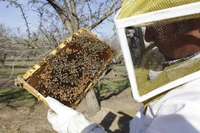
"description": "A bee inspector checks on a frame of bees to assess the colony strength near Turlock, Calif., in February. More than 30 percent of America's bee colonies died off over the winter.",
"title": "A bee inspector checks on a frame of bees to assess the colony strength near Turlock, Calif., in February. More than 30 percent of America's bee colonies died off over the winter.",
"credit": null,
"status": "inherit",
"isLoading": false,
"fetchFailed": false
},
"bayareabites_60710": {
"type": "attachments",
"id": "bayareabites_60710",
"meta": {
"index": "attachments_1716263798",
"site": "bayareabites",
"id": "60710",
"found": true
},
"parent": 60709,
"imgSizes": {
"kqedFullSize": {
"file": "https://ww2.kqed.org/app/uploads/sites/24/2013/04/51241303-1dc9bdc44ec53954456b8a56bc1c049d3e571ec3.jpg",
"width": 200,
"height": 149
}
},
"publishDate": 1366847362,
"modified": 1366847362,
"caption": null,
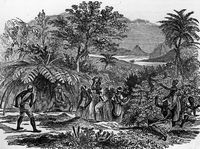
"description": "An overseer sits in the shade while workers collect coffee beans on a Brazilian plantation, circa 1750.",
"title": "An overseer sits in the shade while workers collect coffee beans on a Brazilian plantation, circa 1750.",
"credit": null,
"status": "inherit",
"isLoading": false,
"fetchFailed": false
},
"bayareabites_60686": {
"type": "attachments",
"id": "bayareabites_60686",
"meta": {
"index": "attachments_1716263798",
"site": "bayareabites",
"id": "60686",
"found": true
},
"parent": 60685,
"imgSizes": {
"kqedFullSize": {
"file": "https://ww2.kqed.org/app/uploads/sites/24/2013/04/ap958877892386-54c8abb2e29abc2b2b13b2f94b069f7d1cf82673.jpg",
"width": 200,
"height": 150
}
},
"publishDate": 1366845591,
"modified": 1366845591,
"caption": null,
"description": "By this time last year, 26 percent of the country's corn crop was already planted. A wet, cold spring means that only 4 percent is in the ground right now.",
"title": "By this time last year, 26 percent of the country's corn crop was already planted. A wet, cold spring means that only 4 percent is in the ground right now.",
"credit": null,
"status": "inherit",
"isLoading": false,
"fetchFailed": false
},
"bayareabites_60594": {
"type": "attachments",
"id": "bayareabites_60594",
"meta": {
"index": "attachments_1716263798",
"site": "bayareabites",
"id": "60594",
"found": true
},
"parent": 60587,
"imgSizes": {
"kqedFullSize": {
"file": "https://ww2.kqed.org/app/uploads/sites/24/2013/04/costarica178_custom-a058baefb4944e7d00c0290b909136ee7dca7b34.jpg",
"width": 200,
"height": 132
}
},
"publishDate": 1366820978,
"modified": 1366820978,
"caption": null,
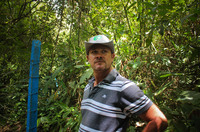
"description": "Luis Fernando Vasquez has been a coffee farmer in the central valley of Costa Rica his entire life",
"title": "Luis Fernando Vasquez has been a coffee farmer in the central valley of Costa Rica his entire life.",
"credit": null,
"status": "inherit",
"isLoading": false,
"fetchFailed": false
},
"bayareabites_60535": {
"type": "attachments",
"id": "bayareabites_60535",
"meta": {
"index": "attachments_1716263798",
"site": "bayareabites",
"id": "60535",
"found": true
},
"parent": 60534,
"imgSizes": {
"kqedFullSize": {
"file": "https://ww2.kqed.org/app/uploads/sites/24/2013/04/peachpicker-c27616dcf637bf36cdb55f9f146164dde2037318.jpg",
"width": 200,
"height": 149
}
},
"publishDate": 1366747515,
"modified": 1366747515,
"caption": null,
"description": "Falling Fruit tells you where you can pick peaches and other foods free for the taking around the world.",
"title": "Falling Fruit tells you where you can pick peaches and other foods free for the taking around the world.",
"credit": null,
"status": "inherit",
"isLoading": false,
"fetchFailed": false
},
"bayareabites_60422": {
"type": "attachments",
"id": "bayareabites_60422",
"meta": {
"index": "attachments_1716263798",
"site": "bayareabites",
"id": "60422",
"found": true
},
"parent": 60420,
"imgSizes": {
"kqedFullSize": {
"file": "https://ww2.kqed.org/app/uploads/sites/24/2013/04/003gettyimages_94646588_slide-6af1f8ba0a720d2c2864ede364b1e67ebab6b419.jpg",
"width": 200,
"height": 133
}
},
"publishDate": 1366664846,
"modified": 1366664846,
"caption": null,
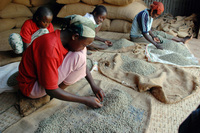
"description": "Workers separate beans in the coffee warehouse in Girbey village in Yergachefe, Gedo zone, Ethiopia, on Friday, Dec. 7, 2007. Beyene works 8 hours a day for 6 Ethiopian birr. Every day the world consumes over 1 billion cups of coffee, generating $80 billion in annual retail sales. That makes it the most valuable traded commodity after oil. Of this, coffee growers make on average 3 cents on every $3 latte bought. Photographer: Michael Tsegaye/Bloomberg News",
"title": "Workers separate beans at a coffee warehouse in Yirgacheffe, Ethiopia. Coffee originated in Ethiopia, but now grows in more than 50 countries around the world.",
"credit": null,
"status": "inherit",
"isLoading": false,
"fetchFailed": false
},
"bayareabites_60401": {
"type": "attachments",
"id": "bayareabites_60401",
"meta": {
"index": "attachments_1716263798",
"site": "bayareabites",
"id": "60401",
"found": true
},
"parent": 60012,
"imgSizes": {
"kqedFullSize": {
"file": "https://ww2.kqed.org/app/uploads/sites/24/2013/04/lettuce400x300.jpg",
"width": 400,
"height": 300
}
},
"publishDate": 1366526219,
"modified": 1366526219,
"caption": null,
"description": null,
"title": "lettuce400x300",
"credit": null,
"status": "inherit",
"isLoading": false,
"fetchFailed": false
},
"bayareabites_60184": {
"type": "attachments",
"id": "bayareabites_60184",
"meta": {
"index": "attachments_1716263798",
"site": "bayareabites",
"id": "60184",
"found": true
},
"parent": 60015,
"imgSizes": {
"kqedFullSize": {
"file": "https://ww2.kqed.org/app/uploads/sites/24/2013/04/Langstroth-frame400x300.jpg",
"width": 400,
"height": 300
}
},
"publishDate": 1366234413,
"modified": 1366234413,
"caption": null,
"description": null,
"title": "Langstroth-frame400x300",
"credit": null,
"status": "inherit",
"isLoading": false,
"fetchFailed": false
},
"bayareabites_59053": {
"type": "attachments",
"id": "bayareabites_59053",
"meta": {
"index": "attachments_1716263798",
"site": "bayareabites",
"id": "59053",
"found": true
},
"parent": 59052,
"imgSizes": {
"kqedFullSize": {
"file": "https://ww2.kqed.org/app/uploads/sites/24/2013/03/ap110201180970_vert-21b7accf385a89771c44e3cd838c7a080a3b34c3.jpg",
"width": 200,
"height": 266
}
},
"publishDate": 1364513615,
"modified": 1364513615,
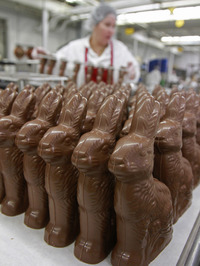
"caption": "While many people enjoy sweet treats -- like these chocolate bunnies -- the price of a key ingredient has some people bitter. A government subsidy program is criticized for keeping sugar prices too high. But as prices fall, the government may buy 400,000 tons of sugar to help struggling processors. Photo: Toby Talbot/AP",
"description": "While many people enjoy sweet treats -- like these chocolate bunnies -- the price of a key ingredient has some people bitter. A government subsidy program is criticized for keeping sugar prices too high. But as prices fall, the government may buy 400,000 tons of sugar to help struggling processors.",
"title": "While many people enjoy sweet treats — like these chocolate bunnies — the price of a key ingredient has some people bitter. A government subsidy program is criticized for keeping sugar prices too high. But as prices fall, the government may buy 400,000 tons of sugar to help struggling processors.",
"credit": null,
"status": "inherit",
"isLoading": false,
"fetchFailed": false
},
"bayareabites_58788": {
"type": "attachments",
"id": "bayareabites_58788",
"meta": {
"index": "attachments_1716263798",
"site": "bayareabites",
"id": "58788",
"found": true
},
"parent": 58787,
"imgSizes": {
"kqedFullSize": {
"file": "https://ww2.kqed.org/app/uploads/sites/24/2013/03/ap100322112986-9188eadeb3c1e910451ce408d08eaf0e6af3f943.jpg",
"width": 200,
"height": 149
}
},
"publishDate": 1364260929,
"modified": 1364260929,
"caption": null,
"description": "Workers clear honey from dead beehives at a bee farm east of Merced, Calif.",
"title": "Workers clear honey from dead beehives at a bee farm east of Merced, Calif.",
"credit": null,
"status": "inherit",
"isLoading": false,
"fetchFailed": false
},
"bayareabites_58668": {
"type": "attachments",
"id": "bayareabites_58668",
"meta": {
"index": "attachments_1716263798",
"site": "bayareabites",
"id": "58668",
"found": true
},
"parent": 58667,
"imgSizes": {
"kqedFullSize": {
"file": "https://ww2.kqed.org/app/uploads/sites/24/2013/03/21706062_h20522415_wide-b608947f501d6436d0b8cf4a50d79d41f2a25972.jpg",
"width": 200,
"height": 112
}
},
"publishDate": 1363911276,
"modified": 1363911276,
"caption": null,
"description": "Farmers harvest a sugar beet crop in Gilcrest, Colo.",
"title": "Farmers harvest a sugar beet crop in Gilcrest, Colo.",
"credit": null,
"status": "inherit",
"isLoading": false,
"fetchFailed": false
}
},
"audioPlayerReducer": {
"postId": "stream_live",
"isPaused": true,
"isPlaying": false,
"pfsActive": false,
"pledgeModalIsOpen": true,
"playerDrawerIsOpen": false,
"liveAudioPlayStartedAt": 0,
"liveAudioPlayContext": ""
},
"authorsReducer": {
"byline_bayareabites_61487": {
"type": "authors",
"id": "byline_bayareabites_61487",
"meta": {
"override": true
},
"slug": "byline_bayareabites_61487",
"name": "Dan Charles",
"isLoading": false
},
"byline_bayareabites_60709": {
"type": "authors",
"id": "byline_bayareabites_60709",
"meta": {
"override": true
},
"slug": "byline_bayareabites_60709",
"name": "Lydia Zuraw",
"isLoading": false
},
"byline_bayareabites_60685": {
"type": "authors",
"id": "byline_bayareabites_60685",
"meta": {
"override": true
},
"slug": "byline_bayareabites_60685",
"name": "Abbie Fentress Swanson",
"isLoading": false
},
"byline_bayareabites_60587": {
"type": "authors",
"id": "byline_bayareabites_60587",
"meta": {
"override": true
},
"slug": "byline_bayareabites_60587",
"name": "Dan Charles",
"isLoading": false
},
"byline_bayareabites_60534": {
"type": "authors",
"id": "byline_bayareabites_60534",
"meta": {
"override": true
},
"slug": "byline_bayareabites_60534",
"name": "Kristofor Husted",
"isLoading": false
},
"byline_bayareabites_60420": {
"type": "authors",
"id": "byline_bayareabites_60420",
"meta": {
"override": true
},
"slug": "byline_bayareabites_60420",
"name": "Dan Charles",
"isLoading": false
},
"byline_bayareabites_59339": {
"type": "authors",
"id": "byline_bayareabites_59339",
"meta": {
"override": true
},
"slug": "byline_bayareabites_59339",
"name": "Alastair Bland",
"isLoading": false
},
"byline_bayareabites_59052": {
"type": "authors",
"id": "byline_bayareabites_59052",
"meta": {
"override": true
},
"slug": "byline_bayareabites_59052",
"name": "Dan Bobkoff",
"isLoading": false
},
"byline_bayareabites_58787": {
"type": "authors",
"id": "byline_bayareabites_58787",
"meta": {
"override": true
},
"slug": "byline_bayareabites_58787",
"name": "Dan Charles",
"isLoading": false
},
"byline_bayareabites_58667": {
"type": "authors",
"id": "byline_bayareabites_58667",
"meta": {
"override": true
},
"slug": "byline_bayareabites_58667",
"name": "Maria Godoy",
"isLoading": false
},
"stephanie-rosenbaum": {
"type": "authors",
"id": "5038",
"meta": {
"index": "authors_1716337520",
"id": "5038",
"found": true
},
"name": "Stephanie Rosenbaum Klassen",
"firstName": "Stephanie",
"lastName": "Rosenbaum Klassen",
"slug": "stephanie-rosenbaum",
"email": "dixieday@aol.com",
"display_author_email": false,
"staff_mastheads": [],
"title": "KQED Contributor",
"bio": "Stephanie Rosenbaum Klassen is a longtime local food writer, author, and cook. Her books include The Art of Vintage Cocktails (Egg & Dart Press), World of Doughnuts (Egg & Dart Press); Kids in the Kitchen: Fun Food (Williams Sonoma); Honey from Flower to Table (Chronicle Books) and The Astrology Cookbook: A Cosmic Guide to Feasts of Love (Manic D Press). She has studied organic farming at UCSC and holds a certificate in Ecological Horticulture from the Center for Agroecology and Sustainable Food Systems. She does frequent cooking demonstrations at local farmers’ markets and has taught food writing at Media Alliance in San Francisco and the Continuing Education program at Stanford University. She has been the lead restaurant critic for the San Francisco Bay Guardian as well as for San Francisco magazine. She has been an assistant chef at the Headlands Center for the Arts, an artists' residency program located in the Marin Headlands, and a production cook at the Marin Sun Farms Cafe in Pt Reyes Station. After some 20 years in San Francisco interspersed with stints in Oakland, Santa Cruz, Brooklyn, and Manhattan, she recently moved to Sonoma county but still writes in San Francisco several days a week.",
"avatar": "https://secure.gravatar.com/avatar/26520681f950a766c2c0eb9872646dec42b88de07cc4cdd65958385671e93cf7?s=600&d=mm&r=g",
"twitter": "sjrosenbaum",
"bluesky": null,
"facebook": null,
"instagram": null,
"linkedin": null,
"sites": [
{
"site": "bayareabites",
"roles": [
"subscriber"
]
},
{
"site": "food",
"roles": [
"subscriber"
]
}
],
"headData": {
"title": "Stephanie Rosenbaum Klassen | KQED",
"description": "KQED Contributor",
"ogImgSrc": "https://secure.gravatar.com/avatar/26520681f950a766c2c0eb9872646dec42b88de07cc4cdd65958385671e93cf7?s=600&d=mm&r=g",
"twImgSrc": "https://secure.gravatar.com/avatar/26520681f950a766c2c0eb9872646dec42b88de07cc4cdd65958385671e93cf7?s=600&d=mm&r=g"
},
"isLoading": false,
"link": "/author/stephanie-rosenbaum"
},
"annamindess": {
"type": "authors",
"id": "5283",
"meta": {
"index": "authors_1716337520",
"id": "5283",
"found": true
},
"name": "Anna Mindess",
"firstName": "Anna",
"lastName": "Mindess",
"slug": "annamindess",
"email": "amindess@aol.com",
"display_author_email": false,
"staff_mastheads": [],
"title": "KQED Contributor",
"bio": "My passion is exploring the connections between food, travel and culture. I am a regular contributor to AFAR, Edible East Bay Magazine, Oakland Magazine, Berkeleyside's NOSH and other publications. I usually take a route that's slightly off the beaten path, like \u003ca href=\"http://edibleeastbay.com/online-magazine/fall-harvest-2017/fun-with-food-insults/\">collecting food-related insults\u003c/a> around the world or \u003ca href=\"https://www.afar.com/magazine/what-i-learned-hawking-sweet-potatoes-with-a-street-vendor-in-taiwan?email=amindess%40aol.com&utm_source=Sailthru&utm_medium=email&utm_campaign=Doctors%20Without%20Borders&utm_term=Daily%20Wander%20Newsletter\">volunteering with a Sweet Potato Mama\u003c/a> (street food seller) in Tapei.\r\n\r\nCulture is the thread that ties together my several careers. I also work as a sign language interpreter, educator and author. My study of Deaf culture has taken me around the world, where I am always on a quest to find Deaf-owned restaurants. I love making connections between my different worlds, for example in this AFAR story where I share \u003ca href=\"https://www.afar.com/magazine/tips-from-a-sign-language-interpreter-for-overcoming-language-barriers\">tips for communicating across cultures\u003c/a> that I learned from the real experts, Deaf people. Or this \u003ca href=\"http://edibleeastbay.com/online-magazine/fall-harvest-2017/deaf-chefs-compete/\">profile of a Deaf chef and culinary arts instructor\u003c/a> at the California School for the Deaf.\r\n\r\nTo see my visual/edible take on the world, follow me on Instagram: \u003ca href=\"https://www.instagram.com/annamindess/\">annamindess. \u003c/a>\r\n\r\nFor more of my stories: visit Contently \u003ca href=\"http://annamindess.contently.com\">annamindess.contently.com\u003c/a>",
"avatar": "https://secure.gravatar.com/avatar/23c79f04bf3d58b2e727d35ca471d184e8945f6ed82e41a0c062eab5e7dc2bb5?s=600&d=blank&r=g",
"twitter": null,
"bluesky": null,
"facebook": null,
"instagram": null,
"linkedin": null,
"sites": [
{
"site": "arts",
"roles": [
"subscriber"
]
},
{
"site": "bayareabites",
"roles": [
"author"
]
},
{
"site": "food",
"roles": [
"contributor"
]
}
],
"headData": {
"title": "Anna Mindess | KQED",
"description": "KQED Contributor",
"ogImgSrc": "https://secure.gravatar.com/avatar/23c79f04bf3d58b2e727d35ca471d184e8945f6ed82e41a0c062eab5e7dc2bb5?s=600&d=blank&r=g",
"twImgSrc": "https://secure.gravatar.com/avatar/23c79f04bf3d58b2e727d35ca471d184e8945f6ed82e41a0c062eab5e7dc2bb5?s=600&d=blank&r=g"
},
"isLoading": false,
"link": "/author/annamindess"
}
},
"pagesReducer": {
"bayareabites_category_sustainability": {
"type": "terms",
"id": "bayareabites_60",
"meta": {
"index": "terms_1716263798",
"site": "bayareabites",
"id": "60",
"score": 12.370369
},
"featImg": null,
"name": "sustainability, environment, climate change",
"description": null,
"taxonomy": "category",
"headData": {
"twImgId": null,
"twTitle": null,
"ogTitle": null,
"ogImgId": null,
"twDescription": null,
"description": null,
"title": "sustainability, environment, climate change Archives | KQED Bay Area Bites",
"ogDescription": null
},
"ttid": 23,
"slug": "sustainability",
"isLoading": false,
"title": "sustainability, environment, climate change",
"pageMeta": {
"site": "bayareabites",
"WpPageTemplate": "page-topic-editorial",
"currentPage": 32
},
"blocks": [
{
"blockName": "kqed/post-list",
"attrs": {
"layout": "cardArticle2",
"query": "posts/bayareabites?category=sustainability",
"seeMore": false,
"paginated": true,
"page": 32
}
},
{
"blockName": "kqed/ad"
}
]
}
},
"pfsSessionReducer": {},
"postsReducer": {
"stream_live": {
"type": "live",
"id": "stream_live",
"audioUrl": "https://streams.kqed.org/kqedradio",
"title": "Live Stream",
"excerpt": "Live Stream information currently unavailable.",
"link": "/radio",
"featImg": "",
"label": {
"name": "KQED Live",
"link": "/"
}
},
"stream_kqedNewscast": {
"type": "posts",
"id": "stream_kqedNewscast",
"audioUrl": "https://www.kqed.org/.stream/anon/radio/RDnews/newscast.mp3?_=1",
"title": "KQED Newscast",
"featImg": "",
"label": {
"name": "88.5 FM",
"link": "/"
}
},
"bayareabites_61487": {
"type": "posts",
"id": "bayareabites_61487",
"meta": {
"index": "posts_1716263798",
"site": "bayareabites",
"id": "61487",
"score": null,
"sort": [
1367972599000
]
},
"parent": 0,
"labelTerm": {
"site": "bayareabites"
},
"blocks": [],
"publishDate": 1367972599,
"format": "aside",
"disqusTitle": "Bee Deaths May Have Reached A Crisis Point For Crops",
"title": "Bee Deaths May Have Reached A Crisis Point For Crops",
"headTitle": "Bay Area Bites | KQED Food",
"content": "\u003cfigure id=\"attachment_61497\" class=\"wp-caption aligncenter\" style=\"max-width: 1024px\">\u003ca href=\"http://ww2.kqed.org/bayareabites/wp-content/uploads/sites/24/2013/05/bees-inspector.jpg\">\u003cimg src=\"http://ww2.kqed.org/bayareabites/wp-content/uploads/sites/24/2013/05/bees-inspector-1024x681.jpg\" alt=\"A bee inspector checks on a frame of bees to assess the colony strength near Turlock, Calif., in February. More than 30 percent of America's bee colonies died off over the winter. Photo: Gosia Wozniacka/AP\" width=\"1024\" height=\"681\" class=\"size-large wp-image-61497\">\u003c/a>\u003cfigcaption class=\"wp-caption-text\">A bee inspector checks on a frame of bees to assess the colony strength near Turlock, Calif., in February. More than 30 percent of America's bee colonies died off over the winter. Photo: Gosia Wozniacka/AP\u003c/figcaption>\u003c/figure>\n\u003cp>\u003cstrong>Listen to the Story\u003c/strong> on \u003ca href=\"http://www.npr.org/blogs/thesalt/2013/05/07/181990532/bee-deaths-may-have-reached-a-crisis-point-for-crops\">All Things Considered\u003c/a> [audio src=\"http://pd.npr.org/anon.npr-mp3/npr/atc/2013/05/20130507_atc_03.mp3\"] \u003c/p>\n\u003cp>Post by \u003ca href=\"http://www.npr.org/people/143160021/daniel-charles\">Dan Charles\u003c/a>, \u003ca href=\"http://www.npr.org/blogs/thesalt/2013/05/07/181990532/bee-deaths-may-have-reached-a-crisis-point-for-crops\">The Salt at NPR Food\u003c/a> (5/7/13)\u003c/p>\n\u003cp>According to a \u003ca href=\"http://beeinformed.org/2013/05/winter-loss-survey-2012-2013/\">new survey\u003c/a> of America's beekeepers, almost a third of the country's honeybee colonies did not make it through the winter.\u003c/p>\n\u003cp>That's been the case, in fact, almost every year since the U.S. Department of Agriculture began this annual survey, six years ago.\u003c/p>\n\u003cp>Over the past six years, on average, 30 percent of all the honeybee colonies in the U.S. died off over the winter. The worst year was five years ago. Last year was the best: Just 22 percent of the colonies died.\u003c/p>\n\u003cp>[ad fullwidth]\u003c/p>\n\u003cp>\"Last year gave us some hope,\" says \u003ca href=\"http://www.ars.usda.gov/pandp/people/people.htm?personid=10138\">Jeffrey Pettis\u003c/a>, research leader of the Agriculture Department's Bee Research Laboratory in Beltsville, Md.\u003c/p>\n\u003cp>But this year, the death rate was up again: 31 percent.\u003c/p>\n\u003cp>Six years ago, beekeepers were talking a lot about \"colony collapse disorder\" — colonies that seemed pretty healthy, but suddenly collapsed. The bees appeared to have flown away, abandoning their hives.\u003c/p>\n\u003cp>Beekeepers aren't seeing that so much anymore, Pettis says. They're mostly seeing colonies that just dwindle. As the crowd of bees gets smaller, it gets weaker.\u003c/p>\n\u003cp>\"They can't generate heat very well in the spring to rear brood. They can't generate heat to fly,\" he says.\u003c/p>\n\u003cp>Farmers who grow crops like almonds, blueberries and apples rely on commercial beekeepers to make sure their crops get pollinated.\u003c/p>\n\u003cp>But the number of honeybees has now dwindled to the point where there may not be enough to pollinate those crops.\u003c/p>\n\u003cp>Pettis says that this year, farmers came closer than ever to a true pollination crisis. The only thing that saved part of the almond crop in California was some lovely weather at pollination time.\u003c/p>\n\u003cp>\"We got incredibly good flight weather,\" Pettis says. \"So even those small colonies that can't fly very well in cool weather, they were able to fly because of good weather.\"\u003c/p>\n\u003cfigure id=\"attachment_61496\" class=\"wp-caption alignleft\" style=\"max-width: 290px\">\u003ca href=\"http://ww2.kqed.org/bayareabites/wp-content/uploads/sites/24/2013/05/bees-collect.jpg\">\u003cimg src=\"http://ww2.kqed.org/bayareabites/wp-content/uploads/sites/24/2013/05/bees-collect-290x217.jpg\" alt=\"A bee collects nectar from a fruit tree in West Bath, Maine. The number of honeybees has now dwindled to the point where there may not be enough to pollinate some major U.S. crops. Photo: Pat Wellenbach/AP\" width=\"290\" height=\"217\" class=\"size-medium wp-image-61496\">\u003c/a>\u003cfigcaption class=\"wp-caption-text\">A bee collects nectar from a fruit tree in West Bath, Maine. The number of honeybees has now dwindled to the point where there may not be enough to pollinate some major U.S. crops. Photo: Pat Wellenbach/AP\u003c/figcaption>\u003c/figure>\n\u003cp>Pettis says beekeepers can afford to lose only about 15 percent of their colonies each year. More than that, and the business won't be viable for long. Some commercial beekeepers are still in business, he says, just because they love it.\u003c/p>\n\u003cp>\"It's just something that gets in your blood, so you don't want to give up. [You say,] 'OK, it's 30 percent this year; I'll do better next year.' We're very much optimists,\" he says.\u003c/p>\n\u003cp>Beekeepers have a \u003ca href=\"http://gallery.mailchimp.com/5fd2b1aa990e63193af2a573d/files/What_Happened_to_the_Bees_This_Spring2013_opt.pdf\">whole list\u003c/a> of reasons for why so many colonies are dying. There's a nasty parasite called the \u003ca href=\"http://www.ca.uky.edu/entomology/entfacts/ef608.asp\">Varroa Mite\u003c/a>, which they can't get rid of. There are also bee-killing pesticides. And there are just fewer places in the country where a bee can find plenty of flowering plants that provide nectar and pollen.\u003c/p>\n\u003cp>That was especially true this past year. The same drought that left Midwestern corn fields parched and wilting also dried up wildflowers and starved the bees.\u003c/p>\n\u003cp>That was a natural disaster. But \u003ca href=\"http://www.life.illinois.edu/entomology/faculty/berenbaum.html\">May Berenbaum\u003c/a>, who chairs the Department of Entomology at the University of Illinois at Urbana-Champaign, says that most of the changes in the landscape are the result of people's decisions about what to do with their land.\u003c/p>\n\u003cp>\"I just wish there were more incentives for people — not just farmers — to plant a more diversified landscape that provides nutritional resources for all kinds of pollinators,\" she says. \"Plant more flowers! And be a little more tolerant of the weeds in the garden.\"\u003c/p>\n\u003cp>More controversial is the role of pesticides. Some beekeepers and environmentalists are calling for tighter restrictions on the use of one particular class of \u003ca href=\"http://ww2.kqed.org/bayareabites/2013/03/25/are-agricultures-most-popular-insecticides-killing-our-bees/\">pesticides called neonicotinoids\u003c/a>. Europe is about to ban some uses of these pesticides. But U.S. farmers and pesticide companies are opposed to any such move here, and the Environmental Protection Agency says it's not yet convinced that this would help bees very much.\u003c/p>\n\u003cp>\u003c/p>\n\u003cp>\u003cem>Copyright 2013 \u003ca href=\"http://www.npr.org/\">NPR\u003c/a>.\u003c/em> \u003c/p>\n\n",
"disqusIdentifier": "61487 http://blogs.kqed.org/bayareabites/?p=61487",
"disqusUrl": "https://ww2.kqed.org/bayareabites/2013/05/07/bee-deaths-may-have-reached-a-crisis-point-for-crops/",
"stats": {
"hasVideo": false,
"hasChartOrMap": false,
"hasAudio": true,
"hasPolis": false,
"wordCount": 753,
"hasGoogleForm": false,
"hasGallery": false,
"hasHearkenModule": false,
"iframeSrcs": [],
"paragraphCount": 24
},
"modified": 1367972599,
"excerpt": "The number of honeybees has now dwindled to the point where there may not be enough to pollinate some major U.S. crops, including almonds, blueberries and apples. And this year brought farmers closer than ever to a true pollination crisis.",
"headData": {
"twImgId": "",
"twTitle": "",
"ogTitle": "",
"ogImgId": "",
"twDescription": "",
"description": "The number of honeybees has now dwindled to the point where there may not be enough to pollinate some major U.S. crops, including almonds, blueberries and apples. And this year brought farmers closer than ever to a true pollination crisis.",
"title": "Bee Deaths May Have Reached A Crisis Point For Crops | KQED",
"ogDescription": "",
"schema": {
"@context": "https://schema.org",
"@type": "Article",
"headline": "Bee Deaths May Have Reached A Crisis Point For Crops",
"datePublished": "2013-05-07T17:23:19-07:00",
"dateModified": "2013-05-07T17:23:19-07:00",
"image": "https://cdn.kqed.org/wp-content/uploads/2020/02/KQED-OG-Image@1x.png"
}
},
"guestAuthors": [],
"slug": "bee-deaths-may-have-reached-a-crisis-point-for-crops",
"status": "publish",
"nprApiLink": "http://api.npr.org/query?id=181990532&apiKey=MDAxOTAwOTE4MDEyMTkxMDAzNjczZDljZA004",
"nprByline": "Dan Charles",
"nprStoryDate": "Tue, 07 May 2013 15:00:00 -0400",
"nprLastModifiedDate": "Tue, 07 May 2013 18:54:14 -0400",
"nprHtmlLink": "http://www.npr.org/blogs/thesalt/2013/05/07/181990532/bee-deaths-may-have-reached-a-crisis-point-for-crops?ft=3&f=181990532",
"nprAudio": "http://pd.npr.org/anon.npr-mp3/npr/atc/2013/05/20130507_atc_03.mp3?orgId=1&topicId=1025&ft=3&f=181990532",
"nprAudioM3u": "http://api.npr.org/m3u/1182000607-6b242f.m3u?orgId=1&topicId=1025&ft=3&f=181990532",
"nprStoryId": "181990532",
"nprRetrievedStory": "1",
"nprPubDate": "Tue, 07 May 2013 18:54:00 -0400",
"path": "/bayareabites/61487/bee-deaths-may-have-reached-a-crisis-point-for-crops",
"audioUrl": "http://pd.npr.org/anon.npr-mp3/npr/atc/2013/05/20130507_atc_03.mp3?orgId=1&topicId=1025&ft=3&f=181990532",
"audioDuration": null,
"audioTrackLength": null,
"parsedContent": [
{
"type": "contentString",
"content": "\u003cdiv class=\"post-body\">\u003cp>\u003cfigure id=\"attachment_61497\" class=\"wp-caption aligncenter\" style=\"max-width: 1024px\">\u003ca href=\"http://ww2.kqed.org/bayareabites/wp-content/uploads/sites/24/2013/05/bees-inspector.jpg\">\u003cimg src=\"http://ww2.kqed.org/bayareabites/wp-content/uploads/sites/24/2013/05/bees-inspector-1024x681.jpg\" alt=\"A bee inspector checks on a frame of bees to assess the colony strength near Turlock, Calif., in February. More than 30 percent of America's bee colonies died off over the winter. Photo: Gosia Wozniacka/AP\" width=\"1024\" height=\"681\" class=\"size-large wp-image-61497\">\u003c/a>\u003cfigcaption class=\"wp-caption-text\">A bee inspector checks on a frame of bees to assess the colony strength near Turlock, Calif., in February. More than 30 percent of America's bee colonies died off over the winter. Photo: Gosia Wozniacka/AP\u003c/figcaption>\u003c/figure>\n\u003cp>\u003cstrong>Listen to the Story\u003c/strong> on \u003ca href=\"http://www.npr.org/blogs/thesalt/2013/05/07/181990532/bee-deaths-may-have-reached-a-crisis-point-for-crops\">All Things Considered\u003c/a> \u003c/p>\u003c/div>",
"attributes": {
"named": {},
"numeric": []
}
},
{
"type": "component",
"content": "",
"name": "audio",
"attributes": {
"named": {
"src": "http://pd.npr.org/anon.npr-mp3/npr/atc/2013/05/20130507_atc_03.mp3",
"label": ""
},
"numeric": []
}
},
{
"type": "contentString",
"content": "\u003cdiv class=\"post-body\">\u003cp> \u003c/p>\n\u003cp>Post by \u003ca href=\"http://www.npr.org/people/143160021/daniel-charles\">Dan Charles\u003c/a>, \u003ca href=\"http://www.npr.org/blogs/thesalt/2013/05/07/181990532/bee-deaths-may-have-reached-a-crisis-point-for-crops\">The Salt at NPR Food\u003c/a> (5/7/13)\u003c/p>\n\u003cp>According to a \u003ca href=\"http://beeinformed.org/2013/05/winter-loss-survey-2012-2013/\">new survey\u003c/a> of America's beekeepers, almost a third of the country's honeybee colonies did not make it through the winter.\u003c/p>\n\u003cp>That's been the case, in fact, almost every year since the U.S. Department of Agriculture began this annual survey, six years ago.\u003c/p>\n\u003cp>Over the past six years, on average, 30 percent of all the honeybee colonies in the U.S. died off over the winter. The worst year was five years ago. Last year was the best: Just 22 percent of the colonies died.\u003c/p>\n\u003cp>\u003c/p>\u003c/div>",
"attributes": {
"named": {},
"numeric": []
}
},
{
"type": "component",
"content": "",
"name": "ad",
"attributes": {
"named": {
"label": "fullwidth"
},
"numeric": [
"fullwidth"
]
}
},
{
"type": "contentString",
"content": "\u003cdiv class=\"post-body\">\u003cp>\u003c/p>\n\u003cp>\"Last year gave us some hope,\" says \u003ca href=\"http://www.ars.usda.gov/pandp/people/people.htm?personid=10138\">Jeffrey Pettis\u003c/a>, research leader of the Agriculture Department's Bee Research Laboratory in Beltsville, Md.\u003c/p>\n\u003cp>But this year, the death rate was up again: 31 percent.\u003c/p>\n\u003cp>Six years ago, beekeepers were talking a lot about \"colony collapse disorder\" — colonies that seemed pretty healthy, but suddenly collapsed. The bees appeared to have flown away, abandoning their hives.\u003c/p>\n\u003cp>Beekeepers aren't seeing that so much anymore, Pettis says. They're mostly seeing colonies that just dwindle. As the crowd of bees gets smaller, it gets weaker.\u003c/p>\n\u003cp>\"They can't generate heat very well in the spring to rear brood. They can't generate heat to fly,\" he says.\u003c/p>\n\u003cp>Farmers who grow crops like almonds, blueberries and apples rely on commercial beekeepers to make sure their crops get pollinated.\u003c/p>\n\u003cp>But the number of honeybees has now dwindled to the point where there may not be enough to pollinate those crops.\u003c/p>\n\u003cp>Pettis says that this year, farmers came closer than ever to a true pollination crisis. The only thing that saved part of the almond crop in California was some lovely weather at pollination time.\u003c/p>\n\u003cp>\"We got incredibly good flight weather,\" Pettis says. \"So even those small colonies that can't fly very well in cool weather, they were able to fly because of good weather.\"\u003c/p>\n\u003cfigure id=\"attachment_61496\" class=\"wp-caption alignleft\" style=\"max-width: 290px\">\u003ca href=\"http://ww2.kqed.org/bayareabites/wp-content/uploads/sites/24/2013/05/bees-collect.jpg\">\u003cimg src=\"http://ww2.kqed.org/bayareabites/wp-content/uploads/sites/24/2013/05/bees-collect-290x217.jpg\" alt=\"A bee collects nectar from a fruit tree in West Bath, Maine. The number of honeybees has now dwindled to the point where there may not be enough to pollinate some major U.S. crops. Photo: Pat Wellenbach/AP\" width=\"290\" height=\"217\" class=\"size-medium wp-image-61496\">\u003c/a>\u003cfigcaption class=\"wp-caption-text\">A bee collects nectar from a fruit tree in West Bath, Maine. The number of honeybees has now dwindled to the point where there may not be enough to pollinate some major U.S. crops. Photo: Pat Wellenbach/AP\u003c/figcaption>\u003c/figure>\n\u003cp>Pettis says beekeepers can afford to lose only about 15 percent of their colonies each year. More than that, and the business won't be viable for long. Some commercial beekeepers are still in business, he says, just because they love it.\u003c/p>\n\u003cp>\"It's just something that gets in your blood, so you don't want to give up. [You say,] 'OK, it's 30 percent this year; I'll do better next year.' We're very much optimists,\" he says.\u003c/p>\n\u003cp>Beekeepers have a \u003ca href=\"http://gallery.mailchimp.com/5fd2b1aa990e63193af2a573d/files/What_Happened_to_the_Bees_This_Spring2013_opt.pdf\">whole list\u003c/a> of reasons for why so many colonies are dying. There's a nasty parasite called the \u003ca href=\"http://www.ca.uky.edu/entomology/entfacts/ef608.asp\">Varroa Mite\u003c/a>, which they can't get rid of. There are also bee-killing pesticides. And there are just fewer places in the country where a bee can find plenty of flowering plants that provide nectar and pollen.\u003c/p>\n\u003cp>That was especially true this past year. The same drought that left Midwestern corn fields parched and wilting also dried up wildflowers and starved the bees.\u003c/p>\n\u003cp>That was a natural disaster. But \u003ca href=\"http://www.life.illinois.edu/entomology/faculty/berenbaum.html\">May Berenbaum\u003c/a>, who chairs the Department of Entomology at the University of Illinois at Urbana-Champaign, says that most of the changes in the landscape are the result of people's decisions about what to do with their land.\u003c/p>\n\u003cp>\"I just wish there were more incentives for people — not just farmers — to plant a more diversified landscape that provides nutritional resources for all kinds of pollinators,\" she says. \"Plant more flowers! And be a little more tolerant of the weeds in the garden.\"\u003c/p>\n\u003cp>More controversial is the role of pesticides. Some beekeepers and environmentalists are calling for tighter restrictions on the use of one particular class of \u003ca href=\"http://ww2.kqed.org/bayareabites/2013/03/25/are-agricultures-most-popular-insecticides-killing-our-bees/\">pesticides called neonicotinoids\u003c/a>. Europe is about to ban some uses of these pesticides. But U.S. farmers and pesticide companies are opposed to any such move here, and the Environmental Protection Agency says it's not yet convinced that this would help bees very much.\u003c/p>\n\u003cp>\u003c/p>\n\u003cp>\u003cem>Copyright 2013 \u003ca href=\"http://www.npr.org/\">NPR\u003c/a>.\u003c/em> \u003c/p>\n\n\u003c/div>\u003c/p>",
"attributes": {
"named": {},
"numeric": []
}
}
],
"link": "/bayareabites/61487/bee-deaths-may-have-reached-a-crisis-point-for-crops",
"authors": [
"byline_bayareabites_61487"
],
"categories": [
"bayareabites_1874",
"bayareabites_10916",
"bayareabites_34",
"bayareabites_60"
],
"tags": [
"bayareabites_875",
"bayareabites_11677",
"bayareabites_11270",
"bayareabites_877",
"bayareabites_11446",
"bayareabites_11445",
"bayareabites_10921"
],
"featImg": "bayareabites_61488",
"label": "bayareabites"
},
"bayareabites_60709": {
"type": "posts",
"id": "bayareabites_60709",
"meta": {
"index": "posts_1716263798",
"site": "bayareabites",
"id": "60709",
"score": null,
"sort": [
1366848514000
]
},
"parent": 0,
"labelTerm": {
"site": "bayareabites"
},
"blocks": [],
"publishDate": 1366848514,
"format": "aside",
"disqusTitle": "How Coffee Influenced The Course Of History",
"title": "How Coffee Influenced The Course Of History",
"headTitle": "Bay Area Bites | KQED Food",
"content": "\u003cfigure id=\"attachment_60714\" class=\"wp-caption aligncenter\" style=\"max-width: 624px\">\u003ca href=\"http://ww2.kqed.org/bayareabites/wp-content/uploads/sites/24/2013/04/coffeeslavery.jpg\">\u003cimg src=\"http://ww2.kqed.org/bayareabites/wp-content/uploads/sites/24/2013/04/coffeeslavery.jpg\" alt=\"An overseer sits in the shade while workers collect coffee beans on a Brazilian plantation, circa 1750. Photo: Hulton Archive/Getty Images\" width=\"624\" height=\"467\" class=\"size-full wp-image-60714\">\u003c/a>\u003cfigcaption class=\"wp-caption-text\">An overseer sits in the shade while workers collect coffee beans on a Brazilian plantation, circa 1750.\u003cbr>Photo: Hulton Archive/Getty Images\u003c/figcaption>\u003c/figure>\n\u003cp>\u003cstrong>Listen to the Story\u003c/strong> on \u003ca href=\"http://www.npr.org/blogs/thesalt/2013/04/24/178625554/how-coffee-influenced-the-course-of-history\">Morning Edition\u003c/a> [audio src=\"http://pd.npr.org/anon.npr-mp3/npr/me/2013/04/20130424_me_14.mp3\"] \u003c/p>\n\u003cp>Post by Lydia Zuraw, \u003ca href=\"http://www.npr.org/blogs/thesalt/2013/04/24/178625554/how-coffee-influenced-the-course-of-history\">The Salt at NPR Food\u003c/a> (04/24/13)\u003c/p>\n\u003cp>Coffee is a powerful beverage. On a personal level, it helps keep us awake and active. On a much broader level, it has helped shape our history and continues to shape our culture.\u003c/p>\n\u003cp>Coffee plants grow wild in Ethiopia and were probably used by nomadic tribes for thousands of years, but it wasn't until the 1400s that people figured out they could roast its seeds. \"Then it really took off,\" historian \u003ca href=\"http://markpendergrast.com/\">Mark Pendergrast\u003c/a> — author of \u003cem>Uncommon Grounds: The History of Coffee and How It Transformed Our World\u003c/em>\u003cem> \u003c/em>— tells \u003cem>Morning Edition\u003c/em> host Steve Inskeep.\u003c/p>\n\u003cp>By the 1500s, he says, the drink had spread to coffeehouses across the Arab world. Within another 150 years, it took Europe by storm.\u003c/p>\n\u003cp>[ad fullwidth]\u003c/p>\n\u003cp>\u003ca href=\"http://www.npr.org/books/titles/178812261/uncommon-grounds-the-history-of-coffee-and-how-it-transformed-our-world\">\u003cimg src=\"http://ww2.kqed.org/bayareabites/wp-content/uploads/sites/24/2013/04/coffeeslavery2.jpg\" alt=\"Uncommon Grounds\" width=\"250\" class=\"alignleft size-full wp-image-60715\">\u003c/a>\"It actually had a major impact on the rise of business,\" Pendergrast says. Coffeehouses became a spot not just to enjoy a cup but to exchange ideas.\u003c/p>\n\u003cp>The insurer \u003ca href=\"http://www.lloyds.com/lloyds/about-us/history\">Lloyd's of London\u003c/a> was founded hundreds of years ago in one of London's 2,000 coffeehouses, he notes. Literature, newspapers and even the works of great composers like Bach and Beethoven were also spawned in coffeehouses.\u003c/p>\n\u003cp>It is often said that after the Boston Tea Party of 1773, when American colonists raided British tea ships and threw crates of tea into the harbor, Americans universally switched over to drinking coffee.\u003c/p>\n\u003cp>\"There's a lot of truth to the story, I found,\" Pendergrast says. He cites a letter John Adams wrote to his wife, Abigail, in which the Founding Father proclaims his love of tea but says he will have to learn to embrace coffee instead, because drinking tea had become unpatriotic.\u003c/p>\n\u003cp>For all the upsides coffee has brought the modern world, it also ushered in its fair share of downsides, too. Europeans carried coffee with them as they colonized various parts of the world, and this frequently meant they enslaved people in order to grow it.\u003c/p>\n\u003cp>\"One of the ironies about coffee is it makes people think. It sort of creates egalitarian places — coffeehouses where people can come together — and so the French Revolution and the American Revolution were \u003ca href=\"http://www.npr.org/blogs/thesalt/2012/01/10/144988133/drink-coffee-off-with-your-head\">planned\u003c/a> in coffeehouses,\" Pendergrast says. \"On the other hand, that same coffee that was fueling the French Revolution was also being produced by African slaves who had been taken to San Domingo, which we now know as Haiti.\"\u003c/p>\n\u003cp>In Brazil — where slavery was legal until 1888 — coffee plantations would use slash-and-burn agriculture, tearing down rain forests and planting coffee trees that depleted the nutrients in soil. Once the soil had been sapped, growers would move on to another place.\u003c/p>\n\u003cp>And then there are history's many coffee naysayers. In 1511, for example, the governor of Mecca banned coffee because his medical advisers warned it was bad for people's health. In 1674, women in London were convinced that coffee made their husbands impotent.\u003c/p>\n\u003cp>And yet, in an age when \u003ca href=\"http://artsbeat.blogs.nytimes.com/2008/02/29/beer-soup-for-the-overcaffeinated-soul/\">beer soup\u003c/a> was the breakfast of champions, coffee had one undeniable health benefit: \"Western civilization sobered up,\" Pendergrast says. Coffee, he says, \"had a very good impact in many ways on our civilization, even though it was, for a long time, grown by slaves.\" \u003c/p>\n\u003cp>\u003c/p>\n\u003cp>\u003cem>Copyright 2013 \u003ca href=\"http://www.npr.org/\">NPR\u003c/a>.\u003c/em>\u003c/p>\n\n",
"disqusIdentifier": "60709 http://blogs.kqed.org/bayareabites/?p=60709",
"disqusUrl": "https://ww2.kqed.org/bayareabites/2013/04/24/how-coffee-influenced-the-course-of-history/",
"stats": {
"hasVideo": false,
"hasChartOrMap": false,
"hasAudio": true,
"hasPolis": false,
"wordCount": 590,
"hasGoogleForm": false,
"hasGallery": false,
"hasHearkenModule": false,
"iframeSrcs": [],
"paragraphCount": 17
},
"modified": 1366848514,
"excerpt": "Once people figured out how to roast the seeds of the \u003cem>Coffea\u003c/em> plant in the 1400s, coffee took over the world. In doing so, it fueled creativity, revolutions, new business ventures, literature, music — and slavery.",
"headData": {
"twImgId": "",
"twTitle": "",
"ogTitle": "",
"ogImgId": "",
"twDescription": "",
"description": "Once people figured out how to roast the seeds of the Coffea plant in the 1400s, coffee took over the world. In doing so, it fueled creativity, revolutions, new business ventures, literature, music — and slavery.",
"title": "How Coffee Influenced The Course Of History | KQED",
"ogDescription": "",
"schema": {
"@context": "https://schema.org",
"@type": "Article",
"headline": "How Coffee Influenced The Course Of History",
"datePublished": "2013-04-24T17:08:34-07:00",
"dateModified": "2013-04-24T17:08:34-07:00",
"image": "https://cdn.kqed.org/wp-content/uploads/2020/02/KQED-OG-Image@1x.png"
}
},
"guestAuthors": [],
"slug": "how-coffee-influenced-the-course-of-history",
"status": "publish",
"nprApiLink": "http://api.npr.org/query?id=178625554&apiKey=MDAxOTAwOTE4MDEyMTkxMDAzNjczZDljZA004",
"nprByline": "Lydia Zuraw",
"nprStoryDate": "Wed, 24 Apr 2013 04:00:00 -0400",
"nprLastModifiedDate": "Wed, 24 Apr 2013 12:32:43 -0400",
"nprHtmlLink": "http://www.npr.org/blogs/thesalt/2013/04/24/178625554/how-coffee-influenced-the-course-of-history?ft=3&f=178625554",
"nprAudio": "http://pd.npr.org/anon.npr-mp3/npr/me/2013/04/20130424_me_14.mp3?orgId=1&topicId=1136&ft=3&f=178625554",
"nprAudioM3u": "http://api.npr.org/m3u/1178754341-90a954.m3u?orgId=1&topicId=1136&ft=3&f=178625554",
"nprStoryId": "178625554",
"nprRetrievedStory": "1",
"nprPubDate": "Wed, 24 Apr 2013 12:32:00 -0400",
"path": "/bayareabites/60709/how-coffee-influenced-the-course-of-history",
"audioUrl": "http://pd.npr.org/anon.npr-mp3/npr/me/2013/04/20130424_me_14.mp3?orgId=1&topicId=1136&ft=3&f=178625554",
"audioDuration": null,
"audioTrackLength": null,
"parsedContent": [
{
"type": "contentString",
"content": "\u003cdiv class=\"post-body\">\u003cp>\u003cfigure id=\"attachment_60714\" class=\"wp-caption aligncenter\" style=\"max-width: 624px\">\u003ca href=\"http://ww2.kqed.org/bayareabites/wp-content/uploads/sites/24/2013/04/coffeeslavery.jpg\">\u003cimg src=\"http://ww2.kqed.org/bayareabites/wp-content/uploads/sites/24/2013/04/coffeeslavery.jpg\" alt=\"An overseer sits in the shade while workers collect coffee beans on a Brazilian plantation, circa 1750. Photo: Hulton Archive/Getty Images\" width=\"624\" height=\"467\" class=\"size-full wp-image-60714\">\u003c/a>\u003cfigcaption class=\"wp-caption-text\">An overseer sits in the shade while workers collect coffee beans on a Brazilian plantation, circa 1750.\u003cbr>Photo: Hulton Archive/Getty Images\u003c/figcaption>\u003c/figure>\n\u003cp>\u003cstrong>Listen to the Story\u003c/strong> on \u003ca href=\"http://www.npr.org/blogs/thesalt/2013/04/24/178625554/how-coffee-influenced-the-course-of-history\">Morning Edition\u003c/a> \u003c/p>\u003c/div>",
"attributes": {
"named": {},
"numeric": []
}
},
{
"type": "component",
"content": "",
"name": "audio",
"attributes": {
"named": {
"src": "http://pd.npr.org/anon.npr-mp3/npr/me/2013/04/20130424_me_14.mp3",
"label": ""
},
"numeric": []
}
},
{
"type": "contentString",
"content": "\u003cdiv class=\"post-body\">\u003cp> \u003c/p>\n\u003cp>Post by Lydia Zuraw, \u003ca href=\"http://www.npr.org/blogs/thesalt/2013/04/24/178625554/how-coffee-influenced-the-course-of-history\">The Salt at NPR Food\u003c/a> (04/24/13)\u003c/p>\n\u003cp>Coffee is a powerful beverage. On a personal level, it helps keep us awake and active. On a much broader level, it has helped shape our history and continues to shape our culture.\u003c/p>\n\u003cp>Coffee plants grow wild in Ethiopia and were probably used by nomadic tribes for thousands of years, but it wasn't until the 1400s that people figured out they could roast its seeds. \"Then it really took off,\" historian \u003ca href=\"http://markpendergrast.com/\">Mark Pendergrast\u003c/a> — author of \u003cem>Uncommon Grounds: The History of Coffee and How It Transformed Our World\u003c/em>\u003cem> \u003c/em>— tells \u003cem>Morning Edition\u003c/em> host Steve Inskeep.\u003c/p>\n\u003cp>By the 1500s, he says, the drink had spread to coffeehouses across the Arab world. Within another 150 years, it took Europe by storm.\u003c/p>\n\u003cp>\u003c/p>\u003c/div>",
"attributes": {
"named": {},
"numeric": []
}
},
{
"type": "component",
"content": "",
"name": "ad",
"attributes": {
"named": {
"label": "fullwidth"
},
"numeric": [
"fullwidth"
]
}
},
{
"type": "contentString",
"content": "\u003cdiv class=\"post-body\">\u003cp>\u003c/p>\n\u003cp>\u003ca href=\"http://www.npr.org/books/titles/178812261/uncommon-grounds-the-history-of-coffee-and-how-it-transformed-our-world\">\u003cimg src=\"http://ww2.kqed.org/bayareabites/wp-content/uploads/sites/24/2013/04/coffeeslavery2.jpg\" alt=\"Uncommon Grounds\" width=\"250\" class=\"alignleft size-full wp-image-60715\">\u003c/a>\"It actually had a major impact on the rise of business,\" Pendergrast says. Coffeehouses became a spot not just to enjoy a cup but to exchange ideas.\u003c/p>\n\u003cp>The insurer \u003ca href=\"http://www.lloyds.com/lloyds/about-us/history\">Lloyd's of London\u003c/a> was founded hundreds of years ago in one of London's 2,000 coffeehouses, he notes. Literature, newspapers and even the works of great composers like Bach and Beethoven were also spawned in coffeehouses.\u003c/p>\n\u003cp>It is often said that after the Boston Tea Party of 1773, when American colonists raided British tea ships and threw crates of tea into the harbor, Americans universally switched over to drinking coffee.\u003c/p>\n\u003cp>\"There's a lot of truth to the story, I found,\" Pendergrast says. He cites a letter John Adams wrote to his wife, Abigail, in which the Founding Father proclaims his love of tea but says he will have to learn to embrace coffee instead, because drinking tea had become unpatriotic.\u003c/p>\n\u003cp>For all the upsides coffee has brought the modern world, it also ushered in its fair share of downsides, too. Europeans carried coffee with them as they colonized various parts of the world, and this frequently meant they enslaved people in order to grow it.\u003c/p>\n\u003cp>\"One of the ironies about coffee is it makes people think. It sort of creates egalitarian places — coffeehouses where people can come together — and so the French Revolution and the American Revolution were \u003ca href=\"http://www.npr.org/blogs/thesalt/2012/01/10/144988133/drink-coffee-off-with-your-head\">planned\u003c/a> in coffeehouses,\" Pendergrast says. \"On the other hand, that same coffee that was fueling the French Revolution was also being produced by African slaves who had been taken to San Domingo, which we now know as Haiti.\"\u003c/p>\n\u003cp>In Brazil — where slavery was legal until 1888 — coffee plantations would use slash-and-burn agriculture, tearing down rain forests and planting coffee trees that depleted the nutrients in soil. Once the soil had been sapped, growers would move on to another place.\u003c/p>\n\u003cp>And then there are history's many coffee naysayers. In 1511, for example, the governor of Mecca banned coffee because his medical advisers warned it was bad for people's health. In 1674, women in London were convinced that coffee made their husbands impotent.\u003c/p>\n\u003cp>And yet, in an age when \u003ca href=\"http://artsbeat.blogs.nytimes.com/2008/02/29/beer-soup-for-the-overcaffeinated-soul/\">beer soup\u003c/a> was the breakfast of champions, coffee had one undeniable health benefit: \"Western civilization sobered up,\" Pendergrast says. Coffee, he says, \"had a very good impact in many ways on our civilization, even though it was, for a long time, grown by slaves.\" \u003c/p>\n\u003cp>\u003c/p>\n\u003cp>\u003cem>Copyright 2013 \u003ca href=\"http://www.npr.org/\">NPR\u003c/a>.\u003c/em>\u003c/p>\n\n\u003c/div>\u003c/p>",
"attributes": {
"named": {},
"numeric": []
}
}
],
"link": "/bayareabites/60709/how-coffee-influenced-the-course-of-history",
"authors": [
"byline_bayareabites_60709"
],
"categories": [
"bayareabites_2090",
"bayareabites_10916",
"bayareabites_2035",
"bayareabites_34",
"bayareabites_60",
"bayareabites_1248"
],
"tags": [
"bayareabites_125",
"bayareabites_11611",
"bayareabites_10921"
],
"featImg": "bayareabites_60710",
"label": "bayareabites"
},
"bayareabites_60685": {
"type": "posts",
"id": "bayareabites_60685",
"meta": {
"index": "posts_1716263798",
"site": "bayareabites",
"id": "60685",
"score": null,
"sort": [
1366847086000
]
},
"parent": 0,
"labelTerm": {
"site": "bayareabites"
},
"blocks": [],
"publishDate": 1366847086,
"format": "aside",
"disqusTitle": "For Corn, Fickle Weather Makes For Uncertain Yields",
"title": "For Corn, Fickle Weather Makes For Uncertain Yields",
"headTitle": "Bay Area Bites | KQED Food",
"content": "\u003cfigure id=\"attachment_60694\" class=\"wp-caption aligncenter\" style=\"max-width: 624px\">\u003ca href=\"http://ww2.kqed.org/bayareabites/wp-content/uploads/sites/24/2013/04/corn1.jpg\">\u003cimg src=\"http://ww2.kqed.org/bayareabites/wp-content/uploads/sites/24/2013/04/corn1.jpg\" alt=\"Missouri farmer Gary Riedel says wet weather will put him about a month behind last year's planting. Photo: Abbie Fentress Swanson for NPR\" width=\"624\" height=\"468\" class=\"size-full wp-image-60694\">\u003c/a>\u003cfigcaption class=\"wp-caption-text\">Missouri farmer Gary Riedel says wet weather will put him about a month behind last year's planting.\u003cbr>Photo: Abbie Fentress Swanson for NPR\u003c/figcaption>\u003c/figure>\n\u003cp>\u003cstrong>Listen to the Story\u003c/strong> on \u003ca href=\"http://www.npr.org/blogs/thesalt/2013/04/24/177783540/for-corn-fickle-weather-makes-for-uncertain-yields\">Morning Edition\u003c/a> [audio src=\"http://pd.npr.org/anon.npr-mp3/npr/me/2013/04/20130424_me_09.mp3\"] \u003c/p>\n\u003cp>Post by \u003ca href=\"http://www.kbia.org/people/abbie-fentress-swanson\">Abbie Fentress Swanson\u003c/a>, \u003ca href=\"http://www.npr.org/blogs/thesalt/2013/04/24/177783540/for-corn-fickle-weather-makes-for-uncertain-yields\">The Salt at NPR Food\u003c/a> (4/24/13)\u003c/p>\n\u003cp>Last year's drought wreaked havoc on farmers' fields in much of the Midwest, cutting crop yields and forcing livestock producers to cull their herds. This spring, the rain that farmers needed so badly in 2012 has finally returned. But maybe too much, and at the wrong time.\u003c/p>\n\u003cp>It's almost the end of April, which is prime time to plant corn. But farmers need a break in the rain so they can get this year's crops in the ground and try to lock in good yields at harvest.\u003c/p>\n\u003cp>\"There are other things that can limit yield, and planting date isn't necessarily even the most important one,\" says University of Missouri agronomist \u003ca href=\"http://plantsci.missouri.edu/faculty/myersb.cfm\">Brent Myers\u003c/a>. \"But it is something we have to consider. And we want to try to get that corn planted in that timely window of, say, after the first week of April to the first week in May.\"\u003c/p>\n\u003cp>[ad fullwidth]\u003c/p>\n\u003cp>At his farm in Centralia, Mo., Gary Riedel, 69, in his green baseball cap and Western-style shirt, is just itching to plant corn on 1,000 acres of his 2,300-acre farm. He pulls open the lid from one of his planter's hoppers and shows me the salmon-colored corn seed that's all ready to go.\u003c/p>\n\u003cp>\"Last year, I believe I started planting on the 28th of March, and this year, it may be the 28th of April, the way it's beginning to look,\" Riedel says. \"It's just that the later we get, the more we are subject to problems from pollination due to hot weather.\"\u003c/p>\n\u003cp>Excessive heat and dryness can hurt corn pollination and stunt growth, leading to lower yields. So farmers try to plant early — especially with corn still getting about $6.50 a bushel. (As The Salt \u003ca href=\"http://www.npr.org/blogs/thesalt/2012/08/14/158752153/secret-side-of-the-drought-corn-farmers-will-benefit\">reported\u003c/a> last year, corn farmers made serious money, even though yields were down.) The U.S. Department of Agriculture says \u003ca href=\"http://usda01.library.cornell.edu/usda/current/CropProg/CropProg-04-22-2013.pdf\">by this time last year\u003c/a>, 26 percent of the country's corn crop was already planted. This year, farmers only have 4 percent of their corn in the ground.\u003c/p>\n\u003cp>We walk out to one of his misty fields, and Riedel points to the reason.\u003c/p>\n\u003cp>\"See there, you can see a water puddle out in the field,\" he says. \"We're going to have to wait till that dries up.\"\u003c/p>\n\u003cp>But even when the puddle dries, it still might take a while to get corn into the ground. Planting in cold, wet soil can cause all kinds of problems for corn seedlings, including that they can't take root or emerge above ground.\u003c/p>\n\u003cfigure id=\"attachment_60696\" class=\"wp-caption alignleft\" style=\"max-width: 250px\">\u003ca href=\"http://ww2.kqed.org/bayareabites/wp-content/uploads/sites/24/2013/04/corn2.jpg\">\u003cimg src=\"http://ww2.kqed.org/bayareabites/wp-content/uploads/sites/24/2013/04/corn2.jpg\" alt=\"By this time last year, 26 percent of the country's corn crop was already planted. A wet, cold spring means that only 4 percent is in the ground right now. Photo: Seth Perlman/AP\" width=\"250\" class=\"size-full wp-image-60696\">\u003c/a>\u003cfigcaption class=\"wp-caption-text\">By this time last year, 26 percent of the country's corn crop was already planted. A wet, cold spring means that only 4 percent is in the ground right now. Photo: Seth Perlman/AP\u003c/figcaption>\u003c/figure>\n\u003cp>\"We need some period of dry weather to help dry up the soil so producers can get out in the fields,\" says climatologist \u003ca href=\"http://www.snr.missouri.edu/seas/faculty/guinan-p.php\">Pat Guinan\u003c/a>, who has been forecasting the weather in Missouri for a quarter century. \"Perhaps there may be some drier conditions, which will help. But right now, things are a little too wet across a good part of the state. And not only Missouri. Much of the Corn Belt is very wet. Especially from Iowa, over into Minnesota, parts of Wisconsin, Illinois and on into Indiana, we have some very wet conditions.\"\u003c/p>\n\u003cp>But even up until January, this moisture is what farmers had been hoping for. Last year's drought led to a \u003ca href=\"http://www.nass.usda.gov/Newsroom/2013/01_11_2013.asp\">13 percent drop in corn production\u003c/a>, which in turn led to tight corn stocks and \u003ca href=\"http://www.npr.org/blogs/thesalt/2012/10/01/162127460/does-your-gas-tank-hold-enough-food-to-feed-22-people\">increased competition for corn\u003c/a> between ethanol plants and livestock producers. The shortfall is also hurting corn exports, which are now at a 40-year low.\u003c/p>\n\u003cp>\"A good production year would mean there would be less competition and would improve margins,\" says Sterling Liddell, an agricultural economist with Rabo AgriFinance. \"Especially in the cattle industry, which has suffered the most.\"\u003c/p>\n\u003cp>Last year's drought moved many farmers, including Gary Riedel, to increase the amount of crop insurance they carry. Peggy Smart, 77, also upped her coverage. Along with her family, she plants corn, soybeans and wheat on 6,000 acres of Missouri River bottomland in Tebbetts, Mo.\u003c/p>\n\u003cp>But nothing is planted yet. \"We just don't have enough sunshine,\" she says.\u003c/p>\n\u003cp>Both Smart and Riedel are hoping to minimize the risks of bad weather by trying out drought- and flood-tolerant hybrid seeds this year. But first, they have to wait for the soil to dry out.\u003c/p>\n\u003cp>\"It's just crazy that one year is one way and one is another,\" she says. \"We don't have to go to Las Vegas to gamble, because farming is the biggest gamble there is.\"\u003c/p>\n\u003cul>\n\u003cstrong>Related Stories\u003c/strong>\n\u003cli>\u003ca href=\"http://www.npr.org/blogs/thesalt/2012/07/25/157355792/meat-producers-and-ultimately-consumers-hurt-by-drought\">Meat Producers And, Ultimately, Consumers Hurt By Drought\u003c/a>\u003c/li>\n\u003cli>\u003ca href=\"http://www.npr.org/blogs/thesalt/2012/08/14/158752153/secret-side-of-the-drought-corn-farmers-will-benefit\">Secret Side Of The Drought: Many Corn Farmers Will Benefit\u003c/a>\u003c/li>\n\u003cli>\u003ca href=\"http://www.npr.org/2012/07/24/157243527/despite-crop-insurance-drought-still-stings-farmers\">Despite Crop Insurance, Drought Still Stings Farmers\u003c/a>\u003c/li>\n\u003c/ul>\n\u003cp>\u003c/p>\n\u003cp>\u003cem>Abbie Fentress Swanson reports from Missouri for Harvest Public Media, an agriculture-reporting project involving nine NPR member stations in the Midwest. For more stories about farm and food, check out\u003c/em> \u003ca href=\"http://harvestpublicmedia.org/\">Harvest Public Media\u003c/a>.\u003cbr>\n\u003cem>\u003cbr>\nCopyright 2013 \u003ca href=\"http://www.npr.org/\">NPR\u003c/a>.\u003c/em> \u003c/p>\n\n",
"disqusIdentifier": "60685 http://blogs.kqed.org/bayareabites/?p=60685",
"disqusUrl": "https://ww2.kqed.org/bayareabites/2013/04/24/for-corn-fickle-weather-makes-for-uncertain-yields/",
"stats": {
"hasVideo": false,
"hasChartOrMap": false,
"hasAudio": true,
"hasPolis": false,
"wordCount": 913,
"hasGoogleForm": false,
"hasGallery": false,
"hasHearkenModule": false,
"iframeSrcs": [],
"paragraphCount": 21
},
"modified": 1366847086,
"excerpt": "Corn production was down last year thanks to drought. This year, conditions are too cold and wet for farmers to plant the crop. Without a break in the clouds pretty soon, there may be another shortage of the crop at harvest time.",
"headData": {
"twImgId": "",
"twTitle": "",
"ogTitle": "",
"ogImgId": "",
"twDescription": "",
"description": "Corn production was down last year thanks to drought. This year, conditions are too cold and wet for farmers to plant the crop. Without a break in the clouds pretty soon, there may be another shortage of the crop at harvest time.",
"title": "For Corn, Fickle Weather Makes For Uncertain Yields | KQED",
"ogDescription": "",
"schema": {
"@context": "https://schema.org",
"@type": "Article",
"headline": "For Corn, Fickle Weather Makes For Uncertain Yields",
"datePublished": "2013-04-24T16:44:46-07:00",
"dateModified": "2013-04-24T16:44:46-07:00",
"image": "https://cdn.kqed.org/wp-content/uploads/2020/02/KQED-OG-Image@1x.png"
}
},
"guestAuthors": [],
"slug": "for-corn-fickle-weather-makes-for-uncertain-yields",
"status": "publish",
"nprApiLink": "http://api.npr.org/query?id=177783540&apiKey=MDAxOTAwOTE4MDEyMTkxMDAzNjczZDljZA004",
"nprByline": "Abbie Fentress Swanson",
"nprStoryDate": "Wed, 24 Apr 2013 04:00:00 -0400",
"nprLastModifiedDate": "Wed, 24 Apr 2013 11:34:18 -0400",
"nprHtmlLink": "http://www.npr.org/blogs/thesalt/2013/04/24/177783540/for-corn-fickle-weather-makes-for-uncertain-yields?ft=3&f=177783540",
"nprAudio": "http://pd.npr.org/anon.npr-mp3/npr/me/2013/04/20130424_me_09.mp3?orgId=1&topicId=1053&ft=3&f=177783540",
"nprAudioM3u": "http://api.npr.org/m3u/1178753552-304208.m3u?orgId=1&topicId=1053&ft=3&f=177783540",
"nprStoryId": "177783540",
"nprRetrievedStory": "1",
"nprPubDate": "Wed, 24 Apr 2013 09:06:00 -0400",
"path": "/bayareabites/60685/for-corn-fickle-weather-makes-for-uncertain-yields",
"audioUrl": "http://pd.npr.org/anon.npr-mp3/npr/me/2013/04/20130424_me_09.mp3?orgId=1&topicId=1053&ft=3&f=177783540",
"audioDuration": null,
"audioTrackLength": null,
"parsedContent": [
{
"type": "contentString",
"content": "\u003cdiv class=\"post-body\">\u003cp>\u003cfigure id=\"attachment_60694\" class=\"wp-caption aligncenter\" style=\"max-width: 624px\">\u003ca href=\"http://ww2.kqed.org/bayareabites/wp-content/uploads/sites/24/2013/04/corn1.jpg\">\u003cimg src=\"http://ww2.kqed.org/bayareabites/wp-content/uploads/sites/24/2013/04/corn1.jpg\" alt=\"Missouri farmer Gary Riedel says wet weather will put him about a month behind last year's planting. Photo: Abbie Fentress Swanson for NPR\" width=\"624\" height=\"468\" class=\"size-full wp-image-60694\">\u003c/a>\u003cfigcaption class=\"wp-caption-text\">Missouri farmer Gary Riedel says wet weather will put him about a month behind last year's planting.\u003cbr>Photo: Abbie Fentress Swanson for NPR\u003c/figcaption>\u003c/figure>\n\u003cp>\u003cstrong>Listen to the Story\u003c/strong> on \u003ca href=\"http://www.npr.org/blogs/thesalt/2013/04/24/177783540/for-corn-fickle-weather-makes-for-uncertain-yields\">Morning Edition\u003c/a> \u003c/p>\u003c/div>",
"attributes": {
"named": {},
"numeric": []
}
},
{
"type": "component",
"content": "",
"name": "audio",
"attributes": {
"named": {
"src": "http://pd.npr.org/anon.npr-mp3/npr/me/2013/04/20130424_me_09.mp3",
"label": ""
},
"numeric": []
}
},
{
"type": "contentString",
"content": "\u003cdiv class=\"post-body\">\u003cp> \u003c/p>\n\u003cp>Post by \u003ca href=\"http://www.kbia.org/people/abbie-fentress-swanson\">Abbie Fentress Swanson\u003c/a>, \u003ca href=\"http://www.npr.org/blogs/thesalt/2013/04/24/177783540/for-corn-fickle-weather-makes-for-uncertain-yields\">The Salt at NPR Food\u003c/a> (4/24/13)\u003c/p>\n\u003cp>Last year's drought wreaked havoc on farmers' fields in much of the Midwest, cutting crop yields and forcing livestock producers to cull their herds. This spring, the rain that farmers needed so badly in 2012 has finally returned. But maybe too much, and at the wrong time.\u003c/p>\n\u003cp>It's almost the end of April, which is prime time to plant corn. But farmers need a break in the rain so they can get this year's crops in the ground and try to lock in good yields at harvest.\u003c/p>\n\u003cp>\"There are other things that can limit yield, and planting date isn't necessarily even the most important one,\" says University of Missouri agronomist \u003ca href=\"http://plantsci.missouri.edu/faculty/myersb.cfm\">Brent Myers\u003c/a>. \"But it is something we have to consider. And we want to try to get that corn planted in that timely window of, say, after the first week of April to the first week in May.\"\u003c/p>\n\u003cp>\u003c/p>\u003c/div>",
"attributes": {
"named": {},
"numeric": []
}
},
{
"type": "component",
"content": "",
"name": "ad",
"attributes": {
"named": {
"label": "fullwidth"
},
"numeric": [
"fullwidth"
]
}
},
{
"type": "contentString",
"content": "\u003cdiv class=\"post-body\">\u003cp>\u003c/p>\n\u003cp>At his farm in Centralia, Mo., Gary Riedel, 69, in his green baseball cap and Western-style shirt, is just itching to plant corn on 1,000 acres of his 2,300-acre farm. He pulls open the lid from one of his planter's hoppers and shows me the salmon-colored corn seed that's all ready to go.\u003c/p>\n\u003cp>\"Last year, I believe I started planting on the 28th of March, and this year, it may be the 28th of April, the way it's beginning to look,\" Riedel says. \"It's just that the later we get, the more we are subject to problems from pollination due to hot weather.\"\u003c/p>\n\u003cp>Excessive heat and dryness can hurt corn pollination and stunt growth, leading to lower yields. So farmers try to plant early — especially with corn still getting about $6.50 a bushel. (As The Salt \u003ca href=\"http://www.npr.org/blogs/thesalt/2012/08/14/158752153/secret-side-of-the-drought-corn-farmers-will-benefit\">reported\u003c/a> last year, corn farmers made serious money, even though yields were down.) The U.S. Department of Agriculture says \u003ca href=\"http://usda01.library.cornell.edu/usda/current/CropProg/CropProg-04-22-2013.pdf\">by this time last year\u003c/a>, 26 percent of the country's corn crop was already planted. This year, farmers only have 4 percent of their corn in the ground.\u003c/p>\n\u003cp>We walk out to one of his misty fields, and Riedel points to the reason.\u003c/p>\n\u003cp>\"See there, you can see a water puddle out in the field,\" he says. \"We're going to have to wait till that dries up.\"\u003c/p>\n\u003cp>But even when the puddle dries, it still might take a while to get corn into the ground. Planting in cold, wet soil can cause all kinds of problems for corn seedlings, including that they can't take root or emerge above ground.\u003c/p>\n\u003cfigure id=\"attachment_60696\" class=\"wp-caption alignleft\" style=\"max-width: 250px\">\u003ca href=\"http://ww2.kqed.org/bayareabites/wp-content/uploads/sites/24/2013/04/corn2.jpg\">\u003cimg src=\"http://ww2.kqed.org/bayareabites/wp-content/uploads/sites/24/2013/04/corn2.jpg\" alt=\"By this time last year, 26 percent of the country's corn crop was already planted. A wet, cold spring means that only 4 percent is in the ground right now. Photo: Seth Perlman/AP\" width=\"250\" class=\"size-full wp-image-60696\">\u003c/a>\u003cfigcaption class=\"wp-caption-text\">By this time last year, 26 percent of the country's corn crop was already planted. A wet, cold spring means that only 4 percent is in the ground right now. Photo: Seth Perlman/AP\u003c/figcaption>\u003c/figure>\n\u003cp>\"We need some period of dry weather to help dry up the soil so producers can get out in the fields,\" says climatologist \u003ca href=\"http://www.snr.missouri.edu/seas/faculty/guinan-p.php\">Pat Guinan\u003c/a>, who has been forecasting the weather in Missouri for a quarter century. \"Perhaps there may be some drier conditions, which will help. But right now, things are a little too wet across a good part of the state. And not only Missouri. Much of the Corn Belt is very wet. Especially from Iowa, over into Minnesota, parts of Wisconsin, Illinois and on into Indiana, we have some very wet conditions.\"\u003c/p>\n\u003cp>But even up until January, this moisture is what farmers had been hoping for. Last year's drought led to a \u003ca href=\"http://www.nass.usda.gov/Newsroom/2013/01_11_2013.asp\">13 percent drop in corn production\u003c/a>, which in turn led to tight corn stocks and \u003ca href=\"http://www.npr.org/blogs/thesalt/2012/10/01/162127460/does-your-gas-tank-hold-enough-food-to-feed-22-people\">increased competition for corn\u003c/a> between ethanol plants and livestock producers. The shortfall is also hurting corn exports, which are now at a 40-year low.\u003c/p>\n\u003cp>\"A good production year would mean there would be less competition and would improve margins,\" says Sterling Liddell, an agricultural economist with Rabo AgriFinance. \"Especially in the cattle industry, which has suffered the most.\"\u003c/p>\n\u003cp>Last year's drought moved many farmers, including Gary Riedel, to increase the amount of crop insurance they carry. Peggy Smart, 77, also upped her coverage. Along with her family, she plants corn, soybeans and wheat on 6,000 acres of Missouri River bottomland in Tebbetts, Mo.\u003c/p>\n\u003cp>But nothing is planted yet. \"We just don't have enough sunshine,\" she says.\u003c/p>\n\u003cp>Both Smart and Riedel are hoping to minimize the risks of bad weather by trying out drought- and flood-tolerant hybrid seeds this year. But first, they have to wait for the soil to dry out.\u003c/p>\n\u003cp>\"It's just crazy that one year is one way and one is another,\" she says. \"We don't have to go to Las Vegas to gamble, because farming is the biggest gamble there is.\"\u003c/p>\n\u003cul>\n\u003cstrong>Related Stories\u003c/strong>\n\u003cli>\u003ca href=\"http://www.npr.org/blogs/thesalt/2012/07/25/157355792/meat-producers-and-ultimately-consumers-hurt-by-drought\">Meat Producers And, Ultimately, Consumers Hurt By Drought\u003c/a>\u003c/li>\n\u003cli>\u003ca href=\"http://www.npr.org/blogs/thesalt/2012/08/14/158752153/secret-side-of-the-drought-corn-farmers-will-benefit\">Secret Side Of The Drought: Many Corn Farmers Will Benefit\u003c/a>\u003c/li>\n\u003cli>\u003ca href=\"http://www.npr.org/2012/07/24/157243527/despite-crop-insurance-drought-still-stings-farmers\">Despite Crop Insurance, Drought Still Stings Farmers\u003c/a>\u003c/li>\n\u003c/ul>\n\u003cp>\u003c/p>\n\u003cp>\u003cem>Abbie Fentress Swanson reports from Missouri for Harvest Public Media, an agriculture-reporting project involving nine NPR member stations in the Midwest. For more stories about farm and food, check out\u003c/em> \u003ca href=\"http://harvestpublicmedia.org/\">Harvest Public Media\u003c/a>.\u003cbr>\n\u003cem>\u003cbr>\nCopyright 2013 \u003ca href=\"http://www.npr.org/\">NPR\u003c/a>.\u003c/em> \u003c/p>\n\n\u003c/div>\u003c/p>",
"attributes": {
"named": {},
"numeric": []
}
}
],
"link": "/bayareabites/60685/for-corn-fickle-weather-makes-for-uncertain-yields",
"authors": [
"byline_bayareabites_60685"
],
"categories": [
"bayareabites_1874",
"bayareabites_10916",
"bayareabites_34",
"bayareabites_60"
],
"tags": [
"bayareabites_515",
"bayareabites_10921"
],
"featImg": "bayareabites_60686",
"label": "bayareabites"
},
"bayareabites_60587": {
"type": "posts",
"id": "bayareabites_60587",
"meta": {
"index": "posts_1716263798",
"site": "bayareabites",
"id": "60587",
"score": null,
"sort": [
1366823452000
]
},
"parent": 0,
"labelTerm": {
"site": "bayareabites"
},
"blocks": [],
"publishDate": 1366823452,
"format": "aside",
"disqusTitle": "Coffee For A Cause: What Do Those Feel-Good Labels Deliver?",
"title": "Coffee For A Cause: What Do Those Feel-Good Labels Deliver?",
"headTitle": "Bay Area Bites | KQED Food",
"content": "\u003cfigure id=\"attachment_60614\" class=\"wp-caption aligncenter\" style=\"max-width: 1024px\">\u003ca href=\"http://ww2.kqed.org/bayareabites/wp-content/uploads/sites/24/2013/04/coffee1.jpg\">\u003cimg src=\"http://ww2.kqed.org/bayareabites/wp-content/uploads/sites/24/2013/04/coffee1-1024x675.jpg\" alt=\"Luis Fernando Vasquez has been a coffee farmer in the central valley of Costa Rica his entire life. Photo: Dan Charles/NPR\" width=\"1024\" height=\"675\" class=\"size-large wp-image-60614\">\u003c/a>\u003cfigcaption class=\"wp-caption-text\">Luis Fernando Vasquez has been a coffee farmer in the central valley of Costa Rica his entire life. Photo: Dan Charles/NPR\u003c/figcaption>\u003c/figure>\n\u003cp>\u003cstrong>Listen to the Story\u003c/strong> on \u003ca href=\"http://www.npr.org/blogs/thesalt/2013/04/24/177757797/coffee-for-a-cause-what-do-those-feel-good-labels-deliver\">Morning Edition\u003c/a> [audio src=\"http://pd.npr.org/anon.npr-mp3/npr/me/2013/04/20130424_me_03.mp3\"] \u003c/p>\n\u003cp>Post by \u003ca href=\"http://www.npr.org/people/143160021/daniel-charles\">Dan Charles\u003c/a>, \u003ca href=\"http://www.npr.org/blogs/thesalt/2013/04/24/177757797/coffee-for-a-cause-what-do-those-feel-good-labels-deliver\">The Salt at NPR Food\u003c/a> (4/24/13)\u003c/p>\n\u003cp>What does it take to find guilt-free coffee?\u003c/p>\n\u003cp>Much of our coffee comes from places where the environment is endangered and workers earn very little — sometimes, just a few dollars for a whole day's work. Coffee farmers have helped cut down tropical forests, and most of them use pesticides.\u003c/p>\n\u003cp>It doesn't take much effort, though, to find bags of coffee with labels that promise social and environmental improvements. Among the best-known are \u003ca href=\"http://www.fairtrade.net/\">Fairtrade\u003c/a> or \u003ca href=\"http://www.rainforest-alliance.org/agriculture/certification\">Rain Forest Alliance Certified\u003c/a>.\u003c/p>\n\u003cp>[ad fullwidth]\u003c/p>\n\u003cp>I went to Costa Rica to find out what those labels mean and how well they deliver on their promises.\u003c/p>\n\u003cp>I visited, for example, a hillside in the country's central valley, near the town of San Ramon, where Luis Fernando Vasquez grows coffee.\u003c/p>\n\u003cp>Vasquez loves showing off his farm, which also produces bananas and honey. He's lived here his whole life and learned to grow coffee from his father. But in the past few years, he says, he's changed the way he farms.\u003c/p>\n\u003cfigure id=\"attachment_60615\" class=\"wp-caption aligncenter\" style=\"max-width: 1024px\">\u003ca href=\"http://ww2.kqed.org/bayareabites/wp-content/uploads/sites/24/2013/04/coffee2.jpg\">\u003cimg src=\"http://ww2.kqed.org/bayareabites/wp-content/uploads/sites/24/2013/04/coffee2-1024x574.jpg\" alt=\"Luis Fernando Vasquez's coffee farm in Costa Rica. Vasquez says farmers have changed their methods in recent years. Where they once would cut down trees, he says, "now we are coming to understand that the tree plays a role" in a healthy coffee plant ecosystem. Photo: Dan Charles/NPR\" width=\"1024\" height=\"574\" class=\"size-large wp-image-60615\">\u003c/a>\u003cfigcaption class=\"wp-caption-text\">Luis Fernando Vasquez's coffee farm in Costa Rica. Vasquez says farmers have changed their methods in recent years. Where they once would cut down trees, he says, \"now we are coming to understand that the tree plays a role\" in a healthy coffee plant ecosystem. Photo: Dan Charles/NPR\u003c/figcaption>\u003c/figure>\n\u003cp>\"Before, a tree used to be an obstacle, and we'd just cut it down,\" he says. \"Now, we are coming to understand that the tree plays a role, and it can coexist with our commercial coffee plantation.\"\u003c/p>\n\u003cp>Coffee plants that grow in the shade of trees produce fewer beans, but many people say those beans taste better. In addition, trees help reduce soil erosion and provide a home for wildlife.\u003c/p>\n\u003cp>Vasquez points at the ground, which is covered by a layer of dead, decaying leaves. \"We used to pick all that up, bring it to one central point on the farm and then set it on fire,\" he says. \"But now I know that if I leave it there, it will actually help improve soil fertility.\"\u003c/p>\n\u003cp>There also have been changes that I can't see: He's using fewer pesticides and recycling his trash.\u003c/p>\n\u003cp>Vasquez is enthusiastic about these changes, but they were not originally his idea.\u003c/p>\n\u003cp>They're the result of a long chain of decisions reaching all to way back to American consumers contemplating their many coffee options in the local Stop & Shop.\u003c/p>\n\u003cp>Several people who are part of that chain are also with me here on the farm.\u003c/p>\n\u003cfigure id=\"attachment_60621\" class=\"wp-caption alignleft\" style=\"max-width: 200px\">\u003ca href=\"http://ww2.kqed.org/bayareabites/wp-content/uploads/sites/24/2013/04/coffee8.png\">\u003cimg src=\"http://ww2.kqed.org/bayareabites/wp-content/uploads/sites/24/2013/04/coffee8.png\" alt=\"Fair Trade? Rainforest Alliance? What's In A Coffee Certification\" width=\"200\" class=\"size-full wp-image-60621\">\u003c/a>\u003cfigcaption class=\"wp-caption-text\">Fair Trade? Rainforest Alliance? What's In A Coffee Certification\u003cbr>\u003cstrong>Learn More About the Different Coffee Certifications Below\u003c/strong>\u003c/figcaption>\u003c/figure>\n\u003cp>First, there's Sergio Gurdian, who works for \u003ca href=\"http://www.ecomtrading.com/en/our-products/coffee/about-ecom-coffee-113.html\">ECOM Trading\u003c/a>, the second-biggest coffee trader in the world. ECOM buys beans from farmers and sells them to big companies like Starbucks or Nestle.\u003c/p>\n\u003cp>Gurdian and his colleagues went to Vasquez and persuaded him to change his farming practices.\u003c/p>\n\u003cp>Why? \"I think that the world is changing right now,\" says Gurdian.\u003c/p>\n\u003cp>To be specific, one of ECOM's big customers is changing. \u003ca href=\"http://www.nespresso.com/us/en/home\">Nespresso\u003c/a>, a coffee business owned by Nestle, has decided that it wants most of its coffee to carry a particular label: Rainforest Alliance Certified.\u003c/p>\n\u003cp>And \u003ca href=\"http://www.rainforest-alliance.org/\">Rainforest Alliance\u003c/a>, the environmental group behind this label, has a whole set of rules for farmers, called the \u003ca href=\"http://www.rainforest-alliance.org/agriculture/standards\">Sustainable Agriculture Standard\u003c/a>.\u003c/p>\n\u003cp>ECOM took on the job of getting farmers onboard. \"We said, 'OK, it's time to show the producers that sustainability is OK, and that we can offer lots of benefits, not only for them, the producers, but also for their farms,\" says Gurdian.\u003c/p>\n\u003cp>There was also a small financial incentive. Now that Vasquez, the farmer, is Rainforest Alliance Certified, he gets about 15 cents more for each pound of coffee.\u003c/p>\n\u003cp>The number of farmers like him is growing. According to Rainforest Alliance, 4.5 percent of all coffee produced in 2012 came from Rainforest Alliance Certified farms. That's a 45 percent increase over 2011.\u003c/p>\n\u003cp>There are other labels, of course: fair trade; organic; direct trade.\u003c/p>\n\u003cp>All of these labels promise slightly different things, and every promise involves some compromises.\u003c/p>\n\u003cp>For instance: Rainforest Alliance runs a relatively strict system, with independent auditors who inspect farms at random. If the auditors find prohibited pesticides, or workers earning less than the minimum wage, that farm can lose its certification. Sometimes, a whole group of neighboring farms also can be decertified.\u003c/p>\n\u003cp>You may be glad to know that the program has teeth. On the other hand, those rules shut out many of the smallest, poorest farmers.\u003c/p>\n\u003cp>Emilia Umaña, who also helps farmers get Rainforest Alliance certification, says the rules ask for things that are too expensive for many small farmers to buy — like special showers for workers to use after applying pesticides. \"One of the biggest flaws in the system is that they use the same rule book, worldwide, for every type of producer in every company,\" she says.\u003c/p>\n\u003cp>If you're specifically interested in helping small farmers, maybe you should look for fair trade coffee. Its whole focus is small coffee producers. Traditionally, all fair trade coffee has come from cooperatives of small producers.\u003c/p>\n\u003cfigure id=\"attachment_60617\" class=\"wp-caption aligncenter\" style=\"max-width: 1024px\">\u003ca href=\"http://ww2.kqed.org/bayareabites/wp-content/uploads/sites/24/2013/04/coffee4.jpg\">\u003cimg src=\"http://ww2.kqed.org/bayareabites/wp-content/uploads/sites/24/2013/04/coffee4-1024x574.jpg\" alt=\"Christian Mora is the general manager of AFAORCA, a fair trade coffee cooperative in Costa Rica. Photo: Dan Charles/NPR\" width=\"1024\" height=\"574\" class=\"size-large wp-image-60617\">\u003c/a>\u003cfigcaption class=\"wp-caption-text\">Christian Mora is the general manager of AFAORCA, a fair trade coffee cooperative in Costa Rica. Photo: Dan Charles/NPR\u003c/figcaption>\u003c/figure>\n\u003cp>Christian Mora is general manager of one of these co-ops, called \u003ca href=\"http://afaorca.com/online/modules/info/\">AFAORCA\u003c/a>, in Costa Rica. It has just 24 members.\u003c/p>\n\u003cp>To get fair trade certification, he says, you have to show a fair trade organization that your cooperative keeps an honest set of books, that it operates democratically, and that it treats workers fairly.\u003c/p>\n\u003cp>\"They come in and interview people who work in the coffee fields, and they make sure that salaries are fair, and that labor rights are respected, according to the law,\" he says.\u003c/p>\n\u003cp>Once certified, the cooperative gets 20 cents extra for every pound of fair trade coffee that it sells. The cooperative then decides how to spend that \"social premium.\" It could pass the money on to its members, or do something else with it, such as improve a local school.\u003c/p>\n\u003cp>But there are compromises with fair trade, too. It doesn't deal with environmental practices on the farms, and some buyers complain that fair trade coffee isn't always good-quality coffee.\u003c/p>\n\u003cp>At the moment, in fact, the fair trade movement is going through a \u003ca href=\"http://www.marcgunther.com/a-schism-over-fair-trade/\">bitter split\u003c/a>. One group, \u003ca href=\"http://www.fairtradeusa.org/\">Fair Trade USA\u003c/a>, wants to \u003ca href=\"http://international.cgdev.org/publication/my-fair-trade-coffee-really-fair-trends-and-challenges-fair-trade-certification\">expand\u003c/a> the label so it can include coffee from individual farmers — even big estates.\u003c/p>\n\u003cp>Mora isn't happy about this expanded definition of fair trade. \"It could be a problem, because the goal of the label gets lost, and it becomes more of a marketing tool for big businesses, and just makes it easier for them to sell their product,\" he says.\u003c/p>\n\u003cp>This tension — between trying to be a real alternative to the mainstream and joining the mainstream — comes up all the time in these certification schemes.\u003c/p>\n\u003cp>The toughest environmental certification is probably one called \u003ca href=\"http://nationalzoo.si.edu/scbi/migratorybirds/coffee/\">Smithsonian Bird Friendly coffee\u003c/a>. This coffee is grown organically, with no manufactured fertilizer or pesticides, in fields that also contain 10 different kinds of shade trees. Only a few farmers, though, are willing to grow coffee this way.\u003c/p>\n\u003cfigure id=\"attachment_60618\" class=\"wp-caption aligncenter\" style=\"max-width: 1024px\">\u003ca href=\"http://ww2.kqed.org/bayareabites/wp-content/uploads/sites/24/2013/04/coffee5.jpg\">\u003cimg src=\"http://ww2.kqed.org/bayareabites/wp-content/uploads/sites/24/2013/04/coffee5-1024x681.jpg\" alt=\"Angelina Zuñiga Godinez and Fanny Cordero Mora grow coffee for Coopetarrazu, one of Costa Rica's largest coffee cooperatives. These bags of coffee are labeled with the towns where they are grow. Photo: Dan Charles/NPR\" width=\"1024\" height=\"681\" class=\"size-large wp-image-60618\">\u003c/a>\u003cfigcaption class=\"wp-caption-text\">Angelina Zuñiga Godinez and Fanny Cordero Mora grow coffee for Coopetarrazu, one of Costa Rica's largest coffee cooperatives. These bags of coffee are labeled with the towns where they are grow. Photo: Dan Charles/NPR\u003c/figcaption>\u003c/figure>\n\u003cp>On the other end of the spectrum, Starbucks runs a really big \u003ca href=\"http://www.starbucks.com/responsibility/sourcing/coffee\">program\u003c/a> called C.A.F.E. Practices (Coffee and Farmer Equity Practices). Like Rainforest Alliance certification, this scheme includes both environmental and social standards, but the Starbucks audits aren't really tests that a farmer can flunk. They're more like counseling sessions. If farmers are doing something wrong, Starbucks will tell them how to improve, but it still buys their coffee.\u003c/p>\n\u003cp>Yet for all their differences and compromises, coffee producers in Costa Rica say these certification systems, collectively, have had a real impact.\u003c/p>\n\u003cp>Carlos Rivera Chavarria, general manager of one of the country's largest cooperatives, \u003ca href=\"http://www.cafetarrazu.com/\">Coopetarrazu\u003c/a>, says certifications all helped farmers to hear what consumers wanted, much more directly than ever before.\u003c/p>\n\u003cp>These programs allowed his producers to \"rediscover quality coffee,\" he says.\u003c/p>\n\u003cp>Coopetarrazu sells coffee under the fair trade label. In addition, some of its farmers are Rainforest Alliance Certified, and the co-op sells a lot of coffee to Starbucks.\u003c/p>\n\u003cp>Now the co-op is experimenting with \"direct trade.\" It's selling small lots of coffee from particular villages to roasters who can pass along the story of that coffee, and that village, to consumers who want to know even more about the sources of their coffee.\u003c/p>\n\u003ch3>What's In A Certification?\u003c/h3>\n\u003cp>\u003cstrong>Organic\u003c/strong>\u003cbr>\n\u003ca href=\"http://ww2.kqed.org/bayareabites/wp-content/uploads/sites/24/2013/04/coffee6.png\">\u003cimg src=\"http://ww2.kqed.org/bayareabites/wp-content/uploads/sites/24/2013/04/coffee6.png\" alt=\"USDA Organic - USDA.gov\" width=\"200\" class=\"alignnone size-full wp-image-60619\">\u003c/a>\u003c/p>\n\u003cul>\n\u003cli>Regulates growing methods, prohibiting GMO seeds and synthetic substances\u003c/li>\n\u003cli>Forty countries carry organic coffee farms, with the first certified in 1967\u003c/li>\n\u003cli>Averages a $0.255/lb increase in market price for coffee producers\u003c/li>\n\u003cli>298 million pounds organic coffee grown in 2010\u003c/li>\n\u003c/ul>\n\u003chr>\n\u003cp>\u003cstrong>Fair Trade International\u003c/strong>\u003cbr>\n\u003ca href=\"http://ww2.kqed.org/bayareabites/wp-content/uploads/sites/24/2013/04/coffee7.png\">\u003cimg src=\"http://ww2.kqed.org/bayareabites/wp-content/uploads/sites/24/2013/04/coffee7.png\" alt=\"Fairtrade International - Fairtrade.net\" width=\"200\" class=\"size-full wp-image-60620\">\u003c/a>\u003c/p>\n\u003cul>\n\u003cli>Seeks to increase welfare for small farmers and communities\u003c/li>\n\u003cli>Guarantees a minimum market price plus 10- to 20-cent premium per pound\u003c/li>\n\u003cli>Premium is paid to cooperatives to either distribute to farmers or use for community development projects\u003c/li>\n\u003cli>790 million pounds grown in 2010\u003c/li>\n\u003c/ul>\n\u003chr>\n\u003cp>\u003cstrong>Rainforest Alliance\u003c/strong>\u003c/p>\n\u003cp>\u003ca href=\"http://ww2.kqed.org/bayareabites/wp-content/uploads/sites/24/2013/04/coffee8.png\">\u003cimg src=\"http://ww2.kqed.org/bayareabites/wp-content/uploads/sites/24/2013/04/coffee8.png\" alt=\"Rainforest Alliance\" width=\"200\" class=\"alignnone size-full wp-image-60621\">\u003c/a>\u003c/p>\n\u003cul>\n\u003cli>Emphasizes sustainability in social, environmental, economic and ethical areas\u003c/li>\n\u003cli>Developed in early 1990s\u003c/li>\n\u003cli>Recently gained the support of major buyers including McDonalds and Nespresso\u003c/li>\n\u003cli>Expanded from 197 million pounds grown in 2007 to 827 million pounds in 2012\u003c/li>\n\u003c/ul>\n\u003chr>\n\u003cstrong>Smithsonian Migratory Bird Center 'Bird Friendly'\u003c/strong>\n\u003cp>\u003ca href=\"http://ww2.kqed.org/bayareabites/wp-content/uploads/sites/24/2013/04/coffee9.jpg\">\u003cimg src=\"http://ww2.kqed.org/bayareabites/wp-content/uploads/sites/24/2013/04/coffee9.jpg\" alt=\"Smithsonian Migratory Bird Center\" width=\"200\" class=\"alignnone size-full wp-image-60622\">\u003c/a>\u003c/p>\n\u003cul>\n\u003cli>Promotes biodiversity through the planting of trees for habitat and shade cover\u003c/li>\n\u003cli>Requires organic certification and the use of specific trees\u003c/li>\n\u003cli>Certification can lead to a 5- to 10-cent premium over organic coffee prices\u003c/li>\n\u003cli>One of the smallest certification programs, with approximately 10.4 million pounds of coffee sold in 2011\u003c/li>\n\u003c/ul>\n\u003chr>\n\u003cp>\u003cstrong>Starbucks Coffee And Farmer Equity 'CAFE'\u003c/strong>\u003c/p>\n\u003cp>\u003ca href=\"http://ww2.kqed.org/bayareabites/wp-content/uploads/sites/24/2013/04/coffee10.png\">\u003cimg src=\"http://ww2.kqed.org/bayareabites/wp-content/uploads/sites/24/2013/04/coffee10.png\" alt=\"Starbucks\" width=\"200\" class=\"alignnone size-full wp-image-60613\">\u003c/a>\u003c/p>\n\u003cul>\n\u003cli>Verification criteria developed over past 14 years with Conservation International\u003c/li>\n\u003cli>Evaluates workers' rights, benefits, environmental protection and sustainability\u003c/li>\n\u003cli>Starbucks aims for 100 percent-certified coffee supply by 2015\u003c/li>\n\u003cli>In 2012, 90 percent of supply — approximately 491 million pounds — was from CAFE-verified farms\u003c/li>\n\u003c/ul>\n\u003chr>\n\u003cp>[ad floatright]\u003c/p>\n\u003cp>\u003cem>Copyright 2013 \u003ca href=\"http://www.npr.org/\">NPR\u003c/a>.\u003c/em> \u003c/p>\n\n",
"disqusIdentifier": "60587 http://blogs.kqed.org/bayareabites/?p=60587",
"disqusUrl": "https://ww2.kqed.org/bayareabites/2013/04/24/coffee-for-a-cause-what-do-those-feel-good-labels-deliver/",
"stats": {
"hasVideo": false,
"hasChartOrMap": false,
"hasAudio": true,
"hasPolis": false,
"wordCount": 1765,
"hasGoogleForm": false,
"hasGallery": false,
"hasHearkenModule": false,
"iframeSrcs": [],
"paragraphCount": 54
},
"modified": 1366823452,
"excerpt": "It doesn't take much effort to find bags of coffee with labels that promise social and environmental improvements. But each one of these certification programs promises something different for the farmer and the land — and every promise involves some compromises.",
"headData": {
"twImgId": "",
"twTitle": "",
"ogTitle": "",
"ogImgId": "",
"twDescription": "",
"description": "It doesn't take much effort to find bags of coffee with labels that promise social and environmental improvements. But each one of these certification programs promises something different for the farmer and the land — and every promise involves some compromises.",
"title": "Coffee For A Cause: What Do Those Feel-Good Labels Deliver? | KQED",
"ogDescription": "",
"schema": {
"@context": "https://schema.org",
"@type": "Article",
"headline": "Coffee For A Cause: What Do Those Feel-Good Labels Deliver?",
"datePublished": "2013-04-24T10:10:52-07:00",
"dateModified": "2013-04-24T10:10:52-07:00",
"image": "https://cdn.kqed.org/wp-content/uploads/2020/02/KQED-OG-Image@1x.png"
}
},
"guestAuthors": [],
"slug": "coffee-for-a-cause-what-do-those-feel-good-labels-deliver",
"status": "publish",
"nprApiLink": "http://api.npr.org/query?id=177757797&apiKey=MDAxOTAwOTE4MDEyMTkxMDAzNjczZDljZA004",
"nprByline": "Dan Charles",
"nprStoryDate": "Wed, 24 Apr 2013 04:00:00 -0400",
"nprLastModifiedDate": "Wed, 24 Apr 2013 11:34:18 -0400",
"nprHtmlLink": "http://www.npr.org/blogs/thesalt/2013/04/24/177757797/coffee-for-a-cause-what-do-those-feel-good-labels-deliver?ft=3&f=177757797",
"nprAudio": "http://pd.npr.org/anon.npr-mp3/npr/me/2013/04/20130424_me_03.mp3?orgId=1&topicId=1053&ft=3&f=177757797",
"nprAudioM3u": "http://api.npr.org/m3u/1178675978-ec3e50.m3u?orgId=1&topicId=1053&ft=3&f=177757797",
"nprStoryId": "177757797",
"nprRetrievedStory": "1",
"nprPubDate": "Wed, 24 Apr 2013 09:13:00 -0400",
"path": "/bayareabites/60587/coffee-for-a-cause-what-do-those-feel-good-labels-deliver",
"audioUrl": "http://pd.npr.org/anon.npr-mp3/npr/me/2013/04/20130424_me_03.mp3?orgId=1&topicId=1053&ft=3&f=177757797",
"audioDuration": null,
"audioTrackLength": null,
"parsedContent": [
{
"type": "contentString",
"content": "\u003cdiv class=\"post-body\">\u003cp>\u003cfigure id=\"attachment_60614\" class=\"wp-caption aligncenter\" style=\"max-width: 1024px\">\u003ca href=\"http://ww2.kqed.org/bayareabites/wp-content/uploads/sites/24/2013/04/coffee1.jpg\">\u003cimg src=\"http://ww2.kqed.org/bayareabites/wp-content/uploads/sites/24/2013/04/coffee1-1024x675.jpg\" alt=\"Luis Fernando Vasquez has been a coffee farmer in the central valley of Costa Rica his entire life. Photo: Dan Charles/NPR\" width=\"1024\" height=\"675\" class=\"size-large wp-image-60614\">\u003c/a>\u003cfigcaption class=\"wp-caption-text\">Luis Fernando Vasquez has been a coffee farmer in the central valley of Costa Rica his entire life. Photo: Dan Charles/NPR\u003c/figcaption>\u003c/figure>\n\u003cp>\u003cstrong>Listen to the Story\u003c/strong> on \u003ca href=\"http://www.npr.org/blogs/thesalt/2013/04/24/177757797/coffee-for-a-cause-what-do-those-feel-good-labels-deliver\">Morning Edition\u003c/a> \u003c/p>\u003c/div>",
"attributes": {
"named": {},
"numeric": []
}
},
{
"type": "component",
"content": "",
"name": "audio",
"attributes": {
"named": {
"src": "http://pd.npr.org/anon.npr-mp3/npr/me/2013/04/20130424_me_03.mp3",
"label": ""
},
"numeric": []
}
},
{
"type": "contentString",
"content": "\u003cdiv class=\"post-body\">\u003cp> \u003c/p>\n\u003cp>Post by \u003ca href=\"http://www.npr.org/people/143160021/daniel-charles\">Dan Charles\u003c/a>, \u003ca href=\"http://www.npr.org/blogs/thesalt/2013/04/24/177757797/coffee-for-a-cause-what-do-those-feel-good-labels-deliver\">The Salt at NPR Food\u003c/a> (4/24/13)\u003c/p>\n\u003cp>What does it take to find guilt-free coffee?\u003c/p>\n\u003cp>Much of our coffee comes from places where the environment is endangered and workers earn very little — sometimes, just a few dollars for a whole day's work. Coffee farmers have helped cut down tropical forests, and most of them use pesticides.\u003c/p>\n\u003cp>It doesn't take much effort, though, to find bags of coffee with labels that promise social and environmental improvements. Among the best-known are \u003ca href=\"http://www.fairtrade.net/\">Fairtrade\u003c/a> or \u003ca href=\"http://www.rainforest-alliance.org/agriculture/certification\">Rain Forest Alliance Certified\u003c/a>.\u003c/p>\n\u003cp>\u003c/p>\u003c/div>",
"attributes": {
"named": {},
"numeric": []
}
},
{
"type": "component",
"content": "",
"name": "ad",
"attributes": {
"named": {
"label": "fullwidth"
},
"numeric": [
"fullwidth"
]
}
},
{
"type": "contentString",
"content": "\u003cdiv class=\"post-body\">\u003cp>\u003c/p>\n\u003cp>I went to Costa Rica to find out what those labels mean and how well they deliver on their promises.\u003c/p>\n\u003cp>I visited, for example, a hillside in the country's central valley, near the town of San Ramon, where Luis Fernando Vasquez grows coffee.\u003c/p>\n\u003cp>Vasquez loves showing off his farm, which also produces bananas and honey. He's lived here his whole life and learned to grow coffee from his father. But in the past few years, he says, he's changed the way he farms.\u003c/p>\n\u003cfigure id=\"attachment_60615\" class=\"wp-caption aligncenter\" style=\"max-width: 1024px\">\u003ca href=\"http://ww2.kqed.org/bayareabites/wp-content/uploads/sites/24/2013/04/coffee2.jpg\">\u003cimg src=\"http://ww2.kqed.org/bayareabites/wp-content/uploads/sites/24/2013/04/coffee2-1024x574.jpg\" alt=\"Luis Fernando Vasquez's coffee farm in Costa Rica. Vasquez says farmers have changed their methods in recent years. Where they once would cut down trees, he says, "now we are coming to understand that the tree plays a role" in a healthy coffee plant ecosystem. Photo: Dan Charles/NPR\" width=\"1024\" height=\"574\" class=\"size-large wp-image-60615\">\u003c/a>\u003cfigcaption class=\"wp-caption-text\">Luis Fernando Vasquez's coffee farm in Costa Rica. Vasquez says farmers have changed their methods in recent years. Where they once would cut down trees, he says, \"now we are coming to understand that the tree plays a role\" in a healthy coffee plant ecosystem. Photo: Dan Charles/NPR\u003c/figcaption>\u003c/figure>\n\u003cp>\"Before, a tree used to be an obstacle, and we'd just cut it down,\" he says. \"Now, we are coming to understand that the tree plays a role, and it can coexist with our commercial coffee plantation.\"\u003c/p>\n\u003cp>Coffee plants that grow in the shade of trees produce fewer beans, but many people say those beans taste better. In addition, trees help reduce soil erosion and provide a home for wildlife.\u003c/p>\n\u003cp>Vasquez points at the ground, which is covered by a layer of dead, decaying leaves. \"We used to pick all that up, bring it to one central point on the farm and then set it on fire,\" he says. \"But now I know that if I leave it there, it will actually help improve soil fertility.\"\u003c/p>\n\u003cp>There also have been changes that I can't see: He's using fewer pesticides and recycling his trash.\u003c/p>\n\u003cp>Vasquez is enthusiastic about these changes, but they were not originally his idea.\u003c/p>\n\u003cp>They're the result of a long chain of decisions reaching all to way back to American consumers contemplating their many coffee options in the local Stop & Shop.\u003c/p>\n\u003cp>Several people who are part of that chain are also with me here on the farm.\u003c/p>\n\u003cfigure id=\"attachment_60621\" class=\"wp-caption alignleft\" style=\"max-width: 200px\">\u003ca href=\"http://ww2.kqed.org/bayareabites/wp-content/uploads/sites/24/2013/04/coffee8.png\">\u003cimg src=\"http://ww2.kqed.org/bayareabites/wp-content/uploads/sites/24/2013/04/coffee8.png\" alt=\"Fair Trade? Rainforest Alliance? What's In A Coffee Certification\" width=\"200\" class=\"size-full wp-image-60621\">\u003c/a>\u003cfigcaption class=\"wp-caption-text\">Fair Trade? Rainforest Alliance? What's In A Coffee Certification\u003cbr>\u003cstrong>Learn More About the Different Coffee Certifications Below\u003c/strong>\u003c/figcaption>\u003c/figure>\n\u003cp>First, there's Sergio Gurdian, who works for \u003ca href=\"http://www.ecomtrading.com/en/our-products/coffee/about-ecom-coffee-113.html\">ECOM Trading\u003c/a>, the second-biggest coffee trader in the world. ECOM buys beans from farmers and sells them to big companies like Starbucks or Nestle.\u003c/p>\n\u003cp>Gurdian and his colleagues went to Vasquez and persuaded him to change his farming practices.\u003c/p>\n\u003cp>Why? \"I think that the world is changing right now,\" says Gurdian.\u003c/p>\n\u003cp>To be specific, one of ECOM's big customers is changing. \u003ca href=\"http://www.nespresso.com/us/en/home\">Nespresso\u003c/a>, a coffee business owned by Nestle, has decided that it wants most of its coffee to carry a particular label: Rainforest Alliance Certified.\u003c/p>\n\u003cp>And \u003ca href=\"http://www.rainforest-alliance.org/\">Rainforest Alliance\u003c/a>, the environmental group behind this label, has a whole set of rules for farmers, called the \u003ca href=\"http://www.rainforest-alliance.org/agriculture/standards\">Sustainable Agriculture Standard\u003c/a>.\u003c/p>\n\u003cp>ECOM took on the job of getting farmers onboard. \"We said, 'OK, it's time to show the producers that sustainability is OK, and that we can offer lots of benefits, not only for them, the producers, but also for their farms,\" says Gurdian.\u003c/p>\n\u003cp>There was also a small financial incentive. Now that Vasquez, the farmer, is Rainforest Alliance Certified, he gets about 15 cents more for each pound of coffee.\u003c/p>\n\u003cp>The number of farmers like him is growing. According to Rainforest Alliance, 4.5 percent of all coffee produced in 2012 came from Rainforest Alliance Certified farms. That's a 45 percent increase over 2011.\u003c/p>\n\u003cp>There are other labels, of course: fair trade; organic; direct trade.\u003c/p>\n\u003cp>All of these labels promise slightly different things, and every promise involves some compromises.\u003c/p>\n\u003cp>For instance: Rainforest Alliance runs a relatively strict system, with independent auditors who inspect farms at random. If the auditors find prohibited pesticides, or workers earning less than the minimum wage, that farm can lose its certification. Sometimes, a whole group of neighboring farms also can be decertified.\u003c/p>\n\u003cp>You may be glad to know that the program has teeth. On the other hand, those rules shut out many of the smallest, poorest farmers.\u003c/p>\n\u003cp>Emilia Umaña, who also helps farmers get Rainforest Alliance certification, says the rules ask for things that are too expensive for many small farmers to buy — like special showers for workers to use after applying pesticides. \"One of the biggest flaws in the system is that they use the same rule book, worldwide, for every type of producer in every company,\" she says.\u003c/p>\n\u003cp>If you're specifically interested in helping small farmers, maybe you should look for fair trade coffee. Its whole focus is small coffee producers. Traditionally, all fair trade coffee has come from cooperatives of small producers.\u003c/p>\n\u003cfigure id=\"attachment_60617\" class=\"wp-caption aligncenter\" style=\"max-width: 1024px\">\u003ca href=\"http://ww2.kqed.org/bayareabites/wp-content/uploads/sites/24/2013/04/coffee4.jpg\">\u003cimg src=\"http://ww2.kqed.org/bayareabites/wp-content/uploads/sites/24/2013/04/coffee4-1024x574.jpg\" alt=\"Christian Mora is the general manager of AFAORCA, a fair trade coffee cooperative in Costa Rica. Photo: Dan Charles/NPR\" width=\"1024\" height=\"574\" class=\"size-large wp-image-60617\">\u003c/a>\u003cfigcaption class=\"wp-caption-text\">Christian Mora is the general manager of AFAORCA, a fair trade coffee cooperative in Costa Rica. Photo: Dan Charles/NPR\u003c/figcaption>\u003c/figure>\n\u003cp>Christian Mora is general manager of one of these co-ops, called \u003ca href=\"http://afaorca.com/online/modules/info/\">AFAORCA\u003c/a>, in Costa Rica. It has just 24 members.\u003c/p>\n\u003cp>To get fair trade certification, he says, you have to show a fair trade organization that your cooperative keeps an honest set of books, that it operates democratically, and that it treats workers fairly.\u003c/p>\n\u003cp>\"They come in and interview people who work in the coffee fields, and they make sure that salaries are fair, and that labor rights are respected, according to the law,\" he says.\u003c/p>\n\u003cp>Once certified, the cooperative gets 20 cents extra for every pound of fair trade coffee that it sells. The cooperative then decides how to spend that \"social premium.\" It could pass the money on to its members, or do something else with it, such as improve a local school.\u003c/p>\n\u003cp>But there are compromises with fair trade, too. It doesn't deal with environmental practices on the farms, and some buyers complain that fair trade coffee isn't always good-quality coffee.\u003c/p>\n\u003cp>At the moment, in fact, the fair trade movement is going through a \u003ca href=\"http://www.marcgunther.com/a-schism-over-fair-trade/\">bitter split\u003c/a>. One group, \u003ca href=\"http://www.fairtradeusa.org/\">Fair Trade USA\u003c/a>, wants to \u003ca href=\"http://international.cgdev.org/publication/my-fair-trade-coffee-really-fair-trends-and-challenges-fair-trade-certification\">expand\u003c/a> the label so it can include coffee from individual farmers — even big estates.\u003c/p>\n\u003cp>Mora isn't happy about this expanded definition of fair trade. \"It could be a problem, because the goal of the label gets lost, and it becomes more of a marketing tool for big businesses, and just makes it easier for them to sell their product,\" he says.\u003c/p>\n\u003cp>This tension — between trying to be a real alternative to the mainstream and joining the mainstream — comes up all the time in these certification schemes.\u003c/p>\n\u003cp>The toughest environmental certification is probably one called \u003ca href=\"http://nationalzoo.si.edu/scbi/migratorybirds/coffee/\">Smithsonian Bird Friendly coffee\u003c/a>. This coffee is grown organically, with no manufactured fertilizer or pesticides, in fields that also contain 10 different kinds of shade trees. Only a few farmers, though, are willing to grow coffee this way.\u003c/p>\n\u003cfigure id=\"attachment_60618\" class=\"wp-caption aligncenter\" style=\"max-width: 1024px\">\u003ca href=\"http://ww2.kqed.org/bayareabites/wp-content/uploads/sites/24/2013/04/coffee5.jpg\">\u003cimg src=\"http://ww2.kqed.org/bayareabites/wp-content/uploads/sites/24/2013/04/coffee5-1024x681.jpg\" alt=\"Angelina Zuñiga Godinez and Fanny Cordero Mora grow coffee for Coopetarrazu, one of Costa Rica's largest coffee cooperatives. These bags of coffee are labeled with the towns where they are grow. Photo: Dan Charles/NPR\" width=\"1024\" height=\"681\" class=\"size-large wp-image-60618\">\u003c/a>\u003cfigcaption class=\"wp-caption-text\">Angelina Zuñiga Godinez and Fanny Cordero Mora grow coffee for Coopetarrazu, one of Costa Rica's largest coffee cooperatives. These bags of coffee are labeled with the towns where they are grow. Photo: Dan Charles/NPR\u003c/figcaption>\u003c/figure>\n\u003cp>On the other end of the spectrum, Starbucks runs a really big \u003ca href=\"http://www.starbucks.com/responsibility/sourcing/coffee\">program\u003c/a> called C.A.F.E. Practices (Coffee and Farmer Equity Practices). Like Rainforest Alliance certification, this scheme includes both environmental and social standards, but the Starbucks audits aren't really tests that a farmer can flunk. They're more like counseling sessions. If farmers are doing something wrong, Starbucks will tell them how to improve, but it still buys their coffee.\u003c/p>\n\u003cp>Yet for all their differences and compromises, coffee producers in Costa Rica say these certification systems, collectively, have had a real impact.\u003c/p>\n\u003cp>Carlos Rivera Chavarria, general manager of one of the country's largest cooperatives, \u003ca href=\"http://www.cafetarrazu.com/\">Coopetarrazu\u003c/a>, says certifications all helped farmers to hear what consumers wanted, much more directly than ever before.\u003c/p>\n\u003cp>These programs allowed his producers to \"rediscover quality coffee,\" he says.\u003c/p>\n\u003cp>Coopetarrazu sells coffee under the fair trade label. In addition, some of its farmers are Rainforest Alliance Certified, and the co-op sells a lot of coffee to Starbucks.\u003c/p>\n\u003cp>Now the co-op is experimenting with \"direct trade.\" It's selling small lots of coffee from particular villages to roasters who can pass along the story of that coffee, and that village, to consumers who want to know even more about the sources of their coffee.\u003c/p>\n\u003ch3>What's In A Certification?\u003c/h3>\n\u003cp>\u003cstrong>Organic\u003c/strong>\u003cbr>\n\u003ca href=\"http://ww2.kqed.org/bayareabites/wp-content/uploads/sites/24/2013/04/coffee6.png\">\u003cimg src=\"http://ww2.kqed.org/bayareabites/wp-content/uploads/sites/24/2013/04/coffee6.png\" alt=\"USDA Organic - USDA.gov\" width=\"200\" class=\"alignnone size-full wp-image-60619\">\u003c/a>\u003c/p>\n\u003cul>\n\u003cli>Regulates growing methods, prohibiting GMO seeds and synthetic substances\u003c/li>\n\u003cli>Forty countries carry organic coffee farms, with the first certified in 1967\u003c/li>\n\u003cli>Averages a $0.255/lb increase in market price for coffee producers\u003c/li>\n\u003cli>298 million pounds organic coffee grown in 2010\u003c/li>\n\u003c/ul>\n\u003chr>\n\u003cp>\u003cstrong>Fair Trade International\u003c/strong>\u003cbr>\n\u003ca href=\"http://ww2.kqed.org/bayareabites/wp-content/uploads/sites/24/2013/04/coffee7.png\">\u003cimg src=\"http://ww2.kqed.org/bayareabites/wp-content/uploads/sites/24/2013/04/coffee7.png\" alt=\"Fairtrade International - Fairtrade.net\" width=\"200\" class=\"size-full wp-image-60620\">\u003c/a>\u003c/p>\n\u003cul>\n\u003cli>Seeks to increase welfare for small farmers and communities\u003c/li>\n\u003cli>Guarantees a minimum market price plus 10- to 20-cent premium per pound\u003c/li>\n\u003cli>Premium is paid to cooperatives to either distribute to farmers or use for community development projects\u003c/li>\n\u003cli>790 million pounds grown in 2010\u003c/li>\n\u003c/ul>\n\u003chr>\n\u003cp>\u003cstrong>Rainforest Alliance\u003c/strong>\u003c/p>\n\u003cp>\u003ca href=\"http://ww2.kqed.org/bayareabites/wp-content/uploads/sites/24/2013/04/coffee8.png\">\u003cimg src=\"http://ww2.kqed.org/bayareabites/wp-content/uploads/sites/24/2013/04/coffee8.png\" alt=\"Rainforest Alliance\" width=\"200\" class=\"alignnone size-full wp-image-60621\">\u003c/a>\u003c/p>\n\u003cul>\n\u003cli>Emphasizes sustainability in social, environmental, economic and ethical areas\u003c/li>\n\u003cli>Developed in early 1990s\u003c/li>\n\u003cli>Recently gained the support of major buyers including McDonalds and Nespresso\u003c/li>\n\u003cli>Expanded from 197 million pounds grown in 2007 to 827 million pounds in 2012\u003c/li>\n\u003c/ul>\n\u003chr>\n\u003cstrong>Smithsonian Migratory Bird Center 'Bird Friendly'\u003c/strong>\n\u003cp>\u003ca href=\"http://ww2.kqed.org/bayareabites/wp-content/uploads/sites/24/2013/04/coffee9.jpg\">\u003cimg src=\"http://ww2.kqed.org/bayareabites/wp-content/uploads/sites/24/2013/04/coffee9.jpg\" alt=\"Smithsonian Migratory Bird Center\" width=\"200\" class=\"alignnone size-full wp-image-60622\">\u003c/a>\u003c/p>\n\u003cul>\n\u003cli>Promotes biodiversity through the planting of trees for habitat and shade cover\u003c/li>\n\u003cli>Requires organic certification and the use of specific trees\u003c/li>\n\u003cli>Certification can lead to a 5- to 10-cent premium over organic coffee prices\u003c/li>\n\u003cli>One of the smallest certification programs, with approximately 10.4 million pounds of coffee sold in 2011\u003c/li>\n\u003c/ul>\n\u003chr>\n\u003cp>\u003cstrong>Starbucks Coffee And Farmer Equity 'CAFE'\u003c/strong>\u003c/p>\n\u003cp>\u003ca href=\"http://ww2.kqed.org/bayareabites/wp-content/uploads/sites/24/2013/04/coffee10.png\">\u003cimg src=\"http://ww2.kqed.org/bayareabites/wp-content/uploads/sites/24/2013/04/coffee10.png\" alt=\"Starbucks\" width=\"200\" class=\"alignnone size-full wp-image-60613\">\u003c/a>\u003c/p>\n\u003cul>\n\u003cli>Verification criteria developed over past 14 years with Conservation International\u003c/li>\n\u003cli>Evaluates workers' rights, benefits, environmental protection and sustainability\u003c/li>\n\u003cli>Starbucks aims for 100 percent-certified coffee supply by 2015\u003c/li>\n\u003cli>In 2012, 90 percent of supply — approximately 491 million pounds — was from CAFE-verified farms\u003c/li>\n\u003c/ul>\n\u003chr>\n\u003cp>\u003c/p>\u003c/div>",
"attributes": {
"named": {},
"numeric": []
}
},
{
"type": "component",
"content": "",
"name": "ad",
"attributes": {
"named": {
"label": "floatright"
},
"numeric": [
"floatright"
]
}
},
{
"type": "contentString",
"content": "\u003cdiv class=\"post-body\">\u003cp>\u003c/p>\n\u003cp>\u003cem>Copyright 2013 \u003ca href=\"http://www.npr.org/\">NPR\u003c/a>.\u003c/em> \u003c/p>\n\n\u003c/div>\u003c/p>",
"attributes": {
"named": {},
"numeric": []
}
}
],
"link": "/bayareabites/60587/coffee-for-a-cause-what-do-those-feel-good-labels-deliver",
"authors": [
"byline_bayareabites_60587"
],
"categories": [
"bayareabites_1874",
"bayareabites_4084",
"bayareabites_10916",
"bayareabites_2035",
"bayareabites_34",
"bayareabites_60",
"bayareabites_1248"
],
"tags": [
"bayareabites_11609",
"bayareabites_125",
"bayareabites_11606",
"bayareabites_98",
"bayareabites_11607",
"bayareabites_11272",
"bayareabites_11610",
"bayareabites_11608"
],
"featImg": "bayareabites_60594",
"label": "bayareabites"
},
"bayareabites_60534": {
"type": "posts",
"id": "bayareabites_60534",
"meta": {
"index": "posts_1716263798",
"site": "bayareabites",
"id": "60534",
"score": null,
"sort": [
1366748117000
]
},
"parent": 0,
"labelTerm": {
"site": "bayareabites"
},
"blocks": [],
"publishDate": 1366748117,
"format": "aside",
"disqusTitle": "Want To Forage In Your City? There's A Map For That",
"title": "Want To Forage In Your City? There's A Map For That",
"headTitle": "Bay Area Bites | KQED Food",
"content": "\u003cfigure id=\"attachment_60543\" class=\"wp-caption aligncenter\" style=\"max-width: 1024px\">\u003ca href=\"http://ww2.kqed.org/bayareabites/wp-content/uploads/sites/24/2013/04/peachpicker.jpg\">\u003cimg src=\"http://ww2.kqed.org/bayareabites/wp-content/uploads/sites/24/2013/04/peachpicker-1024x767.jpg\" alt=\"Falling Fruit tells you where you can pick peaches and other foods free for the taking around the world. Photo: istockphoto.com\" width=\"1024\" height=\"767\" class=\"size-large wp-image-60543\">\u003c/a>\u003cfigcaption class=\"wp-caption-text\">Falling Fruit tells you where you can pick peaches and other foods free for the taking around the world. Photo: istockphoto.com\u003c/figcaption>\u003c/figure>\n\u003cp>Post by \u003ca href=\"http://kbia.org/people/kristofor-husted\">Kristofor Husted\u003c/a>, \u003ca href=\"http://www.npr.org/blogs/thesalt/2013/04/23/178603623/want-to-forage-in-your-city-theres-a-map-for-that\">The Salt at NPR Food\u003c/a> (4/23/13)\u003c/p>\n\u003cp>If you really love your peaches and want to shake a tree, there's a map to help you find one. That goes for veggies, nuts, berries and hundreds of other edible plant species, too.\u003c/p>\n\u003cp>Avid foragers \u003ca href=\"http://smallwhitecube.com/doku.php?id=about\">Caleb Philips\u003c/a> and \u003ca href=\"http://www.weltyphotography.com/about.html\">Ethan Welty\u003c/a> launched an interactive map last month that identifies more than a half-million locations across the globe where fruits and veggies are free for the taking. The project, dubbed \"\u003ca href=\"http://fallingfruit.org/\">Falling Fruit\u003c/a>,\" pinpoints all sorts of tasty trees in public parks, lining city streets and even hanging over fences from the U.K. to New Zealand.\u003c/p>\n\u003cp>The map looks like a typical Google map. Foraging locations are pinned with dots. Zoom in and click on one, and up pops a box with a description of what tree or bush you can find there. The description often includes information on the best season to pluck the produce, the quality and yield of the plant, a link to the species profile on the U.S. Department of Agriculture's website, and any additional advice on accessing the spot.\u003c/p>\n\u003cfigure id=\"attachment_60542\" class=\"wp-caption alignleft\" style=\"max-width: 290px\">\u003ca href=\"http://fallingfruit.org/\">\u003cimg src=\"http://ww2.kqed.org/bayareabites/wp-content/uploads/sites/24/2013/04/fullmapscreengrab-290x162.jpg\" alt=\"A screenshot of the Falling Fruit interactive map\" width=\"290\" height=\"162\" class=\"size-medium wp-image-60542\">\u003c/a>\u003cfigcaption class=\"wp-caption-text\">A screenshot of the Falling Fruit interactive map\u003c/figcaption>\u003c/figure>\n\u003cp>Welty, a photographer and geographer based in Boulder, Colo., compiled most of the locations from various municipal databases, local foraging organizations and urban gardening groups. Additionally, the map is open for public editing – Wikipedia-style.\u003c/p>\n\u003cp>[ad fullwidth]\u003c/p>\n\u003cp>\"I'm a data geek,\" Welty says. \"I feel like there is power in getting everything onto one map. A map is like a very narrow lens on the world, but I think it's very powerful because of how narrow it is.\"\u003c/p>\n\u003cp>Clearly, with dozens of countries boasting thousands of foraging destinations, it's practically impossible for Welty and Philips to verify all of the spots. Welty says they have to rely on the honesty of the contributors when it comes to listing trees in potentially off-limits locations, like private properties or fenced-in parks. In many of those cases, the entry contributors tell potential foragers to ask the property owners for permission. The map has more than 6,700 crowdsourced entries so far.\u003c/p>\n\u003cfigure id=\"attachment_60541\" class=\"wp-caption alignleft\" style=\"max-width: 216px\">\u003ca href=\"http://ww2.kqed.org/bayareabites/wp-content/uploads/sites/24/2013/04/fallenfruitguy.jpg\">\u003cimg src=\"http://ww2.kqed.org/bayareabites/wp-content/uploads/sites/24/2013/04/fallenfruitguy-216x290.jpg\" alt=\"Jeff Wanner stands among the 500 pounds of apples he picked from neighborhood trees in a couple of hours with Falling Fruit co-founder Ethan Welty in Boulder, Colo., last fall. Photo: Ethan Welty/Falling Fruit\" width=\"216\" height=\"290\" class=\"size-medium wp-image-60541\">\u003c/a>\u003cfigcaption class=\"wp-caption-text\">Jeff Wanner stands among the 500 pounds of apples he picked from neighborhood trees in a couple of hours with Falling Fruit co-founder Ethan Welty in Boulder, Colo., last fall. Photo: Ethan Welty/Falling Fruit\u003c/figcaption>\u003c/figure>\n\u003cp>The duo says they created Falling Fruit essentially to form a community for novice and pro foragers alike. Philips, who is a computer scientist based in the San Francisco Bay Area, says there's value in pulling a carrot from the ground or an apple from a tree to eat.\u003c/p>\n\u003cp>\"If I can apply my skills to help people realize that there is a fruit tree down the street that they can pick, then that's just a simple thing I can do to reconnect people with how food works and get them away from the notion that food is only in a grocery store,\" he says.\u003c/p>\n\u003cp>Now, the map doesn't limit its entries to fruits and veggies. Welty says it also lists beehives, public water wells, and even dumpsters with excess food waste.\u003c/p>\n\u003cp>\"There is someone who posted a squirrel with a recipe for him,\" he says. \"Gray squirrel is an invasive species. He's encouraging people to hunt for squirrels, so hey, why not?\"\u003c/p>\n\u003cp>Welty says he hopes the map and its stable of contributors will keep growing — so much so that it ends up influencing cities' land use and management plans.\u003c/p>\n\u003cp>\"The big goal, in a way,\" he says, \"is to make people realize that there is potential [for foraging in cities] and deliberately create food forests, like the \u003ca href=\"http://www.npr.org/blogs/thesalt/2012/02/29/147668557/seattles-first-urban-food-forest-will-be-free-to-forage\">Beacon Food Forest\u003c/a> and others around the country — to rethink what a city should look like.\" \u003c/p>\n\u003cp>\u003c/p>\n\u003cp>\u003cem>Copyright 2013 \u003ca href=\"http://www.npr.org/\">NPR\u003c/a>.\u003c/em> \u003c/p>\n\n",
"disqusIdentifier": "60534 http://blogs.kqed.org/bayareabites/?p=60534",
"disqusUrl": "https://ww2.kqed.org/bayareabites/2013/04/23/want-to-forage-in-your-city-theres-a-map-for-that/",
"stats": {
"hasVideo": false,
"hasChartOrMap": false,
"hasAudio": false,
"hasPolis": false,
"wordCount": 663,
"hasGoogleForm": false,
"hasGallery": false,
"hasHearkenModule": false,
"iframeSrcs": [],
"paragraphCount": 16
},
"modified": 1366757812,
"excerpt": "Apples, oranges and ... squirrel? A new interactive map pinpoints more than a half-million locations around the world open to foraging for typical and not-so-typical free foods.",
"headData": {
"twImgId": "",
"twTitle": "",
"ogTitle": "",
"ogImgId": "",
"twDescription": "",
"description": "Apples, oranges and ... squirrel? A new interactive map pinpoints more than a half-million locations around the world open to foraging for typical and not-so-typical free foods.",
"title": "Want To Forage In Your City? There's A Map For That | KQED",
"ogDescription": "",
"schema": {
"@context": "https://schema.org",
"@type": "Article",
"headline": "Want To Forage In Your City? There's A Map For That",
"datePublished": "2013-04-23T13:15:17-07:00",
"dateModified": "2013-04-23T15:56:52-07:00",
"image": "https://cdn.kqed.org/wp-content/uploads/2020/02/KQED-OG-Image@1x.png"
}
},
"guestAuthors": [],
"slug": "want-to-forage-in-your-city-theres-a-map-for-that",
"status": "publish",
"nprApiLink": "http://api.npr.org/query?id=178603623&apiKey=MDAxOTAwOTE4MDEyMTkxMDAzNjczZDljZA004",
"nprByline": "Kristofor Husted",
"nprStoryDate": "Tue, 23 Apr 2013 14:26:00 -0400",
"nprLastModifiedDate": "Tue, 23 Apr 2013 14:58:04 -0400",
"nprHtmlLink": "http://www.npr.org/blogs/thesalt/2013/04/23/178603623/want-to-forage-in-your-city-theres-a-map-for-that?ft=3&f=178603623",
"nprStoryId": "178603623",
"nprRetrievedStory": "1",
"nprPubDate": "Tue, 23 Apr 2013 14:58:00 -0400",
"path": "/bayareabites/60534/want-to-forage-in-your-city-theres-a-map-for-that",
"audioTrackLength": null,
"parsedContent": [
{
"type": "contentString",
"content": "\u003cdiv class=\"post-body\">\u003cp>\u003cfigure id=\"attachment_60543\" class=\"wp-caption aligncenter\" style=\"max-width: 1024px\">\u003ca href=\"http://ww2.kqed.org/bayareabites/wp-content/uploads/sites/24/2013/04/peachpicker.jpg\">\u003cimg src=\"http://ww2.kqed.org/bayareabites/wp-content/uploads/sites/24/2013/04/peachpicker-1024x767.jpg\" alt=\"Falling Fruit tells you where you can pick peaches and other foods free for the taking around the world. Photo: istockphoto.com\" width=\"1024\" height=\"767\" class=\"size-large wp-image-60543\">\u003c/a>\u003cfigcaption class=\"wp-caption-text\">Falling Fruit tells you where you can pick peaches and other foods free for the taking around the world. Photo: istockphoto.com\u003c/figcaption>\u003c/figure>\n\u003cp>Post by \u003ca href=\"http://kbia.org/people/kristofor-husted\">Kristofor Husted\u003c/a>, \u003ca href=\"http://www.npr.org/blogs/thesalt/2013/04/23/178603623/want-to-forage-in-your-city-theres-a-map-for-that\">The Salt at NPR Food\u003c/a> (4/23/13)\u003c/p>\n\u003cp>If you really love your peaches and want to shake a tree, there's a map to help you find one. That goes for veggies, nuts, berries and hundreds of other edible plant species, too.\u003c/p>\n\u003cp>Avid foragers \u003ca href=\"http://smallwhitecube.com/doku.php?id=about\">Caleb Philips\u003c/a> and \u003ca href=\"http://www.weltyphotography.com/about.html\">Ethan Welty\u003c/a> launched an interactive map last month that identifies more than a half-million locations across the globe where fruits and veggies are free for the taking. The project, dubbed \"\u003ca href=\"http://fallingfruit.org/\">Falling Fruit\u003c/a>,\" pinpoints all sorts of tasty trees in public parks, lining city streets and even hanging over fences from the U.K. to New Zealand.\u003c/p>\n\u003cp>The map looks like a typical Google map. Foraging locations are pinned with dots. Zoom in and click on one, and up pops a box with a description of what tree or bush you can find there. The description often includes information on the best season to pluck the produce, the quality and yield of the plant, a link to the species profile on the U.S. Department of Agriculture's website, and any additional advice on accessing the spot.\u003c/p>\n\u003cfigure id=\"attachment_60542\" class=\"wp-caption alignleft\" style=\"max-width: 290px\">\u003ca href=\"http://fallingfruit.org/\">\u003cimg src=\"http://ww2.kqed.org/bayareabites/wp-content/uploads/sites/24/2013/04/fullmapscreengrab-290x162.jpg\" alt=\"A screenshot of the Falling Fruit interactive map\" width=\"290\" height=\"162\" class=\"size-medium wp-image-60542\">\u003c/a>\u003cfigcaption class=\"wp-caption-text\">A screenshot of the Falling Fruit interactive map\u003c/figcaption>\u003c/figure>\n\u003cp>Welty, a photographer and geographer based in Boulder, Colo., compiled most of the locations from various municipal databases, local foraging organizations and urban gardening groups. Additionally, the map is open for public editing – Wikipedia-style.\u003c/p>\n\u003cp>\u003c/p>\u003c/div>",
"attributes": {
"named": {},
"numeric": []
}
},
{
"type": "component",
"content": "",
"name": "ad",
"attributes": {
"named": {
"label": "fullwidth"
},
"numeric": [
"fullwidth"
]
}
},
{
"type": "contentString",
"content": "\u003cdiv class=\"post-body\">\u003cp>\u003c/p>\n\u003cp>\"I'm a data geek,\" Welty says. \"I feel like there is power in getting everything onto one map. A map is like a very narrow lens on the world, but I think it's very powerful because of how narrow it is.\"\u003c/p>\n\u003cp>Clearly, with dozens of countries boasting thousands of foraging destinations, it's practically impossible for Welty and Philips to verify all of the spots. Welty says they have to rely on the honesty of the contributors when it comes to listing trees in potentially off-limits locations, like private properties or fenced-in parks. In many of those cases, the entry contributors tell potential foragers to ask the property owners for permission. The map has more than 6,700 crowdsourced entries so far.\u003c/p>\n\u003cfigure id=\"attachment_60541\" class=\"wp-caption alignleft\" style=\"max-width: 216px\">\u003ca href=\"http://ww2.kqed.org/bayareabites/wp-content/uploads/sites/24/2013/04/fallenfruitguy.jpg\">\u003cimg src=\"http://ww2.kqed.org/bayareabites/wp-content/uploads/sites/24/2013/04/fallenfruitguy-216x290.jpg\" alt=\"Jeff Wanner stands among the 500 pounds of apples he picked from neighborhood trees in a couple of hours with Falling Fruit co-founder Ethan Welty in Boulder, Colo., last fall. Photo: Ethan Welty/Falling Fruit\" width=\"216\" height=\"290\" class=\"size-medium wp-image-60541\">\u003c/a>\u003cfigcaption class=\"wp-caption-text\">Jeff Wanner stands among the 500 pounds of apples he picked from neighborhood trees in a couple of hours with Falling Fruit co-founder Ethan Welty in Boulder, Colo., last fall. Photo: Ethan Welty/Falling Fruit\u003c/figcaption>\u003c/figure>\n\u003cp>The duo says they created Falling Fruit essentially to form a community for novice and pro foragers alike. Philips, who is a computer scientist based in the San Francisco Bay Area, says there's value in pulling a carrot from the ground or an apple from a tree to eat.\u003c/p>\n\u003cp>\"If I can apply my skills to help people realize that there is a fruit tree down the street that they can pick, then that's just a simple thing I can do to reconnect people with how food works and get them away from the notion that food is only in a grocery store,\" he says.\u003c/p>\n\u003cp>Now, the map doesn't limit its entries to fruits and veggies. Welty says it also lists beehives, public water wells, and even dumpsters with excess food waste.\u003c/p>\n\u003cp>\"There is someone who posted a squirrel with a recipe for him,\" he says. \"Gray squirrel is an invasive species. He's encouraging people to hunt for squirrels, so hey, why not?\"\u003c/p>\n\u003cp>Welty says he hopes the map and its stable of contributors will keep growing — so much so that it ends up influencing cities' land use and management plans.\u003c/p>\n\u003cp>\"The big goal, in a way,\" he says, \"is to make people realize that there is potential [for foraging in cities] and deliberately create food forests, like the \u003ca href=\"http://www.npr.org/blogs/thesalt/2012/02/29/147668557/seattles-first-urban-food-forest-will-be-free-to-forage\">Beacon Food Forest\u003c/a> and others around the country — to rethink what a city should look like.\" \u003c/p>\n\u003cp>\u003c/p>\n\u003cp>\u003cem>Copyright 2013 \u003ca href=\"http://www.npr.org/\">NPR\u003c/a>.\u003c/em> \u003c/p>\n\n\u003c/div>\u003c/p>",
"attributes": {
"named": {},
"numeric": []
}
}
],
"link": "/bayareabites/60534/want-to-forage-in-your-city-theres-a-map-for-that",
"authors": [
"byline_bayareabites_60534"
],
"categories": [
"bayareabites_2638",
"bayareabites_4084",
"bayareabites_2554",
"bayareabites_10916",
"bayareabites_60"
],
"tags": [
"bayareabites_11595",
"bayareabites_11596",
"bayareabites_11597",
"bayareabites_472",
"bayareabites_11599",
"bayareabites_11598",
"bayareabites_11239",
"bayareabites_10921"
],
"featImg": "bayareabites_60535",
"label": "bayareabites"
},
"bayareabites_60420": {
"type": "posts",
"id": "bayareabites_60420",
"meta": {
"index": "posts_1716263798",
"site": "bayareabites",
"id": "60420",
"score": null,
"sort": [
1366669623000
]
},
"parent": 0,
"labelTerm": {
"site": "bayareabites"
},
"blocks": [],
"publishDate": 1366669623,
"format": "aside",
"disqusTitle": "How Coffee Brings The World Together",
"title": "How Coffee Brings The World Together",
"headTitle": "Bay Area Bites | KQED Food",
"content": "\u003cp>\u003ca href=\"http://ww2.kqed.org/bayareabites/wp-content/uploads/sites/24/2013/04/001guatemala-story-006-642bc9c7d88f7d66fea7c12828ee8e7cb79d991f.jpg\">\u003cimg src=\"http://ww2.kqed.org/bayareabites/wp-content/uploads/sites/24/2013/04/001guatemala-story-006-642bc9c7d88f7d66fea7c12828ee8e7cb79d991f-190x133.jpg\" alt=\"The best coffee comes from high altitudes with a warm climate like in Huehuetenango, Guatemala.\" width=\"190\" height=\"133\" class=\"alignnone size-thumbnail wp-image-60421\">\u003c/a>\u003ca href=\"http://ww2.kqed.org/bayareabites/wp-content/uploads/sites/24/2013/04/00283491757-b066156b824d5e7c38c58218cfb2a57f6a173e74.jpg\">\u003cimg src=\"http://ww2.kqed.org/bayareabites/wp-content/uploads/sites/24/2013/04/00283491757-b066156b824d5e7c38c58218cfb2a57f6a173e74-190x133.jpg\" alt=\"Farmers gather coffee beans in Yunnan province, China.\" width=\"190\" height=\"133\" class=\"alignnone size-thumbnail wp-image-60426\">\u003c/a>\u003ca href=\"http://ww2.kqed.org/bayareabites/wp-content/uploads/sites/24/2013/04/003gettyimages_94646588_slide-6af1f8ba0a720d2c2864ede364b1e67ebab6b419.jpg\">\u003cimg src=\"http://ww2.kqed.org/bayareabites/wp-content/uploads/sites/24/2013/04/003gettyimages_94646588_slide-6af1f8ba0a720d2c2864ede364b1e67ebab6b419-190x133.jpg\" alt=\"Workers separate beans in the coffee warehouse in Girbey village in Yergachefe, Gedo zone, Ethiopia, on Friday, Dec. 7, 2007. Beyene works 8 hours a day for 6 Ethiopian birr. Every day the world consumes over 1 billion cups of coffee, generating $80 billion in annual retail sales. That makes it the most valuable traded commodity after oil. Of this, coffee growers make on average 3 cents on every $3 latte bought. Photographer: Michael Tsegaye/Bloomberg News\" width=\"190\" height=\"133\" class=\"alignnone size-thumbnail wp-image-60422\">\u003c/a>\u003c/p>\n\u003cp>\u003ca href=\"http://ww2.kqed.org/bayareabites/wp-content/uploads/sites/24/2013/04/00451424381-189f5cee6b413bd2bfa2b620501c0475d2279efe.jpg\">\u003cimg src=\"http://ww2.kqed.org/bayareabites/wp-content/uploads/sites/24/2013/04/00451424381-189f5cee6b413bd2bfa2b620501c0475d2279efe-190x133.jpg\" alt=\"Workers clean coffee beans at the Los Ausoles coffee plantation in Ahuachapan, El Salvador. Global exports of green coffee beans are worth $15 billion a year.\" width=\"190\" height=\"133\" class=\"alignnone size-thumbnail wp-image-60427\">\u003c/a>\u003ca href=\"http://ww2.kqed.org/bayareabites/wp-content/uploads/sites/24/2013/04/005ap9311180146_slide-82009f981fcc9805007d359d7588f3435fc7ebbb.jpg\">\u003cimg src=\"http://ww2.kqed.org/bayareabites/wp-content/uploads/sites/24/2013/04/005ap9311180146_slide-82009f981fcc9805007d359d7588f3435fc7ebbb-190x133.jpg\" alt=\"A woman rakes coffee beans that are drying at a coffee plant in Matagalpa, Nicaragua. Coffee is the country's top export.\" width=\"190\" height=\"133\" class=\"alignnone size-thumbnail wp-image-60423\">\u003c/a>\u003ca href=\"http://ww2.kqed.org/bayareabites/wp-content/uploads/sites/24/2013/04/006gettyimages_111999393-15545cc0f9481a9de97312cf23500130d9d72a25.jpg\">\u003cimg src=\"http://ww2.kqed.org/bayareabites/wp-content/uploads/sites/24/2013/04/006gettyimages_111999393-15545cc0f9481a9de97312cf23500130d9d72a25-190x133.jpg\" alt=\"Forty percent of all coffee comes from Brazil. Here, coffee plantation workers pour sun-dried coffee beans into burlap sacks in Minas Gerais.\" width=\"190\" height=\"133\" class=\"alignnone size-thumbnail wp-image-60424\">\u003c/a>\u003c/p>\n\u003cp>\u003ca href=\"http://ww2.kqed.org/bayareabites/wp-content/uploads/sites/24/2013/04/007150303478-2bb487baaca099d0b50b6680da9f3383fe567e02.jpg\">\u003cimg src=\"http://ww2.kqed.org/bayareabites/wp-content/uploads/sites/24/2013/04/007150303478-2bb487baaca099d0b50b6680da9f3383fe567e02-190x133.jpg\" alt=\"Vietnamese farmers grow a species of coffee tree called robusta. It grows fast and produces a big crop, but the bean has a bitter taste. Pictured is a coffee shop in Hanoi, Vietnam.\" width=\"190\" height=\"133\" class=\"alignnone size-thumbnail wp-image-60428\">\u003c/a>\u003ca href=\"http://ww2.kqed.org/bayareabites/wp-content/uploads/sites/24/2013/04/008q1indonesia_slide-671a0f1609e00a9e3eef76a0b64addde844c8512.jpe\">\u003cimg src=\"http://ww2.kqed.org/bayareabites/wp-content/uploads/sites/24/2013/04/008q1indonesia_slide-671a0f1609e00a9e3eef76a0b64addde844c8512-190x133.jpe\" alt='An Indonesian \"Starbikes\" vendor prepares coffee from his bicycle for street laborers in Jakarta.' width=\"190\" height=\"133\" class=\"alignnone size-thumbnail wp-image-60425\">\u003c/a>\u003c/p>\n\u003cp>Post by \u003ca href=\"http://www.npr.org/people/143160021/daniel-charles\">Dan Charles\u003c/a>, \u003ca href=\"http://www.npr.org/blogs/thesalt/2013/04/22/177975138/how-coffee-brings-the-world-together\">The Salt at NPR Food\u003c/a> (4/22/13)\u003c/p>\n\u003cp>\u003cstrong>Listen to the Story\u003c/strong> on \u003ca href=\"http://www.npr.org/blogs/thesalt/2013/04/22/177975138/how-coffee-brings-the-world-together\">Morning Edition\u003c/a> [audio src=\"http://pd.npr.org/anon.npr-mp3/npr/me/2013/04/20130422_me_03.mp3\"] \u003c/p>\n\u003cp>[ad fullwidth]\u003c/p>\n\u003cp>Coffee is more than a drink. For many of us — OK, for me — it's woven into the fabric of every day.\u003c/p>\n\u003cp>It also connects us to far corners of the globe.\u003c/p>\n\u003cp>For instance, every Friday, a truck pulls up to the warehouse of \u003ca href=\"http://counterculturecoffee.com/\">Counter Culture Coffee\u003c/a>, a small roaster and coffee distributor in Durham, N.C., and unloads a bunch of heavy burlap sacks.\u003c/p>\n\u003cp>On any random day, that truck could bring \"10 bags from a farm in El Salvador; 20 bags from a cooperative in Burundi; two bags of a special coffee from Guatemala,\" says Kim Elena Ionescu, one of the coffee buyers for Counter Culture Coffee. She travels the world, visiting coffee farms and deciding which beans the company will buy.\u003c/p>\n\u003cp>The best coffee, she says, comes from high altitudes, but you cannot grow it in places that freeze, \"so you need that mixture of high altitude and warm climate, which makes the tropics the place to grow it.\"\u003c/p>\n\u003cp>All across Latin America, Africa and Southeast Asia, people \u003ca href=\"http://www.targetmap.com/viewer.aspx?reportId=3033\">grow coffee\u003c/a>.\u003c/p>\n\u003cp>In many tropical countries, especially poor ones, it's a pillar of the economy; \u003ca href=\"http://www.ico.org/prices/po.htm\">exports\u003c/a> of green coffee beans, globally, are worth $15 billion a year.\u003c/p>\n\u003cp>Some of these farms, Ionescu says, are idyllic places, high in the mountains. Taller trees often shade the coffee bushes. Such scenes \"hearken a little bit to coffee's homeland, which is Ethiopia,\" Ionescu says. \"Southwestern Ethiopia is really lush, it's got amazingly high altitudes, it's green, misty.\"\u003c/p>\n\u003cp>But honestly, even though there are millions of small, idyllic coffee farms, they aren't producing the majority of the world's coffee.\u003c/p>\n\u003cp>Most coffee isn't specialty coffee. It's just coffee: big cans of it, or instant coffee.\u003c/p>\n\u003cp>Forty percent of all coffee comes from Brazil, and the typical coffee farm in Brazil looks more like a corn farm in Iowa, Ionescu says — \"coffee plants as far as the eye can see, unbroken by any kind of tree.\"\u003c/p>\n\u003cp>When it's time for harvest in Brazil, big machines roll through and strip off the cherrylike coffee fruit, with its valuable bean inside.\u003c/p>\n\u003cp>The second-biggest producer in the world is a surprise for many people: Vietnam. \"Not a lot of people, especially in specialty coffee, talk about Vietnam,\" says Ionescu.\u003c/p>\n\u003cp>Vietnamese farmers grow a species of coffee tree called robusta. (The scientific name is \u003cem>Coffea canephora.)\u003c/em> It grows fast and produces a big crop, but the bean has a bitter taste. It's often used in blends, especially in Europe. But high-end coffee producers like Counter Culture avoid it. They stick to another species — arabica.\u003c/p>\n\u003cp>This is one big divide in the coffee business. On one side is \"commodity\" coffee; on the other, small companies like Counter Culture Coffee, or even big ones like Starbucks or Green Mountain Coffee Roasters, which sell coffee that's been more carefully harvested and graded. These companies market coffee \u003ca href=\"http://www.npr.org/blogs/thesalt/2012/08/16/158932704/coffee-is-the-new-wine-heres-how-you-taste-it\">almost like wine\u003c/a>, labeling where it came from and how it tastes.\u003c/p>\n\u003cp>At Green Mountain's headquarters in Waterbury, Vt., tasters suck in mouthfuls of fresh brew, pause to reflect, then give each sample a score and talk about what their supersensitive taste buds picked up. \"Chocolate, melon, lime, subtle peach,\" says one taster.\u003c/p>\n\u003cp>Specialty coffee like this accounts for only a small part — probably 10 or 15 percent — of the global coffee market.\u003c/p>\n\u003cp>Sometimes, these two sides of the coffee business seem to live in different worlds. But Counter Culture Coffee's Ionescu says they sometimes come together in surprising ways.\u003c/p>\n\u003cp>\"You know, what's interesting to me is the large proportion of coffee growers who drink instant coffee, even on some of these idyllic hillsides in Central America,\" she says.\u003c/p>\n\u003cp>Instead of drinking their own top-quality coffee, they export it to people who can pay more for it, such as Europeans or Americans.\u003c/p>\n\u003cp>Lindsey Bolger, director of coffee for Green Mountain Coffee Roasters, says if you measure the \u003ca href=\"http://chartsbin.com/view/581\">amount of coffee consumed\u003c/a> per coffee drinker, the world champions live in Nordic countries. \"Depending on which country, they're up to eight cups of coffee per person, per day. In the U.S., we're at maybe 2 or 2.5 cups of coffee per day,\" she says.\u003c/p>\n\u003cp>Americans actually used to drink a lot more coffee. Per person, we drank almost twice as much during World War II.\u003c/p>\n\u003cp>People used to divide the coffee world neatly into producers, like Brazil, and consuming countries in Western Europe and North America.\u003c/p>\n\u003cp>Bolger says those clear lines are getting blurred. Brazil could soon overtake the United States to become the world's single biggest coffee-consuming country, she says, and \"we're seeing significant growth in consumption in regions like Southeast Asia, South Korea, Eastern Europe, India and the Gulf nations.\"\u003c/p>\n\u003cp>The coffee experience, it seems, is more global than ever.\u003c/p>\n\u003cp>\u003cem>This is the first in a series of reports for Coffee Week. Along with our friends at \u003c/em>Morning Edition,\u003cem> we're bringing you the stories behind the coffee in your cup — from the farms of Guatemala to the corner coffee shop. \u003c/em> \u003c/p>\n\u003cp>\u003cstrong>Related Quiz at NPR:\u003c/strong>\u003c/p>\n\u003cul>\n\u003cli>\u003ca href=\"http://www.npr.org/blogs/thesalt/2013/04/22/178092000/coffee-quiz-discover-the-world-in-a-cup-of-joe\">Coffee Quiz: Discover The World In A Cup Of Joe\u003c/a>\u003c/li>\n\u003c/ul>\n\u003cp>\u003c/p>\n\u003cp>\u003cem>Copyright 2013 \u003ca href=\"http://www.npr.org/\">NPR\u003c/a>.\u003c/em> \u003c/p>\n\n",
"disqusIdentifier": "60420 http://blogs.kqed.org/bayareabites/?p=60420",
"disqusUrl": "https://ww2.kqed.org/bayareabites/2013/04/22/how-coffee-brings-the-world-together/",
"stats": {
"hasVideo": false,
"hasChartOrMap": false,
"hasAudio": true,
"hasPolis": false,
"wordCount": 909,
"hasGoogleForm": false,
"hasGallery": false,
"hasHearkenModule": false,
"iframeSrcs": [],
"paragraphCount": 35
},
"modified": 1366821359,
"excerpt": "Coffee is social stimulant, solitary pleasure, intellectual catalyst. It also connects us to far corners of the globe. From small specialty farms in Guatemala to large, industrial operations in Brazil and unexpected corners of the world, like Vietnam, the world's morning cup of joe makes quite a journey.",
"headData": {
"twImgId": "",
"twTitle": "",
"ogTitle": "",
"ogImgId": "",
"twDescription": "",
"description": "Coffee is social stimulant, solitary pleasure, intellectual catalyst. It also connects us to far corners of the globe. From small specialty farms in Guatemala to large, industrial operations in Brazil and unexpected corners of the world, like Vietnam, the world's morning cup of joe makes quite a journey.",
"title": "How Coffee Brings The World Together | KQED",
"ogDescription": "",
"schema": {
"@context": "https://schema.org",
"@type": "Article",
"headline": "How Coffee Brings The World Together",
"datePublished": "2013-04-22T15:27:03-07:00",
"dateModified": "2013-04-24T09:35:59-07:00",
"image": "https://cdn.kqed.org/wp-content/uploads/2020/02/KQED-OG-Image@1x.png"
}
},
"guestAuthors": [],
"slug": "how-coffee-brings-the-world-together",
"status": "publish",
"nprApiLink": "http://api.npr.org/query?id=177975138&apiKey=MDAxOTAwOTE4MDEyMTkxMDAzNjczZDljZA004",
"nprByline": "Dan Charles",
"nprStoryDate": "Mon, 22 Apr 2013 04:00:00 -0400",
"nprLastModifiedDate": "Mon, 22 Apr 2013 12:51:09 -0400",
"nprHtmlLink": "http://www.npr.org/blogs/thesalt/2013/04/22/177975138/how-coffee-brings-the-world-together?ft=3&f=177975138",
"nprAudio": "http://pd.npr.org/anon.npr-mp3/npr/me/2013/04/20130422_me_03.mp3?orgId=1&topicId=1053&ft=3&f=177975138",
"nprAudioM3u": "http://api.npr.org/m3u/1178367765-7c7c43.m3u?orgId=1&topicId=1053&ft=3&f=177975138",
"nprStoryId": "177975138",
"nprRetrievedStory": "1",
"nprPubDate": "Mon, 22 Apr 2013 12:51:00 -0400",
"path": "/bayareabites/60420/how-coffee-brings-the-world-together",
"audioUrl": "http://pd.npr.org/anon.npr-mp3/npr/me/2013/04/20130422_me_03.mp3?orgId=1&topicId=1053&ft=3&f=177975138",
"audioDuration": null,
"audioTrackLength": null,
"parsedContent": [
{
"type": "contentString",
"content": "\u003cdiv class=\"post-body\">\u003cp>\u003cp>\u003ca href=\"http://ww2.kqed.org/bayareabites/wp-content/uploads/sites/24/2013/04/001guatemala-story-006-642bc9c7d88f7d66fea7c12828ee8e7cb79d991f.jpg\">\u003cimg src=\"http://ww2.kqed.org/bayareabites/wp-content/uploads/sites/24/2013/04/001guatemala-story-006-642bc9c7d88f7d66fea7c12828ee8e7cb79d991f-190x133.jpg\" alt=\"The best coffee comes from high altitudes with a warm climate like in Huehuetenango, Guatemala.\" width=\"190\" height=\"133\" class=\"alignnone size-thumbnail wp-image-60421\">\u003c/a>\u003ca href=\"http://ww2.kqed.org/bayareabites/wp-content/uploads/sites/24/2013/04/00283491757-b066156b824d5e7c38c58218cfb2a57f6a173e74.jpg\">\u003cimg src=\"http://ww2.kqed.org/bayareabites/wp-content/uploads/sites/24/2013/04/00283491757-b066156b824d5e7c38c58218cfb2a57f6a173e74-190x133.jpg\" alt=\"Farmers gather coffee beans in Yunnan province, China.\" width=\"190\" height=\"133\" class=\"alignnone size-thumbnail wp-image-60426\">\u003c/a>\u003ca href=\"http://ww2.kqed.org/bayareabites/wp-content/uploads/sites/24/2013/04/003gettyimages_94646588_slide-6af1f8ba0a720d2c2864ede364b1e67ebab6b419.jpg\">\u003cimg src=\"http://ww2.kqed.org/bayareabites/wp-content/uploads/sites/24/2013/04/003gettyimages_94646588_slide-6af1f8ba0a720d2c2864ede364b1e67ebab6b419-190x133.jpg\" alt=\"Workers separate beans in the coffee warehouse in Girbey village in Yergachefe, Gedo zone, Ethiopia, on Friday, Dec. 7, 2007. Beyene works 8 hours a day for 6 Ethiopian birr. Every day the world consumes over 1 billion cups of coffee, generating $80 billion in annual retail sales. That makes it the most valuable traded commodity after oil. Of this, coffee growers make on average 3 cents on every $3 latte bought. Photographer: Michael Tsegaye/Bloomberg News\" width=\"190\" height=\"133\" class=\"alignnone size-thumbnail wp-image-60422\">\u003c/a>\u003c/p>\n\u003cp>\u003ca href=\"http://ww2.kqed.org/bayareabites/wp-content/uploads/sites/24/2013/04/00451424381-189f5cee6b413bd2bfa2b620501c0475d2279efe.jpg\">\u003cimg src=\"http://ww2.kqed.org/bayareabites/wp-content/uploads/sites/24/2013/04/00451424381-189f5cee6b413bd2bfa2b620501c0475d2279efe-190x133.jpg\" alt=\"Workers clean coffee beans at the Los Ausoles coffee plantation in Ahuachapan, El Salvador. Global exports of green coffee beans are worth $15 billion a year.\" width=\"190\" height=\"133\" class=\"alignnone size-thumbnail wp-image-60427\">\u003c/a>\u003ca href=\"http://ww2.kqed.org/bayareabites/wp-content/uploads/sites/24/2013/04/005ap9311180146_slide-82009f981fcc9805007d359d7588f3435fc7ebbb.jpg\">\u003cimg src=\"http://ww2.kqed.org/bayareabites/wp-content/uploads/sites/24/2013/04/005ap9311180146_slide-82009f981fcc9805007d359d7588f3435fc7ebbb-190x133.jpg\" alt=\"A woman rakes coffee beans that are drying at a coffee plant in Matagalpa, Nicaragua. Coffee is the country's top export.\" width=\"190\" height=\"133\" class=\"alignnone size-thumbnail wp-image-60423\">\u003c/a>\u003ca href=\"http://ww2.kqed.org/bayareabites/wp-content/uploads/sites/24/2013/04/006gettyimages_111999393-15545cc0f9481a9de97312cf23500130d9d72a25.jpg\">\u003cimg src=\"http://ww2.kqed.org/bayareabites/wp-content/uploads/sites/24/2013/04/006gettyimages_111999393-15545cc0f9481a9de97312cf23500130d9d72a25-190x133.jpg\" alt=\"Forty percent of all coffee comes from Brazil. Here, coffee plantation workers pour sun-dried coffee beans into burlap sacks in Minas Gerais.\" width=\"190\" height=\"133\" class=\"alignnone size-thumbnail wp-image-60424\">\u003c/a>\u003c/p>\n\u003cp>\u003ca href=\"http://ww2.kqed.org/bayareabites/wp-content/uploads/sites/24/2013/04/007150303478-2bb487baaca099d0b50b6680da9f3383fe567e02.jpg\">\u003cimg src=\"http://ww2.kqed.org/bayareabites/wp-content/uploads/sites/24/2013/04/007150303478-2bb487baaca099d0b50b6680da9f3383fe567e02-190x133.jpg\" alt=\"Vietnamese farmers grow a species of coffee tree called robusta. It grows fast and produces a big crop, but the bean has a bitter taste. Pictured is a coffee shop in Hanoi, Vietnam.\" width=\"190\" height=\"133\" class=\"alignnone size-thumbnail wp-image-60428\">\u003c/a>\u003ca href=\"http://ww2.kqed.org/bayareabites/wp-content/uploads/sites/24/2013/04/008q1indonesia_slide-671a0f1609e00a9e3eef76a0b64addde844c8512.jpe\">\u003cimg src=\"http://ww2.kqed.org/bayareabites/wp-content/uploads/sites/24/2013/04/008q1indonesia_slide-671a0f1609e00a9e3eef76a0b64addde844c8512-190x133.jpe\" alt='An Indonesian \"Starbikes\" vendor prepares coffee from his bicycle for street laborers in Jakarta.' width=\"190\" height=\"133\" class=\"alignnone size-thumbnail wp-image-60425\">\u003c/a>\u003c/p>\n\u003cp>Post by \u003ca href=\"http://www.npr.org/people/143160021/daniel-charles\">Dan Charles\u003c/a>, \u003ca href=\"http://www.npr.org/blogs/thesalt/2013/04/22/177975138/how-coffee-brings-the-world-together\">The Salt at NPR Food\u003c/a> (4/22/13)\u003c/p>\n\u003cp>\u003cstrong>Listen to the Story\u003c/strong> on \u003ca href=\"http://www.npr.org/blogs/thesalt/2013/04/22/177975138/how-coffee-brings-the-world-together\">Morning Edition\u003c/a> \u003c/p>\u003c/div>",
"attributes": {
"named": {},
"numeric": []
}
},
{
"type": "component",
"content": "",
"name": "audio",
"attributes": {
"named": {
"src": "http://pd.npr.org/anon.npr-mp3/npr/me/2013/04/20130422_me_03.mp3",
"label": ""
},
"numeric": []
}
},
{
"type": "contentString",
"content": "\u003cdiv class=\"post-body\">\u003cp> \u003c/p>\n\u003cp>\u003c/p>\u003c/div>",
"attributes": {
"named": {},
"numeric": []
}
},
{
"type": "component",
"content": "",
"name": "ad",
"attributes": {
"named": {
"label": "fullwidth"
},
"numeric": [
"fullwidth"
]
}
},
{
"type": "contentString",
"content": "\u003cdiv class=\"post-body\">\u003cp>\u003c/p>\n\u003cp>Coffee is more than a drink. For many of us — OK, for me — it's woven into the fabric of every day.\u003c/p>\n\u003cp>It also connects us to far corners of the globe.\u003c/p>\n\u003cp>For instance, every Friday, a truck pulls up to the warehouse of \u003ca href=\"http://counterculturecoffee.com/\">Counter Culture Coffee\u003c/a>, a small roaster and coffee distributor in Durham, N.C., and unloads a bunch of heavy burlap sacks.\u003c/p>\n\u003cp>On any random day, that truck could bring \"10 bags from a farm in El Salvador; 20 bags from a cooperative in Burundi; two bags of a special coffee from Guatemala,\" says Kim Elena Ionescu, one of the coffee buyers for Counter Culture Coffee. She travels the world, visiting coffee farms and deciding which beans the company will buy.\u003c/p>\n\u003cp>The best coffee, she says, comes from high altitudes, but you cannot grow it in places that freeze, \"so you need that mixture of high altitude and warm climate, which makes the tropics the place to grow it.\"\u003c/p>\n\u003cp>All across Latin America, Africa and Southeast Asia, people \u003ca href=\"http://www.targetmap.com/viewer.aspx?reportId=3033\">grow coffee\u003c/a>.\u003c/p>\n\u003cp>In many tropical countries, especially poor ones, it's a pillar of the economy; \u003ca href=\"http://www.ico.org/prices/po.htm\">exports\u003c/a> of green coffee beans, globally, are worth $15 billion a year.\u003c/p>\n\u003cp>Some of these farms, Ionescu says, are idyllic places, high in the mountains. Taller trees often shade the coffee bushes. Such scenes \"hearken a little bit to coffee's homeland, which is Ethiopia,\" Ionescu says. \"Southwestern Ethiopia is really lush, it's got amazingly high altitudes, it's green, misty.\"\u003c/p>\n\u003cp>But honestly, even though there are millions of small, idyllic coffee farms, they aren't producing the majority of the world's coffee.\u003c/p>\n\u003cp>Most coffee isn't specialty coffee. It's just coffee: big cans of it, or instant coffee.\u003c/p>\n\u003cp>Forty percent of all coffee comes from Brazil, and the typical coffee farm in Brazil looks more like a corn farm in Iowa, Ionescu says — \"coffee plants as far as the eye can see, unbroken by any kind of tree.\"\u003c/p>\n\u003cp>When it's time for harvest in Brazil, big machines roll through and strip off the cherrylike coffee fruit, with its valuable bean inside.\u003c/p>\n\u003cp>The second-biggest producer in the world is a surprise for many people: Vietnam. \"Not a lot of people, especially in specialty coffee, talk about Vietnam,\" says Ionescu.\u003c/p>\n\u003cp>Vietnamese farmers grow a species of coffee tree called robusta. (The scientific name is \u003cem>Coffea canephora.)\u003c/em> It grows fast and produces a big crop, but the bean has a bitter taste. It's often used in blends, especially in Europe. But high-end coffee producers like Counter Culture avoid it. They stick to another species — arabica.\u003c/p>\n\u003cp>This is one big divide in the coffee business. On one side is \"commodity\" coffee; on the other, small companies like Counter Culture Coffee, or even big ones like Starbucks or Green Mountain Coffee Roasters, which sell coffee that's been more carefully harvested and graded. These companies market coffee \u003ca href=\"http://www.npr.org/blogs/thesalt/2012/08/16/158932704/coffee-is-the-new-wine-heres-how-you-taste-it\">almost like wine\u003c/a>, labeling where it came from and how it tastes.\u003c/p>\n\u003cp>At Green Mountain's headquarters in Waterbury, Vt., tasters suck in mouthfuls of fresh brew, pause to reflect, then give each sample a score and talk about what their supersensitive taste buds picked up. \"Chocolate, melon, lime, subtle peach,\" says one taster.\u003c/p>\n\u003cp>Specialty coffee like this accounts for only a small part — probably 10 or 15 percent — of the global coffee market.\u003c/p>\n\u003cp>Sometimes, these two sides of the coffee business seem to live in different worlds. But Counter Culture Coffee's Ionescu says they sometimes come together in surprising ways.\u003c/p>\n\u003cp>\"You know, what's interesting to me is the large proportion of coffee growers who drink instant coffee, even on some of these idyllic hillsides in Central America,\" she says.\u003c/p>\n\u003cp>Instead of drinking their own top-quality coffee, they export it to people who can pay more for it, such as Europeans or Americans.\u003c/p>\n\u003cp>Lindsey Bolger, director of coffee for Green Mountain Coffee Roasters, says if you measure the \u003ca href=\"http://chartsbin.com/view/581\">amount of coffee consumed\u003c/a> per coffee drinker, the world champions live in Nordic countries. \"Depending on which country, they're up to eight cups of coffee per person, per day. In the U.S., we're at maybe 2 or 2.5 cups of coffee per day,\" she says.\u003c/p>\n\u003cp>Americans actually used to drink a lot more coffee. Per person, we drank almost twice as much during World War II.\u003c/p>\n\u003cp>People used to divide the coffee world neatly into producers, like Brazil, and consuming countries in Western Europe and North America.\u003c/p>\n\u003cp>Bolger says those clear lines are getting blurred. Brazil could soon overtake the United States to become the world's single biggest coffee-consuming country, she says, and \"we're seeing significant growth in consumption in regions like Southeast Asia, South Korea, Eastern Europe, India and the Gulf nations.\"\u003c/p>\n\u003cp>The coffee experience, it seems, is more global than ever.\u003c/p>\n\u003cp>\u003cem>This is the first in a series of reports for Coffee Week. Along with our friends at \u003c/em>Morning Edition,\u003cem> we're bringing you the stories behind the coffee in your cup — from the farms of Guatemala to the corner coffee shop. \u003c/em> \u003c/p>\n\u003cp>\u003cstrong>Related Quiz at NPR:\u003c/strong>\u003c/p>\n\u003cul>\n\u003cli>\u003ca href=\"http://www.npr.org/blogs/thesalt/2013/04/22/178092000/coffee-quiz-discover-the-world-in-a-cup-of-joe\">Coffee Quiz: Discover The World In A Cup Of Joe\u003c/a>\u003c/li>\n\u003c/ul>\n\u003cp>\u003c/p>\n\u003cp>\u003cem>Copyright 2013 \u003ca href=\"http://www.npr.org/\">NPR\u003c/a>.\u003c/em> \u003c/p>\n\n\u003c/div>\u003c/p>",
"attributes": {
"named": {},
"numeric": []
}
}
],
"link": "/bayareabites/60420/how-coffee-brings-the-world-together",
"authors": [
"byline_bayareabites_60420"
],
"categories": [
"bayareabites_10916",
"bayareabites_34",
"bayareabites_60",
"bayareabites_1248"
],
"tags": [
"bayareabites_125",
"bayareabites_11589",
"bayareabites_11610",
"bayareabites_10921"
],
"featImg": "bayareabites_60422",
"label": "bayareabites"
},
"bayareabites_60012": {
"type": "posts",
"id": "bayareabites_60012",
"meta": {
"index": "posts_1716263798",
"site": "bayareabites",
"id": "60012",
"score": null,
"sort": [
1366529243000
]
},
"parent": 0,
"labelTerm": {
"site": "bayareabites"
},
"blocks": [],
"publishDate": 1366529243,
"format": "aside",
"disqusTitle": "Planning Your Spring Vegetable Garden for Earth Day",
"title": "Planning Your Spring Vegetable Garden for Earth Day",
"headTitle": "Bay Area Bites | KQED Food",
"content": "\u003cp>How are you getting dirty for Earth Day? This year, the official commemoration falls on Monday, April 22nd, but \u003ca href=\"http://earthdaysf.org/earth-day.html\">San Francisco\u003c/a> (and other places around the \u003ca href=\"http://www.bayareaearthday.org/\">Bay Area\u003c/a>) are holding celebrations this weekend, all focusing on greener, healthier living. It's a great opportunity to think about growing some of your own food, whether you've got a sprawling backyard, an underutilized front yard, access to a \u003ca href=\"http://www.sfgro.org\">community garden\u003c/a> down the block, or even just a handful of pots or planter boxes on the back stairs. What does it take to turn your urban thumbs a little greener? No matter how much (or how little) space you've got, we've put together some easy-to-follow steps to get you digging deep this spring. \u003c/p>\n\u003cfigure id=\"attachment_60383\" class=\"wp-caption aligncenter\" style=\"max-width: 1024px\">\u003ca href=\"http://ww2.kqed.org/bayareabites/wp-content/uploads/sites/24/2013/04/Kale-Broccoli-Artichoke-Blue-Flowers.jpg\">\u003cimg src=\"http://ww2.kqed.org/bayareabites/wp-content/uploads/sites/24/2013/04/Kale-Broccoli-Artichoke-Blue-Flowers-1024x768.jpg\" alt=\"Kale, Broccoli, Artichoke, Blue Flowers\" width=\"1024\" height=\"768\" class=\"size-large wp-image-60383\">\u003c/a>\u003cfigcaption class=\"wp-caption-text\">Kale, Broccoli, Artichoke, Blue Flowers\u003c/figcaption>\u003c/figure>\n\u003cp>\u003cstrong>Assess Your Space\u003c/strong>\u003cbr>\nHow much growing space can you find? How much direct sun (and wind) will you have? San Francisco, in particular, is rife with micro-climates; growing a garden in the Outer Sunset is a very different proposition from planting in the Mission. You can grow lettuces, herbs, and hardy greens, like kale and collards, almost anywhere, but warmth-loving, sunshine-demanding plants like tomatoes, eggplants, and peppers need a reliable 6 to 8 hours of direct sunshine to ripen flavorfully. Making fruit (and seed-filled, fleshy vegetables like tomatoes and peppers count as fruit) takes a lot of effort on the plant's part, demanding a much higher level of nutrients and food (in the form of sugars produced by photosynthesis) than those needed by leafy greens. So, if your yard is a shady one, don't break your heart by planting lots of tomatoes that won't ripen. Stick with cool-loving plants like lettuce, chard, and Asian greens. \u003c/p>\n\u003cfigure id=\"attachment_60386\" class=\"wp-caption aligncenter\" style=\"max-width: 400px\">\u003ca href=\"http://ww2.kqed.org/bayareabites/wp-content/uploads/sites/24/2013/04/lettuce600.jpg\">\u003cimg src=\"http://ww2.kqed.org/bayareabites/wp-content/uploads/sites/24/2013/04/lettuce600.jpg\" alt=\"Lettuces like cool weather.\" width=\"400\" class=\"size-full wp-image-60386\">\u003c/a>\u003cfigcaption class=\"wp-caption-text\">Lettuces like cool weather.\u003c/figcaption>\u003c/figure>\n\u003cp>\u003cstrong>Don't Skimp on the Immediate Gratification\u003c/strong>\u003cbr>\nStarting from seed is the cheapest way to get a garden going. But it's also the slowest, and depending on how slug/snail/bird-mobbed your beds are, it can also be the most dangerous, as just-sprouted tender seedlings are the most vulnerable to pest attacks. \u003c/p>\n\u003cp>If you need to see some evidence to stay interested, buy some well-established seedlings instead. And fun (and tasty) as tomatoes and potatoes can be, they also take months to produce. So remember to plant some quick-to-harvest treats, like lettuce, spinach, mizuna, Asian greens, arugula and radishes, which go soil-to-table in less than 6 weeks. Beets, too, can be harvested young, when they're extra-sweet and tender. Sugar-snap peas also grow like Jack's beanstalk (give them a trellis to crawl up and cling to) and are wildly productive. Plus, they make a great sweet snack right off the plant. \u003c/p>\n\u003cfigure id=\"attachment_60375\" class=\"wp-caption aligncenter\" style=\"max-width: 1024px\">\u003ca href=\"http://ww2.kqed.org/bayareabites/wp-content/uploads/sites/24/2013/04/Pea-Vines-2.jpg\">\u003cimg src=\"http://ww2.kqed.org/bayareabites/wp-content/uploads/sites/24/2013/04/Pea-Vines-2-1024x768.jpg\" alt=\"Peas Vines\" width=\"1024\" height=\"768\" class=\"size-large wp-image-60375\">\u003c/a>\u003cfigcaption class=\"wp-caption-text\">Pea Vines\u003c/figcaption>\u003c/figure>\n\u003cp>\u003cstrong>Know Your Soil\u003c/strong>\u003cbr>\nUrban soils, even in residential neighborhoods, can have less-than-pristine histories. That's why container gardening--or building raised beds and filling them with fresh soil and compost--is usually preferable for edible plantings, rather than digging straight into your backyard topsoil, especially if you're planting root crops like beets, turnips, carrots, radishes, potatoes. Raised beds or containers can also help discourage critters (like gophers) from digging in from below, while opper strips around the edges can keep snails and slugs at bay. Building your own beds also means you can arrange the height to suit your flexibility; if crouching and bending close to the ground is difficult, plant in barrels or build tall, crate-like beds at a more comfortable level. Sunset magazine's website offers great step-by-step instructions for\u003cbr>\n\u003ca href=\"http://www.sunset.com/garden/perfect-raised-bed-00400000039550/\">building your own redwood or cedar raised beds\u003c/a>. \u003c/p>\n\u003cp>[ad fullwidth]\u003c/p>\n\u003cp>\u003cstrong>Get Some Good Books\u003c/strong>\u003cbr>\nAn invaluable resource--and one that no city grower should be without--is Pam Peirce's \u003ca href=\"http://www.amazon.com/exec/obidos/ASIN/1570616175/kqedorg-20\">Golden Gate Gardening\u003c/a>, now in its 3rd edition. Peirce has been talking to gardeners all across the city for decades, getting their feedback on what grows best where. Her book is straightforward and readable for gardeners at all levels, and explains micro-climates, fog belts, wind patterns, and how to lay out your garden to make the most of both sun and shade, as well as listing all the best varieties of vegetables, flowers, fruits, and herbs for growing around the Bay. \u003c/p>\n\u003cp>The \u003ca href=\"http://www.amazon.com/exec/obidos/ASIN/0376039205/kqedorg-20\">New Western Garden Book\u003c/a>; (9th edition) is another must-have for gardeners throughout the West, especially in California. I can't think of a gardener I know who doesn't have a dusty, dirt-smeared copy of Sunset's gardening bible in her shed or garage--and often a newer, more pristine copy among the inspirational gardening books inside. \u003c/p>\n\u003cp>If you're limited to what you can fit in pots on your back steps, pick up a copy of \u003ca href=\"http://www.amazon.com/exec/obidos/ASIN/0789320274/kqedorg-20\">A Little Piece of Earth: How to Grow Your Own Food in Small Spaces\u003c/a>, local author \u003ca href=\"http://ww2.kqed.org/bayareabites/author/mariafinn/\">Maria Finn\u003c/a>'s book about container gardening. Finn knows firsthand about growing edibles without a backyard--she lives on a houseboat in Sausalito, and does all her gardening in pots on her upper deck. \u003c/p>\n\u003cp>\u003cstrong>Feed Your Soil\u003c/strong>\u003cbr>\nBefore you plant a single seed, you've got to get your soil right. Yes, this can seem boring; you can spend a whole afternoon hauling bags of compost or smelly chicken manure, double-digging or spreading mulch, and not have as much a sprig in the ground to show for it. But putting in your plants should be the very last step in building your garden. Skip or skimp on this step, and you'll be fighting bug infestations, weak growth, and nutrient and mineral deficiencies in your plants the whole rest of the growing season. \u003c/p>\n\u003cp>\u003ca href=\"http://ww2.kqed.org/bayareabites/wp-content/uploads/sites/24/2013/04/bolted-kale600.jpg\">\u003cimg src=\"http://ww2.kqed.org/bayareabites/wp-content/uploads/sites/24/2013/04/bolted-kale600-216x290.jpg\" title=\"Long, Woody Stems on Kale\" alt=\"Long, Woody Stems on Kale\" width=\"216\" height=\"290\" class=\"alignnone size-medium wp-image-60384\">\u003c/a>\u003ca href=\"http://ww2.kqed.org/bayareabites/wp-content/uploads/sites/24/2013/04/bolted-lettuce600.jpg\">\u003cimg src=\"http://ww2.kqed.org/bayareabites/wp-content/uploads/sites/24/2013/04/bolted-lettuce600-216x290.jpg\" title=\"Bolted lettuce\" alt=\"Bolted lettuce\" width=\"216\" height=\"290\" class=\"alignnone size-medium wp-image-60385\">\u003c/a>\u003c/p>\n\u003cp>\u003cstrong>Do Some Spring Cleaning\u003c/strong>\u003cbr>\nMake room for spring! Pull out any bug-infested or mildewed plants that you planted last fall or winter. Quick tip-offs that your plants have bolted and are ready for composting: Thick, bare, woody stems; heavy infestations of aphids (check undersides of leaves); normally low plants, like lettuce, shooting up and producing long, skinny flower stems; an abundance of yellow flowers on broccoli and other brassica-family plants; anything that looks leggy, overgrown, and just plain tired. \u003c/p>\n\u003cp>Bolted plants are concentrating their efforts on reproduction, meaning their leaves will be bitter and less flavorful. Pull 'em out, compost them to feed the earth (anything extremely buggy should be discarded, as home compost probably won't get hot enough to destroy insects and their eggs), and be sure to beef up your beds with fresh compost and/or organic fertilizer before planting fresh seedlings. \u003c/p>\n\u003cfigure id=\"attachment_60378\" class=\"wp-caption aligncenter\" style=\"max-width: 1024px\">\u003ca href=\"http://ww2.kqed.org/bayareabites/wp-content/uploads/sites/24/2013/04/Strawberry-Plants.jpg\">\u003cimg src=\"http://ww2.kqed.org/bayareabites/wp-content/uploads/sites/24/2013/04/Strawberry-Plants-1024x768.jpg\" alt=\"Strawberry Plants\" width=\"1024\" height=\"768\" class=\"size-large wp-image-60378\">\u003c/a>\u003cfigcaption class=\"wp-caption-text\">Strawberry Plants\u003c/figcaption>\u003c/figure>\n\u003cp>\u003cstrong>Rotate Your Beds\u003c/strong>\u003cbr>\nDon't plant seedlings from the same plant families in the same place year after year. Every plant family attracts a similar family of predators and disease-causing microbes to it. If you plant your potatoes where you put your tomatoes, you'll be encouraging the same pests in the soil, since both potatoes and tomatoes are in the Solanum family. Think of it as changing your plants' passwords every season. Strawberries, in particular, should be rotated around the garden frequently. \u003c/p>\n\u003cp>\u003ca href=\"http://ww2.kqed.org/bayareabites/wp-content/uploads/sites/24/2013/04/Bees-Like-Blue-Flowers.jpg\">\u003cimg src=\"http://ww2.kqed.org/bayareabites/wp-content/uploads/sites/24/2013/04/Bees-Like-Blue-Flowers-290x217.jpg\" title=\"Bees Like Blue Flowers; Lavender\" alt=\"Bees Like Blue Flowers; Lavender\" width=\"290\" height=\"217\" class=\"alignnone size-medium wp-image-60381\">\u003c/a>\u003ca href=\"http://ww2.kqed.org/bayareabites/wp-content/uploads/sites/24/2013/04/Lavender-Flowers.jpg\">\u003cimg src=\"http://ww2.kqed.org/bayareabites/wp-content/uploads/sites/24/2013/04/Lavender-Flowers-290x217.jpg\" title=\"Lavender Flowers\" alt=\"Lavender Flowers\" width=\"290\" height=\"217\" class=\"alignnone size-medium wp-image-60373\">\u003c/a>\u003c/p>\n\u003cp>\u003cstrong>Feed Your Pollinators\u003c/strong>\u003cbr>\nYou know what makes a lot of your seed-bearing edible plants productive? Pollinators! That includes not just honeybees but all kinds of native bees, wasps, and other insects that crawl from flower to flower seeking nectar and, along the way, spreading pollen to make the reproductive fruiting magic happen. Planting compatible, \u003ca href=\"http://themelissagarden.com/plants.html\">pollinator-pleasing plants\u003c/a> alongside your edibles will definitely make a difference in how many zucchini, cucumbers, apricots or apples you'll get. And they're pretty, too! Bees are particularly fond of blue and purple flowers, so be sure to include borage (whose dainty star-shaped edible flowers are adorable on cupcakes), bachelor's buttons (cornflowers), and lavender. Other easy-to-grown pollinator buffets include cosmos, calendula, African blue basil, butterfly bush, coreopsis, dusty miller, sweet allysum, lamb's ear, scabiosa (pincushion flower), rosemary, and sage. \u003c/p>\n\u003cfigure id=\"attachment_60380\" class=\"wp-caption aligncenter\" style=\"max-width: 1024px\">\u003ca href=\"http://ww2.kqed.org/bayareabites/wp-content/uploads/sites/24/2013/04/Borage-Nasturiums-3.jpg\">\u003cimg src=\"http://ww2.kqed.org/bayareabites/wp-content/uploads/sites/24/2013/04/Borage-Nasturiums-3-1024x768.jpg\" alt=\"Borage and Nasturiums\" width=\"1024\" height=\"768\" class=\"size-large wp-image-60380\">\u003c/a>\u003cfigcaption class=\"wp-caption-text\">Borage and Nasturiums\u003c/figcaption>\u003c/figure>\n\u003cp>\u003cstrong>Buy Local\u003c/strong>\u003cbr>\nHead up to Novato, where the \u003ca href=\"http://www.marin.edu/IVC/organic-farm.html\">Indian Valley Organic Farm and Garden\u003c/a>, an educational farm that's part of the College of Marin, will be holding a 2-day \u003ca href=\"http://conservationcorpsnorthbay.org/f/sites/default/files/pdf/Plant%20Sale%204%2020%2013.pdf\">Spring Plant Sale\u003c/a>, complete with farm tours, live music, sales of plants, seedlings, and produce grown on the farm, bouquet making, and tastings, from 10am-3pm on Sat, April 20 and Sun, April 21. Buying seedlings from a farm often means getting more creative choices and more variety--a great way to try out some healthy new veggies. Purple carrots? Easter-egg radishes? Tokyo turnips? Rainbow chard? Golden raspberries? Why not? And consider investing in some perennials, too, like artichoke or rhubarb crowns, which can be productive for decades once established. Go colorful and get ready for a delicious spring and summer dining in the garden. \u003c/p>\n\u003cp>[ad floatright]\u003c/p>\n\u003cp>In Santa Cruz on May 4 and 5, the apprentices at \u003ca href=\"http://ww2.kqed.org/bayareabites/2009/05/17/grow-a-farmer/\">UCSC Farm and Garden\u003c/a> program will be holding their annual \u003ca href=\"http://casfs.ucsc.edu/plantsale\">Spring Plant Sale\u003c/a>, organic plants and seedlings grown on the farm, including both annual and perennial vegetables, medicinal and culinary herbs, flowers, and fruit. \u003c/p>\n\u003cfigure id=\"attachment_60379\" class=\"wp-caption aligncenter\" style=\"max-width: 1024px\">\u003ca href=\"http://ww2.kqed.org/bayareabites/wp-content/uploads/sites/24/2013/04/Artichoke-Plant.jpg\">\u003cimg src=\"http://ww2.kqed.org/bayareabites/wp-content/uploads/sites/24/2013/04/Artichoke-Plant-1024x768.jpg\" alt=\"Artichoke Plant\" width=\"1024\" height=\"768\" class=\"size-large wp-image-60379\">\u003c/a>\u003cfigcaption class=\"wp-caption-text\">Artichoke Plant\u003c/figcaption>\u003c/figure>\n\n",
"disqusIdentifier": "60012 http://blogs.kqed.org/bayareabites/?p=60012",
"disqusUrl": "https://ww2.kqed.org/bayareabites/2013/04/21/planning-your-spring-vegetable-garden-for-earth-day/",
"stats": {
"hasVideo": false,
"hasChartOrMap": false,
"hasAudio": false,
"hasPolis": false,
"wordCount": 1505,
"hasGoogleForm": false,
"hasGallery": false,
"hasHearkenModule": false,
"iframeSrcs": [],
"paragraphCount": 19
},
"modified": 1366744655,
"excerpt": "How are you getting dirty this Earth Day? Stephanie Rosenbaum offers tips for starting an edible spring garden this weekend. ",
"headData": {
"twImgId": "",
"twTitle": "",
"ogTitle": "",
"ogImgId": "",
"twDescription": "",
"description": "How are you getting dirty this Earth Day? Stephanie Rosenbaum offers tips for starting an edible spring garden this weekend. ",
"title": "Planning Your Spring Vegetable Garden for Earth Day | KQED",
"ogDescription": "",
"schema": {
"@context": "https://schema.org",
"@type": "Article",
"headline": "Planning Your Spring Vegetable Garden for Earth Day",
"datePublished": "2013-04-21T00:27:23-07:00",
"dateModified": "2013-04-23T12:17:35-07:00",
"image": "https://cdn.kqed.org/wp-content/uploads/2020/02/KQED-OG-Image@1x.png"
}
},
"guestAuthors": [],
"slug": "planning-your-spring-vegetable-garden-for-earth-day",
"status": "publish",
"path": "/bayareabites/60012/planning-your-spring-vegetable-garden-for-earth-day",
"audioTrackLength": null,
"parsedContent": [
{
"type": "contentString",
"content": "\u003cdiv class=\"post-body\">\u003cp>\u003cp>How are you getting dirty for Earth Day? This year, the official commemoration falls on Monday, April 22nd, but \u003ca href=\"http://earthdaysf.org/earth-day.html\">San Francisco\u003c/a> (and other places around the \u003ca href=\"http://www.bayareaearthday.org/\">Bay Area\u003c/a>) are holding celebrations this weekend, all focusing on greener, healthier living. It's a great opportunity to think about growing some of your own food, whether you've got a sprawling backyard, an underutilized front yard, access to a \u003ca href=\"http://www.sfgro.org\">community garden\u003c/a> down the block, or even just a handful of pots or planter boxes on the back stairs. What does it take to turn your urban thumbs a little greener? No matter how much (or how little) space you've got, we've put together some easy-to-follow steps to get you digging deep this spring. \u003c/p>\n\u003cfigure id=\"attachment_60383\" class=\"wp-caption aligncenter\" style=\"max-width: 1024px\">\u003ca href=\"http://ww2.kqed.org/bayareabites/wp-content/uploads/sites/24/2013/04/Kale-Broccoli-Artichoke-Blue-Flowers.jpg\">\u003cimg src=\"http://ww2.kqed.org/bayareabites/wp-content/uploads/sites/24/2013/04/Kale-Broccoli-Artichoke-Blue-Flowers-1024x768.jpg\" alt=\"Kale, Broccoli, Artichoke, Blue Flowers\" width=\"1024\" height=\"768\" class=\"size-large wp-image-60383\">\u003c/a>\u003cfigcaption class=\"wp-caption-text\">Kale, Broccoli, Artichoke, Blue Flowers\u003c/figcaption>\u003c/figure>\n\u003cp>\u003cstrong>Assess Your Space\u003c/strong>\u003cbr>\nHow much growing space can you find? How much direct sun (and wind) will you have? San Francisco, in particular, is rife with micro-climates; growing a garden in the Outer Sunset is a very different proposition from planting in the Mission. You can grow lettuces, herbs, and hardy greens, like kale and collards, almost anywhere, but warmth-loving, sunshine-demanding plants like tomatoes, eggplants, and peppers need a reliable 6 to 8 hours of direct sunshine to ripen flavorfully. Making fruit (and seed-filled, fleshy vegetables like tomatoes and peppers count as fruit) takes a lot of effort on the plant's part, demanding a much higher level of nutrients and food (in the form of sugars produced by photosynthesis) than those needed by leafy greens. So, if your yard is a shady one, don't break your heart by planting lots of tomatoes that won't ripen. Stick with cool-loving plants like lettuce, chard, and Asian greens. \u003c/p>\n\u003cfigure id=\"attachment_60386\" class=\"wp-caption aligncenter\" style=\"max-width: 400px\">\u003ca href=\"http://ww2.kqed.org/bayareabites/wp-content/uploads/sites/24/2013/04/lettuce600.jpg\">\u003cimg src=\"http://ww2.kqed.org/bayareabites/wp-content/uploads/sites/24/2013/04/lettuce600.jpg\" alt=\"Lettuces like cool weather.\" width=\"400\" class=\"size-full wp-image-60386\">\u003c/a>\u003cfigcaption class=\"wp-caption-text\">Lettuces like cool weather.\u003c/figcaption>\u003c/figure>\n\u003cp>\u003cstrong>Don't Skimp on the Immediate Gratification\u003c/strong>\u003cbr>\nStarting from seed is the cheapest way to get a garden going. But it's also the slowest, and depending on how slug/snail/bird-mobbed your beds are, it can also be the most dangerous, as just-sprouted tender seedlings are the most vulnerable to pest attacks. \u003c/p>\n\u003cp>If you need to see some evidence to stay interested, buy some well-established seedlings instead. And fun (and tasty) as tomatoes and potatoes can be, they also take months to produce. So remember to plant some quick-to-harvest treats, like lettuce, spinach, mizuna, Asian greens, arugula and radishes, which go soil-to-table in less than 6 weeks. Beets, too, can be harvested young, when they're extra-sweet and tender. Sugar-snap peas also grow like Jack's beanstalk (give them a trellis to crawl up and cling to) and are wildly productive. Plus, they make a great sweet snack right off the plant. \u003c/p>\n\u003cfigure id=\"attachment_60375\" class=\"wp-caption aligncenter\" style=\"max-width: 1024px\">\u003ca href=\"http://ww2.kqed.org/bayareabites/wp-content/uploads/sites/24/2013/04/Pea-Vines-2.jpg\">\u003cimg src=\"http://ww2.kqed.org/bayareabites/wp-content/uploads/sites/24/2013/04/Pea-Vines-2-1024x768.jpg\" alt=\"Peas Vines\" width=\"1024\" height=\"768\" class=\"size-large wp-image-60375\">\u003c/a>\u003cfigcaption class=\"wp-caption-text\">Pea Vines\u003c/figcaption>\u003c/figure>\n\u003cp>\u003cstrong>Know Your Soil\u003c/strong>\u003cbr>\nUrban soils, even in residential neighborhoods, can have less-than-pristine histories. That's why container gardening--or building raised beds and filling them with fresh soil and compost--is usually preferable for edible plantings, rather than digging straight into your backyard topsoil, especially if you're planting root crops like beets, turnips, carrots, radishes, potatoes. Raised beds or containers can also help discourage critters (like gophers) from digging in from below, while opper strips around the edges can keep snails and slugs at bay. Building your own beds also means you can arrange the height to suit your flexibility; if crouching and bending close to the ground is difficult, plant in barrels or build tall, crate-like beds at a more comfortable level. Sunset magazine's website offers great step-by-step instructions for\u003cbr>\n\u003ca href=\"http://www.sunset.com/garden/perfect-raised-bed-00400000039550/\">building your own redwood or cedar raised beds\u003c/a>. \u003c/p>\n\u003cp>\u003c/p>\u003c/div>",
"attributes": {
"named": {},
"numeric": []
}
},
{
"type": "component",
"content": "",
"name": "ad",
"attributes": {
"named": {
"label": "fullwidth"
},
"numeric": [
"fullwidth"
]
}
},
{
"type": "contentString",
"content": "\u003cdiv class=\"post-body\">\u003cp>\u003c/p>\n\u003cp>\u003cstrong>Get Some Good Books\u003c/strong>\u003cbr>\nAn invaluable resource--and one that no city grower should be without--is Pam Peirce's \u003ca href=\"http://www.amazon.com/exec/obidos/ASIN/1570616175/kqedorg-20\">Golden Gate Gardening\u003c/a>, now in its 3rd edition. Peirce has been talking to gardeners all across the city for decades, getting their feedback on what grows best where. Her book is straightforward and readable for gardeners at all levels, and explains micro-climates, fog belts, wind patterns, and how to lay out your garden to make the most of both sun and shade, as well as listing all the best varieties of vegetables, flowers, fruits, and herbs for growing around the Bay. \u003c/p>\n\u003cp>The \u003ca href=\"http://www.amazon.com/exec/obidos/ASIN/0376039205/kqedorg-20\">New Western Garden Book\u003c/a>; (9th edition) is another must-have for gardeners throughout the West, especially in California. I can't think of a gardener I know who doesn't have a dusty, dirt-smeared copy of Sunset's gardening bible in her shed or garage--and often a newer, more pristine copy among the inspirational gardening books inside. \u003c/p>\n\u003cp>If you're limited to what you can fit in pots on your back steps, pick up a copy of \u003ca href=\"http://www.amazon.com/exec/obidos/ASIN/0789320274/kqedorg-20\">A Little Piece of Earth: How to Grow Your Own Food in Small Spaces\u003c/a>, local author \u003ca href=\"http://ww2.kqed.org/bayareabites/author/mariafinn/\">Maria Finn\u003c/a>'s book about container gardening. Finn knows firsthand about growing edibles without a backyard--she lives on a houseboat in Sausalito, and does all her gardening in pots on her upper deck. \u003c/p>\n\u003cp>\u003cstrong>Feed Your Soil\u003c/strong>\u003cbr>\nBefore you plant a single seed, you've got to get your soil right. Yes, this can seem boring; you can spend a whole afternoon hauling bags of compost or smelly chicken manure, double-digging or spreading mulch, and not have as much a sprig in the ground to show for it. But putting in your plants should be the very last step in building your garden. Skip or skimp on this step, and you'll be fighting bug infestations, weak growth, and nutrient and mineral deficiencies in your plants the whole rest of the growing season. \u003c/p>\n\u003cp>\u003ca href=\"http://ww2.kqed.org/bayareabites/wp-content/uploads/sites/24/2013/04/bolted-kale600.jpg\">\u003cimg src=\"http://ww2.kqed.org/bayareabites/wp-content/uploads/sites/24/2013/04/bolted-kale600-216x290.jpg\" title=\"Long, Woody Stems on Kale\" alt=\"Long, Woody Stems on Kale\" width=\"216\" height=\"290\" class=\"alignnone size-medium wp-image-60384\">\u003c/a>\u003ca href=\"http://ww2.kqed.org/bayareabites/wp-content/uploads/sites/24/2013/04/bolted-lettuce600.jpg\">\u003cimg src=\"http://ww2.kqed.org/bayareabites/wp-content/uploads/sites/24/2013/04/bolted-lettuce600-216x290.jpg\" title=\"Bolted lettuce\" alt=\"Bolted lettuce\" width=\"216\" height=\"290\" class=\"alignnone size-medium wp-image-60385\">\u003c/a>\u003c/p>\n\u003cp>\u003cstrong>Do Some Spring Cleaning\u003c/strong>\u003cbr>\nMake room for spring! Pull out any bug-infested or mildewed plants that you planted last fall or winter. Quick tip-offs that your plants have bolted and are ready for composting: Thick, bare, woody stems; heavy infestations of aphids (check undersides of leaves); normally low plants, like lettuce, shooting up and producing long, skinny flower stems; an abundance of yellow flowers on broccoli and other brassica-family plants; anything that looks leggy, overgrown, and just plain tired. \u003c/p>\n\u003cp>Bolted plants are concentrating their efforts on reproduction, meaning their leaves will be bitter and less flavorful. Pull 'em out, compost them to feed the earth (anything extremely buggy should be discarded, as home compost probably won't get hot enough to destroy insects and their eggs), and be sure to beef up your beds with fresh compost and/or organic fertilizer before planting fresh seedlings. \u003c/p>\n\u003cfigure id=\"attachment_60378\" class=\"wp-caption aligncenter\" style=\"max-width: 1024px\">\u003ca href=\"http://ww2.kqed.org/bayareabites/wp-content/uploads/sites/24/2013/04/Strawberry-Plants.jpg\">\u003cimg src=\"http://ww2.kqed.org/bayareabites/wp-content/uploads/sites/24/2013/04/Strawberry-Plants-1024x768.jpg\" alt=\"Strawberry Plants\" width=\"1024\" height=\"768\" class=\"size-large wp-image-60378\">\u003c/a>\u003cfigcaption class=\"wp-caption-text\">Strawberry Plants\u003c/figcaption>\u003c/figure>\n\u003cp>\u003cstrong>Rotate Your Beds\u003c/strong>\u003cbr>\nDon't plant seedlings from the same plant families in the same place year after year. Every plant family attracts a similar family of predators and disease-causing microbes to it. If you plant your potatoes where you put your tomatoes, you'll be encouraging the same pests in the soil, since both potatoes and tomatoes are in the Solanum family. Think of it as changing your plants' passwords every season. Strawberries, in particular, should be rotated around the garden frequently. \u003c/p>\n\u003cp>\u003ca href=\"http://ww2.kqed.org/bayareabites/wp-content/uploads/sites/24/2013/04/Bees-Like-Blue-Flowers.jpg\">\u003cimg src=\"http://ww2.kqed.org/bayareabites/wp-content/uploads/sites/24/2013/04/Bees-Like-Blue-Flowers-290x217.jpg\" title=\"Bees Like Blue Flowers; Lavender\" alt=\"Bees Like Blue Flowers; Lavender\" width=\"290\" height=\"217\" class=\"alignnone size-medium wp-image-60381\">\u003c/a>\u003ca href=\"http://ww2.kqed.org/bayareabites/wp-content/uploads/sites/24/2013/04/Lavender-Flowers.jpg\">\u003cimg src=\"http://ww2.kqed.org/bayareabites/wp-content/uploads/sites/24/2013/04/Lavender-Flowers-290x217.jpg\" title=\"Lavender Flowers\" alt=\"Lavender Flowers\" width=\"290\" height=\"217\" class=\"alignnone size-medium wp-image-60373\">\u003c/a>\u003c/p>\n\u003cp>\u003cstrong>Feed Your Pollinators\u003c/strong>\u003cbr>\nYou know what makes a lot of your seed-bearing edible plants productive? Pollinators! That includes not just honeybees but all kinds of native bees, wasps, and other insects that crawl from flower to flower seeking nectar and, along the way, spreading pollen to make the reproductive fruiting magic happen. Planting compatible, \u003ca href=\"http://themelissagarden.com/plants.html\">pollinator-pleasing plants\u003c/a> alongside your edibles will definitely make a difference in how many zucchini, cucumbers, apricots or apples you'll get. And they're pretty, too! Bees are particularly fond of blue and purple flowers, so be sure to include borage (whose dainty star-shaped edible flowers are adorable on cupcakes), bachelor's buttons (cornflowers), and lavender. Other easy-to-grown pollinator buffets include cosmos, calendula, African blue basil, butterfly bush, coreopsis, dusty miller, sweet allysum, lamb's ear, scabiosa (pincushion flower), rosemary, and sage. \u003c/p>\n\u003cfigure id=\"attachment_60380\" class=\"wp-caption aligncenter\" style=\"max-width: 1024px\">\u003ca href=\"http://ww2.kqed.org/bayareabites/wp-content/uploads/sites/24/2013/04/Borage-Nasturiums-3.jpg\">\u003cimg src=\"http://ww2.kqed.org/bayareabites/wp-content/uploads/sites/24/2013/04/Borage-Nasturiums-3-1024x768.jpg\" alt=\"Borage and Nasturiums\" width=\"1024\" height=\"768\" class=\"size-large wp-image-60380\">\u003c/a>\u003cfigcaption class=\"wp-caption-text\">Borage and Nasturiums\u003c/figcaption>\u003c/figure>\n\u003cp>\u003cstrong>Buy Local\u003c/strong>\u003cbr>\nHead up to Novato, where the \u003ca href=\"http://www.marin.edu/IVC/organic-farm.html\">Indian Valley Organic Farm and Garden\u003c/a>, an educational farm that's part of the College of Marin, will be holding a 2-day \u003ca href=\"http://conservationcorpsnorthbay.org/f/sites/default/files/pdf/Plant%20Sale%204%2020%2013.pdf\">Spring Plant Sale\u003c/a>, complete with farm tours, live music, sales of plants, seedlings, and produce grown on the farm, bouquet making, and tastings, from 10am-3pm on Sat, April 20 and Sun, April 21. Buying seedlings from a farm often means getting more creative choices and more variety--a great way to try out some healthy new veggies. Purple carrots? Easter-egg radishes? Tokyo turnips? Rainbow chard? Golden raspberries? Why not? And consider investing in some perennials, too, like artichoke or rhubarb crowns, which can be productive for decades once established. Go colorful and get ready for a delicious spring and summer dining in the garden. \u003c/p>\n\u003cp>\u003c/p>\u003c/div>",
"attributes": {
"named": {},
"numeric": []
}
},
{
"type": "component",
"content": "",
"name": "ad",
"attributes": {
"named": {
"label": "floatright"
},
"numeric": [
"floatright"
]
}
},
{
"type": "contentString",
"content": "\u003cdiv class=\"post-body\">\u003cp>\u003c/p>\n\u003cp>In Santa Cruz on May 4 and 5, the apprentices at \u003ca href=\"http://ww2.kqed.org/bayareabites/2009/05/17/grow-a-farmer/\">UCSC Farm and Garden\u003c/a> program will be holding their annual \u003ca href=\"http://casfs.ucsc.edu/plantsale\">Spring Plant Sale\u003c/a>, organic plants and seedlings grown on the farm, including both annual and perennial vegetables, medicinal and culinary herbs, flowers, and fruit. \u003c/p>\n\u003cfigure id=\"attachment_60379\" class=\"wp-caption aligncenter\" style=\"max-width: 1024px\">\u003ca href=\"http://ww2.kqed.org/bayareabites/wp-content/uploads/sites/24/2013/04/Artichoke-Plant.jpg\">\u003cimg src=\"http://ww2.kqed.org/bayareabites/wp-content/uploads/sites/24/2013/04/Artichoke-Plant-1024x768.jpg\" alt=\"Artichoke Plant\" width=\"1024\" height=\"768\" class=\"size-large wp-image-60379\">\u003c/a>\u003cfigcaption class=\"wp-caption-text\">Artichoke Plant\u003c/figcaption>\u003c/figure>\n\n\u003c/div>\u003c/p>",
"attributes": {
"named": {},
"numeric": []
}
}
],
"link": "/bayareabites/60012/planning-your-spring-vegetable-garden-for-earth-day",
"authors": [
"5038"
],
"categories": [
"bayareabites_109",
"bayareabites_2638",
"bayareabites_50",
"bayareabites_2554",
"bayareabites_90",
"bayareabites_60"
],
"tags": [
"bayareabites_2130",
"bayareabites_3905",
"bayareabites_9667",
"bayareabites_201",
"bayareabites_11586",
"bayareabites_11585",
"bayareabites_453"
],
"featImg": "bayareabites_60401",
"label": "bayareabites"
},
"bayareabites_60015": {
"type": "posts",
"id": "bayareabites_60015",
"meta": {
"index": "posts_1716263798",
"site": "bayareabites",
"id": "60015",
"score": null,
"sort": [
1366236152000
]
},
"parent": 0,
"labelTerm": {
"site": "bayareabites"
},
"blocks": [],
"publishDate": 1366236152,
"format": "aside",
"disqusTitle": "Heard the Buzz on Backyard Beekeeping? ",
"title": "Heard the Buzz on Backyard Beekeeping? ",
"headTitle": "Bay Area Bites | KQED Food",
"content": "\u003cfigure id=\"attachment_60030\" class=\"wp-caption aligncenter\" style=\"max-width: 1000px\">\u003ca href=\"http://ww2.kqed.org/bayareabites/wp-content/uploads/sites/24/2013/04/bee-flower-feast.jpg\">\u003cimg src=\"http://ww2.kqed.org/bayareabites/wp-content/uploads/sites/24/2013/04/bee-flower-feast.jpg\" alt=\"honey bee\" width=\"1000\" height=\"972\" class=\"size-full wp-image-60030\">\u003c/a>\u003cfigcaption class=\"wp-caption-text\">honey bee\u003c/figcaption>\u003c/figure>\n\u003cp>Do you dream of harvesting your own super-local honey to drizzle on your breakfast bread? Wonder how hard it is to keep bees and how to start? \u003cstrong>Bay Area Bites\u003c/strong> interviewed some East Bay beekeepers and collected a swarm of resources listed at the end of this post. Considering the seasonal cycle of bees, spring is the perfect time to take off on this new adventure.\u003c/p>\n\u003cfigure id=\"attachment_60020\" class=\"wp-caption aligncenter\" style=\"max-width: 1000px\">\u003ca href=\"http://ww2.kqed.org/bayareabites/wp-content/uploads/sites/24/2013/04/Nina-Mark-and-hive.jpg\">\u003cimg src=\"http://ww2.kqed.org/bayareabites/wp-content/uploads/sites/24/2013/04/Nina-Mark-and-hive.jpg\" alt=\"Nina, Mark and Langstroth hive\" width=\"1000\" height=\"762\" class=\"size-full wp-image-60020\">\u003c/a>\u003cfigcaption class=\"wp-caption-text\">Nina, Mark and Langstroth hive\u003c/figcaption>\u003c/figure>\n\u003cp>Before they got their bees, Nina Carter’s and Mark Hogenson’s apple tree produced a measly five apples, the next year, after they set up a \u003ca href=\"http://en.wikipedia.org/wiki/Langstroth_hive\">Langstroth hive\u003c/a> in their Oakland garden, their tree showered them with hundreds of apples. (And their neighbor’s plum tree had so many plums they had to help her pick them and make jam).\u003cbr>\n(This brings up a good point in beekeeping etiquette: ask--or at least alert--your neighbors about the new brood that will be moving in.)\u003c/p>\n\u003cp>\u003cstrong>BAB: Did you have a learning curve?\u003c/strong>\u003c/p>\n\u003cp>\u003cstrong>Nina:\u003c/strong> Actually, our first hive failed because we weren’t controlling for Varroa mites. We were following a holistic approach and thought the bees would adapt. They were thriving for six months and then became sickly and after two weeks just disappeared. Bees have this altruistic behavior, when they get infected they fly away to protect the hive.\u003c/p>\n\u003cp>\u003cstrong>Mark:\u003c/strong> It was disappointing, but we got advice from experienced beekeepers on several options to deal with mites. One way is to cover the bees with powdered sugar. Since they are very hygienic, that makes them completely clean themselves and they get rid of the tiny mites they might not have realized were eating a hole in their sides. \u003c/p>\n\u003cp>[ad fullwidth]\u003c/p>\n\u003cp>“There’s a saying in the bee community,” Mark adds with a rueful smile, “If you want to know anything about beekeeping, ask a second year beekeeper.”\u003c/p>\n\u003cp>\u003cstrong>So where did you get your next round of bees?\u003c/strong>\u003c/p>\n\u003cp>\u003cstrong>Mark:\u003c/strong> We got one swarm and one “cut–out,” which means that the bees had invaded an interior wall belonging to--we were told--\u003ca href=\"http://www.spiritrock.org/\">Spirit Rock Meditation Center\u003c/a>. Actually, those bees weren’t too productive, perhaps due to the change in the environment between Marin and Oakland.\u003c/p>\n\u003cp>\u003cstrong>What is it like to keep bees?\u003c/strong>\u003c/p>\n\u003cp>\u003cstrong>Nina:\u003c/strong> Fascinating and therapeutic. We’re in love with them. It’s kind of like having a new baby. We work at home as computer consultants and can just watch the bees and appreciate the scents of honey and beeswax.\u003c/p>\n\u003cfigure id=\"attachment_60028\" class=\"wp-caption aligncenter\" style=\"max-width: 1000px\">\u003ca href=\"http://ww2.kqed.org/bayareabites/wp-content/uploads/sites/24/2013/04/Langstroth-frame1.jpg\">\u003cimg src=\"http://ww2.kqed.org/bayareabites/wp-content/uploads/sites/24/2013/04/Langstroth-frame1.jpg\" alt=\"Langstroth frame\" width=\"1000\" height=\"858\" class=\"size-full wp-image-60028\">\u003c/a>\u003cfigcaption class=\"wp-caption-text\">Langstroth frame\u003c/figcaption>\u003c/figure>\n\u003cp>\u003cstrong>How much honey do you get?\u003c/strong>\u003c/p>\n\u003cp>\u003cstrong>Mark:\u003c/strong> Last year, we got 150 pounds of honey from one hive and now we’re thinking about selling some. (We’re talking with local storeowners about carrying this super local product. We call it \u003ca href=\"https://www.facebook.com/RockridgeHoney?fref=ts\">Rockridge Honey\u003c/a>. We also make a salve and lip balm from the beeswax.)\u003c/p>\n\u003cp>\u003cstrong>Any advice for beginning beekeepers?\u003c/strong>\u003c/p>\n\u003cp>\u003cstrong>Nina:\u003c/strong> When you’re just starting, you hear a lot of rumors and contradictory stories about what you should do and it’s hard to know who to believe. We did research for a year before we got our hives and read a lot.\u003c/p>\n\u003cp>\u003cstrong>Mark:\u003c/strong> I would start with two hives so if any problems arise, you can compare them. \u003ca href=\"http://alamedabees.org/\">The Alameda County Beekeepers Association\u003c/a> has a lot of resources and taking a hands-on class helped; in it we also learned about the lifecycle and timing of beehive management. Every few weeks, you have to check and see if the bees have enough room, if not you need to get more boxes (called supers). You use a smoker so you can calm the bees before you approach. You want to get them out of the way before you lift a frame so that you don’t crush any of them.\u003c/p>\n\u003cp>\u003cstrong>Nina:\u003c/strong> If we can, we are always going to have hives. They help us to be more in harmony with the environment.\u003c/p>\n\u003cfigure id=\"attachment_60021\" class=\"wp-caption aligncenter\" style=\"max-width: 1000px\">\u003ca href=\"http://ww2.kqed.org/bayareabites/wp-content/uploads/sites/24/2013/04/Ruby-Blumes-stairs.jpg\">\u003cimg src=\"http://ww2.kqed.org/bayareabites/wp-content/uploads/sites/24/2013/04/Ruby-Blumes-stairs.jpg\" alt=\"Ruby Blume designed and made these stairs \" width=\"1000\" height=\"750\" class=\"size-full wp-image-60021\">\u003c/a>\u003cfigcaption class=\"wp-caption-text\">Ruby Blume designed and made these stairs\u003c/figcaption>\u003c/figure>\n\u003cp>Ruby Blume has kept bees since 1997. It wasn’t a conscious decision on her part; someone dropped off a Top Bar style beehive in her garden, showed her how to manage it and then just disappeared. Now Blume, whose license plate reads BEE GRRL, teaches beginning and advanced beekeeping classes at \u003ca href=\"http://www.iuhoakland.com/\">The Institute of Urban Homesteading\u003c/a>. The classes focus on “how to keep bees naturally” without the use of chemicals or sugar-water and promote \u003ca href=\"http://en.wikipedia.org/wiki/Top-bar_hive\">the Top Bar system\u003c/a> (an alternative to the Langstroth hive) for the small-scale backyard beekeeper. Even Blume’s allergy to bee stings has not prevented her from keeping bees.\u003c/p>\n\u003cfigure id=\"attachment_60022\" class=\"wp-caption aligncenter\" style=\"max-width: 1000px\">\u003ca href=\"http://ww2.kqed.org/bayareabites/wp-content/uploads/sites/24/2013/04/Ruby-Blume.jpg\">\u003cimg src=\"http://ww2.kqed.org/bayareabites/wp-content/uploads/sites/24/2013/04/Ruby-Blume.jpg\" alt=\"Ruby Blume and Top bar hive\" width=\"1000\" height=\"794\" class=\"size-full wp-image-60022\">\u003c/a>\u003cfigcaption class=\"wp-caption-text\">Ruby Blume and Top bar hive\u003c/figcaption>\u003c/figure>\n\u003cp>\u003cstrong>Why do you raise bees?\u003c/strong>\u003c/p>\n\u003cp>I love bees. I get an incredible sense of joy hanging out with them and feeling their exuberant energy. It’s a privilege to learn from them and through them I am more connected to nature’s cycles and seasons. Bees have such an elegant way of working together and being in concert with nature. They are amazing, highly evolved and, next to humans, the most studied species on earth. It’s easy to get started in beekeeping, yet after 16 years I am still learning!\u003c/p>\n\u003cp>\u003cstrong>How did you decide to use the Top Bar system?\u003c/strong>\u003c/p>\n\u003cp>Partly because it is what I learned on and what I am comfortable with. But also because it allows the bees to build their comb naturally, instead of on pre-imprinted frames, which manipulates the way they build. I trust that bees know what they are doing—after all they have been doing it for millions of years perfectly well without us.\u003c/p>\n\u003cp>\u003cstrong>What are some advantages of the Top Bar System?\u003c/strong>\u003c/p>\n\u003cp>If you let bees build natural combs, with smaller cells, it inhibits mites and then there is no need to treat them with pharmaceuticals. I also find the system to be much easier on my body as a beekeeper [full Langstroth boxes often weigh 50 pounds] and to require much less maintenance. Plus you can build a top bar hive yourself at a fraction of the cost of pre-fabricated boxes.\u003c/p>\n\u003cfigure id=\"attachment_60025\" class=\"wp-caption aligncenter\" style=\"max-width: 1000px\">\u003ca href=\"http://ww2.kqed.org/bayareabites/wp-content/uploads/sites/24/2013/04/top-bar-comb.jpg\">\u003cimg src=\"http://ww2.kqed.org/bayareabites/wp-content/uploads/sites/24/2013/04/top-bar-comb.jpg\" alt=\"top bar comb\" width=\"1000\" height=\"750\" class=\"size-full wp-image-60025\">\u003c/a>\u003cfigcaption class=\"wp-caption-text\">top bar comb\u003c/figcaption>\u003c/figure>\n\u003cp>\u003cstrong>What else do you do to keep bees naturally?\u003c/strong>\u003c/p>\n\u003cp>I don’t feed my bees sugar water in the winter. Instead I leave them enough of their own honey to survive. Honey is a much healthier food for the bees. It takes one bee her whole life to make 1/12 of a teaspoon of honey. Bees need one pound a day of honey to maintain themselves in the summer, plus in the Bay Area they need to put away about 30 pounds to last them through the winter. \u003c/p>\n\u003cp>A bee colony basically acts as a single organism. The inside of the hive is like a womb with its own flora and fauna—sugar, and chemical treatments like antibiotics upset this harmony. I know this might not be a popular perspective, but I believe that animals need to die off sometimes in order to build resistance in the entire colony. So if you treat for mites with pharmaceuticals, then the mites will become more resistant to them. You need to let those bees with weaker genetics cull themselves. Last winter was especially hard and I lost several colonies but with spring, there was a big boom in population. It was an uplifting spiritual feeling to see their resistance and the upwelling of life.\u003c/p>\n\u003cp>\u003cstrong>There has been a lot in the news about colony collapse disorder. Do beekeepers know what is causing that?\u003c/strong>\u003c/p>\n\u003cp>\u003ca href=\"http://science.time.com/2012/04/11/whats-the-buzz-study-links-pesticide-with-honeybee-collapse/\">Colony collapse\u003c/a> has been shown to be caused by specific pesticides that interrupt the bees’ ability to navigate. Bees use the sun and landmarks to navigate and then do a “bee dance” to tell other bees where flowers are. When exposed to these pesticides, they can’t find their way home. Of course there are many other factors within industrial apiculture that are impacting the health of our honeybees.\u003c/p>\n\u003cp>\u003cstrong>Are there any myths about bees that you would like to clear up?\u003c/strong>\u003c/p>\n\u003cp>Yes, a swarm of bees is never an “angry” swarm; it’s a reproductive behavior that happens in the spring when the bees sense it will be a good year with plenty of food. The queen leaves the hive with some of the bees to find a new home. The old colony stays and raises a new queen—in this way the bees “reproduce” and make more of themselves. And the male bees neither sting nor collect pollen, only females. Male bees’ main job is to mate with a virgin queen, a task he gives his life to, as he dies in the process of mating.\u003c/p>\n\u003cp>\u003cstrong>Anything else you’d like to share?\u003c/strong>\u003c/p>\n\u003cp>[ad floatright]\u003c/p>\n\u003cp>For urban beekeepers, two colonies are plenty for one yard; more than that and the bees will be competing for the limited supply of pollen and nectar. If we are to increase the number of urban beekeepers, we need more forage for the bees. If you want to be a friend to bees you don’t have to be a beekeeper, just plant more flowers! They especially like purple, white and yellow flowers; like lavender, poppies and sunflowers.\u003cbr>\nHere’s a \u003ca href=\"http://nature.berkeley.edu/urbanbeegardens/gbt.html\">list of bee friendly flowers\u003c/a>.\u003c/p>\n\u003col>\n\u003cstrong> Ruby’s advice for Becoming a Beginning Beekeeper\u003c/strong> \n\u003cli>Educate yourself by reading and taking classes and talking with other beekeepers.\u003c/li>\n\u003cli>Pick a system (Langstroth or Top Bar)\u003c/li>\n\u003cli>Procure bees (Pick one of the two options)\u003c/li>\n\u003c/ol>\u003cul>\n\u003cli>Buy a package with a one queen and few thousand worker bees (may be hard to find right now as most packaged bees are bought up in January)\u003c/li>\n\u003cli>Catch a swarm or take a split from an established beekeeper.\u003c/li>\n\u003c/ul>\n\u003cli>Get some protective gear so you feel comfortable and not afraid of getting stung: hat with veil, suit and gloves.\u003c/li>\n\u003cli>You’ll need a little equipment: a hive tool, a bee brush and a smoker.\u003cbr>\nThen plunge in!\u003c/li>\n\n\u003cul>\n\u003cstrong>Resources:\u003c/strong>\n\u003cli>\u003ca href=\"http://www.citybees.com/resources.htm\">City Bees\u003c/a>\u003c/li>\n\u003cli>\u003ca href=\"http://www.sfbee.org/\">San Francisco Beekeepers Association\u003c/a>\u003c/li>\n\u003cli>\u003ca href=\"http://www.sfbeecause.org/\">San Francisco Bee-Cause\u003c/a>\u003c/li>\n\u003cli>\u003ca href=\"http://alamedabees.org/\">Alameda County Beekeepers Association\u003c/a>\u003c/li>\n\u003cli>\u003ca href=\"http://www.iuhoakland.com/\">The Institute of Urban Homesteading\u003c/a> (Oakland)\u003c/li>\n\u003cli>\u003ca href=\"http://biofueloasis.com/workshops/\">BioFuel Oasis\u003c/a> (Berkeley)\u003c/li>\n\u003cli>\u003ca href=\"http://www.beekind.com/\">Bee Kind\u003c/a> (Sebastopol and San Francisco)\u003c/li>\n\u003cli>\u003ca href=\"http://www.sparkybeegirl.com/sbgframeset2.html\">Ruby Blume’s website\u003c/a> with many more resources\u003c/li>\n\u003c/ul>\n\n",
"disqusIdentifier": "60015 http://blogs.kqed.org/bayareabites/?p=60015",
"disqusUrl": "https://ww2.kqed.org/bayareabites/2013/04/17/heard-the-buzz-on-backyard-beekeeping/",
"stats": {
"hasVideo": false,
"hasChartOrMap": false,
"hasAudio": false,
"hasPolis": false,
"wordCount": 1728,
"hasGoogleForm": false,
"hasGallery": false,
"hasHearkenModule": false,
"iframeSrcs": [],
"paragraphCount": 34
},
"modified": 1366269454,
"excerpt": "Do you dream of harvesting your own super-local honey to drizzle on your breakfast bread? Wonder how hard it is to keep bees and how to start? Bay Area Bites interviewed some East Bay beekeepers and collected a swarm of resources.",
"headData": {
"twImgId": "",
"twTitle": "",
"ogTitle": "",
"ogImgId": "",
"twDescription": "",
"description": "Do you dream of harvesting your own super-local honey to drizzle on your breakfast bread? Wonder how hard it is to keep bees and how to start? Bay Area Bites interviewed some East Bay beekeepers and collected a swarm of resources.",
"title": "Heard the Buzz on Backyard Beekeeping? | KQED",
"ogDescription": "",
"schema": {
"@context": "https://schema.org",
"@type": "Article",
"headline": "Heard the Buzz on Backyard Beekeeping? ",
"datePublished": "2013-04-17T15:02:32-07:00",
"dateModified": "2013-04-18T00:17:34-07:00",
"image": "https://cdn.kqed.org/wp-content/uploads/2020/02/KQED-OG-Image@1x.png"
}
},
"guestAuthors": [],
"slug": "heard-the-buzz-on-backyard-beekeeping",
"status": "publish",
"path": "/bayareabites/60015/heard-the-buzz-on-backyard-beekeeping",
"audioTrackLength": null,
"parsedContent": [
{
"type": "contentString",
"content": "\u003cdiv class=\"post-body\">\u003cp>\u003cfigure id=\"attachment_60030\" class=\"wp-caption aligncenter\" style=\"max-width: 1000px\">\u003ca href=\"http://ww2.kqed.org/bayareabites/wp-content/uploads/sites/24/2013/04/bee-flower-feast.jpg\">\u003cimg src=\"http://ww2.kqed.org/bayareabites/wp-content/uploads/sites/24/2013/04/bee-flower-feast.jpg\" alt=\"honey bee\" width=\"1000\" height=\"972\" class=\"size-full wp-image-60030\">\u003c/a>\u003cfigcaption class=\"wp-caption-text\">honey bee\u003c/figcaption>\u003c/figure>\n\u003cp>Do you dream of harvesting your own super-local honey to drizzle on your breakfast bread? Wonder how hard it is to keep bees and how to start? \u003cstrong>Bay Area Bites\u003c/strong> interviewed some East Bay beekeepers and collected a swarm of resources listed at the end of this post. Considering the seasonal cycle of bees, spring is the perfect time to take off on this new adventure.\u003c/p>\n\u003cfigure id=\"attachment_60020\" class=\"wp-caption aligncenter\" style=\"max-width: 1000px\">\u003ca href=\"http://ww2.kqed.org/bayareabites/wp-content/uploads/sites/24/2013/04/Nina-Mark-and-hive.jpg\">\u003cimg src=\"http://ww2.kqed.org/bayareabites/wp-content/uploads/sites/24/2013/04/Nina-Mark-and-hive.jpg\" alt=\"Nina, Mark and Langstroth hive\" width=\"1000\" height=\"762\" class=\"size-full wp-image-60020\">\u003c/a>\u003cfigcaption class=\"wp-caption-text\">Nina, Mark and Langstroth hive\u003c/figcaption>\u003c/figure>\n\u003cp>Before they got their bees, Nina Carter’s and Mark Hogenson’s apple tree produced a measly five apples, the next year, after they set up a \u003ca href=\"http://en.wikipedia.org/wiki/Langstroth_hive\">Langstroth hive\u003c/a> in their Oakland garden, their tree showered them with hundreds of apples. (And their neighbor’s plum tree had so many plums they had to help her pick them and make jam).\u003cbr>\n(This brings up a good point in beekeeping etiquette: ask--or at least alert--your neighbors about the new brood that will be moving in.)\u003c/p>\n\u003cp>\u003cstrong>BAB: Did you have a learning curve?\u003c/strong>\u003c/p>\n\u003cp>\u003cstrong>Nina:\u003c/strong> Actually, our first hive failed because we weren’t controlling for Varroa mites. We were following a holistic approach and thought the bees would adapt. They were thriving for six months and then became sickly and after two weeks just disappeared. Bees have this altruistic behavior, when they get infected they fly away to protect the hive.\u003c/p>\n\u003cp>\u003cstrong>Mark:\u003c/strong> It was disappointing, but we got advice from experienced beekeepers on several options to deal with mites. One way is to cover the bees with powdered sugar. Since they are very hygienic, that makes them completely clean themselves and they get rid of the tiny mites they might not have realized were eating a hole in their sides. \u003c/p>\n\u003cp>\u003c/p>\u003c/div>",
"attributes": {
"named": {},
"numeric": []
}
},
{
"type": "component",
"content": "",
"name": "ad",
"attributes": {
"named": {
"label": "fullwidth"
},
"numeric": [
"fullwidth"
]
}
},
{
"type": "contentString",
"content": "\u003cdiv class=\"post-body\">\u003cp>\u003c/p>\n\u003cp>“There’s a saying in the bee community,” Mark adds with a rueful smile, “If you want to know anything about beekeeping, ask a second year beekeeper.”\u003c/p>\n\u003cp>\u003cstrong>So where did you get your next round of bees?\u003c/strong>\u003c/p>\n\u003cp>\u003cstrong>Mark:\u003c/strong> We got one swarm and one “cut–out,” which means that the bees had invaded an interior wall belonging to--we were told--\u003ca href=\"http://www.spiritrock.org/\">Spirit Rock Meditation Center\u003c/a>. Actually, those bees weren’t too productive, perhaps due to the change in the environment between Marin and Oakland.\u003c/p>\n\u003cp>\u003cstrong>What is it like to keep bees?\u003c/strong>\u003c/p>\n\u003cp>\u003cstrong>Nina:\u003c/strong> Fascinating and therapeutic. We’re in love with them. It’s kind of like having a new baby. We work at home as computer consultants and can just watch the bees and appreciate the scents of honey and beeswax.\u003c/p>\n\u003cfigure id=\"attachment_60028\" class=\"wp-caption aligncenter\" style=\"max-width: 1000px\">\u003ca href=\"http://ww2.kqed.org/bayareabites/wp-content/uploads/sites/24/2013/04/Langstroth-frame1.jpg\">\u003cimg src=\"http://ww2.kqed.org/bayareabites/wp-content/uploads/sites/24/2013/04/Langstroth-frame1.jpg\" alt=\"Langstroth frame\" width=\"1000\" height=\"858\" class=\"size-full wp-image-60028\">\u003c/a>\u003cfigcaption class=\"wp-caption-text\">Langstroth frame\u003c/figcaption>\u003c/figure>\n\u003cp>\u003cstrong>How much honey do you get?\u003c/strong>\u003c/p>\n\u003cp>\u003cstrong>Mark:\u003c/strong> Last year, we got 150 pounds of honey from one hive and now we’re thinking about selling some. (We’re talking with local storeowners about carrying this super local product. We call it \u003ca href=\"https://www.facebook.com/RockridgeHoney?fref=ts\">Rockridge Honey\u003c/a>. We also make a salve and lip balm from the beeswax.)\u003c/p>\n\u003cp>\u003cstrong>Any advice for beginning beekeepers?\u003c/strong>\u003c/p>\n\u003cp>\u003cstrong>Nina:\u003c/strong> When you’re just starting, you hear a lot of rumors and contradictory stories about what you should do and it’s hard to know who to believe. We did research for a year before we got our hives and read a lot.\u003c/p>\n\u003cp>\u003cstrong>Mark:\u003c/strong> I would start with two hives so if any problems arise, you can compare them. \u003ca href=\"http://alamedabees.org/\">The Alameda County Beekeepers Association\u003c/a> has a lot of resources and taking a hands-on class helped; in it we also learned about the lifecycle and timing of beehive management. Every few weeks, you have to check and see if the bees have enough room, if not you need to get more boxes (called supers). You use a smoker so you can calm the bees before you approach. You want to get them out of the way before you lift a frame so that you don’t crush any of them.\u003c/p>\n\u003cp>\u003cstrong>Nina:\u003c/strong> If we can, we are always going to have hives. They help us to be more in harmony with the environment.\u003c/p>\n\u003cfigure id=\"attachment_60021\" class=\"wp-caption aligncenter\" style=\"max-width: 1000px\">\u003ca href=\"http://ww2.kqed.org/bayareabites/wp-content/uploads/sites/24/2013/04/Ruby-Blumes-stairs.jpg\">\u003cimg src=\"http://ww2.kqed.org/bayareabites/wp-content/uploads/sites/24/2013/04/Ruby-Blumes-stairs.jpg\" alt=\"Ruby Blume designed and made these stairs \" width=\"1000\" height=\"750\" class=\"size-full wp-image-60021\">\u003c/a>\u003cfigcaption class=\"wp-caption-text\">Ruby Blume designed and made these stairs\u003c/figcaption>\u003c/figure>\n\u003cp>Ruby Blume has kept bees since 1997. It wasn’t a conscious decision on her part; someone dropped off a Top Bar style beehive in her garden, showed her how to manage it and then just disappeared. Now Blume, whose license plate reads BEE GRRL, teaches beginning and advanced beekeeping classes at \u003ca href=\"http://www.iuhoakland.com/\">The Institute of Urban Homesteading\u003c/a>. The classes focus on “how to keep bees naturally” without the use of chemicals or sugar-water and promote \u003ca href=\"http://en.wikipedia.org/wiki/Top-bar_hive\">the Top Bar system\u003c/a> (an alternative to the Langstroth hive) for the small-scale backyard beekeeper. Even Blume’s allergy to bee stings has not prevented her from keeping bees.\u003c/p>\n\u003cfigure id=\"attachment_60022\" class=\"wp-caption aligncenter\" style=\"max-width: 1000px\">\u003ca href=\"http://ww2.kqed.org/bayareabites/wp-content/uploads/sites/24/2013/04/Ruby-Blume.jpg\">\u003cimg src=\"http://ww2.kqed.org/bayareabites/wp-content/uploads/sites/24/2013/04/Ruby-Blume.jpg\" alt=\"Ruby Blume and Top bar hive\" width=\"1000\" height=\"794\" class=\"size-full wp-image-60022\">\u003c/a>\u003cfigcaption class=\"wp-caption-text\">Ruby Blume and Top bar hive\u003c/figcaption>\u003c/figure>\n\u003cp>\u003cstrong>Why do you raise bees?\u003c/strong>\u003c/p>\n\u003cp>I love bees. I get an incredible sense of joy hanging out with them and feeling their exuberant energy. It’s a privilege to learn from them and through them I am more connected to nature’s cycles and seasons. Bees have such an elegant way of working together and being in concert with nature. They are amazing, highly evolved and, next to humans, the most studied species on earth. It’s easy to get started in beekeeping, yet after 16 years I am still learning!\u003c/p>\n\u003cp>\u003cstrong>How did you decide to use the Top Bar system?\u003c/strong>\u003c/p>\n\u003cp>Partly because it is what I learned on and what I am comfortable with. But also because it allows the bees to build their comb naturally, instead of on pre-imprinted frames, which manipulates the way they build. I trust that bees know what they are doing—after all they have been doing it for millions of years perfectly well without us.\u003c/p>\n\u003cp>\u003cstrong>What are some advantages of the Top Bar System?\u003c/strong>\u003c/p>\n\u003cp>If you let bees build natural combs, with smaller cells, it inhibits mites and then there is no need to treat them with pharmaceuticals. I also find the system to be much easier on my body as a beekeeper [full Langstroth boxes often weigh 50 pounds] and to require much less maintenance. Plus you can build a top bar hive yourself at a fraction of the cost of pre-fabricated boxes.\u003c/p>\n\u003cfigure id=\"attachment_60025\" class=\"wp-caption aligncenter\" style=\"max-width: 1000px\">\u003ca href=\"http://ww2.kqed.org/bayareabites/wp-content/uploads/sites/24/2013/04/top-bar-comb.jpg\">\u003cimg src=\"http://ww2.kqed.org/bayareabites/wp-content/uploads/sites/24/2013/04/top-bar-comb.jpg\" alt=\"top bar comb\" width=\"1000\" height=\"750\" class=\"size-full wp-image-60025\">\u003c/a>\u003cfigcaption class=\"wp-caption-text\">top bar comb\u003c/figcaption>\u003c/figure>\n\u003cp>\u003cstrong>What else do you do to keep bees naturally?\u003c/strong>\u003c/p>\n\u003cp>I don’t feed my bees sugar water in the winter. Instead I leave them enough of their own honey to survive. Honey is a much healthier food for the bees. It takes one bee her whole life to make 1/12 of a teaspoon of honey. Bees need one pound a day of honey to maintain themselves in the summer, plus in the Bay Area they need to put away about 30 pounds to last them through the winter. \u003c/p>\n\u003cp>A bee colony basically acts as a single organism. The inside of the hive is like a womb with its own flora and fauna—sugar, and chemical treatments like antibiotics upset this harmony. I know this might not be a popular perspective, but I believe that animals need to die off sometimes in order to build resistance in the entire colony. So if you treat for mites with pharmaceuticals, then the mites will become more resistant to them. You need to let those bees with weaker genetics cull themselves. Last winter was especially hard and I lost several colonies but with spring, there was a big boom in population. It was an uplifting spiritual feeling to see their resistance and the upwelling of life.\u003c/p>\n\u003cp>\u003cstrong>There has been a lot in the news about colony collapse disorder. Do beekeepers know what is causing that?\u003c/strong>\u003c/p>\n\u003cp>\u003ca href=\"http://science.time.com/2012/04/11/whats-the-buzz-study-links-pesticide-with-honeybee-collapse/\">Colony collapse\u003c/a> has been shown to be caused by specific pesticides that interrupt the bees’ ability to navigate. Bees use the sun and landmarks to navigate and then do a “bee dance” to tell other bees where flowers are. When exposed to these pesticides, they can’t find their way home. Of course there are many other factors within industrial apiculture that are impacting the health of our honeybees.\u003c/p>\n\u003cp>\u003cstrong>Are there any myths about bees that you would like to clear up?\u003c/strong>\u003c/p>\n\u003cp>Yes, a swarm of bees is never an “angry” swarm; it’s a reproductive behavior that happens in the spring when the bees sense it will be a good year with plenty of food. The queen leaves the hive with some of the bees to find a new home. The old colony stays and raises a new queen—in this way the bees “reproduce” and make more of themselves. And the male bees neither sting nor collect pollen, only females. Male bees’ main job is to mate with a virgin queen, a task he gives his life to, as he dies in the process of mating.\u003c/p>\n\u003cp>\u003cstrong>Anything else you’d like to share?\u003c/strong>\u003c/p>\n\u003cp>\u003c/p>\u003c/div>",
"attributes": {
"named": {},
"numeric": []
}
},
{
"type": "component",
"content": "",
"name": "ad",
"attributes": {
"named": {
"label": "floatright"
},
"numeric": [
"floatright"
]
}
},
{
"type": "contentString",
"content": "\u003cdiv class=\"post-body\">\u003cp>\u003c/p>\n\u003cp>For urban beekeepers, two colonies are plenty for one yard; more than that and the bees will be competing for the limited supply of pollen and nectar. If we are to increase the number of urban beekeepers, we need more forage for the bees. If you want to be a friend to bees you don’t have to be a beekeeper, just plant more flowers! They especially like purple, white and yellow flowers; like lavender, poppies and sunflowers.\u003cbr>\nHere’s a \u003ca href=\"http://nature.berkeley.edu/urbanbeegardens/gbt.html\">list of bee friendly flowers\u003c/a>.\u003c/p>\n\u003col>\n\u003cstrong> Ruby’s advice for Becoming a Beginning Beekeeper\u003c/strong> \n\u003cli>Educate yourself by reading and taking classes and talking with other beekeepers.\u003c/li>\n\u003cli>Pick a system (Langstroth or Top Bar)\u003c/li>\n\u003cli>Procure bees (Pick one of the two options)\u003c/li>\n\u003c/ol>\u003cul>\n\u003cli>Buy a package with a one queen and few thousand worker bees (may be hard to find right now as most packaged bees are bought up in January)\u003c/li>\n\u003cli>Catch a swarm or take a split from an established beekeeper.\u003c/li>\n\u003c/ul>\n\u003cli>Get some protective gear so you feel comfortable and not afraid of getting stung: hat with veil, suit and gloves.\u003c/li>\n\u003cli>You’ll need a little equipment: a hive tool, a bee brush and a smoker.\u003cbr>\nThen plunge in!\u003c/li>\n\n\u003cul>\n\u003cstrong>Resources:\u003c/strong>\n\u003cli>\u003ca href=\"http://www.citybees.com/resources.htm\">City Bees\u003c/a>\u003c/li>\n\u003cli>\u003ca href=\"http://www.sfbee.org/\">San Francisco Beekeepers Association\u003c/a>\u003c/li>\n\u003cli>\u003ca href=\"http://www.sfbeecause.org/\">San Francisco Bee-Cause\u003c/a>\u003c/li>\n\u003cli>\u003ca href=\"http://alamedabees.org/\">Alameda County Beekeepers Association\u003c/a>\u003c/li>\n\u003cli>\u003ca href=\"http://www.iuhoakland.com/\">The Institute of Urban Homesteading\u003c/a> (Oakland)\u003c/li>\n\u003cli>\u003ca href=\"http://biofueloasis.com/workshops/\">BioFuel Oasis\u003c/a> (Berkeley)\u003c/li>\n\u003cli>\u003ca href=\"http://www.beekind.com/\">Bee Kind\u003c/a> (Sebastopol and San Francisco)\u003c/li>\n\u003cli>\u003ca href=\"http://www.sparkybeegirl.com/sbgframeset2.html\">Ruby Blume’s website\u003c/a> with many more resources\u003c/li>\n\u003c/ul>\n\n\u003c/div>\u003c/p>",
"attributes": {
"named": {},
"numeric": []
}
}
],
"link": "/bayareabites/60015/heard-the-buzz-on-backyard-beekeeping",
"authors": [
"5283"
],
"categories": [
"bayareabites_109",
"bayareabites_752",
"bayareabites_64",
"bayareabites_2638",
"bayareabites_4084",
"bayareabites_2554",
"bayareabites_1875",
"bayareabites_60"
],
"tags": [
"bayareabites_1876",
"bayareabites_875",
"bayareabites_877",
"bayareabites_10507",
"bayareabites_11555",
"bayareabites_11558",
"bayareabites_11557",
"bayareabites_11556"
],
"featImg": "bayareabites_60184",
"label": "bayareabites"
},
"bayareabites_59339": {
"type": "posts",
"id": "bayareabites_59339",
"meta": {
"index": "posts_1716263798",
"site": "bayareabites",
"id": "59339",
"score": null,
"sort": [
1364927956000
]
},
"parent": 0,
"labelTerm": {
"site": "bayareabites"
},
"blocks": [],
"publishDate": 1364927956,
"format": "aside",
"disqusTitle": "From Pets To Plates: Why More People Are Eating Guinea Pigs",
"title": "From Pets To Plates: Why More People Are Eating Guinea Pigs",
"headTitle": "Bay Area Bites | KQED Food",
"content": "\u003cfigure id=\"attachment_59348\" class=\"wp-caption aligncenter\" style=\"max-width: 1024px\">\u003ca href=\"http://ww2.kqed.org/bayareabites/wp-content/uploads/sites/24/2013/04/guineapig.jpg\">\u003cimg src=\"http://ww2.kqed.org/bayareabites/wp-content/uploads/sites/24/2013/04/guineapig-1024x681.jpg\" alt=\"Guinea pigs at a farm for the animals in Puno, Peru, where they're considered a delicacy. Photo: Phil Whitehouse/via Flickr\" width=\"1024\" height=\"681\" class=\"size-large wp-image-59348\">\u003c/a>\u003cfigcaption class=\"wp-caption-text\">Guinea pigs at a farm for the animals in Puno, Peru, where they're considered a delicacy. Photo: Phil Whitehouse/via Flickr\u003c/figcaption>\u003c/figure>\n\u003cp>Post by Alastair Bland, \u003ca href=\"http://www.npr.org/blogs/thesalt/2013/03/12/174105739/from-pets-to-plates-why-more-people-are-eating-guinea-pigs\">The Salt at NPR Food\u003c/a> (4/2/13)\u003c/p>\n\u003cp>You may best know the guinea pig as a nervous little pet that lives in a cage and eats alfalfa pellets.\u003c/p>\n\u003cp>Now, the rodents are increasingly showing up on plates in the United States.\u003c/p>\n\u003cp>South American restaurants on both coasts seem to be pushing the trend, answering to demand mostly from Andean expats for what is considered a fine and valuable food in Ecuador, Peru and Colombia. Middle-class foodies with a taste for exotic delicacies are also ordering, photographing and blogging about guinea pig. The animals — called \u003cem>cuyes\u003c/em> in Spanish — are usually cooked whole, often grilled, sometimes deep fried. Many diners eat every last morsel, literally from head to toe.\u003c/p>\n\u003cfigure id=\"attachment_59349\" class=\"wp-caption alignleft\" style=\"max-width: 290px\">\u003ca href=\"http://ww2.kqed.org/bayareabites/wp-content/uploads/sites/24/2013/04/guineapigongrill.jpg\">\u003cimg src=\"http://ww2.kqed.org/bayareabites/wp-content/uploads/sites/24/2013/04/guineapigongrill-290x162.jpg\" alt=\"Guinea pigs on the grill Photo: Courtesy of Curtiss Calleo\" width=\"290\" height=\"162\" class=\"size-medium wp-image-59349\">\u003c/a>\u003cfigcaption class=\"wp-caption-text\">Guinea pigs on the grill Photo: Courtesy of Curtiss Calleo\u003c/figcaption>\u003c/figure>\n\u003cp>But there may be more to gain from eating guinea pig than bizarre foods bragging rights. According to activists, eating guinea pig is good for the environment.\u003c/p>\n\u003cp>[ad fullwidth]\u003c/p>\n\u003cp>\u003ca href=\"ttp://blog.nature.org/science/author/mmiller/\">Matt Miller\u003c/a>, an Idaho-based science writer with The Nature Conservancy, says rodents and other small livestock represent a low-impact meat alternative to carbon-costly beef. Miller, who is writing a book about the ecological benefits of eating unconventional meats, visited Colombia several years ago. At the time, he says, conservation groups were expressing concern about local ranchers clearing forest to provide pasture for their cattle — activity that was causing erosion and water pollution.\u003c/p>\n\u003cp>\"They were encouraging people to switch from cattle to guinea pigs,\" Miller says. \"Guinea pigs don't require the land that cattle do. They can be kept in backyards, or in your home. They're docile and easy to raise.\"\u003c/p>\n\u003cp>The Little Rock-based humanitarian organization Heifer International, which assists communities in enhancing their economies and streamlining local food production, is also promoting guinea pig husbandry in Peru, Ecuador and Guatemala. \u003ca href=\"http://www.heifer.org/blog/author/jason-woods\">Jason Woods\u003c/a>, the nonprofit's Americas regional program assistant, says guinea pigs — which he says usually weigh no more than 2 pounds — are twice as efficient as cows at turning food, like hay and compost scraps, into meat: To render a pound of meat, a cow, he explains, may require 8 pounds of feed. A guinea pig only needs 4.\u003c/p>\n\u003cp>To help start a home guinea pig farm, Heifer International typically supplies a family with one male and seven females. In just months, such a collection may have doubled in size. Woods says a guinea pig herd consisting of two males and 20 females can sustain itself while providing meat for a family of six.\u003c/p>\n\u003cp>In the United States, most guinea pigs intended for human consumption come from Peru as whole, frozen, hairless rodents in plastic bags.\u003c/p>\n\u003cp>The Salt contacted several federal regulatory agencies, including USDA and Fish and Wildlife, but none seemed to track guinea pig imports. However, we spoke with the owners of two Peruvian food importers who said \u003cem>cuy\u003c/em> consumption in the United States is certainly rising. Neither would speak on record, but each said they are now importing more guinea pigs than ever before.\u003c/p>\n\u003cp>At one company, in Connecticut, imports have nearly doubled since 2008 — from 600 guinea pigs per year then to more than 1,000 today.\u003c/p>\n\u003cp>\u003ca href=\"%20http:/www.yelp.com/biz/urubamba-jackson-heights\">Urubamba\u003c/a>, a Peruvian restaurant in Queens, wasn't serving guinea pig at all eight years ago. Since then, demand has climbed every year, according to Carlos Atorga, who opened Urubamba in 1976.\u003c/p>\n\u003cp>Now, Urubamba customers can expect \u003cem>cuy\u003c/em> on the menu about one weekend each month. The animals go for $17 a plate, each \u003cem>cuy\u003c/em> splayed down the middle like a lobster and served with a front leg and a back, an eye, an ear and a nostril.\u003c/p>\n\u003cp>In San Francisco, \u003ca href=\"http://sfchefsfoodwine.com/personalities/diego-oka/\">Diego Oka\u003c/a>, a native of Peru and the executive chef of La Mar Cebicheria, serves imported Peruvian \u003cem>cuy\u003c/em> every summer around Peru's July 28 Independence Day. Oka marinates and deep-fries his guinea pigs for a dish called \u003cem>cuy chactado\u003c/em>. He says the nose, ears and fingery little hands are the best bites of all — but Oka removes the animals' extremities to avoid offending sensitive diners.\u003c/p>\n\u003cp>In Los Angeles, Helen Springut, co-founder of the adventurous eaters club \u003ca href=\"http://www.gastronauts.net/new_site/\">Gastronauts\u003c/a>, says guinea pig is a food worth pursuing only as a cultural experience. She says the meat can be tough and stringy.\u003c/p>\n\u003cp>I ate a quarter of a grilled guinea pig recently during a cycling trip in Ecuador. The sinewy meat was dry and sparse, and I went away hungry. But others describe what sounds like a different creature.\u003c/p>\n\u003cp>Miller at The Nature Conservancy says guinea pig is \"delicious, very tender and hard to compare to anything else\" — not even chicken. Chef Astorga at Urubamba says \u003cem>cuy\u003c/em> — which he describes as \"about the size of a squirrel\" — has \"tender flesh and very tender skin.\" La Mar Cebicheria's Chef Oka says \u003cem>cuy\u003c/em> is \"very oily, like pork combined with rabbit.\"\u003c/p>\n\u003cp>While guinea pig may be attaining star status as a hold-your-nose-and-roll-the-camera bizarre food, whether an animal so favored as a pet in the United States will become a mainstream piece of protein is, perhaps, doubtful.\u003c/p>\n\u003cp>\u003c/p>\n\u003cp>\"There's a clear cultural prejudice against eating guinea pigs, and rodents in general, in the United States,\" Miller says. \"But finding ways to reduce our carbon footprint is a good idea, and so is eating small livestock, like guinea pigs.\"\u003cbr>\n\u003cem>\u003cbr>\nCopyright 2013 \u003ca href=\"http://www.npr.org/\">NPR\u003c/a>.\u003c/em> \u003c/p>\n\n",
"disqusIdentifier": "59339 http://blogs.kqed.org/bayareabites/?p=59339",
"disqusUrl": "https://ww2.kqed.org/bayareabites/2013/04/02/from-pets-to-plates-why-more-people-are-eating-guinea-pigs/",
"stats": {
"hasVideo": false,
"hasChartOrMap": false,
"hasAudio": false,
"hasPolis": false,
"wordCount": 928,
"hasGoogleForm": false,
"hasGallery": false,
"hasHearkenModule": false,
"iframeSrcs": [],
"paragraphCount": 22
},
"modified": 1364928917,
"excerpt": "Guinea pigs are popular pets in the U.S., but in parts of South America, they're a delicacy. Some environmental and humanitarian groups are making a real push to encourage guinea pig farming as an eco-friendly alternative to beef. And the animals are also showing up in more U.S. restaurants.",
"headData": {
"twImgId": "",
"twTitle": "",
"ogTitle": "",
"ogImgId": "",
"twDescription": "",
"description": "Guinea pigs are popular pets in the U.S., but in parts of South America, they're a delicacy. Some environmental and humanitarian groups are making a real push to encourage guinea pig farming as an eco-friendly alternative to beef. And the animals are also showing up in more U.S. restaurants.",
"title": "From Pets To Plates: Why More People Are Eating Guinea Pigs | KQED",
"ogDescription": "",
"schema": {
"@context": "https://schema.org",
"@type": "Article",
"headline": "From Pets To Plates: Why More People Are Eating Guinea Pigs",
"datePublished": "2013-04-02T11:39:16-07:00",
"dateModified": "2013-04-02T11:55:17-07:00",
"image": "https://cdn.kqed.org/wp-content/uploads/2020/02/KQED-OG-Image@1x.png"
}
},
"guestAuthors": [],
"slug": "from-pets-to-plates-why-more-people-are-eating-guinea-pigs",
"status": "publish",
"nprApiLink": "http://api.npr.org/query?id=174105739&apiKey=MDAxOTAwOTE4MDEyMTkxMDAzNjczZDljZA004",
"nprByline": "Alastair Bland",
"nprStoryDate": "Tue, 02 Apr 2013 11:54:00 -0400",
"nprLastModifiedDate": "Tue, 02 Apr 2013 13:32:47 -0400",
"nprHtmlLink": "http://www.npr.org/blogs/thesalt/2013/03/12/174105739/from-pets-to-plates-why-more-people-are-eating-guinea-pigs?ft=3&f=174105739",
"nprStoryId": "174105739",
"nprRetrievedStory": "1",
"nprPubDate": "Tue, 02 Apr 2013 13:32:00 -0400",
"path": "/bayareabites/59339/from-pets-to-plates-why-more-people-are-eating-guinea-pigs",
"audioTrackLength": null,
"parsedContent": [
{
"type": "contentString",
"content": "\u003cdiv class=\"post-body\">\u003cp>\u003cfigure id=\"attachment_59348\" class=\"wp-caption aligncenter\" style=\"max-width: 1024px\">\u003ca href=\"http://ww2.kqed.org/bayareabites/wp-content/uploads/sites/24/2013/04/guineapig.jpg\">\u003cimg src=\"http://ww2.kqed.org/bayareabites/wp-content/uploads/sites/24/2013/04/guineapig-1024x681.jpg\" alt=\"Guinea pigs at a farm for the animals in Puno, Peru, where they're considered a delicacy. Photo: Phil Whitehouse/via Flickr\" width=\"1024\" height=\"681\" class=\"size-large wp-image-59348\">\u003c/a>\u003cfigcaption class=\"wp-caption-text\">Guinea pigs at a farm for the animals in Puno, Peru, where they're considered a delicacy. Photo: Phil Whitehouse/via Flickr\u003c/figcaption>\u003c/figure>\n\u003cp>Post by Alastair Bland, \u003ca href=\"http://www.npr.org/blogs/thesalt/2013/03/12/174105739/from-pets-to-plates-why-more-people-are-eating-guinea-pigs\">The Salt at NPR Food\u003c/a> (4/2/13)\u003c/p>\n\u003cp>You may best know the guinea pig as a nervous little pet that lives in a cage and eats alfalfa pellets.\u003c/p>\n\u003cp>Now, the rodents are increasingly showing up on plates in the United States.\u003c/p>\n\u003cp>South American restaurants on both coasts seem to be pushing the trend, answering to demand mostly from Andean expats for what is considered a fine and valuable food in Ecuador, Peru and Colombia. Middle-class foodies with a taste for exotic delicacies are also ordering, photographing and blogging about guinea pig. The animals — called \u003cem>cuyes\u003c/em> in Spanish — are usually cooked whole, often grilled, sometimes deep fried. Many diners eat every last morsel, literally from head to toe.\u003c/p>\n\u003cfigure id=\"attachment_59349\" class=\"wp-caption alignleft\" style=\"max-width: 290px\">\u003ca href=\"http://ww2.kqed.org/bayareabites/wp-content/uploads/sites/24/2013/04/guineapigongrill.jpg\">\u003cimg src=\"http://ww2.kqed.org/bayareabites/wp-content/uploads/sites/24/2013/04/guineapigongrill-290x162.jpg\" alt=\"Guinea pigs on the grill Photo: Courtesy of Curtiss Calleo\" width=\"290\" height=\"162\" class=\"size-medium wp-image-59349\">\u003c/a>\u003cfigcaption class=\"wp-caption-text\">Guinea pigs on the grill Photo: Courtesy of Curtiss Calleo\u003c/figcaption>\u003c/figure>\n\u003cp>But there may be more to gain from eating guinea pig than bizarre foods bragging rights. According to activists, eating guinea pig is good for the environment.\u003c/p>\n\u003cp>\u003c/p>\u003c/div>",
"attributes": {
"named": {},
"numeric": []
}
},
{
"type": "component",
"content": "",
"name": "ad",
"attributes": {
"named": {
"label": "fullwidth"
},
"numeric": [
"fullwidth"
]
}
},
{
"type": "contentString",
"content": "\u003cdiv class=\"post-body\">\u003cp>\u003c/p>\n\u003cp>\u003ca href=\"ttp://blog.nature.org/science/author/mmiller/\">Matt Miller\u003c/a>, an Idaho-based science writer with The Nature Conservancy, says rodents and other small livestock represent a low-impact meat alternative to carbon-costly beef. Miller, who is writing a book about the ecological benefits of eating unconventional meats, visited Colombia several years ago. At the time, he says, conservation groups were expressing concern about local ranchers clearing forest to provide pasture for their cattle — activity that was causing erosion and water pollution.\u003c/p>\n\u003cp>\"They were encouraging people to switch from cattle to guinea pigs,\" Miller says. \"Guinea pigs don't require the land that cattle do. They can be kept in backyards, or in your home. They're docile and easy to raise.\"\u003c/p>\n\u003cp>The Little Rock-based humanitarian organization Heifer International, which assists communities in enhancing their economies and streamlining local food production, is also promoting guinea pig husbandry in Peru, Ecuador and Guatemala. \u003ca href=\"http://www.heifer.org/blog/author/jason-woods\">Jason Woods\u003c/a>, the nonprofit's Americas regional program assistant, says guinea pigs — which he says usually weigh no more than 2 pounds — are twice as efficient as cows at turning food, like hay and compost scraps, into meat: To render a pound of meat, a cow, he explains, may require 8 pounds of feed. A guinea pig only needs 4.\u003c/p>\n\u003cp>To help start a home guinea pig farm, Heifer International typically supplies a family with one male and seven females. In just months, such a collection may have doubled in size. Woods says a guinea pig herd consisting of two males and 20 females can sustain itself while providing meat for a family of six.\u003c/p>\n\u003cp>In the United States, most guinea pigs intended for human consumption come from Peru as whole, frozen, hairless rodents in plastic bags.\u003c/p>\n\u003cp>The Salt contacted several federal regulatory agencies, including USDA and Fish and Wildlife, but none seemed to track guinea pig imports. However, we spoke with the owners of two Peruvian food importers who said \u003cem>cuy\u003c/em> consumption in the United States is certainly rising. Neither would speak on record, but each said they are now importing more guinea pigs than ever before.\u003c/p>\n\u003cp>At one company, in Connecticut, imports have nearly doubled since 2008 — from 600 guinea pigs per year then to more than 1,000 today.\u003c/p>\n\u003cp>\u003ca href=\"%20http:/www.yelp.com/biz/urubamba-jackson-heights\">Urubamba\u003c/a>, a Peruvian restaurant in Queens, wasn't serving guinea pig at all eight years ago. Since then, demand has climbed every year, according to Carlos Atorga, who opened Urubamba in 1976.\u003c/p>\n\u003cp>Now, Urubamba customers can expect \u003cem>cuy\u003c/em> on the menu about one weekend each month. The animals go for $17 a plate, each \u003cem>cuy\u003c/em> splayed down the middle like a lobster and served with a front leg and a back, an eye, an ear and a nostril.\u003c/p>\n\u003cp>In San Francisco, \u003ca href=\"http://sfchefsfoodwine.com/personalities/diego-oka/\">Diego Oka\u003c/a>, a native of Peru and the executive chef of La Mar Cebicheria, serves imported Peruvian \u003cem>cuy\u003c/em> every summer around Peru's July 28 Independence Day. Oka marinates and deep-fries his guinea pigs for a dish called \u003cem>cuy chactado\u003c/em>. He says the nose, ears and fingery little hands are the best bites of all — but Oka removes the animals' extremities to avoid offending sensitive diners.\u003c/p>\n\u003cp>In Los Angeles, Helen Springut, co-founder of the adventurous eaters club \u003ca href=\"http://www.gastronauts.net/new_site/\">Gastronauts\u003c/a>, says guinea pig is a food worth pursuing only as a cultural experience. She says the meat can be tough and stringy.\u003c/p>\n\u003cp>I ate a quarter of a grilled guinea pig recently during a cycling trip in Ecuador. The sinewy meat was dry and sparse, and I went away hungry. But others describe what sounds like a different creature.\u003c/p>\n\u003cp>Miller at The Nature Conservancy says guinea pig is \"delicious, very tender and hard to compare to anything else\" — not even chicken. Chef Astorga at Urubamba says \u003cem>cuy\u003c/em> — which he describes as \"about the size of a squirrel\" — has \"tender flesh and very tender skin.\" La Mar Cebicheria's Chef Oka says \u003cem>cuy\u003c/em> is \"very oily, like pork combined with rabbit.\"\u003c/p>\n\u003cp>While guinea pig may be attaining star status as a hold-your-nose-and-roll-the-camera bizarre food, whether an animal so favored as a pet in the United States will become a mainstream piece of protein is, perhaps, doubtful.\u003c/p>\n\u003cp>\u003c/p>\n\u003cp>\"There's a clear cultural prejudice against eating guinea pigs, and rodents in general, in the United States,\" Miller says. \"But finding ways to reduce our carbon footprint is a good idea, and so is eating small livestock, like guinea pigs.\"\u003cbr>\n\u003cem>\u003cbr>\nCopyright 2013 \u003ca href=\"http://www.npr.org/\">NPR\u003c/a>.\u003c/em> \u003c/p>\n\n\u003c/div>\u003c/p>",
"attributes": {
"named": {},
"numeric": []
}
}
],
"link": "/bayareabites/59339/from-pets-to-plates-why-more-people-are-eating-guinea-pigs",
"authors": [
"byline_bayareabites_59339"
],
"categories": [
"bayareabites_4084",
"bayareabites_10916",
"bayareabites_60"
],
"tags": [
"bayareabites_11479",
"bayareabites_11478",
"bayareabites_11481",
"bayareabites_11480",
"bayareabites_10921"
],
"label": "bayareabites"
},
"bayareabites_59052": {
"type": "posts",
"id": "bayareabites_59052",
"meta": {
"index": "posts_1716263798",
"site": "bayareabites",
"id": "59052",
"score": null,
"sort": [
1364516347000
]
},
"parent": 0,
"labelTerm": {
"site": "bayareabites"
},
"blocks": [],
"publishDate": 1364516347,
"format": "aside",
"disqusTitle": "Farm Bill's Sugar Subsidy More Taxing Than Sweet, Critics Say",
"title": "Farm Bill's Sugar Subsidy More Taxing Than Sweet, Critics Say",
"headTitle": "Bay Area Bites | KQED Food",
"content": "\u003cfigure id=\"attachment_59063\" class=\"wp-caption alignleft\" style=\"max-width: 216px\">\u003ca href=\"http://ww2.kqed.org/bayareabites/wp-content/uploads/sites/24/2013/03/chocolatebunnies1.jpg\">\u003cimg src=\"http://ww2.kqed.org/bayareabites/wp-content/uploads/sites/24/2013/03/chocolatebunnies1-216x290.jpg\" alt=\"While many people enjoy sweet treats -- like these chocolate bunnies -- the price of a key ingredient has some people bitter. A government subsidy program is criticized for keeping sugar prices too high. But as prices fall, the government may buy 400,000 tons of sugar to help struggling processors. Photo: Toby Talbot/AP\" width=\"216\" height=\"290\" class=\"size-medium wp-image-59063\">\u003c/a>\u003cfigcaption class=\"wp-caption-text\">While many people enjoy sweet treats -- like these chocolate bunnies -- the price of a key ingredient has some people bitter. A government subsidy program is criticized for keeping sugar prices too high. But as prices fall, the government may buy 400,000 tons of sugar to help struggling processors.\u003cbr>Photo: Toby Talbot/AP\u003c/figcaption>\u003c/figure>\n\u003cp>\u003cstrong>Listen to the Story\u003c/strong> on \u003ca href=\"http://www.npr.org/2013/03/28/175569499/farm-bills-sugar-subsidy-more-taxing-than-sweet-critics-say\">All Things Considered\u003c/a>\u003cbr>\n [audio src=\"http://pd.npr.org/anon.npr-mp3/npr/atc/2013/03/20130328_atc_07.mp3\"] \u003c/p>\n\u003cp>Post by by \u003ca href=\"http://michigan.drupal.publicbroadcasting.net/people/dan-bobkoff\">Dan Bobkoff\u003c/a>, \u003ca href=\"http://www.npr.org/2013/03/28/175569499/farm-bills-sugar-subsidy-more-taxing-than-sweet-critics-say\">The Salt at NPR Food\u003c/a> (3/28/13)\u003c/p>\n\u003cp>While you indulge in some Easter Peeps and chocolates this weekend, you might want to think about all that sugar. No, this isn't a calorie warning. In the U.S., raw sugar can cost twice the world average.\u003c/p>\n\u003cp>Critics say U.S. sugar policy artificially inflates sugar prices to benefit an exclusive group of processors — even though it leads to higher food prices. But this year, prices fell anyway. Now, the government could be poised to use taxpayer dollars to buy up the excess sugar.\u003c/p>\n\u003cp>American sugar starts where you'd expect: in a field, like Gary Gravois' sugarcane crop in Napoleonville, La.\u003c/p>\n\u003cp>[ad fullwidth]\u003c/p>\n\u003cp>\"It's just something in the culture of South Louisiana,\" Gravois says. \"If you're a farmer, that's pretty much what you do.\"\u003c/p>\n\u003cp>And in the end, that sugar might end up in a jelly bean. Bob Simpson, president of Jelly Belly in California, says it's 40 percent of the product and the \"most expensive ingredient.\"\u003c/p>\n\u003cp>\u003cstrong>A Sweet Deal?\u003c/strong>\u003c/p>\n\u003cp>Sugar costs are a complicated combination of import restrictions, production quotas and a kind of guaranteed price.\u003c/p>\n\u003cp>\"The U.S. sugar system is essentially a Soviet-style control on production,\" says Chris Edwards, an economist at the Cato Institute.\u003c/p>\n\u003cp>The effect of these policies, he says, is that U.S. sugar prices normally remain artificially high — sometimes twice the world price. (Last year, the price of sugar around the world averaged 26.5 cents per pound, compared with 43.4 cents in the U.S.) That hurts food companies and leads to higher prices at the grocery store.\u003c/p>\n\u003cp>\"The core goal of policymakers has been to push up U.S. sugar prices to the benefit of U.S. sugar growers,\" Edwards says.\u003c/p>\n\u003cp>A big part of this policy is a sweet loan program for the processors that refine sugar. To pay growers like Gravois right away, processors can take out government loans. The sugar itself is the collateral.\u003c/p>\n\u003cp>This leads to an interesting choice: If sugar prices go up, processors sell it on the open market and make a profit. If prices fall, they can just hand over their sugar to the government and keep the loan money.\u003c/p>\n\u003cp>\u003cstrong>Sugar's Price Tag\u003c/strong>\u003c/p>\n\u003cp>The program is supposed to run at no cost to taxpayers.\u003c/p>\n\u003cp>\"The loans are typically repaid in most years,\" says Joe Glauber, chief economist at the U.S. Department of Agriculture.\u003c/p>\n\u003cp>But that could change this year. Even with all those import restrictions and price supports, sugar prices fell. Farmers like Gravois produced a lot more than expected.\u003c/p>\n\u003cp>\"Last year was the best crop we ever made,\" Gravois says.\u003c/p>\n\u003cp>That's why processors might now be tempted to forfeit their sugar to the government instead of selling it. This is where your tax dollars come in.\u003c/p>\n\u003cp>The government is considering buying that surplus sugar directly from processors and then selling it at a loss to companies that make ethanol. That would take some of the surplus off the market, boosting processors' profits, but taxpayers could be on the hook for millions of dollars.\u003c/p>\n\u003cp>\u003cstrong>'It Is What It Is'\u003c/strong>\u003c/p>\n\u003cp>The USDA says it's not to blame. The agency just administers what Congress sets in the farm bill.\u003c/p>\n\u003cp>\"It is what it is. It's been a program that supports a lot of sugar producers and has had a lot of support in Congress over the years,\" Glauber says.\u003c/p>\n\u003cp>In fact, import tariffs on sugar date back to 1789. Other provisions originated during the Great Depression.\u003c/p>\n\u003cp>Sugar policy has been so contentious for so long that the two sides have derisive nicknames for each other — it's \"Big Sugar\" versus \"Big Candy.\"\u003c/p>\n\u003cp>Representing Big Candy is Bob Simpson from Jelly Belly, who also chairs the National Confectioners Association. \"We'd just like them to compete on a fair, open market without the intrusion of the federal government,\" he says.\u003c/p>\n\u003cp>He says Jelly Belly opened a plant in Thailand, partly to get cheaper sugar for markets overseas.\u003c/p>\n\u003cp>Defending Big Sugar is Jack Roney of the American Sugar Alliance.\u003c/p>\n\u003cp>\"There's really no reason for contention about U.S. sugar policy. It's the most successful of any U.S. commodity policy,\" says Roney, who adds that in most years this program costs taxpayers nothing — unlike other farm supports.\u003c/p>\n\u003cp>He blames falling prices on Mexican imports which, under the North American Free Trade Agreement, are not controlled by tariffs.\u003c/p>\n\u003cp>\u003cstrong>What To Do With Excess\u003c/strong>\u003c/p>\n\u003cp>Roney says the argument over higher food prices is really about food companies lobbying to get sugar prices down. \"Is that out of some altruistic desire to help consumers? Well, no. It's so they can increase profits,\" he says.\u003c/p>\n\u003cp>He says ditching the sugar supports would put thousands of jobs at risk.\u003c/p>\n\u003cp>But opposition to the sugar policy has brought together an unusual alliance of libertarian conservatives, environmentalists, food companies and lawmakers from both parties.\u003c/p>\n\u003cp>\u003c/p>\n\u003cp>In the meantime, the government has about six months to decide whether to buy excess sugar using our dollars.\u003cbr>\n\u003cem>\u003cbr>\nCopyright 2013 \u003ca href=\"http://www.npr.org/\">NPR\u003c/a>.\u003c/em> \u003c/p>\n\n",
"disqusIdentifier": "59052 http://blogs.kqed.org/bayareabites/?p=59052",
"disqusUrl": "https://ww2.kqed.org/bayareabites/2013/03/28/farm-bills-sugar-subsidy-more-taxing-than-sweet-critics-say/",
"stats": {
"hasVideo": false,
"hasChartOrMap": false,
"hasAudio": true,
"hasPolis": false,
"wordCount": 931,
"hasGoogleForm": false,
"hasGallery": false,
"hasHearkenModule": false,
"iframeSrcs": [],
"paragraphCount": 38
},
"modified": 1364516347,
"excerpt": "A government sugar subsidy program is often criticized for keeping sugar prices too high. But now prices are falling and the government may buy 400,000 tons of sugar to help struggling sugar processors. Critics say the government's involvement in the sugar business should end.",
"headData": {
"twImgId": "",
"twTitle": "",
"ogTitle": "",
"ogImgId": "",
"twDescription": "",
"description": "A government sugar subsidy program is often criticized for keeping sugar prices too high. But now prices are falling and the government may buy 400,000 tons of sugar to help struggling sugar processors. Critics say the government's involvement in the sugar business should end.",
"title": "Farm Bill's Sugar Subsidy More Taxing Than Sweet, Critics Say | KQED",
"ogDescription": "",
"schema": {
"@context": "https://schema.org",
"@type": "Article",
"headline": "Farm Bill's Sugar Subsidy More Taxing Than Sweet, Critics Say",
"datePublished": "2013-03-28T17:19:07-07:00",
"dateModified": "2013-03-28T17:19:07-07:00",
"image": "https://cdn.kqed.org/wp-content/uploads/2020/02/KQED-OG-Image@1x.png"
}
},
"guestAuthors": [],
"slug": "farm-bills-sugar-subsidy-more-taxing-than-sweet-critics-say",
"status": "publish",
"nprApiLink": "http://api.npr.org/query?id=175569499&apiKey=MDAxOTAwOTE4MDEyMTkxMDAzNjczZDljZA004",
"nprByline": "Dan Bobkoff",
"nprStoryDate": "Thu, 28 Mar 2013 15:00:00 -0400",
"nprLastModifiedDate": "Thu, 28 Mar 2013 19:30:31 -0400",
"nprHtmlLink": "http://www.npr.org/2013/03/28/175569499/farm-bills-sugar-subsidy-more-taxing-than-sweet-critics-say?ft=3&f=175569499",
"nprAudio": "http://pd.npr.org/anon.npr-mp3/npr/atc/2013/03/20130328_atc_07.mp3?orgId=1&topicId=1006&ft=3&f=175569499",
"nprAudioM3u": "http://api.npr.org/m3u/1175619059-652cff.m3u?orgId=1&topicId=1006&ft=3&f=175569499",
"nprStoryId": "175569499",
"nprRetrievedStory": "1",
"nprPubDate": "Thu, 28 Mar 2013 19:30:00 -0400",
"path": "/bayareabites/59052/farm-bills-sugar-subsidy-more-taxing-than-sweet-critics-say",
"audioUrl": "http://pd.npr.org/anon.npr-mp3/npr/atc/2013/03/20130328_atc_07.mp3?orgId=1&topicId=1006&ft=3&f=175569499",
"audioDuration": null,
"audioTrackLength": null,
"parsedContent": [
{
"type": "contentString",
"content": "\u003cdiv class=\"post-body\">\u003cp>\u003cfigure id=\"attachment_59063\" class=\"wp-caption alignleft\" style=\"max-width: 216px\">\u003ca href=\"http://ww2.kqed.org/bayareabites/wp-content/uploads/sites/24/2013/03/chocolatebunnies1.jpg\">\u003cimg src=\"http://ww2.kqed.org/bayareabites/wp-content/uploads/sites/24/2013/03/chocolatebunnies1-216x290.jpg\" alt=\"While many people enjoy sweet treats -- like these chocolate bunnies -- the price of a key ingredient has some people bitter. A government subsidy program is criticized for keeping sugar prices too high. But as prices fall, the government may buy 400,000 tons of sugar to help struggling processors. Photo: Toby Talbot/AP\" width=\"216\" height=\"290\" class=\"size-medium wp-image-59063\">\u003c/a>\u003cfigcaption class=\"wp-caption-text\">While many people enjoy sweet treats -- like these chocolate bunnies -- the price of a key ingredient has some people bitter. A government subsidy program is criticized for keeping sugar prices too high. But as prices fall, the government may buy 400,000 tons of sugar to help struggling processors.\u003cbr>Photo: Toby Talbot/AP\u003c/figcaption>\u003c/figure>\n\u003cp>\u003cstrong>Listen to the Story\u003c/strong> on \u003ca href=\"http://www.npr.org/2013/03/28/175569499/farm-bills-sugar-subsidy-more-taxing-than-sweet-critics-say\">All Things Considered\u003c/a>\u003cbr>\n \u003c/p>\u003c/div>",
"attributes": {
"named": {},
"numeric": []
}
},
{
"type": "component",
"content": "",
"name": "audio",
"attributes": {
"named": {
"src": "http://pd.npr.org/anon.npr-mp3/npr/atc/2013/03/20130328_atc_07.mp3",
"label": ""
},
"numeric": []
}
},
{
"type": "contentString",
"content": "\u003cdiv class=\"post-body\">\u003cp> \u003c/p>\n\u003cp>Post by by \u003ca href=\"http://michigan.drupal.publicbroadcasting.net/people/dan-bobkoff\">Dan Bobkoff\u003c/a>, \u003ca href=\"http://www.npr.org/2013/03/28/175569499/farm-bills-sugar-subsidy-more-taxing-than-sweet-critics-say\">The Salt at NPR Food\u003c/a> (3/28/13)\u003c/p>\n\u003cp>While you indulge in some Easter Peeps and chocolates this weekend, you might want to think about all that sugar. No, this isn't a calorie warning. In the U.S., raw sugar can cost twice the world average.\u003c/p>\n\u003cp>Critics say U.S. sugar policy artificially inflates sugar prices to benefit an exclusive group of processors — even though it leads to higher food prices. But this year, prices fell anyway. Now, the government could be poised to use taxpayer dollars to buy up the excess sugar.\u003c/p>\n\u003cp>American sugar starts where you'd expect: in a field, like Gary Gravois' sugarcane crop in Napoleonville, La.\u003c/p>\n\u003cp>\u003c/p>\u003c/div>",
"attributes": {
"named": {},
"numeric": []
}
},
{
"type": "component",
"content": "",
"name": "ad",
"attributes": {
"named": {
"label": "fullwidth"
},
"numeric": [
"fullwidth"
]
}
},
{
"type": "contentString",
"content": "\u003cdiv class=\"post-body\">\u003cp>\u003c/p>\n\u003cp>\"It's just something in the culture of South Louisiana,\" Gravois says. \"If you're a farmer, that's pretty much what you do.\"\u003c/p>\n\u003cp>And in the end, that sugar might end up in a jelly bean. Bob Simpson, president of Jelly Belly in California, says it's 40 percent of the product and the \"most expensive ingredient.\"\u003c/p>\n\u003cp>\u003cstrong>A Sweet Deal?\u003c/strong>\u003c/p>\n\u003cp>Sugar costs are a complicated combination of import restrictions, production quotas and a kind of guaranteed price.\u003c/p>\n\u003cp>\"The U.S. sugar system is essentially a Soviet-style control on production,\" says Chris Edwards, an economist at the Cato Institute.\u003c/p>\n\u003cp>The effect of these policies, he says, is that U.S. sugar prices normally remain artificially high — sometimes twice the world price. (Last year, the price of sugar around the world averaged 26.5 cents per pound, compared with 43.4 cents in the U.S.) That hurts food companies and leads to higher prices at the grocery store.\u003c/p>\n\u003cp>\"The core goal of policymakers has been to push up U.S. sugar prices to the benefit of U.S. sugar growers,\" Edwards says.\u003c/p>\n\u003cp>A big part of this policy is a sweet loan program for the processors that refine sugar. To pay growers like Gravois right away, processors can take out government loans. The sugar itself is the collateral.\u003c/p>\n\u003cp>This leads to an interesting choice: If sugar prices go up, processors sell it on the open market and make a profit. If prices fall, they can just hand over their sugar to the government and keep the loan money.\u003c/p>\n\u003cp>\u003cstrong>Sugar's Price Tag\u003c/strong>\u003c/p>\n\u003cp>The program is supposed to run at no cost to taxpayers.\u003c/p>\n\u003cp>\"The loans are typically repaid in most years,\" says Joe Glauber, chief economist at the U.S. Department of Agriculture.\u003c/p>\n\u003cp>But that could change this year. Even with all those import restrictions and price supports, sugar prices fell. Farmers like Gravois produced a lot more than expected.\u003c/p>\n\u003cp>\"Last year was the best crop we ever made,\" Gravois says.\u003c/p>\n\u003cp>That's why processors might now be tempted to forfeit their sugar to the government instead of selling it. This is where your tax dollars come in.\u003c/p>\n\u003cp>The government is considering buying that surplus sugar directly from processors and then selling it at a loss to companies that make ethanol. That would take some of the surplus off the market, boosting processors' profits, but taxpayers could be on the hook for millions of dollars.\u003c/p>\n\u003cp>\u003cstrong>'It Is What It Is'\u003c/strong>\u003c/p>\n\u003cp>The USDA says it's not to blame. The agency just administers what Congress sets in the farm bill.\u003c/p>\n\u003cp>\"It is what it is. It's been a program that supports a lot of sugar producers and has had a lot of support in Congress over the years,\" Glauber says.\u003c/p>\n\u003cp>In fact, import tariffs on sugar date back to 1789. Other provisions originated during the Great Depression.\u003c/p>\n\u003cp>Sugar policy has been so contentious for so long that the two sides have derisive nicknames for each other — it's \"Big Sugar\" versus \"Big Candy.\"\u003c/p>\n\u003cp>Representing Big Candy is Bob Simpson from Jelly Belly, who also chairs the National Confectioners Association. \"We'd just like them to compete on a fair, open market without the intrusion of the federal government,\" he says.\u003c/p>\n\u003cp>He says Jelly Belly opened a plant in Thailand, partly to get cheaper sugar for markets overseas.\u003c/p>\n\u003cp>Defending Big Sugar is Jack Roney of the American Sugar Alliance.\u003c/p>\n\u003cp>\"There's really no reason for contention about U.S. sugar policy. It's the most successful of any U.S. commodity policy,\" says Roney, who adds that in most years this program costs taxpayers nothing — unlike other farm supports.\u003c/p>\n\u003cp>He blames falling prices on Mexican imports which, under the North American Free Trade Agreement, are not controlled by tariffs.\u003c/p>\n\u003cp>\u003cstrong>What To Do With Excess\u003c/strong>\u003c/p>\n\u003cp>Roney says the argument over higher food prices is really about food companies lobbying to get sugar prices down. \"Is that out of some altruistic desire to help consumers? Well, no. It's so they can increase profits,\" he says.\u003c/p>\n\u003cp>He says ditching the sugar supports would put thousands of jobs at risk.\u003c/p>\n\u003cp>But opposition to the sugar policy has brought together an unusual alliance of libertarian conservatives, environmentalists, food companies and lawmakers from both parties.\u003c/p>\n\u003cp>\u003c/p>\n\u003cp>In the meantime, the government has about six months to decide whether to buy excess sugar using our dollars.\u003cbr>\n\u003cem>\u003cbr>\nCopyright 2013 \u003ca href=\"http://www.npr.org/\">NPR\u003c/a>.\u003c/em> \u003c/p>\n\n\u003c/div>\u003c/p>",
"attributes": {
"named": {},
"numeric": []
}
}
],
"link": "/bayareabites/59052/farm-bills-sugar-subsidy-more-taxing-than-sweet-critics-say",
"authors": [
"byline_bayareabites_59052"
],
"categories": [
"bayareabites_1962",
"bayareabites_10916",
"bayareabites_2035",
"bayareabites_34",
"bayareabites_60"
],
"tags": [
"bayareabites_10995",
"bayareabites_135",
"bayareabites_511",
"bayareabites_10921"
],
"featImg": "bayareabites_59053",
"label": "bayareabites"
},
"bayareabites_58787": {
"type": "posts",
"id": "bayareabites_58787",
"meta": {
"index": "posts_1716263798",
"site": "bayareabites",
"id": "58787",
"score": null,
"sort": [
1364265054000
]
},
"parent": 0,
"labelTerm": {
"site": "bayareabites"
},
"blocks": [],
"publishDate": 1364265054,
"format": "aside",
"disqusTitle": "Are Agriculture's Most Popular Insecticides Killing Our Bees?",
"title": "Are Agriculture's Most Popular Insecticides Killing Our Bees?",
"headTitle": "Bay Area Bites | KQED Food",
"content": "\u003cfigure id=\"attachment_58793\" class=\"wp-caption aligncenter\" style=\"max-width: 1024px\">\u003ca href=\"http://ww2.kqed.org/bayareabites/wp-content/uploads/sites/24/2013/03/bees1.jpg\">\u003cimg src=\"http://ww2.kqed.org/bayareabites/wp-content/uploads/sites/24/2013/03/bees1-1024x767.jpg\" alt=\"Workers clear honey from dead beehives at a bee farm east of Merced, Calif. Photo: Marcio Jose Sanchez/AP\" width=\"1024\" height=\"767\" class=\"size-large wp-image-58793\">\u003c/a>\u003cfigcaption class=\"wp-caption-text\">Workers clear honey from dead beehives at a bee farm east of Merced, Calif. Photo: Marcio Jose Sanchez/AP\u003c/figcaption>\u003c/figure>\n\u003cp>\u003cstrong>Listen to the Story\u003c/strong> on \u003ca href=\"http://www.npr.org/blogs/thesalt/2013/03/25/175278607/are-agricultures-most-popular-insecticides-killing-our-bees\">All Things Considered\u003c/a>\u003cbr>\n [audio src=\"http://pd.npr.org/anon.npr-mp3/npr/atc/2013/03/20130325_atc_16.mp3\"] \u003c/p>\n\u003cp>Post by \u003ca href=\"http://www.npr.org/people/143160021/daniel-charles\">Dan Charles\u003c/a>, \u003ca href=\"http://www.npr.org/blogs/thesalt/2013/03/25/175278607/are-agricultures-most-popular-insecticides-killing-our-bees\">The Salt at NPR Food\u003c/a> (3/25/13)\u003c/p>\n\u003cp>Environmentalists and beekeepers are \u003ca href=\"http://www.panna.org/blog/bees-need-help-now-time-ante\">calling\u003c/a> on the government to ban some of the country's most widely used insect-killing chemicals.\u003c/p>\n\u003cp>The pesticides, called neonicotinoids, became popular among farmers during the 1990s. They're \u003ca href=\"http://www.epa.gov/opp00001/about/intheworks/clothianidin-registration-status.html\">used\u003c/a> to coat the seeds of many agricultural crops, including the biggest crop of all: corn. Neonics, as they're called, protect those crops from insect pests.\u003c/p>\n\u003cp>But they may also be killing bees.\u003c/p>\n\u003cp>[ad fullwidth]\u003c/p>\n\u003cp>\u003ca href=\"http://www3.ag.purdue.edu/entm/pages/ckrupke.aspx\">Christian Krupke\u003c/a>, a professor of entomology at Purdue University in Indiana, is among the scientists whose research has alarmed beekeepers. Last month, I caught up with Krupke at a DoubleTree Hotel in Bloomington, Ill., where he was giving a talk to several hundred farmers and the agricultural consultants who advise them about seeds, fertilizer and pesticides. The meeting was organized by \u003ca href=\"http://www.growmark.com/Pages/home.aspx\">GrowMark\u003c/a>, a farm supply company.\u003c/p>\n\u003cp>This was a skeptical audience, filled with people who make their livings using or selling pesticides. They listened quietly as Krupke laid out the reasons why neonicotinoids have fallen under suspicion.\u003c/p>\n\u003cp>These pesticides are typically applied to seeds — mainly of corn, but also other crops — as a sticky coating before planting. When a seed sprouts and grows, the chemicals spread through the whole plant. So insects, such as aphids, that try to eat the plant also get a dose of poison.\u003c/p>\n\u003cp>But could they be killing more than aphids? Krupke put up a picture of a beehive surrounded by a carpet of dead honeybees. In several places across the Midwest, there have been reports of bees dying in large numbers like this. And tests detected the presence of neonics on them.\u003c/p>\n\u003cp>It seemed like a mystery. How could bees come into contact with chemicals that are buried in soil with crop seeds?\u003c/p>\n\u003cp>Krupke put up another slide: a picture of a huge machine that's used for planting corn. This equipment is apparently part of the answer.\u003c/p>\n\u003cp>These machines use air pressure to move seeds from storage bin to soil. A slippery powder — talc or graphite — keeps everything flowing smoothly. The air, along with some of the powder, then blows out through a vent.\u003c/p>\n\u003cp>Krupke explained how he \u003ca href=\"http://www.plosone.org/article/info%3Adoi%2F10.1371%2Fjournal.pone.0029268\">tested\u003c/a> that planter exhaust and found amazing levels of neonic pesticides: 700,000 times more than what it takes to kill a honeybee.\u003c/p>\n\u003cp>That toxic dust lands on nearby flowers, such as dandelions. If bees feed on pollen from those flowers, that dust easily can kill them. A tell-tale clue: These bee die-offs all happened during corn-planting season.\u003c/p>\n\u003cp>The farmers clapped politely when Krupke's talk was over. There weren't many questions.\u003c/p>\n\u003cp>Krupke has given this talk to several farm groups. Most farmers just listen, he says, but some are moved to action.\u003c/p>\n\u003cp>Each time, \"it's probably at least two or three people who will say, 'I care enough about this problem that I will seek to not use these materials,' \" he says.\u003c/p>\n\u003cp>Some environmentalists believe that this shouldn't be left up to farmers to decide. They say the Environmental Protection Agency needs to step in.\u003c/p>\n\u003cp>Last week, a coalition of environmental groups and beekeepers \u003ca href=\"http://www.beyondpesticides.org/pollinators/documents/2013-03-21NeonicsBeesComplaint.pdf\">sued\u003c/a> the EPA, demanding that the courts force the agency to revoke its earlier approval of two of the most prominent neonicotinoids — clothianidin and thiamethoxam.\u003c/p>\n\u003cp>\"The EPA should immediately take these two neonicotinoid pesticides off the market,\" says \u003ca href=\"http://civileats.com/2012/04/18/faces-visions-of-the-food-movement-paul-towers/\">Paul Towers\u003c/a>, from the \u003ca href=\"http://www.panna.org/\">Pesticide Action Network\u003c/a>.\u003c/p>\n\u003cp>Towers says that the problem with these pesticides goes well beyond those cases where lots of bees died all at once — maybe because of toxic dust from corn planters.\u003c/p>\n\u003cp>Neonics also show up in the pollen of corn, canola and sunflowers that grow from treated seed. Bees feed on that pollen. The amount of pesticide they get is so small that it won't kill the bees outright. But Towers says it may have \u003ca href=\"http://www.sciencemag.org/content/335/6076/1555.summary\">other effects\u003c/a>: \"Disorientation; reduced ability to gather food; impaired memory and learning; and lack of ability to communicate with other bees.\"\u003c/p>\n\u003cp>Towers says this low-level exposure to neonics, from millions of acres of seed-treated crops, may be weakening honeybee hives, killing them slowly.\u003c/p>\n\u003cp>\u003ca href=\"http://www.bayercropscience.us/who-we-are/\">Bayer CropScience\u003c/a>, the biggest seller of these pesticides, insists that most studies show that neonics are quite safe.\u003c/p>\n\u003cp>David Fischer, the company's director of ecotoxicology, says that in the real world, one cannot observe these chemicals causing any widespread harm to bees. For instance, he says, \"in Canada, virtually all the canola is grown from neonicotinoid-treated seed. And the health of bees in that area of Canada, the prairie provinces, is as good as anywhere else in Canada.\"\u003c/p>\n\u003cp>Yet Bayer CropScience is \u003ca href=\"https://connect.bayercropscience.us/2013/02/27/bayer-bee-care-tour-launches-in-corn-belt-states/\">reacting\u003c/a> to reports of bee kills. The company is working on a new system for planting corn that replaces the powder in planting machinery with a waxy substitute. The company says just making that change can cut the amount of neonics released from corn planters by 50 percent.\u003c/p>\n\u003cp>For critics of these pesticides, though, cutting releases in half isn't good enough. \u003c/p>\n\u003cp>\u003c/p>\n\u003cp> \u003cem>Copyright 2013 \u003ca href=\"http://www.npr.org/\">NPR\u003c/a>.\u003c/em> \u003c/p>\n\n",
"disqusIdentifier": "58787 http://blogs.kqed.org/bayareabites/?p=58787",
"disqusUrl": "https://ww2.kqed.org/bayareabites/2013/03/25/are-agricultures-most-popular-insecticides-killing-our-bees/",
"stats": {
"hasVideo": false,
"hasChartOrMap": false,
"hasAudio": true,
"hasPolis": false,
"wordCount": 888,
"hasGoogleForm": false,
"hasGallery": false,
"hasHearkenModule": false,
"iframeSrcs": [],
"paragraphCount": 30
},
"modified": 1364265054,
"excerpt": "Neonicotinoids are pesticides widely used to coat the seeds of agricultural plants, especially corn. But some evidence suggests these chemicals may also be poisoning bees. A tell-tale clue: reports of massive bee die-offs that all took place during corn-planting season.",
"headData": {
"twImgId": "",
"twTitle": "",
"ogTitle": "",
"ogImgId": "",
"twDescription": "",
"description": "Neonicotinoids are pesticides widely used to coat the seeds of agricultural plants, especially corn. But some evidence suggests these chemicals may also be poisoning bees. A tell-tale clue: reports of massive bee die-offs that all took place during corn-planting season.",
"title": "Are Agriculture's Most Popular Insecticides Killing Our Bees? | KQED",
"ogDescription": "",
"schema": {
"@context": "https://schema.org",
"@type": "Article",
"headline": "Are Agriculture's Most Popular Insecticides Killing Our Bees?",
"datePublished": "2013-03-25T19:30:54-07:00",
"dateModified": "2013-03-25T19:30:54-07:00",
"image": "https://cdn.kqed.org/wp-content/uploads/2020/02/KQED-OG-Image@1x.png"
}
},
"guestAuthors": [],
"slug": "are-agricultures-most-popular-insecticides-killing-our-bees",
"status": "publish",
"nprApiLink": "http://api.npr.org/query?id=175278607&apiKey=MDAxOTAwOTE4MDEyMTkxMDAzNjczZDljZA004",
"nprByline": "Dan Charles",
"nprStoryDate": "Mon, 25 Mar 2013 15:00:00 -0400",
"nprLastModifiedDate": "Mon, 25 Mar 2013 18:39:49 -0400",
"nprHtmlLink": "http://www.npr.org/blogs/thesalt/2013/03/25/175278607/are-agricultures-most-popular-insecticides-killing-our-bees?ft=3&f=175278607",
"nprAudio": "http://pd.npr.org/anon.npr-mp3/npr/atc/2013/03/20130325_atc_16.mp3?orgId=1&topicId=1025&ft=3&f=175278607",
"nprAudioM3u": "http://api.npr.org/m3u/1175302819-fe0b2c.m3u?orgId=1&topicId=1025&ft=3&f=175278607",
"nprStoryId": "175278607",
"nprRetrievedStory": "1",
"nprPubDate": "Mon, 25 Mar 2013 18:39:00 -0400",
"path": "/bayareabites/58787/are-agricultures-most-popular-insecticides-killing-our-bees",
"audioUrl": "http://pd.npr.org/anon.npr-mp3/npr/atc/2013/03/20130325_atc_16.mp3?orgId=1&topicId=1025&ft=3&f=175278607",
"audioDuration": null,
"audioTrackLength": null,
"parsedContent": [
{
"type": "contentString",
"content": "\u003cdiv class=\"post-body\">\u003cp>\u003cfigure id=\"attachment_58793\" class=\"wp-caption aligncenter\" style=\"max-width: 1024px\">\u003ca href=\"http://ww2.kqed.org/bayareabites/wp-content/uploads/sites/24/2013/03/bees1.jpg\">\u003cimg src=\"http://ww2.kqed.org/bayareabites/wp-content/uploads/sites/24/2013/03/bees1-1024x767.jpg\" alt=\"Workers clear honey from dead beehives at a bee farm east of Merced, Calif. Photo: Marcio Jose Sanchez/AP\" width=\"1024\" height=\"767\" class=\"size-large wp-image-58793\">\u003c/a>\u003cfigcaption class=\"wp-caption-text\">Workers clear honey from dead beehives at a bee farm east of Merced, Calif. Photo: Marcio Jose Sanchez/AP\u003c/figcaption>\u003c/figure>\n\u003cp>\u003cstrong>Listen to the Story\u003c/strong> on \u003ca href=\"http://www.npr.org/blogs/thesalt/2013/03/25/175278607/are-agricultures-most-popular-insecticides-killing-our-bees\">All Things Considered\u003c/a>\u003cbr>\n \u003c/p>\u003c/div>",
"attributes": {
"named": {},
"numeric": []
}
},
{
"type": "component",
"content": "",
"name": "audio",
"attributes": {
"named": {
"src": "http://pd.npr.org/anon.npr-mp3/npr/atc/2013/03/20130325_atc_16.mp3",
"label": ""
},
"numeric": []
}
},
{
"type": "contentString",
"content": "\u003cdiv class=\"post-body\">\u003cp> \u003c/p>\n\u003cp>Post by \u003ca href=\"http://www.npr.org/people/143160021/daniel-charles\">Dan Charles\u003c/a>, \u003ca href=\"http://www.npr.org/blogs/thesalt/2013/03/25/175278607/are-agricultures-most-popular-insecticides-killing-our-bees\">The Salt at NPR Food\u003c/a> (3/25/13)\u003c/p>\n\u003cp>Environmentalists and beekeepers are \u003ca href=\"http://www.panna.org/blog/bees-need-help-now-time-ante\">calling\u003c/a> on the government to ban some of the country's most widely used insect-killing chemicals.\u003c/p>\n\u003cp>The pesticides, called neonicotinoids, became popular among farmers during the 1990s. They're \u003ca href=\"http://www.epa.gov/opp00001/about/intheworks/clothianidin-registration-status.html\">used\u003c/a> to coat the seeds of many agricultural crops, including the biggest crop of all: corn. Neonics, as they're called, protect those crops from insect pests.\u003c/p>\n\u003cp>But they may also be killing bees.\u003c/p>\n\u003cp>\u003c/p>\u003c/div>",
"attributes": {
"named": {},
"numeric": []
}
},
{
"type": "component",
"content": "",
"name": "ad",
"attributes": {
"named": {
"label": "fullwidth"
},
"numeric": [
"fullwidth"
]
}
},
{
"type": "contentString",
"content": "\u003cdiv class=\"post-body\">\u003cp>\u003c/p>\n\u003cp>\u003ca href=\"http://www3.ag.purdue.edu/entm/pages/ckrupke.aspx\">Christian Krupke\u003c/a>, a professor of entomology at Purdue University in Indiana, is among the scientists whose research has alarmed beekeepers. Last month, I caught up with Krupke at a DoubleTree Hotel in Bloomington, Ill., where he was giving a talk to several hundred farmers and the agricultural consultants who advise them about seeds, fertilizer and pesticides. The meeting was organized by \u003ca href=\"http://www.growmark.com/Pages/home.aspx\">GrowMark\u003c/a>, a farm supply company.\u003c/p>\n\u003cp>This was a skeptical audience, filled with people who make their livings using or selling pesticides. They listened quietly as Krupke laid out the reasons why neonicotinoids have fallen under suspicion.\u003c/p>\n\u003cp>These pesticides are typically applied to seeds — mainly of corn, but also other crops — as a sticky coating before planting. When a seed sprouts and grows, the chemicals spread through the whole plant. So insects, such as aphids, that try to eat the plant also get a dose of poison.\u003c/p>\n\u003cp>But could they be killing more than aphids? Krupke put up a picture of a beehive surrounded by a carpet of dead honeybees. In several places across the Midwest, there have been reports of bees dying in large numbers like this. And tests detected the presence of neonics on them.\u003c/p>\n\u003cp>It seemed like a mystery. How could bees come into contact with chemicals that are buried in soil with crop seeds?\u003c/p>\n\u003cp>Krupke put up another slide: a picture of a huge machine that's used for planting corn. This equipment is apparently part of the answer.\u003c/p>\n\u003cp>These machines use air pressure to move seeds from storage bin to soil. A slippery powder — talc or graphite — keeps everything flowing smoothly. The air, along with some of the powder, then blows out through a vent.\u003c/p>\n\u003cp>Krupke explained how he \u003ca href=\"http://www.plosone.org/article/info%3Adoi%2F10.1371%2Fjournal.pone.0029268\">tested\u003c/a> that planter exhaust and found amazing levels of neonic pesticides: 700,000 times more than what it takes to kill a honeybee.\u003c/p>\n\u003cp>That toxic dust lands on nearby flowers, such as dandelions. If bees feed on pollen from those flowers, that dust easily can kill them. A tell-tale clue: These bee die-offs all happened during corn-planting season.\u003c/p>\n\u003cp>The farmers clapped politely when Krupke's talk was over. There weren't many questions.\u003c/p>\n\u003cp>Krupke has given this talk to several farm groups. Most farmers just listen, he says, but some are moved to action.\u003c/p>\n\u003cp>Each time, \"it's probably at least two or three people who will say, 'I care enough about this problem that I will seek to not use these materials,' \" he says.\u003c/p>\n\u003cp>Some environmentalists believe that this shouldn't be left up to farmers to decide. They say the Environmental Protection Agency needs to step in.\u003c/p>\n\u003cp>Last week, a coalition of environmental groups and beekeepers \u003ca href=\"http://www.beyondpesticides.org/pollinators/documents/2013-03-21NeonicsBeesComplaint.pdf\">sued\u003c/a> the EPA, demanding that the courts force the agency to revoke its earlier approval of two of the most prominent neonicotinoids — clothianidin and thiamethoxam.\u003c/p>\n\u003cp>\"The EPA should immediately take these two neonicotinoid pesticides off the market,\" says \u003ca href=\"http://civileats.com/2012/04/18/faces-visions-of-the-food-movement-paul-towers/\">Paul Towers\u003c/a>, from the \u003ca href=\"http://www.panna.org/\">Pesticide Action Network\u003c/a>.\u003c/p>\n\u003cp>Towers says that the problem with these pesticides goes well beyond those cases where lots of bees died all at once — maybe because of toxic dust from corn planters.\u003c/p>\n\u003cp>Neonics also show up in the pollen of corn, canola and sunflowers that grow from treated seed. Bees feed on that pollen. The amount of pesticide they get is so small that it won't kill the bees outright. But Towers says it may have \u003ca href=\"http://www.sciencemag.org/content/335/6076/1555.summary\">other effects\u003c/a>: \"Disorientation; reduced ability to gather food; impaired memory and learning; and lack of ability to communicate with other bees.\"\u003c/p>\n\u003cp>Towers says this low-level exposure to neonics, from millions of acres of seed-treated crops, may be weakening honeybee hives, killing them slowly.\u003c/p>\n\u003cp>\u003ca href=\"http://www.bayercropscience.us/who-we-are/\">Bayer CropScience\u003c/a>, the biggest seller of these pesticides, insists that most studies show that neonics are quite safe.\u003c/p>\n\u003cp>David Fischer, the company's director of ecotoxicology, says that in the real world, one cannot observe these chemicals causing any widespread harm to bees. For instance, he says, \"in Canada, virtually all the canola is grown from neonicotinoid-treated seed. And the health of bees in that area of Canada, the prairie provinces, is as good as anywhere else in Canada.\"\u003c/p>\n\u003cp>Yet Bayer CropScience is \u003ca href=\"https://connect.bayercropscience.us/2013/02/27/bayer-bee-care-tour-launches-in-corn-belt-states/\">reacting\u003c/a> to reports of bee kills. The company is working on a new system for planting corn that replaces the powder in planting machinery with a waxy substitute. The company says just making that change can cut the amount of neonics released from corn planters by 50 percent.\u003c/p>\n\u003cp>For critics of these pesticides, though, cutting releases in half isn't good enough. \u003c/p>\n\u003cp>\u003c/p>\n\u003cp> \u003cem>Copyright 2013 \u003ca href=\"http://www.npr.org/\">NPR\u003c/a>.\u003c/em> \u003c/p>\n\n\u003c/div>\u003c/p>",
"attributes": {
"named": {},
"numeric": []
}
}
],
"link": "/bayareabites/58787/are-agricultures-most-popular-insecticides-killing-our-bees",
"authors": [
"byline_bayareabites_58787"
],
"categories": [
"bayareabites_1874",
"bayareabites_4084",
"bayareabites_2554",
"bayareabites_1245",
"bayareabites_10916",
"bayareabites_34",
"bayareabites_60"
],
"tags": [
"bayareabites_875",
"bayareabites_11446",
"bayareabites_11445",
"bayareabites_10921"
],
"featImg": "bayareabites_58788",
"label": "bayareabites"
},
"bayareabites_58667": {
"type": "posts",
"id": "bayareabites_58667",
"meta": {
"index": "posts_1716263798",
"site": "bayareabites",
"id": "58667",
"score": null,
"sort": [
1363912434000
]
},
"parent": 0,
"labelTerm": {
"site": "bayareabites"
},
"blocks": [],
"publishDate": 1363912434,
"format": "aside",
"disqusTitle": "Did Congress Just Give GMOs A Free Pass In The Courts?",
"title": "Did Congress Just Give GMOs A Free Pass In The Courts?",
"headTitle": "Bay Area Bites | KQED Food",
"content": "\u003cfigure id=\"attachment_58672\" class=\"wp-caption aligncenter\" style=\"max-width: 890px\">\u003ca href=\"http://ww2.kqed.org/bayareabites/wp-content/uploads/sites/24/2013/03/farmers-sugarbeets.jpg\">\u003cimg src=\"http://ww2.kqed.org/bayareabites/wp-content/uploads/sites/24/2013/03/farmers-sugarbeets.jpg\" alt=\"Farmers harvest a sugar beet crop in Gilcrest, Colo. Photo: Matthew Staver/Landov\" width=\"890\" height=\"500\" class=\"size-full wp-image-58672\">\u003c/a>\u003cfigcaption class=\"wp-caption-text\">Farmers harvest a sugar beet crop in Gilcrest, Colo. Photo: Matthew Staver/Landov\u003c/figcaption>\u003c/figure>\n\u003cp>Post by Maria Godoy, \u003ca href=\"http://www.npr.org/blogs/thesalt/2013/03/21/174973235/did-congress-just-give-gmos-a-free-pass-in-the-courts\">The Salt at NPR Food\u003c/a> (3/21/13)\u003c/p>\n\u003cp>Tucked inside a short-term funding measure that Congress approved Thursday is a provision that critics are denouncing as a \"\u003ca href=\"http://action.fooddemocracynow.org/sign/stop_the_monsanto_protection_act/\">Monsanto Protection Act\u003c/a>.\"\u003c/p>\n\u003cp>The so-called \"biotech rider\" was included in legislation that won \u003ca href=\"http://www.washingtonpost.com/politics/house-approves-resolution-to-keep-the-goverment-running-bill-heads-to-white-house/2013/03/21/b06e0e92-922e-11e2-9cfd-36d6c9b5d7ad_story.html\">final approval\u003c/a> from the House, avoiding a shutdown of the federal government on March 27, when the current funding was set to expire. The provision was slipped into the legislation anonymously. It explicitly grants the U.S. Department of Agriculture the authority to override a judicial ruling stopping the planting of a genetically modified crop.\u003c/p>\n\u003cp>On the face of it, that sounds pretty bad. And when environmental and organic farming groups got wind of it earlier this month, they mounted a campaign urging voters to call and email their senators and voice their outrage over the provision, which they denounced as a \"\u003ca href=\"http://www.foodandwaterwatch.org/pressreleases/senate-passes-stopgap-spending-measure-full-of-special-interest-favors/\">giveaway\u003c/a> to genetically engineered seed companies\" and even an act of \"\u003ca href=\"http://www.cornucopia.org/\">fascism.\u003c/a>\" Also dismayed was Montana Democrat Jon Tester, the Senate's lone active farmer, who had offered an amendment to strike the provision from the funding resolution.\u003c/p>\n\u003cp>The provision \"tells USDA to ignore any judicial ruling regarding the planting of genetically modified crops,\" Tester \u003ca href=\"http://www.tester.senate.gov/?p=press_release&id=2821\">said\u003c/a> in remarks prepared for delivery on the Senate floor last week.\u003c/p>\n\u003cp>[ad fullwidth]\u003c/p>\n\u003cp>But a closer look at the language of the provision suggests it may not be granting the USDA any powers it doesn't already have.\u003c/p>\n\u003cp>\"It's not clear that this provision radically changes the powers USDA has under the law,\" Greg Jaffe, director of the Biotechnology Project at the \u003ca href=\"http://www.cspinet.org/index.html\">Center for Science in the Public Interest\u003c/a>, tells The Salt.\u003c/p>\n\u003cp>If you read the provision closely (it's on page 78, Sec. 735, of \u003ca href=\"http://www.npr.org/documents/2013/mar/house_CR.pdf\">this PDF\u003c/a>), you'll see that it authorizes the USDA to grant \"temporary\" permission for GMO crops to be planted, even if a judge has ruled that such crops were not properly approved, only while the necessary environmental reviews are completed. That's an authority that the USDA has, in fact, already exercised in the past.\u003c/p>\n\u003cp>Back in 2010, a federal judge in San Francisco ruled that the USDA had approved genetically modified sugar beets for commercial planting without adequately assessing their potential environmental impact. The ruling effectively banned future plantings of GMO sugar beets — which made up most of the country's crop — and raised the specter of a \u003ca href=\"http://www.fastcompany.com/1707301/monsanto-sugar-beet-battle-may-lead-sugar-shortage\">sugar shortage\u003c/a>.\u003c/p>\n\u003cp>So two giant biotech seed producers — Monsanto and Germany's KWS — petitioned the USDA to issue a \"partial deregulation\": Essentially, farmers \u003ca href=\"http://www.nytimes.com/2011/02/05/business/05beet.html\">got the go-ahead\u003c/a> to keep planting the beets until the USDA's environmental assessment of the crop was complete.\u003c/p>\n\u003cp>At the time, the USDA's decision infuriated environmental groups and the organic industry. So it's easy to see why these same groups now take umbrage at an act of Congress that seems to encourage the USDA to approve first, assess later when it comes to GMO crops involved in a legal dispute.\u003c/p>\n\u003cp>Says Jaffe: \"It clearly \u003cem>is\u003c/em> a strong statement from Congress that USDA should exercise those powers, maybe in more situations than they might otherwise do it.\"\u003c/p>\n\u003cp>But unlike \u003ca href=\"http://www.sourcewatch.org/index.php?title=Biotech_Riders_in_the_2012_Farm_Bill\">controversial biotech language\u003c/a> inserted into the farm bill last year that never made it into law, Jaffe notes, the newly enacted provision does not seek to limit the government's ability to conduct environmental reviews of biotech crops.\u003c/p>\n\u003cp>And for opponents of the new biotech rider, there's this silver lining: Like the rest of the stopgap funding legislation, it expires in six months.\u003c/p>\n\u003cp>\u003c/p>\n\u003cp>\u003cem>Copyright 2013 \u003ca href=\"http://www.npr.org/\">NPR\u003c/a>.\u003c/em> \u003c/p>\n\n",
"disqusIdentifier": "58667 http://blogs.kqed.org/bayareabites/?p=58667",
"disqusUrl": "https://ww2.kqed.org/bayareabites/2013/03/21/did-congress-just-give-gmos-a-free-pass-in-the-courts/",
"stats": {
"hasVideo": false,
"hasChartOrMap": false,
"hasAudio": false,
"hasPolis": false,
"wordCount": 610,
"hasGoogleForm": false,
"hasGallery": false,
"hasHearkenModule": false,
"iframeSrcs": [],
"paragraphCount": 17
},
"modified": 1363912434,
"excerpt": "Congress on Thursday approved stopgap funding legislation that includes language explicitly granting the USDA authority to override a judge's ruling against genetically modified crops. Critics denounce the measure as the \"Monsanto Protection Act.\" But it seems to be codifying powers the USDA already has exercised in the past.",
"headData": {
"twImgId": "",
"twTitle": "",
"ogTitle": "",
"ogImgId": "",
"twDescription": "",
"description": "Congress on Thursday approved stopgap funding legislation that includes language explicitly granting the USDA authority to override a judge's ruling against genetically modified crops. Critics denounce the measure as the "Monsanto Protection Act." But it seems to be codifying powers the USDA already has exercised in the past.",
"title": "Did Congress Just Give GMOs A Free Pass In The Courts? | KQED",
"ogDescription": "",
"schema": {
"@context": "https://schema.org",
"@type": "Article",
"headline": "Did Congress Just Give GMOs A Free Pass In The Courts?",
"datePublished": "2013-03-21T17:33:54-07:00",
"dateModified": "2013-03-21T17:33:54-07:00",
"image": "https://cdn.kqed.org/wp-content/uploads/2020/02/KQED-OG-Image@1x.png"
}
},
"guestAuthors": [],
"slug": "did-congress-just-give-gmos-a-free-pass-in-the-courts",
"status": "publish",
"nprApiLink": "http://api.npr.org/query?id=174973235&apiKey=MDAxOTAwOTE4MDEyMTkxMDAzNjczZDljZA004",
"nprByline": "Maria Godoy",
"nprStoryDate": "Thu, 21 Mar 2013 17:59:00 -0400",
"nprLastModifiedDate": "Thu, 21 Mar 2013 18:28:28 -0400",
"nprHtmlLink": "http://www.npr.org/blogs/thesalt/2013/03/21/174973235/did-congress-just-give-gmos-a-free-pass-in-the-courts?ft=3&f=174973235",
"nprStoryId": "174973235",
"nprRetrievedStory": "1",
"nprPubDate": "Thu, 21 Mar 2013 18:28:00 -0400",
"path": "/bayareabites/58667/did-congress-just-give-gmos-a-free-pass-in-the-courts",
"audioTrackLength": null,
"parsedContent": [
{
"type": "contentString",
"content": "\u003cdiv class=\"post-body\">\u003cp>\u003cfigure id=\"attachment_58672\" class=\"wp-caption aligncenter\" style=\"max-width: 890px\">\u003ca href=\"http://ww2.kqed.org/bayareabites/wp-content/uploads/sites/24/2013/03/farmers-sugarbeets.jpg\">\u003cimg src=\"http://ww2.kqed.org/bayareabites/wp-content/uploads/sites/24/2013/03/farmers-sugarbeets.jpg\" alt=\"Farmers harvest a sugar beet crop in Gilcrest, Colo. Photo: Matthew Staver/Landov\" width=\"890\" height=\"500\" class=\"size-full wp-image-58672\">\u003c/a>\u003cfigcaption class=\"wp-caption-text\">Farmers harvest a sugar beet crop in Gilcrest, Colo. Photo: Matthew Staver/Landov\u003c/figcaption>\u003c/figure>\n\u003cp>Post by Maria Godoy, \u003ca href=\"http://www.npr.org/blogs/thesalt/2013/03/21/174973235/did-congress-just-give-gmos-a-free-pass-in-the-courts\">The Salt at NPR Food\u003c/a> (3/21/13)\u003c/p>\n\u003cp>Tucked inside a short-term funding measure that Congress approved Thursday is a provision that critics are denouncing as a \"\u003ca href=\"http://action.fooddemocracynow.org/sign/stop_the_monsanto_protection_act/\">Monsanto Protection Act\u003c/a>.\"\u003c/p>\n\u003cp>The so-called \"biotech rider\" was included in legislation that won \u003ca href=\"http://www.washingtonpost.com/politics/house-approves-resolution-to-keep-the-goverment-running-bill-heads-to-white-house/2013/03/21/b06e0e92-922e-11e2-9cfd-36d6c9b5d7ad_story.html\">final approval\u003c/a> from the House, avoiding a shutdown of the federal government on March 27, when the current funding was set to expire. The provision was slipped into the legislation anonymously. It explicitly grants the U.S. Department of Agriculture the authority to override a judicial ruling stopping the planting of a genetically modified crop.\u003c/p>\n\u003cp>On the face of it, that sounds pretty bad. And when environmental and organic farming groups got wind of it earlier this month, they mounted a campaign urging voters to call and email their senators and voice their outrage over the provision, which they denounced as a \"\u003ca href=\"http://www.foodandwaterwatch.org/pressreleases/senate-passes-stopgap-spending-measure-full-of-special-interest-favors/\">giveaway\u003c/a> to genetically engineered seed companies\" and even an act of \"\u003ca href=\"http://www.cornucopia.org/\">fascism.\u003c/a>\" Also dismayed was Montana Democrat Jon Tester, the Senate's lone active farmer, who had offered an amendment to strike the provision from the funding resolution.\u003c/p>\n\u003cp>The provision \"tells USDA to ignore any judicial ruling regarding the planting of genetically modified crops,\" Tester \u003ca href=\"http://www.tester.senate.gov/?p=press_release&id=2821\">said\u003c/a> in remarks prepared for delivery on the Senate floor last week.\u003c/p>\n\u003cp>\u003c/p>\u003c/div>",
"attributes": {
"named": {},
"numeric": []
}
},
{
"type": "component",
"content": "",
"name": "ad",
"attributes": {
"named": {
"label": "fullwidth"
},
"numeric": [
"fullwidth"
]
}
},
{
"type": "contentString",
"content": "\u003cdiv class=\"post-body\">\u003cp>\u003c/p>\n\u003cp>But a closer look at the language of the provision suggests it may not be granting the USDA any powers it doesn't already have.\u003c/p>\n\u003cp>\"It's not clear that this provision radically changes the powers USDA has under the law,\" Greg Jaffe, director of the Biotechnology Project at the \u003ca href=\"http://www.cspinet.org/index.html\">Center for Science in the Public Interest\u003c/a>, tells The Salt.\u003c/p>\n\u003cp>If you read the provision closely (it's on page 78, Sec. 735, of \u003ca href=\"http://www.npr.org/documents/2013/mar/house_CR.pdf\">this PDF\u003c/a>), you'll see that it authorizes the USDA to grant \"temporary\" permission for GMO crops to be planted, even if a judge has ruled that such crops were not properly approved, only while the necessary environmental reviews are completed. That's an authority that the USDA has, in fact, already exercised in the past.\u003c/p>\n\u003cp>Back in 2010, a federal judge in San Francisco ruled that the USDA had approved genetically modified sugar beets for commercial planting without adequately assessing their potential environmental impact. The ruling effectively banned future plantings of GMO sugar beets — which made up most of the country's crop — and raised the specter of a \u003ca href=\"http://www.fastcompany.com/1707301/monsanto-sugar-beet-battle-may-lead-sugar-shortage\">sugar shortage\u003c/a>.\u003c/p>\n\u003cp>So two giant biotech seed producers — Monsanto and Germany's KWS — petitioned the USDA to issue a \"partial deregulation\": Essentially, farmers \u003ca href=\"http://www.nytimes.com/2011/02/05/business/05beet.html\">got the go-ahead\u003c/a> to keep planting the beets until the USDA's environmental assessment of the crop was complete.\u003c/p>\n\u003cp>At the time, the USDA's decision infuriated environmental groups and the organic industry. So it's easy to see why these same groups now take umbrage at an act of Congress that seems to encourage the USDA to approve first, assess later when it comes to GMO crops involved in a legal dispute.\u003c/p>\n\u003cp>Says Jaffe: \"It clearly \u003cem>is\u003c/em> a strong statement from Congress that USDA should exercise those powers, maybe in more situations than they might otherwise do it.\"\u003c/p>\n\u003cp>But unlike \u003ca href=\"http://www.sourcewatch.org/index.php?title=Biotech_Riders_in_the_2012_Farm_Bill\">controversial biotech language\u003c/a> inserted into the farm bill last year that never made it into law, Jaffe notes, the newly enacted provision does not seek to limit the government's ability to conduct environmental reviews of biotech crops.\u003c/p>\n\u003cp>And for opponents of the new biotech rider, there's this silver lining: Like the rest of the stopgap funding legislation, it expires in six months.\u003c/p>\n\u003cp>\u003c/p>\n\u003cp>\u003cem>Copyright 2013 \u003ca href=\"http://www.npr.org/\">NPR\u003c/a>.\u003c/em> \u003c/p>\n\n\u003c/div>\u003c/p>",
"attributes": {
"named": {},
"numeric": []
}
}
],
"link": "/bayareabites/58667/did-congress-just-give-gmos-a-free-pass-in-the-courts",
"authors": [
"byline_bayareabites_58667"
],
"categories": [
"bayareabites_4084",
"bayareabites_1245",
"bayareabites_10916",
"bayareabites_2035",
"bayareabites_60"
],
"tags": [
"bayareabites_11431",
"bayareabites_11353",
"bayareabites_10771",
"bayareabites_10773",
"bayareabites_11430",
"bayareabites_10921"
],
"featImg": "bayareabites_58668",
"label": "bayareabites"
}
},
"podcastsReducer": {
"isFetching": false,
"fetchFailed": false,
"hasFetched": false,
"podcasts": {}
},
"radioProgramsReducer": {
"isFetching": false,
"fetchFailed": false,
"hasFetched": false,
"radioPrograms": {}
},
"radioSearchSegmentsReducer": {},
"programsReducer": {
"all-things-considered": {
"id": "all-things-considered",
"title": "All Things Considered",
"info": "Every weekday, \u003cem>All Things Considered\u003c/em> hosts Robert Siegel, Audie Cornish, Ari Shapiro, and Kelly McEvers present the program's trademark mix of news, interviews, commentaries, reviews, and offbeat features. Michel Martin hosts on the weekends.",
"airtime": "MON-FRI 1pm-2pm, 4:30pm-6:30pm\u003cbr />SAT-SUN 5pm-6pm",
"imageSrc": "https://cdn.kqed.org/wp-content/uploads/2024/04/All-Things-Considered-Podcast-Tile-360x360-1.jpg",
"officialWebsiteLink": "https://www.npr.org/programs/all-things-considered/",
"meta": {
"site": "news",
"source": "npr"
},
"link": "/radio/program/all-things-considered"
},
"american-suburb-podcast": {
"id": "american-suburb-podcast",
"title": "American Suburb: The Podcast",
"tagline": "The flip side of gentrification, told through one town",
"info": "Gentrification is changing cities across America, forcing people from neighborhoods they have long called home. Call them the displaced. Now those priced out of the Bay Area are looking for a better life in an unlikely place. American Suburb follows this migration to one California town along the Delta, 45 miles from San Francisco. But is this once sleepy suburb ready for them?",
"imageSrc": "https://cdn.kqed.org/wp-content/uploads/2024/04/American-Suburb-Podcast-Tile-703x703-1.jpg",
"officialWebsiteLink": "/news/series/american-suburb-podcast",
"meta": {
"site": "news",
"source": "kqed",
"order": 19
},
"link": "/news/series/american-suburb-podcast/",
"subscribe": {
"npr": "https://rpb3r.app.goo.gl/RBrW",
"apple": "https://itunes.apple.com/WebObjects/MZStore.woa/wa/viewPodcast?mt=2&id=1287748328",
"tuneIn": "https://tunein.com/radio/American-Suburb-p1086805/",
"rss": "https://ww2.kqed.org/news/series/american-suburb-podcast/feed/podcast",
"google": "https://podcasts.google.com/feed/aHR0cHM6Ly9mZWVkcy5tZWdhcGhvbmUuZm0vS1FJTkMzMDExODgxNjA5"
}
},
"baycurious": {
"id": "baycurious",
"title": "Bay Curious",
"tagline": "Exploring the Bay Area, one question at a time",
"info": "KQED’s new podcast, Bay Curious, gets to the bottom of the mysteries — both profound and peculiar — that give the Bay Area its unique identity. And we’ll do it with your help! You ask the questions. You decide what Bay Curious investigates. And you join us on the journey to find the answers.",
"imageSrc": "https://cdn.kqed.org/wp-content/uploads/2024/04/Bay-Curious-Podcast-Tile-703x703-1.jpg",
"imageAlt": "KQED Bay Curious",
"officialWebsiteLink": "/news/series/baycurious",
"meta": {
"site": "news",
"source": "kqed",
"order": 3
},
"link": "/podcasts/baycurious",
"subscribe": {
"apple": "https://podcasts.apple.com/us/podcast/bay-curious/id1172473406",
"npr": "https://www.npr.org/podcasts/500557090/bay-curious",
"rss": "https://ww2.kqed.org/news/category/bay-curious-podcast/feed/podcast",
"amazon": "https://music.amazon.com/podcasts/9a90d476-aa04-455d-9a4c-0871ed6216d4/bay-curious",
"stitcher": "https://www.stitcher.com/podcast/kqed/bay-curious",
"spotify": "https://open.spotify.com/show/6O76IdmhixfijmhTZLIJ8k"
}
},
"bbc-world-service": {
"id": "bbc-world-service",
"title": "BBC World Service",
"info": "The day's top stories from BBC News compiled twice daily in the week, once at weekends.",
"airtime": "MON-FRI 9pm-10pm, TUE-FRI 1am-2am",
"imageSrc": "https://cdn.kqed.org/wp-content/uploads/2024/04/BBC-World-Service-Podcast-Tile-360x360-1.jpg",
"officialWebsiteLink": "https://www.bbc.co.uk/sounds/play/live:bbc_world_service",
"meta": {
"site": "news",
"source": "BBC World Service"
},
"link": "/radio/program/bbc-world-service",
"subscribe": {
"apple": "https://itunes.apple.com/us/podcast/global-news-podcast/id135067274?mt=2",
"tuneIn": "https://tunein.com/radio/BBC-World-Service-p455581/",
"rss": "https://podcasts.files.bbci.co.uk/p02nq0gn.rss"
}
},
"californiareport": {
"id": "californiareport",
"title": "The California Report",
"tagline": "California, day by day",
"info": "KQED’s statewide radio news program providing daily coverage of issues, trends and public policy decisions.",
"imageSrc": "https://cdn.kqed.org/wp-content/uploads/2024/04/The-California-Report-Podcast-Tile-703x703-1.jpg",
"imageAlt": "KQED The California Report",
"officialWebsiteLink": "/californiareport",
"meta": {
"site": "news",
"source": "kqed",
"order": 8
},
"link": "/californiareport",
"subscribe": {
"apple": "https://podcasts.apple.com/us/podcast/kqeds-the-california-report/id79681292",
"amazon": "https://music.amazon.com/podcasts/26099305-72af-4542-9dde-ac1807fe36d5/kqed-s-the-california-report",
"npr": "https://www.npr.org/podcasts/432285393/the-california-report",
"stitcher": "https://www.stitcher.com/podcast/kqedfm-kqeds-the-california-report-podcast-8838",
"rss": "https://ww2.kqed.org/news/tag/tcram/feed/podcast"
}
},
"californiareportmagazine": {
"id": "californiareportmagazine",
"title": "The California Report Magazine",
"tagline": "Your state, your stories",
"info": "Every week, The California Report Magazine takes you on a road trip for the ears: to visit the places and meet the people who make California unique. The in-depth storytelling podcast from the California Report.",
"airtime": "FRI 4:30pm-5pm, 6:30pm-7pm, 11pm-11:30pm",
"imageSrc": "https://cdn.kqed.org/wp-content/uploads/2024/04/The-California-Report-Magazine-Podcast-Tile-703x703-1.jpg",
"imageAlt": "KQED The California Report Magazine",
"officialWebsiteLink": "/californiareportmagazine",
"meta": {
"site": "news",
"source": "kqed",
"order": 10
},
"link": "/californiareportmagazine",
"subscribe": {
"apple": "https://podcasts.apple.com/us/podcast/the-california-report-magazine/id1314750545",
"google": "https://podcasts.google.com/feed/aHR0cHM6Ly9mZWVkcy5tZWdhcGhvbmUuZm0vS1FJTkM3NjkwNjk1OTAz",
"npr": "https://www.npr.org/podcasts/564733126/the-california-report-magazine",
"stitcher": "https://www.stitcher.com/podcast/kqed/the-california-report-magazine",
"rss": "https://ww2.kqed.org/news/tag/tcrmag/feed/podcast"
}
},
"city-arts": {
"id": "city-arts",
"title": "City Arts & Lectures",
"info": "A one-hour radio program to hear celebrated writers, artists and thinkers address contemporary ideas and values, often discussing the creative process. Please note: tapes or transcripts are not available",
"imageSrc": "https://ww2.kqed.org/radio/wp-content/uploads/sites/50/2018/05/cityartsandlecture-300x300.jpg",
"officialWebsiteLink": "https://www.cityarts.net/",
"airtime": "SUN 1pm-2pm, TUE 10pm, WED 1am",
"meta": {
"site": "news",
"source": "City Arts & Lectures"
},
"link": "https://www.cityarts.net",
"subscribe": {
"tuneIn": "https://tunein.com/radio/City-Arts-and-Lectures-p692/",
"rss": "https://www.cityarts.net/feed/"
}
},
"closealltabs": {
"id": "closealltabs",
"title": "Close All Tabs",
"tagline": "Your irreverent guide to the trends redefining our world",
"info": "Close All Tabs breaks down how digital culture shapes our world through thoughtful insights and irreverent humor.",
"imageSrc": "https://cdn.kqed.org/wp-content/uploads/2025/02/CAT_2_Tile-scaled.jpg",
"imageAlt": "KQED Close All Tabs",
"officialWebsiteLink": "/podcasts/closealltabs",
"meta": {
"site": "news",
"source": "kqed",
"order": 1
},
"link": "/podcasts/closealltabs",
"subscribe": {
"apple": "https://podcasts.apple.com/us/podcast/close-all-tabs/id214663465",
"rss": "https://feeds.megaphone.fm/KQINC6993880386",
"amazon": "https://music.amazon.com/podcasts/92d9d4ac-67a3-4eed-b10a-fb45d45b1ef2/close-all-tabs",
"spotify": "https://open.spotify.com/show/6LAJFHnGK1pYXYzv6SIol6?si=deb0cae19813417c"
}
},
"code-switch-life-kit": {
"id": "code-switch-life-kit",
"title": "Code Switch / Life Kit",
"info": "\u003cem>Code Switch\u003c/em>, which listeners will hear in the first part of the hour, has fearless and much-needed conversations about race. Hosted by journalists of color, the show tackles the subject of race head-on, exploring how it impacts every part of society — from politics and pop culture to history, sports and more.\u003cbr />\u003cbr />\u003cem>Life Kit\u003c/em>, which will be in the second part of the hour, guides you through spaces and feelings no one prepares you for — from finances to mental health, from workplace microaggressions to imposter syndrome, from relationships to parenting. The show features experts with real world experience and shares their knowledge. Because everyone needs a little help being human.\u003cbr />\u003cbr />\u003ca href=\"https://www.npr.org/podcasts/510312/codeswitch\">\u003cem>Code Switch\u003c/em> offical site and podcast\u003c/a>\u003cbr />\u003ca href=\"https://www.npr.org/lifekit\">\u003cem>Life Kit\u003c/em> offical site and podcast\u003c/a>\u003cbr />",
"airtime": "SUN 9pm-10pm",
"imageSrc": "https://cdn.kqed.org/wp-content/uploads/2024/04/Code-Switch-Life-Kit-Podcast-Tile-360x360-1.jpg",
"meta": {
"site": "radio",
"source": "npr"
},
"link": "/radio/program/code-switch-life-kit",
"subscribe": {
"apple": "https://podcasts.apple.com/podcast/1112190608?mt=2&at=11l79Y&ct=nprdirectory",
"google": "https://podcasts.google.com/feed/aHR0cHM6Ly93d3cubnByLm9yZy9yc3MvcG9kY2FzdC5waHA_aWQ9NTEwMzEy",
"spotify": "https://open.spotify.com/show/3bExJ9JQpkwNhoHvaIIuyV",
"rss": "https://feeds.npr.org/510312/podcast.xml"
}
},
"commonwealth-club": {
"id": "commonwealth-club",
"title": "Commonwealth Club of California Podcast",
"info": "The Commonwealth Club of California is the nation's oldest and largest public affairs forum. As a non-partisan forum, The Club brings to the public airwaves diverse viewpoints on important topics. The Club's weekly radio broadcast - the oldest in the U.S., dating back to 1924 - is carried across the nation on public radio stations and is now podcasting. Our website archive features audio of our recent programs, as well as selected speeches from our long and distinguished history. This podcast feed is usually updated twice a week and is always un-edited.",
"airtime": "THU 10pm, FRI 1am",
"imageSrc": "https://cdn.kqed.org/wp-content/uploads/2024/04/Commonwealth-Club-Podcast-Tile-360x360-1.jpg",
"officialWebsiteLink": "https://www.commonwealthclub.org/podcasts",
"meta": {
"site": "news",
"source": "Commonwealth Club of California"
},
"link": "/radio/program/commonwealth-club",
"subscribe": {
"apple": "https://itunes.apple.com/us/podcast/commonwealth-club-of-california-podcast/id976334034?mt=2",
"google": "https://podcasts.google.com/feed/aHR0cDovL3d3dy5jb21tb253ZWFsdGhjbHViLm9yZy9hdWRpby9wb2RjYXN0L3dlZWtseS54bWw",
"tuneIn": "https://tunein.com/radio/Commonwealth-Club-of-California-p1060/"
}
},
"forum": {
"id": "forum",
"title": "Forum",
"tagline": "The conversation starts here",
"info": "KQED’s live call-in program discussing local, state, national and international issues, as well as in-depth interviews.",
"airtime": "MON-FRI 9am-11am, 10pm-11pm",
"imageSrc": "https://cdn.kqed.org/wp-content/uploads/2024/04/Forum-Podcast-Tile-703x703-1.jpg",
"imageAlt": "KQED Forum with Mina Kim and Alexis Madrigal",
"officialWebsiteLink": "/forum",
"meta": {
"site": "news",
"source": "kqed",
"order": 9
},
"link": "/forum",
"subscribe": {
"apple": "https://podcasts.apple.com/us/podcast/kqeds-forum/id73329719",
"google": "https://podcasts.google.com/feed/aHR0cHM6Ly9mZWVkcy5tZWdhcGhvbmUuZm0vS1FJTkM5NTU3MzgxNjMz",
"npr": "https://www.npr.org/podcasts/432307980/forum",
"stitcher": "https://www.stitcher.com/podcast/kqedfm-kqeds-forum-podcast",
"rss": "https://feeds.megaphone.fm/KQINC9557381633"
}
},
"freakonomics-radio": {
"id": "freakonomics-radio",
"title": "Freakonomics Radio",
"info": "Freakonomics Radio is a one-hour award-winning podcast and public-radio project hosted by Stephen Dubner, with co-author Steve Levitt as a regular guest. It is produced in partnership with WNYC.",
"imageSrc": "https://ww2.kqed.org/news/wp-content/uploads/sites/10/2018/05/freakonomicsRadio.png",
"officialWebsiteLink": "http://freakonomics.com/",
"airtime": "SUN 1am-2am, SAT 3pm-4pm",
"meta": {
"site": "radio",
"source": "WNYC"
},
"link": "/radio/program/freakonomics-radio",
"subscribe": {
"npr": "https://rpb3r.app.goo.gl/4s8b",
"apple": "https://itunes.apple.com/us/podcast/freakonomics-radio/id354668519",
"tuneIn": "https://tunein.com/podcasts/WNYC-Podcasts/Freakonomics-Radio-p272293/",
"rss": "https://feeds.feedburner.com/freakonomicsradio"
}
},
"fresh-air": {
"id": "fresh-air",
"title": "Fresh Air",
"info": "Hosted by Terry Gross, \u003cem>Fresh Air from WHYY\u003c/em> is the Peabody Award-winning weekday magazine of contemporary arts and issues. One of public radio's most popular programs, Fresh Air features intimate conversations with today's biggest luminaries.",
"airtime": "MON-FRI 7pm-8pm",
"imageSrc": "https://cdn.kqed.org/wp-content/uploads/2024/04/Fresh-Air-Podcast-Tile-360x360-1.jpg",
"officialWebsiteLink": "https://www.npr.org/programs/fresh-air/",
"meta": {
"site": "radio",
"source": "npr"
},
"link": "/radio/program/fresh-air",
"subscribe": {
"npr": "https://rpb3r.app.goo.gl/4s8b",
"apple": "https://itunes.apple.com/WebObjects/MZStore.woa/wa/viewPodcast?s=143441&mt=2&id=214089682&at=11l79Y&ct=nprdirectory",
"tuneIn": "https://tunein.com/radio/Fresh-Air-p17/",
"rss": "https://feeds.npr.org/381444908/podcast.xml"
}
},
"here-and-now": {
"id": "here-and-now",
"title": "Here & Now",
"info": "A live production of NPR and WBUR Boston, in collaboration with stations across the country, Here & Now reflects the fluid world of news as it's happening in the middle of the day, with timely, in-depth news, interviews and conversation. Hosted by Robin Young, Jeremy Hobson and Tonya Mosley.",
"airtime": "MON-THU 11am-12pm",
"imageSrc": "https://cdn.kqed.org/wp-content/uploads/2024/04/Here-And-Now-Podcast-Tile-360x360-1.jpg",
"officialWebsiteLink": "http://www.wbur.org/hereandnow",
"meta": {
"site": "news",
"source": "npr"
},
"link": "/radio/program/here-and-now",
"subsdcribe": {
"apple": "https://itunes.apple.com/WebObjects/MZStore.woa/wa/viewPodcast?mt=2&id=426698661",
"tuneIn": "https://tunein.com/radio/Here--Now-p211/",
"rss": "https://feeds.npr.org/510051/podcast.xml"
}
},
"hidden-brain": {
"id": "hidden-brain",
"title": "Hidden Brain",
"info": "Shankar Vedantam uses science and storytelling to reveal the unconscious patterns that drive human behavior, shape our choices and direct our relationships.",
"imageSrc": "https://ww2.kqed.org/radio/wp-content/uploads/sites/50/2018/05/hiddenbrain.jpg",
"officialWebsiteLink": "https://www.npr.org/series/423302056/hidden-brain",
"airtime": "SUN 7pm-8pm",
"meta": {
"site": "news",
"source": "NPR"
},
"link": "/radio/program/hidden-brain",
"subscribe": {
"apple": "https://itunes.apple.com/us/podcast/hidden-brain/id1028908750?mt=2",
"tuneIn": "https://tunein.com/podcasts/Science-Podcasts/Hidden-Brain-p787503/",
"rss": "https://feeds.npr.org/510308/podcast.xml"
}
},
"how-i-built-this": {
"id": "how-i-built-this",
"title": "How I Built This with Guy Raz",
"info": "Guy Raz dives into the stories behind some of the world's best known companies. How I Built This weaves a narrative journey about innovators, entrepreneurs and idealists—and the movements they built.",
"imageSrc": "https://ww2.kqed.org/news/wp-content/uploads/sites/10/2018/05/howIBuiltThis.png",
"officialWebsiteLink": "https://www.npr.org/podcasts/510313/how-i-built-this",
"airtime": "SUN 7:30pm-8pm",
"meta": {
"site": "news",
"source": "npr"
},
"link": "/radio/program/how-i-built-this",
"subscribe": {
"npr": "https://rpb3r.app.goo.gl/3zxy",
"apple": "https://itunes.apple.com/us/podcast/how-i-built-this-with-guy-raz/id1150510297?mt=2",
"tuneIn": "https://tunein.com/podcasts/Arts--Culture-Podcasts/How-I-Built-This-p910896/",
"rss": "https://feeds.npr.org/510313/podcast.xml"
}
},
"hyphenacion": {
"id": "hyphenacion",
"title": "Hyphenación",
"tagline": "Where conversation and cultura meet",
"info": "What kind of no sabo word is Hyphenación? For us, it’s about living within a hyphenation. Like being a third-gen Mexican-American from the Texas border now living that Bay Area Chicano life. Like Xorje! Each week we bring together a couple of hyphenated Latinos to talk all about personal life choices: family, careers, relationships, belonging … everything is on the table. ",
"imageSrc": "https://cdn.kqed.org/wp-content/uploads/2025/03/Hyphenacion_FinalAssets_PodcastTile.png",
"imageAlt": "KQED Hyphenación",
"officialWebsiteLink": "/podcasts/hyphenacion",
"meta": {
"site": "news",
"source": "kqed",
"order": 15
},
"link": "/podcasts/hyphenacion",
"subscribe": {
"apple": "https://podcasts.apple.com/us/podcast/hyphenaci%C3%B3n/id1191591838",
"spotify": "https://open.spotify.com/show/2p3Fifq96nw9BPcmFdIq0o?si=39209f7b25774f38",
"youtube": "https://www.youtube.com/c/kqedarts",
"amazon": "https://music.amazon.com/podcasts/6c3dd23c-93fb-4aab-97ba-1725fa6315f1/hyphenaci%C3%B3n",
"rss": "https://feeds.megaphone.fm/KQINC2275451163"
}
},
"jerrybrown": {
"id": "jerrybrown",
"title": "The Political Mind of Jerry Brown",
"tagline": "Lessons from a lifetime in politics",
"info": "The Political Mind of Jerry Brown brings listeners the wisdom of the former Governor, Mayor, and presidential candidate. Scott Shafer interviewed Brown for more than 40 hours, covering the former governor's life and half-century in the political game – and Brown has some lessons he'd like to share. ",
"imageSrc": "https://cdn.kqed.org/wp-content/uploads/2024/04/The-Political-Mind-of-Jerry-Brown-Podcast-Tile-703x703-1.jpg",
"imageAlt": "KQED The Political Mind of Jerry Brown",
"officialWebsiteLink": "/podcasts/jerrybrown",
"meta": {
"site": "news",
"source": "kqed",
"order": 18
},
"link": "/podcasts/jerrybrown",
"subscribe": {
"npr": "https://www.npr.org/podcasts/790253322/the-political-mind-of-jerry-brown",
"apple": "https://itunes.apple.com/us/podcast/id1492194549",
"rss": "https://ww2.kqed.org/news/series/jerrybrown/feed/podcast/",
"tuneIn": "http://tun.in/pjGcK",
"stitcher": "https://www.stitcher.com/podcast/kqed/the-political-mind-of-jerry-brown",
"spotify": "https://open.spotify.com/show/54C1dmuyFyKMFttY6X2j6r?si=K8SgRCoISNK6ZbjpXrX5-w",
"amazon": "https://music.amazon.com/podcasts/44420f75-3b0e-4301-ab3b-16da6b09e543/the-political-mind-of-jerry-brown"
}
},
"latino-usa": {
"id": "latino-usa",
"title": "Latino USA",
"airtime": "MON 1am-2am, SUN 6pm-7pm",
"info": "Latino USA, the radio journal of news and culture, is the only national, English-language radio program produced from a Latino perspective.",
"imageSrc": "https://ww2.kqed.org/radio/wp-content/uploads/sites/50/2018/04/latinoUsa.jpg",
"officialWebsiteLink": "http://latinousa.org/",
"meta": {
"site": "news",
"source": "npr"
},
"link": "/radio/program/latino-usa",
"subscribe": {
"npr": "https://rpb3r.app.goo.gl/xtTd",
"apple": "https://itunes.apple.com/WebObjects/MZStore.woa/wa/viewPodcast?s=143441&mt=2&id=79681317&at=11l79Y&ct=nprdirectory",
"tuneIn": "https://tunein.com/radio/Latino-USA-p621/",
"rss": "https://feeds.npr.org/510016/podcast.xml"
}
},
"marketplace": {
"id": "marketplace",
"title": "Marketplace",
"info": "Our flagship program, helmed by Kai Ryssdal, examines what the day in money delivered, through stories, conversations, newsworthy numbers and more. Updated Monday through Friday at about 3:30 p.m. PT.",
"airtime": "MON-FRI 4pm-4:30pm, MON-WED 6:30pm-7pm",
"imageSrc": "https://cdn.kqed.org/wp-content/uploads/2024/04/Marketplace-Podcast-Tile-360x360-1.jpg",
"officialWebsiteLink": "https://www.marketplace.org/",
"meta": {
"site": "news",
"source": "American Public Media"
},
"link": "/radio/program/marketplace",
"subscribe": {
"apple": "https://itunes.apple.com/WebObjects/MZStore.woa/wa/viewPodcast?s=143441&mt=2&id=201853034&at=11l79Y&ct=nprdirectory",
"tuneIn": "https://tunein.com/radio/APM-Marketplace-p88/",
"rss": "https://feeds.publicradio.org/public_feeds/marketplace-pm/rss/rss"
}
},
"masters-of-scale": {
"id": "masters-of-scale",
"title": "Masters of Scale",
"info": "Masters of Scale is an original podcast in which LinkedIn co-founder and Greylock Partner Reid Hoffman sets out to describe and prove theories that explain how great entrepreneurs take their companies from zero to a gazillion in ingenious fashion.",
"airtime": "Every other Wednesday June 12 through October 16 at 8pm (repeats Thursdays at 2am)",
"imageSrc": "https://cdn.kqed.org/wp-content/uploads/2024/04/Masters-of-Scale-Podcast-Tile-360x360-1.jpg",
"officialWebsiteLink": "https://mastersofscale.com/",
"meta": {
"site": "radio",
"source": "WaitWhat"
},
"link": "/radio/program/masters-of-scale",
"subscribe": {
"apple": "http://mastersofscale.app.link/",
"rss": "https://rss.art19.com/masters-of-scale"
}
},
"mindshift": {
"id": "mindshift",
"title": "MindShift",
"tagline": "A podcast about the future of learning and how we raise our kids",
"info": "The MindShift podcast explores the innovations in education that are shaping how kids learn. Hosts Ki Sung and Katrina Schwartz introduce listeners to educators, researchers, parents and students who are developing effective ways to improve how kids learn. We cover topics like how fed-up administrators are developing surprising tactics to deal with classroom disruptions; how listening to podcasts are helping kids develop reading skills; the consequences of overparenting; and why interdisciplinary learning can engage students on all ends of the traditional achievement spectrum. This podcast is part of the MindShift education site, a division of KQED News. KQED is an NPR/PBS member station based in San Francisco. You can also visit the MindShift website for episodes and supplemental blog posts or tweet us \u003ca href=\"https://twitter.com/MindShiftKQED\">@MindShiftKQED\u003c/a> or visit us at \u003ca href=\"/mindshift\">MindShift.KQED.org\u003c/a>",
"imageSrc": "https://cdn.kqed.org/wp-content/uploads/2024/04/Mindshift-Podcast-Tile-703x703-1.jpg",
"imageAlt": "KQED MindShift: How We Will Learn",
"officialWebsiteLink": "/mindshift/",
"meta": {
"site": "news",
"source": "kqed",
"order": 12
},
"link": "/podcasts/mindshift",
"subscribe": {
"apple": "https://podcasts.apple.com/us/podcast/mindshift-podcast/id1078765985",
"google": "https://podcasts.google.com/feed/aHR0cHM6Ly9mZWVkcy5tZWdhcGhvbmUuZm0vS1FJTkM1NzY0NjAwNDI5",
"npr": "https://www.npr.org/podcasts/464615685/mind-shift-podcast",
"stitcher": "https://www.stitcher.com/podcast/kqed/stories-teachers-share",
"spotify": "https://open.spotify.com/show/0MxSpNYZKNprFLCl7eEtyx"
}
},
"morning-edition": {
"id": "morning-edition",
"title": "Morning Edition",
"info": "\u003cem>Morning Edition\u003c/em> takes listeners around the country and the world with multi-faceted stories and commentaries every weekday. Hosts Steve Inskeep, David Greene and Rachel Martin bring you the latest breaking news and features to prepare you for the day.",
"airtime": "MON-FRI 3am-9am",
"imageSrc": "https://cdn.kqed.org/wp-content/uploads/2024/04/Morning-Edition-Podcast-Tile-360x360-1.jpg",
"officialWebsiteLink": "https://www.npr.org/programs/morning-edition/",
"meta": {
"site": "news",
"source": "npr"
},
"link": "/radio/program/morning-edition"
},
"onourwatch": {
"id": "onourwatch",
"title": "On Our Watch",
"tagline": "Deeply-reported investigative journalism",
"info": "For decades, the process for how police police themselves has been inconsistent – if not opaque. In some states, like California, these proceedings were completely hidden. After a new police transparency law unsealed scores of internal affairs files, our reporters set out to examine these cases and the shadow world of police discipline. On Our Watch brings listeners into the rooms where officers are questioned and witnesses are interrogated to find out who this system is really protecting. Is it the officers, or the public they've sworn to serve?",
"imageSrc": "https://cdn.kqed.org/wp-content/uploads/2024/04/On-Our-Watch-Podcast-Tile-703x703-1.jpg",
"imageAlt": "On Our Watch from NPR and KQED",
"officialWebsiteLink": "/podcasts/onourwatch",
"meta": {
"site": "news",
"source": "kqed",
"order": 11
},
"link": "/podcasts/onourwatch",
"subscribe": {
"apple": "https://podcasts.apple.com/podcast/id1567098962",
"google": "https://podcasts.google.com/feed/aHR0cHM6Ly9mZWVkcy5ucHIub3JnLzUxMDM2MC9wb2RjYXN0LnhtbD9zYz1nb29nbGVwb2RjYXN0cw",
"npr": "https://rpb3r.app.goo.gl/onourwatch",
"spotify": "https://open.spotify.com/show/0OLWoyizopu6tY1XiuX70x",
"tuneIn": "https://tunein.com/radio/On-Our-Watch-p1436229/",
"stitcher": "https://www.stitcher.com/show/on-our-watch",
"rss": "https://feeds.npr.org/510360/podcast.xml"
}
},
"on-the-media": {
"id": "on-the-media",
"title": "On The Media",
"info": "Our weekly podcast explores how the media 'sausage' is made, casts an incisive eye on fluctuations in the marketplace of ideas, and examines threats to the freedom of information and expression in America and abroad. For one hour a week, the show tries to lift the veil from the process of \"making media,\" especially news media, because it's through that lens that we see the world and the world sees us",
"airtime": "SUN 2pm-3pm, MON 12am-1am",
"imageSrc": "https://ww2.kqed.org/radio/wp-content/uploads/sites/50/2018/04/onTheMedia.png",
"officialWebsiteLink": "https://www.wnycstudios.org/shows/otm",
"meta": {
"site": "news",
"source": "wnyc"
},
"link": "/radio/program/on-the-media",
"subscribe": {
"apple": "https://itunes.apple.com/us/podcast/on-the-media/id73330715?mt=2",
"tuneIn": "https://tunein.com/radio/On-the-Media-p69/",
"rss": "http://feeds.wnyc.org/onthemedia"
}
},
"pbs-newshour": {
"id": "pbs-newshour",
"title": "PBS NewsHour",
"info": "Analysis, background reports and updates from the PBS NewsHour putting today's news in context.",
"airtime": "MON-FRI 3pm-4pm",
"imageSrc": "https://cdn.kqed.org/wp-content/uploads/2024/04/PBS-News-Hour-Podcast-Tile-360x360-1.jpg",
"officialWebsiteLink": "https://www.pbs.org/newshour/",
"meta": {
"site": "news",
"source": "pbs"
},
"link": "/radio/program/pbs-newshour",
"subscribe": {
"apple": "https://itunes.apple.com/us/podcast/pbs-newshour-full-show/id394432287?mt=2",
"tuneIn": "https://tunein.com/radio/PBS-NewsHour---Full-Show-p425698/",
"rss": "https://www.pbs.org/newshour/feeds/rss/podcasts/show"
}
},
"perspectives": {
"id": "perspectives",
"title": "Perspectives",
"tagline": "KQED's series of daily listener commentaries since 1991",
"info": "KQED's series of daily listener commentaries since 1991.",
"imageSrc": "https://cdn.kqed.org/wp-content/uploads/2025/01/Perspectives_Tile_Final.jpg",
"imageAlt": "KQED Perspectives",
"officialWebsiteLink": "/perspectives/",
"meta": {
"site": "radio",
"source": "kqed",
"order": 14
},
"link": "/perspectives",
"subscribe": {
"apple": "https://podcasts.apple.com/us/podcast/id73801135",
"npr": "https://www.npr.org/podcasts/432309616/perspectives",
"rss": "https://ww2.kqed.org/perspectives/category/perspectives/feed/",
"google": "https://podcasts.google.com/feed/aHR0cHM6Ly93dzIua3FlZC5vcmcvcGVyc3BlY3RpdmVzL2NhdGVnb3J5L3BlcnNwZWN0aXZlcy9mZWVkLw"
}
},
"planet-money": {
"id": "planet-money",
"title": "Planet Money",
"info": "The economy explained. Imagine you could call up a friend and say, Meet me at the bar and tell me what's going on with the economy. Now imagine that's actually a fun evening.",
"airtime": "SUN 3pm-4pm",
"imageSrc": "https://ww2.kqed.org/radio/wp-content/uploads/sites/50/2018/04/planetmoney.jpg",
"officialWebsiteLink": "https://www.npr.org/sections/money/",
"meta": {
"site": "news",
"source": "npr"
},
"link": "/radio/program/planet-money",
"subscribe": {
"npr": "https://rpb3r.app.goo.gl/M4f5",
"apple": "https://itunes.apple.com/us/podcast/planet-money/id290783428?mt=2",
"tuneIn": "https://tunein.com/podcasts/Business--Economics-Podcasts/Planet-Money-p164680/",
"rss": "https://feeds.npr.org/510289/podcast.xml"
}
},
"politicalbreakdown": {
"id": "politicalbreakdown",
"title": "Political Breakdown",
"tagline": "Politics from a personal perspective",
"info": "Political Breakdown is a new series that explores the political intersection of California and the nation. Each week hosts Scott Shafer and Marisa Lagos are joined with a new special guest to unpack politics -- with personality — and offer an insider’s glimpse at how politics happens.",
"airtime": "THU 6:30pm-7pm",
"imageSrc": "https://cdn.kqed.org/wp-content/uploads/2024/04/Political-Breakdown-2024-Podcast-Tile-703x703-1.jpg",
"imageAlt": "KQED Political Breakdown",
"officialWebsiteLink": "/podcasts/politicalbreakdown",
"meta": {
"site": "radio",
"source": "kqed",
"order": 5
},
"link": "/podcasts/politicalbreakdown",
"subscribe": {
"apple": "https://podcasts.apple.com/us/podcast/political-breakdown/id1327641087",
"amazon": "https://music.amazon.com/podcasts/e0c2d153-ad36-4c8d-901d-f1da6a724824/political-breakdown",
"npr": "https://www.npr.org/podcasts/572155894/political-breakdown",
"stitcher": "https://www.stitcher.com/podcast/kqed/political-breakdown",
"spotify": "https://open.spotify.com/show/07RVyIjIdk2WDuVehvBMoN",
"rss": "https://ww2.kqed.org/news/tag/political-breakdown/feed/podcast"
}
},
"possible": {
"id": "possible",
"title": "Possible",
"info": "Possible is hosted by entrepreneur Reid Hoffman and writer Aria Finger. Together in Possible, Hoffman and Finger lead enlightening discussions about building a brighter collective future. The show features interviews with visionary guests like Trevor Noah, Sam Altman and Janette Sadik-Khan. Possible paints an optimistic portrait of the world we can create through science, policy, business, art and our shared humanity. It asks: What if everything goes right for once? How can we get there? Each episode also includes a short fiction story generated by advanced AI GPT-4, serving as a thought-provoking springboard to speculate how humanity could leverage technology for good.",
"airtime": "SUN 2pm",
"imageSrc": "https://cdn.kqed.org/wp-content/uploads/2024/04/Possible-Podcast-Tile-360x360-1.jpg",
"officialWebsiteLink": "https://www.possible.fm/",
"meta": {
"site": "news",
"source": "Possible"
},
"link": "/radio/program/possible",
"subscribe": {
"apple": "https://podcasts.apple.com/us/podcast/possible/id1677184070",
"spotify": "https://open.spotify.com/show/730YpdUSNlMyPQwNnyjp4k"
}
},
"pri-the-world": {
"id": "pri-the-world",
"title": "PRI's The World: Latest Edition",
"info": "Each weekday, host Marco Werman and his team of producers bring you the world's most interesting stories in an hour of radio that reminds us just how small our planet really is.",
"airtime": "MON-FRI 2pm-3pm",
"imageSrc": "https://cdn.kqed.org/wp-content/uploads/2024/04/The-World-Podcast-Tile-360x360-1.jpg",
"officialWebsiteLink": "https://www.pri.org/programs/the-world",
"meta": {
"site": "news",
"source": "PRI"
},
"link": "/radio/program/pri-the-world",
"subscribe": {
"apple": "https://itunes.apple.com/us/podcast/pris-the-world-latest-edition/id278196007?mt=2",
"tuneIn": "https://tunein.com/podcasts/News--Politics-Podcasts/PRIs-The-World-p24/",
"rss": "http://feeds.feedburner.com/pri/theworld"
}
},
"radiolab": {
"id": "radiolab",
"title": "Radiolab",
"info": "A two-time Peabody Award-winner, Radiolab is an investigation told through sounds and stories, and centered around one big idea. In the Radiolab world, information sounds like music and science and culture collide. Hosted by Jad Abumrad and Robert Krulwich, the show is designed for listeners who demand skepticism, but appreciate wonder. WNYC Studios is the producer of other leading podcasts including Freakonomics Radio, Death, Sex & Money, On the Media and many more.",
"airtime": "SUN 12am-1am, SAT 2pm-3pm",
"imageSrc": "https://ww2.kqed.org/radio/wp-content/uploads/sites/50/2018/04/radiolab1400.png",
"officialWebsiteLink": "https://www.wnycstudios.org/shows/radiolab/",
"meta": {
"site": "science",
"source": "WNYC"
},
"link": "/radio/program/radiolab",
"subscribe": {
"apple": "https://itunes.apple.com/us/podcast/radiolab/id152249110?mt=2",
"tuneIn": "https://tunein.com/radio/RadioLab-p68032/",
"rss": "https://feeds.wnyc.org/radiolab"
}
},
"reveal": {
"id": "reveal",
"title": "Reveal",
"info": "Created by The Center for Investigative Reporting and PRX, Reveal is public radios first one-hour weekly radio show and podcast dedicated to investigative reporting. Credible, fact based and without a partisan agenda, Reveal combines the power and artistry of driveway moment storytelling with data-rich reporting on critically important issues. The result is stories that inform and inspire, arming our listeners with information to right injustices, hold the powerful accountable and improve lives.Reveal is hosted by Al Letson and showcases the award-winning work of CIR and newsrooms large and small across the nation. In a radio and podcast market crowded with choices, Reveal focuses on important and often surprising stories that illuminate the world for our listeners.",
"airtime": "SAT 4pm-5pm",
"imageSrc": "https://ww2.kqed.org/radio/wp-content/uploads/sites/50/2018/04/reveal300px.png",
"officialWebsiteLink": "https://www.revealnews.org/episodes/",
"meta": {
"site": "news",
"source": "npr"
},
"link": "/radio/program/reveal",
"subscribe": {
"apple": "https://itunes.apple.com/us/podcast/reveal/id886009669",
"tuneIn": "https://tunein.com/radio/Reveal-p679597/",
"rss": "http://feeds.revealradio.org/revealpodcast"
}
},
"rightnowish": {
"id": "rightnowish",
"title": "Rightnowish",
"tagline": "Art is where you find it",
"info": "Rightnowish digs into life in the Bay Area right now… ish. Journalist Pendarvis Harshaw takes us to galleries painted on the sides of liquor stores in West Oakland. We'll dance in warehouses in the Bayview, make smoothies with kids in South Berkeley, and listen to classical music in a 1984 Cutlass Supreme in Richmond. Every week, Pen talks to movers and shakers about how the Bay Area shapes what they create, and how they shape the place we call home.",
"imageSrc": "https://cdn.kqed.org/wp-content/uploads/2024/04/Rightnowish-Podcast-Tile-500x500-1.jpg",
"imageAlt": "KQED Rightnowish with Pendarvis Harshaw",
"officialWebsiteLink": "/podcasts/rightnowish",
"meta": {
"site": "arts",
"source": "kqed",
"order": 16
},
"link": "/podcasts/rightnowish",
"subscribe": {
"npr": "https://www.npr.org/podcasts/721590300/rightnowish",
"rss": "https://ww2.kqed.org/arts/programs/rightnowish/feed/podcast",
"apple": "https://podcasts.apple.com/us/podcast/rightnowish/id1482187648",
"stitcher": "https://www.stitcher.com/podcast/kqed/rightnowish",
"google": "https://podcasts.google.com/feed/aHR0cHM6Ly9mZWVkcy5tZWdhcGhvbmUuZm0vS1FJTkMxMjU5MTY3NDc4",
"spotify": "https://open.spotify.com/show/7kEJuafTzTVan7B78ttz1I"
}
},
"science-friday": {
"id": "science-friday",
"title": "Science Friday",
"info": "Science Friday is a weekly science talk show, broadcast live over public radio stations nationwide. Each week, the show focuses on science topics that are in the news and tries to bring an educated, balanced discussion to bear on the scientific issues at hand. Panels of expert guests join host Ira Flatow, a veteran science journalist, to discuss science and to take questions from listeners during the call-in portion of the program.",
"airtime": "FRI 11am-1pm",
"imageSrc": "https://cdn.kqed.org/wp-content/uploads/2024/04/Science-Friday-Podcast-Tile-360x360-1.jpg",
"officialWebsiteLink": "https://www.wnycstudios.org/shows/science-friday",
"meta": {
"site": "news",
"source": "npr"
},
"link": "/radio/program/science-friday",
"subscribe": {
"apple": "https://itunes.apple.com/WebObjects/MZStore.woa/wa/viewPodcast?s=143441&mt=2&id=73329284&at=11l79Y&ct=nprdirectory",
"tuneIn": "https://tunein.com/radio/Science-Friday-p394/",
"rss": "http://feeds.wnyc.org/science-friday"
}
},
"snap-judgment": {
"id": "snap-judgment",
"title": "Snap Judgment",
"tagline": "Real stories with killer beats",
"info": "The Snap Judgment radio show and podcast mixes real stories with killer beats to produce cinematic, dramatic radio. Snap's musical brand of storytelling dares listeners to see the world through the eyes of another. This is storytelling... with a BEAT!! Snap first aired on public radio stations nationwide in July 2010. Today, Snap Judgment airs on over 450 public radio stations and is brought to the airwaves by KQED & PRX.",
"airtime": "SAT 1pm-2pm, 9pm-10pm",
"imageSrc": "https://cdn.kqed.org/wp-content/uploads/2024/05/Snap-Judgment-Podcast-Tile-703x703-1.jpg",
"imageAlt": "KQED Snap Judgment",
"officialWebsiteLink": "https://snapjudgment.org",
"meta": {
"site": "arts",
"source": "kqed",
"order": 4
},
"link": "https://snapjudgment.org",
"subscribe": {
"apple": "https://podcasts.apple.com/us/podcast/snap-judgment/id283657561",
"npr": "https://www.npr.org/podcasts/449018144/snap-judgment",
"stitcher": "https://www.pandora.com/podcast/snap-judgment/PC:241?source=stitcher-sunset",
"spotify": "https://open.spotify.com/show/3Cct7ZWmxHNAtLgBTqjC5v",
"rss": "https://snap.feed.snapjudgment.org/"
}
},
"soldout": {
"id": "soldout",
"title": "SOLD OUT: Rethinking Housing in America",
"tagline": "A new future for housing",
"info": "Sold Out: Rethinking Housing in America",
"imageSrc": "https://cdn.kqed.org/wp-content/uploads/2024/04/Sold-Out-Podcast-Tile-703x703-1.jpg",
"imageAlt": "KQED Sold Out: Rethinking Housing in America",
"officialWebsiteLink": "/podcasts/soldout",
"meta": {
"site": "news",
"source": "kqed",
"order": 13
},
"link": "/podcasts/soldout",
"subscribe": {
"npr": "https://www.npr.org/podcasts/911586047/s-o-l-d-o-u-t-a-new-future-for-housing",
"apple": "https://podcasts.apple.com/us/podcast/introducing-sold-out-rethinking-housing-in-america/id1531354937",
"rss": "https://feeds.megaphone.fm/soldout",
"spotify": "https://open.spotify.com/show/38dTBSk2ISFoPiyYNoKn1X",
"stitcher": "https://www.stitcher.com/podcast/kqed/sold-out-rethinking-housing-in-america",
"tunein": "https://tunein.com/radio/SOLD-OUT-Rethinking-Housing-in-America-p1365871/"
}
},
"spooked": {
"id": "spooked",
"title": "Spooked",
"tagline": "True-life supernatural stories",
"info": "",
"imageSrc": "https://cdn.kqed.org/wp-content/uploads/2024/10/Spooked-Podcast-Tile-703x703-1.jpg",
"imageAlt": "KQED Spooked",
"officialWebsiteLink": "https://spookedpodcast.org/",
"meta": {
"site": "news",
"source": "kqed",
"order": 7
},
"link": "https://spookedpodcast.org/",
"subscribe": {
"apple": "https://podcasts.apple.com/us/podcast/spooked/id1279361017",
"npr": "https://www.npr.org/podcasts/549547848/snap-judgment-presents-spooked",
"spotify": "https://open.spotify.com/show/76571Rfl3m7PLJQZKQIGCT",
"rss": "https://feeds.simplecast.com/TBotaapn"
}
},
"tech-nation": {
"id": "tech-nation",
"title": "Tech Nation Radio Podcast",
"info": "Tech Nation is a weekly public radio program, hosted by Dr. Moira Gunn. Founded in 1993, it has grown from a simple interview show to a multi-faceted production, featuring conversations with noted technology and science leaders, and a weekly science and technology-related commentary.",
"airtime": "FRI 10pm",
"imageSrc": "https://cdn.kqed.org/wp-content/uploads/2024/04/Tech-Nation-Radio-Podcast-Tile-360x360-1.jpg",
"officialWebsiteLink": "http://technation.podomatic.com/",
"meta": {
"site": "science",
"source": "Tech Nation Media"
},
"link": "/radio/program/tech-nation",
"subscribe": {
"rss": "https://technation.podomatic.com/rss2.xml"
}
},
"ted-radio-hour": {
"id": "ted-radio-hour",
"title": "TED Radio Hour",
"info": "The TED Radio Hour is a journey through fascinating ideas, astonishing inventions, fresh approaches to old problems, and new ways to think and create.",
"airtime": "SUN 3pm-4pm, SAT 10pm-11pm",
"imageSrc": "https://ww2.kqed.org/radio/wp-content/uploads/sites/50/2018/04/tedRadioHour.jpg",
"officialWebsiteLink": "https://www.npr.org/programs/ted-radio-hour/?showDate=2018-06-22",
"meta": {
"site": "news",
"source": "npr"
},
"link": "/radio/program/ted-radio-hour",
"subscribe": {
"npr": "https://rpb3r.app.goo.gl/8vsS",
"apple": "https://itunes.apple.com/WebObjects/MZStore.woa/wa/viewPodcast?s=143441&mt=2&id=523121474&at=11l79Y&ct=nprdirectory",
"tuneIn": "https://tunein.com/radio/TED-Radio-Hour-p418021/",
"rss": "https://feeds.npr.org/510298/podcast.xml"
}
},
"thebay": {
"id": "thebay",
"title": "The Bay",
"tagline": "Local news to keep you rooted",
"info": "Host Devin Katayama walks you through the biggest story of the day with reporters and newsmakers.",
"imageSrc": "https://cdn.kqed.org/wp-content/uploads/2024/04/The-Bay-Podcast-Tile-703x703-1.jpg",
"imageAlt": "KQED The Bay",
"officialWebsiteLink": "/podcasts/thebay",
"meta": {
"site": "radio",
"source": "kqed",
"order": 2
},
"link": "/podcasts/thebay",
"subscribe": {
"apple": "https://podcasts.apple.com/us/podcast/the-bay/id1350043452",
"amazon": "https://music.amazon.com/podcasts/d800ea4c-7a2c-42f2-b861-edaf78a5db0b/the-bay",
"npr": "https://www.npr.org/podcasts/586725995/the-bay",
"stitcher": "https://www.stitcher.com/podcast/kqed/the-bay",
"spotify": "https://open.spotify.com/show/4BIKBKIujizLHlIlBNaAqQ",
"rss": "https://feeds.megaphone.fm/KQINC8259786327"
}
},
"thelatest": {
"id": "thelatest",
"title": "The Latest",
"tagline": "Trusted local news in real time",
"info": "",
"imageSrc": "https://cdn.kqed.org/wp-content/uploads/2025/05/The-Latest-2025-Podcast-Tile-703x703-1.jpg",
"imageAlt": "KQED The Latest",
"officialWebsiteLink": "/thelatest",
"meta": {
"site": "news",
"source": "kqed",
"order": 6
},
"link": "/thelatest",
"subscribe": {
"apple": "https://podcasts.apple.com/us/podcast/the-latest-from-kqed/id1197721799",
"npr": "https://www.npr.org/podcasts/1257949365/the-latest-from-k-q-e-d",
"spotify": "https://open.spotify.com/show/5KIIXMgM9GTi5AepwOYvIZ?si=bd3053fec7244dba",
"rss": "https://feeds.megaphone.fm/KQINC9137121918"
}
},
"theleap": {
"id": "theleap",
"title": "The Leap",
"tagline": "What if you closed your eyes, and jumped?",
"info": "Stories about people making dramatic, risky changes, told by award-winning public radio reporter Judy Campbell.",
"imageSrc": "https://cdn.kqed.org/wp-content/uploads/2024/04/The-Leap-Podcast-Tile-703x703-1.jpg",
"imageAlt": "KQED The Leap",
"officialWebsiteLink": "/podcasts/theleap",
"meta": {
"site": "news",
"source": "kqed",
"order": 17
},
"link": "/podcasts/theleap",
"subscribe": {
"apple": "https://podcasts.apple.com/us/podcast/the-leap/id1046668171",
"npr": "https://www.npr.org/podcasts/447248267/the-leap",
"stitcher": "https://www.stitcher.com/podcast/kqed/the-leap",
"spotify": "https://open.spotify.com/show/3sSlVHHzU0ytLwuGs1SD1U",
"rss": "https://ww2.kqed.org/news/programs/the-leap/feed/podcast"
}
},
"the-moth-radio-hour": {
"id": "the-moth-radio-hour",
"title": "The Moth Radio Hour",
"info": "Since its launch in 1997, The Moth has presented thousands of true stories, told live and without notes, to standing-room-only crowds worldwide. Moth storytellers stand alone, under a spotlight, with only a microphone and a roomful of strangers. The storyteller and the audience embark on a high-wire act of shared experience which is both terrifying and exhilarating. Since 2008, The Moth podcast has featured many of our favorite stories told live on Moth stages around the country. For information on all of our programs and live events, visit themoth.org.",
"airtime": "SAT 8pm-9pm and SUN 11am-12pm",
"imageSrc": "https://ww2.kqed.org/radio/wp-content/uploads/sites/50/2018/04/theMoth.jpg",
"officialWebsiteLink": "https://themoth.org/",
"meta": {
"site": "arts",
"source": "prx"
},
"link": "/radio/program/the-moth-radio-hour",
"subscribe": {
"apple": "https://itunes.apple.com/us/podcast/the-moth-podcast/id275699983?mt=2",
"tuneIn": "https://tunein.com/radio/The-Moth-p273888/",
"rss": "http://feeds.themoth.org/themothpodcast"
}
},
"the-new-yorker-radio-hour": {
"id": "the-new-yorker-radio-hour",
"title": "The New Yorker Radio Hour",
"info": "The New Yorker Radio Hour is a weekly program presented by the magazine's editor, David Remnick, and produced by WNYC Studios and The New Yorker. Each episode features a diverse mix of interviews, profiles, storytelling, and an occasional burst of humor inspired by the magazine, and shaped by its writers, artists, and editors. This isn't a radio version of a magazine, but something all its own, reflecting the rich possibilities of audio storytelling and conversation. Theme music for the show was composed and performed by Merrill Garbus of tUnE-YArDs.",
"airtime": "SAT 10am-11am",
"imageSrc": "https://cdn.kqed.org/wp-content/uploads/2024/04/The-New-Yorker-Podcast-Tile-360x360-1.jpg",
"officialWebsiteLink": "https://www.wnycstudios.org/shows/tnyradiohour",
"meta": {
"site": "arts",
"source": "WNYC"
},
"link": "/radio/program/the-new-yorker-radio-hour",
"subscribe": {
"apple": "https://itunes.apple.com/us/podcast/id1050430296",
"tuneIn": "https://tunein.com/podcasts/WNYC-Podcasts/New-Yorker-Radio-Hour-p803804/",
"rss": "https://feeds.feedburner.com/newyorkerradiohour"
}
},
"the-sam-sanders-show": {
"id": "the-sam-sanders-show",
"title": "The Sam Sanders Show",
"info": "One of public radio's most dynamic voices, Sam Sanders helped launch The NPR Politics Podcast and hosted NPR's hit show It's Been A Minute. Now, the award-winning host returns with something brand new, The Sam Sanders Show. Every week, Sam Sanders and friends dig into the culture that shapes our lives: what's driving the biggest trends, how artists really think, and even the memes you can't stop scrolling past. Sam is beloved for his way of unpacking the world and bringing you up close to fresh currents and engaging conversations. The Sam Sanders Show is smart, funny and always a good time.",
"airtime": "FRI 12-1pm AND SAT 11am-12pm",
"imageSrc": "https://cdn.kqed.org/wp-content/uploads/2025/11/The-Sam-Sanders-Show-Podcast-Tile-400x400-1.jpg",
"officialWebsiteLink": "https://www.kcrw.com/shows/the-sam-sanders-show/latest",
"meta": {
"site": "arts",
"source": "KCRW"
},
"link": "https://www.kcrw.com/shows/the-sam-sanders-show/latest",
"subscribe": {
"rss": "https://feed.cdnstream1.com/zjb/feed/download/ac/28/59/ac28594c-e1d0-4231-8728-61865cdc80e8.xml"
}
},
"the-splendid-table": {
"id": "the-splendid-table",
"title": "The Splendid Table",
"info": "\u003cem>The Splendid Table\u003c/em> hosts our nation's conversations about cooking, sustainability and food culture.",
"imageSrc": "https://cdn.kqed.org/wp-content/uploads/2024/04/The-Splendid-Table-Podcast-Tile-360x360-1.jpg",
"officialWebsiteLink": "https://www.splendidtable.org/",
"airtime": "SUN 10-11 pm",
"meta": {
"site": "radio",
"source": "npr"
},
"link": "/radio/program/the-splendid-table"
},
"this-american-life": {
"id": "this-american-life",
"title": "This American Life",
"info": "This American Life is a weekly public radio show, heard by 2.2 million people on more than 500 stations. Another 2.5 million people download the weekly podcast. It is hosted by Ira Glass, produced in collaboration with Chicago Public Media, delivered to stations by PRX The Public Radio Exchange, and has won all of the major broadcasting awards.",
"airtime": "SAT 12pm-1pm, 7pm-8pm",
"imageSrc": "https://ww2.kqed.org/radio/wp-content/uploads/sites/50/2018/04/thisAmericanLife.png",
"officialWebsiteLink": "https://www.thisamericanlife.org/",
"meta": {
"site": "news",
"source": "wbez"
},
"link": "/radio/program/this-american-life",
"subscribe": {
"apple": "https://itunes.apple.com/WebObjects/MZStore.woa/wa/viewPodcast?s=143441&mt=2&id=201671138&at=11l79Y&ct=nprdirectory",
"rss": "https://www.thisamericanlife.org/podcast/rss.xml"
}
},
"tinydeskradio": {
"id": "tinydeskradio",
"title": "Tiny Desk Radio",
"info": "We're bringing the best of Tiny Desk to the airwaves, only on public radio.",
"airtime": "SUN 8pm and SAT 9pm",
"imageSrc": "https://cdn.kqed.org/wp-content/uploads/2025/04/300x300-For-Member-Station-Logo-Tiny-Desk-Radio-@2x.png",
"officialWebsiteLink": "https://www.npr.org/series/g-s1-52030/tiny-desk-radio",
"meta": {
"site": "news",
"source": "npr"
},
"link": "/radio/program/tinydeskradio",
"subscribe": {
"rss": "https://feeds.npr.org/g-s1-52030/rss.xml"
}
},
"wait-wait-dont-tell-me": {
"id": "wait-wait-dont-tell-me",
"title": "Wait Wait... Don't Tell Me!",
"info": "Peter Sagal and Bill Kurtis host the weekly NPR News quiz show alongside some of the best and brightest news and entertainment personalities.",
"airtime": "SUN 10am-11am, SAT 11am-12pm, SAT 6pm-7pm",
"imageSrc": "https://cdn.kqed.org/wp-content/uploads/2024/04/Wait-Wait-Podcast-Tile-300x300-1.jpg",
"officialWebsiteLink": "https://www.npr.org/programs/wait-wait-dont-tell-me/",
"meta": {
"site": "news",
"source": "npr"
},
"link": "/radio/program/wait-wait-dont-tell-me",
"subscribe": {
"npr": "https://rpb3r.app.goo.gl/Xogv",
"apple": "https://itunes.apple.com/WebObjects/MZStore.woa/wa/viewPodcast?s=143441&mt=2&id=121493804&at=11l79Y&ct=nprdirectory",
"tuneIn": "https://tunein.com/radio/Wait-Wait-Dont-Tell-Me-p46/",
"rss": "https://feeds.npr.org/344098539/podcast.xml"
}
},
"weekend-edition-saturday": {
"id": "weekend-edition-saturday",
"title": "Weekend Edition Saturday",
"info": "Weekend Edition Saturday wraps up the week's news and offers a mix of analysis and features on a wide range of topics, including arts, sports, entertainment, and human interest stories. The two-hour program is hosted by NPR's Peabody Award-winning Scott Simon.",
"airtime": "SAT 5am-10am",
"imageSrc": "https://cdn.kqed.org/wp-content/uploads/2024/04/Weekend-Edition-Podcast-Tile-360x360-1.jpg",
"officialWebsiteLink": "https://www.npr.org/programs/weekend-edition-saturday/",
"meta": {
"site": "news",
"source": "npr"
},
"link": "/radio/program/weekend-edition-saturday"
},
"weekend-edition-sunday": {
"id": "weekend-edition-sunday",
"title": "Weekend Edition Sunday",
"info": "Weekend Edition Sunday features interviews with newsmakers, artists, scientists, politicians, musicians, writers, theologians and historians. The program has covered news events from Nelson Mandela's 1990 release from a South African prison to the capture of Saddam Hussein.",
"airtime": "SUN 5am-10am",
"imageSrc": "https://cdn.kqed.org/wp-content/uploads/2024/04/Weekend-Edition-Podcast-Tile-360x360-1.jpg",
"officialWebsiteLink": "https://www.npr.org/programs/weekend-edition-sunday/",
"meta": {
"site": "news",
"source": "npr"
},
"link": "/radio/program/weekend-edition-sunday"
}
},
"racesReducer": {},
"racesGenElectionReducer": {},
"racesGenElection2026Reducer": {},
"racesGenElection2026PresidentialReducer": {},
"radioSchedulesReducer": {},
"listsReducer": {
"posts/bayareabites?category=sustainability": {
"isFetching": false,
"latestQuery": {
"from": 372,
"size": 12
},
"vitalsOnly": false,
"totalRequested": 12,
"isLoading": false,
"isLoadingMore": true,
"total": {
"value": 513,
"relation": "eq"
},
"items": [
"bayareabites_61487",
"bayareabites_60709",
"bayareabites_60685",
"bayareabites_60587",
"bayareabites_60534",
"bayareabites_60420",
"bayareabites_60012",
"bayareabites_60015",
"bayareabites_59339",
"bayareabites_59052",
"bayareabites_58787",
"bayareabites_58667"
],
"complete": true
}
},
"recallGuideReducer": {
"intros": {},
"policy": {},
"candidates": {}
},
"savedArticleReducer": {
"articles": [],
"status": {}
},
"newslettersReducer": {
"isFetching": false,
"fetchFailed": false,
"hasFetched": false,
"newsletters": {},
"isSubscribing": false,
"isUnsubscribing": false,
"subscribedNewsletters": {}
},
"termsReducer": {
"about": {
"name": "About",
"type": "terms",
"id": "about",
"slug": "about",
"link": "/about",
"taxonomy": "site"
},
"arts": {
"name": "Arts & Culture",
"grouping": [
"arts",
"pop",
"trulyca"
],
"description": "KQED Arts provides daily in-depth coverage of the Bay Area's music, art, film, performing arts, literature and arts news, as well as cultural commentary and criticism.",
"type": "terms",
"id": "arts",
"slug": "arts",
"link": "/arts",
"taxonomy": "site"
},
"artschool": {
"name": "Art School",
"parent": "arts",
"type": "terms",
"id": "artschool",
"slug": "artschool",
"link": "/artschool",
"taxonomy": "site"
},
"bayareabites": {
"name": "KQED food",
"grouping": [
"food",
"bayareabites",
"checkplease"
],
"parent": "food",
"type": "terms",
"id": "bayareabites",
"slug": "bayareabites",
"link": "/food",
"taxonomy": "site"
},
"bayareahiphop": {
"name": "Bay Area Hiphop",
"type": "terms",
"id": "bayareahiphop",
"slug": "bayareahiphop",
"link": "/bayareahiphop",
"taxonomy": "site"
},
"campaign21": {
"name": "Campaign 21",
"type": "terms",
"id": "campaign21",
"slug": "campaign21",
"link": "/campaign21",
"taxonomy": "site"
},
"careers": {
"name": "Careers",
"type": "terms",
"id": "careers",
"slug": "careers",
"link": "/careers",
"taxonomy": "site"
},
"checkplease": {
"name": "KQED food",
"grouping": [
"food",
"bayareabites",
"checkplease"
],
"parent": "food",
"type": "terms",
"id": "checkplease",
"slug": "checkplease",
"link": "/food",
"taxonomy": "site"
},
"education": {
"name": "Education",
"grouping": [
"education"
],
"type": "terms",
"id": "education",
"slug": "education",
"link": "/education",
"taxonomy": "site"
},
"elections": {
"name": "Elections",
"type": "terms",
"id": "elections",
"slug": "elections",
"link": "/elections",
"taxonomy": "site"
},
"events": {
"name": "Events",
"type": "terms",
"id": "events",
"slug": "events",
"link": "/events",
"taxonomy": "site"
},
"event": {
"name": "Event",
"alias": "events",
"type": "terms",
"id": "event",
"slug": "event",
"link": "/event",
"taxonomy": "site"
},
"filmschoolshorts": {
"name": "Film School Shorts",
"type": "terms",
"id": "filmschoolshorts",
"slug": "filmschoolshorts",
"link": "/filmschoolshorts",
"taxonomy": "site"
},
"food": {
"name": "KQED food",
"grouping": [
"food",
"bayareabites",
"checkplease"
],
"type": "terms",
"id": "food",
"slug": "food",
"link": "/food",
"taxonomy": "site"
},
"forum": {
"name": "Forum",
"relatedContentQuery": "posts/forum?",
"parent": "news",
"type": "terms",
"id": "forum",
"slug": "forum",
"link": "/forum",
"taxonomy": "site"
},
"futureofyou": {
"name": "Future of You",
"grouping": [
"science",
"futureofyou"
],
"parent": "science",
"type": "terms",
"id": "futureofyou",
"slug": "futureofyou",
"link": "/futureofyou",
"taxonomy": "site"
},
"jpepinheart": {
"name": "KQED food",
"relatedContentQuery": "posts/food,bayareabites,checkplease",
"parent": "food",
"type": "terms",
"id": "jpepinheart",
"slug": "jpepinheart",
"link": "/food",
"taxonomy": "site"
},
"liveblog": {
"name": "Live Blog",
"type": "terms",
"id": "liveblog",
"slug": "liveblog",
"link": "/liveblog",
"taxonomy": "site"
},
"livetv": {
"name": "Live TV",
"parent": "tv",
"type": "terms",
"id": "livetv",
"slug": "livetv",
"link": "/livetv",
"taxonomy": "site"
},
"lowdown": {
"name": "The Lowdown",
"relatedContentQuery": "posts/lowdown?",
"parent": "news",
"type": "terms",
"id": "lowdown",
"slug": "lowdown",
"link": "/lowdown",
"taxonomy": "site"
},
"mindshift": {
"name": "Mindshift",
"parent": "news",
"description": "MindShift explores the future of education by highlighting the innovative – and sometimes counterintuitive – ways educators and parents are helping all children succeed.",
"type": "terms",
"id": "mindshift",
"slug": "mindshift",
"link": "/mindshift",
"taxonomy": "site"
},
"news": {
"name": "News",
"grouping": [
"news",
"forum"
],
"type": "terms",
"id": "news",
"slug": "news",
"link": "/news",
"taxonomy": "site"
},
"newsletters": {
"name": "newsletters",
"type": "terms",
"id": "newsletters",
"slug": "newsletters",
"link": "/newsletters",
"taxonomy": "site"
},
"perspectives": {
"name": "Perspectives",
"parent": "radio",
"type": "terms",
"id": "perspectives",
"slug": "perspectives",
"link": "/perspectives",
"taxonomy": "site"
},
"podcasts": {
"name": "Podcasts",
"type": "terms",
"id": "podcasts",
"slug": "podcasts",
"link": "/podcasts",
"taxonomy": "site"
},
"pop": {
"name": "Pop",
"parent": "arts",
"type": "terms",
"id": "pop",
"slug": "pop",
"link": "/pop",
"taxonomy": "site"
},
"pressroom": {
"name": "Pressroom",
"type": "terms",
"id": "pressroom",
"slug": "pressroom",
"link": "/pressroom",
"taxonomy": "site"
},
"quest": {
"name": "Quest",
"parent": "science",
"type": "terms",
"id": "quest",
"slug": "quest",
"link": "/quest",
"taxonomy": "site"
},
"radio": {
"name": "Radio",
"grouping": [
"forum",
"perspectives"
],
"description": "Listen to KQED Public Radio – home of Forum and The California Report – on 88.5 FM in San Francisco, 89.3 FM in Sacramento, 88.3 FM in Santa Rosa and 88.1 FM in Martinez.",
"type": "terms",
"id": "radio",
"slug": "radio",
"link": "/radio",
"taxonomy": "site"
},
"root": {
"name": "KQED",
"image": "https://ww2.kqed.org/app/uploads/2020/02/KQED-OG-Image@1x.png",
"imageWidth": 1200,
"imageHeight": 630,
"headData": {
"title": "KQED | News, Radio, Podcasts, TV | Public Media for Northern California",
"description": "KQED provides public radio, television, and independent reporting on issues that matter to the Bay Area. We’re the NPR and PBS member station for Northern California."
},
"type": "terms",
"id": "root",
"slug": "root",
"link": "/root",
"taxonomy": "site"
},
"science": {
"name": "Science",
"grouping": [
"science",
"futureofyou"
],
"description": "KQED Science brings you award-winning science and environment coverage from the Bay Area and beyond.",
"type": "terms",
"id": "science",
"slug": "science",
"link": "/science",
"taxonomy": "site"
},
"stateofhealth": {
"name": "State of Health",
"parent": "science",
"type": "terms",
"id": "stateofhealth",
"slug": "stateofhealth",
"link": "/stateofhealth",
"taxonomy": "site"
},
"support": {
"name": "Support",
"type": "terms",
"id": "support",
"slug": "support",
"link": "/support",
"taxonomy": "site"
},
"thedolist": {
"name": "The Do List",
"parent": "arts",
"type": "terms",
"id": "thedolist",
"slug": "thedolist",
"link": "/thedolist",
"taxonomy": "site"
},
"trulyca": {
"name": "Truly CA",
"grouping": [
"arts",
"pop",
"trulyca"
],
"parent": "arts",
"type": "terms",
"id": "trulyca",
"slug": "trulyca",
"link": "/trulyca",
"taxonomy": "site"
},
"tv": {
"name": "TV",
"type": "terms",
"id": "tv",
"slug": "tv",
"link": "/tv",
"taxonomy": "site"
},
"voterguide": {
"name": "Voter Guide",
"parent": "elections",
"alias": "elections",
"type": "terms",
"id": "voterguide",
"slug": "voterguide",
"link": "/voterguide",
"taxonomy": "site"
},
"guiaelectoral": {
"name": "Guia Electoral",
"parent": "elections",
"alias": "elections",
"type": "terms",
"id": "guiaelectoral",
"slug": "guiaelectoral",
"link": "/guiaelectoral",
"taxonomy": "site"
},
"bayareabites_category_sustainability": {
"isLoading": true
},
"bayareabites_60": {
"type": "terms",
"id": "bayareabites_60",
"meta": {
"index": "terms_1716263798",
"site": "bayareabites",
"id": "60",
"found": true
},
"relationships": {},
"featImg": null,
"name": "sustainability, environment, climate change",
"description": null,
"taxonomy": "category",
"headData": {
"twImgId": null,
"twTitle": null,
"ogTitle": null,
"ogImgId": null,
"twDescription": null,
"description": null,
"title": "sustainability, environment, climate change Archives | KQED Bay Area Bites",
"ogDescription": null
},
"ttid": 23,
"slug": "sustainability",
"isLoading": false,
"link": "/bayareabites/category/sustainability"
},
"bayareabites_1874": {
"type": "terms",
"id": "bayareabites_1874",
"meta": {
"index": "terms_1716263798",
"site": "bayareabites",
"id": "1874",
"found": true
},
"relationships": {},
"featImg": null,
"name": "farmers and farms",
"description": null,
"taxonomy": "category",
"headData": {
"twImgId": null,
"twTitle": null,
"ogTitle": null,
"ogImgId": null,
"twDescription": null,
"description": null,
"title": "farmers and farms Archives | KQED Bay Area Bites",
"ogDescription": null
},
"ttid": 1452,
"slug": "farmers-farmers-markets",
"isLoading": false,
"link": "/bayareabites/category/farmers-farmers-markets"
},
"bayareabites_10916": {
"type": "terms",
"id": "bayareabites_10916",
"meta": {
"index": "terms_1716263798",
"site": "bayareabites",
"id": "10916",
"found": true
},
"relationships": {},
"featImg": null,
"name": "NPR food",
"description": null,
"taxonomy": "category",
"headData": {
"twImgId": null,
"twTitle": null,
"ogTitle": null,
"ogImgId": null,
"twDescription": null,
"description": null,
"title": "NPR food Archives | KQED Bay Area Bites",
"ogDescription": null
},
"ttid": 5375,
"slug": "npr-food",
"isLoading": false,
"link": "/bayareabites/category/npr-food"
},
"bayareabites_34": {
"type": "terms",
"id": "bayareabites_34",
"meta": {
"index": "terms_1716263798",
"site": "bayareabites",
"id": "34",
"found": true
},
"relationships": {},
"featImg": null,
"name": "radio",
"description": null,
"taxonomy": "category",
"headData": {
"twImgId": null,
"twTitle": null,
"ogTitle": null,
"ogImgId": null,
"twDescription": null,
"description": null,
"title": "radio Archives | KQED Bay Area Bites",
"ogDescription": null
},
"ttid": 1158,
"slug": "radio",
"isLoading": false,
"link": "/bayareabites/category/radio"
},
"bayareabites_875": {
"type": "terms",
"id": "bayareabites_875",
"meta": {
"index": "terms_1716263798",
"site": "bayareabites",
"id": "875",
"found": true
},
"relationships": {},
"featImg": null,
"name": "bees",
"description": null,
"taxonomy": "tag",
"headData": {
"twImgId": null,
"twTitle": null,
"ogTitle": null,
"ogImgId": null,
"twDescription": null,
"description": null,
"title": "bees Archives | KQED Bay Area Bites",
"ogDescription": null
},
"ttid": 852,
"slug": "bees",
"isLoading": false,
"link": "/bayareabites/tag/bees"
},
"bayareabites_11677": {
"type": "terms",
"id": "bayareabites_11677",
"meta": {
"index": "terms_1716263798",
"site": "bayareabites",
"id": "11677",
"found": true
},
"relationships": {},
"featImg": null,
"name": "colony collapse disorder",
"description": null,
"taxonomy": "tag",
"headData": {
"twImgId": null,
"twTitle": null,
"ogTitle": null,
"ogImgId": null,
"twDescription": null,
"description": null,
"title": "colony collapse disorder Archives | KQED Bay Area Bites",
"ogDescription": null
},
"ttid": 6139,
"slug": "colony-collapse-disorder",
"isLoading": false,
"link": "/bayareabites/tag/colony-collapse-disorder"
},
"bayareabites_11270": {
"type": "terms",
"id": "bayareabites_11270",
"meta": {
"index": "terms_1716263798",
"site": "bayareabites",
"id": "11270",
"found": true
},
"relationships": {},
"featImg": null,
"name": "dan charles",
"description": null,
"taxonomy": "tag",
"headData": {
"twImgId": null,
"twTitle": null,
"ogTitle": null,
"ogImgId": null,
"twDescription": null,
"description": null,
"title": "dan charles Archives | KQED Bay Area Bites",
"ogDescription": null
},
"ttid": 5729,
"slug": "dan-charles",
"isLoading": false,
"link": "/bayareabites/tag/dan-charles"
},
"bayareabites_877": {
"type": "terms",
"id": "bayareabites_877",
"meta": {
"index": "terms_1716263798",
"site": "bayareabites",
"id": "877",
"found": true
},
"relationships": {},
"featImg": null,
"name": "honeybees",
"description": null,
"taxonomy": "tag",
"headData": {
"twImgId": null,
"twTitle": null,
"ogTitle": null,
"ogImgId": null,
"twDescription": null,
"description": null,
"title": "honeybees Archives | KQED Bay Area Bites",
"ogDescription": null
},
"ttid": 854,
"slug": "honeybees",
"isLoading": false,
"link": "/bayareabites/tag/honeybees"
},
"bayareabites_11446": {
"type": "terms",
"id": "bayareabites_11446",
"meta": {
"index": "terms_1716263798",
"site": "bayareabites",
"id": "11446",
"found": true
},
"relationships": {},
"featImg": null,
"name": "neonicotinoids",
"description": null,
"taxonomy": "tag",
"headData": {
"twImgId": null,
"twTitle": null,
"ogTitle": null,
"ogImgId": null,
"twDescription": null,
"description": null,
"title": "neonicotinoids Archives | KQED Bay Area Bites",
"ogDescription": null
},
"ttid": 5906,
"slug": "neonicotinoids",
"isLoading": false,
"link": "/bayareabites/tag/neonicotinoids"
},
"bayareabites_11445": {
"type": "terms",
"id": "bayareabites_11445",
"meta": {
"index": "terms_1716263798",
"site": "bayareabites",
"id": "11445",
"found": true
},
"relationships": {},
"featImg": null,
"name": "pesticides",
"description": null,
"taxonomy": "tag",
"headData": {
"twImgId": null,
"twTitle": null,
"ogTitle": null,
"ogImgId": null,
"twDescription": null,
"description": null,
"title": "pesticides Archives | KQED Bay Area Bites",
"ogDescription": null
},
"ttid": 5905,
"slug": "pesticides",
"isLoading": false,
"link": "/bayareabites/tag/pesticides"
},
"bayareabites_10921": {
"type": "terms",
"id": "bayareabites_10921",
"meta": {
"index": "terms_1716263798",
"site": "bayareabites",
"id": "10921",
"found": true
},
"relationships": {},
"featImg": null,
"name": "the salt",
"description": null,
"taxonomy": "tag",
"headData": {
"twImgId": null,
"twTitle": null,
"ogTitle": null,
"ogImgId": null,
"twDescription": null,
"description": null,
"title": "the salt Archives | KQED Bay Area Bites",
"ogDescription": null
},
"ttid": 5380,
"slug": "the-salt",
"isLoading": false,
"link": "/bayareabites/tag/the-salt"
},
"bayareabites_2090": {
"type": "terms",
"id": "bayareabites_2090",
"meta": {
"index": "terms_1716263798",
"site": "bayareabites",
"id": "2090",
"found": true
},
"relationships": {},
"featImg": null,
"name": "food history and celebrities",
"description": null,
"taxonomy": "category",
"headData": {
"twImgId": null,
"twTitle": null,
"ogTitle": null,
"ogImgId": null,
"twDescription": null,
"description": null,
"title": "food history and celebrities Archives | KQED Bay Area Bites",
"ogDescription": null
},
"ttid": 1561,
"slug": "food-history-and-celebrities",
"isLoading": false,
"link": "/bayareabites/category/food-history-and-celebrities"
},
"bayareabites_2035": {
"type": "terms",
"id": "bayareabites_2035",
"meta": {
"index": "terms_1716263798",
"site": "bayareabites",
"id": "2035",
"found": true
},
"relationships": {},
"featImg": null,
"name": "politics, activism, food safety",
"description": null,
"taxonomy": "category",
"headData": {
"twImgId": null,
"twTitle": null,
"ogTitle": null,
"ogImgId": null,
"twDescription": null,
"description": null,
"title": "politics, activism, food safety Archives | KQED Bay Area Bites",
"ogDescription": null
},
"ttid": 943,
"slug": "politics-activism-food-safety",
"isLoading": false,
"link": "/bayareabites/category/politics-activism-food-safety"
},
"bayareabites_1248": {
"type": "terms",
"id": "bayareabites_1248",
"meta": {
"index": "terms_1716263798",
"site": "bayareabites",
"id": "1248",
"found": true
},
"relationships": {},
"featImg": null,
"name": "tea and coffee",
"description": null,
"taxonomy": "category",
"headData": {
"twImgId": null,
"twTitle": null,
"ogTitle": null,
"ogImgId": null,
"twDescription": null,
"description": null,
"title": "tea and coffee Archives | KQED Bay Area Bites",
"ogDescription": null
},
"ttid": 1086,
"slug": "tea-and-coffee",
"isLoading": false,
"link": "/bayareabites/category/tea-and-coffee"
},
"bayareabites_125": {
"type": "terms",
"id": "bayareabites_125",
"meta": {
"index": "terms_1716263798",
"site": "bayareabites",
"id": "125",
"found": true
},
"relationships": {},
"featImg": null,
"name": "coffee",
"description": null,
"taxonomy": "tag",
"headData": {
"twImgId": null,
"twTitle": null,
"ogTitle": null,
"ogImgId": null,
"twDescription": null,
"description": null,
"title": "coffee Archives | KQED Bay Area Bites",
"ogDescription": null
},
"ttid": 89,
"slug": "coffee",
"isLoading": false,
"link": "/bayareabites/tag/coffee"
},
"bayareabites_11611": {
"type": "terms",
"id": "bayareabites_11611",
"meta": {
"index": "terms_1716263798",
"site": "bayareabites",
"id": "11611",
"found": true
},
"relationships": {},
"featImg": null,
"name": "slavery",
"description": null,
"taxonomy": "tag",
"headData": {
"twImgId": null,
"twTitle": null,
"ogTitle": null,
"ogImgId": null,
"twDescription": null,
"description": null,
"title": "slavery Archives | KQED Bay Area Bites",
"ogDescription": null
},
"ttid": 6073,
"slug": "slavery",
"isLoading": false,
"link": "/bayareabites/tag/slavery"
},
"bayareabites_515": {
"type": "terms",
"id": "bayareabites_515",
"meta": {
"index": "terms_1716263798",
"site": "bayareabites",
"id": "515",
"found": true
},
"relationships": {},
"featImg": null,
"name": "corn",
"description": null,
"taxonomy": "tag",
"headData": {
"twImgId": null,
"twTitle": null,
"ogTitle": null,
"ogImgId": null,
"twDescription": null,
"description": null,
"title": "corn Archives | KQED Bay Area Bites",
"ogDescription": null
},
"ttid": 480,
"slug": "corn",
"isLoading": false,
"link": "/bayareabites/tag/corn"
},
"bayareabites_4084": {
"type": "terms",
"id": "bayareabites_4084",
"meta": {
"index": "terms_1716263798",
"site": "bayareabites",
"id": "4084",
"found": true
},
"relationships": {},
"featImg": null,
"name": "food trends and technology",
"description": null,
"taxonomy": "category",
"headData": {
"twImgId": null,
"twTitle": null,
"ogTitle": null,
"ogImgId": null,
"twDescription": null,
"description": null,
"title": "food trends and technology Archives | KQED Bay Area Bites",
"ogDescription": null
},
"ttid": 2573,
"slug": "food-and-technology",
"isLoading": false,
"link": "/bayareabites/category/food-and-technology"
},
"bayareabites_11609": {
"type": "terms",
"id": "bayareabites_11609",
"meta": {
"index": "terms_1716263798",
"site": "bayareabites",
"id": "11609",
"found": true
},
"relationships": {},
"featImg": null,
"name": "AFAORCA",
"description": null,
"taxonomy": "tag",
"headData": {
"twImgId": null,
"twTitle": null,
"ogTitle": null,
"ogImgId": null,
"twDescription": null,
"description": null,
"title": "AFAORCA Archives | KQED Bay Area Bites",
"ogDescription": null
},
"ttid": 6071,
"slug": "afaorca",
"isLoading": false,
"link": "/bayareabites/tag/afaorca"
},
"bayareabites_11606": {
"type": "terms",
"id": "bayareabites_11606",
"meta": {
"index": "terms_1716263798",
"site": "bayareabites",
"id": "11606",
"found": true
},
"relationships": {},
"featImg": null,
"name": "ECOM Trading",
"description": null,
"taxonomy": "tag",
"headData": {
"twImgId": null,
"twTitle": null,
"ogTitle": null,
"ogImgId": null,
"twDescription": null,
"description": null,
"title": "ECOM Trading Archives | KQED Bay Area Bites",
"ogDescription": null
},
"ttid": 6068,
"slug": "ecom-trading",
"isLoading": false,
"link": "/bayareabites/tag/ecom-trading"
},
"bayareabites_98": {
"type": "terms",
"id": "bayareabites_98",
"meta": {
"index": "terms_1716263798",
"site": "bayareabites",
"id": "98",
"found": true
},
"relationships": {},
"featImg": null,
"name": "fair trade",
"description": null,
"taxonomy": "tag",
"headData": {
"twImgId": null,
"twTitle": null,
"ogTitle": null,
"ogImgId": null,
"twDescription": null,
"description": null,
"title": "fair trade Archives | KQED Bay Area Bites",
"ogDescription": null
},
"ttid": 62,
"slug": "fair-trade",
"isLoading": false,
"link": "/bayareabites/tag/fair-trade"
},
"bayareabites_11607": {
"type": "terms",
"id": "bayareabites_11607",
"meta": {
"index": "terms_1716263798",
"site": "bayareabites",
"id": "11607",
"found": true
},
"relationships": {},
"featImg": null,
"name": "Nespresso",
"description": null,
"taxonomy": "tag",
"headData": {
"twImgId": null,
"twTitle": null,
"ogTitle": null,
"ogImgId": null,
"twDescription": null,
"description": null,
"title": "Nespresso Archives | KQED Bay Area Bites",
"ogDescription": null
},
"ttid": 6069,
"slug": "nespresso",
"isLoading": false,
"link": "/bayareabites/tag/nespresso"
},
"bayareabites_11272": {
"type": "terms",
"id": "bayareabites_11272",
"meta": {
"index": "terms_1716263798",
"site": "bayareabites",
"id": "11272",
"found": true
},
"relationships": {},
"featImg": null,
"name": "nestle",
"description": null,
"taxonomy": "tag",
"headData": {
"twImgId": null,
"twTitle": null,
"ogTitle": null,
"ogImgId": null,
"twDescription": null,
"description": null,
"title": "nestle Archives | KQED Bay Area Bites",
"ogDescription": null
},
"ttid": 5731,
"slug": "nestle",
"isLoading": false,
"link": "/bayareabites/tag/nestle"
},
"bayareabites_11610": {
"type": "terms",
"id": "bayareabites_11610",
"meta": {
"index": "terms_1716263798",
"site": "bayareabites",
"id": "11610",
"found": true
},
"relationships": {},
"featImg": null,
"name": "npr coffee",
"description": null,
"taxonomy": "tag",
"headData": {
"twImgId": null,
"twTitle": null,
"ogTitle": null,
"ogImgId": null,
"twDescription": null,
"description": null,
"title": "npr coffee Archives | KQED Bay Area Bites",
"ogDescription": null
},
"ttid": 6072,
"slug": "npr-coffee",
"isLoading": false,
"link": "/bayareabites/tag/npr-coffee"
},
"bayareabites_11608": {
"type": "terms",
"id": "bayareabites_11608",
"meta": {
"index": "terms_1716263798",
"site": "bayareabites",
"id": "11608",
"found": true
},
"relationships": {},
"featImg": null,
"name": "Rainforest Alliance",
"description": null,
"taxonomy": "tag",
"headData": {
"twImgId": null,
"twTitle": null,
"ogTitle": null,
"ogImgId": null,
"twDescription": null,
"description": null,
"title": "Rainforest Alliance Archives | KQED Bay Area Bites",
"ogDescription": null
},
"ttid": 6070,
"slug": "rainforest-alliance",
"isLoading": false,
"link": "/bayareabites/tag/rainforest-alliance"
},
"bayareabites_2638": {
"type": "terms",
"id": "bayareabites_2638",
"meta": {
"index": "terms_1716263798",
"site": "bayareabites",
"id": "2638",
"found": true
},
"relationships": {},
"featImg": null,
"name": "DIY, foraging, urban homesteading",
"description": null,
"taxonomy": "category",
"headData": {
"twImgId": null,
"twTitle": null,
"ogTitle": null,
"ogImgId": null,
"twDescription": null,
"description": null,
"title": "DIY, foraging, urban homesteading Archives | KQED Bay Area Bites",
"ogDescription": null
},
"ttid": 1880,
"slug": "diy-and-urban-homesteading",
"isLoading": false,
"link": "/bayareabites/category/diy-and-urban-homesteading"
},
"bayareabites_2554": {
"type": "terms",
"id": "bayareabites_2554",
"meta": {
"index": "terms_1716263798",
"site": "bayareabites",
"id": "2554",
"found": true
},
"relationships": {},
"featImg": null,
"name": "gardening and urban farming",
"description": null,
"taxonomy": "category",
"headData": {
"twImgId": null,
"twTitle": null,
"ogTitle": null,
"ogImgId": null,
"twDescription": null,
"description": null,
"title": "gardening and urban farming Archives | KQED Bay Area Bites",
"ogDescription": null
},
"ttid": 1016,
"slug": "gardening-and-urban-farming",
"isLoading": false,
"link": "/bayareabites/category/gardening-and-urban-farming"
},
"bayareabites_11595": {
"type": "terms",
"id": "bayareabites_11595",
"meta": {
"index": "terms_1716263798",
"site": "bayareabites",
"id": "11595",
"found": true
},
"relationships": {},
"featImg": null,
"name": "Caleb Philips",
"description": null,
"taxonomy": "tag",
"headData": {
"twImgId": null,
"twTitle": null,
"ogTitle": null,
"ogImgId": null,
"twDescription": null,
"description": null,
"title": "Caleb Philips Archives | KQED Bay Area Bites",
"ogDescription": null
},
"ttid": 6057,
"slug": "caleb-philips",
"isLoading": false,
"link": "/bayareabites/tag/caleb-philips"
},
"bayareabites_11596": {
"type": "terms",
"id": "bayareabites_11596",
"meta": {
"index": "terms_1716263798",
"site": "bayareabites",
"id": "11596",
"found": true
},
"relationships": {},
"featImg": null,
"name": "Ethan Welty",
"description": null,
"taxonomy": "tag",
"headData": {
"twImgId": null,
"twTitle": null,
"ogTitle": null,
"ogImgId": null,
"twDescription": null,
"description": null,
"title": "Ethan Welty Archives | KQED Bay Area Bites",
"ogDescription": null
},
"ttid": 6058,
"slug": "ethan-welty",
"isLoading": false,
"link": "/bayareabites/tag/ethan-welty"
},
"bayareabites_11597": {
"type": "terms",
"id": "bayareabites_11597",
"meta": {
"index": "terms_1716263798",
"site": "bayareabites",
"id": "11597",
"found": true
},
"relationships": {},
"featImg": null,
"name": "Falling Fruit",
"description": null,
"taxonomy": "tag",
"headData": {
"twImgId": null,
"twTitle": null,
"ogTitle": null,
"ogImgId": null,
"twDescription": null,
"description": null,
"title": "Falling Fruit Archives | KQED Bay Area Bites",
"ogDescription": null
},
"ttid": 6059,
"slug": "falling-fruit",
"isLoading": false,
"link": "/bayareabites/tag/falling-fruit"
},
"bayareabites_472": {
"type": "terms",
"id": "bayareabites_472",
"meta": {
"index": "terms_1716263798",
"site": "bayareabites",
"id": "472",
"found": true
},
"relationships": {},
"featImg": null,
"name": "foraging",
"description": null,
"taxonomy": "tag",
"headData": {
"twImgId": null,
"twTitle": null,
"ogTitle": null,
"ogImgId": null,
"twDescription": null,
"description": null,
"title": "foraging Archives | KQED Bay Area Bites",
"ogDescription": null
},
"ttid": 437,
"slug": "foraging",
"isLoading": false,
"link": "/bayareabites/tag/foraging"
},
"bayareabites_11599": {
"type": "terms",
"id": "bayareabites_11599",
"meta": {
"index": "terms_1716263798",
"site": "bayareabites",
"id": "11599",
"found": true
},
"relationships": {},
"featImg": null,
"name": "interactive map",
"description": null,
"taxonomy": "tag",
"headData": {
"twImgId": null,
"twTitle": null,
"ogTitle": null,
"ogImgId": null,
"twDescription": null,
"description": null,
"title": "interactive map Archives | KQED Bay Area Bites",
"ogDescription": null
},
"ttid": 6061,
"slug": "interactive-map",
"isLoading": false,
"link": "/bayareabites/tag/interactive-map"
},
"bayareabites_11598": {
"type": "terms",
"id": "bayareabites_11598",
"meta": {
"index": "terms_1716263798",
"site": "bayareabites",
"id": "11598",
"found": true
},
"relationships": {},
"featImg": null,
"name": "Kristofor Husted",
"description": null,
"taxonomy": "tag",
"headData": {
"twImgId": null,
"twTitle": null,
"ogTitle": null,
"ogImgId": null,
"twDescription": null,
"description": null,
"title": "Kristofor Husted Archives | KQED Bay Area Bites",
"ogDescription": null
},
"ttid": 6060,
"slug": "kristofor-husted",
"isLoading": false,
"link": "/bayareabites/tag/kristofor-husted"
},
"bayareabites_11239": {
"type": "terms",
"id": "bayareabites_11239",
"meta": {
"index": "terms_1716263798",
"site": "bayareabites",
"id": "11239",
"found": true
},
"relationships": {},
"featImg": null,
"name": "MAP",
"description": null,
"taxonomy": "tag",
"headData": {
"twImgId": null,
"twTitle": null,
"ogTitle": null,
"ogImgId": null,
"twDescription": null,
"description": null,
"title": "MAP Archives | KQED Bay Area Bites",
"ogDescription": null
},
"ttid": 5698,
"slug": "map",
"isLoading": false,
"link": "/bayareabites/tag/map"
},
"bayareabites_11589": {
"type": "terms",
"id": "bayareabites_11589",
"meta": {
"index": "terms_1716263798",
"site": "bayareabites",
"id": "11589",
"found": true
},
"relationships": {},
"featImg": null,
"name": "Counter Culture Coffee",
"description": null,
"taxonomy": "tag",
"headData": {
"twImgId": null,
"twTitle": null,
"ogTitle": null,
"ogImgId": null,
"twDescription": null,
"description": null,
"title": "Counter Culture Coffee Archives | KQED Bay Area Bites",
"ogDescription": null
},
"ttid": 6051,
"slug": "counter-culture-coffee",
"isLoading": false,
"link": "/bayareabites/tag/counter-culture-coffee"
},
"bayareabites_109": {
"type": "terms",
"id": "bayareabites_109",
"meta": {
"index": "terms_1716263798",
"site": "bayareabites",
"id": "109",
"found": true
},
"relationships": {},
"featImg": null,
"name": "bay area",
"description": null,
"taxonomy": "category",
"headData": {
"twImgId": null,
"twTitle": null,
"ogTitle": null,
"ogImgId": null,
"twDescription": null,
"description": null,
"title": "bay area Archives | KQED Bay Area Bites",
"ogDescription": null
},
"ttid": 73,
"slug": "bay-area",
"isLoading": false,
"link": "/bayareabites/category/bay-area"
},
"bayareabites_50": {
"type": "terms",
"id": "bayareabites_50",
"meta": {
"index": "terms_1716263798",
"site": "bayareabites",
"id": "50",
"found": true
},
"relationships": {},
"featImg": null,
"name": "events",
"description": null,
"taxonomy": "category",
"headData": {
"twImgId": null,
"twTitle": null,
"ogTitle": null,
"ogImgId": null,
"twDescription": null,
"description": null,
"title": "events Archives | KQED Bay Area Bites",
"ogDescription": null
},
"ttid": 750,
"slug": "events",
"isLoading": false,
"link": "/bayareabites/category/events"
},
"bayareabites_90": {
"type": "terms",
"id": "bayareabites_90",
"meta": {
"index": "terms_1716263798",
"site": "bayareabites",
"id": "90",
"found": true
},
"relationships": {},
"featImg": null,
"name": "san francisco",
"description": null,
"taxonomy": "category",
"headData": {
"twImgId": null,
"twTitle": null,
"ogTitle": null,
"ogImgId": null,
"twDescription": null,
"description": null,
"title": "san francisco Archives | KQED Bay Area Bites",
"ogDescription": null
},
"ttid": 54,
"slug": "san-francisco",
"isLoading": false,
"link": "/bayareabites/category/san-francisco"
},
"bayareabites_2130": {
"type": "terms",
"id": "bayareabites_2130",
"meta": {
"index": "terms_1716263798",
"site": "bayareabites",
"id": "2130",
"found": true
},
"relationships": {},
"featImg": null,
"name": "community garden",
"description": null,
"taxonomy": "tag",
"headData": {
"twImgId": null,
"twTitle": null,
"ogTitle": null,
"ogImgId": null,
"twDescription": null,
"description": null,
"title": "community garden Archives | KQED Bay Area Bites",
"ogDescription": null
},
"ttid": 1589,
"slug": "community-garden",
"isLoading": false,
"link": "/bayareabites/tag/community-garden"
},
"bayareabites_3905": {
"type": "terms",
"id": "bayareabites_3905",
"meta": {
"index": "terms_1716263798",
"site": "bayareabites",
"id": "3905",
"found": true
},
"relationships": {},
"featImg": null,
"name": "earth day",
"description": null,
"taxonomy": "tag",
"headData": {
"twImgId": null,
"twTitle": null,
"ogTitle": null,
"ogImgId": null,
"twDescription": null,
"description": null,
"title": "earth day Archives | KQED Bay Area Bites",
"ogDescription": null
},
"ttid": 2492,
"slug": "earth-day",
"isLoading": false,
"link": "/bayareabites/tag/earth-day"
},
"bayareabites_9667": {
"type": "terms",
"id": "bayareabites_9667",
"meta": {
"index": "terms_1716263798",
"site": "bayareabites",
"id": "9667",
"found": true
},
"relationships": {},
"featImg": null,
"name": "garden",
"description": null,
"taxonomy": "tag",
"headData": {
"twImgId": null,
"twTitle": null,
"ogTitle": null,
"ogImgId": null,
"twDescription": null,
"description": null,
"title": "garden Archives | KQED Bay Area Bites",
"ogDescription": null
},
"ttid": 4121,
"slug": "garden",
"isLoading": false,
"link": "/bayareabites/tag/garden"
},
"bayareabites_201": {
"type": "terms",
"id": "bayareabites_201",
"meta": {
"index": "terms_1716263798",
"site": "bayareabites",
"id": "201",
"found": true
},
"relationships": {},
"featImg": null,
"name": "gardening",
"description": null,
"taxonomy": "tag",
"headData": {
"twImgId": null,
"twTitle": null,
"ogTitle": null,
"ogImgId": null,
"twDescription": null,
"description": null,
"title": "gardening Archives | KQED Bay Area Bites",
"ogDescription": null
},
"ttid": 2123,
"slug": "gardening",
"isLoading": false,
"link": "/bayareabites/tag/gardening"
},
"bayareabites_11586": {
"type": "terms",
"id": "bayareabites_11586",
"meta": {
"index": "terms_1716263798",
"site": "bayareabites",
"id": "11586",
"found": true
},
"relationships": {},
"featImg": null,
"name": "patio potato farming",
"description": null,
"taxonomy": "tag",
"headData": {
"twImgId": null,
"twTitle": null,
"ogTitle": null,
"ogImgId": null,
"twDescription": null,
"description": null,
"title": "patio potato farming Archives | KQED Bay Area Bites",
"ogDescription": null
},
"ttid": 6048,
"slug": "patio-potato-farming",
"isLoading": false,
"link": "/bayareabites/tag/patio-potato-farming"
},
"bayareabites_11585": {
"type": "terms",
"id": "bayareabites_11585",
"meta": {
"index": "terms_1716263798",
"site": "bayareabites",
"id": "11585",
"found": true
},
"relationships": {},
"featImg": null,
"name": "spring garden",
"description": null,
"taxonomy": "tag",
"headData": {
"twImgId": null,
"twTitle": null,
"ogTitle": null,
"ogImgId": null,
"twDescription": null,
"description": null,
"title": "spring garden Archives | KQED Bay Area Bites",
"ogDescription": null
},
"ttid": 6047,
"slug": "spring-garden",
"isLoading": false,
"link": "/bayareabites/tag/spring-garden"
},
"bayareabites_453": {
"type": "terms",
"id": "bayareabites_453",
"meta": {
"index": "terms_1716263798",
"site": "bayareabites",
"id": "453",
"found": true
},
"relationships": {},
"featImg": null,
"name": "tomatoes",
"description": null,
"taxonomy": "tag",
"headData": {
"twImgId": null,
"twTitle": null,
"ogTitle": null,
"ogImgId": null,
"twDescription": null,
"description": null,
"title": "tomatoes Archives | KQED Bay Area Bites",
"ogDescription": null
},
"ttid": 418,
"slug": "tomatoes",
"isLoading": false,
"link": "/bayareabites/tag/tomatoes"
},
"bayareabites_752": {
"type": "terms",
"id": "bayareabites_752",
"meta": {
"index": "terms_1716263798",
"site": "bayareabites",
"id": "752",
"found": true
},
"relationships": {},
"featImg": null,
"name": "Bay Area Bites Food + Drink",
"description": null,
"taxonomy": "category",
"headData": {
"twImgId": null,
"twTitle": null,
"ogTitle": null,
"ogImgId": null,
"twDescription": null,
"description": null,
"title": "Bay Area Bites Food + Drink Archives | KQED Bay Area Bites",
"ogDescription": null
},
"ttid": 1,
"slug": "food-and-drink",
"isLoading": false,
"link": "/bayareabites/category/food-and-drink"
},
"bayareabites_64": {
"type": "terms",
"id": "bayareabites_64",
"meta": {
"index": "terms_1716263798",
"site": "bayareabites",
"id": "64",
"found": true
},
"relationships": {},
"featImg": null,
"name": "culinary education and classes",
"description": null,
"taxonomy": "category",
"headData": {
"twImgId": null,
"twTitle": null,
"ogTitle": null,
"ogImgId": null,
"twDescription": null,
"description": null,
"title": "culinary education and classes Archives | KQED Bay Area Bites",
"ogDescription": null
},
"ttid": 28,
"slug": "culinary-education",
"isLoading": false,
"link": "/bayareabites/category/culinary-education"
},
"bayareabites_1875": {
"type": "terms",
"id": "bayareabites_1875",
"meta": {
"index": "terms_1716263798",
"site": "bayareabites",
"id": "1875",
"found": true
},
"relationships": {},
"featImg": null,
"name": "local food businesses",
"description": null,
"taxonomy": "category",
"headData": {
"twImgId": null,
"twTitle": null,
"ogTitle": null,
"ogImgId": null,
"twDescription": null,
"description": null,
"title": "local food businesses Archives | KQED Bay Area Bites",
"ogDescription": null
},
"ttid": 1453,
"slug": "local-food-businesses",
"isLoading": false,
"link": "/bayareabites/category/local-food-businesses"
},
"bayareabites_1876": {
"type": "terms",
"id": "bayareabites_1876",
"meta": {
"index": "terms_1716263798",
"site": "bayareabites",
"id": "1876",
"found": true
},
"relationships": {},
"featImg": null,
"name": "beekeeping",
"description": null,
"taxonomy": "tag",
"headData": {
"twImgId": null,
"twTitle": null,
"ogTitle": null,
"ogImgId": null,
"twDescription": null,
"description": null,
"title": "beekeeping Archives | KQED Bay Area Bites",
"ogDescription": null
},
"ttid": 1454,
"slug": "beekeeping",
"isLoading": false,
"link": "/bayareabites/tag/beekeeping"
},
"bayareabites_10507": {
"type": "terms",
"id": "bayareabites_10507",
"meta": {
"index": "terms_1716263798",
"site": "bayareabites",
"id": "10507",
"found": true
},
"relationships": {},
"featImg": null,
"name": "K.Ruby Blume",
"description": null,
"taxonomy": "tag",
"headData": {
"twImgId": null,
"twTitle": null,
"ogTitle": null,
"ogImgId": null,
"twDescription": null,
"description": null,
"title": "K.Ruby Blume Archives | KQED Bay Area Bites",
"ogDescription": null
},
"ttid": 4961,
"slug": "k-ruby-blume",
"isLoading": false,
"link": "/bayareabites/tag/k-ruby-blume"
},
"bayareabites_11555": {
"type": "terms",
"id": "bayareabites_11555",
"meta": {
"index": "terms_1716263798",
"site": "bayareabites",
"id": "11555",
"found": true
},
"relationships": {},
"featImg": null,
"name": "Langstroth system",
"description": null,
"taxonomy": "tag",
"headData": {
"twImgId": null,
"twTitle": null,
"ogTitle": null,
"ogImgId": null,
"twDescription": null,
"description": null,
"title": "Langstroth system Archives | KQED Bay Area Bites",
"ogDescription": null
},
"ttid": 6017,
"slug": "langstroth-system",
"isLoading": false,
"link": "/bayareabites/tag/langstroth-system"
},
"bayareabites_11558": {
"type": "terms",
"id": "bayareabites_11558",
"meta": {
"index": "terms_1716263798",
"site": "bayareabites",
"id": "11558",
"found": true
},
"relationships": {},
"featImg": null,
"name": "Mark Hogenson",
"description": null,
"taxonomy": "tag",
"headData": {
"twImgId": null,
"twTitle": null,
"ogTitle": null,
"ogImgId": null,
"twDescription": null,
"description": null,
"title": "Mark Hogenson Archives | KQED Bay Area Bites",
"ogDescription": null
},
"ttid": 6020,
"slug": "mark-hogenson",
"isLoading": false,
"link": "/bayareabites/tag/mark-hogenson"
},
"bayareabites_11557": {
"type": "terms",
"id": "bayareabites_11557",
"meta": {
"index": "terms_1716263798",
"site": "bayareabites",
"id": "11557",
"found": true
},
"relationships": {},
"featImg": null,
"name": "Nina Carter",
"description": null,
"taxonomy": "tag",
"headData": {
"twImgId": null,
"twTitle": null,
"ogTitle": null,
"ogImgId": null,
"twDescription": null,
"description": null,
"title": "Nina Carter Archives | KQED Bay Area Bites",
"ogDescription": null
},
"ttid": 6019,
"slug": "nina-carter",
"isLoading": false,
"link": "/bayareabites/tag/nina-carter"
},
"bayareabites_11556": {
"type": "terms",
"id": "bayareabites_11556",
"meta": {
"index": "terms_1716263798",
"site": "bayareabites",
"id": "11556",
"found": true
},
"relationships": {},
"featImg": null,
"name": "Top Bar system",
"description": null,
"taxonomy": "tag",
"headData": {
"twImgId": null,
"twTitle": null,
"ogTitle": null,
"ogImgId": null,
"twDescription": null,
"description": null,
"title": "Top Bar system Archives | KQED Bay Area Bites",
"ogDescription": null
},
"ttid": 6018,
"slug": "top-bar-system",
"isLoading": false,
"link": "/bayareabites/tag/top-bar-system"
},
"bayareabites_11479": {
"type": "terms",
"id": "bayareabites_11479",
"meta": {
"index": "terms_1716263798",
"site": "bayareabites",
"id": "11479",
"found": true
},
"relationships": {},
"featImg": null,
"name": "cuy",
"description": null,
"taxonomy": "tag",
"headData": {
"twImgId": null,
"twTitle": null,
"ogTitle": null,
"ogImgId": null,
"twDescription": null,
"description": null,
"title": "cuy Archives | KQED Bay Area Bites",
"ogDescription": null
},
"ttid": 5940,
"slug": "cuy",
"isLoading": false,
"link": "/bayareabites/tag/cuy"
},
"bayareabites_11478": {
"type": "terms",
"id": "bayareabites_11478",
"meta": {
"index": "terms_1716263798",
"site": "bayareabites",
"id": "11478",
"found": true
},
"relationships": {},
"featImg": null,
"name": "guinea pigs",
"description": null,
"taxonomy": "tag",
"headData": {
"twImgId": null,
"twTitle": null,
"ogTitle": null,
"ogImgId": null,
"twDescription": null,
"description": null,
"title": "guinea pigs Archives | KQED Bay Area Bites",
"ogDescription": null
},
"ttid": 5939,
"slug": "guinea-pigs",
"isLoading": false,
"link": "/bayareabites/tag/guinea-pigs"
},
"bayareabites_11481": {
"type": "terms",
"id": "bayareabites_11481",
"meta": {
"index": "terms_1716263798",
"site": "bayareabites",
"id": "11481",
"found": true
},
"relationships": {},
"featImg": null,
"name": "rodents",
"description": null,
"taxonomy": "tag",
"headData": {
"twImgId": null,
"twTitle": null,
"ogTitle": null,
"ogImgId": null,
"twDescription": null,
"description": null,
"title": "rodents Archives | KQED Bay Area Bites",
"ogDescription": null
},
"ttid": 5942,
"slug": "rodents",
"isLoading": false,
"link": "/bayareabites/tag/rodents"
},
"bayareabites_11480": {
"type": "terms",
"id": "bayareabites_11480",
"meta": {
"index": "terms_1716263798",
"site": "bayareabites",
"id": "11480",
"found": true
},
"relationships": {},
"featImg": null,
"name": "south america",
"description": null,
"taxonomy": "tag",
"headData": {
"twImgId": null,
"twTitle": null,
"ogTitle": null,
"ogImgId": null,
"twDescription": null,
"description": null,
"title": "south america Archives | KQED Bay Area Bites",
"ogDescription": null
},
"ttid": 5941,
"slug": "south-america",
"isLoading": false,
"link": "/bayareabites/tag/south-america"
},
"bayareabites_1962": {
"type": "terms",
"id": "bayareabites_1962",
"meta": {
"index": "terms_1716263798",
"site": "bayareabites",
"id": "1962",
"found": true
},
"relationships": {},
"featImg": null,
"name": "economy and food costs",
"description": null,
"taxonomy": "category",
"headData": {
"twImgId": null,
"twTitle": null,
"ogTitle": null,
"ogImgId": null,
"twDescription": null,
"description": null,
"title": "economy and food costs Archives | KQED Bay Area Bites",
"ogDescription": null
},
"ttid": 1488,
"slug": "economy-and-food-costs",
"isLoading": false,
"link": "/bayareabites/category/economy-and-food-costs"
},
"bayareabites_10995": {
"type": "terms",
"id": "bayareabites_10995",
"meta": {
"index": "terms_1716263798",
"site": "bayareabites",
"id": "10995",
"found": true
},
"relationships": {},
"featImg": null,
"name": "All Things Considered",
"description": null,
"taxonomy": "tag",
"headData": {
"twImgId": null,
"twTitle": null,
"ogTitle": null,
"ogImgId": null,
"twDescription": null,
"description": null,
"title": "All Things Considered Archives | KQED Bay Area Bites",
"ogDescription": null
},
"ttid": 5454,
"slug": "all-things-considered",
"isLoading": false,
"link": "/bayareabites/tag/all-things-considered"
},
"bayareabites_135": {
"type": "terms",
"id": "bayareabites_135",
"meta": {
"index": "terms_1716263798",
"site": "bayareabites",
"id": "135",
"found": true
},
"relationships": {},
"featImg": null,
"name": "farm bill",
"description": null,
"taxonomy": "tag",
"headData": {
"twImgId": null,
"twTitle": null,
"ogTitle": null,
"ogImgId": null,
"twDescription": null,
"description": null,
"title": "farm bill Archives | KQED Bay Area Bites",
"ogDescription": null
},
"ttid": 100,
"slug": "farm-bill",
"isLoading": false,
"link": "/bayareabites/tag/farm-bill"
},
"bayareabites_511": {
"type": "terms",
"id": "bayareabites_511",
"meta": {
"index": "terms_1716263798",
"site": "bayareabites",
"id": "511",
"found": true
},
"relationships": {},
"featImg": null,
"name": "sugar",
"description": null,
"taxonomy": "tag",
"headData": {
"twImgId": null,
"twTitle": null,
"ogTitle": null,
"ogImgId": null,
"twDescription": null,
"description": null,
"title": "sugar Archives | KQED Bay Area Bites",
"ogDescription": null
},
"ttid": 476,
"slug": "sugar",
"isLoading": false,
"link": "/bayareabites/tag/sugar"
},
"bayareabites_1245": {
"type": "terms",
"id": "bayareabites_1245",
"meta": {
"index": "terms_1716263798",
"site": "bayareabites",
"id": "1245",
"found": true
},
"relationships": {},
"featImg": null,
"name": "health and nutrition",
"description": null,
"taxonomy": "category",
"headData": {
"twImgId": null,
"twTitle": null,
"ogTitle": null,
"ogImgId": null,
"twDescription": null,
"description": null,
"title": "health and nutrition Archives | KQED Bay Area Bites",
"ogDescription": null
},
"ttid": 1078,
"slug": "health-and-nutrition",
"isLoading": false,
"link": "/bayareabites/category/health-and-nutrition"
},
"bayareabites_11431": {
"type": "terms",
"id": "bayareabites_11431",
"meta": {
"index": "terms_1716263798",
"site": "bayareabites",
"id": "11431",
"found": true
},
"relationships": {},
"featImg": null,
"name": "biotech rider",
"description": null,
"taxonomy": "tag",
"headData": {
"twImgId": null,
"twTitle": null,
"ogTitle": null,
"ogImgId": null,
"twDescription": null,
"description": null,
"title": "biotech rider Archives | KQED Bay Area Bites",
"ogDescription": null
},
"ttid": 5891,
"slug": "biotech-rider",
"isLoading": false,
"link": "/bayareabites/tag/biotech-rider"
},
"bayareabites_11353": {
"type": "terms",
"id": "bayareabites_11353",
"meta": {
"index": "terms_1716263798",
"site": "bayareabites",
"id": "11353",
"found": true
},
"relationships": {},
"featImg": null,
"name": "GE food",
"description": null,
"taxonomy": "tag",
"headData": {
"twImgId": null,
"twTitle": null,
"ogTitle": null,
"ogImgId": null,
"twDescription": null,
"description": null,
"title": "GE food Archives | KQED Bay Area Bites",
"ogDescription": null
},
"ttid": 5812,
"slug": "ge-food",
"isLoading": false,
"link": "/bayareabites/tag/ge-food"
},
"bayareabites_10771": {
"type": "terms",
"id": "bayareabites_10771",
"meta": {
"index": "terms_1716263798",
"site": "bayareabites",
"id": "10771",
"found": true
},
"relationships": {},
"featImg": null,
"name": "GMO",
"description": null,
"taxonomy": "tag",
"headData": {
"twImgId": null,
"twTitle": null,
"ogTitle": null,
"ogImgId": null,
"twDescription": null,
"description": null,
"title": "GMO Archives | KQED Bay Area Bites",
"ogDescription": null
},
"ttid": 5225,
"slug": "gmo",
"isLoading": false,
"link": "/bayareabites/tag/gmo"
},
"bayareabites_10773": {
"type": "terms",
"id": "bayareabites_10773",
"meta": {
"index": "terms_1716263798",
"site": "bayareabites",
"id": "10773",
"found": true
},
"relationships": {},
"featImg": null,
"name": "Monsanto",
"description": null,
"taxonomy": "tag",
"headData": {
"twImgId": null,
"twTitle": null,
"ogTitle": null,
"ogImgId": null,
"twDescription": null,
"description": null,
"title": "Monsanto Archives | KQED Bay Area Bites",
"ogDescription": null
},
"ttid": 5227,
"slug": "monsanto",
"isLoading": false,
"link": "/bayareabites/tag/monsanto"
},
"bayareabites_11430": {
"type": "terms",
"id": "bayareabites_11430",
"meta": {
"index": "terms_1716263798",
"site": "bayareabites",
"id": "11430",
"found": true
},
"relationships": {},
"featImg": null,
"name": "Monsanto Protection Act",
"description": null,
"taxonomy": "tag",
"headData": {
"twImgId": null,
"twTitle": null,
"ogTitle": null,
"ogImgId": null,
"twDescription": null,
"description": null,
"title": "Monsanto Protection Act Archives | KQED Bay Area Bites",
"ogDescription": null
},
"ttid": 5890,
"slug": "monsanto-protection-act",
"isLoading": false,
"link": "/bayareabites/tag/monsanto-protection-act"
}
},
"userPermissionsReducer": {
"wpLoggedIn": false
},
"eventsReducer": {},
"fssReducer": {},
"tvDailyScheduleReducer": {},
"tvWeeklyScheduleReducer": {},
"tvPrimetimeScheduleReducer": {},
"tvMonthlyScheduleReducer": {},
"userAccountReducer": {
"user": {
"email": null,
"emailStatus": "EMAIL_UNVALIDATED",
"loggedStatus": "LOGGED_OUT",
"loggingChecked": false,
"articles": [],
"firstName": null,
"lastName": null,
"phoneNumber": null,
"fetchingMembership": false,
"membershipError": false,
"memberships": [
{
"id": null,
"startDate": null,
"firstName": null,
"lastName": null,
"familyNumber": null,
"memberNumber": null,
"memberSince": null,
"expirationDate": null,
"pfsEligible": false,
"isSustaining": false,
"membershipLevel": "Prospect",
"membershipStatus": "Non Member",
"lastGiftDate": null,
"renewalDate": null,
"lastDonationAmount": null
}
]
},
"authModal": {
"isOpen": false,
"view": "LANDING_VIEW"
},
"error": null
},
"youthMediaReducer": {},
"checkPleaseReducer": {
"filterData": {
"region": {
"key": "Restaurant Region",
"filters": [
"Any Region"
]
},
"cuisine": {
"key": "Restaurant Cuisine",
"filters": [
"Any Cuisine"
]
}
},
"restaurantDataById": {},
"restaurantIdsSorted": [],
"error": null
},
"userAgentReducer": {
"userAgent": "Mozilla/5.0 AppleWebKit/537.36 (KHTML, like Gecko; compatible; ClaudeBot/1.0; +claudebot@anthropic.com)",
"isBot": true
},
"requestOutcomesReducer": {
"notFound": []
}
}