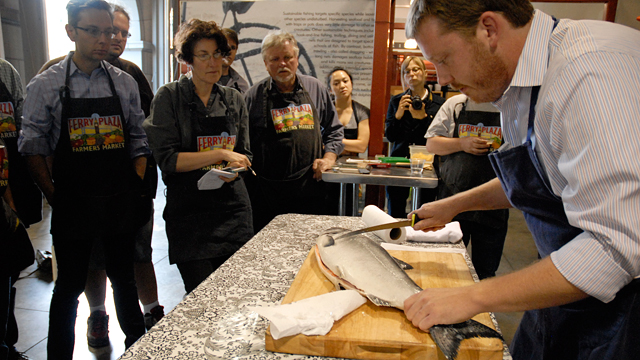
window.__IS_SSR__=true
window.__INITIAL_STATE__={
"attachmentsReducer": {
"audio_0": {
"type": "attachments",
"id": "audio_0",
"imgSizes": {
"kqedFullSize": {
"file": "https://ww2.kqed.org/news/wp-content/themes/KQED-unified/img/audio_bgs/background0.jpg"
}
}
},
"audio_1": {
"type": "attachments",
"id": "audio_1",
"imgSizes": {
"kqedFullSize": {
"file": "https://ww2.kqed.org/news/wp-content/themes/KQED-unified/img/audio_bgs/background1.jpg"
}
}
},
"audio_2": {
"type": "attachments",
"id": "audio_2",
"imgSizes": {
"kqedFullSize": {
"file": "https://ww2.kqed.org/news/wp-content/themes/KQED-unified/img/audio_bgs/background2.jpg"
}
}
},
"audio_3": {
"type": "attachments",
"id": "audio_3",
"imgSizes": {
"kqedFullSize": {
"file": "https://ww2.kqed.org/news/wp-content/themes/KQED-unified/img/audio_bgs/background3.jpg"
}
}
},
"audio_4": {
"type": "attachments",
"id": "audio_4",
"imgSizes": {
"kqedFullSize": {
"file": "https://ww2.kqed.org/news/wp-content/themes/KQED-unified/img/audio_bgs/background4.jpg"
}
}
},
"placeholder": {
"type": "attachments",
"id": "placeholder",
"imgSizes": {
"thumbnail": {
"file": "https://cdn.kqed.org/wp-content/uploads/2024/12/KQED-Default-Image-816638274-2000x1333-1-160x107.jpg",
"width": 160,
"height": 107,
"mimeType": "image/jpeg"
},
"medium": {
"file": "https://cdn.kqed.org/wp-content/uploads/2024/12/KQED-Default-Image-816638274-2000x1333-1-800x533.jpg",
"width": 800,
"height": 533,
"mimeType": "image/jpeg"
},
"medium_large": {
"file": "https://cdn.kqed.org/wp-content/uploads/2024/12/KQED-Default-Image-816638274-2000x1333-1-768x512.jpg",
"width": 768,
"height": 512,
"mimeType": "image/jpeg"
},
"large": {
"file": "https://cdn.kqed.org/wp-content/uploads/2024/12/KQED-Default-Image-816638274-2000x1333-1-1020x680.jpg",
"width": 1020,
"height": 680,
"mimeType": "image/jpeg"
},
"1536x1536": {
"file": "https://cdn.kqed.org/wp-content/uploads/2024/12/KQED-Default-Image-816638274-2000x1333-1-1536x1024.jpg",
"width": 1536,
"height": 1024,
"mimeType": "image/jpeg"
},
"fd-lrg": {
"file": "https://cdn.kqed.org/wp-content/uploads/2024/12/KQED-Default-Image-816638274-2000x1333-1-1536x1024.jpg",
"width": 1536,
"height": 1024,
"mimeType": "image/jpeg"
},
"fd-med": {
"file": "https://cdn.kqed.org/wp-content/uploads/2024/12/KQED-Default-Image-816638274-2000x1333-1-1020x680.jpg",
"width": 1020,
"height": 680,
"mimeType": "image/jpeg"
},
"fd-sm": {
"file": "https://cdn.kqed.org/wp-content/uploads/2024/12/KQED-Default-Image-816638274-2000x1333-1-800x533.jpg",
"width": 800,
"height": 533,
"mimeType": "image/jpeg"
},
"post-thumbnail": {
"file": "https://cdn.kqed.org/wp-content/uploads/2024/12/KQED-Default-Image-816638274-2000x1333-1-672x372.jpg",
"width": 672,
"height": 372,
"mimeType": "image/jpeg"
},
"twentyfourteen-full-width": {
"file": "https://cdn.kqed.org/wp-content/uploads/2024/12/KQED-Default-Image-816638274-2000x1333-1-1038x576.jpg",
"width": 1038,
"height": 576,
"mimeType": "image/jpeg"
},
"xxsmall": {
"file": "https://cdn.kqed.org/wp-content/uploads/2024/12/KQED-Default-Image-816638274-2000x1333-1-160x107.jpg",
"width": 160,
"height": 107,
"mimeType": "image/jpeg"
},
"xsmall": {
"file": "https://cdn.kqed.org/wp-content/uploads/2024/12/KQED-Default-Image-816638274-2000x1333-1-672x372.jpg",
"width": 672,
"height": 372,
"mimeType": "image/jpeg"
},
"small": {
"file": "https://cdn.kqed.org/wp-content/uploads/2024/12/KQED-Default-Image-816638274-2000x1333-1-672x372.jpg",
"width": 672,
"height": 372,
"mimeType": "image/jpeg"
},
"xlarge": {
"file": "https://cdn.kqed.org/wp-content/uploads/2024/12/KQED-Default-Image-816638274-2000x1333-1-1020x680.jpg",
"width": 1020,
"height": 680,
"mimeType": "image/jpeg"
},
"full-width": {
"file": "https://cdn.kqed.org/wp-content/uploads/2024/12/KQED-Default-Image-816638274-2000x1333-1-1920x1280.jpg",
"width": 1920,
"height": 1280,
"mimeType": "image/jpeg"
},
"guest-author-32": {
"file": "https://cdn.kqed.org/wp-content/uploads/2025/01/KQED-Default-Image-816638274-1333x1333-1-160x160.jpg",
"width": 32,
"height": 32,
"mimeType": "image/jpeg"
},
"guest-author-50": {
"file": "https://cdn.kqed.org/wp-content/uploads/2025/01/KQED-Default-Image-816638274-1333x1333-1-160x160.jpg",
"width": 50,
"height": 50,
"mimeType": "image/jpeg"
},
"guest-author-64": {
"file": "https://cdn.kqed.org/wp-content/uploads/2025/01/KQED-Default-Image-816638274-1333x1333-1-160x160.jpg",
"width": 64,
"height": 64,
"mimeType": "image/jpeg"
},
"guest-author-96": {
"file": "https://cdn.kqed.org/wp-content/uploads/2025/01/KQED-Default-Image-816638274-1333x1333-1-160x160.jpg",
"width": 96,
"height": 96,
"mimeType": "image/jpeg"
},
"guest-author-128": {
"file": "https://cdn.kqed.org/wp-content/uploads/2025/01/KQED-Default-Image-816638274-1333x1333-1-160x160.jpg",
"width": 128,
"height": 128,
"mimeType": "image/jpeg"
},
"detail": {
"file": "https://cdn.kqed.org/wp-content/uploads/2025/01/KQED-Default-Image-816638274-1333x1333-1-160x160.jpg",
"width": 160,
"height": 160,
"mimeType": "image/jpeg"
},
"kqedFullSize": {
"file": "https://cdn.kqed.org/wp-content/uploads/2024/12/KQED-Default-Image-816638274-2000x1333-1.jpg",
"width": 2000,
"height": 1333
}
}
},
"bayareabites_63912": {
"type": "attachments",
"id": "bayareabites_63912",
"meta": {
"index": "attachments_1716263798",
"site": "bayareabites",
"id": "63912",
"found": true
},
"parent": 63563,
"imgSizes": {
"kqedFullSize": {
"file": "https://ww2.kqed.org/app/uploads/sites/24/2013/06/fishclass640x360.jpg",
"width": 640,
"height": 360
}
},
"publishDate": 1371771608,
"modified": 1371771608,
"caption": null,
"description": null,
"title": "fishclass640x360",
"credit": null,
"status": "inherit",
"isLoading": false,
"fetchFailed": false
},
"bayareabites_63426": {
"type": "attachments",
"id": "bayareabites_63426",
"meta": {
"index": "attachments_1716263798",
"site": "bayareabites",
"id": "63426",
"found": true
},
"parent": 63418,
"imgSizes": {
"kqedFullSize": {
"file": "https://ww2.kqed.org/app/uploads/sites/24/2013/06/eggs-billgates.jpg",
"width": 1120,
"height": 839
}
},
"publishDate": 1371162976,
"modified": 1371162976,
"caption": "At left: Beyond Eggs' egg-substitute product, a powder made of pulverized plant-based compounds. Right: Mother Nature's version. Photo: Cody Pickens/Beyond Eggs",
"description": "At left: Beyond Eggs' egg-substitute product, a powder made of pulverized plant-based compounds. Right: Mother Nature's version.",
"title": "beyondeggs-realeggs",
"credit": null,
"status": "inherit",
"isLoading": false,
"fetchFailed": false
},
"bayareabites_63238": {
"type": "attachments",
"id": "bayareabites_63238",
"meta": {
"index": "attachments_1716263798",
"site": "bayareabites",
"id": "63238",
"found": true
},
"parent": 63233,
"imgSizes": {
"kqedFullSize": {
"file": "https://ww2.kqed.org/app/uploads/sites/24/2013/06/catfish.jpg",
"width": 624,
"height": 350
}
},
"publishDate": 1370900807,
"modified": 1370900807,
"caption": "These funny mustachioed fish are at the center of a farm bill fight in the House and Senate. Photo: Sasha Radosavljevic/iStockphoto.com",
"description": "These funny mustachioed fish are at the center of a farm bill fight in the House and Senate.",
"title": "catfish2",
"credit": null,
"status": "inherit",
"isLoading": false,
"fetchFailed": false
},
"bayareabites_63044": {
"type": "attachments",
"id": "bayareabites_63044",
"meta": {
"index": "attachments_1716263798",
"site": "bayareabites",
"id": "63044",
"found": true
},
"parent": 63033,
"imgSizes": {
"kqedFullSize": {
"file": "https://ww2.kqed.org/app/uploads/sites/24/2013/06/fishfarm1.jpg",
"width": 624,
"height": 406
}
},
"publishDate": 1370561889,
"modified": 1370561889,
"caption": "Thierry Chopin from the University of New Brunswick examines a raft that holds strings of seaweed. The seaweed grows around pens of farmed salmon and soaks up some of the nutrients that would otherwise pollute the Bay of Fundy. Photo: Richard Harris/NPR",
"description": "Thierry Chopin from the University of New Brunswick examines a raft that holds strings of seaweed. The seaweed grows around pens of farmed salmon and soaks up some of the nutrients that would otherwise pollute the Bay of Fundy.",
"title": "img_2987",
"credit": null,
"status": "inherit",
"isLoading": false,
"fetchFailed": false
},
"bayareabites_63021": {
"type": "attachments",
"id": "bayareabites_63021",
"meta": {
"index": "attachments_1716263798",
"site": "bayareabites",
"id": "63021",
"found": true
},
"parent": 63020,
"imgSizes": {
"kqedFullSize": {
"file": "https://ww2.kqed.org/app/uploads/sites/24/2013/06/food-dump-aefe847f655e7d3c3f62f9500e6002d09a041cbf.jpg",
"width": 200,
"height": 149
}
},
"publishDate": 1370551647,
"modified": 1370551647,
"caption": null,
"description": "A worker dumps a bucket of tomatoes into a trailer in Florida City, Fla. Much of the lost and wasted weight in fruits and vegetables is water, according to a report by the World Resources Institute.",
"title": "A worker dumps a bucket of tomatoes into a trailer in Florida City, Fla. Much of the lost and wasted weight in fruits and vegetables is water, according to a report by the World Resources Institute.",
"credit": null,
"status": "inherit",
"isLoading": false,
"fetchFailed": false
},
"bayareabites_62605": {
"type": "attachments",
"id": "bayareabites_62605",
"meta": {
"index": "attachments_1716263798",
"site": "bayareabites",
"id": "62605",
"found": true
},
"parent": 60819,
"imgSizes": {
"kqedFullSize": {
"file": "https://ww2.kqed.org/app/uploads/sites/24/2013/05/benaffleck-joe640x360.jpg",
"width": 640,
"height": 360
}
},
"publishDate": 1369429186,
"modified": 1369429186,
"caption": null,
"description": null,
"title": "benaffleck-joe640x360",
"credit": null,
"status": "inherit",
"isLoading": false,
"fetchFailed": false
},
"bayareabites_62416": {
"type": "attachments",
"id": "bayareabites_62416",
"meta": {
"index": "attachments_1716263798",
"site": "bayareabites",
"id": "62416",
"found": true
},
"parent": 62415,
"imgSizes": {
"kqedFullSize": {
"file": "https://ww2.kqed.org/app/uploads/sites/24/2013/05/germinationroom-58881d51732d1ff98ef8433eb7b1db54374c1cbb.jpg",
"width": 200,
"height": 149
}
},
"publishDate": 1369171667,
"modified": 1369171667,
"caption": null,
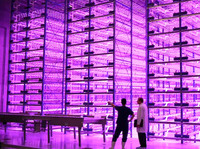
"description": "This \"pinkhouse\" at Caliber Biotherapeutics in Bryan, Texas, grows 2.2 million plants under the glow of blue and red LEDs.",
"title": "This \"pinkhouse\" at Caliber Biotherapeutics in Bryan, Texas, grows 2.2 million plants under the glow of blue and red LEDs.",
"credit": null,
"status": "inherit",
"isLoading": false,
"fetchFailed": false
},
"bayareabites_61996": {
"type": "attachments",
"id": "bayareabites_61996",
"meta": {
"index": "attachments_1716263798",
"site": "bayareabites",
"id": "61996",
"found": true
},
"parent": 61936,
"imgSizes": {
"kqedFullSize": {
"file": "https://ww2.kqed.org/app/uploads/sites/24/2013/05/seaglass_sushiMap960x453.jpg",
"width": 960,
"height": 453
}
},
"publishDate": 1368670895,
"modified": 1368670895,
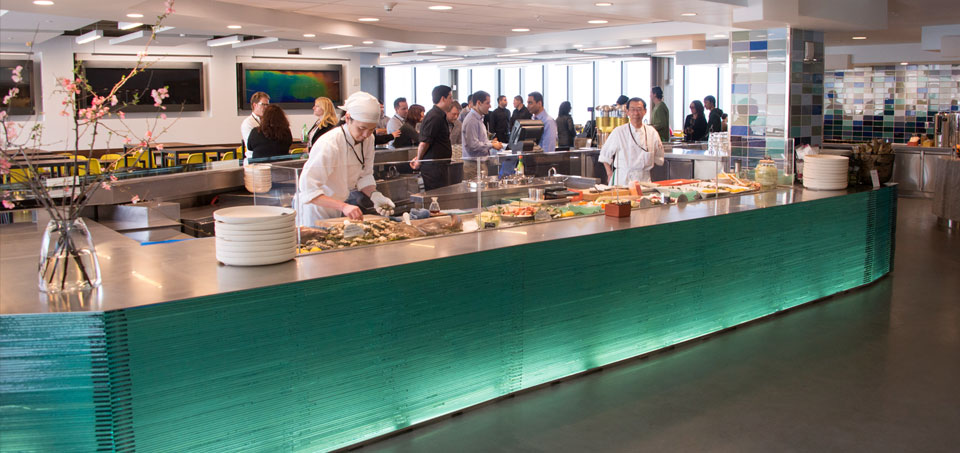
"caption": "Visitors to the Exploratorium's Seaglass restaurant can order from a raw bar full of sustainable seafood. Photo: Gayle Laird",
"description": null,
"title": "seaglass_sushiMap960x453",
"credit": null,
"status": "inherit",
"isLoading": false,
"fetchFailed": false
},
"bayareabites_61985": {
"type": "attachments",
"id": "bayareabites_61985",
"meta": {
"index": "attachments_1716263798",
"site": "bayareabites",
"id": "61985",
"found": true
},
"parent": 61984,
"imgSizes": {
"kqedFullSize": {
"file": "https://ww2.kqed.org/app/uploads/sites/24/2013/05/salmon_custom-4d6bc87df7963a2eff30562f2d55e00992b3ef21.jpg",
"width": 200,
"height": 133
}
},
"publishDate": 1368669517,
"modified": 1368669517,
"caption": null,
"description": "Crew members unload a catch of sockeye salmon at Craig, Alaska, in 2005. Researchers say fish are being found in new areas because of changing ocean temperatures.",
"title": "Crew members unload a catch of sockeye salmon at Craig, Alaska, in 2005. Researchers say fish are being found in new areas because of changing ocean temperatures.",
"credit": null,
"status": "inherit",
"isLoading": false,
"fetchFailed": false
},
"bayareabites_61827": {
"type": "attachments",
"id": "bayareabites_61827",
"meta": {
"index": "attachments_1716263798",
"site": "bayareabites",
"id": "61827",
"found": true
},
"parent": 61826,
"imgSizes": {
"kqedFullSize": {
"file": "https://ww2.kqed.org/app/uploads/sites/24/2013/05/13724681_h18556959-1357584250a21bca4ca90fcef97c2ac88b4108d9.jpg",
"width": 200,
"height": 149
}
},
"publishDate": 1368550217,
"modified": 1368550217,
"caption": null,
"description": "A vendor sells edible insects at Talad Thai market on the outskirts of Bangkok. The most popular method of preparation is to deep-fry crickets in oil and then sprinkle them with lemongrass slivers and chilis.",
"title": "A vendor sells edible insects at Talad Thai market on the outskirts of Bangkok. The most popular method of preparation is to deep-fry crickets in oil and then sprinkle them with lemongrass slivers and chilis.",
"credit": null,
"status": "inherit",
"isLoading": false,
"fetchFailed": false
},
"bayareabites_61759": {
"type": "attachments",
"id": "bayareabites_61759",
"meta": {
"index": "attachments_1716263798",
"site": "bayareabites",
"id": "61759",
"found": true
},
"parent": 61756,
"imgSizes": {
"kqedFullSize": {
"file": "https://ww2.kqed.org/app/uploads/sites/24/2013/05/biosolids.jpg",
"width": 1120,
"height": 840
}
},
"publishDate": 1368462810,
"modified": 1368462810,
"caption": "Through the City Land Application of Biosolids Program in Geneva, Ill., the fertilizer supplement is provided to local farmers at no cost. Photo: \u003ca href=\"http://www.flickr.com/photos/cityofgeneva/4111259626/\">City of Geneva/Flickr\u003c/a>",
"description": "Through the City Land Application of Biosolids Program in Geneva, Ill., the fertilizer supplement is provided to local farmers at no cost.",
"title": "biosolids",
"credit": null,
"status": "inherit",
"isLoading": false,
"fetchFailed": false
},
"bayareabites_61547": {
"type": "attachments",
"id": "bayareabites_61547",
"meta": {
"index": "attachments_1716263798",
"site": "bayareabites",
"id": "61547",
"found": true
},
"parent": 61546,
"imgSizes": {
"kqedFullSize": {
"file": "https://ww2.kqed.org/app/uploads/sites/24/2013/05/cab_sauv_custom-714e379e5f0b33467f77388f396b5b15d92dadd6.jpg",
"width": 200,
"height": 132
}
},
"publishDate": 1368061244,
"modified": 1368061244,
"caption": null,
"description": "A worker harvests cabernet sauvignon grapes at a vineyard near Bordeaux, France, in September.",
"title": "A worker harvests cabernet sauvignon grapes at a vineyard near Bordeaux, France, in September.",
"credit": null,
"status": "inherit",
"isLoading": false,
"fetchFailed": false
}
},
"audioPlayerReducer": {
"postId": "stream_live",
"isPaused": true,
"isPlaying": false,
"pfsActive": false,
"pledgeModalIsOpen": true,
"playerDrawerIsOpen": false,
"liveAudioPlayStartedAt": 0,
"liveAudioPlayContext": ""
},
"authorsReducer": {
"byline_bayareabites_63418": {
"type": "authors",
"id": "byline_bayareabites_63418",
"meta": {
"override": true
},
"slug": "byline_bayareabites_63418",
"name": "Allison Aubrey",
"isLoading": false
},
"byline_bayareabites_63233": {
"type": "authors",
"id": "byline_bayareabites_63233",
"meta": {
"override": true
},
"slug": "byline_bayareabites_63233",
"name": "Eliza Barclay",
"isLoading": false
},
"byline_bayareabites_63033": {
"type": "authors",
"id": "byline_bayareabites_63033",
"meta": {
"override": true
},
"slug": "byline_bayareabites_63033",
"name": "Richard Harris",
"isLoading": false
},
"byline_bayareabites_63020": {
"type": "authors",
"id": "byline_bayareabites_63020",
"meta": {
"override": true
},
"slug": "byline_bayareabites_63020",
"name": "Eliza Barclay",
"isLoading": false
},
"byline_bayareabites_62415": {
"type": "authors",
"id": "byline_bayareabites_62415",
"meta": {
"override": true
},
"slug": "byline_bayareabites_62415",
"name": "Michaeleen Doucleff",
"isLoading": false
},
"byline_bayareabites_61984": {
"type": "authors",
"id": "byline_bayareabites_61984",
"meta": {
"override": true
},
"slug": "byline_bayareabites_61984",
"name": "Richard Harris",
"isLoading": false
},
"byline_bayareabites_61826": {
"type": "authors",
"id": "byline_bayareabites_61826",
"meta": {
"override": true
},
"slug": "byline_bayareabites_61826",
"name": "Eliza Barclay",
"isLoading": false
},
"byline_bayareabites_61756": {
"type": "authors",
"id": "byline_bayareabites_61756",
"meta": {
"override": true
},
"slug": "byline_bayareabites_61756",
"name": "Eliza Barclay",
"isLoading": false
},
"byline_bayareabites_61546": {
"type": "authors",
"id": "byline_bayareabites_61546",
"meta": {
"override": true
},
"slug": "byline_bayareabites_61546",
"name": "Alastair Bland",
"isLoading": false
},
"wendy-goodfriend": {
"type": "authors",
"id": "5014",
"meta": {
"index": "authors_1716337520",
"id": "5014",
"found": true
},
"name": "Wendy Goodfriend",
"firstName": "Wendy",
"lastName": "Goodfriend",
"slug": "wendy-goodfriend",
"email": "wendy@wendygoodfriend.com",
"display_author_email": false,
"staff_mastheads": [],
"title": "KQED Contributor",
"bio": "I was the Senior Digital Producer for KQED Food up until July, 2018. Since 2001, I designed, produced, managed and contributed to mostly food-related websites and blogs for KQED including: KQED.org; KQED Food; Bay Area Bites; Check, Please! Bay Area; Taste This; Celebrity Chefs; seven of Jacques Pepin's TV series websites; and Joanne Weir's Cooking in the City. I initiated the majority of KQED Food's social media feeds and maintained them up until 2017. As far as content creation, photography is my passion and I also shoot video and write stories. My photos have been used in articles for KQED Food, News, Arts, and Science as well as for promotional purposes in print and online. Professional education and training includes: clinical psychology, photography, commercial cooking, web design, information architecture and UX.",
"avatar": "https://secure.gravatar.com/avatar/dfba64372339cc34cf17e446e6f18fa8?s=600&d=blank&r=g",
"twitter": null,
"facebook": "bayareabites",
"instagram": null,
"linkedin": "wendygoodfriend",
"sites": [
{
"site": "jpepinheart",
"roles": []
},
{
"site": "about",
"roles": [
"editor"
]
},
{
"site": "bayareabites",
"roles": [
"subscriber"
]
},
{
"site": "science",
"roles": [
"administrator"
]
},
{
"site": "checkplease",
"roles": [
"subscriber"
]
},
{
"site": "food",
"roles": [
"author"
]
},
{
"site": "essentialpepin",
"roles": [
"administrator"
]
}
],
"headData": {
"title": "Wendy Goodfriend | KQED",
"description": "KQED Contributor",
"ogImgSrc": "https://secure.gravatar.com/avatar/dfba64372339cc34cf17e446e6f18fa8?s=600&d=blank&r=g",
"twImgSrc": "https://secure.gravatar.com/avatar/dfba64372339cc34cf17e446e6f18fa8?s=600&d=blank&r=g"
},
"isLoading": false,
"link": "/author/wendy-goodfriend"
},
"stephanie-rosenbaum": {
"type": "authors",
"id": "5038",
"meta": {
"index": "authors_1716337520",
"id": "5038",
"found": true
},
"name": "Stephanie Rosenbaum Klassen",
"firstName": "Stephanie",
"lastName": "Rosenbaum Klassen",
"slug": "stephanie-rosenbaum",
"email": "dixieday@aol.com",
"display_author_email": false,
"staff_mastheads": [],
"title": "KQED Contributor",
"bio": "Stephanie Rosenbaum Klassen is a longtime local food writer, author, and cook. Her books include The Art of Vintage Cocktails (Egg & Dart Press), World of Doughnuts (Egg & Dart Press); Kids in the Kitchen: Fun Food (Williams Sonoma); Honey from Flower to Table (Chronicle Books) and The Astrology Cookbook: A Cosmic Guide to Feasts of Love (Manic D Press). She has studied organic farming at UCSC and holds a certificate in Ecological Horticulture from the Center for Agroecology and Sustainable Food Systems. She does frequent cooking demonstrations at local farmers’ markets and has taught food writing at Media Alliance in San Francisco and the Continuing Education program at Stanford University. She has been the lead restaurant critic for the San Francisco Bay Guardian as well as for San Francisco magazine. She has been an assistant chef at the Headlands Center for the Arts, an artists' residency program located in the Marin Headlands, and a production cook at the Marin Sun Farms Cafe in Pt Reyes Station. After some 20 years in San Francisco interspersed with stints in Oakland, Santa Cruz, Brooklyn, and Manhattan, she recently moved to Sonoma county but still writes in San Francisco several days a week.",
"avatar": "https://secure.gravatar.com/avatar/26520681f950a766c2c0eb9872646dec42b88de07cc4cdd65958385671e93cf7?s=600&d=mm&r=g",
"twitter": "sjrosenbaum",
"bluesky": null,
"facebook": null,
"instagram": null,
"linkedin": null,
"sites": [
{
"site": "bayareabites",
"roles": [
"subscriber"
]
},
{
"site": "food",
"roles": [
"subscriber"
]
}
],
"headData": {
"title": "Stephanie Rosenbaum Klassen | KQED",
"description": "KQED Contributor",
"ogImgSrc": "https://secure.gravatar.com/avatar/26520681f950a766c2c0eb9872646dec42b88de07cc4cdd65958385671e93cf7?s=600&d=mm&r=g",
"twImgSrc": "https://secure.gravatar.com/avatar/26520681f950a766c2c0eb9872646dec42b88de07cc4cdd65958385671e93cf7?s=600&d=mm&r=g"
},
"isLoading": false,
"link": "/author/stephanie-rosenbaum"
},
"maryladd": {
"type": "authors",
"id": "5092",
"meta": {
"index": "authors_1716337520",
"id": "5092",
"found": true
},
"name": "Mary Ladd",
"firstName": "Mary",
"lastName": "Ladd",
"slug": "maryladd",
"email": "writereadeat@gmail.com",
"display_author_email": false,
"staff_mastheads": [],
"title": null,
"bio": "Mary Ladd is a freelance writer and event professional based in her hometown of San Francisco. Her writing has been featured in SF Weekly, Tasting Table, the San Francisco Chronicle and elsewhere. She has shuttled \u003ca href=\"http://sf.eater.com/archives/2009/03/26/eater_map_mr_bourdains_san_francisco_whereabouts.php\">Anthony Bourdain\u003c/a> around town and mastered the art of properly loading a catering van in a flash. Mary has eaten the world’s hottest burger and loves to cook and eat. Follow her at \u003ca href=\"https://twitter.com/mladdfood\">@mladdfood\u003c/a>",
"avatar": "https://secure.gravatar.com/avatar/dab53b49e4e893d0d1e6a7ec6ed29e27?s=600&d=blank&r=g",
"twitter": "mladdfood",
"facebook": null,
"instagram": null,
"linkedin": null,
"sites": [
{
"site": "bayareabites",
"roles": [
"contributor"
]
}
],
"headData": {
"title": "Mary Ladd | KQED",
"description": null,
"ogImgSrc": "https://secure.gravatar.com/avatar/dab53b49e4e893d0d1e6a7ec6ed29e27?s=600&d=blank&r=g",
"twImgSrc": "https://secure.gravatar.com/avatar/dab53b49e4e893d0d1e6a7ec6ed29e27?s=600&d=blank&r=g"
},
"isLoading": false,
"link": "/author/maryladd"
},
"sarahhenry": {
"type": "authors",
"id": "5125",
"meta": {
"index": "authors_1716337520",
"id": "5125",
"found": true
},
"name": "Sarah Henry",
"firstName": "Sarah",
"lastName": "Henry",
"slug": "sarahhenry",
"email": "sarahhenry0509@gmail.com",
"display_author_email": false,
"staff_mastheads": [],
"title": null,
"bio": "\u003ca href=\"http://www.sarahhenrywriter.com/\">Sarah Henry\u003c/a> hails from Sydney, Australia, where she grew up eating lamingtons, Vegemite, and prawns (not shrimp) on the barbie (barbecue). Sarah has called the Bay Area home for the past two decades and remembers how delighted she was when a modest farmers' market sprouted in downtown San Francisco years ago. As a freelance writer Sarah has covered local food people, places, politics, culture, and news for the \u003ca href=\"http://www.sfgate.com/food/article/Latina-entrepreneurs-share-wealth-knowledge-2693764.php\">San Francisco Chronicle\u003c/a>, \u003ca href=\"http://www.mercurynews.com/food-wine/ci_21619882/good-eggs-pie-subscriptions-and-seafood-deliveries\">San Jose Mercury News\u003c/a>, \u003ca href=\"http://alumni.berkeley.edu/news/california-magazine/fall-2011-good-fight/justice%E2%80%94and-good-grub%E2%80%94-all\">California\u003c/a>, \u003ca href=\"http://www.modernluxury.com/san-francisco\">San Francisco\u003c/a>, \u003ca href=\"http://www.diablomag.com/Diablo-Magazine/November-2012/Artisan-Eats/\">Diablo\u003c/a>, \u003ca href=\"http://www.ediblecommunities.com/eastbay/fall-2012/school-lunch-20.htm\">Edible East Bay\u003c/a>, \u003ca href=\"http://www.ediblecommunities.com/marinandwinecountry/summer-2012-issue-14/getting-wild-at-a-west-marin-supper-club.htm\">Edible Marin & Wine Country\u003c/a>, and \u003ca href=\"http://www.berkeleyside.com/\">Berkeleyside\u003c/a>. A contributor to the national food policy site \u003ca href=\"http://civileats.com/\">Civil Eats\u003c/a>, her stories have also appeared in \u003ca href=\"http://www.theatlantic.com/sarah-henry/\">The Atlantic\u003c/a>, \u003ca href=\"http://www.afar.com/highlights/kamal-mouzawaks-beirut-lebanon\">AFAR\u003c/a>, \u003ca href=\"http://www.gilttaste.com/stories/5207-a-family-tied-together-by-apron-strings\">Gilt Taste\u003c/a>, \u003ca href=\"http://www.lhj.com/community/your-stories/whats-for-dinner-dude/?page=1\">Ladies' Home Journal\u003c/a>, \u003ca href=\"http://grist.org/author/sarah-henry/\">Grist\u003c/a>, \u003ca href=\"http://www.shareable.net/users/sarah-henry\">Shareable\u003c/a>, and \u003ca href=\"http://www.eatingwell.com/food_news_origins/green_sustainable/host_a_diy_food_swap\">Eating Well\u003c/a>. An epicurean tour guide for \u003ca href=\"http://edibleexcursions.net/\">Edible Excursions\u003c/a>, Sarah is the voice behind the blog \u003ca href=\"http://lettuceeatkale.com/\">Lettuce Eat Kale\u003c/a> and \u003ca href=\"http://twitter.com/lettuceeatkale\">tweets\u003c/a> under that moniker too.",
"avatar": "https://secure.gravatar.com/avatar/3fcd7301e44f9b621f8c9fc7ad678ac7?s=600&d=blank&r=g",
"twitter": "lettuceeatkale",
"facebook": "pages/Lettuce-Eat-Kale/239312194611",
"instagram": null,
"linkedin": null,
"sites": [
{
"site": "bayareabites",
"roles": [
"contributor"
]
},
{
"site": "food",
"roles": [
"contributor"
]
}
],
"headData": {
"title": "Sarah Henry | KQED",
"description": null,
"ogImgSrc": "https://secure.gravatar.com/avatar/3fcd7301e44f9b621f8c9fc7ad678ac7?s=600&d=blank&r=g",
"twImgSrc": "https://secure.gravatar.com/avatar/3fcd7301e44f9b621f8c9fc7ad678ac7?s=600&d=blank&r=g"
},
"isLoading": false,
"link": "/author/sarahhenry"
}
},
"pagesReducer": {
"bayareabites_category_sustainability": {
"type": "terms",
"id": "bayareabites_60",
"meta": {
"index": "terms_1716263798",
"site": "bayareabites",
"id": "60",
"score": 12.370369
},
"featImg": null,
"name": "sustainability, environment, climate change",
"description": null,
"taxonomy": "category",
"headData": {
"twImgId": null,
"twTitle": null,
"ogTitle": null,
"ogImgId": null,
"twDescription": null,
"description": null,
"title": "sustainability, environment, climate change Archives | KQED Bay Area Bites",
"ogDescription": null
},
"ttid": 23,
"slug": "sustainability",
"isLoading": false,
"title": "sustainability, environment, climate change",
"pageMeta": {
"site": "bayareabites",
"WpPageTemplate": "page-topic-editorial",
"currentPage": 31
},
"blocks": [
{
"blockName": "kqed/post-list",
"attrs": {
"layout": "cardArticle2",
"query": "posts/bayareabites?category=sustainability",
"seeMore": false,
"paginated": true,
"page": 31
}
},
{
"blockName": "kqed/ad"
}
]
}
},
"pfsSessionReducer": {},
"postsReducer": {
"stream_live": {
"type": "live",
"id": "stream_live",
"audioUrl": "https://streams.kqed.org/kqedradio",
"title": "Live Stream",
"excerpt": "Live Stream information currently unavailable.",
"link": "/radio",
"featImg": "",
"label": {
"name": "KQED Live",
"link": "/"
}
},
"stream_kqedNewscast": {
"type": "posts",
"id": "stream_kqedNewscast",
"audioUrl": "https://www.kqed.org/.stream/anon/radio/RDnews/newscast.mp3?_=1",
"title": "KQED Newscast",
"featImg": "",
"label": {
"name": "88.5 FM",
"link": "/"
}
},
"bayareabites_63563": {
"type": "posts",
"id": "bayareabites_63563",
"meta": {
"index": "posts_1716263798",
"site": "bayareabites",
"id": "63563",
"score": null,
"sort": [
1371772031000
]
},
"parent": 0,
"labelTerm": {
"site": "bayareabites"
},
"blocks": [],
"publishDate": 1371772031,
"format": "aside",
"disqusTitle": "Learn How To Butcher, Smoke and Can a Whole Fish with Chef Neil Davidson",
"title": "Learn How To Butcher, Smoke and Can a Whole Fish with Chef Neil Davidson",
"headTitle": "Bay Area Bites | KQED Food",
"content": "\u003cp>Admit it: When faced with fish, you buy fillets. But why? Is it the face? The fins? Fear of scales? Fear of bones? Well, get over it. Now that our \u003ca href=\"http://www.dfg.ca.gov/marine/oceansalmon.asp\">local sport and commercial salmon fishing season is open\u003c/a>, you might very well find yourself tempted--or treated--to a whole fish, and when that happens, it's handy to know how to handle it. \u003c/p>\n\u003cfigure id=\"attachment_63810\" class=\"wp-caption aligncenter\" style=\"max-width: 500px\">\u003ca href=\"http://ww2.kqed.org/bayareabites/wp-content/uploads/sites/24/2013/06/salmon600.jpg\">\u003cimg src=\"http://ww2.kqed.org/bayareabites/wp-content/uploads/sites/24/2013/06/salmon600.jpg\" alt=\"Chef Neil Davidson filleting a whole salmon. Photo: Wendy Goodfriend \" width=\"500\" class=\"size-full wp-image-63810\">\u003c/a>\u003cfigcaption class=\"wp-caption-text\">Chef Neil Davidson filleting a whole salmon. Photo: \u003ca href=\"http://ww2.kqed.org/bayareabites/author/wendy-goodfriend/\">Wendy Goodfriend\u003c/a>\u003c/figcaption>\u003c/figure>\n\u003cp>It's also much more economical, and sustainable, to feed yourself nose-to-fin on a whole wild fish. \u003ca href=\"http://ww2.kqed.org/bayareabites/author/mariafinn/\">Maria Finn\u003c/a>, Bay Area Bites writer, former commercial salmon fisherwoman, and author of \u003ca href=\"http://ww2.kqed.org/bayareabites/2012/10/26/the-whole-fish-how-adventurous-eating-of-seafood-can-make-you-healthier-sexier-and-help-save-the-ocean/\">The Whole Fish: How Adventurous Eating of Seafood Can Make You Healthier, Sexier, and Help Save the Ocean\u003c/a> recently teamed up with chef Neil Davidson of \u003ca href=\"http://www.missiongastroclub.org/\">Mission Gastroclub\u003c/a> and the \u003ca href=\"https://www.facebook.com/WhipOutFoodTruck\">Whip Out\u003c/a> food truck to teach a hands-on class in scaling, filleting, preserving, and smoking whole fish at home.\u003c/p>\n\u003cfigure id=\"attachment_63806\" class=\"wp-caption aligncenter\" style=\"max-width: 1000px\">\u003ca href=\"http://ww2.kqed.org/bayareabites/wp-content/uploads/sites/24/2013/06/fishclass1000.jpg\">\u003cimg src=\"http://ww2.kqed.org/bayareabites/wp-content/uploads/sites/24/2013/06/fishclass1000.jpg\" alt=\"Maria Finn and Neil Davidson teaching Whole Fish Fabrication and Preservation Class. Photo: Wendy Goodfriend\" width=\"1000\" height=\"669\" class=\"size-full wp-image-63806\">\u003c/a>\u003cfigcaption class=\"wp-caption-text\">Maria Finn and Neil Davidson teaching Whole Fish Fabrication and Preservation Class. Photo: Wendy Goodfriend\u003c/figcaption>\u003c/figure>\n\u003cp>The class, presented by the \u003ca href=\"http://www.cuesa.org\">Center for Urban Education about Sustainable Agriculture (CUESA)\u003c/a> and \u003ca href=\"http://www.urbankitchensf.org\">Urban Kitchen SF\u003c/a>, was held from 5:30 to 7:30pm last Thursday in CUESA's outdoor kitchen, under the porticos of the Ferry Building. It's not the most comfortable place for a cooking class; it's outside, after all, and instructions can be hard to hear over traffic noise as cars, trucks, and motorcycles screech and toot their way along The Embarcadero just yards away. \u003c/p>\n\u003cp>Still, it's hard not to be entranced by the massive, silvery whole salmon laid out in front of Davidson. This is the creme de la creme of Pacific Coast salmon: a wild king, fresh from the ocean just north of Sonoma County. Of course, as Finn points out, tasty, healthful dishes can be made from all five of our local salmon types, including pink, chum, silver, and sockeye. But for superlative texture and flavor, the king is king. \u003c/p>\n\u003cfigure id=\"attachment_63849\" class=\"wp-caption aligncenter\" style=\"max-width: 500px\">\u003ca href=\"http://ww2.kqed.org/bayareabites/wp-content/uploads/sites/24/2013/06/wholesalmon600.jpg\">\u003cimg src=\"http://ww2.kqed.org/bayareabites/wp-content/uploads/sites/24/2013/06/wholesalmon600.jpg\" alt=\"Whole King Salmon. Photo: Wendy Goodfriend\" width=\"500\" class=\"size-full wp-image-63849\">\u003c/a>\u003cfigcaption class=\"wp-caption-text\">Whole King Salmon. Photo: Wendy Goodfriend\u003c/figcaption>\u003c/figure>\n\u003cp>Davidson goes over the fish, telling us what to look for when choosing a fish: eyes that look clear and full, still sitting high in the socket, not sunken into the head; no cuts or slashes on the body; fins that are still in good shape. This fish has already been gutted, so there's just a neat cavity where the guts would have been. Picking up a thin, flexible, slightly curved filleting knife, Davidson quickly scrapes off the scales using the back (dull side) of the knife. This is a job to do outside, if possible, since the small, mica-like scales will pop off and fly everywhere.\u003c/p>\n\u003cfigure id=\"attachment_63813\" class=\"wp-caption aligncenter\" style=\"max-width: 500px\">\u003ca href=\"http://ww2.kqed.org/bayareabites/wp-content/uploads/sites/24/2013/06/scalingsalmon600.jpg\">\u003cimg src=\"http://ww2.kqed.org/bayareabites/wp-content/uploads/sites/24/2013/06/scalingsalmon600.jpg\" alt=\"Chef Neil Davidson removing scales from a whole salmon. Photo: Wendy Goodfriend \" width=\"500\" class=\"size-full wp-image-63813\">\u003c/a>\u003cfigcaption class=\"wp-caption-text\">Chef Neil Davidson removing scales from a whole salmon. Photo: Wendy Goodfriend\u003c/figcaption>\u003c/figure>\n\u003cp>Once the fish is scaled, Davidson crunches his knife through the spine just behind the head, then slides it across the broad flanks of the fish along the ribs and spine all way to the tail, effortlessly freeing the whole long stretch of flesh from the bones. It looks easy only because he's been doing it professionally for years, from cooking school in Portland, OR to stints at The French Laundry and Ad Hoc. But, as he points out, the knife should be doing most of the work for you; what he's doing is mainly guiding it over the bones, following the structure of the fish. Angle the knife slightly downward, so that it won't cut up and into the flesh.\u003c/p>\n\u003cfigure id=\"attachment_63853\" class=\"wp-caption aligncenter\" style=\"max-width: 500px\">\u003ca href=\"http://ww2.kqed.org/bayareabites/wp-content/uploads/sites/24/2013/06/filleting-salmon600.jpg\">\u003cimg src=\"http://ww2.kqed.org/bayareabites/wp-content/uploads/sites/24/2013/06/filleting-salmon600.jpg\" alt=\"Chef Neil Davidson demonstrates filleting the king salmon. Photo: Wendy Goodfriend\" width=\"500\" class=\"size-full wp-image-63853\">\u003c/a>\u003cfigcaption class=\"wp-caption-text\">Chef Neil Davidson demonstrates filleting the king salmon. Photo: Wendy Goodfriend\u003c/figcaption>\u003c/figure>\n\u003cp>\u003cstrong>Filleting whole salmon side by Chef Neil Davidson.\u003c/strong> \u003cem>Video by Stephanie Rosenbaum\u003c/em>\u003cbr>\n[youtube http://www.youtube.com/watch?v=ef3g89DBBc0]\u003c/p>\n\u003cp>[ad fullwidth]\u003c/p>\n\u003cp>Along the bottom of each fillet is the belly meat, thickly streaked with white fat. As Finn points out, it's delicious (and full of beneficial omega-3 fats) but less meaty, which means it's often sliced off and discarded by fishmongers. \u003c/p>\n\u003cp>\u003ca href=\"http://ww2.kqed.org/bayareabites/wp-content/uploads/sites/24/2013/06/fishhalffilleted600.jpg\">\u003cimg src=\"http://ww2.kqed.org/bayareabites/wp-content/uploads/sites/24/2013/06/fishhalffilleted600-190x190.jpg\" alt=\"Salmon with one side filleted. Photo: Wendy Goodfriend\" width=\"190\" height=\"190\" class=\"alignnone size-thumbnail wp-image-63862\">\u003c/a>\u003ca href=\"http://ww2.kqed.org/bayareabites/wp-content/uploads/sites/24/2013/06/filleting-salmon600a.jpg\">\u003cimg src=\"http://ww2.kqed.org/bayareabites/wp-content/uploads/sites/24/2013/06/filleting-salmon600a-190x190.jpg\" alt=\"Chef Neil Davidson fillets other side of salmon. Photo: Wendy Goodfriend\" width=\"190\" height=\"190\" class=\"alignnone size-thumbnail wp-image-63861\">\u003c/a>\u003ca href=\"http://ww2.kqed.org/bayareabites/wp-content/uploads/sites/24/2013/06/displayfillets600.jpg\">\u003cimg src=\"http://ww2.kqed.org/bayareabites/wp-content/uploads/sites/24/2013/06/displayfillets600-190x190.jpg\" alt=\"Chef Neil Davidson displays cut fillet of salmon. Photo: Wendy Goodfriend\" width=\"190\" height=\"190\" class=\"alignnone size-thumbnail wp-image-63863\">\u003c/a>\u003c/p>\n\u003cp>Once he's freed up both sides, he points out the other delicious bits still left: the thick ring of flesh just behind the head, known as the collar, that makes for a delicious roast, since it's so fatty; the cheeks; the flesh you can scrape from the bones with the edge of a spoon and use for salmon patties or croquettes. The head, boiled with ginger and seaweed, makes a good broth that can be mixed with miso for a Japanese-styled soup. \u003c/p>\n\u003cfigure id=\"attachment_63859\" class=\"wp-caption aligncenter\" style=\"max-width: 500px\">\u003ca href=\"http://ww2.kqed.org/bayareabites/wp-content/uploads/sites/24/2013/06/scrapingsalmonspoon600.jpg\">\u003cimg src=\"http://ww2.kqed.org/bayareabites/wp-content/uploads/sites/24/2013/06/scrapingsalmonspoon600.jpg\" alt=\"Chef Neil Davidson uses a spoon to scrape remains of salmon from bones to use for fish patties. Photo: Wendy Goodfriend\" width=\"500\" class=\"size-full wp-image-63859\">\u003c/a>\u003cfigcaption class=\"wp-caption-text\">Chef Neil Davidson uses a spoon to scrape remains of salmon from bones to use for fish patties. Photo: Wendy Goodfriend\u003c/figcaption>\u003c/figure>\n\u003cp>With needle-nose pliers (or \u003ca href=\"http://www.hidatool.com/bone-tweezers-western-style\">bone tweezers\u003c/a>), Davidson quickly yanks out the pin bones studding the fillet. For smoking, he'd leave the bones in, to help preserve the shape of the fish, but for grilling or poaching, fewer bones are preferable. \u003c/p>\n\u003cfigure id=\"attachment_63867\" class=\"wp-caption aligncenter\" style=\"max-width: 1000px\">\u003ca href=\"http://ww2.kqed.org/bayareabites/wp-content/uploads/sites/24/2013/06/removingbones1000.jpg\">\u003cimg src=\"http://ww2.kqed.org/bayareabites/wp-content/uploads/sites/24/2013/06/removingbones1000.jpg\" alt=\"Chef Neil Davidson uses needle-nose pliers to remove pin bones from salmon. Photo: Wendy Goodfriend\" width=\"1000\" height=\"669\" class=\"size-full wp-image-63867\">\u003c/a>\u003cfigcaption class=\"wp-caption-text\">Chef Neil Davidson uses needle-nose pliers to remove pin bones from salmon. Photo: Wendy Goodfriend\u003c/figcaption>\u003c/figure>\n\u003cp>Today, we're putting the fillets through a quick cure, to pull out some of the liquid before poaching. If you've ever made bacon, the process will be familiar. The cure is equal parts (by weight) of salt and sugar. Finn notes that some native tribes in Alaska add pine tips to their cures; this being Mediterranean-minded San Francisco, Davidson adds some shreds of preserved Meyer lemon rind to his. Davidson skins the fillet before curing; without the skin, the fish will cure faster. \u003c/p>\n\u003cp>\u003ca href=\"http://ww2.kqed.org/bayareabites/wp-content/uploads/sites/24/2013/06/curingfish1000.jpg\">\u003cimg src=\"http://ww2.kqed.org/bayareabites/wp-content/uploads/sites/24/2013/06/curingfish1000-290x194.jpg\" alt=\"Chef Neil Davidson demonstrates how to cure the fish. Photo: Wendy Goodfriend\" width=\"290\" height=\"194\" class=\"alignnone size-medium wp-image-63873\">\u003c/a>\u003ca href=\"http://ww2.kqed.org/bayareabites/wp-content/uploads/sites/24/2013/06/curingfish1000a.jpg\">\u003cimg src=\"http://ww2.kqed.org/bayareabites/wp-content/uploads/sites/24/2013/06/curingfish1000a-290x194.jpg\" alt=\"Chef Neil Davidson demonstrates how to cure the fish. Photo: Wendy Goodfriend\" width=\"290\" height=\"194\" class=\"alignnone size-medium wp-image-63874\">\u003c/a>\u003cbr>\n\u003ca href=\"http://ww2.kqed.org/bayareabites/wp-content/uploads/sites/24/2013/06/skinning600a.jpg\">\u003cimg src=\"http://ww2.kqed.org/bayareabites/wp-content/uploads/sites/24/2013/06/skinning600a-190x190.jpg\" alt=\"Chef Neil Davidson demonstrates how to skin the fish. Photo: Wendy Goodfriend\" width=\"190\" height=\"190\" class=\"alignnone size-thumbnail wp-image-63870\">\u003c/a>\u003ca href=\"http://ww2.kqed.org/bayareabites/wp-content/uploads/sites/24/2013/06/skinning600b.jpg\">\u003cimg src=\"http://ww2.kqed.org/bayareabites/wp-content/uploads/sites/24/2013/06/skinning600b-190x190.jpg\" alt=\"Chef Neil Davidson demonstrates how to skin the fish. Photo: Wendy Goodfriend\" width=\"190\" height=\"190\" class=\"alignnone size-thumbnail wp-image-63871\">\u003c/a>\u003ca href=\"http://ww2.kqed.org/bayareabites/wp-content/uploads/sites/24/2013/06/skinning600c.jpg\">\u003cimg src=\"http://ww2.kqed.org/bayareabites/wp-content/uploads/sites/24/2013/06/skinning600c-190x190.jpg\" alt=\"Chef Neil Davidson demonstrates how to skin the fish. Photo: Wendy Goodfriend\" width=\"190\" height=\"190\" class=\"alignnone size-thumbnail wp-image-63872\">\u003c/a>\u003c/p>\n\u003cp>To skin it, he lays the side of fish skin side down, close to the edge of the counter. He cuts straight down through the flesh (but not through the skin) about half an inch from the tail, making a little tab of skin to hold onto with the hand that's not holding the knife. Holding one end of skin taut as you cut helps steady the fish and make it easier to get all the way down to that sweet spot right between the flesh and skin. Then, he slides the knife parallel to the counter, cutting the flesh free from the skin in one steady motion.\u003c/p>\n\u003cp>\u003cstrong>Skinning a Whole Side of Salmon.\u003c/strong> \u003cem>Video by Stephanie Rosenbaum\u003c/em>\u003cbr>\n[youtube http://www.youtube.com/watch?v=UBMg2J4BmhQ]\u003c/p>\n\u003cul>\n\u003ch3>A few tips:\u003c/h3>\n\u003cli>Take as few strokes with the knife as you can, and make sure they're long\u003c/li>\n\u003cli>Glide your knife through, don't saw up and down\u003c/li>\n\u003cli>Listen through your fingers and pay attention to what your knife is telling you\u003c/li>\n\u003cli>In my experience, if it feels like you're doing it perfectly, stop and take a look: You're probably missing the skin entirely and are just blithely sliding your knife between the fish and the counter\u003c/li>\n\u003cli>If you're planning to smoke your fish, leave the skin on, to protect the fish and make it easier to move in one piece\u003c/li>\n\u003c/ul>\n\u003cp>We get to practice our filleting and skinning, not on salmon, but on smaller, less expensive (and more approachable) black cod, each roughly the size of a trout. Finn assures us that black cod is also a great candidate for curing, poaching, and smoking. \u003c/p>\n\u003cp>\u003ca href=\"http://ww2.kqed.org/bayareabites/wp-content/uploads/sites/24/2013/06/blackcod-demo1000.jpg\">\u003cimg src=\"http://ww2.kqed.org/bayareabites/wp-content/uploads/sites/24/2013/06/blackcod-demo1000-190x190.jpg\" alt=\"Chef Neil Davidson demonstrates filleting black cod. Photo: Wendy Goodfriend\" width=\"190\" height=\"190\" class=\"alignnone size-thumbnail wp-image-63885\">\u003c/a>\u003ca href=\"http://ww2.kqed.org/bayareabites/wp-content/uploads/sites/24/2013/06/classmembersfilleting1000a.jpg\">\u003cimg src=\"http://ww2.kqed.org/bayareabites/wp-content/uploads/sites/24/2013/06/classmembersfilleting1000a-190x190.jpg\" alt=\"Chef Neil Davidson helps students butchering whole black cod. Photo: Wendy Goodfriend\" width=\"190\" height=\"190\" class=\"alignnone size-thumbnail wp-image-63882\">\u003c/a>\u003ca href=\"http://ww2.kqed.org/bayareabites/wp-content/uploads/sites/24/2013/06/classmembersfilleting1000.jpg\">\u003cimg src=\"http://ww2.kqed.org/bayareabites/wp-content/uploads/sites/24/2013/06/classmembersfilleting1000-190x190.jpg\" alt=\"Students in class working on butchering whole black cod. Photo: Wendy Goodfriend\" width=\"190\" height=\"190\" class=\"alignnone size-thumbnail wp-image-63883\">\u003c/a>\u003c/p>\n\u003cp>To cure, Davidson lines a sheet pan with plastic wrap or aluminum foil, spreads out a thick layer of the salt/sugar mixture, tops it with the skinned fillet, then covers the fish with the rest of the mixture. Then goes into the fridge, ideally for one hour for every inch of thickness. If you're planning to smoke your fish, once the fish is cured, rinse off the salt/sugar mixture, pat the fish dry, and return the fish to rest in the fridge, uncovered, overnight. The surface will dry out and feel slightly tacky; the fish will take the smoke best like this. \u003c/p>\n\u003cp>On the stove, Davidson has been heating up a wide saucepan half-filled with olive oil, bringing it up to a temperature between 160-180ºF. Once the fish is cured, it's rinsed off, patted dry, then slipped into the warm oil to poach. In five minutes, the fish has paled and gone from translucent to opaque. Once it flakes easily, it's done. Scooped out of the oil, it's packed firmly into clean canning jars, to just below the lowest \"ridge\" of the screw-top indentations. The cooking oil (no need to use extra-virgin; a decent pure olive oil is fine) is poured through a fine-mesh strainer to completely cover the fish and fill the jar. Using a skewer, poke through the jar and make sure there are no air bubbles. Cover with canning jar lids and rings. It's best to store home-canned fish in the refrigerator. As long as the fish is thoroughly covered in oil, it can last for several months. \u003c/p>\n\u003cp>\u003ca href=\"http://ww2.kqed.org/bayareabites/wp-content/uploads/sites/24/2013/06/poachingsalmoninoliveoil1000.jpg\">\u003cimg src=\"http://ww2.kqed.org/bayareabites/wp-content/uploads/sites/24/2013/06/poachingsalmoninoliveoil1000-190x190.jpg\" alt=\"Poaching salmon in olive oil. Photo: Wendy Goodfriend\" width=\"190\" height=\"190\" class=\"alignnone size-thumbnail wp-image-63890\">\u003c/a>\u003ca href=\"http://ww2.kqed.org/bayareabites/wp-content/uploads/sites/24/2013/06/canningsalmon600.jpg\">\u003cimg src=\"http://ww2.kqed.org/bayareabites/wp-content/uploads/sites/24/2013/06/canningsalmon600-190x190.jpg\" alt=\"Canning poached cured salmon. Photo: Wendy Goodfriend\" width=\"190\" height=\"190\" class=\"alignnone size-thumbnail wp-image-63891\">\u003c/a>\u003ca href=\"http://ww2.kqed.org/bayareabites/wp-content/uploads/sites/24/2013/06/cannedsalmon600.jpg\">\u003cimg src=\"http://ww2.kqed.org/bayareabites/wp-content/uploads/sites/24/2013/06/cannedsalmon600-190x190.jpg\" alt=\"The canned salmon steaming. Photo: Wendy Goodfriend\" width=\"190\" height=\"190\" class=\"alignnone size-thumbnail wp-image-63889\">\u003c/a>\u003c/p>\n\u003cp>Davidson packs a few jars to demonstrate, then fills a plate for us to taste. It's moist, mild, and rich, much better than any store-bought canned salmon I've ever tasted. \u003c/p>\n\u003cp>Next, we move on smoking. Like scaling, this is best done outside, since the smoke from both the charcoal and the wood chips will smoke up any kitchen not equipped with near-professional quality vents over the stove (and plenty of windows). Using a perforated grilling tray, Davidson gets some charcoal glowing over the burner of the outdoor stove, then spreads it over the bottom of a heavy, 6-inch deep hotel pan. He tosses a handful of wood chips in another perforated tray, gets them burning, then douses them lightly with water to put out the flames, leaving them smoking. The smoking chip pan goes over the charcoal. Another perforated pan goes upside down over the chips and charcoal, and the salmon is laid out on top. A lid goes over the pan, and voila: it's a hot-smoking smoke box, which will cook and smoke the fish. \u003c/p>\n\u003cp>\u003ca href=\"http://ww2.kqed.org/bayareabites/wp-content/uploads/sites/24/2013/06/stove-items1000.jpg\">\u003cimg src=\"http://ww2.kqed.org/bayareabites/wp-content/uploads/sites/24/2013/06/stove-items1000-190x190.jpg\" alt=\"Stovetop preparations to poach and smoke salmon. Photo: Wendy Goodfriend\" width=\"190\" height=\"190\" class=\"alignnone size-thumbnail wp-image-63896\">\u003c/a>\u003ca href=\"http://ww2.kqed.org/bayareabites/wp-content/uploads/sites/24/2013/06/smokingsalmon1000.jpg\">\u003cimg src=\"http://ww2.kqed.org/bayareabites/wp-content/uploads/sites/24/2013/06/smokingsalmon1000-190x190.jpg\" alt=\"Chef Neil Davidson smoking the salmon on the stovetop. Photo: Wendy Goodfriend\" width=\"190\" height=\"190\" class=\"alignnone size-thumbnail wp-image-63886\">\u003c/a>\u003ca href=\"http://ww2.kqed.org/bayareabites/wp-content/uploads/sites/24/2013/06/finalsmokedsalmon1000.jpg\">\u003cimg src=\"http://ww2.kqed.org/bayareabites/wp-content/uploads/sites/24/2013/06/finalsmokedsalmon1000-190x190.jpg\" alt=\"The finished smoked salmon. Photo: Wendy Goodfriend\" width=\"190\" height=\"190\" class=\"alignnone size-thumbnail wp-image-63888\">\u003c/a>\u003c/p>\n\u003cp>Two or three times, Davidson adds more smoking wood chips, slipping them onto the charcoal at the bottom of the pan. At 145-150ºF, the fish is cooked, lifting easily off the skin and with a lacquered-looking amber surface. He slides the fish onto a plate, and in moments, the heap of warm-from-the-smoker salmon is demolished, down to a smudge of oil and a few stray pin bones. \u003c/p>\n\u003cfigure id=\"attachment_63893\" class=\"wp-caption aligncenter\" style=\"max-width: 1000px\">\u003ca href=\"http://ww2.kqed.org/bayareabites/wp-content/uploads/sites/24/2013/06/eatingsmokedsalmon1000.jpg\">\u003cimg src=\"http://ww2.kqed.org/bayareabites/wp-content/uploads/sites/24/2013/06/eatingsmokedsalmon1000.jpg\" alt=\"Chef Neil Davidson serves up the smoked salmon to enthusiastic students. Photo: Wendy Goodfriend\" width=\"1000\" height=\"669\" class=\"size-full wp-image-63893\">\u003c/a>\u003cfigcaption class=\"wp-caption-text\">Chef Neil Davidson serves up the smoked salmon to enthusiastic students. Photo: Wendy Goodfriend\u003c/figcaption>\u003c/figure>\n\u003ch3>Recipe: Cured and Olive-Oil Poached Black Cod\u003c/h3>\n\u003cp>[ad floatright]\u003c/p>\n\u003cp>\u003cem>Black cod, also known as sablefish, is less expensive than salmon, but has a firm, rich flesh that's well-suited to oil-poaching and canning. Recipe courtesy of Neil Davidson.\u003c/em> \u003c/p>\n\u003cul>\n\u003cstrong>Ingredients:\u003c/strong>\n\u003cli>1 black cod filet (1-2 lbs), skin removed\u003c/li>\n\u003cli>1 cup sea salt\u003c/li>\n\u003cli>1 cup granulated sugar\u003c/li>\n\u003cli>4 cups olive oil\u003c/li>\n\u003c/ul>\n\u003col>\n\u003cstrong>Instructions:\u003c/strong>\n\u003cli>Make the cure by mixing the salt and sugar together. Line a tray long enough to hold the whole filet with plastic wrap. Put a thick layer of cure on the plastic. Lay the filet on the cure and cover with remaining cure, so that filet is fully covered. Refrigerate for 30 minutes; typically, you want to cure fish one hour for every inch of thickness.\u003c/li>\n\u003cp>\u003c/p>\n\u003cli>While the cod is curing, heat oil in a wide saucepan to 180ºF. Rinse cure off fish and pat dry. Add the fish to the hot oil. (It's fine to cut the filets to fit them in the oil.) Keep the oil between 160-180ºF. The fish should be cooked in no more than 2 minutes.\u003c/li>\n\u003cp>\u003c/p>\n\u003cli>Pack the fish firmly into clean canning jars. Strain the hot cooking oil into the jars, making sure the fish is completely covered and that there are no air pockets. The canned fish will keep in the refrigerator for two to three months, as long as the fish is kept completely covered in oil.\u003c/li>\n\u003c/ol>\n\n",
"disqusIdentifier": "63563 http://blogs.kqed.org/bayareabites/?p=63563",
"disqusUrl": "https://ww2.kqed.org/bayareabites/2013/06/20/learn-how-to-butcher-smoke-and-can-a-whole-fish-with-chef-neil-davidson/",
"stats": {
"hasVideo": true,
"hasChartOrMap": false,
"hasAudio": false,
"hasPolis": false,
"wordCount": 1977,
"hasGoogleForm": false,
"hasGallery": false,
"hasHearkenModule": false,
"iframeSrcs": [],
"paragraphCount": 29
},
"modified": 1428354859,
"excerpt": "Wild salmon season's in full swing. Through CUESA and Urban Kitchen SF, Stephanie Rosenbaum learns from chef Neil Davidson and fishing expert Maria Finn how to fillet, cure, can, and smoke whole salmon and black cod. \r\n",
"headData": {
"twImgId": "",
"twTitle": "",
"ogTitle": "",
"ogImgId": "",
"twDescription": "",
"description": "Wild salmon season's in full swing. Through CUESA and Urban Kitchen SF, Stephanie Rosenbaum learns from chef Neil Davidson and fishing expert Maria Finn how to fillet, cure, can, and smoke whole salmon and black cod. \r\n",
"title": "Learn How To Butcher, Smoke and Can a Whole Fish with Chef Neil Davidson | KQED",
"ogDescription": "",
"schema": {
"@context": "https://schema.org",
"@type": "Article",
"headline": "Learn How To Butcher, Smoke and Can a Whole Fish with Chef Neil Davidson",
"datePublished": "2013-06-20T16:47:11-07:00",
"dateModified": "2015-04-06T14:14:19-07:00",
"image": "https://cdn.kqed.org/wp-content/uploads/2020/02/KQED-OG-Image@1x.png"
}
},
"guestAuthors": [],
"slug": "learn-how-to-butcher-smoke-and-can-a-whole-fish-with-chef-neil-davidson",
"status": "publish",
"path": "/bayareabites/63563/learn-how-to-butcher-smoke-and-can-a-whole-fish-with-chef-neil-davidson",
"audioTrackLength": null,
"parsedContent": [
{
"type": "contentString",
"content": "\u003cdiv class=\"post-body\">\u003cp>\u003cp>Admit it: When faced with fish, you buy fillets. But why? Is it the face? The fins? Fear of scales? Fear of bones? Well, get over it. Now that our \u003ca href=\"http://www.dfg.ca.gov/marine/oceansalmon.asp\">local sport and commercial salmon fishing season is open\u003c/a>, you might very well find yourself tempted--or treated--to a whole fish, and when that happens, it's handy to know how to handle it. \u003c/p>\n\u003cfigure id=\"attachment_63810\" class=\"wp-caption aligncenter\" style=\"max-width: 500px\">\u003ca href=\"http://ww2.kqed.org/bayareabites/wp-content/uploads/sites/24/2013/06/salmon600.jpg\">\u003cimg src=\"http://ww2.kqed.org/bayareabites/wp-content/uploads/sites/24/2013/06/salmon600.jpg\" alt=\"Chef Neil Davidson filleting a whole salmon. Photo: Wendy Goodfriend \" width=\"500\" class=\"size-full wp-image-63810\">\u003c/a>\u003cfigcaption class=\"wp-caption-text\">Chef Neil Davidson filleting a whole salmon. Photo: \u003ca href=\"http://ww2.kqed.org/bayareabites/author/wendy-goodfriend/\">Wendy Goodfriend\u003c/a>\u003c/figcaption>\u003c/figure>\n\u003cp>It's also much more economical, and sustainable, to feed yourself nose-to-fin on a whole wild fish. \u003ca href=\"http://ww2.kqed.org/bayareabites/author/mariafinn/\">Maria Finn\u003c/a>, Bay Area Bites writer, former commercial salmon fisherwoman, and author of \u003ca href=\"http://ww2.kqed.org/bayareabites/2012/10/26/the-whole-fish-how-adventurous-eating-of-seafood-can-make-you-healthier-sexier-and-help-save-the-ocean/\">The Whole Fish: How Adventurous Eating of Seafood Can Make You Healthier, Sexier, and Help Save the Ocean\u003c/a> recently teamed up with chef Neil Davidson of \u003ca href=\"http://www.missiongastroclub.org/\">Mission Gastroclub\u003c/a> and the \u003ca href=\"https://www.facebook.com/WhipOutFoodTruck\">Whip Out\u003c/a> food truck to teach a hands-on class in scaling, filleting, preserving, and smoking whole fish at home.\u003c/p>\n\u003cfigure id=\"attachment_63806\" class=\"wp-caption aligncenter\" style=\"max-width: 1000px\">\u003ca href=\"http://ww2.kqed.org/bayareabites/wp-content/uploads/sites/24/2013/06/fishclass1000.jpg\">\u003cimg src=\"http://ww2.kqed.org/bayareabites/wp-content/uploads/sites/24/2013/06/fishclass1000.jpg\" alt=\"Maria Finn and Neil Davidson teaching Whole Fish Fabrication and Preservation Class. Photo: Wendy Goodfriend\" width=\"1000\" height=\"669\" class=\"size-full wp-image-63806\">\u003c/a>\u003cfigcaption class=\"wp-caption-text\">Maria Finn and Neil Davidson teaching Whole Fish Fabrication and Preservation Class. Photo: Wendy Goodfriend\u003c/figcaption>\u003c/figure>\n\u003cp>The class, presented by the \u003ca href=\"http://www.cuesa.org\">Center for Urban Education about Sustainable Agriculture (CUESA)\u003c/a> and \u003ca href=\"http://www.urbankitchensf.org\">Urban Kitchen SF\u003c/a>, was held from 5:30 to 7:30pm last Thursday in CUESA's outdoor kitchen, under the porticos of the Ferry Building. It's not the most comfortable place for a cooking class; it's outside, after all, and instructions can be hard to hear over traffic noise as cars, trucks, and motorcycles screech and toot their way along The Embarcadero just yards away. \u003c/p>\n\u003cp>Still, it's hard not to be entranced by the massive, silvery whole salmon laid out in front of Davidson. This is the creme de la creme of Pacific Coast salmon: a wild king, fresh from the ocean just north of Sonoma County. Of course, as Finn points out, tasty, healthful dishes can be made from all five of our local salmon types, including pink, chum, silver, and sockeye. But for superlative texture and flavor, the king is king. \u003c/p>\n\u003cfigure id=\"attachment_63849\" class=\"wp-caption aligncenter\" style=\"max-width: 500px\">\u003ca href=\"http://ww2.kqed.org/bayareabites/wp-content/uploads/sites/24/2013/06/wholesalmon600.jpg\">\u003cimg src=\"http://ww2.kqed.org/bayareabites/wp-content/uploads/sites/24/2013/06/wholesalmon600.jpg\" alt=\"Whole King Salmon. Photo: Wendy Goodfriend\" width=\"500\" class=\"size-full wp-image-63849\">\u003c/a>\u003cfigcaption class=\"wp-caption-text\">Whole King Salmon. Photo: Wendy Goodfriend\u003c/figcaption>\u003c/figure>\n\u003cp>Davidson goes over the fish, telling us what to look for when choosing a fish: eyes that look clear and full, still sitting high in the socket, not sunken into the head; no cuts or slashes on the body; fins that are still in good shape. This fish has already been gutted, so there's just a neat cavity where the guts would have been. Picking up a thin, flexible, slightly curved filleting knife, Davidson quickly scrapes off the scales using the back (dull side) of the knife. This is a job to do outside, if possible, since the small, mica-like scales will pop off and fly everywhere.\u003c/p>\n\u003cfigure id=\"attachment_63813\" class=\"wp-caption aligncenter\" style=\"max-width: 500px\">\u003ca href=\"http://ww2.kqed.org/bayareabites/wp-content/uploads/sites/24/2013/06/scalingsalmon600.jpg\">\u003cimg src=\"http://ww2.kqed.org/bayareabites/wp-content/uploads/sites/24/2013/06/scalingsalmon600.jpg\" alt=\"Chef Neil Davidson removing scales from a whole salmon. Photo: Wendy Goodfriend \" width=\"500\" class=\"size-full wp-image-63813\">\u003c/a>\u003cfigcaption class=\"wp-caption-text\">Chef Neil Davidson removing scales from a whole salmon. Photo: Wendy Goodfriend\u003c/figcaption>\u003c/figure>\n\u003cp>Once the fish is scaled, Davidson crunches his knife through the spine just behind the head, then slides it across the broad flanks of the fish along the ribs and spine all way to the tail, effortlessly freeing the whole long stretch of flesh from the bones. It looks easy only because he's been doing it professionally for years, from cooking school in Portland, OR to stints at The French Laundry and Ad Hoc. But, as he points out, the knife should be doing most of the work for you; what he's doing is mainly guiding it over the bones, following the structure of the fish. Angle the knife slightly downward, so that it won't cut up and into the flesh.\u003c/p>\n\u003cfigure id=\"attachment_63853\" class=\"wp-caption aligncenter\" style=\"max-width: 500px\">\u003ca href=\"http://ww2.kqed.org/bayareabites/wp-content/uploads/sites/24/2013/06/filleting-salmon600.jpg\">\u003cimg src=\"http://ww2.kqed.org/bayareabites/wp-content/uploads/sites/24/2013/06/filleting-salmon600.jpg\" alt=\"Chef Neil Davidson demonstrates filleting the king salmon. Photo: Wendy Goodfriend\" width=\"500\" class=\"size-full wp-image-63853\">\u003c/a>\u003cfigcaption class=\"wp-caption-text\">Chef Neil Davidson demonstrates filleting the king salmon. Photo: Wendy Goodfriend\u003c/figcaption>\u003c/figure>\n\u003cp>\u003cstrong>Filleting whole salmon side by Chef Neil Davidson.\u003c/strong> \u003cem>Video by Stephanie Rosenbaum\u003c/em>\u003cbr>\n\u003c/p>\u003cp>\u003cspan class='utils-parseShortcode-shortcodes-__youtubeShortcode__embedYoutube'>\n \u003cspan class='utils-parseShortcode-shortcodes-__youtubeShortcode__embedYoutubeInside'>\n \u003ciframe\n loading='lazy'\n class='utils-parseShortcode-shortcodes-__youtubeShortcode__youtubePlayer'\n type='text/html'\n src='//www.youtube.com/embed/ef3g89DBBc0'\n title='//www.youtube.com/embed/ef3g89DBBc0'\n allowfullscreen='true'\n style='border:0;'>\u003c/iframe>\n \u003c/span>\n \u003c/span>\u003c/p>\u003cp>\u003c/p>\n\u003cp>\u003c/p>\u003c/div>",
"attributes": {
"named": {},
"numeric": []
}
},
{
"type": "component",
"content": "",
"name": "ad",
"attributes": {
"named": {
"label": "fullwidth"
},
"numeric": [
"fullwidth"
]
}
},
{
"type": "contentString",
"content": "\u003cdiv class=\"post-body\">\u003cp>\u003c/p>\n\u003cp>Along the bottom of each fillet is the belly meat, thickly streaked with white fat. As Finn points out, it's delicious (and full of beneficial omega-3 fats) but less meaty, which means it's often sliced off and discarded by fishmongers. \u003c/p>\n\u003cp>\u003ca href=\"http://ww2.kqed.org/bayareabites/wp-content/uploads/sites/24/2013/06/fishhalffilleted600.jpg\">\u003cimg src=\"http://ww2.kqed.org/bayareabites/wp-content/uploads/sites/24/2013/06/fishhalffilleted600-190x190.jpg\" alt=\"Salmon with one side filleted. Photo: Wendy Goodfriend\" width=\"190\" height=\"190\" class=\"alignnone size-thumbnail wp-image-63862\">\u003c/a>\u003ca href=\"http://ww2.kqed.org/bayareabites/wp-content/uploads/sites/24/2013/06/filleting-salmon600a.jpg\">\u003cimg src=\"http://ww2.kqed.org/bayareabites/wp-content/uploads/sites/24/2013/06/filleting-salmon600a-190x190.jpg\" alt=\"Chef Neil Davidson fillets other side of salmon. Photo: Wendy Goodfriend\" width=\"190\" height=\"190\" class=\"alignnone size-thumbnail wp-image-63861\">\u003c/a>\u003ca href=\"http://ww2.kqed.org/bayareabites/wp-content/uploads/sites/24/2013/06/displayfillets600.jpg\">\u003cimg src=\"http://ww2.kqed.org/bayareabites/wp-content/uploads/sites/24/2013/06/displayfillets600-190x190.jpg\" alt=\"Chef Neil Davidson displays cut fillet of salmon. Photo: Wendy Goodfriend\" width=\"190\" height=\"190\" class=\"alignnone size-thumbnail wp-image-63863\">\u003c/a>\u003c/p>\n\u003cp>Once he's freed up both sides, he points out the other delicious bits still left: the thick ring of flesh just behind the head, known as the collar, that makes for a delicious roast, since it's so fatty; the cheeks; the flesh you can scrape from the bones with the edge of a spoon and use for salmon patties or croquettes. The head, boiled with ginger and seaweed, makes a good broth that can be mixed with miso for a Japanese-styled soup. \u003c/p>\n\u003cfigure id=\"attachment_63859\" class=\"wp-caption aligncenter\" style=\"max-width: 500px\">\u003ca href=\"http://ww2.kqed.org/bayareabites/wp-content/uploads/sites/24/2013/06/scrapingsalmonspoon600.jpg\">\u003cimg src=\"http://ww2.kqed.org/bayareabites/wp-content/uploads/sites/24/2013/06/scrapingsalmonspoon600.jpg\" alt=\"Chef Neil Davidson uses a spoon to scrape remains of salmon from bones to use for fish patties. Photo: Wendy Goodfriend\" width=\"500\" class=\"size-full wp-image-63859\">\u003c/a>\u003cfigcaption class=\"wp-caption-text\">Chef Neil Davidson uses a spoon to scrape remains of salmon from bones to use for fish patties. Photo: Wendy Goodfriend\u003c/figcaption>\u003c/figure>\n\u003cp>With needle-nose pliers (or \u003ca href=\"http://www.hidatool.com/bone-tweezers-western-style\">bone tweezers\u003c/a>), Davidson quickly yanks out the pin bones studding the fillet. For smoking, he'd leave the bones in, to help preserve the shape of the fish, but for grilling or poaching, fewer bones are preferable. \u003c/p>\n\u003cfigure id=\"attachment_63867\" class=\"wp-caption aligncenter\" style=\"max-width: 1000px\">\u003ca href=\"http://ww2.kqed.org/bayareabites/wp-content/uploads/sites/24/2013/06/removingbones1000.jpg\">\u003cimg src=\"http://ww2.kqed.org/bayareabites/wp-content/uploads/sites/24/2013/06/removingbones1000.jpg\" alt=\"Chef Neil Davidson uses needle-nose pliers to remove pin bones from salmon. Photo: Wendy Goodfriend\" width=\"1000\" height=\"669\" class=\"size-full wp-image-63867\">\u003c/a>\u003cfigcaption class=\"wp-caption-text\">Chef Neil Davidson uses needle-nose pliers to remove pin bones from salmon. Photo: Wendy Goodfriend\u003c/figcaption>\u003c/figure>\n\u003cp>Today, we're putting the fillets through a quick cure, to pull out some of the liquid before poaching. If you've ever made bacon, the process will be familiar. The cure is equal parts (by weight) of salt and sugar. Finn notes that some native tribes in Alaska add pine tips to their cures; this being Mediterranean-minded San Francisco, Davidson adds some shreds of preserved Meyer lemon rind to his. Davidson skins the fillet before curing; without the skin, the fish will cure faster. \u003c/p>\n\u003cp>\u003ca href=\"http://ww2.kqed.org/bayareabites/wp-content/uploads/sites/24/2013/06/curingfish1000.jpg\">\u003cimg src=\"http://ww2.kqed.org/bayareabites/wp-content/uploads/sites/24/2013/06/curingfish1000-290x194.jpg\" alt=\"Chef Neil Davidson demonstrates how to cure the fish. Photo: Wendy Goodfriend\" width=\"290\" height=\"194\" class=\"alignnone size-medium wp-image-63873\">\u003c/a>\u003ca href=\"http://ww2.kqed.org/bayareabites/wp-content/uploads/sites/24/2013/06/curingfish1000a.jpg\">\u003cimg src=\"http://ww2.kqed.org/bayareabites/wp-content/uploads/sites/24/2013/06/curingfish1000a-290x194.jpg\" alt=\"Chef Neil Davidson demonstrates how to cure the fish. Photo: Wendy Goodfriend\" width=\"290\" height=\"194\" class=\"alignnone size-medium wp-image-63874\">\u003c/a>\u003cbr>\n\u003ca href=\"http://ww2.kqed.org/bayareabites/wp-content/uploads/sites/24/2013/06/skinning600a.jpg\">\u003cimg src=\"http://ww2.kqed.org/bayareabites/wp-content/uploads/sites/24/2013/06/skinning600a-190x190.jpg\" alt=\"Chef Neil Davidson demonstrates how to skin the fish. Photo: Wendy Goodfriend\" width=\"190\" height=\"190\" class=\"alignnone size-thumbnail wp-image-63870\">\u003c/a>\u003ca href=\"http://ww2.kqed.org/bayareabites/wp-content/uploads/sites/24/2013/06/skinning600b.jpg\">\u003cimg src=\"http://ww2.kqed.org/bayareabites/wp-content/uploads/sites/24/2013/06/skinning600b-190x190.jpg\" alt=\"Chef Neil Davidson demonstrates how to skin the fish. Photo: Wendy Goodfriend\" width=\"190\" height=\"190\" class=\"alignnone size-thumbnail wp-image-63871\">\u003c/a>\u003ca href=\"http://ww2.kqed.org/bayareabites/wp-content/uploads/sites/24/2013/06/skinning600c.jpg\">\u003cimg src=\"http://ww2.kqed.org/bayareabites/wp-content/uploads/sites/24/2013/06/skinning600c-190x190.jpg\" alt=\"Chef Neil Davidson demonstrates how to skin the fish. Photo: Wendy Goodfriend\" width=\"190\" height=\"190\" class=\"alignnone size-thumbnail wp-image-63872\">\u003c/a>\u003c/p>\n\u003cp>To skin it, he lays the side of fish skin side down, close to the edge of the counter. He cuts straight down through the flesh (but not through the skin) about half an inch from the tail, making a little tab of skin to hold onto with the hand that's not holding the knife. Holding one end of skin taut as you cut helps steady the fish and make it easier to get all the way down to that sweet spot right between the flesh and skin. Then, he slides the knife parallel to the counter, cutting the flesh free from the skin in one steady motion.\u003c/p>\n\u003cp>\u003cstrong>Skinning a Whole Side of Salmon.\u003c/strong> \u003cem>Video by Stephanie Rosenbaum\u003c/em>\u003cbr>\n\u003c/p>\u003cp>\u003cspan class='utils-parseShortcode-shortcodes-__youtubeShortcode__embedYoutube'>\n \u003cspan class='utils-parseShortcode-shortcodes-__youtubeShortcode__embedYoutubeInside'>\n \u003ciframe\n loading='lazy'\n class='utils-parseShortcode-shortcodes-__youtubeShortcode__youtubePlayer'\n type='text/html'\n src='//www.youtube.com/embed/UBMg2J4BmhQ'\n title='//www.youtube.com/embed/UBMg2J4BmhQ'\n allowfullscreen='true'\n style='border:0;'>\u003c/iframe>\n \u003c/span>\n \u003c/span>\u003c/p>\u003cp>\u003c/p>\n\u003cul>\n\u003ch3>A few tips:\u003c/h3>\n\u003cli>Take as few strokes with the knife as you can, and make sure they're long\u003c/li>\n\u003cli>Glide your knife through, don't saw up and down\u003c/li>\n\u003cli>Listen through your fingers and pay attention to what your knife is telling you\u003c/li>\n\u003cli>In my experience, if it feels like you're doing it perfectly, stop and take a look: You're probably missing the skin entirely and are just blithely sliding your knife between the fish and the counter\u003c/li>\n\u003cli>If you're planning to smoke your fish, leave the skin on, to protect the fish and make it easier to move in one piece\u003c/li>\n\u003c/ul>\n\u003cp>We get to practice our filleting and skinning, not on salmon, but on smaller, less expensive (and more approachable) black cod, each roughly the size of a trout. Finn assures us that black cod is also a great candidate for curing, poaching, and smoking. \u003c/p>\n\u003cp>\u003ca href=\"http://ww2.kqed.org/bayareabites/wp-content/uploads/sites/24/2013/06/blackcod-demo1000.jpg\">\u003cimg src=\"http://ww2.kqed.org/bayareabites/wp-content/uploads/sites/24/2013/06/blackcod-demo1000-190x190.jpg\" alt=\"Chef Neil Davidson demonstrates filleting black cod. Photo: Wendy Goodfriend\" width=\"190\" height=\"190\" class=\"alignnone size-thumbnail wp-image-63885\">\u003c/a>\u003ca href=\"http://ww2.kqed.org/bayareabites/wp-content/uploads/sites/24/2013/06/classmembersfilleting1000a.jpg\">\u003cimg src=\"http://ww2.kqed.org/bayareabites/wp-content/uploads/sites/24/2013/06/classmembersfilleting1000a-190x190.jpg\" alt=\"Chef Neil Davidson helps students butchering whole black cod. Photo: Wendy Goodfriend\" width=\"190\" height=\"190\" class=\"alignnone size-thumbnail wp-image-63882\">\u003c/a>\u003ca href=\"http://ww2.kqed.org/bayareabites/wp-content/uploads/sites/24/2013/06/classmembersfilleting1000.jpg\">\u003cimg src=\"http://ww2.kqed.org/bayareabites/wp-content/uploads/sites/24/2013/06/classmembersfilleting1000-190x190.jpg\" alt=\"Students in class working on butchering whole black cod. Photo: Wendy Goodfriend\" width=\"190\" height=\"190\" class=\"alignnone size-thumbnail wp-image-63883\">\u003c/a>\u003c/p>\n\u003cp>To cure, Davidson lines a sheet pan with plastic wrap or aluminum foil, spreads out a thick layer of the salt/sugar mixture, tops it with the skinned fillet, then covers the fish with the rest of the mixture. Then goes into the fridge, ideally for one hour for every inch of thickness. If you're planning to smoke your fish, once the fish is cured, rinse off the salt/sugar mixture, pat the fish dry, and return the fish to rest in the fridge, uncovered, overnight. The surface will dry out and feel slightly tacky; the fish will take the smoke best like this. \u003c/p>\n\u003cp>On the stove, Davidson has been heating up a wide saucepan half-filled with olive oil, bringing it up to a temperature between 160-180ºF. Once the fish is cured, it's rinsed off, patted dry, then slipped into the warm oil to poach. In five minutes, the fish has paled and gone from translucent to opaque. Once it flakes easily, it's done. Scooped out of the oil, it's packed firmly into clean canning jars, to just below the lowest \"ridge\" of the screw-top indentations. The cooking oil (no need to use extra-virgin; a decent pure olive oil is fine) is poured through a fine-mesh strainer to completely cover the fish and fill the jar. Using a skewer, poke through the jar and make sure there are no air bubbles. Cover with canning jar lids and rings. It's best to store home-canned fish in the refrigerator. As long as the fish is thoroughly covered in oil, it can last for several months. \u003c/p>\n\u003cp>\u003ca href=\"http://ww2.kqed.org/bayareabites/wp-content/uploads/sites/24/2013/06/poachingsalmoninoliveoil1000.jpg\">\u003cimg src=\"http://ww2.kqed.org/bayareabites/wp-content/uploads/sites/24/2013/06/poachingsalmoninoliveoil1000-190x190.jpg\" alt=\"Poaching salmon in olive oil. Photo: Wendy Goodfriend\" width=\"190\" height=\"190\" class=\"alignnone size-thumbnail wp-image-63890\">\u003c/a>\u003ca href=\"http://ww2.kqed.org/bayareabites/wp-content/uploads/sites/24/2013/06/canningsalmon600.jpg\">\u003cimg src=\"http://ww2.kqed.org/bayareabites/wp-content/uploads/sites/24/2013/06/canningsalmon600-190x190.jpg\" alt=\"Canning poached cured salmon. Photo: Wendy Goodfriend\" width=\"190\" height=\"190\" class=\"alignnone size-thumbnail wp-image-63891\">\u003c/a>\u003ca href=\"http://ww2.kqed.org/bayareabites/wp-content/uploads/sites/24/2013/06/cannedsalmon600.jpg\">\u003cimg src=\"http://ww2.kqed.org/bayareabites/wp-content/uploads/sites/24/2013/06/cannedsalmon600-190x190.jpg\" alt=\"The canned salmon steaming. Photo: Wendy Goodfriend\" width=\"190\" height=\"190\" class=\"alignnone size-thumbnail wp-image-63889\">\u003c/a>\u003c/p>\n\u003cp>Davidson packs a few jars to demonstrate, then fills a plate for us to taste. It's moist, mild, and rich, much better than any store-bought canned salmon I've ever tasted. \u003c/p>\n\u003cp>Next, we move on smoking. Like scaling, this is best done outside, since the smoke from both the charcoal and the wood chips will smoke up any kitchen not equipped with near-professional quality vents over the stove (and plenty of windows). Using a perforated grilling tray, Davidson gets some charcoal glowing over the burner of the outdoor stove, then spreads it over the bottom of a heavy, 6-inch deep hotel pan. He tosses a handful of wood chips in another perforated tray, gets them burning, then douses them lightly with water to put out the flames, leaving them smoking. The smoking chip pan goes over the charcoal. Another perforated pan goes upside down over the chips and charcoal, and the salmon is laid out on top. A lid goes over the pan, and voila: it's a hot-smoking smoke box, which will cook and smoke the fish. \u003c/p>\n\u003cp>\u003ca href=\"http://ww2.kqed.org/bayareabites/wp-content/uploads/sites/24/2013/06/stove-items1000.jpg\">\u003cimg src=\"http://ww2.kqed.org/bayareabites/wp-content/uploads/sites/24/2013/06/stove-items1000-190x190.jpg\" alt=\"Stovetop preparations to poach and smoke salmon. Photo: Wendy Goodfriend\" width=\"190\" height=\"190\" class=\"alignnone size-thumbnail wp-image-63896\">\u003c/a>\u003ca href=\"http://ww2.kqed.org/bayareabites/wp-content/uploads/sites/24/2013/06/smokingsalmon1000.jpg\">\u003cimg src=\"http://ww2.kqed.org/bayareabites/wp-content/uploads/sites/24/2013/06/smokingsalmon1000-190x190.jpg\" alt=\"Chef Neil Davidson smoking the salmon on the stovetop. Photo: Wendy Goodfriend\" width=\"190\" height=\"190\" class=\"alignnone size-thumbnail wp-image-63886\">\u003c/a>\u003ca href=\"http://ww2.kqed.org/bayareabites/wp-content/uploads/sites/24/2013/06/finalsmokedsalmon1000.jpg\">\u003cimg src=\"http://ww2.kqed.org/bayareabites/wp-content/uploads/sites/24/2013/06/finalsmokedsalmon1000-190x190.jpg\" alt=\"The finished smoked salmon. Photo: Wendy Goodfriend\" width=\"190\" height=\"190\" class=\"alignnone size-thumbnail wp-image-63888\">\u003c/a>\u003c/p>\n\u003cp>Two or three times, Davidson adds more smoking wood chips, slipping them onto the charcoal at the bottom of the pan. At 145-150ºF, the fish is cooked, lifting easily off the skin and with a lacquered-looking amber surface. He slides the fish onto a plate, and in moments, the heap of warm-from-the-smoker salmon is demolished, down to a smudge of oil and a few stray pin bones. \u003c/p>\n\u003cfigure id=\"attachment_63893\" class=\"wp-caption aligncenter\" style=\"max-width: 1000px\">\u003ca href=\"http://ww2.kqed.org/bayareabites/wp-content/uploads/sites/24/2013/06/eatingsmokedsalmon1000.jpg\">\u003cimg src=\"http://ww2.kqed.org/bayareabites/wp-content/uploads/sites/24/2013/06/eatingsmokedsalmon1000.jpg\" alt=\"Chef Neil Davidson serves up the smoked salmon to enthusiastic students. Photo: Wendy Goodfriend\" width=\"1000\" height=\"669\" class=\"size-full wp-image-63893\">\u003c/a>\u003cfigcaption class=\"wp-caption-text\">Chef Neil Davidson serves up the smoked salmon to enthusiastic students. Photo: Wendy Goodfriend\u003c/figcaption>\u003c/figure>\n\u003ch3>Recipe: Cured and Olive-Oil Poached Black Cod\u003c/h3>\n\u003cp>\u003c/p>\u003c/div>",
"attributes": {
"named": {},
"numeric": []
}
},
{
"type": "component",
"content": "",
"name": "ad",
"attributes": {
"named": {
"label": "floatright"
},
"numeric": [
"floatright"
]
}
},
{
"type": "contentString",
"content": "\u003cdiv class=\"post-body\">\u003cp>\u003c/p>\n\u003cp>\u003cem>Black cod, also known as sablefish, is less expensive than salmon, but has a firm, rich flesh that's well-suited to oil-poaching and canning. Recipe courtesy of Neil Davidson.\u003c/em> \u003c/p>\n\u003cul>\n\u003cstrong>Ingredients:\u003c/strong>\n\u003cli>1 black cod filet (1-2 lbs), skin removed\u003c/li>\n\u003cli>1 cup sea salt\u003c/li>\n\u003cli>1 cup granulated sugar\u003c/li>\n\u003cli>4 cups olive oil\u003c/li>\n\u003c/ul>\n\u003col>\n\u003cstrong>Instructions:\u003c/strong>\n\u003cli>Make the cure by mixing the salt and sugar together. Line a tray long enough to hold the whole filet with plastic wrap. Put a thick layer of cure on the plastic. Lay the filet on the cure and cover with remaining cure, so that filet is fully covered. Refrigerate for 30 minutes; typically, you want to cure fish one hour for every inch of thickness.\u003c/li>\n\u003cp>\u003c/p>\n\u003cli>While the cod is curing, heat oil in a wide saucepan to 180ºF. Rinse cure off fish and pat dry. Add the fish to the hot oil. (It's fine to cut the filets to fit them in the oil.) Keep the oil between 160-180ºF. The fish should be cooked in no more than 2 minutes.\u003c/li>\n\u003cp>\u003c/p>\n\u003cli>Pack the fish firmly into clean canning jars. Strain the hot cooking oil into the jars, making sure the fish is completely covered and that there are no air pockets. The canned fish will keep in the refrigerator for two to three months, as long as the fish is kept completely covered in oil.\u003c/li>\n\u003c/ol>\n\n\u003c/div>\u003c/p>",
"attributes": {
"named": {},
"numeric": []
}
}
],
"link": "/bayareabites/63563/learn-how-to-butcher-smoke-and-can-a-whole-fish-with-chef-neil-davidson",
"authors": [
"5038",
"5014"
],
"categories": [
"bayareabites_63",
"bayareabites_2695",
"bayareabites_64",
"bayareabites_50",
"bayareabites_10851",
"bayareabites_12",
"bayareabites_60"
],
"tags": [
"bayareabites_11848",
"bayareabites_10111",
"bayareabites_376",
"bayareabites_11449",
"bayareabites_80",
"bayareabites_9491",
"bayareabites_431"
],
"featImg": "bayareabites_63912",
"label": "bayareabites"
},
"bayareabites_63418": {
"type": "posts",
"id": "bayareabites_63418",
"meta": {
"index": "posts_1716263798",
"site": "bayareabites",
"id": "63418",
"score": null,
"sort": [
1371163152000
]
},
"parent": 0,
"labelTerm": {
"site": "bayareabites"
},
"blocks": [],
"publishDate": 1371163152,
"format": "aside",
"disqusTitle": "Why Bill Gates Is Investing In Chicken-Less Eggs",
"title": "Why Bill Gates Is Investing In Chicken-Less Eggs",
"headTitle": "Bay Area Bites | KQED Food",
"content": "\u003cfigure id=\"attachment_63426\" class=\"wp-caption aligncenter\" style=\"max-width: 1024px\">\u003ca href=\"http://ww2.kqed.org/bayareabites/wp-content/uploads/sites/24/2013/06/eggs-billgates.jpg\">\u003cimg src=\"http://ww2.kqed.org/bayareabites/wp-content/uploads/sites/24/2013/06/eggs-billgates-1024x767.jpg\" alt=\"At left: Beyond Eggs' egg-substitute product, a powder made of pulverized plant-based compounds. Right: Mother Nature's version. Photo: Cody Pickens/Beyond Eggs\" width=\"1024\" height=\"767\" class=\"size-large wp-image-63426\">\u003c/a>\u003cfigcaption class=\"wp-caption-text\">At left: Beyond Eggs' egg-substitute product, a powder made of pulverized plant-based compounds. Right: Mother Nature's version. Photo: Cody Pickens/Beyond Eggs\u003c/figcaption>\u003c/figure>\n\u003cp>\u003cstrong>Listen to the Story\u003c/strong> on \u003ca href=\"http://www.npr.org/blogs/thesalt/2013/06/13/191029875/why-bill-gates-is-investing-in-chicken-less-eggs\">All Things Considered\u003c/a> [audio src=\"http://pd.npr.org/anon.npr-mp3/npr/atc/2013/06/20130613_atc_08.mp3\"] \u003c/p>\n\u003cp>Post by \u003ca href=\"http://www.npr.org/people/2100208/allison-aubrey\">Allison Aubrey\u003c/a>, \u003ca href=\"http://www.npr.org/blogs/thesalt/2013/06/13/191029875/why-bill-gates-is-investing-in-chicken-less-eggs\">The Salt at NPR Food\u003c/a> (6/13/13)\u003c/p>\n\u003cp>The egg of the future may not involve a chicken at all. In fact, in the high-tech food lab at Hampton Creek Foods in San Francisco, the chicken-less egg substitute has already been hatched.\u003c/p>\n\u003cp>\"We're trying to take the animal totally out of the equation,\" \u003ca href=\"http://hamptoncreekfoods.com/home/team.php\">Josh Tetrick\u003c/a>, founder and CEO of \u003ca href=\"http://www.hamptoncreekfoods.com\">Hampton Creek Foods\u003c/a>, told me.\u003c/p>\n\u003cp>Hampton Creek's egg substitute product is called Beyond Eggs. It's made from bits of ground-up peas, sorghum and a few other ingredients, and it's attracting the attention of high-tech investors including Bill Gates.\u003c/p>\n\u003cp>[ad fullwidth]\u003c/p>\n\u003cp>If you listen to my story on \u003cem>All Things Considered\u003c/em>, you'll hear that it's pretty hard to distinguish between cookies made with Beyond Eggs and those made traditionally with real eggs. The company has also developed an eggless mayonnaise and salad dressing using its egg substitute.\u003c/p>\n\u003cp>And why does this matter? Well, investors like Gates are betting that our planet can't sustain the current rate of growth in animal-based foods for too much longer.\u003c/p>\n\u003cp>In 2000, the global demand for eggs was about 14 million tons, according to the U.N.'s Food and Agriculture Organization. By 2030, that's expected to climb to 38 million tons.\u003c/p>\n\u003cfigure id=\"attachment_63427\" class=\"wp-caption alignleft\" style=\"max-width: 250px\">\u003ca href=\"http://ww2.kqed.org/bayareabites/wp-content/uploads/sites/24/2013/06/eggs-joshtetrick.jpeg\">\u003cimg src=\"http://ww2.kqed.org/bayareabites/wp-content/uploads/sites/24/2013/06/eggs-joshtetrick.jpeg\" alt=\"Hampton Creek founder Josh Tetrick is hot on the trail of the chicken-less egg. Photo: Cody Pickens/Beyond Eggs\" width=\"250\" class=\"size-full wp-image-63427\">\u003c/a>\u003cfigcaption class=\"wp-caption-text\">Hampton Creek founder Josh Tetrick is hot on the trail of the chicken-less egg. Photo: Cody Pickens/Beyond Eggs\u003c/figcaption>\u003c/figure>\n\u003cp>This is part of a broader global trend: As nations become wealthier, people begin to eat more animal products. In fact, the annual per capita consumption of meat has doubled since the 1980s in developing countries, and meat production is projected to double again by 2050, according to \u003ca href=\"http://www.fao.org/ag/againfo/themes/en/meat/home.html\">this\u003c/a> FAO report.\u003c/p>\n\u003cp>\"Raising meat takes a great deal of land and water and has a substantial environmental impact,\" Gates \u003ca href=\"http://www.thegatesnotes.com/GatesNotesV2/Features/Future-of-Food\">writes\u003c/a>. (Note: The Gates Foundation is a funder of NPR's coverage of global health). \"Put simply, there's no way to produce enough meat for 9 billion people,\" Gates concludes.\u003c/p>\n\u003cp>A big part of the environmental footprint of eggs and meat (as this \u003ca href=\"http://www.npr.org/blogs/thesalt/2012/06/27/155527365/visualizing-a-nation-of-meat-eaters\">infographic \u003c/a>shows) is the amount of water and land it takes to grow the grain that's fed to animals used in food production. There's also the fossil fuel energy needed to produce and transport the products.\u003c/p>\n\u003cp>So increasingly, innovators are looking to develop plant-based alternatives. For instance, \u003ca href=\"http://www.beyondmeat.com/\">Beyond Meat\u003c/a> is producing a meat-substitute product that's gaining a lot of attention. And there are more companies marketing egg-substitute products, such as \u003ca href=\"http://www.bobsredmill.com/vegetarian-egg-replacer.html\">Bob's Red Mill\u003c/a> and \u003ca href=\"http://www.ener-g.com/egg-replacer.html\">Ener-G Inc\u003c/a>.\u003c/p>\n\u003cp>\"Egg replacements are not something new,\" says food scientist and food industry consultant \u003ca href=\"http://www.ddwcolor.com/kantha-shelke\">Kantha Shelke\u003c/a> of Corvus Blue.\u003c/p>\n\u003cp>But she says what is new is the growing global demand for plant-based foods.\u003c/p>\n\u003cp>\"Today, having an egg-replacement or non-egg label [on a packaged food] is very appealing in the food industry,\" says Shelke.\u003c/p>\n\u003cp>There are lots of reasons behind the eggless appeal. Fake eggs don't raise the same food-safety concerns (as we \u003ca href=\"http://www.npr.org/blogs/health/2010/09/22/130049427/salmonella-hearing-heats-up\">reported\u003c/a>, a salmonella outbreak linked to eggs sickened 1,600 people in 2010). And some consumers also worry about food allergies and the cholesterol found in eggs.\u003c/p>\n\u003cp>So, what's Tetrick's next challenge in bringing his plant-based egg one step closer to the real thing? He wants to perfect his version of the scrambled egg. So far, it's been tough to get the texture right, he says: His eggs tend to crumble into little pieces in the mouth.\u003c/p>\n\u003cp>If you want to see how Hampton Creek's eggs scramble up, take a look at this video. \u003c/p>\n\u003cp>[youtube http://www.youtube.com/watch?v=RDTBcmOj0qU]\u003c/p>\n\u003cp>\u003c/p>\n\u003cp> \u003cem>Copyright 2013 \u003ca href=\"http://www.npr.org/\">NPR\u003c/a>.\u003c/em> \u003c/p>\n\n",
"disqusIdentifier": "63418 http://blogs.kqed.org/bayareabites/?p=63418",
"disqusUrl": "https://ww2.kqed.org/bayareabites/2013/06/13/why-bill-gates-is-investing-in-chicken-less-eggs/",
"stats": {
"hasVideo": true,
"hasChartOrMap": false,
"hasAudio": true,
"hasPolis": false,
"wordCount": 672,
"hasGoogleForm": false,
"hasGallery": false,
"hasHearkenModule": false,
"iframeSrcs": [],
"paragraphCount": 22
},
"modified": 1371163367,
"excerpt": "Investors like Gates are betting that our planet can't sustain the current rate of growth in animal-based foods for too much longer. Products like Beyond Eggs, a plant-based substitute, are designed to fill the void.",
"headData": {
"twImgId": "",
"twTitle": "",
"ogTitle": "",
"ogImgId": "",
"twDescription": "",
"description": "Investors like Gates are betting that our planet can't sustain the current rate of growth in animal-based foods for too much longer. Products like Beyond Eggs, a plant-based substitute, are designed to fill the void.",
"title": "Why Bill Gates Is Investing In Chicken-Less Eggs | KQED",
"ogDescription": "",
"schema": {
"@context": "https://schema.org",
"@type": "Article",
"headline": "Why Bill Gates Is Investing In Chicken-Less Eggs",
"datePublished": "2013-06-13T15:39:12-07:00",
"dateModified": "2013-06-13T15:42:47-07:00",
"image": "https://cdn.kqed.org/wp-content/uploads/2020/02/KQED-OG-Image@1x.png"
}
},
"guestAuthors": [],
"slug": "why-bill-gates-is-investing-in-chicken-less-eggs",
"status": "publish",
"nprApiLink": "http://api.npr.org/query?id=191029875&apiKey=MDAxOTAwOTE4MDEyMTkxMDAzNjczZDljZA004",
"nprByline": "Allison Aubrey",
"nprStoryDate": "Thu, 13 Jun 2013 15:00:00 -0400",
"nprLastModifiedDate": "Thu, 13 Jun 2013 17:56:06 -0400",
"nprHtmlLink": "http://www.npr.org/blogs/thesalt/2013/06/13/191029875/why-bill-gates-is-investing-in-chicken-less-eggs?ft=3&f=191029875",
"nprAudio": "http://pd.npr.org/anon.npr-mp3/npr/atc/2013/06/20130613_atc_08.mp3?orgId=1&topicId=1053&ft=3&f=191029875",
"nprAudioM3u": "http://api.npr.org/m3u/1191401353-905a2a.m3u?orgId=1&topicId=1053&ft=3&f=191029875",
"nprStoryId": "191029875",
"nprRetrievedStory": "1",
"nprPubDate": "Thu, 13 Jun 2013 17:56:00 -0400",
"path": "/bayareabites/63418/why-bill-gates-is-investing-in-chicken-less-eggs",
"audioUrl": "http://pd.npr.org/anon.npr-mp3/npr/atc/2013/06/20130613_atc_08.mp3?orgId=1&topicId=1053&ft=3&f=191029875",
"audioDuration": null,
"audioTrackLength": null,
"parsedContent": [
{
"type": "contentString",
"content": "\u003cdiv class=\"post-body\">\u003cp>\u003cfigure id=\"attachment_63426\" class=\"wp-caption aligncenter\" style=\"max-width: 1024px\">\u003ca href=\"http://ww2.kqed.org/bayareabites/wp-content/uploads/sites/24/2013/06/eggs-billgates.jpg\">\u003cimg src=\"http://ww2.kqed.org/bayareabites/wp-content/uploads/sites/24/2013/06/eggs-billgates-1024x767.jpg\" alt=\"At left: Beyond Eggs' egg-substitute product, a powder made of pulverized plant-based compounds. Right: Mother Nature's version. Photo: Cody Pickens/Beyond Eggs\" width=\"1024\" height=\"767\" class=\"size-large wp-image-63426\">\u003c/a>\u003cfigcaption class=\"wp-caption-text\">At left: Beyond Eggs' egg-substitute product, a powder made of pulverized plant-based compounds. Right: Mother Nature's version. Photo: Cody Pickens/Beyond Eggs\u003c/figcaption>\u003c/figure>\n\u003cp>\u003cstrong>Listen to the Story\u003c/strong> on \u003ca href=\"http://www.npr.org/blogs/thesalt/2013/06/13/191029875/why-bill-gates-is-investing-in-chicken-less-eggs\">All Things Considered\u003c/a> \u003c/p>\u003c/div>",
"attributes": {
"named": {},
"numeric": []
}
},
{
"type": "component",
"content": "",
"name": "audio",
"attributes": {
"named": {
"src": "http://pd.npr.org/anon.npr-mp3/npr/atc/2013/06/20130613_atc_08.mp3",
"label": ""
},
"numeric": []
}
},
{
"type": "contentString",
"content": "\u003cdiv class=\"post-body\">\u003cp> \u003c/p>\n\u003cp>Post by \u003ca href=\"http://www.npr.org/people/2100208/allison-aubrey\">Allison Aubrey\u003c/a>, \u003ca href=\"http://www.npr.org/blogs/thesalt/2013/06/13/191029875/why-bill-gates-is-investing-in-chicken-less-eggs\">The Salt at NPR Food\u003c/a> (6/13/13)\u003c/p>\n\u003cp>The egg of the future may not involve a chicken at all. In fact, in the high-tech food lab at Hampton Creek Foods in San Francisco, the chicken-less egg substitute has already been hatched.\u003c/p>\n\u003cp>\"We're trying to take the animal totally out of the equation,\" \u003ca href=\"http://hamptoncreekfoods.com/home/team.php\">Josh Tetrick\u003c/a>, founder and CEO of \u003ca href=\"http://www.hamptoncreekfoods.com\">Hampton Creek Foods\u003c/a>, told me.\u003c/p>\n\u003cp>Hampton Creek's egg substitute product is called Beyond Eggs. It's made from bits of ground-up peas, sorghum and a few other ingredients, and it's attracting the attention of high-tech investors including Bill Gates.\u003c/p>\n\u003cp>\u003c/p>\u003c/div>",
"attributes": {
"named": {},
"numeric": []
}
},
{
"type": "component",
"content": "",
"name": "ad",
"attributes": {
"named": {
"label": "fullwidth"
},
"numeric": [
"fullwidth"
]
}
},
{
"type": "contentString",
"content": "\u003cdiv class=\"post-body\">\u003cp>\u003c/p>\n\u003cp>If you listen to my story on \u003cem>All Things Considered\u003c/em>, you'll hear that it's pretty hard to distinguish between cookies made with Beyond Eggs and those made traditionally with real eggs. The company has also developed an eggless mayonnaise and salad dressing using its egg substitute.\u003c/p>\n\u003cp>And why does this matter? Well, investors like Gates are betting that our planet can't sustain the current rate of growth in animal-based foods for too much longer.\u003c/p>\n\u003cp>In 2000, the global demand for eggs was about 14 million tons, according to the U.N.'s Food and Agriculture Organization. By 2030, that's expected to climb to 38 million tons.\u003c/p>\n\u003cfigure id=\"attachment_63427\" class=\"wp-caption alignleft\" style=\"max-width: 250px\">\u003ca href=\"http://ww2.kqed.org/bayareabites/wp-content/uploads/sites/24/2013/06/eggs-joshtetrick.jpeg\">\u003cimg src=\"http://ww2.kqed.org/bayareabites/wp-content/uploads/sites/24/2013/06/eggs-joshtetrick.jpeg\" alt=\"Hampton Creek founder Josh Tetrick is hot on the trail of the chicken-less egg. Photo: Cody Pickens/Beyond Eggs\" width=\"250\" class=\"size-full wp-image-63427\">\u003c/a>\u003cfigcaption class=\"wp-caption-text\">Hampton Creek founder Josh Tetrick is hot on the trail of the chicken-less egg. Photo: Cody Pickens/Beyond Eggs\u003c/figcaption>\u003c/figure>\n\u003cp>This is part of a broader global trend: As nations become wealthier, people begin to eat more animal products. In fact, the annual per capita consumption of meat has doubled since the 1980s in developing countries, and meat production is projected to double again by 2050, according to \u003ca href=\"http://www.fao.org/ag/againfo/themes/en/meat/home.html\">this\u003c/a> FAO report.\u003c/p>\n\u003cp>\"Raising meat takes a great deal of land and water and has a substantial environmental impact,\" Gates \u003ca href=\"http://www.thegatesnotes.com/GatesNotesV2/Features/Future-of-Food\">writes\u003c/a>. (Note: The Gates Foundation is a funder of NPR's coverage of global health). \"Put simply, there's no way to produce enough meat for 9 billion people,\" Gates concludes.\u003c/p>\n\u003cp>A big part of the environmental footprint of eggs and meat (as this \u003ca href=\"http://www.npr.org/blogs/thesalt/2012/06/27/155527365/visualizing-a-nation-of-meat-eaters\">infographic \u003c/a>shows) is the amount of water and land it takes to grow the grain that's fed to animals used in food production. There's also the fossil fuel energy needed to produce and transport the products.\u003c/p>\n\u003cp>So increasingly, innovators are looking to develop plant-based alternatives. For instance, \u003ca href=\"http://www.beyondmeat.com/\">Beyond Meat\u003c/a> is producing a meat-substitute product that's gaining a lot of attention. And there are more companies marketing egg-substitute products, such as \u003ca href=\"http://www.bobsredmill.com/vegetarian-egg-replacer.html\">Bob's Red Mill\u003c/a> and \u003ca href=\"http://www.ener-g.com/egg-replacer.html\">Ener-G Inc\u003c/a>.\u003c/p>\n\u003cp>\"Egg replacements are not something new,\" says food scientist and food industry consultant \u003ca href=\"http://www.ddwcolor.com/kantha-shelke\">Kantha Shelke\u003c/a> of Corvus Blue.\u003c/p>\n\u003cp>But she says what is new is the growing global demand for plant-based foods.\u003c/p>\n\u003cp>\"Today, having an egg-replacement or non-egg label [on a packaged food] is very appealing in the food industry,\" says Shelke.\u003c/p>\n\u003cp>There are lots of reasons behind the eggless appeal. Fake eggs don't raise the same food-safety concerns (as we \u003ca href=\"http://www.npr.org/blogs/health/2010/09/22/130049427/salmonella-hearing-heats-up\">reported\u003c/a>, a salmonella outbreak linked to eggs sickened 1,600 people in 2010). And some consumers also worry about food allergies and the cholesterol found in eggs.\u003c/p>\n\u003cp>So, what's Tetrick's next challenge in bringing his plant-based egg one step closer to the real thing? He wants to perfect his version of the scrambled egg. So far, it's been tough to get the texture right, he says: His eggs tend to crumble into little pieces in the mouth.\u003c/p>\n\u003cp>If you want to see how Hampton Creek's eggs scramble up, take a look at this video. \u003c/p>\n\u003cp>\u003c/p>\u003cp>\u003cspan class='utils-parseShortcode-shortcodes-__youtubeShortcode__embedYoutube'>\n \u003cspan class='utils-parseShortcode-shortcodes-__youtubeShortcode__embedYoutubeInside'>\n \u003ciframe\n loading='lazy'\n class='utils-parseShortcode-shortcodes-__youtubeShortcode__youtubePlayer'\n type='text/html'\n src='//www.youtube.com/embed/RDTBcmOj0qU'\n title='//www.youtube.com/embed/RDTBcmOj0qU'\n allowfullscreen='true'\n style='border:0;'>\u003c/iframe>\n \u003c/span>\n \u003c/span>\u003c/p>\u003cp>\u003c/p>\n\u003cp>\u003c/p>\n\u003cp> \u003cem>Copyright 2013 \u003ca href=\"http://www.npr.org/\">NPR\u003c/a>.\u003c/em> \u003c/p>\n\n\u003c/div>\u003c/p>",
"attributes": {
"named": {},
"numeric": []
}
}
],
"link": "/bayareabites/63418/why-bill-gates-is-investing-in-chicken-less-eggs",
"authors": [
"byline_bayareabites_63418"
],
"categories": [
"bayareabites_1962",
"bayareabites_4084",
"bayareabites_1245",
"bayareabites_10916",
"bayareabites_34",
"bayareabites_60"
],
"tags": [
"bayareabites_11827",
"bayareabites_11826",
"bayareabites_11825",
"bayareabites_11829",
"bayareabites_11828",
"bayareabites_10921"
],
"featImg": "bayareabites_63426",
"label": "bayareabites"
},
"bayareabites_63233": {
"type": "posts",
"id": "bayareabites_63233",
"meta": {
"index": "posts_1716263798",
"site": "bayareabites",
"id": "63233",
"score": null,
"sort": [
1370901384000
]
},
"parent": 0,
"labelTerm": {
"site": "bayareabites"
},
"blocks": [],
"publishDate": 1370901384,
"format": "aside",
"disqusTitle": "The Farm Bill: A Senate Catfight Over Catfish",
"title": "The Farm Bill: A Senate Catfight Over Catfish",
"headTitle": "Bay Area Bites | KQED Food",
"content": "\u003cfigure id=\"attachment_63238\" class=\"wp-caption aligncenter\" style=\"max-width: 624px\">\u003ca href=\"http://ww2.kqed.org/bayareabites/wp-content/uploads/sites/24/2013/06/catfish.jpg\">\u003cimg src=\"http://ww2.kqed.org/bayareabites/wp-content/uploads/sites/24/2013/06/catfish.jpg\" alt=\"These funny mustachioed fish are at the center of a farm bill fight in the House and Senate. Photo: Sasha Radosavljevic/iStockphoto.com\" width=\"624\" height=\"350\" class=\"size-full wp-image-63238\">\u003c/a>\u003cfigcaption class=\"wp-caption-text\">These funny mustachioed fish are at the center of a farm bill fight in the House and Senate.\u003cbr>Photo: Sasha Radosavljevic/iStockphoto.com\u003c/figcaption>\u003c/figure>\n\u003cp>Post by Eliza Barclay, \u003ca href=\"http://www.npr.org/blogs/thesalt/2013/06/10/190328271/a-senate-catfight-over-catfish\">The Salt at NPR Food\u003c/a> (6/10/13)\u003c/p>\n\u003cp>The farm bill is expected to pass in the Senate on Monday night. And to the dismay of some, it likely won't include an amendment that would have eliminated a controversial program to keep a closer eye on a food product you probably weren't even worried about: catfish.\u003c/p>\n\u003cp>In an \u003ca href=\"http://www.politico.com/story/2013/06/the-fishy-deal-on-catfish-92415.html\">op-ed\u003c/a> published Friday in \u003cem>Politico\u003c/em>, Sen. John McCain, R-Ariz., made the case for why $15 million a year to fund an \"absurd\" U.S. Department of Agriculture catfish office is a waste of taxpayer money. He and Jean Shaheen, D-N.H., sponsored the amendment in the Senate to kill the program. According to McCain and Shaheen, additional inspectors for domestic and imported catfish are nothing more than a gift to Southern catfish farmers seeking to burden their Asian competitors with extra compliance costs.\u003c/p>\n\u003cp>Here's the backstory: U.S. catfish farmers have been struggling for a while. Total acreage of catfish ponds has dropped from a high of 196,760 acres of water in 2002 to 83,020 acres in January 2013. As Kristofer Husted \u003ca href=\"http://www.npr.org/blogs/thesalt/2013/01/03/168203740/drought-puts-the-squeeze-on-already-struggling-fish-farms\">reported\u003c/a> for us in January, lack of water, high temperatures and feed prices are part of the problem.\u003c/p>\n\u003cp>But more threatening, as far as the people still in business are concerned, are the foreign companies who now dominate 78 percent of the U.S. market for frozen catfish and similar species. How did these companies, mostly from Vietnam and China, manage that? They've found ways to raise catfish more cheaply and efficiently.\u003c/p>\n\u003cp>[ad fullwidth]\u003c/p>\n\u003cp>Meanwhile, congressmen from Alabama, Arkansas and Mississippi, the top three catfish-producing states, have been looking for ways to bolster the domestic industry by limiting imports. And eventually, critics say, they figured more inspectors might do the trick.\u003c/p>\n\u003cp>Seafood inspection is the job of the Food and Drug Administration, and that's one reason both McCain and the Government Accountability Office are against having another agency duplicate the FDA's efforts.\u003c/p>\n\u003cp>\"Unless catfish have suddenly sprouted legs, USDA should stick to meat, poultry and egg inspections,\" McCain wrote.\u003c/p>\n\u003cp>Nearly $20 million has already been spent on the USDA's \u003ca href=\"http://www.fsis.usda.gov/about/OCIP/index.asp\">Office of Catfish Inspection\u003c/a> since its creation in 2008. Its supporters say the FDA is woefully underfunded and ill-equipped to monitor imported seafood — especially when it comes to testing for residues of drugs used by foreign producers — and needs USDA's help.\u003c/p>\n\u003cp>Those supporters include, unsurprisingly, the \u003ca href=\"http://www.catfishfarmersofamerica.com/\">Catfish Farmers of America\u003c/a>, a trade group that has argued that foreign catfish are riskier for consumers than what we grow here. A \u003ca href=\"http://www.safecatfish.com/wp-content/uploads/2010/07/Catfish_Risk-_Report.pdf\">report\u003c/a> the group commissioned in 2010 found that salmonella, the pathogen most often associated with catfish, was found more frequently on imported catfish than on domestic catfish. \u003c/p>\n\u003cp>The FDA has indeed been regularly lambasted for not being able to keep up with testing of all imported seafood, not just catfish. The U.S. imports 90 percent of its seafood, but \u003ca href=\"http://www.npr.org/blogs/health/2011/05/16/136364253/somethings-fishy-with-fdas-oversight-of-imported-seafood\">according to\u003c/a> the Government Accountability Office, in 2009, the FDA performed drug residue testing on only 0.1 percent of the seafood coming into the country. (In its tests, the FDA is \u003ca href=\"http://www.fda.gov/downloads/AnimalVeterinary/GuidanceComplianceEnforcement/ComplianceEnforcement/UCM113433.pdf\">looking\u003c/a> for residue showing both use of unapproved drugs and misuse of approved drugs.)\u003c/p>\n\u003cp>Consumers Union is also in favor of USDA getting involved with catfish inspection. In \u003ca href=\"http://consumersunion.org/news/cu-comments-regarding-the-fsis-proposal-to-require-inspection-of-catfish/\">comments\u003c/a> prepared for Congress back in 2011, CU senior scientist Michael Hansen wrote, \"We believe that [USDA's Food Safety Inspection Service] is better suited than the FDA to ensure the safety of domestic and imported catfish, as FSIS does a more comprehensive review of food safety systems.\" In particular, Hansen wrote, his group was worried about foreign catfish producers' use of drugs unapproved for use in aquaculture in the U.S., which could affect consumers' health or contribute to antibiotic resistance.\u003c/p>\n\u003cp>And yet the GAO \u003ca href=\"http://www.gao.gov/assets/600/590777.pdf\">has agreed\u003c/a> with Shaheen and McCain that the USDA catfish program won't add much to what the FDA is already doing. The GAO recommends that Congress instead help FDA do a better job inspecting seafood.\u003c/p>\n\u003cp>But \u003cem>The Hill\u003c/em> \u003ca href=\"http://thehill.com/blogs/on-the-money/agriculture/303989-southern-senators-outmaneuver-enemies-of-catfish-program-#ixzz2Vp5rUJY9\">reports\u003c/a> that the amendment to kill the catfish office may not get a vote at all. Why? Agriculture Committee leaders are unlikely to allow it or other \"non-controversial\" amendments to be brought up before a vote on final passage of the farm bill. Over in the House, the Agriculture Committee \u003ca href=\"http://www.foodsafetynews.com/2013/05/usda-catfish-inspection-not-included-in-house-or-senate-farm-bills/#.UbYlGNjzN6O\">has voted\u003c/a> to repeal the inspection program, according to Food Safety News. \u003c/p>\n\u003cp>\u003c/p>\n\u003cp>\u003cem>Copyright 2013 \u003ca href=\"http://www.npr.org/\">NPR\u003c/a>.\u003c/em> \u003c/p>\n\n",
"disqusIdentifier": "63233 http://blogs.kqed.org/bayareabites/?p=63233",
"disqusUrl": "https://ww2.kqed.org/bayareabites/2013/06/10/a-senate-farm-bill-catfish-imports/",
"stats": {
"hasVideo": false,
"hasChartOrMap": false,
"hasAudio": false,
"hasPolis": false,
"wordCount": 772,
"hasGoogleForm": false,
"hasGallery": false,
"hasHearkenModule": false,
"iframeSrcs": [],
"paragraphCount": 17
},
"modified": 1370901384,
"excerpt": "Inspecting seafood for safety hazards is currently the job of the Food and Drug Administration. But U.S. catfish producers want the Department of Agriculture involved, too. Critics say it's just a crackdown on foreign producers who are taking over the U.S. market.",
"headData": {
"twImgId": "",
"twTitle": "",
"ogTitle": "",
"ogImgId": "",
"twDescription": "",
"description": "Inspecting seafood for safety hazards is currently the job of the Food and Drug Administration. But U.S. catfish producers want the Department of Agriculture involved, too. Critics say it's just a crackdown on foreign producers who are taking over the U.S. market.",
"title": "The Farm Bill: A Senate Catfight Over Catfish | KQED",
"ogDescription": "",
"schema": {
"@context": "https://schema.org",
"@type": "Article",
"headline": "The Farm Bill: A Senate Catfight Over Catfish",
"datePublished": "2013-06-10T14:56:24-07:00",
"dateModified": "2013-06-10T14:56:24-07:00",
"image": "https://cdn.kqed.org/wp-content/uploads/2020/02/KQED-OG-Image@1x.png"
}
},
"guestAuthors": [],
"slug": "a-senate-farm-bill-catfish-imports",
"status": "publish",
"nprApiLink": "http://api.npr.org/query?id=190328271&apiKey=MDAxOTAwOTE4MDEyMTkxMDAzNjczZDljZA004",
"nprByline": "Eliza Barclay",
"nprStoryDate": "Mon, 10 Jun 2013 15:43:00 -0400",
"nprLastModifiedDate": "Mon, 10 Jun 2013 16:22:16 -0400",
"nprHtmlLink": "http://www.npr.org/blogs/thesalt/2013/06/10/190328271/a-senate-catfight-over-catfish?ft=3&f=190328271",
"nprStoryId": "190328271",
"nprRetrievedStory": "1",
"nprPubDate": "Mon, 10 Jun 2013 16:22:00 -0400",
"path": "/bayareabites/63233/a-senate-farm-bill-catfish-imports",
"audioTrackLength": null,
"parsedContent": [
{
"type": "contentString",
"content": "\u003cdiv class=\"post-body\">\u003cp>\u003cfigure id=\"attachment_63238\" class=\"wp-caption aligncenter\" style=\"max-width: 624px\">\u003ca href=\"http://ww2.kqed.org/bayareabites/wp-content/uploads/sites/24/2013/06/catfish.jpg\">\u003cimg src=\"http://ww2.kqed.org/bayareabites/wp-content/uploads/sites/24/2013/06/catfish.jpg\" alt=\"These funny mustachioed fish are at the center of a farm bill fight in the House and Senate. Photo: Sasha Radosavljevic/iStockphoto.com\" width=\"624\" height=\"350\" class=\"size-full wp-image-63238\">\u003c/a>\u003cfigcaption class=\"wp-caption-text\">These funny mustachioed fish are at the center of a farm bill fight in the House and Senate.\u003cbr>Photo: Sasha Radosavljevic/iStockphoto.com\u003c/figcaption>\u003c/figure>\n\u003cp>Post by Eliza Barclay, \u003ca href=\"http://www.npr.org/blogs/thesalt/2013/06/10/190328271/a-senate-catfight-over-catfish\">The Salt at NPR Food\u003c/a> (6/10/13)\u003c/p>\n\u003cp>The farm bill is expected to pass in the Senate on Monday night. And to the dismay of some, it likely won't include an amendment that would have eliminated a controversial program to keep a closer eye on a food product you probably weren't even worried about: catfish.\u003c/p>\n\u003cp>In an \u003ca href=\"http://www.politico.com/story/2013/06/the-fishy-deal-on-catfish-92415.html\">op-ed\u003c/a> published Friday in \u003cem>Politico\u003c/em>, Sen. John McCain, R-Ariz., made the case for why $15 million a year to fund an \"absurd\" U.S. Department of Agriculture catfish office is a waste of taxpayer money. He and Jean Shaheen, D-N.H., sponsored the amendment in the Senate to kill the program. According to McCain and Shaheen, additional inspectors for domestic and imported catfish are nothing more than a gift to Southern catfish farmers seeking to burden their Asian competitors with extra compliance costs.\u003c/p>\n\u003cp>Here's the backstory: U.S. catfish farmers have been struggling for a while. Total acreage of catfish ponds has dropped from a high of 196,760 acres of water in 2002 to 83,020 acres in January 2013. As Kristofer Husted \u003ca href=\"http://www.npr.org/blogs/thesalt/2013/01/03/168203740/drought-puts-the-squeeze-on-already-struggling-fish-farms\">reported\u003c/a> for us in January, lack of water, high temperatures and feed prices are part of the problem.\u003c/p>\n\u003cp>But more threatening, as far as the people still in business are concerned, are the foreign companies who now dominate 78 percent of the U.S. market for frozen catfish and similar species. How did these companies, mostly from Vietnam and China, manage that? They've found ways to raise catfish more cheaply and efficiently.\u003c/p>\n\u003cp>\u003c/p>\u003c/div>",
"attributes": {
"named": {},
"numeric": []
}
},
{
"type": "component",
"content": "",
"name": "ad",
"attributes": {
"named": {
"label": "fullwidth"
},
"numeric": [
"fullwidth"
]
}
},
{
"type": "contentString",
"content": "\u003cdiv class=\"post-body\">\u003cp>\u003c/p>\n\u003cp>Meanwhile, congressmen from Alabama, Arkansas and Mississippi, the top three catfish-producing states, have been looking for ways to bolster the domestic industry by limiting imports. And eventually, critics say, they figured more inspectors might do the trick.\u003c/p>\n\u003cp>Seafood inspection is the job of the Food and Drug Administration, and that's one reason both McCain and the Government Accountability Office are against having another agency duplicate the FDA's efforts.\u003c/p>\n\u003cp>\"Unless catfish have suddenly sprouted legs, USDA should stick to meat, poultry and egg inspections,\" McCain wrote.\u003c/p>\n\u003cp>Nearly $20 million has already been spent on the USDA's \u003ca href=\"http://www.fsis.usda.gov/about/OCIP/index.asp\">Office of Catfish Inspection\u003c/a> since its creation in 2008. Its supporters say the FDA is woefully underfunded and ill-equipped to monitor imported seafood — especially when it comes to testing for residues of drugs used by foreign producers — and needs USDA's help.\u003c/p>\n\u003cp>Those supporters include, unsurprisingly, the \u003ca href=\"http://www.catfishfarmersofamerica.com/\">Catfish Farmers of America\u003c/a>, a trade group that has argued that foreign catfish are riskier for consumers than what we grow here. A \u003ca href=\"http://www.safecatfish.com/wp-content/uploads/2010/07/Catfish_Risk-_Report.pdf\">report\u003c/a> the group commissioned in 2010 found that salmonella, the pathogen most often associated with catfish, was found more frequently on imported catfish than on domestic catfish. \u003c/p>\n\u003cp>The FDA has indeed been regularly lambasted for not being able to keep up with testing of all imported seafood, not just catfish. The U.S. imports 90 percent of its seafood, but \u003ca href=\"http://www.npr.org/blogs/health/2011/05/16/136364253/somethings-fishy-with-fdas-oversight-of-imported-seafood\">according to\u003c/a> the Government Accountability Office, in 2009, the FDA performed drug residue testing on only 0.1 percent of the seafood coming into the country. (In its tests, the FDA is \u003ca href=\"http://www.fda.gov/downloads/AnimalVeterinary/GuidanceComplianceEnforcement/ComplianceEnforcement/UCM113433.pdf\">looking\u003c/a> for residue showing both use of unapproved drugs and misuse of approved drugs.)\u003c/p>\n\u003cp>Consumers Union is also in favor of USDA getting involved with catfish inspection. In \u003ca href=\"http://consumersunion.org/news/cu-comments-regarding-the-fsis-proposal-to-require-inspection-of-catfish/\">comments\u003c/a> prepared for Congress back in 2011, CU senior scientist Michael Hansen wrote, \"We believe that [USDA's Food Safety Inspection Service] is better suited than the FDA to ensure the safety of domestic and imported catfish, as FSIS does a more comprehensive review of food safety systems.\" In particular, Hansen wrote, his group was worried about foreign catfish producers' use of drugs unapproved for use in aquaculture in the U.S., which could affect consumers' health or contribute to antibiotic resistance.\u003c/p>\n\u003cp>And yet the GAO \u003ca href=\"http://www.gao.gov/assets/600/590777.pdf\">has agreed\u003c/a> with Shaheen and McCain that the USDA catfish program won't add much to what the FDA is already doing. The GAO recommends that Congress instead help FDA do a better job inspecting seafood.\u003c/p>\n\u003cp>But \u003cem>The Hill\u003c/em> \u003ca href=\"http://thehill.com/blogs/on-the-money/agriculture/303989-southern-senators-outmaneuver-enemies-of-catfish-program-#ixzz2Vp5rUJY9\">reports\u003c/a> that the amendment to kill the catfish office may not get a vote at all. Why? Agriculture Committee leaders are unlikely to allow it or other \"non-controversial\" amendments to be brought up before a vote on final passage of the farm bill. Over in the House, the Agriculture Committee \u003ca href=\"http://www.foodsafetynews.com/2013/05/usda-catfish-inspection-not-included-in-house-or-senate-farm-bills/#.UbYlGNjzN6O\">has voted\u003c/a> to repeal the inspection program, according to Food Safety News. \u003c/p>\n\u003cp>\u003c/p>\n\u003cp>\u003cem>Copyright 2013 \u003ca href=\"http://www.npr.org/\">NPR\u003c/a>.\u003c/em> \u003c/p>\n\n\u003c/div>\u003c/p>",
"attributes": {
"named": {},
"numeric": []
}
}
],
"link": "/bayareabites/63233/a-senate-farm-bill-catfish-imports",
"authors": [
"byline_bayareabites_63233"
],
"categories": [
"bayareabites_10916",
"bayareabites_2035",
"bayareabites_60"
],
"tags": [
"bayareabites_11801",
"bayareabites_11803",
"bayareabites_135",
"bayareabites_2608",
"bayareabites_11721",
"bayareabites_11802",
"bayareabites_10921",
"bayareabites_8913"
],
"featImg": "bayareabites_63238",
"label": "bayareabites"
},
"bayareabites_63033": {
"type": "posts",
"id": "bayareabites_63033",
"meta": {
"index": "posts_1716263798",
"site": "bayareabites",
"id": "63033",
"score": null,
"sort": [
1370565861000
]
},
"parent": 0,
"labelTerm": {
"site": "bayareabites"
},
"blocks": [],
"publishDate": 1370565861,
"format": "aside",
"disqusTitle": "How To Clean Up Fish Farms And Raise More Seafood At The Same Time",
"title": "How To Clean Up Fish Farms And Raise More Seafood At The Same Time",
"headTitle": "Bay Area Bites | KQED Food",
"content": "\u003cfigure id=\"attachment_63044\" class=\"wp-caption aligncenter\" style=\"max-width: 624px\">\u003ca href=\"http://ww2.kqed.org/bayareabites/wp-content/uploads/sites/24/2013/06/fishfarm1.jpg\">\u003cimg src=\"http://ww2.kqed.org/bayareabites/wp-content/uploads/sites/24/2013/06/fishfarm1.jpg\" alt=\"Thierry Chopin from the University of New Brunswick examines a raft that holds strings of seaweed. The seaweed grows around pens of farmed salmon and soaks up some of the nutrients that would otherwise pollute the Bay of Fundy. Photo: Richard Harris/NPR\" width=\"624\" height=\"406\" class=\"size-full wp-image-63044\">\u003c/a>\u003cfigcaption class=\"wp-caption-text\">Thierry Chopin from the University of New Brunswick examines a raft that holds strings of seaweed. The seaweed grows around pens of farmed salmon and soaks up some of the nutrients that would otherwise pollute the Bay of Fundy. Photo: Richard Harris/NPR\u003c/figcaption>\u003c/figure>\n\u003cp>\u003cstrong>Listen to the Story\u003c/strong> on \u003ca href=\"http://www.npr.org/blogs/thesalt/2013/06/06/188431577/how-to-clean-up-fish-farms-and-raise-more-seafood-at-the-same-time\">All Things Considered\u003c/a> [audio src=\"http://pd.npr.org/anon.npr-mp3/npr/atc/2013/06/20130606_atc_04.mp3\"] \u003c/p>\n\u003cp>Post by \u003ca href=\"http://www.npr.org/people/2100631/richard-harris\">Richard Harris\u003c/a>, \u003ca href=\"http://www.npr.org/blogs/thesalt/2013/06/06/188431577/how-to-clean-up-fish-farms-and-raise-more-seafood-at-the-same-time\">The Salt at NPR Food\u003c/a> (6/6/13)\u003c/p>\n\u003cp>Last month, we told you about companies that are \u003ca href=\"http://www.npr.org/blogs/thesalt/2013/05/02/180596020/can-salmon-farming-be-sustainable-maybe-if-you-head-inland\">growing salmon on dry land\u003c/a>. That's an effective — but expensive — way to reduce water pollution caused by fish farms. After all, marine aquaculture provides about half of the seafood we eat.\u003c/p>\n\u003cp>So a Canadian researcher named \u003ca href=\"http://www.unbsj.ca/sase/biology/chopinlab/\">Thierry Chopin\u003c/a> is pushing to develop a less expensive technology that could be used to clean up the many fish farms that are already operating in coastal waters. His approach involves creating a whole ecosystem around a fish farm, so the waste generated by the salmon gets taken up by other valuable seafood commodities, like shellfish and kelp.\u003c/p>\n\u003cfigure id=\"attachment_63045\" class=\"wp-caption alignleft\" style=\"max-width: 250px\">\u003ca href=\"http://ww2.kqed.org/bayareabites/wp-content/uploads/sites/24/2013/06/fishfarm2.jpg\">\u003cimg src=\"http://ww2.kqed.org/bayareabites/wp-content/uploads/sites/24/2013/06/fishfarm2.jpg\" alt=\"Mussels thrive on particles that come from fish waste. The mussels help clear the water and reduce the environmental impact of fish farms. Canada’s federal food agency has certified them as safe for human consumption. Photo: Richard Harris/NPR\" width=\"250\" class=\"size-full wp-image-63045\">\u003c/a>\u003cfigcaption class=\"wp-caption-text\">Mussels thrive on particles that come from fish waste. The mussels help clear the water and reduce the environmental impact of fish farms. Canada’s federal food agency has certified them as safe for human consumption. Photo: Richard Harris/NPR\u003c/figcaption>\u003c/figure>\n\u003cp>We caught up with Chopin, a marine biologist at the University of New Brunswick, in St. George, New Brunswick, a town on Canada's Bay of Fundy. The bay is famous for its huge tides — which are 30 feet here at St. George — and for its salmon farms. Chopin has been working with a company called \u003ca href=\"http://cookeaqua.com/%20\">Cooke Aquaculture\u003c/a> to reduce the fish waste that washes into the bay.\u003c/p>\n\u003cp>[ad fullwidth]\u003c/p>\n\u003cp>We take a skiff out to the fish farm. The salmon have already been harvested, but there are rafts made of black PVC piping, sticking out of the water like catwalks. They are home to cultivated seaweeds and mussels — species that thrive on fish waste.\u003c/p>\n\u003cp>\"What we are doing is nothing more than recycling the nutrients,\" Chopin explains. \"Instead of looking at them as waste, we look at them as nutrients for the next species.\"\u003c/p>\n\u003cp>The seaweed soaks up excess nitrogen and phosphorus from the fish waste, while the mussels thrive on the small organic particles. \"For the bigger particles that settle more to the bottom, you need also invertebrates. So we are developing now sea urchins, sea cucumbers, maybe sea worms,\" Chopin says.\u003c/p>\n\u003cp>The idea here is not only to reduce the impact of fish farming but to produce more foods and ingredients that the salmon company can sell.\u003c/p>\n\u003cp>Chopin hasn't done a formal study as yet, but he thinks this system will reduce water pollution from the fish farm by 10 to 50 percent.\u003c/p>\n\u003cp>He notes that this integrated approach to aquaculture is nothing new — it's been practiced in Asia for centuries. He's simply bringing it to modern, industrial aquaculture. He calls it Integrated Multi-Trophic Aquaculture.\u003c/p>\n\u003cfigure id=\"attachment_63046\" class=\"wp-caption alignleft\" style=\"max-width: 250px\">\u003ca href=\"http://ww2.kqed.org/bayareabites/wp-content/uploads/sites/24/2013/06/fishfarm3.jpg\">\u003cimg src=\"http://ww2.kqed.org/bayareabites/wp-content/uploads/sites/24/2013/06/fishfarm3.jpg\" alt=\"Thierry Chopin examines two type of seaweed being grown around Cooke Aquaculture's salmon farm. The company sells the seaweed as a specialty food and to a cosmetic company, which extracts natural compounds from it. Chopin is also experimenting with seaweed as a protein supplement for fish meal. Photo: Richard Harris/NPR\" width=\"250\" class=\"size-full wp-image-63046\">\u003c/a>\u003cfigcaption class=\"wp-caption-text\">Thierry Chopin examines two type of seaweed being grown around Cooke Aquaculture's salmon farm. The company sells the seaweed as a specialty food and to a cosmetic company, which extracts natural compounds from it. Chopin is also experimenting with seaweed as a protein supplement for fish meal. Photo: Richard Harris/NPR\u003c/figcaption>\u003c/figure>\n\u003cp>To give me a closer look, Chopin and Lenny Totten from Cooke Aquaculture pull up a string of seaweed growing on a rope underwater so that we can taste the new product. One variety is called sugar kelp.\u003c/p>\n\u003cp>\"You see, it's crispy a little, but it's a sweet taste, and there's no aftertaste,\" Choping says. \"And it's sugary.\" Then we nibble on a frond from another species, golden kelp. It's chewier and bland. It's sold to a company in Monaco, which extracts natural compounds from it to be used in cosmetics.\u003c/p>\n\u003cp>The mussels they grow here are a much easier sell.\u003c/p>\n\u003cp>Totten says his company was at first a bit reluctant to try this venture, but the results have been good. \"You can see the difference just in the water around farms,\" he says. \"The water's a lot clearer.\"\u003c/p>\n\u003cp>\u003ca href=\"http://www.pewtrusts.org/experts_profile.aspx?id=56704\">Chris Mann\u003c/a>, who has spent years working on marine conservation issues at the Pew Charitable Trusts, says this integrated growing approach is worthwhile, but hardly a panacea. It addresses the mostly localized problem of water pollution, but it doesn't address other problems with aquaculture: the spread of \u003ca href=\"http://www.npr.org/templates/story/story.php?storyId=17222536\">fish parasites\u003c/a>, the \u003ca href=\"http://green.blogs.nytimes.com/2012/01/25/runaway-salmon-stir-conservation-worries/\">escape of caged salmon\u003c/a> or — worst of all — the need to harvest wild fish to feed the salmon. That's a big problem for inland aquaculture as well.\u003c/p>\n\u003cp>\"The [fish] feeds have tended to use a large amount of wild-caught ingredients, wild fish,\" Mann says. \"That's putting pressure on already strained wild stocks of fish.\"\u003c/p>\n\u003cfigure id=\"attachment_63047\" class=\"wp-caption alignleft\" style=\"max-width: 250px\">\u003ca href=\"http://ww2.kqed.org/bayareabites/wp-content/uploads/sites/24/2013/06/fishfarm4.jpg\">\u003cimg src=\"http://ww2.kqed.org/bayareabites/wp-content/uploads/sites/24/2013/06/fishfarm4.jpg\" alt=\"Lenny Totten of Cooke Aquaculture examines a circular raft that holds up hundreds of heavy strings of mussels, which are cultivated for human consumption. Photo: Richard Harris/NPR\" width=\"250\" class=\"size-full wp-image-63047\">\u003c/a>\u003cfigcaption class=\"wp-caption-text\">Lenny Totten of Cooke Aquaculture examines a circular raft that holds up hundreds of heavy strings of mussels, which are cultivated for human consumption. Photo: Richard Harris/NPR\u003c/figcaption>\u003c/figure>\n\u003cp>The fish used to feed farmed salmon — species like anchovies and sardines — are also critical food sources for wild salmon, tuna, swordfish and so on. So you'd think that a marine conservationist would be dead set against fish farms. But if your goal is to conserve the world's resources and reduce the carbon footprint of protein, the answer isn't so simple.\u003c/p>\n\u003cp>\"In a lot of ways farmed seafood, across the spectrum, is a better, less harmful source of protein than most of our terrestrial livestock,\" Mann says.\u003c/p>\n\u003cp>Eating less animal protein is one way to get at this problem. But for a world that has a taste for it, Chopin's approach at least makes a dent in the environmental impact of farmed fish. And he's trying to address at least a small piece of the fish-meal problem by developing a protein supplement for fish, made from seaweed.\u003c/p>\n\u003cp>\"It's not the only solution, but it's one of them,\" Chopin says. Slowly but surely, he says, aquaculture practices are changing. \u003c/p>\n\u003cp>\u003c/p>\n\u003cp>\u003cem>Copyright 2013 \u003ca href=\"http://www.npr.org/\">NPR\u003c/a>.\u003c/em> \u003c/p>\n\n",
"disqusIdentifier": "63033 http://blogs.kqed.org/bayareabites/?p=63033",
"disqusUrl": "https://ww2.kqed.org/bayareabites/2013/06/06/how-to-clean-up-fish-farms-and-raise-more-seafood-at-the-same-time/",
"stats": {
"hasVideo": false,
"hasChartOrMap": false,
"hasAudio": true,
"hasPolis": false,
"wordCount": 1028,
"hasGoogleForm": false,
"hasGallery": false,
"hasHearkenModule": false,
"iframeSrcs": [],
"paragraphCount": 24
},
"modified": 1370565861,
"excerpt": "Coastal fish farms are a major source of the seafood we eat, but all the fish waste they generate takes a toll on the environment. So a researcher in Canada is trying to clean up fish farms by creating an ecosystem where fish waste gets taken up by other valuable seafood commodities, like shellfish and kelp.",
"headData": {
"twImgId": "",
"twTitle": "",
"ogTitle": "",
"ogImgId": "",
"twDescription": "",
"description": "Coastal fish farms are a major source of the seafood we eat, but all the fish waste they generate takes a toll on the environment. So a researcher in Canada is trying to clean up fish farms by creating an ecosystem where fish waste gets taken up by other valuable seafood commodities, like shellfish and kelp.",
"title": "How To Clean Up Fish Farms And Raise More Seafood At The Same Time | KQED",
"ogDescription": "",
"schema": {
"@context": "https://schema.org",
"@type": "Article",
"headline": "How To Clean Up Fish Farms And Raise More Seafood At The Same Time",
"datePublished": "2013-06-06T17:44:21-07:00",
"dateModified": "2013-06-06T17:44:21-07:00",
"image": "https://cdn.kqed.org/wp-content/uploads/2020/02/KQED-OG-Image@1x.png"
}
},
"guestAuthors": [],
"slug": "how-to-clean-up-fish-farms-and-raise-more-seafood-at-the-same-time",
"status": "publish",
"nprApiLink": "http://api.npr.org/query?id=188431577&apiKey=MDAxOTAwOTE4MDEyMTkxMDAzNjczZDljZA004",
"nprByline": "Richard Harris",
"nprStoryDate": "Thu, 06 Jun 2013 15:00:00 -0400",
"nprLastModifiedDate": "Thu, 06 Jun 2013 18:03:43 -0400",
"nprHtmlLink": "http://www.npr.org/blogs/thesalt/2013/06/06/188431577/how-to-clean-up-fish-farms-and-raise-more-seafood-at-the-same-time?ft=3&f=188431577",
"nprAudio": "http://pd.npr.org/anon.npr-mp3/npr/atc/2013/06/20130606_atc_04.mp3?orgId=1&topicId=1053&ft=3&f=188431577",
"nprAudioM3u": "http://api.npr.org/m3u/1189270765-4c440b.m3u?orgId=1&topicId=1053&ft=3&f=188431577",
"nprStoryId": "188431577",
"nprRetrievedStory": "1",
"nprPubDate": "Thu, 06 Jun 2013 18:03:00 -0400",
"path": "/bayareabites/63033/how-to-clean-up-fish-farms-and-raise-more-seafood-at-the-same-time",
"audioUrl": "http://pd.npr.org/anon.npr-mp3/npr/atc/2013/06/20130606_atc_04.mp3?orgId=1&topicId=1053&ft=3&f=188431577",
"audioDuration": null,
"audioTrackLength": null,
"parsedContent": [
{
"type": "contentString",
"content": "\u003cdiv class=\"post-body\">\u003cp>\u003cfigure id=\"attachment_63044\" class=\"wp-caption aligncenter\" style=\"max-width: 624px\">\u003ca href=\"http://ww2.kqed.org/bayareabites/wp-content/uploads/sites/24/2013/06/fishfarm1.jpg\">\u003cimg src=\"http://ww2.kqed.org/bayareabites/wp-content/uploads/sites/24/2013/06/fishfarm1.jpg\" alt=\"Thierry Chopin from the University of New Brunswick examines a raft that holds strings of seaweed. The seaweed grows around pens of farmed salmon and soaks up some of the nutrients that would otherwise pollute the Bay of Fundy. Photo: Richard Harris/NPR\" width=\"624\" height=\"406\" class=\"size-full wp-image-63044\">\u003c/a>\u003cfigcaption class=\"wp-caption-text\">Thierry Chopin from the University of New Brunswick examines a raft that holds strings of seaweed. The seaweed grows around pens of farmed salmon and soaks up some of the nutrients that would otherwise pollute the Bay of Fundy. Photo: Richard Harris/NPR\u003c/figcaption>\u003c/figure>\n\u003cp>\u003cstrong>Listen to the Story\u003c/strong> on \u003ca href=\"http://www.npr.org/blogs/thesalt/2013/06/06/188431577/how-to-clean-up-fish-farms-and-raise-more-seafood-at-the-same-time\">All Things Considered\u003c/a> \u003c/p>\u003c/div>",
"attributes": {
"named": {},
"numeric": []
}
},
{
"type": "component",
"content": "",
"name": "audio",
"attributes": {
"named": {
"src": "http://pd.npr.org/anon.npr-mp3/npr/atc/2013/06/20130606_atc_04.mp3",
"label": ""
},
"numeric": []
}
},
{
"type": "contentString",
"content": "\u003cdiv class=\"post-body\">\u003cp> \u003c/p>\n\u003cp>Post by \u003ca href=\"http://www.npr.org/people/2100631/richard-harris\">Richard Harris\u003c/a>, \u003ca href=\"http://www.npr.org/blogs/thesalt/2013/06/06/188431577/how-to-clean-up-fish-farms-and-raise-more-seafood-at-the-same-time\">The Salt at NPR Food\u003c/a> (6/6/13)\u003c/p>\n\u003cp>Last month, we told you about companies that are \u003ca href=\"http://www.npr.org/blogs/thesalt/2013/05/02/180596020/can-salmon-farming-be-sustainable-maybe-if-you-head-inland\">growing salmon on dry land\u003c/a>. That's an effective — but expensive — way to reduce water pollution caused by fish farms. After all, marine aquaculture provides about half of the seafood we eat.\u003c/p>\n\u003cp>So a Canadian researcher named \u003ca href=\"http://www.unbsj.ca/sase/biology/chopinlab/\">Thierry Chopin\u003c/a> is pushing to develop a less expensive technology that could be used to clean up the many fish farms that are already operating in coastal waters. His approach involves creating a whole ecosystem around a fish farm, so the waste generated by the salmon gets taken up by other valuable seafood commodities, like shellfish and kelp.\u003c/p>\n\u003cfigure id=\"attachment_63045\" class=\"wp-caption alignleft\" style=\"max-width: 250px\">\u003ca href=\"http://ww2.kqed.org/bayareabites/wp-content/uploads/sites/24/2013/06/fishfarm2.jpg\">\u003cimg src=\"http://ww2.kqed.org/bayareabites/wp-content/uploads/sites/24/2013/06/fishfarm2.jpg\" alt=\"Mussels thrive on particles that come from fish waste. The mussels help clear the water and reduce the environmental impact of fish farms. Canada’s federal food agency has certified them as safe for human consumption. Photo: Richard Harris/NPR\" width=\"250\" class=\"size-full wp-image-63045\">\u003c/a>\u003cfigcaption class=\"wp-caption-text\">Mussels thrive on particles that come from fish waste. The mussels help clear the water and reduce the environmental impact of fish farms. Canada’s federal food agency has certified them as safe for human consumption. Photo: Richard Harris/NPR\u003c/figcaption>\u003c/figure>\n\u003cp>We caught up with Chopin, a marine biologist at the University of New Brunswick, in St. George, New Brunswick, a town on Canada's Bay of Fundy. The bay is famous for its huge tides — which are 30 feet here at St. George — and for its salmon farms. Chopin has been working with a company called \u003ca href=\"http://cookeaqua.com/%20\">Cooke Aquaculture\u003c/a> to reduce the fish waste that washes into the bay.\u003c/p>\n\u003cp>\u003c/p>\u003c/div>",
"attributes": {
"named": {},
"numeric": []
}
},
{
"type": "component",
"content": "",
"name": "ad",
"attributes": {
"named": {
"label": "fullwidth"
},
"numeric": [
"fullwidth"
]
}
},
{
"type": "contentString",
"content": "\u003cdiv class=\"post-body\">\u003cp>\u003c/p>\n\u003cp>We take a skiff out to the fish farm. The salmon have already been harvested, but there are rafts made of black PVC piping, sticking out of the water like catwalks. They are home to cultivated seaweeds and mussels — species that thrive on fish waste.\u003c/p>\n\u003cp>\"What we are doing is nothing more than recycling the nutrients,\" Chopin explains. \"Instead of looking at them as waste, we look at them as nutrients for the next species.\"\u003c/p>\n\u003cp>The seaweed soaks up excess nitrogen and phosphorus from the fish waste, while the mussels thrive on the small organic particles. \"For the bigger particles that settle more to the bottom, you need also invertebrates. So we are developing now sea urchins, sea cucumbers, maybe sea worms,\" Chopin says.\u003c/p>\n\u003cp>The idea here is not only to reduce the impact of fish farming but to produce more foods and ingredients that the salmon company can sell.\u003c/p>\n\u003cp>Chopin hasn't done a formal study as yet, but he thinks this system will reduce water pollution from the fish farm by 10 to 50 percent.\u003c/p>\n\u003cp>He notes that this integrated approach to aquaculture is nothing new — it's been practiced in Asia for centuries. He's simply bringing it to modern, industrial aquaculture. He calls it Integrated Multi-Trophic Aquaculture.\u003c/p>\n\u003cfigure id=\"attachment_63046\" class=\"wp-caption alignleft\" style=\"max-width: 250px\">\u003ca href=\"http://ww2.kqed.org/bayareabites/wp-content/uploads/sites/24/2013/06/fishfarm3.jpg\">\u003cimg src=\"http://ww2.kqed.org/bayareabites/wp-content/uploads/sites/24/2013/06/fishfarm3.jpg\" alt=\"Thierry Chopin examines two type of seaweed being grown around Cooke Aquaculture's salmon farm. The company sells the seaweed as a specialty food and to a cosmetic company, which extracts natural compounds from it. Chopin is also experimenting with seaweed as a protein supplement for fish meal. Photo: Richard Harris/NPR\" width=\"250\" class=\"size-full wp-image-63046\">\u003c/a>\u003cfigcaption class=\"wp-caption-text\">Thierry Chopin examines two type of seaweed being grown around Cooke Aquaculture's salmon farm. The company sells the seaweed as a specialty food and to a cosmetic company, which extracts natural compounds from it. Chopin is also experimenting with seaweed as a protein supplement for fish meal. Photo: Richard Harris/NPR\u003c/figcaption>\u003c/figure>\n\u003cp>To give me a closer look, Chopin and Lenny Totten from Cooke Aquaculture pull up a string of seaweed growing on a rope underwater so that we can taste the new product. One variety is called sugar kelp.\u003c/p>\n\u003cp>\"You see, it's crispy a little, but it's a sweet taste, and there's no aftertaste,\" Choping says. \"And it's sugary.\" Then we nibble on a frond from another species, golden kelp. It's chewier and bland. It's sold to a company in Monaco, which extracts natural compounds from it to be used in cosmetics.\u003c/p>\n\u003cp>The mussels they grow here are a much easier sell.\u003c/p>\n\u003cp>Totten says his company was at first a bit reluctant to try this venture, but the results have been good. \"You can see the difference just in the water around farms,\" he says. \"The water's a lot clearer.\"\u003c/p>\n\u003cp>\u003ca href=\"http://www.pewtrusts.org/experts_profile.aspx?id=56704\">Chris Mann\u003c/a>, who has spent years working on marine conservation issues at the Pew Charitable Trusts, says this integrated growing approach is worthwhile, but hardly a panacea. It addresses the mostly localized problem of water pollution, but it doesn't address other problems with aquaculture: the spread of \u003ca href=\"http://www.npr.org/templates/story/story.php?storyId=17222536\">fish parasites\u003c/a>, the \u003ca href=\"http://green.blogs.nytimes.com/2012/01/25/runaway-salmon-stir-conservation-worries/\">escape of caged salmon\u003c/a> or — worst of all — the need to harvest wild fish to feed the salmon. That's a big problem for inland aquaculture as well.\u003c/p>\n\u003cp>\"The [fish] feeds have tended to use a large amount of wild-caught ingredients, wild fish,\" Mann says. \"That's putting pressure on already strained wild stocks of fish.\"\u003c/p>\n\u003cfigure id=\"attachment_63047\" class=\"wp-caption alignleft\" style=\"max-width: 250px\">\u003ca href=\"http://ww2.kqed.org/bayareabites/wp-content/uploads/sites/24/2013/06/fishfarm4.jpg\">\u003cimg src=\"http://ww2.kqed.org/bayareabites/wp-content/uploads/sites/24/2013/06/fishfarm4.jpg\" alt=\"Lenny Totten of Cooke Aquaculture examines a circular raft that holds up hundreds of heavy strings of mussels, which are cultivated for human consumption. Photo: Richard Harris/NPR\" width=\"250\" class=\"size-full wp-image-63047\">\u003c/a>\u003cfigcaption class=\"wp-caption-text\">Lenny Totten of Cooke Aquaculture examines a circular raft that holds up hundreds of heavy strings of mussels, which are cultivated for human consumption. Photo: Richard Harris/NPR\u003c/figcaption>\u003c/figure>\n\u003cp>The fish used to feed farmed salmon — species like anchovies and sardines — are also critical food sources for wild salmon, tuna, swordfish and so on. So you'd think that a marine conservationist would be dead set against fish farms. But if your goal is to conserve the world's resources and reduce the carbon footprint of protein, the answer isn't so simple.\u003c/p>\n\u003cp>\"In a lot of ways farmed seafood, across the spectrum, is a better, less harmful source of protein than most of our terrestrial livestock,\" Mann says.\u003c/p>\n\u003cp>Eating less animal protein is one way to get at this problem. But for a world that has a taste for it, Chopin's approach at least makes a dent in the environmental impact of farmed fish. And he's trying to address at least a small piece of the fish-meal problem by developing a protein supplement for fish, made from seaweed.\u003c/p>\n\u003cp>\"It's not the only solution, but it's one of them,\" Chopin says. Slowly but surely, he says, aquaculture practices are changing. \u003c/p>\n\u003cp>\u003c/p>\n\u003cp>\u003cem>Copyright 2013 \u003ca href=\"http://www.npr.org/\">NPR\u003c/a>.\u003c/em> \u003c/p>\n\n\u003c/div>\u003c/p>",
"attributes": {
"named": {},
"numeric": []
}
}
],
"link": "/bayareabites/63033/how-to-clean-up-fish-farms-and-raise-more-seafood-at-the-same-time",
"authors": [
"byline_bayareabites_63033"
],
"categories": [
"bayareabites_10916",
"bayareabites_34",
"bayareabites_60"
],
"tags": [
"bayareabites_376",
"bayareabites_11790",
"bayareabites_80",
"bayareabites_323",
"bayareabites_10921"
],
"featImg": "bayareabites_63044",
"label": "bayareabites"
},
"bayareabites_63020": {
"type": "posts",
"id": "bayareabites_63020",
"meta": {
"index": "posts_1716263798",
"site": "bayareabites",
"id": "63020",
"score": null,
"sort": [
1370553543000
]
},
"parent": 0,
"labelTerm": {
"site": "bayareabites"
},
"blocks": [],
"publishDate": 1370553543,
"format": "aside",
"disqusTitle": "When You Waste Food, You're Wasting Tons Of Water, Too",
"title": "When You Waste Food, You're Wasting Tons Of Water, Too",
"headTitle": "Bay Area Bites | KQED Food",
"content": "\u003cfigure id=\"attachment_63023\" class=\"wp-caption aligncenter\" style=\"max-width: 1024px\">\u003ca href=\"http://ww2.kqed.org/bayareabites/wp-content/uploads/sites/24/2013/06/food-dump.jpg\">\u003cimg src=\"http://ww2.kqed.org/bayareabites/wp-content/uploads/sites/24/2013/06/food-dump-1024x767.jpg\" alt=\"A worker dumps a bucket of tomatoes into a trailer in Florida City, Fla. Much of the lost and wasted weight in fruits and vegetables is water, according to a report by the World Resources Institute. Photo: Joe Raedle/Getty Images\" width=\"1024\" height=\"767\" class=\"size-large wp-image-63023\">\u003c/a>\u003cfigcaption class=\"wp-caption-text\">A worker dumps a bucket of tomatoes into a trailer in Florida City, Fla. Much of the lost and wasted weight in fruits and vegetables is water, according to a report by the World Resources Institute. Photo: Joe Raedle/Getty Images\u003c/figcaption>\u003c/figure>\n\u003cp>Post by Eliza Barclay, \u003ca href=\"http://www.npr.org/blogs/thesalt/2013/06/06/189192870/when-you-waste-food-youre-wasting-tons-of-water-too\">The Salt at NPR Food\u003c/a> (6/6/13)\u003c/p>\n\u003cp>Tossing out food is clearly a waste of money. And maybe even immoral, according to Pope Francis, who on Wednesday \u003ca href=\"http://www.washingtonpost.com/national/on-faith/pope-francis-wasting-food-is-like-stealing-from-the-poor/2013/06/05/d4dc167c-ce13-11e2-8573-3baeea6a2647_story.html\">likened\u003c/a> food waste to \"stealing from the table of those who are poor and hungry.\" And as \u003ca href=\"http://www.npr.org/blogs/thesalt/2011/10/07/141123243/how-that-food-you-throw-out-is-linked-to-global-warming\">we've reported\u003c/a>, you also may be creating extra greenhouse gas emissions by sending food to a landfill.\u003c/p>\n\u003cp>Now comes yet another reason not to waste food: It also wastes a heck of a lot of water, a new report says.\u003c/p>\n\u003cp>According to the World Resources Institute, an environmental think tank, inside the 1.3 billion tons of food wasted every year worldwide is 45 trillion gallons of water. This represents a staggering \u003cem>24 percent of all water used for agriculture.\u003c/em>\u003c/p>\n\u003cp>And agriculture is already the world's biggest user of freshwater: The sector accounts for 70 percent of all use around the world, \u003ca href=\"http://www.unwater.org/statistics_use.html\">according to\u003c/a> the World Water Assessment Program. Those freshwater resources are diminishing fast, just as demand for them rises from millions of hungry and thirsty people joining the global population.\u003c/p>\n\u003cp>[ad fullwidth]\u003c/p>\n\u003cp>However, when it comes to water, not all food products are created equal. As WRI notes in its new \u003ca href=\"http://www.wri.org/publication/reducing-food-loss-and-waste\">working paper\u003c/a> on food waste, a pound of wheat flour on average contains 12 percent water and 1,639 calories, whereas a pound of apples, on average, contains 81 percent water and 766 calories. Fruits and vegetables are the largest source of loss and waste on a weight basis — in part, because they contain more water than other foods.\u003c/p>\n\u003cp>Meat, of course, requires more water in its production than any other food, because animals devour \u003ca href=\"so%20much%20feed\">so much feed\u003c/a> that in turn has to be grown with water. Meat production requires between 8 and 10 times more water than grain production, according to the WWAP. Fortunately, we're better about eating the meat we produce. It represents only 4 percent of the total food wasted by weight, and 7 percent of the calories wasted, according to WRI.\u003c/p>\n\u003cp>If you'd like to know how your favorite foods stack up in terms of how much water they require, \u003ca href=\"http://www.waterfootprint.org/?page=files/Animal-products\">this chart\u003c/a> from the Water Footprint Network is pretty handy.\u003c/p>\n\u003cp>As for all the water in wasted food, we wondered where it goes.\u003c/p>\n\u003cp>\"It depends on where people dispose of the lost or wasted food,\" says \u003ca href=\"http://www.wri.org/profile/craig-hanson\">Craig Hansen\u003c/a>, director of WRI's People & Ecosystems program and a co-author of the report, in an email to The Salt.\u003c/p>\n\u003cp>\"For instance,\" he says, \"the moisture in food lost immediately post-harvest or during open storage will likely evaporate.\"\u003c/p>\n\u003cp>In other words, that water ends up back in the atmosphere. But that doesn't mean it'll return to the place from whence it came. Now that food is crisscrossing the globe, the water-stressed regions that produce fruits and vegetables aren't necessarily going to get their water back.\u003c/p>\n\u003cp>As for food that goes to a dump, the water could be locked in – so it's not available — if the dump is closed, Hansen says, or it could evaporate over time if the dump is open.\u003c/p>\n\u003cp>As Brian Lipinski, the lead author of the WRI report, notes, in arid North and West Africa and Central Asia, more than half of the fruits and vegetables in the food supply end up being lost or wasted. It works out to about 63 pounds of produce per capita in these regions, he writes.\u003c/p>\n\u003cp>In the developing world, farmers struggle with food loss long before it gets to the consumer. But greater access to simple equipment, like silos for airtight food storage and crates for delicate fruits and vegetables, would help a lot, WRI says.\u003c/p>\n\u003cp>In rich countries, by contrast, most food waste happens further along the food distribution chain — in homes and restaurants, for example. We need to do a better job of redistributing food we can't eat, and serving and ordering smaller portions, according to the report. \u003c/p>\n\u003cp>\u003c/p>\n\u003cp>\u003cem>Copyright 2013 \u003ca href=\"http://www.npr.org/\">NPR\u003c/a>.\u003c/em> \u003c/p>\n\n",
"disqusIdentifier": "63020 http://blogs.kqed.org/bayareabites/?p=63020",
"disqusUrl": "https://ww2.kqed.org/bayareabites/2013/06/06/food-waste-water-world-resources-institute-agriculture/",
"stats": {
"hasVideo": false,
"hasChartOrMap": false,
"hasAudio": false,
"hasPolis": false,
"wordCount": 714,
"hasGoogleForm": false,
"hasGallery": false,
"hasHearkenModule": false,
"iframeSrcs": [],
"paragraphCount": 19
},
"modified": 1370553543,
"excerpt": "Some 45 trillion gallons of water are lost each year with all of the food that's thrown out around the world, according to a report from the World Resources Institute. This represents a staggering 24 percent of all water used for agriculture.",
"headData": {
"twImgId": "",
"twTitle": "",
"ogTitle": "",
"ogImgId": "",
"twDescription": "",
"description": "Some 45 trillion gallons of water are lost each year with all of the food that's thrown out around the world, according to a report from the World Resources Institute. This represents a staggering 24 percent of all water used for agriculture.",
"title": "When You Waste Food, You're Wasting Tons Of Water, Too | KQED",
"ogDescription": "",
"schema": {
"@context": "https://schema.org",
"@type": "Article",
"headline": "When You Waste Food, You're Wasting Tons Of Water, Too",
"datePublished": "2013-06-06T14:19:03-07:00",
"dateModified": "2013-06-06T14:19:03-07:00",
"image": "https://cdn.kqed.org/wp-content/uploads/2020/02/KQED-OG-Image@1x.png"
}
},
"guestAuthors": [],
"slug": "food-waste-water-world-resources-institute-agriculture",
"status": "publish",
"nprApiLink": "http://api.npr.org/query?id=189192870&apiKey=MDAxOTAwOTE4MDEyMTkxMDAzNjczZDljZA004",
"nprByline": "Eliza Barclay",
"nprStoryDate": "Thu, 06 Jun 2013 16:15:00 -0400",
"nprLastModifiedDate": "Thu, 06 Jun 2013 16:15:54 -0400",
"nprHtmlLink": "http://www.npr.org/blogs/thesalt/2013/06/06/189192870/when-you-waste-food-youre-wasting-tons-of-water-too?ft=3&f=189192870",
"nprStoryId": "189192870",
"nprRetrievedStory": "1",
"nprPubDate": "Thu, 06 Jun 2013 16:15:00 -0400",
"path": "/bayareabites/63020/food-waste-water-world-resources-institute-agriculture",
"audioTrackLength": null,
"parsedContent": [
{
"type": "contentString",
"content": "\u003cdiv class=\"post-body\">\u003cp>\u003cfigure id=\"attachment_63023\" class=\"wp-caption aligncenter\" style=\"max-width: 1024px\">\u003ca href=\"http://ww2.kqed.org/bayareabites/wp-content/uploads/sites/24/2013/06/food-dump.jpg\">\u003cimg src=\"http://ww2.kqed.org/bayareabites/wp-content/uploads/sites/24/2013/06/food-dump-1024x767.jpg\" alt=\"A worker dumps a bucket of tomatoes into a trailer in Florida City, Fla. Much of the lost and wasted weight in fruits and vegetables is water, according to a report by the World Resources Institute. Photo: Joe Raedle/Getty Images\" width=\"1024\" height=\"767\" class=\"size-large wp-image-63023\">\u003c/a>\u003cfigcaption class=\"wp-caption-text\">A worker dumps a bucket of tomatoes into a trailer in Florida City, Fla. Much of the lost and wasted weight in fruits and vegetables is water, according to a report by the World Resources Institute. Photo: Joe Raedle/Getty Images\u003c/figcaption>\u003c/figure>\n\u003cp>Post by Eliza Barclay, \u003ca href=\"http://www.npr.org/blogs/thesalt/2013/06/06/189192870/when-you-waste-food-youre-wasting-tons-of-water-too\">The Salt at NPR Food\u003c/a> (6/6/13)\u003c/p>\n\u003cp>Tossing out food is clearly a waste of money. And maybe even immoral, according to Pope Francis, who on Wednesday \u003ca href=\"http://www.washingtonpost.com/national/on-faith/pope-francis-wasting-food-is-like-stealing-from-the-poor/2013/06/05/d4dc167c-ce13-11e2-8573-3baeea6a2647_story.html\">likened\u003c/a> food waste to \"stealing from the table of those who are poor and hungry.\" And as \u003ca href=\"http://www.npr.org/blogs/thesalt/2011/10/07/141123243/how-that-food-you-throw-out-is-linked-to-global-warming\">we've reported\u003c/a>, you also may be creating extra greenhouse gas emissions by sending food to a landfill.\u003c/p>\n\u003cp>Now comes yet another reason not to waste food: It also wastes a heck of a lot of water, a new report says.\u003c/p>\n\u003cp>According to the World Resources Institute, an environmental think tank, inside the 1.3 billion tons of food wasted every year worldwide is 45 trillion gallons of water. This represents a staggering \u003cem>24 percent of all water used for agriculture.\u003c/em>\u003c/p>\n\u003cp>And agriculture is already the world's biggest user of freshwater: The sector accounts for 70 percent of all use around the world, \u003ca href=\"http://www.unwater.org/statistics_use.html\">according to\u003c/a> the World Water Assessment Program. Those freshwater resources are diminishing fast, just as demand for them rises from millions of hungry and thirsty people joining the global population.\u003c/p>\n\u003cp>\u003c/p>\u003c/div>",
"attributes": {
"named": {},
"numeric": []
}
},
{
"type": "component",
"content": "",
"name": "ad",
"attributes": {
"named": {
"label": "fullwidth"
},
"numeric": [
"fullwidth"
]
}
},
{
"type": "contentString",
"content": "\u003cdiv class=\"post-body\">\u003cp>\u003c/p>\n\u003cp>However, when it comes to water, not all food products are created equal. As WRI notes in its new \u003ca href=\"http://www.wri.org/publication/reducing-food-loss-and-waste\">working paper\u003c/a> on food waste, a pound of wheat flour on average contains 12 percent water and 1,639 calories, whereas a pound of apples, on average, contains 81 percent water and 766 calories. Fruits and vegetables are the largest source of loss and waste on a weight basis — in part, because they contain more water than other foods.\u003c/p>\n\u003cp>Meat, of course, requires more water in its production than any other food, because animals devour \u003ca href=\"so%20much%20feed\">so much feed\u003c/a> that in turn has to be grown with water. Meat production requires between 8 and 10 times more water than grain production, according to the WWAP. Fortunately, we're better about eating the meat we produce. It represents only 4 percent of the total food wasted by weight, and 7 percent of the calories wasted, according to WRI.\u003c/p>\n\u003cp>If you'd like to know how your favorite foods stack up in terms of how much water they require, \u003ca href=\"http://www.waterfootprint.org/?page=files/Animal-products\">this chart\u003c/a> from the Water Footprint Network is pretty handy.\u003c/p>\n\u003cp>As for all the water in wasted food, we wondered where it goes.\u003c/p>\n\u003cp>\"It depends on where people dispose of the lost or wasted food,\" says \u003ca href=\"http://www.wri.org/profile/craig-hanson\">Craig Hansen\u003c/a>, director of WRI's People & Ecosystems program and a co-author of the report, in an email to The Salt.\u003c/p>\n\u003cp>\"For instance,\" he says, \"the moisture in food lost immediately post-harvest or during open storage will likely evaporate.\"\u003c/p>\n\u003cp>In other words, that water ends up back in the atmosphere. But that doesn't mean it'll return to the place from whence it came. Now that food is crisscrossing the globe, the water-stressed regions that produce fruits and vegetables aren't necessarily going to get their water back.\u003c/p>\n\u003cp>As for food that goes to a dump, the water could be locked in – so it's not available — if the dump is closed, Hansen says, or it could evaporate over time if the dump is open.\u003c/p>\n\u003cp>As Brian Lipinski, the lead author of the WRI report, notes, in arid North and West Africa and Central Asia, more than half of the fruits and vegetables in the food supply end up being lost or wasted. It works out to about 63 pounds of produce per capita in these regions, he writes.\u003c/p>\n\u003cp>In the developing world, farmers struggle with food loss long before it gets to the consumer. But greater access to simple equipment, like silos for airtight food storage and crates for delicate fruits and vegetables, would help a lot, WRI says.\u003c/p>\n\u003cp>In rich countries, by contrast, most food waste happens further along the food distribution chain — in homes and restaurants, for example. We need to do a better job of redistributing food we can't eat, and serving and ordering smaller portions, according to the report. \u003c/p>\n\u003cp>\u003c/p>\n\u003cp>\u003cem>Copyright 2013 \u003ca href=\"http://www.npr.org/\">NPR\u003c/a>.\u003c/em> \u003c/p>\n\n\u003c/div>\u003c/p>",
"attributes": {
"named": {},
"numeric": []
}
}
],
"link": "/bayareabites/63020/food-waste-water-world-resources-institute-agriculture",
"authors": [
"byline_bayareabites_63020"
],
"categories": [
"bayareabites_1874",
"bayareabites_4084",
"bayareabites_10916",
"bayareabites_60"
],
"tags": [
"bayareabites_129",
"bayareabites_3707",
"bayareabites_10921",
"bayareabites_1344",
"bayareabites_11788",
"bayareabites_11789"
],
"featImg": "bayareabites_63021",
"label": "bayareabites"
},
"bayareabites_60819": {
"type": "posts",
"id": "bayareabites_60819",
"meta": {
"index": "posts_1716263798",
"site": "bayareabites",
"id": "60819",
"score": null,
"sort": [
1370288978000
]
},
"parent": 0,
"labelTerm": {
"site": "bayareabites"
},
"blocks": [],
"publishDate": 1370288978,
"format": "aside",
"disqusTitle": "Ben Affleck, Theo Chocolate & Collections Cafe in Seattle ",
"title": "Ben Affleck, Theo Chocolate & Collections Cafe in Seattle ",
"headTitle": "Bay Area Bites | KQED Food",
"content": "\u003cfigure id=\"attachment_62606\" class=\"wp-caption aligncenter\" style=\"max-width: 1000px\">\u003ca href=\"http://ww2.kqed.org/bayareabites/wp-content/uploads/sites/24/2013/05/benaffleck-joe1000.jpg\">\u003cimg src=\"http://ww2.kqed.org/bayareabites/wp-content/uploads/sites/24/2013/05/benaffleck-joe1000.jpg\" alt=\"Theo Chocolate CEO Joe Whinney and actor and Academy Award-winning movie director Ben Affleck inspect cocoa beans in eastern Congo. Photo: Piet Suess\" width=\"1000\" height=\"657\" class=\"size-full wp-image-62606\">\u003c/a>\u003cfigcaption class=\"wp-caption-text\">Theo Chocolate CEO Joe Whinney and actor and Academy Award-winning movie director Ben Affleck inspect cocoa beans in eastern Congo. Photo: Piet Suess\u003c/figcaption>\u003c/figure>\n\u003cp>A certain Seattle fair trade chocolate-maker has cozy ties to \u003ca href=\"https://twitter.com/BenAffleck\">Ben Affleck\u003c/a>. \u003ca href=\"http://en.wikipedia.org/wiki/Ben_Affleck\">Affleck\u003c/a> is known as much for his political activism as he is for his acting, directing, producing and “interesting” reveals on the state of his marriage to Jennifer Garner. More on Affleck and \u003ca href=\"https://www.theochocolate.com/\">Theo Chocolate\u003c/a> in a bit. \u003c/p>\n\u003cfigure id=\"attachment_62618\" class=\"wp-caption aligncenter\" style=\"max-width: 1000px\">\u003ca href=\"http://ww2.kqed.org/bayareabites/wp-content/uploads/sites/24/2013/05/Theo-cacao-nibs1000.jpg\">\u003cimg src=\"http://ww2.kqed.org/bayareabites/wp-content/uploads/sites/24/2013/05/Theo-cacao-nibs1000.jpg\" alt=\"Cacao nibs from Theo Chocolate. Photo: courtesy of Theo Chocolate\" width=\"1000\" height=\"665\" class=\"size-full wp-image-62618\">\u003c/a>\u003cfigcaption class=\"wp-caption-text\">Cacao nibs from Theo Chocolate. Photo: courtesy of Theo Chocolate\u003c/figcaption>\u003c/figure>\n\u003cp>During the Bay Area’s first dot-com, dot-gone boom in the late Nineties, I used to visit Seattle a few times a year for event work, often squeezing in a day or more with my family tribe up there. When my last box of pens, light-up balls and other dot-com collateral was safely shipped back to Silicon Valley, I’d hightail it to the Seattle ‘burb of Mukilteo, which looks over the Puget Sound, to rest and hang with my young cousins. The routine at my aunt and uncle’s home revolved around delicious home cookouts that reflected the local bounty—things like \u003ca href=\"http://www.sfgate.com/recipes/article/Fish-walk-the-plank-for-a-true-tribal-taste-2810825.php\">planked salmon\u003c/a> (a fish that, ironically, my Uncle “Kiwi” avoids, after decades of professional sea fishing) and crab with some fresh, seasonal vegetables. \u003ca href=\"http://redhook.com/\">Red Hook\u003c/a> beer, made locally since 1981, was the house beverage of choice. \u003c/p>\n\u003cp>There were restaurant adventures, too, mainly to family-friendly Thai or Mexican joints. Aunt Kelly, who had worked in the hospitality biz, told me all about chef \u003ca href=\"http://tomdouglas.com/\">Tom Douglas\u003c/a> as we noshed at his \u003ca href=\"http://tomdouglas.com/index.php?page=dahlia-lounge\">Dahlia Lounge\u003c/a>--even today, Douglas remains a prominent Seattle chef and restaurateur, cookbook author, spice rub line and all. Once this branch of my family moved to New Zealand, where my uncle is from, the frequency of my Seattle trips tapered off...almost completely. I was therefore very excited to return to Seattle recently to explore and eat. While I did find myself pining for folks who now live on the other side of the world, the city was still its welcoming and occasionally drizzly self. Here are food-centric spots that caught my attention:\u003c/p>\n\u003ch1>Theo Chocolate\u003c/h1>\n\u003cp>Ben Affleck is working with Theo Chocolate to create some rather good chocolate bars, via the \u003ca href=\"http://www.easterncongo.org/\">Eastern Congo Initiative\u003c/a> (ECI), which aims to help farmers in Africa's Eastern Congo. Affleck founded ECI and took a hands-on approach and inspected cocoa beans with Theo Chocolate CEO Joe Whinney. The Theo tour in the fun and funky Fremont neighborhood is a must-do and tour guests get discounted pricing on many sweet treats in the retail space. Sample, see, smell, and learn about chocolate in a historic 28,000-square-foot brick factory that in recent years housed the Red Hook Brewery and up until 1941 was home to the city’s electric trolley fleet. I liked the set up of the color-coded, hour-long tour, which made for an easy-to-follow visit of a site that is gearing up to make nearly six millions pounds of chocolate annually. \u003c/p>\n\u003ch1>Collections Café at Chihuly Garden and Glass\u003c/h1>\n\u003cp>Both the \u003ca href=\"http://www.chihulygardenandglass.com/collections-caf%C3%A9\">Collections Café\u003c/a> and sister restaurant \u003ca href=\"http://www.spaceneedle.com/restaurant/menu.html\">Sky City\u003c/a> show their affinity to Slow Food Seattle through the quality of food preparation and ingredients as well as through the wine and craft beer lists. Sky City offers a memorable meal and spectacular views atop the Space Needle, yet it is spendy and more of a special occasion spot. \u003c/p>\n\u003cfigure id=\"attachment_62617\" class=\"wp-caption aligncenter\" style=\"max-width: 400px\">\u003ca href=\"http://ww2.kqed.org/bayareabites/wp-content/uploads/sites/24/2013/05/Space-Needle-From-Chihuly600.jpg\">\u003cimg src=\"http://ww2.kqed.org/bayareabites/wp-content/uploads/sites/24/2013/05/Space-Needle-From-Chihuly600.jpg\" alt=\"View of Space Needle from Chihuly Garden and Glass Photo: Mary Ladd\" width=\"400\" class=\"size-full wp-image-62617\">\u003c/a>\u003cfigcaption class=\"wp-caption-text\">View of Space Needle from Chihuly Garden and Glass\u003cbr>Photo: Mary Ladd\u003c/figcaption>\u003c/figure>\n\u003cp>Downstairs near the Chihuly Garden and Glass space, the daily menu efforts of chefs Ivan Szilak and \u003ca href=\"http://www.spaceneedle.com/skycity-restaurant/meet-the-chef/\">Jeff Maxfield\u003c/a> at Collections Café are gentler on the pocketbook. Dishes served in a space that is directly nestled under the \u003ca href=\"https://twitter.com/space_needle\">Space Needle\u003c/a> include crispy Beecher’s cheese curds (made nearby) with bourbon tomato jam, salmon shrimp cakes, and the dish that got Szilak his job -- chicken paprikás. Renowned glass artist \u003ca href=\"http://www.chihuly.com/\">Dale Chihuly\u003c/a>, whose world famous glass work and Americana collections can be viewed at the museum, is known to stop in regularly for the burger with red onion jam, bacon, Beecher’s Marco Polo and peppadew aioli. I grew up collecting stickers, dolls, and books—so the arrangement of collections (accordions, corkscrews, radios, etc.) under glass and hanging in the restaurant kept my attention. This is museum food, but the cooking and menu show a flair and variety that is worlds away from limp institutional fare. For summertime, chef Szilak plans on serving a Bourbon Ice Cream Coke Float for a decidedly adult dessert.\u003c/p>\n\u003cfigure id=\"attachment_62628\" class=\"wp-caption aligncenter\" style=\"max-width: 800px\">\u003ca href=\"http://ww2.kqed.org/bayareabites/wp-content/uploads/sites/24/2013/05/Accordions-hang-Collections-Cafe800.jpg\">\u003cimg src=\"http://ww2.kqed.org/bayareabites/wp-content/uploads/sites/24/2013/05/Accordions-hang-Collections-Cafe800.jpg\" alt=\"Inside Collections Cafe. Photo: Mary Ladd\" width=\"800\" height=\"600\" class=\"size-full wp-image-62628\">\u003c/a>\u003cfigcaption class=\"wp-caption-text\">Inside Collections Cafe. Photo: Mary Ladd\u003c/figcaption>\u003c/figure>\n\u003ch1>The Whale Wins\u003c/h1>\n\u003cp>This is the newest restaurant from \u003ca href=\"http://www.thewhalewins.com/about.html\">Renee Erickson\u003c/a>, who has been cooking for over fifteen years and first broke into the culinary scene via her Boat Street Cafe and Kitchen. Renee has received accolades for her growing mini-empire of tasty restaurants that include Narwhal, an oyster mobile food truck. The James Beard Awards have come a-callin’ and Bon Appétit gave Erickson’s The Walrus and the Carpenter oyster restaurant a spot on its “20 Most Important Restaurants” list. One of the adorable factoids about Renee is that her mother, Shirlee, is involved with Renee’s Boat Street Pickles’ production.\u003c/p>\n\u003cfigure id=\"attachment_62612\" class=\"wp-caption aligncenter\" style=\"max-width: 300px\">\u003ca href=\"http://ww2.kqed.org/bayareabites/wp-content/uploads/sites/24/2013/05/Chef-Renee-by-Mary400.jpg\">\u003cimg src=\"http://ww2.kqed.org/bayareabites/wp-content/uploads/sites/24/2013/05/Chef-Renee-by-Mary400.jpg\" alt=\"Renee Erickson at The Whale Wins. Photo: Mary Ladd\" width=\"300\" class=\"size-full wp-image-62612\">\u003c/a>\u003cfigcaption class=\"wp-caption-text\">Renee Erickson at The Whale Wins. Photo: Mary Ladd\u003c/figcaption>\u003c/figure>\n\u003cfigure id=\"attachment_62616\" class=\"wp-caption aligncenter\" style=\"max-width: 1000px\">\u003ca href=\"http://ww2.kqed.org/bayareabites/wp-content/uploads/sites/24/2013/05/Open-Kitchen-Whale-Wins1000.jpg\">\u003cimg src=\"http://ww2.kqed.org/bayareabites/wp-content/uploads/sites/24/2013/05/Open-Kitchen-Whale-Wins1000.jpg\" alt=\"The open kitchen at The Whale Wins. Photo: Mary Ladd\" width=\"1000\" height=\"750\" class=\"size-full wp-image-62616\">\u003c/a>\u003cfigcaption class=\"wp-caption-text\">The open kitchen at The Whale Wins. Photo: Mary Ladd\u003c/figcaption>\u003c/figure>\n\u003cp>Over lunch at \u003ca href=\"http://www.thewhalewins.com/\">The Whale Wins\u003c/a> that included views of the treasured wood-fired oven, Renee told me this about Seattle’s culinary state: “I feel very lucky to be here. In the past six to seven years, the area has exploded. We have ‘the best of’ wine, cheese makers, cheese, everything.” (Renee’s wild huckleberry Eton mess dessert could easily be a contender for that “best of” list.) \u003c/p>\n\u003cfigure id=\"attachment_62614\" class=\"wp-caption aligncenter\" style=\"max-width: 1000px\">\u003ca href=\"http://ww2.kqed.org/bayareabites/wp-content/uploads/sites/24/2013/05/Eton-Mess-Dessert1000.jpg\">\u003cimg src=\"http://ww2.kqed.org/bayareabites/wp-content/uploads/sites/24/2013/05/Eton-Mess-Dessert1000.jpg\" alt=\"Wild Huckleberry Eton Mess Dessert from The Whale Wins. Photo: Mary Ladd\" width=\"1000\" height=\"750\" class=\"size-full wp-image-62614\">\u003c/a>\u003cfigcaption class=\"wp-caption-text\">Wild Huckleberry Eton Mess Dessert from The Whale Wins. Photo: Mary Ladd\u003c/figcaption>\u003c/figure>\n\u003ch1>Matt’s in the Market\u003c/h1>\n\u003cp>The “fishwiches” from \u003ca href=\"http://www.mattsinthemarket.com/\">Matt’s in the Market\u003c/a> (includes killer views of the Pike Place Market) came highly recommended. Matt’s has expanded the restaurant seating area and serves six sandwiches daily, three with meat. While the falafel with pork cheeks sounded interesting, I was there for the fish. My steelhead fishwich with bacon, guacamole, miniature greens, and spicy aioli on brioche bread was a tad messy but worth the effort. Customers at the bar were enjoying a Mexican Fernet breakfast martini. The room with a view includes jovial staff in an open kitchen, big windows and fresh floral accents.\u003c/p>\n\u003cfigure id=\"attachment_62633\" class=\"wp-caption aligncenter\" style=\"max-width: 300px\">\u003ca href=\"http://ww2.kqed.org/bayareabites/wp-content/uploads/sites/24/2013/05/Matts-Market600.jpg\">\u003cimg src=\"http://ww2.kqed.org/bayareabites/wp-content/uploads/sites/24/2013/05/Matts-Market600.jpg\" alt=\"View from Matt’s in the Market. Photo: Mary Ladd\" width=\"300\" class=\"size-full wp-image-62633\">\u003c/a>\u003cfigcaption class=\"wp-caption-text\">View from Matt’s in the Market. Photo: Mary Ladd\u003c/figcaption>\u003c/figure>\n\u003cfigure id=\"attachment_62634\" class=\"wp-caption aligncenter\" style=\"max-width: 500px\">\u003ca href=\"http://ww2.kqed.org/bayareabites/wp-content/uploads/sites/24/2013/05/matt-market-fishwich10001.jpg\">\u003cimg src=\"http://ww2.kqed.org/bayareabites/wp-content/uploads/sites/24/2013/05/matt-market-fishwich10001.jpg\" alt=\"Matt’s in the Market Fishwich. Photo: Mary Ladd\" width=\"500\" class=\"size-full wp-image-62634\">\u003c/a>\u003cfigcaption class=\"wp-caption-text\">Matt’s in the Market Fishwich. Photo: Mary Ladd\u003c/figcaption>\u003c/figure>\n\u003ch1>Lola\u003c/h1>\n\u003cp>Food writer \u003ca href=\"http://cookingwithamy.blogspot.com/\">Amy Sherman\u003c/a> pointed me to the Tom’s Big Breakfast at \u003ca href=\"http://tomdouglas.com/index.php?page=lola\">Lola\u003c/a>, saying, “It might change your life.” Lola is a Tom Douglas restaurant gem in Belltown, the kind of place for a \"power breakfast,” going by how many folks were there in business suits. For the uninitiated, Tom’s Big Breakfast has Mediterranean octopus with Florina peppers, onions, bacon, cilantro, and garlic yogurt. Octopus for breakfast? Sure, especially when it is tender and flavorful octopus cooked to perfection. The Big Breakfast also has eggs served sunny side up with toast. Another morning menu must is the donuts to order, which arrived in a paper bag that was shaken at the table—all the better to coat the donuts with sweet sugar that is only enhanced by seasonal jelly and vanilla mascarpone accoutrements. And yes, this Tom’s Big Breakfast is best shared. \u003c/p>\n\u003cfigure id=\"attachment_62620\" class=\"wp-caption aligncenter\" style=\"max-width: 400px\">\u003ca href=\"http://ww2.kqed.org/bayareabites/wp-content/uploads/sites/24/2013/05/Lola-Big-Breakfast600.jpg\">\u003cimg src=\"http://ww2.kqed.org/bayareabites/wp-content/uploads/sites/24/2013/05/Lola-Big-Breakfast600.jpg\" alt=\"Tom's Big Breakfast at Lola. Photo: Mary Ladd\" width=\"400\" class=\"size-full wp-image-62620\">\u003c/a>\u003cfigcaption class=\"wp-caption-text\">Tom's Big Breakfast at Lola. Photo: Mary Ladd\u003c/figcaption>\u003c/figure>\n\u003cfigure id=\"attachment_62621\" class=\"wp-caption aligncenter\" style=\"max-width: 1000px\">\u003ca href=\"http://ww2.kqed.org/bayareabites/wp-content/uploads/sites/24/2013/05/Lola-Donuts1000.jpg\">\u003cimg src=\"http://ww2.kqed.org/bayareabites/wp-content/uploads/sites/24/2013/05/Lola-Donuts1000.jpg\" alt=\"Donuts at Lola. Photo: Mary Ladd\" width=\"1000\" class=\"size-full wp-image-62621\">\u003c/a>\u003cfigcaption class=\"wp-caption-text\">Donuts at Lola. Photo: Mary Ladd\u003c/figcaption>\u003c/figure>\n\u003cp>\u003cstrong>Related Information:\u003c/strong>\u003c/p>\n\u003cp>[ad fullwidth]\u003c/p>\n\u003cp>\u003ca href=\"https://www.theochocolate.com/factory-and-tours/\">Theo Chocolate\u003c/a>\u003cbr>\n\u003cstrong>Address:\u003c/strong> \u003ca href=\"http://goo.gl/maps/sFWI7\">Map\u003c/a>\u003cbr>\n3400 Phinney Avenue N.\u003cbr>\nSeattle WA 98103\u003cbr>\n(206) 632-5100\u003cbr>\nFactory tours offered daily. Reservations strongly recommended. Book three to four weeks ahead.\u003cbr>\n\u003cstrong>Facebook:\u003c/strong> \u003ca href=\"https://www.facebook.com/theochocolate\">Theo Chocolate\u003c/a>\u003cbr>\n\u003cstrong>Twitter:\u003c/strong> \u003ca href=\"https://twitter.com/theochocolate\">@theochocolate\u003c/a> \u003c/p>\n\u003cp>\u003ca href=\"http://www.chihulygardenandglass.com/collections-caf%C3%A9\">Collections Café at Chihuly Garden and Glass\u003c/a>\u003cbr>\n\u003cstrong>Address:\u003c/strong> \u003ca href=\"http://goo.gl/maps/V30eu\">Map\u003c/a>\u003cbr>\n305 Harrison St.\u003cbr>\nSeattle WA 98109\u003cbr>\n(206) 753-4935\u003cbr>\n\u003ca href=\"http://www.chihulygardenandglass.com/collections-caf%C3%A9\">Website\u003c/a>\u003cbr>\n\u003cstrong>Facebook:\u003c/strong> \u003ca href=\"https://www.facebook.com/pages/Chihuly-Garden-and-Glass/256743597681198\">Chihuly Garden and Glass\u003c/a>\u003cbr>\n\u003cstrong>Twitter:\u003c/strong> \u003ca href=\"https://twitter.com/chihulygg\">@chihulygg\u003c/a> \u003c/p>\n\u003cp>\u003ca href=\"http://www.thewhalewins.com/\">The Whale Wins\u003c/a>\u003cbr>\n\u003cstrong>Address:\u003c/strong> \u003ca href=\"http://goo.gl/maps/DaCz1\">Map\u003c/a>\u003cbr>\n3506 Stone Way North\u003cbr>\nSeattle, WA 98103\u003cbr>\n(206) 632-9425\u003cbr>\n\u003cstrong>Facebook:\u003c/strong> \u003ca href=\"https://www.facebook.com/TheWhaleWins\">The Whale Wins\u003c/a>\u003cbr>\n\u003cstrong>Twitter:\u003c/strong> \u003ca href=\"https://twitter.com/Thewhalewins\">@Thewhalewins\u003c/a> \u003c/p>\n\u003cp>\u003ca href=\"http://www.mattsinthemarket.com/\">Matt’s in the Market\u003c/a>\u003cbr>\n\u003cstrong>Address:\u003c/strong>\u003cbr>\nPike Place Market\u003cbr>\n94 Pike St #32, Seattle, WA 98101\u003cbr>\n(206) 467-7909\u003cbr>\n\u003cstrong>Facebook:\u003c/strong> \u003ca href=\"https://www.facebook.com/mattsinthemarket?fref=ts\">Matt's in the Market\u003c/a>\u003cbr>\n\u003cstrong>Twitter:\u003c/strong> \u003ca href=\"https://twitter.com/mattsinthemkt\">@mattsinthemkt\u003c/a> \u003c/p>\n\u003cp>\u003ca href=\"http://tomdouglas.com/index.php?page=lola\">Lola\u003c/a>\u003cbr>\n\u003cstrong>Address:\u003c/strong> \u003ca href=\"http://goo.gl/maps/zrVrz\">Map\u003c/a>\u003cbr>\n2000 4th Ave. Seattle, WA 98121\u003cbr>\n(206) 441-1430\u003cbr>\n\u003cstrong>Facebook:\u003c/strong> \u003ca href=\"https://www.facebook.com/tdrestaurants\">Tom Douglas Restaurants\u003c/a>\u003cbr>\n\u003cstrong>Twitter:\u003c/strong> \u003ca href=\"https://twitter.com/TomDouglasCo\">@TomDouglasCo\u003c/a> \u003c/p>\n\u003cp>[ad floatright]\u003c/p>\n\u003cp>\u003cem>Disclosure: Mary’s trip was organized by the Chihuly Garden and Glass at Seattle Center.\u003c/em>\u003c/p>\n\n",
"disqusIdentifier": "60819 http://blogs.kqed.org/bayareabites/?p=60819",
"disqusUrl": "https://ww2.kqed.org/bayareabites/2013/06/03/ben-affleck-theo-chocolate-collections-cafe-in-seattle/",
"stats": {
"hasVideo": false,
"hasChartOrMap": false,
"hasAudio": false,
"hasPolis": false,
"wordCount": 1449,
"hasGoogleForm": false,
"hasGallery": false,
"hasHearkenModule": false,
"iframeSrcs": [],
"paragraphCount": 19
},
"modified": 1370540728,
"excerpt": "Did you know that Ben Affleck is deeply involved with helping Eastern Congo farmers and works with Seattle's Theo Chocolate? Find out more about this chocolate, as well as what to eat at the Collections Café at Chihuly Garden and Glass and other fresh Seattle spots. ",
"headData": {
"twImgId": "",
"twTitle": "",
"ogTitle": "",
"ogImgId": "",
"twDescription": "",
"description": "Did you know that Ben Affleck is deeply involved with helping Eastern Congo farmers and works with Seattle's Theo Chocolate? Find out more about this chocolate, as well as what to eat at the Collections Café at Chihuly Garden and Glass and other fresh Seattle spots. ",
"title": "Ben Affleck, Theo Chocolate & Collections Cafe in Seattle | KQED",
"ogDescription": "",
"schema": {
"@context": "https://schema.org",
"@type": "Article",
"headline": "Ben Affleck, Theo Chocolate & Collections Cafe in Seattle ",
"datePublished": "2013-06-03T12:49:38-07:00",
"dateModified": "2013-06-06T10:45:28-07:00",
"image": "https://cdn.kqed.org/wp-content/uploads/2020/02/KQED-OG-Image@1x.png"
}
},
"guestAuthors": [],
"slug": "ben-affleck-theo-chocolate-collections-cafe-in-seattle",
"status": "publish",
"path": "/bayareabites/60819/ben-affleck-theo-chocolate-collections-cafe-in-seattle",
"audioTrackLength": null,
"parsedContent": [
{
"type": "contentString",
"content": "\u003cdiv class=\"post-body\">\u003cp>\u003cfigure id=\"attachment_62606\" class=\"wp-caption aligncenter\" style=\"max-width: 1000px\">\u003ca href=\"http://ww2.kqed.org/bayareabites/wp-content/uploads/sites/24/2013/05/benaffleck-joe1000.jpg\">\u003cimg src=\"http://ww2.kqed.org/bayareabites/wp-content/uploads/sites/24/2013/05/benaffleck-joe1000.jpg\" alt=\"Theo Chocolate CEO Joe Whinney and actor and Academy Award-winning movie director Ben Affleck inspect cocoa beans in eastern Congo. Photo: Piet Suess\" width=\"1000\" height=\"657\" class=\"size-full wp-image-62606\">\u003c/a>\u003cfigcaption class=\"wp-caption-text\">Theo Chocolate CEO Joe Whinney and actor and Academy Award-winning movie director Ben Affleck inspect cocoa beans in eastern Congo. Photo: Piet Suess\u003c/figcaption>\u003c/figure>\n\u003cp>A certain Seattle fair trade chocolate-maker has cozy ties to \u003ca href=\"https://twitter.com/BenAffleck\">Ben Affleck\u003c/a>. \u003ca href=\"http://en.wikipedia.org/wiki/Ben_Affleck\">Affleck\u003c/a> is known as much for his political activism as he is for his acting, directing, producing and “interesting” reveals on the state of his marriage to Jennifer Garner. More on Affleck and \u003ca href=\"https://www.theochocolate.com/\">Theo Chocolate\u003c/a> in a bit. \u003c/p>\n\u003cfigure id=\"attachment_62618\" class=\"wp-caption aligncenter\" style=\"max-width: 1000px\">\u003ca href=\"http://ww2.kqed.org/bayareabites/wp-content/uploads/sites/24/2013/05/Theo-cacao-nibs1000.jpg\">\u003cimg src=\"http://ww2.kqed.org/bayareabites/wp-content/uploads/sites/24/2013/05/Theo-cacao-nibs1000.jpg\" alt=\"Cacao nibs from Theo Chocolate. Photo: courtesy of Theo Chocolate\" width=\"1000\" height=\"665\" class=\"size-full wp-image-62618\">\u003c/a>\u003cfigcaption class=\"wp-caption-text\">Cacao nibs from Theo Chocolate. Photo: courtesy of Theo Chocolate\u003c/figcaption>\u003c/figure>\n\u003cp>During the Bay Area’s first dot-com, dot-gone boom in the late Nineties, I used to visit Seattle a few times a year for event work, often squeezing in a day or more with my family tribe up there. When my last box of pens, light-up balls and other dot-com collateral was safely shipped back to Silicon Valley, I’d hightail it to the Seattle ‘burb of Mukilteo, which looks over the Puget Sound, to rest and hang with my young cousins. The routine at my aunt and uncle’s home revolved around delicious home cookouts that reflected the local bounty—things like \u003ca href=\"http://www.sfgate.com/recipes/article/Fish-walk-the-plank-for-a-true-tribal-taste-2810825.php\">planked salmon\u003c/a> (a fish that, ironically, my Uncle “Kiwi” avoids, after decades of professional sea fishing) and crab with some fresh, seasonal vegetables. \u003ca href=\"http://redhook.com/\">Red Hook\u003c/a> beer, made locally since 1981, was the house beverage of choice. \u003c/p>\n\u003cp>There were restaurant adventures, too, mainly to family-friendly Thai or Mexican joints. Aunt Kelly, who had worked in the hospitality biz, told me all about chef \u003ca href=\"http://tomdouglas.com/\">Tom Douglas\u003c/a> as we noshed at his \u003ca href=\"http://tomdouglas.com/index.php?page=dahlia-lounge\">Dahlia Lounge\u003c/a>--even today, Douglas remains a prominent Seattle chef and restaurateur, cookbook author, spice rub line and all. Once this branch of my family moved to New Zealand, where my uncle is from, the frequency of my Seattle trips tapered off...almost completely. I was therefore very excited to return to Seattle recently to explore and eat. While I did find myself pining for folks who now live on the other side of the world, the city was still its welcoming and occasionally drizzly self. Here are food-centric spots that caught my attention:\u003c/p>\n\u003ch1>Theo Chocolate\u003c/h1>\n\u003cp>Ben Affleck is working with Theo Chocolate to create some rather good chocolate bars, via the \u003ca href=\"http://www.easterncongo.org/\">Eastern Congo Initiative\u003c/a> (ECI), which aims to help farmers in Africa's Eastern Congo. Affleck founded ECI and took a hands-on approach and inspected cocoa beans with Theo Chocolate CEO Joe Whinney. The Theo tour in the fun and funky Fremont neighborhood is a must-do and tour guests get discounted pricing on many sweet treats in the retail space. Sample, see, smell, and learn about chocolate in a historic 28,000-square-foot brick factory that in recent years housed the Red Hook Brewery and up until 1941 was home to the city’s electric trolley fleet. I liked the set up of the color-coded, hour-long tour, which made for an easy-to-follow visit of a site that is gearing up to make nearly six millions pounds of chocolate annually. \u003c/p>\n\u003ch1>Collections Café at Chihuly Garden and Glass\u003c/h1>\n\u003cp>Both the \u003ca href=\"http://www.chihulygardenandglass.com/collections-caf%C3%A9\">Collections Café\u003c/a> and sister restaurant \u003ca href=\"http://www.spaceneedle.com/restaurant/menu.html\">Sky City\u003c/a> show their affinity to Slow Food Seattle through the quality of food preparation and ingredients as well as through the wine and craft beer lists. Sky City offers a memorable meal and spectacular views atop the Space Needle, yet it is spendy and more of a special occasion spot. \u003c/p>\n\u003cfigure id=\"attachment_62617\" class=\"wp-caption aligncenter\" style=\"max-width: 400px\">\u003ca href=\"http://ww2.kqed.org/bayareabites/wp-content/uploads/sites/24/2013/05/Space-Needle-From-Chihuly600.jpg\">\u003cimg src=\"http://ww2.kqed.org/bayareabites/wp-content/uploads/sites/24/2013/05/Space-Needle-From-Chihuly600.jpg\" alt=\"View of Space Needle from Chihuly Garden and Glass Photo: Mary Ladd\" width=\"400\" class=\"size-full wp-image-62617\">\u003c/a>\u003cfigcaption class=\"wp-caption-text\">View of Space Needle from Chihuly Garden and Glass\u003cbr>Photo: Mary Ladd\u003c/figcaption>\u003c/figure>\n\u003cp>Downstairs near the Chihuly Garden and Glass space, the daily menu efforts of chefs Ivan Szilak and \u003ca href=\"http://www.spaceneedle.com/skycity-restaurant/meet-the-chef/\">Jeff Maxfield\u003c/a> at Collections Café are gentler on the pocketbook. Dishes served in a space that is directly nestled under the \u003ca href=\"https://twitter.com/space_needle\">Space Needle\u003c/a> include crispy Beecher’s cheese curds (made nearby) with bourbon tomato jam, salmon shrimp cakes, and the dish that got Szilak his job -- chicken paprikás. Renowned glass artist \u003ca href=\"http://www.chihuly.com/\">Dale Chihuly\u003c/a>, whose world famous glass work and Americana collections can be viewed at the museum, is known to stop in regularly for the burger with red onion jam, bacon, Beecher’s Marco Polo and peppadew aioli. I grew up collecting stickers, dolls, and books—so the arrangement of collections (accordions, corkscrews, radios, etc.) under glass and hanging in the restaurant kept my attention. This is museum food, but the cooking and menu show a flair and variety that is worlds away from limp institutional fare. For summertime, chef Szilak plans on serving a Bourbon Ice Cream Coke Float for a decidedly adult dessert.\u003c/p>\n\u003cfigure id=\"attachment_62628\" class=\"wp-caption aligncenter\" style=\"max-width: 800px\">\u003ca href=\"http://ww2.kqed.org/bayareabites/wp-content/uploads/sites/24/2013/05/Accordions-hang-Collections-Cafe800.jpg\">\u003cimg src=\"http://ww2.kqed.org/bayareabites/wp-content/uploads/sites/24/2013/05/Accordions-hang-Collections-Cafe800.jpg\" alt=\"Inside Collections Cafe. Photo: Mary Ladd\" width=\"800\" height=\"600\" class=\"size-full wp-image-62628\">\u003c/a>\u003cfigcaption class=\"wp-caption-text\">Inside Collections Cafe. Photo: Mary Ladd\u003c/figcaption>\u003c/figure>\n\u003ch1>The Whale Wins\u003c/h1>\n\u003cp>This is the newest restaurant from \u003ca href=\"http://www.thewhalewins.com/about.html\">Renee Erickson\u003c/a>, who has been cooking for over fifteen years and first broke into the culinary scene via her Boat Street Cafe and Kitchen. Renee has received accolades for her growing mini-empire of tasty restaurants that include Narwhal, an oyster mobile food truck. The James Beard Awards have come a-callin’ and Bon Appétit gave Erickson’s The Walrus and the Carpenter oyster restaurant a spot on its “20 Most Important Restaurants” list. One of the adorable factoids about Renee is that her mother, Shirlee, is involved with Renee’s Boat Street Pickles’ production.\u003c/p>\n\u003cfigure id=\"attachment_62612\" class=\"wp-caption aligncenter\" style=\"max-width: 300px\">\u003ca href=\"http://ww2.kqed.org/bayareabites/wp-content/uploads/sites/24/2013/05/Chef-Renee-by-Mary400.jpg\">\u003cimg src=\"http://ww2.kqed.org/bayareabites/wp-content/uploads/sites/24/2013/05/Chef-Renee-by-Mary400.jpg\" alt=\"Renee Erickson at The Whale Wins. Photo: Mary Ladd\" width=\"300\" class=\"size-full wp-image-62612\">\u003c/a>\u003cfigcaption class=\"wp-caption-text\">Renee Erickson at The Whale Wins. Photo: Mary Ladd\u003c/figcaption>\u003c/figure>\n\u003cfigure id=\"attachment_62616\" class=\"wp-caption aligncenter\" style=\"max-width: 1000px\">\u003ca href=\"http://ww2.kqed.org/bayareabites/wp-content/uploads/sites/24/2013/05/Open-Kitchen-Whale-Wins1000.jpg\">\u003cimg src=\"http://ww2.kqed.org/bayareabites/wp-content/uploads/sites/24/2013/05/Open-Kitchen-Whale-Wins1000.jpg\" alt=\"The open kitchen at The Whale Wins. Photo: Mary Ladd\" width=\"1000\" height=\"750\" class=\"size-full wp-image-62616\">\u003c/a>\u003cfigcaption class=\"wp-caption-text\">The open kitchen at The Whale Wins. Photo: Mary Ladd\u003c/figcaption>\u003c/figure>\n\u003cp>Over lunch at \u003ca href=\"http://www.thewhalewins.com/\">The Whale Wins\u003c/a> that included views of the treasured wood-fired oven, Renee told me this about Seattle’s culinary state: “I feel very lucky to be here. In the past six to seven years, the area has exploded. We have ‘the best of’ wine, cheese makers, cheese, everything.” (Renee’s wild huckleberry Eton mess dessert could easily be a contender for that “best of” list.) \u003c/p>\n\u003cfigure id=\"attachment_62614\" class=\"wp-caption aligncenter\" style=\"max-width: 1000px\">\u003ca href=\"http://ww2.kqed.org/bayareabites/wp-content/uploads/sites/24/2013/05/Eton-Mess-Dessert1000.jpg\">\u003cimg src=\"http://ww2.kqed.org/bayareabites/wp-content/uploads/sites/24/2013/05/Eton-Mess-Dessert1000.jpg\" alt=\"Wild Huckleberry Eton Mess Dessert from The Whale Wins. Photo: Mary Ladd\" width=\"1000\" height=\"750\" class=\"size-full wp-image-62614\">\u003c/a>\u003cfigcaption class=\"wp-caption-text\">Wild Huckleberry Eton Mess Dessert from The Whale Wins. Photo: Mary Ladd\u003c/figcaption>\u003c/figure>\n\u003ch1>Matt’s in the Market\u003c/h1>\n\u003cp>The “fishwiches” from \u003ca href=\"http://www.mattsinthemarket.com/\">Matt’s in the Market\u003c/a> (includes killer views of the Pike Place Market) came highly recommended. Matt’s has expanded the restaurant seating area and serves six sandwiches daily, three with meat. While the falafel with pork cheeks sounded interesting, I was there for the fish. My steelhead fishwich with bacon, guacamole, miniature greens, and spicy aioli on brioche bread was a tad messy but worth the effort. Customers at the bar were enjoying a Mexican Fernet breakfast martini. The room with a view includes jovial staff in an open kitchen, big windows and fresh floral accents.\u003c/p>\n\u003cfigure id=\"attachment_62633\" class=\"wp-caption aligncenter\" style=\"max-width: 300px\">\u003ca href=\"http://ww2.kqed.org/bayareabites/wp-content/uploads/sites/24/2013/05/Matts-Market600.jpg\">\u003cimg src=\"http://ww2.kqed.org/bayareabites/wp-content/uploads/sites/24/2013/05/Matts-Market600.jpg\" alt=\"View from Matt’s in the Market. Photo: Mary Ladd\" width=\"300\" class=\"size-full wp-image-62633\">\u003c/a>\u003cfigcaption class=\"wp-caption-text\">View from Matt’s in the Market. Photo: Mary Ladd\u003c/figcaption>\u003c/figure>\n\u003cfigure id=\"attachment_62634\" class=\"wp-caption aligncenter\" style=\"max-width: 500px\">\u003ca href=\"http://ww2.kqed.org/bayareabites/wp-content/uploads/sites/24/2013/05/matt-market-fishwich10001.jpg\">\u003cimg src=\"http://ww2.kqed.org/bayareabites/wp-content/uploads/sites/24/2013/05/matt-market-fishwich10001.jpg\" alt=\"Matt’s in the Market Fishwich. Photo: Mary Ladd\" width=\"500\" class=\"size-full wp-image-62634\">\u003c/a>\u003cfigcaption class=\"wp-caption-text\">Matt’s in the Market Fishwich. Photo: Mary Ladd\u003c/figcaption>\u003c/figure>\n\u003ch1>Lola\u003c/h1>\n\u003cp>Food writer \u003ca href=\"http://cookingwithamy.blogspot.com/\">Amy Sherman\u003c/a> pointed me to the Tom’s Big Breakfast at \u003ca href=\"http://tomdouglas.com/index.php?page=lola\">Lola\u003c/a>, saying, “It might change your life.” Lola is a Tom Douglas restaurant gem in Belltown, the kind of place for a \"power breakfast,” going by how many folks were there in business suits. For the uninitiated, Tom’s Big Breakfast has Mediterranean octopus with Florina peppers, onions, bacon, cilantro, and garlic yogurt. Octopus for breakfast? Sure, especially when it is tender and flavorful octopus cooked to perfection. The Big Breakfast also has eggs served sunny side up with toast. Another morning menu must is the donuts to order, which arrived in a paper bag that was shaken at the table—all the better to coat the donuts with sweet sugar that is only enhanced by seasonal jelly and vanilla mascarpone accoutrements. And yes, this Tom’s Big Breakfast is best shared. \u003c/p>\n\u003cfigure id=\"attachment_62620\" class=\"wp-caption aligncenter\" style=\"max-width: 400px\">\u003ca href=\"http://ww2.kqed.org/bayareabites/wp-content/uploads/sites/24/2013/05/Lola-Big-Breakfast600.jpg\">\u003cimg src=\"http://ww2.kqed.org/bayareabites/wp-content/uploads/sites/24/2013/05/Lola-Big-Breakfast600.jpg\" alt=\"Tom's Big Breakfast at Lola. Photo: Mary Ladd\" width=\"400\" class=\"size-full wp-image-62620\">\u003c/a>\u003cfigcaption class=\"wp-caption-text\">Tom's Big Breakfast at Lola. Photo: Mary Ladd\u003c/figcaption>\u003c/figure>\n\u003cfigure id=\"attachment_62621\" class=\"wp-caption aligncenter\" style=\"max-width: 1000px\">\u003ca href=\"http://ww2.kqed.org/bayareabites/wp-content/uploads/sites/24/2013/05/Lola-Donuts1000.jpg\">\u003cimg src=\"http://ww2.kqed.org/bayareabites/wp-content/uploads/sites/24/2013/05/Lola-Donuts1000.jpg\" alt=\"Donuts at Lola. Photo: Mary Ladd\" width=\"1000\" class=\"size-full wp-image-62621\">\u003c/a>\u003cfigcaption class=\"wp-caption-text\">Donuts at Lola. Photo: Mary Ladd\u003c/figcaption>\u003c/figure>\n\u003cp>\u003cstrong>Related Information:\u003c/strong>\u003c/p>\n\u003cp>\u003c/p>\u003c/div>",
"attributes": {
"named": {},
"numeric": []
}
},
{
"type": "component",
"content": "",
"name": "ad",
"attributes": {
"named": {
"label": "fullwidth"
},
"numeric": [
"fullwidth"
]
}
},
{
"type": "contentString",
"content": "\u003cdiv class=\"post-body\">\u003cp>\u003c/p>\n\u003cp>\u003ca href=\"https://www.theochocolate.com/factory-and-tours/\">Theo Chocolate\u003c/a>\u003cbr>\n\u003cstrong>Address:\u003c/strong> \u003ca href=\"http://goo.gl/maps/sFWI7\">Map\u003c/a>\u003cbr>\n3400 Phinney Avenue N.\u003cbr>\nSeattle WA 98103\u003cbr>\n(206) 632-5100\u003cbr>\nFactory tours offered daily. Reservations strongly recommended. Book three to four weeks ahead.\u003cbr>\n\u003cstrong>Facebook:\u003c/strong> \u003ca href=\"https://www.facebook.com/theochocolate\">Theo Chocolate\u003c/a>\u003cbr>\n\u003cstrong>Twitter:\u003c/strong> \u003ca href=\"https://twitter.com/theochocolate\">@theochocolate\u003c/a> \u003c/p>\n\u003cp>\u003ca href=\"http://www.chihulygardenandglass.com/collections-caf%C3%A9\">Collections Café at Chihuly Garden and Glass\u003c/a>\u003cbr>\n\u003cstrong>Address:\u003c/strong> \u003ca href=\"http://goo.gl/maps/V30eu\">Map\u003c/a>\u003cbr>\n305 Harrison St.\u003cbr>\nSeattle WA 98109\u003cbr>\n(206) 753-4935\u003cbr>\n\u003ca href=\"http://www.chihulygardenandglass.com/collections-caf%C3%A9\">Website\u003c/a>\u003cbr>\n\u003cstrong>Facebook:\u003c/strong> \u003ca href=\"https://www.facebook.com/pages/Chihuly-Garden-and-Glass/256743597681198\">Chihuly Garden and Glass\u003c/a>\u003cbr>\n\u003cstrong>Twitter:\u003c/strong> \u003ca href=\"https://twitter.com/chihulygg\">@chihulygg\u003c/a> \u003c/p>\n\u003cp>\u003ca href=\"http://www.thewhalewins.com/\">The Whale Wins\u003c/a>\u003cbr>\n\u003cstrong>Address:\u003c/strong> \u003ca href=\"http://goo.gl/maps/DaCz1\">Map\u003c/a>\u003cbr>\n3506 Stone Way North\u003cbr>\nSeattle, WA 98103\u003cbr>\n(206) 632-9425\u003cbr>\n\u003cstrong>Facebook:\u003c/strong> \u003ca href=\"https://www.facebook.com/TheWhaleWins\">The Whale Wins\u003c/a>\u003cbr>\n\u003cstrong>Twitter:\u003c/strong> \u003ca href=\"https://twitter.com/Thewhalewins\">@Thewhalewins\u003c/a> \u003c/p>\n\u003cp>\u003ca href=\"http://www.mattsinthemarket.com/\">Matt’s in the Market\u003c/a>\u003cbr>\n\u003cstrong>Address:\u003c/strong>\u003cbr>\nPike Place Market\u003cbr>\n94 Pike St #32, Seattle, WA 98101\u003cbr>\n(206) 467-7909\u003cbr>\n\u003cstrong>Facebook:\u003c/strong> \u003ca href=\"https://www.facebook.com/mattsinthemarket?fref=ts\">Matt's in the Market\u003c/a>\u003cbr>\n\u003cstrong>Twitter:\u003c/strong> \u003ca href=\"https://twitter.com/mattsinthemkt\">@mattsinthemkt\u003c/a> \u003c/p>\n\u003cp>\u003ca href=\"http://tomdouglas.com/index.php?page=lola\">Lola\u003c/a>\u003cbr>\n\u003cstrong>Address:\u003c/strong> \u003ca href=\"http://goo.gl/maps/zrVrz\">Map\u003c/a>\u003cbr>\n2000 4th Ave. Seattle, WA 98121\u003cbr>\n(206) 441-1430\u003cbr>\n\u003cstrong>Facebook:\u003c/strong> \u003ca href=\"https://www.facebook.com/tdrestaurants\">Tom Douglas Restaurants\u003c/a>\u003cbr>\n\u003cstrong>Twitter:\u003c/strong> \u003ca href=\"https://twitter.com/TomDouglasCo\">@TomDouglasCo\u003c/a> \u003c/p>\n\u003cp>\u003c/p>\u003c/div>",
"attributes": {
"named": {},
"numeric": []
}
},
{
"type": "component",
"content": "",
"name": "ad",
"attributes": {
"named": {
"label": "floatright"
},
"numeric": [
"floatright"
]
}
},
{
"type": "contentString",
"content": "\u003cdiv class=\"post-body\">\u003cp>\u003c/p>\n\u003cp>\u003cem>Disclosure: Mary’s trip was organized by the Chihuly Garden and Glass at Seattle Center.\u003c/em>\u003c/p>\n\n\u003c/div>\u003c/p>",
"attributes": {
"named": {},
"numeric": []
}
}
],
"link": "/bayareabites/60819/ben-affleck-theo-chocolate-collections-cafe-in-seattle",
"authors": [
"5092"
],
"categories": [
"bayareabites_1516",
"bayareabites_63",
"bayareabites_1653",
"bayareabites_1807",
"bayareabites_60"
],
"tags": [
"bayareabites_127",
"bayareabites_11621",
"bayareabites_11622",
"bayareabites_11624",
"bayareabites_11449",
"bayareabites_11647",
"bayareabites_11652",
"bayareabites_11626",
"bayareabites_421",
"bayareabites_11623",
"bayareabites_3949",
"bayareabites_11646"
],
"featImg": "bayareabites_62605",
"label": "bayareabites"
},
"bayareabites_62415": {
"type": "posts",
"id": "bayareabites_62415",
"meta": {
"index": "posts_1716263798",
"site": "bayareabites",
"id": "62415",
"score": null,
"sort": [
1369172529000
]
},
"parent": 0,
"labelTerm": {
"site": "bayareabites"
},
"blocks": [],
"publishDate": 1369172529,
"format": "aside",
"disqusTitle": "Vertical 'Pinkhouses:' The Future Of Urban Farming?",
"title": "Vertical 'Pinkhouses:' The Future Of Urban Farming?",
"headTitle": "Bay Area Bites | KQED Food",
"content": "\u003cfigure id=\"attachment_62422\" class=\"wp-caption aligncenter\" style=\"max-width: 666px\">\u003ca href=\"http://ww2.kqed.org/bayareabites/wp-content/uploads/sites/24/2013/05/pinkhouse.jpg\">\u003cimg src=\"http://ww2.kqed.org/bayareabites/wp-content/uploads/sites/24/2013/05/pinkhouse.jpg\" alt='This \"pinkhouse\" at Caliber Biotherapeutics in Bryan, Texas, grows 2.2 million plants under the glow of blue and red LEDs. Photo: Courtesy of Caliber Therapeutics' width=\"666\" height=\"500\" class=\"size-full wp-image-62422\">\u003c/a>\u003cfigcaption class=\"wp-caption-text\">This \"pinkhouse\" at Caliber Biotherapeutics in Bryan, Texas, grows 2.2 million plants under the glow of blue and red LEDs. Photo: Courtesy of Caliber Therapeutics\u003c/figcaption>\u003c/figure>\n\u003cp>Post by Michaeleen Doucleff, \u003ca href=\"http://www.npr.org/blogs/thesalt/2013/05/21/185758529/vertical-pinkhouses-the-future-of-urban-farming\">The Salt at NPR Food\u003c/a> (5/21/13)\u003c/p>\n\u003cp>The idea of vertical farming is all the rage right now. Architects and engineers have come up with spectacular concepts for lofty buildings that could function as urban food centers of the future.\u003c/p>\n\u003cfigure id=\"attachment_62424\" class=\"wp-caption alignleft\" style=\"max-width: 290px\">\u003ca href=\"http://ww2.kqed.org/bayareabites/wp-content/uploads/sites/24/2013/05/verticalfarm.jpg\">\u003cimg src=\"http://ww2.kqed.org/bayareabites/wp-content/uploads/sites/24/2013/05/verticalfarm-290x217.jpg\" alt=\"An artist's rendering of what a planned vertical farm in Linkoping, Sweden, will look like. Photo: Courtesy of Plantagon\" width=\"290\" height=\"217\" class=\"size-medium wp-image-62424\">\u003c/a>\u003cfigcaption class=\"wp-caption-text\">An artist's rendering of what a planned vertical farm in Linkoping, Sweden, will look like.\u003cbr>Photo: Courtesy of Plantagon\u003c/figcaption>\u003c/figure>\n\u003cp>In Sweden, for example, they're planning a \u003ca href=\"http://www.mynewsdesk.com/uk/pressroom/plantagon-international/image/view/plantagon-greenhouse-building-b1-view-1-102239\">177-foot skyscraper\u003c/a> to farm leafy greens at the edge of each floor. But so far, most \u003ca href=\"http://www.npr.org/blogs/thesalt/2012/11/06/164428031/sky-high-vegetables-vertical-farming-sprouts-in-singapore\">vertical gardens\u003c/a> that are up and running actually look more like large greenhouses than city towers. And many horticulturists don't think sky-high farms in cities are practical.\u003c/p>\n\u003cp>\"The idea of taking a skyscraper and turning it into a vertical farming complex is absolutely ridiculous from an energy perspective,\" says horticulturist \u003ca href=\"https://ag.purdue.edu/hla/Pages/Profile.aspx?strAlias=cmitchel&intDirDeptID=16\">Cary Mitchell\u003c/a> of Purdue University, who's been working on ways to grow plants in space for more than 20 years.\u003c/p>\n\u003cp>The future of vertical farming, Mitchell thinks, lies not in city skyscrapers, but rather in large warehouses located in the suburbs, where real estate and electricity are cheaper.\u003c/p>\n\u003cp>[ad fullwidth]\u003c/p>\n\u003cp>And oh, yeah, instead of being traditional greenhouses lit by fluorescent lamps, he says these plant factories will probably be \"pinkhouses,\" glowing magenta from the mix of blue and red LEDs.\u003c/p>\n\u003cp>Light is a major problem with vertical farming. When you stack plants on top of each other, the ones at the top shade the ones at the bottom. The only way to get around it is to add artificial light — which is expensive both financially and environmentally.\u003c/p>\n\u003cp>Vertical farmers can lower the energy bill, Mitchell says, by giving plants only the wavelengths of light they need the most: the blue and red.\u003c/p>\n\u003cp>\"Twenty years ago, research showed that you could grow lettuce in just red light,\" Mitchell says. \"If you add a little bit of blue, it grows better.\"\u003c/p>\n\u003cp>Plant's photosynthesis machinery is tuned to absorb red and blue light most efficiently. They have a handful of other pigments in their leaves that catch other wavelengths, but the red and blue wavelengths are the big ones, supplying the majority of the light needed to grow.\u003c/p>\n\u003cfigure id=\"attachment_62421\" class=\"wp-caption alignleft\" style=\"max-width: 290px\">\u003ca href=\"http://ww2.kqed.org/bayareabites/wp-content/uploads/sites/24/2013/05/leds.jpg\">\u003cimg src=\"http://ww2.kqed.org/bayareabites/wp-content/uploads/sites/24/2013/05/leds-290x217.jpg\" alt=\"Cary Mitchell and Celina Gomez, of Purdue University, harvest tomatoes grown next to a tower of blue and red LEDs. Photo: Courtesy of Purdue Agricultural Communication photo/Tom Campbell\" width=\"290\" height=\"217\" class=\"size-medium wp-image-62421\">\u003c/a>\u003cfigcaption class=\"wp-caption-text\">Cary Mitchell and Celina Gomez, of Purdue University, harvest tomatoes grown next to a tower of blue and red LEDs. Photo: Courtesy of Purdue Agricultural Communication photo/Tom Campbell\u003c/figcaption>\u003c/figure>\n\u003cp>So why LEDs? They're super energy efficient in general, but unlike traditional greenhouse lamps, they can be tuned to specific wavelengths. Why use all of ROYGBIV when just RB will do?\u003c/p>\n\u003cp>And there's another advantage to using LEDs in greenhouses and vertical farming, Mitchell says: Because these lights are cooler, you can place them close to the plants — even stacked plants — and lose even less energy.\u003c/p>\n\u003cp>Recently, Mitchell and his graduate student designed a 9-foot-tall tower of lights and grew tomato plants right up against it. \"As the plants get taller, we turn on the [light] panels higher up,\" he explains. \"It takes about two months before all the panels are on.\"\u003c/p>\n\u003cp>The towers cut energy consumption by about 75 percent, Mitchell and his team reported earlier this year.\u003c/p>\n\u003cp>Right now, experiments are using these specialized LEDs to supplement natural light, not replace it.\u003c/p>\n\u003cp>But as LEDs get more and more efficient, could growers forgo the natural light altogether and grow crops completely in enclosed rooms, where they're protected from temperature changes or damaging pests?\u003c/p>\n\u003cp>That's exactly what Barry Holtz, at \u003ca href=\"http://www.caliberbio.com/\">Caliber Biotherapeutics\u003c/a>, is already doing.\u003c/p>\n\u003cp>His farms have never seen the light of day.\u003c/p>\n\u003cfigure id=\"attachment_62423\" class=\"wp-caption alignleft\" style=\"max-width: 290px\">\u003ca href=\"http://ww2.kqed.org/bayareabites/wp-content/uploads/sites/24/2013/05/pinkleds.jpg\">\u003cimg src=\"http://ww2.kqed.org/bayareabites/wp-content/uploads/sites/24/2013/05/pinkleds-290x217.jpg\" alt=\"Plants at Caliber Biotherapeutics grow under blue and red LEDs, with wavelengths of light that match those that get absorbed by the photosynthetic machinery. Photo: Courtesy of Caliber Biotherapeutics \" width=\"290\" height=\"217\" class=\"size-medium wp-image-62423\">\u003c/a>\u003cfigcaption class=\"wp-caption-text\">Plants at Caliber Biotherapeutics grow under blue and red LEDs, with wavelengths of light that match those that get absorbed by the photosynthetic machinery. Photo: Courtesy of Caliber Biotherapeutics\u003c/figcaption>\u003c/figure>\n\u003cp>He and his company have built a 150,000-square-foot \"plant factory\" in Texas that is completely closed off from the outside world. They grow 2.2 million plants, stacked up 50 feet high, all underneath the magenta glow of blue and red LEDS.\u003c/p>\n\u003cp>\"A photon is a terrible thing to waste,\" Holtz tells The Salt. \"So we developed these lights to correctly match the photosynthesis needs of our plants. We get almost 20 percent faster growth rate and save a lot energy.\"\u003c/p>\n\u003cp>Holtz is growing a tobacco-like plant to make new drugs and vaccines. The indoor pinkhouse gives him tight control over the expensive crops, so his team can stop diseases and contamination.\u003c/p>\n\u003cp>Holtz says this type of indoor gardening isn't going to replace traditional farms anytime soon. It's still relatively expensive for growing food. \"We couldn't compete with iceberg lettuce farmers,\" he says, \"but for certain specialty crops, the economics wouldn't be so bad.\"\u003c/p>\n\u003cp>And, he says, the pinkhouse is actually quite efficient when it comes to water and electricity. \"We've done some calculations, and we lose less water in one day than a KFC restaurant uses, because we recycle all of it.\" \u003c/p>\n\u003cp>\u003c/p>\n\u003cp> \u003cem>Copyright 2013 \u003ca href=\"http://www.npr.org/\">NPR\u003c/a>.\u003c/em> \u003c/p>\n\n",
"disqusIdentifier": "62415 http://blogs.kqed.org/bayareabites/?p=62415",
"disqusUrl": "https://ww2.kqed.org/bayareabites/2013/05/21/vertical-pinkhouses-the-future-of-urban-farming/",
"stats": {
"hasVideo": false,
"hasChartOrMap": false,
"hasAudio": false,
"hasPolis": false,
"wordCount": 863,
"hasGoogleForm": false,
"hasGallery": false,
"hasHearkenModule": false,
"iframeSrcs": [],
"paragraphCount": 26
},
"modified": 1369176240,
"excerpt": "Architects have come up with spectacular concepts for vertical farms that would grow crops in city skyscrapers. But many horticulturists think the future of vertical farming isn't in skyscrapers, but rather in large, indoor warehouses lit up magenta by superefficient LEDs.",
"headData": {
"twImgId": "",
"twTitle": "",
"ogTitle": "",
"ogImgId": "",
"twDescription": "",
"description": "Architects have come up with spectacular concepts for vertical farms that would grow crops in city skyscrapers. But many horticulturists think the future of vertical farming isn't in skyscrapers, but rather in large, indoor warehouses lit up magenta by superefficient LEDs.",
"title": "Vertical 'Pinkhouses:' The Future Of Urban Farming? | KQED",
"ogDescription": "",
"schema": {
"@context": "https://schema.org",
"@type": "Article",
"headline": "Vertical 'Pinkhouses:' The Future Of Urban Farming?",
"datePublished": "2013-05-21T14:42:09-07:00",
"dateModified": "2013-05-21T15:44:00-07:00",
"image": "https://cdn.kqed.org/wp-content/uploads/2020/02/KQED-OG-Image@1x.png"
}
},
"guestAuthors": [],
"slug": "vertical-pinkhouses-the-future-of-urban-farming",
"status": "publish",
"nprApiLink": "http://api.npr.org/query?id=185758529&apiKey=MDAxOTAwOTE4MDEyMTkxMDAzNjczZDljZA004",
"nprByline": "Michaeleen Doucleff",
"nprStoryDate": "Tue, 21 May 2013 15:16:00 -0400",
"nprLastModifiedDate": "Tue, 21 May 2013 16:01:38 -0400",
"nprHtmlLink": "http://www.npr.org/blogs/thesalt/2013/05/21/185758529/vertical-pinkhouses-the-future-of-urban-farming?ft=3&f=185758529",
"nprStoryId": "185758529",
"nprRetrievedStory": "1",
"nprPubDate": "Tue, 21 May 2013 16:01:00 -0400",
"path": "/bayareabites/62415/vertical-pinkhouses-the-future-of-urban-farming",
"audioTrackLength": null,
"parsedContent": [
{
"type": "contentString",
"content": "\u003cdiv class=\"post-body\">\u003cp>\u003cfigure id=\"attachment_62422\" class=\"wp-caption aligncenter\" style=\"max-width: 666px\">\u003ca href=\"http://ww2.kqed.org/bayareabites/wp-content/uploads/sites/24/2013/05/pinkhouse.jpg\">\u003cimg src=\"http://ww2.kqed.org/bayareabites/wp-content/uploads/sites/24/2013/05/pinkhouse.jpg\" alt='This \"pinkhouse\" at Caliber Biotherapeutics in Bryan, Texas, grows 2.2 million plants under the glow of blue and red LEDs. Photo: Courtesy of Caliber Therapeutics' width=\"666\" height=\"500\" class=\"size-full wp-image-62422\">\u003c/a>\u003cfigcaption class=\"wp-caption-text\">This \"pinkhouse\" at Caliber Biotherapeutics in Bryan, Texas, grows 2.2 million plants under the glow of blue and red LEDs. Photo: Courtesy of Caliber Therapeutics\u003c/figcaption>\u003c/figure>\n\u003cp>Post by Michaeleen Doucleff, \u003ca href=\"http://www.npr.org/blogs/thesalt/2013/05/21/185758529/vertical-pinkhouses-the-future-of-urban-farming\">The Salt at NPR Food\u003c/a> (5/21/13)\u003c/p>\n\u003cp>The idea of vertical farming is all the rage right now. Architects and engineers have come up with spectacular concepts for lofty buildings that could function as urban food centers of the future.\u003c/p>\n\u003cfigure id=\"attachment_62424\" class=\"wp-caption alignleft\" style=\"max-width: 290px\">\u003ca href=\"http://ww2.kqed.org/bayareabites/wp-content/uploads/sites/24/2013/05/verticalfarm.jpg\">\u003cimg src=\"http://ww2.kqed.org/bayareabites/wp-content/uploads/sites/24/2013/05/verticalfarm-290x217.jpg\" alt=\"An artist's rendering of what a planned vertical farm in Linkoping, Sweden, will look like. Photo: Courtesy of Plantagon\" width=\"290\" height=\"217\" class=\"size-medium wp-image-62424\">\u003c/a>\u003cfigcaption class=\"wp-caption-text\">An artist's rendering of what a planned vertical farm in Linkoping, Sweden, will look like.\u003cbr>Photo: Courtesy of Plantagon\u003c/figcaption>\u003c/figure>\n\u003cp>In Sweden, for example, they're planning a \u003ca href=\"http://www.mynewsdesk.com/uk/pressroom/plantagon-international/image/view/plantagon-greenhouse-building-b1-view-1-102239\">177-foot skyscraper\u003c/a> to farm leafy greens at the edge of each floor. But so far, most \u003ca href=\"http://www.npr.org/blogs/thesalt/2012/11/06/164428031/sky-high-vegetables-vertical-farming-sprouts-in-singapore\">vertical gardens\u003c/a> that are up and running actually look more like large greenhouses than city towers. And many horticulturists don't think sky-high farms in cities are practical.\u003c/p>\n\u003cp>\"The idea of taking a skyscraper and turning it into a vertical farming complex is absolutely ridiculous from an energy perspective,\" says horticulturist \u003ca href=\"https://ag.purdue.edu/hla/Pages/Profile.aspx?strAlias=cmitchel&intDirDeptID=16\">Cary Mitchell\u003c/a> of Purdue University, who's been working on ways to grow plants in space for more than 20 years.\u003c/p>\n\u003cp>The future of vertical farming, Mitchell thinks, lies not in city skyscrapers, but rather in large warehouses located in the suburbs, where real estate and electricity are cheaper.\u003c/p>\n\u003cp>\u003c/p>\u003c/div>",
"attributes": {
"named": {},
"numeric": []
}
},
{
"type": "component",
"content": "",
"name": "ad",
"attributes": {
"named": {
"label": "fullwidth"
},
"numeric": [
"fullwidth"
]
}
},
{
"type": "contentString",
"content": "\u003cdiv class=\"post-body\">\u003cp>\u003c/p>\n\u003cp>And oh, yeah, instead of being traditional greenhouses lit by fluorescent lamps, he says these plant factories will probably be \"pinkhouses,\" glowing magenta from the mix of blue and red LEDs.\u003c/p>\n\u003cp>Light is a major problem with vertical farming. When you stack plants on top of each other, the ones at the top shade the ones at the bottom. The only way to get around it is to add artificial light — which is expensive both financially and environmentally.\u003c/p>\n\u003cp>Vertical farmers can lower the energy bill, Mitchell says, by giving plants only the wavelengths of light they need the most: the blue and red.\u003c/p>\n\u003cp>\"Twenty years ago, research showed that you could grow lettuce in just red light,\" Mitchell says. \"If you add a little bit of blue, it grows better.\"\u003c/p>\n\u003cp>Plant's photosynthesis machinery is tuned to absorb red and blue light most efficiently. They have a handful of other pigments in their leaves that catch other wavelengths, but the red and blue wavelengths are the big ones, supplying the majority of the light needed to grow.\u003c/p>\n\u003cfigure id=\"attachment_62421\" class=\"wp-caption alignleft\" style=\"max-width: 290px\">\u003ca href=\"http://ww2.kqed.org/bayareabites/wp-content/uploads/sites/24/2013/05/leds.jpg\">\u003cimg src=\"http://ww2.kqed.org/bayareabites/wp-content/uploads/sites/24/2013/05/leds-290x217.jpg\" alt=\"Cary Mitchell and Celina Gomez, of Purdue University, harvest tomatoes grown next to a tower of blue and red LEDs. Photo: Courtesy of Purdue Agricultural Communication photo/Tom Campbell\" width=\"290\" height=\"217\" class=\"size-medium wp-image-62421\">\u003c/a>\u003cfigcaption class=\"wp-caption-text\">Cary Mitchell and Celina Gomez, of Purdue University, harvest tomatoes grown next to a tower of blue and red LEDs. Photo: Courtesy of Purdue Agricultural Communication photo/Tom Campbell\u003c/figcaption>\u003c/figure>\n\u003cp>So why LEDs? They're super energy efficient in general, but unlike traditional greenhouse lamps, they can be tuned to specific wavelengths. Why use all of ROYGBIV when just RB will do?\u003c/p>\n\u003cp>And there's another advantage to using LEDs in greenhouses and vertical farming, Mitchell says: Because these lights are cooler, you can place them close to the plants — even stacked plants — and lose even less energy.\u003c/p>\n\u003cp>Recently, Mitchell and his graduate student designed a 9-foot-tall tower of lights and grew tomato plants right up against it. \"As the plants get taller, we turn on the [light] panels higher up,\" he explains. \"It takes about two months before all the panels are on.\"\u003c/p>\n\u003cp>The towers cut energy consumption by about 75 percent, Mitchell and his team reported earlier this year.\u003c/p>\n\u003cp>Right now, experiments are using these specialized LEDs to supplement natural light, not replace it.\u003c/p>\n\u003cp>But as LEDs get more and more efficient, could growers forgo the natural light altogether and grow crops completely in enclosed rooms, where they're protected from temperature changes or damaging pests?\u003c/p>\n\u003cp>That's exactly what Barry Holtz, at \u003ca href=\"http://www.caliberbio.com/\">Caliber Biotherapeutics\u003c/a>, is already doing.\u003c/p>\n\u003cp>His farms have never seen the light of day.\u003c/p>\n\u003cfigure id=\"attachment_62423\" class=\"wp-caption alignleft\" style=\"max-width: 290px\">\u003ca href=\"http://ww2.kqed.org/bayareabites/wp-content/uploads/sites/24/2013/05/pinkleds.jpg\">\u003cimg src=\"http://ww2.kqed.org/bayareabites/wp-content/uploads/sites/24/2013/05/pinkleds-290x217.jpg\" alt=\"Plants at Caliber Biotherapeutics grow under blue and red LEDs, with wavelengths of light that match those that get absorbed by the photosynthetic machinery. Photo: Courtesy of Caliber Biotherapeutics \" width=\"290\" height=\"217\" class=\"size-medium wp-image-62423\">\u003c/a>\u003cfigcaption class=\"wp-caption-text\">Plants at Caliber Biotherapeutics grow under blue and red LEDs, with wavelengths of light that match those that get absorbed by the photosynthetic machinery. Photo: Courtesy of Caliber Biotherapeutics\u003c/figcaption>\u003c/figure>\n\u003cp>He and his company have built a 150,000-square-foot \"plant factory\" in Texas that is completely closed off from the outside world. They grow 2.2 million plants, stacked up 50 feet high, all underneath the magenta glow of blue and red LEDS.\u003c/p>\n\u003cp>\"A photon is a terrible thing to waste,\" Holtz tells The Salt. \"So we developed these lights to correctly match the photosynthesis needs of our plants. We get almost 20 percent faster growth rate and save a lot energy.\"\u003c/p>\n\u003cp>Holtz is growing a tobacco-like plant to make new drugs and vaccines. The indoor pinkhouse gives him tight control over the expensive crops, so his team can stop diseases and contamination.\u003c/p>\n\u003cp>Holtz says this type of indoor gardening isn't going to replace traditional farms anytime soon. It's still relatively expensive for growing food. \"We couldn't compete with iceberg lettuce farmers,\" he says, \"but for certain specialty crops, the economics wouldn't be so bad.\"\u003c/p>\n\u003cp>And, he says, the pinkhouse is actually quite efficient when it comes to water and electricity. \"We've done some calculations, and we lose less water in one day than a KFC restaurant uses, because we recycle all of it.\" \u003c/p>\n\u003cp>\u003c/p>\n\u003cp> \u003cem>Copyright 2013 \u003ca href=\"http://www.npr.org/\">NPR\u003c/a>.\u003c/em> \u003c/p>\n\n\u003c/div>\u003c/p>",
"attributes": {
"named": {},
"numeric": []
}
}
],
"link": "/bayareabites/62415/vertical-pinkhouses-the-future-of-urban-farming",
"authors": [
"byline_bayareabites_62415"
],
"categories": [
"bayareabites_1874",
"bayareabites_4084",
"bayareabites_2554",
"bayareabites_10916",
"bayareabites_60"
],
"tags": [
"bayareabites_11755",
"bayareabites_11756",
"bayareabites_11758",
"bayareabites_10921",
"bayareabites_2055",
"bayareabites_11757"
],
"featImg": "bayareabites_62416",
"label": "bayareabites"
},
"bayareabites_61936": {
"type": "posts",
"id": "bayareabites_61936",
"meta": {
"index": "posts_1716263798",
"site": "bayareabites",
"id": "61936",
"score": null,
"sort": [
1368796516000
]
},
"parent": 0,
"labelTerm": {
"site": "bayareabites"
},
"blocks": [],
"publishDate": 1368796516,
"format": "aside",
"disqusTitle": "Exploratorium Elevates Museum Eating Experience",
"title": "Exploratorium Elevates Museum Eating Experience",
"headTitle": "Bay Area Bites | KQED Food",
"content": "\u003cfigure id=\"attachment_61994\" class=\"wp-caption aligncenter\" style=\"max-width: 1000px\">\u003ca href=\"http://ww2.kqed.org/bayareabites/wp-content/uploads/sites/24/2013/05/exploratorium-view1000.jpg\">\u003cimg src=\"http://ww2.kqed.org/bayareabites/wp-content/uploads/sites/24/2013/05/exploratorium-view1000.jpg\" alt=\"Diners enjoy stellar water views at the Exploratorium's Seaglass restaurant.\" width=\"1000\" height=\"705\" class=\"size-full wp-image-61994\">\u003c/a>\u003cfigcaption class=\"wp-caption-text\">The Exploratorium's new digs boast stellar water views. Photo: Amy Snyder\u003c/figcaption>\u003c/figure>\n\u003cp>The museum cafe, long a place of soggy sandwiches and mediocre meals, is getting a makeover in the Bay Area. Case in point: The recently reopened \u003ca href=\"http://www.exploratorium.edu/\">Exploratorium\u003c/a> in new digs at Pier 15 in San Francisco, which offers creative fare tied to the mission of the museum, known for its interactive exhibits and playful approach, designed to encourage curiosity and experimentation.\u003c/p>\n\u003cp>Think seawater cocktails. Honeycomb with almonds and apricots. And living or fermented foods.\u003c/p>\n\u003cp>Visitors have \u003ca href=\"http://www.exploratorium.edu/visit/restaurant-cafe\">three eating options\u003c/a>: The 200-seat Seaglass restaurant, complete with panoramic views, a glass-topped raw bar, and open kitchen, which serves up familiar, family-friendly fare like tacos, pizza, and sandwiches -- albeit with a sustainable pedigree -- along with more adventurous eats such as marinated sardines, batter-fried green beans, and kelp salad with quinoa. There's even a local riff on \u003ca href=\"http://www.guardian.co.uk/lifeandstyle/wordofmouth/2011/oct/27/how-to-cook-perfect-welsh-rarebit\">Welsh Rarebit\u003c/a> (that's gussied up grilled cheese to the uninitiated.) A full-bar serves cocktails promising a taste of the sea and in-vogue drinking vinegars known as shrubs. Near the museum's Embarcadero entrance, the Seismic Joint offers take-away chow such as a chickpea-battered fish fingers, various spins on clam chowder, salads, and sandwiches. Mobile food trikes (\u003ca href=\"http://ww2.kqed.org/bayareabites/2012/12/27/a-cozy-coffee-spot-in-oaklands-temescal-alley-the-cro-cafe/\">built by Luigi Oldani and crew of CRO Cafe\u003c/a>) roam the floors, peddling espresso \u003ca href=\"http://www.thanksgivingcoffee.com/\">Thanksgiving\u003c/a> coffee, baked goods, and Strauss organic soft-serve ice cream.\u003c/p>\n\u003cp>The culinary duo behind the Exploratorium's restaurant menu features acclaimed chef Loretta Keller of \u003ca href=\"http://coco500.com/\">Coco500\u003c/a>, a perennial \u003ca href=\"http://www.sfchronicle.com/food/collection/Premium-Top-100-22959.php\">\u003cem>Chronicle\u003c/em> Top 100 restaurant\u003c/a>, and her Coco500 partner, catering operations manager Clay Reynolds. The pair, who previously partnered with \u003ca href=\"http://charlesphan.com/\">Charles Phan\u003c/a> of \u003ca href=\"http://www.slanteddoor.com/family\">Slanted Door\u003c/a> fame to run \u003ca href=\"http://themossroom.com/\">The Moss Room\u003c/a> at \u003ca href=\"http://www.calacademy.org/\">The California Academy of Sciences\u003c/a>, have teamed up with \u003ca href=\"http://www.bamco.com/\">Bon Appetit Management Company\u003c/a>, known for its emphasis on scratch cooking with sustainably sourced ingredients, for the Exploratorium's edible enterprises to form the \u003ca href=\"http://www.curiositycatering.com/\">Curiosity Catering Company\u003c/a>.\u003c/p>\n\u003cp>Keller talked with BAB about her plans to feed people well \u003cem>and\u003c/em> offer a side of education at the Exploratorium.\u003c/p>\n\u003cfigure id=\"attachment_61993\" class=\"wp-caption aligncenter\" style=\"max-width: 1000px\">\u003ca href=\"http://ww2.kqed.org/bayareabites/wp-content/uploads/sites/24/2013/05/Clay_Loretta1000.jpg\">\u003cimg src=\"http://ww2.kqed.org/bayareabites/wp-content/uploads/sites/24/2013/05/Clay_Loretta1000.jpg\" alt=\"Loretta Keller and Clay Reynolds join forces at the Exploratorium. Photo: Gayle Laird\" width=\"1000\" height=\"667\" class=\"size-full wp-image-61993\">\u003c/a>\u003cfigcaption class=\"wp-caption-text\">Clay Reynolds and Loretta Keller join forces at the Exploratorium. Photo: Gayle Laird\u003c/figcaption>\u003c/figure>\n\u003cp>\u003cstrong>What got you excited about creating food for the Exploratorium?\u003c/strong>\u003c/p>\n\u003cp>[ad fullwidth]\u003c/p>\n\u003cp>What resonated with me about this project was a sense of place. The Exploratorium moved from this dark, cavernous space to a venue 800 feet over the water. Place is both a subject to explore and engage with at the Exploratorium. For me that means something in terms of food but also as a human being.\u003c/p>\n\u003cp>The environment and human experience, that's everything to me. The importance of farming and where our food comes from is a very familiar mantra in the Bay Area. When you spend as much time as I do as a professional inside the food industry here you can get to a point where you're in your own zip code. It can become precious and you can lose sight of the fact that our work is not done.\u003c/p>\n\u003cp>More than any other reason to be involved here, the museum offers a new and incredibly creative, intelligent and organic opportunity to do work on environmental consciousness, sustainability, and awareness around food and the planet. The Exploratorium is a great way to shake things up and have people engage with an exhibit in a hands-on way. That's where the learning begins.\u003c/p>\n\u003cp>\u003cstrong>Is that where the honeycomb comes in?\u003c/strong>\u003c/p>\n\u003cp>Yes. The honeybee is in peril so by serving the honeycomb I'm hoping to help people stop and think and connect the bee with the almonds and the apricots -- that's why those things are always going to accompany the honeycomb. We want it to be a real exhibit and educational model that people will become intrigued by and realize how endangered bees are, which means your almonds are endangered, and all your stone fruit is endangered, and a whole way of eating is at risk. Bees are struggling with so many things right now; they're overworked and experience bee jet lag. Bees want to winter in Florida, but instead almond growers in California pay exorbitant prices to have them flown or trucked here and put to work to meet demand. California is the biggest producer of almonds in the world, something like 70 percent, and people just take that for granted. \u003c/p>\n\u003cfigure id=\"attachment_61997\" class=\"wp-caption aligncenter\" style=\"max-width: 1000px\">\u003ca href=\"http://ww2.kqed.org/bayareabites/wp-content/uploads/sites/24/2013/05/seaglass1000.jpg\">\u003cimg src=\"http://ww2.kqed.org/bayareabites/wp-content/uploads/sites/24/2013/05/seaglass1000.jpg\" alt=\"Japanese chef Sachio Kojima, who developed fervent fans for his sushi over the years, heads up Seaglass's seafood and fermentation section. Photo: Gayle Laird\" width=\"1000\" height=\"667\" class=\"size-full wp-image-61997\">\u003c/a>\u003cfigcaption class=\"wp-caption-text\">Japanese chef Sachio Kojima, who developed fervent fans for his sushi over the years, heads up Seaglass's seafood and fermentation section. Photo: Gayle Laird\u003c/figcaption>\u003c/figure>\n\u003cp>\u003cstrong>How are you incorporating living and fermented foods into the menu?\u003c/strong>\u003c/p>\n\u003cp>We are so lucky to have master chef Sachio Kojima, who had his own popular restaurant, Kabuto Sushi A&S, on Geary for more than 20 years, come on as our director of fermentation. He's making seaweed and kelp salads, with kelp gathered from Marin, Mendocino, and Monterey counties, we'll have algae on the menu too. And from our pickling program, we'll offer traditional Japanese pickles, kimchi, and sauerkraut.\u003c/p>\n\u003cfigure id=\"attachment_61996\" class=\"wp-caption aligncenter\" style=\"max-width: 960px\">\u003ca href=\"http://ww2.kqed.org/bayareabites/wp-content/uploads/sites/24/2013/05/seaglass_sushiMap960x453.jpg\">\u003cimg src=\"http://ww2.kqed.org/bayareabites/wp-content/uploads/sites/24/2013/05/seaglass_sushiMap960x453.jpg\" alt=\"Visitors to the Exploratorium's Seaglass restaurant can order from a raw bar full of sustainable seafood. Photo: Gayle Laird\" width=\"960\" height=\"453\" class=\"size-full wp-image-61996\">\u003c/a>\u003cfigcaption class=\"wp-caption-text\">Visitors to the Exploratorium's Seaglass restaurant can order from a raw bar full of sustainable seafood.\u003cbr>Photo: Gayle Laird\u003c/figcaption>\u003c/figure>\n\u003cp>\u003cstrong>Where does sustainable seafood fit in?\u003c/strong>\u003c/p>\n\u003cp>We are doing an ocean bar, serving sushi, sashimi, and oysters that Sachio oversees as well. It's all West Coast, Monterey Bay Watch-sanctioned seafood.\u003c/p>\n\u003cp>We missed the herring run this season but we'll be serving herring next Spring. And we'll serve anchovies in season too; these are really the last of the commercial fisheries within the bay. People have to understand that their choices are becoming so limited with regards to fish. There are very few wild fish that are sustainable. So we'll be serving what people think of as bait and also serving whole fish. That starts a conversation in the U.S. because most people here are not used to seeing a whole fish or bait on a plate.\u003c/p>\n\u003cfigure id=\"attachment_61995\" class=\"wp-caption aligncenter\" style=\"max-width: 640px\">\u003ca href=\"http://ww2.kqed.org/bayareabites/wp-content/uploads/sites/24/2013/05/sea.grape_.keller.jpg\">\u003cimg src=\"http://ww2.kqed.org/bayareabites/wp-content/uploads/sites/24/2013/05/sea.grape_.keller.jpg\" alt=\"Sea grapes add a salty kick to cocktails at the Exploratorium. Photo: Loretta Keller\" width=\"640\" height=\"478\" class=\"size-full wp-image-61995\">\u003c/a>\u003cfigcaption class=\"wp-caption-text\">Sea grapes add a salty kick to cocktails at the Exploratorium. Photo: Loretta Keller\u003c/figcaption>\u003c/figure>\n\u003cp>\u003cstrong>What about seawater and its connection to the new space?\u003c/strong>\u003c/p>\n\u003cp>My partner Clay Reynolds wanted to serve filtered seawater to drink, but the technology isn't quite there. And then we wanted to run the dishwasher on seawater but it became clear that that was a whole project on its own. But the \u003ca href=\"http://www.sfchronicle.com/science/article/Exploratorium-sets-Net-Zero-energy-goal-4422432.php\">Exploratorium is using seawater to heat the building\u003c/a>, which is quite extraordinary.\u003c/p>\n\u003cp>We're using seawater in a cocktail. It turns out that the health department doesn't recognize seawater as a consumable, so we're not allowed to serve seawater per se. But there are kelps available that contain seawater, and there's a Monterey County kelp called sea grape, that we add to our signature martini, which tastes great with a little bit of seawater. So we're garnishing the drink with this kelp whose buds are full of seawater, when you burst them in your mouth you get a nice jolt of salt.\u003c/p>\n\u003cp>We're including seawater in other ways in the restaurant too. The multi-hued glass tiles are based on a museum exhibit called \"Color of Water.\" To create the piece, a fixed-position camera took time-lapse photos of the bay, the color variations are caused by sunlight, tides, and microorganisms.\u003c/p>\n\u003cp>The piece in the dining room called \"Thermal Mixing\" also demonstrates the dynamics of the bay: It's a triptych of panels of colored water of different temperatures that swirl like giant mood rings on the back wall. \"Icy Bodies\" is an exhibit where fragments of dry ice are pushed into a tank and spin around like comets across a sheet of water below a glass-topped bar. All these are nods to one of the most extraordinary places on the planet for moving water.\u003c/p>\n\u003cp>\u003cstrong>What role does food play at the museum?\u003c/strong>\u003c/p>\n\u003cp>By and large, with few exceptions, the food served at museums in this country is like prison food, just terrible. All this money was being spent on creating the new Exploratorium, which is a gift to residents and visitors of San Francisco, and so it's critical that the food match the museum and its surroundings.\u003c/p>\n\u003cp>First and foremost we want to serve healthy, well-prepared fresh food to the museum goers, that's our mandate. The challenge within that framework is to build in education, implicitly and explicitly, about sustainability. I get to be creative and think outside the box. We plan to do corn education tied to an exhibit and blind wine tastings at our adult nights. At the Exploratorium it's not about looking at stuff, it's about interacting with stuff. There's an intimacy here that provides a direct way to get to people's minds. And food has always been a great platform to reach people because it is so intimate and it's a necessity; people have to eat every day. There aren't that many mediums that offer that.\u003c/p>\n\u003cp>\u003cstrong>Details:\u003c/strong>\u003c/p>\n\u003cp>[ad floatright]\u003c/p>\n\u003cp>\u003cem>The restaurant is open during regular museum hours: Tuesday-Sunday 10am-5pm; Wednesday evenings until 10pm; every Thursday evening adults only (ages 18 and up) 6pm-10pm. It caters primarily to museum guests, but the public can access the restaurant from an exterior entrance.\u003c/em>\u003c/p>\n\n",
"disqusIdentifier": "61936 http://blogs.kqed.org/bayareabites/?p=61936",
"disqusUrl": "https://ww2.kqed.org/bayareabites/2013/05/17/exploratorium-elevates-museum-eating-experience/",
"stats": {
"hasVideo": false,
"hasChartOrMap": false,
"hasAudio": false,
"hasPolis": false,
"wordCount": 1537,
"hasGoogleForm": false,
"hasGallery": false,
"hasHearkenModule": false,
"iframeSrcs": [],
"paragraphCount": 28
},
"modified": 1368836937,
"excerpt": "Chef Loretta Keller, the force behind the Exploratorium's new culinary options, talks bee jet lag, living foods, and seawater cocktails with BAB's Sarah Henry.",
"headData": {
"twImgId": "",
"twTitle": "",
"ogTitle": "",
"ogImgId": "",
"twDescription": "",
"description": "Chef Loretta Keller, the force behind the Exploratorium's new culinary options, talks bee jet lag, living foods, and seawater cocktails with BAB's Sarah Henry.",
"title": "Exploratorium Elevates Museum Eating Experience | KQED",
"ogDescription": "",
"schema": {
"@context": "https://schema.org",
"@type": "Article",
"headline": "Exploratorium Elevates Museum Eating Experience",
"datePublished": "2013-05-17T06:15:16-07:00",
"dateModified": "2013-05-17T17:28:57-07:00",
"image": "https://cdn.kqed.org/wp-content/uploads/2020/02/KQED-OG-Image@1x.png"
}
},
"guestAuthors": [],
"slug": "exploratorium-elevates-museum-eating-experience",
"status": "publish",
"path": "/bayareabites/61936/exploratorium-elevates-museum-eating-experience",
"audioTrackLength": null,
"parsedContent": [
{
"type": "contentString",
"content": "\u003cdiv class=\"post-body\">\u003cp>\u003cfigure id=\"attachment_61994\" class=\"wp-caption aligncenter\" style=\"max-width: 1000px\">\u003ca href=\"http://ww2.kqed.org/bayareabites/wp-content/uploads/sites/24/2013/05/exploratorium-view1000.jpg\">\u003cimg src=\"http://ww2.kqed.org/bayareabites/wp-content/uploads/sites/24/2013/05/exploratorium-view1000.jpg\" alt=\"Diners enjoy stellar water views at the Exploratorium's Seaglass restaurant.\" width=\"1000\" height=\"705\" class=\"size-full wp-image-61994\">\u003c/a>\u003cfigcaption class=\"wp-caption-text\">The Exploratorium's new digs boast stellar water views. Photo: Amy Snyder\u003c/figcaption>\u003c/figure>\n\u003cp>The museum cafe, long a place of soggy sandwiches and mediocre meals, is getting a makeover in the Bay Area. Case in point: The recently reopened \u003ca href=\"http://www.exploratorium.edu/\">Exploratorium\u003c/a> in new digs at Pier 15 in San Francisco, which offers creative fare tied to the mission of the museum, known for its interactive exhibits and playful approach, designed to encourage curiosity and experimentation.\u003c/p>\n\u003cp>Think seawater cocktails. Honeycomb with almonds and apricots. And living or fermented foods.\u003c/p>\n\u003cp>Visitors have \u003ca href=\"http://www.exploratorium.edu/visit/restaurant-cafe\">three eating options\u003c/a>: The 200-seat Seaglass restaurant, complete with panoramic views, a glass-topped raw bar, and open kitchen, which serves up familiar, family-friendly fare like tacos, pizza, and sandwiches -- albeit with a sustainable pedigree -- along with more adventurous eats such as marinated sardines, batter-fried green beans, and kelp salad with quinoa. There's even a local riff on \u003ca href=\"http://www.guardian.co.uk/lifeandstyle/wordofmouth/2011/oct/27/how-to-cook-perfect-welsh-rarebit\">Welsh Rarebit\u003c/a> (that's gussied up grilled cheese to the uninitiated.) A full-bar serves cocktails promising a taste of the sea and in-vogue drinking vinegars known as shrubs. Near the museum's Embarcadero entrance, the Seismic Joint offers take-away chow such as a chickpea-battered fish fingers, various spins on clam chowder, salads, and sandwiches. Mobile food trikes (\u003ca href=\"http://ww2.kqed.org/bayareabites/2012/12/27/a-cozy-coffee-spot-in-oaklands-temescal-alley-the-cro-cafe/\">built by Luigi Oldani and crew of CRO Cafe\u003c/a>) roam the floors, peddling espresso \u003ca href=\"http://www.thanksgivingcoffee.com/\">Thanksgiving\u003c/a> coffee, baked goods, and Strauss organic soft-serve ice cream.\u003c/p>\n\u003cp>The culinary duo behind the Exploratorium's restaurant menu features acclaimed chef Loretta Keller of \u003ca href=\"http://coco500.com/\">Coco500\u003c/a>, a perennial \u003ca href=\"http://www.sfchronicle.com/food/collection/Premium-Top-100-22959.php\">\u003cem>Chronicle\u003c/em> Top 100 restaurant\u003c/a>, and her Coco500 partner, catering operations manager Clay Reynolds. The pair, who previously partnered with \u003ca href=\"http://charlesphan.com/\">Charles Phan\u003c/a> of \u003ca href=\"http://www.slanteddoor.com/family\">Slanted Door\u003c/a> fame to run \u003ca href=\"http://themossroom.com/\">The Moss Room\u003c/a> at \u003ca href=\"http://www.calacademy.org/\">The California Academy of Sciences\u003c/a>, have teamed up with \u003ca href=\"http://www.bamco.com/\">Bon Appetit Management Company\u003c/a>, known for its emphasis on scratch cooking with sustainably sourced ingredients, for the Exploratorium's edible enterprises to form the \u003ca href=\"http://www.curiositycatering.com/\">Curiosity Catering Company\u003c/a>.\u003c/p>\n\u003cp>Keller talked with BAB about her plans to feed people well \u003cem>and\u003c/em> offer a side of education at the Exploratorium.\u003c/p>\n\u003cfigure id=\"attachment_61993\" class=\"wp-caption aligncenter\" style=\"max-width: 1000px\">\u003ca href=\"http://ww2.kqed.org/bayareabites/wp-content/uploads/sites/24/2013/05/Clay_Loretta1000.jpg\">\u003cimg src=\"http://ww2.kqed.org/bayareabites/wp-content/uploads/sites/24/2013/05/Clay_Loretta1000.jpg\" alt=\"Loretta Keller and Clay Reynolds join forces at the Exploratorium. Photo: Gayle Laird\" width=\"1000\" height=\"667\" class=\"size-full wp-image-61993\">\u003c/a>\u003cfigcaption class=\"wp-caption-text\">Clay Reynolds and Loretta Keller join forces at the Exploratorium. Photo: Gayle Laird\u003c/figcaption>\u003c/figure>\n\u003cp>\u003cstrong>What got you excited about creating food for the Exploratorium?\u003c/strong>\u003c/p>\n\u003cp>\u003c/p>\u003c/div>",
"attributes": {
"named": {},
"numeric": []
}
},
{
"type": "component",
"content": "",
"name": "ad",
"attributes": {
"named": {
"label": "fullwidth"
},
"numeric": [
"fullwidth"
]
}
},
{
"type": "contentString",
"content": "\u003cdiv class=\"post-body\">\u003cp>\u003c/p>\n\u003cp>What resonated with me about this project was a sense of place. The Exploratorium moved from this dark, cavernous space to a venue 800 feet over the water. Place is both a subject to explore and engage with at the Exploratorium. For me that means something in terms of food but also as a human being.\u003c/p>\n\u003cp>The environment and human experience, that's everything to me. The importance of farming and where our food comes from is a very familiar mantra in the Bay Area. When you spend as much time as I do as a professional inside the food industry here you can get to a point where you're in your own zip code. It can become precious and you can lose sight of the fact that our work is not done.\u003c/p>\n\u003cp>More than any other reason to be involved here, the museum offers a new and incredibly creative, intelligent and organic opportunity to do work on environmental consciousness, sustainability, and awareness around food and the planet. The Exploratorium is a great way to shake things up and have people engage with an exhibit in a hands-on way. That's where the learning begins.\u003c/p>\n\u003cp>\u003cstrong>Is that where the honeycomb comes in?\u003c/strong>\u003c/p>\n\u003cp>Yes. The honeybee is in peril so by serving the honeycomb I'm hoping to help people stop and think and connect the bee with the almonds and the apricots -- that's why those things are always going to accompany the honeycomb. We want it to be a real exhibit and educational model that people will become intrigued by and realize how endangered bees are, which means your almonds are endangered, and all your stone fruit is endangered, and a whole way of eating is at risk. Bees are struggling with so many things right now; they're overworked and experience bee jet lag. Bees want to winter in Florida, but instead almond growers in California pay exorbitant prices to have them flown or trucked here and put to work to meet demand. California is the biggest producer of almonds in the world, something like 70 percent, and people just take that for granted. \u003c/p>\n\u003cfigure id=\"attachment_61997\" class=\"wp-caption aligncenter\" style=\"max-width: 1000px\">\u003ca href=\"http://ww2.kqed.org/bayareabites/wp-content/uploads/sites/24/2013/05/seaglass1000.jpg\">\u003cimg src=\"http://ww2.kqed.org/bayareabites/wp-content/uploads/sites/24/2013/05/seaglass1000.jpg\" alt=\"Japanese chef Sachio Kojima, who developed fervent fans for his sushi over the years, heads up Seaglass's seafood and fermentation section. Photo: Gayle Laird\" width=\"1000\" height=\"667\" class=\"size-full wp-image-61997\">\u003c/a>\u003cfigcaption class=\"wp-caption-text\">Japanese chef Sachio Kojima, who developed fervent fans for his sushi over the years, heads up Seaglass's seafood and fermentation section. Photo: Gayle Laird\u003c/figcaption>\u003c/figure>\n\u003cp>\u003cstrong>How are you incorporating living and fermented foods into the menu?\u003c/strong>\u003c/p>\n\u003cp>We are so lucky to have master chef Sachio Kojima, who had his own popular restaurant, Kabuto Sushi A&S, on Geary for more than 20 years, come on as our director of fermentation. He's making seaweed and kelp salads, with kelp gathered from Marin, Mendocino, and Monterey counties, we'll have algae on the menu too. And from our pickling program, we'll offer traditional Japanese pickles, kimchi, and sauerkraut.\u003c/p>\n\u003cfigure id=\"attachment_61996\" class=\"wp-caption aligncenter\" style=\"max-width: 960px\">\u003ca href=\"http://ww2.kqed.org/bayareabites/wp-content/uploads/sites/24/2013/05/seaglass_sushiMap960x453.jpg\">\u003cimg src=\"http://ww2.kqed.org/bayareabites/wp-content/uploads/sites/24/2013/05/seaglass_sushiMap960x453.jpg\" alt=\"Visitors to the Exploratorium's Seaglass restaurant can order from a raw bar full of sustainable seafood. Photo: Gayle Laird\" width=\"960\" height=\"453\" class=\"size-full wp-image-61996\">\u003c/a>\u003cfigcaption class=\"wp-caption-text\">Visitors to the Exploratorium's Seaglass restaurant can order from a raw bar full of sustainable seafood.\u003cbr>Photo: Gayle Laird\u003c/figcaption>\u003c/figure>\n\u003cp>\u003cstrong>Where does sustainable seafood fit in?\u003c/strong>\u003c/p>\n\u003cp>We are doing an ocean bar, serving sushi, sashimi, and oysters that Sachio oversees as well. It's all West Coast, Monterey Bay Watch-sanctioned seafood.\u003c/p>\n\u003cp>We missed the herring run this season but we'll be serving herring next Spring. And we'll serve anchovies in season too; these are really the last of the commercial fisheries within the bay. People have to understand that their choices are becoming so limited with regards to fish. There are very few wild fish that are sustainable. So we'll be serving what people think of as bait and also serving whole fish. That starts a conversation in the U.S. because most people here are not used to seeing a whole fish or bait on a plate.\u003c/p>\n\u003cfigure id=\"attachment_61995\" class=\"wp-caption aligncenter\" style=\"max-width: 640px\">\u003ca href=\"http://ww2.kqed.org/bayareabites/wp-content/uploads/sites/24/2013/05/sea.grape_.keller.jpg\">\u003cimg src=\"http://ww2.kqed.org/bayareabites/wp-content/uploads/sites/24/2013/05/sea.grape_.keller.jpg\" alt=\"Sea grapes add a salty kick to cocktails at the Exploratorium. Photo: Loretta Keller\" width=\"640\" height=\"478\" class=\"size-full wp-image-61995\">\u003c/a>\u003cfigcaption class=\"wp-caption-text\">Sea grapes add a salty kick to cocktails at the Exploratorium. Photo: Loretta Keller\u003c/figcaption>\u003c/figure>\n\u003cp>\u003cstrong>What about seawater and its connection to the new space?\u003c/strong>\u003c/p>\n\u003cp>My partner Clay Reynolds wanted to serve filtered seawater to drink, but the technology isn't quite there. And then we wanted to run the dishwasher on seawater but it became clear that that was a whole project on its own. But the \u003ca href=\"http://www.sfchronicle.com/science/article/Exploratorium-sets-Net-Zero-energy-goal-4422432.php\">Exploratorium is using seawater to heat the building\u003c/a>, which is quite extraordinary.\u003c/p>\n\u003cp>We're using seawater in a cocktail. It turns out that the health department doesn't recognize seawater as a consumable, so we're not allowed to serve seawater per se. But there are kelps available that contain seawater, and there's a Monterey County kelp called sea grape, that we add to our signature martini, which tastes great with a little bit of seawater. So we're garnishing the drink with this kelp whose buds are full of seawater, when you burst them in your mouth you get a nice jolt of salt.\u003c/p>\n\u003cp>We're including seawater in other ways in the restaurant too. The multi-hued glass tiles are based on a museum exhibit called \"Color of Water.\" To create the piece, a fixed-position camera took time-lapse photos of the bay, the color variations are caused by sunlight, tides, and microorganisms.\u003c/p>\n\u003cp>The piece in the dining room called \"Thermal Mixing\" also demonstrates the dynamics of the bay: It's a triptych of panels of colored water of different temperatures that swirl like giant mood rings on the back wall. \"Icy Bodies\" is an exhibit where fragments of dry ice are pushed into a tank and spin around like comets across a sheet of water below a glass-topped bar. All these are nods to one of the most extraordinary places on the planet for moving water.\u003c/p>\n\u003cp>\u003cstrong>What role does food play at the museum?\u003c/strong>\u003c/p>\n\u003cp>By and large, with few exceptions, the food served at museums in this country is like prison food, just terrible. All this money was being spent on creating the new Exploratorium, which is a gift to residents and visitors of San Francisco, and so it's critical that the food match the museum and its surroundings.\u003c/p>\n\u003cp>First and foremost we want to serve healthy, well-prepared fresh food to the museum goers, that's our mandate. The challenge within that framework is to build in education, implicitly and explicitly, about sustainability. I get to be creative and think outside the box. We plan to do corn education tied to an exhibit and blind wine tastings at our adult nights. At the Exploratorium it's not about looking at stuff, it's about interacting with stuff. There's an intimacy here that provides a direct way to get to people's minds. And food has always been a great platform to reach people because it is so intimate and it's a necessity; people have to eat every day. There aren't that many mediums that offer that.\u003c/p>\n\u003cp>\u003cstrong>Details:\u003c/strong>\u003c/p>\n\u003cp>\u003c/p>\u003c/div>",
"attributes": {
"named": {},
"numeric": []
}
},
{
"type": "component",
"content": "",
"name": "ad",
"attributes": {
"named": {
"label": "floatright"
},
"numeric": [
"floatright"
]
}
},
{
"type": "contentString",
"content": "\u003cdiv class=\"post-body\">\u003cp>\u003c/p>\n\u003cp>\u003cem>The restaurant is open during regular museum hours: Tuesday-Sunday 10am-5pm; Wednesday evenings until 10pm; every Thursday evening adults only (ages 18 and up) 6pm-10pm. It caters primarily to museum guests, but the public can access the restaurant from an exterior entrance.\u003c/em>\u003c/p>\n\n\u003c/div>\u003c/p>",
"attributes": {
"named": {},
"numeric": []
}
}
],
"link": "/bayareabites/61936/exploratorium-elevates-museum-eating-experience",
"authors": [
"5125"
],
"categories": [
"bayareabites_109",
"bayareabites_63",
"bayareabites_1244",
"bayareabites_1246",
"bayareabites_1807",
"bayareabites_90",
"bayareabites_60"
],
"tags": [
"bayareabites_2091",
"bayareabites_10964",
"bayareabites_11711",
"bayareabites_10332",
"bayareabites_10966",
"bayareabites_11712",
"bayareabites_11713",
"bayareabites_9491"
],
"featImg": "bayareabites_61996",
"label": "bayareabites"
},
"bayareabites_61984": {
"type": "posts",
"id": "bayareabites_61984",
"meta": {
"index": "posts_1716263798",
"site": "bayareabites",
"id": "61984",
"score": null,
"sort": [
1368669913000
]
},
"parent": 0,
"labelTerm": {
"site": "bayareabites"
},
"blocks": [],
"publishDate": 1368669913,
"format": "aside",
"disqusTitle": "Go Fish (Somewhere Else): Warming Oceans Are Altering Catches",
"title": "Go Fish (Somewhere Else): Warming Oceans Are Altering Catches",
"headTitle": "Bay Area Bites | KQED Food",
"content": "\u003cfigure id=\"attachment_61990\" class=\"wp-caption aligncenter\" style=\"max-width: 750px\">\u003ca href=\"http://ww2.kqed.org/bayareabites/wp-content/uploads/sites/24/2013/05/fishingsalmon.jpg\">\u003cimg src=\"http://ww2.kqed.org/bayareabites/wp-content/uploads/sites/24/2013/05/fishingsalmon.jpg\" alt=\"Crew members unload a catch of sockeye salmon at Craig, Alaska, in 2005. Researchers say fish are being found in new areas because of changing ocean temperatures. Photo: Melissa Farlow/National Geographic/Getty Images\" width=\"750\" height=\"500\" class=\"size-full wp-image-61990\">\u003c/a>\u003cfigcaption class=\"wp-caption-text\">Crew members unload a catch of sockeye salmon at Craig, Alaska, in 2005. Researchers say fish are being found in new areas because of changing ocean temperatures. Photo: Melissa Farlow/National Geographic/Getty Images\u003c/figcaption>\u003c/figure>\n\u003cp>\u003cstrong>Listen to the Story\u003c/strong> on \u003ca href=\"http://www.npr.org/blogs/thesalt/2013/05/15/183968378/go-fish-somewhere-else-warming-oceans-are-altering-catches\">All Things Considered\u003c/a> [audio src=\"http://pd.npr.org/anon.npr-mp3/npr/atc/2013/05/20130515_atc_16.mp3\"] \u003c/p>\n\u003cp>Post by Richard Harris, \u003ca href=\"http://www.npr.org/blogs/thesalt/2013/05/15/183968378/go-fish-somewhere-else-warming-oceans-are-altering-catches\">The Salt at NPR Food\u003c/a> (5/15/13)\u003c/p>\n\u003cp>Climate change is gradually altering the fish that end up on ice in seafood counters around the world, according to a new study.\u003c/p>\n\u003cp>\"The composition of the [global] fish catch includes more and more fish from the warmer areas, and cold-water fish are getting more rare, because the temperatures are increasing,\" says \u003ca href=\"http://www.fisheries.ubc.ca/faculty-staff/daniel-pauly\">Daniel Pauly\u003c/a> at the University of British Columbia, a co-author of the study.\u003c/p>\n\u003cp>As \u003ca href=\"http://www.npr.org/blogs/thetwo-way/2013/03/07/173702462/australias-heron-island-a-canary-in-the-coal-mine-for-coral-reefs\">oceans warm\u003c/a> — a result of climate change — fish maintain their preferred water temperature by moving away from the equator and toward the poles.\u003c/p>\n\u003cp>[ad fullwidth]\u003c/p>\n\u003cp>So, for example, people in Denmark are now encountering swordfish, which you'd normally find in the Mediterranean and off the coast of Africa.\u003c/p>\n\u003cp>\"In British Columbia, where I live, we have Humboldt squid, giant squid from Mexico,\" Pauly says. \"They eat all the herrings and stuff, and people don't know them. They are stranded on the beach, and people think they are sea monsters.\"\u003c/p>\n\u003cp>And fishermen have scuffled over Atlantic mackerel quotas, as the fish moves north to new grounds around Iceland.\u003c/p>\n\u003cp>The new study in \u003cem>Nature\u003c/em> shows these anecdotes aren't simply a fluke. Data from fish catches from around the world show it's happening everywhere the ocean is warming — which is \u003ca href=\"http://neo.sci.gsfc.nasa.gov/Search.html?datasetId=MYD28M\">just about everywhere\u003c/a>.\u003c/p>\n\u003cp>This trend isn't obvious at American fish counters. That's because 80 percent of our seafood is imported, and we don't know whether fishermen are catching our swordfish in the tropics or the North Atlantic. Also, half of all seafood is now produced in enclosures — not caught in the wild.\u003c/p>\n\u003cp>But if it's invisible to us, that's not the case for many people who rely on their local fisherman for protein.\u003c/p>\n\u003cp>\"In the tropics, there are lots of developing countries' fisheries where their ability to adapt to changes in the resources is much lower,\" says William Cheung, the report's lead author. Like Pauly, he's at the University of British Columbia's Fisheries Center in Vancouver.\u003c/p>\n\u003cp>The paper documents a migration of some species out of the tropics, as they seek cooler waters. But there are no fish to replace the ones that are leaving. As a result, \"these fisheries in the tropics will be most vulnerable to climate change impacts,\" Cheung says.\u003c/p>\n\u003cp>The United States will gradually feel the effects as well.\u003c/p>\n\u003cp>\"Imagine a reef fish that is driven by temperature into North Carolina or the Delaware coast,\" Pauly says. \"That reef fish will not find reefs. It's like you having to move, but you cannot take your furniture with you, or your house. That is the problem.\"\u003c/p>\n\u003cp>Many fish will have a hard time adapting to this very rapid change, he says.\u003c/p>\n\u003cp>\u003ca href=\"http://www.aqua.dtu.dk/English/About/Employees.aspx?lg=showcommon&id=38865&type=projects¤tprojects=true\">Mark Payne\u003c/a> at the National Institute for Aquatic Resources in Denmark was not involved in the research, but he's impressed by the result.\u003c/p>\n\u003cp>\"This is suddenly a wake-up call,\" he says. \"It's a strong suggestion that climate change is here. It's real, and it's really starting to affect what we catch and, therefore, what we eat.\" \u003c/p>\n\u003cp>\u003c/p>\n\u003cp>\u003cem>Copyright 2013 \u003ca href=\"http://www.npr.org/\">NPR\u003c/a>.\u003c/em> \u003c/p>\n\n",
"disqusIdentifier": "61984 http://blogs.kqed.org/bayareabites/?p=61984",
"disqusUrl": "https://ww2.kqed.org/bayareabites/2013/05/15/go-fish-somewhere-else-warming-oceans-are-altering-catches/",
"stats": {
"hasVideo": false,
"hasChartOrMap": false,
"hasAudio": true,
"hasPolis": false,
"wordCount": 589,
"hasGoogleForm": false,
"hasGallery": false,
"hasHearkenModule": false,
"iframeSrcs": [],
"paragraphCount": 21
},
"modified": 1368669913,
"excerpt": "Fish are moving away from the equator and toward the poles to maintain their preferred water temperature. That means, for example, that fishermen are seeing swordfish normally found in the Mediterranean swimming near Denmark. But in the tropics, there are no fish to replace the ones that are leaving.",
"headData": {
"twImgId": "",
"twTitle": "",
"ogTitle": "",
"ogImgId": "",
"twDescription": "",
"description": "Fish are moving away from the equator and toward the poles to maintain their preferred water temperature. That means, for example, that fishermen are seeing swordfish normally found in the Mediterranean swimming near Denmark. But in the tropics, there are no fish to replace the ones that are leaving.",
"title": "Go Fish (Somewhere Else): Warming Oceans Are Altering Catches | KQED",
"ogDescription": "",
"schema": {
"@context": "https://schema.org",
"@type": "Article",
"headline": "Go Fish (Somewhere Else): Warming Oceans Are Altering Catches",
"datePublished": "2013-05-15T19:05:13-07:00",
"dateModified": "2013-05-15T19:05:13-07:00",
"image": "https://cdn.kqed.org/wp-content/uploads/2020/02/KQED-OG-Image@1x.png"
}
},
"guestAuthors": [],
"slug": "go-fish-somewhere-else-warming-oceans-are-altering-catches",
"status": "publish",
"nprApiLink": "http://api.npr.org/query?id=183968378&apiKey=MDAxOTAwOTE4MDEyMTkxMDAzNjczZDljZA004",
"nprByline": "Richard Harris",
"nprStoryDate": "Wed, 15 May 2013 15:00:00 -0400",
"nprLastModifiedDate": "Wed, 15 May 2013 19:39:51 -0400",
"nprHtmlLink": "http://www.npr.org/blogs/thesalt/2013/05/15/183968378/go-fish-somewhere-else-warming-oceans-are-altering-catches?ft=3&f=183968378",
"nprAudio": "http://pd.npr.org/anon.npr-mp3/npr/atc/2013/05/20130515_atc_16.mp3?orgId=1&topicId=1132&ft=3&f=183968378",
"nprAudioM3u": "http://api.npr.org/m3u/1184281749-e97029.m3u?orgId=1&topicId=1132&ft=3&f=183968378",
"nprStoryId": "183968378",
"nprRetrievedStory": "1",
"nprPubDate": "Wed, 15 May 2013 19:39:00 -0400",
"path": "/bayareabites/61984/go-fish-somewhere-else-warming-oceans-are-altering-catches",
"audioUrl": "http://pd.npr.org/anon.npr-mp3/npr/atc/2013/05/20130515_atc_16.mp3?orgId=1&topicId=1132&ft=3&f=183968378",
"audioDuration": null,
"audioTrackLength": null,
"parsedContent": [
{
"type": "contentString",
"content": "\u003cdiv class=\"post-body\">\u003cp>\u003cfigure id=\"attachment_61990\" class=\"wp-caption aligncenter\" style=\"max-width: 750px\">\u003ca href=\"http://ww2.kqed.org/bayareabites/wp-content/uploads/sites/24/2013/05/fishingsalmon.jpg\">\u003cimg src=\"http://ww2.kqed.org/bayareabites/wp-content/uploads/sites/24/2013/05/fishingsalmon.jpg\" alt=\"Crew members unload a catch of sockeye salmon at Craig, Alaska, in 2005. Researchers say fish are being found in new areas because of changing ocean temperatures. Photo: Melissa Farlow/National Geographic/Getty Images\" width=\"750\" height=\"500\" class=\"size-full wp-image-61990\">\u003c/a>\u003cfigcaption class=\"wp-caption-text\">Crew members unload a catch of sockeye salmon at Craig, Alaska, in 2005. Researchers say fish are being found in new areas because of changing ocean temperatures. Photo: Melissa Farlow/National Geographic/Getty Images\u003c/figcaption>\u003c/figure>\n\u003cp>\u003cstrong>Listen to the Story\u003c/strong> on \u003ca href=\"http://www.npr.org/blogs/thesalt/2013/05/15/183968378/go-fish-somewhere-else-warming-oceans-are-altering-catches\">All Things Considered\u003c/a> \u003c/p>\u003c/div>",
"attributes": {
"named": {},
"numeric": []
}
},
{
"type": "component",
"content": "",
"name": "audio",
"attributes": {
"named": {
"src": "http://pd.npr.org/anon.npr-mp3/npr/atc/2013/05/20130515_atc_16.mp3",
"label": ""
},
"numeric": []
}
},
{
"type": "contentString",
"content": "\u003cdiv class=\"post-body\">\u003cp> \u003c/p>\n\u003cp>Post by Richard Harris, \u003ca href=\"http://www.npr.org/blogs/thesalt/2013/05/15/183968378/go-fish-somewhere-else-warming-oceans-are-altering-catches\">The Salt at NPR Food\u003c/a> (5/15/13)\u003c/p>\n\u003cp>Climate change is gradually altering the fish that end up on ice in seafood counters around the world, according to a new study.\u003c/p>\n\u003cp>\"The composition of the [global] fish catch includes more and more fish from the warmer areas, and cold-water fish are getting more rare, because the temperatures are increasing,\" says \u003ca href=\"http://www.fisheries.ubc.ca/faculty-staff/daniel-pauly\">Daniel Pauly\u003c/a> at the University of British Columbia, a co-author of the study.\u003c/p>\n\u003cp>As \u003ca href=\"http://www.npr.org/blogs/thetwo-way/2013/03/07/173702462/australias-heron-island-a-canary-in-the-coal-mine-for-coral-reefs\">oceans warm\u003c/a> — a result of climate change — fish maintain their preferred water temperature by moving away from the equator and toward the poles.\u003c/p>\n\u003cp>\u003c/p>\u003c/div>",
"attributes": {
"named": {},
"numeric": []
}
},
{
"type": "component",
"content": "",
"name": "ad",
"attributes": {
"named": {
"label": "fullwidth"
},
"numeric": [
"fullwidth"
]
}
},
{
"type": "contentString",
"content": "\u003cdiv class=\"post-body\">\u003cp>\u003c/p>\n\u003cp>So, for example, people in Denmark are now encountering swordfish, which you'd normally find in the Mediterranean and off the coast of Africa.\u003c/p>\n\u003cp>\"In British Columbia, where I live, we have Humboldt squid, giant squid from Mexico,\" Pauly says. \"They eat all the herrings and stuff, and people don't know them. They are stranded on the beach, and people think they are sea monsters.\"\u003c/p>\n\u003cp>And fishermen have scuffled over Atlantic mackerel quotas, as the fish moves north to new grounds around Iceland.\u003c/p>\n\u003cp>The new study in \u003cem>Nature\u003c/em> shows these anecdotes aren't simply a fluke. Data from fish catches from around the world show it's happening everywhere the ocean is warming — which is \u003ca href=\"http://neo.sci.gsfc.nasa.gov/Search.html?datasetId=MYD28M\">just about everywhere\u003c/a>.\u003c/p>\n\u003cp>This trend isn't obvious at American fish counters. That's because 80 percent of our seafood is imported, and we don't know whether fishermen are catching our swordfish in the tropics or the North Atlantic. Also, half of all seafood is now produced in enclosures — not caught in the wild.\u003c/p>\n\u003cp>But if it's invisible to us, that's not the case for many people who rely on their local fisherman for protein.\u003c/p>\n\u003cp>\"In the tropics, there are lots of developing countries' fisheries where their ability to adapt to changes in the resources is much lower,\" says William Cheung, the report's lead author. Like Pauly, he's at the University of British Columbia's Fisheries Center in Vancouver.\u003c/p>\n\u003cp>The paper documents a migration of some species out of the tropics, as they seek cooler waters. But there are no fish to replace the ones that are leaving. As a result, \"these fisheries in the tropics will be most vulnerable to climate change impacts,\" Cheung says.\u003c/p>\n\u003cp>The United States will gradually feel the effects as well.\u003c/p>\n\u003cp>\"Imagine a reef fish that is driven by temperature into North Carolina or the Delaware coast,\" Pauly says. \"That reef fish will not find reefs. It's like you having to move, but you cannot take your furniture with you, or your house. That is the problem.\"\u003c/p>\n\u003cp>Many fish will have a hard time adapting to this very rapid change, he says.\u003c/p>\n\u003cp>\u003ca href=\"http://www.aqua.dtu.dk/English/About/Employees.aspx?lg=showcommon&id=38865&type=projects¤tprojects=true\">Mark Payne\u003c/a> at the National Institute for Aquatic Resources in Denmark was not involved in the research, but he's impressed by the result.\u003c/p>\n\u003cp>\"This is suddenly a wake-up call,\" he says. \"It's a strong suggestion that climate change is here. It's real, and it's really starting to affect what we catch and, therefore, what we eat.\" \u003c/p>\n\u003cp>\u003c/p>\n\u003cp>\u003cem>Copyright 2013 \u003ca href=\"http://www.npr.org/\">NPR\u003c/a>.\u003c/em> \u003c/p>\n\n\u003c/div>\u003c/p>",
"attributes": {
"named": {},
"numeric": []
}
}
],
"link": "/bayareabites/61984/go-fish-somewhere-else-warming-oceans-are-altering-catches",
"authors": [
"byline_bayareabites_61984"
],
"categories": [
"bayareabites_10916",
"bayareabites_34",
"bayareabites_60"
],
"tags": [
"bayareabites_836",
"bayareabites_1757",
"bayareabites_376",
"bayareabites_10921"
],
"featImg": "bayareabites_61985",
"label": "bayareabites"
},
"bayareabites_61826": {
"type": "posts",
"id": "bayareabites_61826",
"meta": {
"index": "posts_1716263798",
"site": "bayareabites",
"id": "61826",
"score": null,
"sort": [
1368551996000
]
},
"parent": 0,
"labelTerm": {
"site": "bayareabites"
},
"blocks": [],
"publishDate": 1368551996,
"format": "aside",
"disqusTitle": "Maybe It's Time To Swap Burgers For Bugs, Says U.N.",
"title": "Maybe It's Time To Swap Burgers For Bugs, Says U.N.",
"headTitle": "Bay Area Bites | KQED Food",
"content": "\u003cfigure id=\"attachment_61830\" class=\"wp-caption aligncenter\" style=\"max-width: 1024px\">\u003ca href=\"http://ww2.kqed.org/bayareabites/wp-content/uploads/sites/24/2013/05/bugs.jpg\">\u003cimg src=\"http://ww2.kqed.org/bayareabites/wp-content/uploads/sites/24/2013/05/bugs-1024x767.jpg\" alt=\"A vendor sells edible insects at Talad Thai market on the outskirts of Bangkok. The most popular method of preparation is to deep-fry crickets in oil and then sprinkle them with lemongrass slivers and chilis. Photo: NARONG SANGNAK/EPA /Landov\" width=\"1024\" height=\"767\" class=\"size-large wp-image-61830\">\u003c/a>\u003cfigcaption class=\"wp-caption-text\">A vendor sells edible insects at Talad Thai market on the outskirts of Bangkok. The most popular method of preparation is to deep-fry crickets in oil and then sprinkle them with lemongrass slivers and chilis. Photo: NARONG SANGNAK/EPA /Landov\u003c/figcaption>\u003c/figure>\n\u003cp>Post by Eliza Barclay, \u003ca href=\"http://www.npr.org/blogs/thesalt/2013/05/13/183676929/maybe-its-time-to-swap-burgers-for-bugs-says-u-n\">The Salt at NPR Food\u003c/a>, (5/14/13)\u003c/p>\n\u003cp>Yes, we talk a lot about eating bugs here at The Salt. We know, because some of you have complained \u003ca href=\"http://www.npr.org/blogs/thesalt/2013/04/15/177317449/modern-art-desserts-how-to-bake-a-mondrian-in-your-oven#comment-866064705\">about it\u003c/a>.\u003c/p>\n\u003cp>But insect cuisine isn't just a crazy fad for \u003ca href=\"http://www.npr.org/blogs/thesalt/2011/10/24/141661332/bugs-bugs-everywhere-even-on-your-dinner-plate\">Bay Area\u003c/a> and \u003ca href=\"http://www.npr.org/blogs/thesalt/2012/04/11/150354933/time-for-a-bug-mac-the-dutch-aim-to-make-insects-more-palatable\">Dutch\u003c/a> foodies, or for \u003ca href=\"http://www.npr.org/blogs/thesalt/2013/03/07/173729602/plague-of-locusts-has-israelis-asking-are-they-kosher-for-passover\">Israelis\u003c/a> plagued by locusts: In a \u003ca href=\"http://www.fao.org/docrep/018/i3253e/i3253e00.htm\">report\u003c/a> out this week, the U.N.'s agricultural arm makes the case for why insects should be an option for dinner.\u003c/p>\n\u003cp>The Food and Agriculture Organization has been pondering bugs as a protein source since 2003, but in the new report, the agency argues that insects might be essential to feeding a planet of 7 billion people. Why? They're nutritious, better for the environment than other protein sources and can generate jobs, according to the FAO.\u003c/p>\n\u003cp>\"Insects are pretty much untapped for their potential for food, and especially for feed,\" Eva Muller, director of FAO's Forest Economics, Policy and Products Division, said in a \u003ca href=\"http://www.fao.org/news/story/en/item/175922/icode/\">statement\u003c/a>.\u003c/p>\n\u003cp>[ad fullwidth]\u003c/p>\n\u003cp>Of course, 2 billion people worldwide already enjoy insects with gusto — in Africa, Asia, Latin America and Australia. As The Salt previously reported, some efforts have focused on \u003ca href=\"http://www.npr.org/blogs/thesalt/2012/08/28/160110579/grow-your-own-locust-kit-could-someday-help-feed-african-refugees\">\"grow-your-own-insect\" kits\u003c/a> as a form of emergency food aid for African refugees. Among the most popular of the 1,900 species consumed are beetles, caterpillars, wasps, ants, grasshoppers, locusts and crickets. But rich nations have turned up their noses at them, and the FAO says it's high time for that to change.\u003c/p>\n\u003cp>There are some signs that investors are warming to insect farming, as climate change has a lot of people rethinking where we get our protein. And insects are now looking like a pretty appealing alternative: They emit considerably less greenhouse gases and waste than animals, they require little to no land, and many species can consume waste products like animal blood, which means we wouldn't need to produce feed (like soybeans or corn) especially for them.\u003c/p>\n\u003cp>And if you want to talk about feed efficiency, insects use just 2 pounds of feed to produce 1 pound of meat. Cattle, at the other end of the spectrum, require 8 pounds of feed to produce 1 pound of beef, the FAO says. Locusts beat out beef when it comes to essential nutrients like iron, too: between 8 and 20 milligrams per 100 grams of dry weight of locusts, compared with 6 milligrams per 100 grams of dry weight of beef.\u003c/p>\n\u003cp>In addition to bugs to feed people, the FAO is optimistic about opportunities to raise insects to feed to animals. As \u003ca href=\"http://www.npr.org/blogs/thesalt/2012/10/15/162961073/how-fly-farming-may-help-more-fish-stay-in-the-sea\">we reported\u003c/a> last year, fly farming in South Africa is starting to get off the ground. Just last week, entrepreneur Jason Drew, who's raising flies to feed salmon and chicken, \u003ca href=\"http://jasondrew.blogspot.com/2013/05/jason-drew-and-agriprotein-team-wins.html\">won\u003c/a> the highly competitive U.N. Innovation Prize for Africa.\u003c/p>\n\u003cp>So why haven't we seen a big insect farming boom yet?\u003c/p>\n\u003cp>There's the disgust factor, for one thing. But there are also big regulatory hurdles: In many countries, the FAO says, regulations on producing insects for food aren't very clear. (Ironically, in the U.S., regulations allow for a certain amount of insect bits to make it into our food, but they don't cover insects as the main meal, according to the FAO.)\u003c/p>\n\u003cp>Then there are all sorts of food safety concerns. For example, if you were to raise flies on animal blood — a normal source of food for the insects — what happens if you then feed the flies to chickens meant for human consumption? The FAO is calling for more research to untangle such questions.\u003c/p>\n\u003cp>\u003c/p>\n\u003cp>But FAO says the future is bright for edible insects. \"Although it will require considerable convincing to reverse [feelings of disgust], it is not an impossible feat,\" the report states. British artists seem to agree: A recent \u003ca href=\"http://www.wellcomecollection.org/whats-on/exhibitions/insects-au-gratin-installation.aspx\">exhibition\u003c/a> at the U.K.'s Wellcome Collection showcased 3-D printing demos of \"possible novel insect foods\" of the future.\u003cbr>\n\u003cem>\u003cbr>\nCopyright 2013 \u003ca href=\"http://www.npr.org/\">NPR\u003c/a>.\u003c/em> \u003c/p>\n\n",
"disqusIdentifier": "61826 http://blogs.kqed.org/bayareabites/?p=61826",
"disqusUrl": "https://ww2.kqed.org/bayareabites/2013/05/14/maybe-its-time-to-swap-burgers-for-bugs-says-u-n/",
"stats": {
"hasVideo": false,
"hasChartOrMap": false,
"hasAudio": false,
"hasPolis": false,
"wordCount": 707,
"hasGoogleForm": false,
"hasGallery": false,
"hasHearkenModule": false,
"iframeSrcs": [],
"paragraphCount": 15
},
"modified": 1368551996,
"excerpt": "A new report makes the case that insects may be essential to feeding a planet of 7 billion people. Why? They're nutritious, better for the environment than other protein sources and can generate jobs, according to the U.N.'s Food and Agriculture Organization.",
"headData": {
"twImgId": "",
"twTitle": "",
"ogTitle": "",
"ogImgId": "",
"twDescription": "",
"description": "A new report makes the case that insects may be essential to feeding a planet of 7 billion people. Why? They're nutritious, better for the environment than other protein sources and can generate jobs, according to the U.N.'s Food and Agriculture Organization.",
"title": "Maybe It's Time To Swap Burgers For Bugs, Says U.N. | KQED",
"ogDescription": "",
"schema": {
"@context": "https://schema.org",
"@type": "Article",
"headline": "Maybe It's Time To Swap Burgers For Bugs, Says U.N.",
"datePublished": "2013-05-14T10:19:56-07:00",
"dateModified": "2013-05-14T10:19:56-07:00",
"image": "https://cdn.kqed.org/wp-content/uploads/2020/02/KQED-OG-Image@1x.png"
}
},
"guestAuthors": [],
"slug": "maybe-its-time-to-swap-burgers-for-bugs-says-u-n",
"status": "publish",
"nprApiLink": "http://api.npr.org/query?id=183676929&apiKey=MDAxOTAwOTE4MDEyMTkxMDAzNjczZDljZA004",
"nprByline": "Eliza Barclay",
"nprStoryDate": "Tue, 14 May 2013 10:58:00 -0400",
"nprLastModifiedDate": "Tue, 14 May 2013 11:31:16 -0400",
"nprHtmlLink": "http://www.npr.org/blogs/thesalt/2013/05/13/183676929/maybe-its-time-to-swap-burgers-for-bugs-says-u-n?ft=3&f=183676929",
"nprStoryId": "183676929",
"nprRetrievedStory": "1",
"nprPubDate": "Tue, 14 May 2013 11:31:00 -0400",
"path": "/bayareabites/61826/maybe-its-time-to-swap-burgers-for-bugs-says-u-n",
"audioTrackLength": null,
"parsedContent": [
{
"type": "contentString",
"content": "\u003cdiv class=\"post-body\">\u003cp>\u003cfigure id=\"attachment_61830\" class=\"wp-caption aligncenter\" style=\"max-width: 1024px\">\u003ca href=\"http://ww2.kqed.org/bayareabites/wp-content/uploads/sites/24/2013/05/bugs.jpg\">\u003cimg src=\"http://ww2.kqed.org/bayareabites/wp-content/uploads/sites/24/2013/05/bugs-1024x767.jpg\" alt=\"A vendor sells edible insects at Talad Thai market on the outskirts of Bangkok. The most popular method of preparation is to deep-fry crickets in oil and then sprinkle them with lemongrass slivers and chilis. Photo: NARONG SANGNAK/EPA /Landov\" width=\"1024\" height=\"767\" class=\"size-large wp-image-61830\">\u003c/a>\u003cfigcaption class=\"wp-caption-text\">A vendor sells edible insects at Talad Thai market on the outskirts of Bangkok. The most popular method of preparation is to deep-fry crickets in oil and then sprinkle them with lemongrass slivers and chilis. Photo: NARONG SANGNAK/EPA /Landov\u003c/figcaption>\u003c/figure>\n\u003cp>Post by Eliza Barclay, \u003ca href=\"http://www.npr.org/blogs/thesalt/2013/05/13/183676929/maybe-its-time-to-swap-burgers-for-bugs-says-u-n\">The Salt at NPR Food\u003c/a>, (5/14/13)\u003c/p>\n\u003cp>Yes, we talk a lot about eating bugs here at The Salt. We know, because some of you have complained \u003ca href=\"http://www.npr.org/blogs/thesalt/2013/04/15/177317449/modern-art-desserts-how-to-bake-a-mondrian-in-your-oven#comment-866064705\">about it\u003c/a>.\u003c/p>\n\u003cp>But insect cuisine isn't just a crazy fad for \u003ca href=\"http://www.npr.org/blogs/thesalt/2011/10/24/141661332/bugs-bugs-everywhere-even-on-your-dinner-plate\">Bay Area\u003c/a> and \u003ca href=\"http://www.npr.org/blogs/thesalt/2012/04/11/150354933/time-for-a-bug-mac-the-dutch-aim-to-make-insects-more-palatable\">Dutch\u003c/a> foodies, or for \u003ca href=\"http://www.npr.org/blogs/thesalt/2013/03/07/173729602/plague-of-locusts-has-israelis-asking-are-they-kosher-for-passover\">Israelis\u003c/a> plagued by locusts: In a \u003ca href=\"http://www.fao.org/docrep/018/i3253e/i3253e00.htm\">report\u003c/a> out this week, the U.N.'s agricultural arm makes the case for why insects should be an option for dinner.\u003c/p>\n\u003cp>The Food and Agriculture Organization has been pondering bugs as a protein source since 2003, but in the new report, the agency argues that insects might be essential to feeding a planet of 7 billion people. Why? They're nutritious, better for the environment than other protein sources and can generate jobs, according to the FAO.\u003c/p>\n\u003cp>\"Insects are pretty much untapped for their potential for food, and especially for feed,\" Eva Muller, director of FAO's Forest Economics, Policy and Products Division, said in a \u003ca href=\"http://www.fao.org/news/story/en/item/175922/icode/\">statement\u003c/a>.\u003c/p>\n\u003cp>\u003c/p>\u003c/div>",
"attributes": {
"named": {},
"numeric": []
}
},
{
"type": "component",
"content": "",
"name": "ad",
"attributes": {
"named": {
"label": "fullwidth"
},
"numeric": [
"fullwidth"
]
}
},
{
"type": "contentString",
"content": "\u003cdiv class=\"post-body\">\u003cp>\u003c/p>\n\u003cp>Of course, 2 billion people worldwide already enjoy insects with gusto — in Africa, Asia, Latin America and Australia. As The Salt previously reported, some efforts have focused on \u003ca href=\"http://www.npr.org/blogs/thesalt/2012/08/28/160110579/grow-your-own-locust-kit-could-someday-help-feed-african-refugees\">\"grow-your-own-insect\" kits\u003c/a> as a form of emergency food aid for African refugees. Among the most popular of the 1,900 species consumed are beetles, caterpillars, wasps, ants, grasshoppers, locusts and crickets. But rich nations have turned up their noses at them, and the FAO says it's high time for that to change.\u003c/p>\n\u003cp>There are some signs that investors are warming to insect farming, as climate change has a lot of people rethinking where we get our protein. And insects are now looking like a pretty appealing alternative: They emit considerably less greenhouse gases and waste than animals, they require little to no land, and many species can consume waste products like animal blood, which means we wouldn't need to produce feed (like soybeans or corn) especially for them.\u003c/p>\n\u003cp>And if you want to talk about feed efficiency, insects use just 2 pounds of feed to produce 1 pound of meat. Cattle, at the other end of the spectrum, require 8 pounds of feed to produce 1 pound of beef, the FAO says. Locusts beat out beef when it comes to essential nutrients like iron, too: between 8 and 20 milligrams per 100 grams of dry weight of locusts, compared with 6 milligrams per 100 grams of dry weight of beef.\u003c/p>\n\u003cp>In addition to bugs to feed people, the FAO is optimistic about opportunities to raise insects to feed to animals. As \u003ca href=\"http://www.npr.org/blogs/thesalt/2012/10/15/162961073/how-fly-farming-may-help-more-fish-stay-in-the-sea\">we reported\u003c/a> last year, fly farming in South Africa is starting to get off the ground. Just last week, entrepreneur Jason Drew, who's raising flies to feed salmon and chicken, \u003ca href=\"http://jasondrew.blogspot.com/2013/05/jason-drew-and-agriprotein-team-wins.html\">won\u003c/a> the highly competitive U.N. Innovation Prize for Africa.\u003c/p>\n\u003cp>So why haven't we seen a big insect farming boom yet?\u003c/p>\n\u003cp>There's the disgust factor, for one thing. But there are also big regulatory hurdles: In many countries, the FAO says, regulations on producing insects for food aren't very clear. (Ironically, in the U.S., regulations allow for a certain amount of insect bits to make it into our food, but they don't cover insects as the main meal, according to the FAO.)\u003c/p>\n\u003cp>Then there are all sorts of food safety concerns. For example, if you were to raise flies on animal blood — a normal source of food for the insects — what happens if you then feed the flies to chickens meant for human consumption? The FAO is calling for more research to untangle such questions.\u003c/p>\n\u003cp>\u003c/p>\n\u003cp>But FAO says the future is bright for edible insects. \"Although it will require considerable convincing to reverse [feelings of disgust], it is not an impossible feat,\" the report states. British artists seem to agree: A recent \u003ca href=\"http://www.wellcomecollection.org/whats-on/exhibitions/insects-au-gratin-installation.aspx\">exhibition\u003c/a> at the U.K.'s Wellcome Collection showcased 3-D printing demos of \"possible novel insect foods\" of the future.\u003cbr>\n\u003cem>\u003cbr>\nCopyright 2013 \u003ca href=\"http://www.npr.org/\">NPR\u003c/a>.\u003c/em> \u003c/p>\n\n\u003c/div>\u003c/p>",
"attributes": {
"named": {},
"numeric": []
}
}
],
"link": "/bayareabites/61826/maybe-its-time-to-swap-burgers-for-bugs-says-u-n",
"authors": [
"byline_bayareabites_61826"
],
"categories": [
"bayareabites_10916",
"bayareabites_60"
],
"tags": [
"bayareabites_10015",
"bayareabites_9873",
"bayareabites_11293",
"bayareabites_11699",
"bayareabites_10921"
],
"featImg": "bayareabites_61827",
"label": "bayareabites"
},
"bayareabites_61756": {
"type": "posts",
"id": "bayareabites_61756",
"meta": {
"index": "posts_1716263798",
"site": "bayareabites",
"id": "61756",
"score": null,
"sort": [
1368463155000
]
},
"parent": 0,
"labelTerm": {
"site": "bayareabites"
},
"blocks": [],
"publishDate": 1368463155,
"format": "aside",
"disqusTitle": "Is It Safe To Use Compost Made From Treated Human Waste? ",
"title": "Is It Safe To Use Compost Made From Treated Human Waste? ",
"headTitle": "Bay Area Bites | KQED Food",
"content": "\u003cfigure id=\"attachment_61759\" class=\"wp-caption aligncenter\" style=\"max-width: 1024px\">\u003ca href=\"http://ww2.kqed.org/bayareabites/wp-content/uploads/sites/24/2013/05/biosolids.jpg\">\u003cimg src=\"http://ww2.kqed.org/bayareabites/wp-content/uploads/sites/24/2013/05/biosolids-1024x768.jpg\" alt=\"Through the City Land Application of Biosolids Program in Geneva, Ill., the fertilizer supplement is provided to local farmers at no cost. Photo: City of Geneva/Flickr\" width=\"1024\" height=\"768\" class=\"size-large wp-image-61759\">\u003c/a>\u003cfigcaption class=\"wp-caption-text\">Through the City Land Application of Biosolids Program in Geneva, Ill., the fertilizer supplement is provided to local farmers at no cost. Photo: \u003ca href=\"http://www.flickr.com/photos/cityofgeneva/4111259626/\">City of Geneva/Flickr\u003c/a>\u003c/figcaption>\u003c/figure>\n\u003cp>Post by Eliza Barclay, \u003ca href=\"http://www.npr.org/blogs/thesalt/2013/05/07/182010827/is-it-safe-to-use-compost-made-from-treated-human-waste\">The Salt at NPR Food\u003c/a> (5/12/13)\u003c/p>\n\u003cp>Any gardener will tell you that compost is \"black gold,\" essential to cultivating vigorous, flavorful crops. But it always feels like there's never enough, and its weight and bulk make it tough stuff to cart around.\u003c/p>\n\u003cp>I belong to a community garden in Washington, D.C., that can't get its hands on enough compost. So you can imagine my delight when I learned that the U.S. Composting Council was connecting community gardeners with free material from local facilities through its \u003ca href=\"http://buy-compost.com/\" target=\"_blank\">Million Tomato Compost Campaign\u003c/a>.\u003c/p>\n\u003cp>I signed us up last month, and was promptly contacted by Clara Mills, the environmental coordinator for Spotsylvania County in central Virginia. Mills volunteered to deliver a dump truck full of compost to our garden from her facility, an hour away. It sounded too good to be true. Then one of my fellow gardeners noticed the source of the \u003ca href=\"http://www.spotsylvania.va.us/content/2614/147/2742/8795/default.aspx\">Spotsylvania compost\u003c/a>: biosolids, or human poop that's been treated and transformed into organic fertilizer.\u003c/p>\n\u003cp>About 50 percent of the biosolids produced in the U.S. are returned to farmland through a process that is heavily regulated by the Environmental Protection Agency. Even so, some people – including the \u003ca href=\"http://www.sierraclub.org/policy/conservation/compost.pdf\">Sierra Club\u003c/a> — remain skeptical of the use of this waste product in food production. They worry that heavy metals, pathogens or pharmaceuticals might survive the treatment process and contaminate crops. So what's an urban gardener to do in light of mixed perceptions about whether it's OK to use poop to grow your food?\u003c/p>\n\u003cp>[ad fullwidth]\u003c/p>\n\u003cp>I set out to investigate this, hoping that whatever I learned would help my garden decide whether to accept the donation or not.\u003c/p>\n\u003cp>First, remember that for thousands of years, before the invention of synthetic fertilizer in 1913, many farmers utilized their decomposed sewage, sometimes called \"night soil,\" to replenish the soil with nutrients lost in farming. The Chinese were especially adept at using human waste this way – one \u003ca href=\"http://www.agriculturesnetwork.org/magazines/global/wastes-wanted/safe-use-of-treated-night-soil/at_download/article_pdf\">historical account\u003c/a> notes that in 1908, a contractor paid the city of Shanghai $31,000 in gold for the privilege of collecting 78,000 tons of human waste and carting it off to spread on fields.\u003c/p>\n\u003cp>When growing urban areas required that sewage be piped outside of the city, the practice dropped off and attention turned to improving wastewater treatment to avoid polluting waterways. Raw waste is, of course, nasty stuff until all the dangerous bacteria have been killed off, either by heat or \u003ca href=\"http://www.epa.gov/agstar/anaerobic/index.html\">anaerobic digestion\u003c/a>.\u003c/p>\n\u003cp>But the sludge was still piling up in landfills, so scientists began testing how to use it in agriculture safely; the waste was a free source of nutrients like nitrogen and phosphorus, afterall. And letting it sit in landfills or incinerating it created its own environmental issues. By the 1990s, the Environmental Protection Agency created \u003ca href=\"water.epa.gov/polwaste/wastewater/treatment/biosolids/genqa.cfm\">strict standards with two tiers\u003c/a> for biosolids still in use today. To sell Class A biosolids to farmers and gardeners, facilities have to ensure that there are no dangerous heavy metals or bacteria in the end product.\u003c/p>\n\u003cp>The ick factor, however, has not faded entirely. While plenty of large-scale farms like \u003ca href=\"http://www.npr.org/blogs/thesalt/2013/04/10/176822392/cities-turn-sewage-into-black-gold-for-local-farms\">this one\u003c/a> in Kansas City, Mo., use biosolids, they are not officially allowed in organic agriculture. Bowing to public input, the U.S. Department of Agriculture decided in 2000 to prohibit the use of sludge in the National Organic Program. This was in spite of the fact that \"there is no current scientific evidence that use of sewage sludge in the production of foods presents unacceptable risks to the environment or human health,\" USDA spokesman Samuel Jones tells The Salt.\u003c/p>\n\u003cp>A handful of activists \u003ca href=\"http://www.sludgefacts.org/\">have also sounded the alarm\u003c/a> on the widespread use of biosolids in conventional agriculture. They allege, among other things, that the EPA-approved treatment of biosolids doesn't address all the possible contaminants in the waste.\u003c/p>\n\u003cp>A National Academy of Sciences \u003ca href=\"http://www.nap.edu/openbook.php?record_id=10426&page=7\">report\u003c/a> in 2002 also stated that while there have been some anecdotal stories of adverse health effects from exposure to biosolids, there are no studies that prove a causal link. Still, the NAS said that since biosolids may contain substances like chemicals and pharmaceuticals, more epidemiological research was needed to explore possible health effects of using them to grow food. (Currently, the U.S. Geological Service \u003ca href=\"http://toxics.usgs.gov/regional/emc/municipal_biosolids.html\">is investigating\u003c/a> exactly what happens to plants when biosolids are applied to soil.)\u003c/p>\n\u003cp>Still, some scientists argue that over the years, the biosolids industry has gotten much better at keeping contaminants out of the final product.\u003c/p>\n\u003cp>\"We have systemically looked at all kinds of potential hazards,\" says \u003ca href=\"http://ag.arizona.edu/swes/people/cv/pepper.htm\">Ian Pepper\u003c/a>, a professor and director of the Environmental Research Laboratory at the University of Arizona who has been studying biosolids for 30 years. \"Invariably we've found that the risks are much lower than those suggested by environmental activists.\"\u003c/p>\n\u003cp>And other proponents say that it's hard to prove that biosolids are a significant source of contaminants.\u003c/p>\n\u003cp>\"These compounds are ubiquitous in the environment – in the soil, water, within our bodies,\" says Neil Zahradka, who overseas biosolids for the state of Virginia's department of environmental quality. \"So the question is: If it's in the biosolids, then is that a problem? None of studies so far have been able to conclusively say that yes there's an issue here.\"\u003c/p>\n\u003cp>As for the pathogens, Zahradka contends that \u003ca href=\"http://water.epa.gov/scitech/wastetech/upload/2002_10_15_mtb_combioman.pdf\">the composting process\u003c/a>, one of a few different treatment methods (and the one used in Spotsylvania County, which offered compost to my garden), eliminates them.\u003c/p>\n\u003cp>Here's how it works: Spotsylvania receives the raw sewage and mixes it with mulch. The carbon in the mulch speeds up the decomposition process, and generates heat. The material reaches 160 plus degrees for 21 days, says Mills. That's enough to kill all harmful bacteria, she says. But the facility also tests the material regularly to be sure the pathogens and dangerous heavy metals are below detectable levels.\u003c/p>\n\u003cp>[ad floatright]\u003c/p>\n\u003cp>So will my garden be using these biosolids anytime soon? We'll have to take a vote to decide. In the meantime, it's interesting to see \u003ca href=\"http://urbanfoodproducer.blogspot.com/2010/05/why-i-love-biosolids.html\">other urban gardeners\u003c/a> getting on board with biosolids.\u003cbr>\n\u003cem>\u003cbr>\nCopyright 2013 \u003ca href=\"http://www.npr.org/\">NPR\u003c/a>.\u003c/em> \u003c/p>\n\n",
"disqusIdentifier": "61756 http://blogs.kqed.org/bayareabites/?p=61756",
"disqusUrl": "https://ww2.kqed.org/bayareabites/2013/05/13/is-it-safe-to-use-compost-made-from-treated-human-waste/",
"stats": {
"hasVideo": false,
"hasChartOrMap": false,
"hasAudio": false,
"hasPolis": false,
"wordCount": 1057,
"hasGoogleForm": false,
"hasGallery": false,
"hasHearkenModule": false,
"iframeSrcs": [],
"paragraphCount": 21
},
"modified": 1368463155,
"excerpt": "Treated human waste has been used on farmland for decades, but the ick factor has not entirely faded. Some environmentalists think the treatment process may not get rid of all the harmful contaminants that could be in the waste.",
"headData": {
"twImgId": "",
"twTitle": "",
"ogTitle": "",
"ogImgId": "",
"twDescription": "",
"description": "Treated human waste has been used on farmland for decades, but the ick factor has not entirely faded. Some environmentalists think the treatment process may not get rid of all the harmful contaminants that could be in the waste.",
"title": "Is It Safe To Use Compost Made From Treated Human Waste? | KQED",
"ogDescription": "",
"schema": {
"@context": "https://schema.org",
"@type": "Article",
"headline": "Is It Safe To Use Compost Made From Treated Human Waste? ",
"datePublished": "2013-05-13T09:39:15-07:00",
"dateModified": "2013-05-13T09:39:15-07:00",
"image": "https://cdn.kqed.org/wp-content/uploads/2020/02/KQED-OG-Image@1x.png"
}
},
"guestAuthors": [],
"slug": "is-it-safe-to-use-compost-made-from-treated-human-waste",
"status": "publish",
"nprApiLink": "http://api.npr.org/query?id=182010827&apiKey=MDAxOTAwOTE4MDEyMTkxMDAzNjczZDljZA004",
"nprByline": "Eliza Barclay",
"nprStoryDate": "Sun, 12 May 2013 16:27:00 -0400",
"nprLastModifiedDate": "Mon, 13 May 2013 10:03:05 -0400",
"nprHtmlLink": "http://www.npr.org/blogs/thesalt/2013/05/07/182010827/is-it-safe-to-use-compost-made-from-treated-human-waste?ft=3&f=182010827",
"nprStoryId": "182010827",
"nprRetrievedStory": "1",
"nprPubDate": "Mon, 13 May 2013 10:03:00 -0400",
"path": "/bayareabites/61756/is-it-safe-to-use-compost-made-from-treated-human-waste",
"audioTrackLength": null,
"parsedContent": [
{
"type": "contentString",
"content": "\u003cdiv class=\"post-body\">\u003cp>\u003cfigure id=\"attachment_61759\" class=\"wp-caption aligncenter\" style=\"max-width: 1024px\">\u003ca href=\"http://ww2.kqed.org/bayareabites/wp-content/uploads/sites/24/2013/05/biosolids.jpg\">\u003cimg src=\"http://ww2.kqed.org/bayareabites/wp-content/uploads/sites/24/2013/05/biosolids-1024x768.jpg\" alt=\"Through the City Land Application of Biosolids Program in Geneva, Ill., the fertilizer supplement is provided to local farmers at no cost. Photo: City of Geneva/Flickr\" width=\"1024\" height=\"768\" class=\"size-large wp-image-61759\">\u003c/a>\u003cfigcaption class=\"wp-caption-text\">Through the City Land Application of Biosolids Program in Geneva, Ill., the fertilizer supplement is provided to local farmers at no cost. Photo: \u003ca href=\"http://www.flickr.com/photos/cityofgeneva/4111259626/\">City of Geneva/Flickr\u003c/a>\u003c/figcaption>\u003c/figure>\n\u003cp>Post by Eliza Barclay, \u003ca href=\"http://www.npr.org/blogs/thesalt/2013/05/07/182010827/is-it-safe-to-use-compost-made-from-treated-human-waste\">The Salt at NPR Food\u003c/a> (5/12/13)\u003c/p>\n\u003cp>Any gardener will tell you that compost is \"black gold,\" essential to cultivating vigorous, flavorful crops. But it always feels like there's never enough, and its weight and bulk make it tough stuff to cart around.\u003c/p>\n\u003cp>I belong to a community garden in Washington, D.C., that can't get its hands on enough compost. So you can imagine my delight when I learned that the U.S. Composting Council was connecting community gardeners with free material from local facilities through its \u003ca href=\"http://buy-compost.com/\" target=\"_blank\">Million Tomato Compost Campaign\u003c/a>.\u003c/p>\n\u003cp>I signed us up last month, and was promptly contacted by Clara Mills, the environmental coordinator for Spotsylvania County in central Virginia. Mills volunteered to deliver a dump truck full of compost to our garden from her facility, an hour away. It sounded too good to be true. Then one of my fellow gardeners noticed the source of the \u003ca href=\"http://www.spotsylvania.va.us/content/2614/147/2742/8795/default.aspx\">Spotsylvania compost\u003c/a>: biosolids, or human poop that's been treated and transformed into organic fertilizer.\u003c/p>\n\u003cp>About 50 percent of the biosolids produced in the U.S. are returned to farmland through a process that is heavily regulated by the Environmental Protection Agency. Even so, some people – including the \u003ca href=\"http://www.sierraclub.org/policy/conservation/compost.pdf\">Sierra Club\u003c/a> — remain skeptical of the use of this waste product in food production. They worry that heavy metals, pathogens or pharmaceuticals might survive the treatment process and contaminate crops. So what's an urban gardener to do in light of mixed perceptions about whether it's OK to use poop to grow your food?\u003c/p>\n\u003cp>\u003c/p>\u003c/div>",
"attributes": {
"named": {},
"numeric": []
}
},
{
"type": "component",
"content": "",
"name": "ad",
"attributes": {
"named": {
"label": "fullwidth"
},
"numeric": [
"fullwidth"
]
}
},
{
"type": "contentString",
"content": "\u003cdiv class=\"post-body\">\u003cp>\u003c/p>\n\u003cp>I set out to investigate this, hoping that whatever I learned would help my garden decide whether to accept the donation or not.\u003c/p>\n\u003cp>First, remember that for thousands of years, before the invention of synthetic fertilizer in 1913, many farmers utilized their decomposed sewage, sometimes called \"night soil,\" to replenish the soil with nutrients lost in farming. The Chinese were especially adept at using human waste this way – one \u003ca href=\"http://www.agriculturesnetwork.org/magazines/global/wastes-wanted/safe-use-of-treated-night-soil/at_download/article_pdf\">historical account\u003c/a> notes that in 1908, a contractor paid the city of Shanghai $31,000 in gold for the privilege of collecting 78,000 tons of human waste and carting it off to spread on fields.\u003c/p>\n\u003cp>When growing urban areas required that sewage be piped outside of the city, the practice dropped off and attention turned to improving wastewater treatment to avoid polluting waterways. Raw waste is, of course, nasty stuff until all the dangerous bacteria have been killed off, either by heat or \u003ca href=\"http://www.epa.gov/agstar/anaerobic/index.html\">anaerobic digestion\u003c/a>.\u003c/p>\n\u003cp>But the sludge was still piling up in landfills, so scientists began testing how to use it in agriculture safely; the waste was a free source of nutrients like nitrogen and phosphorus, afterall. And letting it sit in landfills or incinerating it created its own environmental issues. By the 1990s, the Environmental Protection Agency created \u003ca href=\"water.epa.gov/polwaste/wastewater/treatment/biosolids/genqa.cfm\">strict standards with two tiers\u003c/a> for biosolids still in use today. To sell Class A biosolids to farmers and gardeners, facilities have to ensure that there are no dangerous heavy metals or bacteria in the end product.\u003c/p>\n\u003cp>The ick factor, however, has not faded entirely. While plenty of large-scale farms like \u003ca href=\"http://www.npr.org/blogs/thesalt/2013/04/10/176822392/cities-turn-sewage-into-black-gold-for-local-farms\">this one\u003c/a> in Kansas City, Mo., use biosolids, they are not officially allowed in organic agriculture. Bowing to public input, the U.S. Department of Agriculture decided in 2000 to prohibit the use of sludge in the National Organic Program. This was in spite of the fact that \"there is no current scientific evidence that use of sewage sludge in the production of foods presents unacceptable risks to the environment or human health,\" USDA spokesman Samuel Jones tells The Salt.\u003c/p>\n\u003cp>A handful of activists \u003ca href=\"http://www.sludgefacts.org/\">have also sounded the alarm\u003c/a> on the widespread use of biosolids in conventional agriculture. They allege, among other things, that the EPA-approved treatment of biosolids doesn't address all the possible contaminants in the waste.\u003c/p>\n\u003cp>A National Academy of Sciences \u003ca href=\"http://www.nap.edu/openbook.php?record_id=10426&page=7\">report\u003c/a> in 2002 also stated that while there have been some anecdotal stories of adverse health effects from exposure to biosolids, there are no studies that prove a causal link. Still, the NAS said that since biosolids may contain substances like chemicals and pharmaceuticals, more epidemiological research was needed to explore possible health effects of using them to grow food. (Currently, the U.S. Geological Service \u003ca href=\"http://toxics.usgs.gov/regional/emc/municipal_biosolids.html\">is investigating\u003c/a> exactly what happens to plants when biosolids are applied to soil.)\u003c/p>\n\u003cp>Still, some scientists argue that over the years, the biosolids industry has gotten much better at keeping contaminants out of the final product.\u003c/p>\n\u003cp>\"We have systemically looked at all kinds of potential hazards,\" says \u003ca href=\"http://ag.arizona.edu/swes/people/cv/pepper.htm\">Ian Pepper\u003c/a>, a professor and director of the Environmental Research Laboratory at the University of Arizona who has been studying biosolids for 30 years. \"Invariably we've found that the risks are much lower than those suggested by environmental activists.\"\u003c/p>\n\u003cp>And other proponents say that it's hard to prove that biosolids are a significant source of contaminants.\u003c/p>\n\u003cp>\"These compounds are ubiquitous in the environment – in the soil, water, within our bodies,\" says Neil Zahradka, who overseas biosolids for the state of Virginia's department of environmental quality. \"So the question is: If it's in the biosolids, then is that a problem? None of studies so far have been able to conclusively say that yes there's an issue here.\"\u003c/p>\n\u003cp>As for the pathogens, Zahradka contends that \u003ca href=\"http://water.epa.gov/scitech/wastetech/upload/2002_10_15_mtb_combioman.pdf\">the composting process\u003c/a>, one of a few different treatment methods (and the one used in Spotsylvania County, which offered compost to my garden), eliminates them.\u003c/p>\n\u003cp>Here's how it works: Spotsylvania receives the raw sewage and mixes it with mulch. The carbon in the mulch speeds up the decomposition process, and generates heat. The material reaches 160 plus degrees for 21 days, says Mills. That's enough to kill all harmful bacteria, she says. But the facility also tests the material regularly to be sure the pathogens and dangerous heavy metals are below detectable levels.\u003c/p>\n\u003cp>\u003c/p>\u003c/div>",
"attributes": {
"named": {},
"numeric": []
}
},
{
"type": "component",
"content": "",
"name": "ad",
"attributes": {
"named": {
"label": "floatright"
},
"numeric": [
"floatright"
]
}
},
{
"type": "contentString",
"content": "\u003cdiv class=\"post-body\">\u003cp>\u003c/p>\n\u003cp>So will my garden be using these biosolids anytime soon? We'll have to take a vote to decide. In the meantime, it's interesting to see \u003ca href=\"http://urbanfoodproducer.blogspot.com/2010/05/why-i-love-biosolids.html\">other urban gardeners\u003c/a> getting on board with biosolids.\u003cbr>\n\u003cem>\u003cbr>\nCopyright 2013 \u003ca href=\"http://www.npr.org/\">NPR\u003c/a>.\u003c/em> \u003c/p>\n\n\u003c/div>\u003c/p>",
"attributes": {
"named": {},
"numeric": []
}
}
],
"link": "/bayareabites/61756/is-it-safe-to-use-compost-made-from-treated-human-waste",
"authors": [
"byline_bayareabites_61756"
],
"categories": [
"bayareabites_1874",
"bayareabites_2554",
"bayareabites_1245",
"bayareabites_10916",
"bayareabites_60"
],
"tags": [
"bayareabites_11694",
"bayareabites_2524",
"bayareabites_11693",
"bayareabites_10921"
],
"featImg": "bayareabites_61759",
"label": "bayareabites"
},
"bayareabites_61546": {
"type": "posts",
"id": "bayareabites_61546",
"meta": {
"index": "posts_1716263798",
"site": "bayareabites",
"id": "61546",
"score": null,
"sort": [
1368061555000
]
},
"parent": 0,
"labelTerm": {
"site": "bayareabites"
},
"blocks": [],
"publishDate": 1368061555,
"format": "aside",
"disqusTitle": "With Warming Climes, How Long Will A Bordeaux Be A Bordeaux?",
"title": "With Warming Climes, How Long Will A Bordeaux Be A Bordeaux?",
"headTitle": "Bay Area Bites | KQED Food",
"content": "\u003cfigure id=\"attachment_61551\" class=\"wp-caption aligncenter\" style=\"max-width: 1024px\">\u003ca href=\"http://ww2.kqed.org/bayareabites/wp-content/uploads/sites/24/2013/05/winegrapes.jpg\">\u003cimg src=\"http://ww2.kqed.org/bayareabites/wp-content/uploads/sites/24/2013/05/winegrapes-1024x677.jpg\" alt=\"A worker harvests cabernet sauvignon grapes at a vineyard near Bordeaux, France, in September. Photo: Caroline Blumberg/EPA/Landov\" width=\"1024\" height=\"677\" class=\"size-large wp-image-61551\">\u003c/a>\u003cfigcaption class=\"wp-caption-text\">A worker harvests cabernet sauvignon grapes at a vineyard near Bordeaux, France, in September. Photo: Caroline Blumberg/EPA/Landov\u003c/figcaption>\u003c/figure>\n\u003cp>Post by Alastair Bland, \u003ca href=\"http://www.npr.org/blogs/thesalt/2013/05/06/181684846/with-warming-climes-how-long-will-a-bordeaux-be-a-bordeaux\">The Salt at NPR Food\u003c/a> (5/8/13)\u003c/p>\n\u003cp>Bordeauxs and Burgundys haven't changed much since the days when famous wine-lover Thomas Jefferson kept the cellars of his Parisian home \u003ca href=\"http://query.nytimes.com/gst/fullpage.html?res=9C0CEEDA133EF930A35751C1A9609C8B63\" target=\"_blank\">well-stocked with both wines\u003c/a>.\u003c/p>\n\u003cp>But now, some worry that the regional rules and traditions that have defined top winemaking regions like Champagne, Burgundy and Chianti for centuries could melt away as climate change takes effect.\u003c/p>\n\u003cp>The main concern is that grape varieties that have brought renown and reputation to certain appellations — the syrah grapes of the French Rhone Valley, or the cabernet sauvignon of Bordeaux — may no longer thrive in those places several decades from now. Some people say there is little reason to fear, but others are already thinking ahead about which grape varieties will work best in their regions under forecast temperature changes. And it's possible that old wine standards and definitions, revered like religion for ages, could be rewritten as winemakers adapt to a warmer future.\u003c/p>\n\u003cp>\"As grape-growing suitability moves northward, I believe the winemaking regulations of Europe could break down quickly,\" says \u003ca href=\"http://www.bren.ucsb.edu/people/Faculty/lee_hannah.htm\">Lee Hannah\u003c/a>, a University of California, Santa Barbara-based climate specialist with Conservation International. He co-authored a recent study in the journal \u003cem>Science \u003c/em>forecasting how climate change might reshape the global winemaking map.\u003c/p>\n\u003cp>[ad fullwidth]\u003c/p>\n\u003cp>Already, climate change is creating new winners among Europe's winemakers. In southern England, warmer temperatures are credited with setting off a \u003ca href=\"http://www.washingtonpost.com/world/europe/english-sparkling-wines-challenging-rivals/2013/04/28/422681b2-acdc-11e2-9493-2ff3bf26c4b4_story.html?hpid=z3\" target=\"_blank\">sparkling wine boom\u003c/a>. In Germany, where Riesling and Gewurztraminer have long been superstars, new grape varieties are beginning to thrive, says German viticulturist \u003ca href=\"http://www.hs-geisenheim.de/hochschule/personen/schultz-hans-reiner.html\">Hans Reiner Schultz\u003c/a>, a professor at Hochschule Geisenheim University.\u003c/p>\n\u003cp>\"The pinot noir we're growing is now fit to challenge the French,\" Schultz says.\u003c/p>\n\u003cp>Meanwhile, winemakers in other parts of the continent are feeling the heat, and there is increasing discussion about changing the rules to allow them to introduce grape varieties that are currently prohibited but likely to thrive under future climate conditions.\u003c/p>\n\u003cp>And grape growers, who must look ahead decades to when their vines will be in prime production, may soon be planting new varieties of vines known to produce fruit better in warmer, drier climates. Experimental government vineyards are already doing this.\u003c/p>\n\u003cp>\"Changing grapevine varieties is absolutely an option, not in a short term, but by 2050 to 2070,\" \u003ca href=\"http://www7.bordeaux-aquitaine.inra.fr/egfv/kees_van_leeuwen\">Kees Van Leeuwen\u003c/a>, of the Agricultural University of Bordeaux, tells The Salt. \"We are currently experimenting in our research center [the \u003cem>Institut des Sciences de la Vigne et du Vin\u003c/em>] how later-ripening varieties behave in the Bordeaux climate.\"\u003c/p>\n\u003cp>Late-ripening\u003cstrong> \u003c/strong>varieties are considered the best candidates for helping regions adapt to climate change. That's because, in general, the later that grapes ripen, the better their sugar-acid balance — an important component in winemaking.\u003c/p>\n\u003cp>When grapes ripen especially early — as they do in warm years — they may fail to develop the acidity necessary for making good wine. This means that many grapes that currently ripen in the optimal harvest time of September might, in a warmer future, become relatively useless to some winemakers who use them today.\u003c/p>\n\u003cp>Leeuwen says changing French laws on regional grape use won't be easy, and could take as long as 15 years.\u003c/p>\n\u003cp>Other regulations are already breaking down \u003cstrong>-- \u003c/strong>such as laws forbidding irrigation. The practice is considered taboo by many, and some wine critics feel it can result in watery-tasting wines.\u003c/p>\n\u003cp>But in exceptionally hot and dry conditions, watering vines can help increase the yield of fruit. And in 2006, the French government decided to \u003ca href=\"http://www.jancisrobinson.com/articles/20070411.html\" target=\"_blank\">do away with its prohibition\u003c/a> on irrigating. Anti-irrigation laws have also been loosened in parts of Spain, says Schultz.\u003c/p>\n\u003cp>\"When they changed the rule [in France], it was like a second French Revolution, because many people were very, very opposed to this,\" Schultz says. Now, he adds, \"there is no more talk of prohibiting irrigation.\"\u003c/p>\n\u003cp>That rule change comes at a cost, says Leeuwen. He says irrigation can increase the soil's salinity level, which can be harmful to grapes. In Bordeaux and other fine wine regions, where the richness of the dirt is credited for the quality of the wine, the consequences of irrigation could be dire. Leeuwen says salinity buildup in some southern Australian vineyards is causing winemakers to abandon them.\u003c/p>\n\u003cp>But \u003ca href=\"http://www.chapoutier.com/\">Michel Chapoutier\u003c/a>, a winemaker in the Rhone Valley, has more confidence in the future. He thinks current regulations already give winemakers all the leeway they need to use different grape varieties to adapt to climate change. A Bordeaux will still be a Bordeaux, he argues, without a change in rules or a compromise in quality — winemakers will merely have to adjust their blend ratios.\u003c/p>\n\u003cp>\"Bordeaux [winemakers] will lower their amount of merlot and will raise their amount of petit verdot, while the Southern Rhone will lower their amount of syrah and raise their amounts of grenache and mourvedre,\" Chapoutier says.\u003c/p>\n\u003cp>\u003ca href=\"http://www.frescobaldi.it/en-us/home/company/family/lambertofrescobaldi.aspx\">Lamberto Frescobaldi,\u003c/a> of his family's winery in Tuscany, says he believes old traditions should not be allowed to hinder winemakers from adapting to climate change — even if it means permitting new grapes in their wines. But he doubts that Tuscan winemakers will ever let sangiovese, the main variety of the region, slip to the wayside.\u003c/p>\n\u003cp>Schultz, too, expects that historically dominant wine regions will do everything they can to avoid giving up the grapes that have defined them for centuries.\u003c/p>\n\u003cp>\"Burgundy without a pinot noir or chardonnay,\" he says, \"would not be the Burgundy we know.\" \u003c/p>\n\u003cp>\u003c/p>\n\u003cp>\u003cem>Copyright 2013 \u003ca href=\"http://www.npr.org/\">NPR\u003c/a>.\u003c/em> \u003c/p>\n\n",
"disqusIdentifier": "61546 http://blogs.kqed.org/bayareabites/?p=61546",
"disqusUrl": "https://ww2.kqed.org/bayareabites/2013/05/08/with-warming-climes-how-long-will-a-bordeaux-be-a-bordeaux/",
"stats": {
"hasVideo": false,
"hasChartOrMap": false,
"hasAudio": false,
"hasPolis": false,
"wordCount": 941,
"hasGoogleForm": false,
"hasGallery": false,
"hasHearkenModule": false,
"iframeSrcs": [],
"paragraphCount": 25
},
"modified": 1368061555,
"excerpt": "Climate change is already creating new winners among Europe's winemaking regions. (Great bubbly from Britain — who knew?) But those changes have also put in doubt the rules and traditions that have defined the continent's top winemakers for centuries.",
"headData": {
"twImgId": "",
"twTitle": "",
"ogTitle": "",
"ogImgId": "",
"twDescription": "",
"description": "Climate change is already creating new winners among Europe's winemaking regions. (Great bubbly from Britain — who knew?) But those changes have also put in doubt the rules and traditions that have defined the continent's top winemakers for centuries.",
"title": "With Warming Climes, How Long Will A Bordeaux Be A Bordeaux? | KQED",
"ogDescription": "",
"schema": {
"@context": "https://schema.org",
"@type": "Article",
"headline": "With Warming Climes, How Long Will A Bordeaux Be A Bordeaux?",
"datePublished": "2013-05-08T18:05:55-07:00",
"dateModified": "2013-05-08T18:05:55-07:00",
"image": "https://cdn.kqed.org/wp-content/uploads/2020/02/KQED-OG-Image@1x.png"
}
},
"guestAuthors": [],
"slug": "with-warming-climes-how-long-will-a-bordeaux-be-a-bordeaux",
"status": "publish",
"nprApiLink": "http://api.npr.org/query?id=181684846&apiKey=MDAxOTAwOTE4MDEyMTkxMDAzNjczZDljZA004",
"nprByline": "Alastair Bland",
"nprStoryDate": "Wed, 08 May 2013 12:37:00 -0400",
"nprLastModifiedDate": "Wed, 08 May 2013 14:33:53 -0400",
"nprHtmlLink": "http://www.npr.org/blogs/thesalt/2013/05/06/181684846/with-warming-climes-how-long-will-a-bordeaux-be-a-bordeaux?ft=3&f=181684846",
"nprStoryId": "181684846",
"nprRetrievedStory": "1",
"nprPubDate": "Wed, 08 May 2013 14:33:00 -0400",
"path": "/bayareabites/61546/with-warming-climes-how-long-will-a-bordeaux-be-a-bordeaux",
"audioTrackLength": null,
"parsedContent": [
{
"type": "contentString",
"content": "\u003cdiv class=\"post-body\">\u003cp>\u003cfigure id=\"attachment_61551\" class=\"wp-caption aligncenter\" style=\"max-width: 1024px\">\u003ca href=\"http://ww2.kqed.org/bayareabites/wp-content/uploads/sites/24/2013/05/winegrapes.jpg\">\u003cimg src=\"http://ww2.kqed.org/bayareabites/wp-content/uploads/sites/24/2013/05/winegrapes-1024x677.jpg\" alt=\"A worker harvests cabernet sauvignon grapes at a vineyard near Bordeaux, France, in September. Photo: Caroline Blumberg/EPA/Landov\" width=\"1024\" height=\"677\" class=\"size-large wp-image-61551\">\u003c/a>\u003cfigcaption class=\"wp-caption-text\">A worker harvests cabernet sauvignon grapes at a vineyard near Bordeaux, France, in September. Photo: Caroline Blumberg/EPA/Landov\u003c/figcaption>\u003c/figure>\n\u003cp>Post by Alastair Bland, \u003ca href=\"http://www.npr.org/blogs/thesalt/2013/05/06/181684846/with-warming-climes-how-long-will-a-bordeaux-be-a-bordeaux\">The Salt at NPR Food\u003c/a> (5/8/13)\u003c/p>\n\u003cp>Bordeauxs and Burgundys haven't changed much since the days when famous wine-lover Thomas Jefferson kept the cellars of his Parisian home \u003ca href=\"http://query.nytimes.com/gst/fullpage.html?res=9C0CEEDA133EF930A35751C1A9609C8B63\" target=\"_blank\">well-stocked with both wines\u003c/a>.\u003c/p>\n\u003cp>But now, some worry that the regional rules and traditions that have defined top winemaking regions like Champagne, Burgundy and Chianti for centuries could melt away as climate change takes effect.\u003c/p>\n\u003cp>The main concern is that grape varieties that have brought renown and reputation to certain appellations — the syrah grapes of the French Rhone Valley, or the cabernet sauvignon of Bordeaux — may no longer thrive in those places several decades from now. Some people say there is little reason to fear, but others are already thinking ahead about which grape varieties will work best in their regions under forecast temperature changes. And it's possible that old wine standards and definitions, revered like religion for ages, could be rewritten as winemakers adapt to a warmer future.\u003c/p>\n\u003cp>\"As grape-growing suitability moves northward, I believe the winemaking regulations of Europe could break down quickly,\" says \u003ca href=\"http://www.bren.ucsb.edu/people/Faculty/lee_hannah.htm\">Lee Hannah\u003c/a>, a University of California, Santa Barbara-based climate specialist with Conservation International. He co-authored a recent study in the journal \u003cem>Science \u003c/em>forecasting how climate change might reshape the global winemaking map.\u003c/p>\n\u003cp>\u003c/p>\u003c/div>",
"attributes": {
"named": {},
"numeric": []
}
},
{
"type": "component",
"content": "",
"name": "ad",
"attributes": {
"named": {
"label": "fullwidth"
},
"numeric": [
"fullwidth"
]
}
},
{
"type": "contentString",
"content": "\u003cdiv class=\"post-body\">\u003cp>\u003c/p>\n\u003cp>Already, climate change is creating new winners among Europe's winemakers. In southern England, warmer temperatures are credited with setting off a \u003ca href=\"http://www.washingtonpost.com/world/europe/english-sparkling-wines-challenging-rivals/2013/04/28/422681b2-acdc-11e2-9493-2ff3bf26c4b4_story.html?hpid=z3\" target=\"_blank\">sparkling wine boom\u003c/a>. In Germany, where Riesling and Gewurztraminer have long been superstars, new grape varieties are beginning to thrive, says German viticulturist \u003ca href=\"http://www.hs-geisenheim.de/hochschule/personen/schultz-hans-reiner.html\">Hans Reiner Schultz\u003c/a>, a professor at Hochschule Geisenheim University.\u003c/p>\n\u003cp>\"The pinot noir we're growing is now fit to challenge the French,\" Schultz says.\u003c/p>\n\u003cp>Meanwhile, winemakers in other parts of the continent are feeling the heat, and there is increasing discussion about changing the rules to allow them to introduce grape varieties that are currently prohibited but likely to thrive under future climate conditions.\u003c/p>\n\u003cp>And grape growers, who must look ahead decades to when their vines will be in prime production, may soon be planting new varieties of vines known to produce fruit better in warmer, drier climates. Experimental government vineyards are already doing this.\u003c/p>\n\u003cp>\"Changing grapevine varieties is absolutely an option, not in a short term, but by 2050 to 2070,\" \u003ca href=\"http://www7.bordeaux-aquitaine.inra.fr/egfv/kees_van_leeuwen\">Kees Van Leeuwen\u003c/a>, of the Agricultural University of Bordeaux, tells The Salt. \"We are currently experimenting in our research center [the \u003cem>Institut des Sciences de la Vigne et du Vin\u003c/em>] how later-ripening varieties behave in the Bordeaux climate.\"\u003c/p>\n\u003cp>Late-ripening\u003cstrong> \u003c/strong>varieties are considered the best candidates for helping regions adapt to climate change. That's because, in general, the later that grapes ripen, the better their sugar-acid balance — an important component in winemaking.\u003c/p>\n\u003cp>When grapes ripen especially early — as they do in warm years — they may fail to develop the acidity necessary for making good wine. This means that many grapes that currently ripen in the optimal harvest time of September might, in a warmer future, become relatively useless to some winemakers who use them today.\u003c/p>\n\u003cp>Leeuwen says changing French laws on regional grape use won't be easy, and could take as long as 15 years.\u003c/p>\n\u003cp>Other regulations are already breaking down \u003cstrong>-- \u003c/strong>such as laws forbidding irrigation. The practice is considered taboo by many, and some wine critics feel it can result in watery-tasting wines.\u003c/p>\n\u003cp>But in exceptionally hot and dry conditions, watering vines can help increase the yield of fruit. And in 2006, the French government decided to \u003ca href=\"http://www.jancisrobinson.com/articles/20070411.html\" target=\"_blank\">do away with its prohibition\u003c/a> on irrigating. Anti-irrigation laws have also been loosened in parts of Spain, says Schultz.\u003c/p>\n\u003cp>\"When they changed the rule [in France], it was like a second French Revolution, because many people were very, very opposed to this,\" Schultz says. Now, he adds, \"there is no more talk of prohibiting irrigation.\"\u003c/p>\n\u003cp>That rule change comes at a cost, says Leeuwen. He says irrigation can increase the soil's salinity level, which can be harmful to grapes. In Bordeaux and other fine wine regions, where the richness of the dirt is credited for the quality of the wine, the consequences of irrigation could be dire. Leeuwen says salinity buildup in some southern Australian vineyards is causing winemakers to abandon them.\u003c/p>\n\u003cp>But \u003ca href=\"http://www.chapoutier.com/\">Michel Chapoutier\u003c/a>, a winemaker in the Rhone Valley, has more confidence in the future. He thinks current regulations already give winemakers all the leeway they need to use different grape varieties to adapt to climate change. A Bordeaux will still be a Bordeaux, he argues, without a change in rules or a compromise in quality — winemakers will merely have to adjust their blend ratios.\u003c/p>\n\u003cp>\"Bordeaux [winemakers] will lower their amount of merlot and will raise their amount of petit verdot, while the Southern Rhone will lower their amount of syrah and raise their amounts of grenache and mourvedre,\" Chapoutier says.\u003c/p>\n\u003cp>\u003ca href=\"http://www.frescobaldi.it/en-us/home/company/family/lambertofrescobaldi.aspx\">Lamberto Frescobaldi,\u003c/a> of his family's winery in Tuscany, says he believes old traditions should not be allowed to hinder winemakers from adapting to climate change — even if it means permitting new grapes in their wines. But he doubts that Tuscan winemakers will ever let sangiovese, the main variety of the region, slip to the wayside.\u003c/p>\n\u003cp>Schultz, too, expects that historically dominant wine regions will do everything they can to avoid giving up the grapes that have defined them for centuries.\u003c/p>\n\u003cp>\"Burgundy without a pinot noir or chardonnay,\" he says, \"would not be the Burgundy we know.\" \u003c/p>\n\u003cp>\u003c/p>\n\u003cp>\u003cem>Copyright 2013 \u003ca href=\"http://www.npr.org/\">NPR\u003c/a>.\u003c/em> \u003c/p>\n\n\u003c/div>\u003c/p>",
"attributes": {
"named": {},
"numeric": []
}
}
],
"link": "/bayareabites/61546/with-warming-climes-how-long-will-a-bordeaux-be-a-bordeaux",
"authors": [
"byline_bayareabites_61546"
],
"categories": [
"bayareabites_10916",
"bayareabites_60",
"bayareabites_119"
],
"tags": [
"bayareabites_9470",
"bayareabites_836",
"bayareabites_9102",
"bayareabites_74",
"bayareabites_10921",
"bayareabites_14748",
"bayareabites_9738"
],
"featImg": "bayareabites_61547",
"label": "bayareabites"
}
},
"podcastsReducer": {
"isFetching": false,
"fetchFailed": false,
"hasFetched": false,
"podcasts": {}
},
"radioProgramsReducer": {
"isFetching": false,
"fetchFailed": false,
"hasFetched": false,
"radioPrograms": {}
},
"radioSearchSegmentsReducer": {},
"programsReducer": {
"all-things-considered": {
"id": "all-things-considered",
"title": "All Things Considered",
"info": "Every weekday, \u003cem>All Things Considered\u003c/em> hosts Robert Siegel, Audie Cornish, Ari Shapiro, and Kelly McEvers present the program's trademark mix of news, interviews, commentaries, reviews, and offbeat features. Michel Martin hosts on the weekends.",
"airtime": "MON-FRI 1pm-2pm, 4:30pm-6:30pm\u003cbr />SAT-SUN 5pm-6pm",
"imageSrc": "https://cdn.kqed.org/wp-content/uploads/2024/04/All-Things-Considered-Podcast-Tile-360x360-1.jpg",
"officialWebsiteLink": "https://www.npr.org/programs/all-things-considered/",
"meta": {
"site": "news",
"source": "npr"
},
"link": "/radio/program/all-things-considered"
},
"american-suburb-podcast": {
"id": "american-suburb-podcast",
"title": "American Suburb: The Podcast",
"tagline": "The flip side of gentrification, told through one town",
"info": "Gentrification is changing cities across America, forcing people from neighborhoods they have long called home. Call them the displaced. Now those priced out of the Bay Area are looking for a better life in an unlikely place. American Suburb follows this migration to one California town along the Delta, 45 miles from San Francisco. But is this once sleepy suburb ready for them?",
"imageSrc": "https://cdn.kqed.org/wp-content/uploads/2024/04/American-Suburb-Podcast-Tile-703x703-1.jpg",
"officialWebsiteLink": "/news/series/american-suburb-podcast",
"meta": {
"site": "news",
"source": "kqed",
"order": 19
},
"link": "/news/series/american-suburb-podcast/",
"subscribe": {
"npr": "https://rpb3r.app.goo.gl/RBrW",
"apple": "https://itunes.apple.com/WebObjects/MZStore.woa/wa/viewPodcast?mt=2&id=1287748328",
"tuneIn": "https://tunein.com/radio/American-Suburb-p1086805/",
"rss": "https://ww2.kqed.org/news/series/american-suburb-podcast/feed/podcast",
"google": "https://podcasts.google.com/feed/aHR0cHM6Ly9mZWVkcy5tZWdhcGhvbmUuZm0vS1FJTkMzMDExODgxNjA5"
}
},
"baycurious": {
"id": "baycurious",
"title": "Bay Curious",
"tagline": "Exploring the Bay Area, one question at a time",
"info": "KQED’s new podcast, Bay Curious, gets to the bottom of the mysteries — both profound and peculiar — that give the Bay Area its unique identity. And we’ll do it with your help! You ask the questions. You decide what Bay Curious investigates. And you join us on the journey to find the answers.",
"imageSrc": "https://cdn.kqed.org/wp-content/uploads/2024/04/Bay-Curious-Podcast-Tile-703x703-1.jpg",
"imageAlt": "KQED Bay Curious",
"officialWebsiteLink": "/news/series/baycurious",
"meta": {
"site": "news",
"source": "kqed",
"order": 3
},
"link": "/podcasts/baycurious",
"subscribe": {
"apple": "https://podcasts.apple.com/us/podcast/bay-curious/id1172473406",
"npr": "https://www.npr.org/podcasts/500557090/bay-curious",
"rss": "https://ww2.kqed.org/news/category/bay-curious-podcast/feed/podcast",
"amazon": "https://music.amazon.com/podcasts/9a90d476-aa04-455d-9a4c-0871ed6216d4/bay-curious",
"stitcher": "https://www.stitcher.com/podcast/kqed/bay-curious",
"spotify": "https://open.spotify.com/show/6O76IdmhixfijmhTZLIJ8k"
}
},
"bbc-world-service": {
"id": "bbc-world-service",
"title": "BBC World Service",
"info": "The day's top stories from BBC News compiled twice daily in the week, once at weekends.",
"airtime": "MON-FRI 9pm-10pm, TUE-FRI 1am-2am",
"imageSrc": "https://cdn.kqed.org/wp-content/uploads/2024/04/BBC-World-Service-Podcast-Tile-360x360-1.jpg",
"officialWebsiteLink": "https://www.bbc.co.uk/sounds/play/live:bbc_world_service",
"meta": {
"site": "news",
"source": "BBC World Service"
},
"link": "/radio/program/bbc-world-service",
"subscribe": {
"apple": "https://itunes.apple.com/us/podcast/global-news-podcast/id135067274?mt=2",
"tuneIn": "https://tunein.com/radio/BBC-World-Service-p455581/",
"rss": "https://podcasts.files.bbci.co.uk/p02nq0gn.rss"
}
},
"californiareport": {
"id": "californiareport",
"title": "The California Report",
"tagline": "California, day by day",
"info": "KQED’s statewide radio news program providing daily coverage of issues, trends and public policy decisions.",
"imageSrc": "https://cdn.kqed.org/wp-content/uploads/2024/04/The-California-Report-Podcast-Tile-703x703-1.jpg",
"imageAlt": "KQED The California Report",
"officialWebsiteLink": "/californiareport",
"meta": {
"site": "news",
"source": "kqed",
"order": 8
},
"link": "/californiareport",
"subscribe": {
"apple": "https://podcasts.apple.com/us/podcast/kqeds-the-california-report/id79681292",
"amazon": "https://music.amazon.com/podcasts/26099305-72af-4542-9dde-ac1807fe36d5/kqed-s-the-california-report",
"npr": "https://www.npr.org/podcasts/432285393/the-california-report",
"stitcher": "https://www.stitcher.com/podcast/kqedfm-kqeds-the-california-report-podcast-8838",
"rss": "https://ww2.kqed.org/news/tag/tcram/feed/podcast"
}
},
"californiareportmagazine": {
"id": "californiareportmagazine",
"title": "The California Report Magazine",
"tagline": "Your state, your stories",
"info": "Every week, The California Report Magazine takes you on a road trip for the ears: to visit the places and meet the people who make California unique. The in-depth storytelling podcast from the California Report.",
"airtime": "FRI 4:30pm-5pm, 6:30pm-7pm, 11pm-11:30pm",
"imageSrc": "https://cdn.kqed.org/wp-content/uploads/2024/04/The-California-Report-Magazine-Podcast-Tile-703x703-1.jpg",
"imageAlt": "KQED The California Report Magazine",
"officialWebsiteLink": "/californiareportmagazine",
"meta": {
"site": "news",
"source": "kqed",
"order": 10
},
"link": "/californiareportmagazine",
"subscribe": {
"apple": "https://podcasts.apple.com/us/podcast/the-california-report-magazine/id1314750545",
"google": "https://podcasts.google.com/feed/aHR0cHM6Ly9mZWVkcy5tZWdhcGhvbmUuZm0vS1FJTkM3NjkwNjk1OTAz",
"npr": "https://www.npr.org/podcasts/564733126/the-california-report-magazine",
"stitcher": "https://www.stitcher.com/podcast/kqed/the-california-report-magazine",
"rss": "https://ww2.kqed.org/news/tag/tcrmag/feed/podcast"
}
},
"city-arts": {
"id": "city-arts",
"title": "City Arts & Lectures",
"info": "A one-hour radio program to hear celebrated writers, artists and thinkers address contemporary ideas and values, often discussing the creative process. Please note: tapes or transcripts are not available",
"imageSrc": "https://ww2.kqed.org/radio/wp-content/uploads/sites/50/2018/05/cityartsandlecture-300x300.jpg",
"officialWebsiteLink": "https://www.cityarts.net/",
"airtime": "SUN 1pm-2pm, TUE 10pm, WED 1am",
"meta": {
"site": "news",
"source": "City Arts & Lectures"
},
"link": "https://www.cityarts.net",
"subscribe": {
"tuneIn": "https://tunein.com/radio/City-Arts-and-Lectures-p692/",
"rss": "https://www.cityarts.net/feed/"
}
},
"closealltabs": {
"id": "closealltabs",
"title": "Close All Tabs",
"tagline": "Your irreverent guide to the trends redefining our world",
"info": "Close All Tabs breaks down how digital culture shapes our world through thoughtful insights and irreverent humor.",
"imageSrc": "https://cdn.kqed.org/wp-content/uploads/2025/02/CAT_2_Tile-scaled.jpg",
"imageAlt": "KQED Close All Tabs",
"officialWebsiteLink": "/podcasts/closealltabs",
"meta": {
"site": "news",
"source": "kqed",
"order": 1
},
"link": "/podcasts/closealltabs",
"subscribe": {
"apple": "https://podcasts.apple.com/us/podcast/close-all-tabs/id214663465",
"rss": "https://feeds.megaphone.fm/KQINC6993880386",
"amazon": "https://music.amazon.com/podcasts/92d9d4ac-67a3-4eed-b10a-fb45d45b1ef2/close-all-tabs",
"spotify": "https://open.spotify.com/show/6LAJFHnGK1pYXYzv6SIol6?si=deb0cae19813417c"
}
},
"code-switch-life-kit": {
"id": "code-switch-life-kit",
"title": "Code Switch / Life Kit",
"info": "\u003cem>Code Switch\u003c/em>, which listeners will hear in the first part of the hour, has fearless and much-needed conversations about race. Hosted by journalists of color, the show tackles the subject of race head-on, exploring how it impacts every part of society — from politics and pop culture to history, sports and more.\u003cbr />\u003cbr />\u003cem>Life Kit\u003c/em>, which will be in the second part of the hour, guides you through spaces and feelings no one prepares you for — from finances to mental health, from workplace microaggressions to imposter syndrome, from relationships to parenting. The show features experts with real world experience and shares their knowledge. Because everyone needs a little help being human.\u003cbr />\u003cbr />\u003ca href=\"https://www.npr.org/podcasts/510312/codeswitch\">\u003cem>Code Switch\u003c/em> offical site and podcast\u003c/a>\u003cbr />\u003ca href=\"https://www.npr.org/lifekit\">\u003cem>Life Kit\u003c/em> offical site and podcast\u003c/a>\u003cbr />",
"airtime": "SUN 9pm-10pm",
"imageSrc": "https://cdn.kqed.org/wp-content/uploads/2024/04/Code-Switch-Life-Kit-Podcast-Tile-360x360-1.jpg",
"meta": {
"site": "radio",
"source": "npr"
},
"link": "/radio/program/code-switch-life-kit",
"subscribe": {
"apple": "https://podcasts.apple.com/podcast/1112190608?mt=2&at=11l79Y&ct=nprdirectory",
"google": "https://podcasts.google.com/feed/aHR0cHM6Ly93d3cubnByLm9yZy9yc3MvcG9kY2FzdC5waHA_aWQ9NTEwMzEy",
"spotify": "https://open.spotify.com/show/3bExJ9JQpkwNhoHvaIIuyV",
"rss": "https://feeds.npr.org/510312/podcast.xml"
}
},
"commonwealth-club": {
"id": "commonwealth-club",
"title": "Commonwealth Club of California Podcast",
"info": "The Commonwealth Club of California is the nation's oldest and largest public affairs forum. As a non-partisan forum, The Club brings to the public airwaves diverse viewpoints on important topics. The Club's weekly radio broadcast - the oldest in the U.S., dating back to 1924 - is carried across the nation on public radio stations and is now podcasting. Our website archive features audio of our recent programs, as well as selected speeches from our long and distinguished history. This podcast feed is usually updated twice a week and is always un-edited.",
"airtime": "THU 10pm, FRI 1am",
"imageSrc": "https://cdn.kqed.org/wp-content/uploads/2024/04/Commonwealth-Club-Podcast-Tile-360x360-1.jpg",
"officialWebsiteLink": "https://www.commonwealthclub.org/podcasts",
"meta": {
"site": "news",
"source": "Commonwealth Club of California"
},
"link": "/radio/program/commonwealth-club",
"subscribe": {
"apple": "https://itunes.apple.com/us/podcast/commonwealth-club-of-california-podcast/id976334034?mt=2",
"google": "https://podcasts.google.com/feed/aHR0cDovL3d3dy5jb21tb253ZWFsdGhjbHViLm9yZy9hdWRpby9wb2RjYXN0L3dlZWtseS54bWw",
"tuneIn": "https://tunein.com/radio/Commonwealth-Club-of-California-p1060/"
}
},
"forum": {
"id": "forum",
"title": "Forum",
"tagline": "The conversation starts here",
"info": "KQED’s live call-in program discussing local, state, national and international issues, as well as in-depth interviews.",
"airtime": "MON-FRI 9am-11am, 10pm-11pm",
"imageSrc": "https://cdn.kqed.org/wp-content/uploads/2024/04/Forum-Podcast-Tile-703x703-1.jpg",
"imageAlt": "KQED Forum with Mina Kim and Alexis Madrigal",
"officialWebsiteLink": "/forum",
"meta": {
"site": "news",
"source": "kqed",
"order": 9
},
"link": "/forum",
"subscribe": {
"apple": "https://podcasts.apple.com/us/podcast/kqeds-forum/id73329719",
"google": "https://podcasts.google.com/feed/aHR0cHM6Ly9mZWVkcy5tZWdhcGhvbmUuZm0vS1FJTkM5NTU3MzgxNjMz",
"npr": "https://www.npr.org/podcasts/432307980/forum",
"stitcher": "https://www.stitcher.com/podcast/kqedfm-kqeds-forum-podcast",
"rss": "https://feeds.megaphone.fm/KQINC9557381633"
}
},
"freakonomics-radio": {
"id": "freakonomics-radio",
"title": "Freakonomics Radio",
"info": "Freakonomics Radio is a one-hour award-winning podcast and public-radio project hosted by Stephen Dubner, with co-author Steve Levitt as a regular guest. It is produced in partnership with WNYC.",
"imageSrc": "https://ww2.kqed.org/news/wp-content/uploads/sites/10/2018/05/freakonomicsRadio.png",
"officialWebsiteLink": "http://freakonomics.com/",
"airtime": "SUN 1am-2am, SAT 3pm-4pm",
"meta": {
"site": "radio",
"source": "WNYC"
},
"link": "/radio/program/freakonomics-radio",
"subscribe": {
"npr": "https://rpb3r.app.goo.gl/4s8b",
"apple": "https://itunes.apple.com/us/podcast/freakonomics-radio/id354668519",
"tuneIn": "https://tunein.com/podcasts/WNYC-Podcasts/Freakonomics-Radio-p272293/",
"rss": "https://feeds.feedburner.com/freakonomicsradio"
}
},
"fresh-air": {
"id": "fresh-air",
"title": "Fresh Air",
"info": "Hosted by Terry Gross, \u003cem>Fresh Air from WHYY\u003c/em> is the Peabody Award-winning weekday magazine of contemporary arts and issues. One of public radio's most popular programs, Fresh Air features intimate conversations with today's biggest luminaries.",
"airtime": "MON-FRI 7pm-8pm",
"imageSrc": "https://cdn.kqed.org/wp-content/uploads/2024/04/Fresh-Air-Podcast-Tile-360x360-1.jpg",
"officialWebsiteLink": "https://www.npr.org/programs/fresh-air/",
"meta": {
"site": "radio",
"source": "npr"
},
"link": "/radio/program/fresh-air",
"subscribe": {
"npr": "https://rpb3r.app.goo.gl/4s8b",
"apple": "https://itunes.apple.com/WebObjects/MZStore.woa/wa/viewPodcast?s=143441&mt=2&id=214089682&at=11l79Y&ct=nprdirectory",
"tuneIn": "https://tunein.com/radio/Fresh-Air-p17/",
"rss": "https://feeds.npr.org/381444908/podcast.xml"
}
},
"here-and-now": {
"id": "here-and-now",
"title": "Here & Now",
"info": "A live production of NPR and WBUR Boston, in collaboration with stations across the country, Here & Now reflects the fluid world of news as it's happening in the middle of the day, with timely, in-depth news, interviews and conversation. Hosted by Robin Young, Jeremy Hobson and Tonya Mosley.",
"airtime": "MON-THU 11am-12pm",
"imageSrc": "https://cdn.kqed.org/wp-content/uploads/2024/04/Here-And-Now-Podcast-Tile-360x360-1.jpg",
"officialWebsiteLink": "http://www.wbur.org/hereandnow",
"meta": {
"site": "news",
"source": "npr"
},
"link": "/radio/program/here-and-now",
"subsdcribe": {
"apple": "https://itunes.apple.com/WebObjects/MZStore.woa/wa/viewPodcast?mt=2&id=426698661",
"tuneIn": "https://tunein.com/radio/Here--Now-p211/",
"rss": "https://feeds.npr.org/510051/podcast.xml"
}
},
"hidden-brain": {
"id": "hidden-brain",
"title": "Hidden Brain",
"info": "Shankar Vedantam uses science and storytelling to reveal the unconscious patterns that drive human behavior, shape our choices and direct our relationships.",
"imageSrc": "https://ww2.kqed.org/radio/wp-content/uploads/sites/50/2018/05/hiddenbrain.jpg",
"officialWebsiteLink": "https://www.npr.org/series/423302056/hidden-brain",
"airtime": "SUN 7pm-8pm",
"meta": {
"site": "news",
"source": "NPR"
},
"link": "/radio/program/hidden-brain",
"subscribe": {
"apple": "https://itunes.apple.com/us/podcast/hidden-brain/id1028908750?mt=2",
"tuneIn": "https://tunein.com/podcasts/Science-Podcasts/Hidden-Brain-p787503/",
"rss": "https://feeds.npr.org/510308/podcast.xml"
}
},
"how-i-built-this": {
"id": "how-i-built-this",
"title": "How I Built This with Guy Raz",
"info": "Guy Raz dives into the stories behind some of the world's best known companies. How I Built This weaves a narrative journey about innovators, entrepreneurs and idealists—and the movements they built.",
"imageSrc": "https://ww2.kqed.org/news/wp-content/uploads/sites/10/2018/05/howIBuiltThis.png",
"officialWebsiteLink": "https://www.npr.org/podcasts/510313/how-i-built-this",
"airtime": "SUN 7:30pm-8pm",
"meta": {
"site": "news",
"source": "npr"
},
"link": "/radio/program/how-i-built-this",
"subscribe": {
"npr": "https://rpb3r.app.goo.gl/3zxy",
"apple": "https://itunes.apple.com/us/podcast/how-i-built-this-with-guy-raz/id1150510297?mt=2",
"tuneIn": "https://tunein.com/podcasts/Arts--Culture-Podcasts/How-I-Built-This-p910896/",
"rss": "https://feeds.npr.org/510313/podcast.xml"
}
},
"hyphenacion": {
"id": "hyphenacion",
"title": "Hyphenación",
"tagline": "Where conversation and cultura meet",
"info": "What kind of no sabo word is Hyphenación? For us, it’s about living within a hyphenation. Like being a third-gen Mexican-American from the Texas border now living that Bay Area Chicano life. Like Xorje! Each week we bring together a couple of hyphenated Latinos to talk all about personal life choices: family, careers, relationships, belonging … everything is on the table. ",
"imageSrc": "https://cdn.kqed.org/wp-content/uploads/2025/03/Hyphenacion_FinalAssets_PodcastTile.png",
"imageAlt": "KQED Hyphenación",
"officialWebsiteLink": "/podcasts/hyphenacion",
"meta": {
"site": "news",
"source": "kqed",
"order": 15
},
"link": "/podcasts/hyphenacion",
"subscribe": {
"apple": "https://podcasts.apple.com/us/podcast/hyphenaci%C3%B3n/id1191591838",
"spotify": "https://open.spotify.com/show/2p3Fifq96nw9BPcmFdIq0o?si=39209f7b25774f38",
"youtube": "https://www.youtube.com/c/kqedarts",
"amazon": "https://music.amazon.com/podcasts/6c3dd23c-93fb-4aab-97ba-1725fa6315f1/hyphenaci%C3%B3n",
"rss": "https://feeds.megaphone.fm/KQINC2275451163"
}
},
"jerrybrown": {
"id": "jerrybrown",
"title": "The Political Mind of Jerry Brown",
"tagline": "Lessons from a lifetime in politics",
"info": "The Political Mind of Jerry Brown brings listeners the wisdom of the former Governor, Mayor, and presidential candidate. Scott Shafer interviewed Brown for more than 40 hours, covering the former governor's life and half-century in the political game – and Brown has some lessons he'd like to share. ",
"imageSrc": "https://cdn.kqed.org/wp-content/uploads/2024/04/The-Political-Mind-of-Jerry-Brown-Podcast-Tile-703x703-1.jpg",
"imageAlt": "KQED The Political Mind of Jerry Brown",
"officialWebsiteLink": "/podcasts/jerrybrown",
"meta": {
"site": "news",
"source": "kqed",
"order": 18
},
"link": "/podcasts/jerrybrown",
"subscribe": {
"npr": "https://www.npr.org/podcasts/790253322/the-political-mind-of-jerry-brown",
"apple": "https://itunes.apple.com/us/podcast/id1492194549",
"rss": "https://ww2.kqed.org/news/series/jerrybrown/feed/podcast/",
"tuneIn": "http://tun.in/pjGcK",
"stitcher": "https://www.stitcher.com/podcast/kqed/the-political-mind-of-jerry-brown",
"spotify": "https://open.spotify.com/show/54C1dmuyFyKMFttY6X2j6r?si=K8SgRCoISNK6ZbjpXrX5-w",
"amazon": "https://music.amazon.com/podcasts/44420f75-3b0e-4301-ab3b-16da6b09e543/the-political-mind-of-jerry-brown"
}
},
"latino-usa": {
"id": "latino-usa",
"title": "Latino USA",
"airtime": "MON 1am-2am, SUN 6pm-7pm",
"info": "Latino USA, the radio journal of news and culture, is the only national, English-language radio program produced from a Latino perspective.",
"imageSrc": "https://ww2.kqed.org/radio/wp-content/uploads/sites/50/2018/04/latinoUsa.jpg",
"officialWebsiteLink": "http://latinousa.org/",
"meta": {
"site": "news",
"source": "npr"
},
"link": "/radio/program/latino-usa",
"subscribe": {
"npr": "https://rpb3r.app.goo.gl/xtTd",
"apple": "https://itunes.apple.com/WebObjects/MZStore.woa/wa/viewPodcast?s=143441&mt=2&id=79681317&at=11l79Y&ct=nprdirectory",
"tuneIn": "https://tunein.com/radio/Latino-USA-p621/",
"rss": "https://feeds.npr.org/510016/podcast.xml"
}
},
"marketplace": {
"id": "marketplace",
"title": "Marketplace",
"info": "Our flagship program, helmed by Kai Ryssdal, examines what the day in money delivered, through stories, conversations, newsworthy numbers and more. Updated Monday through Friday at about 3:30 p.m. PT.",
"airtime": "MON-FRI 4pm-4:30pm, MON-WED 6:30pm-7pm",
"imageSrc": "https://cdn.kqed.org/wp-content/uploads/2024/04/Marketplace-Podcast-Tile-360x360-1.jpg",
"officialWebsiteLink": "https://www.marketplace.org/",
"meta": {
"site": "news",
"source": "American Public Media"
},
"link": "/radio/program/marketplace",
"subscribe": {
"apple": "https://itunes.apple.com/WebObjects/MZStore.woa/wa/viewPodcast?s=143441&mt=2&id=201853034&at=11l79Y&ct=nprdirectory",
"tuneIn": "https://tunein.com/radio/APM-Marketplace-p88/",
"rss": "https://feeds.publicradio.org/public_feeds/marketplace-pm/rss/rss"
}
},
"masters-of-scale": {
"id": "masters-of-scale",
"title": "Masters of Scale",
"info": "Masters of Scale is an original podcast in which LinkedIn co-founder and Greylock Partner Reid Hoffman sets out to describe and prove theories that explain how great entrepreneurs take their companies from zero to a gazillion in ingenious fashion.",
"airtime": "Every other Wednesday June 12 through October 16 at 8pm (repeats Thursdays at 2am)",
"imageSrc": "https://cdn.kqed.org/wp-content/uploads/2024/04/Masters-of-Scale-Podcast-Tile-360x360-1.jpg",
"officialWebsiteLink": "https://mastersofscale.com/",
"meta": {
"site": "radio",
"source": "WaitWhat"
},
"link": "/radio/program/masters-of-scale",
"subscribe": {
"apple": "http://mastersofscale.app.link/",
"rss": "https://rss.art19.com/masters-of-scale"
}
},
"mindshift": {
"id": "mindshift",
"title": "MindShift",
"tagline": "A podcast about the future of learning and how we raise our kids",
"info": "The MindShift podcast explores the innovations in education that are shaping how kids learn. Hosts Ki Sung and Katrina Schwartz introduce listeners to educators, researchers, parents and students who are developing effective ways to improve how kids learn. We cover topics like how fed-up administrators are developing surprising tactics to deal with classroom disruptions; how listening to podcasts are helping kids develop reading skills; the consequences of overparenting; and why interdisciplinary learning can engage students on all ends of the traditional achievement spectrum. This podcast is part of the MindShift education site, a division of KQED News. KQED is an NPR/PBS member station based in San Francisco. You can also visit the MindShift website for episodes and supplemental blog posts or tweet us \u003ca href=\"https://twitter.com/MindShiftKQED\">@MindShiftKQED\u003c/a> or visit us at \u003ca href=\"/mindshift\">MindShift.KQED.org\u003c/a>",
"imageSrc": "https://cdn.kqed.org/wp-content/uploads/2024/04/Mindshift-Podcast-Tile-703x703-1.jpg",
"imageAlt": "KQED MindShift: How We Will Learn",
"officialWebsiteLink": "/mindshift/",
"meta": {
"site": "news",
"source": "kqed",
"order": 12
},
"link": "/podcasts/mindshift",
"subscribe": {
"apple": "https://podcasts.apple.com/us/podcast/mindshift-podcast/id1078765985",
"google": "https://podcasts.google.com/feed/aHR0cHM6Ly9mZWVkcy5tZWdhcGhvbmUuZm0vS1FJTkM1NzY0NjAwNDI5",
"npr": "https://www.npr.org/podcasts/464615685/mind-shift-podcast",
"stitcher": "https://www.stitcher.com/podcast/kqed/stories-teachers-share",
"spotify": "https://open.spotify.com/show/0MxSpNYZKNprFLCl7eEtyx"
}
},
"morning-edition": {
"id": "morning-edition",
"title": "Morning Edition",
"info": "\u003cem>Morning Edition\u003c/em> takes listeners around the country and the world with multi-faceted stories and commentaries every weekday. Hosts Steve Inskeep, David Greene and Rachel Martin bring you the latest breaking news and features to prepare you for the day.",
"airtime": "MON-FRI 3am-9am",
"imageSrc": "https://cdn.kqed.org/wp-content/uploads/2024/04/Morning-Edition-Podcast-Tile-360x360-1.jpg",
"officialWebsiteLink": "https://www.npr.org/programs/morning-edition/",
"meta": {
"site": "news",
"source": "npr"
},
"link": "/radio/program/morning-edition"
},
"onourwatch": {
"id": "onourwatch",
"title": "On Our Watch",
"tagline": "Deeply-reported investigative journalism",
"info": "For decades, the process for how police police themselves has been inconsistent – if not opaque. In some states, like California, these proceedings were completely hidden. After a new police transparency law unsealed scores of internal affairs files, our reporters set out to examine these cases and the shadow world of police discipline. On Our Watch brings listeners into the rooms where officers are questioned and witnesses are interrogated to find out who this system is really protecting. Is it the officers, or the public they've sworn to serve?",
"imageSrc": "https://cdn.kqed.org/wp-content/uploads/2024/04/On-Our-Watch-Podcast-Tile-703x703-1.jpg",
"imageAlt": "On Our Watch from NPR and KQED",
"officialWebsiteLink": "/podcasts/onourwatch",
"meta": {
"site": "news",
"source": "kqed",
"order": 11
},
"link": "/podcasts/onourwatch",
"subscribe": {
"apple": "https://podcasts.apple.com/podcast/id1567098962",
"google": "https://podcasts.google.com/feed/aHR0cHM6Ly9mZWVkcy5ucHIub3JnLzUxMDM2MC9wb2RjYXN0LnhtbD9zYz1nb29nbGVwb2RjYXN0cw",
"npr": "https://rpb3r.app.goo.gl/onourwatch",
"spotify": "https://open.spotify.com/show/0OLWoyizopu6tY1XiuX70x",
"tuneIn": "https://tunein.com/radio/On-Our-Watch-p1436229/",
"stitcher": "https://www.stitcher.com/show/on-our-watch",
"rss": "https://feeds.npr.org/510360/podcast.xml"
}
},
"on-the-media": {
"id": "on-the-media",
"title": "On The Media",
"info": "Our weekly podcast explores how the media 'sausage' is made, casts an incisive eye on fluctuations in the marketplace of ideas, and examines threats to the freedom of information and expression in America and abroad. For one hour a week, the show tries to lift the veil from the process of \"making media,\" especially news media, because it's through that lens that we see the world and the world sees us",
"airtime": "SUN 2pm-3pm, MON 12am-1am",
"imageSrc": "https://ww2.kqed.org/radio/wp-content/uploads/sites/50/2018/04/onTheMedia.png",
"officialWebsiteLink": "https://www.wnycstudios.org/shows/otm",
"meta": {
"site": "news",
"source": "wnyc"
},
"link": "/radio/program/on-the-media",
"subscribe": {
"apple": "https://itunes.apple.com/us/podcast/on-the-media/id73330715?mt=2",
"tuneIn": "https://tunein.com/radio/On-the-Media-p69/",
"rss": "http://feeds.wnyc.org/onthemedia"
}
},
"pbs-newshour": {
"id": "pbs-newshour",
"title": "PBS NewsHour",
"info": "Analysis, background reports and updates from the PBS NewsHour putting today's news in context.",
"airtime": "MON-FRI 3pm-4pm",
"imageSrc": "https://cdn.kqed.org/wp-content/uploads/2024/04/PBS-News-Hour-Podcast-Tile-360x360-1.jpg",
"officialWebsiteLink": "https://www.pbs.org/newshour/",
"meta": {
"site": "news",
"source": "pbs"
},
"link": "/radio/program/pbs-newshour",
"subscribe": {
"apple": "https://itunes.apple.com/us/podcast/pbs-newshour-full-show/id394432287?mt=2",
"tuneIn": "https://tunein.com/radio/PBS-NewsHour---Full-Show-p425698/",
"rss": "https://www.pbs.org/newshour/feeds/rss/podcasts/show"
}
},
"perspectives": {
"id": "perspectives",
"title": "Perspectives",
"tagline": "KQED's series of daily listener commentaries since 1991",
"info": "KQED's series of daily listener commentaries since 1991.",
"imageSrc": "https://cdn.kqed.org/wp-content/uploads/2025/01/Perspectives_Tile_Final.jpg",
"imageAlt": "KQED Perspectives",
"officialWebsiteLink": "/perspectives/",
"meta": {
"site": "radio",
"source": "kqed",
"order": 14
},
"link": "/perspectives",
"subscribe": {
"apple": "https://podcasts.apple.com/us/podcast/id73801135",
"npr": "https://www.npr.org/podcasts/432309616/perspectives",
"rss": "https://ww2.kqed.org/perspectives/category/perspectives/feed/",
"google": "https://podcasts.google.com/feed/aHR0cHM6Ly93dzIua3FlZC5vcmcvcGVyc3BlY3RpdmVzL2NhdGVnb3J5L3BlcnNwZWN0aXZlcy9mZWVkLw"
}
},
"planet-money": {
"id": "planet-money",
"title": "Planet Money",
"info": "The economy explained. Imagine you could call up a friend and say, Meet me at the bar and tell me what's going on with the economy. Now imagine that's actually a fun evening.",
"airtime": "SUN 3pm-4pm",
"imageSrc": "https://ww2.kqed.org/radio/wp-content/uploads/sites/50/2018/04/planetmoney.jpg",
"officialWebsiteLink": "https://www.npr.org/sections/money/",
"meta": {
"site": "news",
"source": "npr"
},
"link": "/radio/program/planet-money",
"subscribe": {
"npr": "https://rpb3r.app.goo.gl/M4f5",
"apple": "https://itunes.apple.com/us/podcast/planet-money/id290783428?mt=2",
"tuneIn": "https://tunein.com/podcasts/Business--Economics-Podcasts/Planet-Money-p164680/",
"rss": "https://feeds.npr.org/510289/podcast.xml"
}
},
"politicalbreakdown": {
"id": "politicalbreakdown",
"title": "Political Breakdown",
"tagline": "Politics from a personal perspective",
"info": "Political Breakdown is a new series that explores the political intersection of California and the nation. Each week hosts Scott Shafer and Marisa Lagos are joined with a new special guest to unpack politics -- with personality — and offer an insider’s glimpse at how politics happens.",
"airtime": "THU 6:30pm-7pm",
"imageSrc": "https://cdn.kqed.org/wp-content/uploads/2024/04/Political-Breakdown-2024-Podcast-Tile-703x703-1.jpg",
"imageAlt": "KQED Political Breakdown",
"officialWebsiteLink": "/podcasts/politicalbreakdown",
"meta": {
"site": "radio",
"source": "kqed",
"order": 5
},
"link": "/podcasts/politicalbreakdown",
"subscribe": {
"apple": "https://podcasts.apple.com/us/podcast/political-breakdown/id1327641087",
"amazon": "https://music.amazon.com/podcasts/e0c2d153-ad36-4c8d-901d-f1da6a724824/political-breakdown",
"npr": "https://www.npr.org/podcasts/572155894/political-breakdown",
"stitcher": "https://www.stitcher.com/podcast/kqed/political-breakdown",
"spotify": "https://open.spotify.com/show/07RVyIjIdk2WDuVehvBMoN",
"rss": "https://ww2.kqed.org/news/tag/political-breakdown/feed/podcast"
}
},
"possible": {
"id": "possible",
"title": "Possible",
"info": "Possible is hosted by entrepreneur Reid Hoffman and writer Aria Finger. Together in Possible, Hoffman and Finger lead enlightening discussions about building a brighter collective future. The show features interviews with visionary guests like Trevor Noah, Sam Altman and Janette Sadik-Khan. Possible paints an optimistic portrait of the world we can create through science, policy, business, art and our shared humanity. It asks: What if everything goes right for once? How can we get there? Each episode also includes a short fiction story generated by advanced AI GPT-4, serving as a thought-provoking springboard to speculate how humanity could leverage technology for good.",
"airtime": "SUN 2pm",
"imageSrc": "https://cdn.kqed.org/wp-content/uploads/2024/04/Possible-Podcast-Tile-360x360-1.jpg",
"officialWebsiteLink": "https://www.possible.fm/",
"meta": {
"site": "news",
"source": "Possible"
},
"link": "/radio/program/possible",
"subscribe": {
"apple": "https://podcasts.apple.com/us/podcast/possible/id1677184070",
"spotify": "https://open.spotify.com/show/730YpdUSNlMyPQwNnyjp4k"
}
},
"pri-the-world": {
"id": "pri-the-world",
"title": "PRI's The World: Latest Edition",
"info": "Each weekday, host Marco Werman and his team of producers bring you the world's most interesting stories in an hour of radio that reminds us just how small our planet really is.",
"airtime": "MON-FRI 2pm-3pm",
"imageSrc": "https://cdn.kqed.org/wp-content/uploads/2024/04/The-World-Podcast-Tile-360x360-1.jpg",
"officialWebsiteLink": "https://www.pri.org/programs/the-world",
"meta": {
"site": "news",
"source": "PRI"
},
"link": "/radio/program/pri-the-world",
"subscribe": {
"apple": "https://itunes.apple.com/us/podcast/pris-the-world-latest-edition/id278196007?mt=2",
"tuneIn": "https://tunein.com/podcasts/News--Politics-Podcasts/PRIs-The-World-p24/",
"rss": "http://feeds.feedburner.com/pri/theworld"
}
},
"radiolab": {
"id": "radiolab",
"title": "Radiolab",
"info": "A two-time Peabody Award-winner, Radiolab is an investigation told through sounds and stories, and centered around one big idea. In the Radiolab world, information sounds like music and science and culture collide. Hosted by Jad Abumrad and Robert Krulwich, the show is designed for listeners who demand skepticism, but appreciate wonder. WNYC Studios is the producer of other leading podcasts including Freakonomics Radio, Death, Sex & Money, On the Media and many more.",
"airtime": "SUN 12am-1am, SAT 2pm-3pm",
"imageSrc": "https://ww2.kqed.org/radio/wp-content/uploads/sites/50/2018/04/radiolab1400.png",
"officialWebsiteLink": "https://www.wnycstudios.org/shows/radiolab/",
"meta": {
"site": "science",
"source": "WNYC"
},
"link": "/radio/program/radiolab",
"subscribe": {
"apple": "https://itunes.apple.com/us/podcast/radiolab/id152249110?mt=2",
"tuneIn": "https://tunein.com/radio/RadioLab-p68032/",
"rss": "https://feeds.wnyc.org/radiolab"
}
},
"reveal": {
"id": "reveal",
"title": "Reveal",
"info": "Created by The Center for Investigative Reporting and PRX, Reveal is public radios first one-hour weekly radio show and podcast dedicated to investigative reporting. Credible, fact based and without a partisan agenda, Reveal combines the power and artistry of driveway moment storytelling with data-rich reporting on critically important issues. The result is stories that inform and inspire, arming our listeners with information to right injustices, hold the powerful accountable and improve lives.Reveal is hosted by Al Letson and showcases the award-winning work of CIR and newsrooms large and small across the nation. In a radio and podcast market crowded with choices, Reveal focuses on important and often surprising stories that illuminate the world for our listeners.",
"airtime": "SAT 4pm-5pm",
"imageSrc": "https://ww2.kqed.org/radio/wp-content/uploads/sites/50/2018/04/reveal300px.png",
"officialWebsiteLink": "https://www.revealnews.org/episodes/",
"meta": {
"site": "news",
"source": "npr"
},
"link": "/radio/program/reveal",
"subscribe": {
"apple": "https://itunes.apple.com/us/podcast/reveal/id886009669",
"tuneIn": "https://tunein.com/radio/Reveal-p679597/",
"rss": "http://feeds.revealradio.org/revealpodcast"
}
},
"rightnowish": {
"id": "rightnowish",
"title": "Rightnowish",
"tagline": "Art is where you find it",
"info": "Rightnowish digs into life in the Bay Area right now… ish. Journalist Pendarvis Harshaw takes us to galleries painted on the sides of liquor stores in West Oakland. We'll dance in warehouses in the Bayview, make smoothies with kids in South Berkeley, and listen to classical music in a 1984 Cutlass Supreme in Richmond. Every week, Pen talks to movers and shakers about how the Bay Area shapes what they create, and how they shape the place we call home.",
"imageSrc": "https://cdn.kqed.org/wp-content/uploads/2024/04/Rightnowish-Podcast-Tile-500x500-1.jpg",
"imageAlt": "KQED Rightnowish with Pendarvis Harshaw",
"officialWebsiteLink": "/podcasts/rightnowish",
"meta": {
"site": "arts",
"source": "kqed",
"order": 16
},
"link": "/podcasts/rightnowish",
"subscribe": {
"npr": "https://www.npr.org/podcasts/721590300/rightnowish",
"rss": "https://ww2.kqed.org/arts/programs/rightnowish/feed/podcast",
"apple": "https://podcasts.apple.com/us/podcast/rightnowish/id1482187648",
"stitcher": "https://www.stitcher.com/podcast/kqed/rightnowish",
"google": "https://podcasts.google.com/feed/aHR0cHM6Ly9mZWVkcy5tZWdhcGhvbmUuZm0vS1FJTkMxMjU5MTY3NDc4",
"spotify": "https://open.spotify.com/show/7kEJuafTzTVan7B78ttz1I"
}
},
"science-friday": {
"id": "science-friday",
"title": "Science Friday",
"info": "Science Friday is a weekly science talk show, broadcast live over public radio stations nationwide. Each week, the show focuses on science topics that are in the news and tries to bring an educated, balanced discussion to bear on the scientific issues at hand. Panels of expert guests join host Ira Flatow, a veteran science journalist, to discuss science and to take questions from listeners during the call-in portion of the program.",
"airtime": "FRI 11am-1pm",
"imageSrc": "https://cdn.kqed.org/wp-content/uploads/2024/04/Science-Friday-Podcast-Tile-360x360-1.jpg",
"officialWebsiteLink": "https://www.wnycstudios.org/shows/science-friday",
"meta": {
"site": "news",
"source": "npr"
},
"link": "/radio/program/science-friday",
"subscribe": {
"apple": "https://itunes.apple.com/WebObjects/MZStore.woa/wa/viewPodcast?s=143441&mt=2&id=73329284&at=11l79Y&ct=nprdirectory",
"tuneIn": "https://tunein.com/radio/Science-Friday-p394/",
"rss": "http://feeds.wnyc.org/science-friday"
}
},
"snap-judgment": {
"id": "snap-judgment",
"title": "Snap Judgment",
"tagline": "Real stories with killer beats",
"info": "The Snap Judgment radio show and podcast mixes real stories with killer beats to produce cinematic, dramatic radio. Snap's musical brand of storytelling dares listeners to see the world through the eyes of another. This is storytelling... with a BEAT!! Snap first aired on public radio stations nationwide in July 2010. Today, Snap Judgment airs on over 450 public radio stations and is brought to the airwaves by KQED & PRX.",
"airtime": "SAT 1pm-2pm, 9pm-10pm",
"imageSrc": "https://cdn.kqed.org/wp-content/uploads/2024/05/Snap-Judgment-Podcast-Tile-703x703-1.jpg",
"imageAlt": "KQED Snap Judgment",
"officialWebsiteLink": "https://snapjudgment.org",
"meta": {
"site": "arts",
"source": "kqed",
"order": 4
},
"link": "https://snapjudgment.org",
"subscribe": {
"apple": "https://podcasts.apple.com/us/podcast/snap-judgment/id283657561",
"npr": "https://www.npr.org/podcasts/449018144/snap-judgment",
"stitcher": "https://www.pandora.com/podcast/snap-judgment/PC:241?source=stitcher-sunset",
"spotify": "https://open.spotify.com/show/3Cct7ZWmxHNAtLgBTqjC5v",
"rss": "https://snap.feed.snapjudgment.org/"
}
},
"soldout": {
"id": "soldout",
"title": "SOLD OUT: Rethinking Housing in America",
"tagline": "A new future for housing",
"info": "Sold Out: Rethinking Housing in America",
"imageSrc": "https://cdn.kqed.org/wp-content/uploads/2024/04/Sold-Out-Podcast-Tile-703x703-1.jpg",
"imageAlt": "KQED Sold Out: Rethinking Housing in America",
"officialWebsiteLink": "/podcasts/soldout",
"meta": {
"site": "news",
"source": "kqed",
"order": 13
},
"link": "/podcasts/soldout",
"subscribe": {
"npr": "https://www.npr.org/podcasts/911586047/s-o-l-d-o-u-t-a-new-future-for-housing",
"apple": "https://podcasts.apple.com/us/podcast/introducing-sold-out-rethinking-housing-in-america/id1531354937",
"rss": "https://feeds.megaphone.fm/soldout",
"spotify": "https://open.spotify.com/show/38dTBSk2ISFoPiyYNoKn1X",
"stitcher": "https://www.stitcher.com/podcast/kqed/sold-out-rethinking-housing-in-america",
"tunein": "https://tunein.com/radio/SOLD-OUT-Rethinking-Housing-in-America-p1365871/"
}
},
"spooked": {
"id": "spooked",
"title": "Spooked",
"tagline": "True-life supernatural stories",
"info": "",
"imageSrc": "https://cdn.kqed.org/wp-content/uploads/2024/10/Spooked-Podcast-Tile-703x703-1.jpg",
"imageAlt": "KQED Spooked",
"officialWebsiteLink": "https://spookedpodcast.org/",
"meta": {
"site": "news",
"source": "kqed",
"order": 7
},
"link": "https://spookedpodcast.org/",
"subscribe": {
"apple": "https://podcasts.apple.com/us/podcast/spooked/id1279361017",
"npr": "https://www.npr.org/podcasts/549547848/snap-judgment-presents-spooked",
"spotify": "https://open.spotify.com/show/76571Rfl3m7PLJQZKQIGCT",
"rss": "https://feeds.simplecast.com/TBotaapn"
}
},
"tech-nation": {
"id": "tech-nation",
"title": "Tech Nation Radio Podcast",
"info": "Tech Nation is a weekly public radio program, hosted by Dr. Moira Gunn. Founded in 1993, it has grown from a simple interview show to a multi-faceted production, featuring conversations with noted technology and science leaders, and a weekly science and technology-related commentary.",
"airtime": "FRI 10pm",
"imageSrc": "https://cdn.kqed.org/wp-content/uploads/2024/04/Tech-Nation-Radio-Podcast-Tile-360x360-1.jpg",
"officialWebsiteLink": "http://technation.podomatic.com/",
"meta": {
"site": "science",
"source": "Tech Nation Media"
},
"link": "/radio/program/tech-nation",
"subscribe": {
"rss": "https://technation.podomatic.com/rss2.xml"
}
},
"ted-radio-hour": {
"id": "ted-radio-hour",
"title": "TED Radio Hour",
"info": "The TED Radio Hour is a journey through fascinating ideas, astonishing inventions, fresh approaches to old problems, and new ways to think and create.",
"airtime": "SUN 3pm-4pm, SAT 10pm-11pm",
"imageSrc": "https://ww2.kqed.org/radio/wp-content/uploads/sites/50/2018/04/tedRadioHour.jpg",
"officialWebsiteLink": "https://www.npr.org/programs/ted-radio-hour/?showDate=2018-06-22",
"meta": {
"site": "news",
"source": "npr"
},
"link": "/radio/program/ted-radio-hour",
"subscribe": {
"npr": "https://rpb3r.app.goo.gl/8vsS",
"apple": "https://itunes.apple.com/WebObjects/MZStore.woa/wa/viewPodcast?s=143441&mt=2&id=523121474&at=11l79Y&ct=nprdirectory",
"tuneIn": "https://tunein.com/radio/TED-Radio-Hour-p418021/",
"rss": "https://feeds.npr.org/510298/podcast.xml"
}
},
"thebay": {
"id": "thebay",
"title": "The Bay",
"tagline": "Local news to keep you rooted",
"info": "Host Devin Katayama walks you through the biggest story of the day with reporters and newsmakers.",
"imageSrc": "https://cdn.kqed.org/wp-content/uploads/2024/04/The-Bay-Podcast-Tile-703x703-1.jpg",
"imageAlt": "KQED The Bay",
"officialWebsiteLink": "/podcasts/thebay",
"meta": {
"site": "radio",
"source": "kqed",
"order": 2
},
"link": "/podcasts/thebay",
"subscribe": {
"apple": "https://podcasts.apple.com/us/podcast/the-bay/id1350043452",
"amazon": "https://music.amazon.com/podcasts/d800ea4c-7a2c-42f2-b861-edaf78a5db0b/the-bay",
"npr": "https://www.npr.org/podcasts/586725995/the-bay",
"stitcher": "https://www.stitcher.com/podcast/kqed/the-bay",
"spotify": "https://open.spotify.com/show/4BIKBKIujizLHlIlBNaAqQ",
"rss": "https://feeds.megaphone.fm/KQINC8259786327"
}
},
"thelatest": {
"id": "thelatest",
"title": "The Latest",
"tagline": "Trusted local news in real time",
"info": "",
"imageSrc": "https://cdn.kqed.org/wp-content/uploads/2025/05/The-Latest-2025-Podcast-Tile-703x703-1.jpg",
"imageAlt": "KQED The Latest",
"officialWebsiteLink": "/thelatest",
"meta": {
"site": "news",
"source": "kqed",
"order": 6
},
"link": "/thelatest",
"subscribe": {
"apple": "https://podcasts.apple.com/us/podcast/the-latest-from-kqed/id1197721799",
"npr": "https://www.npr.org/podcasts/1257949365/the-latest-from-k-q-e-d",
"spotify": "https://open.spotify.com/show/5KIIXMgM9GTi5AepwOYvIZ?si=bd3053fec7244dba",
"rss": "https://feeds.megaphone.fm/KQINC9137121918"
}
},
"theleap": {
"id": "theleap",
"title": "The Leap",
"tagline": "What if you closed your eyes, and jumped?",
"info": "Stories about people making dramatic, risky changes, told by award-winning public radio reporter Judy Campbell.",
"imageSrc": "https://cdn.kqed.org/wp-content/uploads/2024/04/The-Leap-Podcast-Tile-703x703-1.jpg",
"imageAlt": "KQED The Leap",
"officialWebsiteLink": "/podcasts/theleap",
"meta": {
"site": "news",
"source": "kqed",
"order": 17
},
"link": "/podcasts/theleap",
"subscribe": {
"apple": "https://podcasts.apple.com/us/podcast/the-leap/id1046668171",
"npr": "https://www.npr.org/podcasts/447248267/the-leap",
"stitcher": "https://www.stitcher.com/podcast/kqed/the-leap",
"spotify": "https://open.spotify.com/show/3sSlVHHzU0ytLwuGs1SD1U",
"rss": "https://ww2.kqed.org/news/programs/the-leap/feed/podcast"
}
},
"the-moth-radio-hour": {
"id": "the-moth-radio-hour",
"title": "The Moth Radio Hour",
"info": "Since its launch in 1997, The Moth has presented thousands of true stories, told live and without notes, to standing-room-only crowds worldwide. Moth storytellers stand alone, under a spotlight, with only a microphone and a roomful of strangers. The storyteller and the audience embark on a high-wire act of shared experience which is both terrifying and exhilarating. Since 2008, The Moth podcast has featured many of our favorite stories told live on Moth stages around the country. For information on all of our programs and live events, visit themoth.org.",
"airtime": "SAT 8pm-9pm and SUN 11am-12pm",
"imageSrc": "https://ww2.kqed.org/radio/wp-content/uploads/sites/50/2018/04/theMoth.jpg",
"officialWebsiteLink": "https://themoth.org/",
"meta": {
"site": "arts",
"source": "prx"
},
"link": "/radio/program/the-moth-radio-hour",
"subscribe": {
"apple": "https://itunes.apple.com/us/podcast/the-moth-podcast/id275699983?mt=2",
"tuneIn": "https://tunein.com/radio/The-Moth-p273888/",
"rss": "http://feeds.themoth.org/themothpodcast"
}
},
"the-new-yorker-radio-hour": {
"id": "the-new-yorker-radio-hour",
"title": "The New Yorker Radio Hour",
"info": "The New Yorker Radio Hour is a weekly program presented by the magazine's editor, David Remnick, and produced by WNYC Studios and The New Yorker. Each episode features a diverse mix of interviews, profiles, storytelling, and an occasional burst of humor inspired by the magazine, and shaped by its writers, artists, and editors. This isn't a radio version of a magazine, but something all its own, reflecting the rich possibilities of audio storytelling and conversation. Theme music for the show was composed and performed by Merrill Garbus of tUnE-YArDs.",
"airtime": "SAT 10am-11am",
"imageSrc": "https://cdn.kqed.org/wp-content/uploads/2024/04/The-New-Yorker-Podcast-Tile-360x360-1.jpg",
"officialWebsiteLink": "https://www.wnycstudios.org/shows/tnyradiohour",
"meta": {
"site": "arts",
"source": "WNYC"
},
"link": "/radio/program/the-new-yorker-radio-hour",
"subscribe": {
"apple": "https://itunes.apple.com/us/podcast/id1050430296",
"tuneIn": "https://tunein.com/podcasts/WNYC-Podcasts/New-Yorker-Radio-Hour-p803804/",
"rss": "https://feeds.feedburner.com/newyorkerradiohour"
}
},
"the-sam-sanders-show": {
"id": "the-sam-sanders-show",
"title": "The Sam Sanders Show",
"info": "One of public radio's most dynamic voices, Sam Sanders helped launch The NPR Politics Podcast and hosted NPR's hit show It's Been A Minute. Now, the award-winning host returns with something brand new, The Sam Sanders Show. Every week, Sam Sanders and friends dig into the culture that shapes our lives: what's driving the biggest trends, how artists really think, and even the memes you can't stop scrolling past. Sam is beloved for his way of unpacking the world and bringing you up close to fresh currents and engaging conversations. The Sam Sanders Show is smart, funny and always a good time.",
"airtime": "FRI 12-1pm AND SAT 11am-12pm",
"imageSrc": "https://cdn.kqed.org/wp-content/uploads/2025/11/The-Sam-Sanders-Show-Podcast-Tile-400x400-1.jpg",
"officialWebsiteLink": "https://www.kcrw.com/shows/the-sam-sanders-show/latest",
"meta": {
"site": "arts",
"source": "KCRW"
},
"link": "https://www.kcrw.com/shows/the-sam-sanders-show/latest",
"subscribe": {
"rss": "https://feed.cdnstream1.com/zjb/feed/download/ac/28/59/ac28594c-e1d0-4231-8728-61865cdc80e8.xml"
}
},
"the-splendid-table": {
"id": "the-splendid-table",
"title": "The Splendid Table",
"info": "\u003cem>The Splendid Table\u003c/em> hosts our nation's conversations about cooking, sustainability and food culture.",
"imageSrc": "https://cdn.kqed.org/wp-content/uploads/2024/04/The-Splendid-Table-Podcast-Tile-360x360-1.jpg",
"officialWebsiteLink": "https://www.splendidtable.org/",
"airtime": "SUN 10-11 pm",
"meta": {
"site": "radio",
"source": "npr"
},
"link": "/radio/program/the-splendid-table"
},
"this-american-life": {
"id": "this-american-life",
"title": "This American Life",
"info": "This American Life is a weekly public radio show, heard by 2.2 million people on more than 500 stations. Another 2.5 million people download the weekly podcast. It is hosted by Ira Glass, produced in collaboration with Chicago Public Media, delivered to stations by PRX The Public Radio Exchange, and has won all of the major broadcasting awards.",
"airtime": "SAT 12pm-1pm, 7pm-8pm",
"imageSrc": "https://ww2.kqed.org/radio/wp-content/uploads/sites/50/2018/04/thisAmericanLife.png",
"officialWebsiteLink": "https://www.thisamericanlife.org/",
"meta": {
"site": "news",
"source": "wbez"
},
"link": "/radio/program/this-american-life",
"subscribe": {
"apple": "https://itunes.apple.com/WebObjects/MZStore.woa/wa/viewPodcast?s=143441&mt=2&id=201671138&at=11l79Y&ct=nprdirectory",
"rss": "https://www.thisamericanlife.org/podcast/rss.xml"
}
},
"tinydeskradio": {
"id": "tinydeskradio",
"title": "Tiny Desk Radio",
"info": "We're bringing the best of Tiny Desk to the airwaves, only on public radio.",
"airtime": "SUN 8pm and SAT 9pm",
"imageSrc": "https://cdn.kqed.org/wp-content/uploads/2025/04/300x300-For-Member-Station-Logo-Tiny-Desk-Radio-@2x.png",
"officialWebsiteLink": "https://www.npr.org/series/g-s1-52030/tiny-desk-radio",
"meta": {
"site": "news",
"source": "npr"
},
"link": "/radio/program/tinydeskradio",
"subscribe": {
"rss": "https://feeds.npr.org/g-s1-52030/rss.xml"
}
},
"wait-wait-dont-tell-me": {
"id": "wait-wait-dont-tell-me",
"title": "Wait Wait... Don't Tell Me!",
"info": "Peter Sagal and Bill Kurtis host the weekly NPR News quiz show alongside some of the best and brightest news and entertainment personalities.",
"airtime": "SUN 10am-11am, SAT 11am-12pm, SAT 6pm-7pm",
"imageSrc": "https://cdn.kqed.org/wp-content/uploads/2024/04/Wait-Wait-Podcast-Tile-300x300-1.jpg",
"officialWebsiteLink": "https://www.npr.org/programs/wait-wait-dont-tell-me/",
"meta": {
"site": "news",
"source": "npr"
},
"link": "/radio/program/wait-wait-dont-tell-me",
"subscribe": {
"npr": "https://rpb3r.app.goo.gl/Xogv",
"apple": "https://itunes.apple.com/WebObjects/MZStore.woa/wa/viewPodcast?s=143441&mt=2&id=121493804&at=11l79Y&ct=nprdirectory",
"tuneIn": "https://tunein.com/radio/Wait-Wait-Dont-Tell-Me-p46/",
"rss": "https://feeds.npr.org/344098539/podcast.xml"
}
},
"weekend-edition-saturday": {
"id": "weekend-edition-saturday",
"title": "Weekend Edition Saturday",
"info": "Weekend Edition Saturday wraps up the week's news and offers a mix of analysis and features on a wide range of topics, including arts, sports, entertainment, and human interest stories. The two-hour program is hosted by NPR's Peabody Award-winning Scott Simon.",
"airtime": "SAT 5am-10am",
"imageSrc": "https://cdn.kqed.org/wp-content/uploads/2024/04/Weekend-Edition-Podcast-Tile-360x360-1.jpg",
"officialWebsiteLink": "https://www.npr.org/programs/weekend-edition-saturday/",
"meta": {
"site": "news",
"source": "npr"
},
"link": "/radio/program/weekend-edition-saturday"
},
"weekend-edition-sunday": {
"id": "weekend-edition-sunday",
"title": "Weekend Edition Sunday",
"info": "Weekend Edition Sunday features interviews with newsmakers, artists, scientists, politicians, musicians, writers, theologians and historians. The program has covered news events from Nelson Mandela's 1990 release from a South African prison to the capture of Saddam Hussein.",
"airtime": "SUN 5am-10am",
"imageSrc": "https://cdn.kqed.org/wp-content/uploads/2024/04/Weekend-Edition-Podcast-Tile-360x360-1.jpg",
"officialWebsiteLink": "https://www.npr.org/programs/weekend-edition-sunday/",
"meta": {
"site": "news",
"source": "npr"
},
"link": "/radio/program/weekend-edition-sunday"
}
},
"racesReducer": {},
"racesGenElectionReducer": {},
"racesGenElection2026Reducer": {},
"racesGenElection2026PresidentialReducer": {},
"radioSchedulesReducer": {},
"listsReducer": {
"posts/bayareabites?category=sustainability": {
"isFetching": false,
"latestQuery": {
"from": 360,
"size": 12
},
"vitalsOnly": false,
"totalRequested": 12,
"isLoading": false,
"isLoadingMore": true,
"total": {
"value": 513,
"relation": "eq"
},
"items": [
"bayareabites_63563",
"bayareabites_63418",
"bayareabites_63233",
"bayareabites_63033",
"bayareabites_63020",
"bayareabites_60819",
"bayareabites_62415",
"bayareabites_61936",
"bayareabites_61984",
"bayareabites_61826",
"bayareabites_61756",
"bayareabites_61546"
],
"complete": true
}
},
"recallGuideReducer": {
"intros": {},
"policy": {},
"candidates": {}
},
"savedArticleReducer": {
"articles": [],
"status": {}
},
"newslettersReducer": {
"isFetching": false,
"fetchFailed": false,
"hasFetched": false,
"newsletters": {},
"isSubscribing": false,
"isUnsubscribing": false,
"subscribedNewsletters": {}
},
"termsReducer": {
"about": {
"name": "About",
"type": "terms",
"id": "about",
"slug": "about",
"link": "/about",
"taxonomy": "site"
},
"arts": {
"name": "Arts & Culture",
"grouping": [
"arts",
"pop",
"trulyca"
],
"description": "KQED Arts provides daily in-depth coverage of the Bay Area's music, art, film, performing arts, literature and arts news, as well as cultural commentary and criticism.",
"type": "terms",
"id": "arts",
"slug": "arts",
"link": "/arts",
"taxonomy": "site"
},
"artschool": {
"name": "Art School",
"parent": "arts",
"type": "terms",
"id": "artschool",
"slug": "artschool",
"link": "/artschool",
"taxonomy": "site"
},
"bayareabites": {
"name": "KQED food",
"grouping": [
"food",
"bayareabites",
"checkplease"
],
"parent": "food",
"type": "terms",
"id": "bayareabites",
"slug": "bayareabites",
"link": "/food",
"taxonomy": "site"
},
"bayareahiphop": {
"name": "Bay Area Hiphop",
"type": "terms",
"id": "bayareahiphop",
"slug": "bayareahiphop",
"link": "/bayareahiphop",
"taxonomy": "site"
},
"campaign21": {
"name": "Campaign 21",
"type": "terms",
"id": "campaign21",
"slug": "campaign21",
"link": "/campaign21",
"taxonomy": "site"
},
"careers": {
"name": "Careers",
"type": "terms",
"id": "careers",
"slug": "careers",
"link": "/careers",
"taxonomy": "site"
},
"checkplease": {
"name": "KQED food",
"grouping": [
"food",
"bayareabites",
"checkplease"
],
"parent": "food",
"type": "terms",
"id": "checkplease",
"slug": "checkplease",
"link": "/food",
"taxonomy": "site"
},
"education": {
"name": "Education",
"grouping": [
"education"
],
"type": "terms",
"id": "education",
"slug": "education",
"link": "/education",
"taxonomy": "site"
},
"elections": {
"name": "Elections",
"type": "terms",
"id": "elections",
"slug": "elections",
"link": "/elections",
"taxonomy": "site"
},
"events": {
"name": "Events",
"type": "terms",
"id": "events",
"slug": "events",
"link": "/events",
"taxonomy": "site"
},
"event": {
"name": "Event",
"alias": "events",
"type": "terms",
"id": "event",
"slug": "event",
"link": "/event",
"taxonomy": "site"
},
"filmschoolshorts": {
"name": "Film School Shorts",
"type": "terms",
"id": "filmschoolshorts",
"slug": "filmschoolshorts",
"link": "/filmschoolshorts",
"taxonomy": "site"
},
"food": {
"name": "KQED food",
"grouping": [
"food",
"bayareabites",
"checkplease"
],
"type": "terms",
"id": "food",
"slug": "food",
"link": "/food",
"taxonomy": "site"
},
"forum": {
"name": "Forum",
"relatedContentQuery": "posts/forum?",
"parent": "news",
"type": "terms",
"id": "forum",
"slug": "forum",
"link": "/forum",
"taxonomy": "site"
},
"futureofyou": {
"name": "Future of You",
"grouping": [
"science",
"futureofyou"
],
"parent": "science",
"type": "terms",
"id": "futureofyou",
"slug": "futureofyou",
"link": "/futureofyou",
"taxonomy": "site"
},
"jpepinheart": {
"name": "KQED food",
"relatedContentQuery": "posts/food,bayareabites,checkplease",
"parent": "food",
"type": "terms",
"id": "jpepinheart",
"slug": "jpepinheart",
"link": "/food",
"taxonomy": "site"
},
"liveblog": {
"name": "Live Blog",
"type": "terms",
"id": "liveblog",
"slug": "liveblog",
"link": "/liveblog",
"taxonomy": "site"
},
"livetv": {
"name": "Live TV",
"parent": "tv",
"type": "terms",
"id": "livetv",
"slug": "livetv",
"link": "/livetv",
"taxonomy": "site"
},
"lowdown": {
"name": "The Lowdown",
"relatedContentQuery": "posts/lowdown?",
"parent": "news",
"type": "terms",
"id": "lowdown",
"slug": "lowdown",
"link": "/lowdown",
"taxonomy": "site"
},
"mindshift": {
"name": "Mindshift",
"parent": "news",
"description": "MindShift explores the future of education by highlighting the innovative – and sometimes counterintuitive – ways educators and parents are helping all children succeed.",
"type": "terms",
"id": "mindshift",
"slug": "mindshift",
"link": "/mindshift",
"taxonomy": "site"
},
"news": {
"name": "News",
"grouping": [
"news",
"forum"
],
"type": "terms",
"id": "news",
"slug": "news",
"link": "/news",
"taxonomy": "site"
},
"newsletters": {
"name": "newsletters",
"type": "terms",
"id": "newsletters",
"slug": "newsletters",
"link": "/newsletters",
"taxonomy": "site"
},
"perspectives": {
"name": "Perspectives",
"parent": "radio",
"type": "terms",
"id": "perspectives",
"slug": "perspectives",
"link": "/perspectives",
"taxonomy": "site"
},
"podcasts": {
"name": "Podcasts",
"type": "terms",
"id": "podcasts",
"slug": "podcasts",
"link": "/podcasts",
"taxonomy": "site"
},
"pop": {
"name": "Pop",
"parent": "arts",
"type": "terms",
"id": "pop",
"slug": "pop",
"link": "/pop",
"taxonomy": "site"
},
"pressroom": {
"name": "Pressroom",
"type": "terms",
"id": "pressroom",
"slug": "pressroom",
"link": "/pressroom",
"taxonomy": "site"
},
"quest": {
"name": "Quest",
"parent": "science",
"type": "terms",
"id": "quest",
"slug": "quest",
"link": "/quest",
"taxonomy": "site"
},
"radio": {
"name": "Radio",
"grouping": [
"forum",
"perspectives"
],
"description": "Listen to KQED Public Radio – home of Forum and The California Report – on 88.5 FM in San Francisco, 89.3 FM in Sacramento, 88.3 FM in Santa Rosa and 88.1 FM in Martinez.",
"type": "terms",
"id": "radio",
"slug": "radio",
"link": "/radio",
"taxonomy": "site"
},
"root": {
"name": "KQED",
"image": "https://ww2.kqed.org/app/uploads/2020/02/KQED-OG-Image@1x.png",
"imageWidth": 1200,
"imageHeight": 630,
"headData": {
"title": "KQED | News, Radio, Podcasts, TV | Public Media for Northern California",
"description": "KQED provides public radio, television, and independent reporting on issues that matter to the Bay Area. We’re the NPR and PBS member station for Northern California."
},
"type": "terms",
"id": "root",
"slug": "root",
"link": "/root",
"taxonomy": "site"
},
"science": {
"name": "Science",
"grouping": [
"science",
"futureofyou"
],
"description": "KQED Science brings you award-winning science and environment coverage from the Bay Area and beyond.",
"type": "terms",
"id": "science",
"slug": "science",
"link": "/science",
"taxonomy": "site"
},
"stateofhealth": {
"name": "State of Health",
"parent": "science",
"type": "terms",
"id": "stateofhealth",
"slug": "stateofhealth",
"link": "/stateofhealth",
"taxonomy": "site"
},
"support": {
"name": "Support",
"type": "terms",
"id": "support",
"slug": "support",
"link": "/support",
"taxonomy": "site"
},
"thedolist": {
"name": "The Do List",
"parent": "arts",
"type": "terms",
"id": "thedolist",
"slug": "thedolist",
"link": "/thedolist",
"taxonomy": "site"
},
"trulyca": {
"name": "Truly CA",
"grouping": [
"arts",
"pop",
"trulyca"
],
"parent": "arts",
"type": "terms",
"id": "trulyca",
"slug": "trulyca",
"link": "/trulyca",
"taxonomy": "site"
},
"tv": {
"name": "TV",
"type": "terms",
"id": "tv",
"slug": "tv",
"link": "/tv",
"taxonomy": "site"
},
"voterguide": {
"name": "Voter Guide",
"parent": "elections",
"alias": "elections",
"type": "terms",
"id": "voterguide",
"slug": "voterguide",
"link": "/voterguide",
"taxonomy": "site"
},
"guiaelectoral": {
"name": "Guia Electoral",
"parent": "elections",
"alias": "elections",
"type": "terms",
"id": "guiaelectoral",
"slug": "guiaelectoral",
"link": "/guiaelectoral",
"taxonomy": "site"
},
"bayareabites_category_sustainability": {
"isLoading": true
},
"bayareabites_60": {
"type": "terms",
"id": "bayareabites_60",
"meta": {
"index": "terms_1716263798",
"site": "bayareabites",
"id": "60",
"found": true
},
"relationships": {},
"featImg": null,
"name": "sustainability, environment, climate change",
"description": null,
"taxonomy": "category",
"headData": {
"twImgId": null,
"twTitle": null,
"ogTitle": null,
"ogImgId": null,
"twDescription": null,
"description": null,
"title": "sustainability, environment, climate change Archives | KQED Bay Area Bites",
"ogDescription": null
},
"ttid": 23,
"slug": "sustainability",
"isLoading": false,
"link": "/bayareabites/category/sustainability"
},
"bayareabites_63": {
"type": "terms",
"id": "bayareabites_63",
"meta": {
"index": "terms_1716263798",
"site": "bayareabites",
"id": "63",
"found": true
},
"relationships": {},
"featImg": null,
"name": "chefs",
"description": null,
"taxonomy": "category",
"headData": {
"twImgId": null,
"twTitle": null,
"ogTitle": null,
"ogImgId": null,
"twDescription": null,
"description": null,
"title": "chefs Archives | KQED Bay Area Bites",
"ogDescription": null
},
"ttid": 27,
"slug": "chefs",
"isLoading": false,
"link": "/bayareabites/category/chefs"
},
"bayareabites_2695": {
"type": "terms",
"id": "bayareabites_2695",
"meta": {
"index": "terms_1716263798",
"site": "bayareabites",
"id": "2695",
"found": true
},
"relationships": {},
"featImg": null,
"name": "cooking techniques and tips",
"description": null,
"taxonomy": "category",
"headData": {
"twImgId": null,
"twTitle": null,
"ogTitle": null,
"ogImgId": null,
"twDescription": null,
"description": null,
"title": "cooking techniques and tips Archives | KQED Bay Area Bites",
"ogDescription": null
},
"ttid": 1905,
"slug": "cooking-techniques-and-tips",
"isLoading": false,
"link": "/bayareabites/category/cooking-techniques-and-tips"
},
"bayareabites_64": {
"type": "terms",
"id": "bayareabites_64",
"meta": {
"index": "terms_1716263798",
"site": "bayareabites",
"id": "64",
"found": true
},
"relationships": {},
"featImg": null,
"name": "culinary education and classes",
"description": null,
"taxonomy": "category",
"headData": {
"twImgId": null,
"twTitle": null,
"ogTitle": null,
"ogImgId": null,
"twDescription": null,
"description": null,
"title": "culinary education and classes Archives | KQED Bay Area Bites",
"ogDescription": null
},
"ttid": 28,
"slug": "culinary-education",
"isLoading": false,
"link": "/bayareabites/category/culinary-education"
},
"bayareabites_50": {
"type": "terms",
"id": "bayareabites_50",
"meta": {
"index": "terms_1716263798",
"site": "bayareabites",
"id": "50",
"found": true
},
"relationships": {},
"featImg": null,
"name": "events",
"description": null,
"taxonomy": "category",
"headData": {
"twImgId": null,
"twTitle": null,
"ogTitle": null,
"ogImgId": null,
"twDescription": null,
"description": null,
"title": "events Archives | KQED Bay Area Bites",
"ogDescription": null
},
"ttid": 750,
"slug": "events",
"isLoading": false,
"link": "/bayareabites/category/events"
},
"bayareabites_10851": {
"type": "terms",
"id": "bayareabites_10851",
"meta": {
"index": "terms_1716263798",
"site": "bayareabites",
"id": "10851",
"found": true
},
"relationships": {},
"featImg": null,
"name": "photo gallery",
"description": null,
"taxonomy": "category",
"headData": {
"twImgId": null,
"twTitle": null,
"ogTitle": null,
"ogImgId": null,
"twDescription": null,
"description": null,
"title": "photo gallery Archives | KQED Bay Area Bites",
"ogDescription": null
},
"ttid": 5305,
"slug": "photo-gallery",
"isLoading": false,
"link": "/bayareabites/category/photo-gallery"
},
"bayareabites_12": {
"type": "terms",
"id": "bayareabites_12",
"meta": {
"index": "terms_1716263798",
"site": "bayareabites",
"id": "12",
"found": true
},
"relationships": {},
"featImg": null,
"name": "recipes",
"description": null,
"taxonomy": "category",
"headData": {
"twImgId": null,
"twTitle": null,
"ogTitle": null,
"ogImgId": null,
"twDescription": null,
"description": null,
"title": "recipes Archives | KQED Bay Area Bites",
"ogDescription": null
},
"ttid": 10,
"slug": "recipes",
"isLoading": false,
"link": "/bayareabites/category/recipes"
},
"bayareabites_11848": {
"type": "terms",
"id": "bayareabites_11848",
"meta": {
"index": "terms_1716263798",
"site": "bayareabites",
"id": "11848",
"found": true
},
"relationships": {},
"featImg": null,
"name": "black cod",
"description": null,
"taxonomy": "tag",
"headData": {
"twImgId": null,
"twTitle": null,
"ogTitle": null,
"ogImgId": null,
"twDescription": null,
"description": null,
"title": "black cod Archives | KQED Bay Area Bites",
"ogDescription": null
},
"ttid": 6310,
"slug": "black-cod",
"isLoading": false,
"link": "/bayareabites/tag/black-cod"
},
"bayareabites_10111": {
"type": "terms",
"id": "bayareabites_10111",
"meta": {
"index": "terms_1716263798",
"site": "bayareabites",
"id": "10111",
"found": true
},
"relationships": {},
"featImg": null,
"name": "cooking class",
"description": null,
"taxonomy": "tag",
"headData": {
"twImgId": null,
"twTitle": null,
"ogTitle": null,
"ogImgId": null,
"twDescription": null,
"description": null,
"title": "cooking class Archives | KQED Bay Area Bites",
"ogDescription": null
},
"ttid": 4565,
"slug": "cooking-class",
"isLoading": false,
"link": "/bayareabites/tag/cooking-class"
},
"bayareabites_376": {
"type": "terms",
"id": "bayareabites_376",
"meta": {
"index": "terms_1716263798",
"site": "bayareabites",
"id": "376",
"found": true
},
"relationships": {},
"featImg": null,
"name": "fish",
"description": null,
"taxonomy": "tag",
"headData": {
"twImgId": null,
"twTitle": null,
"ogTitle": null,
"ogImgId": null,
"twDescription": null,
"description": null,
"title": "fish Archives | KQED Bay Area Bites",
"ogDescription": null
},
"ttid": 341,
"slug": "fish",
"isLoading": false,
"link": "/bayareabites/tag/fish"
},
"bayareabites_11449": {
"type": "terms",
"id": "bayareabites_11449",
"meta": {
"index": "terms_1716263798",
"site": "bayareabites",
"id": "11449",
"found": true
},
"relationships": {},
"featImg": null,
"name": "full-image",
"description": null,
"taxonomy": "tag",
"headData": {
"twImgId": null,
"twTitle": null,
"ogTitle": null,
"ogImgId": null,
"twDescription": null,
"description": null,
"title": "full-image Archives | KQED Bay Area Bites",
"ogDescription": null
},
"ttid": 5909,
"slug": "full-image",
"isLoading": false,
"link": "/bayareabites/tag/full-image"
},
"bayareabites_80": {
"type": "terms",
"id": "bayareabites_80",
"meta": {
"index": "terms_1716263798",
"site": "bayareabites",
"id": "80",
"found": true
},
"relationships": {},
"featImg": null,
"name": "salmon",
"description": null,
"taxonomy": "tag",
"headData": {
"twImgId": null,
"twTitle": null,
"ogTitle": null,
"ogImgId": null,
"twDescription": null,
"description": null,
"title": "salmon Archives | KQED Bay Area Bites",
"ogDescription": null
},
"ttid": 44,
"slug": "salmon",
"isLoading": false,
"link": "/bayareabites/tag/salmon"
},
"bayareabites_9491": {
"type": "terms",
"id": "bayareabites_9491",
"meta": {
"index": "terms_1716263798",
"site": "bayareabites",
"id": "9491",
"found": true
},
"relationships": {},
"featImg": null,
"name": "sustainable seafood",
"description": null,
"taxonomy": "tag",
"headData": {
"twImgId": null,
"twTitle": null,
"ogTitle": null,
"ogImgId": null,
"twDescription": null,
"description": null,
"title": "sustainable seafood Archives | KQED Bay Area Bites",
"ogDescription": null
},
"ttid": 3945,
"slug": "sustainable-seafood",
"isLoading": false,
"link": "/bayareabites/tag/sustainable-seafood"
},
"bayareabites_431": {
"type": "terms",
"id": "bayareabites_431",
"meta": {
"index": "terms_1716263798",
"site": "bayareabites",
"id": "431",
"found": true
},
"relationships": {},
"featImg": null,
"name": "wild salmon",
"description": null,
"taxonomy": "tag",
"headData": {
"twImgId": null,
"twTitle": null,
"ogTitle": null,
"ogImgId": null,
"twDescription": null,
"description": null,
"title": "wild salmon Archives | KQED Bay Area Bites",
"ogDescription": null
},
"ttid": 396,
"slug": "wild-salmon",
"isLoading": false,
"link": "/bayareabites/tag/wild-salmon"
},
"bayareabites_1962": {
"type": "terms",
"id": "bayareabites_1962",
"meta": {
"index": "terms_1716263798",
"site": "bayareabites",
"id": "1962",
"found": true
},
"relationships": {},
"featImg": null,
"name": "economy and food costs",
"description": null,
"taxonomy": "category",
"headData": {
"twImgId": null,
"twTitle": null,
"ogTitle": null,
"ogImgId": null,
"twDescription": null,
"description": null,
"title": "economy and food costs Archives | KQED Bay Area Bites",
"ogDescription": null
},
"ttid": 1488,
"slug": "economy-and-food-costs",
"isLoading": false,
"link": "/bayareabites/category/economy-and-food-costs"
},
"bayareabites_4084": {
"type": "terms",
"id": "bayareabites_4084",
"meta": {
"index": "terms_1716263798",
"site": "bayareabites",
"id": "4084",
"found": true
},
"relationships": {},
"featImg": null,
"name": "food trends and technology",
"description": null,
"taxonomy": "category",
"headData": {
"twImgId": null,
"twTitle": null,
"ogTitle": null,
"ogImgId": null,
"twDescription": null,
"description": null,
"title": "food trends and technology Archives | KQED Bay Area Bites",
"ogDescription": null
},
"ttid": 2573,
"slug": "food-and-technology",
"isLoading": false,
"link": "/bayareabites/category/food-and-technology"
},
"bayareabites_1245": {
"type": "terms",
"id": "bayareabites_1245",
"meta": {
"index": "terms_1716263798",
"site": "bayareabites",
"id": "1245",
"found": true
},
"relationships": {},
"featImg": null,
"name": "health and nutrition",
"description": null,
"taxonomy": "category",
"headData": {
"twImgId": null,
"twTitle": null,
"ogTitle": null,
"ogImgId": null,
"twDescription": null,
"description": null,
"title": "health and nutrition Archives | KQED Bay Area Bites",
"ogDescription": null
},
"ttid": 1078,
"slug": "health-and-nutrition",
"isLoading": false,
"link": "/bayareabites/category/health-and-nutrition"
},
"bayareabites_10916": {
"type": "terms",
"id": "bayareabites_10916",
"meta": {
"index": "terms_1716263798",
"site": "bayareabites",
"id": "10916",
"found": true
},
"relationships": {},
"featImg": null,
"name": "NPR food",
"description": null,
"taxonomy": "category",
"headData": {
"twImgId": null,
"twTitle": null,
"ogTitle": null,
"ogImgId": null,
"twDescription": null,
"description": null,
"title": "NPR food Archives | KQED Bay Area Bites",
"ogDescription": null
},
"ttid": 5375,
"slug": "npr-food",
"isLoading": false,
"link": "/bayareabites/category/npr-food"
},
"bayareabites_34": {
"type": "terms",
"id": "bayareabites_34",
"meta": {
"index": "terms_1716263798",
"site": "bayareabites",
"id": "34",
"found": true
},
"relationships": {},
"featImg": null,
"name": "radio",
"description": null,
"taxonomy": "category",
"headData": {
"twImgId": null,
"twTitle": null,
"ogTitle": null,
"ogImgId": null,
"twDescription": null,
"description": null,
"title": "radio Archives | KQED Bay Area Bites",
"ogDescription": null
},
"ttid": 1158,
"slug": "radio",
"isLoading": false,
"link": "/bayareabites/category/radio"
},
"bayareabites_11827": {
"type": "terms",
"id": "bayareabites_11827",
"meta": {
"index": "terms_1716263798",
"site": "bayareabites",
"id": "11827",
"found": true
},
"relationships": {},
"featImg": null,
"name": "beyond eggs",
"description": null,
"taxonomy": "tag",
"headData": {
"twImgId": null,
"twTitle": null,
"ogTitle": null,
"ogImgId": null,
"twDescription": null,
"description": null,
"title": "beyond eggs Archives | KQED Bay Area Bites",
"ogDescription": null
},
"ttid": 6289,
"slug": "beyond-eggs",
"isLoading": false,
"link": "/bayareabites/tag/beyond-eggs"
},
"bayareabites_11826": {
"type": "terms",
"id": "bayareabites_11826",
"meta": {
"index": "terms_1716263798",
"site": "bayareabites",
"id": "11826",
"found": true
},
"relationships": {},
"featImg": null,
"name": "bill gates",
"description": null,
"taxonomy": "tag",
"headData": {
"twImgId": null,
"twTitle": null,
"ogTitle": null,
"ogImgId": null,
"twDescription": null,
"description": null,
"title": "bill gates Archives | KQED Bay Area Bites",
"ogDescription": null
},
"ttid": 6288,
"slug": "bill-gates",
"isLoading": false,
"link": "/bayareabites/tag/bill-gates"
},
"bayareabites_11825": {
"type": "terms",
"id": "bayareabites_11825",
"meta": {
"index": "terms_1716263798",
"site": "bayareabites",
"id": "11825",
"found": true
},
"relationships": {},
"featImg": null,
"name": "chicken-less eggs",
"description": null,
"taxonomy": "tag",
"headData": {
"twImgId": null,
"twTitle": null,
"ogTitle": null,
"ogImgId": null,
"twDescription": null,
"description": null,
"title": "chicken-less eggs Archives | KQED Bay Area Bites",
"ogDescription": null
},
"ttid": 6287,
"slug": "chicken-less-eggs",
"isLoading": false,
"link": "/bayareabites/tag/chicken-less-eggs"
},
"bayareabites_11829": {
"type": "terms",
"id": "bayareabites_11829",
"meta": {
"index": "terms_1716263798",
"site": "bayareabites",
"id": "11829",
"found": true
},
"relationships": {},
"featImg": null,
"name": "hampton creek foods",
"description": null,
"taxonomy": "tag",
"headData": {
"twImgId": null,
"twTitle": null,
"ogTitle": null,
"ogImgId": null,
"twDescription": null,
"description": null,
"title": "hampton creek foods Archives | KQED Bay Area Bites",
"ogDescription": null
},
"ttid": 6291,
"slug": "hampton-creek-foods",
"isLoading": false,
"link": "/bayareabites/tag/hampton-creek-foods"
},
"bayareabites_11828": {
"type": "terms",
"id": "bayareabites_11828",
"meta": {
"index": "terms_1716263798",
"site": "bayareabites",
"id": "11828",
"found": true
},
"relationships": {},
"featImg": null,
"name": "josh tetrick",
"description": null,
"taxonomy": "tag",
"headData": {
"twImgId": null,
"twTitle": null,
"ogTitle": null,
"ogImgId": null,
"twDescription": null,
"description": null,
"title": "josh tetrick Archives | KQED Bay Area Bites",
"ogDescription": null
},
"ttid": 6290,
"slug": "josh-tetrick",
"isLoading": false,
"link": "/bayareabites/tag/josh-tetrick"
},
"bayareabites_10921": {
"type": "terms",
"id": "bayareabites_10921",
"meta": {
"index": "terms_1716263798",
"site": "bayareabites",
"id": "10921",
"found": true
},
"relationships": {},
"featImg": null,
"name": "the salt",
"description": null,
"taxonomy": "tag",
"headData": {
"twImgId": null,
"twTitle": null,
"ogTitle": null,
"ogImgId": null,
"twDescription": null,
"description": null,
"title": "the salt Archives | KQED Bay Area Bites",
"ogDescription": null
},
"ttid": 5380,
"slug": "the-salt",
"isLoading": false,
"link": "/bayareabites/tag/the-salt"
},
"bayareabites_2035": {
"type": "terms",
"id": "bayareabites_2035",
"meta": {
"index": "terms_1716263798",
"site": "bayareabites",
"id": "2035",
"found": true
},
"relationships": {},
"featImg": null,
"name": "politics, activism, food safety",
"description": null,
"taxonomy": "category",
"headData": {
"twImgId": null,
"twTitle": null,
"ogTitle": null,
"ogImgId": null,
"twDescription": null,
"description": null,
"title": "politics, activism, food safety Archives | KQED Bay Area Bites",
"ogDescription": null
},
"ttid": 943,
"slug": "politics-activism-food-safety",
"isLoading": false,
"link": "/bayareabites/category/politics-activism-food-safety"
},
"bayareabites_11801": {
"type": "terms",
"id": "bayareabites_11801",
"meta": {
"index": "terms_1716263798",
"site": "bayareabites",
"id": "11801",
"found": true
},
"relationships": {},
"featImg": null,
"name": "catfish",
"description": null,
"taxonomy": "tag",
"headData": {
"twImgId": null,
"twTitle": null,
"ogTitle": null,
"ogImgId": null,
"twDescription": null,
"description": null,
"title": "catfish Archives | KQED Bay Area Bites",
"ogDescription": null
},
"ttid": 6263,
"slug": "catfish",
"isLoading": false,
"link": "/bayareabites/tag/catfish"
},
"bayareabites_11803": {
"type": "terms",
"id": "bayareabites_11803",
"meta": {
"index": "terms_1716263798",
"site": "bayareabites",
"id": "11803",
"found": true
},
"relationships": {},
"featImg": null,
"name": "Department of agriculture",
"description": null,
"taxonomy": "tag",
"headData": {
"twImgId": null,
"twTitle": null,
"ogTitle": null,
"ogImgId": null,
"twDescription": null,
"description": null,
"title": "Department of agriculture Archives | KQED Bay Area Bites",
"ogDescription": null
},
"ttid": 6265,
"slug": "department-of-agriculture",
"isLoading": false,
"link": "/bayareabites/tag/department-of-agriculture"
},
"bayareabites_135": {
"type": "terms",
"id": "bayareabites_135",
"meta": {
"index": "terms_1716263798",
"site": "bayareabites",
"id": "135",
"found": true
},
"relationships": {},
"featImg": null,
"name": "farm bill",
"description": null,
"taxonomy": "tag",
"headData": {
"twImgId": null,
"twTitle": null,
"ogTitle": null,
"ogImgId": null,
"twDescription": null,
"description": null,
"title": "farm bill Archives | KQED Bay Area Bites",
"ogDescription": null
},
"ttid": 100,
"slug": "farm-bill",
"isLoading": false,
"link": "/bayareabites/tag/farm-bill"
},
"bayareabites_2608": {
"type": "terms",
"id": "bayareabites_2608",
"meta": {
"index": "terms_1716263798",
"site": "bayareabites",
"id": "2608",
"found": true
},
"relationships": {},
"featImg": null,
"name": "FDA",
"description": null,
"taxonomy": "tag",
"headData": {
"twImgId": null,
"twTitle": null,
"ogTitle": null,
"ogImgId": null,
"twDescription": null,
"description": null,
"title": "FDA Archives | KQED Bay Area Bites",
"ogDescription": null
},
"ttid": 1862,
"slug": "fda",
"isLoading": false,
"link": "/bayareabites/tag/fda"
},
"bayareabites_11721": {
"type": "terms",
"id": "bayareabites_11721",
"meta": {
"index": "terms_1716263798",
"site": "bayareabites",
"id": "11721",
"found": true
},
"relationships": {},
"featImg": null,
"name": "imported food",
"description": null,
"taxonomy": "tag",
"headData": {
"twImgId": null,
"twTitle": null,
"ogTitle": null,
"ogImgId": null,
"twDescription": null,
"description": null,
"title": "imported food Archives | KQED Bay Area Bites",
"ogDescription": null
},
"ttid": 6183,
"slug": "imported-food",
"isLoading": false,
"link": "/bayareabites/tag/imported-food"
},
"bayareabites_11802": {
"type": "terms",
"id": "bayareabites_11802",
"meta": {
"index": "terms_1716263798",
"site": "bayareabites",
"id": "11802",
"found": true
},
"relationships": {},
"featImg": null,
"name": "senate",
"description": null,
"taxonomy": "tag",
"headData": {
"twImgId": null,
"twTitle": null,
"ogTitle": null,
"ogImgId": null,
"twDescription": null,
"description": null,
"title": "senate Archives | KQED Bay Area Bites",
"ogDescription": null
},
"ttid": 6264,
"slug": "senate",
"isLoading": false,
"link": "/bayareabites/tag/senate"
},
"bayareabites_8913": {
"type": "terms",
"id": "bayareabites_8913",
"meta": {
"index": "terms_1716263798",
"site": "bayareabites",
"id": "8913",
"found": true
},
"relationships": {},
"featImg": null,
"name": "usda",
"description": null,
"taxonomy": "tag",
"headData": {
"twImgId": null,
"twTitle": null,
"ogTitle": null,
"ogImgId": null,
"twDescription": null,
"description": null,
"title": "usda Archives | KQED Bay Area Bites",
"ogDescription": null
},
"ttid": 3366,
"slug": "usda",
"isLoading": false,
"link": "/bayareabites/tag/usda"
},
"bayareabites_11790": {
"type": "terms",
"id": "bayareabites_11790",
"meta": {
"index": "terms_1716263798",
"site": "bayareabites",
"id": "11790",
"found": true
},
"relationships": {},
"featImg": null,
"name": "fish farms",
"description": null,
"taxonomy": "tag",
"headData": {
"twImgId": null,
"twTitle": null,
"ogTitle": null,
"ogImgId": null,
"twDescription": null,
"description": null,
"title": "fish farms Archives | KQED Bay Area Bites",
"ogDescription": null
},
"ttid": 6252,
"slug": "fish-farms",
"isLoading": false,
"link": "/bayareabites/tag/fish-farms"
},
"bayareabites_323": {
"type": "terms",
"id": "bayareabites_323",
"meta": {
"index": "terms_1716263798",
"site": "bayareabites",
"id": "323",
"found": true
},
"relationships": {},
"featImg": null,
"name": "seafood",
"description": null,
"taxonomy": "tag",
"headData": {
"twImgId": null,
"twTitle": null,
"ogTitle": null,
"ogImgId": null,
"twDescription": null,
"description": null,
"title": "seafood Archives | KQED Bay Area Bites",
"ogDescription": null
},
"ttid": 288,
"slug": "seafood",
"isLoading": false,
"link": "/bayareabites/tag/seafood"
},
"bayareabites_1874": {
"type": "terms",
"id": "bayareabites_1874",
"meta": {
"index": "terms_1716263798",
"site": "bayareabites",
"id": "1874",
"found": true
},
"relationships": {},
"featImg": null,
"name": "farmers and farms",
"description": null,
"taxonomy": "category",
"headData": {
"twImgId": null,
"twTitle": null,
"ogTitle": null,
"ogImgId": null,
"twDescription": null,
"description": null,
"title": "farmers and farms Archives | KQED Bay Area Bites",
"ogDescription": null
},
"ttid": 1452,
"slug": "farmers-farmers-markets",
"isLoading": false,
"link": "/bayareabites/category/farmers-farmers-markets"
},
"bayareabites_129": {
"type": "terms",
"id": "bayareabites_129",
"meta": {
"index": "terms_1716263798",
"site": "bayareabites",
"id": "129",
"found": true
},
"relationships": {},
"featImg": null,
"name": "agriculture",
"description": null,
"taxonomy": "tag",
"headData": {
"twImgId": null,
"twTitle": null,
"ogTitle": null,
"ogImgId": null,
"twDescription": null,
"description": null,
"title": "agriculture Archives | KQED Bay Area Bites",
"ogDescription": null
},
"ttid": 93,
"slug": "agriculture",
"isLoading": false,
"link": "/bayareabites/tag/agriculture"
},
"bayareabites_3707": {
"type": "terms",
"id": "bayareabites_3707",
"meta": {
"index": "terms_1716263798",
"site": "bayareabites",
"id": "3707",
"found": true
},
"relationships": {},
"featImg": null,
"name": "food waste",
"description": null,
"taxonomy": "tag",
"headData": {
"twImgId": null,
"twTitle": null,
"ogTitle": null,
"ogImgId": null,
"twDescription": null,
"description": null,
"title": "food waste Archives | KQED Bay Area Bites",
"ogDescription": null
},
"ttid": 2448,
"slug": "food-waste",
"isLoading": false,
"link": "/bayareabites/tag/food-waste"
},
"bayareabites_1344": {
"type": "terms",
"id": "bayareabites_1344",
"meta": {
"index": "terms_1716263798",
"site": "bayareabites",
"id": "1344",
"found": true
},
"relationships": {},
"featImg": null,
"name": "water",
"description": null,
"taxonomy": "tag",
"headData": {
"twImgId": null,
"twTitle": null,
"ogTitle": null,
"ogImgId": null,
"twDescription": null,
"description": null,
"title": "water Archives | KQED Bay Area Bites",
"ogDescription": null
},
"ttid": 1295,
"slug": "water",
"isLoading": false,
"link": "/bayareabites/tag/water"
},
"bayareabites_11788": {
"type": "terms",
"id": "bayareabites_11788",
"meta": {
"index": "terms_1716263798",
"site": "bayareabites",
"id": "11788",
"found": true
},
"relationships": {},
"featImg": null,
"name": "water waste",
"description": null,
"taxonomy": "tag",
"headData": {
"twImgId": null,
"twTitle": null,
"ogTitle": null,
"ogImgId": null,
"twDescription": null,
"description": null,
"title": "water waste Archives | KQED Bay Area Bites",
"ogDescription": null
},
"ttid": 6250,
"slug": "water-waste",
"isLoading": false,
"link": "/bayareabites/tag/water-waste"
},
"bayareabites_11789": {
"type": "terms",
"id": "bayareabites_11789",
"meta": {
"index": "terms_1716263798",
"site": "bayareabites",
"id": "11789",
"found": true
},
"relationships": {},
"featImg": null,
"name": "World Resources Institute",
"description": null,
"taxonomy": "tag",
"headData": {
"twImgId": null,
"twTitle": null,
"ogTitle": null,
"ogImgId": null,
"twDescription": null,
"description": null,
"title": "World Resources Institute Archives | KQED Bay Area Bites",
"ogDescription": null
},
"ttid": 6251,
"slug": "world-resources-institute",
"isLoading": false,
"link": "/bayareabites/tag/world-resources-institute"
},
"bayareabites_1516": {
"type": "terms",
"id": "bayareabites_1516",
"meta": {
"index": "terms_1716263798",
"site": "bayareabites",
"id": "1516",
"found": true
},
"relationships": {},
"featImg": null,
"name": "baking and bakeries",
"description": null,
"taxonomy": "category",
"headData": {
"twImgId": null,
"twTitle": null,
"ogTitle": null,
"ogImgId": null,
"twDescription": null,
"description": null,
"title": "baking and bakeries Archives | KQED Bay Area Bites",
"ogDescription": null
},
"ttid": 1253,
"slug": "baking-and-bakeries",
"isLoading": false,
"link": "/bayareabites/category/baking-and-bakeries"
},
"bayareabites_1653": {
"type": "terms",
"id": "bayareabites_1653",
"meta": {
"index": "terms_1716263798",
"site": "bayareabites",
"id": "1653",
"found": true
},
"relationships": {},
"featImg": null,
"name": "dessert and chocolate",
"description": null,
"taxonomy": "category",
"headData": {
"twImgId": null,
"twTitle": null,
"ogTitle": null,
"ogImgId": null,
"twDescription": null,
"description": null,
"title": "dessert and chocolate Archives | KQED Bay Area Bites",
"ogDescription": null
},
"ttid": 12,
"slug": "dessert-and-chocolate",
"isLoading": false,
"link": "/bayareabites/category/dessert-and-chocolate"
},
"bayareabites_1807": {
"type": "terms",
"id": "bayareabites_1807",
"meta": {
"index": "terms_1716263798",
"site": "bayareabites",
"id": "1807",
"found": true
},
"relationships": {},
"featImg": null,
"name": "restaurants, bars, cafes, pop-ups",
"description": null,
"taxonomy": "category",
"headData": {
"twImgId": null,
"twTitle": null,
"ogTitle": null,
"ogImgId": null,
"twDescription": null,
"description": null,
"title": "restaurants, bars, cafes, pop-ups Archives | KQED Bay Area Bites",
"ogDescription": null
},
"ttid": 56,
"slug": "restaurants-and-bars",
"isLoading": false,
"link": "/bayareabites/category/restaurants-and-bars"
},
"bayareabites_127": {
"type": "terms",
"id": "bayareabites_127",
"meta": {
"index": "terms_1716263798",
"site": "bayareabites",
"id": "127",
"found": true
},
"relationships": {},
"featImg": null,
"name": "art",
"description": null,
"taxonomy": "tag",
"headData": {
"twImgId": null,
"twTitle": null,
"ogTitle": null,
"ogImgId": null,
"twDescription": null,
"description": null,
"title": "art Archives | KQED Bay Area Bites",
"ogDescription": null
},
"ttid": 91,
"slug": "art",
"isLoading": false,
"link": "/bayareabites/tag/art"
},
"bayareabites_11621": {
"type": "terms",
"id": "bayareabites_11621",
"meta": {
"index": "terms_1716263798",
"site": "bayareabites",
"id": "11621",
"found": true
},
"relationships": {},
"featImg": null,
"name": "ben affleck",
"description": null,
"taxonomy": "tag",
"headData": {
"twImgId": null,
"twTitle": null,
"ogTitle": null,
"ogImgId": null,
"twDescription": null,
"description": null,
"title": "ben affleck Archives | KQED Bay Area Bites",
"ogDescription": null
},
"ttid": 6083,
"slug": "ben-affleck",
"isLoading": false,
"link": "/bayareabites/tag/ben-affleck"
},
"bayareabites_11622": {
"type": "terms",
"id": "bayareabites_11622",
"meta": {
"index": "terms_1716263798",
"site": "bayareabites",
"id": "11622",
"found": true
},
"relationships": {},
"featImg": null,
"name": "collections cafe",
"description": null,
"taxonomy": "tag",
"headData": {
"twImgId": null,
"twTitle": null,
"ogTitle": null,
"ogImgId": null,
"twDescription": null,
"description": null,
"title": "collections cafe Archives | KQED Bay Area Bites",
"ogDescription": null
},
"ttid": 6084,
"slug": "collections-cafe",
"isLoading": false,
"link": "/bayareabites/tag/collections-cafe"
},
"bayareabites_11624": {
"type": "terms",
"id": "bayareabites_11624",
"meta": {
"index": "terms_1716263798",
"site": "bayareabites",
"id": "11624",
"found": true
},
"relationships": {},
"featImg": null,
"name": "dale chihuly",
"description": null,
"taxonomy": "tag",
"headData": {
"twImgId": null,
"twTitle": null,
"ogTitle": null,
"ogImgId": null,
"twDescription": null,
"description": null,
"title": "dale chihuly Archives | KQED Bay Area Bites",
"ogDescription": null
},
"ttid": 6086,
"slug": "dale-chihuly",
"isLoading": false,
"link": "/bayareabites/tag/dale-chihuly"
},
"bayareabites_11647": {
"type": "terms",
"id": "bayareabites_11647",
"meta": {
"index": "terms_1716263798",
"site": "bayareabites",
"id": "11647",
"found": true
},
"relationships": {},
"featImg": null,
"name": "lola's",
"description": null,
"taxonomy": "tag",
"headData": {
"twImgId": null,
"twTitle": null,
"ogTitle": null,
"ogImgId": null,
"twDescription": null,
"description": null,
"title": "lola's Archives | KQED Bay Area Bites",
"ogDescription": null
},
"ttid": 6109,
"slug": "lolas",
"isLoading": false,
"link": "/bayareabites/tag/lolas"
},
"bayareabites_11652": {
"type": "terms",
"id": "bayareabites_11652",
"meta": {
"index": "terms_1716263798",
"site": "bayareabites",
"id": "11652",
"found": true
},
"relationships": {},
"featImg": null,
"name": "matt's in the market",
"description": null,
"taxonomy": "tag",
"headData": {
"twImgId": null,
"twTitle": null,
"ogTitle": null,
"ogImgId": null,
"twDescription": null,
"description": null,
"title": "matt's in the market Archives | KQED Bay Area Bites",
"ogDescription": null
},
"ttid": 6114,
"slug": "matts-in-the-market",
"isLoading": false,
"link": "/bayareabites/tag/matts-in-the-market"
},
"bayareabites_11626": {
"type": "terms",
"id": "bayareabites_11626",
"meta": {
"index": "terms_1716263798",
"site": "bayareabites",
"id": "11626",
"found": true
},
"relationships": {},
"featImg": null,
"name": "pike place market",
"description": null,
"taxonomy": "tag",
"headData": {
"twImgId": null,
"twTitle": null,
"ogTitle": null,
"ogImgId": null,
"twDescription": null,
"description": null,
"title": "pike place market Archives | KQED Bay Area Bites",
"ogDescription": null
},
"ttid": 6088,
"slug": "pike-place-market",
"isLoading": false,
"link": "/bayareabites/tag/pike-place-market"
},
"bayareabites_421": {
"type": "terms",
"id": "bayareabites_421",
"meta": {
"index": "terms_1716263798",
"site": "bayareabites",
"id": "421",
"found": true
},
"relationships": {},
"featImg": null,
"name": "seattle",
"description": null,
"taxonomy": "tag",
"headData": {
"twImgId": null,
"twTitle": null,
"ogTitle": null,
"ogImgId": null,
"twDescription": null,
"description": null,
"title": "seattle Archives | KQED Bay Area Bites",
"ogDescription": null
},
"ttid": 386,
"slug": "seattle",
"isLoading": false,
"link": "/bayareabites/tag/seattle"
},
"bayareabites_11623": {
"type": "terms",
"id": "bayareabites_11623",
"meta": {
"index": "terms_1716263798",
"site": "bayareabites",
"id": "11623",
"found": true
},
"relationships": {},
"featImg": null,
"name": "space needle",
"description": null,
"taxonomy": "tag",
"headData": {
"twImgId": null,
"twTitle": null,
"ogTitle": null,
"ogImgId": null,
"twDescription": null,
"description": null,
"title": "space needle Archives | KQED Bay Area Bites",
"ogDescription": null
},
"ttid": 6085,
"slug": "space-needle",
"isLoading": false,
"link": "/bayareabites/tag/space-needle"
},
"bayareabites_3949": {
"type": "terms",
"id": "bayareabites_3949",
"meta": {
"index": "terms_1716263798",
"site": "bayareabites",
"id": "3949",
"found": true
},
"relationships": {},
"featImg": null,
"name": "theo chocolate",
"description": null,
"taxonomy": "tag",
"headData": {
"twImgId": null,
"twTitle": null,
"ogTitle": null,
"ogImgId": null,
"twDescription": null,
"description": null,
"title": "theo chocolate Archives | KQED Bay Area Bites",
"ogDescription": null
},
"ttid": 2508,
"slug": "theo-chocolate",
"isLoading": false,
"link": "/bayareabites/tag/theo-chocolate"
},
"bayareabites_11646": {
"type": "terms",
"id": "bayareabites_11646",
"meta": {
"index": "terms_1716263798",
"site": "bayareabites",
"id": "11646",
"found": true
},
"relationships": {},
"featImg": null,
"name": "tom douglas",
"description": null,
"taxonomy": "tag",
"headData": {
"twImgId": null,
"twTitle": null,
"ogTitle": null,
"ogImgId": null,
"twDescription": null,
"description": null,
"title": "tom douglas Archives | KQED Bay Area Bites",
"ogDescription": null
},
"ttid": 6108,
"slug": "tom-douglas",
"isLoading": false,
"link": "/bayareabites/tag/tom-douglas"
},
"bayareabites_2554": {
"type": "terms",
"id": "bayareabites_2554",
"meta": {
"index": "terms_1716263798",
"site": "bayareabites",
"id": "2554",
"found": true
},
"relationships": {},
"featImg": null,
"name": "gardening and urban farming",
"description": null,
"taxonomy": "category",
"headData": {
"twImgId": null,
"twTitle": null,
"ogTitle": null,
"ogImgId": null,
"twDescription": null,
"description": null,
"title": "gardening and urban farming Archives | KQED Bay Area Bites",
"ogDescription": null
},
"ttid": 1016,
"slug": "gardening-and-urban-farming",
"isLoading": false,
"link": "/bayareabites/category/gardening-and-urban-farming"
},
"bayareabites_11755": {
"type": "terms",
"id": "bayareabites_11755",
"meta": {
"index": "terms_1716263798",
"site": "bayareabites",
"id": "11755",
"found": true
},
"relationships": {},
"featImg": null,
"name": "horticulture",
"description": null,
"taxonomy": "tag",
"headData": {
"twImgId": null,
"twTitle": null,
"ogTitle": null,
"ogImgId": null,
"twDescription": null,
"description": null,
"title": "horticulture Archives | KQED Bay Area Bites",
"ogDescription": null
},
"ttid": 6217,
"slug": "horticulture",
"isLoading": false,
"link": "/bayareabites/tag/horticulture"
},
"bayareabites_11756": {
"type": "terms",
"id": "bayareabites_11756",
"meta": {
"index": "terms_1716263798",
"site": "bayareabites",
"id": "11756",
"found": true
},
"relationships": {},
"featImg": null,
"name": "LEDs",
"description": null,
"taxonomy": "tag",
"headData": {
"twImgId": null,
"twTitle": null,
"ogTitle": null,
"ogImgId": null,
"twDescription": null,
"description": null,
"title": "LEDs Archives | KQED Bay Area Bites",
"ogDescription": null
},
"ttid": 6218,
"slug": "leds",
"isLoading": false,
"link": "/bayareabites/tag/leds"
},
"bayareabites_11758": {
"type": "terms",
"id": "bayareabites_11758",
"meta": {
"index": "terms_1716263798",
"site": "bayareabites",
"id": "11758",
"found": true
},
"relationships": {},
"featImg": null,
"name": "pinkfhouses",
"description": null,
"taxonomy": "tag",
"headData": {
"twImgId": null,
"twTitle": null,
"ogTitle": null,
"ogImgId": null,
"twDescription": null,
"description": null,
"title": "pinkfhouses Archives | KQED Bay Area Bites",
"ogDescription": null
},
"ttid": 6220,
"slug": "pinkfhouses",
"isLoading": false,
"link": "/bayareabites/tag/pinkfhouses"
},
"bayareabites_2055": {
"type": "terms",
"id": "bayareabites_2055",
"meta": {
"index": "terms_1716263798",
"site": "bayareabites",
"id": "2055",
"found": true
},
"relationships": {},
"featImg": null,
"name": "urban farming",
"description": null,
"taxonomy": "tag",
"headData": {
"twImgId": null,
"twTitle": null,
"ogTitle": null,
"ogImgId": null,
"twDescription": null,
"description": null,
"title": "urban farming Archives | KQED Bay Area Bites",
"ogDescription": null
},
"ttid": 1546,
"slug": "urban-farming",
"isLoading": false,
"link": "/bayareabites/tag/urban-farming"
},
"bayareabites_11757": {
"type": "terms",
"id": "bayareabites_11757",
"meta": {
"index": "terms_1716263798",
"site": "bayareabites",
"id": "11757",
"found": true
},
"relationships": {},
"featImg": null,
"name": "vertical farming",
"description": null,
"taxonomy": "tag",
"headData": {
"twImgId": null,
"twTitle": null,
"ogTitle": null,
"ogImgId": null,
"twDescription": null,
"description": null,
"title": "vertical farming Archives | KQED Bay Area Bites",
"ogDescription": null
},
"ttid": 6219,
"slug": "vertical-farming",
"isLoading": false,
"link": "/bayareabites/tag/vertical-farming"
},
"bayareabites_109": {
"type": "terms",
"id": "bayareabites_109",
"meta": {
"index": "terms_1716263798",
"site": "bayareabites",
"id": "109",
"found": true
},
"relationships": {},
"featImg": null,
"name": "bay area",
"description": null,
"taxonomy": "category",
"headData": {
"twImgId": null,
"twTitle": null,
"ogTitle": null,
"ogImgId": null,
"twDescription": null,
"description": null,
"title": "bay area Archives | KQED Bay Area Bites",
"ogDescription": null
},
"ttid": 73,
"slug": "bay-area",
"isLoading": false,
"link": "/bayareabites/category/bay-area"
},
"bayareabites_1244": {
"type": "terms",
"id": "bayareabites_1244",
"meta": {
"index": "terms_1716263798",
"site": "bayareabites",
"id": "1244",
"found": true
},
"relationships": {},
"featImg": null,
"name": "cocktails and spirits",
"description": null,
"taxonomy": "category",
"headData": {
"twImgId": null,
"twTitle": null,
"ogTitle": null,
"ogImgId": null,
"twDescription": null,
"description": null,
"title": "cocktails and spirits Archives | KQED Bay Area Bites",
"ogDescription": null
},
"ttid": 53,
"slug": "cocktails-and-spirits",
"isLoading": false,
"link": "/bayareabites/category/cocktails-and-spirits"
},
"bayareabites_1246": {
"type": "terms",
"id": "bayareabites_1246",
"meta": {
"index": "terms_1716263798",
"site": "bayareabites",
"id": "1246",
"found": true
},
"relationships": {},
"featImg": null,
"name": "kids and family",
"description": null,
"taxonomy": "category",
"headData": {
"twImgId": null,
"twTitle": null,
"ogTitle": null,
"ogImgId": null,
"twDescription": null,
"description": null,
"title": "kids and family Archives | KQED Bay Area Bites",
"ogDescription": null
},
"ttid": 1085,
"slug": "kids-and-family",
"isLoading": false,
"link": "/bayareabites/category/kids-and-family"
},
"bayareabites_90": {
"type": "terms",
"id": "bayareabites_90",
"meta": {
"index": "terms_1716263798",
"site": "bayareabites",
"id": "90",
"found": true
},
"relationships": {},
"featImg": null,
"name": "san francisco",
"description": null,
"taxonomy": "category",
"headData": {
"twImgId": null,
"twTitle": null,
"ogTitle": null,
"ogImgId": null,
"twDescription": null,
"description": null,
"title": "san francisco Archives | KQED Bay Area Bites",
"ogDescription": null
},
"ttid": 54,
"slug": "san-francisco",
"isLoading": false,
"link": "/bayareabites/category/san-francisco"
},
"bayareabites_2091": {
"type": "terms",
"id": "bayareabites_2091",
"meta": {
"index": "terms_1716263798",
"site": "bayareabites",
"id": "2091",
"found": true
},
"relationships": {},
"featImg": null,
"name": "coco500",
"description": null,
"taxonomy": "tag",
"headData": {
"twImgId": null,
"twTitle": null,
"ogTitle": null,
"ogImgId": null,
"twDescription": null,
"description": null,
"title": "coco500 Archives | KQED Bay Area Bites",
"ogDescription": null
},
"ttid": 1563,
"slug": "coco500",
"isLoading": false,
"link": "/bayareabites/tag/coco500"
},
"bayareabites_10964": {
"type": "terms",
"id": "bayareabites_10964",
"meta": {
"index": "terms_1716263798",
"site": "bayareabites",
"id": "10964",
"found": true
},
"relationships": {},
"featImg": null,
"name": "cro cafe",
"description": null,
"taxonomy": "tag",
"headData": {
"twImgId": null,
"twTitle": null,
"ogTitle": null,
"ogImgId": null,
"twDescription": null,
"description": null,
"title": "cro cafe Archives | KQED Bay Area Bites",
"ogDescription": null
},
"ttid": 5423,
"slug": "cro-cafe",
"isLoading": false,
"link": "/bayareabites/tag/cro-cafe"
},
"bayareabites_11711": {
"type": "terms",
"id": "bayareabites_11711",
"meta": {
"index": "terms_1716263798",
"site": "bayareabites",
"id": "11711",
"found": true
},
"relationships": {},
"featImg": null,
"name": "Exploratorium",
"description": null,
"taxonomy": "tag",
"headData": {
"twImgId": null,
"twTitle": null,
"ogTitle": null,
"ogImgId": null,
"twDescription": null,
"description": null,
"title": "Exploratorium Archives | KQED Bay Area Bites",
"ogDescription": null
},
"ttid": 6173,
"slug": "exploratorium",
"isLoading": false,
"link": "/bayareabites/tag/exploratorium"
},
"bayareabites_10332": {
"type": "terms",
"id": "bayareabites_10332",
"meta": {
"index": "terms_1716263798",
"site": "bayareabites",
"id": "10332",
"found": true
},
"relationships": {},
"featImg": null,
"name": "loretta keller",
"description": null,
"taxonomy": "tag",
"headData": {
"twImgId": null,
"twTitle": null,
"ogTitle": null,
"ogImgId": null,
"twDescription": null,
"description": null,
"title": "loretta keller Archives | KQED Bay Area Bites",
"ogDescription": null
},
"ttid": 4786,
"slug": "loretta-keller",
"isLoading": false,
"link": "/bayareabites/tag/loretta-keller"
},
"bayareabites_10966": {
"type": "terms",
"id": "bayareabites_10966",
"meta": {
"index": "terms_1716263798",
"site": "bayareabites",
"id": "10966",
"found": true
},
"relationships": {},
"featImg": null,
"name": "luigi oldani",
"description": null,
"taxonomy": "tag",
"headData": {
"twImgId": null,
"twTitle": null,
"ogTitle": null,
"ogImgId": null,
"twDescription": null,
"description": null,
"title": "luigi oldani Archives | KQED Bay Area Bites",
"ogDescription": null
},
"ttid": 5425,
"slug": "luigi-oldani",
"isLoading": false,
"link": "/bayareabites/tag/luigi-oldani"
},
"bayareabites_11712": {
"type": "terms",
"id": "bayareabites_11712",
"meta": {
"index": "terms_1716263798",
"site": "bayareabites",
"id": "11712",
"found": true
},
"relationships": {},
"featImg": null,
"name": "Seaglass restaurant",
"description": null,
"taxonomy": "tag",
"headData": {
"twImgId": null,
"twTitle": null,
"ogTitle": null,
"ogImgId": null,
"twDescription": null,
"description": null,
"title": "Seaglass restaurant Archives | KQED Bay Area Bites",
"ogDescription": null
},
"ttid": 6174,
"slug": "seaglass-restaurant",
"isLoading": false,
"link": "/bayareabites/tag/seaglass-restaurant"
},
"bayareabites_11713": {
"type": "terms",
"id": "bayareabites_11713",
"meta": {
"index": "terms_1716263798",
"site": "bayareabites",
"id": "11713",
"found": true
},
"relationships": {},
"featImg": null,
"name": "Seismic Joint cafe",
"description": null,
"taxonomy": "tag",
"headData": {
"twImgId": null,
"twTitle": null,
"ogTitle": null,
"ogImgId": null,
"twDescription": null,
"description": null,
"title": "Seismic Joint cafe Archives | KQED Bay Area Bites",
"ogDescription": null
},
"ttid": 6175,
"slug": "seismic-joint-cafe",
"isLoading": false,
"link": "/bayareabites/tag/seismic-joint-cafe"
},
"bayareabites_836": {
"type": "terms",
"id": "bayareabites_836",
"meta": {
"index": "terms_1716263798",
"site": "bayareabites",
"id": "836",
"found": true
},
"relationships": {},
"featImg": null,
"name": "climate change",
"description": null,
"taxonomy": "tag",
"headData": {
"twImgId": null,
"twTitle": null,
"ogTitle": null,
"ogImgId": null,
"twDescription": null,
"description": null,
"title": "climate change Archives | KQED Bay Area Bites",
"ogDescription": null
},
"ttid": 834,
"slug": "climate-change",
"isLoading": false,
"link": "/bayareabites/tag/climate-change"
},
"bayareabites_1757": {
"type": "terms",
"id": "bayareabites_1757",
"meta": {
"index": "terms_1716263798",
"site": "bayareabites",
"id": "1757",
"found": true
},
"relationships": {},
"featImg": null,
"name": "cold",
"description": null,
"taxonomy": "tag",
"headData": {
"twImgId": null,
"twTitle": null,
"ogTitle": null,
"ogImgId": null,
"twDescription": null,
"description": null,
"title": "cold Archives | KQED Bay Area Bites",
"ogDescription": null
},
"ttid": 1385,
"slug": "cold",
"isLoading": false,
"link": "/bayareabites/tag/cold"
},
"bayareabites_10015": {
"type": "terms",
"id": "bayareabites_10015",
"meta": {
"index": "terms_1716263798",
"site": "bayareabites",
"id": "10015",
"found": true
},
"relationships": {},
"featImg": null,
"name": "eating insects",
"description": null,
"taxonomy": "tag",
"headData": {
"twImgId": null,
"twTitle": null,
"ogTitle": null,
"ogImgId": null,
"twDescription": null,
"description": null,
"title": "eating insects Archives | KQED Bay Area Bites",
"ogDescription": null
},
"ttid": 4469,
"slug": "eating-insects",
"isLoading": false,
"link": "/bayareabites/tag/eating-insects"
},
"bayareabites_9873": {
"type": "terms",
"id": "bayareabites_9873",
"meta": {
"index": "terms_1716263798",
"site": "bayareabites",
"id": "9873",
"found": true
},
"relationships": {},
"featImg": null,
"name": "edible insects",
"description": null,
"taxonomy": "tag",
"headData": {
"twImgId": null,
"twTitle": null,
"ogTitle": null,
"ogImgId": null,
"twDescription": null,
"description": null,
"title": "edible insects Archives | KQED Bay Area Bites",
"ogDescription": null
},
"ttid": 4327,
"slug": "edible-insects",
"isLoading": false,
"link": "/bayareabites/tag/edible-insects"
},
"bayareabites_11293": {
"type": "terms",
"id": "bayareabites_11293",
"meta": {
"index": "terms_1716263798",
"site": "bayareabites",
"id": "11293",
"found": true
},
"relationships": {},
"featImg": null,
"name": "FAO",
"description": null,
"taxonomy": "tag",
"headData": {
"twImgId": null,
"twTitle": null,
"ogTitle": null,
"ogImgId": null,
"twDescription": null,
"description": null,
"title": "FAO Archives | KQED Bay Area Bites",
"ogDescription": null
},
"ttid": 5752,
"slug": "fao",
"isLoading": false,
"link": "/bayareabites/tag/fao"
},
"bayareabites_11699": {
"type": "terms",
"id": "bayareabites_11699",
"meta": {
"index": "terms_1716263798",
"site": "bayareabites",
"id": "11699",
"found": true
},
"relationships": {},
"featImg": null,
"name": "Food and Agriculture Organization",
"description": null,
"taxonomy": "tag",
"headData": {
"twImgId": null,
"twTitle": null,
"ogTitle": null,
"ogImgId": null,
"twDescription": null,
"description": null,
"title": "Food and Agriculture Organization Archives | KQED Bay Area Bites",
"ogDescription": null
},
"ttid": 6161,
"slug": "food-and-agriculture-organization",
"isLoading": false,
"link": "/bayareabites/tag/food-and-agriculture-organization"
},
"bayareabites_11694": {
"type": "terms",
"id": "bayareabites_11694",
"meta": {
"index": "terms_1716263798",
"site": "bayareabites",
"id": "11694",
"found": true
},
"relationships": {},
"featImg": null,
"name": "biosolids",
"description": null,
"taxonomy": "tag",
"headData": {
"twImgId": null,
"twTitle": null,
"ogTitle": null,
"ogImgId": null,
"twDescription": null,
"description": null,
"title": "biosolids Archives | KQED Bay Area Bites",
"ogDescription": null
},
"ttid": 6156,
"slug": "biosolids",
"isLoading": false,
"link": "/bayareabites/tag/biosolids"
},
"bayareabites_2524": {
"type": "terms",
"id": "bayareabites_2524",
"meta": {
"index": "terms_1716263798",
"site": "bayareabites",
"id": "2524",
"found": true
},
"relationships": {},
"featImg": null,
"name": "compost",
"description": null,
"taxonomy": "tag",
"headData": {
"twImgId": null,
"twTitle": null,
"ogTitle": null,
"ogImgId": null,
"twDescription": null,
"description": null,
"title": "compost Archives | KQED Bay Area Bites",
"ogDescription": null
},
"ttid": 1822,
"slug": "compost",
"isLoading": false,
"link": "/bayareabites/tag/compost"
},
"bayareabites_11693": {
"type": "terms",
"id": "bayareabites_11693",
"meta": {
"index": "terms_1716263798",
"site": "bayareabites",
"id": "11693",
"found": true
},
"relationships": {},
"featImg": null,
"name": "Million Tomato Compost Campaign",
"description": null,
"taxonomy": "tag",
"headData": {
"twImgId": null,
"twTitle": null,
"ogTitle": null,
"ogImgId": null,
"twDescription": null,
"description": null,
"title": "Million Tomato Compost Campaign Archives | KQED Bay Area Bites",
"ogDescription": null
},
"ttid": 6155,
"slug": "million-tomato-compost-campaign",
"isLoading": false,
"link": "/bayareabites/tag/million-tomato-compost-campaign"
},
"bayareabites_119": {
"type": "terms",
"id": "bayareabites_119",
"meta": {
"index": "terms_1716263798",
"site": "bayareabites",
"id": "119",
"found": true
},
"relationships": {},
"featImg": null,
"name": "wine",
"description": null,
"taxonomy": "category",
"headData": {
"twImgId": null,
"twTitle": null,
"ogTitle": null,
"ogImgId": null,
"twDescription": null,
"description": null,
"title": "wine Archives | KQED Bay Area Bites",
"ogDescription": null
},
"ttid": 83,
"slug": "wine",
"isLoading": false,
"link": "/bayareabites/category/wine"
},
"bayareabites_9470": {
"type": "terms",
"id": "bayareabites_9470",
"meta": {
"index": "terms_1716263798",
"site": "bayareabites",
"id": "9470",
"found": true
},
"relationships": {},
"featImg": null,
"name": "Bordeaux",
"description": null,
"taxonomy": "tag",
"headData": {
"twImgId": null,
"twTitle": null,
"ogTitle": null,
"ogImgId": null,
"twDescription": null,
"description": null,
"title": "Bordeaux Archives | KQED Bay Area Bites",
"ogDescription": null
},
"ttid": 3924,
"slug": "bordeaux",
"isLoading": false,
"link": "/bayareabites/tag/bordeaux"
},
"bayareabites_9102": {
"type": "terms",
"id": "bayareabites_9102",
"meta": {
"index": "terms_1716263798",
"site": "bayareabites",
"id": "9102",
"found": true
},
"relationships": {},
"featImg": null,
"name": "europe",
"description": null,
"taxonomy": "tag",
"headData": {
"twImgId": null,
"twTitle": null,
"ogTitle": null,
"ogImgId": null,
"twDescription": null,
"description": null,
"title": "europe Archives | KQED Bay Area Bites",
"ogDescription": null
},
"ttid": 3556,
"slug": "europe",
"isLoading": false,
"link": "/bayareabites/tag/europe"
},
"bayareabites_74": {
"type": "terms",
"id": "bayareabites_74",
"meta": {
"index": "terms_1716263798",
"site": "bayareabites",
"id": "74",
"found": true
},
"relationships": {},
"featImg": null,
"name": "France",
"description": null,
"taxonomy": "tag",
"headData": {
"twImgId": null,
"twTitle": null,
"ogTitle": null,
"ogImgId": null,
"twDescription": null,
"description": null,
"title": "France Archives | KQED Bay Area Bites",
"ogDescription": null
},
"ttid": 38,
"slug": "france",
"isLoading": false,
"link": "/bayareabites/tag/france"
},
"bayareabites_14748": {
"type": "terms",
"id": "bayareabites_14748",
"meta": {
"index": "terms_1716263798",
"site": "bayareabites",
"id": "14748",
"found": true
},
"relationships": {},
"featImg": null,
"name": "wine",
"description": null,
"taxonomy": "tag",
"headData": {
"twImgId": null,
"twTitle": null,
"ogTitle": null,
"ogImgId": null,
"twDescription": null,
"description": null,
"title": "wine Archives | KQED Bay Area Bites",
"ogDescription": null
},
"ttid": 930,
"slug": "wine",
"isLoading": false,
"link": "/bayareabites/tag/wine"
},
"bayareabites_9738": {
"type": "terms",
"id": "bayareabites_9738",
"meta": {
"index": "terms_1716263798",
"site": "bayareabites",
"id": "9738",
"found": true
},
"relationships": {},
"featImg": null,
"name": "Wine and climate change",
"description": null,
"taxonomy": "tag",
"headData": {
"twImgId": null,
"twTitle": null,
"ogTitle": null,
"ogImgId": null,
"twDescription": null,
"description": null,
"title": "Wine and climate change Archives | KQED Bay Area Bites",
"ogDescription": null
},
"ttid": 4192,
"slug": "wine-and-climate-change",
"isLoading": false,
"link": "/bayareabites/tag/wine-and-climate-change"
}
},
"userPermissionsReducer": {
"wpLoggedIn": false
},
"eventsReducer": {},
"fssReducer": {},
"tvDailyScheduleReducer": {},
"tvWeeklyScheduleReducer": {},
"tvPrimetimeScheduleReducer": {},
"tvMonthlyScheduleReducer": {},
"userAccountReducer": {
"user": {
"email": null,
"emailStatus": "EMAIL_UNVALIDATED",
"loggedStatus": "LOGGED_OUT",
"loggingChecked": false,
"articles": [],
"firstName": null,
"lastName": null,
"phoneNumber": null,
"fetchingMembership": false,
"membershipError": false,
"memberships": [
{
"id": null,
"startDate": null,
"firstName": null,
"lastName": null,
"familyNumber": null,
"memberNumber": null,
"memberSince": null,
"expirationDate": null,
"pfsEligible": false,
"isSustaining": false,
"membershipLevel": "Prospect",
"membershipStatus": "Non Member",
"lastGiftDate": null,
"renewalDate": null,
"lastDonationAmount": null
}
]
},
"authModal": {
"isOpen": false,
"view": "LANDING_VIEW"
},
"error": null
},
"youthMediaReducer": {},
"checkPleaseReducer": {
"filterData": {
"region": {
"key": "Restaurant Region",
"filters": [
"Any Region"
]
},
"cuisine": {
"key": "Restaurant Cuisine",
"filters": [
"Any Cuisine"
]
}
},
"restaurantDataById": {},
"restaurantIdsSorted": [],
"error": null
},
"userAgentReducer": {
"userAgent": "Mozilla/5.0 AppleWebKit/537.36 (KHTML, like Gecko; compatible; ClaudeBot/1.0; +claudebot@anthropic.com)",
"isBot": true
},
"requestOutcomesReducer": {
"notFound": []
}
}