window.__IS_SSR__=true
window.__INITIAL_STATE__={
"attachmentsReducer": {
"audio_0": {
"type": "attachments",
"id": "audio_0",
"imgSizes": {
"kqedFullSize": {
"file": "https://ww2.kqed.org/news/wp-content/themes/KQED-unified/img/audio_bgs/background0.jpg"
}
}
},
"audio_1": {
"type": "attachments",
"id": "audio_1",
"imgSizes": {
"kqedFullSize": {
"file": "https://ww2.kqed.org/news/wp-content/themes/KQED-unified/img/audio_bgs/background1.jpg"
}
}
},
"audio_2": {
"type": "attachments",
"id": "audio_2",
"imgSizes": {
"kqedFullSize": {
"file": "https://ww2.kqed.org/news/wp-content/themes/KQED-unified/img/audio_bgs/background2.jpg"
}
}
},
"audio_3": {
"type": "attachments",
"id": "audio_3",
"imgSizes": {
"kqedFullSize": {
"file": "https://ww2.kqed.org/news/wp-content/themes/KQED-unified/img/audio_bgs/background3.jpg"
}
}
},
"audio_4": {
"type": "attachments",
"id": "audio_4",
"imgSizes": {
"kqedFullSize": {
"file": "https://ww2.kqed.org/news/wp-content/themes/KQED-unified/img/audio_bgs/background4.jpg"
}
}
},
"placeholder": {
"type": "attachments",
"id": "placeholder",
"imgSizes": {
"thumbnail": {
"file": "https://cdn.kqed.org/wp-content/uploads/2024/12/KQED-Default-Image-816638274-2000x1333-1-160x107.jpg",
"width": 160,
"height": 107,
"mimeType": "image/jpeg"
},
"medium": {
"file": "https://cdn.kqed.org/wp-content/uploads/2024/12/KQED-Default-Image-816638274-2000x1333-1-800x533.jpg",
"width": 800,
"height": 533,
"mimeType": "image/jpeg"
},
"medium_large": {
"file": "https://cdn.kqed.org/wp-content/uploads/2024/12/KQED-Default-Image-816638274-2000x1333-1-768x512.jpg",
"width": 768,
"height": 512,
"mimeType": "image/jpeg"
},
"large": {
"file": "https://cdn.kqed.org/wp-content/uploads/2024/12/KQED-Default-Image-816638274-2000x1333-1-1020x680.jpg",
"width": 1020,
"height": 680,
"mimeType": "image/jpeg"
},
"1536x1536": {
"file": "https://cdn.kqed.org/wp-content/uploads/2024/12/KQED-Default-Image-816638274-2000x1333-1-1536x1024.jpg",
"width": 1536,
"height": 1024,
"mimeType": "image/jpeg"
},
"fd-lrg": {
"file": "https://cdn.kqed.org/wp-content/uploads/2024/12/KQED-Default-Image-816638274-2000x1333-1-1536x1024.jpg",
"width": 1536,
"height": 1024,
"mimeType": "image/jpeg"
},
"fd-med": {
"file": "https://cdn.kqed.org/wp-content/uploads/2024/12/KQED-Default-Image-816638274-2000x1333-1-1020x680.jpg",
"width": 1020,
"height": 680,
"mimeType": "image/jpeg"
},
"fd-sm": {
"file": "https://cdn.kqed.org/wp-content/uploads/2024/12/KQED-Default-Image-816638274-2000x1333-1-800x533.jpg",
"width": 800,
"height": 533,
"mimeType": "image/jpeg"
},
"post-thumbnail": {
"file": "https://cdn.kqed.org/wp-content/uploads/2024/12/KQED-Default-Image-816638274-2000x1333-1-672x372.jpg",
"width": 672,
"height": 372,
"mimeType": "image/jpeg"
},
"twentyfourteen-full-width": {
"file": "https://cdn.kqed.org/wp-content/uploads/2024/12/KQED-Default-Image-816638274-2000x1333-1-1038x576.jpg",
"width": 1038,
"height": 576,
"mimeType": "image/jpeg"
},
"xxsmall": {
"file": "https://cdn.kqed.org/wp-content/uploads/2024/12/KQED-Default-Image-816638274-2000x1333-1-160x107.jpg",
"width": 160,
"height": 107,
"mimeType": "image/jpeg"
},
"xsmall": {
"file": "https://cdn.kqed.org/wp-content/uploads/2024/12/KQED-Default-Image-816638274-2000x1333-1-672x372.jpg",
"width": 672,
"height": 372,
"mimeType": "image/jpeg"
},
"small": {
"file": "https://cdn.kqed.org/wp-content/uploads/2024/12/KQED-Default-Image-816638274-2000x1333-1-672x372.jpg",
"width": 672,
"height": 372,
"mimeType": "image/jpeg"
},
"xlarge": {
"file": "https://cdn.kqed.org/wp-content/uploads/2024/12/KQED-Default-Image-816638274-2000x1333-1-1020x680.jpg",
"width": 1020,
"height": 680,
"mimeType": "image/jpeg"
},
"full-width": {
"file": "https://cdn.kqed.org/wp-content/uploads/2024/12/KQED-Default-Image-816638274-2000x1333-1-1920x1280.jpg",
"width": 1920,
"height": 1280,
"mimeType": "image/jpeg"
},
"guest-author-32": {
"file": "https://cdn.kqed.org/wp-content/uploads/2025/01/KQED-Default-Image-816638274-1333x1333-1-160x160.jpg",
"width": 32,
"height": 32,
"mimeType": "image/jpeg"
},
"guest-author-50": {
"file": "https://cdn.kqed.org/wp-content/uploads/2025/01/KQED-Default-Image-816638274-1333x1333-1-160x160.jpg",
"width": 50,
"height": 50,
"mimeType": "image/jpeg"
},
"guest-author-64": {
"file": "https://cdn.kqed.org/wp-content/uploads/2025/01/KQED-Default-Image-816638274-1333x1333-1-160x160.jpg",
"width": 64,
"height": 64,
"mimeType": "image/jpeg"
},
"guest-author-96": {
"file": "https://cdn.kqed.org/wp-content/uploads/2025/01/KQED-Default-Image-816638274-1333x1333-1-160x160.jpg",
"width": 96,
"height": 96,
"mimeType": "image/jpeg"
},
"guest-author-128": {
"file": "https://cdn.kqed.org/wp-content/uploads/2025/01/KQED-Default-Image-816638274-1333x1333-1-160x160.jpg",
"width": 128,
"height": 128,
"mimeType": "image/jpeg"
},
"detail": {
"file": "https://cdn.kqed.org/wp-content/uploads/2025/01/KQED-Default-Image-816638274-1333x1333-1-160x160.jpg",
"width": 160,
"height": 160,
"mimeType": "image/jpeg"
},
"kqedFullSize": {
"file": "https://cdn.kqed.org/wp-content/uploads/2024/12/KQED-Default-Image-816638274-2000x1333-1.jpg",
"width": 2000,
"height": 1333
}
}
},
"bayareabites_130723": {
"type": "attachments",
"id": "bayareabites_130723",
"meta": {
"index": "attachments_1716263798",
"site": "bayareabites",
"id": "130723",
"found": true
},
"parent": 130722,
"imgSizes": {
"small": {
"file": "https://ww2.kqed.org/app/uploads/sites/24/2018/10/ap_847906670349_custom-95179b7149a9eeb508ea05a63ccd0c9f6110a9b7-520x346.jpg",
"width": 520,
"mimeType": "image/jpeg",
"height": 346
},
"twentyfourteen-full-width": {
"file": "https://ww2.kqed.org/app/uploads/sites/24/2018/10/ap_847906670349_custom-95179b7149a9eeb508ea05a63ccd0c9f6110a9b7-1038x576.jpg",
"width": 1038,
"mimeType": "image/jpeg",
"height": 576
},
"thumbnail": {
"file": "https://ww2.kqed.org/app/uploads/sites/24/2018/10/ap_847906670349_custom-95179b7149a9eeb508ea05a63ccd0c9f6110a9b7-160x107.jpg",
"width": 160,
"mimeType": "image/jpeg",
"height": 107
},
"fd-sm": {
"file": "https://ww2.kqed.org/app/uploads/sites/24/2018/10/ap_847906670349_custom-95179b7149a9eeb508ea05a63ccd0c9f6110a9b7-960x639.jpg",
"width": 960,
"mimeType": "image/jpeg",
"height": 639
},
"post-thumbnail": {
"file": "https://ww2.kqed.org/app/uploads/sites/24/2018/10/ap_847906670349_custom-95179b7149a9eeb508ea05a63ccd0c9f6110a9b7-672x372.jpg",
"width": 672,
"mimeType": "image/jpeg",
"height": 372
},
"xsmall": {
"file": "https://ww2.kqed.org/app/uploads/sites/24/2018/10/ap_847906670349_custom-95179b7149a9eeb508ea05a63ccd0c9f6110a9b7-375x250.jpg",
"width": 375,
"mimeType": "image/jpeg",
"height": 250
},
"kqedFullSize": {
"file": "https://ww2.kqed.org/app/uploads/sites/24/2018/10/ap_847906670349_custom-95179b7149a9eeb508ea05a63ccd0c9f6110a9b7-e1539106534688.jpg",
"width": 1920,
"height": 1279
},
"large": {
"file": "https://ww2.kqed.org/app/uploads/sites/24/2018/10/ap_847906670349_custom-95179b7149a9eeb508ea05a63ccd0c9f6110a9b7-1020x679.jpg",
"width": 1020,
"mimeType": "image/jpeg",
"height": 679
},
"xlarge": {
"file": "https://ww2.kqed.org/app/uploads/sites/24/2018/10/ap_847906670349_custom-95179b7149a9eeb508ea05a63ccd0c9f6110a9b7-1180x786.jpg",
"width": 1180,
"mimeType": "image/jpeg",
"height": 786
},
"complete_open_graph": {
"file": "https://ww2.kqed.org/app/uploads/sites/24/2018/10/ap_847906670349_custom-95179b7149a9eeb508ea05a63ccd0c9f6110a9b7-1200x799.jpg",
"width": 1200,
"mimeType": "image/jpeg",
"height": 799
},
"guest-author-50": {
"file": "https://ww2.kqed.org/app/uploads/sites/24/2018/10/ap_847906670349_custom-95179b7149a9eeb508ea05a63ccd0c9f6110a9b7-50x50.jpg",
"width": 50,
"mimeType": "image/jpeg",
"height": 50
},
"guest-author-96": {
"file": "https://ww2.kqed.org/app/uploads/sites/24/2018/10/ap_847906670349_custom-95179b7149a9eeb508ea05a63ccd0c9f6110a9b7-96x96.jpg",
"width": 96,
"mimeType": "image/jpeg",
"height": 96
},
"medium": {
"file": "https://ww2.kqed.org/app/uploads/sites/24/2018/10/ap_847906670349_custom-95179b7149a9eeb508ea05a63ccd0c9f6110a9b7-800x533.jpg",
"width": 800,
"mimeType": "image/jpeg",
"height": 533
},
"guest-author-64": {
"file": "https://ww2.kqed.org/app/uploads/sites/24/2018/10/ap_847906670349_custom-95179b7149a9eeb508ea05a63ccd0c9f6110a9b7-64x64.jpg",
"width": 64,
"mimeType": "image/jpeg",
"height": 64
},
"guest-author-32": {
"file": "https://ww2.kqed.org/app/uploads/sites/24/2018/10/ap_847906670349_custom-95179b7149a9eeb508ea05a63ccd0c9f6110a9b7-32x32.jpg",
"width": 32,
"mimeType": "image/jpeg",
"height": 32
},
"fd-lrg": {
"file": "https://ww2.kqed.org/app/uploads/sites/24/2018/10/ap_847906670349_custom-95179b7149a9eeb508ea05a63ccd0c9f6110a9b7-1920x1279.jpg",
"width": 1920,
"mimeType": "image/jpeg",
"height": 1279
},
"fd-med": {
"file": "https://ww2.kqed.org/app/uploads/sites/24/2018/10/ap_847906670349_custom-95179b7149a9eeb508ea05a63ccd0c9f6110a9b7-1180x786.jpg",
"width": 1180,
"mimeType": "image/jpeg",
"height": 786
},
"full-width": {
"file": "https://ww2.kqed.org/app/uploads/sites/24/2018/10/ap_847906670349_custom-95179b7149a9eeb508ea05a63ccd0c9f6110a9b7-1920x1279.jpg",
"width": 1920,
"mimeType": "image/jpeg",
"height": 1279
},
"detail": {
"file": "https://ww2.kqed.org/app/uploads/sites/24/2018/10/ap_847906670349_custom-95179b7149a9eeb508ea05a63ccd0c9f6110a9b7-150x150.jpg",
"width": 150,
"mimeType": "image/jpeg",
"height": 150
},
"medium_large": {
"file": "https://ww2.kqed.org/app/uploads/sites/24/2018/10/ap_847906670349_custom-95179b7149a9eeb508ea05a63ccd0c9f6110a9b7-768x511.jpg",
"width": 768,
"mimeType": "image/jpeg",
"height": 511
},
"guest-author-128": {
"file": "https://ww2.kqed.org/app/uploads/sites/24/2018/10/ap_847906670349_custom-95179b7149a9eeb508ea05a63ccd0c9f6110a9b7-128x128.jpg",
"width": 128,
"mimeType": "image/jpeg",
"height": 128
},
"xxsmall": {
"file": "https://ww2.kqed.org/app/uploads/sites/24/2018/10/ap_847906670349_custom-95179b7149a9eeb508ea05a63ccd0c9f6110a9b7-240x160.jpg",
"width": 240,
"mimeType": "image/jpeg",
"height": 160
}
},
"publishDate": 1539106399,
"modified": 1539106551,
"caption": "Food additives can help mimic natural flavors and are often simply labeled as \"artificial flavors\" on labels.",
"description": "Food additives can help mimic natural flavors and are often simply labeled as \"artificial flavors\" on labels.",
"title": "Food additives can help mimic natural flavors and are often simply labeled as \"artificial flavors\" on labels.",
"credit": "Matt Rourke/AP",
"status": "inherit",
"isLoading": false,
"fetchFailed": false
},
"bayareabites_130705": {
"type": "attachments",
"id": "bayareabites_130705",
"meta": {
"index": "attachments_1716263798",
"site": "bayareabites",
"id": "130705",
"found": true
},
"parent": 130703,
"imgSizes": {
"small": {
"file": "https://ww2.kqed.org/app/uploads/sites/24/2018/10/180925-long-meadow-ranch-laddie-hall-farmers-market-shea-evans-photography-1200x800-520x347.jpg",
"width": 520,
"mimeType": "image/jpeg",
"height": 347
},
"twentyfourteen-full-width": {
"file": "https://ww2.kqed.org/app/uploads/sites/24/2018/10/180925-long-meadow-ranch-laddie-hall-farmers-market-shea-evans-photography-1200x800-1038x576.jpg",
"width": 1038,
"mimeType": "image/jpeg",
"height": 576
},
"thumbnail": {
"file": "https://ww2.kqed.org/app/uploads/sites/24/2018/10/180925-long-meadow-ranch-laddie-hall-farmers-market-shea-evans-photography-1200x800-160x107.jpg",
"width": 160,
"mimeType": "image/jpeg",
"height": 107
},
"fd-sm": {
"file": "https://ww2.kqed.org/app/uploads/sites/24/2018/10/180925-long-meadow-ranch-laddie-hall-farmers-market-shea-evans-photography-1200x800-960x640.jpg",
"width": 960,
"mimeType": "image/jpeg",
"height": 640
},
"post-thumbnail": {
"file": "https://ww2.kqed.org/app/uploads/sites/24/2018/10/180925-long-meadow-ranch-laddie-hall-farmers-market-shea-evans-photography-1200x800-672x372.jpg",
"width": 672,
"mimeType": "image/jpeg",
"height": 372
},
"xsmall": {
"file": "https://ww2.kqed.org/app/uploads/sites/24/2018/10/180925-long-meadow-ranch-laddie-hall-farmers-market-shea-evans-photography-1200x800-375x250.jpg",
"width": 375,
"mimeType": "image/jpeg",
"height": 250
},
"kqedFullSize": {
"file": "https://ww2.kqed.org/app/uploads/sites/24/2018/10/180925-long-meadow-ranch-laddie-hall-farmers-market-shea-evans-photography-1200x800.jpg",
"width": 1200,
"height": 800
},
"large": {
"file": "https://ww2.kqed.org/app/uploads/sites/24/2018/10/180925-long-meadow-ranch-laddie-hall-farmers-market-shea-evans-photography-1200x800-1020x680.jpg",
"width": 1020,
"mimeType": "image/jpeg",
"height": 680
},
"xlarge": {
"file": "https://ww2.kqed.org/app/uploads/sites/24/2018/10/180925-long-meadow-ranch-laddie-hall-farmers-market-shea-evans-photography-1200x800-1180x787.jpg",
"width": 1180,
"mimeType": "image/jpeg",
"height": 787
},
"complete_open_graph": {
"file": "https://ww2.kqed.org/app/uploads/sites/24/2018/10/180925-long-meadow-ranch-laddie-hall-farmers-market-shea-evans-photography-1200x800-1200x800.jpg",
"width": 1200,
"mimeType": "image/jpeg",
"height": 800
},
"guest-author-50": {
"file": "https://ww2.kqed.org/app/uploads/sites/24/2018/10/180925-long-meadow-ranch-laddie-hall-farmers-market-shea-evans-photography-1200x800-50x50.jpg",
"width": 50,
"mimeType": "image/jpeg",
"height": 50
},
"guest-author-96": {
"file": "https://ww2.kqed.org/app/uploads/sites/24/2018/10/180925-long-meadow-ranch-laddie-hall-farmers-market-shea-evans-photography-1200x800-96x96.jpg",
"width": 96,
"mimeType": "image/jpeg",
"height": 96
},
"medium": {
"file": "https://ww2.kqed.org/app/uploads/sites/24/2018/10/180925-long-meadow-ranch-laddie-hall-farmers-market-shea-evans-photography-1200x800-800x533.jpg",
"width": 800,
"mimeType": "image/jpeg",
"height": 533
},
"guest-author-64": {
"file": "https://ww2.kqed.org/app/uploads/sites/24/2018/10/180925-long-meadow-ranch-laddie-hall-farmers-market-shea-evans-photography-1200x800-64x64.jpg",
"width": 64,
"mimeType": "image/jpeg",
"height": 64
},
"guest-author-32": {
"file": "https://ww2.kqed.org/app/uploads/sites/24/2018/10/180925-long-meadow-ranch-laddie-hall-farmers-market-shea-evans-photography-1200x800-32x32.jpg",
"width": 32,
"mimeType": "image/jpeg",
"height": 32
},
"fd-med": {
"file": "https://ww2.kqed.org/app/uploads/sites/24/2018/10/180925-long-meadow-ranch-laddie-hall-farmers-market-shea-evans-photography-1200x800-1180x787.jpg",
"width": 1180,
"mimeType": "image/jpeg",
"height": 787
},
"detail": {
"file": "https://ww2.kqed.org/app/uploads/sites/24/2018/10/180925-long-meadow-ranch-laddie-hall-farmers-market-shea-evans-photography-1200x800-150x150.jpg",
"width": 150,
"mimeType": "image/jpeg",
"height": 150
},
"medium_large": {
"file": "https://ww2.kqed.org/app/uploads/sites/24/2018/10/180925-long-meadow-ranch-laddie-hall-farmers-market-shea-evans-photography-1200x800-768x512.jpg",
"width": 768,
"mimeType": "image/jpeg",
"height": 512
},
"guest-author-128": {
"file": "https://ww2.kqed.org/app/uploads/sites/24/2018/10/180925-long-meadow-ranch-laddie-hall-farmers-market-shea-evans-photography-1200x800-128x128.jpg",
"width": 128,
"mimeType": "image/jpeg",
"height": 128
},
"xxsmall": {
"file": "https://ww2.kqed.org/app/uploads/sites/24/2018/10/180925-long-meadow-ranch-laddie-hall-farmers-market-shea-evans-photography-1200x800-240x160.jpg",
"width": 240,
"mimeType": "image/jpeg",
"height": 160
}
},
"publishDate": 1538585000,
"modified": 1538585725,
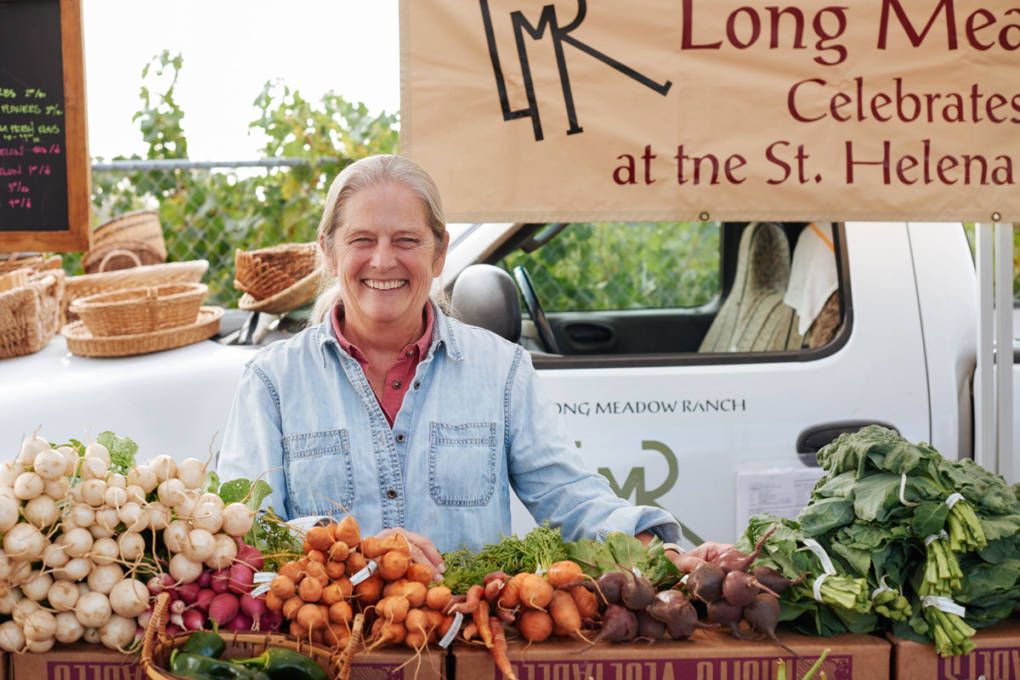
"caption": "Laddie Hall at a farmers’ market.",
"description": "Laddie Hall at a farmers’ market.",
"title": "Laddie Hall at a farmers’ market.",
"credit": "Shea Evans Photography",
"status": "inherit",
"isLoading": false,
"fetchFailed": false
},
"bayareabites_130627": {
"type": "attachments",
"id": "bayareabites_130627",
"meta": {
"index": "attachments_1716263798",
"site": "bayareabites",
"id": "130627",
"found": true
},
"parent": 130626,
"imgSizes": {
"small": {
"file": "https://ww2.kqed.org/app/uploads/sites/24/2018/09/gettyimages-1033989292-acf0b6c7bdece44d52a9591c699de0031072a54c-520x390.jpg",
"width": 520,
"mimeType": "image/jpeg",
"height": 390
},
"twentyfourteen-full-width": {
"file": "https://ww2.kqed.org/app/uploads/sites/24/2018/09/gettyimages-1033989292-acf0b6c7bdece44d52a9591c699de0031072a54c-911x576.jpg",
"width": 911,
"mimeType": "image/jpeg",
"height": 576
},
"thumbnail": {
"file": "https://ww2.kqed.org/app/uploads/sites/24/2018/09/gettyimages-1033989292-acf0b6c7bdece44d52a9591c699de0031072a54c-160x120.jpg",
"width": 160,
"mimeType": "image/jpeg",
"height": 120
},
"post-thumbnail": {
"file": "https://ww2.kqed.org/app/uploads/sites/24/2018/09/gettyimages-1033989292-acf0b6c7bdece44d52a9591c699de0031072a54c-672x372.jpg",
"width": 672,
"mimeType": "image/jpeg",
"height": 372
},
"xsmall": {
"file": "https://ww2.kqed.org/app/uploads/sites/24/2018/09/gettyimages-1033989292-acf0b6c7bdece44d52a9591c699de0031072a54c-375x281.jpg",
"width": 375,
"mimeType": "image/jpeg",
"height": 281
},
"kqedFullSize": {
"file": "https://ww2.kqed.org/app/uploads/sites/24/2018/09/gettyimages-1033989292-acf0b6c7bdece44d52a9591c699de0031072a54c.jpg",
"width": 911,
"height": 683
},
"guest-author-50": {
"file": "https://ww2.kqed.org/app/uploads/sites/24/2018/09/gettyimages-1033989292-acf0b6c7bdece44d52a9591c699de0031072a54c-50x50.jpg",
"width": 50,
"mimeType": "image/jpeg",
"height": 50
},
"guest-author-96": {
"file": "https://ww2.kqed.org/app/uploads/sites/24/2018/09/gettyimages-1033989292-acf0b6c7bdece44d52a9591c699de0031072a54c-96x96.jpg",
"width": 96,
"mimeType": "image/jpeg",
"height": 96
},
"medium": {
"file": "https://ww2.kqed.org/app/uploads/sites/24/2018/09/gettyimages-1033989292-acf0b6c7bdece44d52a9591c699de0031072a54c-800x600.jpg",
"width": 800,
"mimeType": "image/jpeg",
"height": 600
},
"guest-author-64": {
"file": "https://ww2.kqed.org/app/uploads/sites/24/2018/09/gettyimages-1033989292-acf0b6c7bdece44d52a9591c699de0031072a54c-64x64.jpg",
"width": 64,
"mimeType": "image/jpeg",
"height": 64
},
"guest-author-32": {
"file": "https://ww2.kqed.org/app/uploads/sites/24/2018/09/gettyimages-1033989292-acf0b6c7bdece44d52a9591c699de0031072a54c-32x32.jpg",
"width": 32,
"mimeType": "image/jpeg",
"height": 32
},
"detail": {
"file": "https://ww2.kqed.org/app/uploads/sites/24/2018/09/gettyimages-1033989292-acf0b6c7bdece44d52a9591c699de0031072a54c-150x150.jpg",
"width": 150,
"mimeType": "image/jpeg",
"height": 150
},
"medium_large": {
"file": "https://ww2.kqed.org/app/uploads/sites/24/2018/09/gettyimages-1033989292-acf0b6c7bdece44d52a9591c699de0031072a54c-768x576.jpg",
"width": 768,
"mimeType": "image/jpeg",
"height": 576
},
"guest-author-128": {
"file": "https://ww2.kqed.org/app/uploads/sites/24/2018/09/gettyimages-1033989292-acf0b6c7bdece44d52a9591c699de0031072a54c-128x128.jpg",
"width": 128,
"mimeType": "image/jpeg",
"height": 128
},
"xxsmall": {
"file": "https://ww2.kqed.org/app/uploads/sites/24/2018/09/gettyimages-1033989292-acf0b6c7bdece44d52a9591c699de0031072a54c-240x180.jpg",
"width": 240,
"mimeType": "image/jpeg",
"height": 180
}
},
"publishDate": 1538081191,
"modified": 1538081313,
"caption": "More kids are eating at fast food chains like McDonald's, according to a new study, but parents are buying the healthier side options only about half the time.",
"description": "More kids are eating at fast food chains like McDonald's, according to a new study, but parents are buying the healthier side options only about half the time.",
"title": "More kids are eating at fast food chains like McDonald's, according to a new study, but parents are buying the healthier side options only about half the time.",
"credit": "Miguel Candela/SOPA Images/LightRocket via Getty Images",
"status": "inherit",
"isLoading": false,
"fetchFailed": false
},
"bayareabites_130590": {
"type": "attachments",
"id": "bayareabites_130590",
"meta": {
"index": "attachments_1716263798",
"site": "bayareabites",
"id": "130590",
"found": true
},
"parent": 130589,
"imgSizes": {
"small": {
"file": "https://ww2.kqed.org/app/uploads/sites/24/2018/09/gettyimages-77193778_custom-4d450c4354262d6a20c36602f6bfe9d530e459a2-520x376.jpg",
"width": 520,
"mimeType": "image/jpeg",
"height": 376
},
"twentyfourteen-full-width": {
"file": "https://ww2.kqed.org/app/uploads/sites/24/2018/09/gettyimages-77193778_custom-4d450c4354262d6a20c36602f6bfe9d530e459a2-1038x576.jpg",
"width": 1038,
"mimeType": "image/jpeg",
"height": 576
},
"thumbnail": {
"file": "https://ww2.kqed.org/app/uploads/sites/24/2018/09/gettyimages-77193778_custom-4d450c4354262d6a20c36602f6bfe9d530e459a2-160x116.jpg",
"width": 160,
"mimeType": "image/jpeg",
"height": 116
},
"fd-sm": {
"file": "https://ww2.kqed.org/app/uploads/sites/24/2018/09/gettyimages-77193778_custom-4d450c4354262d6a20c36602f6bfe9d530e459a2-960x695.jpg",
"width": 960,
"mimeType": "image/jpeg",
"height": 695
},
"post-thumbnail": {
"file": "https://ww2.kqed.org/app/uploads/sites/24/2018/09/gettyimages-77193778_custom-4d450c4354262d6a20c36602f6bfe9d530e459a2-672x372.jpg",
"width": 672,
"mimeType": "image/jpeg",
"height": 372
},
"xsmall": {
"file": "https://ww2.kqed.org/app/uploads/sites/24/2018/09/gettyimages-77193778_custom-4d450c4354262d6a20c36602f6bfe9d530e459a2-375x271.jpg",
"width": 375,
"mimeType": "image/jpeg",
"height": 271
},
"kqedFullSize": {
"file": "https://ww2.kqed.org/app/uploads/sites/24/2018/09/gettyimages-77193778_custom-4d450c4354262d6a20c36602f6bfe9d530e459a2-e1537990478254.jpg",
"width": 1920,
"height": 1390
},
"large": {
"file": "https://ww2.kqed.org/app/uploads/sites/24/2018/09/gettyimages-77193778_custom-4d450c4354262d6a20c36602f6bfe9d530e459a2-1020x738.jpg",
"width": 1020,
"mimeType": "image/jpeg",
"height": 738
},
"xlarge": {
"file": "https://ww2.kqed.org/app/uploads/sites/24/2018/09/gettyimages-77193778_custom-4d450c4354262d6a20c36602f6bfe9d530e459a2-1180x854.jpg",
"width": 1180,
"mimeType": "image/jpeg",
"height": 854
},
"complete_open_graph": {
"file": "https://ww2.kqed.org/app/uploads/sites/24/2018/09/gettyimages-77193778_custom-4d450c4354262d6a20c36602f6bfe9d530e459a2-1200x868.jpg",
"width": 1200,
"mimeType": "image/jpeg",
"height": 868
},
"guest-author-50": {
"file": "https://ww2.kqed.org/app/uploads/sites/24/2018/09/gettyimages-77193778_custom-4d450c4354262d6a20c36602f6bfe9d530e459a2-50x50.jpg",
"width": 50,
"mimeType": "image/jpeg",
"height": 50
},
"guest-author-96": {
"file": "https://ww2.kqed.org/app/uploads/sites/24/2018/09/gettyimages-77193778_custom-4d450c4354262d6a20c36602f6bfe9d530e459a2-96x96.jpg",
"width": 96,
"mimeType": "image/jpeg",
"height": 96
},
"medium": {
"file": "https://ww2.kqed.org/app/uploads/sites/24/2018/09/gettyimages-77193778_custom-4d450c4354262d6a20c36602f6bfe9d530e459a2-800x579.jpg",
"width": 800,
"mimeType": "image/jpeg",
"height": 579
},
"guest-author-64": {
"file": "https://ww2.kqed.org/app/uploads/sites/24/2018/09/gettyimages-77193778_custom-4d450c4354262d6a20c36602f6bfe9d530e459a2-64x64.jpg",
"width": 64,
"mimeType": "image/jpeg",
"height": 64
},
"guest-author-32": {
"file": "https://ww2.kqed.org/app/uploads/sites/24/2018/09/gettyimages-77193778_custom-4d450c4354262d6a20c36602f6bfe9d530e459a2-32x32.jpg",
"width": 32,
"mimeType": "image/jpeg",
"height": 32
},
"fd-lrg": {
"file": "https://ww2.kqed.org/app/uploads/sites/24/2018/09/gettyimages-77193778_custom-4d450c4354262d6a20c36602f6bfe9d530e459a2-1920x1390.jpg",
"width": 1920,
"mimeType": "image/jpeg",
"height": 1390
},
"fd-med": {
"file": "https://ww2.kqed.org/app/uploads/sites/24/2018/09/gettyimages-77193778_custom-4d450c4354262d6a20c36602f6bfe9d530e459a2-1180x854.jpg",
"width": 1180,
"mimeType": "image/jpeg",
"height": 854
},
"full-width": {
"file": "https://ww2.kqed.org/app/uploads/sites/24/2018/09/gettyimages-77193778_custom-4d450c4354262d6a20c36602f6bfe9d530e459a2-1920x1390.jpg",
"width": 1920,
"mimeType": "image/jpeg",
"height": 1390
},
"detail": {
"file": "https://ww2.kqed.org/app/uploads/sites/24/2018/09/gettyimages-77193778_custom-4d450c4354262d6a20c36602f6bfe9d530e459a2-150x150.jpg",
"width": 150,
"mimeType": "image/jpeg",
"height": 150
},
"medium_large": {
"file": "https://ww2.kqed.org/app/uploads/sites/24/2018/09/gettyimages-77193778_custom-4d450c4354262d6a20c36602f6bfe9d530e459a2-768x556.jpg",
"width": 768,
"mimeType": "image/jpeg",
"height": 556
},
"guest-author-128": {
"file": "https://ww2.kqed.org/app/uploads/sites/24/2018/09/gettyimages-77193778_custom-4d450c4354262d6a20c36602f6bfe9d530e459a2-128x128.jpg",
"width": 128,
"mimeType": "image/jpeg",
"height": 128
},
"xxsmall": {
"file": "https://ww2.kqed.org/app/uploads/sites/24/2018/09/gettyimages-77193778_custom-4d450c4354262d6a20c36602f6bfe9d530e459a2-240x174.jpg",
"width": 240,
"mimeType": "image/jpeg",
"height": 174
}
},
"publishDate": 1537989965,
"modified": 1537990492,
"caption": "Brian Wansink demonstrates his \"bottomless bowl of soup\" — used to show that people eat more when served in a bowl secretly replenished from the inside — after he was awarded a 2007 Ig Nobel Prize in 2007 at Harvard University. Wansink made a name for himself producing pithy, palatable studies that connected people's eating habits with cues from their environment.",
"description": "Brian Wansink demonstrates his \"bottomless bowl of soup\" -- used to show that people eat more when served in a bowl secretly replenished from the inside -- after he was awarded a 2007 Ig Nobel Prize in 2007 at Harvard University. Wansink made a name for himself producing pithy, palatable studies that connected people's eating habits with cues from their environment.",
"title": "Brian Wansink demonstrates his \"bottomless bowl of soup\" — used to show that people eat more when served in a bowl secretly replenished from the inside — after he was awarded a 2007 Ig Nobel Prize in 2007 at Harvard University. Wansink made a name for himself producing pithy, palatable studies that connected people's eating habits with cues from their environment.",
"credit": "Stan Honda/AFP/Getty Images",
"status": "inherit",
"isLoading": false,
"fetchFailed": false
},
"bayareabites_130582": {
"type": "attachments",
"id": "bayareabites_130582",
"meta": {
"index": "attachments_1716263798",
"site": "bayareabites",
"id": "130582",
"found": true
},
"parent": 130581,
"imgSizes": {
"small": {
"file": "https://ww2.kqed.org/app/uploads/sites/24/2018/09/gettyimages-534343646_wide-fb66485ce295c7532785dc6b58f2002a52c69b69-520x293.jpg",
"width": 520,
"mimeType": "image/jpeg",
"height": 293
},
"twentyfourteen-full-width": {
"file": "https://ww2.kqed.org/app/uploads/sites/24/2018/09/gettyimages-534343646_wide-fb66485ce295c7532785dc6b58f2002a52c69b69-1024x576.jpg",
"width": 1024,
"mimeType": "image/jpeg",
"height": 576
},
"thumbnail": {
"file": "https://ww2.kqed.org/app/uploads/sites/24/2018/09/gettyimages-534343646_wide-fb66485ce295c7532785dc6b58f2002a52c69b69-160x90.jpg",
"width": 160,
"mimeType": "image/jpeg",
"height": 90
},
"fd-sm": {
"file": "https://ww2.kqed.org/app/uploads/sites/24/2018/09/gettyimages-534343646_wide-fb66485ce295c7532785dc6b58f2002a52c69b69-960x540.jpg",
"width": 960,
"mimeType": "image/jpeg",
"height": 540
},
"post-thumbnail": {
"file": "https://ww2.kqed.org/app/uploads/sites/24/2018/09/gettyimages-534343646_wide-fb66485ce295c7532785dc6b58f2002a52c69b69-672x372.jpg",
"width": 672,
"mimeType": "image/jpeg",
"height": 372
},
"xsmall": {
"file": "https://ww2.kqed.org/app/uploads/sites/24/2018/09/gettyimages-534343646_wide-fb66485ce295c7532785dc6b58f2002a52c69b69-375x211.jpg",
"width": 375,
"mimeType": "image/jpeg",
"height": 211
},
"kqedFullSize": {
"file": "https://ww2.kqed.org/app/uploads/sites/24/2018/09/gettyimages-534343646_wide-fb66485ce295c7532785dc6b58f2002a52c69b69.jpg",
"width": 1024,
"height": 576
},
"large": {
"file": "https://ww2.kqed.org/app/uploads/sites/24/2018/09/gettyimages-534343646_wide-fb66485ce295c7532785dc6b58f2002a52c69b69-1020x574.jpg",
"width": 1020,
"mimeType": "image/jpeg",
"height": 574
},
"guest-author-50": {
"file": "https://ww2.kqed.org/app/uploads/sites/24/2018/09/gettyimages-534343646_wide-fb66485ce295c7532785dc6b58f2002a52c69b69-50x50.jpg",
"width": 50,
"mimeType": "image/jpeg",
"height": 50
},
"guest-author-96": {
"file": "https://ww2.kqed.org/app/uploads/sites/24/2018/09/gettyimages-534343646_wide-fb66485ce295c7532785dc6b58f2002a52c69b69-96x96.jpg",
"width": 96,
"mimeType": "image/jpeg",
"height": 96
},
"medium": {
"file": "https://ww2.kqed.org/app/uploads/sites/24/2018/09/gettyimages-534343646_wide-fb66485ce295c7532785dc6b58f2002a52c69b69-800x450.jpg",
"width": 800,
"mimeType": "image/jpeg",
"height": 450
},
"guest-author-64": {
"file": "https://ww2.kqed.org/app/uploads/sites/24/2018/09/gettyimages-534343646_wide-fb66485ce295c7532785dc6b58f2002a52c69b69-64x64.jpg",
"width": 64,
"mimeType": "image/jpeg",
"height": 64
},
"guest-author-32": {
"file": "https://ww2.kqed.org/app/uploads/sites/24/2018/09/gettyimages-534343646_wide-fb66485ce295c7532785dc6b58f2002a52c69b69-32x32.jpg",
"width": 32,
"mimeType": "image/jpeg",
"height": 32
},
"detail": {
"file": "https://ww2.kqed.org/app/uploads/sites/24/2018/09/gettyimages-534343646_wide-fb66485ce295c7532785dc6b58f2002a52c69b69-150x150.jpg",
"width": 150,
"mimeType": "image/jpeg",
"height": 150
},
"medium_large": {
"file": "https://ww2.kqed.org/app/uploads/sites/24/2018/09/gettyimages-534343646_wide-fb66485ce295c7532785dc6b58f2002a52c69b69-768x432.jpg",
"width": 768,
"mimeType": "image/jpeg",
"height": 432
},
"guest-author-128": {
"file": "https://ww2.kqed.org/app/uploads/sites/24/2018/09/gettyimages-534343646_wide-fb66485ce295c7532785dc6b58f2002a52c69b69-128x128.jpg",
"width": 128,
"mimeType": "image/jpeg",
"height": 128
},
"xxsmall": {
"file": "https://ww2.kqed.org/app/uploads/sites/24/2018/09/gettyimages-534343646_wide-fb66485ce295c7532785dc6b58f2002a52c69b69-240x135.jpg",
"width": 240,
"mimeType": "image/jpeg",
"height": 135
}
},
"publishDate": 1537815458,
"modified": 1537815736,
"caption": "Yogurt selections like this one at a Los Angeles 365 by Whole Foods Market store are getting larger, but a new U.K. study warns that many contain lots of added sugar.",
"description": "Yogurt selections like this one at a Los Angeles 365 by Whole Foods Market store are getting larger, but a new U.K. study warns that many contain lots of added sugar.",
"title": "Yogurt selections like this one at a Los Angeles 365 by Whole Foods Market store are getting larger, but a new U.K. study warns that many contain lots of added sugar.",
"credit": "Patrick T. Fallon/Bloomberg via Getty Images",
"status": "inherit",
"isLoading": false,
"fetchFailed": false
},
"bayareabites_130561": {
"type": "attachments",
"id": "bayareabites_130561",
"meta": {
"index": "attachments_1716263798",
"site": "bayareabites",
"id": "130561",
"found": true
},
"parent": 130560,
"imgSizes": {
"small": {
"file": "https://ww2.kqed.org/app/uploads/sites/24/2018/09/biscuit-island-520x346.jpg",
"width": 520,
"mimeType": "image/jpeg",
"height": 346
},
"twentyfourteen-full-width": {
"file": "https://ww2.kqed.org/app/uploads/sites/24/2018/09/biscuit-island-1038x576.jpg",
"width": 1038,
"mimeType": "image/jpeg",
"height": 576
},
"thumbnail": {
"file": "https://ww2.kqed.org/app/uploads/sites/24/2018/09/biscuit-island-160x107.jpg",
"width": 160,
"mimeType": "image/jpeg",
"height": 107
},
"fd-sm": {
"file": "https://ww2.kqed.org/app/uploads/sites/24/2018/09/biscuit-island-960x639.jpg",
"width": 960,
"mimeType": "image/jpeg",
"height": 639
},
"post-thumbnail": {
"file": "https://ww2.kqed.org/app/uploads/sites/24/2018/09/biscuit-island-672x372.jpg",
"width": 672,
"mimeType": "image/jpeg",
"height": 372
},
"xsmall": {
"file": "https://ww2.kqed.org/app/uploads/sites/24/2018/09/biscuit-island-375x250.jpg",
"width": 375,
"mimeType": "image/jpeg",
"height": 250
},
"kqedFullSize": {
"file": "https://ww2.kqed.org/app/uploads/sites/24/2018/09/biscuit-island-e1537554886943.jpg",
"width": 1920,
"height": 1279
},
"large": {
"file": "https://ww2.kqed.org/app/uploads/sites/24/2018/09/biscuit-island-1020x679.jpg",
"width": 1020,
"mimeType": "image/jpeg",
"height": 679
},
"xlarge": {
"file": "https://ww2.kqed.org/app/uploads/sites/24/2018/09/biscuit-island-1180x786.jpg",
"width": 1180,
"mimeType": "image/jpeg",
"height": 786
},
"complete_open_graph": {
"file": "https://ww2.kqed.org/app/uploads/sites/24/2018/09/biscuit-island-1200x799.jpg",
"width": 1200,
"mimeType": "image/jpeg",
"height": 799
},
"guest-author-50": {
"file": "https://ww2.kqed.org/app/uploads/sites/24/2018/09/biscuit-island-50x50.jpg",
"width": 50,
"mimeType": "image/jpeg",
"height": 50
},
"guest-author-96": {
"file": "https://ww2.kqed.org/app/uploads/sites/24/2018/09/biscuit-island-96x96.jpg",
"width": 96,
"mimeType": "image/jpeg",
"height": 96
},
"medium": {
"file": "https://ww2.kqed.org/app/uploads/sites/24/2018/09/biscuit-island-800x533.jpg",
"width": 800,
"mimeType": "image/jpeg",
"height": 533
},
"guest-author-64": {
"file": "https://ww2.kqed.org/app/uploads/sites/24/2018/09/biscuit-island-64x64.jpg",
"width": 64,
"mimeType": "image/jpeg",
"height": 64
},
"guest-author-32": {
"file": "https://ww2.kqed.org/app/uploads/sites/24/2018/09/biscuit-island-32x32.jpg",
"width": 32,
"mimeType": "image/jpeg",
"height": 32
},
"fd-lrg": {
"file": "https://ww2.kqed.org/app/uploads/sites/24/2018/09/biscuit-island-1920x1279.jpg",
"width": 1920,
"mimeType": "image/jpeg",
"height": 1279
},
"fd-med": {
"file": "https://ww2.kqed.org/app/uploads/sites/24/2018/09/biscuit-island-1180x786.jpg",
"width": 1180,
"mimeType": "image/jpeg",
"height": 786
},
"full-width": {
"file": "https://ww2.kqed.org/app/uploads/sites/24/2018/09/biscuit-island-1920x1279.jpg",
"width": 1920,
"mimeType": "image/jpeg",
"height": 1279
},
"detail": {
"file": "https://ww2.kqed.org/app/uploads/sites/24/2018/09/biscuit-island-150x150.jpg",
"width": 150,
"mimeType": "image/jpeg",
"height": 150
},
"medium_large": {
"file": "https://ww2.kqed.org/app/uploads/sites/24/2018/09/biscuit-island-768x511.jpg",
"width": 768,
"mimeType": "image/jpeg",
"height": 511
},
"guest-author-128": {
"file": "https://ww2.kqed.org/app/uploads/sites/24/2018/09/biscuit-island-128x128.jpg",
"width": 128,
"mimeType": "image/jpeg",
"height": 128
},
"xxsmall": {
"file": "https://ww2.kqed.org/app/uploads/sites/24/2018/09/biscuit-island-240x160.jpg",
"width": 240,
"mimeType": "image/jpeg",
"height": 160
}
},
"publishDate": 1537554866,
"modified": 1537749981,
"caption": "Take a trip to Biscuit Island at Juanita MORE!'s Sunday drag brunch. ",
"description": "Take a trip to Biscuit Island at Juanita MORE!'s Sunday drag brunch. ",
"title": "biscuit island",
"credit": "tablehopper.com",
"status": "inherit",
"isLoading": false,
"fetchFailed": false
},
"bayareabites_130551": {
"type": "attachments",
"id": "bayareabites_130551",
"meta": {
"index": "attachments_1716263798",
"site": "bayareabites",
"id": "130551",
"found": true
},
"parent": 130548,
"imgSizes": {
"small": {
"file": "https://ww2.kqed.org/app/uploads/sites/24/2018/09/180913-sacramento-urban-agriculture-farm-to-fork-soil-born-farm-520x347.jpg",
"width": 520,
"mimeType": "image/jpeg",
"height": 347
},
"twentyfourteen-full-width": {
"file": "https://ww2.kqed.org/app/uploads/sites/24/2018/09/180913-sacramento-urban-agriculture-farm-to-fork-soil-born-farm-1038x576.jpg",
"width": 1038,
"mimeType": "image/jpeg",
"height": 576
},
"thumbnail": {
"file": "https://ww2.kqed.org/app/uploads/sites/24/2018/09/180913-sacramento-urban-agriculture-farm-to-fork-soil-born-farm-160x107.jpg",
"width": 160,
"mimeType": "image/jpeg",
"height": 107
},
"fd-sm": {
"file": "https://ww2.kqed.org/app/uploads/sites/24/2018/09/180913-sacramento-urban-agriculture-farm-to-fork-soil-born-farm-960x640.jpg",
"width": 960,
"mimeType": "image/jpeg",
"height": 640
},
"post-thumbnail": {
"file": "https://ww2.kqed.org/app/uploads/sites/24/2018/09/180913-sacramento-urban-agriculture-farm-to-fork-soil-born-farm-672x372.jpg",
"width": 672,
"mimeType": "image/jpeg",
"height": 372
},
"xsmall": {
"file": "https://ww2.kqed.org/app/uploads/sites/24/2018/09/180913-sacramento-urban-agriculture-farm-to-fork-soil-born-farm-375x250.jpg",
"width": 375,
"mimeType": "image/jpeg",
"height": 250
},
"kqedFullSize": {
"file": "https://ww2.kqed.org/app/uploads/sites/24/2018/09/180913-sacramento-urban-agriculture-farm-to-fork-soil-born-farm.jpg",
"width": 1200,
"height": 800
},
"large": {
"file": "https://ww2.kqed.org/app/uploads/sites/24/2018/09/180913-sacramento-urban-agriculture-farm-to-fork-soil-born-farm-1020x680.jpg",
"width": 1020,
"mimeType": "image/jpeg",
"height": 680
},
"xlarge": {
"file": "https://ww2.kqed.org/app/uploads/sites/24/2018/09/180913-sacramento-urban-agriculture-farm-to-fork-soil-born-farm-1180x787.jpg",
"width": 1180,
"mimeType": "image/jpeg",
"height": 787
},
"complete_open_graph": {
"file": "https://ww2.kqed.org/app/uploads/sites/24/2018/09/180913-sacramento-urban-agriculture-farm-to-fork-soil-born-farm-1200x800.jpg",
"width": 1200,
"mimeType": "image/jpeg",
"height": 800
},
"guest-author-50": {
"file": "https://ww2.kqed.org/app/uploads/sites/24/2018/09/180913-sacramento-urban-agriculture-farm-to-fork-soil-born-farm-50x50.jpg",
"width": 50,
"mimeType": "image/jpeg",
"height": 50
},
"guest-author-96": {
"file": "https://ww2.kqed.org/app/uploads/sites/24/2018/09/180913-sacramento-urban-agriculture-farm-to-fork-soil-born-farm-96x96.jpg",
"width": 96,
"mimeType": "image/jpeg",
"height": 96
},
"medium": {
"file": "https://ww2.kqed.org/app/uploads/sites/24/2018/09/180913-sacramento-urban-agriculture-farm-to-fork-soil-born-farm-800x533.jpg",
"width": 800,
"mimeType": "image/jpeg",
"height": 533
},
"guest-author-64": {
"file": "https://ww2.kqed.org/app/uploads/sites/24/2018/09/180913-sacramento-urban-agriculture-farm-to-fork-soil-born-farm-64x64.jpg",
"width": 64,
"mimeType": "image/jpeg",
"height": 64
},
"guest-author-32": {
"file": "https://ww2.kqed.org/app/uploads/sites/24/2018/09/180913-sacramento-urban-agriculture-farm-to-fork-soil-born-farm-32x32.jpg",
"width": 32,
"mimeType": "image/jpeg",
"height": 32
},
"fd-med": {
"file": "https://ww2.kqed.org/app/uploads/sites/24/2018/09/180913-sacramento-urban-agriculture-farm-to-fork-soil-born-farm-1180x787.jpg",
"width": 1180,
"mimeType": "image/jpeg",
"height": 787
},
"detail": {
"file": "https://ww2.kqed.org/app/uploads/sites/24/2018/09/180913-sacramento-urban-agriculture-farm-to-fork-soil-born-farm-150x150.jpg",
"width": 150,
"mimeType": "image/jpeg",
"height": 150
},
"medium_large": {
"file": "https://ww2.kqed.org/app/uploads/sites/24/2018/09/180913-sacramento-urban-agriculture-farm-to-fork-soil-born-farm-768x512.jpg",
"width": 768,
"mimeType": "image/jpeg",
"height": 512
},
"guest-author-128": {
"file": "https://ww2.kqed.org/app/uploads/sites/24/2018/09/180913-sacramento-urban-agriculture-farm-to-fork-soil-born-farm-128x128.jpg",
"width": 128,
"mimeType": "image/jpeg",
"height": 128
},
"xxsmall": {
"file": "https://ww2.kqed.org/app/uploads/sites/24/2018/09/180913-sacramento-urban-agriculture-farm-to-fork-soil-born-farm-240x160.jpg",
"width": 240,
"mimeType": "image/jpeg",
"height": 160
}
},
"publishDate": 1537476825,
"modified": 1537478823,
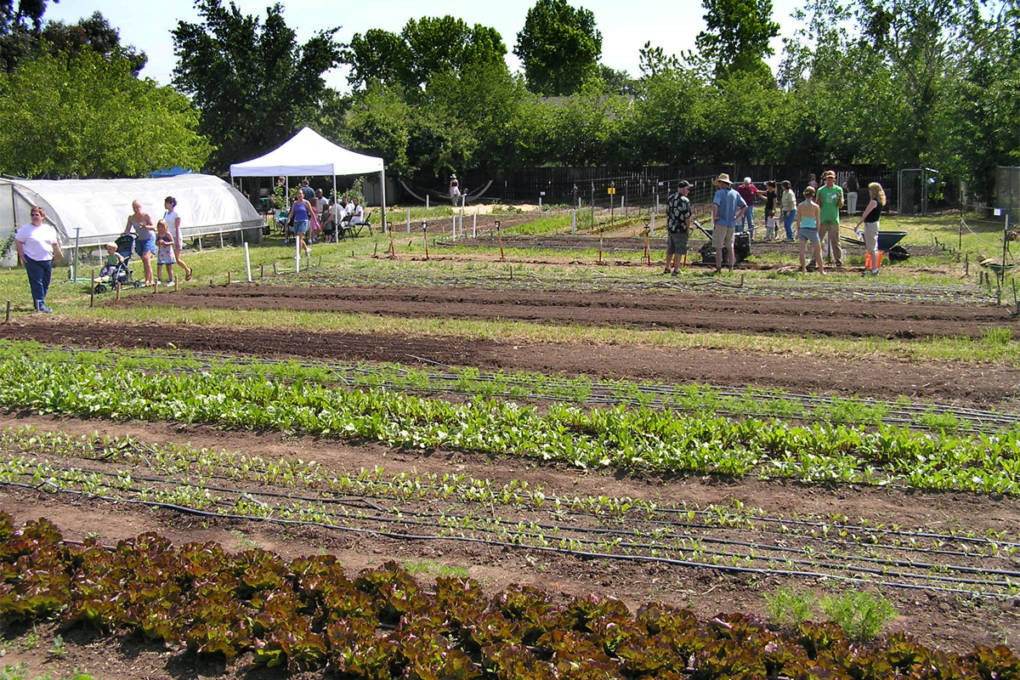
"caption": "Sacramento's Soil Born Farms.",
"description": "Sacramento's Soil Born Farms.",
"title": "Sacramento's Soil Born Farms.",
"credit": "Annie & John / Flickr",
"status": "inherit",
"isLoading": false,
"fetchFailed": false
},
"bayareabites_130543": {
"type": "attachments",
"id": "bayareabites_130543",
"meta": {
"index": "attachments_1716263798",
"site": "bayareabites",
"id": "130543",
"found": true
},
"parent": 130542,
"imgSizes": {
"small": {
"file": "https://ww2.kqed.org/app/uploads/sites/24/2018/09/img_0869-f529cb1ca9e89c814ea9054437fadcd7fdcb5fbe-520x390.jpg",
"width": 520,
"mimeType": "image/jpeg",
"height": 390
},
"twentyfourteen-full-width": {
"file": "https://ww2.kqed.org/app/uploads/sites/24/2018/09/img_0869-f529cb1ca9e89c814ea9054437fadcd7fdcb5fbe-1038x576.jpg",
"width": 1038,
"mimeType": "image/jpeg",
"height": 576
},
"thumbnail": {
"file": "https://ww2.kqed.org/app/uploads/sites/24/2018/09/img_0869-f529cb1ca9e89c814ea9054437fadcd7fdcb5fbe-160x120.jpg",
"width": 160,
"mimeType": "image/jpeg",
"height": 120
},
"fd-sm": {
"file": "https://ww2.kqed.org/app/uploads/sites/24/2018/09/img_0869-f529cb1ca9e89c814ea9054437fadcd7fdcb5fbe-960x720.jpg",
"width": 960,
"mimeType": "image/jpeg",
"height": 720
},
"post-thumbnail": {
"file": "https://ww2.kqed.org/app/uploads/sites/24/2018/09/img_0869-f529cb1ca9e89c814ea9054437fadcd7fdcb5fbe-672x372.jpg",
"width": 672,
"mimeType": "image/jpeg",
"height": 372
},
"xsmall": {
"file": "https://ww2.kqed.org/app/uploads/sites/24/2018/09/img_0869-f529cb1ca9e89c814ea9054437fadcd7fdcb5fbe-375x281.jpg",
"width": 375,
"mimeType": "image/jpeg",
"height": 281
},
"kqedFullSize": {
"file": "https://ww2.kqed.org/app/uploads/sites/24/2018/09/img_0869-f529cb1ca9e89c814ea9054437fadcd7fdcb5fbe-e1537473078187.jpg",
"width": 1920,
"height": 1440
},
"large": {
"file": "https://ww2.kqed.org/app/uploads/sites/24/2018/09/img_0869-f529cb1ca9e89c814ea9054437fadcd7fdcb5fbe-1020x765.jpg",
"width": 1020,
"mimeType": "image/jpeg",
"height": 765
},
"xlarge": {
"file": "https://ww2.kqed.org/app/uploads/sites/24/2018/09/img_0869-f529cb1ca9e89c814ea9054437fadcd7fdcb5fbe-1180x885.jpg",
"width": 1180,
"mimeType": "image/jpeg",
"height": 885
},
"complete_open_graph": {
"file": "https://ww2.kqed.org/app/uploads/sites/24/2018/09/img_0869-f529cb1ca9e89c814ea9054437fadcd7fdcb5fbe-1200x900.jpg",
"width": 1200,
"mimeType": "image/jpeg",
"height": 900
},
"guest-author-50": {
"file": "https://ww2.kqed.org/app/uploads/sites/24/2018/09/img_0869-f529cb1ca9e89c814ea9054437fadcd7fdcb5fbe-50x50.jpg",
"width": 50,
"mimeType": "image/jpeg",
"height": 50
},
"guest-author-96": {
"file": "https://ww2.kqed.org/app/uploads/sites/24/2018/09/img_0869-f529cb1ca9e89c814ea9054437fadcd7fdcb5fbe-96x96.jpg",
"width": 96,
"mimeType": "image/jpeg",
"height": 96
},
"medium": {
"file": "https://ww2.kqed.org/app/uploads/sites/24/2018/09/img_0869-f529cb1ca9e89c814ea9054437fadcd7fdcb5fbe-800x600.jpg",
"width": 800,
"mimeType": "image/jpeg",
"height": 600
},
"guest-author-64": {
"file": "https://ww2.kqed.org/app/uploads/sites/24/2018/09/img_0869-f529cb1ca9e89c814ea9054437fadcd7fdcb5fbe-64x64.jpg",
"width": 64,
"mimeType": "image/jpeg",
"height": 64
},
"guest-author-32": {
"file": "https://ww2.kqed.org/app/uploads/sites/24/2018/09/img_0869-f529cb1ca9e89c814ea9054437fadcd7fdcb5fbe-32x32.jpg",
"width": 32,
"mimeType": "image/jpeg",
"height": 32
},
"fd-lrg": {
"file": "https://ww2.kqed.org/app/uploads/sites/24/2018/09/img_0869-f529cb1ca9e89c814ea9054437fadcd7fdcb5fbe-1920x1440.jpg",
"width": 1920,
"mimeType": "image/jpeg",
"height": 1440
},
"fd-med": {
"file": "https://ww2.kqed.org/app/uploads/sites/24/2018/09/img_0869-f529cb1ca9e89c814ea9054437fadcd7fdcb5fbe-1180x885.jpg",
"width": 1180,
"mimeType": "image/jpeg",
"height": 885
},
"full-width": {
"file": "https://ww2.kqed.org/app/uploads/sites/24/2018/09/img_0869-f529cb1ca9e89c814ea9054437fadcd7fdcb5fbe-1920x1440.jpg",
"width": 1920,
"mimeType": "image/jpeg",
"height": 1440
},
"detail": {
"file": "https://ww2.kqed.org/app/uploads/sites/24/2018/09/img_0869-f529cb1ca9e89c814ea9054437fadcd7fdcb5fbe-150x150.jpg",
"width": 150,
"mimeType": "image/jpeg",
"height": 150
},
"medium_large": {
"file": "https://ww2.kqed.org/app/uploads/sites/24/2018/09/img_0869-f529cb1ca9e89c814ea9054437fadcd7fdcb5fbe-768x576.jpg",
"width": 768,
"mimeType": "image/jpeg",
"height": 576
},
"guest-author-128": {
"file": "https://ww2.kqed.org/app/uploads/sites/24/2018/09/img_0869-f529cb1ca9e89c814ea9054437fadcd7fdcb5fbe-128x128.jpg",
"width": 128,
"mimeType": "image/jpeg",
"height": 128
},
"xxsmall": {
"file": "https://ww2.kqed.org/app/uploads/sites/24/2018/09/img_0869-f529cb1ca9e89c814ea9054437fadcd7fdcb5fbe-240x180.jpg",
"width": 240,
"mimeType": "image/jpeg",
"height": 180
}
},
"publishDate": 1537473009,
"modified": 1537473066,
"caption": "Forty percent of Segassia Vineyard's vines were damaged after wildfires raged through Napa Valley in 2017.",
"description": "Forty percent of Segassia Vineyard's vines were damaged after wildfires raged through Napa Valley in 2017",
"title": "Forty percent of Segassia Vineyard's vines were damaged after wildfires raged through Napa Valley in 2017.",
"credit": "Andrew Cates",
"status": "inherit",
"isLoading": false,
"fetchFailed": false
},
"bayareabites_130499": {
"type": "attachments",
"id": "bayareabites_130499",
"meta": {
"index": "attachments_1716263798",
"site": "bayareabites",
"id": "130499",
"found": true
},
"parent": 130498,
"imgSizes": {
"small": {
"file": "https://ww2.kqed.org/app/uploads/sites/24/2018/09/dietphysician_enl-c99b177a63d055762acf3ebb5aec80d456327b4c-520x350.jpg",
"width": 520,
"mimeType": "image/jpeg",
"height": 350
},
"twentyfourteen-full-width": {
"file": "https://ww2.kqed.org/app/uploads/sites/24/2018/09/dietphysician_enl-c99b177a63d055762acf3ebb5aec80d456327b4c-1038x576.jpg",
"width": 1038,
"mimeType": "image/jpeg",
"height": 576
},
"thumbnail": {
"file": "https://ww2.kqed.org/app/uploads/sites/24/2018/09/dietphysician_enl-c99b177a63d055762acf3ebb5aec80d456327b4c-160x108.jpg",
"width": 160,
"mimeType": "image/jpeg",
"height": 108
},
"fd-sm": {
"file": "https://ww2.kqed.org/app/uploads/sites/24/2018/09/dietphysician_enl-c99b177a63d055762acf3ebb5aec80d456327b4c-960x647.jpg",
"width": 960,
"mimeType": "image/jpeg",
"height": 647
},
"post-thumbnail": {
"file": "https://ww2.kqed.org/app/uploads/sites/24/2018/09/dietphysician_enl-c99b177a63d055762acf3ebb5aec80d456327b4c-672x372.jpg",
"width": 672,
"mimeType": "image/jpeg",
"height": 372
},
"xsmall": {
"file": "https://ww2.kqed.org/app/uploads/sites/24/2018/09/dietphysician_enl-c99b177a63d055762acf3ebb5aec80d456327b4c-375x253.jpg",
"width": 375,
"mimeType": "image/jpeg",
"height": 253
},
"kqedFullSize": {
"file": "https://ww2.kqed.org/app/uploads/sites/24/2018/09/dietphysician_enl-c99b177a63d055762acf3ebb5aec80d456327b4c-e1537306437576.jpg",
"width": 1920,
"height": 1294
},
"large": {
"file": "https://ww2.kqed.org/app/uploads/sites/24/2018/09/dietphysician_enl-c99b177a63d055762acf3ebb5aec80d456327b4c-1020x687.jpg",
"width": 1020,
"mimeType": "image/jpeg",
"height": 687
},
"xlarge": {
"file": "https://ww2.kqed.org/app/uploads/sites/24/2018/09/dietphysician_enl-c99b177a63d055762acf3ebb5aec80d456327b4c-1180x795.jpg",
"width": 1180,
"mimeType": "image/jpeg",
"height": 795
},
"complete_open_graph": {
"file": "https://ww2.kqed.org/app/uploads/sites/24/2018/09/dietphysician_enl-c99b177a63d055762acf3ebb5aec80d456327b4c-1200x809.jpg",
"width": 1200,
"mimeType": "image/jpeg",
"height": 809
},
"guest-author-50": {
"file": "https://ww2.kqed.org/app/uploads/sites/24/2018/09/dietphysician_enl-c99b177a63d055762acf3ebb5aec80d456327b4c-50x50.jpg",
"width": 50,
"mimeType": "image/jpeg",
"height": 50
},
"guest-author-96": {
"file": "https://ww2.kqed.org/app/uploads/sites/24/2018/09/dietphysician_enl-c99b177a63d055762acf3ebb5aec80d456327b4c-96x96.jpg",
"width": 96,
"mimeType": "image/jpeg",
"height": 96
},
"medium": {
"file": "https://ww2.kqed.org/app/uploads/sites/24/2018/09/dietphysician_enl-c99b177a63d055762acf3ebb5aec80d456327b4c-800x539.jpg",
"width": 800,
"mimeType": "image/jpeg",
"height": 539
},
"guest-author-64": {
"file": "https://ww2.kqed.org/app/uploads/sites/24/2018/09/dietphysician_enl-c99b177a63d055762acf3ebb5aec80d456327b4c-64x64.jpg",
"width": 64,
"mimeType": "image/jpeg",
"height": 64
},
"guest-author-32": {
"file": "https://ww2.kqed.org/app/uploads/sites/24/2018/09/dietphysician_enl-c99b177a63d055762acf3ebb5aec80d456327b4c-32x32.jpg",
"width": 32,
"mimeType": "image/jpeg",
"height": 32
},
"fd-lrg": {
"file": "https://ww2.kqed.org/app/uploads/sites/24/2018/09/dietphysician_enl-c99b177a63d055762acf3ebb5aec80d456327b4c-1920x1294.jpg",
"width": 1920,
"mimeType": "image/jpeg",
"height": 1294
},
"fd-med": {
"file": "https://ww2.kqed.org/app/uploads/sites/24/2018/09/dietphysician_enl-c99b177a63d055762acf3ebb5aec80d456327b4c-1180x795.jpg",
"width": 1180,
"mimeType": "image/jpeg",
"height": 795
},
"full-width": {
"file": "https://ww2.kqed.org/app/uploads/sites/24/2018/09/dietphysician_enl-c99b177a63d055762acf3ebb5aec80d456327b4c-1920x1294.jpg",
"width": 1920,
"mimeType": "image/jpeg",
"height": 1294
},
"detail": {
"file": "https://ww2.kqed.org/app/uploads/sites/24/2018/09/dietphysician_enl-c99b177a63d055762acf3ebb5aec80d456327b4c-150x150.jpg",
"width": 150,
"mimeType": "image/jpeg",
"height": 150
},
"medium_large": {
"file": "https://ww2.kqed.org/app/uploads/sites/24/2018/09/dietphysician_enl-c99b177a63d055762acf3ebb5aec80d456327b4c-768x518.jpg",
"width": 768,
"mimeType": "image/jpeg",
"height": 518
},
"guest-author-128": {
"file": "https://ww2.kqed.org/app/uploads/sites/24/2018/09/dietphysician_enl-c99b177a63d055762acf3ebb5aec80d456327b4c-128x128.jpg",
"width": 128,
"mimeType": "image/jpeg",
"height": 128
},
"xxsmall": {
"file": "https://ww2.kqed.org/app/uploads/sites/24/2018/09/dietphysician_enl-c99b177a63d055762acf3ebb5aec80d456327b4c-240x162.jpg",
"width": 240,
"mimeType": "image/jpeg",
"height": 162
}
},
"publishDate": 1537306354,
"modified": 1537306463,
"caption": "If patients are obese, their physicians should refer them to behavior-based weight loss programs or offer their own, a national panel of experts says. Yet many doctors aren't having the necessary conversations with their patients.",
"description": "If patients are obese, their physicians should refer them to behavior-based weight loss programs or offer their own, a national panel of experts says. Yet many doctors aren't having the necessary conversations with their patients.",
"title": "If patients are obese, their physicians should refer them to behavior-based weight loss programs or offer their own, a national panel of experts says. Yet many doctors aren't having the necessary conversations with their patients.",
"credit": "Tetra Images/Getty Images",
"status": "inherit",
"isLoading": false,
"fetchFailed": false
},
"bayareabites_130464": {
"type": "attachments",
"id": "bayareabites_130464",
"meta": {
"index": "attachments_1716263798",
"site": "bayareabites",
"id": "130464",
"found": true
},
"parent": 130463,
"imgSizes": {
"small": {
"file": "https://ww2.kqed.org/app/uploads/sites/24/2018/09/img_0104_wide-6b5b9eb4c466371fa756e9c4e9048d55297df5fe-520x292.jpg",
"width": 520,
"mimeType": "image/jpeg",
"height": 292
},
"twentyfourteen-full-width": {
"file": "https://ww2.kqed.org/app/uploads/sites/24/2018/09/img_0104_wide-6b5b9eb4c466371fa756e9c4e9048d55297df5fe-1038x576.jpg",
"width": 1038,
"mimeType": "image/jpeg",
"height": 576
},
"thumbnail": {
"file": "https://ww2.kqed.org/app/uploads/sites/24/2018/09/img_0104_wide-6b5b9eb4c466371fa756e9c4e9048d55297df5fe-160x90.jpg",
"width": 160,
"mimeType": "image/jpeg",
"height": 90
},
"fd-sm": {
"file": "https://ww2.kqed.org/app/uploads/sites/24/2018/09/img_0104_wide-6b5b9eb4c466371fa756e9c4e9048d55297df5fe-960x540.jpg",
"width": 960,
"mimeType": "image/jpeg",
"height": 540
},
"post-thumbnail": {
"file": "https://ww2.kqed.org/app/uploads/sites/24/2018/09/img_0104_wide-6b5b9eb4c466371fa756e9c4e9048d55297df5fe-672x372.jpg",
"width": 672,
"mimeType": "image/jpeg",
"height": 372
},
"xsmall": {
"file": "https://ww2.kqed.org/app/uploads/sites/24/2018/09/img_0104_wide-6b5b9eb4c466371fa756e9c4e9048d55297df5fe-375x211.jpg",
"width": 375,
"mimeType": "image/jpeg",
"height": 211
},
"kqedFullSize": {
"file": "https://ww2.kqed.org/app/uploads/sites/24/2018/09/img_0104_wide-6b5b9eb4c466371fa756e9c4e9048d55297df5fe-e1537214304311.jpg",
"width": 1920,
"height": 1080
},
"large": {
"file": "https://ww2.kqed.org/app/uploads/sites/24/2018/09/img_0104_wide-6b5b9eb4c466371fa756e9c4e9048d55297df5fe-1020x574.jpg",
"width": 1020,
"mimeType": "image/jpeg",
"height": 574
},
"xlarge": {
"file": "https://ww2.kqed.org/app/uploads/sites/24/2018/09/img_0104_wide-6b5b9eb4c466371fa756e9c4e9048d55297df5fe-1180x664.jpg",
"width": 1180,
"mimeType": "image/jpeg",
"height": 664
},
"complete_open_graph": {
"file": "https://ww2.kqed.org/app/uploads/sites/24/2018/09/img_0104_wide-6b5b9eb4c466371fa756e9c4e9048d55297df5fe-1200x675.jpg",
"width": 1200,
"mimeType": "image/jpeg",
"height": 675
},
"guest-author-50": {
"file": "https://ww2.kqed.org/app/uploads/sites/24/2018/09/img_0104_wide-6b5b9eb4c466371fa756e9c4e9048d55297df5fe-50x50.jpg",
"width": 50,
"mimeType": "image/jpeg",
"height": 50
},
"guest-author-96": {
"file": "https://ww2.kqed.org/app/uploads/sites/24/2018/09/img_0104_wide-6b5b9eb4c466371fa756e9c4e9048d55297df5fe-96x96.jpg",
"width": 96,
"mimeType": "image/jpeg",
"height": 96
},
"medium": {
"file": "https://ww2.kqed.org/app/uploads/sites/24/2018/09/img_0104_wide-6b5b9eb4c466371fa756e9c4e9048d55297df5fe-800x450.jpg",
"width": 800,
"mimeType": "image/jpeg",
"height": 450
},
"guest-author-64": {
"file": "https://ww2.kqed.org/app/uploads/sites/24/2018/09/img_0104_wide-6b5b9eb4c466371fa756e9c4e9048d55297df5fe-64x64.jpg",
"width": 64,
"mimeType": "image/jpeg",
"height": 64
},
"guest-author-32": {
"file": "https://ww2.kqed.org/app/uploads/sites/24/2018/09/img_0104_wide-6b5b9eb4c466371fa756e9c4e9048d55297df5fe-32x32.jpg",
"width": 32,
"mimeType": "image/jpeg",
"height": 32
},
"fd-lrg": {
"file": "https://ww2.kqed.org/app/uploads/sites/24/2018/09/img_0104_wide-6b5b9eb4c466371fa756e9c4e9048d55297df5fe-1920x1080.jpg",
"width": 1920,
"mimeType": "image/jpeg",
"height": 1080
},
"fd-med": {
"file": "https://ww2.kqed.org/app/uploads/sites/24/2018/09/img_0104_wide-6b5b9eb4c466371fa756e9c4e9048d55297df5fe-1180x664.jpg",
"width": 1180,
"mimeType": "image/jpeg",
"height": 664
},
"full-width": {
"file": "https://ww2.kqed.org/app/uploads/sites/24/2018/09/img_0104_wide-6b5b9eb4c466371fa756e9c4e9048d55297df5fe-1920x1080.jpg",
"width": 1920,
"mimeType": "image/jpeg",
"height": 1080
},
"detail": {
"file": "https://ww2.kqed.org/app/uploads/sites/24/2018/09/img_0104_wide-6b5b9eb4c466371fa756e9c4e9048d55297df5fe-150x150.jpg",
"width": 150,
"mimeType": "image/jpeg",
"height": 150
},
"medium_large": {
"file": "https://ww2.kqed.org/app/uploads/sites/24/2018/09/img_0104_wide-6b5b9eb4c466371fa756e9c4e9048d55297df5fe-768x432.jpg",
"width": 768,
"mimeType": "image/jpeg",
"height": 432
},
"guest-author-128": {
"file": "https://ww2.kqed.org/app/uploads/sites/24/2018/09/img_0104_wide-6b5b9eb4c466371fa756e9c4e9048d55297df5fe-128x128.jpg",
"width": 128,
"mimeType": "image/jpeg",
"height": 128
},
"xxsmall": {
"file": "https://ww2.kqed.org/app/uploads/sites/24/2018/09/img_0104_wide-6b5b9eb4c466371fa756e9c4e9048d55297df5fe-240x135.jpg",
"width": 240,
"mimeType": "image/jpeg",
"height": 135
}
},
"publishDate": 1537214037,
"modified": 1537214326,
"caption": "Double Mountain Brewery founder Matt Swihart grabs freshly bottled pale ale from the bottling line in Hood River. The ale is among the first to be sold in Oregon's new refillable beer bottles.",
"description": "Double Mountain Brewery founder Matt Swihart grabs freshly bottled pale ale from the bottling line in Hood River. The ale is among the first to be sold in Oregon’s new refillable beer bottl",
"title": "Double Mountain Brewery founder Matt Swihart grabs freshly bottled pale ale from the bottling line in Hood River. The ale is among the first to be sold in Oregon's new refillable beer bottles.",
"credit": "Cassandra Profita/OPB/Earthfix",
"status": "inherit",
"isLoading": false,
"fetchFailed": false
},
"bayareabites_130391": {
"type": "attachments",
"id": "bayareabites_130391",
"meta": {
"index": "attachments_1716263798",
"site": "bayareabites",
"id": "130391",
"found": true
},
"parent": 130390,
"imgSizes": {
"small": {
"file": "https://ww2.kqed.org/app/uploads/sites/24/2018/09/gettyimages-1027753890-ad96ba2ed6b0bddbbab809c6817673f32ab855a1-520x390.jpg",
"width": 520,
"mimeType": "image/jpeg",
"height": 390
},
"twentyfourteen-full-width": {
"file": "https://ww2.kqed.org/app/uploads/sites/24/2018/09/gettyimages-1027753890-ad96ba2ed6b0bddbbab809c6817673f32ab855a1-911x576.jpg",
"width": 911,
"mimeType": "image/jpeg",
"height": 576
},
"thumbnail": {
"file": "https://ww2.kqed.org/app/uploads/sites/24/2018/09/gettyimages-1027753890-ad96ba2ed6b0bddbbab809c6817673f32ab855a1-160x120.jpg",
"width": 160,
"mimeType": "image/jpeg",
"height": 120
},
"post-thumbnail": {
"file": "https://ww2.kqed.org/app/uploads/sites/24/2018/09/gettyimages-1027753890-ad96ba2ed6b0bddbbab809c6817673f32ab855a1-672x372.jpg",
"width": 672,
"mimeType": "image/jpeg",
"height": 372
},
"xsmall": {
"file": "https://ww2.kqed.org/app/uploads/sites/24/2018/09/gettyimages-1027753890-ad96ba2ed6b0bddbbab809c6817673f32ab855a1-375x281.jpg",
"width": 375,
"mimeType": "image/jpeg",
"height": 281
},
"kqedFullSize": {
"file": "https://ww2.kqed.org/app/uploads/sites/24/2018/09/gettyimages-1027753890-ad96ba2ed6b0bddbbab809c6817673f32ab855a1.jpg",
"width": 911,
"height": 683
},
"guest-author-50": {
"file": "https://ww2.kqed.org/app/uploads/sites/24/2018/09/gettyimages-1027753890-ad96ba2ed6b0bddbbab809c6817673f32ab855a1-50x50.jpg",
"width": 50,
"mimeType": "image/jpeg",
"height": 50
},
"guest-author-96": {
"file": "https://ww2.kqed.org/app/uploads/sites/24/2018/09/gettyimages-1027753890-ad96ba2ed6b0bddbbab809c6817673f32ab855a1-96x96.jpg",
"width": 96,
"mimeType": "image/jpeg",
"height": 96
},
"medium": {
"file": "https://ww2.kqed.org/app/uploads/sites/24/2018/09/gettyimages-1027753890-ad96ba2ed6b0bddbbab809c6817673f32ab855a1-800x600.jpg",
"width": 800,
"mimeType": "image/jpeg",
"height": 600
},
"guest-author-64": {
"file": "https://ww2.kqed.org/app/uploads/sites/24/2018/09/gettyimages-1027753890-ad96ba2ed6b0bddbbab809c6817673f32ab855a1-64x64.jpg",
"width": 64,
"mimeType": "image/jpeg",
"height": 64
},
"guest-author-32": {
"file": "https://ww2.kqed.org/app/uploads/sites/24/2018/09/gettyimages-1027753890-ad96ba2ed6b0bddbbab809c6817673f32ab855a1-32x32.jpg",
"width": 32,
"mimeType": "image/jpeg",
"height": 32
},
"detail": {
"file": "https://ww2.kqed.org/app/uploads/sites/24/2018/09/gettyimages-1027753890-ad96ba2ed6b0bddbbab809c6817673f32ab855a1-150x150.jpg",
"width": 150,
"mimeType": "image/jpeg",
"height": 150
},
"medium_large": {
"file": "https://ww2.kqed.org/app/uploads/sites/24/2018/09/gettyimages-1027753890-ad96ba2ed6b0bddbbab809c6817673f32ab855a1-768x576.jpg",
"width": 768,
"mimeType": "image/jpeg",
"height": 576
},
"guest-author-128": {
"file": "https://ww2.kqed.org/app/uploads/sites/24/2018/09/gettyimages-1027753890-ad96ba2ed6b0bddbbab809c6817673f32ab855a1-128x128.jpg",
"width": 128,
"mimeType": "image/jpeg",
"height": 128
},
"xxsmall": {
"file": "https://ww2.kqed.org/app/uploads/sites/24/2018/09/gettyimages-1027753890-ad96ba2ed6b0bddbbab809c6817673f32ab855a1-240x180.jpg",
"width": 240,
"mimeType": "image/jpeg",
"height": 180
}
},
"publishDate": 1536898761,
"modified": 1536898909,
"caption": "The champagne grape harvest in northeastern France, like this one near Mailly-Champagne, started early this year due to lack of rain.",
"description": "The champagne grape harvest in northeastern France, like this one near Mailly-Champagne, started early this year due to lack of rain.",
"title": "The champagne grape harvest in northeastern France, like this one near Mailly-Champagne, started early this year due to lack of rain.",
"credit": "Francois Nascimbeni/AFP/Getty Images",
"status": "inherit",
"isLoading": false,
"fetchFailed": false
},
"bayareabites_130352": {
"type": "attachments",
"id": "bayareabites_130352",
"meta": {
"index": "attachments_1716263798",
"site": "bayareabites",
"id": "130352",
"found": true
},
"parent": 130351,
"imgSizes": {
"small": {
"file": "https://ww2.kqed.org/app/uploads/sites/24/2018/09/lettuce1_enl-e8cfd52596d77576010ecbf681b4acaece1f1ff4-520x293.jpg",
"width": 520,
"mimeType": "image/jpeg",
"height": 293
},
"twentyfourteen-full-width": {
"file": "https://ww2.kqed.org/app/uploads/sites/24/2018/09/lettuce1_enl-e8cfd52596d77576010ecbf681b4acaece1f1ff4-1038x576.jpg",
"width": 1038,
"mimeType": "image/jpeg",
"height": 576
},
"thumbnail": {
"file": "https://ww2.kqed.org/app/uploads/sites/24/2018/09/lettuce1_enl-e8cfd52596d77576010ecbf681b4acaece1f1ff4-160x90.jpg",
"width": 160,
"mimeType": "image/jpeg",
"height": 90
},
"fd-sm": {
"file": "https://ww2.kqed.org/app/uploads/sites/24/2018/09/lettuce1_enl-e8cfd52596d77576010ecbf681b4acaece1f1ff4-960x540.jpg",
"width": 960,
"mimeType": "image/jpeg",
"height": 540
},
"post-thumbnail": {
"file": "https://ww2.kqed.org/app/uploads/sites/24/2018/09/lettuce1_enl-e8cfd52596d77576010ecbf681b4acaece1f1ff4-672x372.jpg",
"width": 672,
"mimeType": "image/jpeg",
"height": 372
},
"xsmall": {
"file": "https://ww2.kqed.org/app/uploads/sites/24/2018/09/lettuce1_enl-e8cfd52596d77576010ecbf681b4acaece1f1ff4-375x211.jpg",
"width": 375,
"mimeType": "image/jpeg",
"height": 211
},
"kqedFullSize": {
"file": "https://ww2.kqed.org/app/uploads/sites/24/2018/09/lettuce1_enl-e8cfd52596d77576010ecbf681b4acaece1f1ff4-e1536608062864.jpg",
"width": 1920,
"height": 1080
},
"large": {
"file": "https://ww2.kqed.org/app/uploads/sites/24/2018/09/lettuce1_enl-e8cfd52596d77576010ecbf681b4acaece1f1ff4-1020x574.jpg",
"width": 1020,
"mimeType": "image/jpeg",
"height": 574
},
"xlarge": {
"file": "https://ww2.kqed.org/app/uploads/sites/24/2018/09/lettuce1_enl-e8cfd52596d77576010ecbf681b4acaece1f1ff4-1180x664.jpg",
"width": 1180,
"mimeType": "image/jpeg",
"height": 664
},
"complete_open_graph": {
"file": "https://ww2.kqed.org/app/uploads/sites/24/2018/09/lettuce1_enl-e8cfd52596d77576010ecbf681b4acaece1f1ff4-1200x675.jpg",
"width": 1200,
"mimeType": "image/jpeg",
"height": 675
},
"guest-author-50": {
"file": "https://ww2.kqed.org/app/uploads/sites/24/2018/09/lettuce1_enl-e8cfd52596d77576010ecbf681b4acaece1f1ff4-50x50.jpg",
"width": 50,
"mimeType": "image/jpeg",
"height": 50
},
"guest-author-96": {
"file": "https://ww2.kqed.org/app/uploads/sites/24/2018/09/lettuce1_enl-e8cfd52596d77576010ecbf681b4acaece1f1ff4-96x96.jpg",
"width": 96,
"mimeType": "image/jpeg",
"height": 96
},
"medium": {
"file": "https://ww2.kqed.org/app/uploads/sites/24/2018/09/lettuce1_enl-e8cfd52596d77576010ecbf681b4acaece1f1ff4-800x450.jpg",
"width": 800,
"mimeType": "image/jpeg",
"height": 450
},
"guest-author-64": {
"file": "https://ww2.kqed.org/app/uploads/sites/24/2018/09/lettuce1_enl-e8cfd52596d77576010ecbf681b4acaece1f1ff4-64x64.jpg",
"width": 64,
"mimeType": "image/jpeg",
"height": 64
},
"guest-author-32": {
"file": "https://ww2.kqed.org/app/uploads/sites/24/2018/09/lettuce1_enl-e8cfd52596d77576010ecbf681b4acaece1f1ff4-32x32.jpg",
"width": 32,
"mimeType": "image/jpeg",
"height": 32
},
"fd-lrg": {
"file": "https://ww2.kqed.org/app/uploads/sites/24/2018/09/lettuce1_enl-e8cfd52596d77576010ecbf681b4acaece1f1ff4-1920x1080.jpg",
"width": 1920,
"mimeType": "image/jpeg",
"height": 1080
},
"fd-med": {
"file": "https://ww2.kqed.org/app/uploads/sites/24/2018/09/lettuce1_enl-e8cfd52596d77576010ecbf681b4acaece1f1ff4-1180x664.jpg",
"width": 1180,
"mimeType": "image/jpeg",
"height": 664
},
"full-width": {
"file": "https://ww2.kqed.org/app/uploads/sites/24/2018/09/lettuce1_enl-e8cfd52596d77576010ecbf681b4acaece1f1ff4-1920x1080.jpg",
"width": 1920,
"mimeType": "image/jpeg",
"height": 1080
},
"detail": {
"file": "https://ww2.kqed.org/app/uploads/sites/24/2018/09/lettuce1_enl-e8cfd52596d77576010ecbf681b4acaece1f1ff4-150x150.jpg",
"width": 150,
"mimeType": "image/jpeg",
"height": 150
},
"medium_large": {
"file": "https://ww2.kqed.org/app/uploads/sites/24/2018/09/lettuce1_enl-e8cfd52596d77576010ecbf681b4acaece1f1ff4-768x432.jpg",
"width": 768,
"mimeType": "image/jpeg",
"height": 432
},
"guest-author-128": {
"file": "https://ww2.kqed.org/app/uploads/sites/24/2018/09/lettuce1_enl-e8cfd52596d77576010ecbf681b4acaece1f1ff4-128x128.jpg",
"width": 128,
"mimeType": "image/jpeg",
"height": 128
},
"xxsmall": {
"file": "https://ww2.kqed.org/app/uploads/sites/24/2018/09/lettuce1_enl-e8cfd52596d77576010ecbf681b4acaece1f1ff4-240x135.jpg",
"width": 240,
"mimeType": "image/jpeg",
"height": 135
}
},
"publishDate": 1536607872,
"modified": 1536608077,
"caption": "From Romaine lettuce to McDonald's salads, Goldfish crackers and Taco Bell queso, we hear more about food recalls and outbreaks. But many experts say our food supply is as safe as ever.",
"description": "From Romaine lettuce to McDonald's salads, Goldfish crackers and Taco Bell queso, we hear more about food recalls and outbreaks. But many experts say our food supply is as safe as ever.",
"title": "From Romaine lettuce to McDonald's salads, Goldfish crackers and Taco Bell queso, we hear more about food recalls and outbreaks. But many experts say our food supply is as safe as ever.",
"credit": "Daniel Fishel for NPR",
"status": "inherit",
"isLoading": false,
"fetchFailed": false
}
},
"audioPlayerReducer": {
"postId": "stream_live",
"isPaused": true,
"isPlaying": false,
"pfsActive": false,
"pledgeModalIsOpen": true,
"playerDrawerIsOpen": false,
"liveAudioPlayStartedAt": 0,
"liveAudioPlayContext": ""
},
"authorsReducer": {
"byline_bayareabites_130722": {
"type": "authors",
"id": "byline_bayareabites_130722",
"meta": {
"override": true
},
"slug": "byline_bayareabites_130722",
"name": "Allison Aubrey, NPR Food",
"isLoading": false
},
"byline_bayareabites_130626": {
"type": "authors",
"id": "byline_bayareabites_130626",
"meta": {
"override": true
},
"slug": "byline_bayareabites_130626",
"name": "Rachel D. Cohen, NPR Science",
"isLoading": false
},
"byline_bayareabites_130589": {
"type": "authors",
"id": "byline_bayareabites_130589",
"meta": {
"override": true
},
"slug": "byline_bayareabites_130589",
"name": "Brett Dahlberg, NPR Food",
"isLoading": false
},
"byline_bayareabites_130581": {
"type": "authors",
"id": "byline_bayareabites_130581",
"meta": {
"override": true
},
"slug": "byline_bayareabites_130581",
"name": "Rachel Cohen, NPR Food",
"isLoading": false
},
"byline_bayareabites_130548": {
"type": "authors",
"id": "byline_bayareabites_130548",
"meta": {
"override": true
},
"slug": "byline_bayareabites_130548",
"name": "Heather Gehlert, Civil Eats",
"isLoading": false
},
"byline_bayareabites_130542": {
"type": "authors",
"id": "byline_bayareabites_130542",
"meta": {
"override": true
},
"slug": "byline_bayareabites_130542",
"name": "Kelsey Ogletree, NPR Food",
"isLoading": false
},
"byline_bayareabites_130498": {
"type": "authors",
"id": "byline_bayareabites_130498",
"meta": {
"override": true
},
"slug": "byline_bayareabites_130498",
"name": "Erin Blakemore, NPR Food",
"isLoading": false
},
"byline_bayareabites_130463": {
"type": "authors",
"id": "byline_bayareabites_130463",
"meta": {
"override": true
},
"slug": "byline_bayareabites_130463",
"name": "Cassandra Profita, EarthFix",
"isLoading": false
},
"byline_bayareabites_130390": {
"type": "authors",
"id": "byline_bayareabites_130390",
"meta": {
"override": true
},
"slug": "byline_bayareabites_130390",
"name": "Eleanor Beardsley, Morning Edition",
"isLoading": false
},
"byline_bayareabites_130351": {
"type": "authors",
"id": "byline_bayareabites_130351",
"meta": {
"override": true
},
"slug": "byline_bayareabites_130351",
"name": "Allison Aubrey, Morning Edition",
"isLoading": false
},
"civileat": {
"type": "authors",
"id": "5583",
"meta": {
"index": "authors_1716337520",
"id": "5583",
"found": true
},
"name": "Civil Eats",
"firstName": "Civil",
"lastName": "Eats",
"slug": "civileat",
"email": "twilight@civileats.com",
"display_author_email": false,
"staff_mastheads": [],
"title": null,
"bio": "\u003ca href=\"http://civileats.com/\">Civil Eats\u003c/a> is a daily news source for critical thought about the American food system. We publish stories that shift the conversation around sustainable agriculture in an effort to build economically and socially just communities. Follow Civil Eats on Twitter \u003ca href=\"https://twitter.com/CivilEats\">@civileats\u003c/a> and on \u003ca href=\"https://www.facebook.com/pages/Civil-Eats/56766540637\">Facebook\u003c/a>.",
"avatar": "https://secure.gravatar.com/avatar/8f6f50bfb6403afe7cbc194b66cc1d4d?s=600&d=blank&r=g",
"twitter": "CivilEats",
"facebook": "/pages/Civil-Eats/56766540637?ref=hl",
"instagram": null,
"linkedin": null,
"sites": [
{
"site": "bayareabites",
"roles": [
"contributor"
]
},
{
"site": "food",
"roles": [
"contributor"
]
}
],
"headData": {
"title": "Civil Eats | KQED",
"description": null,
"ogImgSrc": "https://secure.gravatar.com/avatar/8f6f50bfb6403afe7cbc194b66cc1d4d?s=600&d=blank&r=g",
"twImgSrc": "https://secure.gravatar.com/avatar/8f6f50bfb6403afe7cbc194b66cc1d4d?s=600&d=blank&r=g"
},
"isLoading": false,
"link": "/author/civileat"
},
"marciagagliardi": {
"type": "authors",
"id": "11398",
"meta": {
"index": "authors_1716337520",
"id": "11398",
"found": true
},
"name": "Marcia Gagliardi",
"firstName": "Marcia",
"lastName": "Gagliardi",
"slug": "marciagagliardi",
"email": "marcia@tablehopper.com",
"display_author_email": false,
"staff_mastheads": [],
"title": null,
"bio": "\u003cstrong>Marcia Gagliardi\u003c/strong> writes a popular insider e-column about the SF dining and drinking scene, get all the latest news at \u003ca href=\"http://www.tablehopper.com\">tablehopper.com\u003c/a>. Follow @tablehopper on \u003ca href=\"https://twitter.com/tablehopper\">Twitter\u003c/a> and \u003ca href=\"https://instagram.com/tablehopper/\">Instagram\u003c/a> for more culinary finds! She also writes about low-dose and high-quality cannabis products in her weekly mymilligram newsletter at \u003ca href=\"http://www.mymilligram.com\">mymilligram.com\u003c/a>.",
"avatar": "https://secure.gravatar.com/avatar/5d0caa5ce4f7e7b9746d41093f503928?s=600&d=blank&r=g",
"twitter": null,
"facebook": null,
"instagram": null,
"linkedin": null,
"sites": [
{
"site": "bayareabites",
"roles": [
"contributor"
]
},
{
"site": "food",
"roles": [
"contributor"
]
}
],
"headData": {
"title": "Marcia Gagliardi | KQED",
"description": null,
"ogImgSrc": "https://secure.gravatar.com/avatar/5d0caa5ce4f7e7b9746d41093f503928?s=600&d=blank&r=g",
"twImgSrc": "https://secure.gravatar.com/avatar/5d0caa5ce4f7e7b9746d41093f503928?s=600&d=blank&r=g"
},
"isLoading": false,
"link": "/author/marciagagliardi"
}
},
"pagesReducer": {
"bayareabites_category_science": {
"type": "terms",
"id": "bayareabites_358",
"meta": {
"index": "terms_1716263798",
"site": "bayareabites",
"id": "358",
"score": 10.85186
},
"featImg": null,
"name": "science",
"description": null,
"taxonomy": "category",
"headData": {
"twImgId": null,
"twTitle": null,
"ogTitle": null,
"ogImgId": null,
"twDescription": null,
"description": null,
"title": "science Archives | KQED Bay Area Bites",
"ogDescription": null
},
"ttid": 7943,
"slug": "science",
"isLoading": false,
"title": "science",
"pageMeta": {
"site": "bayareabites",
"WpPageTemplate": "page-topic-editorial",
"currentPage": 6
},
"blocks": [
{
"blockName": "kqed/post-list",
"attrs": {
"layout": "cardArticle2",
"query": "posts/bayareabites?category=science",
"seeMore": false,
"paginated": true,
"page": 6
}
},
{
"blockName": "kqed/ad"
}
]
}
},
"pfsSessionReducer": {},
"postsReducer": {
"stream_live": {
"type": "live",
"id": "stream_live",
"audioUrl": "https://streams.kqed.org/kqedradio",
"title": "Live Stream",
"excerpt": "Live Stream information currently unavailable.",
"link": "/radio",
"featImg": "",
"label": {
"name": "KQED Live",
"link": "/"
}
},
"stream_kqedNewscast": {
"type": "posts",
"id": "stream_kqedNewscast",
"audioUrl": "https://www.kqed.org/.stream/anon/radio/RDnews/newscast.mp3?_=1",
"title": "KQED Newscast",
"featImg": "",
"label": {
"name": "88.5 FM",
"link": "/"
}
},
"bayareabites_130722": {
"type": "posts",
"id": "bayareabites_130722",
"meta": {
"index": "posts_1716263798",
"site": "bayareabites",
"id": "130722",
"score": null,
"sort": [
1539106624000
]
},
"parent": 0,
"labelTerm": {
"site": "bayareabites"
},
"blocks": [],
"publishDate": 1539106624,
"format": "standard",
"disqusTitle": "FDA Bans Use of 7 Synthetic Food Additives After Environmental Groups Sue",
"title": "FDA Bans Use of 7 Synthetic Food Additives After Environmental Groups Sue",
"headTitle": "Bay Area Bites | KQED Food",
"content": "\u003cp>Ever heard of these food additives? Synthetically-derived benzophenone, ethyl acrylate, methyl eugenol, myrcene, pulegone, or pyridine?\u003c/p>\n\u003cp>These compounds can help mimic natural flavors and are used to infuse foods with mint, cinnamon and other flavors.\u003c/p>\n\u003cp>You've likely never seen them on food labels because food manufacturers are permitted to label them simply as \"artificial flavors.\"\u003c/p>\n\u003cp>Now, the Food and Drug Administration has announced these compounds will no longer be allowed to be used as food additives. The FDA is giving manufacturers time to remove them from the food supply.\u003c/p>\n\u003cp>The decision comes in response to a petition brought by environmental and consumer groups, including the Natural Resources Defense Council, the Center for Food Safety, and the Center for Science in the Public Interest.\u003c/p>\n\u003cp>[ad fullwidth]\u003c/p>\n\u003cp>\"We think this is a win for consumers,\" says \u003ca href=\"https://www.nrdc.org/experts/erik-d-olson\">Erik Olson\u003c/a> of the Natural Resources Defense Council.\u003c/p>\n\u003cp>\u003cstrong>\"\u003c/strong>Our petition laid out the science\" linking these flavoring chemicals to cancer in animals, Olson says. \"The law is very clear that any chemical that causes cancer is not supposed to be added to our food supply,\" Olson told us\u003cstrong>.\u003c/strong>\u003c/p>\n\u003cp>The FDA had concluded that these flavoring compounds do not pose a health risk to consumers. \"The synthetic flavoring substances that are the subject of this petition are typically used in foods available in the U.S. marketplace in very small amounts and their use results in very low levels of exposures and low risk,\" concludes an \u003ca href=\"https://www.fda.gov/Food/NewsEvents/ConstituentUpdates/ucm622475.htm\">FDA statement\u003c/a> on the petition.\u003c/p>\n\u003cp>\"While the FDA's recent exposure assessment of these substances does not indicate that they pose a risk to public health under the conditions of their intended use, the petitioners provided evidence that these substances caused cancer in animals who were exposed to much higher doses,\" the FDA statement says.\u003c/p>\n\u003cp>The federal law spelled out in the decades-old \u003ca href=\"https://www.ncbi.nlm.nih.gov/books/NBK216642/\">Delaney Clause\u003c/a>, which is an amendment to the \u003ca href=\"https://en.wikipedia.org/wiki/Federal_Food,_Drug,_and_Cosmetic_Act\">Food, Drugs, and Cosmetic Act of 1938\u003c/a>, stipulates that if a substance is found to cause cancer in humans or animals, it cannot be used as a food additive.\u003c/p>\n\u003cp>The FDA says it will de-list six of the synthetic compounds from its food additives list, given the evidence that these\u003ca href=\"https://www.federalregister.gov/documents/2018/10/09/2018-21807/food-additive-regulations-synthetic-flavoring-agents-and-adjuvants\"> substances caused cancer \u003c/a>in animal laboratory studies. The FDA says the \u003ca href=\"https://www.federalregister.gov/documents/2018/10/09/2018-21807/food-additive-regulations-synthetic-flavoring-agents-and-adjuvants\">seventh synthetic flavor\u003c/a>, styrene, is being de-listed because it is no longer used by the industry.\u003c/p>\n\u003cp>The Natural Resources Defense Council says the compounds that are being de-listed have likely been used in a variety of food products — from ice cream and baked goods to beer and gum. NRDC's Olson says it's tough to know how widely they're used, or in which products, because manufacturers are not required to disclose this information.\u003c/p>\n\u003cp>The trade association that represents flavor manufacturers, The Flavor and Extract Manufacturers Association, \u003ca href=\"https://www.femaflavor.org/fda-announces-decision-ngo-petition-7-synthetic-substances\">released a statement\u003c/a> underscoring the FDA's exposure assessment that concluded the flavor compounds do not pose a risk to people under the conditions of their intended use. \"FEMA believes that the Delaney Clause demonstrates a limited interpretation of animal studies and cancer by failing to address risk or relevance in humans,\" the statement says.\u003c/p>\n\u003cp>\u003c/p>\n\u003cp>The FDA, in its c\u003ca href=\"https://www.fda.gov/Food/NewsEvents/ConstituentUpdates/ucm622475.htm\">onstituent update on this action,\u003c/a> says it will give manufacturers 24 months to \"identify suitable replacement ingredients and reformulate their food products.\" \u003c/p>\n\u003cdiv class=\"fullattribution\">Copyright 2018 NPR. To see more, visit http://www.npr.org/.\u003cimg src=\"https://www.google-analytics.com/__utm.gif?utmac=UA-5828686-4&utmdt=FDA+Bans+Use+of+7+Synthetic+Food+Additives+After+Environmental+Groups+Sue&utme=8(APIKey)9(MDAxOTAwOTE4MDEyMTkxMDAzNjczZDljZA004)\">\u003c/div>\n\n",
"disqusIdentifier": "130722 https://ww2.kqed.org/bayareabites/?p=130722",
"disqusUrl": "https://ww2.kqed.org/bayareabites/2018/10/09/fda-bans-use-of-7-synthetic-food-additives-after-environmental-groups-sue/",
"stats": {
"hasVideo": false,
"hasChartOrMap": false,
"hasAudio": false,
"hasPolis": false,
"wordCount": 558,
"hasGoogleForm": false,
"hasGallery": false,
"hasHearkenModule": false,
"iframeSrcs": [],
"paragraphCount": 16
},
"modified": 1539106624,
"excerpt": "The Food and Drug Administration is banning the use of several synthetic flavoring compounds used to infuse flavors such as mint and cinnamon in foods. Environmental groups sued, citing cancer risks.",
"headData": {
"twImgId": "",
"twTitle": "",
"ogTitle": "",
"ogImgId": "",
"twDescription": "",
"description": "The Food and Drug Administration is banning the use of several synthetic flavoring compounds used to infuse flavors such as mint and cinnamon in foods. Environmental groups sued, citing cancer risks.",
"title": "FDA Bans Use of 7 Synthetic Food Additives After Environmental Groups Sue | KQED",
"ogDescription": "",
"schema": {
"@context": "https://schema.org",
"@type": "Article",
"headline": "FDA Bans Use of 7 Synthetic Food Additives After Environmental Groups Sue",
"datePublished": "2018-10-09T10:37:04-07:00",
"dateModified": "2018-10-09T10:37:04-07:00",
"image": "https://cdn.kqed.org/wp-content/uploads/2020/02/KQED-OG-Image@1x.png"
}
},
"guestAuthors": [],
"slug": "fda-bans-use-of-7-synthetic-food-additives-after-environmental-groups-sue",
"status": "publish",
"nprApiLink": "http://api.npr.org/query?id=655135633&apiKey=MDAxOTAwOTE4MDEyMTkxMDAzNjczZDljZA004",
"nprByline": "Allison Aubrey, NPR Food",
"nprStoryDate": "Sat, 06 Oct 2018 14:33:00 -0400",
"nprLastModifiedDate": "Sat, 06 Oct 2018 14:50:56 -0400",
"nprHtmlLink": "https://www.npr.org/sections/thesalt/2018/10/06/655135633/fda-bans-use-of-7-synthetic-food-additives-after-environmental-groups-sue?ft=nprml&f=655135633",
"nprImageAgency": "AP",
"nprImageCredit": "Matt Rourke",
"nprStoryId": "655135633",
"nprRetrievedStory": "1",
"nprPubDate": "Sat, 06 Oct 2018 14:50:00 -0400",
"path": "/bayareabites/130722/fda-bans-use-of-7-synthetic-food-additives-after-environmental-groups-sue",
"audioTrackLength": null,
"parsedContent": [
{
"type": "contentString",
"content": "\u003cdiv class=\"post-body\">\u003cp>\u003cp>Ever heard of these food additives? Synthetically-derived benzophenone, ethyl acrylate, methyl eugenol, myrcene, pulegone, or pyridine?\u003c/p>\n\u003cp>These compounds can help mimic natural flavors and are used to infuse foods with mint, cinnamon and other flavors.\u003c/p>\n\u003cp>You've likely never seen them on food labels because food manufacturers are permitted to label them simply as \"artificial flavors.\"\u003c/p>\n\u003cp>Now, the Food and Drug Administration has announced these compounds will no longer be allowed to be used as food additives. The FDA is giving manufacturers time to remove them from the food supply.\u003c/p>\n\u003cp>The decision comes in response to a petition brought by environmental and consumer groups, including the Natural Resources Defense Council, the Center for Food Safety, and the Center for Science in the Public Interest.\u003c/p>\n\u003cp>\u003c/p>\u003c/div>",
"attributes": {
"named": {},
"numeric": []
}
},
{
"type": "component",
"content": "",
"name": "ad",
"attributes": {
"named": {
"label": "fullwidth"
},
"numeric": [
"fullwidth"
]
}
},
{
"type": "contentString",
"content": "\u003cdiv class=\"post-body\">\u003cp>\u003c/p>\n\u003cp>\"We think this is a win for consumers,\" says \u003ca href=\"https://www.nrdc.org/experts/erik-d-olson\">Erik Olson\u003c/a> of the Natural Resources Defense Council.\u003c/p>\n\u003cp>\u003cstrong>\"\u003c/strong>Our petition laid out the science\" linking these flavoring chemicals to cancer in animals, Olson says. \"The law is very clear that any chemical that causes cancer is not supposed to be added to our food supply,\" Olson told us\u003cstrong>.\u003c/strong>\u003c/p>\n\u003cp>The FDA had concluded that these flavoring compounds do not pose a health risk to consumers. \"The synthetic flavoring substances that are the subject of this petition are typically used in foods available in the U.S. marketplace in very small amounts and their use results in very low levels of exposures and low risk,\" concludes an \u003ca href=\"https://www.fda.gov/Food/NewsEvents/ConstituentUpdates/ucm622475.htm\">FDA statement\u003c/a> on the petition.\u003c/p>\n\u003cp>\"While the FDA's recent exposure assessment of these substances does not indicate that they pose a risk to public health under the conditions of their intended use, the petitioners provided evidence that these substances caused cancer in animals who were exposed to much higher doses,\" the FDA statement says.\u003c/p>\n\u003cp>The federal law spelled out in the decades-old \u003ca href=\"https://www.ncbi.nlm.nih.gov/books/NBK216642/\">Delaney Clause\u003c/a>, which is an amendment to the \u003ca href=\"https://en.wikipedia.org/wiki/Federal_Food,_Drug,_and_Cosmetic_Act\">Food, Drugs, and Cosmetic Act of 1938\u003c/a>, stipulates that if a substance is found to cause cancer in humans or animals, it cannot be used as a food additive.\u003c/p>\n\u003cp>The FDA says it will de-list six of the synthetic compounds from its food additives list, given the evidence that these\u003ca href=\"https://www.federalregister.gov/documents/2018/10/09/2018-21807/food-additive-regulations-synthetic-flavoring-agents-and-adjuvants\"> substances caused cancer \u003c/a>in animal laboratory studies. The FDA says the \u003ca href=\"https://www.federalregister.gov/documents/2018/10/09/2018-21807/food-additive-regulations-synthetic-flavoring-agents-and-adjuvants\">seventh synthetic flavor\u003c/a>, styrene, is being de-listed because it is no longer used by the industry.\u003c/p>\n\u003cp>The Natural Resources Defense Council says the compounds that are being de-listed have likely been used in a variety of food products — from ice cream and baked goods to beer and gum. NRDC's Olson says it's tough to know how widely they're used, or in which products, because manufacturers are not required to disclose this information.\u003c/p>\n\u003cp>The trade association that represents flavor manufacturers, The Flavor and Extract Manufacturers Association, \u003ca href=\"https://www.femaflavor.org/fda-announces-decision-ngo-petition-7-synthetic-substances\">released a statement\u003c/a> underscoring the FDA's exposure assessment that concluded the flavor compounds do not pose a risk to people under the conditions of their intended use. \"FEMA believes that the Delaney Clause demonstrates a limited interpretation of animal studies and cancer by failing to address risk or relevance in humans,\" the statement says.\u003c/p>\n\u003cp>\u003c/p>\n\u003cp>The FDA, in its c\u003ca href=\"https://www.fda.gov/Food/NewsEvents/ConstituentUpdates/ucm622475.htm\">onstituent update on this action,\u003c/a> says it will give manufacturers 24 months to \"identify suitable replacement ingredients and reformulate their food products.\" \u003c/p>\n\u003cdiv class=\"fullattribution\">Copyright 2018 NPR. To see more, visit http://www.npr.org/.\u003cimg src=\"https://www.google-analytics.com/__utm.gif?utmac=UA-5828686-4&utmdt=FDA+Bans+Use+of+7+Synthetic+Food+Additives+After+Environmental+Groups+Sue&utme=8(APIKey)9(MDAxOTAwOTE4MDEyMTkxMDAzNjczZDljZA004)\">\u003c/div>\n\n\u003c/div>\u003c/p>",
"attributes": {
"named": {},
"numeric": []
}
}
],
"link": "/bayareabites/130722/fda-bans-use-of-7-synthetic-food-additives-after-environmental-groups-sue",
"authors": [
"byline_bayareabites_130722"
],
"categories": [
"bayareabites_10028",
"bayareabites_1245",
"bayareabites_10916",
"bayareabites_358"
],
"featImg": "bayareabites_130723",
"label": "bayareabites"
},
"bayareabites_130703": {
"type": "posts",
"id": "bayareabites_130703",
"meta": {
"index": "posts_1716263798",
"site": "bayareabites",
"id": "130703",
"score": null,
"sort": [
1538585839000
]
},
"parent": 0,
"labelTerm": {
"site": "bayareabites"
},
"blocks": [],
"publishDate": 1538585839,
"format": "standard",
"disqusTitle": "Long Meadow Ranch Takes a Full-Circle Approach to Farming in Wine Country",
"title": "Long Meadow Ranch Takes a Full-Circle Approach to Farming in Wine Country",
"headTitle": "Bay Area Bites | KQED Food",
"content": "\u003cp>Visitors to \u003ca href=\"https://www.sthelena.com/\">St. Helena\u003c/a>, Napa Valley’s chic epicenter, frequently stop at the \u003ca href=\"http://www.longmeadowranch.com/eat-drink/restaurant\">Farmstead\u003c/a>, a restaurant, cafe, farmstand, and general store known for seasonal, locally grown, and organic fare. To most, it’s a destination restaurant-winery, one of a handful of exceptional Wine Country establishments. But the deviled eggs and sauvignon blanc and the caramelized beets and cabernet tell a different story, one of heritage-breed chickens raised on the farm, certified organic vineyards, 150-year-old olive groves, and acres of heirloom fruits and vegetables. That’s the story of \u003ca href=\"http://www.longmeadowranch.com/\">Long Meadow Ranch\u003c/a>.\u003c/p>\n\u003cfigure id=\"attachment_130706\" class=\"wp-caption aligncenter\" style=\"max-width: 800px\">\u003cimg src=\"https://ww2.kqed.org/bayareabites/wp-content/uploads/sites/24/2018/10/180925-long-meadow-ranch-napa-valley-hall-family-photo.jpg\" alt=\"Ted Hall, Laddie Hall, and Chris Hall.\" width=\"800\" height=\"533\" class=\"size-full wp-image-130706\" srcset=\"https://ww2.kqed.org/app/uploads/sites/24/2018/10/180925-long-meadow-ranch-napa-valley-hall-family-photo.jpg 800w, https://ww2.kqed.org/app/uploads/sites/24/2018/10/180925-long-meadow-ranch-napa-valley-hall-family-photo-160x107.jpg 160w, https://ww2.kqed.org/app/uploads/sites/24/2018/10/180925-long-meadow-ranch-napa-valley-hall-family-photo-768x512.jpg 768w, https://ww2.kqed.org/app/uploads/sites/24/2018/10/180925-long-meadow-ranch-napa-valley-hall-family-photo-240x160.jpg 240w, https://ww2.kqed.org/app/uploads/sites/24/2018/10/180925-long-meadow-ranch-napa-valley-hall-family-photo-375x250.jpg 375w, https://ww2.kqed.org/app/uploads/sites/24/2018/10/180925-long-meadow-ranch-napa-valley-hall-family-photo-520x346.jpg 520w\" sizes=\"(max-width: 800px) 100vw, 800px\">\u003cfigcaption class=\"wp-caption-text\">Ted Hall, Laddie Hall, and Chris Hall. \u003ccite>(Long Meadow Ranch)\u003c/cite>\u003c/figcaption>\u003c/figure>\n\u003cp>Almost 30 years ago, Ted and Laddie Hall entered the wine business with a plan to prove that they could produce world-class vintages using sustainable, organic farming methods. But unlike Napa’s dominant vinters, it wasn’t just wine they were after. According to their son Chris, the Halls wanted to create an “organic, sustainable, integrated farming system that relies on each part of the ranch to contribute to the health of the whole.” It was a pioneering approach they called “full circle farming,” an approach that is unique in its depth and scope among Napa Valley wineries today.\u003c/p>\n\u003cp>The Halls found their first property, a tangled mass of overgrown vegetation, in the Mayacamas Mountains above St. Helena. They set about restoring the neglected estate, father Ted and son Chris exploring the land from the backs of their spotted Appaloosas. “We quickly knew the potential,” says Chris Hall, who is now executive vice president and chief operating officer of Long Meadow Ranch.\u003c/p>\n\u003cp>Even so, there were surprises in store: In 1992, the pair discovered 250 olive trees concealed by masses of Douglas fir and digger pines; three years later, they found a second olive grove. While DNA tests have not been able to identify the variety of olive, the now-restored trees have been dated to 1870, making them the oldest of a handful of historic olive groves in Napa dating back to the end of the 19th century.\u003c/p>\n\u003cfigure id=\"attachment_130707\" class=\"wp-caption aligncenter\" style=\"max-width: 1200px\">\u003cimg src=\"https://ww2.kqed.org/bayareabites/wp-content/uploads/sites/24/2018/10/180925-long-meadow-ranch-napa-valley-historic-olive-grove-credit-Shoshi-Parks.jpg\" alt=\"The historic olive groves at Long Meadow Ranch.\" width=\"1200\" height=\"800\" class=\"size-full wp-image-130707\" srcset=\"https://ww2.kqed.org/app/uploads/sites/24/2018/10/180925-long-meadow-ranch-napa-valley-historic-olive-grove-credit-Shoshi-Parks.jpg 1200w, https://ww2.kqed.org/app/uploads/sites/24/2018/10/180925-long-meadow-ranch-napa-valley-historic-olive-grove-credit-Shoshi-Parks-160x107.jpg 160w, https://ww2.kqed.org/app/uploads/sites/24/2018/10/180925-long-meadow-ranch-napa-valley-historic-olive-grove-credit-Shoshi-Parks-800x533.jpg 800w, https://ww2.kqed.org/app/uploads/sites/24/2018/10/180925-long-meadow-ranch-napa-valley-historic-olive-grove-credit-Shoshi-Parks-768x512.jpg 768w, https://ww2.kqed.org/app/uploads/sites/24/2018/10/180925-long-meadow-ranch-napa-valley-historic-olive-grove-credit-Shoshi-Parks-1020x680.jpg 1020w, https://ww2.kqed.org/app/uploads/sites/24/2018/10/180925-long-meadow-ranch-napa-valley-historic-olive-grove-credit-Shoshi-Parks-1180x787.jpg 1180w, https://ww2.kqed.org/app/uploads/sites/24/2018/10/180925-long-meadow-ranch-napa-valley-historic-olive-grove-credit-Shoshi-Parks-960x640.jpg 960w, https://ww2.kqed.org/app/uploads/sites/24/2018/10/180925-long-meadow-ranch-napa-valley-historic-olive-grove-credit-Shoshi-Parks-240x160.jpg 240w, https://ww2.kqed.org/app/uploads/sites/24/2018/10/180925-long-meadow-ranch-napa-valley-historic-olive-grove-credit-Shoshi-Parks-375x250.jpg 375w, https://ww2.kqed.org/app/uploads/sites/24/2018/10/180925-long-meadow-ranch-napa-valley-historic-olive-grove-credit-Shoshi-Parks-520x347.jpg 520w\" sizes=\"(max-width: 1200px) 100vw, 1200px\">\u003cfigcaption class=\"wp-caption-text\">The historic olive groves at Long Meadow Ranch. \u003ccite>(Shoshi Parks)\u003c/cite>\u003c/figcaption>\u003c/figure>\n\u003cp>These days, Long Meadow Ranch also cultivates over 200 varieties of heirloom fruits and vegetables, heritage breeds of laying poultry including Ameraucanas and Black Australorps, honey, several hundred head of Highland cattle, and more on 2,000 acres of land spread out over five properties.\u003c/p>\n\u003cp>[ad fullwidth]\u003c/p>\n\u003cp>The different areas of the ranch work in tandem—the poultry feast on overripe or damaged fruits and veggies, the bees pollinate the vineyards, the chickens’ manure augments the Ranch’s extensive composting operation, and Haflinger and Norwegian Fjord horses plow the potato fields. Everything produced on the farm is certified organic by the \u003ca href=\"https://www.ccof.org/\">CCOF\u003c/a>; their newest vineyards earned organic certification in 2017 after a multi-year process involving a reduction of resource inputs, the elimination of all pesticides, and a plan to encourage ecological diversity and healthy soil and vines.\u003c/p>\n\u003cp>“We have learned that organic farming methods produce higher quality at lower cost, with real consumer benefits,” says Hall. Heirloom and heritage produce and animals have been chosen for similar reasons. “There’s an agricultural heritage that we’re trying to preserve,” explains harvest manager Charlie McIntosh. “Heritage breeds are heartier, with a genetic resiliency that connects to flavor.”\u003c/p>\n\u003cfigure id=\"attachment_130708\" class=\"wp-caption aligncenter\" style=\"max-width: 1080px\">\u003cimg src=\"https://ww2.kqed.org/bayareabites/wp-content/uploads/sites/24/2018/10/180925-long-meadow-ranch-napa-valley-Bourbon-Red-Turkeys-credit-Shoshi-Parks.jpg\" alt=\"Bourbon Red Turkeys.\" width=\"1080\" height=\"750\" class=\"size-full wp-image-130708\" srcset=\"https://ww2.kqed.org/app/uploads/sites/24/2018/10/180925-long-meadow-ranch-napa-valley-Bourbon-Red-Turkeys-credit-Shoshi-Parks.jpg 1080w, https://ww2.kqed.org/app/uploads/sites/24/2018/10/180925-long-meadow-ranch-napa-valley-Bourbon-Red-Turkeys-credit-Shoshi-Parks-160x111.jpg 160w, https://ww2.kqed.org/app/uploads/sites/24/2018/10/180925-long-meadow-ranch-napa-valley-Bourbon-Red-Turkeys-credit-Shoshi-Parks-800x556.jpg 800w, https://ww2.kqed.org/app/uploads/sites/24/2018/10/180925-long-meadow-ranch-napa-valley-Bourbon-Red-Turkeys-credit-Shoshi-Parks-768x533.jpg 768w, https://ww2.kqed.org/app/uploads/sites/24/2018/10/180925-long-meadow-ranch-napa-valley-Bourbon-Red-Turkeys-credit-Shoshi-Parks-1020x708.jpg 1020w, https://ww2.kqed.org/app/uploads/sites/24/2018/10/180925-long-meadow-ranch-napa-valley-Bourbon-Red-Turkeys-credit-Shoshi-Parks-960x667.jpg 960w, https://ww2.kqed.org/app/uploads/sites/24/2018/10/180925-long-meadow-ranch-napa-valley-Bourbon-Red-Turkeys-credit-Shoshi-Parks-240x167.jpg 240w, https://ww2.kqed.org/app/uploads/sites/24/2018/10/180925-long-meadow-ranch-napa-valley-Bourbon-Red-Turkeys-credit-Shoshi-Parks-375x260.jpg 375w, https://ww2.kqed.org/app/uploads/sites/24/2018/10/180925-long-meadow-ranch-napa-valley-Bourbon-Red-Turkeys-credit-Shoshi-Parks-520x361.jpg 520w\" sizes=\"(max-width: 1080px) 100vw, 1080px\">\u003cfigcaption class=\"wp-caption-text\">Bourbon Red Turkeys. \u003ccite>(Shoshi Parks)\u003c/cite>\u003c/figcaption>\u003c/figure>\n\u003cp>That genetic resiliency is one of the key scientific principles grounding the farming practices at Long Meadow Ranch; another is water conservation—fundamentally important in this drought-prone region, Hall says. Long Meadow uses both dry farming and deficit irrigation to reduce their water use, resulting in roughly 25-30 gallons per vine per year, compared to an average winegrower’s 100-120 gallons per vine, according to winemaker Stéphane Vivier.\u003c/p>\n\u003cp>Farming at Long Meadow is underpinned by the “systems engineering” perspective Ted Hall acquired while attending Princeton as an electrical engineering student. The farm is “a holistic system with many feedback loops,” he says, in which each piece affects the whole. Some of his ideas about organic, sustainable growing, however, go back much farther.\u003c/p>\n\u003cp>“When I was a child I spent a lot of time with my grandfather [who grew produce for a small grocery store in Pennsylvania] learning to turn a compost pile and making soapy water and nicotine water to use as natural pesticides,” he recalls. As a 4-H member, he raised chickens and Hampshire lambs and sold eggs. Later, as a graduate student at Stanford in the early 1970s, Hall and wife Laddie helped to re-start a defunct community garden. On the side, Hall made wine.\u003c/p>\n\u003cp>Seventeen years later, the Halls took the leap from amateur to professional, purchasing their first Napa property in 1989. Last year, Ted Hall was voted the \u003ca href=\"https://napavalleyregister.com/community/star/news/local/ted-hall-named-grower-of-the-year/article_40e16f1a-22f7-5786-9e02-c96bd8f79914.html\">Napa Valley Grower of the Year by Napa Valley Grapegrowers\u003c/a> for his leadership, his commitment to sustainability, and his community focus.\u003c/p>\n\u003ch2>A Rare Breed of Wine Country Farmer\u003c/h2>\n\u003cp>In the big picture, Napa isn’t strictly monocultural—vegetable, field, and floral crops, as well as livestock and poultry, are raised throughout the county—but all of these products combined make up \u003ca href=\"https://www.countyofnapa.org/DocumentCenter/View/8426/2017-Crop-Report--English\">less than 1 percent\u003c/a> of the region’s gross agricultural value. The rest is generated by fruit and nut crops, especially vineyards and olive groves, which are planted on about 46,000 acres. And although there are more than 30 varieties of grapes cultivated in Napa Valley, there has lately been a significant shift toward cabernet sauvignon, which fetches the second-highest price on the market and now makes up 50 percent of grapes grown in Napa.\u003c/p>\n\u003cfigure id=\"attachment_130709\" class=\"wp-caption aligncenter\" style=\"max-width: 1200px\">\u003cimg src=\"https://ww2.kqed.org/bayareabites/wp-content/uploads/sites/24/2018/10/180925-long-meadow-ranch-napa-valley-veggies-and-vines-credit-Shoshi-Parks.jpg\" alt=\"Vegetables and grapevines growing at Long Meadow Ranch.\" width=\"1200\" height=\"800\" class=\"size-full wp-image-130709\" srcset=\"https://ww2.kqed.org/app/uploads/sites/24/2018/10/180925-long-meadow-ranch-napa-valley-veggies-and-vines-credit-Shoshi-Parks.jpg 1200w, https://ww2.kqed.org/app/uploads/sites/24/2018/10/180925-long-meadow-ranch-napa-valley-veggies-and-vines-credit-Shoshi-Parks-160x107.jpg 160w, https://ww2.kqed.org/app/uploads/sites/24/2018/10/180925-long-meadow-ranch-napa-valley-veggies-and-vines-credit-Shoshi-Parks-800x533.jpg 800w, https://ww2.kqed.org/app/uploads/sites/24/2018/10/180925-long-meadow-ranch-napa-valley-veggies-and-vines-credit-Shoshi-Parks-768x512.jpg 768w, https://ww2.kqed.org/app/uploads/sites/24/2018/10/180925-long-meadow-ranch-napa-valley-veggies-and-vines-credit-Shoshi-Parks-1020x680.jpg 1020w, https://ww2.kqed.org/app/uploads/sites/24/2018/10/180925-long-meadow-ranch-napa-valley-veggies-and-vines-credit-Shoshi-Parks-1180x787.jpg 1180w, https://ww2.kqed.org/app/uploads/sites/24/2018/10/180925-long-meadow-ranch-napa-valley-veggies-and-vines-credit-Shoshi-Parks-960x640.jpg 960w, https://ww2.kqed.org/app/uploads/sites/24/2018/10/180925-long-meadow-ranch-napa-valley-veggies-and-vines-credit-Shoshi-Parks-240x160.jpg 240w, https://ww2.kqed.org/app/uploads/sites/24/2018/10/180925-long-meadow-ranch-napa-valley-veggies-and-vines-credit-Shoshi-Parks-375x250.jpg 375w, https://ww2.kqed.org/app/uploads/sites/24/2018/10/180925-long-meadow-ranch-napa-valley-veggies-and-vines-credit-Shoshi-Parks-520x347.jpg 520w\" sizes=\"(max-width: 1200px) 100vw, 1200px\">\u003cfigcaption class=\"wp-caption-text\">Vegetables and grapevines growing at Long Meadow Ranch. \u003ccite>(Shoshi Parks)\u003c/cite>\u003c/figcaption>\u003c/figure>\n\u003cp>It’s not that Napa vintners aren’t planting other crops. According to Korinne Munson, director of communications at \u003ca href=\"https://napavintners.com/\">Napa Valley Vintners\u003c/a>, many winegrowers do plant cover crops like legumes and mustard among their vines, use sheep and goats to remove vegetation, and have vegetable gardens, but, in most cases, these things are done to promote the healthy growth of the vines and for small-scale consumption—most vinters identify themselves and their properties as responsible growers of wine grapes, not diversified farmers producing a wide variety of agricultural products.\u003c/p>\n\u003cp>Those that produce nuts, spices and vegetables on a large, commercial scale are few and far between.\u003c/p>\n\u003cp>\u003ca href=\"http://www.fao.org/agroecology/knowledge/10-elements/diversity/en/\">Many believe\u003c/a> that crop diversification is one of the keys to a robust agricultural future. Not only is it a \u003ca href=\"http://sustainableagriculture.net/blog/ics-diversification-report-iowa/\">cost-effective means of improving agricultural resilience\u003c/a> by decreasing the transmission of pathogens and quelling pest outbreaks, diversification can provide alternate income streams that may help to keep a farmer’s head above water in the event of disease or disaster. Part of the problem for smaller vintners, however, is the market, itself. Whereas Long Meadow generates its own internal economy for selling vegetables, poultry, and olive oil on their Farmstead property and at their restaurant, says Munson, it’s a luxury that most wine grape producers can’t afford.\u003c/p>\n\u003cp>“Long Meadow Ranch is one of the few vinter/growers in the Napa Valley that has diversified their operations so extensively,” says Novi. A small, select group of other highly diversified wine operations similarly depend on a self-generated outlet for selling products beyond wine. Novi points to two other examples: \u003ca href=\"https://hudsonranch.com/\">Hudson Vineyards\u003c/a>, which raises heritage breed pigs and goats, grows vegetables and runs a small grocery called Hudson Greens and Goods; and \u003ca href=\"https://www.cliffamily.com/\">Clif Family\u003c/a>, which produces nuts, olive oil, spices, and produce which are prepared in dishes served out of their Bruschetteria Food Truck at their tasting room.\u003c/p>\n\u003cfigure id=\"attachment_130710\" class=\"wp-caption aligncenter\" style=\"max-width: 1200px\">\u003cimg src=\"https://ww2.kqed.org/bayareabites/wp-content/uploads/sites/24/2018/10/180925-long-meadow-ranch-farmstead-interior-napa-valley-credit-shea-evans-photography.jpg\" alt=\"The Farmstead restaurant at Long Meadows Ranch.\" width=\"1200\" height=\"801\" class=\"size-full wp-image-130710\" srcset=\"https://ww2.kqed.org/app/uploads/sites/24/2018/10/180925-long-meadow-ranch-farmstead-interior-napa-valley-credit-shea-evans-photography.jpg 1200w, https://ww2.kqed.org/app/uploads/sites/24/2018/10/180925-long-meadow-ranch-farmstead-interior-napa-valley-credit-shea-evans-photography-160x107.jpg 160w, https://ww2.kqed.org/app/uploads/sites/24/2018/10/180925-long-meadow-ranch-farmstead-interior-napa-valley-credit-shea-evans-photography-800x534.jpg 800w, https://ww2.kqed.org/app/uploads/sites/24/2018/10/180925-long-meadow-ranch-farmstead-interior-napa-valley-credit-shea-evans-photography-768x513.jpg 768w, https://ww2.kqed.org/app/uploads/sites/24/2018/10/180925-long-meadow-ranch-farmstead-interior-napa-valley-credit-shea-evans-photography-1020x681.jpg 1020w, https://ww2.kqed.org/app/uploads/sites/24/2018/10/180925-long-meadow-ranch-farmstead-interior-napa-valley-credit-shea-evans-photography-1180x788.jpg 1180w, https://ww2.kqed.org/app/uploads/sites/24/2018/10/180925-long-meadow-ranch-farmstead-interior-napa-valley-credit-shea-evans-photography-960x641.jpg 960w, https://ww2.kqed.org/app/uploads/sites/24/2018/10/180925-long-meadow-ranch-farmstead-interior-napa-valley-credit-shea-evans-photography-240x160.jpg 240w, https://ww2.kqed.org/app/uploads/sites/24/2018/10/180925-long-meadow-ranch-farmstead-interior-napa-valley-credit-shea-evans-photography-375x250.jpg 375w, https://ww2.kqed.org/app/uploads/sites/24/2018/10/180925-long-meadow-ranch-farmstead-interior-napa-valley-credit-shea-evans-photography-520x347.jpg 520w\" sizes=\"(max-width: 1200px) 100vw, 1200px\">\u003cfigcaption class=\"wp-caption-text\">The Farmstead restaurant at Long Meadows Ranch. \u003ccite>(Shea Evans Photography)\u003c/cite>\u003c/figcaption>\u003c/figure>\n\u003cp>Long Meadow can be “a little bit more of a champion for those diversified products because they’re feeding more people,” says Munson. Despite their larger footprint, the Ranch has stayed true to their original goals of stewardship and sustainability. “The growth has been thoughtful. Our vision has always been, with wine or anything else, to grow the right crop or the right variety in the ideal environment or location or soil or microclimate for what we’re doing,” says Chris Hall.\u003c/p>\n\u003cp>Back at the Farmstead, the fruits of Long Meadow Ranch’s full-circle farming philosophy are on full display. Executive Chef Stephen Barber surveys the farm daily, creating new dishes for the restaurant’s menu as produce comes into season. The general store sells hot sauce made from estate-grown chilis, honey from the Ranch’s bee colony, and Prato Lungo olive oil from the historic olive groves. The on-site farmstand and other nearby farmers’ markets sell Long Meadow’s fresh, organic produce directly to consumers. And there’s the estate-grown wine, which flows generously in the restaurant, at regular outdoor community events, happy hours, and in tastings at the general store.\u003c/p>\n\u003cp>“All the different facets contribute to one another,” says Chris Hall. “We are committed to proving that world-class quality and responsible farming go hand in hand.\u003c/p>\n\u003cp>\u003ci>Update: This article was updated to accurately reflect the organic certification information for Long Meadow Ranch.\u003c/i>\u003c/p>\n\u003cp>[ad floatright]\u003c/p>\n\u003cp>\u003ci>This article originally appeared on \u003ca href=\"https://civileats.com/2018/09/25/long-meadow-ranch-takes-a-full-circle-approach-to-farming-in-wine-country/\">Civil Eats\u003c/a>.\u003c/i>\u003c/p>\n\n",
"disqusIdentifier": "130703 https://ww2.kqed.org/bayareabites/?p=130703",
"disqusUrl": "https://ww2.kqed.org/bayareabites/2018/10/03/long-meadow-ranch-takes-a-full-circle-approach-to-farming-in-wine-country/",
"stats": {
"hasVideo": false,
"hasChartOrMap": false,
"hasAudio": false,
"hasPolis": false,
"wordCount": 1576,
"hasGoogleForm": false,
"hasGallery": false,
"hasHearkenModule": false,
"iframeSrcs": [],
"paragraphCount": 23
},
"modified": 1538585839,
"excerpt": "For nearly 30 years, the Hall family—Ted, Laddie, and son Chris—have pioneered a holistic, ecosystem-focused approach on their diversified farm amidst the sprawling vineyards of Napa, California.",
"headData": {
"twImgId": "",
"twTitle": "",
"ogTitle": "",
"ogImgId": "",
"twDescription": "",
"description": "For nearly 30 years, the Hall family—Ted, Laddie, and son Chris—have pioneered a holistic, ecosystem-focused approach on their diversified farm amidst the sprawling vineyards of Napa, California.",
"title": "Long Meadow Ranch Takes a Full-Circle Approach to Farming in Wine Country | KQED",
"ogDescription": "",
"schema": {
"@context": "https://schema.org",
"@type": "Article",
"headline": "Long Meadow Ranch Takes a Full-Circle Approach to Farming in Wine Country",
"datePublished": "2018-10-03T09:57:19-07:00",
"dateModified": "2018-10-03T09:57:19-07:00",
"image": "https://cdn.kqed.org/wp-content/uploads/2020/02/KQED-OG-Image@1x.png"
}
},
"guestAuthors": [],
"slug": "long-meadow-ranch-takes-a-full-circle-approach-to-farming-in-wine-country",
"status": "publish",
"path": "/bayareabites/130703/long-meadow-ranch-takes-a-full-circle-approach-to-farming-in-wine-country",
"audioTrackLength": null,
"parsedContent": [
{
"type": "contentString",
"content": "\u003cdiv class=\"post-body\">\u003cp>\u003cp>Visitors to \u003ca href=\"https://www.sthelena.com/\">St. Helena\u003c/a>, Napa Valley’s chic epicenter, frequently stop at the \u003ca href=\"http://www.longmeadowranch.com/eat-drink/restaurant\">Farmstead\u003c/a>, a restaurant, cafe, farmstand, and general store known for seasonal, locally grown, and organic fare. To most, it’s a destination restaurant-winery, one of a handful of exceptional Wine Country establishments. But the deviled eggs and sauvignon blanc and the caramelized beets and cabernet tell a different story, one of heritage-breed chickens raised on the farm, certified organic vineyards, 150-year-old olive groves, and acres of heirloom fruits and vegetables. That’s the story of \u003ca href=\"http://www.longmeadowranch.com/\">Long Meadow Ranch\u003c/a>.\u003c/p>\n\u003cfigure id=\"attachment_130706\" class=\"wp-caption aligncenter\" style=\"max-width: 800px\">\u003cimg src=\"https://ww2.kqed.org/bayareabites/wp-content/uploads/sites/24/2018/10/180925-long-meadow-ranch-napa-valley-hall-family-photo.jpg\" alt=\"Ted Hall, Laddie Hall, and Chris Hall.\" width=\"800\" height=\"533\" class=\"size-full wp-image-130706\" srcset=\"https://ww2.kqed.org/app/uploads/sites/24/2018/10/180925-long-meadow-ranch-napa-valley-hall-family-photo.jpg 800w, https://ww2.kqed.org/app/uploads/sites/24/2018/10/180925-long-meadow-ranch-napa-valley-hall-family-photo-160x107.jpg 160w, https://ww2.kqed.org/app/uploads/sites/24/2018/10/180925-long-meadow-ranch-napa-valley-hall-family-photo-768x512.jpg 768w, https://ww2.kqed.org/app/uploads/sites/24/2018/10/180925-long-meadow-ranch-napa-valley-hall-family-photo-240x160.jpg 240w, https://ww2.kqed.org/app/uploads/sites/24/2018/10/180925-long-meadow-ranch-napa-valley-hall-family-photo-375x250.jpg 375w, https://ww2.kqed.org/app/uploads/sites/24/2018/10/180925-long-meadow-ranch-napa-valley-hall-family-photo-520x346.jpg 520w\" sizes=\"(max-width: 800px) 100vw, 800px\">\u003cfigcaption class=\"wp-caption-text\">Ted Hall, Laddie Hall, and Chris Hall. \u003ccite>(Long Meadow Ranch)\u003c/cite>\u003c/figcaption>\u003c/figure>\n\u003cp>Almost 30 years ago, Ted and Laddie Hall entered the wine business with a plan to prove that they could produce world-class vintages using sustainable, organic farming methods. But unlike Napa’s dominant vinters, it wasn’t just wine they were after. According to their son Chris, the Halls wanted to create an “organic, sustainable, integrated farming system that relies on each part of the ranch to contribute to the health of the whole.” It was a pioneering approach they called “full circle farming,” an approach that is unique in its depth and scope among Napa Valley wineries today.\u003c/p>\n\u003cp>The Halls found their first property, a tangled mass of overgrown vegetation, in the Mayacamas Mountains above St. Helena. They set about restoring the neglected estate, father Ted and son Chris exploring the land from the backs of their spotted Appaloosas. “We quickly knew the potential,” says Chris Hall, who is now executive vice president and chief operating officer of Long Meadow Ranch.\u003c/p>\n\u003cp>Even so, there were surprises in store: In 1992, the pair discovered 250 olive trees concealed by masses of Douglas fir and digger pines; three years later, they found a second olive grove. While DNA tests have not been able to identify the variety of olive, the now-restored trees have been dated to 1870, making them the oldest of a handful of historic olive groves in Napa dating back to the end of the 19th century.\u003c/p>\n\u003cfigure id=\"attachment_130707\" class=\"wp-caption aligncenter\" style=\"max-width: 1200px\">\u003cimg src=\"https://ww2.kqed.org/bayareabites/wp-content/uploads/sites/24/2018/10/180925-long-meadow-ranch-napa-valley-historic-olive-grove-credit-Shoshi-Parks.jpg\" alt=\"The historic olive groves at Long Meadow Ranch.\" width=\"1200\" height=\"800\" class=\"size-full wp-image-130707\" srcset=\"https://ww2.kqed.org/app/uploads/sites/24/2018/10/180925-long-meadow-ranch-napa-valley-historic-olive-grove-credit-Shoshi-Parks.jpg 1200w, https://ww2.kqed.org/app/uploads/sites/24/2018/10/180925-long-meadow-ranch-napa-valley-historic-olive-grove-credit-Shoshi-Parks-160x107.jpg 160w, https://ww2.kqed.org/app/uploads/sites/24/2018/10/180925-long-meadow-ranch-napa-valley-historic-olive-grove-credit-Shoshi-Parks-800x533.jpg 800w, https://ww2.kqed.org/app/uploads/sites/24/2018/10/180925-long-meadow-ranch-napa-valley-historic-olive-grove-credit-Shoshi-Parks-768x512.jpg 768w, https://ww2.kqed.org/app/uploads/sites/24/2018/10/180925-long-meadow-ranch-napa-valley-historic-olive-grove-credit-Shoshi-Parks-1020x680.jpg 1020w, https://ww2.kqed.org/app/uploads/sites/24/2018/10/180925-long-meadow-ranch-napa-valley-historic-olive-grove-credit-Shoshi-Parks-1180x787.jpg 1180w, https://ww2.kqed.org/app/uploads/sites/24/2018/10/180925-long-meadow-ranch-napa-valley-historic-olive-grove-credit-Shoshi-Parks-960x640.jpg 960w, https://ww2.kqed.org/app/uploads/sites/24/2018/10/180925-long-meadow-ranch-napa-valley-historic-olive-grove-credit-Shoshi-Parks-240x160.jpg 240w, https://ww2.kqed.org/app/uploads/sites/24/2018/10/180925-long-meadow-ranch-napa-valley-historic-olive-grove-credit-Shoshi-Parks-375x250.jpg 375w, https://ww2.kqed.org/app/uploads/sites/24/2018/10/180925-long-meadow-ranch-napa-valley-historic-olive-grove-credit-Shoshi-Parks-520x347.jpg 520w\" sizes=\"(max-width: 1200px) 100vw, 1200px\">\u003cfigcaption class=\"wp-caption-text\">The historic olive groves at Long Meadow Ranch. \u003ccite>(Shoshi Parks)\u003c/cite>\u003c/figcaption>\u003c/figure>\n\u003cp>These days, Long Meadow Ranch also cultivates over 200 varieties of heirloom fruits and vegetables, heritage breeds of laying poultry including Ameraucanas and Black Australorps, honey, several hundred head of Highland cattle, and more on 2,000 acres of land spread out over five properties.\u003c/p>\n\u003cp>\u003c/p>\u003c/div>",
"attributes": {
"named": {},
"numeric": []
}
},
{
"type": "component",
"content": "",
"name": "ad",
"attributes": {
"named": {
"label": "fullwidth"
},
"numeric": [
"fullwidth"
]
}
},
{
"type": "contentString",
"content": "\u003cdiv class=\"post-body\">\u003cp>\u003c/p>\n\u003cp>The different areas of the ranch work in tandem—the poultry feast on overripe or damaged fruits and veggies, the bees pollinate the vineyards, the chickens’ manure augments the Ranch’s extensive composting operation, and Haflinger and Norwegian Fjord horses plow the potato fields. Everything produced on the farm is certified organic by the \u003ca href=\"https://www.ccof.org/\">CCOF\u003c/a>; their newest vineyards earned organic certification in 2017 after a multi-year process involving a reduction of resource inputs, the elimination of all pesticides, and a plan to encourage ecological diversity and healthy soil and vines.\u003c/p>\n\u003cp>“We have learned that organic farming methods produce higher quality at lower cost, with real consumer benefits,” says Hall. Heirloom and heritage produce and animals have been chosen for similar reasons. “There’s an agricultural heritage that we’re trying to preserve,” explains harvest manager Charlie McIntosh. “Heritage breeds are heartier, with a genetic resiliency that connects to flavor.”\u003c/p>\n\u003cfigure id=\"attachment_130708\" class=\"wp-caption aligncenter\" style=\"max-width: 1080px\">\u003cimg src=\"https://ww2.kqed.org/bayareabites/wp-content/uploads/sites/24/2018/10/180925-long-meadow-ranch-napa-valley-Bourbon-Red-Turkeys-credit-Shoshi-Parks.jpg\" alt=\"Bourbon Red Turkeys.\" width=\"1080\" height=\"750\" class=\"size-full wp-image-130708\" srcset=\"https://ww2.kqed.org/app/uploads/sites/24/2018/10/180925-long-meadow-ranch-napa-valley-Bourbon-Red-Turkeys-credit-Shoshi-Parks.jpg 1080w, https://ww2.kqed.org/app/uploads/sites/24/2018/10/180925-long-meadow-ranch-napa-valley-Bourbon-Red-Turkeys-credit-Shoshi-Parks-160x111.jpg 160w, https://ww2.kqed.org/app/uploads/sites/24/2018/10/180925-long-meadow-ranch-napa-valley-Bourbon-Red-Turkeys-credit-Shoshi-Parks-800x556.jpg 800w, https://ww2.kqed.org/app/uploads/sites/24/2018/10/180925-long-meadow-ranch-napa-valley-Bourbon-Red-Turkeys-credit-Shoshi-Parks-768x533.jpg 768w, https://ww2.kqed.org/app/uploads/sites/24/2018/10/180925-long-meadow-ranch-napa-valley-Bourbon-Red-Turkeys-credit-Shoshi-Parks-1020x708.jpg 1020w, https://ww2.kqed.org/app/uploads/sites/24/2018/10/180925-long-meadow-ranch-napa-valley-Bourbon-Red-Turkeys-credit-Shoshi-Parks-960x667.jpg 960w, https://ww2.kqed.org/app/uploads/sites/24/2018/10/180925-long-meadow-ranch-napa-valley-Bourbon-Red-Turkeys-credit-Shoshi-Parks-240x167.jpg 240w, https://ww2.kqed.org/app/uploads/sites/24/2018/10/180925-long-meadow-ranch-napa-valley-Bourbon-Red-Turkeys-credit-Shoshi-Parks-375x260.jpg 375w, https://ww2.kqed.org/app/uploads/sites/24/2018/10/180925-long-meadow-ranch-napa-valley-Bourbon-Red-Turkeys-credit-Shoshi-Parks-520x361.jpg 520w\" sizes=\"(max-width: 1080px) 100vw, 1080px\">\u003cfigcaption class=\"wp-caption-text\">Bourbon Red Turkeys. \u003ccite>(Shoshi Parks)\u003c/cite>\u003c/figcaption>\u003c/figure>\n\u003cp>That genetic resiliency is one of the key scientific principles grounding the farming practices at Long Meadow Ranch; another is water conservation—fundamentally important in this drought-prone region, Hall says. Long Meadow uses both dry farming and deficit irrigation to reduce their water use, resulting in roughly 25-30 gallons per vine per year, compared to an average winegrower’s 100-120 gallons per vine, according to winemaker Stéphane Vivier.\u003c/p>\n\u003cp>Farming at Long Meadow is underpinned by the “systems engineering” perspective Ted Hall acquired while attending Princeton as an electrical engineering student. The farm is “a holistic system with many feedback loops,” he says, in which each piece affects the whole. Some of his ideas about organic, sustainable growing, however, go back much farther.\u003c/p>\n\u003cp>“When I was a child I spent a lot of time with my grandfather [who grew produce for a small grocery store in Pennsylvania] learning to turn a compost pile and making soapy water and nicotine water to use as natural pesticides,” he recalls. As a 4-H member, he raised chickens and Hampshire lambs and sold eggs. Later, as a graduate student at Stanford in the early 1970s, Hall and wife Laddie helped to re-start a defunct community garden. On the side, Hall made wine.\u003c/p>\n\u003cp>Seventeen years later, the Halls took the leap from amateur to professional, purchasing their first Napa property in 1989. Last year, Ted Hall was voted the \u003ca href=\"https://napavalleyregister.com/community/star/news/local/ted-hall-named-grower-of-the-year/article_40e16f1a-22f7-5786-9e02-c96bd8f79914.html\">Napa Valley Grower of the Year by Napa Valley Grapegrowers\u003c/a> for his leadership, his commitment to sustainability, and his community focus.\u003c/p>\n\u003ch2>A Rare Breed of Wine Country Farmer\u003c/h2>\n\u003cp>In the big picture, Napa isn’t strictly monocultural—vegetable, field, and floral crops, as well as livestock and poultry, are raised throughout the county—but all of these products combined make up \u003ca href=\"https://www.countyofnapa.org/DocumentCenter/View/8426/2017-Crop-Report--English\">less than 1 percent\u003c/a> of the region’s gross agricultural value. The rest is generated by fruit and nut crops, especially vineyards and olive groves, which are planted on about 46,000 acres. And although there are more than 30 varieties of grapes cultivated in Napa Valley, there has lately been a significant shift toward cabernet sauvignon, which fetches the second-highest price on the market and now makes up 50 percent of grapes grown in Napa.\u003c/p>\n\u003cfigure id=\"attachment_130709\" class=\"wp-caption aligncenter\" style=\"max-width: 1200px\">\u003cimg src=\"https://ww2.kqed.org/bayareabites/wp-content/uploads/sites/24/2018/10/180925-long-meadow-ranch-napa-valley-veggies-and-vines-credit-Shoshi-Parks.jpg\" alt=\"Vegetables and grapevines growing at Long Meadow Ranch.\" width=\"1200\" height=\"800\" class=\"size-full wp-image-130709\" srcset=\"https://ww2.kqed.org/app/uploads/sites/24/2018/10/180925-long-meadow-ranch-napa-valley-veggies-and-vines-credit-Shoshi-Parks.jpg 1200w, https://ww2.kqed.org/app/uploads/sites/24/2018/10/180925-long-meadow-ranch-napa-valley-veggies-and-vines-credit-Shoshi-Parks-160x107.jpg 160w, https://ww2.kqed.org/app/uploads/sites/24/2018/10/180925-long-meadow-ranch-napa-valley-veggies-and-vines-credit-Shoshi-Parks-800x533.jpg 800w, https://ww2.kqed.org/app/uploads/sites/24/2018/10/180925-long-meadow-ranch-napa-valley-veggies-and-vines-credit-Shoshi-Parks-768x512.jpg 768w, https://ww2.kqed.org/app/uploads/sites/24/2018/10/180925-long-meadow-ranch-napa-valley-veggies-and-vines-credit-Shoshi-Parks-1020x680.jpg 1020w, https://ww2.kqed.org/app/uploads/sites/24/2018/10/180925-long-meadow-ranch-napa-valley-veggies-and-vines-credit-Shoshi-Parks-1180x787.jpg 1180w, https://ww2.kqed.org/app/uploads/sites/24/2018/10/180925-long-meadow-ranch-napa-valley-veggies-and-vines-credit-Shoshi-Parks-960x640.jpg 960w, https://ww2.kqed.org/app/uploads/sites/24/2018/10/180925-long-meadow-ranch-napa-valley-veggies-and-vines-credit-Shoshi-Parks-240x160.jpg 240w, https://ww2.kqed.org/app/uploads/sites/24/2018/10/180925-long-meadow-ranch-napa-valley-veggies-and-vines-credit-Shoshi-Parks-375x250.jpg 375w, https://ww2.kqed.org/app/uploads/sites/24/2018/10/180925-long-meadow-ranch-napa-valley-veggies-and-vines-credit-Shoshi-Parks-520x347.jpg 520w\" sizes=\"(max-width: 1200px) 100vw, 1200px\">\u003cfigcaption class=\"wp-caption-text\">Vegetables and grapevines growing at Long Meadow Ranch. \u003ccite>(Shoshi Parks)\u003c/cite>\u003c/figcaption>\u003c/figure>\n\u003cp>It’s not that Napa vintners aren’t planting other crops. According to Korinne Munson, director of communications at \u003ca href=\"https://napavintners.com/\">Napa Valley Vintners\u003c/a>, many winegrowers do plant cover crops like legumes and mustard among their vines, use sheep and goats to remove vegetation, and have vegetable gardens, but, in most cases, these things are done to promote the healthy growth of the vines and for small-scale consumption—most vinters identify themselves and their properties as responsible growers of wine grapes, not diversified farmers producing a wide variety of agricultural products.\u003c/p>\n\u003cp>Those that produce nuts, spices and vegetables on a large, commercial scale are few and far between.\u003c/p>\n\u003cp>\u003ca href=\"http://www.fao.org/agroecology/knowledge/10-elements/diversity/en/\">Many believe\u003c/a> that crop diversification is one of the keys to a robust agricultural future. Not only is it a \u003ca href=\"http://sustainableagriculture.net/blog/ics-diversification-report-iowa/\">cost-effective means of improving agricultural resilience\u003c/a> by decreasing the transmission of pathogens and quelling pest outbreaks, diversification can provide alternate income streams that may help to keep a farmer’s head above water in the event of disease or disaster. Part of the problem for smaller vintners, however, is the market, itself. Whereas Long Meadow generates its own internal economy for selling vegetables, poultry, and olive oil on their Farmstead property and at their restaurant, says Munson, it’s a luxury that most wine grape producers can’t afford.\u003c/p>\n\u003cp>“Long Meadow Ranch is one of the few vinter/growers in the Napa Valley that has diversified their operations so extensively,” says Novi. A small, select group of other highly diversified wine operations similarly depend on a self-generated outlet for selling products beyond wine. Novi points to two other examples: \u003ca href=\"https://hudsonranch.com/\">Hudson Vineyards\u003c/a>, which raises heritage breed pigs and goats, grows vegetables and runs a small grocery called Hudson Greens and Goods; and \u003ca href=\"https://www.cliffamily.com/\">Clif Family\u003c/a>, which produces nuts, olive oil, spices, and produce which are prepared in dishes served out of their Bruschetteria Food Truck at their tasting room.\u003c/p>\n\u003cfigure id=\"attachment_130710\" class=\"wp-caption aligncenter\" style=\"max-width: 1200px\">\u003cimg src=\"https://ww2.kqed.org/bayareabites/wp-content/uploads/sites/24/2018/10/180925-long-meadow-ranch-farmstead-interior-napa-valley-credit-shea-evans-photography.jpg\" alt=\"The Farmstead restaurant at Long Meadows Ranch.\" width=\"1200\" height=\"801\" class=\"size-full wp-image-130710\" srcset=\"https://ww2.kqed.org/app/uploads/sites/24/2018/10/180925-long-meadow-ranch-farmstead-interior-napa-valley-credit-shea-evans-photography.jpg 1200w, https://ww2.kqed.org/app/uploads/sites/24/2018/10/180925-long-meadow-ranch-farmstead-interior-napa-valley-credit-shea-evans-photography-160x107.jpg 160w, https://ww2.kqed.org/app/uploads/sites/24/2018/10/180925-long-meadow-ranch-farmstead-interior-napa-valley-credit-shea-evans-photography-800x534.jpg 800w, https://ww2.kqed.org/app/uploads/sites/24/2018/10/180925-long-meadow-ranch-farmstead-interior-napa-valley-credit-shea-evans-photography-768x513.jpg 768w, https://ww2.kqed.org/app/uploads/sites/24/2018/10/180925-long-meadow-ranch-farmstead-interior-napa-valley-credit-shea-evans-photography-1020x681.jpg 1020w, https://ww2.kqed.org/app/uploads/sites/24/2018/10/180925-long-meadow-ranch-farmstead-interior-napa-valley-credit-shea-evans-photography-1180x788.jpg 1180w, https://ww2.kqed.org/app/uploads/sites/24/2018/10/180925-long-meadow-ranch-farmstead-interior-napa-valley-credit-shea-evans-photography-960x641.jpg 960w, https://ww2.kqed.org/app/uploads/sites/24/2018/10/180925-long-meadow-ranch-farmstead-interior-napa-valley-credit-shea-evans-photography-240x160.jpg 240w, https://ww2.kqed.org/app/uploads/sites/24/2018/10/180925-long-meadow-ranch-farmstead-interior-napa-valley-credit-shea-evans-photography-375x250.jpg 375w, https://ww2.kqed.org/app/uploads/sites/24/2018/10/180925-long-meadow-ranch-farmstead-interior-napa-valley-credit-shea-evans-photography-520x347.jpg 520w\" sizes=\"(max-width: 1200px) 100vw, 1200px\">\u003cfigcaption class=\"wp-caption-text\">The Farmstead restaurant at Long Meadows Ranch. \u003ccite>(Shea Evans Photography)\u003c/cite>\u003c/figcaption>\u003c/figure>\n\u003cp>Long Meadow can be “a little bit more of a champion for those diversified products because they’re feeding more people,” says Munson. Despite their larger footprint, the Ranch has stayed true to their original goals of stewardship and sustainability. “The growth has been thoughtful. Our vision has always been, with wine or anything else, to grow the right crop or the right variety in the ideal environment or location or soil or microclimate for what we’re doing,” says Chris Hall.\u003c/p>\n\u003cp>Back at the Farmstead, the fruits of Long Meadow Ranch’s full-circle farming philosophy are on full display. Executive Chef Stephen Barber surveys the farm daily, creating new dishes for the restaurant’s menu as produce comes into season. The general store sells hot sauce made from estate-grown chilis, honey from the Ranch’s bee colony, and Prato Lungo olive oil from the historic olive groves. The on-site farmstand and other nearby farmers’ markets sell Long Meadow’s fresh, organic produce directly to consumers. And there’s the estate-grown wine, which flows generously in the restaurant, at regular outdoor community events, happy hours, and in tastings at the general store.\u003c/p>\n\u003cp>“All the different facets contribute to one another,” says Chris Hall. “We are committed to proving that world-class quality and responsible farming go hand in hand.\u003c/p>\n\u003cp>\u003ci>Update: This article was updated to accurately reflect the organic certification information for Long Meadow Ranch.\u003c/i>\u003c/p>\n\u003cp>\u003c/p>\u003c/div>",
"attributes": {
"named": {},
"numeric": []
}
},
{
"type": "component",
"content": "",
"name": "ad",
"attributes": {
"named": {
"label": "floatright"
},
"numeric": [
"floatright"
]
}
},
{
"type": "contentString",
"content": "\u003cdiv class=\"post-body\">\u003cp>\u003c/p>\n\u003cp>\u003ci>This article originally appeared on \u003ca href=\"https://civileats.com/2018/09/25/long-meadow-ranch-takes-a-full-circle-approach-to-farming-in-wine-country/\">Civil Eats\u003c/a>.\u003c/i>\u003c/p>\n\n\u003c/div>\u003c/p>",
"attributes": {
"named": {},
"numeric": []
}
}
],
"link": "/bayareabites/130703/long-meadow-ranch-takes-a-full-circle-approach-to-farming-in-wine-country",
"authors": [
"5583"
],
"categories": [
"bayareabites_109",
"bayareabites_13718",
"bayareabites_1874",
"bayareabites_95",
"bayareabites_11028",
"bayareabites_10028",
"bayareabites_2554",
"bayareabites_15155",
"bayareabites_358",
"bayareabites_60"
],
"featImg": "bayareabites_130705",
"label": "bayareabites"
},
"bayareabites_130626": {
"type": "posts",
"id": "bayareabites_130626",
"meta": {
"index": "posts_1716263798",
"site": "bayareabites",
"id": "130626",
"score": null,
"sort": [
1538081849000
]
},
"parent": 0,
"labelTerm": {
"site": "bayareabites"
},
"blocks": [],
"publishDate": 1538081849,
"format": "standard",
"disqusTitle": "Apples Or Fries With That? When It Comes To Kids Meals, Fries Are Hard To Beat",
"title": "Apples Or Fries With That? When It Comes To Kids Meals, Fries Are Hard To Beat",
"headTitle": "Bay Area Bites | KQED Food",
"content": "\u003cp>In the last few years, consumer advocacy groups have pressed restaurant chains to offer healthier kids meals and more nutritious side options like milk and fruit, and the restaurants have responded.\u003c/p>\n\u003cp>In 2013, McDonald's \u003ca href=\"https://www.healthiergeneration.org/news__events/2013/09/26/820/mcdonalds_joins\">pledged\u003c/a> to remove all mentions and images of soda from Happy Meal menu boards, and shortly thereafter, other fast food restaurants began to devise policies to introduce nutritious drink and side options beyond fries and dessert. McDonald's, Burger King, Wendy's, and Subway — the four biggest fast food chains — \u003ca href=\"http://www.uconnruddcenter.org/files/Pdfs/272-9%2520_%2520Rudd_Healthier%2520Kids%2520Meals%2520Report_Final%2520Round_Web-150dpi_080117.pdf\">replaced\u003c/a> soda on kids' meal menus with low-fat milk, water, and 100 percent juice, and McDonald's and Subway \u003ca href=\"http://www.uconnruddcenter.org/files/Pdfs/272-9%2520_%2520Rudd_Healthier%2520Kids%2520Meals%2520Report_Final%2520Round_Web-150dpi_080117.pdf\">promised\u003c/a> to make fruit and vegetable sides available.\u003c/p>\n\u003cp>So have the voluntary pledges to make fast food healthier mean parents are purchasing more of the healthier food for their kids at the restaurants?\u003c/p>\n\u003cp>Not really, says a \u003ca href=\"http://uconnruddcenter.org/files/272-10%20%20Healthier%20Kids'%20Meals%20Parent%20Survey%20Report_Release_8_31_18.pdf\">study\u003c/a> released Thursday by the University of Connecticut's Rudd Center for Food Policy and Obesity. And that may not be a good sign for children's health.\u003c/p>\n\u003cp>The study documented about 800 parents' purchases for their children at McDonald's, Burger King, Wendy's and Subway through online surveys conducted in 2010, 2013 and 2016.\u003c/p>\n\u003cp>[ad fullwidth]\u003c/p>\n\u003cp>Between 2010 and 2016, the percentage of parents who purchased kids' meals and received healthier drinks remained about the same at 59-60 percent. And, from 2013 to 2016, the percentage of parents who purchased kids' meals with healthier sides actually declined from 67 percent in 2013 to 50 percent in 2016.\u003c/p>\n\u003cp>Also, parents report buying fast food for their children more often. In fact, 91 percent of parents surveyed in 2016 said they purchased a meal for their child at the four largest fast-food chains in the past week, compared to 79 percent in 2010.\u003c/p>\n\u003cp>\"It appears that restaurants' voluntary policies as currently implemented are unlikely to substantially reduce children's fast-food consumption overall, or increase their consumption of healthy items,\" the study says.\u003c/p>\n\u003cp>The report doesn't really surprise researchers. Past studies conducted by Rudd have shown that fast food restaurants are following their own voluntary pledges inconsistently.\u003c/p>\n\u003cp>For example, at one McDonald's location, the cashier may automatically include soda with a kids' meal, at another location you might need to ask, and the same goes for french fries, the study found. While all chains removed the items listed in their pledges from their online menus, many still listed soda on kids' meal menus in the brick-and-mortar restaurants.\u003c/p>\n\u003cp>Still, the \"health halo\" of the healthy offering policies seems to resonate with parents. Nearly all parents surveyed in the latest Rudd study said they would purchase food for their children at that restaurant more frequently because of the healthy offerings. But Harris says while they may have health in mind when entering the restaurant, this doesn't always lead to healthy choices.\u003c/p>\n\u003cp>\"The marketing of the healthy options available is getting people in the door, but it's unlikely they'll take the effort to ask if [the restaurant has] something healthier,\" says the study's lead author \u003ca href=\"http://www.uconnruddcenter.org/faculty-and-staff-jennifer-harris\">Dr. Jennifer L. Harris\u003c/a>, the director of marketing initiatives at the Rudd Center.\u003c/p>\n\u003cp>Instead, Harris says, the best option for public health would be to automatically include the healthy options with the kids' meals. \"If fast food restaurants start automatically giving patients healthy choices, that would be encouraging,\" she says.\u003c/p>\n\u003cp>\u003ca href=\"https://cspinet.org/biography/hillary-caron\">Hillary Caron\u003c/a>, a senior policy associate at the Center for Science in the Public Interest, says that the Rudd Center's study is particularly interesting because it demonstrates the power of defaults in consumer decision-making. That is, if the meal comes with fries unless you ask for apple slices instead, you're likely to get fries.\u003c/p>\n\u003cp>Some government officials have already taken this message to heart. Just last week, California became to first state to pass a healthy kids' meal policy when Governor Jerry Brown signed \u003ca href=\"https://losangeles.cbslocal.com/2018/09/20/kids-meals-drinks-law/\">legislation\u003c/a> that prohibits soda and other sugary drinks from being the designated beverages that come with kids' meals. Similar bills have passed in cities like \u003ca href=\"https://health.baltimorecity.gov/news/press-releases/2018-07-18-baltimore-city-healthy-kids-meals-bill-becomes-law\">Baltimore \u003c/a>and \u003ca href=\"https://louisvilleky.gov/news/louisville-metro-council-passes-first-nation-ordinance\">Louisville\u003c/a>, and have been proposed in \u003ca href=\"https://council.nyc.gov/press/2018/08/27/1636/\">New York City\u003c/a> and \u003ca href=\"https://cspinet.org/news/healthy-kids%25E2%2580%2599-meal-bill-introduced-district-columbia-20180918\">D.C.\u003c/a>\u003c/p>\n\u003cp>Harris says that the findings of the latest Rudd study indicate a need for such public policies. Voluntary and mandatory policies could work hand in hand, though, according to Caron.\u003c/p>\n\u003cp>\"Both approaches reinforce each other,\" Caron writes in an email to NPR. Voluntary commitments from restaurants, she says, help make the case for state and local policies because they show that the changes are achievable. But state and local policies ensure that the principles apply to all restaurants, not just chains that propose voluntary health policies.\u003c/p>\n\u003cp>Still, Harris wants people to remember that even if the fast food offered at restaurants is billed as healthy, most fast food meals still consist of chicken nuggets, burgers, and fries.\u003c/p>\n\u003cp>\"It's important to communicate that fast food meals are not healthy options,\" Harris says. \"Replacing soda with milk or water doesn't make the meal healthy,\" she adds. \"It's a small step, but in the right direction.\"\u003c/p>\n\u003cp>\u003c/p>\n\u003cp>\u003cem>Rachel D. Cohen is an intern on NPR's Science Desk.\u003c/em> \u003c/p>\n\u003cdiv class=\"fullattribution\">Copyright 2018 NPR. To see more, visit http://www.npr.org/.\u003cimg src=\"https://www.google-analytics.com/__utm.gif?utmac=UA-5828686-4&utmdt=Apples+Or+Fries+With+That%3F+When+It+Comes+To+Kids+Meals%2C+Fries+Are+Hard+To+Beat&utme=8(APIKey)9(MDAxOTAwOTE4MDEyMTkxMDAzNjczZDljZA004)\">\u003c/div>\n\n",
"disqusIdentifier": "130626 https://ww2.kqed.org/bayareabites/?p=130626",
"disqusUrl": "https://ww2.kqed.org/bayareabites/2018/09/27/apples-or-fries-with-that-when-it-comes-to-kids-meals-fries-are-hard-to-beat/",
"stats": {
"hasVideo": false,
"hasChartOrMap": false,
"hasAudio": false,
"hasPolis": false,
"wordCount": 870,
"hasGoogleForm": false,
"hasGallery": false,
"hasHearkenModule": false,
"iframeSrcs": [],
"paragraphCount": 22
},
"modified": 1538081849,
"excerpt": "Even though many fast food chain restaurants are offering healthier sides, a new report says parents choose them only about half the time, and restaurants aren't consistent in how they offer them.",
"headData": {
"twImgId": "",
"twTitle": "",
"ogTitle": "",
"ogImgId": "",
"twDescription": "",
"description": "Even though many fast food chain restaurants are offering healthier sides, a new report says parents choose them only about half the time, and restaurants aren't consistent in how they offer them.",
"title": "Apples Or Fries With That? When It Comes To Kids Meals, Fries Are Hard To Beat | KQED",
"ogDescription": "",
"schema": {
"@context": "https://schema.org",
"@type": "Article",
"headline": "Apples Or Fries With That? When It Comes To Kids Meals, Fries Are Hard To Beat",
"datePublished": "2018-09-27T13:57:29-07:00",
"dateModified": "2018-09-27T13:57:29-07:00",
"image": "https://cdn.kqed.org/wp-content/uploads/2020/02/KQED-OG-Image@1x.png"
}
},
"guestAuthors": [],
"slug": "apples-or-fries-with-that-when-it-comes-to-kids-meals-fries-are-hard-to-beat",
"status": "publish",
"nprApiLink": "http://api.npr.org/query?id=652135563&apiKey=MDAxOTAwOTE4MDEyMTkxMDAzNjczZDljZA004",
"nprByline": "Rachel D. Cohen, NPR Science",
"nprStoryDate": "Thu, 27 Sep 2018 15:36:00 -0400",
"nprLastModifiedDate": "Thu, 27 Sep 2018 15:55:59 -0400",
"nprHtmlLink": "https://www.npr.org/sections/thesalt/2018/09/27/652135563/apples-or-fries-with-that-when-it-comes-to-kids-meals-fries-are-hard-to-beat?ft=nprml&f=652135563",
"nprImageAgency": "SOPA Images/LightRocket via Getty Images",
"nprImageCredit": "Miguel Candela",
"nprStoryId": "652135563",
"nprRetrievedStory": "1",
"nprPubDate": "Thu, 27 Sep 2018 15:55:00 -0400",
"path": "/bayareabites/130626/apples-or-fries-with-that-when-it-comes-to-kids-meals-fries-are-hard-to-beat",
"audioTrackLength": null,
"parsedContent": [
{
"type": "contentString",
"content": "\u003cdiv class=\"post-body\">\u003cp>\u003cp>In the last few years, consumer advocacy groups have pressed restaurant chains to offer healthier kids meals and more nutritious side options like milk and fruit, and the restaurants have responded.\u003c/p>\n\u003cp>In 2013, McDonald's \u003ca href=\"https://www.healthiergeneration.org/news__events/2013/09/26/820/mcdonalds_joins\">pledged\u003c/a> to remove all mentions and images of soda from Happy Meal menu boards, and shortly thereafter, other fast food restaurants began to devise policies to introduce nutritious drink and side options beyond fries and dessert. McDonald's, Burger King, Wendy's, and Subway — the four biggest fast food chains — \u003ca href=\"http://www.uconnruddcenter.org/files/Pdfs/272-9%2520_%2520Rudd_Healthier%2520Kids%2520Meals%2520Report_Final%2520Round_Web-150dpi_080117.pdf\">replaced\u003c/a> soda on kids' meal menus with low-fat milk, water, and 100 percent juice, and McDonald's and Subway \u003ca href=\"http://www.uconnruddcenter.org/files/Pdfs/272-9%2520_%2520Rudd_Healthier%2520Kids%2520Meals%2520Report_Final%2520Round_Web-150dpi_080117.pdf\">promised\u003c/a> to make fruit and vegetable sides available.\u003c/p>\n\u003cp>So have the voluntary pledges to make fast food healthier mean parents are purchasing more of the healthier food for their kids at the restaurants?\u003c/p>\n\u003cp>Not really, says a \u003ca href=\"http://uconnruddcenter.org/files/272-10%20%20Healthier%20Kids'%20Meals%20Parent%20Survey%20Report_Release_8_31_18.pdf\">study\u003c/a> released Thursday by the University of Connecticut's Rudd Center for Food Policy and Obesity. And that may not be a good sign for children's health.\u003c/p>\n\u003cp>The study documented about 800 parents' purchases for their children at McDonald's, Burger King, Wendy's and Subway through online surveys conducted in 2010, 2013 and 2016.\u003c/p>\n\u003cp>\u003c/p>\u003c/div>",
"attributes": {
"named": {},
"numeric": []
}
},
{
"type": "component",
"content": "",
"name": "ad",
"attributes": {
"named": {
"label": "fullwidth"
},
"numeric": [
"fullwidth"
]
}
},
{
"type": "contentString",
"content": "\u003cdiv class=\"post-body\">\u003cp>\u003c/p>\n\u003cp>Between 2010 and 2016, the percentage of parents who purchased kids' meals and received healthier drinks remained about the same at 59-60 percent. And, from 2013 to 2016, the percentage of parents who purchased kids' meals with healthier sides actually declined from 67 percent in 2013 to 50 percent in 2016.\u003c/p>\n\u003cp>Also, parents report buying fast food for their children more often. In fact, 91 percent of parents surveyed in 2016 said they purchased a meal for their child at the four largest fast-food chains in the past week, compared to 79 percent in 2010.\u003c/p>\n\u003cp>\"It appears that restaurants' voluntary policies as currently implemented are unlikely to substantially reduce children's fast-food consumption overall, or increase their consumption of healthy items,\" the study says.\u003c/p>\n\u003cp>The report doesn't really surprise researchers. Past studies conducted by Rudd have shown that fast food restaurants are following their own voluntary pledges inconsistently.\u003c/p>\n\u003cp>For example, at one McDonald's location, the cashier may automatically include soda with a kids' meal, at another location you might need to ask, and the same goes for french fries, the study found. While all chains removed the items listed in their pledges from their online menus, many still listed soda on kids' meal menus in the brick-and-mortar restaurants.\u003c/p>\n\u003cp>Still, the \"health halo\" of the healthy offering policies seems to resonate with parents. Nearly all parents surveyed in the latest Rudd study said they would purchase food for their children at that restaurant more frequently because of the healthy offerings. But Harris says while they may have health in mind when entering the restaurant, this doesn't always lead to healthy choices.\u003c/p>\n\u003cp>\"The marketing of the healthy options available is getting people in the door, but it's unlikely they'll take the effort to ask if [the restaurant has] something healthier,\" says the study's lead author \u003ca href=\"http://www.uconnruddcenter.org/faculty-and-staff-jennifer-harris\">Dr. Jennifer L. Harris\u003c/a>, the director of marketing initiatives at the Rudd Center.\u003c/p>\n\u003cp>Instead, Harris says, the best option for public health would be to automatically include the healthy options with the kids' meals. \"If fast food restaurants start automatically giving patients healthy choices, that would be encouraging,\" she says.\u003c/p>\n\u003cp>\u003ca href=\"https://cspinet.org/biography/hillary-caron\">Hillary Caron\u003c/a>, a senior policy associate at the Center for Science in the Public Interest, says that the Rudd Center's study is particularly interesting because it demonstrates the power of defaults in consumer decision-making. That is, if the meal comes with fries unless you ask for apple slices instead, you're likely to get fries.\u003c/p>\n\u003cp>Some government officials have already taken this message to heart. Just last week, California became to first state to pass a healthy kids' meal policy when Governor Jerry Brown signed \u003ca href=\"https://losangeles.cbslocal.com/2018/09/20/kids-meals-drinks-law/\">legislation\u003c/a> that prohibits soda and other sugary drinks from being the designated beverages that come with kids' meals. Similar bills have passed in cities like \u003ca href=\"https://health.baltimorecity.gov/news/press-releases/2018-07-18-baltimore-city-healthy-kids-meals-bill-becomes-law\">Baltimore \u003c/a>and \u003ca href=\"https://louisvilleky.gov/news/louisville-metro-council-passes-first-nation-ordinance\">Louisville\u003c/a>, and have been proposed in \u003ca href=\"https://council.nyc.gov/press/2018/08/27/1636/\">New York City\u003c/a> and \u003ca href=\"https://cspinet.org/news/healthy-kids%25E2%2580%2599-meal-bill-introduced-district-columbia-20180918\">D.C.\u003c/a>\u003c/p>\n\u003cp>Harris says that the findings of the latest Rudd study indicate a need for such public policies. Voluntary and mandatory policies could work hand in hand, though, according to Caron.\u003c/p>\n\u003cp>\"Both approaches reinforce each other,\" Caron writes in an email to NPR. Voluntary commitments from restaurants, she says, help make the case for state and local policies because they show that the changes are achievable. But state and local policies ensure that the principles apply to all restaurants, not just chains that propose voluntary health policies.\u003c/p>\n\u003cp>Still, Harris wants people to remember that even if the fast food offered at restaurants is billed as healthy, most fast food meals still consist of chicken nuggets, burgers, and fries.\u003c/p>\n\u003cp>\"It's important to communicate that fast food meals are not healthy options,\" Harris says. \"Replacing soda with milk or water doesn't make the meal healthy,\" she adds. \"It's a small step, but in the right direction.\"\u003c/p>\n\u003cp>\u003c/p>\n\u003cp>\u003cem>Rachel D. Cohen is an intern on NPR's Science Desk.\u003c/em> \u003c/p>\n\u003cdiv class=\"fullattribution\">Copyright 2018 NPR. To see more, visit http://www.npr.org/.\u003cimg src=\"https://www.google-analytics.com/__utm.gif?utmac=UA-5828686-4&utmdt=Apples+Or+Fries+With+That%3F+When+It+Comes+To+Kids+Meals%2C+Fries+Are+Hard+To+Beat&utme=8(APIKey)9(MDAxOTAwOTE4MDEyMTkxMDAzNjczZDljZA004)\">\u003c/div>\n\n\u003c/div>\u003c/p>",
"attributes": {
"named": {},
"numeric": []
}
}
],
"link": "/bayareabites/130626/apples-or-fries-with-that-when-it-comes-to-kids-meals-fries-are-hard-to-beat",
"authors": [
"byline_bayareabites_130626"
],
"categories": [
"bayareabites_11028",
"bayareabites_10028",
"bayareabites_1245",
"bayareabites_12555",
"bayareabites_10916",
"bayareabites_358"
],
"featImg": "bayareabites_130627",
"label": "bayareabites"
},
"bayareabites_130589": {
"type": "posts",
"id": "bayareabites_130589",
"meta": {
"index": "posts_1716263798",
"site": "bayareabites",
"id": "130589",
"score": null,
"sort": [
1537990536000
]
},
"parent": 0,
"labelTerm": {
"site": "bayareabites"
},
"blocks": [],
"publishDate": 1537990536,
"format": "standard",
"disqusTitle": "Cornell Food Researcher's Downfall Raises Larger Questions For Science",
"title": "Cornell Food Researcher's Downfall Raises Larger Questions For Science",
"headTitle": "Bay Area Bites | KQED Food",
"content": "\u003cp>The fall of a prominent food and marketing researcher may be a cautionary tale for scientists who are tempted to manipulate data and chase headlines.\u003c/p>\n\u003cp>Brian Wansink, the head of the Food and Brand Lab at Cornell University, announced last week that he would retire from the university at the end of the academic year. Less than 48 hours earlier, \u003cem>JAMA,\u003c/em> a journal published by the American Medical Association, had \u003ca href=\"https://jamanetwork.com/journals/jama/fullarticle/2703449\">retracted\u003c/a> six of Wansink's studies, after Cornell told the journal's editors that Wansink had not kept the original data and the university could not vouch for the validity of his studies.\u003c/p>\n\u003cp>In an internal review conducted at \u003cem>JAMA's\u003c/em> request, a Cornell faculty committee \u003ca href=\"http://news.cornell.edu/stories/2018/09/provost-issues-statement-wansink-academic-misconduct-investigation\">reported\u003c/a> a litany of faults with Wansink's work, including \"misreporting of research data, problematic statistical techniques, failure to properly document and preserve research results, and inappropriate authorship.\" Cornell apologized for Wansink's \"academic misconduct,\" removed him from his teaching and research posts, and obligated him to spend the remainder of his time there \"cooperating with the university in its ongoing review of his prior research.\"\u003c/p>\n\u003cp>It was a stunning fall from grace for Wansink, who'd become famous for producing pithy, palatable studies that connected people's eating habits with cues from their environment. Among his many well-known findings: People eat more when they're served in large bowls, and when they're watching an action movie, and when they sit close to the buffet at an all-you-can-eat restaurant. His work was cited in \u003ca href=\"https://www.today.com/series/one-small-thing/weigh-yourself-day-week-most-accurate-reading-t87046\">national\u003c/a> \u003ca href=\"https://www.washingtonpost.com/lifestyle/wellness/how-post-workout-food-rewards-can-sabotage-your-goals/2015/01/12/1a556c16-8af2-11e4-9e8d-0c687bc18da4_story.html?noredirect=on&utm_term=.68a4cb9b589e\">news\u003c/a> \u003ca href=\"https://www.nytimes.com/2007/05/02/business/02leonhardt.html\">outlets\u003c/a>, including \u003ca href=\"https://www.npr.org/search?query=brian%2520wansink&page=1\">NPR\u003c/a>, and he had a hand in developing the new U.S. dietary guidelines in 2010.\u003c/p>\n\u003cp>Wansink's perch at the top of his field began to wobble in early 2017. That's when \u003ca href=\"http://www.apple.com\">Tim van der Zee\u003c/a>, a doctoral student in\u003cstrong> \u003c/strong>educational psychology at Leiden University in the Netherlands, went public with the results of an investigation that began when he stumbled across a blog post Wansink had written on his \u003ca href=\"http://www.brianwansink.com/\">personal website\u003c/a> the year prior.\u003c/p>\n\u003cp>[ad fullwidth]\u003c/p>\n\u003cp>The \u003ca href=\"https://web.archive.org/web/20170312041524/http:/www.brianwansink.com/phd-advice/the-grad-student-who-never-said-no\">post\u003c/a>, since removed from Wansink's site but accessible today as a cached version, was aimed at aspiring academics. The most promising post-doctoral students, Wansink wrote, \"unhesitatingly say 'Yes'\" to research projects, \"even if they are not exactly sure how they'll do it.\"\u003c/p>\n\u003cp>But van der Zee was more interested in Wansink's description of the work he was assigning to his post-docs. Those descriptions, van der Zee says, appeared to contain a \"strange admission\" of \"highly questionable research practices.\"\u003c/p>\n\u003cp>The gold standard of scientific studies is to make a single hypothesis, gather data to test it, and analyze the results to see if it holds up. By Wansink's own admission in the blog post, that's not what happened in his lab.\u003c/p>\n\u003cp>Instead, when his first hypothesis didn't bear out, Wansink wrote that he used the same data to test other hypotheses. \"He just kept analyzing those datasets over and over and over again, and he instructed others to do so as well, until he found something,\" van der Zee says.\u003c/p>\n\u003cp>That's not necessarily bad, says \u003ca href=\"https://www.dept-med.pitt.edu/card/faculty_info.aspx/Althouse6848\">Andrew Althouse\u003c/a>, a statistician at the University of Pittsburgh who has followed the controversy around Wansink's research methods. \"There's nothing wrong with having a lot of data and looking at it carefully,\" Althouse says. \"The problem is p-hacking.\"\u003c/p>\n\u003cp>To understand p-hacking, you need to understand p-values.\u003cstrong> \u003c/strong>\u003ca href=\"https://galton.uchicago.edu/~thisted/Distribute/pvalue.pdf\">P-values\u003c/a> are how researchers\u003cstrong> \u003c/strong>measure the likelihood that a result in an experiment did not happen due to random chance. They're the odds, for example, that your new diet is what caused you to lose weight, as opposed to natural background fluctuations in myriad bodily functions.\u003c/p>\n\u003cp>\u003ca href=\"https://blogs.plos.org/scicomm/2015/05/19/p-hacking-megan-head-on-why-its-not-good-for-science/\">P-hacking\u003c/a> is when researchers play with the data, often using complex statistical models, to arrive at results that look like they're not random.\u003c/p>\n\u003cp>Large datasets can be prone to p-hacking, Althouse says. \"Let's say you flip a coin a million times. At some point you're going to get 10 heads in a row.\" That does not mean the coin is weighted, even though looking at that sliver of data makes a random result look like it's not due to chance.\u003c/p>\n\u003cp>Indeed, Wansink's lab collected reams of information in its research, often from pencil-and-paper surveys, logging everything from participants' age and gender to where they sat in a restaurant, the size of their group, and whether they ordered alcohol.\u003c/p>\n\u003cp>Then they analyzed that data to find connections to what, and how much, people ate. As \u003cem>Buzzfeed News\u003c/em> reporter Stephanie Lee\u003ca href=\"https://www.buzzfeednews.com/article/stephaniemlee/brian-wansink-cornell-p-hacking\"> found\u003c/a> in a trove of emails released through various records requests, Wansink encouraged his students to dig through the numbers to find results that would \"go virally big time.\"\u003c/p>\n\u003cp>Wansink seemed to admit to this practice in his 2016 blog post. \"He, in a very honest manner, describes how he was actually doing the studies,\" van der Zee says. Wansink's blog post pulled back the curtain on dozens of failed analyses that never showed up in his published articles.\u003cstrong>\u003c/strong>\u003c/p>\n\u003cp>\u003cstrong> \u003c/strong>Van der Zee and two other early-career researchers, Jordan Anaya and Nick Brown, piqued by what they saw as Wansink's acknowledgement of p-hacking, \u003ca href=\"http://www.timvanderzee.com/the-wansink-dossier-an-overview/\">dug deeper\u003c/a> into his work starting late in 2016.\u003c/p>\n\u003cp>The team found 150 problems with data collection and statistical analysis in the first four of Wansink's papers they scrutinized. The team's findings were validated earlier this month when Cornell reported the conclusions of its year-long internal probe to \u003cem>JAMA\u003c/em>, resulting in the journal's retractions of Wansink's work.\u003c/p>\n\u003cp>While Wansink is perhaps the most prominent researcher in recent history to be brought down by allegations of p-hacking, this type of academic malpractice is not specific to one lab at one university, say Van der Zee and Althouse. And it may be because there is a rush to publish. \"Science has become faster than is healthy,\" van der Zee says.\u003c/p>\n\u003cp>Cornell agrees. \"Van der Zee is right to note that as the pace and reach of news has become instant and global, there may be a temptation\" for universities and researchers to get caught up in a race for the next attention-grabbing conclusion, says Joel Malina, vice president for communications at Cornell.\u003c/p>\n\u003cp>And in this media climate, food and nutrition science in particular has \u003ca href=\"https://www.npr.org/sections/thesalt/2015/05/28/410313446/why-a-journalist-scammed-the-media-into-spreading-bad-chocolate-science\">come under scrutiny\u003c/a> — some have called it a \"\u003ca href=\"https://www.theatlantic.com/health/archive/2018/09/what-is-food-science/571105/\">credibility crisis\u003c/a>.\"\u003c/p>\n\u003cp>Nonetheless, Malina says, \"We believe that the overwhelming majority of scientists are committed to rigorous and transparent work of the highest caliber.\"\u003c/p>\n\u003cp>Wansink says he stands by his studies and is confident that his lab's results will be validated by other groups. \"I thought we had all of this nailed,\" Wansink wrote to his colleagues after getting news of the retractions, in an email he shared with NPR, suggesting that he felt the information he shared would clear him of wrongdoing.\u003c/p>\n\u003cp>He acknowledged some of the errors in a \u003ca href=\"https://foodpsychology.cornell.edu/research-statement-april-2017\">2017 statement\u003c/a> and says he provided as much information as he could to help the Cornell faculty committee corroborate his work. \"We never kept the surveys once their data was entered into spreadsheets. None of us have ever heard that a person was expected to keep all of those old surveys,\" Wansink told NPR in an email last week.\u003cstrong>\u003c/strong>\u003c/p>\n\u003cp>\u003cstrong> \u003c/strong>\u003cstrong> \u003c/strong>Despite the questions surrounding Wansink's work and the unraveling of his academic career, some of his findings — such as the suggestion to use smaller bowls — can be useful to people with healthy relationships with food, says \u003ca href=\"http://jeanfain.com/biography.html\">Jean Fain\u003c/a>, a psychotherapist affiliated with Harvard Medical School who has \u003ca href=\"https://www.npr.org/sections/thesalt/2018/03/28/597625364/mindful-eating-authors-secret-recipe-for-cooking-and-living-there-is-none\">contributed\u003c/a> to NPR on dieting topics in the past.\u003c/p>\n\u003cp>But, she adds, \"they can be dangerous to people with diagnosable eating disorders, who, in following Wansink's advice to a T, are more apt to ignore their internal experience of hunger and fullness, satisfaction and nourishment, and focus exclusively on externals, like plate and portion size.\"\u003cstrong>\u003c/strong>\u003c/p>\n\u003cp>\"We can't simply reduce our portion sizes and stop overeating,\" she says. \"In fact, restricting food in the short-term is one of the best ways to predict out-of-control eating in the future.\"\u003c/p>\n\u003cp>For all of Wansink's influence in the field of food and marketing, though, Althouse says he worries that the lessons of Wansink's mistakes will not be a wakeup call to the broader scientific community.\u003c/p>\n\u003cp>\"I would love to send out a survey right now, right this minute, to all the faculty at my institution, and ask how many people have heard of this, because I bet you it's not that many,\" Althouse says.\u003c/p>\n\u003cp>[ad floatright]\u003c/p>\n\u003cp>But he's hoping that changes. \"This should be the cautionary tale that gets brought up in Research Methods 101 across a number of disciplines,\" he says. \u003c/p>\n\u003cdiv class=\"fullattribution\">Copyright 2018 WXXI News. To see more, visit \u003ca href=\"http://www.wxxinews.org\">WXXI News\u003c/a>.\u003cimg src=\"https://www.google-analytics.com/__utm.gif?utmac=UA-5828686-4&utmdt=Cornell+Food+Researcher%27s+Downfall+Raises+Larger+Questions+For+Science&utme=8(APIKey)9(MDAxOTAwOTE4MDEyMTkxMDAzNjczZDljZA004)\">\u003c/div>\n\n",
"disqusIdentifier": "130589 https://ww2.kqed.org/bayareabites/?p=130589",
"disqusUrl": "https://ww2.kqed.org/bayareabites/2018/09/26/cornell-food-researchers-downfall-raises-larger-questions-for-science/",
"stats": {
"hasVideo": false,
"hasChartOrMap": false,
"hasAudio": false,
"hasPolis": false,
"wordCount": 1481,
"hasGoogleForm": false,
"hasGallery": false,
"hasHearkenModule": false,
"iframeSrcs": [],
"paragraphCount": 32
},
"modified": 1537990536,
"excerpt": "Brian Wansink made a name for himself producing pithy, palatable studies that connected people's eating habits with cues from their environment. His data manipulation now serves as a cautionary tale.",
"headData": {
"twImgId": "",
"twTitle": "",
"ogTitle": "",
"ogImgId": "",
"twDescription": "",
"description": "Brian Wansink made a name for himself producing pithy, palatable studies that connected people's eating habits with cues from their environment. His data manipulation now serves as a cautionary tale.",
"title": "Cornell Food Researcher's Downfall Raises Larger Questions For Science | KQED",
"ogDescription": "",
"schema": {
"@context": "https://schema.org",
"@type": "Article",
"headline": "Cornell Food Researcher's Downfall Raises Larger Questions For Science",
"datePublished": "2018-09-26T12:35:36-07:00",
"dateModified": "2018-09-26T12:35:36-07:00",
"image": "https://cdn.kqed.org/wp-content/uploads/2020/02/KQED-OG-Image@1x.png"
}
},
"guestAuthors": [],
"slug": "cornell-food-researchers-downfall-raises-larger-questions-for-science",
"status": "publish",
"nprApiLink": "http://api.npr.org/query?id=651849441&apiKey=MDAxOTAwOTE4MDEyMTkxMDAzNjczZDljZA004",
"nprByline": "Brett Dahlberg, NPR Food",
"nprStoryDate": "Wed, 26 Sep 2018 15:07:29 -0400",
"nprLastModifiedDate": "Wed, 26 Sep 2018 15:07:29 -0400",
"nprHtmlLink": "https://www.npr.org/sections/thesalt/2018/09/26/651849441/cornell-food-researchers-downfall-raises-larger-questions-for-science?ft=nprml&f=651849441",
"nprImageAgency": "AFP/Getty Images",
"nprImageCredit": "Stan Honda",
"nprStoryId": "651849441",
"nprRetrievedStory": "1",
"nprPubDate": "Wed, 26 Sep 2018 15:07:00 -0400",
"path": "/bayareabites/130589/cornell-food-researchers-downfall-raises-larger-questions-for-science",
"audioTrackLength": null,
"parsedContent": [
{
"type": "contentString",
"content": "\u003cdiv class=\"post-body\">\u003cp>\u003cp>The fall of a prominent food and marketing researcher may be a cautionary tale for scientists who are tempted to manipulate data and chase headlines.\u003c/p>\n\u003cp>Brian Wansink, the head of the Food and Brand Lab at Cornell University, announced last week that he would retire from the university at the end of the academic year. Less than 48 hours earlier, \u003cem>JAMA,\u003c/em> a journal published by the American Medical Association, had \u003ca href=\"https://jamanetwork.com/journals/jama/fullarticle/2703449\">retracted\u003c/a> six of Wansink's studies, after Cornell told the journal's editors that Wansink had not kept the original data and the university could not vouch for the validity of his studies.\u003c/p>\n\u003cp>In an internal review conducted at \u003cem>JAMA's\u003c/em> request, a Cornell faculty committee \u003ca href=\"http://news.cornell.edu/stories/2018/09/provost-issues-statement-wansink-academic-misconduct-investigation\">reported\u003c/a> a litany of faults with Wansink's work, including \"misreporting of research data, problematic statistical techniques, failure to properly document and preserve research results, and inappropriate authorship.\" Cornell apologized for Wansink's \"academic misconduct,\" removed him from his teaching and research posts, and obligated him to spend the remainder of his time there \"cooperating with the university in its ongoing review of his prior research.\"\u003c/p>\n\u003cp>It was a stunning fall from grace for Wansink, who'd become famous for producing pithy, palatable studies that connected people's eating habits with cues from their environment. Among his many well-known findings: People eat more when they're served in large bowls, and when they're watching an action movie, and when they sit close to the buffet at an all-you-can-eat restaurant. His work was cited in \u003ca href=\"https://www.today.com/series/one-small-thing/weigh-yourself-day-week-most-accurate-reading-t87046\">national\u003c/a> \u003ca href=\"https://www.washingtonpost.com/lifestyle/wellness/how-post-workout-food-rewards-can-sabotage-your-goals/2015/01/12/1a556c16-8af2-11e4-9e8d-0c687bc18da4_story.html?noredirect=on&utm_term=.68a4cb9b589e\">news\u003c/a> \u003ca href=\"https://www.nytimes.com/2007/05/02/business/02leonhardt.html\">outlets\u003c/a>, including \u003ca href=\"https://www.npr.org/search?query=brian%2520wansink&page=1\">NPR\u003c/a>, and he had a hand in developing the new U.S. dietary guidelines in 2010.\u003c/p>\n\u003cp>Wansink's perch at the top of his field began to wobble in early 2017. That's when \u003ca href=\"http://www.apple.com\">Tim van der Zee\u003c/a>, a doctoral student in\u003cstrong> \u003c/strong>educational psychology at Leiden University in the Netherlands, went public with the results of an investigation that began when he stumbled across a blog post Wansink had written on his \u003ca href=\"http://www.brianwansink.com/\">personal website\u003c/a> the year prior.\u003c/p>\n\u003cp>\u003c/p>\u003c/div>",
"attributes": {
"named": {},
"numeric": []
}
},
{
"type": "component",
"content": "",
"name": "ad",
"attributes": {
"named": {
"label": "fullwidth"
},
"numeric": [
"fullwidth"
]
}
},
{
"type": "contentString",
"content": "\u003cdiv class=\"post-body\">\u003cp>\u003c/p>\n\u003cp>The \u003ca href=\"https://web.archive.org/web/20170312041524/http:/www.brianwansink.com/phd-advice/the-grad-student-who-never-said-no\">post\u003c/a>, since removed from Wansink's site but accessible today as a cached version, was aimed at aspiring academics. The most promising post-doctoral students, Wansink wrote, \"unhesitatingly say 'Yes'\" to research projects, \"even if they are not exactly sure how they'll do it.\"\u003c/p>\n\u003cp>But van der Zee was more interested in Wansink's description of the work he was assigning to his post-docs. Those descriptions, van der Zee says, appeared to contain a \"strange admission\" of \"highly questionable research practices.\"\u003c/p>\n\u003cp>The gold standard of scientific studies is to make a single hypothesis, gather data to test it, and analyze the results to see if it holds up. By Wansink's own admission in the blog post, that's not what happened in his lab.\u003c/p>\n\u003cp>Instead, when his first hypothesis didn't bear out, Wansink wrote that he used the same data to test other hypotheses. \"He just kept analyzing those datasets over and over and over again, and he instructed others to do so as well, until he found something,\" van der Zee says.\u003c/p>\n\u003cp>That's not necessarily bad, says \u003ca href=\"https://www.dept-med.pitt.edu/card/faculty_info.aspx/Althouse6848\">Andrew Althouse\u003c/a>, a statistician at the University of Pittsburgh who has followed the controversy around Wansink's research methods. \"There's nothing wrong with having a lot of data and looking at it carefully,\" Althouse says. \"The problem is p-hacking.\"\u003c/p>\n\u003cp>To understand p-hacking, you need to understand p-values.\u003cstrong> \u003c/strong>\u003ca href=\"https://galton.uchicago.edu/~thisted/Distribute/pvalue.pdf\">P-values\u003c/a> are how researchers\u003cstrong> \u003c/strong>measure the likelihood that a result in an experiment did not happen due to random chance. They're the odds, for example, that your new diet is what caused you to lose weight, as opposed to natural background fluctuations in myriad bodily functions.\u003c/p>\n\u003cp>\u003ca href=\"https://blogs.plos.org/scicomm/2015/05/19/p-hacking-megan-head-on-why-its-not-good-for-science/\">P-hacking\u003c/a> is when researchers play with the data, often using complex statistical models, to arrive at results that look like they're not random.\u003c/p>\n\u003cp>Large datasets can be prone to p-hacking, Althouse says. \"Let's say you flip a coin a million times. At some point you're going to get 10 heads in a row.\" That does not mean the coin is weighted, even though looking at that sliver of data makes a random result look like it's not due to chance.\u003c/p>\n\u003cp>Indeed, Wansink's lab collected reams of information in its research, often from pencil-and-paper surveys, logging everything from participants' age and gender to where they sat in a restaurant, the size of their group, and whether they ordered alcohol.\u003c/p>\n\u003cp>Then they analyzed that data to find connections to what, and how much, people ate. As \u003cem>Buzzfeed News\u003c/em> reporter Stephanie Lee\u003ca href=\"https://www.buzzfeednews.com/article/stephaniemlee/brian-wansink-cornell-p-hacking\"> found\u003c/a> in a trove of emails released through various records requests, Wansink encouraged his students to dig through the numbers to find results that would \"go virally big time.\"\u003c/p>\n\u003cp>Wansink seemed to admit to this practice in his 2016 blog post. \"He, in a very honest manner, describes how he was actually doing the studies,\" van der Zee says. Wansink's blog post pulled back the curtain on dozens of failed analyses that never showed up in his published articles.\u003cstrong>\u003c/strong>\u003c/p>\n\u003cp>\u003cstrong> \u003c/strong>Van der Zee and two other early-career researchers, Jordan Anaya and Nick Brown, piqued by what they saw as Wansink's acknowledgement of p-hacking, \u003ca href=\"http://www.timvanderzee.com/the-wansink-dossier-an-overview/\">dug deeper\u003c/a> into his work starting late in 2016.\u003c/p>\n\u003cp>The team found 150 problems with data collection and statistical analysis in the first four of Wansink's papers they scrutinized. The team's findings were validated earlier this month when Cornell reported the conclusions of its year-long internal probe to \u003cem>JAMA\u003c/em>, resulting in the journal's retractions of Wansink's work.\u003c/p>\n\u003cp>While Wansink is perhaps the most prominent researcher in recent history to be brought down by allegations of p-hacking, this type of academic malpractice is not specific to one lab at one university, say Van der Zee and Althouse. And it may be because there is a rush to publish. \"Science has become faster than is healthy,\" van der Zee says.\u003c/p>\n\u003cp>Cornell agrees. \"Van der Zee is right to note that as the pace and reach of news has become instant and global, there may be a temptation\" for universities and researchers to get caught up in a race for the next attention-grabbing conclusion, says Joel Malina, vice president for communications at Cornell.\u003c/p>\n\u003cp>And in this media climate, food and nutrition science in particular has \u003ca href=\"https://www.npr.org/sections/thesalt/2015/05/28/410313446/why-a-journalist-scammed-the-media-into-spreading-bad-chocolate-science\">come under scrutiny\u003c/a> — some have called it a \"\u003ca href=\"https://www.theatlantic.com/health/archive/2018/09/what-is-food-science/571105/\">credibility crisis\u003c/a>.\"\u003c/p>\n\u003cp>Nonetheless, Malina says, \"We believe that the overwhelming majority of scientists are committed to rigorous and transparent work of the highest caliber.\"\u003c/p>\n\u003cp>Wansink says he stands by his studies and is confident that his lab's results will be validated by other groups. \"I thought we had all of this nailed,\" Wansink wrote to his colleagues after getting news of the retractions, in an email he shared with NPR, suggesting that he felt the information he shared would clear him of wrongdoing.\u003c/p>\n\u003cp>He acknowledged some of the errors in a \u003ca href=\"https://foodpsychology.cornell.edu/research-statement-april-2017\">2017 statement\u003c/a> and says he provided as much information as he could to help the Cornell faculty committee corroborate his work. \"We never kept the surveys once their data was entered into spreadsheets. None of us have ever heard that a person was expected to keep all of those old surveys,\" Wansink told NPR in an email last week.\u003cstrong>\u003c/strong>\u003c/p>\n\u003cp>\u003cstrong> \u003c/strong>\u003cstrong> \u003c/strong>Despite the questions surrounding Wansink's work and the unraveling of his academic career, some of his findings — such as the suggestion to use smaller bowls — can be useful to people with healthy relationships with food, says \u003ca href=\"http://jeanfain.com/biography.html\">Jean Fain\u003c/a>, a psychotherapist affiliated with Harvard Medical School who has \u003ca href=\"https://www.npr.org/sections/thesalt/2018/03/28/597625364/mindful-eating-authors-secret-recipe-for-cooking-and-living-there-is-none\">contributed\u003c/a> to NPR on dieting topics in the past.\u003c/p>\n\u003cp>But, she adds, \"they can be dangerous to people with diagnosable eating disorders, who, in following Wansink's advice to a T, are more apt to ignore their internal experience of hunger and fullness, satisfaction and nourishment, and focus exclusively on externals, like plate and portion size.\"\u003cstrong>\u003c/strong>\u003c/p>\n\u003cp>\"We can't simply reduce our portion sizes and stop overeating,\" she says. \"In fact, restricting food in the short-term is one of the best ways to predict out-of-control eating in the future.\"\u003c/p>\n\u003cp>For all of Wansink's influence in the field of food and marketing, though, Althouse says he worries that the lessons of Wansink's mistakes will not be a wakeup call to the broader scientific community.\u003c/p>\n\u003cp>\"I would love to send out a survey right now, right this minute, to all the faculty at my institution, and ask how many people have heard of this, because I bet you it's not that many,\" Althouse says.\u003c/p>\n\u003cp>\u003c/p>\u003c/div>",
"attributes": {
"named": {},
"numeric": []
}
},
{
"type": "component",
"content": "",
"name": "ad",
"attributes": {
"named": {
"label": "floatright"
},
"numeric": [
"floatright"
]
}
},
{
"type": "contentString",
"content": "\u003cdiv class=\"post-body\">\u003cp>\u003c/p>\n\u003cp>But he's hoping that changes. \"This should be the cautionary tale that gets brought up in Research Methods 101 across a number of disciplines,\" he says. \u003c/p>\n\u003cdiv class=\"fullattribution\">Copyright 2018 WXXI News. To see more, visit \u003ca href=\"http://www.wxxinews.org\">WXXI News\u003c/a>.\u003cimg src=\"https://www.google-analytics.com/__utm.gif?utmac=UA-5828686-4&utmdt=Cornell+Food+Researcher%27s+Downfall+Raises+Larger+Questions+For+Science&utme=8(APIKey)9(MDAxOTAwOTE4MDEyMTkxMDAzNjczZDljZA004)\">\u003c/div>\n\n\u003c/div>\u003c/p>",
"attributes": {
"named": {},
"numeric": []
}
}
],
"link": "/bayareabites/130589/cornell-food-researchers-downfall-raises-larger-questions-for-science",
"authors": [
"byline_bayareabites_130589"
],
"categories": [
"bayareabites_10028",
"bayareabites_1245",
"bayareabites_10916",
"bayareabites_358"
],
"featImg": "bayareabites_130590",
"label": "bayareabites"
},
"bayareabites_130581": {
"type": "posts",
"id": "bayareabites_130581",
"meta": {
"index": "posts_1716263798",
"site": "bayareabites",
"id": "130581",
"score": null,
"sort": [
1537815898000
]
},
"parent": 0,
"labelTerm": {
"site": "bayareabites"
},
"blocks": [],
"publishDate": 1537815898,
"format": "standard",
"disqusTitle": "Yogurt May Not Be So Healthy If It's Pumped Full Of Sugar",
"title": "Yogurt May Not Be So Healthy If It's Pumped Full Of Sugar",
"headTitle": "Bay Area Bites | KQED Food",
"content": "\u003cp>If you look at the sugar content of some yogurts in the supermarket, you might mistakenly think you're in the dessert aisle. Yogurt is marketed as a healthy food, but a \u003ca href=\"https://bmjopen.bmj.com/content/8/8/e021387\">study\u003c/a> published this week in the \u003cem>British Medical Journal\u003c/em> is the latest reminder that not all yogurt is created equal.\u003c/p>\n\u003cp>The researchers surveyed the sugar content of over 900 yogurts in U.K. supermarkets and found that the average amount of sugar across yogurt categories (children's, organic, flavored, etc.) was well above 10 grams per 100 gram serving. To receive a low-sugar label in the U.K., products cannot have more than 5 grams of sugar per 100 gram serving.\u003c/p>\n\u003cp>Sugar accounted for the majority of total calories in all but natural or Greek yogurts.\u003c/p>\n\u003cp>One finding of the study that might come as a surprise to consumers is that organic yogurts were some of the sweetest of all. The median sugar content for organic yogurts was 13.1 grams per 100 gram serving, and some brands had almost 17 grams of sugar per 100 gram serving.\u003c/p>\n\u003cp>A source of probiotic cultures, protein, calcium, iodine, and vitamin B12, yogurt is frequently recommended as a part of a healthy diet. In fact, \u003ca href=\"https://www.npr.org/sections/thesalt/2014/02/05/271153568/ladies-good-bacteria-in-yogurt-may-be-good-for-waistlines-too\">studies\u003c/a> have shown yogurt consumers have a lower risk of obesity.\u003c/p>\n\u003cp>[ad fullwidth]\u003c/p>\n\u003cp>So in 2017 when the U.K. government \u003ca href=\"https://www.gov.uk/government/publications/sugar-reduction-achieving-the-20\">announced\u003c/a> the top nine food categories after sodas, juices, and smoothies that contribute to children's sugar intake, and yogurt made the list, it took \u003ca href=\"https://physicalsciences.leeds.ac.uk/staff/157/dr-j-bernadette-moore%23journal_article_div\">Dr. J. Bernadette Moore\u003c/a>, an associate professor at the University of Leeds' School of Food Science and Nutrition, aback.\u003c/p>\n\u003cp>As a mother she wondered, just how much sugar was she giving her daughter?\u003c/p>\n\u003cp>\"I discovered that for my young daughter's favorite yogurt, sugar accounted for 60 percent of the calories,\" Moore says.\u003c/p>\n\u003cp>Moore suspects the amount of sugar in yogurt in the U.S. is about the same as in the U.K.\u003c/p>\n\u003cfigure id=\"attachment_130583\" class=\"wp-caption aligncenter\" style=\"max-width: 1920px\">\u003cimg src=\"https://ww2.kqed.org/bayareabites/wp-content/uploads/sites/24/2018/09/img_0517-2_vert-6c70a3feb56332c83bfac3cc2e6c10682b112d41-e1537815784945.jpg\" alt=\"Yogurts found in a U.S. supermarket have similar amounts of sugar to those found in U.K. stores. And experts say those sugars can add up quickly.\" width=\"1920\" height=\"2560\" class=\"size-full wp-image-130583\">\u003cfigcaption class=\"wp-caption-text\">Yogurts found in a U.S. supermarket have similar amounts of sugar to those found in U.K. stores. And experts say those sugars can add up quickly. \u003ccite>(April Fulton/NPR)\u003c/cite>\u003c/figcaption>\u003c/figure>\n\u003cp>A quick trip down the yogurt aisle of a big U.S. supermarket chain in Los Angeles seems to bear this out. One Yoplait yogurt, marketed with Disney's popular Frozen characters on it, contains 13 grams of sugar in a 113 gram serving. Chobani Kids had 9 grams of sugar in a 99 gram serving. YoCrunch low-fat yogurt sported 12 grams of sugar in a 113 gram serving, but that number spikes up to 19 grams of sugar if you add the accompanying \"mix-ins,\" like Oreo cookies or M&M candies.\u003c/p>\n\u003cp>Yet, the halo effect of yogurt is powerful, and for Moore, this is perhaps the most significant implication of the study.\u003c/p>\n\u003cp>\"What is worrisome is that yogurt, as a perceived 'healthy food', may be an unrecognized source of free/added sugars in the diet,\" the researchers write.\u003c/p>\n\u003cp>According to \u003ca href=\"https://cspinet.org/biography/lindsay-moyer-0\">Lindsay Moyer\u003c/a>, a Senior Nutritionist at the Center for Science in the Public Interest, consumers may get around 25 percent or more of the WHO's \u003ca href=\"http://www.who.int/mediacentre/news/releases/2015/sugar-guideline/en/\">recommended daily sugar limit\u003c/a> for adults (from 25 to 50 grams or less than 10 percent of total energy) from just one serving of yogurt. What is worrying, she says, is that people are often not aware just how much sugar they're consuming when they eat yogurt.\u003c/p>\n\u003cp>Most dairy products contain a naturally occurring sugar — lactose — that is included in the total sugar count. That's less worrisome than added sugar. So how can you tell what kind of sugar you're getting?\u003c/p>\n\u003cp>In Greek yogurts, there might be four to six grams of naturally occurring lactose and 8 to 10 grams in non-Greek yogurts. Anything above that is likely added sugar, Moyer says.\u003c/p>\n\u003cp>What may also help in the U.S. is that by January 2020, most companies will be required to use the Food and Drug Administration's \u003ca href=\"https://www.fda.gov/Food/GuidanceRegulation/GuidanceDocumentsRegulatoryInformation/LabelingNutrition/ucm385663.htm\">new nutrition labels\u003c/a>, which call out \u003ca href=\"https://www.npr.org/sections/thesalt/2016/05/20/478837157/the-added-sugar-label-is-coming-to-a-packaged-food-near-you\">added sugars\u003c/a>.The healthiest yogurts, Moyer and Moore agree, are plain, unsweetened yogurts and Greek yogurts.\u003c/p>\n\u003cp>Moore's research prompted her to wean her daughter off of sugary, dessert-like yogurts.\u003c/p>\n\u003cp>\u003c/p>\n\u003cp>\"We've switched to using natural yogurt and she sweetens it with jam,\" Moore says. She recognizes that jam, fruit, honey, and other popular yogurt toppings are sweet, but at least when you're adding them yourself, she says, you know roughly how much sugar you are consuming.\u003c/p>\n\u003cdiv class=\"fullattribution\">Copyright 2018 NPR. To see more, visit http://www.npr.org/.\u003cimg src=\"https://www.google-analytics.com/__utm.gif?utmac=UA-5828686-4&utmdt=Yogurt+May+Not+Be+So+Healthy+If+It%27s+Pumped+Full+Of+Sugar&utme=8(APIKey)9(MDAxOTAwOTE4MDEyMTkxMDAzNjczZDljZA004)\">\u003c/div>\n\n",
"disqusIdentifier": "130581 https://ww2.kqed.org/bayareabites/?p=130581",
"disqusUrl": "https://ww2.kqed.org/bayareabites/2018/09/24/yogurt-may-not-be-so-healthy-if-its-pumped-full-of-sugar/",
"stats": {
"hasVideo": false,
"hasChartOrMap": false,
"hasAudio": false,
"hasPolis": false,
"wordCount": 766,
"hasGoogleForm": false,
"hasGallery": false,
"hasHearkenModule": false,
"iframeSrcs": [],
"paragraphCount": 20
},
"modified": 1537815898,
"excerpt": "A study of some 900 yogurts sold in supermarkets in the U.K. found a shocking amount of sugar is hiding in this so-called healthy food, particularly in organic yogurts.",
"headData": {
"twImgId": "",
"twTitle": "",
"ogTitle": "",
"ogImgId": "",
"twDescription": "",
"description": "A study of some 900 yogurts sold in supermarkets in the U.K. found a shocking amount of sugar is hiding in this so-called healthy food, particularly in organic yogurts.",
"title": "Yogurt May Not Be So Healthy If It's Pumped Full Of Sugar | KQED",
"ogDescription": "",
"schema": {
"@context": "https://schema.org",
"@type": "Article",
"headline": "Yogurt May Not Be So Healthy If It's Pumped Full Of Sugar",
"datePublished": "2018-09-24T12:04:58-07:00",
"dateModified": "2018-09-24T12:04:58-07:00",
"image": "https://cdn.kqed.org/wp-content/uploads/2020/02/KQED-OG-Image@1x.png"
}
},
"guestAuthors": [],
"slug": "yogurt-may-not-be-so-healthy-if-its-pumped-full-of-sugar",
"status": "publish",
"nprApiLink": "http://api.npr.org/query?id=649689591&apiKey=MDAxOTAwOTE4MDEyMTkxMDAzNjczZDljZA004",
"nprByline": "Rachel Cohen, NPR Food",
"nprStoryDate": "Wed, 19 Sep 2018 19:18:00 -0400",
"nprLastModifiedDate": "Wed, 19 Sep 2018 19:18:41 -0400",
"nprHtmlLink": "https://www.npr.org/sections/thesalt/2018/09/19/649689591/yogurt-may-not-be-so-healthy-if-its-pumped-full-of-sugar?ft=nprml&f=649689591",
"nprImageAgency": "Bloomberg via Getty Images",
"nprImageCredit": "Patrick T. Fallon",
"nprStoryId": "649689591",
"nprRetrievedStory": "1",
"nprPubDate": "Wed, 19 Sep 2018 19:18:00 -0400",
"path": "/bayareabites/130581/yogurt-may-not-be-so-healthy-if-its-pumped-full-of-sugar",
"audioTrackLength": null,
"parsedContent": [
{
"type": "contentString",
"content": "\u003cdiv class=\"post-body\">\u003cp>\u003cp>If you look at the sugar content of some yogurts in the supermarket, you might mistakenly think you're in the dessert aisle. Yogurt is marketed as a healthy food, but a \u003ca href=\"https://bmjopen.bmj.com/content/8/8/e021387\">study\u003c/a> published this week in the \u003cem>British Medical Journal\u003c/em> is the latest reminder that not all yogurt is created equal.\u003c/p>\n\u003cp>The researchers surveyed the sugar content of over 900 yogurts in U.K. supermarkets and found that the average amount of sugar across yogurt categories (children's, organic, flavored, etc.) was well above 10 grams per 100 gram serving. To receive a low-sugar label in the U.K., products cannot have more than 5 grams of sugar per 100 gram serving.\u003c/p>\n\u003cp>Sugar accounted for the majority of total calories in all but natural or Greek yogurts.\u003c/p>\n\u003cp>One finding of the study that might come as a surprise to consumers is that organic yogurts were some of the sweetest of all. The median sugar content for organic yogurts was 13.1 grams per 100 gram serving, and some brands had almost 17 grams of sugar per 100 gram serving.\u003c/p>\n\u003cp>A source of probiotic cultures, protein, calcium, iodine, and vitamin B12, yogurt is frequently recommended as a part of a healthy diet. In fact, \u003ca href=\"https://www.npr.org/sections/thesalt/2014/02/05/271153568/ladies-good-bacteria-in-yogurt-may-be-good-for-waistlines-too\">studies\u003c/a> have shown yogurt consumers have a lower risk of obesity.\u003c/p>\n\u003cp>\u003c/p>\u003c/div>",
"attributes": {
"named": {},
"numeric": []
}
},
{
"type": "component",
"content": "",
"name": "ad",
"attributes": {
"named": {
"label": "fullwidth"
},
"numeric": [
"fullwidth"
]
}
},
{
"type": "contentString",
"content": "\u003cdiv class=\"post-body\">\u003cp>\u003c/p>\n\u003cp>So in 2017 when the U.K. government \u003ca href=\"https://www.gov.uk/government/publications/sugar-reduction-achieving-the-20\">announced\u003c/a> the top nine food categories after sodas, juices, and smoothies that contribute to children's sugar intake, and yogurt made the list, it took \u003ca href=\"https://physicalsciences.leeds.ac.uk/staff/157/dr-j-bernadette-moore%23journal_article_div\">Dr. J. Bernadette Moore\u003c/a>, an associate professor at the University of Leeds' School of Food Science and Nutrition, aback.\u003c/p>\n\u003cp>As a mother she wondered, just how much sugar was she giving her daughter?\u003c/p>\n\u003cp>\"I discovered that for my young daughter's favorite yogurt, sugar accounted for 60 percent of the calories,\" Moore says.\u003c/p>\n\u003cp>Moore suspects the amount of sugar in yogurt in the U.S. is about the same as in the U.K.\u003c/p>\n\u003cfigure id=\"attachment_130583\" class=\"wp-caption aligncenter\" style=\"max-width: 1920px\">\u003cimg src=\"https://ww2.kqed.org/bayareabites/wp-content/uploads/sites/24/2018/09/img_0517-2_vert-6c70a3feb56332c83bfac3cc2e6c10682b112d41-e1537815784945.jpg\" alt=\"Yogurts found in a U.S. supermarket have similar amounts of sugar to those found in U.K. stores. And experts say those sugars can add up quickly.\" width=\"1920\" height=\"2560\" class=\"size-full wp-image-130583\">\u003cfigcaption class=\"wp-caption-text\">Yogurts found in a U.S. supermarket have similar amounts of sugar to those found in U.K. stores. And experts say those sugars can add up quickly. \u003ccite>(April Fulton/NPR)\u003c/cite>\u003c/figcaption>\u003c/figure>\n\u003cp>A quick trip down the yogurt aisle of a big U.S. supermarket chain in Los Angeles seems to bear this out. One Yoplait yogurt, marketed with Disney's popular Frozen characters on it, contains 13 grams of sugar in a 113 gram serving. Chobani Kids had 9 grams of sugar in a 99 gram serving. YoCrunch low-fat yogurt sported 12 grams of sugar in a 113 gram serving, but that number spikes up to 19 grams of sugar if you add the accompanying \"mix-ins,\" like Oreo cookies or M&M candies.\u003c/p>\n\u003cp>Yet, the halo effect of yogurt is powerful, and for Moore, this is perhaps the most significant implication of the study.\u003c/p>\n\u003cp>\"What is worrisome is that yogurt, as a perceived 'healthy food', may be an unrecognized source of free/added sugars in the diet,\" the researchers write.\u003c/p>\n\u003cp>According to \u003ca href=\"https://cspinet.org/biography/lindsay-moyer-0\">Lindsay Moyer\u003c/a>, a Senior Nutritionist at the Center for Science in the Public Interest, consumers may get around 25 percent or more of the WHO's \u003ca href=\"http://www.who.int/mediacentre/news/releases/2015/sugar-guideline/en/\">recommended daily sugar limit\u003c/a> for adults (from 25 to 50 grams or less than 10 percent of total energy) from just one serving of yogurt. What is worrying, she says, is that people are often not aware just how much sugar they're consuming when they eat yogurt.\u003c/p>\n\u003cp>Most dairy products contain a naturally occurring sugar — lactose — that is included in the total sugar count. That's less worrisome than added sugar. So how can you tell what kind of sugar you're getting?\u003c/p>\n\u003cp>In Greek yogurts, there might be four to six grams of naturally occurring lactose and 8 to 10 grams in non-Greek yogurts. Anything above that is likely added sugar, Moyer says.\u003c/p>\n\u003cp>What may also help in the U.S. is that by January 2020, most companies will be required to use the Food and Drug Administration's \u003ca href=\"https://www.fda.gov/Food/GuidanceRegulation/GuidanceDocumentsRegulatoryInformation/LabelingNutrition/ucm385663.htm\">new nutrition labels\u003c/a>, which call out \u003ca href=\"https://www.npr.org/sections/thesalt/2016/05/20/478837157/the-added-sugar-label-is-coming-to-a-packaged-food-near-you\">added sugars\u003c/a>.The healthiest yogurts, Moyer and Moore agree, are plain, unsweetened yogurts and Greek yogurts.\u003c/p>\n\u003cp>Moore's research prompted her to wean her daughter off of sugary, dessert-like yogurts.\u003c/p>\n\u003cp>\u003c/p>\n\u003cp>\"We've switched to using natural yogurt and she sweetens it with jam,\" Moore says. She recognizes that jam, fruit, honey, and other popular yogurt toppings are sweet, but at least when you're adding them yourself, she says, you know roughly how much sugar you are consuming.\u003c/p>\n\u003cdiv class=\"fullattribution\">Copyright 2018 NPR. To see more, visit http://www.npr.org/.\u003cimg src=\"https://www.google-analytics.com/__utm.gif?utmac=UA-5828686-4&utmdt=Yogurt+May+Not+Be+So+Healthy+If+It%27s+Pumped+Full+Of+Sugar&utme=8(APIKey)9(MDAxOTAwOTE4MDEyMTkxMDAzNjczZDljZA004)\">\u003c/div>\n\n\u003c/div>\u003c/p>",
"attributes": {
"named": {},
"numeric": []
}
}
],
"link": "/bayareabites/130581/yogurt-may-not-be-so-healthy-if-its-pumped-full-of-sugar",
"authors": [
"byline_bayareabites_130581"
],
"categories": [
"bayareabites_11028",
"bayareabites_10028",
"bayareabites_1245",
"bayareabites_10916",
"bayareabites_358"
],
"featImg": "bayareabites_130582",
"label": "bayareabites"
},
"bayareabites_130560": {
"type": "posts",
"id": "bayareabites_130560",
"meta": {
"index": "posts_1716263798",
"site": "bayareabites",
"id": "130560",
"score": null,
"sort": [
1537809135000
]
},
"parent": 0,
"labelTerm": {
"site": "bayareabites",
"term": 16115
},
"blocks": [],
"publishDate": 1537809135,
"format": "standard",
"disqusTitle": "Table Talk: Drag Brunch, The Cheese School, Manresa and Greens Return",
"title": "Table Talk: Drag Brunch, The Cheese School, Manresa and Greens Return",
"headTitle": "KQED’s Table Talk | Bay Area Bites | KQED Food",
"content": "\u003cp>This week’s Table Talk has the details on Juanita MORE!’s new Sunday drag brunch at Jones (and other changes, like new menus and more), The Cheese School has reopened and expanded into a spiffy new location in Ghirardelli Square, and both Manresa and Greens return like phoenixes from the ashes after both suffered fires.\u003c/p>\n\u003ch2>Sundays Are the Fun Kind of Drag at the Newly Launched MORE!Jones\u003c/h2>\n\u003cp>\u003ca href=\"http://620-jones.com\">MORE!Jones\u003c/a>\u003cbr>\n\u003ca href=\"https://goo.gl/maps/e4F19zAzPSD2\">620 Jones St., San Francisco\u003c/a>\u003cbr>\nBrunch is Sun 11am-3pm\u003cbr>\nDinner is Tue-Sat 5pm-9pm (bar until 12am and Fri–Sat until 2am)\u003c/p>\n\u003cfigure id=\"attachment_130562\" class=\"wp-caption alignnone\" style=\"max-width: 800px\">\u003cimg class=\"size-medium wp-image-130562\" src=\"https://ww2.kqed.org/bayareabites/wp-content/uploads/sites/24/2018/09/juanita-more-800x1201.jpg\" alt=\"\" width=\"800\" height=\"1201\">\u003cfigcaption class=\"wp-caption-text\">The hostess with the mostess (and the MORE!ness): Juanita MORE! \u003ccite>(tablehopper.com)\u003c/cite>\u003c/figcaption>\u003c/figure>\n\u003cp>Looking to add some sequins and sass to your Sunday brunch? You’re going to want to head over to Jones in Lower Nob Hill for \u003ca href=\"http://juanitamore.com/\">\u003cb>Juanita MORE!\u003c/b>\u003c/a>'s new Sunday drag brunch, which is perfectly timed with our sunny Indian Summer weather. The spacious and plant-filled patio, which is a bit enclosed from our SF wind, is also the runway and stage for the drag performances that happen every 30 minutes (from 12pm–2pm). Performers slink and shimmy between the tables, so get those dollar bills ready.\u003cspan class=\"Apple-converted-space\"> \u003c/span>\u003c/p>\n\u003cfigure id=\"attachment_130563\" class=\"wp-caption alignnone\" style=\"max-width: 800px\">\u003cimg class=\"size-medium wp-image-130563\" src=\"https://ww2.kqed.org/bayareabites/wp-content/uploads/sites/24/2018/09/drag-voodonna-800x1201.jpg\" alt=\"\" width=\"800\" height=\"1201\">\u003cfigcaption class=\"wp-caption-text\">While brunch was being served, Voodonna Black was serving looks. \u003ccite>(tablehopper.com)\u003c/cite>\u003c/figcaption>\u003c/figure>\n\u003cp>Drag icon Juanita More! is known for her parties (including her famed Pride party), her tireless charitable work, and she’s also known for her cooking. But she’s moved out of her tiny Tenderloin kitchen and is now overseeing the restaurant menus and banquet services at Jones, with chef Cory Armenta (Fork & Spoon Productions, Hecho, Hi Tops) and food stylist \u003ca href=\"https://www.colechurch.com/\">Cole Church\u003c/a> helping to execute her new vision. Meet \u003cstrong>MORE!Jones\u003c/strong>.\u003c/p>\n\u003cfigure id=\"attachment_130570\" class=\"wp-caption alignnone\" style=\"max-width: 800px\">\u003cimg class=\"size-medium wp-image-130570\" src=\"https://ww2.kqed.org/bayareabites/wp-content/uploads/sites/24/2018/09/hangovah-pizza-800x533.jpg\" alt=\"\" width=\"800\" height=\"533\">\u003cfigcaption class=\"wp-caption-text\">Juanita's Hangovah Pizza. \u003ccite>(tablehopper.com)\u003c/cite>\u003c/figcaption>\u003c/figure>\n\u003cp>The \u003ca href=\"http://620-jones.com/menu/dinner/\">menu\u003c/a> has more Latin-Mediterranean flavors, featuring seasonal ingredients from \u003ca href=\"http://www.feralheartfarm.com/\">Feral Heart Farm\u003c/a>, and she loves to feed people, so expect some hearty portions and dishes, from pizzas to a half-pound burger (there’s also an Impossible Burger for those who want to an alternative to the meaty one, just be sure to request a poblano chile relleno on top!). She’s also serving an affordable three-course, family-style dinner on Wednesday evenings for $35 (Sept. 26th is beef and pork meatballs!), and there’s a late-night menu with queso fundido fries.\u003c/p>\n\u003cfigure id=\"attachment_130564\" class=\"wp-caption alignnone\" style=\"max-width: 800px\">\u003cimg class=\"size-medium wp-image-130564\" src=\"https://ww2.kqed.org/bayareabites/wp-content/uploads/sites/24/2018/09/chilaquiles-800x533.jpg\" alt=\"\" width=\"800\" height=\"533\">\u003cfigcaption class=\"wp-caption-text\">If this chilaquiles sandwich won't save you from your hangover, nothing will. \u003ccite>(tablehopper.com)\u003c/cite>\u003c/figcaption>\u003c/figure>\n\u003cp>But let’s talk about this Sunday \u003ca href=\"http://620-jones.com/menu/brunch/\">brunch\u003c/a> (11am–3pm): there’s an open-faced chilaquiles sandwich on the menu that clocks in at $18, but it will hold you for most of the day (it comes complete with refried beans, eggs, and jack cheese), and your table should share Juanita's hangovah pizza ($18) with bacon, mushrooms, spinach, cheese, and runny eggs. Don’t miss a side of the spicy bacon. And then there’s Biscuit Island ($15), featuring her treasured buttermilk biscuits topped with seasonal fruit and vanilla ice cream. Grab some spoons, because everyone is gonna want to steal a bite.\u003c/p>\n\u003cfigure id=\"attachment_130565\" class=\"wp-caption alignnone\" style=\"max-width: 800px\">\u003cimg class=\"size-medium wp-image-130565\" src=\"https://ww2.kqed.org/bayareabites/wp-content/uploads/sites/24/2018/09/bacon-800x533.jpg\" alt=\"\" width=\"800\" height=\"533\">\u003cfigcaption class=\"wp-caption-text\">Would you like a side of spicy bacon? The answer is \"yes!\" \u003ccite>(tablehopper.com)\u003c/cite>\u003c/figcaption>\u003c/figure>\n\u003cp>Many groups of friends have pitchers of frozé on their tables, but there’s also a full bar with all kinds of cocktail options. The DJ adds to the patio party vibe, and the drag performances kick it into high gear (it’s not easy to get into full drag on a Sunday morning, especially with all that bright sunlight, so remember to tip big).\u003cspan class=\"Apple-converted-space\"> \u003c/span>\u003c/p>\n\u003cp>[ad fullwidth]\u003c/p>\n\u003cp>More than anything, I was just so happy to see such a lively and queer SF scene, full of friends and kisses and music and fashions. It reminded me of SF party days from 20 years ago, full of fun and family—and there’s always room for more to join Juanita’s community. Because more is MORE!\u003c/p>\n\u003ch2>The Cheese School of San Francisco Has Reopened in a Fab New Location\u003c/h2>\n\u003cp>\u003ca href=\"https://thecheeseschool.com\">The Cheese School of San Francisco\u003c/a>\u003cbr>\n\u003ca href=\"https://goo.gl/maps/JtzTnpqivQr\">900 North Point, Suite K201, San Francisco\u003c/a>\u003cbr>\nOpen daily 11am–9pm\u003c/p>\n\u003cfigure id=\"attachment_130571\" class=\"wp-caption alignnone\" style=\"max-width: 800px\">\u003cimg class=\"size-medium wp-image-130571\" src=\"https://ww2.kqed.org/bayareabites/wp-content/uploads/sites/24/2018/09/CheeseSchoolSF-Classroom-800x600.jpg\" alt=\"\" width=\"800\" height=\"600\" srcset=\"https://ww2.kqed.org/app/uploads/sites/24/2018/09/CheeseSchoolSF-Classroom-800x600.jpg 800w, https://ww2.kqed.org/app/uploads/sites/24/2018/09/CheeseSchoolSF-Classroom-160x120.jpg 160w, https://ww2.kqed.org/app/uploads/sites/24/2018/09/CheeseSchoolSF-Classroom-768x576.jpg 768w, https://ww2.kqed.org/app/uploads/sites/24/2018/09/CheeseSchoolSF-Classroom-1020x765.jpg 1020w, https://ww2.kqed.org/app/uploads/sites/24/2018/09/CheeseSchoolSF-Classroom-1200x900.jpg 1200w, https://ww2.kqed.org/app/uploads/sites/24/2018/09/CheeseSchoolSF-Classroom-1180x885.jpg 1180w, https://ww2.kqed.org/app/uploads/sites/24/2018/09/CheeseSchoolSF-Classroom-960x720.jpg 960w, https://ww2.kqed.org/app/uploads/sites/24/2018/09/CheeseSchoolSF-Classroom-240x180.jpg 240w, https://ww2.kqed.org/app/uploads/sites/24/2018/09/CheeseSchoolSF-Classroom-375x281.jpg 375w, https://ww2.kqed.org/app/uploads/sites/24/2018/09/CheeseSchoolSF-Classroom-520x390.jpg 520w\" sizes=\"(max-width: 800px) 100vw, 800px\">\u003cfigcaption class=\"wp-caption-text\">The new classroom comes with a view! \u003ccite>(Terese Sy)\u003c/cite>\u003c/figcaption>\u003c/figure>\n\u003cp>How well do you know cheese? Don’t you want to go to cheese school? You sure do, especially since \u003cstrong>\u003ca href=\"https://thecheeseschool.com%0Ahttps://thecheeseschool.com\">The Cheese School of San Francisco\u003c/a>\u003c/strong> has just reopened in some gorgeous new digs at Ghirardelli Square. Not only is there a spacious classroom with views of the bay (a perfect place to bring people visiting from out of town, or your favorite cheese-loving local), but there’s also a cheese shop, a café, and a private dining space.\u003c/p>\n\u003cp>Owner Kiri Fisher and chef Claudia Gutierrez Smith know a thing or two about making a perfect grilled cheese sandwich and mac and cheese, and there are also salads, soups, and snacks on the all-day menu. And Raclette.\u003c/p>\n\u003cp>Swing by the cheese counter before a party (cheesemongers will be at the ready to make suggestions and offer tastes) and there are grab-and-go cases with picnic-ready items, plus chilled wine, beer, and non-alcoholic beverages. Fisher designed this new two-level location to appeal to locals and tourists alike—take a look at the \u003ca href=\"https://thecheeseschool.com/collections/classes\">fall classes\u003c/a> (cheese and cider, Italian softies, and more!), or stand by for new drop-in classes on Friday afternoons.\u003c/p>\n\u003ch2>\u003cb>Manresa Reopens After a Second Fire \u003c/b>\u003c/h2>\n\u003cp>\u003ca href=\"https://www.manresarestaurant.com/\">Manresa\u003c/a>\u003cbr>\n\u003ca href=\"https://goo.gl/maps/YqRGbYAA6iq\">320 Village Ln., Los Gatos\u003c/a>\u003cbr>\nOpen Wed–Sun at 5:30pm for dinner\u003c/p>\n\u003cfigure id=\"attachment_130568\" class=\"wp-caption alignnone\" style=\"max-width: 800px\">\u003cimg class=\"size-medium wp-image-130568\" src=\"https://ww2.kqed.org/bayareabites/wp-content/uploads/sites/24/2018/09/Manresa-Exterior-photo-credit-David-Spiegelman-Wagstaff-Digital-800x534.jpg\" alt=\"\" width=\"800\" height=\"534\">\u003cfigcaption class=\"wp-caption-text\">Manresa in Los Gatos. \u003ccite>(David Spiegelman)\u003c/cite>\u003c/figcaption>\u003c/figure>\n\u003cp>Los Gatos has its crown jewel back in place: after suffering a fire on July 16 (fortunately, no one was injured), the three-Michelin-star restaurant \u003cstrong>\u003ca href=\"http://www.manresarestaurant.com/about/\">Manresa\u003c/a>\u003c/strong> has reopened after a two-month closure. The kitchen had a partial rebuild, and new carpeting and light fixtures are in place as well. This was the second fire the restaurant has suffered in the past four years—in 2014, a fire closed the restaurant for six months.\u003c/p>\n\u003cp>Chef David Kinch has had a little extra time to work on new dishes during this latest closure, so half of the dishes on the menu are new. His highly seasonal menu will be showcasing beautiful end-of-summer produce (there will be tomatoes!), so book your table and salute the season while welcoming the team back to their nest, again.\u003c/p>\n\u003ch2>Greens Returns October 15 After a Kitchen Fire\u003c/h2>\n\u003cp>\u003ca href=\"http://greensrestaurant.com\">Greens\u003c/a>\u003cbr>\n\u003ca href=\"https://goo.gl/maps/SmTaqKajgvp\">Landmark Building A, Fort Mason Center, 2 Marina Blvd., San Francisco\u003c/a>\u003c/p>\n\u003cfigure id=\"attachment_130574\" class=\"wp-caption alignnone\" style=\"max-width: 800px\">\u003cimg class=\"size-medium wp-image-130574\" src=\"https://ww2.kqed.org/bayareabites/wp-content/uploads/sites/24/2018/09/GREENS-800x515.jpg\" alt=\"\" width=\"800\" height=\"515\">\u003cfigcaption class=\"wp-caption-text\">A selection of Greens Restaurant autumn dishes, including fire-roasted poblano chile, Green Gulch lettuces and purslane, butternut squash soup, and seasonal sampler. \u003ccite>(Nader Khouri)\u003c/cite>\u003c/figcaption>\u003c/figure>\n\u003cp>Another beloved restaurant that is coming back after suffering a fire is \u003ca href=\"http://greensrestaurant.com\">\u003cb>Greens\u003c/b>\u003c/a> at Fort Mason. The kitchen hood fire happened just before dinner service on June 20, and they are now reopening four months later on October 15. And not a moment too soon: the restaurant is celebrating 40 years in 2019, and now it’s going to have a repaired kitchen and restored main dining room to take it into the next upcoming decades. The reservation book is open!\u003c/p>\n\u003cp>Executive chef Annie Somerville, who has been celebrating vegetables at the restaurant since 1985, is also preparing for semi-retirement next year, but she will continue to oversee the culinary vision and her shopping schedule for the restaurant at the Ferry Plaza Farmers Market.\u003cspan class=\"Apple-converted-space\"> \u003c/span>\u003c/p>\n\u003cp>[ad floatright]\u003c/p>\n\u003cp>For now, Somerville and her team are thrilled to return to their kitchen next month and greet their guests with new and garden-fresh vegetarian dishes, and their classics, too. The restaurant was opened by the San Francisco Zen Center, which also owns Green Gulch Farm, which provides the restaurant with organic produce year-round from its organic farm and garden.\u003cspan class=\"Apple-converted-space\"> \u003c/span>\u003c/p>\n\n",
"disqusIdentifier": "130560 https://ww2.kqed.org/bayareabites/?p=130560",
"disqusUrl": "https://ww2.kqed.org/bayareabites/2018/09/24/table-talk-drag-brunch-the-cheese-school-manresa-and-greens-return/",
"stats": {
"hasVideo": false,
"hasChartOrMap": false,
"hasAudio": false,
"hasPolis": false,
"wordCount": 1308,
"hasGoogleForm": false,
"hasGallery": false,
"hasHearkenModule": false,
"iframeSrcs": [],
"paragraphCount": 21
},
"modified": 1538179365,
"excerpt": "This week’s Table Talk has the details on Juanita MORE!’s new Sunday drag brunch at Jones and...more!",
"headData": {
"twImgId": "",
"twTitle": "",
"ogTitle": "",
"ogImgId": "",
"twDescription": "",
"description": "This week’s Table Talk has the details on Juanita MORE!’s new Sunday drag brunch at Jones and...more!",
"title": "Table Talk: Drag Brunch, The Cheese School, Manresa and Greens Return | KQED",
"ogDescription": "",
"schema": {
"@context": "https://schema.org",
"@type": "Article",
"headline": "Table Talk: Drag Brunch, The Cheese School, Manresa and Greens Return",
"datePublished": "2018-09-24T10:12:15-07:00",
"dateModified": "2018-09-28T17:02:45-07:00",
"image": "https://cdn.kqed.org/wp-content/uploads/2020/02/KQED-OG-Image@1x.png"
}
},
"guestAuthors": [],
"slug": "table-talk-drag-brunch-the-cheese-school-manresa-and-greens-return",
"status": "publish",
"path": "/bayareabites/130560/table-talk-drag-brunch-the-cheese-school-manresa-and-greens-return",
"audioTrackLength": null,
"parsedContent": [
{
"type": "contentString",
"content": "\u003cdiv class=\"post-body\">\u003cp>\u003cp>This week’s Table Talk has the details on Juanita MORE!’s new Sunday drag brunch at Jones (and other changes, like new menus and more), The Cheese School has reopened and expanded into a spiffy new location in Ghirardelli Square, and both Manresa and Greens return like phoenixes from the ashes after both suffered fires.\u003c/p>\n\u003ch2>Sundays Are the Fun Kind of Drag at the Newly Launched MORE!Jones\u003c/h2>\n\u003cp>\u003ca href=\"http://620-jones.com\">MORE!Jones\u003c/a>\u003cbr>\n\u003ca href=\"https://goo.gl/maps/e4F19zAzPSD2\">620 Jones St., San Francisco\u003c/a>\u003cbr>\nBrunch is Sun 11am-3pm\u003cbr>\nDinner is Tue-Sat 5pm-9pm (bar until 12am and Fri–Sat until 2am)\u003c/p>\n\u003cfigure id=\"attachment_130562\" class=\"wp-caption alignnone\" style=\"max-width: 800px\">\u003cimg class=\"size-medium wp-image-130562\" src=\"https://ww2.kqed.org/bayareabites/wp-content/uploads/sites/24/2018/09/juanita-more-800x1201.jpg\" alt=\"\" width=\"800\" height=\"1201\">\u003cfigcaption class=\"wp-caption-text\">The hostess with the mostess (and the MORE!ness): Juanita MORE! \u003ccite>(tablehopper.com)\u003c/cite>\u003c/figcaption>\u003c/figure>\n\u003cp>Looking to add some sequins and sass to your Sunday brunch? You’re going to want to head over to Jones in Lower Nob Hill for \u003ca href=\"http://juanitamore.com/\">\u003cb>Juanita MORE!\u003c/b>\u003c/a>'s new Sunday drag brunch, which is perfectly timed with our sunny Indian Summer weather. The spacious and plant-filled patio, which is a bit enclosed from our SF wind, is also the runway and stage for the drag performances that happen every 30 minutes (from 12pm–2pm). Performers slink and shimmy between the tables, so get those dollar bills ready.\u003cspan class=\"Apple-converted-space\"> \u003c/span>\u003c/p>\n\u003cfigure id=\"attachment_130563\" class=\"wp-caption alignnone\" style=\"max-width: 800px\">\u003cimg class=\"size-medium wp-image-130563\" src=\"https://ww2.kqed.org/bayareabites/wp-content/uploads/sites/24/2018/09/drag-voodonna-800x1201.jpg\" alt=\"\" width=\"800\" height=\"1201\">\u003cfigcaption class=\"wp-caption-text\">While brunch was being served, Voodonna Black was serving looks. \u003ccite>(tablehopper.com)\u003c/cite>\u003c/figcaption>\u003c/figure>\n\u003cp>Drag icon Juanita More! is known for her parties (including her famed Pride party), her tireless charitable work, and she’s also known for her cooking. But she’s moved out of her tiny Tenderloin kitchen and is now overseeing the restaurant menus and banquet services at Jones, with chef Cory Armenta (Fork & Spoon Productions, Hecho, Hi Tops) and food stylist \u003ca href=\"https://www.colechurch.com/\">Cole Church\u003c/a> helping to execute her new vision. Meet \u003cstrong>MORE!Jones\u003c/strong>.\u003c/p>\n\u003cfigure id=\"attachment_130570\" class=\"wp-caption alignnone\" style=\"max-width: 800px\">\u003cimg class=\"size-medium wp-image-130570\" src=\"https://ww2.kqed.org/bayareabites/wp-content/uploads/sites/24/2018/09/hangovah-pizza-800x533.jpg\" alt=\"\" width=\"800\" height=\"533\">\u003cfigcaption class=\"wp-caption-text\">Juanita's Hangovah Pizza. \u003ccite>(tablehopper.com)\u003c/cite>\u003c/figcaption>\u003c/figure>\n\u003cp>The \u003ca href=\"http://620-jones.com/menu/dinner/\">menu\u003c/a> has more Latin-Mediterranean flavors, featuring seasonal ingredients from \u003ca href=\"http://www.feralheartfarm.com/\">Feral Heart Farm\u003c/a>, and she loves to feed people, so expect some hearty portions and dishes, from pizzas to a half-pound burger (there’s also an Impossible Burger for those who want to an alternative to the meaty one, just be sure to request a poblano chile relleno on top!). She’s also serving an affordable three-course, family-style dinner on Wednesday evenings for $35 (Sept. 26th is beef and pork meatballs!), and there’s a late-night menu with queso fundido fries.\u003c/p>\n\u003cfigure id=\"attachment_130564\" class=\"wp-caption alignnone\" style=\"max-width: 800px\">\u003cimg class=\"size-medium wp-image-130564\" src=\"https://ww2.kqed.org/bayareabites/wp-content/uploads/sites/24/2018/09/chilaquiles-800x533.jpg\" alt=\"\" width=\"800\" height=\"533\">\u003cfigcaption class=\"wp-caption-text\">If this chilaquiles sandwich won't save you from your hangover, nothing will. \u003ccite>(tablehopper.com)\u003c/cite>\u003c/figcaption>\u003c/figure>\n\u003cp>But let’s talk about this Sunday \u003ca href=\"http://620-jones.com/menu/brunch/\">brunch\u003c/a> (11am–3pm): there’s an open-faced chilaquiles sandwich on the menu that clocks in at $18, but it will hold you for most of the day (it comes complete with refried beans, eggs, and jack cheese), and your table should share Juanita's hangovah pizza ($18) with bacon, mushrooms, spinach, cheese, and runny eggs. Don’t miss a side of the spicy bacon. And then there’s Biscuit Island ($15), featuring her treasured buttermilk biscuits topped with seasonal fruit and vanilla ice cream. Grab some spoons, because everyone is gonna want to steal a bite.\u003c/p>\n\u003cfigure id=\"attachment_130565\" class=\"wp-caption alignnone\" style=\"max-width: 800px\">\u003cimg class=\"size-medium wp-image-130565\" src=\"https://ww2.kqed.org/bayareabites/wp-content/uploads/sites/24/2018/09/bacon-800x533.jpg\" alt=\"\" width=\"800\" height=\"533\">\u003cfigcaption class=\"wp-caption-text\">Would you like a side of spicy bacon? The answer is \"yes!\" \u003ccite>(tablehopper.com)\u003c/cite>\u003c/figcaption>\u003c/figure>\n\u003cp>Many groups of friends have pitchers of frozé on their tables, but there’s also a full bar with all kinds of cocktail options. The DJ adds to the patio party vibe, and the drag performances kick it into high gear (it’s not easy to get into full drag on a Sunday morning, especially with all that bright sunlight, so remember to tip big).\u003cspan class=\"Apple-converted-space\"> \u003c/span>\u003c/p>\n\u003cp>\u003c/p>\u003c/div>",
"attributes": {
"named": {},
"numeric": []
}
},
{
"type": "component",
"content": "",
"name": "ad",
"attributes": {
"named": {
"label": "fullwidth"
},
"numeric": [
"fullwidth"
]
}
},
{
"type": "contentString",
"content": "\u003cdiv class=\"post-body\">\u003cp>\u003c/p>\n\u003cp>More than anything, I was just so happy to see such a lively and queer SF scene, full of friends and kisses and music and fashions. It reminded me of SF party days from 20 years ago, full of fun and family—and there’s always room for more to join Juanita’s community. Because more is MORE!\u003c/p>\n\u003ch2>The Cheese School of San Francisco Has Reopened in a Fab New Location\u003c/h2>\n\u003cp>\u003ca href=\"https://thecheeseschool.com\">The Cheese School of San Francisco\u003c/a>\u003cbr>\n\u003ca href=\"https://goo.gl/maps/JtzTnpqivQr\">900 North Point, Suite K201, San Francisco\u003c/a>\u003cbr>\nOpen daily 11am–9pm\u003c/p>\n\u003cfigure id=\"attachment_130571\" class=\"wp-caption alignnone\" style=\"max-width: 800px\">\u003cimg class=\"size-medium wp-image-130571\" src=\"https://ww2.kqed.org/bayareabites/wp-content/uploads/sites/24/2018/09/CheeseSchoolSF-Classroom-800x600.jpg\" alt=\"\" width=\"800\" height=\"600\" srcset=\"https://ww2.kqed.org/app/uploads/sites/24/2018/09/CheeseSchoolSF-Classroom-800x600.jpg 800w, https://ww2.kqed.org/app/uploads/sites/24/2018/09/CheeseSchoolSF-Classroom-160x120.jpg 160w, https://ww2.kqed.org/app/uploads/sites/24/2018/09/CheeseSchoolSF-Classroom-768x576.jpg 768w, https://ww2.kqed.org/app/uploads/sites/24/2018/09/CheeseSchoolSF-Classroom-1020x765.jpg 1020w, https://ww2.kqed.org/app/uploads/sites/24/2018/09/CheeseSchoolSF-Classroom-1200x900.jpg 1200w, https://ww2.kqed.org/app/uploads/sites/24/2018/09/CheeseSchoolSF-Classroom-1180x885.jpg 1180w, https://ww2.kqed.org/app/uploads/sites/24/2018/09/CheeseSchoolSF-Classroom-960x720.jpg 960w, https://ww2.kqed.org/app/uploads/sites/24/2018/09/CheeseSchoolSF-Classroom-240x180.jpg 240w, https://ww2.kqed.org/app/uploads/sites/24/2018/09/CheeseSchoolSF-Classroom-375x281.jpg 375w, https://ww2.kqed.org/app/uploads/sites/24/2018/09/CheeseSchoolSF-Classroom-520x390.jpg 520w\" sizes=\"(max-width: 800px) 100vw, 800px\">\u003cfigcaption class=\"wp-caption-text\">The new classroom comes with a view! \u003ccite>(Terese Sy)\u003c/cite>\u003c/figcaption>\u003c/figure>\n\u003cp>How well do you know cheese? Don’t you want to go to cheese school? You sure do, especially since \u003cstrong>\u003ca href=\"https://thecheeseschool.com%0Ahttps://thecheeseschool.com\">The Cheese School of San Francisco\u003c/a>\u003c/strong> has just reopened in some gorgeous new digs at Ghirardelli Square. Not only is there a spacious classroom with views of the bay (a perfect place to bring people visiting from out of town, or your favorite cheese-loving local), but there’s also a cheese shop, a café, and a private dining space.\u003c/p>\n\u003cp>Owner Kiri Fisher and chef Claudia Gutierrez Smith know a thing or two about making a perfect grilled cheese sandwich and mac and cheese, and there are also salads, soups, and snacks on the all-day menu. And Raclette.\u003c/p>\n\u003cp>Swing by the cheese counter before a party (cheesemongers will be at the ready to make suggestions and offer tastes) and there are grab-and-go cases with picnic-ready items, plus chilled wine, beer, and non-alcoholic beverages. Fisher designed this new two-level location to appeal to locals and tourists alike—take a look at the \u003ca href=\"https://thecheeseschool.com/collections/classes\">fall classes\u003c/a> (cheese and cider, Italian softies, and more!), or stand by for new drop-in classes on Friday afternoons.\u003c/p>\n\u003ch2>\u003cb>Manresa Reopens After a Second Fire \u003c/b>\u003c/h2>\n\u003cp>\u003ca href=\"https://www.manresarestaurant.com/\">Manresa\u003c/a>\u003cbr>\n\u003ca href=\"https://goo.gl/maps/YqRGbYAA6iq\">320 Village Ln., Los Gatos\u003c/a>\u003cbr>\nOpen Wed–Sun at 5:30pm for dinner\u003c/p>\n\u003cfigure id=\"attachment_130568\" class=\"wp-caption alignnone\" style=\"max-width: 800px\">\u003cimg class=\"size-medium wp-image-130568\" src=\"https://ww2.kqed.org/bayareabites/wp-content/uploads/sites/24/2018/09/Manresa-Exterior-photo-credit-David-Spiegelman-Wagstaff-Digital-800x534.jpg\" alt=\"\" width=\"800\" height=\"534\">\u003cfigcaption class=\"wp-caption-text\">Manresa in Los Gatos. \u003ccite>(David Spiegelman)\u003c/cite>\u003c/figcaption>\u003c/figure>\n\u003cp>Los Gatos has its crown jewel back in place: after suffering a fire on July 16 (fortunately, no one was injured), the three-Michelin-star restaurant \u003cstrong>\u003ca href=\"http://www.manresarestaurant.com/about/\">Manresa\u003c/a>\u003c/strong> has reopened after a two-month closure. The kitchen had a partial rebuild, and new carpeting and light fixtures are in place as well. This was the second fire the restaurant has suffered in the past four years—in 2014, a fire closed the restaurant for six months.\u003c/p>\n\u003cp>Chef David Kinch has had a little extra time to work on new dishes during this latest closure, so half of the dishes on the menu are new. His highly seasonal menu will be showcasing beautiful end-of-summer produce (there will be tomatoes!), so book your table and salute the season while welcoming the team back to their nest, again.\u003c/p>\n\u003ch2>Greens Returns October 15 After a Kitchen Fire\u003c/h2>\n\u003cp>\u003ca href=\"http://greensrestaurant.com\">Greens\u003c/a>\u003cbr>\n\u003ca href=\"https://goo.gl/maps/SmTaqKajgvp\">Landmark Building A, Fort Mason Center, 2 Marina Blvd., San Francisco\u003c/a>\u003c/p>\n\u003cfigure id=\"attachment_130574\" class=\"wp-caption alignnone\" style=\"max-width: 800px\">\u003cimg class=\"size-medium wp-image-130574\" src=\"https://ww2.kqed.org/bayareabites/wp-content/uploads/sites/24/2018/09/GREENS-800x515.jpg\" alt=\"\" width=\"800\" height=\"515\">\u003cfigcaption class=\"wp-caption-text\">A selection of Greens Restaurant autumn dishes, including fire-roasted poblano chile, Green Gulch lettuces and purslane, butternut squash soup, and seasonal sampler. \u003ccite>(Nader Khouri)\u003c/cite>\u003c/figcaption>\u003c/figure>\n\u003cp>Another beloved restaurant that is coming back after suffering a fire is \u003ca href=\"http://greensrestaurant.com\">\u003cb>Greens\u003c/b>\u003c/a> at Fort Mason. The kitchen hood fire happened just before dinner service on June 20, and they are now reopening four months later on October 15. And not a moment too soon: the restaurant is celebrating 40 years in 2019, and now it’s going to have a repaired kitchen and restored main dining room to take it into the next upcoming decades. The reservation book is open!\u003c/p>\n\u003cp>Executive chef Annie Somerville, who has been celebrating vegetables at the restaurant since 1985, is also preparing for semi-retirement next year, but she will continue to oversee the culinary vision and her shopping schedule for the restaurant at the Ferry Plaza Farmers Market.\u003cspan class=\"Apple-converted-space\"> \u003c/span>\u003c/p>\n\u003cp>\u003c/p>\u003c/div>",
"attributes": {
"named": {},
"numeric": []
}
},
{
"type": "component",
"content": "",
"name": "ad",
"attributes": {
"named": {
"label": "floatright"
},
"numeric": [
"floatright"
]
}
},
{
"type": "contentString",
"content": "\u003cdiv class=\"post-body\">\u003cp>\u003c/p>\n\u003cp>For now, Somerville and her team are thrilled to return to their kitchen next month and greet their guests with new and garden-fresh vegetarian dishes, and their classics, too. The restaurant was opened by the San Francisco Zen Center, which also owns Green Gulch Farm, which provides the restaurant with organic produce year-round from its organic farm and garden.\u003cspan class=\"Apple-converted-space\"> \u003c/span>\u003c/p>\n\n\u003c/div>\u003c/p>",
"attributes": {
"named": {},
"numeric": []
}
}
],
"link": "/bayareabites/130560/table-talk-drag-brunch-the-cheese-school-manresa-and-greens-return",
"authors": [
"11398"
],
"series": [
"bayareabites_16115"
],
"categories": [
"bayareabites_109",
"bayareabites_188",
"bayareabites_64",
"bayareabites_11028",
"bayareabites_10028",
"bayareabites_1875",
"bayareabites_1807",
"bayareabites_358",
"bayareabites_91"
],
"featImg": "bayareabites_130561",
"label": "bayareabites_16115"
},
"bayareabites_130548": {
"type": "posts",
"id": "bayareabites_130548",
"meta": {
"index": "posts_1716263798",
"site": "bayareabites",
"id": "130548",
"score": null,
"sort": [
1537479747000
]
},
"parent": 0,
"labelTerm": {
"site": "bayareabites"
},
"blocks": [],
"publishDate": 1537479747,
"format": "standard",
"disqusTitle": "Sacramento Is Making Urban Agriculture a Way of Life",
"title": "Sacramento Is Making Urban Agriculture a Way of Life",
"headTitle": "Bay Area Bites | KQED Food",
"content": "\u003cp>As the food movement gains strength and farm-to-fork practices become increasingly popular, many cities across the United States are investing in urban agriculture, both to attract tourists and to improve community health. For example, \u003ca href=\"https://www.thrillist.com/eat/nation/erasing-detroits-food-desert-narrative\">in Detroit\u003c/a>, which \u003ci>The Washington Post\u003c/i> has dubbed a “food mecca,” advocates are using urban farms and community gardens to help ease food insecurity. And, in Boston, legislation to make urban farming easier has contributed to the city’s reputation as a “haven for organic food” and helped make local produce more available to low-income residents.\u003c/p>\n\u003cp>Yet few places have been more vocal in their efforts to expand urban agriculture as Sacramento, California. In fact, if you Google “\u003ca href=\"https://www.google.com/search?q=%E2%80%9Cfarm+to+fork%E2%80%9D\">farm to fork\u003c/a>,” the top result will take you to a \u003ca href=\"https://www.farmtofork.com/\">website\u003c/a> about Sacramento’s initiatives to support local food.\u003c/p>\n\u003cp>“Farm-to-Fork isn’t a passing fad or a marketing slogan in the Sacramento region—it’s the way we live,” \u003ca href=\"https://www.farmtofork.com/what-we-do/why-sacramento/\">the website explains\u003c/a>, noting that the area’s ideal climate, ability to grow food year-round, and 1.5 million acres of active farmland make it an agricultural leader nationally and globally.\u003c/p>\n\u003cp>Now, as \u003ca href=\"http://www.bmsg.org/resources/publications/farm-every-fork-rewriting-narrative-urban-agriculture-sacramento\">a recent case study\u003c/a> from the Berkeley Media Studies Group (a program of \u003ca href=\"http://www.phi.org/\">the Public Health Institute\u003c/a>) shows, advocates are working to expand that narrative. Instead of focusing on primarily on food, they aim to highlight the people who grow and sell it—and to make sure that everyone benefits equally from the area’s bounty.\u003c/p>\n\u003cfigure id=\"attachment_130552\" class=\"wp-caption aligncenter\" style=\"max-width: 1200px\">\u003cimg src=\"https://ww2.kqed.org/bayareabites/wp-content/uploads/sites/24/2018/09/180913-sacramento-urban-agriculture-farm-to-fork-sign.jpg\" alt=\"Martin Luther King Jr. community garden of Sacramento.\" width=\"1200\" height=\"575\" class=\"size-full wp-image-130552\" srcset=\"https://ww2.kqed.org/app/uploads/sites/24/2018/09/180913-sacramento-urban-agriculture-farm-to-fork-sign.jpg 1200w, https://ww2.kqed.org/app/uploads/sites/24/2018/09/180913-sacramento-urban-agriculture-farm-to-fork-sign-160x77.jpg 160w, https://ww2.kqed.org/app/uploads/sites/24/2018/09/180913-sacramento-urban-agriculture-farm-to-fork-sign-800x383.jpg 800w, https://ww2.kqed.org/app/uploads/sites/24/2018/09/180913-sacramento-urban-agriculture-farm-to-fork-sign-768x368.jpg 768w, https://ww2.kqed.org/app/uploads/sites/24/2018/09/180913-sacramento-urban-agriculture-farm-to-fork-sign-1020x489.jpg 1020w, https://ww2.kqed.org/app/uploads/sites/24/2018/09/180913-sacramento-urban-agriculture-farm-to-fork-sign-1180x565.jpg 1180w, https://ww2.kqed.org/app/uploads/sites/24/2018/09/180913-sacramento-urban-agriculture-farm-to-fork-sign-960x460.jpg 960w, https://ww2.kqed.org/app/uploads/sites/24/2018/09/180913-sacramento-urban-agriculture-farm-to-fork-sign-240x115.jpg 240w, https://ww2.kqed.org/app/uploads/sites/24/2018/09/180913-sacramento-urban-agriculture-farm-to-fork-sign-375x180.jpg 375w, https://ww2.kqed.org/app/uploads/sites/24/2018/09/180913-sacramento-urban-agriculture-farm-to-fork-sign-520x249.jpg 520w\" sizes=\"(max-width: 1200px) 100vw, 1200px\">\u003cfigcaption class=\"wp-caption-text\">Martin Luther King Jr. community garden of Sacramento. \u003ccite>(BMSG)\u003c/cite>\u003c/figcaption>\u003c/figure>\n\u003cp>“Sacramento has branded itself as America’s farm-to-fork capital,” Robyn Krock, project manager at \u003ca href=\"https://valleyvision.org/\">Valley Vision\u003c/a>, a regional nonprofit that works to improve the livability of the Sacramento region, said at a recent city council meeting. “But,” she added, “the question that gets repeatedly asked is, ‘are we farm-to-every-fork?’”\u003c/p>\n\u003cp>[ad fullwidth]\u003c/p>\n\u003cp>Krock is just one of many local advocates who are highly committed to equity. They see urban agriculture not just as a feel-good trend for those with money and time to participate, but as a tool for promoting social justice.\u003c/p>\n\u003cp>Make no mistake: Krock and many other advocates and policymakers are working to ensure the new narrative is not just lip service, that it is rooted in robust community organizing and policy change. The strategies they have undertaken, supported by \u003ca href=\"http://www.calendow.org/places/\">an infusion of funds from The California Endowment\u003c/a>, have helped coalitions of local advocates transform Sacramento’s urban farming landscape in recent years to better support healthy food programs and access.\u003c/p>\n\u003cp>“I know that this is important,” Brenda Ruiz, a mother, a chef, and a longtime Sacramento resident who is active in \u003ca href=\"https://www.facebook.com/SlowFoodSacramento/?timeline_context_item_type=intro_card_work&timeline_context_item_source=100000201451071&fref=tag\">the city’s Slow Food chapter\u003c/a>, said at a council meeting when \u003ca href=\"https://www.sacbee.com/news/local/article16244966.html\">an ordinance\u003c/a> that would reduce barriers to participating in urban farming was up for a vote. “It’s important for families to have access to fresh food; it’s important for families to consider their neighborhoods walkable and social areas where they can convene and share stories around a garden space; it’s important for our kids and young people to see this as normal for folks to be growing food and exchanging over that.”\u003c/p>\n\u003cp>Following strong organizing efforts from advocates, the council approved that ordinance in 2015, making it legal for people to grow and sell produce to consumers directly from their properties and from temporary farm stands as large as 120 square feet. A few months later, the council passed another ordinance offering tax incentives for people to convert vacant lots for agricultural use. And in January 2017, following the city’s lead, Sacramento County passed similar regulations, allowing all residents in urban and suburban areas to legally grow and sell produce, as well as keep bees, chickens, and ducks on small lots.\u003c/p>\n\u003cfigure id=\"attachment_130553\" class=\"wp-caption aligncenter\" style=\"max-width: 1200px\">\u003cimg src=\"https://ww2.kqed.org/bayareabites/wp-content/uploads/sites/24/2018/09/180913-sacramento-urban-agriculture-farm-to-fork-fremont-community-garden.jpg\" alt=\"The Fremont Community Garden in Sacramento.\" width=\"1200\" height=\"800\" class=\"size-full wp-image-130553\" srcset=\"https://ww2.kqed.org/app/uploads/sites/24/2018/09/180913-sacramento-urban-agriculture-farm-to-fork-fremont-community-garden.jpg 1200w, https://ww2.kqed.org/app/uploads/sites/24/2018/09/180913-sacramento-urban-agriculture-farm-to-fork-fremont-community-garden-160x107.jpg 160w, https://ww2.kqed.org/app/uploads/sites/24/2018/09/180913-sacramento-urban-agriculture-farm-to-fork-fremont-community-garden-800x533.jpg 800w, https://ww2.kqed.org/app/uploads/sites/24/2018/09/180913-sacramento-urban-agriculture-farm-to-fork-fremont-community-garden-768x512.jpg 768w, https://ww2.kqed.org/app/uploads/sites/24/2018/09/180913-sacramento-urban-agriculture-farm-to-fork-fremont-community-garden-1020x680.jpg 1020w, https://ww2.kqed.org/app/uploads/sites/24/2018/09/180913-sacramento-urban-agriculture-farm-to-fork-fremont-community-garden-1180x787.jpg 1180w, https://ww2.kqed.org/app/uploads/sites/24/2018/09/180913-sacramento-urban-agriculture-farm-to-fork-fremont-community-garden-960x640.jpg 960w, https://ww2.kqed.org/app/uploads/sites/24/2018/09/180913-sacramento-urban-agriculture-farm-to-fork-fremont-community-garden-240x160.jpg 240w, https://ww2.kqed.org/app/uploads/sites/24/2018/09/180913-sacramento-urban-agriculture-farm-to-fork-fremont-community-garden-375x250.jpg 375w, https://ww2.kqed.org/app/uploads/sites/24/2018/09/180913-sacramento-urban-agriculture-farm-to-fork-fremont-community-garden-520x347.jpg 520w\" sizes=\"(max-width: 1200px) 100vw, 1200px\">\u003cfigcaption class=\"wp-caption-text\">The Fremont Community Garden in Sacramento. \u003ccite>(Annie & John / Flickr)\u003c/cite>\u003c/figcaption>\u003c/figure>\n\u003cp>“If you don’t have food in your bellies, you can’t do anything else, so I look at it as the foundation of society,” said Chanowk Yisrael, whose family runs \u003ca href=\"http://yisraelfamilyfarm.net/\">an urban farm\u003c/a> from their home in Sacramento’s South Oak Park neighborhood.\u003c/p>\n\u003ch2>Crafting the Message, Shaping the Policy\u003c/h2>\n\u003cp>Yisrael and other advocates have been following this foundational approach in their work to make sure that urban ag policies and programs are inclusive, especially for Sacramento residents who live in neighborhoods with less access to fresh, affordable food.\u003c/p>\n\u003cp>For example, although the city ultimately approved the urban agriculture ordinances, that did not happen without a strong push from local organizers, including through the ordinance language itself. Advocates crafted the language to maximize selling hours and participation—a task that involved rewriting 70-80 pages of zoning code. Although they could have approached the city and asked them to draft an ordinance, that posed some risks.\u003c/p>\n\u003cp>“[The city’s] first draft is probably going to be more conservative than your goal as an advocate,” said Matt Read, one of the ordinance’s authors. He also noted that the process of drafting and passing policies can help people develop skills in advocating for themselves and their communities. “It’s a really good opportunity for people to learn about local government and the laws that affect the built environment,” he said.\u003c/p>\n\u003cp>With draft language in hand, advocates then crafted messaging materials, pitched stories to local media, arranged meetings with public officials to get their buy-in, and used a combination of traditional organizing tactics and social media to get a wide range of residents—including immigrant farmers—engaged and willing to testify at council meetings in support of the urban ag ordinances. Advocates delivered 300 signatures in favor of the ordinances and testified about how the policy changes could improve health, equity, and community sustainability, among other issues.\u003c/p>\n\u003cp>“Right now, barriers such as zoning restrictions and limited land use hinder our communities’ ability to farm and contribute to the local economy,” Sue Vang, who works with \u003ca href=\"https://hipcalifornia.com/\">Hmong Innovating Politics\u003c/a>, a grassroots organization that works with local leaders and underserved communities, especially Hmong and Southeast Asian communities, told the council.\u003c/p>\n\u003cp>“The urban ag ordinance can help mitigate these barriers and revitalize low-income neighborhoods, provide solutions to blight caused by unmaintained vacant lots, and, most importantly, connect the very diverse—linguistically, racially, ethnically—communities within Sacramento.” Vang also spoke more personally: “It would also give my family the opportunity to sell the produce that my mom grows in her backyard.”\u003c/p>\n\u003cfigure id=\"attachment_130554\" class=\"wp-caption aligncenter\" style=\"max-width: 1200px\">\u003cimg src=\"https://ww2.kqed.org/bayareabites/wp-content/uploads/sites/24/2018/09/180913-sacramento-urban-agriculture-farm-to-fork-broadway-sol-gardens.jpg\" alt=\"Broadway Sol Gardens in Sacramento.\" width=\"1200\" height=\"800\" class=\"size-full wp-image-130554\" srcset=\"https://ww2.kqed.org/app/uploads/sites/24/2018/09/180913-sacramento-urban-agriculture-farm-to-fork-broadway-sol-gardens.jpg 1200w, https://ww2.kqed.org/app/uploads/sites/24/2018/09/180913-sacramento-urban-agriculture-farm-to-fork-broadway-sol-gardens-160x107.jpg 160w, https://ww2.kqed.org/app/uploads/sites/24/2018/09/180913-sacramento-urban-agriculture-farm-to-fork-broadway-sol-gardens-800x533.jpg 800w, https://ww2.kqed.org/app/uploads/sites/24/2018/09/180913-sacramento-urban-agriculture-farm-to-fork-broadway-sol-gardens-768x512.jpg 768w, https://ww2.kqed.org/app/uploads/sites/24/2018/09/180913-sacramento-urban-agriculture-farm-to-fork-broadway-sol-gardens-1020x680.jpg 1020w, https://ww2.kqed.org/app/uploads/sites/24/2018/09/180913-sacramento-urban-agriculture-farm-to-fork-broadway-sol-gardens-1180x787.jpg 1180w, https://ww2.kqed.org/app/uploads/sites/24/2018/09/180913-sacramento-urban-agriculture-farm-to-fork-broadway-sol-gardens-960x640.jpg 960w, https://ww2.kqed.org/app/uploads/sites/24/2018/09/180913-sacramento-urban-agriculture-farm-to-fork-broadway-sol-gardens-240x160.jpg 240w, https://ww2.kqed.org/app/uploads/sites/24/2018/09/180913-sacramento-urban-agriculture-farm-to-fork-broadway-sol-gardens-375x250.jpg 375w, https://ww2.kqed.org/app/uploads/sites/24/2018/09/180913-sacramento-urban-agriculture-farm-to-fork-broadway-sol-gardens-520x347.jpg 520w\" sizes=\"(max-width: 1200px) 100vw, 1200px\">\u003cfigcaption class=\"wp-caption-text\">Broadway Sol Gardens in Sacramento. \u003ccite>(BMSG)\u003c/cite>\u003c/figcaption>\u003c/figure>\n\u003cp>As advocates work to make sure that their policy wins translate into increased participation in urban agriculture, they are simultaneously running youth programs to develop the next generation of advocates and make the future of urban farming more robust, diverse, and inclusive.\u003c/p>\n\u003cp>These include a variety of after-school programs, school gardens, and the development of a new \u003ca href=\"http://www.scusd.edu/school-program/luther-burbank-urban-agriculture-academy\">Urban Agriculture Academy\u003c/a>, or core learning trajectory, at Luther Burbank High School, which has a student body that is 97 percent youth of color, according to \u003ca href=\"https://www.cde.ca.gov/sdprofile/details.aspx?cds=34674393431012\">California Department of Education\u003c/a> data. Launched in September 2017, the Academy provides a stronger foundation for students who want to enter an agriculture-related career, gives young entrepreneurs the knowledge and skills they need to set up their own small businesses, and increases opportunities for students of color.\u003c/p>\n\u003cp>“Culturally, we need diversity for the field to innovate and excel,” said Todd McPherson, who was instrumental in creating the Academy and currently works as its coordinator.\u003c/p>\n\u003ch2>Urban Ag Lessons from Sacramento\u003c/h2>\n\u003cp>While more work remains in their effort to increase access to healthy food—and \u003ca href=\"https://www.sacbee.com/food-drink/article216194270.html\">region-wide farming\u003c/a> changes may halt the growth of farm-to-fork in Sacramento—advocates have made tremendous progress over the past few years. How, then, can other places push for similar changes? Below are a few lessons from those on the ground in Sacramento.\u003c/p>\n\u003cp>\u003cb>Collaborate. Collaborate. Collaborate.\u003c/b> This includes working not only with other advocates but also with city or county officials and with residents, who should be involved as early in the process as possible. “As an organization that was beat down, but not defeated by the recession, I would say the main way that we survived as an organization was by sharing resources and coming together with other organizations to carry out a project,” said Davida Douglas, executive director of \u003ca href=\"http://alchemistcdc.org/\">Alchemist CDC\u003c/a>, a Sacramento-based nonprofit active in the food space. “I think for a lot of projects it’s necessary in terms of sustainability and feasibility.”\u003c/p>\n\u003cp>\u003cb>When creating solutions, context matters.\u003c/b> Without knowing the history or context of a problem, urban ag advocates risk developing solutions that are ill-informed or short-sighted.\u003c/p>\n\u003cfigure id=\"attachment_130555\" class=\"wp-caption alignright\" style=\"max-width: 700px\">\u003cimg src=\"https://ww2.kqed.org/bayareabites/wp-content/uploads/sites/24/2018/09/180913-sacramento-urban-agriculture-farm-to-fork-report-cover-700x885.jpg\" alt=\"From Farm to Every Fork\" width=\"700\" height=\"885\" class=\"size-full wp-image-130555\" srcset=\"https://ww2.kqed.org/app/uploads/sites/24/2018/09/180913-sacramento-urban-agriculture-farm-to-fork-report-cover-700x885.jpg 700w, https://ww2.kqed.org/app/uploads/sites/24/2018/09/180913-sacramento-urban-agriculture-farm-to-fork-report-cover-700x885-160x202.jpg 160w, https://ww2.kqed.org/app/uploads/sites/24/2018/09/180913-sacramento-urban-agriculture-farm-to-fork-report-cover-700x885-240x303.jpg 240w, https://ww2.kqed.org/app/uploads/sites/24/2018/09/180913-sacramento-urban-agriculture-farm-to-fork-report-cover-700x885-375x474.jpg 375w, https://ww2.kqed.org/app/uploads/sites/24/2018/09/180913-sacramento-urban-agriculture-farm-to-fork-report-cover-700x885-520x657.jpg 520w\" sizes=\"(max-width: 700px) 100vw, 700px\">\u003cfigcaption class=\"wp-caption-text\">From Farm to Every Fork \u003ccite>(Berkeley Media Studies Group/California Endowment)\u003c/cite>\u003c/figcaption>\u003c/figure>\n\u003cp>This lesson is especially crucial in regards to race. “Not all [advocates] are aware of structured racialization or institutional racism, and so you end up with unintended consequences,” Yisrael said, referring to zoning restrictions and other policies that have historically fueled segregation and led to the formation of \u003ca href=\"https://www.ncbi.nlm.nih.gov/pmc/articles/PMC3482049/\">food deserts\u003c/a> and “food swamps,” which have an abundance of junk food and a dearth of healthier options, in many low-income neighborhoods and communities of color.\u003c/p>\n\u003cp>Yisrael recalled an example of advocates opening a farm stand without fully understanding the community space in which they were trying to operate. Although the farm stand offered healthy and affordable food options, it was surrounded by convenience stores like 7-11 and other vendors selling foods like fried chicken, doughnuts, and alcohol. “There was no way we could win that fight,” he said.\u003c/p>\n\u003cp>\u003cb>Stay focused on the big picture, despite setbacks.\u003c/b>\u003cbr>\nSocial change can take years or decades. Whether it’s establishing a new farmers’ market or passing a series of ordinances that help remove barriers and reshape people’s ideas about what is possible, McPherson emphasized that these victories speak to “the power of small groups” and show that they can accomplish major feats when they work together and persist in the face of adversity.\u003c/p>\n\u003cp>More lessons from and details about how Sacramento’s healthy food advocates are working to expand urban agriculture are available in the Berkeley Media Studies Group’s \u003ca href=\"http://www.bmsg.org/resources/publications/farm-every-fork-rewriting-narrative-urban-agriculture-sacramento\">full case study\u003c/a>.\u003c/p>\n\u003cp>[ad floatright]\u003c/p>\n\u003cp>\u003ci>This article originally appeared on \u003ca href=\"https://civileats.com/2018/09/12/sacramento-is-making-urban-agriculture-a-way-of-life/\">Civil Eats\u003c/a>.\u003c/i>\u003c/p>\n\n",
"disqusIdentifier": "130548 https://ww2.kqed.org/bayareabites/?p=130548",
"disqusUrl": "https://ww2.kqed.org/bayareabites/2018/09/20/sacramento-is-making-urban-agriculture-a-way-of-life/",
"stats": {
"hasVideo": false,
"hasChartOrMap": false,
"hasAudio": false,
"hasPolis": false,
"wordCount": 1773,
"hasGoogleForm": false,
"hasGallery": false,
"hasHearkenModule": false,
"iframeSrcs": [],
"paragraphCount": 29
},
"modified": 1537479768,
"excerpt": "California’s capital city has become the nation’s farm-to-fork capital, and in the process is making food more accessible, equitable, and just.",
"headData": {
"twImgId": "",
"twTitle": "",
"ogTitle": "",
"ogImgId": "",
"twDescription": "",
"description": "California’s capital city has become the nation’s farm-to-fork capital, and in the process is making food more accessible, equitable, and just.",
"title": "Sacramento Is Making Urban Agriculture a Way of Life | KQED",
"ogDescription": "",
"schema": {
"@context": "https://schema.org",
"@type": "Article",
"headline": "Sacramento Is Making Urban Agriculture a Way of Life",
"datePublished": "2018-09-20T14:42:27-07:00",
"dateModified": "2018-09-20T14:42:48-07:00",
"image": "https://cdn.kqed.org/wp-content/uploads/2020/02/KQED-OG-Image@1x.png"
}
},
"guestAuthors": [],
"slug": "sacramento-is-making-urban-agriculture-a-way-of-life",
"status": "publish",
"nprByline": "Heather Gehlert, Civil Eats",
"path": "/bayareabites/130548/sacramento-is-making-urban-agriculture-a-way-of-life",
"audioTrackLength": null,
"parsedContent": [
{
"type": "contentString",
"content": "\u003cdiv class=\"post-body\">\u003cp>\u003cp>As the food movement gains strength and farm-to-fork practices become increasingly popular, many cities across the United States are investing in urban agriculture, both to attract tourists and to improve community health. For example, \u003ca href=\"https://www.thrillist.com/eat/nation/erasing-detroits-food-desert-narrative\">in Detroit\u003c/a>, which \u003ci>The Washington Post\u003c/i> has dubbed a “food mecca,” advocates are using urban farms and community gardens to help ease food insecurity. And, in Boston, legislation to make urban farming easier has contributed to the city’s reputation as a “haven for organic food” and helped make local produce more available to low-income residents.\u003c/p>\n\u003cp>Yet few places have been more vocal in their efforts to expand urban agriculture as Sacramento, California. In fact, if you Google “\u003ca href=\"https://www.google.com/search?q=%E2%80%9Cfarm+to+fork%E2%80%9D\">farm to fork\u003c/a>,” the top result will take you to a \u003ca href=\"https://www.farmtofork.com/\">website\u003c/a> about Sacramento’s initiatives to support local food.\u003c/p>\n\u003cp>“Farm-to-Fork isn’t a passing fad or a marketing slogan in the Sacramento region—it’s the way we live,” \u003ca href=\"https://www.farmtofork.com/what-we-do/why-sacramento/\">the website explains\u003c/a>, noting that the area’s ideal climate, ability to grow food year-round, and 1.5 million acres of active farmland make it an agricultural leader nationally and globally.\u003c/p>\n\u003cp>Now, as \u003ca href=\"http://www.bmsg.org/resources/publications/farm-every-fork-rewriting-narrative-urban-agriculture-sacramento\">a recent case study\u003c/a> from the Berkeley Media Studies Group (a program of \u003ca href=\"http://www.phi.org/\">the Public Health Institute\u003c/a>) shows, advocates are working to expand that narrative. Instead of focusing on primarily on food, they aim to highlight the people who grow and sell it—and to make sure that everyone benefits equally from the area’s bounty.\u003c/p>\n\u003cfigure id=\"attachment_130552\" class=\"wp-caption aligncenter\" style=\"max-width: 1200px\">\u003cimg src=\"https://ww2.kqed.org/bayareabites/wp-content/uploads/sites/24/2018/09/180913-sacramento-urban-agriculture-farm-to-fork-sign.jpg\" alt=\"Martin Luther King Jr. community garden of Sacramento.\" width=\"1200\" height=\"575\" class=\"size-full wp-image-130552\" srcset=\"https://ww2.kqed.org/app/uploads/sites/24/2018/09/180913-sacramento-urban-agriculture-farm-to-fork-sign.jpg 1200w, https://ww2.kqed.org/app/uploads/sites/24/2018/09/180913-sacramento-urban-agriculture-farm-to-fork-sign-160x77.jpg 160w, https://ww2.kqed.org/app/uploads/sites/24/2018/09/180913-sacramento-urban-agriculture-farm-to-fork-sign-800x383.jpg 800w, https://ww2.kqed.org/app/uploads/sites/24/2018/09/180913-sacramento-urban-agriculture-farm-to-fork-sign-768x368.jpg 768w, https://ww2.kqed.org/app/uploads/sites/24/2018/09/180913-sacramento-urban-agriculture-farm-to-fork-sign-1020x489.jpg 1020w, https://ww2.kqed.org/app/uploads/sites/24/2018/09/180913-sacramento-urban-agriculture-farm-to-fork-sign-1180x565.jpg 1180w, https://ww2.kqed.org/app/uploads/sites/24/2018/09/180913-sacramento-urban-agriculture-farm-to-fork-sign-960x460.jpg 960w, https://ww2.kqed.org/app/uploads/sites/24/2018/09/180913-sacramento-urban-agriculture-farm-to-fork-sign-240x115.jpg 240w, https://ww2.kqed.org/app/uploads/sites/24/2018/09/180913-sacramento-urban-agriculture-farm-to-fork-sign-375x180.jpg 375w, https://ww2.kqed.org/app/uploads/sites/24/2018/09/180913-sacramento-urban-agriculture-farm-to-fork-sign-520x249.jpg 520w\" sizes=\"(max-width: 1200px) 100vw, 1200px\">\u003cfigcaption class=\"wp-caption-text\">Martin Luther King Jr. community garden of Sacramento. \u003ccite>(BMSG)\u003c/cite>\u003c/figcaption>\u003c/figure>\n\u003cp>“Sacramento has branded itself as America’s farm-to-fork capital,” Robyn Krock, project manager at \u003ca href=\"https://valleyvision.org/\">Valley Vision\u003c/a>, a regional nonprofit that works to improve the livability of the Sacramento region, said at a recent city council meeting. “But,” she added, “the question that gets repeatedly asked is, ‘are we farm-to-every-fork?’”\u003c/p>\n\u003cp>\u003c/p>\u003c/div>",
"attributes": {
"named": {},
"numeric": []
}
},
{
"type": "component",
"content": "",
"name": "ad",
"attributes": {
"named": {
"label": "fullwidth"
},
"numeric": [
"fullwidth"
]
}
},
{
"type": "contentString",
"content": "\u003cdiv class=\"post-body\">\u003cp>\u003c/p>\n\u003cp>Krock is just one of many local advocates who are highly committed to equity. They see urban agriculture not just as a feel-good trend for those with money and time to participate, but as a tool for promoting social justice.\u003c/p>\n\u003cp>Make no mistake: Krock and many other advocates and policymakers are working to ensure the new narrative is not just lip service, that it is rooted in robust community organizing and policy change. The strategies they have undertaken, supported by \u003ca href=\"http://www.calendow.org/places/\">an infusion of funds from The California Endowment\u003c/a>, have helped coalitions of local advocates transform Sacramento’s urban farming landscape in recent years to better support healthy food programs and access.\u003c/p>\n\u003cp>“I know that this is important,” Brenda Ruiz, a mother, a chef, and a longtime Sacramento resident who is active in \u003ca href=\"https://www.facebook.com/SlowFoodSacramento/?timeline_context_item_type=intro_card_work&timeline_context_item_source=100000201451071&fref=tag\">the city’s Slow Food chapter\u003c/a>, said at a council meeting when \u003ca href=\"https://www.sacbee.com/news/local/article16244966.html\">an ordinance\u003c/a> that would reduce barriers to participating in urban farming was up for a vote. “It’s important for families to have access to fresh food; it’s important for families to consider their neighborhoods walkable and social areas where they can convene and share stories around a garden space; it’s important for our kids and young people to see this as normal for folks to be growing food and exchanging over that.”\u003c/p>\n\u003cp>Following strong organizing efforts from advocates, the council approved that ordinance in 2015, making it legal for people to grow and sell produce to consumers directly from their properties and from temporary farm stands as large as 120 square feet. A few months later, the council passed another ordinance offering tax incentives for people to convert vacant lots for agricultural use. And in January 2017, following the city’s lead, Sacramento County passed similar regulations, allowing all residents in urban and suburban areas to legally grow and sell produce, as well as keep bees, chickens, and ducks on small lots.\u003c/p>\n\u003cfigure id=\"attachment_130553\" class=\"wp-caption aligncenter\" style=\"max-width: 1200px\">\u003cimg src=\"https://ww2.kqed.org/bayareabites/wp-content/uploads/sites/24/2018/09/180913-sacramento-urban-agriculture-farm-to-fork-fremont-community-garden.jpg\" alt=\"The Fremont Community Garden in Sacramento.\" width=\"1200\" height=\"800\" class=\"size-full wp-image-130553\" srcset=\"https://ww2.kqed.org/app/uploads/sites/24/2018/09/180913-sacramento-urban-agriculture-farm-to-fork-fremont-community-garden.jpg 1200w, https://ww2.kqed.org/app/uploads/sites/24/2018/09/180913-sacramento-urban-agriculture-farm-to-fork-fremont-community-garden-160x107.jpg 160w, https://ww2.kqed.org/app/uploads/sites/24/2018/09/180913-sacramento-urban-agriculture-farm-to-fork-fremont-community-garden-800x533.jpg 800w, https://ww2.kqed.org/app/uploads/sites/24/2018/09/180913-sacramento-urban-agriculture-farm-to-fork-fremont-community-garden-768x512.jpg 768w, https://ww2.kqed.org/app/uploads/sites/24/2018/09/180913-sacramento-urban-agriculture-farm-to-fork-fremont-community-garden-1020x680.jpg 1020w, https://ww2.kqed.org/app/uploads/sites/24/2018/09/180913-sacramento-urban-agriculture-farm-to-fork-fremont-community-garden-1180x787.jpg 1180w, https://ww2.kqed.org/app/uploads/sites/24/2018/09/180913-sacramento-urban-agriculture-farm-to-fork-fremont-community-garden-960x640.jpg 960w, https://ww2.kqed.org/app/uploads/sites/24/2018/09/180913-sacramento-urban-agriculture-farm-to-fork-fremont-community-garden-240x160.jpg 240w, https://ww2.kqed.org/app/uploads/sites/24/2018/09/180913-sacramento-urban-agriculture-farm-to-fork-fremont-community-garden-375x250.jpg 375w, https://ww2.kqed.org/app/uploads/sites/24/2018/09/180913-sacramento-urban-agriculture-farm-to-fork-fremont-community-garden-520x347.jpg 520w\" sizes=\"(max-width: 1200px) 100vw, 1200px\">\u003cfigcaption class=\"wp-caption-text\">The Fremont Community Garden in Sacramento. \u003ccite>(Annie & John / Flickr)\u003c/cite>\u003c/figcaption>\u003c/figure>\n\u003cp>“If you don’t have food in your bellies, you can’t do anything else, so I look at it as the foundation of society,” said Chanowk Yisrael, whose family runs \u003ca href=\"http://yisraelfamilyfarm.net/\">an urban farm\u003c/a> from their home in Sacramento’s South Oak Park neighborhood.\u003c/p>\n\u003ch2>Crafting the Message, Shaping the Policy\u003c/h2>\n\u003cp>Yisrael and other advocates have been following this foundational approach in their work to make sure that urban ag policies and programs are inclusive, especially for Sacramento residents who live in neighborhoods with less access to fresh, affordable food.\u003c/p>\n\u003cp>For example, although the city ultimately approved the urban agriculture ordinances, that did not happen without a strong push from local organizers, including through the ordinance language itself. Advocates crafted the language to maximize selling hours and participation—a task that involved rewriting 70-80 pages of zoning code. Although they could have approached the city and asked them to draft an ordinance, that posed some risks.\u003c/p>\n\u003cp>“[The city’s] first draft is probably going to be more conservative than your goal as an advocate,” said Matt Read, one of the ordinance’s authors. He also noted that the process of drafting and passing policies can help people develop skills in advocating for themselves and their communities. “It’s a really good opportunity for people to learn about local government and the laws that affect the built environment,” he said.\u003c/p>\n\u003cp>With draft language in hand, advocates then crafted messaging materials, pitched stories to local media, arranged meetings with public officials to get their buy-in, and used a combination of traditional organizing tactics and social media to get a wide range of residents—including immigrant farmers—engaged and willing to testify at council meetings in support of the urban ag ordinances. Advocates delivered 300 signatures in favor of the ordinances and testified about how the policy changes could improve health, equity, and community sustainability, among other issues.\u003c/p>\n\u003cp>“Right now, barriers such as zoning restrictions and limited land use hinder our communities’ ability to farm and contribute to the local economy,” Sue Vang, who works with \u003ca href=\"https://hipcalifornia.com/\">Hmong Innovating Politics\u003c/a>, a grassroots organization that works with local leaders and underserved communities, especially Hmong and Southeast Asian communities, told the council.\u003c/p>\n\u003cp>“The urban ag ordinance can help mitigate these barriers and revitalize low-income neighborhoods, provide solutions to blight caused by unmaintained vacant lots, and, most importantly, connect the very diverse—linguistically, racially, ethnically—communities within Sacramento.” Vang also spoke more personally: “It would also give my family the opportunity to sell the produce that my mom grows in her backyard.”\u003c/p>\n\u003cfigure id=\"attachment_130554\" class=\"wp-caption aligncenter\" style=\"max-width: 1200px\">\u003cimg src=\"https://ww2.kqed.org/bayareabites/wp-content/uploads/sites/24/2018/09/180913-sacramento-urban-agriculture-farm-to-fork-broadway-sol-gardens.jpg\" alt=\"Broadway Sol Gardens in Sacramento.\" width=\"1200\" height=\"800\" class=\"size-full wp-image-130554\" srcset=\"https://ww2.kqed.org/app/uploads/sites/24/2018/09/180913-sacramento-urban-agriculture-farm-to-fork-broadway-sol-gardens.jpg 1200w, https://ww2.kqed.org/app/uploads/sites/24/2018/09/180913-sacramento-urban-agriculture-farm-to-fork-broadway-sol-gardens-160x107.jpg 160w, https://ww2.kqed.org/app/uploads/sites/24/2018/09/180913-sacramento-urban-agriculture-farm-to-fork-broadway-sol-gardens-800x533.jpg 800w, https://ww2.kqed.org/app/uploads/sites/24/2018/09/180913-sacramento-urban-agriculture-farm-to-fork-broadway-sol-gardens-768x512.jpg 768w, https://ww2.kqed.org/app/uploads/sites/24/2018/09/180913-sacramento-urban-agriculture-farm-to-fork-broadway-sol-gardens-1020x680.jpg 1020w, https://ww2.kqed.org/app/uploads/sites/24/2018/09/180913-sacramento-urban-agriculture-farm-to-fork-broadway-sol-gardens-1180x787.jpg 1180w, https://ww2.kqed.org/app/uploads/sites/24/2018/09/180913-sacramento-urban-agriculture-farm-to-fork-broadway-sol-gardens-960x640.jpg 960w, https://ww2.kqed.org/app/uploads/sites/24/2018/09/180913-sacramento-urban-agriculture-farm-to-fork-broadway-sol-gardens-240x160.jpg 240w, https://ww2.kqed.org/app/uploads/sites/24/2018/09/180913-sacramento-urban-agriculture-farm-to-fork-broadway-sol-gardens-375x250.jpg 375w, https://ww2.kqed.org/app/uploads/sites/24/2018/09/180913-sacramento-urban-agriculture-farm-to-fork-broadway-sol-gardens-520x347.jpg 520w\" sizes=\"(max-width: 1200px) 100vw, 1200px\">\u003cfigcaption class=\"wp-caption-text\">Broadway Sol Gardens in Sacramento. \u003ccite>(BMSG)\u003c/cite>\u003c/figcaption>\u003c/figure>\n\u003cp>As advocates work to make sure that their policy wins translate into increased participation in urban agriculture, they are simultaneously running youth programs to develop the next generation of advocates and make the future of urban farming more robust, diverse, and inclusive.\u003c/p>\n\u003cp>These include a variety of after-school programs, school gardens, and the development of a new \u003ca href=\"http://www.scusd.edu/school-program/luther-burbank-urban-agriculture-academy\">Urban Agriculture Academy\u003c/a>, or core learning trajectory, at Luther Burbank High School, which has a student body that is 97 percent youth of color, according to \u003ca href=\"https://www.cde.ca.gov/sdprofile/details.aspx?cds=34674393431012\">California Department of Education\u003c/a> data. Launched in September 2017, the Academy provides a stronger foundation for students who want to enter an agriculture-related career, gives young entrepreneurs the knowledge and skills they need to set up their own small businesses, and increases opportunities for students of color.\u003c/p>\n\u003cp>“Culturally, we need diversity for the field to innovate and excel,” said Todd McPherson, who was instrumental in creating the Academy and currently works as its coordinator.\u003c/p>\n\u003ch2>Urban Ag Lessons from Sacramento\u003c/h2>\n\u003cp>While more work remains in their effort to increase access to healthy food—and \u003ca href=\"https://www.sacbee.com/food-drink/article216194270.html\">region-wide farming\u003c/a> changes may halt the growth of farm-to-fork in Sacramento—advocates have made tremendous progress over the past few years. How, then, can other places push for similar changes? Below are a few lessons from those on the ground in Sacramento.\u003c/p>\n\u003cp>\u003cb>Collaborate. Collaborate. Collaborate.\u003c/b> This includes working not only with other advocates but also with city or county officials and with residents, who should be involved as early in the process as possible. “As an organization that was beat down, but not defeated by the recession, I would say the main way that we survived as an organization was by sharing resources and coming together with other organizations to carry out a project,” said Davida Douglas, executive director of \u003ca href=\"http://alchemistcdc.org/\">Alchemist CDC\u003c/a>, a Sacramento-based nonprofit active in the food space. “I think for a lot of projects it’s necessary in terms of sustainability and feasibility.”\u003c/p>\n\u003cp>\u003cb>When creating solutions, context matters.\u003c/b> Without knowing the history or context of a problem, urban ag advocates risk developing solutions that are ill-informed or short-sighted.\u003c/p>\n\u003cfigure id=\"attachment_130555\" class=\"wp-caption alignright\" style=\"max-width: 700px\">\u003cimg src=\"https://ww2.kqed.org/bayareabites/wp-content/uploads/sites/24/2018/09/180913-sacramento-urban-agriculture-farm-to-fork-report-cover-700x885.jpg\" alt=\"From Farm to Every Fork\" width=\"700\" height=\"885\" class=\"size-full wp-image-130555\" srcset=\"https://ww2.kqed.org/app/uploads/sites/24/2018/09/180913-sacramento-urban-agriculture-farm-to-fork-report-cover-700x885.jpg 700w, https://ww2.kqed.org/app/uploads/sites/24/2018/09/180913-sacramento-urban-agriculture-farm-to-fork-report-cover-700x885-160x202.jpg 160w, https://ww2.kqed.org/app/uploads/sites/24/2018/09/180913-sacramento-urban-agriculture-farm-to-fork-report-cover-700x885-240x303.jpg 240w, https://ww2.kqed.org/app/uploads/sites/24/2018/09/180913-sacramento-urban-agriculture-farm-to-fork-report-cover-700x885-375x474.jpg 375w, https://ww2.kqed.org/app/uploads/sites/24/2018/09/180913-sacramento-urban-agriculture-farm-to-fork-report-cover-700x885-520x657.jpg 520w\" sizes=\"(max-width: 700px) 100vw, 700px\">\u003cfigcaption class=\"wp-caption-text\">From Farm to Every Fork \u003ccite>(Berkeley Media Studies Group/California Endowment)\u003c/cite>\u003c/figcaption>\u003c/figure>\n\u003cp>This lesson is especially crucial in regards to race. “Not all [advocates] are aware of structured racialization or institutional racism, and so you end up with unintended consequences,” Yisrael said, referring to zoning restrictions and other policies that have historically fueled segregation and led to the formation of \u003ca href=\"https://www.ncbi.nlm.nih.gov/pmc/articles/PMC3482049/\">food deserts\u003c/a> and “food swamps,” which have an abundance of junk food and a dearth of healthier options, in many low-income neighborhoods and communities of color.\u003c/p>\n\u003cp>Yisrael recalled an example of advocates opening a farm stand without fully understanding the community space in which they were trying to operate. Although the farm stand offered healthy and affordable food options, it was surrounded by convenience stores like 7-11 and other vendors selling foods like fried chicken, doughnuts, and alcohol. “There was no way we could win that fight,” he said.\u003c/p>\n\u003cp>\u003cb>Stay focused on the big picture, despite setbacks.\u003c/b>\u003cbr>\nSocial change can take years or decades. Whether it’s establishing a new farmers’ market or passing a series of ordinances that help remove barriers and reshape people’s ideas about what is possible, McPherson emphasized that these victories speak to “the power of small groups” and show that they can accomplish major feats when they work together and persist in the face of adversity.\u003c/p>\n\u003cp>More lessons from and details about how Sacramento’s healthy food advocates are working to expand urban agriculture are available in the Berkeley Media Studies Group’s \u003ca href=\"http://www.bmsg.org/resources/publications/farm-every-fork-rewriting-narrative-urban-agriculture-sacramento\">full case study\u003c/a>.\u003c/p>\n\u003cp>\u003c/p>\u003c/div>",
"attributes": {
"named": {},
"numeric": []
}
},
{
"type": "component",
"content": "",
"name": "ad",
"attributes": {
"named": {
"label": "floatright"
},
"numeric": [
"floatright"
]
}
},
{
"type": "contentString",
"content": "\u003cdiv class=\"post-body\">\u003cp>\u003c/p>\n\u003cp>\u003ci>This article originally appeared on \u003ca href=\"https://civileats.com/2018/09/12/sacramento-is-making-urban-agriculture-a-way-of-life/\">Civil Eats\u003c/a>.\u003c/i>\u003c/p>\n\n\u003c/div>\u003c/p>",
"attributes": {
"named": {},
"numeric": []
}
}
],
"link": "/bayareabites/130548/sacramento-is-making-urban-agriculture-a-way-of-life",
"authors": [
"byline_bayareabites_130548"
],
"categories": [
"bayareabites_13718",
"bayareabites_2638",
"bayareabites_11028",
"bayareabites_10028",
"bayareabites_2554",
"bayareabites_358"
],
"featImg": "bayareabites_130551",
"label": "bayareabites"
},
"bayareabites_130542": {
"type": "posts",
"id": "bayareabites_130542",
"meta": {
"index": "posts_1716263798",
"site": "bayareabites",
"id": "130542",
"score": null,
"sort": [
1537473773000
]
},
"parent": 0,
"labelTerm": {
"site": "bayareabites"
},
"blocks": [],
"publishDate": 1537473773,
"format": "standard",
"disqusTitle": "Father-Son Duo Turns Ruined Grapes Into Tasty Aid For Napa Fire Victims",
"title": "Father-Son Duo Turns Ruined Grapes Into Tasty Aid For Napa Fire Victims",
"headTitle": "Bay Area Bites | KQED Food",
"content": "\u003cp>Coverage of the fires raging through California this summer is hard for anyone to watch, but it's especially difficult for the Cates family.\u003c/p>\n\u003cp>\"My wife can't even watch the news — it singes us to the core,\" says Chris Cates, a retired cardiologist whose family-owned Segassia Vineyard in Napa Valley, Calif., known for its rich cabernet, was ravaged by fires about this time last year.\u003c/p>\n\u003cp>His son, Andrew Cates, who operates Segassia and lives on the property, lost his home in the blaze. Fortunately, he was away at the time. While not all of the vines were lost, it will be 10 to 15 years before the vineyard is back to producing what it was before, says Chris Cates. The area around the vineyard, located on Mount Veeder, will never be the same — 1,500 redwoods burned.\u003c/p>\n\u003cp>Memories of that time are still painful for the Cates family to discuss. The October 2017 Tubbs fire in Napa and Sonoma counties claimed nearly 37,000 acres, 5,636 structures and 22 lives, making it the \u003ca href=\"http://www.fire.ca.gov/communications/downloads/fact_sheets/Top20_Destruction.pdf\">most destructive wildfire in California history\u003c/a>. While many vineyard owners were in shock over the devastating losses, this father-son team set out to make the best of the tragedy.\u003c/p>\n\u003cp>\"We said, 'What can we do in this situation?' We could lick our wounds, or we could get active and try to do something good,\" says Chris Cates.\u003c/p>\n\u003cp>[ad fullwidth]\u003c/p>\n\u003cp>First, they looked at what remained of Segassia. While the fires burned multiple structures on their property and melted all the irrigation equipment (\"microwaved it from the inside out,\" says Chris Cates), only about 40 percent of the vines were actually burnt. The grapes could not be used for winemaking because of \u003ca href=\"https://www.npr.org/sections/thesalt/2017/12/13/570188980/winemakers-worry-wildfires-will-leave-whiff-of-ashtray-in-their-wine\">smoke taint\u003c/a>, but they weren't entirely un-harvestable.\u003c/p>\n\u003cp>Smoke taint only becomes a problem after fermentation, Andrew Cates says, when it can give wine a campfire-like flavor. Instead, they decided to test the grapes to see how they would taste as raisins.\u003c/p>\n\u003cp>A few years ago, the Cateses developed a patented process for turning wine grapes into raisins in an effort to reduce food waste. (About 5 percent of grapes are left behind on the vine each year and go to waste, says Andrew Cates.) The result was a crunchy, antioxidant-packed snack they called \u003ca href=\"https://rayzyn.com/\">RayZyns\u003c/a>.\u003c/p>\n\u003cfigure id=\"attachment_130544\" class=\"wp-caption aligncenter\" style=\"max-width: 1507px\">\u003cimg src=\"https://ww2.kqed.org/bayareabites/wp-content/uploads/sites/24/2018/09/rescue-rayzyns-on-vine_vert-e0d9ca22aa5ff7e9645e847c1fc08db0d28af757.jpg\" alt=\"These grapes, tainted by smoke from the wildfires that burned through California's wine country last year, were picked quickly and turned into Rescue RayZins instead of being thrown away.\" width=\"1507\" height=\"2010\" class=\"size-full wp-image-130544\" srcset=\"https://ww2.kqed.org/app/uploads/sites/24/2018/09/rescue-rayzyns-on-vine_vert-e0d9ca22aa5ff7e9645e847c1fc08db0d28af757.jpg 1507w, https://ww2.kqed.org/app/uploads/sites/24/2018/09/rescue-rayzyns-on-vine_vert-e0d9ca22aa5ff7e9645e847c1fc08db0d28af757-160x213.jpg 160w, https://ww2.kqed.org/app/uploads/sites/24/2018/09/rescue-rayzyns-on-vine_vert-e0d9ca22aa5ff7e9645e847c1fc08db0d28af757-800x1067.jpg 800w, https://ww2.kqed.org/app/uploads/sites/24/2018/09/rescue-rayzyns-on-vine_vert-e0d9ca22aa5ff7e9645e847c1fc08db0d28af757-768x1024.jpg 768w, https://ww2.kqed.org/app/uploads/sites/24/2018/09/rescue-rayzyns-on-vine_vert-e0d9ca22aa5ff7e9645e847c1fc08db0d28af757-1020x1360.jpg 1020w, https://ww2.kqed.org/app/uploads/sites/24/2018/09/rescue-rayzyns-on-vine_vert-e0d9ca22aa5ff7e9645e847c1fc08db0d28af757-900x1200.jpg 900w, https://ww2.kqed.org/app/uploads/sites/24/2018/09/rescue-rayzyns-on-vine_vert-e0d9ca22aa5ff7e9645e847c1fc08db0d28af757-1180x1574.jpg 1180w, https://ww2.kqed.org/app/uploads/sites/24/2018/09/rescue-rayzyns-on-vine_vert-e0d9ca22aa5ff7e9645e847c1fc08db0d28af757-960x1280.jpg 960w, https://ww2.kqed.org/app/uploads/sites/24/2018/09/rescue-rayzyns-on-vine_vert-e0d9ca22aa5ff7e9645e847c1fc08db0d28af757-240x320.jpg 240w, https://ww2.kqed.org/app/uploads/sites/24/2018/09/rescue-rayzyns-on-vine_vert-e0d9ca22aa5ff7e9645e847c1fc08db0d28af757-375x500.jpg 375w, https://ww2.kqed.org/app/uploads/sites/24/2018/09/rescue-rayzyns-on-vine_vert-e0d9ca22aa5ff7e9645e847c1fc08db0d28af757-520x694.jpg 520w\" sizes=\"(max-width: 1507px) 100vw, 1507px\">\u003cfigcaption class=\"wp-caption-text\">These grapes, tainted by smoke from the wildfires that burned through California's wine country last year, were picked quickly and turned into Rescue RayZins instead of being thrown away. \u003ccite>(Andrew Cates)\u003c/cite>\u003c/figcaption>\u003c/figure>\n\u003cp>They decided to try their method with the smoke-tainted grapes. When dehydrated into RayZyns, the smoke-tainted cabernet grapes tasted fine — quite good, in fact, with no smoky notes — and contained the antioxidants of a glass of wine, but in concentrated, edible form.\u003c/p>\n\u003cp>\"Even though the smoke taint was there, we knew [RayZyns] would be a perfect product to utilize instead of throwing all these grapes away, which was what most people were going to do,\" says Andrew Cates.\u003c/p>\n\u003cp>Once word got out, many more vineyards wanted to donate their fruit to the raisin-making project. But even with the overwhelming response, finding labor, getting permits to enter burn areas and navigating the chaos in Napa Valley (including no water on many properties) proved challenging. Finances also became an issue, as the Cateses paid out of pocket for everything because they had to process the grapes immediately.\u003c/p>\n\u003cp>\"When you're picking grapes, it's a full-court press. You have to do it as fast as possible, usually in the heat of the day, and keep them cool before they start fermenting,\" explains Andrew Cates.\u003c/p>\n\u003cp>They called Steve Klein of Buena Tierra Vineyard Management, who was able to mobilize crews and, starting with Segassia, went from vineyard to vineyard, harvesting around 100 tons of fruit in November 2017. For a visual, imagine a football field covered with 200 to 300 Jacuzzis filled with grapes, says \u003cstrong>Chris \u003c/strong>Cates. \u003c/p>\n\u003cp>Early in 2018, they launched \u003ca href=\"https://rayzyn.com/products/4-5oz-rescue-rayzyn-two-pack-dark-chocolate-covered-cabnernayzyn\">Rescue RayZyns\u003c/a>, offering both regular and dark chocolate-coated varieties of the nonalcoholic seeded wine raisin. One dollar from every online purchase is split between the \u003ca href=\"https://www.napavalleycf.org/napa-valley-community-disaster-relief-fund/\">Napa Valley Community Disaster Relief Fund\u003c/a> and the \u003ca href=\"https://www.foodrecoverynetwork.org/\">Food Recovery Network\u003c/a>, an organization devoted to fighting food waste.\u003c/p>\n\u003cp>As for this year's crops that may have been damaged by smoke taint, \"we are poised to react,\" says Andrew Cates. \"It's more work for us, but it's important.\" \u003c/p>\n\u003cp>The amount of smoke taint on grapes around Mendocino County, where fires are currently the worst, is yet to be determined. If people in that area want to donate their grapes to the Rescue RayZyn project, they'll be able to do so, Andrew Cates says.\u003c/p>\n\u003cfigure id=\"attachment_130545\" class=\"wp-caption alignright\" style=\"max-width: 200px\">\u003cimg src=\"https://ww2.kqed.org/bayareabites/wp-content/uploads/sites/24/2018/09/rayzyn4.5ozbag_chacocab_custom-14779a3c59921cfd0c2003f9768d44a5ef85ddf9.jpg\" alt=\"The Cates family created RayZyns in a bid to reduce food waste on their vineyard by using leftover grapes to make raisins.\" width=\"200\" height=\"352\" class=\"size-full wp-image-130545\" srcset=\"https://ww2.kqed.org/app/uploads/sites/24/2018/09/rayzyn4.5ozbag_chacocab_custom-14779a3c59921cfd0c2003f9768d44a5ef85ddf9.jpg 200w, https://ww2.kqed.org/app/uploads/sites/24/2018/09/rayzyn4.5ozbag_chacocab_custom-14779a3c59921cfd0c2003f9768d44a5ef85ddf9-160x282.jpg 160w\" sizes=\"(max-width: 200px) 100vw, 200px\">\u003cfigcaption class=\"wp-caption-text\">The Cates family created RayZyns in a bid to reduce food waste on their vineyard by using leftover grapes to make raisins. \u003ccite>(pialhovik/Getty Images/iStockphoto)\u003c/cite>\u003c/figcaption>\u003c/figure>\n\u003cp>Both Andrew and Chris Cates are aware that critics might be skeptical of a company going into an area of devastation to make the best of a bad situation — but also turn a profit. Yet it doesn't deter them.\u003c/p>\n\u003cp>\"Almost anybody who does good in time of a disaster will always face that question of motive,\" says Chris Cates. \"We've been through it ourselves; we lost everything. It's not like we were outsiders and said, 'There's a way to come in here and snipe something out of this.' \"\u003c/p>\n\u003cp>The next step for the Cateses is to take their efforts to a grander level by working with government agencies to aid in other disasters. RayZyns have a long shelf life (two to four years) and don't require refrigeration, so they have a lot of potential as a disaster food, says Andrew Cates. They reached out to the Federal Emergency Management Agency last year during recovery efforts after Hurricane Maria hit Puerto Rico, but were unable to help due to time constraints.\u003c/p>\n\u003cp>For now, the Cateses sell Rescue RayZyns online and in wine shops around the country; their regular RayZyns are sold at Costco and handed out to passengers on several airlines. But father and son say they measure success not in profit, but in the impact they've been able to make on their community and in advancing the way people think about food waste.\u003c/p>\n\u003cp>[ad floatright]\u003c/p>\n\u003cp>\"If you think about things in the midst of hardship, you can do a lot of good,\" says Chris Cates, \"but you have to think about them in a different way.\" \u003c/p>\n\u003cdiv class=\"fullattribution\">Copyright 2018 NPR. To see more, visit http://www.npr.org/.\u003cimg src=\"https://www.google-analytics.com/__utm.gif?utmac=UA-5828686-4&utmdt=Father-Son+Duo+Turns+Ruined+Grapes+Into+Tasty+Aid+For+Napa+Fire+Victims&utme=8(APIKey)9(MDAxOTAwOTE4MDEyMTkxMDAzNjczZDljZA004)\">\u003c/div>\n\n",
"disqusIdentifier": "130542 https://ww2.kqed.org/bayareabites/?p=130542",
"disqusUrl": "https://ww2.kqed.org/bayareabites/2018/09/20/father-son-duo-turns-ruined-grapes-into-tasty-aid-for-napa-fire-victims/",
"stats": {
"hasVideo": false,
"hasChartOrMap": false,
"hasAudio": false,
"hasPolis": false,
"wordCount": 1097,
"hasGoogleForm": false,
"hasGallery": false,
"hasHearkenModule": false,
"iframeSrcs": [],
"paragraphCount": 23
},
"modified": 1537473773,
"excerpt": "The Cates family has been turning excess wine grapes into raisins as a way to reduce food waste. Since last year's devastating fires in California's wine-growing region, they've expanded.",
"headData": {
"twImgId": "",
"twTitle": "",
"ogTitle": "",
"ogImgId": "",
"twDescription": "",
"description": "The Cates family has been turning excess wine grapes into raisins as a way to reduce food waste. Since last year's devastating fires in California's wine-growing region, they've expanded.",
"title": "Father-Son Duo Turns Ruined Grapes Into Tasty Aid For Napa Fire Victims | KQED",
"ogDescription": "",
"schema": {
"@context": "https://schema.org",
"@type": "Article",
"headline": "Father-Son Duo Turns Ruined Grapes Into Tasty Aid For Napa Fire Victims",
"datePublished": "2018-09-20T13:02:53-07:00",
"dateModified": "2018-09-20T13:02:53-07:00",
"image": "https://cdn.kqed.org/wp-content/uploads/2020/02/KQED-OG-Image@1x.png"
}
},
"guestAuthors": [],
"slug": "father-son-duo-turns-ruined-grapes-into-tasty-aid-for-napa-fire-victims",
"status": "publish",
"nprApiLink": "http://api.npr.org/query?id=644644326&apiKey=MDAxOTAwOTE4MDEyMTkxMDAzNjczZDljZA004",
"nprByline": "Kelsey Ogletree, NPR Food",
"nprStoryDate": "Thu, 20 Sep 2018 08:02:48 -0400",
"nprLastModifiedDate": "Thu, 20 Sep 2018 08:02:48 -0400",
"nprHtmlLink": "https://www.npr.org/sections/thesalt/2018/09/20/644644326/father-son-duo-turns-ruined-grapes-into-tasty-aid-for-napa-fire-victims?ft=nprml&f=644644326",
"nprImageAgency": "Andrew Cates",
"nprStoryId": "644644326",
"nprRetrievedStory": "1",
"nprPubDate": "Thu, 20 Sep 2018 08:02:00 -0400",
"path": "/bayareabites/130542/father-son-duo-turns-ruined-grapes-into-tasty-aid-for-napa-fire-victims",
"audioTrackLength": null,
"parsedContent": [
{
"type": "contentString",
"content": "\u003cdiv class=\"post-body\">\u003cp>\u003cp>Coverage of the fires raging through California this summer is hard for anyone to watch, but it's especially difficult for the Cates family.\u003c/p>\n\u003cp>\"My wife can't even watch the news — it singes us to the core,\" says Chris Cates, a retired cardiologist whose family-owned Segassia Vineyard in Napa Valley, Calif., known for its rich cabernet, was ravaged by fires about this time last year.\u003c/p>\n\u003cp>His son, Andrew Cates, who operates Segassia and lives on the property, lost his home in the blaze. Fortunately, he was away at the time. While not all of the vines were lost, it will be 10 to 15 years before the vineyard is back to producing what it was before, says Chris Cates. The area around the vineyard, located on Mount Veeder, will never be the same — 1,500 redwoods burned.\u003c/p>\n\u003cp>Memories of that time are still painful for the Cates family to discuss. The October 2017 Tubbs fire in Napa and Sonoma counties claimed nearly 37,000 acres, 5,636 structures and 22 lives, making it the \u003ca href=\"http://www.fire.ca.gov/communications/downloads/fact_sheets/Top20_Destruction.pdf\">most destructive wildfire in California history\u003c/a>. While many vineyard owners were in shock over the devastating losses, this father-son team set out to make the best of the tragedy.\u003c/p>\n\u003cp>\"We said, 'What can we do in this situation?' We could lick our wounds, or we could get active and try to do something good,\" says Chris Cates.\u003c/p>\n\u003cp>\u003c/p>\u003c/div>",
"attributes": {
"named": {},
"numeric": []
}
},
{
"type": "component",
"content": "",
"name": "ad",
"attributes": {
"named": {
"label": "fullwidth"
},
"numeric": [
"fullwidth"
]
}
},
{
"type": "contentString",
"content": "\u003cdiv class=\"post-body\">\u003cp>\u003c/p>\n\u003cp>First, they looked at what remained of Segassia. While the fires burned multiple structures on their property and melted all the irrigation equipment (\"microwaved it from the inside out,\" says Chris Cates), only about 40 percent of the vines were actually burnt. The grapes could not be used for winemaking because of \u003ca href=\"https://www.npr.org/sections/thesalt/2017/12/13/570188980/winemakers-worry-wildfires-will-leave-whiff-of-ashtray-in-their-wine\">smoke taint\u003c/a>, but they weren't entirely un-harvestable.\u003c/p>\n\u003cp>Smoke taint only becomes a problem after fermentation, Andrew Cates says, when it can give wine a campfire-like flavor. Instead, they decided to test the grapes to see how they would taste as raisins.\u003c/p>\n\u003cp>A few years ago, the Cateses developed a patented process for turning wine grapes into raisins in an effort to reduce food waste. (About 5 percent of grapes are left behind on the vine each year and go to waste, says Andrew Cates.) The result was a crunchy, antioxidant-packed snack they called \u003ca href=\"https://rayzyn.com/\">RayZyns\u003c/a>.\u003c/p>\n\u003cfigure id=\"attachment_130544\" class=\"wp-caption aligncenter\" style=\"max-width: 1507px\">\u003cimg src=\"https://ww2.kqed.org/bayareabites/wp-content/uploads/sites/24/2018/09/rescue-rayzyns-on-vine_vert-e0d9ca22aa5ff7e9645e847c1fc08db0d28af757.jpg\" alt=\"These grapes, tainted by smoke from the wildfires that burned through California's wine country last year, were picked quickly and turned into Rescue RayZins instead of being thrown away.\" width=\"1507\" height=\"2010\" class=\"size-full wp-image-130544\" srcset=\"https://ww2.kqed.org/app/uploads/sites/24/2018/09/rescue-rayzyns-on-vine_vert-e0d9ca22aa5ff7e9645e847c1fc08db0d28af757.jpg 1507w, https://ww2.kqed.org/app/uploads/sites/24/2018/09/rescue-rayzyns-on-vine_vert-e0d9ca22aa5ff7e9645e847c1fc08db0d28af757-160x213.jpg 160w, https://ww2.kqed.org/app/uploads/sites/24/2018/09/rescue-rayzyns-on-vine_vert-e0d9ca22aa5ff7e9645e847c1fc08db0d28af757-800x1067.jpg 800w, https://ww2.kqed.org/app/uploads/sites/24/2018/09/rescue-rayzyns-on-vine_vert-e0d9ca22aa5ff7e9645e847c1fc08db0d28af757-768x1024.jpg 768w, https://ww2.kqed.org/app/uploads/sites/24/2018/09/rescue-rayzyns-on-vine_vert-e0d9ca22aa5ff7e9645e847c1fc08db0d28af757-1020x1360.jpg 1020w, https://ww2.kqed.org/app/uploads/sites/24/2018/09/rescue-rayzyns-on-vine_vert-e0d9ca22aa5ff7e9645e847c1fc08db0d28af757-900x1200.jpg 900w, https://ww2.kqed.org/app/uploads/sites/24/2018/09/rescue-rayzyns-on-vine_vert-e0d9ca22aa5ff7e9645e847c1fc08db0d28af757-1180x1574.jpg 1180w, https://ww2.kqed.org/app/uploads/sites/24/2018/09/rescue-rayzyns-on-vine_vert-e0d9ca22aa5ff7e9645e847c1fc08db0d28af757-960x1280.jpg 960w, https://ww2.kqed.org/app/uploads/sites/24/2018/09/rescue-rayzyns-on-vine_vert-e0d9ca22aa5ff7e9645e847c1fc08db0d28af757-240x320.jpg 240w, https://ww2.kqed.org/app/uploads/sites/24/2018/09/rescue-rayzyns-on-vine_vert-e0d9ca22aa5ff7e9645e847c1fc08db0d28af757-375x500.jpg 375w, https://ww2.kqed.org/app/uploads/sites/24/2018/09/rescue-rayzyns-on-vine_vert-e0d9ca22aa5ff7e9645e847c1fc08db0d28af757-520x694.jpg 520w\" sizes=\"(max-width: 1507px) 100vw, 1507px\">\u003cfigcaption class=\"wp-caption-text\">These grapes, tainted by smoke from the wildfires that burned through California's wine country last year, were picked quickly and turned into Rescue RayZins instead of being thrown away. \u003ccite>(Andrew Cates)\u003c/cite>\u003c/figcaption>\u003c/figure>\n\u003cp>They decided to try their method with the smoke-tainted grapes. When dehydrated into RayZyns, the smoke-tainted cabernet grapes tasted fine — quite good, in fact, with no smoky notes — and contained the antioxidants of a glass of wine, but in concentrated, edible form.\u003c/p>\n\u003cp>\"Even though the smoke taint was there, we knew [RayZyns] would be a perfect product to utilize instead of throwing all these grapes away, which was what most people were going to do,\" says Andrew Cates.\u003c/p>\n\u003cp>Once word got out, many more vineyards wanted to donate their fruit to the raisin-making project. But even with the overwhelming response, finding labor, getting permits to enter burn areas and navigating the chaos in Napa Valley (including no water on many properties) proved challenging. Finances also became an issue, as the Cateses paid out of pocket for everything because they had to process the grapes immediately.\u003c/p>\n\u003cp>\"When you're picking grapes, it's a full-court press. You have to do it as fast as possible, usually in the heat of the day, and keep them cool before they start fermenting,\" explains Andrew Cates.\u003c/p>\n\u003cp>They called Steve Klein of Buena Tierra Vineyard Management, who was able to mobilize crews and, starting with Segassia, went from vineyard to vineyard, harvesting around 100 tons of fruit in November 2017. For a visual, imagine a football field covered with 200 to 300 Jacuzzis filled with grapes, says \u003cstrong>Chris \u003c/strong>Cates. \u003c/p>\n\u003cp>Early in 2018, they launched \u003ca href=\"https://rayzyn.com/products/4-5oz-rescue-rayzyn-two-pack-dark-chocolate-covered-cabnernayzyn\">Rescue RayZyns\u003c/a>, offering both regular and dark chocolate-coated varieties of the nonalcoholic seeded wine raisin. One dollar from every online purchase is split between the \u003ca href=\"https://www.napavalleycf.org/napa-valley-community-disaster-relief-fund/\">Napa Valley Community Disaster Relief Fund\u003c/a> and the \u003ca href=\"https://www.foodrecoverynetwork.org/\">Food Recovery Network\u003c/a>, an organization devoted to fighting food waste.\u003c/p>\n\u003cp>As for this year's crops that may have been damaged by smoke taint, \"we are poised to react,\" says Andrew Cates. \"It's more work for us, but it's important.\" \u003c/p>\n\u003cp>The amount of smoke taint on grapes around Mendocino County, where fires are currently the worst, is yet to be determined. If people in that area want to donate their grapes to the Rescue RayZyn project, they'll be able to do so, Andrew Cates says.\u003c/p>\n\u003cfigure id=\"attachment_130545\" class=\"wp-caption alignright\" style=\"max-width: 200px\">\u003cimg src=\"https://ww2.kqed.org/bayareabites/wp-content/uploads/sites/24/2018/09/rayzyn4.5ozbag_chacocab_custom-14779a3c59921cfd0c2003f9768d44a5ef85ddf9.jpg\" alt=\"The Cates family created RayZyns in a bid to reduce food waste on their vineyard by using leftover grapes to make raisins.\" width=\"200\" height=\"352\" class=\"size-full wp-image-130545\" srcset=\"https://ww2.kqed.org/app/uploads/sites/24/2018/09/rayzyn4.5ozbag_chacocab_custom-14779a3c59921cfd0c2003f9768d44a5ef85ddf9.jpg 200w, https://ww2.kqed.org/app/uploads/sites/24/2018/09/rayzyn4.5ozbag_chacocab_custom-14779a3c59921cfd0c2003f9768d44a5ef85ddf9-160x282.jpg 160w\" sizes=\"(max-width: 200px) 100vw, 200px\">\u003cfigcaption class=\"wp-caption-text\">The Cates family created RayZyns in a bid to reduce food waste on their vineyard by using leftover grapes to make raisins. \u003ccite>(pialhovik/Getty Images/iStockphoto)\u003c/cite>\u003c/figcaption>\u003c/figure>\n\u003cp>Both Andrew and Chris Cates are aware that critics might be skeptical of a company going into an area of devastation to make the best of a bad situation — but also turn a profit. Yet it doesn't deter them.\u003c/p>\n\u003cp>\"Almost anybody who does good in time of a disaster will always face that question of motive,\" says Chris Cates. \"We've been through it ourselves; we lost everything. It's not like we were outsiders and said, 'There's a way to come in here and snipe something out of this.' \"\u003c/p>\n\u003cp>The next step for the Cateses is to take their efforts to a grander level by working with government agencies to aid in other disasters. RayZyns have a long shelf life (two to four years) and don't require refrigeration, so they have a lot of potential as a disaster food, says Andrew Cates. They reached out to the Federal Emergency Management Agency last year during recovery efforts after Hurricane Maria hit Puerto Rico, but were unable to help due to time constraints.\u003c/p>\n\u003cp>For now, the Cateses sell Rescue RayZyns online and in wine shops around the country; their regular RayZyns are sold at Costco and handed out to passengers on several airlines. But father and son say they measure success not in profit, but in the impact they've been able to make on their community and in advancing the way people think about food waste.\u003c/p>\n\u003cp>\u003c/p>\u003c/div>",
"attributes": {
"named": {},
"numeric": []
}
},
{
"type": "component",
"content": "",
"name": "ad",
"attributes": {
"named": {
"label": "floatright"
},
"numeric": [
"floatright"
]
}
},
{
"type": "contentString",
"content": "\u003cdiv class=\"post-body\">\u003cp>\u003c/p>\n\u003cp>\"If you think about things in the midst of hardship, you can do a lot of good,\" says Chris Cates, \"but you have to think about them in a different way.\" \u003c/p>\n\u003cdiv class=\"fullattribution\">Copyright 2018 NPR. To see more, visit http://www.npr.org/.\u003cimg src=\"https://www.google-analytics.com/__utm.gif?utmac=UA-5828686-4&utmdt=Father-Son+Duo+Turns+Ruined+Grapes+Into+Tasty+Aid+For+Napa+Fire+Victims&utme=8(APIKey)9(MDAxOTAwOTE4MDEyMTkxMDAzNjczZDljZA004)\">\u003c/div>\n\n\u003c/div>\u003c/p>",
"attributes": {
"named": {},
"numeric": []
}
}
],
"link": "/bayareabites/130542/father-son-duo-turns-ruined-grapes-into-tasty-aid-for-napa-fire-victims",
"authors": [
"byline_bayareabites_130542"
],
"categories": [
"bayareabites_109",
"bayareabites_13306",
"bayareabites_11028",
"bayareabites_10028",
"bayareabites_4084",
"bayareabites_15155",
"bayareabites_10916",
"bayareabites_358",
"bayareabites_60",
"bayareabites_119"
],
"featImg": "bayareabites_130543",
"label": "bayareabites"
},
"bayareabites_130498": {
"type": "posts",
"id": "bayareabites_130498",
"meta": {
"index": "posts_1716263798",
"site": "bayareabites",
"id": "130498",
"score": null,
"sort": [
1537306565000
]
},
"parent": 0,
"labelTerm": {
"site": "bayareabites"
},
"blocks": [],
"publishDate": 1537306565,
"format": "standard",
"disqusTitle": "Doctors Should Send Obese Patients To Diet Counseling, Panel Says. But Many Don't",
"title": "Doctors Should Send Obese Patients To Diet Counseling, Panel Says. But Many Don't",
"headTitle": "Bay Area Bites | KQED Food",
"content": "\u003cp>A visit to your primary care physician may focus on your headaches or that achy back. But if your body mass index is over 30, a panel of national experts says, it should also include a referral to an intensive weight-loss program.\u003c/p>\n\u003cp>That's the latest recommendation of the U.S. Preventive Services Task Force, an independent panel of national experts in disease and public health that advises primary care physicians on best practices. The group \u003ca href=\"https://jamanetwork.com/journals/jama/fullarticle/2702878\">published\u003c/a> an evidence review and the recommendation in the \u003cem>Journal of the American Medical Association\u003c/em> on Tuesday.\u003c/p>\n\u003cp>The recommendation is identical to one made in 2012, with a few key differences. The first is the evidence: Thanks to 83 new studies published since the last recommendation, the panel is even more convinced that intensive weight loss programs — ones that last between one and two years — work.\u003c/p>\n\u003cp>What's \"intensive\"? Most programs studied lasted between one and two years and focused on changing both dietary intake and physical activity. Though the programs used different strategies for behavior change, most encouraged patients to self-monitor their weight and provided tools to help maintain weight loss, like scales, pedometers, or exercise videos. Counseling was a part of most programs, and most involved 12 or more sessions in the first year.\u003c/p>\n\u003cp>Since 2012, the panel also assessed all five medications approved by the Food and Drug Administration for long-term management of obesity. When paired with behavior-based programs, the panel concluded, the drugs are more effective than participating in the program alone, at least for 12 to 18 months. But the panel also noted that some of the medications have adverse side effects and that there's limited research data on weight loss medications and how well they work over the long term.\u003c/p>\n\u003cp>[ad fullwidth]\u003c/p>\n\u003cp>The group's main recommendation, though, remains the same: If patients are obese, their physicians should refer them to behavior-based weight loss programs or offer their own.\u003c/p>\n\u003cp>Sounds simple, right? Not exactly, says, \u003ca href=\"https://www.med.upenn.edu/apps/faculty/index.php/g275/p8557190\">Chyke Doubeni\u003c/a>, a University of Pennsylvania primary care physician and professor of family medicine and community health who's on the USPSTF.\u003c/p>\n\u003cp>The Affordable Care Act requires insurance providers to cover all recommended preventive services.\u003c/p>\n\u003cp>But \"the evidence suggests that primary care doctors are not talking to their patients about obesity and not offering them the services that could be helpful in losing weight and maintaining physical fitness,\" Doubeni tells NPR's Allison Aubrey.\u003c/p>\n\u003cp>Ashley Mason, a behavioral psychologist at the University of California, San Francisco's \u003ca href=\"http://www.beelab.ucsf.edu/\">Biology and Experience of Eating Lab\u003c/a>, says the reason might be time. \"Those 14-minute visits with your [primary care physician] aren't enough time for everything,\" she says. And whenever a patient leaves their doctor's office without a plan for addressing obesity, they remain at risk for developing negative health outcomes like diabetes and hypertension.\u003c/p>\n\u003cp>For \u003ca href=\"https://brownschool.wustl.edu/Faculty-and-Research/Pages/Debra-Haire-Joshu.aspx\">Debra Haire-Joshu\u003c/a>, who directs the Center for Obesity Prevention and Policy Research at Washington University in St. Louis, the challenge is how to put the recommendations into practice. In an \u003ca href=\"http://jamanetwork.com/journals/jamainternalmedicine/fullarticle/10.1001/jamainternmed.2018.5259\">editorial\u003c/a> published concurrently in \u003cem>JAMA Internal Medicine\u003c/em>, she argues that the recommendations don't necessarily match up with how primary care physicians practice medicine.\u003c/p>\n\u003cp>Primary care doctors shouldn't feel like they have to go it alone when it comes to counseling obese patients, she says. Instead, they should refer these patients to others in the health community — like dietitians, lifestyle coaches and psychologists.\u003c/p>\n\u003cp>\u003c/p>\n\u003cp>\"We know what works,\" says Haire-Joshu. \"Now we've got to find a way to deliver something better than what we're doing right now.\" \u003c/p>\n\u003cdiv class=\"fullattribution\">Copyright 2018 NPR. To see more, visit http://www.npr.org/.\u003cimg src=\"https://www.google-analytics.com/__utm.gif?utmac=UA-5828686-4&utmdt=Doctors+Should+Send+Obese+Patients+To+Diet+Counseling%2C+Panel+Says.+But+Many+Don%27t&utme=8(APIKey)9(MDAxOTAwOTE4MDEyMTkxMDAzNjczZDljZA004)\">\u003c/div>\n\n",
"disqusIdentifier": "130498 https://ww2.kqed.org/bayareabites/?p=130498",
"disqusUrl": "https://ww2.kqed.org/bayareabites/2018/09/18/doctors-should-send-obese-patients-to-diet-counseling-panel-says-but-many-dont/",
"stats": {
"hasVideo": false,
"hasChartOrMap": false,
"hasAudio": false,
"hasPolis": false,
"wordCount": 613,
"hasGoogleForm": false,
"hasGallery": false,
"hasHearkenModule": false,
"iframeSrcs": [],
"paragraphCount": 15
},
"modified": 1537306565,
"excerpt": "Behavior-based weight-loss programs that focus on diet and exercise can work for obese patients, a national panel of experts says. But many doctors aren't having the necessary conversations.",
"headData": {
"twImgId": "",
"twTitle": "",
"ogTitle": "",
"ogImgId": "",
"twDescription": "",
"description": "Behavior-based weight-loss programs that focus on diet and exercise can work for obese patients, a national panel of experts says. But many doctors aren't having the necessary conversations.",
"title": "Doctors Should Send Obese Patients To Diet Counseling, Panel Says. But Many Don't | KQED",
"ogDescription": "",
"schema": {
"@context": "https://schema.org",
"@type": "Article",
"headline": "Doctors Should Send Obese Patients To Diet Counseling, Panel Says. But Many Don't",
"datePublished": "2018-09-18T14:36:05-07:00",
"dateModified": "2018-09-18T14:36:05-07:00",
"image": "https://cdn.kqed.org/wp-content/uploads/2020/02/KQED-OG-Image@1x.png"
}
},
"guestAuthors": [],
"slug": "doctors-should-send-obese-patients-to-diet-counseling-panel-says-but-many-dont",
"status": "publish",
"nprApiLink": "http://api.npr.org/query?id=649139343&apiKey=MDAxOTAwOTE4MDEyMTkxMDAzNjczZDljZA004",
"nprByline": "Erin Blakemore, NPR Food",
"nprStoryDate": "Tue, 18 Sep 2018 12:05:04 -0400",
"nprLastModifiedDate": "Tue, 18 Sep 2018 12:06:10 -0400",
"nprHtmlLink": "https://www.npr.org/sections/thesalt/2018/09/18/649139343/doctors-should-send-obese-patients-to-diet-counseling-panel-says-but-many-don-t?ft=nprml&f=649139343",
"nprImageAgency": "Tetra Images/Getty Images",
"nprStoryId": "649139343",
"nprRetrievedStory": "1",
"nprPubDate": "Tue, 18 Sep 2018 12:05:00 -0400",
"path": "/bayareabites/130498/doctors-should-send-obese-patients-to-diet-counseling-panel-says-but-many-dont",
"audioTrackLength": null,
"parsedContent": [
{
"type": "contentString",
"content": "\u003cdiv class=\"post-body\">\u003cp>\u003cp>A visit to your primary care physician may focus on your headaches or that achy back. But if your body mass index is over 30, a panel of national experts says, it should also include a referral to an intensive weight-loss program.\u003c/p>\n\u003cp>That's the latest recommendation of the U.S. Preventive Services Task Force, an independent panel of national experts in disease and public health that advises primary care physicians on best practices. The group \u003ca href=\"https://jamanetwork.com/journals/jama/fullarticle/2702878\">published\u003c/a> an evidence review and the recommendation in the \u003cem>Journal of the American Medical Association\u003c/em> on Tuesday.\u003c/p>\n\u003cp>The recommendation is identical to one made in 2012, with a few key differences. The first is the evidence: Thanks to 83 new studies published since the last recommendation, the panel is even more convinced that intensive weight loss programs — ones that last between one and two years — work.\u003c/p>\n\u003cp>What's \"intensive\"? Most programs studied lasted between one and two years and focused on changing both dietary intake and physical activity. Though the programs used different strategies for behavior change, most encouraged patients to self-monitor their weight and provided tools to help maintain weight loss, like scales, pedometers, or exercise videos. Counseling was a part of most programs, and most involved 12 or more sessions in the first year.\u003c/p>\n\u003cp>Since 2012, the panel also assessed all five medications approved by the Food and Drug Administration for long-term management of obesity. When paired with behavior-based programs, the panel concluded, the drugs are more effective than participating in the program alone, at least for 12 to 18 months. But the panel also noted that some of the medications have adverse side effects and that there's limited research data on weight loss medications and how well they work over the long term.\u003c/p>\n\u003cp>\u003c/p>\u003c/div>",
"attributes": {
"named": {},
"numeric": []
}
},
{
"type": "component",
"content": "",
"name": "ad",
"attributes": {
"named": {
"label": "fullwidth"
},
"numeric": [
"fullwidth"
]
}
},
{
"type": "contentString",
"content": "\u003cdiv class=\"post-body\">\u003cp>\u003c/p>\n\u003cp>The group's main recommendation, though, remains the same: If patients are obese, their physicians should refer them to behavior-based weight loss programs or offer their own.\u003c/p>\n\u003cp>Sounds simple, right? Not exactly, says, \u003ca href=\"https://www.med.upenn.edu/apps/faculty/index.php/g275/p8557190\">Chyke Doubeni\u003c/a>, a University of Pennsylvania primary care physician and professor of family medicine and community health who's on the USPSTF.\u003c/p>\n\u003cp>The Affordable Care Act requires insurance providers to cover all recommended preventive services.\u003c/p>\n\u003cp>But \"the evidence suggests that primary care doctors are not talking to their patients about obesity and not offering them the services that could be helpful in losing weight and maintaining physical fitness,\" Doubeni tells NPR's Allison Aubrey.\u003c/p>\n\u003cp>Ashley Mason, a behavioral psychologist at the University of California, San Francisco's \u003ca href=\"http://www.beelab.ucsf.edu/\">Biology and Experience of Eating Lab\u003c/a>, says the reason might be time. \"Those 14-minute visits with your [primary care physician] aren't enough time for everything,\" she says. And whenever a patient leaves their doctor's office without a plan for addressing obesity, they remain at risk for developing negative health outcomes like diabetes and hypertension.\u003c/p>\n\u003cp>For \u003ca href=\"https://brownschool.wustl.edu/Faculty-and-Research/Pages/Debra-Haire-Joshu.aspx\">Debra Haire-Joshu\u003c/a>, who directs the Center for Obesity Prevention and Policy Research at Washington University in St. Louis, the challenge is how to put the recommendations into practice. In an \u003ca href=\"http://jamanetwork.com/journals/jamainternalmedicine/fullarticle/10.1001/jamainternmed.2018.5259\">editorial\u003c/a> published concurrently in \u003cem>JAMA Internal Medicine\u003c/em>, she argues that the recommendations don't necessarily match up with how primary care physicians practice medicine.\u003c/p>\n\u003cp>Primary care doctors shouldn't feel like they have to go it alone when it comes to counseling obese patients, she says. Instead, they should refer these patients to others in the health community — like dietitians, lifestyle coaches and psychologists.\u003c/p>\n\u003cp>\u003c/p>\n\u003cp>\"We know what works,\" says Haire-Joshu. \"Now we've got to find a way to deliver something better than what we're doing right now.\" \u003c/p>\n\u003cdiv class=\"fullattribution\">Copyright 2018 NPR. To see more, visit http://www.npr.org/.\u003cimg src=\"https://www.google-analytics.com/__utm.gif?utmac=UA-5828686-4&utmdt=Doctors+Should+Send+Obese+Patients+To+Diet+Counseling%2C+Panel+Says.+But+Many+Don%27t&utme=8(APIKey)9(MDAxOTAwOTE4MDEyMTkxMDAzNjczZDljZA004)\">\u003c/div>\n\n\u003c/div>\u003c/p>",
"attributes": {
"named": {},
"numeric": []
}
}
],
"link": "/bayareabites/130498/doctors-should-send-obese-patients-to-diet-counseling-panel-says-but-many-dont",
"authors": [
"byline_bayareabites_130498"
],
"categories": [
"bayareabites_10028",
"bayareabites_1245",
"bayareabites_10916",
"bayareabites_358"
],
"featImg": "bayareabites_130499",
"label": "bayareabites"
},
"bayareabites_130463": {
"type": "posts",
"id": "bayareabites_130463",
"meta": {
"index": "posts_1716263798",
"site": "bayareabites",
"id": "130463",
"score": null,
"sort": [
1537214446000
]
},
"parent": 0,
"labelTerm": {
"site": "bayareabites"
},
"blocks": [],
"publishDate": 1537214446,
"format": "standard",
"disqusTitle": "Oregon Launches First Statewide Refillable Bottle System In U.S.",
"title": "Oregon Launches First Statewide Refillable Bottle System In U.S.",
"headTitle": "Bay Area Bites | KQED Food",
"content": "\u003cp>Thousands of thicker, heavier beer bottles are popping up on store shelves across Oregon as part of the first statewide refillable bottle system in the country, and supporters are hoping it might catch on in other states, too.\u003c/p>\n\u003cp>At Double Mountain Brewery in Hood River, bottling machines are filling a long line of shiny brown refillable beer bottles with a new pale ale.\u003c/p>\n\u003cp>It's a triumphant moment for brewery founder Matt Swihart. After six years of being the only brewery in Oregon running a refillable bottle system, Double Mountain finally has company.\u003c/p>\n\u003cp>\"I felt like Don Quixote a little bit, just kind of racing uphill at windmills,\" Swihart said. \"I was called literally crazy and insane for even attempting it, and fellow brewers were speculating that it wouldn't work.\"\u003c/p>\n\u003cp>The system he was using was kind of working. He bought refillable bottles from Canada and asked customers to return them. But he was only getting 15 to 20 percent of those bottles back to be cleaned and refilled.\u003c/p>\n\u003cp>[ad fullwidth]\u003c/p>\n\u003cp>Despite the low return rate, he stuck with it because he knew any bottles that came back would cut carbon emissions. They wouldn't need to be crushed in the recycling system and reheated into new bottles.\u003c/p>\n\u003cp>\"Anything we get back and clean saves us money down the road, and of course is a more responsible environmental package,\" Swihart said. \"Frankly it's just the right thing to do.\"\u003c/p>\n\u003cp>Swihart said what he really needed was a better system of returning the bottles to his brewery.\u003c/p>\n\u003cp>Now, he has one. It came along with a new bottle developed by the \u003ca href=\"https://www.obrc.com/\">Oregon Beverage Recycling Cooperative\u003c/a>, the group that runs the state's bottle deposit system with support from major beverage distributors.\u003c/p>\n\u003cp>The cooperative already has a statewide infrastructure for collecting bottles.\u003c/p>\n\u003cp>\"We're in a really unique position to make this work,\" said the cooperative's spokesperson, Joel Schoening. \"We're introducing a bottle we can sell to any brewery that's interested in using that bottle.\"\u003c/p>\n\u003cp>The new bottles — which can be refilled up to 40 times — are made mostly from recycled glass at the Owens-Illinois glass manufacturing plant in Northeast Portland. The bottles were designed to be easily separated from the rest of the glass in the existing bottle deposit system, Schoening said. That will ensure those bottles get refilled instead of recycled.\u003c/p>\n\u003cp>For consumers, he said, basically nothing has to change as long as they collect their bottle deposits.\u003c/p>\n\u003cp>\"I like to say all the consumer has to do is choose to buy it,\" he said. \"When they go through a machine, they'll have a unique barcode that will identify them as different from another glass bottle.\"\u003c/p>\n\u003cp>Lisa Morrison, co-owner of the Portland bottle shop Belmont Station and a well-known beer writer and connoisseur, said she remembers her parents returning bottles for reuse — not recycling — when she was a kid in Oklahoma.\u003c/p>\n\u003cp>\"If you look back, that was something that used to happen all the time,\" she said.\u003c/p>\n\u003cp>Belmont Station was one of the places Double Mountain customers could always return their refillable beer bottles. But now, Morrison said, she can leave that job to the Oregon Beverage Recycling Cooperative.\u003c/p>\n\u003cp>\"I think having OBRC in on this is huge,\" she said. \"That's what's really going to keep it going.\"\u003c/p>\n\u003cp>At the bottle shop last week, Double Mountain offered free samples of the pale ale and IPA it is now selling in refillable 12-ounce bottles.\u003c/p>\n\u003cp>Two six-packs from Double Mountain just joined a 500-milliliter bottle of IPA from Astoria-based Buoy Beer as the first of the new refillable bottle options on the shelves.\u003c/p>\n\u003cp>Morrison says having beer filling the first batch of refillable bottles is a smart way to sell the concept.\u003c/p>\n\u003cp>\"It's kind of like our state drink,\" she said. \"I would like to see Oregon be the trendsetter in this across the country — much like we were with our first bottle deposit.\"\u003c/p>\n\u003cp>As it stands, breweries are only allowed to distribute 20 percent of the beer they put in refillable bottles to out-of-state locations. Otherwise, too many bottles would go out and never come back.\u003c/p>\n\u003cp>Initially, the refillable bottles are being used by seven breweries — including Double Mountain, Widmer Brothers, Buoy Beer, Gigantic, Good Life, Rock Bottom and Wild Ride — for some of their beers. But Schoening said he expects the numbers to grow. He's already talking with interested cider makers and wineries about using refillable bottles that might come in different colors.\u003c/p>\n\u003cfigure id=\"attachment_130465\" class=\"wp-caption aligncenter\" style=\"max-width: 1920px\">\u003cimg src=\"https://ww2.kqed.org/bayareabites/wp-content/uploads/sites/24/2018/09/bottles1_wide-b93d8087f81d937b1de61e10d98b11a4cfbf9e12-e1537214353490.jpg\" alt=\"Oregon's new refillable bottles can be used and reused by any brewery in the state.\" width=\"1920\" height=\"1080\" class=\"size-full wp-image-130465\">\u003cfigcaption class=\"wp-caption-text\">Oregon's new refillable bottles can be used and reused by any brewery in the state. \u003ccite>(Cassandra Profita/OPB/EarthFix)\u003c/cite>\u003c/figcaption>\u003c/figure>\n\u003cp>The cooperative also plans on offering a loyalty program, giving customers a 20 percent return on their bottle deposits — 12 cents back instead of 10 cents — if they bring back a box of 12 refillable bottles.\u003c/p>\n\u003cp>Right now, the state sees about an 80 percent redemption rate for the containers in its bottle deposit system. If that rate carries over into refillable bottles, Schoening said, the new system will chalk up a lot of carbon savings.\u003c/p>\n\u003cp>OBRC is talking with the Oregon Department of Environmental Quality about quantifying exactly how much carbon the new program is saving, and they're working on bringing a bottle-washing facility to Portland. Until that facility is built — likely by 2020 — all the refillable bottles will be sent to a facility in Montana to be washed.\u003c/p>\n\u003cp>But even with that drive, Schoening said, the carbon savings of refillable bottles are big.\u003c/p>\n\u003cp>\"Every time that bottle gets reused, you're cutting the carbon footprint of that bottle in half,\" Schoening said. \"It's the most sustainable choice in the beer aisle.\"\u003c/p>\n\u003cp>\u003c/p>\n\u003cp>\u003cem>This \u003c/em>\u003ca href=\"https://www.opb.org/news/article/oregon-craft-beer-refillable-bottle-system/\">\u003cem>story\u003c/em>\u003c/a>\u003cem> comes to us from \u003c/em>\u003ca href=\"http://earthfix.info/\">EarthFix\u003c/a>, \u003cem>an environmental journalism collaboration led by Oregon Public Broadcasting in partnership with five other public media stations in Oregon, Washington and Idaho. Listen to the audio \u003ca href=\"https://www.opb.org/news/article/oregon-craft-beer-refillable-bottle-system/\">here\u003c/a>.\u003cbr>\u003c/em> \u003c/p>\n\u003cdiv class=\"fullattribution\">Copyright 2018 Oregon Public Broadcasting. To see more, visit \u003ca href=\"https://www.opb.org\">Oregon Public Broadcasting\u003c/a>.\u003cimg src=\"https://www.google-analytics.com/__utm.gif?utmac=UA-5828686-4&utmdt=Oregon+Launches+First+Statewide+Refillable+Bottle+System+In+U.S.&utme=8(APIKey)9(MDAxOTAwOTE4MDEyMTkxMDAzNjczZDljZA004)\">\u003c/div>\n\n",
"disqusIdentifier": "130463 https://ww2.kqed.org/bayareabites/?p=130463",
"disqusUrl": "https://ww2.kqed.org/bayareabites/2018/09/17/oregon-launches-first-statewide-refillable-bottle-system-in-u-s/",
"stats": {
"hasVideo": false,
"hasChartOrMap": false,
"hasAudio": false,
"hasPolis": false,
"wordCount": 1015,
"hasGoogleForm": false,
"hasGallery": false,
"hasHearkenModule": false,
"iframeSrcs": [],
"paragraphCount": 32
},
"modified": 1537214446,
"excerpt": "The new beer bottles can be refilled up to 40 times and are designed to be easily separated from the rest of the glass in the deposit system, ensuring that they get refilled instead of recycled.",
"headData": {
"twImgId": "",
"twTitle": "",
"ogTitle": "",
"ogImgId": "",
"twDescription": "",
"description": "The new beer bottles can be refilled up to 40 times and are designed to be easily separated from the rest of the glass in the deposit system, ensuring that they get refilled instead of recycled.",
"title": "Oregon Launches First Statewide Refillable Bottle System In U.S. | KQED",
"ogDescription": "",
"schema": {
"@context": "https://schema.org",
"@type": "Article",
"headline": "Oregon Launches First Statewide Refillable Bottle System In U.S.",
"datePublished": "2018-09-17T13:00:46-07:00",
"dateModified": "2018-09-17T13:00:46-07:00",
"image": "https://cdn.kqed.org/wp-content/uploads/2020/02/KQED-OG-Image@1x.png"
}
},
"guestAuthors": [],
"slug": "oregon-launches-first-statewide-refillable-bottle-system-in-u-s",
"status": "publish",
"nprApiLink": "http://api.npr.org/query?id=645548896&apiKey=MDAxOTAwOTE4MDEyMTkxMDAzNjczZDljZA004",
"nprByline": "Cassandra Profita, EarthFix",
"nprStoryDate": "Mon, 17 Sep 2018 08:02:46 -0400",
"nprLastModifiedDate": "Mon, 17 Sep 2018 08:02:46 -0400",
"nprHtmlLink": "https://www.npr.org/sections/thesalt/2018/09/17/645548896/oregon-launches-first-statewide-refillable-bottle-system-in-u-s?ft=nprml&f=645548896",
"nprImageAgency": "OPB/Earthfix",
"nprImageCredit": "Cassandra Profita",
"nprStoryId": "645548896",
"nprRetrievedStory": "1",
"nprPubDate": "Mon, 17 Sep 2018 08:02:00 -0400",
"path": "/bayareabites/130463/oregon-launches-first-statewide-refillable-bottle-system-in-u-s",
"audioTrackLength": null,
"parsedContent": [
{
"type": "contentString",
"content": "\u003cdiv class=\"post-body\">\u003cp>\u003cp>Thousands of thicker, heavier beer bottles are popping up on store shelves across Oregon as part of the first statewide refillable bottle system in the country, and supporters are hoping it might catch on in other states, too.\u003c/p>\n\u003cp>At Double Mountain Brewery in Hood River, bottling machines are filling a long line of shiny brown refillable beer bottles with a new pale ale.\u003c/p>\n\u003cp>It's a triumphant moment for brewery founder Matt Swihart. After six years of being the only brewery in Oregon running a refillable bottle system, Double Mountain finally has company.\u003c/p>\n\u003cp>\"I felt like Don Quixote a little bit, just kind of racing uphill at windmills,\" Swihart said. \"I was called literally crazy and insane for even attempting it, and fellow brewers were speculating that it wouldn't work.\"\u003c/p>\n\u003cp>The system he was using was kind of working. He bought refillable bottles from Canada and asked customers to return them. But he was only getting 15 to 20 percent of those bottles back to be cleaned and refilled.\u003c/p>\n\u003cp>\u003c/p>\u003c/div>",
"attributes": {
"named": {},
"numeric": []
}
},
{
"type": "component",
"content": "",
"name": "ad",
"attributes": {
"named": {
"label": "fullwidth"
},
"numeric": [
"fullwidth"
]
}
},
{
"type": "contentString",
"content": "\u003cdiv class=\"post-body\">\u003cp>\u003c/p>\n\u003cp>Despite the low return rate, he stuck with it because he knew any bottles that came back would cut carbon emissions. They wouldn't need to be crushed in the recycling system and reheated into new bottles.\u003c/p>\n\u003cp>\"Anything we get back and clean saves us money down the road, and of course is a more responsible environmental package,\" Swihart said. \"Frankly it's just the right thing to do.\"\u003c/p>\n\u003cp>Swihart said what he really needed was a better system of returning the bottles to his brewery.\u003c/p>\n\u003cp>Now, he has one. It came along with a new bottle developed by the \u003ca href=\"https://www.obrc.com/\">Oregon Beverage Recycling Cooperative\u003c/a>, the group that runs the state's bottle deposit system with support from major beverage distributors.\u003c/p>\n\u003cp>The cooperative already has a statewide infrastructure for collecting bottles.\u003c/p>\n\u003cp>\"We're in a really unique position to make this work,\" said the cooperative's spokesperson, Joel Schoening. \"We're introducing a bottle we can sell to any brewery that's interested in using that bottle.\"\u003c/p>\n\u003cp>The new bottles — which can be refilled up to 40 times — are made mostly from recycled glass at the Owens-Illinois glass manufacturing plant in Northeast Portland. The bottles were designed to be easily separated from the rest of the glass in the existing bottle deposit system, Schoening said. That will ensure those bottles get refilled instead of recycled.\u003c/p>\n\u003cp>For consumers, he said, basically nothing has to change as long as they collect their bottle deposits.\u003c/p>\n\u003cp>\"I like to say all the consumer has to do is choose to buy it,\" he said. \"When they go through a machine, they'll have a unique barcode that will identify them as different from another glass bottle.\"\u003c/p>\n\u003cp>Lisa Morrison, co-owner of the Portland bottle shop Belmont Station and a well-known beer writer and connoisseur, said she remembers her parents returning bottles for reuse — not recycling — when she was a kid in Oklahoma.\u003c/p>\n\u003cp>\"If you look back, that was something that used to happen all the time,\" she said.\u003c/p>\n\u003cp>Belmont Station was one of the places Double Mountain customers could always return their refillable beer bottles. But now, Morrison said, she can leave that job to the Oregon Beverage Recycling Cooperative.\u003c/p>\n\u003cp>\"I think having OBRC in on this is huge,\" she said. \"That's what's really going to keep it going.\"\u003c/p>\n\u003cp>At the bottle shop last week, Double Mountain offered free samples of the pale ale and IPA it is now selling in refillable 12-ounce bottles.\u003c/p>\n\u003cp>Two six-packs from Double Mountain just joined a 500-milliliter bottle of IPA from Astoria-based Buoy Beer as the first of the new refillable bottle options on the shelves.\u003c/p>\n\u003cp>Morrison says having beer filling the first batch of refillable bottles is a smart way to sell the concept.\u003c/p>\n\u003cp>\"It's kind of like our state drink,\" she said. \"I would like to see Oregon be the trendsetter in this across the country — much like we were with our first bottle deposit.\"\u003c/p>\n\u003cp>As it stands, breweries are only allowed to distribute 20 percent of the beer they put in refillable bottles to out-of-state locations. Otherwise, too many bottles would go out and never come back.\u003c/p>\n\u003cp>Initially, the refillable bottles are being used by seven breweries — including Double Mountain, Widmer Brothers, Buoy Beer, Gigantic, Good Life, Rock Bottom and Wild Ride — for some of their beers. But Schoening said he expects the numbers to grow. He's already talking with interested cider makers and wineries about using refillable bottles that might come in different colors.\u003c/p>\n\u003cfigure id=\"attachment_130465\" class=\"wp-caption aligncenter\" style=\"max-width: 1920px\">\u003cimg src=\"https://ww2.kqed.org/bayareabites/wp-content/uploads/sites/24/2018/09/bottles1_wide-b93d8087f81d937b1de61e10d98b11a4cfbf9e12-e1537214353490.jpg\" alt=\"Oregon's new refillable bottles can be used and reused by any brewery in the state.\" width=\"1920\" height=\"1080\" class=\"size-full wp-image-130465\">\u003cfigcaption class=\"wp-caption-text\">Oregon's new refillable bottles can be used and reused by any brewery in the state. \u003ccite>(Cassandra Profita/OPB/EarthFix)\u003c/cite>\u003c/figcaption>\u003c/figure>\n\u003cp>The cooperative also plans on offering a loyalty program, giving customers a 20 percent return on their bottle deposits — 12 cents back instead of 10 cents — if they bring back a box of 12 refillable bottles.\u003c/p>\n\u003cp>Right now, the state sees about an 80 percent redemption rate for the containers in its bottle deposit system. If that rate carries over into refillable bottles, Schoening said, the new system will chalk up a lot of carbon savings.\u003c/p>\n\u003cp>OBRC is talking with the Oregon Department of Environmental Quality about quantifying exactly how much carbon the new program is saving, and they're working on bringing a bottle-washing facility to Portland. Until that facility is built — likely by 2020 — all the refillable bottles will be sent to a facility in Montana to be washed.\u003c/p>\n\u003cp>But even with that drive, Schoening said, the carbon savings of refillable bottles are big.\u003c/p>\n\u003cp>\"Every time that bottle gets reused, you're cutting the carbon footprint of that bottle in half,\" Schoening said. \"It's the most sustainable choice in the beer aisle.\"\u003c/p>\n\u003cp>\u003c/p>\n\u003cp>\u003cem>This \u003c/em>\u003ca href=\"https://www.opb.org/news/article/oregon-craft-beer-refillable-bottle-system/\">\u003cem>story\u003c/em>\u003c/a>\u003cem> comes to us from \u003c/em>\u003ca href=\"http://earthfix.info/\">EarthFix\u003c/a>, \u003cem>an environmental journalism collaboration led by Oregon Public Broadcasting in partnership with five other public media stations in Oregon, Washington and Idaho. Listen to the audio \u003ca href=\"https://www.opb.org/news/article/oregon-craft-beer-refillable-bottle-system/\">here\u003c/a>.\u003cbr>\u003c/em> \u003c/p>\n\u003cdiv class=\"fullattribution\">Copyright 2018 Oregon Public Broadcasting. To see more, visit \u003ca href=\"https://www.opb.org\">Oregon Public Broadcasting\u003c/a>.\u003cimg src=\"https://www.google-analytics.com/__utm.gif?utmac=UA-5828686-4&utmdt=Oregon+Launches+First+Statewide+Refillable+Bottle+System+In+U.S.&utme=8(APIKey)9(MDAxOTAwOTE4MDEyMTkxMDAzNjczZDljZA004)\">\u003c/div>\n\n\u003c/div>\u003c/p>",
"attributes": {
"named": {},
"numeric": []
}
}
],
"link": "/bayareabites/130463/oregon-launches-first-statewide-refillable-bottle-system-in-u-s",
"authors": [
"byline_bayareabites_130463"
],
"categories": [
"bayareabites_301",
"bayareabites_13306",
"bayareabites_10028",
"bayareabites_10916",
"bayareabites_358"
],
"featImg": "bayareabites_130464",
"label": "bayareabites"
},
"bayareabites_130390": {
"type": "posts",
"id": "bayareabites_130390",
"meta": {
"index": "posts_1716263798",
"site": "bayareabites",
"id": "130390",
"score": null,
"sort": [
1536899037000
]
},
"parent": 0,
"labelTerm": {
"site": "bayareabites"
},
"blocks": [],
"publishDate": 1536899037,
"format": "audio",
"disqusTitle": "Champagne Makers Bubble Over A Bumper Crop Caused By European Drought",
"title": "Champagne Makers Bubble Over A Bumper Crop Caused By European Drought",
"headTitle": "Bay Area Bites | KQED Food",
"content": "\u003cp>https://ondemand.npr.org/anon.npr-mp3/npr/me/2018/09/20180913_me_champagne_makers_bubble_over_a_bumper_crop_caused_by_european_drought.mp3\u003c/p>\n\u003cp>Bells toll at the abbey where Dom Perignon is buried in the French region of Champagne. The Benedictine monk is said to have discovered the method for turning wine into champagne here more than 300 years ago.\u003c/p>\n\u003cp>As far as the eye can see, neat rows of vines look as if they're stitched across the rolling hillsides.\u003c/p>\n\u003cp>This time of year, those vines are laden with clumps of dark purple grapes — pinot noir and pinot meunier — as well as light green chardonnay grapes. The three varieties are blended to make champagne. This year, the grapes are plentiful and plump, which is not always the case in France's northernmost wine making region.\u003c/p>\n\u003cp>\"Champagne's climate is harsh,\" says Vincent Chaperon, a cellar master at Dom Perignon Champagne. We have \"a lot of frost – winter frost — but spring frost as well. The average temperature is quite low, there's not so much sun. And 200 days of rain [a year]. But with the evolution of climate, things have been moving in the good way, so less rain, more sun, warmer temperatures, less frost. At this moment and for about the last 15 years, the impact has been positive.\"\u003c/p>\n\u003cp>[ad fullwidth]\u003c/p>\n\u003cp>Europe had one of its \u003ca href=\"https://www.npr.org/2018/08/24/641331544/drought-in-central-europe-reveals-cautionary-hunger-stones-in-czech-river\">hottest summers on record\u003c/a> this year and many crops were destroyed in the heat and drought. But the summer of 2018 has produced a bumper crop in Champagne.\u003c/p>\n\u003cp>At harvest time the vineyards are full of grape pickers. Every grape is picked by hand, as it's been done for centuries.\u003c/p>\n\u003cp>\"We still gather them by hand because the fruit must remain intact before they go to the press,\" says Vincent Malherbe, director of the vineyards at champagne maker Moet et Chandon. \"Because in Champagne we make white wine with grapes with dark skin. So we can't crush them and allow the skins to taint the clear juice.\"\u003c/p>\n\u003cp>Malherbe says the three-week harvest season, or \u003cem>vendanges\u003c/em>, typically begins in mid-September. But this year that's when it ended.\u003c/p>\n\u003cp>Claude Bucot has been harvesting grapes in Champagne for the last 27 years. He comes down from the north of France with a big group of friends and family. They laugh and joke as they pick along the rows of vines. It's hard work, he says, but also convivial and fun. Bucot shows how he pulls back the leaves and clips the dense clusters of grapes from the vine before dropping them into a basket.\u003c/p>\n\u003cp>\"The weather determines when the three-week harvest begins, and that's been anywhere from August to October,\" says Bucot.\u003c/p>\n\u003cp>But Bucot says it's been starting earlier and earlier. \"We come down a week or even two weeks before we did 20 years ago.\"\u003c/p>\n\u003cp>Chaperon, the cellar master at Dom Perignon, says since the 1990s, the vegetative cycle in Champagne is getting shorter. \"The budding and the peaking are advanced,\" he says. \"So the harvest is advancing as well.\" Chaperon says the harvest has begun in August only five times in the whole history of Champagne. And four of those times have been in this century. This year it began in some places on Aug. 20.\u003c/p>\n\u003cp>He says global warming has had some very negative effects on southern French wine making regions. \"The water deficit is getting so bad that in the future winemakers may have to irrigate,\" he says. Irrigating vineyards in France is currently not permitted.\u003c/p>\n\u003cp>On the plus side, winemakers in Champagne say the warmer temperatures are increasing the quantity and quality of their grapes. But they admit that the new climate may end up changing many old winemaking methods. They say it will be important to adapt.\u003c/p>\n\u003cp>\"What I'm hearing around me, even from people older than 80 years, is that this is the best harvest they've ever had,\" says Philippe Schaus, the CEO of Moet Hennessy.\u003c/p>\n\u003cp>Experts are predicting a \u003ca href=\"https://www.wineindustryadvisor.com/2018/09/07/champagne-exceptional-2018-harvest\">sharp rise in production\u003c/a> — perhaps up as much as 50 percent from last year. Schaus says some of the excess wine will be stored for use in leaner harvest years. But that still leaves a lot to be bottled.\u003c/p>\n\u003cp>\u003c/p>\n\u003cp>The Champagne region typically produces 300 million bottles a year. 2018 will yield at least 10 million more bottles than last year, and it is expected to be some of the best bubbly in history. \u003c/p>\n\u003cdiv class=\"fullattribution\">Copyright 2018 NPR. To see more, visit http://www.npr.org/.\u003cimg src=\"https://www.google-analytics.com/__utm.gif?utmac=UA-5828686-4&utmdt=Champagne+Makers+Bubble+Over+A+Bumper+Crop+Caused+By+European+Drought&utme=8(APIKey)9(MDAxOTAwOTE4MDEyMTkxMDAzNjczZDljZA004)\">\u003c/div>\n\n",
"disqusIdentifier": "130390 https://ww2.kqed.org/bayareabites/?p=130390",
"disqusUrl": "https://ww2.kqed.org/bayareabites/2018/09/13/champagne-makers-bubble-over-a-bumper-crop-caused-by-european-drought/",
"stats": {
"hasVideo": false,
"hasChartOrMap": false,
"hasAudio": false,
"hasPolis": false,
"wordCount": 753,
"hasGoogleForm": false,
"hasGallery": false,
"hasHearkenModule": false,
"iframeSrcs": [],
"paragraphCount": 19
},
"modified": 1536899037,
"excerpt": "A record heat wave ruined crops across Europe this summer, but not all crops. Champagne growers are ecstatic over a bumper crop of grapes this year. Vintage 2018 is expected to be one of the best.",
"headData": {
"twImgId": "",
"twTitle": "",
"ogTitle": "",
"ogImgId": "",
"twDescription": "",
"description": "A record heat wave ruined crops across Europe this summer, but not all crops. Champagne growers are ecstatic over a bumper crop of grapes this year. Vintage 2018 is expected to be one of the best.",
"title": "Champagne Makers Bubble Over A Bumper Crop Caused By European Drought | KQED",
"ogDescription": "",
"schema": {
"@context": "https://schema.org",
"@type": "Article",
"headline": "Champagne Makers Bubble Over A Bumper Crop Caused By European Drought",
"datePublished": "2018-09-13T21:23:57-07:00",
"dateModified": "2018-09-13T21:23:57-07:00",
"image": "https://cdn.kqed.org/wp-content/uploads/2020/02/KQED-OG-Image@1x.png"
}
},
"guestAuthors": [],
"slug": "champagne-makers-bubble-over-a-bumper-crop-caused-by-european-drought",
"status": "publish",
"nprApiLink": "http://api.npr.org/query?id=647242663&apiKey=MDAxOTAwOTE4MDEyMTkxMDAzNjczZDljZA004",
"nprStoryDate": "Thu, 13 Sep 2018 05:24:00 -0400",
"nprLastModifiedDate": "Thu, 13 Sep 2018 05:51:35 -0400",
"nprHtmlLink": "https://www.npr.org/sections/thesalt/2018/09/13/647242663/champagne-makers-bubble-over-a-bumper-crop-caused-by-european-drought?ft=nprml&f=647242663",
"nprAudio": "https://ondemand.npr.org/anon.npr-mp3/npr/me/2018/09/20180913_me_champagne_makers_bubble_over_a_bumper_crop_caused_by_european_drought.mp3?orgId=1&topicId=1053&d=148&p=3&story=647242663&ft=nprml&f=647242663",
"nprImageAgency": "AFP/Getty Images",
"nprAudioM3u": "http://api.npr.org/m3u/1647329133-7b4853.m3u?orgId=1&topicId=1053&d=148&p=3&story=647242663&ft=nprml&f=647242663",
"nprStoryId": "647242663",
"nprByline": "Eleanor Beardsley, Morning Edition",
"audioTrackLength": 149,
"nprImageCredit": "Francois Nascimbeni",
"nprRetrievedStory": "1",
"nprPubDate": "Thu, 13 Sep 2018 11:05:00 -0400",
"path": "/bayareabites/130390/champagne-makers-bubble-over-a-bumper-crop-caused-by-european-drought",
"audioUrl": "https://ondemand.npr.org/anon.npr-mp3/npr/me/2018/09/20180913_me_champagne_makers_bubble_over_a_bumper_crop_caused_by_european_drought.mp3?orgId=1&topicId=1053&d=148&p=3&story=647242663&ft=nprml&f=647242663",
"parsedContent": [
{
"type": "contentString",
"content": "\u003cdiv class=\"post-body\">\u003cp>\u003cp>\u003c/p>\u003c/div>",
"attributes": {
"named": {},
"numeric": []
}
},
{
"type": "component",
"content": "",
"name": "nprOneAudioLink",
"attributes": {
"named": {
"src": "https://ondemand.npr.org/anon.npr-mp3/npr/me/2018/09/20180913_me_champagne_makers_bubble_over_a_bumper_crop_caused_by_european_drought.mp3"
},
"numeric": []
}
},
{
"type": "contentString",
"content": "\u003cdiv class=\"post-body\">\u003cp>\u003c/p>\n\u003cp>Bells toll at the abbey where Dom Perignon is buried in the French region of Champagne. The Benedictine monk is said to have discovered the method for turning wine into champagne here more than 300 years ago.\u003c/p>\n\u003cp>As far as the eye can see, neat rows of vines look as if they're stitched across the rolling hillsides.\u003c/p>\n\u003cp>This time of year, those vines are laden with clumps of dark purple grapes — pinot noir and pinot meunier — as well as light green chardonnay grapes. The three varieties are blended to make champagne. This year, the grapes are plentiful and plump, which is not always the case in France's northernmost wine making region.\u003c/p>\n\u003cp>\"Champagne's climate is harsh,\" says Vincent Chaperon, a cellar master at Dom Perignon Champagne. We have \"a lot of frost – winter frost — but spring frost as well. The average temperature is quite low, there's not so much sun. And 200 days of rain [a year]. But with the evolution of climate, things have been moving in the good way, so less rain, more sun, warmer temperatures, less frost. At this moment and for about the last 15 years, the impact has been positive.\"\u003c/p>\n\u003cp>\u003c/p>\u003c/div>",
"attributes": {
"named": {},
"numeric": []
}
},
{
"type": "component",
"content": "",
"name": "ad",
"attributes": {
"named": {
"label": "fullwidth"
},
"numeric": [
"fullwidth"
]
}
},
{
"type": "contentString",
"content": "\u003cdiv class=\"post-body\">\u003cp>\u003c/p>\n\u003cp>Europe had one of its \u003ca href=\"https://www.npr.org/2018/08/24/641331544/drought-in-central-europe-reveals-cautionary-hunger-stones-in-czech-river\">hottest summers on record\u003c/a> this year and many crops were destroyed in the heat and drought. But the summer of 2018 has produced a bumper crop in Champagne.\u003c/p>\n\u003cp>At harvest time the vineyards are full of grape pickers. Every grape is picked by hand, as it's been done for centuries.\u003c/p>\n\u003cp>\"We still gather them by hand because the fruit must remain intact before they go to the press,\" says Vincent Malherbe, director of the vineyards at champagne maker Moet et Chandon. \"Because in Champagne we make white wine with grapes with dark skin. So we can't crush them and allow the skins to taint the clear juice.\"\u003c/p>\n\u003cp>Malherbe says the three-week harvest season, or \u003cem>vendanges\u003c/em>, typically begins in mid-September. But this year that's when it ended.\u003c/p>\n\u003cp>Claude Bucot has been harvesting grapes in Champagne for the last 27 years. He comes down from the north of France with a big group of friends and family. They laugh and joke as they pick along the rows of vines. It's hard work, he says, but also convivial and fun. Bucot shows how he pulls back the leaves and clips the dense clusters of grapes from the vine before dropping them into a basket.\u003c/p>\n\u003cp>\"The weather determines when the three-week harvest begins, and that's been anywhere from August to October,\" says Bucot.\u003c/p>\n\u003cp>But Bucot says it's been starting earlier and earlier. \"We come down a week or even two weeks before we did 20 years ago.\"\u003c/p>\n\u003cp>Chaperon, the cellar master at Dom Perignon, says since the 1990s, the vegetative cycle in Champagne is getting shorter. \"The budding and the peaking are advanced,\" he says. \"So the harvest is advancing as well.\" Chaperon says the harvest has begun in August only five times in the whole history of Champagne. And four of those times have been in this century. This year it began in some places on Aug. 20.\u003c/p>\n\u003cp>He says global warming has had some very negative effects on southern French wine making regions. \"The water deficit is getting so bad that in the future winemakers may have to irrigate,\" he says. Irrigating vineyards in France is currently not permitted.\u003c/p>\n\u003cp>On the plus side, winemakers in Champagne say the warmer temperatures are increasing the quantity and quality of their grapes. But they admit that the new climate may end up changing many old winemaking methods. They say it will be important to adapt.\u003c/p>\n\u003cp>\"What I'm hearing around me, even from people older than 80 years, is that this is the best harvest they've ever had,\" says Philippe Schaus, the CEO of Moet Hennessy.\u003c/p>\n\u003cp>Experts are predicting a \u003ca href=\"https://www.wineindustryadvisor.com/2018/09/07/champagne-exceptional-2018-harvest\">sharp rise in production\u003c/a> — perhaps up as much as 50 percent from last year. Schaus says some of the excess wine will be stored for use in leaner harvest years. But that still leaves a lot to be bottled.\u003c/p>\n\u003cp>\u003c/p>\n\u003cp>The Champagne region typically produces 300 million bottles a year. 2018 will yield at least 10 million more bottles than last year, and it is expected to be some of the best bubbly in history. \u003c/p>\n\u003cdiv class=\"fullattribution\">Copyright 2018 NPR. To see more, visit http://www.npr.org/.\u003cimg src=\"https://www.google-analytics.com/__utm.gif?utmac=UA-5828686-4&utmdt=Champagne+Makers+Bubble+Over+A+Bumper+Crop+Caused+By+European+Drought&utme=8(APIKey)9(MDAxOTAwOTE4MDEyMTkxMDAzNjczZDljZA004)\">\u003c/div>\n\n\u003c/div>\u003c/p>",
"attributes": {
"named": {},
"numeric": []
}
}
],
"link": "/bayareabites/130390/champagne-makers-bubble-over-a-bumper-crop-caused-by-european-drought",
"authors": [
"byline_bayareabites_130390"
],
"categories": [
"bayareabites_10028",
"bayareabites_10916",
"bayareabites_358",
"bayareabites_60"
],
"featImg": "bayareabites_130391",
"label": "bayareabites"
},
"bayareabites_130351": {
"type": "posts",
"id": "bayareabites_130351",
"meta": {
"index": "posts_1716263798",
"site": "bayareabites",
"id": "130351",
"score": null,
"sort": [
1536608438000
]
},
"parent": 0,
"labelTerm": {
"site": "bayareabites"
},
"blocks": [],
"publishDate": 1536608438,
"format": "aside",
"disqusTitle": "Food Safety Scares Are Up In 2018. Here's Why You Shouldn't Freak Out",
"title": "Food Safety Scares Are Up In 2018. Here's Why You Shouldn't Freak Out",
"headTitle": "Bay Area Bites | KQED Food",
"content": "\u003cp>https://ondemand.npr.org/anon.npr-mp3/npr/me/2018/09/20180910_me_food_safety_scares_are_up_in_2018_heres_why_you_shouldnt_freak_out.mp3\u003c/p>\n\u003cp>Matt Arteaga, 51, is one of about \u003ca href=\"https://www.cdc.gov/parasites/cyclosporiasis/outbreaks/2018/b-071318/index.html\">500 people who got sick this summer in an outbreak linked to McDonald's salads\u003c/a>. The cause was a parasite, cyclospora.\u003c/p>\n\u003cp>Arteaga fell ill on a Thursday afternoon in June. He was in his office in Danville, Ill., when he says the symptoms came on quickly. \"The chills, and body aches, severe cramping, sharp pain in my stomach,\" Arteaga recalls. \u003c/p>\n\u003cp> After a test revealed he was infected with cyclospora, his case was reported to the Illinois Department of Public Health. At about the same time, there was \"an uptick in reports of cyclospora that were being submitted to us,\" the director of the department, Dr. \u003ca href=\"http://www.dph.illinois.gov/about-ipdh\">Nirav Shah\u003c/a>, told us.\u003c/p>\n\u003cp>To figure out what the source of the cyclospora might be, health department investigators asked Arteaga — and others who'd gotten sick — to make a list of every food they'd eaten before they fell ill. Arteaga says he used bank records to jog his memory.\u003c/p>\n\u003cp>[ad fullwidth]\u003c/p>\n\u003cp>\"I pay with my debit card all the time. [I] just went through every restaurant [transaction] in the two weeks prior to getting sick,\" he recalls. \"I had a salad at McDonald's three times.\"\u003c/p>\n\u003cp>When many of the others sickened by cyclospora also reported they'd eaten salads at the chain, Shah says his department took action. They notified the Food and Drug Administration, the Centers for Disease Control and Prevention, and other public health agencies in nearby states.\u003c/p>\n\u003cp>\"We got on the phone with McDonald's and advised them of what we recommended, and made sure we notified the public immediately,\" Shah says.\u003c/p>\n\u003cp>McDonald's \u003ca href=\"http://news.mcdonalds.com/media-statements/our-food-details/statement-on-salads-illness\">halted sales of salads at about 3,000 locations\u003c/a> until it could switch to a different lettuce supplier. An FDA analysis \u003ca href=\"https://www.cdc.gov/parasites/cyclosporiasis/outbreaks/2018/b-071318/index.html\">confirmed the presence of cyclospora\u003c/a> in an unused package of lettuce that had been distributed to to the chain.\u003c/p>\n\u003cp>So, is this a success story? An example of quick coordination and detective work by public health agencies to identify and halt an outbreak before it grew bigger? Or, is it evidence of the risks that exist in the food supply?\u003c/p>\n\u003cp>It's both.\u003c/p>\n\u003cp>Twenty years ago, this outbreak may have been hidden. \"It's unlikely we would have detected this outbreak, because \u003ca href=\"https://www.biofiredx.com/wp-content/uploads/2016/03/PRESS_RELEASE-BioFire___s_FilmArray___Gastrointestinal_Panel_Receives_FDA_Clearance_05052014.pdf\">the test that doctors use to diagnose cyclospora\u003c/a> wasn't even approved by the FDA until May of 2014,\" Shah told us.\u003c/p>\n\u003cp>Back then, Arteaga and others may have chalked up their sicknesses to a stomach bug and moved on. Earlier tests for cyclospora were more complicated and less reliable. And testing for cyclospora wasn't automatic — a clinician had to suspect the parasite and specifically request testing for it. What's more, older testing methods required visual inspection of a stool sample, and sometimes multiple stool specimens, to find the parasite.\u003c/p>\n\u003cp>Today, the tests yield quick results — within an hour or two — and can detect many common pathogens at once.\u003c/p>\n\u003cp>\"Technology has been a game changer for foodborne outbreaks,\" Shah says.\u003c/p>\n\u003cp>So, perhaps not surprisingly, diagnoses of cyclospora are up. In Illinois, there were 47 cases in 2017, compared with just two cases in 2012.\u003c/p>\n\u003cp> \"We're now in a situation where people know, if I go to my doctor I can get tested, I can get a diagnosis,\" Shah says. And when these foodborne illnesses are reported to health authorities, \"we can actually link up what's going on.\"\u003c/p>\n\u003cp>In addition to better testing for pathogens, detection of outbreaks has improved, too. \"We've seen a great advance in the methodologies that we use for detecting foodborne outbreaks,\" says \u003ca href=\"https://foodscience.psu.edu/directory/egd100\">Edward Dudley\u003c/a>, an associate professor of food science at Penn State.\u003c/p>\n\u003cp>He points to the use of a technique known as whole genome sequencing to help detect a l\u003ca href=\"https://www.cdc.gov/listeria/outbreaks/ice-cream-03-15/index.html\">isteria outbreak linked to Blue Bell \u003c/a>brand ice cream.\u003c/p>\n\u003cp>\"There were only 10 individuals that were ever linked to the outbreak. The first one became ill in 2010 and the last one [became ill] in 2015,\" explains Dudley.\u003c/p>\n\u003cp>So, how did scientists figure out these 10 cases were all connected to Blue Bell's ice cream products? After all, there were hundreds of other cases of listeria sicknesses from other foods during that time period.\u003c/p>\n\u003cp>Whole genome sequencing allows scientists to produce high-resolution DNA fingerprints of the organisms under investigation.\u003c/p>\n\u003cp>\"The advantage of whole genome sequencing is that it gives us a lot more information when we're trying to tell whether an organism we isolate from a food is the same exact [organism] that we isolate from the individuals who became ill,\" says Dudley. In outbreaks, scientists are looking for a direct match.\u003c/p>\n\u003cp>Older technology gives only a few dozen data points, Dudley says. \"Whereas whole genome sequencing is giving us 4 to 5 million pieces of data\" to make the match.\u003c/p>\n\u003ch3>With Improved Detection Comes Perception of More Risk\u003c/h3>\n\u003cp>So, this takes us back to a key question. Since we tend to hear more about foodborne illness outbreaks, there's a perception that the risk has gone up. But, is our food supply any more or less safe than it used to be? All the experts I spoke with had similar answers.\u003c/p>\n\u003cp>\"There's really no evidence that our food supply is more unsafe than it has been in the past,\" Dudley told us.\u003c/p>\n\u003cp>This view is echoed by Nirav Shah. \"Our food system today is probably the safest it's ever been in history of the United States,\" he told us.\u003c/p>\n\u003cp> FDA Commissioner Scott Gottlieb has weighed in as well. In a statement last June he wrote, \"\u003ca href=\"https://www.fda.gov/NewsEvents/Newsroom/PressAnnouncements/ucm612187.htm\">We believe food is safer than perhaps ever before\u003c/a>.\" He went on: \"What's happening is that our ability to identify outbreaks has dramatically improved due to new information technologies and laboratory techniques.\"\u003c/p>\n\u003cp>So, though it may seem like a paradox, even as the CDC investigates lots of multi-state outbreaks, by many accounts our food supply is no less safe.\u003c/p>\n\u003cp>Another thing that adds to the perception of risk: We hear about recalls — even when they're not linked to illness. Take for example, the recent Goldfish cracker recall. In this case there were no sicknesses linked to the cracker. However, the manufacturer of an ingredient used in some varieties of Goldfish found salmonella in its facility. So, Pepperidge Farm, out of an abundance of caution, \u003ca href=\"https://www.pepperidgefarm.com/goldfishupdate/\">voluntarily recalled four varieties of \u003cem>Goldfish \u003c/em>crackers\u003c/a>.\u003c/p>\n\u003cp>Another example: Kraft Heinz \u003ca href=\"https://www.fda.gov/Safety/Recalls/ucm614642.htm\">recalled\u003c/a> its Taco Bell brand of queso from stores because of a risk of botulism. No illnesses were linked to the product, but jars showed signs of separation, which could create the conditions for the bacteria that causes botulism to grow.\u003c/p>\n\u003cp>When you look at the overall number of people getting sick from foodborne illness in the U.S., it's relatively stable. From year to year, the numbers vary some, but \"the overall picture is that we're not seeing a large increase in the number of people getting sick,\" says \u003ca href=\"https://www.cdc.gov/ncezid/dfwed/orpb/index.html\">Matt Wise\u003c/a> of the CDC's outbreak response and prevention branch.\u003c/p>\n\u003cp>At the same time, there seems to be an increase in outbreaks this year.\u003c/p>\n\u003cp>\"You can't question that this year's been a, sort of, bumper year. We've had a lot of outbreaks that have been detected and investigated,\" says Wise. \"So, we'll have to wait and see whether this becomes a new normal, or whether this just happened to be a blip on the radar.\"\u003c/p>\n\u003cp>And, of course, there's still plenty of room for improvement when it comes to food safety. The CDC estimates that about \u003ca href=\"https://www.cdc.gov/foodborneburden/index.html\">1 in 6 people get a foodborne illnesses each year\u003c/a>. That equates to millions of sicknesses.\u003c/p>\n\u003cp>[ad floatright]\u003c/p>\n\u003cp>In the meantime, Matt Arteaga says the cyclospora infection took its toll. His GI distress lasted for weeks. He has hired a lawyer who is \u003ca href=\"https://www.spiroslaw.com/tag/mcdonalds-cyclospora/\">considering legal action\u003c/a>. \u003c/p>\n\u003cdiv class=\"fullattribution\">Copyright 2018 NPR. To see more, visit http://www.npr.org/.\u003cimg src=\"https://www.google-analytics.com/__utm.gif?utmac=UA-5828686-4&utmdt=Food+Safety+Scares+Are+Up+In+2018.+Here%27s+Why+You+Shouldn%27t+Freak+Out&utme=8(APIKey)9(MDAxOTAwOTE4MDEyMTkxMDAzNjczZDljZA004)\">\u003c/div>\n\n",
"disqusIdentifier": "130351 https://ww2.kqed.org/bayareabites/?p=130351",
"disqusUrl": "https://ww2.kqed.org/bayareabites/2018/09/10/food-safety-scares-are-up-in-2018-heres-why-you-shouldnt-freak-out/",
"stats": {
"hasVideo": false,
"hasChartOrMap": false,
"hasAudio": false,
"hasPolis": false,
"wordCount": 1332,
"hasGoogleForm": false,
"hasGallery": false,
"hasHearkenModule": false,
"iframeSrcs": [],
"paragraphCount": 37
},
"modified": 1536609579,
"excerpt": "From Romaine lettuce to McDonald's salads, Goldfish crackers and Taco Bell queso, we hear more about food recalls and outbreaks. But many experts say our food supply is as safe as ever.",
"headData": {
"twImgId": "",
"twTitle": "",
"ogTitle": "",
"ogImgId": "",
"twDescription": "",
"description": "From Romaine lettuce to McDonald's salads, Goldfish crackers and Taco Bell queso, we hear more about food recalls and outbreaks. But many experts say our food supply is as safe as ever.",
"title": "Food Safety Scares Are Up In 2018. Here's Why You Shouldn't Freak Out | KQED",
"ogDescription": "",
"schema": {
"@context": "https://schema.org",
"@type": "Article",
"headline": "Food Safety Scares Are Up In 2018. Here's Why You Shouldn't Freak Out",
"datePublished": "2018-09-10T12:40:38-07:00",
"dateModified": "2018-09-10T12:59:39-07:00",
"image": "https://cdn.kqed.org/wp-content/uploads/2020/02/KQED-OG-Image@1x.png"
}
},
"guestAuthors": [],
"slug": "food-safety-scares-are-up-in-2018-heres-why-you-shouldnt-freak-out",
"status": "publish",
"nprApiLink": "http://api.npr.org/query?id=645562083&apiKey=MDAxOTAwOTE4MDEyMTkxMDAzNjczZDljZA004",
"nprByline": "Allison Aubrey, Morning Edition",
"nprStoryDate": "Mon, 10 Sep 2018 05:03:00 -0400",
"nprLastModifiedDate": "Mon, 10 Sep 2018 11:19:44 -0400",
"nprHtmlLink": "https://www.npr.org/sections/thesalt/2018/09/10/645562083/food-safety-scares-are-up-in-2018-heres-why-you-shouldnt-freak-out?ft=nprml&f=645562083",
"nprAudio": "https://ondemand.npr.org/anon.npr-mp3/npr/me/2018/09/20180910_me_food_safety_scares_are_up_in_2018_heres_why_you_shouldnt_freak_out.mp3?orgId=1&topicId=1066&d=402&p=3&story=645562083&ft=nprml&f=645562083",
"audioTrackLength": 402,
"nprImageAgency": "Daniel Fishel for NPR",
"nprAudioM3u": "http://api.npr.org/m3u/1646213949-12a9e3.m3u?orgId=1&topicId=1066&d=402&p=3&story=645562083&ft=nprml&f=645562083",
"nprStoryId": "645562083",
"nprRetrievedStory": "1",
"nprPubDate": "Mon, 10 Sep 2018 11:19:00 -0400",
"path": "/bayareabites/130351/food-safety-scares-are-up-in-2018-heres-why-you-shouldnt-freak-out",
"audioUrl": "https://ondemand.npr.org/anon.npr-mp3/npr/me/2018/09/20180910_me_food_safety_scares_are_up_in_2018_heres_why_you_shouldnt_freak_out.mp3?orgId=1&topicId=1066&d=402&p=3&story=645562083&ft=nprml&f=645562083",
"parsedContent": [
{
"type": "contentString",
"content": "\u003cdiv class=\"post-body\">\u003cp>\u003cp>\u003c/p>\u003c/div>",
"attributes": {
"named": {},
"numeric": []
}
},
{
"type": "component",
"content": "",
"name": "nprOneAudioLink",
"attributes": {
"named": {
"src": "https://ondemand.npr.org/anon.npr-mp3/npr/me/2018/09/20180910_me_food_safety_scares_are_up_in_2018_heres_why_you_shouldnt_freak_out.mp3"
},
"numeric": []
}
},
{
"type": "contentString",
"content": "\u003cdiv class=\"post-body\">\u003cp>\u003c/p>\n\u003cp>Matt Arteaga, 51, is one of about \u003ca href=\"https://www.cdc.gov/parasites/cyclosporiasis/outbreaks/2018/b-071318/index.html\">500 people who got sick this summer in an outbreak linked to McDonald's salads\u003c/a>. The cause was a parasite, cyclospora.\u003c/p>\n\u003cp>Arteaga fell ill on a Thursday afternoon in June. He was in his office in Danville, Ill., when he says the symptoms came on quickly. \"The chills, and body aches, severe cramping, sharp pain in my stomach,\" Arteaga recalls. \u003c/p>\n\u003cp> After a test revealed he was infected with cyclospora, his case was reported to the Illinois Department of Public Health. At about the same time, there was \"an uptick in reports of cyclospora that were being submitted to us,\" the director of the department, Dr. \u003ca href=\"http://www.dph.illinois.gov/about-ipdh\">Nirav Shah\u003c/a>, told us.\u003c/p>\n\u003cp>To figure out what the source of the cyclospora might be, health department investigators asked Arteaga — and others who'd gotten sick — to make a list of every food they'd eaten before they fell ill. Arteaga says he used bank records to jog his memory.\u003c/p>\n\u003cp>\u003c/p>\u003c/div>",
"attributes": {
"named": {},
"numeric": []
}
},
{
"type": "component",
"content": "",
"name": "ad",
"attributes": {
"named": {
"label": "fullwidth"
},
"numeric": [
"fullwidth"
]
}
},
{
"type": "contentString",
"content": "\u003cdiv class=\"post-body\">\u003cp>\u003c/p>\n\u003cp>\"I pay with my debit card all the time. [I] just went through every restaurant [transaction] in the two weeks prior to getting sick,\" he recalls. \"I had a salad at McDonald's three times.\"\u003c/p>\n\u003cp>When many of the others sickened by cyclospora also reported they'd eaten salads at the chain, Shah says his department took action. They notified the Food and Drug Administration, the Centers for Disease Control and Prevention, and other public health agencies in nearby states.\u003c/p>\n\u003cp>\"We got on the phone with McDonald's and advised them of what we recommended, and made sure we notified the public immediately,\" Shah says.\u003c/p>\n\u003cp>McDonald's \u003ca href=\"http://news.mcdonalds.com/media-statements/our-food-details/statement-on-salads-illness\">halted sales of salads at about 3,000 locations\u003c/a> until it could switch to a different lettuce supplier. An FDA analysis \u003ca href=\"https://www.cdc.gov/parasites/cyclosporiasis/outbreaks/2018/b-071318/index.html\">confirmed the presence of cyclospora\u003c/a> in an unused package of lettuce that had been distributed to to the chain.\u003c/p>\n\u003cp>So, is this a success story? An example of quick coordination and detective work by public health agencies to identify and halt an outbreak before it grew bigger? Or, is it evidence of the risks that exist in the food supply?\u003c/p>\n\u003cp>It's both.\u003c/p>\n\u003cp>Twenty years ago, this outbreak may have been hidden. \"It's unlikely we would have detected this outbreak, because \u003ca href=\"https://www.biofiredx.com/wp-content/uploads/2016/03/PRESS_RELEASE-BioFire___s_FilmArray___Gastrointestinal_Panel_Receives_FDA_Clearance_05052014.pdf\">the test that doctors use to diagnose cyclospora\u003c/a> wasn't even approved by the FDA until May of 2014,\" Shah told us.\u003c/p>\n\u003cp>Back then, Arteaga and others may have chalked up their sicknesses to a stomach bug and moved on. Earlier tests for cyclospora were more complicated and less reliable. And testing for cyclospora wasn't automatic — a clinician had to suspect the parasite and specifically request testing for it. What's more, older testing methods required visual inspection of a stool sample, and sometimes multiple stool specimens, to find the parasite.\u003c/p>\n\u003cp>Today, the tests yield quick results — within an hour or two — and can detect many common pathogens at once.\u003c/p>\n\u003cp>\"Technology has been a game changer for foodborne outbreaks,\" Shah says.\u003c/p>\n\u003cp>So, perhaps not surprisingly, diagnoses of cyclospora are up. In Illinois, there were 47 cases in 2017, compared with just two cases in 2012.\u003c/p>\n\u003cp> \"We're now in a situation where people know, if I go to my doctor I can get tested, I can get a diagnosis,\" Shah says. And when these foodborne illnesses are reported to health authorities, \"we can actually link up what's going on.\"\u003c/p>\n\u003cp>In addition to better testing for pathogens, detection of outbreaks has improved, too. \"We've seen a great advance in the methodologies that we use for detecting foodborne outbreaks,\" says \u003ca href=\"https://foodscience.psu.edu/directory/egd100\">Edward Dudley\u003c/a>, an associate professor of food science at Penn State.\u003c/p>\n\u003cp>He points to the use of a technique known as whole genome sequencing to help detect a l\u003ca href=\"https://www.cdc.gov/listeria/outbreaks/ice-cream-03-15/index.html\">isteria outbreak linked to Blue Bell \u003c/a>brand ice cream.\u003c/p>\n\u003cp>\"There were only 10 individuals that were ever linked to the outbreak. The first one became ill in 2010 and the last one [became ill] in 2015,\" explains Dudley.\u003c/p>\n\u003cp>So, how did scientists figure out these 10 cases were all connected to Blue Bell's ice cream products? After all, there were hundreds of other cases of listeria sicknesses from other foods during that time period.\u003c/p>\n\u003cp>Whole genome sequencing allows scientists to produce high-resolution DNA fingerprints of the organisms under investigation.\u003c/p>\n\u003cp>\"The advantage of whole genome sequencing is that it gives us a lot more information when we're trying to tell whether an organism we isolate from a food is the same exact [organism] that we isolate from the individuals who became ill,\" says Dudley. In outbreaks, scientists are looking for a direct match.\u003c/p>\n\u003cp>Older technology gives only a few dozen data points, Dudley says. \"Whereas whole genome sequencing is giving us 4 to 5 million pieces of data\" to make the match.\u003c/p>\n\u003ch3>With Improved Detection Comes Perception of More Risk\u003c/h3>\n\u003cp>So, this takes us back to a key question. Since we tend to hear more about foodborne illness outbreaks, there's a perception that the risk has gone up. But, is our food supply any more or less safe than it used to be? All the experts I spoke with had similar answers.\u003c/p>\n\u003cp>\"There's really no evidence that our food supply is more unsafe than it has been in the past,\" Dudley told us.\u003c/p>\n\u003cp>This view is echoed by Nirav Shah. \"Our food system today is probably the safest it's ever been in history of the United States,\" he told us.\u003c/p>\n\u003cp> FDA Commissioner Scott Gottlieb has weighed in as well. In a statement last June he wrote, \"\u003ca href=\"https://www.fda.gov/NewsEvents/Newsroom/PressAnnouncements/ucm612187.htm\">We believe food is safer than perhaps ever before\u003c/a>.\" He went on: \"What's happening is that our ability to identify outbreaks has dramatically improved due to new information technologies and laboratory techniques.\"\u003c/p>\n\u003cp>So, though it may seem like a paradox, even as the CDC investigates lots of multi-state outbreaks, by many accounts our food supply is no less safe.\u003c/p>\n\u003cp>Another thing that adds to the perception of risk: We hear about recalls — even when they're not linked to illness. Take for example, the recent Goldfish cracker recall. In this case there were no sicknesses linked to the cracker. However, the manufacturer of an ingredient used in some varieties of Goldfish found salmonella in its facility. So, Pepperidge Farm, out of an abundance of caution, \u003ca href=\"https://www.pepperidgefarm.com/goldfishupdate/\">voluntarily recalled four varieties of \u003cem>Goldfish \u003c/em>crackers\u003c/a>.\u003c/p>\n\u003cp>Another example: Kraft Heinz \u003ca href=\"https://www.fda.gov/Safety/Recalls/ucm614642.htm\">recalled\u003c/a> its Taco Bell brand of queso from stores because of a risk of botulism. No illnesses were linked to the product, but jars showed signs of separation, which could create the conditions for the bacteria that causes botulism to grow.\u003c/p>\n\u003cp>When you look at the overall number of people getting sick from foodborne illness in the U.S., it's relatively stable. From year to year, the numbers vary some, but \"the overall picture is that we're not seeing a large increase in the number of people getting sick,\" says \u003ca href=\"https://www.cdc.gov/ncezid/dfwed/orpb/index.html\">Matt Wise\u003c/a> of the CDC's outbreak response and prevention branch.\u003c/p>\n\u003cp>At the same time, there seems to be an increase in outbreaks this year.\u003c/p>\n\u003cp>\"You can't question that this year's been a, sort of, bumper year. We've had a lot of outbreaks that have been detected and investigated,\" says Wise. \"So, we'll have to wait and see whether this becomes a new normal, or whether this just happened to be a blip on the radar.\"\u003c/p>\n\u003cp>And, of course, there's still plenty of room for improvement when it comes to food safety. The CDC estimates that about \u003ca href=\"https://www.cdc.gov/foodborneburden/index.html\">1 in 6 people get a foodborne illnesses each year\u003c/a>. That equates to millions of sicknesses.\u003c/p>\n\u003cp>\u003c/p>\u003c/div>",
"attributes": {
"named": {},
"numeric": []
}
},
{
"type": "component",
"content": "",
"name": "ad",
"attributes": {
"named": {
"label": "floatright"
},
"numeric": [
"floatright"
]
}
},
{
"type": "contentString",
"content": "\u003cdiv class=\"post-body\">\u003cp>\u003c/p>\n\u003cp>In the meantime, Matt Arteaga says the cyclospora infection took its toll. His GI distress lasted for weeks. He has hired a lawyer who is \u003ca href=\"https://www.spiroslaw.com/tag/mcdonalds-cyclospora/\">considering legal action\u003c/a>. \u003c/p>\n\u003cdiv class=\"fullattribution\">Copyright 2018 NPR. To see more, visit http://www.npr.org/.\u003cimg src=\"https://www.google-analytics.com/__utm.gif?utmac=UA-5828686-4&utmdt=Food+Safety+Scares+Are+Up+In+2018.+Here%27s+Why+You+Shouldn%27t+Freak+Out&utme=8(APIKey)9(MDAxOTAwOTE4MDEyMTkxMDAzNjczZDljZA004)\">\u003c/div>\n\n\u003c/div>\u003c/p>",
"attributes": {
"named": {},
"numeric": []
}
}
],
"link": "/bayareabites/130351/food-safety-scares-are-up-in-2018-heres-why-you-shouldnt-freak-out",
"authors": [
"byline_bayareabites_130351"
],
"categories": [
"bayareabites_10028",
"bayareabites_4084",
"bayareabites_1245",
"bayareabites_10916",
"bayareabites_358"
],
"tags": [
"bayareabites_13504"
],
"featImg": "bayareabites_130352",
"label": "bayareabites"
}
},
"podcastsReducer": {
"isFetching": false,
"fetchFailed": false,
"hasFetched": false,
"podcasts": {}
},
"radioProgramsReducer": {
"isFetching": false,
"fetchFailed": false,
"hasFetched": false,
"radioPrograms": {}
},
"radioSearchSegmentsReducer": {},
"programsReducer": {
"all-things-considered": {
"id": "all-things-considered",
"title": "All Things Considered",
"info": "Every weekday, \u003cem>All Things Considered\u003c/em> hosts Robert Siegel, Audie Cornish, Ari Shapiro, and Kelly McEvers present the program's trademark mix of news, interviews, commentaries, reviews, and offbeat features. Michel Martin hosts on the weekends.",
"airtime": "MON-FRI 1pm-2pm, 4:30pm-6:30pm\u003cbr />SAT-SUN 5pm-6pm",
"imageSrc": "https://cdn.kqed.org/wp-content/uploads/2024/04/All-Things-Considered-Podcast-Tile-360x360-1.jpg",
"officialWebsiteLink": "https://www.npr.org/programs/all-things-considered/",
"meta": {
"site": "news",
"source": "npr"
},
"link": "/radio/program/all-things-considered"
},
"american-suburb-podcast": {
"id": "american-suburb-podcast",
"title": "American Suburb: The Podcast",
"tagline": "The flip side of gentrification, told through one town",
"info": "Gentrification is changing cities across America, forcing people from neighborhoods they have long called home. Call them the displaced. Now those priced out of the Bay Area are looking for a better life in an unlikely place. American Suburb follows this migration to one California town along the Delta, 45 miles from San Francisco. But is this once sleepy suburb ready for them?",
"imageSrc": "https://cdn.kqed.org/wp-content/uploads/2024/04/American-Suburb-Podcast-Tile-703x703-1.jpg",
"officialWebsiteLink": "/news/series/american-suburb-podcast",
"meta": {
"site": "news",
"source": "kqed",
"order": 19
},
"link": "/news/series/american-suburb-podcast/",
"subscribe": {
"npr": "https://rpb3r.app.goo.gl/RBrW",
"apple": "https://itunes.apple.com/WebObjects/MZStore.woa/wa/viewPodcast?mt=2&id=1287748328",
"tuneIn": "https://tunein.com/radio/American-Suburb-p1086805/",
"rss": "https://ww2.kqed.org/news/series/american-suburb-podcast/feed/podcast",
"google": "https://podcasts.google.com/feed/aHR0cHM6Ly9mZWVkcy5tZWdhcGhvbmUuZm0vS1FJTkMzMDExODgxNjA5"
}
},
"baycurious": {
"id": "baycurious",
"title": "Bay Curious",
"tagline": "Exploring the Bay Area, one question at a time",
"info": "KQED’s new podcast, Bay Curious, gets to the bottom of the mysteries — both profound and peculiar — that give the Bay Area its unique identity. And we’ll do it with your help! You ask the questions. You decide what Bay Curious investigates. And you join us on the journey to find the answers.",
"imageSrc": "https://cdn.kqed.org/wp-content/uploads/2024/04/Bay-Curious-Podcast-Tile-703x703-1.jpg",
"imageAlt": "KQED Bay Curious",
"officialWebsiteLink": "/news/series/baycurious",
"meta": {
"site": "news",
"source": "kqed",
"order": 3
},
"link": "/podcasts/baycurious",
"subscribe": {
"apple": "https://podcasts.apple.com/us/podcast/bay-curious/id1172473406",
"npr": "https://www.npr.org/podcasts/500557090/bay-curious",
"rss": "https://ww2.kqed.org/news/category/bay-curious-podcast/feed/podcast",
"amazon": "https://music.amazon.com/podcasts/9a90d476-aa04-455d-9a4c-0871ed6216d4/bay-curious",
"stitcher": "https://www.stitcher.com/podcast/kqed/bay-curious",
"spotify": "https://open.spotify.com/show/6O76IdmhixfijmhTZLIJ8k"
}
},
"bbc-world-service": {
"id": "bbc-world-service",
"title": "BBC World Service",
"info": "The day's top stories from BBC News compiled twice daily in the week, once at weekends.",
"airtime": "MON-FRI 9pm-10pm, TUE-FRI 1am-2am",
"imageSrc": "https://cdn.kqed.org/wp-content/uploads/2024/04/BBC-World-Service-Podcast-Tile-360x360-1.jpg",
"officialWebsiteLink": "https://www.bbc.co.uk/sounds/play/live:bbc_world_service",
"meta": {
"site": "news",
"source": "BBC World Service"
},
"link": "/radio/program/bbc-world-service",
"subscribe": {
"apple": "https://itunes.apple.com/us/podcast/global-news-podcast/id135067274?mt=2",
"tuneIn": "https://tunein.com/radio/BBC-World-Service-p455581/",
"rss": "https://podcasts.files.bbci.co.uk/p02nq0gn.rss"
}
},
"californiareport": {
"id": "californiareport",
"title": "The California Report",
"tagline": "California, day by day",
"info": "KQED’s statewide radio news program providing daily coverage of issues, trends and public policy decisions.",
"imageSrc": "https://cdn.kqed.org/wp-content/uploads/2024/04/The-California-Report-Podcast-Tile-703x703-1.jpg",
"imageAlt": "KQED The California Report",
"officialWebsiteLink": "/californiareport",
"meta": {
"site": "news",
"source": "kqed",
"order": 8
},
"link": "/californiareport",
"subscribe": {
"apple": "https://podcasts.apple.com/us/podcast/kqeds-the-california-report/id79681292",
"amazon": "https://music.amazon.com/podcasts/26099305-72af-4542-9dde-ac1807fe36d5/kqed-s-the-california-report",
"npr": "https://www.npr.org/podcasts/432285393/the-california-report",
"stitcher": "https://www.stitcher.com/podcast/kqedfm-kqeds-the-california-report-podcast-8838",
"rss": "https://ww2.kqed.org/news/tag/tcram/feed/podcast"
}
},
"californiareportmagazine": {
"id": "californiareportmagazine",
"title": "The California Report Magazine",
"tagline": "Your state, your stories",
"info": "Every week, The California Report Magazine takes you on a road trip for the ears: to visit the places and meet the people who make California unique. The in-depth storytelling podcast from the California Report.",
"airtime": "FRI 4:30pm-5pm, 6:30pm-7pm, 11pm-11:30pm",
"imageSrc": "https://cdn.kqed.org/wp-content/uploads/2024/04/The-California-Report-Magazine-Podcast-Tile-703x703-1.jpg",
"imageAlt": "KQED The California Report Magazine",
"officialWebsiteLink": "/californiareportmagazine",
"meta": {
"site": "news",
"source": "kqed",
"order": 10
},
"link": "/californiareportmagazine",
"subscribe": {
"apple": "https://podcasts.apple.com/us/podcast/the-california-report-magazine/id1314750545",
"google": "https://podcasts.google.com/feed/aHR0cHM6Ly9mZWVkcy5tZWdhcGhvbmUuZm0vS1FJTkM3NjkwNjk1OTAz",
"npr": "https://www.npr.org/podcasts/564733126/the-california-report-magazine",
"stitcher": "https://www.stitcher.com/podcast/kqed/the-california-report-magazine",
"rss": "https://ww2.kqed.org/news/tag/tcrmag/feed/podcast"
}
},
"city-arts": {
"id": "city-arts",
"title": "City Arts & Lectures",
"info": "A one-hour radio program to hear celebrated writers, artists and thinkers address contemporary ideas and values, often discussing the creative process. Please note: tapes or transcripts are not available",
"imageSrc": "https://ww2.kqed.org/radio/wp-content/uploads/sites/50/2018/05/cityartsandlecture-300x300.jpg",
"officialWebsiteLink": "https://www.cityarts.net/",
"airtime": "SUN 1pm-2pm, TUE 10pm, WED 1am",
"meta": {
"site": "news",
"source": "City Arts & Lectures"
},
"link": "https://www.cityarts.net",
"subscribe": {
"tuneIn": "https://tunein.com/radio/City-Arts-and-Lectures-p692/",
"rss": "https://www.cityarts.net/feed/"
}
},
"closealltabs": {
"id": "closealltabs",
"title": "Close All Tabs",
"tagline": "Your irreverent guide to the trends redefining our world",
"info": "Close All Tabs breaks down how digital culture shapes our world through thoughtful insights and irreverent humor.",
"imageSrc": "https://cdn.kqed.org/wp-content/uploads/2025/02/CAT_2_Tile-scaled.jpg",
"imageAlt": "KQED Close All Tabs",
"officialWebsiteLink": "/podcasts/closealltabs",
"meta": {
"site": "news",
"source": "kqed",
"order": 1
},
"link": "/podcasts/closealltabs",
"subscribe": {
"apple": "https://podcasts.apple.com/us/podcast/close-all-tabs/id214663465",
"rss": "https://feeds.megaphone.fm/KQINC6993880386",
"amazon": "https://music.amazon.com/podcasts/92d9d4ac-67a3-4eed-b10a-fb45d45b1ef2/close-all-tabs",
"spotify": "https://open.spotify.com/show/6LAJFHnGK1pYXYzv6SIol6?si=deb0cae19813417c"
}
},
"code-switch-life-kit": {
"id": "code-switch-life-kit",
"title": "Code Switch / Life Kit",
"info": "\u003cem>Code Switch\u003c/em>, which listeners will hear in the first part of the hour, has fearless and much-needed conversations about race. Hosted by journalists of color, the show tackles the subject of race head-on, exploring how it impacts every part of society — from politics and pop culture to history, sports and more.\u003cbr />\u003cbr />\u003cem>Life Kit\u003c/em>, which will be in the second part of the hour, guides you through spaces and feelings no one prepares you for — from finances to mental health, from workplace microaggressions to imposter syndrome, from relationships to parenting. The show features experts with real world experience and shares their knowledge. Because everyone needs a little help being human.\u003cbr />\u003cbr />\u003ca href=\"https://www.npr.org/podcasts/510312/codeswitch\">\u003cem>Code Switch\u003c/em> offical site and podcast\u003c/a>\u003cbr />\u003ca href=\"https://www.npr.org/lifekit\">\u003cem>Life Kit\u003c/em> offical site and podcast\u003c/a>\u003cbr />",
"airtime": "SUN 9pm-10pm",
"imageSrc": "https://cdn.kqed.org/wp-content/uploads/2024/04/Code-Switch-Life-Kit-Podcast-Tile-360x360-1.jpg",
"meta": {
"site": "radio",
"source": "npr"
},
"link": "/radio/program/code-switch-life-kit",
"subscribe": {
"apple": "https://podcasts.apple.com/podcast/1112190608?mt=2&at=11l79Y&ct=nprdirectory",
"google": "https://podcasts.google.com/feed/aHR0cHM6Ly93d3cubnByLm9yZy9yc3MvcG9kY2FzdC5waHA_aWQ9NTEwMzEy",
"spotify": "https://open.spotify.com/show/3bExJ9JQpkwNhoHvaIIuyV",
"rss": "https://feeds.npr.org/510312/podcast.xml"
}
},
"commonwealth-club": {
"id": "commonwealth-club",
"title": "Commonwealth Club of California Podcast",
"info": "The Commonwealth Club of California is the nation's oldest and largest public affairs forum. As a non-partisan forum, The Club brings to the public airwaves diverse viewpoints on important topics. The Club's weekly radio broadcast - the oldest in the U.S., dating back to 1924 - is carried across the nation on public radio stations and is now podcasting. Our website archive features audio of our recent programs, as well as selected speeches from our long and distinguished history. This podcast feed is usually updated twice a week and is always un-edited.",
"airtime": "THU 10pm, FRI 1am",
"imageSrc": "https://cdn.kqed.org/wp-content/uploads/2024/04/Commonwealth-Club-Podcast-Tile-360x360-1.jpg",
"officialWebsiteLink": "https://www.commonwealthclub.org/podcasts",
"meta": {
"site": "news",
"source": "Commonwealth Club of California"
},
"link": "/radio/program/commonwealth-club",
"subscribe": {
"apple": "https://itunes.apple.com/us/podcast/commonwealth-club-of-california-podcast/id976334034?mt=2",
"google": "https://podcasts.google.com/feed/aHR0cDovL3d3dy5jb21tb253ZWFsdGhjbHViLm9yZy9hdWRpby9wb2RjYXN0L3dlZWtseS54bWw",
"tuneIn": "https://tunein.com/radio/Commonwealth-Club-of-California-p1060/"
}
},
"forum": {
"id": "forum",
"title": "Forum",
"tagline": "The conversation starts here",
"info": "KQED’s live call-in program discussing local, state, national and international issues, as well as in-depth interviews.",
"airtime": "MON-FRI 9am-11am, 10pm-11pm",
"imageSrc": "https://cdn.kqed.org/wp-content/uploads/2024/04/Forum-Podcast-Tile-703x703-1.jpg",
"imageAlt": "KQED Forum with Mina Kim and Alexis Madrigal",
"officialWebsiteLink": "/forum",
"meta": {
"site": "news",
"source": "kqed",
"order": 9
},
"link": "/forum",
"subscribe": {
"apple": "https://podcasts.apple.com/us/podcast/kqeds-forum/id73329719",
"google": "https://podcasts.google.com/feed/aHR0cHM6Ly9mZWVkcy5tZWdhcGhvbmUuZm0vS1FJTkM5NTU3MzgxNjMz",
"npr": "https://www.npr.org/podcasts/432307980/forum",
"stitcher": "https://www.stitcher.com/podcast/kqedfm-kqeds-forum-podcast",
"rss": "https://feeds.megaphone.fm/KQINC9557381633"
}
},
"freakonomics-radio": {
"id": "freakonomics-radio",
"title": "Freakonomics Radio",
"info": "Freakonomics Radio is a one-hour award-winning podcast and public-radio project hosted by Stephen Dubner, with co-author Steve Levitt as a regular guest. It is produced in partnership with WNYC.",
"imageSrc": "https://ww2.kqed.org/news/wp-content/uploads/sites/10/2018/05/freakonomicsRadio.png",
"officialWebsiteLink": "http://freakonomics.com/",
"airtime": "SUN 1am-2am, SAT 3pm-4pm",
"meta": {
"site": "radio",
"source": "WNYC"
},
"link": "/radio/program/freakonomics-radio",
"subscribe": {
"npr": "https://rpb3r.app.goo.gl/4s8b",
"apple": "https://itunes.apple.com/us/podcast/freakonomics-radio/id354668519",
"tuneIn": "https://tunein.com/podcasts/WNYC-Podcasts/Freakonomics-Radio-p272293/",
"rss": "https://feeds.feedburner.com/freakonomicsradio"
}
},
"fresh-air": {
"id": "fresh-air",
"title": "Fresh Air",
"info": "Hosted by Terry Gross, \u003cem>Fresh Air from WHYY\u003c/em> is the Peabody Award-winning weekday magazine of contemporary arts and issues. One of public radio's most popular programs, Fresh Air features intimate conversations with today's biggest luminaries.",
"airtime": "MON-FRI 7pm-8pm",
"imageSrc": "https://cdn.kqed.org/wp-content/uploads/2024/04/Fresh-Air-Podcast-Tile-360x360-1.jpg",
"officialWebsiteLink": "https://www.npr.org/programs/fresh-air/",
"meta": {
"site": "radio",
"source": "npr"
},
"link": "/radio/program/fresh-air",
"subscribe": {
"npr": "https://rpb3r.app.goo.gl/4s8b",
"apple": "https://itunes.apple.com/WebObjects/MZStore.woa/wa/viewPodcast?s=143441&mt=2&id=214089682&at=11l79Y&ct=nprdirectory",
"tuneIn": "https://tunein.com/radio/Fresh-Air-p17/",
"rss": "https://feeds.npr.org/381444908/podcast.xml"
}
},
"here-and-now": {
"id": "here-and-now",
"title": "Here & Now",
"info": "A live production of NPR and WBUR Boston, in collaboration with stations across the country, Here & Now reflects the fluid world of news as it's happening in the middle of the day, with timely, in-depth news, interviews and conversation. Hosted by Robin Young, Jeremy Hobson and Tonya Mosley.",
"airtime": "MON-THU 11am-12pm",
"imageSrc": "https://cdn.kqed.org/wp-content/uploads/2024/04/Here-And-Now-Podcast-Tile-360x360-1.jpg",
"officialWebsiteLink": "http://www.wbur.org/hereandnow",
"meta": {
"site": "news",
"source": "npr"
},
"link": "/radio/program/here-and-now",
"subsdcribe": {
"apple": "https://itunes.apple.com/WebObjects/MZStore.woa/wa/viewPodcast?mt=2&id=426698661",
"tuneIn": "https://tunein.com/radio/Here--Now-p211/",
"rss": "https://feeds.npr.org/510051/podcast.xml"
}
},
"hidden-brain": {
"id": "hidden-brain",
"title": "Hidden Brain",
"info": "Shankar Vedantam uses science and storytelling to reveal the unconscious patterns that drive human behavior, shape our choices and direct our relationships.",
"imageSrc": "https://ww2.kqed.org/radio/wp-content/uploads/sites/50/2018/05/hiddenbrain.jpg",
"officialWebsiteLink": "https://www.npr.org/series/423302056/hidden-brain",
"airtime": "SUN 7pm-8pm",
"meta": {
"site": "news",
"source": "NPR"
},
"link": "/radio/program/hidden-brain",
"subscribe": {
"apple": "https://itunes.apple.com/us/podcast/hidden-brain/id1028908750?mt=2",
"tuneIn": "https://tunein.com/podcasts/Science-Podcasts/Hidden-Brain-p787503/",
"rss": "https://feeds.npr.org/510308/podcast.xml"
}
},
"how-i-built-this": {
"id": "how-i-built-this",
"title": "How I Built This with Guy Raz",
"info": "Guy Raz dives into the stories behind some of the world's best known companies. How I Built This weaves a narrative journey about innovators, entrepreneurs and idealists—and the movements they built.",
"imageSrc": "https://ww2.kqed.org/news/wp-content/uploads/sites/10/2018/05/howIBuiltThis.png",
"officialWebsiteLink": "https://www.npr.org/podcasts/510313/how-i-built-this",
"airtime": "SUN 7:30pm-8pm",
"meta": {
"site": "news",
"source": "npr"
},
"link": "/radio/program/how-i-built-this",
"subscribe": {
"npr": "https://rpb3r.app.goo.gl/3zxy",
"apple": "https://itunes.apple.com/us/podcast/how-i-built-this-with-guy-raz/id1150510297?mt=2",
"tuneIn": "https://tunein.com/podcasts/Arts--Culture-Podcasts/How-I-Built-This-p910896/",
"rss": "https://feeds.npr.org/510313/podcast.xml"
}
},
"hyphenacion": {
"id": "hyphenacion",
"title": "Hyphenación",
"tagline": "Where conversation and cultura meet",
"info": "What kind of no sabo word is Hyphenación? For us, it’s about living within a hyphenation. Like being a third-gen Mexican-American from the Texas border now living that Bay Area Chicano life. Like Xorje! Each week we bring together a couple of hyphenated Latinos to talk all about personal life choices: family, careers, relationships, belonging … everything is on the table. ",
"imageSrc": "https://cdn.kqed.org/wp-content/uploads/2025/03/Hyphenacion_FinalAssets_PodcastTile.png",
"imageAlt": "KQED Hyphenación",
"officialWebsiteLink": "/podcasts/hyphenacion",
"meta": {
"site": "news",
"source": "kqed",
"order": 15
},
"link": "/podcasts/hyphenacion",
"subscribe": {
"apple": "https://podcasts.apple.com/us/podcast/hyphenaci%C3%B3n/id1191591838",
"spotify": "https://open.spotify.com/show/2p3Fifq96nw9BPcmFdIq0o?si=39209f7b25774f38",
"youtube": "https://www.youtube.com/c/kqedarts",
"amazon": "https://music.amazon.com/podcasts/6c3dd23c-93fb-4aab-97ba-1725fa6315f1/hyphenaci%C3%B3n",
"rss": "https://feeds.megaphone.fm/KQINC2275451163"
}
},
"jerrybrown": {
"id": "jerrybrown",
"title": "The Political Mind of Jerry Brown",
"tagline": "Lessons from a lifetime in politics",
"info": "The Political Mind of Jerry Brown brings listeners the wisdom of the former Governor, Mayor, and presidential candidate. Scott Shafer interviewed Brown for more than 40 hours, covering the former governor's life and half-century in the political game – and Brown has some lessons he'd like to share. ",
"imageSrc": "https://cdn.kqed.org/wp-content/uploads/2024/04/The-Political-Mind-of-Jerry-Brown-Podcast-Tile-703x703-1.jpg",
"imageAlt": "KQED The Political Mind of Jerry Brown",
"officialWebsiteLink": "/podcasts/jerrybrown",
"meta": {
"site": "news",
"source": "kqed",
"order": 18
},
"link": "/podcasts/jerrybrown",
"subscribe": {
"npr": "https://www.npr.org/podcasts/790253322/the-political-mind-of-jerry-brown",
"apple": "https://itunes.apple.com/us/podcast/id1492194549",
"rss": "https://ww2.kqed.org/news/series/jerrybrown/feed/podcast/",
"tuneIn": "http://tun.in/pjGcK",
"stitcher": "https://www.stitcher.com/podcast/kqed/the-political-mind-of-jerry-brown",
"spotify": "https://open.spotify.com/show/54C1dmuyFyKMFttY6X2j6r?si=K8SgRCoISNK6ZbjpXrX5-w",
"amazon": "https://music.amazon.com/podcasts/44420f75-3b0e-4301-ab3b-16da6b09e543/the-political-mind-of-jerry-brown"
}
},
"latino-usa": {
"id": "latino-usa",
"title": "Latino USA",
"airtime": "MON 1am-2am, SUN 6pm-7pm",
"info": "Latino USA, the radio journal of news and culture, is the only national, English-language radio program produced from a Latino perspective.",
"imageSrc": "https://ww2.kqed.org/radio/wp-content/uploads/sites/50/2018/04/latinoUsa.jpg",
"officialWebsiteLink": "http://latinousa.org/",
"meta": {
"site": "news",
"source": "npr"
},
"link": "/radio/program/latino-usa",
"subscribe": {
"npr": "https://rpb3r.app.goo.gl/xtTd",
"apple": "https://itunes.apple.com/WebObjects/MZStore.woa/wa/viewPodcast?s=143441&mt=2&id=79681317&at=11l79Y&ct=nprdirectory",
"tuneIn": "https://tunein.com/radio/Latino-USA-p621/",
"rss": "https://feeds.npr.org/510016/podcast.xml"
}
},
"marketplace": {
"id": "marketplace",
"title": "Marketplace",
"info": "Our flagship program, helmed by Kai Ryssdal, examines what the day in money delivered, through stories, conversations, newsworthy numbers and more. Updated Monday through Friday at about 3:30 p.m. PT.",
"airtime": "MON-FRI 4pm-4:30pm, MON-WED 6:30pm-7pm",
"imageSrc": "https://cdn.kqed.org/wp-content/uploads/2024/04/Marketplace-Podcast-Tile-360x360-1.jpg",
"officialWebsiteLink": "https://www.marketplace.org/",
"meta": {
"site": "news",
"source": "American Public Media"
},
"link": "/radio/program/marketplace",
"subscribe": {
"apple": "https://itunes.apple.com/WebObjects/MZStore.woa/wa/viewPodcast?s=143441&mt=2&id=201853034&at=11l79Y&ct=nprdirectory",
"tuneIn": "https://tunein.com/radio/APM-Marketplace-p88/",
"rss": "https://feeds.publicradio.org/public_feeds/marketplace-pm/rss/rss"
}
},
"masters-of-scale": {
"id": "masters-of-scale",
"title": "Masters of Scale",
"info": "Masters of Scale is an original podcast in which LinkedIn co-founder and Greylock Partner Reid Hoffman sets out to describe and prove theories that explain how great entrepreneurs take their companies from zero to a gazillion in ingenious fashion.",
"airtime": "Every other Wednesday June 12 through October 16 at 8pm (repeats Thursdays at 2am)",
"imageSrc": "https://cdn.kqed.org/wp-content/uploads/2024/04/Masters-of-Scale-Podcast-Tile-360x360-1.jpg",
"officialWebsiteLink": "https://mastersofscale.com/",
"meta": {
"site": "radio",
"source": "WaitWhat"
},
"link": "/radio/program/masters-of-scale",
"subscribe": {
"apple": "http://mastersofscale.app.link/",
"rss": "https://rss.art19.com/masters-of-scale"
}
},
"mindshift": {
"id": "mindshift",
"title": "MindShift",
"tagline": "A podcast about the future of learning and how we raise our kids",
"info": "The MindShift podcast explores the innovations in education that are shaping how kids learn. Hosts Ki Sung and Katrina Schwartz introduce listeners to educators, researchers, parents and students who are developing effective ways to improve how kids learn. We cover topics like how fed-up administrators are developing surprising tactics to deal with classroom disruptions; how listening to podcasts are helping kids develop reading skills; the consequences of overparenting; and why interdisciplinary learning can engage students on all ends of the traditional achievement spectrum. This podcast is part of the MindShift education site, a division of KQED News. KQED is an NPR/PBS member station based in San Francisco. You can also visit the MindShift website for episodes and supplemental blog posts or tweet us \u003ca href=\"https://twitter.com/MindShiftKQED\">@MindShiftKQED\u003c/a> or visit us at \u003ca href=\"/mindshift\">MindShift.KQED.org\u003c/a>",
"imageSrc": "https://cdn.kqed.org/wp-content/uploads/2024/04/Mindshift-Podcast-Tile-703x703-1.jpg",
"imageAlt": "KQED MindShift: How We Will Learn",
"officialWebsiteLink": "/mindshift/",
"meta": {
"site": "news",
"source": "kqed",
"order": 12
},
"link": "/podcasts/mindshift",
"subscribe": {
"apple": "https://podcasts.apple.com/us/podcast/mindshift-podcast/id1078765985",
"google": "https://podcasts.google.com/feed/aHR0cHM6Ly9mZWVkcy5tZWdhcGhvbmUuZm0vS1FJTkM1NzY0NjAwNDI5",
"npr": "https://www.npr.org/podcasts/464615685/mind-shift-podcast",
"stitcher": "https://www.stitcher.com/podcast/kqed/stories-teachers-share",
"spotify": "https://open.spotify.com/show/0MxSpNYZKNprFLCl7eEtyx"
}
},
"morning-edition": {
"id": "morning-edition",
"title": "Morning Edition",
"info": "\u003cem>Morning Edition\u003c/em> takes listeners around the country and the world with multi-faceted stories and commentaries every weekday. Hosts Steve Inskeep, David Greene and Rachel Martin bring you the latest breaking news and features to prepare you for the day.",
"airtime": "MON-FRI 3am-9am",
"imageSrc": "https://cdn.kqed.org/wp-content/uploads/2024/04/Morning-Edition-Podcast-Tile-360x360-1.jpg",
"officialWebsiteLink": "https://www.npr.org/programs/morning-edition/",
"meta": {
"site": "news",
"source": "npr"
},
"link": "/radio/program/morning-edition"
},
"onourwatch": {
"id": "onourwatch",
"title": "On Our Watch",
"tagline": "Deeply-reported investigative journalism",
"info": "For decades, the process for how police police themselves has been inconsistent – if not opaque. In some states, like California, these proceedings were completely hidden. After a new police transparency law unsealed scores of internal affairs files, our reporters set out to examine these cases and the shadow world of police discipline. On Our Watch brings listeners into the rooms where officers are questioned and witnesses are interrogated to find out who this system is really protecting. Is it the officers, or the public they've sworn to serve?",
"imageSrc": "https://cdn.kqed.org/wp-content/uploads/2024/04/On-Our-Watch-Podcast-Tile-703x703-1.jpg",
"imageAlt": "On Our Watch from NPR and KQED",
"officialWebsiteLink": "/podcasts/onourwatch",
"meta": {
"site": "news",
"source": "kqed",
"order": 11
},
"link": "/podcasts/onourwatch",
"subscribe": {
"apple": "https://podcasts.apple.com/podcast/id1567098962",
"google": "https://podcasts.google.com/feed/aHR0cHM6Ly9mZWVkcy5ucHIub3JnLzUxMDM2MC9wb2RjYXN0LnhtbD9zYz1nb29nbGVwb2RjYXN0cw",
"npr": "https://rpb3r.app.goo.gl/onourwatch",
"spotify": "https://open.spotify.com/show/0OLWoyizopu6tY1XiuX70x",
"tuneIn": "https://tunein.com/radio/On-Our-Watch-p1436229/",
"stitcher": "https://www.stitcher.com/show/on-our-watch",
"rss": "https://feeds.npr.org/510360/podcast.xml"
}
},
"on-the-media": {
"id": "on-the-media",
"title": "On The Media",
"info": "Our weekly podcast explores how the media 'sausage' is made, casts an incisive eye on fluctuations in the marketplace of ideas, and examines threats to the freedom of information and expression in America and abroad. For one hour a week, the show tries to lift the veil from the process of \"making media,\" especially news media, because it's through that lens that we see the world and the world sees us",
"airtime": "SUN 2pm-3pm, MON 12am-1am",
"imageSrc": "https://ww2.kqed.org/radio/wp-content/uploads/sites/50/2018/04/onTheMedia.png",
"officialWebsiteLink": "https://www.wnycstudios.org/shows/otm",
"meta": {
"site": "news",
"source": "wnyc"
},
"link": "/radio/program/on-the-media",
"subscribe": {
"apple": "https://itunes.apple.com/us/podcast/on-the-media/id73330715?mt=2",
"tuneIn": "https://tunein.com/radio/On-the-Media-p69/",
"rss": "http://feeds.wnyc.org/onthemedia"
}
},
"pbs-newshour": {
"id": "pbs-newshour",
"title": "PBS NewsHour",
"info": "Analysis, background reports and updates from the PBS NewsHour putting today's news in context.",
"airtime": "MON-FRI 3pm-4pm",
"imageSrc": "https://cdn.kqed.org/wp-content/uploads/2024/04/PBS-News-Hour-Podcast-Tile-360x360-1.jpg",
"officialWebsiteLink": "https://www.pbs.org/newshour/",
"meta": {
"site": "news",
"source": "pbs"
},
"link": "/radio/program/pbs-newshour",
"subscribe": {
"apple": "https://itunes.apple.com/us/podcast/pbs-newshour-full-show/id394432287?mt=2",
"tuneIn": "https://tunein.com/radio/PBS-NewsHour---Full-Show-p425698/",
"rss": "https://www.pbs.org/newshour/feeds/rss/podcasts/show"
}
},
"perspectives": {
"id": "perspectives",
"title": "Perspectives",
"tagline": "KQED's series of daily listener commentaries since 1991",
"info": "KQED's series of daily listener commentaries since 1991.",
"imageSrc": "https://cdn.kqed.org/wp-content/uploads/2025/01/Perspectives_Tile_Final.jpg",
"imageAlt": "KQED Perspectives",
"officialWebsiteLink": "/perspectives/",
"meta": {
"site": "radio",
"source": "kqed",
"order": 14
},
"link": "/perspectives",
"subscribe": {
"apple": "https://podcasts.apple.com/us/podcast/id73801135",
"npr": "https://www.npr.org/podcasts/432309616/perspectives",
"rss": "https://ww2.kqed.org/perspectives/category/perspectives/feed/",
"google": "https://podcasts.google.com/feed/aHR0cHM6Ly93dzIua3FlZC5vcmcvcGVyc3BlY3RpdmVzL2NhdGVnb3J5L3BlcnNwZWN0aXZlcy9mZWVkLw"
}
},
"planet-money": {
"id": "planet-money",
"title": "Planet Money",
"info": "The economy explained. Imagine you could call up a friend and say, Meet me at the bar and tell me what's going on with the economy. Now imagine that's actually a fun evening.",
"airtime": "SUN 3pm-4pm",
"imageSrc": "https://ww2.kqed.org/radio/wp-content/uploads/sites/50/2018/04/planetmoney.jpg",
"officialWebsiteLink": "https://www.npr.org/sections/money/",
"meta": {
"site": "news",
"source": "npr"
},
"link": "/radio/program/planet-money",
"subscribe": {
"npr": "https://rpb3r.app.goo.gl/M4f5",
"apple": "https://itunes.apple.com/us/podcast/planet-money/id290783428?mt=2",
"tuneIn": "https://tunein.com/podcasts/Business--Economics-Podcasts/Planet-Money-p164680/",
"rss": "https://feeds.npr.org/510289/podcast.xml"
}
},
"politicalbreakdown": {
"id": "politicalbreakdown",
"title": "Political Breakdown",
"tagline": "Politics from a personal perspective",
"info": "Political Breakdown is a new series that explores the political intersection of California and the nation. Each week hosts Scott Shafer and Marisa Lagos are joined with a new special guest to unpack politics -- with personality — and offer an insider’s glimpse at how politics happens.",
"airtime": "THU 6:30pm-7pm",
"imageSrc": "https://cdn.kqed.org/wp-content/uploads/2024/04/Political-Breakdown-2024-Podcast-Tile-703x703-1.jpg",
"imageAlt": "KQED Political Breakdown",
"officialWebsiteLink": "/podcasts/politicalbreakdown",
"meta": {
"site": "radio",
"source": "kqed",
"order": 5
},
"link": "/podcasts/politicalbreakdown",
"subscribe": {
"apple": "https://podcasts.apple.com/us/podcast/political-breakdown/id1327641087",
"amazon": "https://music.amazon.com/podcasts/e0c2d153-ad36-4c8d-901d-f1da6a724824/political-breakdown",
"npr": "https://www.npr.org/podcasts/572155894/political-breakdown",
"stitcher": "https://www.stitcher.com/podcast/kqed/political-breakdown",
"spotify": "https://open.spotify.com/show/07RVyIjIdk2WDuVehvBMoN",
"rss": "https://ww2.kqed.org/news/tag/political-breakdown/feed/podcast"
}
},
"possible": {
"id": "possible",
"title": "Possible",
"info": "Possible is hosted by entrepreneur Reid Hoffman and writer Aria Finger. Together in Possible, Hoffman and Finger lead enlightening discussions about building a brighter collective future. The show features interviews with visionary guests like Trevor Noah, Sam Altman and Janette Sadik-Khan. Possible paints an optimistic portrait of the world we can create through science, policy, business, art and our shared humanity. It asks: What if everything goes right for once? How can we get there? Each episode also includes a short fiction story generated by advanced AI GPT-4, serving as a thought-provoking springboard to speculate how humanity could leverage technology for good.",
"airtime": "SUN 2pm",
"imageSrc": "https://cdn.kqed.org/wp-content/uploads/2024/04/Possible-Podcast-Tile-360x360-1.jpg",
"officialWebsiteLink": "https://www.possible.fm/",
"meta": {
"site": "news",
"source": "Possible"
},
"link": "/radio/program/possible",
"subscribe": {
"apple": "https://podcasts.apple.com/us/podcast/possible/id1677184070",
"spotify": "https://open.spotify.com/show/730YpdUSNlMyPQwNnyjp4k"
}
},
"pri-the-world": {
"id": "pri-the-world",
"title": "PRI's The World: Latest Edition",
"info": "Each weekday, host Marco Werman and his team of producers bring you the world's most interesting stories in an hour of radio that reminds us just how small our planet really is.",
"airtime": "MON-FRI 2pm-3pm",
"imageSrc": "https://cdn.kqed.org/wp-content/uploads/2024/04/The-World-Podcast-Tile-360x360-1.jpg",
"officialWebsiteLink": "https://www.pri.org/programs/the-world",
"meta": {
"site": "news",
"source": "PRI"
},
"link": "/radio/program/pri-the-world",
"subscribe": {
"apple": "https://itunes.apple.com/us/podcast/pris-the-world-latest-edition/id278196007?mt=2",
"tuneIn": "https://tunein.com/podcasts/News--Politics-Podcasts/PRIs-The-World-p24/",
"rss": "http://feeds.feedburner.com/pri/theworld"
}
},
"radiolab": {
"id": "radiolab",
"title": "Radiolab",
"info": "A two-time Peabody Award-winner, Radiolab is an investigation told through sounds and stories, and centered around one big idea. In the Radiolab world, information sounds like music and science and culture collide. Hosted by Jad Abumrad and Robert Krulwich, the show is designed for listeners who demand skepticism, but appreciate wonder. WNYC Studios is the producer of other leading podcasts including Freakonomics Radio, Death, Sex & Money, On the Media and many more.",
"airtime": "SUN 12am-1am, SAT 2pm-3pm",
"imageSrc": "https://ww2.kqed.org/radio/wp-content/uploads/sites/50/2018/04/radiolab1400.png",
"officialWebsiteLink": "https://www.wnycstudios.org/shows/radiolab/",
"meta": {
"site": "science",
"source": "WNYC"
},
"link": "/radio/program/radiolab",
"subscribe": {
"apple": "https://itunes.apple.com/us/podcast/radiolab/id152249110?mt=2",
"tuneIn": "https://tunein.com/radio/RadioLab-p68032/",
"rss": "https://feeds.wnyc.org/radiolab"
}
},
"reveal": {
"id": "reveal",
"title": "Reveal",
"info": "Created by The Center for Investigative Reporting and PRX, Reveal is public radios first one-hour weekly radio show and podcast dedicated to investigative reporting. Credible, fact based and without a partisan agenda, Reveal combines the power and artistry of driveway moment storytelling with data-rich reporting on critically important issues. The result is stories that inform and inspire, arming our listeners with information to right injustices, hold the powerful accountable and improve lives.Reveal is hosted by Al Letson and showcases the award-winning work of CIR and newsrooms large and small across the nation. In a radio and podcast market crowded with choices, Reveal focuses on important and often surprising stories that illuminate the world for our listeners.",
"airtime": "SAT 4pm-5pm",
"imageSrc": "https://ww2.kqed.org/radio/wp-content/uploads/sites/50/2018/04/reveal300px.png",
"officialWebsiteLink": "https://www.revealnews.org/episodes/",
"meta": {
"site": "news",
"source": "npr"
},
"link": "/radio/program/reveal",
"subscribe": {
"apple": "https://itunes.apple.com/us/podcast/reveal/id886009669",
"tuneIn": "https://tunein.com/radio/Reveal-p679597/",
"rss": "http://feeds.revealradio.org/revealpodcast"
}
},
"rightnowish": {
"id": "rightnowish",
"title": "Rightnowish",
"tagline": "Art is where you find it",
"info": "Rightnowish digs into life in the Bay Area right now… ish. Journalist Pendarvis Harshaw takes us to galleries painted on the sides of liquor stores in West Oakland. We'll dance in warehouses in the Bayview, make smoothies with kids in South Berkeley, and listen to classical music in a 1984 Cutlass Supreme in Richmond. Every week, Pen talks to movers and shakers about how the Bay Area shapes what they create, and how they shape the place we call home.",
"imageSrc": "https://cdn.kqed.org/wp-content/uploads/2024/04/Rightnowish-Podcast-Tile-500x500-1.jpg",
"imageAlt": "KQED Rightnowish with Pendarvis Harshaw",
"officialWebsiteLink": "/podcasts/rightnowish",
"meta": {
"site": "arts",
"source": "kqed",
"order": 16
},
"link": "/podcasts/rightnowish",
"subscribe": {
"npr": "https://www.npr.org/podcasts/721590300/rightnowish",
"rss": "https://ww2.kqed.org/arts/programs/rightnowish/feed/podcast",
"apple": "https://podcasts.apple.com/us/podcast/rightnowish/id1482187648",
"stitcher": "https://www.stitcher.com/podcast/kqed/rightnowish",
"google": "https://podcasts.google.com/feed/aHR0cHM6Ly9mZWVkcy5tZWdhcGhvbmUuZm0vS1FJTkMxMjU5MTY3NDc4",
"spotify": "https://open.spotify.com/show/7kEJuafTzTVan7B78ttz1I"
}
},
"science-friday": {
"id": "science-friday",
"title": "Science Friday",
"info": "Science Friday is a weekly science talk show, broadcast live over public radio stations nationwide. Each week, the show focuses on science topics that are in the news and tries to bring an educated, balanced discussion to bear on the scientific issues at hand. Panels of expert guests join host Ira Flatow, a veteran science journalist, to discuss science and to take questions from listeners during the call-in portion of the program.",
"airtime": "FRI 11am-1pm",
"imageSrc": "https://cdn.kqed.org/wp-content/uploads/2024/04/Science-Friday-Podcast-Tile-360x360-1.jpg",
"officialWebsiteLink": "https://www.wnycstudios.org/shows/science-friday",
"meta": {
"site": "news",
"source": "npr"
},
"link": "/radio/program/science-friday",
"subscribe": {
"apple": "https://itunes.apple.com/WebObjects/MZStore.woa/wa/viewPodcast?s=143441&mt=2&id=73329284&at=11l79Y&ct=nprdirectory",
"tuneIn": "https://tunein.com/radio/Science-Friday-p394/",
"rss": "http://feeds.wnyc.org/science-friday"
}
},
"snap-judgment": {
"id": "snap-judgment",
"title": "Snap Judgment",
"tagline": "Real stories with killer beats",
"info": "The Snap Judgment radio show and podcast mixes real stories with killer beats to produce cinematic, dramatic radio. Snap's musical brand of storytelling dares listeners to see the world through the eyes of another. This is storytelling... with a BEAT!! Snap first aired on public radio stations nationwide in July 2010. Today, Snap Judgment airs on over 450 public radio stations and is brought to the airwaves by KQED & PRX.",
"airtime": "SAT 1pm-2pm, 9pm-10pm",
"imageSrc": "https://cdn.kqed.org/wp-content/uploads/2024/05/Snap-Judgment-Podcast-Tile-703x703-1.jpg",
"imageAlt": "KQED Snap Judgment",
"officialWebsiteLink": "https://snapjudgment.org",
"meta": {
"site": "arts",
"source": "kqed",
"order": 4
},
"link": "https://snapjudgment.org",
"subscribe": {
"apple": "https://podcasts.apple.com/us/podcast/snap-judgment/id283657561",
"npr": "https://www.npr.org/podcasts/449018144/snap-judgment",
"stitcher": "https://www.pandora.com/podcast/snap-judgment/PC:241?source=stitcher-sunset",
"spotify": "https://open.spotify.com/show/3Cct7ZWmxHNAtLgBTqjC5v",
"rss": "https://snap.feed.snapjudgment.org/"
}
},
"soldout": {
"id": "soldout",
"title": "SOLD OUT: Rethinking Housing in America",
"tagline": "A new future for housing",
"info": "Sold Out: Rethinking Housing in America",
"imageSrc": "https://cdn.kqed.org/wp-content/uploads/2024/04/Sold-Out-Podcast-Tile-703x703-1.jpg",
"imageAlt": "KQED Sold Out: Rethinking Housing in America",
"officialWebsiteLink": "/podcasts/soldout",
"meta": {
"site": "news",
"source": "kqed",
"order": 13
},
"link": "/podcasts/soldout",
"subscribe": {
"npr": "https://www.npr.org/podcasts/911586047/s-o-l-d-o-u-t-a-new-future-for-housing",
"apple": "https://podcasts.apple.com/us/podcast/introducing-sold-out-rethinking-housing-in-america/id1531354937",
"rss": "https://feeds.megaphone.fm/soldout",
"spotify": "https://open.spotify.com/show/38dTBSk2ISFoPiyYNoKn1X",
"stitcher": "https://www.stitcher.com/podcast/kqed/sold-out-rethinking-housing-in-america",
"tunein": "https://tunein.com/radio/SOLD-OUT-Rethinking-Housing-in-America-p1365871/"
}
},
"spooked": {
"id": "spooked",
"title": "Spooked",
"tagline": "True-life supernatural stories",
"info": "",
"imageSrc": "https://cdn.kqed.org/wp-content/uploads/2024/10/Spooked-Podcast-Tile-703x703-1.jpg",
"imageAlt": "KQED Spooked",
"officialWebsiteLink": "https://spookedpodcast.org/",
"meta": {
"site": "news",
"source": "kqed",
"order": 7
},
"link": "https://spookedpodcast.org/",
"subscribe": {
"apple": "https://podcasts.apple.com/us/podcast/spooked/id1279361017",
"npr": "https://www.npr.org/podcasts/549547848/snap-judgment-presents-spooked",
"spotify": "https://open.spotify.com/show/76571Rfl3m7PLJQZKQIGCT",
"rss": "https://feeds.simplecast.com/TBotaapn"
}
},
"tech-nation": {
"id": "tech-nation",
"title": "Tech Nation Radio Podcast",
"info": "Tech Nation is a weekly public radio program, hosted by Dr. Moira Gunn. Founded in 1993, it has grown from a simple interview show to a multi-faceted production, featuring conversations with noted technology and science leaders, and a weekly science and technology-related commentary.",
"airtime": "FRI 10pm",
"imageSrc": "https://cdn.kqed.org/wp-content/uploads/2024/04/Tech-Nation-Radio-Podcast-Tile-360x360-1.jpg",
"officialWebsiteLink": "http://technation.podomatic.com/",
"meta": {
"site": "science",
"source": "Tech Nation Media"
},
"link": "/radio/program/tech-nation",
"subscribe": {
"rss": "https://technation.podomatic.com/rss2.xml"
}
},
"ted-radio-hour": {
"id": "ted-radio-hour",
"title": "TED Radio Hour",
"info": "The TED Radio Hour is a journey through fascinating ideas, astonishing inventions, fresh approaches to old problems, and new ways to think and create.",
"airtime": "SUN 3pm-4pm, SAT 10pm-11pm",
"imageSrc": "https://ww2.kqed.org/radio/wp-content/uploads/sites/50/2018/04/tedRadioHour.jpg",
"officialWebsiteLink": "https://www.npr.org/programs/ted-radio-hour/?showDate=2018-06-22",
"meta": {
"site": "news",
"source": "npr"
},
"link": "/radio/program/ted-radio-hour",
"subscribe": {
"npr": "https://rpb3r.app.goo.gl/8vsS",
"apple": "https://itunes.apple.com/WebObjects/MZStore.woa/wa/viewPodcast?s=143441&mt=2&id=523121474&at=11l79Y&ct=nprdirectory",
"tuneIn": "https://tunein.com/radio/TED-Radio-Hour-p418021/",
"rss": "https://feeds.npr.org/510298/podcast.xml"
}
},
"thebay": {
"id": "thebay",
"title": "The Bay",
"tagline": "Local news to keep you rooted",
"info": "Host Devin Katayama walks you through the biggest story of the day with reporters and newsmakers.",
"imageSrc": "https://cdn.kqed.org/wp-content/uploads/2024/04/The-Bay-Podcast-Tile-703x703-1.jpg",
"imageAlt": "KQED The Bay",
"officialWebsiteLink": "/podcasts/thebay",
"meta": {
"site": "radio",
"source": "kqed",
"order": 2
},
"link": "/podcasts/thebay",
"subscribe": {
"apple": "https://podcasts.apple.com/us/podcast/the-bay/id1350043452",
"amazon": "https://music.amazon.com/podcasts/d800ea4c-7a2c-42f2-b861-edaf78a5db0b/the-bay",
"npr": "https://www.npr.org/podcasts/586725995/the-bay",
"stitcher": "https://www.stitcher.com/podcast/kqed/the-bay",
"spotify": "https://open.spotify.com/show/4BIKBKIujizLHlIlBNaAqQ",
"rss": "https://feeds.megaphone.fm/KQINC8259786327"
}
},
"thelatest": {
"id": "thelatest",
"title": "The Latest",
"tagline": "Trusted local news in real time",
"info": "",
"imageSrc": "https://cdn.kqed.org/wp-content/uploads/2025/05/The-Latest-2025-Podcast-Tile-703x703-1.jpg",
"imageAlt": "KQED The Latest",
"officialWebsiteLink": "/thelatest",
"meta": {
"site": "news",
"source": "kqed",
"order": 6
},
"link": "/thelatest",
"subscribe": {
"apple": "https://podcasts.apple.com/us/podcast/the-latest-from-kqed/id1197721799",
"npr": "https://www.npr.org/podcasts/1257949365/the-latest-from-k-q-e-d",
"spotify": "https://open.spotify.com/show/5KIIXMgM9GTi5AepwOYvIZ?si=bd3053fec7244dba",
"rss": "https://feeds.megaphone.fm/KQINC9137121918"
}
},
"theleap": {
"id": "theleap",
"title": "The Leap",
"tagline": "What if you closed your eyes, and jumped?",
"info": "Stories about people making dramatic, risky changes, told by award-winning public radio reporter Judy Campbell.",
"imageSrc": "https://cdn.kqed.org/wp-content/uploads/2024/04/The-Leap-Podcast-Tile-703x703-1.jpg",
"imageAlt": "KQED The Leap",
"officialWebsiteLink": "/podcasts/theleap",
"meta": {
"site": "news",
"source": "kqed",
"order": 17
},
"link": "/podcasts/theleap",
"subscribe": {
"apple": "https://podcasts.apple.com/us/podcast/the-leap/id1046668171",
"npr": "https://www.npr.org/podcasts/447248267/the-leap",
"stitcher": "https://www.stitcher.com/podcast/kqed/the-leap",
"spotify": "https://open.spotify.com/show/3sSlVHHzU0ytLwuGs1SD1U",
"rss": "https://ww2.kqed.org/news/programs/the-leap/feed/podcast"
}
},
"the-moth-radio-hour": {
"id": "the-moth-radio-hour",
"title": "The Moth Radio Hour",
"info": "Since its launch in 1997, The Moth has presented thousands of true stories, told live and without notes, to standing-room-only crowds worldwide. Moth storytellers stand alone, under a spotlight, with only a microphone and a roomful of strangers. The storyteller and the audience embark on a high-wire act of shared experience which is both terrifying and exhilarating. Since 2008, The Moth podcast has featured many of our favorite stories told live on Moth stages around the country. For information on all of our programs and live events, visit themoth.org.",
"airtime": "SAT 8pm-9pm and SUN 11am-12pm",
"imageSrc": "https://ww2.kqed.org/radio/wp-content/uploads/sites/50/2018/04/theMoth.jpg",
"officialWebsiteLink": "https://themoth.org/",
"meta": {
"site": "arts",
"source": "prx"
},
"link": "/radio/program/the-moth-radio-hour",
"subscribe": {
"apple": "https://itunes.apple.com/us/podcast/the-moth-podcast/id275699983?mt=2",
"tuneIn": "https://tunein.com/radio/The-Moth-p273888/",
"rss": "http://feeds.themoth.org/themothpodcast"
}
},
"the-new-yorker-radio-hour": {
"id": "the-new-yorker-radio-hour",
"title": "The New Yorker Radio Hour",
"info": "The New Yorker Radio Hour is a weekly program presented by the magazine's editor, David Remnick, and produced by WNYC Studios and The New Yorker. Each episode features a diverse mix of interviews, profiles, storytelling, and an occasional burst of humor inspired by the magazine, and shaped by its writers, artists, and editors. This isn't a radio version of a magazine, but something all its own, reflecting the rich possibilities of audio storytelling and conversation. Theme music for the show was composed and performed by Merrill Garbus of tUnE-YArDs.",
"airtime": "SAT 10am-11am",
"imageSrc": "https://cdn.kqed.org/wp-content/uploads/2024/04/The-New-Yorker-Podcast-Tile-360x360-1.jpg",
"officialWebsiteLink": "https://www.wnycstudios.org/shows/tnyradiohour",
"meta": {
"site": "arts",
"source": "WNYC"
},
"link": "/radio/program/the-new-yorker-radio-hour",
"subscribe": {
"apple": "https://itunes.apple.com/us/podcast/id1050430296",
"tuneIn": "https://tunein.com/podcasts/WNYC-Podcasts/New-Yorker-Radio-Hour-p803804/",
"rss": "https://feeds.feedburner.com/newyorkerradiohour"
}
},
"the-sam-sanders-show": {
"id": "the-sam-sanders-show",
"title": "The Sam Sanders Show",
"info": "One of public radio's most dynamic voices, Sam Sanders helped launch The NPR Politics Podcast and hosted NPR's hit show It's Been A Minute. Now, the award-winning host returns with something brand new, The Sam Sanders Show. Every week, Sam Sanders and friends dig into the culture that shapes our lives: what's driving the biggest trends, how artists really think, and even the memes you can't stop scrolling past. Sam is beloved for his way of unpacking the world and bringing you up close to fresh currents and engaging conversations. The Sam Sanders Show is smart, funny and always a good time.",
"airtime": "FRI 12-1pm AND SAT 11am-12pm",
"imageSrc": "https://cdn.kqed.org/wp-content/uploads/2025/11/The-Sam-Sanders-Show-Podcast-Tile-400x400-1.jpg",
"officialWebsiteLink": "https://www.kcrw.com/shows/the-sam-sanders-show/latest",
"meta": {
"site": "arts",
"source": "KCRW"
},
"link": "https://www.kcrw.com/shows/the-sam-sanders-show/latest",
"subscribe": {
"rss": "https://feed.cdnstream1.com/zjb/feed/download/ac/28/59/ac28594c-e1d0-4231-8728-61865cdc80e8.xml"
}
},
"the-splendid-table": {
"id": "the-splendid-table",
"title": "The Splendid Table",
"info": "\u003cem>The Splendid Table\u003c/em> hosts our nation's conversations about cooking, sustainability and food culture.",
"imageSrc": "https://cdn.kqed.org/wp-content/uploads/2024/04/The-Splendid-Table-Podcast-Tile-360x360-1.jpg",
"officialWebsiteLink": "https://www.splendidtable.org/",
"airtime": "SUN 10-11 pm",
"meta": {
"site": "radio",
"source": "npr"
},
"link": "/radio/program/the-splendid-table"
},
"this-american-life": {
"id": "this-american-life",
"title": "This American Life",
"info": "This American Life is a weekly public radio show, heard by 2.2 million people on more than 500 stations. Another 2.5 million people download the weekly podcast. It is hosted by Ira Glass, produced in collaboration with Chicago Public Media, delivered to stations by PRX The Public Radio Exchange, and has won all of the major broadcasting awards.",
"airtime": "SAT 12pm-1pm, 7pm-8pm",
"imageSrc": "https://ww2.kqed.org/radio/wp-content/uploads/sites/50/2018/04/thisAmericanLife.png",
"officialWebsiteLink": "https://www.thisamericanlife.org/",
"meta": {
"site": "news",
"source": "wbez"
},
"link": "/radio/program/this-american-life",
"subscribe": {
"apple": "https://itunes.apple.com/WebObjects/MZStore.woa/wa/viewPodcast?s=143441&mt=2&id=201671138&at=11l79Y&ct=nprdirectory",
"rss": "https://www.thisamericanlife.org/podcast/rss.xml"
}
},
"tinydeskradio": {
"id": "tinydeskradio",
"title": "Tiny Desk Radio",
"info": "We're bringing the best of Tiny Desk to the airwaves, only on public radio.",
"airtime": "SUN 8pm and SAT 9pm",
"imageSrc": "https://cdn.kqed.org/wp-content/uploads/2025/04/300x300-For-Member-Station-Logo-Tiny-Desk-Radio-@2x.png",
"officialWebsiteLink": "https://www.npr.org/series/g-s1-52030/tiny-desk-radio",
"meta": {
"site": "news",
"source": "npr"
},
"link": "/radio/program/tinydeskradio",
"subscribe": {
"rss": "https://feeds.npr.org/g-s1-52030/rss.xml"
}
},
"wait-wait-dont-tell-me": {
"id": "wait-wait-dont-tell-me",
"title": "Wait Wait... Don't Tell Me!",
"info": "Peter Sagal and Bill Kurtis host the weekly NPR News quiz show alongside some of the best and brightest news and entertainment personalities.",
"airtime": "SUN 10am-11am, SAT 11am-12pm, SAT 6pm-7pm",
"imageSrc": "https://cdn.kqed.org/wp-content/uploads/2024/04/Wait-Wait-Podcast-Tile-300x300-1.jpg",
"officialWebsiteLink": "https://www.npr.org/programs/wait-wait-dont-tell-me/",
"meta": {
"site": "news",
"source": "npr"
},
"link": "/radio/program/wait-wait-dont-tell-me",
"subscribe": {
"npr": "https://rpb3r.app.goo.gl/Xogv",
"apple": "https://itunes.apple.com/WebObjects/MZStore.woa/wa/viewPodcast?s=143441&mt=2&id=121493804&at=11l79Y&ct=nprdirectory",
"tuneIn": "https://tunein.com/radio/Wait-Wait-Dont-Tell-Me-p46/",
"rss": "https://feeds.npr.org/344098539/podcast.xml"
}
},
"weekend-edition-saturday": {
"id": "weekend-edition-saturday",
"title": "Weekend Edition Saturday",
"info": "Weekend Edition Saturday wraps up the week's news and offers a mix of analysis and features on a wide range of topics, including arts, sports, entertainment, and human interest stories. The two-hour program is hosted by NPR's Peabody Award-winning Scott Simon.",
"airtime": "SAT 5am-10am",
"imageSrc": "https://cdn.kqed.org/wp-content/uploads/2024/04/Weekend-Edition-Podcast-Tile-360x360-1.jpg",
"officialWebsiteLink": "https://www.npr.org/programs/weekend-edition-saturday/",
"meta": {
"site": "news",
"source": "npr"
},
"link": "/radio/program/weekend-edition-saturday"
},
"weekend-edition-sunday": {
"id": "weekend-edition-sunday",
"title": "Weekend Edition Sunday",
"info": "Weekend Edition Sunday features interviews with newsmakers, artists, scientists, politicians, musicians, writers, theologians and historians. The program has covered news events from Nelson Mandela's 1990 release from a South African prison to the capture of Saddam Hussein.",
"airtime": "SUN 5am-10am",
"imageSrc": "https://cdn.kqed.org/wp-content/uploads/2024/04/Weekend-Edition-Podcast-Tile-360x360-1.jpg",
"officialWebsiteLink": "https://www.npr.org/programs/weekend-edition-sunday/",
"meta": {
"site": "news",
"source": "npr"
},
"link": "/radio/program/weekend-edition-sunday"
}
},
"racesReducer": {},
"racesGenElectionReducer": {},
"racesGenElection2026Reducer": {},
"racesGenElection2026PresidentialReducer": {},
"radioSchedulesReducer": {},
"listsReducer": {
"posts/bayareabites?category=science": {
"isFetching": false,
"latestQuery": {
"from": 60,
"size": 12
},
"vitalsOnly": false,
"totalRequested": 12,
"isLoading": false,
"isLoadingMore": true,
"total": {
"value": 418,
"relation": "eq"
},
"items": [
"bayareabites_130722",
"bayareabites_130703",
"bayareabites_130626",
"bayareabites_130589",
"bayareabites_130581",
"bayareabites_130560",
"bayareabites_130548",
"bayareabites_130542",
"bayareabites_130498",
"bayareabites_130463",
"bayareabites_130390",
"bayareabites_130351"
],
"complete": true
}
},
"recallGuideReducer": {
"intros": {},
"policy": {},
"candidates": {}
},
"savedArticleReducer": {
"articles": [],
"status": {}
},
"newslettersReducer": {
"isFetching": false,
"fetchFailed": false,
"hasFetched": false,
"newsletters": {},
"isSubscribing": false,
"isUnsubscribing": false,
"subscribedNewsletters": {}
},
"termsReducer": {
"about": {
"name": "About",
"type": "terms",
"id": "about",
"slug": "about",
"link": "/about",
"taxonomy": "site"
},
"arts": {
"name": "Arts & Culture",
"grouping": [
"arts",
"pop",
"trulyca"
],
"description": "KQED Arts provides daily in-depth coverage of the Bay Area's music, art, film, performing arts, literature and arts news, as well as cultural commentary and criticism.",
"type": "terms",
"id": "arts",
"slug": "arts",
"link": "/arts",
"taxonomy": "site"
},
"artschool": {
"name": "Art School",
"parent": "arts",
"type": "terms",
"id": "artschool",
"slug": "artschool",
"link": "/artschool",
"taxonomy": "site"
},
"bayareabites": {
"name": "KQED food",
"grouping": [
"food",
"bayareabites",
"checkplease"
],
"parent": "food",
"type": "terms",
"id": "bayareabites",
"slug": "bayareabites",
"link": "/food",
"taxonomy": "site"
},
"bayareahiphop": {
"name": "Bay Area Hiphop",
"type": "terms",
"id": "bayareahiphop",
"slug": "bayareahiphop",
"link": "/bayareahiphop",
"taxonomy": "site"
},
"campaign21": {
"name": "Campaign 21",
"type": "terms",
"id": "campaign21",
"slug": "campaign21",
"link": "/campaign21",
"taxonomy": "site"
},
"careers": {
"name": "Careers",
"type": "terms",
"id": "careers",
"slug": "careers",
"link": "/careers",
"taxonomy": "site"
},
"checkplease": {
"name": "KQED food",
"grouping": [
"food",
"bayareabites",
"checkplease"
],
"parent": "food",
"type": "terms",
"id": "checkplease",
"slug": "checkplease",
"link": "/food",
"taxonomy": "site"
},
"education": {
"name": "Education",
"grouping": [
"education"
],
"type": "terms",
"id": "education",
"slug": "education",
"link": "/education",
"taxonomy": "site"
},
"elections": {
"name": "Elections",
"type": "terms",
"id": "elections",
"slug": "elections",
"link": "/elections",
"taxonomy": "site"
},
"events": {
"name": "Events",
"type": "terms",
"id": "events",
"slug": "events",
"link": "/events",
"taxonomy": "site"
},
"event": {
"name": "Event",
"alias": "events",
"type": "terms",
"id": "event",
"slug": "event",
"link": "/event",
"taxonomy": "site"
},
"filmschoolshorts": {
"name": "Film School Shorts",
"type": "terms",
"id": "filmschoolshorts",
"slug": "filmschoolshorts",
"link": "/filmschoolshorts",
"taxonomy": "site"
},
"food": {
"name": "KQED food",
"grouping": [
"food",
"bayareabites",
"checkplease"
],
"type": "terms",
"id": "food",
"slug": "food",
"link": "/food",
"taxonomy": "site"
},
"forum": {
"name": "Forum",
"relatedContentQuery": "posts/forum?",
"parent": "news",
"type": "terms",
"id": "forum",
"slug": "forum",
"link": "/forum",
"taxonomy": "site"
},
"futureofyou": {
"name": "Future of You",
"grouping": [
"science",
"futureofyou"
],
"parent": "science",
"type": "terms",
"id": "futureofyou",
"slug": "futureofyou",
"link": "/futureofyou",
"taxonomy": "site"
},
"jpepinheart": {
"name": "KQED food",
"relatedContentQuery": "posts/food,bayareabites,checkplease",
"parent": "food",
"type": "terms",
"id": "jpepinheart",
"slug": "jpepinheart",
"link": "/food",
"taxonomy": "site"
},
"liveblog": {
"name": "Live Blog",
"type": "terms",
"id": "liveblog",
"slug": "liveblog",
"link": "/liveblog",
"taxonomy": "site"
},
"livetv": {
"name": "Live TV",
"parent": "tv",
"type": "terms",
"id": "livetv",
"slug": "livetv",
"link": "/livetv",
"taxonomy": "site"
},
"lowdown": {
"name": "The Lowdown",
"relatedContentQuery": "posts/lowdown?",
"parent": "news",
"type": "terms",
"id": "lowdown",
"slug": "lowdown",
"link": "/lowdown",
"taxonomy": "site"
},
"mindshift": {
"name": "Mindshift",
"parent": "news",
"description": "MindShift explores the future of education by highlighting the innovative – and sometimes counterintuitive – ways educators and parents are helping all children succeed.",
"type": "terms",
"id": "mindshift",
"slug": "mindshift",
"link": "/mindshift",
"taxonomy": "site"
},
"news": {
"name": "News",
"grouping": [
"news",
"forum"
],
"type": "terms",
"id": "news",
"slug": "news",
"link": "/news",
"taxonomy": "site"
},
"newsletters": {
"name": "newsletters",
"type": "terms",
"id": "newsletters",
"slug": "newsletters",
"link": "/newsletters",
"taxonomy": "site"
},
"perspectives": {
"name": "Perspectives",
"parent": "radio",
"type": "terms",
"id": "perspectives",
"slug": "perspectives",
"link": "/perspectives",
"taxonomy": "site"
},
"podcasts": {
"name": "Podcasts",
"type": "terms",
"id": "podcasts",
"slug": "podcasts",
"link": "/podcasts",
"taxonomy": "site"
},
"pop": {
"name": "Pop",
"parent": "arts",
"type": "terms",
"id": "pop",
"slug": "pop",
"link": "/pop",
"taxonomy": "site"
},
"pressroom": {
"name": "Pressroom",
"type": "terms",
"id": "pressroom",
"slug": "pressroom",
"link": "/pressroom",
"taxonomy": "site"
},
"quest": {
"name": "Quest",
"parent": "science",
"type": "terms",
"id": "quest",
"slug": "quest",
"link": "/quest",
"taxonomy": "site"
},
"radio": {
"name": "Radio",
"grouping": [
"forum",
"perspectives"
],
"description": "Listen to KQED Public Radio – home of Forum and The California Report – on 88.5 FM in San Francisco, 89.3 FM in Sacramento, 88.3 FM in Santa Rosa and 88.1 FM in Martinez.",
"type": "terms",
"id": "radio",
"slug": "radio",
"link": "/radio",
"taxonomy": "site"
},
"root": {
"name": "KQED",
"image": "https://ww2.kqed.org/app/uploads/2020/02/KQED-OG-Image@1x.png",
"imageWidth": 1200,
"imageHeight": 630,
"headData": {
"title": "KQED | News, Radio, Podcasts, TV | Public Media for Northern California",
"description": "KQED provides public radio, television, and independent reporting on issues that matter to the Bay Area. We’re the NPR and PBS member station for Northern California."
},
"type": "terms",
"id": "root",
"slug": "root",
"link": "/root",
"taxonomy": "site"
},
"science": {
"name": "Science",
"grouping": [
"science",
"futureofyou"
],
"description": "KQED Science brings you award-winning science and environment coverage from the Bay Area and beyond.",
"type": "terms",
"id": "science",
"slug": "science",
"link": "/science",
"taxonomy": "site"
},
"stateofhealth": {
"name": "State of Health",
"parent": "science",
"type": "terms",
"id": "stateofhealth",
"slug": "stateofhealth",
"link": "/stateofhealth",
"taxonomy": "site"
},
"support": {
"name": "Support",
"type": "terms",
"id": "support",
"slug": "support",
"link": "/support",
"taxonomy": "site"
},
"thedolist": {
"name": "The Do List",
"parent": "arts",
"type": "terms",
"id": "thedolist",
"slug": "thedolist",
"link": "/thedolist",
"taxonomy": "site"
},
"trulyca": {
"name": "Truly CA",
"grouping": [
"arts",
"pop",
"trulyca"
],
"parent": "arts",
"type": "terms",
"id": "trulyca",
"slug": "trulyca",
"link": "/trulyca",
"taxonomy": "site"
},
"tv": {
"name": "TV",
"type": "terms",
"id": "tv",
"slug": "tv",
"link": "/tv",
"taxonomy": "site"
},
"voterguide": {
"name": "Voter Guide",
"parent": "elections",
"alias": "elections",
"type": "terms",
"id": "voterguide",
"slug": "voterguide",
"link": "/voterguide",
"taxonomy": "site"
},
"guiaelectoral": {
"name": "Guia Electoral",
"parent": "elections",
"alias": "elections",
"type": "terms",
"id": "guiaelectoral",
"slug": "guiaelectoral",
"link": "/guiaelectoral",
"taxonomy": "site"
},
"bayareabites_category_science": {
"isLoading": true
},
"bayareabites_358": {
"type": "terms",
"id": "bayareabites_358",
"meta": {
"index": "terms_1716263798",
"site": "bayareabites",
"id": "358",
"found": true
},
"relationships": {},
"featImg": null,
"name": "science",
"description": null,
"taxonomy": "category",
"headData": {
"twImgId": null,
"twTitle": null,
"ogTitle": null,
"ogImgId": null,
"twDescription": null,
"description": null,
"title": "science Archives | KQED Bay Area Bites",
"ogDescription": null
},
"ttid": 7943,
"slug": "science",
"isLoading": false,
"link": "/bayareabites/category/science"
},
"bayareabites_10028": {
"type": "terms",
"id": "bayareabites_10028",
"meta": {
"index": "terms_1716263798",
"site": "bayareabites",
"id": "10028",
"found": true
},
"relationships": {},
"featImg": null,
"name": "food news",
"description": null,
"taxonomy": "category",
"headData": {
"twImgId": null,
"twTitle": null,
"ogTitle": null,
"ogImgId": null,
"twDescription": null,
"description": null,
"title": "food news Archives | KQED Bay Area Bites",
"ogDescription": null
},
"ttid": 8301,
"slug": "food-news",
"isLoading": false,
"link": "/bayareabites/category/food-news"
},
"bayareabites_1245": {
"type": "terms",
"id": "bayareabites_1245",
"meta": {
"index": "terms_1716263798",
"site": "bayareabites",
"id": "1245",
"found": true
},
"relationships": {},
"featImg": null,
"name": "health and nutrition",
"description": null,
"taxonomy": "category",
"headData": {
"twImgId": null,
"twTitle": null,
"ogTitle": null,
"ogImgId": null,
"twDescription": null,
"description": null,
"title": "health and nutrition Archives | KQED Bay Area Bites",
"ogDescription": null
},
"ttid": 1078,
"slug": "health-and-nutrition",
"isLoading": false,
"link": "/bayareabites/category/health-and-nutrition"
},
"bayareabites_10916": {
"type": "terms",
"id": "bayareabites_10916",
"meta": {
"index": "terms_1716263798",
"site": "bayareabites",
"id": "10916",
"found": true
},
"relationships": {},
"featImg": null,
"name": "NPR food",
"description": null,
"taxonomy": "category",
"headData": {
"twImgId": null,
"twTitle": null,
"ogTitle": null,
"ogImgId": null,
"twDescription": null,
"description": null,
"title": "NPR food Archives | KQED Bay Area Bites",
"ogDescription": null
},
"ttid": 5375,
"slug": "npr-food",
"isLoading": false,
"link": "/bayareabites/category/npr-food"
},
"bayareabites_109": {
"type": "terms",
"id": "bayareabites_109",
"meta": {
"index": "terms_1716263798",
"site": "bayareabites",
"id": "109",
"found": true
},
"relationships": {},
"featImg": null,
"name": "bay area",
"description": null,
"taxonomy": "category",
"headData": {
"twImgId": null,
"twTitle": null,
"ogTitle": null,
"ogImgId": null,
"twDescription": null,
"description": null,
"title": "bay area Archives | KQED Bay Area Bites",
"ogDescription": null
},
"ttid": 73,
"slug": "bay-area",
"isLoading": false,
"link": "/bayareabites/category/bay-area"
},
"bayareabites_13718": {
"type": "terms",
"id": "bayareabites_13718",
"meta": {
"index": "terms_1716263798",
"site": "bayareabites",
"id": "13718",
"found": true
},
"relationships": {},
"featImg": null,
"name": "Civil Eats",
"description": null,
"taxonomy": "category",
"headData": {
"twImgId": null,
"twTitle": null,
"ogTitle": null,
"ogImgId": null,
"twDescription": null,
"description": null,
"title": "Civil Eats Archives | KQED Bay Area Bites",
"ogDescription": null
},
"ttid": 8190,
"slug": "civil-eats",
"isLoading": false,
"link": "/bayareabites/category/civil-eats"
},
"bayareabites_1874": {
"type": "terms",
"id": "bayareabites_1874",
"meta": {
"index": "terms_1716263798",
"site": "bayareabites",
"id": "1874",
"found": true
},
"relationships": {},
"featImg": null,
"name": "farmers and farms",
"description": null,
"taxonomy": "category",
"headData": {
"twImgId": null,
"twTitle": null,
"ogTitle": null,
"ogImgId": null,
"twDescription": null,
"description": null,
"title": "farmers and farms Archives | KQED Bay Area Bites",
"ogDescription": null
},
"ttid": 1452,
"slug": "farmers-farmers-markets",
"isLoading": false,
"link": "/bayareabites/category/farmers-farmers-markets"
},
"bayareabites_95": {
"type": "terms",
"id": "bayareabites_95",
"meta": {
"index": "terms_1716263798",
"site": "bayareabites",
"id": "95",
"found": true
},
"relationships": {},
"featImg": null,
"name": "farmers markets",
"description": null,
"taxonomy": "category",
"headData": {
"twImgId": null,
"twTitle": null,
"ogTitle": null,
"ogImgId": null,
"twDescription": null,
"description": null,
"title": "farmers markets Archives | KQED Bay Area Bites",
"ogDescription": null
},
"ttid": 59,
"slug": "farmers-markets",
"isLoading": false,
"link": "/bayareabites/category/farmers-markets"
},
"bayareabites_11028": {
"type": "terms",
"id": "bayareabites_11028",
"meta": {
"index": "terms_1716263798",
"site": "bayareabites",
"id": "11028",
"found": true
},
"relationships": {},
"featImg": null,
"name": "food art",
"description": null,
"taxonomy": "category",
"headData": {
"twImgId": null,
"twTitle": null,
"ogTitle": null,
"ogImgId": null,
"twDescription": null,
"description": null,
"title": "food art Archives | KQED Bay Area Bites",
"ogDescription": null
},
"ttid": 7736,
"slug": "food-art",
"isLoading": false,
"link": "/bayareabites/category/food-art"
},
"bayareabites_2554": {
"type": "terms",
"id": "bayareabites_2554",
"meta": {
"index": "terms_1716263798",
"site": "bayareabites",
"id": "2554",
"found": true
},
"relationships": {},
"featImg": null,
"name": "gardening and urban farming",
"description": null,
"taxonomy": "category",
"headData": {
"twImgId": null,
"twTitle": null,
"ogTitle": null,
"ogImgId": null,
"twDescription": null,
"description": null,
"title": "gardening and urban farming Archives | KQED Bay Area Bites",
"ogDescription": null
},
"ttid": 1016,
"slug": "gardening-and-urban-farming",
"isLoading": false,
"link": "/bayareabites/category/gardening-and-urban-farming"
},
"bayareabites_15155": {
"type": "terms",
"id": "bayareabites_15155",
"meta": {
"index": "terms_1716263798",
"site": "bayareabites",
"id": "15155",
"found": true
},
"relationships": {},
"featImg": null,
"name": "north bay",
"description": null,
"taxonomy": "category",
"headData": {
"twImgId": null,
"twTitle": null,
"ogTitle": null,
"ogImgId": null,
"twDescription": null,
"description": null,
"title": "north bay Archives | KQED Bay Area Bites",
"ogDescription": null
},
"ttid": 99485,
"slug": "north-bay",
"isLoading": false,
"link": "/bayareabites/category/north-bay"
},
"bayareabites_60": {
"type": "terms",
"id": "bayareabites_60",
"meta": {
"index": "terms_1716263798",
"site": "bayareabites",
"id": "60",
"found": true
},
"relationships": {},
"featImg": null,
"name": "sustainability, environment, climate change",
"description": null,
"taxonomy": "category",
"headData": {
"twImgId": null,
"twTitle": null,
"ogTitle": null,
"ogImgId": null,
"twDescription": null,
"description": null,
"title": "sustainability, environment, climate change Archives | KQED Bay Area Bites",
"ogDescription": null
},
"ttid": 23,
"slug": "sustainability",
"isLoading": false,
"link": "/bayareabites/category/sustainability"
},
"bayareabites_12555": {
"type": "terms",
"id": "bayareabites_12555",
"meta": {
"index": "terms_1716263798",
"site": "bayareabites",
"id": "12555",
"found": true
},
"relationships": {},
"featImg": null,
"name": "marketing, advertising & labeling",
"description": null,
"taxonomy": "category",
"headData": {
"twImgId": null,
"twTitle": null,
"ogTitle": null,
"ogImgId": null,
"twDescription": null,
"description": null,
"title": "marketing, advertising & labeling Archives | KQED Bay Area Bites",
"ogDescription": null
},
"ttid": 7018,
"slug": "marketing-and-advertising",
"isLoading": false,
"link": "/bayareabites/category/marketing-and-advertising"
},
"bayareabites_16115": {
"type": "terms",
"id": "bayareabites_16115",
"meta": {
"index": "terms_1716263798",
"site": "bayareabites",
"id": "16115",
"found": true
},
"relationships": {},
"featImg": null,
"name": "KQED's Table Talk",
"description": "KQED's Table Talk is Marcia Gagliardi's new weekly column where she shares five timely and tasty food + drink activities including: events, restaurant openings and pop-ups.\r\n\r\nMarcia has been writing tablehopper, a weekly e-column about the Bay Area dining scene, since 2006. She is a “culinary concierge” and has made her passion for exploring restaurants and the food scene a profession.\r\n\r\nSo, visit Table Talk every Monday to get the scoop on some of the most delicious things to do in the Bay Area right now.",
"taxonomy": "series",
"headData": {
"twImgId": null,
"twTitle": null,
"ogTitle": null,
"ogImgId": null,
"twDescription": null,
"description": "KQED's Table Talk is Marcia Gagliardi's new weekly column where she shares five timely and tasty food + drink activities including: events, restaurant openings and pop-ups. Marcia has been writing tablehopper, a weekly e-column about the Bay Area dining scene, since 2006. She is a “culinary concierge” and has made her passion for exploring restaurants and the food scene a profession. So, visit Table Talk every Monday to get the scoop on some of the most delicious things to do in the Bay Area right now.",
"title": "KQED's Table Talk Archives | KQED Bay Area Bites",
"ogDescription": null
},
"ttid": 100445,
"slug": "kqeds-table-talk",
"isLoading": false,
"link": "/bayareabites/series/kqeds-table-talk"
},
"bayareabites_188": {
"type": "terms",
"id": "bayareabites_188",
"meta": {
"index": "terms_1716263798",
"site": "bayareabites",
"id": "188",
"found": true
},
"relationships": {},
"featImg": null,
"name": "cheese",
"description": null,
"taxonomy": "category",
"headData": {
"twImgId": null,
"twTitle": null,
"ogTitle": null,
"ogImgId": null,
"twDescription": null,
"description": null,
"title": "cheese Archives | KQED Bay Area Bites",
"ogDescription": null
},
"ttid": 5989,
"slug": "cheese",
"isLoading": false,
"link": "/bayareabites/category/cheese"
},
"bayareabites_64": {
"type": "terms",
"id": "bayareabites_64",
"meta": {
"index": "terms_1716263798",
"site": "bayareabites",
"id": "64",
"found": true
},
"relationships": {},
"featImg": null,
"name": "culinary education and classes",
"description": null,
"taxonomy": "category",
"headData": {
"twImgId": null,
"twTitle": null,
"ogTitle": null,
"ogImgId": null,
"twDescription": null,
"description": null,
"title": "culinary education and classes Archives | KQED Bay Area Bites",
"ogDescription": null
},
"ttid": 28,
"slug": "culinary-education",
"isLoading": false,
"link": "/bayareabites/category/culinary-education"
},
"bayareabites_1875": {
"type": "terms",
"id": "bayareabites_1875",
"meta": {
"index": "terms_1716263798",
"site": "bayareabites",
"id": "1875",
"found": true
},
"relationships": {},
"featImg": null,
"name": "local food businesses",
"description": null,
"taxonomy": "category",
"headData": {
"twImgId": null,
"twTitle": null,
"ogTitle": null,
"ogImgId": null,
"twDescription": null,
"description": null,
"title": "local food businesses Archives | KQED Bay Area Bites",
"ogDescription": null
},
"ttid": 1453,
"slug": "local-food-businesses",
"isLoading": false,
"link": "/bayareabites/category/local-food-businesses"
},
"bayareabites_1807": {
"type": "terms",
"id": "bayareabites_1807",
"meta": {
"index": "terms_1716263798",
"site": "bayareabites",
"id": "1807",
"found": true
},
"relationships": {},
"featImg": null,
"name": "restaurants, bars, cafes, pop-ups",
"description": null,
"taxonomy": "category",
"headData": {
"twImgId": null,
"twTitle": null,
"ogTitle": null,
"ogImgId": null,
"twDescription": null,
"description": null,
"title": "restaurants, bars, cafes, pop-ups Archives | KQED Bay Area Bites",
"ogDescription": null
},
"ttid": 56,
"slug": "restaurants-and-bars",
"isLoading": false,
"link": "/bayareabites/category/restaurants-and-bars"
},
"bayareabites_91": {
"type": "terms",
"id": "bayareabites_91",
"meta": {
"index": "terms_1716263798",
"site": "bayareabites",
"id": "91",
"found": true
},
"relationships": {},
"featImg": null,
"name": "south bay",
"description": null,
"taxonomy": "category",
"headData": {
"twImgId": null,
"twTitle": null,
"ogTitle": null,
"ogImgId": null,
"twDescription": null,
"description": null,
"title": "south bay Archives | KQED Bay Area Bites",
"ogDescription": null
},
"ttid": 8157,
"slug": "south-bay",
"isLoading": false,
"link": "/bayareabites/category/south-bay"
},
"bayareabites_2638": {
"type": "terms",
"id": "bayareabites_2638",
"meta": {
"index": "terms_1716263798",
"site": "bayareabites",
"id": "2638",
"found": true
},
"relationships": {},
"featImg": null,
"name": "DIY, foraging, urban homesteading",
"description": null,
"taxonomy": "category",
"headData": {
"twImgId": null,
"twTitle": null,
"ogTitle": null,
"ogImgId": null,
"twDescription": null,
"description": null,
"title": "DIY, foraging, urban homesteading Archives | KQED Bay Area Bites",
"ogDescription": null
},
"ttid": 1880,
"slug": "diy-and-urban-homesteading",
"isLoading": false,
"link": "/bayareabites/category/diy-and-urban-homesteading"
},
"bayareabites_13306": {
"type": "terms",
"id": "bayareabites_13306",
"meta": {
"index": "terms_1716263798",
"site": "bayareabites",
"id": "13306",
"found": true
},
"relationships": {},
"featImg": null,
"name": "beverages",
"description": null,
"taxonomy": "category",
"headData": {
"twImgId": null,
"twTitle": null,
"ogTitle": null,
"ogImgId": null,
"twDescription": null,
"description": null,
"title": "beverages Archives | KQED Bay Area Bites",
"ogDescription": null
},
"ttid": 7773,
"slug": "beverages",
"isLoading": false,
"link": "/bayareabites/category/beverages"
},
"bayareabites_4084": {
"type": "terms",
"id": "bayareabites_4084",
"meta": {
"index": "terms_1716263798",
"site": "bayareabites",
"id": "4084",
"found": true
},
"relationships": {},
"featImg": null,
"name": "food trends and technology",
"description": null,
"taxonomy": "category",
"headData": {
"twImgId": null,
"twTitle": null,
"ogTitle": null,
"ogImgId": null,
"twDescription": null,
"description": null,
"title": "food trends and technology Archives | KQED Bay Area Bites",
"ogDescription": null
},
"ttid": 2573,
"slug": "food-and-technology",
"isLoading": false,
"link": "/bayareabites/category/food-and-technology"
},
"bayareabites_119": {
"type": "terms",
"id": "bayareabites_119",
"meta": {
"index": "terms_1716263798",
"site": "bayareabites",
"id": "119",
"found": true
},
"relationships": {},
"featImg": null,
"name": "wine",
"description": null,
"taxonomy": "category",
"headData": {
"twImgId": null,
"twTitle": null,
"ogTitle": null,
"ogImgId": null,
"twDescription": null,
"description": null,
"title": "wine Archives | KQED Bay Area Bites",
"ogDescription": null
},
"ttid": 83,
"slug": "wine",
"isLoading": false,
"link": "/bayareabites/category/wine"
},
"bayareabites_301": {
"type": "terms",
"id": "bayareabites_301",
"meta": {
"index": "terms_1716263798",
"site": "bayareabites",
"id": "301",
"found": true
},
"relationships": {},
"featImg": null,
"name": "beer",
"description": "Beer",
"taxonomy": "category",
"headData": {
"twImgId": null,
"twTitle": null,
"ogTitle": null,
"ogImgId": null,
"twDescription": null,
"description": "beer",
"title": "beer Archives | KQED Bay Area Bites",
"ogDescription": null
},
"ttid": 1071,
"slug": "beer",
"isLoading": false,
"link": "/bayareabites/category/beer"
},
"bayareabites_13504": {
"type": "terms",
"id": "bayareabites_13504",
"meta": {
"index": "terms_1716263798",
"site": "bayareabites",
"id": "13504",
"found": true
},
"relationships": {},
"featImg": null,
"name": "food science",
"description": null,
"taxonomy": "tag",
"headData": {
"twImgId": null,
"twTitle": null,
"ogTitle": null,
"ogImgId": null,
"twDescription": null,
"description": null,
"title": "food science Archives | KQED Bay Area Bites",
"ogDescription": null
},
"ttid": 7974,
"slug": "food-science",
"isLoading": false,
"link": "/bayareabites/tag/food-science"
}
},
"userPermissionsReducer": {
"wpLoggedIn": false
},
"eventsReducer": {},
"fssReducer": {},
"tvDailyScheduleReducer": {},
"tvWeeklyScheduleReducer": {},
"tvPrimetimeScheduleReducer": {},
"tvMonthlyScheduleReducer": {},
"userAccountReducer": {
"user": {
"email": null,
"emailStatus": "EMAIL_UNVALIDATED",
"loggedStatus": "LOGGED_OUT",
"loggingChecked": false,
"articles": [],
"firstName": null,
"lastName": null,
"phoneNumber": null,
"fetchingMembership": false,
"membershipError": false,
"memberships": [
{
"id": null,
"startDate": null,
"firstName": null,
"lastName": null,
"familyNumber": null,
"memberNumber": null,
"memberSince": null,
"expirationDate": null,
"pfsEligible": false,
"isSustaining": false,
"membershipLevel": "Prospect",
"membershipStatus": "Non Member",
"lastGiftDate": null,
"renewalDate": null,
"lastDonationAmount": null
}
]
},
"authModal": {
"isOpen": false,
"view": "LANDING_VIEW"
},
"error": null
},
"youthMediaReducer": {},
"checkPleaseReducer": {
"filterData": {
"region": {
"key": "Restaurant Region",
"filters": [
"Any Region"
]
},
"cuisine": {
"key": "Restaurant Cuisine",
"filters": [
"Any Cuisine"
]
}
},
"restaurantDataById": {},
"restaurantIdsSorted": [],
"error": null
},
"userAgentReducer": {
"userAgent": "Mozilla/5.0 AppleWebKit/537.36 (KHTML, like Gecko; compatible; ClaudeBot/1.0; +claudebot@anthropic.com)",
"isBot": true
},
"requestOutcomesReducer": {
"notFound": []
}
}