window.__IS_SSR__=true
window.__INITIAL_STATE__={
"attachmentsReducer": {
"audio_0": {
"type": "attachments",
"id": "audio_0",
"imgSizes": {
"kqedFullSize": {
"file": "https://ww2.kqed.org/news/wp-content/themes/KQED-unified/img/audio_bgs/background0.jpg"
}
}
},
"audio_1": {
"type": "attachments",
"id": "audio_1",
"imgSizes": {
"kqedFullSize": {
"file": "https://ww2.kqed.org/news/wp-content/themes/KQED-unified/img/audio_bgs/background1.jpg"
}
}
},
"audio_2": {
"type": "attachments",
"id": "audio_2",
"imgSizes": {
"kqedFullSize": {
"file": "https://ww2.kqed.org/news/wp-content/themes/KQED-unified/img/audio_bgs/background2.jpg"
}
}
},
"audio_3": {
"type": "attachments",
"id": "audio_3",
"imgSizes": {
"kqedFullSize": {
"file": "https://ww2.kqed.org/news/wp-content/themes/KQED-unified/img/audio_bgs/background3.jpg"
}
}
},
"audio_4": {
"type": "attachments",
"id": "audio_4",
"imgSizes": {
"kqedFullSize": {
"file": "https://ww2.kqed.org/news/wp-content/themes/KQED-unified/img/audio_bgs/background4.jpg"
}
}
},
"placeholder": {
"type": "attachments",
"id": "placeholder",
"imgSizes": {
"thumbnail": {
"file": "https://cdn.kqed.org/wp-content/uploads/2024/12/KQED-Default-Image-816638274-2000x1333-1-160x107.jpg",
"width": 160,
"height": 107,
"mimeType": "image/jpeg"
},
"medium": {
"file": "https://cdn.kqed.org/wp-content/uploads/2024/12/KQED-Default-Image-816638274-2000x1333-1-800x533.jpg",
"width": 800,
"height": 533,
"mimeType": "image/jpeg"
},
"medium_large": {
"file": "https://cdn.kqed.org/wp-content/uploads/2024/12/KQED-Default-Image-816638274-2000x1333-1-768x512.jpg",
"width": 768,
"height": 512,
"mimeType": "image/jpeg"
},
"large": {
"file": "https://cdn.kqed.org/wp-content/uploads/2024/12/KQED-Default-Image-816638274-2000x1333-1-1020x680.jpg",
"width": 1020,
"height": 680,
"mimeType": "image/jpeg"
},
"1536x1536": {
"file": "https://cdn.kqed.org/wp-content/uploads/2024/12/KQED-Default-Image-816638274-2000x1333-1-1536x1024.jpg",
"width": 1536,
"height": 1024,
"mimeType": "image/jpeg"
},
"fd-lrg": {
"file": "https://cdn.kqed.org/wp-content/uploads/2024/12/KQED-Default-Image-816638274-2000x1333-1-1536x1024.jpg",
"width": 1536,
"height": 1024,
"mimeType": "image/jpeg"
},
"fd-med": {
"file": "https://cdn.kqed.org/wp-content/uploads/2024/12/KQED-Default-Image-816638274-2000x1333-1-1020x680.jpg",
"width": 1020,
"height": 680,
"mimeType": "image/jpeg"
},
"fd-sm": {
"file": "https://cdn.kqed.org/wp-content/uploads/2024/12/KQED-Default-Image-816638274-2000x1333-1-800x533.jpg",
"width": 800,
"height": 533,
"mimeType": "image/jpeg"
},
"post-thumbnail": {
"file": "https://cdn.kqed.org/wp-content/uploads/2024/12/KQED-Default-Image-816638274-2000x1333-1-672x372.jpg",
"width": 672,
"height": 372,
"mimeType": "image/jpeg"
},
"twentyfourteen-full-width": {
"file": "https://cdn.kqed.org/wp-content/uploads/2024/12/KQED-Default-Image-816638274-2000x1333-1-1038x576.jpg",
"width": 1038,
"height": 576,
"mimeType": "image/jpeg"
},
"xxsmall": {
"file": "https://cdn.kqed.org/wp-content/uploads/2024/12/KQED-Default-Image-816638274-2000x1333-1-160x107.jpg",
"width": 160,
"height": 107,
"mimeType": "image/jpeg"
},
"xsmall": {
"file": "https://cdn.kqed.org/wp-content/uploads/2024/12/KQED-Default-Image-816638274-2000x1333-1-672x372.jpg",
"width": 672,
"height": 372,
"mimeType": "image/jpeg"
},
"small": {
"file": "https://cdn.kqed.org/wp-content/uploads/2024/12/KQED-Default-Image-816638274-2000x1333-1-672x372.jpg",
"width": 672,
"height": 372,
"mimeType": "image/jpeg"
},
"xlarge": {
"file": "https://cdn.kqed.org/wp-content/uploads/2024/12/KQED-Default-Image-816638274-2000x1333-1-1020x680.jpg",
"width": 1020,
"height": 680,
"mimeType": "image/jpeg"
},
"full-width": {
"file": "https://cdn.kqed.org/wp-content/uploads/2024/12/KQED-Default-Image-816638274-2000x1333-1-1920x1280.jpg",
"width": 1920,
"height": 1280,
"mimeType": "image/jpeg"
},
"guest-author-32": {
"file": "https://cdn.kqed.org/wp-content/uploads/2025/01/KQED-Default-Image-816638274-1333x1333-1-160x160.jpg",
"width": 32,
"height": 32,
"mimeType": "image/jpeg"
},
"guest-author-50": {
"file": "https://cdn.kqed.org/wp-content/uploads/2025/01/KQED-Default-Image-816638274-1333x1333-1-160x160.jpg",
"width": 50,
"height": 50,
"mimeType": "image/jpeg"
},
"guest-author-64": {
"file": "https://cdn.kqed.org/wp-content/uploads/2025/01/KQED-Default-Image-816638274-1333x1333-1-160x160.jpg",
"width": 64,
"height": 64,
"mimeType": "image/jpeg"
},
"guest-author-96": {
"file": "https://cdn.kqed.org/wp-content/uploads/2025/01/KQED-Default-Image-816638274-1333x1333-1-160x160.jpg",
"width": 96,
"height": 96,
"mimeType": "image/jpeg"
},
"guest-author-128": {
"file": "https://cdn.kqed.org/wp-content/uploads/2025/01/KQED-Default-Image-816638274-1333x1333-1-160x160.jpg",
"width": 128,
"height": 128,
"mimeType": "image/jpeg"
},
"detail": {
"file": "https://cdn.kqed.org/wp-content/uploads/2025/01/KQED-Default-Image-816638274-1333x1333-1-160x160.jpg",
"width": 160,
"height": 160,
"mimeType": "image/jpeg"
},
"kqedFullSize": {
"file": "https://cdn.kqed.org/wp-content/uploads/2024/12/KQED-Default-Image-816638274-2000x1333-1.jpg",
"width": 2000,
"height": 1333
}
}
},
"bayareabites_131501": {
"type": "attachments",
"id": "bayareabites_131501",
"meta": {
"index": "attachments_1716263798",
"site": "bayareabites",
"id": "131501",
"found": true
},
"parent": 131500,
"imgSizes": {
"small": {
"file": "https://ww2.kqed.org/app/uploads/sites/24/2018/11/dyptich_enl-7d23ed75f9ec9b2b258cec3fe3e8d715f237172e-520x378.jpg",
"width": 520,
"mimeType": "image/jpeg",
"height": 378
},
"twentyfourteen-full-width": {
"file": "https://ww2.kqed.org/app/uploads/sites/24/2018/11/dyptich_enl-7d23ed75f9ec9b2b258cec3fe3e8d715f237172e-1038x576.jpg",
"width": 1038,
"mimeType": "image/jpeg",
"height": 576
},
"thumbnail": {
"file": "https://ww2.kqed.org/app/uploads/sites/24/2018/11/dyptich_enl-7d23ed75f9ec9b2b258cec3fe3e8d715f237172e-160x116.jpg",
"width": 160,
"mimeType": "image/jpeg",
"height": 116
},
"fd-sm": {
"file": "https://ww2.kqed.org/app/uploads/sites/24/2018/11/dyptich_enl-7d23ed75f9ec9b2b258cec3fe3e8d715f237172e-960x698.jpg",
"width": 960,
"mimeType": "image/jpeg",
"height": 698
},
"post-thumbnail": {
"file": "https://ww2.kqed.org/app/uploads/sites/24/2018/11/dyptich_enl-7d23ed75f9ec9b2b258cec3fe3e8d715f237172e-672x372.jpg",
"width": 672,
"mimeType": "image/jpeg",
"height": 372
},
"xsmall": {
"file": "https://ww2.kqed.org/app/uploads/sites/24/2018/11/dyptich_enl-7d23ed75f9ec9b2b258cec3fe3e8d715f237172e-375x273.jpg",
"width": 375,
"mimeType": "image/jpeg",
"height": 273
},
"kqedFullSize": {
"file": "https://ww2.kqed.org/app/uploads/sites/24/2018/11/dyptich_enl-7d23ed75f9ec9b2b258cec3fe3e8d715f237172e-e1543255352841.jpg",
"width": 1920,
"height": 1395
},
"large": {
"file": "https://ww2.kqed.org/app/uploads/sites/24/2018/11/dyptich_enl-7d23ed75f9ec9b2b258cec3fe3e8d715f237172e-1020x741.jpg",
"width": 1020,
"mimeType": "image/jpeg",
"height": 741
},
"xlarge": {
"file": "https://ww2.kqed.org/app/uploads/sites/24/2018/11/dyptich_enl-7d23ed75f9ec9b2b258cec3fe3e8d715f237172e-1180x857.jpg",
"width": 1180,
"mimeType": "image/jpeg",
"height": 857
},
"complete_open_graph": {
"file": "https://ww2.kqed.org/app/uploads/sites/24/2018/11/dyptich_enl-7d23ed75f9ec9b2b258cec3fe3e8d715f237172e-1200x872.jpg",
"width": 1200,
"mimeType": "image/jpeg",
"height": 872
},
"guest-author-50": {
"file": "https://ww2.kqed.org/app/uploads/sites/24/2018/11/dyptich_enl-7d23ed75f9ec9b2b258cec3fe3e8d715f237172e-50x50.jpg",
"width": 50,
"mimeType": "image/jpeg",
"height": 50
},
"guest-author-96": {
"file": "https://ww2.kqed.org/app/uploads/sites/24/2018/11/dyptich_enl-7d23ed75f9ec9b2b258cec3fe3e8d715f237172e-96x96.jpg",
"width": 96,
"mimeType": "image/jpeg",
"height": 96
},
"medium": {
"file": "https://ww2.kqed.org/app/uploads/sites/24/2018/11/dyptich_enl-7d23ed75f9ec9b2b258cec3fe3e8d715f237172e-800x581.jpg",
"width": 800,
"mimeType": "image/jpeg",
"height": 581
},
"guest-author-64": {
"file": "https://ww2.kqed.org/app/uploads/sites/24/2018/11/dyptich_enl-7d23ed75f9ec9b2b258cec3fe3e8d715f237172e-64x64.jpg",
"width": 64,
"mimeType": "image/jpeg",
"height": 64
},
"guest-author-32": {
"file": "https://ww2.kqed.org/app/uploads/sites/24/2018/11/dyptich_enl-7d23ed75f9ec9b2b258cec3fe3e8d715f237172e-32x32.jpg",
"width": 32,
"mimeType": "image/jpeg",
"height": 32
},
"fd-lrg": {
"file": "https://ww2.kqed.org/app/uploads/sites/24/2018/11/dyptich_enl-7d23ed75f9ec9b2b258cec3fe3e8d715f237172e-1920x1395.jpg",
"width": 1920,
"mimeType": "image/jpeg",
"height": 1395
},
"fd-med": {
"file": "https://ww2.kqed.org/app/uploads/sites/24/2018/11/dyptich_enl-7d23ed75f9ec9b2b258cec3fe3e8d715f237172e-1180x857.jpg",
"width": 1180,
"mimeType": "image/jpeg",
"height": 857
},
"full-width": {
"file": "https://ww2.kqed.org/app/uploads/sites/24/2018/11/dyptich_enl-7d23ed75f9ec9b2b258cec3fe3e8d715f237172e-1920x1395.jpg",
"width": 1920,
"mimeType": "image/jpeg",
"height": 1395
},
"detail": {
"file": "https://ww2.kqed.org/app/uploads/sites/24/2018/11/dyptich_enl-7d23ed75f9ec9b2b258cec3fe3e8d715f237172e-150x150.jpg",
"width": 150,
"mimeType": "image/jpeg",
"height": 150
},
"medium_large": {
"file": "https://ww2.kqed.org/app/uploads/sites/24/2018/11/dyptich_enl-7d23ed75f9ec9b2b258cec3fe3e8d715f237172e-768x558.jpg",
"width": 768,
"mimeType": "image/jpeg",
"height": 558
},
"guest-author-128": {
"file": "https://ww2.kqed.org/app/uploads/sites/24/2018/11/dyptich_enl-7d23ed75f9ec9b2b258cec3fe3e8d715f237172e-128x128.jpg",
"width": 128,
"mimeType": "image/jpeg",
"height": 128
},
"xxsmall": {
"file": "https://ww2.kqed.org/app/uploads/sites/24/2018/11/dyptich_enl-7d23ed75f9ec9b2b258cec3fe3e8d715f237172e-240x174.jpg",
"width": 240,
"mimeType": "image/jpeg",
"height": 174
}
},
"publishDate": 1543255214,
"modified": 1543255367,
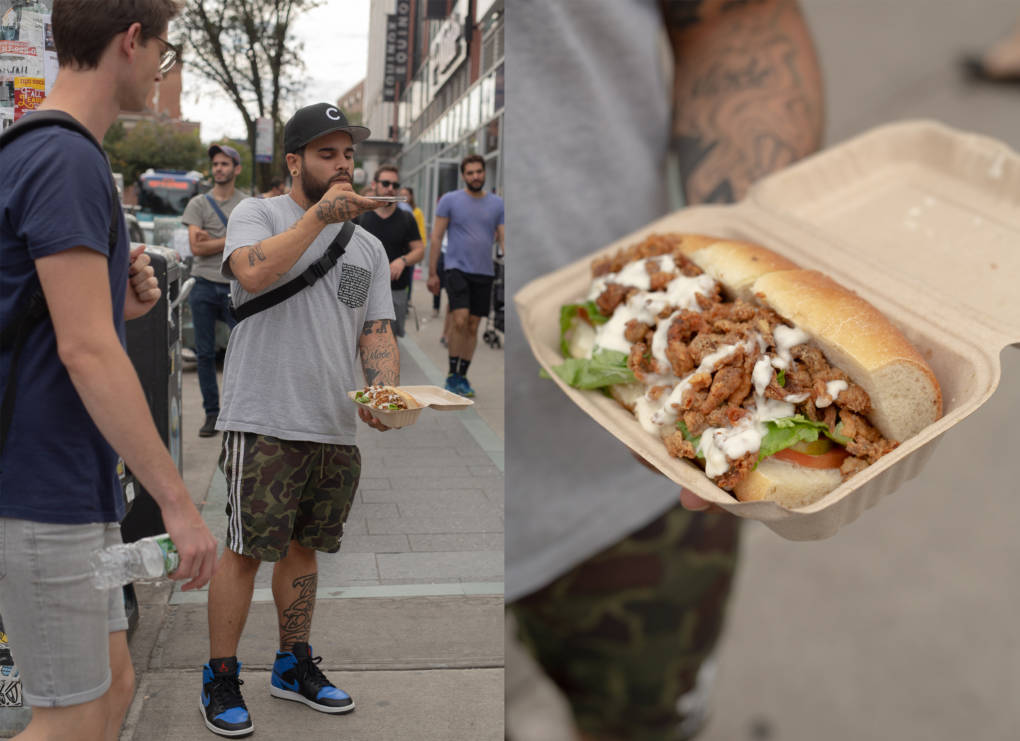
"caption": "Erick Castro photographs his vegan fried-oyster-mushroom po'boy outside of a Whole Foods in Brooklyn. The sandwich is made by local vegan food business \u003ca href=\"http://www.chickpeaandolive.com/\">Chickpea and Olive\u003c/a>.",
"description": "Erick Castro photographs his vegan fried-oyster-mushroom po'boy outside of a Whole Foods in Brooklyn. The sandwich is made by local vegan food business \u003ca href=\"http://www.chickpeaandolive.com/\">Chickpea and Olive\u003c/a>.",
"title": "Erick Castro photographs his vegan fried-oyster-mushroom po'boy outside of a Whole Foods in Brooklyn. The sandwich is made by local vegan food business Chickpea and Olive.",
"credit": "Mary Mathis/NPR",
"status": "inherit",
"isLoading": false,
"fetchFailed": false
},
"bayareabites_131476": {
"type": "attachments",
"id": "bayareabites_131476",
"meta": {
"index": "attachments_1716263798",
"site": "bayareabites",
"id": "131476",
"found": true
},
"parent": 131475,
"imgSizes": {
"small": {
"file": "https://ww2.kqed.org/app/uploads/sites/24/2018/11/gettyimages-950407328_wide-3b9bd52d569b8b3aeb501c71d3c7752f93e8313a-520x292.jpg",
"width": 520,
"mimeType": "image/jpeg",
"height": 292
},
"twentyfourteen-full-width": {
"file": "https://ww2.kqed.org/app/uploads/sites/24/2018/11/gettyimages-950407328_wide-3b9bd52d569b8b3aeb501c71d3c7752f93e8313a-1038x576.jpg",
"width": 1038,
"mimeType": "image/jpeg",
"height": 576
},
"thumbnail": {
"file": "https://ww2.kqed.org/app/uploads/sites/24/2018/11/gettyimages-950407328_wide-3b9bd52d569b8b3aeb501c71d3c7752f93e8313a-160x90.jpg",
"width": 160,
"mimeType": "image/jpeg",
"height": 90
},
"fd-sm": {
"file": "https://ww2.kqed.org/app/uploads/sites/24/2018/11/gettyimages-950407328_wide-3b9bd52d569b8b3aeb501c71d3c7752f93e8313a-960x540.jpg",
"width": 960,
"mimeType": "image/jpeg",
"height": 540
},
"post-thumbnail": {
"file": "https://ww2.kqed.org/app/uploads/sites/24/2018/11/gettyimages-950407328_wide-3b9bd52d569b8b3aeb501c71d3c7752f93e8313a-672x372.jpg",
"width": 672,
"mimeType": "image/jpeg",
"height": 372
},
"xsmall": {
"file": "https://ww2.kqed.org/app/uploads/sites/24/2018/11/gettyimages-950407328_wide-3b9bd52d569b8b3aeb501c71d3c7752f93e8313a-375x211.jpg",
"width": 375,
"mimeType": "image/jpeg",
"height": 211
},
"kqedFullSize": {
"file": "https://ww2.kqed.org/app/uploads/sites/24/2018/11/gettyimages-950407328_wide-3b9bd52d569b8b3aeb501c71d3c7752f93e8313a-e1542749116977.jpg",
"width": 1920,
"height": 1080
},
"large": {
"file": "https://ww2.kqed.org/app/uploads/sites/24/2018/11/gettyimages-950407328_wide-3b9bd52d569b8b3aeb501c71d3c7752f93e8313a-1020x574.jpg",
"width": 1020,
"mimeType": "image/jpeg",
"height": 574
},
"xlarge": {
"file": "https://ww2.kqed.org/app/uploads/sites/24/2018/11/gettyimages-950407328_wide-3b9bd52d569b8b3aeb501c71d3c7752f93e8313a-1180x664.jpg",
"width": 1180,
"mimeType": "image/jpeg",
"height": 664
},
"complete_open_graph": {
"file": "https://ww2.kqed.org/app/uploads/sites/24/2018/11/gettyimages-950407328_wide-3b9bd52d569b8b3aeb501c71d3c7752f93e8313a-1200x675.jpg",
"width": 1200,
"mimeType": "image/jpeg",
"height": 675
},
"guest-author-50": {
"file": "https://ww2.kqed.org/app/uploads/sites/24/2018/11/gettyimages-950407328_wide-3b9bd52d569b8b3aeb501c71d3c7752f93e8313a-50x50.jpg",
"width": 50,
"mimeType": "image/jpeg",
"height": 50
},
"guest-author-96": {
"file": "https://ww2.kqed.org/app/uploads/sites/24/2018/11/gettyimages-950407328_wide-3b9bd52d569b8b3aeb501c71d3c7752f93e8313a-96x96.jpg",
"width": 96,
"mimeType": "image/jpeg",
"height": 96
},
"medium": {
"file": "https://ww2.kqed.org/app/uploads/sites/24/2018/11/gettyimages-950407328_wide-3b9bd52d569b8b3aeb501c71d3c7752f93e8313a-800x450.jpg",
"width": 800,
"mimeType": "image/jpeg",
"height": 450
},
"guest-author-64": {
"file": "https://ww2.kqed.org/app/uploads/sites/24/2018/11/gettyimages-950407328_wide-3b9bd52d569b8b3aeb501c71d3c7752f93e8313a-64x64.jpg",
"width": 64,
"mimeType": "image/jpeg",
"height": 64
},
"guest-author-32": {
"file": "https://ww2.kqed.org/app/uploads/sites/24/2018/11/gettyimages-950407328_wide-3b9bd52d569b8b3aeb501c71d3c7752f93e8313a-32x32.jpg",
"width": 32,
"mimeType": "image/jpeg",
"height": 32
},
"fd-lrg": {
"file": "https://ww2.kqed.org/app/uploads/sites/24/2018/11/gettyimages-950407328_wide-3b9bd52d569b8b3aeb501c71d3c7752f93e8313a-1920x1080.jpg",
"width": 1920,
"mimeType": "image/jpeg",
"height": 1080
},
"fd-med": {
"file": "https://ww2.kqed.org/app/uploads/sites/24/2018/11/gettyimages-950407328_wide-3b9bd52d569b8b3aeb501c71d3c7752f93e8313a-1180x664.jpg",
"width": 1180,
"mimeType": "image/jpeg",
"height": 664
},
"full-width": {
"file": "https://ww2.kqed.org/app/uploads/sites/24/2018/11/gettyimages-950407328_wide-3b9bd52d569b8b3aeb501c71d3c7752f93e8313a-1920x1080.jpg",
"width": 1920,
"mimeType": "image/jpeg",
"height": 1080
},
"detail": {
"file": "https://ww2.kqed.org/app/uploads/sites/24/2018/11/gettyimages-950407328_wide-3b9bd52d569b8b3aeb501c71d3c7752f93e8313a-150x150.jpg",
"width": 150,
"mimeType": "image/jpeg",
"height": 150
},
"medium_large": {
"file": "https://ww2.kqed.org/app/uploads/sites/24/2018/11/gettyimages-950407328_wide-3b9bd52d569b8b3aeb501c71d3c7752f93e8313a-768x432.jpg",
"width": 768,
"mimeType": "image/jpeg",
"height": 432
},
"guest-author-128": {
"file": "https://ww2.kqed.org/app/uploads/sites/24/2018/11/gettyimages-950407328_wide-3b9bd52d569b8b3aeb501c71d3c7752f93e8313a-128x128.jpg",
"width": 128,
"mimeType": "image/jpeg",
"height": 128
},
"xxsmall": {
"file": "https://ww2.kqed.org/app/uploads/sites/24/2018/11/gettyimages-950407328_wide-3b9bd52d569b8b3aeb501c71d3c7752f93e8313a-240x135.jpg",
"width": 240,
"mimeType": "image/jpeg",
"height": 135
}
},
"publishDate": 1542749095,
"modified": 1542749132,
"caption": "Romaine lettuce is displayed on a shelf at a supermarket in California in April, during an E. coli outbreak traced to contaminated lettuce. The CDC says a new outbreak has made lettuce dangerous to eat, just in time for America's most food-centric holiday.",
"description": "Romaine lettuce is displayed on a shelf at a supermarket in California in April, during an \u003cem>E. coli\u003c/em> outbreak traced to contaminated lettuce. The CDC says a new outbreak has made lettuce dangerous to eat, just in time for America's most foodcentric holiday.",
"title": "Romaine lettuce is displayed on a shelf at a supermarket in California in April, during an E. coli outbreak traced to contaminated lettuce. The CDC says a new outbreak has made lettuce dangerous to eat, just in time for America's most food-centric holiday.",
"credit": "Justin Sullivan/Getty Images",
"status": "inherit",
"isLoading": false,
"fetchFailed": false
},
"bayareabites_131398": {
"type": "attachments",
"id": "bayareabites_131398",
"meta": {
"index": "attachments_1716263798",
"site": "bayareabites",
"id": "131398",
"found": true
},
"parent": 131380,
"imgSizes": {
"small": {
"file": "https://ww2.kqed.org/app/uploads/sites/24/2018/11/sweetpotatogratin-520x347.jpg",
"width": 520,
"mimeType": "image/jpeg",
"height": 347
},
"twentyfourteen-full-width": {
"file": "https://ww2.kqed.org/app/uploads/sites/24/2018/11/sweetpotatogratin-1038x576.jpg",
"width": 1038,
"mimeType": "image/jpeg",
"height": 576
},
"thumbnail": {
"file": "https://ww2.kqed.org/app/uploads/sites/24/2018/11/sweetpotatogratin-160x107.jpg",
"width": 160,
"mimeType": "image/jpeg",
"height": 107
},
"fd-sm": {
"file": "https://ww2.kqed.org/app/uploads/sites/24/2018/11/sweetpotatogratin-960x640.jpg",
"width": 960,
"mimeType": "image/jpeg",
"height": 640
},
"post-thumbnail": {
"file": "https://ww2.kqed.org/app/uploads/sites/24/2018/11/sweetpotatogratin-672x372.jpg",
"width": 672,
"mimeType": "image/jpeg",
"height": 372
},
"xsmall": {
"file": "https://ww2.kqed.org/app/uploads/sites/24/2018/11/sweetpotatogratin-375x250.jpg",
"width": 375,
"mimeType": "image/jpeg",
"height": 250
},
"kqedFullSize": {
"file": "https://ww2.kqed.org/app/uploads/sites/24/2018/11/sweetpotatogratin.jpg",
"width": 1920,
"height": 1280
},
"large": {
"file": "https://ww2.kqed.org/app/uploads/sites/24/2018/11/sweetpotatogratin-1020x680.jpg",
"width": 1020,
"mimeType": "image/jpeg",
"height": 680
},
"xlarge": {
"file": "https://ww2.kqed.org/app/uploads/sites/24/2018/11/sweetpotatogratin-1180x787.jpg",
"width": 1180,
"mimeType": "image/jpeg",
"height": 787
},
"complete_open_graph": {
"file": "https://ww2.kqed.org/app/uploads/sites/24/2018/11/sweetpotatogratin-1200x800.jpg",
"width": 1200,
"mimeType": "image/jpeg",
"height": 800
},
"guest-author-50": {
"file": "https://ww2.kqed.org/app/uploads/sites/24/2018/11/sweetpotatogratin-50x50.jpg",
"width": 50,
"mimeType": "image/jpeg",
"height": 50
},
"guest-author-96": {
"file": "https://ww2.kqed.org/app/uploads/sites/24/2018/11/sweetpotatogratin-96x96.jpg",
"width": 96,
"mimeType": "image/jpeg",
"height": 96
},
"medium": {
"file": "https://ww2.kqed.org/app/uploads/sites/24/2018/11/sweetpotatogratin-800x533.jpg",
"width": 800,
"mimeType": "image/jpeg",
"height": 533
},
"guest-author-64": {
"file": "https://ww2.kqed.org/app/uploads/sites/24/2018/11/sweetpotatogratin-64x64.jpg",
"width": 64,
"mimeType": "image/jpeg",
"height": 64
},
"guest-author-32": {
"file": "https://ww2.kqed.org/app/uploads/sites/24/2018/11/sweetpotatogratin-32x32.jpg",
"width": 32,
"mimeType": "image/jpeg",
"height": 32
},
"fd-lrg": {
"file": "https://ww2.kqed.org/app/uploads/sites/24/2018/11/sweetpotatogratin-1920x1280.jpg",
"width": 1920,
"mimeType": "image/jpeg",
"height": 1280
},
"fd-med": {
"file": "https://ww2.kqed.org/app/uploads/sites/24/2018/11/sweetpotatogratin-1180x787.jpg",
"width": 1180,
"mimeType": "image/jpeg",
"height": 787
},
"full-width": {
"file": "https://ww2.kqed.org/app/uploads/sites/24/2018/11/sweetpotatogratin-1920x1280.jpg",
"width": 1920,
"mimeType": "image/jpeg",
"height": 1280
},
"detail": {
"file": "https://ww2.kqed.org/app/uploads/sites/24/2018/11/sweetpotatogratin-150x150.jpg",
"width": 150,
"mimeType": "image/jpeg",
"height": 150
},
"medium_large": {
"file": "https://ww2.kqed.org/app/uploads/sites/24/2018/11/sweetpotatogratin-768x512.jpg",
"width": 768,
"mimeType": "image/jpeg",
"height": 512
},
"guest-author-128": {
"file": "https://ww2.kqed.org/app/uploads/sites/24/2018/11/sweetpotatogratin-128x128.jpg",
"width": 128,
"mimeType": "image/jpeg",
"height": 128
},
"xxsmall": {
"file": "https://ww2.kqed.org/app/uploads/sites/24/2018/11/sweetpotatogratin-240x160.jpg",
"width": 240,
"mimeType": "image/jpeg",
"height": 160
}
},
"publishDate": 1542323903,
"modified": 1542324061,
"caption": "Smokey harissa and tangy goat cheese perfectly complement the sweet potatoes in this side dish.",
"description": "Smokey harissa and tangy goat cheese perfectly complement the sweet potatoes in this side dish.",
"title": "Smokey harissa and tangy goat cheese perfectly complement the sweet potatoes in this side dish.",
"credit": "Patrick Wong",
"status": "inherit",
"isLoading": false,
"fetchFailed": false
},
"bayareabites_131373": {
"type": "attachments",
"id": "bayareabites_131373",
"meta": {
"index": "attachments_1716263798",
"site": "bayareabites",
"id": "131373",
"found": true
},
"parent": 131372,
"imgSizes": {
"small": {
"file": "https://ww2.kqed.org/app/uploads/sites/24/2018/11/salmon-b94ece94cd68b3f41cb957f651ca3bce2bbaf5cf-520x390.jpg",
"width": 520,
"mimeType": "image/jpeg",
"height": 390
},
"twentyfourteen-full-width": {
"file": "https://ww2.kqed.org/app/uploads/sites/24/2018/11/salmon-b94ece94cd68b3f41cb957f651ca3bce2bbaf5cf-1038x576.jpg",
"width": 1038,
"mimeType": "image/jpeg",
"height": 576
},
"thumbnail": {
"file": "https://ww2.kqed.org/app/uploads/sites/24/2018/11/salmon-b94ece94cd68b3f41cb957f651ca3bce2bbaf5cf-160x120.jpg",
"width": 160,
"mimeType": "image/jpeg",
"height": 120
},
"fd-sm": {
"file": "https://ww2.kqed.org/app/uploads/sites/24/2018/11/salmon-b94ece94cd68b3f41cb957f651ca3bce2bbaf5cf-960x720.jpg",
"width": 960,
"mimeType": "image/jpeg",
"height": 720
},
"post-thumbnail": {
"file": "https://ww2.kqed.org/app/uploads/sites/24/2018/11/salmon-b94ece94cd68b3f41cb957f651ca3bce2bbaf5cf-672x372.jpg",
"width": 672,
"mimeType": "image/jpeg",
"height": 372
},
"xsmall": {
"file": "https://ww2.kqed.org/app/uploads/sites/24/2018/11/salmon-b94ece94cd68b3f41cb957f651ca3bce2bbaf5cf-375x281.jpg",
"width": 375,
"mimeType": "image/jpeg",
"height": 281
},
"kqedFullSize": {
"file": "https://ww2.kqed.org/app/uploads/sites/24/2018/11/salmon-b94ece94cd68b3f41cb957f651ca3bce2bbaf5cf.jpg",
"width": 1883,
"height": 1412
},
"large": {
"file": "https://ww2.kqed.org/app/uploads/sites/24/2018/11/salmon-b94ece94cd68b3f41cb957f651ca3bce2bbaf5cf-1020x765.jpg",
"width": 1020,
"mimeType": "image/jpeg",
"height": 765
},
"xlarge": {
"file": "https://ww2.kqed.org/app/uploads/sites/24/2018/11/salmon-b94ece94cd68b3f41cb957f651ca3bce2bbaf5cf-1180x885.jpg",
"width": 1180,
"mimeType": "image/jpeg",
"height": 885
},
"complete_open_graph": {
"file": "https://ww2.kqed.org/app/uploads/sites/24/2018/11/salmon-b94ece94cd68b3f41cb957f651ca3bce2bbaf5cf-1200x900.jpg",
"width": 1200,
"mimeType": "image/jpeg",
"height": 900
},
"guest-author-50": {
"file": "https://ww2.kqed.org/app/uploads/sites/24/2018/11/salmon-b94ece94cd68b3f41cb957f651ca3bce2bbaf5cf-50x50.jpg",
"width": 50,
"mimeType": "image/jpeg",
"height": 50
},
"guest-author-96": {
"file": "https://ww2.kqed.org/app/uploads/sites/24/2018/11/salmon-b94ece94cd68b3f41cb957f651ca3bce2bbaf5cf-96x96.jpg",
"width": 96,
"mimeType": "image/jpeg",
"height": 96
},
"medium": {
"file": "https://ww2.kqed.org/app/uploads/sites/24/2018/11/salmon-b94ece94cd68b3f41cb957f651ca3bce2bbaf5cf-800x600.jpg",
"width": 800,
"mimeType": "image/jpeg",
"height": 600
},
"guest-author-64": {
"file": "https://ww2.kqed.org/app/uploads/sites/24/2018/11/salmon-b94ece94cd68b3f41cb957f651ca3bce2bbaf5cf-64x64.jpg",
"width": 64,
"mimeType": "image/jpeg",
"height": 64
},
"guest-author-32": {
"file": "https://ww2.kqed.org/app/uploads/sites/24/2018/11/salmon-b94ece94cd68b3f41cb957f651ca3bce2bbaf5cf-32x32.jpg",
"width": 32,
"mimeType": "image/jpeg",
"height": 32
},
"fd-med": {
"file": "https://ww2.kqed.org/app/uploads/sites/24/2018/11/salmon-b94ece94cd68b3f41cb957f651ca3bce2bbaf5cf-1180x885.jpg",
"width": 1180,
"mimeType": "image/jpeg",
"height": 885
},
"detail": {
"file": "https://ww2.kqed.org/app/uploads/sites/24/2018/11/salmon-b94ece94cd68b3f41cb957f651ca3bce2bbaf5cf-150x150.jpg",
"width": 150,
"mimeType": "image/jpeg",
"height": 150
},
"medium_large": {
"file": "https://ww2.kqed.org/app/uploads/sites/24/2018/11/salmon-b94ece94cd68b3f41cb957f651ca3bce2bbaf5cf-768x576.jpg",
"width": 768,
"mimeType": "image/jpeg",
"height": 576
},
"guest-author-128": {
"file": "https://ww2.kqed.org/app/uploads/sites/24/2018/11/salmon-b94ece94cd68b3f41cb957f651ca3bce2bbaf5cf-128x128.jpg",
"width": 128,
"mimeType": "image/jpeg",
"height": 128
},
"xxsmall": {
"file": "https://ww2.kqed.org/app/uploads/sites/24/2018/11/salmon-b94ece94cd68b3f41cb957f651ca3bce2bbaf5cf-240x180.jpg",
"width": 240,
"mimeType": "image/jpeg",
"height": 180
}
},
"publishDate": 1542317893,
"modified": 1542318033,
"caption": "Research hasn't delivered a definitive answer on whether fish oil and Vitamin D supplements have health benefits, but it's clear that eating fish is beneficial.",
"description": "Research hasn't delivered a definitive answer on whether fish oil and Vitamin D supplements have health benefits, but it's clear that eating fish is beneficial.",
"title": "Research hasn't delivered a definitive answer on whether fish oil and Vitamin D supplements have health benefits, but it's clear that eating fish is beneficial.",
"credit": "Enn Li Photography/Getty Images",
"status": "inherit",
"isLoading": false,
"fetchFailed": false
},
"bayareabites_131180": {
"type": "attachments",
"id": "bayareabites_131180",
"meta": {
"index": "attachments_1716263798",
"site": "bayareabites",
"id": "131180",
"found": true
},
"parent": 131179,
"imgSizes": {
"small": {
"file": "https://ww2.kqed.org/app/uploads/sites/24/2018/11/gettyimages-140690667-8f3ea52a89dd4f80197f3ee083ac5b8b863cf593-520x390.jpg",
"width": 520,
"mimeType": "image/jpeg",
"height": 390
},
"twentyfourteen-full-width": {
"file": "https://ww2.kqed.org/app/uploads/sites/24/2018/11/gettyimages-140690667-8f3ea52a89dd4f80197f3ee083ac5b8b863cf593-1038x576.jpg",
"width": 1038,
"mimeType": "image/jpeg",
"height": 576
},
"thumbnail": {
"file": "https://ww2.kqed.org/app/uploads/sites/24/2018/11/gettyimages-140690667-8f3ea52a89dd4f80197f3ee083ac5b8b863cf593-160x120.jpg",
"width": 160,
"mimeType": "image/jpeg",
"height": 120
},
"fd-sm": {
"file": "https://ww2.kqed.org/app/uploads/sites/24/2018/11/gettyimages-140690667-8f3ea52a89dd4f80197f3ee083ac5b8b863cf593-960x720.jpg",
"width": 960,
"mimeType": "image/jpeg",
"height": 720
},
"post-thumbnail": {
"file": "https://ww2.kqed.org/app/uploads/sites/24/2018/11/gettyimages-140690667-8f3ea52a89dd4f80197f3ee083ac5b8b863cf593-672x372.jpg",
"width": 672,
"mimeType": "image/jpeg",
"height": 372
},
"xsmall": {
"file": "https://ww2.kqed.org/app/uploads/sites/24/2018/11/gettyimages-140690667-8f3ea52a89dd4f80197f3ee083ac5b8b863cf593-375x281.jpg",
"width": 375,
"mimeType": "image/jpeg",
"height": 281
},
"kqedFullSize": {
"file": "https://ww2.kqed.org/app/uploads/sites/24/2018/11/gettyimages-140690667-8f3ea52a89dd4f80197f3ee083ac5b8b863cf593-e1541457722706.jpg",
"width": 1920,
"height": 1440
},
"large": {
"file": "https://ww2.kqed.org/app/uploads/sites/24/2018/11/gettyimages-140690667-8f3ea52a89dd4f80197f3ee083ac5b8b863cf593-1020x765.jpg",
"width": 1020,
"mimeType": "image/jpeg",
"height": 765
},
"xlarge": {
"file": "https://ww2.kqed.org/app/uploads/sites/24/2018/11/gettyimages-140690667-8f3ea52a89dd4f80197f3ee083ac5b8b863cf593-1180x885.jpg",
"width": 1180,
"mimeType": "image/jpeg",
"height": 885
},
"complete_open_graph": {
"file": "https://ww2.kqed.org/app/uploads/sites/24/2018/11/gettyimages-140690667-8f3ea52a89dd4f80197f3ee083ac5b8b863cf593-1200x900.jpg",
"width": 1200,
"mimeType": "image/jpeg",
"height": 900
},
"guest-author-50": {
"file": "https://ww2.kqed.org/app/uploads/sites/24/2018/11/gettyimages-140690667-8f3ea52a89dd4f80197f3ee083ac5b8b863cf593-50x50.jpg",
"width": 50,
"mimeType": "image/jpeg",
"height": 50
},
"guest-author-96": {
"file": "https://ww2.kqed.org/app/uploads/sites/24/2018/11/gettyimages-140690667-8f3ea52a89dd4f80197f3ee083ac5b8b863cf593-96x96.jpg",
"width": 96,
"mimeType": "image/jpeg",
"height": 96
},
"medium": {
"file": "https://ww2.kqed.org/app/uploads/sites/24/2018/11/gettyimages-140690667-8f3ea52a89dd4f80197f3ee083ac5b8b863cf593-800x600.jpg",
"width": 800,
"mimeType": "image/jpeg",
"height": 600
},
"guest-author-64": {
"file": "https://ww2.kqed.org/app/uploads/sites/24/2018/11/gettyimages-140690667-8f3ea52a89dd4f80197f3ee083ac5b8b863cf593-64x64.jpg",
"width": 64,
"mimeType": "image/jpeg",
"height": 64
},
"guest-author-32": {
"file": "https://ww2.kqed.org/app/uploads/sites/24/2018/11/gettyimages-140690667-8f3ea52a89dd4f80197f3ee083ac5b8b863cf593-32x32.jpg",
"width": 32,
"mimeType": "image/jpeg",
"height": 32
},
"fd-lrg": {
"file": "https://ww2.kqed.org/app/uploads/sites/24/2018/11/gettyimages-140690667-8f3ea52a89dd4f80197f3ee083ac5b8b863cf593-1920x1440.jpg",
"width": 1920,
"mimeType": "image/jpeg",
"height": 1440
},
"fd-med": {
"file": "https://ww2.kqed.org/app/uploads/sites/24/2018/11/gettyimages-140690667-8f3ea52a89dd4f80197f3ee083ac5b8b863cf593-1180x885.jpg",
"width": 1180,
"mimeType": "image/jpeg",
"height": 885
},
"full-width": {
"file": "https://ww2.kqed.org/app/uploads/sites/24/2018/11/gettyimages-140690667-8f3ea52a89dd4f80197f3ee083ac5b8b863cf593-1920x1440.jpg",
"width": 1920,
"mimeType": "image/jpeg",
"height": 1440
},
"detail": {
"file": "https://ww2.kqed.org/app/uploads/sites/24/2018/11/gettyimages-140690667-8f3ea52a89dd4f80197f3ee083ac5b8b863cf593-150x150.jpg",
"width": 150,
"mimeType": "image/jpeg",
"height": 150
},
"medium_large": {
"file": "https://ww2.kqed.org/app/uploads/sites/24/2018/11/gettyimages-140690667-8f3ea52a89dd4f80197f3ee083ac5b8b863cf593-768x576.jpg",
"width": 768,
"mimeType": "image/jpeg",
"height": 576
},
"guest-author-128": {
"file": "https://ww2.kqed.org/app/uploads/sites/24/2018/11/gettyimages-140690667-8f3ea52a89dd4f80197f3ee083ac5b8b863cf593-128x128.jpg",
"width": 128,
"mimeType": "image/jpeg",
"height": 128
},
"xxsmall": {
"file": "https://ww2.kqed.org/app/uploads/sites/24/2018/11/gettyimages-140690667-8f3ea52a89dd4f80197f3ee083ac5b8b863cf593-240x180.jpg",
"width": 240,
"mimeType": "image/jpeg",
"height": 180
}
},
"publishDate": 1541457694,
"modified": 1541457726,
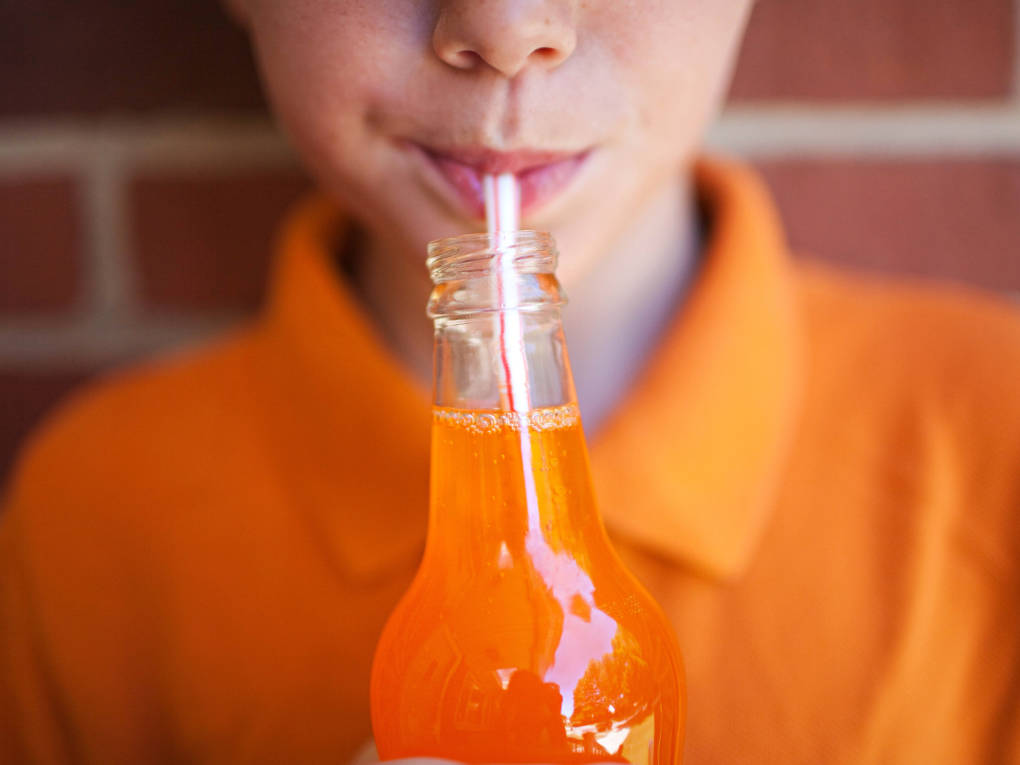
"caption": "The sweetened beverage industry has spent millions to combat soda taxes and support medical groups that avoid blaming sugary drinks for health problems.",
"description": "The sweetened beverage industry has spent millions to combat soda taxes and support medical groups that avoid blaming sugary drinks for health problems.",
"title": "The sweetened beverage industry has spent millions to combat soda taxes and support medical groups that avoid blaming sugary drinks for health problems.",
"credit": "Melissa Lomax Speelman/Getty Images",
"status": "inherit",
"isLoading": false,
"fetchFailed": false
},
"bayareabites_131113": {
"type": "attachments",
"id": "bayareabites_131113",
"meta": {
"index": "attachments_1716263798",
"site": "bayareabites",
"id": "131113",
"found": true
},
"parent": 131112,
"imgSizes": {
"small": {
"file": "https://ww2.kqed.org/app/uploads/sites/24/2018/10/gettyimages-161461608_wide-be1238df083b4b1b991e6ffca5ab14390b420c5e-520x292.jpg",
"width": 520,
"mimeType": "image/jpeg",
"height": 292
},
"twentyfourteen-full-width": {
"file": "https://ww2.kqed.org/app/uploads/sites/24/2018/10/gettyimages-161461608_wide-be1238df083b4b1b991e6ffca5ab14390b420c5e-1038x576.jpg",
"width": 1038,
"mimeType": "image/jpeg",
"height": 576
},
"thumbnail": {
"file": "https://ww2.kqed.org/app/uploads/sites/24/2018/10/gettyimages-161461608_wide-be1238df083b4b1b991e6ffca5ab14390b420c5e-160x90.jpg",
"width": 160,
"mimeType": "image/jpeg",
"height": 90
},
"fd-sm": {
"file": "https://ww2.kqed.org/app/uploads/sites/24/2018/10/gettyimages-161461608_wide-be1238df083b4b1b991e6ffca5ab14390b420c5e-960x540.jpg",
"width": 960,
"mimeType": "image/jpeg",
"height": 540
},
"post-thumbnail": {
"file": "https://ww2.kqed.org/app/uploads/sites/24/2018/10/gettyimages-161461608_wide-be1238df083b4b1b991e6ffca5ab14390b420c5e-672x372.jpg",
"width": 672,
"mimeType": "image/jpeg",
"height": 372
},
"xsmall": {
"file": "https://ww2.kqed.org/app/uploads/sites/24/2018/10/gettyimages-161461608_wide-be1238df083b4b1b991e6ffca5ab14390b420c5e-375x211.jpg",
"width": 375,
"mimeType": "image/jpeg",
"height": 211
},
"kqedFullSize": {
"file": "https://ww2.kqed.org/app/uploads/sites/24/2018/10/gettyimages-161461608_wide-be1238df083b4b1b991e6ffca5ab14390b420c5e-e1540846461305.jpg",
"width": 1920,
"height": 1080
},
"large": {
"file": "https://ww2.kqed.org/app/uploads/sites/24/2018/10/gettyimages-161461608_wide-be1238df083b4b1b991e6ffca5ab14390b420c5e-1020x574.jpg",
"width": 1020,
"mimeType": "image/jpeg",
"height": 574
},
"xlarge": {
"file": "https://ww2.kqed.org/app/uploads/sites/24/2018/10/gettyimages-161461608_wide-be1238df083b4b1b991e6ffca5ab14390b420c5e-1180x664.jpg",
"width": 1180,
"mimeType": "image/jpeg",
"height": 664
},
"complete_open_graph": {
"file": "https://ww2.kqed.org/app/uploads/sites/24/2018/10/gettyimages-161461608_wide-be1238df083b4b1b991e6ffca5ab14390b420c5e-1200x675.jpg",
"width": 1200,
"mimeType": "image/jpeg",
"height": 675
},
"guest-author-50": {
"file": "https://ww2.kqed.org/app/uploads/sites/24/2018/10/gettyimages-161461608_wide-be1238df083b4b1b991e6ffca5ab14390b420c5e-50x50.jpg",
"width": 50,
"mimeType": "image/jpeg",
"height": 50
},
"guest-author-96": {
"file": "https://ww2.kqed.org/app/uploads/sites/24/2018/10/gettyimages-161461608_wide-be1238df083b4b1b991e6ffca5ab14390b420c5e-96x96.jpg",
"width": 96,
"mimeType": "image/jpeg",
"height": 96
},
"medium": {
"file": "https://ww2.kqed.org/app/uploads/sites/24/2018/10/gettyimages-161461608_wide-be1238df083b4b1b991e6ffca5ab14390b420c5e-800x450.jpg",
"width": 800,
"mimeType": "image/jpeg",
"height": 450
},
"guest-author-64": {
"file": "https://ww2.kqed.org/app/uploads/sites/24/2018/10/gettyimages-161461608_wide-be1238df083b4b1b991e6ffca5ab14390b420c5e-64x64.jpg",
"width": 64,
"mimeType": "image/jpeg",
"height": 64
},
"guest-author-32": {
"file": "https://ww2.kqed.org/app/uploads/sites/24/2018/10/gettyimages-161461608_wide-be1238df083b4b1b991e6ffca5ab14390b420c5e-32x32.jpg",
"width": 32,
"mimeType": "image/jpeg",
"height": 32
},
"fd-lrg": {
"file": "https://ww2.kqed.org/app/uploads/sites/24/2018/10/gettyimages-161461608_wide-be1238df083b4b1b991e6ffca5ab14390b420c5e-1920x1080.jpg",
"width": 1920,
"mimeType": "image/jpeg",
"height": 1080
},
"fd-med": {
"file": "https://ww2.kqed.org/app/uploads/sites/24/2018/10/gettyimages-161461608_wide-be1238df083b4b1b991e6ffca5ab14390b420c5e-1180x664.jpg",
"width": 1180,
"mimeType": "image/jpeg",
"height": 664
},
"full-width": {
"file": "https://ww2.kqed.org/app/uploads/sites/24/2018/10/gettyimages-161461608_wide-be1238df083b4b1b991e6ffca5ab14390b420c5e-1920x1080.jpg",
"width": 1920,
"mimeType": "image/jpeg",
"height": 1080
},
"detail": {
"file": "https://ww2.kqed.org/app/uploads/sites/24/2018/10/gettyimages-161461608_wide-be1238df083b4b1b991e6ffca5ab14390b420c5e-150x150.jpg",
"width": 150,
"mimeType": "image/jpeg",
"height": 150
},
"medium_large": {
"file": "https://ww2.kqed.org/app/uploads/sites/24/2018/10/gettyimages-161461608_wide-be1238df083b4b1b991e6ffca5ab14390b420c5e-768x432.jpg",
"width": 768,
"mimeType": "image/jpeg",
"height": 432
},
"guest-author-128": {
"file": "https://ww2.kqed.org/app/uploads/sites/24/2018/10/gettyimages-161461608_wide-be1238df083b4b1b991e6ffca5ab14390b420c5e-128x128.jpg",
"width": 128,
"mimeType": "image/jpeg",
"height": 128
},
"xxsmall": {
"file": "https://ww2.kqed.org/app/uploads/sites/24/2018/10/gettyimages-161461608_wide-be1238df083b4b1b991e6ffca5ab14390b420c5e-240x135.jpg",
"width": 240,
"mimeType": "image/jpeg",
"height": 135
}
},
"publishDate": 1540846361,
"modified": 1540846478,
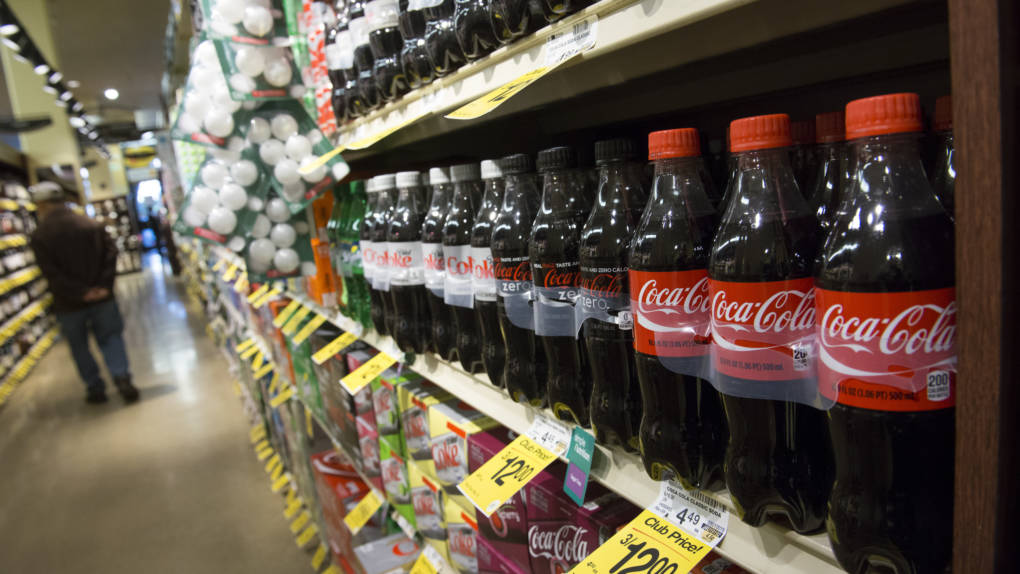
"caption": "Food assistance recipients spend about 10 percent of their food budget on sugary drinks, while the rest of the population spends about 7 percent.",
"description": "Food assistance recipients spend about 10 percent of their food budget on sugary drinks, while the rest of the population spends about 7 percent.",
"title": "Food assistance recipients spend about 10 percent of their food budget on sugary drinks, while the rest of the population spends about 7 percent.",
"credit": "David Paul Morris/Bloomberg via Getty Images",
"status": "inherit",
"isLoading": false,
"fetchFailed": false
},
"bayareabites_131040": {
"type": "attachments",
"id": "bayareabites_131040",
"meta": {
"index": "attachments_1716263798",
"site": "bayareabites",
"id": "131040",
"found": true
},
"parent": 131039,
"imgSizes": {
"small": {
"file": "https://ww2.kqed.org/app/uploads/sites/24/2018/10/img_1447-c2007bd7f093549affcb6b25e06c60e8827407d1-520x390.jpg",
"width": 520,
"mimeType": "image/jpeg",
"height": 390
},
"twentyfourteen-full-width": {
"file": "https://ww2.kqed.org/app/uploads/sites/24/2018/10/img_1447-c2007bd7f093549affcb6b25e06c60e8827407d1-1038x576.jpg",
"width": 1038,
"mimeType": "image/jpeg",
"height": 576
},
"thumbnail": {
"file": "https://ww2.kqed.org/app/uploads/sites/24/2018/10/img_1447-c2007bd7f093549affcb6b25e06c60e8827407d1-160x120.jpg",
"width": 160,
"mimeType": "image/jpeg",
"height": 120
},
"fd-sm": {
"file": "https://ww2.kqed.org/app/uploads/sites/24/2018/10/img_1447-c2007bd7f093549affcb6b25e06c60e8827407d1-960x720.jpg",
"width": 960,
"mimeType": "image/jpeg",
"height": 720
},
"post-thumbnail": {
"file": "https://ww2.kqed.org/app/uploads/sites/24/2018/10/img_1447-c2007bd7f093549affcb6b25e06c60e8827407d1-672x372.jpg",
"width": 672,
"mimeType": "image/jpeg",
"height": 372
},
"xsmall": {
"file": "https://ww2.kqed.org/app/uploads/sites/24/2018/10/img_1447-c2007bd7f093549affcb6b25e06c60e8827407d1-375x281.jpg",
"width": 375,
"mimeType": "image/jpeg",
"height": 281
},
"kqedFullSize": {
"file": "https://ww2.kqed.org/app/uploads/sites/24/2018/10/img_1447-c2007bd7f093549affcb6b25e06c60e8827407d1-e1540401956189.jpg",
"width": 1920,
"height": 1440
},
"large": {
"file": "https://ww2.kqed.org/app/uploads/sites/24/2018/10/img_1447-c2007bd7f093549affcb6b25e06c60e8827407d1-1020x765.jpg",
"width": 1020,
"mimeType": "image/jpeg",
"height": 765
},
"xlarge": {
"file": "https://ww2.kqed.org/app/uploads/sites/24/2018/10/img_1447-c2007bd7f093549affcb6b25e06c60e8827407d1-1180x885.jpg",
"width": 1180,
"mimeType": "image/jpeg",
"height": 885
},
"complete_open_graph": {
"file": "https://ww2.kqed.org/app/uploads/sites/24/2018/10/img_1447-c2007bd7f093549affcb6b25e06c60e8827407d1-1200x900.jpg",
"width": 1200,
"mimeType": "image/jpeg",
"height": 900
},
"guest-author-50": {
"file": "https://ww2.kqed.org/app/uploads/sites/24/2018/10/img_1447-c2007bd7f093549affcb6b25e06c60e8827407d1-50x50.jpg",
"width": 50,
"mimeType": "image/jpeg",
"height": 50
},
"guest-author-96": {
"file": "https://ww2.kqed.org/app/uploads/sites/24/2018/10/img_1447-c2007bd7f093549affcb6b25e06c60e8827407d1-96x96.jpg",
"width": 96,
"mimeType": "image/jpeg",
"height": 96
},
"medium": {
"file": "https://ww2.kqed.org/app/uploads/sites/24/2018/10/img_1447-c2007bd7f093549affcb6b25e06c60e8827407d1-800x600.jpg",
"width": 800,
"mimeType": "image/jpeg",
"height": 600
},
"guest-author-64": {
"file": "https://ww2.kqed.org/app/uploads/sites/24/2018/10/img_1447-c2007bd7f093549affcb6b25e06c60e8827407d1-64x64.jpg",
"width": 64,
"mimeType": "image/jpeg",
"height": 64
},
"guest-author-32": {
"file": "https://ww2.kqed.org/app/uploads/sites/24/2018/10/img_1447-c2007bd7f093549affcb6b25e06c60e8827407d1-32x32.jpg",
"width": 32,
"mimeType": "image/jpeg",
"height": 32
},
"fd-lrg": {
"file": "https://ww2.kqed.org/app/uploads/sites/24/2018/10/img_1447-c2007bd7f093549affcb6b25e06c60e8827407d1-1920x1440.jpg",
"width": 1920,
"mimeType": "image/jpeg",
"height": 1440
},
"fd-med": {
"file": "https://ww2.kqed.org/app/uploads/sites/24/2018/10/img_1447-c2007bd7f093549affcb6b25e06c60e8827407d1-1180x885.jpg",
"width": 1180,
"mimeType": "image/jpeg",
"height": 885
},
"full-width": {
"file": "https://ww2.kqed.org/app/uploads/sites/24/2018/10/img_1447-c2007bd7f093549affcb6b25e06c60e8827407d1-1920x1440.jpg",
"width": 1920,
"mimeType": "image/jpeg",
"height": 1440
},
"detail": {
"file": "https://ww2.kqed.org/app/uploads/sites/24/2018/10/img_1447-c2007bd7f093549affcb6b25e06c60e8827407d1-150x150.jpg",
"width": 150,
"mimeType": "image/jpeg",
"height": 150
},
"medium_large": {
"file": "https://ww2.kqed.org/app/uploads/sites/24/2018/10/img_1447-c2007bd7f093549affcb6b25e06c60e8827407d1-768x576.jpg",
"width": 768,
"mimeType": "image/jpeg",
"height": 576
},
"guest-author-128": {
"file": "https://ww2.kqed.org/app/uploads/sites/24/2018/10/img_1447-c2007bd7f093549affcb6b25e06c60e8827407d1-128x128.jpg",
"width": 128,
"mimeType": "image/jpeg",
"height": 128
},
"xxsmall": {
"file": "https://ww2.kqed.org/app/uploads/sites/24/2018/10/img_1447-c2007bd7f093549affcb6b25e06c60e8827407d1-240x180.jpg",
"width": 240,
"mimeType": "image/jpeg",
"height": 180
}
},
"publishDate": 1540401671,
"modified": 1540410542,
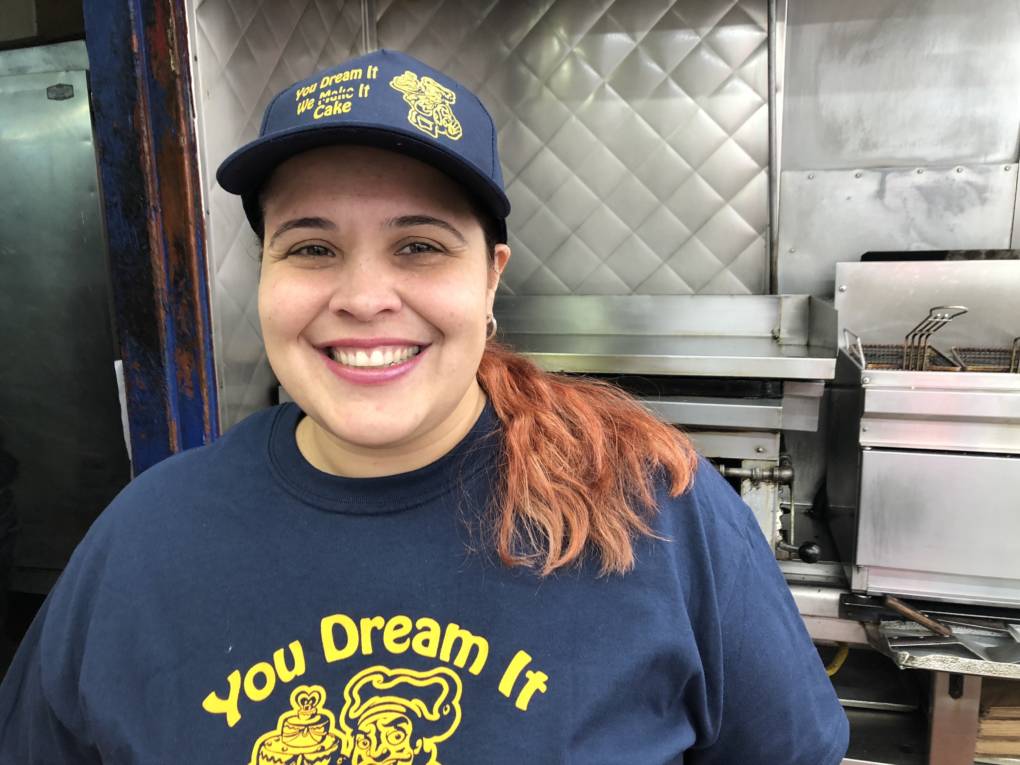
"caption": "Betsy Leyva is co-owner of a Brooklyn, N.Y., bakery that has an online-only restaurant, with deliveries by Uber Eats.",
"description": "Betsy Leyva is co-owner of a Brooklyn, N.Y., bakery that has an online-only restaurant, with deliveries by Uber Eats.",
"title": "Betsy Leyva is co-owner of a Brooklyn, N.Y., bakery that has an online-only restaurant, with deliveries by Uber Eats.",
"credit": "Jasmine Garsd/NPR",
"status": "inherit",
"isLoading": false,
"fetchFailed": false
},
"bayareabites_130963": {
"type": "attachments",
"id": "bayareabites_130963",
"meta": {
"index": "attachments_1716263798",
"site": "bayareabites",
"id": "130963",
"found": true
},
"parent": 130962,
"imgSizes": {
"small": {
"file": "https://ww2.kqed.org/app/uploads/sites/24/2018/10/cotton31_wide-dd6c7ca447d57bf11a9c2be0ca1d069e5fe6fa66-520x292.jpg",
"width": 520,
"mimeType": "image/jpeg",
"height": 292
},
"twentyfourteen-full-width": {
"file": "https://ww2.kqed.org/app/uploads/sites/24/2018/10/cotton31_wide-dd6c7ca447d57bf11a9c2be0ca1d069e5fe6fa66-1038x576.jpg",
"width": 1038,
"mimeType": "image/jpeg",
"height": 576
},
"thumbnail": {
"file": "https://ww2.kqed.org/app/uploads/sites/24/2018/10/cotton31_wide-dd6c7ca447d57bf11a9c2be0ca1d069e5fe6fa66-160x90.jpg",
"width": 160,
"mimeType": "image/jpeg",
"height": 90
},
"fd-sm": {
"file": "https://ww2.kqed.org/app/uploads/sites/24/2018/10/cotton31_wide-dd6c7ca447d57bf11a9c2be0ca1d069e5fe6fa66-960x540.jpg",
"width": 960,
"mimeType": "image/jpeg",
"height": 540
},
"post-thumbnail": {
"file": "https://ww2.kqed.org/app/uploads/sites/24/2018/10/cotton31_wide-dd6c7ca447d57bf11a9c2be0ca1d069e5fe6fa66-672x372.jpg",
"width": 672,
"mimeType": "image/jpeg",
"height": 372
},
"xsmall": {
"file": "https://ww2.kqed.org/app/uploads/sites/24/2018/10/cotton31_wide-dd6c7ca447d57bf11a9c2be0ca1d069e5fe6fa66-375x211.jpg",
"width": 375,
"mimeType": "image/jpeg",
"height": 211
},
"kqedFullSize": {
"file": "https://ww2.kqed.org/app/uploads/sites/24/2018/10/cotton31_wide-dd6c7ca447d57bf11a9c2be0ca1d069e5fe6fa66-e1539820196657.jpg",
"width": 1920,
"height": 1080
},
"large": {
"file": "https://ww2.kqed.org/app/uploads/sites/24/2018/10/cotton31_wide-dd6c7ca447d57bf11a9c2be0ca1d069e5fe6fa66-1020x574.jpg",
"width": 1020,
"mimeType": "image/jpeg",
"height": 574
},
"xlarge": {
"file": "https://ww2.kqed.org/app/uploads/sites/24/2018/10/cotton31_wide-dd6c7ca447d57bf11a9c2be0ca1d069e5fe6fa66-1180x664.jpg",
"width": 1180,
"mimeType": "image/jpeg",
"height": 664
},
"complete_open_graph": {
"file": "https://ww2.kqed.org/app/uploads/sites/24/2018/10/cotton31_wide-dd6c7ca447d57bf11a9c2be0ca1d069e5fe6fa66-1200x675.jpg",
"width": 1200,
"mimeType": "image/jpeg",
"height": 675
},
"guest-author-50": {
"file": "https://ww2.kqed.org/app/uploads/sites/24/2018/10/cotton31_wide-dd6c7ca447d57bf11a9c2be0ca1d069e5fe6fa66-50x50.jpg",
"width": 50,
"mimeType": "image/jpeg",
"height": 50
},
"guest-author-96": {
"file": "https://ww2.kqed.org/app/uploads/sites/24/2018/10/cotton31_wide-dd6c7ca447d57bf11a9c2be0ca1d069e5fe6fa66-96x96.jpg",
"width": 96,
"mimeType": "image/jpeg",
"height": 96
},
"medium": {
"file": "https://ww2.kqed.org/app/uploads/sites/24/2018/10/cotton31_wide-dd6c7ca447d57bf11a9c2be0ca1d069e5fe6fa66-800x450.jpg",
"width": 800,
"mimeType": "image/jpeg",
"height": 450
},
"guest-author-64": {
"file": "https://ww2.kqed.org/app/uploads/sites/24/2018/10/cotton31_wide-dd6c7ca447d57bf11a9c2be0ca1d069e5fe6fa66-64x64.jpg",
"width": 64,
"mimeType": "image/jpeg",
"height": 64
},
"guest-author-32": {
"file": "https://ww2.kqed.org/app/uploads/sites/24/2018/10/cotton31_wide-dd6c7ca447d57bf11a9c2be0ca1d069e5fe6fa66-32x32.jpg",
"width": 32,
"mimeType": "image/jpeg",
"height": 32
},
"fd-lrg": {
"file": "https://ww2.kqed.org/app/uploads/sites/24/2018/10/cotton31_wide-dd6c7ca447d57bf11a9c2be0ca1d069e5fe6fa66-1920x1080.jpg",
"width": 1920,
"mimeType": "image/jpeg",
"height": 1080
},
"fd-med": {
"file": "https://ww2.kqed.org/app/uploads/sites/24/2018/10/cotton31_wide-dd6c7ca447d57bf11a9c2be0ca1d069e5fe6fa66-1180x664.jpg",
"width": 1180,
"mimeType": "image/jpeg",
"height": 664
},
"full-width": {
"file": "https://ww2.kqed.org/app/uploads/sites/24/2018/10/cotton31_wide-dd6c7ca447d57bf11a9c2be0ca1d069e5fe6fa66-1920x1080.jpg",
"width": 1920,
"mimeType": "image/jpeg",
"height": 1080
},
"detail": {
"file": "https://ww2.kqed.org/app/uploads/sites/24/2018/10/cotton31_wide-dd6c7ca447d57bf11a9c2be0ca1d069e5fe6fa66-150x150.jpg",
"width": 150,
"mimeType": "image/jpeg",
"height": 150
},
"medium_large": {
"file": "https://ww2.kqed.org/app/uploads/sites/24/2018/10/cotton31_wide-dd6c7ca447d57bf11a9c2be0ca1d069e5fe6fa66-768x432.jpg",
"width": 768,
"mimeType": "image/jpeg",
"height": 432
},
"guest-author-128": {
"file": "https://ww2.kqed.org/app/uploads/sites/24/2018/10/cotton31_wide-dd6c7ca447d57bf11a9c2be0ca1d069e5fe6fa66-128x128.jpg",
"width": 128,
"mimeType": "image/jpeg",
"height": 128
},
"xxsmall": {
"file": "https://ww2.kqed.org/app/uploads/sites/24/2018/10/cotton31_wide-dd6c7ca447d57bf11a9c2be0ca1d069e5fe6fa66-240x135.jpg",
"width": 240,
"mimeType": "image/jpeg",
"height": 135
}
},
"publishDate": 1539820166,
"modified": 1539820210,
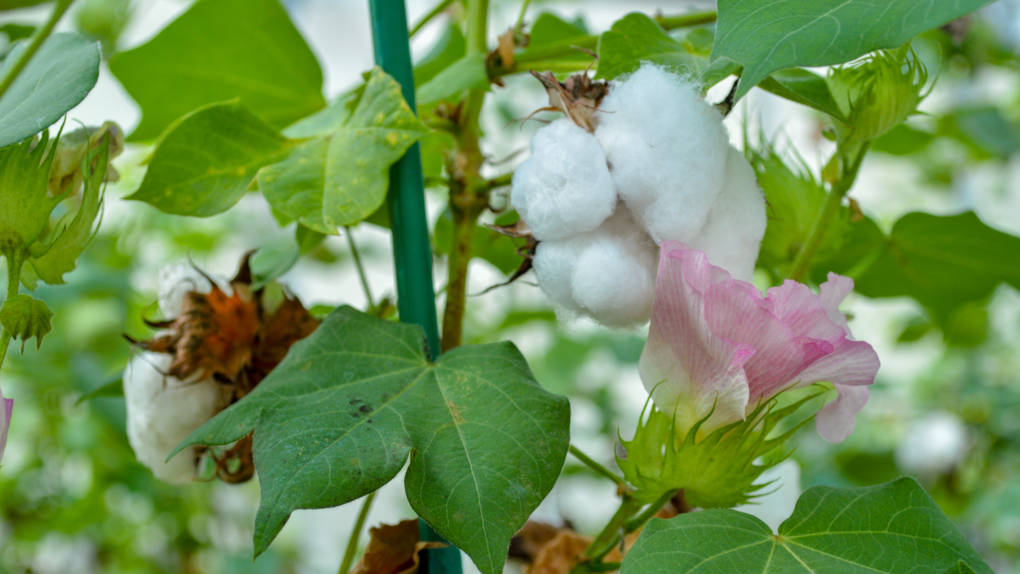
"caption": "Cottonseed is full of protein but toxic to humans and most animals. The U.S. Department of Agriculture this week approved a genetically engineered cotton with edible seeds. They could eventually feed chickens, fish — or even people.",
"description": "Cottonseed is full of protein but toxic to humans and most animals. The U.S. Department of Agriculture this week approved a genetically engineered cotton with edible seeds. They could eventually feed chickens, fish — or even peopl",
"title": "Cottonseed is full of protein but toxic to humans and most animals. The U.S. Department of Agriculture this week approved a genetically engineered cotton with edible seeds. They could eventually feed chickens, fish — or even people.",
"credit": "Lacey Roberts/Texas A&M University",
"status": "inherit",
"isLoading": false,
"fetchFailed": false
},
"bayareabites_130787": {
"type": "attachments",
"id": "bayareabites_130787",
"meta": {
"index": "attachments_1716263798",
"site": "bayareabites",
"id": "130787",
"found": true
},
"parent": 130786,
"imgSizes": {
"small": {
"file": "https://ww2.kqed.org/app/uploads/sites/24/2018/10/hallofflowers-520x346.jpg",
"width": 520,
"mimeType": "image/jpeg",
"height": 346
},
"twentyfourteen-full-width": {
"file": "https://ww2.kqed.org/app/uploads/sites/24/2018/10/hallofflowers-1038x576.jpg",
"width": 1038,
"mimeType": "image/jpeg",
"height": 576
},
"thumbnail": {
"file": "https://ww2.kqed.org/app/uploads/sites/24/2018/10/hallofflowers-160x107.jpg",
"width": 160,
"mimeType": "image/jpeg",
"height": 107
},
"fd-sm": {
"file": "https://ww2.kqed.org/app/uploads/sites/24/2018/10/hallofflowers-960x639.jpg",
"width": 960,
"mimeType": "image/jpeg",
"height": 639
},
"post-thumbnail": {
"file": "https://ww2.kqed.org/app/uploads/sites/24/2018/10/hallofflowers-672x372.jpg",
"width": 672,
"mimeType": "image/jpeg",
"height": 372
},
"xsmall": {
"file": "https://ww2.kqed.org/app/uploads/sites/24/2018/10/hallofflowers-375x250.jpg",
"width": 375,
"mimeType": "image/jpeg",
"height": 250
},
"kqedFullSize": {
"file": "https://ww2.kqed.org/app/uploads/sites/24/2018/10/hallofflowers-e1539242943912.jpg",
"width": 1920,
"height": 1278
},
"large": {
"file": "https://ww2.kqed.org/app/uploads/sites/24/2018/10/hallofflowers-1020x679.jpg",
"width": 1020,
"mimeType": "image/jpeg",
"height": 679
},
"xlarge": {
"file": "https://ww2.kqed.org/app/uploads/sites/24/2018/10/hallofflowers-1180x786.jpg",
"width": 1180,
"mimeType": "image/jpeg",
"height": 786
},
"complete_open_graph": {
"file": "https://ww2.kqed.org/app/uploads/sites/24/2018/10/hallofflowers-1200x799.jpg",
"width": 1200,
"mimeType": "image/jpeg",
"height": 799
},
"guest-author-50": {
"file": "https://ww2.kqed.org/app/uploads/sites/24/2018/10/hallofflowers-50x50.jpg",
"width": 50,
"mimeType": "image/jpeg",
"height": 50
},
"guest-author-96": {
"file": "https://ww2.kqed.org/app/uploads/sites/24/2018/10/hallofflowers-96x96.jpg",
"width": 96,
"mimeType": "image/jpeg",
"height": 96
},
"medium": {
"file": "https://ww2.kqed.org/app/uploads/sites/24/2018/10/hallofflowers-800x533.jpg",
"width": 800,
"mimeType": "image/jpeg",
"height": 533
},
"guest-author-64": {
"file": "https://ww2.kqed.org/app/uploads/sites/24/2018/10/hallofflowers-64x64.jpg",
"width": 64,
"mimeType": "image/jpeg",
"height": 64
},
"guest-author-32": {
"file": "https://ww2.kqed.org/app/uploads/sites/24/2018/10/hallofflowers-32x32.jpg",
"width": 32,
"mimeType": "image/jpeg",
"height": 32
},
"fd-lrg": {
"file": "https://ww2.kqed.org/app/uploads/sites/24/2018/10/hallofflowers-1920x1278.jpg",
"width": 1920,
"mimeType": "image/jpeg",
"height": 1278
},
"fd-med": {
"file": "https://ww2.kqed.org/app/uploads/sites/24/2018/10/hallofflowers-1180x786.jpg",
"width": 1180,
"mimeType": "image/jpeg",
"height": 786
},
"full-width": {
"file": "https://ww2.kqed.org/app/uploads/sites/24/2018/10/hallofflowers-1920x1278.jpg",
"width": 1920,
"mimeType": "image/jpeg",
"height": 1278
},
"detail": {
"file": "https://ww2.kqed.org/app/uploads/sites/24/2018/10/hallofflowers-150x150.jpg",
"width": 150,
"mimeType": "image/jpeg",
"height": 150
},
"medium_large": {
"file": "https://ww2.kqed.org/app/uploads/sites/24/2018/10/hallofflowers-768x511.jpg",
"width": 768,
"mimeType": "image/jpeg",
"height": 511
},
"guest-author-128": {
"file": "https://ww2.kqed.org/app/uploads/sites/24/2018/10/hallofflowers-128x128.jpg",
"width": 128,
"mimeType": "image/jpeg",
"height": 128
},
"xxsmall": {
"file": "https://ww2.kqed.org/app/uploads/sites/24/2018/10/hallofflowers-240x160.jpg",
"width": 240,
"mimeType": "image/jpeg",
"height": 160
}
},
"publishDate": 1539242912,
"modified": 1539282562,
"caption": "The Hall of Flowers B2B cannabis trade show was held in Santa Rosa, CA.",
"description": "The Hall of Flowers B2B cannabis trade show was held in Santa Rosa, CA.",
"title": "The Hall of Flowers B2B cannabis trade show was held in Santa Rosa, CA.",
"credit": "tablehopper.com",
"status": "inherit",
"isLoading": false,
"fetchFailed": false
},
"bayareabites_130888": {
"type": "attachments",
"id": "bayareabites_130888",
"meta": {
"index": "attachments_1716263798",
"site": "bayareabites",
"id": "130888",
"found": true
},
"parent": 130887,
"imgSizes": {
"small": {
"file": "https://ww2.kqed.org/app/uploads/sites/24/2018/10/rts1u2te-71fe69214f2094429ea5ca2485cd1fbd5ee8383f-520x390.jpg",
"width": 520,
"mimeType": "image/jpeg",
"height": 390
},
"twentyfourteen-full-width": {
"file": "https://ww2.kqed.org/app/uploads/sites/24/2018/10/rts1u2te-71fe69214f2094429ea5ca2485cd1fbd5ee8383f-1038x576.jpg",
"width": 1038,
"mimeType": "image/jpeg",
"height": 576
},
"thumbnail": {
"file": "https://ww2.kqed.org/app/uploads/sites/24/2018/10/rts1u2te-71fe69214f2094429ea5ca2485cd1fbd5ee8383f-160x120.jpg",
"width": 160,
"mimeType": "image/jpeg",
"height": 120
},
"fd-sm": {
"file": "https://ww2.kqed.org/app/uploads/sites/24/2018/10/rts1u2te-71fe69214f2094429ea5ca2485cd1fbd5ee8383f-960x720.jpg",
"width": 960,
"mimeType": "image/jpeg",
"height": 720
},
"post-thumbnail": {
"file": "https://ww2.kqed.org/app/uploads/sites/24/2018/10/rts1u2te-71fe69214f2094429ea5ca2485cd1fbd5ee8383f-672x372.jpg",
"width": 672,
"mimeType": "image/jpeg",
"height": 372
},
"xsmall": {
"file": "https://ww2.kqed.org/app/uploads/sites/24/2018/10/rts1u2te-71fe69214f2094429ea5ca2485cd1fbd5ee8383f-375x281.jpg",
"width": 375,
"mimeType": "image/jpeg",
"height": 281
},
"kqedFullSize": {
"file": "https://ww2.kqed.org/app/uploads/sites/24/2018/10/rts1u2te-71fe69214f2094429ea5ca2485cd1fbd5ee8383f-e1539709127744.jpg",
"width": 1920,
"height": 1440
},
"large": {
"file": "https://ww2.kqed.org/app/uploads/sites/24/2018/10/rts1u2te-71fe69214f2094429ea5ca2485cd1fbd5ee8383f-1020x765.jpg",
"width": 1020,
"mimeType": "image/jpeg",
"height": 765
},
"xlarge": {
"file": "https://ww2.kqed.org/app/uploads/sites/24/2018/10/rts1u2te-71fe69214f2094429ea5ca2485cd1fbd5ee8383f-1180x885.jpg",
"width": 1180,
"mimeType": "image/jpeg",
"height": 885
},
"complete_open_graph": {
"file": "https://ww2.kqed.org/app/uploads/sites/24/2018/10/rts1u2te-71fe69214f2094429ea5ca2485cd1fbd5ee8383f-1200x900.jpg",
"width": 1200,
"mimeType": "image/jpeg",
"height": 900
},
"guest-author-50": {
"file": "https://ww2.kqed.org/app/uploads/sites/24/2018/10/rts1u2te-71fe69214f2094429ea5ca2485cd1fbd5ee8383f-50x50.jpg",
"width": 50,
"mimeType": "image/jpeg",
"height": 50
},
"guest-author-96": {
"file": "https://ww2.kqed.org/app/uploads/sites/24/2018/10/rts1u2te-71fe69214f2094429ea5ca2485cd1fbd5ee8383f-96x96.jpg",
"width": 96,
"mimeType": "image/jpeg",
"height": 96
},
"medium": {
"file": "https://ww2.kqed.org/app/uploads/sites/24/2018/10/rts1u2te-71fe69214f2094429ea5ca2485cd1fbd5ee8383f-800x600.jpg",
"width": 800,
"mimeType": "image/jpeg",
"height": 600
},
"guest-author-64": {
"file": "https://ww2.kqed.org/app/uploads/sites/24/2018/10/rts1u2te-71fe69214f2094429ea5ca2485cd1fbd5ee8383f-64x64.jpg",
"width": 64,
"mimeType": "image/jpeg",
"height": 64
},
"guest-author-32": {
"file": "https://ww2.kqed.org/app/uploads/sites/24/2018/10/rts1u2te-71fe69214f2094429ea5ca2485cd1fbd5ee8383f-32x32.jpg",
"width": 32,
"mimeType": "image/jpeg",
"height": 32
},
"fd-lrg": {
"file": "https://ww2.kqed.org/app/uploads/sites/24/2018/10/rts1u2te-71fe69214f2094429ea5ca2485cd1fbd5ee8383f-1920x1440.jpg",
"width": 1920,
"mimeType": "image/jpeg",
"height": 1440
},
"fd-med": {
"file": "https://ww2.kqed.org/app/uploads/sites/24/2018/10/rts1u2te-71fe69214f2094429ea5ca2485cd1fbd5ee8383f-1180x885.jpg",
"width": 1180,
"mimeType": "image/jpeg",
"height": 885
},
"full-width": {
"file": "https://ww2.kqed.org/app/uploads/sites/24/2018/10/rts1u2te-71fe69214f2094429ea5ca2485cd1fbd5ee8383f-1920x1440.jpg",
"width": 1920,
"mimeType": "image/jpeg",
"height": 1440
},
"detail": {
"file": "https://ww2.kqed.org/app/uploads/sites/24/2018/10/rts1u2te-71fe69214f2094429ea5ca2485cd1fbd5ee8383f-150x150.jpg",
"width": 150,
"mimeType": "image/jpeg",
"height": 150
},
"medium_large": {
"file": "https://ww2.kqed.org/app/uploads/sites/24/2018/10/rts1u2te-71fe69214f2094429ea5ca2485cd1fbd5ee8383f-768x576.jpg",
"width": 768,
"mimeType": "image/jpeg",
"height": 576
},
"guest-author-128": {
"file": "https://ww2.kqed.org/app/uploads/sites/24/2018/10/rts1u2te-71fe69214f2094429ea5ca2485cd1fbd5ee8383f-128x128.jpg",
"width": 128,
"mimeType": "image/jpeg",
"height": 128
},
"xxsmall": {
"file": "https://ww2.kqed.org/app/uploads/sites/24/2018/10/rts1u2te-71fe69214f2094429ea5ca2485cd1fbd5ee8383f-240x180.jpg",
"width": 240,
"mimeType": "image/jpeg",
"height": 180
}
},
"publishDate": 1539709047,
"modified": 1539709141,
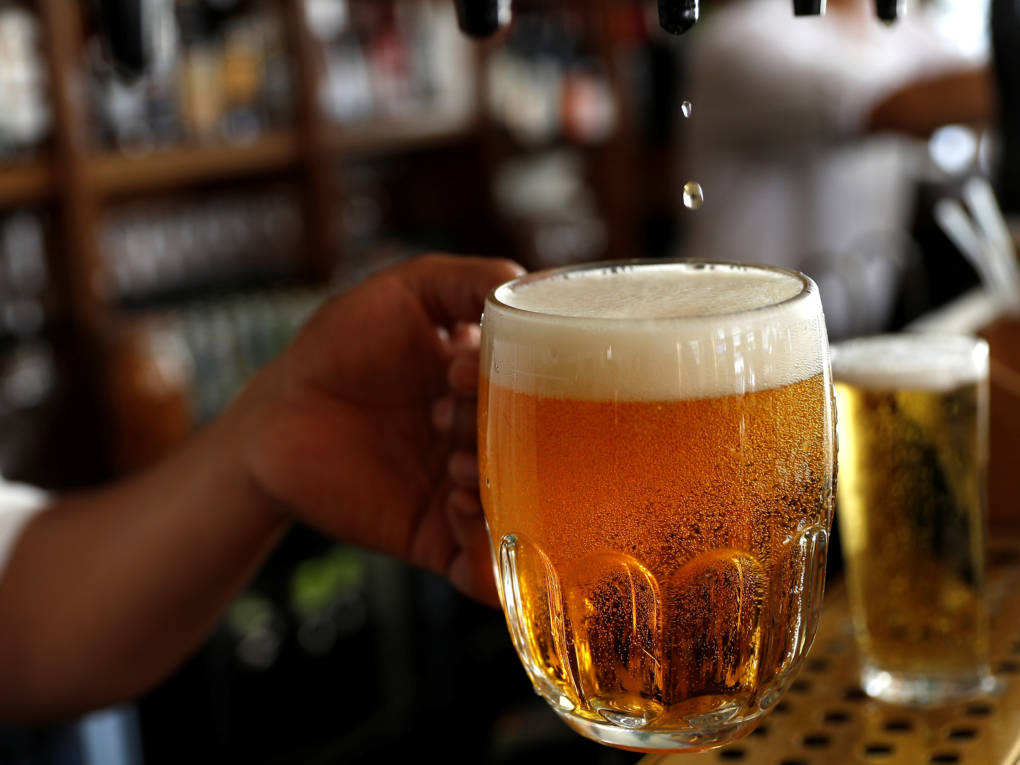
"caption": "The cost of a pint of beer could rise sharply in the U.S. and other countries because of increased risks from heat and drought, according to a new study that looks at climate change's possible effects on barley crops.",
"description": "The cost of a pint of beer could rise sharply in the U.S. and other countries because of increased risks from heat and drought, according to a new study that looks at climate change's possible effects on barley crops.",
"title": "The cost of a pint of beer could rise sharply in the U.S. and other countries because of increased risks from heat and drought, according to a new study that looks at climate change's possible effects on barley crops.",
"credit": "Peter Nicholls/Reuters",
"status": "inherit",
"isLoading": false,
"fetchFailed": false
},
"bayareabites_130879": {
"type": "attachments",
"id": "bayareabites_130879",
"meta": {
"index": "attachments_1716263798",
"site": "bayareabites",
"id": "130879",
"found": true
},
"parent": 130872,
"imgSizes": {
"small": {
"file": "https://ww2.kqed.org/app/uploads/sites/24/2018/10/harvestwheat-breads-520x346.jpg",
"width": 520,
"mimeType": "image/jpeg",
"height": 346
},
"twentyfourteen-full-width": {
"file": "https://ww2.kqed.org/app/uploads/sites/24/2018/10/harvestwheat-breads-1038x576.jpg",
"width": 1038,
"mimeType": "image/jpeg",
"height": 576
},
"thumbnail": {
"file": "https://ww2.kqed.org/app/uploads/sites/24/2018/10/harvestwheat-breads-160x107.jpg",
"width": 160,
"mimeType": "image/jpeg",
"height": 107
},
"fd-sm": {
"file": "https://ww2.kqed.org/app/uploads/sites/24/2018/10/harvestwheat-breads-960x639.jpg",
"width": 960,
"mimeType": "image/jpeg",
"height": 639
},
"post-thumbnail": {
"file": "https://ww2.kqed.org/app/uploads/sites/24/2018/10/harvestwheat-breads-672x372.jpg",
"width": 672,
"mimeType": "image/jpeg",
"height": 372
},
"xsmall": {
"file": "https://ww2.kqed.org/app/uploads/sites/24/2018/10/harvestwheat-breads-375x250.jpg",
"width": 375,
"mimeType": "image/jpeg",
"height": 250
},
"kqedFullSize": {
"file": "https://ww2.kqed.org/app/uploads/sites/24/2018/10/harvestwheat-breads-e1539636762806.jpg",
"width": 1920,
"height": 1279
},
"large": {
"file": "https://ww2.kqed.org/app/uploads/sites/24/2018/10/harvestwheat-breads-1020x679.jpg",
"width": 1020,
"mimeType": "image/jpeg",
"height": 679
},
"xlarge": {
"file": "https://ww2.kqed.org/app/uploads/sites/24/2018/10/harvestwheat-breads-1180x786.jpg",
"width": 1180,
"mimeType": "image/jpeg",
"height": 786
},
"complete_open_graph": {
"file": "https://ww2.kqed.org/app/uploads/sites/24/2018/10/harvestwheat-breads-1200x799.jpg",
"width": 1200,
"mimeType": "image/jpeg",
"height": 799
},
"guest-author-50": {
"file": "https://ww2.kqed.org/app/uploads/sites/24/2018/10/harvestwheat-breads-50x50.jpg",
"width": 50,
"mimeType": "image/jpeg",
"height": 50
},
"guest-author-96": {
"file": "https://ww2.kqed.org/app/uploads/sites/24/2018/10/harvestwheat-breads-96x96.jpg",
"width": 96,
"mimeType": "image/jpeg",
"height": 96
},
"medium": {
"file": "https://ww2.kqed.org/app/uploads/sites/24/2018/10/harvestwheat-breads-800x533.jpg",
"width": 800,
"mimeType": "image/jpeg",
"height": 533
},
"guest-author-64": {
"file": "https://ww2.kqed.org/app/uploads/sites/24/2018/10/harvestwheat-breads-64x64.jpg",
"width": 64,
"mimeType": "image/jpeg",
"height": 64
},
"guest-author-32": {
"file": "https://ww2.kqed.org/app/uploads/sites/24/2018/10/harvestwheat-breads-32x32.jpg",
"width": 32,
"mimeType": "image/jpeg",
"height": 32
},
"fd-lrg": {
"file": "https://ww2.kqed.org/app/uploads/sites/24/2018/10/harvestwheat-breads-1920x1279.jpg",
"width": 1920,
"mimeType": "image/jpeg",
"height": 1279
},
"fd-med": {
"file": "https://ww2.kqed.org/app/uploads/sites/24/2018/10/harvestwheat-breads-1180x786.jpg",
"width": 1180,
"mimeType": "image/jpeg",
"height": 786
},
"full-width": {
"file": "https://ww2.kqed.org/app/uploads/sites/24/2018/10/harvestwheat-breads-1920x1279.jpg",
"width": 1920,
"mimeType": "image/jpeg",
"height": 1279
},
"detail": {
"file": "https://ww2.kqed.org/app/uploads/sites/24/2018/10/harvestwheat-breads-150x150.jpg",
"width": 150,
"mimeType": "image/jpeg",
"height": 150
},
"medium_large": {
"file": "https://ww2.kqed.org/app/uploads/sites/24/2018/10/harvestwheat-breads-768x511.jpg",
"width": 768,
"mimeType": "image/jpeg",
"height": 511
},
"guest-author-128": {
"file": "https://ww2.kqed.org/app/uploads/sites/24/2018/10/harvestwheat-breads-128x128.jpg",
"width": 128,
"mimeType": "image/jpeg",
"height": 128
},
"xxsmall": {
"file": "https://ww2.kqed.org/app/uploads/sites/24/2018/10/harvestwheat-breads-240x160.jpg",
"width": 240,
"mimeType": "image/jpeg",
"height": 160
}
},
"publishDate": 1539636742,
"modified": 1539653414,
"caption": "Just a few of the many bready and baked selections you'll find at Harvest Wheat Field Bakery in the Inner Richmond.",
"description": "Just a few of the many bready and baked selections you'll find at Harvest Wheat Field Bakery in the Inner Richmond.",
"title": "Just a few of the many bready and baked selections you'll find at Harvest Wheat Field Bakery in the Inner Richmond.",
"credit": "tablehopper.com",
"status": "inherit",
"isLoading": false,
"fetchFailed": false
},
"bayareabites_130835": {
"type": "attachments",
"id": "bayareabites_130835",
"meta": {
"index": "attachments_1716263798",
"site": "bayareabites",
"id": "130835",
"found": true
},
"parent": 130833,
"imgSizes": {
"small": {
"file": "https://ww2.kqed.org/app/uploads/sites/24/2018/10/wiley-7d62863e80d9fd3f4b792ccc908461e82ed08900-s1600-c85-520x390.jpg",
"width": 520,
"mimeType": "image/jpeg",
"height": 390
},
"twentyfourteen-full-width": {
"file": "https://ww2.kqed.org/app/uploads/sites/24/2018/10/wiley-7d62863e80d9fd3f4b792ccc908461e82ed08900-s1600-c85-1038x576.jpg",
"width": 1038,
"mimeType": "image/jpeg",
"height": 576
},
"thumbnail": {
"file": "https://ww2.kqed.org/app/uploads/sites/24/2018/10/wiley-7d62863e80d9fd3f4b792ccc908461e82ed08900-s1600-c85-160x120.jpg",
"width": 160,
"mimeType": "image/jpeg",
"height": 120
},
"fd-sm": {
"file": "https://ww2.kqed.org/app/uploads/sites/24/2018/10/wiley-7d62863e80d9fd3f4b792ccc908461e82ed08900-s1600-c85-960x720.jpg",
"width": 960,
"mimeType": "image/jpeg",
"height": 720
},
"post-thumbnail": {
"file": "https://ww2.kqed.org/app/uploads/sites/24/2018/10/wiley-7d62863e80d9fd3f4b792ccc908461e82ed08900-s1600-c85-672x372.jpg",
"width": 672,
"mimeType": "image/jpeg",
"height": 372
},
"xsmall": {
"file": "https://ww2.kqed.org/app/uploads/sites/24/2018/10/wiley-7d62863e80d9fd3f4b792ccc908461e82ed08900-s1600-c85-375x281.jpg",
"width": 375,
"mimeType": "image/jpeg",
"height": 281
},
"kqedFullSize": {
"file": "https://ww2.kqed.org/app/uploads/sites/24/2018/10/wiley-7d62863e80d9fd3f4b792ccc908461e82ed08900-s1600-c85.jpg",
"width": 1600,
"height": 1200
},
"large": {
"file": "https://ww2.kqed.org/app/uploads/sites/24/2018/10/wiley-7d62863e80d9fd3f4b792ccc908461e82ed08900-s1600-c85-1020x765.jpg",
"width": 1020,
"mimeType": "image/jpeg",
"height": 765
},
"xlarge": {
"file": "https://ww2.kqed.org/app/uploads/sites/24/2018/10/wiley-7d62863e80d9fd3f4b792ccc908461e82ed08900-s1600-c85-1180x885.jpg",
"width": 1180,
"mimeType": "image/jpeg",
"height": 885
},
"complete_open_graph": {
"file": "https://ww2.kqed.org/app/uploads/sites/24/2018/10/wiley-7d62863e80d9fd3f4b792ccc908461e82ed08900-s1600-c85-1200x900.jpg",
"width": 1200,
"mimeType": "image/jpeg",
"height": 900
},
"guest-author-50": {
"file": "https://ww2.kqed.org/app/uploads/sites/24/2018/10/wiley-7d62863e80d9fd3f4b792ccc908461e82ed08900-s1600-c85-50x50.jpg",
"width": 50,
"mimeType": "image/jpeg",
"height": 50
},
"guest-author-96": {
"file": "https://ww2.kqed.org/app/uploads/sites/24/2018/10/wiley-7d62863e80d9fd3f4b792ccc908461e82ed08900-s1600-c85-96x96.jpg",
"width": 96,
"mimeType": "image/jpeg",
"height": 96
},
"medium": {
"file": "https://ww2.kqed.org/app/uploads/sites/24/2018/10/wiley-7d62863e80d9fd3f4b792ccc908461e82ed08900-s1600-c85-800x600.jpg",
"width": 800,
"mimeType": "image/jpeg",
"height": 600
},
"guest-author-64": {
"file": "https://ww2.kqed.org/app/uploads/sites/24/2018/10/wiley-7d62863e80d9fd3f4b792ccc908461e82ed08900-s1600-c85-64x64.jpg",
"width": 64,
"mimeType": "image/jpeg",
"height": 64
},
"guest-author-32": {
"file": "https://ww2.kqed.org/app/uploads/sites/24/2018/10/wiley-7d62863e80d9fd3f4b792ccc908461e82ed08900-s1600-c85-32x32.jpg",
"width": 32,
"mimeType": "image/jpeg",
"height": 32
},
"fd-med": {
"file": "https://ww2.kqed.org/app/uploads/sites/24/2018/10/wiley-7d62863e80d9fd3f4b792ccc908461e82ed08900-s1600-c85-1180x885.jpg",
"width": 1180,
"mimeType": "image/jpeg",
"height": 885
},
"detail": {
"file": "https://ww2.kqed.org/app/uploads/sites/24/2018/10/wiley-7d62863e80d9fd3f4b792ccc908461e82ed08900-s1600-c85-150x150.jpg",
"width": 150,
"mimeType": "image/jpeg",
"height": 150
},
"medium_large": {
"file": "https://ww2.kqed.org/app/uploads/sites/24/2018/10/wiley-7d62863e80d9fd3f4b792ccc908461e82ed08900-s1600-c85-768x576.jpg",
"width": 768,
"mimeType": "image/jpeg",
"height": 576
},
"guest-author-128": {
"file": "https://ww2.kqed.org/app/uploads/sites/24/2018/10/wiley-7d62863e80d9fd3f4b792ccc908461e82ed08900-s1600-c85-128x128.jpg",
"width": 128,
"mimeType": "image/jpeg",
"height": 128
},
"xxsmall": {
"file": "https://ww2.kqed.org/app/uploads/sites/24/2018/10/wiley-7d62863e80d9fd3f4b792ccc908461e82ed08900-s1600-c85-240x180.jpg",
"width": 240,
"mimeType": "image/jpeg",
"height": 180
}
},
"publishDate": 1539286035,
"modified": 1539286053,
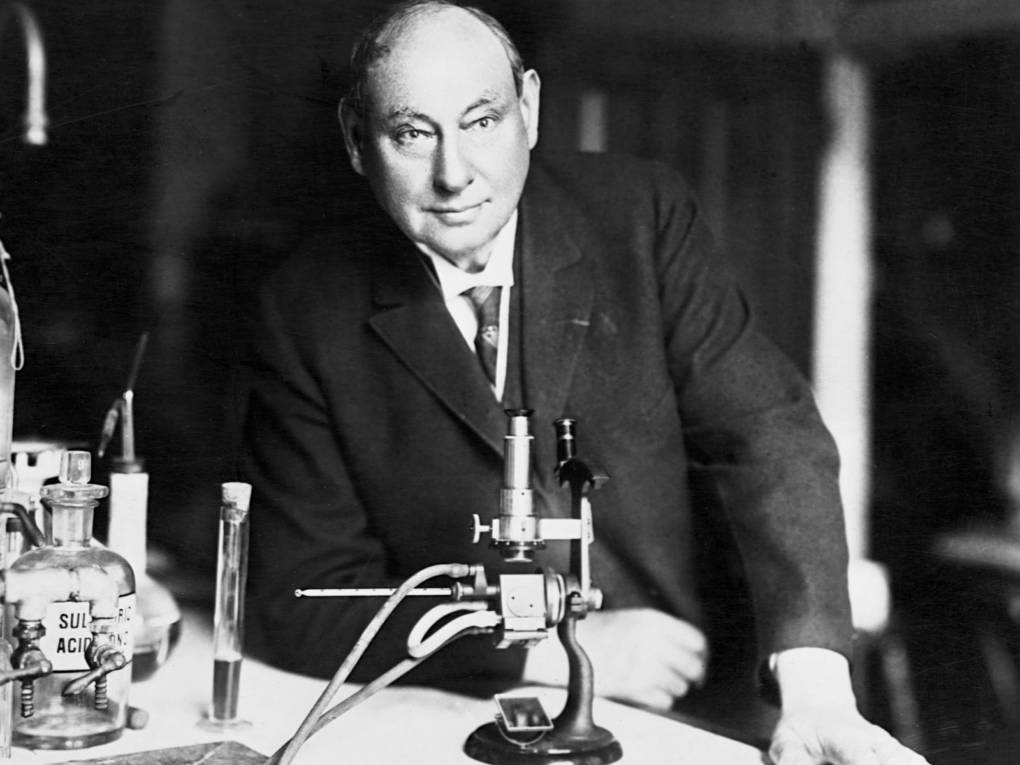
"caption": "Harvey Washington Wiley was instrumental in bringing about regulations to boost sanitation and decrease food adulteration.",
"description": "Harvey Washington Wiley was instrumental in bringing about regulations to boost sanitation and decrease food adulteration.",
"title": "Harvey Washington Wiley was instrumental in bringing about regulations to boost sanitation and decrease food adulteration.",
"credit": "Historical/Corbis via Getty Images",
"status": "inherit",
"isLoading": false,
"fetchFailed": false
}
},
"audioPlayerReducer": {
"postId": "stream_live",
"isPaused": true,
"isPlaying": false,
"pfsActive": false,
"pledgeModalIsOpen": true,
"playerDrawerIsOpen": false,
"liveAudioPlayStartedAt": 0,
"liveAudioPlayContext": ""
},
"authorsReducer": {
"byline_bayareabites_131500": {
"type": "authors",
"id": "byline_bayareabites_131500",
"meta": {
"override": true
},
"slug": "byline_bayareabites_131500",
"name": "Mary Mathis, NPR Food",
"isLoading": false
},
"byline_bayareabites_131475": {
"type": "authors",
"id": "byline_bayareabites_131475",
"meta": {
"override": true
},
"slug": "byline_bayareabites_131475",
"name": "Camila Domonoske, NPR Food",
"isLoading": false
},
"byline_bayareabites_131372": {
"type": "authors",
"id": "byline_bayareabites_131372",
"meta": {
"override": true
},
"slug": "byline_bayareabites_131372",
"name": "Patti Neighmond, NPR",
"isLoading": false
},
"byline_bayareabites_131179": {
"type": "authors",
"id": "byline_bayareabites_131179",
"meta": {
"override": true
},
"slug": "byline_bayareabites_131179",
"name": "Liz Szabo, NPR Food",
"isLoading": false
},
"byline_bayareabites_131112": {
"type": "authors",
"id": "byline_bayareabites_131112",
"meta": {
"override": true
},
"slug": "byline_bayareabites_131112",
"name": "Allison Aubrey, NPR Food",
"isLoading": false
},
"byline_bayareabites_131039": {
"type": "authors",
"id": "byline_bayareabites_131039",
"meta": {
"override": true
},
"slug": "byline_bayareabites_131039",
"name": "Jasmine Garsd, Morning Edition",
"isLoading": false
},
"byline_bayareabites_130962": {
"type": "authors",
"id": "byline_bayareabites_130962",
"meta": {
"override": true
},
"slug": "byline_bayareabites_130962",
"name": "Dan Charles, All Things Considered",
"isLoading": false
},
"byline_bayareabites_130887": {
"type": "authors",
"id": "byline_bayareabites_130887",
"meta": {
"override": true
},
"slug": "byline_bayareabites_130887",
"name": "Bill Chappell, NPR Food",
"isLoading": false
},
"byline_bayareabites_130833": {
"type": "authors",
"id": "byline_bayareabites_130833",
"meta": {
"override": true
},
"slug": "byline_bayareabites_130833",
"name": "Ari Shapiro, All Things Considered",
"isLoading": false
},
"marciagagliardi": {
"type": "authors",
"id": "11398",
"meta": {
"index": "authors_1716337520",
"id": "11398",
"found": true
},
"name": "Marcia Gagliardi",
"firstName": "Marcia",
"lastName": "Gagliardi",
"slug": "marciagagliardi",
"email": "marcia@tablehopper.com",
"display_author_email": false,
"staff_mastheads": [],
"title": null,
"bio": "\u003cstrong>Marcia Gagliardi\u003c/strong> writes a popular insider e-column about the SF dining and drinking scene, get all the latest news at \u003ca href=\"http://www.tablehopper.com\">tablehopper.com\u003c/a>. Follow @tablehopper on \u003ca href=\"https://twitter.com/tablehopper\">Twitter\u003c/a> and \u003ca href=\"https://instagram.com/tablehopper/\">Instagram\u003c/a> for more culinary finds! She also writes about low-dose and high-quality cannabis products in her weekly mymilligram newsletter at \u003ca href=\"http://www.mymilligram.com\">mymilligram.com\u003c/a>.",
"avatar": "https://secure.gravatar.com/avatar/5d0caa5ce4f7e7b9746d41093f503928?s=600&d=blank&r=g",
"twitter": null,
"facebook": null,
"instagram": null,
"linkedin": null,
"sites": [
{
"site": "bayareabites",
"roles": [
"contributor"
]
},
{
"site": "food",
"roles": [
"contributor"
]
}
],
"headData": {
"title": "Marcia Gagliardi | KQED",
"description": null,
"ogImgSrc": "https://secure.gravatar.com/avatar/5d0caa5ce4f7e7b9746d41093f503928?s=600&d=blank&r=g",
"twImgSrc": "https://secure.gravatar.com/avatar/5d0caa5ce4f7e7b9746d41093f503928?s=600&d=blank&r=g"
},
"isLoading": false,
"link": "/author/marciagagliardi"
},
"scottpeabody": {
"type": "authors",
"id": "11565",
"meta": {
"index": "authors_1716337520",
"id": "11565",
"found": true
},
"name": "Scott Peabody",
"firstName": "Scott",
"lastName": "Peabody",
"slug": "scottpeabody",
"email": "scottpeabody55@gmail.com",
"display_author_email": false,
"staff_mastheads": [],
"title": null,
"bio": "Scott Peabody began his career in food at the age of fifteen, going on to attend the Culinary Institute of America in Hyde Park before cutting his teeth in New York City, in the kitchens of culinary giants like Jean-Georges Vongerichten and Thomas Keller. After more than a decade toiling in restaurants, he fled out West to work at a food startup. He’s now charting unknown territory in the form of extramural cooking and food writing. His work includes co-authoring and writing the recipes for “Sous Vide at Home”, and its follow-up, “Sous Vide Made Simple”.",
"avatar": "https://secure.gravatar.com/avatar/23cdf74a0d58423b3e8365d622f838c5?s=600&d=blank&r=g",
"twitter": null,
"facebook": null,
"instagram": null,
"linkedin": null,
"sites": [
{
"site": "bayareabites",
"roles": [
"author"
]
}
],
"headData": {
"title": "Scott Peabody | KQED",
"description": null,
"ogImgSrc": "https://secure.gravatar.com/avatar/23cdf74a0d58423b3e8365d622f838c5?s=600&d=blank&r=g",
"twImgSrc": "https://secure.gravatar.com/avatar/23cdf74a0d58423b3e8365d622f838c5?s=600&d=blank&r=g"
},
"isLoading": false,
"link": "/author/scottpeabody"
}
},
"pagesReducer": {
"bayareabites_category_science": {
"type": "terms",
"id": "bayareabites_358",
"meta": {
"index": "terms_1716263798",
"site": "bayareabites",
"id": "358",
"score": 10.85186
},
"featImg": null,
"name": "science",
"description": null,
"taxonomy": "category",
"headData": {
"twImgId": null,
"twTitle": null,
"ogTitle": null,
"ogImgId": null,
"twDescription": null,
"description": null,
"title": "science Archives | KQED Bay Area Bites",
"ogDescription": null
},
"ttid": 7943,
"slug": "science",
"isLoading": false,
"title": "science",
"pageMeta": {
"site": "bayareabites",
"WpPageTemplate": "page-topic-editorial",
"currentPage": 5
},
"blocks": [
{
"blockName": "kqed/post-list",
"attrs": {
"layout": "cardArticle2",
"query": "posts/bayareabites?category=science",
"seeMore": false,
"paginated": true,
"page": 5
}
},
{
"blockName": "kqed/ad"
}
]
}
},
"pfsSessionReducer": {},
"postsReducer": {
"stream_live": {
"type": "live",
"id": "stream_live",
"audioUrl": "https://streams.kqed.org/kqedradio",
"title": "Live Stream",
"excerpt": "Live Stream information currently unavailable.",
"link": "/radio",
"featImg": "",
"label": {
"name": "KQED Live",
"link": "/"
}
},
"stream_kqedNewscast": {
"type": "posts",
"id": "stream_kqedNewscast",
"audioUrl": "https://www.kqed.org/.stream/anon/radio/RDnews/newscast.mp3?_=1",
"title": "KQED Newscast",
"featImg": "",
"label": {
"name": "88.5 FM",
"link": "/"
}
},
"bayareabites_131500": {
"type": "posts",
"id": "bayareabites_131500",
"meta": {
"index": "posts_1716263798",
"site": "bayareabites",
"id": "131500",
"score": null,
"sort": [
1543255659000
]
},
"parent": 0,
"labelTerm": {
"site": "bayareabites"
},
"blocks": [],
"publishDate": 1543255659,
"format": "standard",
"disqusTitle": "Beyond Bodega Bites: This Man Wants More People To Eat 'Vegan In The Hood'",
"title": "Beyond Bodega Bites: This Man Wants More People To Eat 'Vegan In The Hood'",
"headTitle": "Bay Area Bites | KQED Food",
"content": "\u003cp>Erick Castro is standing outside a Whole Foods in Brooklyn, carefully and unabashedly photographing the vegan, fried-oyster-mushroom po'boy he just bought inside. People are staring, but Castro doesn't seem to notice.\u003c/p>\n\u003cp>Castro, 28, is a vegan restaurant owner and the creator of \u003ca href=\"https://www.instagram.com/howtobeveganinthehood/?hl=en\">How To Be Vegan in the Hood\u003c/a>, an Instagram account with over 16,000 followers that spreads the gospel of an affordable plant-based diet – especially to bodega-eating residents of New York City's boroughs. He posts gorgeous, appetizing photos of cheap and simple meals that followers can make at home — like jackfruit paired with pan-fried pesto potatoes — or grab from nearby vendors.\u003c/p>\n\u003cp>Since launching his account last September, he's become somewhat of a local vegan celebrity. \"Hey, you're Vegan in the Hood!\" a diner says to Castro as we walk out of By Chloe, a vegan chain restaurant in Brooklyn's Williamsburg neighborhood.\u003c/p>\n\u003cp>The trendy area has undergone rapid gentrification since 2000 and has experienced a \u003ca href=\"https://nypost.com/2017/11/06/hipsters-are-driving-low-income-hispanics-out-of-brooklyn/\">dramatic drop\u003c/a> in the number of residents who are Latinos, particularly those who, like Castro, are of Puerto Rican descent.\u003c/p>\n\u003cfigure id=\"attachment_131502\" class=\"wp-caption aligncenter\" style=\"max-width: 1920px\">\u003cimg class=\"size-full wp-image-131502\" src=\"https://ww2.kqed.org/bayareabites/wp-content/uploads/sites/24/2018/11/fw5a9205_enl-43f1bcd2605a138bbbb931af3b6b5c9180afeeb8-e1543255406501.jpg\" alt=\"Castro digs into a vegan raspberry cupcake on a discarded desk outside of By Chloe.\" width=\"1920\" height=\"1264\">\u003cfigcaption class=\"wp-caption-text\">Castro digs into a vegan raspberry cupcake on a discarded desk outside of By Chloe. \u003ccite>(Mary Mathis/NPR)\u003c/cite>\u003c/figcaption>\u003c/figure>\n\u003cp>These days, Williamsburg also has more vegan dining options. As we pass by one — the restaurant Farmer's Daughter — Castro notes that it's filled with white customers, and he shows hesitation to eat inside. We opt to eat our vegan raspberry cupcake from By Chloe on a discarded desk outside.\u003c/p>\n\u003cp>[ad fullwidth]\u003c/p>\n\u003cp>The observation Castro makes on the demographics inside Farmer's Daughter feeds into a common perception that veganism is a diet for a certain kind of person – an affluent, liberal leaning, white \u003cem>Portlandia \u003c/em>character. \"I was never really welcomed into the vegan community,\" Castro says. \"They show love, but at a distance.\"\u003c/p>\n\u003cp>The reality is that veganism is hardly new for people of color. Plant-based eating has deep roots among African-Americans, and it's gaining traction\u003ca href=\"https://www.npr.org/sections/thesalt/2018/07/19/629629261/carne-asada-hold-the-meat-why-latinos-are-embracing-vegan-mexican-cuisine\"> among Latinos in the U.S.\u003c/a> The first\u003ca href=\"https://blackvegfest.org/\"> Black Veg Fest\u003c/a> was held in Brooklyn this year. Castro's own Instagram account is an effort to show veganism as an option for all.\u003c/p>\n\u003cp>\"Anyone can do it,\" he says. \"Anyone can eat plant-based.\"\u003c/p>\n\u003cp>Castro himself switched to veganism three years ago. Growing up in Queens, his diet consisted mostly of bodega food.\u003c/p>\n\u003cp>\"The gas station down the block [had] a pizzeria \u003cem>and \u003c/em>a burger spot in it. In the projects, everything you need is in the block radius,\" Castro says. He was raised by a single mother in Queens and the family moved around often. \"We were just grateful to eat food. Nutrition wasn't even a thought.\"\u003c/p>\n\u003cfigure id=\"attachment_131503\" class=\"wp-caption aligncenter\" style=\"max-width: 1920px\">\u003cimg class=\"size-full wp-image-131503\" src=\"https://ww2.kqed.org/bayareabites/wp-content/uploads/sites/24/2018/11/fw5a9418_enl-5d19b49457f917fc654b0eac3efb633476962889-e1543255444851.jpg\" alt=\"Erick Castro is pictured inside of Rip's, a vegan malt shop he recently opened with partners near the Brooklyn Navy Yard.\" width=\"1920\" height=\"1295\">\u003cfigcaption class=\"wp-caption-text\">Erick Castro is pictured inside of Rip's, a vegan malt shop he recently opened with partners near the Brooklyn Navy Yard. \u003ccite>(Mary Mathis/NPR)\u003c/cite>\u003c/figcaption>\u003c/figure>\n\u003cp>A friend of Castro's was constantly encouraging him to go vegan for health purposes, but Castro balked. \"I'm Puerto Rican; we eat pork, we eat meat.\"\u003c/p>\n\u003cp>But Castro says paranoia about his consumption of unhealthy foods in his younger years began to make him worry about his future health, so he decided to go pescatarian. Two years after that, he made the full switch to veganism, citing animal rights. \"[I thought,] Why am I letting animals live on the land but eating all the animals in the sea?\"\u003c/p>\n\u003cp>That same night, he saw on TV that Waka Flocka Flame, an American rapper, was eating vegan, and decided if Waka Flocka could eat vegan, so could he. He woke his roommate up on the fourth day of eating plant-based with, \"Bro, my skin feels so good right now.\" Castro has been vegan since. (Waka Flocka, on the other hand, is \u003ca href=\"https://www.billboard.com/articles/columns/hip-hop/8095942/waka-flocka-flame-interview-paper-magazine-vegan-quit\">apparently not\u003c/a>.)\u003c/p>\n\u003cp>The switch earned Castro ribbing from his meat-eating friends because of the stereotypes around veganism being for white people and a lack of knowledge surrounding what a plant-based diet looks like. \"We'd go out to dinner and they'd say, 'Can you get this guy a bowl of dirt?' \" Castro recalls.\u003c/p>\n\u003cfigure id=\"attachment_131504\" class=\"wp-caption aligncenter\" style=\"max-width: 1920px\">\u003cimg class=\"size-full wp-image-131504\" src=\"https://ww2.kqed.org/bayareabites/wp-content/uploads/sites/24/2018/11/fw5a9356_enl-aedb2eadc40eb3a329c3925ff9430bf9856c246b-e1543255481290.jpg\" alt=\"Rip's employee Rachely Hernandez makes a vegan chocolate and marshmallow sundae for frequent customer Marianne Stephan, and her niece, Maddie. The ice cream is made from coconut cream and cashews.\" width=\"1920\" height=\"1329\">\u003cfigcaption class=\"wp-caption-text\">Rip's employee Rachely Hernandez makes a vegan chocolate and marshmallow sundae for frequent customer Marianne Stephan, and her niece, Maddie. The ice cream is made from coconut cream and cashews. \u003ccite>(Mary Mathis/NPR)\u003c/cite>\u003c/figcaption>\u003c/figure>\n\u003cp>Castro says that the teasing helped inspire How To Be Vegan in the Hood. He bought an iPhone 8 Plus with portrait mode to prove a point to his friends. \"You know what? I'm going to make an Instagram and show you I can eat everything you're eating without having to kill an animal.\"\u003c/p>\n\u003cp>So why the name 'How To Be Vegan in the Hood'? \"That's who's always asking me: people from the hood. [They'll say to me:] 'I don't have a Whole Foods by me, I don't have a Trader Joe's ... how are you vegan?' \" Castro says, \"The truth is you can always afford it, you just weren't taught how to.\"\u003c/p>\n\u003cp>\u003ca href=\"https://www.instagram.com/veganeatsnyc/?hl=en\">Crystal Pang\u003c/a>, Castro's fellow vegan-Instagrammer, grew up in Queens, too. \"Accessibility is a huge thing in the vegan community that people often kind of mock. They say, 'Oh, you can only be vegan if you're rich and white and if you're this certain ideal' . . . That's not true.\"\u003c/p>\n\u003cp>When Pang stumbled upon Castro's Instagram, she was interested in the accessibility and information he was offering his followers. \"He's trying to do exactly what I think veganism should move more towards,\" she says.\u003c/p>\n\u003cfigure id=\"attachment_131505\" class=\"wp-caption aligncenter\" style=\"max-width: 1920px\">\u003cimg class=\"size-full wp-image-131505\" src=\"https://ww2.kqed.org/bayareabites/wp-content/uploads/sites/24/2018/11/fw5a9406_enl-7032c0e484d5c0391c99c01ba58b8aceb8a61c93-e1543255517531.jpg\" alt=\"Castro makes a vegan coffee ice cream sundae at Rip's.\" width=\"1920\" height=\"1279\">\u003cfigcaption class=\"wp-caption-text\">Castro makes a vegan coffee ice cream sundae at Rip's. \u003ccite>(Mary Mathis/NPR)\u003c/cite>\u003c/figcaption>\u003c/figure>\n\u003cp>Castro has been hopping around New York City most of his adult life. In his early 20s, he co-founded an art gallery in Brooklyn called \"City Don't Sleep.\" After that closed, he started a couple of clothing brands and used social media to sell T-shirts and vintage finds. For a while, he helped run food trucks in Manhattan – until he got the inspiration for How To Be Vegan in the Hood in September 2017.\u003c/p>\n\u003cp>He'd go to vegan restaurants around the city and photograph his food, share his recipes from home, and talk about what to buy at the bodega using Instagram. \"You're hungry and you have six bucks? I can get you full on six bucks,\" he says.\u003c/p>\n\u003cp>In May, David Schneider, owner of the Oaxaca Taqueria chain of restaurants in New York, reached out to Castro with the prospect of starting a vegan restaurant. That's how Rip's Malt Shop was born.\u003c/p>\n\u003cp>Castro is the only partner in Rip's who eats plant-based. Schneider thinks it's an asset to have owners on both sides of the diet. \"You really do want someone who's vegan and who understands. It's good to have a partner who sees it from their perspective, too,\" Schneider says.\u003c/p>\n\u003cp>Located near the Brooklyn Navy Yard, Rip's Malt Shop has a large, colorful arrow pointing to its narrow entrance. The shop is sandwiched in between an auto repair business and residential buildings. It's clearly a destination for customers, not a place one happens to drop in.\u003c/p>\n\u003cfigure id=\"attachment_131506\" class=\"wp-caption aligncenter\" style=\"max-width: 1920px\">\u003cimg class=\"size-full wp-image-131506\" src=\"https://ww2.kqed.org/bayareabites/wp-content/uploads/sites/24/2018/11/fw5a9482_enl-3aecf62bc83f918c5a3bed51cf7b97c05ffb7d16-e1543255562636.jpg\" alt=\"The vegan chopped cheese sandwich is a popular item at Rip's. Instead of ground beef, it's made with diced a Beyond Meat burger and dairy-free Daiya cheese.\" width=\"1920\" height=\"1272\">\u003cfigcaption class=\"wp-caption-text\">The vegan chopped cheese sandwich is a popular item at Rip's. Instead of ground beef, it's made with diced a Beyond Meat burger and dairy-free Daiya cheese. \u003ccite>(Mary Mathis/NPR)\u003c/cite>\u003c/figcaption>\u003c/figure>\n\u003cp>One of the chef's at Rip's, Sebastian Matheus, makes me the eatery's popular chopped cheese sandwich – a vegan riff on a beloved bodega favorite sometimes described as New York's version of the Philly cheesesteak, but made with ground beef instead of sliced steak. It's a sandwich that Castro's family and friends begged him to make at gatherings.\u003c/p>\n\u003cp>The sandwich consists of a Beyond Meat veggie burger, diced up and grilled with sweet relish and diced onions mixed in. Once it's almost done cooking, Daiya dairy-free cheese, made of cassava and arrowroot, is added in. The onions caramelize with the cheese, and the concoction is served on a club roll with signature Rip's sauce, which resembles the Big Mac sauce from McDonald's. Lettuce and tomato top the sandwich. Finally, a tiny yellow flag is poked into the top of the roll, and a sliced dill pickle is placed inside the red-checked, paper food dish, Coney Island-style.\u003c/p>\n\u003cp>The result fools my taste buds: It tastes like meat, it tastes like cheese, it tastes somewhat like a Philly cheesesteak.\u003c/p>\n\u003cp>[ad floatright]\u003c/p>\n\u003cp>\"It's like a beautiful mess,\" Castro says of his creation.\u003c/p>\n\u003cdiv class=\"fullattribution\">Copyright 2018 NPR. To see more, visit https://www.npr.org.\u003cimg src=\"https://www.google-analytics.com/__utm.gif?utmac=UA-5828686-4&utmdt=Beyond+Bodega+Bites%3A+This+Man+Wants+More+People+To+Eat+%27Vegan+In+The+Hood%27&utme=8(APIKey)9(MDAxOTAwOTE4MDEyMTkxMDAzNjczZDljZA004)\">\u003c/div>\n\n",
"disqusIdentifier": "131500 https://ww2.kqed.org/bayareabites/?p=131500",
"disqusUrl": "https://ww2.kqed.org/bayareabites/2018/11/26/beyond-bodega-bites-this-man-wants-more-people-to-eat-vegan-in-the-hood/",
"stats": {
"hasVideo": false,
"hasChartOrMap": false,
"hasAudio": false,
"hasPolis": false,
"wordCount": 1460,
"hasGoogleForm": false,
"hasGallery": false,
"hasHearkenModule": false,
"iframeSrcs": [],
"paragraphCount": 29
},
"modified": 1543344490,
"excerpt": "Erick Castro's Instagram account is spreading the gospel of an affordable plant-based diet, especially to lower-income residents of New York. Now, he's got a vegan restaurant, too.",
"headData": {
"twImgId": "",
"twTitle": "",
"ogTitle": "",
"ogImgId": "",
"twDescription": "",
"description": "Erick Castro's Instagram account is spreading the gospel of an affordable plant-based diet, especially to lower-income residents of New York. Now, he's got a vegan restaurant, too.",
"title": "Beyond Bodega Bites: This Man Wants More People To Eat 'Vegan In The Hood' | KQED",
"ogDescription": "",
"schema": {
"@context": "https://schema.org",
"@type": "Article",
"headline": "Beyond Bodega Bites: This Man Wants More People To Eat 'Vegan In The Hood'",
"datePublished": "2018-11-26T10:07:39-08:00",
"dateModified": "2018-11-27T10:48:10-08:00",
"image": "https://cdn.kqed.org/wp-content/uploads/2020/02/KQED-OG-Image@1x.png"
}
},
"guestAuthors": [],
"slug": "beyond-bodega-bites-this-man-wants-more-people-to-eat-vegan-in-the-hood",
"status": "publish",
"nprApiLink": "http://api.npr.org/query?id=654023181&apiKey=MDAxOTAwOTE4MDEyMTkxMDAzNjczZDljZA004",
"nprByline": "Mary Mathis, NPR Food",
"nprStoryDate": "Sun, 25 Nov 2018 07:00:26 -0500",
"nprLastModifiedDate": "Mon, 26 Nov 2018 11:08:47 -0500",
"nprHtmlLink": "https://www.npr.org/sections/thesalt/2018/11/25/654023181/beyond-bodega-bites-this-man-wants-more-people-to-eat-vegan-in-the-hood?ft=nprml&f=654023181",
"nprImageAgency": "Mary Mathis/NPR",
"nprStoryId": "654023181",
"nprRetrievedStory": "1",
"nprPubDate": "Mon, 26 Nov 2018 11:08:00 -0500",
"path": "/bayareabites/131500/beyond-bodega-bites-this-man-wants-more-people-to-eat-vegan-in-the-hood",
"audioTrackLength": null,
"parsedContent": [
{
"type": "contentString",
"content": "\u003cdiv class=\"post-body\">\u003cp>\u003cp>Erick Castro is standing outside a Whole Foods in Brooklyn, carefully and unabashedly photographing the vegan, fried-oyster-mushroom po'boy he just bought inside. People are staring, but Castro doesn't seem to notice.\u003c/p>\n\u003cp>Castro, 28, is a vegan restaurant owner and the creator of \u003ca href=\"https://www.instagram.com/howtobeveganinthehood/?hl=en\">How To Be Vegan in the Hood\u003c/a>, an Instagram account with over 16,000 followers that spreads the gospel of an affordable plant-based diet – especially to bodega-eating residents of New York City's boroughs. He posts gorgeous, appetizing photos of cheap and simple meals that followers can make at home — like jackfruit paired with pan-fried pesto potatoes — or grab from nearby vendors.\u003c/p>\n\u003cp>Since launching his account last September, he's become somewhat of a local vegan celebrity. \"Hey, you're Vegan in the Hood!\" a diner says to Castro as we walk out of By Chloe, a vegan chain restaurant in Brooklyn's Williamsburg neighborhood.\u003c/p>\n\u003cp>The trendy area has undergone rapid gentrification since 2000 and has experienced a \u003ca href=\"https://nypost.com/2017/11/06/hipsters-are-driving-low-income-hispanics-out-of-brooklyn/\">dramatic drop\u003c/a> in the number of residents who are Latinos, particularly those who, like Castro, are of Puerto Rican descent.\u003c/p>\n\u003cfigure id=\"attachment_131502\" class=\"wp-caption aligncenter\" style=\"max-width: 1920px\">\u003cimg class=\"size-full wp-image-131502\" src=\"https://ww2.kqed.org/bayareabites/wp-content/uploads/sites/24/2018/11/fw5a9205_enl-43f1bcd2605a138bbbb931af3b6b5c9180afeeb8-e1543255406501.jpg\" alt=\"Castro digs into a vegan raspberry cupcake on a discarded desk outside of By Chloe.\" width=\"1920\" height=\"1264\">\u003cfigcaption class=\"wp-caption-text\">Castro digs into a vegan raspberry cupcake on a discarded desk outside of By Chloe. \u003ccite>(Mary Mathis/NPR)\u003c/cite>\u003c/figcaption>\u003c/figure>\n\u003cp>These days, Williamsburg also has more vegan dining options. As we pass by one — the restaurant Farmer's Daughter — Castro notes that it's filled with white customers, and he shows hesitation to eat inside. We opt to eat our vegan raspberry cupcake from By Chloe on a discarded desk outside.\u003c/p>\n\u003cp>\u003c/p>\u003c/div>",
"attributes": {
"named": {},
"numeric": []
}
},
{
"type": "component",
"content": "",
"name": "ad",
"attributes": {
"named": {
"label": "fullwidth"
},
"numeric": [
"fullwidth"
]
}
},
{
"type": "contentString",
"content": "\u003cdiv class=\"post-body\">\u003cp>\u003c/p>\n\u003cp>The observation Castro makes on the demographics inside Farmer's Daughter feeds into a common perception that veganism is a diet for a certain kind of person – an affluent, liberal leaning, white \u003cem>Portlandia \u003c/em>character. \"I was never really welcomed into the vegan community,\" Castro says. \"They show love, but at a distance.\"\u003c/p>\n\u003cp>The reality is that veganism is hardly new for people of color. Plant-based eating has deep roots among African-Americans, and it's gaining traction\u003ca href=\"https://www.npr.org/sections/thesalt/2018/07/19/629629261/carne-asada-hold-the-meat-why-latinos-are-embracing-vegan-mexican-cuisine\"> among Latinos in the U.S.\u003c/a> The first\u003ca href=\"https://blackvegfest.org/\"> Black Veg Fest\u003c/a> was held in Brooklyn this year. Castro's own Instagram account is an effort to show veganism as an option for all.\u003c/p>\n\u003cp>\"Anyone can do it,\" he says. \"Anyone can eat plant-based.\"\u003c/p>\n\u003cp>Castro himself switched to veganism three years ago. Growing up in Queens, his diet consisted mostly of bodega food.\u003c/p>\n\u003cp>\"The gas station down the block [had] a pizzeria \u003cem>and \u003c/em>a burger spot in it. In the projects, everything you need is in the block radius,\" Castro says. He was raised by a single mother in Queens and the family moved around often. \"We were just grateful to eat food. Nutrition wasn't even a thought.\"\u003c/p>\n\u003cfigure id=\"attachment_131503\" class=\"wp-caption aligncenter\" style=\"max-width: 1920px\">\u003cimg class=\"size-full wp-image-131503\" src=\"https://ww2.kqed.org/bayareabites/wp-content/uploads/sites/24/2018/11/fw5a9418_enl-5d19b49457f917fc654b0eac3efb633476962889-e1543255444851.jpg\" alt=\"Erick Castro is pictured inside of Rip's, a vegan malt shop he recently opened with partners near the Brooklyn Navy Yard.\" width=\"1920\" height=\"1295\">\u003cfigcaption class=\"wp-caption-text\">Erick Castro is pictured inside of Rip's, a vegan malt shop he recently opened with partners near the Brooklyn Navy Yard. \u003ccite>(Mary Mathis/NPR)\u003c/cite>\u003c/figcaption>\u003c/figure>\n\u003cp>A friend of Castro's was constantly encouraging him to go vegan for health purposes, but Castro balked. \"I'm Puerto Rican; we eat pork, we eat meat.\"\u003c/p>\n\u003cp>But Castro says paranoia about his consumption of unhealthy foods in his younger years began to make him worry about his future health, so he decided to go pescatarian. Two years after that, he made the full switch to veganism, citing animal rights. \"[I thought,] Why am I letting animals live on the land but eating all the animals in the sea?\"\u003c/p>\n\u003cp>That same night, he saw on TV that Waka Flocka Flame, an American rapper, was eating vegan, and decided if Waka Flocka could eat vegan, so could he. He woke his roommate up on the fourth day of eating plant-based with, \"Bro, my skin feels so good right now.\" Castro has been vegan since. (Waka Flocka, on the other hand, is \u003ca href=\"https://www.billboard.com/articles/columns/hip-hop/8095942/waka-flocka-flame-interview-paper-magazine-vegan-quit\">apparently not\u003c/a>.)\u003c/p>\n\u003cp>The switch earned Castro ribbing from his meat-eating friends because of the stereotypes around veganism being for white people and a lack of knowledge surrounding what a plant-based diet looks like. \"We'd go out to dinner and they'd say, 'Can you get this guy a bowl of dirt?' \" Castro recalls.\u003c/p>\n\u003cfigure id=\"attachment_131504\" class=\"wp-caption aligncenter\" style=\"max-width: 1920px\">\u003cimg class=\"size-full wp-image-131504\" src=\"https://ww2.kqed.org/bayareabites/wp-content/uploads/sites/24/2018/11/fw5a9356_enl-aedb2eadc40eb3a329c3925ff9430bf9856c246b-e1543255481290.jpg\" alt=\"Rip's employee Rachely Hernandez makes a vegan chocolate and marshmallow sundae for frequent customer Marianne Stephan, and her niece, Maddie. The ice cream is made from coconut cream and cashews.\" width=\"1920\" height=\"1329\">\u003cfigcaption class=\"wp-caption-text\">Rip's employee Rachely Hernandez makes a vegan chocolate and marshmallow sundae for frequent customer Marianne Stephan, and her niece, Maddie. The ice cream is made from coconut cream and cashews. \u003ccite>(Mary Mathis/NPR)\u003c/cite>\u003c/figcaption>\u003c/figure>\n\u003cp>Castro says that the teasing helped inspire How To Be Vegan in the Hood. He bought an iPhone 8 Plus with portrait mode to prove a point to his friends. \"You know what? I'm going to make an Instagram and show you I can eat everything you're eating without having to kill an animal.\"\u003c/p>\n\u003cp>So why the name 'How To Be Vegan in the Hood'? \"That's who's always asking me: people from the hood. [They'll say to me:] 'I don't have a Whole Foods by me, I don't have a Trader Joe's ... how are you vegan?' \" Castro says, \"The truth is you can always afford it, you just weren't taught how to.\"\u003c/p>\n\u003cp>\u003ca href=\"https://www.instagram.com/veganeatsnyc/?hl=en\">Crystal Pang\u003c/a>, Castro's fellow vegan-Instagrammer, grew up in Queens, too. \"Accessibility is a huge thing in the vegan community that people often kind of mock. They say, 'Oh, you can only be vegan if you're rich and white and if you're this certain ideal' . . . That's not true.\"\u003c/p>\n\u003cp>When Pang stumbled upon Castro's Instagram, she was interested in the accessibility and information he was offering his followers. \"He's trying to do exactly what I think veganism should move more towards,\" she says.\u003c/p>\n\u003cfigure id=\"attachment_131505\" class=\"wp-caption aligncenter\" style=\"max-width: 1920px\">\u003cimg class=\"size-full wp-image-131505\" src=\"https://ww2.kqed.org/bayareabites/wp-content/uploads/sites/24/2018/11/fw5a9406_enl-7032c0e484d5c0391c99c01ba58b8aceb8a61c93-e1543255517531.jpg\" alt=\"Castro makes a vegan coffee ice cream sundae at Rip's.\" width=\"1920\" height=\"1279\">\u003cfigcaption class=\"wp-caption-text\">Castro makes a vegan coffee ice cream sundae at Rip's. \u003ccite>(Mary Mathis/NPR)\u003c/cite>\u003c/figcaption>\u003c/figure>\n\u003cp>Castro has been hopping around New York City most of his adult life. In his early 20s, he co-founded an art gallery in Brooklyn called \"City Don't Sleep.\" After that closed, he started a couple of clothing brands and used social media to sell T-shirts and vintage finds. For a while, he helped run food trucks in Manhattan – until he got the inspiration for How To Be Vegan in the Hood in September 2017.\u003c/p>\n\u003cp>He'd go to vegan restaurants around the city and photograph his food, share his recipes from home, and talk about what to buy at the bodega using Instagram. \"You're hungry and you have six bucks? I can get you full on six bucks,\" he says.\u003c/p>\n\u003cp>In May, David Schneider, owner of the Oaxaca Taqueria chain of restaurants in New York, reached out to Castro with the prospect of starting a vegan restaurant. That's how Rip's Malt Shop was born.\u003c/p>\n\u003cp>Castro is the only partner in Rip's who eats plant-based. Schneider thinks it's an asset to have owners on both sides of the diet. \"You really do want someone who's vegan and who understands. It's good to have a partner who sees it from their perspective, too,\" Schneider says.\u003c/p>\n\u003cp>Located near the Brooklyn Navy Yard, Rip's Malt Shop has a large, colorful arrow pointing to its narrow entrance. The shop is sandwiched in between an auto repair business and residential buildings. It's clearly a destination for customers, not a place one happens to drop in.\u003c/p>\n\u003cfigure id=\"attachment_131506\" class=\"wp-caption aligncenter\" style=\"max-width: 1920px\">\u003cimg class=\"size-full wp-image-131506\" src=\"https://ww2.kqed.org/bayareabites/wp-content/uploads/sites/24/2018/11/fw5a9482_enl-3aecf62bc83f918c5a3bed51cf7b97c05ffb7d16-e1543255562636.jpg\" alt=\"The vegan chopped cheese sandwich is a popular item at Rip's. Instead of ground beef, it's made with diced a Beyond Meat burger and dairy-free Daiya cheese.\" width=\"1920\" height=\"1272\">\u003cfigcaption class=\"wp-caption-text\">The vegan chopped cheese sandwich is a popular item at Rip's. Instead of ground beef, it's made with diced a Beyond Meat burger and dairy-free Daiya cheese. \u003ccite>(Mary Mathis/NPR)\u003c/cite>\u003c/figcaption>\u003c/figure>\n\u003cp>One of the chef's at Rip's, Sebastian Matheus, makes me the eatery's popular chopped cheese sandwich – a vegan riff on a beloved bodega favorite sometimes described as New York's version of the Philly cheesesteak, but made with ground beef instead of sliced steak. It's a sandwich that Castro's family and friends begged him to make at gatherings.\u003c/p>\n\u003cp>The sandwich consists of a Beyond Meat veggie burger, diced up and grilled with sweet relish and diced onions mixed in. Once it's almost done cooking, Daiya dairy-free cheese, made of cassava and arrowroot, is added in. The onions caramelize with the cheese, and the concoction is served on a club roll with signature Rip's sauce, which resembles the Big Mac sauce from McDonald's. Lettuce and tomato top the sandwich. Finally, a tiny yellow flag is poked into the top of the roll, and a sliced dill pickle is placed inside the red-checked, paper food dish, Coney Island-style.\u003c/p>\n\u003cp>The result fools my taste buds: It tastes like meat, it tastes like cheese, it tastes somewhat like a Philly cheesesteak.\u003c/p>\n\u003cp>\u003c/p>\u003c/div>",
"attributes": {
"named": {},
"numeric": []
}
},
{
"type": "component",
"content": "",
"name": "ad",
"attributes": {
"named": {
"label": "floatright"
},
"numeric": [
"floatright"
]
}
},
{
"type": "contentString",
"content": "\u003cdiv class=\"post-body\">\u003cp>\u003c/p>\n\u003cp>\"It's like a beautiful mess,\" Castro says of his creation.\u003c/p>\n\u003cdiv class=\"fullattribution\">Copyright 2018 NPR. To see more, visit https://www.npr.org.\u003cimg src=\"https://www.google-analytics.com/__utm.gif?utmac=UA-5828686-4&utmdt=Beyond+Bodega+Bites%3A+This+Man+Wants+More+People+To+Eat+%27Vegan+In+The+Hood%27&utme=8(APIKey)9(MDAxOTAwOTE4MDEyMTkxMDAzNjczZDljZA004)\">\u003c/div>\n\n\u003c/div>\u003c/p>",
"attributes": {
"named": {},
"numeric": []
}
}
],
"link": "/bayareabites/131500/beyond-bodega-bites-this-man-wants-more-people-to-eat-vegan-in-the-hood",
"authors": [
"byline_bayareabites_131500"
],
"categories": [
"bayareabites_11028",
"bayareabites_1865",
"bayareabites_10028",
"bayareabites_10916",
"bayareabites_358",
"bayareabites_181",
"bayareabites_1873"
],
"featImg": "bayareabites_131501",
"label": "bayareabites"
},
"bayareabites_131475": {
"type": "posts",
"id": "bayareabites_131475",
"meta": {
"index": "posts_1716263798",
"site": "bayareabites",
"id": "131475",
"score": null,
"sort": [
1542749194000
]
},
"parent": 0,
"labelTerm": {
"site": "bayareabites"
},
"blocks": [],
"publishDate": 1542749194,
"format": "standard",
"disqusTitle": "Beware The Thanksgiving Salad: CDC Says No Romaine Lettuce Is Safe",
"title": "Beware The Thanksgiving Salad: CDC Says No Romaine Lettuce Is Safe",
"headTitle": "Bay Area Bites | KQED Food",
"content": "\u003cp>Cut Caesar salad off the menu this week: The Centers for Disease Control and Prevention says a \u003ca href=\"https://www.cdc.gov/ecoli/2018/o157h7-11-18/index.html\">multi-state E. coli outbreak is underway\u003c/a>, and romaine lettuce is to blame.\u003c/p>\n\u003cp>Thirty-two people are sick, including 13 who were hospitalized; no deaths have been reported. Another 18 people were sickened in Canada.\u003c/p>\n\u003cp>Evidence points toward romaine lettuce as the likely source, but the CDC can't get more specific than that.\u003c/p>\n\u003cp>So for now, any and all romaine lettuce should be thrown out, the agency says. That means heads of romaine, hearts of romaine, lettuce mixes, and a classic Caesar salad.\u003c/p>\n\u003cp>If you're not sure if your bagged lettuce includes romaine, chuck it out, the CDC says. And after you throw out the romaine lettuce, be sure to wash and sanitize the crisper drawer or fridge shelf the lettuce touched.\u003c/p>\n\u003cp>[ad fullwidth]\u003c/p>\n\u003cp>The good news: Sweet potatoes, green beans, pumpkins and potatoes show no sign of being affected.\u003c/p>\n\u003cp>The new outbreak, according to DNA fingerprints, includes the same strain of E. coli as a 2017 leafy green outbreak in the U.S. and romaine lettuce outbreak in Canada. The source of that outbreak was never precisely identified.\u003c/p>\n\u003cp>This is a different strain than the one responsible for another romaine lettuce scare in the U.S. earlier this year, when the vegetable caused E. coli infections in more than 200 people in 30 states, killing 5 people.\u003c/p>\n\u003cp>In that outbreak, the CDC initially \u003ca href=\"https://www.npr.org/sections/thetwo-way/2018/04/19/604036532/e-coli-outbreak-linked-to-romaine-lettuce-spreads-to-16-states\">traced the offending greens\u003c/a> back to Yuma, Ariz.\u003c/p>\n\u003cp>\u003c/p>\n\u003cp>A\u003ca href=\"https://www.npr.org/2018/06/29/624647252/it-was-the-water-fda-says-of-romaine-e-coli-outbreak-that-killed-five\"> tainted canal\u003c/a> was ultimately identified as the culprit. That outbreak, first announced in April, was declared over in June.\u003c/p>\n\u003cdiv class=\"fullattribution\">Copyright 2018 NPR. To see more, visit http://www.npr.org/.\u003cimg src=\"https://www.google-analytics.com/__utm.gif?utmac=UA-5828686-4&utmdt=Beware+The+Thanksgiving+Salad%3A+CDC+Says+No+Romaine+Lettuce+Is+Safe&utme=8(APIKey)9(MDAxOTAwOTE4MDEyMTkxMDAzNjczZDljZA004)\">\u003c/div>\n\n",
"disqusIdentifier": "131475 https://ww2.kqed.org/bayareabites/?p=131475",
"disqusUrl": "https://ww2.kqed.org/bayareabites/2018/11/20/beware-the-thanksgiving-salad-cdc-says-no-romaine-lettuce-is-safe/",
"stats": {
"hasVideo": false,
"hasChartOrMap": false,
"hasAudio": false,
"hasPolis": false,
"wordCount": 282,
"hasGoogleForm": false,
"hasGallery": false,
"hasHearkenModule": false,
"iframeSrcs": [],
"paragraphCount": 12
},
"modified": 1542749194,
"excerpt": "A new outbreak of E. coli has hit dozens of people in 11 states. No deaths have been reported, but CDC says consumers should not eat any romaine lettuce until more is learned about the outbreak.",
"headData": {
"twImgId": "",
"twTitle": "",
"ogTitle": "",
"ogImgId": "",
"twDescription": "",
"description": "A new outbreak of E. coli has hit dozens of people in 11 states. No deaths have been reported, but CDC says consumers should not eat any romaine lettuce until more is learned about the outbreak.",
"title": "Beware The Thanksgiving Salad: CDC Says No Romaine Lettuce Is Safe | KQED",
"ogDescription": "",
"schema": {
"@context": "https://schema.org",
"@type": "Article",
"headline": "Beware The Thanksgiving Salad: CDC Says No Romaine Lettuce Is Safe",
"datePublished": "2018-11-20T13:26:34-08:00",
"dateModified": "2018-11-20T13:26:34-08:00",
"image": "https://cdn.kqed.org/wp-content/uploads/2020/02/KQED-OG-Image@1x.png"
}
},
"guestAuthors": [],
"slug": "beware-the-thanksgiving-salad-cdc-says-no-romaine-lettuce-is-safe",
"status": "publish",
"nprApiLink": "http://api.npr.org/query?id=669735389&apiKey=MDAxOTAwOTE4MDEyMTkxMDAzNjczZDljZA004",
"nprByline": "Camila Domonoske, NPR Food",
"nprStoryDate": "Tue, 20 Nov 2018 16:18:00 -0500",
"nprLastModifiedDate": "Tue, 20 Nov 2018 16:18:09 -0500",
"nprHtmlLink": "https://www.npr.org/sections/thesalt/2018/11/20/669735389/beware-the-thanksgiving-salad-cdc-says-no-romaine-lettuce-is-safe?ft=nprml&f=669735389",
"nprImageAgency": "Getty Images",
"nprImageCredit": "Justin Sullivan",
"nprStoryId": "669735389",
"nprRetrievedStory": "1",
"nprPubDate": "Tue, 20 Nov 2018 16:18:00 -0500",
"path": "/bayareabites/131475/beware-the-thanksgiving-salad-cdc-says-no-romaine-lettuce-is-safe",
"audioTrackLength": null,
"parsedContent": [
{
"type": "contentString",
"content": "\u003cdiv class=\"post-body\">\u003cp>\u003cp>Cut Caesar salad off the menu this week: The Centers for Disease Control and Prevention says a \u003ca href=\"https://www.cdc.gov/ecoli/2018/o157h7-11-18/index.html\">multi-state E. coli outbreak is underway\u003c/a>, and romaine lettuce is to blame.\u003c/p>\n\u003cp>Thirty-two people are sick, including 13 who were hospitalized; no deaths have been reported. Another 18 people were sickened in Canada.\u003c/p>\n\u003cp>Evidence points toward romaine lettuce as the likely source, but the CDC can't get more specific than that.\u003c/p>\n\u003cp>So for now, any and all romaine lettuce should be thrown out, the agency says. That means heads of romaine, hearts of romaine, lettuce mixes, and a classic Caesar salad.\u003c/p>\n\u003cp>If you're not sure if your bagged lettuce includes romaine, chuck it out, the CDC says. And after you throw out the romaine lettuce, be sure to wash and sanitize the crisper drawer or fridge shelf the lettuce touched.\u003c/p>\n\u003cp>\u003c/p>\u003c/div>",
"attributes": {
"named": {},
"numeric": []
}
},
{
"type": "component",
"content": "",
"name": "ad",
"attributes": {
"named": {
"label": "fullwidth"
},
"numeric": [
"fullwidth"
]
}
},
{
"type": "contentString",
"content": "\u003cdiv class=\"post-body\">\u003cp>\u003c/p>\n\u003cp>The good news: Sweet potatoes, green beans, pumpkins and potatoes show no sign of being affected.\u003c/p>\n\u003cp>The new outbreak, according to DNA fingerprints, includes the same strain of E. coli as a 2017 leafy green outbreak in the U.S. and romaine lettuce outbreak in Canada. The source of that outbreak was never precisely identified.\u003c/p>\n\u003cp>This is a different strain than the one responsible for another romaine lettuce scare in the U.S. earlier this year, when the vegetable caused E. coli infections in more than 200 people in 30 states, killing 5 people.\u003c/p>\n\u003cp>In that outbreak, the CDC initially \u003ca href=\"https://www.npr.org/sections/thetwo-way/2018/04/19/604036532/e-coli-outbreak-linked-to-romaine-lettuce-spreads-to-16-states\">traced the offending greens\u003c/a> back to Yuma, Ariz.\u003c/p>\n\u003cp>\u003c/p>\n\u003cp>A\u003ca href=\"https://www.npr.org/2018/06/29/624647252/it-was-the-water-fda-says-of-romaine-e-coli-outbreak-that-killed-five\"> tainted canal\u003c/a> was ultimately identified as the culprit. That outbreak, first announced in April, was declared over in June.\u003c/p>\n\u003cdiv class=\"fullattribution\">Copyright 2018 NPR. To see more, visit http://www.npr.org/.\u003cimg src=\"https://www.google-analytics.com/__utm.gif?utmac=UA-5828686-4&utmdt=Beware+The+Thanksgiving+Salad%3A+CDC+Says+No+Romaine+Lettuce+Is+Safe&utme=8(APIKey)9(MDAxOTAwOTE4MDEyMTkxMDAzNjczZDljZA004)\">\u003c/div>\n\n\u003c/div>\u003c/p>",
"attributes": {
"named": {},
"numeric": []
}
}
],
"link": "/bayareabites/131475/beware-the-thanksgiving-salad-cdc-says-no-romaine-lettuce-is-safe",
"authors": [
"byline_bayareabites_131475"
],
"categories": [
"bayareabites_10028",
"bayareabites_1245",
"bayareabites_10916",
"bayareabites_358"
],
"featImg": "bayareabites_131476",
"label": "bayareabites"
},
"bayareabites_131380": {
"type": "posts",
"id": "bayareabites_131380",
"meta": {
"index": "posts_1716263798",
"site": "bayareabites",
"id": "131380",
"score": null,
"sort": [
1542736168000
]
},
"parent": 0,
"labelTerm": {
"site": "bayareabites",
"term": 15012
},
"blocks": [],
"publishDate": 1542736168,
"format": "standard",
"disqusTitle": "Sweet Potato Gratin with Goat Cheese and Harissa",
"title": "Sweet Potato Gratin with Goat Cheese and Harissa",
"headTitle": "Thanksgiving Recipes | Bay Area Bites | KQED Food",
"content": "\u003cp>[aside postID='bayareabites_119841,bayareabites_135206' label='More Holiday Recipes']\u003cbr>\nI have always found the inclusion of so-called “candied yams” among the typical Thanksgiving roster to be highly suspect. Even as a sweet-toothed Midwestern child, I held no truck with the notion of a root vegetable dish doused with brown sugar and bedecked with marshmallows masquerading as something savory. That cloying Wonka-esque confection, aside from being incongruous next to turkey, gravy, and mashed potatoes, seems to me a waste of a vegetable that is pleasantly sweet to begin with.\u003c/p>\n\u003cp>Following that logic, I much prefer dishes that provide a counterpoint that noble tuber’s earthy sweetness. To that end, I matched it with smoky, piquant harissa (a North African chili paste typically spiced with cumin and caraway) and tangy goat cheese in the form of a creamy, luscious gratin. The combination might seem exotic, but the bold flavors ultimately serve as backup players, letting the sweet potato take a well-deserved starring role.\u003c/p>\n\u003cp>After all, even if no one is counting calories, it seems fair to leave some sugar for dessert.\u003c/p>\n\u003ch2>Sweet Potato Gratin with Goat Cheese and Harissa\u003c/h2>\n\u003cp>\u003ci>Makes 4-6 servings\u003c/i>\u003c/p>\n\u003cfigure id=\"attachment_131399\" class=\"wp-caption aligncenter\" style=\"max-width: 1920px\">\u003cimg src=\"https://ww2.kqed.org/bayareabites/wp-content/uploads/sites/24/2018/11/19A9399-e1542325931912.jpg\" alt=\"Sweet Potato Gratin with Goat Cheese and Harissa\" width=\"1920\" height=\"1280\" class=\"size-full wp-image-131399\">\u003cfigcaption class=\"wp-caption-text\">Sweet Potato Gratin with Goat Cheese and Harissa \u003ccite>(Patrick Wong)\u003c/cite>\u003c/figcaption>\u003c/figure>\n\u003cp>\u003cstrong>Ingredients:\u003c/strong>\u003c/p>\n\u003cul>\n\u003cli>1½ cups heavy cream or half and half\u003c/li>\n\u003cli>1 clove garlic, minced\u003c/li>\n\u003cli>1 tsp fresh thyme leaves, coarsely chopped\u003c/li>\n\u003cli>2 tsp Diamond Crystal kosher salt\u003c/li>\n\u003cli>2 pounds sweet potatoes, peeled and cut into ¼ inch thick slices\u003c/li>\n\u003cli>1 tbsp unsalted butter, softened\u003c/li>\n\u003cli>4 ounces fresh goat cheese, crumbled\u003c/li>\n\u003cli>1-2 tsp harissa*, depending on your preferred level of spice\u003c/li>\n\u003cli>½ cup grated pecorino Romano or Parmesan\u003c/li>\n\u003cli>2 tbsp chopped parsley, for garnish\u003c/li>\n\u003c/ul>\n\u003cp>\u003cstrong>Instructions:\u003c/strong>\u003c/p>\n\u003col>\n\u003cli>Preheat oven to 425º.\u003c/li>\n\u003cli>In a large, wide pot (or Dutch oven) with a tight-fitting lid, bring cream, garlic, thyme, and 2 teaspoons of kosher salt to a boil over medium heat. Stir in the sweet potato, tossing with a wooden spoon or spatula to coat evenly with the cream mixture.\u003c/li>\n\u003cli>Return the mixture to a boil, reduce heat to a simmer, and cover. Cook until the sweet potato pieces are just tender enough to be pierced with a paring knife or skewer, about 15 to 20 minutes, uncovering and stirring every 5 minutes or so to ensure even cooking.\u003c/li>\n\u003cli>Grease a 9-by-13-inch baking pan or casserole with the butter. Use a slotted spoon to transfer half of the sweet potato slices to the greased pan, spreading them to form an even layer.\u003c/li>\n\u003cli>Sprinkle the sweet potato with half the goat cheese and dot with the harissa. Cover with the remaining half of the sweet potato slices, spreading to form another even layer. Pour the cream mixture left behind in the pot evenly over the sweet potato before sprinkling with the remaining goat cheese and the grated pecorino.\u003c/li>\n\u003cli>Bake for 35-45 minutes, rotating halfway through, until bubbling and golden brown (lowering heat as necessary to prevent over-browning).\u003c/li>\n\u003cli>Let cool for at least 10 minutes before sprinkling with parsley and serving.\u003c/li>\n\u003c/ol>\n\u003cp>\u003ci>*Harissa is now widely available in the international aisles of well-stocked grocery stores, as well as online.\u003c/i>\u003c/p>\n\u003cp>[ad fullwidth]\u003c/p>\u003cp>\u003c/p>\n",
"disqusIdentifier": "131380 https://ww2.kqed.org/bayareabites/?p=131380",
"disqusUrl": "https://ww2.kqed.org/bayareabites/2018/11/20/sweet-potato-gratin-with-goat-cheese-and-harissa/",
"stats": {
"hasVideo": false,
"hasChartOrMap": false,
"hasAudio": false,
"hasPolis": false,
"wordCount": 529,
"hasGoogleForm": false,
"hasGallery": false,
"hasHearkenModule": false,
"iframeSrcs": [],
"paragraphCount": 9
},
"modified": 1573838508,
"excerpt": "Elevate the beloved sweet potato with this creamy, luscious gratin.",
"headData": {
"twImgId": "",
"twTitle": "",
"ogTitle": "",
"ogImgId": "",
"twDescription": "",
"description": "Elevate the beloved sweet potato with this creamy, luscious gratin.",
"title": "Sweet Potato Gratin with Goat Cheese and Harissa | KQED",
"ogDescription": "",
"schema": {
"@context": "https://schema.org",
"@type": "Article",
"headline": "Sweet Potato Gratin with Goat Cheese and Harissa",
"datePublished": "2018-11-20T09:49:28-08:00",
"dateModified": "2019-11-15T09:21:48-08:00",
"image": "https://cdn.kqed.org/wp-content/uploads/2020/02/KQED-OG-Image@1x.png"
}
},
"guestAuthors": [],
"slug": "sweet-potato-gratin-with-goat-cheese-and-harissa",
"status": "publish",
"path": "/bayareabites/131380/sweet-potato-gratin-with-goat-cheese-and-harissa",
"audioTrackLength": null,
"parsedContent": [
{
"type": "contentString",
"content": "\u003cdiv class=\"post-body\">\u003cp>\u003cp>\u003c/p>\u003c/div>",
"attributes": {
"named": {},
"numeric": []
}
},
{
"type": "component",
"content": "",
"name": "aside",
"attributes": {
"named": {
"postid": "bayareabites_119841,bayareabites_135206",
"label": "More Holiday Recipes "
},
"numeric": []
}
},
{
"type": "contentString",
"content": "\u003cdiv class=\"post-body\">\u003cp>\u003cbr>\nI have always found the inclusion of so-called “candied yams” among the typical Thanksgiving roster to be highly suspect. Even as a sweet-toothed Midwestern child, I held no truck with the notion of a root vegetable dish doused with brown sugar and bedecked with marshmallows masquerading as something savory. That cloying Wonka-esque confection, aside from being incongruous next to turkey, gravy, and mashed potatoes, seems to me a waste of a vegetable that is pleasantly sweet to begin with.\u003c/p>\n\u003cp>Following that logic, I much prefer dishes that provide a counterpoint that noble tuber’s earthy sweetness. To that end, I matched it with smoky, piquant harissa (a North African chili paste typically spiced with cumin and caraway) and tangy goat cheese in the form of a creamy, luscious gratin. The combination might seem exotic, but the bold flavors ultimately serve as backup players, letting the sweet potato take a well-deserved starring role.\u003c/p>\n\u003cp>After all, even if no one is counting calories, it seems fair to leave some sugar for dessert.\u003c/p>\n\u003ch2>Sweet Potato Gratin with Goat Cheese and Harissa\u003c/h2>\n\u003cp>\u003ci>Makes 4-6 servings\u003c/i>\u003c/p>\n\u003cfigure id=\"attachment_131399\" class=\"wp-caption aligncenter\" style=\"max-width: 1920px\">\u003cimg src=\"https://ww2.kqed.org/bayareabites/wp-content/uploads/sites/24/2018/11/19A9399-e1542325931912.jpg\" alt=\"Sweet Potato Gratin with Goat Cheese and Harissa\" width=\"1920\" height=\"1280\" class=\"size-full wp-image-131399\">\u003cfigcaption class=\"wp-caption-text\">Sweet Potato Gratin with Goat Cheese and Harissa \u003ccite>(Patrick Wong)\u003c/cite>\u003c/figcaption>\u003c/figure>\n\u003cp>\u003cstrong>Ingredients:\u003c/strong>\u003c/p>\n\u003cul>\n\u003cli>1½ cups heavy cream or half and half\u003c/li>\n\u003cli>1 clove garlic, minced\u003c/li>\n\u003cli>1 tsp fresh thyme leaves, coarsely chopped\u003c/li>\n\u003cli>2 tsp Diamond Crystal kosher salt\u003c/li>\n\u003cli>2 pounds sweet potatoes, peeled and cut into ¼ inch thick slices\u003c/li>\n\u003cli>1 tbsp unsalted butter, softened\u003c/li>\n\u003cli>4 ounces fresh goat cheese, crumbled\u003c/li>\n\u003cli>1-2 tsp harissa*, depending on your preferred level of spice\u003c/li>\n\u003cli>½ cup grated pecorino Romano or Parmesan\u003c/li>\n\u003cli>2 tbsp chopped parsley, for garnish\u003c/li>\n\u003c/ul>\n\u003cp>\u003cstrong>Instructions:\u003c/strong>\u003c/p>\n\u003col>\n\u003cli>Preheat oven to 425º.\u003c/li>\n\u003cli>In a large, wide pot (or Dutch oven) with a tight-fitting lid, bring cream, garlic, thyme, and 2 teaspoons of kosher salt to a boil over medium heat. Stir in the sweet potato, tossing with a wooden spoon or spatula to coat evenly with the cream mixture.\u003c/li>\n\u003cli>Return the mixture to a boil, reduce heat to a simmer, and cover. Cook until the sweet potato pieces are just tender enough to be pierced with a paring knife or skewer, about 15 to 20 minutes, uncovering and stirring every 5 minutes or so to ensure even cooking.\u003c/li>\n\u003cli>Grease a 9-by-13-inch baking pan or casserole with the butter. Use a slotted spoon to transfer half of the sweet potato slices to the greased pan, spreading them to form an even layer.\u003c/li>\n\u003cli>Sprinkle the sweet potato with half the goat cheese and dot with the harissa. Cover with the remaining half of the sweet potato slices, spreading to form another even layer. Pour the cream mixture left behind in the pot evenly over the sweet potato before sprinkling with the remaining goat cheese and the grated pecorino.\u003c/li>\n\u003cli>Bake for 35-45 minutes, rotating halfway through, until bubbling and golden brown (lowering heat as necessary to prevent over-browning).\u003c/li>\n\u003cli>Let cool for at least 10 minutes before sprinkling with parsley and serving.\u003c/li>\n\u003c/ol>\n\u003cp>\u003ci>*Harissa is now widely available in the international aisles of well-stocked grocery stores, as well as online.\u003c/i>\u003c/p>\n\u003cp>\u003c/p>\u003c/div>",
"attributes": {
"named": {},
"numeric": []
}
},
{
"type": "component",
"content": "",
"name": "ad",
"attributes": {
"named": {
"label": "fullwidth"
},
"numeric": [
"fullwidth"
]
}
},
{
"type": "contentString",
"content": "\u003cdiv class=\"post-body\">\u003cp>\u003c/p>\u003cp>\u003c/p>\n\u003c/div>\u003c/p>",
"attributes": {
"named": {},
"numeric": []
}
}
],
"link": "/bayareabites/131380/sweet-potato-gratin-with-goat-cheese-and-harissa",
"authors": [
"11565"
],
"series": [
"bayareabites_15012"
],
"categories": [
"bayareabites_1516",
"bayareabites_11028",
"bayareabites_10028",
"bayareabites_12550",
"bayareabites_1763",
"bayareabites_12",
"bayareabites_358",
"bayareabites_1873"
],
"featImg": "bayareabites_131398",
"label": "bayareabites_15012"
},
"bayareabites_131372": {
"type": "posts",
"id": "bayareabites_131372",
"meta": {
"index": "posts_1716263798",
"site": "bayareabites",
"id": "131372",
"score": null,
"sort": [
1542318100000
]
},
"parent": 0,
"labelTerm": {
"site": "bayareabites"
},
"blocks": [],
"publishDate": 1542318100,
"format": "standard",
"disqusTitle": "Should You Keep Taking Those Fish Oil And Vitamin D Pills?",
"title": "Should You Keep Taking Those Fish Oil And Vitamin D Pills?",
"headTitle": "Bay Area Bites | KQED Food",
"content": "\u003cp>Nearly 19 million Americans \u003ca href=\"https://nccih.nih.gov/health/omega3/introduction.htm\">take fish oil\u003c/a> supplements and \u003ca href=\"https://www.ncbi.nlm.nih.gov/pubmed/20181782?dopt=Abstract\">some 37 percent\u003c/a> of us take vitamin D. Many may be motivated by research that has suggested these pills can protect heart health and prevent cancer. On Saturday, NPR \u003ca href=\"https://www.npr.org/sections/health-shots/2018/11/10/666545527/vitamin-d-and-fish-oil-supplements-disappoint-in-long-awaited-study-results\">published a story \u003c/a>on long-awaited research on both supplements that called those claims into question. \u003c/p>\n\u003cp>The findings of the trial, called VITAL, were complex. When researchers looked at cancer and overall cardiovascular events, they found no protective benefit from taking vitamin D or fish oil supplements. But when they looked only at heart attacks, they did find a benefit, especially for African-Americans and people who eat little fish. (Researchers say further study is needed to see whether those benefits hold up.)\u003c/p>\n\u003cp>The story prompted a wave of questions from our readers and listeners. Many of you wrote in asking, essentially, should I stop taking these supplements? \u003c/p>\n\u003cp>To get answers to some of your questions, we spoke with \u003ca href=\"https://www.hsph.harvard.edu/joann-manson/\">Dr. JoAnn Manson\u003c/a>, chief of the Division of Preventive Medicine, Department of Medicine, at Brigham and Women's Hospital, who headed the VITAL trial. We also turned to \u003ca href=\"https://hnrca.tufts.edu/research/labs/bone-metabolism/bess-dawson-hughes-m-d/\">Dr. Bess Dawson-Hughes\u003c/a>, senior scientist and director of the Bone Metabolism Laboratory at Tufts University School of Medicine.\u003c/p>\n\u003cp>\u003cstrong>The findings of the VITAL study cast doubt on benefits of fish oil for cancer and cardiovascular disease. Should people just throw out their pills? \u003c/strong>\u003c/p>\n\u003cp>[ad fullwidth]\u003c/p>\n\u003cp>\u003cstrong>JoAnn Manson: \u003c/strong>No. For those already taking supplements, our findings do not offer a clear reason to stop. If you want to consider starting, our recommendation is to talk with your health care provider, but this does not need to be done on an urgent basis. We do caution against taking very high doses, but at the level fish oil [was taken] in our study there were no significant adverse effects. In addition, while fish oil did not reduce the risk of stroke or other cardiovascular problems, it did reduce the risk of heart attack by 28 percent and that is a significant finding. \u003c/p>\n\u003cp>Previous research suggests fish oil may have greater benefits for heart health than for reducing stroke, because there are some mechanisms — such as reducing irregular heart rhythm — which would be more important for heart attack than for stroke. \u003c/p>\n\u003cp>\u003cstrong>What about diet? Isn't that a better way to get omega-3 fatty acids?\u003c/strong>\u003c/p>\n\u003cp>\u003cstrong>Manson: \u003c/strong>We encourage people to eat fish and get these omega-3s in the diet. There may be other benefits as well. For example, fish may replace red meat, saturated fat, processed foods and generally lead to a healthier diet. However, some people don't like fish, won't eat fish and so there might be a role for taking the supplement.\u003c/p>\n\u003cp>In our study, those who had low fish consumption were more likely to benefit from fish oil supplements. Those who were already having two or more servings of fish per week did not appear to have clear benefit. But those eating less than 1 1/2 fish servings per week saw a 40 percent reduction in heart attack compared to placebo. \u003c/p>\n\u003cp>\u003cstrong>What about for vitamin D supplements — is there any reason to take them?\u003c/strong>\u003c/p>\n\u003cp>\u003cstrong>Bess Dawson-Hughes:\u003c/strong> In the VITAL study, participants entered the trial with adequate levels of vitamin D as measured in their blood. So the question there was, if you have enough vitamin D, will adding more add value? And they have answered that question quite clearly that for cancer and cardiovascular disease, the answer is no. I would conclude that if you already have adequate levels of vitamin D, adding more won't protect you against cardiovascular disease and cancer.\u003c/p>\n\u003cp>But you can't decide yes or no on vitamin D supplements on the basis of these findings, because they didn't take into account the benefits of vitamin D together with calcium for bone health. \u003c/p>\n\u003cp>Vitamin D has historically and traditionally been considered important for bone health. We know inadequate levels of vitamin D are associated with problems like less calcium absorption, less bone formation and, in extreme cases, more fractures. \u003c/p>\n\u003cp>\u003cstrong>Should people who don't get a lot of sunlight or people who have darker skin be worried about their vitamin D levels? \u003c/strong>\u003c/p>\n\u003cp>\u003cstrong>Dawson-Hughes:\u003c/strong>\u003cem> \u003c/em>If you don't have adequate vitamin D levels, then you need to make sure you get what the \u003ca href=\"https://ods.od.nih.gov/factsheets/VitaminD-Consumer/\">Institute of Medicine recommends\u003c/a>, which is 600-800 international units per day [for adults, depending on age]. Most people cannot get that in their diet because vitamin D is in very few foods, such as fatty fish and egg yolks. And, of course, in the wintertime you make very little vitamin D because there's less sunlight.\u003c/p>\n\u003cp>For people at high risk of vitamin D deficiency, it's recommended they do have vitamin D levels measured and they take supplements to bring vitamin D levels up to what the guidelines recommend. \u003c/p>\n\u003cp>Those at high risk include individuals who have darker skin, which reduces the ability of the body to synthesize vitamin D from ultraviolet rays from the sun; individuals who wear sunscreen consistently and thoroughly; individuals who wear clothing that covers much of their body; highly overweight people and those who are rarely outside, such as nursing home residents. These people should have their vitamin D levels tested to determine whether they should take supplements. \u003c/p>\n\u003cp>\u003c/p>\n\u003cp>Generally speaking, for someone with light skin in a temperate climate at midday, 10 minutes of direct exposure to the sun over 10 percent of your body — such as your arms and face — will give you what you need to make adequate levels of vitamin D. \u003c/p>\n\u003cdiv class=\"fullattribution\">Copyright 2018 NPR. To see more, visit http://www.npr.org/.\u003cimg src=\"https://www.google-analytics.com/__utm.gif?utmac=UA-5828686-4&utmdt=Should+You+Keep+Taking+Those+Fish+Oil+And+Vitamin+D+Pills%3F&utme=8(APIKey)9(MDAxOTAwOTE4MDEyMTkxMDAzNjczZDljZA004)\">\u003c/div>\n\n",
"disqusIdentifier": "131372 https://ww2.kqed.org/bayareabites/?p=131372",
"disqusUrl": "https://ww2.kqed.org/bayareabites/2018/11/15/should-you-keep-taking-those-fish-oil-and-vitamin-d-pills/",
"stats": {
"hasVideo": false,
"hasChartOrMap": false,
"hasAudio": false,
"hasPolis": false,
"wordCount": 947,
"hasGoogleForm": false,
"hasGallery": false,
"hasHearkenModule": false,
"iframeSrcs": [],
"paragraphCount": 21
},
"modified": 1542318100,
"excerpt": "When NPR reported on research that sheds doubt on the value of fish oil and vitamin D supplements, people had a lot of questions. So we went back to the experts to get you some answers. ",
"headData": {
"twImgId": "",
"twTitle": "",
"ogTitle": "",
"ogImgId": "",
"twDescription": "",
"description": "When NPR reported on research that sheds doubt on the value of fish oil and vitamin D supplements, people had a lot of questions. So we went back to the experts to get you some answers. ",
"title": "Should You Keep Taking Those Fish Oil And Vitamin D Pills? | KQED",
"ogDescription": "",
"schema": {
"@context": "https://schema.org",
"@type": "Article",
"headline": "Should You Keep Taking Those Fish Oil And Vitamin D Pills?",
"datePublished": "2018-11-15T13:41:40-08:00",
"dateModified": "2018-11-15T13:41:40-08:00",
"image": "https://cdn.kqed.org/wp-content/uploads/2020/02/KQED-OG-Image@1x.png"
}
},
"guestAuthors": [],
"slug": "should-you-keep-taking-those-fish-oil-and-vitamin-d-pills",
"status": "publish",
"nprApiLink": "http://api.npr.org/query?id=668223654&apiKey=MDAxOTAwOTE4MDEyMTkxMDAzNjczZDljZA004",
"nprByline": "Patti Neighmond, NPR",
"nprStoryDate": "Thu, 15 Nov 2018 13:03:53 -0500",
"nprLastModifiedDate": "Thu, 15 Nov 2018 15:50:20 -0500",
"nprHtmlLink": "https://www.npr.org/sections/health-shots/2018/11/15/668223654/should-you-keep-taking-those-fish-oil-and-vitamin-d-pills?ft=nprml&f=668223654",
"nprImageAgency": "Getty Images",
"nprImageCredit": "Enn Li Photography",
"nprStoryId": "668223654",
"nprRetrievedStory": "1",
"nprPubDate": "Thu, 15 Nov 2018 15:50:00 -0500",
"path": "/bayareabites/131372/should-you-keep-taking-those-fish-oil-and-vitamin-d-pills",
"audioTrackLength": null,
"parsedContent": [
{
"type": "contentString",
"content": "\u003cdiv class=\"post-body\">\u003cp>\u003cp>Nearly 19 million Americans \u003ca href=\"https://nccih.nih.gov/health/omega3/introduction.htm\">take fish oil\u003c/a> supplements and \u003ca href=\"https://www.ncbi.nlm.nih.gov/pubmed/20181782?dopt=Abstract\">some 37 percent\u003c/a> of us take vitamin D. Many may be motivated by research that has suggested these pills can protect heart health and prevent cancer. On Saturday, NPR \u003ca href=\"https://www.npr.org/sections/health-shots/2018/11/10/666545527/vitamin-d-and-fish-oil-supplements-disappoint-in-long-awaited-study-results\">published a story \u003c/a>on long-awaited research on both supplements that called those claims into question. \u003c/p>\n\u003cp>The findings of the trial, called VITAL, were complex. When researchers looked at cancer and overall cardiovascular events, they found no protective benefit from taking vitamin D or fish oil supplements. But when they looked only at heart attacks, they did find a benefit, especially for African-Americans and people who eat little fish. (Researchers say further study is needed to see whether those benefits hold up.)\u003c/p>\n\u003cp>The story prompted a wave of questions from our readers and listeners. Many of you wrote in asking, essentially, should I stop taking these supplements? \u003c/p>\n\u003cp>To get answers to some of your questions, we spoke with \u003ca href=\"https://www.hsph.harvard.edu/joann-manson/\">Dr. JoAnn Manson\u003c/a>, chief of the Division of Preventive Medicine, Department of Medicine, at Brigham and Women's Hospital, who headed the VITAL trial. We also turned to \u003ca href=\"https://hnrca.tufts.edu/research/labs/bone-metabolism/bess-dawson-hughes-m-d/\">Dr. Bess Dawson-Hughes\u003c/a>, senior scientist and director of the Bone Metabolism Laboratory at Tufts University School of Medicine.\u003c/p>\n\u003cp>\u003cstrong>The findings of the VITAL study cast doubt on benefits of fish oil for cancer and cardiovascular disease. Should people just throw out their pills? \u003c/strong>\u003c/p>\n\u003cp>\u003c/p>\u003c/div>",
"attributes": {
"named": {},
"numeric": []
}
},
{
"type": "component",
"content": "",
"name": "ad",
"attributes": {
"named": {
"label": "fullwidth"
},
"numeric": [
"fullwidth"
]
}
},
{
"type": "contentString",
"content": "\u003cdiv class=\"post-body\">\u003cp>\u003c/p>\n\u003cp>\u003cstrong>JoAnn Manson: \u003c/strong>No. For those already taking supplements, our findings do not offer a clear reason to stop. If you want to consider starting, our recommendation is to talk with your health care provider, but this does not need to be done on an urgent basis. We do caution against taking very high doses, but at the level fish oil [was taken] in our study there were no significant adverse effects. In addition, while fish oil did not reduce the risk of stroke or other cardiovascular problems, it did reduce the risk of heart attack by 28 percent and that is a significant finding. \u003c/p>\n\u003cp>Previous research suggests fish oil may have greater benefits for heart health than for reducing stroke, because there are some mechanisms — such as reducing irregular heart rhythm — which would be more important for heart attack than for stroke. \u003c/p>\n\u003cp>\u003cstrong>What about diet? Isn't that a better way to get omega-3 fatty acids?\u003c/strong>\u003c/p>\n\u003cp>\u003cstrong>Manson: \u003c/strong>We encourage people to eat fish and get these omega-3s in the diet. There may be other benefits as well. For example, fish may replace red meat, saturated fat, processed foods and generally lead to a healthier diet. However, some people don't like fish, won't eat fish and so there might be a role for taking the supplement.\u003c/p>\n\u003cp>In our study, those who had low fish consumption were more likely to benefit from fish oil supplements. Those who were already having two or more servings of fish per week did not appear to have clear benefit. But those eating less than 1 1/2 fish servings per week saw a 40 percent reduction in heart attack compared to placebo. \u003c/p>\n\u003cp>\u003cstrong>What about for vitamin D supplements — is there any reason to take them?\u003c/strong>\u003c/p>\n\u003cp>\u003cstrong>Bess Dawson-Hughes:\u003c/strong> In the VITAL study, participants entered the trial with adequate levels of vitamin D as measured in their blood. So the question there was, if you have enough vitamin D, will adding more add value? And they have answered that question quite clearly that for cancer and cardiovascular disease, the answer is no. I would conclude that if you already have adequate levels of vitamin D, adding more won't protect you against cardiovascular disease and cancer.\u003c/p>\n\u003cp>But you can't decide yes or no on vitamin D supplements on the basis of these findings, because they didn't take into account the benefits of vitamin D together with calcium for bone health. \u003c/p>\n\u003cp>Vitamin D has historically and traditionally been considered important for bone health. We know inadequate levels of vitamin D are associated with problems like less calcium absorption, less bone formation and, in extreme cases, more fractures. \u003c/p>\n\u003cp>\u003cstrong>Should people who don't get a lot of sunlight or people who have darker skin be worried about their vitamin D levels? \u003c/strong>\u003c/p>\n\u003cp>\u003cstrong>Dawson-Hughes:\u003c/strong>\u003cem> \u003c/em>If you don't have adequate vitamin D levels, then you need to make sure you get what the \u003ca href=\"https://ods.od.nih.gov/factsheets/VitaminD-Consumer/\">Institute of Medicine recommends\u003c/a>, which is 600-800 international units per day [for adults, depending on age]. Most people cannot get that in their diet because vitamin D is in very few foods, such as fatty fish and egg yolks. And, of course, in the wintertime you make very little vitamin D because there's less sunlight.\u003c/p>\n\u003cp>For people at high risk of vitamin D deficiency, it's recommended they do have vitamin D levels measured and they take supplements to bring vitamin D levels up to what the guidelines recommend. \u003c/p>\n\u003cp>Those at high risk include individuals who have darker skin, which reduces the ability of the body to synthesize vitamin D from ultraviolet rays from the sun; individuals who wear sunscreen consistently and thoroughly; individuals who wear clothing that covers much of their body; highly overweight people and those who are rarely outside, such as nursing home residents. These people should have their vitamin D levels tested to determine whether they should take supplements. \u003c/p>\n\u003cp>\u003c/p>\n\u003cp>Generally speaking, for someone with light skin in a temperate climate at midday, 10 minutes of direct exposure to the sun over 10 percent of your body — such as your arms and face — will give you what you need to make adequate levels of vitamin D. \u003c/p>\n\u003cdiv class=\"fullattribution\">Copyright 2018 NPR. To see more, visit http://www.npr.org/.\u003cimg src=\"https://www.google-analytics.com/__utm.gif?utmac=UA-5828686-4&utmdt=Should+You+Keep+Taking+Those+Fish+Oil+And+Vitamin+D+Pills%3F&utme=8(APIKey)9(MDAxOTAwOTE4MDEyMTkxMDAzNjczZDljZA004)\">\u003c/div>\n\n\u003c/div>\u003c/p>",
"attributes": {
"named": {},
"numeric": []
}
}
],
"link": "/bayareabites/131372/should-you-keep-taking-those-fish-oil-and-vitamin-d-pills",
"authors": [
"byline_bayareabites_131372"
],
"categories": [
"bayareabites_11028",
"bayareabites_10028",
"bayareabites_1245",
"bayareabites_10916",
"bayareabites_358"
],
"featImg": "bayareabites_131373",
"label": "bayareabites"
},
"bayareabites_131179": {
"type": "posts",
"id": "bayareabites_131179",
"meta": {
"index": "posts_1716263798",
"site": "bayareabites",
"id": "131179",
"score": null,
"sort": [
1541457825000
]
},
"parent": 0,
"labelTerm": {
"site": "bayareabites"
},
"blocks": [],
"publishDate": 1541457825,
"format": "standard",
"disqusTitle": "Big Soda And The Ballot: Soda Industry Takes Cues From Tobacco To Combat Taxes",
"title": "Big Soda And The Ballot: Soda Industry Takes Cues From Tobacco To Combat Taxes",
"headTitle": "Bay Area Bites | KQED Food",
"content": "\u003cp>Taxing soda is an increasingly popular approach to raising revenue while combating obesity, which affects \u003ca href=\"https://www.cdc.gov/obesity/data/adult.html\">40 percent\u003c/a> of American adults. But the sweetened-beverage industry is not about to go away quietly.\u003c/p>\n\u003cp>Ahead of the U.S. midterm elections, the soda industry poured millions of dollars into fighting taxes on sugary drinks. In recent years, it has been largely successful in shutting down new taxes, except in a handful of major cities.\u003c/p>\n\u003cp>The industry is now pushing statewide measures that strip cities and towns of their ability to tax soda. Two of these initiatives will be on the ballot Tuesday in \u003ca href=\"https://ballotpedia.org/Washington_Initiative_1634,_Prohibit_Local_Taxes_on_Groceries_Measure_(2018)\">Washington\u003c/a> and \u003ca href=\"https://ballotpedia.org/Oregon_Measure_103,_Ban_Tax_on_Groceries_Initiative_(2018)\">Oregon\u003c/a>. \u003ca href=\"https://www.azcentral.com/story/news/politics/legislature/2018/03/19/arizona-bans-extra-taxes-soda-sugary-drinks/433235002/\">Arizona\u003c/a> and \u003ca href=\"https://www.mlive.com/news/index.ssf/2017/10/no_soda_taxes_for_local_govern.html\">Michigan\u003c/a> already ban localities from enacting soda taxes.\u003c/p>\n\u003cp>In California, where four cities have soda taxes, the beverage industry pressured lawmakers this summer into accepting \u003ca href=\"https://californiahealthline.org/news/under-pressure-california-lawmakers-ban-soda-taxes-for-12-years/\">a 12-year moratorium\u003c/a> on local taxes on sugar-sweetened drinks. Some lawmakers say Californians are being \"held hostage\" over the measure by the soda industry, which spent \u003ca href=\"https://californiahealthline.org/news/under-pressure-california-lawmakers-ban-soda-taxes-for-12-years/\">$7 million\u003c/a> on a ballot initiative that would have made it much harder for cities to raise taxes of any kind. The beverage industry dropped the initiative after lawmakers agreed to the moratorium.\u003c/p>\n\u003cp>The sweetened-beverage industry is also \u003ca href=\"https://www.vitalstrategies.org/foolmetwice/FoolMeTwice_Report.pdf\">cultivating relationships\u003c/a> with doctors and scientists, which public health advocates say they've seen before. \"There are definitely parallels with the tobacco industry,\" says Betsy Janes of the \u003ca href=\"https://www.fightcancer.org\">American Cancer Society Cancer Action Network\u003c/a>. Soda makers \"are happy to take a page from their playbook.\"\u003c/p>\n\u003cp>[ad fullwidth]\u003c/p>\n\u003cp>That's because for years, tobacco companies used their lobbying clout to persuade state lawmakers to block cities and counties from passing smoke-free ordinances. By 2006, 21 states had pre-empted local smoke-free laws, according to Americans for Nonsmokers' Rights. Even today, 13 states have some sort of ban on local smoke-free laws.\u003c/p>\n\u003cp>By comparison more than \u003ca href=\"http://webcache.googleusercontent.com/search?q=cache:SyGsO1b23WgJ:https://www.worldobesity.org/news/wof-press-release-sugar-taxes/&hl=en&gl=us&strip=1&vwsrc=0\">30 countries\u003c/a> and \u003ca href=\"https://cspinet.org/sites/default/files/attachment/soda-taxes-passed-to-date.pdf\">seven U.S. cities\u003c/a> — including Seattle, San Francisco and Boulder, Colo. — now tax sugary drinks.\u003c/p>\n\u003cp>Most public health advocates describe soda taxes as a \u003ca href=\"https://www.healthaffairs.org/do/10.1377/hblog20170222.058886/full/\">proven way\u003c/a> to reduce Americans' consumption of added sugars, which, along with other dietary factors, have been linked to \u003ca href=\"https://www.ncbi.nlm.nih.gov/pmc/articles/PMC5852674/pdf/nihms946949.pdf\">40,000 deaths\u003c/a> from heart disease every year. A \u003ca href=\"https://journals.plos.org/plosone/article?id=10.1371/journal.pone.0176336\">study\u003c/a> published last year in \u003cem>PLOS One\u003c/em> projects that Mexico's soda tax will prevent up to 134,000 cases of diabetes by 2030. And in Philadelphia, sales of sweetened beverages fell 57 percent after a city tax of 1.5 cents per ounce took effect, \u003ca href=\"https://www.hsph.harvard.edu/news/hsph-in-the-news/philadelphia-soda-tax-sales/\">according to a 2017 study\u003c/a>.\u003c/p>\n\u003cp>Soda companies are using their war chests to fund the Washington and Oregon ballot measures. Coca-Cola has contributed nearly half the \u003ca href=\"https://www.pdc.wa.gov/browse/campaign-explorer/committee?filer_id=YESTA%252520%252520015&election_year=2018\">$20 million\u003c/a> raised in support of the Washington initiative, while the \u003ca href=\"https://secure.sos.state.or.us/orestar/cneSearch.do?cneSearchButtonName=search&cneSearchFilerCommitteeId=19419\">American Beverage Association\u003c/a> has contributed about half the \u003ca href=\"https://secure.sos.state.or.us/orestar/publicAccountSummary.do?filerId=19419\">$5.6 million\u003c/a> behind the Oregon measure, according to state records.\u003c/p>\n\u003cp>\u003cstrong>Tax impacts on business, health\u003c/strong>\u003c/p>\n\u003cp>PepsiCo, one of the largest soda companies, did not respond to calls or emails. Coca-Cola declined to comment on the issue, referring all questions to the American Beverage Association, which represents the soda industry. \u003ca href=\"https://www.ameribev.org/about-us/aba-team/\">William Dermody\u003c/a>, a spokesman for the beverage association, declined to comment on the comparison with Big Tobacco. But Dermody says the soda industry supports \"keeping food and beverages affordable\" and is \"standing up for small business and working families\" by supporting the ballot measures. Taxes on soda and other groceries \"are harmful; they raise prices and they cost jobs,\" he says.\u003c/p>\n\u003cp>Health advocates say the ballot measures aren't really about groceries.\u003c/p>\n\u003cp>In Washington state, basic groceries are exempt from sales taxes, notes state \u003ca href=\"http://sdc.wastateleg.org/carlyle/\">Sen. Reuven Carlyle\u003c/a>, a Seattle Democrat opposed to the initiative to limit cities' ability to tax soda. He recently \u003ca href=\"https://twitter.com/Reuvencarlyle/status/1059175331083341824\">tweeted\u003c/a>: \"Coke and Pepsi's undignified $22 million campaign to strip local gov't authority sent 11 campaign advertisements to my wife alone. Regardless of their short term wins, one day big soda will find their brand equity in the same league as the NRA, big tobacco, big oil.\"\u003c/p>\n\u003cp>\u003ca href=\"https://www.tobaccofreekids.org/about/our-team/matt-myers\">Matthew Myers\u003c/a> of the Campaign for Tobacco-Free Kids is a veteran of the tobacco wars. He notes that the tobacco industry fought smoke-free laws by warning that they would drive customers away from restaurants and bars. In fact, the \u003ca href=\"https://www.cdc.gov/tobacco/data_statistics/fact_sheets/secondhand_smoke/protection/hospitality/index.htm\">Centers for Disease Control and Prevention\u003c/a> has reported that smoking bans increase business at bars and restaurants because customers enjoy clean air.\u003c/p>\n\u003cp>Similarly, research shows that Philadelphia's sugary drink tax hasn't hurt other aspects of the grocery business, Myers says. Although sales of sugary drinks have fallen, overall business at chain stores hasn't suffered, \u003ca href=\"https://www.hsph.harvard.edu/news/hsph-in-the-news/philadelphia-soda-tax-sales/\">according to a 2017 study\u003c/a>. A \u003ca href=\"https://journals.plos.org/plosmedicine/article?id=10.1371/journal.pmed.1002283\">study of a soda tax in Berkeley, Calif.\u003c/a>, found similar results, with residents buying less soda but more bottled water.\u003c/p>\n\u003cp>Public health groups said they aren't giving up on soda taxes. In California, the \u003ca href=\"https://www.cda.org/Portals/0/press/pr_0718_soda_tax.pdf\">state dental and medical associations\u003c/a> have filed a ballot measure for 2020 to create a statewide tax on sugary drinks.\u003c/p>\n\u003cp>\u003cstrong>A show of financial force\u003c/strong>\u003c/p>\n\u003cp>Soda makers have plenty of money for a fight. The food and beverage industry spent \u003ca href=\"https://www.opensecrets.org/industries/lobbying.php?cycle=2018&ind=N01\">$22.3 million\u003c/a> in 2018 on lobbying, which includes $5.4 million by Coca-Cola and $2.8 million by PepsiCo. That's more than the tobacco industry, which spent \u003ca href=\"https://www.opensecrets.org/industries/lobbying.php?cycle=2018&ind=A02\">$16.7 million\u003c/a> on lobbying in 2018. In 1998, when the tobacco industry was under similar pressure, it spent $72 million on lobbying, according to \u003ca href=\"http://OpenSecrets.org\">OpenSecrets.org\u003c/a>.\u003c/p>\n\u003cp>The tobacco industry also spent decades funneling money into research that made cigarettes look less harmful than they really were, Myers says. Now beverage companies are trying to win over scientists and medical societies too, says \u003ca href=\"https://www.foodpolitics.com/\">Marion Nestle,\u003c/a> an emeritus professor of nutrition, food studies and public health at New York University and author of \"Unsavory Truth: How Food Companies Skew the Science of What We Eat.\"\u003c/p>\n\u003cp>\u003ca href=\"https://www.coca-colacompany.com/transparency/transparency-faq\">Coca-Cola\u003c/a> spent $146 million on \"well-being related scientific research, partnership and health professional activities\" from 2010 through 2017, according to the company's own records. A \u003ca href=\"https://www.ajpmonline.org/article/S0749-3797(16)30331-2/fulltext\">2016 study\u003c/a> found that Coca-Cola and PepsiCo funded 95 national medical organizations from 2011 to 2015, while lobbying against 29 public health bills that aimed to reduce soda consumption or improve diet. Coca-Cola funded the publication of 389 articles in 169 journals from 2008 to 2016, according to a \u003ca href=\"https://www.cambridge.org/core/journals/public-health-nutrition/article/cocacola-a-model-of-transparency-in-research-partnerships-a-network-analysis-of-cocacolas-research-funding-20082016/D73D7B77A29BFED193858AE79780B703\">study\u003c/a> published this year in the journal \u003cem>Public Health Nutrition\u003c/em>.\u003c/p>\n\u003cp>Nestle says no one should be surprised that \u003ca href=\"http://annals.org/aim/article-abstract/2578450/do-sugar-sweetened-beverages-cause-obesity-diabetes-industry-manufacture-scientific\">industry-funded research\u003c/a> tends to absolve soda from any role in causing obesity. Beverage industry research typically shifts the blame for obesity onto inactivity and \"energy balance,\" suggesting that exercise is far more important to weight loss than cutting back on sugar and calories, she says.\u003c/p>\n\u003cp>While independent researchers have found evidence linking sugary drinks to \u003ca href=\"https://www.hsph.harvard.edu/news/hsph-in-the-news/benefits-of-limiting-sugary-beverages/\">obesity, heart disease and diabetes\u003c/a>, Dermody questions the link between sugary drinks and obesity. Obesity has increased steadily over the past three decades. Yet in 2015, sales of carbonated soft drinks fell to their \u003ca href=\"http://fortune.com/2016/03/29/soda-sales-drop-11th-year/\">lowest level in 30 years\u003c/a>, suggesting the obesity epidemic is being driven by something other than soda, Dermody says. He notes that half the soft drinks sold today have no calories. That shows that voluntary industry efforts to reduce sugar and calories in soft drinks are working, and that taxes aren't needed.\u003c/p>\n\u003cp>\u003cstrong>Medical groups and industry funds\u003c/strong>\u003c/p>\n\u003cp>A number of medical groups and universities stopped accepting soda industry funding in 2015 after extensive publicity of Coca-Cola's attempts to influence science. Most \u003ca href=\"https://newsroom.heart.org/news/health-and-justice-nonprofits-oppose-sweetheart-deal-american-beverage-association-seeks-from-california\">health groups\u003c/a> — including the American Heart Association, American Cancer Society and American Diabetes Association – now support soda taxes.\u003c/p>\n\u003cp>But two medical groups have defied this trend.\u003c/p>\n\u003cp>In July, just after California lawmakers approved the moratorium on soda taxes, the Obesity Society, which represents doctors who treat overweight patients, issued a \u003ca href=\"https://globenewswire.com/news-release/2018/07/12/1536602/0/en/The-Obesity-Society-Calls-for-More-Research-on-Sugar-Sweetened-Beverage-Tax.html\">statement\u003c/a> saying there's no proof that such measures will save lives.\u003c/p>\n\u003cp>The Academy of Nutrition and Dietetics, which includes dietitians, has taken a \"neutral\" stand on soda taxes, noting that \"scientific evidence is insufficiently clear.\" In a statement similar to positions taken by the beverage industry, the nutrition academy said, \"No single food or beverage leads to overweight or obesity when consumed in moderate amounts and within the context of the total diet.\"\u003c/p>\n\u003cp>Both the obesity and nutrition groups have had close relationships with the soda industry. Coca-Cola and PepsiCo were \"\u003ca href=\"https://www.eatrightpro.org/-/media/eatrightpro-files/about-us/annual-reports/annualreport-2016.pdf?la=en&hash=AF58BF192B7A8C78B901CB26ED59DF7B6FAB0225\">premier sponsors\u003c/a>\" of the nutrition academy in 2016, according to the group's annual report. PepsiCo and Ocean Spray paid for \u003ca href=\"https://s19.a2zinc.net/clients/Academy/FNCE2018/Public/EventMap.aspx?shavailable=1&ID=2430\">\"premium\" exhibit booths\u003c/a> at the nutrition academy's national conference in October. Booths that size cost \u003ca href=\"https://eatrightfnce.org/wp-content/uploads/2017/12/ExhibitorProspectusFNCE18.pdf\">$40,000 to $50,000\u003c/a> each.\u003c/p>\n\u003cp>In October, PepsiCo underwrote a special issue of the \u003ca href=\"https://onlinelibrary.wiley.com/toc/1930739x/2018/26/S3\">Obesity Society's journal\u003c/a>, which was devoted entirely to the science of artificial sweeteners, at a cost of $26,880. Although PepsiCo paid the journal's publisher for the special issue, part of the money also went to the Obesity Society, says Dr. \u003ca href=\"http://tosconnect.obesity.org/obesity/content/new-item5/steven-heymsfield\">Steven Heymsfield\u003c/a>, the group's president-elect. The Obesity Society has nurtured close ties with soda makers through a \u003ca href=\"https://higherlogicdownload.s3.amazonaws.com/OBESITY/004d4f70-37d5-434e-b24d-08a32dfdfcd9/UploadedImages/Web_Summary_Sept_2015_FIEC_Meeting.pdf\">food industry engagement council\u003c/a>. Past meetings were chaired by executives of PepsiCo and attended by employees of the Dr Pepper Snapple Group, now known as Keurig Dr Pepper.\u003c/p>\n\u003cp>\u003ca href=\"http://tosconnect.obesity.org/obesity/about/executive-director\">Anthony Comuzzie\u003c/a>, the Obesity Society's executive director, says the society has disbanded the food industry council. In an email, Comuzzie denied that the society's ties to industry have influenced its position on soda taxes. \"To imply that the group or society collectively is biased by food companies has no basis in reality,\" he wrote.\u003c/p>\n\u003cp>But Nestle is not buying it.\u003c/p>\n\u003cp>[ad floatright]\u003c/p>\n\u003cp>\"It is shameful that the academy is not strongly supporting public health measures to prevent obesity,\" Nestle says. \"The academy's position puts it squarely on the side of the food industry and against public health.\"\u003c/p>\n\u003cdiv class=\"fullattribution\">Copyright 2018 Kaiser Health News. To see more, visit \u003ca href=\"http://www.kaiserhealthnews.org/\">Kaiser Health News\u003c/a>.\u003cimg src=\"https://www.google-analytics.com/__utm.gif?utmac=UA-5828686-4&utmdt=Big+Soda+And+The+Ballot%3A+Soda+Industry+Takes+Cues+From+Tobacco+To+Combat+Taxes&utme=8(APIKey)9(MDAxOTAwOTE4MDEyMTkxMDAzNjczZDljZA004)\">\u003c/div>\n\n",
"disqusIdentifier": "131179 https://ww2.kqed.org/bayareabites/?p=131179",
"disqusUrl": "https://ww2.kqed.org/bayareabites/2018/11/05/big-soda-and-the-ballot-soda-industry-takes-cues-from-tobacco-to-combat-taxes/",
"stats": {
"hasVideo": false,
"hasChartOrMap": false,
"hasAudio": false,
"hasPolis": false,
"wordCount": 1630,
"hasGoogleForm": false,
"hasGallery": false,
"hasHearkenModule": false,
"iframeSrcs": [],
"paragraphCount": 34
},
"modified": 1541457825,
"excerpt": "Voters in Oregon and Washington will decide Tuesday whether to strip cities of their ability to tax sugary drinks, thanks to ballot initiatives backed by Big Soda.",
"headData": {
"twImgId": "",
"twTitle": "",
"ogTitle": "",
"ogImgId": "",
"twDescription": "",
"description": "Voters in Oregon and Washington will decide Tuesday whether to strip cities of their ability to tax sugary drinks, thanks to ballot initiatives backed by Big Soda.",
"title": "Big Soda And The Ballot: Soda Industry Takes Cues From Tobacco To Combat Taxes | KQED",
"ogDescription": "",
"schema": {
"@context": "https://schema.org",
"@type": "Article",
"headline": "Big Soda And The Ballot: Soda Industry Takes Cues From Tobacco To Combat Taxes",
"datePublished": "2018-11-05T14:43:45-08:00",
"dateModified": "2018-11-05T14:43:45-08:00",
"image": "https://cdn.kqed.org/wp-content/uploads/2020/02/KQED-OG-Image@1x.png"
}
},
"guestAuthors": [],
"slug": "big-soda-and-the-ballot-soda-industry-takes-cues-from-tobacco-to-combat-taxes",
"status": "publish",
"nprApiLink": "http://api.npr.org/query?id=664435761&apiKey=MDAxOTAwOTE4MDEyMTkxMDAzNjczZDljZA004",
"nprByline": "Liz Szabo, NPR Food",
"nprStoryDate": "Mon, 05 Nov 2018 16:58:00 -0500",
"nprLastModifiedDate": "Mon, 05 Nov 2018 17:12:53 -0500",
"nprHtmlLink": "https://www.npr.org/sections/thesalt/2018/11/05/664435761/big-soda-and-the-ballot-soda-industry-takes-cues-from-tobacco-to-combat-taxes?ft=nprml&f=664435761",
"nprImageAgency": "Getty Images",
"nprImageCredit": "Melissa Lomax Speelman",
"nprStoryId": "664435761",
"nprRetrievedStory": "1",
"nprPubDate": "Mon, 05 Nov 2018 17:12:00 -0500",
"path": "/bayareabites/131179/big-soda-and-the-ballot-soda-industry-takes-cues-from-tobacco-to-combat-taxes",
"audioTrackLength": null,
"parsedContent": [
{
"type": "contentString",
"content": "\u003cdiv class=\"post-body\">\u003cp>\u003cp>Taxing soda is an increasingly popular approach to raising revenue while combating obesity, which affects \u003ca href=\"https://www.cdc.gov/obesity/data/adult.html\">40 percent\u003c/a> of American adults. But the sweetened-beverage industry is not about to go away quietly.\u003c/p>\n\u003cp>Ahead of the U.S. midterm elections, the soda industry poured millions of dollars into fighting taxes on sugary drinks. In recent years, it has been largely successful in shutting down new taxes, except in a handful of major cities.\u003c/p>\n\u003cp>The industry is now pushing statewide measures that strip cities and towns of their ability to tax soda. Two of these initiatives will be on the ballot Tuesday in \u003ca href=\"https://ballotpedia.org/Washington_Initiative_1634,_Prohibit_Local_Taxes_on_Groceries_Measure_(2018)\">Washington\u003c/a> and \u003ca href=\"https://ballotpedia.org/Oregon_Measure_103,_Ban_Tax_on_Groceries_Initiative_(2018)\">Oregon\u003c/a>. \u003ca href=\"https://www.azcentral.com/story/news/politics/legislature/2018/03/19/arizona-bans-extra-taxes-soda-sugary-drinks/433235002/\">Arizona\u003c/a> and \u003ca href=\"https://www.mlive.com/news/index.ssf/2017/10/no_soda_taxes_for_local_govern.html\">Michigan\u003c/a> already ban localities from enacting soda taxes.\u003c/p>\n\u003cp>In California, where four cities have soda taxes, the beverage industry pressured lawmakers this summer into accepting \u003ca href=\"https://californiahealthline.org/news/under-pressure-california-lawmakers-ban-soda-taxes-for-12-years/\">a 12-year moratorium\u003c/a> on local taxes on sugar-sweetened drinks. Some lawmakers say Californians are being \"held hostage\" over the measure by the soda industry, which spent \u003ca href=\"https://californiahealthline.org/news/under-pressure-california-lawmakers-ban-soda-taxes-for-12-years/\">$7 million\u003c/a> on a ballot initiative that would have made it much harder for cities to raise taxes of any kind. The beverage industry dropped the initiative after lawmakers agreed to the moratorium.\u003c/p>\n\u003cp>The sweetened-beverage industry is also \u003ca href=\"https://www.vitalstrategies.org/foolmetwice/FoolMeTwice_Report.pdf\">cultivating relationships\u003c/a> with doctors and scientists, which public health advocates say they've seen before. \"There are definitely parallels with the tobacco industry,\" says Betsy Janes of the \u003ca href=\"https://www.fightcancer.org\">American Cancer Society Cancer Action Network\u003c/a>. Soda makers \"are happy to take a page from their playbook.\"\u003c/p>\n\u003cp>\u003c/p>\u003c/div>",
"attributes": {
"named": {},
"numeric": []
}
},
{
"type": "component",
"content": "",
"name": "ad",
"attributes": {
"named": {
"label": "fullwidth"
},
"numeric": [
"fullwidth"
]
}
},
{
"type": "contentString",
"content": "\u003cdiv class=\"post-body\">\u003cp>\u003c/p>\n\u003cp>That's because for years, tobacco companies used their lobbying clout to persuade state lawmakers to block cities and counties from passing smoke-free ordinances. By 2006, 21 states had pre-empted local smoke-free laws, according to Americans for Nonsmokers' Rights. Even today, 13 states have some sort of ban on local smoke-free laws.\u003c/p>\n\u003cp>By comparison more than \u003ca href=\"http://webcache.googleusercontent.com/search?q=cache:SyGsO1b23WgJ:https://www.worldobesity.org/news/wof-press-release-sugar-taxes/&hl=en&gl=us&strip=1&vwsrc=0\">30 countries\u003c/a> and \u003ca href=\"https://cspinet.org/sites/default/files/attachment/soda-taxes-passed-to-date.pdf\">seven U.S. cities\u003c/a> — including Seattle, San Francisco and Boulder, Colo. — now tax sugary drinks.\u003c/p>\n\u003cp>Most public health advocates describe soda taxes as a \u003ca href=\"https://www.healthaffairs.org/do/10.1377/hblog20170222.058886/full/\">proven way\u003c/a> to reduce Americans' consumption of added sugars, which, along with other dietary factors, have been linked to \u003ca href=\"https://www.ncbi.nlm.nih.gov/pmc/articles/PMC5852674/pdf/nihms946949.pdf\">40,000 deaths\u003c/a> from heart disease every year. A \u003ca href=\"https://journals.plos.org/plosone/article?id=10.1371/journal.pone.0176336\">study\u003c/a> published last year in \u003cem>PLOS One\u003c/em> projects that Mexico's soda tax will prevent up to 134,000 cases of diabetes by 2030. And in Philadelphia, sales of sweetened beverages fell 57 percent after a city tax of 1.5 cents per ounce took effect, \u003ca href=\"https://www.hsph.harvard.edu/news/hsph-in-the-news/philadelphia-soda-tax-sales/\">according to a 2017 study\u003c/a>.\u003c/p>\n\u003cp>Soda companies are using their war chests to fund the Washington and Oregon ballot measures. Coca-Cola has contributed nearly half the \u003ca href=\"https://www.pdc.wa.gov/browse/campaign-explorer/committee?filer_id=YESTA%252520%252520015&election_year=2018\">$20 million\u003c/a> raised in support of the Washington initiative, while the \u003ca href=\"https://secure.sos.state.or.us/orestar/cneSearch.do?cneSearchButtonName=search&cneSearchFilerCommitteeId=19419\">American Beverage Association\u003c/a> has contributed about half the \u003ca href=\"https://secure.sos.state.or.us/orestar/publicAccountSummary.do?filerId=19419\">$5.6 million\u003c/a> behind the Oregon measure, according to state records.\u003c/p>\n\u003cp>\u003cstrong>Tax impacts on business, health\u003c/strong>\u003c/p>\n\u003cp>PepsiCo, one of the largest soda companies, did not respond to calls or emails. Coca-Cola declined to comment on the issue, referring all questions to the American Beverage Association, which represents the soda industry. \u003ca href=\"https://www.ameribev.org/about-us/aba-team/\">William Dermody\u003c/a>, a spokesman for the beverage association, declined to comment on the comparison with Big Tobacco. But Dermody says the soda industry supports \"keeping food and beverages affordable\" and is \"standing up for small business and working families\" by supporting the ballot measures. Taxes on soda and other groceries \"are harmful; they raise prices and they cost jobs,\" he says.\u003c/p>\n\u003cp>Health advocates say the ballot measures aren't really about groceries.\u003c/p>\n\u003cp>In Washington state, basic groceries are exempt from sales taxes, notes state \u003ca href=\"http://sdc.wastateleg.org/carlyle/\">Sen. Reuven Carlyle\u003c/a>, a Seattle Democrat opposed to the initiative to limit cities' ability to tax soda. He recently \u003ca href=\"https://twitter.com/Reuvencarlyle/status/1059175331083341824\">tweeted\u003c/a>: \"Coke and Pepsi's undignified $22 million campaign to strip local gov't authority sent 11 campaign advertisements to my wife alone. Regardless of their short term wins, one day big soda will find their brand equity in the same league as the NRA, big tobacco, big oil.\"\u003c/p>\n\u003cp>\u003ca href=\"https://www.tobaccofreekids.org/about/our-team/matt-myers\">Matthew Myers\u003c/a> of the Campaign for Tobacco-Free Kids is a veteran of the tobacco wars. He notes that the tobacco industry fought smoke-free laws by warning that they would drive customers away from restaurants and bars. In fact, the \u003ca href=\"https://www.cdc.gov/tobacco/data_statistics/fact_sheets/secondhand_smoke/protection/hospitality/index.htm\">Centers for Disease Control and Prevention\u003c/a> has reported that smoking bans increase business at bars and restaurants because customers enjoy clean air.\u003c/p>\n\u003cp>Similarly, research shows that Philadelphia's sugary drink tax hasn't hurt other aspects of the grocery business, Myers says. Although sales of sugary drinks have fallen, overall business at chain stores hasn't suffered, \u003ca href=\"https://www.hsph.harvard.edu/news/hsph-in-the-news/philadelphia-soda-tax-sales/\">according to a 2017 study\u003c/a>. A \u003ca href=\"https://journals.plos.org/plosmedicine/article?id=10.1371/journal.pmed.1002283\">study of a soda tax in Berkeley, Calif.\u003c/a>, found similar results, with residents buying less soda but more bottled water.\u003c/p>\n\u003cp>Public health groups said they aren't giving up on soda taxes. In California, the \u003ca href=\"https://www.cda.org/Portals/0/press/pr_0718_soda_tax.pdf\">state dental and medical associations\u003c/a> have filed a ballot measure for 2020 to create a statewide tax on sugary drinks.\u003c/p>\n\u003cp>\u003cstrong>A show of financial force\u003c/strong>\u003c/p>\n\u003cp>Soda makers have plenty of money for a fight. The food and beverage industry spent \u003ca href=\"https://www.opensecrets.org/industries/lobbying.php?cycle=2018&ind=N01\">$22.3 million\u003c/a> in 2018 on lobbying, which includes $5.4 million by Coca-Cola and $2.8 million by PepsiCo. That's more than the tobacco industry, which spent \u003ca href=\"https://www.opensecrets.org/industries/lobbying.php?cycle=2018&ind=A02\">$16.7 million\u003c/a> on lobbying in 2018. In 1998, when the tobacco industry was under similar pressure, it spent $72 million on lobbying, according to \u003ca href=\"http://OpenSecrets.org\">OpenSecrets.org\u003c/a>.\u003c/p>\n\u003cp>The tobacco industry also spent decades funneling money into research that made cigarettes look less harmful than they really were, Myers says. Now beverage companies are trying to win over scientists and medical societies too, says \u003ca href=\"https://www.foodpolitics.com/\">Marion Nestle,\u003c/a> an emeritus professor of nutrition, food studies and public health at New York University and author of \"Unsavory Truth: How Food Companies Skew the Science of What We Eat.\"\u003c/p>\n\u003cp>\u003ca href=\"https://www.coca-colacompany.com/transparency/transparency-faq\">Coca-Cola\u003c/a> spent $146 million on \"well-being related scientific research, partnership and health professional activities\" from 2010 through 2017, according to the company's own records. A \u003ca href=\"https://www.ajpmonline.org/article/S0749-3797(16)30331-2/fulltext\">2016 study\u003c/a> found that Coca-Cola and PepsiCo funded 95 national medical organizations from 2011 to 2015, while lobbying against 29 public health bills that aimed to reduce soda consumption or improve diet. Coca-Cola funded the publication of 389 articles in 169 journals from 2008 to 2016, according to a \u003ca href=\"https://www.cambridge.org/core/journals/public-health-nutrition/article/cocacola-a-model-of-transparency-in-research-partnerships-a-network-analysis-of-cocacolas-research-funding-20082016/D73D7B77A29BFED193858AE79780B703\">study\u003c/a> published this year in the journal \u003cem>Public Health Nutrition\u003c/em>.\u003c/p>\n\u003cp>Nestle says no one should be surprised that \u003ca href=\"http://annals.org/aim/article-abstract/2578450/do-sugar-sweetened-beverages-cause-obesity-diabetes-industry-manufacture-scientific\">industry-funded research\u003c/a> tends to absolve soda from any role in causing obesity. Beverage industry research typically shifts the blame for obesity onto inactivity and \"energy balance,\" suggesting that exercise is far more important to weight loss than cutting back on sugar and calories, she says.\u003c/p>\n\u003cp>While independent researchers have found evidence linking sugary drinks to \u003ca href=\"https://www.hsph.harvard.edu/news/hsph-in-the-news/benefits-of-limiting-sugary-beverages/\">obesity, heart disease and diabetes\u003c/a>, Dermody questions the link between sugary drinks and obesity. Obesity has increased steadily over the past three decades. Yet in 2015, sales of carbonated soft drinks fell to their \u003ca href=\"http://fortune.com/2016/03/29/soda-sales-drop-11th-year/\">lowest level in 30 years\u003c/a>, suggesting the obesity epidemic is being driven by something other than soda, Dermody says. He notes that half the soft drinks sold today have no calories. That shows that voluntary industry efforts to reduce sugar and calories in soft drinks are working, and that taxes aren't needed.\u003c/p>\n\u003cp>\u003cstrong>Medical groups and industry funds\u003c/strong>\u003c/p>\n\u003cp>A number of medical groups and universities stopped accepting soda industry funding in 2015 after extensive publicity of Coca-Cola's attempts to influence science. Most \u003ca href=\"https://newsroom.heart.org/news/health-and-justice-nonprofits-oppose-sweetheart-deal-american-beverage-association-seeks-from-california\">health groups\u003c/a> — including the American Heart Association, American Cancer Society and American Diabetes Association – now support soda taxes.\u003c/p>\n\u003cp>But two medical groups have defied this trend.\u003c/p>\n\u003cp>In July, just after California lawmakers approved the moratorium on soda taxes, the Obesity Society, which represents doctors who treat overweight patients, issued a \u003ca href=\"https://globenewswire.com/news-release/2018/07/12/1536602/0/en/The-Obesity-Society-Calls-for-More-Research-on-Sugar-Sweetened-Beverage-Tax.html\">statement\u003c/a> saying there's no proof that such measures will save lives.\u003c/p>\n\u003cp>The Academy of Nutrition and Dietetics, which includes dietitians, has taken a \"neutral\" stand on soda taxes, noting that \"scientific evidence is insufficiently clear.\" In a statement similar to positions taken by the beverage industry, the nutrition academy said, \"No single food or beverage leads to overweight or obesity when consumed in moderate amounts and within the context of the total diet.\"\u003c/p>\n\u003cp>Both the obesity and nutrition groups have had close relationships with the soda industry. Coca-Cola and PepsiCo were \"\u003ca href=\"https://www.eatrightpro.org/-/media/eatrightpro-files/about-us/annual-reports/annualreport-2016.pdf?la=en&hash=AF58BF192B7A8C78B901CB26ED59DF7B6FAB0225\">premier sponsors\u003c/a>\" of the nutrition academy in 2016, according to the group's annual report. PepsiCo and Ocean Spray paid for \u003ca href=\"https://s19.a2zinc.net/clients/Academy/FNCE2018/Public/EventMap.aspx?shavailable=1&ID=2430\">\"premium\" exhibit booths\u003c/a> at the nutrition academy's national conference in October. Booths that size cost \u003ca href=\"https://eatrightfnce.org/wp-content/uploads/2017/12/ExhibitorProspectusFNCE18.pdf\">$40,000 to $50,000\u003c/a> each.\u003c/p>\n\u003cp>In October, PepsiCo underwrote a special issue of the \u003ca href=\"https://onlinelibrary.wiley.com/toc/1930739x/2018/26/S3\">Obesity Society's journal\u003c/a>, which was devoted entirely to the science of artificial sweeteners, at a cost of $26,880. Although PepsiCo paid the journal's publisher for the special issue, part of the money also went to the Obesity Society, says Dr. \u003ca href=\"http://tosconnect.obesity.org/obesity/content/new-item5/steven-heymsfield\">Steven Heymsfield\u003c/a>, the group's president-elect. The Obesity Society has nurtured close ties with soda makers through a \u003ca href=\"https://higherlogicdownload.s3.amazonaws.com/OBESITY/004d4f70-37d5-434e-b24d-08a32dfdfcd9/UploadedImages/Web_Summary_Sept_2015_FIEC_Meeting.pdf\">food industry engagement council\u003c/a>. Past meetings were chaired by executives of PepsiCo and attended by employees of the Dr Pepper Snapple Group, now known as Keurig Dr Pepper.\u003c/p>\n\u003cp>\u003ca href=\"http://tosconnect.obesity.org/obesity/about/executive-director\">Anthony Comuzzie\u003c/a>, the Obesity Society's executive director, says the society has disbanded the food industry council. In an email, Comuzzie denied that the society's ties to industry have influenced its position on soda taxes. \"To imply that the group or society collectively is biased by food companies has no basis in reality,\" he wrote.\u003c/p>\n\u003cp>But Nestle is not buying it.\u003c/p>\n\u003cp>\u003c/p>\u003c/div>",
"attributes": {
"named": {},
"numeric": []
}
},
{
"type": "component",
"content": "",
"name": "ad",
"attributes": {
"named": {
"label": "floatright"
},
"numeric": [
"floatright"
]
}
},
{
"type": "contentString",
"content": "\u003cdiv class=\"post-body\">\u003cp>\u003c/p>\n\u003cp>\"It is shameful that the academy is not strongly supporting public health measures to prevent obesity,\" Nestle says. \"The academy's position puts it squarely on the side of the food industry and against public health.\"\u003c/p>\n\u003cdiv class=\"fullattribution\">Copyright 2018 Kaiser Health News. To see more, visit \u003ca href=\"http://www.kaiserhealthnews.org/\">Kaiser Health News\u003c/a>.\u003cimg src=\"https://www.google-analytics.com/__utm.gif?utmac=UA-5828686-4&utmdt=Big+Soda+And+The+Ballot%3A+Soda+Industry+Takes+Cues+From+Tobacco+To+Combat+Taxes&utme=8(APIKey)9(MDAxOTAwOTE4MDEyMTkxMDAzNjczZDljZA004)\">\u003c/div>\n\n\u003c/div>\u003c/p>",
"attributes": {
"named": {},
"numeric": []
}
}
],
"link": "/bayareabites/131179/big-soda-and-the-ballot-soda-industry-takes-cues-from-tobacco-to-combat-taxes",
"authors": [
"byline_bayareabites_131179"
],
"categories": [
"bayareabites_11028",
"bayareabites_10028",
"bayareabites_1245",
"bayareabites_10916",
"bayareabites_2035",
"bayareabites_358",
"bayareabites_11070"
],
"featImg": "bayareabites_131180",
"label": "bayareabites"
},
"bayareabites_131112": {
"type": "posts",
"id": "bayareabites_131112",
"meta": {
"index": "posts_1716263798",
"site": "bayareabites",
"id": "131112",
"score": null,
"sort": [
1540846559000
]
},
"parent": 0,
"labelTerm": {
"site": "bayareabites"
},
"blocks": [],
"publishDate": 1540846559,
"format": "standard",
"disqusTitle": "Food Stamps For Soda: Time To End Billion-Dollar Subsidy For Sugary Drinks?",
"title": "Food Stamps For Soda: Time To End Billion-Dollar Subsidy For Sugary Drinks?",
"headTitle": "Bay Area Bites | KQED Food",
"content": "\u003cp>If you peer into Americans' grocery carts, you're unlikely to see a mix of foods and beverages that make for an ideal diet. And this is true for many of the nearly 42 million people who receive food stamps, too.\u003c/p>\n\u003cp>According to a\u003ca href=\"https://fns-prod.azureedge.net/sites/default/files/ops/SNAPFoodsTypicallyPurchased-Summary.pdf\"> 2016 report\u003c/a> from the U.S. Department of Agriculture, sweetened beverages, including soda, are among the most commonly purchased items by recipients of the \u003ca href=\"https://www.fns.usda.gov/snap/supplemental-nutrition-assistance-program-snap\">Supplemental Nutrition Assistance Program\u003c/a> — or SNAP.\u003c/p>\n\u003cp>SNAP households spend about 10 percent of food dollars on sugary drinks, which is about three times more than the amount they spend on milk. In New York City alone, \u003ca href=\"https://www.npr.org/sections/health-shots/2010/10/07/130399285/new-york-city-wants-to-ban-food-stamps-for-sodas\">as we've reported\u003c/a>, this translates into more than $75 million in sugary drink purchases each year that are subsidized by U.S. taxpayers.\u003c/p>\n\u003cp>Given our \u003ca href=\"https://www.npr.org/sections/thesalt/2011/09/26/140753048/kids-sugar-cravings-might-be-biological\">biological attraction to sugar\u003c/a>, perhaps it's not a surprise. Our collective sweet tooth — which was \u003ca href=\"https://www.npr.org/sections/thesalt/2017/09/04/547315191/coca-cola-offers-a-sweet-quest-a-million-bucks-to-replace-sugar\">shaped by evolutionary forces\u003c/a> — extends far beyond SNAP households. In general, non-SNAP households spend almost as much on sweetened drinks — about 7 percent of food purchases, according to the USDA report.\u003c/p>\n\u003cp>\u003cstrong>The health stakes are high\u003c/strong>\u003c/p>\n\u003cp>[ad fullwidth]\u003c/p>\n\u003cp>However, since taxpayers foot the roughly $70 billion bill for SNAP each year, critics question whether it makes sense to support the purchase of sugary drinks, which have been shown to play a significant role in weight gain and the onset of Type 2 diabetes.\u003c/p>\n\u003cp>\"Low-income American adults now consume nearly two [sugar-sweetened beverage] servings a day, and for every one to two daily servings consumed, the lifetime risk of developing diabetes increases by 30 percent,\" \u003ca href=\"https://link.springer.com/epdf/10.1007/s12115-018-0260-z?author_access_token=RLXOJ4_BEtqckezmXpaZZPe4RwlQNchNByi7wbcMAY4jUl7voikCvoMYov3YkSXkwPAWFEb9x6FtkvB8h-7pZ_XAN9TzsRBnCctW7rCB6NJDWo-iMsP5ZnjGzn6xOj2f9RIhQ7csFhOCzYTjObmCeA%3D%3D\">according to a paper published\u003c/a> this year by Harvard adjunct public policy professor \u003ca href=\"https://www.hks.harvard.edu/faculty/robert-paarlberg\">Robert Paarlberg\u003c/a> and collaborators in the journal \u003cem>Society\u003c/em>.\u003c/p>\n\u003cp>The paper explains why the challenge of changing the SNAP program is so daunting.\u003c/p>\n\u003cp>When the food stamp program was initiated back in the 1960s, some Americans did not get enough calories. Now, \"partly thanks to SNAP, calorie and micro-nutrient deficiencies are a far less serious problem,\" Paarlberg and his co-authors write. \"But the obesity rate has soared, reaching 39.8 percent in 2015-16.\"\u003c/p>\n\u003cp>So how might lawmakers change the SNAP program to nudge people toward healthier choices? As Congress debates a new farm bill containing billions in SNAP funding\u003cstrong>,\u003c/strong> there's an increasing appetite to overhaul the program while at the same time preserving the benefits it provides in keeping low-income Americans fed.\u003c/p>\n\u003cp>One idea comes from researchers at the Friedman School of Nutrition Science and Policy at Tufts University and the Harvard T.H. Chan School of Public Health. In a paper \u003ca href=\"https://journals.plos.org/plosmedicine/article/comments?id=10.1371/journal.pmed.1002661\">published this month in PLOS Medicine\u003c/a>, they've modeled the potential health effects and cost-effectiveness of a few approaches.\u003c/p>\n\u003cp>One would incentivize the purchase of healthy foods, by offering a 30 percent subsidy for people to buy such things as fruits and vegetables, nuts, whole grains and fish. \"People could still buy less healthy foods, but they'd get 30 percent less for their dollars,\" explains\u003ca href=\"https://nutrition.tufts.edu/profile/faculty/dariush-mozaffarian\"> Dariush Mozaffarian\u003c/a>, dean of the Friedman School.\u003c/p>\n\u003cp>The researchers estimate that over the course of a few decades, this approach could lead to billions of dollars in health care savings and help prevent hundreds of thousands of cardiovascular events, such as heart attacks.\u003c/p>\n\u003cp>This approach may also help counter critics who argue that SNAP recipients should have the freedom to make their own dietary choices. \"We would preserve choice, but nudge people towards healthier eating,\" Mozaffarian says.\u003c/p>\n\u003cp>But not everyone is convinced. \"It really wouldn't work,\" says \u003ca href=\"https://www.heritage.org/staff/robert-rector\">Robert Rector\u003c/a>, a research fellow at the conservative Heritage Foundation. He points out that SNAP recipients use both SNAP benefits and their own money to purchase foods and beverages. \"People would just use their own money for those [unhealthy] foods,\" he says. Despite his skepticism, Rector says he would support a simpler approach: preventing the use of SNAP benefits to purchase sugary drinks and junk food items. \"This would be much easier to implement,\" Rector says.\u003c/p>\n\u003cp>Time is tight for Congress to act, and elections are looming. It's likely too late in the game to change the SNAP program during this go-round of farm bill negotiations. The bill is reauthorized every five years, and currently there is a bipartisan fight over other controversial provisions, such as work requirements for SNAP recipients. For now, the focus is not on improving diet quality. But Congress could support pilots or research into the effectiveness of change proposals.\u003c/p>\n\u003cp>\u003cstrong>Credit incentives can work\u003c/strong>\u003c/p>\n\u003cp>One pilot, carried out in Massachusetts several years ago, offers some evidence that financial incentives for healthy food purchases can shift habits. \u003ca href=\"https://fns-prod.azureedge.net/sites/default/files/ops/HIP-Final-Summary.pdf\">Here's how the pilot worked\u003c/a>: SNAP recipients received a 30 cent incentive for every SNAP dollar they spent on fruits and vegetables. This included canned and frozen products, which \u003ca href=\"https://www.npr.org/sections/thesalt/2018/05/17/611693137/frozen-food-fan-as-sales-rise-studies-show-frozen-produce-is-as-healthy-as-fresh\">can be just as healthy\u003c/a> as fresh. The incentive was credited back to their account, so they had more money to spend on other foods. About 7,500 households participated in the pilot.\u003c/p>\n\u003cp>What happened? Participants in the pilot consumed about 26 percent more fruits and vegetables. And they reported higher consumption of dark leafy greens, as well as nutrition-packed orange and red vegetables such as carrots and tomatoes. About two-thirds of the participants reported buying larger amounts and a greater variety of fruits and vegetables. Nearly three-fourths said they felt that vegetables and fruits had become more affordable, thanks to the incentives.\u003c/p>\n\u003cp>There are some other real-world examples of how \u003ca href=\"https://www.npr.org/sections/thesalt/2013/03/18/174667020/cash-back-on-broccoli-health-insurers-nudge-shoppers-to-be-well\">financial incentives can help shift grocery purchases\u003c/a> among the population at large — not just SNAP recipients. For instance, a \u003ca href=\"http://www.ajpmonline.org/webfiles/images/journals/amepre/AMEPRE_3774%5B3%5D-stamped-031913.pdf\">study\u003c/a> published in the\u003ca href=\"http://www.ajpmonline.org/webfiles/images/journals/amepre/AMEPRE_3774%5B3%5D-stamped-031913.pdf\"> \u003c/a>\u003cem>American Journal of Preventive Medicine\u003c/em> in 2013 found that rebates on healthy food purchases can prompt significant changes in consumer behavior. Researchers found that a 25 percent rebate led to about a 9 percent increase in spending on healthy food.\u003c/p>\n\u003cp>There's growing evidence that obesity and poor nutrition are the epidemics of our day. An estimated \u003ca href=\"https://www.npr.org/sections/thesalt/2017/03/11/519443324/eating-more-or-less-of-10-foods-may-cut-risk-of-death-from-heart-disease\">1 out of every 2 deaths from heart disease in the U.S\u003c/a>. is linked to how we eat.\u003c/p>\n\u003cp>In a recent \u003ca href=\"https://thehill.com/opinion/healthcare/401209-focusing-on-nutrition-is-paramount-to-getting-a-sound-bipartisan-farm-bill\">opinion piece\u003c/a>, former USDA secretaries who served in the Clinton, Bush and Obama administrations respectively call for more focus on nutrition in the SNAP program.\u003c/p>\n\u003cp>\"There has never been a more important time to refocus the farm bill on nutrition. Diet-related disease is the leading cause of death in the United States, surpassing tobacco, drug, and alcohol usage. More than 1,000 deaths every day are due to poor diets,\" Dan Glickman, Ann Veneman and Tom Vilsack wrote.\u003c/p>\n\u003cp>The Cabinet secretaries argue that Congress should authorize another pilot program. \"Once we have a more robust understanding of which interventions are most successful at encouraging Americans to make the healthiest choices, we can ensure that both SNAP and non-SNAP recipients have diets that lead to health and longevity,\" they wrote.\u003c/p>\n\u003cp>\u003cstrong>The politics challenging change\u003c/strong>\u003c/p>\n\u003cp>There are\u003ca href=\"https://link.springer.com/epdf/10.1007/s12115-018-0260-z?author_access_token=RLXOJ4_BEtqckezmXpaZZPe4RwlQNchNByi7wbcMAY4jUl7voikCvoMYov3YkSXkwPAWFEb9x6FtkvB8h-7pZ_XAN9TzsRBnCctW7rCB6NJDWo-iMsP5ZnjGzn6xOj2f9RIhQ7csFhOCzYTjObmCeA%3D%3D\"> roadblocks to change\u003c/a>, as spelled out by Paarlberg and his collaborators in the \u003cem>Society \u003c/em>paper earlier this year. \"Among many reasons, one surprising answer is the joining of pro-poor liberal conviction and corporate lobby power, supported by institutional inertia,\" they wrote.\u003c/p>\n\u003cp>In other words, some anti-hunger groups have joined with industry groups, including the beverage industry, to fight back proposals to limit or block the purchase of unhealthy foods with SNAP dollars.\u003c/p>\n\u003cp>This happened back in 2012, when a Florida state senator sponsored a bill to restrict the use of food stamps to buy soda and junk food in her state. \"Should we give hungry kids food? Absolutely,\" Ronda Storms, then a state senator, \u003ca href=\"https://www.npr.org/sections/thesalt/2012/02/06/146481752/taxes-and-food-stamp-restrictions-proposed-to-tame-americas-sweet-tooth\">told me back in 2012\u003c/a>. (She no longer serves in the state Senate.) \"But I don't think the goal is to provide Oreos and Mountain Dew,\" she said, calling such purchases a misuse of public-assistance dollars.\u003c/p>\n\u003cp>At the time, anti-hunger groups said the proposal would limit choice for low-income Americans, who sometimes face stigma by participating in SNAP. Anti-hunger proponents also argued that it would be hard for grocers to separate out what's covered by SNAP, if new rules were put forth. The bill never passed, but even if it had, the state of Florida would have needed a waiver from the USDA to make the changes. This may not have been granted readily.\u003c/p>\n\u003cp>In 2010, the USDA denied a request by New York City to place limits on purchases with food stamp dollars.\u003c/p>\n\u003cp>[ad floatright]\u003c/p>\n\u003cp>It seems these obstacles are still in play. \u003c/p>\n\u003cdiv class=\"fullattribution\">Copyright 2018 NPR. To see more, visit http://www.npr.org/.\u003cimg src=\"https://www.google-analytics.com/__utm.gif?utmac=UA-5828686-4&utmdt=Food+Stamps+For+Soda%3A+Time+To+End+Billion-Dollar+Subsidy+For+Sugary+Drinks%3F&utme=8(APIKey)9(MDAxOTAwOTE4MDEyMTkxMDAzNjczZDljZA004)\">\u003c/div>\n\n",
"disqusIdentifier": "131112 https://ww2.kqed.org/bayareabites/?p=131112",
"disqusUrl": "https://ww2.kqed.org/bayareabites/2018/10/29/food-stamps-for-soda-time-to-end-billion-dollar-subsidy-for-sugary-drinks/",
"stats": {
"hasVideo": false,
"hasChartOrMap": false,
"hasAudio": false,
"hasPolis": false,
"wordCount": 1435,
"hasGoogleForm": false,
"hasGallery": false,
"hasHearkenModule": false,
"iframeSrcs": [],
"paragraphCount": 33
},
"modified": 1540846559,
"excerpt": "SNAP provides nutrition assistance for about 42 million Americans, but critics say now is the time to restructure the $70 billion annual program in a way that promotes healthier food choices.",
"headData": {
"twImgId": "",
"twTitle": "",
"ogTitle": "",
"ogImgId": "",
"twDescription": "",
"description": "SNAP provides nutrition assistance for about 42 million Americans, but critics say now is the time to restructure the $70 billion annual program in a way that promotes healthier food choices.",
"title": "Food Stamps For Soda: Time To End Billion-Dollar Subsidy For Sugary Drinks? | KQED",
"ogDescription": "",
"schema": {
"@context": "https://schema.org",
"@type": "Article",
"headline": "Food Stamps For Soda: Time To End Billion-Dollar Subsidy For Sugary Drinks?",
"datePublished": "2018-10-29T13:55:59-07:00",
"dateModified": "2018-10-29T13:55:59-07:00",
"image": "https://cdn.kqed.org/wp-content/uploads/2020/02/KQED-OG-Image@1x.png"
}
},
"guestAuthors": [],
"slug": "food-stamps-for-soda-time-to-end-billion-dollar-subsidy-for-sugary-drinks",
"status": "publish",
"nprApiLink": "http://api.npr.org/query?id=659634119&apiKey=MDAxOTAwOTE4MDEyMTkxMDAzNjczZDljZA004",
"nprByline": "Allison Aubrey, NPR Food",
"nprStoryDate": "Mon, 29 Oct 2018 13:23:00 -0400",
"nprLastModifiedDate": "Mon, 29 Oct 2018 16:25:54 -0400",
"nprHtmlLink": "https://www.npr.org/sections/thesalt/2018/10/29/659634119/food-stamps-for-soda-time-to-end-billion-dollar-subsidy-for-sugary-drinks?ft=nprml&f=659634119",
"nprImageAgency": "Bloomberg via Getty Images",
"nprImageCredit": "David Paul Morris",
"nprStoryId": "659634119",
"nprRetrievedStory": "1",
"nprPubDate": "Mon, 29 Oct 2018 16:25:00 -0400",
"path": "/bayareabites/131112/food-stamps-for-soda-time-to-end-billion-dollar-subsidy-for-sugary-drinks",
"audioTrackLength": null,
"parsedContent": [
{
"type": "contentString",
"content": "\u003cdiv class=\"post-body\">\u003cp>\u003cp>If you peer into Americans' grocery carts, you're unlikely to see a mix of foods and beverages that make for an ideal diet. And this is true for many of the nearly 42 million people who receive food stamps, too.\u003c/p>\n\u003cp>According to a\u003ca href=\"https://fns-prod.azureedge.net/sites/default/files/ops/SNAPFoodsTypicallyPurchased-Summary.pdf\"> 2016 report\u003c/a> from the U.S. Department of Agriculture, sweetened beverages, including soda, are among the most commonly purchased items by recipients of the \u003ca href=\"https://www.fns.usda.gov/snap/supplemental-nutrition-assistance-program-snap\">Supplemental Nutrition Assistance Program\u003c/a> — or SNAP.\u003c/p>\n\u003cp>SNAP households spend about 10 percent of food dollars on sugary drinks, which is about three times more than the amount they spend on milk. In New York City alone, \u003ca href=\"https://www.npr.org/sections/health-shots/2010/10/07/130399285/new-york-city-wants-to-ban-food-stamps-for-sodas\">as we've reported\u003c/a>, this translates into more than $75 million in sugary drink purchases each year that are subsidized by U.S. taxpayers.\u003c/p>\n\u003cp>Given our \u003ca href=\"https://www.npr.org/sections/thesalt/2011/09/26/140753048/kids-sugar-cravings-might-be-biological\">biological attraction to sugar\u003c/a>, perhaps it's not a surprise. Our collective sweet tooth — which was \u003ca href=\"https://www.npr.org/sections/thesalt/2017/09/04/547315191/coca-cola-offers-a-sweet-quest-a-million-bucks-to-replace-sugar\">shaped by evolutionary forces\u003c/a> — extends far beyond SNAP households. In general, non-SNAP households spend almost as much on sweetened drinks — about 7 percent of food purchases, according to the USDA report.\u003c/p>\n\u003cp>\u003cstrong>The health stakes are high\u003c/strong>\u003c/p>\n\u003cp>\u003c/p>\u003c/div>",
"attributes": {
"named": {},
"numeric": []
}
},
{
"type": "component",
"content": "",
"name": "ad",
"attributes": {
"named": {
"label": "fullwidth"
},
"numeric": [
"fullwidth"
]
}
},
{
"type": "contentString",
"content": "\u003cdiv class=\"post-body\">\u003cp>\u003c/p>\n\u003cp>However, since taxpayers foot the roughly $70 billion bill for SNAP each year, critics question whether it makes sense to support the purchase of sugary drinks, which have been shown to play a significant role in weight gain and the onset of Type 2 diabetes.\u003c/p>\n\u003cp>\"Low-income American adults now consume nearly two [sugar-sweetened beverage] servings a day, and for every one to two daily servings consumed, the lifetime risk of developing diabetes increases by 30 percent,\" \u003ca href=\"https://link.springer.com/epdf/10.1007/s12115-018-0260-z?author_access_token=RLXOJ4_BEtqckezmXpaZZPe4RwlQNchNByi7wbcMAY4jUl7voikCvoMYov3YkSXkwPAWFEb9x6FtkvB8h-7pZ_XAN9TzsRBnCctW7rCB6NJDWo-iMsP5ZnjGzn6xOj2f9RIhQ7csFhOCzYTjObmCeA%3D%3D\">according to a paper published\u003c/a> this year by Harvard adjunct public policy professor \u003ca href=\"https://www.hks.harvard.edu/faculty/robert-paarlberg\">Robert Paarlberg\u003c/a> and collaborators in the journal \u003cem>Society\u003c/em>.\u003c/p>\n\u003cp>The paper explains why the challenge of changing the SNAP program is so daunting.\u003c/p>\n\u003cp>When the food stamp program was initiated back in the 1960s, some Americans did not get enough calories. Now, \"partly thanks to SNAP, calorie and micro-nutrient deficiencies are a far less serious problem,\" Paarlberg and his co-authors write. \"But the obesity rate has soared, reaching 39.8 percent in 2015-16.\"\u003c/p>\n\u003cp>So how might lawmakers change the SNAP program to nudge people toward healthier choices? As Congress debates a new farm bill containing billions in SNAP funding\u003cstrong>,\u003c/strong> there's an increasing appetite to overhaul the program while at the same time preserving the benefits it provides in keeping low-income Americans fed.\u003c/p>\n\u003cp>One idea comes from researchers at the Friedman School of Nutrition Science and Policy at Tufts University and the Harvard T.H. Chan School of Public Health. In a paper \u003ca href=\"https://journals.plos.org/plosmedicine/article/comments?id=10.1371/journal.pmed.1002661\">published this month in PLOS Medicine\u003c/a>, they've modeled the potential health effects and cost-effectiveness of a few approaches.\u003c/p>\n\u003cp>One would incentivize the purchase of healthy foods, by offering a 30 percent subsidy for people to buy such things as fruits and vegetables, nuts, whole grains and fish. \"People could still buy less healthy foods, but they'd get 30 percent less for their dollars,\" explains\u003ca href=\"https://nutrition.tufts.edu/profile/faculty/dariush-mozaffarian\"> Dariush Mozaffarian\u003c/a>, dean of the Friedman School.\u003c/p>\n\u003cp>The researchers estimate that over the course of a few decades, this approach could lead to billions of dollars in health care savings and help prevent hundreds of thousands of cardiovascular events, such as heart attacks.\u003c/p>\n\u003cp>This approach may also help counter critics who argue that SNAP recipients should have the freedom to make their own dietary choices. \"We would preserve choice, but nudge people towards healthier eating,\" Mozaffarian says.\u003c/p>\n\u003cp>But not everyone is convinced. \"It really wouldn't work,\" says \u003ca href=\"https://www.heritage.org/staff/robert-rector\">Robert Rector\u003c/a>, a research fellow at the conservative Heritage Foundation. He points out that SNAP recipients use both SNAP benefits and their own money to purchase foods and beverages. \"People would just use their own money for those [unhealthy] foods,\" he says. Despite his skepticism, Rector says he would support a simpler approach: preventing the use of SNAP benefits to purchase sugary drinks and junk food items. \"This would be much easier to implement,\" Rector says.\u003c/p>\n\u003cp>Time is tight for Congress to act, and elections are looming. It's likely too late in the game to change the SNAP program during this go-round of farm bill negotiations. The bill is reauthorized every five years, and currently there is a bipartisan fight over other controversial provisions, such as work requirements for SNAP recipients. For now, the focus is not on improving diet quality. But Congress could support pilots or research into the effectiveness of change proposals.\u003c/p>\n\u003cp>\u003cstrong>Credit incentives can work\u003c/strong>\u003c/p>\n\u003cp>One pilot, carried out in Massachusetts several years ago, offers some evidence that financial incentives for healthy food purchases can shift habits. \u003ca href=\"https://fns-prod.azureedge.net/sites/default/files/ops/HIP-Final-Summary.pdf\">Here's how the pilot worked\u003c/a>: SNAP recipients received a 30 cent incentive for every SNAP dollar they spent on fruits and vegetables. This included canned and frozen products, which \u003ca href=\"https://www.npr.org/sections/thesalt/2018/05/17/611693137/frozen-food-fan-as-sales-rise-studies-show-frozen-produce-is-as-healthy-as-fresh\">can be just as healthy\u003c/a> as fresh. The incentive was credited back to their account, so they had more money to spend on other foods. About 7,500 households participated in the pilot.\u003c/p>\n\u003cp>What happened? Participants in the pilot consumed about 26 percent more fruits and vegetables. And they reported higher consumption of dark leafy greens, as well as nutrition-packed orange and red vegetables such as carrots and tomatoes. About two-thirds of the participants reported buying larger amounts and a greater variety of fruits and vegetables. Nearly three-fourths said they felt that vegetables and fruits had become more affordable, thanks to the incentives.\u003c/p>\n\u003cp>There are some other real-world examples of how \u003ca href=\"https://www.npr.org/sections/thesalt/2013/03/18/174667020/cash-back-on-broccoli-health-insurers-nudge-shoppers-to-be-well\">financial incentives can help shift grocery purchases\u003c/a> among the population at large — not just SNAP recipients. For instance, a \u003ca href=\"http://www.ajpmonline.org/webfiles/images/journals/amepre/AMEPRE_3774%5B3%5D-stamped-031913.pdf\">study\u003c/a> published in the\u003ca href=\"http://www.ajpmonline.org/webfiles/images/journals/amepre/AMEPRE_3774%5B3%5D-stamped-031913.pdf\"> \u003c/a>\u003cem>American Journal of Preventive Medicine\u003c/em> in 2013 found that rebates on healthy food purchases can prompt significant changes in consumer behavior. Researchers found that a 25 percent rebate led to about a 9 percent increase in spending on healthy food.\u003c/p>\n\u003cp>There's growing evidence that obesity and poor nutrition are the epidemics of our day. An estimated \u003ca href=\"https://www.npr.org/sections/thesalt/2017/03/11/519443324/eating-more-or-less-of-10-foods-may-cut-risk-of-death-from-heart-disease\">1 out of every 2 deaths from heart disease in the U.S\u003c/a>. is linked to how we eat.\u003c/p>\n\u003cp>In a recent \u003ca href=\"https://thehill.com/opinion/healthcare/401209-focusing-on-nutrition-is-paramount-to-getting-a-sound-bipartisan-farm-bill\">opinion piece\u003c/a>, former USDA secretaries who served in the Clinton, Bush and Obama administrations respectively call for more focus on nutrition in the SNAP program.\u003c/p>\n\u003cp>\"There has never been a more important time to refocus the farm bill on nutrition. Diet-related disease is the leading cause of death in the United States, surpassing tobacco, drug, and alcohol usage. More than 1,000 deaths every day are due to poor diets,\" Dan Glickman, Ann Veneman and Tom Vilsack wrote.\u003c/p>\n\u003cp>The Cabinet secretaries argue that Congress should authorize another pilot program. \"Once we have a more robust understanding of which interventions are most successful at encouraging Americans to make the healthiest choices, we can ensure that both SNAP and non-SNAP recipients have diets that lead to health and longevity,\" they wrote.\u003c/p>\n\u003cp>\u003cstrong>The politics challenging change\u003c/strong>\u003c/p>\n\u003cp>There are\u003ca href=\"https://link.springer.com/epdf/10.1007/s12115-018-0260-z?author_access_token=RLXOJ4_BEtqckezmXpaZZPe4RwlQNchNByi7wbcMAY4jUl7voikCvoMYov3YkSXkwPAWFEb9x6FtkvB8h-7pZ_XAN9TzsRBnCctW7rCB6NJDWo-iMsP5ZnjGzn6xOj2f9RIhQ7csFhOCzYTjObmCeA%3D%3D\"> roadblocks to change\u003c/a>, as spelled out by Paarlberg and his collaborators in the \u003cem>Society \u003c/em>paper earlier this year. \"Among many reasons, one surprising answer is the joining of pro-poor liberal conviction and corporate lobby power, supported by institutional inertia,\" they wrote.\u003c/p>\n\u003cp>In other words, some anti-hunger groups have joined with industry groups, including the beverage industry, to fight back proposals to limit or block the purchase of unhealthy foods with SNAP dollars.\u003c/p>\n\u003cp>This happened back in 2012, when a Florida state senator sponsored a bill to restrict the use of food stamps to buy soda and junk food in her state. \"Should we give hungry kids food? Absolutely,\" Ronda Storms, then a state senator, \u003ca href=\"https://www.npr.org/sections/thesalt/2012/02/06/146481752/taxes-and-food-stamp-restrictions-proposed-to-tame-americas-sweet-tooth\">told me back in 2012\u003c/a>. (She no longer serves in the state Senate.) \"But I don't think the goal is to provide Oreos and Mountain Dew,\" she said, calling such purchases a misuse of public-assistance dollars.\u003c/p>\n\u003cp>At the time, anti-hunger groups said the proposal would limit choice for low-income Americans, who sometimes face stigma by participating in SNAP. Anti-hunger proponents also argued that it would be hard for grocers to separate out what's covered by SNAP, if new rules were put forth. The bill never passed, but even if it had, the state of Florida would have needed a waiver from the USDA to make the changes. This may not have been granted readily.\u003c/p>\n\u003cp>In 2010, the USDA denied a request by New York City to place limits on purchases with food stamp dollars.\u003c/p>\n\u003cp>\u003c/p>\u003c/div>",
"attributes": {
"named": {},
"numeric": []
}
},
{
"type": "component",
"content": "",
"name": "ad",
"attributes": {
"named": {
"label": "floatright"
},
"numeric": [
"floatright"
]
}
},
{
"type": "contentString",
"content": "\u003cdiv class=\"post-body\">\u003cp>\u003c/p>\n\u003cp>It seems these obstacles are still in play. \u003c/p>\n\u003cdiv class=\"fullattribution\">Copyright 2018 NPR. To see more, visit http://www.npr.org/.\u003cimg src=\"https://www.google-analytics.com/__utm.gif?utmac=UA-5828686-4&utmdt=Food+Stamps+For+Soda%3A+Time+To+End+Billion-Dollar+Subsidy+For+Sugary+Drinks%3F&utme=8(APIKey)9(MDAxOTAwOTE4MDEyMTkxMDAzNjczZDljZA004)\">\u003c/div>\n\n\u003c/div>\u003c/p>",
"attributes": {
"named": {},
"numeric": []
}
}
],
"link": "/bayareabites/131112/food-stamps-for-soda-time-to-end-billion-dollar-subsidy-for-sugary-drinks",
"authors": [
"byline_bayareabites_131112"
],
"categories": [
"bayareabites_11028",
"bayareabites_10028",
"bayareabites_1245",
"bayareabites_10916",
"bayareabites_2035",
"bayareabites_358",
"bayareabites_11070"
],
"featImg": "bayareabites_131113",
"label": "bayareabites"
},
"bayareabites_131039": {
"type": "posts",
"id": "bayareabites_131039",
"meta": {
"index": "posts_1716263798",
"site": "bayareabites",
"id": "131039",
"score": null,
"sort": [
1540410640000
]
},
"parent": 0,
"labelTerm": {
"site": "bayareabites"
},
"blocks": [],
"publishDate": 1540410640,
"format": "standard",
"disqusTitle": "Uber's Online-Only Restaurants: The Future, Or The End Of Dining Out?",
"title": "Uber's Online-Only Restaurants: The Future, Or The End Of Dining Out?",
"headTitle": "Bay Area Bites | KQED Food",
"content": "\u003cp>It's a chilly autumn afternoon but inside a little Brooklyn bakery, it's hot. School just let out, and the store is filled with kids eyeing baked goodies. Their banter mixes with Caribbean music playing in the background.\u003c/p>\n\u003cp>\u003ca href=\"http://www.lagranviabakery.com/\">La Gran Via Bakery\u003c/a> is an institution in this neighborhood. It's been around since 1978 — three generations of pastry chefs making cakes, cupcakes and traditional Latin American pastries.\u003c/p>\n\u003cp>Which is why, when co-owner Betsy Leyva was recently pitched the idea of creating a hamburger restaurant on the side, she balked.\u003c/p>\n\u003cp>\"I was like, are you crazy? What do you mean? What are you talking about?\" she says. Uber, the ride-sharing company, was suggesting she create a \"virtual restaurant\" — one that only exists online, and delivers through Uber Eats.\u003c/p>\n\u003cp>There are now about 800 such virtual restaurants in the U.S., often created when enough customers look through the Uber Eats app for a certain type of food in their area that they can't find.\u003c/p>\n\u003cp>[ad fullwidth]\u003c/p>\n\u003cp>\"When we see people searching for something but not finding it, that signals to us that there's an opportunity and there's unmet demand,\" says Elyse Propis, who leads Uber Eats' virtual restaurant initiative across North America.\u003c/p>\n\u003cp>So the company approaches an eatery and suggests creating a virtual side restaurant, with those dishes people are craving but can't get.\u003c/p>\n\u003cp>Uber says doing this helps restaurants grow their business and cater better to customers. But there are mixed feelings in the industry about whether these virtual restaurants are a good thing. While they can boost business, Uber takes a cut of their profits. Plus, delivery fees raise the cost for customers.\u003c/p>\n\u003cp>Leyva, has nothing but praise for Uber Eats. In the end it was her brother, the bakery's co-owner, who convinced her to give it a try. And that's how, the online restaurant \u003ca href=\"https://www.ubereats.com/en-US/new-york/food-delivery/brooklyn-burger-house/Fo-jbwLBT-a6QRNaxe_eiw/\">Brooklyn Burger House\u003c/a> was born.\u003c/p>\n\u003cp>It has a mouthwatering online menu, but in real life there's not much to it: just a grill, inconspicuously tucked in a corner behind the pastry counter, where meat and cheesesteaks sizzle.\u003c/p>\n\u003cp>Leyva says that on Brooklyn Burger's opening week, she thought she'd go crazy. The demand was so high, she was constantly running out of ingredients. It hasn't died down — she had to hire additional staff.\u003c/p>\n\u003cp>The restaurant might be virtual, but the profits are very real: \"We've increased our sales by about 30 percent. So it's very exciting,\" Leyva says.\u003c/p>\n\u003cp>Daniela Galarza, a senior editor of \u003ca href=\"https://www.eater.com/\">Eater Magazine\u003c/a>, says that as millennials get older, they're turning to time-saving services like Uber Eats.\u003c/p>\n\u003cp>\"They're starting to have children. They need things that are convenient, that are easy for them. And dining out isn't always easy with young children,\" she says.\u003c/p>\n\u003cp>Enter an array of ordering platforms like Seamless and Grubhub. Galarza explains that in the restaurant business, delivery has always been a headache.\u003c/p>\n\u003cp>\"They have to pay somebody, they have to figure out if they need to insure them,\" she says. \"They have to figure out the delivery distance. Do they need to provide them with a vehicle, a car, a bike, whatever it may be? Whereas Uber, it's already built into that platform.\"\u003c/p>\n\u003cp>Not everyone sees Uber Eats and the virtual restaurant as a natural solution.\u003c/p>\n\u003cp>One Texas restaurant owner is particularly passionate about his disdain for the company's entry into the restaurant business.\u003c/p>\n\u003cp>\"You know, I haven't had the stones to say, 'All right, cut them off.' Although many, many people would love to just tell Uber to go, you know, jump off a bridge,\" says \u003ca href=\"https://www.dmagazine.com/publications/d-magazine/2011/february/why-jay-jerrier-makes-the-best-pizza-in-dallas/\">Jay Jerrier\u003c/a>, owner of the \u003ca href=\"http://www.canerosso.com/\">Cane Rosso\u003c/a> wood-fired pizzerias in Texas.\u003c/p>\n\u003cp>Jerrier says restaurant profits can be as skinny as the thin crusts he specializes in. And Uber Eats is taking a big slice of the earnings.\u003c/p>\n\u003cp>\"They charge us between 30 and 35 percent of whatever the bill is,\" Jerrier says. \"And then the customer pays anywhere from two bucks to six bucks for the delivery. Plus a service fee. Plus credit card fees. So, you know, it's nuts.\"\u003c/p>\n\u003cp>Uber Eats wouldn't discuss the specifics of how much it charges restaurants. Jerrier says that for all the promises of expanding a customer base, delivery is never as profitable as someone dining in and ordering a glass of wine and dessert.\u003c/p>\n\u003cp>But it's not just about the money. Jerrier, like so many in this business, loves being part of the dining experience.\u003c/p>\n\u003cp>\"You know when I was growing up, I loved Thursday, Friday, Saturday, because I knew there was a chance — just a chance — that we maybe go out to the neighborhood restaurant,\" he recalls wistfully.\u003c/p>\n\u003cp>\u003c/p>\n\u003cp>And he wonders: Are we losing that? \u003c/p>\n\u003cdiv class=\"fullattribution\">Copyright 2018 NPR. To see more, visit http://www.npr.org/.\u003cimg src=\"https://www.google-analytics.com/__utm.gif?utmac=UA-5828686-4&utmdt=Uber%27s+Online-Only+Restaurants%3A+The+Future%2C+Or+The+End+Of+Dining+Out%3F&utme=8(APIKey)9(MDAxOTAwOTE4MDEyMTkxMDAzNjczZDljZA004)\">\u003c/div>\n\n",
"disqusIdentifier": "131039 https://ww2.kqed.org/bayareabites/?p=131039",
"disqusUrl": "https://ww2.kqed.org/bayareabites/2018/10/24/ubers-online-only-restaurants-the-future-or-the-end-of-dining-out/",
"stats": {
"hasVideo": false,
"hasChartOrMap": false,
"hasAudio": false,
"hasPolis": false,
"wordCount": 816,
"hasGoogleForm": false,
"hasGallery": false,
"hasHearkenModule": false,
"iframeSrcs": [],
"paragraphCount": 27
},
"modified": 1540410640,
"excerpt": "Uber has helped create about 800 \"virtual restaurants\" in the U.S. — eateries that only exist online. Uber says its delivery service helps restaurants grow, but some in the industry see downsides.",
"headData": {
"twImgId": "",
"twTitle": "",
"ogTitle": "",
"ogImgId": "",
"twDescription": "",
"description": "Uber has helped create about 800 "virtual restaurants" in the U.S. — eateries that only exist online. Uber says its delivery service helps restaurants grow, but some in the industry see downsides.",
"title": "Uber's Online-Only Restaurants: The Future, Or The End Of Dining Out? | KQED",
"ogDescription": "",
"schema": {
"@context": "https://schema.org",
"@type": "Article",
"headline": "Uber's Online-Only Restaurants: The Future, Or The End Of Dining Out?",
"datePublished": "2018-10-24T12:50:40-07:00",
"dateModified": "2018-10-24T12:50:40-07:00",
"image": "https://cdn.kqed.org/wp-content/uploads/2020/02/KQED-OG-Image@1x.png"
}
},
"guestAuthors": [],
"slug": "ubers-online-only-restaurants-the-future-or-the-end-of-dining-out",
"status": "publish",
"nprApiLink": "http://api.npr.org/query?id=658436657&apiKey=MDAxOTAwOTE4MDEyMTkxMDAzNjczZDljZA004",
"nprStoryDate": "Tue, 23 Oct 2018 05:00:00 -0400",
"nprLastModifiedDate": "Tue, 23 Oct 2018 06:00:39 -0400",
"nprHtmlLink": "https://www.npr.org/sections/thesalt/2018/10/23/658436657/ubers-online-only-restaurants-the-future-or-the-end-of-dining-out?ft=nprml&f=658436657",
"nprAudio": "https://ondemand.npr.org/anon.npr-mp3/npr/me/2018/10/20181023_me_ubers_online-only_restaurants_the_future_or_the_end_of_dining_out.mp3?orgId=1&topicId=1019&d=231&p=3&story=658436657&ft=nprml&f=658436657",
"nprImageAgency": "NPR",
"nprAudioM3u": "http://api.npr.org/m3u/1659745084-009b02.m3u?orgId=1&topicId=1019&d=231&p=3&story=658436657&ft=nprml&f=658436657",
"nprStoryId": "658436657",
"nprByline": "Jasmine Garsd, Morning Edition",
"audioTrackLength": 232,
"nprImageCredit": "Jasmine Garsd",
"nprRetrievedStory": "1",
"nprPubDate": "Tue, 23 Oct 2018 09:43:00 -0400",
"path": "/bayareabites/131039/ubers-online-only-restaurants-the-future-or-the-end-of-dining-out",
"audioUrl": "https://ondemand.npr.org/anon.npr-mp3/npr/me/2018/10/20181023_me_ubers_online-only_restaurants_the_future_or_the_end_of_dining_out.mp3?orgId=1&topicId=1019&d=231&p=3&story=658436657&ft=nprml&f=658436657",
"parsedContent": [
{
"type": "contentString",
"content": "\u003cdiv class=\"post-body\">\u003cp>\u003cp>It's a chilly autumn afternoon but inside a little Brooklyn bakery, it's hot. School just let out, and the store is filled with kids eyeing baked goodies. Their banter mixes with Caribbean music playing in the background.\u003c/p>\n\u003cp>\u003ca href=\"http://www.lagranviabakery.com/\">La Gran Via Bakery\u003c/a> is an institution in this neighborhood. It's been around since 1978 — three generations of pastry chefs making cakes, cupcakes and traditional Latin American pastries.\u003c/p>\n\u003cp>Which is why, when co-owner Betsy Leyva was recently pitched the idea of creating a hamburger restaurant on the side, she balked.\u003c/p>\n\u003cp>\"I was like, are you crazy? What do you mean? What are you talking about?\" she says. Uber, the ride-sharing company, was suggesting she create a \"virtual restaurant\" — one that only exists online, and delivers through Uber Eats.\u003c/p>\n\u003cp>There are now about 800 such virtual restaurants in the U.S., often created when enough customers look through the Uber Eats app for a certain type of food in their area that they can't find.\u003c/p>\n\u003cp>\u003c/p>\u003c/div>",
"attributes": {
"named": {},
"numeric": []
}
},
{
"type": "component",
"content": "",
"name": "ad",
"attributes": {
"named": {
"label": "fullwidth"
},
"numeric": [
"fullwidth"
]
}
},
{
"type": "contentString",
"content": "\u003cdiv class=\"post-body\">\u003cp>\u003c/p>\n\u003cp>\"When we see people searching for something but not finding it, that signals to us that there's an opportunity and there's unmet demand,\" says Elyse Propis, who leads Uber Eats' virtual restaurant initiative across North America.\u003c/p>\n\u003cp>So the company approaches an eatery and suggests creating a virtual side restaurant, with those dishes people are craving but can't get.\u003c/p>\n\u003cp>Uber says doing this helps restaurants grow their business and cater better to customers. But there are mixed feelings in the industry about whether these virtual restaurants are a good thing. While they can boost business, Uber takes a cut of their profits. Plus, delivery fees raise the cost for customers.\u003c/p>\n\u003cp>Leyva, has nothing but praise for Uber Eats. In the end it was her brother, the bakery's co-owner, who convinced her to give it a try. And that's how, the online restaurant \u003ca href=\"https://www.ubereats.com/en-US/new-york/food-delivery/brooklyn-burger-house/Fo-jbwLBT-a6QRNaxe_eiw/\">Brooklyn Burger House\u003c/a> was born.\u003c/p>\n\u003cp>It has a mouthwatering online menu, but in real life there's not much to it: just a grill, inconspicuously tucked in a corner behind the pastry counter, where meat and cheesesteaks sizzle.\u003c/p>\n\u003cp>Leyva says that on Brooklyn Burger's opening week, she thought she'd go crazy. The demand was so high, she was constantly running out of ingredients. It hasn't died down — she had to hire additional staff.\u003c/p>\n\u003cp>The restaurant might be virtual, but the profits are very real: \"We've increased our sales by about 30 percent. So it's very exciting,\" Leyva says.\u003c/p>\n\u003cp>Daniela Galarza, a senior editor of \u003ca href=\"https://www.eater.com/\">Eater Magazine\u003c/a>, says that as millennials get older, they're turning to time-saving services like Uber Eats.\u003c/p>\n\u003cp>\"They're starting to have children. They need things that are convenient, that are easy for them. And dining out isn't always easy with young children,\" she says.\u003c/p>\n\u003cp>Enter an array of ordering platforms like Seamless and Grubhub. Galarza explains that in the restaurant business, delivery has always been a headache.\u003c/p>\n\u003cp>\"They have to pay somebody, they have to figure out if they need to insure them,\" she says. \"They have to figure out the delivery distance. Do they need to provide them with a vehicle, a car, a bike, whatever it may be? Whereas Uber, it's already built into that platform.\"\u003c/p>\n\u003cp>Not everyone sees Uber Eats and the virtual restaurant as a natural solution.\u003c/p>\n\u003cp>One Texas restaurant owner is particularly passionate about his disdain for the company's entry into the restaurant business.\u003c/p>\n\u003cp>\"You know, I haven't had the stones to say, 'All right, cut them off.' Although many, many people would love to just tell Uber to go, you know, jump off a bridge,\" says \u003ca href=\"https://www.dmagazine.com/publications/d-magazine/2011/february/why-jay-jerrier-makes-the-best-pizza-in-dallas/\">Jay Jerrier\u003c/a>, owner of the \u003ca href=\"http://www.canerosso.com/\">Cane Rosso\u003c/a> wood-fired pizzerias in Texas.\u003c/p>\n\u003cp>Jerrier says restaurant profits can be as skinny as the thin crusts he specializes in. And Uber Eats is taking a big slice of the earnings.\u003c/p>\n\u003cp>\"They charge us between 30 and 35 percent of whatever the bill is,\" Jerrier says. \"And then the customer pays anywhere from two bucks to six bucks for the delivery. Plus a service fee. Plus credit card fees. So, you know, it's nuts.\"\u003c/p>\n\u003cp>Uber Eats wouldn't discuss the specifics of how much it charges restaurants. Jerrier says that for all the promises of expanding a customer base, delivery is never as profitable as someone dining in and ordering a glass of wine and dessert.\u003c/p>\n\u003cp>But it's not just about the money. Jerrier, like so many in this business, loves being part of the dining experience.\u003c/p>\n\u003cp>\"You know when I was growing up, I loved Thursday, Friday, Saturday, because I knew there was a chance — just a chance — that we maybe go out to the neighborhood restaurant,\" he recalls wistfully.\u003c/p>\n\u003cp>\u003c/p>\n\u003cp>And he wonders: Are we losing that? \u003c/p>\n\u003cdiv class=\"fullattribution\">Copyright 2018 NPR. To see more, visit http://www.npr.org/.\u003cimg src=\"https://www.google-analytics.com/__utm.gif?utmac=UA-5828686-4&utmdt=Uber%27s+Online-Only+Restaurants%3A+The+Future%2C+Or+The+End+Of+Dining+Out%3F&utme=8(APIKey)9(MDAxOTAwOTE4MDEyMTkxMDAzNjczZDljZA004)\">\u003c/div>\n\n\u003c/div>\u003c/p>",
"attributes": {
"named": {},
"numeric": []
}
}
],
"link": "/bayareabites/131039/ubers-online-only-restaurants-the-future-or-the-end-of-dining-out",
"authors": [
"byline_bayareabites_131039"
],
"categories": [
"bayareabites_11028",
"bayareabites_10028",
"bayareabites_4084",
"bayareabites_10916",
"bayareabites_1927",
"bayareabites_358"
],
"featImg": "bayareabites_131040",
"label": "bayareabites"
},
"bayareabites_130962": {
"type": "posts",
"id": "bayareabites_130962",
"meta": {
"index": "posts_1716263798",
"site": "bayareabites",
"id": "130962",
"score": null,
"sort": [
1539820277000
]
},
"parent": 0,
"labelTerm": {
"site": "bayareabites"
},
"blocks": [],
"publishDate": 1539820277,
"format": "standard",
"disqusTitle": "Not Just For Cows Anymore: New Cottonseed Is Safe For People To Eat",
"title": "Not Just For Cows Anymore: New Cottonseed Is Safe For People To Eat",
"headTitle": "Bay Area Bites | KQED Food",
"content": "\u003cp>You probably don't think of cotton as food.\u003c/p>\n\u003cp>There's a good reason for that. Farmers grow it mostly for the fluffy white fibers that turn into T-shirts or sheets. Cotton plants do produce seeds, but those seeds are poisonous, at least to humans.\u003c/p>\n\u003cp>This week, though,the U.S. Department of Agriculture \u003ca href=\"https://www.aphis.usda.gov/aphis/ourfocus/biotechnology/brs-news-and-information/2018_brs_news/texas_am_low_gossypol_cotton\">approved\u003c/a> a new kind of cotton — one that's been genetically engineered so that the seeds are safe to eat.\u003c/p>\n\u003cp>The invention promises to open new markets for cottonseed, and it could give cotton farming a big boost. Because cotton plants are prodigious seed producers: Every pound of cotton fiber, or lint, comes with 1.6 pounds of seed.\u003c/p>\n\u003cp>\"You're getting more cottonseed than you are lint,\" says Greg Holt, who leads research on cotton production and processing at a USDA research station in Lubbock, Texas.\u003c/p>\n\u003cp>[ad fullwidth]\u003c/p>\n\u003cp>Each seed is the size of a small peanut. In principle, it could be highly nutritious. It contains lots of oil and protein. \u003c/p>\n\u003cp>The problem is that the seeds, like the cotton plant's leaves, contain little dark glands full of something called gossypol. \u003c/p>\n\u003cp>\"Gossypol in and of itself is a toxin,\" explains Holt. It's helpful for the cotton plant, because it helps fend off insect pests. But it makes the seed unhealthy for people to eat. It's toxic to most animals, too.\u003c/p>\n\u003cp>So there are limited options for the 40 million tons of cottonseed that stream out of cotton gins around the world each year. \u003c/p>\n\u003cp>\"Seed can go in one of two directions,\" Holt says. \"You're either going to the dairy industry, or you're going to the oil mill.\" \u003c/p>\n\u003cp>Cows don't mind gossypol; their digestive systems can handle it. And the oil mills are set up to crush the seed and then purify the oil, removing the gossypol, so you can use it in human food.\u003c/p>\n\u003cp>But \u003ca href=\"https://ipgb.tamu.edu/people/rathore-keerti-s/\">Keerti Rathore\u003c/a> wanted to expand those options. So 23 years ago, when he arrived at Texas A&M University, he set out to make a cotton plant with seeds that people can eat. \"This was my first project, and hopefully it's coming to an end, and a good conclusion,\" he says.\u003c/p>\n\u003cp>Rathore inserted a new piece of DNA into the cotton plant. In the plant's seeds, it turned off a key gene, the one responsible for producing gossypol. The gene stayed active in the rest of the plant.\u003c/p>\n\u003cp>And it \u003ca href=\"https://today.tamu.edu/2018/10/16/edible-cottonseed-research-at-texas-am-receives-usda-approval/\">worked\u003c/a>. There's still gossypol in leaves of this genetically engineered plant, to protect against insects. But the seeds are almost completely gossypol-free. They're safe to eat. Cut them open, and they even look different. They don't have those little dark glands. Researchers at Texas A&M tested the plants in greenhouses and small field plots. They also roasted a few and ate them. Rathore says they taste like chickpeas.\u003c/p>\n\u003cp>This week, the U.S. Department of Agriculture gave this new cotton a green light. Anybody in the U.S. can grow them.\u003c/p>\n\u003cp>Before the seeds can be sold as food or feed, they'll need approval from the Food and Drug Administration. If that happens, all kind of doors will open. Cottonseed could be used to feed chickens, or fish. The meal could go into protein bars.\u003c/p>\n\u003cp>Rathore's real goal, though, is to see it growing in places like India, where he grew up; places where a lot of people aren't eating well. \"A lot of these countries that do suffer from malnutrition are also cotton producers,\" he says. \"So I think that those countries may benefit much more from this technology.\" China and India are the world's two top cotton-growing countries.\u003c/p>\n\u003cp>\u003c/p>\n\u003cp>Texas A&M is already talking to seed companies that could breed this new genetic trait into cotton varieties that they sell to farmers in the U.S. and abroad. \u003c/p>\n\u003cdiv class=\"fullattribution\">Copyright 2018 NPR. To see more, visit http://www.npr.org/.\u003cimg src=\"https://www.google-analytics.com/__utm.gif?utmac=UA-5828686-4&utmdt=Not+Just+For+Cows+Anymore%3A+New+Cottonseed+Is+Safe+For+People+To+Eat&utme=8(APIKey)9(MDAxOTAwOTE4MDEyMTkxMDAzNjczZDljZA004)\">\u003c/div>\n\n",
"disqusIdentifier": "130962 https://ww2.kqed.org/bayareabites/?p=130962",
"disqusUrl": "https://ww2.kqed.org/bayareabites/2018/10/17/not-just-for-cows-anymore-new-cottonseed-is-safe-for-people-to-eat/",
"stats": {
"hasVideo": false,
"hasChartOrMap": false,
"hasAudio": false,
"hasPolis": false,
"wordCount": 664,
"hasGoogleForm": false,
"hasGallery": false,
"hasHearkenModule": false,
"iframeSrcs": [],
"paragraphCount": 20
},
"modified": 1539820277,
"excerpt": "Cottonseed is full of protein but toxic to humans and most animals. The USDA has approved a genetically engineered cotton with edible seeds. They could eventually feed chickens, fish — or even people.",
"headData": {
"twImgId": "",
"twTitle": "",
"ogTitle": "",
"ogImgId": "",
"twDescription": "",
"description": "Cottonseed is full of protein but toxic to humans and most animals. The USDA has approved a genetically engineered cotton with edible seeds. They could eventually feed chickens, fish — or even people.",
"title": "Not Just For Cows Anymore: New Cottonseed Is Safe For People To Eat | KQED",
"ogDescription": "",
"schema": {
"@context": "https://schema.org",
"@type": "Article",
"headline": "Not Just For Cows Anymore: New Cottonseed Is Safe For People To Eat",
"datePublished": "2018-10-17T16:51:17-07:00",
"dateModified": "2018-10-17T16:51:17-07:00",
"image": "https://cdn.kqed.org/wp-content/uploads/2020/02/KQED-OG-Image@1x.png"
}
},
"guestAuthors": [],
"slug": "not-just-for-cows-anymore-new-cottonseed-is-safe-for-people-to-eat",
"status": "publish",
"nprApiLink": "http://api.npr.org/query?id=658221327&apiKey=MDAxOTAwOTE4MDEyMTkxMDAzNjczZDljZA004",
"nprStoryDate": "Wed, 17 Oct 2018 16:38:00 -0400",
"nprLastModifiedDate": "Wed, 17 Oct 2018 18:05:48 -0400",
"nprHtmlLink": "https://www.npr.org/sections/thesalt/2018/10/17/658221327/not-just-for-cows-anymore-new-cottonseed-is-safe-for-people-to-eat?ft=nprml&f=658221327",
"nprAudio": "https://ondemand.npr.org/anon.npr-mp3/npr/atc/2018/10/20181017_atc_not_just_for_cows_anymore_new_cottonseed_is_safe_for_people_to_eat.mp3?orgId=1&topicId=1007&d=175&p=2&story=658221327&ft=nprml&f=658221327",
"nprImageAgency": "Texas A&M University",
"nprAudioM3u": "http://api.npr.org/m3u/1658253921-6f5b7c.m3u?orgId=1&topicId=1007&d=175&p=2&story=658221327&ft=nprml&f=658221327",
"nprStoryId": "658221327",
"nprByline": "Dan Charles, All Things Considered",
"audioTrackLength": 176,
"nprImageCredit": "Courtesy of Lacey Roberts",
"nprRetrievedStory": "1",
"nprPubDate": "Wed, 17 Oct 2018 18:42:00 -0400",
"path": "/bayareabites/130962/not-just-for-cows-anymore-new-cottonseed-is-safe-for-people-to-eat",
"audioUrl": "https://ondemand.npr.org/anon.npr-mp3/npr/atc/2018/10/20181017_atc_not_just_for_cows_anymore_new_cottonseed_is_safe_for_people_to_eat.mp3?orgId=1&topicId=1007&d=175&p=2&story=658221327&ft=nprml&f=658221327",
"parsedContent": [
{
"type": "contentString",
"content": "\u003cdiv class=\"post-body\">\u003cp>\u003cp>You probably don't think of cotton as food.\u003c/p>\n\u003cp>There's a good reason for that. Farmers grow it mostly for the fluffy white fibers that turn into T-shirts or sheets. Cotton plants do produce seeds, but those seeds are poisonous, at least to humans.\u003c/p>\n\u003cp>This week, though,the U.S. Department of Agriculture \u003ca href=\"https://www.aphis.usda.gov/aphis/ourfocus/biotechnology/brs-news-and-information/2018_brs_news/texas_am_low_gossypol_cotton\">approved\u003c/a> a new kind of cotton — one that's been genetically engineered so that the seeds are safe to eat.\u003c/p>\n\u003cp>The invention promises to open new markets for cottonseed, and it could give cotton farming a big boost. Because cotton plants are prodigious seed producers: Every pound of cotton fiber, or lint, comes with 1.6 pounds of seed.\u003c/p>\n\u003cp>\"You're getting more cottonseed than you are lint,\" says Greg Holt, who leads research on cotton production and processing at a USDA research station in Lubbock, Texas.\u003c/p>\n\u003cp>\u003c/p>\u003c/div>",
"attributes": {
"named": {},
"numeric": []
}
},
{
"type": "component",
"content": "",
"name": "ad",
"attributes": {
"named": {
"label": "fullwidth"
},
"numeric": [
"fullwidth"
]
}
},
{
"type": "contentString",
"content": "\u003cdiv class=\"post-body\">\u003cp>\u003c/p>\n\u003cp>Each seed is the size of a small peanut. In principle, it could be highly nutritious. It contains lots of oil and protein. \u003c/p>\n\u003cp>The problem is that the seeds, like the cotton plant's leaves, contain little dark glands full of something called gossypol. \u003c/p>\n\u003cp>\"Gossypol in and of itself is a toxin,\" explains Holt. It's helpful for the cotton plant, because it helps fend off insect pests. But it makes the seed unhealthy for people to eat. It's toxic to most animals, too.\u003c/p>\n\u003cp>So there are limited options for the 40 million tons of cottonseed that stream out of cotton gins around the world each year. \u003c/p>\n\u003cp>\"Seed can go in one of two directions,\" Holt says. \"You're either going to the dairy industry, or you're going to the oil mill.\" \u003c/p>\n\u003cp>Cows don't mind gossypol; their digestive systems can handle it. And the oil mills are set up to crush the seed and then purify the oil, removing the gossypol, so you can use it in human food.\u003c/p>\n\u003cp>But \u003ca href=\"https://ipgb.tamu.edu/people/rathore-keerti-s/\">Keerti Rathore\u003c/a> wanted to expand those options. So 23 years ago, when he arrived at Texas A&M University, he set out to make a cotton plant with seeds that people can eat. \"This was my first project, and hopefully it's coming to an end, and a good conclusion,\" he says.\u003c/p>\n\u003cp>Rathore inserted a new piece of DNA into the cotton plant. In the plant's seeds, it turned off a key gene, the one responsible for producing gossypol. The gene stayed active in the rest of the plant.\u003c/p>\n\u003cp>And it \u003ca href=\"https://today.tamu.edu/2018/10/16/edible-cottonseed-research-at-texas-am-receives-usda-approval/\">worked\u003c/a>. There's still gossypol in leaves of this genetically engineered plant, to protect against insects. But the seeds are almost completely gossypol-free. They're safe to eat. Cut them open, and they even look different. They don't have those little dark glands. Researchers at Texas A&M tested the plants in greenhouses and small field plots. They also roasted a few and ate them. Rathore says they taste like chickpeas.\u003c/p>\n\u003cp>This week, the U.S. Department of Agriculture gave this new cotton a green light. Anybody in the U.S. can grow them.\u003c/p>\n\u003cp>Before the seeds can be sold as food or feed, they'll need approval from the Food and Drug Administration. If that happens, all kind of doors will open. Cottonseed could be used to feed chickens, or fish. The meal could go into protein bars.\u003c/p>\n\u003cp>Rathore's real goal, though, is to see it growing in places like India, where he grew up; places where a lot of people aren't eating well. \"A lot of these countries that do suffer from malnutrition are also cotton producers,\" he says. \"So I think that those countries may benefit much more from this technology.\" China and India are the world's two top cotton-growing countries.\u003c/p>\n\u003cp>\u003c/p>\n\u003cp>Texas A&M is already talking to seed companies that could breed this new genetic trait into cotton varieties that they sell to farmers in the U.S. and abroad. \u003c/p>\n\u003cdiv class=\"fullattribution\">Copyright 2018 NPR. To see more, visit http://www.npr.org/.\u003cimg src=\"https://www.google-analytics.com/__utm.gif?utmac=UA-5828686-4&utmdt=Not+Just+For+Cows+Anymore%3A+New+Cottonseed+Is+Safe+For+People+To+Eat&utme=8(APIKey)9(MDAxOTAwOTE4MDEyMTkxMDAzNjczZDljZA004)\">\u003c/div>\n\n\u003c/div>\u003c/p>",
"attributes": {
"named": {},
"numeric": []
}
}
],
"link": "/bayareabites/130962/not-just-for-cows-anymore-new-cottonseed-is-safe-for-people-to-eat",
"authors": [
"byline_bayareabites_130962"
],
"categories": [
"bayareabites_10028",
"bayareabites_4084",
"bayareabites_2554",
"bayareabites_1245",
"bayareabites_10916",
"bayareabites_358"
],
"featImg": "bayareabites_130963",
"label": "bayareabites"
},
"bayareabites_130786": {
"type": "posts",
"id": "bayareabites_130786",
"meta": {
"index": "posts_1716263798",
"site": "bayareabites",
"id": "130786",
"score": null,
"sort": [
1539793030000
]
},
"parent": 0,
"labelTerm": {
"site": "bayareabites"
},
"blocks": [],
"publishDate": 1539793030,
"format": "standard",
"disqusTitle": "5 Upcoming Cannabis Edibles and Drinks You Need to Know",
"title": "5 Upcoming Cannabis Edibles and Drinks You Need to Know",
"headTitle": "Bay Area Bites | KQED Food",
"content": "\u003cp>In September 2018, the Sonoma County Fairgrounds in Santa Rosa hosted a two-day, B2B cannabis trade show, \u003ca href=\"https://www.hallofflowers.com\">\u003cstrong>Hall of Flowers\u003c/strong>\u003c/a>, which left folks in the canna-biz buzzing over how well-organized, well-curated, and well-designed it was, especially considering it was the first time for the show. The organizers have a background in producing music and fashion trade shows, and it shone through in the show floor’s minimalist yet approachable design, smart selection of top cannabis brands and buyers, cool photographic elements, upbeat music, and chill-out spaces (including a popular ping-pong table).\u003cspan class=\"Apple-converted-space\"> \u003c/span>\u003c/p>\n\u003cp>[contextly_sidebar id=\"Nlgvj9jzHx2wWNbSuHyezhw95uKFdYqC\"]\u003c/p>\n\u003cp>There was even a rousing keynote from \u003cstrong>Gary Vaynerchuk\u003c/strong> to a packed room and standing-room-only audience after the first day of the show (which you can watch \u003ca href=\"https://www.hallofflowers.com/keynote/\">here\u003c/a>). His message of collaboration was so inspiring that my posse and I were mulling over how effective it would have been to begin the trade show with his talk—it really would have set a positive and extra-engaged tone for the entire show and interactions.\u003c/p>\n\u003cfigure id=\"attachment_130788\" class=\"wp-caption alignnone\" style=\"max-width: 800px\">\u003cimg class=\"size-medium wp-image-130788\" src=\"https://ww2.kqed.org/bayareabites/wp-content/uploads/sites/24/2018/10/gary-vee-800x533.jpg\" alt=\"\" width=\"800\" height=\"533\">\u003cfigcaption class=\"wp-caption-text\">Gary Vaynerchuk gave quite the keynote speech at the Hall of Flowers. \u003ccite>(mymilligram.com)\u003c/cite>\u003c/figcaption>\u003c/figure>\n\u003cp>There were around 150 brands at Hall of Flowers, exhibiting existing products to brand-new ones (Kiva launched their new Camino line of gummies at the show) to sneak peeks of products that are coming soon (well, as soon as they make it through some regulatory hurdles). It was fun to have some SoCal brands in the house that I haven’t seen before, with some hoping to ramp up distribution here in NorCal. Over 1,500 guests attended the show, with 300–400 buyers.\u003c/p>\n\u003cp>Here’s a sneak peek at five of the most interesting and high-quality edibles and beverages I spotted at the show that cannabis lovers can look forward to trying very soon.\u003c/p>\n\u003ch2>Camino Gummies by Kiva Confections\u003c/h2>\n\u003cfigure id=\"attachment_130789\" class=\"wp-caption alignnone\" style=\"max-width: 800px\">\u003cimg class=\"size-medium wp-image-130789\" src=\"https://ww2.kqed.org/bayareabites/wp-content/uploads/sites/24/2018/10/camino-pineapple-800x600.jpg\" alt=\"\" width=\"800\" height=\"600\">\u003cfigcaption class=\"wp-caption-text\">Kiva launched their new line of Camino gummies at Hall of Flowers. \u003ccite>(mymilligram.com)\u003c/cite>\u003c/figcaption>\u003c/figure>\n\u003cp>Bay Area cannabis manufacturer \u003ca href=\"http://kivaconfections.com\">Kiva Confections\u003c/a> is known for their Terra Bites (both in blueberry and espresso bean), chocolate Kiva Bars, and their microdoser favorite Petra Mints (in matcha mint and eucalyptus), but now they have a new cannabis-infused gummy product line to share: \u003cstrong>Camino\u003c/strong>. The name refers to California’s El Camino Real, which extends from San Diego all the way to Sonoma.\u003cspan class=\"Apple-converted-space\"> \u003c/span>\u003c/p>\n\u003cp>[ad fullwidth]\u003c/p>\n\u003cp>Each of the four gummies has a flavor that pays homage to California produce and regional flavors, and each has its own blend of THC, CBD, and terpenes for a desired effect. Kiva has been working on these recipes and formulations for over two years, integrating both academic terpene research and consumer feedback.\u003c/p>\n\u003cp>The Pineapple Habanero gummies are paired with stimulating sativa terpenes for the perfect daytime gummy (5mg of THC), while the Sparkling Pear Prosecco is designed to be social, with 6mg of CBD and 2mg of THC for a pleasant high without inducing anxiety. The Blenheim Apricot gummy features a hybrid of indica and sativa terpenes for a balanced high (5mg of THC). If you want to chill out, the Wild Berry gummy is a combo of wild blackberry and fresh raspberries with indica terpenes for a laid-back high (5mg of THC). I had a chance to taste unmedicated samples at the show, and each had bright flavor, a pleasant texture, and the shape makes it easy to bite or cut into two for a microdose.\u003c/p>\n\u003cp>Camino gummies will be available starting at the end of October in California.\u003c/p>\n\u003ch2>Mr. Moxey’s Mints\u003c/h2>\n\u003cfigure id=\"attachment_130790\" class=\"wp-caption alignnone\" style=\"max-width: 800px\">\u003cimg class=\"size-medium wp-image-130790\" src=\"https://ww2.kqed.org/bayareabites/wp-content/uploads/sites/24/2018/10/mr-moxeys-800x600.jpg\" alt=\"\" width=\"800\" height=\"600\">\u003cfigcaption class=\"wp-caption-text\">Mr. Moxey's Mints are coming to California. \u003ccite>(mymilligram.com)\u003c/cite>\u003c/figcaption>\u003c/figure>\n\u003cp>When I was on a cannabis research trip in Washington a year ago, I fell in love with these award-winning and low-dose mints that, like the Camino gummies, are synthesized for a specific experience and mental state, although these mints depend upon herbal ingredients (or “\u003ca href=\"https://www.moxeysmints.com/herbal-allies\">allies\u003c/a>,” as they call them). And guess what: \u003ca href=\"https://www.moxeysmints.com\">Mr. Moxey’s Mints\u003c/a> are coming to California! They are targeting mid-November to be in dispensaries.\u003c/p>\n\u003cp>There’s the Energizing Peppermint, with Siberian ginseng and gingko (5mg THC per mint), while the Balance Peppermint version is a 1:1 blend of hybrid 5mg THC and 5mg CBD—there’s also the CBD Peppermint, with 5mg CBD and 1mg THC per mint, plus Indian gooseberry to support rejuvenation and echinacea to boost immunity. If you want to chillax, the Relaxing Cinnamon mint includes California poppy to relieve tension and chamomile to chill you out (5mg of THC). And if you want some balance and rejuvenation, the CBD ginger mints have 5mg CBD and 1mg THC per mint, plus Indian gooseberry and echinacea (they have a great spicy kick to them). I look forward to seeing tins of these well-made microdoser mints in California soon!\u003c/p>\n\u003ch2>Dr. Norm’s Cookies\u003c/h2>\n\u003cfigure id=\"attachment_130792\" class=\"wp-caption alignnone\" style=\"max-width: 800px\">\u003cimg class=\"size-medium wp-image-130792\" src=\"https://ww2.kqed.org/bayareabites/wp-content/uploads/sites/24/2018/10/drnorms-e1539243766996-800x1067.jpg\" alt=\"\" width=\"800\" height=\"1067\">\u003cfigcaption class=\"wp-caption-text\">Dr. Norm's cookies come in all kinds of variations, including a new CBD version. \u003ccite>(mymilligram.com)\u003c/cite>\u003c/figcaption>\u003c/figure>\n\u003cp>\u003ca href=\"http://www.doctornorms.com\">Dr. Norm's\u003c/a> is a family-owned cookie company is based in Southern California, but they just expanded their distribution to Northern California, so you should be seeing their cookie bags around more (you can order them on Eaze). Their brand is based around their mom’s recipe for chocolate chip cookies (she would put Heath Bar toffee and pecans in them), but leave it to the kids to add some cannabis distillate to the cookies. Those crazy kids.\u003c/p>\n\u003cp>The cookie line has a variety of THC doses: 5mg, 10mg, or 25mg, and they just released two more kinds. One is their 10mg THC peanut butter-chocolate cookie (and it’s vegan!). Another is their peanut butter-chocolate cookie made with 15mg of CBD (originally sourced from hemp, but now from cannabis), so it’s non-intoxicating, and can be great for relaxation, reducing inflammation, and pain. Coming very soon is a 1:1 cookie, with 10mg CBD and 10mg THC, in chocolate and peanut butter.\u003c/p>\n\u003cp>The cookies have a nice balance of chewy and crunchy, they don’t taste like mass-produced cookies, and you shouldn’t notice a weedy taste. They’re tasty, so you don’t want to mindlessly snack on them—decide your consumption ahead of time, take the cookie (or cookies) out of the bag, and then put them away. Yup, even if they’re 40 calories and under. Re-enacting Cookie Monster on THC-infused cookies is asking for trouble.\u003c/p>\n\u003ch2>Shane’s Tea\u003c/h2>\n\u003cfigure id=\"attachment_130793\" class=\"wp-caption alignnone\" style=\"max-width: 800px\">\u003cimg class=\"size-medium wp-image-130793\" src=\"https://ww2.kqed.org/bayareabites/wp-content/uploads/sites/24/2018/10/shanes-tea-800x1066.jpg\" alt=\"\" width=\"800\" height=\"1066\">\u003cfigcaption class=\"wp-caption-text\">Shane's Tea will come in three different iced tea flavors. \u003ccite>(mymilligram.com)\u003c/cite>\u003c/figcaption>\u003c/figure>\n\u003cp>Iced tea fans will want to keep their eyes peeled for this line of teas (\u003ca href=\"http://www.shanestea.com\">Shane's Tea\u003c/a>) from founder Shane Coronado, who wanted to create a healthy product that is organic where possible and natural. There are three flavors: the Fifty Fifty with Darjeeling tea and lemon juice (just like an Arnold Palmer), Honey Green made with green tea and honey (my favorite of the bunch), and Raspberry with raspberries and Darjeeling tea (for those who like a sweeter and fruity iced tea). He infuses the teas with cannabis distillate, and they will come in two kinds (in all three flavors): 10mg THC and 25mg CBD, or a CBD-only version (which will launch first).\u003c/p>\n\u003cp>His teas were around before legalization (in 2014), but are currently off the shelves while he’s ramping up to get the product ready for the adult-use market. He plans to launch the teas in spring 2019, and they will roll out in Southern California first.\u003c/p>\n\u003ch2>Tinley Cocktails\u003c/h2>\n\u003cfigure id=\"attachment_130797\" class=\"wp-caption alignnone\" style=\"max-width: 800px\">\u003cimg class=\"size-medium wp-image-130797\" src=\"https://ww2.kqed.org/bayareabites/wp-content/uploads/sites/24/2018/10/tinley-800x1067.jpg\" alt=\"\" width=\"800\" height=\"1067\">\u003cfigcaption class=\"wp-caption-text\">The Tinley Margarita will contain 10mg of cannabis (but no alcohol) when it comes out in November. \u003ccite>(mymilligram.com)\u003c/cite>\u003c/figcaption>\u003c/figure>\n\u003cp>Are you a fan of margaritas and Moscow mules? What if your drink didn’t have any alcohol in it, but it had 10mg of uplifting Pineapple Jack Sativa instead? Per current regulations, cannabis and alcohol can’t be combined in a product—but making a cannabis beverage that tastes like a cocktail? Yes, please. Both of \u003ca href=\"https://tinleycollective.com\">Tinley Cocktails\u003c/a>'s alcohol-free beverages are single-serve (12 ounces) and unlike their alcoholic counterparts, have fewer calories (the margarita is only 60 calories per serving).\u003cspan class=\"Apple-converted-space\"> \u003c/span>\u003c/p>\n\u003cp>While Tinley can’t share their process or exact ingredients, they tell me the margarita is infused with tequila (but they remove the alcohol) and lime extract. The Flying Mule is made with ginger beer and lime “essence,” and is quite refreshing and easy to drink (so keep an eye on it). You can expect to feel some effects in 15–20 minutes, and they tell me it packs a pleasant head high and euphoria.\u003c/p>\n\u003cp>[ad floatright]\u003c/p>\n\u003cp>After going through some batch-testing issues (like many other cannabis manufacturers right now—testing is posing all kinds of challenges, especially for beverages), they hope to be in stock in a couple weeks. They tell me there will be numerous stockists in Northern California. Cheers!\u003cspan class=\"Apple-converted-space\"> \u003c/span>\u003c/p>\n\n",
"disqusIdentifier": "130786 https://ww2.kqed.org/bayareabites/?p=130786",
"disqusUrl": "https://ww2.kqed.org/bayareabites/2018/10/17/5-upcoming-cannabis-edibles-and-drinks-you-need-to-know/",
"stats": {
"hasVideo": false,
"hasChartOrMap": false,
"hasAudio": false,
"hasPolis": false,
"wordCount": 1511,
"hasGoogleForm": false,
"hasGallery": false,
"hasHearkenModule": false,
"iframeSrcs": [],
"paragraphCount": 21
},
"modified": 1547056081,
"excerpt": "From CBD cookies to iced teas, here are five of the latest cannabis edibles and beverages spotted at the Hall of Flowers B2B trade show.",
"headData": {
"twImgId": "",
"twTitle": "",
"ogTitle": "",
"ogImgId": "",
"twDescription": "",
"description": "From CBD cookies to iced teas, here are five of the latest cannabis edibles and beverages spotted at the Hall of Flowers B2B trade show.",
"title": "5 Upcoming Cannabis Edibles and Drinks You Need to Know | KQED",
"ogDescription": "",
"schema": {
"@context": "https://schema.org",
"@type": "Article",
"headline": "5 Upcoming Cannabis Edibles and Drinks You Need to Know",
"datePublished": "2018-10-17T09:17:10-07:00",
"dateModified": "2019-01-09T09:48:01-08:00",
"image": "https://cdn.kqed.org/wp-content/uploads/2020/02/KQED-OG-Image@1x.png"
}
},
"guestAuthors": [],
"slug": "5-upcoming-cannabis-edibles-and-drinks-you-need-to-know",
"status": "publish",
"path": "/bayareabites/130786/5-upcoming-cannabis-edibles-and-drinks-you-need-to-know",
"audioTrackLength": null,
"parsedContent": [
{
"type": "contentString",
"content": "\u003cdiv class=\"post-body\">\u003cp>\u003cp>In September 2018, the Sonoma County Fairgrounds in Santa Rosa hosted a two-day, B2B cannabis trade show, \u003ca href=\"https://www.hallofflowers.com\">\u003cstrong>Hall of Flowers\u003c/strong>\u003c/a>, which left folks in the canna-biz buzzing over how well-organized, well-curated, and well-designed it was, especially considering it was the first time for the show. The organizers have a background in producing music and fashion trade shows, and it shone through in the show floor’s minimalist yet approachable design, smart selection of top cannabis brands and buyers, cool photographic elements, upbeat music, and chill-out spaces (including a popular ping-pong table).\u003cspan class=\"Apple-converted-space\"> \u003c/span>\u003c/p>\n\u003cp>\u003c/p>\u003cp>\u003c/p>\u003cp>\u003c/p>\n\u003cp>There was even a rousing keynote from \u003cstrong>Gary Vaynerchuk\u003c/strong> to a packed room and standing-room-only audience after the first day of the show (which you can watch \u003ca href=\"https://www.hallofflowers.com/keynote/\">here\u003c/a>). His message of collaboration was so inspiring that my posse and I were mulling over how effective it would have been to begin the trade show with his talk—it really would have set a positive and extra-engaged tone for the entire show and interactions.\u003c/p>\n\u003cfigure id=\"attachment_130788\" class=\"wp-caption alignnone\" style=\"max-width: 800px\">\u003cimg class=\"size-medium wp-image-130788\" src=\"https://ww2.kqed.org/bayareabites/wp-content/uploads/sites/24/2018/10/gary-vee-800x533.jpg\" alt=\"\" width=\"800\" height=\"533\">\u003cfigcaption class=\"wp-caption-text\">Gary Vaynerchuk gave quite the keynote speech at the Hall of Flowers. \u003ccite>(mymilligram.com)\u003c/cite>\u003c/figcaption>\u003c/figure>\n\u003cp>There were around 150 brands at Hall of Flowers, exhibiting existing products to brand-new ones (Kiva launched their new Camino line of gummies at the show) to sneak peeks of products that are coming soon (well, as soon as they make it through some regulatory hurdles). It was fun to have some SoCal brands in the house that I haven’t seen before, with some hoping to ramp up distribution here in NorCal. Over 1,500 guests attended the show, with 300–400 buyers.\u003c/p>\n\u003cp>Here’s a sneak peek at five of the most interesting and high-quality edibles and beverages I spotted at the show that cannabis lovers can look forward to trying very soon.\u003c/p>\n\u003ch2>Camino Gummies by Kiva Confections\u003c/h2>\n\u003cfigure id=\"attachment_130789\" class=\"wp-caption alignnone\" style=\"max-width: 800px\">\u003cimg class=\"size-medium wp-image-130789\" src=\"https://ww2.kqed.org/bayareabites/wp-content/uploads/sites/24/2018/10/camino-pineapple-800x600.jpg\" alt=\"\" width=\"800\" height=\"600\">\u003cfigcaption class=\"wp-caption-text\">Kiva launched their new line of Camino gummies at Hall of Flowers. \u003ccite>(mymilligram.com)\u003c/cite>\u003c/figcaption>\u003c/figure>\n\u003cp>Bay Area cannabis manufacturer \u003ca href=\"http://kivaconfections.com\">Kiva Confections\u003c/a> is known for their Terra Bites (both in blueberry and espresso bean), chocolate Kiva Bars, and their microdoser favorite Petra Mints (in matcha mint and eucalyptus), but now they have a new cannabis-infused gummy product line to share: \u003cstrong>Camino\u003c/strong>. The name refers to California’s El Camino Real, which extends from San Diego all the way to Sonoma.\u003cspan class=\"Apple-converted-space\"> \u003c/span>\u003c/p>\n\u003cp>\u003c/p>\u003c/div>",
"attributes": {
"named": {},
"numeric": []
}
},
{
"type": "component",
"content": "",
"name": "ad",
"attributes": {
"named": {
"label": "fullwidth"
},
"numeric": [
"fullwidth"
]
}
},
{
"type": "contentString",
"content": "\u003cdiv class=\"post-body\">\u003cp>\u003c/p>\n\u003cp>Each of the four gummies has a flavor that pays homage to California produce and regional flavors, and each has its own blend of THC, CBD, and terpenes for a desired effect. Kiva has been working on these recipes and formulations for over two years, integrating both academic terpene research and consumer feedback.\u003c/p>\n\u003cp>The Pineapple Habanero gummies are paired with stimulating sativa terpenes for the perfect daytime gummy (5mg of THC), while the Sparkling Pear Prosecco is designed to be social, with 6mg of CBD and 2mg of THC for a pleasant high without inducing anxiety. The Blenheim Apricot gummy features a hybrid of indica and sativa terpenes for a balanced high (5mg of THC). If you want to chill out, the Wild Berry gummy is a combo of wild blackberry and fresh raspberries with indica terpenes for a laid-back high (5mg of THC). I had a chance to taste unmedicated samples at the show, and each had bright flavor, a pleasant texture, and the shape makes it easy to bite or cut into two for a microdose.\u003c/p>\n\u003cp>Camino gummies will be available starting at the end of October in California.\u003c/p>\n\u003ch2>Mr. Moxey’s Mints\u003c/h2>\n\u003cfigure id=\"attachment_130790\" class=\"wp-caption alignnone\" style=\"max-width: 800px\">\u003cimg class=\"size-medium wp-image-130790\" src=\"https://ww2.kqed.org/bayareabites/wp-content/uploads/sites/24/2018/10/mr-moxeys-800x600.jpg\" alt=\"\" width=\"800\" height=\"600\">\u003cfigcaption class=\"wp-caption-text\">Mr. Moxey's Mints are coming to California. \u003ccite>(mymilligram.com)\u003c/cite>\u003c/figcaption>\u003c/figure>\n\u003cp>When I was on a cannabis research trip in Washington a year ago, I fell in love with these award-winning and low-dose mints that, like the Camino gummies, are synthesized for a specific experience and mental state, although these mints depend upon herbal ingredients (or “\u003ca href=\"https://www.moxeysmints.com/herbal-allies\">allies\u003c/a>,” as they call them). And guess what: \u003ca href=\"https://www.moxeysmints.com\">Mr. Moxey’s Mints\u003c/a> are coming to California! They are targeting mid-November to be in dispensaries.\u003c/p>\n\u003cp>There’s the Energizing Peppermint, with Siberian ginseng and gingko (5mg THC per mint), while the Balance Peppermint version is a 1:1 blend of hybrid 5mg THC and 5mg CBD—there’s also the CBD Peppermint, with 5mg CBD and 1mg THC per mint, plus Indian gooseberry to support rejuvenation and echinacea to boost immunity. If you want to chillax, the Relaxing Cinnamon mint includes California poppy to relieve tension and chamomile to chill you out (5mg of THC). And if you want some balance and rejuvenation, the CBD ginger mints have 5mg CBD and 1mg THC per mint, plus Indian gooseberry and echinacea (they have a great spicy kick to them). I look forward to seeing tins of these well-made microdoser mints in California soon!\u003c/p>\n\u003ch2>Dr. Norm’s Cookies\u003c/h2>\n\u003cfigure id=\"attachment_130792\" class=\"wp-caption alignnone\" style=\"max-width: 800px\">\u003cimg class=\"size-medium wp-image-130792\" src=\"https://ww2.kqed.org/bayareabites/wp-content/uploads/sites/24/2018/10/drnorms-e1539243766996-800x1067.jpg\" alt=\"\" width=\"800\" height=\"1067\">\u003cfigcaption class=\"wp-caption-text\">Dr. Norm's cookies come in all kinds of variations, including a new CBD version. \u003ccite>(mymilligram.com)\u003c/cite>\u003c/figcaption>\u003c/figure>\n\u003cp>\u003ca href=\"http://www.doctornorms.com\">Dr. Norm's\u003c/a> is a family-owned cookie company is based in Southern California, but they just expanded their distribution to Northern California, so you should be seeing their cookie bags around more (you can order them on Eaze). Their brand is based around their mom’s recipe for chocolate chip cookies (she would put Heath Bar toffee and pecans in them), but leave it to the kids to add some cannabis distillate to the cookies. Those crazy kids.\u003c/p>\n\u003cp>The cookie line has a variety of THC doses: 5mg, 10mg, or 25mg, and they just released two more kinds. One is their 10mg THC peanut butter-chocolate cookie (and it’s vegan!). Another is their peanut butter-chocolate cookie made with 15mg of CBD (originally sourced from hemp, but now from cannabis), so it’s non-intoxicating, and can be great for relaxation, reducing inflammation, and pain. Coming very soon is a 1:1 cookie, with 10mg CBD and 10mg THC, in chocolate and peanut butter.\u003c/p>\n\u003cp>The cookies have a nice balance of chewy and crunchy, they don’t taste like mass-produced cookies, and you shouldn’t notice a weedy taste. They’re tasty, so you don’t want to mindlessly snack on them—decide your consumption ahead of time, take the cookie (or cookies) out of the bag, and then put them away. Yup, even if they’re 40 calories and under. Re-enacting Cookie Monster on THC-infused cookies is asking for trouble.\u003c/p>\n\u003ch2>Shane’s Tea\u003c/h2>\n\u003cfigure id=\"attachment_130793\" class=\"wp-caption alignnone\" style=\"max-width: 800px\">\u003cimg class=\"size-medium wp-image-130793\" src=\"https://ww2.kqed.org/bayareabites/wp-content/uploads/sites/24/2018/10/shanes-tea-800x1066.jpg\" alt=\"\" width=\"800\" height=\"1066\">\u003cfigcaption class=\"wp-caption-text\">Shane's Tea will come in three different iced tea flavors. \u003ccite>(mymilligram.com)\u003c/cite>\u003c/figcaption>\u003c/figure>\n\u003cp>Iced tea fans will want to keep their eyes peeled for this line of teas (\u003ca href=\"http://www.shanestea.com\">Shane's Tea\u003c/a>) from founder Shane Coronado, who wanted to create a healthy product that is organic where possible and natural. There are three flavors: the Fifty Fifty with Darjeeling tea and lemon juice (just like an Arnold Palmer), Honey Green made with green tea and honey (my favorite of the bunch), and Raspberry with raspberries and Darjeeling tea (for those who like a sweeter and fruity iced tea). He infuses the teas with cannabis distillate, and they will come in two kinds (in all three flavors): 10mg THC and 25mg CBD, or a CBD-only version (which will launch first).\u003c/p>\n\u003cp>His teas were around before legalization (in 2014), but are currently off the shelves while he’s ramping up to get the product ready for the adult-use market. He plans to launch the teas in spring 2019, and they will roll out in Southern California first.\u003c/p>\n\u003ch2>Tinley Cocktails\u003c/h2>\n\u003cfigure id=\"attachment_130797\" class=\"wp-caption alignnone\" style=\"max-width: 800px\">\u003cimg class=\"size-medium wp-image-130797\" src=\"https://ww2.kqed.org/bayareabites/wp-content/uploads/sites/24/2018/10/tinley-800x1067.jpg\" alt=\"\" width=\"800\" height=\"1067\">\u003cfigcaption class=\"wp-caption-text\">The Tinley Margarita will contain 10mg of cannabis (but no alcohol) when it comes out in November. \u003ccite>(mymilligram.com)\u003c/cite>\u003c/figcaption>\u003c/figure>\n\u003cp>Are you a fan of margaritas and Moscow mules? What if your drink didn’t have any alcohol in it, but it had 10mg of uplifting Pineapple Jack Sativa instead? Per current regulations, cannabis and alcohol can’t be combined in a product—but making a cannabis beverage that tastes like a cocktail? Yes, please. Both of \u003ca href=\"https://tinleycollective.com\">Tinley Cocktails\u003c/a>'s alcohol-free beverages are single-serve (12 ounces) and unlike their alcoholic counterparts, have fewer calories (the margarita is only 60 calories per serving).\u003cspan class=\"Apple-converted-space\"> \u003c/span>\u003c/p>\n\u003cp>While Tinley can’t share their process or exact ingredients, they tell me the margarita is infused with tequila (but they remove the alcohol) and lime extract. The Flying Mule is made with ginger beer and lime “essence,” and is quite refreshing and easy to drink (so keep an eye on it). You can expect to feel some effects in 15–20 minutes, and they tell me it packs a pleasant head high and euphoria.\u003c/p>\n\u003cp>\u003c/p>\u003c/div>",
"attributes": {
"named": {},
"numeric": []
}
},
{
"type": "component",
"content": "",
"name": "ad",
"attributes": {
"named": {
"label": "floatright"
},
"numeric": [
"floatright"
]
}
},
{
"type": "contentString",
"content": "\u003cdiv class=\"post-body\">\u003cp>\u003c/p>\n\u003cp>After going through some batch-testing issues (like many other cannabis manufacturers right now—testing is posing all kinds of challenges, especially for beverages), they hope to be in stock in a couple weeks. They tell me there will be numerous stockists in Northern California. Cheers!\u003cspan class=\"Apple-converted-space\"> \u003c/span>\u003c/p>\n\n\u003c/div>\u003c/p>",
"attributes": {
"named": {},
"numeric": []
}
}
],
"link": "/bayareabites/130786/5-upcoming-cannabis-edibles-and-drinks-you-need-to-know",
"authors": [
"11398"
],
"categories": [
"bayareabites_109",
"bayareabites_15908",
"bayareabites_11028",
"bayareabites_10028",
"bayareabites_4084",
"bayareabites_13746",
"bayareabites_358"
],
"tags": [
"bayareabites_14076",
"bayareabites_3180",
"bayareabites_14077"
],
"featImg": "bayareabites_130787",
"label": "bayareabites"
},
"bayareabites_130887": {
"type": "posts",
"id": "bayareabites_130887",
"meta": {
"index": "posts_1716263798",
"site": "bayareabites",
"id": "130887",
"score": null,
"sort": [
1539709368000
]
},
"parent": 0,
"labelTerm": {
"site": "bayareabites"
},
"blocks": [],
"publishDate": 1539709368,
"format": "standard",
"disqusTitle": "Climate Change Could Make Beer Prices Double, Study Says",
"title": "Climate Change Could Make Beer Prices Double, Study Says",
"headTitle": "Bay Area Bites | KQED Food",
"content": "\u003cp>The price of beer could rise sharply this century — and it has nothing to do with trends in craft brewing. Instead, a new study says beer prices could double, on average, because of the price of malted barley, a key ingredient in the world's favorite alcoholic drink.\u003c/p>\n\u003cp>By projecting heat and drought trends over the coming decades, a team of researchers in China, the U.K. and the U.S. found that barley production could be sharply affected by the shifting climate. And that means some parts of the world likely would be forced to pay much more for a beer.\u003c/p>\n\u003cp>In Ireland, a leading beer-consuming nation, prices could triple, the study says. Other countries would likely drink less beer, as their farmers are expected to export more barley to countries that would struggle to grow enough barley under hotter, drier conditions.\u003c/p>\n\u003cp>The researchers acknowledge that the price of beer is \"not the most concerning impact of future climate change.\" But in the study published Monday \u003ca href=\"https://www.nature.com/articles/s41477-018-0263-1.epdf?shared_access_token=i29g1W2gX8ueGpKoZUCA8tRgN0jAjWel9jnR3ZoTv0MFWGRMBT-Y7TXCsg2nTbgiN9Lm2O1C2byJgeAjv1Ko71bDvzKUEyDlzQGXq59fHf0Odw6CHogqpYcesiuHGC5LfdgGthsfsUT-5agpsL-MY-V6ba6MwAUKxdoJOCi0TBo%3D\">in the journal Nature Plants\u003c/a>, the scientists say they wanted to use beer as an example to show the deep and wide-ranging effects of increasingly extreme weather.\u003c/p>\n\u003cp>Describing the worst-case prediction, Steven J. Davis, one of the researchers who conducted the study, \u003ca href=\"https://twitter.com/SteveDavisUCI/status/1051898532817293312\">wrote on Twitter\u003c/a>:\u003c/p>\n\u003cp>[ad fullwidth]\u003c/p>\n\u003cp>\"Under higher-warming climate scenarios, we find 100-year drought and heat events occur every three years, decreasing barley yields by an average 17 percent in those years, and increasing the price of a 6-pack in the U.S. by $1-8. Another way climate change will suck.\"\u003c/p>\n\u003cp>The effects described in the report are complex, as the researchers used several forecast tools — one to predict a range of climate scenarios, one for agricultural yields and another to see the economic conditions that would likely result. And as we've seen with the Earth's shifting climate, the predicted effects vary widely from region to region.\u003c/p>\n\u003cp>Under four different weather scenarios created for the years from 2010 to 2099, the world's barley growers would see \"yield losses [that] range from 3 percent to 17 percent depending on the severity of the conditions,\" according to the study.\u003c/p>\n\u003cp>Beneath that overall impact, regional differences would be stark.\u003c/p>\n\u003cp>South America would fare poorly, as would many tropical areas. In China and the U.S., the barley yield is actually predicted to rise — but \"not enough to offset the global decrease,\" the study says.\u003c/p>\n\u003cp>Climate change could reshape the barley and beer market, the researchers say, depicting a situation in which China — which currently \u003ca href=\"https://research.rabobank.com/far/en/sectors/beverages/Ni-Hao-This-Buds-for-You.html\">drinks more Budweiser than the U.S.\u003c/a> — would scale back its beer consumption.\u003c/p>\n\u003cp>Whether the best- or worst-case scenario plays out, beer drinkers in Ireland, Canada, Poland and Italy will likely see prices increase the most, according to the report. Beer-loving countries Belgium and the U.K. are also in the top 10.\u003c/p>\n\u003cp>Even under the two middle-range climate models used in the study, beer consumption is forecast to fall by an average of around 2 billion liters in China alone. The U.S. wouldn't be far behind, with beer consumption projected to fall by an average of around 1.75 billion liters.\u003c/p>\n\u003cp>The researchers acknowledge that their study has some limitations. For one thing, there's the difficulty of predicting the behavior of beer drinkers, and their shifting tastes. Then there's the possibility that barley farmers might find ways to adapt.\u003c/p>\n\u003cp>\"Our results reflect impacts of extreme events as though they happened in the present day,\" the study says, adding, \"Global population and socioeconomic conditions are also held constant.\"\u003c/p>\n\u003cp>The Brewers Association, the U.S. trade group, responded to the study by calling it \"largely an academic exercise and not one that brewers or beer lovers should lose any sleep over.\"\u003c/p>\n\u003cp>Saying that the beer industry \"certainly understands and is already preparing for shifts in climate,\" BA economist Bart Watson and supply chain expert Chris Swersey write that barley production has always shifted geographically — while production efficiency \"continues to grow over time.\"\u003c/p>\n\u003cp>Another element to consider, \u003ca href=\"https://www.brewersassociation.org/insights/evolving-beers-supply-chain-in-an-era-of-climate-change/\">Watson and Swersey say\u003c/a>, is the research that's being done to help not only barley, but also hops — another crucial ingredient in beer — withstand high temperatures and drought.\u003c/p>\n\u003cp>The study's authors call their work a first step in analyzing the long-term impacts for beer drinkers, saying they wanted \"to isolate the effects of extreme climatic events holding all other conditions constant.\"\u003c/p>\n\u003cp>Of course, there are those among us who could stand to cut back on beer. After all, a recent study \u003ca href=\"https://www.npr.org/2018/08/24/641618937/no-amount-of-alcohol-is-good-for-your-health-global-study-claims\">in The Lancet medical journal\u003c/a> stated, \"Our results show that the safest level of drinking is none.\" But Dabo Guan, one of the study's lead authors who is a professor of climate change economics, noted that beer has been part of human history for thousands of years.\u003c/p>\n\u003cp>\"It may be argued that consuming less beer isn't itself disastrous, and may even have health benefits,\" Guan said \u003ca href=\"http://www.uea.ac.uk/about/-/study-reveals-how-climate-change-could-cause-global-beer-shortages\">in a statement\u003c/a> from the University of East Anglia, where he works. \"Nevertheless, there is little doubt that for millions of people around the world, the climate impacts on beer availability and price will add insult to injury.\"\u003c/p>\n\u003cp>The research paper has attracted wide attention, as it gives people a very concrete reference point from which to view the concept of climate change. Davis admitted to being unsure of how to view that phenomenon, after the report \"garnered considerably more attention than any of my previous work on energy transitions or even air pollution deaths.\"\u003c/p>\n\u003cblockquote class=\"twitter-tweet\">\n\u003cp lang=\"en\" dir=\"ltr\">Not sure what to make of the fact that in one day our paper on climate and beer has garnered considerably more attention than any of my previous work on energy transitions or even air pollution deaths. \u003ca href=\"https://t.co/BktnKLEFWx\">https://t.co/BktnKLEFWx\u003c/a> \u003ca href=\"https://t.co/ZK5GhR0gwT\">https://t.co/ZK5GhR0gwT\u003c/a>\u003c/p>\n\u003cp>— Steven J. Davis (@SteveDavisUCI) \u003ca href=\"https://twitter.com/SteveDavisUCI/status/1051959015784083458?ref_src=twsrc%5Etfw\">October 15, 2018\u003c/a>\u003c/p>\u003c/blockquote>\n\u003cp>\u003c/p>\n\u003cp>But Davis also acknowledged that for him, as it is for many, the beer index is personal. This research, \u003ca href=\"https://twitter.com/SteveDavisUCI/status/1051896625524666368\">he said\u003c/a>, was \"born of love and fear.\"\u003c/p>\n\u003cdiv class=\"fullattribution\">Copyright 2018 NPR. To see more, visit http://www.npr.org/.\u003cimg src=\"https://www.google-analytics.com/__utm.gif?utmac=UA-5828686-4&utmdt=Climate+Change+Could+Make+Beer+Prices+Double%2C+Study+Says&utme=8(APIKey)9(MDAxOTAwOTE4MDEyMTkxMDAzNjczZDljZA004)\">\u003c/div>\n\n",
"disqusIdentifier": "130887 https://ww2.kqed.org/bayareabites/?p=130887",
"disqusUrl": "https://ww2.kqed.org/bayareabites/2018/10/16/climate-change-could-make-beer-prices-double-study-says/",
"stats": {
"hasVideo": false,
"hasChartOrMap": false,
"hasAudio": false,
"hasPolis": false,
"wordCount": 1027,
"hasGoogleForm": false,
"hasGallery": false,
"hasHearkenModule": false,
"iframeSrcs": [],
"paragraphCount": 26
},
"modified": 1539709368,
"excerpt": "The price of a six-pack in the U.S. could rise by $1 to $8 because of drought and heat. As one of the researchers says, it's \"another way climate change will suck.\"",
"headData": {
"twImgId": "",
"twTitle": "",
"ogTitle": "",
"ogImgId": "",
"twDescription": "",
"description": "The price of a six-pack in the U.S. could rise by $1 to $8 because of drought and heat. As one of the researchers says, it's "another way climate change will suck."",
"title": "Climate Change Could Make Beer Prices Double, Study Says | KQED",
"ogDescription": "",
"schema": {
"@context": "https://schema.org",
"@type": "Article",
"headline": "Climate Change Could Make Beer Prices Double, Study Says",
"datePublished": "2018-10-16T10:02:48-07:00",
"dateModified": "2018-10-16T10:02:48-07:00",
"image": "https://cdn.kqed.org/wp-content/uploads/2020/02/KQED-OG-Image@1x.png"
}
},
"guestAuthors": [],
"slug": "climate-change-could-make-beer-prices-double-study-says",
"status": "publish",
"nprApiLink": "http://api.npr.org/query?id=657778326&apiKey=MDAxOTAwOTE4MDEyMTkxMDAzNjczZDljZA004",
"nprByline": "Bill Chappell, NPR Food",
"nprStoryDate": "Tue, 16 Oct 2018 12:17:00 -0400",
"nprLastModifiedDate": "Tue, 16 Oct 2018 12:56:49 -0400",
"nprHtmlLink": "https://www.npr.org/2018/10/16/657778326/climate-change-could-make-beer-prices-double-study-says?ft=nprml&f=657778326",
"nprImageAgency": "Reuters",
"nprImageCredit": "Peter Nicholls",
"nprStoryId": "657778326",
"nprRetrievedStory": "1",
"nprPubDate": "Tue, 16 Oct 2018 12:56:00 -0400",
"path": "/bayareabites/130887/climate-change-could-make-beer-prices-double-study-says",
"audioTrackLength": null,
"parsedContent": [
{
"type": "contentString",
"content": "\u003cdiv class=\"post-body\">\u003cp>\u003cp>The price of beer could rise sharply this century — and it has nothing to do with trends in craft brewing. Instead, a new study says beer prices could double, on average, because of the price of malted barley, a key ingredient in the world's favorite alcoholic drink.\u003c/p>\n\u003cp>By projecting heat and drought trends over the coming decades, a team of researchers in China, the U.K. and the U.S. found that barley production could be sharply affected by the shifting climate. And that means some parts of the world likely would be forced to pay much more for a beer.\u003c/p>\n\u003cp>In Ireland, a leading beer-consuming nation, prices could triple, the study says. Other countries would likely drink less beer, as their farmers are expected to export more barley to countries that would struggle to grow enough barley under hotter, drier conditions.\u003c/p>\n\u003cp>The researchers acknowledge that the price of beer is \"not the most concerning impact of future climate change.\" But in the study published Monday \u003ca href=\"https://www.nature.com/articles/s41477-018-0263-1.epdf?shared_access_token=i29g1W2gX8ueGpKoZUCA8tRgN0jAjWel9jnR3ZoTv0MFWGRMBT-Y7TXCsg2nTbgiN9Lm2O1C2byJgeAjv1Ko71bDvzKUEyDlzQGXq59fHf0Odw6CHogqpYcesiuHGC5LfdgGthsfsUT-5agpsL-MY-V6ba6MwAUKxdoJOCi0TBo%3D\">in the journal Nature Plants\u003c/a>, the scientists say they wanted to use beer as an example to show the deep and wide-ranging effects of increasingly extreme weather.\u003c/p>\n\u003cp>Describing the worst-case prediction, Steven J. Davis, one of the researchers who conducted the study, \u003ca href=\"https://twitter.com/SteveDavisUCI/status/1051898532817293312\">wrote on Twitter\u003c/a>:\u003c/p>\n\u003cp>\u003c/p>\u003c/div>",
"attributes": {
"named": {},
"numeric": []
}
},
{
"type": "component",
"content": "",
"name": "ad",
"attributes": {
"named": {
"label": "fullwidth"
},
"numeric": [
"fullwidth"
]
}
},
{
"type": "contentString",
"content": "\u003cdiv class=\"post-body\">\u003cp>\u003c/p>\n\u003cp>\"Under higher-warming climate scenarios, we find 100-year drought and heat events occur every three years, decreasing barley yields by an average 17 percent in those years, and increasing the price of a 6-pack in the U.S. by $1-8. Another way climate change will suck.\"\u003c/p>\n\u003cp>The effects described in the report are complex, as the researchers used several forecast tools — one to predict a range of climate scenarios, one for agricultural yields and another to see the economic conditions that would likely result. And as we've seen with the Earth's shifting climate, the predicted effects vary widely from region to region.\u003c/p>\n\u003cp>Under four different weather scenarios created for the years from 2010 to 2099, the world's barley growers would see \"yield losses [that] range from 3 percent to 17 percent depending on the severity of the conditions,\" according to the study.\u003c/p>\n\u003cp>Beneath that overall impact, regional differences would be stark.\u003c/p>\n\u003cp>South America would fare poorly, as would many tropical areas. In China and the U.S., the barley yield is actually predicted to rise — but \"not enough to offset the global decrease,\" the study says.\u003c/p>\n\u003cp>Climate change could reshape the barley and beer market, the researchers say, depicting a situation in which China — which currently \u003ca href=\"https://research.rabobank.com/far/en/sectors/beverages/Ni-Hao-This-Buds-for-You.html\">drinks more Budweiser than the U.S.\u003c/a> — would scale back its beer consumption.\u003c/p>\n\u003cp>Whether the best- or worst-case scenario plays out, beer drinkers in Ireland, Canada, Poland and Italy will likely see prices increase the most, according to the report. Beer-loving countries Belgium and the U.K. are also in the top 10.\u003c/p>\n\u003cp>Even under the two middle-range climate models used in the study, beer consumption is forecast to fall by an average of around 2 billion liters in China alone. The U.S. wouldn't be far behind, with beer consumption projected to fall by an average of around 1.75 billion liters.\u003c/p>\n\u003cp>The researchers acknowledge that their study has some limitations. For one thing, there's the difficulty of predicting the behavior of beer drinkers, and their shifting tastes. Then there's the possibility that barley farmers might find ways to adapt.\u003c/p>\n\u003cp>\"Our results reflect impacts of extreme events as though they happened in the present day,\" the study says, adding, \"Global population and socioeconomic conditions are also held constant.\"\u003c/p>\n\u003cp>The Brewers Association, the U.S. trade group, responded to the study by calling it \"largely an academic exercise and not one that brewers or beer lovers should lose any sleep over.\"\u003c/p>\n\u003cp>Saying that the beer industry \"certainly understands and is already preparing for shifts in climate,\" BA economist Bart Watson and supply chain expert Chris Swersey write that barley production has always shifted geographically — while production efficiency \"continues to grow over time.\"\u003c/p>\n\u003cp>Another element to consider, \u003ca href=\"https://www.brewersassociation.org/insights/evolving-beers-supply-chain-in-an-era-of-climate-change/\">Watson and Swersey say\u003c/a>, is the research that's being done to help not only barley, but also hops — another crucial ingredient in beer — withstand high temperatures and drought.\u003c/p>\n\u003cp>The study's authors call their work a first step in analyzing the long-term impacts for beer drinkers, saying they wanted \"to isolate the effects of extreme climatic events holding all other conditions constant.\"\u003c/p>\n\u003cp>Of course, there are those among us who could stand to cut back on beer. After all, a recent study \u003ca href=\"https://www.npr.org/2018/08/24/641618937/no-amount-of-alcohol-is-good-for-your-health-global-study-claims\">in The Lancet medical journal\u003c/a> stated, \"Our results show that the safest level of drinking is none.\" But Dabo Guan, one of the study's lead authors who is a professor of climate change economics, noted that beer has been part of human history for thousands of years.\u003c/p>\n\u003cp>\"It may be argued that consuming less beer isn't itself disastrous, and may even have health benefits,\" Guan said \u003ca href=\"http://www.uea.ac.uk/about/-/study-reveals-how-climate-change-could-cause-global-beer-shortages\">in a statement\u003c/a> from the University of East Anglia, where he works. \"Nevertheless, there is little doubt that for millions of people around the world, the climate impacts on beer availability and price will add insult to injury.\"\u003c/p>\n\u003cp>The research paper has attracted wide attention, as it gives people a very concrete reference point from which to view the concept of climate change. Davis admitted to being unsure of how to view that phenomenon, after the report \"garnered considerably more attention than any of my previous work on energy transitions or even air pollution deaths.\"\u003c/p>\n\u003cblockquote class=\"twitter-tweet\">\n\u003cp lang=\"en\" dir=\"ltr\">Not sure what to make of the fact that in one day our paper on climate and beer has garnered considerably more attention than any of my previous work on energy transitions or even air pollution deaths. \u003ca href=\"https://t.co/BktnKLEFWx\">https://t.co/BktnKLEFWx\u003c/a> \u003ca href=\"https://t.co/ZK5GhR0gwT\">https://t.co/ZK5GhR0gwT\u003c/a>\u003c/p>\n\u003cp>— Steven J. Davis (@SteveDavisUCI) \u003ca href=\"https://twitter.com/SteveDavisUCI/status/1051959015784083458?ref_src=twsrc%5Etfw\">October 15, 2018\u003c/a>\u003c/p>\u003c/blockquote>\n\u003cp>\u003c/p>\n\u003cp>But Davis also acknowledged that for him, as it is for many, the beer index is personal. This research, \u003ca href=\"https://twitter.com/SteveDavisUCI/status/1051896625524666368\">he said\u003c/a>, was \"born of love and fear.\"\u003c/p>\n\u003cdiv class=\"fullattribution\">Copyright 2018 NPR. To see more, visit http://www.npr.org/.\u003cimg src=\"https://www.google-analytics.com/__utm.gif?utmac=UA-5828686-4&utmdt=Climate+Change+Could+Make+Beer+Prices+Double%2C+Study+Says&utme=8(APIKey)9(MDAxOTAwOTE4MDEyMTkxMDAzNjczZDljZA004)\">\u003c/div>\n\n\u003c/div>\u003c/p>",
"attributes": {
"named": {},
"numeric": []
}
}
],
"link": "/bayareabites/130887/climate-change-could-make-beer-prices-double-study-says",
"authors": [
"byline_bayareabites_130887"
],
"categories": [
"bayareabites_301",
"bayareabites_11028",
"bayareabites_10028",
"bayareabites_10916",
"bayareabites_358",
"bayareabites_60"
],
"tags": [
"bayareabites_14753",
"bayareabites_836"
],
"featImg": "bayareabites_130888",
"label": "bayareabites"
},
"bayareabites_130872": {
"type": "posts",
"id": "bayareabites_130872",
"meta": {
"index": "posts_1716263798",
"site": "bayareabites",
"id": "130872",
"score": null,
"sort": [
1539653738000
]
},
"parent": 0,
"labelTerm": {
"site": "bayareabites",
"term": 16115
},
"blocks": [],
"publishDate": 1539653738,
"format": "standard",
"disqusTitle": "Table Talk: Fun Bites at a Chinese Bakery and Old Oakland’s Swan’s Market",
"title": "Table Talk: Fun Bites at a Chinese Bakery and Old Oakland’s Swan’s Market",
"headTitle": "KQED’s Table Talk | Bay Area Bites | KQED Food",
"content": "\u003cp>This week’s Table Talk will hopefully inspire you to have fun eating your way through Harvest Wheat Field Bakery (an affordable Chinese bakery in SF), and to pay a visit to some of the female-owned businesses at Old Oakland’s Swan’s Market. You also won’t want to miss Nopa and Nopalito’s upcoming trio of dinners for The Civic Table Project.\u003c/p>\n\u003ch2>No Carb Left Behind at Harvest Wheat Field Bakery\u003c/h2>\n\u003cp>\u003ca href=\"https://goo.gl/maps/Mjp6m6B2Y142\">431 Clement St., San Francisco\u003c/a>\u003cbr>\nOpen daily 7am–7pm\u003cbr>\nCash only\u003c/p>\n\u003cfigure id=\"attachment_130880\" class=\"wp-caption alignnone\" style=\"max-width: 800px\">\u003cimg class=\"size-medium wp-image-130880\" src=\"https://ww2.kqed.org/bayareabites/wp-content/uploads/sites/24/2018/10/harvest-pork-sung-roll-800x533.jpg\" alt=\"\" width=\"800\" height=\"533\">\u003cfigcaption class=\"wp-caption-text\">The shaggy ham and pork sung roll. \u003ccite>(tablehopper.com)\u003c/cite>\u003c/figcaption>\u003c/figure>\n\u003cp>If you’re trying to avoid carbs or sweets, you may want to avert your eyes and start reading the next item…otherwise, let’s dive into the shelves at \u003cstrong>Harvest Wheat Field Bakery\u003c/strong> and have some fun. This bakery is part of a local chain (Fancy Wheat Field Bakery), with five locations in the Bay Area, and one in San Gabriel.\u003c/p>\n\u003cfigure id=\"attachment_130883\" class=\"wp-caption alignnone\" style=\"max-width: 800px\">\u003cimg class=\"size-medium wp-image-130883\" src=\"https://ww2.kqed.org/bayareabites/wp-content/uploads/sites/24/2018/10/carriage-harvest-800x1201.jpg\" alt=\"\" width=\"800\" height=\"1201\">\u003cfigcaption class=\"wp-caption-text\">The carb carriages, laden with baked goods inside. \u003ccite>(tablehopper.com)\u003c/cite>\u003c/figcaption>\u003c/figure>\n\u003cp>The most recent location to open is on Clement Street in the Inner Richmond, and you’ll be greeted by two quirky carriages inside that are full of Chinese breads, from classics like char siu bao (baked BBQ pork buns, and honestly not quite notable here), pineapple buns, and pillowy and golden ham-onion buns, to the new-to-me pork sung roll (see above) that was rolled inside, with an exterior coated with \u003ci>rou song\u003c/i> (pork floss), ham, green onion, cheese, and a sweet custardy cream inside (with the texture of mayo). The pork sung roll was over the top and the spongy texture made it really satisfying to eat. Pork floss is almost like a savory/porky cotton candy, and you’ll also see it on the hot dog–bun shaped roll called the falafel roll (a total ESL misnomer), with green onion on top, and there’s the seaweed pork sung bun as well (I liked the saline flavor note).\u003cspan class=\"Apple-converted-space\"> \u003c/span>\u003c/p>\n\u003cfigure id=\"attachment_130882\" class=\"wp-caption alignnone\" style=\"max-width: 800px\">\u003cimg class=\"size-medium wp-image-130882\" src=\"https://ww2.kqed.org/bayareabites/wp-content/uploads/sites/24/2018/10/harvest-coconut-800x533.jpg\" alt=\"\" width=\"800\" height=\"533\">\u003cfigcaption class=\"wp-caption-text\">The baked coconut tart has an irresistible dense and sticky texture that is such a pleasure to bite into. \u003ccite>(tablehopper.com)\u003c/cite>\u003c/figcaption>\u003c/figure>\n\u003cp>Since most of the baked goods are $1.25–$1.45, you can indulge your whims and taste whatever catches your eye (just make sure you have enough cash on you)! Some aren’t exactly top-of-the-line, but they certainly over-deliver for the incredibly affordable price, and they’re freshly made. Grab a tray and tongs on the right side of the shop, and start selecting. There are also sliced loaves of milk bread on top of the carb carriages, a favorite for toasts and sandwiches.\u003c/p>\n\u003cfigure id=\"attachment_130881\" class=\"wp-caption alignnone\" style=\"max-width: 800px\">\u003cimg class=\"size-medium wp-image-130881\" src=\"https://ww2.kqed.org/bayareabites/wp-content/uploads/sites/24/2018/10/harvest-spongecake-800x533.jpg\" alt=\"\" width=\"800\" height=\"533\">\u003cfigcaption class=\"wp-caption-text\">The fluffy cheesecake (for just $1.80!). \u003ccite>(tablehopper.com)\u003c/cite>\u003c/figcaption>\u003c/figure>\n\u003cp>As for the sweets, you should definitely check out the Hong Kong-style baked coconut tarts, and in a cool case along one of the front windows, you’ll find trendy oval-shaped and fluffy soufflé cheesecakes (just $1.80 for a little cloud!). (Another Japanese-inspired treat includes a rolled matcha sponge cake, so it’s not just about Chinese baked goods here.) There are a few tables inside where you can sit over some Hong Kong milk tea, but you’ll definitely want to bring a hot pink and lime green box home full of goodies.\u003c/p>\n\u003ch2>Three Female Chef-Owners Who Will Feed You So Well at Old Oakland's Swan's Market\u003c/h2>\n\u003cp>\u003ca href=\"http://www.cosechacafe.com\">Cosecha\u003c/a>\u003cbr>\n\u003ca href=\"https://goo.gl/maps/PBNu8RLqfaF2\">907 Washington St., Oakland\u003c/a>\u003cbr>\n\u003ca href=\"http://www.realmissolliesoakland.com\">Miss Ollie's\u003c/a>\u003cbr>\n\u003ca href=\"https://goo.gl/maps/ECUsWmeBzWN2\">901 Washington St., Oakland\u003c/a>\u003cbr>\n\u003ca href=\"http://www.thecookandherfarmer.com\">The Cook and Her Farmer\u003c/a>\u003cbr>\n\u003ca href=\"https://goo.gl/maps/AzdGAF9sA3M2\">907 Washington St., Oakland\u003c/a>\u003c/p>\n\u003cfigure id=\"attachment_130873\" class=\"wp-caption alignnone\" style=\"max-width: 800px\">\u003cimg class=\"size-medium wp-image-130873\" src=\"https://ww2.kqed.org/bayareabites/wp-content/uploads/sites/24/2018/10/cosecha-tacos-800x533.jpg\" alt=\"\" width=\"800\" height=\"533\">\u003cfigcaption class=\"wp-caption-text\">Fried fish taco blue plate special at Cosecha. \u003ccite>(tablehopper.com)\u003c/cite>\u003c/figcaption>\u003c/figure>\n\u003cp>While attending a three-day conference in Old Oakland, a big perk was being able to head to \u003cstrong>\u003ca href=\"http://swansmarket.com\">Swan’s Market\u003c/a>\u003c/strong> for a meal each day at three fabulous female-owned businesses. Dominica Rice-Cisneros has a big fan base at her beloved \u003cstrong>Cosecha\u003c/strong> counter in the market, known for her quality homestyle dishes, including tacos with tortillas made to order, and a strong message of social justice on the side.\u003cspan class=\"Apple-converted-space\"> \u003c/span>\u003c/p>\n\u003cfigure id=\"attachment_130874\" class=\"wp-caption alignnone\" style=\"max-width: 800px\">\u003cimg class=\"size-medium wp-image-130874\" src=\"https://ww2.kqed.org/bayareabites/wp-content/uploads/sites/24/2018/10/cosecha-salsa-800x533.jpg\" alt=\"\" width=\"800\" height=\"533\">\u003cfigcaption class=\"wp-caption-text\">The seasonal and freshly made salsas at Cosecha are always a highlight. \u003ccite>(tablehopper.com)\u003c/cite>\u003c/figcaption>\u003c/figure>\n\u003cp>Her pozole verde is a favorite, but a close second for me are her fried fish tacos, with sustainably wild-caught cod sporting the lightest, laciest breading, topped with dollops of a rich crema de chipotle. And the tortillas! So soft and full of sweet corn flavor. On Wednesdays and Thursdays, two fish tacos are available as a blue plate special for $12.50, with a side of beans and perfectly ripened avocado. You’ll also want to see what the seasonal salsa is (the salsas and sauces really are next-level here), which will be ideal on top of the beans, and especially with their excellent housemade chips. Cosecha means “homemade,” which shines brightly as an integral quality of the fresh and lovingly made food here.\u003c/p>\n\u003cfigure id=\"attachment_130875\" class=\"wp-caption alignnone\" style=\"max-width: 800px\">\u003cimg class=\"size-medium wp-image-130875\" src=\"https://ww2.kqed.org/bayareabites/wp-content/uploads/sites/24/2018/10/missollies-lunch-800x533.jpg\" alt=\"\" width=\"800\" height=\"533\">\u003cfigcaption class=\"wp-caption-text\">A perfect lunch at Miss Ollie's: tropical salad and skillet-fried chicken. \u003ccite>(tablehopper.com)\u003c/cite>\u003c/figcaption>\u003c/figure>\n\u003cp>Another master of the fry is chef-owner Sarah Kirnon at the neighboring \u003cstrong>Miss Ollie’s\u003c/strong>. Her skillet-fried chicken is legendary, enough to pull San Franciscans across the bay to answer its siren call. I was tempted by the Friday and Saturday chicken-and-waffles special but knew I needed something lighter for lunch. Fortunately, you can order the fried chicken by the piece (an expertly fried juicy thigh for me, $4.50, thanks), which proved to be a magic accompaniment to their beautiful and vibrant tropical salad ($10), which rotates with seasonal fruits (like stone fruit, persimmon, or mango), plus pomegranate, radish, cucumber, the freshest greens, avocado, and a sweet sherry vinaigrette—the acidity ended up being the perfect foil to bites of the burnished fried chicken. Add in a highly personal and soulful soundtrack and a sunny corner location, and you’ve got the perfect lunch spot.\u003c/p>\n\u003cfigure id=\"attachment_130876\" class=\"wp-caption alignnone\" style=\"max-width: 800px\">\u003cimg class=\"size-medium wp-image-130876\" src=\"https://ww2.kqed.org/bayareabites/wp-content/uploads/sites/24/2018/10/missollies-chicken-800x533.jpg\" alt=\"\" width=\"800\" height=\"533\">\u003cfigcaption class=\"wp-caption-text\">A closer look at the expertly fried chicken at Miss Ollie's. \u003ccite>(tablehopper.com)\u003c/cite>\u003c/figcaption>\u003c/figure>\n\u003cp>Looking for a happy hour bite? Hopefully it’s a warm fall evening like I experienced, and you can snag a seat at one of the red metal tables on the patio at \u003cstrong>The Cook and Her Farmer\u003c/strong>, sipping on one of their well-selected, food-friendly, natural, and organic wines while you wait for your oysters to come out. They were exquisitely shucked, full of their liquor and nary a shred of shell, and tasting so fresh and plump and briny. The rotating selection may include local selects from Tomales Bay Oyster Company or Barron Points from the Pacific Northwest.\u003cspan class=\"Apple-converted-space\"> \u003c/span>\u003c/p>\n\u003cfigure id=\"attachment_130877\" class=\"wp-caption alignnone\" style=\"max-width: 800px\">\u003cimg class=\"size-medium wp-image-130877\" src=\"https://ww2.kqed.org/bayareabites/wp-content/uploads/sites/24/2018/10/cookandherfarmer-cheese-800x533.jpg\" alt=\"\" width=\"800\" height=\"533\">\u003cfigcaption class=\"wp-caption-text\">The generous grilled cheese of your dreams at The Cook and Her Farmer. \u003ccite>(tablehopper.com)\u003c/cite>\u003c/figcaption>\u003c/figure>\n\u003cp>Maybe you need something with a little more sustenance? Hopefully you have someone to share the Big Sur melt ($15.50) with, because it’s a beast. Chef-owner Romney Steele knows how to make grilled cheese aficionados so very happy: with thick and golden slices of Acme levain stuffed with gooey dry jack and Gruyère, baby Gulf shrimp, arugula, mostarda, and green onion, and there were even a couple pieces of dry jack frico tucked in there (a crisp piece of melted cheese from the grill is such a treat, it’s like the cooks are spoiling you), plus pecorino shaved on top, and pickled vegetables and Castelvetranos on the side. Life can be so good.\u003c/p>\n\u003ch2>Come Together for Dinner and Discussion at Nopa and Nopalito’s Civic Table Project\u003c/h2>\n\u003cp>Tickets and dates: \u003ca href=\"https://www.eventbrite.com/e/conversation-on-political-tribalism-and-the-electoral-process-tickets-50926109364?aff=ebapi\">October 25\u003c/a>, \u003ca href=\"https://www.eventbrite.com/e/conversation-on-american-intuition-reason-and-irrationality-tickets-50931650939\">November 15\u003c/a>, \u003ca href=\"https://www.eventbrite.com/e/conversation-on-politics-of-origin-tickets-50979248304?aff=ebapi\">December 6\u003c/a>\u003cbr>\nSliding-scale donation of $50+\u003cbr>\n6pm–9pm\u003cbr>\nMore \u003ca href=\"http://www.nopasf.com/civic-table-project/\">info\u003c/a>\u003cbr>\nNopalito\u003cbr>\n\u003ca href=\"https://goo.gl/maps/cd3eVA7MP3S2\">1224 9th Ave., San Francisco\u003c/a>\u003c/p>\n\u003cfigure id=\"attachment_130878\" class=\"wp-caption alignnone\" style=\"max-width: 800px\">\u003cimg class=\"size-medium wp-image-130878\" src=\"https://ww2.kqed.org/bayareabites/wp-content/uploads/sites/24/2018/10/civicproject-800x1202.jpg\" alt=\"\" width=\"800\" height=\"1202\">\u003cfigcaption class=\"wp-caption-text\">Gather around the table at the next Civic Table Project dinner at Nopalito. \u003ccite>(Chandler Sowden)\u003c/cite>\u003c/figcaption>\u003c/figure>\n\u003cp>Nopa and Nopalito have announced the fall programming for their \u003cstrong>\u003ca href=\"http://www.%20nopasf.com/civic-table-project/\">Civic Table Project, \u003c/a>\u003c/strong>a trio of dinners and discussions about “our changing country, city, and what that means for us as a community.” Guests gather over a four-course, family-style meal at Nopalito (including wine and margaritas), cooked by Nopa and Nopalito cooks and staff who volunteer their time. All event costs are donated by the restaurants so that 100 percent of ticket proceeds can be given to a not-for-profit organization related to the topic being discussed that evening.\u003c/p>\n\u003cp>[ad fullwidth]\u003c/p>\n\u003cp>[ad floatright]\u003c/p>\n\u003cp>Prior to the event, guests will receive materials to review (or not — your choice!) related to the topic that will be discussed that evening. Community members, researchers, activists, and thought leaders will be present at the dinner, and diners can engage in conversation as much as they desire. The project was founded in 2016, and director and moderator Caitlin Dizinno believes we can connect and restore our communities through the power of food. Read more about the three-series \u003ca href=\"http://nopasf.com/civic-table-project/\">here\u003c/a>, which will offer a deeper look into the history and psychology of partisanship and political thought in America.\u003c/p>\n\n",
"disqusIdentifier": "130872 https://ww2.kqed.org/bayareabites/?p=130872",
"disqusUrl": "https://ww2.kqed.org/bayareabites/2018/10/15/table-talk-fun-bites-at-a-chinese-bakery-and-old-oaklands-swans-market/",
"stats": {
"hasVideo": false,
"hasChartOrMap": false,
"hasAudio": false,
"hasPolis": false,
"wordCount": 1515,
"hasGoogleForm": false,
"hasGallery": false,
"hasHearkenModule": false,
"iframeSrcs": [],
"paragraphCount": 17
},
"modified": 1539705544,
"excerpt": "Have fun eating your way through a Chinese bakery and Old Oakland’s Swan’s Market, and don’t miss The Civic Table Project.",
"headData": {
"twImgId": "",
"twTitle": "",
"ogTitle": "",
"ogImgId": "",
"twDescription": "",
"description": "Have fun eating your way through a Chinese bakery and Old Oakland’s Swan’s Market, and don’t miss The Civic Table Project.",
"title": "Table Talk: Fun Bites at a Chinese Bakery and Old Oakland’s Swan’s Market | KQED",
"ogDescription": "",
"schema": {
"@context": "https://schema.org",
"@type": "Article",
"headline": "Table Talk: Fun Bites at a Chinese Bakery and Old Oakland’s Swan’s Market",
"datePublished": "2018-10-15T18:35:38-07:00",
"dateModified": "2018-10-16T08:59:04-07:00",
"image": "https://cdn.kqed.org/wp-content/uploads/2020/02/KQED-OG-Image@1x.png"
}
},
"guestAuthors": [],
"slug": "table-talk-fun-bites-at-a-chinese-bakery-and-old-oaklands-swans-market",
"status": "publish",
"path": "/bayareabites/130872/table-talk-fun-bites-at-a-chinese-bakery-and-old-oaklands-swans-market",
"audioTrackLength": null,
"parsedContent": [
{
"type": "contentString",
"content": "\u003cdiv class=\"post-body\">\u003cp>\u003cp>This week’s Table Talk will hopefully inspire you to have fun eating your way through Harvest Wheat Field Bakery (an affordable Chinese bakery in SF), and to pay a visit to some of the female-owned businesses at Old Oakland’s Swan’s Market. You also won’t want to miss Nopa and Nopalito’s upcoming trio of dinners for The Civic Table Project.\u003c/p>\n\u003ch2>No Carb Left Behind at Harvest Wheat Field Bakery\u003c/h2>\n\u003cp>\u003ca href=\"https://goo.gl/maps/Mjp6m6B2Y142\">431 Clement St., San Francisco\u003c/a>\u003cbr>\nOpen daily 7am–7pm\u003cbr>\nCash only\u003c/p>\n\u003cfigure id=\"attachment_130880\" class=\"wp-caption alignnone\" style=\"max-width: 800px\">\u003cimg class=\"size-medium wp-image-130880\" src=\"https://ww2.kqed.org/bayareabites/wp-content/uploads/sites/24/2018/10/harvest-pork-sung-roll-800x533.jpg\" alt=\"\" width=\"800\" height=\"533\">\u003cfigcaption class=\"wp-caption-text\">The shaggy ham and pork sung roll. \u003ccite>(tablehopper.com)\u003c/cite>\u003c/figcaption>\u003c/figure>\n\u003cp>If you’re trying to avoid carbs or sweets, you may want to avert your eyes and start reading the next item…otherwise, let’s dive into the shelves at \u003cstrong>Harvest Wheat Field Bakery\u003c/strong> and have some fun. This bakery is part of a local chain (Fancy Wheat Field Bakery), with five locations in the Bay Area, and one in San Gabriel.\u003c/p>\n\u003cfigure id=\"attachment_130883\" class=\"wp-caption alignnone\" style=\"max-width: 800px\">\u003cimg class=\"size-medium wp-image-130883\" src=\"https://ww2.kqed.org/bayareabites/wp-content/uploads/sites/24/2018/10/carriage-harvest-800x1201.jpg\" alt=\"\" width=\"800\" height=\"1201\">\u003cfigcaption class=\"wp-caption-text\">The carb carriages, laden with baked goods inside. \u003ccite>(tablehopper.com)\u003c/cite>\u003c/figcaption>\u003c/figure>\n\u003cp>The most recent location to open is on Clement Street in the Inner Richmond, and you’ll be greeted by two quirky carriages inside that are full of Chinese breads, from classics like char siu bao (baked BBQ pork buns, and honestly not quite notable here), pineapple buns, and pillowy and golden ham-onion buns, to the new-to-me pork sung roll (see above) that was rolled inside, with an exterior coated with \u003ci>rou song\u003c/i> (pork floss), ham, green onion, cheese, and a sweet custardy cream inside (with the texture of mayo). The pork sung roll was over the top and the spongy texture made it really satisfying to eat. Pork floss is almost like a savory/porky cotton candy, and you’ll also see it on the hot dog–bun shaped roll called the falafel roll (a total ESL misnomer), with green onion on top, and there’s the seaweed pork sung bun as well (I liked the saline flavor note).\u003cspan class=\"Apple-converted-space\"> \u003c/span>\u003c/p>\n\u003cfigure id=\"attachment_130882\" class=\"wp-caption alignnone\" style=\"max-width: 800px\">\u003cimg class=\"size-medium wp-image-130882\" src=\"https://ww2.kqed.org/bayareabites/wp-content/uploads/sites/24/2018/10/harvest-coconut-800x533.jpg\" alt=\"\" width=\"800\" height=\"533\">\u003cfigcaption class=\"wp-caption-text\">The baked coconut tart has an irresistible dense and sticky texture that is such a pleasure to bite into. \u003ccite>(tablehopper.com)\u003c/cite>\u003c/figcaption>\u003c/figure>\n\u003cp>Since most of the baked goods are $1.25–$1.45, you can indulge your whims and taste whatever catches your eye (just make sure you have enough cash on you)! Some aren’t exactly top-of-the-line, but they certainly over-deliver for the incredibly affordable price, and they’re freshly made. Grab a tray and tongs on the right side of the shop, and start selecting. There are also sliced loaves of milk bread on top of the carb carriages, a favorite for toasts and sandwiches.\u003c/p>\n\u003cfigure id=\"attachment_130881\" class=\"wp-caption alignnone\" style=\"max-width: 800px\">\u003cimg class=\"size-medium wp-image-130881\" src=\"https://ww2.kqed.org/bayareabites/wp-content/uploads/sites/24/2018/10/harvest-spongecake-800x533.jpg\" alt=\"\" width=\"800\" height=\"533\">\u003cfigcaption class=\"wp-caption-text\">The fluffy cheesecake (for just $1.80!). \u003ccite>(tablehopper.com)\u003c/cite>\u003c/figcaption>\u003c/figure>\n\u003cp>As for the sweets, you should definitely check out the Hong Kong-style baked coconut tarts, and in a cool case along one of the front windows, you’ll find trendy oval-shaped and fluffy soufflé cheesecakes (just $1.80 for a little cloud!). (Another Japanese-inspired treat includes a rolled matcha sponge cake, so it’s not just about Chinese baked goods here.) There are a few tables inside where you can sit over some Hong Kong milk tea, but you’ll definitely want to bring a hot pink and lime green box home full of goodies.\u003c/p>\n\u003ch2>Three Female Chef-Owners Who Will Feed You So Well at Old Oakland's Swan's Market\u003c/h2>\n\u003cp>\u003ca href=\"http://www.cosechacafe.com\">Cosecha\u003c/a>\u003cbr>\n\u003ca href=\"https://goo.gl/maps/PBNu8RLqfaF2\">907 Washington St., Oakland\u003c/a>\u003cbr>\n\u003ca href=\"http://www.realmissolliesoakland.com\">Miss Ollie's\u003c/a>\u003cbr>\n\u003ca href=\"https://goo.gl/maps/ECUsWmeBzWN2\">901 Washington St., Oakland\u003c/a>\u003cbr>\n\u003ca href=\"http://www.thecookandherfarmer.com\">The Cook and Her Farmer\u003c/a>\u003cbr>\n\u003ca href=\"https://goo.gl/maps/AzdGAF9sA3M2\">907 Washington St., Oakland\u003c/a>\u003c/p>\n\u003cfigure id=\"attachment_130873\" class=\"wp-caption alignnone\" style=\"max-width: 800px\">\u003cimg class=\"size-medium wp-image-130873\" src=\"https://ww2.kqed.org/bayareabites/wp-content/uploads/sites/24/2018/10/cosecha-tacos-800x533.jpg\" alt=\"\" width=\"800\" height=\"533\">\u003cfigcaption class=\"wp-caption-text\">Fried fish taco blue plate special at Cosecha. \u003ccite>(tablehopper.com)\u003c/cite>\u003c/figcaption>\u003c/figure>\n\u003cp>While attending a three-day conference in Old Oakland, a big perk was being able to head to \u003cstrong>\u003ca href=\"http://swansmarket.com\">Swan’s Market\u003c/a>\u003c/strong> for a meal each day at three fabulous female-owned businesses. Dominica Rice-Cisneros has a big fan base at her beloved \u003cstrong>Cosecha\u003c/strong> counter in the market, known for her quality homestyle dishes, including tacos with tortillas made to order, and a strong message of social justice on the side.\u003cspan class=\"Apple-converted-space\"> \u003c/span>\u003c/p>\n\u003cfigure id=\"attachment_130874\" class=\"wp-caption alignnone\" style=\"max-width: 800px\">\u003cimg class=\"size-medium wp-image-130874\" src=\"https://ww2.kqed.org/bayareabites/wp-content/uploads/sites/24/2018/10/cosecha-salsa-800x533.jpg\" alt=\"\" width=\"800\" height=\"533\">\u003cfigcaption class=\"wp-caption-text\">The seasonal and freshly made salsas at Cosecha are always a highlight. \u003ccite>(tablehopper.com)\u003c/cite>\u003c/figcaption>\u003c/figure>\n\u003cp>Her pozole verde is a favorite, but a close second for me are her fried fish tacos, with sustainably wild-caught cod sporting the lightest, laciest breading, topped with dollops of a rich crema de chipotle. And the tortillas! So soft and full of sweet corn flavor. On Wednesdays and Thursdays, two fish tacos are available as a blue plate special for $12.50, with a side of beans and perfectly ripened avocado. You’ll also want to see what the seasonal salsa is (the salsas and sauces really are next-level here), which will be ideal on top of the beans, and especially with their excellent housemade chips. Cosecha means “homemade,” which shines brightly as an integral quality of the fresh and lovingly made food here.\u003c/p>\n\u003cfigure id=\"attachment_130875\" class=\"wp-caption alignnone\" style=\"max-width: 800px\">\u003cimg class=\"size-medium wp-image-130875\" src=\"https://ww2.kqed.org/bayareabites/wp-content/uploads/sites/24/2018/10/missollies-lunch-800x533.jpg\" alt=\"\" width=\"800\" height=\"533\">\u003cfigcaption class=\"wp-caption-text\">A perfect lunch at Miss Ollie's: tropical salad and skillet-fried chicken. \u003ccite>(tablehopper.com)\u003c/cite>\u003c/figcaption>\u003c/figure>\n\u003cp>Another master of the fry is chef-owner Sarah Kirnon at the neighboring \u003cstrong>Miss Ollie’s\u003c/strong>. Her skillet-fried chicken is legendary, enough to pull San Franciscans across the bay to answer its siren call. I was tempted by the Friday and Saturday chicken-and-waffles special but knew I needed something lighter for lunch. Fortunately, you can order the fried chicken by the piece (an expertly fried juicy thigh for me, $4.50, thanks), which proved to be a magic accompaniment to their beautiful and vibrant tropical salad ($10), which rotates with seasonal fruits (like stone fruit, persimmon, or mango), plus pomegranate, radish, cucumber, the freshest greens, avocado, and a sweet sherry vinaigrette—the acidity ended up being the perfect foil to bites of the burnished fried chicken. Add in a highly personal and soulful soundtrack and a sunny corner location, and you’ve got the perfect lunch spot.\u003c/p>\n\u003cfigure id=\"attachment_130876\" class=\"wp-caption alignnone\" style=\"max-width: 800px\">\u003cimg class=\"size-medium wp-image-130876\" src=\"https://ww2.kqed.org/bayareabites/wp-content/uploads/sites/24/2018/10/missollies-chicken-800x533.jpg\" alt=\"\" width=\"800\" height=\"533\">\u003cfigcaption class=\"wp-caption-text\">A closer look at the expertly fried chicken at Miss Ollie's. \u003ccite>(tablehopper.com)\u003c/cite>\u003c/figcaption>\u003c/figure>\n\u003cp>Looking for a happy hour bite? Hopefully it’s a warm fall evening like I experienced, and you can snag a seat at one of the red metal tables on the patio at \u003cstrong>The Cook and Her Farmer\u003c/strong>, sipping on one of their well-selected, food-friendly, natural, and organic wines while you wait for your oysters to come out. They were exquisitely shucked, full of their liquor and nary a shred of shell, and tasting so fresh and plump and briny. The rotating selection may include local selects from Tomales Bay Oyster Company or Barron Points from the Pacific Northwest.\u003cspan class=\"Apple-converted-space\"> \u003c/span>\u003c/p>\n\u003cfigure id=\"attachment_130877\" class=\"wp-caption alignnone\" style=\"max-width: 800px\">\u003cimg class=\"size-medium wp-image-130877\" src=\"https://ww2.kqed.org/bayareabites/wp-content/uploads/sites/24/2018/10/cookandherfarmer-cheese-800x533.jpg\" alt=\"\" width=\"800\" height=\"533\">\u003cfigcaption class=\"wp-caption-text\">The generous grilled cheese of your dreams at The Cook and Her Farmer. \u003ccite>(tablehopper.com)\u003c/cite>\u003c/figcaption>\u003c/figure>\n\u003cp>Maybe you need something with a little more sustenance? Hopefully you have someone to share the Big Sur melt ($15.50) with, because it’s a beast. Chef-owner Romney Steele knows how to make grilled cheese aficionados so very happy: with thick and golden slices of Acme levain stuffed with gooey dry jack and Gruyère, baby Gulf shrimp, arugula, mostarda, and green onion, and there were even a couple pieces of dry jack frico tucked in there (a crisp piece of melted cheese from the grill is such a treat, it’s like the cooks are spoiling you), plus pecorino shaved on top, and pickled vegetables and Castelvetranos on the side. Life can be so good.\u003c/p>\n\u003ch2>Come Together for Dinner and Discussion at Nopa and Nopalito’s Civic Table Project\u003c/h2>\n\u003cp>Tickets and dates: \u003ca href=\"https://www.eventbrite.com/e/conversation-on-political-tribalism-and-the-electoral-process-tickets-50926109364?aff=ebapi\">October 25\u003c/a>, \u003ca href=\"https://www.eventbrite.com/e/conversation-on-american-intuition-reason-and-irrationality-tickets-50931650939\">November 15\u003c/a>, \u003ca href=\"https://www.eventbrite.com/e/conversation-on-politics-of-origin-tickets-50979248304?aff=ebapi\">December 6\u003c/a>\u003cbr>\nSliding-scale donation of $50+\u003cbr>\n6pm–9pm\u003cbr>\nMore \u003ca href=\"http://www.nopasf.com/civic-table-project/\">info\u003c/a>\u003cbr>\nNopalito\u003cbr>\n\u003ca href=\"https://goo.gl/maps/cd3eVA7MP3S2\">1224 9th Ave., San Francisco\u003c/a>\u003c/p>\n\u003cfigure id=\"attachment_130878\" class=\"wp-caption alignnone\" style=\"max-width: 800px\">\u003cimg class=\"size-medium wp-image-130878\" src=\"https://ww2.kqed.org/bayareabites/wp-content/uploads/sites/24/2018/10/civicproject-800x1202.jpg\" alt=\"\" width=\"800\" height=\"1202\">\u003cfigcaption class=\"wp-caption-text\">Gather around the table at the next Civic Table Project dinner at Nopalito. \u003ccite>(Chandler Sowden)\u003c/cite>\u003c/figcaption>\u003c/figure>\n\u003cp>Nopa and Nopalito have announced the fall programming for their \u003cstrong>\u003ca href=\"http://www.%20nopasf.com/civic-table-project/\">Civic Table Project, \u003c/a>\u003c/strong>a trio of dinners and discussions about “our changing country, city, and what that means for us as a community.” Guests gather over a four-course, family-style meal at Nopalito (including wine and margaritas), cooked by Nopa and Nopalito cooks and staff who volunteer their time. All event costs are donated by the restaurants so that 100 percent of ticket proceeds can be given to a not-for-profit organization related to the topic being discussed that evening.\u003c/p>\n\u003cp>\u003c/p>\u003c/div>",
"attributes": {
"named": {},
"numeric": []
}
},
{
"type": "component",
"content": "",
"name": "ad",
"attributes": {
"named": {
"label": "fullwidth"
},
"numeric": [
"fullwidth"
]
}
},
{
"type": "contentString",
"content": "\u003cdiv class=\"post-body\">\u003cp>\u003c/p>\n\u003cp>\u003c/p>\u003c/div>",
"attributes": {
"named": {},
"numeric": []
}
},
{
"type": "component",
"content": "",
"name": "ad",
"attributes": {
"named": {
"label": "floatright"
},
"numeric": [
"floatright"
]
}
},
{
"type": "contentString",
"content": "\u003cdiv class=\"post-body\">\u003cp>\u003c/p>\n\u003cp>Prior to the event, guests will receive materials to review (or not — your choice!) related to the topic that will be discussed that evening. Community members, researchers, activists, and thought leaders will be present at the dinner, and diners can engage in conversation as much as they desire. The project was founded in 2016, and director and moderator Caitlin Dizinno believes we can connect and restore our communities through the power of food. Read more about the three-series \u003ca href=\"http://nopasf.com/civic-table-project/\">here\u003c/a>, which will offer a deeper look into the history and psychology of partisanship and political thought in America.\u003c/p>\n\n\u003c/div>\u003c/p>",
"attributes": {
"named": {},
"numeric": []
}
}
],
"link": "/bayareabites/130872/table-talk-fun-bites-at-a-chinese-bakery-and-old-oaklands-swans-market",
"authors": [
"11398"
],
"series": [
"bayareabites_16115"
],
"categories": [
"bayareabites_2998",
"bayareabites_1516",
"bayareabites_109",
"bayareabites_8770",
"bayareabites_50",
"bayareabites_11028",
"bayareabites_10028",
"bayareabites_366",
"bayareabites_1807",
"bayareabites_358",
"bayareabites_181"
],
"featImg": "bayareabites_130879",
"label": "bayareabites_16115"
},
"bayareabites_130833": {
"type": "posts",
"id": "bayareabites_130833",
"meta": {
"index": "posts_1716263798",
"site": "bayareabites",
"id": "130833",
"score": null,
"sort": [
1539286266000
]
},
"parent": 0,
"labelTerm": {
"site": "bayareabites"
},
"blocks": [],
"publishDate": 1539286266,
"format": "standard",
"disqusTitle": "How A 19th Century Chemist Took On The Food Industry With A Grisly Experiment",
"title": "How A 19th Century Chemist Took On The Food Industry With A Grisly Experiment",
"headTitle": "Bay Area Bites | KQED Food",
"content": "\u003cp>Unlabeled stimulants in soft drinks. Formaldehyde in meat and milk. Borax — the stuff used to kill ants! — used as a common food preservative. The American food industry was once a wild and dangerous place for the consumer.\u003c/p>\n\u003cp>Deborah Blum's new book, \u003cem>The Poison Squad,\u003c/em> is a true story about how Dr. Harvey Washington Wiley, named chief chemist of the U.S. Department of Agriculture in 1883, conducted a rather grisly experiment on human volunteers to help make food safer for consumers — and his work still echoes on today.\u003c/p>\n\u003cp>Wiley was an indefatigable activist for food safety regulations during a time when the food industry was organizing and adding substances to food without any oversight, using its might to put profits before people. But Wiley and his small band of chemists began methodically testing suspected harmful additives and revealing the effects of these dangerous compounds to the government and public.\u003c/p>\n\u003cp>It was a long battle, but one that did make things better. Nevertheless, we still have debates today over what is safe for us to eat.\u003c/p>\n\u003cp>NPR's Ari Shapiro talks to Blum about her new book and Wiley, a formidable pioneer of food-safety regulations.\u003c/p>\n\u003cp>[ad fullwidth]\u003c/p>\n\u003cp>\u003cem>This interview has been edited for length and clarity, and contains some Web-only expanded answers.\u003c/em>\u003c/p>\n\u003cp>\u003cstrong>You start the book by noting that we have this conception of the food our ancestors ate as being pure and authentic, straight from the farm. What was the reality?\u003c/strong>\u003c/p>\n\u003cp>It was about the opposite of that. To be fair, there were people who lived on the farm and ate wonderful produce from their gardens, but most people were in this period of migration to the cities. This is the rise of industrialized America in the late 19th century, so most people were eating manufactured, grocery store-bought food. I was actually shocked to discover it was horrifyingly fake, fraudulent and tainted by any and all chemicals [people] felt like putting in it.\u003c/p>\n\u003cp>\u003cstrong>So what might people in 1900 have found in their milk, or their coffee, or their spices?\u003c/strong>\u003c/p>\n\u003cp>I took a close look at milk, because it's a great example of just how bad things could get. Dairymen seeking to stretch their profits would thin it with water – and not always clean water. At one point, there was a case in Indiana in which it was pond water. The family found worms wiggling in it.\u003c/p>\n\u003cp>\u003cstrong>And pond water was actually some of the safer stuff that milk was contaminated with!\u003c/strong>\u003c/p>\n\u003cp>That's exactly right, because once you had thinned the milk, you had to reconstitute it in all kinds of weird ways. People put chalk or plaster dust in it. They sometimes put in toxic dyes to make it more golden instead of grayish or bluish. And because it was prone to rot — this was before pasteurization and refrigeration — they would dump preservatives in it. The most popular one was formaldehyde, an embalming compound, which is not good for humans to ingest. You can actually go out and see newspaper headlines around the country during this period with \"embalmed milk scandals.\"\u003c/p>\n\u003cp>\u003cstrong>You tell stories of kids dying from eating candy that was contaminated with lead. Given that this was causing real suffering in consumers, what kinds of arguments were people making for leaving this unregulated?\u003c/strong>\u003c/p>\n\u003cp>It's baffling, because you are in this period where food makers are knowingly using very bad things. I gave the example of arsenic, which was a green food dye also used to make the shellac that glosses up chocolate. But lead was used to color candies, and red lead was used in cheese. If people wanted to make a beautiful, orange cheddar cheese, they just dumped a little red lead in it. This is not people who didn't know it was bad, but there were things that made it permissible. There were no labels, and so there was no public pressure. It was just a pre-regulatory Wild West of food that permitted bad actors to do what they will, and so they did. It saved them a lot of money. You get this capitalistic feedback loop of people who were trying to make a living – and wanting to make more of a living. The consumer was both the guinea pig and the victim.\u003c/p>\n\u003cfigure id=\"attachment_130836\" class=\"wp-caption alignright\" style=\"max-width: 395px\">\u003cimg src=\"https://ww2.kqed.org/bayareabites/wp-content/uploads/sites/24/2018/10/9781594205149_custom-81e56572b9681c66ffe39c6e3013265a0ad7b8cb-s700-c85.jpg\" alt=\"The Poison Squad by Deborah Blum\" width=\"395\" height=\"600\" class=\"size-full wp-image-130836\" srcset=\"https://ww2.kqed.org/app/uploads/sites/24/2018/10/9781594205149_custom-81e56572b9681c66ffe39c6e3013265a0ad7b8cb-s700-c85.jpg 395w, https://ww2.kqed.org/app/uploads/sites/24/2018/10/9781594205149_custom-81e56572b9681c66ffe39c6e3013265a0ad7b8cb-s700-c85-160x243.jpg 160w, https://ww2.kqed.org/app/uploads/sites/24/2018/10/9781594205149_custom-81e56572b9681c66ffe39c6e3013265a0ad7b8cb-s700-c85-240x365.jpg 240w, https://ww2.kqed.org/app/uploads/sites/24/2018/10/9781594205149_custom-81e56572b9681c66ffe39c6e3013265a0ad7b8cb-s700-c85-375x570.jpg 375w\" sizes=\"(max-width: 395px) 100vw, 395px\">\u003cfigcaption class=\"wp-caption-text\">The Poison Squad by Deborah Blum \u003ccite>(Penguin Group USA)\u003c/cite>\u003c/figcaption>\u003c/figure>\n\u003cp>\u003cstrong>So along comes a protagonist of your story: Dr. Harvey Washington Wiley, chief chemist of the U.S. Department of Agriculture. Why did he care so much about this issue?\u003c/strong>\u003c/p>\n\u003cp>I've always thought of him as kind of a holy roller kind of chemist. He was the son of an itinerant preacher and farmer in Indiana who was also a conductor on the Underground Railroad. Wiley was raised to think that what he did needed to be a higher calling. He would describe chemistry that way: Chemistry is the service of good. So this tiny group of chemists that he commanded at the USDA was it on food safety. He took up that cause.\u003c/p>\n\u003cp>\u003cstrong>Your book is called \u003cem>The Poison Squad\u003c/em>, which comes from a project that he undertook that really shows his commitment. Describe what The Poison Squad was.\u003c/strong>\u003c/p>\n\u003cp>Wiley basically goes out and recruits other people at the USDA, especially young clerks, to volunteer to dine very dangerously. The idea of The Poison Squad was that these young men would get three free meals a day, seven days a week – all of them paid for by the U.S. government. They have to agree not to have snacks or eat outside of these free meals. These are super fancy meals cooked by a professional chef. All of the ingredients are amazing. The only catch is: You have to agree that half of you at any given period in this experiment are going to be given capsules that contain suspect food additives. And these did include formaldehyde, and the cleaning product Borax, and salicylic acid, which we know from aspirin. And the amazing thing is that there were people lining up to volunteer for this experiment. And you wonder, 'Is this crazy or what?' You are testing suspected toxic compounds on human volunteers. But he felt that was the only way he could deal with this. You had this rising tide of really dangerous food additives and there were no safety regulations. 'How do I make a case that perhaps this is not a good idea? I'll just test it on people.' And so he did.\u003c/p>\n\u003cp>\u003cstrong>To no one's surprise, if you feed people formaldehyde, or arsenic or lead, they will get sick. And when you demonstrate that, why does it still remain so difficult to outlaw these substances in food? \u003c/strong>\u003c/p>\n\u003cp>The food industry had been organizing itself to fight regulation. Wiley had been advocating and working with congressmen to get some kind of basic consumer protection. And these experiments caught national attention — they were front-page news, there were songs about them — and everyone was realizing that there is a lot of bad stuff in their food. There was an immediate pushback. Suddenly, congressmen are on the side of food business or getting offered more money. The food industry organizes to create a Food Manufacturers Association. They were phenomenally effective. They did a great job trying to damage Wiley's reputation publicly and deny what he was finding, and bullied and threatened congressmen to kill regulation every time it came up.\u003c/p>\n\u003cp>\u003cstrong>Despite these long-fought fights, today there isn't formaldehyde and lead and arsenic in food the way that there was 100 years ago. Progress really was made!\u003c/strong>\u003c/p>\n\u003cp>[ad floatright]\u003c/p>\n\u003cp>Yes, and I would be completely irresponsible if I said that food today is as dangerous as it was in the 19th century. Once the first food-safety law was passed in 1906, two years after Wiley finished his Poison Squad experiments, you see government stepping up against some of these extremely dangerous compounds. But we are still having fights about what's safe. The list of dyes that we have in food today is the exact list that Wiley approved, minus a couple that fell out when they became known to be more toxic. So we've both improved things, and not moved forward as much as Wiley would have liked or I have come to believe we should. \u003c/p>\n\u003cdiv class=\"fullattribution\">Copyright 2018 NPR. To see more, visit http://www.npr.org/.\u003cimg src=\"https://www.google-analytics.com/__utm.gif?utmac=UA-5828686-4&utmdt=How+A+19th+Century+Chemist+Took+On+The+Food+Industry+With+A+Grisly+Experiment&utme=8(APIKey)9(MDAxOTAwOTE4MDEyMTkxMDAzNjczZDljZA004)\">\u003c/div>\n\n",
"disqusIdentifier": "130833 https://ww2.kqed.org/bayareabites/?p=130833",
"disqusUrl": "https://ww2.kqed.org/bayareabites/2018/10/11/how-a-19th-century-chemist-took-on-the-food-industry-with-a-grisly-experiment/",
"stats": {
"hasVideo": false,
"hasChartOrMap": false,
"hasAudio": false,
"hasPolis": false,
"wordCount": 1414,
"hasGoogleForm": false,
"hasGallery": false,
"hasHearkenModule": false,
"iframeSrcs": [],
"paragraphCount": 24
},
"modified": 1539286266,
"excerpt": "Deborah Blum's book, \u003cem>The Poison Squad\u003c/em>, tells how Harvey Washington Wiley and his band of chemists crusaded to remove toxins, such as arsenic and borax, from food. How? By testing them on volunteers.",
"headData": {
"twImgId": "",
"twTitle": "",
"ogTitle": "",
"ogImgId": "",
"twDescription": "",
"description": "Deborah Blum's book, The Poison Squad, tells how Harvey Washington Wiley and his band of chemists crusaded to remove toxins, such as arsenic and borax, from food. How? By testing them on volunteers.",
"title": "How A 19th Century Chemist Took On The Food Industry With A Grisly Experiment | KQED",
"ogDescription": "",
"schema": {
"@context": "https://schema.org",
"@type": "Article",
"headline": "How A 19th Century Chemist Took On The Food Industry With A Grisly Experiment",
"datePublished": "2018-10-11T12:31:06-07:00",
"dateModified": "2018-10-11T12:31:06-07:00",
"image": "https://cdn.kqed.org/wp-content/uploads/2020/02/KQED-OG-Image@1x.png"
}
},
"guestAuthors": [],
"slug": "how-a-19th-century-chemist-took-on-the-food-industry-with-a-grisly-experiment",
"status": "publish",
"nprApiLink": "http://api.npr.org/query?id=654066794&apiKey=MDAxOTAwOTE4MDEyMTkxMDAzNjczZDljZA004",
"nprByline": "Ari Shapiro, All Things Considered",
"nprStoryDate": "Mon, 08 Oct 2018 16:21:00 -0400",
"nprLastModifiedDate": "Wed, 10 Oct 2018 00:07:30 -0400",
"nprHtmlLink": "https://www.npr.org/sections/thesalt/2018/10/08/654066794/how-a-19th-century-chemist-took-on-the-food-industry-with-a-grisly-experiment?ft=nprml&f=654066794",
"nprAudio": "https://ondemand.npr.org/anon.npr-mp3/npr/atc/2018/10/20181008_atc_how_a_19th_century_chemist_took_on_the_food_industry_with_a_grisly_experiment.mp3?orgId=1&topicId=1053&d=454&p=2&story=654066794&ft=nprml&f=654066794",
"audioTrackLength": 455,
"nprAudioM3u": "http://api.npr.org/m3u/1655635945-931ea8.m3u?orgId=1&topicId=1053&d=454&p=2&story=654066794&ft=nprml&f=654066794",
"nprStoryId": "654066794",
"nprRetrievedStory": "1",
"nprPubDate": "Wed, 10 Oct 2018 00:07:00 -0400",
"path": "/bayareabites/130833/how-a-19th-century-chemist-took-on-the-food-industry-with-a-grisly-experiment",
"audioUrl": "https://ondemand.npr.org/anon.npr-mp3/npr/atc/2018/10/20181008_atc_how_a_19th_century_chemist_took_on_the_food_industry_with_a_grisly_experiment.mp3?orgId=1&topicId=1053&d=454&p=2&story=654066794&ft=nprml&f=654066794",
"parsedContent": [
{
"type": "contentString",
"content": "\u003cdiv class=\"post-body\">\u003cp>\u003cp>Unlabeled stimulants in soft drinks. Formaldehyde in meat and milk. Borax — the stuff used to kill ants! — used as a common food preservative. The American food industry was once a wild and dangerous place for the consumer.\u003c/p>\n\u003cp>Deborah Blum's new book, \u003cem>The Poison Squad,\u003c/em> is a true story about how Dr. Harvey Washington Wiley, named chief chemist of the U.S. Department of Agriculture in 1883, conducted a rather grisly experiment on human volunteers to help make food safer for consumers — and his work still echoes on today.\u003c/p>\n\u003cp>Wiley was an indefatigable activist for food safety regulations during a time when the food industry was organizing and adding substances to food without any oversight, using its might to put profits before people. But Wiley and his small band of chemists began methodically testing suspected harmful additives and revealing the effects of these dangerous compounds to the government and public.\u003c/p>\n\u003cp>It was a long battle, but one that did make things better. Nevertheless, we still have debates today over what is safe for us to eat.\u003c/p>\n\u003cp>NPR's Ari Shapiro talks to Blum about her new book and Wiley, a formidable pioneer of food-safety regulations.\u003c/p>\n\u003cp>\u003c/p>\u003c/div>",
"attributes": {
"named": {},
"numeric": []
}
},
{
"type": "component",
"content": "",
"name": "ad",
"attributes": {
"named": {
"label": "fullwidth"
},
"numeric": [
"fullwidth"
]
}
},
{
"type": "contentString",
"content": "\u003cdiv class=\"post-body\">\u003cp>\u003c/p>\n\u003cp>\u003cem>This interview has been edited for length and clarity, and contains some Web-only expanded answers.\u003c/em>\u003c/p>\n\u003cp>\u003cstrong>You start the book by noting that we have this conception of the food our ancestors ate as being pure and authentic, straight from the farm. What was the reality?\u003c/strong>\u003c/p>\n\u003cp>It was about the opposite of that. To be fair, there were people who lived on the farm and ate wonderful produce from their gardens, but most people were in this period of migration to the cities. This is the rise of industrialized America in the late 19th century, so most people were eating manufactured, grocery store-bought food. I was actually shocked to discover it was horrifyingly fake, fraudulent and tainted by any and all chemicals [people] felt like putting in it.\u003c/p>\n\u003cp>\u003cstrong>So what might people in 1900 have found in their milk, or their coffee, or their spices?\u003c/strong>\u003c/p>\n\u003cp>I took a close look at milk, because it's a great example of just how bad things could get. Dairymen seeking to stretch their profits would thin it with water – and not always clean water. At one point, there was a case in Indiana in which it was pond water. The family found worms wiggling in it.\u003c/p>\n\u003cp>\u003cstrong>And pond water was actually some of the safer stuff that milk was contaminated with!\u003c/strong>\u003c/p>\n\u003cp>That's exactly right, because once you had thinned the milk, you had to reconstitute it in all kinds of weird ways. People put chalk or plaster dust in it. They sometimes put in toxic dyes to make it more golden instead of grayish or bluish. And because it was prone to rot — this was before pasteurization and refrigeration — they would dump preservatives in it. The most popular one was formaldehyde, an embalming compound, which is not good for humans to ingest. You can actually go out and see newspaper headlines around the country during this period with \"embalmed milk scandals.\"\u003c/p>\n\u003cp>\u003cstrong>You tell stories of kids dying from eating candy that was contaminated with lead. Given that this was causing real suffering in consumers, what kinds of arguments were people making for leaving this unregulated?\u003c/strong>\u003c/p>\n\u003cp>It's baffling, because you are in this period where food makers are knowingly using very bad things. I gave the example of arsenic, which was a green food dye also used to make the shellac that glosses up chocolate. But lead was used to color candies, and red lead was used in cheese. If people wanted to make a beautiful, orange cheddar cheese, they just dumped a little red lead in it. This is not people who didn't know it was bad, but there were things that made it permissible. There were no labels, and so there was no public pressure. It was just a pre-regulatory Wild West of food that permitted bad actors to do what they will, and so they did. It saved them a lot of money. You get this capitalistic feedback loop of people who were trying to make a living – and wanting to make more of a living. The consumer was both the guinea pig and the victim.\u003c/p>\n\u003cfigure id=\"attachment_130836\" class=\"wp-caption alignright\" style=\"max-width: 395px\">\u003cimg src=\"https://ww2.kqed.org/bayareabites/wp-content/uploads/sites/24/2018/10/9781594205149_custom-81e56572b9681c66ffe39c6e3013265a0ad7b8cb-s700-c85.jpg\" alt=\"The Poison Squad by Deborah Blum\" width=\"395\" height=\"600\" class=\"size-full wp-image-130836\" srcset=\"https://ww2.kqed.org/app/uploads/sites/24/2018/10/9781594205149_custom-81e56572b9681c66ffe39c6e3013265a0ad7b8cb-s700-c85.jpg 395w, https://ww2.kqed.org/app/uploads/sites/24/2018/10/9781594205149_custom-81e56572b9681c66ffe39c6e3013265a0ad7b8cb-s700-c85-160x243.jpg 160w, https://ww2.kqed.org/app/uploads/sites/24/2018/10/9781594205149_custom-81e56572b9681c66ffe39c6e3013265a0ad7b8cb-s700-c85-240x365.jpg 240w, https://ww2.kqed.org/app/uploads/sites/24/2018/10/9781594205149_custom-81e56572b9681c66ffe39c6e3013265a0ad7b8cb-s700-c85-375x570.jpg 375w\" sizes=\"(max-width: 395px) 100vw, 395px\">\u003cfigcaption class=\"wp-caption-text\">The Poison Squad by Deborah Blum \u003ccite>(Penguin Group USA)\u003c/cite>\u003c/figcaption>\u003c/figure>\n\u003cp>\u003cstrong>So along comes a protagonist of your story: Dr. Harvey Washington Wiley, chief chemist of the U.S. Department of Agriculture. Why did he care so much about this issue?\u003c/strong>\u003c/p>\n\u003cp>I've always thought of him as kind of a holy roller kind of chemist. He was the son of an itinerant preacher and farmer in Indiana who was also a conductor on the Underground Railroad. Wiley was raised to think that what he did needed to be a higher calling. He would describe chemistry that way: Chemistry is the service of good. So this tiny group of chemists that he commanded at the USDA was it on food safety. He took up that cause.\u003c/p>\n\u003cp>\u003cstrong>Your book is called \u003cem>The Poison Squad\u003c/em>, which comes from a project that he undertook that really shows his commitment. Describe what The Poison Squad was.\u003c/strong>\u003c/p>\n\u003cp>Wiley basically goes out and recruits other people at the USDA, especially young clerks, to volunteer to dine very dangerously. The idea of The Poison Squad was that these young men would get three free meals a day, seven days a week – all of them paid for by the U.S. government. They have to agree not to have snacks or eat outside of these free meals. These are super fancy meals cooked by a professional chef. All of the ingredients are amazing. The only catch is: You have to agree that half of you at any given period in this experiment are going to be given capsules that contain suspect food additives. And these did include formaldehyde, and the cleaning product Borax, and salicylic acid, which we know from aspirin. And the amazing thing is that there were people lining up to volunteer for this experiment. And you wonder, 'Is this crazy or what?' You are testing suspected toxic compounds on human volunteers. But he felt that was the only way he could deal with this. You had this rising tide of really dangerous food additives and there were no safety regulations. 'How do I make a case that perhaps this is not a good idea? I'll just test it on people.' And so he did.\u003c/p>\n\u003cp>\u003cstrong>To no one's surprise, if you feed people formaldehyde, or arsenic or lead, they will get sick. And when you demonstrate that, why does it still remain so difficult to outlaw these substances in food? \u003c/strong>\u003c/p>\n\u003cp>The food industry had been organizing itself to fight regulation. Wiley had been advocating and working with congressmen to get some kind of basic consumer protection. And these experiments caught national attention — they were front-page news, there were songs about them — and everyone was realizing that there is a lot of bad stuff in their food. There was an immediate pushback. Suddenly, congressmen are on the side of food business or getting offered more money. The food industry organizes to create a Food Manufacturers Association. They were phenomenally effective. They did a great job trying to damage Wiley's reputation publicly and deny what he was finding, and bullied and threatened congressmen to kill regulation every time it came up.\u003c/p>\n\u003cp>\u003cstrong>Despite these long-fought fights, today there isn't formaldehyde and lead and arsenic in food the way that there was 100 years ago. Progress really was made!\u003c/strong>\u003c/p>\n\u003cp>\u003c/p>\u003c/div>",
"attributes": {
"named": {},
"numeric": []
}
},
{
"type": "component",
"content": "",
"name": "ad",
"attributes": {
"named": {
"label": "floatright"
},
"numeric": [
"floatright"
]
}
},
{
"type": "contentString",
"content": "\u003cdiv class=\"post-body\">\u003cp>\u003c/p>\n\u003cp>Yes, and I would be completely irresponsible if I said that food today is as dangerous as it was in the 19th century. Once the first food-safety law was passed in 1906, two years after Wiley finished his Poison Squad experiments, you see government stepping up against some of these extremely dangerous compounds. But we are still having fights about what's safe. The list of dyes that we have in food today is the exact list that Wiley approved, minus a couple that fell out when they became known to be more toxic. So we've both improved things, and not moved forward as much as Wiley would have liked or I have come to believe we should. \u003c/p>\n\u003cdiv class=\"fullattribution\">Copyright 2018 NPR. To see more, visit http://www.npr.org/.\u003cimg src=\"https://www.google-analytics.com/__utm.gif?utmac=UA-5828686-4&utmdt=How+A+19th+Century+Chemist+Took+On+The+Food+Industry+With+A+Grisly+Experiment&utme=8(APIKey)9(MDAxOTAwOTE4MDEyMTkxMDAzNjczZDljZA004)\">\u003c/div>\n\n\u003c/div>\u003c/p>",
"attributes": {
"named": {},
"numeric": []
}
}
],
"link": "/bayareabites/130833/how-a-19th-century-chemist-took-on-the-food-industry-with-a-grisly-experiment",
"authors": [
"byline_bayareabites_130833"
],
"categories": [
"bayareabites_11028",
"bayareabites_2090",
"bayareabites_10028",
"bayareabites_1245",
"bayareabites_10916",
"bayareabites_358"
],
"tags": [
"bayareabites_1608",
"bayareabites_13504"
],
"featImg": "bayareabites_130835",
"label": "bayareabites"
}
},
"podcastsReducer": {
"isFetching": false,
"fetchFailed": false,
"hasFetched": false,
"podcasts": {}
},
"radioProgramsReducer": {
"isFetching": false,
"fetchFailed": false,
"hasFetched": false,
"radioPrograms": {}
},
"radioSearchSegmentsReducer": {},
"programsReducer": {
"all-things-considered": {
"id": "all-things-considered",
"title": "All Things Considered",
"info": "Every weekday, \u003cem>All Things Considered\u003c/em> hosts Robert Siegel, Audie Cornish, Ari Shapiro, and Kelly McEvers present the program's trademark mix of news, interviews, commentaries, reviews, and offbeat features. Michel Martin hosts on the weekends.",
"airtime": "MON-FRI 1pm-2pm, 4:30pm-6:30pm\u003cbr />SAT-SUN 5pm-6pm",
"imageSrc": "https://cdn.kqed.org/wp-content/uploads/2024/04/All-Things-Considered-Podcast-Tile-360x360-1.jpg",
"officialWebsiteLink": "https://www.npr.org/programs/all-things-considered/",
"meta": {
"site": "news",
"source": "npr"
},
"link": "/radio/program/all-things-considered"
},
"american-suburb-podcast": {
"id": "american-suburb-podcast",
"title": "American Suburb: The Podcast",
"tagline": "The flip side of gentrification, told through one town",
"info": "Gentrification is changing cities across America, forcing people from neighborhoods they have long called home. Call them the displaced. Now those priced out of the Bay Area are looking for a better life in an unlikely place. American Suburb follows this migration to one California town along the Delta, 45 miles from San Francisco. But is this once sleepy suburb ready for them?",
"imageSrc": "https://cdn.kqed.org/wp-content/uploads/2024/04/American-Suburb-Podcast-Tile-703x703-1.jpg",
"officialWebsiteLink": "/news/series/american-suburb-podcast",
"meta": {
"site": "news",
"source": "kqed",
"order": 19
},
"link": "/news/series/american-suburb-podcast/",
"subscribe": {
"npr": "https://rpb3r.app.goo.gl/RBrW",
"apple": "https://itunes.apple.com/WebObjects/MZStore.woa/wa/viewPodcast?mt=2&id=1287748328",
"tuneIn": "https://tunein.com/radio/American-Suburb-p1086805/",
"rss": "https://ww2.kqed.org/news/series/american-suburb-podcast/feed/podcast",
"google": "https://podcasts.google.com/feed/aHR0cHM6Ly9mZWVkcy5tZWdhcGhvbmUuZm0vS1FJTkMzMDExODgxNjA5"
}
},
"baycurious": {
"id": "baycurious",
"title": "Bay Curious",
"tagline": "Exploring the Bay Area, one question at a time",
"info": "KQED’s new podcast, Bay Curious, gets to the bottom of the mysteries — both profound and peculiar — that give the Bay Area its unique identity. And we’ll do it with your help! You ask the questions. You decide what Bay Curious investigates. And you join us on the journey to find the answers.",
"imageSrc": "https://cdn.kqed.org/wp-content/uploads/2024/04/Bay-Curious-Podcast-Tile-703x703-1.jpg",
"imageAlt": "KQED Bay Curious",
"officialWebsiteLink": "/news/series/baycurious",
"meta": {
"site": "news",
"source": "kqed",
"order": 3
},
"link": "/podcasts/baycurious",
"subscribe": {
"apple": "https://podcasts.apple.com/us/podcast/bay-curious/id1172473406",
"npr": "https://www.npr.org/podcasts/500557090/bay-curious",
"rss": "https://ww2.kqed.org/news/category/bay-curious-podcast/feed/podcast",
"amazon": "https://music.amazon.com/podcasts/9a90d476-aa04-455d-9a4c-0871ed6216d4/bay-curious",
"stitcher": "https://www.stitcher.com/podcast/kqed/bay-curious",
"spotify": "https://open.spotify.com/show/6O76IdmhixfijmhTZLIJ8k"
}
},
"bbc-world-service": {
"id": "bbc-world-service",
"title": "BBC World Service",
"info": "The day's top stories from BBC News compiled twice daily in the week, once at weekends.",
"airtime": "MON-FRI 9pm-10pm, TUE-FRI 1am-2am",
"imageSrc": "https://cdn.kqed.org/wp-content/uploads/2024/04/BBC-World-Service-Podcast-Tile-360x360-1.jpg",
"officialWebsiteLink": "https://www.bbc.co.uk/sounds/play/live:bbc_world_service",
"meta": {
"site": "news",
"source": "BBC World Service"
},
"link": "/radio/program/bbc-world-service",
"subscribe": {
"apple": "https://itunes.apple.com/us/podcast/global-news-podcast/id135067274?mt=2",
"tuneIn": "https://tunein.com/radio/BBC-World-Service-p455581/",
"rss": "https://podcasts.files.bbci.co.uk/p02nq0gn.rss"
}
},
"californiareport": {
"id": "californiareport",
"title": "The California Report",
"tagline": "California, day by day",
"info": "KQED’s statewide radio news program providing daily coverage of issues, trends and public policy decisions.",
"imageSrc": "https://cdn.kqed.org/wp-content/uploads/2024/04/The-California-Report-Podcast-Tile-703x703-1.jpg",
"imageAlt": "KQED The California Report",
"officialWebsiteLink": "/californiareport",
"meta": {
"site": "news",
"source": "kqed",
"order": 8
},
"link": "/californiareport",
"subscribe": {
"apple": "https://podcasts.apple.com/us/podcast/kqeds-the-california-report/id79681292",
"amazon": "https://music.amazon.com/podcasts/26099305-72af-4542-9dde-ac1807fe36d5/kqed-s-the-california-report",
"npr": "https://www.npr.org/podcasts/432285393/the-california-report",
"stitcher": "https://www.stitcher.com/podcast/kqedfm-kqeds-the-california-report-podcast-8838",
"rss": "https://ww2.kqed.org/news/tag/tcram/feed/podcast"
}
},
"californiareportmagazine": {
"id": "californiareportmagazine",
"title": "The California Report Magazine",
"tagline": "Your state, your stories",
"info": "Every week, The California Report Magazine takes you on a road trip for the ears: to visit the places and meet the people who make California unique. The in-depth storytelling podcast from the California Report.",
"airtime": "FRI 4:30pm-5pm, 6:30pm-7pm, 11pm-11:30pm",
"imageSrc": "https://cdn.kqed.org/wp-content/uploads/2024/04/The-California-Report-Magazine-Podcast-Tile-703x703-1.jpg",
"imageAlt": "KQED The California Report Magazine",
"officialWebsiteLink": "/californiareportmagazine",
"meta": {
"site": "news",
"source": "kqed",
"order": 10
},
"link": "/californiareportmagazine",
"subscribe": {
"apple": "https://podcasts.apple.com/us/podcast/the-california-report-magazine/id1314750545",
"google": "https://podcasts.google.com/feed/aHR0cHM6Ly9mZWVkcy5tZWdhcGhvbmUuZm0vS1FJTkM3NjkwNjk1OTAz",
"npr": "https://www.npr.org/podcasts/564733126/the-california-report-magazine",
"stitcher": "https://www.stitcher.com/podcast/kqed/the-california-report-magazine",
"rss": "https://ww2.kqed.org/news/tag/tcrmag/feed/podcast"
}
},
"city-arts": {
"id": "city-arts",
"title": "City Arts & Lectures",
"info": "A one-hour radio program to hear celebrated writers, artists and thinkers address contemporary ideas and values, often discussing the creative process. Please note: tapes or transcripts are not available",
"imageSrc": "https://ww2.kqed.org/radio/wp-content/uploads/sites/50/2018/05/cityartsandlecture-300x300.jpg",
"officialWebsiteLink": "https://www.cityarts.net/",
"airtime": "SUN 1pm-2pm, TUE 10pm, WED 1am",
"meta": {
"site": "news",
"source": "City Arts & Lectures"
},
"link": "https://www.cityarts.net",
"subscribe": {
"tuneIn": "https://tunein.com/radio/City-Arts-and-Lectures-p692/",
"rss": "https://www.cityarts.net/feed/"
}
},
"closealltabs": {
"id": "closealltabs",
"title": "Close All Tabs",
"tagline": "Your irreverent guide to the trends redefining our world",
"info": "Close All Tabs breaks down how digital culture shapes our world through thoughtful insights and irreverent humor.",
"imageSrc": "https://cdn.kqed.org/wp-content/uploads/2025/02/CAT_2_Tile-scaled.jpg",
"imageAlt": "KQED Close All Tabs",
"officialWebsiteLink": "/podcasts/closealltabs",
"meta": {
"site": "news",
"source": "kqed",
"order": 1
},
"link": "/podcasts/closealltabs",
"subscribe": {
"apple": "https://podcasts.apple.com/us/podcast/close-all-tabs/id214663465",
"rss": "https://feeds.megaphone.fm/KQINC6993880386",
"amazon": "https://music.amazon.com/podcasts/92d9d4ac-67a3-4eed-b10a-fb45d45b1ef2/close-all-tabs",
"spotify": "https://open.spotify.com/show/6LAJFHnGK1pYXYzv6SIol6?si=deb0cae19813417c"
}
},
"code-switch-life-kit": {
"id": "code-switch-life-kit",
"title": "Code Switch / Life Kit",
"info": "\u003cem>Code Switch\u003c/em>, which listeners will hear in the first part of the hour, has fearless and much-needed conversations about race. Hosted by journalists of color, the show tackles the subject of race head-on, exploring how it impacts every part of society — from politics and pop culture to history, sports and more.\u003cbr />\u003cbr />\u003cem>Life Kit\u003c/em>, which will be in the second part of the hour, guides you through spaces and feelings no one prepares you for — from finances to mental health, from workplace microaggressions to imposter syndrome, from relationships to parenting. The show features experts with real world experience and shares their knowledge. Because everyone needs a little help being human.\u003cbr />\u003cbr />\u003ca href=\"https://www.npr.org/podcasts/510312/codeswitch\">\u003cem>Code Switch\u003c/em> offical site and podcast\u003c/a>\u003cbr />\u003ca href=\"https://www.npr.org/lifekit\">\u003cem>Life Kit\u003c/em> offical site and podcast\u003c/a>\u003cbr />",
"airtime": "SUN 9pm-10pm",
"imageSrc": "https://cdn.kqed.org/wp-content/uploads/2024/04/Code-Switch-Life-Kit-Podcast-Tile-360x360-1.jpg",
"meta": {
"site": "radio",
"source": "npr"
},
"link": "/radio/program/code-switch-life-kit",
"subscribe": {
"apple": "https://podcasts.apple.com/podcast/1112190608?mt=2&at=11l79Y&ct=nprdirectory",
"google": "https://podcasts.google.com/feed/aHR0cHM6Ly93d3cubnByLm9yZy9yc3MvcG9kY2FzdC5waHA_aWQ9NTEwMzEy",
"spotify": "https://open.spotify.com/show/3bExJ9JQpkwNhoHvaIIuyV",
"rss": "https://feeds.npr.org/510312/podcast.xml"
}
},
"commonwealth-club": {
"id": "commonwealth-club",
"title": "Commonwealth Club of California Podcast",
"info": "The Commonwealth Club of California is the nation's oldest and largest public affairs forum. As a non-partisan forum, The Club brings to the public airwaves diverse viewpoints on important topics. The Club's weekly radio broadcast - the oldest in the U.S., dating back to 1924 - is carried across the nation on public radio stations and is now podcasting. Our website archive features audio of our recent programs, as well as selected speeches from our long and distinguished history. This podcast feed is usually updated twice a week and is always un-edited.",
"airtime": "THU 10pm, FRI 1am",
"imageSrc": "https://cdn.kqed.org/wp-content/uploads/2024/04/Commonwealth-Club-Podcast-Tile-360x360-1.jpg",
"officialWebsiteLink": "https://www.commonwealthclub.org/podcasts",
"meta": {
"site": "news",
"source": "Commonwealth Club of California"
},
"link": "/radio/program/commonwealth-club",
"subscribe": {
"apple": "https://itunes.apple.com/us/podcast/commonwealth-club-of-california-podcast/id976334034?mt=2",
"google": "https://podcasts.google.com/feed/aHR0cDovL3d3dy5jb21tb253ZWFsdGhjbHViLm9yZy9hdWRpby9wb2RjYXN0L3dlZWtseS54bWw",
"tuneIn": "https://tunein.com/radio/Commonwealth-Club-of-California-p1060/"
}
},
"forum": {
"id": "forum",
"title": "Forum",
"tagline": "The conversation starts here",
"info": "KQED’s live call-in program discussing local, state, national and international issues, as well as in-depth interviews.",
"airtime": "MON-FRI 9am-11am, 10pm-11pm",
"imageSrc": "https://cdn.kqed.org/wp-content/uploads/2024/04/Forum-Podcast-Tile-703x703-1.jpg",
"imageAlt": "KQED Forum with Mina Kim and Alexis Madrigal",
"officialWebsiteLink": "/forum",
"meta": {
"site": "news",
"source": "kqed",
"order": 9
},
"link": "/forum",
"subscribe": {
"apple": "https://podcasts.apple.com/us/podcast/kqeds-forum/id73329719",
"google": "https://podcasts.google.com/feed/aHR0cHM6Ly9mZWVkcy5tZWdhcGhvbmUuZm0vS1FJTkM5NTU3MzgxNjMz",
"npr": "https://www.npr.org/podcasts/432307980/forum",
"stitcher": "https://www.stitcher.com/podcast/kqedfm-kqeds-forum-podcast",
"rss": "https://feeds.megaphone.fm/KQINC9557381633"
}
},
"freakonomics-radio": {
"id": "freakonomics-radio",
"title": "Freakonomics Radio",
"info": "Freakonomics Radio is a one-hour award-winning podcast and public-radio project hosted by Stephen Dubner, with co-author Steve Levitt as a regular guest. It is produced in partnership with WNYC.",
"imageSrc": "https://ww2.kqed.org/news/wp-content/uploads/sites/10/2018/05/freakonomicsRadio.png",
"officialWebsiteLink": "http://freakonomics.com/",
"airtime": "SUN 1am-2am, SAT 3pm-4pm",
"meta": {
"site": "radio",
"source": "WNYC"
},
"link": "/radio/program/freakonomics-radio",
"subscribe": {
"npr": "https://rpb3r.app.goo.gl/4s8b",
"apple": "https://itunes.apple.com/us/podcast/freakonomics-radio/id354668519",
"tuneIn": "https://tunein.com/podcasts/WNYC-Podcasts/Freakonomics-Radio-p272293/",
"rss": "https://feeds.feedburner.com/freakonomicsradio"
}
},
"fresh-air": {
"id": "fresh-air",
"title": "Fresh Air",
"info": "Hosted by Terry Gross, \u003cem>Fresh Air from WHYY\u003c/em> is the Peabody Award-winning weekday magazine of contemporary arts and issues. One of public radio's most popular programs, Fresh Air features intimate conversations with today's biggest luminaries.",
"airtime": "MON-FRI 7pm-8pm",
"imageSrc": "https://cdn.kqed.org/wp-content/uploads/2024/04/Fresh-Air-Podcast-Tile-360x360-1.jpg",
"officialWebsiteLink": "https://www.npr.org/programs/fresh-air/",
"meta": {
"site": "radio",
"source": "npr"
},
"link": "/radio/program/fresh-air",
"subscribe": {
"npr": "https://rpb3r.app.goo.gl/4s8b",
"apple": "https://itunes.apple.com/WebObjects/MZStore.woa/wa/viewPodcast?s=143441&mt=2&id=214089682&at=11l79Y&ct=nprdirectory",
"tuneIn": "https://tunein.com/radio/Fresh-Air-p17/",
"rss": "https://feeds.npr.org/381444908/podcast.xml"
}
},
"here-and-now": {
"id": "here-and-now",
"title": "Here & Now",
"info": "A live production of NPR and WBUR Boston, in collaboration with stations across the country, Here & Now reflects the fluid world of news as it's happening in the middle of the day, with timely, in-depth news, interviews and conversation. Hosted by Robin Young, Jeremy Hobson and Tonya Mosley.",
"airtime": "MON-THU 11am-12pm",
"imageSrc": "https://cdn.kqed.org/wp-content/uploads/2024/04/Here-And-Now-Podcast-Tile-360x360-1.jpg",
"officialWebsiteLink": "http://www.wbur.org/hereandnow",
"meta": {
"site": "news",
"source": "npr"
},
"link": "/radio/program/here-and-now",
"subsdcribe": {
"apple": "https://itunes.apple.com/WebObjects/MZStore.woa/wa/viewPodcast?mt=2&id=426698661",
"tuneIn": "https://tunein.com/radio/Here--Now-p211/",
"rss": "https://feeds.npr.org/510051/podcast.xml"
}
},
"hidden-brain": {
"id": "hidden-brain",
"title": "Hidden Brain",
"info": "Shankar Vedantam uses science and storytelling to reveal the unconscious patterns that drive human behavior, shape our choices and direct our relationships.",
"imageSrc": "https://ww2.kqed.org/radio/wp-content/uploads/sites/50/2018/05/hiddenbrain.jpg",
"officialWebsiteLink": "https://www.npr.org/series/423302056/hidden-brain",
"airtime": "SUN 7pm-8pm",
"meta": {
"site": "news",
"source": "NPR"
},
"link": "/radio/program/hidden-brain",
"subscribe": {
"apple": "https://itunes.apple.com/us/podcast/hidden-brain/id1028908750?mt=2",
"tuneIn": "https://tunein.com/podcasts/Science-Podcasts/Hidden-Brain-p787503/",
"rss": "https://feeds.npr.org/510308/podcast.xml"
}
},
"how-i-built-this": {
"id": "how-i-built-this",
"title": "How I Built This with Guy Raz",
"info": "Guy Raz dives into the stories behind some of the world's best known companies. How I Built This weaves a narrative journey about innovators, entrepreneurs and idealists—and the movements they built.",
"imageSrc": "https://ww2.kqed.org/news/wp-content/uploads/sites/10/2018/05/howIBuiltThis.png",
"officialWebsiteLink": "https://www.npr.org/podcasts/510313/how-i-built-this",
"airtime": "SUN 7:30pm-8pm",
"meta": {
"site": "news",
"source": "npr"
},
"link": "/radio/program/how-i-built-this",
"subscribe": {
"npr": "https://rpb3r.app.goo.gl/3zxy",
"apple": "https://itunes.apple.com/us/podcast/how-i-built-this-with-guy-raz/id1150510297?mt=2",
"tuneIn": "https://tunein.com/podcasts/Arts--Culture-Podcasts/How-I-Built-This-p910896/",
"rss": "https://feeds.npr.org/510313/podcast.xml"
}
},
"hyphenacion": {
"id": "hyphenacion",
"title": "Hyphenación",
"tagline": "Where conversation and cultura meet",
"info": "What kind of no sabo word is Hyphenación? For us, it’s about living within a hyphenation. Like being a third-gen Mexican-American from the Texas border now living that Bay Area Chicano life. Like Xorje! Each week we bring together a couple of hyphenated Latinos to talk all about personal life choices: family, careers, relationships, belonging … everything is on the table. ",
"imageSrc": "https://cdn.kqed.org/wp-content/uploads/2025/03/Hyphenacion_FinalAssets_PodcastTile.png",
"imageAlt": "KQED Hyphenación",
"officialWebsiteLink": "/podcasts/hyphenacion",
"meta": {
"site": "news",
"source": "kqed",
"order": 15
},
"link": "/podcasts/hyphenacion",
"subscribe": {
"apple": "https://podcasts.apple.com/us/podcast/hyphenaci%C3%B3n/id1191591838",
"spotify": "https://open.spotify.com/show/2p3Fifq96nw9BPcmFdIq0o?si=39209f7b25774f38",
"youtube": "https://www.youtube.com/c/kqedarts",
"amazon": "https://music.amazon.com/podcasts/6c3dd23c-93fb-4aab-97ba-1725fa6315f1/hyphenaci%C3%B3n",
"rss": "https://feeds.megaphone.fm/KQINC2275451163"
}
},
"jerrybrown": {
"id": "jerrybrown",
"title": "The Political Mind of Jerry Brown",
"tagline": "Lessons from a lifetime in politics",
"info": "The Political Mind of Jerry Brown brings listeners the wisdom of the former Governor, Mayor, and presidential candidate. Scott Shafer interviewed Brown for more than 40 hours, covering the former governor's life and half-century in the political game – and Brown has some lessons he'd like to share. ",
"imageSrc": "https://cdn.kqed.org/wp-content/uploads/2024/04/The-Political-Mind-of-Jerry-Brown-Podcast-Tile-703x703-1.jpg",
"imageAlt": "KQED The Political Mind of Jerry Brown",
"officialWebsiteLink": "/podcasts/jerrybrown",
"meta": {
"site": "news",
"source": "kqed",
"order": 18
},
"link": "/podcasts/jerrybrown",
"subscribe": {
"npr": "https://www.npr.org/podcasts/790253322/the-political-mind-of-jerry-brown",
"apple": "https://itunes.apple.com/us/podcast/id1492194549",
"rss": "https://ww2.kqed.org/news/series/jerrybrown/feed/podcast/",
"tuneIn": "http://tun.in/pjGcK",
"stitcher": "https://www.stitcher.com/podcast/kqed/the-political-mind-of-jerry-brown",
"spotify": "https://open.spotify.com/show/54C1dmuyFyKMFttY6X2j6r?si=K8SgRCoISNK6ZbjpXrX5-w",
"amazon": "https://music.amazon.com/podcasts/44420f75-3b0e-4301-ab3b-16da6b09e543/the-political-mind-of-jerry-brown"
}
},
"latino-usa": {
"id": "latino-usa",
"title": "Latino USA",
"airtime": "MON 1am-2am, SUN 6pm-7pm",
"info": "Latino USA, the radio journal of news and culture, is the only national, English-language radio program produced from a Latino perspective.",
"imageSrc": "https://ww2.kqed.org/radio/wp-content/uploads/sites/50/2018/04/latinoUsa.jpg",
"officialWebsiteLink": "http://latinousa.org/",
"meta": {
"site": "news",
"source": "npr"
},
"link": "/radio/program/latino-usa",
"subscribe": {
"npr": "https://rpb3r.app.goo.gl/xtTd",
"apple": "https://itunes.apple.com/WebObjects/MZStore.woa/wa/viewPodcast?s=143441&mt=2&id=79681317&at=11l79Y&ct=nprdirectory",
"tuneIn": "https://tunein.com/radio/Latino-USA-p621/",
"rss": "https://feeds.npr.org/510016/podcast.xml"
}
},
"marketplace": {
"id": "marketplace",
"title": "Marketplace",
"info": "Our flagship program, helmed by Kai Ryssdal, examines what the day in money delivered, through stories, conversations, newsworthy numbers and more. Updated Monday through Friday at about 3:30 p.m. PT.",
"airtime": "MON-FRI 4pm-4:30pm, MON-WED 6:30pm-7pm",
"imageSrc": "https://cdn.kqed.org/wp-content/uploads/2024/04/Marketplace-Podcast-Tile-360x360-1.jpg",
"officialWebsiteLink": "https://www.marketplace.org/",
"meta": {
"site": "news",
"source": "American Public Media"
},
"link": "/radio/program/marketplace",
"subscribe": {
"apple": "https://itunes.apple.com/WebObjects/MZStore.woa/wa/viewPodcast?s=143441&mt=2&id=201853034&at=11l79Y&ct=nprdirectory",
"tuneIn": "https://tunein.com/radio/APM-Marketplace-p88/",
"rss": "https://feeds.publicradio.org/public_feeds/marketplace-pm/rss/rss"
}
},
"masters-of-scale": {
"id": "masters-of-scale",
"title": "Masters of Scale",
"info": "Masters of Scale is an original podcast in which LinkedIn co-founder and Greylock Partner Reid Hoffman sets out to describe and prove theories that explain how great entrepreneurs take their companies from zero to a gazillion in ingenious fashion.",
"airtime": "Every other Wednesday June 12 through October 16 at 8pm (repeats Thursdays at 2am)",
"imageSrc": "https://cdn.kqed.org/wp-content/uploads/2024/04/Masters-of-Scale-Podcast-Tile-360x360-1.jpg",
"officialWebsiteLink": "https://mastersofscale.com/",
"meta": {
"site": "radio",
"source": "WaitWhat"
},
"link": "/radio/program/masters-of-scale",
"subscribe": {
"apple": "http://mastersofscale.app.link/",
"rss": "https://rss.art19.com/masters-of-scale"
}
},
"mindshift": {
"id": "mindshift",
"title": "MindShift",
"tagline": "A podcast about the future of learning and how we raise our kids",
"info": "The MindShift podcast explores the innovations in education that are shaping how kids learn. Hosts Ki Sung and Katrina Schwartz introduce listeners to educators, researchers, parents and students who are developing effective ways to improve how kids learn. We cover topics like how fed-up administrators are developing surprising tactics to deal with classroom disruptions; how listening to podcasts are helping kids develop reading skills; the consequences of overparenting; and why interdisciplinary learning can engage students on all ends of the traditional achievement spectrum. This podcast is part of the MindShift education site, a division of KQED News. KQED is an NPR/PBS member station based in San Francisco. You can also visit the MindShift website for episodes and supplemental blog posts or tweet us \u003ca href=\"https://twitter.com/MindShiftKQED\">@MindShiftKQED\u003c/a> or visit us at \u003ca href=\"/mindshift\">MindShift.KQED.org\u003c/a>",
"imageSrc": "https://cdn.kqed.org/wp-content/uploads/2024/04/Mindshift-Podcast-Tile-703x703-1.jpg",
"imageAlt": "KQED MindShift: How We Will Learn",
"officialWebsiteLink": "/mindshift/",
"meta": {
"site": "news",
"source": "kqed",
"order": 12
},
"link": "/podcasts/mindshift",
"subscribe": {
"apple": "https://podcasts.apple.com/us/podcast/mindshift-podcast/id1078765985",
"google": "https://podcasts.google.com/feed/aHR0cHM6Ly9mZWVkcy5tZWdhcGhvbmUuZm0vS1FJTkM1NzY0NjAwNDI5",
"npr": "https://www.npr.org/podcasts/464615685/mind-shift-podcast",
"stitcher": "https://www.stitcher.com/podcast/kqed/stories-teachers-share",
"spotify": "https://open.spotify.com/show/0MxSpNYZKNprFLCl7eEtyx"
}
},
"morning-edition": {
"id": "morning-edition",
"title": "Morning Edition",
"info": "\u003cem>Morning Edition\u003c/em> takes listeners around the country and the world with multi-faceted stories and commentaries every weekday. Hosts Steve Inskeep, David Greene and Rachel Martin bring you the latest breaking news and features to prepare you for the day.",
"airtime": "MON-FRI 3am-9am",
"imageSrc": "https://cdn.kqed.org/wp-content/uploads/2024/04/Morning-Edition-Podcast-Tile-360x360-1.jpg",
"officialWebsiteLink": "https://www.npr.org/programs/morning-edition/",
"meta": {
"site": "news",
"source": "npr"
},
"link": "/radio/program/morning-edition"
},
"onourwatch": {
"id": "onourwatch",
"title": "On Our Watch",
"tagline": "Deeply-reported investigative journalism",
"info": "For decades, the process for how police police themselves has been inconsistent – if not opaque. In some states, like California, these proceedings were completely hidden. After a new police transparency law unsealed scores of internal affairs files, our reporters set out to examine these cases and the shadow world of police discipline. On Our Watch brings listeners into the rooms where officers are questioned and witnesses are interrogated to find out who this system is really protecting. Is it the officers, or the public they've sworn to serve?",
"imageSrc": "https://cdn.kqed.org/wp-content/uploads/2024/04/On-Our-Watch-Podcast-Tile-703x703-1.jpg",
"imageAlt": "On Our Watch from NPR and KQED",
"officialWebsiteLink": "/podcasts/onourwatch",
"meta": {
"site": "news",
"source": "kqed",
"order": 11
},
"link": "/podcasts/onourwatch",
"subscribe": {
"apple": "https://podcasts.apple.com/podcast/id1567098962",
"google": "https://podcasts.google.com/feed/aHR0cHM6Ly9mZWVkcy5ucHIub3JnLzUxMDM2MC9wb2RjYXN0LnhtbD9zYz1nb29nbGVwb2RjYXN0cw",
"npr": "https://rpb3r.app.goo.gl/onourwatch",
"spotify": "https://open.spotify.com/show/0OLWoyizopu6tY1XiuX70x",
"tuneIn": "https://tunein.com/radio/On-Our-Watch-p1436229/",
"stitcher": "https://www.stitcher.com/show/on-our-watch",
"rss": "https://feeds.npr.org/510360/podcast.xml"
}
},
"on-the-media": {
"id": "on-the-media",
"title": "On The Media",
"info": "Our weekly podcast explores how the media 'sausage' is made, casts an incisive eye on fluctuations in the marketplace of ideas, and examines threats to the freedom of information and expression in America and abroad. For one hour a week, the show tries to lift the veil from the process of \"making media,\" especially news media, because it's through that lens that we see the world and the world sees us",
"airtime": "SUN 2pm-3pm, MON 12am-1am",
"imageSrc": "https://ww2.kqed.org/radio/wp-content/uploads/sites/50/2018/04/onTheMedia.png",
"officialWebsiteLink": "https://www.wnycstudios.org/shows/otm",
"meta": {
"site": "news",
"source": "wnyc"
},
"link": "/radio/program/on-the-media",
"subscribe": {
"apple": "https://itunes.apple.com/us/podcast/on-the-media/id73330715?mt=2",
"tuneIn": "https://tunein.com/radio/On-the-Media-p69/",
"rss": "http://feeds.wnyc.org/onthemedia"
}
},
"pbs-newshour": {
"id": "pbs-newshour",
"title": "PBS NewsHour",
"info": "Analysis, background reports and updates from the PBS NewsHour putting today's news in context.",
"airtime": "MON-FRI 3pm-4pm",
"imageSrc": "https://cdn.kqed.org/wp-content/uploads/2024/04/PBS-News-Hour-Podcast-Tile-360x360-1.jpg",
"officialWebsiteLink": "https://www.pbs.org/newshour/",
"meta": {
"site": "news",
"source": "pbs"
},
"link": "/radio/program/pbs-newshour",
"subscribe": {
"apple": "https://itunes.apple.com/us/podcast/pbs-newshour-full-show/id394432287?mt=2",
"tuneIn": "https://tunein.com/radio/PBS-NewsHour---Full-Show-p425698/",
"rss": "https://www.pbs.org/newshour/feeds/rss/podcasts/show"
}
},
"perspectives": {
"id": "perspectives",
"title": "Perspectives",
"tagline": "KQED's series of daily listener commentaries since 1991",
"info": "KQED's series of daily listener commentaries since 1991.",
"imageSrc": "https://cdn.kqed.org/wp-content/uploads/2025/01/Perspectives_Tile_Final.jpg",
"imageAlt": "KQED Perspectives",
"officialWebsiteLink": "/perspectives/",
"meta": {
"site": "radio",
"source": "kqed",
"order": 14
},
"link": "/perspectives",
"subscribe": {
"apple": "https://podcasts.apple.com/us/podcast/id73801135",
"npr": "https://www.npr.org/podcasts/432309616/perspectives",
"rss": "https://ww2.kqed.org/perspectives/category/perspectives/feed/",
"google": "https://podcasts.google.com/feed/aHR0cHM6Ly93dzIua3FlZC5vcmcvcGVyc3BlY3RpdmVzL2NhdGVnb3J5L3BlcnNwZWN0aXZlcy9mZWVkLw"
}
},
"planet-money": {
"id": "planet-money",
"title": "Planet Money",
"info": "The economy explained. Imagine you could call up a friend and say, Meet me at the bar and tell me what's going on with the economy. Now imagine that's actually a fun evening.",
"airtime": "SUN 3pm-4pm",
"imageSrc": "https://ww2.kqed.org/radio/wp-content/uploads/sites/50/2018/04/planetmoney.jpg",
"officialWebsiteLink": "https://www.npr.org/sections/money/",
"meta": {
"site": "news",
"source": "npr"
},
"link": "/radio/program/planet-money",
"subscribe": {
"npr": "https://rpb3r.app.goo.gl/M4f5",
"apple": "https://itunes.apple.com/us/podcast/planet-money/id290783428?mt=2",
"tuneIn": "https://tunein.com/podcasts/Business--Economics-Podcasts/Planet-Money-p164680/",
"rss": "https://feeds.npr.org/510289/podcast.xml"
}
},
"politicalbreakdown": {
"id": "politicalbreakdown",
"title": "Political Breakdown",
"tagline": "Politics from a personal perspective",
"info": "Political Breakdown is a new series that explores the political intersection of California and the nation. Each week hosts Scott Shafer and Marisa Lagos are joined with a new special guest to unpack politics -- with personality — and offer an insider’s glimpse at how politics happens.",
"airtime": "THU 6:30pm-7pm",
"imageSrc": "https://cdn.kqed.org/wp-content/uploads/2024/04/Political-Breakdown-2024-Podcast-Tile-703x703-1.jpg",
"imageAlt": "KQED Political Breakdown",
"officialWebsiteLink": "/podcasts/politicalbreakdown",
"meta": {
"site": "radio",
"source": "kqed",
"order": 5
},
"link": "/podcasts/politicalbreakdown",
"subscribe": {
"apple": "https://podcasts.apple.com/us/podcast/political-breakdown/id1327641087",
"amazon": "https://music.amazon.com/podcasts/e0c2d153-ad36-4c8d-901d-f1da6a724824/political-breakdown",
"npr": "https://www.npr.org/podcasts/572155894/political-breakdown",
"stitcher": "https://www.stitcher.com/podcast/kqed/political-breakdown",
"spotify": "https://open.spotify.com/show/07RVyIjIdk2WDuVehvBMoN",
"rss": "https://ww2.kqed.org/news/tag/political-breakdown/feed/podcast"
}
},
"possible": {
"id": "possible",
"title": "Possible",
"info": "Possible is hosted by entrepreneur Reid Hoffman and writer Aria Finger. Together in Possible, Hoffman and Finger lead enlightening discussions about building a brighter collective future. The show features interviews with visionary guests like Trevor Noah, Sam Altman and Janette Sadik-Khan. Possible paints an optimistic portrait of the world we can create through science, policy, business, art and our shared humanity. It asks: What if everything goes right for once? How can we get there? Each episode also includes a short fiction story generated by advanced AI GPT-4, serving as a thought-provoking springboard to speculate how humanity could leverage technology for good.",
"airtime": "SUN 2pm",
"imageSrc": "https://cdn.kqed.org/wp-content/uploads/2024/04/Possible-Podcast-Tile-360x360-1.jpg",
"officialWebsiteLink": "https://www.possible.fm/",
"meta": {
"site": "news",
"source": "Possible"
},
"link": "/radio/program/possible",
"subscribe": {
"apple": "https://podcasts.apple.com/us/podcast/possible/id1677184070",
"spotify": "https://open.spotify.com/show/730YpdUSNlMyPQwNnyjp4k"
}
},
"pri-the-world": {
"id": "pri-the-world",
"title": "PRI's The World: Latest Edition",
"info": "Each weekday, host Marco Werman and his team of producers bring you the world's most interesting stories in an hour of radio that reminds us just how small our planet really is.",
"airtime": "MON-FRI 2pm-3pm",
"imageSrc": "https://cdn.kqed.org/wp-content/uploads/2024/04/The-World-Podcast-Tile-360x360-1.jpg",
"officialWebsiteLink": "https://www.pri.org/programs/the-world",
"meta": {
"site": "news",
"source": "PRI"
},
"link": "/radio/program/pri-the-world",
"subscribe": {
"apple": "https://itunes.apple.com/us/podcast/pris-the-world-latest-edition/id278196007?mt=2",
"tuneIn": "https://tunein.com/podcasts/News--Politics-Podcasts/PRIs-The-World-p24/",
"rss": "http://feeds.feedburner.com/pri/theworld"
}
},
"radiolab": {
"id": "radiolab",
"title": "Radiolab",
"info": "A two-time Peabody Award-winner, Radiolab is an investigation told through sounds and stories, and centered around one big idea. In the Radiolab world, information sounds like music and science and culture collide. Hosted by Jad Abumrad and Robert Krulwich, the show is designed for listeners who demand skepticism, but appreciate wonder. WNYC Studios is the producer of other leading podcasts including Freakonomics Radio, Death, Sex & Money, On the Media and many more.",
"airtime": "SUN 12am-1am, SAT 2pm-3pm",
"imageSrc": "https://ww2.kqed.org/radio/wp-content/uploads/sites/50/2018/04/radiolab1400.png",
"officialWebsiteLink": "https://www.wnycstudios.org/shows/radiolab/",
"meta": {
"site": "science",
"source": "WNYC"
},
"link": "/radio/program/radiolab",
"subscribe": {
"apple": "https://itunes.apple.com/us/podcast/radiolab/id152249110?mt=2",
"tuneIn": "https://tunein.com/radio/RadioLab-p68032/",
"rss": "https://feeds.wnyc.org/radiolab"
}
},
"reveal": {
"id": "reveal",
"title": "Reveal",
"info": "Created by The Center for Investigative Reporting and PRX, Reveal is public radios first one-hour weekly radio show and podcast dedicated to investigative reporting. Credible, fact based and without a partisan agenda, Reveal combines the power and artistry of driveway moment storytelling with data-rich reporting on critically important issues. The result is stories that inform and inspire, arming our listeners with information to right injustices, hold the powerful accountable and improve lives.Reveal is hosted by Al Letson and showcases the award-winning work of CIR and newsrooms large and small across the nation. In a radio and podcast market crowded with choices, Reveal focuses on important and often surprising stories that illuminate the world for our listeners.",
"airtime": "SAT 4pm-5pm",
"imageSrc": "https://ww2.kqed.org/radio/wp-content/uploads/sites/50/2018/04/reveal300px.png",
"officialWebsiteLink": "https://www.revealnews.org/episodes/",
"meta": {
"site": "news",
"source": "npr"
},
"link": "/radio/program/reveal",
"subscribe": {
"apple": "https://itunes.apple.com/us/podcast/reveal/id886009669",
"tuneIn": "https://tunein.com/radio/Reveal-p679597/",
"rss": "http://feeds.revealradio.org/revealpodcast"
}
},
"rightnowish": {
"id": "rightnowish",
"title": "Rightnowish",
"tagline": "Art is where you find it",
"info": "Rightnowish digs into life in the Bay Area right now… ish. Journalist Pendarvis Harshaw takes us to galleries painted on the sides of liquor stores in West Oakland. We'll dance in warehouses in the Bayview, make smoothies with kids in South Berkeley, and listen to classical music in a 1984 Cutlass Supreme in Richmond. Every week, Pen talks to movers and shakers about how the Bay Area shapes what they create, and how they shape the place we call home.",
"imageSrc": "https://cdn.kqed.org/wp-content/uploads/2024/04/Rightnowish-Podcast-Tile-500x500-1.jpg",
"imageAlt": "KQED Rightnowish with Pendarvis Harshaw",
"officialWebsiteLink": "/podcasts/rightnowish",
"meta": {
"site": "arts",
"source": "kqed",
"order": 16
},
"link": "/podcasts/rightnowish",
"subscribe": {
"npr": "https://www.npr.org/podcasts/721590300/rightnowish",
"rss": "https://ww2.kqed.org/arts/programs/rightnowish/feed/podcast",
"apple": "https://podcasts.apple.com/us/podcast/rightnowish/id1482187648",
"stitcher": "https://www.stitcher.com/podcast/kqed/rightnowish",
"google": "https://podcasts.google.com/feed/aHR0cHM6Ly9mZWVkcy5tZWdhcGhvbmUuZm0vS1FJTkMxMjU5MTY3NDc4",
"spotify": "https://open.spotify.com/show/7kEJuafTzTVan7B78ttz1I"
}
},
"science-friday": {
"id": "science-friday",
"title": "Science Friday",
"info": "Science Friday is a weekly science talk show, broadcast live over public radio stations nationwide. Each week, the show focuses on science topics that are in the news and tries to bring an educated, balanced discussion to bear on the scientific issues at hand. Panels of expert guests join host Ira Flatow, a veteran science journalist, to discuss science and to take questions from listeners during the call-in portion of the program.",
"airtime": "FRI 11am-1pm",
"imageSrc": "https://cdn.kqed.org/wp-content/uploads/2024/04/Science-Friday-Podcast-Tile-360x360-1.jpg",
"officialWebsiteLink": "https://www.wnycstudios.org/shows/science-friday",
"meta": {
"site": "news",
"source": "npr"
},
"link": "/radio/program/science-friday",
"subscribe": {
"apple": "https://itunes.apple.com/WebObjects/MZStore.woa/wa/viewPodcast?s=143441&mt=2&id=73329284&at=11l79Y&ct=nprdirectory",
"tuneIn": "https://tunein.com/radio/Science-Friday-p394/",
"rss": "http://feeds.wnyc.org/science-friday"
}
},
"snap-judgment": {
"id": "snap-judgment",
"title": "Snap Judgment",
"tagline": "Real stories with killer beats",
"info": "The Snap Judgment radio show and podcast mixes real stories with killer beats to produce cinematic, dramatic radio. Snap's musical brand of storytelling dares listeners to see the world through the eyes of another. This is storytelling... with a BEAT!! Snap first aired on public radio stations nationwide in July 2010. Today, Snap Judgment airs on over 450 public radio stations and is brought to the airwaves by KQED & PRX.",
"airtime": "SAT 1pm-2pm, 9pm-10pm",
"imageSrc": "https://cdn.kqed.org/wp-content/uploads/2024/05/Snap-Judgment-Podcast-Tile-703x703-1.jpg",
"imageAlt": "KQED Snap Judgment",
"officialWebsiteLink": "https://snapjudgment.org",
"meta": {
"site": "arts",
"source": "kqed",
"order": 4
},
"link": "https://snapjudgment.org",
"subscribe": {
"apple": "https://podcasts.apple.com/us/podcast/snap-judgment/id283657561",
"npr": "https://www.npr.org/podcasts/449018144/snap-judgment",
"stitcher": "https://www.pandora.com/podcast/snap-judgment/PC:241?source=stitcher-sunset",
"spotify": "https://open.spotify.com/show/3Cct7ZWmxHNAtLgBTqjC5v",
"rss": "https://snap.feed.snapjudgment.org/"
}
},
"soldout": {
"id": "soldout",
"title": "SOLD OUT: Rethinking Housing in America",
"tagline": "A new future for housing",
"info": "Sold Out: Rethinking Housing in America",
"imageSrc": "https://cdn.kqed.org/wp-content/uploads/2024/04/Sold-Out-Podcast-Tile-703x703-1.jpg",
"imageAlt": "KQED Sold Out: Rethinking Housing in America",
"officialWebsiteLink": "/podcasts/soldout",
"meta": {
"site": "news",
"source": "kqed",
"order": 13
},
"link": "/podcasts/soldout",
"subscribe": {
"npr": "https://www.npr.org/podcasts/911586047/s-o-l-d-o-u-t-a-new-future-for-housing",
"apple": "https://podcasts.apple.com/us/podcast/introducing-sold-out-rethinking-housing-in-america/id1531354937",
"rss": "https://feeds.megaphone.fm/soldout",
"spotify": "https://open.spotify.com/show/38dTBSk2ISFoPiyYNoKn1X",
"stitcher": "https://www.stitcher.com/podcast/kqed/sold-out-rethinking-housing-in-america",
"tunein": "https://tunein.com/radio/SOLD-OUT-Rethinking-Housing-in-America-p1365871/"
}
},
"spooked": {
"id": "spooked",
"title": "Spooked",
"tagline": "True-life supernatural stories",
"info": "",
"imageSrc": "https://cdn.kqed.org/wp-content/uploads/2024/10/Spooked-Podcast-Tile-703x703-1.jpg",
"imageAlt": "KQED Spooked",
"officialWebsiteLink": "https://spookedpodcast.org/",
"meta": {
"site": "news",
"source": "kqed",
"order": 7
},
"link": "https://spookedpodcast.org/",
"subscribe": {
"apple": "https://podcasts.apple.com/us/podcast/spooked/id1279361017",
"npr": "https://www.npr.org/podcasts/549547848/snap-judgment-presents-spooked",
"spotify": "https://open.spotify.com/show/76571Rfl3m7PLJQZKQIGCT",
"rss": "https://feeds.simplecast.com/TBotaapn"
}
},
"tech-nation": {
"id": "tech-nation",
"title": "Tech Nation Radio Podcast",
"info": "Tech Nation is a weekly public radio program, hosted by Dr. Moira Gunn. Founded in 1993, it has grown from a simple interview show to a multi-faceted production, featuring conversations with noted technology and science leaders, and a weekly science and technology-related commentary.",
"airtime": "FRI 10pm",
"imageSrc": "https://cdn.kqed.org/wp-content/uploads/2024/04/Tech-Nation-Radio-Podcast-Tile-360x360-1.jpg",
"officialWebsiteLink": "http://technation.podomatic.com/",
"meta": {
"site": "science",
"source": "Tech Nation Media"
},
"link": "/radio/program/tech-nation",
"subscribe": {
"rss": "https://technation.podomatic.com/rss2.xml"
}
},
"ted-radio-hour": {
"id": "ted-radio-hour",
"title": "TED Radio Hour",
"info": "The TED Radio Hour is a journey through fascinating ideas, astonishing inventions, fresh approaches to old problems, and new ways to think and create.",
"airtime": "SUN 3pm-4pm, SAT 10pm-11pm",
"imageSrc": "https://ww2.kqed.org/radio/wp-content/uploads/sites/50/2018/04/tedRadioHour.jpg",
"officialWebsiteLink": "https://www.npr.org/programs/ted-radio-hour/?showDate=2018-06-22",
"meta": {
"site": "news",
"source": "npr"
},
"link": "/radio/program/ted-radio-hour",
"subscribe": {
"npr": "https://rpb3r.app.goo.gl/8vsS",
"apple": "https://itunes.apple.com/WebObjects/MZStore.woa/wa/viewPodcast?s=143441&mt=2&id=523121474&at=11l79Y&ct=nprdirectory",
"tuneIn": "https://tunein.com/radio/TED-Radio-Hour-p418021/",
"rss": "https://feeds.npr.org/510298/podcast.xml"
}
},
"thebay": {
"id": "thebay",
"title": "The Bay",
"tagline": "Local news to keep you rooted",
"info": "Host Devin Katayama walks you through the biggest story of the day with reporters and newsmakers.",
"imageSrc": "https://cdn.kqed.org/wp-content/uploads/2024/04/The-Bay-Podcast-Tile-703x703-1.jpg",
"imageAlt": "KQED The Bay",
"officialWebsiteLink": "/podcasts/thebay",
"meta": {
"site": "radio",
"source": "kqed",
"order": 2
},
"link": "/podcasts/thebay",
"subscribe": {
"apple": "https://podcasts.apple.com/us/podcast/the-bay/id1350043452",
"amazon": "https://music.amazon.com/podcasts/d800ea4c-7a2c-42f2-b861-edaf78a5db0b/the-bay",
"npr": "https://www.npr.org/podcasts/586725995/the-bay",
"stitcher": "https://www.stitcher.com/podcast/kqed/the-bay",
"spotify": "https://open.spotify.com/show/4BIKBKIujizLHlIlBNaAqQ",
"rss": "https://feeds.megaphone.fm/KQINC8259786327"
}
},
"thelatest": {
"id": "thelatest",
"title": "The Latest",
"tagline": "Trusted local news in real time",
"info": "",
"imageSrc": "https://cdn.kqed.org/wp-content/uploads/2025/05/The-Latest-2025-Podcast-Tile-703x703-1.jpg",
"imageAlt": "KQED The Latest",
"officialWebsiteLink": "/thelatest",
"meta": {
"site": "news",
"source": "kqed",
"order": 6
},
"link": "/thelatest",
"subscribe": {
"apple": "https://podcasts.apple.com/us/podcast/the-latest-from-kqed/id1197721799",
"npr": "https://www.npr.org/podcasts/1257949365/the-latest-from-k-q-e-d",
"spotify": "https://open.spotify.com/show/5KIIXMgM9GTi5AepwOYvIZ?si=bd3053fec7244dba",
"rss": "https://feeds.megaphone.fm/KQINC9137121918"
}
},
"theleap": {
"id": "theleap",
"title": "The Leap",
"tagline": "What if you closed your eyes, and jumped?",
"info": "Stories about people making dramatic, risky changes, told by award-winning public radio reporter Judy Campbell.",
"imageSrc": "https://cdn.kqed.org/wp-content/uploads/2024/04/The-Leap-Podcast-Tile-703x703-1.jpg",
"imageAlt": "KQED The Leap",
"officialWebsiteLink": "/podcasts/theleap",
"meta": {
"site": "news",
"source": "kqed",
"order": 17
},
"link": "/podcasts/theleap",
"subscribe": {
"apple": "https://podcasts.apple.com/us/podcast/the-leap/id1046668171",
"npr": "https://www.npr.org/podcasts/447248267/the-leap",
"stitcher": "https://www.stitcher.com/podcast/kqed/the-leap",
"spotify": "https://open.spotify.com/show/3sSlVHHzU0ytLwuGs1SD1U",
"rss": "https://ww2.kqed.org/news/programs/the-leap/feed/podcast"
}
},
"the-moth-radio-hour": {
"id": "the-moth-radio-hour",
"title": "The Moth Radio Hour",
"info": "Since its launch in 1997, The Moth has presented thousands of true stories, told live and without notes, to standing-room-only crowds worldwide. Moth storytellers stand alone, under a spotlight, with only a microphone and a roomful of strangers. The storyteller and the audience embark on a high-wire act of shared experience which is both terrifying and exhilarating. Since 2008, The Moth podcast has featured many of our favorite stories told live on Moth stages around the country. For information on all of our programs and live events, visit themoth.org.",
"airtime": "SAT 8pm-9pm and SUN 11am-12pm",
"imageSrc": "https://ww2.kqed.org/radio/wp-content/uploads/sites/50/2018/04/theMoth.jpg",
"officialWebsiteLink": "https://themoth.org/",
"meta": {
"site": "arts",
"source": "prx"
},
"link": "/radio/program/the-moth-radio-hour",
"subscribe": {
"apple": "https://itunes.apple.com/us/podcast/the-moth-podcast/id275699983?mt=2",
"tuneIn": "https://tunein.com/radio/The-Moth-p273888/",
"rss": "http://feeds.themoth.org/themothpodcast"
}
},
"the-new-yorker-radio-hour": {
"id": "the-new-yorker-radio-hour",
"title": "The New Yorker Radio Hour",
"info": "The New Yorker Radio Hour is a weekly program presented by the magazine's editor, David Remnick, and produced by WNYC Studios and The New Yorker. Each episode features a diverse mix of interviews, profiles, storytelling, and an occasional burst of humor inspired by the magazine, and shaped by its writers, artists, and editors. This isn't a radio version of a magazine, but something all its own, reflecting the rich possibilities of audio storytelling and conversation. Theme music for the show was composed and performed by Merrill Garbus of tUnE-YArDs.",
"airtime": "SAT 10am-11am",
"imageSrc": "https://cdn.kqed.org/wp-content/uploads/2024/04/The-New-Yorker-Podcast-Tile-360x360-1.jpg",
"officialWebsiteLink": "https://www.wnycstudios.org/shows/tnyradiohour",
"meta": {
"site": "arts",
"source": "WNYC"
},
"link": "/radio/program/the-new-yorker-radio-hour",
"subscribe": {
"apple": "https://itunes.apple.com/us/podcast/id1050430296",
"tuneIn": "https://tunein.com/podcasts/WNYC-Podcasts/New-Yorker-Radio-Hour-p803804/",
"rss": "https://feeds.feedburner.com/newyorkerradiohour"
}
},
"the-sam-sanders-show": {
"id": "the-sam-sanders-show",
"title": "The Sam Sanders Show",
"info": "One of public radio's most dynamic voices, Sam Sanders helped launch The NPR Politics Podcast and hosted NPR's hit show It's Been A Minute. Now, the award-winning host returns with something brand new, The Sam Sanders Show. Every week, Sam Sanders and friends dig into the culture that shapes our lives: what's driving the biggest trends, how artists really think, and even the memes you can't stop scrolling past. Sam is beloved for his way of unpacking the world and bringing you up close to fresh currents and engaging conversations. The Sam Sanders Show is smart, funny and always a good time.",
"airtime": "FRI 12-1pm AND SAT 11am-12pm",
"imageSrc": "https://cdn.kqed.org/wp-content/uploads/2025/11/The-Sam-Sanders-Show-Podcast-Tile-400x400-1.jpg",
"officialWebsiteLink": "https://www.kcrw.com/shows/the-sam-sanders-show/latest",
"meta": {
"site": "arts",
"source": "KCRW"
},
"link": "https://www.kcrw.com/shows/the-sam-sanders-show/latest",
"subscribe": {
"rss": "https://feed.cdnstream1.com/zjb/feed/download/ac/28/59/ac28594c-e1d0-4231-8728-61865cdc80e8.xml"
}
},
"the-splendid-table": {
"id": "the-splendid-table",
"title": "The Splendid Table",
"info": "\u003cem>The Splendid Table\u003c/em> hosts our nation's conversations about cooking, sustainability and food culture.",
"imageSrc": "https://cdn.kqed.org/wp-content/uploads/2024/04/The-Splendid-Table-Podcast-Tile-360x360-1.jpg",
"officialWebsiteLink": "https://www.splendidtable.org/",
"airtime": "SUN 10-11 pm",
"meta": {
"site": "radio",
"source": "npr"
},
"link": "/radio/program/the-splendid-table"
},
"this-american-life": {
"id": "this-american-life",
"title": "This American Life",
"info": "This American Life is a weekly public radio show, heard by 2.2 million people on more than 500 stations. Another 2.5 million people download the weekly podcast. It is hosted by Ira Glass, produced in collaboration with Chicago Public Media, delivered to stations by PRX The Public Radio Exchange, and has won all of the major broadcasting awards.",
"airtime": "SAT 12pm-1pm, 7pm-8pm",
"imageSrc": "https://ww2.kqed.org/radio/wp-content/uploads/sites/50/2018/04/thisAmericanLife.png",
"officialWebsiteLink": "https://www.thisamericanlife.org/",
"meta": {
"site": "news",
"source": "wbez"
},
"link": "/radio/program/this-american-life",
"subscribe": {
"apple": "https://itunes.apple.com/WebObjects/MZStore.woa/wa/viewPodcast?s=143441&mt=2&id=201671138&at=11l79Y&ct=nprdirectory",
"rss": "https://www.thisamericanlife.org/podcast/rss.xml"
}
},
"tinydeskradio": {
"id": "tinydeskradio",
"title": "Tiny Desk Radio",
"info": "We're bringing the best of Tiny Desk to the airwaves, only on public radio.",
"airtime": "SUN 8pm and SAT 9pm",
"imageSrc": "https://cdn.kqed.org/wp-content/uploads/2025/04/300x300-For-Member-Station-Logo-Tiny-Desk-Radio-@2x.png",
"officialWebsiteLink": "https://www.npr.org/series/g-s1-52030/tiny-desk-radio",
"meta": {
"site": "news",
"source": "npr"
},
"link": "/radio/program/tinydeskradio",
"subscribe": {
"rss": "https://feeds.npr.org/g-s1-52030/rss.xml"
}
},
"wait-wait-dont-tell-me": {
"id": "wait-wait-dont-tell-me",
"title": "Wait Wait... Don't Tell Me!",
"info": "Peter Sagal and Bill Kurtis host the weekly NPR News quiz show alongside some of the best and brightest news and entertainment personalities.",
"airtime": "SUN 10am-11am, SAT 11am-12pm, SAT 6pm-7pm",
"imageSrc": "https://cdn.kqed.org/wp-content/uploads/2024/04/Wait-Wait-Podcast-Tile-300x300-1.jpg",
"officialWebsiteLink": "https://www.npr.org/programs/wait-wait-dont-tell-me/",
"meta": {
"site": "news",
"source": "npr"
},
"link": "/radio/program/wait-wait-dont-tell-me",
"subscribe": {
"npr": "https://rpb3r.app.goo.gl/Xogv",
"apple": "https://itunes.apple.com/WebObjects/MZStore.woa/wa/viewPodcast?s=143441&mt=2&id=121493804&at=11l79Y&ct=nprdirectory",
"tuneIn": "https://tunein.com/radio/Wait-Wait-Dont-Tell-Me-p46/",
"rss": "https://feeds.npr.org/344098539/podcast.xml"
}
},
"weekend-edition-saturday": {
"id": "weekend-edition-saturday",
"title": "Weekend Edition Saturday",
"info": "Weekend Edition Saturday wraps up the week's news and offers a mix of analysis and features on a wide range of topics, including arts, sports, entertainment, and human interest stories. The two-hour program is hosted by NPR's Peabody Award-winning Scott Simon.",
"airtime": "SAT 5am-10am",
"imageSrc": "https://cdn.kqed.org/wp-content/uploads/2024/04/Weekend-Edition-Podcast-Tile-360x360-1.jpg",
"officialWebsiteLink": "https://www.npr.org/programs/weekend-edition-saturday/",
"meta": {
"site": "news",
"source": "npr"
},
"link": "/radio/program/weekend-edition-saturday"
},
"weekend-edition-sunday": {
"id": "weekend-edition-sunday",
"title": "Weekend Edition Sunday",
"info": "Weekend Edition Sunday features interviews with newsmakers, artists, scientists, politicians, musicians, writers, theologians and historians. The program has covered news events from Nelson Mandela's 1990 release from a South African prison to the capture of Saddam Hussein.",
"airtime": "SUN 5am-10am",
"imageSrc": "https://cdn.kqed.org/wp-content/uploads/2024/04/Weekend-Edition-Podcast-Tile-360x360-1.jpg",
"officialWebsiteLink": "https://www.npr.org/programs/weekend-edition-sunday/",
"meta": {
"site": "news",
"source": "npr"
},
"link": "/radio/program/weekend-edition-sunday"
}
},
"racesReducer": {},
"racesGenElectionReducer": {},
"racesGenElection2026Reducer": {},
"racesGenElection2026PresidentialReducer": {},
"radioSchedulesReducer": {},
"listsReducer": {
"posts/bayareabites?category=science": {
"isFetching": false,
"latestQuery": {
"from": 48,
"size": 12
},
"vitalsOnly": false,
"totalRequested": 12,
"isLoading": false,
"isLoadingMore": true,
"total": {
"value": 418,
"relation": "eq"
},
"items": [
"bayareabites_131500",
"bayareabites_131475",
"bayareabites_131380",
"bayareabites_131372",
"bayareabites_131179",
"bayareabites_131112",
"bayareabites_131039",
"bayareabites_130962",
"bayareabites_130786",
"bayareabites_130887",
"bayareabites_130872",
"bayareabites_130833"
],
"complete": true
}
},
"recallGuideReducer": {
"intros": {},
"policy": {},
"candidates": {}
},
"savedArticleReducer": {
"articles": [],
"status": {}
},
"newslettersReducer": {
"isFetching": false,
"fetchFailed": false,
"hasFetched": false,
"newsletters": {},
"isSubscribing": false,
"isUnsubscribing": false,
"subscribedNewsletters": {}
},
"termsReducer": {
"about": {
"name": "About",
"type": "terms",
"id": "about",
"slug": "about",
"link": "/about",
"taxonomy": "site"
},
"arts": {
"name": "Arts & Culture",
"grouping": [
"arts",
"pop",
"trulyca"
],
"description": "KQED Arts provides daily in-depth coverage of the Bay Area's music, art, film, performing arts, literature and arts news, as well as cultural commentary and criticism.",
"type": "terms",
"id": "arts",
"slug": "arts",
"link": "/arts",
"taxonomy": "site"
},
"artschool": {
"name": "Art School",
"parent": "arts",
"type": "terms",
"id": "artschool",
"slug": "artschool",
"link": "/artschool",
"taxonomy": "site"
},
"bayareabites": {
"name": "KQED food",
"grouping": [
"food",
"bayareabites",
"checkplease"
],
"parent": "food",
"type": "terms",
"id": "bayareabites",
"slug": "bayareabites",
"link": "/food",
"taxonomy": "site"
},
"bayareahiphop": {
"name": "Bay Area Hiphop",
"type": "terms",
"id": "bayareahiphop",
"slug": "bayareahiphop",
"link": "/bayareahiphop",
"taxonomy": "site"
},
"campaign21": {
"name": "Campaign 21",
"type": "terms",
"id": "campaign21",
"slug": "campaign21",
"link": "/campaign21",
"taxonomy": "site"
},
"careers": {
"name": "Careers",
"type": "terms",
"id": "careers",
"slug": "careers",
"link": "/careers",
"taxonomy": "site"
},
"checkplease": {
"name": "KQED food",
"grouping": [
"food",
"bayareabites",
"checkplease"
],
"parent": "food",
"type": "terms",
"id": "checkplease",
"slug": "checkplease",
"link": "/food",
"taxonomy": "site"
},
"education": {
"name": "Education",
"grouping": [
"education"
],
"type": "terms",
"id": "education",
"slug": "education",
"link": "/education",
"taxonomy": "site"
},
"elections": {
"name": "Elections",
"type": "terms",
"id": "elections",
"slug": "elections",
"link": "/elections",
"taxonomy": "site"
},
"events": {
"name": "Events",
"type": "terms",
"id": "events",
"slug": "events",
"link": "/events",
"taxonomy": "site"
},
"event": {
"name": "Event",
"alias": "events",
"type": "terms",
"id": "event",
"slug": "event",
"link": "/event",
"taxonomy": "site"
},
"filmschoolshorts": {
"name": "Film School Shorts",
"type": "terms",
"id": "filmschoolshorts",
"slug": "filmschoolshorts",
"link": "/filmschoolshorts",
"taxonomy": "site"
},
"food": {
"name": "KQED food",
"grouping": [
"food",
"bayareabites",
"checkplease"
],
"type": "terms",
"id": "food",
"slug": "food",
"link": "/food",
"taxonomy": "site"
},
"forum": {
"name": "Forum",
"relatedContentQuery": "posts/forum?",
"parent": "news",
"type": "terms",
"id": "forum",
"slug": "forum",
"link": "/forum",
"taxonomy": "site"
},
"futureofyou": {
"name": "Future of You",
"grouping": [
"science",
"futureofyou"
],
"parent": "science",
"type": "terms",
"id": "futureofyou",
"slug": "futureofyou",
"link": "/futureofyou",
"taxonomy": "site"
},
"jpepinheart": {
"name": "KQED food",
"relatedContentQuery": "posts/food,bayareabites,checkplease",
"parent": "food",
"type": "terms",
"id": "jpepinheart",
"slug": "jpepinheart",
"link": "/food",
"taxonomy": "site"
},
"liveblog": {
"name": "Live Blog",
"type": "terms",
"id": "liveblog",
"slug": "liveblog",
"link": "/liveblog",
"taxonomy": "site"
},
"livetv": {
"name": "Live TV",
"parent": "tv",
"type": "terms",
"id": "livetv",
"slug": "livetv",
"link": "/livetv",
"taxonomy": "site"
},
"lowdown": {
"name": "The Lowdown",
"relatedContentQuery": "posts/lowdown?",
"parent": "news",
"type": "terms",
"id": "lowdown",
"slug": "lowdown",
"link": "/lowdown",
"taxonomy": "site"
},
"mindshift": {
"name": "Mindshift",
"parent": "news",
"description": "MindShift explores the future of education by highlighting the innovative – and sometimes counterintuitive – ways educators and parents are helping all children succeed.",
"type": "terms",
"id": "mindshift",
"slug": "mindshift",
"link": "/mindshift",
"taxonomy": "site"
},
"news": {
"name": "News",
"grouping": [
"news",
"forum"
],
"type": "terms",
"id": "news",
"slug": "news",
"link": "/news",
"taxonomy": "site"
},
"newsletters": {
"name": "newsletters",
"type": "terms",
"id": "newsletters",
"slug": "newsletters",
"link": "/newsletters",
"taxonomy": "site"
},
"perspectives": {
"name": "Perspectives",
"parent": "radio",
"type": "terms",
"id": "perspectives",
"slug": "perspectives",
"link": "/perspectives",
"taxonomy": "site"
},
"podcasts": {
"name": "Podcasts",
"type": "terms",
"id": "podcasts",
"slug": "podcasts",
"link": "/podcasts",
"taxonomy": "site"
},
"pop": {
"name": "Pop",
"parent": "arts",
"type": "terms",
"id": "pop",
"slug": "pop",
"link": "/pop",
"taxonomy": "site"
},
"pressroom": {
"name": "Pressroom",
"type": "terms",
"id": "pressroom",
"slug": "pressroom",
"link": "/pressroom",
"taxonomy": "site"
},
"quest": {
"name": "Quest",
"parent": "science",
"type": "terms",
"id": "quest",
"slug": "quest",
"link": "/quest",
"taxonomy": "site"
},
"radio": {
"name": "Radio",
"grouping": [
"forum",
"perspectives"
],
"description": "Listen to KQED Public Radio – home of Forum and The California Report – on 88.5 FM in San Francisco, 89.3 FM in Sacramento, 88.3 FM in Santa Rosa and 88.1 FM in Martinez.",
"type": "terms",
"id": "radio",
"slug": "radio",
"link": "/radio",
"taxonomy": "site"
},
"root": {
"name": "KQED",
"image": "https://ww2.kqed.org/app/uploads/2020/02/KQED-OG-Image@1x.png",
"imageWidth": 1200,
"imageHeight": 630,
"headData": {
"title": "KQED | News, Radio, Podcasts, TV | Public Media for Northern California",
"description": "KQED provides public radio, television, and independent reporting on issues that matter to the Bay Area. We’re the NPR and PBS member station for Northern California."
},
"type": "terms",
"id": "root",
"slug": "root",
"link": "/root",
"taxonomy": "site"
},
"science": {
"name": "Science",
"grouping": [
"science",
"futureofyou"
],
"description": "KQED Science brings you award-winning science and environment coverage from the Bay Area and beyond.",
"type": "terms",
"id": "science",
"slug": "science",
"link": "/science",
"taxonomy": "site"
},
"stateofhealth": {
"name": "State of Health",
"parent": "science",
"type": "terms",
"id": "stateofhealth",
"slug": "stateofhealth",
"link": "/stateofhealth",
"taxonomy": "site"
},
"support": {
"name": "Support",
"type": "terms",
"id": "support",
"slug": "support",
"link": "/support",
"taxonomy": "site"
},
"thedolist": {
"name": "The Do List",
"parent": "arts",
"type": "terms",
"id": "thedolist",
"slug": "thedolist",
"link": "/thedolist",
"taxonomy": "site"
},
"trulyca": {
"name": "Truly CA",
"grouping": [
"arts",
"pop",
"trulyca"
],
"parent": "arts",
"type": "terms",
"id": "trulyca",
"slug": "trulyca",
"link": "/trulyca",
"taxonomy": "site"
},
"tv": {
"name": "TV",
"type": "terms",
"id": "tv",
"slug": "tv",
"link": "/tv",
"taxonomy": "site"
},
"voterguide": {
"name": "Voter Guide",
"parent": "elections",
"alias": "elections",
"type": "terms",
"id": "voterguide",
"slug": "voterguide",
"link": "/voterguide",
"taxonomy": "site"
},
"guiaelectoral": {
"name": "Guia Electoral",
"parent": "elections",
"alias": "elections",
"type": "terms",
"id": "guiaelectoral",
"slug": "guiaelectoral",
"link": "/guiaelectoral",
"taxonomy": "site"
},
"bayareabites_category_science": {
"isLoading": true
},
"bayareabites_358": {
"type": "terms",
"id": "bayareabites_358",
"meta": {
"index": "terms_1716263798",
"site": "bayareabites",
"id": "358",
"found": true
},
"relationships": {},
"featImg": null,
"name": "science",
"description": null,
"taxonomy": "category",
"headData": {
"twImgId": null,
"twTitle": null,
"ogTitle": null,
"ogImgId": null,
"twDescription": null,
"description": null,
"title": "science Archives | KQED Bay Area Bites",
"ogDescription": null
},
"ttid": 7943,
"slug": "science",
"isLoading": false,
"link": "/bayareabites/category/science"
},
"bayareabites_11028": {
"type": "terms",
"id": "bayareabites_11028",
"meta": {
"index": "terms_1716263798",
"site": "bayareabites",
"id": "11028",
"found": true
},
"relationships": {},
"featImg": null,
"name": "food art",
"description": null,
"taxonomy": "category",
"headData": {
"twImgId": null,
"twTitle": null,
"ogTitle": null,
"ogImgId": null,
"twDescription": null,
"description": null,
"title": "food art Archives | KQED Bay Area Bites",
"ogDescription": null
},
"ttid": 7736,
"slug": "food-art",
"isLoading": false,
"link": "/bayareabites/category/food-art"
},
"bayareabites_1865": {
"type": "terms",
"id": "bayareabites_1865",
"meta": {
"index": "terms_1716263798",
"site": "bayareabites",
"id": "1865",
"found": true
},
"relationships": {},
"featImg": null,
"name": "food bloggers and social media",
"description": null,
"taxonomy": "category",
"headData": {
"twImgId": null,
"twTitle": null,
"ogTitle": null,
"ogImgId": null,
"twDescription": null,
"description": null,
"title": "food bloggers and social media Archives | KQED Bay Area Bites",
"ogDescription": null
},
"ttid": 1240,
"slug": "food-bloggers-and-social-media",
"isLoading": false,
"link": "/bayareabites/category/food-bloggers-and-social-media"
},
"bayareabites_10028": {
"type": "terms",
"id": "bayareabites_10028",
"meta": {
"index": "terms_1716263798",
"site": "bayareabites",
"id": "10028",
"found": true
},
"relationships": {},
"featImg": null,
"name": "food news",
"description": null,
"taxonomy": "category",
"headData": {
"twImgId": null,
"twTitle": null,
"ogTitle": null,
"ogImgId": null,
"twDescription": null,
"description": null,
"title": "food news Archives | KQED Bay Area Bites",
"ogDescription": null
},
"ttid": 8301,
"slug": "food-news",
"isLoading": false,
"link": "/bayareabites/category/food-news"
},
"bayareabites_10916": {
"type": "terms",
"id": "bayareabites_10916",
"meta": {
"index": "terms_1716263798",
"site": "bayareabites",
"id": "10916",
"found": true
},
"relationships": {},
"featImg": null,
"name": "NPR food",
"description": null,
"taxonomy": "category",
"headData": {
"twImgId": null,
"twTitle": null,
"ogTitle": null,
"ogImgId": null,
"twDescription": null,
"description": null,
"title": "NPR food Archives | KQED Bay Area Bites",
"ogDescription": null
},
"ttid": 5375,
"slug": "npr-food",
"isLoading": false,
"link": "/bayareabites/category/npr-food"
},
"bayareabites_181": {
"type": "terms",
"id": "bayareabites_181",
"meta": {
"index": "terms_1716263798",
"site": "bayareabites",
"id": "181",
"found": true
},
"relationships": {},
"featImg": null,
"name": "street food and fast food",
"description": null,
"taxonomy": "category",
"headData": {
"twImgId": null,
"twTitle": null,
"ogTitle": null,
"ogImgId": null,
"twDescription": null,
"description": null,
"title": "street food and fast food Archives | KQED Bay Area Bites",
"ogDescription": null
},
"ttid": 1872,
"slug": "street-food",
"isLoading": false,
"link": "/bayareabites/category/street-food"
},
"bayareabites_1873": {
"type": "terms",
"id": "bayareabites_1873",
"meta": {
"index": "terms_1716263798",
"site": "bayareabites",
"id": "1873",
"found": true
},
"relationships": {},
"featImg": null,
"name": "vegetarian and vegan",
"description": null,
"taxonomy": "category",
"headData": {
"twImgId": null,
"twTitle": null,
"ogTitle": null,
"ogImgId": null,
"twDescription": null,
"description": null,
"title": "vegetarian and vegan Archives | KQED Bay Area Bites",
"ogDescription": null
},
"ttid": 1451,
"slug": "vegetarian-and-vegan",
"isLoading": false,
"link": "/bayareabites/category/vegetarian-and-vegan"
},
"bayareabites_1245": {
"type": "terms",
"id": "bayareabites_1245",
"meta": {
"index": "terms_1716263798",
"site": "bayareabites",
"id": "1245",
"found": true
},
"relationships": {},
"featImg": null,
"name": "health and nutrition",
"description": null,
"taxonomy": "category",
"headData": {
"twImgId": null,
"twTitle": null,
"ogTitle": null,
"ogImgId": null,
"twDescription": null,
"description": null,
"title": "health and nutrition Archives | KQED Bay Area Bites",
"ogDescription": null
},
"ttid": 1078,
"slug": "health-and-nutrition",
"isLoading": false,
"link": "/bayareabites/category/health-and-nutrition"
},
"bayareabites_15012": {
"type": "terms",
"id": "bayareabites_15012",
"meta": {
"index": "terms_1716263798",
"site": "bayareabites",
"id": "15012",
"found": true
},
"relationships": {},
"featImg": null,
"name": "Thanksgiving Recipes",
"description": "\u003cimg src=\"http://ww2.kqed.org/bayareabites/wp-content/uploads/sites/24/2015/11/THANKSGIVING-centerpiece1000-1.jpg\" alt=\"THANKSGIVING-centerpiece1000 (1)\" width=\"1000\" height=\"666\" class=\"aligncenter size-full wp-image-103674\" />\r\n\r\nEntrees, sides, desserts, vegan and gluten-free -- our special collection of autumn-themed recipes will help you create a sumptuous Thanksgiving feast for any of your holiday guests. ",
"taxonomy": "series",
"headData": {
"twImgId": null,
"twTitle": null,
"ogTitle": null,
"ogImgId": null,
"twDescription": null,
"description": "Entrees, sides, desserts, vegan and gluten-free -- our special collection of autumn-themed recipes will help you create a sumptuous Thanksgiving feast for any of your holiday guests.",
"title": "Thanksgiving Recipes Archives | KQED Bay Area Bites",
"ogDescription": null
},
"ttid": 99342,
"slug": "thanksgiving-recipes",
"isLoading": false,
"link": "/bayareabites/series/thanksgiving-recipes"
},
"bayareabites_1516": {
"type": "terms",
"id": "bayareabites_1516",
"meta": {
"index": "terms_1716263798",
"site": "bayareabites",
"id": "1516",
"found": true
},
"relationships": {},
"featImg": null,
"name": "baking and bakeries",
"description": null,
"taxonomy": "category",
"headData": {
"twImgId": null,
"twTitle": null,
"ogTitle": null,
"ogImgId": null,
"twDescription": null,
"description": null,
"title": "baking and bakeries Archives | KQED Bay Area Bites",
"ogDescription": null
},
"ttid": 1253,
"slug": "baking-and-bakeries",
"isLoading": false,
"link": "/bayareabites/category/baking-and-bakeries"
},
"bayareabites_12550": {
"type": "terms",
"id": "bayareabites_12550",
"meta": {
"index": "terms_1716263798",
"site": "bayareabites",
"id": "12550",
"found": true
},
"relationships": {},
"featImg": null,
"name": "holiday recipes",
"description": null,
"taxonomy": "category",
"headData": {
"twImgId": null,
"twTitle": null,
"ogTitle": null,
"ogImgId": null,
"twDescription": null,
"description": null,
"title": "holiday recipes Archives | KQED Bay Area Bites",
"ogDescription": null
},
"ttid": 7013,
"slug": "holiday-recipes",
"isLoading": false,
"link": "/bayareabites/category/holiday-recipes"
},
"bayareabites_1763": {
"type": "terms",
"id": "bayareabites_1763",
"meta": {
"index": "terms_1716263798",
"site": "bayareabites",
"id": "1763",
"found": true
},
"relationships": {},
"featImg": null,
"name": "holidays and traditions",
"description": null,
"taxonomy": "category",
"headData": {
"twImgId": null,
"twTitle": null,
"ogTitle": null,
"ogImgId": null,
"twDescription": null,
"description": null,
"title": "holidays and traditions Archives | KQED Bay Area Bites",
"ogDescription": null
},
"ttid": 1254,
"slug": "holidays-and-traditions",
"isLoading": false,
"link": "/bayareabites/category/holidays-and-traditions"
},
"bayareabites_12": {
"type": "terms",
"id": "bayareabites_12",
"meta": {
"index": "terms_1716263798",
"site": "bayareabites",
"id": "12",
"found": true
},
"relationships": {},
"featImg": null,
"name": "recipes",
"description": null,
"taxonomy": "category",
"headData": {
"twImgId": null,
"twTitle": null,
"ogTitle": null,
"ogImgId": null,
"twDescription": null,
"description": null,
"title": "recipes Archives | KQED Bay Area Bites",
"ogDescription": null
},
"ttid": 10,
"slug": "recipes",
"isLoading": false,
"link": "/bayareabites/category/recipes"
},
"bayareabites_2035": {
"type": "terms",
"id": "bayareabites_2035",
"meta": {
"index": "terms_1716263798",
"site": "bayareabites",
"id": "2035",
"found": true
},
"relationships": {},
"featImg": null,
"name": "politics, activism, food safety",
"description": null,
"taxonomy": "category",
"headData": {
"twImgId": null,
"twTitle": null,
"ogTitle": null,
"ogImgId": null,
"twDescription": null,
"description": null,
"title": "politics, activism, food safety Archives | KQED Bay Area Bites",
"ogDescription": null
},
"ttid": 943,
"slug": "politics-activism-food-safety",
"isLoading": false,
"link": "/bayareabites/category/politics-activism-food-safety"
},
"bayareabites_11070": {
"type": "terms",
"id": "bayareabites_11070",
"meta": {
"index": "terms_1716263798",
"site": "bayareabites",
"id": "11070",
"found": true
},
"relationships": {},
"featImg": null,
"name": "soda",
"description": null,
"taxonomy": "category",
"headData": {
"twImgId": null,
"twTitle": null,
"ogTitle": null,
"ogImgId": null,
"twDescription": null,
"description": null,
"title": "soda Archives | KQED Bay Area Bites",
"ogDescription": null
},
"ttid": 7810,
"slug": "soda",
"isLoading": false,
"link": "/bayareabites/category/soda"
},
"bayareabites_4084": {
"type": "terms",
"id": "bayareabites_4084",
"meta": {
"index": "terms_1716263798",
"site": "bayareabites",
"id": "4084",
"found": true
},
"relationships": {},
"featImg": null,
"name": "food trends and technology",
"description": null,
"taxonomy": "category",
"headData": {
"twImgId": null,
"twTitle": null,
"ogTitle": null,
"ogImgId": null,
"twDescription": null,
"description": null,
"title": "food trends and technology Archives | KQED Bay Area Bites",
"ogDescription": null
},
"ttid": 2573,
"slug": "food-and-technology",
"isLoading": false,
"link": "/bayareabites/category/food-and-technology"
},
"bayareabites_1927": {
"type": "terms",
"id": "bayareabites_1927",
"meta": {
"index": "terms_1716263798",
"site": "bayareabites",
"id": "1927",
"found": true
},
"relationships": {},
"featImg": null,
"name": "online marketplaces and food sites",
"description": null,
"taxonomy": "category",
"headData": {
"twImgId": null,
"twTitle": null,
"ogTitle": null,
"ogImgId": null,
"twDescription": null,
"description": null,
"title": "online marketplaces and food sites Archives | KQED Bay Area Bites",
"ogDescription": null
},
"ttid": 1472,
"slug": "online-marketplaces-and-food-sites",
"isLoading": false,
"link": "/bayareabites/category/online-marketplaces-and-food-sites"
},
"bayareabites_2554": {
"type": "terms",
"id": "bayareabites_2554",
"meta": {
"index": "terms_1716263798",
"site": "bayareabites",
"id": "2554",
"found": true
},
"relationships": {},
"featImg": null,
"name": "gardening and urban farming",
"description": null,
"taxonomy": "category",
"headData": {
"twImgId": null,
"twTitle": null,
"ogTitle": null,
"ogImgId": null,
"twDescription": null,
"description": null,
"title": "gardening and urban farming Archives | KQED Bay Area Bites",
"ogDescription": null
},
"ttid": 1016,
"slug": "gardening-and-urban-farming",
"isLoading": false,
"link": "/bayareabites/category/gardening-and-urban-farming"
},
"bayareabites_109": {
"type": "terms",
"id": "bayareabites_109",
"meta": {
"index": "terms_1716263798",
"site": "bayareabites",
"id": "109",
"found": true
},
"relationships": {},
"featImg": null,
"name": "bay area",
"description": null,
"taxonomy": "category",
"headData": {
"twImgId": null,
"twTitle": null,
"ogTitle": null,
"ogImgId": null,
"twDescription": null,
"description": null,
"title": "bay area Archives | KQED Bay Area Bites",
"ogDescription": null
},
"ttid": 73,
"slug": "bay-area",
"isLoading": false,
"link": "/bayareabites/category/bay-area"
},
"bayareabites_15908": {
"type": "terms",
"id": "bayareabites_15908",
"meta": {
"index": "terms_1716263798",
"site": "bayareabites",
"id": "15908",
"found": true
},
"relationships": {},
"featImg": null,
"name": "cannabis, marijuana",
"description": null,
"taxonomy": "category",
"headData": {
"twImgId": null,
"twTitle": null,
"ogTitle": null,
"ogImgId": null,
"twDescription": null,
"description": null,
"title": "cannabis, marijuana Archives | KQED Bay Area Bites",
"ogDescription": null
},
"ttid": 100238,
"slug": "cannabis-marijuana",
"isLoading": false,
"link": "/bayareabites/category/cannabis-marijuana"
},
"bayareabites_13746": {
"type": "terms",
"id": "bayareabites_13746",
"meta": {
"index": "terms_1716263798",
"site": "bayareabites",
"id": "13746",
"found": true
},
"relationships": {},
"featImg": null,
"name": "guides",
"description": null,
"taxonomy": "category",
"headData": {
"twImgId": null,
"twTitle": null,
"ogTitle": null,
"ogImgId": null,
"twDescription": null,
"description": null,
"title": "guides Archives | KQED Bay Area Bites",
"ogDescription": null
},
"ttid": 8219,
"slug": "guides-2",
"isLoading": false,
"link": "/bayareabites/category/guides-2"
},
"bayareabites_14076": {
"type": "terms",
"id": "bayareabites_14076",
"meta": {
"index": "terms_1716263798",
"site": "bayareabites",
"id": "14076",
"found": true
},
"relationships": {},
"featImg": null,
"name": "cannabis",
"description": null,
"taxonomy": "tag",
"headData": {
"twImgId": null,
"twTitle": null,
"ogTitle": null,
"ogImgId": null,
"twDescription": null,
"description": null,
"title": "cannabis Archives | KQED Bay Area Bites",
"ogDescription": null
},
"ttid": 8551,
"slug": "cannabis",
"isLoading": false,
"link": "/bayareabites/tag/cannabis"
},
"bayareabites_3180": {
"type": "terms",
"id": "bayareabites_3180",
"meta": {
"index": "terms_1716263798",
"site": "bayareabites",
"id": "3180",
"found": true
},
"relationships": {},
"featImg": null,
"name": "drinks",
"description": null,
"taxonomy": "tag",
"headData": {
"twImgId": null,
"twTitle": null,
"ogTitle": null,
"ogImgId": null,
"twDescription": null,
"description": null,
"title": "drinks Archives | KQED Bay Area Bites",
"ogDescription": null
},
"ttid": 2184,
"slug": "drinks",
"isLoading": false,
"link": "/bayareabites/tag/drinks"
},
"bayareabites_14077": {
"type": "terms",
"id": "bayareabites_14077",
"meta": {
"index": "terms_1716263798",
"site": "bayareabites",
"id": "14077",
"found": true
},
"relationships": {},
"featImg": null,
"name": "edibles",
"description": null,
"taxonomy": "tag",
"headData": {
"twImgId": null,
"twTitle": null,
"ogTitle": null,
"ogImgId": null,
"twDescription": null,
"description": null,
"title": "edibles Archives | KQED Bay Area Bites",
"ogDescription": null
},
"ttid": 8552,
"slug": "edibles",
"isLoading": false,
"link": "/bayareabites/tag/edibles"
},
"bayareabites_301": {
"type": "terms",
"id": "bayareabites_301",
"meta": {
"index": "terms_1716263798",
"site": "bayareabites",
"id": "301",
"found": true
},
"relationships": {},
"featImg": null,
"name": "beer",
"description": "Beer",
"taxonomy": "category",
"headData": {
"twImgId": null,
"twTitle": null,
"ogTitle": null,
"ogImgId": null,
"twDescription": null,
"description": "beer",
"title": "beer Archives | KQED Bay Area Bites",
"ogDescription": null
},
"ttid": 1071,
"slug": "beer",
"isLoading": false,
"link": "/bayareabites/category/beer"
},
"bayareabites_60": {
"type": "terms",
"id": "bayareabites_60",
"meta": {
"index": "terms_1716263798",
"site": "bayareabites",
"id": "60",
"found": true
},
"relationships": {},
"featImg": null,
"name": "sustainability, environment, climate change",
"description": null,
"taxonomy": "category",
"headData": {
"twImgId": null,
"twTitle": null,
"ogTitle": null,
"ogImgId": null,
"twDescription": null,
"description": null,
"title": "sustainability, environment, climate change Archives | KQED Bay Area Bites",
"ogDescription": null
},
"ttid": 23,
"slug": "sustainability",
"isLoading": false,
"link": "/bayareabites/category/sustainability"
},
"bayareabites_14753": {
"type": "terms",
"id": "bayareabites_14753",
"meta": {
"index": "terms_1716263798",
"site": "bayareabites",
"id": "14753",
"found": true
},
"relationships": {},
"featImg": null,
"name": "beer",
"description": null,
"taxonomy": "tag",
"headData": {
"twImgId": null,
"twTitle": null,
"ogTitle": null,
"ogImgId": null,
"twDescription": null,
"description": null,
"title": "beer Archives | KQED Bay Area Bites",
"ogDescription": null
},
"ttid": 266,
"slug": "beer",
"isLoading": false,
"link": "/bayareabites/tag/beer"
},
"bayareabites_836": {
"type": "terms",
"id": "bayareabites_836",
"meta": {
"index": "terms_1716263798",
"site": "bayareabites",
"id": "836",
"found": true
},
"relationships": {},
"featImg": null,
"name": "climate change",
"description": null,
"taxonomy": "tag",
"headData": {
"twImgId": null,
"twTitle": null,
"ogTitle": null,
"ogImgId": null,
"twDescription": null,
"description": null,
"title": "climate change Archives | KQED Bay Area Bites",
"ogDescription": null
},
"ttid": 834,
"slug": "climate-change",
"isLoading": false,
"link": "/bayareabites/tag/climate-change"
},
"bayareabites_16115": {
"type": "terms",
"id": "bayareabites_16115",
"meta": {
"index": "terms_1716263798",
"site": "bayareabites",
"id": "16115",
"found": true
},
"relationships": {},
"featImg": null,
"name": "KQED's Table Talk",
"description": "KQED's Table Talk is Marcia Gagliardi's new weekly column where she shares five timely and tasty food + drink activities including: events, restaurant openings and pop-ups.\r\n\r\nMarcia has been writing tablehopper, a weekly e-column about the Bay Area dining scene, since 2006. She is a “culinary concierge” and has made her passion for exploring restaurants and the food scene a profession.\r\n\r\nSo, visit Table Talk every Monday to get the scoop on some of the most delicious things to do in the Bay Area right now.",
"taxonomy": "series",
"headData": {
"twImgId": null,
"twTitle": null,
"ogTitle": null,
"ogImgId": null,
"twDescription": null,
"description": "KQED's Table Talk is Marcia Gagliardi's new weekly column where she shares five timely and tasty food + drink activities including: events, restaurant openings and pop-ups. Marcia has been writing tablehopper, a weekly e-column about the Bay Area dining scene, since 2006. She is a “culinary concierge” and has made her passion for exploring restaurants and the food scene a profession. So, visit Table Talk every Monday to get the scoop on some of the most delicious things to do in the Bay Area right now.",
"title": "KQED's Table Talk Archives | KQED Bay Area Bites",
"ogDescription": null
},
"ttid": 100445,
"slug": "kqeds-table-talk",
"isLoading": false,
"link": "/bayareabites/series/kqeds-table-talk"
},
"bayareabites_2998": {
"type": "terms",
"id": "bayareabites_2998",
"meta": {
"index": "terms_1716263798",
"site": "bayareabites",
"id": "2998",
"found": true
},
"relationships": {},
"featImg": null,
"name": "asian food and drink",
"description": null,
"taxonomy": "category",
"headData": {
"twImgId": null,
"twTitle": null,
"ogTitle": null,
"ogImgId": null,
"twDescription": null,
"description": null,
"title": "asian food and drink Archives | KQED Bay Area Bites",
"ogDescription": null
},
"ttid": 58,
"slug": "asian-food-and-drink",
"isLoading": false,
"link": "/bayareabites/category/asian-food-and-drink"
},
"bayareabites_8770": {
"type": "terms",
"id": "bayareabites_8770",
"meta": {
"index": "terms_1716263798",
"site": "bayareabites",
"id": "8770",
"found": true
},
"relationships": {},
"featImg": null,
"name": "east bay",
"description": null,
"taxonomy": "category",
"headData": {
"twImgId": null,
"twTitle": null,
"ogTitle": null,
"ogImgId": null,
"twDescription": null,
"description": null,
"title": "east bay Archives | KQED Bay Area Bites",
"ogDescription": null
},
"ttid": 7634,
"slug": "east-bay",
"isLoading": false,
"link": "/bayareabites/category/east-bay"
},
"bayareabites_50": {
"type": "terms",
"id": "bayareabites_50",
"meta": {
"index": "terms_1716263798",
"site": "bayareabites",
"id": "50",
"found": true
},
"relationships": {},
"featImg": null,
"name": "events",
"description": null,
"taxonomy": "category",
"headData": {
"twImgId": null,
"twTitle": null,
"ogTitle": null,
"ogImgId": null,
"twDescription": null,
"description": null,
"title": "events Archives | KQED Bay Area Bites",
"ogDescription": null
},
"ttid": 750,
"slug": "events",
"isLoading": false,
"link": "/bayareabites/category/events"
},
"bayareabites_366": {
"type": "terms",
"id": "bayareabites_366",
"meta": {
"index": "terms_1716263798",
"site": "bayareabites",
"id": "366",
"found": true
},
"relationships": {},
"featImg": null,
"name": "oakland",
"description": null,
"taxonomy": "category",
"headData": {
"twImgId": null,
"twTitle": null,
"ogTitle": null,
"ogImgId": null,
"twDescription": null,
"description": null,
"title": "oakland Archives | KQED Bay Area Bites",
"ogDescription": null
},
"ttid": 7635,
"slug": "oakland",
"isLoading": false,
"link": "/bayareabites/category/oakland"
},
"bayareabites_1807": {
"type": "terms",
"id": "bayareabites_1807",
"meta": {
"index": "terms_1716263798",
"site": "bayareabites",
"id": "1807",
"found": true
},
"relationships": {},
"featImg": null,
"name": "restaurants, bars, cafes, pop-ups",
"description": null,
"taxonomy": "category",
"headData": {
"twImgId": null,
"twTitle": null,
"ogTitle": null,
"ogImgId": null,
"twDescription": null,
"description": null,
"title": "restaurants, bars, cafes, pop-ups Archives | KQED Bay Area Bites",
"ogDescription": null
},
"ttid": 56,
"slug": "restaurants-and-bars",
"isLoading": false,
"link": "/bayareabites/category/restaurants-and-bars"
},
"bayareabites_2090": {
"type": "terms",
"id": "bayareabites_2090",
"meta": {
"index": "terms_1716263798",
"site": "bayareabites",
"id": "2090",
"found": true
},
"relationships": {},
"featImg": null,
"name": "food history and celebrities",
"description": null,
"taxonomy": "category",
"headData": {
"twImgId": null,
"twTitle": null,
"ogTitle": null,
"ogImgId": null,
"twDescription": null,
"description": null,
"title": "food history and celebrities Archives | KQED Bay Area Bites",
"ogDescription": null
},
"ttid": 1561,
"slug": "food-history-and-celebrities",
"isLoading": false,
"link": "/bayareabites/category/food-history-and-celebrities"
},
"bayareabites_1608": {
"type": "terms",
"id": "bayareabites_1608",
"meta": {
"index": "terms_1716263798",
"site": "bayareabites",
"id": "1608",
"found": true
},
"relationships": {},
"featImg": null,
"name": "food history",
"description": null,
"taxonomy": "tag",
"headData": {
"twImgId": null,
"twTitle": null,
"ogTitle": null,
"ogImgId": null,
"twDescription": null,
"description": null,
"title": "food history Archives | KQED Bay Area Bites",
"ogDescription": null
},
"ttid": 1310,
"slug": "food-history",
"isLoading": false,
"link": "/bayareabites/tag/food-history"
},
"bayareabites_13504": {
"type": "terms",
"id": "bayareabites_13504",
"meta": {
"index": "terms_1716263798",
"site": "bayareabites",
"id": "13504",
"found": true
},
"relationships": {},
"featImg": null,
"name": "food science",
"description": null,
"taxonomy": "tag",
"headData": {
"twImgId": null,
"twTitle": null,
"ogTitle": null,
"ogImgId": null,
"twDescription": null,
"description": null,
"title": "food science Archives | KQED Bay Area Bites",
"ogDescription": null
},
"ttid": 7974,
"slug": "food-science",
"isLoading": false,
"link": "/bayareabites/tag/food-science"
}
},
"userPermissionsReducer": {
"wpLoggedIn": false
},
"eventsReducer": {},
"fssReducer": {},
"tvDailyScheduleReducer": {},
"tvWeeklyScheduleReducer": {},
"tvPrimetimeScheduleReducer": {},
"tvMonthlyScheduleReducer": {},
"userAccountReducer": {
"user": {
"email": null,
"emailStatus": "EMAIL_UNVALIDATED",
"loggedStatus": "LOGGED_OUT",
"loggingChecked": false,
"articles": [],
"firstName": null,
"lastName": null,
"phoneNumber": null,
"fetchingMembership": false,
"membershipError": false,
"memberships": [
{
"id": null,
"startDate": null,
"firstName": null,
"lastName": null,
"familyNumber": null,
"memberNumber": null,
"memberSince": null,
"expirationDate": null,
"pfsEligible": false,
"isSustaining": false,
"membershipLevel": "Prospect",
"membershipStatus": "Non Member",
"lastGiftDate": null,
"renewalDate": null,
"lastDonationAmount": null
}
]
},
"authModal": {
"isOpen": false,
"view": "LANDING_VIEW"
},
"error": null
},
"youthMediaReducer": {},
"checkPleaseReducer": {
"filterData": {
"region": {
"key": "Restaurant Region",
"filters": [
"Any Region"
]
},
"cuisine": {
"key": "Restaurant Cuisine",
"filters": [
"Any Cuisine"
]
}
},
"restaurantDataById": {},
"restaurantIdsSorted": [],
"error": null
},
"userAgentReducer": {
"userAgent": "Mozilla/5.0 AppleWebKit/537.36 (KHTML, like Gecko; compatible; ClaudeBot/1.0; +claudebot@anthropic.com)",
"isBot": true
},
"requestOutcomesReducer": {
"notFound": []
}
}