window.__IS_SSR__=true
window.__INITIAL_STATE__={
"attachmentsReducer": {
"audio_0": {
"type": "attachments",
"id": "audio_0",
"imgSizes": {
"kqedFullSize": {
"file": "https://ww2.kqed.org/news/wp-content/themes/KQED-unified/img/audio_bgs/background0.jpg"
}
}
},
"audio_1": {
"type": "attachments",
"id": "audio_1",
"imgSizes": {
"kqedFullSize": {
"file": "https://ww2.kqed.org/news/wp-content/themes/KQED-unified/img/audio_bgs/background1.jpg"
}
}
},
"audio_2": {
"type": "attachments",
"id": "audio_2",
"imgSizes": {
"kqedFullSize": {
"file": "https://ww2.kqed.org/news/wp-content/themes/KQED-unified/img/audio_bgs/background2.jpg"
}
}
},
"audio_3": {
"type": "attachments",
"id": "audio_3",
"imgSizes": {
"kqedFullSize": {
"file": "https://ww2.kqed.org/news/wp-content/themes/KQED-unified/img/audio_bgs/background3.jpg"
}
}
},
"audio_4": {
"type": "attachments",
"id": "audio_4",
"imgSizes": {
"kqedFullSize": {
"file": "https://ww2.kqed.org/news/wp-content/themes/KQED-unified/img/audio_bgs/background4.jpg"
}
}
},
"placeholder": {
"type": "attachments",
"id": "placeholder",
"imgSizes": {
"thumbnail": {
"file": "https://cdn.kqed.org/wp-content/uploads/2024/12/KQED-Default-Image-816638274-2000x1333-1-160x107.jpg",
"width": 160,
"height": 107,
"mimeType": "image/jpeg"
},
"medium": {
"file": "https://cdn.kqed.org/wp-content/uploads/2024/12/KQED-Default-Image-816638274-2000x1333-1-800x533.jpg",
"width": 800,
"height": 533,
"mimeType": "image/jpeg"
},
"medium_large": {
"file": "https://cdn.kqed.org/wp-content/uploads/2024/12/KQED-Default-Image-816638274-2000x1333-1-768x512.jpg",
"width": 768,
"height": 512,
"mimeType": "image/jpeg"
},
"large": {
"file": "https://cdn.kqed.org/wp-content/uploads/2024/12/KQED-Default-Image-816638274-2000x1333-1-1020x680.jpg",
"width": 1020,
"height": 680,
"mimeType": "image/jpeg"
},
"1536x1536": {
"file": "https://cdn.kqed.org/wp-content/uploads/2024/12/KQED-Default-Image-816638274-2000x1333-1-1536x1024.jpg",
"width": 1536,
"height": 1024,
"mimeType": "image/jpeg"
},
"fd-lrg": {
"file": "https://cdn.kqed.org/wp-content/uploads/2024/12/KQED-Default-Image-816638274-2000x1333-1-1536x1024.jpg",
"width": 1536,
"height": 1024,
"mimeType": "image/jpeg"
},
"fd-med": {
"file": "https://cdn.kqed.org/wp-content/uploads/2024/12/KQED-Default-Image-816638274-2000x1333-1-1020x680.jpg",
"width": 1020,
"height": 680,
"mimeType": "image/jpeg"
},
"fd-sm": {
"file": "https://cdn.kqed.org/wp-content/uploads/2024/12/KQED-Default-Image-816638274-2000x1333-1-800x533.jpg",
"width": 800,
"height": 533,
"mimeType": "image/jpeg"
},
"post-thumbnail": {
"file": "https://cdn.kqed.org/wp-content/uploads/2024/12/KQED-Default-Image-816638274-2000x1333-1-672x372.jpg",
"width": 672,
"height": 372,
"mimeType": "image/jpeg"
},
"twentyfourteen-full-width": {
"file": "https://cdn.kqed.org/wp-content/uploads/2024/12/KQED-Default-Image-816638274-2000x1333-1-1038x576.jpg",
"width": 1038,
"height": 576,
"mimeType": "image/jpeg"
},
"xxsmall": {
"file": "https://cdn.kqed.org/wp-content/uploads/2024/12/KQED-Default-Image-816638274-2000x1333-1-160x107.jpg",
"width": 160,
"height": 107,
"mimeType": "image/jpeg"
},
"xsmall": {
"file": "https://cdn.kqed.org/wp-content/uploads/2024/12/KQED-Default-Image-816638274-2000x1333-1-672x372.jpg",
"width": 672,
"height": 372,
"mimeType": "image/jpeg"
},
"small": {
"file": "https://cdn.kqed.org/wp-content/uploads/2024/12/KQED-Default-Image-816638274-2000x1333-1-672x372.jpg",
"width": 672,
"height": 372,
"mimeType": "image/jpeg"
},
"xlarge": {
"file": "https://cdn.kqed.org/wp-content/uploads/2024/12/KQED-Default-Image-816638274-2000x1333-1-1020x680.jpg",
"width": 1020,
"height": 680,
"mimeType": "image/jpeg"
},
"full-width": {
"file": "https://cdn.kqed.org/wp-content/uploads/2024/12/KQED-Default-Image-816638274-2000x1333-1-1920x1280.jpg",
"width": 1920,
"height": 1280,
"mimeType": "image/jpeg"
},
"guest-author-32": {
"file": "https://cdn.kqed.org/wp-content/uploads/2025/01/KQED-Default-Image-816638274-1333x1333-1-160x160.jpg",
"width": 32,
"height": 32,
"mimeType": "image/jpeg"
},
"guest-author-50": {
"file": "https://cdn.kqed.org/wp-content/uploads/2025/01/KQED-Default-Image-816638274-1333x1333-1-160x160.jpg",
"width": 50,
"height": 50,
"mimeType": "image/jpeg"
},
"guest-author-64": {
"file": "https://cdn.kqed.org/wp-content/uploads/2025/01/KQED-Default-Image-816638274-1333x1333-1-160x160.jpg",
"width": 64,
"height": 64,
"mimeType": "image/jpeg"
},
"guest-author-96": {
"file": "https://cdn.kqed.org/wp-content/uploads/2025/01/KQED-Default-Image-816638274-1333x1333-1-160x160.jpg",
"width": 96,
"height": 96,
"mimeType": "image/jpeg"
},
"guest-author-128": {
"file": "https://cdn.kqed.org/wp-content/uploads/2025/01/KQED-Default-Image-816638274-1333x1333-1-160x160.jpg",
"width": 128,
"height": 128,
"mimeType": "image/jpeg"
},
"detail": {
"file": "https://cdn.kqed.org/wp-content/uploads/2025/01/KQED-Default-Image-816638274-1333x1333-1-160x160.jpg",
"width": 160,
"height": 160,
"mimeType": "image/jpeg"
},
"kqedFullSize": {
"file": "https://cdn.kqed.org/wp-content/uploads/2024/12/KQED-Default-Image-816638274-2000x1333-1.jpg",
"width": 2000,
"height": 1333
}
}
},
"bayareabites_132050": {
"type": "attachments",
"id": "bayareabites_132050",
"meta": {
"index": "attachments_1716263798",
"site": "bayareabites",
"id": "132050",
"found": true
},
"parent": 132049,
"imgSizes": {
"small": {
"file": "https://ww2.kqed.org/app/uploads/sites/24/2019/01/persimmons3-7bd0471c7424316e2e6fb3c7f765cca6a3fce8c5-520x390.jpg",
"width": 520,
"mimeType": "image/jpeg",
"height": 390
},
"twentyfourteen-full-width": {
"file": "https://ww2.kqed.org/app/uploads/sites/24/2019/01/persimmons3-7bd0471c7424316e2e6fb3c7f765cca6a3fce8c5-1038x576.jpg",
"width": 1038,
"mimeType": "image/jpeg",
"height": 576
},
"thumbnail": {
"file": "https://ww2.kqed.org/app/uploads/sites/24/2019/01/persimmons3-7bd0471c7424316e2e6fb3c7f765cca6a3fce8c5-160x120.jpg",
"width": 160,
"mimeType": "image/jpeg",
"height": 120
},
"fd-sm": {
"file": "https://ww2.kqed.org/app/uploads/sites/24/2019/01/persimmons3-7bd0471c7424316e2e6fb3c7f765cca6a3fce8c5-960x720.jpg",
"width": 960,
"mimeType": "image/jpeg",
"height": 720
},
"post-thumbnail": {
"file": "https://ww2.kqed.org/app/uploads/sites/24/2019/01/persimmons3-7bd0471c7424316e2e6fb3c7f765cca6a3fce8c5-672x372.jpg",
"width": 672,
"mimeType": "image/jpeg",
"height": 372
},
"xsmall": {
"file": "https://ww2.kqed.org/app/uploads/sites/24/2019/01/persimmons3-7bd0471c7424316e2e6fb3c7f765cca6a3fce8c5-375x281.jpg",
"width": 375,
"mimeType": "image/jpeg",
"height": 281
},
"kqedFullSize": {
"file": "https://ww2.kqed.org/app/uploads/sites/24/2019/01/persimmons3-7bd0471c7424316e2e6fb3c7f765cca6a3fce8c5-e1547059588873.jpg",
"width": 1920,
"height": 1440
},
"large": {
"file": "https://ww2.kqed.org/app/uploads/sites/24/2019/01/persimmons3-7bd0471c7424316e2e6fb3c7f765cca6a3fce8c5-1020x765.jpg",
"width": 1020,
"mimeType": "image/jpeg",
"height": 765
},
"xlarge": {
"file": "https://ww2.kqed.org/app/uploads/sites/24/2019/01/persimmons3-7bd0471c7424316e2e6fb3c7f765cca6a3fce8c5-1180x885.jpg",
"width": 1180,
"mimeType": "image/jpeg",
"height": 885
},
"complete_open_graph": {
"file": "https://ww2.kqed.org/app/uploads/sites/24/2019/01/persimmons3-7bd0471c7424316e2e6fb3c7f765cca6a3fce8c5-1200x900.jpg",
"width": 1200,
"mimeType": "image/jpeg",
"height": 900
},
"guest-author-50": {
"file": "https://ww2.kqed.org/app/uploads/sites/24/2019/01/persimmons3-7bd0471c7424316e2e6fb3c7f765cca6a3fce8c5-50x50.jpg",
"width": 50,
"mimeType": "image/jpeg",
"height": 50
},
"guest-author-96": {
"file": "https://ww2.kqed.org/app/uploads/sites/24/2019/01/persimmons3-7bd0471c7424316e2e6fb3c7f765cca6a3fce8c5-96x96.jpg",
"width": 96,
"mimeType": "image/jpeg",
"height": 96
},
"medium": {
"file": "https://ww2.kqed.org/app/uploads/sites/24/2019/01/persimmons3-7bd0471c7424316e2e6fb3c7f765cca6a3fce8c5-800x600.jpg",
"width": 800,
"mimeType": "image/jpeg",
"height": 600
},
"guest-author-64": {
"file": "https://ww2.kqed.org/app/uploads/sites/24/2019/01/persimmons3-7bd0471c7424316e2e6fb3c7f765cca6a3fce8c5-64x64.jpg",
"width": 64,
"mimeType": "image/jpeg",
"height": 64
},
"guest-author-32": {
"file": "https://ww2.kqed.org/app/uploads/sites/24/2019/01/persimmons3-7bd0471c7424316e2e6fb3c7f765cca6a3fce8c5-32x32.jpg",
"width": 32,
"mimeType": "image/jpeg",
"height": 32
},
"fd-lrg": {
"file": "https://ww2.kqed.org/app/uploads/sites/24/2019/01/persimmons3-7bd0471c7424316e2e6fb3c7f765cca6a3fce8c5-1920x1440.jpg",
"width": 1920,
"mimeType": "image/jpeg",
"height": 1440
},
"fd-med": {
"file": "https://ww2.kqed.org/app/uploads/sites/24/2019/01/persimmons3-7bd0471c7424316e2e6fb3c7f765cca6a3fce8c5-1180x885.jpg",
"width": 1180,
"mimeType": "image/jpeg",
"height": 885
},
"full-width": {
"file": "https://ww2.kqed.org/app/uploads/sites/24/2019/01/persimmons3-7bd0471c7424316e2e6fb3c7f765cca6a3fce8c5-1920x1440.jpg",
"width": 1920,
"mimeType": "image/jpeg",
"height": 1440
},
"detail": {
"file": "https://ww2.kqed.org/app/uploads/sites/24/2019/01/persimmons3-7bd0471c7424316e2e6fb3c7f765cca6a3fce8c5-150x150.jpg",
"width": 150,
"mimeType": "image/jpeg",
"height": 150
},
"medium_large": {
"file": "https://ww2.kqed.org/app/uploads/sites/24/2019/01/persimmons3-7bd0471c7424316e2e6fb3c7f765cca6a3fce8c5-768x576.jpg",
"width": 768,
"mimeType": "image/jpeg",
"height": 576
},
"guest-author-128": {
"file": "https://ww2.kqed.org/app/uploads/sites/24/2019/01/persimmons3-7bd0471c7424316e2e6fb3c7f765cca6a3fce8c5-128x128.jpg",
"width": 128,
"mimeType": "image/jpeg",
"height": 128
},
"xxsmall": {
"file": "https://ww2.kqed.org/app/uploads/sites/24/2019/01/persimmons3-7bd0471c7424316e2e6fb3c7f765cca6a3fce8c5-240x180.jpg",
"width": 240,
"mimeType": "image/jpeg",
"height": 180
}
},
"publishDate": 1547059489,
"modified": 1547059781,
"caption": null,
"description": "Beloved in eastern Asia, especially Japan, persimmons get little respect in the United States, where many tree owners don't bother harvesting their crop.",
"title": "Beloved in eastern Asia, especially Japan, persimmons get little respect in the United States, where many tree owners don't bother harvesting their crop.",
"credit": "Alastair Bland/for NPR",
"status": "inherit",
"isLoading": false,
"fetchFailed": false
},
"bayareabites_131924": {
"type": "attachments",
"id": "bayareabites_131924",
"meta": {
"index": "attachments_1716263798",
"site": "bayareabites",
"id": "131924",
"found": true
},
"parent": 131923,
"imgSizes": {
"small": {
"file": "https://ww2.kqed.org/app/uploads/sites/24/2019/01/ayala-uni-520x346.jpg",
"width": 520,
"mimeType": "image/jpeg",
"height": 346
},
"twentyfourteen-full-width": {
"file": "https://ww2.kqed.org/app/uploads/sites/24/2019/01/ayala-uni-1038x576.jpg",
"width": 1038,
"mimeType": "image/jpeg",
"height": 576
},
"thumbnail": {
"file": "https://ww2.kqed.org/app/uploads/sites/24/2019/01/ayala-uni-160x107.jpg",
"width": 160,
"mimeType": "image/jpeg",
"height": 107
},
"fd-sm": {
"file": "https://ww2.kqed.org/app/uploads/sites/24/2019/01/ayala-uni-960x639.jpg",
"width": 960,
"mimeType": "image/jpeg",
"height": 639
},
"post-thumbnail": {
"file": "https://ww2.kqed.org/app/uploads/sites/24/2019/01/ayala-uni-672x372.jpg",
"width": 672,
"mimeType": "image/jpeg",
"height": 372
},
"xsmall": {
"file": "https://ww2.kqed.org/app/uploads/sites/24/2019/01/ayala-uni-375x250.jpg",
"width": 375,
"mimeType": "image/jpeg",
"height": 250
},
"kqedFullSize": {
"file": "https://ww2.kqed.org/app/uploads/sites/24/2019/01/ayala-uni-e1546728289672.jpg",
"width": 1920,
"height": 1279
},
"large": {
"file": "https://ww2.kqed.org/app/uploads/sites/24/2019/01/ayala-uni-1020x679.jpg",
"width": 1020,
"mimeType": "image/jpeg",
"height": 679
},
"xlarge": {
"file": "https://ww2.kqed.org/app/uploads/sites/24/2019/01/ayala-uni-1180x786.jpg",
"width": 1180,
"mimeType": "image/jpeg",
"height": 786
},
"complete_open_graph": {
"file": "https://ww2.kqed.org/app/uploads/sites/24/2019/01/ayala-uni-1200x799.jpg",
"width": 1200,
"mimeType": "image/jpeg",
"height": 799
},
"guest-author-50": {
"file": "https://ww2.kqed.org/app/uploads/sites/24/2019/01/ayala-uni-50x50.jpg",
"width": 50,
"mimeType": "image/jpeg",
"height": 50
},
"guest-author-96": {
"file": "https://ww2.kqed.org/app/uploads/sites/24/2019/01/ayala-uni-96x96.jpg",
"width": 96,
"mimeType": "image/jpeg",
"height": 96
},
"medium": {
"file": "https://ww2.kqed.org/app/uploads/sites/24/2019/01/ayala-uni-800x533.jpg",
"width": 800,
"mimeType": "image/jpeg",
"height": 533
},
"guest-author-64": {
"file": "https://ww2.kqed.org/app/uploads/sites/24/2019/01/ayala-uni-64x64.jpg",
"width": 64,
"mimeType": "image/jpeg",
"height": 64
},
"guest-author-32": {
"file": "https://ww2.kqed.org/app/uploads/sites/24/2019/01/ayala-uni-32x32.jpg",
"width": 32,
"mimeType": "image/jpeg",
"height": 32
},
"fd-lrg": {
"file": "https://ww2.kqed.org/app/uploads/sites/24/2019/01/ayala-uni-1920x1279.jpg",
"width": 1920,
"mimeType": "image/jpeg",
"height": 1279
},
"fd-med": {
"file": "https://ww2.kqed.org/app/uploads/sites/24/2019/01/ayala-uni-1180x786.jpg",
"width": 1180,
"mimeType": "image/jpeg",
"height": 786
},
"full-width": {
"file": "https://ww2.kqed.org/app/uploads/sites/24/2019/01/ayala-uni-1920x1279.jpg",
"width": 1920,
"mimeType": "image/jpeg",
"height": 1279
},
"detail": {
"file": "https://ww2.kqed.org/app/uploads/sites/24/2019/01/ayala-uni-150x150.jpg",
"width": 150,
"mimeType": "image/jpeg",
"height": 150
},
"medium_large": {
"file": "https://ww2.kqed.org/app/uploads/sites/24/2019/01/ayala-uni-768x511.jpg",
"width": 768,
"mimeType": "image/jpeg",
"height": 511
},
"guest-author-128": {
"file": "https://ww2.kqed.org/app/uploads/sites/24/2019/01/ayala-uni-128x128.jpg",
"width": 128,
"mimeType": "image/jpeg",
"height": 128
},
"xxsmall": {
"file": "https://ww2.kqed.org/app/uploads/sites/24/2019/01/ayala-uni-240x160.jpg",
"width": 240,
"mimeType": "image/jpeg",
"height": 160
}
},
"publishDate": 1546728266,
"modified": 1546883350,
"caption": "Santa Barbara uni with yuzu tobiko that you pick up with a shiso leaf (at Ayala).",
"description": "Santa Barbara uni with yuzu tobiko that you pick up with a shiso leaf (at Ayala).",
"title": "Santa Barbara uni with yuzu tobiko that you pick up with a shiso leaf (at Ayala).",
"credit": "tablehopper.com",
"status": "inherit",
"isLoading": false,
"fetchFailed": false
},
"bayareabites_131914": {
"type": "attachments",
"id": "bayareabites_131914",
"meta": {
"index": "attachments_1716263798",
"site": "bayareabites",
"id": "131914",
"found": true
},
"parent": 131913,
"imgSizes": {
"small": {
"file": "https://ww2.kqed.org/app/uploads/sites/24/2019/01/shihstephanie_dumplings_2_custom-0d7ef702119e6085365544f9dc9ddc075df2df88-520x371.jpg",
"width": 520,
"mimeType": "image/jpeg",
"height": 371
},
"twentyfourteen-full-width": {
"file": "https://ww2.kqed.org/app/uploads/sites/24/2019/01/shihstephanie_dumplings_2_custom-0d7ef702119e6085365544f9dc9ddc075df2df88-1038x576.jpg",
"width": 1038,
"mimeType": "image/jpeg",
"height": 576
},
"thumbnail": {
"file": "https://ww2.kqed.org/app/uploads/sites/24/2019/01/shihstephanie_dumplings_2_custom-0d7ef702119e6085365544f9dc9ddc075df2df88-160x114.jpg",
"width": 160,
"mimeType": "image/jpeg",
"height": 114
},
"fd-sm": {
"file": "https://ww2.kqed.org/app/uploads/sites/24/2019/01/shihstephanie_dumplings_2_custom-0d7ef702119e6085365544f9dc9ddc075df2df88-960x686.jpg",
"width": 960,
"mimeType": "image/jpeg",
"height": 686
},
"post-thumbnail": {
"file": "https://ww2.kqed.org/app/uploads/sites/24/2019/01/shihstephanie_dumplings_2_custom-0d7ef702119e6085365544f9dc9ddc075df2df88-672x372.jpg",
"width": 672,
"mimeType": "image/jpeg",
"height": 372
},
"xsmall": {
"file": "https://ww2.kqed.org/app/uploads/sites/24/2019/01/shihstephanie_dumplings_2_custom-0d7ef702119e6085365544f9dc9ddc075df2df88-375x268.jpg",
"width": 375,
"mimeType": "image/jpeg",
"height": 268
},
"kqedFullSize": {
"file": "https://ww2.kqed.org/app/uploads/sites/24/2019/01/shihstephanie_dumplings_2_custom-0d7ef702119e6085365544f9dc9ddc075df2df88-e1546624837491.jpg",
"width": 1920,
"height": 1371
},
"large": {
"file": "https://ww2.kqed.org/app/uploads/sites/24/2019/01/shihstephanie_dumplings_2_custom-0d7ef702119e6085365544f9dc9ddc075df2df88-1020x728.jpg",
"width": 1020,
"mimeType": "image/jpeg",
"height": 728
},
"xlarge": {
"file": "https://ww2.kqed.org/app/uploads/sites/24/2019/01/shihstephanie_dumplings_2_custom-0d7ef702119e6085365544f9dc9ddc075df2df88-1180x843.jpg",
"width": 1180,
"mimeType": "image/jpeg",
"height": 843
},
"complete_open_graph": {
"file": "https://ww2.kqed.org/app/uploads/sites/24/2019/01/shihstephanie_dumplings_2_custom-0d7ef702119e6085365544f9dc9ddc075df2df88-1200x857.jpg",
"width": 1200,
"mimeType": "image/jpeg",
"height": 857
},
"guest-author-50": {
"file": "https://ww2.kqed.org/app/uploads/sites/24/2019/01/shihstephanie_dumplings_2_custom-0d7ef702119e6085365544f9dc9ddc075df2df88-50x50.jpg",
"width": 50,
"mimeType": "image/jpeg",
"height": 50
},
"guest-author-96": {
"file": "https://ww2.kqed.org/app/uploads/sites/24/2019/01/shihstephanie_dumplings_2_custom-0d7ef702119e6085365544f9dc9ddc075df2df88-96x96.jpg",
"width": 96,
"mimeType": "image/jpeg",
"height": 96
},
"medium": {
"file": "https://ww2.kqed.org/app/uploads/sites/24/2019/01/shihstephanie_dumplings_2_custom-0d7ef702119e6085365544f9dc9ddc075df2df88-800x571.jpg",
"width": 800,
"mimeType": "image/jpeg",
"height": 571
},
"guest-author-64": {
"file": "https://ww2.kqed.org/app/uploads/sites/24/2019/01/shihstephanie_dumplings_2_custom-0d7ef702119e6085365544f9dc9ddc075df2df88-64x64.jpg",
"width": 64,
"mimeType": "image/jpeg",
"height": 64
},
"guest-author-32": {
"file": "https://ww2.kqed.org/app/uploads/sites/24/2019/01/shihstephanie_dumplings_2_custom-0d7ef702119e6085365544f9dc9ddc075df2df88-32x32.jpg",
"width": 32,
"mimeType": "image/jpeg",
"height": 32
},
"fd-lrg": {
"file": "https://ww2.kqed.org/app/uploads/sites/24/2019/01/shihstephanie_dumplings_2_custom-0d7ef702119e6085365544f9dc9ddc075df2df88-1920x1371.jpg",
"width": 1920,
"mimeType": "image/jpeg",
"height": 1371
},
"fd-med": {
"file": "https://ww2.kqed.org/app/uploads/sites/24/2019/01/shihstephanie_dumplings_2_custom-0d7ef702119e6085365544f9dc9ddc075df2df88-1180x843.jpg",
"width": 1180,
"mimeType": "image/jpeg",
"height": 843
},
"full-width": {
"file": "https://ww2.kqed.org/app/uploads/sites/24/2019/01/shihstephanie_dumplings_2_custom-0d7ef702119e6085365544f9dc9ddc075df2df88-1920x1371.jpg",
"width": 1920,
"mimeType": "image/jpeg",
"height": 1371
},
"detail": {
"file": "https://ww2.kqed.org/app/uploads/sites/24/2019/01/shihstephanie_dumplings_2_custom-0d7ef702119e6085365544f9dc9ddc075df2df88-150x150.jpg",
"width": 150,
"mimeType": "image/jpeg",
"height": 150
},
"medium_large": {
"file": "https://ww2.kqed.org/app/uploads/sites/24/2019/01/shihstephanie_dumplings_2_custom-0d7ef702119e6085365544f9dc9ddc075df2df88-768x548.jpg",
"width": 768,
"mimeType": "image/jpeg",
"height": 548
},
"guest-author-128": {
"file": "https://ww2.kqed.org/app/uploads/sites/24/2019/01/shihstephanie_dumplings_2_custom-0d7ef702119e6085365544f9dc9ddc075df2df88-128x128.jpg",
"width": 128,
"mimeType": "image/jpeg",
"height": 128
},
"xxsmall": {
"file": "https://ww2.kqed.org/app/uploads/sites/24/2019/01/shihstephanie_dumplings_2_custom-0d7ef702119e6085365544f9dc9ddc075df2df88-240x171.jpg",
"width": 240,
"mimeType": "image/jpeg",
"height": 171
}
},
"publishDate": 1546624773,
"modified": 1546624861,
"caption": "Artist Stephanie Shih remembers making pork-filled dumplings with her family and started her art project by sculpting six of them out of porcelain. She's now made 600.",
"description": "Artist Stephanie Shih remembers making pork-filled dumplings with her family and started her art project by sculpting six of them out of porcelain. She's now made 600.",
"title": "Artist Stephanie Shih remembers making pork-filled dumplings with her family and started her art project by sculpting six of them out of porcelain. She's now made 600.",
"credit": "Robert Bredvad/NPR",
"status": "inherit",
"isLoading": false,
"fetchFailed": false
},
"bayareabites_131903": {
"type": "attachments",
"id": "bayareabites_131903",
"meta": {
"index": "attachments_1716263798",
"site": "bayareabites",
"id": "131903",
"found": true
},
"parent": 131902,
"imgSizes": {
"small": {
"file": "https://ww2.kqed.org/app/uploads/sites/24/2019/01/gettyimages-481969123_custom-a25839470240e1fb6bc5a4cc439dbec20ec86b01-520x461.jpg",
"width": 520,
"mimeType": "image/jpeg",
"height": 461
},
"twentyfourteen-full-width": {
"file": "https://ww2.kqed.org/app/uploads/sites/24/2019/01/gettyimages-481969123_custom-a25839470240e1fb6bc5a4cc439dbec20ec86b01-1038x576.jpg",
"width": 1038,
"mimeType": "image/jpeg",
"height": 576
},
"thumbnail": {
"file": "https://ww2.kqed.org/app/uploads/sites/24/2019/01/gettyimages-481969123_custom-a25839470240e1fb6bc5a4cc439dbec20ec86b01-160x142.jpg",
"width": 160,
"mimeType": "image/jpeg",
"height": 142
},
"fd-sm": {
"file": "https://ww2.kqed.org/app/uploads/sites/24/2019/01/gettyimages-481969123_custom-a25839470240e1fb6bc5a4cc439dbec20ec86b01-960x851.jpg",
"width": 960,
"mimeType": "image/jpeg",
"height": 851
},
"post-thumbnail": {
"file": "https://ww2.kqed.org/app/uploads/sites/24/2019/01/gettyimages-481969123_custom-a25839470240e1fb6bc5a4cc439dbec20ec86b01-672x372.jpg",
"width": 672,
"mimeType": "image/jpeg",
"height": 372
},
"xsmall": {
"file": "https://ww2.kqed.org/app/uploads/sites/24/2019/01/gettyimages-481969123_custom-a25839470240e1fb6bc5a4cc439dbec20ec86b01-375x332.jpg",
"width": 375,
"mimeType": "image/jpeg",
"height": 332
},
"kqedFullSize": {
"file": "https://ww2.kqed.org/app/uploads/sites/24/2019/01/gettyimages-481969123_custom-a25839470240e1fb6bc5a4cc439dbec20ec86b01-e1546554530828.jpg",
"width": 1920,
"height": 1702
},
"large": {
"file": "https://ww2.kqed.org/app/uploads/sites/24/2019/01/gettyimages-481969123_custom-a25839470240e1fb6bc5a4cc439dbec20ec86b01-1020x904.jpg",
"width": 1020,
"mimeType": "image/jpeg",
"height": 904
},
"xlarge": {
"file": "https://ww2.kqed.org/app/uploads/sites/24/2019/01/gettyimages-481969123_custom-a25839470240e1fb6bc5a4cc439dbec20ec86b01-1180x1046.jpg",
"width": 1180,
"mimeType": "image/jpeg",
"height": 1046
},
"complete_open_graph": {
"file": "https://ww2.kqed.org/app/uploads/sites/24/2019/01/gettyimages-481969123_custom-a25839470240e1fb6bc5a4cc439dbec20ec86b01-1200x1064.jpg",
"width": 1200,
"mimeType": "image/jpeg",
"height": 1064
},
"guest-author-50": {
"file": "https://ww2.kqed.org/app/uploads/sites/24/2019/01/gettyimages-481969123_custom-a25839470240e1fb6bc5a4cc439dbec20ec86b01-50x50.jpg",
"width": 50,
"mimeType": "image/jpeg",
"height": 50
},
"guest-author-96": {
"file": "https://ww2.kqed.org/app/uploads/sites/24/2019/01/gettyimages-481969123_custom-a25839470240e1fb6bc5a4cc439dbec20ec86b01-96x96.jpg",
"width": 96,
"mimeType": "image/jpeg",
"height": 96
},
"medium": {
"file": "https://ww2.kqed.org/app/uploads/sites/24/2019/01/gettyimages-481969123_custom-a25839470240e1fb6bc5a4cc439dbec20ec86b01-800x709.jpg",
"width": 800,
"mimeType": "image/jpeg",
"height": 709
},
"guest-author-64": {
"file": "https://ww2.kqed.org/app/uploads/sites/24/2019/01/gettyimages-481969123_custom-a25839470240e1fb6bc5a4cc439dbec20ec86b01-64x64.jpg",
"width": 64,
"mimeType": "image/jpeg",
"height": 64
},
"guest-author-32": {
"file": "https://ww2.kqed.org/app/uploads/sites/24/2019/01/gettyimages-481969123_custom-a25839470240e1fb6bc5a4cc439dbec20ec86b01-32x32.jpg",
"width": 32,
"mimeType": "image/jpeg",
"height": 32
},
"fd-lrg": {
"file": "https://ww2.kqed.org/app/uploads/sites/24/2019/01/gettyimages-481969123_custom-a25839470240e1fb6bc5a4cc439dbec20ec86b01-1920x1702.jpg",
"width": 1920,
"mimeType": "image/jpeg",
"height": 1702
},
"fd-med": {
"file": "https://ww2.kqed.org/app/uploads/sites/24/2019/01/gettyimages-481969123_custom-a25839470240e1fb6bc5a4cc439dbec20ec86b01-1180x1046.jpg",
"width": 1180,
"mimeType": "image/jpeg",
"height": 1046
},
"full-width": {
"file": "https://ww2.kqed.org/app/uploads/sites/24/2019/01/gettyimages-481969123_custom-a25839470240e1fb6bc5a4cc439dbec20ec86b01-1920x1702.jpg",
"width": 1920,
"mimeType": "image/jpeg",
"height": 1702
},
"detail": {
"file": "https://ww2.kqed.org/app/uploads/sites/24/2019/01/gettyimages-481969123_custom-a25839470240e1fb6bc5a4cc439dbec20ec86b01-150x150.jpg",
"width": 150,
"mimeType": "image/jpeg",
"height": 150
},
"medium_large": {
"file": "https://ww2.kqed.org/app/uploads/sites/24/2019/01/gettyimages-481969123_custom-a25839470240e1fb6bc5a4cc439dbec20ec86b01-768x681.jpg",
"width": 768,
"mimeType": "image/jpeg",
"height": 681
},
"guest-author-128": {
"file": "https://ww2.kqed.org/app/uploads/sites/24/2019/01/gettyimages-481969123_custom-a25839470240e1fb6bc5a4cc439dbec20ec86b01-128x128.jpg",
"width": 128,
"mimeType": "image/jpeg",
"height": 128
},
"xxsmall": {
"file": "https://ww2.kqed.org/app/uploads/sites/24/2019/01/gettyimages-481969123_custom-a25839470240e1fb6bc5a4cc439dbec20ec86b01-240x213.jpg",
"width": 240,
"mimeType": "image/jpeg",
"height": 213
}
},
"publishDate": 1546554023,
"modified": 1546554552,
"caption": "The world of mainstream consumer brands is in a major slow-motion transformation.",
"description": "The world of mainstream consumer brands is in a major slow-motion transformation.",
"title": "The world of mainstream consumer brands is in a major slow-motion transformation.",
"credit": "sorbetto/Getty Images",
"status": "inherit",
"isLoading": false,
"fetchFailed": false
},
"bayareabites_131297": {
"type": "attachments",
"id": "bayareabites_131297",
"meta": {
"index": "attachments_1716263798",
"site": "bayareabites",
"id": "131297",
"found": true
},
"parent": 131295,
"imgSizes": {
"small": {
"file": "https://ww2.kqed.org/app/uploads/sites/24/2018/11/KQED_MonicaLo_Holiday2018_GingerbreadSMoothie-5553-520x350.jpg",
"width": 520,
"mimeType": "image/jpeg",
"height": 350
},
"twentyfourteen-full-width": {
"file": "https://ww2.kqed.org/app/uploads/sites/24/2018/11/KQED_MonicaLo_Holiday2018_GingerbreadSMoothie-5553-1038x576.jpg",
"width": 1038,
"mimeType": "image/jpeg",
"height": 576
},
"thumbnail": {
"file": "https://ww2.kqed.org/app/uploads/sites/24/2018/11/KQED_MonicaLo_Holiday2018_GingerbreadSMoothie-5553-160x108.jpg",
"width": 160,
"mimeType": "image/jpeg",
"height": 108
},
"fd-sm": {
"file": "https://ww2.kqed.org/app/uploads/sites/24/2018/11/KQED_MonicaLo_Holiday2018_GingerbreadSMoothie-5553-960x646.jpg",
"width": 960,
"mimeType": "image/jpeg",
"height": 646
},
"post-thumbnail": {
"file": "https://ww2.kqed.org/app/uploads/sites/24/2018/11/KQED_MonicaLo_Holiday2018_GingerbreadSMoothie-5553-672x372.jpg",
"width": 672,
"mimeType": "image/jpeg",
"height": 372
},
"xsmall": {
"file": "https://ww2.kqed.org/app/uploads/sites/24/2018/11/KQED_MonicaLo_Holiday2018_GingerbreadSMoothie-5553-375x252.jpg",
"width": 375,
"mimeType": "image/jpeg",
"height": 252
},
"kqedFullSize": {
"file": "https://ww2.kqed.org/app/uploads/sites/24/2018/11/KQED_MonicaLo_Holiday2018_GingerbreadSMoothie-5553-e1542164631439.jpg",
"width": 1920,
"height": 1291
},
"large": {
"file": "https://ww2.kqed.org/app/uploads/sites/24/2018/11/KQED_MonicaLo_Holiday2018_GingerbreadSMoothie-5553-1020x686.jpg",
"width": 1020,
"mimeType": "image/jpeg",
"height": 686
},
"xlarge": {
"file": "https://ww2.kqed.org/app/uploads/sites/24/2018/11/KQED_MonicaLo_Holiday2018_GingerbreadSMoothie-5553-1180x794.jpg",
"width": 1180,
"mimeType": "image/jpeg",
"height": 794
},
"complete_open_graph": {
"file": "https://ww2.kqed.org/app/uploads/sites/24/2018/11/KQED_MonicaLo_Holiday2018_GingerbreadSMoothie-5553-1200x807.jpg",
"width": 1200,
"mimeType": "image/jpeg",
"height": 807
},
"guest-author-50": {
"file": "https://ww2.kqed.org/app/uploads/sites/24/2018/11/KQED_MonicaLo_Holiday2018_GingerbreadSMoothie-5553-50x50.jpg",
"width": 50,
"mimeType": "image/jpeg",
"height": 50
},
"guest-author-96": {
"file": "https://ww2.kqed.org/app/uploads/sites/24/2018/11/KQED_MonicaLo_Holiday2018_GingerbreadSMoothie-5553-96x96.jpg",
"width": 96,
"mimeType": "image/jpeg",
"height": 96
},
"medium": {
"file": "https://ww2.kqed.org/app/uploads/sites/24/2018/11/KQED_MonicaLo_Holiday2018_GingerbreadSMoothie-5553-800x538.jpg",
"width": 800,
"mimeType": "image/jpeg",
"height": 538
},
"guest-author-64": {
"file": "https://ww2.kqed.org/app/uploads/sites/24/2018/11/KQED_MonicaLo_Holiday2018_GingerbreadSMoothie-5553-64x64.jpg",
"width": 64,
"mimeType": "image/jpeg",
"height": 64
},
"guest-author-32": {
"file": "https://ww2.kqed.org/app/uploads/sites/24/2018/11/KQED_MonicaLo_Holiday2018_GingerbreadSMoothie-5553-32x32.jpg",
"width": 32,
"mimeType": "image/jpeg",
"height": 32
},
"fd-lrg": {
"file": "https://ww2.kqed.org/app/uploads/sites/24/2018/11/KQED_MonicaLo_Holiday2018_GingerbreadSMoothie-5553-1920x1291.jpg",
"width": 1920,
"mimeType": "image/jpeg",
"height": 1291
},
"fd-med": {
"file": "https://ww2.kqed.org/app/uploads/sites/24/2018/11/KQED_MonicaLo_Holiday2018_GingerbreadSMoothie-5553-1180x794.jpg",
"width": 1180,
"mimeType": "image/jpeg",
"height": 794
},
"full-width": {
"file": "https://ww2.kqed.org/app/uploads/sites/24/2018/11/KQED_MonicaLo_Holiday2018_GingerbreadSMoothie-5553-1920x1291.jpg",
"width": 1920,
"mimeType": "image/jpeg",
"height": 1291
},
"detail": {
"file": "https://ww2.kqed.org/app/uploads/sites/24/2018/11/KQED_MonicaLo_Holiday2018_GingerbreadSMoothie-5553-150x150.jpg",
"width": 150,
"mimeType": "image/jpeg",
"height": 150
},
"medium_large": {
"file": "https://ww2.kqed.org/app/uploads/sites/24/2018/11/KQED_MonicaLo_Holiday2018_GingerbreadSMoothie-5553-768x516.jpg",
"width": 768,
"mimeType": "image/jpeg",
"height": 516
},
"guest-author-128": {
"file": "https://ww2.kqed.org/app/uploads/sites/24/2018/11/KQED_MonicaLo_Holiday2018_GingerbreadSMoothie-5553-128x128.jpg",
"width": 128,
"mimeType": "image/jpeg",
"height": 128
},
"xxsmall": {
"file": "https://ww2.kqed.org/app/uploads/sites/24/2018/11/KQED_MonicaLo_Holiday2018_GingerbreadSMoothie-5553-240x161.jpg",
"width": 240,
"mimeType": "image/jpeg",
"height": 161
}
},
"publishDate": 1541892607,
"modified": 1542164650,
"caption": "Gingersnap Smoothie made with Hemp CBD honey.",
"description": "Gingersnap Smoothie made with Hemp CBD honey.",
"title": "KQED_MonicaLo_Holiday2018_GingerbreadSMoothie-5553",
"credit": "Monica Lo",
"status": "inherit",
"isLoading": false,
"fetchFailed": false
},
"bayareabites_131840": {
"type": "attachments",
"id": "bayareabites_131840",
"meta": {
"index": "attachments_1716263798",
"site": "bayareabites",
"id": "131840",
"found": true
},
"parent": 131839,
"imgSizes": {
"small": {
"file": "https://ww2.kqed.org/app/uploads/sites/24/2018/12/chickpea-exports__2_custom-4e18b02060055f930c7eecec530fb6915e9e13c0-520x389.jpg",
"width": 520,
"mimeType": "image/jpeg",
"height": 389
},
"twentyfourteen-full-width": {
"file": "https://ww2.kqed.org/app/uploads/sites/24/2018/12/chickpea-exports__2_custom-4e18b02060055f930c7eecec530fb6915e9e13c0-1038x576.jpg",
"width": 1038,
"mimeType": "image/jpeg",
"height": 576
},
"thumbnail": {
"file": "https://ww2.kqed.org/app/uploads/sites/24/2018/12/chickpea-exports__2_custom-4e18b02060055f930c7eecec530fb6915e9e13c0-160x120.jpg",
"width": 160,
"mimeType": "image/jpeg",
"height": 120
},
"fd-sm": {
"file": "https://ww2.kqed.org/app/uploads/sites/24/2018/12/chickpea-exports__2_custom-4e18b02060055f930c7eecec530fb6915e9e13c0-960x718.jpg",
"width": 960,
"mimeType": "image/jpeg",
"height": 718
},
"post-thumbnail": {
"file": "https://ww2.kqed.org/app/uploads/sites/24/2018/12/chickpea-exports__2_custom-4e18b02060055f930c7eecec530fb6915e9e13c0-672x372.jpg",
"width": 672,
"mimeType": "image/jpeg",
"height": 372
},
"xsmall": {
"file": "https://ww2.kqed.org/app/uploads/sites/24/2018/12/chickpea-exports__2_custom-4e18b02060055f930c7eecec530fb6915e9e13c0-375x280.jpg",
"width": 375,
"mimeType": "image/jpeg",
"height": 280
},
"kqedFullSize": {
"file": "https://ww2.kqed.org/app/uploads/sites/24/2018/12/chickpea-exports__2_custom-4e18b02060055f930c7eecec530fb6915e9e13c0-e1546283605638.jpg",
"width": 1920,
"height": 1436
},
"large": {
"file": "https://ww2.kqed.org/app/uploads/sites/24/2018/12/chickpea-exports__2_custom-4e18b02060055f930c7eecec530fb6915e9e13c0-1020x763.jpg",
"width": 1020,
"mimeType": "image/jpeg",
"height": 763
},
"xlarge": {
"file": "https://ww2.kqed.org/app/uploads/sites/24/2018/12/chickpea-exports__2_custom-4e18b02060055f930c7eecec530fb6915e9e13c0-1180x883.jpg",
"width": 1180,
"mimeType": "image/jpeg",
"height": 883
},
"complete_open_graph": {
"file": "https://ww2.kqed.org/app/uploads/sites/24/2018/12/chickpea-exports__2_custom-4e18b02060055f930c7eecec530fb6915e9e13c0-1200x898.jpg",
"width": 1200,
"mimeType": "image/jpeg",
"height": 898
},
"guest-author-50": {
"file": "https://ww2.kqed.org/app/uploads/sites/24/2018/12/chickpea-exports__2_custom-4e18b02060055f930c7eecec530fb6915e9e13c0-50x50.jpg",
"width": 50,
"mimeType": "image/jpeg",
"height": 50
},
"guest-author-96": {
"file": "https://ww2.kqed.org/app/uploads/sites/24/2018/12/chickpea-exports__2_custom-4e18b02060055f930c7eecec530fb6915e9e13c0-96x96.jpg",
"width": 96,
"mimeType": "image/jpeg",
"height": 96
},
"medium": {
"file": "https://ww2.kqed.org/app/uploads/sites/24/2018/12/chickpea-exports__2_custom-4e18b02060055f930c7eecec530fb6915e9e13c0-800x598.jpg",
"width": 800,
"mimeType": "image/jpeg",
"height": 598
},
"guest-author-64": {
"file": "https://ww2.kqed.org/app/uploads/sites/24/2018/12/chickpea-exports__2_custom-4e18b02060055f930c7eecec530fb6915e9e13c0-64x64.jpg",
"width": 64,
"mimeType": "image/jpeg",
"height": 64
},
"guest-author-32": {
"file": "https://ww2.kqed.org/app/uploads/sites/24/2018/12/chickpea-exports__2_custom-4e18b02060055f930c7eecec530fb6915e9e13c0-32x32.jpg",
"width": 32,
"mimeType": "image/jpeg",
"height": 32
},
"fd-lrg": {
"file": "https://ww2.kqed.org/app/uploads/sites/24/2018/12/chickpea-exports__2_custom-4e18b02060055f930c7eecec530fb6915e9e13c0-1920x1436.jpg",
"width": 1920,
"mimeType": "image/jpeg",
"height": 1436
},
"fd-med": {
"file": "https://ww2.kqed.org/app/uploads/sites/24/2018/12/chickpea-exports__2_custom-4e18b02060055f930c7eecec530fb6915e9e13c0-1180x883.jpg",
"width": 1180,
"mimeType": "image/jpeg",
"height": 883
},
"full-width": {
"file": "https://ww2.kqed.org/app/uploads/sites/24/2018/12/chickpea-exports__2_custom-4e18b02060055f930c7eecec530fb6915e9e13c0-1920x1436.jpg",
"width": 1920,
"mimeType": "image/jpeg",
"height": 1436
},
"detail": {
"file": "https://ww2.kqed.org/app/uploads/sites/24/2018/12/chickpea-exports__2_custom-4e18b02060055f930c7eecec530fb6915e9e13c0-150x150.jpg",
"width": 150,
"mimeType": "image/jpeg",
"height": 150
},
"medium_large": {
"file": "https://ww2.kqed.org/app/uploads/sites/24/2018/12/chickpea-exports__2_custom-4e18b02060055f930c7eecec530fb6915e9e13c0-768x574.jpg",
"width": 768,
"mimeType": "image/jpeg",
"height": 574
},
"guest-author-128": {
"file": "https://ww2.kqed.org/app/uploads/sites/24/2018/12/chickpea-exports__2_custom-4e18b02060055f930c7eecec530fb6915e9e13c0-128x128.jpg",
"width": 128,
"mimeType": "image/jpeg",
"height": 128
},
"xxsmall": {
"file": "https://ww2.kqed.org/app/uploads/sites/24/2018/12/chickpea-exports__2_custom-4e18b02060055f930c7eecec530fb6915e9e13c0-240x180.jpg",
"width": 240,
"mimeType": "image/jpeg",
"height": 180
}
},
"publishDate": 1546282949,
"modified": 1546283642,
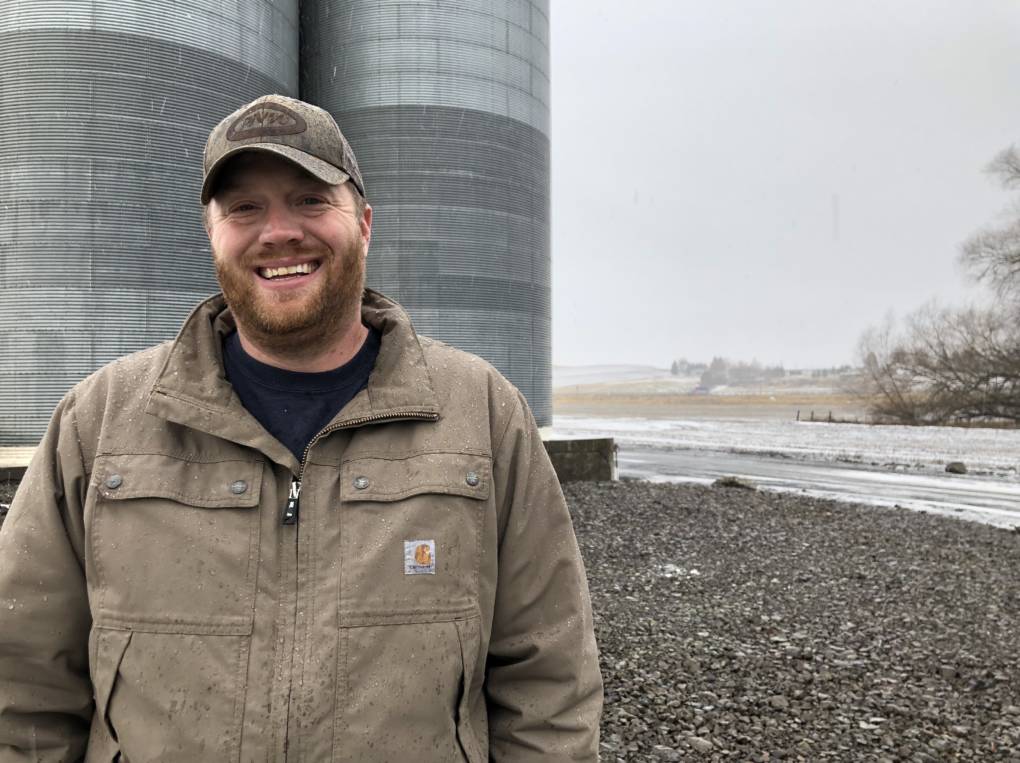
"caption": "Allen Druffel, 34, of Colton, Wash., stands in front of the co-op silos that hold his unsold chickpeas. Last year he was getting 50 cents a pound for his pulse crop. Now, the going price is 18 cents a pound — well below his cost of production.",
"description": "Allen Druffel, 34, of Colton, Wash., stands in front of the co-op silos that hold his unsold chickpeas. Last year he was getting 50 cents a pound for his pulse crop. Now, the going price is 18 cents a pound -- well below his cost of production.",
"title": "Allen Druffel, 34, of Colton, Wash., stands in front of the co-op silos that hold his unsold chickpeas. Last year he was getting 50 cents a pound for his pulse crop. Now, the going price is 18 cents a pound — well below his cost of production.",
"credit": "Anna King/Northwest News Network",
"status": "inherit",
"isLoading": false,
"fetchFailed": false
},
"bayareabites_131806": {
"type": "attachments",
"id": "bayareabites_131806",
"meta": {
"index": "attachments_1716263798",
"site": "bayareabites",
"id": "131806",
"found": true
},
"parent": 131805,
"imgSizes": {
"small": {
"file": "https://ww2.kqed.org/app/uploads/sites/24/2018/12/yeast_wide-9a16fb445374c8a4f1e6cc609138b8c02c6ecb1f-520x292.jpg",
"width": 520,
"mimeType": "image/jpeg",
"height": 292
},
"twentyfourteen-full-width": {
"file": "https://ww2.kqed.org/app/uploads/sites/24/2018/12/yeast_wide-9a16fb445374c8a4f1e6cc609138b8c02c6ecb1f-1038x576.jpg",
"width": 1038,
"mimeType": "image/jpeg",
"height": 576
},
"thumbnail": {
"file": "https://ww2.kqed.org/app/uploads/sites/24/2018/12/yeast_wide-9a16fb445374c8a4f1e6cc609138b8c02c6ecb1f-160x90.jpg",
"width": 160,
"mimeType": "image/jpeg",
"height": 90
},
"fd-sm": {
"file": "https://ww2.kqed.org/app/uploads/sites/24/2018/12/yeast_wide-9a16fb445374c8a4f1e6cc609138b8c02c6ecb1f-960x540.jpg",
"width": 960,
"mimeType": "image/jpeg",
"height": 540
},
"post-thumbnail": {
"file": "https://ww2.kqed.org/app/uploads/sites/24/2018/12/yeast_wide-9a16fb445374c8a4f1e6cc609138b8c02c6ecb1f-672x372.jpg",
"width": 672,
"mimeType": "image/jpeg",
"height": 372
},
"xsmall": {
"file": "https://ww2.kqed.org/app/uploads/sites/24/2018/12/yeast_wide-9a16fb445374c8a4f1e6cc609138b8c02c6ecb1f-375x211.jpg",
"width": 375,
"mimeType": "image/jpeg",
"height": 211
},
"kqedFullSize": {
"file": "https://ww2.kqed.org/app/uploads/sites/24/2018/12/yeast_wide-9a16fb445374c8a4f1e6cc609138b8c02c6ecb1f-e1546023562383.jpg",
"width": 1920,
"height": 1080
},
"large": {
"file": "https://ww2.kqed.org/app/uploads/sites/24/2018/12/yeast_wide-9a16fb445374c8a4f1e6cc609138b8c02c6ecb1f-1020x574.jpg",
"width": 1020,
"mimeType": "image/jpeg",
"height": 574
},
"xlarge": {
"file": "https://ww2.kqed.org/app/uploads/sites/24/2018/12/yeast_wide-9a16fb445374c8a4f1e6cc609138b8c02c6ecb1f-1180x664.jpg",
"width": 1180,
"mimeType": "image/jpeg",
"height": 664
},
"complete_open_graph": {
"file": "https://ww2.kqed.org/app/uploads/sites/24/2018/12/yeast_wide-9a16fb445374c8a4f1e6cc609138b8c02c6ecb1f-1200x675.jpg",
"width": 1200,
"mimeType": "image/jpeg",
"height": 675
},
"guest-author-50": {
"file": "https://ww2.kqed.org/app/uploads/sites/24/2018/12/yeast_wide-9a16fb445374c8a4f1e6cc609138b8c02c6ecb1f-50x50.jpg",
"width": 50,
"mimeType": "image/jpeg",
"height": 50
},
"guest-author-96": {
"file": "https://ww2.kqed.org/app/uploads/sites/24/2018/12/yeast_wide-9a16fb445374c8a4f1e6cc609138b8c02c6ecb1f-96x96.jpg",
"width": 96,
"mimeType": "image/jpeg",
"height": 96
},
"medium": {
"file": "https://ww2.kqed.org/app/uploads/sites/24/2018/12/yeast_wide-9a16fb445374c8a4f1e6cc609138b8c02c6ecb1f-800x450.jpg",
"width": 800,
"mimeType": "image/jpeg",
"height": 450
},
"guest-author-64": {
"file": "https://ww2.kqed.org/app/uploads/sites/24/2018/12/yeast_wide-9a16fb445374c8a4f1e6cc609138b8c02c6ecb1f-64x64.jpg",
"width": 64,
"mimeType": "image/jpeg",
"height": 64
},
"guest-author-32": {
"file": "https://ww2.kqed.org/app/uploads/sites/24/2018/12/yeast_wide-9a16fb445374c8a4f1e6cc609138b8c02c6ecb1f-32x32.jpg",
"width": 32,
"mimeType": "image/jpeg",
"height": 32
},
"fd-lrg": {
"file": "https://ww2.kqed.org/app/uploads/sites/24/2018/12/yeast_wide-9a16fb445374c8a4f1e6cc609138b8c02c6ecb1f-1920x1080.jpg",
"width": 1920,
"mimeType": "image/jpeg",
"height": 1080
},
"fd-med": {
"file": "https://ww2.kqed.org/app/uploads/sites/24/2018/12/yeast_wide-9a16fb445374c8a4f1e6cc609138b8c02c6ecb1f-1180x664.jpg",
"width": 1180,
"mimeType": "image/jpeg",
"height": 664
},
"full-width": {
"file": "https://ww2.kqed.org/app/uploads/sites/24/2018/12/yeast_wide-9a16fb445374c8a4f1e6cc609138b8c02c6ecb1f-1920x1080.jpg",
"width": 1920,
"mimeType": "image/jpeg",
"height": 1080
},
"detail": {
"file": "https://ww2.kqed.org/app/uploads/sites/24/2018/12/yeast_wide-9a16fb445374c8a4f1e6cc609138b8c02c6ecb1f-150x150.jpg",
"width": 150,
"mimeType": "image/jpeg",
"height": 150
},
"medium_large": {
"file": "https://ww2.kqed.org/app/uploads/sites/24/2018/12/yeast_wide-9a16fb445374c8a4f1e6cc609138b8c02c6ecb1f-768x432.jpg",
"width": 768,
"mimeType": "image/jpeg",
"height": 432
},
"guest-author-128": {
"file": "https://ww2.kqed.org/app/uploads/sites/24/2018/12/yeast_wide-9a16fb445374c8a4f1e6cc609138b8c02c6ecb1f-128x128.jpg",
"width": 128,
"mimeType": "image/jpeg",
"height": 128
},
"xxsmall": {
"file": "https://ww2.kqed.org/app/uploads/sites/24/2018/12/yeast_wide-9a16fb445374c8a4f1e6cc609138b8c02c6ecb1f-240x135.jpg",
"width": 240,
"mimeType": "image/jpeg",
"height": 135
}
},
"publishDate": 1546023498,
"modified": 1546023581,
"caption": "There is a whole subset of people who can't imagine popcorn without a sprinkling of nutritional yeast, which is naturally full of B vitamins that are harder to come by in meat-free diets.",
"description": "There is a whole subset of people who can't imagine popcorn without a sprinkling of nutritional yeast, which is naturally full of B vitamins that are harder to come by in meat-free diets.",
"title": "There is a whole subset of people who can't imagine popcorn without a sprinkling of nutritional yeast, which is naturally full of B vitamins that are harder to come by in meat-free diets.",
"credit": "Getty Images",
"status": "inherit",
"isLoading": false,
"fetchFailed": false
},
"bayareabites_131195": {
"type": "attachments",
"id": "bayareabites_131195",
"meta": {
"index": "attachments_1716263798",
"site": "bayareabites",
"id": "131195",
"found": true
},
"parent": 131194,
"imgSizes": {
"small": {
"file": "https://ww2.kqed.org/app/uploads/sites/24/2018/11/barrel-brothers-520x346.jpg",
"width": 520,
"mimeType": "image/jpeg",
"height": 346
},
"twentyfourteen-full-width": {
"file": "https://ww2.kqed.org/app/uploads/sites/24/2018/11/barrel-brothers-1038x576.jpg",
"width": 1038,
"mimeType": "image/jpeg",
"height": 576
},
"thumbnail": {
"file": "https://ww2.kqed.org/app/uploads/sites/24/2018/11/barrel-brothers-160x107.jpg",
"width": 160,
"mimeType": "image/jpeg",
"height": 107
},
"fd-sm": {
"file": "https://ww2.kqed.org/app/uploads/sites/24/2018/11/barrel-brothers-960x639.jpg",
"width": 960,
"mimeType": "image/jpeg",
"height": 639
},
"post-thumbnail": {
"file": "https://ww2.kqed.org/app/uploads/sites/24/2018/11/barrel-brothers-672x372.jpg",
"width": 672,
"mimeType": "image/jpeg",
"height": 372
},
"xsmall": {
"file": "https://ww2.kqed.org/app/uploads/sites/24/2018/11/barrel-brothers-375x250.jpg",
"width": 375,
"mimeType": "image/jpeg",
"height": 250
},
"kqedFullSize": {
"file": "https://ww2.kqed.org/app/uploads/sites/24/2018/11/barrel-brothers-e1541669959322.jpg",
"width": 1920,
"height": 1279
},
"large": {
"file": "https://ww2.kqed.org/app/uploads/sites/24/2018/11/barrel-brothers-1020x679.jpg",
"width": 1020,
"mimeType": "image/jpeg",
"height": 679
},
"xlarge": {
"file": "https://ww2.kqed.org/app/uploads/sites/24/2018/11/barrel-brothers-1180x786.jpg",
"width": 1180,
"mimeType": "image/jpeg",
"height": 786
},
"complete_open_graph": {
"file": "https://ww2.kqed.org/app/uploads/sites/24/2018/11/barrel-brothers-1200x799.jpg",
"width": 1200,
"mimeType": "image/jpeg",
"height": 799
},
"guest-author-50": {
"file": "https://ww2.kqed.org/app/uploads/sites/24/2018/11/barrel-brothers-50x50.jpg",
"width": 50,
"mimeType": "image/jpeg",
"height": 50
},
"guest-author-96": {
"file": "https://ww2.kqed.org/app/uploads/sites/24/2018/11/barrel-brothers-96x96.jpg",
"width": 96,
"mimeType": "image/jpeg",
"height": 96
},
"medium": {
"file": "https://ww2.kqed.org/app/uploads/sites/24/2018/11/barrel-brothers-800x533.jpg",
"width": 800,
"mimeType": "image/jpeg",
"height": 533
},
"guest-author-64": {
"file": "https://ww2.kqed.org/app/uploads/sites/24/2018/11/barrel-brothers-64x64.jpg",
"width": 64,
"mimeType": "image/jpeg",
"height": 64
},
"guest-author-32": {
"file": "https://ww2.kqed.org/app/uploads/sites/24/2018/11/barrel-brothers-32x32.jpg",
"width": 32,
"mimeType": "image/jpeg",
"height": 32
},
"fd-lrg": {
"file": "https://ww2.kqed.org/app/uploads/sites/24/2018/11/barrel-brothers-1920x1279.jpg",
"width": 1920,
"mimeType": "image/jpeg",
"height": 1279
},
"fd-med": {
"file": "https://ww2.kqed.org/app/uploads/sites/24/2018/11/barrel-brothers-1180x786.jpg",
"width": 1180,
"mimeType": "image/jpeg",
"height": 786
},
"full-width": {
"file": "https://ww2.kqed.org/app/uploads/sites/24/2018/11/barrel-brothers-1920x1279.jpg",
"width": 1920,
"mimeType": "image/jpeg",
"height": 1279
},
"detail": {
"file": "https://ww2.kqed.org/app/uploads/sites/24/2018/11/barrel-brothers-150x150.jpg",
"width": 150,
"mimeType": "image/jpeg",
"height": 150
},
"medium_large": {
"file": "https://ww2.kqed.org/app/uploads/sites/24/2018/11/barrel-brothers-768x511.jpg",
"width": 768,
"mimeType": "image/jpeg",
"height": 511
},
"guest-author-128": {
"file": "https://ww2.kqed.org/app/uploads/sites/24/2018/11/barrel-brothers-128x128.jpg",
"width": 128,
"mimeType": "image/jpeg",
"height": 128
},
"xxsmall": {
"file": "https://ww2.kqed.org/app/uploads/sites/24/2018/11/barrel-brothers-240x160.jpg",
"width": 240,
"mimeType": "image/jpeg",
"height": 160
}
},
"publishDate": 1541669940,
"modified": 1541716141,
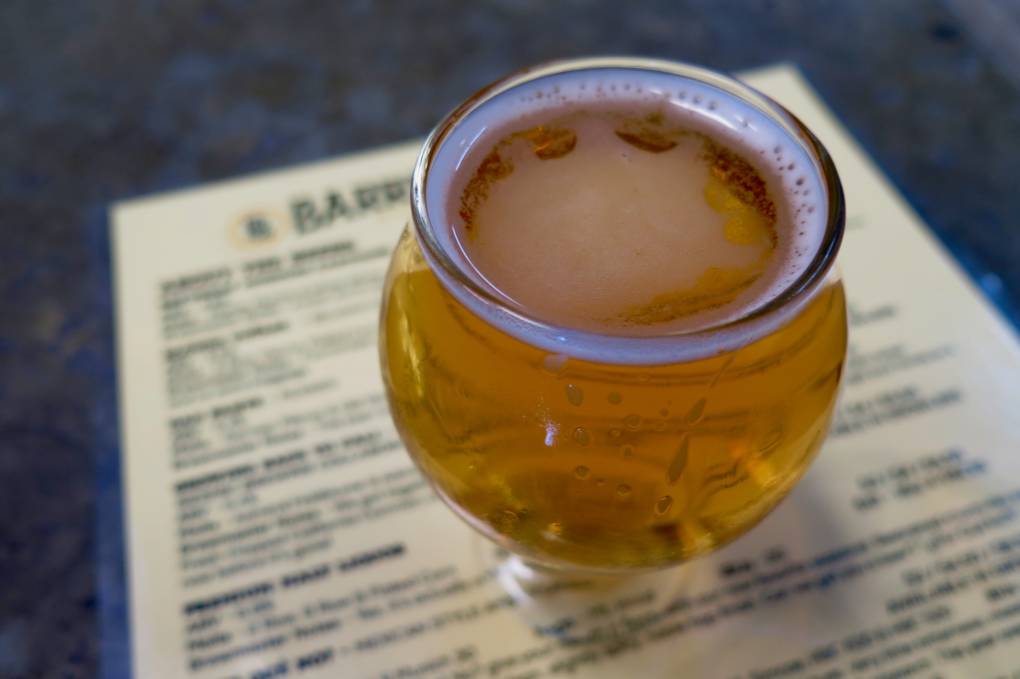
"caption": "Hops won't be the only thing you'll be smelling on this tour.",
"description": "Hops won't be the only thing you'll be smelling on this tour.",
"title": "Hops won't be the only thing you'll be smelling on this tour.",
"credit": "mymilligram.com",
"status": "inherit",
"isLoading": false,
"fetchFailed": false
},
"bayareabites_131789": {
"type": "attachments",
"id": "bayareabites_131789",
"meta": {
"index": "attachments_1716263798",
"site": "bayareabites",
"id": "131789",
"found": true
},
"parent": 131788,
"imgSizes": {
"small": {
"file": "https://ww2.kqed.org/app/uploads/sites/24/2018/12/0f352207e493f483c248496b40da51f39ad76e60-916fd80bda2ec83853465b533e311903692cb4b2-520x391.jpe",
"width": 520,
"mimeType": "image/jpeg",
"height": 391
},
"twentyfourteen-full-width": {
"file": "https://ww2.kqed.org/app/uploads/sites/24/2018/12/0f352207e493f483c248496b40da51f39ad76e60-916fd80bda2ec83853465b533e311903692cb4b2-853x576.jpe",
"width": 853,
"mimeType": "image/jpeg",
"height": 576
},
"thumbnail": {
"file": "https://ww2.kqed.org/app/uploads/sites/24/2018/12/0f352207e493f483c248496b40da51f39ad76e60-916fd80bda2ec83853465b533e311903692cb4b2-160x120.jpe",
"width": 160,
"mimeType": "image/jpeg",
"height": 120
},
"post-thumbnail": {
"file": "https://ww2.kqed.org/app/uploads/sites/24/2018/12/0f352207e493f483c248496b40da51f39ad76e60-916fd80bda2ec83853465b533e311903692cb4b2-672x372.jpe",
"width": 672,
"mimeType": "image/jpeg",
"height": 372
},
"xsmall": {
"file": "https://ww2.kqed.org/app/uploads/sites/24/2018/12/0f352207e493f483c248496b40da51f39ad76e60-916fd80bda2ec83853465b533e311903692cb4b2-375x282.jpe",
"width": 375,
"mimeType": "image/jpeg",
"height": 282
},
"kqedFullSize": {
"file": "https://ww2.kqed.org/app/uploads/sites/24/2018/12/0f352207e493f483c248496b40da51f39ad76e60-916fd80bda2ec83853465b533e311903692cb4b2.jpe",
"width": 853,
"height": 641
},
"guest-author-50": {
"file": "https://ww2.kqed.org/app/uploads/sites/24/2018/12/0f352207e493f483c248496b40da51f39ad76e60-916fd80bda2ec83853465b533e311903692cb4b2-50x50.jpe",
"width": 50,
"mimeType": "image/jpeg",
"height": 50
},
"guest-author-96": {
"file": "https://ww2.kqed.org/app/uploads/sites/24/2018/12/0f352207e493f483c248496b40da51f39ad76e60-916fd80bda2ec83853465b533e311903692cb4b2-96x96.jpe",
"width": 96,
"mimeType": "image/jpeg",
"height": 96
},
"medium": {
"file": "https://ww2.kqed.org/app/uploads/sites/24/2018/12/0f352207e493f483c248496b40da51f39ad76e60-916fd80bda2ec83853465b533e311903692cb4b2-800x601.jpe",
"width": 800,
"mimeType": "image/jpeg",
"height": 601
},
"guest-author-64": {
"file": "https://ww2.kqed.org/app/uploads/sites/24/2018/12/0f352207e493f483c248496b40da51f39ad76e60-916fd80bda2ec83853465b533e311903692cb4b2-64x64.jpe",
"width": 64,
"mimeType": "image/jpeg",
"height": 64
},
"guest-author-32": {
"file": "https://ww2.kqed.org/app/uploads/sites/24/2018/12/0f352207e493f483c248496b40da51f39ad76e60-916fd80bda2ec83853465b533e311903692cb4b2-32x32.jpe",
"width": 32,
"mimeType": "image/jpeg",
"height": 32
},
"detail": {
"file": "https://ww2.kqed.org/app/uploads/sites/24/2018/12/0f352207e493f483c248496b40da51f39ad76e60-916fd80bda2ec83853465b533e311903692cb4b2-150x150.jpe",
"width": 150,
"mimeType": "image/jpeg",
"height": 150
},
"medium_large": {
"file": "https://ww2.kqed.org/app/uploads/sites/24/2018/12/0f352207e493f483c248496b40da51f39ad76e60-916fd80bda2ec83853465b533e311903692cb4b2-768x577.jpe",
"width": 768,
"mimeType": "image/jpeg",
"height": 577
},
"guest-author-128": {
"file": "https://ww2.kqed.org/app/uploads/sites/24/2018/12/0f352207e493f483c248496b40da51f39ad76e60-916fd80bda2ec83853465b533e311903692cb4b2-128x128.jpe",
"width": 128,
"mimeType": "image/jpeg",
"height": 128
},
"xxsmall": {
"file": "https://ww2.kqed.org/app/uploads/sites/24/2018/12/0f352207e493f483c248496b40da51f39ad76e60-916fd80bda2ec83853465b533e311903692cb4b2-240x180.jpe",
"width": 240,
"mimeType": "image/jpeg",
"height": 180
}
},
"publishDate": 1545608955,
"modified": 1545609077,
"caption": "Michael Durand (left), husband of Kitchn Editor-In-Chief Faith Durand, and friend Chris Gardner (right) carve turkey while guests hang out in the Durands' kitchen, dirty dishes and all, at a recent party.",
"description": "Michael Durand (left), husband of Kitchn Editor-In-Chief Faith Durand, and friend Chris Gardner (right) carve turkey while guests hang out in the Durands' kitchen, dirty dishes and all, at a recent party.",
"title": "Michael Durand (left), husband of Kitchn Editor-In-Chief Faith Durand, and friend Chris Gardner (right) carve turkey while guests hang out in the Durands' kitchen, dirty dishes and all, at a recent party.",
"credit": "Kitchn/Rachel Joy Barehl",
"status": "inherit",
"isLoading": false,
"fetchFailed": false
},
"bayareabites_130685": {
"type": "attachments",
"id": "bayareabites_130685",
"meta": {
"index": "attachments_1716263798",
"site": "bayareabites",
"id": "130685",
"found": true
},
"parent": 130682,
"imgSizes": {
"small": {
"file": "https://ww2.kqed.org/app/uploads/sites/24/2018/10/dandicup-520x292.jpg",
"width": 520,
"mimeType": "image/jpeg",
"height": 292
},
"twentyfourteen-full-width": {
"file": "https://ww2.kqed.org/app/uploads/sites/24/2018/10/dandicup-1038x576.jpg",
"width": 1038,
"mimeType": "image/jpeg",
"height": 576
},
"thumbnail": {
"file": "https://ww2.kqed.org/app/uploads/sites/24/2018/10/dandicup-160x90.jpg",
"width": 160,
"mimeType": "image/jpeg",
"height": 90
},
"fd-sm": {
"file": "https://ww2.kqed.org/app/uploads/sites/24/2018/10/dandicup-960x540.jpg",
"width": 960,
"mimeType": "image/jpeg",
"height": 540
},
"post-thumbnail": {
"file": "https://ww2.kqed.org/app/uploads/sites/24/2018/10/dandicup-672x372.jpg",
"width": 672,
"mimeType": "image/jpeg",
"height": 372
},
"xsmall": {
"file": "https://ww2.kqed.org/app/uploads/sites/24/2018/10/dandicup-375x211.jpg",
"width": 375,
"mimeType": "image/jpeg",
"height": 211
},
"kqedFullSize": {
"file": "https://ww2.kqed.org/app/uploads/sites/24/2018/10/dandicup.jpg",
"width": 3016,
"height": 1696
},
"large": {
"file": "https://ww2.kqed.org/app/uploads/sites/24/2018/10/dandicup-1020x574.jpg",
"width": 1020,
"mimeType": "image/jpeg",
"height": 574
},
"xlarge": {
"file": "https://ww2.kqed.org/app/uploads/sites/24/2018/10/dandicup-1180x664.jpg",
"width": 1180,
"mimeType": "image/jpeg",
"height": 664
},
"complete_open_graph": {
"file": "https://ww2.kqed.org/app/uploads/sites/24/2018/10/dandicup-1200x675.jpg",
"width": 1200,
"mimeType": "image/jpeg",
"height": 675
},
"guest-author-50": {
"file": "https://ww2.kqed.org/app/uploads/sites/24/2018/10/dandicup-50x50.jpg",
"width": 50,
"mimeType": "image/jpeg",
"height": 50
},
"guest-author-96": {
"file": "https://ww2.kqed.org/app/uploads/sites/24/2018/10/dandicup-96x96.jpg",
"width": 96,
"mimeType": "image/jpeg",
"height": 96
},
"medium": {
"file": "https://ww2.kqed.org/app/uploads/sites/24/2018/10/dandicup-800x450.jpg",
"width": 800,
"mimeType": "image/jpeg",
"height": 450
},
"guest-author-64": {
"file": "https://ww2.kqed.org/app/uploads/sites/24/2018/10/dandicup-64x64.jpg",
"width": 64,
"mimeType": "image/jpeg",
"height": 64
},
"guest-author-32": {
"file": "https://ww2.kqed.org/app/uploads/sites/24/2018/10/dandicup-32x32.jpg",
"width": 32,
"mimeType": "image/jpeg",
"height": 32
},
"fd-lrg": {
"file": "https://ww2.kqed.org/app/uploads/sites/24/2018/10/dandicup-1920x1080.jpg",
"width": 1920,
"mimeType": "image/jpeg",
"height": 1080
},
"fd-med": {
"file": "https://ww2.kqed.org/app/uploads/sites/24/2018/10/dandicup-1180x664.jpg",
"width": 1180,
"mimeType": "image/jpeg",
"height": 664
},
"full-width": {
"file": "https://ww2.kqed.org/app/uploads/sites/24/2018/10/dandicup-1920x1080.jpg",
"width": 1920,
"mimeType": "image/jpeg",
"height": 1080
},
"detail": {
"file": "https://ww2.kqed.org/app/uploads/sites/24/2018/10/dandicup-150x150.jpg",
"width": 150,
"mimeType": "image/jpeg",
"height": 150
},
"medium_large": {
"file": "https://ww2.kqed.org/app/uploads/sites/24/2018/10/dandicup-768x432.jpg",
"width": 768,
"mimeType": "image/jpeg",
"height": 432
},
"guest-author-128": {
"file": "https://ww2.kqed.org/app/uploads/sites/24/2018/10/dandicup-128x128.jpg",
"width": 128,
"mimeType": "image/jpeg",
"height": 128
},
"xxsmall": {
"file": "https://ww2.kqed.org/app/uploads/sites/24/2018/10/dandicup-240x135.jpg",
"width": 240,
"mimeType": "image/jpeg",
"height": 135
}
},
"publishDate": 1538505332,
"modified": 1538505350,
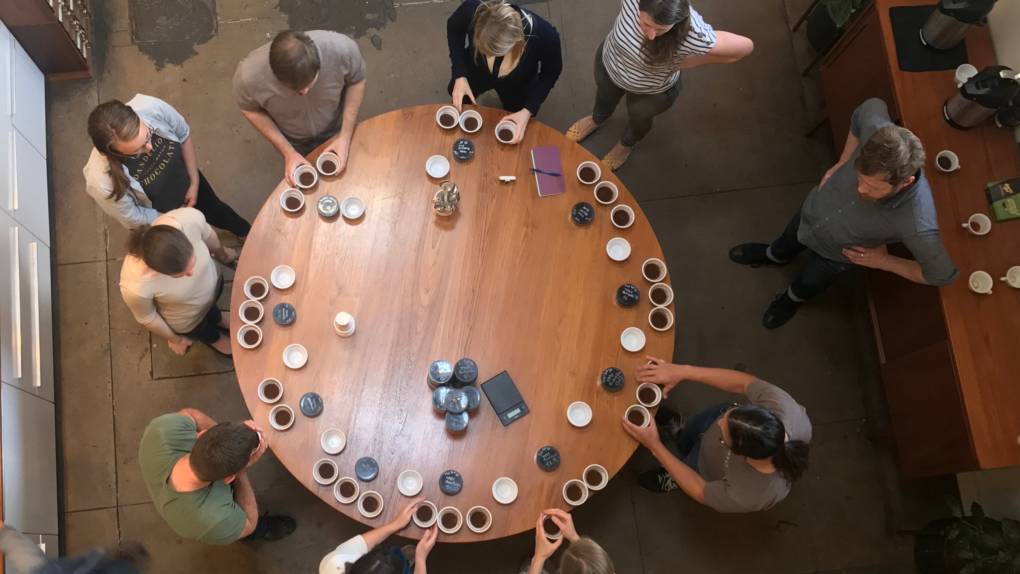
"caption": "Team members from Ritual Coffee Roasters and Dandelion Chocolate share a “cupping,” or coffee tasting. / Image via Ritual Coffee Roasters",
"description": null,
"title": "dandicup",
"credit": null,
"status": "inherit",
"isLoading": false,
"fetchFailed": false
},
"bayareabites_131769": {
"type": "attachments",
"id": "bayareabites_131769",
"meta": {
"index": "attachments_1716263798",
"site": "bayareabites",
"id": "131769",
"found": true
},
"parent": 131768,
"imgSizes": {
"small": {
"file": "https://ww2.kqed.org/app/uploads/sites/24/2018/12/foragingbugs_wide-3ef85b8e99d2c91ec7b2f7a1ca3877e201e949c5-520x293.jpg",
"width": 520,
"mimeType": "image/jpeg",
"height": 293
},
"twentyfourteen-full-width": {
"file": "https://ww2.kqed.org/app/uploads/sites/24/2018/12/foragingbugs_wide-3ef85b8e99d2c91ec7b2f7a1ca3877e201e949c5-1038x576.jpg",
"width": 1038,
"mimeType": "image/jpeg",
"height": 576
},
"thumbnail": {
"file": "https://ww2.kqed.org/app/uploads/sites/24/2018/12/foragingbugs_wide-3ef85b8e99d2c91ec7b2f7a1ca3877e201e949c5-160x90.jpg",
"width": 160,
"mimeType": "image/jpeg",
"height": 90
},
"fd-sm": {
"file": "https://ww2.kqed.org/app/uploads/sites/24/2018/12/foragingbugs_wide-3ef85b8e99d2c91ec7b2f7a1ca3877e201e949c5-960x540.jpg",
"width": 960,
"mimeType": "image/jpeg",
"height": 540
},
"post-thumbnail": {
"file": "https://ww2.kqed.org/app/uploads/sites/24/2018/12/foragingbugs_wide-3ef85b8e99d2c91ec7b2f7a1ca3877e201e949c5-672x372.jpg",
"width": 672,
"mimeType": "image/jpeg",
"height": 372
},
"xsmall": {
"file": "https://ww2.kqed.org/app/uploads/sites/24/2018/12/foragingbugs_wide-3ef85b8e99d2c91ec7b2f7a1ca3877e201e949c5-375x211.jpg",
"width": 375,
"mimeType": "image/jpeg",
"height": 211
},
"kqedFullSize": {
"file": "https://ww2.kqed.org/app/uploads/sites/24/2018/12/foragingbugs_wide-3ef85b8e99d2c91ec7b2f7a1ca3877e201e949c5.jpg",
"width": 1916,
"height": 1078
},
"large": {
"file": "https://ww2.kqed.org/app/uploads/sites/24/2018/12/foragingbugs_wide-3ef85b8e99d2c91ec7b2f7a1ca3877e201e949c5-1020x574.jpg",
"width": 1020,
"mimeType": "image/jpeg",
"height": 574
},
"xlarge": {
"file": "https://ww2.kqed.org/app/uploads/sites/24/2018/12/foragingbugs_wide-3ef85b8e99d2c91ec7b2f7a1ca3877e201e949c5-1180x664.jpg",
"width": 1180,
"mimeType": "image/jpeg",
"height": 664
},
"complete_open_graph": {
"file": "https://ww2.kqed.org/app/uploads/sites/24/2018/12/foragingbugs_wide-3ef85b8e99d2c91ec7b2f7a1ca3877e201e949c5-1200x675.jpg",
"width": 1200,
"mimeType": "image/jpeg",
"height": 675
},
"guest-author-50": {
"file": "https://ww2.kqed.org/app/uploads/sites/24/2018/12/foragingbugs_wide-3ef85b8e99d2c91ec7b2f7a1ca3877e201e949c5-50x50.jpg",
"width": 50,
"mimeType": "image/jpeg",
"height": 50
},
"guest-author-96": {
"file": "https://ww2.kqed.org/app/uploads/sites/24/2018/12/foragingbugs_wide-3ef85b8e99d2c91ec7b2f7a1ca3877e201e949c5-96x96.jpg",
"width": 96,
"mimeType": "image/jpeg",
"height": 96
},
"medium": {
"file": "https://ww2.kqed.org/app/uploads/sites/24/2018/12/foragingbugs_wide-3ef85b8e99d2c91ec7b2f7a1ca3877e201e949c5-800x450.jpg",
"width": 800,
"mimeType": "image/jpeg",
"height": 450
},
"guest-author-64": {
"file": "https://ww2.kqed.org/app/uploads/sites/24/2018/12/foragingbugs_wide-3ef85b8e99d2c91ec7b2f7a1ca3877e201e949c5-64x64.jpg",
"width": 64,
"mimeType": "image/jpeg",
"height": 64
},
"guest-author-32": {
"file": "https://ww2.kqed.org/app/uploads/sites/24/2018/12/foragingbugs_wide-3ef85b8e99d2c91ec7b2f7a1ca3877e201e949c5-32x32.jpg",
"width": 32,
"mimeType": "image/jpeg",
"height": 32
},
"fd-med": {
"file": "https://ww2.kqed.org/app/uploads/sites/24/2018/12/foragingbugs_wide-3ef85b8e99d2c91ec7b2f7a1ca3877e201e949c5-1180x664.jpg",
"width": 1180,
"mimeType": "image/jpeg",
"height": 664
},
"detail": {
"file": "https://ww2.kqed.org/app/uploads/sites/24/2018/12/foragingbugs_wide-3ef85b8e99d2c91ec7b2f7a1ca3877e201e949c5-150x150.jpg",
"width": 150,
"mimeType": "image/jpeg",
"height": 150
},
"medium_large": {
"file": "https://ww2.kqed.org/app/uploads/sites/24/2018/12/foragingbugs_wide-3ef85b8e99d2c91ec7b2f7a1ca3877e201e949c5-768x432.jpg",
"width": 768,
"mimeType": "image/jpeg",
"height": 432
},
"guest-author-128": {
"file": "https://ww2.kqed.org/app/uploads/sites/24/2018/12/foragingbugs_wide-3ef85b8e99d2c91ec7b2f7a1ca3877e201e949c5-128x128.jpg",
"width": 128,
"mimeType": "image/jpeg",
"height": 128
},
"xxsmall": {
"file": "https://ww2.kqed.org/app/uploads/sites/24/2018/12/foragingbugs_wide-3ef85b8e99d2c91ec7b2f7a1ca3877e201e949c5-240x135.jpg",
"width": 240,
"mimeType": "image/jpeg",
"height": 135
}
},
"publishDate": 1545370207,
"modified": 1545370207,
"caption": null,
"description": "Wild Edible Insects For Lunch",
"title": "Wild Edible Insects For Lunch",
"credit": null,
"status": "inherit",
"isLoading": false,
"fetchFailed": false
},
"bayareabites_131693": {
"type": "attachments",
"id": "bayareabites_131693",
"meta": {
"index": "attachments_1716263798",
"site": "bayareabites",
"id": "131693",
"found": true
},
"parent": 131692,
"imgSizes": {
"small": {
"file": "https://ww2.kqed.org/app/uploads/sites/24/2018/12/ap_17026783940037-1f6e39f9130f78ee1eecc4b30c3caca1b78f6db3-520x390.jpg",
"width": 520,
"mimeType": "image/jpeg",
"height": 390
},
"twentyfourteen-full-width": {
"file": "https://ww2.kqed.org/app/uploads/sites/24/2018/12/ap_17026783940037-1f6e39f9130f78ee1eecc4b30c3caca1b78f6db3-1038x576.jpg",
"width": 1038,
"mimeType": "image/jpeg",
"height": 576
},
"thumbnail": {
"file": "https://ww2.kqed.org/app/uploads/sites/24/2018/12/ap_17026783940037-1f6e39f9130f78ee1eecc4b30c3caca1b78f6db3-160x120.jpg",
"width": 160,
"mimeType": "image/jpeg",
"height": 120
},
"fd-sm": {
"file": "https://ww2.kqed.org/app/uploads/sites/24/2018/12/ap_17026783940037-1f6e39f9130f78ee1eecc4b30c3caca1b78f6db3-960x720.jpg",
"width": 960,
"mimeType": "image/jpeg",
"height": 720
},
"post-thumbnail": {
"file": "https://ww2.kqed.org/app/uploads/sites/24/2018/12/ap_17026783940037-1f6e39f9130f78ee1eecc4b30c3caca1b78f6db3-672x372.jpg",
"width": 672,
"mimeType": "image/jpeg",
"height": 372
},
"xsmall": {
"file": "https://ww2.kqed.org/app/uploads/sites/24/2018/12/ap_17026783940037-1f6e39f9130f78ee1eecc4b30c3caca1b78f6db3-375x281.jpg",
"width": 375,
"mimeType": "image/jpeg",
"height": 281
},
"kqedFullSize": {
"file": "https://ww2.kqed.org/app/uploads/sites/24/2018/12/ap_17026783940037-1f6e39f9130f78ee1eecc4b30c3caca1b78f6db3-e1544473283874.jpg",
"width": 1920,
"height": 1440
},
"large": {
"file": "https://ww2.kqed.org/app/uploads/sites/24/2018/12/ap_17026783940037-1f6e39f9130f78ee1eecc4b30c3caca1b78f6db3-1020x765.jpg",
"width": 1020,
"mimeType": "image/jpeg",
"height": 765
},
"xlarge": {
"file": "https://ww2.kqed.org/app/uploads/sites/24/2018/12/ap_17026783940037-1f6e39f9130f78ee1eecc4b30c3caca1b78f6db3-1180x885.jpg",
"width": 1180,
"mimeType": "image/jpeg",
"height": 885
},
"complete_open_graph": {
"file": "https://ww2.kqed.org/app/uploads/sites/24/2018/12/ap_17026783940037-1f6e39f9130f78ee1eecc4b30c3caca1b78f6db3-1200x900.jpg",
"width": 1200,
"mimeType": "image/jpeg",
"height": 900
},
"guest-author-50": {
"file": "https://ww2.kqed.org/app/uploads/sites/24/2018/12/ap_17026783940037-1f6e39f9130f78ee1eecc4b30c3caca1b78f6db3-50x50.jpg",
"width": 50,
"mimeType": "image/jpeg",
"height": 50
},
"guest-author-96": {
"file": "https://ww2.kqed.org/app/uploads/sites/24/2018/12/ap_17026783940037-1f6e39f9130f78ee1eecc4b30c3caca1b78f6db3-96x96.jpg",
"width": 96,
"mimeType": "image/jpeg",
"height": 96
},
"medium": {
"file": "https://ww2.kqed.org/app/uploads/sites/24/2018/12/ap_17026783940037-1f6e39f9130f78ee1eecc4b30c3caca1b78f6db3-800x600.jpg",
"width": 800,
"mimeType": "image/jpeg",
"height": 600
},
"guest-author-64": {
"file": "https://ww2.kqed.org/app/uploads/sites/24/2018/12/ap_17026783940037-1f6e39f9130f78ee1eecc4b30c3caca1b78f6db3-64x64.jpg",
"width": 64,
"mimeType": "image/jpeg",
"height": 64
},
"guest-author-32": {
"file": "https://ww2.kqed.org/app/uploads/sites/24/2018/12/ap_17026783940037-1f6e39f9130f78ee1eecc4b30c3caca1b78f6db3-32x32.jpg",
"width": 32,
"mimeType": "image/jpeg",
"height": 32
},
"fd-lrg": {
"file": "https://ww2.kqed.org/app/uploads/sites/24/2018/12/ap_17026783940037-1f6e39f9130f78ee1eecc4b30c3caca1b78f6db3-1920x1440.jpg",
"width": 1920,
"mimeType": "image/jpeg",
"height": 1440
},
"fd-med": {
"file": "https://ww2.kqed.org/app/uploads/sites/24/2018/12/ap_17026783940037-1f6e39f9130f78ee1eecc4b30c3caca1b78f6db3-1180x885.jpg",
"width": 1180,
"mimeType": "image/jpeg",
"height": 885
},
"full-width": {
"file": "https://ww2.kqed.org/app/uploads/sites/24/2018/12/ap_17026783940037-1f6e39f9130f78ee1eecc4b30c3caca1b78f6db3-1920x1440.jpg",
"width": 1920,
"mimeType": "image/jpeg",
"height": 1440
},
"detail": {
"file": "https://ww2.kqed.org/app/uploads/sites/24/2018/12/ap_17026783940037-1f6e39f9130f78ee1eecc4b30c3caca1b78f6db3-150x150.jpg",
"width": 150,
"mimeType": "image/jpeg",
"height": 150
},
"medium_large": {
"file": "https://ww2.kqed.org/app/uploads/sites/24/2018/12/ap_17026783940037-1f6e39f9130f78ee1eecc4b30c3caca1b78f6db3-768x576.jpg",
"width": 768,
"mimeType": "image/jpeg",
"height": 576
},
"guest-author-128": {
"file": "https://ww2.kqed.org/app/uploads/sites/24/2018/12/ap_17026783940037-1f6e39f9130f78ee1eecc4b30c3caca1b78f6db3-128x128.jpg",
"width": 128,
"mimeType": "image/jpeg",
"height": 128
},
"xxsmall": {
"file": "https://ww2.kqed.org/app/uploads/sites/24/2018/12/ap_17026783940037-1f6e39f9130f78ee1eecc4b30c3caca1b78f6db3-240x180.jpg",
"width": 240,
"mimeType": "image/jpeg",
"height": 180
}
},
"publishDate": 1544472459,
"modified": 1544473296,
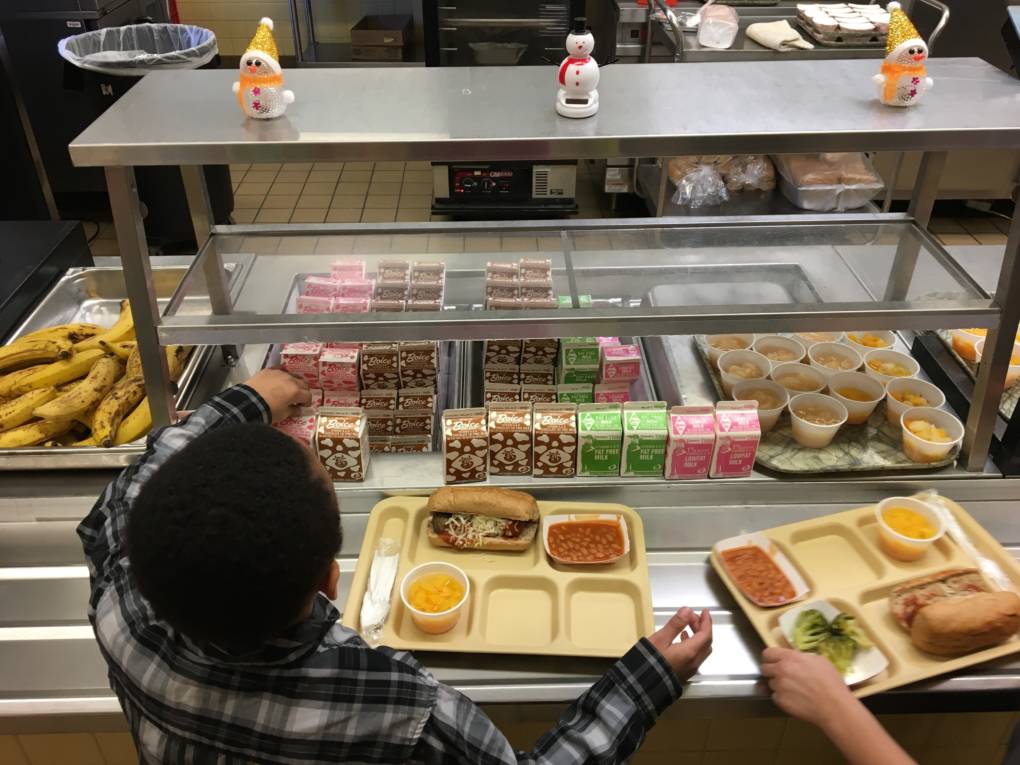
"caption": "The Trump administration is giving schools more flexibility in the meals they serve. Critics say the rollback on school lunch rules is bad for kids' health.",
"description": "The Trump administration is giving schools more flexibility in the meals they serve. Critics say the rollback on school lunch rules is bad for kids' health.",
"title": "The Trump administration is giving schools more flexibility in the meals they serve. Critics say the rollback on school lunch rules is bad for kids' health.",
"credit": "Mary Esch/AP",
"status": "inherit",
"isLoading": false,
"fetchFailed": false
}
},
"audioPlayerReducer": {
"postId": "stream_live",
"isPaused": true,
"isPlaying": false,
"pfsActive": false,
"pledgeModalIsOpen": true,
"playerDrawerIsOpen": false,
"liveAudioPlayStartedAt": 0,
"liveAudioPlayContext": ""
},
"authorsReducer": {
"byline_bayareabites_132049": {
"type": "authors",
"id": "byline_bayareabites_132049",
"meta": {
"override": true
},
"slug": "byline_bayareabites_132049",
"name": "Alastair Bland, NPR Food",
"isLoading": false
},
"byline_bayareabites_131913": {
"type": "authors",
"id": "byline_bayareabites_131913",
"meta": {
"override": true
},
"slug": "byline_bayareabites_131913",
"name": "Malaka Gharib, NPR Food",
"isLoading": false
},
"byline_bayareabites_131902": {
"type": "authors",
"id": "byline_bayareabites_131902",
"meta": {
"override": true
},
"slug": "byline_bayareabites_131902",
"name": "Alina Selyukh, NPR Food",
"isLoading": false
},
"byline_bayareabites_131839": {
"type": "authors",
"id": "byline_bayareabites_131839",
"meta": {
"override": true
},
"slug": "byline_bayareabites_131839",
"name": "Anna King, NPR",
"isLoading": false
},
"byline_bayareabites_131805": {
"type": "authors",
"id": "byline_bayareabites_131805",
"meta": {
"override": true
},
"slug": "byline_bayareabites_131805",
"name": "Tove Danovich, NPR Food",
"isLoading": false
},
"byline_bayareabites_131788": {
"type": "authors",
"id": "byline_bayareabites_131788",
"meta": {
"override": true
},
"slug": "byline_bayareabites_131788",
"name": "Deena Prichep, NPR Food",
"isLoading": false
},
"byline_bayareabites_131768": {
"type": "authors",
"id": "byline_bayareabites_131768",
"meta": {
"override": true
},
"slug": "byline_bayareabites_131768",
"name": "Maia Stern, NPR Food",
"isLoading": false
},
"byline_bayareabites_131692": {
"type": "authors",
"id": "byline_bayareabites_131692",
"meta": {
"override": true
},
"slug": "byline_bayareabites_131692",
"name": "Allison Aubrey, NPR Food",
"isLoading": false
},
"marciagagliardi": {
"type": "authors",
"id": "11398",
"meta": {
"index": "authors_1716337520",
"id": "11398",
"found": true
},
"name": "Marcia Gagliardi",
"firstName": "Marcia",
"lastName": "Gagliardi",
"slug": "marciagagliardi",
"email": "marcia@tablehopper.com",
"display_author_email": false,
"staff_mastheads": [],
"title": null,
"bio": "\u003cstrong>Marcia Gagliardi\u003c/strong> writes a popular insider e-column about the SF dining and drinking scene, get all the latest news at \u003ca href=\"http://www.tablehopper.com\">tablehopper.com\u003c/a>. Follow @tablehopper on \u003ca href=\"https://twitter.com/tablehopper\">Twitter\u003c/a> and \u003ca href=\"https://instagram.com/tablehopper/\">Instagram\u003c/a> for more culinary finds! She also writes about low-dose and high-quality cannabis products in her weekly mymilligram newsletter at \u003ca href=\"http://www.mymilligram.com\">mymilligram.com\u003c/a>.",
"avatar": "https://secure.gravatar.com/avatar/5d0caa5ce4f7e7b9746d41093f503928?s=600&d=blank&r=g",
"twitter": null,
"facebook": null,
"instagram": null,
"linkedin": null,
"sites": [
{
"site": "bayareabites",
"roles": [
"contributor"
]
},
{
"site": "food",
"roles": [
"contributor"
]
}
],
"headData": {
"title": "Marcia Gagliardi | KQED",
"description": null,
"ogImgSrc": "https://secure.gravatar.com/avatar/5d0caa5ce4f7e7b9746d41093f503928?s=600&d=blank&r=g",
"twImgSrc": "https://secure.gravatar.com/avatar/5d0caa5ce4f7e7b9746d41093f503928?s=600&d=blank&r=g"
},
"isLoading": false,
"link": "/author/marciagagliardi"
},
"mburke": {
"type": "authors",
"id": "11546",
"meta": {
"index": "authors_1716337520",
"id": "11546",
"found": true
},
"name": "Mel Burke",
"firstName": "Mel",
"lastName": "Burke",
"slug": "mburke",
"email": "melanienburke@gmail.com",
"display_author_email": false,
"staff_mastheads": [],
"title": null,
"bio": "When Mel Burke isn't singing 80's love songs to her dog, she writes about books, food, dating, travel, and the constantly weird adventure that is living in California. Find her online everywhere @melburkewrites.",
"avatar": "https://secure.gravatar.com/avatar/c2168c7a31c95a402c2a4d70d565881b?s=600&d=blank&r=g",
"twitter": null,
"facebook": null,
"instagram": null,
"linkedin": null,
"sites": [
{
"site": "bayareabites",
"roles": [
"author"
]
}
],
"headData": {
"title": "Mel Burke | KQED",
"description": null,
"ogImgSrc": "https://secure.gravatar.com/avatar/c2168c7a31c95a402c2a4d70d565881b?s=600&d=blank&r=g",
"twImgSrc": "https://secure.gravatar.com/avatar/c2168c7a31c95a402c2a4d70d565881b?s=600&d=blank&r=g"
},
"isLoading": false,
"link": "/author/mburke"
},
"monicalo": {
"type": "authors",
"id": "11548",
"meta": {
"index": "authors_1716337520",
"id": "11548",
"found": true
},
"name": "Monica Lo",
"firstName": "Monica",
"lastName": "Lo",
"slug": "monicalo",
"email": "monicalo@gmail.com",
"display_author_email": false,
"staff_mastheads": [],
"title": null,
"bio": "Monica Lo is a photographer and creative director working to change public perception of cannabis users. Monica is the creator of Sous Weed and a photo contributor for Stock Pot Images, Menu Stories, and KQED.\r\n\r\nIn 2016, Monica shot and styled for the award-winning Sous Vide at Home cookbook with Penguin Random and Nomiku. The sequel, Sous Vide Made Simple, will be released fall 2018 along with a chef feature and recipe in the upcoming Edibles: Small Bites for the Modern Cannabis Kitchen cookbook with Chronicle Books.\r\n\r\nMonica has recently been featured on the TODAY Show, Nightly News with Lester Holt, MSNBC, Huffington Post, ABC7, PopSugar, UPROXX, High Times, CANNABIS NOW, CULTURE Magazine, MARY Magazine, VICE Munchies, CNET, NPR, and Leafly for her work with Sous Weed.",
"avatar": "https://secure.gravatar.com/avatar/ba2dd5788a1aa2d99e86f5d26605b3f1?s=600&d=blank&r=g",
"twitter": null,
"facebook": null,
"instagram": null,
"linkedin": null,
"sites": [
{
"site": "bayareabites",
"roles": [
"author"
]
}
],
"headData": {
"title": "Monica Lo | KQED",
"description": null,
"ogImgSrc": "https://secure.gravatar.com/avatar/ba2dd5788a1aa2d99e86f5d26605b3f1?s=600&d=blank&r=g",
"twImgSrc": "https://secure.gravatar.com/avatar/ba2dd5788a1aa2d99e86f5d26605b3f1?s=600&d=blank&r=g"
},
"isLoading": false,
"link": "/author/monicalo"
}
},
"pagesReducer": {
"bayareabites_category_science": {
"type": "terms",
"id": "bayareabites_358",
"meta": {
"index": "terms_1716263798",
"site": "bayareabites",
"id": "358",
"score": 10.85186
},
"featImg": null,
"name": "science",
"description": null,
"taxonomy": "category",
"headData": {
"twImgId": null,
"twTitle": null,
"ogTitle": null,
"ogImgId": null,
"twDescription": null,
"description": null,
"title": "science Archives | KQED Bay Area Bites",
"ogDescription": null
},
"ttid": 7943,
"slug": "science",
"isLoading": false,
"title": "science",
"pageMeta": {
"site": "bayareabites",
"WpPageTemplate": "page-topic-editorial",
"currentPage": 4
},
"blocks": [
{
"blockName": "kqed/post-list",
"attrs": {
"layout": "cardArticle2",
"query": "posts/bayareabites?category=science",
"seeMore": false,
"paginated": true,
"page": 4
}
},
{
"blockName": "kqed/ad"
}
]
}
},
"pfsSessionReducer": {},
"postsReducer": {
"stream_live": {
"type": "live",
"id": "stream_live",
"audioUrl": "https://streams.kqed.org/kqedradio",
"title": "Live Stream",
"excerpt": "Live Stream information currently unavailable.",
"link": "/radio",
"featImg": "",
"label": {
"name": "KQED Live",
"link": "/"
}
},
"stream_kqedNewscast": {
"type": "posts",
"id": "stream_kqedNewscast",
"audioUrl": "https://www.kqed.org/.stream/anon/radio/RDnews/newscast.mp3?_=1",
"title": "KQED Newscast",
"featImg": "",
"label": {
"name": "88.5 FM",
"link": "/"
}
},
"bayareabites_132049": {
"type": "posts",
"id": "bayareabites_132049",
"meta": {
"index": "posts_1716263798",
"site": "bayareabites",
"id": "132049",
"score": null,
"sort": [
1547059934000
]
},
"parent": 0,
"labelTerm": {
"site": "bayareabites"
},
"blocks": [],
"publishDate": 1547059934,
"format": "standard",
"disqusTitle": "Ancient Japanese Food Craft Brings Persimmons To American Palates",
"title": "Ancient Japanese Food Craft Brings Persimmons To American Palates",
"headTitle": "Bay Area Bites | KQED Food",
"content": "\u003cp>Each autumn, as leaves fall to the ground, persimmon trees emerge from the graying landscape, their orange and red fruits gleaming like gaudy Christmas ornaments. Beloved in eastern Asia — especially Japan — persimmons get little respect in the United States, where many tree owners don't bother harvesting their crop.\u003c/p>\n\u003cp>Many Americans have never tasted a persimmon. But Brock Dolman is an impassioned fan. Every fall he goes foraging for them, and the bounty is almost limitless in rural Sonoma County, Calif., where he lives.\u003c/p>\n\u003cp>\"You can drive or ride your bike around the county, and you see these enormous trees all over with just thousands and thousands of persimmons,\" says \u003ca href=\"https://oaec.org/about-us/staff/brock-dolman/\">Dolman\u003c/a>, the co-founder of a permaculture center and demonstration farm in the town of Occidental.\u003c/p>\n\u003cp>\u003cstrong>The rise of the persimmon\u003c/strong>\u003c/p>\n\u003cp>There are lots of ways to eat and prepare this fruit. Many varieties, including the fuyu and suruga, are crunchy and can be eaten right off the tree like apples. Others, including the hachiya, saijo and chocolate, are considered astringent varieties. Rich in tannins, they are unpalatable until allowed to ripen to a jelly-soft texture, at which point they can be eaten out of hand or used in baking.\u003c/p>\n\u003cp>[ad fullwidth]\u003c/p>\n\u003cp>Several years ago, Dolman learned of a new way to prepare persimmons — a Japanese style called \u003cem>hoshigaki\u003c/em>. A revered delicacy in its homeland, hoshigaki is now a rapidly trending fashion — thanks in large part to social media \u003ca href=\"https://www.instagram.com/explore/tags/hoshigaki/?hl=en\">photo galleries\u003c/a> and persimmons' expanding appearance on restaurant menus — in California, the East Coast and other regions with persimmon-friendly climates.\u003c/p>\n\u003cp>In Japanese, hoshigaki means simply \"dried persimmon,\" yet describes a product of such labor that it has been called the Kobe beef of fruits. To make hoshigaki, producers use twine to suspend peeled persimmons — always of astringent varieties — from bamboo racks, often outdoors in the sun, other times indoors near a fan or over a warm stove. The process can take between one and two months, and every few days caretakers give regular massages to the softening persimmons, which shrivel, turn dark brown and crust over with natural sugar.\u003c/p>\n\u003cp>Dolman says he learned the craft both from speaking to those with firsthand experience and by watching YouTube tutorials. He has gotten the hang of the technique and recently massaged his fourth hoshigaki crop — harvested from a tree in a nearby park — toward completion. He has just a handful left of his 2017 vintage.\u003c/p>\n\u003cp>\"I share them only with select friends who will really appreciate them,\" he says, adding that he often serves them with aged sheep or goat cheese.\u003c/p>\n\u003cp>\u003ca href=\"https://sonokosakai.com/our-story/\">Sonoko Sakai\u003c/a>, a Los Angeles-based food author, spent years of her childhood in Japan, and is today one of California's hoshigaki gurus. Sakai's family was friendly with a major commercial hoshigaki producer in the Japanese city of Ogaki.\u003c/p>\n\u003cp>\"They would send us a box each year as a gift, and there were seven of us and just eight hoshigaki in the box, so they were very special,\" Sakai says. The family served the fruits with tea or, sometimes, sliced them thinly and applied them as a garnish over \u003cem>kakinamasu — \u003c/em>a daikon and persimmon pickle dish.\u003c/p>\n\u003cp>\u003cstrong>Drawing in millennials\u003cbr>\n\u003c/strong>\u003c/p>\n\u003cp>She only learned to dry her own persimmons about eight years ago, but she has eaten and appreciated them all her life. Today, she teaches hoshigaki classes. People of all ethnicities and backgrounds attend the workshops, she says, but one thing many have in common is that they are all relatively young.\u003c/p>\n\u003cp>\"Lots of millennials,\" says Sakai, who is 63. \"I think it's so interesting that these younger people are realizing that it's rewarding to slow down, use their hands, be patient and learn these artisanal practices from other countries.\"\u003c/p>\n\u003cp>Dangling, massaging and drying persimmons could be seen as the antithesis to what so much of Western culture now demands and expects — instantaneous gratification, ordered digitally with the push of a button.\u003c/p>\n\u003cp>\"Hoshigaki is the epitome of slow food,\" Dolman says.\u003c/p>\n\u003cfigure id=\"attachment_132051\" class=\"wp-caption aligncenter\" style=\"max-width: 568px\">\u003cimg class=\"size-full wp-image-132051\" src=\"https://ww2.kqed.org/bayareabites/wp-content/uploads/sites/24/2019/01/persimmon-702117cf9e31a66cb05602cb14cce875e1e30a83.jpg\" alt=\"There are lots of ways to eat and prepare persimmons, but many Americans aren't sure what to do with the fruit.\" width=\"568\" height=\"426\" srcset=\"https://ww2.kqed.org/app/uploads/sites/24/2019/01/persimmon-702117cf9e31a66cb05602cb14cce875e1e30a83.jpg 568w, https://ww2.kqed.org/app/uploads/sites/24/2019/01/persimmon-702117cf9e31a66cb05602cb14cce875e1e30a83-160x120.jpg 160w, https://ww2.kqed.org/app/uploads/sites/24/2019/01/persimmon-702117cf9e31a66cb05602cb14cce875e1e30a83-240x180.jpg 240w, https://ww2.kqed.org/app/uploads/sites/24/2019/01/persimmon-702117cf9e31a66cb05602cb14cce875e1e30a83-375x281.jpg 375w, https://ww2.kqed.org/app/uploads/sites/24/2019/01/persimmon-702117cf9e31a66cb05602cb14cce875e1e30a83-520x390.jpg 520w\" sizes=\"(max-width: 568px) 100vw, 568px\">\u003cfigcaption class=\"wp-caption-text\">There are lots of ways to eat and prepare persimmons, but many Americans aren't sure what to do with the fruit. \u003ccite>(Alastair Bland/for NPR)\u003c/cite>\u003c/figcaption>\u003c/figure>\n\u003cp>The tradition came to the United States with Japanese immigrants in the 19\u003csup>th\u003c/sup> and 20\u003csup>th\u003c/sup> centuries, and it has persisted in a relatively confined cultural circle for decades. Tosh Kuratomi, of \u003ca href=\"http://www.otoworchard.com/\">Otow Orchard\u003c/a>, a major persimmon farm in California, is among those who carried the torch and helped deliver the arcane knowledge of hoshigaki into the age of the Internet.\u003c/p>\n\u003cp>Now, as the do-it-yourself wisdom of hoshigaki circulates online, there seems to be little danger that the practice will go by the wayside, as has happened with many ancient food arts.\u003c/p>\n\u003cp>Sakai notes that interest seems to have surged in the past two years especially, and points out that making hoshigaki \"really isn't that difficult.\"\u003c/p>\n\u003cp>\"It's easier than making jam,\" she says.\u003c/p>\n\u003cp>In Bethlehem, Pa., Bassem Samaan, who owns a nursery called \u003ca href=\"http://treesofjoy.com/\">Trees of Joy\u003c/a>, has grown and eaten his own persimmons for more than a decade. In 2016, he dangled and dried several dozen after learning the technique through Internet research, YouTube videos and advice from experienced friends, including a Japanese-American hoshigaki-maker.\u003c/p>\n\u003cp>Joel Franceschi, of Sonoma County, used to travel in Japan for work. There, he saw bright orange orbs hanging on strings outside homes in mountain villages.\u003c/p>\n\u003cp>\"I did a little asking around and some Google searching, and I figured out what they were doing,\" he says.\u003c/p>\n\u003cp>He began making hoshigaki five years ago, mainly from fruits he acquires by knocking on strangers' doors. His very tastiest hoshigaki, Franceschi says, are those that he dunked in brandy immediately after peeling and prior to hanging.\u003c/p>\n\u003cp>But there are different ways to make hoshigaki, and farmer Jeffrey Rieger, owner of \u003ca href=\"https://www.penrynorchardspecialties.com/active/buyhoshigaki.html\" target=\"_blank\" rel=\"noopener\">Penryn Orchard\u003c/a> in California's Sierra Nevada foothills, disagrees with Franceschi's technique.\u003c/p>\n\u003cp>\"Touching alcohol to them can ruin the process,\" he says.\u003c/p>\n\u003cp>Rieger grows several varieties of persimmons and has been making hoshigaki since 2005.\u003c/p>\n\u003cp>\"It was a struggle to sell them at first,\" says Rieger, who says his persimmons, because multiple varieties are cross-pollinated, \"are the sweetest in the country.\"\u003c/p>\n\u003cp>But with demand rising, Rieger says, this year he sold out his hoshigaki supply through online orders almost immediately.\u003c/p>\n\u003cfigure id=\"attachment_132052\" class=\"wp-caption aligncenter\" style=\"max-width: 568px\">\u003cimg class=\"size-full wp-image-132052\" src=\"https://ww2.kqed.org/bayareabites/wp-content/uploads/sites/24/2019/01/persimmons2-b67f0cfca99671b012e43a69e3bd60900a80fe58.jpg\" alt=\"To make hoshigaki, producers use twine to suspend peeled persimmons from bamboo racks. The process can take between one and two months, and caretakers give regular massages to the softening persimmons.\" width=\"568\" height=\"426\" srcset=\"https://ww2.kqed.org/app/uploads/sites/24/2019/01/persimmons2-b67f0cfca99671b012e43a69e3bd60900a80fe58.jpg 568w, https://ww2.kqed.org/app/uploads/sites/24/2019/01/persimmons2-b67f0cfca99671b012e43a69e3bd60900a80fe58-160x120.jpg 160w, https://ww2.kqed.org/app/uploads/sites/24/2019/01/persimmons2-b67f0cfca99671b012e43a69e3bd60900a80fe58-240x180.jpg 240w, https://ww2.kqed.org/app/uploads/sites/24/2019/01/persimmons2-b67f0cfca99671b012e43a69e3bd60900a80fe58-375x281.jpg 375w, https://ww2.kqed.org/app/uploads/sites/24/2019/01/persimmons2-b67f0cfca99671b012e43a69e3bd60900a80fe58-520x390.jpg 520w\" sizes=\"(max-width: 568px) 100vw, 568px\">\u003cfigcaption class=\"wp-caption-text\">To make hoshigaki, producers use twine to suspend peeled persimmons from bamboo racks. The process can take between one and two months, and caretakers give regular massages to the softening persimmons. \u003ccite>(Alastair Bland/for NPR)\u003c/cite>\u003c/figcaption>\u003c/figure>\n\u003cp>\u003cstrong>A challenge for newbies\u003c/strong>\u003c/p>\n\u003cp>For newbies making their first hoshigaki batch, failure rates can be high. Mold can be an issue if the humidity is too high or the temperature is too low. For instance, I tried my own hand at making hoshigaki this fall from persimmons collected in and around Sebastopol, Calif. I used bamboo shoots to make a rack and twine to hang the persimmons. Though my project had the look of authenticity, the fruits did not dry rapidly enough, and as a moldy fuzz began to appear on the fruits, I rescued them from spoilage and finished them in my dehydrator.\u003c/p>\n\u003cp>But when everything works as planned, each fruit's surface turns gummy and solid, while inside the tannins break down and the fruit softens into pulp. Finished hoshigaki are dark burgundy to black in color, often with a fluffy crust of sugar on the surface.\u003c/p>\n\u003cp>\"You're turning a fruit that's totally inedible when it's not ripe into a sweet jewel,\" says Sakai, whose forthcoming book, \u003cem>Japanese Home Cooking\u003c/em>, will include a section on hoshigaki.\u003c/p>\n\u003cp>And maybe that will turn more Americans onto this unusual jewel-toned fruit.\u003c/p>\n\u003cp>[ad floatright]\u003c/p>\n\u003cp>\u003cem>Alastair Bland is a freelance writer based in Sebastopol, Calif., who covers food, agriculture and the environment.\u003c/em>\u003c/p>\n\u003cdiv class=\"fullattribution\">Copyright 2019 NPR. To see more, visit https://www.npr.org.\u003cimg src=\"https://www.google-analytics.com/__utm.gif?utmac=UA-5828686-4&utmdt=Ancient+Japanese+Food+Craft+Brings+Persimmons+To+American+Palates&utme=8(APIKey)9(MDAxOTAwOTE4MDEyMTkxMDAzNjczZDljZA004)\">\u003c/div>\n\n",
"disqusIdentifier": "132049 https://ww2.kqed.org/bayareabites/?p=132049",
"disqusUrl": "https://ww2.kqed.org/bayareabites/2019/01/09/ancient-japanese-food-craft-brings-persimmons-to-american-palates/",
"stats": {
"hasVideo": false,
"hasChartOrMap": false,
"hasAudio": false,
"hasPolis": false,
"wordCount": 1318,
"hasGoogleForm": false,
"hasGallery": false,
"hasHearkenModule": false,
"iframeSrcs": [],
"paragraphCount": 37
},
"modified": 1547059960,
"excerpt": "A traditional Japanese preparation of persimmons called hoshigaki is starting to trend in the U.S. thanks to social media. It turns ordinary persimmons into the Kobe beef of fruits.",
"headData": {
"twImgId": "",
"twTitle": "",
"ogTitle": "",
"ogImgId": "",
"twDescription": "",
"description": "A traditional Japanese preparation of persimmons called hoshigaki is starting to trend in the U.S. thanks to social media. It turns ordinary persimmons into the Kobe beef of fruits.",
"title": "Ancient Japanese Food Craft Brings Persimmons To American Palates | KQED",
"ogDescription": "",
"schema": {
"@context": "https://schema.org",
"@type": "Article",
"headline": "Ancient Japanese Food Craft Brings Persimmons To American Palates",
"datePublished": "2019-01-09T10:52:14-08:00",
"dateModified": "2019-01-09T10:52:40-08:00",
"image": "https://cdn.kqed.org/wp-content/uploads/2020/02/KQED-OG-Image@1x.png"
}
},
"guestAuthors": [],
"slug": "ancient-japanese-food-craft-brings-persimmons-to-american-palates",
"status": "publish",
"nprApiLink": "http://api.npr.org/query?id=682936866&apiKey=MDAxOTAwOTE4MDEyMTkxMDAzNjczZDljZA004",
"nprByline": "Alastair Bland, NPR Food",
"nprStoryDate": "Wed, 09 Jan 2019 08:02:00 -0500",
"nprLastModifiedDate": "Wed, 09 Jan 2019 10:55:17 -0500",
"nprHtmlLink": "https://www.npr.org/sections/thesalt/2019/01/09/682936866/ancient-japanese-food-craft-brings-persimmons-to-american-palates?ft=nprml&f=682936866",
"nprImageAgency": "for NPR",
"nprImageCredit": "Alastair Bland",
"nprStoryId": "682936866",
"nprRetrievedStory": "1",
"nprPubDate": "Wed, 09 Jan 2019 10:55:00 -0500",
"path": "/bayareabites/132049/ancient-japanese-food-craft-brings-persimmons-to-american-palates",
"audioTrackLength": null,
"parsedContent": [
{
"type": "contentString",
"content": "\u003cdiv class=\"post-body\">\u003cp>\u003cp>Each autumn, as leaves fall to the ground, persimmon trees emerge from the graying landscape, their orange and red fruits gleaming like gaudy Christmas ornaments. Beloved in eastern Asia — especially Japan — persimmons get little respect in the United States, where many tree owners don't bother harvesting their crop.\u003c/p>\n\u003cp>Many Americans have never tasted a persimmon. But Brock Dolman is an impassioned fan. Every fall he goes foraging for them, and the bounty is almost limitless in rural Sonoma County, Calif., where he lives.\u003c/p>\n\u003cp>\"You can drive or ride your bike around the county, and you see these enormous trees all over with just thousands and thousands of persimmons,\" says \u003ca href=\"https://oaec.org/about-us/staff/brock-dolman/\">Dolman\u003c/a>, the co-founder of a permaculture center and demonstration farm in the town of Occidental.\u003c/p>\n\u003cp>\u003cstrong>The rise of the persimmon\u003c/strong>\u003c/p>\n\u003cp>There are lots of ways to eat and prepare this fruit. Many varieties, including the fuyu and suruga, are crunchy and can be eaten right off the tree like apples. Others, including the hachiya, saijo and chocolate, are considered astringent varieties. Rich in tannins, they are unpalatable until allowed to ripen to a jelly-soft texture, at which point they can be eaten out of hand or used in baking.\u003c/p>\n\u003cp>\u003c/p>\u003c/div>",
"attributes": {
"named": {},
"numeric": []
}
},
{
"type": "component",
"content": "",
"name": "ad",
"attributes": {
"named": {
"label": "fullwidth"
},
"numeric": [
"fullwidth"
]
}
},
{
"type": "contentString",
"content": "\u003cdiv class=\"post-body\">\u003cp>\u003c/p>\n\u003cp>Several years ago, Dolman learned of a new way to prepare persimmons — a Japanese style called \u003cem>hoshigaki\u003c/em>. A revered delicacy in its homeland, hoshigaki is now a rapidly trending fashion — thanks in large part to social media \u003ca href=\"https://www.instagram.com/explore/tags/hoshigaki/?hl=en\">photo galleries\u003c/a> and persimmons' expanding appearance on restaurant menus — in California, the East Coast and other regions with persimmon-friendly climates.\u003c/p>\n\u003cp>In Japanese, hoshigaki means simply \"dried persimmon,\" yet describes a product of such labor that it has been called the Kobe beef of fruits. To make hoshigaki, producers use twine to suspend peeled persimmons — always of astringent varieties — from bamboo racks, often outdoors in the sun, other times indoors near a fan or over a warm stove. The process can take between one and two months, and every few days caretakers give regular massages to the softening persimmons, which shrivel, turn dark brown and crust over with natural sugar.\u003c/p>\n\u003cp>Dolman says he learned the craft both from speaking to those with firsthand experience and by watching YouTube tutorials. He has gotten the hang of the technique and recently massaged his fourth hoshigaki crop — harvested from a tree in a nearby park — toward completion. He has just a handful left of his 2017 vintage.\u003c/p>\n\u003cp>\"I share them only with select friends who will really appreciate them,\" he says, adding that he often serves them with aged sheep or goat cheese.\u003c/p>\n\u003cp>\u003ca href=\"https://sonokosakai.com/our-story/\">Sonoko Sakai\u003c/a>, a Los Angeles-based food author, spent years of her childhood in Japan, and is today one of California's hoshigaki gurus. Sakai's family was friendly with a major commercial hoshigaki producer in the Japanese city of Ogaki.\u003c/p>\n\u003cp>\"They would send us a box each year as a gift, and there were seven of us and just eight hoshigaki in the box, so they were very special,\" Sakai says. The family served the fruits with tea or, sometimes, sliced them thinly and applied them as a garnish over \u003cem>kakinamasu — \u003c/em>a daikon and persimmon pickle dish.\u003c/p>\n\u003cp>\u003cstrong>Drawing in millennials\u003cbr>\n\u003c/strong>\u003c/p>\n\u003cp>She only learned to dry her own persimmons about eight years ago, but she has eaten and appreciated them all her life. Today, she teaches hoshigaki classes. People of all ethnicities and backgrounds attend the workshops, she says, but one thing many have in common is that they are all relatively young.\u003c/p>\n\u003cp>\"Lots of millennials,\" says Sakai, who is 63. \"I think it's so interesting that these younger people are realizing that it's rewarding to slow down, use their hands, be patient and learn these artisanal practices from other countries.\"\u003c/p>\n\u003cp>Dangling, massaging and drying persimmons could be seen as the antithesis to what so much of Western culture now demands and expects — instantaneous gratification, ordered digitally with the push of a button.\u003c/p>\n\u003cp>\"Hoshigaki is the epitome of slow food,\" Dolman says.\u003c/p>\n\u003cfigure id=\"attachment_132051\" class=\"wp-caption aligncenter\" style=\"max-width: 568px\">\u003cimg class=\"size-full wp-image-132051\" src=\"https://ww2.kqed.org/bayareabites/wp-content/uploads/sites/24/2019/01/persimmon-702117cf9e31a66cb05602cb14cce875e1e30a83.jpg\" alt=\"There are lots of ways to eat and prepare persimmons, but many Americans aren't sure what to do with the fruit.\" width=\"568\" height=\"426\" srcset=\"https://ww2.kqed.org/app/uploads/sites/24/2019/01/persimmon-702117cf9e31a66cb05602cb14cce875e1e30a83.jpg 568w, https://ww2.kqed.org/app/uploads/sites/24/2019/01/persimmon-702117cf9e31a66cb05602cb14cce875e1e30a83-160x120.jpg 160w, https://ww2.kqed.org/app/uploads/sites/24/2019/01/persimmon-702117cf9e31a66cb05602cb14cce875e1e30a83-240x180.jpg 240w, https://ww2.kqed.org/app/uploads/sites/24/2019/01/persimmon-702117cf9e31a66cb05602cb14cce875e1e30a83-375x281.jpg 375w, https://ww2.kqed.org/app/uploads/sites/24/2019/01/persimmon-702117cf9e31a66cb05602cb14cce875e1e30a83-520x390.jpg 520w\" sizes=\"(max-width: 568px) 100vw, 568px\">\u003cfigcaption class=\"wp-caption-text\">There are lots of ways to eat and prepare persimmons, but many Americans aren't sure what to do with the fruit. \u003ccite>(Alastair Bland/for NPR)\u003c/cite>\u003c/figcaption>\u003c/figure>\n\u003cp>The tradition came to the United States with Japanese immigrants in the 19\u003csup>th\u003c/sup> and 20\u003csup>th\u003c/sup> centuries, and it has persisted in a relatively confined cultural circle for decades. Tosh Kuratomi, of \u003ca href=\"http://www.otoworchard.com/\">Otow Orchard\u003c/a>, a major persimmon farm in California, is among those who carried the torch and helped deliver the arcane knowledge of hoshigaki into the age of the Internet.\u003c/p>\n\u003cp>Now, as the do-it-yourself wisdom of hoshigaki circulates online, there seems to be little danger that the practice will go by the wayside, as has happened with many ancient food arts.\u003c/p>\n\u003cp>Sakai notes that interest seems to have surged in the past two years especially, and points out that making hoshigaki \"really isn't that difficult.\"\u003c/p>\n\u003cp>\"It's easier than making jam,\" she says.\u003c/p>\n\u003cp>In Bethlehem, Pa., Bassem Samaan, who owns a nursery called \u003ca href=\"http://treesofjoy.com/\">Trees of Joy\u003c/a>, has grown and eaten his own persimmons for more than a decade. In 2016, he dangled and dried several dozen after learning the technique through Internet research, YouTube videos and advice from experienced friends, including a Japanese-American hoshigaki-maker.\u003c/p>\n\u003cp>Joel Franceschi, of Sonoma County, used to travel in Japan for work. There, he saw bright orange orbs hanging on strings outside homes in mountain villages.\u003c/p>\n\u003cp>\"I did a little asking around and some Google searching, and I figured out what they were doing,\" he says.\u003c/p>\n\u003cp>He began making hoshigaki five years ago, mainly from fruits he acquires by knocking on strangers' doors. His very tastiest hoshigaki, Franceschi says, are those that he dunked in brandy immediately after peeling and prior to hanging.\u003c/p>\n\u003cp>But there are different ways to make hoshigaki, and farmer Jeffrey Rieger, owner of \u003ca href=\"https://www.penrynorchardspecialties.com/active/buyhoshigaki.html\" target=\"_blank\" rel=\"noopener\">Penryn Orchard\u003c/a> in California's Sierra Nevada foothills, disagrees with Franceschi's technique.\u003c/p>\n\u003cp>\"Touching alcohol to them can ruin the process,\" he says.\u003c/p>\n\u003cp>Rieger grows several varieties of persimmons and has been making hoshigaki since 2005.\u003c/p>\n\u003cp>\"It was a struggle to sell them at first,\" says Rieger, who says his persimmons, because multiple varieties are cross-pollinated, \"are the sweetest in the country.\"\u003c/p>\n\u003cp>But with demand rising, Rieger says, this year he sold out his hoshigaki supply through online orders almost immediately.\u003c/p>\n\u003cfigure id=\"attachment_132052\" class=\"wp-caption aligncenter\" style=\"max-width: 568px\">\u003cimg class=\"size-full wp-image-132052\" src=\"https://ww2.kqed.org/bayareabites/wp-content/uploads/sites/24/2019/01/persimmons2-b67f0cfca99671b012e43a69e3bd60900a80fe58.jpg\" alt=\"To make hoshigaki, producers use twine to suspend peeled persimmons from bamboo racks. The process can take between one and two months, and caretakers give regular massages to the softening persimmons.\" width=\"568\" height=\"426\" srcset=\"https://ww2.kqed.org/app/uploads/sites/24/2019/01/persimmons2-b67f0cfca99671b012e43a69e3bd60900a80fe58.jpg 568w, https://ww2.kqed.org/app/uploads/sites/24/2019/01/persimmons2-b67f0cfca99671b012e43a69e3bd60900a80fe58-160x120.jpg 160w, https://ww2.kqed.org/app/uploads/sites/24/2019/01/persimmons2-b67f0cfca99671b012e43a69e3bd60900a80fe58-240x180.jpg 240w, https://ww2.kqed.org/app/uploads/sites/24/2019/01/persimmons2-b67f0cfca99671b012e43a69e3bd60900a80fe58-375x281.jpg 375w, https://ww2.kqed.org/app/uploads/sites/24/2019/01/persimmons2-b67f0cfca99671b012e43a69e3bd60900a80fe58-520x390.jpg 520w\" sizes=\"(max-width: 568px) 100vw, 568px\">\u003cfigcaption class=\"wp-caption-text\">To make hoshigaki, producers use twine to suspend peeled persimmons from bamboo racks. The process can take between one and two months, and caretakers give regular massages to the softening persimmons. \u003ccite>(Alastair Bland/for NPR)\u003c/cite>\u003c/figcaption>\u003c/figure>\n\u003cp>\u003cstrong>A challenge for newbies\u003c/strong>\u003c/p>\n\u003cp>For newbies making their first hoshigaki batch, failure rates can be high. Mold can be an issue if the humidity is too high or the temperature is too low. For instance, I tried my own hand at making hoshigaki this fall from persimmons collected in and around Sebastopol, Calif. I used bamboo shoots to make a rack and twine to hang the persimmons. Though my project had the look of authenticity, the fruits did not dry rapidly enough, and as a moldy fuzz began to appear on the fruits, I rescued them from spoilage and finished them in my dehydrator.\u003c/p>\n\u003cp>But when everything works as planned, each fruit's surface turns gummy and solid, while inside the tannins break down and the fruit softens into pulp. Finished hoshigaki are dark burgundy to black in color, often with a fluffy crust of sugar on the surface.\u003c/p>\n\u003cp>\"You're turning a fruit that's totally inedible when it's not ripe into a sweet jewel,\" says Sakai, whose forthcoming book, \u003cem>Japanese Home Cooking\u003c/em>, will include a section on hoshigaki.\u003c/p>\n\u003cp>And maybe that will turn more Americans onto this unusual jewel-toned fruit.\u003c/p>\n\u003cp>\u003c/p>\u003c/div>",
"attributes": {
"named": {},
"numeric": []
}
},
{
"type": "component",
"content": "",
"name": "ad",
"attributes": {
"named": {
"label": "floatright"
},
"numeric": [
"floatright"
]
}
},
{
"type": "contentString",
"content": "\u003cdiv class=\"post-body\">\u003cp>\u003c/p>\n\u003cp>\u003cem>Alastair Bland is a freelance writer based in Sebastopol, Calif., who covers food, agriculture and the environment.\u003c/em>\u003c/p>\n\u003cdiv class=\"fullattribution\">Copyright 2019 NPR. To see more, visit https://www.npr.org.\u003cimg src=\"https://www.google-analytics.com/__utm.gif?utmac=UA-5828686-4&utmdt=Ancient+Japanese+Food+Craft+Brings+Persimmons+To+American+Palates&utme=8(APIKey)9(MDAxOTAwOTE4MDEyMTkxMDAzNjczZDljZA004)\">\u003c/div>\n\n\u003c/div>\u003c/p>",
"attributes": {
"named": {},
"numeric": []
}
}
],
"link": "/bayareabites/132049/ancient-japanese-food-craft-brings-persimmons-to-american-palates",
"authors": [
"byline_bayareabites_132049"
],
"categories": [
"bayareabites_2998",
"bayareabites_2638",
"bayareabites_11028",
"bayareabites_10028",
"bayareabites_4084",
"bayareabites_10916",
"bayareabites_358"
],
"tags": [
"bayareabites_16263",
"bayareabites_987",
"bayareabites_1608",
"bayareabites_10422",
"bayareabites_16272"
],
"featImg": "bayareabites_132050",
"label": "bayareabites"
},
"bayareabites_131923": {
"type": "posts",
"id": "bayareabites_131923",
"meta": {
"index": "posts_1716263798",
"site": "bayareabites",
"id": "131923",
"score": null,
"sort": [
1546886001000
]
},
"parent": 0,
"labelTerm": {
"site": "bayareabites",
"term": 16115
},
"blocks": [],
"publishDate": 1546886001,
"format": "standard",
"disqusTitle": "Table Talk: Seafood Shines at Ayala, Enjoy Oakland Restaurant Week, Fire Relief Dinners",
"title": "Table Talk: Seafood Shines at Ayala, Enjoy Oakland Restaurant Week, Fire Relief Dinners",
"headTitle": "KQED’s Table Talk | Bay Area Bites | KQED Food",
"content": "\u003cp>This week takes a look at the recently opened Ayala, offering beautiful seafood and a chic style, while a trip across the Bay reveals innovative and affordable dishes at Dosa by Dosa, and you can check them out during Oakland Restaurant Week (among many other places). Boot and Shoe Service hosts a fire relief dinner series, and say cheers to Winter Cocktails of the Farmers Market.\u003c/p>\n\u003ch2>A Chic Seafood Restaurant Opens Downtown: Ayala\u003c/h2>\n\u003cp>\u003ca href=\"https://www.ayalarestaurant.com\">Ayala\u003c/a>\u003cbr>\n\u003ca href=\"https://goo.gl/maps/5mjvEAHYWH52\">398 Geary St., San Francisco\u003c/a>\u003cbr>\nOpen nightly for dinner 5:30pm–10pm, with Martini Hour Mon–Thu 4:30pm–5:30pm and Fri–Sat 4pm–5:30pm.\u003c/p>\n\u003cfigure id=\"attachment_131925\" class=\"wp-caption alignnone\" style=\"max-width: 800px\">\u003cimg class=\"size-medium wp-image-131925\" src=\"https://ww2.kqed.org/bayareabites/wp-content/uploads/sites/24/2019/01/ayala-uni-clams-800x1201.jpg\" alt=\"\" width=\"800\" height=\"1201\">\u003cfigcaption class=\"wp-caption-text\">A selection of seafood from the \"lightly dressed\" section: uni, littleneck clams, oysters. \u003ccite>(tablehopper.com)\u003c/cite>\u003c/figcaption>\u003c/figure>\n\u003cp>For locals, it can be tough to think of a cool and stylish place to eat downtown that doesn’t cater to tourist tastes — especially if it’s in a hotel — but the newly opened \u003ca href=\"https://www.ayalarestaurant.com\">\u003cstrong>Ayala\u003c/strong>\u003c/a> has got it going on. Located in Union Square’s Hotel G, the airy dining room and bar have an easygoing style that feels more Los Angeles than San Francisco. It’s a California seafood–centric restaurant, and chef-partner Bill Montagne brought on the talented executive chef Melissa Perfit (Bar Crudo, Hard Water), who is skilled in doing creative and delicious things with seafood (and sourcing the good stuff).\u003cspan class=\"Apple-converted-space\"> \u003c/span>\u003c/p>\n\u003cfigure id=\"attachment_131926\" class=\"wp-caption alignnone\" style=\"max-width: 800px\">\u003cimg class=\"size-medium wp-image-131926\" src=\"https://ww2.kqed.org/bayareabites/wp-content/uploads/sites/24/2019/01/ayala-charcuterie-800x533.jpg\" alt=\"\" width=\"800\" height=\"533\">\u003cfigcaption class=\"wp-caption-text\">Seafood charcuterie at Ayala. \u003ccite>(tablehopper.com)\u003c/cite>\u003c/figcaption>\u003c/figure>\n\u003cp>You don’t want to miss the beautiful seafood “charcuterie” plate ($21), which includes four seafood presentations, like halibut with grapefruit and fennel, and black cod with kombu and chartreuse. The lightly dressed section includes the freshest littleneck clams on the half-shell in a bright green frothy sauce, with jicama, cucumber, black tobiko, and lobster oil ($11 for 3). Salads include a perfect Louie ($21), with Dungeness, prawns, creamy egg, and avocado. Everything pairs well with their lighter cocktails, like A Diving Bell, and the aromatic Officer and a Gentian. The wine selections from GM Essam Kardosh (Del Popolo) and wine director Nick Tilly are also full of food-friendly beauties.\u003c/p>\n\u003cfigure id=\"attachment_131927\" class=\"wp-caption alignnone\" style=\"max-width: 800px\">\u003cimg class=\"size-medium wp-image-131927\" src=\"https://ww2.kqed.org/bayareabites/wp-content/uploads/sites/24/2019/01/ayala-cioppino-800x1201.jpg\" alt=\"\" width=\"800\" height=\"1201\">\u003cfigcaption class=\"wp-caption-text\">Cioppino verde and lobster butter toast. \u003ccite>(tablehopper.com)\u003c/cite>\u003c/figcaption>\u003c/figure>\n\u003cp>Larger dishes include the decadent nori spaghettini ($29), with Dungeness, white miso, and topped with furikake and a pop of acidity from Buddha’s hand. It’s a treat to have cioppino ($37) prepared with such respect for the seafood within: here, it’s a cioppino verde, a tomatillo-poblano broth, filled with Dungeness, prawns, squid, and lobster butter toast on the side that you’ll dunk in the broth. It’s a touch on the spendy side, and quality seafood isn’t cheap, but let the bread fill you up. You also want the English muffin with herb-cultured butter ($6). I was tempted to order an extra one to bring home for breakfast.\u003c/p>\n\u003cfigure id=\"attachment_131928\" class=\"wp-caption alignnone\" style=\"max-width: 800px\">\u003cimg class=\"size-medium wp-image-131928\" src=\"https://ww2.kqed.org/bayareabites/wp-content/uploads/sites/24/2019/01/ayala-dining-room-800x1201.jpg\" alt=\"\" width=\"800\" height=\"1201\">\u003cfigcaption class=\"wp-caption-text\">The dining room at the end of a busy evening. \u003ccite>(tablehopper.com)\u003c/cite>\u003c/figcaption>\u003c/figure>\n\u003cp>We finished our evening at the bar, the best way to experience a nightcap from their inspired cocktail list from bar director Julian Cox (Tartine), and try an amaro from their extensive list.\u003cspan class=\"Apple-converted-space\"> \u003c/span>\u003c/p>\n\u003ch2>The Fine-Casual Dosa by Dosa in Oakland Has New Tricks Up Its Kurta Sleeves\u003c/h2>\n\u003cp>\u003ca href=\"https://www.dosasf.com/dosa-oakland\">Dosa by Dosa\u003c/a>\u003cbr>\n\u003ca href=\"https://goo.gl/maps/sHEHToTAD1x\">2301 Broadway, Oakland\u003c/a>\u003cbr>\nOpen Sun–Thu 11am–9:30pm, Fri–Sat 11am–10pm, weekend brunch Sat–Sun 9am–3pm.\u003c/p>\n\u003cfigure id=\"attachment_131930\" class=\"wp-caption alignnone\" style=\"max-width: 800px\">\u003cimg class=\"size-medium wp-image-131930\" src=\"https://ww2.kqed.org/bayareabites/wp-content/uploads/sites/24/2019/01/idli-dosa-800x1201.jpg\" alt=\"\" width=\"800\" height=\"1201\">\u003cfigcaption class=\"wp-caption-text\">Don't miss the idli fries. \u003ccite>(tablehopper.com)\u003c/cite>\u003c/figcaption>\u003c/figure>\n\u003cp>Oakland is lucky to have a fast/fine-casual version of San Francisco’s popular South Indian Dosa — \u003cstrong>\u003ca href=\"https://www.dosasf.com/dosa-oakland\">Dosa by Dosa\u003c/a>\u003c/strong>. On a recent visit, there were dishes that made me really wish we had a location in SF! The all-day, street food \u003ca href=\"https://static1.squarespace.com/static/5a00c7f4e45a7c496632d895/t/5bb1b693eef1a191b65f8174/1538373268332/dosa+by+DOSA+Oakland+Menu+PRIMARY+9-15-2018.pdf\">menu\u003c/a> includes small plates, like their popular vada pav (spiced potato slider with caramelized onions, peppers, and served in a soft Parker House-style bun, a fulfilling bite for $4.95), and the inventive idli fries ($4.95) were a brilliant type of South Indian French fry, made of rice and lentil patties, sliced, and served with a roasted chile-garlic chutney (don’t miss them). There’s also a variety of stuffed naan, like a fluffy one filled with cheese ($5.50), served with a bright chutney.\u003c/p>\n\u003cp>[ad fullwidth]\u003c/p>\n\u003cp>More new items include their salad bowls, like a delightfully flavorful one with seasonal greens and spiced, free-range lamb kebab (just $13.95) with red onion, tomato, cucumber, a hearty base of lemon rice, and dill-raita dressing, or you can opt for their rice bowls with four kinds of curries, like butternut squash dal. And the street wraps are like rice-free burritos made with grilled and tender roti dipped in egg (so good), with fillings like butter chicken or prawn masala, plus pickled red onion, cucumber, tomato, and cilantro (the most expensive one is $12.95). Or, of course, there’s an entire section of dosas.\u003c/p>\n\u003cfigure id=\"attachment_131929\" class=\"wp-caption alignnone\" style=\"max-width: 800px\">\u003cimg class=\"size-medium wp-image-131929\" src=\"https://ww2.kqed.org/bayareabites/wp-content/uploads/sites/24/2019/01/dosa-slushie-800x1201.jpg\" alt=\"\" width=\"800\" height=\"1201\">\u003cfigcaption class=\"wp-caption-text\">It doesn't have to be summer to enjoy a slushie. \u003ccite>(tablehopper.com)\u003c/cite>\u003c/figcaption>\u003c/figure>\n\u003cp>The location has a full bar, offering classic Dosa cocktails like their Peony, to the spiritous Dirty Chutney, a spin on an Indian martini (all just $11). There are slushies, lassis, and non-alcoholic picks, chai and spiced coconut cold brew, wine, and beer — you will not go thirsty. And don’t miss the happy hour Mon–Fri 4pm–6pm for even better deals.\u003c/p>\n\u003ch2>Oakland Restaurant Week Offers a Chance to Explore Oakland’s Vibrant Dining Scene\u003c/h2>\n\u003cp>\u003ca href=\"http://link.email.dynect.net/link.php?DynEngagement=true&H=FcQ5do3Mtm%2F2JnP%2FxXFcY%2BL9mOkU%2Fad4G7kfqxVfSdnPf%2FAGm4t7uYVsAPvqP1%2Fps%2Bstzz90eCpQa7V5pmMCyrZnIlVPSuj6xaOqKYucCD3tnXLb40OmskRsqDQ1MHPa&G=856&R=http%3A%2F%2Fwww.oaklandrestaurantweek.org%2F&I=20190103230804.0000026d2190%40mail6-41-usnbn1&X=MHwxMDM1MzA2Om9ha2xhbmQuc2ltcGxldmlld2NybS5jb207MXwxMDM1MzA3OiUyMkFsbGllK05lYWwlMjIrJTNDYWxsaWUlNDB2aXNpdG9ha2xhbmQuY29tJTNFOw%3D%3D&S=iwqZki77DHILTqcLxy4m1kA4m2ZS2rI4Bhq3iBgrce8\">Oakland Restaurant Week\u003c/a>\u003cbr>\nJanuary 11–20\u003cbr>\nVarious locations\u003cb>\u003c/b>\u003c/p>\n\u003cfigure id=\"attachment_131933\" class=\"wp-caption alignnone\" style=\"max-width: 800px\">\u003cimg class=\"size-medium wp-image-131933\" src=\"https://ww2.kqed.org/bayareabites/wp-content/uploads/sites/24/2019/01/ORW-Tacos-01-800x533.jpg\" alt=\"\" width=\"800\" height=\"533\">\u003cfigcaption class=\"wp-caption-text\">During Oakland Restaurant Week, there will be tacos. \u003ccite>(Visit Oakland)\u003c/cite>\u003c/figcaption>\u003c/figure>\n\u003cp>\u003ca href=\"http://link.email.dynect.net/link.php?DynEngagement=true&H=FcQ5do3Mtm%2F2JnP%2FxXFcY%2BL9mOkU%2Fad4G7kfqxVfSdnPf%2FAGm4t7uYVsAPvqP1%2Fps%2Bstzz90eCpQa7V5pmMCyrZnIlVPSuj6xaOqKYucCD3tnXLb40OmskRsqDQ1MHPa&G=856&R=http%3A%2F%2Fwww.oaklandrestaurantweek.org%2F&I=20190103230804.0000026d2190%40mail6-41-usnbn1&X=MHwxMDM1MzA2Om9ha2xhbmQuc2ltcGxldmlld2NybS5jb207MXwxMDM1MzA3OiUyMkFsbGllK05lYWwlMjIrJTNDYWxsaWUlNDB2aXNpdG9ha2xhbmQuY29tJTNFOw%3D%3D&S=iwqZki77DHILTqcLxy4m1kA4m2ZS2rI4Bhq3iBgrce8\">\u003cb>Oakland Restaurant Week\u003c/b>\u003c/a> returns January 11–20, with over 100 Oakland restaurants participating, which means they will offer prix-fixe lunch and/or dinner menus at $10, $20, $30, $40 and $50 price points (the promotional prices reflect up to 25% off regular à la carte items). Participating restaurants include top spots like Reem’s California, Itani Ramen, A16 Rockridge, Grand Lake Kitchen, and Dosa by Dosa, and it’s a chance to check out newcomers like Farmhouse Kitchen and the new Bardo Lounge & Supper Club. Check the site for details on their special offers.\u003c/p>\n\u003cp>There are also a few \u003ca href=\"https://www.visitoakland.com/events/annual-events/restaurant-week/exclusive-dining-experiences/\">special events\u003c/a>, like a benefit dinner for Oakland Restaurant Week’s non-profit partner, Alameda County Community Food Bank, at Bardo on Monday, January 14, among other events, like a progressive dinner.\u003cb> \u003c/b>Another bonus: Local Food Adventures Oakland Food Tours, an East Bay walking food tour company, will offer tours in Oakland’s Grand Lake and Rockridge neighborhoods during both weekends of ORW for 20 percent off (use the code ORW19, book tours \u003ca href=\"http://link.email.dynect.net/link.php?DynEngagement=true&H=FcQ5do3Mtm%2F2JnP%2FxXFcY%2BL9mOkU%2Fad4G7kfqxVfSdnPf%2FAGm4t7uYVsAPvqP1%2Fps%2Bstzz90eCpQa7V5pmMCyrZnIlVPSuj6xaOqKYucCD3tnXLb40OmskRsqDQ1MHPa&G=856&R=https%3A%2F%2Fwww.localfoodadventures.com%2Ffood-tours%2F&I=20190103230804.0000026d2190%40mail6-41-usnbn1&X=MHwxMDM1MzA2Om9ha2xhbmQuc2ltcGxldmlld2NybS5jb207MXwxMDM1MzA3OiUyMkFsbGllK05lYWwlMjIrJTNDYWxsaWUlNDB2aXNpdG9ha2xhbmQuY29tJTNFOw%3D%3D&S=HUXsDODw8D7eajSAO68gTX3KnReJKa32Esg9T7Jt55M\">here\u003c/a>).\u003c/p>\n\u003ch2>Wintertime Produce Is Ready to Make an Appearance in Cocktails at the Farmers Market\u003c/h2>\n\u003cp>Winter Cocktails of the Farmers Market\u003cbr>\nSan Francisco Ferry Building\u003cbr>\n\u003ca href=\"https://goo.gl/maps/AUsH4nQAFfE2\">1 The Embarcadero, San Francisco\u003c/a>\u003cbr>\nWednesday, January 30, 5:30pm–8pm\u003cbr>\n\u003ca href=\"https://www.eventbrite.com/e/cheers-to-change-makers-winter-cocktails-of-the-farmers-market-tickets-53192320663?ref=ebtnebtckt\">Tickets\u003c/a>: $60 (+ $3.99 fee) until January 23, $65 after\u003c/p>\n\u003cfigure id=\"attachment_131932\" class=\"wp-caption alignnone\" style=\"max-width: 800px\">\u003cimg class=\"size-medium wp-image-131932\" src=\"https://ww2.kqed.org/bayareabites/wp-content/uploads/sites/24/2019/01/0101_2.15.17_CUESA_WinterCocktails_AH_7328-800x533.jpg\" alt=\"\" width=\"800\" height=\"533\">\u003cfigcaption class=\"wp-caption-text\">It's time for Winter Cocktails at the Ferry Building. \u003ccite>(amandalynn.co)\u003c/cite>\u003c/figcaption>\u003c/figure>\n\u003cp>Cocktail lovers know how much fun the CUESA and NorCal USBG Cocktails of Farmers Market series is, and the next event is happening on January 30 at the Ferry Building: \u003ca href=\"https://cuesa.org/event/2019/cheers-change-makers-winter-cocktails-farmers-market\">\u003cb>Cheers to Change Makers: Winter Cocktails of the Farmers Market\u003c/b>\u003c/a>. At this walk-around happy hour tasting, 13 SF bartenders (like Kaiyo, 1760, and Pacific Cocktail Haven) and 3 chefs (Nicolette Manescalchi, A16 Rockridge; Chris Cosentino, Cockscomb; and Monica Martinez, Don Bugito; with more added soon!) will be transforming winter produce into creative drinks and bites. Guests receive three full-sized signature cocktails and tasty bites from each restaurant, along with unlimited sample-size sips.\u003c/p>\n\u003cp>It’s all in celebration of CUESA’s new public art installation: \u003ca href=\"https://cuesa.org/article/food-change-coming-2019\">The Food Change\u003c/a>, featuring photo-murals of the diverse farmers, advocates, and visionaries in our midst. Cheers!\u003c/p>\n\u003ch2>\u003cb>Fire Relief Dinner Series at Boot and Shoe Service\u003c/b>\u003c/h2>\n\u003cp>Boot and Shoe Service\u003cbr>\n\u003ca href=\"https://goo.gl/maps/mgQaoCVeecC2\">3308 Grand Ave., Oakland\u003c/a>\u003cbr>\nVarious dates\u003cbr>\n\u003ca href=\"https://bootfirereliefdinner.brownpapertickets.com\">Tickets\u003c/a>: $250.00 ($259.74 with service fee)\u003c/p>\n\u003cfigure id=\"attachment_131935\" class=\"wp-caption alignnone\" style=\"max-width: 800px\">\u003cimg class=\"size-medium wp-image-131935\" src=\"https://ww2.kqed.org/bayareabites/wp-content/uploads/sites/24/2019/01/IMG_2001-800x533.jpg\" alt=\"\" width=\"800\" height=\"533\">\u003cfigcaption class=\"wp-caption-text\">Break bread in an intimate dinner series for fire relief at the Boot and Shoe. \u003ccite>(tablehopper.com)\u003c/cite>\u003c/figcaption>\u003c/figure>\n\u003cp>The 2018 Camp Fire created so much devastation and loss (nearly 14,000 homes and 5,000 other structures were destroyed), and the \u003ca href=\"http://bootandshoeservice.com\">Boot and Shoe Service\u003c/a> restaurant in Oakland is hosting a \u003cstrong>fundraiser series of dinners\u003c/strong> to help provide relief. In fact, 100 percent of the proceeds will go to the \u003ca href=\"https://bootandshoeservice.us18.list-manage.com/track/click?u=9a76b304232e76a07930a6157&id=7105682346&e=dccae99b49\">Camp Fire Evacuation Relief Fund\u003c/a>, which supports evacuation centers that opened their doors and pantries to people who lost their homes, and will transition the funds into long-term recovery efforts as soon as immediate needs are met.\u003c/p>\n\u003cp>The dinners only have 10 seats, and will be prepared by celebrated local chefs in Boot and Shoe’s private back kitchen. Guests will dine on a large communal table as they engage in conversation with the chefs as they prepare and plate a multi-course dinner at the table served with paired wines and beverages.\u003c/p>\n\u003cp>The first two dinners are sold out, but the next one is on February 13 with the talented Sophina Uong, and then February 23: Kelly Mariani and Emma Lip, Scribe Winery; March 13: Brandon Jew of Mister Jiu’s and Dominica Rice of Cosecha; and March 27: Chris Lee: The Old Fashioned Butcher with son, Tom Lee, and Suzanne Drexhage of Bartavelle.\u003c/p>\n\u003cp>[ad floatright]\u003c/p>\n\u003cp>Thanks to the following donors for their assistance with these meals: Marin Sun Farms, Liberty Duck Farm, Beaune Imports, Ordinaire Wine Shop, Kermit Lynch, Oakland Yard Wine Shop, and Bedrock Wine Co.\u003c/p>\n\n",
"disqusIdentifier": "131923 https://ww2.kqed.org/bayareabites/?p=131923",
"disqusUrl": "https://ww2.kqed.org/bayareabites/2019/01/07/table-talk-seafood-shines-at-ayala-enjoy-oakland-restaurant-week-fire-relief-dinners/",
"stats": {
"hasVideo": false,
"hasChartOrMap": false,
"hasAudio": false,
"hasPolis": false,
"wordCount": 1615,
"hasGoogleForm": false,
"hasGallery": false,
"hasHearkenModule": false,
"iframeSrcs": [],
"paragraphCount": 23
},
"modified": 1547226415,
"excerpt": "The new Ayala, affordable dishes at Dosa by Dosa, Oakland Restaurant Week, fire relief dinner series, and winter cocktails.",
"headData": {
"twImgId": "",
"twTitle": "",
"ogTitle": "",
"ogImgId": "",
"twDescription": "",
"description": "The new Ayala, affordable dishes at Dosa by Dosa, Oakland Restaurant Week, fire relief dinner series, and winter cocktails.",
"title": "Table Talk: Seafood Shines at Ayala, Enjoy Oakland Restaurant Week, Fire Relief Dinners | KQED",
"ogDescription": "",
"schema": {
"@context": "https://schema.org",
"@type": "Article",
"headline": "Table Talk: Seafood Shines at Ayala, Enjoy Oakland Restaurant Week, Fire Relief Dinners",
"datePublished": "2019-01-07T10:33:21-08:00",
"dateModified": "2019-01-11T09:06:55-08:00",
"image": "https://cdn.kqed.org/wp-content/uploads/2020/02/KQED-OG-Image@1x.png"
}
},
"guestAuthors": [],
"slug": "table-talk-seafood-shines-at-ayala-enjoy-oakland-restaurant-week-fire-relief-dinners",
"status": "publish",
"path": "/bayareabites/131923/table-talk-seafood-shines-at-ayala-enjoy-oakland-restaurant-week-fire-relief-dinners",
"audioTrackLength": null,
"parsedContent": [
{
"type": "contentString",
"content": "\u003cdiv class=\"post-body\">\u003cp>\u003cp>This week takes a look at the recently opened Ayala, offering beautiful seafood and a chic style, while a trip across the Bay reveals innovative and affordable dishes at Dosa by Dosa, and you can check them out during Oakland Restaurant Week (among many other places). Boot and Shoe Service hosts a fire relief dinner series, and say cheers to Winter Cocktails of the Farmers Market.\u003c/p>\n\u003ch2>A Chic Seafood Restaurant Opens Downtown: Ayala\u003c/h2>\n\u003cp>\u003ca href=\"https://www.ayalarestaurant.com\">Ayala\u003c/a>\u003cbr>\n\u003ca href=\"https://goo.gl/maps/5mjvEAHYWH52\">398 Geary St., San Francisco\u003c/a>\u003cbr>\nOpen nightly for dinner 5:30pm–10pm, with Martini Hour Mon–Thu 4:30pm–5:30pm and Fri–Sat 4pm–5:30pm.\u003c/p>\n\u003cfigure id=\"attachment_131925\" class=\"wp-caption alignnone\" style=\"max-width: 800px\">\u003cimg class=\"size-medium wp-image-131925\" src=\"https://ww2.kqed.org/bayareabites/wp-content/uploads/sites/24/2019/01/ayala-uni-clams-800x1201.jpg\" alt=\"\" width=\"800\" height=\"1201\">\u003cfigcaption class=\"wp-caption-text\">A selection of seafood from the \"lightly dressed\" section: uni, littleneck clams, oysters. \u003ccite>(tablehopper.com)\u003c/cite>\u003c/figcaption>\u003c/figure>\n\u003cp>For locals, it can be tough to think of a cool and stylish place to eat downtown that doesn’t cater to tourist tastes — especially if it’s in a hotel — but the newly opened \u003ca href=\"https://www.ayalarestaurant.com\">\u003cstrong>Ayala\u003c/strong>\u003c/a> has got it going on. Located in Union Square’s Hotel G, the airy dining room and bar have an easygoing style that feels more Los Angeles than San Francisco. It’s a California seafood–centric restaurant, and chef-partner Bill Montagne brought on the talented executive chef Melissa Perfit (Bar Crudo, Hard Water), who is skilled in doing creative and delicious things with seafood (and sourcing the good stuff).\u003cspan class=\"Apple-converted-space\"> \u003c/span>\u003c/p>\n\u003cfigure id=\"attachment_131926\" class=\"wp-caption alignnone\" style=\"max-width: 800px\">\u003cimg class=\"size-medium wp-image-131926\" src=\"https://ww2.kqed.org/bayareabites/wp-content/uploads/sites/24/2019/01/ayala-charcuterie-800x533.jpg\" alt=\"\" width=\"800\" height=\"533\">\u003cfigcaption class=\"wp-caption-text\">Seafood charcuterie at Ayala. \u003ccite>(tablehopper.com)\u003c/cite>\u003c/figcaption>\u003c/figure>\n\u003cp>You don’t want to miss the beautiful seafood “charcuterie” plate ($21), which includes four seafood presentations, like halibut with grapefruit and fennel, and black cod with kombu and chartreuse. The lightly dressed section includes the freshest littleneck clams on the half-shell in a bright green frothy sauce, with jicama, cucumber, black tobiko, and lobster oil ($11 for 3). Salads include a perfect Louie ($21), with Dungeness, prawns, creamy egg, and avocado. Everything pairs well with their lighter cocktails, like A Diving Bell, and the aromatic Officer and a Gentian. The wine selections from GM Essam Kardosh (Del Popolo) and wine director Nick Tilly are also full of food-friendly beauties.\u003c/p>\n\u003cfigure id=\"attachment_131927\" class=\"wp-caption alignnone\" style=\"max-width: 800px\">\u003cimg class=\"size-medium wp-image-131927\" src=\"https://ww2.kqed.org/bayareabites/wp-content/uploads/sites/24/2019/01/ayala-cioppino-800x1201.jpg\" alt=\"\" width=\"800\" height=\"1201\">\u003cfigcaption class=\"wp-caption-text\">Cioppino verde and lobster butter toast. \u003ccite>(tablehopper.com)\u003c/cite>\u003c/figcaption>\u003c/figure>\n\u003cp>Larger dishes include the decadent nori spaghettini ($29), with Dungeness, white miso, and topped with furikake and a pop of acidity from Buddha’s hand. It’s a treat to have cioppino ($37) prepared with such respect for the seafood within: here, it’s a cioppino verde, a tomatillo-poblano broth, filled with Dungeness, prawns, squid, and lobster butter toast on the side that you’ll dunk in the broth. It’s a touch on the spendy side, and quality seafood isn’t cheap, but let the bread fill you up. You also want the English muffin with herb-cultured butter ($6). I was tempted to order an extra one to bring home for breakfast.\u003c/p>\n\u003cfigure id=\"attachment_131928\" class=\"wp-caption alignnone\" style=\"max-width: 800px\">\u003cimg class=\"size-medium wp-image-131928\" src=\"https://ww2.kqed.org/bayareabites/wp-content/uploads/sites/24/2019/01/ayala-dining-room-800x1201.jpg\" alt=\"\" width=\"800\" height=\"1201\">\u003cfigcaption class=\"wp-caption-text\">The dining room at the end of a busy evening. \u003ccite>(tablehopper.com)\u003c/cite>\u003c/figcaption>\u003c/figure>\n\u003cp>We finished our evening at the bar, the best way to experience a nightcap from their inspired cocktail list from bar director Julian Cox (Tartine), and try an amaro from their extensive list.\u003cspan class=\"Apple-converted-space\"> \u003c/span>\u003c/p>\n\u003ch2>The Fine-Casual Dosa by Dosa in Oakland Has New Tricks Up Its Kurta Sleeves\u003c/h2>\n\u003cp>\u003ca href=\"https://www.dosasf.com/dosa-oakland\">Dosa by Dosa\u003c/a>\u003cbr>\n\u003ca href=\"https://goo.gl/maps/sHEHToTAD1x\">2301 Broadway, Oakland\u003c/a>\u003cbr>\nOpen Sun–Thu 11am–9:30pm, Fri–Sat 11am–10pm, weekend brunch Sat–Sun 9am–3pm.\u003c/p>\n\u003cfigure id=\"attachment_131930\" class=\"wp-caption alignnone\" style=\"max-width: 800px\">\u003cimg class=\"size-medium wp-image-131930\" src=\"https://ww2.kqed.org/bayareabites/wp-content/uploads/sites/24/2019/01/idli-dosa-800x1201.jpg\" alt=\"\" width=\"800\" height=\"1201\">\u003cfigcaption class=\"wp-caption-text\">Don't miss the idli fries. \u003ccite>(tablehopper.com)\u003c/cite>\u003c/figcaption>\u003c/figure>\n\u003cp>Oakland is lucky to have a fast/fine-casual version of San Francisco’s popular South Indian Dosa — \u003cstrong>\u003ca href=\"https://www.dosasf.com/dosa-oakland\">Dosa by Dosa\u003c/a>\u003c/strong>. On a recent visit, there were dishes that made me really wish we had a location in SF! The all-day, street food \u003ca href=\"https://static1.squarespace.com/static/5a00c7f4e45a7c496632d895/t/5bb1b693eef1a191b65f8174/1538373268332/dosa+by+DOSA+Oakland+Menu+PRIMARY+9-15-2018.pdf\">menu\u003c/a> includes small plates, like their popular vada pav (spiced potato slider with caramelized onions, peppers, and served in a soft Parker House-style bun, a fulfilling bite for $4.95), and the inventive idli fries ($4.95) were a brilliant type of South Indian French fry, made of rice and lentil patties, sliced, and served with a roasted chile-garlic chutney (don’t miss them). There’s also a variety of stuffed naan, like a fluffy one filled with cheese ($5.50), served with a bright chutney.\u003c/p>\n\u003cp>\u003c/p>\u003c/div>",
"attributes": {
"named": {},
"numeric": []
}
},
{
"type": "component",
"content": "",
"name": "ad",
"attributes": {
"named": {
"label": "fullwidth"
},
"numeric": [
"fullwidth"
]
}
},
{
"type": "contentString",
"content": "\u003cdiv class=\"post-body\">\u003cp>\u003c/p>\n\u003cp>More new items include their salad bowls, like a delightfully flavorful one with seasonal greens and spiced, free-range lamb kebab (just $13.95) with red onion, tomato, cucumber, a hearty base of lemon rice, and dill-raita dressing, or you can opt for their rice bowls with four kinds of curries, like butternut squash dal. And the street wraps are like rice-free burritos made with grilled and tender roti dipped in egg (so good), with fillings like butter chicken or prawn masala, plus pickled red onion, cucumber, tomato, and cilantro (the most expensive one is $12.95). Or, of course, there’s an entire section of dosas.\u003c/p>\n\u003cfigure id=\"attachment_131929\" class=\"wp-caption alignnone\" style=\"max-width: 800px\">\u003cimg class=\"size-medium wp-image-131929\" src=\"https://ww2.kqed.org/bayareabites/wp-content/uploads/sites/24/2019/01/dosa-slushie-800x1201.jpg\" alt=\"\" width=\"800\" height=\"1201\">\u003cfigcaption class=\"wp-caption-text\">It doesn't have to be summer to enjoy a slushie. \u003ccite>(tablehopper.com)\u003c/cite>\u003c/figcaption>\u003c/figure>\n\u003cp>The location has a full bar, offering classic Dosa cocktails like their Peony, to the spiritous Dirty Chutney, a spin on an Indian martini (all just $11). There are slushies, lassis, and non-alcoholic picks, chai and spiced coconut cold brew, wine, and beer — you will not go thirsty. And don’t miss the happy hour Mon–Fri 4pm–6pm for even better deals.\u003c/p>\n\u003ch2>Oakland Restaurant Week Offers a Chance to Explore Oakland’s Vibrant Dining Scene\u003c/h2>\n\u003cp>\u003ca href=\"http://link.email.dynect.net/link.php?DynEngagement=true&H=FcQ5do3Mtm%2F2JnP%2FxXFcY%2BL9mOkU%2Fad4G7kfqxVfSdnPf%2FAGm4t7uYVsAPvqP1%2Fps%2Bstzz90eCpQa7V5pmMCyrZnIlVPSuj6xaOqKYucCD3tnXLb40OmskRsqDQ1MHPa&G=856&R=http%3A%2F%2Fwww.oaklandrestaurantweek.org%2F&I=20190103230804.0000026d2190%40mail6-41-usnbn1&X=MHwxMDM1MzA2Om9ha2xhbmQuc2ltcGxldmlld2NybS5jb207MXwxMDM1MzA3OiUyMkFsbGllK05lYWwlMjIrJTNDYWxsaWUlNDB2aXNpdG9ha2xhbmQuY29tJTNFOw%3D%3D&S=iwqZki77DHILTqcLxy4m1kA4m2ZS2rI4Bhq3iBgrce8\">Oakland Restaurant Week\u003c/a>\u003cbr>\nJanuary 11–20\u003cbr>\nVarious locations\u003cb>\u003c/b>\u003c/p>\n\u003cfigure id=\"attachment_131933\" class=\"wp-caption alignnone\" style=\"max-width: 800px\">\u003cimg class=\"size-medium wp-image-131933\" src=\"https://ww2.kqed.org/bayareabites/wp-content/uploads/sites/24/2019/01/ORW-Tacos-01-800x533.jpg\" alt=\"\" width=\"800\" height=\"533\">\u003cfigcaption class=\"wp-caption-text\">During Oakland Restaurant Week, there will be tacos. \u003ccite>(Visit Oakland)\u003c/cite>\u003c/figcaption>\u003c/figure>\n\u003cp>\u003ca href=\"http://link.email.dynect.net/link.php?DynEngagement=true&H=FcQ5do3Mtm%2F2JnP%2FxXFcY%2BL9mOkU%2Fad4G7kfqxVfSdnPf%2FAGm4t7uYVsAPvqP1%2Fps%2Bstzz90eCpQa7V5pmMCyrZnIlVPSuj6xaOqKYucCD3tnXLb40OmskRsqDQ1MHPa&G=856&R=http%3A%2F%2Fwww.oaklandrestaurantweek.org%2F&I=20190103230804.0000026d2190%40mail6-41-usnbn1&X=MHwxMDM1MzA2Om9ha2xhbmQuc2ltcGxldmlld2NybS5jb207MXwxMDM1MzA3OiUyMkFsbGllK05lYWwlMjIrJTNDYWxsaWUlNDB2aXNpdG9ha2xhbmQuY29tJTNFOw%3D%3D&S=iwqZki77DHILTqcLxy4m1kA4m2ZS2rI4Bhq3iBgrce8\">\u003cb>Oakland Restaurant Week\u003c/b>\u003c/a> returns January 11–20, with over 100 Oakland restaurants participating, which means they will offer prix-fixe lunch and/or dinner menus at $10, $20, $30, $40 and $50 price points (the promotional prices reflect up to 25% off regular à la carte items). Participating restaurants include top spots like Reem’s California, Itani Ramen, A16 Rockridge, Grand Lake Kitchen, and Dosa by Dosa, and it’s a chance to check out newcomers like Farmhouse Kitchen and the new Bardo Lounge & Supper Club. Check the site for details on their special offers.\u003c/p>\n\u003cp>There are also a few \u003ca href=\"https://www.visitoakland.com/events/annual-events/restaurant-week/exclusive-dining-experiences/\">special events\u003c/a>, like a benefit dinner for Oakland Restaurant Week’s non-profit partner, Alameda County Community Food Bank, at Bardo on Monday, January 14, among other events, like a progressive dinner.\u003cb> \u003c/b>Another bonus: Local Food Adventures Oakland Food Tours, an East Bay walking food tour company, will offer tours in Oakland’s Grand Lake and Rockridge neighborhoods during both weekends of ORW for 20 percent off (use the code ORW19, book tours \u003ca href=\"http://link.email.dynect.net/link.php?DynEngagement=true&H=FcQ5do3Mtm%2F2JnP%2FxXFcY%2BL9mOkU%2Fad4G7kfqxVfSdnPf%2FAGm4t7uYVsAPvqP1%2Fps%2Bstzz90eCpQa7V5pmMCyrZnIlVPSuj6xaOqKYucCD3tnXLb40OmskRsqDQ1MHPa&G=856&R=https%3A%2F%2Fwww.localfoodadventures.com%2Ffood-tours%2F&I=20190103230804.0000026d2190%40mail6-41-usnbn1&X=MHwxMDM1MzA2Om9ha2xhbmQuc2ltcGxldmlld2NybS5jb207MXwxMDM1MzA3OiUyMkFsbGllK05lYWwlMjIrJTNDYWxsaWUlNDB2aXNpdG9ha2xhbmQuY29tJTNFOw%3D%3D&S=HUXsDODw8D7eajSAO68gTX3KnReJKa32Esg9T7Jt55M\">here\u003c/a>).\u003c/p>\n\u003ch2>Wintertime Produce Is Ready to Make an Appearance in Cocktails at the Farmers Market\u003c/h2>\n\u003cp>Winter Cocktails of the Farmers Market\u003cbr>\nSan Francisco Ferry Building\u003cbr>\n\u003ca href=\"https://goo.gl/maps/AUsH4nQAFfE2\">1 The Embarcadero, San Francisco\u003c/a>\u003cbr>\nWednesday, January 30, 5:30pm–8pm\u003cbr>\n\u003ca href=\"https://www.eventbrite.com/e/cheers-to-change-makers-winter-cocktails-of-the-farmers-market-tickets-53192320663?ref=ebtnebtckt\">Tickets\u003c/a>: $60 (+ $3.99 fee) until January 23, $65 after\u003c/p>\n\u003cfigure id=\"attachment_131932\" class=\"wp-caption alignnone\" style=\"max-width: 800px\">\u003cimg class=\"size-medium wp-image-131932\" src=\"https://ww2.kqed.org/bayareabites/wp-content/uploads/sites/24/2019/01/0101_2.15.17_CUESA_WinterCocktails_AH_7328-800x533.jpg\" alt=\"\" width=\"800\" height=\"533\">\u003cfigcaption class=\"wp-caption-text\">It's time for Winter Cocktails at the Ferry Building. \u003ccite>(amandalynn.co)\u003c/cite>\u003c/figcaption>\u003c/figure>\n\u003cp>Cocktail lovers know how much fun the CUESA and NorCal USBG Cocktails of Farmers Market series is, and the next event is happening on January 30 at the Ferry Building: \u003ca href=\"https://cuesa.org/event/2019/cheers-change-makers-winter-cocktails-farmers-market\">\u003cb>Cheers to Change Makers: Winter Cocktails of the Farmers Market\u003c/b>\u003c/a>. At this walk-around happy hour tasting, 13 SF bartenders (like Kaiyo, 1760, and Pacific Cocktail Haven) and 3 chefs (Nicolette Manescalchi, A16 Rockridge; Chris Cosentino, Cockscomb; and Monica Martinez, Don Bugito; with more added soon!) will be transforming winter produce into creative drinks and bites. Guests receive three full-sized signature cocktails and tasty bites from each restaurant, along with unlimited sample-size sips.\u003c/p>\n\u003cp>It’s all in celebration of CUESA’s new public art installation: \u003ca href=\"https://cuesa.org/article/food-change-coming-2019\">The Food Change\u003c/a>, featuring photo-murals of the diverse farmers, advocates, and visionaries in our midst. Cheers!\u003c/p>\n\u003ch2>\u003cb>Fire Relief Dinner Series at Boot and Shoe Service\u003c/b>\u003c/h2>\n\u003cp>Boot and Shoe Service\u003cbr>\n\u003ca href=\"https://goo.gl/maps/mgQaoCVeecC2\">3308 Grand Ave., Oakland\u003c/a>\u003cbr>\nVarious dates\u003cbr>\n\u003ca href=\"https://bootfirereliefdinner.brownpapertickets.com\">Tickets\u003c/a>: $250.00 ($259.74 with service fee)\u003c/p>\n\u003cfigure id=\"attachment_131935\" class=\"wp-caption alignnone\" style=\"max-width: 800px\">\u003cimg class=\"size-medium wp-image-131935\" src=\"https://ww2.kqed.org/bayareabites/wp-content/uploads/sites/24/2019/01/IMG_2001-800x533.jpg\" alt=\"\" width=\"800\" height=\"533\">\u003cfigcaption class=\"wp-caption-text\">Break bread in an intimate dinner series for fire relief at the Boot and Shoe. \u003ccite>(tablehopper.com)\u003c/cite>\u003c/figcaption>\u003c/figure>\n\u003cp>The 2018 Camp Fire created so much devastation and loss (nearly 14,000 homes and 5,000 other structures were destroyed), and the \u003ca href=\"http://bootandshoeservice.com\">Boot and Shoe Service\u003c/a> restaurant in Oakland is hosting a \u003cstrong>fundraiser series of dinners\u003c/strong> to help provide relief. In fact, 100 percent of the proceeds will go to the \u003ca href=\"https://bootandshoeservice.us18.list-manage.com/track/click?u=9a76b304232e76a07930a6157&id=7105682346&e=dccae99b49\">Camp Fire Evacuation Relief Fund\u003c/a>, which supports evacuation centers that opened their doors and pantries to people who lost their homes, and will transition the funds into long-term recovery efforts as soon as immediate needs are met.\u003c/p>\n\u003cp>The dinners only have 10 seats, and will be prepared by celebrated local chefs in Boot and Shoe’s private back kitchen. Guests will dine on a large communal table as they engage in conversation with the chefs as they prepare and plate a multi-course dinner at the table served with paired wines and beverages.\u003c/p>\n\u003cp>The first two dinners are sold out, but the next one is on February 13 with the talented Sophina Uong, and then February 23: Kelly Mariani and Emma Lip, Scribe Winery; March 13: Brandon Jew of Mister Jiu’s and Dominica Rice of Cosecha; and March 27: Chris Lee: The Old Fashioned Butcher with son, Tom Lee, and Suzanne Drexhage of Bartavelle.\u003c/p>\n\u003cp>\u003c/p>\u003c/div>",
"attributes": {
"named": {},
"numeric": []
}
},
{
"type": "component",
"content": "",
"name": "ad",
"attributes": {
"named": {
"label": "floatright"
},
"numeric": [
"floatright"
]
}
},
{
"type": "contentString",
"content": "\u003cdiv class=\"post-body\">\u003cp>\u003c/p>\n\u003cp>Thanks to the following donors for their assistance with these meals: Marin Sun Farms, Liberty Duck Farm, Beaune Imports, Ordinaire Wine Shop, Kermit Lynch, Oakland Yard Wine Shop, and Bedrock Wine Co.\u003c/p>\n\n\u003c/div>\u003c/p>",
"attributes": {
"named": {},
"numeric": []
}
}
],
"link": "/bayareabites/131923/table-talk-seafood-shines-at-ayala-enjoy-oakland-restaurant-week-fire-relief-dinners",
"authors": [
"11398"
],
"series": [
"bayareabites_16115"
],
"categories": [
"bayareabites_109",
"bayareabites_1244",
"bayareabites_12276",
"bayareabites_8770",
"bayareabites_50",
"bayareabites_95",
"bayareabites_11028",
"bayareabites_10028",
"bayareabites_13746",
"bayareabites_15155",
"bayareabites_1807",
"bayareabites_90",
"bayareabites_358"
],
"tags": [
"bayareabites_14741"
],
"featImg": "bayareabites_131924",
"label": "bayareabites_16115"
},
"bayareabites_131913": {
"type": "posts",
"id": "bayareabites_131913",
"meta": {
"index": "posts_1716263798",
"site": "bayareabites",
"id": "131913",
"score": null,
"sort": [
1546625710000
]
},
"parent": 0,
"labelTerm": {
"site": "bayareabites"
},
"blocks": [],
"publishDate": 1546625710,
"format": "standard",
"disqusTitle": "Through Food Art, Asian-Americans Stop 'Pushing Heritage To The Back Burner'",
"title": "Through Food Art, Asian-Americans Stop 'Pushing Heritage To The Back Burner'",
"headTitle": "Bay Area Bites | KQED Food",
"content": "\u003cp>Three American women of Taiwanese descent are cooking up the dishes of their youth: dumplings, roasted pork belly, sticky rice buns, shaved ice.\u003c/p>\n\u003cp>Except they're not using food. They're using materials like plaster, paint and porcelain.\u003c/p>\n\u003cp>[contextly_sidebar id=\"dGETkuHuXCUi68VFu5txzdmz03ChpDkT\"]\u003c/p>\n\u003cp>Remarkably, the artists don't know each other in real life, only through Instagram. But they share a common goal: to re-create the foods of their culture in sculpture to pay homage to their heritage.\u003c/p>\n\u003cp>Making sculptures of food isn't new to the art world, says \u003ca href=\"http://www.daniellewu.com/p/about.html\">Danielle Wu\u003c/a>, 26, a Chinese-American writer, art critic and curator. But over the past year, a growing number of Asian-American artists have been using food sculpture to explore race and identity.\u003c/p>\n\u003cp>[ad fullwidth]\u003c/p>\n\u003cp>In 2018, a South Korean artist in New York named \u003ca href=\"http://interstateprojects.org/index.php?/group-show---curated-by-jonah-porter/\">Cindy Ji Hye Kim\u003c/a> shaped rice into fists and created a Spam sculpture. And a Chinese-American artist named \u003ca href=\"https://catalinaouyang.com/body-land-snarl\">Catalina Ouyang\u003c/a> created an art piece using lotus roots.\u003c/p>\n\u003cp>Wu says it makes her very happy that more artists are creating works that \"celebrate their identity.\"\u003c/p>\n\u003cp>\"I'm thinking about my younger self and what these images might mean to someone who feels that they have been deprived of having their own culture elevated,\" she adds.\u003c/p>\n\u003cp>Stephanie Shih, a 32-year-old artist in Brooklyn, started making dumplings out of porcelain as a way to reconnect with her Taiwanese-American roots.\u003c/p>\n\u003cp>http://www.instagram.com/p/BqNTF_lgWEp/?utm_source=ig_embed\u003c/p>\n\u003cp>Growing up in Central Jersey, Shih thought \"you had to be white to be cool, and that being Taiwanese was inherently uncool,\" she says. \"I pushed my heritage to the back burner. Being [Asian] wasn't something I was proud of.\"\u003c/p>\n\u003cp>Shih remembers making pork-filled dumplings with her family. \"From an early age, I could sense how important food was to them,\" she says.\u003c/p>\n\u003cp>[contextly_sidebar id=\"XiVHB1n5bYXbuXr14CxNzSflLmFRdeSB\"]\u003c/p>\n\u003cp>So in July 2018, Shih started sculpting them out of porcelain. She started off making six, and says she just couldn't stop. She's now up to 600.\u003c/p>\n\u003cp>\"I don't know why, but it was meditative for me,\" says Shih. \"I fold them just how you make real dumplings. The only difference is that there isn't anything inside.\"\u003c/p>\n\u003cp>To her, it conjured a powerful mental image \"of sitting at a table [making the dumplings] with everyone around.\"\u003c/p>\n\u003cp>Those memories are what Monyee Chau, a Seattle-based artist of Taiwanese and Chinese descent, likes about her food sculptures, too.\u003c/p>\n\u003cp>Chau, 22, was very close to her grandparents, she says. They had their own Chinese restaurant and she spent a lot of time with them in the kitchen.\u003c/p>\n\u003cp>http://www.instagram.com/p/BjyYUg-lNPO/?utm_source=ig_embed\u003c/p>\n\u003cp>Using plaster, she sculpted a set of her grandmother's sticky rice buns. \"She would sit in the sun and make hundreds of buns wrapped in banana leaves, for hours, for multiple days, for her whole family and community,\" she says. \"I wanted to honor her labor.\"\u003c/p>\n\u003cp>And out of ceramic, she re-created the pork belly that her grandfather used to make — her favorite dish as a child. \"He used to take the wire hangers out of our closet, hook them to the pork belly, and cure them over the heat register in our kitchen,\" she says. Then he'd cut it up, fry it, and serve it over rice and cabbage.\u003c/p>\n\u003cp>http://www.instagram.com/p/BhW9bhPFDYx/?utm_source=ig_embed\u003c/p>\n\u003cp>Just like her grandfather did, Chau hangs pork belly slices on twisted hangers. Except she's painted the ceramic pieces bright gold.\u003c/p>\n\u003cp>\"He spent a lot of time doing things like this to make me happy,\" she says. \"I'm very, very lucky.\"\u003c/p>\n\u003cp>For Annie Shen, who goes by the name of RC, food sculpture has helped her show the world who she is as a Taiwanese-American.\u003c/p>\n\u003cp>http://www.instagram.com/p/BqXz_PRlo8G/?utm_source=ig_embed\u003c/p>\n\u003cp>In one series, made out of ceramic, she created a set of conjoined plates with two different dishes: an American one, and its Taiwanese counterpart.\u003c/p>\n\u003cp>Opposite a banana split, there is shaved ice. Next to a hamburger is a bao sandwich. Diagonal to a hot dog is a street snack called \"small sausage in large sausage,\" a Taiwanese street food made with pork sausage wrapped in a sticky rice sausage.\u003c/p>\n\u003cp>http://www.instagram.com/p/BqXz7kwlGz0/?utm_source=ig_embed\u003c/p>\n\u003cp>Shih and Chau say that they've been heartened by the support they've received online, especially from Asian-Americans nostalgic for a taste of their upbringing.\u003c/p>\n\u003cp>\"I saw right away that people loved my dumplings,\" says Shih.\u003c/p>\n\u003cp>Recently, a woman from Portland named Yumi Wilson reached out and told Shih how much her art meant to her. Wilson lost her Chinese mother 10 years ago and never learned to fold dumplings. \"I never stop missing her or thinking about what's been lost,\" she says.\u003c/p>\n\u003cp>That's why Wilson finds Shih's ceramic dumplings \"supremely comforting.\" To her, they represent the Asian-American community — the pride in their cultures and the struggle to belong.\u003c/p>\n\u003cp>\u003c/p>\n\u003cp>Holding a dumpling in her hands, Wilson says she felt a magical sensation: the feeling of the ceramic \"turning from cold to warm.\"\u003c/p>\n\u003cdiv class=\"fullattribution\">Copyright 2019 NPR. To see more, visit https://www.npr.org.\u003cimg src=\"https://www.google-analytics.com/__utm.gif?utmac=UA-5828686-4&utmdt=Through+Food+Art%2C+Asian-Americans+Stop+%27Pushing+Heritage+To+The+Back+Burner%27&utme=8(APIKey)9(MDAxOTAwOTE4MDEyMTkxMDAzNjczZDljZA004)\">\u003c/div>\n\n",
"disqusIdentifier": "131913 https://ww2.kqed.org/bayareabites/?p=131913",
"disqusUrl": "https://ww2.kqed.org/bayareabites/2019/01/04/through-food-art-asian-americans-stop-pushing-heritage-to-the-back-burner/",
"stats": {
"hasVideo": false,
"hasChartOrMap": false,
"hasAudio": false,
"hasPolis": false,
"wordCount": 874,
"hasGoogleForm": false,
"hasGallery": false,
"hasHearkenModule": false,
"iframeSrcs": [],
"paragraphCount": 31
},
"modified": 1546625961,
"excerpt": "Some Asian-American artists are sculpting the dishes of their youth to explore their race and identity. And through Instagram, they're also connecting with others who yearn for a taste of their past.",
"headData": {
"twImgId": "",
"twTitle": "",
"ogTitle": "",
"ogImgId": "",
"twDescription": "",
"description": "Some Asian-American artists are sculpting the dishes of their youth to explore their race and identity. And through Instagram, they're also connecting with others who yearn for a taste of their past.",
"title": "Through Food Art, Asian-Americans Stop 'Pushing Heritage To The Back Burner' | KQED",
"ogDescription": "",
"schema": {
"@context": "https://schema.org",
"@type": "Article",
"headline": "Through Food Art, Asian-Americans Stop 'Pushing Heritage To The Back Burner'",
"datePublished": "2019-01-04T10:15:10-08:00",
"dateModified": "2019-01-04T10:19:21-08:00",
"image": "https://cdn.kqed.org/wp-content/uploads/2020/02/KQED-OG-Image@1x.png"
}
},
"guestAuthors": [],
"slug": "through-food-art-asian-americans-stop-pushing-heritage-to-the-back-burner",
"status": "publish",
"nprApiLink": "http://api.npr.org/query?id=682182165&apiKey=MDAxOTAwOTE4MDEyMTkxMDAzNjczZDljZA004",
"nprByline": "Malaka Gharib, NPR Food",
"nprStoryDate": "Fri, 04 Jan 2019 12:19:35 -0500",
"nprLastModifiedDate": "Fri, 04 Jan 2019 12:19:35 -0500",
"nprHtmlLink": "https://www.npr.org/sections/thesalt/2019/01/04/682182165/through-food-art-asian-americans-stop-pushing-heritage-to-the-back-burner?ft=nprml&f=682182165",
"nprImageAgency": "NPR",
"nprImageCredit": "Robert Bredvad",
"nprStoryId": "682182165",
"nprRetrievedStory": "1",
"nprPubDate": "Fri, 04 Jan 2019 12:19:00 -0500",
"path": "/bayareabites/131913/through-food-art-asian-americans-stop-pushing-heritage-to-the-back-burner",
"audioTrackLength": null,
"parsedContent": [
{
"type": "contentString",
"content": "\u003cdiv class=\"post-body\">\u003cp>\u003cp>Three American women of Taiwanese descent are cooking up the dishes of their youth: dumplings, roasted pork belly, sticky rice buns, shaved ice.\u003c/p>\n\u003cp>Except they're not using food. They're using materials like plaster, paint and porcelain.\u003c/p>\n\u003cp>\u003c/p>\u003cp>\u003c/p>\u003cp>\u003c/p>\n\u003cp>Remarkably, the artists don't know each other in real life, only through Instagram. But they share a common goal: to re-create the foods of their culture in sculpture to pay homage to their heritage.\u003c/p>\n\u003cp>Making sculptures of food isn't new to the art world, says \u003ca href=\"http://www.daniellewu.com/p/about.html\">Danielle Wu\u003c/a>, 26, a Chinese-American writer, art critic and curator. But over the past year, a growing number of Asian-American artists have been using food sculpture to explore race and identity.\u003c/p>\n\u003cp>\u003c/p>\u003c/div>",
"attributes": {
"named": {},
"numeric": []
}
},
{
"type": "component",
"content": "",
"name": "ad",
"attributes": {
"named": {
"label": "fullwidth"
},
"numeric": [
"fullwidth"
]
}
},
{
"type": "contentString",
"content": "\u003cdiv class=\"post-body\">\u003cp>\u003c/p>\n\u003cp>In 2018, a South Korean artist in New York named \u003ca href=\"http://interstateprojects.org/index.php?/group-show---curated-by-jonah-porter/\">Cindy Ji Hye Kim\u003c/a> shaped rice into fists and created a Spam sculpture. And a Chinese-American artist named \u003ca href=\"https://catalinaouyang.com/body-land-snarl\">Catalina Ouyang\u003c/a> created an art piece using lotus roots.\u003c/p>\n\u003cp>Wu says it makes her very happy that more artists are creating works that \"celebrate their identity.\"\u003c/p>\n\u003cp>\"I'm thinking about my younger self and what these images might mean to someone who feels that they have been deprived of having their own culture elevated,\" she adds.\u003c/p>\n\u003cp>Stephanie Shih, a 32-year-old artist in Brooklyn, started making dumplings out of porcelain as a way to reconnect with her Taiwanese-American roots.\u003c/p>\u003c/p>\u003c/div>",
"attributes": {
"named": {},
"numeric": []
}
},
{
"type": "component",
"content": "",
"name": "instagramLink",
"attributes": {
"named": {
"instagramUrl": "http://www.instagram.com/p/BqNTF_lgWEp/?utm_source=ig_embed"
},
"numeric": []
}
},
{
"type": "contentString",
"content": "\u003cdiv class=\"post-body\">\u003cp>\u003cp>Growing up in Central Jersey, Shih thought \"you had to be white to be cool, and that being Taiwanese was inherently uncool,\" she says. \"I pushed my heritage to the back burner. Being [Asian] wasn't something I was proud of.\"\u003c/p>\n\u003cp>Shih remembers making pork-filled dumplings with her family. \"From an early age, I could sense how important food was to them,\" she says.\u003c/p>\n\u003cp>\u003c/p>\u003cp>\u003c/p>\u003cp>\u003c/p>\n\u003cp>So in July 2018, Shih started sculpting them out of porcelain. She started off making six, and says she just couldn't stop. She's now up to 600.\u003c/p>\n\u003cp>\"I don't know why, but it was meditative for me,\" says Shih. \"I fold them just how you make real dumplings. The only difference is that there isn't anything inside.\"\u003c/p>\n\u003cp>To her, it conjured a powerful mental image \"of sitting at a table [making the dumplings] with everyone around.\"\u003c/p>\n\u003cp>Those memories are what Monyee Chau, a Seattle-based artist of Taiwanese and Chinese descent, likes about her food sculptures, too.\u003c/p>\n\u003cp>Chau, 22, was very close to her grandparents, she says. They had their own Chinese restaurant and she spent a lot of time with them in the kitchen.\u003c/p>\u003c/p>\u003c/div>",
"attributes": {
"named": {},
"numeric": []
}
},
{
"type": "component",
"content": "",
"name": "instagramLink",
"attributes": {
"named": {
"instagramUrl": "http://www.instagram.com/p/BjyYUg-lNPO/?utm_source=ig_embed"
},
"numeric": []
}
},
{
"type": "contentString",
"content": "\u003cdiv class=\"post-body\">\u003cp>\u003cp>Using plaster, she sculpted a set of her grandmother's sticky rice buns. \"She would sit in the sun and make hundreds of buns wrapped in banana leaves, for hours, for multiple days, for her whole family and community,\" she says. \"I wanted to honor her labor.\"\u003c/p>\n\u003cp>And out of ceramic, she re-created the pork belly that her grandfather used to make — her favorite dish as a child. \"He used to take the wire hangers out of our closet, hook them to the pork belly, and cure them over the heat register in our kitchen,\" she says. Then he'd cut it up, fry it, and serve it over rice and cabbage.\u003c/p>\u003c/p>\u003c/div>",
"attributes": {
"named": {},
"numeric": []
}
},
{
"type": "component",
"content": "",
"name": "instagramLink",
"attributes": {
"named": {
"instagramUrl": "http://www.instagram.com/p/BhW9bhPFDYx/?utm_source=ig_embed"
},
"numeric": []
}
},
{
"type": "contentString",
"content": "\u003cdiv class=\"post-body\">\u003cp>\u003cp>Just like her grandfather did, Chau hangs pork belly slices on twisted hangers. Except she's painted the ceramic pieces bright gold.\u003c/p>\n\u003cp>\"He spent a lot of time doing things like this to make me happy,\" she says. \"I'm very, very lucky.\"\u003c/p>\n\u003cp>For Annie Shen, who goes by the name of RC, food sculpture has helped her show the world who she is as a Taiwanese-American.\u003c/p>\u003c/p>\u003c/div>",
"attributes": {
"named": {},
"numeric": []
}
},
{
"type": "component",
"content": "",
"name": "instagramLink",
"attributes": {
"named": {
"instagramUrl": "http://www.instagram.com/p/BqXz_PRlo8G/?utm_source=ig_embed"
},
"numeric": []
}
},
{
"type": "contentString",
"content": "\u003cdiv class=\"post-body\">\u003cp>\u003cp>In one series, made out of ceramic, she created a set of conjoined plates with two different dishes: an American one, and its Taiwanese counterpart.\u003c/p>\n\u003cp>Opposite a banana split, there is shaved ice. Next to a hamburger is a bao sandwich. Diagonal to a hot dog is a street snack called \"small sausage in large sausage,\" a Taiwanese street food made with pork sausage wrapped in a sticky rice sausage.\u003c/p>\u003c/p>\u003c/div>",
"attributes": {
"named": {},
"numeric": []
}
},
{
"type": "component",
"content": "",
"name": "instagramLink",
"attributes": {
"named": {
"instagramUrl": "http://www.instagram.com/p/BqXz7kwlGz0/?utm_source=ig_embed"
},
"numeric": []
}
},
{
"type": "contentString",
"content": "\u003cdiv class=\"post-body\">\u003cp>\u003cp>Shih and Chau say that they've been heartened by the support they've received online, especially from Asian-Americans nostalgic for a taste of their upbringing.\u003c/p>\n\u003cp>\"I saw right away that people loved my dumplings,\" says Shih.\u003c/p>\n\u003cp>Recently, a woman from Portland named Yumi Wilson reached out and told Shih how much her art meant to her. Wilson lost her Chinese mother 10 years ago and never learned to fold dumplings. \"I never stop missing her or thinking about what's been lost,\" she says.\u003c/p>\n\u003cp>That's why Wilson finds Shih's ceramic dumplings \"supremely comforting.\" To her, they represent the Asian-American community — the pride in their cultures and the struggle to belong.\u003c/p>\n\u003cp>\u003c/p>\n\u003cp>Holding a dumpling in her hands, Wilson says she felt a magical sensation: the feeling of the ceramic \"turning from cold to warm.\"\u003c/p>\n\u003cdiv class=\"fullattribution\">Copyright 2019 NPR. To see more, visit https://www.npr.org.\u003cimg src=\"https://www.google-analytics.com/__utm.gif?utmac=UA-5828686-4&utmdt=Through+Food+Art%2C+Asian-Americans+Stop+%27Pushing+Heritage+To+The+Back+Burner%27&utme=8(APIKey)9(MDAxOTAwOTE4MDEyMTkxMDAzNjczZDljZA004)\">\u003c/div>\n\n\u003c/div>\u003c/p>",
"attributes": {
"named": {},
"numeric": []
}
}
],
"link": "/bayareabites/131913/through-food-art-asian-americans-stop-pushing-heritage-to-the-back-burner",
"authors": [
"byline_bayareabites_131913"
],
"categories": [
"bayareabites_11028",
"bayareabites_2407",
"bayareabites_10028",
"bayareabites_1763",
"bayareabites_10916",
"bayareabites_358"
],
"tags": [
"bayareabites_15913",
"bayareabites_14780"
],
"featImg": "bayareabites_131914",
"label": "bayareabites"
},
"bayareabites_131902": {
"type": "posts",
"id": "bayareabites_131902",
"meta": {
"index": "posts_1716263798",
"site": "bayareabites",
"id": "131902",
"score": null,
"sort": [
1546554637000
]
},
"parent": 0,
"labelTerm": {
"site": "bayareabites"
},
"blocks": [],
"publishDate": 1546554637,
"format": "standard",
"disqusTitle": "From Campbell's To Kellogg's, Classic Brands Are Feeling The Crunch",
"title": "From Campbell's To Kellogg's, Classic Brands Are Feeling The Crunch",
"headTitle": "Bay Area Bites | KQED Food",
"content": "\u003cp>Think about the last time you went to the supermarket. You probably spent no more than a few seconds choosing from all the different brands of toothpaste, frozen peas or oatmeal.\u003c/p>\n\u003cp>Those few seconds used to be the holy grail for brands, the moment you would get hooked forever on that Tide detergent or Heinz ketchup — an event referred to as \"the first moment of truth.\" But lately, the moment of truth has moved to the Internet. What's more, ripples from the 2008 recession have changed us as shoppers.\u003c/p>\n\u003cp>More and more people have started saying: \"I'm not a brand person.\"\u003c/p>\n\u003cp>Those five fateful words come from Juliet McFadden, 23, an office manager in Boston. For consumer brands used to owning American cupboards and closets, that sentiment spells trouble and signals a turning point: evolve or wither.\u003c/p>\n\u003cp>It has been a tumultuous period for giant consumer brand companies. Campbell Soup Co. is in the process of selling off parts of its business and \u003ca href=\"https://www.nytimes.com/2018/12/20/business/campbell-soup-chief-executive-clouse.html\">welcoming a new\u003c/a> chief executive. Procter & Gamble is \u003ca href=\"https://www.cnbc.com/2018/11/08/pg-to-restructure-company-as-maker-of-gillette-simplifies-units.html\">restructuring\u003c/a>. Unilever, which makes Dove soap and Hellmann's mayonnaise, has also \u003ca href=\"https://www.wsj.com/articles/unilever-picks-insider-as-new-ceo-1543478395\">hired a new CEO\u003c/a>.\u003c/p>\n\u003cp>[ad fullwidth]\u003c/p>\n\u003cp>As far back as 2015, research firm Catalina\u003ca href=\"https://assets.ctfassets.net/oyvkhyupj8l5/2ZYjJLIB2gsMyaOgmQC2WW/8ece3950dea3f20122cf71ea80229c1a/2015-Mid-Year-Review.pdf\"> reported\u003c/a> that 90 of the top 100 brands in consumer packaged goods had lost market share.\u003c/p>\n\u003cp>To understand that trend, consider a shopper like McFadden. She is just starting to build her finances and lifelong shopping habits. This makes her a prime target for consumer-goods companies like Procter & Gamble, Kraft Heinz or General Mills. But she's not easy to win over.\u003c/p>\n\u003cp>For example, McFadden doesn't like cereal. \"I just don't usually eat breakfast,\" she says. She doesn't drink soda and dislikes yogurts \"with a ton of sugar with them.\" She doesn't buy paper towels and prefers reusable washable rags. \"Paper towels are expensive,\" she says. \"Stuff like that adds up.\"\u003c/p>\n\u003cp>The tastes of McFadden's generation often get treated with the tired trope about millennials killing \u003ca href=\"https://www.nytimes.com/2016/02/24/dining/breakfast-cereal.html?_r=0\">breakfast cereal\u003c/a>, \u003ca href=\"https://www.washingtonpost.com/lifestyle/home/do-you-use-paper-towels-as-napkins-at-the-dinner-table-you-are-not-alone/2016/03/25/d0d076b0-eb8c-11e5-b0fd-073d5930a7b7_story.html?utm_term=.b908ac3c1d9b\">napkins\u003c/a>, \u003ca href=\"https://www.marketwatch.com/story/millennials-are-killing-bar-soap-2017-06-09\">bar soap\u003c/a>, \u003ca href=\"https://www.wsj.com/articles/tuna-makers-look-to-hook-younger-consumers-1543766400\">canned tuna\u003c/a>. But really, most Americans could make a similar list. Maybe you choose the store brand of toilet paper; or you buy a fancier condiment instead of Hellmann's mayo; or you order eco-friendly diapers on the Internet.\u003c/p>\n\u003cp>\"Rather than just relying on brand familiarity, consumers buy today what performs for them. They are much less brand-loyal,\" says David Luttenberger of market-research firm Mintel. \"They are more driven by performance, by convenience, by price.\"\u003c/p>\n\u003cp>During the Great Recession, Americans warmed up to cheaper off-brand products, like generic or store brands. And then, they kept buying them even as the economy improved.\u003c/p>\n\u003cp>Plus, the Internet — of course — has completely shaken up shopping.\u003c/p>\n\u003cp>Think about how people used to discover new brands. Only the biggest conglomerates could afford prime TV advertising and prominent placement in stores, right around eye level.\u003c/p>\n\u003cp>And so the baby boomer generation of shoppers grew up reaching for ubiquitous products like Campbell's soup, Heinz ketchup, Oscar Mayer hot dogs or P&G's Crest toothpaste.\u003c/p>\n\u003cp>Some of these names remain longtime favorites among loyal older shoppers. In a 2018 \u003ca href=\"https://morningconsult.com/most-loved-brands/#most-loved\">Morning Consult poll\u003c/a>, Procter & Gamble and Kimberly-Clark were the two top brands preferred by boomers, far more than U.S. adults overall.\u003c/p>\n\u003cp>Meanwhile, tech investors have been funding startups to bring Silicon Valley \"disruption\" to products such as toothbrushes, vitamins and tampons. Wall Street has become cautious about once-dominant consumer brands. Shares of companies like \u003ca href=\"https://finance.yahoo.com/chart/K#eyJpbnRlcnZhbCI6IndlZWsiLCJwZXJpb2RpY2l0eSI6MSwiY2FuZGxlV2lkdGgiOjYuMTY4NTgyMzc1NDc4OTI3LCJ2b2x1bWVVbmRlcmxheSI6dHJ1ZSwiYWRqIjp0cnVlLCJjcm9zc2hhaXIiOnRydWUsImNoYXJ0VHlwZSI6ImxpbmUiLCJleHRlbmRlZCI6ZmFsc2UsIm1hcmtldFNlc3Npb25zIjp7fSwiYWdncmVnYXRpb25UeXBlIjoib2hsYyIsImNoYXJ0U2NhbGUiOiJsaW5lYXIiLCJwYW5lbHMiOnsiY2hhcnQiOnsicGVyY2VudCI6MSwiZGlzcGxheSI6IksiLCJjaGFydE5hbWUiOiJjaGFydCIsInRvcCI6MH19LCJzZXRTcGFuIjp7Im11bHRpcGxpZXIiOjUsImJhc2UiOiJ5ZWFyIiwicGVyaW9kaWNpdHkiOnsicGVyaW9kIjoxLCJpbnRlcnZhbCI6IndlZWsifX0sImxpbmVXaWR0aCI6Miwic3RyaXBlZEJhY2tncm91ZCI6dHJ1ZSwiZXZlbnRzIjp0cnVlLCJjb2xvciI6IiMwMDgxZjIiLCJzeW1ib2xzIjpbeyJzeW1ib2wiOiJLIiwic3ltYm9sT2JqZWN0Ijp7InN5bWJvbCI6IksifSwicGVyaW9kaWNpdHkiOjEsImludGVydmFsIjoid2VlayIsInNldFNwYW4iOnsibXVsdGlwbGllciI6NSwiYmFzZSI6InllYXIiLCJwZXJpb2RpY2l0eSI6eyJwZXJpb2QiOjEsImludGVydmFsIjoid2VlayJ9fX1dLCJldmVudE1hcCI6eyJjb3Jwb3JhdGUiOnsiZGl2cyI6dHJ1ZSwic3BsaXRzIjp0cnVlfSwic2lnRGV2Ijp7fX0sImN1c3RvbVJhbmdlIjpudWxsLCJzdHVkaWVzIjp7InZvbCB1bmRyIjp7InR5cGUiOiJ2b2wgdW5kciIsImlucHV0cyI6eyJpZCI6InZvbCB1bmRyIiwiZGlzcGxheSI6InZvbCB1bmRyIn0sIm91dHB1dHMiOnsiVXAgVm9sdW1lIjoiIzAwYjA2MSIsIkRvd24gVm9sdW1lIjoiI0ZGMzMzQSJ9LCJwYW5lbCI6ImNoYXJ0IiwicGFyYW1ldGVycyI6eyJ3aWR0aEZhY3RvciI6MC40NSwiY2hhcnROYW1lIjoiY2hhcnQifX19fQ%3D%3D\">Kellogg\u003c/a>, \u003ca href=\"https://finance.yahoo.com/chart/KHC#eyJpbnRlcnZhbCI6IndlZWsiLCJwZXJpb2RpY2l0eSI6MSwiY2FuZGxlV2lkdGgiOjguODQ2MTUzODQ2MTUzODQ3LCJ2b2x1bWVVbmRlcmxheSI6dHJ1ZSwiYWRqIjp0cnVlLCJjcm9zc2hhaXIiOnRydWUsImNoYXJ0VHlwZSI6ImxpbmUiLCJleHRlbmRlZCI6ZmFsc2UsIm1hcmtldFNlc3Npb25zIjp7fSwiYWdncmVnYXRpb25UeXBlIjoib2hsYyIsImNoYXJ0U2NhbGUiOiJsaW5lYXIiLCJwYW5lbHMiOnsiY2hhcnQiOnsicGVyY2VudCI6MSwiZGlzcGxheSI6IktIQyIsImNoYXJ0TmFtZSI6ImNoYXJ0IiwidG9wIjowfX0sInNldFNwYW4iOnsiYmFzZSI6ImFsbCIsIm11bHRpcGxpZXIiOjF9LCJsaW5lV2lkdGgiOjIsInN0cmlwZWRCYWNrZ3JvdWQiOnRydWUsImV2ZW50cyI6dHJ1ZSwiY29sb3IiOiIjMDA4MWYyIiwic3ltYm9scyI6W3sic3ltYm9sIjoiS0hDIiwic3ltYm9sT2JqZWN0Ijp7InN5bWJvbCI6IktIQyJ9LCJwZXJpb2RpY2l0eSI6MSwiaW50ZXJ2YWwiOiJ3ZWVrIiwic2V0U3BhbiI6eyJiYXNlIjoiYWxsIiwibXVsdGlwbGllciI6MX19XSwiZXZlbnRNYXAiOnsiY29ycG9yYXRlIjp7ImRpdnMiOnRydWUsInNwbGl0cyI6dHJ1ZX0sInNpZ0RldiI6e319LCJzdHVkaWVzIjp7InZvbCB1bmRyIjp7InR5cGUiOiJ2b2wgdW5kciIsImlucHV0cyI6eyJpZCI6InZvbCB1bmRyIiwiZGlzcGxheSI6InZvbCB1bmRyIn0sIm91dHB1dHMiOnsiVXAgVm9sdW1lIjoiIzAwYjA2MSIsIkRvd24gVm9sdW1lIjoiI0ZGMzMzQSJ9LCJwYW5lbCI6ImNoYXJ0IiwicGFyYW1ldGVycyI6eyJ3aWR0aEZhY3RvciI6MC40NSwiY2hhcnROYW1lIjoiY2hhcnQifX19LCJjdXN0b21SYW5nZSI6bnVsbH0%3D\">Kraft Heinz\u003c/a> and \u003ca href=\"https://finance.yahoo.com/chart/GIS#eyJpbnRlcnZhbCI6IndlZWsiLCJwZXJpb2RpY2l0eSI6MSwiY2FuZGxlV2lkdGgiOjYuMTY4NTgyMzc1NDc4OTI3LCJ2b2x1bWVVbmRlcmxheSI6dHJ1ZSwiYWRqIjp0cnVlLCJjcm9zc2hhaXIiOnRydWUsImNoYXJ0VHlwZSI6ImxpbmUiLCJleHRlbmRlZCI6ZmFsc2UsIm1hcmtldFNlc3Npb25zIjp7fSwiYWdncmVnYXRpb25UeXBlIjoib2hsYyIsImNoYXJ0U2NhbGUiOiJsaW5lYXIiLCJwYW5lbHMiOnsiY2hhcnQiOnsicGVyY2VudCI6MSwiZGlzcGxheSI6IkdJUyIsImNoYXJ0TmFtZSI6ImNoYXJ0IiwidG9wIjowfX0sInNldFNwYW4iOnsibXVsdGlwbGllciI6NSwiYmFzZSI6InllYXIiLCJwZXJpb2RpY2l0eSI6eyJwZXJpb2QiOjEsImludGVydmFsIjoid2VlayJ9fSwibGluZVdpZHRoIjoyLCJzdHJpcGVkQmFja2dyb3VkIjp0cnVlLCJldmVudHMiOnRydWUsImNvbG9yIjoiIzAwODFmMiIsInN5bWJvbHMiOlt7InN5bWJvbCI6IkdJUyIsInN5bWJvbE9iamVjdCI6eyJzeW1ib2wiOiJHSVMifSwicGVyaW9kaWNpdHkiOjEsImludGVydmFsIjoid2VlayIsInNldFNwYW4iOnsibXVsdGlwbGllciI6NSwiYmFzZSI6InllYXIiLCJwZXJpb2RpY2l0eSI6eyJwZXJpb2QiOjEsImludGVydmFsIjoid2VlayJ9fX1dLCJldmVudE1hcCI6eyJjb3Jwb3JhdGUiOnsiZGl2cyI6dHJ1ZSwic3BsaXRzIjp0cnVlfSwic2lnRGV2Ijp7fX0sImN1c3RvbVJhbmdlIjpudWxsLCJzdHVkaWVzIjp7InZvbCB1bmRyIjp7InR5cGUiOiJ2b2wgdW5kciIsImlucHV0cyI6eyJpZCI6InZvbCB1bmRyIiwiZGlzcGxheSI6InZvbCB1bmRyIn0sIm91dHB1dHMiOnsiVXAgVm9sdW1lIjoiIzAwYjA2MSIsIkRvd24gVm9sdW1lIjoiI0ZGMzMzQSJ9LCJwYW5lbCI6ImNoYXJ0IiwicGFyYW1ldGVycyI6eyJ3aWR0aEZhY3RvciI6MC40NSwiY2hhcnROYW1lIjoiY2hhcnQifX19fQ%3D%3D\">General Mills\u003c/a> recently hit their lowest levels in years.\u003c/p>\n\u003cp>\"They're in a bit of a pickle,\" says Americus Reed, marketing professor at the University of Pennsylvania's Wharton School. \"Like in the music industry, very few artists can continue being successful in the sophomore and junior album, right? ... It is a big challenge to reinvent yourself over and over again.\"\u003c/p>\n\u003cp>But that's exactly what companies are trying to do with brands to survive. In 2017, Procter & Gamble\u003ca href=\"https://www.washingtonpost.com/business/capitalbusiness/how-hipster-brands-have-the-king-of-razors-on-the-run/2017/04/05/edca3af6-1a27-11e7-9887-1a5314b56a08_story.html?utm_term=.a33dde70e338\"> cut the price\u003c/a> of its razors and replacement blades to compete against online-subscription upstarts Dollar Shave Club and Harry's. Rival Unilever went all in and \u003ca href=\"https://www.wsj.com/articles/unilever-buys-dollar-shave-club-1468987836?mod=article_inline\">bought\u003c/a> the Dollar Shave Club for $1 billion.\u003c/p>\n\u003cp>Kimberly-Clark — whose brands include Kleenex, Huggies and Kotex —\u003ca href=\"https://www.npr.org/sections/thetwo-way/2018/01/23/580029629/kimberly-clark-announces-layoffs-along-with-3-3-billion-in-operating-profit\"> was struggling so much that it announced plans\u003c/a> to lay off 13 percent of its workers and shutter 10 plants. Among various brand revamps, the company has launched a new Scott toilet paper without the center tube to appeal to the environmentally conscious shopper.\u003c/p>\n\u003cp>General Mills renamed the classic Hamburger Helper as simply \"Helper.\" In a\u003ca href=\"https://www.eater.com/2016/3/7/11173858/kraft-mac-and-cheese-different\"> quiet feat\u003c/a>, Kraft Heinz managed to take out artificial preservatives and dyes from its classic macaroni and cheese without angering devotees.\u003c/p>\n\u003cp>The 149-year-old Campbell Soup Co. has been \u003ca href=\"https://morningconsult.com/2017/05/02/campbell-soups-age-problem/\">the poster child\u003c/a> of the struggle to adjust to an age where people want convenient, fresher products with ingredients they can pronounce.\u003c/p>\n\u003cp>Canonized by Andy Warhol in the heat-and-serve postwar era, Campbell is\u003ca href=\"https://morningconsult.com/2017/05/02/campbell-soups-age-problem/\"> acutely feeling\u003c/a> Americans' waning appetite for canned and condensed soups. It's trying to hold on to its huge share of the market with cleaner labels showing fresh ingredients, containers meant for sipping and modern flavors like toasted barley.\u003c/p>\n\u003cp>Another staple feeling the pressure is breakfast cereal, with nostalgic brands like Kellogg's Frosted Flakes and Froot Loops; General Mills' Lucky Charms and Cheerios; PepsiCo's Life and Cap'n Crunch. Sales here have been\u003ca href=\"https://www.nytimes.com/2016/02/24/dining/breakfast-cereal.html?_r=0\"> declining \u003c/a>for years. Mintel predicts an additional 5 percent decline through 2023, as people aren't swayed by reduced-sugar offerings and choose to skip breakfast or opt for more portable, warmer and more nutritious options.\u003c/p>\n\u003cp>\"You've got a lot of CEOs that are at their wits' end trying to figure out growth,\" \u003cem>The Wall Street Journal \u003c/em>\u003ca href=\"https://www.wsj.com/articles/packaged-food-companies-churn-through-ceos-desperate-for-fresh-ideas-1527598800?mod=article_inline\">cited\u003c/a> \"a now-retired big-food-company chief\" as saying in May 2018. The article said at least 16 CEOs of major packaged-food and beverage companies had stepped down in the previous two years.\u003c/p>\n\u003cp>\u003c/p>\n\u003cp>\"The challenge for these legacy brands is that the people that were born into them are going to die,\" says Reed, the marketing professor, \"and so you better have a plan to talk to these younger types of consumers.\"\u003c/p>\n\u003cdiv class=\"fullattribution\">Copyright 2019 NPR. To see more, visit https://www.npr.org.\u003cimg src=\"https://www.google-analytics.com/__utm.gif?utmac=UA-5828686-4&utmdt=From+Campbell%27s+To+Kellogg%27s%2C+Classic+Brands+Are+Feeling+The+Crunch&utme=8(APIKey)9(MDAxOTAwOTE4MDEyMTkxMDAzNjczZDljZA004)\">\u003c/div>\n\n",
"disqusIdentifier": "131902 https://ww2.kqed.org/bayareabites/?p=131902",
"disqusUrl": "https://ww2.kqed.org/bayareabites/2019/01/03/from-campbells-to-kelloggs-classic-brands-are-feeling-the-crunch/",
"stats": {
"hasVideo": false,
"hasChartOrMap": false,
"hasAudio": false,
"hasPolis": false,
"wordCount": 1056,
"hasGoogleForm": false,
"hasGallery": false,
"hasHearkenModule": false,
"iframeSrcs": [],
"paragraphCount": 27
},
"modified": 1546554637,
"excerpt": "Big mainstream consumer brands, which have owned our cupboards and closets, face a turning point: a time to evolve or wither. The Internet and the echoes of the recession have changed us as shoppers.",
"headData": {
"twImgId": "",
"twTitle": "",
"ogTitle": "",
"ogImgId": "",
"twDescription": "",
"description": "Big mainstream consumer brands, which have owned our cupboards and closets, face a turning point: a time to evolve or wither. The Internet and the echoes of the recession have changed us as shoppers.",
"title": "From Campbell's To Kellogg's, Classic Brands Are Feeling The Crunch | KQED",
"ogDescription": "",
"schema": {
"@context": "https://schema.org",
"@type": "Article",
"headline": "From Campbell's To Kellogg's, Classic Brands Are Feeling The Crunch",
"datePublished": "2019-01-03T14:30:37-08:00",
"dateModified": "2019-01-03T14:30:37-08:00",
"image": "https://cdn.kqed.org/wp-content/uploads/2020/02/KQED-OG-Image@1x.png"
}
},
"guestAuthors": [],
"slug": "from-campbells-to-kelloggs-classic-brands-are-feeling-the-crunch",
"status": "publish",
"nprApiLink": "http://api.npr.org/query?id=677390110&apiKey=MDAxOTAwOTE4MDEyMTkxMDAzNjczZDljZA004",
"nprStoryDate": "Tue, 01 Jan 2019 16:20:19 -0500",
"nprLastModifiedDate": "Wed, 02 Jan 2019 14:35:01 -0500",
"nprHtmlLink": "https://www.npr.org/2019/01/01/677390110/from-campbells-to-kellogg-s-classic-brands-are-feeling-the-crunch?ft=nprml&f=677390110",
"nprAudio": "https://ondemand.npr.org/anon.npr-mp3/npr/atc/2019/01/20190101_atc_from_campbells_to_kelloggs_classic_brands_are_feeling_the_crunch.mp3?orgId=1&topicId=1006&d=241&p=2&story=677390110&ft=nprml&f=677390110",
"nprImageAgency": "Getty Images",
"nprAudioM3u": "http://api.npr.org/m3u/1681442560-50fe24.m3u?orgId=1&topicId=1006&d=241&p=2&story=677390110&ft=nprml&f=677390110",
"nprStoryId": "677390110",
"nprByline": "Alina Selyukh, NPR Food",
"audioTrackLength": 241,
"nprImageCredit": "sorbetto",
"nprRetrievedStory": "1",
"nprPubDate": "Wed, 02 Jan 2019 14:35:00 -0500",
"path": "/bayareabites/131902/from-campbells-to-kelloggs-classic-brands-are-feeling-the-crunch",
"audioUrl": "https://ondemand.npr.org/anon.npr-mp3/npr/atc/2019/01/20190101_atc_from_campbells_to_kelloggs_classic_brands_are_feeling_the_crunch.mp3?orgId=1&topicId=1006&d=241&p=2&story=677390110&ft=nprml&f=677390110",
"parsedContent": [
{
"type": "contentString",
"content": "\u003cdiv class=\"post-body\">\u003cp>\u003cp>Think about the last time you went to the supermarket. You probably spent no more than a few seconds choosing from all the different brands of toothpaste, frozen peas or oatmeal.\u003c/p>\n\u003cp>Those few seconds used to be the holy grail for brands, the moment you would get hooked forever on that Tide detergent or Heinz ketchup — an event referred to as \"the first moment of truth.\" But lately, the moment of truth has moved to the Internet. What's more, ripples from the 2008 recession have changed us as shoppers.\u003c/p>\n\u003cp>More and more people have started saying: \"I'm not a brand person.\"\u003c/p>\n\u003cp>Those five fateful words come from Juliet McFadden, 23, an office manager in Boston. For consumer brands used to owning American cupboards and closets, that sentiment spells trouble and signals a turning point: evolve or wither.\u003c/p>\n\u003cp>It has been a tumultuous period for giant consumer brand companies. Campbell Soup Co. is in the process of selling off parts of its business and \u003ca href=\"https://www.nytimes.com/2018/12/20/business/campbell-soup-chief-executive-clouse.html\">welcoming a new\u003c/a> chief executive. Procter & Gamble is \u003ca href=\"https://www.cnbc.com/2018/11/08/pg-to-restructure-company-as-maker-of-gillette-simplifies-units.html\">restructuring\u003c/a>. Unilever, which makes Dove soap and Hellmann's mayonnaise, has also \u003ca href=\"https://www.wsj.com/articles/unilever-picks-insider-as-new-ceo-1543478395\">hired a new CEO\u003c/a>.\u003c/p>\n\u003cp>\u003c/p>\u003c/div>",
"attributes": {
"named": {},
"numeric": []
}
},
{
"type": "component",
"content": "",
"name": "ad",
"attributes": {
"named": {
"label": "fullwidth"
},
"numeric": [
"fullwidth"
]
}
},
{
"type": "contentString",
"content": "\u003cdiv class=\"post-body\">\u003cp>\u003c/p>\n\u003cp>As far back as 2015, research firm Catalina\u003ca href=\"https://assets.ctfassets.net/oyvkhyupj8l5/2ZYjJLIB2gsMyaOgmQC2WW/8ece3950dea3f20122cf71ea80229c1a/2015-Mid-Year-Review.pdf\"> reported\u003c/a> that 90 of the top 100 brands in consumer packaged goods had lost market share.\u003c/p>\n\u003cp>To understand that trend, consider a shopper like McFadden. She is just starting to build her finances and lifelong shopping habits. This makes her a prime target for consumer-goods companies like Procter & Gamble, Kraft Heinz or General Mills. But she's not easy to win over.\u003c/p>\n\u003cp>For example, McFadden doesn't like cereal. \"I just don't usually eat breakfast,\" she says. She doesn't drink soda and dislikes yogurts \"with a ton of sugar with them.\" She doesn't buy paper towels and prefers reusable washable rags. \"Paper towels are expensive,\" she says. \"Stuff like that adds up.\"\u003c/p>\n\u003cp>The tastes of McFadden's generation often get treated with the tired trope about millennials killing \u003ca href=\"https://www.nytimes.com/2016/02/24/dining/breakfast-cereal.html?_r=0\">breakfast cereal\u003c/a>, \u003ca href=\"https://www.washingtonpost.com/lifestyle/home/do-you-use-paper-towels-as-napkins-at-the-dinner-table-you-are-not-alone/2016/03/25/d0d076b0-eb8c-11e5-b0fd-073d5930a7b7_story.html?utm_term=.b908ac3c1d9b\">napkins\u003c/a>, \u003ca href=\"https://www.marketwatch.com/story/millennials-are-killing-bar-soap-2017-06-09\">bar soap\u003c/a>, \u003ca href=\"https://www.wsj.com/articles/tuna-makers-look-to-hook-younger-consumers-1543766400\">canned tuna\u003c/a>. But really, most Americans could make a similar list. Maybe you choose the store brand of toilet paper; or you buy a fancier condiment instead of Hellmann's mayo; or you order eco-friendly diapers on the Internet.\u003c/p>\n\u003cp>\"Rather than just relying on brand familiarity, consumers buy today what performs for them. They are much less brand-loyal,\" says David Luttenberger of market-research firm Mintel. \"They are more driven by performance, by convenience, by price.\"\u003c/p>\n\u003cp>During the Great Recession, Americans warmed up to cheaper off-brand products, like generic or store brands. And then, they kept buying them even as the economy improved.\u003c/p>\n\u003cp>Plus, the Internet — of course — has completely shaken up shopping.\u003c/p>\n\u003cp>Think about how people used to discover new brands. Only the biggest conglomerates could afford prime TV advertising and prominent placement in stores, right around eye level.\u003c/p>\n\u003cp>And so the baby boomer generation of shoppers grew up reaching for ubiquitous products like Campbell's soup, Heinz ketchup, Oscar Mayer hot dogs or P&G's Crest toothpaste.\u003c/p>\n\u003cp>Some of these names remain longtime favorites among loyal older shoppers. In a 2018 \u003ca href=\"https://morningconsult.com/most-loved-brands/#most-loved\">Morning Consult poll\u003c/a>, Procter & Gamble and Kimberly-Clark were the two top brands preferred by boomers, far more than U.S. adults overall.\u003c/p>\n\u003cp>Meanwhile, tech investors have been funding startups to bring Silicon Valley \"disruption\" to products such as toothbrushes, vitamins and tampons. Wall Street has become cautious about once-dominant consumer brands. Shares of companies like \u003ca href=\"https://finance.yahoo.com/chart/K#eyJpbnRlcnZhbCI6IndlZWsiLCJwZXJpb2RpY2l0eSI6MSwiY2FuZGxlV2lkdGgiOjYuMTY4NTgyMzc1NDc4OTI3LCJ2b2x1bWVVbmRlcmxheSI6dHJ1ZSwiYWRqIjp0cnVlLCJjcm9zc2hhaXIiOnRydWUsImNoYXJ0VHlwZSI6ImxpbmUiLCJleHRlbmRlZCI6ZmFsc2UsIm1hcmtldFNlc3Npb25zIjp7fSwiYWdncmVnYXRpb25UeXBlIjoib2hsYyIsImNoYXJ0U2NhbGUiOiJsaW5lYXIiLCJwYW5lbHMiOnsiY2hhcnQiOnsicGVyY2VudCI6MSwiZGlzcGxheSI6IksiLCJjaGFydE5hbWUiOiJjaGFydCIsInRvcCI6MH19LCJzZXRTcGFuIjp7Im11bHRpcGxpZXIiOjUsImJhc2UiOiJ5ZWFyIiwicGVyaW9kaWNpdHkiOnsicGVyaW9kIjoxLCJpbnRlcnZhbCI6IndlZWsifX0sImxpbmVXaWR0aCI6Miwic3RyaXBlZEJhY2tncm91ZCI6dHJ1ZSwiZXZlbnRzIjp0cnVlLCJjb2xvciI6IiMwMDgxZjIiLCJzeW1ib2xzIjpbeyJzeW1ib2wiOiJLIiwic3ltYm9sT2JqZWN0Ijp7InN5bWJvbCI6IksifSwicGVyaW9kaWNpdHkiOjEsImludGVydmFsIjoid2VlayIsInNldFNwYW4iOnsibXVsdGlwbGllciI6NSwiYmFzZSI6InllYXIiLCJwZXJpb2RpY2l0eSI6eyJwZXJpb2QiOjEsImludGVydmFsIjoid2VlayJ9fX1dLCJldmVudE1hcCI6eyJjb3Jwb3JhdGUiOnsiZGl2cyI6dHJ1ZSwic3BsaXRzIjp0cnVlfSwic2lnRGV2Ijp7fX0sImN1c3RvbVJhbmdlIjpudWxsLCJzdHVkaWVzIjp7InZvbCB1bmRyIjp7InR5cGUiOiJ2b2wgdW5kciIsImlucHV0cyI6eyJpZCI6InZvbCB1bmRyIiwiZGlzcGxheSI6InZvbCB1bmRyIn0sIm91dHB1dHMiOnsiVXAgVm9sdW1lIjoiIzAwYjA2MSIsIkRvd24gVm9sdW1lIjoiI0ZGMzMzQSJ9LCJwYW5lbCI6ImNoYXJ0IiwicGFyYW1ldGVycyI6eyJ3aWR0aEZhY3RvciI6MC40NSwiY2hhcnROYW1lIjoiY2hhcnQifX19fQ%3D%3D\">Kellogg\u003c/a>, \u003ca href=\"https://finance.yahoo.com/chart/KHC#eyJpbnRlcnZhbCI6IndlZWsiLCJwZXJpb2RpY2l0eSI6MSwiY2FuZGxlV2lkdGgiOjguODQ2MTUzODQ2MTUzODQ3LCJ2b2x1bWVVbmRlcmxheSI6dHJ1ZSwiYWRqIjp0cnVlLCJjcm9zc2hhaXIiOnRydWUsImNoYXJ0VHlwZSI6ImxpbmUiLCJleHRlbmRlZCI6ZmFsc2UsIm1hcmtldFNlc3Npb25zIjp7fSwiYWdncmVnYXRpb25UeXBlIjoib2hsYyIsImNoYXJ0U2NhbGUiOiJsaW5lYXIiLCJwYW5lbHMiOnsiY2hhcnQiOnsicGVyY2VudCI6MSwiZGlzcGxheSI6IktIQyIsImNoYXJ0TmFtZSI6ImNoYXJ0IiwidG9wIjowfX0sInNldFNwYW4iOnsiYmFzZSI6ImFsbCIsIm11bHRpcGxpZXIiOjF9LCJsaW5lV2lkdGgiOjIsInN0cmlwZWRCYWNrZ3JvdWQiOnRydWUsImV2ZW50cyI6dHJ1ZSwiY29sb3IiOiIjMDA4MWYyIiwic3ltYm9scyI6W3sic3ltYm9sIjoiS0hDIiwic3ltYm9sT2JqZWN0Ijp7InN5bWJvbCI6IktIQyJ9LCJwZXJpb2RpY2l0eSI6MSwiaW50ZXJ2YWwiOiJ3ZWVrIiwic2V0U3BhbiI6eyJiYXNlIjoiYWxsIiwibXVsdGlwbGllciI6MX19XSwiZXZlbnRNYXAiOnsiY29ycG9yYXRlIjp7ImRpdnMiOnRydWUsInNwbGl0cyI6dHJ1ZX0sInNpZ0RldiI6e319LCJzdHVkaWVzIjp7InZvbCB1bmRyIjp7InR5cGUiOiJ2b2wgdW5kciIsImlucHV0cyI6eyJpZCI6InZvbCB1bmRyIiwiZGlzcGxheSI6InZvbCB1bmRyIn0sIm91dHB1dHMiOnsiVXAgVm9sdW1lIjoiIzAwYjA2MSIsIkRvd24gVm9sdW1lIjoiI0ZGMzMzQSJ9LCJwYW5lbCI6ImNoYXJ0IiwicGFyYW1ldGVycyI6eyJ3aWR0aEZhY3RvciI6MC40NSwiY2hhcnROYW1lIjoiY2hhcnQifX19LCJjdXN0b21SYW5nZSI6bnVsbH0%3D\">Kraft Heinz\u003c/a> and \u003ca href=\"https://finance.yahoo.com/chart/GIS#eyJpbnRlcnZhbCI6IndlZWsiLCJwZXJpb2RpY2l0eSI6MSwiY2FuZGxlV2lkdGgiOjYuMTY4NTgyMzc1NDc4OTI3LCJ2b2x1bWVVbmRlcmxheSI6dHJ1ZSwiYWRqIjp0cnVlLCJjcm9zc2hhaXIiOnRydWUsImNoYXJ0VHlwZSI6ImxpbmUiLCJleHRlbmRlZCI6ZmFsc2UsIm1hcmtldFNlc3Npb25zIjp7fSwiYWdncmVnYXRpb25UeXBlIjoib2hsYyIsImNoYXJ0U2NhbGUiOiJsaW5lYXIiLCJwYW5lbHMiOnsiY2hhcnQiOnsicGVyY2VudCI6MSwiZGlzcGxheSI6IkdJUyIsImNoYXJ0TmFtZSI6ImNoYXJ0IiwidG9wIjowfX0sInNldFNwYW4iOnsibXVsdGlwbGllciI6NSwiYmFzZSI6InllYXIiLCJwZXJpb2RpY2l0eSI6eyJwZXJpb2QiOjEsImludGVydmFsIjoid2VlayJ9fSwibGluZVdpZHRoIjoyLCJzdHJpcGVkQmFja2dyb3VkIjp0cnVlLCJldmVudHMiOnRydWUsImNvbG9yIjoiIzAwODFmMiIsInN5bWJvbHMiOlt7InN5bWJvbCI6IkdJUyIsInN5bWJvbE9iamVjdCI6eyJzeW1ib2wiOiJHSVMifSwicGVyaW9kaWNpdHkiOjEsImludGVydmFsIjoid2VlayIsInNldFNwYW4iOnsibXVsdGlwbGllciI6NSwiYmFzZSI6InllYXIiLCJwZXJpb2RpY2l0eSI6eyJwZXJpb2QiOjEsImludGVydmFsIjoid2VlayJ9fX1dLCJldmVudE1hcCI6eyJjb3Jwb3JhdGUiOnsiZGl2cyI6dHJ1ZSwic3BsaXRzIjp0cnVlfSwic2lnRGV2Ijp7fX0sImN1c3RvbVJhbmdlIjpudWxsLCJzdHVkaWVzIjp7InZvbCB1bmRyIjp7InR5cGUiOiJ2b2wgdW5kciIsImlucHV0cyI6eyJpZCI6InZvbCB1bmRyIiwiZGlzcGxheSI6InZvbCB1bmRyIn0sIm91dHB1dHMiOnsiVXAgVm9sdW1lIjoiIzAwYjA2MSIsIkRvd24gVm9sdW1lIjoiI0ZGMzMzQSJ9LCJwYW5lbCI6ImNoYXJ0IiwicGFyYW1ldGVycyI6eyJ3aWR0aEZhY3RvciI6MC40NSwiY2hhcnROYW1lIjoiY2hhcnQifX19fQ%3D%3D\">General Mills\u003c/a> recently hit their lowest levels in years.\u003c/p>\n\u003cp>\"They're in a bit of a pickle,\" says Americus Reed, marketing professor at the University of Pennsylvania's Wharton School. \"Like in the music industry, very few artists can continue being successful in the sophomore and junior album, right? ... It is a big challenge to reinvent yourself over and over again.\"\u003c/p>\n\u003cp>But that's exactly what companies are trying to do with brands to survive. In 2017, Procter & Gamble\u003ca href=\"https://www.washingtonpost.com/business/capitalbusiness/how-hipster-brands-have-the-king-of-razors-on-the-run/2017/04/05/edca3af6-1a27-11e7-9887-1a5314b56a08_story.html?utm_term=.a33dde70e338\"> cut the price\u003c/a> of its razors and replacement blades to compete against online-subscription upstarts Dollar Shave Club and Harry's. Rival Unilever went all in and \u003ca href=\"https://www.wsj.com/articles/unilever-buys-dollar-shave-club-1468987836?mod=article_inline\">bought\u003c/a> the Dollar Shave Club for $1 billion.\u003c/p>\n\u003cp>Kimberly-Clark — whose brands include Kleenex, Huggies and Kotex —\u003ca href=\"https://www.npr.org/sections/thetwo-way/2018/01/23/580029629/kimberly-clark-announces-layoffs-along-with-3-3-billion-in-operating-profit\"> was struggling so much that it announced plans\u003c/a> to lay off 13 percent of its workers and shutter 10 plants. Among various brand revamps, the company has launched a new Scott toilet paper without the center tube to appeal to the environmentally conscious shopper.\u003c/p>\n\u003cp>General Mills renamed the classic Hamburger Helper as simply \"Helper.\" In a\u003ca href=\"https://www.eater.com/2016/3/7/11173858/kraft-mac-and-cheese-different\"> quiet feat\u003c/a>, Kraft Heinz managed to take out artificial preservatives and dyes from its classic macaroni and cheese without angering devotees.\u003c/p>\n\u003cp>The 149-year-old Campbell Soup Co. has been \u003ca href=\"https://morningconsult.com/2017/05/02/campbell-soups-age-problem/\">the poster child\u003c/a> of the struggle to adjust to an age where people want convenient, fresher products with ingredients they can pronounce.\u003c/p>\n\u003cp>Canonized by Andy Warhol in the heat-and-serve postwar era, Campbell is\u003ca href=\"https://morningconsult.com/2017/05/02/campbell-soups-age-problem/\"> acutely feeling\u003c/a> Americans' waning appetite for canned and condensed soups. It's trying to hold on to its huge share of the market with cleaner labels showing fresh ingredients, containers meant for sipping and modern flavors like toasted barley.\u003c/p>\n\u003cp>Another staple feeling the pressure is breakfast cereal, with nostalgic brands like Kellogg's Frosted Flakes and Froot Loops; General Mills' Lucky Charms and Cheerios; PepsiCo's Life and Cap'n Crunch. Sales here have been\u003ca href=\"https://www.nytimes.com/2016/02/24/dining/breakfast-cereal.html?_r=0\"> declining \u003c/a>for years. Mintel predicts an additional 5 percent decline through 2023, as people aren't swayed by reduced-sugar offerings and choose to skip breakfast or opt for more portable, warmer and more nutritious options.\u003c/p>\n\u003cp>\"You've got a lot of CEOs that are at their wits' end trying to figure out growth,\" \u003cem>The Wall Street Journal \u003c/em>\u003ca href=\"https://www.wsj.com/articles/packaged-food-companies-churn-through-ceos-desperate-for-fresh-ideas-1527598800?mod=article_inline\">cited\u003c/a> \"a now-retired big-food-company chief\" as saying in May 2018. The article said at least 16 CEOs of major packaged-food and beverage companies had stepped down in the previous two years.\u003c/p>\n\u003cp>\u003c/p>\n\u003cp>\"The challenge for these legacy brands is that the people that were born into them are going to die,\" says Reed, the marketing professor, \"and so you better have a plan to talk to these younger types of consumers.\"\u003c/p>\n\u003cdiv class=\"fullattribution\">Copyright 2019 NPR. To see more, visit https://www.npr.org.\u003cimg src=\"https://www.google-analytics.com/__utm.gif?utmac=UA-5828686-4&utmdt=From+Campbell%27s+To+Kellogg%27s%2C+Classic+Brands+Are+Feeling+The+Crunch&utme=8(APIKey)9(MDAxOTAwOTE4MDEyMTkxMDAzNjczZDljZA004)\">\u003c/div>\n\n\u003c/div>\u003c/p>",
"attributes": {
"named": {},
"numeric": []
}
}
],
"link": "/bayareabites/131902/from-campbells-to-kelloggs-classic-brands-are-feeling-the-crunch",
"authors": [
"byline_bayareabites_131902"
],
"categories": [
"bayareabites_1962",
"bayareabites_11028",
"bayareabites_10028",
"bayareabites_4084",
"bayareabites_12555",
"bayareabites_10916",
"bayareabites_358",
"bayareabites_60"
],
"tags": [
"bayareabites_12554"
],
"featImg": "bayareabites_131903",
"label": "bayareabites"
},
"bayareabites_131295": {
"type": "posts",
"id": "bayareabites_131295",
"meta": {
"index": "posts_1716263798",
"site": "bayareabites",
"id": "131295",
"score": null,
"sort": [
1546455464000
]
},
"parent": 0,
"labelTerm": {
"site": "bayareabites"
},
"blocks": [],
"publishDate": 1546455464,
"format": "standard",
"disqusTitle": "Gingersnap Smoothie with CBD Honey",
"title": "Gingersnap Smoothie with CBD Honey",
"headTitle": "Bay Area Bites | KQED Food",
"content": "\u003cp>With the holidays coming to an end, you might be wondering how to finish off the last of your leftover ingredients. It might seem a bit unorthodox but using leftover sweet potatoes in your morning smoothie is a great way to introduce additional fiber, vitamins, and minerals into your diet.\u003c/p>\n\u003cp>[contextly_sidebar id=\"WBc5EudpT9vbB5fqREM7PvhVVLrJVTUj\"]\u003c/p>\n\u003cp>The warming spices and molasses in this gingersnap smoothie will make you feel extra nice before heading out into the cold. I'll often substitute regular honey in my morning smoothies with CBD-infused honey to enhance tranquility of the body and mind.\u003c/p>\n\u003cp>A spoonful of \u003ca href=\"https://www.potlishop.com/collections/all\">Potli's\u003c/a> Hemp Infused CBD Raw Honey may help you de-stress, reduce anxiety and nausea, and benefit from anti-inflammatory properties. All without the cerebral effects of cannabis.\u003c/p>\n\u003ch2>\u003cb>CBD Gingersnap Smoothie\u003c/b>\u003c/h2>\n\u003cp>\u003cem>Makes 2 servings\u003c/em>\u003c/p>\n\u003cfigure id=\"attachment_131298\" class=\"wp-caption alignnone\" style=\"max-width: 1920px\">\u003cimg class=\"wp-image-131298\" src=\"https://ww2.kqed.org/bayareabites/wp-content/uploads/sites/24/2018/11/KQED_MonicaLo_Holiday2018_GingerbreadSMoothie-5555-800x1000.jpg\" alt=\"Sprinkle of bee pollen to finish off the gingersnap smoothie. \" width=\"1920\" height=\"2400\" srcset=\"https://ww2.kqed.org/app/uploads/sites/24/2018/11/KQED_MonicaLo_Holiday2018_GingerbreadSMoothie-5555-800x1000.jpg 800w, https://ww2.kqed.org/app/uploads/sites/24/2018/11/KQED_MonicaLo_Holiday2018_GingerbreadSMoothie-5555-160x200.jpg 160w, https://ww2.kqed.org/app/uploads/sites/24/2018/11/KQED_MonicaLo_Holiday2018_GingerbreadSMoothie-5555-768x960.jpg 768w, https://ww2.kqed.org/app/uploads/sites/24/2018/11/KQED_MonicaLo_Holiday2018_GingerbreadSMoothie-5555-1020x1275.jpg 1020w, https://ww2.kqed.org/app/uploads/sites/24/2018/11/KQED_MonicaLo_Holiday2018_GingerbreadSMoothie-5555-960x1200.jpg 960w, https://ww2.kqed.org/app/uploads/sites/24/2018/11/KQED_MonicaLo_Holiday2018_GingerbreadSMoothie-5555-1180x1475.jpg 1180w, https://ww2.kqed.org/app/uploads/sites/24/2018/11/KQED_MonicaLo_Holiday2018_GingerbreadSMoothie-5555-240x300.jpg 240w, https://ww2.kqed.org/app/uploads/sites/24/2018/11/KQED_MonicaLo_Holiday2018_GingerbreadSMoothie-5555-375x469.jpg 375w, https://ww2.kqed.org/app/uploads/sites/24/2018/11/KQED_MonicaLo_Holiday2018_GingerbreadSMoothie-5555-520x650.jpg 520w\" sizes=\"(max-width: 1920px) 100vw, 1920px\">\u003cfigcaption class=\"wp-caption-text\">Sprinkle of bee pollen to finish off the gingersnap smoothie.\u003c/figcaption>\u003c/figure>\n\u003cp>\u003cb>Ingredients:\u003c/b>\u003c/p>\n\u003cul>\n\u003cli style=\"font-weight: 400\">\u003cspan style=\"font-weight: 400\">⅓ cup sweet potato, steamed, cubed\u003c/span>\u003c/li>\n\u003cli style=\"font-weight: 400\">\u003cspan style=\"font-weight: 400\">2” thumb ginger - less if fresh ginger is too intense for you \u003c/span>\u003c/li>\n\u003cli style=\"font-weight: 400\">\u003cspan style=\"font-weight: 400\">1 tbsp blackstrap molasses \u003c/span>\u003c/li>\n\u003cli style=\"font-weight: 400\">\u003cspan style=\"font-weight: 400\">3 dates, pitted\u003c/span>\u003c/li>\n\u003cli style=\"font-weight: 400\">\u003cspan style=\"font-weight: 400\">½ tsp cinnamon \u003c/span>\u003c/li>\n\u003cli style=\"font-weight: 400\">\u003cspan style=\"font-weight: 400\">¼ tsp cloves\u003c/span>\u003c/li>\n\u003cli style=\"font-weight: 400\">\u003cspan style=\"font-weight: 400\">¼ tsp nutmeg \u003c/span>\u003c/li>\n\u003cli style=\"font-weight: 400\">\u003cspan style=\"font-weight: 400\">½ tsp vanilla extract\u003c/span>\u003c/li>\n\u003cli style=\"font-weight: 400\">\u003cspan style=\"font-weight: 400\">1 ½ cup almond milk \u003c/span>\u003c/li>\n\u003cli style=\"font-weight: 400\">\u003cspan style=\"font-weight: 400\">1 tbsp CBD honey, (I used \u003ca href=\"https://www.potlishop.com/collections/all\">Potli Hemp Infused Raw Honey\u003c/a>)\u003c/span>\u003c/li>\n\u003cli style=\"font-weight: 400\">\u003cspan style=\"font-weight: 400\">6 ice cubes\u003cbr>\n\u003c/span>\u003c/li>\n\u003cli>Bee pollen, as garnish\u003c/li>\n\u003c/ul>\n\u003cp>\u003cb>Instructions:\u003c/b>\u003c/p>\n\u003col>\n\u003cli style=\"font-weight: 400\">\u003cspan style=\"font-weight: 400\">Add all ingredients into a blender and blend until smooth. \u003c/span>\u003c/li>\n\u003cli style=\"font-weight: 400\">\u003cspan style=\"font-weight: 400\">Top with a light sprinkle of bee pollen. \u003c/span>\u003c/li>\n\u003cli style=\"font-weight: 400\">\u003cspan style=\"font-weight: 400\">Enjoy immediately. \u003c/span>\u003c/li>\n\u003c/ol>\n\u003cp>[ad fullwidth]\u003c/p>\u003cp>\u003c/p>\n",
"disqusIdentifier": "131295 https://ww2.kqed.org/bayareabites/?p=131295",
"disqusUrl": "https://ww2.kqed.org/bayareabites/2019/01/02/gingersnap-smoothie-with-cbd-honey/",
"stats": {
"hasVideo": false,
"hasChartOrMap": false,
"hasAudio": false,
"hasPolis": false,
"wordCount": 231,
"hasGoogleForm": false,
"hasGallery": false,
"hasHearkenModule": false,
"iframeSrcs": [],
"paragraphCount": 9
},
"modified": 1547228613,
"excerpt": "The warming spices, molasses, and CBD honey in this gingersnap smoothie will make you feel extra nice before heading out into the cold. ",
"headData": {
"twImgId": "",
"twTitle": "",
"ogTitle": "",
"ogImgId": "",
"twDescription": "",
"description": "The warming spices, molasses, and CBD honey in this gingersnap smoothie will make you feel extra nice before heading out into the cold. ",
"title": "Gingersnap Smoothie with CBD Honey | KQED",
"ogDescription": "",
"schema": {
"@context": "https://schema.org",
"@type": "Article",
"headline": "Gingersnap Smoothie with CBD Honey",
"datePublished": "2019-01-02T10:57:44-08:00",
"dateModified": "2019-01-11T09:43:33-08:00",
"image": "https://cdn.kqed.org/wp-content/uploads/2020/02/KQED-OG-Image@1x.png"
}
},
"guestAuthors": [],
"slug": "gingersnap-smoothie-with-cbd-honey",
"status": "publish",
"path": "/bayareabites/131295/gingersnap-smoothie-with-cbd-honey",
"audioTrackLength": null,
"parsedContent": [
{
"type": "contentString",
"content": "\u003cdiv class=\"post-body\">\u003cp>\u003cp>With the holidays coming to an end, you might be wondering how to finish off the last of your leftover ingredients. It might seem a bit unorthodox but using leftover sweet potatoes in your morning smoothie is a great way to introduce additional fiber, vitamins, and minerals into your diet.\u003c/p>\n\u003cp>\u003c/p>\u003cp>\u003c/p>\u003cp>\u003c/p>\n\u003cp>The warming spices and molasses in this gingersnap smoothie will make you feel extra nice before heading out into the cold. I'll often substitute regular honey in my morning smoothies with CBD-infused honey to enhance tranquility of the body and mind.\u003c/p>\n\u003cp>A spoonful of \u003ca href=\"https://www.potlishop.com/collections/all\">Potli's\u003c/a> Hemp Infused CBD Raw Honey may help you de-stress, reduce anxiety and nausea, and benefit from anti-inflammatory properties. All without the cerebral effects of cannabis.\u003c/p>\n\u003ch2>\u003cb>CBD Gingersnap Smoothie\u003c/b>\u003c/h2>\n\u003cp>\u003cem>Makes 2 servings\u003c/em>\u003c/p>\n\u003cfigure id=\"attachment_131298\" class=\"wp-caption alignnone\" style=\"max-width: 1920px\">\u003cimg class=\"wp-image-131298\" src=\"https://ww2.kqed.org/bayareabites/wp-content/uploads/sites/24/2018/11/KQED_MonicaLo_Holiday2018_GingerbreadSMoothie-5555-800x1000.jpg\" alt=\"Sprinkle of bee pollen to finish off the gingersnap smoothie. \" width=\"1920\" height=\"2400\" srcset=\"https://ww2.kqed.org/app/uploads/sites/24/2018/11/KQED_MonicaLo_Holiday2018_GingerbreadSMoothie-5555-800x1000.jpg 800w, https://ww2.kqed.org/app/uploads/sites/24/2018/11/KQED_MonicaLo_Holiday2018_GingerbreadSMoothie-5555-160x200.jpg 160w, https://ww2.kqed.org/app/uploads/sites/24/2018/11/KQED_MonicaLo_Holiday2018_GingerbreadSMoothie-5555-768x960.jpg 768w, https://ww2.kqed.org/app/uploads/sites/24/2018/11/KQED_MonicaLo_Holiday2018_GingerbreadSMoothie-5555-1020x1275.jpg 1020w, https://ww2.kqed.org/app/uploads/sites/24/2018/11/KQED_MonicaLo_Holiday2018_GingerbreadSMoothie-5555-960x1200.jpg 960w, https://ww2.kqed.org/app/uploads/sites/24/2018/11/KQED_MonicaLo_Holiday2018_GingerbreadSMoothie-5555-1180x1475.jpg 1180w, https://ww2.kqed.org/app/uploads/sites/24/2018/11/KQED_MonicaLo_Holiday2018_GingerbreadSMoothie-5555-240x300.jpg 240w, https://ww2.kqed.org/app/uploads/sites/24/2018/11/KQED_MonicaLo_Holiday2018_GingerbreadSMoothie-5555-375x469.jpg 375w, https://ww2.kqed.org/app/uploads/sites/24/2018/11/KQED_MonicaLo_Holiday2018_GingerbreadSMoothie-5555-520x650.jpg 520w\" sizes=\"(max-width: 1920px) 100vw, 1920px\">\u003cfigcaption class=\"wp-caption-text\">Sprinkle of bee pollen to finish off the gingersnap smoothie.\u003c/figcaption>\u003c/figure>\n\u003cp>\u003cb>Ingredients:\u003c/b>\u003c/p>\n\u003cul>\n\u003cli style=\"font-weight: 400\">\u003cspan style=\"font-weight: 400\">⅓ cup sweet potato, steamed, cubed\u003c/span>\u003c/li>\n\u003cli style=\"font-weight: 400\">\u003cspan style=\"font-weight: 400\">2” thumb ginger - less if fresh ginger is too intense for you \u003c/span>\u003c/li>\n\u003cli style=\"font-weight: 400\">\u003cspan style=\"font-weight: 400\">1 tbsp blackstrap molasses \u003c/span>\u003c/li>\n\u003cli style=\"font-weight: 400\">\u003cspan style=\"font-weight: 400\">3 dates, pitted\u003c/span>\u003c/li>\n\u003cli style=\"font-weight: 400\">\u003cspan style=\"font-weight: 400\">½ tsp cinnamon \u003c/span>\u003c/li>\n\u003cli style=\"font-weight: 400\">\u003cspan style=\"font-weight: 400\">¼ tsp cloves\u003c/span>\u003c/li>\n\u003cli style=\"font-weight: 400\">\u003cspan style=\"font-weight: 400\">¼ tsp nutmeg \u003c/span>\u003c/li>\n\u003cli style=\"font-weight: 400\">\u003cspan style=\"font-weight: 400\">½ tsp vanilla extract\u003c/span>\u003c/li>\n\u003cli style=\"font-weight: 400\">\u003cspan style=\"font-weight: 400\">1 ½ cup almond milk \u003c/span>\u003c/li>\n\u003cli style=\"font-weight: 400\">\u003cspan style=\"font-weight: 400\">1 tbsp CBD honey, (I used \u003ca href=\"https://www.potlishop.com/collections/all\">Potli Hemp Infused Raw Honey\u003c/a>)\u003c/span>\u003c/li>\n\u003cli style=\"font-weight: 400\">\u003cspan style=\"font-weight: 400\">6 ice cubes\u003cbr>\n\u003c/span>\u003c/li>\n\u003cli>Bee pollen, as garnish\u003c/li>\n\u003c/ul>\n\u003cp>\u003cb>Instructions:\u003c/b>\u003c/p>\n\u003col>\n\u003cli style=\"font-weight: 400\">\u003cspan style=\"font-weight: 400\">Add all ingredients into a blender and blend until smooth. \u003c/span>\u003c/li>\n\u003cli style=\"font-weight: 400\">\u003cspan style=\"font-weight: 400\">Top with a light sprinkle of bee pollen. \u003c/span>\u003c/li>\n\u003cli style=\"font-weight: 400\">\u003cspan style=\"font-weight: 400\">Enjoy immediately. \u003c/span>\u003c/li>\n\u003c/ol>\n\u003cp>\u003c/p>\u003c/div>",
"attributes": {
"named": {},
"numeric": []
}
},
{
"type": "component",
"content": "",
"name": "ad",
"attributes": {
"named": {
"label": "fullwidth"
},
"numeric": [
"fullwidth"
]
}
},
{
"type": "contentString",
"content": "\u003cdiv class=\"post-body\">\u003cp>\u003c/p>\u003cp>\u003c/p>\n\u003c/div>\u003c/p>",
"attributes": {
"named": {},
"numeric": []
}
}
],
"link": "/bayareabites/131295/gingersnap-smoothie-with-cbd-honey",
"authors": [
"11548"
],
"categories": [
"bayareabites_13306",
"bayareabites_15908",
"bayareabites_11028",
"bayareabites_10028",
"bayareabites_12",
"bayareabites_358"
],
"tags": [
"bayareabites_14164",
"bayareabites_14738",
"bayareabites_745"
],
"featImg": "bayareabites_131297",
"label": "bayareabites"
},
"bayareabites_131839": {
"type": "posts",
"id": "bayareabites_131839",
"meta": {
"index": "posts_1716263798",
"site": "bayareabites",
"id": "131839",
"score": null,
"sort": [
1546283132000
]
},
"parent": 0,
"labelTerm": {
"site": "bayareabites"
},
"blocks": [],
"publishDate": 1546283132,
"format": "standard",
"disqusTitle": "Chickpeas Sit In Silos As Trump's Trade Wars Wage On",
"title": "Chickpeas Sit In Silos As Trump's Trade Wars Wage On",
"headTitle": "Bay Area Bites | KQED Food",
"content": "\u003cp>On a recent rainy day, farmer Allen Druffel stands outside a silo shuffling his feet in the gravel. This co-op bin is where he stores his dried garbanzo beans in the tiny town of Colton, Wash. The place should be busy; trucks should be loading and hauling this year's crop to markets and international ports. But midafternoon, there's just the rain.\u003c/p>\n\u003cp>Since farmers like Druffel brought in this year's crops, hardly any garbanzos — or chickpeas — have moved.\u003c/p>\n\u003cp>\"Thirty to 40 percent of our total revenue is in the bin,\" Druffel says. \"And we're not sure what we want to do with it.\"\u003c/p>\n\u003cp>And it's bad times for lentils and peas, too. In the agriculture industry, these are all called pulse crops. The largest importers of U.S. pulse crops have slapped tariffs on them, and they've been sitting in silos ever since.\u003c/p>\n\u003cp>\u003cstrong>Bitter bumper\u003c/strong>\u003c/p>\n\u003cp>[ad fullwidth]\u003c/p>\n\u003cp>The real trouble started early this year, with the U.S. pulling out of the Trans-Pacific Partnership. Then came President Trump's steel and aluminum tariffs. China and India are the two largest buyers of American garbanzos, peas and lentils, and those exports have all but stopped. Other countries are holding off on buying them, too, while the prices are unstable.\u003c/p>\n\u003cp>Druffel saw the market drop only when it was too late — after he had already planted the crop in the spring, and then again after harvest.\u003c/p>\n\u003cp>\"It was a bit of a roller coaster,\" Druffel says. \"It was one of the best crops we've ever harvested. And then to see the pricing take a 40 to 60 percent fall is really unfortunate. If you're talking real numbers, in February of 2018 I sold chickpeas for 50 cents a pound — and today they're trading at 18 cents a pound.\"\u003c/p>\n\u003cp>Dirk Hammond is an honest-to-goodness bean counter. He does the accounting at \u003ca href=\"https://gfbrocke.com/\">George F. Brocke & Sons\u003c/a>, a pulse crop exporter in Kendrick, Idaho.\u003c/p>\n\u003cp>\"I tell people this year, I feel like I'm the Grinch because of the prices,\" Hammond says. \"And it's, you know, nothing that we as a company, or any grower or landlord has done — it's just a circumstance of global politics and global trade.\"\u003c/p>\n\u003cp>At Brocke & Sons, high-tech systems sift through the harvest, sorting out the chaff and debris and packaging the pulse crops for shipment around the world. In the deafening facility, robots whiz and whirl, stacking hefty bags of garbanzo beans on wooden pallets.\u003c/p>\n\u003cp>Hammond says this year's pulse crops were nearly busting out of the bins. Farmers had plenty of moisture for their dryland or nonirrigated crops. So they had really great quality and yields. And across the nation, farmers planted more garbanzos than ever before — increasing the acres grown from about 600,000 acres to 800,000.\u003c/p>\n\u003cp>\u003cstrong>\"Real catastrophe\"\u003c/strong>\u003c/p>\n\u003cp>Down the road in Moscow, Idaho, Tim McGreevy is the head of the \u003ca href=\"https://www.usapulses.org/\">American Pulse Association\u003c/a>. He represents pulse crop growers across the country.\u003c/p>\n\u003cp>In the near 25 years he has held the job, McGreevy says he has never seen such a tough market. He estimates his pulse growers have lost $500 million so far.\u003c/p>\n\u003cp>\"To describe this as a bad year for export markets is a gross understatement — this has been a real catastrophe,\" McGreevy says.\u003c/p>\n\u003cp>And if markets don't reopen real soon, it is going to get a lot worse for farmers and processors.\u003c/p>\n\u003cp>So far, pulse farmers haven't been awarded much in the way of government payments or help. There are federal loans — and some farmers will have to take them to keep operating as they hold on to their crops, hoping for better prices by spring.\u003c/p>\n\u003cp>In January and February it's the bankers who will largely decide farmers' fates. Most farms have to borrow operating cash for each coming year to buy things like fuel, seeds and chemical fertilizer.\u003c/p>\n\u003cp>Right now, it's a question of what to plant to make those costs back. Not much in dryland is making money right now. Prices are at or below cost of production in this area for wheat, barley, rapeseed, lentils, garbs and peas.\u003c/p>\n\u003cp>\"There's not a lot to run right now, that is the absolute truth,\" McGreevy says.\u003c/p>\n\u003cp>McGreevy says older farmers might decide to just quit before the next go-round. But young farmers might be giving up the keys to the farm if things don't turn around in a matter of months.\u003c/p>\n\u003cp>\"Young farmers generally have a lot more debt that they are assuming as they are just starting off in their careers,\" he says. \"If they are purchasing any property, with prices that we are seeing right now, it's very difficult to cash flow that.\"\u003c/p>\n\u003cp>On farmer Allen Druffel's remote spread, the dirty-white sky is indistinguishable from the earth. Just a 5 o'clock shadow of wheat stubble bristles out of the snow. Druffel tries to brush off this year's disappointment and his family's risk.\u003c/p>\n\u003cp>\"No, it doesn't bother me,\" Druffel says in a low voice. \"It's the game we chose to play. I do it 'cause I love it.\"\u003c/p>\n\u003cp>Pressed a bit more, Druffel smiles. Through welling tears, he reluctantly admits:\u003c/p>\n\u003cp>\u003c/p>\n\u003cp>\"Oh, it hits home.\"\u003c/p>\n\u003cdiv class=\"fullattribution\">Copyright 2018 Northwest News Network. To see more, visit \u003ca href=\"http://www.nwnewsnetwork.org/\">Northwest News Network\u003c/a>.\u003cimg src=\"https://www.google-analytics.com/__utm.gif?utmac=UA-5828686-4&utmdt=Chickpeas+Sit+In+Silos+As+Trump%27s+Trade+Wars+Wage+On&utme=8(APIKey)9(MDAxOTAwOTE4MDEyMTkxMDAzNjczZDljZA004)\">\u003c/div>\n\n",
"disqusIdentifier": "131839 https://ww2.kqed.org/bayareabites/?p=131839",
"disqusUrl": "https://ww2.kqed.org/bayareabites/2018/12/31/chickpeas-sit-in-silos-as-trumps-trade-wars-wage-on/",
"stats": {
"hasVideo": false,
"hasChartOrMap": false,
"hasAudio": false,
"hasPolis": false,
"wordCount": 905,
"hasGoogleForm": false,
"hasGallery": false,
"hasHearkenModule": false,
"iframeSrcs": [],
"paragraphCount": 29
},
"modified": 1573777902,
"excerpt": "The largest importers of crops like lentils, garbanzos or peas — China and India — aren't buying because of trade wars and tariffs. But farmers already planted in anticipation of sales.",
"headData": {
"twImgId": "",
"twTitle": "",
"ogTitle": "",
"ogImgId": "",
"twDescription": "",
"description": "The largest importers of crops like lentils, garbanzos or peas — China and India — aren't buying because of trade wars and tariffs. But farmers already planted in anticipation of sales.",
"title": "Chickpeas Sit In Silos As Trump's Trade Wars Wage On | KQED",
"ogDescription": "",
"schema": {
"@context": "https://schema.org",
"@type": "Article",
"headline": "Chickpeas Sit In Silos As Trump's Trade Wars Wage On",
"datePublished": "2018-12-31T11:05:32-08:00",
"dateModified": "2019-11-14T16:31:42-08:00",
"image": "https://cdn.kqed.org/wp-content/uploads/2020/02/KQED-OG-Image@1x.png"
}
},
"guestAuthors": [],
"slug": "chickpeas-sit-in-silos-as-trumps-trade-wars-wage-on",
"status": "publish",
"nprApiLink": "http://api.npr.org/query?id=678416352&apiKey=MDAxOTAwOTE4MDEyMTkxMDAzNjczZDljZA004",
"nprByline": "Anna King, NPR",
"nprStoryDate": "Mon, 31 Dec 2018 09:00:18 -0500",
"nprLastModifiedDate": "Mon, 31 Dec 2018 11:19:59 -0500",
"nprHtmlLink": "https://www.npr.org/2018/12/31/678416352/chickpeas-sit-in-silos-as-trumps-trade-wars-wage-on?ft=nprml&f=678416352",
"nprImageAgency": "Northwest News Network",
"nprImageCredit": "Anna King",
"nprStoryId": "678416352",
"nprRetrievedStory": "1",
"nprPubDate": "Mon, 31 Dec 2018 11:19:00 -0500",
"path": "/bayareabites/131839/chickpeas-sit-in-silos-as-trumps-trade-wars-wage-on",
"audioTrackLength": null,
"parsedContent": [
{
"type": "contentString",
"content": "\u003cdiv class=\"post-body\">\u003cp>\u003cp>On a recent rainy day, farmer Allen Druffel stands outside a silo shuffling his feet in the gravel. This co-op bin is where he stores his dried garbanzo beans in the tiny town of Colton, Wash. The place should be busy; trucks should be loading and hauling this year's crop to markets and international ports. But midafternoon, there's just the rain.\u003c/p>\n\u003cp>Since farmers like Druffel brought in this year's crops, hardly any garbanzos — or chickpeas — have moved.\u003c/p>\n\u003cp>\"Thirty to 40 percent of our total revenue is in the bin,\" Druffel says. \"And we're not sure what we want to do with it.\"\u003c/p>\n\u003cp>And it's bad times for lentils and peas, too. In the agriculture industry, these are all called pulse crops. The largest importers of U.S. pulse crops have slapped tariffs on them, and they've been sitting in silos ever since.\u003c/p>\n\u003cp>\u003cstrong>Bitter bumper\u003c/strong>\u003c/p>\n\u003cp>\u003c/p>\u003c/div>",
"attributes": {
"named": {},
"numeric": []
}
},
{
"type": "component",
"content": "",
"name": "ad",
"attributes": {
"named": {
"label": "fullwidth"
},
"numeric": [
"fullwidth"
]
}
},
{
"type": "contentString",
"content": "\u003cdiv class=\"post-body\">\u003cp>\u003c/p>\n\u003cp>The real trouble started early this year, with the U.S. pulling out of the Trans-Pacific Partnership. Then came President Trump's steel and aluminum tariffs. China and India are the two largest buyers of American garbanzos, peas and lentils, and those exports have all but stopped. Other countries are holding off on buying them, too, while the prices are unstable.\u003c/p>\n\u003cp>Druffel saw the market drop only when it was too late — after he had already planted the crop in the spring, and then again after harvest.\u003c/p>\n\u003cp>\"It was a bit of a roller coaster,\" Druffel says. \"It was one of the best crops we've ever harvested. And then to see the pricing take a 40 to 60 percent fall is really unfortunate. If you're talking real numbers, in February of 2018 I sold chickpeas for 50 cents a pound — and today they're trading at 18 cents a pound.\"\u003c/p>\n\u003cp>Dirk Hammond is an honest-to-goodness bean counter. He does the accounting at \u003ca href=\"https://gfbrocke.com/\">George F. Brocke & Sons\u003c/a>, a pulse crop exporter in Kendrick, Idaho.\u003c/p>\n\u003cp>\"I tell people this year, I feel like I'm the Grinch because of the prices,\" Hammond says. \"And it's, you know, nothing that we as a company, or any grower or landlord has done — it's just a circumstance of global politics and global trade.\"\u003c/p>\n\u003cp>At Brocke & Sons, high-tech systems sift through the harvest, sorting out the chaff and debris and packaging the pulse crops for shipment around the world. In the deafening facility, robots whiz and whirl, stacking hefty bags of garbanzo beans on wooden pallets.\u003c/p>\n\u003cp>Hammond says this year's pulse crops were nearly busting out of the bins. Farmers had plenty of moisture for their dryland or nonirrigated crops. So they had really great quality and yields. And across the nation, farmers planted more garbanzos than ever before — increasing the acres grown from about 600,000 acres to 800,000.\u003c/p>\n\u003cp>\u003cstrong>\"Real catastrophe\"\u003c/strong>\u003c/p>\n\u003cp>Down the road in Moscow, Idaho, Tim McGreevy is the head of the \u003ca href=\"https://www.usapulses.org/\">American Pulse Association\u003c/a>. He represents pulse crop growers across the country.\u003c/p>\n\u003cp>In the near 25 years he has held the job, McGreevy says he has never seen such a tough market. He estimates his pulse growers have lost $500 million so far.\u003c/p>\n\u003cp>\"To describe this as a bad year for export markets is a gross understatement — this has been a real catastrophe,\" McGreevy says.\u003c/p>\n\u003cp>And if markets don't reopen real soon, it is going to get a lot worse for farmers and processors.\u003c/p>\n\u003cp>So far, pulse farmers haven't been awarded much in the way of government payments or help. There are federal loans — and some farmers will have to take them to keep operating as they hold on to their crops, hoping for better prices by spring.\u003c/p>\n\u003cp>In January and February it's the bankers who will largely decide farmers' fates. Most farms have to borrow operating cash for each coming year to buy things like fuel, seeds and chemical fertilizer.\u003c/p>\n\u003cp>Right now, it's a question of what to plant to make those costs back. Not much in dryland is making money right now. Prices are at or below cost of production in this area for wheat, barley, rapeseed, lentils, garbs and peas.\u003c/p>\n\u003cp>\"There's not a lot to run right now, that is the absolute truth,\" McGreevy says.\u003c/p>\n\u003cp>McGreevy says older farmers might decide to just quit before the next go-round. But young farmers might be giving up the keys to the farm if things don't turn around in a matter of months.\u003c/p>\n\u003cp>\"Young farmers generally have a lot more debt that they are assuming as they are just starting off in their careers,\" he says. \"If they are purchasing any property, with prices that we are seeing right now, it's very difficult to cash flow that.\"\u003c/p>\n\u003cp>On farmer Allen Druffel's remote spread, the dirty-white sky is indistinguishable from the earth. Just a 5 o'clock shadow of wheat stubble bristles out of the snow. Druffel tries to brush off this year's disappointment and his family's risk.\u003c/p>\n\u003cp>\"No, it doesn't bother me,\" Druffel says in a low voice. \"It's the game we chose to play. I do it 'cause I love it.\"\u003c/p>\n\u003cp>Pressed a bit more, Druffel smiles. Through welling tears, he reluctantly admits:\u003c/p>\n\u003cp>\u003c/p>\n\u003cp>\"Oh, it hits home.\"\u003c/p>\n\u003cdiv class=\"fullattribution\">Copyright 2018 Northwest News Network. To see more, visit \u003ca href=\"http://www.nwnewsnetwork.org/\">Northwest News Network\u003c/a>.\u003cimg src=\"https://www.google-analytics.com/__utm.gif?utmac=UA-5828686-4&utmdt=Chickpeas+Sit+In+Silos+As+Trump%27s+Trade+Wars+Wage+On&utme=8(APIKey)9(MDAxOTAwOTE4MDEyMTkxMDAzNjczZDljZA004)\">\u003c/div>\n\n\u003c/div>\u003c/p>",
"attributes": {
"named": {},
"numeric": []
}
}
],
"link": "/bayareabites/131839/chickpeas-sit-in-silos-as-trumps-trade-wars-wage-on",
"authors": [
"byline_bayareabites_131839"
],
"categories": [
"bayareabites_1962",
"bayareabites_1874",
"bayareabites_11028",
"bayareabites_10028",
"bayareabites_10916",
"bayareabites_2035",
"bayareabites_358"
],
"tags": [
"bayareabites_11123"
],
"featImg": "bayareabites_131840",
"label": "bayareabites"
},
"bayareabites_131805": {
"type": "posts",
"id": "bayareabites_131805",
"meta": {
"index": "posts_1716263798",
"site": "bayareabites",
"id": "131805",
"score": null,
"sort": [
1546023637000
]
},
"parent": 0,
"labelTerm": {
"site": "bayareabites"
},
"blocks": [],
"publishDate": 1546023637,
"format": "standard",
"disqusTitle": "How A Little Science And A Lot Of Shady Advertising Boosted Yeast's Popularity",
"title": "How A Little Science And A Lot Of Shady Advertising Boosted Yeast's Popularity",
"headTitle": "Bay Area Bites | KQED Food",
"content": "\u003cp>The name \"nutritional yeast\" is so thoroughly unappetizing that some people have taken to calling it \"nooch\" instead, as though the abbreviation — which sounds like the name of someone from the Jersey Shore — is somehow an improvement.\u003c/p>\n\u003cp>The yeast itself is a dried, inactive form of \u003cem>Saccharomyces cerevisiae, \u003c/em>better known as brewer's or baker's yeast. It looks like a yellow flake of fish food.\u003c/p>\n\u003cp>Yet there's a whole subset of people for whom popcorn sans nutritional yeast is unthinkable. It's commonly used as a cheese substitute in vegan dishes ranging from lasagna to nachos. My husband's family can't eat a bagel and cream cheese without a hefty serving of this strange yellow dust on top. In many vegetarian and vegan houses, nutritional yeast, which is naturally full of B vitamins and often fortified with B12 (which is harder to come by in a meat-free diet), is a staple.\u003c/p>\n\u003cp>Brewer's yeast isn't a new health fad; it was likely the first faddish health food to gain widespread popularity after the existence of vitamins became accepted in the early 1900s.\u003c/p>\n\u003cp>In 1916, just five years after the word \"vitamin\" was coined, a chemist named Atherton Seidell, of what was then known as the \u003ca href=\"https://www.nlm.nih.gov/exhibition/nih_origins/laboratory.html\">Hygienic Laboratory\u003c/a> (now known as the National Institutes of Health), published \u003ca href=\"https://books.google.com/books?id=MUwfAQAAIAAJ&pg=PA411&dq=nutritional+yeast&hl=en&sa=X&ved=0ahUKEwi2_KCv4vLeAhX4ITQIHQmcBCI4igUQ6AEIKTAA#v=onepage&q=nutritional%20yeast&f=false\">an article\u003c/a> about the health benefits of brewer's yeast and how it could treat \"nutritional deficiency diseases\" such as scurvy or beriberi. It was a brand new approach at the time.\u003c/p>\n\u003cp>[ad fullwidth]\u003c/p>\n\u003cp>He wrote: \"Of the various substances which have been shown to be rich in vitamines, brewer's yeast is probably, at present, the cheapest.\" That's because it was often obtained directly from a brewery in those days — a waste product that otherwise would be washed down the sewer.\u003c/p>\n\u003cp>This discovery went largely unnoticed among consumers for a few decades until two brothers, Charles and Max Fleischmann, decided they needed to find a way to sell more yeast. The brothers founded Fleischmann's Yeast Co., in Ohio, creating the first commercial yeast in the United States. The yeast came in the form of pressed cakes, wrapped in tinfoil, and sold door to door from distribution centers throughout the country.\u003c/p>\n\u003cp>By 1920, the yeast business wasn't doing so well, thanks to the availability of store-bought bread, writes Catherine Price, \u003ca href=\"https://www.sciencehistory.org/distillations/magazine/the-healing-power-of-compressed-yeast\">elaborating\u003c/a> on a story from her book \u003cem>Vitamania\u003c/em>. Fleischmann's enlisted a physician to study yeast and hired famed New York advertising agency J. Walter Thompson to publicize any health benefits. This became known as the \"Yeast for Health\" campaign, and from 1917 to 1924, the company's sales tripled, says Rick Oleshak, Fleischmann's vice president of marketing.\u003c/p>\n\u003cp>By 1927, Americans ate 2.45 pounds of yeast per capita. One advertisement declared boldly, \"Now you'll \u003cem>like \u003c/em>yeast!\" and recommended mashing a yeast cake into a glass and mixing it with tomato juice, milk or water. Other ads proclaimed that yeast cakes could cure acne and the common cold and stop constipation. In the 1930s, Fleischmann's launched \"XR Yeast,\" which came with extra vitamins. By 1935, Price writes, the company's advertisements claimed that yeast was even better for your gut health than fruits and vegetables. This was years after the Federal Trade Commission sent its first cease and desist letter for misleading claims.\u003c/p>\n\u003cp>Though it's hard to know how many people continued mixing their daily yeast cakes into orange juice, the heyday of yeast advertising was over. In 1950, inactive (meaning the yeast was no longer living), dried nutritional yeast flakes hit the shelves in the form of Red Star yeast.\u003c/p>\n\u003cp>\"It was popular during the hippie time in the late '60s or 1970s,\" says Adeline Cheong, a senior business manager at Lessafre, a French yeast manufacturer that owns the Red Star brand today. The nutritional content was the main draw, and the rising popularity of plant-based diets helped give anything that could provide vitamins like B12 an extra push.\u003c/p>\n\u003cp>In the 1980s, a rash of books about the candida yeast, which causes fungal infections like diaper rash, hit the shelves. \"It was really bad,\" Cheong says, though she notes that candida and \u003cem>Saccharomyces cerevisiae \u003c/em>are completely different. \"Just like nowadays you hear about good bacteria and bad bacteria,\" Cheong says, \"[baker's yeast] is the good yeast.\" But it drove sales and popularity down, and rather than going on a marketing offensive, the company continued quietly making nutritional yeast for its loyal customers. \"Nobody thought there was a second wave coming,\" Cheong says.\u003c/p>\n\u003cp>\u003cem>Saccharomyces cerevisiae \u003c/em>may not have the near-magic powers ascribed to it during the \"Yeast for Health\" campaign, but people have developed a taste for it nonetheless. \"Don't forget, vegans aren't just eating yeast flakes,\" says James Parker, Fleischmann's vice president of yeast innovation. \"Some will go buy active dry yeast and ingest the live cultures.\" They have no way to track how many people are doing this, but have logged comments from customers on their website speaking to the trend.\u003c/p>\n\u003cp>Dry yeast flakes, yeast cakes and active dry yeast have wildly different flavors, which has to do not only with additives like potato starch that help yeast reach its final form, but also water content. \"Yeast cakes are still about 65 percent water,\" Parker says. \"It creates a difference in strength of taste, mouthfeel, everything.\" They also have a shorter shelf life than dried nutritional yeast. Despite coming from the same fungus, not all baker's yeast is the same.\u003c/p>\n\u003cp>\"Having tried both of them,\" Price wrote in an email, \"the primary difference that I've noticed is that one is absolutely disgusting (the cakes) and the other has an umami flavor reminiscent of cheese.\" She adds, \"I would \u003cem>never\u003c/em> want to eat a yeast cake again.\"\u003c/p>\n\u003cp>\u003c/p>\n\u003cp>\u003ca href=\"http://www.twitter.com/tkdano\">\u003cem>Tove K. Danovich\u003c/em>\u003c/a>\u003cem> is a journalist based in Portland, Ore\u003c/em>. \u003c/p>\n\u003cdiv class=\"fullattribution\">Copyright 2018 NPR. To see more, visit https://www.npr.org.\u003cimg src=\"https://www.google-analytics.com/__utm.gif?utmac=UA-5828686-4&utmdt=How+A+Little+Science+And+A+Lot+Of+Shady+Advertising+Boosted+Yeast%27s+Popularity&utme=8(APIKey)9(MDAxOTAwOTE4MDEyMTkxMDAzNjczZDljZA004)\">\u003c/div>\n\n",
"disqusIdentifier": "131805 https://ww2.kqed.org/bayareabites/?p=131805",
"disqusUrl": "https://ww2.kqed.org/bayareabites/2018/12/28/how-a-little-science-and-a-lot-of-shady-advertising-boosted-yeasts-popularity/",
"stats": {
"hasVideo": false,
"hasChartOrMap": false,
"hasAudio": false,
"hasPolis": false,
"wordCount": 999,
"hasGoogleForm": false,
"hasGallery": false,
"hasHearkenModule": false,
"iframeSrcs": [],
"paragraphCount": 18
},
"modified": 1572642943,
"excerpt": "Nutritional yeast isn't a new health fad — in the 1920s, sales exploded due to the \"Yeast for Health\" campaign. But bad news about the candida strain affected all yeast, and it's just now rebounding.",
"headData": {
"twImgId": "",
"twTitle": "",
"ogTitle": "",
"ogImgId": "",
"twDescription": "",
"description": "Nutritional yeast isn't a new health fad — in the 1920s, sales exploded due to the "Yeast for Health" campaign. But bad news about the candida strain affected all yeast, and it's just now rebounding.",
"title": "How A Little Science And A Lot Of Shady Advertising Boosted Yeast's Popularity | KQED",
"ogDescription": "",
"schema": {
"@context": "https://schema.org",
"@type": "Article",
"headline": "How A Little Science And A Lot Of Shady Advertising Boosted Yeast's Popularity",
"datePublished": "2018-12-28T11:00:37-08:00",
"dateModified": "2019-11-01T14:15:43-07:00",
"image": "https://cdn.kqed.org/wp-content/uploads/2020/02/KQED-OG-Image@1x.png"
}
},
"guestAuthors": [],
"slug": "how-a-little-science-and-a-lot-of-shady-advertising-boosted-yeasts-popularity",
"status": "publish",
"nprApiLink": "http://api.npr.org/query?id=675280193&apiKey=MDAxOTAwOTE4MDEyMTkxMDAzNjczZDljZA004",
"nprByline": "Tove Danovich, NPR Food",
"nprStoryDate": "Fri, 28 Dec 2018 08:02:00 -0500",
"nprLastModifiedDate": "Fri, 28 Dec 2018 12:06:50 -0500",
"nprHtmlLink": "https://www.npr.org/sections/thesalt/2018/12/28/675280193/how-a-little-science-and-a-lot-of-shady-advertising-boosted-yeasts-popularity?ft=nprml&f=675280193",
"nprImageAgency": "Getty Images",
"nprStoryId": "675280193",
"nprRetrievedStory": "1",
"nprPubDate": "Fri, 28 Dec 2018 12:06:00 -0500",
"path": "/bayareabites/131805/how-a-little-science-and-a-lot-of-shady-advertising-boosted-yeasts-popularity",
"audioTrackLength": null,
"parsedContent": [
{
"type": "contentString",
"content": "\u003cdiv class=\"post-body\">\u003cp>\u003cp>The name \"nutritional yeast\" is so thoroughly unappetizing that some people have taken to calling it \"nooch\" instead, as though the abbreviation — which sounds like the name of someone from the Jersey Shore — is somehow an improvement.\u003c/p>\n\u003cp>The yeast itself is a dried, inactive form of \u003cem>Saccharomyces cerevisiae, \u003c/em>better known as brewer's or baker's yeast. It looks like a yellow flake of fish food.\u003c/p>\n\u003cp>Yet there's a whole subset of people for whom popcorn sans nutritional yeast is unthinkable. It's commonly used as a cheese substitute in vegan dishes ranging from lasagna to nachos. My husband's family can't eat a bagel and cream cheese without a hefty serving of this strange yellow dust on top. In many vegetarian and vegan houses, nutritional yeast, which is naturally full of B vitamins and often fortified with B12 (which is harder to come by in a meat-free diet), is a staple.\u003c/p>\n\u003cp>Brewer's yeast isn't a new health fad; it was likely the first faddish health food to gain widespread popularity after the existence of vitamins became accepted in the early 1900s.\u003c/p>\n\u003cp>In 1916, just five years after the word \"vitamin\" was coined, a chemist named Atherton Seidell, of what was then known as the \u003ca href=\"https://www.nlm.nih.gov/exhibition/nih_origins/laboratory.html\">Hygienic Laboratory\u003c/a> (now known as the National Institutes of Health), published \u003ca href=\"https://books.google.com/books?id=MUwfAQAAIAAJ&pg=PA411&dq=nutritional+yeast&hl=en&sa=X&ved=0ahUKEwi2_KCv4vLeAhX4ITQIHQmcBCI4igUQ6AEIKTAA#v=onepage&q=nutritional%20yeast&f=false\">an article\u003c/a> about the health benefits of brewer's yeast and how it could treat \"nutritional deficiency diseases\" such as scurvy or beriberi. It was a brand new approach at the time.\u003c/p>\n\u003cp>\u003c/p>\u003c/div>",
"attributes": {
"named": {},
"numeric": []
}
},
{
"type": "component",
"content": "",
"name": "ad",
"attributes": {
"named": {
"label": "fullwidth"
},
"numeric": [
"fullwidth"
]
}
},
{
"type": "contentString",
"content": "\u003cdiv class=\"post-body\">\u003cp>\u003c/p>\n\u003cp>He wrote: \"Of the various substances which have been shown to be rich in vitamines, brewer's yeast is probably, at present, the cheapest.\" That's because it was often obtained directly from a brewery in those days — a waste product that otherwise would be washed down the sewer.\u003c/p>\n\u003cp>This discovery went largely unnoticed among consumers for a few decades until two brothers, Charles and Max Fleischmann, decided they needed to find a way to sell more yeast. The brothers founded Fleischmann's Yeast Co., in Ohio, creating the first commercial yeast in the United States. The yeast came in the form of pressed cakes, wrapped in tinfoil, and sold door to door from distribution centers throughout the country.\u003c/p>\n\u003cp>By 1920, the yeast business wasn't doing so well, thanks to the availability of store-bought bread, writes Catherine Price, \u003ca href=\"https://www.sciencehistory.org/distillations/magazine/the-healing-power-of-compressed-yeast\">elaborating\u003c/a> on a story from her book \u003cem>Vitamania\u003c/em>. Fleischmann's enlisted a physician to study yeast and hired famed New York advertising agency J. Walter Thompson to publicize any health benefits. This became known as the \"Yeast for Health\" campaign, and from 1917 to 1924, the company's sales tripled, says Rick Oleshak, Fleischmann's vice president of marketing.\u003c/p>\n\u003cp>By 1927, Americans ate 2.45 pounds of yeast per capita. One advertisement declared boldly, \"Now you'll \u003cem>like \u003c/em>yeast!\" and recommended mashing a yeast cake into a glass and mixing it with tomato juice, milk or water. Other ads proclaimed that yeast cakes could cure acne and the common cold and stop constipation. In the 1930s, Fleischmann's launched \"XR Yeast,\" which came with extra vitamins. By 1935, Price writes, the company's advertisements claimed that yeast was even better for your gut health than fruits and vegetables. This was years after the Federal Trade Commission sent its first cease and desist letter for misleading claims.\u003c/p>\n\u003cp>Though it's hard to know how many people continued mixing their daily yeast cakes into orange juice, the heyday of yeast advertising was over. In 1950, inactive (meaning the yeast was no longer living), dried nutritional yeast flakes hit the shelves in the form of Red Star yeast.\u003c/p>\n\u003cp>\"It was popular during the hippie time in the late '60s or 1970s,\" says Adeline Cheong, a senior business manager at Lessafre, a French yeast manufacturer that owns the Red Star brand today. The nutritional content was the main draw, and the rising popularity of plant-based diets helped give anything that could provide vitamins like B12 an extra push.\u003c/p>\n\u003cp>In the 1980s, a rash of books about the candida yeast, which causes fungal infections like diaper rash, hit the shelves. \"It was really bad,\" Cheong says, though she notes that candida and \u003cem>Saccharomyces cerevisiae \u003c/em>are completely different. \"Just like nowadays you hear about good bacteria and bad bacteria,\" Cheong says, \"[baker's yeast] is the good yeast.\" But it drove sales and popularity down, and rather than going on a marketing offensive, the company continued quietly making nutritional yeast for its loyal customers. \"Nobody thought there was a second wave coming,\" Cheong says.\u003c/p>\n\u003cp>\u003cem>Saccharomyces cerevisiae \u003c/em>may not have the near-magic powers ascribed to it during the \"Yeast for Health\" campaign, but people have developed a taste for it nonetheless. \"Don't forget, vegans aren't just eating yeast flakes,\" says James Parker, Fleischmann's vice president of yeast innovation. \"Some will go buy active dry yeast and ingest the live cultures.\" They have no way to track how many people are doing this, but have logged comments from customers on their website speaking to the trend.\u003c/p>\n\u003cp>Dry yeast flakes, yeast cakes and active dry yeast have wildly different flavors, which has to do not only with additives like potato starch that help yeast reach its final form, but also water content. \"Yeast cakes are still about 65 percent water,\" Parker says. \"It creates a difference in strength of taste, mouthfeel, everything.\" They also have a shorter shelf life than dried nutritional yeast. Despite coming from the same fungus, not all baker's yeast is the same.\u003c/p>\n\u003cp>\"Having tried both of them,\" Price wrote in an email, \"the primary difference that I've noticed is that one is absolutely disgusting (the cakes) and the other has an umami flavor reminiscent of cheese.\" She adds, \"I would \u003cem>never\u003c/em> want to eat a yeast cake again.\"\u003c/p>\n\u003cp>\u003c/p>\n\u003cp>\u003ca href=\"http://www.twitter.com/tkdano\">\u003cem>Tove K. Danovich\u003c/em>\u003c/a>\u003cem> is a journalist based in Portland, Ore\u003c/em>. \u003c/p>\n\u003cdiv class=\"fullattribution\">Copyright 2018 NPR. To see more, visit https://www.npr.org.\u003cimg src=\"https://www.google-analytics.com/__utm.gif?utmac=UA-5828686-4&utmdt=How+A+Little+Science+And+A+Lot+Of+Shady+Advertising+Boosted+Yeast%27s+Popularity&utme=8(APIKey)9(MDAxOTAwOTE4MDEyMTkxMDAzNjczZDljZA004)\">\u003c/div>\n\n\u003c/div>\u003c/p>",
"attributes": {
"named": {},
"numeric": []
}
}
],
"link": "/bayareabites/131805/how-a-little-science-and-a-lot-of-shady-advertising-boosted-yeasts-popularity",
"authors": [
"byline_bayareabites_131805"
],
"categories": [
"bayareabites_11028",
"bayareabites_10028",
"bayareabites_1245",
"bayareabites_10916",
"bayareabites_358"
],
"featImg": "bayareabites_131806",
"label": "bayareabites"
},
"bayareabites_131194": {
"type": "posts",
"id": "bayareabites_131194",
"meta": {
"index": "posts_1716263798",
"site": "bayareabites",
"id": "131194",
"score": null,
"sort": [
1545878765000
]
},
"parent": 0,
"labelTerm": {
"site": "bayareabites"
},
"blocks": [],
"publishDate": 1545878765,
"format": "standard",
"disqusTitle": "The Sonoma County Experience Offers Canna Tourism Paired with Wine or Beer",
"title": "The Sonoma County Experience Offers Canna Tourism Paired with Wine or Beer",
"headTitle": "Bay Area Bites | KQED Food",
"content": "\u003cp>Sonoma County definitely has a knack for cultivating, brewing, producing, and making three agricultural products extremely well that also happen to pack their own special buzz: wine, craft beer, and cannabis. Throughout the county, there are small and large wineries with equally friendly tasting rooms, countless microbreweries where you can enjoy fresh and limited-release pours, and cannabis manufacturers, dispensaries, and grows.\u003cspan class=\"Apple-converted-space\"> \u003c/span>\u003c/p>\n\u003cfigure id=\"attachment_131202\" class=\"wp-caption alignnone\" style=\"max-width: 800px\">\u003cimg class=\"size-medium wp-image-131202\" src=\"https://ww2.kqed.org/bayareabites/wp-content/uploads/sites/24/2018/11/101-beers-labels-800x533.jpg\" alt=\"\" width=\"800\" height=\"533\">\u003cfigcaption class=\"wp-caption-text\">Cannabis and craft beer have been best buds for a long time. At 101 North Brewing Co. \u003ccite>(mymilligram.com)\u003c/cite>\u003c/figcaption>\u003c/figure>\n\u003cp>With the recent legalization of cannabis in California, many canna-curious folks are eager to learn more about our state’s latest green product, whether you’re a California native or just visiting for a weekend, and a longtime cannabis fan or new to knowing the difference between THC and CBD. So why not make a day of exploring and learning about some of Sonoma County’s finest products, which happen to have much more in common than you may realize? Instead of trying to figure out an itinerary of places to visit, and who’s going to be the designated driver, all you have to do is decide if you’re more of a craft beer fan or wine lover, and let \u003cstrong>\u003ca href=\"https://www.thesonomacountyexperience.com\">The Sonoma County Experience\u003c/a>\u003c/strong> literally drive the bus.\u003c/p>\n\u003cp>The Sonoma County Experience offers two different all-day tours: a wine tour or a beer tour, and both include cannabis experiences as well. There’s nothing like a local to show you around, and The Sonoma County Experience founder Jared Giammona, a Santa Rosa native, knows the area extremely well, as well as the many producers and players of all three products in the county, plus other industry and insider intel he'll share throughout the day.\u003c/p>\n\u003cfigure id=\"attachment_131222\" class=\"wp-caption alignnone\" style=\"max-width: 800px\">\u003cimg class=\"size-medium wp-image-131222\" src=\"https://ww2.kqed.org/bayareabites/wp-content/uploads/sites/24/2018/11/jared-TSCE-1-800x1201.jpg\" alt=\"\" width=\"800\" height=\"1201\">\u003cfigcaption class=\"wp-caption-text\">The Sonoma County Experience founder Jared Giammona will say, \"Good morning!\" with a breakfast beer. \u003ccite>(mymilligram.com)\u003c/cite>\u003c/figcaption>\u003c/figure>\n\u003cdiv>When asked why he started The Sonoma County Experience, Jared says, \"I really wanted to help remove the stigma of cannabis by comparing it to other thriving industries in the area, as well as show visitors where I'm from! Sonoma County is home to world-renowned wine country, the microbrewery capital of the U.S., and some of the best cannabis you'll find in the world, nowhere else produces those three products at the level Sonoma County does. It's also the new way to visit Wine Country!\" Cheers to all of that.\u003c/div>\n\u003cp>Here’s how the beer experience played out: on a Friday morning, our group met outside a Fisherman’s Wharf hotel, where we were greeted with morning pastries at 8:30am before piling into a luxe Mercedes Benz van (so swank). We had a quick jaunt across the Golden Gate Bridge, with a pitstop at the vista point for some “breakfast beer” from SF’s Standard Deviant Brewing Company, and time for pics of the bridge—it’s a chance for everyone to play tourist.\u003c/p>\n\u003cfigure id=\"attachment_131197\" class=\"wp-caption alignnone\" style=\"max-width: 800px\">\u003cimg class=\"size-medium wp-image-131197\" src=\"https://ww2.kqed.org/bayareabites/wp-content/uploads/sites/24/2018/11/ABX-counter-800x533.jpg\" alt=\"\" width=\"800\" height=\"533\">\u003cfigcaption class=\"wp-caption-text\">Melanie King of CannaCraft walking guests though the company's portfolio of brands and products. \u003ccite>(mymilligram.com)\u003c/cite>\u003c/figcaption>\u003c/figure>\n\u003cp>We were then off to Santa Rosa to visit \u003ca href=\"https://www.cannacraft.com\">CannaCraft\u003c/a>, California’s largest cannabis manufacturer and extraction facility, well-known for their Care by Design (CBD products), AbsoluteXtracts (cannabis oil products), and Satori (chocolate) brands. It’s truly a big operation: we’re talking about a 35,000-square-foot facility and 175 employees.\u003c/p>\n\u003cfigure id=\"attachment_131198\" class=\"wp-caption alignnone\" style=\"max-width: 800px\">\u003cimg class=\"size-medium wp-image-131198\" src=\"https://ww2.kqed.org/bayareabites/wp-content/uploads/sites/24/2018/11/cannacraft-terps-800x533.jpg\" alt=\"\" width=\"800\" height=\"533\">\u003cfigcaption class=\"wp-caption-text\">Guests will experience a terpene-smelling session at CannaCraft. \u003ccite>(mymilligram.com)\u003c/cite>\u003c/figcaption>\u003c/figure>\n\u003cp>It was such an informative and interesting tour, offering a rare, behind-the-scenes look at the company and how cannabis is processed into different products. You’ll get an overview of how they make their chocolates in the infusion lab, a peek at supercritical CO2 extraction, a terpene smelling session, and more, with plenty for newbies to learn as well as more than enough for experienced cannabis users to really geek out on. You’ll also hear about CannaCraft’s latest product partnership with Lagunitas to make \u003ca href=\"https://www.kqed.org/bayareabites/130202/5-cannabis-beverages-to-keep-you-high-drated\">Hi-Fi Hops\u003c/a> (it’s a cannabis-infused hop water that drinks like a beer).\u003cspan class=\"Apple-converted-space\"> \u003c/span>\u003c/p>\n\u003cfigure id=\"attachment_131203\" class=\"wp-caption alignnone\" style=\"max-width: 800px\">\u003cimg class=\"size-medium wp-image-131203\" src=\"https://ww2.kqed.org/bayareabites/wp-content/uploads/sites/24/2018/11/supercritical-800x533.jpg\" alt=\"\" width=\"800\" height=\"533\">\u003cfigcaption class=\"wp-caption-text\">These supercritical CO2 extractors at CannaCraft go through 10,000 pounds of cannabis per month. \u003ccite>(mymilligram.com)\u003c/cite>\u003c/figcaption>\u003c/figure>\n\u003cp>It’s worth noting the cannabis portion of the experience is subject to change: you may visit an indoor or outdoor grow instead of CannaCraft, so be sure to inquire with Jared before you book if you care one way or the other. (The beer or wine destinations are also subject to change.)\u003c/p>\n\u003cfigure id=\"attachment_131199\" class=\"wp-caption alignnone\" style=\"max-width: 800px\">\u003cimg class=\"size-medium wp-image-131199\" src=\"https://ww2.kqed.org/bayareabites/wp-content/uploads/sites/24/2018/11/solful-800x533.jpg\" alt=\"\" width=\"800\" height=\"533\">\u003cfigcaption class=\"wp-caption-text\">A visit to the Solful dispensary is as inspiring as it is educational. \u003ccite>(mymilligram.com)\u003c/cite>\u003c/figcaption>\u003c/figure>\n\u003cp>Next stop: a trip to the \u003ca href=\"https://solful.com\">Solful\u003c/a> dispensary in Sebastopol, one of the most thoughtfully stocked and welcoming dispensaries in NorCal, with a focus on sun-grown cannabis and high-quality products. Our group met with co-founder Eli Melrod to hear an overview of the dispensary’s backstory and learn about some well-made Cali products. It’s a great place to stock up on the latest and greatest cannabis products, and their team is incredibly educated, so new users with questions are in excellent hands—and be sure to pick up Solful’s excellent informational pamphlet.\u003cspan class=\"Apple-converted-space\"> \u003c/span>\u003c/p>\n\u003cfigure id=\"attachment_131200\" class=\"wp-caption alignnone\" style=\"max-width: 800px\">\u003cimg class=\"size-medium wp-image-131200\" src=\"https://ww2.kqed.org/bayareabites/wp-content/uploads/sites/24/2018/11/barrel-bros-beers-800x533.jpg\" alt=\"\" width=\"800\" height=\"533\">\u003cfigcaption class=\"wp-caption-text\">You'll find plenty of crossover jokes between beer and cannabis culture. At Barrel Brothers. \u003ccite>(mymilligram.com)\u003c/cite>\u003c/figcaption>\u003c/figure>\n\u003cp>At this point, everyone is a bit hungry, especially if you’ve sampled any wares from Solful (which you will need to discreetly consume offsite). We were brought to \u003ca href=\"https://barrelbrothersbrewing.com\">Barrel Brothers Brewing Company\u003c/a> in Windsor, where we all bellied up to the bar for a tasting while waiting for our Oliver’s Kitchen sandwich boxes to arrive (Jared took all our custom sandwich orders on the drive up—so no worries about having to eat anything you don’t like). There were over 18 to choose from; the Champaderade was my personal favorite, a brut IPA with quite a bit of carbonation, perfect with my Italian combo. You can also get some beers to bring home.\u003c/p>\n\u003cp>[ad fullwidth]\u003c/p>\n\u003cp>We were also fortunate to have a visit from Sonoma's \u003ca href=\"http://www.thegardensociety.com\">Garden Society\u003c/a>, a female-owned-and-operated cannabis company who makes cannabis-infused, low-dose gelées and chocolates (we tasted unmedicated versions of their beautiful confections). We got to learn about their sourcing, manufacturing, philosophy, and hear about the state of the industry for artisan manufacturers.\u003c/p>\n\u003cp>Oh hey, it's beer o'clock (again!). This time, we were off to \u003ca href=\"http://www.101northbeer.com\">101 North Brewing Co.\u003c/a> in Petaluma, where we had a personal tour of the brewery (which will be a bit more engaging if you’re a little elevated). We tasted our way through the taps of their well-made beers, like their Heroine and Indigo—ideal for IPA lovers (and the colorful descriptions and names offer plenty to discuss).\u003c/p>\n\u003cfigure id=\"attachment_131201\" class=\"wp-caption alignnone\" style=\"max-width: 800px\">\u003cimg class=\"size-medium wp-image-131201\" src=\"https://ww2.kqed.org/bayareabites/wp-content/uploads/sites/24/2018/11/101-beers-800x533.jpg\" alt=\"\" width=\"800\" height=\"533\">\u003cfigcaption class=\"wp-caption-text\">You'll taste your way through the taps at 101 North Brewing Co. \u003ccite>(mymilligram.com)\u003c/cite>\u003c/figcaption>\u003c/figure>\n\u003cp>The ride back to the city can be a bit of a hazy one, depending upon what kind of a blissful combination of Sonoma’s finer products you’re working with. If you take the wine experience, I’d be extra-careful of your consumption since alcohol potentiates the effects of cannabis, and vice versa. (Drink your water.) The wine tour includes visits to Larson Family Winery and Hook & Ladder. A cannabis-only experience is also in the works for 2019.\u003c/p>\n\u003cp>And to be clear, there is no consumption of cannabis allowed on the tour van, and everyone must be 21 or over. You’ll get back into San Francisco around 5pm or so, depending upon the traffic—overall, it’s a leisurely tour, but Jared will keep everyone on schedule.\u003c/p>\n\u003cp>[ad floatright]\u003c/p>\n\u003cp>The Sonoma County Experience is $199, with all transportation, beer or wine tastings, and lunch included. Any cannabis purchases are up to you—nothing is provided. And like a true Sonoma County resident, Jared donates a portion of all sales to the Northern California Wildfire victims via United Way.\u003c/p>\n\n",
"disqusIdentifier": "131194 https://ww2.kqed.org/bayareabites/?p=131194",
"disqusUrl": "https://ww2.kqed.org/bayareabites/2018/12/26/the-sonoma-county-experience-offers-canna-tourism-paired-with-wine-or-beer/",
"stats": {
"hasVideo": false,
"hasChartOrMap": false,
"hasAudio": false,
"hasPolis": false,
"wordCount": 1362,
"hasGoogleForm": false,
"hasGallery": false,
"hasHearkenModule": false,
"iframeSrcs": [],
"paragraphCount": 16
},
"modified": 1546623825,
"excerpt": "Explore Sonoma County’s cannabis, microbrewery, and wine industries (and their fascinating crossover and similarities) in an all-day tour with The Sonoma County Experience. Yup, only in California.",
"headData": {
"twImgId": "",
"twTitle": "",
"ogTitle": "",
"ogImgId": "",
"twDescription": "",
"description": "Explore Sonoma County’s cannabis, microbrewery, and wine industries (and their fascinating crossover and similarities) in an all-day tour with The Sonoma County Experience. Yup, only in California.",
"title": "The Sonoma County Experience Offers Canna Tourism Paired with Wine or Beer | KQED",
"ogDescription": "",
"schema": {
"@context": "https://schema.org",
"@type": "Article",
"headline": "The Sonoma County Experience Offers Canna Tourism Paired with Wine or Beer",
"datePublished": "2018-12-26T18:46:05-08:00",
"dateModified": "2019-01-04T09:43:45-08:00",
"image": "https://cdn.kqed.org/wp-content/uploads/2020/02/KQED-OG-Image@1x.png"
}
},
"guestAuthors": [],
"slug": "the-sonoma-county-experience-offers-canna-tourism-paired-with-wine-or-beer",
"status": "publish",
"path": "/bayareabites/131194/the-sonoma-county-experience-offers-canna-tourism-paired-with-wine-or-beer",
"audioTrackLength": null,
"parsedContent": [
{
"type": "contentString",
"content": "\u003cdiv class=\"post-body\">\u003cp>\u003cp>Sonoma County definitely has a knack for cultivating, brewing, producing, and making three agricultural products extremely well that also happen to pack their own special buzz: wine, craft beer, and cannabis. Throughout the county, there are small and large wineries with equally friendly tasting rooms, countless microbreweries where you can enjoy fresh and limited-release pours, and cannabis manufacturers, dispensaries, and grows.\u003cspan class=\"Apple-converted-space\"> \u003c/span>\u003c/p>\n\u003cfigure id=\"attachment_131202\" class=\"wp-caption alignnone\" style=\"max-width: 800px\">\u003cimg class=\"size-medium wp-image-131202\" src=\"https://ww2.kqed.org/bayareabites/wp-content/uploads/sites/24/2018/11/101-beers-labels-800x533.jpg\" alt=\"\" width=\"800\" height=\"533\">\u003cfigcaption class=\"wp-caption-text\">Cannabis and craft beer have been best buds for a long time. At 101 North Brewing Co. \u003ccite>(mymilligram.com)\u003c/cite>\u003c/figcaption>\u003c/figure>\n\u003cp>With the recent legalization of cannabis in California, many canna-curious folks are eager to learn more about our state’s latest green product, whether you’re a California native or just visiting for a weekend, and a longtime cannabis fan or new to knowing the difference between THC and CBD. So why not make a day of exploring and learning about some of Sonoma County’s finest products, which happen to have much more in common than you may realize? Instead of trying to figure out an itinerary of places to visit, and who’s going to be the designated driver, all you have to do is decide if you’re more of a craft beer fan or wine lover, and let \u003cstrong>\u003ca href=\"https://www.thesonomacountyexperience.com\">The Sonoma County Experience\u003c/a>\u003c/strong> literally drive the bus.\u003c/p>\n\u003cp>The Sonoma County Experience offers two different all-day tours: a wine tour or a beer tour, and both include cannabis experiences as well. There’s nothing like a local to show you around, and The Sonoma County Experience founder Jared Giammona, a Santa Rosa native, knows the area extremely well, as well as the many producers and players of all three products in the county, plus other industry and insider intel he'll share throughout the day.\u003c/p>\n\u003cfigure id=\"attachment_131222\" class=\"wp-caption alignnone\" style=\"max-width: 800px\">\u003cimg class=\"size-medium wp-image-131222\" src=\"https://ww2.kqed.org/bayareabites/wp-content/uploads/sites/24/2018/11/jared-TSCE-1-800x1201.jpg\" alt=\"\" width=\"800\" height=\"1201\">\u003cfigcaption class=\"wp-caption-text\">The Sonoma County Experience founder Jared Giammona will say, \"Good morning!\" with a breakfast beer. \u003ccite>(mymilligram.com)\u003c/cite>\u003c/figcaption>\u003c/figure>\n\u003cdiv>When asked why he started The Sonoma County Experience, Jared says, \"I really wanted to help remove the stigma of cannabis by comparing it to other thriving industries in the area, as well as show visitors where I'm from! Sonoma County is home to world-renowned wine country, the microbrewery capital of the U.S., and some of the best cannabis you'll find in the world, nowhere else produces those three products at the level Sonoma County does. It's also the new way to visit Wine Country!\" Cheers to all of that.\u003c/div>\n\u003cp>Here’s how the beer experience played out: on a Friday morning, our group met outside a Fisherman’s Wharf hotel, where we were greeted with morning pastries at 8:30am before piling into a luxe Mercedes Benz van (so swank). We had a quick jaunt across the Golden Gate Bridge, with a pitstop at the vista point for some “breakfast beer” from SF’s Standard Deviant Brewing Company, and time for pics of the bridge—it’s a chance for everyone to play tourist.\u003c/p>\n\u003cfigure id=\"attachment_131197\" class=\"wp-caption alignnone\" style=\"max-width: 800px\">\u003cimg class=\"size-medium wp-image-131197\" src=\"https://ww2.kqed.org/bayareabites/wp-content/uploads/sites/24/2018/11/ABX-counter-800x533.jpg\" alt=\"\" width=\"800\" height=\"533\">\u003cfigcaption class=\"wp-caption-text\">Melanie King of CannaCraft walking guests though the company's portfolio of brands and products. \u003ccite>(mymilligram.com)\u003c/cite>\u003c/figcaption>\u003c/figure>\n\u003cp>We were then off to Santa Rosa to visit \u003ca href=\"https://www.cannacraft.com\">CannaCraft\u003c/a>, California’s largest cannabis manufacturer and extraction facility, well-known for their Care by Design (CBD products), AbsoluteXtracts (cannabis oil products), and Satori (chocolate) brands. It’s truly a big operation: we’re talking about a 35,000-square-foot facility and 175 employees.\u003c/p>\n\u003cfigure id=\"attachment_131198\" class=\"wp-caption alignnone\" style=\"max-width: 800px\">\u003cimg class=\"size-medium wp-image-131198\" src=\"https://ww2.kqed.org/bayareabites/wp-content/uploads/sites/24/2018/11/cannacraft-terps-800x533.jpg\" alt=\"\" width=\"800\" height=\"533\">\u003cfigcaption class=\"wp-caption-text\">Guests will experience a terpene-smelling session at CannaCraft. \u003ccite>(mymilligram.com)\u003c/cite>\u003c/figcaption>\u003c/figure>\n\u003cp>It was such an informative and interesting tour, offering a rare, behind-the-scenes look at the company and how cannabis is processed into different products. You’ll get an overview of how they make their chocolates in the infusion lab, a peek at supercritical CO2 extraction, a terpene smelling session, and more, with plenty for newbies to learn as well as more than enough for experienced cannabis users to really geek out on. You’ll also hear about CannaCraft’s latest product partnership with Lagunitas to make \u003ca href=\"https://www.kqed.org/bayareabites/130202/5-cannabis-beverages-to-keep-you-high-drated\">Hi-Fi Hops\u003c/a> (it’s a cannabis-infused hop water that drinks like a beer).\u003cspan class=\"Apple-converted-space\"> \u003c/span>\u003c/p>\n\u003cfigure id=\"attachment_131203\" class=\"wp-caption alignnone\" style=\"max-width: 800px\">\u003cimg class=\"size-medium wp-image-131203\" src=\"https://ww2.kqed.org/bayareabites/wp-content/uploads/sites/24/2018/11/supercritical-800x533.jpg\" alt=\"\" width=\"800\" height=\"533\">\u003cfigcaption class=\"wp-caption-text\">These supercritical CO2 extractors at CannaCraft go through 10,000 pounds of cannabis per month. \u003ccite>(mymilligram.com)\u003c/cite>\u003c/figcaption>\u003c/figure>\n\u003cp>It’s worth noting the cannabis portion of the experience is subject to change: you may visit an indoor or outdoor grow instead of CannaCraft, so be sure to inquire with Jared before you book if you care one way or the other. (The beer or wine destinations are also subject to change.)\u003c/p>\n\u003cfigure id=\"attachment_131199\" class=\"wp-caption alignnone\" style=\"max-width: 800px\">\u003cimg class=\"size-medium wp-image-131199\" src=\"https://ww2.kqed.org/bayareabites/wp-content/uploads/sites/24/2018/11/solful-800x533.jpg\" alt=\"\" width=\"800\" height=\"533\">\u003cfigcaption class=\"wp-caption-text\">A visit to the Solful dispensary is as inspiring as it is educational. \u003ccite>(mymilligram.com)\u003c/cite>\u003c/figcaption>\u003c/figure>\n\u003cp>Next stop: a trip to the \u003ca href=\"https://solful.com\">Solful\u003c/a> dispensary in Sebastopol, one of the most thoughtfully stocked and welcoming dispensaries in NorCal, with a focus on sun-grown cannabis and high-quality products. Our group met with co-founder Eli Melrod to hear an overview of the dispensary’s backstory and learn about some well-made Cali products. It’s a great place to stock up on the latest and greatest cannabis products, and their team is incredibly educated, so new users with questions are in excellent hands—and be sure to pick up Solful’s excellent informational pamphlet.\u003cspan class=\"Apple-converted-space\"> \u003c/span>\u003c/p>\n\u003cfigure id=\"attachment_131200\" class=\"wp-caption alignnone\" style=\"max-width: 800px\">\u003cimg class=\"size-medium wp-image-131200\" src=\"https://ww2.kqed.org/bayareabites/wp-content/uploads/sites/24/2018/11/barrel-bros-beers-800x533.jpg\" alt=\"\" width=\"800\" height=\"533\">\u003cfigcaption class=\"wp-caption-text\">You'll find plenty of crossover jokes between beer and cannabis culture. At Barrel Brothers. \u003ccite>(mymilligram.com)\u003c/cite>\u003c/figcaption>\u003c/figure>\n\u003cp>At this point, everyone is a bit hungry, especially if you’ve sampled any wares from Solful (which you will need to discreetly consume offsite). We were brought to \u003ca href=\"https://barrelbrothersbrewing.com\">Barrel Brothers Brewing Company\u003c/a> in Windsor, where we all bellied up to the bar for a tasting while waiting for our Oliver’s Kitchen sandwich boxes to arrive (Jared took all our custom sandwich orders on the drive up—so no worries about having to eat anything you don’t like). There were over 18 to choose from; the Champaderade was my personal favorite, a brut IPA with quite a bit of carbonation, perfect with my Italian combo. You can also get some beers to bring home.\u003c/p>\n\u003cp>\u003c/p>\u003c/div>",
"attributes": {
"named": {},
"numeric": []
}
},
{
"type": "component",
"content": "",
"name": "ad",
"attributes": {
"named": {
"label": "fullwidth"
},
"numeric": [
"fullwidth"
]
}
},
{
"type": "contentString",
"content": "\u003cdiv class=\"post-body\">\u003cp>\u003c/p>\n\u003cp>We were also fortunate to have a visit from Sonoma's \u003ca href=\"http://www.thegardensociety.com\">Garden Society\u003c/a>, a female-owned-and-operated cannabis company who makes cannabis-infused, low-dose gelées and chocolates (we tasted unmedicated versions of their beautiful confections). We got to learn about their sourcing, manufacturing, philosophy, and hear about the state of the industry for artisan manufacturers.\u003c/p>\n\u003cp>Oh hey, it's beer o'clock (again!). This time, we were off to \u003ca href=\"http://www.101northbeer.com\">101 North Brewing Co.\u003c/a> in Petaluma, where we had a personal tour of the brewery (which will be a bit more engaging if you’re a little elevated). We tasted our way through the taps of their well-made beers, like their Heroine and Indigo—ideal for IPA lovers (and the colorful descriptions and names offer plenty to discuss).\u003c/p>\n\u003cfigure id=\"attachment_131201\" class=\"wp-caption alignnone\" style=\"max-width: 800px\">\u003cimg class=\"size-medium wp-image-131201\" src=\"https://ww2.kqed.org/bayareabites/wp-content/uploads/sites/24/2018/11/101-beers-800x533.jpg\" alt=\"\" width=\"800\" height=\"533\">\u003cfigcaption class=\"wp-caption-text\">You'll taste your way through the taps at 101 North Brewing Co. \u003ccite>(mymilligram.com)\u003c/cite>\u003c/figcaption>\u003c/figure>\n\u003cp>The ride back to the city can be a bit of a hazy one, depending upon what kind of a blissful combination of Sonoma’s finer products you’re working with. If you take the wine experience, I’d be extra-careful of your consumption since alcohol potentiates the effects of cannabis, and vice versa. (Drink your water.) The wine tour includes visits to Larson Family Winery and Hook & Ladder. A cannabis-only experience is also in the works for 2019.\u003c/p>\n\u003cp>And to be clear, there is no consumption of cannabis allowed on the tour van, and everyone must be 21 or over. You’ll get back into San Francisco around 5pm or so, depending upon the traffic—overall, it’s a leisurely tour, but Jared will keep everyone on schedule.\u003c/p>\n\u003cp>\u003c/p>\u003c/div>",
"attributes": {
"named": {},
"numeric": []
}
},
{
"type": "component",
"content": "",
"name": "ad",
"attributes": {
"named": {
"label": "floatright"
},
"numeric": [
"floatright"
]
}
},
{
"type": "contentString",
"content": "\u003cdiv class=\"post-body\">\u003cp>\u003c/p>\n\u003cp>The Sonoma County Experience is $199, with all transportation, beer or wine tastings, and lunch included. Any cannabis purchases are up to you—nothing is provided. And like a true Sonoma County resident, Jared donates a portion of all sales to the Northern California Wildfire victims via United Way.\u003c/p>\n\n\u003c/div>\u003c/p>",
"attributes": {
"named": {},
"numeric": []
}
}
],
"link": "/bayareabites/131194/the-sonoma-county-experience-offers-canna-tourism-paired-with-wine-or-beer",
"authors": [
"11398"
],
"categories": [
"bayareabites_301",
"bayareabites_13306",
"bayareabites_15908",
"bayareabites_11028",
"bayareabites_10028",
"bayareabites_15155",
"bayareabites_358"
],
"featImg": "bayareabites_131195",
"label": "bayareabites"
},
"bayareabites_131788": {
"type": "posts",
"id": "bayareabites_131788",
"meta": {
"index": "posts_1716263798",
"site": "bayareabites",
"id": "131788",
"score": null,
"sort": [
1545609101000
]
},
"parent": 0,
"labelTerm": {
"site": "bayareabites"
},
"blocks": [],
"publishDate": 1545609101,
"format": "audio",
"disqusTitle": "Like Moths To A Flame: Why Modern-Day Guests Always Gather In The Kitchen",
"title": "Like Moths To A Flame: Why Modern-Day Guests Always Gather In The Kitchen",
"headTitle": "Bay Area Bites | KQED Food",
"content": "\u003cp>In Portland, Ore., Patrick Donaldson's Christmas party is swinging. Although the living room is filled with lights, flowers, champagne and bacon-wrapped appetizers, people keep leaving the comfy couches and drifting back to the kitchen. And it's not a big kitchen.\u003c/p>\n\u003cp>\"It's about 10-by-12, I would say — small,\" Donaldson acknowledges of the cooking space in his 1949 duplex. \"Sometimes, I've been at parties where the kitchen is even smaller than this, and everybody is pinned in there.\"\u003c/p>\n\u003cp>https://ondemand.npr.org/anon.npr-mp3/npr/wesat/2018/12/20181222_wesat_like_moths_to_a_flame_why_modern-day_guests_always_gather_in_the_kitchen.mp3\u003c/p>\n\u003cp>It's a bit of a cliché, but the kitchen can really feel like the heart of things. As an \u003ca href=\"https://harkahq.com/\">architect\u003c/a>, Donaldson sees this on a daily basis.\u003c/p>\n\u003cp>\"Every time we do a remodel for somebody and we touch the kitchen, we are opening up the wall and connecting the kitchen to the living space,\" Donaldson notes. \"The kitchen being the center of the activity, that's where everybody wants to be.\"\u003c/p>\n\u003cp>[ad fullwidth]\u003c/p>\n\u003cp>Donaldson even cut some squares into the wall separating his tiny kitchen from the living room, so guests can still see the party lights as they come in throughout the night. And they do — to grab a bite of the ham he's carving, to chat with the hosts, to chat with the guests who are chatting with the hosts or to drop off drinks in the refrigerator or napkins in the trash.\u003c/p>\n\u003cp>Faith Durand is editor-in-chief of \u003ca href=\"https://www.thekitchn.com/\">Kitchn\u003c/a>, a website focusing on home cooking, kitchen design and gatherings. And for as many articles she publishes on perfect appetizers and tablescapes, Durand knows that the messy informality of the kitchen has its own draw.\u003c/p>\n\u003cp>\"That polish and that social media beauty that we do want to create in our home sometimes can have this weirdly cold effect for our guests,\" Durand acknowledges. \"I think people want to be where there's warmth.\"\u003c/p>\n\u003cp>And the kitchen is most definitely warm — both literally and metaphorically.\u003c/p>\n\u003cp>\"In the kitchen, you can relax,\" Durand says. \"You can bump up against a counter, not worry about putting that glass of wine down. There might already be some mess.\"\u003c/p>\n\u003cp>But this warm, welcoming kitchen environment is not what you would find 150 years ago. Elizabeth Cromley, an architectural historian, looked at the intersection of food, eating and architecture in her book \u003ca href=\"https://www.upress.virginia.edu/title/3909\">The Food Axis\u003c/a>. Back then, Cromley notes, \"The kitchen would be this very separated place, and nobody else would want to go in the kitchen because you don't mix socially with your servants.\"\u003c/p>\n\u003cp>Also it didn't smell very good — a trifecta of of poor refrigeration, inefficient cleansers and primitive plumbing. Cromley says that poorer homes and tenements had more central kitchens but that hired household labor was surprisingly common. Until it wasn't.\u003c/p>\n\u003cp>\"As industrialization takes hold in the later 19th and early 20th century,\" Cromley says, \"if you had been a servant, and you could get a factory job, you would make a lot more money.\"\u003c/p>\n\u003cp>Households — housewives in particular — essentially became their own domestic labor. And the field of domestic science developed to tell them how best to do it. That meant small kitchens. One ideal was that the housewife could stand in the middle of her kitchen and reach everything. \"She would revolve in place,\" Cromley laughs.\u003c/p>\n\u003cp>Over the last 100 years, this tiny kitchen expanded, to make room for other household members. And become more of a living space — with design elements like color and windows — because people want to spend time there. Including at parties.\u003c/p>\n\u003cp>Durand has published her share of stories on how to shunt guests out of the kitchen. But if people do end up there, next to a sink full of dishes and wadded-up tin foil, that's fine, she says.\u003c/p>\n\u003cp>\"We've all been to those parties that feel a little magic. And often those parties that feel a little magic, there is some swagger — there's pretty flowers, the lights are dim, the candles are going. But you also feel comfortable.\"\u003c/p>\n\u003cp>\u003c/p>\n\u003cp>And that comfort and connection is the reason we gather together in the first place. Even if it happens in the casual mess of a crowded kitchen.\u003c/p>\n\u003cdiv class=\"fullattribution\">Copyright 2018 NPR. To see more, visit https://www.npr.org.\u003cimg src=\"https://www.google-analytics.com/__utm.gif?utmac=UA-5828686-4&utmdt=Like+Moths+To+A+Flame%3A+Why+Modern-Day+Guests+Always+Gather+In+The+Kitchen&utme=8(APIKey)9(MDAxOTAwOTE4MDEyMTkxMDAzNjczZDljZA004)\">\u003c/div>\n\n",
"disqusIdentifier": "131788 https://ww2.kqed.org/bayareabites/?p=131788",
"disqusUrl": "https://ww2.kqed.org/bayareabites/2018/12/23/like-moths-to-a-flame-why-modern-day-guests-always-gather-in-the-kitchen/",
"stats": {
"hasVideo": false,
"hasChartOrMap": false,
"hasAudio": false,
"hasPolis": false,
"wordCount": 730,
"hasGoogleForm": false,
"hasGallery": false,
"hasHearkenModule": false,
"iframeSrcs": [],
"paragraphCount": 19
},
"modified": 1545609101,
"excerpt": "Holiday season is party season. Hosts decorate their homes with trees, flowers and candles in the windows to make them cozy and festive. Yet so many parties end up in the kitchen. Why?",
"headData": {
"twImgId": "",
"twTitle": "",
"ogTitle": "",
"ogImgId": "",
"twDescription": "",
"description": "Holiday season is party season. Hosts decorate their homes with trees, flowers and candles in the windows to make them cozy and festive. Yet so many parties end up in the kitchen. Why?",
"title": "Like Moths To A Flame: Why Modern-Day Guests Always Gather In The Kitchen | KQED",
"ogDescription": "",
"schema": {
"@context": "https://schema.org",
"@type": "Article",
"headline": "Like Moths To A Flame: Why Modern-Day Guests Always Gather In The Kitchen",
"datePublished": "2018-12-23T15:51:41-08:00",
"dateModified": "2018-12-23T15:51:41-08:00",
"image": "https://cdn.kqed.org/wp-content/uploads/2020/02/KQED-OG-Image@1x.png"
}
},
"guestAuthors": [],
"slug": "like-moths-to-a-flame-why-modern-day-guests-always-gather-in-the-kitchen",
"status": "publish",
"nprApiLink": "http://api.npr.org/query?id=678952170&apiKey=MDAxOTAwOTE4MDEyMTkxMDAzNjczZDljZA004",
"nprByline": "Deena Prichep, NPR Food",
"nprStoryDate": "Sat, 22 Dec 2018 08:01:15 -0500",
"nprLastModifiedDate": "Sat, 22 Dec 2018 11:27:43 -0500",
"nprHtmlLink": "https://www.npr.org/sections/thesalt/2018/12/22/678952170/like-moths-to-a-flame-why-modern-day-guests-always-gather-in-the-kitchen?ft=nprml&f=678952170",
"nprAudio": "https://ondemand.npr.org/anon.npr-mp3/npr/wesat/2018/12/20181222_wesat_like_moths_to_a_flame_why_modern-day_guests_always_gather_in_the_kitchen.mp3?orgId=1&topicId=1053&d=224&p=7&story=678952170&ft=nprml&f=678952170",
"audioTrackLength": 225,
"nprImageAgency": "Kitchn/Rachel Joy Barehl",
"nprAudioM3u": "http://api.npr.org/m3u/1679448696-2f5554.m3u?orgId=1&topicId=1053&d=224&p=7&story=678952170&ft=nprml&f=678952170",
"nprStoryId": "678952170",
"nprRetrievedStory": "1",
"nprPubDate": "Sat, 22 Dec 2018 11:27:00 -0500",
"path": "/bayareabites/131788/like-moths-to-a-flame-why-modern-day-guests-always-gather-in-the-kitchen",
"audioUrl": "https://ondemand.npr.org/anon.npr-mp3/npr/wesat/2018/12/20181222_wesat_like_moths_to_a_flame_why_modern-day_guests_always_gather_in_the_kitchen.mp3?orgId=1&topicId=1053&d=224&p=7&story=678952170&ft=nprml&f=678952170",
"parsedContent": [
{
"type": "contentString",
"content": "\u003cdiv class=\"post-body\">\u003cp>\u003cp>In Portland, Ore., Patrick Donaldson's Christmas party is swinging. Although the living room is filled with lights, flowers, champagne and bacon-wrapped appetizers, people keep leaving the comfy couches and drifting back to the kitchen. And it's not a big kitchen.\u003c/p>\n\u003cp>\"It's about 10-by-12, I would say — small,\" Donaldson acknowledges of the cooking space in his 1949 duplex. \"Sometimes, I've been at parties where the kitchen is even smaller than this, and everybody is pinned in there.\"\u003c/p>\n\u003cp>\u003c/p>\u003c/div>",
"attributes": {
"named": {},
"numeric": []
}
},
{
"type": "component",
"content": "",
"name": "nprOneAudioLink",
"attributes": {
"named": {
"src": "https://ondemand.npr.org/anon.npr-mp3/npr/wesat/2018/12/20181222_wesat_like_moths_to_a_flame_why_modern-day_guests_always_gather_in_the_kitchen.mp3"
},
"numeric": []
}
},
{
"type": "contentString",
"content": "\u003cdiv class=\"post-body\">\u003cp>\u003c/p>\n\u003cp>It's a bit of a cliché, but the kitchen can really feel like the heart of things. As an \u003ca href=\"https://harkahq.com/\">architect\u003c/a>, Donaldson sees this on a daily basis.\u003c/p>\n\u003cp>\"Every time we do a remodel for somebody and we touch the kitchen, we are opening up the wall and connecting the kitchen to the living space,\" Donaldson notes. \"The kitchen being the center of the activity, that's where everybody wants to be.\"\u003c/p>\n\u003cp>\u003c/p>\u003c/div>",
"attributes": {
"named": {},
"numeric": []
}
},
{
"type": "component",
"content": "",
"name": "ad",
"attributes": {
"named": {
"label": "fullwidth"
},
"numeric": [
"fullwidth"
]
}
},
{
"type": "contentString",
"content": "\u003cdiv class=\"post-body\">\u003cp>\u003c/p>\n\u003cp>Donaldson even cut some squares into the wall separating his tiny kitchen from the living room, so guests can still see the party lights as they come in throughout the night. And they do — to grab a bite of the ham he's carving, to chat with the hosts, to chat with the guests who are chatting with the hosts or to drop off drinks in the refrigerator or napkins in the trash.\u003c/p>\n\u003cp>Faith Durand is editor-in-chief of \u003ca href=\"https://www.thekitchn.com/\">Kitchn\u003c/a>, a website focusing on home cooking, kitchen design and gatherings. And for as many articles she publishes on perfect appetizers and tablescapes, Durand knows that the messy informality of the kitchen has its own draw.\u003c/p>\n\u003cp>\"That polish and that social media beauty that we do want to create in our home sometimes can have this weirdly cold effect for our guests,\" Durand acknowledges. \"I think people want to be where there's warmth.\"\u003c/p>\n\u003cp>And the kitchen is most definitely warm — both literally and metaphorically.\u003c/p>\n\u003cp>\"In the kitchen, you can relax,\" Durand says. \"You can bump up against a counter, not worry about putting that glass of wine down. There might already be some mess.\"\u003c/p>\n\u003cp>But this warm, welcoming kitchen environment is not what you would find 150 years ago. Elizabeth Cromley, an architectural historian, looked at the intersection of food, eating and architecture in her book \u003ca href=\"https://www.upress.virginia.edu/title/3909\">The Food Axis\u003c/a>. Back then, Cromley notes, \"The kitchen would be this very separated place, and nobody else would want to go in the kitchen because you don't mix socially with your servants.\"\u003c/p>\n\u003cp>Also it didn't smell very good — a trifecta of of poor refrigeration, inefficient cleansers and primitive plumbing. Cromley says that poorer homes and tenements had more central kitchens but that hired household labor was surprisingly common. Until it wasn't.\u003c/p>\n\u003cp>\"As industrialization takes hold in the later 19th and early 20th century,\" Cromley says, \"if you had been a servant, and you could get a factory job, you would make a lot more money.\"\u003c/p>\n\u003cp>Households — housewives in particular — essentially became their own domestic labor. And the field of domestic science developed to tell them how best to do it. That meant small kitchens. One ideal was that the housewife could stand in the middle of her kitchen and reach everything. \"She would revolve in place,\" Cromley laughs.\u003c/p>\n\u003cp>Over the last 100 years, this tiny kitchen expanded, to make room for other household members. And become more of a living space — with design elements like color and windows — because people want to spend time there. Including at parties.\u003c/p>\n\u003cp>Durand has published her share of stories on how to shunt guests out of the kitchen. But if people do end up there, next to a sink full of dishes and wadded-up tin foil, that's fine, she says.\u003c/p>\n\u003cp>\"We've all been to those parties that feel a little magic. And often those parties that feel a little magic, there is some swagger — there's pretty flowers, the lights are dim, the candles are going. But you also feel comfortable.\"\u003c/p>\n\u003cp>\u003c/p>\n\u003cp>And that comfort and connection is the reason we gather together in the first place. Even if it happens in the casual mess of a crowded kitchen.\u003c/p>\n\u003cdiv class=\"fullattribution\">Copyright 2018 NPR. To see more, visit https://www.npr.org.\u003cimg src=\"https://www.google-analytics.com/__utm.gif?utmac=UA-5828686-4&utmdt=Like+Moths+To+A+Flame%3A+Why+Modern-Day+Guests+Always+Gather+In+The+Kitchen&utme=8(APIKey)9(MDAxOTAwOTE4MDEyMTkxMDAzNjczZDljZA004)\">\u003c/div>\n\n\u003c/div>\u003c/p>",
"attributes": {
"named": {},
"numeric": []
}
}
],
"link": "/bayareabites/131788/like-moths-to-a-flame-why-modern-day-guests-always-gather-in-the-kitchen",
"authors": [
"byline_bayareabites_131788"
],
"categories": [
"bayareabites_11028",
"bayareabites_10028",
"bayareabites_1763",
"bayareabites_10916",
"bayareabites_358"
],
"featImg": "bayareabites_131789",
"label": "bayareabites"
},
"bayareabites_130682": {
"type": "posts",
"id": "bayareabites_130682",
"meta": {
"index": "posts_1716263798",
"site": "bayareabites",
"id": "130682",
"score": null,
"sort": [
1545414963000
]
},
"parent": 0,
"labelTerm": {
"site": "bayareabites"
},
"blocks": [],
"publishDate": 1545414963,
"format": "standard",
"disqusTitle": "5 Bay Area Coffee Roasters You Need to Know (If You Don't Already)",
"title": "5 Bay Area Coffee Roasters You Need to Know (If You Don't Already)",
"headTitle": "Bay Area Bites | KQED Food",
"content": "\u003cp>The San Francisco Bay Area is known for a lot of things—avocado toast, skyrocketing rental rates, and that oh-so-specific sourdough bread. But there’s something a little more caffeinated that doesn’t always make the list—unique specialty coffee. While brands like Blue Bottle or Philz may pop immediately into your mind when it comes to coffee, there are an overwhelming number of independent coffee roasters that call the Bay their home.\u003c/p>\n\u003cp>[contextly_sidebar id=\"aTGejvu0cwVLfTAmIwatXAWmRQsodeSp\"]\u003c/p>\n\u003cp>These roasters bring their own unique background, history, and skillset to the beans they serve, making each brew a little different from the next. Whether you’re a light-roast aficionado, a morning grump looking for a little joy, or you’re simply trying to find your new favorite cafe to work for the day, this guide has a hand-crafted selection for everyone.\u003c/p>\n\u003ch2>Ritual Coffee Roasters\u003c/h2>\n\u003cp>\u003ca href=\"https://www.google.com/maps/place/432b+Octavia+St,+San+Francisco,+CA+94102/@37.7763909,-122.4263826,17z/data=!3m1!4b1!4m5!3m4!1s0x808580a20a465a0d:0xd231e0baf37d07b7!8m2!3d37.7763909!4d-122.4241939?hl=en\">432b Octavia St\u003c/a>\u003cbr>\nSan Francisco, CA 94102\u003c/p>\n\u003cfigure id=\"attachment_130687\" class=\"wp-caption alignnone\" style=\"max-width: 800px\">\u003cimg class=\"size-medium wp-image-130687\" src=\"https://ww2.kqed.org/bayareabites/wp-content/uploads/sites/24/2018/10/Ritual-800x547.jpg\" alt=\"\" width=\"800\" height=\"547\" srcset=\"https://ww2.kqed.org/app/uploads/sites/24/2018/10/Ritual-800x547.jpg 800w, https://ww2.kqed.org/app/uploads/sites/24/2018/10/Ritual-160x109.jpg 160w, https://ww2.kqed.org/app/uploads/sites/24/2018/10/Ritual-768x526.jpg 768w, https://ww2.kqed.org/app/uploads/sites/24/2018/10/Ritual-1020x698.jpg 1020w, https://ww2.kqed.org/app/uploads/sites/24/2018/10/Ritual-1200x821.jpg 1200w, https://ww2.kqed.org/app/uploads/sites/24/2018/10/Ritual-1180x807.jpg 1180w, https://ww2.kqed.org/app/uploads/sites/24/2018/10/Ritual-960x657.jpg 960w, https://ww2.kqed.org/app/uploads/sites/24/2018/10/Ritual-240x164.jpg 240w, https://ww2.kqed.org/app/uploads/sites/24/2018/10/Ritual-375x257.jpg 375w, https://ww2.kqed.org/app/uploads/sites/24/2018/10/Ritual-520x356.jpg 520w\" sizes=\"(max-width: 800px) 100vw, 800px\">\u003cfigcaption class=\"wp-caption-text\">Green Coffee Buyer Aaron roasts on vintage German Probat roaster. / Image via Ritual Coffee Roasters\u003c/figcaption>\u003c/figure>\n\u003cp>“I think San Francisco is one of the best cities in the entire world for coffee—if not the best,” says Eileen Rinaldi, founder and owner of \u003ca href=\"https://www.ritualroasters.com/\">Ritual Coffee Roasters\u003c/a> in San Francisco.\u003c/p>\n\u003cp>[ad fullwidth]\u003c/p>\n\u003cp>Rinaldi takes a lot of pride in creating a physical product in a city now known largely for its technology production. “I think there’s something about the ecology of the Bay Area,” says Rinaldi. “It’s part of our ethos to push the boundaries further and see how we can do things better...We’re just never satisfied with the coffee. We love it, but we always want to do better.”\u003c/p>\n\u003cp>Ritual joins a long line of San Francisco coffee roasters—including famous brands like Folgers and Hills Bros.—and product manufacturers that aren’t always associated with the city’s booming industries. “I’m excited about this scene of San Francisco coffee roasters that is connected to a scene of manufacturing in San Francisco” says Rinaldi, “And I think that’s critical to us maintaining a diverse economy here.”\u003c/p>\n\u003cp>Rinaldi says that Ritual specializes in lighter roasts, a process that is delicate and difficult to produce in large quantities. Where some would compare roasting coffee to steaks on a grill, Rinaldi prefers to use baking a cake in her analogy.\u003c/p>\n\u003cp>“If you throw steaks on a grill, it’s great if the inside is pretty much still raw,” says Rinaldi. “But when you bake a cake and the inside isn’t cooked, it’s inedible. [With] light roasting, you want to get the center of the bean fully cooked essentially without scorching the outside.”\u003c/p>\n\u003cp>“What makes that especially challenging for roasters is different beans have different densities, different moisture contents,” continues Rinaldi. It’s only a few seconds that separates not-quite-roasted coffee that doesn’t brew properly from a roast with a lot of flavor.\u003c/p>\n\u003cp>Ritual has cafes all across San Francisco, and one in Napa, where you can grab a cup for yourself—the location in Hayes Valley is just about perfect if you’re looking for some window shopping. If you’d rather craft your brew at home, you can check out their \u003ca href=\"https://www.ritualroasters.com/#brew-guides\">handy brew guides\u003c/a> that will walk you through just about every way to make coffee you can think of—and a couple you might not have known before.\u003c/p>\n\u003ch2>Highwire Coffee Roasters\u003c/h2>\n\u003cp>\u003ca href=\"https://www.google.com/maps/place/Rockridge+Market+Hall/@37.843811,-122.251821,14z/data=!4m5!3m4!1s0x0:0x475cb8118390fde8!8m2!3d37.843811!4d-122.251821?hl=en-US\">5655 College Ave\u003c/a>\u003cbr>\nOakland, CA 94618\u003c/p>\n\u003cfigure id=\"attachment_130689\" class=\"wp-caption alignnone\" style=\"max-width: 800px\">\u003cimg class=\"size-medium wp-image-130689\" src=\"https://ww2.kqed.org/bayareabites/wp-content/uploads/sites/24/2018/10/RR.coffeebags-800x511.jpg\" alt=\"\" width=\"800\" height=\"511\" srcset=\"https://ww2.kqed.org/app/uploads/sites/24/2018/10/RR.coffeebags-800x511.jpg 800w, https://ww2.kqed.org/app/uploads/sites/24/2018/10/RR.coffeebags-160x102.jpg 160w, https://ww2.kqed.org/app/uploads/sites/24/2018/10/RR.coffeebags-768x491.jpg 768w, https://ww2.kqed.org/app/uploads/sites/24/2018/10/RR.coffeebags-1020x652.jpg 1020w, https://ww2.kqed.org/app/uploads/sites/24/2018/10/RR.coffeebags-1200x767.jpg 1200w, https://ww2.kqed.org/app/uploads/sites/24/2018/10/RR.coffeebags-1180x754.jpg 1180w, https://ww2.kqed.org/app/uploads/sites/24/2018/10/RR.coffeebags-960x614.jpg 960w, https://ww2.kqed.org/app/uploads/sites/24/2018/10/RR.coffeebags-240x153.jpg 240w, https://ww2.kqed.org/app/uploads/sites/24/2018/10/RR.coffeebags-375x240.jpg 375w, https://ww2.kqed.org/app/uploads/sites/24/2018/10/RR.coffeebags-520x332.jpg 520w\" sizes=\"(max-width: 800px) 100vw, 800px\">\u003cfigcaption class=\"wp-caption-text\">Some of the distinctive packaging from Highwire Coffee Roasters / Image via Chelsea Dier\u003c/figcaption>\u003c/figure>\n\u003cp>With four locations all across the Bay Area, and many more cafes serving their beans, you’ve most likely seen \u003ca href=\"https://www.highwirecoffee.com/\">Highwire’s\u003c/a> striking packaging while in search of your morning cup—simple brown bags with bold black typeface and intricate images reminiscent of woodblock prints that were created in Highwire’s early days by a barista and graphic designer named Katie Miller. With names like “The Core” and “Conscientious Objector,” the whole presentation is hard to ignore—much like the ethos behind the company itself.\u003c/p>\n\u003cp>Robert Myers, one of the co-founders of Highwire, got his start in coffee in the Bay Area while working at Peet’s. He saw coffee’s ability to build community and was inspired to start his own roaster—one that makes space for people to help one another.\u003c/p>\n\u003cp>“Most of the people I’ve ever met who work in coffee are just good people. They’re interesting people,” says Myers, “When I became a coffee roaster I didn’t want to be in competition.I didn’t see that it needed to be competition.” His admiration for the people in the coffee business has impacted his business ethos in a deep way. In fact, over the last few years, Highwire has helped several small roasters get their start by teaching them how to roast (if they need it) and renting them space within their own roastery.\u003c/p>\n\u003cp>“One of the biggest barriers to entry for people who want to realize their dream in coffee is how prohibitive buying a coffee roaster has always been,” says Myers. “We could open up our space [at Highwire] to other business people and really be part of people realizing their dream. And that to me is a much nicer space than who’s doing better in sales or who has more followers on social media.”\u003c/p>\n\u003cp>Myers says it’s gratifying to see roasters graduate to their own space and continue to contribute to the diverse voices within the Bay Area coffee scene.\u003c/p>\n\u003ch2>Bicycle Coffee\u003c/h2>\n\u003cp>\u003ca href=\"https://www.google.com/maps/place/Bicycle+Coffee/@37.7955256,-122.276469,17z/data=!3m1!4b1!4m5!3m4!1s0x808f80c8515db049:0x56d0ae0e4d6330c1!8m2!3d37.7955256!4d-122.2742803\">364 2nd St\u003c/a>\u003cbr>\nOakland, CA 94607\u003c/p>\n\u003cfigure id=\"attachment_130691\" class=\"wp-caption alignnone\" style=\"max-width: 800px\">\u003cimg class=\"size-medium wp-image-130691\" src=\"https://ww2.kqed.org/bayareabites/wp-content/uploads/sites/24/2018/10/IMG_9704-800x633.jpg\" alt=\"\" width=\"800\" height=\"633\" srcset=\"https://ww2.kqed.org/app/uploads/sites/24/2018/10/IMG_9704-800x633.jpg 800w, https://ww2.kqed.org/app/uploads/sites/24/2018/10/IMG_9704-160x127.jpg 160w, https://ww2.kqed.org/app/uploads/sites/24/2018/10/IMG_9704-768x607.jpg 768w, https://ww2.kqed.org/app/uploads/sites/24/2018/10/IMG_9704-1020x807.jpg 1020w, https://ww2.kqed.org/app/uploads/sites/24/2018/10/IMG_9704-1200x949.jpg 1200w, https://ww2.kqed.org/app/uploads/sites/24/2018/10/IMG_9704-1180x933.jpg 1180w, https://ww2.kqed.org/app/uploads/sites/24/2018/10/IMG_9704-960x759.jpg 960w, https://ww2.kqed.org/app/uploads/sites/24/2018/10/IMG_9704-240x190.jpg 240w, https://ww2.kqed.org/app/uploads/sites/24/2018/10/IMG_9704-375x297.jpg 375w, https://ww2.kqed.org/app/uploads/sites/24/2018/10/IMG_9704-520x411.jpg 520w\" sizes=\"(max-width: 800px) 100vw, 800px\">\u003cfigcaption class=\"wp-caption-text\">Some of the CBD drinks and fresh roasted coffee sold by Bicycle Coffee / Image via Bicycle Coffee\u003c/figcaption>\u003c/figure>\n\u003cp>\u003ca href=\"https://www.bicyclecoffeeco.com/\">Bicycle Coffee\u003c/a> has the type of over-the-top scrappy origin story that makes it distinctly Bay Area—including roasting their first batch in a popcorn maker and getting it into the hands of top-floor FiDi execs via a little phone-call trickery. Now, Bicycle is an international enterprise with locations in the Bay, Los Angeles, and Tokyo.\u003c/p>\n\u003cp>The roastery takes its name from their delivery method. All orders are delivered via bicycle, with the bags of coffee stacked into small trailers specially designed for the task.\u003c/p>\n\u003cp>“We have trailers we designed and built ourselves,” says Brad Butler, co-founder. “They hold hundreds of pounds [of coffee] and there’s nothing else like them on the market.”\u003c/p>\n\u003cp>Initially, bicycles were the most cost-effective form of delivery they had. But they later discovered that it was also a great way to beat traffic and avoid parking fees in San Francisco’s downtown area. Butler also feels that by moving through their local communities via bicycle, it helps keep them connected with their customers in a more personal way.\u003c/p>\n\u003cp>“You have a competitive advantage if you do everything you can to do good and create community with your business,” says Butler. And after doing business in the Bay Area for nearly ten years, he says that’s been key to staying power in a place changing as rapidly as their home-base in Oakland.\u003c/p>\n\u003cp>“You see old-timey places going away,” says Butler. “You see new places popping up and [then] going away...you feel the squeeze, and recognize that the only way [you’ll] win is by building long-term relationships. \"Butler explains that those relationships expand to everyone who walks through the door of each Bicycle location—either via a simple conversation while the coffee is brewed or through offering free cups of coffee every Friday.\u003c/p>\n\u003ch2>Slojoy\u003c/h2>\n\u003cp>\u003ca href=\"https://www.google.com/maps/place/Slojoy+Coffee+Roasters/@37.8047433,-122.269734,17z/data=!4m8!1m2!2m1!1s1528+Webster+St.+Oakland,+Ca+94612!3m4!1s0x808f80b364b3ffff:0x59f882cb239323e1!8m2!3d37.8047419!4d-122.2674934\">1528 Webster St\u003c/a>\u003cbr>\nOakland, CA 94612\u003c/p>\n\u003cfigure id=\"attachment_130693\" class=\"wp-caption alignnone\" style=\"max-width: 800px\">\u003cimg class=\"size-medium wp-image-130693\" src=\"https://ww2.kqed.org/bayareabites/wp-content/uploads/sites/24/2018/10/41575501_1845149032234084_1873526960001384448_o-800x530.jpg\" alt=\"\" width=\"800\" height=\"530\" srcset=\"https://ww2.kqed.org/app/uploads/sites/24/2018/10/41575501_1845149032234084_1873526960001384448_o-800x530.jpg 800w, https://ww2.kqed.org/app/uploads/sites/24/2018/10/41575501_1845149032234084_1873526960001384448_o-160x106.jpg 160w, https://ww2.kqed.org/app/uploads/sites/24/2018/10/41575501_1845149032234084_1873526960001384448_o-768x509.jpg 768w, https://ww2.kqed.org/app/uploads/sites/24/2018/10/41575501_1845149032234084_1873526960001384448_o-1020x675.jpg 1020w, https://ww2.kqed.org/app/uploads/sites/24/2018/10/41575501_1845149032234084_1873526960001384448_o-1200x795.jpg 1200w, https://ww2.kqed.org/app/uploads/sites/24/2018/10/41575501_1845149032234084_1873526960001384448_o-1180x781.jpg 1180w, https://ww2.kqed.org/app/uploads/sites/24/2018/10/41575501_1845149032234084_1873526960001384448_o-960x636.jpg 960w, https://ww2.kqed.org/app/uploads/sites/24/2018/10/41575501_1845149032234084_1873526960001384448_o-240x159.jpg 240w, https://ww2.kqed.org/app/uploads/sites/24/2018/10/41575501_1845149032234084_1873526960001384448_o-375x248.jpg 375w, https://ww2.kqed.org/app/uploads/sites/24/2018/10/41575501_1845149032234084_1873526960001384448_o-520x344.jpg 520w\" sizes=\"(max-width: 800px) 100vw, 800px\">\u003cfigcaption class=\"wp-caption-text\">The walk-up window at Slojoy. / Image via Slojoy\u003c/figcaption>\u003c/figure>\n\u003cp>The newest roaster on this list, \u003ca href=\"https://www.slojoy.com/\">Slojoy\u003c/a> has only been in Oakland for four years, but in that time they’ve graduated from a small space in the back of a local market to their very own walk-up window on Webster street.\u003c/p>\n\u003cp>Christopher Stites, founder, says that his path to coffee was quick and borderline spontaneous. “We came back from a visit in Maui to a coffee farm and fell in love with the process,” says Stites. He started roasting in his kitchen, sending bags to friends and family, then rapidly graduated to their current location.\u003c/p>\n\u003cp>Slojoy’s signature slogan is “spread joy,” which comes from the founder’s desire to deliver something joyful in coffee and community faith building. Stites is both a coffee roaster and a pastor, helping lead services at \u003ca href=\"https://www.themovement.us/\">The Movement church\u003c/a> in East Oakland.\u003c/p>\n\u003cp>“Joy is different from happiness where it’s slow, but it’s lasting,” says Stites of the roastery’s name.\u003c/p>\n\u003cp>Part of the “joy” in “Slojoy” is that each batch of coffee is small—usually around 50 to 60 pounds a week—and is roasted just about every 6 or 7 days. In addition to a dedication to freshness, each cup of Slojoy coffee served at the window comes with a little something special to put a perk in your step.\u003c/p>\n\u003cp>“We just want to encourage folks,” says Stites. “We write a handwritten note for every cup that goes out. We have a built-in ‘pay-it-forward’ option where we’ve seen over $600 go through of people buying other people coffee.”\u003c/p>\n\u003ch2>Timeless Coffee\u003c/h2>\n\u003cp>\u003ca href=\"https://www.google.com/maps/place/Timeless+Coffee/@36.723241,-113.9446786,4z/data=!4m8!1m2!2m1!1sTimeless!3m4!1s0x80857df6c7e27317:0xf25f018ec0b75f12!8m2!3d37.8282129!4d-122.2497777\">4252 Piedmont Ave\u003c/a>\u003cbr>\nOakland, CA 94611\u003c/p>\n\u003cfigure id=\"attachment_130694\" class=\"wp-caption alignnone\" style=\"max-width: 800px\">\u003cimg class=\"size-medium wp-image-130694\" src=\"https://ww2.kqed.org/bayareabites/wp-content/uploads/sites/24/2018/10/A40A0526-800x478.jpg\" alt=\"\" width=\"800\" height=\"478\" srcset=\"https://ww2.kqed.org/app/uploads/sites/24/2018/10/A40A0526-800x478.jpg 800w, https://ww2.kqed.org/app/uploads/sites/24/2018/10/A40A0526-160x96.jpg 160w, https://ww2.kqed.org/app/uploads/sites/24/2018/10/A40A0526-768x459.jpg 768w, https://ww2.kqed.org/app/uploads/sites/24/2018/10/A40A0526-1020x610.jpg 1020w, https://ww2.kqed.org/app/uploads/sites/24/2018/10/A40A0526-1200x717.jpg 1200w, https://ww2.kqed.org/app/uploads/sites/24/2018/10/A40A0526-1180x705.jpg 1180w, https://ww2.kqed.org/app/uploads/sites/24/2018/10/A40A0526-960x574.jpg 960w, https://ww2.kqed.org/app/uploads/sites/24/2018/10/A40A0526-240x143.jpg 240w, https://ww2.kqed.org/app/uploads/sites/24/2018/10/A40A0526-375x224.jpg 375w, https://ww2.kqed.org/app/uploads/sites/24/2018/10/A40A0526-520x311.jpg 520w\" sizes=\"(max-width: 800px) 100vw, 800px\">\u003cfigcaption class=\"wp-caption-text\">Timeless Coffee in the Piedmont neighborhood of Oakland. / Image via Timeless Coffee\u003c/figcaption>\u003c/figure>\n\u003cp>Finally, for the vegan coffee lover who doesn’t want to second-guess their pastry choices, there’s \u003ca href=\"https://timelesscoffee.com/\">Timeless\u003c/a>.\u003c/p>\n\u003cp>Founder RJ Leimpeter was working in San Francisco at Sightglass when he decided he wanted to bring a specialized cafe to his own neighborhood in Oakland.\u003c/p>\n\u003cp>“I grew up in the East Bay,” says Leimpeter. “I really wanted to be part of my neighborhood.” He also really wanted to create a shop with all-vegan offerings.\u003c/p>\n\u003cp>“We make everything in house and our entire kitchen is vegan,” says Leimpeter. But despite his life-long coffee career, he needed some help in the baked-goods department.\u003c/p>\n\u003cp>“Violett Slocum was a major part of the reason why I started the business,” says Leimpeter. “She’s so talented at baking, and I got her to join on with me to do all the kitchen stuff. All the food stuff is her.” The pastry options at Timeless range from donuts and other single-serve items to entire cakes which you can custom order for your next special occasion.\u003c/p>\n\u003cp>Leimpeter also wanted to keep things as local as possible. “One of the key things that we do is the importers we use are based in Oakland,” says Leimpeter, citing\u003ca href=\"https://www.coffeeshrub.com/\"> Coffee Shrub\u003c/a> and \u003ca href=\"http://www.redfoxcoffeemerchants.com/\">Red Fox Coffee Merchants\u003c/a> as a few of the importers he works with. “Their practices of importing beans are top-notch.”\u003c/p>\n\u003cp>[ad floatright]\u003c/p>\n\u003cp>Timeless now has two locations—one in the Piedmont and one in Berkeley on College Ave—and a coffee subscription service where you can get their fresh-roasted beans delivered to your front door.\u003c/p>\n\n",
"disqusIdentifier": "130682 https://ww2.kqed.org/bayareabites/?p=130682",
"disqusUrl": "https://ww2.kqed.org/bayareabites/2018/12/21/5-bay-area-coffee-roasters-you-need-to-know-if-you-dont-already/",
"stats": {
"hasVideo": false,
"hasChartOrMap": false,
"hasAudio": false,
"hasPolis": false,
"wordCount": 1935,
"hasGoogleForm": false,
"hasGallery": false,
"hasHearkenModule": false,
"iframeSrcs": [],
"paragraphCount": 41
},
"modified": 1548802580,
"excerpt": "The perfect cup of a coffee is only a roaster away from you—take your pick of roast, location, and ethos before starting your day. ",
"headData": {
"twImgId": "",
"twTitle": "",
"ogTitle": "",
"ogImgId": "",
"twDescription": "",
"description": "The perfect cup of a coffee is only a roaster away from you—take your pick of roast, location, and ethos before starting your day. ",
"title": "5 Bay Area Coffee Roasters You Need to Know (If You Don't Already) | KQED",
"ogDescription": "",
"schema": {
"@context": "https://schema.org",
"@type": "Article",
"headline": "5 Bay Area Coffee Roasters You Need to Know (If You Don't Already)",
"datePublished": "2018-12-21T09:56:03-08:00",
"dateModified": "2019-01-29T14:56:20-08:00",
"image": "https://cdn.kqed.org/wp-content/uploads/2020/02/KQED-OG-Image@1x.png"
}
},
"guestAuthors": [],
"slug": "5-bay-area-coffee-roasters-you-need-to-know-if-you-dont-already",
"status": "publish",
"path": "/bayareabites/130682/5-bay-area-coffee-roasters-you-need-to-know-if-you-dont-already",
"audioTrackLength": null,
"parsedContent": [
{
"type": "contentString",
"content": "\u003cdiv class=\"post-body\">\u003cp>\u003cp>The San Francisco Bay Area is known for a lot of things—avocado toast, skyrocketing rental rates, and that oh-so-specific sourdough bread. But there’s something a little more caffeinated that doesn’t always make the list—unique specialty coffee. While brands like Blue Bottle or Philz may pop immediately into your mind when it comes to coffee, there are an overwhelming number of independent coffee roasters that call the Bay their home.\u003c/p>\n\u003cp>\u003c/p>\u003cp>\u003c/p>\u003cp>\u003c/p>\n\u003cp>These roasters bring their own unique background, history, and skillset to the beans they serve, making each brew a little different from the next. Whether you’re a light-roast aficionado, a morning grump looking for a little joy, or you’re simply trying to find your new favorite cafe to work for the day, this guide has a hand-crafted selection for everyone.\u003c/p>\n\u003ch2>Ritual Coffee Roasters\u003c/h2>\n\u003cp>\u003ca href=\"https://www.google.com/maps/place/432b+Octavia+St,+San+Francisco,+CA+94102/@37.7763909,-122.4263826,17z/data=!3m1!4b1!4m5!3m4!1s0x808580a20a465a0d:0xd231e0baf37d07b7!8m2!3d37.7763909!4d-122.4241939?hl=en\">432b Octavia St\u003c/a>\u003cbr>\nSan Francisco, CA 94102\u003c/p>\n\u003cfigure id=\"attachment_130687\" class=\"wp-caption alignnone\" style=\"max-width: 800px\">\u003cimg class=\"size-medium wp-image-130687\" src=\"https://ww2.kqed.org/bayareabites/wp-content/uploads/sites/24/2018/10/Ritual-800x547.jpg\" alt=\"\" width=\"800\" height=\"547\" srcset=\"https://ww2.kqed.org/app/uploads/sites/24/2018/10/Ritual-800x547.jpg 800w, https://ww2.kqed.org/app/uploads/sites/24/2018/10/Ritual-160x109.jpg 160w, https://ww2.kqed.org/app/uploads/sites/24/2018/10/Ritual-768x526.jpg 768w, https://ww2.kqed.org/app/uploads/sites/24/2018/10/Ritual-1020x698.jpg 1020w, https://ww2.kqed.org/app/uploads/sites/24/2018/10/Ritual-1200x821.jpg 1200w, https://ww2.kqed.org/app/uploads/sites/24/2018/10/Ritual-1180x807.jpg 1180w, https://ww2.kqed.org/app/uploads/sites/24/2018/10/Ritual-960x657.jpg 960w, https://ww2.kqed.org/app/uploads/sites/24/2018/10/Ritual-240x164.jpg 240w, https://ww2.kqed.org/app/uploads/sites/24/2018/10/Ritual-375x257.jpg 375w, https://ww2.kqed.org/app/uploads/sites/24/2018/10/Ritual-520x356.jpg 520w\" sizes=\"(max-width: 800px) 100vw, 800px\">\u003cfigcaption class=\"wp-caption-text\">Green Coffee Buyer Aaron roasts on vintage German Probat roaster. / Image via Ritual Coffee Roasters\u003c/figcaption>\u003c/figure>\n\u003cp>“I think San Francisco is one of the best cities in the entire world for coffee—if not the best,” says Eileen Rinaldi, founder and owner of \u003ca href=\"https://www.ritualroasters.com/\">Ritual Coffee Roasters\u003c/a> in San Francisco.\u003c/p>\n\u003cp>\u003c/p>\u003c/div>",
"attributes": {
"named": {},
"numeric": []
}
},
{
"type": "component",
"content": "",
"name": "ad",
"attributes": {
"named": {
"label": "fullwidth"
},
"numeric": [
"fullwidth"
]
}
},
{
"type": "contentString",
"content": "\u003cdiv class=\"post-body\">\u003cp>\u003c/p>\n\u003cp>Rinaldi takes a lot of pride in creating a physical product in a city now known largely for its technology production. “I think there’s something about the ecology of the Bay Area,” says Rinaldi. “It’s part of our ethos to push the boundaries further and see how we can do things better...We’re just never satisfied with the coffee. We love it, but we always want to do better.”\u003c/p>\n\u003cp>Ritual joins a long line of San Francisco coffee roasters—including famous brands like Folgers and Hills Bros.—and product manufacturers that aren’t always associated with the city’s booming industries. “I’m excited about this scene of San Francisco coffee roasters that is connected to a scene of manufacturing in San Francisco” says Rinaldi, “And I think that’s critical to us maintaining a diverse economy here.”\u003c/p>\n\u003cp>Rinaldi says that Ritual specializes in lighter roasts, a process that is delicate and difficult to produce in large quantities. Where some would compare roasting coffee to steaks on a grill, Rinaldi prefers to use baking a cake in her analogy.\u003c/p>\n\u003cp>“If you throw steaks on a grill, it’s great if the inside is pretty much still raw,” says Rinaldi. “But when you bake a cake and the inside isn’t cooked, it’s inedible. [With] light roasting, you want to get the center of the bean fully cooked essentially without scorching the outside.”\u003c/p>\n\u003cp>“What makes that especially challenging for roasters is different beans have different densities, different moisture contents,” continues Rinaldi. It’s only a few seconds that separates not-quite-roasted coffee that doesn’t brew properly from a roast with a lot of flavor.\u003c/p>\n\u003cp>Ritual has cafes all across San Francisco, and one in Napa, where you can grab a cup for yourself—the location in Hayes Valley is just about perfect if you’re looking for some window shopping. If you’d rather craft your brew at home, you can check out their \u003ca href=\"https://www.ritualroasters.com/#brew-guides\">handy brew guides\u003c/a> that will walk you through just about every way to make coffee you can think of—and a couple you might not have known before.\u003c/p>\n\u003ch2>Highwire Coffee Roasters\u003c/h2>\n\u003cp>\u003ca href=\"https://www.google.com/maps/place/Rockridge+Market+Hall/@37.843811,-122.251821,14z/data=!4m5!3m4!1s0x0:0x475cb8118390fde8!8m2!3d37.843811!4d-122.251821?hl=en-US\">5655 College Ave\u003c/a>\u003cbr>\nOakland, CA 94618\u003c/p>\n\u003cfigure id=\"attachment_130689\" class=\"wp-caption alignnone\" style=\"max-width: 800px\">\u003cimg class=\"size-medium wp-image-130689\" src=\"https://ww2.kqed.org/bayareabites/wp-content/uploads/sites/24/2018/10/RR.coffeebags-800x511.jpg\" alt=\"\" width=\"800\" height=\"511\" srcset=\"https://ww2.kqed.org/app/uploads/sites/24/2018/10/RR.coffeebags-800x511.jpg 800w, https://ww2.kqed.org/app/uploads/sites/24/2018/10/RR.coffeebags-160x102.jpg 160w, https://ww2.kqed.org/app/uploads/sites/24/2018/10/RR.coffeebags-768x491.jpg 768w, https://ww2.kqed.org/app/uploads/sites/24/2018/10/RR.coffeebags-1020x652.jpg 1020w, https://ww2.kqed.org/app/uploads/sites/24/2018/10/RR.coffeebags-1200x767.jpg 1200w, https://ww2.kqed.org/app/uploads/sites/24/2018/10/RR.coffeebags-1180x754.jpg 1180w, https://ww2.kqed.org/app/uploads/sites/24/2018/10/RR.coffeebags-960x614.jpg 960w, https://ww2.kqed.org/app/uploads/sites/24/2018/10/RR.coffeebags-240x153.jpg 240w, https://ww2.kqed.org/app/uploads/sites/24/2018/10/RR.coffeebags-375x240.jpg 375w, https://ww2.kqed.org/app/uploads/sites/24/2018/10/RR.coffeebags-520x332.jpg 520w\" sizes=\"(max-width: 800px) 100vw, 800px\">\u003cfigcaption class=\"wp-caption-text\">Some of the distinctive packaging from Highwire Coffee Roasters / Image via Chelsea Dier\u003c/figcaption>\u003c/figure>\n\u003cp>With four locations all across the Bay Area, and many more cafes serving their beans, you’ve most likely seen \u003ca href=\"https://www.highwirecoffee.com/\">Highwire’s\u003c/a> striking packaging while in search of your morning cup—simple brown bags with bold black typeface and intricate images reminiscent of woodblock prints that were created in Highwire’s early days by a barista and graphic designer named Katie Miller. With names like “The Core” and “Conscientious Objector,” the whole presentation is hard to ignore—much like the ethos behind the company itself.\u003c/p>\n\u003cp>Robert Myers, one of the co-founders of Highwire, got his start in coffee in the Bay Area while working at Peet’s. He saw coffee’s ability to build community and was inspired to start his own roaster—one that makes space for people to help one another.\u003c/p>\n\u003cp>“Most of the people I’ve ever met who work in coffee are just good people. They’re interesting people,” says Myers, “When I became a coffee roaster I didn’t want to be in competition.I didn’t see that it needed to be competition.” His admiration for the people in the coffee business has impacted his business ethos in a deep way. In fact, over the last few years, Highwire has helped several small roasters get their start by teaching them how to roast (if they need it) and renting them space within their own roastery.\u003c/p>\n\u003cp>“One of the biggest barriers to entry for people who want to realize their dream in coffee is how prohibitive buying a coffee roaster has always been,” says Myers. “We could open up our space [at Highwire] to other business people and really be part of people realizing their dream. And that to me is a much nicer space than who’s doing better in sales or who has more followers on social media.”\u003c/p>\n\u003cp>Myers says it’s gratifying to see roasters graduate to their own space and continue to contribute to the diverse voices within the Bay Area coffee scene.\u003c/p>\n\u003ch2>Bicycle Coffee\u003c/h2>\n\u003cp>\u003ca href=\"https://www.google.com/maps/place/Bicycle+Coffee/@37.7955256,-122.276469,17z/data=!3m1!4b1!4m5!3m4!1s0x808f80c8515db049:0x56d0ae0e4d6330c1!8m2!3d37.7955256!4d-122.2742803\">364 2nd St\u003c/a>\u003cbr>\nOakland, CA 94607\u003c/p>\n\u003cfigure id=\"attachment_130691\" class=\"wp-caption alignnone\" style=\"max-width: 800px\">\u003cimg class=\"size-medium wp-image-130691\" src=\"https://ww2.kqed.org/bayareabites/wp-content/uploads/sites/24/2018/10/IMG_9704-800x633.jpg\" alt=\"\" width=\"800\" height=\"633\" srcset=\"https://ww2.kqed.org/app/uploads/sites/24/2018/10/IMG_9704-800x633.jpg 800w, https://ww2.kqed.org/app/uploads/sites/24/2018/10/IMG_9704-160x127.jpg 160w, https://ww2.kqed.org/app/uploads/sites/24/2018/10/IMG_9704-768x607.jpg 768w, https://ww2.kqed.org/app/uploads/sites/24/2018/10/IMG_9704-1020x807.jpg 1020w, https://ww2.kqed.org/app/uploads/sites/24/2018/10/IMG_9704-1200x949.jpg 1200w, https://ww2.kqed.org/app/uploads/sites/24/2018/10/IMG_9704-1180x933.jpg 1180w, https://ww2.kqed.org/app/uploads/sites/24/2018/10/IMG_9704-960x759.jpg 960w, https://ww2.kqed.org/app/uploads/sites/24/2018/10/IMG_9704-240x190.jpg 240w, https://ww2.kqed.org/app/uploads/sites/24/2018/10/IMG_9704-375x297.jpg 375w, https://ww2.kqed.org/app/uploads/sites/24/2018/10/IMG_9704-520x411.jpg 520w\" sizes=\"(max-width: 800px) 100vw, 800px\">\u003cfigcaption class=\"wp-caption-text\">Some of the CBD drinks and fresh roasted coffee sold by Bicycle Coffee / Image via Bicycle Coffee\u003c/figcaption>\u003c/figure>\n\u003cp>\u003ca href=\"https://www.bicyclecoffeeco.com/\">Bicycle Coffee\u003c/a> has the type of over-the-top scrappy origin story that makes it distinctly Bay Area—including roasting their first batch in a popcorn maker and getting it into the hands of top-floor FiDi execs via a little phone-call trickery. Now, Bicycle is an international enterprise with locations in the Bay, Los Angeles, and Tokyo.\u003c/p>\n\u003cp>The roastery takes its name from their delivery method. All orders are delivered via bicycle, with the bags of coffee stacked into small trailers specially designed for the task.\u003c/p>\n\u003cp>“We have trailers we designed and built ourselves,” says Brad Butler, co-founder. “They hold hundreds of pounds [of coffee] and there’s nothing else like them on the market.”\u003c/p>\n\u003cp>Initially, bicycles were the most cost-effective form of delivery they had. But they later discovered that it was also a great way to beat traffic and avoid parking fees in San Francisco’s downtown area. Butler also feels that by moving through their local communities via bicycle, it helps keep them connected with their customers in a more personal way.\u003c/p>\n\u003cp>“You have a competitive advantage if you do everything you can to do good and create community with your business,” says Butler. And after doing business in the Bay Area for nearly ten years, he says that’s been key to staying power in a place changing as rapidly as their home-base in Oakland.\u003c/p>\n\u003cp>“You see old-timey places going away,” says Butler. “You see new places popping up and [then] going away...you feel the squeeze, and recognize that the only way [you’ll] win is by building long-term relationships. \"Butler explains that those relationships expand to everyone who walks through the door of each Bicycle location—either via a simple conversation while the coffee is brewed or through offering free cups of coffee every Friday.\u003c/p>\n\u003ch2>Slojoy\u003c/h2>\n\u003cp>\u003ca href=\"https://www.google.com/maps/place/Slojoy+Coffee+Roasters/@37.8047433,-122.269734,17z/data=!4m8!1m2!2m1!1s1528+Webster+St.+Oakland,+Ca+94612!3m4!1s0x808f80b364b3ffff:0x59f882cb239323e1!8m2!3d37.8047419!4d-122.2674934\">1528 Webster St\u003c/a>\u003cbr>\nOakland, CA 94612\u003c/p>\n\u003cfigure id=\"attachment_130693\" class=\"wp-caption alignnone\" style=\"max-width: 800px\">\u003cimg class=\"size-medium wp-image-130693\" src=\"https://ww2.kqed.org/bayareabites/wp-content/uploads/sites/24/2018/10/41575501_1845149032234084_1873526960001384448_o-800x530.jpg\" alt=\"\" width=\"800\" height=\"530\" srcset=\"https://ww2.kqed.org/app/uploads/sites/24/2018/10/41575501_1845149032234084_1873526960001384448_o-800x530.jpg 800w, https://ww2.kqed.org/app/uploads/sites/24/2018/10/41575501_1845149032234084_1873526960001384448_o-160x106.jpg 160w, https://ww2.kqed.org/app/uploads/sites/24/2018/10/41575501_1845149032234084_1873526960001384448_o-768x509.jpg 768w, https://ww2.kqed.org/app/uploads/sites/24/2018/10/41575501_1845149032234084_1873526960001384448_o-1020x675.jpg 1020w, https://ww2.kqed.org/app/uploads/sites/24/2018/10/41575501_1845149032234084_1873526960001384448_o-1200x795.jpg 1200w, https://ww2.kqed.org/app/uploads/sites/24/2018/10/41575501_1845149032234084_1873526960001384448_o-1180x781.jpg 1180w, https://ww2.kqed.org/app/uploads/sites/24/2018/10/41575501_1845149032234084_1873526960001384448_o-960x636.jpg 960w, https://ww2.kqed.org/app/uploads/sites/24/2018/10/41575501_1845149032234084_1873526960001384448_o-240x159.jpg 240w, https://ww2.kqed.org/app/uploads/sites/24/2018/10/41575501_1845149032234084_1873526960001384448_o-375x248.jpg 375w, https://ww2.kqed.org/app/uploads/sites/24/2018/10/41575501_1845149032234084_1873526960001384448_o-520x344.jpg 520w\" sizes=\"(max-width: 800px) 100vw, 800px\">\u003cfigcaption class=\"wp-caption-text\">The walk-up window at Slojoy. / Image via Slojoy\u003c/figcaption>\u003c/figure>\n\u003cp>The newest roaster on this list, \u003ca href=\"https://www.slojoy.com/\">Slojoy\u003c/a> has only been in Oakland for four years, but in that time they’ve graduated from a small space in the back of a local market to their very own walk-up window on Webster street.\u003c/p>\n\u003cp>Christopher Stites, founder, says that his path to coffee was quick and borderline spontaneous. “We came back from a visit in Maui to a coffee farm and fell in love with the process,” says Stites. He started roasting in his kitchen, sending bags to friends and family, then rapidly graduated to their current location.\u003c/p>\n\u003cp>Slojoy’s signature slogan is “spread joy,” which comes from the founder’s desire to deliver something joyful in coffee and community faith building. Stites is both a coffee roaster and a pastor, helping lead services at \u003ca href=\"https://www.themovement.us/\">The Movement church\u003c/a> in East Oakland.\u003c/p>\n\u003cp>“Joy is different from happiness where it’s slow, but it’s lasting,” says Stites of the roastery’s name.\u003c/p>\n\u003cp>Part of the “joy” in “Slojoy” is that each batch of coffee is small—usually around 50 to 60 pounds a week—and is roasted just about every 6 or 7 days. In addition to a dedication to freshness, each cup of Slojoy coffee served at the window comes with a little something special to put a perk in your step.\u003c/p>\n\u003cp>“We just want to encourage folks,” says Stites. “We write a handwritten note for every cup that goes out. We have a built-in ‘pay-it-forward’ option where we’ve seen over $600 go through of people buying other people coffee.”\u003c/p>\n\u003ch2>Timeless Coffee\u003c/h2>\n\u003cp>\u003ca href=\"https://www.google.com/maps/place/Timeless+Coffee/@36.723241,-113.9446786,4z/data=!4m8!1m2!2m1!1sTimeless!3m4!1s0x80857df6c7e27317:0xf25f018ec0b75f12!8m2!3d37.8282129!4d-122.2497777\">4252 Piedmont Ave\u003c/a>\u003cbr>\nOakland, CA 94611\u003c/p>\n\u003cfigure id=\"attachment_130694\" class=\"wp-caption alignnone\" style=\"max-width: 800px\">\u003cimg class=\"size-medium wp-image-130694\" src=\"https://ww2.kqed.org/bayareabites/wp-content/uploads/sites/24/2018/10/A40A0526-800x478.jpg\" alt=\"\" width=\"800\" height=\"478\" srcset=\"https://ww2.kqed.org/app/uploads/sites/24/2018/10/A40A0526-800x478.jpg 800w, https://ww2.kqed.org/app/uploads/sites/24/2018/10/A40A0526-160x96.jpg 160w, https://ww2.kqed.org/app/uploads/sites/24/2018/10/A40A0526-768x459.jpg 768w, https://ww2.kqed.org/app/uploads/sites/24/2018/10/A40A0526-1020x610.jpg 1020w, https://ww2.kqed.org/app/uploads/sites/24/2018/10/A40A0526-1200x717.jpg 1200w, https://ww2.kqed.org/app/uploads/sites/24/2018/10/A40A0526-1180x705.jpg 1180w, https://ww2.kqed.org/app/uploads/sites/24/2018/10/A40A0526-960x574.jpg 960w, https://ww2.kqed.org/app/uploads/sites/24/2018/10/A40A0526-240x143.jpg 240w, https://ww2.kqed.org/app/uploads/sites/24/2018/10/A40A0526-375x224.jpg 375w, https://ww2.kqed.org/app/uploads/sites/24/2018/10/A40A0526-520x311.jpg 520w\" sizes=\"(max-width: 800px) 100vw, 800px\">\u003cfigcaption class=\"wp-caption-text\">Timeless Coffee in the Piedmont neighborhood of Oakland. / Image via Timeless Coffee\u003c/figcaption>\u003c/figure>\n\u003cp>Finally, for the vegan coffee lover who doesn’t want to second-guess their pastry choices, there’s \u003ca href=\"https://timelesscoffee.com/\">Timeless\u003c/a>.\u003c/p>\n\u003cp>Founder RJ Leimpeter was working in San Francisco at Sightglass when he decided he wanted to bring a specialized cafe to his own neighborhood in Oakland.\u003c/p>\n\u003cp>“I grew up in the East Bay,” says Leimpeter. “I really wanted to be part of my neighborhood.” He also really wanted to create a shop with all-vegan offerings.\u003c/p>\n\u003cp>“We make everything in house and our entire kitchen is vegan,” says Leimpeter. But despite his life-long coffee career, he needed some help in the baked-goods department.\u003c/p>\n\u003cp>“Violett Slocum was a major part of the reason why I started the business,” says Leimpeter. “She’s so talented at baking, and I got her to join on with me to do all the kitchen stuff. All the food stuff is her.” The pastry options at Timeless range from donuts and other single-serve items to entire cakes which you can custom order for your next special occasion.\u003c/p>\n\u003cp>Leimpeter also wanted to keep things as local as possible. “One of the key things that we do is the importers we use are based in Oakland,” says Leimpeter, citing\u003ca href=\"https://www.coffeeshrub.com/\"> Coffee Shrub\u003c/a> and \u003ca href=\"http://www.redfoxcoffeemerchants.com/\">Red Fox Coffee Merchants\u003c/a> as a few of the importers he works with. “Their practices of importing beans are top-notch.”\u003c/p>\n\u003cp>\u003c/p>\u003c/div>",
"attributes": {
"named": {},
"numeric": []
}
},
{
"type": "component",
"content": "",
"name": "ad",
"attributes": {
"named": {
"label": "floatright"
},
"numeric": [
"floatright"
]
}
},
{
"type": "contentString",
"content": "\u003cdiv class=\"post-body\">\u003cp>\u003c/p>\n\u003cp>Timeless now has two locations—one in the Piedmont and one in Berkeley on College Ave—and a coffee subscription service where you can get their fresh-roasted beans delivered to your front door.\u003c/p>\n\n\u003c/div>\u003c/p>",
"attributes": {
"named": {},
"numeric": []
}
}
],
"link": "/bayareabites/130682/5-bay-area-coffee-roasters-you-need-to-know-if-you-dont-already",
"authors": [
"11546"
],
"categories": [
"bayareabites_109",
"bayareabites_8770",
"bayareabites_11028",
"bayareabites_10028",
"bayareabites_13746",
"bayareabites_1875",
"bayareabites_1807",
"bayareabites_90",
"bayareabites_358",
"bayareabites_1248"
],
"featImg": "bayareabites_130685",
"label": "bayareabites"
},
"bayareabites_131768": {
"type": "posts",
"id": "bayareabites_131768",
"meta": {
"index": "posts_1716263798",
"site": "bayareabites",
"id": "131768",
"score": null,
"sort": [
1545370321000
]
},
"parent": 0,
"labelTerm": {
"site": "bayareabites"
},
"blocks": [],
"publishDate": 1545370321,
"format": "video",
"disqusTitle": "VIDEO: 4 Ways That Wild Edibles, Including Insects, Will Wow You",
"title": "VIDEO: 4 Ways That Wild Edibles, Including Insects, Will Wow You",
"headTitle": "Bay Area Bites | KQED Food",
"content": "\u003cp>\u003ca href=\"https://www.youtube.com/watch?v=V0SlZe2CP-U\">Not seeing the video? Click here.\u003c/a>\u003c/p>\n\u003cp>The first insect that \u003ca href=\"http://www.urbanoutdoorskills.com/index.html\">Pascal Baudar\u003c/a> ever tried eating was an ant he found in his kitchen. The verdict? \"It tasted like some kind of chemical,\" says Baudar.\u003c/p>\n\u003cp>Most people would have probably given up on the bug-eating experiments right there. But Baudar? He's made it part of his life's calling.\u003c/p>\n\u003cp>Baudar is a self-proclaimed culinary alchemist. He is perhaps the prince of wildcrafted haute cuisine: He creates visually stunning, palate-pleasing recipes using innovative cooking processes and foraged ingredients — which frequently include insects.\u003c/p>\n\u003cp>Born in a small town in Belgium, Baudar is now based in Los Angeles. He's \u003ca href=\"https://www.npr.org/sections/thesalt/2016/05/15/477040446/urban-foraging-unearthing-the-wildcrafted-flavors-of-los-angeles\">collected wild foods\u003c/a> for Michelin-starred restaurants in the city. When gathering in the wild, he focuses on non-native and invasive plants, as well as insects, so that his harvesting actually gives Mother Nature a hand. The ecological repercussions, he says, should always be on your mind when foraging: \"You don't take more than 10 to 20 percent of what you find,\" he \u003ca href=\"https://www.npr.org/sections/thesalt/2016/05/15/477040446/urban-foraging-unearthing-the-wildcrafted-flavors-of-los-angeles\">told NPR\u003c/a> in 2016.\u003c/p>\n\u003cp>[ad fullwidth]\u003c/p>\n\u003cp>And insects are a highly sustainable source of protein. The United Nations has even urged the world to eat more of them. That's one reason why Baudar continues to explore insects' culinary potential — even when it comes to ants, whose flavor nuances he has come to know in depth since that first kitchen experiment.\u003c/p>\n\u003cp>\"All ants are really edible; some just don't taste good,\" he says.\u003c/p>\n\u003cp>When gathering ants outdoors, Baudar looks for ones with white bottoms — because, he says, those are the ones that taste like lemon. He usually collects these ants into a plastic bag, then puts that in the freezer so the ants go to sleep. The ants add a hint of lemon to his homemade preserves, syrups, vinegars and fermented foods.\u003c/p>\n\u003cp>Baudar has written two books on wild edibles. In \u003ca href=\"https://www.chelseagreen.com/product/the-wildcrafting-brewer/\">The Wildcrafting Brewer\u003c/a>\u003cem>, \u003c/em>he shares his techniques for brewing beer and fermenting foods using wild, local ingredients found in nature. In \u003ca href=\"https://www.chelseagreen.com/product/the-new-wildcrafted-cuisine/\">The New Wildcrafted Cuisine\u003c/a>\u003cem>, \u003c/em>he shares his methods and recipes involving preservation, fermentation, pickling and much more.\u003c/p>\n\u003cp>\u003c/p>\n\u003cp>Watch the video above to see Baudar create four gourmet dishes using local, wild ingredients found in the Angeles Forest in California. \u003c/p>\n\u003cdiv class=\"fullattribution\">Copyright 2018 NPR. To see more, visit https://www.npr.org.\u003cimg src=\"https://www.google-analytics.com/__utm.gif?utmac=UA-5828686-4&utmdt=VIDEO%3A+4+Ways+That+Wild+Edibles%2C+Including+Insects%2C+Will+Wow+You&utme=8(APIKey)9(MDAxOTAwOTE4MDEyMTkxMDAzNjczZDljZA004)\">\u003c/div>\n\n",
"disqusIdentifier": "131768 https://ww2.kqed.org/bayareabites/?p=131768",
"disqusUrl": "https://ww2.kqed.org/bayareabites/2018/12/20/video-4-ways-that-wild-edibles-including-insects-will-wow-you/",
"stats": {
"hasVideo": false,
"hasChartOrMap": false,
"hasAudio": false,
"hasPolis": false,
"wordCount": 391,
"hasGoogleForm": false,
"hasGallery": false,
"hasHearkenModule": false,
"iframeSrcs": [],
"paragraphCount": 12
},
"modified": 1546457099,
"excerpt": "California-based chef and forager Pascal Baudar is a master of wildcrafted cuisine, creating visually stunning, palate-pleasing recipes from foraged ingredients — including insects.",
"headData": {
"twImgId": "",
"twTitle": "",
"ogTitle": "",
"ogImgId": "",
"twDescription": "",
"description": "California-based chef and forager Pascal Baudar is a master of wildcrafted cuisine, creating visually stunning, palate-pleasing recipes from foraged ingredients — including insects.",
"title": "VIDEO: 4 Ways That Wild Edibles, Including Insects, Will Wow You | KQED",
"ogDescription": "",
"schema": {
"@context": "https://schema.org",
"@type": "Article",
"headline": "VIDEO: 4 Ways That Wild Edibles, Including Insects, Will Wow You",
"datePublished": "2018-12-20T21:32:01-08:00",
"dateModified": "2019-01-02T11:24:59-08:00",
"image": "https://cdn.kqed.org/wp-content/uploads/2020/02/KQED-OG-Image@1x.png"
}
},
"guestAuthors": [],
"slug": "video-4-ways-that-wild-edibles-including-insects-will-wow-you",
"status": "publish",
"nprApiLink": "http://api.npr.org/query?id=673275961&apiKey=MDAxOTAwOTE4MDEyMTkxMDAzNjczZDljZA004",
"videoEmbed": "https://www.youtube.com/watch?v=V0SlZe2CP-U",
"nprByline": "Maia Stern, NPR Food",
"nprStoryDate": "Thu, 20 Dec 2018 09:00:17 -0500",
"nprLastModifiedDate": "Thu, 20 Dec 2018 15:42:31 -0500",
"nprHtmlLink": "https://www.npr.org/sections/thesalt/2018/12/20/673275961/video-four-ways-that-wild-edibles-including-insects-will-wow-you?ft=nprml&f=673275961",
"nprImageAgency": "NPR",
"nprStoryId": "673275961",
"nprRetrievedStory": "1",
"nprPubDate": "Thu, 20 Dec 2018 15:37:00 -0500",
"path": "/bayareabites/131768/video-4-ways-that-wild-edibles-including-insects-will-wow-you",
"audioTrackLength": null,
"parsedContent": [
{
"type": "contentString",
"content": "\u003cdiv class=\"post-body\">\u003cp>\u003cp>\u003ca href=\"https://www.youtube.com/watch?v=V0SlZe2CP-U\">Not seeing the video? Click here.\u003c/a>\u003c/p>\n\u003cp>The first insect that \u003ca href=\"http://www.urbanoutdoorskills.com/index.html\">Pascal Baudar\u003c/a> ever tried eating was an ant he found in his kitchen. The verdict? \"It tasted like some kind of chemical,\" says Baudar.\u003c/p>\n\u003cp>Most people would have probably given up on the bug-eating experiments right there. But Baudar? He's made it part of his life's calling.\u003c/p>\n\u003cp>Baudar is a self-proclaimed culinary alchemist. He is perhaps the prince of wildcrafted haute cuisine: He creates visually stunning, palate-pleasing recipes using innovative cooking processes and foraged ingredients — which frequently include insects.\u003c/p>\n\u003cp>Born in a small town in Belgium, Baudar is now based in Los Angeles. He's \u003ca href=\"https://www.npr.org/sections/thesalt/2016/05/15/477040446/urban-foraging-unearthing-the-wildcrafted-flavors-of-los-angeles\">collected wild foods\u003c/a> for Michelin-starred restaurants in the city. When gathering in the wild, he focuses on non-native and invasive plants, as well as insects, so that his harvesting actually gives Mother Nature a hand. The ecological repercussions, he says, should always be on your mind when foraging: \"You don't take more than 10 to 20 percent of what you find,\" he \u003ca href=\"https://www.npr.org/sections/thesalt/2016/05/15/477040446/urban-foraging-unearthing-the-wildcrafted-flavors-of-los-angeles\">told NPR\u003c/a> in 2016.\u003c/p>\n\u003cp>\u003c/p>\u003c/div>",
"attributes": {
"named": {},
"numeric": []
}
},
{
"type": "component",
"content": "",
"name": "ad",
"attributes": {
"named": {
"label": "fullwidth"
},
"numeric": [
"fullwidth"
]
}
},
{
"type": "contentString",
"content": "\u003cdiv class=\"post-body\">\u003cp>\u003c/p>\n\u003cp>And insects are a highly sustainable source of protein. The United Nations has even urged the world to eat more of them. That's one reason why Baudar continues to explore insects' culinary potential — even when it comes to ants, whose flavor nuances he has come to know in depth since that first kitchen experiment.\u003c/p>\n\u003cp>\"All ants are really edible; some just don't taste good,\" he says.\u003c/p>\n\u003cp>When gathering ants outdoors, Baudar looks for ones with white bottoms — because, he says, those are the ones that taste like lemon. He usually collects these ants into a plastic bag, then puts that in the freezer so the ants go to sleep. The ants add a hint of lemon to his homemade preserves, syrups, vinegars and fermented foods.\u003c/p>\n\u003cp>Baudar has written two books on wild edibles. In \u003ca href=\"https://www.chelseagreen.com/product/the-wildcrafting-brewer/\">The Wildcrafting Brewer\u003c/a>\u003cem>, \u003c/em>he shares his techniques for brewing beer and fermenting foods using wild, local ingredients found in nature. In \u003ca href=\"https://www.chelseagreen.com/product/the-new-wildcrafted-cuisine/\">The New Wildcrafted Cuisine\u003c/a>\u003cem>, \u003c/em>he shares his methods and recipes involving preservation, fermentation, pickling and much more.\u003c/p>\n\u003cp>\u003c/p>\n\u003cp>Watch the video above to see Baudar create four gourmet dishes using local, wild ingredients found in the Angeles Forest in California. \u003c/p>\n\u003cdiv class=\"fullattribution\">Copyright 2018 NPR. To see more, visit https://www.npr.org.\u003cimg src=\"https://www.google-analytics.com/__utm.gif?utmac=UA-5828686-4&utmdt=VIDEO%3A+4+Ways+That+Wild+Edibles%2C+Including+Insects%2C+Will+Wow+You&utme=8(APIKey)9(MDAxOTAwOTE4MDEyMTkxMDAzNjczZDljZA004)\">\u003c/div>\n\n\u003c/div>\u003c/p>",
"attributes": {
"named": {},
"numeric": []
}
}
],
"link": "/bayareabites/131768/video-4-ways-that-wild-edibles-including-insects-will-wow-you",
"authors": [
"byline_bayareabites_131768"
],
"categories": [
"bayareabites_11028",
"bayareabites_10028",
"bayareabites_10916",
"bayareabites_12",
"bayareabites_358"
],
"tags": [
"bayareabites_14738"
],
"featImg": "bayareabites_131769",
"label": "bayareabites"
},
"bayareabites_131692": {
"type": "posts",
"id": "bayareabites_131692",
"meta": {
"index": "posts_1716263798",
"site": "bayareabites",
"id": "131692",
"score": null,
"sort": [
1544473350000
]
},
"parent": 0,
"labelTerm": {
"site": "bayareabites"
},
"blocks": [],
"publishDate": 1544473350,
"format": "standard",
"disqusTitle": "More Salt, Fewer Whole Grains: USDA Eases School Lunch Nutrition Rules",
"title": "More Salt, Fewer Whole Grains: USDA Eases School Lunch Nutrition Rules",
"headTitle": "Bay Area Bites | KQED Food",
"content": "\u003cp>School lunches are healthier than they were five years ago. But Agriculture Secretary Sonny Perdue says schools need more flexibility in serving meals that kids will eat.\u003c/p>\n\u003cp>\"If kids are not eating what is being served, they are not benefiting, and food is being wasted,\" Perdue said in a statement announcing a rule that is set to be \u003ca href=\"https://www.fns.usda.gov/usda-publishes-school-meals-final-rule\">published\u003c/a> later this month. \u003c/p>\n\u003cp>The rule will give administrators more leeway in serving up white breads, biscuits, tortillas and white pastas by requiring that only half of the grains served in school meals each week be whole-grain rich. Currently schools are only allowed to serve whole grain-rich breads and pastas unless they get a waiver. In addition, the administration is putting the brakes on the targets developed during the Obama administration to cut back on sodium.\u003c/p>\n\u003cp>\"We will continue to listen to schools, and make common-sense changes as needed, to ensure they can meet the needs of their students based on their real-world experience in local communities,\" Perdue wrote in a statement.\u003c/p>\n\u003cp>The changes drew the ire of nutrition advocates who have played a significant role in pushing for healthier school meals. \u003c/p>\n\u003cp>[ad fullwidth]\u003c/p>\n\u003cp>\"Parents will be disappointed when they learn that the meals served to their kids in school are under attack from President Trump's de-regulatory agenda,\" Margo Wootan of the Center for Science in the Public Interest said in a statement. She points out that schools now will have until the 2024-2025 school year to meet the next phase of sodium reduction that was spelled out in the rules originally developed under the Obama administration.\u003c/p>\n\u003cp>\"Worse yet, the administration jettisoned the third and final sodium reduction targets that originally were set to go into effect school year 2022-2023,\" Wootan said. \"This will mean that school lunches will fail to be consistent with the Dietary Guidelines for Americans, as is required by law.\"\u003c/p>\n\u003cp>And why does this matter? Too much sodium in our diets can elevate blood pressure, which increases the risk of heart disease. As we've reported, kids in the U.S. consume an average of \u003ca href=\"https://www.npr.org/sections/thesalt/2012/09/14/161152679/u-s-kids-eat-nearly-as-much-salt-as-adults-putting-health-at-risk\">3,387 mg\u003c/a> of sodium per day (about the same as adults). That's a lot more than the 2,300 mg daily limit recommended by the federal \u003ca href=\"https://www.npr.org/sections/thesalt/2016/01/07/462160303/new-dietary-guidelines-crack-down-on-sugar-but-red-meat-gets-a-pass\">dietary guidelines. \u003c/a>\u003c/p>\n\u003cp>The American Heart Association issued a statement calling on schools to \"stay the course\" in serving healthier foods. \"When it comes to our children's health, there should be no 'flexibility.' Failing to meet the science-based sodium standards for school meals originally adopted by USDA will put kids' health in jeopardy,\" the statement reads. Earlier this year, the president of the AHA wrote to the USDA \u003ca href=\"https://www.heart.org/-/media/files/get-involved/advocacy/regulatory-comments-and-correspondence-letters/nutrition/comments-to-usda-on-changes-to-school-meals-nutrition-standards-january2018.pdf?la=en&hash=57B968DC65E13EF07A9976851E0BAC0259DF47B6\">expressing disappointment \u003c/a>with the plan to weaken the criteria for sodium and whole grains.\u003c/p>\n\u003cp>The School Nutrition Association, which represents school nutrition administrators around the country, \u003ca href=\"http://schoolnutrition.org/news-publications/press-releases/2018/usda-school-meal-rule-strikes-a-healthy-balance/\">applauded the changes\u003c/a>. The group says there's been a gradual decline in school lunch participation. The SNA says since the updated nutrition standards took effect, \u003ca href=\"https://urldefense.proofpoint.com/v2/url?u=https-3A__fns-2Dprod.azureedge.net_sites_default_files_pd_slsummar.pdf&d=DwMFAg&c=E2nBno7hEddFhl23N5nD1Q&r=lKIi7yyv7Y4vDRXBwDVpmQ&m=TyXh6JL0MZViRhiozH3jISPZgCFmi49KmhMwdGewxQ8&s=dqT-jweVxg9PRlqKvNYMfMc_eqaDdRdvE8JGPLGGsgA&e=\">nearly 2 million fewer kids are choosing school lunch\u003c/a> each day.\u003c/p>\n\u003cp>\u003c/p>\n\u003cp>\"School nutrition professionals have made tremendous progress in improving student diets, but the pace and degree of menu changes under updated nutrition standards were more than some students would accept,\" SNA President Gay Anderson wrote in a release. \"We appreciate Secretary Perdue for finding solutions to address the concerns of schools and students. This rule will entice more students to eat healthy school meals, which meet calorie limits and offer fruits, vegetables and milk.\" \u003c/p>\n\u003cdiv class=\"fullattribution\">Copyright 2018 NPR. To see more, visit https://www.npr.org.\u003cimg src=\"https://www.google-analytics.com/__utm.gif?utmac=UA-5828686-4&utmdt=More+Salt%2C+Fewer+Whole+Grains%3A+USDA+Eases+School+Lunch+Nutrition+Rules&utme=8(APIKey)9(MDAxOTAwOTE4MDEyMTkxMDAzNjczZDljZA004)\">\u003c/div>\n\n",
"disqusIdentifier": "131692 https://ww2.kqed.org/bayareabites/?p=131692",
"disqusUrl": "https://ww2.kqed.org/bayareabites/2018/12/10/more-salt-fewer-whole-grains-usda-eases-school-lunch-nutrition-rules/",
"stats": {
"hasVideo": false,
"hasChartOrMap": false,
"hasAudio": false,
"hasPolis": false,
"wordCount": 600,
"hasGoogleForm": false,
"hasGallery": false,
"hasHearkenModule": false,
"iframeSrcs": [],
"paragraphCount": 13
},
"modified": 1544473350,
"excerpt": "Advocates say the Trump administration's rollback of nutrition requirements could lead to school meals that are inconsistent with federal dietary guidelines.",
"headData": {
"twImgId": "",
"twTitle": "",
"ogTitle": "",
"ogImgId": "",
"twDescription": "",
"description": "Advocates say the Trump administration's rollback of nutrition requirements could lead to school meals that are inconsistent with federal dietary guidelines.",
"title": "More Salt, Fewer Whole Grains: USDA Eases School Lunch Nutrition Rules | KQED",
"ogDescription": "",
"schema": {
"@context": "https://schema.org",
"@type": "Article",
"headline": "More Salt, Fewer Whole Grains: USDA Eases School Lunch Nutrition Rules",
"datePublished": "2018-12-10T12:22:30-08:00",
"dateModified": "2018-12-10T12:22:30-08:00",
"image": "https://cdn.kqed.org/wp-content/uploads/2020/02/KQED-OG-Image@1x.png"
}
},
"guestAuthors": [],
"slug": "more-salt-fewer-whole-grains-usda-eases-school-lunch-nutrition-rules",
"status": "publish",
"nprApiLink": "http://api.npr.org/query?id=674533555&apiKey=MDAxOTAwOTE4MDEyMTkxMDAzNjczZDljZA004",
"nprByline": "Allison Aubrey, NPR Food",
"nprStoryDate": "Fri, 07 Dec 2018 12:38:21 -0500",
"nprLastModifiedDate": "Fri, 07 Dec 2018 13:03:41 -0500",
"nprHtmlLink": "https://www.npr.org/sections/thesalt/2018/12/07/674533555/more-salt-in-school-lunch-fewer-whole-grains-usda-eases-school-lunch-rules?ft=nprml&f=674533555",
"nprImageAgency": "AP",
"nprImageCredit": "Mary Esch",
"nprStoryId": "674533555",
"nprRetrievedStory": "1",
"nprPubDate": "Fri, 07 Dec 2018 13:03:00 -0500",
"path": "/bayareabites/131692/more-salt-fewer-whole-grains-usda-eases-school-lunch-nutrition-rules",
"audioTrackLength": null,
"parsedContent": [
{
"type": "contentString",
"content": "\u003cdiv class=\"post-body\">\u003cp>\u003cp>School lunches are healthier than they were five years ago. But Agriculture Secretary Sonny Perdue says schools need more flexibility in serving meals that kids will eat.\u003c/p>\n\u003cp>\"If kids are not eating what is being served, they are not benefiting, and food is being wasted,\" Perdue said in a statement announcing a rule that is set to be \u003ca href=\"https://www.fns.usda.gov/usda-publishes-school-meals-final-rule\">published\u003c/a> later this month. \u003c/p>\n\u003cp>The rule will give administrators more leeway in serving up white breads, biscuits, tortillas and white pastas by requiring that only half of the grains served in school meals each week be whole-grain rich. Currently schools are only allowed to serve whole grain-rich breads and pastas unless they get a waiver. In addition, the administration is putting the brakes on the targets developed during the Obama administration to cut back on sodium.\u003c/p>\n\u003cp>\"We will continue to listen to schools, and make common-sense changes as needed, to ensure they can meet the needs of their students based on their real-world experience in local communities,\" Perdue wrote in a statement.\u003c/p>\n\u003cp>The changes drew the ire of nutrition advocates who have played a significant role in pushing for healthier school meals. \u003c/p>\n\u003cp>\u003c/p>\u003c/div>",
"attributes": {
"named": {},
"numeric": []
}
},
{
"type": "component",
"content": "",
"name": "ad",
"attributes": {
"named": {
"label": "fullwidth"
},
"numeric": [
"fullwidth"
]
}
},
{
"type": "contentString",
"content": "\u003cdiv class=\"post-body\">\u003cp>\u003c/p>\n\u003cp>\"Parents will be disappointed when they learn that the meals served to their kids in school are under attack from President Trump's de-regulatory agenda,\" Margo Wootan of the Center for Science in the Public Interest said in a statement. She points out that schools now will have until the 2024-2025 school year to meet the next phase of sodium reduction that was spelled out in the rules originally developed under the Obama administration.\u003c/p>\n\u003cp>\"Worse yet, the administration jettisoned the third and final sodium reduction targets that originally were set to go into effect school year 2022-2023,\" Wootan said. \"This will mean that school lunches will fail to be consistent with the Dietary Guidelines for Americans, as is required by law.\"\u003c/p>\n\u003cp>And why does this matter? Too much sodium in our diets can elevate blood pressure, which increases the risk of heart disease. As we've reported, kids in the U.S. consume an average of \u003ca href=\"https://www.npr.org/sections/thesalt/2012/09/14/161152679/u-s-kids-eat-nearly-as-much-salt-as-adults-putting-health-at-risk\">3,387 mg\u003c/a> of sodium per day (about the same as adults). That's a lot more than the 2,300 mg daily limit recommended by the federal \u003ca href=\"https://www.npr.org/sections/thesalt/2016/01/07/462160303/new-dietary-guidelines-crack-down-on-sugar-but-red-meat-gets-a-pass\">dietary guidelines. \u003c/a>\u003c/p>\n\u003cp>The American Heart Association issued a statement calling on schools to \"stay the course\" in serving healthier foods. \"When it comes to our children's health, there should be no 'flexibility.' Failing to meet the science-based sodium standards for school meals originally adopted by USDA will put kids' health in jeopardy,\" the statement reads. Earlier this year, the president of the AHA wrote to the USDA \u003ca href=\"https://www.heart.org/-/media/files/get-involved/advocacy/regulatory-comments-and-correspondence-letters/nutrition/comments-to-usda-on-changes-to-school-meals-nutrition-standards-january2018.pdf?la=en&hash=57B968DC65E13EF07A9976851E0BAC0259DF47B6\">expressing disappointment \u003c/a>with the plan to weaken the criteria for sodium and whole grains.\u003c/p>\n\u003cp>The School Nutrition Association, which represents school nutrition administrators around the country, \u003ca href=\"http://schoolnutrition.org/news-publications/press-releases/2018/usda-school-meal-rule-strikes-a-healthy-balance/\">applauded the changes\u003c/a>. The group says there's been a gradual decline in school lunch participation. The SNA says since the updated nutrition standards took effect, \u003ca href=\"https://urldefense.proofpoint.com/v2/url?u=https-3A__fns-2Dprod.azureedge.net_sites_default_files_pd_slsummar.pdf&d=DwMFAg&c=E2nBno7hEddFhl23N5nD1Q&r=lKIi7yyv7Y4vDRXBwDVpmQ&m=TyXh6JL0MZViRhiozH3jISPZgCFmi49KmhMwdGewxQ8&s=dqT-jweVxg9PRlqKvNYMfMc_eqaDdRdvE8JGPLGGsgA&e=\">nearly 2 million fewer kids are choosing school lunch\u003c/a> each day.\u003c/p>\n\u003cp>\u003c/p>\n\u003cp>\"School nutrition professionals have made tremendous progress in improving student diets, but the pace and degree of menu changes under updated nutrition standards were more than some students would accept,\" SNA President Gay Anderson wrote in a release. \"We appreciate Secretary Perdue for finding solutions to address the concerns of schools and students. This rule will entice more students to eat healthy school meals, which meet calorie limits and offer fruits, vegetables and milk.\" \u003c/p>\n\u003cdiv class=\"fullattribution\">Copyright 2018 NPR. To see more, visit https://www.npr.org.\u003cimg src=\"https://www.google-analytics.com/__utm.gif?utmac=UA-5828686-4&utmdt=More+Salt%2C+Fewer+Whole+Grains%3A+USDA+Eases+School+Lunch+Nutrition+Rules&utme=8(APIKey)9(MDAxOTAwOTE4MDEyMTkxMDAzNjczZDljZA004)\">\u003c/div>\n\n\u003c/div>\u003c/p>",
"attributes": {
"named": {},
"numeric": []
}
}
],
"link": "/bayareabites/131692/more-salt-fewer-whole-grains-usda-eases-school-lunch-nutrition-rules",
"authors": [
"byline_bayareabites_131692"
],
"categories": [
"bayareabites_11028",
"bayareabites_10028",
"bayareabites_1245",
"bayareabites_1246",
"bayareabites_10916",
"bayareabites_358"
],
"featImg": "bayareabites_131693",
"label": "bayareabites"
}
},
"podcastsReducer": {
"isFetching": false,
"fetchFailed": false,
"hasFetched": false,
"podcasts": {}
},
"radioProgramsReducer": {
"isFetching": false,
"fetchFailed": false,
"hasFetched": false,
"radioPrograms": {}
},
"radioSearchSegmentsReducer": {},
"programsReducer": {
"all-things-considered": {
"id": "all-things-considered",
"title": "All Things Considered",
"info": "Every weekday, \u003cem>All Things Considered\u003c/em> hosts Robert Siegel, Audie Cornish, Ari Shapiro, and Kelly McEvers present the program's trademark mix of news, interviews, commentaries, reviews, and offbeat features. Michel Martin hosts on the weekends.",
"airtime": "MON-FRI 1pm-2pm, 4:30pm-6:30pm\u003cbr />SAT-SUN 5pm-6pm",
"imageSrc": "https://cdn.kqed.org/wp-content/uploads/2024/04/All-Things-Considered-Podcast-Tile-360x360-1.jpg",
"officialWebsiteLink": "https://www.npr.org/programs/all-things-considered/",
"meta": {
"site": "news",
"source": "npr"
},
"link": "/radio/program/all-things-considered"
},
"american-suburb-podcast": {
"id": "american-suburb-podcast",
"title": "American Suburb: The Podcast",
"tagline": "The flip side of gentrification, told through one town",
"info": "Gentrification is changing cities across America, forcing people from neighborhoods they have long called home. Call them the displaced. Now those priced out of the Bay Area are looking for a better life in an unlikely place. American Suburb follows this migration to one California town along the Delta, 45 miles from San Francisco. But is this once sleepy suburb ready for them?",
"imageSrc": "https://cdn.kqed.org/wp-content/uploads/2024/04/American-Suburb-Podcast-Tile-703x703-1.jpg",
"officialWebsiteLink": "/news/series/american-suburb-podcast",
"meta": {
"site": "news",
"source": "kqed",
"order": 19
},
"link": "/news/series/american-suburb-podcast/",
"subscribe": {
"npr": "https://rpb3r.app.goo.gl/RBrW",
"apple": "https://itunes.apple.com/WebObjects/MZStore.woa/wa/viewPodcast?mt=2&id=1287748328",
"tuneIn": "https://tunein.com/radio/American-Suburb-p1086805/",
"rss": "https://ww2.kqed.org/news/series/american-suburb-podcast/feed/podcast",
"google": "https://podcasts.google.com/feed/aHR0cHM6Ly9mZWVkcy5tZWdhcGhvbmUuZm0vS1FJTkMzMDExODgxNjA5"
}
},
"baycurious": {
"id": "baycurious",
"title": "Bay Curious",
"tagline": "Exploring the Bay Area, one question at a time",
"info": "KQED’s new podcast, Bay Curious, gets to the bottom of the mysteries — both profound and peculiar — that give the Bay Area its unique identity. And we’ll do it with your help! You ask the questions. You decide what Bay Curious investigates. And you join us on the journey to find the answers.",
"imageSrc": "https://cdn.kqed.org/wp-content/uploads/2024/04/Bay-Curious-Podcast-Tile-703x703-1.jpg",
"imageAlt": "KQED Bay Curious",
"officialWebsiteLink": "/news/series/baycurious",
"meta": {
"site": "news",
"source": "kqed",
"order": 3
},
"link": "/podcasts/baycurious",
"subscribe": {
"apple": "https://podcasts.apple.com/us/podcast/bay-curious/id1172473406",
"npr": "https://www.npr.org/podcasts/500557090/bay-curious",
"rss": "https://ww2.kqed.org/news/category/bay-curious-podcast/feed/podcast",
"amazon": "https://music.amazon.com/podcasts/9a90d476-aa04-455d-9a4c-0871ed6216d4/bay-curious",
"stitcher": "https://www.stitcher.com/podcast/kqed/bay-curious",
"spotify": "https://open.spotify.com/show/6O76IdmhixfijmhTZLIJ8k"
}
},
"bbc-world-service": {
"id": "bbc-world-service",
"title": "BBC World Service",
"info": "The day's top stories from BBC News compiled twice daily in the week, once at weekends.",
"airtime": "MON-FRI 9pm-10pm, TUE-FRI 1am-2am",
"imageSrc": "https://cdn.kqed.org/wp-content/uploads/2024/04/BBC-World-Service-Podcast-Tile-360x360-1.jpg",
"officialWebsiteLink": "https://www.bbc.co.uk/sounds/play/live:bbc_world_service",
"meta": {
"site": "news",
"source": "BBC World Service"
},
"link": "/radio/program/bbc-world-service",
"subscribe": {
"apple": "https://itunes.apple.com/us/podcast/global-news-podcast/id135067274?mt=2",
"tuneIn": "https://tunein.com/radio/BBC-World-Service-p455581/",
"rss": "https://podcasts.files.bbci.co.uk/p02nq0gn.rss"
}
},
"californiareport": {
"id": "californiareport",
"title": "The California Report",
"tagline": "California, day by day",
"info": "KQED’s statewide radio news program providing daily coverage of issues, trends and public policy decisions.",
"imageSrc": "https://cdn.kqed.org/wp-content/uploads/2024/04/The-California-Report-Podcast-Tile-703x703-1.jpg",
"imageAlt": "KQED The California Report",
"officialWebsiteLink": "/californiareport",
"meta": {
"site": "news",
"source": "kqed",
"order": 8
},
"link": "/californiareport",
"subscribe": {
"apple": "https://podcasts.apple.com/us/podcast/kqeds-the-california-report/id79681292",
"amazon": "https://music.amazon.com/podcasts/26099305-72af-4542-9dde-ac1807fe36d5/kqed-s-the-california-report",
"npr": "https://www.npr.org/podcasts/432285393/the-california-report",
"stitcher": "https://www.stitcher.com/podcast/kqedfm-kqeds-the-california-report-podcast-8838",
"rss": "https://ww2.kqed.org/news/tag/tcram/feed/podcast"
}
},
"californiareportmagazine": {
"id": "californiareportmagazine",
"title": "The California Report Magazine",
"tagline": "Your state, your stories",
"info": "Every week, The California Report Magazine takes you on a road trip for the ears: to visit the places and meet the people who make California unique. The in-depth storytelling podcast from the California Report.",
"airtime": "FRI 4:30pm-5pm, 6:30pm-7pm, 11pm-11:30pm",
"imageSrc": "https://cdn.kqed.org/wp-content/uploads/2024/04/The-California-Report-Magazine-Podcast-Tile-703x703-1.jpg",
"imageAlt": "KQED The California Report Magazine",
"officialWebsiteLink": "/californiareportmagazine",
"meta": {
"site": "news",
"source": "kqed",
"order": 10
},
"link": "/californiareportmagazine",
"subscribe": {
"apple": "https://podcasts.apple.com/us/podcast/the-california-report-magazine/id1314750545",
"google": "https://podcasts.google.com/feed/aHR0cHM6Ly9mZWVkcy5tZWdhcGhvbmUuZm0vS1FJTkM3NjkwNjk1OTAz",
"npr": "https://www.npr.org/podcasts/564733126/the-california-report-magazine",
"stitcher": "https://www.stitcher.com/podcast/kqed/the-california-report-magazine",
"rss": "https://ww2.kqed.org/news/tag/tcrmag/feed/podcast"
}
},
"city-arts": {
"id": "city-arts",
"title": "City Arts & Lectures",
"info": "A one-hour radio program to hear celebrated writers, artists and thinkers address contemporary ideas and values, often discussing the creative process. Please note: tapes or transcripts are not available",
"imageSrc": "https://ww2.kqed.org/radio/wp-content/uploads/sites/50/2018/05/cityartsandlecture-300x300.jpg",
"officialWebsiteLink": "https://www.cityarts.net/",
"airtime": "SUN 1pm-2pm, TUE 10pm, WED 1am",
"meta": {
"site": "news",
"source": "City Arts & Lectures"
},
"link": "https://www.cityarts.net",
"subscribe": {
"tuneIn": "https://tunein.com/radio/City-Arts-and-Lectures-p692/",
"rss": "https://www.cityarts.net/feed/"
}
},
"closealltabs": {
"id": "closealltabs",
"title": "Close All Tabs",
"tagline": "Your irreverent guide to the trends redefining our world",
"info": "Close All Tabs breaks down how digital culture shapes our world through thoughtful insights and irreverent humor.",
"imageSrc": "https://cdn.kqed.org/wp-content/uploads/2025/02/CAT_2_Tile-scaled.jpg",
"imageAlt": "KQED Close All Tabs",
"officialWebsiteLink": "/podcasts/closealltabs",
"meta": {
"site": "news",
"source": "kqed",
"order": 1
},
"link": "/podcasts/closealltabs",
"subscribe": {
"apple": "https://podcasts.apple.com/us/podcast/close-all-tabs/id214663465",
"rss": "https://feeds.megaphone.fm/KQINC6993880386",
"amazon": "https://music.amazon.com/podcasts/92d9d4ac-67a3-4eed-b10a-fb45d45b1ef2/close-all-tabs",
"spotify": "https://open.spotify.com/show/6LAJFHnGK1pYXYzv6SIol6?si=deb0cae19813417c"
}
},
"code-switch-life-kit": {
"id": "code-switch-life-kit",
"title": "Code Switch / Life Kit",
"info": "\u003cem>Code Switch\u003c/em>, which listeners will hear in the first part of the hour, has fearless and much-needed conversations about race. Hosted by journalists of color, the show tackles the subject of race head-on, exploring how it impacts every part of society — from politics and pop culture to history, sports and more.\u003cbr />\u003cbr />\u003cem>Life Kit\u003c/em>, which will be in the second part of the hour, guides you through spaces and feelings no one prepares you for — from finances to mental health, from workplace microaggressions to imposter syndrome, from relationships to parenting. The show features experts with real world experience and shares their knowledge. Because everyone needs a little help being human.\u003cbr />\u003cbr />\u003ca href=\"https://www.npr.org/podcasts/510312/codeswitch\">\u003cem>Code Switch\u003c/em> offical site and podcast\u003c/a>\u003cbr />\u003ca href=\"https://www.npr.org/lifekit\">\u003cem>Life Kit\u003c/em> offical site and podcast\u003c/a>\u003cbr />",
"airtime": "SUN 9pm-10pm",
"imageSrc": "https://cdn.kqed.org/wp-content/uploads/2024/04/Code-Switch-Life-Kit-Podcast-Tile-360x360-1.jpg",
"meta": {
"site": "radio",
"source": "npr"
},
"link": "/radio/program/code-switch-life-kit",
"subscribe": {
"apple": "https://podcasts.apple.com/podcast/1112190608?mt=2&at=11l79Y&ct=nprdirectory",
"google": "https://podcasts.google.com/feed/aHR0cHM6Ly93d3cubnByLm9yZy9yc3MvcG9kY2FzdC5waHA_aWQ9NTEwMzEy",
"spotify": "https://open.spotify.com/show/3bExJ9JQpkwNhoHvaIIuyV",
"rss": "https://feeds.npr.org/510312/podcast.xml"
}
},
"commonwealth-club": {
"id": "commonwealth-club",
"title": "Commonwealth Club of California Podcast",
"info": "The Commonwealth Club of California is the nation's oldest and largest public affairs forum. As a non-partisan forum, The Club brings to the public airwaves diverse viewpoints on important topics. The Club's weekly radio broadcast - the oldest in the U.S., dating back to 1924 - is carried across the nation on public radio stations and is now podcasting. Our website archive features audio of our recent programs, as well as selected speeches from our long and distinguished history. This podcast feed is usually updated twice a week and is always un-edited.",
"airtime": "THU 10pm, FRI 1am",
"imageSrc": "https://cdn.kqed.org/wp-content/uploads/2024/04/Commonwealth-Club-Podcast-Tile-360x360-1.jpg",
"officialWebsiteLink": "https://www.commonwealthclub.org/podcasts",
"meta": {
"site": "news",
"source": "Commonwealth Club of California"
},
"link": "/radio/program/commonwealth-club",
"subscribe": {
"apple": "https://itunes.apple.com/us/podcast/commonwealth-club-of-california-podcast/id976334034?mt=2",
"google": "https://podcasts.google.com/feed/aHR0cDovL3d3dy5jb21tb253ZWFsdGhjbHViLm9yZy9hdWRpby9wb2RjYXN0L3dlZWtseS54bWw",
"tuneIn": "https://tunein.com/radio/Commonwealth-Club-of-California-p1060/"
}
},
"forum": {
"id": "forum",
"title": "Forum",
"tagline": "The conversation starts here",
"info": "KQED’s live call-in program discussing local, state, national and international issues, as well as in-depth interviews.",
"airtime": "MON-FRI 9am-11am, 10pm-11pm",
"imageSrc": "https://cdn.kqed.org/wp-content/uploads/2024/04/Forum-Podcast-Tile-703x703-1.jpg",
"imageAlt": "KQED Forum with Mina Kim and Alexis Madrigal",
"officialWebsiteLink": "/forum",
"meta": {
"site": "news",
"source": "kqed",
"order": 9
},
"link": "/forum",
"subscribe": {
"apple": "https://podcasts.apple.com/us/podcast/kqeds-forum/id73329719",
"google": "https://podcasts.google.com/feed/aHR0cHM6Ly9mZWVkcy5tZWdhcGhvbmUuZm0vS1FJTkM5NTU3MzgxNjMz",
"npr": "https://www.npr.org/podcasts/432307980/forum",
"stitcher": "https://www.stitcher.com/podcast/kqedfm-kqeds-forum-podcast",
"rss": "https://feeds.megaphone.fm/KQINC9557381633"
}
},
"freakonomics-radio": {
"id": "freakonomics-radio",
"title": "Freakonomics Radio",
"info": "Freakonomics Radio is a one-hour award-winning podcast and public-radio project hosted by Stephen Dubner, with co-author Steve Levitt as a regular guest. It is produced in partnership with WNYC.",
"imageSrc": "https://ww2.kqed.org/news/wp-content/uploads/sites/10/2018/05/freakonomicsRadio.png",
"officialWebsiteLink": "http://freakonomics.com/",
"airtime": "SUN 1am-2am, SAT 3pm-4pm",
"meta": {
"site": "radio",
"source": "WNYC"
},
"link": "/radio/program/freakonomics-radio",
"subscribe": {
"npr": "https://rpb3r.app.goo.gl/4s8b",
"apple": "https://itunes.apple.com/us/podcast/freakonomics-radio/id354668519",
"tuneIn": "https://tunein.com/podcasts/WNYC-Podcasts/Freakonomics-Radio-p272293/",
"rss": "https://feeds.feedburner.com/freakonomicsradio"
}
},
"fresh-air": {
"id": "fresh-air",
"title": "Fresh Air",
"info": "Hosted by Terry Gross, \u003cem>Fresh Air from WHYY\u003c/em> is the Peabody Award-winning weekday magazine of contemporary arts and issues. One of public radio's most popular programs, Fresh Air features intimate conversations with today's biggest luminaries.",
"airtime": "MON-FRI 7pm-8pm",
"imageSrc": "https://cdn.kqed.org/wp-content/uploads/2024/04/Fresh-Air-Podcast-Tile-360x360-1.jpg",
"officialWebsiteLink": "https://www.npr.org/programs/fresh-air/",
"meta": {
"site": "radio",
"source": "npr"
},
"link": "/radio/program/fresh-air",
"subscribe": {
"npr": "https://rpb3r.app.goo.gl/4s8b",
"apple": "https://itunes.apple.com/WebObjects/MZStore.woa/wa/viewPodcast?s=143441&mt=2&id=214089682&at=11l79Y&ct=nprdirectory",
"tuneIn": "https://tunein.com/radio/Fresh-Air-p17/",
"rss": "https://feeds.npr.org/381444908/podcast.xml"
}
},
"here-and-now": {
"id": "here-and-now",
"title": "Here & Now",
"info": "A live production of NPR and WBUR Boston, in collaboration with stations across the country, Here & Now reflects the fluid world of news as it's happening in the middle of the day, with timely, in-depth news, interviews and conversation. Hosted by Robin Young, Jeremy Hobson and Tonya Mosley.",
"airtime": "MON-THU 11am-12pm",
"imageSrc": "https://cdn.kqed.org/wp-content/uploads/2024/04/Here-And-Now-Podcast-Tile-360x360-1.jpg",
"officialWebsiteLink": "http://www.wbur.org/hereandnow",
"meta": {
"site": "news",
"source": "npr"
},
"link": "/radio/program/here-and-now",
"subsdcribe": {
"apple": "https://itunes.apple.com/WebObjects/MZStore.woa/wa/viewPodcast?mt=2&id=426698661",
"tuneIn": "https://tunein.com/radio/Here--Now-p211/",
"rss": "https://feeds.npr.org/510051/podcast.xml"
}
},
"hidden-brain": {
"id": "hidden-brain",
"title": "Hidden Brain",
"info": "Shankar Vedantam uses science and storytelling to reveal the unconscious patterns that drive human behavior, shape our choices and direct our relationships.",
"imageSrc": "https://ww2.kqed.org/radio/wp-content/uploads/sites/50/2018/05/hiddenbrain.jpg",
"officialWebsiteLink": "https://www.npr.org/series/423302056/hidden-brain",
"airtime": "SUN 7pm-8pm",
"meta": {
"site": "news",
"source": "NPR"
},
"link": "/radio/program/hidden-brain",
"subscribe": {
"apple": "https://itunes.apple.com/us/podcast/hidden-brain/id1028908750?mt=2",
"tuneIn": "https://tunein.com/podcasts/Science-Podcasts/Hidden-Brain-p787503/",
"rss": "https://feeds.npr.org/510308/podcast.xml"
}
},
"how-i-built-this": {
"id": "how-i-built-this",
"title": "How I Built This with Guy Raz",
"info": "Guy Raz dives into the stories behind some of the world's best known companies. How I Built This weaves a narrative journey about innovators, entrepreneurs and idealists—and the movements they built.",
"imageSrc": "https://ww2.kqed.org/news/wp-content/uploads/sites/10/2018/05/howIBuiltThis.png",
"officialWebsiteLink": "https://www.npr.org/podcasts/510313/how-i-built-this",
"airtime": "SUN 7:30pm-8pm",
"meta": {
"site": "news",
"source": "npr"
},
"link": "/radio/program/how-i-built-this",
"subscribe": {
"npr": "https://rpb3r.app.goo.gl/3zxy",
"apple": "https://itunes.apple.com/us/podcast/how-i-built-this-with-guy-raz/id1150510297?mt=2",
"tuneIn": "https://tunein.com/podcasts/Arts--Culture-Podcasts/How-I-Built-This-p910896/",
"rss": "https://feeds.npr.org/510313/podcast.xml"
}
},
"hyphenacion": {
"id": "hyphenacion",
"title": "Hyphenación",
"tagline": "Where conversation and cultura meet",
"info": "What kind of no sabo word is Hyphenación? For us, it’s about living within a hyphenation. Like being a third-gen Mexican-American from the Texas border now living that Bay Area Chicano life. Like Xorje! Each week we bring together a couple of hyphenated Latinos to talk all about personal life choices: family, careers, relationships, belonging … everything is on the table. ",
"imageSrc": "https://cdn.kqed.org/wp-content/uploads/2025/03/Hyphenacion_FinalAssets_PodcastTile.png",
"imageAlt": "KQED Hyphenación",
"officialWebsiteLink": "/podcasts/hyphenacion",
"meta": {
"site": "news",
"source": "kqed",
"order": 15
},
"link": "/podcasts/hyphenacion",
"subscribe": {
"apple": "https://podcasts.apple.com/us/podcast/hyphenaci%C3%B3n/id1191591838",
"spotify": "https://open.spotify.com/show/2p3Fifq96nw9BPcmFdIq0o?si=39209f7b25774f38",
"youtube": "https://www.youtube.com/c/kqedarts",
"amazon": "https://music.amazon.com/podcasts/6c3dd23c-93fb-4aab-97ba-1725fa6315f1/hyphenaci%C3%B3n",
"rss": "https://feeds.megaphone.fm/KQINC2275451163"
}
},
"jerrybrown": {
"id": "jerrybrown",
"title": "The Political Mind of Jerry Brown",
"tagline": "Lessons from a lifetime in politics",
"info": "The Political Mind of Jerry Brown brings listeners the wisdom of the former Governor, Mayor, and presidential candidate. Scott Shafer interviewed Brown for more than 40 hours, covering the former governor's life and half-century in the political game – and Brown has some lessons he'd like to share. ",
"imageSrc": "https://cdn.kqed.org/wp-content/uploads/2024/04/The-Political-Mind-of-Jerry-Brown-Podcast-Tile-703x703-1.jpg",
"imageAlt": "KQED The Political Mind of Jerry Brown",
"officialWebsiteLink": "/podcasts/jerrybrown",
"meta": {
"site": "news",
"source": "kqed",
"order": 18
},
"link": "/podcasts/jerrybrown",
"subscribe": {
"npr": "https://www.npr.org/podcasts/790253322/the-political-mind-of-jerry-brown",
"apple": "https://itunes.apple.com/us/podcast/id1492194549",
"rss": "https://ww2.kqed.org/news/series/jerrybrown/feed/podcast/",
"tuneIn": "http://tun.in/pjGcK",
"stitcher": "https://www.stitcher.com/podcast/kqed/the-political-mind-of-jerry-brown",
"spotify": "https://open.spotify.com/show/54C1dmuyFyKMFttY6X2j6r?si=K8SgRCoISNK6ZbjpXrX5-w",
"amazon": "https://music.amazon.com/podcasts/44420f75-3b0e-4301-ab3b-16da6b09e543/the-political-mind-of-jerry-brown"
}
},
"latino-usa": {
"id": "latino-usa",
"title": "Latino USA",
"airtime": "MON 1am-2am, SUN 6pm-7pm",
"info": "Latino USA, the radio journal of news and culture, is the only national, English-language radio program produced from a Latino perspective.",
"imageSrc": "https://ww2.kqed.org/radio/wp-content/uploads/sites/50/2018/04/latinoUsa.jpg",
"officialWebsiteLink": "http://latinousa.org/",
"meta": {
"site": "news",
"source": "npr"
},
"link": "/radio/program/latino-usa",
"subscribe": {
"npr": "https://rpb3r.app.goo.gl/xtTd",
"apple": "https://itunes.apple.com/WebObjects/MZStore.woa/wa/viewPodcast?s=143441&mt=2&id=79681317&at=11l79Y&ct=nprdirectory",
"tuneIn": "https://tunein.com/radio/Latino-USA-p621/",
"rss": "https://feeds.npr.org/510016/podcast.xml"
}
},
"marketplace": {
"id": "marketplace",
"title": "Marketplace",
"info": "Our flagship program, helmed by Kai Ryssdal, examines what the day in money delivered, through stories, conversations, newsworthy numbers and more. Updated Monday through Friday at about 3:30 p.m. PT.",
"airtime": "MON-FRI 4pm-4:30pm, MON-WED 6:30pm-7pm",
"imageSrc": "https://cdn.kqed.org/wp-content/uploads/2024/04/Marketplace-Podcast-Tile-360x360-1.jpg",
"officialWebsiteLink": "https://www.marketplace.org/",
"meta": {
"site": "news",
"source": "American Public Media"
},
"link": "/radio/program/marketplace",
"subscribe": {
"apple": "https://itunes.apple.com/WebObjects/MZStore.woa/wa/viewPodcast?s=143441&mt=2&id=201853034&at=11l79Y&ct=nprdirectory",
"tuneIn": "https://tunein.com/radio/APM-Marketplace-p88/",
"rss": "https://feeds.publicradio.org/public_feeds/marketplace-pm/rss/rss"
}
},
"masters-of-scale": {
"id": "masters-of-scale",
"title": "Masters of Scale",
"info": "Masters of Scale is an original podcast in which LinkedIn co-founder and Greylock Partner Reid Hoffman sets out to describe and prove theories that explain how great entrepreneurs take their companies from zero to a gazillion in ingenious fashion.",
"airtime": "Every other Wednesday June 12 through October 16 at 8pm (repeats Thursdays at 2am)",
"imageSrc": "https://cdn.kqed.org/wp-content/uploads/2024/04/Masters-of-Scale-Podcast-Tile-360x360-1.jpg",
"officialWebsiteLink": "https://mastersofscale.com/",
"meta": {
"site": "radio",
"source": "WaitWhat"
},
"link": "/radio/program/masters-of-scale",
"subscribe": {
"apple": "http://mastersofscale.app.link/",
"rss": "https://rss.art19.com/masters-of-scale"
}
},
"mindshift": {
"id": "mindshift",
"title": "MindShift",
"tagline": "A podcast about the future of learning and how we raise our kids",
"info": "The MindShift podcast explores the innovations in education that are shaping how kids learn. Hosts Ki Sung and Katrina Schwartz introduce listeners to educators, researchers, parents and students who are developing effective ways to improve how kids learn. We cover topics like how fed-up administrators are developing surprising tactics to deal with classroom disruptions; how listening to podcasts are helping kids develop reading skills; the consequences of overparenting; and why interdisciplinary learning can engage students on all ends of the traditional achievement spectrum. This podcast is part of the MindShift education site, a division of KQED News. KQED is an NPR/PBS member station based in San Francisco. You can also visit the MindShift website for episodes and supplemental blog posts or tweet us \u003ca href=\"https://twitter.com/MindShiftKQED\">@MindShiftKQED\u003c/a> or visit us at \u003ca href=\"/mindshift\">MindShift.KQED.org\u003c/a>",
"imageSrc": "https://cdn.kqed.org/wp-content/uploads/2024/04/Mindshift-Podcast-Tile-703x703-1.jpg",
"imageAlt": "KQED MindShift: How We Will Learn",
"officialWebsiteLink": "/mindshift/",
"meta": {
"site": "news",
"source": "kqed",
"order": 12
},
"link": "/podcasts/mindshift",
"subscribe": {
"apple": "https://podcasts.apple.com/us/podcast/mindshift-podcast/id1078765985",
"google": "https://podcasts.google.com/feed/aHR0cHM6Ly9mZWVkcy5tZWdhcGhvbmUuZm0vS1FJTkM1NzY0NjAwNDI5",
"npr": "https://www.npr.org/podcasts/464615685/mind-shift-podcast",
"stitcher": "https://www.stitcher.com/podcast/kqed/stories-teachers-share",
"spotify": "https://open.spotify.com/show/0MxSpNYZKNprFLCl7eEtyx"
}
},
"morning-edition": {
"id": "morning-edition",
"title": "Morning Edition",
"info": "\u003cem>Morning Edition\u003c/em> takes listeners around the country and the world with multi-faceted stories and commentaries every weekday. Hosts Steve Inskeep, David Greene and Rachel Martin bring you the latest breaking news and features to prepare you for the day.",
"airtime": "MON-FRI 3am-9am",
"imageSrc": "https://cdn.kqed.org/wp-content/uploads/2024/04/Morning-Edition-Podcast-Tile-360x360-1.jpg",
"officialWebsiteLink": "https://www.npr.org/programs/morning-edition/",
"meta": {
"site": "news",
"source": "npr"
},
"link": "/radio/program/morning-edition"
},
"onourwatch": {
"id": "onourwatch",
"title": "On Our Watch",
"tagline": "Deeply-reported investigative journalism",
"info": "For decades, the process for how police police themselves has been inconsistent – if not opaque. In some states, like California, these proceedings were completely hidden. After a new police transparency law unsealed scores of internal affairs files, our reporters set out to examine these cases and the shadow world of police discipline. On Our Watch brings listeners into the rooms where officers are questioned and witnesses are interrogated to find out who this system is really protecting. Is it the officers, or the public they've sworn to serve?",
"imageSrc": "https://cdn.kqed.org/wp-content/uploads/2024/04/On-Our-Watch-Podcast-Tile-703x703-1.jpg",
"imageAlt": "On Our Watch from NPR and KQED",
"officialWebsiteLink": "/podcasts/onourwatch",
"meta": {
"site": "news",
"source": "kqed",
"order": 11
},
"link": "/podcasts/onourwatch",
"subscribe": {
"apple": "https://podcasts.apple.com/podcast/id1567098962",
"google": "https://podcasts.google.com/feed/aHR0cHM6Ly9mZWVkcy5ucHIub3JnLzUxMDM2MC9wb2RjYXN0LnhtbD9zYz1nb29nbGVwb2RjYXN0cw",
"npr": "https://rpb3r.app.goo.gl/onourwatch",
"spotify": "https://open.spotify.com/show/0OLWoyizopu6tY1XiuX70x",
"tuneIn": "https://tunein.com/radio/On-Our-Watch-p1436229/",
"stitcher": "https://www.stitcher.com/show/on-our-watch",
"rss": "https://feeds.npr.org/510360/podcast.xml"
}
},
"on-the-media": {
"id": "on-the-media",
"title": "On The Media",
"info": "Our weekly podcast explores how the media 'sausage' is made, casts an incisive eye on fluctuations in the marketplace of ideas, and examines threats to the freedom of information and expression in America and abroad. For one hour a week, the show tries to lift the veil from the process of \"making media,\" especially news media, because it's through that lens that we see the world and the world sees us",
"airtime": "SUN 2pm-3pm, MON 12am-1am",
"imageSrc": "https://ww2.kqed.org/radio/wp-content/uploads/sites/50/2018/04/onTheMedia.png",
"officialWebsiteLink": "https://www.wnycstudios.org/shows/otm",
"meta": {
"site": "news",
"source": "wnyc"
},
"link": "/radio/program/on-the-media",
"subscribe": {
"apple": "https://itunes.apple.com/us/podcast/on-the-media/id73330715?mt=2",
"tuneIn": "https://tunein.com/radio/On-the-Media-p69/",
"rss": "http://feeds.wnyc.org/onthemedia"
}
},
"pbs-newshour": {
"id": "pbs-newshour",
"title": "PBS NewsHour",
"info": "Analysis, background reports and updates from the PBS NewsHour putting today's news in context.",
"airtime": "MON-FRI 3pm-4pm",
"imageSrc": "https://cdn.kqed.org/wp-content/uploads/2024/04/PBS-News-Hour-Podcast-Tile-360x360-1.jpg",
"officialWebsiteLink": "https://www.pbs.org/newshour/",
"meta": {
"site": "news",
"source": "pbs"
},
"link": "/radio/program/pbs-newshour",
"subscribe": {
"apple": "https://itunes.apple.com/us/podcast/pbs-newshour-full-show/id394432287?mt=2",
"tuneIn": "https://tunein.com/radio/PBS-NewsHour---Full-Show-p425698/",
"rss": "https://www.pbs.org/newshour/feeds/rss/podcasts/show"
}
},
"perspectives": {
"id": "perspectives",
"title": "Perspectives",
"tagline": "KQED's series of daily listener commentaries since 1991",
"info": "KQED's series of daily listener commentaries since 1991.",
"imageSrc": "https://cdn.kqed.org/wp-content/uploads/2025/01/Perspectives_Tile_Final.jpg",
"imageAlt": "KQED Perspectives",
"officialWebsiteLink": "/perspectives/",
"meta": {
"site": "radio",
"source": "kqed",
"order": 14
},
"link": "/perspectives",
"subscribe": {
"apple": "https://podcasts.apple.com/us/podcast/id73801135",
"npr": "https://www.npr.org/podcasts/432309616/perspectives",
"rss": "https://ww2.kqed.org/perspectives/category/perspectives/feed/",
"google": "https://podcasts.google.com/feed/aHR0cHM6Ly93dzIua3FlZC5vcmcvcGVyc3BlY3RpdmVzL2NhdGVnb3J5L3BlcnNwZWN0aXZlcy9mZWVkLw"
}
},
"planet-money": {
"id": "planet-money",
"title": "Planet Money",
"info": "The economy explained. Imagine you could call up a friend and say, Meet me at the bar and tell me what's going on with the economy. Now imagine that's actually a fun evening.",
"airtime": "SUN 3pm-4pm",
"imageSrc": "https://ww2.kqed.org/radio/wp-content/uploads/sites/50/2018/04/planetmoney.jpg",
"officialWebsiteLink": "https://www.npr.org/sections/money/",
"meta": {
"site": "news",
"source": "npr"
},
"link": "/radio/program/planet-money",
"subscribe": {
"npr": "https://rpb3r.app.goo.gl/M4f5",
"apple": "https://itunes.apple.com/us/podcast/planet-money/id290783428?mt=2",
"tuneIn": "https://tunein.com/podcasts/Business--Economics-Podcasts/Planet-Money-p164680/",
"rss": "https://feeds.npr.org/510289/podcast.xml"
}
},
"politicalbreakdown": {
"id": "politicalbreakdown",
"title": "Political Breakdown",
"tagline": "Politics from a personal perspective",
"info": "Political Breakdown is a new series that explores the political intersection of California and the nation. Each week hosts Scott Shafer and Marisa Lagos are joined with a new special guest to unpack politics -- with personality — and offer an insider’s glimpse at how politics happens.",
"airtime": "THU 6:30pm-7pm",
"imageSrc": "https://cdn.kqed.org/wp-content/uploads/2024/04/Political-Breakdown-2024-Podcast-Tile-703x703-1.jpg",
"imageAlt": "KQED Political Breakdown",
"officialWebsiteLink": "/podcasts/politicalbreakdown",
"meta": {
"site": "radio",
"source": "kqed",
"order": 5
},
"link": "/podcasts/politicalbreakdown",
"subscribe": {
"apple": "https://podcasts.apple.com/us/podcast/political-breakdown/id1327641087",
"amazon": "https://music.amazon.com/podcasts/e0c2d153-ad36-4c8d-901d-f1da6a724824/political-breakdown",
"npr": "https://www.npr.org/podcasts/572155894/political-breakdown",
"stitcher": "https://www.stitcher.com/podcast/kqed/political-breakdown",
"spotify": "https://open.spotify.com/show/07RVyIjIdk2WDuVehvBMoN",
"rss": "https://ww2.kqed.org/news/tag/political-breakdown/feed/podcast"
}
},
"possible": {
"id": "possible",
"title": "Possible",
"info": "Possible is hosted by entrepreneur Reid Hoffman and writer Aria Finger. Together in Possible, Hoffman and Finger lead enlightening discussions about building a brighter collective future. The show features interviews with visionary guests like Trevor Noah, Sam Altman and Janette Sadik-Khan. Possible paints an optimistic portrait of the world we can create through science, policy, business, art and our shared humanity. It asks: What if everything goes right for once? How can we get there? Each episode also includes a short fiction story generated by advanced AI GPT-4, serving as a thought-provoking springboard to speculate how humanity could leverage technology for good.",
"airtime": "SUN 2pm",
"imageSrc": "https://cdn.kqed.org/wp-content/uploads/2024/04/Possible-Podcast-Tile-360x360-1.jpg",
"officialWebsiteLink": "https://www.possible.fm/",
"meta": {
"site": "news",
"source": "Possible"
},
"link": "/radio/program/possible",
"subscribe": {
"apple": "https://podcasts.apple.com/us/podcast/possible/id1677184070",
"spotify": "https://open.spotify.com/show/730YpdUSNlMyPQwNnyjp4k"
}
},
"pri-the-world": {
"id": "pri-the-world",
"title": "PRI's The World: Latest Edition",
"info": "Each weekday, host Marco Werman and his team of producers bring you the world's most interesting stories in an hour of radio that reminds us just how small our planet really is.",
"airtime": "MON-FRI 2pm-3pm",
"imageSrc": "https://cdn.kqed.org/wp-content/uploads/2024/04/The-World-Podcast-Tile-360x360-1.jpg",
"officialWebsiteLink": "https://www.pri.org/programs/the-world",
"meta": {
"site": "news",
"source": "PRI"
},
"link": "/radio/program/pri-the-world",
"subscribe": {
"apple": "https://itunes.apple.com/us/podcast/pris-the-world-latest-edition/id278196007?mt=2",
"tuneIn": "https://tunein.com/podcasts/News--Politics-Podcasts/PRIs-The-World-p24/",
"rss": "http://feeds.feedburner.com/pri/theworld"
}
},
"radiolab": {
"id": "radiolab",
"title": "Radiolab",
"info": "A two-time Peabody Award-winner, Radiolab is an investigation told through sounds and stories, and centered around one big idea. In the Radiolab world, information sounds like music and science and culture collide. Hosted by Jad Abumrad and Robert Krulwich, the show is designed for listeners who demand skepticism, but appreciate wonder. WNYC Studios is the producer of other leading podcasts including Freakonomics Radio, Death, Sex & Money, On the Media and many more.",
"airtime": "SUN 12am-1am, SAT 2pm-3pm",
"imageSrc": "https://ww2.kqed.org/radio/wp-content/uploads/sites/50/2018/04/radiolab1400.png",
"officialWebsiteLink": "https://www.wnycstudios.org/shows/radiolab/",
"meta": {
"site": "science",
"source": "WNYC"
},
"link": "/radio/program/radiolab",
"subscribe": {
"apple": "https://itunes.apple.com/us/podcast/radiolab/id152249110?mt=2",
"tuneIn": "https://tunein.com/radio/RadioLab-p68032/",
"rss": "https://feeds.wnyc.org/radiolab"
}
},
"reveal": {
"id": "reveal",
"title": "Reveal",
"info": "Created by The Center for Investigative Reporting and PRX, Reveal is public radios first one-hour weekly radio show and podcast dedicated to investigative reporting. Credible, fact based and without a partisan agenda, Reveal combines the power and artistry of driveway moment storytelling with data-rich reporting on critically important issues. The result is stories that inform and inspire, arming our listeners with information to right injustices, hold the powerful accountable and improve lives.Reveal is hosted by Al Letson and showcases the award-winning work of CIR and newsrooms large and small across the nation. In a radio and podcast market crowded with choices, Reveal focuses on important and often surprising stories that illuminate the world for our listeners.",
"airtime": "SAT 4pm-5pm",
"imageSrc": "https://ww2.kqed.org/radio/wp-content/uploads/sites/50/2018/04/reveal300px.png",
"officialWebsiteLink": "https://www.revealnews.org/episodes/",
"meta": {
"site": "news",
"source": "npr"
},
"link": "/radio/program/reveal",
"subscribe": {
"apple": "https://itunes.apple.com/us/podcast/reveal/id886009669",
"tuneIn": "https://tunein.com/radio/Reveal-p679597/",
"rss": "http://feeds.revealradio.org/revealpodcast"
}
},
"rightnowish": {
"id": "rightnowish",
"title": "Rightnowish",
"tagline": "Art is where you find it",
"info": "Rightnowish digs into life in the Bay Area right now… ish. Journalist Pendarvis Harshaw takes us to galleries painted on the sides of liquor stores in West Oakland. We'll dance in warehouses in the Bayview, make smoothies with kids in South Berkeley, and listen to classical music in a 1984 Cutlass Supreme in Richmond. Every week, Pen talks to movers and shakers about how the Bay Area shapes what they create, and how they shape the place we call home.",
"imageSrc": "https://cdn.kqed.org/wp-content/uploads/2024/04/Rightnowish-Podcast-Tile-500x500-1.jpg",
"imageAlt": "KQED Rightnowish with Pendarvis Harshaw",
"officialWebsiteLink": "/podcasts/rightnowish",
"meta": {
"site": "arts",
"source": "kqed",
"order": 16
},
"link": "/podcasts/rightnowish",
"subscribe": {
"npr": "https://www.npr.org/podcasts/721590300/rightnowish",
"rss": "https://ww2.kqed.org/arts/programs/rightnowish/feed/podcast",
"apple": "https://podcasts.apple.com/us/podcast/rightnowish/id1482187648",
"stitcher": "https://www.stitcher.com/podcast/kqed/rightnowish",
"google": "https://podcasts.google.com/feed/aHR0cHM6Ly9mZWVkcy5tZWdhcGhvbmUuZm0vS1FJTkMxMjU5MTY3NDc4",
"spotify": "https://open.spotify.com/show/7kEJuafTzTVan7B78ttz1I"
}
},
"science-friday": {
"id": "science-friday",
"title": "Science Friday",
"info": "Science Friday is a weekly science talk show, broadcast live over public radio stations nationwide. Each week, the show focuses on science topics that are in the news and tries to bring an educated, balanced discussion to bear on the scientific issues at hand. Panels of expert guests join host Ira Flatow, a veteran science journalist, to discuss science and to take questions from listeners during the call-in portion of the program.",
"airtime": "FRI 11am-1pm",
"imageSrc": "https://cdn.kqed.org/wp-content/uploads/2024/04/Science-Friday-Podcast-Tile-360x360-1.jpg",
"officialWebsiteLink": "https://www.wnycstudios.org/shows/science-friday",
"meta": {
"site": "news",
"source": "npr"
},
"link": "/radio/program/science-friday",
"subscribe": {
"apple": "https://itunes.apple.com/WebObjects/MZStore.woa/wa/viewPodcast?s=143441&mt=2&id=73329284&at=11l79Y&ct=nprdirectory",
"tuneIn": "https://tunein.com/radio/Science-Friday-p394/",
"rss": "http://feeds.wnyc.org/science-friday"
}
},
"snap-judgment": {
"id": "snap-judgment",
"title": "Snap Judgment",
"tagline": "Real stories with killer beats",
"info": "The Snap Judgment radio show and podcast mixes real stories with killer beats to produce cinematic, dramatic radio. Snap's musical brand of storytelling dares listeners to see the world through the eyes of another. This is storytelling... with a BEAT!! Snap first aired on public radio stations nationwide in July 2010. Today, Snap Judgment airs on over 450 public radio stations and is brought to the airwaves by KQED & PRX.",
"airtime": "SAT 1pm-2pm, 9pm-10pm",
"imageSrc": "https://cdn.kqed.org/wp-content/uploads/2024/05/Snap-Judgment-Podcast-Tile-703x703-1.jpg",
"imageAlt": "KQED Snap Judgment",
"officialWebsiteLink": "https://snapjudgment.org",
"meta": {
"site": "arts",
"source": "kqed",
"order": 4
},
"link": "https://snapjudgment.org",
"subscribe": {
"apple": "https://podcasts.apple.com/us/podcast/snap-judgment/id283657561",
"npr": "https://www.npr.org/podcasts/449018144/snap-judgment",
"stitcher": "https://www.pandora.com/podcast/snap-judgment/PC:241?source=stitcher-sunset",
"spotify": "https://open.spotify.com/show/3Cct7ZWmxHNAtLgBTqjC5v",
"rss": "https://snap.feed.snapjudgment.org/"
}
},
"soldout": {
"id": "soldout",
"title": "SOLD OUT: Rethinking Housing in America",
"tagline": "A new future for housing",
"info": "Sold Out: Rethinking Housing in America",
"imageSrc": "https://cdn.kqed.org/wp-content/uploads/2024/04/Sold-Out-Podcast-Tile-703x703-1.jpg",
"imageAlt": "KQED Sold Out: Rethinking Housing in America",
"officialWebsiteLink": "/podcasts/soldout",
"meta": {
"site": "news",
"source": "kqed",
"order": 13
},
"link": "/podcasts/soldout",
"subscribe": {
"npr": "https://www.npr.org/podcasts/911586047/s-o-l-d-o-u-t-a-new-future-for-housing",
"apple": "https://podcasts.apple.com/us/podcast/introducing-sold-out-rethinking-housing-in-america/id1531354937",
"rss": "https://feeds.megaphone.fm/soldout",
"spotify": "https://open.spotify.com/show/38dTBSk2ISFoPiyYNoKn1X",
"stitcher": "https://www.stitcher.com/podcast/kqed/sold-out-rethinking-housing-in-america",
"tunein": "https://tunein.com/radio/SOLD-OUT-Rethinking-Housing-in-America-p1365871/"
}
},
"spooked": {
"id": "spooked",
"title": "Spooked",
"tagline": "True-life supernatural stories",
"info": "",
"imageSrc": "https://cdn.kqed.org/wp-content/uploads/2024/10/Spooked-Podcast-Tile-703x703-1.jpg",
"imageAlt": "KQED Spooked",
"officialWebsiteLink": "https://spookedpodcast.org/",
"meta": {
"site": "news",
"source": "kqed",
"order": 7
},
"link": "https://spookedpodcast.org/",
"subscribe": {
"apple": "https://podcasts.apple.com/us/podcast/spooked/id1279361017",
"npr": "https://www.npr.org/podcasts/549547848/snap-judgment-presents-spooked",
"spotify": "https://open.spotify.com/show/76571Rfl3m7PLJQZKQIGCT",
"rss": "https://feeds.simplecast.com/TBotaapn"
}
},
"tech-nation": {
"id": "tech-nation",
"title": "Tech Nation Radio Podcast",
"info": "Tech Nation is a weekly public radio program, hosted by Dr. Moira Gunn. Founded in 1993, it has grown from a simple interview show to a multi-faceted production, featuring conversations with noted technology and science leaders, and a weekly science and technology-related commentary.",
"airtime": "FRI 10pm",
"imageSrc": "https://cdn.kqed.org/wp-content/uploads/2024/04/Tech-Nation-Radio-Podcast-Tile-360x360-1.jpg",
"officialWebsiteLink": "http://technation.podomatic.com/",
"meta": {
"site": "science",
"source": "Tech Nation Media"
},
"link": "/radio/program/tech-nation",
"subscribe": {
"rss": "https://technation.podomatic.com/rss2.xml"
}
},
"ted-radio-hour": {
"id": "ted-radio-hour",
"title": "TED Radio Hour",
"info": "The TED Radio Hour is a journey through fascinating ideas, astonishing inventions, fresh approaches to old problems, and new ways to think and create.",
"airtime": "SUN 3pm-4pm, SAT 10pm-11pm",
"imageSrc": "https://ww2.kqed.org/radio/wp-content/uploads/sites/50/2018/04/tedRadioHour.jpg",
"officialWebsiteLink": "https://www.npr.org/programs/ted-radio-hour/?showDate=2018-06-22",
"meta": {
"site": "news",
"source": "npr"
},
"link": "/radio/program/ted-radio-hour",
"subscribe": {
"npr": "https://rpb3r.app.goo.gl/8vsS",
"apple": "https://itunes.apple.com/WebObjects/MZStore.woa/wa/viewPodcast?s=143441&mt=2&id=523121474&at=11l79Y&ct=nprdirectory",
"tuneIn": "https://tunein.com/radio/TED-Radio-Hour-p418021/",
"rss": "https://feeds.npr.org/510298/podcast.xml"
}
},
"thebay": {
"id": "thebay",
"title": "The Bay",
"tagline": "Local news to keep you rooted",
"info": "Host Devin Katayama walks you through the biggest story of the day with reporters and newsmakers.",
"imageSrc": "https://cdn.kqed.org/wp-content/uploads/2024/04/The-Bay-Podcast-Tile-703x703-1.jpg",
"imageAlt": "KQED The Bay",
"officialWebsiteLink": "/podcasts/thebay",
"meta": {
"site": "radio",
"source": "kqed",
"order": 2
},
"link": "/podcasts/thebay",
"subscribe": {
"apple": "https://podcasts.apple.com/us/podcast/the-bay/id1350043452",
"amazon": "https://music.amazon.com/podcasts/d800ea4c-7a2c-42f2-b861-edaf78a5db0b/the-bay",
"npr": "https://www.npr.org/podcasts/586725995/the-bay",
"stitcher": "https://www.stitcher.com/podcast/kqed/the-bay",
"spotify": "https://open.spotify.com/show/4BIKBKIujizLHlIlBNaAqQ",
"rss": "https://feeds.megaphone.fm/KQINC8259786327"
}
},
"thelatest": {
"id": "thelatest",
"title": "The Latest",
"tagline": "Trusted local news in real time",
"info": "",
"imageSrc": "https://cdn.kqed.org/wp-content/uploads/2025/05/The-Latest-2025-Podcast-Tile-703x703-1.jpg",
"imageAlt": "KQED The Latest",
"officialWebsiteLink": "/thelatest",
"meta": {
"site": "news",
"source": "kqed",
"order": 6
},
"link": "/thelatest",
"subscribe": {
"apple": "https://podcasts.apple.com/us/podcast/the-latest-from-kqed/id1197721799",
"npr": "https://www.npr.org/podcasts/1257949365/the-latest-from-k-q-e-d",
"spotify": "https://open.spotify.com/show/5KIIXMgM9GTi5AepwOYvIZ?si=bd3053fec7244dba",
"rss": "https://feeds.megaphone.fm/KQINC9137121918"
}
},
"theleap": {
"id": "theleap",
"title": "The Leap",
"tagline": "What if you closed your eyes, and jumped?",
"info": "Stories about people making dramatic, risky changes, told by award-winning public radio reporter Judy Campbell.",
"imageSrc": "https://cdn.kqed.org/wp-content/uploads/2024/04/The-Leap-Podcast-Tile-703x703-1.jpg",
"imageAlt": "KQED The Leap",
"officialWebsiteLink": "/podcasts/theleap",
"meta": {
"site": "news",
"source": "kqed",
"order": 17
},
"link": "/podcasts/theleap",
"subscribe": {
"apple": "https://podcasts.apple.com/us/podcast/the-leap/id1046668171",
"npr": "https://www.npr.org/podcasts/447248267/the-leap",
"stitcher": "https://www.stitcher.com/podcast/kqed/the-leap",
"spotify": "https://open.spotify.com/show/3sSlVHHzU0ytLwuGs1SD1U",
"rss": "https://ww2.kqed.org/news/programs/the-leap/feed/podcast"
}
},
"the-moth-radio-hour": {
"id": "the-moth-radio-hour",
"title": "The Moth Radio Hour",
"info": "Since its launch in 1997, The Moth has presented thousands of true stories, told live and without notes, to standing-room-only crowds worldwide. Moth storytellers stand alone, under a spotlight, with only a microphone and a roomful of strangers. The storyteller and the audience embark on a high-wire act of shared experience which is both terrifying and exhilarating. Since 2008, The Moth podcast has featured many of our favorite stories told live on Moth stages around the country. For information on all of our programs and live events, visit themoth.org.",
"airtime": "SAT 8pm-9pm and SUN 11am-12pm",
"imageSrc": "https://ww2.kqed.org/radio/wp-content/uploads/sites/50/2018/04/theMoth.jpg",
"officialWebsiteLink": "https://themoth.org/",
"meta": {
"site": "arts",
"source": "prx"
},
"link": "/radio/program/the-moth-radio-hour",
"subscribe": {
"apple": "https://itunes.apple.com/us/podcast/the-moth-podcast/id275699983?mt=2",
"tuneIn": "https://tunein.com/radio/The-Moth-p273888/",
"rss": "http://feeds.themoth.org/themothpodcast"
}
},
"the-new-yorker-radio-hour": {
"id": "the-new-yorker-radio-hour",
"title": "The New Yorker Radio Hour",
"info": "The New Yorker Radio Hour is a weekly program presented by the magazine's editor, David Remnick, and produced by WNYC Studios and The New Yorker. Each episode features a diverse mix of interviews, profiles, storytelling, and an occasional burst of humor inspired by the magazine, and shaped by its writers, artists, and editors. This isn't a radio version of a magazine, but something all its own, reflecting the rich possibilities of audio storytelling and conversation. Theme music for the show was composed and performed by Merrill Garbus of tUnE-YArDs.",
"airtime": "SAT 10am-11am",
"imageSrc": "https://cdn.kqed.org/wp-content/uploads/2024/04/The-New-Yorker-Podcast-Tile-360x360-1.jpg",
"officialWebsiteLink": "https://www.wnycstudios.org/shows/tnyradiohour",
"meta": {
"site": "arts",
"source": "WNYC"
},
"link": "/radio/program/the-new-yorker-radio-hour",
"subscribe": {
"apple": "https://itunes.apple.com/us/podcast/id1050430296",
"tuneIn": "https://tunein.com/podcasts/WNYC-Podcasts/New-Yorker-Radio-Hour-p803804/",
"rss": "https://feeds.feedburner.com/newyorkerradiohour"
}
},
"the-sam-sanders-show": {
"id": "the-sam-sanders-show",
"title": "The Sam Sanders Show",
"info": "One of public radio's most dynamic voices, Sam Sanders helped launch The NPR Politics Podcast and hosted NPR's hit show It's Been A Minute. Now, the award-winning host returns with something brand new, The Sam Sanders Show. Every week, Sam Sanders and friends dig into the culture that shapes our lives: what's driving the biggest trends, how artists really think, and even the memes you can't stop scrolling past. Sam is beloved for his way of unpacking the world and bringing you up close to fresh currents and engaging conversations. The Sam Sanders Show is smart, funny and always a good time.",
"airtime": "FRI 12-1pm AND SAT 11am-12pm",
"imageSrc": "https://cdn.kqed.org/wp-content/uploads/2025/11/The-Sam-Sanders-Show-Podcast-Tile-400x400-1.jpg",
"officialWebsiteLink": "https://www.kcrw.com/shows/the-sam-sanders-show/latest",
"meta": {
"site": "arts",
"source": "KCRW"
},
"link": "https://www.kcrw.com/shows/the-sam-sanders-show/latest",
"subscribe": {
"rss": "https://feed.cdnstream1.com/zjb/feed/download/ac/28/59/ac28594c-e1d0-4231-8728-61865cdc80e8.xml"
}
},
"the-splendid-table": {
"id": "the-splendid-table",
"title": "The Splendid Table",
"info": "\u003cem>The Splendid Table\u003c/em> hosts our nation's conversations about cooking, sustainability and food culture.",
"imageSrc": "https://cdn.kqed.org/wp-content/uploads/2024/04/The-Splendid-Table-Podcast-Tile-360x360-1.jpg",
"officialWebsiteLink": "https://www.splendidtable.org/",
"airtime": "SUN 10-11 pm",
"meta": {
"site": "radio",
"source": "npr"
},
"link": "/radio/program/the-splendid-table"
},
"this-american-life": {
"id": "this-american-life",
"title": "This American Life",
"info": "This American Life is a weekly public radio show, heard by 2.2 million people on more than 500 stations. Another 2.5 million people download the weekly podcast. It is hosted by Ira Glass, produced in collaboration with Chicago Public Media, delivered to stations by PRX The Public Radio Exchange, and has won all of the major broadcasting awards.",
"airtime": "SAT 12pm-1pm, 7pm-8pm",
"imageSrc": "https://ww2.kqed.org/radio/wp-content/uploads/sites/50/2018/04/thisAmericanLife.png",
"officialWebsiteLink": "https://www.thisamericanlife.org/",
"meta": {
"site": "news",
"source": "wbez"
},
"link": "/radio/program/this-american-life",
"subscribe": {
"apple": "https://itunes.apple.com/WebObjects/MZStore.woa/wa/viewPodcast?s=143441&mt=2&id=201671138&at=11l79Y&ct=nprdirectory",
"rss": "https://www.thisamericanlife.org/podcast/rss.xml"
}
},
"tinydeskradio": {
"id": "tinydeskradio",
"title": "Tiny Desk Radio",
"info": "We're bringing the best of Tiny Desk to the airwaves, only on public radio.",
"airtime": "SUN 8pm and SAT 9pm",
"imageSrc": "https://cdn.kqed.org/wp-content/uploads/2025/04/300x300-For-Member-Station-Logo-Tiny-Desk-Radio-@2x.png",
"officialWebsiteLink": "https://www.npr.org/series/g-s1-52030/tiny-desk-radio",
"meta": {
"site": "news",
"source": "npr"
},
"link": "/radio/program/tinydeskradio",
"subscribe": {
"rss": "https://feeds.npr.org/g-s1-52030/rss.xml"
}
},
"wait-wait-dont-tell-me": {
"id": "wait-wait-dont-tell-me",
"title": "Wait Wait... Don't Tell Me!",
"info": "Peter Sagal and Bill Kurtis host the weekly NPR News quiz show alongside some of the best and brightest news and entertainment personalities.",
"airtime": "SUN 10am-11am, SAT 11am-12pm, SAT 6pm-7pm",
"imageSrc": "https://cdn.kqed.org/wp-content/uploads/2024/04/Wait-Wait-Podcast-Tile-300x300-1.jpg",
"officialWebsiteLink": "https://www.npr.org/programs/wait-wait-dont-tell-me/",
"meta": {
"site": "news",
"source": "npr"
},
"link": "/radio/program/wait-wait-dont-tell-me",
"subscribe": {
"npr": "https://rpb3r.app.goo.gl/Xogv",
"apple": "https://itunes.apple.com/WebObjects/MZStore.woa/wa/viewPodcast?s=143441&mt=2&id=121493804&at=11l79Y&ct=nprdirectory",
"tuneIn": "https://tunein.com/radio/Wait-Wait-Dont-Tell-Me-p46/",
"rss": "https://feeds.npr.org/344098539/podcast.xml"
}
},
"weekend-edition-saturday": {
"id": "weekend-edition-saturday",
"title": "Weekend Edition Saturday",
"info": "Weekend Edition Saturday wraps up the week's news and offers a mix of analysis and features on a wide range of topics, including arts, sports, entertainment, and human interest stories. The two-hour program is hosted by NPR's Peabody Award-winning Scott Simon.",
"airtime": "SAT 5am-10am",
"imageSrc": "https://cdn.kqed.org/wp-content/uploads/2024/04/Weekend-Edition-Podcast-Tile-360x360-1.jpg",
"officialWebsiteLink": "https://www.npr.org/programs/weekend-edition-saturday/",
"meta": {
"site": "news",
"source": "npr"
},
"link": "/radio/program/weekend-edition-saturday"
},
"weekend-edition-sunday": {
"id": "weekend-edition-sunday",
"title": "Weekend Edition Sunday",
"info": "Weekend Edition Sunday features interviews with newsmakers, artists, scientists, politicians, musicians, writers, theologians and historians. The program has covered news events from Nelson Mandela's 1990 release from a South African prison to the capture of Saddam Hussein.",
"airtime": "SUN 5am-10am",
"imageSrc": "https://cdn.kqed.org/wp-content/uploads/2024/04/Weekend-Edition-Podcast-Tile-360x360-1.jpg",
"officialWebsiteLink": "https://www.npr.org/programs/weekend-edition-sunday/",
"meta": {
"site": "news",
"source": "npr"
},
"link": "/radio/program/weekend-edition-sunday"
}
},
"racesReducer": {},
"racesGenElectionReducer": {},
"racesGenElection2026Reducer": {},
"racesGenElection2026PresidentialReducer": {},
"radioSchedulesReducer": {},
"listsReducer": {
"posts/bayareabites?category=science": {
"isFetching": false,
"latestQuery": {
"from": 36,
"size": 12
},
"vitalsOnly": false,
"totalRequested": 12,
"isLoading": false,
"isLoadingMore": true,
"total": {
"value": 418,
"relation": "eq"
},
"items": [
"bayareabites_132049",
"bayareabites_131923",
"bayareabites_131913",
"bayareabites_131902",
"bayareabites_131295",
"bayareabites_131839",
"bayareabites_131805",
"bayareabites_131194",
"bayareabites_131788",
"bayareabites_130682",
"bayareabites_131768",
"bayareabites_131692"
],
"complete": true
}
},
"recallGuideReducer": {
"intros": {},
"policy": {},
"candidates": {}
},
"savedArticleReducer": {
"articles": [],
"status": {}
},
"newslettersReducer": {
"isFetching": false,
"fetchFailed": false,
"hasFetched": false,
"newsletters": {},
"isSubscribing": false,
"isUnsubscribing": false,
"subscribedNewsletters": {}
},
"termsReducer": {
"about": {
"name": "About",
"type": "terms",
"id": "about",
"slug": "about",
"link": "/about",
"taxonomy": "site"
},
"arts": {
"name": "Arts & Culture",
"grouping": [
"arts",
"pop",
"trulyca"
],
"description": "KQED Arts provides daily in-depth coverage of the Bay Area's music, art, film, performing arts, literature and arts news, as well as cultural commentary and criticism.",
"type": "terms",
"id": "arts",
"slug": "arts",
"link": "/arts",
"taxonomy": "site"
},
"artschool": {
"name": "Art School",
"parent": "arts",
"type": "terms",
"id": "artschool",
"slug": "artschool",
"link": "/artschool",
"taxonomy": "site"
},
"bayareabites": {
"name": "KQED food",
"grouping": [
"food",
"bayareabites",
"checkplease"
],
"parent": "food",
"type": "terms",
"id": "bayareabites",
"slug": "bayareabites",
"link": "/food",
"taxonomy": "site"
},
"bayareahiphop": {
"name": "Bay Area Hiphop",
"type": "terms",
"id": "bayareahiphop",
"slug": "bayareahiphop",
"link": "/bayareahiphop",
"taxonomy": "site"
},
"campaign21": {
"name": "Campaign 21",
"type": "terms",
"id": "campaign21",
"slug": "campaign21",
"link": "/campaign21",
"taxonomy": "site"
},
"careers": {
"name": "Careers",
"type": "terms",
"id": "careers",
"slug": "careers",
"link": "/careers",
"taxonomy": "site"
},
"checkplease": {
"name": "KQED food",
"grouping": [
"food",
"bayareabites",
"checkplease"
],
"parent": "food",
"type": "terms",
"id": "checkplease",
"slug": "checkplease",
"link": "/food",
"taxonomy": "site"
},
"education": {
"name": "Education",
"grouping": [
"education"
],
"type": "terms",
"id": "education",
"slug": "education",
"link": "/education",
"taxonomy": "site"
},
"elections": {
"name": "Elections",
"type": "terms",
"id": "elections",
"slug": "elections",
"link": "/elections",
"taxonomy": "site"
},
"events": {
"name": "Events",
"type": "terms",
"id": "events",
"slug": "events",
"link": "/events",
"taxonomy": "site"
},
"event": {
"name": "Event",
"alias": "events",
"type": "terms",
"id": "event",
"slug": "event",
"link": "/event",
"taxonomy": "site"
},
"filmschoolshorts": {
"name": "Film School Shorts",
"type": "terms",
"id": "filmschoolshorts",
"slug": "filmschoolshorts",
"link": "/filmschoolshorts",
"taxonomy": "site"
},
"food": {
"name": "KQED food",
"grouping": [
"food",
"bayareabites",
"checkplease"
],
"type": "terms",
"id": "food",
"slug": "food",
"link": "/food",
"taxonomy": "site"
},
"forum": {
"name": "Forum",
"relatedContentQuery": "posts/forum?",
"parent": "news",
"type": "terms",
"id": "forum",
"slug": "forum",
"link": "/forum",
"taxonomy": "site"
},
"futureofyou": {
"name": "Future of You",
"grouping": [
"science",
"futureofyou"
],
"parent": "science",
"type": "terms",
"id": "futureofyou",
"slug": "futureofyou",
"link": "/futureofyou",
"taxonomy": "site"
},
"jpepinheart": {
"name": "KQED food",
"relatedContentQuery": "posts/food,bayareabites,checkplease",
"parent": "food",
"type": "terms",
"id": "jpepinheart",
"slug": "jpepinheart",
"link": "/food",
"taxonomy": "site"
},
"liveblog": {
"name": "Live Blog",
"type": "terms",
"id": "liveblog",
"slug": "liveblog",
"link": "/liveblog",
"taxonomy": "site"
},
"livetv": {
"name": "Live TV",
"parent": "tv",
"type": "terms",
"id": "livetv",
"slug": "livetv",
"link": "/livetv",
"taxonomy": "site"
},
"lowdown": {
"name": "The Lowdown",
"relatedContentQuery": "posts/lowdown?",
"parent": "news",
"type": "terms",
"id": "lowdown",
"slug": "lowdown",
"link": "/lowdown",
"taxonomy": "site"
},
"mindshift": {
"name": "Mindshift",
"parent": "news",
"description": "MindShift explores the future of education by highlighting the innovative – and sometimes counterintuitive – ways educators and parents are helping all children succeed.",
"type": "terms",
"id": "mindshift",
"slug": "mindshift",
"link": "/mindshift",
"taxonomy": "site"
},
"news": {
"name": "News",
"grouping": [
"news",
"forum"
],
"type": "terms",
"id": "news",
"slug": "news",
"link": "/news",
"taxonomy": "site"
},
"newsletters": {
"name": "newsletters",
"type": "terms",
"id": "newsletters",
"slug": "newsletters",
"link": "/newsletters",
"taxonomy": "site"
},
"perspectives": {
"name": "Perspectives",
"parent": "radio",
"type": "terms",
"id": "perspectives",
"slug": "perspectives",
"link": "/perspectives",
"taxonomy": "site"
},
"podcasts": {
"name": "Podcasts",
"type": "terms",
"id": "podcasts",
"slug": "podcasts",
"link": "/podcasts",
"taxonomy": "site"
},
"pop": {
"name": "Pop",
"parent": "arts",
"type": "terms",
"id": "pop",
"slug": "pop",
"link": "/pop",
"taxonomy": "site"
},
"pressroom": {
"name": "Pressroom",
"type": "terms",
"id": "pressroom",
"slug": "pressroom",
"link": "/pressroom",
"taxonomy": "site"
},
"quest": {
"name": "Quest",
"parent": "science",
"type": "terms",
"id": "quest",
"slug": "quest",
"link": "/quest",
"taxonomy": "site"
},
"radio": {
"name": "Radio",
"grouping": [
"forum",
"perspectives"
],
"description": "Listen to KQED Public Radio – home of Forum and The California Report – on 88.5 FM in San Francisco, 89.3 FM in Sacramento, 88.3 FM in Santa Rosa and 88.1 FM in Martinez.",
"type": "terms",
"id": "radio",
"slug": "radio",
"link": "/radio",
"taxonomy": "site"
},
"root": {
"name": "KQED",
"image": "https://ww2.kqed.org/app/uploads/2020/02/KQED-OG-Image@1x.png",
"imageWidth": 1200,
"imageHeight": 630,
"headData": {
"title": "KQED | News, Radio, Podcasts, TV | Public Media for Northern California",
"description": "KQED provides public radio, television, and independent reporting on issues that matter to the Bay Area. We’re the NPR and PBS member station for Northern California."
},
"type": "terms",
"id": "root",
"slug": "root",
"link": "/root",
"taxonomy": "site"
},
"science": {
"name": "Science",
"grouping": [
"science",
"futureofyou"
],
"description": "KQED Science brings you award-winning science and environment coverage from the Bay Area and beyond.",
"type": "terms",
"id": "science",
"slug": "science",
"link": "/science",
"taxonomy": "site"
},
"stateofhealth": {
"name": "State of Health",
"parent": "science",
"type": "terms",
"id": "stateofhealth",
"slug": "stateofhealth",
"link": "/stateofhealth",
"taxonomy": "site"
},
"support": {
"name": "Support",
"type": "terms",
"id": "support",
"slug": "support",
"link": "/support",
"taxonomy": "site"
},
"thedolist": {
"name": "The Do List",
"parent": "arts",
"type": "terms",
"id": "thedolist",
"slug": "thedolist",
"link": "/thedolist",
"taxonomy": "site"
},
"trulyca": {
"name": "Truly CA",
"grouping": [
"arts",
"pop",
"trulyca"
],
"parent": "arts",
"type": "terms",
"id": "trulyca",
"slug": "trulyca",
"link": "/trulyca",
"taxonomy": "site"
},
"tv": {
"name": "TV",
"type": "terms",
"id": "tv",
"slug": "tv",
"link": "/tv",
"taxonomy": "site"
},
"voterguide": {
"name": "Voter Guide",
"parent": "elections",
"alias": "elections",
"type": "terms",
"id": "voterguide",
"slug": "voterguide",
"link": "/voterguide",
"taxonomy": "site"
},
"guiaelectoral": {
"name": "Guia Electoral",
"parent": "elections",
"alias": "elections",
"type": "terms",
"id": "guiaelectoral",
"slug": "guiaelectoral",
"link": "/guiaelectoral",
"taxonomy": "site"
},
"bayareabites_category_science": {
"isLoading": true
},
"bayareabites_358": {
"type": "terms",
"id": "bayareabites_358",
"meta": {
"index": "terms_1716263798",
"site": "bayareabites",
"id": "358",
"found": true
},
"relationships": {},
"featImg": null,
"name": "science",
"description": null,
"taxonomy": "category",
"headData": {
"twImgId": null,
"twTitle": null,
"ogTitle": null,
"ogImgId": null,
"twDescription": null,
"description": null,
"title": "science Archives | KQED Bay Area Bites",
"ogDescription": null
},
"ttid": 7943,
"slug": "science",
"isLoading": false,
"link": "/bayareabites/category/science"
},
"bayareabites_2998": {
"type": "terms",
"id": "bayareabites_2998",
"meta": {
"index": "terms_1716263798",
"site": "bayareabites",
"id": "2998",
"found": true
},
"relationships": {},
"featImg": null,
"name": "asian food and drink",
"description": null,
"taxonomy": "category",
"headData": {
"twImgId": null,
"twTitle": null,
"ogTitle": null,
"ogImgId": null,
"twDescription": null,
"description": null,
"title": "asian food and drink Archives | KQED Bay Area Bites",
"ogDescription": null
},
"ttid": 58,
"slug": "asian-food-and-drink",
"isLoading": false,
"link": "/bayareabites/category/asian-food-and-drink"
},
"bayareabites_2638": {
"type": "terms",
"id": "bayareabites_2638",
"meta": {
"index": "terms_1716263798",
"site": "bayareabites",
"id": "2638",
"found": true
},
"relationships": {},
"featImg": null,
"name": "DIY, foraging, urban homesteading",
"description": null,
"taxonomy": "category",
"headData": {
"twImgId": null,
"twTitle": null,
"ogTitle": null,
"ogImgId": null,
"twDescription": null,
"description": null,
"title": "DIY, foraging, urban homesteading Archives | KQED Bay Area Bites",
"ogDescription": null
},
"ttid": 1880,
"slug": "diy-and-urban-homesteading",
"isLoading": false,
"link": "/bayareabites/category/diy-and-urban-homesteading"
},
"bayareabites_11028": {
"type": "terms",
"id": "bayareabites_11028",
"meta": {
"index": "terms_1716263798",
"site": "bayareabites",
"id": "11028",
"found": true
},
"relationships": {},
"featImg": null,
"name": "food art",
"description": null,
"taxonomy": "category",
"headData": {
"twImgId": null,
"twTitle": null,
"ogTitle": null,
"ogImgId": null,
"twDescription": null,
"description": null,
"title": "food art Archives | KQED Bay Area Bites",
"ogDescription": null
},
"ttid": 7736,
"slug": "food-art",
"isLoading": false,
"link": "/bayareabites/category/food-art"
},
"bayareabites_10028": {
"type": "terms",
"id": "bayareabites_10028",
"meta": {
"index": "terms_1716263798",
"site": "bayareabites",
"id": "10028",
"found": true
},
"relationships": {},
"featImg": null,
"name": "food news",
"description": null,
"taxonomy": "category",
"headData": {
"twImgId": null,
"twTitle": null,
"ogTitle": null,
"ogImgId": null,
"twDescription": null,
"description": null,
"title": "food news Archives | KQED Bay Area Bites",
"ogDescription": null
},
"ttid": 8301,
"slug": "food-news",
"isLoading": false,
"link": "/bayareabites/category/food-news"
},
"bayareabites_4084": {
"type": "terms",
"id": "bayareabites_4084",
"meta": {
"index": "terms_1716263798",
"site": "bayareabites",
"id": "4084",
"found": true
},
"relationships": {},
"featImg": null,
"name": "food trends and technology",
"description": null,
"taxonomy": "category",
"headData": {
"twImgId": null,
"twTitle": null,
"ogTitle": null,
"ogImgId": null,
"twDescription": null,
"description": null,
"title": "food trends and technology Archives | KQED Bay Area Bites",
"ogDescription": null
},
"ttid": 2573,
"slug": "food-and-technology",
"isLoading": false,
"link": "/bayareabites/category/food-and-technology"
},
"bayareabites_10916": {
"type": "terms",
"id": "bayareabites_10916",
"meta": {
"index": "terms_1716263798",
"site": "bayareabites",
"id": "10916",
"found": true
},
"relationships": {},
"featImg": null,
"name": "NPR food",
"description": null,
"taxonomy": "category",
"headData": {
"twImgId": null,
"twTitle": null,
"ogTitle": null,
"ogImgId": null,
"twDescription": null,
"description": null,
"title": "NPR food Archives | KQED Bay Area Bites",
"ogDescription": null
},
"ttid": 5375,
"slug": "npr-food",
"isLoading": false,
"link": "/bayareabites/category/npr-food"
},
"bayareabites_16263": {
"type": "terms",
"id": "bayareabites_16263",
"meta": {
"index": "terms_1716263798",
"site": "bayareabites",
"id": "16263",
"found": true
},
"relationships": {},
"featImg": null,
"name": "culture",
"description": null,
"taxonomy": "tag",
"headData": {
"twImgId": null,
"twTitle": null,
"ogTitle": null,
"ogImgId": null,
"twDescription": null,
"description": null,
"title": "culture Archives | KQED Bay Area Bites",
"ogDescription": null
},
"ttid": 100593,
"slug": "culture",
"isLoading": false,
"link": "/bayareabites/tag/culture"
},
"bayareabites_987": {
"type": "terms",
"id": "bayareabites_987",
"meta": {
"index": "terms_1716263798",
"site": "bayareabites",
"id": "987",
"found": true
},
"relationships": {},
"featImg": null,
"name": "DIY",
"description": null,
"taxonomy": "tag",
"headData": {
"twImgId": null,
"twTitle": null,
"ogTitle": null,
"ogImgId": null,
"twDescription": null,
"description": null,
"title": "DIY Archives | KQED Bay Area Bites",
"ogDescription": null
},
"ttid": 898,
"slug": "diy",
"isLoading": false,
"link": "/bayareabites/tag/diy"
},
"bayareabites_1608": {
"type": "terms",
"id": "bayareabites_1608",
"meta": {
"index": "terms_1716263798",
"site": "bayareabites",
"id": "1608",
"found": true
},
"relationships": {},
"featImg": null,
"name": "food history",
"description": null,
"taxonomy": "tag",
"headData": {
"twImgId": null,
"twTitle": null,
"ogTitle": null,
"ogImgId": null,
"twDescription": null,
"description": null,
"title": "food history Archives | KQED Bay Area Bites",
"ogDescription": null
},
"ttid": 1310,
"slug": "food-history",
"isLoading": false,
"link": "/bayareabites/tag/food-history"
},
"bayareabites_10422": {
"type": "terms",
"id": "bayareabites_10422",
"meta": {
"index": "terms_1716263798",
"site": "bayareabites",
"id": "10422",
"found": true
},
"relationships": {},
"featImg": null,
"name": "Japanese food",
"description": null,
"taxonomy": "tag",
"headData": {
"twImgId": null,
"twTitle": null,
"ogTitle": null,
"ogImgId": null,
"twDescription": null,
"description": null,
"title": "Japanese food Archives | KQED Bay Area Bites",
"ogDescription": null
},
"ttid": 4876,
"slug": "japanese-food",
"isLoading": false,
"link": "/bayareabites/tag/japanese-food"
},
"bayareabites_16272": {
"type": "terms",
"id": "bayareabites_16272",
"meta": {
"index": "terms_1716263798",
"site": "bayareabites",
"id": "16272",
"found": true
},
"relationships": {},
"featImg": null,
"name": "npr food",
"description": null,
"taxonomy": "tag",
"headData": {
"twImgId": null,
"twTitle": null,
"ogTitle": null,
"ogImgId": null,
"twDescription": null,
"description": null,
"title": "npr food Archives | KQED Bay Area Bites",
"ogDescription": null
},
"ttid": 100602,
"slug": "npr-food",
"isLoading": false,
"link": "/bayareabites/tag/npr-food"
},
"bayareabites_16115": {
"type": "terms",
"id": "bayareabites_16115",
"meta": {
"index": "terms_1716263798",
"site": "bayareabites",
"id": "16115",
"found": true
},
"relationships": {},
"featImg": null,
"name": "KQED's Table Talk",
"description": "KQED's Table Talk is Marcia Gagliardi's new weekly column where she shares five timely and tasty food + drink activities including: events, restaurant openings and pop-ups.\r\n\r\nMarcia has been writing tablehopper, a weekly e-column about the Bay Area dining scene, since 2006. She is a “culinary concierge” and has made her passion for exploring restaurants and the food scene a profession.\r\n\r\nSo, visit Table Talk every Monday to get the scoop on some of the most delicious things to do in the Bay Area right now.",
"taxonomy": "series",
"headData": {
"twImgId": null,
"twTitle": null,
"ogTitle": null,
"ogImgId": null,
"twDescription": null,
"description": "KQED's Table Talk is Marcia Gagliardi's new weekly column where she shares five timely and tasty food + drink activities including: events, restaurant openings and pop-ups. Marcia has been writing tablehopper, a weekly e-column about the Bay Area dining scene, since 2006. She is a “culinary concierge” and has made her passion for exploring restaurants and the food scene a profession. So, visit Table Talk every Monday to get the scoop on some of the most delicious things to do in the Bay Area right now.",
"title": "KQED's Table Talk Archives | KQED Bay Area Bites",
"ogDescription": null
},
"ttid": 100445,
"slug": "kqeds-table-talk",
"isLoading": false,
"link": "/bayareabites/series/kqeds-table-talk"
},
"bayareabites_109": {
"type": "terms",
"id": "bayareabites_109",
"meta": {
"index": "terms_1716263798",
"site": "bayareabites",
"id": "109",
"found": true
},
"relationships": {},
"featImg": null,
"name": "bay area",
"description": null,
"taxonomy": "category",
"headData": {
"twImgId": null,
"twTitle": null,
"ogTitle": null,
"ogImgId": null,
"twDescription": null,
"description": null,
"title": "bay area Archives | KQED Bay Area Bites",
"ogDescription": null
},
"ttid": 73,
"slug": "bay-area",
"isLoading": false,
"link": "/bayareabites/category/bay-area"
},
"bayareabites_1244": {
"type": "terms",
"id": "bayareabites_1244",
"meta": {
"index": "terms_1716263798",
"site": "bayareabites",
"id": "1244",
"found": true
},
"relationships": {},
"featImg": null,
"name": "cocktails and spirits",
"description": null,
"taxonomy": "category",
"headData": {
"twImgId": null,
"twTitle": null,
"ogTitle": null,
"ogImgId": null,
"twDescription": null,
"description": null,
"title": "cocktails and spirits Archives | KQED Bay Area Bites",
"ogDescription": null
},
"ttid": 53,
"slug": "cocktails-and-spirits",
"isLoading": false,
"link": "/bayareabites/category/cocktails-and-spirits"
},
"bayareabites_12276": {
"type": "terms",
"id": "bayareabites_12276",
"meta": {
"index": "terms_1716263798",
"site": "bayareabites",
"id": "12276",
"found": true
},
"relationships": {},
"featImg": null,
"name": "CUESA",
"description": null,
"taxonomy": "category",
"headData": {
"twImgId": null,
"twTitle": null,
"ogTitle": null,
"ogImgId": null,
"twDescription": null,
"description": null,
"title": "CUESA Archives | KQED Bay Area Bites",
"ogDescription": null
},
"ttid": 6738,
"slug": "cuesa",
"isLoading": false,
"link": "/bayareabites/category/cuesa"
},
"bayareabites_8770": {
"type": "terms",
"id": "bayareabites_8770",
"meta": {
"index": "terms_1716263798",
"site": "bayareabites",
"id": "8770",
"found": true
},
"relationships": {},
"featImg": null,
"name": "east bay",
"description": null,
"taxonomy": "category",
"headData": {
"twImgId": null,
"twTitle": null,
"ogTitle": null,
"ogImgId": null,
"twDescription": null,
"description": null,
"title": "east bay Archives | KQED Bay Area Bites",
"ogDescription": null
},
"ttid": 7634,
"slug": "east-bay",
"isLoading": false,
"link": "/bayareabites/category/east-bay"
},
"bayareabites_50": {
"type": "terms",
"id": "bayareabites_50",
"meta": {
"index": "terms_1716263798",
"site": "bayareabites",
"id": "50",
"found": true
},
"relationships": {},
"featImg": null,
"name": "events",
"description": null,
"taxonomy": "category",
"headData": {
"twImgId": null,
"twTitle": null,
"ogTitle": null,
"ogImgId": null,
"twDescription": null,
"description": null,
"title": "events Archives | KQED Bay Area Bites",
"ogDescription": null
},
"ttid": 750,
"slug": "events",
"isLoading": false,
"link": "/bayareabites/category/events"
},
"bayareabites_95": {
"type": "terms",
"id": "bayareabites_95",
"meta": {
"index": "terms_1716263798",
"site": "bayareabites",
"id": "95",
"found": true
},
"relationships": {},
"featImg": null,
"name": "farmers markets",
"description": null,
"taxonomy": "category",
"headData": {
"twImgId": null,
"twTitle": null,
"ogTitle": null,
"ogImgId": null,
"twDescription": null,
"description": null,
"title": "farmers markets Archives | KQED Bay Area Bites",
"ogDescription": null
},
"ttid": 59,
"slug": "farmers-markets",
"isLoading": false,
"link": "/bayareabites/category/farmers-markets"
},
"bayareabites_13746": {
"type": "terms",
"id": "bayareabites_13746",
"meta": {
"index": "terms_1716263798",
"site": "bayareabites",
"id": "13746",
"found": true
},
"relationships": {},
"featImg": null,
"name": "guides",
"description": null,
"taxonomy": "category",
"headData": {
"twImgId": null,
"twTitle": null,
"ogTitle": null,
"ogImgId": null,
"twDescription": null,
"description": null,
"title": "guides Archives | KQED Bay Area Bites",
"ogDescription": null
},
"ttid": 8219,
"slug": "guides-2",
"isLoading": false,
"link": "/bayareabites/category/guides-2"
},
"bayareabites_15155": {
"type": "terms",
"id": "bayareabites_15155",
"meta": {
"index": "terms_1716263798",
"site": "bayareabites",
"id": "15155",
"found": true
},
"relationships": {},
"featImg": null,
"name": "north bay",
"description": null,
"taxonomy": "category",
"headData": {
"twImgId": null,
"twTitle": null,
"ogTitle": null,
"ogImgId": null,
"twDescription": null,
"description": null,
"title": "north bay Archives | KQED Bay Area Bites",
"ogDescription": null
},
"ttid": 99485,
"slug": "north-bay",
"isLoading": false,
"link": "/bayareabites/category/north-bay"
},
"bayareabites_1807": {
"type": "terms",
"id": "bayareabites_1807",
"meta": {
"index": "terms_1716263798",
"site": "bayareabites",
"id": "1807",
"found": true
},
"relationships": {},
"featImg": null,
"name": "restaurants, bars, cafes, pop-ups",
"description": null,
"taxonomy": "category",
"headData": {
"twImgId": null,
"twTitle": null,
"ogTitle": null,
"ogImgId": null,
"twDescription": null,
"description": null,
"title": "restaurants, bars, cafes, pop-ups Archives | KQED Bay Area Bites",
"ogDescription": null
},
"ttid": 56,
"slug": "restaurants-and-bars",
"isLoading": false,
"link": "/bayareabites/category/restaurants-and-bars"
},
"bayareabites_90": {
"type": "terms",
"id": "bayareabites_90",
"meta": {
"index": "terms_1716263798",
"site": "bayareabites",
"id": "90",
"found": true
},
"relationships": {},
"featImg": null,
"name": "san francisco",
"description": null,
"taxonomy": "category",
"headData": {
"twImgId": null,
"twTitle": null,
"ogTitle": null,
"ogImgId": null,
"twDescription": null,
"description": null,
"title": "san francisco Archives | KQED Bay Area Bites",
"ogDescription": null
},
"ttid": 54,
"slug": "san-francisco",
"isLoading": false,
"link": "/bayareabites/category/san-francisco"
},
"bayareabites_14741": {
"type": "terms",
"id": "bayareabites_14741",
"meta": {
"index": "terms_1716263798",
"site": "bayareabites",
"id": "14741",
"found": true
},
"relationships": {},
"featImg": null,
"name": "events",
"description": null,
"taxonomy": "tag",
"headData": {
"twImgId": null,
"twTitle": null,
"ogTitle": null,
"ogImgId": null,
"twDescription": null,
"description": null,
"title": "events Archives | KQED Bay Area Bites",
"ogDescription": null
},
"ttid": 13,
"slug": "events",
"isLoading": false,
"link": "/bayareabites/tag/events"
},
"bayareabites_2407": {
"type": "terms",
"id": "bayareabites_2407",
"meta": {
"index": "terms_1716263798",
"site": "bayareabites",
"id": "2407",
"found": true
},
"relationships": {},
"featImg": null,
"name": "food art, writing, music, dance",
"description": null,
"taxonomy": "category",
"headData": {
"twImgId": null,
"twTitle": null,
"ogTitle": null,
"ogImgId": null,
"twDescription": null,
"description": null,
"title": "food art, writing, music, dance Archives | KQED Bay Area Bites",
"ogDescription": null
},
"ttid": 941,
"slug": "food-art-writing-music",
"isLoading": false,
"link": "/bayareabites/category/food-art-writing-music"
},
"bayareabites_1763": {
"type": "terms",
"id": "bayareabites_1763",
"meta": {
"index": "terms_1716263798",
"site": "bayareabites",
"id": "1763",
"found": true
},
"relationships": {},
"featImg": null,
"name": "holidays and traditions",
"description": null,
"taxonomy": "category",
"headData": {
"twImgId": null,
"twTitle": null,
"ogTitle": null,
"ogImgId": null,
"twDescription": null,
"description": null,
"title": "holidays and traditions Archives | KQED Bay Area Bites",
"ogDescription": null
},
"ttid": 1254,
"slug": "holidays-and-traditions",
"isLoading": false,
"link": "/bayareabites/category/holidays-and-traditions"
},
"bayareabites_15913": {
"type": "terms",
"id": "bayareabites_15913",
"meta": {
"index": "terms_1716263798",
"site": "bayareabites",
"id": "15913",
"found": true
},
"relationships": {},
"featImg": null,
"name": "Asian-American",
"description": null,
"taxonomy": "tag",
"headData": {
"twImgId": null,
"twTitle": null,
"ogTitle": null,
"ogImgId": null,
"twDescription": null,
"description": null,
"title": "Asian-American Archives | KQED Bay Area Bites",
"ogDescription": null
},
"ttid": 100243,
"slug": "asian-american",
"isLoading": false,
"link": "/bayareabites/tag/asian-american"
},
"bayareabites_14780": {
"type": "terms",
"id": "bayareabites_14780",
"meta": {
"index": "terms_1716263798",
"site": "bayareabites",
"id": "14780",
"found": true
},
"relationships": {},
"featImg": null,
"name": "food art",
"description": null,
"taxonomy": "tag",
"headData": {
"twImgId": null,
"twTitle": null,
"ogTitle": null,
"ogImgId": null,
"twDescription": null,
"description": null,
"title": "food art Archives | KQED Bay Area Bites",
"ogDescription": null
},
"ttid": 5487,
"slug": "food-art",
"isLoading": false,
"link": "/bayareabites/tag/food-art"
},
"bayareabites_1962": {
"type": "terms",
"id": "bayareabites_1962",
"meta": {
"index": "terms_1716263798",
"site": "bayareabites",
"id": "1962",
"found": true
},
"relationships": {},
"featImg": null,
"name": "economy and food costs",
"description": null,
"taxonomy": "category",
"headData": {
"twImgId": null,
"twTitle": null,
"ogTitle": null,
"ogImgId": null,
"twDescription": null,
"description": null,
"title": "economy and food costs Archives | KQED Bay Area Bites",
"ogDescription": null
},
"ttid": 1488,
"slug": "economy-and-food-costs",
"isLoading": false,
"link": "/bayareabites/category/economy-and-food-costs"
},
"bayareabites_12555": {
"type": "terms",
"id": "bayareabites_12555",
"meta": {
"index": "terms_1716263798",
"site": "bayareabites",
"id": "12555",
"found": true
},
"relationships": {},
"featImg": null,
"name": "marketing, advertising & labeling",
"description": null,
"taxonomy": "category",
"headData": {
"twImgId": null,
"twTitle": null,
"ogTitle": null,
"ogImgId": null,
"twDescription": null,
"description": null,
"title": "marketing, advertising & labeling Archives | KQED Bay Area Bites",
"ogDescription": null
},
"ttid": 7018,
"slug": "marketing-and-advertising",
"isLoading": false,
"link": "/bayareabites/category/marketing-and-advertising"
},
"bayareabites_60": {
"type": "terms",
"id": "bayareabites_60",
"meta": {
"index": "terms_1716263798",
"site": "bayareabites",
"id": "60",
"found": true
},
"relationships": {},
"featImg": null,
"name": "sustainability, environment, climate change",
"description": null,
"taxonomy": "category",
"headData": {
"twImgId": null,
"twTitle": null,
"ogTitle": null,
"ogImgId": null,
"twDescription": null,
"description": null,
"title": "sustainability, environment, climate change Archives | KQED Bay Area Bites",
"ogDescription": null
},
"ttid": 23,
"slug": "sustainability",
"isLoading": false,
"link": "/bayareabites/category/sustainability"
},
"bayareabites_12554": {
"type": "terms",
"id": "bayareabites_12554",
"meta": {
"index": "terms_1716263798",
"site": "bayareabites",
"id": "12554",
"found": true
},
"relationships": {},
"featImg": null,
"name": "marketing",
"description": null,
"taxonomy": "tag",
"headData": {
"twImgId": null,
"twTitle": null,
"ogTitle": null,
"ogImgId": null,
"twDescription": null,
"description": null,
"title": "marketing Archives | KQED Bay Area Bites",
"ogDescription": null
},
"ttid": 7017,
"slug": "marketing",
"isLoading": false,
"link": "/bayareabites/tag/marketing"
},
"bayareabites_13306": {
"type": "terms",
"id": "bayareabites_13306",
"meta": {
"index": "terms_1716263798",
"site": "bayareabites",
"id": "13306",
"found": true
},
"relationships": {},
"featImg": null,
"name": "beverages",
"description": null,
"taxonomy": "category",
"headData": {
"twImgId": null,
"twTitle": null,
"ogTitle": null,
"ogImgId": null,
"twDescription": null,
"description": null,
"title": "beverages Archives | KQED Bay Area Bites",
"ogDescription": null
},
"ttid": 7773,
"slug": "beverages",
"isLoading": false,
"link": "/bayareabites/category/beverages"
},
"bayareabites_15908": {
"type": "terms",
"id": "bayareabites_15908",
"meta": {
"index": "terms_1716263798",
"site": "bayareabites",
"id": "15908",
"found": true
},
"relationships": {},
"featImg": null,
"name": "cannabis, marijuana",
"description": null,
"taxonomy": "category",
"headData": {
"twImgId": null,
"twTitle": null,
"ogTitle": null,
"ogImgId": null,
"twDescription": null,
"description": null,
"title": "cannabis, marijuana Archives | KQED Bay Area Bites",
"ogDescription": null
},
"ttid": 100238,
"slug": "cannabis-marijuana",
"isLoading": false,
"link": "/bayareabites/category/cannabis-marijuana"
},
"bayareabites_12": {
"type": "terms",
"id": "bayareabites_12",
"meta": {
"index": "terms_1716263798",
"site": "bayareabites",
"id": "12",
"found": true
},
"relationships": {},
"featImg": null,
"name": "recipes",
"description": null,
"taxonomy": "category",
"headData": {
"twImgId": null,
"twTitle": null,
"ogTitle": null,
"ogImgId": null,
"twDescription": null,
"description": null,
"title": "recipes Archives | KQED Bay Area Bites",
"ogDescription": null
},
"ttid": 10,
"slug": "recipes",
"isLoading": false,
"link": "/bayareabites/category/recipes"
},
"bayareabites_14164": {
"type": "terms",
"id": "bayareabites_14164",
"meta": {
"index": "terms_1716263798",
"site": "bayareabites",
"id": "14164",
"found": true
},
"relationships": {},
"featImg": null,
"name": "CBD",
"description": null,
"taxonomy": "tag",
"headData": {
"twImgId": null,
"twTitle": null,
"ogTitle": null,
"ogImgId": null,
"twDescription": null,
"description": null,
"title": "CBD Archives | KQED Bay Area Bites",
"ogDescription": null
},
"ttid": 8640,
"slug": "cbd",
"isLoading": false,
"link": "/bayareabites/tag/cbd"
},
"bayareabites_14738": {
"type": "terms",
"id": "bayareabites_14738",
"meta": {
"index": "terms_1716263798",
"site": "bayareabites",
"id": "14738",
"found": true
},
"relationships": {},
"featImg": null,
"name": "recipes",
"description": null,
"taxonomy": "tag",
"headData": {
"twImgId": null,
"twTitle": null,
"ogTitle": null,
"ogImgId": null,
"twDescription": null,
"description": null,
"title": "recipes Archives | KQED Bay Area Bites",
"ogDescription": null
},
"ttid": 831,
"slug": "recipes",
"isLoading": false,
"link": "/bayareabites/tag/recipes"
},
"bayareabites_745": {
"type": "terms",
"id": "bayareabites_745",
"meta": {
"index": "terms_1716263798",
"site": "bayareabites",
"id": "745",
"found": true
},
"relationships": {},
"featImg": null,
"name": "smoothies",
"description": null,
"taxonomy": "tag",
"headData": {
"twImgId": null,
"twTitle": null,
"ogTitle": null,
"ogImgId": null,
"twDescription": null,
"description": null,
"title": "smoothies Archives | KQED Bay Area Bites",
"ogDescription": null
},
"ttid": 724,
"slug": "smoothies",
"isLoading": false,
"link": "/bayareabites/tag/smoothies"
},
"bayareabites_1874": {
"type": "terms",
"id": "bayareabites_1874",
"meta": {
"index": "terms_1716263798",
"site": "bayareabites",
"id": "1874",
"found": true
},
"relationships": {},
"featImg": null,
"name": "farmers and farms",
"description": null,
"taxonomy": "category",
"headData": {
"twImgId": null,
"twTitle": null,
"ogTitle": null,
"ogImgId": null,
"twDescription": null,
"description": null,
"title": "farmers and farms Archives | KQED Bay Area Bites",
"ogDescription": null
},
"ttid": 1452,
"slug": "farmers-farmers-markets",
"isLoading": false,
"link": "/bayareabites/category/farmers-farmers-markets"
},
"bayareabites_2035": {
"type": "terms",
"id": "bayareabites_2035",
"meta": {
"index": "terms_1716263798",
"site": "bayareabites",
"id": "2035",
"found": true
},
"relationships": {},
"featImg": null,
"name": "politics, activism, food safety",
"description": null,
"taxonomy": "category",
"headData": {
"twImgId": null,
"twTitle": null,
"ogTitle": null,
"ogImgId": null,
"twDescription": null,
"description": null,
"title": "politics, activism, food safety Archives | KQED Bay Area Bites",
"ogDescription": null
},
"ttid": 943,
"slug": "politics-activism-food-safety",
"isLoading": false,
"link": "/bayareabites/category/politics-activism-food-safety"
},
"bayareabites_11123": {
"type": "terms",
"id": "bayareabites_11123",
"meta": {
"index": "terms_1716263798",
"site": "bayareabites",
"id": "11123",
"found": true
},
"relationships": {},
"featImg": null,
"name": "chickpeas",
"description": null,
"taxonomy": "tag",
"headData": {
"twImgId": null,
"twTitle": null,
"ogTitle": null,
"ogImgId": null,
"twDescription": null,
"description": null,
"title": "chickpeas Archives | KQED Bay Area Bites",
"ogDescription": null
},
"ttid": 5582,
"slug": "chickpeas",
"isLoading": false,
"link": "/bayareabites/tag/chickpeas"
},
"bayareabites_1245": {
"type": "terms",
"id": "bayareabites_1245",
"meta": {
"index": "terms_1716263798",
"site": "bayareabites",
"id": "1245",
"found": true
},
"relationships": {},
"featImg": null,
"name": "health and nutrition",
"description": null,
"taxonomy": "category",
"headData": {
"twImgId": null,
"twTitle": null,
"ogTitle": null,
"ogImgId": null,
"twDescription": null,
"description": null,
"title": "health and nutrition Archives | KQED Bay Area Bites",
"ogDescription": null
},
"ttid": 1078,
"slug": "health-and-nutrition",
"isLoading": false,
"link": "/bayareabites/category/health-and-nutrition"
},
"bayareabites_301": {
"type": "terms",
"id": "bayareabites_301",
"meta": {
"index": "terms_1716263798",
"site": "bayareabites",
"id": "301",
"found": true
},
"relationships": {},
"featImg": null,
"name": "beer",
"description": "Beer",
"taxonomy": "category",
"headData": {
"twImgId": null,
"twTitle": null,
"ogTitle": null,
"ogImgId": null,
"twDescription": null,
"description": "beer",
"title": "beer Archives | KQED Bay Area Bites",
"ogDescription": null
},
"ttid": 1071,
"slug": "beer",
"isLoading": false,
"link": "/bayareabites/category/beer"
},
"bayareabites_1875": {
"type": "terms",
"id": "bayareabites_1875",
"meta": {
"index": "terms_1716263798",
"site": "bayareabites",
"id": "1875",
"found": true
},
"relationships": {},
"featImg": null,
"name": "local food businesses",
"description": null,
"taxonomy": "category",
"headData": {
"twImgId": null,
"twTitle": null,
"ogTitle": null,
"ogImgId": null,
"twDescription": null,
"description": null,
"title": "local food businesses Archives | KQED Bay Area Bites",
"ogDescription": null
},
"ttid": 1453,
"slug": "local-food-businesses",
"isLoading": false,
"link": "/bayareabites/category/local-food-businesses"
},
"bayareabites_1248": {
"type": "terms",
"id": "bayareabites_1248",
"meta": {
"index": "terms_1716263798",
"site": "bayareabites",
"id": "1248",
"found": true
},
"relationships": {},
"featImg": null,
"name": "tea and coffee",
"description": null,
"taxonomy": "category",
"headData": {
"twImgId": null,
"twTitle": null,
"ogTitle": null,
"ogImgId": null,
"twDescription": null,
"description": null,
"title": "tea and coffee Archives | KQED Bay Area Bites",
"ogDescription": null
},
"ttid": 1086,
"slug": "tea-and-coffee",
"isLoading": false,
"link": "/bayareabites/category/tea-and-coffee"
},
"bayareabites_1246": {
"type": "terms",
"id": "bayareabites_1246",
"meta": {
"index": "terms_1716263798",
"site": "bayareabites",
"id": "1246",
"found": true
},
"relationships": {},
"featImg": null,
"name": "kids and family",
"description": null,
"taxonomy": "category",
"headData": {
"twImgId": null,
"twTitle": null,
"ogTitle": null,
"ogImgId": null,
"twDescription": null,
"description": null,
"title": "kids and family Archives | KQED Bay Area Bites",
"ogDescription": null
},
"ttid": 1085,
"slug": "kids-and-family",
"isLoading": false,
"link": "/bayareabites/category/kids-and-family"
}
},
"userPermissionsReducer": {
"wpLoggedIn": false
},
"eventsReducer": {},
"fssReducer": {},
"tvDailyScheduleReducer": {},
"tvWeeklyScheduleReducer": {},
"tvPrimetimeScheduleReducer": {},
"tvMonthlyScheduleReducer": {},
"userAccountReducer": {
"user": {
"email": null,
"emailStatus": "EMAIL_UNVALIDATED",
"loggedStatus": "LOGGED_OUT",
"loggingChecked": false,
"articles": [],
"firstName": null,
"lastName": null,
"phoneNumber": null,
"fetchingMembership": false,
"membershipError": false,
"memberships": [
{
"id": null,
"startDate": null,
"firstName": null,
"lastName": null,
"familyNumber": null,
"memberNumber": null,
"memberSince": null,
"expirationDate": null,
"pfsEligible": false,
"isSustaining": false,
"membershipLevel": "Prospect",
"membershipStatus": "Non Member",
"lastGiftDate": null,
"renewalDate": null,
"lastDonationAmount": null
}
]
},
"authModal": {
"isOpen": false,
"view": "LANDING_VIEW"
},
"error": null
},
"youthMediaReducer": {},
"checkPleaseReducer": {
"filterData": {
"region": {
"key": "Restaurant Region",
"filters": [
"Any Region"
]
},
"cuisine": {
"key": "Restaurant Cuisine",
"filters": [
"Any Cuisine"
]
}
},
"restaurantDataById": {},
"restaurantIdsSorted": [],
"error": null
},
"userAgentReducer": {
"userAgent": "Mozilla/5.0 AppleWebKit/537.36 (KHTML, like Gecko; compatible; ClaudeBot/1.0; +claudebot@anthropic.com)",
"isBot": true
},
"requestOutcomesReducer": {
"notFound": []
}
}