window.__IS_SSR__=true
window.__INITIAL_STATE__={
"attachmentsReducer": {
"audio_0": {
"type": "attachments",
"id": "audio_0",
"imgSizes": {
"kqedFullSize": {
"file": "https://ww2.kqed.org/news/wp-content/themes/KQED-unified/img/audio_bgs/background0.jpg"
}
}
},
"audio_1": {
"type": "attachments",
"id": "audio_1",
"imgSizes": {
"kqedFullSize": {
"file": "https://ww2.kqed.org/news/wp-content/themes/KQED-unified/img/audio_bgs/background1.jpg"
}
}
},
"audio_2": {
"type": "attachments",
"id": "audio_2",
"imgSizes": {
"kqedFullSize": {
"file": "https://ww2.kqed.org/news/wp-content/themes/KQED-unified/img/audio_bgs/background2.jpg"
}
}
},
"audio_3": {
"type": "attachments",
"id": "audio_3",
"imgSizes": {
"kqedFullSize": {
"file": "https://ww2.kqed.org/news/wp-content/themes/KQED-unified/img/audio_bgs/background3.jpg"
}
}
},
"audio_4": {
"type": "attachments",
"id": "audio_4",
"imgSizes": {
"kqedFullSize": {
"file": "https://ww2.kqed.org/news/wp-content/themes/KQED-unified/img/audio_bgs/background4.jpg"
}
}
},
"placeholder": {
"type": "attachments",
"id": "placeholder",
"imgSizes": {
"thumbnail": {
"file": "https://cdn.kqed.org/wp-content/uploads/2024/12/KQED-Default-Image-816638274-2000x1333-1-160x107.jpg",
"width": 160,
"height": 107,
"mimeType": "image/jpeg"
},
"medium": {
"file": "https://cdn.kqed.org/wp-content/uploads/2024/12/KQED-Default-Image-816638274-2000x1333-1-800x533.jpg",
"width": 800,
"height": 533,
"mimeType": "image/jpeg"
},
"medium_large": {
"file": "https://cdn.kqed.org/wp-content/uploads/2024/12/KQED-Default-Image-816638274-2000x1333-1-768x512.jpg",
"width": 768,
"height": 512,
"mimeType": "image/jpeg"
},
"large": {
"file": "https://cdn.kqed.org/wp-content/uploads/2024/12/KQED-Default-Image-816638274-2000x1333-1-1020x680.jpg",
"width": 1020,
"height": 680,
"mimeType": "image/jpeg"
},
"1536x1536": {
"file": "https://cdn.kqed.org/wp-content/uploads/2024/12/KQED-Default-Image-816638274-2000x1333-1-1536x1024.jpg",
"width": 1536,
"height": 1024,
"mimeType": "image/jpeg"
},
"fd-lrg": {
"file": "https://cdn.kqed.org/wp-content/uploads/2024/12/KQED-Default-Image-816638274-2000x1333-1-1536x1024.jpg",
"width": 1536,
"height": 1024,
"mimeType": "image/jpeg"
},
"fd-med": {
"file": "https://cdn.kqed.org/wp-content/uploads/2024/12/KQED-Default-Image-816638274-2000x1333-1-1020x680.jpg",
"width": 1020,
"height": 680,
"mimeType": "image/jpeg"
},
"fd-sm": {
"file": "https://cdn.kqed.org/wp-content/uploads/2024/12/KQED-Default-Image-816638274-2000x1333-1-800x533.jpg",
"width": 800,
"height": 533,
"mimeType": "image/jpeg"
},
"post-thumbnail": {
"file": "https://cdn.kqed.org/wp-content/uploads/2024/12/KQED-Default-Image-816638274-2000x1333-1-672x372.jpg",
"width": 672,
"height": 372,
"mimeType": "image/jpeg"
},
"twentyfourteen-full-width": {
"file": "https://cdn.kqed.org/wp-content/uploads/2024/12/KQED-Default-Image-816638274-2000x1333-1-1038x576.jpg",
"width": 1038,
"height": 576,
"mimeType": "image/jpeg"
},
"xxsmall": {
"file": "https://cdn.kqed.org/wp-content/uploads/2024/12/KQED-Default-Image-816638274-2000x1333-1-160x107.jpg",
"width": 160,
"height": 107,
"mimeType": "image/jpeg"
},
"xsmall": {
"file": "https://cdn.kqed.org/wp-content/uploads/2024/12/KQED-Default-Image-816638274-2000x1333-1-672x372.jpg",
"width": 672,
"height": 372,
"mimeType": "image/jpeg"
},
"small": {
"file": "https://cdn.kqed.org/wp-content/uploads/2024/12/KQED-Default-Image-816638274-2000x1333-1-672x372.jpg",
"width": 672,
"height": 372,
"mimeType": "image/jpeg"
},
"xlarge": {
"file": "https://cdn.kqed.org/wp-content/uploads/2024/12/KQED-Default-Image-816638274-2000x1333-1-1020x680.jpg",
"width": 1020,
"height": 680,
"mimeType": "image/jpeg"
},
"full-width": {
"file": "https://cdn.kqed.org/wp-content/uploads/2024/12/KQED-Default-Image-816638274-2000x1333-1-1920x1280.jpg",
"width": 1920,
"height": 1280,
"mimeType": "image/jpeg"
},
"guest-author-32": {
"file": "https://cdn.kqed.org/wp-content/uploads/2025/01/KQED-Default-Image-816638274-1333x1333-1-160x160.jpg",
"width": 32,
"height": 32,
"mimeType": "image/jpeg"
},
"guest-author-50": {
"file": "https://cdn.kqed.org/wp-content/uploads/2025/01/KQED-Default-Image-816638274-1333x1333-1-160x160.jpg",
"width": 50,
"height": 50,
"mimeType": "image/jpeg"
},
"guest-author-64": {
"file": "https://cdn.kqed.org/wp-content/uploads/2025/01/KQED-Default-Image-816638274-1333x1333-1-160x160.jpg",
"width": 64,
"height": 64,
"mimeType": "image/jpeg"
},
"guest-author-96": {
"file": "https://cdn.kqed.org/wp-content/uploads/2025/01/KQED-Default-Image-816638274-1333x1333-1-160x160.jpg",
"width": 96,
"height": 96,
"mimeType": "image/jpeg"
},
"guest-author-128": {
"file": "https://cdn.kqed.org/wp-content/uploads/2025/01/KQED-Default-Image-816638274-1333x1333-1-160x160.jpg",
"width": 128,
"height": 128,
"mimeType": "image/jpeg"
},
"detail": {
"file": "https://cdn.kqed.org/wp-content/uploads/2025/01/KQED-Default-Image-816638274-1333x1333-1-160x160.jpg",
"width": 160,
"height": 160,
"mimeType": "image/jpeg"
},
"kqedFullSize": {
"file": "https://cdn.kqed.org/wp-content/uploads/2024/12/KQED-Default-Image-816638274-2000x1333-1.jpg",
"width": 2000,
"height": 1333
}
}
},
"bayareabites_87982": {
"type": "attachments",
"id": "bayareabites_87982",
"meta": {
"index": "attachments_1716263798",
"site": "bayareabites",
"id": "87982",
"found": true
},
"parent": 87981,
"imgSizes": {
"kqedFullSize": {
"file": "https://ww2.kqed.org/app/uploads/sites/24/2014/09/horse-meat-1_slide-e329841a3fc31e9e3b0219fe2d3345b42a193ff8-e1411582518567.jpg",
"width": 1000,
"height": 666
}
},
"publishDate": 1411582235,
"modified": 1411582235,
"caption": "The French enjoy horse meat — here's a horse meat butcher in Paris. But even the French were angry that they had been paying beef prices for it last year. Photo: Thomas Coex/AFP/Getty Images ",
"description": "The French enjoy horse meat — here's a horse meat butcher in Paris. But even the French were angry that they had been paying beef prices for it last ye",
"title": "The French enjoy horse meat — here's a horse meat butcher in Paris. But even the French were angry that they had been paying beef prices for it last year.",
"credit": null,
"status": "inherit",
"isLoading": false,
"fetchFailed": false
},
"bayareabites_87968": {
"type": "attachments",
"id": "bayareabites_87968",
"meta": {
"index": "attachments_1716263798",
"site": "bayareabites",
"id": "87968",
"found": true
},
"parent": 87967,
"imgSizes": {
"kqedFullSize": {
"file": "https://ww2.kqed.org/app/uploads/sites/24/2014/09/foodwaste1_wide-08b72696fde1808588ec4a63ed50ae995027c332-e1411579377876.jpg",
"width": 1000,
"height": 563
}
},
"publishDate": 1411578911,
"modified": 1411578911,
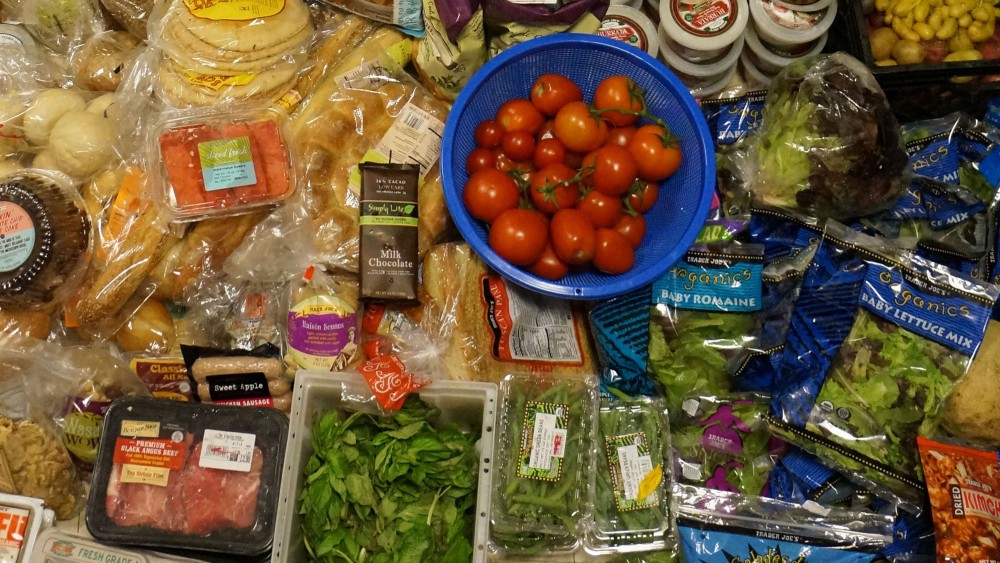
"caption": "Bounty from the bin: Thaler says you can find plenty of tasty, edible produce that's tossed out. Plastic-wrapped produce tends to be a safe bet, he says. Photo: Courtesy of Maximus Thaler ",
"description": "Bounty from the bin: Thaler says you can find plenty of tasty, edible produce that's tossed out. Plastic-wrapped produce tends to be a safe bet, he says.",
"title": "Bounty from the bin: Thaler says you can find plenty of tasty, edible produce that's tossed out. Plastic-wrapped produce tends to be a safe bet, he says.",
"credit": null,
"status": "inherit",
"isLoading": false,
"fetchFailed": false
},
"bayareabites_87947": {
"type": "attachments",
"id": "bayareabites_87947",
"meta": {
"index": "attachments_1716263798",
"site": "bayareabites",
"id": "87947",
"found": true
},
"parent": 87946,
"imgSizes": {
"kqedFullSize": {
"file": "https://ww2.kqed.org/app/uploads/sites/24/2014/09/chicks3_wide-5b4c626f8afe2c8cf66136e592068973037f0f0b-e1411454197512.jpg",
"width": 1000,
"height": 562
}
},
"publishDate": 1411453925,
"modified": 1411453925,
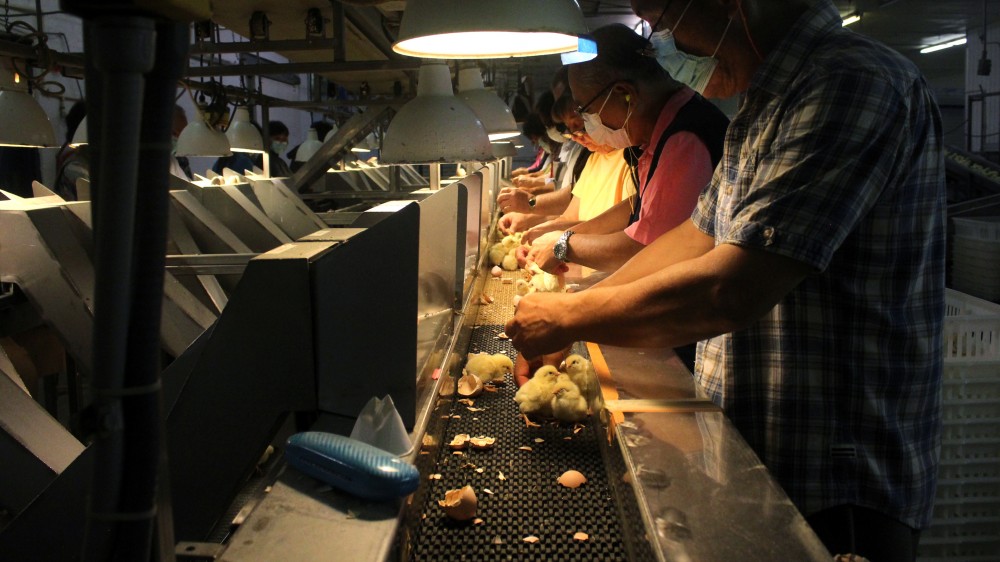
"caption": "Within a day after chicks hatch, they are sorted by sex and shipped to farms. Some will be treated with antibiotics; others will not. Photo\" Dan Charles /NPR ",
"description": "Within a day after chicks hatch, they are sorted by sex and shipped to farms. Some will be treated with antibiotics; others will not.",
"title": "Within a day after chicks hatch, they are sorted by sex and shipped to farms. Some will be treated with antibiotics; others will not.",
"credit": null,
"status": "inherit",
"isLoading": false,
"fetchFailed": false
},
"bayareabites_87797": {
"type": "attachments",
"id": "bayareabites_87797",
"meta": {
"index": "attachments_1716263798",
"site": "bayareabites",
"id": "87797",
"found": true
},
"parent": 87783,
"imgSizes": {
"kqedFullSize": {
"file": "https://ww2.kqed.org/app/uploads/sites/24/2014/09/ToastPatio.jpg",
"width": 450,
"height": 800
}
},
"publishDate": 1411081695,
"modified": 1411081695,
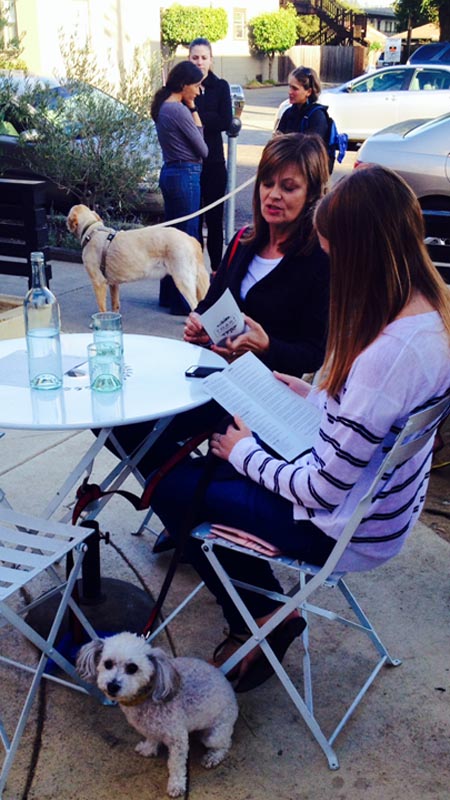
"caption": "Outdoor dining at Toast. Photo: Adrienne DeAngelo",
"description": null,
"title": "ToastPatio",
"credit": null,
"status": "inherit",
"isLoading": false,
"fetchFailed": false
},
"bayareabites_87423": {
"type": "attachments",
"id": "bayareabites_87423",
"meta": {
"index": "attachments_1716263798",
"site": "bayareabites",
"id": "87423",
"found": true
},
"parent": 87422,
"imgSizes": {
"kqedFullSize": {
"file": "https://ww2.kqed.org/app/uploads/sites/24/2014/09/diptych_custom-f5764bf2da828d4c9fc62dcfb8f2ea77bce6bbfa-e1410473845333.jpg",
"width": 1000,
"height": 374
}
},
"publishDate": 1410473330,
"modified": 1410473330,
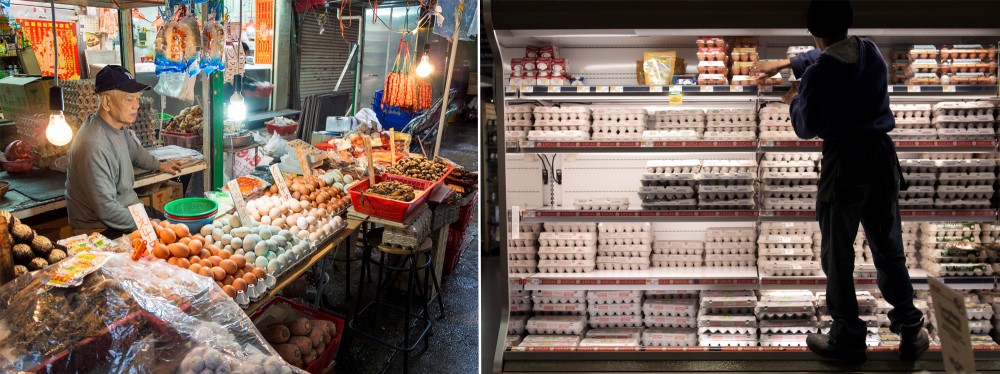
"caption": "To refrigerate or not to refrigerate? It boils down to bacteria, aesthetics and how much energy you're willing to use. Photos: Robert S. Donovan; Flickr / Alex Barth; Flickr",
"description": "To refrigerate or not to refrigerate? It boils down to bacteria, aesthetics and how much energy you're willing to use.",
"title": "To refrigerate or not to refrigerate? It boils down to bacteria, aesthetics and how much energy you're willing to use.",
"credit": null,
"status": "inherit",
"isLoading": false,
"fetchFailed": false
},
"bayareabites_87408": {
"type": "attachments",
"id": "bayareabites_87408",
"meta": {
"index": "attachments_1716263798",
"site": "bayareabites",
"id": "87408",
"found": true
},
"parent": 87402,
"imgSizes": {
"kqedFullSize": {
"file": "https://ww2.kqed.org/app/uploads/sites/24/2014/09/foodforward.png",
"width": 487,
"height": 322
}
},
"publishDate": 1410455970,
"modified": 1410455970,
"caption": null,
"description": null,
"title": "foodforward",
"credit": null,
"status": "inherit",
"isLoading": false,
"fetchFailed": false
},
"bayareabites_87262": {
"type": "attachments",
"id": "bayareabites_87262",
"meta": {
"index": "attachments_1716263798",
"site": "bayareabites",
"id": "87262",
"found": true
},
"parent": 87254,
"imgSizes": {
"kqedFullSize": {
"file": "https://ww2.kqed.org/app/uploads/sites/24/2014/09/foodlabel.jpg",
"width": 680,
"height": 322
}
},
"publishDate": 1410285218,
"modified": 1410285218,
"caption": null,
"description": null,
"title": "foodlabel",
"credit": null,
"status": "inherit",
"isLoading": false,
"fetchFailed": false
},
"bayareabites_87166": {
"type": "attachments",
"id": "bayareabites_87166",
"meta": {
"index": "attachments_1716263798",
"site": "bayareabites",
"id": "87166",
"found": true
},
"parent": 87165,
"imgSizes": {
"kqedFullSize": {
"file": "https://ww2.kqed.org/app/uploads/sites/24/2014/09/food-workers-protest_slide-02da62fed695edeef0fd767ad59a12aec05c006f-e1409930730854.jpg",
"width": 1000,
"height": 667
}
},
"publishDate": 1409885890,
"modified": 1409885890,
"caption": "Protesters demonstrate outside a McDonald's in Chicago. Hundreds of workers from McDonald's, Taco Bell, Wendy's and other fast-food chains were expected to walk off their jobs Thursday to push the companies to pay their employees at least $15 an hour, according to labor organizers. Photo: M. Spencer Green/AP",
"description": "Protesters demonstrate outside a McDonald's in Chicago. Hundreds of workers from McDonald's, Taco Bell, Wendy's and other fast-food chains were expected to walk off their jobs Thursday to push the companies to pay their employees at least $15 an hour, according to labor organizers.",
"title": "Protesters demonstrate outside a McDonald's in Chicago. Hundreds of workers from McDonald's, Taco Bell, Wendy's and other fast-food chains were expected to walk off their jobs Thursday to push the companies to pay their employees at least $15 an hour, according to labor organizers.",
"credit": null,
"status": "inherit",
"isLoading": false,
"fetchFailed": false
},
"bayareabites_87114": {
"type": "attachments",
"id": "bayareabites_87114",
"meta": {
"index": "attachments_1716263798",
"site": "bayareabites",
"id": "87114",
"found": true
},
"parent": 87113,
"imgSizes": {
"kqedFullSize": {
"file": "https://ww2.kqed.org/app/uploads/sites/24/2014/09/food-supply_slide-cf785198c7d3ea556b7589a92efe920e14e0d069.jpg",
"width": 1798,
"height": 1198
}
},
"publishDate": 1409853162,
"modified": 1409853162,
"caption": "People shop in a Miami grocery store on July 8. USDA says that despite the drop in unemployment, the number of food insecure Americans has not declined because higher food prices and inflation last year offset the benefits of a brighter job market. Photo: Joe Raedle/Getty Images ",
"description": "People shop in a Miami grocery store on July 8. USDA says that despite the drop in unemployment, the number of food insecure Americans has not declined because higher food prices and inflation last year offset the benefits of a brighter job market.",
"title": "People shop in a Miami grocery store on July 8. USDA says that despite the drop in unemployment, the number of food insecure Americans has not declined because higher food prices and inflation last year offset the benefits of a brighter job market.",
"credit": null,
"status": "inherit",
"isLoading": false,
"fetchFailed": false
},
"bayareabites_87094": {
"type": "attachments",
"id": "bayareabites_87094",
"meta": {
"index": "attachments_1716263798",
"site": "bayareabites",
"id": "87094",
"found": true
},
"parent": 87093,
"imgSizes": {
"kqedFullSize": {
"file": "https://ww2.kqed.org/app/uploads/sites/24/2014/09/hatchery-3_slide-745a8da86a235a678943bc2f039d8ac427c3261e.jpg",
"width": 1798,
"height": 1198
}
},
"publishDate": 1409791652,
"modified": 1409791652,
"caption": "Chicks in the Perdue hatchery in Salisbury, Md. The company says all its chickens are now raised using \"no antibiotics, ever.\" Photo: Dan Charles/NPR",
"description": "Chicks in the Perdue hatchery in Salisbury, Md. The company says all its chickens are now raised using \"no antibiotics, ever.\"",
"title": "Chicks in the Perdue hatchery in Salisbury, Md. The company says all its chickens are now raised using \"no antibiotics, ever.\"",
"credit": null,
"status": "inherit",
"isLoading": false,
"fetchFailed": false
},
"bayareabites_86879": {
"type": "attachments",
"id": "bayareabites_86879",
"meta": {
"index": "attachments_1716263798",
"site": "bayareabites",
"id": "86879",
"found": true
},
"parent": 86878,
"imgSizes": {
"kqedFullSize": {
"file": "https://ww2.kqed.org/app/uploads/sites/24/2014/08/ap050114020568-c3956e8893e1e0cee211bd1a6602b4af5c517c5f.jpg",
"width": 1780,
"height": 1335
}
},
"publishDate": 1409270552,
"modified": 1409270552,
"caption": "About 84 percent of food products that contain trans fats still carry a \"zero gram\" label, which may mislead consumers, researchers say. Photo: Tony Dejak/AP",
"description": "About 84 percent of food products that contain trans fats still carry a \"zero gram\" label, which may mislead consumers, researchers say.",
"title": "About 84 percent of food products that contain trans fats still carry a \"zero gram\" label, which may mislead consumers, researchers say.",
"credit": null,
"status": "inherit",
"isLoading": false,
"fetchFailed": false
},
"bayareabites_86870": {
"type": "attachments",
"id": "bayareabites_86870",
"meta": {
"index": "attachments_1716263798",
"site": "bayareabites",
"id": "86870",
"found": true
},
"parent": 86869,
"imgSizes": {
"kqedFullSize": {
"file": "https://ww2.kqed.org/app/uploads/sites/24/2014/08/foster-farms-5_slide-94e622f722c5dbc04ed7ab9e946d5dc9b4588fef.jpg",
"width": 2497,
"height": 1665
}
},
"publishDate": 1409245974,
"modified": 1409245974,
"caption": "Bob O'Connor, a Foster Farms veterinarian, holds an 11-day-old chick at a ranch near the town of Merced, in California's Central Valley. Photo: Dan Charles/NPR",
"description": "Bob O'Connor, a Foster Farms veterinarian, holds an 11-day-old chick at a ranch near the town of Merced, in California's Central Valley.",
"title": "Bob O'Connor, a Foster Farms veterinarian, holds an 11-day-old chick at a ranch near the town of Merced, in California's Central Valley.",
"credit": null,
"status": "inherit",
"isLoading": false,
"fetchFailed": false
}
},
"audioPlayerReducer": {
"postId": "stream_live",
"isPaused": true,
"isPlaying": false,
"pfsActive": false,
"pledgeModalIsOpen": true,
"playerDrawerIsOpen": false,
"liveAudioPlayStartedAt": 0,
"liveAudioPlayContext": ""
},
"authorsReducer": {
"byline_bayareabites_87981": {
"type": "authors",
"id": "byline_bayareabites_87981",
"meta": {
"override": true
},
"slug": "byline_bayareabites_87981",
"name": "Maanvi Singh",
"isLoading": false
},
"byline_bayareabites_87967": {
"type": "authors",
"id": "byline_bayareabites_87967",
"meta": {
"override": true
},
"slug": "byline_bayareabites_87967",
"name": "Alison Bruzek",
"isLoading": false
},
"byline_bayareabites_87946": {
"type": "authors",
"id": "byline_bayareabites_87946",
"meta": {
"override": true
},
"slug": "byline_bayareabites_87946",
"name": "Dan Charles",
"isLoading": false
},
"byline_bayareabites_87422": {
"type": "authors",
"id": "byline_bayareabites_87422",
"meta": {
"override": true
},
"slug": "byline_bayareabites_87422",
"name": "Rae Ellen Bichell",
"isLoading": false
},
"byline_bayareabites_87165": {
"type": "authors",
"id": "byline_bayareabites_87165",
"meta": {
"override": true
},
"slug": "byline_bayareabites_87165",
"name": "Allison Aubrey",
"isLoading": false
},
"byline_bayareabites_87113": {
"type": "authors",
"id": "byline_bayareabites_87113",
"meta": {
"override": true
},
"slug": "byline_bayareabites_87113",
"name": "Pam Fessler",
"isLoading": false
},
"byline_bayareabites_87093": {
"type": "authors",
"id": "byline_bayareabites_87093",
"meta": {
"override": true
},
"slug": "byline_bayareabites_87093",
"name": "Dan Charles",
"isLoading": false
},
"byline_bayareabites_86878": {
"type": "authors",
"id": "byline_bayareabites_86878",
"meta": {
"override": true
},
"slug": "byline_bayareabites_86878",
"name": "Eliza Barclay",
"isLoading": false
},
"byline_bayareabites_86869": {
"type": "authors",
"id": "byline_bayareabites_86869",
"meta": {
"override": true
},
"slug": "byline_bayareabites_86869",
"name": "Dan Charles",
"isLoading": false
},
"oaklandlocal": {
"type": "authors",
"id": "5475",
"meta": {
"index": "authors_1716337520",
"id": "5475",
"found": true
},
"name": "Oakland Local",
"firstName": "Oakland",
"lastName": "Local",
"slug": "oaklandlocal",
"email": "oaklandlocal@oaklandlocal.com",
"display_author_email": false,
"staff_mastheads": [],
"title": null,
"bio": "\u003ca href=\"http://oaklandlocal.com/\">Oakland Local\u003c/a>, Oakland's leading news & community site, is filled with people who love to eat, drink and talk about food equity issues, sometimes all at the same time. We're avid about farm to table, affordable local restaurants, food artisans, intense chefs, butchers, bakers, and gardeners and everyone who wants to talk about what tastes good--and where to get it/make it or grow it--in Oakland, CA",
"avatar": "https://secure.gravatar.com/avatar/487293d74fcce97c7016ed0309409181?s=600&d=blank&r=g",
"twitter": "oaklandlocal",
"facebook": "oaklocal",
"instagram": null,
"linkedin": null,
"sites": [
{
"site": "bayareabites",
"roles": [
"contributor"
]
}
],
"headData": {
"title": "Oakland Local | KQED",
"description": null,
"ogImgSrc": "https://secure.gravatar.com/avatar/487293d74fcce97c7016ed0309409181?s=600&d=blank&r=g",
"twImgSrc": "https://secure.gravatar.com/avatar/487293d74fcce97c7016ed0309409181?s=600&d=blank&r=g"
},
"isLoading": false,
"link": "/author/oaklandlocal"
},
"civileat": {
"type": "authors",
"id": "5583",
"meta": {
"index": "authors_1716337520",
"id": "5583",
"found": true
},
"name": "Civil Eats",
"firstName": "Civil",
"lastName": "Eats",
"slug": "civileat",
"email": "twilight@civileats.com",
"display_author_email": false,
"staff_mastheads": [],
"title": null,
"bio": "\u003ca href=\"http://civileats.com/\">Civil Eats\u003c/a> is a daily news source for critical thought about the American food system. We publish stories that shift the conversation around sustainable agriculture in an effort to build economically and socially just communities. Follow Civil Eats on Twitter \u003ca href=\"https://twitter.com/CivilEats\">@civileats\u003c/a> and on \u003ca href=\"https://www.facebook.com/pages/Civil-Eats/56766540637\">Facebook\u003c/a>.",
"avatar": "https://secure.gravatar.com/avatar/8f6f50bfb6403afe7cbc194b66cc1d4d?s=600&d=blank&r=g",
"twitter": "CivilEats",
"facebook": "/pages/Civil-Eats/56766540637?ref=hl",
"instagram": null,
"linkedin": null,
"sites": [
{
"site": "bayareabites",
"roles": [
"contributor"
]
},
{
"site": "food",
"roles": [
"contributor"
]
}
],
"headData": {
"title": "Civil Eats | KQED",
"description": null,
"ogImgSrc": "https://secure.gravatar.com/avatar/8f6f50bfb6403afe7cbc194b66cc1d4d?s=600&d=blank&r=g",
"twImgSrc": "https://secure.gravatar.com/avatar/8f6f50bfb6403afe7cbc194b66cc1d4d?s=600&d=blank&r=g"
},
"isLoading": false,
"link": "/author/civileat"
}
},
"pagesReducer": {
"bayareabites_category_politics-activism-food-safety": {
"type": "terms",
"id": "bayareabites_2035",
"meta": {
"index": "terms_1716263798",
"site": "bayareabites",
"id": "2035",
"score": 13.89634
},
"featImg": null,
"name": "politics, activism, food safety",
"description": null,
"taxonomy": "category",
"headData": {
"twImgId": null,
"twTitle": null,
"ogTitle": null,
"ogImgId": null,
"twDescription": null,
"description": null,
"title": "politics, activism, food safety Archives | KQED Bay Area Bites",
"ogDescription": null
},
"ttid": 943,
"slug": "politics-activism-food-safety",
"isLoading": false,
"title": "politics, activism, food safety",
"pageMeta": {
"site": "bayareabites",
"WpPageTemplate": "page-topic-editorial",
"currentPage": 36
},
"blocks": [
{
"blockName": "kqed/post-list",
"attrs": {
"layout": "cardArticle2",
"query": "posts/bayareabites?category=politics-activism-food-safety",
"seeMore": false,
"paginated": true,
"page": 36
}
},
{
"blockName": "kqed/ad"
}
]
}
},
"pfsSessionReducer": {},
"postsReducer": {
"stream_live": {
"type": "live",
"id": "stream_live",
"audioUrl": "https://streams.kqed.org/kqedradio",
"title": "Live Stream",
"excerpt": "Live Stream information currently unavailable.",
"link": "/radio",
"featImg": "",
"label": {
"name": "KQED Live",
"link": "/"
}
},
"stream_kqedNewscast": {
"type": "posts",
"id": "stream_kqedNewscast",
"audioUrl": "https://www.kqed.org/.stream/anon/radio/RDnews/newscast.mp3?_=1",
"title": "KQED Newscast",
"featImg": "",
"label": {
"name": "88.5 FM",
"link": "/"
}
},
"bayareabites_87981": {
"type": "posts",
"id": "bayareabites_87981",
"meta": {
"index": "posts_1716263798",
"site": "bayareabites",
"id": "87981",
"score": null,
"sort": [
1411582879000
]
},
"parent": 0,
"labelTerm": {
"site": "bayareabites"
},
"blocks": [],
"publishDate": 1411582879,
"format": "aside",
"disqusTitle": "Scientists Step Up Food Fraud Efforts Following Horse Meat Scandal",
"title": "Scientists Step Up Food Fraud Efforts Following Horse Meat Scandal",
"headTitle": "Bay Area Bites | KQED Food",
"content": "\u003cfigure id=\"attachment_87982\" class=\"wp-caption aligncenter\" style=\"max-width: 1000px\">\u003ca href=\"http://ww2.kqed.org/bayareabites/wp-content/uploads/sites/24/2014/09/horse-meat-1_slide-e329841a3fc31e9e3b0219fe2d3345b42a193ff8-e1411582518567.jpg\">\u003cimg src=\"http://ww2.kqed.org/bayareabites/wp-content/uploads/sites/24/2014/09/horse-meat-1_slide-e329841a3fc31e9e3b0219fe2d3345b42a193ff8-e1411582518567.jpg\" alt=\"The French enjoy horse meat — here's a horse meat butcher in Paris. But even the French were angry that they had been paying beef prices for it last year. Photo: Thomas Coex/AFP/Getty Images\" width=\"1000\" height=\"666\" class=\"size-full wp-image-87982\">\u003c/a>\u003cfigcaption class=\"wp-caption-text\">The French enjoy horse meat — here's a horse meat butcher in Paris. But even the French were angry that they had been paying beef prices for it last year. Photo: Thomas Coex/AFP/Getty Images\u003c/figcaption>\u003c/figure>\n\u003cp>by Maanvi Singh, \u003ca href=\"http://www.npr.org/blogs/thesalt/2014/09/24/350695899/food-fraud-science-aims-to-gallop-past-horse-meat-scandal\" target=\"_blank\">The Salt at NPR Food\u003c/a> (9/24/14)\u003c/p>\n\u003cp>Last year, the great European horse meat scandal alerted consumers around the world to food fraud. Traces of horse meat were found in \u003ca href=\"http://ww2.kqed.org/bayareabites/2013/02/25/horse-meat-found-in-ikeas-meatballs/\">Ikea meatballs\u003c/a> and \u003ca href=\"http://ww2.kqed.org/bayareabites/2013/02/01/wheres-the-beef-burger-king-finds-horsemeat-in-its-u-k-patties/\">Burger King\u003c/a> beef patties, in \u003ca href=\"http://www.ft.com/intl/cms/s/0/5f426c4c-774a-11e2-9ebc-00144feabdc0.html\">cottage pies\u003c/a> sold at schools in Lancashire, England, and in \u003ca href=\"http://www.reuters.com/article/2013/02/15/us-horsemeat-norway-idUSBRE91E0KH20130215\">frozen lasagna\u003c/a> sold all over Europe. Arrests were made in the U.K. and in France.\u003c/p>\n\u003cp>The contamination didn't pose any real public health threat — horse has the same amount of protein as beef, and less fat. But in the U.K., where horses are viewed as pets rather than food, people weren't happy to learn they had been eating horse unawares. And as we \u003ca href=\"http://www.npr.org/blogs/thesalt/2013/02/15/172124931/romanian-horsement-in-british-lasagna-reveals-complex-global-food-trade\">reported\u003c/a>, in France, where eating horse is more common, customers were angry that they had been paying beef prices for cheaper horse meat.\u003c/p>\n\u003cp>\"Consumers felt cheated and lost trust. It was just a total loss of confidence in the supply chain,\" says \u003ca href=\"http://www.usp.org/usp-nf-scientific-staff\">Markus Lipp\u003c/a> of U.S. Pharmacopeial Convention, a nonprofit that sets food and medicine safety standards. \"It raised questions: Were these racehorses? Were they treated with veterinary medicines that were bad for human consumption?\"\u003c/p>\n\u003cfigure id=\"attachment_87983\" class=\"wp-caption aligncenter\" style=\"max-width: 1000px\">\u003ca href=\"http://ww2.kqed.org/bayareabites/wp-content/uploads/sites/24/2014/09/horse-meat-2_slide-3b555bc1c8869670754f7766a807e4e83dc23231-e1411582568537.jpg\">\u003cimg src=\"http://ww2.kqed.org/bayareabites/wp-content/uploads/sites/24/2014/09/horse-meat-2_slide-3b555bc1c8869670754f7766a807e4e83dc23231-e1411582568537.jpg\" alt=\"A regulator tests food samples for horse meat in Braunschweig, Germany. Last year, beef products sold all over Europe were found to have traces of horse. Photo: Jochen Luebke/DPA/Landov\" width=\"1000\" height=\"667\" class=\"size-full wp-image-87983\">\u003c/a>\u003cfigcaption class=\"wp-caption-text\">A regulator tests food samples for horse meat in Braunschweig, Germany. Last year, beef products sold all over Europe were found to have traces of horse. Photo: Jochen Luebke/DPA/Landov\u003c/figcaption>\u003c/figure>\n\u003cp>As a result of the scandal, European governments started rethinking their food regulation practices. And scientists started kicking into high gear, looking for ways to improve the technology to quickly test batches of meat for contaminants. Just this month, a \u003ca href=\"http://pubs.acs.org/doi/full/10.1021/jf503468t\">paper\u003c/a> in the \u003cem>Journal of Agriculture and Food Chemistry\u003c/em> details a new method that uses mass spectrometry to quickly detect even tiny traces of pork and horse mixed into raw and cooked beef products.\u003c/p>\n\u003cp>[ad fullwidth]\u003c/p>\n\u003cp>The new technology looks promising, Lipp says. \"But there is no way [food regulators] can test 100 percent of the food. We can never test ourselves to safety.\"\u003c/p>\n\u003cp>Adulterated meat is just the tip of the iceberg, says \u003ca href=\"http://foodfraud.msu.edu/about/staff/spink/\">John Spink\u003c/a>, who heads Michigan State University's Food Safety Program. Food fraud is a huge, expansive problem, Spink says. Adulterated products show up in the market all the time — affecting everything from \u003ca href=\"http://www.npr.org/2011/12/12/143154180/losing-virginity-olive-oils-scandalous-industry\">olive oil\u003c/a> and milk to spices and additives.\u003c/p>\n\u003cp>\"With globalization, even one instance of fraud can be huge. They can make so much product, and it can so quickly move around the world,\" Spink says. \"And it's quite a challenge, because there's an unlimited number of adulterants that could be in the product.\"\u003c/p>\n\u003cp>Testing acts as a deterrent, Spink says, but it won't stop fraud. Spink's program focuses on fraud prevention. His team uses criminology and forensic tools, as well as food science, to study the global food market and predict where fraud may happen.\u003c/p>\n\u003cp>Even when scientists identify products that may be especially susceptible to fraud, it can be difficult to know which suspect ingredients are being mixed into our food, says Mitchell Weinberg, CEO of \u003ca href=\"http://www.inscatech.com/\">Inscatech\u003c/a>, a firm that advises food companies on food safety. \"It may not be horse meat next time. It may be dog meat, cat meat, rat meat — all of those have been used,\" he says.\u003c/p>\n\u003cp>This month, the British government released a \u003ca href=\"https://www.gov.uk/government/uploads/system/uploads/attachment_data/file/350726/elliot-review-final-report-july2014.pdf\">report\u003c/a> in response to the horse meat scandal. In the document, \u003ca href=\"http://pure.qub.ac.uk/portal/en/persons/christopher-elliott(10515544-0d5c-487f-a747-fe0d7f5aa94c).html\">Chris Elliott\u003c/a>, a food safety researcher and professor of microbiology at Queen's University Belfast, calls for more regulation and testing and provides suggestions for what the government should do the next time there's a big crisis.\u003c/p>\n\u003cp>Even if the U.K. implements all of Elliott's suggestions, the problem won't go away, Weinberg says. That's because most food fraud doesn't originate in Great Britain.\u003c/p>\n\u003cp>\"The problem is in India, the problem is in China and in Italy,\" he says. There is high domestic consumption of food from these countries, he notes.\u003c/p>\n\u003cp>The best way to manage the problem is for governments to work with each other and with food companies, Weinberg says. \"On the positive side, the food industry is actually collectively trying to address the issue.\"\u003c/p>\n\u003cp>That's because a food fraud scandal can destroy a company's reputation, Spink says. \"Companies realize that a recall is very costly.\"\u003c/p>\n\u003cp>Spink's lab offers both in-person and online training for food processors looking to amp up their defenses against fraud. \"And nowadays, these multinational companies are working with governments to define the scope of the problem,\" he says.\u003c/p>\n\u003cp>Of course, he notes, food fraud is as old as time. \"This is not something you just fix,\" he says. \"It has to be managed.\"\u003c/p>\n\u003cp>\u003c/p>\n\u003cp>\u003cem>Copyright 2014 \u003ca href=\"http://www.npr.org/\" target=\"_blank\">NPR\u003c/a>.\u003c/em> \u003c/p>\n\n",
"disqusIdentifier": "87981 http://blogs.kqed.org/bayareabites/?p=87981",
"disqusUrl": "https://ww2.kqed.org/bayareabites/2014/09/24/scientists-step-up-food-fraud-efforts-following-horse-meat-scandal/",
"stats": {
"hasVideo": false,
"hasChartOrMap": false,
"hasAudio": false,
"hasPolis": false,
"wordCount": 819,
"hasGoogleForm": false,
"hasGallery": false,
"hasHearkenModule": false,
"iframeSrcs": [],
"paragraphCount": 20
},
"modified": 1411582879,
"excerpt": "The latest report in response to the horse meat scandal of 2013 reminds us that the potential for fraud in the food supply is high. But scientists are working to predict and prevent the next incident.",
"headData": {
"twImgId": "",
"twTitle": "",
"ogTitle": "",
"ogImgId": "",
"twDescription": "",
"description": "The latest report in response to the horse meat scandal of 2013 reminds us that the potential for fraud in the food supply is high. But scientists are working to predict and prevent the next incident.",
"title": "Scientists Step Up Food Fraud Efforts Following Horse Meat Scandal | KQED",
"ogDescription": "",
"schema": {
"@context": "https://schema.org",
"@type": "Article",
"headline": "Scientists Step Up Food Fraud Efforts Following Horse Meat Scandal",
"datePublished": "2014-09-24T11:21:19-07:00",
"dateModified": "2014-09-24T11:21:19-07:00",
"image": "https://cdn.kqed.org/wp-content/uploads/2020/02/KQED-OG-Image@1x.png"
}
},
"guestAuthors": [],
"slug": "scientists-step-up-food-fraud-efforts-following-horse-meat-scandal",
"status": "publish",
"nprApiLink": "http://api.npr.org/query?id=350695899&apiKey=MDAxOTAwOTE4MDEyMTkxMDAzNjczZDljZA004",
"nprByline": "Maanvi Singh",
"nprStoryDate": "Wed, 24 Sep 2014 09:15:00 -0400",
"nprLastModifiedDate": "Wed, 24 Sep 2014 11:35:03 -0400",
"nprHtmlLink": "http://www.npr.org/blogs/thesalt/2014/09/24/350695899/food-fraud-science-aims-to-gallop-past-horse-meat-scandal?ft=3&f=350695899",
"nprStoryId": "350695899",
"nprRetrievedStory": "1",
"nprPubDate": "Wed, 24 Sep 2014 11:35:00 -0400",
"path": "/bayareabites/87981/scientists-step-up-food-fraud-efforts-following-horse-meat-scandal",
"audioTrackLength": null,
"parsedContent": [
{
"type": "contentString",
"content": "\u003cdiv class=\"post-body\">\u003cp>\u003cfigure id=\"attachment_87982\" class=\"wp-caption aligncenter\" style=\"max-width: 1000px\">\u003ca href=\"http://ww2.kqed.org/bayareabites/wp-content/uploads/sites/24/2014/09/horse-meat-1_slide-e329841a3fc31e9e3b0219fe2d3345b42a193ff8-e1411582518567.jpg\">\u003cimg src=\"http://ww2.kqed.org/bayareabites/wp-content/uploads/sites/24/2014/09/horse-meat-1_slide-e329841a3fc31e9e3b0219fe2d3345b42a193ff8-e1411582518567.jpg\" alt=\"The French enjoy horse meat — here's a horse meat butcher in Paris. But even the French were angry that they had been paying beef prices for it last year. Photo: Thomas Coex/AFP/Getty Images\" width=\"1000\" height=\"666\" class=\"size-full wp-image-87982\">\u003c/a>\u003cfigcaption class=\"wp-caption-text\">The French enjoy horse meat — here's a horse meat butcher in Paris. But even the French were angry that they had been paying beef prices for it last year. Photo: Thomas Coex/AFP/Getty Images\u003c/figcaption>\u003c/figure>\n\u003cp>by Maanvi Singh, \u003ca href=\"http://www.npr.org/blogs/thesalt/2014/09/24/350695899/food-fraud-science-aims-to-gallop-past-horse-meat-scandal\" target=\"_blank\">The Salt at NPR Food\u003c/a> (9/24/14)\u003c/p>\n\u003cp>Last year, the great European horse meat scandal alerted consumers around the world to food fraud. Traces of horse meat were found in \u003ca href=\"http://ww2.kqed.org/bayareabites/2013/02/25/horse-meat-found-in-ikeas-meatballs/\">Ikea meatballs\u003c/a> and \u003ca href=\"http://ww2.kqed.org/bayareabites/2013/02/01/wheres-the-beef-burger-king-finds-horsemeat-in-its-u-k-patties/\">Burger King\u003c/a> beef patties, in \u003ca href=\"http://www.ft.com/intl/cms/s/0/5f426c4c-774a-11e2-9ebc-00144feabdc0.html\">cottage pies\u003c/a> sold at schools in Lancashire, England, and in \u003ca href=\"http://www.reuters.com/article/2013/02/15/us-horsemeat-norway-idUSBRE91E0KH20130215\">frozen lasagna\u003c/a> sold all over Europe. Arrests were made in the U.K. and in France.\u003c/p>\n\u003cp>The contamination didn't pose any real public health threat — horse has the same amount of protein as beef, and less fat. But in the U.K., where horses are viewed as pets rather than food, people weren't happy to learn they had been eating horse unawares. And as we \u003ca href=\"http://www.npr.org/blogs/thesalt/2013/02/15/172124931/romanian-horsement-in-british-lasagna-reveals-complex-global-food-trade\">reported\u003c/a>, in France, where eating horse is more common, customers were angry that they had been paying beef prices for cheaper horse meat.\u003c/p>\n\u003cp>\"Consumers felt cheated and lost trust. It was just a total loss of confidence in the supply chain,\" says \u003ca href=\"http://www.usp.org/usp-nf-scientific-staff\">Markus Lipp\u003c/a> of U.S. Pharmacopeial Convention, a nonprofit that sets food and medicine safety standards. \"It raised questions: Were these racehorses? Were they treated with veterinary medicines that were bad for human consumption?\"\u003c/p>\n\u003cfigure id=\"attachment_87983\" class=\"wp-caption aligncenter\" style=\"max-width: 1000px\">\u003ca href=\"http://ww2.kqed.org/bayareabites/wp-content/uploads/sites/24/2014/09/horse-meat-2_slide-3b555bc1c8869670754f7766a807e4e83dc23231-e1411582568537.jpg\">\u003cimg src=\"http://ww2.kqed.org/bayareabites/wp-content/uploads/sites/24/2014/09/horse-meat-2_slide-3b555bc1c8869670754f7766a807e4e83dc23231-e1411582568537.jpg\" alt=\"A regulator tests food samples for horse meat in Braunschweig, Germany. Last year, beef products sold all over Europe were found to have traces of horse. Photo: Jochen Luebke/DPA/Landov\" width=\"1000\" height=\"667\" class=\"size-full wp-image-87983\">\u003c/a>\u003cfigcaption class=\"wp-caption-text\">A regulator tests food samples for horse meat in Braunschweig, Germany. Last year, beef products sold all over Europe were found to have traces of horse. Photo: Jochen Luebke/DPA/Landov\u003c/figcaption>\u003c/figure>\n\u003cp>As a result of the scandal, European governments started rethinking their food regulation practices. And scientists started kicking into high gear, looking for ways to improve the technology to quickly test batches of meat for contaminants. Just this month, a \u003ca href=\"http://pubs.acs.org/doi/full/10.1021/jf503468t\">paper\u003c/a> in the \u003cem>Journal of Agriculture and Food Chemistry\u003c/em> details a new method that uses mass spectrometry to quickly detect even tiny traces of pork and horse mixed into raw and cooked beef products.\u003c/p>\n\u003cp>\u003c/p>\u003c/div>",
"attributes": {
"named": {},
"numeric": []
}
},
{
"type": "component",
"content": "",
"name": "ad",
"attributes": {
"named": {
"label": "fullwidth"
},
"numeric": [
"fullwidth"
]
}
},
{
"type": "contentString",
"content": "\u003cdiv class=\"post-body\">\u003cp>\u003c/p>\n\u003cp>The new technology looks promising, Lipp says. \"But there is no way [food regulators] can test 100 percent of the food. We can never test ourselves to safety.\"\u003c/p>\n\u003cp>Adulterated meat is just the tip of the iceberg, says \u003ca href=\"http://foodfraud.msu.edu/about/staff/spink/\">John Spink\u003c/a>, who heads Michigan State University's Food Safety Program. Food fraud is a huge, expansive problem, Spink says. Adulterated products show up in the market all the time — affecting everything from \u003ca href=\"http://www.npr.org/2011/12/12/143154180/losing-virginity-olive-oils-scandalous-industry\">olive oil\u003c/a> and milk to spices and additives.\u003c/p>\n\u003cp>\"With globalization, even one instance of fraud can be huge. They can make so much product, and it can so quickly move around the world,\" Spink says. \"And it's quite a challenge, because there's an unlimited number of adulterants that could be in the product.\"\u003c/p>\n\u003cp>Testing acts as a deterrent, Spink says, but it won't stop fraud. Spink's program focuses on fraud prevention. His team uses criminology and forensic tools, as well as food science, to study the global food market and predict where fraud may happen.\u003c/p>\n\u003cp>Even when scientists identify products that may be especially susceptible to fraud, it can be difficult to know which suspect ingredients are being mixed into our food, says Mitchell Weinberg, CEO of \u003ca href=\"http://www.inscatech.com/\">Inscatech\u003c/a>, a firm that advises food companies on food safety. \"It may not be horse meat next time. It may be dog meat, cat meat, rat meat — all of those have been used,\" he says.\u003c/p>\n\u003cp>This month, the British government released a \u003ca href=\"https://www.gov.uk/government/uploads/system/uploads/attachment_data/file/350726/elliot-review-final-report-july2014.pdf\">report\u003c/a> in response to the horse meat scandal. In the document, \u003ca href=\"http://pure.qub.ac.uk/portal/en/persons/christopher-elliott(10515544-0d5c-487f-a747-fe0d7f5aa94c).html\">Chris Elliott\u003c/a>, a food safety researcher and professor of microbiology at Queen's University Belfast, calls for more regulation and testing and provides suggestions for what the government should do the next time there's a big crisis.\u003c/p>\n\u003cp>Even if the U.K. implements all of Elliott's suggestions, the problem won't go away, Weinberg says. That's because most food fraud doesn't originate in Great Britain.\u003c/p>\n\u003cp>\"The problem is in India, the problem is in China and in Italy,\" he says. There is high domestic consumption of food from these countries, he notes.\u003c/p>\n\u003cp>The best way to manage the problem is for governments to work with each other and with food companies, Weinberg says. \"On the positive side, the food industry is actually collectively trying to address the issue.\"\u003c/p>\n\u003cp>That's because a food fraud scandal can destroy a company's reputation, Spink says. \"Companies realize that a recall is very costly.\"\u003c/p>\n\u003cp>Spink's lab offers both in-person and online training for food processors looking to amp up their defenses against fraud. \"And nowadays, these multinational companies are working with governments to define the scope of the problem,\" he says.\u003c/p>\n\u003cp>Of course, he notes, food fraud is as old as time. \"This is not something you just fix,\" he says. \"It has to be managed.\"\u003c/p>\n\u003cp>\u003c/p>\n\u003cp>\u003cem>Copyright 2014 \u003ca href=\"http://www.npr.org/\" target=\"_blank\">NPR\u003c/a>.\u003c/em> \u003c/p>\n\n\u003c/div>\u003c/p>",
"attributes": {
"named": {},
"numeric": []
}
}
],
"link": "/bayareabites/87981/scientists-step-up-food-fraud-efforts-following-horse-meat-scandal",
"authors": [
"byline_bayareabites_87981"
],
"categories": [
"bayareabites_10028",
"bayareabites_1245",
"bayareabites_10916",
"bayareabites_2035",
"bayareabites_358"
],
"tags": [
"bayareabites_10012",
"bayareabites_11259",
"bayareabites_11291",
"bayareabites_13835",
"bayareabites_13836",
"bayareabites_8347"
],
"featImg": "bayareabites_87982",
"label": "bayareabites"
},
"bayareabites_87967": {
"type": "posts",
"id": "bayareabites_87967",
"meta": {
"index": "posts_1716263798",
"site": "bayareabites",
"id": "87967",
"score": null,
"sort": [
1411579703000
]
},
"parent": 0,
"labelTerm": {
"site": "bayareabites"
},
"blocks": [],
"publishDate": 1411579703,
"format": "aside",
"disqusTitle": "Your Guide To Dining From The Dumpster",
"title": "Your Guide To Dining From The Dumpster",
"headTitle": "Bay Area Bites | KQED Food",
"content": "\u003cp>by Alison Bruzek, \u003ca href=\"http://www.npr.org/blogs/thesalt/2014/09/23/350565050/your-guide-to-dining-from-the-dump\" target=\"_blank\">The Salt at NPR Food\u003c/a> (9/23/14)\u003c/p>\n\u003cp>When you think of a dumpster diver, you might think of someone like this:\u003c/p>\n\u003cp>[youtube //www.youtube.com/watch?v=vuD1oDth6es]\u003c/p>\n\u003cp>And while you wouldn't be totally wrong, you also wouldn't exactly be describing Maximus Thaler.\u003c/p>\n\u003cp>A 24-year-old graduate of Tufts University, Thaler is a semiprofessional dumpster diver with a moral purpose. \"At some point, I found I could get everything I wanted to eat from a dumpster,\" he tells The Salt.\u003c/p>\n\u003cp>[ad fullwidth]\u003c/p>\n\u003cp>Thaler is also the founder of The Gleaners' Kitchen — gleaner being Thaler's euphemism for dumpster diver, derived from the agricultural practice of taking leftover produce and grains from the fields after the harvest. He started the group in Massachusetts to serve dumpster-sourced dinners, but they only managed to host a few meals before the landlord kicked them out.\u003c/p>\n\u003cfigure id=\"attachment_87969\" class=\"wp-caption aligncenter\" style=\"max-width: 1000px\">\u003ca href=\"http://ww2.kqed.org/bayareabites/wp-content/uploads/sites/24/2014/09/crop_custom-bbbee10e17e01f865c88575a29fa22f0a14bc013-e1411579317415.jpg\">\u003cimg src=\"http://ww2.kqed.org/bayareabites/wp-content/uploads/sites/24/2014/09/crop_custom-bbbee10e17e01f865c88575a29fa22f0a14bc013-e1411579317415.jpg\" alt=\"Maximus Thaler. Photo: Hallie Gluk/http://halliegluk.tumblr.com/\" width=\"1000\" height=\"779\" class=\"size-full wp-image-87969\">\u003c/a>\u003cfigcaption class=\"wp-caption-text\">Maximus Thaler. Photo: Hallie Gluk/http://halliegluk.tumblr.com/\u003c/figcaption>\u003c/figure>\n\u003cp>For a period in his life, while running The Gleaners' Kitchen, Thaler says he was eating 100 percent of his meals from the dumpster.\u003c/p>\n\u003cp>\"Most of the dumpstering I would do was at Trader Joe's,\" he says, introducing me to a new verb. \"They — more than any other grocery store — they plastic-wrap their food a lot,\" so the chucked goods are still safe to eat. Some grocery stores, like Whole Foods, compact their food right away, mixing plastics and food together, leaving much less treasure for picking, he explains.\u003c/p>\n\u003cp>A \u003ca href=\"http://vimeo.com/101050308\">documentary\u003c/a> about Thaler and his friends, not yet released, shows them digging in a surprisingly efficient manner — throwing full, multicolored Odwalla bottles into a milk crate and carefully moving half-filled trash bags and papers to pick out vegetables.\u003c/p>\n\u003cp>[vimeo 101050308]\u003c/p>\n\u003cp>\"I've never found rats, and I've never gotten sick,\" he says.\u003c/p>\n\u003cp>And while he agrees it may take a little training to dive, he suggests the rules regarding finding food that's still good enough to eat are much easier to navigate than those about private property.\u003c/p>\n\u003cfigure id=\"attachment_87968\" class=\"wp-caption aligncenter\" style=\"max-width: 1000px\">\u003ca href=\"http://ww2.kqed.org/bayareabites/wp-content/uploads/sites/24/2014/09/foodwaste1_wide-08b72696fde1808588ec4a63ed50ae995027c332-e1411579377876.jpg\">\u003cimg src=\"http://ww2.kqed.org/bayareabites/wp-content/uploads/sites/24/2014/09/foodwaste1_wide-08b72696fde1808588ec4a63ed50ae995027c332-e1411579377876.jpg\" alt=\"Bounty from the bin: Thaler says you can find plenty of tasty, edible produce that's tossed out. Plastic-wrapped produce tends to be a safe bet, he says. Photo: Courtesy of Maximus Thaler\" width=\"1000\" height=\"563\" class=\"size-full wp-image-87968\">\u003c/a>\u003cfigcaption class=\"wp-caption-text\">Bounty from the bin: Thaler says you can find plenty of tasty, edible produce that's tossed out. Plastic-wrapped produce tends to be a safe bet, he says. Photo: Courtesy of Maximus Thaler\u003c/figcaption>\u003c/figure>\n\u003cp>\"You look at the food, and you smell the food. ... Using your senses is really important,\" Thaler says.\u003c/p>\n\u003cp>While vegetables may get mushy and cheeses might mold, it's nothing that Thaler can't cut off or cook up. He says the only thing that's really risky is meat.\u003c/p>\n\u003cp>\"I would never eat a rare steak out of the dumpster,\" he says. \"Don't take the meat that's obvious discolored,\" he advises. Eggs, on the other hand, are fine, he says, as long as they don't smell absurdly strong of sulfur.\u003c/p>\n\u003cp>Dumpster divers are protected by a Supreme Court case, \u003cem>California v. Greenwood\u003c/em>, in which the court ruled that the \u003ca href=\"http://www.law.cornell.edu/constitution/fourth_amendment\">Fourth Amendment\u003c/a> (the one that bans unreasonable searches and seizures)\u003cstrong> \u003c/strong>doesn't protect a person's trash left out for public collection. However, foraging in dumpsters on private property \u003cem>does\u003c/em> carry the risk of violating trespassing laws.\u003c/p>\n\u003cp>At the height of his dumpstering, Thaler and his friends would break out the gloves (also from dumpsters), magnetic LED lights and milk crates (for storage) to quest for food in the middle of the night.\u003c/p>\n\u003cp>\"You want to go really, really quickly,\" he explains, so you don't get caught.\u003c/p>\n\u003cfigure id=\"attachment_87970\" class=\"wp-caption aligncenter\" style=\"max-width: 1000px\">\u003ca href=\"http://ww2.kqed.org/bayareabites/wp-content/uploads/sites/24/2014/09/foodwaste4_custom-a6297cec5f5649cf8b60c0beaaee6f27936fe9c6-e1411579442543.jpg\">\u003cimg src=\"http://ww2.kqed.org/bayareabites/wp-content/uploads/sites/24/2014/09/foodwaste4_custom-a6297cec5f5649cf8b60c0beaaee6f27936fe9c6-e1411579442543.jpg\" alt=\"These fruits rescued from the dump look pretty palatable, don't they? Photo: Courtesy of Maximus Thaler\" width=\"1000\" height=\"939\" class=\"size-full wp-image-87970\">\u003c/a>\u003cfigcaption class=\"wp-caption-text\">These fruits rescued from the dump look pretty palatable, don't they? Photo: Courtesy of Maximus Thaler\u003c/figcaption>\u003c/figure>\n\u003cp>Cooking for a full house, Thaler could often gather as much as $1,000 worth of food in 20 to 30 minutes. The longer part of the process was sorting the food, cutting away the bad parts of mushy tomatoes or moldy bread, and figuring out what to do with preposterous quantities of one particular item he'd sometimes pick up (he recalls once stumbling upon \"thousands of bananas\").\u003c/p>\n\u003cp>For Thaler, the practice is as much philosophical as it is practical. He writes via email:\u003c/p>\n\u003cp>\"There are complex systemic reasons why there is so much food waste in this country, but at their core is the fact that most Americans have forgotten what good food is.\" He argues that humans have evolved to know what good food is, and we don't need the Food and Drug Administration or sell-by dates to tell us that.\u003c/p>\n\u003cp>Thaler's friends, he says, are also people who have embraced this \"waste not\" philosophy: \"A lot of my closest friendships have been forged in the dumpster in a lot of ways.\"\u003c/p>\n\u003cp>Now living in Berkeley, Calif., Thaler still hasn't been to the grocery store in \"a very long time.\" But he has released a cookbook, \u003ca href=\"http://www.amazon.com/Curious-Harvest-Practical-Cooking-Everything/dp/1592539289\" target=\"_blank\">\u003cem>A Curious Harvest: The Practical Art of Cooking Everything\u003c/em>\u003c/a>. The book offers advice for using and storing common ingredients, so nothing goes to waste. For instance, a page on the pineapple notes that when ripe, it will be slightly soft, and it tastes great grilled and served on a burger like tomato slices.\u003c/p>\n\u003cp>But neither the book nor Thaler's lifestyle is necessarily about legislative activism or publicity — he's just wearing his heart on his tongue.\u003c/p>\n\u003cp>\"I'm trying to build the world that I want to live in,\" he says, calling it cultural activism. \"I start by changing the tiny little world that I live in.\"\u003c/p>\n\u003cp>\u003cem>All this week, our friends at Harvest Public Media are examining the issue of food waste in America. \u003ca href=\"http://harvestpublicmedia.org/content/tossed-out\">Check out their special report.\u003c/a>\u003c/em> \u003c/p>\n\u003cp>\u003c/p>\n\u003cp> \u003cem>Copyright 2014 \u003ca href=\"http://www.npr.org/\" target=\"_blank\">NPR\u003c/a>.\u003c/em> \u003c/p>\n\n",
"disqusIdentifier": "87967 http://blogs.kqed.org/bayareabites/?p=87967",
"disqusUrl": "https://ww2.kqed.org/bayareabites/2014/09/24/your-guide-to-dining-from-the-dump/",
"stats": {
"hasVideo": true,
"hasChartOrMap": false,
"hasAudio": false,
"hasPolis": false,
"wordCount": 934,
"hasGoogleForm": false,
"hasGallery": false,
"hasHearkenModule": false,
"iframeSrcs": [],
"paragraphCount": 29
},
"modified": 1411580992,
"excerpt": "Maximus Thaler really puts his money (or, at least, his morals) where his mouth is when it comes to food waste. He's a dumpster diver. And he's happy to share tips for foraging from trash bins safely.",
"headData": {
"twImgId": "",
"twTitle": "",
"ogTitle": "",
"ogImgId": "",
"twDescription": "",
"description": "Maximus Thaler really puts his money (or, at least, his morals) where his mouth is when it comes to food waste. He's a dumpster diver. And he's happy to share tips for foraging from trash bins safely.",
"title": "Your Guide To Dining From The Dumpster | KQED",
"ogDescription": "",
"schema": {
"@context": "https://schema.org",
"@type": "Article",
"headline": "Your Guide To Dining From The Dumpster",
"datePublished": "2014-09-24T10:28:23-07:00",
"dateModified": "2014-09-24T10:49:52-07:00",
"image": "https://cdn.kqed.org/wp-content/uploads/2020/02/KQED-OG-Image@1x.png"
}
},
"guestAuthors": [],
"slug": "your-guide-to-dining-from-the-dump",
"status": "publish",
"nprApiLink": "http://api.npr.org/query?id=350565050&apiKey=MDAxOTAwOTE4MDEyMTkxMDAzNjczZDljZA004",
"nprByline": "Alison Bruzek",
"nprStoryDate": "Tue, 23 Sep 2014 10:49:00 -0400",
"nprLastModifiedDate": "Tue, 23 Sep 2014 17:40:03 -0400",
"nprHtmlLink": "http://www.npr.org/blogs/thesalt/2014/09/23/350565050/your-guide-to-dining-from-the-dump?ft=3&f=350565050",
"nprStoryId": "350565050",
"nprRetrievedStory": "1",
"nprPubDate": "Tue, 23 Sep 2014 17:40:00 -0400",
"path": "/bayareabites/87967/your-guide-to-dining-from-the-dump",
"audioTrackLength": null,
"parsedContent": [
{
"type": "contentString",
"content": "\u003cdiv class=\"post-body\">\u003cp>\u003cp>by Alison Bruzek, \u003ca href=\"http://www.npr.org/blogs/thesalt/2014/09/23/350565050/your-guide-to-dining-from-the-dump\" target=\"_blank\">The Salt at NPR Food\u003c/a> (9/23/14)\u003c/p>\n\u003cp>When you think of a dumpster diver, you might think of someone like this:\u003c/p>\n\u003cp>\u003c/p>\u003cp>\u003cspan class='utils-parseShortcode-shortcodes-__youtubeShortcode__embedYoutube'>\n \u003cspan class='utils-parseShortcode-shortcodes-__youtubeShortcode__embedYoutubeInside'>\n \u003ciframe\n loading='lazy'\n class='utils-parseShortcode-shortcodes-__youtubeShortcode__youtubePlayer'\n type='text/html'\n src='//www.youtube.com/embed/vuD1oDth6es'\n title='//www.youtube.com/embed/vuD1oDth6es'\n allowfullscreen='true'\n style='border:0;'>\u003c/iframe>\n \u003c/span>\n \u003c/span>\u003c/p>\u003cp>\u003c/p>\n\u003cp>And while you wouldn't be totally wrong, you also wouldn't exactly be describing Maximus Thaler.\u003c/p>\n\u003cp>A 24-year-old graduate of Tufts University, Thaler is a semiprofessional dumpster diver with a moral purpose. \"At some point, I found I could get everything I wanted to eat from a dumpster,\" he tells The Salt.\u003c/p>\n\u003cp>\u003c/p>\u003c/div>",
"attributes": {
"named": {},
"numeric": []
}
},
{
"type": "component",
"content": "",
"name": "ad",
"attributes": {
"named": {
"label": "fullwidth"
},
"numeric": [
"fullwidth"
]
}
},
{
"type": "contentString",
"content": "\u003cdiv class=\"post-body\">\u003cp>\u003c/p>\n\u003cp>Thaler is also the founder of The Gleaners' Kitchen — gleaner being Thaler's euphemism for dumpster diver, derived from the agricultural practice of taking leftover produce and grains from the fields after the harvest. He started the group in Massachusetts to serve dumpster-sourced dinners, but they only managed to host a few meals before the landlord kicked them out.\u003c/p>\n\u003cfigure id=\"attachment_87969\" class=\"wp-caption aligncenter\" style=\"max-width: 1000px\">\u003ca href=\"http://ww2.kqed.org/bayareabites/wp-content/uploads/sites/24/2014/09/crop_custom-bbbee10e17e01f865c88575a29fa22f0a14bc013-e1411579317415.jpg\">\u003cimg src=\"http://ww2.kqed.org/bayareabites/wp-content/uploads/sites/24/2014/09/crop_custom-bbbee10e17e01f865c88575a29fa22f0a14bc013-e1411579317415.jpg\" alt=\"Maximus Thaler. Photo: Hallie Gluk/http://halliegluk.tumblr.com/\" width=\"1000\" height=\"779\" class=\"size-full wp-image-87969\">\u003c/a>\u003cfigcaption class=\"wp-caption-text\">Maximus Thaler. Photo: Hallie Gluk/http://halliegluk.tumblr.com/\u003c/figcaption>\u003c/figure>\n\u003cp>For a period in his life, while running The Gleaners' Kitchen, Thaler says he was eating 100 percent of his meals from the dumpster.\u003c/p>\n\u003cp>\"Most of the dumpstering I would do was at Trader Joe's,\" he says, introducing me to a new verb. \"They — more than any other grocery store — they plastic-wrap their food a lot,\" so the chucked goods are still safe to eat. Some grocery stores, like Whole Foods, compact their food right away, mixing plastics and food together, leaving much less treasure for picking, he explains.\u003c/p>\n\u003cp>A \u003ca href=\"http://vimeo.com/101050308\">documentary\u003c/a> about Thaler and his friends, not yet released, shows them digging in a surprisingly efficient manner — throwing full, multicolored Odwalla bottles into a milk crate and carefully moving half-filled trash bags and papers to pick out vegetables.\u003c/p>\n\u003cp>\u003c/p>\u003c/div>",
"attributes": {
"named": {},
"numeric": []
}
},
{
"type": "component",
"content": "",
"name": "vimeo",
"attributes": {
"named": {
"label": "101050308"
},
"numeric": [
"101050308"
]
}
},
{
"type": "contentString",
"content": "\u003cdiv class=\"post-body\">\u003cp>\u003c/p>\n\u003cp>\"I've never found rats, and I've never gotten sick,\" he says.\u003c/p>\n\u003cp>And while he agrees it may take a little training to dive, he suggests the rules regarding finding food that's still good enough to eat are much easier to navigate than those about private property.\u003c/p>\n\u003cfigure id=\"attachment_87968\" class=\"wp-caption aligncenter\" style=\"max-width: 1000px\">\u003ca href=\"http://ww2.kqed.org/bayareabites/wp-content/uploads/sites/24/2014/09/foodwaste1_wide-08b72696fde1808588ec4a63ed50ae995027c332-e1411579377876.jpg\">\u003cimg src=\"http://ww2.kqed.org/bayareabites/wp-content/uploads/sites/24/2014/09/foodwaste1_wide-08b72696fde1808588ec4a63ed50ae995027c332-e1411579377876.jpg\" alt=\"Bounty from the bin: Thaler says you can find plenty of tasty, edible produce that's tossed out. Plastic-wrapped produce tends to be a safe bet, he says. Photo: Courtesy of Maximus Thaler\" width=\"1000\" height=\"563\" class=\"size-full wp-image-87968\">\u003c/a>\u003cfigcaption class=\"wp-caption-text\">Bounty from the bin: Thaler says you can find plenty of tasty, edible produce that's tossed out. Plastic-wrapped produce tends to be a safe bet, he says. Photo: Courtesy of Maximus Thaler\u003c/figcaption>\u003c/figure>\n\u003cp>\"You look at the food, and you smell the food. ... Using your senses is really important,\" Thaler says.\u003c/p>\n\u003cp>While vegetables may get mushy and cheeses might mold, it's nothing that Thaler can't cut off or cook up. He says the only thing that's really risky is meat.\u003c/p>\n\u003cp>\"I would never eat a rare steak out of the dumpster,\" he says. \"Don't take the meat that's obvious discolored,\" he advises. Eggs, on the other hand, are fine, he says, as long as they don't smell absurdly strong of sulfur.\u003c/p>\n\u003cp>Dumpster divers are protected by a Supreme Court case, \u003cem>California v. Greenwood\u003c/em>, in which the court ruled that the \u003ca href=\"http://www.law.cornell.edu/constitution/fourth_amendment\">Fourth Amendment\u003c/a> (the one that bans unreasonable searches and seizures)\u003cstrong> \u003c/strong>doesn't protect a person's trash left out for public collection. However, foraging in dumpsters on private property \u003cem>does\u003c/em> carry the risk of violating trespassing laws.\u003c/p>\n\u003cp>At the height of his dumpstering, Thaler and his friends would break out the gloves (also from dumpsters), magnetic LED lights and milk crates (for storage) to quest for food in the middle of the night.\u003c/p>\n\u003cp>\"You want to go really, really quickly,\" he explains, so you don't get caught.\u003c/p>\n\u003cfigure id=\"attachment_87970\" class=\"wp-caption aligncenter\" style=\"max-width: 1000px\">\u003ca href=\"http://ww2.kqed.org/bayareabites/wp-content/uploads/sites/24/2014/09/foodwaste4_custom-a6297cec5f5649cf8b60c0beaaee6f27936fe9c6-e1411579442543.jpg\">\u003cimg src=\"http://ww2.kqed.org/bayareabites/wp-content/uploads/sites/24/2014/09/foodwaste4_custom-a6297cec5f5649cf8b60c0beaaee6f27936fe9c6-e1411579442543.jpg\" alt=\"These fruits rescued from the dump look pretty palatable, don't they? Photo: Courtesy of Maximus Thaler\" width=\"1000\" height=\"939\" class=\"size-full wp-image-87970\">\u003c/a>\u003cfigcaption class=\"wp-caption-text\">These fruits rescued from the dump look pretty palatable, don't they? Photo: Courtesy of Maximus Thaler\u003c/figcaption>\u003c/figure>\n\u003cp>Cooking for a full house, Thaler could often gather as much as $1,000 worth of food in 20 to 30 minutes. The longer part of the process was sorting the food, cutting away the bad parts of mushy tomatoes or moldy bread, and figuring out what to do with preposterous quantities of one particular item he'd sometimes pick up (he recalls once stumbling upon \"thousands of bananas\").\u003c/p>\n\u003cp>For Thaler, the practice is as much philosophical as it is practical. He writes via email:\u003c/p>\n\u003cp>\"There are complex systemic reasons why there is so much food waste in this country, but at their core is the fact that most Americans have forgotten what good food is.\" He argues that humans have evolved to know what good food is, and we don't need the Food and Drug Administration or sell-by dates to tell us that.\u003c/p>\n\u003cp>Thaler's friends, he says, are also people who have embraced this \"waste not\" philosophy: \"A lot of my closest friendships have been forged in the dumpster in a lot of ways.\"\u003c/p>\n\u003cp>Now living in Berkeley, Calif., Thaler still hasn't been to the grocery store in \"a very long time.\" But he has released a cookbook, \u003ca href=\"http://www.amazon.com/Curious-Harvest-Practical-Cooking-Everything/dp/1592539289\" target=\"_blank\">\u003cem>A Curious Harvest: The Practical Art of Cooking Everything\u003c/em>\u003c/a>. The book offers advice for using and storing common ingredients, so nothing goes to waste. For instance, a page on the pineapple notes that when ripe, it will be slightly soft, and it tastes great grilled and served on a burger like tomato slices.\u003c/p>\n\u003cp>But neither the book nor Thaler's lifestyle is necessarily about legislative activism or publicity — he's just wearing his heart on his tongue.\u003c/p>\n\u003cp>\"I'm trying to build the world that I want to live in,\" he says, calling it cultural activism. \"I start by changing the tiny little world that I live in.\"\u003c/p>\n\u003cp>\u003cem>All this week, our friends at Harvest Public Media are examining the issue of food waste in America. \u003ca href=\"http://harvestpublicmedia.org/content/tossed-out\">Check out their special report.\u003c/a>\u003c/em> \u003c/p>\n\u003cp>\u003c/p>\n\u003cp> \u003cem>Copyright 2014 \u003ca href=\"http://www.npr.org/\" target=\"_blank\">NPR\u003c/a>.\u003c/em> \u003c/p>\n\n\u003c/div>\u003c/p>",
"attributes": {
"named": {},
"numeric": []
}
}
],
"link": "/bayareabites/87967/your-guide-to-dining-from-the-dump",
"authors": [
"byline_bayareabites_87967"
],
"categories": [
"bayareabites_2638",
"bayareabites_1962",
"bayareabites_4084",
"bayareabites_10916",
"bayareabites_2035",
"bayareabites_60",
"bayareabites_316"
],
"tags": [
"bayareabites_11003",
"bayareabites_3707",
"bayareabites_472",
"bayareabites_8572",
"bayareabites_13833",
"bayareabites_13834"
],
"featImg": "bayareabites_87968",
"label": "bayareabites"
},
"bayareabites_87946": {
"type": "posts",
"id": "bayareabites_87946",
"meta": {
"index": "posts_1716263798",
"site": "bayareabites",
"id": "87946",
"score": null,
"sort": [
1411454772000
]
},
"parent": 0,
"labelTerm": {
"site": "bayareabites"
},
"blocks": [],
"publishDate": 1411454772,
"format": "aside",
"disqusTitle": "Giving Chickens Bacteria ... To Keep Them Antibiotic-Free",
"title": "Giving Chickens Bacteria ... To Keep Them Antibiotic-Free",
"headTitle": "Bay Area Bites | KQED Food",
"content": "\u003cfigure id=\"attachment_87947\" class=\"wp-caption aligncenter\" style=\"max-width: 1000px\">\u003ca href=\"http://ww2.kqed.org/bayareabites/wp-content/uploads/sites/24/2014/09/chicks3_wide-5b4c626f8afe2c8cf66136e592068973037f0f0b-e1411454197512.jpg\">\u003cimg src=\"http://ww2.kqed.org/bayareabites/wp-content/uploads/sites/24/2014/09/chicks3_wide-5b4c626f8afe2c8cf66136e592068973037f0f0b-e1411454197512.jpg\" alt='Within a day after chicks hatch, they are sorted by sex and shipped to farms. Some will be treated with antibiotics; others will not. Photo\" Dan Charles /NPR' width=\"1000\" height=\"562\" class=\"size-full wp-image-87947\">\u003c/a>\u003cfigcaption class=\"wp-caption-text\">Within a day after chicks hatch, they are sorted by sex and shipped to farms. Some will be treated with antibiotics; others will not. Photo\" Dan Charles /NPR\u003c/figcaption>\u003c/figure>\n\u003cp>by \u003ca href=\"http://www.npr.org/people/143160021/daniel-charles\" target=\"_blank\">Dan Charles\u003c/a>, \u003ca href=\"http://www.npr.org/blogs/thesalt/2014/09/22/350590488/giving-chickens-bacteria-to-keep-them-antibiotic-free\" target=\"_blank\">The Salt at NPR Food\u003c/a> (6/22/14)\u003c/p>\n\u003cp>You know those foods and pills that promise to supply your body with \"good bacteria?\"\u003c/p>\n\u003cp>They \u003ca href=\"http://www.npr.org/blogs/thesalt/2012/07/09/156381323/confusion-at-the-yogurt-aisle-time-for-probiotics-101\">may or may not\u003c/a> make \u003cem>you\u003c/em> healthier, but some of these \"probiotics\" do, in fact, appear to be effective in chickens. Poultry companies are turning to probiotics as an alternative to antibiotics, which have become increasingly controversial.\u003c/p>\n\u003cp>\"As we took antibiotics out of the feed, we put some other things in, such as probiotics,\" says Bruce Stewart-Brown, an executive at Perdue Farms. \"We've increased the amount of probiotics by five times over the past five years. It's a significant part of our program.\"\u003c/p>\n\u003cp>Poultry companies have fed antibiotics to their chickens to fight off disease, and also to make them grow faster. Public health advocates have been pushing for an end to this practice, saying that it can lead to the emergence of more antibiotic-resistant bacteria.\u003c/p>\n\u003cp>[ad fullwidth]\u003c/p>\n\u003cp>Perdue Farms has not gone completely antibiotic-free, but it has reduced or \u003ca href=\"http://www.npr.org/blogs/thesalt/2014/09/03/345315380/perdue-says-its-hatching-chicks-are-off-antibiotics\">eliminated\u003c/a> some uses of antibiotics in its operations, and it is expanding production of chickens that are raised completely without antibiotics. According to Stewart-Brown, that has forced the company to search for new ways to keep chickens healthy, which is where probiotics come in. The idea is, all these \"good bacteria\" can crowd out the harmful microbes that make a chicken sick.\u003c/p>\n\u003cp>Stewart-Brown says that he was initially skeptical about probiotics. \"Eight years ago, I would have said that they're not working in poultry. They're not very useful. Today, I'm saying that they are useful. Expensive, but useful.\" Chickens that got probiotics stayed healthier and grew faster than birds that didn't.\u003c/p>\n\u003cp>He declined to say exactly what products the company is using, but some poultry \u003ca href=\"http://www.thepoultrysite.com/focus/biomin/2270/biomin-poultrystar-defined-probiotic-product-proves-efficacy\">probiotics\u003c/a> include live \u003cem>Enterococcus, Lactobacillus \u003c/em>and\u003cem> Bifidobacterium\u003c/em> microorganisms.\u003c/p>\n\u003cfigure id=\"attachment_87948\" class=\"wp-caption aligncenter\" style=\"max-width: 1000px\">\u003ca href=\"http://ww2.kqed.org/bayareabites/wp-content/uploads/sites/24/2014/09/chicks_wide-8cce0b270d493326ac901c52cfc64cb749287c97-e1411454632397.jpg\">\u003cimg src=\"http://ww2.kqed.org/bayareabites/wp-content/uploads/sites/24/2014/09/chicks_wide-8cce0b270d493326ac901c52cfc64cb749287c97-e1411454632397.jpg\" alt=\"These chicks, at a Perdue hatchery in Salisbury, Md., have received no antibiotics. Photo: Dan Charles/NPR\" width=\"1000\" height=\"563\" class=\"size-full wp-image-87948\">\u003c/a>\u003cfigcaption class=\"wp-caption-text\">These chicks, at a Perdue hatchery in Salisbury, Md., have received no antibiotics. Photo: Dan Charles/NPR\u003c/figcaption>\u003c/figure>\n\u003cp>In addition, Perdue Farms has eliminated the use of animal byproducts, such as fat, in chicken feed, after finding that chickens appeared to stay healthier on a vegetarian diet. (Chickens, of course, aren't \"naturally\" vegetarian; given the choice, they'll happily forage for insect larvae.) \u003cstrong> \u003c/strong>It now vaccinates its chickens against a wider array of diseases. It experimented with herbal remedies that were used by Coleman Natural, an organic poultry company that Perdue bought in 2011.\u003c/p>\n\u003cp>According to Stewart-Brown, all of this has increased the company's costs.\u003c/p>\n\u003cp>\"Our birds grow a little bit slower, significantly slower than the rest of the industry, in general,\" he says.\u003c/p>\n\u003cp>But as long as consumers are willing to pay better prices for meat from chickens raised without antibiotics, the extra cost is worth it. \u003c/p>\n\u003cp>\u003c/p>\n\u003cp>\u003cem>Copyright 2014 \u003ca href=\"http://www.npr.org/\" target=\"_blank\">NPR\u003c/a>.\u003c/em>\u003c/p>\n\n",
"disqusIdentifier": "87946 http://blogs.kqed.org/bayareabites/?p=87946",
"disqusUrl": "https://ww2.kqed.org/bayareabites/2014/09/22/giving-chickens-bacteria-to-keep-them-antibiotic-free/",
"stats": {
"hasVideo": false,
"hasChartOrMap": false,
"hasAudio": false,
"hasPolis": false,
"wordCount": 492,
"hasGoogleForm": false,
"hasGallery": false,
"hasHearkenModule": false,
"iframeSrcs": [],
"paragraphCount": 15
},
"modified": 1411454772,
"excerpt": "What does it take to get chickens off antibiotics? According to Perdue Farms, an added dose of the \"good bacteria\" known as probiotics can help crowd out the harmful microbes that make a chicken sick.",
"headData": {
"twImgId": "",
"twTitle": "",
"ogTitle": "",
"ogImgId": "",
"twDescription": "",
"description": "What does it take to get chickens off antibiotics? According to Perdue Farms, an added dose of the "good bacteria" known as probiotics can help crowd out the harmful microbes that make a chicken sick.",
"title": "Giving Chickens Bacteria ... To Keep Them Antibiotic-Free | KQED",
"ogDescription": "",
"schema": {
"@context": "https://schema.org",
"@type": "Article",
"headline": "Giving Chickens Bacteria ... To Keep Them Antibiotic-Free",
"datePublished": "2014-09-22T23:46:12-07:00",
"dateModified": "2014-09-22T23:46:12-07:00",
"image": "https://cdn.kqed.org/wp-content/uploads/2020/02/KQED-OG-Image@1x.png"
}
},
"guestAuthors": [],
"slug": "giving-chickens-bacteria-to-keep-them-antibiotic-free",
"status": "publish",
"nprApiLink": "http://api.npr.org/query?id=350590488&apiKey=MDAxOTAwOTE4MDEyMTkxMDAzNjczZDljZA004",
"nprByline": "Dan Charles",
"nprStoryDate": "Mon, 22 Sep 2014 17:11:00 -0400",
"nprLastModifiedDate": "Mon, 22 Sep 2014 17:56:44 -0400",
"nprHtmlLink": "http://www.npr.org/blogs/thesalt/2014/09/22/350590488/giving-chickens-bacteria-to-keep-them-antibiotic-free?ft=3&f=350590488",
"nprStoryId": "350590488",
"nprRetrievedStory": "1",
"nprPubDate": "Mon, 22 Sep 2014 17:56:00 -0400",
"path": "/bayareabites/87946/giving-chickens-bacteria-to-keep-them-antibiotic-free",
"audioTrackLength": null,
"parsedContent": [
{
"type": "contentString",
"content": "\u003cdiv class=\"post-body\">\u003cp>\u003cfigure id=\"attachment_87947\" class=\"wp-caption aligncenter\" style=\"max-width: 1000px\">\u003ca href=\"http://ww2.kqed.org/bayareabites/wp-content/uploads/sites/24/2014/09/chicks3_wide-5b4c626f8afe2c8cf66136e592068973037f0f0b-e1411454197512.jpg\">\u003cimg src=\"http://ww2.kqed.org/bayareabites/wp-content/uploads/sites/24/2014/09/chicks3_wide-5b4c626f8afe2c8cf66136e592068973037f0f0b-e1411454197512.jpg\" alt='Within a day after chicks hatch, they are sorted by sex and shipped to farms. Some will be treated with antibiotics; others will not. Photo\" Dan Charles /NPR' width=\"1000\" height=\"562\" class=\"size-full wp-image-87947\">\u003c/a>\u003cfigcaption class=\"wp-caption-text\">Within a day after chicks hatch, they are sorted by sex and shipped to farms. Some will be treated with antibiotics; others will not. Photo\" Dan Charles /NPR\u003c/figcaption>\u003c/figure>\n\u003cp>by \u003ca href=\"http://www.npr.org/people/143160021/daniel-charles\" target=\"_blank\">Dan Charles\u003c/a>, \u003ca href=\"http://www.npr.org/blogs/thesalt/2014/09/22/350590488/giving-chickens-bacteria-to-keep-them-antibiotic-free\" target=\"_blank\">The Salt at NPR Food\u003c/a> (6/22/14)\u003c/p>\n\u003cp>You know those foods and pills that promise to supply your body with \"good bacteria?\"\u003c/p>\n\u003cp>They \u003ca href=\"http://www.npr.org/blogs/thesalt/2012/07/09/156381323/confusion-at-the-yogurt-aisle-time-for-probiotics-101\">may or may not\u003c/a> make \u003cem>you\u003c/em> healthier, but some of these \"probiotics\" do, in fact, appear to be effective in chickens. Poultry companies are turning to probiotics as an alternative to antibiotics, which have become increasingly controversial.\u003c/p>\n\u003cp>\"As we took antibiotics out of the feed, we put some other things in, such as probiotics,\" says Bruce Stewart-Brown, an executive at Perdue Farms. \"We've increased the amount of probiotics by five times over the past five years. It's a significant part of our program.\"\u003c/p>\n\u003cp>Poultry companies have fed antibiotics to their chickens to fight off disease, and also to make them grow faster. Public health advocates have been pushing for an end to this practice, saying that it can lead to the emergence of more antibiotic-resistant bacteria.\u003c/p>\n\u003cp>\u003c/p>\u003c/div>",
"attributes": {
"named": {},
"numeric": []
}
},
{
"type": "component",
"content": "",
"name": "ad",
"attributes": {
"named": {
"label": "fullwidth"
},
"numeric": [
"fullwidth"
]
}
},
{
"type": "contentString",
"content": "\u003cdiv class=\"post-body\">\u003cp>\u003c/p>\n\u003cp>Perdue Farms has not gone completely antibiotic-free, but it has reduced or \u003ca href=\"http://www.npr.org/blogs/thesalt/2014/09/03/345315380/perdue-says-its-hatching-chicks-are-off-antibiotics\">eliminated\u003c/a> some uses of antibiotics in its operations, and it is expanding production of chickens that are raised completely without antibiotics. According to Stewart-Brown, that has forced the company to search for new ways to keep chickens healthy, which is where probiotics come in. The idea is, all these \"good bacteria\" can crowd out the harmful microbes that make a chicken sick.\u003c/p>\n\u003cp>Stewart-Brown says that he was initially skeptical about probiotics. \"Eight years ago, I would have said that they're not working in poultry. They're not very useful. Today, I'm saying that they are useful. Expensive, but useful.\" Chickens that got probiotics stayed healthier and grew faster than birds that didn't.\u003c/p>\n\u003cp>He declined to say exactly what products the company is using, but some poultry \u003ca href=\"http://www.thepoultrysite.com/focus/biomin/2270/biomin-poultrystar-defined-probiotic-product-proves-efficacy\">probiotics\u003c/a> include live \u003cem>Enterococcus, Lactobacillus \u003c/em>and\u003cem> Bifidobacterium\u003c/em> microorganisms.\u003c/p>\n\u003cfigure id=\"attachment_87948\" class=\"wp-caption aligncenter\" style=\"max-width: 1000px\">\u003ca href=\"http://ww2.kqed.org/bayareabites/wp-content/uploads/sites/24/2014/09/chicks_wide-8cce0b270d493326ac901c52cfc64cb749287c97-e1411454632397.jpg\">\u003cimg src=\"http://ww2.kqed.org/bayareabites/wp-content/uploads/sites/24/2014/09/chicks_wide-8cce0b270d493326ac901c52cfc64cb749287c97-e1411454632397.jpg\" alt=\"These chicks, at a Perdue hatchery in Salisbury, Md., have received no antibiotics. Photo: Dan Charles/NPR\" width=\"1000\" height=\"563\" class=\"size-full wp-image-87948\">\u003c/a>\u003cfigcaption class=\"wp-caption-text\">These chicks, at a Perdue hatchery in Salisbury, Md., have received no antibiotics. Photo: Dan Charles/NPR\u003c/figcaption>\u003c/figure>\n\u003cp>In addition, Perdue Farms has eliminated the use of animal byproducts, such as fat, in chicken feed, after finding that chickens appeared to stay healthier on a vegetarian diet. (Chickens, of course, aren't \"naturally\" vegetarian; given the choice, they'll happily forage for insect larvae.) \u003cstrong> \u003c/strong>It now vaccinates its chickens against a wider array of diseases. It experimented with herbal remedies that were used by Coleman Natural, an organic poultry company that Perdue bought in 2011.\u003c/p>\n\u003cp>According to Stewart-Brown, all of this has increased the company's costs.\u003c/p>\n\u003cp>\"Our birds grow a little bit slower, significantly slower than the rest of the industry, in general,\" he says.\u003c/p>\n\u003cp>But as long as consumers are willing to pay better prices for meat from chickens raised without antibiotics, the extra cost is worth it. \u003c/p>\n\u003cp>\u003c/p>\n\u003cp>\u003cem>Copyright 2014 \u003ca href=\"http://www.npr.org/\" target=\"_blank\">NPR\u003c/a>.\u003c/em>\u003c/p>\n\n\u003c/div>\u003c/p>",
"attributes": {
"named": {},
"numeric": []
}
}
],
"link": "/bayareabites/87946/giving-chickens-bacteria-to-keep-them-antibiotic-free",
"authors": [
"byline_bayareabites_87946"
],
"categories": [
"bayareabites_1874",
"bayareabites_10028",
"bayareabites_4084",
"bayareabites_1245",
"bayareabites_10916",
"bayareabites_2035"
],
"tags": [
"bayareabites_11521",
"bayareabites_621",
"bayareabites_11270",
"bayareabites_13829",
"bayareabites_184"
],
"featImg": "bayareabites_87947",
"label": "bayareabites"
},
"bayareabites_87783": {
"type": "posts",
"id": "bayareabites_87783",
"meta": {
"index": "posts_1716263798",
"site": "bayareabites",
"id": "87783",
"score": null,
"sort": [
1411082473000
]
},
"parent": 0,
"labelTerm": {
"site": "bayareabites"
},
"blocks": [],
"publishDate": 1411082473,
"format": "aside",
"disqusTitle": "Five Oakland Restaurants with Outdoor Patios to Dine with Your Dog",
"title": "Five Oakland Restaurants with Outdoor Patios to Dine with Your Dog",
"headTitle": "Bay Area Bites | KQED Food",
"content": "\u003cfigure id=\"attachment_87792\" class=\"wp-caption aligncenter\" style=\"max-width: 400px\">\u003ca href=\"http://ww2.kqed.org/bayareabites/wp-content/uploads/sites/24/2014/09/Barlago_creditJustinGreer.jpg\">\u003cimg src=\"http://ww2.kqed.org/bayareabites/wp-content/uploads/sites/24/2014/09/Barlago_creditJustinGreer.jpg\" alt=\"Outdoor dining at Barlago. Photo: Justin Greer\" width=\"400\" class=\"size-full wp-image-87792\">\u003c/a>\u003cfigcaption class=\"wp-caption-text\">Outdoor dining at Barlago. Photo: Justin Greer\u003c/figcaption>\u003c/figure>\n\u003cp>by \u003ca href=\"http://oaklandlocal.com/author/loakavore/\" target=\"_blank\">loakavore\u003c/a>, \u003ca href=\"http://oaklandlocal.com/2014/09/five-oakland-spots-to-dine-with-your-dog/\" target=\"_blank\">Oakland Local\u003c/a> (9/16/14)\u003c/p>\n\u003cp>While many local restaurateurs have long allowed pooches on their patios, they’ll soon be able to do so without fear of being cited, thanks to a bill recently signed by Governor Jerry Brown. Beginning in January, it will be perfectly legal to dine with your dog–providing your well-mannered Fido is appropriately leashed with you in an outdoor-seating area.\u003c/p>\n\u003cp>Just because a restaurant can legally allow dogs, however, doesn’t mean that every outdoor venue welcomes your four-legged friend. Here are five Oakland dining destinations that encourage you and your canine companion to sit and stay awhile.\u003c/p>\n\u003cfigure id=\"attachment_87795\" class=\"wp-caption aligncenter\" style=\"max-width: 350px\">\u003ca href=\"http://ww2.kqed.org/bayareabites/wp-content/uploads/sites/24/2014/09/HomeroomPatio-e1410406130622.jpg\">\u003cimg src=\"http://ww2.kqed.org/bayareabites/wp-content/uploads/sites/24/2014/09/HomeroomPatio-e1410406130622.jpg\" alt=\"Homeroom’s sidewalk seating. Photo: Adrienne DeAngelo\" width=\"350\" height=\"622\" class=\"size-full wp-image-87795\">\u003c/a>\u003cfigcaption class=\"wp-caption-text\">Homeroom’s sidewalk seating. Photo: Adrienne DeAngelo\u003c/figcaption>\u003c/figure>\n\u003cp>\u003ca href=\"http://homeroom510.com/\" target=\"_blank\">\u003cstrong>Homeroom\u003c/strong>\u003c/a>\u003cbr>\n400 40th Street, (510) 597-0400\u003cbr>\nOpen Sunday through Saturday 11 a.m. – 10 p.m. Closed Monday.\u003cbr>\nNeighborhood: Temescal\u003cbr>\n\u003ca href=\"http://homeroom510.com/\" target=\"_blank\">homeroom510.com\u003c/a>\u003c/p>\n\u003cp>“Lots of pet owners sit outside with their dogs here,” says Erin Wade, co-owner of Temescal’s mac and cheese mecca, Homeroom. That may be in part because the staff dole out water and treats to canine diners and passersby alike, although Wade points out that the treats disappear “crazy fast” with so many dog owners stopping by the busy neighborhood corner. To illustrate the point, Wade shares the story of a neighbor who walks by with his dogs every day. “When one of [his dogs] passed away,” she says, “he sent us a postcard saying how much he appreciated that we gave his dog a treat every day and how much his pet loved coming to our restaurant.” Although there’s no dog-friendly mac and cheese on the menu, customers have been known to order bacon on the side for their pooches. Restaurant co-owner Allison Arevalo has a cute Jack Russell mix named Ema.\u003c/p>\n\u003cfigure id=\"attachment_87794\" class=\"wp-caption aligncenter\" style=\"max-width: 1000px\">\u003ca href=\"http://ww2.kqed.org/bayareabites/wp-content/uploads/sites/24/2014/09/Haven_Patio2-e1411081930502.jpg\">\u003cimg src=\"http://ww2.kqed.org/bayareabites/wp-content/uploads/sites/24/2014/09/Haven_Patio2-e1411081930502.jpg\" alt=\"Haven’s patio overlooks the waterfront. Photo: Adrienne DeAngelo\" width=\"1000\" height=\"563\" class=\"size-full wp-image-87794\">\u003c/a>\u003cfigcaption class=\"wp-caption-text\">Haven’s patio overlooks the waterfront. Photo: Adrienne DeAngelo\u003c/figcaption>\u003c/figure>\n\u003cp>\u003ca href=\"http://www.havenoakland.com/\" target=\"_blank\">\u003cstrong>Haven Oakland\u003c/strong>\u003c/a>\u003cbr>\n44 Webster Street, (510) 663-4440\u003cbr>\nOpen Sunday through Thursday 5 – 10 p.m., Friday and Saturday 5 – 10:30 p.m., and Saturday and Sunday 10:30 a.m. – 2 p.m. Closed Monday.\u003cbr>\nNeighborhood: Jack London\u003cbr>\n\u003ca href=\"http://www.havenoakland.com/\" target=\"_blank\">havenoakland.com\u003c/a>\u003c/p>\n\u003cp>[ad fullwidth]\u003c/p>\n\u003cp>“We love dogs around here,” says Haven’s General Manager Bobi Adle, himself the owner of a Pomeranian. It’s not uncommon to find dogs sprawled on the patio of this sleekly designed modern American restaurant in Jack London Square, ideally situated next to a large lawn. Several Haven employees are dog owners, and before the restaurant opens, you’re sure to see some very happy pets trailing their owners in the office and on the patio. Expect to find water bowls and plenty of affection for dogs who find their way to Haven.\u003c/p>\n\u003cp>“We love dogs around here,” says Haven’s General Manager Bobi Adle, himself the owner of a Pomeranian. It’s not uncommon to find dogs sprawled on the patio of this sleekly designed modern American restaurant in Jack London Square, ideally situated next to a large lawn. Several Haven employees are dog owners, and before the restaurant opens, you’re sure to see some very happy pets trailing their owners in the office and on the patio. Expect to find water bowls and plenty of affection for dogs who find their way to Haven.\u003c/p>\n\u003cfigure id=\"attachment_87797\" class=\"wp-caption aligncenter\" style=\"max-width: 450px\">\u003ca href=\"http://ww2.kqed.org/bayareabites/wp-content/uploads/sites/24/2014/09/ToastPatio.jpg\">\u003cimg src=\"http://ww2.kqed.org/bayareabites/wp-content/uploads/sites/24/2014/09/ToastPatio.jpg\" alt=\"Outdoor dining at Toast. Photo: Adrienne DeAngelo\" width=\"450\" height=\"800\" class=\"size-full wp-image-87797\">\u003c/a>\u003cfigcaption class=\"wp-caption-text\">Outdoor dining at Toast. Photo: Adrienne DeAngelo\u003c/figcaption>\u003c/figure>\n\u003cp>\u003ca href=\"http://www.toastoakland.com/\" target=\"_blank\">\u003cstrong>Toast Kitchen + Bar\u003c/strong>\u003c/a>\u003cbr>\n5900 College Avenue, (510) 658-5900\u003cbr>\nOpen Saturday 10 a.m. – 10 p.m., Sunday 10 a.m. – 9 p.m., Tuesday 11:30 a.m. – 9 p.m., and Wednesday through Friday, 11:30 a.m. – 10 p.m. Closed Monday.\u003cbr>\nNeighborhood: Rockridge\u003cbr>\n\u003ca href=\"http://www.toastoakland.com/\" target=\"_blank\">toastoakland.com\u003c/a>\u003c/p>\n\u003cp>This casual yet stylish neighborhood restaurant has a large patio with ample room for your dog to stretch out while you sip a glass of wine and nosh on fresh, seasonal small plates. For chilly days, Toast has patio heaters and woolly throws to make your time outside with Fido and friends more comfortable. Expect to find water bowls, the occasional dog treat, and friendly service.\u003c/p>\n\u003cfigure id=\"attachment_87796\" class=\"wp-caption aligncenter\" style=\"max-width: 800px\">\u003ca href=\"http://ww2.kqed.org/bayareabites/wp-content/uploads/sites/24/2014/09/RudysCantFail_option12.jpg\">\u003cimg src=\"http://ww2.kqed.org/bayareabites/wp-content/uploads/sites/24/2014/09/RudysCantFail_option12.jpg\" alt=\"Rudy’s sidewalk seating on Telegraph. Photo: Adrienne DeAngelo\" width=\"800\" height=\"450\" class=\"size-full wp-image-87796\">\u003c/a>\u003cfigcaption class=\"wp-caption-text\">Rudy’s sidewalk seating on Telegraph. Photo: Adrienne DeAngelo\u003c/figcaption>\u003c/figure>\n\u003cp>\u003ca href=\"http://iamrudy.com/\" target=\"_blank\">\u003cstrong>Rudy’s Can’t Fail Café\u003c/strong>\u003c/a>\u003cbr>\n1805 Telegraph Avenue, (510) 251-9400\u003cbr>\nOpen every day 7 a.m. – 1 a.m.\u003cbr>\nNeighborhood: Uptown\u003cbr>\n\u003ca href=\"http://iamrudy.com/\" target=\"_blank\">iamrudy.com\u003c/a>\u003c/p>\n\u003cp>Rudy’s is one of a handful of Uptown locations with sidewalk seating, making it an ideal people-watching spot for you and your dog. Consistent with Rudy’s philosophy of being “everyone’s place,” you can expect dog-friendly service and a wide range of classic American diner offerings. This lively eatery is open from morning ‘til night and serves breakfast all day.\u003c/p>\n\u003cfigure id=\"attachment_87793\" class=\"wp-caption aligncenter\" style=\"max-width: 800px\">\u003ca href=\"http://ww2.kqed.org/bayareabites/wp-content/uploads/sites/24/2014/09/Barlago_Marquee1.jpg\">\u003cimg src=\"http://ww2.kqed.org/bayareabites/wp-content/uploads/sites/24/2014/09/Barlago_Marquee1.jpg\" alt=\"Recently opened Barlago overlooks Lake Merritt. Photo: Adrienne DeAngelo\" width=\"800\" height=\"450\" class=\"size-full wp-image-87793\">\u003c/a>\u003cfigcaption class=\"wp-caption-text\">Recently opened Barlago overlooks Lake Merritt. Photo: Adrienne DeAngelo\u003c/figcaption>\u003c/figure>\n\u003cp>\u003ca href=\"http://www.barlago.biz/\" target=\"_blank\">\u003cstrong>Barlago\u003c/strong>\u003c/a>\u003cbr>\n550 Grand Avenue, (510) 836-2424\u003cbr>\nOpen Tuesday through Friday 11:30 a.m. – 11 p.m., Saturday 11 a.m. – 11 p.m., and Sunday 11 a.m. – 10 p.m.\u003cbr>\nNeighborhood: Adams Point\u003cbr>\n\u003ca href=\"http://www.barlago.biz/\" target=\"_blank\">barlago.biz\u003c/a>\u003c/p>\n\u003cp>With winsome views of Lake Merritt and heated outdoor seating, Barlago is molto bene for dog owners who like fancy rustic Italian fare. Barlago offers locally-sourced Italian comfort food, house-made pasta, happy hour appetizers, and wine and craft cocktails in a comfortable exposed brick and reclaimed wood setting featuring vintage photos of the lake. Proprietor Philip Raskin is dad to a newly-adopted rescue dog and a longtime dog owner, so expect to find water bowls and biscuits for your pooch. Raskin also owns the tiny neighborhood restaurant Filippos in Rockridge, which is likewise dog friendly.\u003c/p>\n\u003cp>\u003cem>This is of course not an exhaustive list. What’s your favorite dog-friendly restaurant? Leave us a comment below!\u003c/em>\u003c/p>\n\u003cp>\u003cstrong>New & Noteworthy\u003c/strong>\u003c/p>\n\u003cfigure id=\"attachment_87798\" class=\"wp-caption aligncenter\" style=\"max-width: 1000px\">\u003ca href=\"http://ww2.kqed.org/bayareabites/wp-content/uploads/sites/24/2014/09/UnderwoodCafe31-e1411082156950.jpg\">\u003cimg src=\"http://ww2.kqed.org/bayareabites/wp-content/uploads/sites/24/2014/09/UnderwoodCafe31-e1411082156950.jpg\" alt=\"Broadway’s newest cafe, Café Underwood. Photo: Adrienne DeAngelo\" width=\"1000\" height=\"563\" class=\"size-full wp-image-87798\">\u003c/a>\u003cfigcaption class=\"wp-caption-text\">Broadway’s newest cafe, Café Underwood. Photo: Adrienne DeAngelo\u003c/figcaption>\u003c/figure>\n\u003cp>\u003ca href=\"http://www.cafeunderwood.com/\" target=\"_blank\">Café Underwood\u003c/a>, a collaborative work space/beer garden/wine bar with a friendly neighborhood vibe is newly open on Broadway at 41st Street. Underwood offers a hearty, house-made café menu, free WiFi, pretty patio seating and a rentable loft space that can accommodate about 20 people. Dog-friendly, too! Open Monday through Thursday 7 a.m. – 10 p.m., Friday 7 a.m. – 1 a.m., Saturday 8 a.m. – 1 a.m., and Sunday 8 a.m. – 5 p.m. It’s located at 308 41st Street (at Broadway), (510) 995-6660.\u003c/p>\n\u003cp>Next door to Café Underwood at 4101 Broadway, \u003ca href=\"http://trueburgeroakland.com/\" target=\"_blank\">TrueBurger\u003c/a> is still under construction, but is slated to open in mid-October. The local burger joint will share Underwood’s patio space.\u003c/p>\n\u003cp>[ad floatright]\u003c/p>\n\u003cp>Uptown’s lush new tiki-style bar, \u003ca href=\"http://longitudeoakland.com/\" target=\"_blank\">Longitude\u003c/a>, opened in August. Open Tuesday, Wednesday, Thursday and Sunday 4 p.m. – midnight, and Friday and Saturday 4 p.m. – 1:30 a.m. It’s at 347 14th Street, (510) 465-2008.\u003c/p>\n\n",
"disqusIdentifier": "87783 http://blogs.kqed.org/bayareabites/?p=87783",
"disqusUrl": "https://ww2.kqed.org/bayareabites/2014/09/18/five-oakland-restaurants-with-outdoor-patios-to-dine-with-your-dog/",
"stats": {
"hasVideo": false,
"hasChartOrMap": false,
"hasAudio": false,
"hasPolis": false,
"wordCount": 1172,
"hasGoogleForm": false,
"hasGallery": false,
"hasHearkenModule": false,
"iframeSrcs": [],
"paragraphCount": 21
},
"modified": 1411082636,
"excerpt": "Beginning in January, it will be perfectly legal to dine with your dog–providing your well-mannered Fido is appropriately leashed with you in an outdoor-seating area. Here are five Oakland dining destinations that encourage you and your canine companion to sit and stay awhile.",
"headData": {
"twImgId": "",
"twTitle": "",
"ogTitle": "",
"ogImgId": "",
"twDescription": "",
"description": "Beginning in January, it will be perfectly legal to dine with your dog–providing your well-mannered Fido is appropriately leashed with you in an outdoor-seating area. Here are five Oakland dining destinations that encourage you and your canine companion to sit and stay awhile.",
"title": "Five Oakland Restaurants with Outdoor Patios to Dine with Your Dog | KQED",
"ogDescription": "",
"schema": {
"@context": "https://schema.org",
"@type": "Article",
"headline": "Five Oakland Restaurants with Outdoor Patios to Dine with Your Dog",
"datePublished": "2014-09-18T16:21:13-07:00",
"dateModified": "2014-09-18T16:23:56-07:00",
"image": "https://cdn.kqed.org/wp-content/uploads/2020/02/KQED-OG-Image@1x.png"
}
},
"guestAuthors": [],
"slug": "five-oakland-restaurants-with-outdoor-patios-to-dine-with-your-dog",
"status": "publish",
"path": "/bayareabites/87783/five-oakland-restaurants-with-outdoor-patios-to-dine-with-your-dog",
"audioTrackLength": null,
"parsedContent": [
{
"type": "contentString",
"content": "\u003cdiv class=\"post-body\">\u003cp>\u003cfigure id=\"attachment_87792\" class=\"wp-caption aligncenter\" style=\"max-width: 400px\">\u003ca href=\"http://ww2.kqed.org/bayareabites/wp-content/uploads/sites/24/2014/09/Barlago_creditJustinGreer.jpg\">\u003cimg src=\"http://ww2.kqed.org/bayareabites/wp-content/uploads/sites/24/2014/09/Barlago_creditJustinGreer.jpg\" alt=\"Outdoor dining at Barlago. Photo: Justin Greer\" width=\"400\" class=\"size-full wp-image-87792\">\u003c/a>\u003cfigcaption class=\"wp-caption-text\">Outdoor dining at Barlago. Photo: Justin Greer\u003c/figcaption>\u003c/figure>\n\u003cp>by \u003ca href=\"http://oaklandlocal.com/author/loakavore/\" target=\"_blank\">loakavore\u003c/a>, \u003ca href=\"http://oaklandlocal.com/2014/09/five-oakland-spots-to-dine-with-your-dog/\" target=\"_blank\">Oakland Local\u003c/a> (9/16/14)\u003c/p>\n\u003cp>While many local restaurateurs have long allowed pooches on their patios, they’ll soon be able to do so without fear of being cited, thanks to a bill recently signed by Governor Jerry Brown. Beginning in January, it will be perfectly legal to dine with your dog–providing your well-mannered Fido is appropriately leashed with you in an outdoor-seating area.\u003c/p>\n\u003cp>Just because a restaurant can legally allow dogs, however, doesn’t mean that every outdoor venue welcomes your four-legged friend. Here are five Oakland dining destinations that encourage you and your canine companion to sit and stay awhile.\u003c/p>\n\u003cfigure id=\"attachment_87795\" class=\"wp-caption aligncenter\" style=\"max-width: 350px\">\u003ca href=\"http://ww2.kqed.org/bayareabites/wp-content/uploads/sites/24/2014/09/HomeroomPatio-e1410406130622.jpg\">\u003cimg src=\"http://ww2.kqed.org/bayareabites/wp-content/uploads/sites/24/2014/09/HomeroomPatio-e1410406130622.jpg\" alt=\"Homeroom’s sidewalk seating. Photo: Adrienne DeAngelo\" width=\"350\" height=\"622\" class=\"size-full wp-image-87795\">\u003c/a>\u003cfigcaption class=\"wp-caption-text\">Homeroom’s sidewalk seating. Photo: Adrienne DeAngelo\u003c/figcaption>\u003c/figure>\n\u003cp>\u003ca href=\"http://homeroom510.com/\" target=\"_blank\">\u003cstrong>Homeroom\u003c/strong>\u003c/a>\u003cbr>\n400 40th Street, (510) 597-0400\u003cbr>\nOpen Sunday through Saturday 11 a.m. – 10 p.m. Closed Monday.\u003cbr>\nNeighborhood: Temescal\u003cbr>\n\u003ca href=\"http://homeroom510.com/\" target=\"_blank\">homeroom510.com\u003c/a>\u003c/p>\n\u003cp>“Lots of pet owners sit outside with their dogs here,” says Erin Wade, co-owner of Temescal’s mac and cheese mecca, Homeroom. That may be in part because the staff dole out water and treats to canine diners and passersby alike, although Wade points out that the treats disappear “crazy fast” with so many dog owners stopping by the busy neighborhood corner. To illustrate the point, Wade shares the story of a neighbor who walks by with his dogs every day. “When one of [his dogs] passed away,” she says, “he sent us a postcard saying how much he appreciated that we gave his dog a treat every day and how much his pet loved coming to our restaurant.” Although there’s no dog-friendly mac and cheese on the menu, customers have been known to order bacon on the side for their pooches. Restaurant co-owner Allison Arevalo has a cute Jack Russell mix named Ema.\u003c/p>\n\u003cfigure id=\"attachment_87794\" class=\"wp-caption aligncenter\" style=\"max-width: 1000px\">\u003ca href=\"http://ww2.kqed.org/bayareabites/wp-content/uploads/sites/24/2014/09/Haven_Patio2-e1411081930502.jpg\">\u003cimg src=\"http://ww2.kqed.org/bayareabites/wp-content/uploads/sites/24/2014/09/Haven_Patio2-e1411081930502.jpg\" alt=\"Haven’s patio overlooks the waterfront. Photo: Adrienne DeAngelo\" width=\"1000\" height=\"563\" class=\"size-full wp-image-87794\">\u003c/a>\u003cfigcaption class=\"wp-caption-text\">Haven’s patio overlooks the waterfront. Photo: Adrienne DeAngelo\u003c/figcaption>\u003c/figure>\n\u003cp>\u003ca href=\"http://www.havenoakland.com/\" target=\"_blank\">\u003cstrong>Haven Oakland\u003c/strong>\u003c/a>\u003cbr>\n44 Webster Street, (510) 663-4440\u003cbr>\nOpen Sunday through Thursday 5 – 10 p.m., Friday and Saturday 5 – 10:30 p.m., and Saturday and Sunday 10:30 a.m. – 2 p.m. Closed Monday.\u003cbr>\nNeighborhood: Jack London\u003cbr>\n\u003ca href=\"http://www.havenoakland.com/\" target=\"_blank\">havenoakland.com\u003c/a>\u003c/p>\n\u003cp>\u003c/p>\u003c/div>",
"attributes": {
"named": {},
"numeric": []
}
},
{
"type": "component",
"content": "",
"name": "ad",
"attributes": {
"named": {
"label": "fullwidth"
},
"numeric": [
"fullwidth"
]
}
},
{
"type": "contentString",
"content": "\u003cdiv class=\"post-body\">\u003cp>\u003c/p>\n\u003cp>“We love dogs around here,” says Haven’s General Manager Bobi Adle, himself the owner of a Pomeranian. It’s not uncommon to find dogs sprawled on the patio of this sleekly designed modern American restaurant in Jack London Square, ideally situated next to a large lawn. Several Haven employees are dog owners, and before the restaurant opens, you’re sure to see some very happy pets trailing their owners in the office and on the patio. Expect to find water bowls and plenty of affection for dogs who find their way to Haven.\u003c/p>\n\u003cp>“We love dogs around here,” says Haven’s General Manager Bobi Adle, himself the owner of a Pomeranian. It’s not uncommon to find dogs sprawled on the patio of this sleekly designed modern American restaurant in Jack London Square, ideally situated next to a large lawn. Several Haven employees are dog owners, and before the restaurant opens, you’re sure to see some very happy pets trailing their owners in the office and on the patio. Expect to find water bowls and plenty of affection for dogs who find their way to Haven.\u003c/p>\n\u003cfigure id=\"attachment_87797\" class=\"wp-caption aligncenter\" style=\"max-width: 450px\">\u003ca href=\"http://ww2.kqed.org/bayareabites/wp-content/uploads/sites/24/2014/09/ToastPatio.jpg\">\u003cimg src=\"http://ww2.kqed.org/bayareabites/wp-content/uploads/sites/24/2014/09/ToastPatio.jpg\" alt=\"Outdoor dining at Toast. Photo: Adrienne DeAngelo\" width=\"450\" height=\"800\" class=\"size-full wp-image-87797\">\u003c/a>\u003cfigcaption class=\"wp-caption-text\">Outdoor dining at Toast. Photo: Adrienne DeAngelo\u003c/figcaption>\u003c/figure>\n\u003cp>\u003ca href=\"http://www.toastoakland.com/\" target=\"_blank\">\u003cstrong>Toast Kitchen + Bar\u003c/strong>\u003c/a>\u003cbr>\n5900 College Avenue, (510) 658-5900\u003cbr>\nOpen Saturday 10 a.m. – 10 p.m., Sunday 10 a.m. – 9 p.m., Tuesday 11:30 a.m. – 9 p.m., and Wednesday through Friday, 11:30 a.m. – 10 p.m. Closed Monday.\u003cbr>\nNeighborhood: Rockridge\u003cbr>\n\u003ca href=\"http://www.toastoakland.com/\" target=\"_blank\">toastoakland.com\u003c/a>\u003c/p>\n\u003cp>This casual yet stylish neighborhood restaurant has a large patio with ample room for your dog to stretch out while you sip a glass of wine and nosh on fresh, seasonal small plates. For chilly days, Toast has patio heaters and woolly throws to make your time outside with Fido and friends more comfortable. Expect to find water bowls, the occasional dog treat, and friendly service.\u003c/p>\n\u003cfigure id=\"attachment_87796\" class=\"wp-caption aligncenter\" style=\"max-width: 800px\">\u003ca href=\"http://ww2.kqed.org/bayareabites/wp-content/uploads/sites/24/2014/09/RudysCantFail_option12.jpg\">\u003cimg src=\"http://ww2.kqed.org/bayareabites/wp-content/uploads/sites/24/2014/09/RudysCantFail_option12.jpg\" alt=\"Rudy’s sidewalk seating on Telegraph. Photo: Adrienne DeAngelo\" width=\"800\" height=\"450\" class=\"size-full wp-image-87796\">\u003c/a>\u003cfigcaption class=\"wp-caption-text\">Rudy’s sidewalk seating on Telegraph. Photo: Adrienne DeAngelo\u003c/figcaption>\u003c/figure>\n\u003cp>\u003ca href=\"http://iamrudy.com/\" target=\"_blank\">\u003cstrong>Rudy’s Can’t Fail Café\u003c/strong>\u003c/a>\u003cbr>\n1805 Telegraph Avenue, (510) 251-9400\u003cbr>\nOpen every day 7 a.m. – 1 a.m.\u003cbr>\nNeighborhood: Uptown\u003cbr>\n\u003ca href=\"http://iamrudy.com/\" target=\"_blank\">iamrudy.com\u003c/a>\u003c/p>\n\u003cp>Rudy’s is one of a handful of Uptown locations with sidewalk seating, making it an ideal people-watching spot for you and your dog. Consistent with Rudy’s philosophy of being “everyone’s place,” you can expect dog-friendly service and a wide range of classic American diner offerings. This lively eatery is open from morning ‘til night and serves breakfast all day.\u003c/p>\n\u003cfigure id=\"attachment_87793\" class=\"wp-caption aligncenter\" style=\"max-width: 800px\">\u003ca href=\"http://ww2.kqed.org/bayareabites/wp-content/uploads/sites/24/2014/09/Barlago_Marquee1.jpg\">\u003cimg src=\"http://ww2.kqed.org/bayareabites/wp-content/uploads/sites/24/2014/09/Barlago_Marquee1.jpg\" alt=\"Recently opened Barlago overlooks Lake Merritt. Photo: Adrienne DeAngelo\" width=\"800\" height=\"450\" class=\"size-full wp-image-87793\">\u003c/a>\u003cfigcaption class=\"wp-caption-text\">Recently opened Barlago overlooks Lake Merritt. Photo: Adrienne DeAngelo\u003c/figcaption>\u003c/figure>\n\u003cp>\u003ca href=\"http://www.barlago.biz/\" target=\"_blank\">\u003cstrong>Barlago\u003c/strong>\u003c/a>\u003cbr>\n550 Grand Avenue, (510) 836-2424\u003cbr>\nOpen Tuesday through Friday 11:30 a.m. – 11 p.m., Saturday 11 a.m. – 11 p.m., and Sunday 11 a.m. – 10 p.m.\u003cbr>\nNeighborhood: Adams Point\u003cbr>\n\u003ca href=\"http://www.barlago.biz/\" target=\"_blank\">barlago.biz\u003c/a>\u003c/p>\n\u003cp>With winsome views of Lake Merritt and heated outdoor seating, Barlago is molto bene for dog owners who like fancy rustic Italian fare. Barlago offers locally-sourced Italian comfort food, house-made pasta, happy hour appetizers, and wine and craft cocktails in a comfortable exposed brick and reclaimed wood setting featuring vintage photos of the lake. Proprietor Philip Raskin is dad to a newly-adopted rescue dog and a longtime dog owner, so expect to find water bowls and biscuits for your pooch. Raskin also owns the tiny neighborhood restaurant Filippos in Rockridge, which is likewise dog friendly.\u003c/p>\n\u003cp>\u003cem>This is of course not an exhaustive list. What’s your favorite dog-friendly restaurant? Leave us a comment below!\u003c/em>\u003c/p>\n\u003cp>\u003cstrong>New & Noteworthy\u003c/strong>\u003c/p>\n\u003cfigure id=\"attachment_87798\" class=\"wp-caption aligncenter\" style=\"max-width: 1000px\">\u003ca href=\"http://ww2.kqed.org/bayareabites/wp-content/uploads/sites/24/2014/09/UnderwoodCafe31-e1411082156950.jpg\">\u003cimg src=\"http://ww2.kqed.org/bayareabites/wp-content/uploads/sites/24/2014/09/UnderwoodCafe31-e1411082156950.jpg\" alt=\"Broadway’s newest cafe, Café Underwood. Photo: Adrienne DeAngelo\" width=\"1000\" height=\"563\" class=\"size-full wp-image-87798\">\u003c/a>\u003cfigcaption class=\"wp-caption-text\">Broadway’s newest cafe, Café Underwood. Photo: Adrienne DeAngelo\u003c/figcaption>\u003c/figure>\n\u003cp>\u003ca href=\"http://www.cafeunderwood.com/\" target=\"_blank\">Café Underwood\u003c/a>, a collaborative work space/beer garden/wine bar with a friendly neighborhood vibe is newly open on Broadway at 41st Street. Underwood offers a hearty, house-made café menu, free WiFi, pretty patio seating and a rentable loft space that can accommodate about 20 people. Dog-friendly, too! Open Monday through Thursday 7 a.m. – 10 p.m., Friday 7 a.m. – 1 a.m., Saturday 8 a.m. – 1 a.m., and Sunday 8 a.m. – 5 p.m. It’s located at 308 41st Street (at Broadway), (510) 995-6660.\u003c/p>\n\u003cp>Next door to Café Underwood at 4101 Broadway, \u003ca href=\"http://trueburgeroakland.com/\" target=\"_blank\">TrueBurger\u003c/a> is still under construction, but is slated to open in mid-October. The local burger joint will share Underwood’s patio space.\u003c/p>\n\u003cp>\u003c/p>\u003c/div>",
"attributes": {
"named": {},
"numeric": []
}
},
{
"type": "component",
"content": "",
"name": "ad",
"attributes": {
"named": {
"label": "floatright"
},
"numeric": [
"floatright"
]
}
},
{
"type": "contentString",
"content": "\u003cdiv class=\"post-body\">\u003cp>\u003c/p>\n\u003cp>Uptown’s lush new tiki-style bar, \u003ca href=\"http://longitudeoakland.com/\" target=\"_blank\">Longitude\u003c/a>, opened in August. Open Tuesday, Wednesday, Thursday and Sunday 4 p.m. – midnight, and Friday and Saturday 4 p.m. – 1:30 a.m. It’s at 347 14th Street, (510) 465-2008.\u003c/p>\n\n\u003c/div>\u003c/p>",
"attributes": {
"named": {},
"numeric": []
}
}
],
"link": "/bayareabites/87783/five-oakland-restaurants-with-outdoor-patios-to-dine-with-your-dog",
"authors": [
"5475"
],
"categories": [
"bayareabites_109",
"bayareabites_8770",
"bayareabites_4084",
"bayareabites_1875",
"bayareabites_366",
"bayareabites_12093",
"bayareabites_2035",
"bayareabites_1807"
],
"tags": [
"bayareabites_13823",
"bayareabites_13761",
"bayareabites_12991",
"bayareabites_13822",
"bayareabites_10066",
"bayareabites_8995",
"bayareabites_10746",
"bayareabites_13736",
"bayareabites_13824",
"bayareabites_9782",
"bayareabites_3875"
],
"featImg": "bayareabites_87797",
"label": "bayareabites"
},
"bayareabites_87422": {
"type": "posts",
"id": "bayareabites_87422",
"meta": {
"index": "posts_1716263798",
"site": "bayareabites",
"id": "87422",
"score": null,
"sort": [
1410474317000
]
},
"parent": 0,
"labelTerm": {
"site": "bayareabites"
},
"blocks": [],
"publishDate": 1410474317,
"format": "aside",
"disqusTitle": "Why The U.S. Chills Its Eggs And Most Of The World Doesn't",
"title": "Why The U.S. Chills Its Eggs And Most Of The World Doesn't",
"headTitle": "Bay Area Bites | KQED Food",
"content": "\u003cfigure id=\"attachment_87423\" class=\"wp-caption aligncenter\" style=\"max-width: 1000px\">\u003ca href=\"http://ww2.kqed.org/bayareabites/wp-content/uploads/sites/24/2014/09/diptych_custom-f5764bf2da828d4c9fc62dcfb8f2ea77bce6bbfa-e1410473845333.jpg\">\u003cimg src=\"http://ww2.kqed.org/bayareabites/wp-content/uploads/sites/24/2014/09/diptych_custom-f5764bf2da828d4c9fc62dcfb8f2ea77bce6bbfa-e1410473845333.jpg\" alt=\"To refrigerate or not to refrigerate? It boils down to bacteria, aesthetics and how much energy you're willing to use. Photos: Robert S. Donovan; Flickr / Alex Barth; Flickr\" width=\"1000\" height=\"374\" class=\"size-full wp-image-87423\">\u003c/a>\u003cfigcaption class=\"wp-caption-text\">To refrigerate or not to refrigerate? It boils down to bacteria, aesthetics and how much energy you're willing to use. Photos: Robert S. Donovan; Flickr / Alex Barth; Flickr\u003c/figcaption>\u003c/figure>\n\u003cp>By Rae Ellen Bichell, \u003ca href=\"http://www.npr.org/blogs/thesalt/2014/09/11/336330502/why-the-u-s-chills-its-eggs-and-most-of-the-world-doesnt\" target=\"_blank\">The Salt at NPR Food\u003c/a> (9/11/14)\u003c/p>\n\u003cp>Go in search of eggs in most foreign countries and you might encounter a strange scene: eggs on a shelf or out in the open air, nowhere near a refrigerator.\u003c/p>\n\u003cp>Shock and confusion may ensue. What are they doing there? And are they safe to eat?\u003c/p>\n\u003cp>We Americans, along with the Japanese, \u003ca href=\"http://www.comlaw.gov.au/Details/F2011L00860\">Australians\u003c/a> and Scandinavians, tend to be squeamish about our chicken eggs, so we bathe them and then have to refrigerate them.\u003c/p>\n\u003cp>But we're oddballs. Most other countries don't mind letting unwashed eggs sit next to bread or onions.\u003c/p>\n\u003cp>[ad fullwidth]\u003c/p>\n\u003cp>The difference boils down to two key things: how to go after bacteria that could contaminate them, and how much energy we're willing to use in the name of safe eggs.\u003c/p>\n\u003cp>To understand when the rift happened, let's rewind. About a hundred years ago, many people around the world washed their eggs. But there are \u003ca href=\"http://www.mstegg.com/documents/wpsa%202003.pdf\" target=\"_blank\">a lot of ways\u003c/a> to do it wrong, so the method got a bad reputation in certain parts of the world. A batch of rotten eggs, which had been washed in Australia, left a bad impression on their British importers.\u003c/p>\n\u003cp>By 1970, the U.S. Department of Agriculture had perfected the art of the wash with the help of fancy machines, and required all egg producers to do it. Meanwhile, many European countries were prohibiting washing, and Asian countries never got on board with it. The exception was Japan, which joined the egg-washers after a bad spate of salmonella in the 1990s.\u003c/p>\n\u003cp>So what's the deal with washing and refrigeration? Soon after eggs pop out of the chicken, American producers put them straight to a machine that shampoos them with \u003ca href=\"http://www.ams.usda.gov/AMSv1.0/getfile?dDocName=STELDEV3004502\">soap and hot water\u003c/a>. The steamy \u003ca href=\"http://www.youtube.com/watch?v=mCQWVn1AfHs&feature=youtu.be&t=30s\">shower\u003c/a> leaves the shells squeaky clean. But it also compromises them, by washing away a barely visible sheen that naturally envelops each egg.\u003c/p>\n\u003cp>\"The egg is a marvel in terms of protecting itself, and one of the protections is this coating, which prevents them from being porous,\" says food writer Michael Ruhlman, \u003ca href=\"http://www.npr.org/blogs/thesalt/2014/04/11/301013384/think-you-know-how-to-cook-eggs-chances-are-youre-doing-it-wrong\">author\u003c/a> of \u003cem>Egg: A Culinary Exploration of the World's Most Versatile Ingredient.\u003c/em>\u003c/p>\n\u003cp>The coating is like a little safety vest for the egg, keeping water and oxygen in and \u003ca href=\"http://www.ncbi.nlm.nih.gov/pubmed/18409087\" target=\"_blank\">bad bacteria\u003c/a> out. Washing can damage that layer, and \"increase the chances for bacterial invasion\" into pores or hairline cracks in the shell, according to Yi Chen, a \u003ca href=\"http://www.linkedin.com/pub/yi-chen/57/68a/956\">food scientist\u003c/a> at Purdue University. So we spray eggs with oil to prevent bacteria from getting in, and refrigerate them to keep microorganisms at bay.\u003c/p>\n\u003cp>Why go to the trouble of washing eggs? A lot of it has to do with fear of salmonella.\u003c/p>\n\u003cp>\"It just sort of seeped into our culture that chickens are dirty, or crawling with bacteria,\" says Ruhlman. (The Salt \u003ca href=\"http://www.npr.org/blogs/thesalt/2013/08/31/216948010/dont-panic-your-questions-on-not-washing-raw-chickens\">stumbled into this\u003c/a> when our post started a #chickens*$!storm.)\u003c/p>\n\u003cp>\u003cem>Salmonella Enteritidis\u003c/em> \u003ca href=\"http://www.cdc.gov/nczved/divisions/dfbmd/diseases/salmonella_enteritidis/\">can infect\u003c/a> a chicken's ovaries, contaminating a yolk before the shell firms up around it. Cooking usually kills the bacteria before it can harm you; still, eggs contaminated with salmonella are responsible for about 142,000 illnesses a year in the U.S., \u003ca href=\"http://www.fda.gov/food/resourcesforyou/Consumers/ucm077342.htm\">according to\u003c/a> the Food and Drug Administration.\u003c/p>\n\u003cp>In some European countries, egg-laying hens are vaccinated against salmonella. In the U.S., vaccination is not required, but eggs must be washed and refrigerated from farm to store, and producers must follow a host of other \u003ca href=\"http://www.fda.gov/NewsEvents/Newsroom/PressAnnouncements/2010/ucm218461.htm\">safety measures\u003c/a>.\u003c/p>\n\u003cp>\"They're different approaches to basically achieve the same result,\" says Vincent Guyonnet, a poultry veterinarian and scientific adviser to the \u003ca href=\"http://www.internationalegg.com/\" target=\"_blank\">International Egg Commission\u003c/a>. \"We don't have massive [food safety] issues on either side of the Atlantic. Both methods seem to work.\"\u003c/p>\n\u003cp>The important thing, he says, is to be consistent.\u003c/p>\n\u003cp>\"Once you start refrigeration, you have to have it through the whole value chain, from farm to store. Because if you stop — if the eggs are cold and you put them in a warm environment — they're going to start sweating,\" says Guyonnet.\u003c/p>\n\u003cp>No one wants sweaty eggs. They can get moldy. Another perk of consistent refrigeration is shelf life: It \u003ca href=\"http://www.efsa.europa.eu/en/press/news/140731.htm\">lengthens\u003c/a> it from about 21 days to almost 50 days.\u003c/p>\n\u003cp>In a lot of countries, constant refrigeration just isn't possible because it's simply too costly.\u003c/p>\n\u003cp>\"Some of the countries cannot afford cold storage during the whole supply chain,\" says Chen.\u003c/p>\n\u003cp>And as for why the U.S. and Europe developed such different attitudes about washing, it's also hard to tease apart how much is \u003ca href=\"http://www.plosone.org/article/info%3Adoi%2F10.1371%2Fjournal.pone.0090987#pone.0090987-Hutchison1\">about safety\u003c/a> versus egg aesthetics.\u003c/p>\n\u003cp>\"In North America, we like to have everything super clean. So they probably initiated the washing of the egg very early on,\" leading down the refrigeration path, says Guyonnet.\u003c/p>\n\u003cp>But in a lot of places, \"a dirty egg with poop on it is no big deal. You brush it off when you get home,\" says Guyonnet, who was raised in France and now lives in Canada. Another perk of refrigeration?\u003c/p>\n\u003cp>A 38-country \u003ca href=\"http://ww2.kqed.org/bayareabites/wp-content/uploads/sites/24/2014/09/VincentGuyonneteggs.pdf\" target=\"_blank\">survey\u003c/a> by the International Egg Commission found that people feel strongly about how their eggs should look. The Irish, French, Czech, Hungarians, Portuguese, Nigerians and Brits hanker for brown eggs. Canadians, Finns, Americans and Indians prefer white shells. Dutchmen and Argentinians don't seem to care. \u003c/p>\n\u003cp>\u003c/p>\n\u003cp>\u003cem>Copyright 2014 \u003ca href=\"http://www.npr.org/\" target=\"_blank\">NPR\u003c/a>.\u003c/em>\u003c/p>\n\n",
"disqusIdentifier": "87422 http://blogs.kqed.org/bayareabites/?p=87422",
"disqusUrl": "https://ww2.kqed.org/bayareabites/2014/09/11/why-the-u-s-chills-its-eggs-and-most-of-the-world-doesnt/",
"stats": {
"hasVideo": false,
"hasChartOrMap": false,
"hasAudio": false,
"hasPolis": false,
"wordCount": 916,
"hasGoogleForm": false,
"hasGallery": false,
"hasHearkenModule": false,
"iframeSrcs": [],
"paragraphCount": 28
},
"modified": 1410474317,
"excerpt": "In many countries, eggs aren't refrigerated and they're still considered safe to eat. But in the U.S., we have to chill them, because we've washed away the cuticle that protects them from bacteria.",
"headData": {
"twImgId": "",
"twTitle": "",
"ogTitle": "",
"ogImgId": "",
"twDescription": "",
"description": "In many countries, eggs aren't refrigerated and they're still considered safe to eat. But in the U.S., we have to chill them, because we've washed away the cuticle that protects them from bacteria.",
"title": "Why The U.S. Chills Its Eggs And Most Of The World Doesn't | KQED",
"ogDescription": "",
"schema": {
"@context": "https://schema.org",
"@type": "Article",
"headline": "Why The U.S. Chills Its Eggs And Most Of The World Doesn't",
"datePublished": "2014-09-11T15:25:17-07:00",
"dateModified": "2014-09-11T15:25:17-07:00",
"image": "https://cdn.kqed.org/wp-content/uploads/2020/02/KQED-OG-Image@1x.png"
}
},
"guestAuthors": [],
"slug": "why-the-u-s-chills-its-eggs-and-most-of-the-world-doesnt",
"status": "publish",
"nprApiLink": "http://api.npr.org/query?id=336330502&apiKey=MDAxOTAwOTE4MDEyMTkxMDAzNjczZDljZA004",
"nprByline": "Rae Ellen Bichell",
"nprStoryDate": "Thu, 11 Sep 2014 12:31:00 -0400",
"nprLastModifiedDate": "Thu, 11 Sep 2014 15:13:23 -0400",
"nprHtmlLink": "http://www.npr.org/blogs/thesalt/2014/09/11/336330502/why-the-u-s-chills-its-eggs-and-most-of-the-world-doesnt?ft=3&f=336330502",
"nprStoryId": "336330502",
"nprRetrievedStory": "1",
"nprPubDate": "Thu, 11 Sep 2014 15:13:00 -0400",
"path": "/bayareabites/87422/why-the-u-s-chills-its-eggs-and-most-of-the-world-doesnt",
"audioTrackLength": null,
"parsedContent": [
{
"type": "contentString",
"content": "\u003cdiv class=\"post-body\">\u003cp>\u003cfigure id=\"attachment_87423\" class=\"wp-caption aligncenter\" style=\"max-width: 1000px\">\u003ca href=\"http://ww2.kqed.org/bayareabites/wp-content/uploads/sites/24/2014/09/diptych_custom-f5764bf2da828d4c9fc62dcfb8f2ea77bce6bbfa-e1410473845333.jpg\">\u003cimg src=\"http://ww2.kqed.org/bayareabites/wp-content/uploads/sites/24/2014/09/diptych_custom-f5764bf2da828d4c9fc62dcfb8f2ea77bce6bbfa-e1410473845333.jpg\" alt=\"To refrigerate or not to refrigerate? It boils down to bacteria, aesthetics and how much energy you're willing to use. Photos: Robert S. Donovan; Flickr / Alex Barth; Flickr\" width=\"1000\" height=\"374\" class=\"size-full wp-image-87423\">\u003c/a>\u003cfigcaption class=\"wp-caption-text\">To refrigerate or not to refrigerate? It boils down to bacteria, aesthetics and how much energy you're willing to use. Photos: Robert S. Donovan; Flickr / Alex Barth; Flickr\u003c/figcaption>\u003c/figure>\n\u003cp>By Rae Ellen Bichell, \u003ca href=\"http://www.npr.org/blogs/thesalt/2014/09/11/336330502/why-the-u-s-chills-its-eggs-and-most-of-the-world-doesnt\" target=\"_blank\">The Salt at NPR Food\u003c/a> (9/11/14)\u003c/p>\n\u003cp>Go in search of eggs in most foreign countries and you might encounter a strange scene: eggs on a shelf or out in the open air, nowhere near a refrigerator.\u003c/p>\n\u003cp>Shock and confusion may ensue. What are they doing there? And are they safe to eat?\u003c/p>\n\u003cp>We Americans, along with the Japanese, \u003ca href=\"http://www.comlaw.gov.au/Details/F2011L00860\">Australians\u003c/a> and Scandinavians, tend to be squeamish about our chicken eggs, so we bathe them and then have to refrigerate them.\u003c/p>\n\u003cp>But we're oddballs. Most other countries don't mind letting unwashed eggs sit next to bread or onions.\u003c/p>\n\u003cp>\u003c/p>\u003c/div>",
"attributes": {
"named": {},
"numeric": []
}
},
{
"type": "component",
"content": "",
"name": "ad",
"attributes": {
"named": {
"label": "fullwidth"
},
"numeric": [
"fullwidth"
]
}
},
{
"type": "contentString",
"content": "\u003cdiv class=\"post-body\">\u003cp>\u003c/p>\n\u003cp>The difference boils down to two key things: how to go after bacteria that could contaminate them, and how much energy we're willing to use in the name of safe eggs.\u003c/p>\n\u003cp>To understand when the rift happened, let's rewind. About a hundred years ago, many people around the world washed their eggs. But there are \u003ca href=\"http://www.mstegg.com/documents/wpsa%202003.pdf\" target=\"_blank\">a lot of ways\u003c/a> to do it wrong, so the method got a bad reputation in certain parts of the world. A batch of rotten eggs, which had been washed in Australia, left a bad impression on their British importers.\u003c/p>\n\u003cp>By 1970, the U.S. Department of Agriculture had perfected the art of the wash with the help of fancy machines, and required all egg producers to do it. Meanwhile, many European countries were prohibiting washing, and Asian countries never got on board with it. The exception was Japan, which joined the egg-washers after a bad spate of salmonella in the 1990s.\u003c/p>\n\u003cp>So what's the deal with washing and refrigeration? Soon after eggs pop out of the chicken, American producers put them straight to a machine that shampoos them with \u003ca href=\"http://www.ams.usda.gov/AMSv1.0/getfile?dDocName=STELDEV3004502\">soap and hot water\u003c/a>. The steamy \u003ca href=\"http://www.youtube.com/watch?v=mCQWVn1AfHs&feature=youtu.be&t=30s\">shower\u003c/a> leaves the shells squeaky clean. But it also compromises them, by washing away a barely visible sheen that naturally envelops each egg.\u003c/p>\n\u003cp>\"The egg is a marvel in terms of protecting itself, and one of the protections is this coating, which prevents them from being porous,\" says food writer Michael Ruhlman, \u003ca href=\"http://www.npr.org/blogs/thesalt/2014/04/11/301013384/think-you-know-how-to-cook-eggs-chances-are-youre-doing-it-wrong\">author\u003c/a> of \u003cem>Egg: A Culinary Exploration of the World's Most Versatile Ingredient.\u003c/em>\u003c/p>\n\u003cp>The coating is like a little safety vest for the egg, keeping water and oxygen in and \u003ca href=\"http://www.ncbi.nlm.nih.gov/pubmed/18409087\" target=\"_blank\">bad bacteria\u003c/a> out. Washing can damage that layer, and \"increase the chances for bacterial invasion\" into pores or hairline cracks in the shell, according to Yi Chen, a \u003ca href=\"http://www.linkedin.com/pub/yi-chen/57/68a/956\">food scientist\u003c/a> at Purdue University. So we spray eggs with oil to prevent bacteria from getting in, and refrigerate them to keep microorganisms at bay.\u003c/p>\n\u003cp>Why go to the trouble of washing eggs? A lot of it has to do with fear of salmonella.\u003c/p>\n\u003cp>\"It just sort of seeped into our culture that chickens are dirty, or crawling with bacteria,\" says Ruhlman. (The Salt \u003ca href=\"http://www.npr.org/blogs/thesalt/2013/08/31/216948010/dont-panic-your-questions-on-not-washing-raw-chickens\">stumbled into this\u003c/a> when our post started a #chickens*$!storm.)\u003c/p>\n\u003cp>\u003cem>Salmonella Enteritidis\u003c/em> \u003ca href=\"http://www.cdc.gov/nczved/divisions/dfbmd/diseases/salmonella_enteritidis/\">can infect\u003c/a> a chicken's ovaries, contaminating a yolk before the shell firms up around it. Cooking usually kills the bacteria before it can harm you; still, eggs contaminated with salmonella are responsible for about 142,000 illnesses a year in the U.S., \u003ca href=\"http://www.fda.gov/food/resourcesforyou/Consumers/ucm077342.htm\">according to\u003c/a> the Food and Drug Administration.\u003c/p>\n\u003cp>In some European countries, egg-laying hens are vaccinated against salmonella. In the U.S., vaccination is not required, but eggs must be washed and refrigerated from farm to store, and producers must follow a host of other \u003ca href=\"http://www.fda.gov/NewsEvents/Newsroom/PressAnnouncements/2010/ucm218461.htm\">safety measures\u003c/a>.\u003c/p>\n\u003cp>\"They're different approaches to basically achieve the same result,\" says Vincent Guyonnet, a poultry veterinarian and scientific adviser to the \u003ca href=\"http://www.internationalegg.com/\" target=\"_blank\">International Egg Commission\u003c/a>. \"We don't have massive [food safety] issues on either side of the Atlantic. Both methods seem to work.\"\u003c/p>\n\u003cp>The important thing, he says, is to be consistent.\u003c/p>\n\u003cp>\"Once you start refrigeration, you have to have it through the whole value chain, from farm to store. Because if you stop — if the eggs are cold and you put them in a warm environment — they're going to start sweating,\" says Guyonnet.\u003c/p>\n\u003cp>No one wants sweaty eggs. They can get moldy. Another perk of consistent refrigeration is shelf life: It \u003ca href=\"http://www.efsa.europa.eu/en/press/news/140731.htm\">lengthens\u003c/a> it from about 21 days to almost 50 days.\u003c/p>\n\u003cp>In a lot of countries, constant refrigeration just isn't possible because it's simply too costly.\u003c/p>\n\u003cp>\"Some of the countries cannot afford cold storage during the whole supply chain,\" says Chen.\u003c/p>\n\u003cp>And as for why the U.S. and Europe developed such different attitudes about washing, it's also hard to tease apart how much is \u003ca href=\"http://www.plosone.org/article/info%3Adoi%2F10.1371%2Fjournal.pone.0090987#pone.0090987-Hutchison1\">about safety\u003c/a> versus egg aesthetics.\u003c/p>\n\u003cp>\"In North America, we like to have everything super clean. So they probably initiated the washing of the egg very early on,\" leading down the refrigeration path, says Guyonnet.\u003c/p>\n\u003cp>But in a lot of places, \"a dirty egg with poop on it is no big deal. You brush it off when you get home,\" says Guyonnet, who was raised in France and now lives in Canada. Another perk of refrigeration?\u003c/p>\n\u003cp>A 38-country \u003ca href=\"http://ww2.kqed.org/bayareabites/wp-content/uploads/sites/24/2014/09/VincentGuyonneteggs.pdf\" target=\"_blank\">survey\u003c/a> by the International Egg Commission found that people feel strongly about how their eggs should look. The Irish, French, Czech, Hungarians, Portuguese, Nigerians and Brits hanker for brown eggs. Canadians, Finns, Americans and Indians prefer white shells. Dutchmen and Argentinians don't seem to care. \u003c/p>\n\u003cp>\u003c/p>\n\u003cp>\u003cem>Copyright 2014 \u003ca href=\"http://www.npr.org/\" target=\"_blank\">NPR\u003c/a>.\u003c/em>\u003c/p>\n\n\u003c/div>\u003c/p>",
"attributes": {
"named": {},
"numeric": []
}
}
],
"link": "/bayareabites/87422/why-the-u-s-chills-its-eggs-and-most-of-the-world-doesnt",
"authors": [
"byline_bayareabites_87422"
],
"categories": [
"bayareabites_1245",
"bayareabites_10916",
"bayareabites_2035"
],
"tags": [
"bayareabites_11456",
"bayareabites_33",
"bayareabites_1412",
"bayareabites_10921"
],
"featImg": "bayareabites_87423",
"label": "bayareabites"
},
"bayareabites_87402": {
"type": "posts",
"id": "bayareabites_87402",
"meta": {
"index": "posts_1716263798",
"site": "bayareabites",
"id": "87402",
"score": null,
"sort": [
1410459917000
]
},
"parent": 0,
"labelTerm": {
"site": "bayareabites"
},
"blocks": [],
"publishDate": 1410459917,
"format": "aside",
"disqusTitle": "Long-Awaited New Series 'Food Forward' Makes Its Debut on PBS ",
"title": "Long-Awaited New Series 'Food Forward' Makes Its Debut on PBS ",
"headTitle": "Bay Area Bites | KQED Food",
"content": "\u003cp>\u003ca href=\"http://ww2.kqed.org/bayareabites/wp-content/uploads/sites/24/2014/09/foodforward.png\">\u003cimg src=\"http://ww2.kqed.org/bayareabites/wp-content/uploads/sites/24/2014/09/foodforward.png\" alt=\"screenshot from Food Forward\" width=\"487\" height=\"322\" class=\"aligncenter size-full wp-image-87408\">\u003c/a>\u003c/p>\n\u003cp>By \u003ca href=\"http://civileats.com/author/switmer/\" target=\"_blank\">Stephanie Anderson Witmer\u003c/a>, \u003ca href=\"http://civileats.com/2014/09/09/long-awaited-new-series-food-forward-makes-it-debut-on-pbs/\" target=\"_blank\">Civil Eats\u003c/a> (9/9/14)\u003c/p>\n\u003cp>In 2007, Greg Roden and Brian Greene met in Buenos Aires, Argentina at a poker game and batted around the idea of a new type of food television show. Seven years later, that idea is coming to life as a 13-episode series examining our food system called \u003ca href=\"http://foodforwardtv.com/\" target=\"_blank\">\u003cem>Food Forward\u003c/em>\u003c/a>, premiering on PBS stations across the country and streaming on \u003ca href=\"http://video.pbs.org/program/food-forward/episodes/\" target=\"_blank\">PBS.org\u003c/a> beginning this week.\u003c/p>\n\u003cp>\u003cem>Food Forward\u003c/em>’s journey from a card table in South America to TV screens in the United States was an arduous one, says Roden, one of three creators of the program, along with Greene and food journalist Stett Holbrook. In late 2008, the three brainstormed over barbecue in Palo, Alto, California. The creators then spent most of 2009 figuring out what they wanted the show to be—and how it might stand out amidst the glut of celebrity-chef shows and cooking competitions. “We really tried to bring as much fresh, new creativity to the project as we could and tried to take the food genre and turn it upside down,” Roden says.\u003c/p>\n\u003cp>In October 2011, with early financial support from Organic Valley and Stonyfield, they shot a \u003ca href=\"http://www.pbs.org/food/features/food-forward-episodes/\" target=\"_blank\">pilot episode\u003c/a> about urban agriculture. Northern California public-media station KQED aired the pilot in April 2012, garnering \u003cem>Food Forward\u003c/em> positive \u003ca href=\"http://civileats.com/2011/06/06/food-forward-a-sustainable-tv-show-for-all-americans-video/\" target=\"_blank\">press\u003c/a> and a \u003ca href=\"http://www.pbs.org/food/features/2013-james-beard-award-nominees/\" target=\"_blank\">James Beard Award nomination\u003c/a>. The strength of the pilot and its accolades attracted more sponsors to the project, including Annie’s, Applegate, Lundberg Family Farms, and Clif Bar. Chipotle got on board the following January as a presenting sponsor, which allowed the crew to shoot the first season over 84 days, starting in May 2013.\u003c/p>\n\u003cp>[ad fullwidth]\u003c/p>\n\u003cp>Roden, Holbrook, and Greene successfully pitched the series to PBS for distribution—no small feat for a team that had never produced a TV series before, but had raised every penny of financial support by themselves. But that independence, now bolstered by PBS’ level of journalistic credibility and audience reach, has allowed the \u003cem>Food Forward\u003c/em> team to make precisely the show they wanted to make—and the one they want viewers to watch.\u003c/p>\n\u003cp>\u003cem>Food Forward\u003c/em> takes a thematic look at our food system, with each episode focusing on a particular ingredient or component of that system. A problem—say, overfishing, as presented in episode 1 as “Go Fish”—is set up briefly in an animated sequence at the beginning of the show. The rest of the episode delves into solutions through stories of growers and advocates who are making a difference. Episode 1 profiles community-supported fisheries in New England and the sustainable pole-and-line company \u003ca href=\"http://www.americantuna.com/\" target=\"_blank\">American Tuna\u003c/a>, among others, for example. Later episodes explore meat, milk, water, seeds, soil, school lunches, among other topics.\u003c/p>\n\u003cp>The stories of real farmers and other food leaders are what Roden calls the “heart” of \u003cem>Food Forward\u003c/em> and he and the team scoured the country to find people who, aside from their own communities, may mostly be unknown to the public at large. “Michael Pollan is in one episode and Dan Barber is in another one, so we have a few ‘celebrities,’” Holbrook says. “But this very much is about people on the ground, doing the work you’ve never heard of.”\u003c/p>\n\u003cp>And the tone of the series was important, as well. The creators consciously steered clear of the doom-and-gloom approach of a standard food documentary. “While we talk about the problems, we really want to spend time talking to people who are working on solutions. There’s a real positive and upbeat element to the show,” says Holbrook.\u003c/p>\n\u003cp>The show’s producers devised what Roden calls an “80/20 rule,” in which 20 percent of the show would focus on a problem in our food system and the remaining 80 percent would focus on the solutions, as examined through the stories of American food producers. The \u003cem>Food Forward\u003c/em> creators have dubbed them “food rebels.”\u003c/p>\n\u003cp>“In my mind, they’re rebelling against a giant system,” Holbrook says. “These people are trying to create a different reality, food system, business model, whatever you want to call it. These are outsiders. That’s why we don’t hear from them very much—they don’t fit into the industrial food model. They want to take it down or fix it or create a parallel.”\u003c/p>\n\u003cp>One of these “rebels” is Matthew Dillon, director of \u003ca href=\"http://www.seedmatters.org/\" target=\"_blank\">Seed Matters\u003c/a>, who is featured in episode 3, “Seeds of Change.” An initiative of the \u003ca href=\"http://www.clifbarfamilyfoundation.org/Special-Initiatives\" target=\"_blank\">Clif Bar Family Foundation\u003c/a>, Seed Matters works to protect and improve organic seeds. “\u003cem>Food Forward\u003c/em> is an important show for people who want to go beyond the farm-to-table movement, and learn about the edge of innovation in food and farming,” Dillon wrote in a recent e-mail. “My hope is that it ‘puts a face’ on seeds for viewers and helps get them to start thinking about the seed-farm-table connection when they’re at farmers’ markets and at the dinner table.”\u003c/p>\n\u003cp>Episode 5, “Modern Milk,” features Mark McAfee, founder and CEO of \u003ca href=\"http://www.organicpastures.com/\" target=\"_blank\">Organic Pastures Dairy\u003c/a> in Fresno, California. “As a raw-milk producer, I am always searching for ways to educate, reach out, and touch our consumers,” he wrote in an e-mail. “The American dairy industry is in deep change right now, and [\u003cem>Food Forward\u003c/em>] has bravely endeavored to start to tell this story of paradigm shift.”\u003c/p>\n\u003cp>Holbrook says he recognizes that a television show has to first entertain its audience, but he’s hopeful that \u003cem>Food Forward\u003c/em> will educate and inspire people, regardless of their level of understanding of food issues.\u003c/p>\n\u003cp>“If you’re a dedicated foodie and food advocate, I think there’s something for you,” Holbrook says. “If you’ve heard a little bit about problems with our food system and sometimes buy organic, I think there’s something here for you, too. I hope there’s also something for those folks who have no idea. Ultimately, those are the people we want to watch [the show]. We could open their eyes to another way of doing things.”\u003c/p>\n\u003cp>\u003cem>Here’s episode 1 of the first season:\u003c/em>\u003c/p>\n\u003cdiv class=\"single-video\">\u003ciframe width=\"560\" height=\"403\" src=\"http://video.pbs.org/viralplayer/2365301463\" frameborder=\"0\" marginwidth=\"0\" marginheight=\"0\" scrolling=\"no\" seamless>\u003c/iframe>\u003c/div>\n\u003cp>\u003ca href=\"http://video.pbs.org/program/food-forward/\" target=\"_blank\">Watch more \u003cem>Food Forward\u003c/em> episodes\u003c/a> on PBS.org.\u003cbr>\n\u003ca href=\"http://www.kqed.org/tv/programs/index.jsp?pgmid=20610\" target=\"_blank\">\u003cbr>\n\u003cem>Food Forward\u003c/em> TV schedule on KQED\u003c/a>\u003c/p>\n\u003cp>[ad floatright]\u003c/p>\n\u003cp>\u003cstrong>About the Writer\u003c/strong>\u003cbr>\nStephanie Anderson Witmer is a Pennsylvania-based freelance writer, whose work has appeared in Women's Health, Better Homes and Gardens, USA Today, and DailyParent.com among others. She is also the author of the cookbooks, Killer Pies and Killer Chili. Learn more at \u003ca href=\"http://www.stephanieandersonwitmer.com/\" target=\"_blank\">stephanieandersonwitmer.com\u003c/a>. \u003c/p>\n\n",
"disqusIdentifier": "87402 http://blogs.kqed.org/bayareabites/?p=87402",
"disqusUrl": "https://ww2.kqed.org/bayareabites/2014/09/11/long-awaited-new-series-food-forward-makes-its-debut-on-pbs/",
"stats": {
"hasVideo": false,
"hasChartOrMap": true,
"hasAudio": false,
"hasPolis": false,
"wordCount": 1154,
"hasGoogleForm": false,
"hasGallery": false,
"hasHearkenModule": false,
"iframeSrcs": [
"http://video.pbs.org/viralplayer/2365301463"
],
"paragraphCount": 20
},
"modified": 1410460133,
"excerpt": "In 2007, Greg Roden and Brian Greene met in Buenos Aires, Argentina at a poker game and batted around the idea of a new type of food television show. Seven years later, that idea is coming to life as a 13-episode series examining our food system called Food Forward, premiering on PBS stations across the country and streaming on PBS.org beginning this week. ",
"headData": {
"twImgId": "",
"twTitle": "",
"ogTitle": "",
"ogImgId": "",
"twDescription": "",
"description": "In 2007, Greg Roden and Brian Greene met in Buenos Aires, Argentina at a poker game and batted around the idea of a new type of food television show. Seven years later, that idea is coming to life as a 13-episode series examining our food system called Food Forward, premiering on PBS stations across the country and streaming on PBS.org beginning this week. ",
"title": "Long-Awaited New Series 'Food Forward' Makes Its Debut on PBS | KQED",
"ogDescription": "",
"schema": {
"@context": "https://schema.org",
"@type": "Article",
"headline": "Long-Awaited New Series 'Food Forward' Makes Its Debut on PBS ",
"datePublished": "2014-09-11T11:25:17-07:00",
"dateModified": "2014-09-11T11:28:53-07:00",
"image": "https://cdn.kqed.org/wp-content/uploads/2020/02/KQED-OG-Image@1x.png"
}
},
"guestAuthors": [],
"slug": "long-awaited-new-series-food-forward-makes-its-debut-on-pbs",
"status": "publish",
"path": "/bayareabites/87402/long-awaited-new-series-food-forward-makes-its-debut-on-pbs",
"audioTrackLength": null,
"parsedContent": [
{
"type": "contentString",
"content": "\u003cdiv class=\"post-body\">\u003cp>\u003cp>\u003ca href=\"http://ww2.kqed.org/bayareabites/wp-content/uploads/sites/24/2014/09/foodforward.png\">\u003cimg src=\"http://ww2.kqed.org/bayareabites/wp-content/uploads/sites/24/2014/09/foodforward.png\" alt=\"screenshot from Food Forward\" width=\"487\" height=\"322\" class=\"aligncenter size-full wp-image-87408\">\u003c/a>\u003c/p>\n\u003cp>By \u003ca href=\"http://civileats.com/author/switmer/\" target=\"_blank\">Stephanie Anderson Witmer\u003c/a>, \u003ca href=\"http://civileats.com/2014/09/09/long-awaited-new-series-food-forward-makes-it-debut-on-pbs/\" target=\"_blank\">Civil Eats\u003c/a> (9/9/14)\u003c/p>\n\u003cp>In 2007, Greg Roden and Brian Greene met in Buenos Aires, Argentina at a poker game and batted around the idea of a new type of food television show. Seven years later, that idea is coming to life as a 13-episode series examining our food system called \u003ca href=\"http://foodforwardtv.com/\" target=\"_blank\">\u003cem>Food Forward\u003c/em>\u003c/a>, premiering on PBS stations across the country and streaming on \u003ca href=\"http://video.pbs.org/program/food-forward/episodes/\" target=\"_blank\">PBS.org\u003c/a> beginning this week.\u003c/p>\n\u003cp>\u003cem>Food Forward\u003c/em>’s journey from a card table in South America to TV screens in the United States was an arduous one, says Roden, one of three creators of the program, along with Greene and food journalist Stett Holbrook. In late 2008, the three brainstormed over barbecue in Palo, Alto, California. The creators then spent most of 2009 figuring out what they wanted the show to be—and how it might stand out amidst the glut of celebrity-chef shows and cooking competitions. “We really tried to bring as much fresh, new creativity to the project as we could and tried to take the food genre and turn it upside down,” Roden says.\u003c/p>\n\u003cp>In October 2011, with early financial support from Organic Valley and Stonyfield, they shot a \u003ca href=\"http://www.pbs.org/food/features/food-forward-episodes/\" target=\"_blank\">pilot episode\u003c/a> about urban agriculture. Northern California public-media station KQED aired the pilot in April 2012, garnering \u003cem>Food Forward\u003c/em> positive \u003ca href=\"http://civileats.com/2011/06/06/food-forward-a-sustainable-tv-show-for-all-americans-video/\" target=\"_blank\">press\u003c/a> and a \u003ca href=\"http://www.pbs.org/food/features/2013-james-beard-award-nominees/\" target=\"_blank\">James Beard Award nomination\u003c/a>. The strength of the pilot and its accolades attracted more sponsors to the project, including Annie’s, Applegate, Lundberg Family Farms, and Clif Bar. Chipotle got on board the following January as a presenting sponsor, which allowed the crew to shoot the first season over 84 days, starting in May 2013.\u003c/p>\n\u003cp>\u003c/p>\u003c/div>",
"attributes": {
"named": {},
"numeric": []
}
},
{
"type": "component",
"content": "",
"name": "ad",
"attributes": {
"named": {
"label": "fullwidth"
},
"numeric": [
"fullwidth"
]
}
},
{
"type": "contentString",
"content": "\u003cdiv class=\"post-body\">\u003cp>\u003c/p>\n\u003cp>Roden, Holbrook, and Greene successfully pitched the series to PBS for distribution—no small feat for a team that had never produced a TV series before, but had raised every penny of financial support by themselves. But that independence, now bolstered by PBS’ level of journalistic credibility and audience reach, has allowed the \u003cem>Food Forward\u003c/em> team to make precisely the show they wanted to make—and the one they want viewers to watch.\u003c/p>\n\u003cp>\u003cem>Food Forward\u003c/em> takes a thematic look at our food system, with each episode focusing on a particular ingredient or component of that system. A problem—say, overfishing, as presented in episode 1 as “Go Fish”—is set up briefly in an animated sequence at the beginning of the show. The rest of the episode delves into solutions through stories of growers and advocates who are making a difference. Episode 1 profiles community-supported fisheries in New England and the sustainable pole-and-line company \u003ca href=\"http://www.americantuna.com/\" target=\"_blank\">American Tuna\u003c/a>, among others, for example. Later episodes explore meat, milk, water, seeds, soil, school lunches, among other topics.\u003c/p>\n\u003cp>The stories of real farmers and other food leaders are what Roden calls the “heart” of \u003cem>Food Forward\u003c/em> and he and the team scoured the country to find people who, aside from their own communities, may mostly be unknown to the public at large. “Michael Pollan is in one episode and Dan Barber is in another one, so we have a few ‘celebrities,’” Holbrook says. “But this very much is about people on the ground, doing the work you’ve never heard of.”\u003c/p>\n\u003cp>And the tone of the series was important, as well. The creators consciously steered clear of the doom-and-gloom approach of a standard food documentary. “While we talk about the problems, we really want to spend time talking to people who are working on solutions. There’s a real positive and upbeat element to the show,” says Holbrook.\u003c/p>\n\u003cp>The show’s producers devised what Roden calls an “80/20 rule,” in which 20 percent of the show would focus on a problem in our food system and the remaining 80 percent would focus on the solutions, as examined through the stories of American food producers. The \u003cem>Food Forward\u003c/em> creators have dubbed them “food rebels.”\u003c/p>\n\u003cp>“In my mind, they’re rebelling against a giant system,” Holbrook says. “These people are trying to create a different reality, food system, business model, whatever you want to call it. These are outsiders. That’s why we don’t hear from them very much—they don’t fit into the industrial food model. They want to take it down or fix it or create a parallel.”\u003c/p>\n\u003cp>One of these “rebels” is Matthew Dillon, director of \u003ca href=\"http://www.seedmatters.org/\" target=\"_blank\">Seed Matters\u003c/a>, who is featured in episode 3, “Seeds of Change.” An initiative of the \u003ca href=\"http://www.clifbarfamilyfoundation.org/Special-Initiatives\" target=\"_blank\">Clif Bar Family Foundation\u003c/a>, Seed Matters works to protect and improve organic seeds. “\u003cem>Food Forward\u003c/em> is an important show for people who want to go beyond the farm-to-table movement, and learn about the edge of innovation in food and farming,” Dillon wrote in a recent e-mail. “My hope is that it ‘puts a face’ on seeds for viewers and helps get them to start thinking about the seed-farm-table connection when they’re at farmers’ markets and at the dinner table.”\u003c/p>\n\u003cp>Episode 5, “Modern Milk,” features Mark McAfee, founder and CEO of \u003ca href=\"http://www.organicpastures.com/\" target=\"_blank\">Organic Pastures Dairy\u003c/a> in Fresno, California. “As a raw-milk producer, I am always searching for ways to educate, reach out, and touch our consumers,” he wrote in an e-mail. “The American dairy industry is in deep change right now, and [\u003cem>Food Forward\u003c/em>] has bravely endeavored to start to tell this story of paradigm shift.”\u003c/p>\n\u003cp>Holbrook says he recognizes that a television show has to first entertain its audience, but he’s hopeful that \u003cem>Food Forward\u003c/em> will educate and inspire people, regardless of their level of understanding of food issues.\u003c/p>\n\u003cp>“If you’re a dedicated foodie and food advocate, I think there’s something for you,” Holbrook says. “If you’ve heard a little bit about problems with our food system and sometimes buy organic, I think there’s something here for you, too. I hope there’s also something for those folks who have no idea. Ultimately, those are the people we want to watch [the show]. We could open their eyes to another way of doing things.”\u003c/p>\n\u003cp>\u003cem>Here’s episode 1 of the first season:\u003c/em>\u003c/p>\n\u003cdiv class=\"single-video\">\u003ciframe width=\"560\" height=\"403\" src=\"http://video.pbs.org/viralplayer/2365301463\" frameborder=\"0\" marginwidth=\"0\" marginheight=\"0\" scrolling=\"no\" seamless>\u003c/iframe>\u003c/div>\n\u003cp>\u003ca href=\"http://video.pbs.org/program/food-forward/\" target=\"_blank\">Watch more \u003cem>Food Forward\u003c/em> episodes\u003c/a> on PBS.org.\u003cbr>\n\u003ca href=\"http://www.kqed.org/tv/programs/index.jsp?pgmid=20610\" target=\"_blank\">\u003cbr>\n\u003cem>Food Forward\u003c/em> TV schedule on KQED\u003c/a>\u003c/p>\n\u003cp>\u003c/p>\u003c/div>",
"attributes": {
"named": {},
"numeric": []
}
},
{
"type": "component",
"content": "",
"name": "ad",
"attributes": {
"named": {
"label": "floatright"
},
"numeric": [
"floatright"
]
}
},
{
"type": "contentString",
"content": "\u003cdiv class=\"post-body\">\u003cp>\u003c/p>\n\u003cp>\u003cstrong>About the Writer\u003c/strong>\u003cbr>\nStephanie Anderson Witmer is a Pennsylvania-based freelance writer, whose work has appeared in Women's Health, Better Homes and Gardens, USA Today, and DailyParent.com among others. She is also the author of the cookbooks, Killer Pies and Killer Chili. Learn more at \u003ca href=\"http://www.stephanieandersonwitmer.com/\" target=\"_blank\">stephanieandersonwitmer.com\u003c/a>. \u003c/p>\n\n\u003c/div>\u003c/p>",
"attributes": {
"named": {},
"numeric": []
}
}
],
"link": "/bayareabites/87402/long-awaited-new-series-food-forward-makes-its-debut-on-pbs",
"authors": [
"5583"
],
"categories": [
"bayareabites_13718",
"bayareabites_45",
"bayareabites_2035",
"bayareabites_60",
"bayareabites_1593",
"bayareabites_316"
],
"tags": [
"bayareabites_9346",
"bayareabites_9347",
"bayareabites_10292"
],
"featImg": "bayareabites_87408",
"label": "bayareabites"
},
"bayareabites_87254": {
"type": "posts",
"id": "bayareabites_87254",
"meta": {
"index": "posts_1716263798",
"site": "bayareabites",
"id": "87254",
"score": null,
"sort": [
1410286844000
]
},
"parent": 0,
"labelTerm": {
"site": "bayareabites"
},
"blocks": [],
"publishDate": 1410286844,
"format": "aside",
"disqusTitle": "Low-Fat vs. Low-Carb: The Winner is Neither",
"title": "Low-Fat vs. Low-Carb: The Winner is Neither",
"headTitle": "Bay Area Bites | KQED Food",
"content": "\u003cp>\u003ca href=\"http://ww2.kqed.org/bayareabites/wp-content/uploads/sites/24/2014/09/foodlabel.jpg\">\u003cimg src=\"http://ww2.kqed.org/bayareabites/wp-content/uploads/sites/24/2014/09/foodlabel.jpg\" alt=\"Food label\" width=\"680\" height=\"322\" class=\"aligncenter size-full wp-image-87262\">\u003c/a>\u003c/p>\n\u003cp>By \u003ca href=\"http://civileats.com/author/abellatti/\" target=\"_blank\">Andy Bellatti\u003c/a>, \u003ca href=\"http://civileats.com/2014/09/04/low-fat-vs-low-carb-the-winner-is-neither/\" target=\"_blank\">Civil Eats\u003c/a> (9/4/14) \u003c/p>\n\u003cp>Welcome to round 3,752 of the Diet Wars. This week’s opponents have been battling it out for decades, each with hordes of devoted fans. In one corner: carbohydrates. In the other: fat. Both have taken their share of punches throughout the years, and they are back for more following the release of \u003ca href=\"http://annals.org/article.aspx?articleid=1900694\" target=\"_blank\">a new study\u003c/a> published in the \u003cem>Annals of Internal Medicine\u003c/em>.\u003c/p>\n\u003cp>A much-cited \u003cem>New York Times\u003c/em> article on the study titled “\u003ca href=\"http://www.nytimes.com/2014/09/02/health/low-carb-vs-low-fat-diet.html?_r=1\" target=\"_blank\">A Call For a Low-Carb Diet\u003c/a>” reads: “People who avoid carbohydrates and eat more fat, even saturated fat, lose more body fat and have fewer cardiovascular risks than people who follow the low-fat diet that health authorities have favored for decades.”\u003c/p>\n\u003cp>The study in question, financed by the \u003ca href=\"http://topics.nytimes.com/top/reference/timestopics/organizations/n/national_institutes_of_health/index.html?inline=nyt-org\" target=\"_blank\">National Institutes of Health\u003c/a>, and authored by Dr. Lydia A. Bazzano of Tulane University, “included a racially diverse group of 150 men and women—a rarity in clinical nutrition studies—who were assigned to follow diets for one year that limited either the amount of carbs or fat that they could eat, but not overall calories,” \u003cem>The New York Times\u003c/em> reports.\u003c/p>\n\u003cp>[ad fullwidth]\u003c/p>\n\u003cp>And so, once again, the dialogue on health and diet is stringently focused on nutrients–an approach that is utterly unhelpful and misleading. As I see it, there is nothing inherently bad for us about carbohydrates or fats. Our bodies require both. The more important question is whether we’re eating whole, unprocessed foods.\u003c/p>\n\u003cp>Furthermore, save a few exceptions (like added sugars, which are 100 percent carbohydrate, and oils, which are 100 percent fat), most foods contain two, if not all, of the three macronutrients: carbohydrates, fats, and protein. A quarter-cup serving of pecans, for instance, contains 21 grams of fat, 4 grams of carbohydrates, and 3 grams of protein. A half-cup serving of garbanzo beans, meanwhile, offers 1.5 grams of fat, 20 grams of carbohydrates, and 6 grams of protein. The nuts are usually categorized as a fat, and the beans often as a carbohydrate, because those respective nutrients provide the bulk of those foods’ caloric contributions. In other words, it’s overly simplistic to talk about most food as “carbohydrates” and “fats.”\u003c/p>\n\u003cp>To make matters more complicated, the “low-fat” and “low-carb” categories in this study may not be all that accurate. For instance, the low-fat group in the study lowered their total fat intake to no more than 30 percent of their daily calories.\u003c/p>\n\u003cp>But Dr. Marion Nestle, professor of nutrition at New York University and author of \u003cem>Food Politics, What to Eat\u003c/em>, and \u003cem>Why Calories Count\u003c/em> takes issue with that classification. “Fat at 30 percent of calories is just slightly below what Americans consume now, on average,” she says. “The investigators called it low-fat, but it isn’t.”\u003c/p>\n\u003cp>Nestle also points out that the low-carb group was simply eating less. “It’s easier for some people to lose weight if they cut out whole categories of food, in this case, carbohydrates,” she says. But Nestle doesn’t see the latter as a long-term solution. “For that, we need to see results for several years. Studies that examine the effects of different kinds of diets—and there have been many—typically find that all work to the extent that they cut calories, but that people have trouble sticking to extreme diets, which the low-carb was in this study.”\u003c/p>\n\u003cp>When studies comparing carbohydrates to fats go mainstream–and, depending on the study, the victor differs–the subsequent dialogue usually ends up demonizing one of the two nutrients. One is branded a health and weight panacea; the other, a saboteur.\u003c/p>\n\u003cp>However, the really crucial element missing from this conversation is the one that ultimately has the biggest effect on our health–the way carbohydrates and fats are processed before they’re eaten.\u003c/p>\n\u003cp>Dr. Robert Lustig, Professor of Pediatrics in the Division of Endocrinology at University of California, San Francisco, and author of multiple books, including \u003ca href=\"http://www.amazon.com/Fat-Chance-bitter-truth-about-ebook/dp/B00A626UYW\" target=\"_blank\">\u003cem>Fat Chance: The Bitter Truth About Sugar\u003c/em>\u003c/a> says the “dietary-fat-is-bad” hypothesis “is so dead it’s got rigor mortis.” He points to this study as “one more nail in an airtight coffin.” But, he adds, “The problem is really what this paper doesn’t address. Was it all carb restriction? Was it refined carb restriction? Was it processed food restriction? Or was it sugar restriction?” He also pointed to the fact that the Bazanno study didn’t even break out sugar as a variable.\u003c/p>\n\u003cp>Whole, or minimally-processed carbohydrates–vegetables, whole fruit, beans, and whole grains—are very different than highly processed ones (think soda, donuts, instant mashed potatoes, white flour bagels, Pop-Tarts, and candy). Not only do the minimally processed carbohydrates offer more fiber (which in turn helps to keep blood sugar levels steady), they also offer vitamins, minerals, phytonutrients, and antioxidants.\u003c/p>\n\u003cp>Certainly, a “high carb, low-fat” apple has very little in common with Twizzlers, another “high carb, low-fat” snack. The apple offers phytonutrients like quercetin and catechins (which, as this study points out, \u003ca href=\"http://www.nutritionj.com/content/3/1/5\" target=\"_blank\">have various benefits and are present in significantly lower quantities in processed apple products\u003c/a>), as well as fiber (\u003ca href=\"http://www.hsph.harvard.edu/nutritionsource/fiber-full-story/\" target=\"_blank\">which plays a role in helping lower risk of heart disease, Type 2 diabetes, and some cancers\u003c/a>). Twizzlers, meanwhile, are mainly made of white flour, and sugar, with a little palm oil, artificial flavoring, and artificial coloring.\u003c/p>\n\u003cp>Similarly, some high-fat food–nuts, seeds, avocados, and cold-pressed oils like olive, hemp, and flax oil have very little in common with their highly-processed counterparts–\u003ca href=\"http://www.sciencedaily.com/releases/2007/01/070116131545.htm\" target=\"_blank\">interesterified\u003c/a>, partially hydrogenated, and highly refined oils. Whole-food fats–especially plant-based ones–offer fiber along with vitamins, minerals, and phytonutrients. Additionally, the health benefits of \u003ca href=\"http://www.lipidworld.com/content/8/1/25\" target=\"_blank\">monounsaturated fats\u003c/a> and \u003ca href=\"http://www.urmc.rochester.edu/encyclopedia/content.aspx?ContentTypeID=1&ContentID=3054\" target=\"_blank\">omega-3 fatty acids\u003c/a> have been well documented. However, \u003ca href=\"http://www.cdc.gov/nutrition/everyone/basics/fat/transfat.html\" target=\"_blank\">partially hydrogenated oils\u003c/a> (“trans fats”) are cardiovascular atrocities, and the newer kids on the block, interesterified fats, come with their share of concerns.\u003c/p>\n\u003cp>Furthermore, as Dr. Lustig wisely points out, “In America, a low-fat diet is a processed food diet.”\u003c/p>\n\u003cp>And Lustig is right. The low-fat craze of the early 1990s did not usher in an increase in fruit and vegetable intake; it was fat-free and low-fat cookies–Snackwells, to be exact–that flew off the shelves. In my own nutrition practice, clients often include fat-free (and sugar laden) frozen yogurt, pudding, and popsicles on their lists of favorite snacks. Fresh fruit rarely gets a mention.\u003c/p>\n\u003cp>The average American consumes \u003ca href=\"http://www.webmd.com/food-recipes/features/fiber-how-much-do-you-need\" target=\"_blank\">slightly more than half\u003c/a> the recommended daily intake of fiber, \u003ca href=\"http://www.cdc.gov/features/dssodium/\" target=\"_blank\">far exceeds the daily sodium limits\u003c/a>, and comes up very short on their intake of minerals like \u003ca href=\"http://ods.od.nih.gov/factsheets/Magnesium-HealthProfessional/\" target=\"_blank\">magnesium\u003c/a> and \u003ca href=\"http://www.ars.usda.gov/SP2UserFiles/Place/12355000/pdf/DBrief/10_potassium_intake_0910.pdf\" target=\"_blank\">potassium\u003c/a>. These figures all point to one thing—we eat a lot of highly processed foods.\u003c/p>\n\u003cp>And while fervent low-fat and low-carb devotees may love sitting ringside, larger systemic issues continue to affect American public health. Case in point: Earlier this week, Harvard’s School of Public Health reported that “overall dietary quality remains poor and \u003ca href=\"http://www.hsph.harvard.edu/news/press-releases/u-s-diet-shows-modest-improvement-but-overall-remains-poor/\" target=\"_blank\">disparities continue to widen among socioeconomic and racial/ethnic groups\u003c/a>.”\u003c/p>\n\u003cp>As long as studies like this continue to pit carbohydrates and fats against one another we can expect this ferocious fight to continue, and for the real cracks in our food system to get larger. Lustig put it best when he said: “What Bazzano et al. should have studied was real food versus processed food.”\u003c/p>\n\u003cp>[ad floatright]\u003c/p>\n\u003cp>\u003cstrong>About the Writer\u003c/strong>\u003cbr>\nAndy Bellatti, MS, RD is a Las Vegas-based nutritionist with a plant-centric and whole-food focus who takes an interest in food politics, deceptive food marketing, sustainability, and social justice. His work has been published in Grist, The Huffington Post, Today’s Dietitian, Food Safety News, and Civil Eats, among others. He is also the creator and co-founder of \u003ca href=\"https://www.facebook.com/DietitiansForProfessionalIntegrity\" target=\"_blank\">Dietitians for Professional Integrity\u003c/a>, a group that advocates for ethical and socially responsible partnerships within the Academy of Nutrition and Dietetics. You can read more of his work on his \u003ca href=\"http://smallbites.andybellatti.com/\" target=\"_blank\">Small Bites\u003c/a> blog and can also follow him on \u003ca href=\"https://twitter.com/andybellatti\" target=\"_blank\">Twitter\u003c/a> and \u003ca href=\"https://www.facebook.com/pages/Andy-Bellattis-Small-Bites/208083712560911\" target=\"_blank\">Facebook\u003c/a>. \u003c/p>\n\n",
"disqusIdentifier": "87254 http://blogs.kqed.org/bayareabites/?p=87254",
"disqusUrl": "https://ww2.kqed.org/bayareabites/2014/09/09/low-fat-vs-low-carb-the-winner-is-neither/",
"stats": {
"hasVideo": false,
"hasChartOrMap": false,
"hasAudio": false,
"hasPolis": false,
"wordCount": 1422,
"hasGoogleForm": false,
"hasGallery": false,
"hasHearkenModule": false,
"iframeSrcs": [],
"paragraphCount": 24
},
"modified": 1410286844,
"excerpt": "Welcome to round 3,752 of the Diet Wars. This week’s opponents have been battling it out for decades, each with hordes of devoted fans. In one corner: carbohydrates. In the other: fat. Both have taken their share of punches throughout the years, and they are back for more following the release of a new study published in the\u003cem>Annals of Internal Medicine\u003c/em>.",
"headData": {
"twImgId": "",
"twTitle": "",
"ogTitle": "",
"ogImgId": "",
"twDescription": "",
"description": "Welcome to round 3,752 of the Diet Wars. This week’s opponents have been battling it out for decades, each with hordes of devoted fans. In one corner: carbohydrates. In the other: fat. Both have taken their share of punches throughout the years, and they are back for more following the release of a new study published in theAnnals of Internal Medicine.",
"title": "Low-Fat vs. Low-Carb: The Winner is Neither | KQED",
"ogDescription": "",
"schema": {
"@context": "https://schema.org",
"@type": "Article",
"headline": "Low-Fat vs. Low-Carb: The Winner is Neither",
"datePublished": "2014-09-09T11:20:44-07:00",
"dateModified": "2014-09-09T11:20:44-07:00",
"image": "https://cdn.kqed.org/wp-content/uploads/2020/02/KQED-OG-Image@1x.png"
}
},
"guestAuthors": [],
"slug": "low-fat-vs-low-carb-the-winner-is-neither",
"status": "publish",
"path": "/bayareabites/87254/low-fat-vs-low-carb-the-winner-is-neither",
"audioTrackLength": null,
"parsedContent": [
{
"type": "contentString",
"content": "\u003cdiv class=\"post-body\">\u003cp>\u003cp>\u003ca href=\"http://ww2.kqed.org/bayareabites/wp-content/uploads/sites/24/2014/09/foodlabel.jpg\">\u003cimg src=\"http://ww2.kqed.org/bayareabites/wp-content/uploads/sites/24/2014/09/foodlabel.jpg\" alt=\"Food label\" width=\"680\" height=\"322\" class=\"aligncenter size-full wp-image-87262\">\u003c/a>\u003c/p>\n\u003cp>By \u003ca href=\"http://civileats.com/author/abellatti/\" target=\"_blank\">Andy Bellatti\u003c/a>, \u003ca href=\"http://civileats.com/2014/09/04/low-fat-vs-low-carb-the-winner-is-neither/\" target=\"_blank\">Civil Eats\u003c/a> (9/4/14) \u003c/p>\n\u003cp>Welcome to round 3,752 of the Diet Wars. This week’s opponents have been battling it out for decades, each with hordes of devoted fans. In one corner: carbohydrates. In the other: fat. Both have taken their share of punches throughout the years, and they are back for more following the release of \u003ca href=\"http://annals.org/article.aspx?articleid=1900694\" target=\"_blank\">a new study\u003c/a> published in the \u003cem>Annals of Internal Medicine\u003c/em>.\u003c/p>\n\u003cp>A much-cited \u003cem>New York Times\u003c/em> article on the study titled “\u003ca href=\"http://www.nytimes.com/2014/09/02/health/low-carb-vs-low-fat-diet.html?_r=1\" target=\"_blank\">A Call For a Low-Carb Diet\u003c/a>” reads: “People who avoid carbohydrates and eat more fat, even saturated fat, lose more body fat and have fewer cardiovascular risks than people who follow the low-fat diet that health authorities have favored for decades.”\u003c/p>\n\u003cp>The study in question, financed by the \u003ca href=\"http://topics.nytimes.com/top/reference/timestopics/organizations/n/national_institutes_of_health/index.html?inline=nyt-org\" target=\"_blank\">National Institutes of Health\u003c/a>, and authored by Dr. Lydia A. Bazzano of Tulane University, “included a racially diverse group of 150 men and women—a rarity in clinical nutrition studies—who were assigned to follow diets for one year that limited either the amount of carbs or fat that they could eat, but not overall calories,” \u003cem>The New York Times\u003c/em> reports.\u003c/p>\n\u003cp>\u003c/p>\u003c/div>",
"attributes": {
"named": {},
"numeric": []
}
},
{
"type": "component",
"content": "",
"name": "ad",
"attributes": {
"named": {
"label": "fullwidth"
},
"numeric": [
"fullwidth"
]
}
},
{
"type": "contentString",
"content": "\u003cdiv class=\"post-body\">\u003cp>\u003c/p>\n\u003cp>And so, once again, the dialogue on health and diet is stringently focused on nutrients–an approach that is utterly unhelpful and misleading. As I see it, there is nothing inherently bad for us about carbohydrates or fats. Our bodies require both. The more important question is whether we’re eating whole, unprocessed foods.\u003c/p>\n\u003cp>Furthermore, save a few exceptions (like added sugars, which are 100 percent carbohydrate, and oils, which are 100 percent fat), most foods contain two, if not all, of the three macronutrients: carbohydrates, fats, and protein. A quarter-cup serving of pecans, for instance, contains 21 grams of fat, 4 grams of carbohydrates, and 3 grams of protein. A half-cup serving of garbanzo beans, meanwhile, offers 1.5 grams of fat, 20 grams of carbohydrates, and 6 grams of protein. The nuts are usually categorized as a fat, and the beans often as a carbohydrate, because those respective nutrients provide the bulk of those foods’ caloric contributions. In other words, it’s overly simplistic to talk about most food as “carbohydrates” and “fats.”\u003c/p>\n\u003cp>To make matters more complicated, the “low-fat” and “low-carb” categories in this study may not be all that accurate. For instance, the low-fat group in the study lowered their total fat intake to no more than 30 percent of their daily calories.\u003c/p>\n\u003cp>But Dr. Marion Nestle, professor of nutrition at New York University and author of \u003cem>Food Politics, What to Eat\u003c/em>, and \u003cem>Why Calories Count\u003c/em> takes issue with that classification. “Fat at 30 percent of calories is just slightly below what Americans consume now, on average,” she says. “The investigators called it low-fat, but it isn’t.”\u003c/p>\n\u003cp>Nestle also points out that the low-carb group was simply eating less. “It’s easier for some people to lose weight if they cut out whole categories of food, in this case, carbohydrates,” she says. But Nestle doesn’t see the latter as a long-term solution. “For that, we need to see results for several years. Studies that examine the effects of different kinds of diets—and there have been many—typically find that all work to the extent that they cut calories, but that people have trouble sticking to extreme diets, which the low-carb was in this study.”\u003c/p>\n\u003cp>When studies comparing carbohydrates to fats go mainstream–and, depending on the study, the victor differs–the subsequent dialogue usually ends up demonizing one of the two nutrients. One is branded a health and weight panacea; the other, a saboteur.\u003c/p>\n\u003cp>However, the really crucial element missing from this conversation is the one that ultimately has the biggest effect on our health–the way carbohydrates and fats are processed before they’re eaten.\u003c/p>\n\u003cp>Dr. Robert Lustig, Professor of Pediatrics in the Division of Endocrinology at University of California, San Francisco, and author of multiple books, including \u003ca href=\"http://www.amazon.com/Fat-Chance-bitter-truth-about-ebook/dp/B00A626UYW\" target=\"_blank\">\u003cem>Fat Chance: The Bitter Truth About Sugar\u003c/em>\u003c/a> says the “dietary-fat-is-bad” hypothesis “is so dead it’s got rigor mortis.” He points to this study as “one more nail in an airtight coffin.” But, he adds, “The problem is really what this paper doesn’t address. Was it all carb restriction? Was it refined carb restriction? Was it processed food restriction? Or was it sugar restriction?” He also pointed to the fact that the Bazanno study didn’t even break out sugar as a variable.\u003c/p>\n\u003cp>Whole, or minimally-processed carbohydrates–vegetables, whole fruit, beans, and whole grains—are very different than highly processed ones (think soda, donuts, instant mashed potatoes, white flour bagels, Pop-Tarts, and candy). Not only do the minimally processed carbohydrates offer more fiber (which in turn helps to keep blood sugar levels steady), they also offer vitamins, minerals, phytonutrients, and antioxidants.\u003c/p>\n\u003cp>Certainly, a “high carb, low-fat” apple has very little in common with Twizzlers, another “high carb, low-fat” snack. The apple offers phytonutrients like quercetin and catechins (which, as this study points out, \u003ca href=\"http://www.nutritionj.com/content/3/1/5\" target=\"_blank\">have various benefits and are present in significantly lower quantities in processed apple products\u003c/a>), as well as fiber (\u003ca href=\"http://www.hsph.harvard.edu/nutritionsource/fiber-full-story/\" target=\"_blank\">which plays a role in helping lower risk of heart disease, Type 2 diabetes, and some cancers\u003c/a>). Twizzlers, meanwhile, are mainly made of white flour, and sugar, with a little palm oil, artificial flavoring, and artificial coloring.\u003c/p>\n\u003cp>Similarly, some high-fat food–nuts, seeds, avocados, and cold-pressed oils like olive, hemp, and flax oil have very little in common with their highly-processed counterparts–\u003ca href=\"http://www.sciencedaily.com/releases/2007/01/070116131545.htm\" target=\"_blank\">interesterified\u003c/a>, partially hydrogenated, and highly refined oils. Whole-food fats–especially plant-based ones–offer fiber along with vitamins, minerals, and phytonutrients. Additionally, the health benefits of \u003ca href=\"http://www.lipidworld.com/content/8/1/25\" target=\"_blank\">monounsaturated fats\u003c/a> and \u003ca href=\"http://www.urmc.rochester.edu/encyclopedia/content.aspx?ContentTypeID=1&ContentID=3054\" target=\"_blank\">omega-3 fatty acids\u003c/a> have been well documented. However, \u003ca href=\"http://www.cdc.gov/nutrition/everyone/basics/fat/transfat.html\" target=\"_blank\">partially hydrogenated oils\u003c/a> (“trans fats”) are cardiovascular atrocities, and the newer kids on the block, interesterified fats, come with their share of concerns.\u003c/p>\n\u003cp>Furthermore, as Dr. Lustig wisely points out, “In America, a low-fat diet is a processed food diet.”\u003c/p>\n\u003cp>And Lustig is right. The low-fat craze of the early 1990s did not usher in an increase in fruit and vegetable intake; it was fat-free and low-fat cookies–Snackwells, to be exact–that flew off the shelves. In my own nutrition practice, clients often include fat-free (and sugar laden) frozen yogurt, pudding, and popsicles on their lists of favorite snacks. Fresh fruit rarely gets a mention.\u003c/p>\n\u003cp>The average American consumes \u003ca href=\"http://www.webmd.com/food-recipes/features/fiber-how-much-do-you-need\" target=\"_blank\">slightly more than half\u003c/a> the recommended daily intake of fiber, \u003ca href=\"http://www.cdc.gov/features/dssodium/\" target=\"_blank\">far exceeds the daily sodium limits\u003c/a>, and comes up very short on their intake of minerals like \u003ca href=\"http://ods.od.nih.gov/factsheets/Magnesium-HealthProfessional/\" target=\"_blank\">magnesium\u003c/a> and \u003ca href=\"http://www.ars.usda.gov/SP2UserFiles/Place/12355000/pdf/DBrief/10_potassium_intake_0910.pdf\" target=\"_blank\">potassium\u003c/a>. These figures all point to one thing—we eat a lot of highly processed foods.\u003c/p>\n\u003cp>And while fervent low-fat and low-carb devotees may love sitting ringside, larger systemic issues continue to affect American public health. Case in point: Earlier this week, Harvard’s School of Public Health reported that “overall dietary quality remains poor and \u003ca href=\"http://www.hsph.harvard.edu/news/press-releases/u-s-diet-shows-modest-improvement-but-overall-remains-poor/\" target=\"_blank\">disparities continue to widen among socioeconomic and racial/ethnic groups\u003c/a>.”\u003c/p>\n\u003cp>As long as studies like this continue to pit carbohydrates and fats against one another we can expect this ferocious fight to continue, and for the real cracks in our food system to get larger. Lustig put it best when he said: “What Bazzano et al. should have studied was real food versus processed food.”\u003c/p>\n\u003cp>\u003c/p>\u003c/div>",
"attributes": {
"named": {},
"numeric": []
}
},
{
"type": "component",
"content": "",
"name": "ad",
"attributes": {
"named": {
"label": "floatright"
},
"numeric": [
"floatright"
]
}
},
{
"type": "contentString",
"content": "\u003cdiv class=\"post-body\">\u003cp>\u003c/p>\n\u003cp>\u003cstrong>About the Writer\u003c/strong>\u003cbr>\nAndy Bellatti, MS, RD is a Las Vegas-based nutritionist with a plant-centric and whole-food focus who takes an interest in food politics, deceptive food marketing, sustainability, and social justice. His work has been published in Grist, The Huffington Post, Today’s Dietitian, Food Safety News, and Civil Eats, among others. He is also the creator and co-founder of \u003ca href=\"https://www.facebook.com/DietitiansForProfessionalIntegrity\" target=\"_blank\">Dietitians for Professional Integrity\u003c/a>, a group that advocates for ethical and socially responsible partnerships within the Academy of Nutrition and Dietetics. You can read more of his work on his \u003ca href=\"http://smallbites.andybellatti.com/\" target=\"_blank\">Small Bites\u003c/a> blog and can also follow him on \u003ca href=\"https://twitter.com/andybellatti\" target=\"_blank\">Twitter\u003c/a> and \u003ca href=\"https://www.facebook.com/pages/Andy-Bellattis-Small-Bites/208083712560911\" target=\"_blank\">Facebook\u003c/a>. \u003c/p>\n\n\u003c/div>\u003c/p>",
"attributes": {
"named": {},
"numeric": []
}
}
],
"link": "/bayareabites/87254/low-fat-vs-low-carb-the-winner-is-neither",
"authors": [
"5583"
],
"categories": [
"bayareabites_13718",
"bayareabites_4084",
"bayareabites_1245",
"bayareabites_2035"
],
"tags": [
"bayareabites_11745",
"bayareabites_12330",
"bayareabites_11806",
"bayareabites_2038",
"bayareabites_9224",
"bayareabites_511"
],
"featImg": "bayareabites_87262",
"label": "bayareabites"
},
"bayareabites_87165": {
"type": "posts",
"id": "bayareabites_87165",
"meta": {
"index": "posts_1716263798",
"site": "bayareabites",
"id": "87165",
"score": null,
"sort": [
1409886309000
]
},
"parent": 0,
"labelTerm": {
"site": "bayareabites"
},
"blocks": [],
"publishDate": 1409886309,
"format": "aside",
"disqusTitle": "Across The Country, Fast-Food Workers Rally For $15-An-Hour Pay",
"title": "Across The Country, Fast-Food Workers Rally For $15-An-Hour Pay",
"headTitle": "Bay Area Bites | KQED Food",
"content": "\u003cfigure id=\"attachment_87166\" class=\"wp-caption aligncenter\" style=\"max-width: 1000px\">\u003ca href=\"http://ww2.kqed.org/bayareabites/wp-content/uploads/sites/24/2014/09/food-workers-protest_slide-02da62fed695edeef0fd767ad59a12aec05c006f-e1409930730854.jpg\">\u003cimg src=\"http://ww2.kqed.org/bayareabites/wp-content/uploads/sites/24/2014/09/food-workers-protest_slide-02da62fed695edeef0fd767ad59a12aec05c006f-e1409930730854.jpg\" alt=\"Protesters demonstrate outside a McDonald's in Chicago. Hundreds of workers from McDonald's, Taco Bell, Wendy's and other fast-food chains were expected to walk off their jobs Thursday to push the companies to pay their employees at least $15 an hour, according to labor organizers. Photo: M. Spencer Green/AP\" width=\"1000\" height=\"667\" class=\"size-full wp-image-87166\">\u003c/a>\u003cfigcaption class=\"wp-caption-text\">Protesters demonstrate outside a McDonald's in Chicago. Hundreds of workers from McDonald's, Taco Bell, Wendy's and other fast-food chains were expected to walk off their jobs Thursday to push the companies to pay their employees at least $15 an hour, according to labor organizers. Photo: M. Spencer Green/AP\u003c/figcaption>\u003c/figure>\n\u003cp>by Allison Aubrey, \u003ca href=\"http://www.npr.org/blogs/thesalt/2014/09/04/345825903/across-the-country-fast-food-workers-rally-for-15-an-hour-pay\" target=\"_blank\">The Salt at NPR Food\u003c/a> (9/4/14)\u003c/p>\n\u003cp>Fast-food workers in cities across the country, from Los Angeles to Chicago to Hartford, Conn., rallied for higher wages during a day of demonstrations Thursday.\u003c/p>\n\u003cp>Union organizers, backed by the \u003ca href=\"http://www.seiu.org/\">Service Employees International Union\u003c/a>, are building a campaign for $15 an hour pay.\u003c/p>\n\u003cp>At the corner of 87th Street and South Wabash in Chicago, an intersection that has a McDonald's on one corner and a Burger King on the other, workers chanted \"$15 an hour\" or sang \"We Shall Not be Moved\" as they blocked traffic.\u003c/p>\n\u003cp>\"We took over the whole street,\" said Jessica Davis, 26, a McDonald's employee who lives in the Chicago area. \"It was empowering.\"\u003c/p>\n\u003cp>[ad fullwidth]\u003c/p>\n\u003cp>By early afternoon, the police had handcuffed and arrested an estimated 30 demonstrators. Similar scenes played out in other cities: In Kansas City local news \u003ca href=\"http://www.kctv5.com/category/208602/news\">reported\u003c/a> a sit-down rally leading to arrests, \u003ca href=\"http://www.wisn.com/news/protesters-taken-into-custody-at-west-milwaukee-protest/27882286#!bPRQxl\">protesters\u003c/a> in Milwaukee were taken into police custody, and a march of about 100 workers in Hartford, Conn., led to \u003ca href=\"http://wnpr.org/post/fast-food-workers-strike-several-arrested-hartford\">several arrests\u003c/a>.\u003c/p>\n\u003cp>The campaign, which started two years ago when fast-food workers in New York City rallied for higher wages, has grown. In December, \u003ca href=\"http://www.npr.org/blogs/thesalt/2013/12/03/248567592/fast-food-workers-cry-poverty-wages-as-mcdonalds-buys-luxury-jet\" target=\"_blank\">demonstrators got the attention of lawmakers\u003c/a> in Washington, sparking talk of raising the federal minimum wage to $10 or more.\u003c/p>\n\u003cp>But in many cities, a living wage would need to be much higher. For instance in Chicago, where Davis lives, an adult with one child needs to make about $20 an hour to support their family, according to one \u003ca href=\"http://livingwage.mit.edu/places/1703114000\">living wage calculator\u003c/a>.\u003c/p>\n\u003cp>Davis says she makes about $9 an hour at McDonald's, which is average for the fast food industry. She argues it's not enough.\u003c/p>\n\u003cp>\"It's extremely hard. I'm forced to use government assistance to take care of my children,\" Davis said. She relies, for instance, on the SNAP program, or food stamps, to buy some of her groceries.\u003c/p>\n\u003cp>And Davis is not alone. A recent \u003ca href=\"http://www.npr.org/blogs/thesalt/2013/10/16/235398536/why-u-s-taxpayers-pay-7-billion-a-year-to-help-fast-food-workers\">study\u003c/a> by economists at the University of California Berkeley, concluded that 52 percent of fast-food workers rely on taxpayer-funded public assistance programs, such as SNAP or Medicaid.\u003c/p>\n\u003cp>Those programs and subsidies cost taxpayers about $7 billion a year, so the study led some economists to ask: Why should middle-class taxpayers subsidize corporate profits?\u003c/p>\n\u003cp>Despite the assumption that flipping burgers is a job for teenagers, the majority of fast food workers are adults, and a third of them are parents.\u003c/p>\n\u003cp>\"This is a multibillion dollar industry,\" says \u003ca href=\"http://www.nelp.org/site/about_us/policy_analyst8\">Jack Temple\u003c/a>, an economist at the National Employment Law Project. \"McDonald's' profits were $5.6 billion last year. There's plenty of revenue to afford a living wage.\"\u003c/p>\n\u003cp>In a statement, McDonald's wrote that the company and its franchisees support paying employees fair wages. \"We believe that any minimum wage increase should be implemented over time so that the impact on owners of small and medium-sized businesses – like the ones who own and operate the majority of our restaurants – is manageable,\" the statement read.\u003c/p>\n\u003cp>A sudden jump to $15 an hour, which is about double the current minimum wage, is a bad idea, the industry says.\u003c/p>\n\u003cp>\"A $15 [per hour] entry-level wage would increase the cost of food probably by about 35 percent to 40 percent,\" says \u003ca href=\"http://www.restaurant.org/Pressroom/NRA-Speakers-Bureau/Bio-Category/defife\">Scott DeFife \u003c/a>of the National Restaurant Association.\u003c/p>\n\u003cp>And economist \u003ca href=\"http://www.aei.org/scholar/michael-r-strain/\">Michael Strain\u003c/a> of the American Enterprise Institute says a jump to $15 an hour likely would lead to more automation and fewer jobs in the sector. For instance, Strain notes that fast-food workers used to fill diners' drinks for them, but that task is now delegated to the customers.\u003c/p>\n\u003cp>You think you need a person to say \"welcome to McDonald's, may I take your order?\" Nope, says Strain. In the future, we all may be keying our orders into an iPad or some other technology. \u003c/p>\n\u003cp>\u003c/p>\n\u003cp>\u003ca href=\"http://www.npr.org/\" target=\"_blank\">Copyright 2014 \u003c/a>\u003ca href=\"http://www.npr.org/\" target=\"_blank\">NPR\u003c/a>.\u003c/p>\n\n",
"disqusIdentifier": "87165 http://blogs.kqed.org/bayareabites/?p=87165",
"disqusUrl": "https://ww2.kqed.org/bayareabites/2014/09/04/across-the-country-fast-food-workers-rally-for-15-an-hour-pay/",
"stats": {
"hasVideo": false,
"hasChartOrMap": false,
"hasAudio": false,
"hasPolis": false,
"wordCount": 706,
"hasGoogleForm": false,
"hasGallery": false,
"hasHearkenModule": false,
"iframeSrcs": [],
"paragraphCount": 22
},
"modified": 1409930822,
"excerpt": "Union organizers say workers need a liveable wage and that their campaign to win them is gaining momentum, but the industry says higher wages would increase the cost of fast food.",
"headData": {
"twImgId": "",
"twTitle": "",
"ogTitle": "",
"ogImgId": "",
"twDescription": "",
"description": "Union organizers say workers need a liveable wage and that their campaign to win them is gaining momentum, but the industry says higher wages would increase the cost of fast food.",
"title": "Across The Country, Fast-Food Workers Rally For $15-An-Hour Pay | KQED",
"ogDescription": "",
"schema": {
"@context": "https://schema.org",
"@type": "Article",
"headline": "Across The Country, Fast-Food Workers Rally For $15-An-Hour Pay",
"datePublished": "2014-09-04T20:05:09-07:00",
"dateModified": "2014-09-05T08:27:02-07:00",
"image": "https://cdn.kqed.org/wp-content/uploads/2020/02/KQED-OG-Image@1x.png"
}
},
"guestAuthors": [],
"slug": "across-the-country-fast-food-workers-rally-for-15-an-hour-pay",
"status": "publish",
"nprApiLink": "http://api.npr.org/query?id=345825903&apiKey=MDAxOTAwOTE4MDEyMTkxMDAzNjczZDljZA004",
"nprByline": "Allison Aubrey",
"nprStoryDate": "Thu, 04 Sep 2014 22:42:57 -0400",
"nprLastModifiedDate": "Thu, 04 Sep 2014 22:42:57 -0400",
"nprHtmlLink": "http://www.npr.org/blogs/thesalt/2014/09/04/345825903/across-the-country-fast-food-workers-rally-for-15-an-hour-pay?ft=3&f=345825903",
"nprStoryId": "345825903",
"nprRetrievedStory": "1",
"nprPubDate": "Thu, 04 Sep 2014 22:42:00 -0400",
"path": "/bayareabites/87165/across-the-country-fast-food-workers-rally-for-15-an-hour-pay",
"audioTrackLength": null,
"parsedContent": [
{
"type": "contentString",
"content": "\u003cdiv class=\"post-body\">\u003cp>\u003cfigure id=\"attachment_87166\" class=\"wp-caption aligncenter\" style=\"max-width: 1000px\">\u003ca href=\"http://ww2.kqed.org/bayareabites/wp-content/uploads/sites/24/2014/09/food-workers-protest_slide-02da62fed695edeef0fd767ad59a12aec05c006f-e1409930730854.jpg\">\u003cimg src=\"http://ww2.kqed.org/bayareabites/wp-content/uploads/sites/24/2014/09/food-workers-protest_slide-02da62fed695edeef0fd767ad59a12aec05c006f-e1409930730854.jpg\" alt=\"Protesters demonstrate outside a McDonald's in Chicago. Hundreds of workers from McDonald's, Taco Bell, Wendy's and other fast-food chains were expected to walk off their jobs Thursday to push the companies to pay their employees at least $15 an hour, according to labor organizers. Photo: M. Spencer Green/AP\" width=\"1000\" height=\"667\" class=\"size-full wp-image-87166\">\u003c/a>\u003cfigcaption class=\"wp-caption-text\">Protesters demonstrate outside a McDonald's in Chicago. Hundreds of workers from McDonald's, Taco Bell, Wendy's and other fast-food chains were expected to walk off their jobs Thursday to push the companies to pay their employees at least $15 an hour, according to labor organizers. Photo: M. Spencer Green/AP\u003c/figcaption>\u003c/figure>\n\u003cp>by Allison Aubrey, \u003ca href=\"http://www.npr.org/blogs/thesalt/2014/09/04/345825903/across-the-country-fast-food-workers-rally-for-15-an-hour-pay\" target=\"_blank\">The Salt at NPR Food\u003c/a> (9/4/14)\u003c/p>\n\u003cp>Fast-food workers in cities across the country, from Los Angeles to Chicago to Hartford, Conn., rallied for higher wages during a day of demonstrations Thursday.\u003c/p>\n\u003cp>Union organizers, backed by the \u003ca href=\"http://www.seiu.org/\">Service Employees International Union\u003c/a>, are building a campaign for $15 an hour pay.\u003c/p>\n\u003cp>At the corner of 87th Street and South Wabash in Chicago, an intersection that has a McDonald's on one corner and a Burger King on the other, workers chanted \"$15 an hour\" or sang \"We Shall Not be Moved\" as they blocked traffic.\u003c/p>\n\u003cp>\"We took over the whole street,\" said Jessica Davis, 26, a McDonald's employee who lives in the Chicago area. \"It was empowering.\"\u003c/p>\n\u003cp>\u003c/p>\u003c/div>",
"attributes": {
"named": {},
"numeric": []
}
},
{
"type": "component",
"content": "",
"name": "ad",
"attributes": {
"named": {
"label": "fullwidth"
},
"numeric": [
"fullwidth"
]
}
},
{
"type": "contentString",
"content": "\u003cdiv class=\"post-body\">\u003cp>\u003c/p>\n\u003cp>By early afternoon, the police had handcuffed and arrested an estimated 30 demonstrators. Similar scenes played out in other cities: In Kansas City local news \u003ca href=\"http://www.kctv5.com/category/208602/news\">reported\u003c/a> a sit-down rally leading to arrests, \u003ca href=\"http://www.wisn.com/news/protesters-taken-into-custody-at-west-milwaukee-protest/27882286#!bPRQxl\">protesters\u003c/a> in Milwaukee were taken into police custody, and a march of about 100 workers in Hartford, Conn., led to \u003ca href=\"http://wnpr.org/post/fast-food-workers-strike-several-arrested-hartford\">several arrests\u003c/a>.\u003c/p>\n\u003cp>The campaign, which started two years ago when fast-food workers in New York City rallied for higher wages, has grown. In December, \u003ca href=\"http://www.npr.org/blogs/thesalt/2013/12/03/248567592/fast-food-workers-cry-poverty-wages-as-mcdonalds-buys-luxury-jet\" target=\"_blank\">demonstrators got the attention of lawmakers\u003c/a> in Washington, sparking talk of raising the federal minimum wage to $10 or more.\u003c/p>\n\u003cp>But in many cities, a living wage would need to be much higher. For instance in Chicago, where Davis lives, an adult with one child needs to make about $20 an hour to support their family, according to one \u003ca href=\"http://livingwage.mit.edu/places/1703114000\">living wage calculator\u003c/a>.\u003c/p>\n\u003cp>Davis says she makes about $9 an hour at McDonald's, which is average for the fast food industry. She argues it's not enough.\u003c/p>\n\u003cp>\"It's extremely hard. I'm forced to use government assistance to take care of my children,\" Davis said. She relies, for instance, on the SNAP program, or food stamps, to buy some of her groceries.\u003c/p>\n\u003cp>And Davis is not alone. A recent \u003ca href=\"http://www.npr.org/blogs/thesalt/2013/10/16/235398536/why-u-s-taxpayers-pay-7-billion-a-year-to-help-fast-food-workers\">study\u003c/a> by economists at the University of California Berkeley, concluded that 52 percent of fast-food workers rely on taxpayer-funded public assistance programs, such as SNAP or Medicaid.\u003c/p>\n\u003cp>Those programs and subsidies cost taxpayers about $7 billion a year, so the study led some economists to ask: Why should middle-class taxpayers subsidize corporate profits?\u003c/p>\n\u003cp>Despite the assumption that flipping burgers is a job for teenagers, the majority of fast food workers are adults, and a third of them are parents.\u003c/p>\n\u003cp>\"This is a multibillion dollar industry,\" says \u003ca href=\"http://www.nelp.org/site/about_us/policy_analyst8\">Jack Temple\u003c/a>, an economist at the National Employment Law Project. \"McDonald's' profits were $5.6 billion last year. There's plenty of revenue to afford a living wage.\"\u003c/p>\n\u003cp>In a statement, McDonald's wrote that the company and its franchisees support paying employees fair wages. \"We believe that any minimum wage increase should be implemented over time so that the impact on owners of small and medium-sized businesses – like the ones who own and operate the majority of our restaurants – is manageable,\" the statement read.\u003c/p>\n\u003cp>A sudden jump to $15 an hour, which is about double the current minimum wage, is a bad idea, the industry says.\u003c/p>\n\u003cp>\"A $15 [per hour] entry-level wage would increase the cost of food probably by about 35 percent to 40 percent,\" says \u003ca href=\"http://www.restaurant.org/Pressroom/NRA-Speakers-Bureau/Bio-Category/defife\">Scott DeFife \u003c/a>of the National Restaurant Association.\u003c/p>\n\u003cp>And economist \u003ca href=\"http://www.aei.org/scholar/michael-r-strain/\">Michael Strain\u003c/a> of the American Enterprise Institute says a jump to $15 an hour likely would lead to more automation and fewer jobs in the sector. For instance, Strain notes that fast-food workers used to fill diners' drinks for them, but that task is now delegated to the customers.\u003c/p>\n\u003cp>You think you need a person to say \"welcome to McDonald's, may I take your order?\" Nope, says Strain. In the future, we all may be keying our orders into an iPad or some other technology. \u003c/p>\n\u003cp>\u003c/p>\n\u003cp>\u003ca href=\"http://www.npr.org/\" target=\"_blank\">Copyright 2014 \u003c/a>\u003ca href=\"http://www.npr.org/\" target=\"_blank\">NPR\u003c/a>.\u003c/p>\n\n\u003c/div>\u003c/p>",
"attributes": {
"named": {},
"numeric": []
}
}
],
"link": "/bayareabites/87165/across-the-country-fast-food-workers-rally-for-15-an-hour-pay",
"authors": [
"byline_bayareabites_87165"
],
"categories": [
"bayareabites_1962",
"bayareabites_50",
"bayareabites_10916",
"bayareabites_2035",
"bayareabites_181"
],
"tags": [
"bayareabites_9103",
"bayareabites_12104",
"bayareabites_11502",
"bayareabites_9101",
"bayareabites_12284",
"bayareabites_11427",
"bayareabites_11429",
"bayareabites_11838",
"bayareabites_11318",
"bayareabites_10921"
],
"featImg": "bayareabites_87166",
"label": "bayareabites"
},
"bayareabites_87113": {
"type": "posts",
"id": "bayareabites_87113",
"meta": {
"index": "posts_1716263798",
"site": "bayareabites",
"id": "87113",
"score": null,
"sort": [
1409855807000
]
},
"parent": 0,
"labelTerm": {
"site": "bayareabites"
},
"blocks": [],
"publishDate": 1409855807,
"format": "aside",
"disqusTitle": "Millions Struggle To Get Enough To Eat Despite Jobs Returning",
"title": "Millions Struggle To Get Enough To Eat Despite Jobs Returning",
"headTitle": "Bay Area Bites | KQED Food",
"content": "\u003cfigure id=\"attachment_87114\" class=\"wp-caption aligncenter\" style=\"max-width: 1798px\">\u003ca href=\"http://ww2.kqed.org/bayareabites/wp-content/uploads/sites/24/2014/09/food-supply_slide-cf785198c7d3ea556b7589a92efe920e14e0d069.jpg\">\u003cimg src=\"http://ww2.kqed.org/bayareabites/wp-content/uploads/sites/24/2014/09/food-supply_slide-cf785198c7d3ea556b7589a92efe920e14e0d069.jpg\" alt=\"People shop in a Miami grocery store on July 8. USDA says that despite the drop in unemployment, the number of food insecure Americans has not declined because higher food prices and inflation last year offset the benefits of a brighter job market. Photo: Joe Raedle/Getty Images \" width=\"1798\" height=\"1198\" class=\"size-full wp-image-87114\">\u003c/a>\u003cfigcaption class=\"wp-caption-text\">People shop in a Miami grocery store on July 8. USDA says that despite the drop in unemployment, the number of food insecure Americans has not declined because higher food prices and inflation last year offset the benefits of a brighter job market. Photo: Joe Raedle/Getty Images\u003c/figcaption>\u003c/figure>\n\u003cp>by \u003ca href=\"http://www.npr.org/people/2100470/pam-fessler\" target=\"_blank\">Pam Fessler\u003c/a>, \u003ca href=\"http://www.npr.org/blogs/thesalt/2014/09/03/345537318/millions-struggle-to-get-enough-to-eat-despite-jobs-returning\" target=\"_blank\">The Salt at NPR Food\u003c/a> (9/3/14)\u003c/p>\n\u003cp>The number of U.S. families that struggled to get enough to eat last year was essentially unchanged from the year before, according to the U.S. Department of Agriculture's \u003ca href=\"http://www.ers.usda.gov/publications/err-economic-research-report/err173.aspx#.VAcVaaM_vjs\">latest report\u003c/a> on \"food security.\"\u003c/p>\n\u003cp>The agency says that about 17.5 million families — or 1 in 7 — were food insecure last year. That means that at some point during the year, the household had trouble feeding all of its members. In 2012, the number was 17.6 million.\u003c/p>\n\u003cp>The number of households experiencing what the government calls \"very low food security\" — which means people actually miss meals or cut back their intake because they don't have enough money for food — was also essentially unchanged last year at 6.8 million households.\u003c/p>\n\u003cp>Anti-hunger groups say the fact that so many families are still struggling to put enough food on the table, even as the economy improves, is a sign that more needs to be done to help them out.\u003c/p>\n\u003cp>[ad fullwidth]\u003c/p>\n\u003cp>\"These startling numbers prove there has been no true economic recovery for tens of millions of struggling U.S. families,\" Joel Berg, executive director of the New York City Coalition Against Hunger, said in a \u003ca href=\"https://nyccah.org/node/1716\">statement\u003c/a>. \"It is clearer than ever that we need a massive new government jobs program, a significant increase in the minimum wage and a robust increase in the federal nutrition safety net program.\"\u003c/p>\n\u003cp>USDA sociologist \u003ca href=\"http://www.ers.usda.gov/ers-staff-directory/alisha-coleman-jensen.aspx\">Alisha Coleman-Jensen\u003c/a>, an author of the report, says the numbers have not declined as much as one might expect with a drop in unemployment, because higher food prices and inflation last year offset the benefits of a brighter job market.\u003c/p>\n\u003cp>She notes that over a two-year period, the drop in the percentage of struggling families was statistically significant — from 14.9 percent in 2011 to 14.3 percent last year.\u003c/p>\n\u003cp>Still, the level of food insecurity remains much higher than it was before the recession. In 2007, about 11 percent of households struggled to get enough to eat.\u003c/p>\n\u003cp>Other highlights from the report:\u003c/p>\n\u003cul>\n\u003cli>One bright spot was a big decline in the number of families with very low food security among children. That means that at least one child in the household was hungry, skipped a meal or didn't eat for an entire day because there wasn't enough money for food. In 2012, the number was 463,000. Last year, it was 360,000.\u003c/li>\n\u003c/ul>\n\u003cul>\n\u003cli>Children in about 3.8 million households did not receive adequate, nutritious food at some point during the year. That's down slightly from 2012.\u003c/li>\n\u003c/ul>\n\u003cul>\n\u003cli>Sixty-two percent of food-insecure families reported that they received some federal food aid, such as SNAP (Supplemental Nutrition Assistance Program) benefits, formerly known as food stamps. In 2012, the percentage was 59 percent. Anti-hunger groups note that the impact of \u003ca href=\"http://www.npr.org/blogs/thesalt/2013/09/18/223627228/house-bill-would-cut-40-billion-from-food-stamp-program\">SNAP cuts\u003c/a> that went into effect late last year are not reflected in this report.\u003c/li>\n\u003c/ul>\n\u003cul>\n\u003cli>The rate of food insecurity varied greatly depending on the race or ethnicity of the head of the household — 10.6 percent of white households struggled to get enough to eat, compared with 26.1 percent of black households and 23.7 percent of Hispanic households.\u003c/li>\n\u003c/ul>\n\u003cul>\n\u003cli>More than a third of families headed by single women with children were food insecure.\u003c/li>\n\u003c/ul>\n\u003cul>\n\u003cli>Families were more likely to struggle with food if they were living in cities or rural areas, rather than in suburbs.\u003c/li>\n\u003c/ul>\n\u003cp>\u003c/p>\n\u003cp> \u003cem>Copyright 2014 \u003ca href=\"http://www.npr.org/\" target=\"_blank\">NPR\u003c/a>.\u003c/em> \u003c/p>\n\n",
"disqusIdentifier": "87113 http://blogs.kqed.org/bayareabites/?p=87113",
"disqusUrl": "https://ww2.kqed.org/bayareabites/2014/09/04/millions-struggle-to-get-enough-to-eat-despite-jobs-returning/",
"stats": {
"hasVideo": false,
"hasChartOrMap": false,
"hasAudio": false,
"hasPolis": false,
"wordCount": 635,
"hasGoogleForm": false,
"hasGallery": false,
"hasHearkenModule": false,
"iframeSrcs": [],
"paragraphCount": 13
},
"modified": 1409855807,
"excerpt": "The number of food insecure Americans did not decline between 2012 and 2013, according to the USDA. And the level of food insecurity remains much higher than it was before the recession.",
"headData": {
"twImgId": "",
"twTitle": "",
"ogTitle": "",
"ogImgId": "",
"twDescription": "",
"description": "The number of food insecure Americans did not decline between 2012 and 2013, according to the USDA. And the level of food insecurity remains much higher than it was before the recession.",
"title": "Millions Struggle To Get Enough To Eat Despite Jobs Returning | KQED",
"ogDescription": "",
"schema": {
"@context": "https://schema.org",
"@type": "Article",
"headline": "Millions Struggle To Get Enough To Eat Despite Jobs Returning",
"datePublished": "2014-09-04T11:36:47-07:00",
"dateModified": "2014-09-04T11:36:47-07:00",
"image": "https://cdn.kqed.org/wp-content/uploads/2020/02/KQED-OG-Image@1x.png"
}
},
"guestAuthors": [],
"slug": "millions-struggle-to-get-enough-to-eat-despite-jobs-returning",
"status": "publish",
"nprApiLink": "http://api.npr.org/query?id=345537318&apiKey=MDAxOTAwOTE4MDEyMTkxMDAzNjczZDljZA004",
"nprByline": "Pam Fessler",
"nprStoryDate": "Wed, 03 Sep 2014 14:00:00 -0400",
"nprLastModifiedDate": "Wed, 03 Sep 2014 15:27:45 -0400",
"nprHtmlLink": "http://www.npr.org/blogs/thesalt/2014/09/03/345537318/millions-struggle-to-get-enough-to-eat-despite-jobs-returning?ft=3&f=345537318",
"nprStoryId": "345537318",
"nprRetrievedStory": "1",
"nprPubDate": "Wed, 03 Sep 2014 15:27:00 -0400",
"path": "/bayareabites/87113/millions-struggle-to-get-enough-to-eat-despite-jobs-returning",
"audioTrackLength": null,
"parsedContent": [
{
"type": "contentString",
"content": "\u003cdiv class=\"post-body\">\u003cp>\u003cfigure id=\"attachment_87114\" class=\"wp-caption aligncenter\" style=\"max-width: 1798px\">\u003ca href=\"http://ww2.kqed.org/bayareabites/wp-content/uploads/sites/24/2014/09/food-supply_slide-cf785198c7d3ea556b7589a92efe920e14e0d069.jpg\">\u003cimg src=\"http://ww2.kqed.org/bayareabites/wp-content/uploads/sites/24/2014/09/food-supply_slide-cf785198c7d3ea556b7589a92efe920e14e0d069.jpg\" alt=\"People shop in a Miami grocery store on July 8. USDA says that despite the drop in unemployment, the number of food insecure Americans has not declined because higher food prices and inflation last year offset the benefits of a brighter job market. Photo: Joe Raedle/Getty Images \" width=\"1798\" height=\"1198\" class=\"size-full wp-image-87114\">\u003c/a>\u003cfigcaption class=\"wp-caption-text\">People shop in a Miami grocery store on July 8. USDA says that despite the drop in unemployment, the number of food insecure Americans has not declined because higher food prices and inflation last year offset the benefits of a brighter job market. Photo: Joe Raedle/Getty Images\u003c/figcaption>\u003c/figure>\n\u003cp>by \u003ca href=\"http://www.npr.org/people/2100470/pam-fessler\" target=\"_blank\">Pam Fessler\u003c/a>, \u003ca href=\"http://www.npr.org/blogs/thesalt/2014/09/03/345537318/millions-struggle-to-get-enough-to-eat-despite-jobs-returning\" target=\"_blank\">The Salt at NPR Food\u003c/a> (9/3/14)\u003c/p>\n\u003cp>The number of U.S. families that struggled to get enough to eat last year was essentially unchanged from the year before, according to the U.S. Department of Agriculture's \u003ca href=\"http://www.ers.usda.gov/publications/err-economic-research-report/err173.aspx#.VAcVaaM_vjs\">latest report\u003c/a> on \"food security.\"\u003c/p>\n\u003cp>The agency says that about 17.5 million families — or 1 in 7 — were food insecure last year. That means that at some point during the year, the household had trouble feeding all of its members. In 2012, the number was 17.6 million.\u003c/p>\n\u003cp>The number of households experiencing what the government calls \"very low food security\" — which means people actually miss meals or cut back their intake because they don't have enough money for food — was also essentially unchanged last year at 6.8 million households.\u003c/p>\n\u003cp>Anti-hunger groups say the fact that so many families are still struggling to put enough food on the table, even as the economy improves, is a sign that more needs to be done to help them out.\u003c/p>\n\u003cp>\u003c/p>\u003c/div>",
"attributes": {
"named": {},
"numeric": []
}
},
{
"type": "component",
"content": "",
"name": "ad",
"attributes": {
"named": {
"label": "fullwidth"
},
"numeric": [
"fullwidth"
]
}
},
{
"type": "contentString",
"content": "\u003cdiv class=\"post-body\">\u003cp>\u003c/p>\n\u003cp>\"These startling numbers prove there has been no true economic recovery for tens of millions of struggling U.S. families,\" Joel Berg, executive director of the New York City Coalition Against Hunger, said in a \u003ca href=\"https://nyccah.org/node/1716\">statement\u003c/a>. \"It is clearer than ever that we need a massive new government jobs program, a significant increase in the minimum wage and a robust increase in the federal nutrition safety net program.\"\u003c/p>\n\u003cp>USDA sociologist \u003ca href=\"http://www.ers.usda.gov/ers-staff-directory/alisha-coleman-jensen.aspx\">Alisha Coleman-Jensen\u003c/a>, an author of the report, says the numbers have not declined as much as one might expect with a drop in unemployment, because higher food prices and inflation last year offset the benefits of a brighter job market.\u003c/p>\n\u003cp>She notes that over a two-year period, the drop in the percentage of struggling families was statistically significant — from 14.9 percent in 2011 to 14.3 percent last year.\u003c/p>\n\u003cp>Still, the level of food insecurity remains much higher than it was before the recession. In 2007, about 11 percent of households struggled to get enough to eat.\u003c/p>\n\u003cp>Other highlights from the report:\u003c/p>\n\u003cul>\n\u003cli>One bright spot was a big decline in the number of families with very low food security among children. That means that at least one child in the household was hungry, skipped a meal or didn't eat for an entire day because there wasn't enough money for food. In 2012, the number was 463,000. Last year, it was 360,000.\u003c/li>\n\u003c/ul>\n\u003cul>\n\u003cli>Children in about 3.8 million households did not receive adequate, nutritious food at some point during the year. That's down slightly from 2012.\u003c/li>\n\u003c/ul>\n\u003cul>\n\u003cli>Sixty-two percent of food-insecure families reported that they received some federal food aid, such as SNAP (Supplemental Nutrition Assistance Program) benefits, formerly known as food stamps. In 2012, the percentage was 59 percent. Anti-hunger groups note that the impact of \u003ca href=\"http://www.npr.org/blogs/thesalt/2013/09/18/223627228/house-bill-would-cut-40-billion-from-food-stamp-program\">SNAP cuts\u003c/a> that went into effect late last year are not reflected in this report.\u003c/li>\n\u003c/ul>\n\u003cul>\n\u003cli>The rate of food insecurity varied greatly depending on the race or ethnicity of the head of the household — 10.6 percent of white households struggled to get enough to eat, compared with 26.1 percent of black households and 23.7 percent of Hispanic households.\u003c/li>\n\u003c/ul>\n\u003cul>\n\u003cli>More than a third of families headed by single women with children were food insecure.\u003c/li>\n\u003c/ul>\n\u003cul>\n\u003cli>Families were more likely to struggle with food if they were living in cities or rural areas, rather than in suburbs.\u003c/li>\n\u003c/ul>\n\u003cp>\u003c/p>\n\u003cp> \u003cem>Copyright 2014 \u003ca href=\"http://www.npr.org/\" target=\"_blank\">NPR\u003c/a>.\u003c/em> \u003c/p>\n\n\u003c/div>\u003c/p>",
"attributes": {
"named": {},
"numeric": []
}
}
],
"link": "/bayareabites/87113/millions-struggle-to-get-enough-to-eat-despite-jobs-returning",
"authors": [
"byline_bayareabites_87113"
],
"categories": [
"bayareabites_1962",
"bayareabites_3032",
"bayareabites_1245",
"bayareabites_1246",
"bayareabites_10916",
"bayareabites_2035"
],
"tags": [
"bayareabites_1397",
"bayareabites_13313",
"bayareabites_248",
"bayareabites_8832",
"bayareabites_11838",
"bayareabites_10921"
],
"featImg": "bayareabites_87114",
"label": "bayareabites"
},
"bayareabites_87093": {
"type": "posts",
"id": "bayareabites_87093",
"meta": {
"index": "posts_1716263798",
"site": "bayareabites",
"id": "87093",
"score": null,
"sort": [
1409800985000
]
},
"parent": 0,
"labelTerm": {
"site": "bayareabites"
},
"blocks": [],
"publishDate": 1409800985,
"format": "aside",
"disqusTitle": "Perdue Says Its Hatching Chicks Are Off Antibiotics",
"title": "Perdue Says Its Hatching Chicks Are Off Antibiotics",
"headTitle": "Bay Area Bites | KQED Food",
"content": "\u003cfigure id=\"attachment_87094\" class=\"wp-caption aligncenter\" style=\"max-width: 1798px\">\u003ca href=\"http://ww2.kqed.org/bayareabites/wp-content/uploads/sites/24/2014/09/hatchery-3_slide-745a8da86a235a678943bc2f039d8ac427c3261e.jpg\">\u003cimg src=\"http://ww2.kqed.org/bayareabites/wp-content/uploads/sites/24/2014/09/hatchery-3_slide-745a8da86a235a678943bc2f039d8ac427c3261e.jpg\" alt='Chicks in the Perdue hatchery in Salisbury, Md. The company says all its chickens are now raised using \"no antibiotics, ever.\" Photo: Dan Charles/NPR' width=\"1798\" height=\"1198\" class=\"size-full wp-image-87094\">\u003c/a>\u003cfigcaption class=\"wp-caption-text\">Chicks in the Perdue hatchery in Salisbury, Md. The company says all its chickens are now raised using \"no antibiotics, ever.\" Photo: Dan Charles/NPR\u003c/figcaption>\u003c/figure>\n\u003cp>\u003cstrong>Listen to the Story\u003c/strong> on All Things Considered:\u003cbr>\nhttp://pd.npr.org/anon.npr-mp3/npr/atc/2014/09/20140903_atc_perdue_says_its_hatching_chicks_get_no_antibiotics.mp3\u003c/p>\n\u003cp>by \u003ca href=\"http://www.npr.org/people/143160021/daniel-charles\" target=\"_blank\">Dan Charles\u003c/a>, \u003ca href=\"http://www.npr.org/blogs/thesalt/2014/09/03/345315380/perdue-says-its-hatching-chicks-are-off-antibiotics\" target=\"_blank\">The Salt at NPR Food\u003c/a> (9/3/14)\u003c/p>\n\u003cp>Perdue Farms \u003ca href=\"http://www.perduefarms.com/News_Room/Press_Releases/details.asp?id=1104&title=Perdue%20Foods%20reaches%20milestone%20in%20reducing%20antibiotic%20use,%20sets%20standard%20for%20responsible%20use\">says\u003c/a> it has ditched the common practice of injecting antibiotics into eggs that are just about to hatch. And public health advocates are cheering. They've been campaigning against the widespread use of antibiotics in agriculture, arguing that it's adding to the plague of antibiotic-resistant bacteria.\u003c/p>\n\u003cp>This particular use of antibiotics is ubiquitous but little-known. It happens at hatcheries, which lie at the heart of large-scale chicken production.\u003c/p>\n\u003cfigure id=\"attachment_87095\" class=\"wp-caption aligncenter\" style=\"max-width: 1798px\">\u003ca href=\"http://ww2.kqed.org/bayareabites/wp-content/uploads/sites/24/2014/09/hatchery-4_slide-968d697edf8f023cb77ccbcef66b235e89fc36ba.jpg\">\u003cimg src=\"http://ww2.kqed.org/bayareabites/wp-content/uploads/sites/24/2014/09/hatchery-4_slide-968d697edf8f023cb77ccbcef66b235e89fc36ba.jpg\" alt=\"Perdue used to inject its fertilized eggs with gentamicin but phased out the practice over 12 years. Photo: Dan Charles/NPR\" width=\"1798\" height=\"1198\" class=\"size-full wp-image-87095\">\u003c/a>\u003cfigcaption class=\"wp-caption-text\">Perdue used to inject its fertilized eggs with gentamicin but phased out the practice over 12 years. Photo: Dan Charles/NPR\u003c/figcaption>\u003c/figure>\n\u003cp>Hatcheries don't get a lot of attention. From the outside, Perdue's hatchery in Salisbury, Md., is just a simple, one-story cinder block building. What goes on \u003ca href=\"https://www.youtube.com/watch?v=IMhmmPjF478\">inside\u003c/a>, though, is amazing.\u003c/p>\n\u003cp>[ad fullwidth]\u003c/p>\n\u003cp>More than 1 million eggs arrive here every week from breeding farms a few hours away in West Virginia. Unlike the eggs you buy in the store, these eggs are fertilized; there are embryos inside.\u003c/p>\n\u003cp>They go into massive heated incubators for 18 days. Then, when they're almost ready to hatch, they're wheeled out into a hallway. Tray by tray, they go through a vaccination robot.\u003c/p>\n\u003cp>A bank of needles descends. Each needle punctures an egg and squirts in a bit of fluid: a vaccine against a common chicken virus.\u003c/p>\n\u003cp>\u003ca href=\"https://www.linkedin.com/pub/bruce-stewart-brown/49/a80/195\">Bruce Stewart-Brown\u003c/a>, a veterinarian and senior vice president for Perdue, tells me that the fluid contains a vaccine against \u003ca href=\"http://www.thepoultrysite.com/diseaseinfo/90/mareks-disease\">Marek's disease\u003c/a>, a highly contagious common chicken virus. He points out a tiny hole in each egg, where the needle went in.\u003c/p>\n\u003cfigure id=\"attachment_87096\" class=\"wp-caption aligncenter\" style=\"max-width: 1668px\">\u003ca href=\"http://ww2.kqed.org/bayareabites/wp-content/uploads/sites/24/2014/09/hatchery-1_slide-75255d7d2c567bc0a7d824366d6891dc4640443b.jpg\">\u003cimg src=\"http://ww2.kqed.org/bayareabites/wp-content/uploads/sites/24/2014/09/hatchery-1_slide-75255d7d2c567bc0a7d824366d6891dc4640443b.jpg\" alt=\"When the chicks are almost ready to hatch, they go through a vaccination robot. Photo: Dan Charles/NPR\" width=\"1668\" height=\"1112\" class=\"size-full wp-image-87096\">\u003c/a>\u003cfigcaption class=\"wp-caption-text\">When the chicks are almost ready to hatch, they go through a vaccination robot. Photo: Dan Charles/NPR\u003c/figcaption>\u003c/figure>\n\u003cp>But that hole is a risk, because the last thing you want is bacteria getting in and infecting the embryo.\u003c/p>\n\u003cp>That's why, in many hatcheries across the country, these machines also inject an antibiotic called gentamicin, along with the vaccine.\u003c/p>\n\u003cp>It's even \u003ca href=\"http://www.motherjones.com/tom-philpott/2014/01/organic-chicken-and-egg-antibiotics-edition\">allowed\u003c/a> in production of organic chicken.\u003c/p>\n\u003cp>It used to happen here, but all of Perdue's 15 hatcheries now are off antibiotics.\u003c/p>\n\u003cp>\u003ca href=\"http://www.perduefarms.com/Our_Story/Three_Generations/\">Jim Perdue\u003c/a>, the company's CEO, says that weaning wasn't easy. \"You can't do this overnight,\" he says. \"You really got to work hard at it. And that's why it's an exciting thing, because it's the culmination of a lot, a lot of effort.\"\u003c/p>\n\u003cp>Getting to this point took 12 years, Perdue says. When they first tried it, a lot of chicks got infections and died.\u003c/p>\n\u003cp>Stewart-Brown says the company learned, over the following years, how to make sure the hens laying these eggs were healthy, and that their eggs were clean as they arrived at the hatchery. \"You can't have dirty eggs coming into the hatchery and be successful at a no-antibiotic hatchery,\" he says.\u003c/p>\n\u003cp>According to Stewart-Brown, Perdue's hatcheries are working better now, antibiotic-free, than they ever did before.\u003c/p>\n\u003cfigure id=\"attachment_87097\" class=\"wp-caption aligncenter\" style=\"max-width: 1779px\">\u003ca href=\"http://ww2.kqed.org/bayareabites/wp-content/uploads/sites/24/2014/09/hatchery-2_slide-49ed18901f3dd8e91079d71d74befe2f5f89b7c6.jpg\">\u003cimg src=\"http://ww2.kqed.org/bayareabites/wp-content/uploads/sites/24/2014/09/hatchery-2_slide-49ed18901f3dd8e91079d71d74befe2f5f89b7c6.jpg\" alt=\"At left, CEO Jim Perdue inside the company's hatchery in Salisbury, Md. Photo: Dan Charles/NPR\" width=\"1779\" height=\"1186\" class=\"size-full wp-image-87097\">\u003c/a>\u003cfigcaption class=\"wp-caption-text\">At left, CEO Jim Perdue inside the company's hatchery in Salisbury, Md. Photo: Dan Charles/NPR\u003c/figcaption>\u003c/figure>\n\u003cp>Public health advocates, such as \u003ca href=\"http://www.pewtrusts.org/en/about/experts/gail-hansen\">Gail Hansen\u003c/a>, a veterinarian and senior officer with the Pew Charitable Trusts, gave Perdue a round of applause Wednesday. \"From the public health point of view, to not use gentamicin in the eggs is a big step,\" she says.\u003c/p>\n\u003cp>Hansen and others have been campaigning against the use of antibiotics in farm animals because it can increase the risk that bacteria will evolve to become \u003ca href=\"http://ww2.kqed.org/bayareabites/2013/08/29/antibiotic-use-on-the-farm-are-we-flying-blind/\">resistant to antibiotics\u003c/a>. This, in turn, can make human infections harder to treat.\u003c/p>\n\u003cp>Other poultry companies have also stopped using antibiotics at some hatcheries, but Perdue appears to be the first to make all of its hatcheries antibiotic-free.\u003c/p>\n\u003cp>The government \u003ca href=\"http://www.npr.org/blogs/thesalt/2013/12/11/250239604/drug-companies-accept-fda-plan-to-phase-out-some-animal-antibiotic-uses\">has been pushing\u003c/a> meat producers to reduce their antibiotic use in all stages of their animals' lives — not just at the hatchery.\u003c/p>\n\u003cp>For instance, a few days after eggs go through that vaccination robot, little yellow chicks emerge. Within a few hours, they'll be on their way to farms.\u003c/p>\n\u003cp>On those farms, some of Perdue's chickens will get antibiotics in their feed — but only ionophores, a class of antibiotics that humans don't take. A few flocks — fewer than 5 percent, Perdue says — are likely to get sick; they may get antibiotics in their water.\u003c/p>\n\u003cp>But an increasing number will get no antibiotics at all.\u003c/p>\n\u003cp>Stewart-Brown says the company is still learning how best to grow chickens without antibiotics. It costs more, he says.\u003c/p>\n\u003cp>But consumers\u003ca href=\"http://ww2.kqed.org/bayareabites/2014/02/19/americans-want-antibiotic-free-chicken-and-the-industry-is-listening/\"> seem willing to pay\u003c/a> a little more for chickens that Perdue says were raised using \"no antibiotics, ever.\" \u003c/p>\n\u003cp>\u003c/p>\n\u003cp>\u003cem>Copyright 2014 \u003ca href=\"http://www.npr.org/\" target=\"_blank\">NPR\u003c/a>.\u003c/em> \u003c/p>\n\n",
"disqusIdentifier": "87093 http://blogs.kqed.org/bayareabites/?p=87093",
"disqusUrl": "https://ww2.kqed.org/bayareabites/2014/09/03/perdue-says-its-hatching-chicks-are-off-antibiotics/",
"stats": {
"hasVideo": false,
"hasChartOrMap": false,
"hasAudio": false,
"hasPolis": false,
"wordCount": 830,
"hasGoogleForm": false,
"hasGallery": false,
"hasHearkenModule": false,
"iframeSrcs": [],
"paragraphCount": 29
},
"modified": 1409800985,
"excerpt": "Perdue Farms, one of the country's largest suppliers of chicken meat, says its hatcheries are working better now without antibiotics. Public health advocates call it \"a big step\" forward.",
"headData": {
"twImgId": "",
"twTitle": "",
"ogTitle": "",
"ogImgId": "",
"twDescription": "",
"description": "Perdue Farms, one of the country's largest suppliers of chicken meat, says its hatcheries are working better now without antibiotics. Public health advocates call it "a big step" forward.",
"title": "Perdue Says Its Hatching Chicks Are Off Antibiotics | KQED",
"ogDescription": "",
"schema": {
"@context": "https://schema.org",
"@type": "Article",
"headline": "Perdue Says Its Hatching Chicks Are Off Antibiotics",
"datePublished": "2014-09-03T20:23:05-07:00",
"dateModified": "2014-09-03T20:23:05-07:00",
"image": "https://cdn.kqed.org/wp-content/uploads/2020/02/KQED-OG-Image@1x.png"
}
},
"guestAuthors": [],
"slug": "perdue-says-its-hatching-chicks-are-off-antibiotics",
"status": "publish",
"nprApiLink": "http://api.npr.org/query?id=345315380&apiKey=MDAxOTAwOTE4MDEyMTkxMDAzNjczZDljZA004",
"nprByline": "Dan Charles",
"nprStoryDate": "Wed, 03 Sep 2014 17:40:00 -0400",
"nprLastModifiedDate": "Wed, 03 Sep 2014 18:17:05 -0400",
"nprHtmlLink": "http://www.npr.org/blogs/thesalt/2014/09/03/345315380/perdue-says-its-hatching-chicks-are-off-antibiotics?ft=3&f=345315380",
"nprAudio": "http://pd.npr.org/anon.npr-mp3/npr/atc/2014/09/20140903_atc_perdue_says_its_hatching_chicks_get_no_antibiotics.mp3?orgId=1&topicId=1053&ft=3&f=345315380",
"nprAudioM3u": "http://api.npr.org/m3u/1345580346-618ecf.m3u?orgId=1&topicId=1053&ft=3&f=345315380",
"nprStoryId": "345315380",
"nprRetrievedStory": "1",
"nprPubDate": "Wed, 03 Sep 2014 19:04:00 -0400",
"path": "/bayareabites/87093/perdue-says-its-hatching-chicks-are-off-antibiotics",
"audioUrl": "http://pd.npr.org/anon.npr-mp3/npr/atc/2014/09/20140903_atc_perdue_says_its_hatching_chicks_get_no_antibiotics.mp3",
"audioDuration": null,
"audioTrackLength": null,
"parsedContent": [
{
"type": "contentString",
"content": "\u003cdiv class=\"post-body\">\u003cp>\u003cfigure id=\"attachment_87094\" class=\"wp-caption aligncenter\" style=\"max-width: 1798px\">\u003ca href=\"http://ww2.kqed.org/bayareabites/wp-content/uploads/sites/24/2014/09/hatchery-3_slide-745a8da86a235a678943bc2f039d8ac427c3261e.jpg\">\u003cimg src=\"http://ww2.kqed.org/bayareabites/wp-content/uploads/sites/24/2014/09/hatchery-3_slide-745a8da86a235a678943bc2f039d8ac427c3261e.jpg\" alt='Chicks in the Perdue hatchery in Salisbury, Md. The company says all its chickens are now raised using \"no antibiotics, ever.\" Photo: Dan Charles/NPR' width=\"1798\" height=\"1198\" class=\"size-full wp-image-87094\">\u003c/a>\u003cfigcaption class=\"wp-caption-text\">Chicks in the Perdue hatchery in Salisbury, Md. The company says all its chickens are now raised using \"no antibiotics, ever.\" Photo: Dan Charles/NPR\u003c/figcaption>\u003c/figure>\n\u003cp>\u003cstrong>Listen to the Story\u003c/strong> on All Things Considered:\u003cbr>\nhttp://pd.npr.org/anon.npr-mp3/npr/atc/2014/09/20140903_atc_perdue_says_its_hatching_chicks_get_no_antibiotics.mp3\u003c/p>\n\u003cp>by \u003ca href=\"http://www.npr.org/people/143160021/daniel-charles\" target=\"_blank\">Dan Charles\u003c/a>, \u003ca href=\"http://www.npr.org/blogs/thesalt/2014/09/03/345315380/perdue-says-its-hatching-chicks-are-off-antibiotics\" target=\"_blank\">The Salt at NPR Food\u003c/a> (9/3/14)\u003c/p>\n\u003cp>Perdue Farms \u003ca href=\"http://www.perduefarms.com/News_Room/Press_Releases/details.asp?id=1104&title=Perdue%20Foods%20reaches%20milestone%20in%20reducing%20antibiotic%20use,%20sets%20standard%20for%20responsible%20use\">says\u003c/a> it has ditched the common practice of injecting antibiotics into eggs that are just about to hatch. And public health advocates are cheering. They've been campaigning against the widespread use of antibiotics in agriculture, arguing that it's adding to the plague of antibiotic-resistant bacteria.\u003c/p>\n\u003cp>This particular use of antibiotics is ubiquitous but little-known. It happens at hatcheries, which lie at the heart of large-scale chicken production.\u003c/p>\n\u003cfigure id=\"attachment_87095\" class=\"wp-caption aligncenter\" style=\"max-width: 1798px\">\u003ca href=\"http://ww2.kqed.org/bayareabites/wp-content/uploads/sites/24/2014/09/hatchery-4_slide-968d697edf8f023cb77ccbcef66b235e89fc36ba.jpg\">\u003cimg src=\"http://ww2.kqed.org/bayareabites/wp-content/uploads/sites/24/2014/09/hatchery-4_slide-968d697edf8f023cb77ccbcef66b235e89fc36ba.jpg\" alt=\"Perdue used to inject its fertilized eggs with gentamicin but phased out the practice over 12 years. Photo: Dan Charles/NPR\" width=\"1798\" height=\"1198\" class=\"size-full wp-image-87095\">\u003c/a>\u003cfigcaption class=\"wp-caption-text\">Perdue used to inject its fertilized eggs with gentamicin but phased out the practice over 12 years. Photo: Dan Charles/NPR\u003c/figcaption>\u003c/figure>\n\u003cp>Hatcheries don't get a lot of attention. From the outside, Perdue's hatchery in Salisbury, Md., is just a simple, one-story cinder block building. What goes on \u003ca href=\"https://www.youtube.com/watch?v=IMhmmPjF478\">inside\u003c/a>, though, is amazing.\u003c/p>\n\u003cp>\u003c/p>\u003c/div>",
"attributes": {
"named": {},
"numeric": []
}
},
{
"type": "component",
"content": "",
"name": "ad",
"attributes": {
"named": {
"label": "fullwidth"
},
"numeric": [
"fullwidth"
]
}
},
{
"type": "contentString",
"content": "\u003cdiv class=\"post-body\">\u003cp>\u003c/p>\n\u003cp>More than 1 million eggs arrive here every week from breeding farms a few hours away in West Virginia. Unlike the eggs you buy in the store, these eggs are fertilized; there are embryos inside.\u003c/p>\n\u003cp>They go into massive heated incubators for 18 days. Then, when they're almost ready to hatch, they're wheeled out into a hallway. Tray by tray, they go through a vaccination robot.\u003c/p>\n\u003cp>A bank of needles descends. Each needle punctures an egg and squirts in a bit of fluid: a vaccine against a common chicken virus.\u003c/p>\n\u003cp>\u003ca href=\"https://www.linkedin.com/pub/bruce-stewart-brown/49/a80/195\">Bruce Stewart-Brown\u003c/a>, a veterinarian and senior vice president for Perdue, tells me that the fluid contains a vaccine against \u003ca href=\"http://www.thepoultrysite.com/diseaseinfo/90/mareks-disease\">Marek's disease\u003c/a>, a highly contagious common chicken virus. He points out a tiny hole in each egg, where the needle went in.\u003c/p>\n\u003cfigure id=\"attachment_87096\" class=\"wp-caption aligncenter\" style=\"max-width: 1668px\">\u003ca href=\"http://ww2.kqed.org/bayareabites/wp-content/uploads/sites/24/2014/09/hatchery-1_slide-75255d7d2c567bc0a7d824366d6891dc4640443b.jpg\">\u003cimg src=\"http://ww2.kqed.org/bayareabites/wp-content/uploads/sites/24/2014/09/hatchery-1_slide-75255d7d2c567bc0a7d824366d6891dc4640443b.jpg\" alt=\"When the chicks are almost ready to hatch, they go through a vaccination robot. Photo: Dan Charles/NPR\" width=\"1668\" height=\"1112\" class=\"size-full wp-image-87096\">\u003c/a>\u003cfigcaption class=\"wp-caption-text\">When the chicks are almost ready to hatch, they go through a vaccination robot. Photo: Dan Charles/NPR\u003c/figcaption>\u003c/figure>\n\u003cp>But that hole is a risk, because the last thing you want is bacteria getting in and infecting the embryo.\u003c/p>\n\u003cp>That's why, in many hatcheries across the country, these machines also inject an antibiotic called gentamicin, along with the vaccine.\u003c/p>\n\u003cp>It's even \u003ca href=\"http://www.motherjones.com/tom-philpott/2014/01/organic-chicken-and-egg-antibiotics-edition\">allowed\u003c/a> in production of organic chicken.\u003c/p>\n\u003cp>It used to happen here, but all of Perdue's 15 hatcheries now are off antibiotics.\u003c/p>\n\u003cp>\u003ca href=\"http://www.perduefarms.com/Our_Story/Three_Generations/\">Jim Perdue\u003c/a>, the company's CEO, says that weaning wasn't easy. \"You can't do this overnight,\" he says. \"You really got to work hard at it. And that's why it's an exciting thing, because it's the culmination of a lot, a lot of effort.\"\u003c/p>\n\u003cp>Getting to this point took 12 years, Perdue says. When they first tried it, a lot of chicks got infections and died.\u003c/p>\n\u003cp>Stewart-Brown says the company learned, over the following years, how to make sure the hens laying these eggs were healthy, and that their eggs were clean as they arrived at the hatchery. \"You can't have dirty eggs coming into the hatchery and be successful at a no-antibiotic hatchery,\" he says.\u003c/p>\n\u003cp>According to Stewart-Brown, Perdue's hatcheries are working better now, antibiotic-free, than they ever did before.\u003c/p>\n\u003cfigure id=\"attachment_87097\" class=\"wp-caption aligncenter\" style=\"max-width: 1779px\">\u003ca href=\"http://ww2.kqed.org/bayareabites/wp-content/uploads/sites/24/2014/09/hatchery-2_slide-49ed18901f3dd8e91079d71d74befe2f5f89b7c6.jpg\">\u003cimg src=\"http://ww2.kqed.org/bayareabites/wp-content/uploads/sites/24/2014/09/hatchery-2_slide-49ed18901f3dd8e91079d71d74befe2f5f89b7c6.jpg\" alt=\"At left, CEO Jim Perdue inside the company's hatchery in Salisbury, Md. Photo: Dan Charles/NPR\" width=\"1779\" height=\"1186\" class=\"size-full wp-image-87097\">\u003c/a>\u003cfigcaption class=\"wp-caption-text\">At left, CEO Jim Perdue inside the company's hatchery in Salisbury, Md. Photo: Dan Charles/NPR\u003c/figcaption>\u003c/figure>\n\u003cp>Public health advocates, such as \u003ca href=\"http://www.pewtrusts.org/en/about/experts/gail-hansen\">Gail Hansen\u003c/a>, a veterinarian and senior officer with the Pew Charitable Trusts, gave Perdue a round of applause Wednesday. \"From the public health point of view, to not use gentamicin in the eggs is a big step,\" she says.\u003c/p>\n\u003cp>Hansen and others have been campaigning against the use of antibiotics in farm animals because it can increase the risk that bacteria will evolve to become \u003ca href=\"http://ww2.kqed.org/bayareabites/2013/08/29/antibiotic-use-on-the-farm-are-we-flying-blind/\">resistant to antibiotics\u003c/a>. This, in turn, can make human infections harder to treat.\u003c/p>\n\u003cp>Other poultry companies have also stopped using antibiotics at some hatcheries, but Perdue appears to be the first to make all of its hatcheries antibiotic-free.\u003c/p>\n\u003cp>The government \u003ca href=\"http://www.npr.org/blogs/thesalt/2013/12/11/250239604/drug-companies-accept-fda-plan-to-phase-out-some-animal-antibiotic-uses\">has been pushing\u003c/a> meat producers to reduce their antibiotic use in all stages of their animals' lives — not just at the hatchery.\u003c/p>\n\u003cp>For instance, a few days after eggs go through that vaccination robot, little yellow chicks emerge. Within a few hours, they'll be on their way to farms.\u003c/p>\n\u003cp>On those farms, some of Perdue's chickens will get antibiotics in their feed — but only ionophores, a class of antibiotics that humans don't take. A few flocks — fewer than 5 percent, Perdue says — are likely to get sick; they may get antibiotics in their water.\u003c/p>\n\u003cp>But an increasing number will get no antibiotics at all.\u003c/p>\n\u003cp>Stewart-Brown says the company is still learning how best to grow chickens without antibiotics. It costs more, he says.\u003c/p>\n\u003cp>But consumers\u003ca href=\"http://ww2.kqed.org/bayareabites/2014/02/19/americans-want-antibiotic-free-chicken-and-the-industry-is-listening/\"> seem willing to pay\u003c/a> a little more for chickens that Perdue says were raised using \"no antibiotics, ever.\" \u003c/p>\n\u003cp>\u003c/p>\n\u003cp>\u003cem>Copyright 2014 \u003ca href=\"http://www.npr.org/\" target=\"_blank\">NPR\u003c/a>.\u003c/em> \u003c/p>\n\n\u003c/div>\u003c/p>",
"attributes": {
"named": {},
"numeric": []
}
}
],
"link": "/bayareabites/87093/perdue-says-its-hatching-chicks-are-off-antibiotics",
"authors": [
"byline_bayareabites_87093"
],
"categories": [
"bayareabites_1874",
"bayareabites_4084",
"bayareabites_1245",
"bayareabites_10916",
"bayareabites_2035",
"bayareabites_34"
],
"tags": [
"bayareabites_11521",
"bayareabites_621",
"bayareabites_11270",
"bayareabites_13092",
"bayareabites_12328",
"bayareabites_10921"
],
"featImg": "bayareabites_87094",
"label": "bayareabites"
},
"bayareabites_86878": {
"type": "posts",
"id": "bayareabites_86878",
"meta": {
"index": "posts_1716263798",
"site": "bayareabites",
"id": "86878",
"score": null,
"sort": [
1409270971000
]
},
"parent": 0,
"labelTerm": {
"site": "bayareabites"
},
"blocks": [],
"publishDate": 1409270971,
"format": "aside",
"disqusTitle": "When Zero Doesn't Mean Zero: Trans Fats Linger In Food",
"title": "When Zero Doesn't Mean Zero: Trans Fats Linger In Food",
"headTitle": "Bay Area Bites | KQED Food",
"content": "\u003cfigure id=\"attachment_86879\" class=\"wp-caption aligncenter\" style=\"max-width: 1780px\">\u003ca href=\"http://ww2.kqed.org/bayareabites/wp-content/uploads/sites/24/2014/08/ap050114020568-c3956e8893e1e0cee211bd1a6602b4af5c517c5f.jpg\">\u003cimg src=\"http://ww2.kqed.org/bayareabites/wp-content/uploads/sites/24/2014/08/ap050114020568-c3956e8893e1e0cee211bd1a6602b4af5c517c5f.jpg\" alt='About 84 percent of food products that contain trans fats still carry a \"zero gram\" label, which may mislead consumers, researchers say. Photo: Tony Dejak/AP' width=\"1780\" height=\"1335\" class=\"size-full wp-image-86879\">\u003c/a>\u003cfigcaption class=\"wp-caption-text\">About 84 percent of food products that contain trans fats still carry a \"zero gram\" label, which may mislead consumers, researchers say. Photo: Tony Dejak/AP\u003c/figcaption>\u003c/figure>\n\u003cp>by Eliza Barclay, \u003ca href=\"http://www.npr.org/blogs/thesalt/2014/08/28/343971652/trans-fats-linger-stubbornly-in-the-food-supply\" target=\"_blank\">The Salt at NPR Food\u003c/a> (8/28/14)\u003c/p>\n\u003cp>Last we heard, the once ubiquitous trans fats had mostly disappeared from packaged cookies, muffins and french fries.\u003c/p>\n\u003cp>That's what we reported back in November 2013, when the Food and Drug Administration \u003ca href=\"http://ww2.kqed.org/bayareabites/2013/11/07/fda-moves-to-phase-out-remaining-trans-fats-in-food-supply/\">announced\u003c/a> it was intending to ban partially hydrogenated vegetable oils from all food products. The proposed ban seemed prudent, since eating foods with trans fats has been linked to heart disease, and the Centers for Disease Control and Prevention \u003ca href=\"http://www.cdc.gov/nutrition/downloads/transfat_508_final.pdf\">estimates\u003c/a> that an FDA ban could prevent an additional 7,000 deaths from heart disease each year and as many as 20,000 heart attacks in that period.\u003c/p>\n\u003cp>But the FDA has yet to issue a final rule requiring food companies to eliminate trans fats entirely. In the meantime, researchers decided to find out just how many products still contain them.\u003c/p>\n\u003cp>Turns out it's more than you might think. While many food companies have found affordable alternatives to partially hydrogenated oil, one in 10 packaged foods still contain it, according to researchers at the New York Department of Health and Mental Hygiene.\u003c/p>\n\u003cp>[ad fullwidth]\u003c/p>\n\u003cp>\"A lot people think it's out of the food supply, but it's still in a lot of places,\" Christine Johnson Curtis, an assistant commissioner at the department and an author of the \u003ca href=\"http://www.cdc.gov/pcd/issues/2014/14_0161.htm\">study\u003c/a>, tells The Salt. It appeared Thursday in the journal \u003cem>Preventing Chronic Disease.\u003c/em>\u003c/p>\n\u003cp>To figure out how stubborn many food companies have been about not removing trans fats, Curtis and her colleagues analyzed a database of 4,340 top-selling packaged foods in the U.S., including baked goods, frozen foods and snacks. The scientists compared the list of actual ingredients to the nutrition label on each package.\u003c/p>\n\u003cp>Of the products found to still contain the problematic oil, 84 percent were labeled as having 0 grams of it. The FDA allows companies to put 0 grams on the label even if there's up to .5 grams of trans fat in the food.\u003c/p>\n\u003cp>That may not seem like a lot, but Curtis says that even consuming low levels of trans fats could pose a health risk. \"We have established that there's just no benefit to consuming them — they're not healthy for anyone,\" she says. \"But [with a zero gram label], consumers can't know how much they're consuming, and if they're eating multiple products over the course of the day labeled zero trans fat, it could add up.\"\u003c/p>\n\u003cp>Of all the food products the researchers looked at, cookies and crackers were the most likely to still contain the oil.\u003c/p>\n\u003cp>The FDA has not indicated when it will issue a final rule, but Johnson Curtis says she's hopeful food companies will eventually be required to eliminate trans fats entirely. \u003c/p>\n\u003cp>\u003c/p>\n\u003cp>\u003cem>Copyright 2014 \u003ca href=\"http://www.npr.org/\" target=\"_blank\">NPR\u003c/a>.\u003c/em> \u003c/p>\n\n",
"disqusIdentifier": "86878 http://blogs.kqed.org/bayareabites/?p=86878",
"disqusUrl": "https://ww2.kqed.org/bayareabites/2014/08/28/when-zero-doesnt-mean-zero-trans-fats-linger-in-food/",
"stats": {
"hasVideo": false,
"hasChartOrMap": false,
"hasAudio": false,
"hasPolis": false,
"wordCount": 493,
"hasGoogleForm": false,
"hasGallery": false,
"hasHearkenModule": false,
"iframeSrcs": [],
"paragraphCount": 14
},
"modified": 1409270993,
"excerpt": "One in 10 packaged foods still contains trans fats, according to a new study. The problematic oils give foods a rich taste and texture and extend shelf life, but have been linked to heart disease.",
"headData": {
"twImgId": "",
"twTitle": "",
"ogTitle": "",
"ogImgId": "",
"twDescription": "",
"description": "One in 10 packaged foods still contains trans fats, according to a new study. The problematic oils give foods a rich taste and texture and extend shelf life, but have been linked to heart disease.",
"title": "When Zero Doesn't Mean Zero: Trans Fats Linger In Food | KQED",
"ogDescription": "",
"schema": {
"@context": "https://schema.org",
"@type": "Article",
"headline": "When Zero Doesn't Mean Zero: Trans Fats Linger In Food",
"datePublished": "2014-08-28T17:09:31-07:00",
"dateModified": "2014-08-28T17:09:53-07:00",
"image": "https://cdn.kqed.org/wp-content/uploads/2020/02/KQED-OG-Image@1x.png"
}
},
"guestAuthors": [],
"slug": "when-zero-doesnt-mean-zero-trans-fats-linger-in-food",
"status": "publish",
"nprApiLink": "http://api.npr.org/query?id=343971652&apiKey=MDAxOTAwOTE4MDEyMTkxMDAzNjczZDljZA004",
"nprByline": "Eliza Barclay",
"nprStoryDate": "Thu, 28 Aug 2014 17:03:00 -0400",
"nprLastModifiedDate": "Thu, 28 Aug 2014 17:12:34 -0400",
"nprHtmlLink": "http://www.npr.org/blogs/thesalt/2014/08/28/343971652/trans-fats-linger-stubbornly-in-the-food-supply?ft=3&f=343971652",
"nprStoryId": "343971652",
"nprRetrievedStory": "1",
"nprPubDate": "Thu, 28 Aug 2014 17:12:00 -0400",
"path": "/bayareabites/86878/when-zero-doesnt-mean-zero-trans-fats-linger-in-food",
"audioTrackLength": null,
"parsedContent": [
{
"type": "contentString",
"content": "\u003cdiv class=\"post-body\">\u003cp>\u003cfigure id=\"attachment_86879\" class=\"wp-caption aligncenter\" style=\"max-width: 1780px\">\u003ca href=\"http://ww2.kqed.org/bayareabites/wp-content/uploads/sites/24/2014/08/ap050114020568-c3956e8893e1e0cee211bd1a6602b4af5c517c5f.jpg\">\u003cimg src=\"http://ww2.kqed.org/bayareabites/wp-content/uploads/sites/24/2014/08/ap050114020568-c3956e8893e1e0cee211bd1a6602b4af5c517c5f.jpg\" alt='About 84 percent of food products that contain trans fats still carry a \"zero gram\" label, which may mislead consumers, researchers say. Photo: Tony Dejak/AP' width=\"1780\" height=\"1335\" class=\"size-full wp-image-86879\">\u003c/a>\u003cfigcaption class=\"wp-caption-text\">About 84 percent of food products that contain trans fats still carry a \"zero gram\" label, which may mislead consumers, researchers say. Photo: Tony Dejak/AP\u003c/figcaption>\u003c/figure>\n\u003cp>by Eliza Barclay, \u003ca href=\"http://www.npr.org/blogs/thesalt/2014/08/28/343971652/trans-fats-linger-stubbornly-in-the-food-supply\" target=\"_blank\">The Salt at NPR Food\u003c/a> (8/28/14)\u003c/p>\n\u003cp>Last we heard, the once ubiquitous trans fats had mostly disappeared from packaged cookies, muffins and french fries.\u003c/p>\n\u003cp>That's what we reported back in November 2013, when the Food and Drug Administration \u003ca href=\"http://ww2.kqed.org/bayareabites/2013/11/07/fda-moves-to-phase-out-remaining-trans-fats-in-food-supply/\">announced\u003c/a> it was intending to ban partially hydrogenated vegetable oils from all food products. The proposed ban seemed prudent, since eating foods with trans fats has been linked to heart disease, and the Centers for Disease Control and Prevention \u003ca href=\"http://www.cdc.gov/nutrition/downloads/transfat_508_final.pdf\">estimates\u003c/a> that an FDA ban could prevent an additional 7,000 deaths from heart disease each year and as many as 20,000 heart attacks in that period.\u003c/p>\n\u003cp>But the FDA has yet to issue a final rule requiring food companies to eliminate trans fats entirely. In the meantime, researchers decided to find out just how many products still contain them.\u003c/p>\n\u003cp>Turns out it's more than you might think. While many food companies have found affordable alternatives to partially hydrogenated oil, one in 10 packaged foods still contain it, according to researchers at the New York Department of Health and Mental Hygiene.\u003c/p>\n\u003cp>\u003c/p>\u003c/div>",
"attributes": {
"named": {},
"numeric": []
}
},
{
"type": "component",
"content": "",
"name": "ad",
"attributes": {
"named": {
"label": "fullwidth"
},
"numeric": [
"fullwidth"
]
}
},
{
"type": "contentString",
"content": "\u003cdiv class=\"post-body\">\u003cp>\u003c/p>\n\u003cp>\"A lot people think it's out of the food supply, but it's still in a lot of places,\" Christine Johnson Curtis, an assistant commissioner at the department and an author of the \u003ca href=\"http://www.cdc.gov/pcd/issues/2014/14_0161.htm\">study\u003c/a>, tells The Salt. It appeared Thursday in the journal \u003cem>Preventing Chronic Disease.\u003c/em>\u003c/p>\n\u003cp>To figure out how stubborn many food companies have been about not removing trans fats, Curtis and her colleagues analyzed a database of 4,340 top-selling packaged foods in the U.S., including baked goods, frozen foods and snacks. The scientists compared the list of actual ingredients to the nutrition label on each package.\u003c/p>\n\u003cp>Of the products found to still contain the problematic oil, 84 percent were labeled as having 0 grams of it. The FDA allows companies to put 0 grams on the label even if there's up to .5 grams of trans fat in the food.\u003c/p>\n\u003cp>That may not seem like a lot, but Curtis says that even consuming low levels of trans fats could pose a health risk. \"We have established that there's just no benefit to consuming them — they're not healthy for anyone,\" she says. \"But [with a zero gram label], consumers can't know how much they're consuming, and if they're eating multiple products over the course of the day labeled zero trans fat, it could add up.\"\u003c/p>\n\u003cp>Of all the food products the researchers looked at, cookies and crackers were the most likely to still contain the oil.\u003c/p>\n\u003cp>The FDA has not indicated when it will issue a final rule, but Johnson Curtis says she's hopeful food companies will eventually be required to eliminate trans fats entirely. \u003c/p>\n\u003cp>\u003c/p>\n\u003cp>\u003cem>Copyright 2014 \u003ca href=\"http://www.npr.org/\" target=\"_blank\">NPR\u003c/a>.\u003c/em> \u003c/p>\n\n\u003c/div>\u003c/p>",
"attributes": {
"named": {},
"numeric": []
}
}
],
"link": "/bayareabites/86878/when-zero-doesnt-mean-zero-trans-fats-linger-in-food",
"authors": [
"byline_bayareabites_86878"
],
"categories": [
"bayareabites_1245",
"bayareabites_10916",
"bayareabites_2035",
"bayareabites_358"
],
"tags": [
"bayareabites_10994",
"bayareabites_2608",
"bayareabites_11333",
"bayareabites_13759",
"bayareabites_57",
"bayareabites_11318",
"bayareabites_10921",
"bayareabites_13758"
],
"featImg": "bayareabites_86879",
"label": "bayareabites"
},
"bayareabites_86869": {
"type": "posts",
"id": "bayareabites_86869",
"meta": {
"index": "posts_1716263798",
"site": "bayareabites",
"id": "86869",
"score": null,
"sort": [
1409246632000
]
},
"parent": 0,
"labelTerm": {
"site": "bayareabites"
},
"blocks": [],
"publishDate": 1409246632,
"format": "aside",
"disqusTitle": "How Foster Farms Is Solving The Case Of The Mystery Salmonella",
"title": "How Foster Farms Is Solving The Case Of The Mystery Salmonella",
"headTitle": "Bay Area Bites | KQED Food",
"content": "\u003cfigure id=\"attachment_86870\" class=\"wp-caption aligncenter\" style=\"max-width: 2497px\">\u003ca href=\"http://ww2.kqed.org/bayareabites/wp-content/uploads/sites/24/2014/08/foster-farms-5_slide-94e622f722c5dbc04ed7ab9e946d5dc9b4588fef.jpg\">\u003cimg src=\"http://ww2.kqed.org/bayareabites/wp-content/uploads/sites/24/2014/08/foster-farms-5_slide-94e622f722c5dbc04ed7ab9e946d5dc9b4588fef.jpg\" alt=\"Bob O'Connor, a Foster Farms veterinarian, holds an 11-day-old chick at a ranch near the town of Merced, in California's Central Valley. Photo: Dan Charles/NPR\" width=\"2497\" height=\"1665\" class=\"size-full wp-image-86870\">\u003c/a>\u003cfigcaption class=\"wp-caption-text\">Bob O'Connor, a Foster Farms veterinarian, holds an 11-day-old chick at a ranch near the town of Merced, in California's Central Valley. Photo: Dan Charles/NPR\u003c/figcaption>\u003c/figure>\n\u003cp>\u003cstrong>Listen to the Story\u003c/strong> on Morning Edition:\u003cbr>\nhttp://pd.npr.org/anon.npr-mp3/npr/me/2014/08/20140828_me_how_foster_farms_is_solving_the_case_of_the_mystery_salmonella.mp3\u003c/p>\n\u003cp>by \u003ca href=\"http://www.npr.org/people/143160021/daniel-charles\" target=\"_blank\">Dan Charles\u003c/a>, \u003ca href=\"http://www.npr.org/blogs/thesalt/2014/08/28/342166299/how-foster-farms-is-solving-the-case-of-the-mystery-salmonella\" target=\"_blank\">The Salt at NPR Food\u003c/a> (8/28/14)\u003c/p>\n\u003cp>\u003ca href=\"http://www.fosterfarms.com/\">Foster Farms\u003c/a>, California's biggest chicken producer, has been accused of poisoning people with salmonella bacteria. After an outbreak last fall, the U.S. Department of Agriculture \u003ca href=\"http://www.marlerblog.com/files/2013/10/Foster-Poultry-Farms-Est.-6137P.pdf\">threatened\u003c/a> to shut down three of the company's plants.\u003c/p>\n\u003cp>Since then, though, the company has \u003ca href=\"http://www.fosterfarms.com/about/press/press_release.asp?press_release_id=184\">reduced\u003c/a> its rates of salmonella contamination dramatically. Some food safety experts are now saying the whole poultry industry should follow this company's example.\u003c/p>\n\u003cp>The company is also taking the lead in figuring out a food safety mystery: How in the world do tests detect salmonella frequently on cut-up chicken parts but not on whole chicken carcasses?\u003c/p>\n\u003cp>[ad fullwidth]\u003c/p>\n\u003cp>Foster Farms recently gave me a small peek inside its anti-salmonella campaign.\u003c/p>\n\u003cp>Bob O'Connor, a veterinarian who has worked at the company for the past 17 years, drove me to a ranch near the town of Merced, in California's Central Valley. It's an enormous operation, with dozens of long, narrow chicken houses lined up on dry, bare dirt.\u003c/p>\n\u003cp>Foster Farms owns and operates this complex, as it does most of its chicken-raising farms. Other major poultry companies rely on contract farmers, an arrangement that has drawn much \u003ca href=\"http://www.npr.org/blogs/thesalt/2014/02/20/279040721/the-system-that-supplies-our-chickens-pits-farmer-against-farmer\">criticism\u003c/a>.\u003c/p>\n\u003cp>Inside one of the houses, thousands of little chicks are walking around on the floor. They're 11 days old, cute and apparently healthy. But O'Connor says there's a lot that you can't see. \"I cannot look at this flock of birds and say to you that these birds have salmonella in their gastrointestinal tract,\" he says.\u003c/p>\n\u003cp>Yet in most cases, it's safe to assume that some do. Scientists have tested some flocks of chickens in the U.S. and Europe and found salmonella in anywhere from 7 to 70 percent of all live birds.\u003c/p>\n\u003cp>That's disturbing, because people eventually will eat them. Fully cooking chicken does kill the bacteria. But if salmonella on raw chicken gets on your cutting board and then contaminates, say, some carrots, it can make you really sick.\u003c/p>\n\u003cp>For years now, the poultry industry has been struggling to limit the presence of salmonella. These chicken houses, for example, are designed to keep out wildlife, like mice or wild birds, that carry the bacteria. When chickens are slaughtered, the carcasses are washed with antimicrobial solutions.\u003c/p>\n\u003cp>According to USDA regulations, no more than 7.5 percent of the chicken carcasses coming from a chicken plant can test positive for salmonella.\u003c/p>\n\u003cp>Foster Farms — which turns out millions of pounds of chicken meat every week — usually does much better than that. \"We had 0 percent on most of our carcass sampling\" for the past three or four years, says O'Connor.\u003c/p>\n\u003cp>The company's executives thought they were doing really well.\u003c/p>\n\u003cp>Then, last summer, the Centers for Disease Control and Prevention found \u003ca href=\"http://www.cdc.gov/salmonella/heidelberg-10-13/\">evidence\u003c/a> that chicken from Foster Farms had caused a wave of salmonella infections. More than 600 people had gotten sick.\u003c/p>\n\u003cp>Inspectors from the USDA arrived at Foster Farms plants, and this time, they went much farther than the standard safety test. Instead of just testing whole chicken carcasses, they took samples of what most consumers actually buy: the cut-up parts, such as breasts, thighs and wings.\u003c/p>\n\u003cp>What they found is now shaking up the whole poultry industry. Their tests showed salmonella on about 25 percent of those cut-up chicken parts.\u003c/p>\n\u003cp>\u003ca href=\"http://achesongroup.com/about-us/david-acheson/\">David Acheson\u003c/a>, a former associate commissioner for foods at the Food and Drug Administration, says this pattern has been discovered at other poultry companies, too. Whole carcasses are largely free of salmonella, but then the bacteria appear on nearly a quarter of the chicken parts.\u003c/p>\n\u003cp>It's a mystery that the poultry industry is now trying to resolve.\u003c/p>\n\u003cp>\"What happened?\" says Acheson. \"Did this bug come in from the environment? Did something contaminate it during the process — the equipment, the workers, something weird like that? Or were we missing it the first time?\"\u003c/p>\n\u003cp>Probably we were missing it, Acheson says.\u003c/p>\n\u003cp>Here's one theory for how: When those whole carcasses are tested, they've just been chilled to 40 degrees. But in the next stage of processing, when they're cut up into parts, they warm up about 10 degrees. That warmth may release salmonella that was trapped in skin pores of the chilled carcass.\u003c/p>\n\u003cp>If any salmonella bacteria are present, the process of cutting up the carcass may spread the microbes around, contaminating lots of chicken parts.\u003c/p>\n\u003cp>No matter how the salmonella got there, though, Foster Farms had to figure out a way to get rid of them, because the USDA was threatening to close three of the company's plants. \"We had 72 hours to respond to that, to come up with a plan to control salmonella prevalence on parts,\" says O'Connor.\u003c/p>\n\u003cp>Foster Farms brought in outside safety advisers, including Acheson, the former FDA official, who now works as a consultant to food companies. Together, they embarked on a search for the cause of their problem.\u003c/p>\n\u003cp>They tested slaughtered chickens, and picked up a clue. Birds that grew up on some farms were much more likely to carry salmonella than birds from other farms.\u003c/p>\n\u003cfigure id=\"attachment_86871\" class=\"wp-caption aligncenter\" style=\"max-width: 1594px\">\u003ca href=\"http://ww2.kqed.org/bayareabites/wp-content/uploads/sites/24/2014/08/foster-farms-3-bf7bccf538b886672c5955969dd9fd5fed056cdd.jpg\">\u003cimg src=\"http://ww2.kqed.org/bayareabites/wp-content/uploads/sites/24/2014/08/foster-farms-3-bf7bccf538b886672c5955969dd9fd5fed056cdd.jpg\" alt=\"This Foster Farms ranch near Merced, Calif., had higher prevalence for salmonella, so the company started testing everywhere to find it. It turned out the contamination was concentrated inside the houses. Photo: Dan Charles/NPR\" width=\"1594\" height=\"1195\" class=\"size-full wp-image-86871\">\u003c/a>\u003cfigcaption class=\"wp-caption-text\">This Foster Farms ranch near Merced, Calif., had higher prevalence for salmonella, so the company started testing everywhere to find it. It turned out the contamination was concentrated inside the houses. Photo: Dan Charles/NPR\u003c/figcaption>\u003c/figure>\n\u003cp>This is why Bob O'Connor has brought me to this farm near Merced. \"This particular farm seemed to have more prevalence for salmonella,\" he says.\u003c/p>\n\u003cp>So the company started testing everywhere for salmonella. Some experts thought the bacteria might be invading the chicken houses from outside, carried by mice or wild birds or beetles. So the company tested for salmonella on the dirt near the houses, and in the green, irrigated fields nearby.\u003c/p>\n\u003cp>\"Those are vineyards, right there,\" O'Connor says, gesturing toward one field. \"Those are almond orchards over there. That's where we went. We literally drag-swabbed through that orchard, through that vineyard.\"\u003c/p>\n\u003cp>But they discovered that the farther they moved from the chicken house, the less salmonella they found. The contamination, in fact, was concentrated in the houses.\u003c/p>\n\u003cp>It seems that once salmonella bacteria got established inside those houses, they stayed there, and infected each new flock of chickens that came to live there. \"So the interventions that we did for broilers were to really focus on cleaning up the houses themselves,\" O'Connor says. \"The whole entire house was soaped down. Then you disinfect it. And then you let it sit. We let these farms sit for about six weeks without any birds in them.\"\u003c/p>\n\u003cp>Foster Farms did a lot of other things, too. It made sure that the breeding hens in their hatcheries were salmonella-free, because if those hens have salmonella, their children will, too. The company put more money into vaccination, and spent more time washing equipment in processing plants.\u003c/p>\n\u003cp>It took months, but it made a big difference. The share of chicken parts that tested positive for salmonella fell from 20 percent to less than 5 percent.\u003c/p>\n\u003cp>Acheson says that's really good. It's setting a new safety standard for the whole industry.\u003c/p>\n\u003cp>Others, like Seattle attorney \u003ca href=\"http://www.billmarler.com/biography\">Bill Marler\u003c/a>, who makes his living suing companies when their food makes people sick, say it's not good enough. \"The standard is, it's still OK to have a pathogen on your product that can sicken and kill your customers. And as long as that's the way it is, we're always going to limp from outbreak to outbreak to outbreak,\" he says.\u003c/p>\n\u003cp>Marler says the USDA should take the same stand against salmonella that it did against another dangerous microbe: disease-causing E. coli.\u003c/p>\n\u003cp>When the USDA declared these E. coli bacteria illegal adulterants in food, the meat industry complained, but it also found new ways to prevent them from poisoning people. \"It used to be 90 percent of my law firm's revenue, and now it's nearly zero. It's a success story,\" says Marler.\u003c/p>\n\u003cp>Eliminating salmonella altogether would be difficult — it's much more common in the environment than disease-causing E. coli.\u003c/p>\n\u003cp>So for now, the USDA is asking companies to reduce salmonella contamination, but it's not requiring chicken meat to be completely salmonella-free. \u003c/p>\n\u003cp>[ad floatright]\u003c/p>\n\u003cp>\u003cem>Copyright 2014 \u003ca href=\"http://www.npr.org/\" target=\"_blank\">NPR\u003c/a>.\u003c/em> \u003c/p>\n\n",
"disqusIdentifier": "86869 http://blogs.kqed.org/bayareabites/?p=86869",
"disqusUrl": "https://ww2.kqed.org/bayareabites/2014/08/28/how-foster-farms-is-solving-the-case-of-the-mystery-salmonella/",
"stats": {
"hasVideo": false,
"hasChartOrMap": false,
"hasAudio": false,
"hasPolis": false,
"wordCount": 1448,
"hasGoogleForm": false,
"hasGallery": false,
"hasHearkenModule": false,
"iframeSrcs": [],
"paragraphCount": 43
},
"modified": 1409246632,
"excerpt": "Foster Farms has been accused of poisoning its customers with salmonella bacteria. But in recent months, the company has become a leader in the poultry industry's fight against the foodborne pathogen.",
"headData": {
"twImgId": "",
"twTitle": "",
"ogTitle": "",
"ogImgId": "",
"twDescription": "",
"description": "Foster Farms has been accused of poisoning its customers with salmonella bacteria. But in recent months, the company has become a leader in the poultry industry's fight against the foodborne pathogen.",
"title": "How Foster Farms Is Solving The Case Of The Mystery Salmonella | KQED",
"ogDescription": "",
"schema": {
"@context": "https://schema.org",
"@type": "Article",
"headline": "How Foster Farms Is Solving The Case Of The Mystery Salmonella",
"datePublished": "2014-08-28T10:23:52-07:00",
"dateModified": "2014-08-28T10:23:52-07:00",
"image": "https://cdn.kqed.org/wp-content/uploads/2020/02/KQED-OG-Image@1x.png"
}
},
"guestAuthors": [],
"slug": "how-foster-farms-is-solving-the-case-of-the-mystery-salmonella",
"status": "publish",
"nprApiLink": "http://api.npr.org/query?id=342166299&apiKey=MDAxOTAwOTE4MDEyMTkxMDAzNjczZDljZA004",
"nprByline": "Dan Charles",
"nprStoryDate": "Thu, 28 Aug 2014 03:43:00 -0400",
"nprLastModifiedDate": "Thu, 28 Aug 2014 09:37:11 -0400",
"nprHtmlLink": "http://www.npr.org/blogs/thesalt/2014/08/28/342166299/how-foster-farms-is-solving-the-case-of-the-mystery-salmonella?ft=3&f=342166299",
"nprAudio": "http://pd.npr.org/anon.npr-mp3/npr/me/2014/08/20140828_me_how_foster_farms_is_solving_the_case_of_the_mystery_salmonella.mp3?orgId=1&topicId=1053&ft=3&f=342166299",
"nprAudioM3u": "http://api.npr.org/m3u/1343900881-d1b2c1.m3u?orgId=1&topicId=1053&ft=3&f=342166299",
"nprStoryId": "342166299",
"nprRetrievedStory": "1",
"nprPubDate": "Thu, 28 Aug 2014 09:37:00 -0400",
"path": "/bayareabites/86869/how-foster-farms-is-solving-the-case-of-the-mystery-salmonella",
"audioUrl": "http://pd.npr.org/anon.npr-mp3/npr/me/2014/08/20140828_me_how_foster_farms_is_solving_the_case_of_the_mystery_salmonella.mp3",
"audioDuration": null,
"audioTrackLength": null,
"parsedContent": [
{
"type": "contentString",
"content": "\u003cdiv class=\"post-body\">\u003cp>\u003cfigure id=\"attachment_86870\" class=\"wp-caption aligncenter\" style=\"max-width: 2497px\">\u003ca href=\"http://ww2.kqed.org/bayareabites/wp-content/uploads/sites/24/2014/08/foster-farms-5_slide-94e622f722c5dbc04ed7ab9e946d5dc9b4588fef.jpg\">\u003cimg src=\"http://ww2.kqed.org/bayareabites/wp-content/uploads/sites/24/2014/08/foster-farms-5_slide-94e622f722c5dbc04ed7ab9e946d5dc9b4588fef.jpg\" alt=\"Bob O'Connor, a Foster Farms veterinarian, holds an 11-day-old chick at a ranch near the town of Merced, in California's Central Valley. Photo: Dan Charles/NPR\" width=\"2497\" height=\"1665\" class=\"size-full wp-image-86870\">\u003c/a>\u003cfigcaption class=\"wp-caption-text\">Bob O'Connor, a Foster Farms veterinarian, holds an 11-day-old chick at a ranch near the town of Merced, in California's Central Valley. Photo: Dan Charles/NPR\u003c/figcaption>\u003c/figure>\n\u003cp>\u003cstrong>Listen to the Story\u003c/strong> on Morning Edition:\u003cbr>\nhttp://pd.npr.org/anon.npr-mp3/npr/me/2014/08/20140828_me_how_foster_farms_is_solving_the_case_of_the_mystery_salmonella.mp3\u003c/p>\n\u003cp>by \u003ca href=\"http://www.npr.org/people/143160021/daniel-charles\" target=\"_blank\">Dan Charles\u003c/a>, \u003ca href=\"http://www.npr.org/blogs/thesalt/2014/08/28/342166299/how-foster-farms-is-solving-the-case-of-the-mystery-salmonella\" target=\"_blank\">The Salt at NPR Food\u003c/a> (8/28/14)\u003c/p>\n\u003cp>\u003ca href=\"http://www.fosterfarms.com/\">Foster Farms\u003c/a>, California's biggest chicken producer, has been accused of poisoning people with salmonella bacteria. After an outbreak last fall, the U.S. Department of Agriculture \u003ca href=\"http://www.marlerblog.com/files/2013/10/Foster-Poultry-Farms-Est.-6137P.pdf\">threatened\u003c/a> to shut down three of the company's plants.\u003c/p>\n\u003cp>Since then, though, the company has \u003ca href=\"http://www.fosterfarms.com/about/press/press_release.asp?press_release_id=184\">reduced\u003c/a> its rates of salmonella contamination dramatically. Some food safety experts are now saying the whole poultry industry should follow this company's example.\u003c/p>\n\u003cp>The company is also taking the lead in figuring out a food safety mystery: How in the world do tests detect salmonella frequently on cut-up chicken parts but not on whole chicken carcasses?\u003c/p>\n\u003cp>\u003c/p>\u003c/div>",
"attributes": {
"named": {},
"numeric": []
}
},
{
"type": "component",
"content": "",
"name": "ad",
"attributes": {
"named": {
"label": "fullwidth"
},
"numeric": [
"fullwidth"
]
}
},
{
"type": "contentString",
"content": "\u003cdiv class=\"post-body\">\u003cp>\u003c/p>\n\u003cp>Foster Farms recently gave me a small peek inside its anti-salmonella campaign.\u003c/p>\n\u003cp>Bob O'Connor, a veterinarian who has worked at the company for the past 17 years, drove me to a ranch near the town of Merced, in California's Central Valley. It's an enormous operation, with dozens of long, narrow chicken houses lined up on dry, bare dirt.\u003c/p>\n\u003cp>Foster Farms owns and operates this complex, as it does most of its chicken-raising farms. Other major poultry companies rely on contract farmers, an arrangement that has drawn much \u003ca href=\"http://www.npr.org/blogs/thesalt/2014/02/20/279040721/the-system-that-supplies-our-chickens-pits-farmer-against-farmer\">criticism\u003c/a>.\u003c/p>\n\u003cp>Inside one of the houses, thousands of little chicks are walking around on the floor. They're 11 days old, cute and apparently healthy. But O'Connor says there's a lot that you can't see. \"I cannot look at this flock of birds and say to you that these birds have salmonella in their gastrointestinal tract,\" he says.\u003c/p>\n\u003cp>Yet in most cases, it's safe to assume that some do. Scientists have tested some flocks of chickens in the U.S. and Europe and found salmonella in anywhere from 7 to 70 percent of all live birds.\u003c/p>\n\u003cp>That's disturbing, because people eventually will eat them. Fully cooking chicken does kill the bacteria. But if salmonella on raw chicken gets on your cutting board and then contaminates, say, some carrots, it can make you really sick.\u003c/p>\n\u003cp>For years now, the poultry industry has been struggling to limit the presence of salmonella. These chicken houses, for example, are designed to keep out wildlife, like mice or wild birds, that carry the bacteria. When chickens are slaughtered, the carcasses are washed with antimicrobial solutions.\u003c/p>\n\u003cp>According to USDA regulations, no more than 7.5 percent of the chicken carcasses coming from a chicken plant can test positive for salmonella.\u003c/p>\n\u003cp>Foster Farms — which turns out millions of pounds of chicken meat every week — usually does much better than that. \"We had 0 percent on most of our carcass sampling\" for the past three or four years, says O'Connor.\u003c/p>\n\u003cp>The company's executives thought they were doing really well.\u003c/p>\n\u003cp>Then, last summer, the Centers for Disease Control and Prevention found \u003ca href=\"http://www.cdc.gov/salmonella/heidelberg-10-13/\">evidence\u003c/a> that chicken from Foster Farms had caused a wave of salmonella infections. More than 600 people had gotten sick.\u003c/p>\n\u003cp>Inspectors from the USDA arrived at Foster Farms plants, and this time, they went much farther than the standard safety test. Instead of just testing whole chicken carcasses, they took samples of what most consumers actually buy: the cut-up parts, such as breasts, thighs and wings.\u003c/p>\n\u003cp>What they found is now shaking up the whole poultry industry. Their tests showed salmonella on about 25 percent of those cut-up chicken parts.\u003c/p>\n\u003cp>\u003ca href=\"http://achesongroup.com/about-us/david-acheson/\">David Acheson\u003c/a>, a former associate commissioner for foods at the Food and Drug Administration, says this pattern has been discovered at other poultry companies, too. Whole carcasses are largely free of salmonella, but then the bacteria appear on nearly a quarter of the chicken parts.\u003c/p>\n\u003cp>It's a mystery that the poultry industry is now trying to resolve.\u003c/p>\n\u003cp>\"What happened?\" says Acheson. \"Did this bug come in from the environment? Did something contaminate it during the process — the equipment, the workers, something weird like that? Or were we missing it the first time?\"\u003c/p>\n\u003cp>Probably we were missing it, Acheson says.\u003c/p>\n\u003cp>Here's one theory for how: When those whole carcasses are tested, they've just been chilled to 40 degrees. But in the next stage of processing, when they're cut up into parts, they warm up about 10 degrees. That warmth may release salmonella that was trapped in skin pores of the chilled carcass.\u003c/p>\n\u003cp>If any salmonella bacteria are present, the process of cutting up the carcass may spread the microbes around, contaminating lots of chicken parts.\u003c/p>\n\u003cp>No matter how the salmonella got there, though, Foster Farms had to figure out a way to get rid of them, because the USDA was threatening to close three of the company's plants. \"We had 72 hours to respond to that, to come up with a plan to control salmonella prevalence on parts,\" says O'Connor.\u003c/p>\n\u003cp>Foster Farms brought in outside safety advisers, including Acheson, the former FDA official, who now works as a consultant to food companies. Together, they embarked on a search for the cause of their problem.\u003c/p>\n\u003cp>They tested slaughtered chickens, and picked up a clue. Birds that grew up on some farms were much more likely to carry salmonella than birds from other farms.\u003c/p>\n\u003cfigure id=\"attachment_86871\" class=\"wp-caption aligncenter\" style=\"max-width: 1594px\">\u003ca href=\"http://ww2.kqed.org/bayareabites/wp-content/uploads/sites/24/2014/08/foster-farms-3-bf7bccf538b886672c5955969dd9fd5fed056cdd.jpg\">\u003cimg src=\"http://ww2.kqed.org/bayareabites/wp-content/uploads/sites/24/2014/08/foster-farms-3-bf7bccf538b886672c5955969dd9fd5fed056cdd.jpg\" alt=\"This Foster Farms ranch near Merced, Calif., had higher prevalence for salmonella, so the company started testing everywhere to find it. It turned out the contamination was concentrated inside the houses. Photo: Dan Charles/NPR\" width=\"1594\" height=\"1195\" class=\"size-full wp-image-86871\">\u003c/a>\u003cfigcaption class=\"wp-caption-text\">This Foster Farms ranch near Merced, Calif., had higher prevalence for salmonella, so the company started testing everywhere to find it. It turned out the contamination was concentrated inside the houses. Photo: Dan Charles/NPR\u003c/figcaption>\u003c/figure>\n\u003cp>This is why Bob O'Connor has brought me to this farm near Merced. \"This particular farm seemed to have more prevalence for salmonella,\" he says.\u003c/p>\n\u003cp>So the company started testing everywhere for salmonella. Some experts thought the bacteria might be invading the chicken houses from outside, carried by mice or wild birds or beetles. So the company tested for salmonella on the dirt near the houses, and in the green, irrigated fields nearby.\u003c/p>\n\u003cp>\"Those are vineyards, right there,\" O'Connor says, gesturing toward one field. \"Those are almond orchards over there. That's where we went. We literally drag-swabbed through that orchard, through that vineyard.\"\u003c/p>\n\u003cp>But they discovered that the farther they moved from the chicken house, the less salmonella they found. The contamination, in fact, was concentrated in the houses.\u003c/p>\n\u003cp>It seems that once salmonella bacteria got established inside those houses, they stayed there, and infected each new flock of chickens that came to live there. \"So the interventions that we did for broilers were to really focus on cleaning up the houses themselves,\" O'Connor says. \"The whole entire house was soaped down. Then you disinfect it. And then you let it sit. We let these farms sit for about six weeks without any birds in them.\"\u003c/p>\n\u003cp>Foster Farms did a lot of other things, too. It made sure that the breeding hens in their hatcheries were salmonella-free, because if those hens have salmonella, their children will, too. The company put more money into vaccination, and spent more time washing equipment in processing plants.\u003c/p>\n\u003cp>It took months, but it made a big difference. The share of chicken parts that tested positive for salmonella fell from 20 percent to less than 5 percent.\u003c/p>\n\u003cp>Acheson says that's really good. It's setting a new safety standard for the whole industry.\u003c/p>\n\u003cp>Others, like Seattle attorney \u003ca href=\"http://www.billmarler.com/biography\">Bill Marler\u003c/a>, who makes his living suing companies when their food makes people sick, say it's not good enough. \"The standard is, it's still OK to have a pathogen on your product that can sicken and kill your customers. And as long as that's the way it is, we're always going to limp from outbreak to outbreak to outbreak,\" he says.\u003c/p>\n\u003cp>Marler says the USDA should take the same stand against salmonella that it did against another dangerous microbe: disease-causing E. coli.\u003c/p>\n\u003cp>When the USDA declared these E. coli bacteria illegal adulterants in food, the meat industry complained, but it also found new ways to prevent them from poisoning people. \"It used to be 90 percent of my law firm's revenue, and now it's nearly zero. It's a success story,\" says Marler.\u003c/p>\n\u003cp>Eliminating salmonella altogether would be difficult — it's much more common in the environment than disease-causing E. coli.\u003c/p>\n\u003cp>So for now, the USDA is asking companies to reduce salmonella contamination, but it's not requiring chicken meat to be completely salmonella-free. \u003c/p>\n\u003cp>\u003c/p>\u003c/div>",
"attributes": {
"named": {},
"numeric": []
}
},
{
"type": "component",
"content": "",
"name": "ad",
"attributes": {
"named": {
"label": "floatright"
},
"numeric": [
"floatright"
]
}
},
{
"type": "contentString",
"content": "\u003cdiv class=\"post-body\">\u003cp>\u003c/p>\n\u003cp>\u003cem>Copyright 2014 \u003ca href=\"http://www.npr.org/\" target=\"_blank\">NPR\u003c/a>.\u003c/em> \u003c/p>\n\n\u003c/div>\u003c/p>",
"attributes": {
"named": {},
"numeric": []
}
}
],
"link": "/bayareabites/86869/how-foster-farms-is-solving-the-case-of-the-mystery-salmonella",
"authors": [
"byline_bayareabites_86869"
],
"categories": [
"bayareabites_1874",
"bayareabites_1245",
"bayareabites_10916",
"bayareabites_2035",
"bayareabites_34",
"bayareabites_358"
],
"tags": [
"bayareabites_11456",
"bayareabites_250",
"bayareabites_621",
"bayareabites_11270",
"bayareabites_13757",
"bayareabites_12527",
"bayareabites_888",
"bayareabites_2037",
"bayareabites_11247",
"bayareabites_10921"
],
"featImg": "bayareabites_86870",
"label": "bayareabites"
}
},
"podcastsReducer": {
"isFetching": false,
"fetchFailed": false,
"hasFetched": false,
"podcasts": {}
},
"radioProgramsReducer": {
"isFetching": false,
"fetchFailed": false,
"hasFetched": false,
"radioPrograms": {}
},
"radioSearchSegmentsReducer": {},
"programsReducer": {
"all-things-considered": {
"id": "all-things-considered",
"title": "All Things Considered",
"info": "Every weekday, \u003cem>All Things Considered\u003c/em> hosts Robert Siegel, Audie Cornish, Ari Shapiro, and Kelly McEvers present the program's trademark mix of news, interviews, commentaries, reviews, and offbeat features. Michel Martin hosts on the weekends.",
"airtime": "MON-FRI 1pm-2pm, 4:30pm-6:30pm\u003cbr />SAT-SUN 5pm-6pm",
"imageSrc": "https://cdn.kqed.org/wp-content/uploads/2024/04/All-Things-Considered-Podcast-Tile-360x360-1.jpg",
"officialWebsiteLink": "https://www.npr.org/programs/all-things-considered/",
"meta": {
"site": "news",
"source": "npr"
},
"link": "/radio/program/all-things-considered"
},
"american-suburb-podcast": {
"id": "american-suburb-podcast",
"title": "American Suburb: The Podcast",
"tagline": "The flip side of gentrification, told through one town",
"info": "Gentrification is changing cities across America, forcing people from neighborhoods they have long called home. Call them the displaced. Now those priced out of the Bay Area are looking for a better life in an unlikely place. American Suburb follows this migration to one California town along the Delta, 45 miles from San Francisco. But is this once sleepy suburb ready for them?",
"imageSrc": "https://cdn.kqed.org/wp-content/uploads/2024/04/American-Suburb-Podcast-Tile-703x703-1.jpg",
"officialWebsiteLink": "/news/series/american-suburb-podcast",
"meta": {
"site": "news",
"source": "kqed",
"order": 19
},
"link": "/news/series/american-suburb-podcast/",
"subscribe": {
"npr": "https://rpb3r.app.goo.gl/RBrW",
"apple": "https://itunes.apple.com/WebObjects/MZStore.woa/wa/viewPodcast?mt=2&id=1287748328",
"tuneIn": "https://tunein.com/radio/American-Suburb-p1086805/",
"rss": "https://ww2.kqed.org/news/series/american-suburb-podcast/feed/podcast",
"google": "https://podcasts.google.com/feed/aHR0cHM6Ly9mZWVkcy5tZWdhcGhvbmUuZm0vS1FJTkMzMDExODgxNjA5"
}
},
"baycurious": {
"id": "baycurious",
"title": "Bay Curious",
"tagline": "Exploring the Bay Area, one question at a time",
"info": "KQED’s new podcast, Bay Curious, gets to the bottom of the mysteries — both profound and peculiar — that give the Bay Area its unique identity. And we’ll do it with your help! You ask the questions. You decide what Bay Curious investigates. And you join us on the journey to find the answers.",
"imageSrc": "https://cdn.kqed.org/wp-content/uploads/2024/04/Bay-Curious-Podcast-Tile-703x703-1.jpg",
"imageAlt": "KQED Bay Curious",
"officialWebsiteLink": "/news/series/baycurious",
"meta": {
"site": "news",
"source": "kqed",
"order": 3
},
"link": "/podcasts/baycurious",
"subscribe": {
"apple": "https://podcasts.apple.com/us/podcast/bay-curious/id1172473406",
"npr": "https://www.npr.org/podcasts/500557090/bay-curious",
"rss": "https://ww2.kqed.org/news/category/bay-curious-podcast/feed/podcast",
"amazon": "https://music.amazon.com/podcasts/9a90d476-aa04-455d-9a4c-0871ed6216d4/bay-curious",
"stitcher": "https://www.stitcher.com/podcast/kqed/bay-curious",
"spotify": "https://open.spotify.com/show/6O76IdmhixfijmhTZLIJ8k"
}
},
"bbc-world-service": {
"id": "bbc-world-service",
"title": "BBC World Service",
"info": "The day's top stories from BBC News compiled twice daily in the week, once at weekends.",
"airtime": "MON-FRI 9pm-10pm, TUE-FRI 1am-2am",
"imageSrc": "https://cdn.kqed.org/wp-content/uploads/2024/04/BBC-World-Service-Podcast-Tile-360x360-1.jpg",
"officialWebsiteLink": "https://www.bbc.co.uk/sounds/play/live:bbc_world_service",
"meta": {
"site": "news",
"source": "BBC World Service"
},
"link": "/radio/program/bbc-world-service",
"subscribe": {
"apple": "https://itunes.apple.com/us/podcast/global-news-podcast/id135067274?mt=2",
"tuneIn": "https://tunein.com/radio/BBC-World-Service-p455581/",
"rss": "https://podcasts.files.bbci.co.uk/p02nq0gn.rss"
}
},
"californiareport": {
"id": "californiareport",
"title": "The California Report",
"tagline": "California, day by day",
"info": "KQED’s statewide radio news program providing daily coverage of issues, trends and public policy decisions.",
"imageSrc": "https://cdn.kqed.org/wp-content/uploads/2024/04/The-California-Report-Podcast-Tile-703x703-1.jpg",
"imageAlt": "KQED The California Report",
"officialWebsiteLink": "/californiareport",
"meta": {
"site": "news",
"source": "kqed",
"order": 8
},
"link": "/californiareport",
"subscribe": {
"apple": "https://podcasts.apple.com/us/podcast/kqeds-the-california-report/id79681292",
"amazon": "https://music.amazon.com/podcasts/26099305-72af-4542-9dde-ac1807fe36d5/kqed-s-the-california-report",
"npr": "https://www.npr.org/podcasts/432285393/the-california-report",
"stitcher": "https://www.stitcher.com/podcast/kqedfm-kqeds-the-california-report-podcast-8838",
"rss": "https://ww2.kqed.org/news/tag/tcram/feed/podcast"
}
},
"californiareportmagazine": {
"id": "californiareportmagazine",
"title": "The California Report Magazine",
"tagline": "Your state, your stories",
"info": "Every week, The California Report Magazine takes you on a road trip for the ears: to visit the places and meet the people who make California unique. The in-depth storytelling podcast from the California Report.",
"airtime": "FRI 4:30pm-5pm, 6:30pm-7pm, 11pm-11:30pm",
"imageSrc": "https://cdn.kqed.org/wp-content/uploads/2024/04/The-California-Report-Magazine-Podcast-Tile-703x703-1.jpg",
"imageAlt": "KQED The California Report Magazine",
"officialWebsiteLink": "/californiareportmagazine",
"meta": {
"site": "news",
"source": "kqed",
"order": 10
},
"link": "/californiareportmagazine",
"subscribe": {
"apple": "https://podcasts.apple.com/us/podcast/the-california-report-magazine/id1314750545",
"google": "https://podcasts.google.com/feed/aHR0cHM6Ly9mZWVkcy5tZWdhcGhvbmUuZm0vS1FJTkM3NjkwNjk1OTAz",
"npr": "https://www.npr.org/podcasts/564733126/the-california-report-magazine",
"stitcher": "https://www.stitcher.com/podcast/kqed/the-california-report-magazine",
"rss": "https://ww2.kqed.org/news/tag/tcrmag/feed/podcast"
}
},
"city-arts": {
"id": "city-arts",
"title": "City Arts & Lectures",
"info": "A one-hour radio program to hear celebrated writers, artists and thinkers address contemporary ideas and values, often discussing the creative process. Please note: tapes or transcripts are not available",
"imageSrc": "https://ww2.kqed.org/radio/wp-content/uploads/sites/50/2018/05/cityartsandlecture-300x300.jpg",
"officialWebsiteLink": "https://www.cityarts.net/",
"airtime": "SUN 1pm-2pm, TUE 10pm, WED 1am",
"meta": {
"site": "news",
"source": "City Arts & Lectures"
},
"link": "https://www.cityarts.net",
"subscribe": {
"tuneIn": "https://tunein.com/radio/City-Arts-and-Lectures-p692/",
"rss": "https://www.cityarts.net/feed/"
}
},
"closealltabs": {
"id": "closealltabs",
"title": "Close All Tabs",
"tagline": "Your irreverent guide to the trends redefining our world",
"info": "Close All Tabs breaks down how digital culture shapes our world through thoughtful insights and irreverent humor.",
"imageSrc": "https://cdn.kqed.org/wp-content/uploads/2025/02/CAT_2_Tile-scaled.jpg",
"imageAlt": "KQED Close All Tabs",
"officialWebsiteLink": "/podcasts/closealltabs",
"meta": {
"site": "news",
"source": "kqed",
"order": 1
},
"link": "/podcasts/closealltabs",
"subscribe": {
"apple": "https://podcasts.apple.com/us/podcast/close-all-tabs/id214663465",
"rss": "https://feeds.megaphone.fm/KQINC6993880386",
"amazon": "https://music.amazon.com/podcasts/92d9d4ac-67a3-4eed-b10a-fb45d45b1ef2/close-all-tabs",
"spotify": "https://open.spotify.com/show/6LAJFHnGK1pYXYzv6SIol6?si=deb0cae19813417c"
}
},
"code-switch-life-kit": {
"id": "code-switch-life-kit",
"title": "Code Switch / Life Kit",
"info": "\u003cem>Code Switch\u003c/em>, which listeners will hear in the first part of the hour, has fearless and much-needed conversations about race. Hosted by journalists of color, the show tackles the subject of race head-on, exploring how it impacts every part of society — from politics and pop culture to history, sports and more.\u003cbr />\u003cbr />\u003cem>Life Kit\u003c/em>, which will be in the second part of the hour, guides you through spaces and feelings no one prepares you for — from finances to mental health, from workplace microaggressions to imposter syndrome, from relationships to parenting. The show features experts with real world experience and shares their knowledge. Because everyone needs a little help being human.\u003cbr />\u003cbr />\u003ca href=\"https://www.npr.org/podcasts/510312/codeswitch\">\u003cem>Code Switch\u003c/em> offical site and podcast\u003c/a>\u003cbr />\u003ca href=\"https://www.npr.org/lifekit\">\u003cem>Life Kit\u003c/em> offical site and podcast\u003c/a>\u003cbr />",
"airtime": "SUN 9pm-10pm",
"imageSrc": "https://cdn.kqed.org/wp-content/uploads/2024/04/Code-Switch-Life-Kit-Podcast-Tile-360x360-1.jpg",
"meta": {
"site": "radio",
"source": "npr"
},
"link": "/radio/program/code-switch-life-kit",
"subscribe": {
"apple": "https://podcasts.apple.com/podcast/1112190608?mt=2&at=11l79Y&ct=nprdirectory",
"google": "https://podcasts.google.com/feed/aHR0cHM6Ly93d3cubnByLm9yZy9yc3MvcG9kY2FzdC5waHA_aWQ9NTEwMzEy",
"spotify": "https://open.spotify.com/show/3bExJ9JQpkwNhoHvaIIuyV",
"rss": "https://feeds.npr.org/510312/podcast.xml"
}
},
"commonwealth-club": {
"id": "commonwealth-club",
"title": "Commonwealth Club of California Podcast",
"info": "The Commonwealth Club of California is the nation's oldest and largest public affairs forum. As a non-partisan forum, The Club brings to the public airwaves diverse viewpoints on important topics. The Club's weekly radio broadcast - the oldest in the U.S., dating back to 1924 - is carried across the nation on public radio stations and is now podcasting. Our website archive features audio of our recent programs, as well as selected speeches from our long and distinguished history. This podcast feed is usually updated twice a week and is always un-edited.",
"airtime": "THU 10pm, FRI 1am",
"imageSrc": "https://cdn.kqed.org/wp-content/uploads/2024/04/Commonwealth-Club-Podcast-Tile-360x360-1.jpg",
"officialWebsiteLink": "https://www.commonwealthclub.org/podcasts",
"meta": {
"site": "news",
"source": "Commonwealth Club of California"
},
"link": "/radio/program/commonwealth-club",
"subscribe": {
"apple": "https://itunes.apple.com/us/podcast/commonwealth-club-of-california-podcast/id976334034?mt=2",
"google": "https://podcasts.google.com/feed/aHR0cDovL3d3dy5jb21tb253ZWFsdGhjbHViLm9yZy9hdWRpby9wb2RjYXN0L3dlZWtseS54bWw",
"tuneIn": "https://tunein.com/radio/Commonwealth-Club-of-California-p1060/"
}
},
"forum": {
"id": "forum",
"title": "Forum",
"tagline": "The conversation starts here",
"info": "KQED’s live call-in program discussing local, state, national and international issues, as well as in-depth interviews.",
"airtime": "MON-FRI 9am-11am, 10pm-11pm",
"imageSrc": "https://cdn.kqed.org/wp-content/uploads/2024/04/Forum-Podcast-Tile-703x703-1.jpg",
"imageAlt": "KQED Forum with Mina Kim and Alexis Madrigal",
"officialWebsiteLink": "/forum",
"meta": {
"site": "news",
"source": "kqed",
"order": 9
},
"link": "/forum",
"subscribe": {
"apple": "https://podcasts.apple.com/us/podcast/kqeds-forum/id73329719",
"google": "https://podcasts.google.com/feed/aHR0cHM6Ly9mZWVkcy5tZWdhcGhvbmUuZm0vS1FJTkM5NTU3MzgxNjMz",
"npr": "https://www.npr.org/podcasts/432307980/forum",
"stitcher": "https://www.stitcher.com/podcast/kqedfm-kqeds-forum-podcast",
"rss": "https://feeds.megaphone.fm/KQINC9557381633"
}
},
"freakonomics-radio": {
"id": "freakonomics-radio",
"title": "Freakonomics Radio",
"info": "Freakonomics Radio is a one-hour award-winning podcast and public-radio project hosted by Stephen Dubner, with co-author Steve Levitt as a regular guest. It is produced in partnership with WNYC.",
"imageSrc": "https://ww2.kqed.org/news/wp-content/uploads/sites/10/2018/05/freakonomicsRadio.png",
"officialWebsiteLink": "http://freakonomics.com/",
"airtime": "SUN 1am-2am, SAT 3pm-4pm",
"meta": {
"site": "radio",
"source": "WNYC"
},
"link": "/radio/program/freakonomics-radio",
"subscribe": {
"npr": "https://rpb3r.app.goo.gl/4s8b",
"apple": "https://itunes.apple.com/us/podcast/freakonomics-radio/id354668519",
"tuneIn": "https://tunein.com/podcasts/WNYC-Podcasts/Freakonomics-Radio-p272293/",
"rss": "https://feeds.feedburner.com/freakonomicsradio"
}
},
"fresh-air": {
"id": "fresh-air",
"title": "Fresh Air",
"info": "Hosted by Terry Gross, \u003cem>Fresh Air from WHYY\u003c/em> is the Peabody Award-winning weekday magazine of contemporary arts and issues. One of public radio's most popular programs, Fresh Air features intimate conversations with today's biggest luminaries.",
"airtime": "MON-FRI 7pm-8pm",
"imageSrc": "https://cdn.kqed.org/wp-content/uploads/2024/04/Fresh-Air-Podcast-Tile-360x360-1.jpg",
"officialWebsiteLink": "https://www.npr.org/programs/fresh-air/",
"meta": {
"site": "radio",
"source": "npr"
},
"link": "/radio/program/fresh-air",
"subscribe": {
"npr": "https://rpb3r.app.goo.gl/4s8b",
"apple": "https://itunes.apple.com/WebObjects/MZStore.woa/wa/viewPodcast?s=143441&mt=2&id=214089682&at=11l79Y&ct=nprdirectory",
"tuneIn": "https://tunein.com/radio/Fresh-Air-p17/",
"rss": "https://feeds.npr.org/381444908/podcast.xml"
}
},
"here-and-now": {
"id": "here-and-now",
"title": "Here & Now",
"info": "A live production of NPR and WBUR Boston, in collaboration with stations across the country, Here & Now reflects the fluid world of news as it's happening in the middle of the day, with timely, in-depth news, interviews and conversation. Hosted by Robin Young, Jeremy Hobson and Tonya Mosley.",
"airtime": "MON-THU 11am-12pm",
"imageSrc": "https://cdn.kqed.org/wp-content/uploads/2024/04/Here-And-Now-Podcast-Tile-360x360-1.jpg",
"officialWebsiteLink": "http://www.wbur.org/hereandnow",
"meta": {
"site": "news",
"source": "npr"
},
"link": "/radio/program/here-and-now",
"subsdcribe": {
"apple": "https://itunes.apple.com/WebObjects/MZStore.woa/wa/viewPodcast?mt=2&id=426698661",
"tuneIn": "https://tunein.com/radio/Here--Now-p211/",
"rss": "https://feeds.npr.org/510051/podcast.xml"
}
},
"hidden-brain": {
"id": "hidden-brain",
"title": "Hidden Brain",
"info": "Shankar Vedantam uses science and storytelling to reveal the unconscious patterns that drive human behavior, shape our choices and direct our relationships.",
"imageSrc": "https://ww2.kqed.org/radio/wp-content/uploads/sites/50/2018/05/hiddenbrain.jpg",
"officialWebsiteLink": "https://www.npr.org/series/423302056/hidden-brain",
"airtime": "SUN 7pm-8pm",
"meta": {
"site": "news",
"source": "NPR"
},
"link": "/radio/program/hidden-brain",
"subscribe": {
"apple": "https://itunes.apple.com/us/podcast/hidden-brain/id1028908750?mt=2",
"tuneIn": "https://tunein.com/podcasts/Science-Podcasts/Hidden-Brain-p787503/",
"rss": "https://feeds.npr.org/510308/podcast.xml"
}
},
"how-i-built-this": {
"id": "how-i-built-this",
"title": "How I Built This with Guy Raz",
"info": "Guy Raz dives into the stories behind some of the world's best known companies. How I Built This weaves a narrative journey about innovators, entrepreneurs and idealists—and the movements they built.",
"imageSrc": "https://ww2.kqed.org/news/wp-content/uploads/sites/10/2018/05/howIBuiltThis.png",
"officialWebsiteLink": "https://www.npr.org/podcasts/510313/how-i-built-this",
"airtime": "SUN 7:30pm-8pm",
"meta": {
"site": "news",
"source": "npr"
},
"link": "/radio/program/how-i-built-this",
"subscribe": {
"npr": "https://rpb3r.app.goo.gl/3zxy",
"apple": "https://itunes.apple.com/us/podcast/how-i-built-this-with-guy-raz/id1150510297?mt=2",
"tuneIn": "https://tunein.com/podcasts/Arts--Culture-Podcasts/How-I-Built-This-p910896/",
"rss": "https://feeds.npr.org/510313/podcast.xml"
}
},
"hyphenacion": {
"id": "hyphenacion",
"title": "Hyphenación",
"tagline": "Where conversation and cultura meet",
"info": "What kind of no sabo word is Hyphenación? For us, it’s about living within a hyphenation. Like being a third-gen Mexican-American from the Texas border now living that Bay Area Chicano life. Like Xorje! Each week we bring together a couple of hyphenated Latinos to talk all about personal life choices: family, careers, relationships, belonging … everything is on the table. ",
"imageSrc": "https://cdn.kqed.org/wp-content/uploads/2025/03/Hyphenacion_FinalAssets_PodcastTile.png",
"imageAlt": "KQED Hyphenación",
"officialWebsiteLink": "/podcasts/hyphenacion",
"meta": {
"site": "news",
"source": "kqed",
"order": 15
},
"link": "/podcasts/hyphenacion",
"subscribe": {
"apple": "https://podcasts.apple.com/us/podcast/hyphenaci%C3%B3n/id1191591838",
"spotify": "https://open.spotify.com/show/2p3Fifq96nw9BPcmFdIq0o?si=39209f7b25774f38",
"youtube": "https://www.youtube.com/c/kqedarts",
"amazon": "https://music.amazon.com/podcasts/6c3dd23c-93fb-4aab-97ba-1725fa6315f1/hyphenaci%C3%B3n",
"rss": "https://feeds.megaphone.fm/KQINC2275451163"
}
},
"jerrybrown": {
"id": "jerrybrown",
"title": "The Political Mind of Jerry Brown",
"tagline": "Lessons from a lifetime in politics",
"info": "The Political Mind of Jerry Brown brings listeners the wisdom of the former Governor, Mayor, and presidential candidate. Scott Shafer interviewed Brown for more than 40 hours, covering the former governor's life and half-century in the political game – and Brown has some lessons he'd like to share. ",
"imageSrc": "https://cdn.kqed.org/wp-content/uploads/2024/04/The-Political-Mind-of-Jerry-Brown-Podcast-Tile-703x703-1.jpg",
"imageAlt": "KQED The Political Mind of Jerry Brown",
"officialWebsiteLink": "/podcasts/jerrybrown",
"meta": {
"site": "news",
"source": "kqed",
"order": 18
},
"link": "/podcasts/jerrybrown",
"subscribe": {
"npr": "https://www.npr.org/podcasts/790253322/the-political-mind-of-jerry-brown",
"apple": "https://itunes.apple.com/us/podcast/id1492194549",
"rss": "https://ww2.kqed.org/news/series/jerrybrown/feed/podcast/",
"tuneIn": "http://tun.in/pjGcK",
"stitcher": "https://www.stitcher.com/podcast/kqed/the-political-mind-of-jerry-brown",
"spotify": "https://open.spotify.com/show/54C1dmuyFyKMFttY6X2j6r?si=K8SgRCoISNK6ZbjpXrX5-w",
"amazon": "https://music.amazon.com/podcasts/44420f75-3b0e-4301-ab3b-16da6b09e543/the-political-mind-of-jerry-brown"
}
},
"latino-usa": {
"id": "latino-usa",
"title": "Latino USA",
"airtime": "MON 1am-2am, SUN 6pm-7pm",
"info": "Latino USA, the radio journal of news and culture, is the only national, English-language radio program produced from a Latino perspective.",
"imageSrc": "https://ww2.kqed.org/radio/wp-content/uploads/sites/50/2018/04/latinoUsa.jpg",
"officialWebsiteLink": "http://latinousa.org/",
"meta": {
"site": "news",
"source": "npr"
},
"link": "/radio/program/latino-usa",
"subscribe": {
"npr": "https://rpb3r.app.goo.gl/xtTd",
"apple": "https://itunes.apple.com/WebObjects/MZStore.woa/wa/viewPodcast?s=143441&mt=2&id=79681317&at=11l79Y&ct=nprdirectory",
"tuneIn": "https://tunein.com/radio/Latino-USA-p621/",
"rss": "https://feeds.npr.org/510016/podcast.xml"
}
},
"marketplace": {
"id": "marketplace",
"title": "Marketplace",
"info": "Our flagship program, helmed by Kai Ryssdal, examines what the day in money delivered, through stories, conversations, newsworthy numbers and more. Updated Monday through Friday at about 3:30 p.m. PT.",
"airtime": "MON-FRI 4pm-4:30pm, MON-WED 6:30pm-7pm",
"imageSrc": "https://cdn.kqed.org/wp-content/uploads/2024/04/Marketplace-Podcast-Tile-360x360-1.jpg",
"officialWebsiteLink": "https://www.marketplace.org/",
"meta": {
"site": "news",
"source": "American Public Media"
},
"link": "/radio/program/marketplace",
"subscribe": {
"apple": "https://itunes.apple.com/WebObjects/MZStore.woa/wa/viewPodcast?s=143441&mt=2&id=201853034&at=11l79Y&ct=nprdirectory",
"tuneIn": "https://tunein.com/radio/APM-Marketplace-p88/",
"rss": "https://feeds.publicradio.org/public_feeds/marketplace-pm/rss/rss"
}
},
"masters-of-scale": {
"id": "masters-of-scale",
"title": "Masters of Scale",
"info": "Masters of Scale is an original podcast in which LinkedIn co-founder and Greylock Partner Reid Hoffman sets out to describe and prove theories that explain how great entrepreneurs take their companies from zero to a gazillion in ingenious fashion.",
"airtime": "Every other Wednesday June 12 through October 16 at 8pm (repeats Thursdays at 2am)",
"imageSrc": "https://cdn.kqed.org/wp-content/uploads/2024/04/Masters-of-Scale-Podcast-Tile-360x360-1.jpg",
"officialWebsiteLink": "https://mastersofscale.com/",
"meta": {
"site": "radio",
"source": "WaitWhat"
},
"link": "/radio/program/masters-of-scale",
"subscribe": {
"apple": "http://mastersofscale.app.link/",
"rss": "https://rss.art19.com/masters-of-scale"
}
},
"mindshift": {
"id": "mindshift",
"title": "MindShift",
"tagline": "A podcast about the future of learning and how we raise our kids",
"info": "The MindShift podcast explores the innovations in education that are shaping how kids learn. Hosts Ki Sung and Katrina Schwartz introduce listeners to educators, researchers, parents and students who are developing effective ways to improve how kids learn. We cover topics like how fed-up administrators are developing surprising tactics to deal with classroom disruptions; how listening to podcasts are helping kids develop reading skills; the consequences of overparenting; and why interdisciplinary learning can engage students on all ends of the traditional achievement spectrum. This podcast is part of the MindShift education site, a division of KQED News. KQED is an NPR/PBS member station based in San Francisco. You can also visit the MindShift website for episodes and supplemental blog posts or tweet us \u003ca href=\"https://twitter.com/MindShiftKQED\">@MindShiftKQED\u003c/a> or visit us at \u003ca href=\"/mindshift\">MindShift.KQED.org\u003c/a>",
"imageSrc": "https://cdn.kqed.org/wp-content/uploads/2024/04/Mindshift-Podcast-Tile-703x703-1.jpg",
"imageAlt": "KQED MindShift: How We Will Learn",
"officialWebsiteLink": "/mindshift/",
"meta": {
"site": "news",
"source": "kqed",
"order": 12
},
"link": "/podcasts/mindshift",
"subscribe": {
"apple": "https://podcasts.apple.com/us/podcast/mindshift-podcast/id1078765985",
"google": "https://podcasts.google.com/feed/aHR0cHM6Ly9mZWVkcy5tZWdhcGhvbmUuZm0vS1FJTkM1NzY0NjAwNDI5",
"npr": "https://www.npr.org/podcasts/464615685/mind-shift-podcast",
"stitcher": "https://www.stitcher.com/podcast/kqed/stories-teachers-share",
"spotify": "https://open.spotify.com/show/0MxSpNYZKNprFLCl7eEtyx"
}
},
"morning-edition": {
"id": "morning-edition",
"title": "Morning Edition",
"info": "\u003cem>Morning Edition\u003c/em> takes listeners around the country and the world with multi-faceted stories and commentaries every weekday. Hosts Steve Inskeep, David Greene and Rachel Martin bring you the latest breaking news and features to prepare you for the day.",
"airtime": "MON-FRI 3am-9am",
"imageSrc": "https://cdn.kqed.org/wp-content/uploads/2024/04/Morning-Edition-Podcast-Tile-360x360-1.jpg",
"officialWebsiteLink": "https://www.npr.org/programs/morning-edition/",
"meta": {
"site": "news",
"source": "npr"
},
"link": "/radio/program/morning-edition"
},
"onourwatch": {
"id": "onourwatch",
"title": "On Our Watch",
"tagline": "Deeply-reported investigative journalism",
"info": "For decades, the process for how police police themselves has been inconsistent – if not opaque. In some states, like California, these proceedings were completely hidden. After a new police transparency law unsealed scores of internal affairs files, our reporters set out to examine these cases and the shadow world of police discipline. On Our Watch brings listeners into the rooms where officers are questioned and witnesses are interrogated to find out who this system is really protecting. Is it the officers, or the public they've sworn to serve?",
"imageSrc": "https://cdn.kqed.org/wp-content/uploads/2024/04/On-Our-Watch-Podcast-Tile-703x703-1.jpg",
"imageAlt": "On Our Watch from NPR and KQED",
"officialWebsiteLink": "/podcasts/onourwatch",
"meta": {
"site": "news",
"source": "kqed",
"order": 11
},
"link": "/podcasts/onourwatch",
"subscribe": {
"apple": "https://podcasts.apple.com/podcast/id1567098962",
"google": "https://podcasts.google.com/feed/aHR0cHM6Ly9mZWVkcy5ucHIub3JnLzUxMDM2MC9wb2RjYXN0LnhtbD9zYz1nb29nbGVwb2RjYXN0cw",
"npr": "https://rpb3r.app.goo.gl/onourwatch",
"spotify": "https://open.spotify.com/show/0OLWoyizopu6tY1XiuX70x",
"tuneIn": "https://tunein.com/radio/On-Our-Watch-p1436229/",
"stitcher": "https://www.stitcher.com/show/on-our-watch",
"rss": "https://feeds.npr.org/510360/podcast.xml"
}
},
"on-the-media": {
"id": "on-the-media",
"title": "On The Media",
"info": "Our weekly podcast explores how the media 'sausage' is made, casts an incisive eye on fluctuations in the marketplace of ideas, and examines threats to the freedom of information and expression in America and abroad. For one hour a week, the show tries to lift the veil from the process of \"making media,\" especially news media, because it's through that lens that we see the world and the world sees us",
"airtime": "SUN 2pm-3pm, MON 12am-1am",
"imageSrc": "https://ww2.kqed.org/radio/wp-content/uploads/sites/50/2018/04/onTheMedia.png",
"officialWebsiteLink": "https://www.wnycstudios.org/shows/otm",
"meta": {
"site": "news",
"source": "wnyc"
},
"link": "/radio/program/on-the-media",
"subscribe": {
"apple": "https://itunes.apple.com/us/podcast/on-the-media/id73330715?mt=2",
"tuneIn": "https://tunein.com/radio/On-the-Media-p69/",
"rss": "http://feeds.wnyc.org/onthemedia"
}
},
"pbs-newshour": {
"id": "pbs-newshour",
"title": "PBS NewsHour",
"info": "Analysis, background reports and updates from the PBS NewsHour putting today's news in context.",
"airtime": "MON-FRI 3pm-4pm",
"imageSrc": "https://cdn.kqed.org/wp-content/uploads/2024/04/PBS-News-Hour-Podcast-Tile-360x360-1.jpg",
"officialWebsiteLink": "https://www.pbs.org/newshour/",
"meta": {
"site": "news",
"source": "pbs"
},
"link": "/radio/program/pbs-newshour",
"subscribe": {
"apple": "https://itunes.apple.com/us/podcast/pbs-newshour-full-show/id394432287?mt=2",
"tuneIn": "https://tunein.com/radio/PBS-NewsHour---Full-Show-p425698/",
"rss": "https://www.pbs.org/newshour/feeds/rss/podcasts/show"
}
},
"perspectives": {
"id": "perspectives",
"title": "Perspectives",
"tagline": "KQED's series of daily listener commentaries since 1991",
"info": "KQED's series of daily listener commentaries since 1991.",
"imageSrc": "https://cdn.kqed.org/wp-content/uploads/2025/01/Perspectives_Tile_Final.jpg",
"imageAlt": "KQED Perspectives",
"officialWebsiteLink": "/perspectives/",
"meta": {
"site": "radio",
"source": "kqed",
"order": 14
},
"link": "/perspectives",
"subscribe": {
"apple": "https://podcasts.apple.com/us/podcast/id73801135",
"npr": "https://www.npr.org/podcasts/432309616/perspectives",
"rss": "https://ww2.kqed.org/perspectives/category/perspectives/feed/",
"google": "https://podcasts.google.com/feed/aHR0cHM6Ly93dzIua3FlZC5vcmcvcGVyc3BlY3RpdmVzL2NhdGVnb3J5L3BlcnNwZWN0aXZlcy9mZWVkLw"
}
},
"planet-money": {
"id": "planet-money",
"title": "Planet Money",
"info": "The economy explained. Imagine you could call up a friend and say, Meet me at the bar and tell me what's going on with the economy. Now imagine that's actually a fun evening.",
"airtime": "SUN 3pm-4pm",
"imageSrc": "https://ww2.kqed.org/radio/wp-content/uploads/sites/50/2018/04/planetmoney.jpg",
"officialWebsiteLink": "https://www.npr.org/sections/money/",
"meta": {
"site": "news",
"source": "npr"
},
"link": "/radio/program/planet-money",
"subscribe": {
"npr": "https://rpb3r.app.goo.gl/M4f5",
"apple": "https://itunes.apple.com/us/podcast/planet-money/id290783428?mt=2",
"tuneIn": "https://tunein.com/podcasts/Business--Economics-Podcasts/Planet-Money-p164680/",
"rss": "https://feeds.npr.org/510289/podcast.xml"
}
},
"politicalbreakdown": {
"id": "politicalbreakdown",
"title": "Political Breakdown",
"tagline": "Politics from a personal perspective",
"info": "Political Breakdown is a new series that explores the political intersection of California and the nation. Each week hosts Scott Shafer and Marisa Lagos are joined with a new special guest to unpack politics -- with personality — and offer an insider’s glimpse at how politics happens.",
"airtime": "THU 6:30pm-7pm",
"imageSrc": "https://cdn.kqed.org/wp-content/uploads/2024/04/Political-Breakdown-2024-Podcast-Tile-703x703-1.jpg",
"imageAlt": "KQED Political Breakdown",
"officialWebsiteLink": "/podcasts/politicalbreakdown",
"meta": {
"site": "radio",
"source": "kqed",
"order": 5
},
"link": "/podcasts/politicalbreakdown",
"subscribe": {
"apple": "https://podcasts.apple.com/us/podcast/political-breakdown/id1327641087",
"amazon": "https://music.amazon.com/podcasts/e0c2d153-ad36-4c8d-901d-f1da6a724824/political-breakdown",
"npr": "https://www.npr.org/podcasts/572155894/political-breakdown",
"stitcher": "https://www.stitcher.com/podcast/kqed/political-breakdown",
"spotify": "https://open.spotify.com/show/07RVyIjIdk2WDuVehvBMoN",
"rss": "https://ww2.kqed.org/news/tag/political-breakdown/feed/podcast"
}
},
"possible": {
"id": "possible",
"title": "Possible",
"info": "Possible is hosted by entrepreneur Reid Hoffman and writer Aria Finger. Together in Possible, Hoffman and Finger lead enlightening discussions about building a brighter collective future. The show features interviews with visionary guests like Trevor Noah, Sam Altman and Janette Sadik-Khan. Possible paints an optimistic portrait of the world we can create through science, policy, business, art and our shared humanity. It asks: What if everything goes right for once? How can we get there? Each episode also includes a short fiction story generated by advanced AI GPT-4, serving as a thought-provoking springboard to speculate how humanity could leverage technology for good.",
"airtime": "SUN 2pm",
"imageSrc": "https://cdn.kqed.org/wp-content/uploads/2024/04/Possible-Podcast-Tile-360x360-1.jpg",
"officialWebsiteLink": "https://www.possible.fm/",
"meta": {
"site": "news",
"source": "Possible"
},
"link": "/radio/program/possible",
"subscribe": {
"apple": "https://podcasts.apple.com/us/podcast/possible/id1677184070",
"spotify": "https://open.spotify.com/show/730YpdUSNlMyPQwNnyjp4k"
}
},
"pri-the-world": {
"id": "pri-the-world",
"title": "PRI's The World: Latest Edition",
"info": "Each weekday, host Marco Werman and his team of producers bring you the world's most interesting stories in an hour of radio that reminds us just how small our planet really is.",
"airtime": "MON-FRI 2pm-3pm",
"imageSrc": "https://cdn.kqed.org/wp-content/uploads/2024/04/The-World-Podcast-Tile-360x360-1.jpg",
"officialWebsiteLink": "https://www.pri.org/programs/the-world",
"meta": {
"site": "news",
"source": "PRI"
},
"link": "/radio/program/pri-the-world",
"subscribe": {
"apple": "https://itunes.apple.com/us/podcast/pris-the-world-latest-edition/id278196007?mt=2",
"tuneIn": "https://tunein.com/podcasts/News--Politics-Podcasts/PRIs-The-World-p24/",
"rss": "http://feeds.feedburner.com/pri/theworld"
}
},
"radiolab": {
"id": "radiolab",
"title": "Radiolab",
"info": "A two-time Peabody Award-winner, Radiolab is an investigation told through sounds and stories, and centered around one big idea. In the Radiolab world, information sounds like music and science and culture collide. Hosted by Jad Abumrad and Robert Krulwich, the show is designed for listeners who demand skepticism, but appreciate wonder. WNYC Studios is the producer of other leading podcasts including Freakonomics Radio, Death, Sex & Money, On the Media and many more.",
"airtime": "SUN 12am-1am, SAT 2pm-3pm",
"imageSrc": "https://ww2.kqed.org/radio/wp-content/uploads/sites/50/2018/04/radiolab1400.png",
"officialWebsiteLink": "https://www.wnycstudios.org/shows/radiolab/",
"meta": {
"site": "science",
"source": "WNYC"
},
"link": "/radio/program/radiolab",
"subscribe": {
"apple": "https://itunes.apple.com/us/podcast/radiolab/id152249110?mt=2",
"tuneIn": "https://tunein.com/radio/RadioLab-p68032/",
"rss": "https://feeds.wnyc.org/radiolab"
}
},
"reveal": {
"id": "reveal",
"title": "Reveal",
"info": "Created by The Center for Investigative Reporting and PRX, Reveal is public radios first one-hour weekly radio show and podcast dedicated to investigative reporting. Credible, fact based and without a partisan agenda, Reveal combines the power and artistry of driveway moment storytelling with data-rich reporting on critically important issues. The result is stories that inform and inspire, arming our listeners with information to right injustices, hold the powerful accountable and improve lives.Reveal is hosted by Al Letson and showcases the award-winning work of CIR and newsrooms large and small across the nation. In a radio and podcast market crowded with choices, Reveal focuses on important and often surprising stories that illuminate the world for our listeners.",
"airtime": "SAT 4pm-5pm",
"imageSrc": "https://ww2.kqed.org/radio/wp-content/uploads/sites/50/2018/04/reveal300px.png",
"officialWebsiteLink": "https://www.revealnews.org/episodes/",
"meta": {
"site": "news",
"source": "npr"
},
"link": "/radio/program/reveal",
"subscribe": {
"apple": "https://itunes.apple.com/us/podcast/reveal/id886009669",
"tuneIn": "https://tunein.com/radio/Reveal-p679597/",
"rss": "http://feeds.revealradio.org/revealpodcast"
}
},
"rightnowish": {
"id": "rightnowish",
"title": "Rightnowish",
"tagline": "Art is where you find it",
"info": "Rightnowish digs into life in the Bay Area right now… ish. Journalist Pendarvis Harshaw takes us to galleries painted on the sides of liquor stores in West Oakland. We'll dance in warehouses in the Bayview, make smoothies with kids in South Berkeley, and listen to classical music in a 1984 Cutlass Supreme in Richmond. Every week, Pen talks to movers and shakers about how the Bay Area shapes what they create, and how they shape the place we call home.",
"imageSrc": "https://cdn.kqed.org/wp-content/uploads/2024/04/Rightnowish-Podcast-Tile-500x500-1.jpg",
"imageAlt": "KQED Rightnowish with Pendarvis Harshaw",
"officialWebsiteLink": "/podcasts/rightnowish",
"meta": {
"site": "arts",
"source": "kqed",
"order": 16
},
"link": "/podcasts/rightnowish",
"subscribe": {
"npr": "https://www.npr.org/podcasts/721590300/rightnowish",
"rss": "https://ww2.kqed.org/arts/programs/rightnowish/feed/podcast",
"apple": "https://podcasts.apple.com/us/podcast/rightnowish/id1482187648",
"stitcher": "https://www.stitcher.com/podcast/kqed/rightnowish",
"google": "https://podcasts.google.com/feed/aHR0cHM6Ly9mZWVkcy5tZWdhcGhvbmUuZm0vS1FJTkMxMjU5MTY3NDc4",
"spotify": "https://open.spotify.com/show/7kEJuafTzTVan7B78ttz1I"
}
},
"science-friday": {
"id": "science-friday",
"title": "Science Friday",
"info": "Science Friday is a weekly science talk show, broadcast live over public radio stations nationwide. Each week, the show focuses on science topics that are in the news and tries to bring an educated, balanced discussion to bear on the scientific issues at hand. Panels of expert guests join host Ira Flatow, a veteran science journalist, to discuss science and to take questions from listeners during the call-in portion of the program.",
"airtime": "FRI 11am-1pm",
"imageSrc": "https://cdn.kqed.org/wp-content/uploads/2024/04/Science-Friday-Podcast-Tile-360x360-1.jpg",
"officialWebsiteLink": "https://www.wnycstudios.org/shows/science-friday",
"meta": {
"site": "news",
"source": "npr"
},
"link": "/radio/program/science-friday",
"subscribe": {
"apple": "https://itunes.apple.com/WebObjects/MZStore.woa/wa/viewPodcast?s=143441&mt=2&id=73329284&at=11l79Y&ct=nprdirectory",
"tuneIn": "https://tunein.com/radio/Science-Friday-p394/",
"rss": "http://feeds.wnyc.org/science-friday"
}
},
"snap-judgment": {
"id": "snap-judgment",
"title": "Snap Judgment",
"tagline": "Real stories with killer beats",
"info": "The Snap Judgment radio show and podcast mixes real stories with killer beats to produce cinematic, dramatic radio. Snap's musical brand of storytelling dares listeners to see the world through the eyes of another. This is storytelling... with a BEAT!! Snap first aired on public radio stations nationwide in July 2010. Today, Snap Judgment airs on over 450 public radio stations and is brought to the airwaves by KQED & PRX.",
"airtime": "SAT 1pm-2pm, 9pm-10pm",
"imageSrc": "https://cdn.kqed.org/wp-content/uploads/2024/05/Snap-Judgment-Podcast-Tile-703x703-1.jpg",
"imageAlt": "KQED Snap Judgment",
"officialWebsiteLink": "https://snapjudgment.org",
"meta": {
"site": "arts",
"source": "kqed",
"order": 4
},
"link": "https://snapjudgment.org",
"subscribe": {
"apple": "https://podcasts.apple.com/us/podcast/snap-judgment/id283657561",
"npr": "https://www.npr.org/podcasts/449018144/snap-judgment",
"stitcher": "https://www.pandora.com/podcast/snap-judgment/PC:241?source=stitcher-sunset",
"spotify": "https://open.spotify.com/show/3Cct7ZWmxHNAtLgBTqjC5v",
"rss": "https://snap.feed.snapjudgment.org/"
}
},
"soldout": {
"id": "soldout",
"title": "SOLD OUT: Rethinking Housing in America",
"tagline": "A new future for housing",
"info": "Sold Out: Rethinking Housing in America",
"imageSrc": "https://cdn.kqed.org/wp-content/uploads/2024/04/Sold-Out-Podcast-Tile-703x703-1.jpg",
"imageAlt": "KQED Sold Out: Rethinking Housing in America",
"officialWebsiteLink": "/podcasts/soldout",
"meta": {
"site": "news",
"source": "kqed",
"order": 13
},
"link": "/podcasts/soldout",
"subscribe": {
"npr": "https://www.npr.org/podcasts/911586047/s-o-l-d-o-u-t-a-new-future-for-housing",
"apple": "https://podcasts.apple.com/us/podcast/introducing-sold-out-rethinking-housing-in-america/id1531354937",
"rss": "https://feeds.megaphone.fm/soldout",
"spotify": "https://open.spotify.com/show/38dTBSk2ISFoPiyYNoKn1X",
"stitcher": "https://www.stitcher.com/podcast/kqed/sold-out-rethinking-housing-in-america",
"tunein": "https://tunein.com/radio/SOLD-OUT-Rethinking-Housing-in-America-p1365871/"
}
},
"spooked": {
"id": "spooked",
"title": "Spooked",
"tagline": "True-life supernatural stories",
"info": "",
"imageSrc": "https://cdn.kqed.org/wp-content/uploads/2024/10/Spooked-Podcast-Tile-703x703-1.jpg",
"imageAlt": "KQED Spooked",
"officialWebsiteLink": "https://spookedpodcast.org/",
"meta": {
"site": "news",
"source": "kqed",
"order": 7
},
"link": "https://spookedpodcast.org/",
"subscribe": {
"apple": "https://podcasts.apple.com/us/podcast/spooked/id1279361017",
"npr": "https://www.npr.org/podcasts/549547848/snap-judgment-presents-spooked",
"spotify": "https://open.spotify.com/show/76571Rfl3m7PLJQZKQIGCT",
"rss": "https://feeds.simplecast.com/TBotaapn"
}
},
"tech-nation": {
"id": "tech-nation",
"title": "Tech Nation Radio Podcast",
"info": "Tech Nation is a weekly public radio program, hosted by Dr. Moira Gunn. Founded in 1993, it has grown from a simple interview show to a multi-faceted production, featuring conversations with noted technology and science leaders, and a weekly science and technology-related commentary.",
"airtime": "FRI 10pm",
"imageSrc": "https://cdn.kqed.org/wp-content/uploads/2024/04/Tech-Nation-Radio-Podcast-Tile-360x360-1.jpg",
"officialWebsiteLink": "http://technation.podomatic.com/",
"meta": {
"site": "science",
"source": "Tech Nation Media"
},
"link": "/radio/program/tech-nation",
"subscribe": {
"rss": "https://technation.podomatic.com/rss2.xml"
}
},
"ted-radio-hour": {
"id": "ted-radio-hour",
"title": "TED Radio Hour",
"info": "The TED Radio Hour is a journey through fascinating ideas, astonishing inventions, fresh approaches to old problems, and new ways to think and create.",
"airtime": "SUN 3pm-4pm, SAT 10pm-11pm",
"imageSrc": "https://ww2.kqed.org/radio/wp-content/uploads/sites/50/2018/04/tedRadioHour.jpg",
"officialWebsiteLink": "https://www.npr.org/programs/ted-radio-hour/?showDate=2018-06-22",
"meta": {
"site": "news",
"source": "npr"
},
"link": "/radio/program/ted-radio-hour",
"subscribe": {
"npr": "https://rpb3r.app.goo.gl/8vsS",
"apple": "https://itunes.apple.com/WebObjects/MZStore.woa/wa/viewPodcast?s=143441&mt=2&id=523121474&at=11l79Y&ct=nprdirectory",
"tuneIn": "https://tunein.com/radio/TED-Radio-Hour-p418021/",
"rss": "https://feeds.npr.org/510298/podcast.xml"
}
},
"thebay": {
"id": "thebay",
"title": "The Bay",
"tagline": "Local news to keep you rooted",
"info": "Host Devin Katayama walks you through the biggest story of the day with reporters and newsmakers.",
"imageSrc": "https://cdn.kqed.org/wp-content/uploads/2024/04/The-Bay-Podcast-Tile-703x703-1.jpg",
"imageAlt": "KQED The Bay",
"officialWebsiteLink": "/podcasts/thebay",
"meta": {
"site": "radio",
"source": "kqed",
"order": 2
},
"link": "/podcasts/thebay",
"subscribe": {
"apple": "https://podcasts.apple.com/us/podcast/the-bay/id1350043452",
"amazon": "https://music.amazon.com/podcasts/d800ea4c-7a2c-42f2-b861-edaf78a5db0b/the-bay",
"npr": "https://www.npr.org/podcasts/586725995/the-bay",
"stitcher": "https://www.stitcher.com/podcast/kqed/the-bay",
"spotify": "https://open.spotify.com/show/4BIKBKIujizLHlIlBNaAqQ",
"rss": "https://feeds.megaphone.fm/KQINC8259786327"
}
},
"thelatest": {
"id": "thelatest",
"title": "The Latest",
"tagline": "Trusted local news in real time",
"info": "",
"imageSrc": "https://cdn.kqed.org/wp-content/uploads/2025/05/The-Latest-2025-Podcast-Tile-703x703-1.jpg",
"imageAlt": "KQED The Latest",
"officialWebsiteLink": "/thelatest",
"meta": {
"site": "news",
"source": "kqed",
"order": 6
},
"link": "/thelatest",
"subscribe": {
"apple": "https://podcasts.apple.com/us/podcast/the-latest-from-kqed/id1197721799",
"npr": "https://www.npr.org/podcasts/1257949365/the-latest-from-k-q-e-d",
"spotify": "https://open.spotify.com/show/5KIIXMgM9GTi5AepwOYvIZ?si=bd3053fec7244dba",
"rss": "https://feeds.megaphone.fm/KQINC9137121918"
}
},
"theleap": {
"id": "theleap",
"title": "The Leap",
"tagline": "What if you closed your eyes, and jumped?",
"info": "Stories about people making dramatic, risky changes, told by award-winning public radio reporter Judy Campbell.",
"imageSrc": "https://cdn.kqed.org/wp-content/uploads/2024/04/The-Leap-Podcast-Tile-703x703-1.jpg",
"imageAlt": "KQED The Leap",
"officialWebsiteLink": "/podcasts/theleap",
"meta": {
"site": "news",
"source": "kqed",
"order": 17
},
"link": "/podcasts/theleap",
"subscribe": {
"apple": "https://podcasts.apple.com/us/podcast/the-leap/id1046668171",
"npr": "https://www.npr.org/podcasts/447248267/the-leap",
"stitcher": "https://www.stitcher.com/podcast/kqed/the-leap",
"spotify": "https://open.spotify.com/show/3sSlVHHzU0ytLwuGs1SD1U",
"rss": "https://ww2.kqed.org/news/programs/the-leap/feed/podcast"
}
},
"the-moth-radio-hour": {
"id": "the-moth-radio-hour",
"title": "The Moth Radio Hour",
"info": "Since its launch in 1997, The Moth has presented thousands of true stories, told live and without notes, to standing-room-only crowds worldwide. Moth storytellers stand alone, under a spotlight, with only a microphone and a roomful of strangers. The storyteller and the audience embark on a high-wire act of shared experience which is both terrifying and exhilarating. Since 2008, The Moth podcast has featured many of our favorite stories told live on Moth stages around the country. For information on all of our programs and live events, visit themoth.org.",
"airtime": "SAT 8pm-9pm and SUN 11am-12pm",
"imageSrc": "https://ww2.kqed.org/radio/wp-content/uploads/sites/50/2018/04/theMoth.jpg",
"officialWebsiteLink": "https://themoth.org/",
"meta": {
"site": "arts",
"source": "prx"
},
"link": "/radio/program/the-moth-radio-hour",
"subscribe": {
"apple": "https://itunes.apple.com/us/podcast/the-moth-podcast/id275699983?mt=2",
"tuneIn": "https://tunein.com/radio/The-Moth-p273888/",
"rss": "http://feeds.themoth.org/themothpodcast"
}
},
"the-new-yorker-radio-hour": {
"id": "the-new-yorker-radio-hour",
"title": "The New Yorker Radio Hour",
"info": "The New Yorker Radio Hour is a weekly program presented by the magazine's editor, David Remnick, and produced by WNYC Studios and The New Yorker. Each episode features a diverse mix of interviews, profiles, storytelling, and an occasional burst of humor inspired by the magazine, and shaped by its writers, artists, and editors. This isn't a radio version of a magazine, but something all its own, reflecting the rich possibilities of audio storytelling and conversation. Theme music for the show was composed and performed by Merrill Garbus of tUnE-YArDs.",
"airtime": "SAT 10am-11am",
"imageSrc": "https://cdn.kqed.org/wp-content/uploads/2024/04/The-New-Yorker-Podcast-Tile-360x360-1.jpg",
"officialWebsiteLink": "https://www.wnycstudios.org/shows/tnyradiohour",
"meta": {
"site": "arts",
"source": "WNYC"
},
"link": "/radio/program/the-new-yorker-radio-hour",
"subscribe": {
"apple": "https://itunes.apple.com/us/podcast/id1050430296",
"tuneIn": "https://tunein.com/podcasts/WNYC-Podcasts/New-Yorker-Radio-Hour-p803804/",
"rss": "https://feeds.feedburner.com/newyorkerradiohour"
}
},
"the-sam-sanders-show": {
"id": "the-sam-sanders-show",
"title": "The Sam Sanders Show",
"info": "One of public radio's most dynamic voices, Sam Sanders helped launch The NPR Politics Podcast and hosted NPR's hit show It's Been A Minute. Now, the award-winning host returns with something brand new, The Sam Sanders Show. Every week, Sam Sanders and friends dig into the culture that shapes our lives: what's driving the biggest trends, how artists really think, and even the memes you can't stop scrolling past. Sam is beloved for his way of unpacking the world and bringing you up close to fresh currents and engaging conversations. The Sam Sanders Show is smart, funny and always a good time.",
"airtime": "FRI 12-1pm AND SAT 11am-12pm",
"imageSrc": "https://cdn.kqed.org/wp-content/uploads/2025/11/The-Sam-Sanders-Show-Podcast-Tile-400x400-1.jpg",
"officialWebsiteLink": "https://www.kcrw.com/shows/the-sam-sanders-show/latest",
"meta": {
"site": "arts",
"source": "KCRW"
},
"link": "https://www.kcrw.com/shows/the-sam-sanders-show/latest",
"subscribe": {
"rss": "https://feed.cdnstream1.com/zjb/feed/download/ac/28/59/ac28594c-e1d0-4231-8728-61865cdc80e8.xml"
}
},
"the-splendid-table": {
"id": "the-splendid-table",
"title": "The Splendid Table",
"info": "\u003cem>The Splendid Table\u003c/em> hosts our nation's conversations about cooking, sustainability and food culture.",
"imageSrc": "https://cdn.kqed.org/wp-content/uploads/2024/04/The-Splendid-Table-Podcast-Tile-360x360-1.jpg",
"officialWebsiteLink": "https://www.splendidtable.org/",
"airtime": "SUN 10-11 pm",
"meta": {
"site": "radio",
"source": "npr"
},
"link": "/radio/program/the-splendid-table"
},
"this-american-life": {
"id": "this-american-life",
"title": "This American Life",
"info": "This American Life is a weekly public radio show, heard by 2.2 million people on more than 500 stations. Another 2.5 million people download the weekly podcast. It is hosted by Ira Glass, produced in collaboration with Chicago Public Media, delivered to stations by PRX The Public Radio Exchange, and has won all of the major broadcasting awards.",
"airtime": "SAT 12pm-1pm, 7pm-8pm",
"imageSrc": "https://ww2.kqed.org/radio/wp-content/uploads/sites/50/2018/04/thisAmericanLife.png",
"officialWebsiteLink": "https://www.thisamericanlife.org/",
"meta": {
"site": "news",
"source": "wbez"
},
"link": "/radio/program/this-american-life",
"subscribe": {
"apple": "https://itunes.apple.com/WebObjects/MZStore.woa/wa/viewPodcast?s=143441&mt=2&id=201671138&at=11l79Y&ct=nprdirectory",
"rss": "https://www.thisamericanlife.org/podcast/rss.xml"
}
},
"tinydeskradio": {
"id": "tinydeskradio",
"title": "Tiny Desk Radio",
"info": "We're bringing the best of Tiny Desk to the airwaves, only on public radio.",
"airtime": "SUN 8pm and SAT 9pm",
"imageSrc": "https://cdn.kqed.org/wp-content/uploads/2025/04/300x300-For-Member-Station-Logo-Tiny-Desk-Radio-@2x.png",
"officialWebsiteLink": "https://www.npr.org/series/g-s1-52030/tiny-desk-radio",
"meta": {
"site": "news",
"source": "npr"
},
"link": "/radio/program/tinydeskradio",
"subscribe": {
"rss": "https://feeds.npr.org/g-s1-52030/rss.xml"
}
},
"wait-wait-dont-tell-me": {
"id": "wait-wait-dont-tell-me",
"title": "Wait Wait... Don't Tell Me!",
"info": "Peter Sagal and Bill Kurtis host the weekly NPR News quiz show alongside some of the best and brightest news and entertainment personalities.",
"airtime": "SUN 10am-11am, SAT 11am-12pm, SAT 6pm-7pm",
"imageSrc": "https://cdn.kqed.org/wp-content/uploads/2024/04/Wait-Wait-Podcast-Tile-300x300-1.jpg",
"officialWebsiteLink": "https://www.npr.org/programs/wait-wait-dont-tell-me/",
"meta": {
"site": "news",
"source": "npr"
},
"link": "/radio/program/wait-wait-dont-tell-me",
"subscribe": {
"npr": "https://rpb3r.app.goo.gl/Xogv",
"apple": "https://itunes.apple.com/WebObjects/MZStore.woa/wa/viewPodcast?s=143441&mt=2&id=121493804&at=11l79Y&ct=nprdirectory",
"tuneIn": "https://tunein.com/radio/Wait-Wait-Dont-Tell-Me-p46/",
"rss": "https://feeds.npr.org/344098539/podcast.xml"
}
},
"weekend-edition-saturday": {
"id": "weekend-edition-saturday",
"title": "Weekend Edition Saturday",
"info": "Weekend Edition Saturday wraps up the week's news and offers a mix of analysis and features on a wide range of topics, including arts, sports, entertainment, and human interest stories. The two-hour program is hosted by NPR's Peabody Award-winning Scott Simon.",
"airtime": "SAT 5am-10am",
"imageSrc": "https://cdn.kqed.org/wp-content/uploads/2024/04/Weekend-Edition-Podcast-Tile-360x360-1.jpg",
"officialWebsiteLink": "https://www.npr.org/programs/weekend-edition-saturday/",
"meta": {
"site": "news",
"source": "npr"
},
"link": "/radio/program/weekend-edition-saturday"
},
"weekend-edition-sunday": {
"id": "weekend-edition-sunday",
"title": "Weekend Edition Sunday",
"info": "Weekend Edition Sunday features interviews with newsmakers, artists, scientists, politicians, musicians, writers, theologians and historians. The program has covered news events from Nelson Mandela's 1990 release from a South African prison to the capture of Saddam Hussein.",
"airtime": "SUN 5am-10am",
"imageSrc": "https://cdn.kqed.org/wp-content/uploads/2024/04/Weekend-Edition-Podcast-Tile-360x360-1.jpg",
"officialWebsiteLink": "https://www.npr.org/programs/weekend-edition-sunday/",
"meta": {
"site": "news",
"source": "npr"
},
"link": "/radio/program/weekend-edition-sunday"
}
},
"racesReducer": {},
"racesGenElectionReducer": {},
"racesGenElection2026Reducer": {},
"racesGenElection2026PresidentialReducer": {},
"radioSchedulesReducer": {},
"listsReducer": {
"posts/bayareabites?category=politics-activism-food-safety": {
"isFetching": false,
"latestQuery": {
"from": 420,
"size": 12
},
"vitalsOnly": false,
"totalRequested": 12,
"isLoading": false,
"isLoadingMore": true,
"total": {
"value": 832,
"relation": "eq"
},
"items": [
"bayareabites_87981",
"bayareabites_87967",
"bayareabites_87946",
"bayareabites_87783",
"bayareabites_87422",
"bayareabites_87402",
"bayareabites_87254",
"bayareabites_87165",
"bayareabites_87113",
"bayareabites_87093",
"bayareabites_86878",
"bayareabites_86869"
],
"complete": true
}
},
"recallGuideReducer": {
"intros": {},
"policy": {},
"candidates": {}
},
"savedArticleReducer": {
"articles": [],
"status": {}
},
"newslettersReducer": {
"isFetching": false,
"fetchFailed": false,
"hasFetched": false,
"newsletters": {},
"isSubscribing": false,
"isUnsubscribing": false,
"subscribedNewsletters": {}
},
"termsReducer": {
"about": {
"name": "About",
"type": "terms",
"id": "about",
"slug": "about",
"link": "/about",
"taxonomy": "site"
},
"arts": {
"name": "Arts & Culture",
"grouping": [
"arts",
"pop",
"trulyca"
],
"description": "KQED Arts provides daily in-depth coverage of the Bay Area's music, art, film, performing arts, literature and arts news, as well as cultural commentary and criticism.",
"type": "terms",
"id": "arts",
"slug": "arts",
"link": "/arts",
"taxonomy": "site"
},
"artschool": {
"name": "Art School",
"parent": "arts",
"type": "terms",
"id": "artschool",
"slug": "artschool",
"link": "/artschool",
"taxonomy": "site"
},
"bayareabites": {
"name": "KQED food",
"grouping": [
"food",
"bayareabites",
"checkplease"
],
"parent": "food",
"type": "terms",
"id": "bayareabites",
"slug": "bayareabites",
"link": "/food",
"taxonomy": "site"
},
"bayareahiphop": {
"name": "Bay Area Hiphop",
"type": "terms",
"id": "bayareahiphop",
"slug": "bayareahiphop",
"link": "/bayareahiphop",
"taxonomy": "site"
},
"campaign21": {
"name": "Campaign 21",
"type": "terms",
"id": "campaign21",
"slug": "campaign21",
"link": "/campaign21",
"taxonomy": "site"
},
"careers": {
"name": "Careers",
"type": "terms",
"id": "careers",
"slug": "careers",
"link": "/careers",
"taxonomy": "site"
},
"checkplease": {
"name": "KQED food",
"grouping": [
"food",
"bayareabites",
"checkplease"
],
"parent": "food",
"type": "terms",
"id": "checkplease",
"slug": "checkplease",
"link": "/food",
"taxonomy": "site"
},
"education": {
"name": "Education",
"grouping": [
"education"
],
"type": "terms",
"id": "education",
"slug": "education",
"link": "/education",
"taxonomy": "site"
},
"elections": {
"name": "Elections",
"type": "terms",
"id": "elections",
"slug": "elections",
"link": "/elections",
"taxonomy": "site"
},
"events": {
"name": "Events",
"type": "terms",
"id": "events",
"slug": "events",
"link": "/events",
"taxonomy": "site"
},
"event": {
"name": "Event",
"alias": "events",
"type": "terms",
"id": "event",
"slug": "event",
"link": "/event",
"taxonomy": "site"
},
"filmschoolshorts": {
"name": "Film School Shorts",
"type": "terms",
"id": "filmschoolshorts",
"slug": "filmschoolshorts",
"link": "/filmschoolshorts",
"taxonomy": "site"
},
"food": {
"name": "KQED food",
"grouping": [
"food",
"bayareabites",
"checkplease"
],
"type": "terms",
"id": "food",
"slug": "food",
"link": "/food",
"taxonomy": "site"
},
"forum": {
"name": "Forum",
"relatedContentQuery": "posts/forum?",
"parent": "news",
"type": "terms",
"id": "forum",
"slug": "forum",
"link": "/forum",
"taxonomy": "site"
},
"futureofyou": {
"name": "Future of You",
"grouping": [
"science",
"futureofyou"
],
"parent": "science",
"type": "terms",
"id": "futureofyou",
"slug": "futureofyou",
"link": "/futureofyou",
"taxonomy": "site"
},
"jpepinheart": {
"name": "KQED food",
"relatedContentQuery": "posts/food,bayareabites,checkplease",
"parent": "food",
"type": "terms",
"id": "jpepinheart",
"slug": "jpepinheart",
"link": "/food",
"taxonomy": "site"
},
"liveblog": {
"name": "Live Blog",
"type": "terms",
"id": "liveblog",
"slug": "liveblog",
"link": "/liveblog",
"taxonomy": "site"
},
"livetv": {
"name": "Live TV",
"parent": "tv",
"type": "terms",
"id": "livetv",
"slug": "livetv",
"link": "/livetv",
"taxonomy": "site"
},
"lowdown": {
"name": "The Lowdown",
"relatedContentQuery": "posts/lowdown?",
"parent": "news",
"type": "terms",
"id": "lowdown",
"slug": "lowdown",
"link": "/lowdown",
"taxonomy": "site"
},
"mindshift": {
"name": "Mindshift",
"parent": "news",
"description": "MindShift explores the future of education by highlighting the innovative – and sometimes counterintuitive – ways educators and parents are helping all children succeed.",
"type": "terms",
"id": "mindshift",
"slug": "mindshift",
"link": "/mindshift",
"taxonomy": "site"
},
"news": {
"name": "News",
"grouping": [
"news",
"forum"
],
"type": "terms",
"id": "news",
"slug": "news",
"link": "/news",
"taxonomy": "site"
},
"newsletters": {
"name": "newsletters",
"type": "terms",
"id": "newsletters",
"slug": "newsletters",
"link": "/newsletters",
"taxonomy": "site"
},
"perspectives": {
"name": "Perspectives",
"parent": "radio",
"type": "terms",
"id": "perspectives",
"slug": "perspectives",
"link": "/perspectives",
"taxonomy": "site"
},
"podcasts": {
"name": "Podcasts",
"type": "terms",
"id": "podcasts",
"slug": "podcasts",
"link": "/podcasts",
"taxonomy": "site"
},
"pop": {
"name": "Pop",
"parent": "arts",
"type": "terms",
"id": "pop",
"slug": "pop",
"link": "/pop",
"taxonomy": "site"
},
"pressroom": {
"name": "Pressroom",
"type": "terms",
"id": "pressroom",
"slug": "pressroom",
"link": "/pressroom",
"taxonomy": "site"
},
"quest": {
"name": "Quest",
"parent": "science",
"type": "terms",
"id": "quest",
"slug": "quest",
"link": "/quest",
"taxonomy": "site"
},
"radio": {
"name": "Radio",
"grouping": [
"forum",
"perspectives"
],
"description": "Listen to KQED Public Radio – home of Forum and The California Report – on 88.5 FM in San Francisco, 89.3 FM in Sacramento, 88.3 FM in Santa Rosa and 88.1 FM in Martinez.",
"type": "terms",
"id": "radio",
"slug": "radio",
"link": "/radio",
"taxonomy": "site"
},
"root": {
"name": "KQED",
"image": "https://ww2.kqed.org/app/uploads/2020/02/KQED-OG-Image@1x.png",
"imageWidth": 1200,
"imageHeight": 630,
"headData": {
"title": "KQED | News, Radio, Podcasts, TV | Public Media for Northern California",
"description": "KQED provides public radio, television, and independent reporting on issues that matter to the Bay Area. We’re the NPR and PBS member station for Northern California."
},
"type": "terms",
"id": "root",
"slug": "root",
"link": "/root",
"taxonomy": "site"
},
"science": {
"name": "Science",
"grouping": [
"science",
"futureofyou"
],
"description": "KQED Science brings you award-winning science and environment coverage from the Bay Area and beyond.",
"type": "terms",
"id": "science",
"slug": "science",
"link": "/science",
"taxonomy": "site"
},
"stateofhealth": {
"name": "State of Health",
"parent": "science",
"type": "terms",
"id": "stateofhealth",
"slug": "stateofhealth",
"link": "/stateofhealth",
"taxonomy": "site"
},
"support": {
"name": "Support",
"type": "terms",
"id": "support",
"slug": "support",
"link": "/support",
"taxonomy": "site"
},
"thedolist": {
"name": "The Do List",
"parent": "arts",
"type": "terms",
"id": "thedolist",
"slug": "thedolist",
"link": "/thedolist",
"taxonomy": "site"
},
"trulyca": {
"name": "Truly CA",
"grouping": [
"arts",
"pop",
"trulyca"
],
"parent": "arts",
"type": "terms",
"id": "trulyca",
"slug": "trulyca",
"link": "/trulyca",
"taxonomy": "site"
},
"tv": {
"name": "TV",
"type": "terms",
"id": "tv",
"slug": "tv",
"link": "/tv",
"taxonomy": "site"
},
"voterguide": {
"name": "Voter Guide",
"parent": "elections",
"alias": "elections",
"type": "terms",
"id": "voterguide",
"slug": "voterguide",
"link": "/voterguide",
"taxonomy": "site"
},
"guiaelectoral": {
"name": "Guia Electoral",
"parent": "elections",
"alias": "elections",
"type": "terms",
"id": "guiaelectoral",
"slug": "guiaelectoral",
"link": "/guiaelectoral",
"taxonomy": "site"
},
"bayareabites_category_politics-activism-food-safety": {
"isLoading": true
},
"bayareabites_2035": {
"type": "terms",
"id": "bayareabites_2035",
"meta": {
"index": "terms_1716263798",
"site": "bayareabites",
"id": "2035",
"found": true
},
"relationships": {},
"featImg": null,
"name": "politics, activism, food safety",
"description": null,
"taxonomy": "category",
"headData": {
"twImgId": null,
"twTitle": null,
"ogTitle": null,
"ogImgId": null,
"twDescription": null,
"description": null,
"title": "politics, activism, food safety Archives | KQED Bay Area Bites",
"ogDescription": null
},
"ttid": 943,
"slug": "politics-activism-food-safety",
"isLoading": false,
"link": "/bayareabites/category/politics-activism-food-safety"
},
"bayareabites_10028": {
"type": "terms",
"id": "bayareabites_10028",
"meta": {
"index": "terms_1716263798",
"site": "bayareabites",
"id": "10028",
"found": true
},
"relationships": {},
"featImg": null,
"name": "food news",
"description": null,
"taxonomy": "category",
"headData": {
"twImgId": null,
"twTitle": null,
"ogTitle": null,
"ogImgId": null,
"twDescription": null,
"description": null,
"title": "food news Archives | KQED Bay Area Bites",
"ogDescription": null
},
"ttid": 8301,
"slug": "food-news",
"isLoading": false,
"link": "/bayareabites/category/food-news"
},
"bayareabites_1245": {
"type": "terms",
"id": "bayareabites_1245",
"meta": {
"index": "terms_1716263798",
"site": "bayareabites",
"id": "1245",
"found": true
},
"relationships": {},
"featImg": null,
"name": "health and nutrition",
"description": null,
"taxonomy": "category",
"headData": {
"twImgId": null,
"twTitle": null,
"ogTitle": null,
"ogImgId": null,
"twDescription": null,
"description": null,
"title": "health and nutrition Archives | KQED Bay Area Bites",
"ogDescription": null
},
"ttid": 1078,
"slug": "health-and-nutrition",
"isLoading": false,
"link": "/bayareabites/category/health-and-nutrition"
},
"bayareabites_10916": {
"type": "terms",
"id": "bayareabites_10916",
"meta": {
"index": "terms_1716263798",
"site": "bayareabites",
"id": "10916",
"found": true
},
"relationships": {},
"featImg": null,
"name": "NPR food",
"description": null,
"taxonomy": "category",
"headData": {
"twImgId": null,
"twTitle": null,
"ogTitle": null,
"ogImgId": null,
"twDescription": null,
"description": null,
"title": "NPR food Archives | KQED Bay Area Bites",
"ogDescription": null
},
"ttid": 5375,
"slug": "npr-food",
"isLoading": false,
"link": "/bayareabites/category/npr-food"
},
"bayareabites_358": {
"type": "terms",
"id": "bayareabites_358",
"meta": {
"index": "terms_1716263798",
"site": "bayareabites",
"id": "358",
"found": true
},
"relationships": {},
"featImg": null,
"name": "science",
"description": null,
"taxonomy": "category",
"headData": {
"twImgId": null,
"twTitle": null,
"ogTitle": null,
"ogImgId": null,
"twDescription": null,
"description": null,
"title": "science Archives | KQED Bay Area Bites",
"ogDescription": null
},
"ttid": 7943,
"slug": "science",
"isLoading": false,
"link": "/bayareabites/category/science"
},
"bayareabites_10012": {
"type": "terms",
"id": "bayareabites_10012",
"meta": {
"index": "terms_1716263798",
"site": "bayareabites",
"id": "10012",
"found": true
},
"relationships": {},
"featImg": null,
"name": "food fraud",
"description": null,
"taxonomy": "tag",
"headData": {
"twImgId": null,
"twTitle": null,
"ogTitle": null,
"ogImgId": null,
"twDescription": null,
"description": null,
"title": "food fraud Archives | KQED Bay Area Bites",
"ogDescription": null
},
"ttid": 4466,
"slug": "food-fraud",
"isLoading": false,
"link": "/bayareabites/tag/food-fraud"
},
"bayareabites_11259": {
"type": "terms",
"id": "bayareabites_11259",
"meta": {
"index": "terms_1716263798",
"site": "bayareabites",
"id": "11259",
"found": true
},
"relationships": {},
"featImg": null,
"name": "horse meat",
"description": null,
"taxonomy": "tag",
"headData": {
"twImgId": null,
"twTitle": null,
"ogTitle": null,
"ogImgId": null,
"twDescription": null,
"description": null,
"title": "horse meat Archives | KQED Bay Area Bites",
"ogDescription": null
},
"ttid": 5718,
"slug": "horse-meat",
"isLoading": false,
"link": "/bayareabites/tag/horse-meat"
},
"bayareabites_11291": {
"type": "terms",
"id": "bayareabites_11291",
"meta": {
"index": "terms_1716263798",
"site": "bayareabites",
"id": "11291",
"found": true
},
"relationships": {},
"featImg": null,
"name": "horse meat scandal",
"description": null,
"taxonomy": "tag",
"headData": {
"twImgId": null,
"twTitle": null,
"ogTitle": null,
"ogImgId": null,
"twDescription": null,
"description": null,
"title": "horse meat scandal Archives | KQED Bay Area Bites",
"ogDescription": null
},
"ttid": 5750,
"slug": "horse-meat-scandal",
"isLoading": false,
"link": "/bayareabites/tag/horse-meat-scandal"
},
"bayareabites_13835": {
"type": "terms",
"id": "bayareabites_13835",
"meta": {
"index": "terms_1716263798",
"site": "bayareabites",
"id": "13835",
"found": true
},
"relationships": {},
"featImg": null,
"name": "ikea meatballs",
"description": null,
"taxonomy": "tag",
"headData": {
"twImgId": null,
"twTitle": null,
"ogTitle": null,
"ogImgId": null,
"twDescription": null,
"description": null,
"title": "ikea meatballs Archives | KQED Bay Area Bites",
"ogDescription": null
},
"ttid": 8309,
"slug": "ikea-meatballs",
"isLoading": false,
"link": "/bayareabites/tag/ikea-meatballs"
},
"bayareabites_13836": {
"type": "terms",
"id": "bayareabites_13836",
"meta": {
"index": "terms_1716263798",
"site": "bayareabites",
"id": "13836",
"found": true
},
"relationships": {},
"featImg": null,
"name": "Inscatech",
"description": null,
"taxonomy": "tag",
"headData": {
"twImgId": null,
"twTitle": null,
"ogTitle": null,
"ogImgId": null,
"twDescription": null,
"description": null,
"title": "Inscatech Archives | KQED Bay Area Bites",
"ogDescription": null
},
"ttid": 8310,
"slug": "inscatech",
"isLoading": false,
"link": "/bayareabites/tag/inscatech"
},
"bayareabites_8347": {
"type": "terms",
"id": "bayareabites_8347",
"meta": {
"index": "terms_1716263798",
"site": "bayareabites",
"id": "8347",
"found": true
},
"relationships": {},
"featImg": null,
"name": "olive oil",
"description": null,
"taxonomy": "tag",
"headData": {
"twImgId": null,
"twTitle": null,
"ogTitle": null,
"ogImgId": null,
"twDescription": null,
"description": null,
"title": "olive oil Archives | KQED Bay Area Bites",
"ogDescription": null
},
"ttid": 2800,
"slug": "olive-oil",
"isLoading": false,
"link": "/bayareabites/tag/olive-oil"
},
"bayareabites_2638": {
"type": "terms",
"id": "bayareabites_2638",
"meta": {
"index": "terms_1716263798",
"site": "bayareabites",
"id": "2638",
"found": true
},
"relationships": {},
"featImg": null,
"name": "DIY, foraging, urban homesteading",
"description": null,
"taxonomy": "category",
"headData": {
"twImgId": null,
"twTitle": null,
"ogTitle": null,
"ogImgId": null,
"twDescription": null,
"description": null,
"title": "DIY, foraging, urban homesteading Archives | KQED Bay Area Bites",
"ogDescription": null
},
"ttid": 1880,
"slug": "diy-and-urban-homesteading",
"isLoading": false,
"link": "/bayareabites/category/diy-and-urban-homesteading"
},
"bayareabites_1962": {
"type": "terms",
"id": "bayareabites_1962",
"meta": {
"index": "terms_1716263798",
"site": "bayareabites",
"id": "1962",
"found": true
},
"relationships": {},
"featImg": null,
"name": "economy and food costs",
"description": null,
"taxonomy": "category",
"headData": {
"twImgId": null,
"twTitle": null,
"ogTitle": null,
"ogImgId": null,
"twDescription": null,
"description": null,
"title": "economy and food costs Archives | KQED Bay Area Bites",
"ogDescription": null
},
"ttid": 1488,
"slug": "economy-and-food-costs",
"isLoading": false,
"link": "/bayareabites/category/economy-and-food-costs"
},
"bayareabites_4084": {
"type": "terms",
"id": "bayareabites_4084",
"meta": {
"index": "terms_1716263798",
"site": "bayareabites",
"id": "4084",
"found": true
},
"relationships": {},
"featImg": null,
"name": "food trends and technology",
"description": null,
"taxonomy": "category",
"headData": {
"twImgId": null,
"twTitle": null,
"ogTitle": null,
"ogImgId": null,
"twDescription": null,
"description": null,
"title": "food trends and technology Archives | KQED Bay Area Bites",
"ogDescription": null
},
"ttid": 2573,
"slug": "food-and-technology",
"isLoading": false,
"link": "/bayareabites/category/food-and-technology"
},
"bayareabites_60": {
"type": "terms",
"id": "bayareabites_60",
"meta": {
"index": "terms_1716263798",
"site": "bayareabites",
"id": "60",
"found": true
},
"relationships": {},
"featImg": null,
"name": "sustainability, environment, climate change",
"description": null,
"taxonomy": "category",
"headData": {
"twImgId": null,
"twTitle": null,
"ogTitle": null,
"ogImgId": null,
"twDescription": null,
"description": null,
"title": "sustainability, environment, climate change Archives | KQED Bay Area Bites",
"ogDescription": null
},
"ttid": 23,
"slug": "sustainability",
"isLoading": false,
"link": "/bayareabites/category/sustainability"
},
"bayareabites_316": {
"type": "terms",
"id": "bayareabites_316",
"meta": {
"index": "terms_1716263798",
"site": "bayareabites",
"id": "316",
"found": true
},
"relationships": {},
"featImg": null,
"name": "video",
"description": null,
"taxonomy": "category",
"headData": {
"twImgId": null,
"twTitle": null,
"ogTitle": null,
"ogImgId": null,
"twDescription": null,
"description": null,
"title": "video Archives | KQED Bay Area Bites",
"ogDescription": null
},
"ttid": 5360,
"slug": "video",
"isLoading": false,
"link": "/bayareabites/category/video"
},
"bayareabites_11003": {
"type": "terms",
"id": "bayareabites_11003",
"meta": {
"index": "terms_1716263798",
"site": "bayareabites",
"id": "11003",
"found": true
},
"relationships": {},
"featImg": null,
"name": "dumpster diving",
"description": null,
"taxonomy": "tag",
"headData": {
"twImgId": null,
"twTitle": null,
"ogTitle": null,
"ogImgId": null,
"twDescription": null,
"description": null,
"title": "dumpster diving Archives | KQED Bay Area Bites",
"ogDescription": null
},
"ttid": 5462,
"slug": "dumpster-diving",
"isLoading": false,
"link": "/bayareabites/tag/dumpster-diving"
},
"bayareabites_3707": {
"type": "terms",
"id": "bayareabites_3707",
"meta": {
"index": "terms_1716263798",
"site": "bayareabites",
"id": "3707",
"found": true
},
"relationships": {},
"featImg": null,
"name": "food waste",
"description": null,
"taxonomy": "tag",
"headData": {
"twImgId": null,
"twTitle": null,
"ogTitle": null,
"ogImgId": null,
"twDescription": null,
"description": null,
"title": "food waste Archives | KQED Bay Area Bites",
"ogDescription": null
},
"ttid": 2448,
"slug": "food-waste",
"isLoading": false,
"link": "/bayareabites/tag/food-waste"
},
"bayareabites_472": {
"type": "terms",
"id": "bayareabites_472",
"meta": {
"index": "terms_1716263798",
"site": "bayareabites",
"id": "472",
"found": true
},
"relationships": {},
"featImg": null,
"name": "foraging",
"description": null,
"taxonomy": "tag",
"headData": {
"twImgId": null,
"twTitle": null,
"ogTitle": null,
"ogImgId": null,
"twDescription": null,
"description": null,
"title": "foraging Archives | KQED Bay Area Bites",
"ogDescription": null
},
"ttid": 437,
"slug": "foraging",
"isLoading": false,
"link": "/bayareabites/tag/foraging"
},
"bayareabites_8572": {
"type": "terms",
"id": "bayareabites_8572",
"meta": {
"index": "terms_1716263798",
"site": "bayareabites",
"id": "8572",
"found": true
},
"relationships": {},
"featImg": null,
"name": "gleaning",
"description": null,
"taxonomy": "tag",
"headData": {
"twImgId": null,
"twTitle": null,
"ogTitle": null,
"ogImgId": null,
"twDescription": null,
"description": null,
"title": "gleaning Archives | KQED Bay Area Bites",
"ogDescription": null
},
"ttid": 3025,
"slug": "gleaning",
"isLoading": false,
"link": "/bayareabites/tag/gleaning"
},
"bayareabites_13833": {
"type": "terms",
"id": "bayareabites_13833",
"meta": {
"index": "terms_1716263798",
"site": "bayareabites",
"id": "13833",
"found": true
},
"relationships": {},
"featImg": null,
"name": "Maximus Thaler",
"description": null,
"taxonomy": "tag",
"headData": {
"twImgId": null,
"twTitle": null,
"ogTitle": null,
"ogImgId": null,
"twDescription": null,
"description": null,
"title": "Maximus Thaler Archives | KQED Bay Area Bites",
"ogDescription": null
},
"ttid": 8307,
"slug": "maximus-thaler",
"isLoading": false,
"link": "/bayareabites/tag/maximus-thaler"
},
"bayareabites_13834": {
"type": "terms",
"id": "bayareabites_13834",
"meta": {
"index": "terms_1716263798",
"site": "bayareabites",
"id": "13834",
"found": true
},
"relationships": {},
"featImg": null,
"name": "The Gleaners' Kitchen",
"description": null,
"taxonomy": "tag",
"headData": {
"twImgId": null,
"twTitle": null,
"ogTitle": null,
"ogImgId": null,
"twDescription": null,
"description": null,
"title": "The Gleaners' Kitchen Archives | KQED Bay Area Bites",
"ogDescription": null
},
"ttid": 8308,
"slug": "the-gleaners-kitchen",
"isLoading": false,
"link": "/bayareabites/tag/the-gleaners-kitchen"
},
"bayareabites_1874": {
"type": "terms",
"id": "bayareabites_1874",
"meta": {
"index": "terms_1716263798",
"site": "bayareabites",
"id": "1874",
"found": true
},
"relationships": {},
"featImg": null,
"name": "farmers and farms",
"description": null,
"taxonomy": "category",
"headData": {
"twImgId": null,
"twTitle": null,
"ogTitle": null,
"ogImgId": null,
"twDescription": null,
"description": null,
"title": "farmers and farms Archives | KQED Bay Area Bites",
"ogDescription": null
},
"ttid": 1452,
"slug": "farmers-farmers-markets",
"isLoading": false,
"link": "/bayareabites/category/farmers-farmers-markets"
},
"bayareabites_11521": {
"type": "terms",
"id": "bayareabites_11521",
"meta": {
"index": "terms_1716263798",
"site": "bayareabites",
"id": "11521",
"found": true
},
"relationships": {},
"featImg": null,
"name": "antibiotics",
"description": null,
"taxonomy": "tag",
"headData": {
"twImgId": null,
"twTitle": null,
"ogTitle": null,
"ogImgId": null,
"twDescription": null,
"description": null,
"title": "antibiotics Archives | KQED Bay Area Bites",
"ogDescription": null
},
"ttid": 5982,
"slug": "antibiotics",
"isLoading": false,
"link": "/bayareabites/tag/antibiotics"
},
"bayareabites_621": {
"type": "terms",
"id": "bayareabites_621",
"meta": {
"index": "terms_1716263798",
"site": "bayareabites",
"id": "621",
"found": true
},
"relationships": {},
"featImg": null,
"name": "chicken",
"description": null,
"taxonomy": "tag",
"headData": {
"twImgId": null,
"twTitle": null,
"ogTitle": null,
"ogImgId": null,
"twDescription": null,
"description": null,
"title": "chicken Archives | KQED Bay Area Bites",
"ogDescription": null
},
"ttid": 586,
"slug": "chicken",
"isLoading": false,
"link": "/bayareabites/tag/chicken"
},
"bayareabites_11270": {
"type": "terms",
"id": "bayareabites_11270",
"meta": {
"index": "terms_1716263798",
"site": "bayareabites",
"id": "11270",
"found": true
},
"relationships": {},
"featImg": null,
"name": "dan charles",
"description": null,
"taxonomy": "tag",
"headData": {
"twImgId": null,
"twTitle": null,
"ogTitle": null,
"ogImgId": null,
"twDescription": null,
"description": null,
"title": "dan charles Archives | KQED Bay Area Bites",
"ogDescription": null
},
"ttid": 5729,
"slug": "dan-charles",
"isLoading": false,
"link": "/bayareabites/tag/dan-charles"
},
"bayareabites_13829": {
"type": "terms",
"id": "bayareabites_13829",
"meta": {
"index": "terms_1716263798",
"site": "bayareabites",
"id": "13829",
"found": true
},
"relationships": {},
"featImg": null,
"name": "Perdue Farms",
"description": null,
"taxonomy": "tag",
"headData": {
"twImgId": null,
"twTitle": null,
"ogTitle": null,
"ogImgId": null,
"twDescription": null,
"description": null,
"title": "Perdue Farms Archives | KQED Bay Area Bites",
"ogDescription": null
},
"ttid": 8303,
"slug": "perdue-farms",
"isLoading": false,
"link": "/bayareabites/tag/perdue-farms"
},
"bayareabites_184": {
"type": "terms",
"id": "bayareabites_184",
"meta": {
"index": "terms_1716263798",
"site": "bayareabites",
"id": "184",
"found": true
},
"relationships": {},
"featImg": null,
"name": "probiotics",
"description": null,
"taxonomy": "tag",
"headData": {
"twImgId": null,
"twTitle": null,
"ogTitle": null,
"ogImgId": null,
"twDescription": null,
"description": null,
"title": "probiotics Archives | KQED Bay Area Bites",
"ogDescription": null
},
"ttid": 149,
"slug": "probiotics",
"isLoading": false,
"link": "/bayareabites/tag/probiotics"
},
"bayareabites_109": {
"type": "terms",
"id": "bayareabites_109",
"meta": {
"index": "terms_1716263798",
"site": "bayareabites",
"id": "109",
"found": true
},
"relationships": {},
"featImg": null,
"name": "bay area",
"description": null,
"taxonomy": "category",
"headData": {
"twImgId": null,
"twTitle": null,
"ogTitle": null,
"ogImgId": null,
"twDescription": null,
"description": null,
"title": "bay area Archives | KQED Bay Area Bites",
"ogDescription": null
},
"ttid": 73,
"slug": "bay-area",
"isLoading": false,
"link": "/bayareabites/category/bay-area"
},
"bayareabites_8770": {
"type": "terms",
"id": "bayareabites_8770",
"meta": {
"index": "terms_1716263798",
"site": "bayareabites",
"id": "8770",
"found": true
},
"relationships": {},
"featImg": null,
"name": "east bay",
"description": null,
"taxonomy": "category",
"headData": {
"twImgId": null,
"twTitle": null,
"ogTitle": null,
"ogImgId": null,
"twDescription": null,
"description": null,
"title": "east bay Archives | KQED Bay Area Bites",
"ogDescription": null
},
"ttid": 7634,
"slug": "east-bay",
"isLoading": false,
"link": "/bayareabites/category/east-bay"
},
"bayareabites_1875": {
"type": "terms",
"id": "bayareabites_1875",
"meta": {
"index": "terms_1716263798",
"site": "bayareabites",
"id": "1875",
"found": true
},
"relationships": {},
"featImg": null,
"name": "local food businesses",
"description": null,
"taxonomy": "category",
"headData": {
"twImgId": null,
"twTitle": null,
"ogTitle": null,
"ogImgId": null,
"twDescription": null,
"description": null,
"title": "local food businesses Archives | KQED Bay Area Bites",
"ogDescription": null
},
"ttid": 1453,
"slug": "local-food-businesses",
"isLoading": false,
"link": "/bayareabites/category/local-food-businesses"
},
"bayareabites_366": {
"type": "terms",
"id": "bayareabites_366",
"meta": {
"index": "terms_1716263798",
"site": "bayareabites",
"id": "366",
"found": true
},
"relationships": {},
"featImg": null,
"name": "oakland",
"description": null,
"taxonomy": "category",
"headData": {
"twImgId": null,
"twTitle": null,
"ogTitle": null,
"ogImgId": null,
"twDescription": null,
"description": null,
"title": "oakland Archives | KQED Bay Area Bites",
"ogDescription": null
},
"ttid": 7635,
"slug": "oakland",
"isLoading": false,
"link": "/bayareabites/category/oakland"
},
"bayareabites_12093": {
"type": "terms",
"id": "bayareabites_12093",
"meta": {
"index": "terms_1716263798",
"site": "bayareabites",
"id": "12093",
"found": true
},
"relationships": {},
"featImg": null,
"name": "Oakland Local",
"description": null,
"taxonomy": "category",
"headData": {
"twImgId": null,
"twTitle": null,
"ogTitle": null,
"ogImgId": null,
"twDescription": null,
"description": null,
"title": "Oakland Local Archives | KQED Bay Area Bites",
"ogDescription": null
},
"ttid": 6555,
"slug": "oakland-local",
"isLoading": false,
"link": "/bayareabites/category/oakland-local"
},
"bayareabites_1807": {
"type": "terms",
"id": "bayareabites_1807",
"meta": {
"index": "terms_1716263798",
"site": "bayareabites",
"id": "1807",
"found": true
},
"relationships": {},
"featImg": null,
"name": "restaurants, bars, cafes, pop-ups",
"description": null,
"taxonomy": "category",
"headData": {
"twImgId": null,
"twTitle": null,
"ogTitle": null,
"ogImgId": null,
"twDescription": null,
"description": null,
"title": "restaurants, bars, cafes, pop-ups Archives | KQED Bay Area Bites",
"ogDescription": null
},
"ttid": 56,
"slug": "restaurants-and-bars",
"isLoading": false,
"link": "/bayareabites/category/restaurants-and-bars"
},
"bayareabites_13823": {
"type": "terms",
"id": "bayareabites_13823",
"meta": {
"index": "terms_1716263798",
"site": "bayareabites",
"id": "13823",
"found": true
},
"relationships": {},
"featImg": null,
"name": "Barlago",
"description": null,
"taxonomy": "tag",
"headData": {
"twImgId": null,
"twTitle": null,
"ogTitle": null,
"ogImgId": null,
"twDescription": null,
"description": null,
"title": "Barlago Archives | KQED Bay Area Bites",
"ogDescription": null
},
"ttid": 8296,
"slug": "barlago",
"isLoading": false,
"link": "/bayareabites/tag/barlago"
},
"bayareabites_13761": {
"type": "terms",
"id": "bayareabites_13761",
"meta": {
"index": "terms_1716263798",
"site": "bayareabites",
"id": "13761",
"found": true
},
"relationships": {},
"featImg": null,
"name": "Café Underwood",
"description": null,
"taxonomy": "tag",
"headData": {
"twImgId": null,
"twTitle": null,
"ogTitle": null,
"ogImgId": null,
"twDescription": null,
"description": null,
"title": "Café Underwood Archives | KQED Bay Area Bites",
"ogDescription": null
},
"ttid": 8234,
"slug": "cafe-underwood",
"isLoading": false,
"link": "/bayareabites/tag/cafe-underwood"
},
"bayareabites_12991": {
"type": "terms",
"id": "bayareabites_12991",
"meta": {
"index": "terms_1716263798",
"site": "bayareabites",
"id": "12991",
"found": true
},
"relationships": {},
"featImg": null,
"name": "California law",
"description": null,
"taxonomy": "tag",
"headData": {
"twImgId": null,
"twTitle": null,
"ogTitle": null,
"ogImgId": null,
"twDescription": null,
"description": null,
"title": "California law Archives | KQED Bay Area Bites",
"ogDescription": null
},
"ttid": 7454,
"slug": "california-law",
"isLoading": false,
"link": "/bayareabites/tag/california-law"
},
"bayareabites_13822": {
"type": "terms",
"id": "bayareabites_13822",
"meta": {
"index": "terms_1716263798",
"site": "bayareabites",
"id": "13822",
"found": true
},
"relationships": {},
"featImg": null,
"name": "dogs",
"description": null,
"taxonomy": "tag",
"headData": {
"twImgId": null,
"twTitle": null,
"ogTitle": null,
"ogImgId": null,
"twDescription": null,
"description": null,
"title": "dogs Archives | KQED Bay Area Bites",
"ogDescription": null
},
"ttid": 8295,
"slug": "dogs",
"isLoading": false,
"link": "/bayareabites/tag/dogs"
},
"bayareabites_10066": {
"type": "terms",
"id": "bayareabites_10066",
"meta": {
"index": "terms_1716263798",
"site": "bayareabites",
"id": "10066",
"found": true
},
"relationships": {},
"featImg": null,
"name": "haven",
"description": null,
"taxonomy": "tag",
"headData": {
"twImgId": null,
"twTitle": null,
"ogTitle": null,
"ogImgId": null,
"twDescription": null,
"description": null,
"title": "haven Archives | KQED Bay Area Bites",
"ogDescription": null
},
"ttid": 4520,
"slug": "haven",
"isLoading": false,
"link": "/bayareabites/tag/haven"
},
"bayareabites_8995": {
"type": "terms",
"id": "bayareabites_8995",
"meta": {
"index": "terms_1716263798",
"site": "bayareabites",
"id": "8995",
"found": true
},
"relationships": {},
"featImg": null,
"name": "Homeroom",
"description": null,
"taxonomy": "tag",
"headData": {
"twImgId": null,
"twTitle": null,
"ogTitle": null,
"ogImgId": null,
"twDescription": null,
"description": null,
"title": "Homeroom Archives | KQED Bay Area Bites",
"ogDescription": null
},
"ttid": 3448,
"slug": "homeroom",
"isLoading": false,
"link": "/bayareabites/tag/homeroom"
},
"bayareabites_10746": {
"type": "terms",
"id": "bayareabites_10746",
"meta": {
"index": "terms_1716263798",
"site": "bayareabites",
"id": "10746",
"found": true
},
"relationships": {},
"featImg": null,
"name": "Jerry Brown",
"description": null,
"taxonomy": "tag",
"headData": {
"twImgId": null,
"twTitle": null,
"ogTitle": null,
"ogImgId": null,
"twDescription": null,
"description": null,
"title": "Jerry Brown Archives | KQED Bay Area Bites",
"ogDescription": null
},
"ttid": 5200,
"slug": "jerry-brown",
"isLoading": false,
"link": "/bayareabites/tag/jerry-brown"
},
"bayareabites_13736": {
"type": "terms",
"id": "bayareabites_13736",
"meta": {
"index": "terms_1716263798",
"site": "bayareabites",
"id": "13736",
"found": true
},
"relationships": {},
"featImg": null,
"name": "longitude",
"description": null,
"taxonomy": "tag",
"headData": {
"twImgId": null,
"twTitle": null,
"ogTitle": null,
"ogImgId": null,
"twDescription": null,
"description": null,
"title": "longitude Archives | KQED Bay Area Bites",
"ogDescription": null
},
"ttid": 8208,
"slug": "longitude",
"isLoading": false,
"link": "/bayareabites/tag/longitude"
},
"bayareabites_13824": {
"type": "terms",
"id": "bayareabites_13824",
"meta": {
"index": "terms_1716263798",
"site": "bayareabites",
"id": "13824",
"found": true
},
"relationships": {},
"featImg": null,
"name": "Rudy’s Can’t Fail Café",
"description": null,
"taxonomy": "tag",
"headData": {
"twImgId": null,
"twTitle": null,
"ogTitle": null,
"ogImgId": null,
"twDescription": null,
"description": null,
"title": "Rudy’s Can’t Fail Café Archives | KQED Bay Area Bites",
"ogDescription": null
},
"ttid": 8297,
"slug": "rudys-cant-fail-cafe",
"isLoading": false,
"link": "/bayareabites/tag/rudys-cant-fail-cafe"
},
"bayareabites_9782": {
"type": "terms",
"id": "bayareabites_9782",
"meta": {
"index": "terms_1716263798",
"site": "bayareabites",
"id": "9782",
"found": true
},
"relationships": {},
"featImg": null,
"name": "Toast",
"description": null,
"taxonomy": "tag",
"headData": {
"twImgId": null,
"twTitle": null,
"ogTitle": null,
"ogImgId": null,
"twDescription": null,
"description": null,
"title": "Toast Archives | KQED Bay Area Bites",
"ogDescription": null
},
"ttid": 4236,
"slug": "toast",
"isLoading": false,
"link": "/bayareabites/tag/toast"
},
"bayareabites_3875": {
"type": "terms",
"id": "bayareabites_3875",
"meta": {
"index": "terms_1716263798",
"site": "bayareabites",
"id": "3875",
"found": true
},
"relationships": {},
"featImg": null,
"name": "trueburger",
"description": null,
"taxonomy": "tag",
"headData": {
"twImgId": null,
"twTitle": null,
"ogTitle": null,
"ogImgId": null,
"twDescription": null,
"description": null,
"title": "trueburger Archives | KQED Bay Area Bites",
"ogDescription": null
},
"ttid": 2478,
"slug": "trueburger",
"isLoading": false,
"link": "/bayareabites/tag/trueburger"
},
"bayareabites_11456": {
"type": "terms",
"id": "bayareabites_11456",
"meta": {
"index": "terms_1716263798",
"site": "bayareabites",
"id": "11456",
"found": true
},
"relationships": {},
"featImg": null,
"name": "bacteria",
"description": null,
"taxonomy": "tag",
"headData": {
"twImgId": null,
"twTitle": null,
"ogTitle": null,
"ogImgId": null,
"twDescription": null,
"description": null,
"title": "bacteria Archives | KQED Bay Area Bites",
"ogDescription": null
},
"ttid": 5917,
"slug": "bacteria",
"isLoading": false,
"link": "/bayareabites/tag/bacteria"
},
"bayareabites_33": {
"type": "terms",
"id": "bayareabites_33",
"meta": {
"index": "terms_1716263798",
"site": "bayareabites",
"id": "33",
"found": true
},
"relationships": {},
"featImg": null,
"name": "eggs",
"description": null,
"taxonomy": "tag",
"headData": {
"twImgId": null,
"twTitle": null,
"ogTitle": null,
"ogImgId": null,
"twDescription": null,
"description": null,
"title": "eggs Archives | KQED Bay Area Bites",
"ogDescription": null
},
"ttid": 1497,
"slug": "eggs",
"isLoading": false,
"link": "/bayareabites/tag/eggs"
},
"bayareabites_1412": {
"type": "terms",
"id": "bayareabites_1412",
"meta": {
"index": "terms_1716263798",
"site": "bayareabites",
"id": "1412",
"found": true
},
"relationships": {},
"featImg": null,
"name": "food safety",
"description": null,
"taxonomy": "tag",
"headData": {
"twImgId": null,
"twTitle": null,
"ogTitle": null,
"ogImgId": null,
"twDescription": null,
"description": null,
"title": "food safety Archives | KQED Bay Area Bites",
"ogDescription": null
},
"ttid": 1205,
"slug": "food-safety",
"isLoading": false,
"link": "/bayareabites/tag/food-safety"
},
"bayareabites_10921": {
"type": "terms",
"id": "bayareabites_10921",
"meta": {
"index": "terms_1716263798",
"site": "bayareabites",
"id": "10921",
"found": true
},
"relationships": {},
"featImg": null,
"name": "the salt",
"description": null,
"taxonomy": "tag",
"headData": {
"twImgId": null,
"twTitle": null,
"ogTitle": null,
"ogImgId": null,
"twDescription": null,
"description": null,
"title": "the salt Archives | KQED Bay Area Bites",
"ogDescription": null
},
"ttid": 5380,
"slug": "the-salt",
"isLoading": false,
"link": "/bayareabites/tag/the-salt"
},
"bayareabites_13718": {
"type": "terms",
"id": "bayareabites_13718",
"meta": {
"index": "terms_1716263798",
"site": "bayareabites",
"id": "13718",
"found": true
},
"relationships": {},
"featImg": null,
"name": "Civil Eats",
"description": null,
"taxonomy": "category",
"headData": {
"twImgId": null,
"twTitle": null,
"ogTitle": null,
"ogImgId": null,
"twDescription": null,
"description": null,
"title": "Civil Eats Archives | KQED Bay Area Bites",
"ogDescription": null
},
"ttid": 8190,
"slug": "civil-eats",
"isLoading": false,
"link": "/bayareabites/category/civil-eats"
},
"bayareabites_45": {
"type": "terms",
"id": "bayareabites_45",
"meta": {
"index": "terms_1716263798",
"site": "bayareabites",
"id": "45",
"found": true
},
"relationships": {},
"featImg": null,
"name": "KQED",
"description": null,
"taxonomy": "category",
"headData": {
"twImgId": null,
"twTitle": null,
"ogTitle": null,
"ogImgId": null,
"twDescription": null,
"description": null,
"title": "KQED Archives | KQED Bay Area Bites",
"ogDescription": null
},
"ttid": 7,
"slug": "kqed",
"isLoading": false,
"link": "/bayareabites/category/kqed"
},
"bayareabites_1593": {
"type": "terms",
"id": "bayareabites_1593",
"meta": {
"index": "terms_1716263798",
"site": "bayareabites",
"id": "1593",
"found": true
},
"relationships": {},
"featImg": null,
"name": "tv, film, video, photography",
"description": null,
"taxonomy": "category",
"headData": {
"twImgId": null,
"twTitle": null,
"ogTitle": null,
"ogImgId": null,
"twDescription": null,
"description": null,
"title": "tv, film, video, photography Archives | KQED Bay Area Bites",
"ogDescription": null
},
"ttid": 9,
"slug": "tv-film-video",
"isLoading": false,
"link": "/bayareabites/category/tv-film-video"
},
"bayareabites_9346": {
"type": "terms",
"id": "bayareabites_9346",
"meta": {
"index": "terms_1716263798",
"site": "bayareabites",
"id": "9346",
"found": true
},
"relationships": {},
"featImg": null,
"name": "food forward",
"description": null,
"taxonomy": "tag",
"headData": {
"twImgId": null,
"twTitle": null,
"ogTitle": null,
"ogImgId": null,
"twDescription": null,
"description": null,
"title": "food forward Archives | KQED Bay Area Bites",
"ogDescription": null
},
"ttid": 3800,
"slug": "food-forward",
"isLoading": false,
"link": "/bayareabites/tag/food-forward"
},
"bayareabites_9347": {
"type": "terms",
"id": "bayareabites_9347",
"meta": {
"index": "terms_1716263798",
"site": "bayareabites",
"id": "9347",
"found": true
},
"relationships": {},
"featImg": null,
"name": "greg roden",
"description": null,
"taxonomy": "tag",
"headData": {
"twImgId": null,
"twTitle": null,
"ogTitle": null,
"ogImgId": null,
"twDescription": null,
"description": null,
"title": "greg roden Archives | KQED Bay Area Bites",
"ogDescription": null
},
"ttid": 3801,
"slug": "greg-roden",
"isLoading": false,
"link": "/bayareabites/tag/greg-roden"
},
"bayareabites_10292": {
"type": "terms",
"id": "bayareabites_10292",
"meta": {
"index": "terms_1716263798",
"site": "bayareabites",
"id": "10292",
"found": true
},
"relationships": {},
"featImg": null,
"name": "PBS",
"description": null,
"taxonomy": "tag",
"headData": {
"twImgId": null,
"twTitle": null,
"ogTitle": null,
"ogImgId": null,
"twDescription": null,
"description": null,
"title": "PBS Archives | KQED Bay Area Bites",
"ogDescription": null
},
"ttid": 4746,
"slug": "pbs",
"isLoading": false,
"link": "/bayareabites/tag/pbs"
},
"bayareabites_11745": {
"type": "terms",
"id": "bayareabites_11745",
"meta": {
"index": "terms_1716263798",
"site": "bayareabites",
"id": "11745",
"found": true
},
"relationships": {},
"featImg": null,
"name": "carbohydrates",
"description": null,
"taxonomy": "tag",
"headData": {
"twImgId": null,
"twTitle": null,
"ogTitle": null,
"ogImgId": null,
"twDescription": null,
"description": null,
"title": "carbohydrates Archives | KQED Bay Area Bites",
"ogDescription": null
},
"ttid": 6207,
"slug": "carbohydrates",
"isLoading": false,
"link": "/bayareabites/tag/carbohydrates"
},
"bayareabites_12330": {
"type": "terms",
"id": "bayareabites_12330",
"meta": {
"index": "terms_1716263798",
"site": "bayareabites",
"id": "12330",
"found": true
},
"relationships": {},
"featImg": null,
"name": "diets",
"description": null,
"taxonomy": "tag",
"headData": {
"twImgId": null,
"twTitle": null,
"ogTitle": null,
"ogImgId": null,
"twDescription": null,
"description": null,
"title": "diets Archives | KQED Bay Area Bites",
"ogDescription": null
},
"ttid": 6792,
"slug": "diets",
"isLoading": false,
"link": "/bayareabites/tag/diets"
},
"bayareabites_11806": {
"type": "terms",
"id": "bayareabites_11806",
"meta": {
"index": "terms_1716263798",
"site": "bayareabites",
"id": "11806",
"found": true
},
"relationships": {},
"featImg": null,
"name": "fats",
"description": null,
"taxonomy": "tag",
"headData": {
"twImgId": null,
"twTitle": null,
"ogTitle": null,
"ogImgId": null,
"twDescription": null,
"description": null,
"title": "fats Archives | KQED Bay Area Bites",
"ogDescription": null
},
"ttid": 6268,
"slug": "fats",
"isLoading": false,
"link": "/bayareabites/tag/fats"
},
"bayareabites_2038": {
"type": "terms",
"id": "bayareabites_2038",
"meta": {
"index": "terms_1716263798",
"site": "bayareabites",
"id": "2038",
"found": true
},
"relationships": {},
"featImg": null,
"name": "Marion Nestle",
"description": null,
"taxonomy": "tag",
"headData": {
"twImgId": null,
"twTitle": null,
"ogTitle": null,
"ogImgId": null,
"twDescription": null,
"description": null,
"title": "Marion Nestle Archives | KQED Bay Area Bites",
"ogDescription": null
},
"ttid": 1538,
"slug": "marion-nestle",
"isLoading": false,
"link": "/bayareabites/tag/marion-nestle"
},
"bayareabites_9224": {
"type": "terms",
"id": "bayareabites_9224",
"meta": {
"index": "terms_1716263798",
"site": "bayareabites",
"id": "9224",
"found": true
},
"relationships": {},
"featImg": null,
"name": "Robert Lustig",
"description": null,
"taxonomy": "tag",
"headData": {
"twImgId": null,
"twTitle": null,
"ogTitle": null,
"ogImgId": null,
"twDescription": null,
"description": null,
"title": "Robert Lustig Archives | KQED Bay Area Bites",
"ogDescription": null
},
"ttid": 3678,
"slug": "robert-lustig",
"isLoading": false,
"link": "/bayareabites/tag/robert-lustig"
},
"bayareabites_511": {
"type": "terms",
"id": "bayareabites_511",
"meta": {
"index": "terms_1716263798",
"site": "bayareabites",
"id": "511",
"found": true
},
"relationships": {},
"featImg": null,
"name": "sugar",
"description": null,
"taxonomy": "tag",
"headData": {
"twImgId": null,
"twTitle": null,
"ogTitle": null,
"ogImgId": null,
"twDescription": null,
"description": null,
"title": "sugar Archives | KQED Bay Area Bites",
"ogDescription": null
},
"ttid": 476,
"slug": "sugar",
"isLoading": false,
"link": "/bayareabites/tag/sugar"
},
"bayareabites_50": {
"type": "terms",
"id": "bayareabites_50",
"meta": {
"index": "terms_1716263798",
"site": "bayareabites",
"id": "50",
"found": true
},
"relationships": {},
"featImg": null,
"name": "events",
"description": null,
"taxonomy": "category",
"headData": {
"twImgId": null,
"twTitle": null,
"ogTitle": null,
"ogImgId": null,
"twDescription": null,
"description": null,
"title": "events Archives | KQED Bay Area Bites",
"ogDescription": null
},
"ttid": 750,
"slug": "events",
"isLoading": false,
"link": "/bayareabites/category/events"
},
"bayareabites_181": {
"type": "terms",
"id": "bayareabites_181",
"meta": {
"index": "terms_1716263798",
"site": "bayareabites",
"id": "181",
"found": true
},
"relationships": {},
"featImg": null,
"name": "street food and fast food",
"description": null,
"taxonomy": "category",
"headData": {
"twImgId": null,
"twTitle": null,
"ogTitle": null,
"ogImgId": null,
"twDescription": null,
"description": null,
"title": "street food and fast food Archives | KQED Bay Area Bites",
"ogDescription": null
},
"ttid": 1872,
"slug": "street-food",
"isLoading": false,
"link": "/bayareabites/category/street-food"
},
"bayareabites_9103": {
"type": "terms",
"id": "bayareabites_9103",
"meta": {
"index": "terms_1716263798",
"site": "bayareabites",
"id": "9103",
"found": true
},
"relationships": {},
"featImg": null,
"name": "burger king",
"description": null,
"taxonomy": "tag",
"headData": {
"twImgId": null,
"twTitle": null,
"ogTitle": null,
"ogImgId": null,
"twDescription": null,
"description": null,
"title": "burger king Archives | KQED Bay Area Bites",
"ogDescription": null
},
"ttid": 3557,
"slug": "burger-king",
"isLoading": false,
"link": "/bayareabites/tag/burger-king"
},
"bayareabites_12104": {
"type": "terms",
"id": "bayareabites_12104",
"meta": {
"index": "terms_1716263798",
"site": "bayareabites",
"id": "12104",
"found": true
},
"relationships": {},
"featImg": null,
"name": "fast food workers",
"description": null,
"taxonomy": "tag",
"headData": {
"twImgId": null,
"twTitle": null,
"ogTitle": null,
"ogImgId": null,
"twDescription": null,
"description": null,
"title": "fast food workers Archives | KQED Bay Area Bites",
"ogDescription": null
},
"ttid": 6566,
"slug": "fast-food-workers",
"isLoading": false,
"link": "/bayareabites/tag/fast-food-workers"
},
"bayareabites_11502": {
"type": "terms",
"id": "bayareabites_11502",
"meta": {
"index": "terms_1716263798",
"site": "bayareabites",
"id": "11502",
"found": true
},
"relationships": {},
"featImg": null,
"name": "living wage",
"description": null,
"taxonomy": "tag",
"headData": {
"twImgId": null,
"twTitle": null,
"ogTitle": null,
"ogImgId": null,
"twDescription": null,
"description": null,
"title": "living wage Archives | KQED Bay Area Bites",
"ogDescription": null
},
"ttid": 5963,
"slug": "living-wage",
"isLoading": false,
"link": "/bayareabites/tag/living-wage"
},
"bayareabites_9101": {
"type": "terms",
"id": "bayareabites_9101",
"meta": {
"index": "terms_1716263798",
"site": "bayareabites",
"id": "9101",
"found": true
},
"relationships": {},
"featImg": null,
"name": "mcdonald's",
"description": null,
"taxonomy": "tag",
"headData": {
"twImgId": null,
"twTitle": null,
"ogTitle": null,
"ogImgId": null,
"twDescription": null,
"description": null,
"title": "mcdonald's Archives | KQED Bay Area Bites",
"ogDescription": null
},
"ttid": 3555,
"slug": "mcdonalds",
"isLoading": false,
"link": "/bayareabites/tag/mcdonalds"
},
"bayareabites_12284": {
"type": "terms",
"id": "bayareabites_12284",
"meta": {
"index": "terms_1716263798",
"site": "bayareabites",
"id": "12284",
"found": true
},
"relationships": {},
"featImg": null,
"name": "protest",
"description": null,
"taxonomy": "tag",
"headData": {
"twImgId": null,
"twTitle": null,
"ogTitle": null,
"ogImgId": null,
"twDescription": null,
"description": null,
"title": "protest Archives | KQED Bay Area Bites",
"ogDescription": null
},
"ttid": 6746,
"slug": "protest",
"isLoading": false,
"link": "/bayareabites/tag/protest"
},
"bayareabites_11427": {
"type": "terms",
"id": "bayareabites_11427",
"meta": {
"index": "terms_1716263798",
"site": "bayareabites",
"id": "11427",
"found": true
},
"relationships": {},
"featImg": null,
"name": "restaurant workers",
"description": null,
"taxonomy": "tag",
"headData": {
"twImgId": null,
"twTitle": null,
"ogTitle": null,
"ogImgId": null,
"twDescription": null,
"description": null,
"title": "restaurant workers Archives | KQED Bay Area Bites",
"ogDescription": null
},
"ttid": 5887,
"slug": "restaurant-workers",
"isLoading": false,
"link": "/bayareabites/tag/restaurant-workers"
},
"bayareabites_11429": {
"type": "terms",
"id": "bayareabites_11429",
"meta": {
"index": "terms_1716263798",
"site": "bayareabites",
"id": "11429",
"found": true
},
"relationships": {},
"featImg": null,
"name": "restaurant workers wages",
"description": null,
"taxonomy": "tag",
"headData": {
"twImgId": null,
"twTitle": null,
"ogTitle": null,
"ogImgId": null,
"twDescription": null,
"description": null,
"title": "restaurant workers wages Archives | KQED Bay Area Bites",
"ogDescription": null
},
"ttid": 5889,
"slug": "restaurant-workers-wages",
"isLoading": false,
"link": "/bayareabites/tag/restaurant-workers-wages"
},
"bayareabites_11838": {
"type": "terms",
"id": "bayareabites_11838",
"meta": {
"index": "terms_1716263798",
"site": "bayareabites",
"id": "11838",
"found": true
},
"relationships": {},
"featImg": null,
"name": "SNAP",
"description": null,
"taxonomy": "tag",
"headData": {
"twImgId": null,
"twTitle": null,
"ogTitle": null,
"ogImgId": null,
"twDescription": null,
"description": null,
"title": "SNAP Archives | KQED Bay Area Bites",
"ogDescription": null
},
"ttid": 6300,
"slug": "snap",
"isLoading": false,
"link": "/bayareabites/tag/snap"
},
"bayareabites_11318": {
"type": "terms",
"id": "bayareabites_11318",
"meta": {
"index": "terms_1716263798",
"site": "bayareabites",
"id": "11318",
"found": true
},
"relationships": {},
"featImg": null,
"name": "study",
"description": null,
"taxonomy": "tag",
"headData": {
"twImgId": null,
"twTitle": null,
"ogTitle": null,
"ogImgId": null,
"twDescription": null,
"description": null,
"title": "study Archives | KQED Bay Area Bites",
"ogDescription": null
},
"ttid": 5777,
"slug": "study",
"isLoading": false,
"link": "/bayareabites/tag/study"
},
"bayareabites_3032": {
"type": "terms",
"id": "bayareabites_3032",
"meta": {
"index": "terms_1716263798",
"site": "bayareabites",
"id": "3032",
"found": true
},
"relationships": {},
"featImg": null,
"name": "food banks, hunger, volunteer",
"description": null,
"taxonomy": "category",
"headData": {
"twImgId": null,
"twTitle": null,
"ogTitle": null,
"ogImgId": null,
"twDescription": null,
"description": null,
"title": "food banks, hunger, volunteer Archives | KQED Bay Area Bites",
"ogDescription": null
},
"ttid": 2109,
"slug": "food-banks-hunger-volunteer",
"isLoading": false,
"link": "/bayareabites/category/food-banks-hunger-volunteer"
},
"bayareabites_1246": {
"type": "terms",
"id": "bayareabites_1246",
"meta": {
"index": "terms_1716263798",
"site": "bayareabites",
"id": "1246",
"found": true
},
"relationships": {},
"featImg": null,
"name": "kids and family",
"description": null,
"taxonomy": "category",
"headData": {
"twImgId": null,
"twTitle": null,
"ogTitle": null,
"ogImgId": null,
"twDescription": null,
"description": null,
"title": "kids and family Archives | KQED Bay Area Bites",
"ogDescription": null
},
"ttid": 1085,
"slug": "kids-and-family",
"isLoading": false,
"link": "/bayareabites/category/kids-and-family"
},
"bayareabites_1397": {
"type": "terms",
"id": "bayareabites_1397",
"meta": {
"index": "terms_1716263798",
"site": "bayareabites",
"id": "1397",
"found": true
},
"relationships": {},
"featImg": null,
"name": "economy",
"description": null,
"taxonomy": "tag",
"headData": {
"twImgId": null,
"twTitle": null,
"ogTitle": null,
"ogImgId": null,
"twDescription": null,
"description": null,
"title": "economy Archives | KQED Bay Area Bites",
"ogDescription": null
},
"ttid": 1486,
"slug": "economy",
"isLoading": false,
"link": "/bayareabites/tag/economy"
},
"bayareabites_13313": {
"type": "terms",
"id": "bayareabites_13313",
"meta": {
"index": "terms_1716263798",
"site": "bayareabites",
"id": "13313",
"found": true
},
"relationships": {},
"featImg": null,
"name": "food insecurity",
"description": null,
"taxonomy": "tag",
"headData": {
"twImgId": null,
"twTitle": null,
"ogTitle": null,
"ogImgId": null,
"twDescription": null,
"description": null,
"title": "food insecurity Archives | KQED Bay Area Bites",
"ogDescription": null
},
"ttid": 7781,
"slug": "food-insecurity",
"isLoading": false,
"link": "/bayareabites/tag/food-insecurity"
},
"bayareabites_248": {
"type": "terms",
"id": "bayareabites_248",
"meta": {
"index": "terms_1716263798",
"site": "bayareabites",
"id": "248",
"found": true
},
"relationships": {},
"featImg": null,
"name": "hunger",
"description": null,
"taxonomy": "tag",
"headData": {
"twImgId": null,
"twTitle": null,
"ogTitle": null,
"ogImgId": null,
"twDescription": null,
"description": null,
"title": "hunger Archives | KQED Bay Area Bites",
"ogDescription": null
},
"ttid": 213,
"slug": "hunger",
"isLoading": false,
"link": "/bayareabites/tag/hunger"
},
"bayareabites_8832": {
"type": "terms",
"id": "bayareabites_8832",
"meta": {
"index": "terms_1716263798",
"site": "bayareabites",
"id": "8832",
"found": true
},
"relationships": {},
"featImg": null,
"name": "poverty",
"description": null,
"taxonomy": "tag",
"headData": {
"twImgId": null,
"twTitle": null,
"ogTitle": null,
"ogImgId": null,
"twDescription": null,
"description": null,
"title": "poverty Archives | KQED Bay Area Bites",
"ogDescription": null
},
"ttid": 3285,
"slug": "poverty",
"isLoading": false,
"link": "/bayareabites/tag/poverty"
},
"bayareabites_34": {
"type": "terms",
"id": "bayareabites_34",
"meta": {
"index": "terms_1716263798",
"site": "bayareabites",
"id": "34",
"found": true
},
"relationships": {},
"featImg": null,
"name": "radio",
"description": null,
"taxonomy": "category",
"headData": {
"twImgId": null,
"twTitle": null,
"ogTitle": null,
"ogImgId": null,
"twDescription": null,
"description": null,
"title": "radio Archives | KQED Bay Area Bites",
"ogDescription": null
},
"ttid": 1158,
"slug": "radio",
"isLoading": false,
"link": "/bayareabites/category/radio"
},
"bayareabites_13092": {
"type": "terms",
"id": "bayareabites_13092",
"meta": {
"index": "terms_1716263798",
"site": "bayareabites",
"id": "13092",
"found": true
},
"relationships": {},
"featImg": null,
"name": "Perdue",
"description": null,
"taxonomy": "tag",
"headData": {
"twImgId": null,
"twTitle": null,
"ogTitle": null,
"ogImgId": null,
"twDescription": null,
"description": null,
"title": "Perdue Archives | KQED Bay Area Bites",
"ogDescription": null
},
"ttid": 7555,
"slug": "perdue",
"isLoading": false,
"link": "/bayareabites/tag/perdue"
},
"bayareabites_12328": {
"type": "terms",
"id": "bayareabites_12328",
"meta": {
"index": "terms_1716263798",
"site": "bayareabites",
"id": "12328",
"found": true
},
"relationships": {},
"featImg": null,
"name": "poultry",
"description": null,
"taxonomy": "tag",
"headData": {
"twImgId": null,
"twTitle": null,
"ogTitle": null,
"ogImgId": null,
"twDescription": null,
"description": null,
"title": "poultry Archives | KQED Bay Area Bites",
"ogDescription": null
},
"ttid": 6790,
"slug": "poultry",
"isLoading": false,
"link": "/bayareabites/tag/poultry"
},
"bayareabites_10994": {
"type": "terms",
"id": "bayareabites_10994",
"meta": {
"index": "terms_1716263798",
"site": "bayareabites",
"id": "10994",
"found": true
},
"relationships": {},
"featImg": null,
"name": "CDC",
"description": null,
"taxonomy": "tag",
"headData": {
"twImgId": null,
"twTitle": null,
"ogTitle": null,
"ogImgId": null,
"twDescription": null,
"description": null,
"title": "CDC Archives | KQED Bay Area Bites",
"ogDescription": null
},
"ttid": 5453,
"slug": "cdc",
"isLoading": false,
"link": "/bayareabites/tag/cdc"
},
"bayareabites_2608": {
"type": "terms",
"id": "bayareabites_2608",
"meta": {
"index": "terms_1716263798",
"site": "bayareabites",
"id": "2608",
"found": true
},
"relationships": {},
"featImg": null,
"name": "FDA",
"description": null,
"taxonomy": "tag",
"headData": {
"twImgId": null,
"twTitle": null,
"ogTitle": null,
"ogImgId": null,
"twDescription": null,
"description": null,
"title": "FDA Archives | KQED Bay Area Bites",
"ogDescription": null
},
"ttid": 1862,
"slug": "fda",
"isLoading": false,
"link": "/bayareabites/tag/fda"
},
"bayareabites_11333": {
"type": "terms",
"id": "bayareabites_11333",
"meta": {
"index": "terms_1716263798",
"site": "bayareabites",
"id": "11333",
"found": true
},
"relationships": {},
"featImg": null,
"name": "heart disease",
"description": null,
"taxonomy": "tag",
"headData": {
"twImgId": null,
"twTitle": null,
"ogTitle": null,
"ogImgId": null,
"twDescription": null,
"description": null,
"title": "heart disease Archives | KQED Bay Area Bites",
"ogDescription": null
},
"ttid": 5792,
"slug": "heart-disease",
"isLoading": false,
"link": "/bayareabites/tag/heart-disease"
},
"bayareabites_13759": {
"type": "terms",
"id": "bayareabites_13759",
"meta": {
"index": "terms_1716263798",
"site": "bayareabites",
"id": "13759",
"found": true
},
"relationships": {},
"featImg": null,
"name": "partially hydrogenated vegetable oil",
"description": null,
"taxonomy": "tag",
"headData": {
"twImgId": null,
"twTitle": null,
"ogTitle": null,
"ogImgId": null,
"twDescription": null,
"description": null,
"title": "partially hydrogenated vegetable oil Archives | KQED Bay Area Bites",
"ogDescription": null
},
"ttid": 8232,
"slug": "partially-hydrogenated-vegetable-oil",
"isLoading": false,
"link": "/bayareabites/tag/partially-hydrogenated-vegetable-oil"
},
"bayareabites_57": {
"type": "terms",
"id": "bayareabites_57",
"meta": {
"index": "terms_1716263798",
"site": "bayareabites",
"id": "57",
"found": true
},
"relationships": {},
"featImg": null,
"name": "products",
"description": null,
"taxonomy": "tag",
"headData": {
"twImgId": null,
"twTitle": null,
"ogTitle": null,
"ogImgId": null,
"twDescription": null,
"description": null,
"title": "products Archives | KQED Bay Area Bites",
"ogDescription": null
},
"ttid": 20,
"slug": "products",
"isLoading": false,
"link": "/bayareabites/tag/products"
},
"bayareabites_13758": {
"type": "terms",
"id": "bayareabites_13758",
"meta": {
"index": "terms_1716263798",
"site": "bayareabites",
"id": "13758",
"found": true
},
"relationships": {},
"featImg": null,
"name": "trans fats",
"description": null,
"taxonomy": "tag",
"headData": {
"twImgId": null,
"twTitle": null,
"ogTitle": null,
"ogImgId": null,
"twDescription": null,
"description": null,
"title": "trans fats Archives | KQED Bay Area Bites",
"ogDescription": null
},
"ttid": 8231,
"slug": "trans-fats",
"isLoading": false,
"link": "/bayareabites/tag/trans-fats"
},
"bayareabites_250": {
"type": "terms",
"id": "bayareabites_250",
"meta": {
"index": "terms_1716263798",
"site": "bayareabites",
"id": "250",
"found": true
},
"relationships": {},
"featImg": null,
"name": "California",
"description": null,
"taxonomy": "tag",
"headData": {
"twImgId": null,
"twTitle": null,
"ogTitle": null,
"ogImgId": null,
"twDescription": null,
"description": null,
"title": "California Archives | KQED Bay Area Bites",
"ogDescription": null
},
"ttid": 215,
"slug": "california",
"isLoading": false,
"link": "/bayareabites/tag/california"
},
"bayareabites_13757": {
"type": "terms",
"id": "bayareabites_13757",
"meta": {
"index": "terms_1716263798",
"site": "bayareabites",
"id": "13757",
"found": true
},
"relationships": {},
"featImg": null,
"name": "foodborne pathogen",
"description": null,
"taxonomy": "tag",
"headData": {
"twImgId": null,
"twTitle": null,
"ogTitle": null,
"ogImgId": null,
"twDescription": null,
"description": null,
"title": "foodborne pathogen Archives | KQED Bay Area Bites",
"ogDescription": null
},
"ttid": 8230,
"slug": "foodborne-pathogen",
"isLoading": false,
"link": "/bayareabites/tag/foodborne-pathogen"
},
"bayareabites_12527": {
"type": "terms",
"id": "bayareabites_12527",
"meta": {
"index": "terms_1716263798",
"site": "bayareabites",
"id": "12527",
"found": true
},
"relationships": {},
"featImg": null,
"name": "foster farms",
"description": null,
"taxonomy": "tag",
"headData": {
"twImgId": null,
"twTitle": null,
"ogTitle": null,
"ogImgId": null,
"twDescription": null,
"description": null,
"title": "foster farms Archives | KQED Bay Area Bites",
"ogDescription": null
},
"ttid": 6990,
"slug": "foster-farms",
"isLoading": false,
"link": "/bayareabites/tag/foster-farms"
},
"bayareabites_888": {
"type": "terms",
"id": "bayareabites_888",
"meta": {
"index": "terms_1716263798",
"site": "bayareabites",
"id": "888",
"found": true
},
"relationships": {},
"featImg": null,
"name": "recall",
"description": null,
"taxonomy": "tag",
"headData": {
"twImgId": null,
"twTitle": null,
"ogTitle": null,
"ogImgId": null,
"twDescription": null,
"description": null,
"title": "recall Archives | KQED Bay Area Bites",
"ogDescription": null
},
"ttid": 1537,
"slug": "recall",
"isLoading": false,
"link": "/bayareabites/tag/recall"
},
"bayareabites_2037": {
"type": "terms",
"id": "bayareabites_2037",
"meta": {
"index": "terms_1716263798",
"site": "bayareabites",
"id": "2037",
"found": true
},
"relationships": {},
"featImg": null,
"name": "salmonella",
"description": null,
"taxonomy": "tag",
"headData": {
"twImgId": null,
"twTitle": null,
"ogTitle": null,
"ogImgId": null,
"twDescription": null,
"description": null,
"title": "salmonella Archives | KQED Bay Area Bites",
"ogDescription": null
},
"ttid": 1536,
"slug": "salmonella",
"isLoading": false,
"link": "/bayareabites/tag/salmonella"
},
"bayareabites_11247": {
"type": "terms",
"id": "bayareabites_11247",
"meta": {
"index": "terms_1716263798",
"site": "bayareabites",
"id": "11247",
"found": true
},
"relationships": {},
"featImg": null,
"name": "salmonella outbreak",
"description": null,
"taxonomy": "tag",
"headData": {
"twImgId": null,
"twTitle": null,
"ogTitle": null,
"ogImgId": null,
"twDescription": null,
"description": null,
"title": "salmonella outbreak Archives | KQED Bay Area Bites",
"ogDescription": null
},
"ttid": 5706,
"slug": "salmonella-outbreak",
"isLoading": false,
"link": "/bayareabites/tag/salmonella-outbreak"
}
},
"userPermissionsReducer": {
"wpLoggedIn": false
},
"eventsReducer": {},
"fssReducer": {},
"tvDailyScheduleReducer": {},
"tvWeeklyScheduleReducer": {},
"tvPrimetimeScheduleReducer": {},
"tvMonthlyScheduleReducer": {},
"userAccountReducer": {
"user": {
"email": null,
"emailStatus": "EMAIL_UNVALIDATED",
"loggedStatus": "LOGGED_OUT",
"loggingChecked": false,
"articles": [],
"firstName": null,
"lastName": null,
"phoneNumber": null,
"fetchingMembership": false,
"membershipError": false,
"memberships": [
{
"id": null,
"startDate": null,
"firstName": null,
"lastName": null,
"familyNumber": null,
"memberNumber": null,
"memberSince": null,
"expirationDate": null,
"pfsEligible": false,
"isSustaining": false,
"membershipLevel": "Prospect",
"membershipStatus": "Non Member",
"lastGiftDate": null,
"renewalDate": null,
"lastDonationAmount": null
}
]
},
"authModal": {
"isOpen": false,
"view": "LANDING_VIEW"
},
"error": null
},
"youthMediaReducer": {},
"checkPleaseReducer": {
"filterData": {
"region": {
"key": "Restaurant Region",
"filters": [
"Any Region"
]
},
"cuisine": {
"key": "Restaurant Cuisine",
"filters": [
"Any Cuisine"
]
}
},
"restaurantDataById": {},
"restaurantIdsSorted": [],
"error": null
},
"userAgentReducer": {
"userAgent": "Mozilla/5.0 AppleWebKit/537.36 (KHTML, like Gecko; compatible; ClaudeBot/1.0; +claudebot@anthropic.com)",
"isBot": true
},
"requestOutcomesReducer": {
"notFound": []
}
}