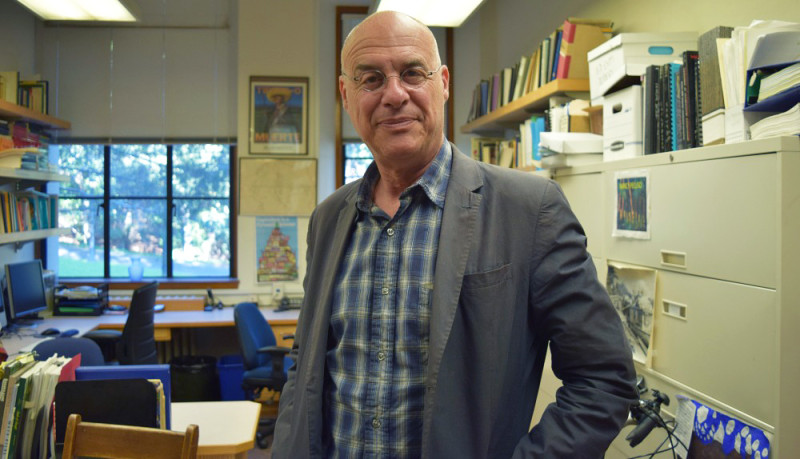
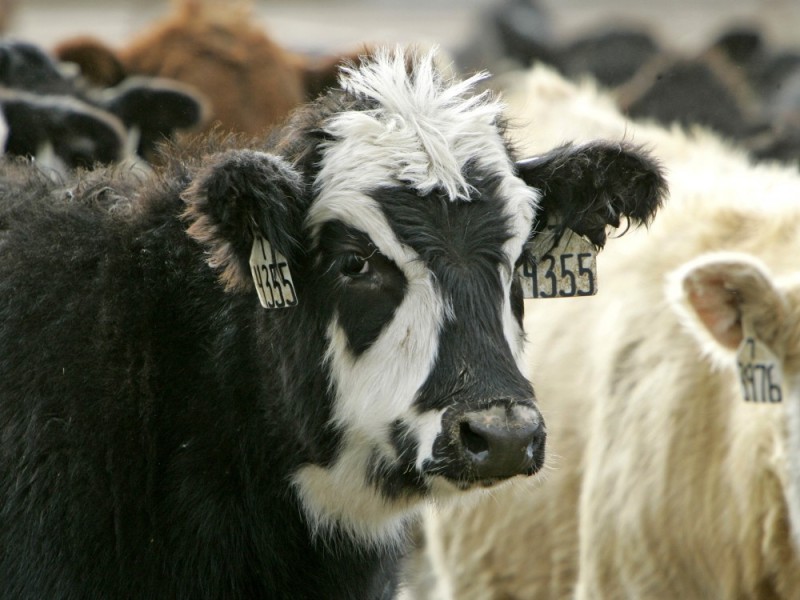
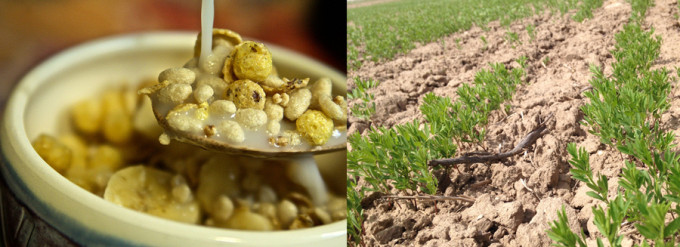
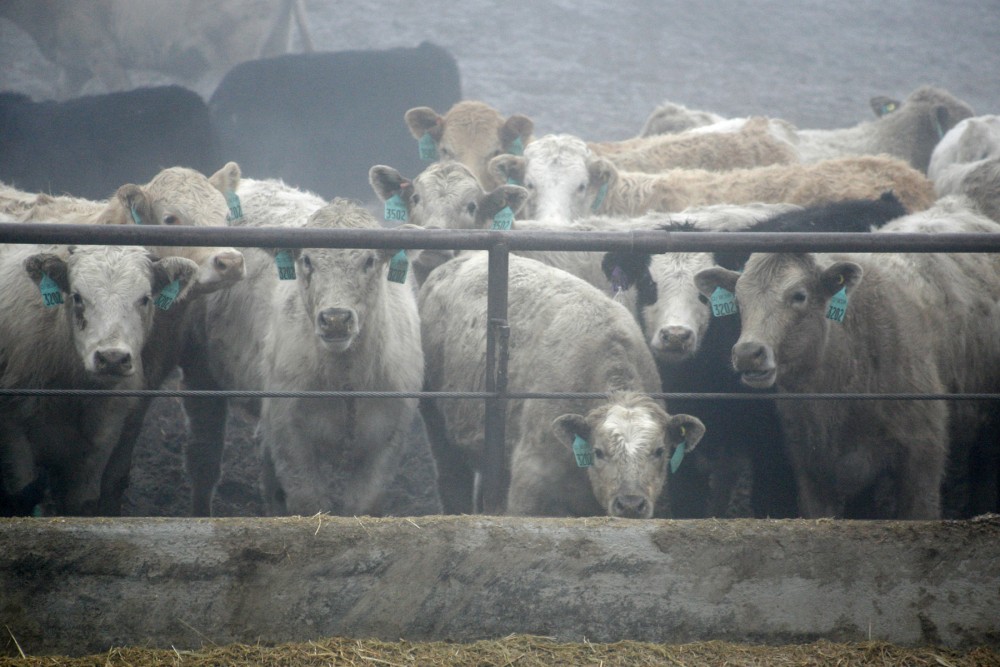
window.__IS_SSR__=true
window.__INITIAL_STATE__={
"attachmentsReducer": {
"audio_0": {
"type": "attachments",
"id": "audio_0",
"imgSizes": {
"kqedFullSize": {
"file": "https://ww2.kqed.org/news/wp-content/themes/KQED-unified/img/audio_bgs/background0.jpg"
}
}
},
"audio_1": {
"type": "attachments",
"id": "audio_1",
"imgSizes": {
"kqedFullSize": {
"file": "https://ww2.kqed.org/news/wp-content/themes/KQED-unified/img/audio_bgs/background1.jpg"
}
}
},
"audio_2": {
"type": "attachments",
"id": "audio_2",
"imgSizes": {
"kqedFullSize": {
"file": "https://ww2.kqed.org/news/wp-content/themes/KQED-unified/img/audio_bgs/background2.jpg"
}
}
},
"audio_3": {
"type": "attachments",
"id": "audio_3",
"imgSizes": {
"kqedFullSize": {
"file": "https://ww2.kqed.org/news/wp-content/themes/KQED-unified/img/audio_bgs/background3.jpg"
}
}
},
"audio_4": {
"type": "attachments",
"id": "audio_4",
"imgSizes": {
"kqedFullSize": {
"file": "https://ww2.kqed.org/news/wp-content/themes/KQED-unified/img/audio_bgs/background4.jpg"
}
}
},
"placeholder": {
"type": "attachments",
"id": "placeholder",
"imgSizes": {
"thumbnail": {
"file": "https://cdn.kqed.org/wp-content/uploads/2024/12/KQED-Default-Image-816638274-2000x1333-1-160x107.jpg",
"width": 160,
"height": 107,
"mimeType": "image/jpeg"
},
"medium": {
"file": "https://cdn.kqed.org/wp-content/uploads/2024/12/KQED-Default-Image-816638274-2000x1333-1-800x533.jpg",
"width": 800,
"height": 533,
"mimeType": "image/jpeg"
},
"medium_large": {
"file": "https://cdn.kqed.org/wp-content/uploads/2024/12/KQED-Default-Image-816638274-2000x1333-1-768x512.jpg",
"width": 768,
"height": 512,
"mimeType": "image/jpeg"
},
"large": {
"file": "https://cdn.kqed.org/wp-content/uploads/2024/12/KQED-Default-Image-816638274-2000x1333-1-1020x680.jpg",
"width": 1020,
"height": 680,
"mimeType": "image/jpeg"
},
"1536x1536": {
"file": "https://cdn.kqed.org/wp-content/uploads/2024/12/KQED-Default-Image-816638274-2000x1333-1-1536x1024.jpg",
"width": 1536,
"height": 1024,
"mimeType": "image/jpeg"
},
"fd-lrg": {
"file": "https://cdn.kqed.org/wp-content/uploads/2024/12/KQED-Default-Image-816638274-2000x1333-1-1536x1024.jpg",
"width": 1536,
"height": 1024,
"mimeType": "image/jpeg"
},
"fd-med": {
"file": "https://cdn.kqed.org/wp-content/uploads/2024/12/KQED-Default-Image-816638274-2000x1333-1-1020x680.jpg",
"width": 1020,
"height": 680,
"mimeType": "image/jpeg"
},
"fd-sm": {
"file": "https://cdn.kqed.org/wp-content/uploads/2024/12/KQED-Default-Image-816638274-2000x1333-1-800x533.jpg",
"width": 800,
"height": 533,
"mimeType": "image/jpeg"
},
"post-thumbnail": {
"file": "https://cdn.kqed.org/wp-content/uploads/2024/12/KQED-Default-Image-816638274-2000x1333-1-672x372.jpg",
"width": 672,
"height": 372,
"mimeType": "image/jpeg"
},
"twentyfourteen-full-width": {
"file": "https://cdn.kqed.org/wp-content/uploads/2024/12/KQED-Default-Image-816638274-2000x1333-1-1038x576.jpg",
"width": 1038,
"height": 576,
"mimeType": "image/jpeg"
},
"xxsmall": {
"file": "https://cdn.kqed.org/wp-content/uploads/2024/12/KQED-Default-Image-816638274-2000x1333-1-160x107.jpg",
"width": 160,
"height": 107,
"mimeType": "image/jpeg"
},
"xsmall": {
"file": "https://cdn.kqed.org/wp-content/uploads/2024/12/KQED-Default-Image-816638274-2000x1333-1-672x372.jpg",
"width": 672,
"height": 372,
"mimeType": "image/jpeg"
},
"small": {
"file": "https://cdn.kqed.org/wp-content/uploads/2024/12/KQED-Default-Image-816638274-2000x1333-1-672x372.jpg",
"width": 672,
"height": 372,
"mimeType": "image/jpeg"
},
"xlarge": {
"file": "https://cdn.kqed.org/wp-content/uploads/2024/12/KQED-Default-Image-816638274-2000x1333-1-1020x680.jpg",
"width": 1020,
"height": 680,
"mimeType": "image/jpeg"
},
"full-width": {
"file": "https://cdn.kqed.org/wp-content/uploads/2024/12/KQED-Default-Image-816638274-2000x1333-1-1920x1280.jpg",
"width": 1920,
"height": 1280,
"mimeType": "image/jpeg"
},
"guest-author-32": {
"file": "https://cdn.kqed.org/wp-content/uploads/2025/01/KQED-Default-Image-816638274-1333x1333-1-160x160.jpg",
"width": 32,
"height": 32,
"mimeType": "image/jpeg"
},
"guest-author-50": {
"file": "https://cdn.kqed.org/wp-content/uploads/2025/01/KQED-Default-Image-816638274-1333x1333-1-160x160.jpg",
"width": 50,
"height": 50,
"mimeType": "image/jpeg"
},
"guest-author-64": {
"file": "https://cdn.kqed.org/wp-content/uploads/2025/01/KQED-Default-Image-816638274-1333x1333-1-160x160.jpg",
"width": 64,
"height": 64,
"mimeType": "image/jpeg"
},
"guest-author-96": {
"file": "https://cdn.kqed.org/wp-content/uploads/2025/01/KQED-Default-Image-816638274-1333x1333-1-160x160.jpg",
"width": 96,
"height": 96,
"mimeType": "image/jpeg"
},
"guest-author-128": {
"file": "https://cdn.kqed.org/wp-content/uploads/2025/01/KQED-Default-Image-816638274-1333x1333-1-160x160.jpg",
"width": 128,
"height": 128,
"mimeType": "image/jpeg"
},
"detail": {
"file": "https://cdn.kqed.org/wp-content/uploads/2025/01/KQED-Default-Image-816638274-1333x1333-1-160x160.jpg",
"width": 160,
"height": 160,
"mimeType": "image/jpeg"
},
"kqedFullSize": {
"file": "https://cdn.kqed.org/wp-content/uploads/2024/12/KQED-Default-Image-816638274-2000x1333-1.jpg",
"width": 2000,
"height": 1333
}
}
},
"bayareabites_93231": {
"type": "attachments",
"id": "bayareabites_93231",
"meta": {
"index": "attachments_1716263798",
"site": "bayareabites",
"id": "93231",
"found": true
},
"parent": 93031,
"imgSizes": {
"thumbnail": {
"file": "https://ww2.kqed.org/app/uploads/sites/24/2015/02/bittman-400x230.jpg",
"width": 400,
"mimeType": "image/jpeg",
"height": 230
},
"fd-sm": {
"file": "https://ww2.kqed.org/app/uploads/sites/24/2015/02/bittman-320x184.jpg",
"width": 320,
"mimeType": "image/jpeg",
"height": 184
},
"post-thumbnail": {
"file": "https://ww2.kqed.org/app/uploads/sites/24/2015/02/bittman-672x372.jpg",
"width": 672,
"mimeType": "image/jpeg",
"height": 372
},
"kqedFullSize": {
"file": "https://ww2.kqed.org/app/uploads/sites/24/2015/02/bittman.jpg",
"width": 1000,
"height": 574
},
"cat_post_thumb_sizecategory-posts-2": {
"file": "https://ww2.kqed.org/app/uploads/sites/24/2015/02/bittman-50x50.jpg",
"width": 50,
"mimeType": "image/jpeg",
"height": 50
},
"fd-med": {
"file": "https://ww2.kqed.org/app/uploads/sites/24/2015/02/bittman-768x441.jpg",
"width": 768,
"mimeType": "image/jpeg",
"height": 441
},
"guest-author-96": {
"file": "https://ww2.kqed.org/app/uploads/sites/24/2015/02/bittman-96x96.jpg",
"width": 96,
"mimeType": "image/jpeg",
"height": 96
},
"medium": {
"file": "https://ww2.kqed.org/app/uploads/sites/24/2015/02/bittman-800x459.jpg",
"width": 800,
"mimeType": "image/jpeg",
"height": 459
},
"guest-author-64": {
"file": "https://ww2.kqed.org/app/uploads/sites/24/2015/02/bittman-64x64.jpg",
"width": 64,
"mimeType": "image/jpeg",
"height": 64
},
"detail": {
"file": "https://ww2.kqed.org/app/uploads/sites/24/2015/02/bittman-75x75.jpg",
"width": 75,
"mimeType": "image/jpeg",
"height": 75
},
"guest-author-32": {
"file": "https://ww2.kqed.org/app/uploads/sites/24/2015/02/bittman-32x32.jpg",
"width": 32,
"mimeType": "image/jpeg",
"height": 32
},
"guest-author-128": {
"file": "https://ww2.kqed.org/app/uploads/sites/24/2015/02/bittman-128x128.jpg",
"width": 128,
"mimeType": "image/jpeg",
"height": 128
}
},
"publishDate": 1423852605,
"modified": 1423852612,
"caption": "Mark Bittman in his new office at UC Berkeley Photo: Shelby Pope",
"description": null,
"title": "bittman",
"credit": null,
"status": "inherit",
"isLoading": false,
"fetchFailed": false
},
"bayareabites_93174": {
"type": "attachments",
"id": "bayareabites_93174",
"meta": {
"index": "attachments_1716263798",
"site": "bayareabites",
"id": "93174",
"found": true
},
"parent": 93172,
"imgSizes": {
"twentyfourteen-full-width": {
"file": "https://ww2.kqed.org/app/uploads/sites/24/2015/02/app-1_enl-36fe49df3f0961f5ddc0c2ccc794b31574cc290c-e1423781979530-1000x576.jpg",
"width": 1000,
"mimeType": "image/jpeg",
"height": 576
},
"thumbnail": {
"file": "https://ww2.kqed.org/app/uploads/sites/24/2015/02/app-1_enl-36fe49df3f0961f5ddc0c2ccc794b31574cc290c-e1423781979530-400x266.jpg",
"width": 400,
"mimeType": "image/jpeg",
"height": 266
},
"fd-sm": {
"file": "https://ww2.kqed.org/app/uploads/sites/24/2015/02/app-1_enl-36fe49df3f0961f5ddc0c2ccc794b31574cc290c-e1423781979530-320x213.jpg",
"width": 320,
"mimeType": "image/jpeg",
"height": 213
},
"post-thumbnail": {
"file": "https://ww2.kqed.org/app/uploads/sites/24/2015/02/app-1_enl-36fe49df3f0961f5ddc0c2ccc794b31574cc290c-e1423781979530-672x372.jpg",
"width": 672,
"mimeType": "image/jpeg",
"height": 372
},
"kqedFullSize": {
"file": "https://ww2.kqed.org/app/uploads/sites/24/2015/02/app-1_enl-36fe49df3f0961f5ddc0c2ccc794b31574cc290c-e1423781979530.jpg",
"width": 1000,
"height": 666
},
"guest-author-96": {
"file": "https://ww2.kqed.org/app/uploads/sites/24/2015/02/app-1_enl-36fe49df3f0961f5ddc0c2ccc794b31574cc290c-e1423781979530-96x96.jpg",
"width": 96,
"mimeType": "image/jpeg",
"height": 96
},
"medium": {
"file": "https://ww2.kqed.org/app/uploads/sites/24/2015/02/app-1_enl-36fe49df3f0961f5ddc0c2ccc794b31574cc290c-e1423781979530-800x533.jpg",
"width": 800,
"mimeType": "image/jpeg",
"height": 533
},
"guest-author-64": {
"file": "https://ww2.kqed.org/app/uploads/sites/24/2015/02/app-1_enl-36fe49df3f0961f5ddc0c2ccc794b31574cc290c-e1423781979530-64x64.jpg",
"width": 64,
"mimeType": "image/jpeg",
"height": 64
},
"guest-author-32": {
"file": "https://ww2.kqed.org/app/uploads/sites/24/2015/02/app-1_enl-36fe49df3f0961f5ddc0c2ccc794b31574cc290c-e1423781979530-32x32.jpg",
"width": 32,
"mimeType": "image/jpeg",
"height": 32
},
"cat_post_thumb_sizecategory-posts-2": {
"file": "https://ww2.kqed.org/app/uploads/sites/24/2015/02/app-1_enl-36fe49df3f0961f5ddc0c2ccc794b31574cc290c-e1423781979530-50x50.jpg",
"width": 50,
"mimeType": "image/jpeg",
"height": 50
},
"fd-med": {
"file": "https://ww2.kqed.org/app/uploads/sites/24/2015/02/app-1_enl-36fe49df3f0961f5ddc0c2ccc794b31574cc290c-e1423781979530-768x511.jpg",
"width": 768,
"mimeType": "image/jpeg",
"height": 511
},
"detail": {
"file": "https://ww2.kqed.org/app/uploads/sites/24/2015/02/app-1_enl-36fe49df3f0961f5ddc0c2ccc794b31574cc290c-e1423781979530-75x75.jpg",
"width": 75,
"mimeType": "image/jpeg",
"height": 75
},
"guest-author-128": {
"file": "https://ww2.kqed.org/app/uploads/sites/24/2015/02/app-1_enl-36fe49df3f0961f5ddc0c2ccc794b31574cc290c-e1423781979530-128x128.jpg",
"width": 128,
"mimeType": "image/jpeg",
"height": 128
}
},
"publishDate": 1423781560,
"modified": 1423781974,
"caption": "A screenshot of the app from Restaurant Opportunities Centers United. Photo: Meredith Rizzo/NPR",
"description": "A screenshot of the app from Restaurant Opportunities Centers United.",
"title": "A screenshot of the app from Restaurant Opportunities Centers United.",
"credit": null,
"status": "inherit",
"isLoading": false,
"fetchFailed": false
},
"bayareabites_92954": {
"type": "attachments",
"id": "bayareabites_92954",
"meta": {
"index": "attachments_1716263798",
"site": "bayareabites",
"id": "92954",
"found": true
},
"parent": 92953,
"imgSizes": {
"twentyfourteen-full-width": {
"file": "https://ww2.kqed.org/app/uploads/sites/24/2015/02/nebraska-cattle-9a5eec942069112cc86baae867f408a0ddd0b0a6-e1423254696822-1000x576.jpg",
"width": 1000,
"mimeType": "image/jpeg",
"height": 576
},
"thumbnail": {
"file": "https://ww2.kqed.org/app/uploads/sites/24/2015/02/nebraska-cattle-9a5eec942069112cc86baae867f408a0ddd0b0a6-e1423254696822-400x300.jpg",
"width": 400,
"mimeType": "image/jpeg",
"height": 300
},
"fd-sm": {
"file": "https://ww2.kqed.org/app/uploads/sites/24/2015/02/nebraska-cattle-9a5eec942069112cc86baae867f408a0ddd0b0a6-e1423254696822-320x240.jpg",
"width": 320,
"mimeType": "image/jpeg",
"height": 240
},
"post-thumbnail": {
"file": "https://ww2.kqed.org/app/uploads/sites/24/2015/02/nebraska-cattle-9a5eec942069112cc86baae867f408a0ddd0b0a6-e1423254696822-672x372.jpg",
"width": 672,
"mimeType": "image/jpeg",
"height": 372
},
"kqedFullSize": {
"file": "https://ww2.kqed.org/app/uploads/sites/24/2015/02/nebraska-cattle-9a5eec942069112cc86baae867f408a0ddd0b0a6-e1423254696822.jpg",
"width": 1000,
"height": 750
},
"guest-author-96": {
"file": "https://ww2.kqed.org/app/uploads/sites/24/2015/02/nebraska-cattle-9a5eec942069112cc86baae867f408a0ddd0b0a6-e1423254696822-96x96.jpg",
"width": 96,
"mimeType": "image/jpeg",
"height": 96
},
"medium": {
"file": "https://ww2.kqed.org/app/uploads/sites/24/2015/02/nebraska-cattle-9a5eec942069112cc86baae867f408a0ddd0b0a6-e1423254696822-800x600.jpg",
"width": 800,
"mimeType": "image/jpeg",
"height": 600
},
"guest-author-64": {
"file": "https://ww2.kqed.org/app/uploads/sites/24/2015/02/nebraska-cattle-9a5eec942069112cc86baae867f408a0ddd0b0a6-e1423254696822-64x64.jpg",
"width": 64,
"mimeType": "image/jpeg",
"height": 64
},
"guest-author-32": {
"file": "https://ww2.kqed.org/app/uploads/sites/24/2015/02/nebraska-cattle-9a5eec942069112cc86baae867f408a0ddd0b0a6-e1423254696822-32x32.jpg",
"width": 32,
"mimeType": "image/jpeg",
"height": 32
},
"cat_post_thumb_sizecategory-posts-2": {
"file": "https://ww2.kqed.org/app/uploads/sites/24/2015/02/nebraska-cattle-9a5eec942069112cc86baae867f408a0ddd0b0a6-e1423254696822-50x50.jpg",
"width": 50,
"mimeType": "image/jpeg",
"height": 50
},
"fd-med": {
"file": "https://ww2.kqed.org/app/uploads/sites/24/2015/02/nebraska-cattle-9a5eec942069112cc86baae867f408a0ddd0b0a6-e1423254696822-768x576.jpg",
"width": 768,
"mimeType": "image/jpeg",
"height": 576
},
"detail": {
"file": "https://ww2.kqed.org/app/uploads/sites/24/2015/02/nebraska-cattle-9a5eec942069112cc86baae867f408a0ddd0b0a6-e1423254696822-75x75.jpg",
"width": 75,
"mimeType": "image/jpeg",
"height": 75
},
"guest-author-128": {
"file": "https://ww2.kqed.org/app/uploads/sites/24/2015/02/nebraska-cattle-9a5eec942069112cc86baae867f408a0ddd0b0a6-e1423254696822-128x128.jpg",
"width": 128,
"mimeType": "image/jpeg",
"height": 128
}
},
"publishDate": 1423254323,
"modified": 1423254690,
"caption": "Cattle raised at the U.S. Meat Animal Research Center in Clay Center, Neb. A New York Times investigation of animal suffering at the federal research center has prompted a USDA review. Photo: Nati Harnik/AP ",
"description": "Cattle raised at the U.S. Meat Animal Research Center in Clay Center, Neb. A \u003cem>New York Times\u003c/em> investigation of animal suffering at the federal research center has prompted a USDA re",
"title": "Cattle raised at the U.S. Meat Animal Research Center in Clay Center, Neb. A New York Times investigation of animal suffering at the federal research center has prompted a USDA review.",
"credit": null,
"status": "inherit",
"isLoading": false,
"fetchFailed": false
},
"bayareabites_92800": {
"type": "attachments",
"id": "bayareabites_92800",
"meta": {
"index": "attachments_1716263798",
"site": "bayareabites",
"id": "92800",
"found": true
},
"parent": 92798,
"imgSizes": {
"thumbnail": {
"file": "https://ww2.kqed.org/app/uploads/sites/24/2015/02/Naturespath-400x145.jpg",
"width": 400,
"mimeType": "image/jpeg",
"height": 145
},
"fd-sm": {
"file": "https://ww2.kqed.org/app/uploads/sites/24/2015/02/Naturespath-320x116.jpg",
"width": 320,
"mimeType": "image/jpeg",
"height": 116
},
"post-thumbnail": {
"file": "https://ww2.kqed.org/app/uploads/sites/24/2015/02/Naturespath-672x247.jpg",
"width": 672,
"mimeType": "image/jpeg",
"height": 247
},
"kqedFullSize": {
"file": "https://ww2.kqed.org/app/uploads/sites/24/2015/02/Naturespath.jpg",
"width": 680,
"height": 247
},
"cat_post_thumb_sizecategory-posts-2": {
"file": "https://ww2.kqed.org/app/uploads/sites/24/2015/02/Naturespath-50x50.jpg",
"width": 50,
"mimeType": "image/jpeg",
"height": 50
},
"guest-author-96": {
"file": "https://ww2.kqed.org/app/uploads/sites/24/2015/02/Naturespath-96x96.jpg",
"width": 96,
"mimeType": "image/jpeg",
"height": 96
},
"guest-author-64": {
"file": "https://ww2.kqed.org/app/uploads/sites/24/2015/02/Naturespath-64x64.jpg",
"width": 64,
"mimeType": "image/jpeg",
"height": 64
},
"detail": {
"file": "https://ww2.kqed.org/app/uploads/sites/24/2015/02/Naturespath-75x75.jpg",
"width": 75,
"mimeType": "image/jpeg",
"height": 75
},
"guest-author-32": {
"file": "https://ww2.kqed.org/app/uploads/sites/24/2015/02/Naturespath-32x32.jpg",
"width": 32,
"mimeType": "image/jpeg",
"height": 32
},
"guest-author-128": {
"file": "https://ww2.kqed.org/app/uploads/sites/24/2015/02/Naturespath-128x128.jpg",
"width": 128,
"mimeType": "image/jpeg",
"height": 128
}
},
"publishDate": 1423007174,
"modified": 1423007205,
"caption": "Photo of Nature's Path cereal Nora Kuby. Photo of farm fields courtesy of Nature's Path.",
"description": null,
"title": "Naturespath",
"credit": null,
"status": "inherit",
"isLoading": false,
"fetchFailed": false
},
"bayareabites_92779": {
"type": "attachments",
"id": "bayareabites_92779",
"meta": {
"index": "attachments_1716263798",
"site": "bayareabites",
"id": "92779",
"found": true
},
"parent": 92778,
"imgSizes": {
"twentyfourteen-full-width": {
"file": "https://ww2.kqed.org/app/uploads/sites/24/2015/02/organic-fish-1_slide-d90e97cffd8bb585ea33ceaa3fd8049a460041fe-999x576.jpg",
"width": 999,
"mimeType": "image/jpeg",
"height": 576
},
"thumbnail": {
"file": "https://ww2.kqed.org/app/uploads/sites/24/2015/02/organic-fish-1_slide-d90e97cffd8bb585ea33ceaa3fd8049a460041fe-400x267.jpg",
"width": 400,
"mimeType": "image/jpeg",
"height": 267
},
"fd-sm": {
"file": "https://ww2.kqed.org/app/uploads/sites/24/2015/02/organic-fish-1_slide-d90e97cffd8bb585ea33ceaa3fd8049a460041fe-320x213.jpg",
"width": 320,
"mimeType": "image/jpeg",
"height": 213
},
"post-thumbnail": {
"file": "https://ww2.kqed.org/app/uploads/sites/24/2015/02/organic-fish-1_slide-d90e97cffd8bb585ea33ceaa3fd8049a460041fe-672x372.jpg",
"width": 672,
"mimeType": "image/jpeg",
"height": 372
},
"kqedFullSize": {
"file": "https://ww2.kqed.org/app/uploads/sites/24/2015/02/organic-fish-1_slide-d90e97cffd8bb585ea33ceaa3fd8049a460041fe.jpg",
"width": 999,
"height": 666
},
"guest-author-96": {
"file": "https://ww2.kqed.org/app/uploads/sites/24/2015/02/organic-fish-1_slide-d90e97cffd8bb585ea33ceaa3fd8049a460041fe-96x96.jpg",
"width": 96,
"mimeType": "image/jpeg",
"height": 96
},
"medium": {
"file": "https://ww2.kqed.org/app/uploads/sites/24/2015/02/organic-fish-1_slide-d90e97cffd8bb585ea33ceaa3fd8049a460041fe-800x533.jpg",
"width": 800,
"mimeType": "image/jpeg",
"height": 533
},
"guest-author-64": {
"file": "https://ww2.kqed.org/app/uploads/sites/24/2015/02/organic-fish-1_slide-d90e97cffd8bb585ea33ceaa3fd8049a460041fe-64x64.jpg",
"width": 64,
"mimeType": "image/jpeg",
"height": 64
},
"guest-author-32": {
"file": "https://ww2.kqed.org/app/uploads/sites/24/2015/02/organic-fish-1_slide-d90e97cffd8bb585ea33ceaa3fd8049a460041fe-32x32.jpg",
"width": 32,
"mimeType": "image/jpeg",
"height": 32
},
"cat_post_thumb_sizecategory-posts-2": {
"file": "https://ww2.kqed.org/app/uploads/sites/24/2015/02/organic-fish-1_slide-d90e97cffd8bb585ea33ceaa3fd8049a460041fe-50x50.jpg",
"width": 50,
"mimeType": "image/jpeg",
"height": 50
},
"fd-med": {
"file": "https://ww2.kqed.org/app/uploads/sites/24/2015/02/organic-fish-1_slide-d90e97cffd8bb585ea33ceaa3fd8049a460041fe-768x512.jpg",
"width": 768,
"mimeType": "image/jpeg",
"height": 512
},
"detail": {
"file": "https://ww2.kqed.org/app/uploads/sites/24/2015/02/organic-fish-1_slide-d90e97cffd8bb585ea33ceaa3fd8049a460041fe-75x75.jpg",
"width": 75,
"mimeType": "image/jpeg",
"height": 75
},
"guest-author-128": {
"file": "https://ww2.kqed.org/app/uploads/sites/24/2015/02/organic-fish-1_slide-d90e97cffd8bb585ea33ceaa3fd8049a460041fe-128x128.jpg",
"width": 128,
"mimeType": "image/jpeg",
"height": 128
}
},
"publishDate": 1423002004,
"modified": 1423002408,
"caption": "At Troutdale Farm in Missouri, farmhand Vince Orcutt pulls out rainbow trout ready to harvest. Photo: Kristofor Husted/Harvest Public Media",
"description": "At Troutdale Farm in Missouri, farmhand Vince Orcutt pulls out rainbow trout ready to harvest.",
"title": "At Troutdale Farm in Missouri, farmhand Vince Orcutt pulls out rainbow trout ready to harvest.",
"credit": null,
"status": "inherit",
"isLoading": false,
"fetchFailed": false
},
"bayareabites_92347": {
"type": "attachments",
"id": "bayareabites_92347",
"meta": {
"index": "attachments_1716263798",
"site": "bayareabites",
"id": "92347",
"found": true
},
"parent": 92346,
"imgSizes": {
"kqedFullSize": {
"file": "https://ww2.kqed.org/app/uploads/sites/24/2015/01/cows_enl-787a2778cbfa3a7f89e6053b47103554f8a3abf7-e1422392884964.jpg",
"width": 1000,
"height": 667
}
},
"publishDate": 1422392793,
"modified": 1422392879,
"caption": "Cattle in holding pens at the Simplot feedlot located next to a slaughterhouse in Burbank, Washington on Dec. 26, 2013. Merck & Co Inc is testing lower dosages of its controversial cattle growth drug Zilmax drug in an effort to resume its sales to the $44 billion U.S. beef industry. Photo: Ross Courtney/Reuters/Landov",
"description": "Cattle in holding pens at the Simplot feedlot located next to a slaughterhouse in Burbank, Washington on Dec. 26, 2013. Merck",
"title": "Cattle in holding pens at the Simplot feedlot located next to a slaughterhouse in Burbank, Washington on Dec. 26, 2013. Merck & Co Inc is testing lower dosages of its controversial cattle growth drug Zilmax drug in an effort to resume its sales to the $44 billion U.S. beef industry.",
"credit": null,
"status": "inherit",
"isLoading": false,
"fetchFailed": false
},
"bayareabites_92246": {
"type": "attachments",
"id": "bayareabites_92246",
"meta": {
"index": "attachments_1716263798",
"site": "bayareabites",
"id": "92246",
"found": true
},
"parent": 92243,
"imgSizes": {
"kqedFullSize": {
"file": "https://ww2.kqed.org/app/uploads/sites/24/2015/01/doria-robinson.jpg",
"width": 680,
"height": 406
}
},
"publishDate": 1421953541,
"modified": 1421953777,
"caption": "Doria Robinson. Photo: Twilight Greenaway",
"description": null,
"title": "doria-robinson",
"credit": null,
"status": "inherit",
"isLoading": false,
"fetchFailed": false
},
"bayareabites_92234": {
"type": "attachments",
"id": "bayareabites_92234",
"meta": {
"index": "attachments_1716263798",
"site": "bayareabites",
"id": "92234",
"found": true
},
"parent": 92233,
"imgSizes": {
"kqedFullSize": {
"file": "https://ww2.kqed.org/app/uploads/sites/24/2015/01/chicken-parts_slide-b8044ea2401e6e46d26f542798cce014952c9c09-e1421888589864.jpg",
"width": 1000,
"height": 666
}
},
"publishDate": 1421888279,
"modified": 1421888583,
"caption": "About a quarter of the chicken parts we buy is tainted with salmonella, according to USDA tests. Photo: snowpea&bokchoi/Flickr",
"description": "About a quarter of the chicken parts we buy is tainted with salmonella, according to USDA tests",
"title": "About a quarter of the chicken parts we buy is tainted with salmonella, according to USDA tests.",
"credit": null,
"status": "inherit",
"isLoading": false,
"fetchFailed": false
},
"bayareabites_92222": {
"type": "attachments",
"id": "bayareabites_92222",
"meta": {
"index": "attachments_1716263798",
"site": "bayareabites",
"id": "92222",
"found": true
},
"parent": 92221,
"imgSizes": {
"kqedFullSize": {
"file": "https://ww2.kqed.org/app/uploads/sites/24/2015/01/ap090710048753_slide-6962e70a8b8da5b2c1a6bcc32b34d52696258fd1-e1421856825108.jpg",
"width": 1000,
"height": 667
}
},
"publishDate": 1421856257,
"modified": 1421856818,
"caption": "A sow nurses her piglets in a farrowing crate in an Elite Pork Partnership hog confinement building in Carroll, Iowa, in 2009. Photo: Charlie Neibergall/AP ",
"description": "A sow nurses her piglets in a farrowing crate in an Elite Pork Partnership hog confinement building in Carroll, Iowa, in 200",
"title": "A sow nurses her piglets in a farrowing crate in an Elite Pork Partnership hog confinement building in Carroll, Iowa, in 2009.",
"credit": null,
"status": "inherit",
"isLoading": false,
"fetchFailed": false
},
"bayareabites_92207": {
"type": "attachments",
"id": "bayareabites_92207",
"meta": {
"index": "attachments_1716263798",
"site": "bayareabites",
"id": "92207",
"found": true
},
"parent": 92206,
"imgSizes": {
"kqedFullSize": {
"file": "https://ww2.kqed.org/app/uploads/sites/24/2015/01/non-gmo-76ca7b2dcfdb5406e4017a92ac36e4939418f8e6-e1421783470891.jpg",
"width": 1000,
"height": 749
}
},
"publishDate": 1421782452,
"modified": 1421783461,
"caption": "Demand is growing for GMO-free labels on food products, according to the Non-GMO Project, one of the principle suppliers of the label. Photo: Robyn Beck/AFP/Getty Images ",
"description": "Demand is growing for GMO-free labels on food products, according to the Non-GMO Project, one of the principle suppliers of the label.",
"title": "Demand is growing for GMO-free labels on food products, according to the Non-GMO Project, one of the principle suppliers of the label.",
"credit": null,
"status": "inherit",
"isLoading": false,
"fetchFailed": false
},
"bayareabites_92100": {
"type": "attachments",
"id": "bayareabites_92100",
"meta": {
"index": "attachments_1716263798",
"site": "bayareabites",
"id": "92100",
"found": true
},
"parent": 92099,
"imgSizes": {
"kqedFullSize": {
"file": "https://ww2.kqed.org/app/uploads/sites/24/2015/01/ap751843601418_custom-81cb3cb3c541445902c2e7259e9afddc2db65f18-e1421348256284.jpg",
"width": 1000,
"height": 692
}
},
"publishDate": 1421347967,
"modified": 1421348268,
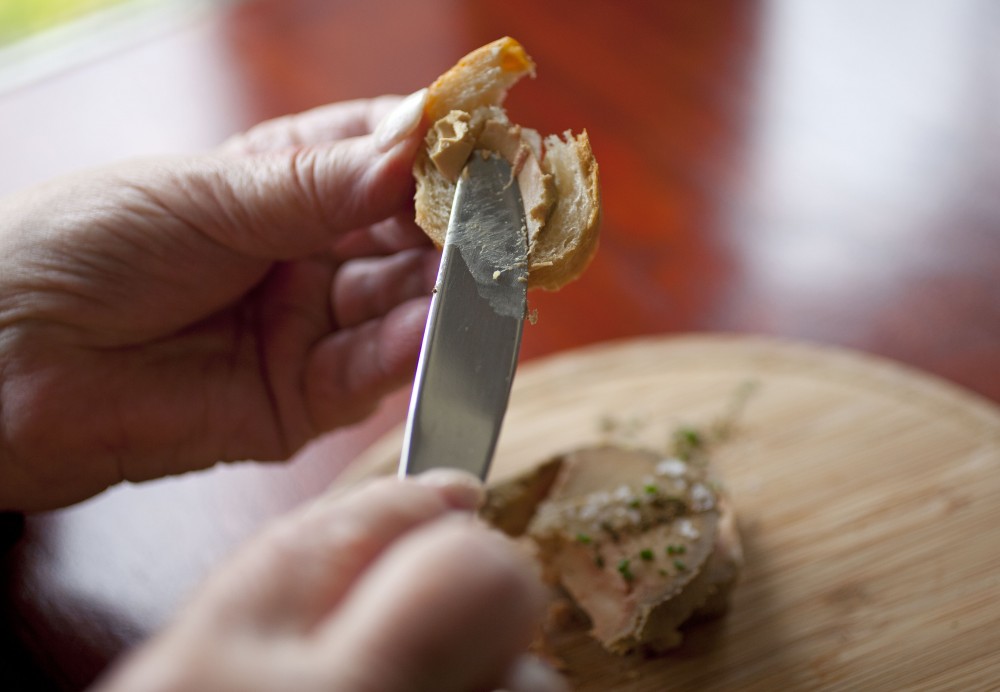
"caption": "Karlene Bley of Los Angeles spreads her torchon of foie gras onto bread during lunch at the Presidio Social Club restaurant in San Francisco. Last week, a federal judge overturned California's ban on the dish. Photo: Eric Risberg/AP ",
"description": "Karlene Bley of Los Angeles spreads her torchon of foie gras onto bread during lunch at the Presidio Social Club restaurant in San Francisco. Last week, a federal judge overturned California's ban on the dish",
"title": "Karlene Bley of Los Angeles spreads her torchon of foie gras onto bread during lunch at the Presidio Social Club restaurant in San Francisco. Last week, a federal judge overturned California's ban on the dish.",
"credit": null,
"status": "inherit",
"isLoading": false,
"fetchFailed": false
},
"bayareabites_92065": {
"type": "attachments",
"id": "bayareabites_92065",
"meta": {
"index": "attachments_1716263798",
"site": "bayareabites",
"id": "92065",
"found": true
},
"parent": 92064,
"imgSizes": {
"kqedFullSize": {
"file": "https://ww2.kqed.org/app/uploads/sites/24/2015/01/potatoes-3_slide-9c5df7f5282662734d8012f4f2e0a5344f7e823e-e1421195007488.jpg",
"width": 1000,
"height": 667
}
},
"publishDate": 1421194618,
"modified": 1421195002,
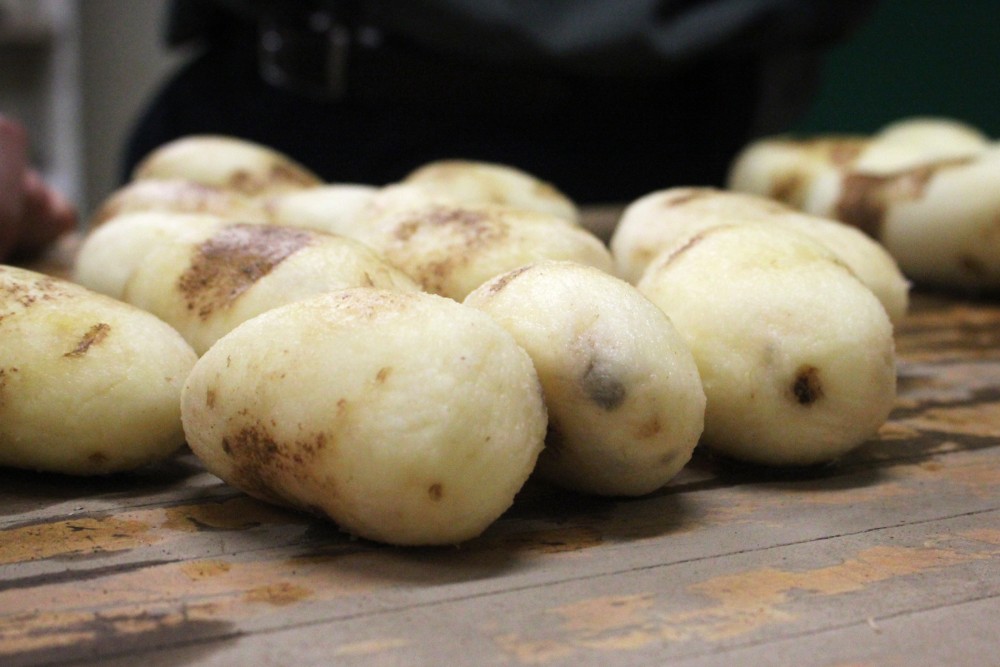
"caption": "After a turn in the tumbling machine, these conventional russet Burbank potatoes are starting to show signs of bruising. New GMO potatoes called Innate russet Burbanks have been bred not to bruise as easily as these. Photo: Dan Charles/NPR",
"description": "After a turn in the tumbling machine, these conventional russet Burbank potatoes are starting to show signs of bruising. New GMO potatoes called Innate russet Burbanks have been bred not to bruise as easily as these.",
"title": "After a turn in the tumbling machine, these conventional russet Burbank potatoes are starting to show signs of bruising. New GMO potatoes called Innate russet Burbanks have been bred not to bruise as easily as these.",
"credit": null,
"status": "inherit",
"isLoading": false,
"fetchFailed": false
}
},
"audioPlayerReducer": {
"postId": "stream_live",
"isPaused": true,
"isPlaying": false,
"pfsActive": false,
"pledgeModalIsOpen": true,
"playerDrawerIsOpen": false,
"liveAudioPlayStartedAt": 0,
"liveAudioPlayContext": ""
},
"authorsReducer": {
"byline_bayareabites_93172": {
"type": "authors",
"id": "byline_bayareabites_93172",
"meta": {
"override": true
},
"slug": "byline_bayareabites_93172",
"name": "Poncie Rutsch",
"isLoading": false
},
"byline_bayareabites_92953": {
"type": "authors",
"id": "byline_bayareabites_92953",
"meta": {
"override": true
},
"slug": "byline_bayareabites_92953",
"name": "Allison Aubrey",
"isLoading": false
},
"byline_bayareabites_92778": {
"type": "authors",
"id": "byline_bayareabites_92778",
"meta": {
"override": true
},
"slug": "byline_bayareabites_92778",
"name": "Kristofor Husted",
"isLoading": false
},
"byline_bayareabites_92346": {
"type": "authors",
"id": "byline_bayareabites_92346",
"meta": {
"override": true
},
"slug": "byline_bayareabites_92346",
"name": "Dan Charles",
"isLoading": false
},
"byline_bayareabites_92233": {
"type": "authors",
"id": "byline_bayareabites_92233",
"meta": {
"override": true
},
"slug": "byline_bayareabites_92233",
"name": "Dan Charles",
"isLoading": false
},
"byline_bayareabites_92221": {
"type": "authors",
"id": "byline_bayareabites_92221",
"meta": {
"override": true
},
"slug": "byline_bayareabites_92221",
"name": "Dan Charles",
"isLoading": false
},
"byline_bayareabites_92206": {
"type": "authors",
"id": "byline_bayareabites_92206",
"meta": {
"override": true
},
"slug": "byline_bayareabites_92206",
"name": "Amy Mayer",
"isLoading": false
},
"byline_bayareabites_92099": {
"type": "authors",
"id": "byline_bayareabites_92099",
"meta": {
"override": true
},
"slug": "byline_bayareabites_92099",
"name": "Sam Sanders",
"isLoading": false
},
"byline_bayareabites_92064": {
"type": "authors",
"id": "byline_bayareabites_92064",
"meta": {
"override": true
},
"slug": "byline_bayareabites_92064",
"name": "Dan Charles",
"isLoading": false
},
"shelbypope": {
"type": "authors",
"id": "5566",
"meta": {
"index": "authors_1716337520",
"id": "5566",
"found": true
},
"name": "Shelby Pope",
"firstName": "Shelby",
"lastName": "Pope",
"slug": "shelbypope",
"email": "shelbylpope@gmail.com",
"display_author_email": false,
"staff_mastheads": [],
"title": "KQED Contributor",
"bio": "Shelby Pope is a freelance writer living and eating her way through the East Bay. She’s written about food, art and science for publications including the Smithsonian, Lucky Peach, and the Washington Post's pet blog. When she’s not taste testing sourdough bread to find the Bay Area’s best loaf, you can find her on Twitter \u003ca href=\"https://twitter.com/shelbylpope\">@shelbylpope\u003c/a> or at \u003ca href=\"https://shelbypope.com/\">shelbypope.com\u003c/a>",
"avatar": "https://secure.gravatar.com/avatar/df74e904399e45720e48e36c6e1ae7a90c32216eb2c9c82f3b2e1a9641b507d3?s=600&d=blank&r=g",
"twitter": "shelbylpope",
"bluesky": null,
"facebook": null,
"instagram": null,
"linkedin": null,
"sites": [
{
"site": "arts",
"roles": [
"subscriber"
]
},
{
"site": "food",
"roles": [
"subscriber"
]
}
],
"headData": {
"title": "Shelby Pope | KQED",
"description": "KQED Contributor",
"ogImgSrc": "https://secure.gravatar.com/avatar/df74e904399e45720e48e36c6e1ae7a90c32216eb2c9c82f3b2e1a9641b507d3?s=600&d=blank&r=g",
"twImgSrc": "https://secure.gravatar.com/avatar/df74e904399e45720e48e36c6e1ae7a90c32216eb2c9c82f3b2e1a9641b507d3?s=600&d=blank&r=g"
},
"isLoading": false,
"link": "/author/shelbypope"
},
"civileat": {
"type": "authors",
"id": "5583",
"meta": {
"index": "authors_1716337520",
"id": "5583",
"found": true
},
"name": "Civil Eats",
"firstName": "Civil",
"lastName": "Eats",
"slug": "civileat",
"email": "twilight@civileats.com",
"display_author_email": false,
"staff_mastheads": [],
"title": null,
"bio": "\u003ca href=\"http://civileats.com/\">Civil Eats\u003c/a> is a daily news source for critical thought about the American food system. We publish stories that shift the conversation around sustainable agriculture in an effort to build economically and socially just communities. Follow Civil Eats on Twitter \u003ca href=\"https://twitter.com/CivilEats\">@civileats\u003c/a> and on \u003ca href=\"https://www.facebook.com/pages/Civil-Eats/56766540637\">Facebook\u003c/a>.",
"avatar": "https://secure.gravatar.com/avatar/8f6f50bfb6403afe7cbc194b66cc1d4d?s=600&d=blank&r=g",
"twitter": "CivilEats",
"facebook": "/pages/Civil-Eats/56766540637?ref=hl",
"instagram": null,
"linkedin": null,
"sites": [
{
"site": "bayareabites",
"roles": [
"contributor"
]
},
{
"site": "food",
"roles": [
"contributor"
]
}
],
"headData": {
"title": "Civil Eats | KQED",
"description": null,
"ogImgSrc": "https://secure.gravatar.com/avatar/8f6f50bfb6403afe7cbc194b66cc1d4d?s=600&d=blank&r=g",
"twImgSrc": "https://secure.gravatar.com/avatar/8f6f50bfb6403afe7cbc194b66cc1d4d?s=600&d=blank&r=g"
},
"isLoading": false,
"link": "/author/civileat"
}
},
"pagesReducer": {
"bayareabites_category_politics-activism-food-safety": {
"type": "terms",
"id": "bayareabites_2035",
"meta": {
"index": "terms_1716263798",
"site": "bayareabites",
"id": "2035",
"score": 13.896381
},
"featImg": null,
"name": "politics, activism, food safety",
"description": null,
"taxonomy": "category",
"headData": {
"twImgId": null,
"twTitle": null,
"ogTitle": null,
"ogImgId": null,
"twDescription": null,
"description": null,
"title": "politics, activism, food safety Archives | KQED Bay Area Bites",
"ogDescription": null
},
"ttid": 943,
"slug": "politics-activism-food-safety",
"isLoading": false,
"title": "politics, activism, food safety",
"pageMeta": {
"site": "bayareabites",
"WpPageTemplate": "page-topic-editorial",
"currentPage": 33
},
"blocks": [
{
"blockName": "kqed/post-list",
"attrs": {
"layout": "cardArticle2",
"query": "posts/bayareabites?category=politics-activism-food-safety",
"seeMore": false,
"paginated": true,
"page": 33
}
},
{
"blockName": "kqed/ad"
}
]
}
},
"pfsSessionReducer": {},
"postsReducer": {
"stream_live": {
"type": "live",
"id": "stream_live",
"audioUrl": "https://streams.kqed.org/kqedradio",
"title": "Live Stream",
"excerpt": "Live Stream information currently unavailable.",
"link": "/radio",
"featImg": "",
"label": {
"name": "KQED Live",
"link": "/"
}
},
"stream_kqedNewscast": {
"type": "posts",
"id": "stream_kqedNewscast",
"audioUrl": "https://www.kqed.org/.stream/anon/radio/RDnews/newscast.mp3?_=1",
"title": "KQED Newscast",
"featImg": "",
"label": {
"name": "88.5 FM",
"link": "/"
}
},
"bayareabites_93031": {
"type": "posts",
"id": "bayareabites_93031",
"meta": {
"index": "posts_1716263798",
"site": "bayareabites",
"id": "93031",
"score": null,
"sort": [
1423852727000
]
},
"parent": 0,
"labelTerm": {
"site": "bayareabites"
},
"blocks": [],
"publishDate": 1423852727,
"format": "aside",
"disqusTitle": "Bittman Does Berkeley: Talking Food Politics With Mark Bittman",
"title": "Bittman Does Berkeley: Talking Food Politics With Mark Bittman",
"headTitle": "Bay Area Bites | KQED Food",
"content": "\u003cfigure id=\"attachment_93231\" class=\"wp-caption aligncenter\" style=\"max-width: 1000px\">\u003ca href=\"http://ww2.kqed.org/bayareabites/wp-content/uploads/sites/24/2015/02/bittman.jpg\">\u003cimg src=\"http://ww2.kqed.org/bayareabites/wp-content/uploads/sites/24/2015/02/bittman.jpg\" alt=\"Mark Bittman in his new office at UC Berkeley Photo: Shelby Pope\" width=\"1000\" height=\"574\" class=\"size-full wp-image-93231\" srcset=\"https://ww2.kqed.org/app/uploads/sites/24/2015/02/bittman.jpg 1000w, https://ww2.kqed.org/app/uploads/sites/24/2015/02/bittman-400x230.jpg 400w, https://ww2.kqed.org/app/uploads/sites/24/2015/02/bittman-800x459.jpg 800w, https://ww2.kqed.org/app/uploads/sites/24/2015/02/bittman-768x441.jpg 768w, https://ww2.kqed.org/app/uploads/sites/24/2015/02/bittman-320x184.jpg 320w\" sizes=\"(max-width: 1000px) 100vw, 1000px\">\u003c/a>\u003cfigcaption class=\"wp-caption-text\">Mark Bittman in his new office at UC Berkeley Photo: Shelby Pope\u003c/figcaption>\u003c/figure>\n\u003cp>The man who taught America \u003ca href=\"http://www.amazon.com/s/ref=nb_sb_noss?url=search-alias%3Daps&field-keywords=how+to+cook+everything\" target=\"_blank\">how to cook everything\u003c/a> has come to UC Berkeley, and he has a lot to say. \u003ca href=\"http://markbittman.com/\" target=\"_blank\">Mark Bittman\u003c/a>, \u003cem>New York Times\u003c/em> \u003ca href=\"http://bittman.blogs.nytimes.com/?_r=0\" target=\"_blank\">columnist \u003c/a>and author of more than a dozen cookbooks, recently arrived on campus to start his semester as a visiting scholar at the \u003ca href=\"http://food.berkeley.edu/\" target=\"_blank\">Berkeley Food Institute\u003c/a>, the interdisciplinary institute founded in 2013 to research and develop more sustainable food systems.\u003c/p>\n\u003cp>Bittman’s just getting settled (a poster advertising the Berkeley Farmers Markets is his sole contribution to his new office) but he’s already juggling an impressively packed schedule: during his few months at Berkeley, he’ll be lecturing at various classes, working on an assortment of smaller projects and co-hosting \u003ca href=\"http://ourenvironment.berkeley.edu/edible-education.html\" target=\"_blank\">Edible Education\u003c/a>, a series of conversations with food icons including Marion Nestle, Eric Schlosser and Michael Pollan, which will be available \u003ca href=\"http://food.berkeley.edu/edible-education-101/\" target=\"_blank\">for streaming\u003c/a>.\u003c/p>\n\u003cfigure id=\"attachment_93087\" class=\"wp-caption aligncenter\" style=\"max-width: 1000px\">\u003ca href=\"http://ww2.kqed.org/bayareabites/wp-content/uploads/sites/24/2015/02/editedd.jpg\">\u003cimg class=\"size-full wp-image-93087\" src=\"http://ww2.kqed.org/bayareabites/wp-content/uploads/sites/24/2015/02/editedd.jpg\" alt=\"Michael Pollan demonstrates how much oil is needed to produce a burger at this semester's first Edible Education class Photo: Robert Durell\" width=\"1000\" height=\"766\" srcset=\"https://ww2.kqed.org/app/uploads/sites/24/2015/02/editedd.jpg 1000w, https://ww2.kqed.org/app/uploads/sites/24/2015/02/editedd-400x306.jpg 400w, https://ww2.kqed.org/app/uploads/sites/24/2015/02/editedd-800x613.jpg 800w, https://ww2.kqed.org/app/uploads/sites/24/2015/02/editedd-768x588.jpg 768w, https://ww2.kqed.org/app/uploads/sites/24/2015/02/editedd-320x245.jpg 320w\" sizes=\"(max-width: 1000px) 100vw, 1000px\">\u003c/a>\u003cfigcaption class=\"wp-caption-text\">Michael Pollan demonstrates how much oil is needed to produce a burger at this semester's first Edible Education class Photo: Robert Durell\u003c/figcaption>\u003c/figure>\n\u003cp>In an interview with Bay Area Bites, Bittman, talked about everything from biking (“The style here is much less aggressive [than NYC]--people stop for lights and all sorts of crazy things”), to what grocery stores he’s excited about (“I’m shopping at \u003ca href=\"http://www.montereymarket.com/\" target=\"_blank\">Monterey Market\u003c/a>, and the farmers' markets. I haven’t shopped outside of Berkeley yet, which I’m proud of”), but he was most eager to talk about the issues of food politics that have composed his opinion columns over the last few years.\u003c/p>\n\u003cp>\u003cstrong>Over the last few years, you started writing more about food issues instead of just recipes for the \u003cem>Times\u003c/em>. What precipitated that--did you have a specific “come to God” realization, or was it more of a gradual shift?\u003c/strong>\u003c/p>\n\u003cp>There wasn't a come to God. I was political when I was in my 20s. My come to God moment was the Vietnam War.\u003c/p>\n\u003cp>[ad fullwidth]\u003c/p>\n\u003cp>Food is attached to the environment, food is attached to health, food is attached to labor, food is attached to social justice, income inequality, it’s all there. Forgive me, but you’re an idiot if you think you can think about food in a vacuum without thinking about those other issues.\u003c/p>\n\u003cp>And then it becomes a political question. Who do you think this country should be run for? I think this country should be run for the benefit of the majority of its people. It’s not being run that way right now. When it is, some of these problems will have taken care of themselves. Sometimes we’re talking about food, and sometimes we’re talking about the bigger picture. Social justice. Democracy. Government. Capitalism.\u003c/p>\n\u003cp>\u003cstrong>You’ve said that we’re focusing on the \u003ca href=\"https://storify.com/DeannaJour231/michael-pollan-mark-bittman-talk-food-policy\" target=\"_blank\">wrong kind of agricultural research\u003c/a>--what should we be looking at instead?\u003c/strong>\u003c/p>\n\u003cp>The focus on ag research for the last 50 or 75 years has all been about yield. We’ve proven that we can grow a lot of corn, and we’ve proven that we can do really amazing things with increasing yield. But that’s not what it’s about. We need to grow food that has minimal impact on the environment--that’s probably not compatible with thinking that yield is the most important thing. We need to grow food that is fair--that may not be compatible with increasing yield. We need to grow food that’s not poisonous--that's probably not compatible with yield. Let’s back up a little bit and ask different questions. Let’s pretend we don’t know as much as we do and say, “If we were starting again, how would we grow food? What would make sense?”\u003c/p>\n\u003cp>\u003cstrong>You touched on this in your recent \u003ca href=\"http://www.washingtonpost.com/opinions/how-a-national-food-policy-could-save-millions-of-american-lives/2014/11/07/89c55e16-637f-11e4-836c-83bc4f26eb67_story.html\" target=\"_blank\">editorial with Michael Pollan\u003c/a> about a national food policy.\u003c/strong>\u003c/p>\n\u003cp>Suppose we started with the notion that food that is sustainable, nutritious, fair and affordable [should be] available to everybody in the United States. It’s not a ridiculous thing to say. It’s actually quite primitive, really. We don’t say that. But if we did say that, how would we then go about fulfilling that mission statement? Suppose we make that our mission statement. I don’t know how we get to that place, but it doesn't mean we shouldn’t be asking those questions.\u003c/p>\n\u003cp>\u003cstrong>What would it take to get there?\u003c/strong>\u003c/p>\n\u003cp>Well, if Obama was a progressive as we thought he was in 2008, and if there had been a cooperative congress all the way through--it might have happened. Maybe he should have pushed it in 2008 when there was a more cooperative congress. I think what it takes is a well-intentioned president, a well-intentioned Congress, a not-stacked Supreme Court. It’s a lot. It may not happen in my lifetime. It may not happen in your lifetime. But that is the goal.\u003c/p>\n\u003cp>We can all make changes in our own lives, we can all eat better. We can shop at farmers' markets, we can talk about this stuff until we’re blue in the face. We can convince all our friends to eat well, blah blah blah--that’s change, that’s for real.\u003c/p>\n\u003cp>But there's some change that’s going to have to come from the top down. You need agencies that don’t have revolving door policies so that you have principled people running agencies. You need to have courts that understand that when an agency makes a decision, it’s a well-intentioned decision and the industry shouldn’t be able to challenge every single thing that affects them and so on down the line. When do those stars align?\u003c/p>\n\u003cp>I feel like in every interview I wind up saying “We're not patient enough.” And the fact is, I have to remind myself that I’m not patient enough. I think change should happen more quickly, but I’ve thought that my whole life, and now I’m 65 years old.\u003c/p>\n\u003cp>Some changes happen quickly. I think it’s a less racist country than it was 40 years ago, it’s a less sexist country than it was 40 years ago, it’s certainly a less homophobic country than it was 40 years ago. Those are amazing changes, right? And if you’re a woman or a black person or a gay person, you might think well, not soon enough. It’s not for me to say, I’m none of those things, but what I can say is that I’ve seen a lot of change, and now we’re seeing change in food.\u003c/p>\n\u003cp>And really, the food thing, this conversation, is only--when was \u003ca href=\"http://michaelpollan.com/books/the-omnivores-dilemma/\" target=\"_blank\">\u003cem>Omnivore’s Dilemma\u003c/em>\u003c/a> published? When was \u003ca href=\"http://www.amazon.com/Fast-Food-Nation-Dark-All-American/dp/0547750331\" target=\"_blank\">\u003cem>Fast Food Nation\u003c/em>\u003c/a> published? This conversation is only 10, 12 years old, and it’s been a broad conversation for only five years.\u003c/p>\n\u003cp>\u003cstrong>What’s stuck out to you as a turning point in this conversation? Has it been a bunch of small changes or one big change?\u003c/strong>\u003c/p>\n\u003cp>Labor has really stuck out for me. The fact that people who cared about food did not talk about labor five years ago and now they do talk about labor, that’s a big deal.\u003c/p>\n\u003cp>\u003cstrong>What do you think caused that change and awareness?\u003c/strong>\u003c/p>\n\u003cp>You can shame people and say “You talk about animals all the time but what about humans?” Even if humans are just animals, why would you care more about the cows than the people in the slaughterhouse? Why would you care more about the lettuce than the farm workers? I think people started to get that. I did write a column, I don’t think it was a very good, but it was an interesting notion: I wrote a column about \u003ca href=\"http://www.nytimes.com/2014/06/25/opinion/mark-bittman-rethinking-the-word-foodie.html\" target=\"_blank\">redefining the word “foodie”\u003c/a> and what people who express an interest in food ought to be interested in, and how that has changed.\u003c/p>\n\u003cp>You didn’t ask me what I had for lunch. You’re not talking to me about how great the food is in Berkeley, have I been to Oakland and eaten at blah blah blah, what my favorite restaurant is in San Francisco or how cool the farmers' market is and all the great stuff you can buy there even though it’s January. We’re not talking about that. We’re talking about the politics of food. That’s incredible. Five years ago, we would not be having this conversation. That’s a big change.\u003c/p>\n\u003cp>\u003cstrong>You talk about all these insurmountable issues--what makes you optimistic?\u003c/strong>\u003c/p>\n\u003cp>Wendell Berry said “Don’t be optimistic, be hopeful.” What’s changed? Many things have changed for the better. \u003ca href=\"http://www.chicagotribune.com/business/breaking/ct-mcdonalds-results-0124-biz-20150123-story.html\" target=\"_blank\">McDonald's lost a ton of money\u003c/a> this year already, farmers' markets are still on the upswing, people talk about food in a way that they didn’t used to talk about it, there’s a lot of changes.\u003c/p>\n\u003cp>\u003cstrong>You've mentioned the new food policies by countries like Greece and Spain and--what, if any, countries are doing it “right?”\u003c/strong>\u003c/p>\n\u003cp>No one’s doing it “right.” Mexico has a national soda and junk food tax, that’s pretty cool. Brazil has a kind of right-to-food statement, that’s pretty cool, but it hasn’t fulfilled it, so that’s disappointing. I’m not aware of anyone who's doing it right.\u003c/p>\n\u003cp>And besides, this is America. It’s unlikely we’re going to mimic anybody. A problem is that we’ve set a bad example in many ways and other countries have followed it. We have shown how bad food can be. We have shown how unhealthy food can be. If you wanted to devise a really bad diet, you couldn’t do a much better job of doing that than we’ve done unintentionally. I think eventually that will change, but it may change other places more quickly than it changes here.\u003c/p>\n\u003cp>[youtube http://www.youtube.com/watch?v=oYkbw0i6oVI&w=560&h=360]\u003c/p>\n\u003cp>\u003cstrong>At the 2014 New York Times Food for Tomorrow Conference, you said that we have enough food to feed the world (\u003ca href=\"https://www.youtube.com/watch?v=JWKa9DWSlz4\" target=\"_blank\">\u003cstrong>view speech\u003c/strong>\u003c/a>). So what should we instead be talking about when addressing hunger and access issues?\u003c/strong>\u003c/p>\n\u003cp>It’s money that’s the problem. It’s not a food issue; it’s a justice issue. You have never seen a hungry rich person and you never will. You’ll probably never be [hungry]. I never will either. Because we’ll have 20 dollars in our pocket. If we’re hungry we’ll go buy something to eat. There is enough food. It’s just a money question.\u003c/p>\n\u003cp>\u003cstrong>The Bay Area has a notable \u003ca href=\"http://www.ers.usda.gov/data-products/food-access-research-atlas/go-to-the-atlas.aspx\" target=\"_blank\">amount of food deserts\u003c/a>--for example, just a few miles away from where we are in Berkeley, with its farmers' markets and numerous grocery stores, there are \u003ca href=\"http://en.wikipedia.org/wiki/Food_desert_in_West_Oakland\" target=\"_blank\">parts of West Oakland\u003c/a> that don’t have access to anything like that. What are some ways to combat those kinds of discrepancies?\u003c/strong>\u003c/p>\n\u003cp>What about using schools as distribution centers for subsidized fruits and vegetables? Many people have children, and they go to schools. If you don’t have a child, you could still go to the school. There’s a school in every neighborhood. Neighborhoods are not school deserts; no one calls them school deserts.\u003c/p>\n\u003cp>I mean if you’re talking about a desperate situation--people can’t get healthy food--we are paying, and I don’t say this begrudgingly, but we are paying for the costs of people eating bad food. We call that health care costs. You get sick when you eat bad food. You’re paying one way or another, so why not pay for prevention instead of cure? Especially since the cures don’t work. And the way to pay for prevention is to guarantee that people can eat decent food.\u003c/p>\n\u003cp>In the short term, some people are going to suffer. Nothing I can say can change that. I can’t come up with some hocus pocus “You can cook a mixture of water and cement and it turns into a good dinner.\"\u003c/p>\n\u003cp>[ad floatright]\u003c/p>\n\u003cp>People are suffering. we need to fix that. but that’s not a cooking problem. if there’s a cooking problem, I can solve it. Cooking is easy. Social justice problems are not so easy.\u003c/p>\n\n",
"disqusIdentifier": "93031 http://blogs.kqed.org/bayareabites/?p=93031",
"disqusUrl": "https://ww2.kqed.org/bayareabites/2015/02/13/bittman-does-berkeley-talking-food-politics-with-mark-bittman/",
"stats": {
"hasVideo": true,
"hasChartOrMap": false,
"hasAudio": false,
"hasPolis": false,
"wordCount": 2174,
"hasGoogleForm": false,
"hasGallery": false,
"hasHearkenModule": false,
"iframeSrcs": [],
"paragraphCount": 38
},
"modified": 1481593599,
"excerpt": "\"People are suffering. We need to fix that, but that’s not a cooking problem. If there’s a cooking problem, I can solve it. Cooking is easy. Social justice problems are not so easy.\"",
"headData": {
"twImgId": "",
"twTitle": "",
"ogTitle": "",
"ogImgId": "",
"twDescription": "",
"description": ""People are suffering. We need to fix that, but that’s not a cooking problem. If there’s a cooking problem, I can solve it. Cooking is easy. Social justice problems are not so easy."",
"title": "Bittman Does Berkeley: Talking Food Politics With Mark Bittman | KQED",
"ogDescription": "",
"schema": {
"@context": "https://schema.org",
"@type": "Article",
"headline": "Bittman Does Berkeley: Talking Food Politics With Mark Bittman",
"datePublished": "2015-02-13T10:38:47-08:00",
"dateModified": "2016-12-12T17:46:39-08:00",
"image": "https://cdn.kqed.org/wp-content/uploads/2020/02/KQED-OG-Image@1x.png"
}
},
"guestAuthors": [],
"slug": "bittman-does-berkeley-talking-food-politics-with-mark-bittman",
"status": "publish",
"path": "/bayareabites/93031/bittman-does-berkeley-talking-food-politics-with-mark-bittman",
"audioTrackLength": null,
"parsedContent": [
{
"type": "contentString",
"content": "\u003cdiv class=\"post-body\">\u003cp>\u003cfigure id=\"attachment_93231\" class=\"wp-caption aligncenter\" style=\"max-width: 1000px\">\u003ca href=\"http://ww2.kqed.org/bayareabites/wp-content/uploads/sites/24/2015/02/bittman.jpg\">\u003cimg src=\"http://ww2.kqed.org/bayareabites/wp-content/uploads/sites/24/2015/02/bittman.jpg\" alt=\"Mark Bittman in his new office at UC Berkeley Photo: Shelby Pope\" width=\"1000\" height=\"574\" class=\"size-full wp-image-93231\" srcset=\"https://ww2.kqed.org/app/uploads/sites/24/2015/02/bittman.jpg 1000w, https://ww2.kqed.org/app/uploads/sites/24/2015/02/bittman-400x230.jpg 400w, https://ww2.kqed.org/app/uploads/sites/24/2015/02/bittman-800x459.jpg 800w, https://ww2.kqed.org/app/uploads/sites/24/2015/02/bittman-768x441.jpg 768w, https://ww2.kqed.org/app/uploads/sites/24/2015/02/bittman-320x184.jpg 320w\" sizes=\"(max-width: 1000px) 100vw, 1000px\">\u003c/a>\u003cfigcaption class=\"wp-caption-text\">Mark Bittman in his new office at UC Berkeley Photo: Shelby Pope\u003c/figcaption>\u003c/figure>\n\u003cp>The man who taught America \u003ca href=\"http://www.amazon.com/s/ref=nb_sb_noss?url=search-alias%3Daps&field-keywords=how+to+cook+everything\" target=\"_blank\">how to cook everything\u003c/a> has come to UC Berkeley, and he has a lot to say. \u003ca href=\"http://markbittman.com/\" target=\"_blank\">Mark Bittman\u003c/a>, \u003cem>New York Times\u003c/em> \u003ca href=\"http://bittman.blogs.nytimes.com/?_r=0\" target=\"_blank\">columnist \u003c/a>and author of more than a dozen cookbooks, recently arrived on campus to start his semester as a visiting scholar at the \u003ca href=\"http://food.berkeley.edu/\" target=\"_blank\">Berkeley Food Institute\u003c/a>, the interdisciplinary institute founded in 2013 to research and develop more sustainable food systems.\u003c/p>\n\u003cp>Bittman’s just getting settled (a poster advertising the Berkeley Farmers Markets is his sole contribution to his new office) but he’s already juggling an impressively packed schedule: during his few months at Berkeley, he’ll be lecturing at various classes, working on an assortment of smaller projects and co-hosting \u003ca href=\"http://ourenvironment.berkeley.edu/edible-education.html\" target=\"_blank\">Edible Education\u003c/a>, a series of conversations with food icons including Marion Nestle, Eric Schlosser and Michael Pollan, which will be available \u003ca href=\"http://food.berkeley.edu/edible-education-101/\" target=\"_blank\">for streaming\u003c/a>.\u003c/p>\n\u003cfigure id=\"attachment_93087\" class=\"wp-caption aligncenter\" style=\"max-width: 1000px\">\u003ca href=\"http://ww2.kqed.org/bayareabites/wp-content/uploads/sites/24/2015/02/editedd.jpg\">\u003cimg class=\"size-full wp-image-93087\" src=\"http://ww2.kqed.org/bayareabites/wp-content/uploads/sites/24/2015/02/editedd.jpg\" alt=\"Michael Pollan demonstrates how much oil is needed to produce a burger at this semester's first Edible Education class Photo: Robert Durell\" width=\"1000\" height=\"766\" srcset=\"https://ww2.kqed.org/app/uploads/sites/24/2015/02/editedd.jpg 1000w, https://ww2.kqed.org/app/uploads/sites/24/2015/02/editedd-400x306.jpg 400w, https://ww2.kqed.org/app/uploads/sites/24/2015/02/editedd-800x613.jpg 800w, https://ww2.kqed.org/app/uploads/sites/24/2015/02/editedd-768x588.jpg 768w, https://ww2.kqed.org/app/uploads/sites/24/2015/02/editedd-320x245.jpg 320w\" sizes=\"(max-width: 1000px) 100vw, 1000px\">\u003c/a>\u003cfigcaption class=\"wp-caption-text\">Michael Pollan demonstrates how much oil is needed to produce a burger at this semester's first Edible Education class Photo: Robert Durell\u003c/figcaption>\u003c/figure>\n\u003cp>In an interview with Bay Area Bites, Bittman, talked about everything from biking (“The style here is much less aggressive [than NYC]--people stop for lights and all sorts of crazy things”), to what grocery stores he’s excited about (“I’m shopping at \u003ca href=\"http://www.montereymarket.com/\" target=\"_blank\">Monterey Market\u003c/a>, and the farmers' markets. I haven’t shopped outside of Berkeley yet, which I’m proud of”), but he was most eager to talk about the issues of food politics that have composed his opinion columns over the last few years.\u003c/p>\n\u003cp>\u003cstrong>Over the last few years, you started writing more about food issues instead of just recipes for the \u003cem>Times\u003c/em>. What precipitated that--did you have a specific “come to God” realization, or was it more of a gradual shift?\u003c/strong>\u003c/p>\n\u003cp>There wasn't a come to God. I was political when I was in my 20s. My come to God moment was the Vietnam War.\u003c/p>\n\u003cp>\u003c/p>\u003c/div>",
"attributes": {
"named": {},
"numeric": []
}
},
{
"type": "component",
"content": "",
"name": "ad",
"attributes": {
"named": {
"label": "fullwidth"
},
"numeric": [
"fullwidth"
]
}
},
{
"type": "contentString",
"content": "\u003cdiv class=\"post-body\">\u003cp>\u003c/p>\n\u003cp>Food is attached to the environment, food is attached to health, food is attached to labor, food is attached to social justice, income inequality, it’s all there. Forgive me, but you’re an idiot if you think you can think about food in a vacuum without thinking about those other issues.\u003c/p>\n\u003cp>And then it becomes a political question. Who do you think this country should be run for? I think this country should be run for the benefit of the majority of its people. It’s not being run that way right now. When it is, some of these problems will have taken care of themselves. Sometimes we’re talking about food, and sometimes we’re talking about the bigger picture. Social justice. Democracy. Government. Capitalism.\u003c/p>\n\u003cp>\u003cstrong>You’ve said that we’re focusing on the \u003ca href=\"https://storify.com/DeannaJour231/michael-pollan-mark-bittman-talk-food-policy\" target=\"_blank\">wrong kind of agricultural research\u003c/a>--what should we be looking at instead?\u003c/strong>\u003c/p>\n\u003cp>The focus on ag research for the last 50 or 75 years has all been about yield. We’ve proven that we can grow a lot of corn, and we’ve proven that we can do really amazing things with increasing yield. But that’s not what it’s about. We need to grow food that has minimal impact on the environment--that’s probably not compatible with thinking that yield is the most important thing. We need to grow food that is fair--that may not be compatible with increasing yield. We need to grow food that’s not poisonous--that's probably not compatible with yield. Let’s back up a little bit and ask different questions. Let’s pretend we don’t know as much as we do and say, “If we were starting again, how would we grow food? What would make sense?”\u003c/p>\n\u003cp>\u003cstrong>You touched on this in your recent \u003ca href=\"http://www.washingtonpost.com/opinions/how-a-national-food-policy-could-save-millions-of-american-lives/2014/11/07/89c55e16-637f-11e4-836c-83bc4f26eb67_story.html\" target=\"_blank\">editorial with Michael Pollan\u003c/a> about a national food policy.\u003c/strong>\u003c/p>\n\u003cp>Suppose we started with the notion that food that is sustainable, nutritious, fair and affordable [should be] available to everybody in the United States. It’s not a ridiculous thing to say. It’s actually quite primitive, really. We don’t say that. But if we did say that, how would we then go about fulfilling that mission statement? Suppose we make that our mission statement. I don’t know how we get to that place, but it doesn't mean we shouldn’t be asking those questions.\u003c/p>\n\u003cp>\u003cstrong>What would it take to get there?\u003c/strong>\u003c/p>\n\u003cp>Well, if Obama was a progressive as we thought he was in 2008, and if there had been a cooperative congress all the way through--it might have happened. Maybe he should have pushed it in 2008 when there was a more cooperative congress. I think what it takes is a well-intentioned president, a well-intentioned Congress, a not-stacked Supreme Court. It’s a lot. It may not happen in my lifetime. It may not happen in your lifetime. But that is the goal.\u003c/p>\n\u003cp>We can all make changes in our own lives, we can all eat better. We can shop at farmers' markets, we can talk about this stuff until we’re blue in the face. We can convince all our friends to eat well, blah blah blah--that’s change, that’s for real.\u003c/p>\n\u003cp>But there's some change that’s going to have to come from the top down. You need agencies that don’t have revolving door policies so that you have principled people running agencies. You need to have courts that understand that when an agency makes a decision, it’s a well-intentioned decision and the industry shouldn’t be able to challenge every single thing that affects them and so on down the line. When do those stars align?\u003c/p>\n\u003cp>I feel like in every interview I wind up saying “We're not patient enough.” And the fact is, I have to remind myself that I’m not patient enough. I think change should happen more quickly, but I’ve thought that my whole life, and now I’m 65 years old.\u003c/p>\n\u003cp>Some changes happen quickly. I think it’s a less racist country than it was 40 years ago, it’s a less sexist country than it was 40 years ago, it’s certainly a less homophobic country than it was 40 years ago. Those are amazing changes, right? And if you’re a woman or a black person or a gay person, you might think well, not soon enough. It’s not for me to say, I’m none of those things, but what I can say is that I’ve seen a lot of change, and now we’re seeing change in food.\u003c/p>\n\u003cp>And really, the food thing, this conversation, is only--when was \u003ca href=\"http://michaelpollan.com/books/the-omnivores-dilemma/\" target=\"_blank\">\u003cem>Omnivore’s Dilemma\u003c/em>\u003c/a> published? When was \u003ca href=\"http://www.amazon.com/Fast-Food-Nation-Dark-All-American/dp/0547750331\" target=\"_blank\">\u003cem>Fast Food Nation\u003c/em>\u003c/a> published? This conversation is only 10, 12 years old, and it’s been a broad conversation for only five years.\u003c/p>\n\u003cp>\u003cstrong>What’s stuck out to you as a turning point in this conversation? Has it been a bunch of small changes or one big change?\u003c/strong>\u003c/p>\n\u003cp>Labor has really stuck out for me. The fact that people who cared about food did not talk about labor five years ago and now they do talk about labor, that’s a big deal.\u003c/p>\n\u003cp>\u003cstrong>What do you think caused that change and awareness?\u003c/strong>\u003c/p>\n\u003cp>You can shame people and say “You talk about animals all the time but what about humans?” Even if humans are just animals, why would you care more about the cows than the people in the slaughterhouse? Why would you care more about the lettuce than the farm workers? I think people started to get that. I did write a column, I don’t think it was a very good, but it was an interesting notion: I wrote a column about \u003ca href=\"http://www.nytimes.com/2014/06/25/opinion/mark-bittman-rethinking-the-word-foodie.html\" target=\"_blank\">redefining the word “foodie”\u003c/a> and what people who express an interest in food ought to be interested in, and how that has changed.\u003c/p>\n\u003cp>You didn’t ask me what I had for lunch. You’re not talking to me about how great the food is in Berkeley, have I been to Oakland and eaten at blah blah blah, what my favorite restaurant is in San Francisco or how cool the farmers' market is and all the great stuff you can buy there even though it’s January. We’re not talking about that. We’re talking about the politics of food. That’s incredible. Five years ago, we would not be having this conversation. That’s a big change.\u003c/p>\n\u003cp>\u003cstrong>You talk about all these insurmountable issues--what makes you optimistic?\u003c/strong>\u003c/p>\n\u003cp>Wendell Berry said “Don’t be optimistic, be hopeful.” What’s changed? Many things have changed for the better. \u003ca href=\"http://www.chicagotribune.com/business/breaking/ct-mcdonalds-results-0124-biz-20150123-story.html\" target=\"_blank\">McDonald's lost a ton of money\u003c/a> this year already, farmers' markets are still on the upswing, people talk about food in a way that they didn’t used to talk about it, there’s a lot of changes.\u003c/p>\n\u003cp>\u003cstrong>You've mentioned the new food policies by countries like Greece and Spain and--what, if any, countries are doing it “right?”\u003c/strong>\u003c/p>\n\u003cp>No one’s doing it “right.” Mexico has a national soda and junk food tax, that’s pretty cool. Brazil has a kind of right-to-food statement, that’s pretty cool, but it hasn’t fulfilled it, so that’s disappointing. I’m not aware of anyone who's doing it right.\u003c/p>\n\u003cp>And besides, this is America. It’s unlikely we’re going to mimic anybody. A problem is that we’ve set a bad example in many ways and other countries have followed it. We have shown how bad food can be. We have shown how unhealthy food can be. If you wanted to devise a really bad diet, you couldn’t do a much better job of doing that than we’ve done unintentionally. I think eventually that will change, but it may change other places more quickly than it changes here.\u003c/p>\n\u003cp>\u003c/p>\u003cp>\u003cspan class='utils-parseShortcode-shortcodes-__youtubeShortcode__embedYoutube'>\n \u003cspan class='utils-parseShortcode-shortcodes-__youtubeShortcode__embedYoutubeInside'>\n \u003ciframe\n loading='lazy'\n class='utils-parseShortcode-shortcodes-__youtubeShortcode__youtubePlayer'\n type='text/html'\n src='//www.youtube.com/embed/oYkbw0i6oVI'\n title='//www.youtube.com/embed/oYkbw0i6oVI'\n allowfullscreen='true'\n style='border:0;'>\u003c/iframe>\n \u003c/span>\n \u003c/span>\u003c/p>\u003cp>\u003c/p>\n\u003cp>\u003cstrong>At the 2014 New York Times Food for Tomorrow Conference, you said that we have enough food to feed the world (\u003ca href=\"https://www.youtube.com/watch?v=JWKa9DWSlz4\" target=\"_blank\">\u003cstrong>view speech\u003c/strong>\u003c/a>). So what should we instead be talking about when addressing hunger and access issues?\u003c/strong>\u003c/p>\n\u003cp>It’s money that’s the problem. It’s not a food issue; it’s a justice issue. You have never seen a hungry rich person and you never will. You’ll probably never be [hungry]. I never will either. Because we’ll have 20 dollars in our pocket. If we’re hungry we’ll go buy something to eat. There is enough food. It’s just a money question.\u003c/p>\n\u003cp>\u003cstrong>The Bay Area has a notable \u003ca href=\"http://www.ers.usda.gov/data-products/food-access-research-atlas/go-to-the-atlas.aspx\" target=\"_blank\">amount of food deserts\u003c/a>--for example, just a few miles away from where we are in Berkeley, with its farmers' markets and numerous grocery stores, there are \u003ca href=\"http://en.wikipedia.org/wiki/Food_desert_in_West_Oakland\" target=\"_blank\">parts of West Oakland\u003c/a> that don’t have access to anything like that. What are some ways to combat those kinds of discrepancies?\u003c/strong>\u003c/p>\n\u003cp>What about using schools as distribution centers for subsidized fruits and vegetables? Many people have children, and they go to schools. If you don’t have a child, you could still go to the school. There’s a school in every neighborhood. Neighborhoods are not school deserts; no one calls them school deserts.\u003c/p>\n\u003cp>I mean if you’re talking about a desperate situation--people can’t get healthy food--we are paying, and I don’t say this begrudgingly, but we are paying for the costs of people eating bad food. We call that health care costs. You get sick when you eat bad food. You’re paying one way or another, so why not pay for prevention instead of cure? Especially since the cures don’t work. And the way to pay for prevention is to guarantee that people can eat decent food.\u003c/p>\n\u003cp>In the short term, some people are going to suffer. Nothing I can say can change that. I can’t come up with some hocus pocus “You can cook a mixture of water and cement and it turns into a good dinner.\"\u003c/p>\n\u003cp>\u003c/p>\u003c/div>",
"attributes": {
"named": {},
"numeric": []
}
},
{
"type": "component",
"content": "",
"name": "ad",
"attributes": {
"named": {
"label": "floatright"
},
"numeric": [
"floatright"
]
}
},
{
"type": "contentString",
"content": "\u003cdiv class=\"post-body\">\u003cp>\u003c/p>\n\u003cp>People are suffering. we need to fix that. but that’s not a cooking problem. if there’s a cooking problem, I can solve it. Cooking is easy. Social justice problems are not so easy.\u003c/p>\n\n\u003c/div>\u003c/p>",
"attributes": {
"named": {},
"numeric": []
}
}
],
"link": "/bayareabites/93031/bittman-does-berkeley-talking-food-politics-with-mark-bittman",
"authors": [
"5566"
],
"categories": [
"bayareabites_109",
"bayareabites_752",
"bayareabites_264",
"bayareabites_1962",
"bayareabites_2035",
"bayareabites_60"
],
"tags": [
"bayareabites_14124",
"bayareabites_9645",
"bayareabites_9531",
"bayareabites_2722",
"bayareabites_11449",
"bayareabites_676",
"bayareabites_97",
"bayareabites_9649"
],
"featImg": "bayareabites_93231",
"label": "bayareabites"
},
"bayareabites_93172": {
"type": "posts",
"id": "bayareabites_93172",
"meta": {
"index": "posts_1716263798",
"site": "bayareabites",
"id": "93172",
"score": null,
"sort": [
1423782081000
]
},
"parent": 0,
"labelTerm": {
"site": "bayareabites"
},
"blocks": [],
"publishDate": 1423782081,
"format": "aside",
"disqusTitle": "Like Yelp For Labor Rights: This App Rates How Restaurants Treat Workers",
"title": "Like Yelp For Labor Rights: This App Rates How Restaurants Treat Workers",
"headTitle": "Bay Area Bites | KQED Food",
"content": "\u003cfigure id=\"attachment_93173\" class=\"wp-caption aligncenter\" style=\"max-width: 1000px\">\u003ca href=\"http://ww2.kqed.org/bayareabites/wp-content/uploads/sites/24/2015/02/shake-shack_enl-a02246c49d40189189853882254820982818c94f-e1423781902687.jpg\">\u003cimg src=\"http://ww2.kqed.org/bayareabites/wp-content/uploads/sites/24/2015/02/shake-shack_enl-a02246c49d40189189853882254820982818c94f-e1423781902687.jpg\" alt=\"Customers pick up their orders from a Shake Shack in New York City. It's one of the restaurants whose labor practices are detailed in the ROC United Diners' Guide app. Photo: Andrew Burton/Getty Images\" width=\"1000\" height=\"645\" class=\"size-full wp-image-93173\" srcset=\"https://ww2.kqed.org/app/uploads/sites/24/2015/02/shake-shack_enl-a02246c49d40189189853882254820982818c94f-e1423781902687.jpg 1000w, https://ww2.kqed.org/app/uploads/sites/24/2015/02/shake-shack_enl-a02246c49d40189189853882254820982818c94f-e1423781902687-400x258.jpg 400w, https://ww2.kqed.org/app/uploads/sites/24/2015/02/shake-shack_enl-a02246c49d40189189853882254820982818c94f-e1423781902687-800x516.jpg 800w, https://ww2.kqed.org/app/uploads/sites/24/2015/02/shake-shack_enl-a02246c49d40189189853882254820982818c94f-e1423781902687-768x495.jpg 768w, https://ww2.kqed.org/app/uploads/sites/24/2015/02/shake-shack_enl-a02246c49d40189189853882254820982818c94f-e1423781902687-320x206.jpg 320w\" sizes=\"(max-width: 1000px) 100vw, 1000px\">\u003c/a>\u003cfigcaption class=\"wp-caption-text\">Customers pick up their orders from a Shake Shack in New York City. It's one of the restaurants whose labor practices are detailed in the ROC United Diners' Guide app. Photo: Andrew Burton/Getty Images\u003c/figcaption>\u003c/figure>\n\u003cp>Poncie Rutsch, \u003ca href=\"http://www.npr.org/blogs/thesalt/2015/02/12/385739008/like-yelp-for-labor-rights-this-app-rates-how-restaurants-treat-workers\">The Salt at NPR Food\u003c/a> (2/12/15)\u003c/p>\n\u003cp>Restaurant servers are three times more likely to \u003ca href=\"http://rocunited.org/tipped-over-the-edge-gender-inequity-in-the-restaurant-industry/\">receive below-poverty-line\u003c/a> pay than the rest of the U.S. workforce. Yet in a world where shoppers fret over cage-free eggs and organic vegetables, how many are also asking how much their favorite restaurant pays its staff?\u003c/p>\n\u003cp>An app from \u003ca href=\"http://rocunited.org/\">Restaurant Opportunities Centers United\u003c/a>, an organization of restaurant workers, employers and customers, aims to encourage diners to ask those kinds of questions about the welfare of industry workers. Think of it as a kind of Yelp for labor rights.\u003c/p>\n\u003cp>The \u003ca href=\"http://rocunited.org/dinersguide/\">ROC United Diners' Guide\u003c/a> app lets diners investigate the policies at restaurants in the U.S. When a user enters her location, the app brings up a few local restaurants and shows whether they pay their staffs a living wage and offer a few basic benefits, like paid sick leave. When the user swipes left, the app shows and evaluates the top 100 chain restaurants in the U.S. – so you can see how they stack up.\u003c/p>\n\u003cp>The app actually rolled out a \u003ca href=\"http://www.npr.org/blogs/thesalt/2012/12/10/166671273/want-to-find-a-restaurant-that-treats-workers-well-theres-an-app-for-that\">couple of years ago,\u003c/a> but an updated version offers a new twist: crowdsourcing. ROC officials hope this component will quickly help expand the list, which currently offers detailed information for only about 150 restaurants.\u003c/p>\n\u003cp>[ad fullwidth]\u003c/p>\n\u003cp>If your restaurant of choice isn't on the list, the app encourages you to talk to a manager about the establishment's policies. Users can then create an entry for the restaurant and fill out as much as they know about its wages and practices. The information they submit goes to ROC's staff, who verify the details before adding it to the list of restaurants.\u003c/p>\n\u003cp>That feature isn't just about enlisting diners to do ROC's legwork, says Maria Myotte, the group's national communications coordinator. Every time diners reach out directly to a restaurant manager, they are demonstrating that these issues are important, she says.\u003c/p>\n\u003cp>\"We want it to be less of an easy 'here's what you can use' list and more of an engagement tool,\" Myotte says.\u003c/p>\n\u003cp>Non-chain restaurants listed on the app appear under a category called \"high road.\" They are rated on four different criteria.\u003c/p>\n\u003cfigure id=\"attachment_93174\" class=\"wp-caption aligncenter\" style=\"max-width: 1000px\">\u003ca href=\"http://ww2.kqed.org/bayareabites/wp-content/uploads/sites/24/2015/02/app-1_enl-36fe49df3f0961f5ddc0c2ccc794b31574cc290c-e1423781979530.jpg\">\u003cimg src=\"http://ww2.kqed.org/bayareabites/wp-content/uploads/sites/24/2015/02/app-1_enl-36fe49df3f0961f5ddc0c2ccc794b31574cc290c-e1423781979530.jpg\" alt=\"A screenshot of the app from Restaurant Opportunities Centers United. Photo: Meredith Rizzo/NPR\" width=\"1000\" height=\"666\" class=\"size-full wp-image-93174\" srcset=\"https://ww2.kqed.org/app/uploads/sites/24/2015/02/app-1_enl-36fe49df3f0961f5ddc0c2ccc794b31574cc290c-e1423781979530.jpg 1000w, https://ww2.kqed.org/app/uploads/sites/24/2015/02/app-1_enl-36fe49df3f0961f5ddc0c2ccc794b31574cc290c-e1423781979530-400x266.jpg 400w, https://ww2.kqed.org/app/uploads/sites/24/2015/02/app-1_enl-36fe49df3f0961f5ddc0c2ccc794b31574cc290c-e1423781979530-800x533.jpg 800w, https://ww2.kqed.org/app/uploads/sites/24/2015/02/app-1_enl-36fe49df3f0961f5ddc0c2ccc794b31574cc290c-e1423781979530-768x511.jpg 768w, https://ww2.kqed.org/app/uploads/sites/24/2015/02/app-1_enl-36fe49df3f0961f5ddc0c2ccc794b31574cc290c-e1423781979530-320x213.jpg 320w\" sizes=\"(max-width: 1000px) 100vw, 1000px\">\u003c/a>\u003cfigcaption class=\"wp-caption-text\">A screenshot of the app from Restaurant Opportunities Centers United. Photo: Meredith Rizzo/NPR\u003c/figcaption>\u003c/figure>\n\u003cp>The first and second criteria are related to wages: The restaurant must pay its non-tipped workers at least $10 an hour. And tipped staff must earn at least $7 an hour to make the list. That's higher than the federal minimum wage for anyone who earns tips — just $2.13 an hour, a number that hasn't increased since 1991. (As we've reported, some states have \u003ca href=\"http://www.npr.org/blogs/thesalt/2014/02/06/272469496/after-23-years-your-waiter-is-ready-for-a-raise\">higher tip minimum wages\u003c/a>.)\u003c/p>\n\u003cp>Next, the restaurant must give all employees paid sick days. \"Working while sick is so commonplace,\"\u003cstrong> \u003c/strong>says Myotte, because most restaurant workers can't afford to take a day off without pay.\u003c/p>\n\u003cp>\"We have heard from our workers that they face termination or [that] colleagues have been fired for not showing up\" when they are sick, says Myotte.\u003c/p>\n\u003cp>Paid sick days, Myotte says, should really be a no-brainer. Foodborne \u003ca href=\"http://cspinet.org/reports/outbreakalert2014.pdf\">illness moves quickly\u003c/a> through restaurants. Because so many people touch the food, it's easy for germs to spread from restaurant staff to customers.\u003c/p>\n\u003cp>Finally, the restaurant must have a nondiscriminatory program for internal promotion. \"A majority of actual living-wage restaurants are in fine dining,\" says Myotte, \"but they're dominated by white workers, especially white men.\"\u003c/p>\n\u003cp>She says many restaurants have qualified applicants of color already working inside their doors, but in lower-paying positions like busboys or dishwashers. Those workers, she says, often don't get considered when management is looking to fill higher-paying, front-of-the-house positions.\u003c/p>\n\u003cp>\"A lot of the servers are hired externally, even though there's qualified staff right there at the restaurant,\" says Myotte. Hiring from within might help decrease the \u003ca href=\"http://rocunited.org/wp-content/uploads/2013/04/reports_blacks-in-the-industry_brief.pdf\">$4 wage gap\u003c/a> that ROC United found between white and black restaurant employees when they surveyed more than 4,000 workers.\u003c/p>\n\u003cp>I opened up the app here in Washington, D.C., to see who's ethically serving my lunch. Shake Shack appears on the list — but the nearest location, the app tells me, is Grand Central Terminal, in New York City. For the record, the closest one is actually about a 10-minute walk away.\u003c/p>\n\u003cp>Location snafu aside, according to the ROC app, Shake Shack meets all criteria for a \"high road\" restaurant except for one: the wages for tipped workers. But this isn't quite accurate — Shake Shack doesn't have tipped workers, so how could it be underpaying them?\u003c/p>\n\u003cp>\"It's a little wonky on the back end to remove that standard,\" Myotte admits, but she says that ROC United is working on this technical issue. \"What we want to make it do is specify that those restaurants don't have tipped workers.\"\u003c/p>\n\u003cp>Indeed, very few of the restaurants listed meet all four of the \"high road\" criteria. But with enough pressure from consumers, ROC United expects restaurants to shape up.\u003c/p>\n\u003cp>\"There's more than just a few restaurants in cities doing this,\" says Myotte. \u003c/p>\n\u003cp>\u003c/p>\n\u003cp> \u003cem>Copyright 2015 \u003ca href=\"http://www.npr.org/\" target=\"_blank\">NPR\u003c/a>.\u003c/em> \u003c/p>\n\n",
"disqusIdentifier": "93172 http://blogs.kqed.org/bayareabites/?p=93172",
"disqusUrl": "https://ww2.kqed.org/bayareabites/2015/02/12/like-yelp-for-labor-rights-this-app-rates-how-restaurants-treat-workers/",
"stats": {
"hasVideo": false,
"hasChartOrMap": false,
"hasAudio": false,
"hasPolis": false,
"wordCount": 912,
"hasGoogleForm": false,
"hasGallery": false,
"hasHearkenModule": false,
"iframeSrcs": [],
"paragraphCount": 24
},
"modified": 1423782871,
"excerpt": "Want to know if your favorite restaurant pays its servers a living wage? An app encourages diners to ask before they dig in.",
"headData": {
"twImgId": "",
"twTitle": "",
"ogTitle": "",
"ogImgId": "",
"twDescription": "",
"description": "Want to know if your favorite restaurant pays its servers a living wage? An app encourages diners to ask before they dig in.",
"title": "Like Yelp For Labor Rights: This App Rates How Restaurants Treat Workers | KQED",
"ogDescription": "",
"schema": {
"@context": "https://schema.org",
"@type": "Article",
"headline": "Like Yelp For Labor Rights: This App Rates How Restaurants Treat Workers",
"datePublished": "2015-02-12T15:01:21-08:00",
"dateModified": "2015-02-12T15:14:31-08:00",
"image": "https://cdn.kqed.org/wp-content/uploads/2020/02/KQED-OG-Image@1x.png"
}
},
"guestAuthors": [],
"slug": "like-yelp-for-labor-rights-this-app-rates-how-restaurants-treat-workers",
"status": "publish",
"nprApiLink": "http://api.npr.org/query?id=385739008&apiKey=MDAxOTAwOTE4MDEyMTkxMDAzNjczZDljZA004",
"nprByline": "Poncie Rutsch",
"nprStoryDate": "Thu, 12 Feb 2015 16:45:43 -0500",
"nprLastModifiedDate": "Thu, 12 Feb 2015 16:45:43 -0500",
"nprHtmlLink": "http://www.npr.org/blogs/thesalt/2015/02/12/385739008/like-yelp-for-labor-rights-this-app-rates-how-restaurants-treat-workers?ft=nprml&f=385739008",
"nprStoryId": "385739008",
"nprRetrievedStory": "1",
"nprPubDate": "Thu, 12 Feb 2015 16:45:00 -0500",
"path": "/bayareabites/93172/like-yelp-for-labor-rights-this-app-rates-how-restaurants-treat-workers",
"audioTrackLength": null,
"parsedContent": [
{
"type": "contentString",
"content": "\u003cdiv class=\"post-body\">\u003cp>\u003cfigure id=\"attachment_93173\" class=\"wp-caption aligncenter\" style=\"max-width: 1000px\">\u003ca href=\"http://ww2.kqed.org/bayareabites/wp-content/uploads/sites/24/2015/02/shake-shack_enl-a02246c49d40189189853882254820982818c94f-e1423781902687.jpg\">\u003cimg src=\"http://ww2.kqed.org/bayareabites/wp-content/uploads/sites/24/2015/02/shake-shack_enl-a02246c49d40189189853882254820982818c94f-e1423781902687.jpg\" alt=\"Customers pick up their orders from a Shake Shack in New York City. It's one of the restaurants whose labor practices are detailed in the ROC United Diners' Guide app. Photo: Andrew Burton/Getty Images\" width=\"1000\" height=\"645\" class=\"size-full wp-image-93173\" srcset=\"https://ww2.kqed.org/app/uploads/sites/24/2015/02/shake-shack_enl-a02246c49d40189189853882254820982818c94f-e1423781902687.jpg 1000w, https://ww2.kqed.org/app/uploads/sites/24/2015/02/shake-shack_enl-a02246c49d40189189853882254820982818c94f-e1423781902687-400x258.jpg 400w, https://ww2.kqed.org/app/uploads/sites/24/2015/02/shake-shack_enl-a02246c49d40189189853882254820982818c94f-e1423781902687-800x516.jpg 800w, https://ww2.kqed.org/app/uploads/sites/24/2015/02/shake-shack_enl-a02246c49d40189189853882254820982818c94f-e1423781902687-768x495.jpg 768w, https://ww2.kqed.org/app/uploads/sites/24/2015/02/shake-shack_enl-a02246c49d40189189853882254820982818c94f-e1423781902687-320x206.jpg 320w\" sizes=\"(max-width: 1000px) 100vw, 1000px\">\u003c/a>\u003cfigcaption class=\"wp-caption-text\">Customers pick up their orders from a Shake Shack in New York City. It's one of the restaurants whose labor practices are detailed in the ROC United Diners' Guide app. Photo: Andrew Burton/Getty Images\u003c/figcaption>\u003c/figure>\n\u003cp>Poncie Rutsch, \u003ca href=\"http://www.npr.org/blogs/thesalt/2015/02/12/385739008/like-yelp-for-labor-rights-this-app-rates-how-restaurants-treat-workers\">The Salt at NPR Food\u003c/a> (2/12/15)\u003c/p>\n\u003cp>Restaurant servers are three times more likely to \u003ca href=\"http://rocunited.org/tipped-over-the-edge-gender-inequity-in-the-restaurant-industry/\">receive below-poverty-line\u003c/a> pay than the rest of the U.S. workforce. Yet in a world where shoppers fret over cage-free eggs and organic vegetables, how many are also asking how much their favorite restaurant pays its staff?\u003c/p>\n\u003cp>An app from \u003ca href=\"http://rocunited.org/\">Restaurant Opportunities Centers United\u003c/a>, an organization of restaurant workers, employers and customers, aims to encourage diners to ask those kinds of questions about the welfare of industry workers. Think of it as a kind of Yelp for labor rights.\u003c/p>\n\u003cp>The \u003ca href=\"http://rocunited.org/dinersguide/\">ROC United Diners' Guide\u003c/a> app lets diners investigate the policies at restaurants in the U.S. When a user enters her location, the app brings up a few local restaurants and shows whether they pay their staffs a living wage and offer a few basic benefits, like paid sick leave. When the user swipes left, the app shows and evaluates the top 100 chain restaurants in the U.S. – so you can see how they stack up.\u003c/p>\n\u003cp>The app actually rolled out a \u003ca href=\"http://www.npr.org/blogs/thesalt/2012/12/10/166671273/want-to-find-a-restaurant-that-treats-workers-well-theres-an-app-for-that\">couple of years ago,\u003c/a> but an updated version offers a new twist: crowdsourcing. ROC officials hope this component will quickly help expand the list, which currently offers detailed information for only about 150 restaurants.\u003c/p>\n\u003cp>\u003c/p>\u003c/div>",
"attributes": {
"named": {},
"numeric": []
}
},
{
"type": "component",
"content": "",
"name": "ad",
"attributes": {
"named": {
"label": "fullwidth"
},
"numeric": [
"fullwidth"
]
}
},
{
"type": "contentString",
"content": "\u003cdiv class=\"post-body\">\u003cp>\u003c/p>\n\u003cp>If your restaurant of choice isn't on the list, the app encourages you to talk to a manager about the establishment's policies. Users can then create an entry for the restaurant and fill out as much as they know about its wages and practices. The information they submit goes to ROC's staff, who verify the details before adding it to the list of restaurants.\u003c/p>\n\u003cp>That feature isn't just about enlisting diners to do ROC's legwork, says Maria Myotte, the group's national communications coordinator. Every time diners reach out directly to a restaurant manager, they are demonstrating that these issues are important, she says.\u003c/p>\n\u003cp>\"We want it to be less of an easy 'here's what you can use' list and more of an engagement tool,\" Myotte says.\u003c/p>\n\u003cp>Non-chain restaurants listed on the app appear under a category called \"high road.\" They are rated on four different criteria.\u003c/p>\n\u003cfigure id=\"attachment_93174\" class=\"wp-caption aligncenter\" style=\"max-width: 1000px\">\u003ca href=\"http://ww2.kqed.org/bayareabites/wp-content/uploads/sites/24/2015/02/app-1_enl-36fe49df3f0961f5ddc0c2ccc794b31574cc290c-e1423781979530.jpg\">\u003cimg src=\"http://ww2.kqed.org/bayareabites/wp-content/uploads/sites/24/2015/02/app-1_enl-36fe49df3f0961f5ddc0c2ccc794b31574cc290c-e1423781979530.jpg\" alt=\"A screenshot of the app from Restaurant Opportunities Centers United. Photo: Meredith Rizzo/NPR\" width=\"1000\" height=\"666\" class=\"size-full wp-image-93174\" srcset=\"https://ww2.kqed.org/app/uploads/sites/24/2015/02/app-1_enl-36fe49df3f0961f5ddc0c2ccc794b31574cc290c-e1423781979530.jpg 1000w, https://ww2.kqed.org/app/uploads/sites/24/2015/02/app-1_enl-36fe49df3f0961f5ddc0c2ccc794b31574cc290c-e1423781979530-400x266.jpg 400w, https://ww2.kqed.org/app/uploads/sites/24/2015/02/app-1_enl-36fe49df3f0961f5ddc0c2ccc794b31574cc290c-e1423781979530-800x533.jpg 800w, https://ww2.kqed.org/app/uploads/sites/24/2015/02/app-1_enl-36fe49df3f0961f5ddc0c2ccc794b31574cc290c-e1423781979530-768x511.jpg 768w, https://ww2.kqed.org/app/uploads/sites/24/2015/02/app-1_enl-36fe49df3f0961f5ddc0c2ccc794b31574cc290c-e1423781979530-320x213.jpg 320w\" sizes=\"(max-width: 1000px) 100vw, 1000px\">\u003c/a>\u003cfigcaption class=\"wp-caption-text\">A screenshot of the app from Restaurant Opportunities Centers United. Photo: Meredith Rizzo/NPR\u003c/figcaption>\u003c/figure>\n\u003cp>The first and second criteria are related to wages: The restaurant must pay its non-tipped workers at least $10 an hour. And tipped staff must earn at least $7 an hour to make the list. That's higher than the federal minimum wage for anyone who earns tips — just $2.13 an hour, a number that hasn't increased since 1991. (As we've reported, some states have \u003ca href=\"http://www.npr.org/blogs/thesalt/2014/02/06/272469496/after-23-years-your-waiter-is-ready-for-a-raise\">higher tip minimum wages\u003c/a>.)\u003c/p>\n\u003cp>Next, the restaurant must give all employees paid sick days. \"Working while sick is so commonplace,\"\u003cstrong> \u003c/strong>says Myotte, because most restaurant workers can't afford to take a day off without pay.\u003c/p>\n\u003cp>\"We have heard from our workers that they face termination or [that] colleagues have been fired for not showing up\" when they are sick, says Myotte.\u003c/p>\n\u003cp>Paid sick days, Myotte says, should really be a no-brainer. Foodborne \u003ca href=\"http://cspinet.org/reports/outbreakalert2014.pdf\">illness moves quickly\u003c/a> through restaurants. Because so many people touch the food, it's easy for germs to spread from restaurant staff to customers.\u003c/p>\n\u003cp>Finally, the restaurant must have a nondiscriminatory program for internal promotion. \"A majority of actual living-wage restaurants are in fine dining,\" says Myotte, \"but they're dominated by white workers, especially white men.\"\u003c/p>\n\u003cp>She says many restaurants have qualified applicants of color already working inside their doors, but in lower-paying positions like busboys or dishwashers. Those workers, she says, often don't get considered when management is looking to fill higher-paying, front-of-the-house positions.\u003c/p>\n\u003cp>\"A lot of the servers are hired externally, even though there's qualified staff right there at the restaurant,\" says Myotte. Hiring from within might help decrease the \u003ca href=\"http://rocunited.org/wp-content/uploads/2013/04/reports_blacks-in-the-industry_brief.pdf\">$4 wage gap\u003c/a> that ROC United found between white and black restaurant employees when they surveyed more than 4,000 workers.\u003c/p>\n\u003cp>I opened up the app here in Washington, D.C., to see who's ethically serving my lunch. Shake Shack appears on the list — but the nearest location, the app tells me, is Grand Central Terminal, in New York City. For the record, the closest one is actually about a 10-minute walk away.\u003c/p>\n\u003cp>Location snafu aside, according to the ROC app, Shake Shack meets all criteria for a \"high road\" restaurant except for one: the wages for tipped workers. But this isn't quite accurate — Shake Shack doesn't have tipped workers, so how could it be underpaying them?\u003c/p>\n\u003cp>\"It's a little wonky on the back end to remove that standard,\" Myotte admits, but she says that ROC United is working on this technical issue. \"What we want to make it do is specify that those restaurants don't have tipped workers.\"\u003c/p>\n\u003cp>Indeed, very few of the restaurants listed meet all four of the \"high road\" criteria. But with enough pressure from consumers, ROC United expects restaurants to shape up.\u003c/p>\n\u003cp>\"There's more than just a few restaurants in cities doing this,\" says Myotte. \u003c/p>\n\u003cp>\u003c/p>\n\u003cp> \u003cem>Copyright 2015 \u003ca href=\"http://www.npr.org/\" target=\"_blank\">NPR\u003c/a>.\u003c/em> \u003c/p>\n\n\u003c/div>\u003c/p>",
"attributes": {
"named": {},
"numeric": []
}
}
],
"link": "/bayareabites/93172/like-yelp-for-labor-rights-this-app-rates-how-restaurants-treat-workers",
"authors": [
"byline_bayareabites_93172"
],
"categories": [
"bayareabites_1962",
"bayareabites_4084",
"bayareabites_1146",
"bayareabites_10916",
"bayareabites_2035"
],
"tags": [
"bayareabites_12108",
"bayareabites_14145",
"bayareabites_14146",
"bayareabites_11502",
"bayareabites_11505",
"bayareabites_14147"
],
"featImg": "bayareabites_93174",
"label": "bayareabites"
},
"bayareabites_92953": {
"type": "posts",
"id": "bayareabites_92953",
"meta": {
"index": "posts_1716263798",
"site": "bayareabites",
"id": "92953",
"score": null,
"sort": [
1423254847000
]
},
"parent": 0,
"labelTerm": {
"site": "bayareabites"
},
"blocks": [],
"publishDate": 1423254847,
"format": "aside",
"disqusTitle": "Outrage Over Government's Animal Experiments Leads To USDA Review",
"title": "Outrage Over Government's Animal Experiments Leads To USDA Review",
"headTitle": "Bay Area Bites | KQED Food",
"content": "\u003cfigure id=\"attachment_92954\" class=\"wp-caption aligncenter\" style=\"max-width: 1000px\">\u003ca href=\"http://ww2.kqed.org/bayareabites/wp-content/uploads/sites/24/2015/02/nebraska-cattle-9a5eec942069112cc86baae867f408a0ddd0b0a6-e1423254696822.jpg\">\u003cimg src=\"http://ww2.kqed.org/bayareabites/wp-content/uploads/sites/24/2015/02/nebraska-cattle-9a5eec942069112cc86baae867f408a0ddd0b0a6-e1423254696822.jpg\" alt=\"Cattle raised at the U.S. Meat Animal Research Center in Clay Center, Neb. A New York Times investigation of animal suffering at the federal research center has prompted a USDA review. Photo: Nati Harnik/AP\" width=\"1000\" height=\"750\" class=\"size-full wp-image-92954\" srcset=\"https://ww2.kqed.org/app/uploads/sites/24/2015/02/nebraska-cattle-9a5eec942069112cc86baae867f408a0ddd0b0a6-e1423254696822.jpg 1000w, https://ww2.kqed.org/app/uploads/sites/24/2015/02/nebraska-cattle-9a5eec942069112cc86baae867f408a0ddd0b0a6-e1423254696822-400x300.jpg 400w, https://ww2.kqed.org/app/uploads/sites/24/2015/02/nebraska-cattle-9a5eec942069112cc86baae867f408a0ddd0b0a6-e1423254696822-800x600.jpg 800w, https://ww2.kqed.org/app/uploads/sites/24/2015/02/nebraska-cattle-9a5eec942069112cc86baae867f408a0ddd0b0a6-e1423254696822-768x576.jpg 768w, https://ww2.kqed.org/app/uploads/sites/24/2015/02/nebraska-cattle-9a5eec942069112cc86baae867f408a0ddd0b0a6-e1423254696822-320x240.jpg 320w\" sizes=\"(max-width: 1000px) 100vw, 1000px\">\u003c/a>\u003cfigcaption class=\"wp-caption-text\">Cattle raised at the U.S. Meat Animal Research Center in Clay Center, Neb. A New York Times investigation of animal suffering at the federal research center has prompted a USDA review. Photo: Nati Harnik/AP\u003c/figcaption>\u003c/figure>\n\u003cp>by \u003ca href=\"http://www.npr.org/people/2100208/allison-aubrey\" target=\"_blank\">Allison Aubrey\u003c/a>, \u003ca href=\"http://www.npr.org/blogs/thesalt/2015/02/06/384103870/outrage-over-governments-animal-experiments-leads-to-usda-review\" target=\"_blank\">The Salt at NPR Food\u003c/a> (2/6/15)\u003c/p>\n\u003cp>Revelations about animal suffering at a federal animal research facility have sure gotten the attention of lawmakers on Capitol Hill.\u003c/p>\n\u003cp>They've also prompted the U.S. Department of Agriculture, which oversees the facility through its \u003ca href=\"http://www.ars.usda.gov/main/main.htm\">Agricultural Research Service\u003c/a>, to name its first ever animal welfare ombudsman — as well as review and update its animal welfare strategy.\u003c/p>\n\u003cp>If you read Michael Moss'\u003ca href=\"http://www.nytimes.com/2015/01/20/dining/animal-welfare-at-risk-in-experiments-for-meat-industry.html?_r=0\"> investigation\u003c/a> in \u003cem>The New York Times\u003c/em> about research practices at the \u003ca href=\"http://www.ars.usda.gov/main/site_main.htm?modecode=30-40-05-00\">U.S. Meat Animal Research Center\u003c/a> in Nebraska, you might recall some of these details:\u003c/p>\n\u003cul>\n\u003cli>An experiment where pigs died after being locked in steam chambers. The goal of this taxpayer-funded study was to evaluate how varying temperatures influenced the pigs' appetites.\u003c/li>\n\u003cli>A study that left lambs abandoned by their mothers in pastures to die of exposure or starvation.\u003c/li>\n\u003cli>An account of the fetuses of 119 pigs being \"gently crushed\" during an experiment. According to the \u003ca href=\"http://www.nytimes.com/interactive/2015/01/20/dining/In-Quest-for-Pork-Painful-Experiments.html\">Times\u003c/a>, \"the aim was to see if empty space in the uterus affected the intervals between pregnancies. But trial results, published in 2011, were inconclusive.\"\u003c/li>\n\u003c/ul>\n\u003cp>Animal rights activists were outraged by these and other activities at the center over the past few decades. \"An American Horror Story\" is how Matthew Bershadker, president and CEO of the ASPCA (American Society for the Prevention of Cruelty to Animals), \u003ca href=\"http://www.huffingtonpost.com/matt-bershadker/usdas-meat-animal-researc_b_6532210.html\">dubbed\u003c/a> it.\u003ca href=\"http://www.huffingtonpost.com/matt-bershadker/usdas-meat-animal-researc_b_6532210.html\"> \u003c/a>\u003c/p>\n\u003cp>[ad fullwidth]\u003c/p>\n\u003cp>Rep. Louise Slaughter, a Democrat from New York, expressed alarm as well. In a letter to Agriculture Secretary Tom Vilsack, Slaughter wrote: \"Such heinous examples of egregious cruelty, which would violate the minimum standards of any approved research protocol ... should not occur anywhere for any reason.\"\u003c/p>\n\u003cp>As the \u003cem>Times\u003c/em> report points out, farm animals used in agricultural research are exempt from protections spelled out in the \u003ca href=\"http://awic.nal.usda.gov/government-and-professional-resources/federal-laws/animal-welfare-act\">Animal Welfare Act\u003c/a>. Many institutions, including universities and companies, that conduct research on animals abide by independent animal-welfare protocols. But the federal law has big loopholes, according to animal welfare advocates.\u003c/p>\n\u003cp>Slaughter is hoping to change the law. This week, Slaughter, along with a bipartisan group of co-sponsors, introduced a bill known as the Animal Welfare in Agricultural Research Endeavors (AWARE) Act. It aims to end exemptions from protections under the Animal Welfare Act for farm animals used in agricultural experiments at federal facilities.\u003c/p>\n\u003cp>One of the co-sponsors of the legislation, \u003ca href=\"http://fitzpatrick.house.gov/\">Rep. Mike Fitzpatrick,\u003c/a> a Pennsylvania Republican, said in a statement: \"As stewards of taxpayer dollars, we felt a responsibility to present a legislative fix that holds the USDA to the same humane standards that countless research facilities across the country are held to.\"\u003cbr>\u003cstrong>\u003c/strong>\u003c/p>\n\u003cp>The USDA issued a statement this week saying it is \"taking action to ensure animals are respected and treated humanely.\"\u003c/p>\n\u003cp>\u003ca href=\"http://www.usda.gov/wps/portal/usda/usdahome?contentidonly=true&contentid=bio_woteki.xml\">Catherine Woteki\u003c/a>, undersecretary for research, education and economics at USDA, added in a statement that \"two of the research projects featured in the \u003cem>Times\u003c/em> article had already been terminated,\" and \"some of the specific incidents described were from many years or decades ago.\"\u003c/p>\n\u003cp>The statement went on to say that Vilsack has ordered a review of research practices at the Nebraska center and other USDA research facilities. The agency says reviewers will provide recommendations to strengthen the procedures for humane handling of animals.\u003c/p>\n\u003cp>Perhaps the strongest sign of growing accountability over animal welfare at the agency is the appointment of the agency's first animal welfare ombudsman. \u003ca href=\"http://www.ars.usda.gov/pandp/people/people.htm?personid=48042\">Chavonda Jacobs-Young\u003c/a>, the administrator of the USDA's \u003ca href=\"http://www.ars.usda.gov/main/main.htm\">Agricultural Research Service\u003c/a>, informally named \u003ca href=\"http://ars.usda.gov/pandp/people/people.htm?personid=42447\">Eileen Thacker\u003c/a> — an ARS veterinarian — to the post. She announced the appointment in an email to ARS staff.\u003c/p>\n\u003cp>In the email to her staff, Jacobs-Young wrote, \"Please remember we all own the responsibility for animal welfare; if you see something that disturbs you, please report it.\"\u003c/p>\n\u003cp>The email also announced the development of an updated animal welfare strategy within 60 days. \u003c/p>\n\u003cp>\u003c/p>\n\u003cp>\u003cem>Copyright 2015 \u003ca href=\"http://www.npr.org/\" target=\"_blank\">NPR\u003c/a>.\u003c/em> \u003c/p>\n\n",
"disqusIdentifier": "92953 http://blogs.kqed.org/bayareabites/?p=92953",
"disqusUrl": "https://ww2.kqed.org/bayareabites/2015/02/06/outrage-over-governments-animal-experiments-leads-to-usda-review/",
"stats": {
"hasVideo": false,
"hasChartOrMap": false,
"hasAudio": false,
"hasPolis": false,
"wordCount": 679,
"hasGoogleForm": false,
"hasGallery": false,
"hasHearkenModule": false,
"iframeSrcs": [],
"paragraphCount": 18
},
"modified": 1423254847,
"excerpt": "Lawmakers also introduced a bill to strengthen laws protecting farm animals used in research. Both moves come out of a \u003cem>New York Times\u003c/em> investigation of animal suffering at a federal research center.",
"headData": {
"twImgId": "",
"twTitle": "",
"ogTitle": "",
"ogImgId": "",
"twDescription": "",
"description": "Lawmakers also introduced a bill to strengthen laws protecting farm animals used in research. Both moves come out of a New York Times investigation of animal suffering at a federal research center.",
"title": "Outrage Over Government's Animal Experiments Leads To USDA Review | KQED",
"ogDescription": "",
"schema": {
"@context": "https://schema.org",
"@type": "Article",
"headline": "Outrage Over Government's Animal Experiments Leads To USDA Review",
"datePublished": "2015-02-06T12:34:07-08:00",
"dateModified": "2015-02-06T12:34:07-08:00",
"image": "https://cdn.kqed.org/wp-content/uploads/2020/02/KQED-OG-Image@1x.png"
}
},
"guestAuthors": [],
"slug": "outrage-over-governments-animal-experiments-leads-to-usda-review",
"status": "publish",
"nprApiLink": "http://api.npr.org/query?id=384103870&apiKey=MDAxOTAwOTE4MDEyMTkxMDAzNjczZDljZA004",
"nprByline": "Allison Aubrey",
"nprStoryDate": "Fri, 06 Feb 2015 12:07:00 -0500",
"nprLastModifiedDate": "Fri, 06 Feb 2015 14:17:55 -0500",
"nprHtmlLink": "http://www.npr.org/blogs/thesalt/2015/02/06/384103870/outrage-over-governments-animal-experiments-leads-to-usda-review?ft=nprml&f=384103870",
"nprStoryId": "384103870",
"nprRetrievedStory": "1",
"nprPubDate": "Fri, 06 Feb 2015 14:17:00 -0500",
"path": "/bayareabites/92953/outrage-over-governments-animal-experiments-leads-to-usda-review",
"audioTrackLength": null,
"parsedContent": [
{
"type": "contentString",
"content": "\u003cdiv class=\"post-body\">\u003cp>\u003cfigure id=\"attachment_92954\" class=\"wp-caption aligncenter\" style=\"max-width: 1000px\">\u003ca href=\"http://ww2.kqed.org/bayareabites/wp-content/uploads/sites/24/2015/02/nebraska-cattle-9a5eec942069112cc86baae867f408a0ddd0b0a6-e1423254696822.jpg\">\u003cimg src=\"http://ww2.kqed.org/bayareabites/wp-content/uploads/sites/24/2015/02/nebraska-cattle-9a5eec942069112cc86baae867f408a0ddd0b0a6-e1423254696822.jpg\" alt=\"Cattle raised at the U.S. Meat Animal Research Center in Clay Center, Neb. A New York Times investigation of animal suffering at the federal research center has prompted a USDA review. Photo: Nati Harnik/AP\" width=\"1000\" height=\"750\" class=\"size-full wp-image-92954\" srcset=\"https://ww2.kqed.org/app/uploads/sites/24/2015/02/nebraska-cattle-9a5eec942069112cc86baae867f408a0ddd0b0a6-e1423254696822.jpg 1000w, https://ww2.kqed.org/app/uploads/sites/24/2015/02/nebraska-cattle-9a5eec942069112cc86baae867f408a0ddd0b0a6-e1423254696822-400x300.jpg 400w, https://ww2.kqed.org/app/uploads/sites/24/2015/02/nebraska-cattle-9a5eec942069112cc86baae867f408a0ddd0b0a6-e1423254696822-800x600.jpg 800w, https://ww2.kqed.org/app/uploads/sites/24/2015/02/nebraska-cattle-9a5eec942069112cc86baae867f408a0ddd0b0a6-e1423254696822-768x576.jpg 768w, https://ww2.kqed.org/app/uploads/sites/24/2015/02/nebraska-cattle-9a5eec942069112cc86baae867f408a0ddd0b0a6-e1423254696822-320x240.jpg 320w\" sizes=\"(max-width: 1000px) 100vw, 1000px\">\u003c/a>\u003cfigcaption class=\"wp-caption-text\">Cattle raised at the U.S. Meat Animal Research Center in Clay Center, Neb. A New York Times investigation of animal suffering at the federal research center has prompted a USDA review. Photo: Nati Harnik/AP\u003c/figcaption>\u003c/figure>\n\u003cp>by \u003ca href=\"http://www.npr.org/people/2100208/allison-aubrey\" target=\"_blank\">Allison Aubrey\u003c/a>, \u003ca href=\"http://www.npr.org/blogs/thesalt/2015/02/06/384103870/outrage-over-governments-animal-experiments-leads-to-usda-review\" target=\"_blank\">The Salt at NPR Food\u003c/a> (2/6/15)\u003c/p>\n\u003cp>Revelations about animal suffering at a federal animal research facility have sure gotten the attention of lawmakers on Capitol Hill.\u003c/p>\n\u003cp>They've also prompted the U.S. Department of Agriculture, which oversees the facility through its \u003ca href=\"http://www.ars.usda.gov/main/main.htm\">Agricultural Research Service\u003c/a>, to name its first ever animal welfare ombudsman — as well as review and update its animal welfare strategy.\u003c/p>\n\u003cp>If you read Michael Moss'\u003ca href=\"http://www.nytimes.com/2015/01/20/dining/animal-welfare-at-risk-in-experiments-for-meat-industry.html?_r=0\"> investigation\u003c/a> in \u003cem>The New York Times\u003c/em> about research practices at the \u003ca href=\"http://www.ars.usda.gov/main/site_main.htm?modecode=30-40-05-00\">U.S. Meat Animal Research Center\u003c/a> in Nebraska, you might recall some of these details:\u003c/p>\n\u003cul>\n\u003cli>An experiment where pigs died after being locked in steam chambers. The goal of this taxpayer-funded study was to evaluate how varying temperatures influenced the pigs' appetites.\u003c/li>\n\u003cli>A study that left lambs abandoned by their mothers in pastures to die of exposure or starvation.\u003c/li>\n\u003cli>An account of the fetuses of 119 pigs being \"gently crushed\" during an experiment. According to the \u003ca href=\"http://www.nytimes.com/interactive/2015/01/20/dining/In-Quest-for-Pork-Painful-Experiments.html\">Times\u003c/a>, \"the aim was to see if empty space in the uterus affected the intervals between pregnancies. But trial results, published in 2011, were inconclusive.\"\u003c/li>\n\u003c/ul>\n\u003cp>Animal rights activists were outraged by these and other activities at the center over the past few decades. \"An American Horror Story\" is how Matthew Bershadker, president and CEO of the ASPCA (American Society for the Prevention of Cruelty to Animals), \u003ca href=\"http://www.huffingtonpost.com/matt-bershadker/usdas-meat-animal-researc_b_6532210.html\">dubbed\u003c/a> it.\u003ca href=\"http://www.huffingtonpost.com/matt-bershadker/usdas-meat-animal-researc_b_6532210.html\"> \u003c/a>\u003c/p>\n\u003cp>\u003c/p>\u003c/div>",
"attributes": {
"named": {},
"numeric": []
}
},
{
"type": "component",
"content": "",
"name": "ad",
"attributes": {
"named": {
"label": "fullwidth"
},
"numeric": [
"fullwidth"
]
}
},
{
"type": "contentString",
"content": "\u003cdiv class=\"post-body\">\u003cp>\u003c/p>\n\u003cp>Rep. Louise Slaughter, a Democrat from New York, expressed alarm as well. In a letter to Agriculture Secretary Tom Vilsack, Slaughter wrote: \"Such heinous examples of egregious cruelty, which would violate the minimum standards of any approved research protocol ... should not occur anywhere for any reason.\"\u003c/p>\n\u003cp>As the \u003cem>Times\u003c/em> report points out, farm animals used in agricultural research are exempt from protections spelled out in the \u003ca href=\"http://awic.nal.usda.gov/government-and-professional-resources/federal-laws/animal-welfare-act\">Animal Welfare Act\u003c/a>. Many institutions, including universities and companies, that conduct research on animals abide by independent animal-welfare protocols. But the federal law has big loopholes, according to animal welfare advocates.\u003c/p>\n\u003cp>Slaughter is hoping to change the law. This week, Slaughter, along with a bipartisan group of co-sponsors, introduced a bill known as the Animal Welfare in Agricultural Research Endeavors (AWARE) Act. It aims to end exemptions from protections under the Animal Welfare Act for farm animals used in agricultural experiments at federal facilities.\u003c/p>\n\u003cp>One of the co-sponsors of the legislation, \u003ca href=\"http://fitzpatrick.house.gov/\">Rep. Mike Fitzpatrick,\u003c/a> a Pennsylvania Republican, said in a statement: \"As stewards of taxpayer dollars, we felt a responsibility to present a legislative fix that holds the USDA to the same humane standards that countless research facilities across the country are held to.\"\u003cbr>\u003cstrong>\u003c/strong>\u003c/p>\n\u003cp>The USDA issued a statement this week saying it is \"taking action to ensure animals are respected and treated humanely.\"\u003c/p>\n\u003cp>\u003ca href=\"http://www.usda.gov/wps/portal/usda/usdahome?contentidonly=true&contentid=bio_woteki.xml\">Catherine Woteki\u003c/a>, undersecretary for research, education and economics at USDA, added in a statement that \"two of the research projects featured in the \u003cem>Times\u003c/em> article had already been terminated,\" and \"some of the specific incidents described were from many years or decades ago.\"\u003c/p>\n\u003cp>The statement went on to say that Vilsack has ordered a review of research practices at the Nebraska center and other USDA research facilities. The agency says reviewers will provide recommendations to strengthen the procedures for humane handling of animals.\u003c/p>\n\u003cp>Perhaps the strongest sign of growing accountability over animal welfare at the agency is the appointment of the agency's first animal welfare ombudsman. \u003ca href=\"http://www.ars.usda.gov/pandp/people/people.htm?personid=48042\">Chavonda Jacobs-Young\u003c/a>, the administrator of the USDA's \u003ca href=\"http://www.ars.usda.gov/main/main.htm\">Agricultural Research Service\u003c/a>, informally named \u003ca href=\"http://ars.usda.gov/pandp/people/people.htm?personid=42447\">Eileen Thacker\u003c/a> — an ARS veterinarian — to the post. She announced the appointment in an email to ARS staff.\u003c/p>\n\u003cp>In the email to her staff, Jacobs-Young wrote, \"Please remember we all own the responsibility for animal welfare; if you see something that disturbs you, please report it.\"\u003c/p>\n\u003cp>The email also announced the development of an updated animal welfare strategy within 60 days. \u003c/p>\n\u003cp>\u003c/p>\n\u003cp>\u003cem>Copyright 2015 \u003ca href=\"http://www.npr.org/\" target=\"_blank\">NPR\u003c/a>.\u003c/em> \u003c/p>\n\n\u003c/div>\u003c/p>",
"attributes": {
"named": {},
"numeric": []
}
}
],
"link": "/bayareabites/92953/outrage-over-governments-animal-experiments-leads-to-usda-review",
"authors": [
"byline_bayareabites_92953"
],
"categories": [
"bayareabites_10028",
"bayareabites_10916",
"bayareabites_2035"
],
"tags": [
"bayareabites_9887",
"bayareabites_99",
"bayareabites_9172",
"bayareabites_3226",
"bayareabites_10921",
"bayareabites_14134",
"bayareabites_8913"
],
"featImg": "bayareabites_92954",
"label": "bayareabites"
},
"bayareabites_92798": {
"type": "posts",
"id": "bayareabites_92798",
"meta": {
"index": "posts_1716263798",
"site": "bayareabites",
"id": "92798",
"score": null,
"sort": [
1423008679000
]
},
"parent": 0,
"labelTerm": {
"site": "bayareabites"
},
"blocks": [],
"publishDate": 1423008679,
"format": "aside",
"disqusTitle": "Organic Cereal Manufacturer Nature's Path is Going Against the Grain by Investing in Organic Farmland",
"title": "Organic Cereal Manufacturer Nature's Path is Going Against the Grain by Investing in Organic Farmland",
"headTitle": "Bay Area Bites | KQED Food",
"content": "\u003cfigure id=\"attachment_92800\" class=\"wp-caption aligncenter\" style=\"max-width: 680px\">\u003ca href=\"http://ww2.kqed.org/bayareabites/wp-content/uploads/sites/24/2015/02/Naturespath.jpg\">\u003cimg src=\"http://ww2.kqed.org/bayareabites/wp-content/uploads/sites/24/2015/02/Naturespath.jpg\" alt=\"Photo of Nature's Path cereal Nora Kuby. Photo of farm fields courtesy of Nature's Path.\" width=\"680\" height=\"247\" class=\"size-full wp-image-92800\" srcset=\"https://ww2.kqed.org/app/uploads/sites/24/2015/02/Naturespath.jpg 680w, https://ww2.kqed.org/app/uploads/sites/24/2015/02/Naturespath-400x145.jpg 400w, https://ww2.kqed.org/app/uploads/sites/24/2015/02/Naturespath-320x116.jpg 320w\" sizes=\"(max-width: 680px) 100vw, 680px\">\u003c/a>\u003cfigcaption class=\"wp-caption-text\">Photo of Nature's Path cereal Nora Kuby. Photo of farm fields courtesy of Nature's Path.\u003c/figcaption>\u003c/figure>\n\u003cp>by Leilani Clark, \u003ca href=\"http://civileats.com/2015/01/28/growing-organic-cereal-from-the-ground-up/\" target=\"_blank\">Civil Eats\u003c/a> (1/28/15)\u003c/p>\n\u003cp>These days, consumers expect organic food manufacturers to pay close attention to how ingredients are sourced. But, one company has taken the process a step further. Nature’s Path, the British Columbia-based organic cereal manufacturer, has kicked off an innovative crop-sharing model with local farmers by purchasing 5,640 combined acres of farmland in Canada and northern Montana.\u003c/p>\n\u003cp>Why would a company that sells over $300 million worth of boxed organic cereal in outlets like Whole Foods and Trader Joe’s dive into the organic farmland business?\u003c/p>\n\u003cp>Look to the market, says Dag Falck, organic farm manager at Nature’s Path Foods. Even as \u003ca href=\"http://www.researchandmarkets.com/research/ssjjd6/united_states\" target=\"_blank\">consumer demand for organic products is projected to grow 14 percent per year\u003c/a> through 2018, organic farming in the U.S. isn’t nearly keeping up the pace. Organic agriculture \u003ca href=\"http://orgprints.org/19517/1/Paull2011DecadeJSDS.pdf\" target=\"_blank\">increased worldwide 8.9 percent per year from 2001 to 2011\u003c/a>, but the U.S. has \u003ca href=\"http://www.worldwatch.org/achieving-sustainable-food-system-organic-farming\" target=\"_blank\">lagged behind other countries in adopting sustainable farming methods\u003c/a>.\u003c/p>\n\u003cp>“We wanted to be a helpful factor in transitioning more land to organic,” says Falck.\u003c/p>\n\u003cp>[ad fullwidth]\u003c/p>\n\u003cp>In a press statement, CEO and founder Arran Stephens put it this way: “By purchasing fertile land and working with organic family farmers, we ensure the purity of our foods, increase organic acreage to sustain growth, prevent poisoning the environment, and provide for future generations.”\u003c/p>\n\u003cp>In 2008, Nature’s Path bought two farms in Saskatchewan. Most of the wheat, oats, Kamut, and spelt cultivated on the farms is used in the company’s products. Anything left over, mainly lentils and peas, is sold on the commodity market. The farmers choose the grains and legumes they’ll grow each year, depending on rainfall patterns and other factors.\u003c/p>\n\u003cp>In lieu of charging rent, Nature’s Path agrees to a crop share with the farmers—meaning they give up a percentage of each year’s harvest when it’s time to sell their crops, rather than paying rent on land ahead of the season when they might not have the cash-flow. The risk is lessened for farmers, who get a nice cushion in bad years when their crops are plagued by pests, bad weather or natural disasters.\u003c/p>\n\u003cp>“On the other hand, if there is a bumper crop, we all share the bounty,” adds Falck.\u003c/p>\n\u003cp>Not all of the ingredients grown on the land they lease in Saskatchewan and Montana, actually end up in Nature’s Path products. In fact, the amount of grains its own farmers produce varies quite a lot each year. Without monoculture’s automation, tracking patterns and finding consistency in the output of diversified organic crops is a challenge.\u003c/p>\n\u003cp>“We’ve experienced hail storms where 200 acres of Kamut were decimated,” Falck says.\u003c/p>\n\u003cp>Doug Crabtree and Anna Jones-Crabtree own and operate Vilicus Farms, an organic operation in northern Montana. In 2009, they bought 1,280 acres, most of which was farmed conventionally before it was set aside and given a rest through the \u003ca href=\"http://www.fsa.usda.gov/FSA/webapp?area=home&subject=copr&topic=crp\" target=\"_blank\">Conservation Reserve Program\u003c/a> (CRP). Now, because it has been left to go wild, it won’t require a \u003ca href=\"http://en.wikipedia.org/wiki/Organic_certification\" target=\"_blank\">three-year transition period\u003c/a> before it can be certified organic.\u003c/p>\n\u003cp>The Crabtrees entered into a partnership with Nature’s Path in 2014, after years of networking culminated in a face-to-face meeting with Stephens at Natural Products Expo West.\u003c/p>\n\u003cp>“We had a conversation about our farming philosophy and our desire to expand on it,” says Doug Crabtree. “We fit [with] their goals and they fit [with] ours; we signed the lease and it’s all going forward.”\u003c/p>\n\u003cp>The deal finalized in May 2014, when Nature’s Path bought 2,700 acres of land near the Crabtrees. The couple are considered the land’s stewards. They practice dryland farming, with an emphasis on soil-building, conservation strips, native pollinator habitats, and crop rotation. Last year, they harvested 15 different crops and seeded six additional covercrops for soil health. This year, they’ll grow spring peas, lentils, red winter wheat, oats and a few other grains as part of a six-year rotation. Since 80 percent of the cropland in northern Montana is wheat, and farmed on a fallow system, Vilicus Farms “looks a little different,” says Doug Crabtree.\u003c/p>\n\u003cp>To further their mission of expanding organic farming in the Northern Plains, the couple launched the \u003ca href=\"http://www.vilicusfarms.com/2015VilicusApprenticeApplication.pdf\" target=\"_blank\">Vilicus Farms Organic Farming Apprenticeship\u003c/a> last year. The program trains young grain farmers, especially first-generation farmers, on the nuts and bolts of the business. They hope the program will inspire a new generation to embrace organic grain farming—and keep the supply chain strong in the U.S.\u003c/p>\n\u003cp>“Companies whose product line is dependent on organic grain may end up going overseas to import some of the supply if we don’t have adequate farmland to meet the growing demand,” says Jones-Crabtree.\u003c/p>\n\u003cp>Ultimately, the company’s leaders would like nothing less than to effect a “wholesale change in farming communities, where organic becomes known as a real opportunity,” says Falck. Take it one step further and they’d like to see non-organic farmers open to the financial, environmental, and health benefits of organic farming and make the switch.\u003c/p>\n\u003cp>For now, Nature’s Path is enjoying the ride. “Not only are we making cereal, we are seeing crops growing in the field,” says Falck. “It’s exciting to be involved in the process from the ground up.”\u003c/p>\n\u003cp>\u003cem>Nature’s Path founder Arran Stephens and his son Arjan Stephens will both be \u003ca href=\"http://www.organicology.org/speakers/\" target=\"_blank\">keynote speakers\u003c/a> at the \u003ca href=\"http://www.organicology.org/\" target=\"_blank\">Organicology conference\u003c/a> February 5-7 in Portland, Oregon. Civil Eats is an official media sponsor of the conference.\u003c/em>\u003c/p>\n\u003cp>\u003cstrong>About the Writer\u003c/strong>\u003c/p>\n\u003cp>\u003c/p>\n\u003cp>Leilani Clark is a freelance writer based in Santa Rosa, California. Her work has appeared in \u003cem>The North Bay Bohemian\u003c/em>, \u003cem>Made Local\u003c/em>, \u003cem>Shareable\u003c/em>, \u003cem>Yes, The Orlando Weekly\u003c/em>, and \u003cem>The Sacramento News and Review\u003c/em>. She is a 2014 California Endowment Health Journalism Fellow through the USC Annenberg School of Communication. \u003c/p>\n\n",
"disqusIdentifier": "92798 http://blogs.kqed.org/bayareabites/?p=92798",
"disqusUrl": "https://ww2.kqed.org/bayareabites/2015/02/03/organic-cereal-manufacturer-natures-path-is-going-against-the-grain-by-investing-in-organic-farmland/",
"stats": {
"hasVideo": false,
"hasChartOrMap": false,
"hasAudio": false,
"hasPolis": false,
"wordCount": 1056,
"hasGoogleForm": false,
"hasGallery": false,
"hasHearkenModule": false,
"iframeSrcs": [],
"paragraphCount": 24
},
"modified": 1423008679,
"excerpt": "Why would a company that sells over $300 million worth of boxed organic cereal in outlets like Whole Foods and Trader Joe’s dive into the organic farmland business?",
"headData": {
"twImgId": "",
"twTitle": "",
"ogTitle": "",
"ogImgId": "",
"twDescription": "",
"description": "Why would a company that sells over $300 million worth of boxed organic cereal in outlets like Whole Foods and Trader Joe’s dive into the organic farmland business?",
"title": "Organic Cereal Manufacturer Nature's Path is Going Against the Grain by Investing in Organic Farmland | KQED",
"ogDescription": "",
"schema": {
"@context": "https://schema.org",
"@type": "Article",
"headline": "Organic Cereal Manufacturer Nature's Path is Going Against the Grain by Investing in Organic Farmland",
"datePublished": "2015-02-03T16:11:19-08:00",
"dateModified": "2015-02-03T16:11:19-08:00",
"image": "https://cdn.kqed.org/wp-content/uploads/2020/02/KQED-OG-Image@1x.png"
}
},
"guestAuthors": [],
"slug": "organic-cereal-manufacturer-natures-path-is-going-against-the-grain-by-investing-in-organic-farmland",
"status": "publish",
"path": "/bayareabites/92798/organic-cereal-manufacturer-natures-path-is-going-against-the-grain-by-investing-in-organic-farmland",
"audioTrackLength": null,
"parsedContent": [
{
"type": "contentString",
"content": "\u003cdiv class=\"post-body\">\u003cp>\u003cfigure id=\"attachment_92800\" class=\"wp-caption aligncenter\" style=\"max-width: 680px\">\u003ca href=\"http://ww2.kqed.org/bayareabites/wp-content/uploads/sites/24/2015/02/Naturespath.jpg\">\u003cimg src=\"http://ww2.kqed.org/bayareabites/wp-content/uploads/sites/24/2015/02/Naturespath.jpg\" alt=\"Photo of Nature's Path cereal Nora Kuby. Photo of farm fields courtesy of Nature's Path.\" width=\"680\" height=\"247\" class=\"size-full wp-image-92800\" srcset=\"https://ww2.kqed.org/app/uploads/sites/24/2015/02/Naturespath.jpg 680w, https://ww2.kqed.org/app/uploads/sites/24/2015/02/Naturespath-400x145.jpg 400w, https://ww2.kqed.org/app/uploads/sites/24/2015/02/Naturespath-320x116.jpg 320w\" sizes=\"(max-width: 680px) 100vw, 680px\">\u003c/a>\u003cfigcaption class=\"wp-caption-text\">Photo of Nature's Path cereal Nora Kuby. Photo of farm fields courtesy of Nature's Path.\u003c/figcaption>\u003c/figure>\n\u003cp>by Leilani Clark, \u003ca href=\"http://civileats.com/2015/01/28/growing-organic-cereal-from-the-ground-up/\" target=\"_blank\">Civil Eats\u003c/a> (1/28/15)\u003c/p>\n\u003cp>These days, consumers expect organic food manufacturers to pay close attention to how ingredients are sourced. But, one company has taken the process a step further. Nature’s Path, the British Columbia-based organic cereal manufacturer, has kicked off an innovative crop-sharing model with local farmers by purchasing 5,640 combined acres of farmland in Canada and northern Montana.\u003c/p>\n\u003cp>Why would a company that sells over $300 million worth of boxed organic cereal in outlets like Whole Foods and Trader Joe’s dive into the organic farmland business?\u003c/p>\n\u003cp>Look to the market, says Dag Falck, organic farm manager at Nature’s Path Foods. Even as \u003ca href=\"http://www.researchandmarkets.com/research/ssjjd6/united_states\" target=\"_blank\">consumer demand for organic products is projected to grow 14 percent per year\u003c/a> through 2018, organic farming in the U.S. isn’t nearly keeping up the pace. Organic agriculture \u003ca href=\"http://orgprints.org/19517/1/Paull2011DecadeJSDS.pdf\" target=\"_blank\">increased worldwide 8.9 percent per year from 2001 to 2011\u003c/a>, but the U.S. has \u003ca href=\"http://www.worldwatch.org/achieving-sustainable-food-system-organic-farming\" target=\"_blank\">lagged behind other countries in adopting sustainable farming methods\u003c/a>.\u003c/p>\n\u003cp>“We wanted to be a helpful factor in transitioning more land to organic,” says Falck.\u003c/p>\n\u003cp>\u003c/p>\u003c/div>",
"attributes": {
"named": {},
"numeric": []
}
},
{
"type": "component",
"content": "",
"name": "ad",
"attributes": {
"named": {
"label": "fullwidth"
},
"numeric": [
"fullwidth"
]
}
},
{
"type": "contentString",
"content": "\u003cdiv class=\"post-body\">\u003cp>\u003c/p>\n\u003cp>In a press statement, CEO and founder Arran Stephens put it this way: “By purchasing fertile land and working with organic family farmers, we ensure the purity of our foods, increase organic acreage to sustain growth, prevent poisoning the environment, and provide for future generations.”\u003c/p>\n\u003cp>In 2008, Nature’s Path bought two farms in Saskatchewan. Most of the wheat, oats, Kamut, and spelt cultivated on the farms is used in the company’s products. Anything left over, mainly lentils and peas, is sold on the commodity market. The farmers choose the grains and legumes they’ll grow each year, depending on rainfall patterns and other factors.\u003c/p>\n\u003cp>In lieu of charging rent, Nature’s Path agrees to a crop share with the farmers—meaning they give up a percentage of each year’s harvest when it’s time to sell their crops, rather than paying rent on land ahead of the season when they might not have the cash-flow. The risk is lessened for farmers, who get a nice cushion in bad years when their crops are plagued by pests, bad weather or natural disasters.\u003c/p>\n\u003cp>“On the other hand, if there is a bumper crop, we all share the bounty,” adds Falck.\u003c/p>\n\u003cp>Not all of the ingredients grown on the land they lease in Saskatchewan and Montana, actually end up in Nature’s Path products. In fact, the amount of grains its own farmers produce varies quite a lot each year. Without monoculture’s automation, tracking patterns and finding consistency in the output of diversified organic crops is a challenge.\u003c/p>\n\u003cp>“We’ve experienced hail storms where 200 acres of Kamut were decimated,” Falck says.\u003c/p>\n\u003cp>Doug Crabtree and Anna Jones-Crabtree own and operate Vilicus Farms, an organic operation in northern Montana. In 2009, they bought 1,280 acres, most of which was farmed conventionally before it was set aside and given a rest through the \u003ca href=\"http://www.fsa.usda.gov/FSA/webapp?area=home&subject=copr&topic=crp\" target=\"_blank\">Conservation Reserve Program\u003c/a> (CRP). Now, because it has been left to go wild, it won’t require a \u003ca href=\"http://en.wikipedia.org/wiki/Organic_certification\" target=\"_blank\">three-year transition period\u003c/a> before it can be certified organic.\u003c/p>\n\u003cp>The Crabtrees entered into a partnership with Nature’s Path in 2014, after years of networking culminated in a face-to-face meeting with Stephens at Natural Products Expo West.\u003c/p>\n\u003cp>“We had a conversation about our farming philosophy and our desire to expand on it,” says Doug Crabtree. “We fit [with] their goals and they fit [with] ours; we signed the lease and it’s all going forward.”\u003c/p>\n\u003cp>The deal finalized in May 2014, when Nature’s Path bought 2,700 acres of land near the Crabtrees. The couple are considered the land’s stewards. They practice dryland farming, with an emphasis on soil-building, conservation strips, native pollinator habitats, and crop rotation. Last year, they harvested 15 different crops and seeded six additional covercrops for soil health. This year, they’ll grow spring peas, lentils, red winter wheat, oats and a few other grains as part of a six-year rotation. Since 80 percent of the cropland in northern Montana is wheat, and farmed on a fallow system, Vilicus Farms “looks a little different,” says Doug Crabtree.\u003c/p>\n\u003cp>To further their mission of expanding organic farming in the Northern Plains, the couple launched the \u003ca href=\"http://www.vilicusfarms.com/2015VilicusApprenticeApplication.pdf\" target=\"_blank\">Vilicus Farms Organic Farming Apprenticeship\u003c/a> last year. The program trains young grain farmers, especially first-generation farmers, on the nuts and bolts of the business. They hope the program will inspire a new generation to embrace organic grain farming—and keep the supply chain strong in the U.S.\u003c/p>\n\u003cp>“Companies whose product line is dependent on organic grain may end up going overseas to import some of the supply if we don’t have adequate farmland to meet the growing demand,” says Jones-Crabtree.\u003c/p>\n\u003cp>Ultimately, the company’s leaders would like nothing less than to effect a “wholesale change in farming communities, where organic becomes known as a real opportunity,” says Falck. Take it one step further and they’d like to see non-organic farmers open to the financial, environmental, and health benefits of organic farming and make the switch.\u003c/p>\n\u003cp>For now, Nature’s Path is enjoying the ride. “Not only are we making cereal, we are seeing crops growing in the field,” says Falck. “It’s exciting to be involved in the process from the ground up.”\u003c/p>\n\u003cp>\u003cem>Nature’s Path founder Arran Stephens and his son Arjan Stephens will both be \u003ca href=\"http://www.organicology.org/speakers/\" target=\"_blank\">keynote speakers\u003c/a> at the \u003ca href=\"http://www.organicology.org/\" target=\"_blank\">Organicology conference\u003c/a> February 5-7 in Portland, Oregon. Civil Eats is an official media sponsor of the conference.\u003c/em>\u003c/p>\n\u003cp>\u003cstrong>About the Writer\u003c/strong>\u003c/p>\n\u003cp>\u003c/p>\n\u003cp>Leilani Clark is a freelance writer based in Santa Rosa, California. Her work has appeared in \u003cem>The North Bay Bohemian\u003c/em>, \u003cem>Made Local\u003c/em>, \u003cem>Shareable\u003c/em>, \u003cem>Yes, The Orlando Weekly\u003c/em>, and \u003cem>The Sacramento News and Review\u003c/em>. She is a 2014 California Endowment Health Journalism Fellow through the USC Annenberg School of Communication. \u003c/p>\n\n\u003c/div>\u003c/p>",
"attributes": {
"named": {},
"numeric": []
}
}
],
"link": "/bayareabites/92798/organic-cereal-manufacturer-natures-path-is-going-against-the-grain-by-investing-in-organic-farmland",
"authors": [
"5583"
],
"categories": [
"bayareabites_13718",
"bayareabites_1874",
"bayareabites_10028",
"bayareabites_4084",
"bayareabites_1245",
"bayareabites_2035"
],
"tags": [
"bayareabites_11198",
"bayareabites_4214",
"bayareabites_14122",
"bayareabites_65",
"bayareabites_8872"
],
"featImg": "bayareabites_92800",
"label": "bayareabites"
},
"bayareabites_92778": {
"type": "posts",
"id": "bayareabites_92778",
"meta": {
"index": "posts_1716263798",
"site": "bayareabites",
"id": "92778",
"score": null,
"sort": [
1423002727000
]
},
"parent": 0,
"labelTerm": {
"site": "bayareabites"
},
"blocks": [],
"publishDate": 1423002727,
"format": "aside",
"disqusTitle": "How Fish Could Change What It Means For Food To Be Organic",
"title": "How Fish Could Change What It Means For Food To Be Organic",
"headTitle": "Bay Area Bites | KQED Food",
"content": "\u003cfigure id=\"attachment_92779\" class=\"wp-caption aligncenter\" style=\"max-width: 999px\">\u003ca href=\"http://ww2.kqed.org/bayareabites/wp-content/uploads/sites/24/2015/02/organic-fish-1_slide-d90e97cffd8bb585ea33ceaa3fd8049a460041fe.jpg\">\u003cimg src=\"http://ww2.kqed.org/bayareabites/wp-content/uploads/sites/24/2015/02/organic-fish-1_slide-d90e97cffd8bb585ea33ceaa3fd8049a460041fe.jpg\" alt=\"At Troutdale Farm in Missouri, farmhand Vince Orcutt pulls out rainbow trout ready to harvest. Photo: Kristofor Husted/Harvest Public Media\" width=\"999\" height=\"666\" class=\"size-full wp-image-92779\" srcset=\"https://ww2.kqed.org/app/uploads/sites/24/2015/02/organic-fish-1_slide-d90e97cffd8bb585ea33ceaa3fd8049a460041fe.jpg 999w, https://ww2.kqed.org/app/uploads/sites/24/2015/02/organic-fish-1_slide-d90e97cffd8bb585ea33ceaa3fd8049a460041fe-400x267.jpg 400w, https://ww2.kqed.org/app/uploads/sites/24/2015/02/organic-fish-1_slide-d90e97cffd8bb585ea33ceaa3fd8049a460041fe-800x533.jpg 800w, https://ww2.kqed.org/app/uploads/sites/24/2015/02/organic-fish-1_slide-d90e97cffd8bb585ea33ceaa3fd8049a460041fe-768x512.jpg 768w, https://ww2.kqed.org/app/uploads/sites/24/2015/02/organic-fish-1_slide-d90e97cffd8bb585ea33ceaa3fd8049a460041fe-320x213.jpg 320w\" sizes=\"(max-width: 999px) 100vw, 999px\">\u003c/a>\u003cfigcaption class=\"wp-caption-text\">At Troutdale Farm in Missouri, farmhand Vince Orcutt pulls out rainbow trout ready to harvest. Photo: Kristofor Husted/Harvest Public Media\u003c/figcaption>\u003c/figure>\n\u003cp>by Kristofor Husted, \u003ca href=\"http://kbia.org/\" target=\"_blank\">KBIA\u003c/a>, \u003ca href=\"http://www.npr.org/blogs/thesalt/2015/02/03/383360748/how-fish-could-change-what-it-means-for-food-to-be-organic\" target=\"_blank\">The Salt at NPR Food\u003c/a> (2/3/15) \u003c/p>\n\u003cp>When it comes to organic certification, food producers must follow strict guidelines.\u003c/p>\n\u003cp>For an organic steak, for instance, the cow it came from has to be raised on organic feed, and the feed mix can't be produced with pesticides, chemical fertilizers or genetic engineering.\u003c/p>\n\u003cp>Now, the U.S. Department of Agriculture is considering a set of rules for organic farmed fish. Several consumer groups, though, say the recommended rules don't go far enough to meet the strict standards of other organic foods.\u003c/p>\n\u003cp>The \u003ca href=\"http://www.npr.org/blogs/thesalt/2013/11/19/246161040/can-a-fish-farm-be-organic-thats-up-for-debate\">feed\u003c/a> that the fish eat is at the center of the debate.\u003c/p>\n\u003cp>[ad fullwidth]\u003c/p>\n\u003cp>On one side of the issue: the \u003ca href=\"http://www.ams.usda.gov/AMSv1.0/nosb\">National Organic Standards Board\u003c/a>, a federal advisory board whose members are appointed by the secretary of agriculture. NOSB recommended guidelines for how fish can be grown organically in pens in the ocean and how much wild-caught fish can be ground up as fish meal to feed the fish.\u003c/p>\n\u003cp>\"What the National Organic Standards Board recommended was that there would be some allowance for nonorganic fish feed that would be phased out after a 12-year period of time,\" says Miles McEvoy, the deputy administrator of the USDA's National Organic Program.\u003c/p>\n\u003cfigure id=\"attachment_92780\" class=\"wp-caption aligncenter\" style=\"max-width: 999px\">\u003ca href=\"http://ww2.kqed.org/bayareabites/wp-content/uploads/sites/24/2015/02/organic-fish-2_slide-454180044fbad7f955aee336eaa65cb818c40f4a.jpg\">\u003cimg src=\"http://ww2.kqed.org/bayareabites/wp-content/uploads/sites/24/2015/02/organic-fish-2_slide-454180044fbad7f955aee336eaa65cb818c40f4a.jpg\" alt=\"Farmed fish, like these rainbow trout, are at the center of a debate within the organic industry. Photo: Kristofor Husted/Harvest Public Media\" width=\"999\" height=\"666\" class=\"size-full wp-image-92780\" srcset=\"https://ww2.kqed.org/app/uploads/sites/24/2015/02/organic-fish-2_slide-454180044fbad7f955aee336eaa65cb818c40f4a.jpg 999w, https://ww2.kqed.org/app/uploads/sites/24/2015/02/organic-fish-2_slide-454180044fbad7f955aee336eaa65cb818c40f4a-400x267.jpg 400w, https://ww2.kqed.org/app/uploads/sites/24/2015/02/organic-fish-2_slide-454180044fbad7f955aee336eaa65cb818c40f4a-800x533.jpg 800w, https://ww2.kqed.org/app/uploads/sites/24/2015/02/organic-fish-2_slide-454180044fbad7f955aee336eaa65cb818c40f4a-768x512.jpg 768w, https://ww2.kqed.org/app/uploads/sites/24/2015/02/organic-fish-2_slide-454180044fbad7f955aee336eaa65cb818c40f4a-320x213.jpg 320w\" sizes=\"(max-width: 999px) 100vw, 999px\">\u003c/a>\u003cfigcaption class=\"wp-caption-text\">Farmed fish, like these rainbow trout, are at the center of a debate within the organic industry. Photo: Kristofor Husted/Harvest Public Media\u003c/figcaption>\u003c/figure>\n\u003cp>Many organic stakeholders, however, say an organic diet is important for organic livestock and fish.\u003c/p>\n\u003cp>Lisa Bunin, the organic policy director at the \u003ca href=\"http://www.centerforfoodsafety.org/reports/3552/like-water-and-oil-ocean-based-fish-farming-and-organic-dont-mix\">Center for Food Safety\u003c/a>, says fish farmed under the recommended standards shouldn't be certified as organic, because the wild fish used in the fish meal can't be certified as organic.\u003c/p>\n\u003cp>\"It's not 100 percent organic — and organic requires all animals to have an organic diet,\" she says.\u003c/p>\n\u003cp>Bunin is also concerned about raising farmed fish in pens in the open ocean, as farmers can't control the toxins the fish are exposed to. Ocean-based fish farms could also be a source of pollution. Diseases can pass between populations of wild and farmed fish.\u003c/p>\n\u003cp>\"The particles from these facilities eventually settle on the ocean floor and can dramatically alter the oxygen [available] and reduce the population of bottom-dwelling animals,\" Bunin says.\u003c/p>\n\u003cp>Consumer groups like \u003ca href=\"http://www.foodandwaterwatch.org/common-resources/fish/seafood/labeling/organic-seafood-fact-or-fiction/\">Food and Water Watch\u003c/a> and Consumers Union have also opposed the recommended standards for organically farmed fish.\u003c/p>\n\u003cp>The labeling question has big monetary implications: The organic food market is exploding — it's currently worth about $35 billion a year — and many fish farmers and retailers want in.\u003c/p>\n\u003cp>But some in the organic industry worry that certifying farmed fish as organic would mark a watering down of organic standards.\u003c/p>\n\u003cp>\"There will be a significant consumer education piece involved in what is the difference between a conventionally farmed fish and an organically farmed one,\" says Nathaniel Lewis with the Organic Trade Association. \"And how does that relate to the difference between a conventional egg and an organic egg?\"\u003c/p>\n\u003cp>With so many labels on food products at the grocery store, some worry that an organic label might lose its power.\u003c/p>\n\u003cp>Fish farmers and scientists are working to create more sustainable aquaculture. Some farms are using closed loop systems that recycle water. And researchers are \u003ca href=\"http://www.npr.org/blogs/thesalt/2011/10/14/141273483/scientists-seek-a-break-in-aquacultures-fish-eat-fish-chain\">experimenting with fish feed\u003c/a> made from ingredients like soybeans and animal byproducts, which could possibly make up certified organic feed.\u003c/p>\n\u003cp>The organic debate is an important one for fish farmers like Merritt Van Landuyt. She and her husband, Dennis, run Troutdale Farm, which sits at the end of a dirt road near the edge of Missouri's Lake of the Ozarks. An upwelling spring feeds about a dozen cement raceways filled with rainbow trout. Workers use nets to pull out basketfuls of fully grown fish.\u003c/p>\n\u003cfigure id=\"attachment_92781\" class=\"wp-caption alignright\" style=\"max-width: 290px\">\u003ca href=\"http://ww2.kqed.org/bayareabites/wp-content/uploads/sites/24/2015/02/organic-fish-3_slide-8a2c825aff3c26c033f0c52be69cc062f11a52d3.jpg\">\u003cimg src=\"http://ww2.kqed.org/bayareabites/wp-content/uploads/sites/24/2015/02/organic-fish-3_slide-8a2c825aff3c26c033f0c52be69cc062f11a52d3-290x193.jpg\" alt=\"Troutdale Farm owner Merritt Van Landuyt doesn't use any growth hormones, synthetic chemicals or antibiotics in raising rainbow trout. Photo: Kristofor Husted/Harvest Public Media\" width=\"290\" height=\"193\" class=\"size-medium wp-image-92781\">\u003c/a>\u003cfigcaption class=\"wp-caption-text\">Troutdale Farm owner Merritt Van Landuyt doesn't use any growth hormones, synthetic chemicals or antibiotics in raising rainbow trout. Photo: Kristofor Husted/Harvest Public Media\u003c/figcaption>\u003c/figure>\n\u003cp>The Van Landuyts took over the farm in 2002 and revamped it with a new water system. They also decided against the use of any chemical additives, growth hormones or antibiotics. It's a minimalist approach that Merritt Van Landuyt says she's proud of.\u003c/p>\n\u003cp>\"We just decided to build a system that seemed like it could actually be more sustainable into the future,\" she says.\u003c/p>\n\u003cp>The Troutdale fish aren't technically organic, but Van Landuyt says she'll consider seeking that certification if regulations are passed. Ultimately, she says, it will depend on what her customers want — and on what the added cost will be to her farm.\u003c/p>\n\u003cp>\"It's really fun to go out and play with the fish,\" she says. \"And it's really nice to see those little eggs grow. But darn it, you're still a business.\"\u003c/p>\n\u003cp>The USDA plans to publish its organic standard proposal for farmed fish by summer. That will open a public comment period of at least 60 days.\u003c/p>\n\u003chr>\n\u003cp>\u003cem>Kristofor Husted is a reporter with member station KBIA in Columbia, Mo. This \u003ca href=\"http://harvestpublicmedia.org/article/how-fish-could-change-what-it-means-food-be-organic\">story\u003c/a> comes to us via Harvest Public Media.\u003c/em> \u003c/p>\n\u003cp>\u003c/p>\n\u003cp>\u003cem>Copyright 2015 \u003ca href=\"http://www.kbia.org\" target=\"_blank\">KBIA-FM\u003c/a>.\u003c/em> \u003c/p>\n\n",
"disqusIdentifier": "92778 http://blogs.kqed.org/bayareabites/?p=92778",
"disqusUrl": "https://ww2.kqed.org/bayareabites/2015/02/03/how-fish-could-change-what-it-means-for-food-to-be-organic/",
"stats": {
"hasVideo": false,
"hasChartOrMap": false,
"hasAudio": false,
"hasPolis": false,
"wordCount": 874,
"hasGoogleForm": false,
"hasGallery": false,
"hasHearkenModule": false,
"iframeSrcs": [],
"paragraphCount": 28
},
"modified": 1423002727,
"excerpt": "The USDA is considering a set of rules for certifying farmed fish as organic. But some consumer groups say the recommendations don't go far enough to meet the strict standards of other organic foods.",
"headData": {
"twImgId": "",
"twTitle": "",
"ogTitle": "",
"ogImgId": "",
"twDescription": "",
"description": "The USDA is considering a set of rules for certifying farmed fish as organic. But some consumer groups say the recommendations don't go far enough to meet the strict standards of other organic foods.",
"title": "How Fish Could Change What It Means For Food To Be Organic | KQED",
"ogDescription": "",
"schema": {
"@context": "https://schema.org",
"@type": "Article",
"headline": "How Fish Could Change What It Means For Food To Be Organic",
"datePublished": "2015-02-03T14:32:07-08:00",
"dateModified": "2015-02-03T14:32:07-08:00",
"image": "https://cdn.kqed.org/wp-content/uploads/2020/02/KQED-OG-Image@1x.png"
}
},
"guestAuthors": [],
"slug": "how-fish-could-change-what-it-means-for-food-to-be-organic",
"status": "publish",
"nprApiLink": "http://api.npr.org/query?id=383360748&apiKey=MDAxOTAwOTE4MDEyMTkxMDAzNjczZDljZA004",
"nprByline": "Kristofor Husted",
"nprStoryDate": "Tue, 03 Feb 2015 13:37:00 -0500",
"nprLastModifiedDate": "Tue, 03 Feb 2015 14:58:51 -0500",
"nprHtmlLink": "http://www.npr.org/blogs/thesalt/2015/02/03/383360748/how-fish-could-change-what-it-means-for-food-to-be-organic?ft=nprml&f=383360748",
"nprStoryId": "383360748",
"nprRetrievedStory": "1",
"nprPubDate": "Tue, 03 Feb 2015 14:58:00 -0500",
"path": "/bayareabites/92778/how-fish-could-change-what-it-means-for-food-to-be-organic",
"audioTrackLength": null,
"parsedContent": [
{
"type": "contentString",
"content": "\u003cdiv class=\"post-body\">\u003cp>\u003cfigure id=\"attachment_92779\" class=\"wp-caption aligncenter\" style=\"max-width: 999px\">\u003ca href=\"http://ww2.kqed.org/bayareabites/wp-content/uploads/sites/24/2015/02/organic-fish-1_slide-d90e97cffd8bb585ea33ceaa3fd8049a460041fe.jpg\">\u003cimg src=\"http://ww2.kqed.org/bayareabites/wp-content/uploads/sites/24/2015/02/organic-fish-1_slide-d90e97cffd8bb585ea33ceaa3fd8049a460041fe.jpg\" alt=\"At Troutdale Farm in Missouri, farmhand Vince Orcutt pulls out rainbow trout ready to harvest. Photo: Kristofor Husted/Harvest Public Media\" width=\"999\" height=\"666\" class=\"size-full wp-image-92779\" srcset=\"https://ww2.kqed.org/app/uploads/sites/24/2015/02/organic-fish-1_slide-d90e97cffd8bb585ea33ceaa3fd8049a460041fe.jpg 999w, https://ww2.kqed.org/app/uploads/sites/24/2015/02/organic-fish-1_slide-d90e97cffd8bb585ea33ceaa3fd8049a460041fe-400x267.jpg 400w, https://ww2.kqed.org/app/uploads/sites/24/2015/02/organic-fish-1_slide-d90e97cffd8bb585ea33ceaa3fd8049a460041fe-800x533.jpg 800w, https://ww2.kqed.org/app/uploads/sites/24/2015/02/organic-fish-1_slide-d90e97cffd8bb585ea33ceaa3fd8049a460041fe-768x512.jpg 768w, https://ww2.kqed.org/app/uploads/sites/24/2015/02/organic-fish-1_slide-d90e97cffd8bb585ea33ceaa3fd8049a460041fe-320x213.jpg 320w\" sizes=\"(max-width: 999px) 100vw, 999px\">\u003c/a>\u003cfigcaption class=\"wp-caption-text\">At Troutdale Farm in Missouri, farmhand Vince Orcutt pulls out rainbow trout ready to harvest. Photo: Kristofor Husted/Harvest Public Media\u003c/figcaption>\u003c/figure>\n\u003cp>by Kristofor Husted, \u003ca href=\"http://kbia.org/\" target=\"_blank\">KBIA\u003c/a>, \u003ca href=\"http://www.npr.org/blogs/thesalt/2015/02/03/383360748/how-fish-could-change-what-it-means-for-food-to-be-organic\" target=\"_blank\">The Salt at NPR Food\u003c/a> (2/3/15) \u003c/p>\n\u003cp>When it comes to organic certification, food producers must follow strict guidelines.\u003c/p>\n\u003cp>For an organic steak, for instance, the cow it came from has to be raised on organic feed, and the feed mix can't be produced with pesticides, chemical fertilizers or genetic engineering.\u003c/p>\n\u003cp>Now, the U.S. Department of Agriculture is considering a set of rules for organic farmed fish. Several consumer groups, though, say the recommended rules don't go far enough to meet the strict standards of other organic foods.\u003c/p>\n\u003cp>The \u003ca href=\"http://www.npr.org/blogs/thesalt/2013/11/19/246161040/can-a-fish-farm-be-organic-thats-up-for-debate\">feed\u003c/a> that the fish eat is at the center of the debate.\u003c/p>\n\u003cp>\u003c/p>\u003c/div>",
"attributes": {
"named": {},
"numeric": []
}
},
{
"type": "component",
"content": "",
"name": "ad",
"attributes": {
"named": {
"label": "fullwidth"
},
"numeric": [
"fullwidth"
]
}
},
{
"type": "contentString",
"content": "\u003cdiv class=\"post-body\">\u003cp>\u003c/p>\n\u003cp>On one side of the issue: the \u003ca href=\"http://www.ams.usda.gov/AMSv1.0/nosb\">National Organic Standards Board\u003c/a>, a federal advisory board whose members are appointed by the secretary of agriculture. NOSB recommended guidelines for how fish can be grown organically in pens in the ocean and how much wild-caught fish can be ground up as fish meal to feed the fish.\u003c/p>\n\u003cp>\"What the National Organic Standards Board recommended was that there would be some allowance for nonorganic fish feed that would be phased out after a 12-year period of time,\" says Miles McEvoy, the deputy administrator of the USDA's National Organic Program.\u003c/p>\n\u003cfigure id=\"attachment_92780\" class=\"wp-caption aligncenter\" style=\"max-width: 999px\">\u003ca href=\"http://ww2.kqed.org/bayareabites/wp-content/uploads/sites/24/2015/02/organic-fish-2_slide-454180044fbad7f955aee336eaa65cb818c40f4a.jpg\">\u003cimg src=\"http://ww2.kqed.org/bayareabites/wp-content/uploads/sites/24/2015/02/organic-fish-2_slide-454180044fbad7f955aee336eaa65cb818c40f4a.jpg\" alt=\"Farmed fish, like these rainbow trout, are at the center of a debate within the organic industry. Photo: Kristofor Husted/Harvest Public Media\" width=\"999\" height=\"666\" class=\"size-full wp-image-92780\" srcset=\"https://ww2.kqed.org/app/uploads/sites/24/2015/02/organic-fish-2_slide-454180044fbad7f955aee336eaa65cb818c40f4a.jpg 999w, https://ww2.kqed.org/app/uploads/sites/24/2015/02/organic-fish-2_slide-454180044fbad7f955aee336eaa65cb818c40f4a-400x267.jpg 400w, https://ww2.kqed.org/app/uploads/sites/24/2015/02/organic-fish-2_slide-454180044fbad7f955aee336eaa65cb818c40f4a-800x533.jpg 800w, https://ww2.kqed.org/app/uploads/sites/24/2015/02/organic-fish-2_slide-454180044fbad7f955aee336eaa65cb818c40f4a-768x512.jpg 768w, https://ww2.kqed.org/app/uploads/sites/24/2015/02/organic-fish-2_slide-454180044fbad7f955aee336eaa65cb818c40f4a-320x213.jpg 320w\" sizes=\"(max-width: 999px) 100vw, 999px\">\u003c/a>\u003cfigcaption class=\"wp-caption-text\">Farmed fish, like these rainbow trout, are at the center of a debate within the organic industry. Photo: Kristofor Husted/Harvest Public Media\u003c/figcaption>\u003c/figure>\n\u003cp>Many organic stakeholders, however, say an organic diet is important for organic livestock and fish.\u003c/p>\n\u003cp>Lisa Bunin, the organic policy director at the \u003ca href=\"http://www.centerforfoodsafety.org/reports/3552/like-water-and-oil-ocean-based-fish-farming-and-organic-dont-mix\">Center for Food Safety\u003c/a>, says fish farmed under the recommended standards shouldn't be certified as organic, because the wild fish used in the fish meal can't be certified as organic.\u003c/p>\n\u003cp>\"It's not 100 percent organic — and organic requires all animals to have an organic diet,\" she says.\u003c/p>\n\u003cp>Bunin is also concerned about raising farmed fish in pens in the open ocean, as farmers can't control the toxins the fish are exposed to. Ocean-based fish farms could also be a source of pollution. Diseases can pass between populations of wild and farmed fish.\u003c/p>\n\u003cp>\"The particles from these facilities eventually settle on the ocean floor and can dramatically alter the oxygen [available] and reduce the population of bottom-dwelling animals,\" Bunin says.\u003c/p>\n\u003cp>Consumer groups like \u003ca href=\"http://www.foodandwaterwatch.org/common-resources/fish/seafood/labeling/organic-seafood-fact-or-fiction/\">Food and Water Watch\u003c/a> and Consumers Union have also opposed the recommended standards for organically farmed fish.\u003c/p>\n\u003cp>The labeling question has big monetary implications: The organic food market is exploding — it's currently worth about $35 billion a year — and many fish farmers and retailers want in.\u003c/p>\n\u003cp>But some in the organic industry worry that certifying farmed fish as organic would mark a watering down of organic standards.\u003c/p>\n\u003cp>\"There will be a significant consumer education piece involved in what is the difference between a conventionally farmed fish and an organically farmed one,\" says Nathaniel Lewis with the Organic Trade Association. \"And how does that relate to the difference between a conventional egg and an organic egg?\"\u003c/p>\n\u003cp>With so many labels on food products at the grocery store, some worry that an organic label might lose its power.\u003c/p>\n\u003cp>Fish farmers and scientists are working to create more sustainable aquaculture. Some farms are using closed loop systems that recycle water. And researchers are \u003ca href=\"http://www.npr.org/blogs/thesalt/2011/10/14/141273483/scientists-seek-a-break-in-aquacultures-fish-eat-fish-chain\">experimenting with fish feed\u003c/a> made from ingredients like soybeans and animal byproducts, which could possibly make up certified organic feed.\u003c/p>\n\u003cp>The organic debate is an important one for fish farmers like Merritt Van Landuyt. She and her husband, Dennis, run Troutdale Farm, which sits at the end of a dirt road near the edge of Missouri's Lake of the Ozarks. An upwelling spring feeds about a dozen cement raceways filled with rainbow trout. Workers use nets to pull out basketfuls of fully grown fish.\u003c/p>\n\u003cfigure id=\"attachment_92781\" class=\"wp-caption alignright\" style=\"max-width: 290px\">\u003ca href=\"http://ww2.kqed.org/bayareabites/wp-content/uploads/sites/24/2015/02/organic-fish-3_slide-8a2c825aff3c26c033f0c52be69cc062f11a52d3.jpg\">\u003cimg src=\"http://ww2.kqed.org/bayareabites/wp-content/uploads/sites/24/2015/02/organic-fish-3_slide-8a2c825aff3c26c033f0c52be69cc062f11a52d3-290x193.jpg\" alt=\"Troutdale Farm owner Merritt Van Landuyt doesn't use any growth hormones, synthetic chemicals or antibiotics in raising rainbow trout. Photo: Kristofor Husted/Harvest Public Media\" width=\"290\" height=\"193\" class=\"size-medium wp-image-92781\">\u003c/a>\u003cfigcaption class=\"wp-caption-text\">Troutdale Farm owner Merritt Van Landuyt doesn't use any growth hormones, synthetic chemicals or antibiotics in raising rainbow trout. Photo: Kristofor Husted/Harvest Public Media\u003c/figcaption>\u003c/figure>\n\u003cp>The Van Landuyts took over the farm in 2002 and revamped it with a new water system. They also decided against the use of any chemical additives, growth hormones or antibiotics. It's a minimalist approach that Merritt Van Landuyt says she's proud of.\u003c/p>\n\u003cp>\"We just decided to build a system that seemed like it could actually be more sustainable into the future,\" she says.\u003c/p>\n\u003cp>The Troutdale fish aren't technically organic, but Van Landuyt says she'll consider seeking that certification if regulations are passed. Ultimately, she says, it will depend on what her customers want — and on what the added cost will be to her farm.\u003c/p>\n\u003cp>\"It's really fun to go out and play with the fish,\" she says. \"And it's really nice to see those little eggs grow. But darn it, you're still a business.\"\u003c/p>\n\u003cp>The USDA plans to publish its organic standard proposal for farmed fish by summer. That will open a public comment period of at least 60 days.\u003c/p>\n\u003chr>\n\u003cp>\u003cem>Kristofor Husted is a reporter with member station KBIA in Columbia, Mo. This \u003ca href=\"http://harvestpublicmedia.org/article/how-fish-could-change-what-it-means-food-be-organic\">story\u003c/a> comes to us via Harvest Public Media.\u003c/em> \u003c/p>\n\u003cp>\u003c/p>\n\u003cp>\u003cem>Copyright 2015 \u003ca href=\"http://www.kbia.org\" target=\"_blank\">KBIA-FM\u003c/a>.\u003c/em> \u003c/p>\n\n\u003c/div>\u003c/p>",
"attributes": {
"named": {},
"numeric": []
}
}
],
"link": "/bayareabites/92778/how-fish-could-change-what-it-means-for-food-to-be-organic",
"authors": [
"byline_bayareabites_92778"
],
"categories": [
"bayareabites_10028",
"bayareabites_4084",
"bayareabites_1245",
"bayareabites_12555",
"bayareabites_10916",
"bayareabites_2035"
],
"tags": [
"bayareabites_376",
"bayareabites_14120",
"bayareabites_10774",
"bayareabites_65",
"bayareabites_8913"
],
"featImg": "bayareabites_92779",
"label": "bayareabites"
},
"bayareabites_92346": {
"type": "posts",
"id": "bayareabites_92346",
"meta": {
"index": "posts_1716263798",
"site": "bayareabites",
"id": "92346",
"score": null,
"sort": [
1422393282000
]
},
"parent": 0,
"labelTerm": {
"site": "bayareabites"
},
"blocks": [],
"publishDate": 1422393282,
"format": "aside",
"disqusTitle": "Beef Packers Block Plan To Revive Growth-Promoting Drug ",
"title": "Beef Packers Block Plan To Revive Growth-Promoting Drug ",
"headTitle": "Bay Area Bites | KQED Food",
"content": "\u003cfigure id=\"attachment_92347\" class=\"wp-caption aligncenter\" style=\"max-width: 1000px\">\u003ca href=\"http://ww2.kqed.org/bayareabites/wp-content/uploads/sites/24/2015/01/cows_enl-787a2778cbfa3a7f89e6053b47103554f8a3abf7-e1422392884964.jpg\">\u003cimg src=\"http://ww2.kqed.org/bayareabites/wp-content/uploads/sites/24/2015/01/cows_enl-787a2778cbfa3a7f89e6053b47103554f8a3abf7-e1422392884964.jpg\" alt=\"Cattle in holding pens at the Simplot feedlot located next to a slaughterhouse in Burbank, Washington on Dec. 26, 2013. Merck & Co Inc is testing lower dosages of its controversial cattle growth drug Zilmax drug in an effort to resume its sales to the $44 billion U.S. beef industry. Photo: Ross Courtney/Reuters/Landov\" width=\"1000\" height=\"667\" class=\"size-full wp-image-92347\">\u003c/a>\u003cfigcaption class=\"wp-caption-text\">Cattle in holding pens at the Simplot feedlot located next to a slaughterhouse in Burbank, Washington on Dec. 26, 2013. Merck & Co Inc is testing lower dosages of its controversial cattle growth drug Zilmax drug in an effort to resume its sales to the $44 billion U.S. beef industry. Photo: Ross Courtney/Reuters/Landov\u003c/figcaption>\u003c/figure>\n\u003cp>by \u003ca href=\"http://www.npr.org/people/143160021/daniel-charles\" target=\"_blank\">Dan Charles\u003c/a>, \u003ca href=\"http://www.npr.org/blogs/thesalt/2015/01/27/381630528/beef-packers-block-plan-to-revive-growth-promoting-drug\" target=\"_blank\">The Salt at NPR Food\u003c/a> (1/27/15)\u003c/p>\n\u003cp>For more than a year, a once-popular drug that makes cattle put on weight faster has been stuck in a kind of veterinary purgatory.\u003c/p>\n\u003cp>As far as the Food and Drug Administration is concerned, the drug, Zilmax, is legal to use. But large meat packers, which dominate the industry, have ostracized it after the drug \u003ca href=\"http://ww2.kqed.org/bayareabites/2013/08/21/inside-the-beef-industrys-battle-over-growth-promotion-drugs/\">was accused\u003c/a> of making animals suffer. The drug's manufacturer, Merck, has been working on a plan to rehabilitate it. But that effort has stalled.\u003c/p>\n\u003cp>Merck \u003ca href=\"http://ww2.kqed.org/bayareabites/2013/08/21/inside-the-beef-industrys-battle-over-growth-promotion-drugs/\">suspended\u003c/a> sales of Zilmax in August 2013, after Tyson, a leading beef processor, \u003ca href=\"http://ww2.kqed.org/bayareabites/2013/08/09/did-tyson-ban-doping-cows-with-zilmax-to-boost-foreign-sales/\">announced\u003c/a> that it would no longer buy cattle that had been treated with Zilmax, and other cattle buyers followed Tyson's lead. Tyson's move followed reports that Zilmax-treated cattle were more likely to suffer from what some researchers call \"cattle fatigue syndrome.\" At an industry conference, an animal welfare expert from the meat packer JBS showed a video of Zilmax-treated cattle that appeared immobile, unable to move properly.\u003c/p>\n\u003cp>Merck responded with a \"five-step plan\" to examine the safety of Zilmax. Last November, it \u003ca href=\"http://www.merck-animal-health-usa.com/news/2014-11-5.aspx\">unveiled\u003c/a> new procedures for using the drug, including guidelines and training that are intended to prevent overdosing cattle with the drug.\u003c/p>\n\u003cp>[ad fullwidth]\u003c/p>\n\u003cp>But the centerpiece of Merck's plan, a large \"field evaluation\" of Zilmax, remains in limbo. This study was supposed to include up to 240,000 cattle, at a variety of commercial feedlots. Merck recruited a university researcher to carry it out, and it was supposed to begin last year.\u003c/p>\n\u003cp>Feedlot operators are refusing to participate, though, because they don't want to be stuck with cattle that they can't sell. And their customers, the beef processors, remain skittish. \"We're not accepting cattle fed with Zilmax,\" says Mike Martin, from Cargill, one of four companies that dominate the beef industry. (The others are Tyson, JBS, and National Beef.)\u003c/p>\n\u003cp>Cargill's reluctance to take Zilmax-fed cattle, Martin says, is based in part on continued uncertainty about what caused those health problems in cattle. But he also mentioned another reason: The drug can complicate beef exports. Some countries won't accept beef from cattle that were fed Zilmax.\u003c/p>\n\u003cp>Kelly Goss, a spokesperson for Merck Animal Health, says that organizing the Zilmax study has \"been more time intensive and complicated than we anticipated.\" But she says the company still hopes to proceed with it. \"Our intent is not to rush this,\" she says.\u003c/p>\n\u003cp>Zilmax is part of a class of drugs called beta agonists, which are chemically similar to the human hormone adrenaline. Another beta agonist, called ractopamine, is commonly fed to pigs. They cause animals to grow more muscle.\u003c/p>\n\u003cp>\u003ca href=\"http://www.k-state.edu/media/mediaguide/bios/thomsonbio.html\">Dan Thomson\u003c/a>, a researcher at Kansas State University who has studied the effects of Zilmax on cattle, says that Merck has been acting responsibly in its efforts to revive sales of the drug. \"I think that the changes they've made have been all for the better,\" he says.\u003c/p>\n\u003cp>Thomson also says that beta agonists such as Zilmax are not the sole cause of \"fatigued cattle syndrome.\" Those symptoms, he says, are a reaction to stress. Beta agonists may contribute to it, but so do heat, being transported in trailers and interactions with humans. \"We have been able to study it in cattle that were fed beta agonists and cattle that were not fed beta agonists,\" he says. \u003c/p>\n\u003cp>\u003c/p>\n\u003cp>\u003cem>Copyright 2015 \u003ca href=\"http://www.npr.org/\" target=\"_blank\">NPR\u003c/a>.\u003c/em> \u003c/p>\n\n",
"disqusIdentifier": "92346 http://blogs.kqed.org/bayareabites/?p=92346",
"disqusUrl": "https://ww2.kqed.org/bayareabites/2015/01/27/beef-packers-block-plan-to-revive-growth-promoting-drug/",
"stats": {
"hasVideo": false,
"hasChartOrMap": false,
"hasAudio": false,
"hasPolis": false,
"wordCount": 633,
"hasGoogleForm": false,
"hasGallery": false,
"hasHearkenModule": false,
"iframeSrcs": [],
"paragraphCount": 15
},
"modified": 1422393829,
"excerpt": "Beef processors continue to block efforts to bring back Zilmax, a drug that makes cattle put on weight faster. Is it because they're concerned about animal welfare, or beef exports?",
"headData": {
"twImgId": "",
"twTitle": "",
"ogTitle": "",
"ogImgId": "",
"twDescription": "",
"description": "Beef processors continue to block efforts to bring back Zilmax, a drug that makes cattle put on weight faster. Is it because they're concerned about animal welfare, or beef exports?",
"title": "Beef Packers Block Plan To Revive Growth-Promoting Drug | KQED",
"ogDescription": "",
"schema": {
"@context": "https://schema.org",
"@type": "Article",
"headline": "Beef Packers Block Plan To Revive Growth-Promoting Drug ",
"datePublished": "2015-01-27T13:14:42-08:00",
"dateModified": "2015-01-27T13:23:49-08:00",
"image": "https://cdn.kqed.org/wp-content/uploads/2020/02/KQED-OG-Image@1x.png"
}
},
"guestAuthors": [],
"slug": "beef-packers-block-plan-to-revive-growth-promoting-drug",
"status": "publish",
"nprApiLink": "http://api.npr.org/query?id=381630528&apiKey=MDAxOTAwOTE4MDEyMTkxMDAzNjczZDljZA004",
"nprByline": "Dan Charles",
"nprStoryDate": "Tue, 27 Jan 2015 11:30:00 -0500",
"nprLastModifiedDate": "Tue, 27 Jan 2015 14:08:36 -0500",
"nprHtmlLink": "http://www.npr.org/blogs/thesalt/2015/01/27/381630528/beef-packers-block-plan-to-revive-growth-promoting-drug?ft=nprml&f=381630528",
"nprStoryId": "381630528",
"nprRetrievedStory": "1",
"nprPubDate": "Tue, 27 Jan 2015 14:08:00 -0500",
"path": "/bayareabites/92346/beef-packers-block-plan-to-revive-growth-promoting-drug",
"audioTrackLength": null,
"parsedContent": [
{
"type": "contentString",
"content": "\u003cdiv class=\"post-body\">\u003cp>\u003cfigure id=\"attachment_92347\" class=\"wp-caption aligncenter\" style=\"max-width: 1000px\">\u003ca href=\"http://ww2.kqed.org/bayareabites/wp-content/uploads/sites/24/2015/01/cows_enl-787a2778cbfa3a7f89e6053b47103554f8a3abf7-e1422392884964.jpg\">\u003cimg src=\"http://ww2.kqed.org/bayareabites/wp-content/uploads/sites/24/2015/01/cows_enl-787a2778cbfa3a7f89e6053b47103554f8a3abf7-e1422392884964.jpg\" alt=\"Cattle in holding pens at the Simplot feedlot located next to a slaughterhouse in Burbank, Washington on Dec. 26, 2013. Merck & Co Inc is testing lower dosages of its controversial cattle growth drug Zilmax drug in an effort to resume its sales to the $44 billion U.S. beef industry. Photo: Ross Courtney/Reuters/Landov\" width=\"1000\" height=\"667\" class=\"size-full wp-image-92347\">\u003c/a>\u003cfigcaption class=\"wp-caption-text\">Cattle in holding pens at the Simplot feedlot located next to a slaughterhouse in Burbank, Washington on Dec. 26, 2013. Merck & Co Inc is testing lower dosages of its controversial cattle growth drug Zilmax drug in an effort to resume its sales to the $44 billion U.S. beef industry. Photo: Ross Courtney/Reuters/Landov\u003c/figcaption>\u003c/figure>\n\u003cp>by \u003ca href=\"http://www.npr.org/people/143160021/daniel-charles\" target=\"_blank\">Dan Charles\u003c/a>, \u003ca href=\"http://www.npr.org/blogs/thesalt/2015/01/27/381630528/beef-packers-block-plan-to-revive-growth-promoting-drug\" target=\"_blank\">The Salt at NPR Food\u003c/a> (1/27/15)\u003c/p>\n\u003cp>For more than a year, a once-popular drug that makes cattle put on weight faster has been stuck in a kind of veterinary purgatory.\u003c/p>\n\u003cp>As far as the Food and Drug Administration is concerned, the drug, Zilmax, is legal to use. But large meat packers, which dominate the industry, have ostracized it after the drug \u003ca href=\"http://ww2.kqed.org/bayareabites/2013/08/21/inside-the-beef-industrys-battle-over-growth-promotion-drugs/\">was accused\u003c/a> of making animals suffer. The drug's manufacturer, Merck, has been working on a plan to rehabilitate it. But that effort has stalled.\u003c/p>\n\u003cp>Merck \u003ca href=\"http://ww2.kqed.org/bayareabites/2013/08/21/inside-the-beef-industrys-battle-over-growth-promotion-drugs/\">suspended\u003c/a> sales of Zilmax in August 2013, after Tyson, a leading beef processor, \u003ca href=\"http://ww2.kqed.org/bayareabites/2013/08/09/did-tyson-ban-doping-cows-with-zilmax-to-boost-foreign-sales/\">announced\u003c/a> that it would no longer buy cattle that had been treated with Zilmax, and other cattle buyers followed Tyson's lead. Tyson's move followed reports that Zilmax-treated cattle were more likely to suffer from what some researchers call \"cattle fatigue syndrome.\" At an industry conference, an animal welfare expert from the meat packer JBS showed a video of Zilmax-treated cattle that appeared immobile, unable to move properly.\u003c/p>\n\u003cp>Merck responded with a \"five-step plan\" to examine the safety of Zilmax. Last November, it \u003ca href=\"http://www.merck-animal-health-usa.com/news/2014-11-5.aspx\">unveiled\u003c/a> new procedures for using the drug, including guidelines and training that are intended to prevent overdosing cattle with the drug.\u003c/p>\n\u003cp>\u003c/p>\u003c/div>",
"attributes": {
"named": {},
"numeric": []
}
},
{
"type": "component",
"content": "",
"name": "ad",
"attributes": {
"named": {
"label": "fullwidth"
},
"numeric": [
"fullwidth"
]
}
},
{
"type": "contentString",
"content": "\u003cdiv class=\"post-body\">\u003cp>\u003c/p>\n\u003cp>But the centerpiece of Merck's plan, a large \"field evaluation\" of Zilmax, remains in limbo. This study was supposed to include up to 240,000 cattle, at a variety of commercial feedlots. Merck recruited a university researcher to carry it out, and it was supposed to begin last year.\u003c/p>\n\u003cp>Feedlot operators are refusing to participate, though, because they don't want to be stuck with cattle that they can't sell. And their customers, the beef processors, remain skittish. \"We're not accepting cattle fed with Zilmax,\" says Mike Martin, from Cargill, one of four companies that dominate the beef industry. (The others are Tyson, JBS, and National Beef.)\u003c/p>\n\u003cp>Cargill's reluctance to take Zilmax-fed cattle, Martin says, is based in part on continued uncertainty about what caused those health problems in cattle. But he also mentioned another reason: The drug can complicate beef exports. Some countries won't accept beef from cattle that were fed Zilmax.\u003c/p>\n\u003cp>Kelly Goss, a spokesperson for Merck Animal Health, says that organizing the Zilmax study has \"been more time intensive and complicated than we anticipated.\" But she says the company still hopes to proceed with it. \"Our intent is not to rush this,\" she says.\u003c/p>\n\u003cp>Zilmax is part of a class of drugs called beta agonists, which are chemically similar to the human hormone adrenaline. Another beta agonist, called ractopamine, is commonly fed to pigs. They cause animals to grow more muscle.\u003c/p>\n\u003cp>\u003ca href=\"http://www.k-state.edu/media/mediaguide/bios/thomsonbio.html\">Dan Thomson\u003c/a>, a researcher at Kansas State University who has studied the effects of Zilmax on cattle, says that Merck has been acting responsibly in its efforts to revive sales of the drug. \"I think that the changes they've made have been all for the better,\" he says.\u003c/p>\n\u003cp>Thomson also says that beta agonists such as Zilmax are not the sole cause of \"fatigued cattle syndrome.\" Those symptoms, he says, are a reaction to stress. Beta agonists may contribute to it, but so do heat, being transported in trailers and interactions with humans. \"We have been able to study it in cattle that were fed beta agonists and cattle that were not fed beta agonists,\" he says. \u003c/p>\n\u003cp>\u003c/p>\n\u003cp>\u003cem>Copyright 2015 \u003ca href=\"http://www.npr.org/\" target=\"_blank\">NPR\u003c/a>.\u003c/em> \u003c/p>\n\n\u003c/div>\u003c/p>",
"attributes": {
"named": {},
"numeric": []
}
}
],
"link": "/bayareabites/92346/beef-packers-block-plan-to-revive-growth-promoting-drug",
"authors": [
"byline_bayareabites_92346"
],
"categories": [
"bayareabites_1874",
"bayareabites_4084",
"bayareabites_10916",
"bayareabites_2035"
],
"tags": [
"bayareabites_99",
"bayareabites_620",
"bayareabites_8959",
"bayareabites_8966",
"bayareabites_14103",
"bayareabites_11270",
"bayareabites_2608",
"bayareabites_14102",
"bayareabites_243",
"bayareabites_14104",
"bayareabites_10921",
"bayareabites_12192",
"bayareabites_12193"
],
"featImg": "bayareabites_92347",
"label": "bayareabites"
},
"bayareabites_92243": {
"type": "posts",
"id": "bayareabites_92243",
"meta": {
"index": "posts_1716263798",
"site": "bayareabites",
"id": "92243",
"score": null,
"sort": [
1421955633000
]
},
"parent": 0,
"labelTerm": {
"site": "bayareabites"
},
"blocks": [],
"publishDate": 1421955633,
"format": "aside",
"disqusTitle": "This Urban Farmer is Growing Jobs in Her Richmond Community ",
"title": "This Urban Farmer is Growing Jobs in Her Richmond Community ",
"headTitle": "Bay Area Bites | KQED Food",
"content": "\u003cfigure id=\"attachment_92246\" class=\"wp-caption aligncenter\" style=\"max-width: 680px\">\u003ca href=\"http://ww2.kqed.org/bayareabites/wp-content/uploads/sites/24/2015/01/doria-robinson.jpg\">\u003cimg src=\"http://ww2.kqed.org/bayareabites/wp-content/uploads/sites/24/2015/01/doria-robinson.jpg\" alt=\"Doria Robinson is transforming an empty lot in North Richmond, California. Photo: Twilight Greenaway\" width=\"680\" height=\"406\" class=\"size-full wp-image-92246\">\u003c/a>\u003cfigcaption class=\"wp-caption-text\">Doria Robinson is transforming an empty lot in North Richmond, California. Photo: Twilight Greenaway\u003c/figcaption>\u003c/figure>\n\u003cp>By \u003ca href=\"http://civileats.com/author/aschlessmeirer/\" target=\"_blank\">Adrien Schless-Meier\u003c/a>, \u003ca href=\"http://civileats.com/2015/01/19/this-urban-farmer-is-growing-jobs-in-her-community/\" target=\"_blank\">Civil Eats\u003c/a> (1/19/15)\u003c/p>\n\u003cp>In 2012, the city of Richmond, California, garnered national attention when its residents voted down a ballot measure to \u003ca href=\"http://www.huffingtonpost.com/2012/11/07/soda-taxes_n_2088170.html\" target=\"_blank\">impose a tax on sugary beverages\u003c/a>. Groups like \u003ca href=\"http://www.dunkthejunk.org/\" target=\"_blank\">Dunk the Junk\u003c/a> hoped the measure would significantly hamper the city’s growing obesity problem. Doria Robinson, executive director of \u003ca href=\"http://www.urbantilth.org/\" target=\"_blank\">Urban Tilth\u003c/a>, saw the tax as an opportunity to invest in the health of her community.\u003c/p>\n\u003cp>Robinson emphasizes that low-income communities are often forced by budget constraints to invest only in the short-term, but something like the soda tax, which would have paid for youth sports and health education programs, could harness collective power little by little, culminating in a transformative change (voters in nearby Berkeley \u003ca href=\"http://civileats.com/2014/11/05/big-soda-suffers-historic-defeat-after-berkeley-voters-approve-soda-tax/\" target=\"_blank\">passed a soda tax\u003c/a> in November 2014). “We have resources. We buy food every day. We can use those resources however we choose,” argues Robinson. “As a collective, if we all threw a little [money] in the pot, we can afford” to have a healthier future.\u003c/p>\n\u003cp>When she was growing up in Richmond, Robinson didn’t think much about where the food she ate might have come from, let alone how she might grow it herself. The city’s poverty level hovers around 18 percent and the overall and child \u003ca href=\"http://www.feedingamerica.org/hunger-in-america/our-research/map-the-meal-gap/\" target=\"_blank\">food insecurity rates\u003c/a> in Richmond’s congressional district are just under 14 percent and 21 percent, respectively. Until recently, Richmond had the \u003ca href=\"http://www.motherjones.com/politics/2014/06/richmond-california-murder-rate-gun-death\" target=\"_blank\">ninth highest murder rate \u003c/a>in the country, and much of the violence was inextricably linked to a lack of resources and opportunities in low-income neighborhoods.\u003c/p>\n\u003cp>It wasn’t until she landed at Hampshire College in western Massachusetts that Robinson learned about local food, quickly becoming a regular among the students who tended to the school’s \u003ca href=\"https://www.hampshire.edu/farm/hampshire-college-farm\" target=\"_blank\">small organic farm\u003c/a>. As her involvement in farming grew, so did her exposure to alternatives to the industrial food system. She learned the ins and outs of running a community-supported agriculture (CSA) program, tried her hand in food retail, and eventually landed back in California at \u003ca href=\"http://www.veritablevegetable.com/\" target=\"_blank\">Veritable Vegetable\u003c/a>, a San Francisco-based distribution company and \u003ca href=\"http://www.bcorporation.net/\" target=\"_blank\">certified B Corp\u003c/a> that sells produce across the state. Working in distribution allowed Robinson to see the potential to dramatically shift a whole region or city’s relationship to food. Maybe, she thought, she could help that change take root in her hometown.\u003c/p>\n\u003cp>[ad fullwidth]\u003c/p>\n\u003cp>In 2005, shortly after settling back in Richmond, Robinson connected with local food activist Park Guthrie, who pitched an idea to a group of activists to convert 42 blocks of the Richmond Greenway into urban gardens that could both tackle food insecurity and teach residents about native plants and pollinators. Robinson had always viewed the area around the Greenway, a stretch of abandoned railroad that ran through the heart of her childhood neighborhood, as a vestige of urban blight. But Guthrie’s vision inspired Robinson, who immediately offered to help him put his plan into action. “I knew that this space could be transformed into open, gleaning gardens for the whole neighborhood,” recalls Robinson. She began volunteering with Urban Tilth who partnered with school gardeners to figure out how to build green spaces and gardens on the Greenway, and Urban Tilth found its purpose.\u003c/p>\n\u003cfigure id=\"attachment_92247\" class=\"wp-caption aligncenter\" style=\"max-width: 500px\">\u003ca href=\"http://ww2.kqed.org/bayareabites/wp-content/uploads/sites/24/2015/01/doria-robinson1-e1421954381803.jpg\">\u003cimg src=\"http://ww2.kqed.org/bayareabites/wp-content/uploads/sites/24/2015/01/doria-robinson1-e1421954381803.jpg\" alt=\"Doria Robinson in Richmond, California. Photo: Twilight Greenaway\" width=\"500\" class=\"size-full wp-image-92247\">\u003c/a>\u003cfigcaption class=\"wp-caption-text\">Doria Robinson in Richmond, California. Photo: Twilight Greenaway\u003c/figcaption>\u003c/figure>\n\u003cp>Nine years after joining Urban Tilth as a volunteer, Robinson now heads the organization. As it has grown, Urban Tilth has recognized that gardening can’t solve all of a community’s problems. “Alone, the community garden can’t sustain. You’re able to impact a much larger circle of people through a CSA or market stand,” notes Robinson.\u003c/p>\n\u003cp>She also admits that not everyone likes gardening and that’s okay. Urban food projects should be diverse enough to accommodate everyone, even those who shriek at the sight of an earthworm. “We still want them to eat the food,” says Robinson.\u003c/p>\n\u003cp>In addition to its 13 farm and garden sites, Urban Tilth is preparing to launch a CSA and has 150 families on the waiting list. Urban Tilth also working with \u003ca href=\"http://richmondfoodpolicycouncil.org/\" target=\"_blank\">The Richmond Food Policy Council\u003c/a> on a campaign to add fresh, locally-sourced salad bars to Richmond schools.\u003c/p>\n\u003cp>The idea for the Council arose out of the need to protect the vital local food infrastructure Urban Tilth had begun to develop. After combing through the city’s ordinances, Robinson and her colleagues realized that community gardening was not explicitly permitted—which effectively meant it was illegal.\u003c/p>\n\u003cp>Although many city officials informally supported local food, the Council worked with City’s Planning Department to create the city’s first urban agriculture ordinance in order to protect gardens and other urban food projects well into the future.\u003c/p>\n\u003cp>Asked if she ever feels Urban Tilth is stretched too thin, Robinson replies that the organization strives to meet her community’s myriad needs—many of which go unaddressed by other groups or local governments. “We could wait around for somebody to come along,” she says, “but we decided to step in” and make change happen.\u003c/p>\n\u003cp>While Urban Tilth has certainly propelled significant changes to the landscape in Richmond, Robinson champions the organization for its investment in the city’s most important resource: its residents. Like many community-based urban food projects, the organization relied almost exclusively on volunteer labor in its early years to tend and manage the gardens. This, Robinson says, was simply unsustainable.\u003c/p>\n\u003cp>“I’ve always been interested in how to get low-income people involved,” Robinson notes. “The answer is jobs.”\u003c/p>\n\u003cp>Under Robinson’s direction, Urban Tilth began training paid apprentices to coordinate garden programs. “Those first apprentices are almost all staff members at Urban Tilth six years later,” Robinson is proud to say. “And they’re teaching new apprentices—we have over 40 a year.”\u003c/p>\n\u003cp>In a city where steady employment for youth and inexperienced workers is limited to big box stores like Walmart and Target, or fast-food joints like Taco Bell and McDonald’s, Urban Tilth provides a different path. The organization’s programs target youth and trains them to become community leaders who can pass knowledge from generation to generation. Robinson ultimately hopes that by empowering young people with hard skills in agriculture and business, Urban Tilth might eventually seed a number of small co-operative food business in Richmond.\u003c/p>\n\u003cp>“I hope that Richmond will grow,” Robinson says of the city’s future, not in size or scope, but in confidence. While many people in Richmond are low-income, Robinson emphasizes that they are “not in intellectual poverty or poverty in terms of our relationships.”\u003c/p>\n\u003cp>“We want kids to have pride being from Richmond,” she adds. “We want to pull ourselves up collectively—not by our bootstraps, but together.”\u003c/p>\n\u003cp>[ad floatright]\u003c/p>\n\u003cp>\u003cstrong>About the Writer\u003c/strong>\u003cbr>\nAdrien Schless-Meier is deputy managing editor of Civil Eats and a contributor to the \u003ca href=\"http://civileats.com/category/local-eats-2/\" target=\"_blank\">Local Eats\u003c/a> series, a column highlighting innovative efforts to create vibrant local food systems across the United States. She currently works at the Bauman Foundation to support redistricting reform. She lives in Washington, DC.\u003c/p>\n\n",
"disqusIdentifier": "92243 http://blogs.kqed.org/bayareabites/?p=92243",
"disqusUrl": "https://ww2.kqed.org/bayareabites/2015/01/22/this-urban-farmer-is-growing-jobs-in-her-richmond-community/",
"stats": {
"hasVideo": false,
"hasChartOrMap": false,
"hasAudio": false,
"hasPolis": false,
"wordCount": 1245,
"hasGoogleForm": false,
"hasGallery": false,
"hasHearkenModule": false,
"iframeSrcs": [],
"paragraphCount": 21
},
"modified": 1421955633,
"excerpt": "In a city where steady employment for youth and inexperienced workers is limited to big box stores like Walmart and Target, or fast-food joints like Taco Bell and McDonald’s, Urban Tilth provides a different path. ",
"headData": {
"twImgId": "",
"twTitle": "",
"ogTitle": "",
"ogImgId": "",
"twDescription": "",
"description": "In a city where steady employment for youth and inexperienced workers is limited to big box stores like Walmart and Target, or fast-food joints like Taco Bell and McDonald’s, Urban Tilth provides a different path. ",
"title": "This Urban Farmer is Growing Jobs in Her Richmond Community | KQED",
"ogDescription": "",
"schema": {
"@context": "https://schema.org",
"@type": "Article",
"headline": "This Urban Farmer is Growing Jobs in Her Richmond Community ",
"datePublished": "2015-01-22T11:40:33-08:00",
"dateModified": "2015-01-22T11:40:33-08:00",
"image": "https://cdn.kqed.org/wp-content/uploads/2020/02/KQED-OG-Image@1x.png"
}
},
"guestAuthors": [],
"slug": "this-urban-farmer-is-growing-jobs-in-her-richmond-community",
"status": "publish",
"path": "/bayareabites/92243/this-urban-farmer-is-growing-jobs-in-her-richmond-community",
"audioTrackLength": null,
"parsedContent": [
{
"type": "contentString",
"content": "\u003cdiv class=\"post-body\">\u003cp>\u003cfigure id=\"attachment_92246\" class=\"wp-caption aligncenter\" style=\"max-width: 680px\">\u003ca href=\"http://ww2.kqed.org/bayareabites/wp-content/uploads/sites/24/2015/01/doria-robinson.jpg\">\u003cimg src=\"http://ww2.kqed.org/bayareabites/wp-content/uploads/sites/24/2015/01/doria-robinson.jpg\" alt=\"Doria Robinson is transforming an empty lot in North Richmond, California. Photo: Twilight Greenaway\" width=\"680\" height=\"406\" class=\"size-full wp-image-92246\">\u003c/a>\u003cfigcaption class=\"wp-caption-text\">Doria Robinson is transforming an empty lot in North Richmond, California. Photo: Twilight Greenaway\u003c/figcaption>\u003c/figure>\n\u003cp>By \u003ca href=\"http://civileats.com/author/aschlessmeirer/\" target=\"_blank\">Adrien Schless-Meier\u003c/a>, \u003ca href=\"http://civileats.com/2015/01/19/this-urban-farmer-is-growing-jobs-in-her-community/\" target=\"_blank\">Civil Eats\u003c/a> (1/19/15)\u003c/p>\n\u003cp>In 2012, the city of Richmond, California, garnered national attention when its residents voted down a ballot measure to \u003ca href=\"http://www.huffingtonpost.com/2012/11/07/soda-taxes_n_2088170.html\" target=\"_blank\">impose a tax on sugary beverages\u003c/a>. Groups like \u003ca href=\"http://www.dunkthejunk.org/\" target=\"_blank\">Dunk the Junk\u003c/a> hoped the measure would significantly hamper the city’s growing obesity problem. Doria Robinson, executive director of \u003ca href=\"http://www.urbantilth.org/\" target=\"_blank\">Urban Tilth\u003c/a>, saw the tax as an opportunity to invest in the health of her community.\u003c/p>\n\u003cp>Robinson emphasizes that low-income communities are often forced by budget constraints to invest only in the short-term, but something like the soda tax, which would have paid for youth sports and health education programs, could harness collective power little by little, culminating in a transformative change (voters in nearby Berkeley \u003ca href=\"http://civileats.com/2014/11/05/big-soda-suffers-historic-defeat-after-berkeley-voters-approve-soda-tax/\" target=\"_blank\">passed a soda tax\u003c/a> in November 2014). “We have resources. We buy food every day. We can use those resources however we choose,” argues Robinson. “As a collective, if we all threw a little [money] in the pot, we can afford” to have a healthier future.\u003c/p>\n\u003cp>When she was growing up in Richmond, Robinson didn’t think much about where the food she ate might have come from, let alone how she might grow it herself. The city’s poverty level hovers around 18 percent and the overall and child \u003ca href=\"http://www.feedingamerica.org/hunger-in-america/our-research/map-the-meal-gap/\" target=\"_blank\">food insecurity rates\u003c/a> in Richmond’s congressional district are just under 14 percent and 21 percent, respectively. Until recently, Richmond had the \u003ca href=\"http://www.motherjones.com/politics/2014/06/richmond-california-murder-rate-gun-death\" target=\"_blank\">ninth highest murder rate \u003c/a>in the country, and much of the violence was inextricably linked to a lack of resources and opportunities in low-income neighborhoods.\u003c/p>\n\u003cp>It wasn’t until she landed at Hampshire College in western Massachusetts that Robinson learned about local food, quickly becoming a regular among the students who tended to the school’s \u003ca href=\"https://www.hampshire.edu/farm/hampshire-college-farm\" target=\"_blank\">small organic farm\u003c/a>. As her involvement in farming grew, so did her exposure to alternatives to the industrial food system. She learned the ins and outs of running a community-supported agriculture (CSA) program, tried her hand in food retail, and eventually landed back in California at \u003ca href=\"http://www.veritablevegetable.com/\" target=\"_blank\">Veritable Vegetable\u003c/a>, a San Francisco-based distribution company and \u003ca href=\"http://www.bcorporation.net/\" target=\"_blank\">certified B Corp\u003c/a> that sells produce across the state. Working in distribution allowed Robinson to see the potential to dramatically shift a whole region or city’s relationship to food. Maybe, she thought, she could help that change take root in her hometown.\u003c/p>\n\u003cp>\u003c/p>\u003c/div>",
"attributes": {
"named": {},
"numeric": []
}
},
{
"type": "component",
"content": "",
"name": "ad",
"attributes": {
"named": {
"label": "fullwidth"
},
"numeric": [
"fullwidth"
]
}
},
{
"type": "contentString",
"content": "\u003cdiv class=\"post-body\">\u003cp>\u003c/p>\n\u003cp>In 2005, shortly after settling back in Richmond, Robinson connected with local food activist Park Guthrie, who pitched an idea to a group of activists to convert 42 blocks of the Richmond Greenway into urban gardens that could both tackle food insecurity and teach residents about native plants and pollinators. Robinson had always viewed the area around the Greenway, a stretch of abandoned railroad that ran through the heart of her childhood neighborhood, as a vestige of urban blight. But Guthrie’s vision inspired Robinson, who immediately offered to help him put his plan into action. “I knew that this space could be transformed into open, gleaning gardens for the whole neighborhood,” recalls Robinson. She began volunteering with Urban Tilth who partnered with school gardeners to figure out how to build green spaces and gardens on the Greenway, and Urban Tilth found its purpose.\u003c/p>\n\u003cfigure id=\"attachment_92247\" class=\"wp-caption aligncenter\" style=\"max-width: 500px\">\u003ca href=\"http://ww2.kqed.org/bayareabites/wp-content/uploads/sites/24/2015/01/doria-robinson1-e1421954381803.jpg\">\u003cimg src=\"http://ww2.kqed.org/bayareabites/wp-content/uploads/sites/24/2015/01/doria-robinson1-e1421954381803.jpg\" alt=\"Doria Robinson in Richmond, California. Photo: Twilight Greenaway\" width=\"500\" class=\"size-full wp-image-92247\">\u003c/a>\u003cfigcaption class=\"wp-caption-text\">Doria Robinson in Richmond, California. Photo: Twilight Greenaway\u003c/figcaption>\u003c/figure>\n\u003cp>Nine years after joining Urban Tilth as a volunteer, Robinson now heads the organization. As it has grown, Urban Tilth has recognized that gardening can’t solve all of a community’s problems. “Alone, the community garden can’t sustain. You’re able to impact a much larger circle of people through a CSA or market stand,” notes Robinson.\u003c/p>\n\u003cp>She also admits that not everyone likes gardening and that’s okay. Urban food projects should be diverse enough to accommodate everyone, even those who shriek at the sight of an earthworm. “We still want them to eat the food,” says Robinson.\u003c/p>\n\u003cp>In addition to its 13 farm and garden sites, Urban Tilth is preparing to launch a CSA and has 150 families on the waiting list. Urban Tilth also working with \u003ca href=\"http://richmondfoodpolicycouncil.org/\" target=\"_blank\">The Richmond Food Policy Council\u003c/a> on a campaign to add fresh, locally-sourced salad bars to Richmond schools.\u003c/p>\n\u003cp>The idea for the Council arose out of the need to protect the vital local food infrastructure Urban Tilth had begun to develop. After combing through the city’s ordinances, Robinson and her colleagues realized that community gardening was not explicitly permitted—which effectively meant it was illegal.\u003c/p>\n\u003cp>Although many city officials informally supported local food, the Council worked with City’s Planning Department to create the city’s first urban agriculture ordinance in order to protect gardens and other urban food projects well into the future.\u003c/p>\n\u003cp>Asked if she ever feels Urban Tilth is stretched too thin, Robinson replies that the organization strives to meet her community’s myriad needs—many of which go unaddressed by other groups or local governments. “We could wait around for somebody to come along,” she says, “but we decided to step in” and make change happen.\u003c/p>\n\u003cp>While Urban Tilth has certainly propelled significant changes to the landscape in Richmond, Robinson champions the organization for its investment in the city’s most important resource: its residents. Like many community-based urban food projects, the organization relied almost exclusively on volunteer labor in its early years to tend and manage the gardens. This, Robinson says, was simply unsustainable.\u003c/p>\n\u003cp>“I’ve always been interested in how to get low-income people involved,” Robinson notes. “The answer is jobs.”\u003c/p>\n\u003cp>Under Robinson’s direction, Urban Tilth began training paid apprentices to coordinate garden programs. “Those first apprentices are almost all staff members at Urban Tilth six years later,” Robinson is proud to say. “And they’re teaching new apprentices—we have over 40 a year.”\u003c/p>\n\u003cp>In a city where steady employment for youth and inexperienced workers is limited to big box stores like Walmart and Target, or fast-food joints like Taco Bell and McDonald’s, Urban Tilth provides a different path. The organization’s programs target youth and trains them to become community leaders who can pass knowledge from generation to generation. Robinson ultimately hopes that by empowering young people with hard skills in agriculture and business, Urban Tilth might eventually seed a number of small co-operative food business in Richmond.\u003c/p>\n\u003cp>“I hope that Richmond will grow,” Robinson says of the city’s future, not in size or scope, but in confidence. While many people in Richmond are low-income, Robinson emphasizes that they are “not in intellectual poverty or poverty in terms of our relationships.”\u003c/p>\n\u003cp>“We want kids to have pride being from Richmond,” she adds. “We want to pull ourselves up collectively—not by our bootstraps, but together.”\u003c/p>\n\u003cp>\u003c/p>\u003c/div>",
"attributes": {
"named": {},
"numeric": []
}
},
{
"type": "component",
"content": "",
"name": "ad",
"attributes": {
"named": {
"label": "floatright"
},
"numeric": [
"floatright"
]
}
},
{
"type": "contentString",
"content": "\u003cdiv class=\"post-body\">\u003cp>\u003c/p>\n\u003cp>\u003cstrong>About the Writer\u003c/strong>\u003cbr>\nAdrien Schless-Meier is deputy managing editor of Civil Eats and a contributor to the \u003ca href=\"http://civileats.com/category/local-eats-2/\" target=\"_blank\">Local Eats\u003c/a> series, a column highlighting innovative efforts to create vibrant local food systems across the United States. She currently works at the Bauman Foundation to support redistricting reform. She lives in Washington, DC.\u003c/p>\n\n\u003c/div>\u003c/p>",
"attributes": {
"named": {},
"numeric": []
}
}
],
"link": "/bayareabites/92243/this-urban-farmer-is-growing-jobs-in-her-richmond-community",
"authors": [
"5583"
],
"categories": [
"bayareabites_109",
"bayareabites_12276",
"bayareabites_8770",
"bayareabites_1874",
"bayareabites_2554",
"bayareabites_2035"
],
"tags": [
"bayareabites_14083",
"bayareabites_14086",
"bayareabites_2233",
"bayareabites_14084",
"bayareabites_14085"
],
"featImg": "bayareabites_92246",
"label": "bayareabites"
},
"bayareabites_92233": {
"type": "posts",
"id": "bayareabites_92233",
"meta": {
"index": "posts_1716263798",
"site": "bayareabites",
"id": "92233",
"score": null,
"sort": [
1421888794000
]
},
"parent": 0,
"labelTerm": {
"site": "bayareabites"
},
"blocks": [],
"publishDate": 1421888794,
"format": "aside",
"disqusTitle": "Clean Up Those Contaminated Chicken Parts, USDA Tells Industry",
"title": "Clean Up Those Contaminated Chicken Parts, USDA Tells Industry",
"headTitle": "Bay Area Bites | KQED Food",
"content": "\u003cfigure id=\"attachment_92234\" class=\"wp-caption aligncenter\" style=\"max-width: 1000px\">\u003ca href=\"http://ww2.kqed.org/bayareabites/wp-content/uploads/sites/24/2015/01/chicken-parts_slide-b8044ea2401e6e46d26f542798cce014952c9c09-e1421888589864.jpg\">\u003cimg src=\"http://ww2.kqed.org/bayareabites/wp-content/uploads/sites/24/2015/01/chicken-parts_slide-b8044ea2401e6e46d26f542798cce014952c9c09-e1421888589864.jpg\" alt=\"About a quarter of the chicken parts we buy is tainted with salmonella, according to USDA tests. Photo: snowpea&bokchoi/Flickr\" width=\"1000\" height=\"666\" class=\"size-full wp-image-92234\">\u003c/a>\u003cfigcaption class=\"wp-caption-text\">About a quarter of the chicken parts we buy is tainted with salmonella, according to USDA tests. Photo: \u003ca href=\"https://www.flickr.com/photos/bokchoi-snowpea/4688558649\" target=\"_blank\">snowpea&bokchoi/Flickr\u003c/a>\u003c/figcaption>\u003c/figure>\n\u003cp>\u003cstrong>Listen to the Story on All Things Considered:\u003c/strong>\u003cbr>\nhttp://pd.npr.org/anon.npr-mp3/npr/atc/2015/01/20150121_atc_clean_up_those_contaminated_chicken_parts_usda_tells_industry.mp3\u003c/p>\n\u003cp>by \u003ca href=\"http://www.npr.org/people/143160021/daniel-charles\" target=\"_blank\">Dan Charles\u003c/a>, \u003ca href=\"http://www.npr.org/blogs/thesalt/2015/01/21/378844287/clean-up-those-contaminated-chicken-parts-usda-tells-industry\" target=\"_blank\">The Salt at NPR Food\u003c/a> (1/21/15)\u003c/p>\n\u003cp>Right now, according to government surveys, about a quarter of the cut-up chicken you buy — and about half of all ground chicken — is contaminated with salmonella bacteria.\u003c/p>\n\u003cp>It's a surprisingly high number, and it was a surprise to the USDA's food safety officials, too, when they realized this about a year ago. Because up to that point, their efforts had been focused on whole chickens, rather than the cut-up parts.\u003c/p>\n\u003cp>There's a legal limit on the percentage of whole chicken carcasses that can be contaminated with salmonella. That limit is 7.5 percent, and most poultry companies meet it easily.\u003c/p>\n\u003cp>[ad fullwidth]\u003c/p>\n\u003cp>But most people buy chicken parts, like thighs, breasts, and drumsticks. And about a year ago, during an \u003ca href=\"http://www.cdc.gov/salmonella/heidelberg-10-13/\">outbreak\u003c/a> of salmonella poisoning that was traced to the Foster Farms company, in California, the USDA's scientists started systematically testing chicken parts, too.\u003c/p>\n\u003cp>They discovered that those parts were three or four times more likely to test positive for salmonella than the whole chickens. Ground chicken was even worse.\u003c/p>\n\u003cp>\"The question was, why? What were we missing?\" says Secretary of Agriculture Tom Vilsack.\u003c/p>\n\u003cp>The full answer still isn't clear. Something may happen during the cutting up process that spreads the bacteria around or perhaps releases them from pores in the skin.\u003c/p>\n\u003cp>Whatever the cause, that discovery persuaded the USDA to \u003ca href=\"http://www.usda.gov/wps/portal/usda/usdahome?contentidonly=true&contentid=2015/01/0013.xml\">propose\u003c/a> a new set of legal standards covering poultry parts and ground poultry. The limits, formally proposed on Wednesday, will cover salmonella and a less-common microbe called campylobacter.\u003c/p>\n\u003cp>If the proposal goes into force, companies will have to cut the amount of salmonella contamination by about half.\u003c/p>\n\u003cp>There will be more testing, too, as well as some public shaming. \"We are going to be posting facility ratings, or category ratings, online, as a way to encourage folks to get to a better place,\" says Vilsack.\u003c/p>\n\u003cp>The USDA says that about 60 percent of poultry processing plants probably exceed these proposed limits at the moment. But the National Chicken Council, which represents the poultry industry, said in a \u003ca href=\"http://www.nationalchickencouncil.org/ncc-statement-usdas-new-proposed-standards-chicken-parts/\">statement\u003c/a> that companies will meet the new limits when they go into force.\u003c/p>\n\u003cp>\u003ca href=\"http://www.ugacfs.org/faculty/doyle.html\">Michael Doyle\u003c/a>, director of the Center for Food Safety at the University of Georgia, says companies certainly can do this. He points to the example of Foster Farms, which \u003ca href=\"http://ww2.kqed.org/bayareabites/2014/08/28/how-foster-farms-is-solving-the-case-of-the-mystery-salmonella/\">embarked\u003c/a> on an ambitious salmonella control program after it was identified as the source of that outbreak a year ago.\u003c/p>\n\u003cp>\"The company has literally driven that percentage of positives down to well below what the USDA's expectations are,\" Doyle says.\u003c/p>\n\u003cp>The share of chicken parts testing positive for salmonella fell from 25 percent, which is the industry average, to less than 5 percent.\u003c/p>\n\u003cp>Under the USDA's proposal, the legal limit will be 15 percent — a much less ambitious goal. But Doyle says it's a reasonable start.\u003c/p>\n\u003cp>\u003c/p>\n\u003cp>\u003cem>Copyright 2015 \u003ca href=\"http://www.npr.org/\" target=\"_blank\">NPR\u003c/a>.\u003c/em> \u003c/p>\n\n",
"disqusIdentifier": "92233 http://blogs.kqed.org/bayareabites/?p=92233",
"disqusUrl": "https://ww2.kqed.org/bayareabites/2015/01/21/clean-up-those-contaminated-chicken-parts-usda-tells-industry/",
"stats": {
"hasVideo": false,
"hasChartOrMap": false,
"hasAudio": false,
"hasPolis": false,
"wordCount": 536,
"hasGoogleForm": false,
"hasGallery": false,
"hasHearkenModule": false,
"iframeSrcs": [],
"paragraphCount": 20
},
"modified": 1421888794,
"excerpt": "The government wants to make your chicken meat safer to handle. The USDA is proposing legal limits on the chicken parts that are contaminated with salmonella bacteria.",
"headData": {
"twImgId": "",
"twTitle": "",
"ogTitle": "",
"ogImgId": "",
"twDescription": "",
"description": "The government wants to make your chicken meat safer to handle. The USDA is proposing legal limits on the chicken parts that are contaminated with salmonella bacteria.",
"title": "Clean Up Those Contaminated Chicken Parts, USDA Tells Industry | KQED",
"ogDescription": "",
"schema": {
"@context": "https://schema.org",
"@type": "Article",
"headline": "Clean Up Those Contaminated Chicken Parts, USDA Tells Industry",
"datePublished": "2015-01-21T17:06:34-08:00",
"dateModified": "2015-01-21T17:06:34-08:00",
"image": "https://cdn.kqed.org/wp-content/uploads/2020/02/KQED-OG-Image@1x.png"
}
},
"guestAuthors": [],
"slug": "clean-up-those-contaminated-chicken-parts-usda-tells-industry",
"status": "publish",
"nprApiLink": "http://api.npr.org/query?id=378844287&apiKey=MDAxOTAwOTE4MDEyMTkxMDAzNjczZDljZA004",
"nprByline": "Dan Charles",
"nprStoryDate": "Wed, 21 Jan 2015 16:13:00 -0500",
"nprLastModifiedDate": "Wed, 21 Jan 2015 16:52:35 -0500",
"nprHtmlLink": "http://www.npr.org/blogs/thesalt/2015/01/21/378844287/clean-up-those-contaminated-chicken-parts-usda-tells-industry?ft=3&f=378844287",
"nprAudio": "http://pd.npr.org/anon.npr-mp3/npr/atc/2015/01/20150121_atc_clean_up_those_contaminated_chicken_parts_usda_tells_industry.mp3?orgId=1&ft=3&f=378844287",
"nprAudioM3u": "http://api.npr.org/m3u/1378905671-115063.m3u?orgId=1&ft=3&f=378844287",
"nprStoryId": "378844287",
"nprRetrievedStory": "1",
"nprPubDate": "Wed, 21 Jan 2015 19:00:00 -0500",
"path": "/bayareabites/92233/clean-up-those-contaminated-chicken-parts-usda-tells-industry",
"audioUrl": "http://pd.npr.org/anon.npr-mp3/npr/atc/2015/01/20150121_atc_clean_up_those_contaminated_chicken_parts_usda_tells_industry.mp3",
"audioDuration": null,
"audioTrackLength": null,
"parsedContent": [
{
"type": "contentString",
"content": "\u003cdiv class=\"post-body\">\u003cp>\u003cfigure id=\"attachment_92234\" class=\"wp-caption aligncenter\" style=\"max-width: 1000px\">\u003ca href=\"http://ww2.kqed.org/bayareabites/wp-content/uploads/sites/24/2015/01/chicken-parts_slide-b8044ea2401e6e46d26f542798cce014952c9c09-e1421888589864.jpg\">\u003cimg src=\"http://ww2.kqed.org/bayareabites/wp-content/uploads/sites/24/2015/01/chicken-parts_slide-b8044ea2401e6e46d26f542798cce014952c9c09-e1421888589864.jpg\" alt=\"About a quarter of the chicken parts we buy is tainted with salmonella, according to USDA tests. Photo: snowpea&bokchoi/Flickr\" width=\"1000\" height=\"666\" class=\"size-full wp-image-92234\">\u003c/a>\u003cfigcaption class=\"wp-caption-text\">About a quarter of the chicken parts we buy is tainted with salmonella, according to USDA tests. Photo: \u003ca href=\"https://www.flickr.com/photos/bokchoi-snowpea/4688558649\" target=\"_blank\">snowpea&bokchoi/Flickr\u003c/a>\u003c/figcaption>\u003c/figure>\n\u003cp>\u003cstrong>Listen to the Story on All Things Considered:\u003c/strong>\u003cbr>\nhttp://pd.npr.org/anon.npr-mp3/npr/atc/2015/01/20150121_atc_clean_up_those_contaminated_chicken_parts_usda_tells_industry.mp3\u003c/p>\n\u003cp>by \u003ca href=\"http://www.npr.org/people/143160021/daniel-charles\" target=\"_blank\">Dan Charles\u003c/a>, \u003ca href=\"http://www.npr.org/blogs/thesalt/2015/01/21/378844287/clean-up-those-contaminated-chicken-parts-usda-tells-industry\" target=\"_blank\">The Salt at NPR Food\u003c/a> (1/21/15)\u003c/p>\n\u003cp>Right now, according to government surveys, about a quarter of the cut-up chicken you buy — and about half of all ground chicken — is contaminated with salmonella bacteria.\u003c/p>\n\u003cp>It's a surprisingly high number, and it was a surprise to the USDA's food safety officials, too, when they realized this about a year ago. Because up to that point, their efforts had been focused on whole chickens, rather than the cut-up parts.\u003c/p>\n\u003cp>There's a legal limit on the percentage of whole chicken carcasses that can be contaminated with salmonella. That limit is 7.5 percent, and most poultry companies meet it easily.\u003c/p>\n\u003cp>\u003c/p>\u003c/div>",
"attributes": {
"named": {},
"numeric": []
}
},
{
"type": "component",
"content": "",
"name": "ad",
"attributes": {
"named": {
"label": "fullwidth"
},
"numeric": [
"fullwidth"
]
}
},
{
"type": "contentString",
"content": "\u003cdiv class=\"post-body\">\u003cp>\u003c/p>\n\u003cp>But most people buy chicken parts, like thighs, breasts, and drumsticks. And about a year ago, during an \u003ca href=\"http://www.cdc.gov/salmonella/heidelberg-10-13/\">outbreak\u003c/a> of salmonella poisoning that was traced to the Foster Farms company, in California, the USDA's scientists started systematically testing chicken parts, too.\u003c/p>\n\u003cp>They discovered that those parts were three or four times more likely to test positive for salmonella than the whole chickens. Ground chicken was even worse.\u003c/p>\n\u003cp>\"The question was, why? What were we missing?\" says Secretary of Agriculture Tom Vilsack.\u003c/p>\n\u003cp>The full answer still isn't clear. Something may happen during the cutting up process that spreads the bacteria around or perhaps releases them from pores in the skin.\u003c/p>\n\u003cp>Whatever the cause, that discovery persuaded the USDA to \u003ca href=\"http://www.usda.gov/wps/portal/usda/usdahome?contentidonly=true&contentid=2015/01/0013.xml\">propose\u003c/a> a new set of legal standards covering poultry parts and ground poultry. The limits, formally proposed on Wednesday, will cover salmonella and a less-common microbe called campylobacter.\u003c/p>\n\u003cp>If the proposal goes into force, companies will have to cut the amount of salmonella contamination by about half.\u003c/p>\n\u003cp>There will be more testing, too, as well as some public shaming. \"We are going to be posting facility ratings, or category ratings, online, as a way to encourage folks to get to a better place,\" says Vilsack.\u003c/p>\n\u003cp>The USDA says that about 60 percent of poultry processing plants probably exceed these proposed limits at the moment. But the National Chicken Council, which represents the poultry industry, said in a \u003ca href=\"http://www.nationalchickencouncil.org/ncc-statement-usdas-new-proposed-standards-chicken-parts/\">statement\u003c/a> that companies will meet the new limits when they go into force.\u003c/p>\n\u003cp>\u003ca href=\"http://www.ugacfs.org/faculty/doyle.html\">Michael Doyle\u003c/a>, director of the Center for Food Safety at the University of Georgia, says companies certainly can do this. He points to the example of Foster Farms, which \u003ca href=\"http://ww2.kqed.org/bayareabites/2014/08/28/how-foster-farms-is-solving-the-case-of-the-mystery-salmonella/\">embarked\u003c/a> on an ambitious salmonella control program after it was identified as the source of that outbreak a year ago.\u003c/p>\n\u003cp>\"The company has literally driven that percentage of positives down to well below what the USDA's expectations are,\" Doyle says.\u003c/p>\n\u003cp>The share of chicken parts testing positive for salmonella fell from 25 percent, which is the industry average, to less than 5 percent.\u003c/p>\n\u003cp>Under the USDA's proposal, the legal limit will be 15 percent — a much less ambitious goal. But Doyle says it's a reasonable start.\u003c/p>\n\u003cp>\u003c/p>\n\u003cp>\u003cem>Copyright 2015 \u003ca href=\"http://www.npr.org/\" target=\"_blank\">NPR\u003c/a>.\u003c/em> \u003c/p>\n\n\u003c/div>\u003c/p>",
"attributes": {
"named": {},
"numeric": []
}
}
],
"link": "/bayareabites/92233/clean-up-those-contaminated-chicken-parts-usda-tells-industry",
"authors": [
"byline_bayareabites_92233"
],
"categories": [
"bayareabites_1245",
"bayareabites_10916",
"bayareabites_2035",
"bayareabites_34"
],
"tags": [
"bayareabites_621",
"bayareabites_11270",
"bayareabites_2037",
"bayareabites_10921",
"bayareabites_8913"
],
"featImg": "bayareabites_92234",
"label": "bayareabites"
},
"bayareabites_92221": {
"type": "posts",
"id": "bayareabites_92221",
"meta": {
"index": "posts_1716263798",
"site": "bayareabites",
"id": "92221",
"score": null,
"sort": [
1421857056000
]
},
"parent": 0,
"labelTerm": {
"site": "bayareabites"
},
"blocks": [],
"publishDate": 1421857056,
"format": "aside",
"disqusTitle": "Chipotle's Pulled Pork Highlights Debate Over Sow Welfare",
"title": "Chipotle's Pulled Pork Highlights Debate Over Sow Welfare",
"headTitle": "Bay Area Bites | KQED Food",
"content": "\u003cfigure id=\"attachment_92225\" class=\"wp-caption aligncenter\" style=\"max-width: 800px\">\u003ca href=\"http://ww2.kqed.org/bayareabites/wp-content/uploads/sites/24/2015/01/chipotle.jpg\">\u003cimg src=\"http://ww2.kqed.org/bayareabites/wp-content/uploads/sites/24/2015/01/chipotle.jpg\" alt=\" Workers prepare burritos at a Chipotle Mexican Grill in New York. The restaurant chain has stopped serving pork in about one-third of its U.S. locations. Photo: Richard Levine/Demotix/Corbis \" width=\"800\" height=\"533\" class=\"size-full wp-image-92225\">\u003c/a>\u003cfigcaption class=\"wp-caption-text\">Workers prepare burritos at a Chipotle Mexican Grill in New York. The restaurant chain has stopped serving pork in about one-third of its U.S. locations. Photo: Richard Levine/Demotix/Corbis\u003c/figcaption>\u003c/figure>\n\u003cp>\u003cstrong>Listen to the Story on All Things Considered:\u003c/strong>\u003cbr>\nhttp://pd.npr.org/anon.npr-mp3/npr/atc/2015/01/20150119_atc_chipotles_pulled_pork_highlights_debate_over_sow_welfare.mp3\u003c/p>\n\u003cp>by \u003ca href=\"http://www.npr.org/people/143160021/daniel-charles\" target=\"_blank\">Dan Charles\u003c/a>, \u003ca href=\"http://www.npr.org/blogs/thesalt/2015/01/16/377760603/chipotles-pulled-pork-highlights-debate-over-sow-welfare\" target=\"_blank\">The Salt at NPR Food\u003c/a> (1/19/15)\u003c/p>\n\u003cp>About a third of all Chipotle restaurants are not serving carnitas at the moment, because the restaurant chain has suspended one of its major pork suppliers.\u003c/p>\n\u003cp>The restaurant chain has declined to identify the supplier and the exact reasons for the suspension. In its official statements, Chipotle said only that the supplier was not in compliance with the company's \u003ca href=\"http://www.chipotle.com/en-us/fwi/animals/animals.aspx\">animal welfare standards\u003c/a>.\u003c/p>\n\u003cp>But when David Maren heard the news, he had a pretty good idea what the problem was.\u003c/p>\n\u003cp>[ad fullwidth]\u003c/p>\n\u003cp>Maren is the founder of \u003ca href=\"http://www.grassfedbeef.org/Beyond-Organic-Pork/\">Tendergrass Farms\u003c/a>, near Roanoke, Va. It's an online marketer of meat and organic lard from a network of farmers. The farmers raise their pigs Chipotle-style: The animals get no antibiotics or growth-promoting drugs. They aren't confined inside buildings. In fact, most of them spend their whole life on pasture.\u003c/p>\n\u003cp>Maren says it's not hard to persuade pork producers to adopt part of that package. They don't mind so much cutting out the drugs.\u003c/p>\n\u003cp>But there are two technologies that many farmers cannot imagine giving up, and these are things that Chipotle does not allow: farrowing crates and slatted-floor housing.\u003c/p>\n\u003cp>Farrowing crates are small pens, measuring about 6 feet by 2 feet, where mother pigs, or sows, are confined for a period that starts just before farrowing, or giving birth. The sows stay in the crates for about three weeks while their piglets are nursing. These pens are different from \"gestation crates,\" which confine a sow during most of her adult life.\u003c/p>\n\u003cp>\"The purpose [of farrowing crates] is to protect the baby pigs,\" says Maren. Metal walls keep sows from stepping on the piglets. This also means that the sows cannot move much or turn around.\u003c/p>\n\u003cfigure id=\"attachment_92222\" class=\"wp-caption aligncenter\" style=\"max-width: 1000px\">\u003ca href=\"http://ww2.kqed.org/bayareabites/wp-content/uploads/sites/24/2015/01/ap090710048753_slide-6962e70a8b8da5b2c1a6bcc32b34d52696258fd1-e1421856825108.jpg\">\u003cimg src=\"http://ww2.kqed.org/bayareabites/wp-content/uploads/sites/24/2015/01/ap090710048753_slide-6962e70a8b8da5b2c1a6bcc32b34d52696258fd1-e1421856825108.jpg\" alt=\"A sow nurses her piglets in a farrowing crate in an Elite Pork Partnership hog confinement building in Carroll, Iowa, in 2009. Photo: Charlie Neibergall/AP\" width=\"1000\" height=\"667\" class=\"size-full wp-image-92222\">\u003c/a>\u003cfigcaption class=\"wp-caption-text\">A sow nurses her piglets in a farrowing crate in an Elite Pork Partnership hog confinement building in Carroll, Iowa, in 2009. Photo: Charlie Neibergall/AP\u003c/figcaption>\u003c/figure>\n\u003cp>Slatted floors, meanwhile, are a basic feature of most standard hog houses. They allow farmers to raise lots of pigs indoors, out of the weather, and keep them clean. Manure drops down through the slats into collection pits. Critics say it is unnatural and inhumane to keep pigs inside on a hard, bare surface.\u003c/p>\n\u003cp>An industry source has confirmed Maren's guess. These two issues were the cause of Chipotle's pork problems this past week, after it discovered the supplier was using the methods the company bans.\u003c/p>\n\u003cp>Maren is surprisingly conflicted about these rules.\u003c/p>\n\u003cp>Even though his farmers' methods meet — and actually exceed — Chipotle's standards, he says, he's not really sure that these rules make much sense for a large-scale buyer of pork.\u003c/p>\n\u003cp>Take farrowing crates, he says. Confining a sow looks inhumane, \"but the alternative is, if you put a picture right beside that of a farmer walking out of his alternative farrowing house with a five-gallon bucket full of dead baby pigs, you have to ask yourself, which is more humane?\"\u003c/p>\n\u003cp>Or consider slatted-floor housing. It's true that this is not a natural environment for pigs, but it allows farmers to handle large numbers of pigs. What Chipotle wants — pigs living in \"deeply bedded pens\" that they can dig around in — takes a lot more work, space and bedding material, such as straw.\u003c/p>\n\u003cp>\"It's all about scalability,\" Maren says. \"They can find a few hundred farmers to do that, and they have. Can they find a few thousand, or tens of thousands, to feed America? I think that's going to be challenging.\"\u003c/p>\n\u003cp>Chipotle's head of communication, Chris Arnold, says this has not been a problem so far. The current shortfall in pork was a one-time problem with a single supplier, he says. In general, he says, Chipotle has had little difficulty finding pork suppliers who are willing and able to follow its rules.\u003c/p>\n\u003cp>Arnold would not identify the offending pork producer. He says the supplier may simply not have fully understood Chipotle's requirements.\u003c/p>\n\u003cp>\"We believe that these are good people who are trying to do the right thing, and if they bring their protocols into [compliance] with our standards, we'd certainly consider having them back as part of our supply network,\" Arnold says.\u003c/p>\n\u003cp>That won't happen quickly, though. It would mean building another style of farrowing pens and new barns to house the pigs.\u003c/p>\n\u003cp>\u003c/p>\n\u003cp>\u003cem>Copyright 2015 \u003ca href=\"http://www.npr.org/\" target=\"_blank\">NPR\u003c/a>.\u003c/em> \u003c/p>\n\n",
"disqusIdentifier": "92221 http://blogs.kqed.org/bayareabites/?p=92221",
"disqusUrl": "https://ww2.kqed.org/bayareabites/2015/01/21/chipotles-pulled-pork-highlights-debate-over-sow-welfare/",
"stats": {
"hasVideo": false,
"hasChartOrMap": false,
"hasAudio": false,
"hasPolis": false,
"wordCount": 796,
"hasGoogleForm": false,
"hasGallery": false,
"hasHearkenModule": false,
"iframeSrcs": [],
"paragraphCount": 24
},
"modified": 1421857056,
"excerpt": "Wondering why your local Chipotle is no longer serving pork? It's because a big supplier was housing pigs in confined quarters. But there's debate about whether that's really worse for the animals.",
"headData": {
"twImgId": "",
"twTitle": "",
"ogTitle": "",
"ogImgId": "",
"twDescription": "",
"description": "Wondering why your local Chipotle is no longer serving pork? It's because a big supplier was housing pigs in confined quarters. But there's debate about whether that's really worse for the animals.",
"title": "Chipotle's Pulled Pork Highlights Debate Over Sow Welfare | KQED",
"ogDescription": "",
"schema": {
"@context": "https://schema.org",
"@type": "Article",
"headline": "Chipotle's Pulled Pork Highlights Debate Over Sow Welfare",
"datePublished": "2015-01-21T08:17:36-08:00",
"dateModified": "2015-01-21T08:17:36-08:00",
"image": "https://cdn.kqed.org/wp-content/uploads/2020/02/KQED-OG-Image@1x.png"
}
},
"guestAuthors": [],
"slug": "chipotles-pulled-pork-highlights-debate-over-sow-welfare",
"status": "publish",
"nprApiLink": "http://api.npr.org/query?id=377760603&apiKey=MDAxOTAwOTE4MDEyMTkxMDAzNjczZDljZA004",
"nprByline": "Dan Charles",
"nprStoryDate": "Mon, 19 Jan 2015 16:07:00 -0500",
"nprLastModifiedDate": "Tue, 20 Jan 2015 13:07:11 -0500",
"nprHtmlLink": "http://www.npr.org/blogs/thesalt/2015/01/16/377760603/chipotles-pulled-pork-highlights-debate-over-sow-welfare?ft=3&f=377760603",
"nprAudio": "http://pd.npr.org/anon.npr-mp3/npr/atc/2015/01/20150119_atc_chipotles_pulled_pork_highlights_debate_over_sow_welfare.mp3?orgId=1&topicIda=1006&ft=3&f=377760603",
"nprAudioM3u": "http://api.npr.org/m3u/1378409728-445c7f.m3u?orgId=1&topicId=1006&ft=3&f=377760603",
"nprStoryId": "377760603",
"nprRetrievedStory": "1",
"nprPubDate": "Tue, 20 Jan 2015 13:07:00 -0500",
"path": "/bayareabites/92221/chipotles-pulled-pork-highlights-debate-over-sow-welfare",
"audioUrl": "http://pd.npr.org/anon.npr-mp3/npr/atc/2015/01/20150119_atc_chipotles_pulled_pork_highlights_debate_over_sow_welfare.mp3",
"audioDuration": null,
"audioTrackLength": null,
"parsedContent": [
{
"type": "contentString",
"content": "\u003cdiv class=\"post-body\">\u003cp>\u003cfigure id=\"attachment_92225\" class=\"wp-caption aligncenter\" style=\"max-width: 800px\">\u003ca href=\"http://ww2.kqed.org/bayareabites/wp-content/uploads/sites/24/2015/01/chipotle.jpg\">\u003cimg src=\"http://ww2.kqed.org/bayareabites/wp-content/uploads/sites/24/2015/01/chipotle.jpg\" alt=\" Workers prepare burritos at a Chipotle Mexican Grill in New York. The restaurant chain has stopped serving pork in about one-third of its U.S. locations. Photo: Richard Levine/Demotix/Corbis \" width=\"800\" height=\"533\" class=\"size-full wp-image-92225\">\u003c/a>\u003cfigcaption class=\"wp-caption-text\">Workers prepare burritos at a Chipotle Mexican Grill in New York. The restaurant chain has stopped serving pork in about one-third of its U.S. locations. Photo: Richard Levine/Demotix/Corbis\u003c/figcaption>\u003c/figure>\n\u003cp>\u003cstrong>Listen to the Story on All Things Considered:\u003c/strong>\u003cbr>\nhttp://pd.npr.org/anon.npr-mp3/npr/atc/2015/01/20150119_atc_chipotles_pulled_pork_highlights_debate_over_sow_welfare.mp3\u003c/p>\n\u003cp>by \u003ca href=\"http://www.npr.org/people/143160021/daniel-charles\" target=\"_blank\">Dan Charles\u003c/a>, \u003ca href=\"http://www.npr.org/blogs/thesalt/2015/01/16/377760603/chipotles-pulled-pork-highlights-debate-over-sow-welfare\" target=\"_blank\">The Salt at NPR Food\u003c/a> (1/19/15)\u003c/p>\n\u003cp>About a third of all Chipotle restaurants are not serving carnitas at the moment, because the restaurant chain has suspended one of its major pork suppliers.\u003c/p>\n\u003cp>The restaurant chain has declined to identify the supplier and the exact reasons for the suspension. In its official statements, Chipotle said only that the supplier was not in compliance with the company's \u003ca href=\"http://www.chipotle.com/en-us/fwi/animals/animals.aspx\">animal welfare standards\u003c/a>.\u003c/p>\n\u003cp>But when David Maren heard the news, he had a pretty good idea what the problem was.\u003c/p>\n\u003cp>\u003c/p>\u003c/div>",
"attributes": {
"named": {},
"numeric": []
}
},
{
"type": "component",
"content": "",
"name": "ad",
"attributes": {
"named": {
"label": "fullwidth"
},
"numeric": [
"fullwidth"
]
}
},
{
"type": "contentString",
"content": "\u003cdiv class=\"post-body\">\u003cp>\u003c/p>\n\u003cp>Maren is the founder of \u003ca href=\"http://www.grassfedbeef.org/Beyond-Organic-Pork/\">Tendergrass Farms\u003c/a>, near Roanoke, Va. It's an online marketer of meat and organic lard from a network of farmers. The farmers raise their pigs Chipotle-style: The animals get no antibiotics or growth-promoting drugs. They aren't confined inside buildings. In fact, most of them spend their whole life on pasture.\u003c/p>\n\u003cp>Maren says it's not hard to persuade pork producers to adopt part of that package. They don't mind so much cutting out the drugs.\u003c/p>\n\u003cp>But there are two technologies that many farmers cannot imagine giving up, and these are things that Chipotle does not allow: farrowing crates and slatted-floor housing.\u003c/p>\n\u003cp>Farrowing crates are small pens, measuring about 6 feet by 2 feet, where mother pigs, or sows, are confined for a period that starts just before farrowing, or giving birth. The sows stay in the crates for about three weeks while their piglets are nursing. These pens are different from \"gestation crates,\" which confine a sow during most of her adult life.\u003c/p>\n\u003cp>\"The purpose [of farrowing crates] is to protect the baby pigs,\" says Maren. Metal walls keep sows from stepping on the piglets. This also means that the sows cannot move much or turn around.\u003c/p>\n\u003cfigure id=\"attachment_92222\" class=\"wp-caption aligncenter\" style=\"max-width: 1000px\">\u003ca href=\"http://ww2.kqed.org/bayareabites/wp-content/uploads/sites/24/2015/01/ap090710048753_slide-6962e70a8b8da5b2c1a6bcc32b34d52696258fd1-e1421856825108.jpg\">\u003cimg src=\"http://ww2.kqed.org/bayareabites/wp-content/uploads/sites/24/2015/01/ap090710048753_slide-6962e70a8b8da5b2c1a6bcc32b34d52696258fd1-e1421856825108.jpg\" alt=\"A sow nurses her piglets in a farrowing crate in an Elite Pork Partnership hog confinement building in Carroll, Iowa, in 2009. Photo: Charlie Neibergall/AP\" width=\"1000\" height=\"667\" class=\"size-full wp-image-92222\">\u003c/a>\u003cfigcaption class=\"wp-caption-text\">A sow nurses her piglets in a farrowing crate in an Elite Pork Partnership hog confinement building in Carroll, Iowa, in 2009. Photo: Charlie Neibergall/AP\u003c/figcaption>\u003c/figure>\n\u003cp>Slatted floors, meanwhile, are a basic feature of most standard hog houses. They allow farmers to raise lots of pigs indoors, out of the weather, and keep them clean. Manure drops down through the slats into collection pits. Critics say it is unnatural and inhumane to keep pigs inside on a hard, bare surface.\u003c/p>\n\u003cp>An industry source has confirmed Maren's guess. These two issues were the cause of Chipotle's pork problems this past week, after it discovered the supplier was using the methods the company bans.\u003c/p>\n\u003cp>Maren is surprisingly conflicted about these rules.\u003c/p>\n\u003cp>Even though his farmers' methods meet — and actually exceed — Chipotle's standards, he says, he's not really sure that these rules make much sense for a large-scale buyer of pork.\u003c/p>\n\u003cp>Take farrowing crates, he says. Confining a sow looks inhumane, \"but the alternative is, if you put a picture right beside that of a farmer walking out of his alternative farrowing house with a five-gallon bucket full of dead baby pigs, you have to ask yourself, which is more humane?\"\u003c/p>\n\u003cp>Or consider slatted-floor housing. It's true that this is not a natural environment for pigs, but it allows farmers to handle large numbers of pigs. What Chipotle wants — pigs living in \"deeply bedded pens\" that they can dig around in — takes a lot more work, space and bedding material, such as straw.\u003c/p>\n\u003cp>\"It's all about scalability,\" Maren says. \"They can find a few hundred farmers to do that, and they have. Can they find a few thousand, or tens of thousands, to feed America? I think that's going to be challenging.\"\u003c/p>\n\u003cp>Chipotle's head of communication, Chris Arnold, says this has not been a problem so far. The current shortfall in pork was a one-time problem with a single supplier, he says. In general, he says, Chipotle has had little difficulty finding pork suppliers who are willing and able to follow its rules.\u003c/p>\n\u003cp>Arnold would not identify the offending pork producer. He says the supplier may simply not have fully understood Chipotle's requirements.\u003c/p>\n\u003cp>\"We believe that these are good people who are trying to do the right thing, and if they bring their protocols into [compliance] with our standards, we'd certainly consider having them back as part of our supply network,\" Arnold says.\u003c/p>\n\u003cp>That won't happen quickly, though. It would mean building another style of farrowing pens and new barns to house the pigs.\u003c/p>\n\u003cp>\u003c/p>\n\u003cp>\u003cem>Copyright 2015 \u003ca href=\"http://www.npr.org/\" target=\"_blank\">NPR\u003c/a>.\u003c/em> \u003c/p>\n\n\u003c/div>\u003c/p>",
"attributes": {
"named": {},
"numeric": []
}
}
],
"link": "/bayareabites/92221/chipotles-pulled-pork-highlights-debate-over-sow-welfare",
"authors": [
"byline_bayareabites_92221"
],
"categories": [
"bayareabites_1874",
"bayareabites_10028",
"bayareabites_10916",
"bayareabites_2035",
"bayareabites_34",
"bayareabites_1807"
],
"tags": [
"bayareabites_11539",
"bayareabites_12575",
"bayareabites_99",
"bayareabites_14082",
"bayareabites_12211",
"bayareabites_11270",
"bayareabites_11393",
"bayareabites_616",
"bayareabites_10921"
],
"featImg": "bayareabites_92222",
"label": "bayareabites"
},
"bayareabites_92206": {
"type": "posts",
"id": "bayareabites_92206",
"meta": {
"index": "posts_1716263798",
"site": "bayareabites",
"id": "92206",
"score": null,
"sort": [
1421784169000
]
},
"parent": 0,
"labelTerm": {
"site": "bayareabites"
},
"blocks": [],
"publishDate": 1421784169,
"format": "aside",
"disqusTitle": "How Your Food Gets The 'Non-GMO' Label",
"title": "How Your Food Gets The 'Non-GMO' Label",
"headTitle": "Bay Area Bites | KQED Food",
"content": "\u003cfigure id=\"attachment_92207\" class=\"wp-caption aligncenter\" style=\"max-width: 1000px\">\u003ca href=\"http://ww2.kqed.org/bayareabites/wp-content/uploads/sites/24/2015/01/non-gmo-76ca7b2dcfdb5406e4017a92ac36e4939418f8e6-e1421783470891.jpg\">\u003cimg src=\"http://ww2.kqed.org/bayareabites/wp-content/uploads/sites/24/2015/01/non-gmo-76ca7b2dcfdb5406e4017a92ac36e4939418f8e6-e1421783470891.jpg\" alt=\"Demand is growing for GMO-free labels on food products, according to the Non-GMO Project, one of the principle suppliers of the label. Photo: Robyn Beck/AFP/Getty Images\" width=\"1000\" height=\"749\" class=\"size-full wp-image-92207\">\u003c/a>\u003cfigcaption class=\"wp-caption-text\">Demand is growing for GMO-free labels on food products, according to the Non-GMO Project, one of the principle suppliers of the label. Photo: Robyn Beck/AFP/Getty Images\u003c/figcaption>\u003c/figure>\n\u003cp>by Ann Mayer, \u003ca href=\"http://iowapublicradio.org/\" target=\"_blank\">WOI\u003c/a> at \u003ca href=\"http://www.npr.org/blogs/thesalt/2015/01/20/378361539/how-your-food-gets-the-non-gmo-label\" target=\"_blank\">The Salt at NPR Food\u003c/a> (1/20/15)\u003c/p>\n\u003cp>Demand for products that don't contain genetically modified organisms, or GMOs, is exploding.\u003c/p>\n\u003cp>And now many food companies are seeking certification for products that don't have any genetically modified ingredients, and not just the brands popular in the health food aisle. Even \u003ca href=\"http://harvestpublicmedia.org/content/original-cheerios-now-free-gmo-ingredients#.VJBo8zHF_pU\">Cheerios\u003c/a>, that iconic cereal from General Mills, no longer contains GMOs.\u003c/p>\n\u003cp>\"We currently are at over $8.5 billion in annual sales of verified products,\" says Megan Westgate, executive director of the \u003ca href=\"http://www.nongmoproject.org/\">Non GMO Project\u003c/a>, an independent organization that verifies products.\u003c/p>\n\u003cp>To receive the \u003ca href=\"http://www.npr.org/blogs/thesalt/2014/02/28/283460420/why-the-non-gmo-label-is-organic-s-frenemy\">label\u003c/a>, a product has to be certified as containing ingredients with less than 1 percent genetic modification. Westgate says that's a realistic standard, while totally GMO-free is not. She says natural foods stores began the process of defining a standard, involving other interested players along the way, including consumers. Now, General Mills is just one of the big food companies selling non-GMO products.\u003c/p>\n\u003cp>[ad fullwidth]\u003c/p>\n\u003cp>Sales of food labeled as non-GMO ballooned to over $3 billion in 2013, \u003ca href=\"http://www.wsj.com/articles/the-gmo-fight-ripples-down-the-food-chain-1407465378\">according\u003c/a> to \u003cem>The Wall Street Journal.\u003c/em>\u003c/p>\n\u003cp>\"Interestingly, with all of this traction in the natural sector,\" Westgate says, \"we're increasingly seeing more conventional companies coming on board and having their products verified.\"\u003c/p>\n\u003cp>But how does a company get into the non-GMO game? They might call \u003ca href=\"http://www.foodchainid.com/\">FoodChain ID\u003c/a>, a company in Fairfield, Iowa, that can shepherd a firm through the process. It's one of the third-party auditors that certifies products for the Non-GMO Project.\u003c/p>\n\u003cp>\"We start looking at ingredients, and we identify what are all the ingredients,\" says David Carter, FoodChain ID's general manager. \"And of course, the label itself doesn't always identify all of those. So we need to be sure that we have a list of all the processing aids, the carriers and all the inputs that go into a product.\"\u003c/p>\n\u003cp>Next, FoodChain ID figures out where each ingredient and input came from. If there's honey in cookies, for example, the company will have to show that the bees that make the honey aren't feeding near genetically modified corn. When there's even the smallest risk that an ingredient could contain a modified gene, DNA testing is in order.\u003c/p>\n\u003cp>FoodChain ID has a lab where a machine can extract the DNA from ingredient samples in order to analyze it. If that test finds no evidence of GMOs, the ingredient can go in the cookies. Carter says he can barely keep up with the number of inquiries coming in from companies that want certification.\u003c/p>\n\u003cp>\"The demand is now very, very high, and it has been for probably over a year in particular,\" Carter says.\u003c/p>\n\u003cp>To date, FoodChain ID says it has verified 17,000 ingredients from 10,000 suppliers in 96 countries.\u003c/p>\n\u003cp>It may take hundreds of dollars for some products to get a non-GMO label, depending on how many ingredients are already verified as being GMO-free and how many are not.\u003c/p>\n\u003cp>But even with the rising demand, non-GMO products make up a small fraction of the marketplace. More than \u003ca href=\"http://harvestpublicmedia.org/content/acres-genetically-modified-corn-nearly-doubled-decade#.VJBlbTHF_pU\">90 percent\u003c/a> of corn and soybeans grown in the U.S. contains genetically modified traits. And those two crops are ubiquitous in processed foods like packaged cookies. Still, if the current trend continues, it seems likely that more farmers will consider planting non-GMO crops.\u003c/p>\n\u003cp>Various companies sell non-GMO seeds, but they can be more difficult to find. Plant breeder Alix Paez hopes his central Iowa seed company, Genetic Enterprises International, can help fill that market niche.\u003c/p>\n\u003cp>\"We are a very small company,\" Paez says \"so our strategy is to find niche markets for farmers that are looking for non-GMO products.\"\u003c/p>\n\u003cp>Farmers pay a premium for seeds that are genetically modified to withstand pests, or \u003ca href=\"http://www.npr.org/blogs/thesalt/2014/01/24/265687251/soil-weedkillers-and-gmos-when-numbers-don-t-tell-the-whole-story\">engineered\u003c/a> to tolerate popular herbicides, making it easier for farmers to use those chemicals to kill weeds. Paez and his wife, Mary Jane, hope to develop seeds than can achieve the same yields without those expensive, patented traits. This past season, they grew test plots on a farm in Boone County, Iowa, which they harvested this fall with an ancient red Massey Ferguson combine.\u003c/p>\n\u003cp>Paez studies the effectiveness of each hybrid seed variety. It's slow and meticulous work. But the careful data collection is key to determining whether a new, non-GMO hybrid can be competitive in the marketplace.\u003c/p>\n\u003cp>\"One of the main things is yield,\" Paez says. \"Stand-ability, consistent performance, disease tolerance — things like that.\"\u003c/p>\n\u003cp>If these seeds make the grade, farmers could potentially save some money. And their grain might fetch a premium, especially as demand for \u003ca href=\"http://ww2.kqed.org/bayareabites/2014/03/02/chickens-that-lay-organic-eggs-eat-imported-food-and-its-pricey/\">non-GMO animal feed\u003c/a> grows. Because the only way to end up with non-GMO certified meat is to raise animals on non-GMO feed.\u003c/p>\n\u003chr>\n\u003cp>\u003cem> Amy Mayer is a reporter based at Iowa Public Radio in Ames, Iowa. This story comes to us from \u003ca href=\"http://harvestpublicmedia.org/\">Harvest Public Media\u003c/a>, a reporting collaboration focusing on agriculture. A \u003ca href=\"http://harvestpublicmedia.org/article/how-your-food-gets-%E2%80%98non-gmo%E2%80%99-label\">version\u003c/a> of this post originally ran on the Harvest website.\u003c/em> \u003c/p>\n\u003cp>\u003c/p>\n\u003cp>\u003cem>Copyright 2015 \u003ca href=\"http://www.iowapublicradio.org\" target=\"_blank\">Iowa Public Radio\u003c/a>.\u003c/em>\u003c/p>\n\n",
"disqusIdentifier": "92206 http://blogs.kqed.org/bayareabites/?p=92206",
"disqusUrl": "https://ww2.kqed.org/bayareabites/2015/01/20/how-your-food-gets-the-non-gmo-label/",
"stats": {
"hasVideo": false,
"hasChartOrMap": false,
"hasAudio": false,
"hasPolis": false,
"wordCount": 883,
"hasGoogleForm": false,
"hasGallery": false,
"hasHearkenModule": false,
"iframeSrcs": [],
"paragraphCount": 25
},
"modified": 1421784169,
"excerpt": "Demand for foods certified as GMO-free is ballooning. Increasingly, it's conventional companies that want to earn the label. Here's how a company gets into the non-GMO game.",
"headData": {
"twImgId": "",
"twTitle": "",
"ogTitle": "",
"ogImgId": "",
"twDescription": "",
"description": "Demand for foods certified as GMO-free is ballooning. Increasingly, it's conventional companies that want to earn the label. Here's how a company gets into the non-GMO game.",
"title": "How Your Food Gets The 'Non-GMO' Label | KQED",
"ogDescription": "",
"schema": {
"@context": "https://schema.org",
"@type": "Article",
"headline": "How Your Food Gets The 'Non-GMO' Label",
"datePublished": "2015-01-20T12:02:49-08:00",
"dateModified": "2015-01-20T12:02:49-08:00",
"image": "https://cdn.kqed.org/wp-content/uploads/2020/02/KQED-OG-Image@1x.png"
}
},
"guestAuthors": [],
"slug": "how-your-food-gets-the-non-gmo-label",
"status": "publish",
"nprApiLink": "http://api.npr.org/query?id=378361539&apiKey=MDAxOTAwOTE4MDEyMTkxMDAzNjczZDljZA004",
"nprByline": "Amy Mayer",
"nprStoryDate": "Tue, 20 Jan 2015 12:48:12 -0500",
"nprLastModifiedDate": "Tue, 20 Jan 2015 12:48:12 -0500",
"nprHtmlLink": "http://www.npr.org/blogs/thesalt/2015/01/20/378361539/how-your-food-gets-the-non-gmo-label?ft=3&f=378361539",
"nprStoryId": "378361539",
"nprRetrievedStory": "1",
"nprPubDate": "Tue, 20 Jan 2015 12:48:00 -0500",
"path": "/bayareabites/92206/how-your-food-gets-the-non-gmo-label",
"audioTrackLength": null,
"parsedContent": [
{
"type": "contentString",
"content": "\u003cdiv class=\"post-body\">\u003cp>\u003cfigure id=\"attachment_92207\" class=\"wp-caption aligncenter\" style=\"max-width: 1000px\">\u003ca href=\"http://ww2.kqed.org/bayareabites/wp-content/uploads/sites/24/2015/01/non-gmo-76ca7b2dcfdb5406e4017a92ac36e4939418f8e6-e1421783470891.jpg\">\u003cimg src=\"http://ww2.kqed.org/bayareabites/wp-content/uploads/sites/24/2015/01/non-gmo-76ca7b2dcfdb5406e4017a92ac36e4939418f8e6-e1421783470891.jpg\" alt=\"Demand is growing for GMO-free labels on food products, according to the Non-GMO Project, one of the principle suppliers of the label. Photo: Robyn Beck/AFP/Getty Images\" width=\"1000\" height=\"749\" class=\"size-full wp-image-92207\">\u003c/a>\u003cfigcaption class=\"wp-caption-text\">Demand is growing for GMO-free labels on food products, according to the Non-GMO Project, one of the principle suppliers of the label. Photo: Robyn Beck/AFP/Getty Images\u003c/figcaption>\u003c/figure>\n\u003cp>by Ann Mayer, \u003ca href=\"http://iowapublicradio.org/\" target=\"_blank\">WOI\u003c/a> at \u003ca href=\"http://www.npr.org/blogs/thesalt/2015/01/20/378361539/how-your-food-gets-the-non-gmo-label\" target=\"_blank\">The Salt at NPR Food\u003c/a> (1/20/15)\u003c/p>\n\u003cp>Demand for products that don't contain genetically modified organisms, or GMOs, is exploding.\u003c/p>\n\u003cp>And now many food companies are seeking certification for products that don't have any genetically modified ingredients, and not just the brands popular in the health food aisle. Even \u003ca href=\"http://harvestpublicmedia.org/content/original-cheerios-now-free-gmo-ingredients#.VJBo8zHF_pU\">Cheerios\u003c/a>, that iconic cereal from General Mills, no longer contains GMOs.\u003c/p>\n\u003cp>\"We currently are at over $8.5 billion in annual sales of verified products,\" says Megan Westgate, executive director of the \u003ca href=\"http://www.nongmoproject.org/\">Non GMO Project\u003c/a>, an independent organization that verifies products.\u003c/p>\n\u003cp>To receive the \u003ca href=\"http://www.npr.org/blogs/thesalt/2014/02/28/283460420/why-the-non-gmo-label-is-organic-s-frenemy\">label\u003c/a>, a product has to be certified as containing ingredients with less than 1 percent genetic modification. Westgate says that's a realistic standard, while totally GMO-free is not. She says natural foods stores began the process of defining a standard, involving other interested players along the way, including consumers. Now, General Mills is just one of the big food companies selling non-GMO products.\u003c/p>\n\u003cp>\u003c/p>\u003c/div>",
"attributes": {
"named": {},
"numeric": []
}
},
{
"type": "component",
"content": "",
"name": "ad",
"attributes": {
"named": {
"label": "fullwidth"
},
"numeric": [
"fullwidth"
]
}
},
{
"type": "contentString",
"content": "\u003cdiv class=\"post-body\">\u003cp>\u003c/p>\n\u003cp>Sales of food labeled as non-GMO ballooned to over $3 billion in 2013, \u003ca href=\"http://www.wsj.com/articles/the-gmo-fight-ripples-down-the-food-chain-1407465378\">according\u003c/a> to \u003cem>The Wall Street Journal.\u003c/em>\u003c/p>\n\u003cp>\"Interestingly, with all of this traction in the natural sector,\" Westgate says, \"we're increasingly seeing more conventional companies coming on board and having their products verified.\"\u003c/p>\n\u003cp>But how does a company get into the non-GMO game? They might call \u003ca href=\"http://www.foodchainid.com/\">FoodChain ID\u003c/a>, a company in Fairfield, Iowa, that can shepherd a firm through the process. It's one of the third-party auditors that certifies products for the Non-GMO Project.\u003c/p>\n\u003cp>\"We start looking at ingredients, and we identify what are all the ingredients,\" says David Carter, FoodChain ID's general manager. \"And of course, the label itself doesn't always identify all of those. So we need to be sure that we have a list of all the processing aids, the carriers and all the inputs that go into a product.\"\u003c/p>\n\u003cp>Next, FoodChain ID figures out where each ingredient and input came from. If there's honey in cookies, for example, the company will have to show that the bees that make the honey aren't feeding near genetically modified corn. When there's even the smallest risk that an ingredient could contain a modified gene, DNA testing is in order.\u003c/p>\n\u003cp>FoodChain ID has a lab where a machine can extract the DNA from ingredient samples in order to analyze it. If that test finds no evidence of GMOs, the ingredient can go in the cookies. Carter says he can barely keep up with the number of inquiries coming in from companies that want certification.\u003c/p>\n\u003cp>\"The demand is now very, very high, and it has been for probably over a year in particular,\" Carter says.\u003c/p>\n\u003cp>To date, FoodChain ID says it has verified 17,000 ingredients from 10,000 suppliers in 96 countries.\u003c/p>\n\u003cp>It may take hundreds of dollars for some products to get a non-GMO label, depending on how many ingredients are already verified as being GMO-free and how many are not.\u003c/p>\n\u003cp>But even with the rising demand, non-GMO products make up a small fraction of the marketplace. More than \u003ca href=\"http://harvestpublicmedia.org/content/acres-genetically-modified-corn-nearly-doubled-decade#.VJBlbTHF_pU\">90 percent\u003c/a> of corn and soybeans grown in the U.S. contains genetically modified traits. And those two crops are ubiquitous in processed foods like packaged cookies. Still, if the current trend continues, it seems likely that more farmers will consider planting non-GMO crops.\u003c/p>\n\u003cp>Various companies sell non-GMO seeds, but they can be more difficult to find. Plant breeder Alix Paez hopes his central Iowa seed company, Genetic Enterprises International, can help fill that market niche.\u003c/p>\n\u003cp>\"We are a very small company,\" Paez says \"so our strategy is to find niche markets for farmers that are looking for non-GMO products.\"\u003c/p>\n\u003cp>Farmers pay a premium for seeds that are genetically modified to withstand pests, or \u003ca href=\"http://www.npr.org/blogs/thesalt/2014/01/24/265687251/soil-weedkillers-and-gmos-when-numbers-don-t-tell-the-whole-story\">engineered\u003c/a> to tolerate popular herbicides, making it easier for farmers to use those chemicals to kill weeds. Paez and his wife, Mary Jane, hope to develop seeds than can achieve the same yields without those expensive, patented traits. This past season, they grew test plots on a farm in Boone County, Iowa, which they harvested this fall with an ancient red Massey Ferguson combine.\u003c/p>\n\u003cp>Paez studies the effectiveness of each hybrid seed variety. It's slow and meticulous work. But the careful data collection is key to determining whether a new, non-GMO hybrid can be competitive in the marketplace.\u003c/p>\n\u003cp>\"One of the main things is yield,\" Paez says. \"Stand-ability, consistent performance, disease tolerance — things like that.\"\u003c/p>\n\u003cp>If these seeds make the grade, farmers could potentially save some money. And their grain might fetch a premium, especially as demand for \u003ca href=\"http://ww2.kqed.org/bayareabites/2014/03/02/chickens-that-lay-organic-eggs-eat-imported-food-and-its-pricey/\">non-GMO animal feed\u003c/a> grows. Because the only way to end up with non-GMO certified meat is to raise animals on non-GMO feed.\u003c/p>\n\u003chr>\n\u003cp>\u003cem> Amy Mayer is a reporter based at Iowa Public Radio in Ames, Iowa. This story comes to us from \u003ca href=\"http://harvestpublicmedia.org/\">Harvest Public Media\u003c/a>, a reporting collaboration focusing on agriculture. A \u003ca href=\"http://harvestpublicmedia.org/article/how-your-food-gets-%E2%80%98non-gmo%E2%80%99-label\">version\u003c/a> of this post originally ran on the Harvest website.\u003c/em> \u003c/p>\n\u003cp>\u003c/p>\n\u003cp>\u003cem>Copyright 2015 \u003ca href=\"http://www.iowapublicradio.org\" target=\"_blank\">Iowa Public Radio\u003c/a>.\u003c/em>\u003c/p>\n\n\u003c/div>\u003c/p>",
"attributes": {
"named": {},
"numeric": []
}
}
],
"link": "/bayareabites/92206/how-your-food-gets-the-non-gmo-label",
"authors": [
"byline_bayareabites_92206"
],
"categories": [
"bayareabites_1245",
"bayareabites_12555",
"bayareabites_10916",
"bayareabites_2035"
],
"tags": [
"bayareabites_10771",
"bayareabites_10787",
"bayareabites_10774",
"bayareabites_14081"
],
"featImg": "bayareabites_92207",
"label": "bayareabites"
},
"bayareabites_92099": {
"type": "posts",
"id": "bayareabites_92099",
"meta": {
"index": "posts_1716263798",
"site": "bayareabites",
"id": "92099",
"score": null,
"sort": [
1421348376000
]
},
"parent": 0,
"labelTerm": {
"site": "bayareabites"
},
"blocks": [],
"publishDate": 1421348376,
"format": "aside",
"disqusTitle": "After Foie Gras Ban Lifted In California, Some Chefs Face Threats",
"title": "After Foie Gras Ban Lifted In California, Some Chefs Face Threats",
"headTitle": "Bay Area Bites | KQED Food",
"content": "\u003cfigure id=\"attachment_92100\" class=\"wp-caption aligncenter\" style=\"max-width: 1000px\">\u003ca href=\"http://ww2.kqed.org/bayareabites/wp-content/uploads/sites/24/2015/01/ap751843601418_custom-81cb3cb3c541445902c2e7259e9afddc2db65f18.jpg\">\u003cimg src=\"http://ww2.kqed.org/bayareabites/wp-content/uploads/sites/24/2015/01/ap751843601418_custom-81cb3cb3c541445902c2e7259e9afddc2db65f18-e1421348256284.jpg\" alt=\"Karlene Bley of Los Angeles spreads her torchon of foie gras onto bread during lunch at the Presidio Social Club restaurant in San Francisco. Last week, a federal judge overturned California's ban on the dish. Photo: Eric Risberg/AP \" width=\"1000\" height=\"692\" class=\"size-full wp-image-92100\">\u003c/a>\u003cfigcaption class=\"wp-caption-text\">Karlene Bley of Los Angeles spreads her torchon of foie gras onto bread during lunch at the Presidio Social Club restaurant in San Francisco. Last week, a federal judge overturned California's ban on the dish. Photo: Eric Risberg/AP\u003c/figcaption>\u003c/figure>\n\u003cp>by \u003ca href=\"http://www.npr.org/people/349243304/sam-sanders\" target=\"_blank\">Sam Sanders\u003c/a>, \u003ca href=\"http://www.npr.org/blogs/thetwo-way/2015/01/14/377304610/after-foie-gras-ban-lifted-in-california-some-chefs-face-threats\" target=\"_blank\">The Two-Way\u003c/a>, NPR News 91/14/15)\u003c/p>\n\u003cp>Last Wednesday, a federal judge overturned California's ban on the sale of foie gras, the delicacy made from the livers of fatty ducks and geese that have often been force-fed. The ban was approved by California voters in 2004, and went into effect in 2012.\u003c/p>\n\u003cp>Since the ban was overturned, some chefs using foie gras in their menus have been receiving threats.\u003c/p>\n\u003cp>Sean Chaney of Hot's Kitchen in Hermosa Beach, Calif., one of the restaurants involved in the case that overturned the ban, \u003ca href=\"http://www.npr.org/2015/01/10/376381103/in-california-fois-gras-is-back-on-the-menu\">spoke with NPR's Arun Rath\u003c/a> one day after the ban was lifted.\u003c/p>\n\u003cp>\"Apparently there's some people out there that, really, they just, they'll kill me,\" Chaney said. \"But I can't kill an animal that's raised for this?\" He continued, \"You know, it goes with it. I'm OK with it. I'm not really too worried about a bunch of people that sit in their dark room writing threats to me. If they want, come on down to the restaurant. They know where I'm at.\"\u003c/p>\n\u003cp>[ad fullwidth]\u003c/p>\n\u003cp>\"Some of them are willing to sit quiet for a minute with a protest sign,\" says Chaney's attorney Michael Tenenbaum. \"Other ones take to the Internet and issue death threats, as we saw today, with somebody threatening to find him, kill him, shove a tube in him. This is craziness.\"\u003c/p>\n\u003cp>Chaney and Tenenbaum say they've been in touch with the FBI and local law enforcement about the threats.\u003c/p>\n\u003cp>\u003ca href=\"http://www.huffingtonpost.com/2015/01/14/california-foie-gras_n_6467320.html\">The Huffington Post is also reporting\u003c/a> that another chef in California has been receiving threats over foie gras:\u003c/p>\n\u003cblockquote>\n\u003cp>\"There are some describing the way they're hoping I will die,\" Ken Frank, who owns the restaurant La Toque in Napa Valley, told The Huffington Post. \"A good share of them talk about shoving a pipe up my ass or down my throat. But it's the ones who would like to see me hung by my feet and bled to death with no anesthetic — those are the most disturbing.\"\u003c/p>\n\u003c/blockquote>\n\u003cp>People for the Ethical Treatment of Animals, or PETA, have organized protests in support of a foie gras ban, and the organization sent the following statement to HuffPost after learning about the threats:\u003c/p>\n\u003cblockquote>\n\u003cp>\"PETA is skeptical of the claim that threats are being made. Anyone who's desperate enough to want to serve up the diseased, fatty livers of tortured birds is certainly not above making up a fat lie. This big macho chef needs to 'man up' and recognize that part of being a man means having a heart.\"\u003c/p>\n\u003c/blockquote>\n\u003cp>\u003ca href=\"http://www.npr.org/blogs/thesalt/2015/01/08/375926061/out-of-the-shadows-and-onto-menus-foie-gras-is-back-in-california\">As we've previously reported\u003c/a>, it's still illegal to produce foie gras in California, even though last week's ruling makes it legal to sell the product in the state. And even during California's statewide ban on the dish, many chefs just gave it away for free from their kitchens.\u003c/p>\n\u003cp>\u003c/p>\n\u003cp>\u003cem>Copyright 2015 \u003ca href=\"http://www.npr.org/\" target=\"_blank\">NPR\u003c/a>.\u003c/em> \u003c/p>\n\n",
"disqusIdentifier": "92099 http://blogs.kqed.org/bayareabites/?p=92099",
"disqusUrl": "https://ww2.kqed.org/bayareabites/2015/01/15/after-foie-gras-ban-lifted-in-california-some-chefs-face-threats/",
"stats": {
"hasVideo": false,
"hasChartOrMap": false,
"hasAudio": false,
"hasPolis": false,
"wordCount": 535,
"hasGoogleForm": false,
"hasGallery": false,
"hasHearkenModule": false,
"iframeSrcs": [],
"paragraphCount": 15
},
"modified": 1421348376,
"excerpt": "A ban on the controversial delicacy that went into effect in 2012 was overturned last week. Now some chefs offering the dish have received enough threats to get law enforcement involved.",
"headData": {
"twImgId": "",
"twTitle": "",
"ogTitle": "",
"ogImgId": "",
"twDescription": "",
"description": "A ban on the controversial delicacy that went into effect in 2012 was overturned last week. Now some chefs offering the dish have received enough threats to get law enforcement involved.",
"title": "After Foie Gras Ban Lifted In California, Some Chefs Face Threats | KQED",
"ogDescription": "",
"schema": {
"@context": "https://schema.org",
"@type": "Article",
"headline": "After Foie Gras Ban Lifted In California, Some Chefs Face Threats",
"datePublished": "2015-01-15T10:59:36-08:00",
"dateModified": "2015-01-15T10:59:36-08:00",
"image": "https://cdn.kqed.org/wp-content/uploads/2020/02/KQED-OG-Image@1x.png"
}
},
"guestAuthors": [],
"slug": "after-foie-gras-ban-lifted-in-california-some-chefs-face-threats",
"status": "publish",
"nprApiLink": "http://api.npr.org/query?id=377304610&apiKey=MDAxOTAwOTE4MDEyMTkxMDAzNjczZDljZA004",
"nprByline": "Sam Sanders",
"nprStoryDate": "Wed, 14 Jan 2015 20:34:00 -0500",
"nprLastModifiedDate": "Thu, 15 Jan 2015 12:59:47 -0500",
"nprHtmlLink": "http://www.npr.org/blogs/thetwo-way/2015/01/14/377304610/after-foie-gras-ban-lifted-in-california-some-chefs-face-threats?ft=3&f=377304610",
"nprStoryId": "377304610",
"nprRetrievedStory": "1",
"nprPubDate": "Thu, 15 Jan 2015 12:59:00 -0500",
"path": "/bayareabites/92099/after-foie-gras-ban-lifted-in-california-some-chefs-face-threats",
"audioTrackLength": null,
"parsedContent": [
{
"type": "contentString",
"content": "\u003cdiv class=\"post-body\">\u003cp>\u003cfigure id=\"attachment_92100\" class=\"wp-caption aligncenter\" style=\"max-width: 1000px\">\u003ca href=\"http://ww2.kqed.org/bayareabites/wp-content/uploads/sites/24/2015/01/ap751843601418_custom-81cb3cb3c541445902c2e7259e9afddc2db65f18.jpg\">\u003cimg src=\"http://ww2.kqed.org/bayareabites/wp-content/uploads/sites/24/2015/01/ap751843601418_custom-81cb3cb3c541445902c2e7259e9afddc2db65f18-e1421348256284.jpg\" alt=\"Karlene Bley of Los Angeles spreads her torchon of foie gras onto bread during lunch at the Presidio Social Club restaurant in San Francisco. Last week, a federal judge overturned California's ban on the dish. Photo: Eric Risberg/AP \" width=\"1000\" height=\"692\" class=\"size-full wp-image-92100\">\u003c/a>\u003cfigcaption class=\"wp-caption-text\">Karlene Bley of Los Angeles spreads her torchon of foie gras onto bread during lunch at the Presidio Social Club restaurant in San Francisco. Last week, a federal judge overturned California's ban on the dish. Photo: Eric Risberg/AP\u003c/figcaption>\u003c/figure>\n\u003cp>by \u003ca href=\"http://www.npr.org/people/349243304/sam-sanders\" target=\"_blank\">Sam Sanders\u003c/a>, \u003ca href=\"http://www.npr.org/blogs/thetwo-way/2015/01/14/377304610/after-foie-gras-ban-lifted-in-california-some-chefs-face-threats\" target=\"_blank\">The Two-Way\u003c/a>, NPR News 91/14/15)\u003c/p>\n\u003cp>Last Wednesday, a federal judge overturned California's ban on the sale of foie gras, the delicacy made from the livers of fatty ducks and geese that have often been force-fed. The ban was approved by California voters in 2004, and went into effect in 2012.\u003c/p>\n\u003cp>Since the ban was overturned, some chefs using foie gras in their menus have been receiving threats.\u003c/p>\n\u003cp>Sean Chaney of Hot's Kitchen in Hermosa Beach, Calif., one of the restaurants involved in the case that overturned the ban, \u003ca href=\"http://www.npr.org/2015/01/10/376381103/in-california-fois-gras-is-back-on-the-menu\">spoke with NPR's Arun Rath\u003c/a> one day after the ban was lifted.\u003c/p>\n\u003cp>\"Apparently there's some people out there that, really, they just, they'll kill me,\" Chaney said. \"But I can't kill an animal that's raised for this?\" He continued, \"You know, it goes with it. I'm OK with it. I'm not really too worried about a bunch of people that sit in their dark room writing threats to me. If they want, come on down to the restaurant. They know where I'm at.\"\u003c/p>\n\u003cp>\u003c/p>\u003c/div>",
"attributes": {
"named": {},
"numeric": []
}
},
{
"type": "component",
"content": "",
"name": "ad",
"attributes": {
"named": {
"label": "fullwidth"
},
"numeric": [
"fullwidth"
]
}
},
{
"type": "contentString",
"content": "\u003cdiv class=\"post-body\">\u003cp>\u003c/p>\n\u003cp>\"Some of them are willing to sit quiet for a minute with a protest sign,\" says Chaney's attorney Michael Tenenbaum. \"Other ones take to the Internet and issue death threats, as we saw today, with somebody threatening to find him, kill him, shove a tube in him. This is craziness.\"\u003c/p>\n\u003cp>Chaney and Tenenbaum say they've been in touch with the FBI and local law enforcement about the threats.\u003c/p>\n\u003cp>\u003ca href=\"http://www.huffingtonpost.com/2015/01/14/california-foie-gras_n_6467320.html\">The Huffington Post is also reporting\u003c/a> that another chef in California has been receiving threats over foie gras:\u003c/p>\n\u003cblockquote>\n\u003cp>\"There are some describing the way they're hoping I will die,\" Ken Frank, who owns the restaurant La Toque in Napa Valley, told The Huffington Post. \"A good share of them talk about shoving a pipe up my ass or down my throat. But it's the ones who would like to see me hung by my feet and bled to death with no anesthetic — those are the most disturbing.\"\u003c/p>\n\u003c/blockquote>\n\u003cp>People for the Ethical Treatment of Animals, or PETA, have organized protests in support of a foie gras ban, and the organization sent the following statement to HuffPost after learning about the threats:\u003c/p>\n\u003cblockquote>\n\u003cp>\"PETA is skeptical of the claim that threats are being made. Anyone who's desperate enough to want to serve up the diseased, fatty livers of tortured birds is certainly not above making up a fat lie. This big macho chef needs to 'man up' and recognize that part of being a man means having a heart.\"\u003c/p>\n\u003c/blockquote>\n\u003cp>\u003ca href=\"http://www.npr.org/blogs/thesalt/2015/01/08/375926061/out-of-the-shadows-and-onto-menus-foie-gras-is-back-in-california\">As we've previously reported\u003c/a>, it's still illegal to produce foie gras in California, even though last week's ruling makes it legal to sell the product in the state. And even during California's statewide ban on the dish, many chefs just gave it away for free from their kitchens.\u003c/p>\n\u003cp>\u003c/p>\n\u003cp>\u003cem>Copyright 2015 \u003ca href=\"http://www.npr.org/\" target=\"_blank\">NPR\u003c/a>.\u003c/em> \u003c/p>\n\n\u003c/div>\u003c/p>",
"attributes": {
"named": {},
"numeric": []
}
}
],
"link": "/bayareabites/92099/after-foie-gras-ban-lifted-in-california-some-chefs-face-threats",
"authors": [
"byline_bayareabites_92099"
],
"categories": [
"bayareabites_63",
"bayareabites_10028",
"bayareabites_10916",
"bayareabites_2035"
],
"tags": [
"bayareabites_1786",
"bayareabites_13595",
"bayareabites_11465"
],
"featImg": "bayareabites_92100",
"label": "bayareabites"
},
"bayareabites_92064": {
"type": "posts",
"id": "bayareabites_92064",
"meta": {
"index": "posts_1716263798",
"site": "bayareabites",
"id": "92064",
"score": null,
"sort": [
1421195205000
]
},
"parent": 0,
"labelTerm": {
"site": "bayareabites"
},
"blocks": [],
"publishDate": 1421195205,
"format": "aside",
"disqusTitle": "GMO Potatoes Have Arrived. But Will Anyone Buy Them?",
"title": "GMO Potatoes Have Arrived. But Will Anyone Buy Them?",
"headTitle": "Bay Area Bites | KQED Food",
"content": "\u003cfigure id=\"attachment_92065\" class=\"wp-caption aligncenter\" style=\"max-width: 1000px\">\u003ca href=\"http://ww2.kqed.org/bayareabites/wp-content/uploads/sites/24/2015/01/potatoes-3_slide-9c5df7f5282662734d8012f4f2e0a5344f7e823e-e1421195007488.jpg\">\u003cimg src=\"http://ww2.kqed.org/bayareabites/wp-content/uploads/sites/24/2015/01/potatoes-3_slide-9c5df7f5282662734d8012f4f2e0a5344f7e823e-e1421195007488.jpg\" alt=\"After a turn in the tumbling machine, these conventional russet Burbank potatoes are starting to show signs of bruising. New GMO potatoes called Innate russet Burbanks have been bred not to bruise as easily as these. Photo: Dan Charles/NPR\" width=\"1000\" height=\"667\" class=\"size-full wp-image-92065\">\u003c/a>\u003cfigcaption class=\"wp-caption-text\">After a turn in the tumbling machine, these conventional russet Burbank potatoes are starting to show signs of bruising. New GMO potatoes called Innate russet Burbanks have been bred not to bruise as easily as these. Photo: Dan Charles/NPR\u003c/figcaption>\u003c/figure>\n\u003cp>\u003cstrong>Listen to the Story on All Things Considered:\u003c/strong>\u003cbr>\nhttp://pd.npr.org/anon.npr-mp3/npr/atc/2015/01/20150113_atc_gmo_potatoes_have_arrived_but_will_anyone_buy_them.mp3\u003c/p>\n\u003cp>by \u003ca href=\"http://www.npr.org/people/143160021/daniel-charles\" target=\"_blank\">Dan Charles\u003c/a>, \u003ca href=\"http://www.npr.org/blogs/thesalt/2015/01/13/376184710/gmo-potatoes-have-arrived-but-will-anyone-buy-them\" target=\"_blank\">The Salt at NPR Food\u003c/a> (1/13/15)\u003c/p>\n\u003cp>On the face of it, the new potato varieties called \"Innate\" seem attractive. If you peel the brown skin off their white flesh, you won't find many unsightly black spots. And when you fry them, you'll probably get a much smaller dose of a potentially harmful chemical.\u003c/p>\n\u003cp>But here's the catch: Some of the biggest potato buyers in the country, such as Frito-Lay and McDonald's, seem afraid to touch these potatoes. Others don't even want to talk about them because they are genetically modified organisms, or GMOs.\u003c/p>\n\u003cp>The potatoes aren't yet on the market (more about that later). So to get a sneak peek at them I paid a visit to Michigan State University and its top potato breeder, \u003ca href=\"http://potatobg.css.msu.edu/douches.shtml\">David Douches\u003c/a>.\u003c/p>\n\u003cfigure id=\"attachment_92066\" class=\"wp-caption alignright\" style=\"max-width: 290px\">\u003ca href=\"http://ww2.kqed.org/bayareabites/wp-content/uploads/sites/24/2015/01/potatoes-4_slide-a16c15b64b829ba6b7e3c86e590181bc2bcb90ac-e1421195104540.jpg\">\u003cimg src=\"http://ww2.kqed.org/bayareabites/wp-content/uploads/sites/24/2015/01/potatoes-4_slide-a16c15b64b829ba6b7e3c86e590181bc2bcb90ac-290x193.jpg\" alt=\"Photo: Dan Charles/NPR\" width=\"290\" height=\"193\" class=\"size-medium wp-image-92066\">\u003c/a>\u003cfigcaption class=\"wp-caption-text\">Photo: Dan Charles/NPR\u003c/figcaption>\u003c/figure>\n\u003cp>Douches is a lean and focused man, in constant motion. He's been working with potatoes for most of his adult life. It is, you might say, a committed but high-maintenance relationship.\u003c/p>\n\u003cp>[ad fullwidth]\u003c/p>\n\u003cp>Douches fell for the potato 32 years ago, when he was in graduate school. It seemed like \"a beautiful plant to work with,\" he says. It also feeds a lot of people. According to the \u003ca href=\"http://cipotato.org/\">International Potato Center\u003c/a>, the potato is the world's third-most-important food crop. \"I felt that when I work on something like this, it could have a large impact,\" Douches says.\u003c/p>\n\u003cp>He wants to make the potato just a little bit better. Unfortunately, the potato resists improvement.\u003c/p>\n\u003cp>The reasons lie in the genetic nature of this crop. It's very difficult, using traditional breeding, to make gradual improvements in an established potato variety. Mating it with another variety produces tremendously varied offspring, the vast majority of them inferior to the variety that you were hoping to improve. It's like trying to improve a really good poker hand by reshuffling the whole deck of cards and dealing again.\u003c/p>\n\u003cp>This is why Douches is so excited about these new potatoes: They're just like a much-loved variety, but better. To demonstrate, he and his colleague Joseph Coombs are banging some potatoes around inside an ancient, rotating wooden drum.\u003c/p>\n\u003cp>This is a bruise test. They're comparing two different varieties.\u003c/p>\n\u003cp>The first variety is russet Burbank, the most popular potato in America. It's been widely grown for more than a century. The other potatoes are almost identical to russet Burbank, but the J.R. Simplot Co. of Boise, Idaho, has inserted some extra genes into them in the laboratory. These potatoes are called \u003ca href=\"http://www.simplotplantsciences.com/\">Innate\u003c/a> russet Burbank.\u003c/p>\n\u003cfigure id=\"attachment_92067\" class=\"wp-caption aligncenter\" style=\"max-width: 1000px\">\u003ca href=\"http://ww2.kqed.org/bayareabites/wp-content/uploads/sites/24/2015/01/potatoes-1_enl-9de2a5c3dc7cdf87ec18282003b324a8b8b66a06-e1421195156667.jpg\">\u003cimg src=\"http://ww2.kqed.org/bayareabites/wp-content/uploads/sites/24/2015/01/potatoes-1_enl-9de2a5c3dc7cdf87ec18282003b324a8b8b66a06-e1421195156667.jpg\" alt=\"Michigan State's researchers cooked up two batches of fries to compare bruising in traditional, non-GMO potatoes (left) and GMO potatoes (right). Photo: Dan Charles/NPR\" width=\"1000\" height=\"667\" class=\"size-full wp-image-92067\">\u003c/a>\u003cfigcaption class=\"wp-caption-text\">Michigan State's researchers cooked up two batches of fries to compare bruising in traditional, non-GMO potatoes (left) and GMO potatoes (right). Photo: Dan Charles/NPR\u003c/figcaption>\u003c/figure>\n\u003cp>The Simplot Co. chose the word \"innate\" because the new genes it inserted are actually modified versions of some genes that exist naturally in potatoes; they are innate to this species. But the inserted genes have a curious effect: They shut down a few of the potato's original, natural genes. Scientists call it gene silencing.\u003c/p>\n\u003cp>We're about to see the results. We peel some potatoes that went through the bruising barrel yesterday and lay them out on a table. The traditional russet Burbank potatoes are starting to show some evidence of bruising. Black spots are forming.\u003c/p>\n\u003cp>We see few bruises, by contrast, on the Innate russet Burbank potatoes.\u003c/p>\n\u003cp>There's another difference that we cannot see. If we fry these potatoes, the Innate russet Burbanks will have less than half as much of a worrisome chemical called acrylamide.\u003c/p>\n\u003cp>Lots of foods — coffee, for instance — contain acrylamide. But when lab rats eat it, they're more likely to get cancer. Studies have never shown a clear link between acrylamide consumption and cancer in humans, but the Food and Drug Administration still \u003ca href=\"http://www.fda.gov/ForConsumers/ConsumerUpdates/ucm374855.htm\">says\u003c/a> that it's a good idea to consume less of it.\u003c/p>\n\u003cp>For both these reasons — less bruising and less acrylamide — Haven Baker, general manager of Simplot Plant Sciences, thinks that consumers should be lining up to buy these new potatoes. \"The No. 1 consumer complaint [about potatoes] is black spot bruise,\" he says. \"You have to cut it out or, if it's bad enough, throw the potato away. It's a significant waste issue.\"\u003c/p>\n\u003cp>The Simplot Co. has created Innate versions of several different varieties, including one called Atlantic that's widely used to make potato chips. The U.S. Department of Agriculture \u003ca href=\"http://www.aphis.usda.gov/brs/fedregister/BRS_20141110b.pdf\">approved\u003c/a> the new varieties in November. They are not on sale yet because Simplot is waiting for a green light from the FDA, which is \u003ca href=\"http://www.fda.gov/ForConsumers/ConsumerUpdates/ucm352067.htm\">reviewing\u003c/a> scientific data — mostly provided by the company — on how genetic modification has altered the chemical makeup of the potato and whether any of those changes could raise safety concerns.\u003c/p>\n\u003cp>But even before they've gone on sale, some of the very biggest potato buyers seem to be backing away from them.\u003c/p>\n\u003cp>Frito-Lay, the biggest potato chip maker, and McDonald's have both issued \u003ca href=\"http://www.capitalpress.com/Business/20141113/mcdonalds-not-interested-in-gmo-potatoes\">statements\u003c/a> saying that they are not planning to use the Simplot potatoes in their products. An executive at another potato chip company told The Salt that his company does not plan to use those potatoes. He didn't even want to be quoted on the subject for fear that someone would mistakenly get the opposite impression.\u003c/p>\n\u003cp>Patty Lovera, assistant director of \u003ca href=\"http://www.foodandwaterwatch.org/\">Food and Water Watch\u003c/a>, an environmental advocacy group, says food companies should, in fact, react this way. \"When you ask consumers if they're comfortable with this technology, they are not,\" she says. Food and Water Watch has launched a \u003ca href=\"https://secure3.convio.net/fww/site/Advocacy?cmd=display&page=UserAction&id=801\">petition\u003c/a> calling on McDonald's to reject GMO potatoes.\u003c/p>\n\u003cp>There may not be anything wrong with these potatoes, Lovera says, but she does not think the government is regulating biotech crops carefully enough. \"I don't have some smoking gun to hand you [about] this danger or that danger,\" she says, \"but we don't think that the review that they've gone through can show us that they're safe.\"\u003c/p>\n\u003cp>Yet other advocates for healthy food believe the Simplot potatoes offer real advantages.\u003c/p>\n\u003cp>\"It's really strange how GMO has become a curse word,\" says Michael Jacobson, executive director of the \u003ca href=\"http://www.cspinet.org/about/index.html\">Center for Science in the Public Interest\u003c/a>. Jacobson has been among the leaders of the healthful-food movement. For the past 40 years, he has fought excess sugar, fat, salt and food additives.\u003c/p>\n\u003cp>But genetic modification? It's just another technology, he says, \"and if we could have genetically engineered crops and foods that produce safer products, and less expensive products, that's terrific!\"\u003c/p>\n\u003cp>The FDA does need to examine these new potatoes, Jacobson says. But if they do deliver less cancer risk, and result in less food wasted, he hopes that people will buy them.\u003c/p>\n\u003cp>[ad floatright]\u003c/p>\n\u003cp>\u003cem>Copyright 2015 \u003ca href=\"http://www.npr.org/\" target=\"_blank\">NPR\u003c/a>.\u003c/em> \u003c/p>\n\n",
"disqusIdentifier": "92064 http://blogs.kqed.org/bayareabites/?p=92064",
"disqusUrl": "https://ww2.kqed.org/bayareabites/2015/01/13/gmo-potatoes-have-arrived-but-will-anyone-buy-them/",
"stats": {
"hasVideo": false,
"hasChartOrMap": false,
"hasAudio": false,
"hasPolis": false,
"wordCount": 1215,
"hasGoogleForm": false,
"hasGallery": false,
"hasHearkenModule": false,
"iframeSrcs": [],
"paragraphCount": 30
},
"modified": 1421270473,
"excerpt": "New GMO potatoes don't bruise as easily, and, when fried, they have less of a potentially harmful chemical. Yet some big chip and french fry makers won't touch them because of the stigma of GMOs.",
"headData": {
"twImgId": "",
"twTitle": "",
"ogTitle": "",
"ogImgId": "",
"twDescription": "",
"description": "New GMO potatoes don't bruise as easily, and, when fried, they have less of a potentially harmful chemical. Yet some big chip and french fry makers won't touch them because of the stigma of GMOs.",
"title": "GMO Potatoes Have Arrived. But Will Anyone Buy Them? | KQED",
"ogDescription": "",
"schema": {
"@context": "https://schema.org",
"@type": "Article",
"headline": "GMO Potatoes Have Arrived. But Will Anyone Buy Them?",
"datePublished": "2015-01-13T16:26:45-08:00",
"dateModified": "2015-01-14T13:21:13-08:00",
"image": "https://cdn.kqed.org/wp-content/uploads/2020/02/KQED-OG-Image@1x.png"
}
},
"guestAuthors": [],
"slug": "gmo-potatoes-have-arrived-but-will-anyone-buy-them",
"status": "publish",
"nprApiLink": "http://api.npr.org/query?id=376184710&apiKey=MDAxOTAwOTE4MDEyMTkxMDAzNjczZDljZA004",
"nprByline": "Dan Charles",
"nprStoryDate": "Tue, 13 Jan 2015 16:30:00 -0500",
"nprLastModifiedDate": "Tue, 13 Jan 2015 18:31:35 -0500",
"nprHtmlLink": "http://www.npr.org/blogs/thesalt/2015/01/13/376184710/gmo-potatoes-have-arrived-but-will-anyone-buy-them?ft=3&f=376184710",
"nprAudio": "http://pd.npr.org/anon.npr-mp3/npr/atc/2015/01/20150113_atc_gmo_potatoes_have_arrived_but_will_anyone_buy_them.mp3?orgId=1&topicId=1053&ft=3&f=376184710",
"nprAudioM3u": "http://api.npr.org/m3u/1377024779-ff4a85.m3u?orgId=1&topicId=1053&ft=3&f=376184710",
"nprStoryId": "376184710",
"nprRetrievedStory": "1",
"nprPubDate": "Tue, 13 Jan 2015 18:45:00 -0500",
"path": "/bayareabites/92064/gmo-potatoes-have-arrived-but-will-anyone-buy-them",
"audioUrl": "http://pd.npr.org/anon.npr-mp3/npr/atc/2015/01/20150113_atc_gmo_potatoes_have_arrived_but_will_anyone_buy_them.mp3",
"audioDuration": null,
"audioTrackLength": null,
"parsedContent": [
{
"type": "contentString",
"content": "\u003cdiv class=\"post-body\">\u003cp>\u003cfigure id=\"attachment_92065\" class=\"wp-caption aligncenter\" style=\"max-width: 1000px\">\u003ca href=\"http://ww2.kqed.org/bayareabites/wp-content/uploads/sites/24/2015/01/potatoes-3_slide-9c5df7f5282662734d8012f4f2e0a5344f7e823e-e1421195007488.jpg\">\u003cimg src=\"http://ww2.kqed.org/bayareabites/wp-content/uploads/sites/24/2015/01/potatoes-3_slide-9c5df7f5282662734d8012f4f2e0a5344f7e823e-e1421195007488.jpg\" alt=\"After a turn in the tumbling machine, these conventional russet Burbank potatoes are starting to show signs of bruising. New GMO potatoes called Innate russet Burbanks have been bred not to bruise as easily as these. Photo: Dan Charles/NPR\" width=\"1000\" height=\"667\" class=\"size-full wp-image-92065\">\u003c/a>\u003cfigcaption class=\"wp-caption-text\">After a turn in the tumbling machine, these conventional russet Burbank potatoes are starting to show signs of bruising. New GMO potatoes called Innate russet Burbanks have been bred not to bruise as easily as these. Photo: Dan Charles/NPR\u003c/figcaption>\u003c/figure>\n\u003cp>\u003cstrong>Listen to the Story on All Things Considered:\u003c/strong>\u003cbr>\nhttp://pd.npr.org/anon.npr-mp3/npr/atc/2015/01/20150113_atc_gmo_potatoes_have_arrived_but_will_anyone_buy_them.mp3\u003c/p>\n\u003cp>by \u003ca href=\"http://www.npr.org/people/143160021/daniel-charles\" target=\"_blank\">Dan Charles\u003c/a>, \u003ca href=\"http://www.npr.org/blogs/thesalt/2015/01/13/376184710/gmo-potatoes-have-arrived-but-will-anyone-buy-them\" target=\"_blank\">The Salt at NPR Food\u003c/a> (1/13/15)\u003c/p>\n\u003cp>On the face of it, the new potato varieties called \"Innate\" seem attractive. If you peel the brown skin off their white flesh, you won't find many unsightly black spots. And when you fry them, you'll probably get a much smaller dose of a potentially harmful chemical.\u003c/p>\n\u003cp>But here's the catch: Some of the biggest potato buyers in the country, such as Frito-Lay and McDonald's, seem afraid to touch these potatoes. Others don't even want to talk about them because they are genetically modified organisms, or GMOs.\u003c/p>\n\u003cp>The potatoes aren't yet on the market (more about that later). So to get a sneak peek at them I paid a visit to Michigan State University and its top potato breeder, \u003ca href=\"http://potatobg.css.msu.edu/douches.shtml\">David Douches\u003c/a>.\u003c/p>\n\u003cfigure id=\"attachment_92066\" class=\"wp-caption alignright\" style=\"max-width: 290px\">\u003ca href=\"http://ww2.kqed.org/bayareabites/wp-content/uploads/sites/24/2015/01/potatoes-4_slide-a16c15b64b829ba6b7e3c86e590181bc2bcb90ac-e1421195104540.jpg\">\u003cimg src=\"http://ww2.kqed.org/bayareabites/wp-content/uploads/sites/24/2015/01/potatoes-4_slide-a16c15b64b829ba6b7e3c86e590181bc2bcb90ac-290x193.jpg\" alt=\"Photo: Dan Charles/NPR\" width=\"290\" height=\"193\" class=\"size-medium wp-image-92066\">\u003c/a>\u003cfigcaption class=\"wp-caption-text\">Photo: Dan Charles/NPR\u003c/figcaption>\u003c/figure>\n\u003cp>Douches is a lean and focused man, in constant motion. He's been working with potatoes for most of his adult life. It is, you might say, a committed but high-maintenance relationship.\u003c/p>\n\u003cp>\u003c/p>\u003c/div>",
"attributes": {
"named": {},
"numeric": []
}
},
{
"type": "component",
"content": "",
"name": "ad",
"attributes": {
"named": {
"label": "fullwidth"
},
"numeric": [
"fullwidth"
]
}
},
{
"type": "contentString",
"content": "\u003cdiv class=\"post-body\">\u003cp>\u003c/p>\n\u003cp>Douches fell for the potato 32 years ago, when he was in graduate school. It seemed like \"a beautiful plant to work with,\" he says. It also feeds a lot of people. According to the \u003ca href=\"http://cipotato.org/\">International Potato Center\u003c/a>, the potato is the world's third-most-important food crop. \"I felt that when I work on something like this, it could have a large impact,\" Douches says.\u003c/p>\n\u003cp>He wants to make the potato just a little bit better. Unfortunately, the potato resists improvement.\u003c/p>\n\u003cp>The reasons lie in the genetic nature of this crop. It's very difficult, using traditional breeding, to make gradual improvements in an established potato variety. Mating it with another variety produces tremendously varied offspring, the vast majority of them inferior to the variety that you were hoping to improve. It's like trying to improve a really good poker hand by reshuffling the whole deck of cards and dealing again.\u003c/p>\n\u003cp>This is why Douches is so excited about these new potatoes: They're just like a much-loved variety, but better. To demonstrate, he and his colleague Joseph Coombs are banging some potatoes around inside an ancient, rotating wooden drum.\u003c/p>\n\u003cp>This is a bruise test. They're comparing two different varieties.\u003c/p>\n\u003cp>The first variety is russet Burbank, the most popular potato in America. It's been widely grown for more than a century. The other potatoes are almost identical to russet Burbank, but the J.R. Simplot Co. of Boise, Idaho, has inserted some extra genes into them in the laboratory. These potatoes are called \u003ca href=\"http://www.simplotplantsciences.com/\">Innate\u003c/a> russet Burbank.\u003c/p>\n\u003cfigure id=\"attachment_92067\" class=\"wp-caption aligncenter\" style=\"max-width: 1000px\">\u003ca href=\"http://ww2.kqed.org/bayareabites/wp-content/uploads/sites/24/2015/01/potatoes-1_enl-9de2a5c3dc7cdf87ec18282003b324a8b8b66a06-e1421195156667.jpg\">\u003cimg src=\"http://ww2.kqed.org/bayareabites/wp-content/uploads/sites/24/2015/01/potatoes-1_enl-9de2a5c3dc7cdf87ec18282003b324a8b8b66a06-e1421195156667.jpg\" alt=\"Michigan State's researchers cooked up two batches of fries to compare bruising in traditional, non-GMO potatoes (left) and GMO potatoes (right). Photo: Dan Charles/NPR\" width=\"1000\" height=\"667\" class=\"size-full wp-image-92067\">\u003c/a>\u003cfigcaption class=\"wp-caption-text\">Michigan State's researchers cooked up two batches of fries to compare bruising in traditional, non-GMO potatoes (left) and GMO potatoes (right). Photo: Dan Charles/NPR\u003c/figcaption>\u003c/figure>\n\u003cp>The Simplot Co. chose the word \"innate\" because the new genes it inserted are actually modified versions of some genes that exist naturally in potatoes; they are innate to this species. But the inserted genes have a curious effect: They shut down a few of the potato's original, natural genes. Scientists call it gene silencing.\u003c/p>\n\u003cp>We're about to see the results. We peel some potatoes that went through the bruising barrel yesterday and lay them out on a table. The traditional russet Burbank potatoes are starting to show some evidence of bruising. Black spots are forming.\u003c/p>\n\u003cp>We see few bruises, by contrast, on the Innate russet Burbank potatoes.\u003c/p>\n\u003cp>There's another difference that we cannot see. If we fry these potatoes, the Innate russet Burbanks will have less than half as much of a worrisome chemical called acrylamide.\u003c/p>\n\u003cp>Lots of foods — coffee, for instance — contain acrylamide. But when lab rats eat it, they're more likely to get cancer. Studies have never shown a clear link between acrylamide consumption and cancer in humans, but the Food and Drug Administration still \u003ca href=\"http://www.fda.gov/ForConsumers/ConsumerUpdates/ucm374855.htm\">says\u003c/a> that it's a good idea to consume less of it.\u003c/p>\n\u003cp>For both these reasons — less bruising and less acrylamide — Haven Baker, general manager of Simplot Plant Sciences, thinks that consumers should be lining up to buy these new potatoes. \"The No. 1 consumer complaint [about potatoes] is black spot bruise,\" he says. \"You have to cut it out or, if it's bad enough, throw the potato away. It's a significant waste issue.\"\u003c/p>\n\u003cp>The Simplot Co. has created Innate versions of several different varieties, including one called Atlantic that's widely used to make potato chips. The U.S. Department of Agriculture \u003ca href=\"http://www.aphis.usda.gov/brs/fedregister/BRS_20141110b.pdf\">approved\u003c/a> the new varieties in November. They are not on sale yet because Simplot is waiting for a green light from the FDA, which is \u003ca href=\"http://www.fda.gov/ForConsumers/ConsumerUpdates/ucm352067.htm\">reviewing\u003c/a> scientific data — mostly provided by the company — on how genetic modification has altered the chemical makeup of the potato and whether any of those changes could raise safety concerns.\u003c/p>\n\u003cp>But even before they've gone on sale, some of the very biggest potato buyers seem to be backing away from them.\u003c/p>\n\u003cp>Frito-Lay, the biggest potato chip maker, and McDonald's have both issued \u003ca href=\"http://www.capitalpress.com/Business/20141113/mcdonalds-not-interested-in-gmo-potatoes\">statements\u003c/a> saying that they are not planning to use the Simplot potatoes in their products. An executive at another potato chip company told The Salt that his company does not plan to use those potatoes. He didn't even want to be quoted on the subject for fear that someone would mistakenly get the opposite impression.\u003c/p>\n\u003cp>Patty Lovera, assistant director of \u003ca href=\"http://www.foodandwaterwatch.org/\">Food and Water Watch\u003c/a>, an environmental advocacy group, says food companies should, in fact, react this way. \"When you ask consumers if they're comfortable with this technology, they are not,\" she says. Food and Water Watch has launched a \u003ca href=\"https://secure3.convio.net/fww/site/Advocacy?cmd=display&page=UserAction&id=801\">petition\u003c/a> calling on McDonald's to reject GMO potatoes.\u003c/p>\n\u003cp>There may not be anything wrong with these potatoes, Lovera says, but she does not think the government is regulating biotech crops carefully enough. \"I don't have some smoking gun to hand you [about] this danger or that danger,\" she says, \"but we don't think that the review that they've gone through can show us that they're safe.\"\u003c/p>\n\u003cp>Yet other advocates for healthy food believe the Simplot potatoes offer real advantages.\u003c/p>\n\u003cp>\"It's really strange how GMO has become a curse word,\" says Michael Jacobson, executive director of the \u003ca href=\"http://www.cspinet.org/about/index.html\">Center for Science in the Public Interest\u003c/a>. Jacobson has been among the leaders of the healthful-food movement. For the past 40 years, he has fought excess sugar, fat, salt and food additives.\u003c/p>\n\u003cp>But genetic modification? It's just another technology, he says, \"and if we could have genetically engineered crops and foods that produce safer products, and less expensive products, that's terrific!\"\u003c/p>\n\u003cp>The FDA does need to examine these new potatoes, Jacobson says. But if they do deliver less cancer risk, and result in less food wasted, he hopes that people will buy them.\u003c/p>\n\u003cp>\u003c/p>\u003c/div>",
"attributes": {
"named": {},
"numeric": []
}
},
{
"type": "component",
"content": "",
"name": "ad",
"attributes": {
"named": {
"label": "floatright"
},
"numeric": [
"floatright"
]
}
},
{
"type": "contentString",
"content": "\u003cdiv class=\"post-body\">\u003cp>\u003c/p>\n\u003cp>\u003cem>Copyright 2015 \u003ca href=\"http://www.npr.org/\" target=\"_blank\">NPR\u003c/a>.\u003c/em> \u003c/p>\n\n\u003c/div>\u003c/p>",
"attributes": {
"named": {},
"numeric": []
}
}
],
"link": "/bayareabites/92064/gmo-potatoes-have-arrived-but-will-anyone-buy-them",
"authors": [
"byline_bayareabites_92064"
],
"categories": [
"bayareabites_10028",
"bayareabites_4084",
"bayareabites_1245",
"bayareabites_10916",
"bayareabites_2035",
"bayareabites_34",
"bayareabites_358"
],
"tags": [
"bayareabites_11270",
"bayareabites_14065",
"bayareabites_10207",
"bayareabites_10771",
"bayareabites_10787",
"bayareabites_300",
"bayareabites_10921"
],
"featImg": "bayareabites_92065",
"label": "bayareabites"
}
},
"podcastsReducer": {
"isFetching": false,
"fetchFailed": false,
"hasFetched": false,
"podcasts": {}
},
"radioProgramsReducer": {
"isFetching": false,
"fetchFailed": false,
"hasFetched": false,
"radioPrograms": {}
},
"radioSearchSegmentsReducer": {},
"programsReducer": {
"all-things-considered": {
"id": "all-things-considered",
"title": "All Things Considered",
"info": "Every weekday, \u003cem>All Things Considered\u003c/em> hosts Robert Siegel, Audie Cornish, Ari Shapiro, and Kelly McEvers present the program's trademark mix of news, interviews, commentaries, reviews, and offbeat features. Michel Martin hosts on the weekends.",
"airtime": "MON-FRI 1pm-2pm, 4:30pm-6:30pm\u003cbr />SAT-SUN 5pm-6pm",
"imageSrc": "https://cdn.kqed.org/wp-content/uploads/2024/04/All-Things-Considered-Podcast-Tile-360x360-1.jpg",
"officialWebsiteLink": "https://www.npr.org/programs/all-things-considered/",
"meta": {
"site": "news",
"source": "npr"
},
"link": "/radio/program/all-things-considered"
},
"american-suburb-podcast": {
"id": "american-suburb-podcast",
"title": "American Suburb: The Podcast",
"tagline": "The flip side of gentrification, told through one town",
"info": "Gentrification is changing cities across America, forcing people from neighborhoods they have long called home. Call them the displaced. Now those priced out of the Bay Area are looking for a better life in an unlikely place. American Suburb follows this migration to one California town along the Delta, 45 miles from San Francisco. But is this once sleepy suburb ready for them?",
"imageSrc": "https://cdn.kqed.org/wp-content/uploads/2024/04/American-Suburb-Podcast-Tile-703x703-1.jpg",
"officialWebsiteLink": "/news/series/american-suburb-podcast",
"meta": {
"site": "news",
"source": "kqed",
"order": 19
},
"link": "/news/series/american-suburb-podcast/",
"subscribe": {
"npr": "https://rpb3r.app.goo.gl/RBrW",
"apple": "https://itunes.apple.com/WebObjects/MZStore.woa/wa/viewPodcast?mt=2&id=1287748328",
"tuneIn": "https://tunein.com/radio/American-Suburb-p1086805/",
"rss": "https://ww2.kqed.org/news/series/american-suburb-podcast/feed/podcast",
"google": "https://podcasts.google.com/feed/aHR0cHM6Ly9mZWVkcy5tZWdhcGhvbmUuZm0vS1FJTkMzMDExODgxNjA5"
}
},
"baycurious": {
"id": "baycurious",
"title": "Bay Curious",
"tagline": "Exploring the Bay Area, one question at a time",
"info": "KQED’s new podcast, Bay Curious, gets to the bottom of the mysteries — both profound and peculiar — that give the Bay Area its unique identity. And we’ll do it with your help! You ask the questions. You decide what Bay Curious investigates. And you join us on the journey to find the answers.",
"imageSrc": "https://cdn.kqed.org/wp-content/uploads/2024/04/Bay-Curious-Podcast-Tile-703x703-1.jpg",
"imageAlt": "KQED Bay Curious",
"officialWebsiteLink": "/news/series/baycurious",
"meta": {
"site": "news",
"source": "kqed",
"order": 3
},
"link": "/podcasts/baycurious",
"subscribe": {
"apple": "https://podcasts.apple.com/us/podcast/bay-curious/id1172473406",
"npr": "https://www.npr.org/podcasts/500557090/bay-curious",
"rss": "https://ww2.kqed.org/news/category/bay-curious-podcast/feed/podcast",
"amazon": "https://music.amazon.com/podcasts/9a90d476-aa04-455d-9a4c-0871ed6216d4/bay-curious",
"stitcher": "https://www.stitcher.com/podcast/kqed/bay-curious",
"spotify": "https://open.spotify.com/show/6O76IdmhixfijmhTZLIJ8k"
}
},
"bbc-world-service": {
"id": "bbc-world-service",
"title": "BBC World Service",
"info": "The day's top stories from BBC News compiled twice daily in the week, once at weekends.",
"airtime": "MON-FRI 9pm-10pm, TUE-FRI 1am-2am",
"imageSrc": "https://cdn.kqed.org/wp-content/uploads/2024/04/BBC-World-Service-Podcast-Tile-360x360-1.jpg",
"officialWebsiteLink": "https://www.bbc.co.uk/sounds/play/live:bbc_world_service",
"meta": {
"site": "news",
"source": "BBC World Service"
},
"link": "/radio/program/bbc-world-service",
"subscribe": {
"apple": "https://itunes.apple.com/us/podcast/global-news-podcast/id135067274?mt=2",
"tuneIn": "https://tunein.com/radio/BBC-World-Service-p455581/",
"rss": "https://podcasts.files.bbci.co.uk/p02nq0gn.rss"
}
},
"californiareport": {
"id": "californiareport",
"title": "The California Report",
"tagline": "California, day by day",
"info": "KQED’s statewide radio news program providing daily coverage of issues, trends and public policy decisions.",
"imageSrc": "https://cdn.kqed.org/wp-content/uploads/2024/04/The-California-Report-Podcast-Tile-703x703-1.jpg",
"imageAlt": "KQED The California Report",
"officialWebsiteLink": "/californiareport",
"meta": {
"site": "news",
"source": "kqed",
"order": 8
},
"link": "/californiareport",
"subscribe": {
"apple": "https://podcasts.apple.com/us/podcast/kqeds-the-california-report/id79681292",
"amazon": "https://music.amazon.com/podcasts/26099305-72af-4542-9dde-ac1807fe36d5/kqed-s-the-california-report",
"npr": "https://www.npr.org/podcasts/432285393/the-california-report",
"stitcher": "https://www.stitcher.com/podcast/kqedfm-kqeds-the-california-report-podcast-8838",
"rss": "https://ww2.kqed.org/news/tag/tcram/feed/podcast"
}
},
"californiareportmagazine": {
"id": "californiareportmagazine",
"title": "The California Report Magazine",
"tagline": "Your state, your stories",
"info": "Every week, The California Report Magazine takes you on a road trip for the ears: to visit the places and meet the people who make California unique. The in-depth storytelling podcast from the California Report.",
"airtime": "FRI 4:30pm-5pm, 6:30pm-7pm, 11pm-11:30pm",
"imageSrc": "https://cdn.kqed.org/wp-content/uploads/2024/04/The-California-Report-Magazine-Podcast-Tile-703x703-1.jpg",
"imageAlt": "KQED The California Report Magazine",
"officialWebsiteLink": "/californiareportmagazine",
"meta": {
"site": "news",
"source": "kqed",
"order": 10
},
"link": "/californiareportmagazine",
"subscribe": {
"apple": "https://podcasts.apple.com/us/podcast/the-california-report-magazine/id1314750545",
"google": "https://podcasts.google.com/feed/aHR0cHM6Ly9mZWVkcy5tZWdhcGhvbmUuZm0vS1FJTkM3NjkwNjk1OTAz",
"npr": "https://www.npr.org/podcasts/564733126/the-california-report-magazine",
"stitcher": "https://www.stitcher.com/podcast/kqed/the-california-report-magazine",
"rss": "https://ww2.kqed.org/news/tag/tcrmag/feed/podcast"
}
},
"city-arts": {
"id": "city-arts",
"title": "City Arts & Lectures",
"info": "A one-hour radio program to hear celebrated writers, artists and thinkers address contemporary ideas and values, often discussing the creative process. Please note: tapes or transcripts are not available",
"imageSrc": "https://ww2.kqed.org/radio/wp-content/uploads/sites/50/2018/05/cityartsandlecture-300x300.jpg",
"officialWebsiteLink": "https://www.cityarts.net/",
"airtime": "SUN 1pm-2pm, TUE 10pm, WED 1am",
"meta": {
"site": "news",
"source": "City Arts & Lectures"
},
"link": "https://www.cityarts.net",
"subscribe": {
"tuneIn": "https://tunein.com/radio/City-Arts-and-Lectures-p692/",
"rss": "https://www.cityarts.net/feed/"
}
},
"closealltabs": {
"id": "closealltabs",
"title": "Close All Tabs",
"tagline": "Your irreverent guide to the trends redefining our world",
"info": "Close All Tabs breaks down how digital culture shapes our world through thoughtful insights and irreverent humor.",
"imageSrc": "https://cdn.kqed.org/wp-content/uploads/2025/02/CAT_2_Tile-scaled.jpg",
"imageAlt": "KQED Close All Tabs",
"officialWebsiteLink": "/podcasts/closealltabs",
"meta": {
"site": "news",
"source": "kqed",
"order": 1
},
"link": "/podcasts/closealltabs",
"subscribe": {
"apple": "https://podcasts.apple.com/us/podcast/close-all-tabs/id214663465",
"rss": "https://feeds.megaphone.fm/KQINC6993880386",
"amazon": "https://music.amazon.com/podcasts/92d9d4ac-67a3-4eed-b10a-fb45d45b1ef2/close-all-tabs",
"spotify": "https://open.spotify.com/show/6LAJFHnGK1pYXYzv6SIol6?si=deb0cae19813417c"
}
},
"code-switch-life-kit": {
"id": "code-switch-life-kit",
"title": "Code Switch / Life Kit",
"info": "\u003cem>Code Switch\u003c/em>, which listeners will hear in the first part of the hour, has fearless and much-needed conversations about race. Hosted by journalists of color, the show tackles the subject of race head-on, exploring how it impacts every part of society — from politics and pop culture to history, sports and more.\u003cbr />\u003cbr />\u003cem>Life Kit\u003c/em>, which will be in the second part of the hour, guides you through spaces and feelings no one prepares you for — from finances to mental health, from workplace microaggressions to imposter syndrome, from relationships to parenting. The show features experts with real world experience and shares their knowledge. Because everyone needs a little help being human.\u003cbr />\u003cbr />\u003ca href=\"https://www.npr.org/podcasts/510312/codeswitch\">\u003cem>Code Switch\u003c/em> offical site and podcast\u003c/a>\u003cbr />\u003ca href=\"https://www.npr.org/lifekit\">\u003cem>Life Kit\u003c/em> offical site and podcast\u003c/a>\u003cbr />",
"airtime": "SUN 9pm-10pm",
"imageSrc": "https://cdn.kqed.org/wp-content/uploads/2024/04/Code-Switch-Life-Kit-Podcast-Tile-360x360-1.jpg",
"meta": {
"site": "radio",
"source": "npr"
},
"link": "/radio/program/code-switch-life-kit",
"subscribe": {
"apple": "https://podcasts.apple.com/podcast/1112190608?mt=2&at=11l79Y&ct=nprdirectory",
"google": "https://podcasts.google.com/feed/aHR0cHM6Ly93d3cubnByLm9yZy9yc3MvcG9kY2FzdC5waHA_aWQ9NTEwMzEy",
"spotify": "https://open.spotify.com/show/3bExJ9JQpkwNhoHvaIIuyV",
"rss": "https://feeds.npr.org/510312/podcast.xml"
}
},
"commonwealth-club": {
"id": "commonwealth-club",
"title": "Commonwealth Club of California Podcast",
"info": "The Commonwealth Club of California is the nation's oldest and largest public affairs forum. As a non-partisan forum, The Club brings to the public airwaves diverse viewpoints on important topics. The Club's weekly radio broadcast - the oldest in the U.S., dating back to 1924 - is carried across the nation on public radio stations and is now podcasting. Our website archive features audio of our recent programs, as well as selected speeches from our long and distinguished history. This podcast feed is usually updated twice a week and is always un-edited.",
"airtime": "THU 10pm, FRI 1am",
"imageSrc": "https://cdn.kqed.org/wp-content/uploads/2024/04/Commonwealth-Club-Podcast-Tile-360x360-1.jpg",
"officialWebsiteLink": "https://www.commonwealthclub.org/podcasts",
"meta": {
"site": "news",
"source": "Commonwealth Club of California"
},
"link": "/radio/program/commonwealth-club",
"subscribe": {
"apple": "https://itunes.apple.com/us/podcast/commonwealth-club-of-california-podcast/id976334034?mt=2",
"google": "https://podcasts.google.com/feed/aHR0cDovL3d3dy5jb21tb253ZWFsdGhjbHViLm9yZy9hdWRpby9wb2RjYXN0L3dlZWtseS54bWw",
"tuneIn": "https://tunein.com/radio/Commonwealth-Club-of-California-p1060/"
}
},
"forum": {
"id": "forum",
"title": "Forum",
"tagline": "The conversation starts here",
"info": "KQED’s live call-in program discussing local, state, national and international issues, as well as in-depth interviews.",
"airtime": "MON-FRI 9am-11am, 10pm-11pm",
"imageSrc": "https://cdn.kqed.org/wp-content/uploads/2024/04/Forum-Podcast-Tile-703x703-1.jpg",
"imageAlt": "KQED Forum with Mina Kim and Alexis Madrigal",
"officialWebsiteLink": "/forum",
"meta": {
"site": "news",
"source": "kqed",
"order": 9
},
"link": "/forum",
"subscribe": {
"apple": "https://podcasts.apple.com/us/podcast/kqeds-forum/id73329719",
"google": "https://podcasts.google.com/feed/aHR0cHM6Ly9mZWVkcy5tZWdhcGhvbmUuZm0vS1FJTkM5NTU3MzgxNjMz",
"npr": "https://www.npr.org/podcasts/432307980/forum",
"stitcher": "https://www.stitcher.com/podcast/kqedfm-kqeds-forum-podcast",
"rss": "https://feeds.megaphone.fm/KQINC9557381633"
}
},
"freakonomics-radio": {
"id": "freakonomics-radio",
"title": "Freakonomics Radio",
"info": "Freakonomics Radio is a one-hour award-winning podcast and public-radio project hosted by Stephen Dubner, with co-author Steve Levitt as a regular guest. It is produced in partnership with WNYC.",
"imageSrc": "https://ww2.kqed.org/news/wp-content/uploads/sites/10/2018/05/freakonomicsRadio.png",
"officialWebsiteLink": "http://freakonomics.com/",
"airtime": "SUN 1am-2am, SAT 3pm-4pm",
"meta": {
"site": "radio",
"source": "WNYC"
},
"link": "/radio/program/freakonomics-radio",
"subscribe": {
"npr": "https://rpb3r.app.goo.gl/4s8b",
"apple": "https://itunes.apple.com/us/podcast/freakonomics-radio/id354668519",
"tuneIn": "https://tunein.com/podcasts/WNYC-Podcasts/Freakonomics-Radio-p272293/",
"rss": "https://feeds.feedburner.com/freakonomicsradio"
}
},
"fresh-air": {
"id": "fresh-air",
"title": "Fresh Air",
"info": "Hosted by Terry Gross, \u003cem>Fresh Air from WHYY\u003c/em> is the Peabody Award-winning weekday magazine of contemporary arts and issues. One of public radio's most popular programs, Fresh Air features intimate conversations with today's biggest luminaries.",
"airtime": "MON-FRI 7pm-8pm",
"imageSrc": "https://cdn.kqed.org/wp-content/uploads/2024/04/Fresh-Air-Podcast-Tile-360x360-1.jpg",
"officialWebsiteLink": "https://www.npr.org/programs/fresh-air/",
"meta": {
"site": "radio",
"source": "npr"
},
"link": "/radio/program/fresh-air",
"subscribe": {
"npr": "https://rpb3r.app.goo.gl/4s8b",
"apple": "https://itunes.apple.com/WebObjects/MZStore.woa/wa/viewPodcast?s=143441&mt=2&id=214089682&at=11l79Y&ct=nprdirectory",
"tuneIn": "https://tunein.com/radio/Fresh-Air-p17/",
"rss": "https://feeds.npr.org/381444908/podcast.xml"
}
},
"here-and-now": {
"id": "here-and-now",
"title": "Here & Now",
"info": "A live production of NPR and WBUR Boston, in collaboration with stations across the country, Here & Now reflects the fluid world of news as it's happening in the middle of the day, with timely, in-depth news, interviews and conversation. Hosted by Robin Young, Jeremy Hobson and Tonya Mosley.",
"airtime": "MON-THU 11am-12pm",
"imageSrc": "https://cdn.kqed.org/wp-content/uploads/2024/04/Here-And-Now-Podcast-Tile-360x360-1.jpg",
"officialWebsiteLink": "http://www.wbur.org/hereandnow",
"meta": {
"site": "news",
"source": "npr"
},
"link": "/radio/program/here-and-now",
"subsdcribe": {
"apple": "https://itunes.apple.com/WebObjects/MZStore.woa/wa/viewPodcast?mt=2&id=426698661",
"tuneIn": "https://tunein.com/radio/Here--Now-p211/",
"rss": "https://feeds.npr.org/510051/podcast.xml"
}
},
"hidden-brain": {
"id": "hidden-brain",
"title": "Hidden Brain",
"info": "Shankar Vedantam uses science and storytelling to reveal the unconscious patterns that drive human behavior, shape our choices and direct our relationships.",
"imageSrc": "https://ww2.kqed.org/radio/wp-content/uploads/sites/50/2018/05/hiddenbrain.jpg",
"officialWebsiteLink": "https://www.npr.org/series/423302056/hidden-brain",
"airtime": "SUN 7pm-8pm",
"meta": {
"site": "news",
"source": "NPR"
},
"link": "/radio/program/hidden-brain",
"subscribe": {
"apple": "https://itunes.apple.com/us/podcast/hidden-brain/id1028908750?mt=2",
"tuneIn": "https://tunein.com/podcasts/Science-Podcasts/Hidden-Brain-p787503/",
"rss": "https://feeds.npr.org/510308/podcast.xml"
}
},
"how-i-built-this": {
"id": "how-i-built-this",
"title": "How I Built This with Guy Raz",
"info": "Guy Raz dives into the stories behind some of the world's best known companies. How I Built This weaves a narrative journey about innovators, entrepreneurs and idealists—and the movements they built.",
"imageSrc": "https://ww2.kqed.org/news/wp-content/uploads/sites/10/2018/05/howIBuiltThis.png",
"officialWebsiteLink": "https://www.npr.org/podcasts/510313/how-i-built-this",
"airtime": "SUN 7:30pm-8pm",
"meta": {
"site": "news",
"source": "npr"
},
"link": "/radio/program/how-i-built-this",
"subscribe": {
"npr": "https://rpb3r.app.goo.gl/3zxy",
"apple": "https://itunes.apple.com/us/podcast/how-i-built-this-with-guy-raz/id1150510297?mt=2",
"tuneIn": "https://tunein.com/podcasts/Arts--Culture-Podcasts/How-I-Built-This-p910896/",
"rss": "https://feeds.npr.org/510313/podcast.xml"
}
},
"hyphenacion": {
"id": "hyphenacion",
"title": "Hyphenación",
"tagline": "Where conversation and cultura meet",
"info": "What kind of no sabo word is Hyphenación? For us, it’s about living within a hyphenation. Like being a third-gen Mexican-American from the Texas border now living that Bay Area Chicano life. Like Xorje! Each week we bring together a couple of hyphenated Latinos to talk all about personal life choices: family, careers, relationships, belonging … everything is on the table. ",
"imageSrc": "https://cdn.kqed.org/wp-content/uploads/2025/03/Hyphenacion_FinalAssets_PodcastTile.png",
"imageAlt": "KQED Hyphenación",
"officialWebsiteLink": "/podcasts/hyphenacion",
"meta": {
"site": "news",
"source": "kqed",
"order": 15
},
"link": "/podcasts/hyphenacion",
"subscribe": {
"apple": "https://podcasts.apple.com/us/podcast/hyphenaci%C3%B3n/id1191591838",
"spotify": "https://open.spotify.com/show/2p3Fifq96nw9BPcmFdIq0o?si=39209f7b25774f38",
"youtube": "https://www.youtube.com/c/kqedarts",
"amazon": "https://music.amazon.com/podcasts/6c3dd23c-93fb-4aab-97ba-1725fa6315f1/hyphenaci%C3%B3n",
"rss": "https://feeds.megaphone.fm/KQINC2275451163"
}
},
"jerrybrown": {
"id": "jerrybrown",
"title": "The Political Mind of Jerry Brown",
"tagline": "Lessons from a lifetime in politics",
"info": "The Political Mind of Jerry Brown brings listeners the wisdom of the former Governor, Mayor, and presidential candidate. Scott Shafer interviewed Brown for more than 40 hours, covering the former governor's life and half-century in the political game – and Brown has some lessons he'd like to share. ",
"imageSrc": "https://cdn.kqed.org/wp-content/uploads/2024/04/The-Political-Mind-of-Jerry-Brown-Podcast-Tile-703x703-1.jpg",
"imageAlt": "KQED The Political Mind of Jerry Brown",
"officialWebsiteLink": "/podcasts/jerrybrown",
"meta": {
"site": "news",
"source": "kqed",
"order": 18
},
"link": "/podcasts/jerrybrown",
"subscribe": {
"npr": "https://www.npr.org/podcasts/790253322/the-political-mind-of-jerry-brown",
"apple": "https://itunes.apple.com/us/podcast/id1492194549",
"rss": "https://ww2.kqed.org/news/series/jerrybrown/feed/podcast/",
"tuneIn": "http://tun.in/pjGcK",
"stitcher": "https://www.stitcher.com/podcast/kqed/the-political-mind-of-jerry-brown",
"spotify": "https://open.spotify.com/show/54C1dmuyFyKMFttY6X2j6r?si=K8SgRCoISNK6ZbjpXrX5-w",
"amazon": "https://music.amazon.com/podcasts/44420f75-3b0e-4301-ab3b-16da6b09e543/the-political-mind-of-jerry-brown"
}
},
"latino-usa": {
"id": "latino-usa",
"title": "Latino USA",
"airtime": "MON 1am-2am, SUN 6pm-7pm",
"info": "Latino USA, the radio journal of news and culture, is the only national, English-language radio program produced from a Latino perspective.",
"imageSrc": "https://ww2.kqed.org/radio/wp-content/uploads/sites/50/2018/04/latinoUsa.jpg",
"officialWebsiteLink": "http://latinousa.org/",
"meta": {
"site": "news",
"source": "npr"
},
"link": "/radio/program/latino-usa",
"subscribe": {
"npr": "https://rpb3r.app.goo.gl/xtTd",
"apple": "https://itunes.apple.com/WebObjects/MZStore.woa/wa/viewPodcast?s=143441&mt=2&id=79681317&at=11l79Y&ct=nprdirectory",
"tuneIn": "https://tunein.com/radio/Latino-USA-p621/",
"rss": "https://feeds.npr.org/510016/podcast.xml"
}
},
"marketplace": {
"id": "marketplace",
"title": "Marketplace",
"info": "Our flagship program, helmed by Kai Ryssdal, examines what the day in money delivered, through stories, conversations, newsworthy numbers and more. Updated Monday through Friday at about 3:30 p.m. PT.",
"airtime": "MON-FRI 4pm-4:30pm, MON-WED 6:30pm-7pm",
"imageSrc": "https://cdn.kqed.org/wp-content/uploads/2024/04/Marketplace-Podcast-Tile-360x360-1.jpg",
"officialWebsiteLink": "https://www.marketplace.org/",
"meta": {
"site": "news",
"source": "American Public Media"
},
"link": "/radio/program/marketplace",
"subscribe": {
"apple": "https://itunes.apple.com/WebObjects/MZStore.woa/wa/viewPodcast?s=143441&mt=2&id=201853034&at=11l79Y&ct=nprdirectory",
"tuneIn": "https://tunein.com/radio/APM-Marketplace-p88/",
"rss": "https://feeds.publicradio.org/public_feeds/marketplace-pm/rss/rss"
}
},
"masters-of-scale": {
"id": "masters-of-scale",
"title": "Masters of Scale",
"info": "Masters of Scale is an original podcast in which LinkedIn co-founder and Greylock Partner Reid Hoffman sets out to describe and prove theories that explain how great entrepreneurs take their companies from zero to a gazillion in ingenious fashion.",
"airtime": "Every other Wednesday June 12 through October 16 at 8pm (repeats Thursdays at 2am)",
"imageSrc": "https://cdn.kqed.org/wp-content/uploads/2024/04/Masters-of-Scale-Podcast-Tile-360x360-1.jpg",
"officialWebsiteLink": "https://mastersofscale.com/",
"meta": {
"site": "radio",
"source": "WaitWhat"
},
"link": "/radio/program/masters-of-scale",
"subscribe": {
"apple": "http://mastersofscale.app.link/",
"rss": "https://rss.art19.com/masters-of-scale"
}
},
"mindshift": {
"id": "mindshift",
"title": "MindShift",
"tagline": "A podcast about the future of learning and how we raise our kids",
"info": "The MindShift podcast explores the innovations in education that are shaping how kids learn. Hosts Ki Sung and Katrina Schwartz introduce listeners to educators, researchers, parents and students who are developing effective ways to improve how kids learn. We cover topics like how fed-up administrators are developing surprising tactics to deal with classroom disruptions; how listening to podcasts are helping kids develop reading skills; the consequences of overparenting; and why interdisciplinary learning can engage students on all ends of the traditional achievement spectrum. This podcast is part of the MindShift education site, a division of KQED News. KQED is an NPR/PBS member station based in San Francisco. You can also visit the MindShift website for episodes and supplemental blog posts or tweet us \u003ca href=\"https://twitter.com/MindShiftKQED\">@MindShiftKQED\u003c/a> or visit us at \u003ca href=\"/mindshift\">MindShift.KQED.org\u003c/a>",
"imageSrc": "https://cdn.kqed.org/wp-content/uploads/2024/04/Mindshift-Podcast-Tile-703x703-1.jpg",
"imageAlt": "KQED MindShift: How We Will Learn",
"officialWebsiteLink": "/mindshift/",
"meta": {
"site": "news",
"source": "kqed",
"order": 12
},
"link": "/podcasts/mindshift",
"subscribe": {
"apple": "https://podcasts.apple.com/us/podcast/mindshift-podcast/id1078765985",
"google": "https://podcasts.google.com/feed/aHR0cHM6Ly9mZWVkcy5tZWdhcGhvbmUuZm0vS1FJTkM1NzY0NjAwNDI5",
"npr": "https://www.npr.org/podcasts/464615685/mind-shift-podcast",
"stitcher": "https://www.stitcher.com/podcast/kqed/stories-teachers-share",
"spotify": "https://open.spotify.com/show/0MxSpNYZKNprFLCl7eEtyx"
}
},
"morning-edition": {
"id": "morning-edition",
"title": "Morning Edition",
"info": "\u003cem>Morning Edition\u003c/em> takes listeners around the country and the world with multi-faceted stories and commentaries every weekday. Hosts Steve Inskeep, David Greene and Rachel Martin bring you the latest breaking news and features to prepare you for the day.",
"airtime": "MON-FRI 3am-9am",
"imageSrc": "https://cdn.kqed.org/wp-content/uploads/2024/04/Morning-Edition-Podcast-Tile-360x360-1.jpg",
"officialWebsiteLink": "https://www.npr.org/programs/morning-edition/",
"meta": {
"site": "news",
"source": "npr"
},
"link": "/radio/program/morning-edition"
},
"onourwatch": {
"id": "onourwatch",
"title": "On Our Watch",
"tagline": "Deeply-reported investigative journalism",
"info": "For decades, the process for how police police themselves has been inconsistent – if not opaque. In some states, like California, these proceedings were completely hidden. After a new police transparency law unsealed scores of internal affairs files, our reporters set out to examine these cases and the shadow world of police discipline. On Our Watch brings listeners into the rooms where officers are questioned and witnesses are interrogated to find out who this system is really protecting. Is it the officers, or the public they've sworn to serve?",
"imageSrc": "https://cdn.kqed.org/wp-content/uploads/2024/04/On-Our-Watch-Podcast-Tile-703x703-1.jpg",
"imageAlt": "On Our Watch from NPR and KQED",
"officialWebsiteLink": "/podcasts/onourwatch",
"meta": {
"site": "news",
"source": "kqed",
"order": 11
},
"link": "/podcasts/onourwatch",
"subscribe": {
"apple": "https://podcasts.apple.com/podcast/id1567098962",
"google": "https://podcasts.google.com/feed/aHR0cHM6Ly9mZWVkcy5ucHIub3JnLzUxMDM2MC9wb2RjYXN0LnhtbD9zYz1nb29nbGVwb2RjYXN0cw",
"npr": "https://rpb3r.app.goo.gl/onourwatch",
"spotify": "https://open.spotify.com/show/0OLWoyizopu6tY1XiuX70x",
"tuneIn": "https://tunein.com/radio/On-Our-Watch-p1436229/",
"stitcher": "https://www.stitcher.com/show/on-our-watch",
"rss": "https://feeds.npr.org/510360/podcast.xml"
}
},
"on-the-media": {
"id": "on-the-media",
"title": "On The Media",
"info": "Our weekly podcast explores how the media 'sausage' is made, casts an incisive eye on fluctuations in the marketplace of ideas, and examines threats to the freedom of information and expression in America and abroad. For one hour a week, the show tries to lift the veil from the process of \"making media,\" especially news media, because it's through that lens that we see the world and the world sees us",
"airtime": "SUN 2pm-3pm, MON 12am-1am",
"imageSrc": "https://ww2.kqed.org/radio/wp-content/uploads/sites/50/2018/04/onTheMedia.png",
"officialWebsiteLink": "https://www.wnycstudios.org/shows/otm",
"meta": {
"site": "news",
"source": "wnyc"
},
"link": "/radio/program/on-the-media",
"subscribe": {
"apple": "https://itunes.apple.com/us/podcast/on-the-media/id73330715?mt=2",
"tuneIn": "https://tunein.com/radio/On-the-Media-p69/",
"rss": "http://feeds.wnyc.org/onthemedia"
}
},
"pbs-newshour": {
"id": "pbs-newshour",
"title": "PBS NewsHour",
"info": "Analysis, background reports and updates from the PBS NewsHour putting today's news in context.",
"airtime": "MON-FRI 3pm-4pm",
"imageSrc": "https://cdn.kqed.org/wp-content/uploads/2024/04/PBS-News-Hour-Podcast-Tile-360x360-1.jpg",
"officialWebsiteLink": "https://www.pbs.org/newshour/",
"meta": {
"site": "news",
"source": "pbs"
},
"link": "/radio/program/pbs-newshour",
"subscribe": {
"apple": "https://itunes.apple.com/us/podcast/pbs-newshour-full-show/id394432287?mt=2",
"tuneIn": "https://tunein.com/radio/PBS-NewsHour---Full-Show-p425698/",
"rss": "https://www.pbs.org/newshour/feeds/rss/podcasts/show"
}
},
"perspectives": {
"id": "perspectives",
"title": "Perspectives",
"tagline": "KQED's series of daily listener commentaries since 1991",
"info": "KQED's series of daily listener commentaries since 1991.",
"imageSrc": "https://cdn.kqed.org/wp-content/uploads/2025/01/Perspectives_Tile_Final.jpg",
"imageAlt": "KQED Perspectives",
"officialWebsiteLink": "/perspectives/",
"meta": {
"site": "radio",
"source": "kqed",
"order": 14
},
"link": "/perspectives",
"subscribe": {
"apple": "https://podcasts.apple.com/us/podcast/id73801135",
"npr": "https://www.npr.org/podcasts/432309616/perspectives",
"rss": "https://ww2.kqed.org/perspectives/category/perspectives/feed/",
"google": "https://podcasts.google.com/feed/aHR0cHM6Ly93dzIua3FlZC5vcmcvcGVyc3BlY3RpdmVzL2NhdGVnb3J5L3BlcnNwZWN0aXZlcy9mZWVkLw"
}
},
"planet-money": {
"id": "planet-money",
"title": "Planet Money",
"info": "The economy explained. Imagine you could call up a friend and say, Meet me at the bar and tell me what's going on with the economy. Now imagine that's actually a fun evening.",
"airtime": "SUN 3pm-4pm",
"imageSrc": "https://ww2.kqed.org/radio/wp-content/uploads/sites/50/2018/04/planetmoney.jpg",
"officialWebsiteLink": "https://www.npr.org/sections/money/",
"meta": {
"site": "news",
"source": "npr"
},
"link": "/radio/program/planet-money",
"subscribe": {
"npr": "https://rpb3r.app.goo.gl/M4f5",
"apple": "https://itunes.apple.com/us/podcast/planet-money/id290783428?mt=2",
"tuneIn": "https://tunein.com/podcasts/Business--Economics-Podcasts/Planet-Money-p164680/",
"rss": "https://feeds.npr.org/510289/podcast.xml"
}
},
"politicalbreakdown": {
"id": "politicalbreakdown",
"title": "Political Breakdown",
"tagline": "Politics from a personal perspective",
"info": "Political Breakdown is a new series that explores the political intersection of California and the nation. Each week hosts Scott Shafer and Marisa Lagos are joined with a new special guest to unpack politics -- with personality — and offer an insider’s glimpse at how politics happens.",
"airtime": "THU 6:30pm-7pm",
"imageSrc": "https://cdn.kqed.org/wp-content/uploads/2024/04/Political-Breakdown-2024-Podcast-Tile-703x703-1.jpg",
"imageAlt": "KQED Political Breakdown",
"officialWebsiteLink": "/podcasts/politicalbreakdown",
"meta": {
"site": "radio",
"source": "kqed",
"order": 5
},
"link": "/podcasts/politicalbreakdown",
"subscribe": {
"apple": "https://podcasts.apple.com/us/podcast/political-breakdown/id1327641087",
"amazon": "https://music.amazon.com/podcasts/e0c2d153-ad36-4c8d-901d-f1da6a724824/political-breakdown",
"npr": "https://www.npr.org/podcasts/572155894/political-breakdown",
"stitcher": "https://www.stitcher.com/podcast/kqed/political-breakdown",
"spotify": "https://open.spotify.com/show/07RVyIjIdk2WDuVehvBMoN",
"rss": "https://ww2.kqed.org/news/tag/political-breakdown/feed/podcast"
}
},
"possible": {
"id": "possible",
"title": "Possible",
"info": "Possible is hosted by entrepreneur Reid Hoffman and writer Aria Finger. Together in Possible, Hoffman and Finger lead enlightening discussions about building a brighter collective future. The show features interviews with visionary guests like Trevor Noah, Sam Altman and Janette Sadik-Khan. Possible paints an optimistic portrait of the world we can create through science, policy, business, art and our shared humanity. It asks: What if everything goes right for once? How can we get there? Each episode also includes a short fiction story generated by advanced AI GPT-4, serving as a thought-provoking springboard to speculate how humanity could leverage technology for good.",
"airtime": "SUN 2pm",
"imageSrc": "https://cdn.kqed.org/wp-content/uploads/2024/04/Possible-Podcast-Tile-360x360-1.jpg",
"officialWebsiteLink": "https://www.possible.fm/",
"meta": {
"site": "news",
"source": "Possible"
},
"link": "/radio/program/possible",
"subscribe": {
"apple": "https://podcasts.apple.com/us/podcast/possible/id1677184070",
"spotify": "https://open.spotify.com/show/730YpdUSNlMyPQwNnyjp4k"
}
},
"pri-the-world": {
"id": "pri-the-world",
"title": "PRI's The World: Latest Edition",
"info": "Each weekday, host Marco Werman and his team of producers bring you the world's most interesting stories in an hour of radio that reminds us just how small our planet really is.",
"airtime": "MON-FRI 2pm-3pm",
"imageSrc": "https://cdn.kqed.org/wp-content/uploads/2024/04/The-World-Podcast-Tile-360x360-1.jpg",
"officialWebsiteLink": "https://www.pri.org/programs/the-world",
"meta": {
"site": "news",
"source": "PRI"
},
"link": "/radio/program/pri-the-world",
"subscribe": {
"apple": "https://itunes.apple.com/us/podcast/pris-the-world-latest-edition/id278196007?mt=2",
"tuneIn": "https://tunein.com/podcasts/News--Politics-Podcasts/PRIs-The-World-p24/",
"rss": "http://feeds.feedburner.com/pri/theworld"
}
},
"radiolab": {
"id": "radiolab",
"title": "Radiolab",
"info": "A two-time Peabody Award-winner, Radiolab is an investigation told through sounds and stories, and centered around one big idea. In the Radiolab world, information sounds like music and science and culture collide. Hosted by Jad Abumrad and Robert Krulwich, the show is designed for listeners who demand skepticism, but appreciate wonder. WNYC Studios is the producer of other leading podcasts including Freakonomics Radio, Death, Sex & Money, On the Media and many more.",
"airtime": "SUN 12am-1am, SAT 2pm-3pm",
"imageSrc": "https://ww2.kqed.org/radio/wp-content/uploads/sites/50/2018/04/radiolab1400.png",
"officialWebsiteLink": "https://www.wnycstudios.org/shows/radiolab/",
"meta": {
"site": "science",
"source": "WNYC"
},
"link": "/radio/program/radiolab",
"subscribe": {
"apple": "https://itunes.apple.com/us/podcast/radiolab/id152249110?mt=2",
"tuneIn": "https://tunein.com/radio/RadioLab-p68032/",
"rss": "https://feeds.wnyc.org/radiolab"
}
},
"reveal": {
"id": "reveal",
"title": "Reveal",
"info": "Created by The Center for Investigative Reporting and PRX, Reveal is public radios first one-hour weekly radio show and podcast dedicated to investigative reporting. Credible, fact based and without a partisan agenda, Reveal combines the power and artistry of driveway moment storytelling with data-rich reporting on critically important issues. The result is stories that inform and inspire, arming our listeners with information to right injustices, hold the powerful accountable and improve lives.Reveal is hosted by Al Letson and showcases the award-winning work of CIR and newsrooms large and small across the nation. In a radio and podcast market crowded with choices, Reveal focuses on important and often surprising stories that illuminate the world for our listeners.",
"airtime": "SAT 4pm-5pm",
"imageSrc": "https://ww2.kqed.org/radio/wp-content/uploads/sites/50/2018/04/reveal300px.png",
"officialWebsiteLink": "https://www.revealnews.org/episodes/",
"meta": {
"site": "news",
"source": "npr"
},
"link": "/radio/program/reveal",
"subscribe": {
"apple": "https://itunes.apple.com/us/podcast/reveal/id886009669",
"tuneIn": "https://tunein.com/radio/Reveal-p679597/",
"rss": "http://feeds.revealradio.org/revealpodcast"
}
},
"rightnowish": {
"id": "rightnowish",
"title": "Rightnowish",
"tagline": "Art is where you find it",
"info": "Rightnowish digs into life in the Bay Area right now… ish. Journalist Pendarvis Harshaw takes us to galleries painted on the sides of liquor stores in West Oakland. We'll dance in warehouses in the Bayview, make smoothies with kids in South Berkeley, and listen to classical music in a 1984 Cutlass Supreme in Richmond. Every week, Pen talks to movers and shakers about how the Bay Area shapes what they create, and how they shape the place we call home.",
"imageSrc": "https://cdn.kqed.org/wp-content/uploads/2024/04/Rightnowish-Podcast-Tile-500x500-1.jpg",
"imageAlt": "KQED Rightnowish with Pendarvis Harshaw",
"officialWebsiteLink": "/podcasts/rightnowish",
"meta": {
"site": "arts",
"source": "kqed",
"order": 16
},
"link": "/podcasts/rightnowish",
"subscribe": {
"npr": "https://www.npr.org/podcasts/721590300/rightnowish",
"rss": "https://ww2.kqed.org/arts/programs/rightnowish/feed/podcast",
"apple": "https://podcasts.apple.com/us/podcast/rightnowish/id1482187648",
"stitcher": "https://www.stitcher.com/podcast/kqed/rightnowish",
"google": "https://podcasts.google.com/feed/aHR0cHM6Ly9mZWVkcy5tZWdhcGhvbmUuZm0vS1FJTkMxMjU5MTY3NDc4",
"spotify": "https://open.spotify.com/show/7kEJuafTzTVan7B78ttz1I"
}
},
"science-friday": {
"id": "science-friday",
"title": "Science Friday",
"info": "Science Friday is a weekly science talk show, broadcast live over public radio stations nationwide. Each week, the show focuses on science topics that are in the news and tries to bring an educated, balanced discussion to bear on the scientific issues at hand. Panels of expert guests join host Ira Flatow, a veteran science journalist, to discuss science and to take questions from listeners during the call-in portion of the program.",
"airtime": "FRI 11am-1pm",
"imageSrc": "https://cdn.kqed.org/wp-content/uploads/2024/04/Science-Friday-Podcast-Tile-360x360-1.jpg",
"officialWebsiteLink": "https://www.wnycstudios.org/shows/science-friday",
"meta": {
"site": "news",
"source": "npr"
},
"link": "/radio/program/science-friday",
"subscribe": {
"apple": "https://itunes.apple.com/WebObjects/MZStore.woa/wa/viewPodcast?s=143441&mt=2&id=73329284&at=11l79Y&ct=nprdirectory",
"tuneIn": "https://tunein.com/radio/Science-Friday-p394/",
"rss": "http://feeds.wnyc.org/science-friday"
}
},
"snap-judgment": {
"id": "snap-judgment",
"title": "Snap Judgment",
"tagline": "Real stories with killer beats",
"info": "The Snap Judgment radio show and podcast mixes real stories with killer beats to produce cinematic, dramatic radio. Snap's musical brand of storytelling dares listeners to see the world through the eyes of another. This is storytelling... with a BEAT!! Snap first aired on public radio stations nationwide in July 2010. Today, Snap Judgment airs on over 450 public radio stations and is brought to the airwaves by KQED & PRX.",
"airtime": "SAT 1pm-2pm, 9pm-10pm",
"imageSrc": "https://cdn.kqed.org/wp-content/uploads/2024/05/Snap-Judgment-Podcast-Tile-703x703-1.jpg",
"imageAlt": "KQED Snap Judgment",
"officialWebsiteLink": "https://snapjudgment.org",
"meta": {
"site": "arts",
"source": "kqed",
"order": 4
},
"link": "https://snapjudgment.org",
"subscribe": {
"apple": "https://podcasts.apple.com/us/podcast/snap-judgment/id283657561",
"npr": "https://www.npr.org/podcasts/449018144/snap-judgment",
"stitcher": "https://www.pandora.com/podcast/snap-judgment/PC:241?source=stitcher-sunset",
"spotify": "https://open.spotify.com/show/3Cct7ZWmxHNAtLgBTqjC5v",
"rss": "https://snap.feed.snapjudgment.org/"
}
},
"soldout": {
"id": "soldout",
"title": "SOLD OUT: Rethinking Housing in America",
"tagline": "A new future for housing",
"info": "Sold Out: Rethinking Housing in America",
"imageSrc": "https://cdn.kqed.org/wp-content/uploads/2024/04/Sold-Out-Podcast-Tile-703x703-1.jpg",
"imageAlt": "KQED Sold Out: Rethinking Housing in America",
"officialWebsiteLink": "/podcasts/soldout",
"meta": {
"site": "news",
"source": "kqed",
"order": 13
},
"link": "/podcasts/soldout",
"subscribe": {
"npr": "https://www.npr.org/podcasts/911586047/s-o-l-d-o-u-t-a-new-future-for-housing",
"apple": "https://podcasts.apple.com/us/podcast/introducing-sold-out-rethinking-housing-in-america/id1531354937",
"rss": "https://feeds.megaphone.fm/soldout",
"spotify": "https://open.spotify.com/show/38dTBSk2ISFoPiyYNoKn1X",
"stitcher": "https://www.stitcher.com/podcast/kqed/sold-out-rethinking-housing-in-america",
"tunein": "https://tunein.com/radio/SOLD-OUT-Rethinking-Housing-in-America-p1365871/"
}
},
"spooked": {
"id": "spooked",
"title": "Spooked",
"tagline": "True-life supernatural stories",
"info": "",
"imageSrc": "https://cdn.kqed.org/wp-content/uploads/2024/10/Spooked-Podcast-Tile-703x703-1.jpg",
"imageAlt": "KQED Spooked",
"officialWebsiteLink": "https://spookedpodcast.org/",
"meta": {
"site": "news",
"source": "kqed",
"order": 7
},
"link": "https://spookedpodcast.org/",
"subscribe": {
"apple": "https://podcasts.apple.com/us/podcast/spooked/id1279361017",
"npr": "https://www.npr.org/podcasts/549547848/snap-judgment-presents-spooked",
"spotify": "https://open.spotify.com/show/76571Rfl3m7PLJQZKQIGCT",
"rss": "https://feeds.simplecast.com/TBotaapn"
}
},
"tech-nation": {
"id": "tech-nation",
"title": "Tech Nation Radio Podcast",
"info": "Tech Nation is a weekly public radio program, hosted by Dr. Moira Gunn. Founded in 1993, it has grown from a simple interview show to a multi-faceted production, featuring conversations with noted technology and science leaders, and a weekly science and technology-related commentary.",
"airtime": "FRI 10pm",
"imageSrc": "https://cdn.kqed.org/wp-content/uploads/2024/04/Tech-Nation-Radio-Podcast-Tile-360x360-1.jpg",
"officialWebsiteLink": "http://technation.podomatic.com/",
"meta": {
"site": "science",
"source": "Tech Nation Media"
},
"link": "/radio/program/tech-nation",
"subscribe": {
"rss": "https://technation.podomatic.com/rss2.xml"
}
},
"ted-radio-hour": {
"id": "ted-radio-hour",
"title": "TED Radio Hour",
"info": "The TED Radio Hour is a journey through fascinating ideas, astonishing inventions, fresh approaches to old problems, and new ways to think and create.",
"airtime": "SUN 3pm-4pm, SAT 10pm-11pm",
"imageSrc": "https://ww2.kqed.org/radio/wp-content/uploads/sites/50/2018/04/tedRadioHour.jpg",
"officialWebsiteLink": "https://www.npr.org/programs/ted-radio-hour/?showDate=2018-06-22",
"meta": {
"site": "news",
"source": "npr"
},
"link": "/radio/program/ted-radio-hour",
"subscribe": {
"npr": "https://rpb3r.app.goo.gl/8vsS",
"apple": "https://itunes.apple.com/WebObjects/MZStore.woa/wa/viewPodcast?s=143441&mt=2&id=523121474&at=11l79Y&ct=nprdirectory",
"tuneIn": "https://tunein.com/radio/TED-Radio-Hour-p418021/",
"rss": "https://feeds.npr.org/510298/podcast.xml"
}
},
"thebay": {
"id": "thebay",
"title": "The Bay",
"tagline": "Local news to keep you rooted",
"info": "Host Devin Katayama walks you through the biggest story of the day with reporters and newsmakers.",
"imageSrc": "https://cdn.kqed.org/wp-content/uploads/2024/04/The-Bay-Podcast-Tile-703x703-1.jpg",
"imageAlt": "KQED The Bay",
"officialWebsiteLink": "/podcasts/thebay",
"meta": {
"site": "radio",
"source": "kqed",
"order": 2
},
"link": "/podcasts/thebay",
"subscribe": {
"apple": "https://podcasts.apple.com/us/podcast/the-bay/id1350043452",
"amazon": "https://music.amazon.com/podcasts/d800ea4c-7a2c-42f2-b861-edaf78a5db0b/the-bay",
"npr": "https://www.npr.org/podcasts/586725995/the-bay",
"stitcher": "https://www.stitcher.com/podcast/kqed/the-bay",
"spotify": "https://open.spotify.com/show/4BIKBKIujizLHlIlBNaAqQ",
"rss": "https://feeds.megaphone.fm/KQINC8259786327"
}
},
"thelatest": {
"id": "thelatest",
"title": "The Latest",
"tagline": "Trusted local news in real time",
"info": "",
"imageSrc": "https://cdn.kqed.org/wp-content/uploads/2025/05/The-Latest-2025-Podcast-Tile-703x703-1.jpg",
"imageAlt": "KQED The Latest",
"officialWebsiteLink": "/thelatest",
"meta": {
"site": "news",
"source": "kqed",
"order": 6
},
"link": "/thelatest",
"subscribe": {
"apple": "https://podcasts.apple.com/us/podcast/the-latest-from-kqed/id1197721799",
"npr": "https://www.npr.org/podcasts/1257949365/the-latest-from-k-q-e-d",
"spotify": "https://open.spotify.com/show/5KIIXMgM9GTi5AepwOYvIZ?si=bd3053fec7244dba",
"rss": "https://feeds.megaphone.fm/KQINC9137121918"
}
},
"theleap": {
"id": "theleap",
"title": "The Leap",
"tagline": "What if you closed your eyes, and jumped?",
"info": "Stories about people making dramatic, risky changes, told by award-winning public radio reporter Judy Campbell.",
"imageSrc": "https://cdn.kqed.org/wp-content/uploads/2024/04/The-Leap-Podcast-Tile-703x703-1.jpg",
"imageAlt": "KQED The Leap",
"officialWebsiteLink": "/podcasts/theleap",
"meta": {
"site": "news",
"source": "kqed",
"order": 17
},
"link": "/podcasts/theleap",
"subscribe": {
"apple": "https://podcasts.apple.com/us/podcast/the-leap/id1046668171",
"npr": "https://www.npr.org/podcasts/447248267/the-leap",
"stitcher": "https://www.stitcher.com/podcast/kqed/the-leap",
"spotify": "https://open.spotify.com/show/3sSlVHHzU0ytLwuGs1SD1U",
"rss": "https://ww2.kqed.org/news/programs/the-leap/feed/podcast"
}
},
"the-moth-radio-hour": {
"id": "the-moth-radio-hour",
"title": "The Moth Radio Hour",
"info": "Since its launch in 1997, The Moth has presented thousands of true stories, told live and without notes, to standing-room-only crowds worldwide. Moth storytellers stand alone, under a spotlight, with only a microphone and a roomful of strangers. The storyteller and the audience embark on a high-wire act of shared experience which is both terrifying and exhilarating. Since 2008, The Moth podcast has featured many of our favorite stories told live on Moth stages around the country. For information on all of our programs and live events, visit themoth.org.",
"airtime": "SAT 8pm-9pm and SUN 11am-12pm",
"imageSrc": "https://ww2.kqed.org/radio/wp-content/uploads/sites/50/2018/04/theMoth.jpg",
"officialWebsiteLink": "https://themoth.org/",
"meta": {
"site": "arts",
"source": "prx"
},
"link": "/radio/program/the-moth-radio-hour",
"subscribe": {
"apple": "https://itunes.apple.com/us/podcast/the-moth-podcast/id275699983?mt=2",
"tuneIn": "https://tunein.com/radio/The-Moth-p273888/",
"rss": "http://feeds.themoth.org/themothpodcast"
}
},
"the-new-yorker-radio-hour": {
"id": "the-new-yorker-radio-hour",
"title": "The New Yorker Radio Hour",
"info": "The New Yorker Radio Hour is a weekly program presented by the magazine's editor, David Remnick, and produced by WNYC Studios and The New Yorker. Each episode features a diverse mix of interviews, profiles, storytelling, and an occasional burst of humor inspired by the magazine, and shaped by its writers, artists, and editors. This isn't a radio version of a magazine, but something all its own, reflecting the rich possibilities of audio storytelling and conversation. Theme music for the show was composed and performed by Merrill Garbus of tUnE-YArDs.",
"airtime": "SAT 10am-11am",
"imageSrc": "https://cdn.kqed.org/wp-content/uploads/2024/04/The-New-Yorker-Podcast-Tile-360x360-1.jpg",
"officialWebsiteLink": "https://www.wnycstudios.org/shows/tnyradiohour",
"meta": {
"site": "arts",
"source": "WNYC"
},
"link": "/radio/program/the-new-yorker-radio-hour",
"subscribe": {
"apple": "https://itunes.apple.com/us/podcast/id1050430296",
"tuneIn": "https://tunein.com/podcasts/WNYC-Podcasts/New-Yorker-Radio-Hour-p803804/",
"rss": "https://feeds.feedburner.com/newyorkerradiohour"
}
},
"the-sam-sanders-show": {
"id": "the-sam-sanders-show",
"title": "The Sam Sanders Show",
"info": "One of public radio's most dynamic voices, Sam Sanders helped launch The NPR Politics Podcast and hosted NPR's hit show It's Been A Minute. Now, the award-winning host returns with something brand new, The Sam Sanders Show. Every week, Sam Sanders and friends dig into the culture that shapes our lives: what's driving the biggest trends, how artists really think, and even the memes you can't stop scrolling past. Sam is beloved for his way of unpacking the world and bringing you up close to fresh currents and engaging conversations. The Sam Sanders Show is smart, funny and always a good time.",
"airtime": "FRI 12-1pm AND SAT 11am-12pm",
"imageSrc": "https://cdn.kqed.org/wp-content/uploads/2025/11/The-Sam-Sanders-Show-Podcast-Tile-400x400-1.jpg",
"officialWebsiteLink": "https://www.kcrw.com/shows/the-sam-sanders-show/latest",
"meta": {
"site": "arts",
"source": "KCRW"
},
"link": "https://www.kcrw.com/shows/the-sam-sanders-show/latest",
"subscribe": {
"rss": "https://feed.cdnstream1.com/zjb/feed/download/ac/28/59/ac28594c-e1d0-4231-8728-61865cdc80e8.xml"
}
},
"the-splendid-table": {
"id": "the-splendid-table",
"title": "The Splendid Table",
"info": "\u003cem>The Splendid Table\u003c/em> hosts our nation's conversations about cooking, sustainability and food culture.",
"imageSrc": "https://cdn.kqed.org/wp-content/uploads/2024/04/The-Splendid-Table-Podcast-Tile-360x360-1.jpg",
"officialWebsiteLink": "https://www.splendidtable.org/",
"airtime": "SUN 10-11 pm",
"meta": {
"site": "radio",
"source": "npr"
},
"link": "/radio/program/the-splendid-table"
},
"this-american-life": {
"id": "this-american-life",
"title": "This American Life",
"info": "This American Life is a weekly public radio show, heard by 2.2 million people on more than 500 stations. Another 2.5 million people download the weekly podcast. It is hosted by Ira Glass, produced in collaboration with Chicago Public Media, delivered to stations by PRX The Public Radio Exchange, and has won all of the major broadcasting awards.",
"airtime": "SAT 12pm-1pm, 7pm-8pm",
"imageSrc": "https://ww2.kqed.org/radio/wp-content/uploads/sites/50/2018/04/thisAmericanLife.png",
"officialWebsiteLink": "https://www.thisamericanlife.org/",
"meta": {
"site": "news",
"source": "wbez"
},
"link": "/radio/program/this-american-life",
"subscribe": {
"apple": "https://itunes.apple.com/WebObjects/MZStore.woa/wa/viewPodcast?s=143441&mt=2&id=201671138&at=11l79Y&ct=nprdirectory",
"rss": "https://www.thisamericanlife.org/podcast/rss.xml"
}
},
"tinydeskradio": {
"id": "tinydeskradio",
"title": "Tiny Desk Radio",
"info": "We're bringing the best of Tiny Desk to the airwaves, only on public radio.",
"airtime": "SUN 8pm and SAT 9pm",
"imageSrc": "https://cdn.kqed.org/wp-content/uploads/2025/04/300x300-For-Member-Station-Logo-Tiny-Desk-Radio-@2x.png",
"officialWebsiteLink": "https://www.npr.org/series/g-s1-52030/tiny-desk-radio",
"meta": {
"site": "news",
"source": "npr"
},
"link": "/radio/program/tinydeskradio",
"subscribe": {
"rss": "https://feeds.npr.org/g-s1-52030/rss.xml"
}
},
"wait-wait-dont-tell-me": {
"id": "wait-wait-dont-tell-me",
"title": "Wait Wait... Don't Tell Me!",
"info": "Peter Sagal and Bill Kurtis host the weekly NPR News quiz show alongside some of the best and brightest news and entertainment personalities.",
"airtime": "SUN 10am-11am, SAT 11am-12pm, SAT 6pm-7pm",
"imageSrc": "https://cdn.kqed.org/wp-content/uploads/2024/04/Wait-Wait-Podcast-Tile-300x300-1.jpg",
"officialWebsiteLink": "https://www.npr.org/programs/wait-wait-dont-tell-me/",
"meta": {
"site": "news",
"source": "npr"
},
"link": "/radio/program/wait-wait-dont-tell-me",
"subscribe": {
"npr": "https://rpb3r.app.goo.gl/Xogv",
"apple": "https://itunes.apple.com/WebObjects/MZStore.woa/wa/viewPodcast?s=143441&mt=2&id=121493804&at=11l79Y&ct=nprdirectory",
"tuneIn": "https://tunein.com/radio/Wait-Wait-Dont-Tell-Me-p46/",
"rss": "https://feeds.npr.org/344098539/podcast.xml"
}
},
"weekend-edition-saturday": {
"id": "weekend-edition-saturday",
"title": "Weekend Edition Saturday",
"info": "Weekend Edition Saturday wraps up the week's news and offers a mix of analysis and features on a wide range of topics, including arts, sports, entertainment, and human interest stories. The two-hour program is hosted by NPR's Peabody Award-winning Scott Simon.",
"airtime": "SAT 5am-10am",
"imageSrc": "https://cdn.kqed.org/wp-content/uploads/2024/04/Weekend-Edition-Podcast-Tile-360x360-1.jpg",
"officialWebsiteLink": "https://www.npr.org/programs/weekend-edition-saturday/",
"meta": {
"site": "news",
"source": "npr"
},
"link": "/radio/program/weekend-edition-saturday"
},
"weekend-edition-sunday": {
"id": "weekend-edition-sunday",
"title": "Weekend Edition Sunday",
"info": "Weekend Edition Sunday features interviews with newsmakers, artists, scientists, politicians, musicians, writers, theologians and historians. The program has covered news events from Nelson Mandela's 1990 release from a South African prison to the capture of Saddam Hussein.",
"airtime": "SUN 5am-10am",
"imageSrc": "https://cdn.kqed.org/wp-content/uploads/2024/04/Weekend-Edition-Podcast-Tile-360x360-1.jpg",
"officialWebsiteLink": "https://www.npr.org/programs/weekend-edition-sunday/",
"meta": {
"site": "news",
"source": "npr"
},
"link": "/radio/program/weekend-edition-sunday"
}
},
"racesReducer": {},
"racesGenElectionReducer": {},
"racesGenElection2026Reducer": {},
"racesGenElection2026PresidentialReducer": {},
"radioSchedulesReducer": {},
"listsReducer": {
"posts/bayareabites?category=politics-activism-food-safety": {
"isFetching": false,
"latestQuery": {
"from": 384,
"size": 12
},
"vitalsOnly": false,
"totalRequested": 12,
"isLoading": false,
"isLoadingMore": true,
"total": {
"value": 832,
"relation": "eq"
},
"items": [
"bayareabites_93031",
"bayareabites_93172",
"bayareabites_92953",
"bayareabites_92798",
"bayareabites_92778",
"bayareabites_92346",
"bayareabites_92243",
"bayareabites_92233",
"bayareabites_92221",
"bayareabites_92206",
"bayareabites_92099",
"bayareabites_92064"
],
"complete": true
}
},
"recallGuideReducer": {
"intros": {},
"policy": {},
"candidates": {}
},
"savedArticleReducer": {
"articles": [],
"status": {}
},
"newslettersReducer": {
"isFetching": false,
"fetchFailed": false,
"hasFetched": false,
"newsletters": {},
"isSubscribing": false,
"isUnsubscribing": false,
"subscribedNewsletters": {}
},
"termsReducer": {
"about": {
"name": "About",
"type": "terms",
"id": "about",
"slug": "about",
"link": "/about",
"taxonomy": "site"
},
"arts": {
"name": "Arts & Culture",
"grouping": [
"arts",
"pop",
"trulyca"
],
"description": "KQED Arts provides daily in-depth coverage of the Bay Area's music, art, film, performing arts, literature and arts news, as well as cultural commentary and criticism.",
"type": "terms",
"id": "arts",
"slug": "arts",
"link": "/arts",
"taxonomy": "site"
},
"artschool": {
"name": "Art School",
"parent": "arts",
"type": "terms",
"id": "artschool",
"slug": "artschool",
"link": "/artschool",
"taxonomy": "site"
},
"bayareabites": {
"name": "KQED food",
"grouping": [
"food",
"bayareabites",
"checkplease"
],
"parent": "food",
"type": "terms",
"id": "bayareabites",
"slug": "bayareabites",
"link": "/food",
"taxonomy": "site"
},
"bayareahiphop": {
"name": "Bay Area Hiphop",
"type": "terms",
"id": "bayareahiphop",
"slug": "bayareahiphop",
"link": "/bayareahiphop",
"taxonomy": "site"
},
"campaign21": {
"name": "Campaign 21",
"type": "terms",
"id": "campaign21",
"slug": "campaign21",
"link": "/campaign21",
"taxonomy": "site"
},
"careers": {
"name": "Careers",
"type": "terms",
"id": "careers",
"slug": "careers",
"link": "/careers",
"taxonomy": "site"
},
"checkplease": {
"name": "KQED food",
"grouping": [
"food",
"bayareabites",
"checkplease"
],
"parent": "food",
"type": "terms",
"id": "checkplease",
"slug": "checkplease",
"link": "/food",
"taxonomy": "site"
},
"education": {
"name": "Education",
"grouping": [
"education"
],
"type": "terms",
"id": "education",
"slug": "education",
"link": "/education",
"taxonomy": "site"
},
"elections": {
"name": "Elections",
"type": "terms",
"id": "elections",
"slug": "elections",
"link": "/elections",
"taxonomy": "site"
},
"events": {
"name": "Events",
"type": "terms",
"id": "events",
"slug": "events",
"link": "/events",
"taxonomy": "site"
},
"event": {
"name": "Event",
"alias": "events",
"type": "terms",
"id": "event",
"slug": "event",
"link": "/event",
"taxonomy": "site"
},
"filmschoolshorts": {
"name": "Film School Shorts",
"type": "terms",
"id": "filmschoolshorts",
"slug": "filmschoolshorts",
"link": "/filmschoolshorts",
"taxonomy": "site"
},
"food": {
"name": "KQED food",
"grouping": [
"food",
"bayareabites",
"checkplease"
],
"type": "terms",
"id": "food",
"slug": "food",
"link": "/food",
"taxonomy": "site"
},
"forum": {
"name": "Forum",
"relatedContentQuery": "posts/forum?",
"parent": "news",
"type": "terms",
"id": "forum",
"slug": "forum",
"link": "/forum",
"taxonomy": "site"
},
"futureofyou": {
"name": "Future of You",
"grouping": [
"science",
"futureofyou"
],
"parent": "science",
"type": "terms",
"id": "futureofyou",
"slug": "futureofyou",
"link": "/futureofyou",
"taxonomy": "site"
},
"jpepinheart": {
"name": "KQED food",
"relatedContentQuery": "posts/food,bayareabites,checkplease",
"parent": "food",
"type": "terms",
"id": "jpepinheart",
"slug": "jpepinheart",
"link": "/food",
"taxonomy": "site"
},
"liveblog": {
"name": "Live Blog",
"type": "terms",
"id": "liveblog",
"slug": "liveblog",
"link": "/liveblog",
"taxonomy": "site"
},
"livetv": {
"name": "Live TV",
"parent": "tv",
"type": "terms",
"id": "livetv",
"slug": "livetv",
"link": "/livetv",
"taxonomy": "site"
},
"lowdown": {
"name": "The Lowdown",
"relatedContentQuery": "posts/lowdown?",
"parent": "news",
"type": "terms",
"id": "lowdown",
"slug": "lowdown",
"link": "/lowdown",
"taxonomy": "site"
},
"mindshift": {
"name": "Mindshift",
"parent": "news",
"description": "MindShift explores the future of education by highlighting the innovative – and sometimes counterintuitive – ways educators and parents are helping all children succeed.",
"type": "terms",
"id": "mindshift",
"slug": "mindshift",
"link": "/mindshift",
"taxonomy": "site"
},
"news": {
"name": "News",
"grouping": [
"news",
"forum"
],
"type": "terms",
"id": "news",
"slug": "news",
"link": "/news",
"taxonomy": "site"
},
"newsletters": {
"name": "newsletters",
"type": "terms",
"id": "newsletters",
"slug": "newsletters",
"link": "/newsletters",
"taxonomy": "site"
},
"perspectives": {
"name": "Perspectives",
"parent": "radio",
"type": "terms",
"id": "perspectives",
"slug": "perspectives",
"link": "/perspectives",
"taxonomy": "site"
},
"podcasts": {
"name": "Podcasts",
"type": "terms",
"id": "podcasts",
"slug": "podcasts",
"link": "/podcasts",
"taxonomy": "site"
},
"pop": {
"name": "Pop",
"parent": "arts",
"type": "terms",
"id": "pop",
"slug": "pop",
"link": "/pop",
"taxonomy": "site"
},
"pressroom": {
"name": "Pressroom",
"type": "terms",
"id": "pressroom",
"slug": "pressroom",
"link": "/pressroom",
"taxonomy": "site"
},
"quest": {
"name": "Quest",
"parent": "science",
"type": "terms",
"id": "quest",
"slug": "quest",
"link": "/quest",
"taxonomy": "site"
},
"radio": {
"name": "Radio",
"grouping": [
"forum",
"perspectives"
],
"description": "Listen to KQED Public Radio – home of Forum and The California Report – on 88.5 FM in San Francisco, 89.3 FM in Sacramento, 88.3 FM in Santa Rosa and 88.1 FM in Martinez.",
"type": "terms",
"id": "radio",
"slug": "radio",
"link": "/radio",
"taxonomy": "site"
},
"root": {
"name": "KQED",
"image": "https://ww2.kqed.org/app/uploads/2020/02/KQED-OG-Image@1x.png",
"imageWidth": 1200,
"imageHeight": 630,
"headData": {
"title": "KQED | News, Radio, Podcasts, TV | Public Media for Northern California",
"description": "KQED provides public radio, television, and independent reporting on issues that matter to the Bay Area. We’re the NPR and PBS member station for Northern California."
},
"type": "terms",
"id": "root",
"slug": "root",
"link": "/root",
"taxonomy": "site"
},
"science": {
"name": "Science",
"grouping": [
"science",
"futureofyou"
],
"description": "KQED Science brings you award-winning science and environment coverage from the Bay Area and beyond.",
"type": "terms",
"id": "science",
"slug": "science",
"link": "/science",
"taxonomy": "site"
},
"stateofhealth": {
"name": "State of Health",
"parent": "science",
"type": "terms",
"id": "stateofhealth",
"slug": "stateofhealth",
"link": "/stateofhealth",
"taxonomy": "site"
},
"support": {
"name": "Support",
"type": "terms",
"id": "support",
"slug": "support",
"link": "/support",
"taxonomy": "site"
},
"thedolist": {
"name": "The Do List",
"parent": "arts",
"type": "terms",
"id": "thedolist",
"slug": "thedolist",
"link": "/thedolist",
"taxonomy": "site"
},
"trulyca": {
"name": "Truly CA",
"grouping": [
"arts",
"pop",
"trulyca"
],
"parent": "arts",
"type": "terms",
"id": "trulyca",
"slug": "trulyca",
"link": "/trulyca",
"taxonomy": "site"
},
"tv": {
"name": "TV",
"type": "terms",
"id": "tv",
"slug": "tv",
"link": "/tv",
"taxonomy": "site"
},
"voterguide": {
"name": "Voter Guide",
"parent": "elections",
"alias": "elections",
"type": "terms",
"id": "voterguide",
"slug": "voterguide",
"link": "/voterguide",
"taxonomy": "site"
},
"guiaelectoral": {
"name": "Guia Electoral",
"parent": "elections",
"alias": "elections",
"type": "terms",
"id": "guiaelectoral",
"slug": "guiaelectoral",
"link": "/guiaelectoral",
"taxonomy": "site"
},
"bayareabites_category_politics-activism-food-safety": {
"isLoading": true
},
"bayareabites_2035": {
"type": "terms",
"id": "bayareabites_2035",
"meta": {
"index": "terms_1716263798",
"site": "bayareabites",
"id": "2035",
"found": true
},
"relationships": {},
"featImg": null,
"name": "politics, activism, food safety",
"description": null,
"taxonomy": "category",
"headData": {
"twImgId": null,
"twTitle": null,
"ogTitle": null,
"ogImgId": null,
"twDescription": null,
"description": null,
"title": "politics, activism, food safety Archives | KQED Bay Area Bites",
"ogDescription": null
},
"ttid": 943,
"slug": "politics-activism-food-safety",
"isLoading": false,
"link": "/bayareabites/category/politics-activism-food-safety"
},
"bayareabites_109": {
"type": "terms",
"id": "bayareabites_109",
"meta": {
"index": "terms_1716263798",
"site": "bayareabites",
"id": "109",
"found": true
},
"relationships": {},
"featImg": null,
"name": "bay area",
"description": null,
"taxonomy": "category",
"headData": {
"twImgId": null,
"twTitle": null,
"ogTitle": null,
"ogImgId": null,
"twDescription": null,
"description": null,
"title": "bay area Archives | KQED Bay Area Bites",
"ogDescription": null
},
"ttid": 73,
"slug": "bay-area",
"isLoading": false,
"link": "/bayareabites/category/bay-area"
},
"bayareabites_752": {
"type": "terms",
"id": "bayareabites_752",
"meta": {
"index": "terms_1716263798",
"site": "bayareabites",
"id": "752",
"found": true
},
"relationships": {},
"featImg": null,
"name": "Bay Area Bites Food + Drink",
"description": null,
"taxonomy": "category",
"headData": {
"twImgId": null,
"twTitle": null,
"ogTitle": null,
"ogImgId": null,
"twDescription": null,
"description": null,
"title": "Bay Area Bites Food + Drink Archives | KQED Bay Area Bites",
"ogDescription": null
},
"ttid": 1,
"slug": "food-and-drink",
"isLoading": false,
"link": "/bayareabites/category/food-and-drink"
},
"bayareabites_264": {
"type": "terms",
"id": "bayareabites_264",
"meta": {
"index": "terms_1716263798",
"site": "bayareabites",
"id": "264",
"found": true
},
"relationships": {},
"featImg": null,
"name": "berkeley",
"description": null,
"taxonomy": "category",
"headData": {
"twImgId": null,
"twTitle": null,
"ogTitle": null,
"ogImgId": null,
"twDescription": null,
"description": null,
"title": "berkeley Archives | KQED Bay Area Bites",
"ogDescription": null
},
"ttid": 7636,
"slug": "berkeley",
"isLoading": false,
"link": "/bayareabites/category/berkeley"
},
"bayareabites_1962": {
"type": "terms",
"id": "bayareabites_1962",
"meta": {
"index": "terms_1716263798",
"site": "bayareabites",
"id": "1962",
"found": true
},
"relationships": {},
"featImg": null,
"name": "economy and food costs",
"description": null,
"taxonomy": "category",
"headData": {
"twImgId": null,
"twTitle": null,
"ogTitle": null,
"ogImgId": null,
"twDescription": null,
"description": null,
"title": "economy and food costs Archives | KQED Bay Area Bites",
"ogDescription": null
},
"ttid": 1488,
"slug": "economy-and-food-costs",
"isLoading": false,
"link": "/bayareabites/category/economy-and-food-costs"
},
"bayareabites_60": {
"type": "terms",
"id": "bayareabites_60",
"meta": {
"index": "terms_1716263798",
"site": "bayareabites",
"id": "60",
"found": true
},
"relationships": {},
"featImg": null,
"name": "sustainability, environment, climate change",
"description": null,
"taxonomy": "category",
"headData": {
"twImgId": null,
"twTitle": null,
"ogTitle": null,
"ogImgId": null,
"twDescription": null,
"description": null,
"title": "sustainability, environment, climate change Archives | KQED Bay Area Bites",
"ogDescription": null
},
"ttid": 23,
"slug": "sustainability",
"isLoading": false,
"link": "/bayareabites/category/sustainability"
},
"bayareabites_14124": {
"type": "terms",
"id": "bayareabites_14124",
"meta": {
"index": "terms_1716263798",
"site": "bayareabites",
"id": "14124",
"found": true
},
"relationships": {},
"featImg": null,
"name": "Berkeley Food Institute",
"description": null,
"taxonomy": "tag",
"headData": {
"twImgId": null,
"twTitle": null,
"ogTitle": null,
"ogImgId": null,
"twDescription": null,
"description": null,
"title": "Berkeley Food Institute Archives | KQED Bay Area Bites",
"ogDescription": null
},
"ttid": 8600,
"slug": "berkeley-food-institute",
"isLoading": false,
"link": "/bayareabites/tag/berkeley-food-institute"
},
"bayareabites_9645": {
"type": "terms",
"id": "bayareabites_9645",
"meta": {
"index": "terms_1716263798",
"site": "bayareabites",
"id": "9645",
"found": true
},
"relationships": {},
"featImg": null,
"name": "edible education",
"description": null,
"taxonomy": "tag",
"headData": {
"twImgId": null,
"twTitle": null,
"ogTitle": null,
"ogImgId": null,
"twDescription": null,
"description": null,
"title": "edible education Archives | KQED Bay Area Bites",
"ogDescription": null
},
"ttid": 4099,
"slug": "edible-education",
"isLoading": false,
"link": "/bayareabites/tag/edible-education"
},
"bayareabites_9531": {
"type": "terms",
"id": "bayareabites_9531",
"meta": {
"index": "terms_1716263798",
"site": "bayareabites",
"id": "9531",
"found": true
},
"relationships": {},
"featImg": null,
"name": "food deserts",
"description": null,
"taxonomy": "tag",
"headData": {
"twImgId": null,
"twTitle": null,
"ogTitle": null,
"ogImgId": null,
"twDescription": null,
"description": null,
"title": "food deserts Archives | KQED Bay Area Bites",
"ogDescription": null
},
"ttid": 3985,
"slug": "food-deserts",
"isLoading": false,
"link": "/bayareabites/tag/food-deserts"
},
"bayareabites_2722": {
"type": "terms",
"id": "bayareabites_2722",
"meta": {
"index": "terms_1716263798",
"site": "bayareabites",
"id": "2722",
"found": true
},
"relationships": {},
"featImg": null,
"name": "food justice",
"description": null,
"taxonomy": "tag",
"headData": {
"twImgId": null,
"twTitle": null,
"ogTitle": null,
"ogImgId": null,
"twDescription": null,
"description": null,
"title": "food justice Archives | KQED Bay Area Bites",
"ogDescription": null
},
"ttid": 1927,
"slug": "food-justice",
"isLoading": false,
"link": "/bayareabites/tag/food-justice"
},
"bayareabites_11449": {
"type": "terms",
"id": "bayareabites_11449",
"meta": {
"index": "terms_1716263798",
"site": "bayareabites",
"id": "11449",
"found": true
},
"relationships": {},
"featImg": null,
"name": "full-image",
"description": null,
"taxonomy": "tag",
"headData": {
"twImgId": null,
"twTitle": null,
"ogTitle": null,
"ogImgId": null,
"twDescription": null,
"description": null,
"title": "full-image Archives | KQED Bay Area Bites",
"ogDescription": null
},
"ttid": 5909,
"slug": "full-image",
"isLoading": false,
"link": "/bayareabites/tag/full-image"
},
"bayareabites_676": {
"type": "terms",
"id": "bayareabites_676",
"meta": {
"index": "terms_1716263798",
"site": "bayareabites",
"id": "676",
"found": true
},
"relationships": {},
"featImg": null,
"name": "mark bittman",
"description": null,
"taxonomy": "tag",
"headData": {
"twImgId": null,
"twTitle": null,
"ogTitle": null,
"ogImgId": null,
"twDescription": null,
"description": null,
"title": "mark bittman Archives | KQED Bay Area Bites",
"ogDescription": null
},
"ttid": 641,
"slug": "mark-bittman",
"isLoading": false,
"link": "/bayareabites/tag/mark-bittman"
},
"bayareabites_97": {
"type": "terms",
"id": "bayareabites_97",
"meta": {
"index": "terms_1716263798",
"site": "bayareabites",
"id": "97",
"found": true
},
"relationships": {},
"featImg": null,
"name": "michael pollan",
"description": null,
"taxonomy": "tag",
"headData": {
"twImgId": null,
"twTitle": null,
"ogTitle": null,
"ogImgId": null,
"twDescription": null,
"description": null,
"title": "michael pollan Archives | KQED Bay Area Bites",
"ogDescription": null
},
"ttid": 61,
"slug": "michael-pollan",
"isLoading": false,
"link": "/bayareabites/tag/michael-pollan"
},
"bayareabites_9649": {
"type": "terms",
"id": "bayareabites_9649",
"meta": {
"index": "terms_1716263798",
"site": "bayareabites",
"id": "9649",
"found": true
},
"relationships": {},
"featImg": null,
"name": "UC Berkeley",
"description": null,
"taxonomy": "tag",
"headData": {
"twImgId": null,
"twTitle": null,
"ogTitle": null,
"ogImgId": null,
"twDescription": null,
"description": null,
"title": "UC Berkeley Archives | KQED Bay Area Bites",
"ogDescription": null
},
"ttid": 4103,
"slug": "uc-berkeley",
"isLoading": false,
"link": "/bayareabites/tag/uc-berkeley"
},
"bayareabites_4084": {
"type": "terms",
"id": "bayareabites_4084",
"meta": {
"index": "terms_1716263798",
"site": "bayareabites",
"id": "4084",
"found": true
},
"relationships": {},
"featImg": null,
"name": "food trends and technology",
"description": null,
"taxonomy": "category",
"headData": {
"twImgId": null,
"twTitle": null,
"ogTitle": null,
"ogImgId": null,
"twDescription": null,
"description": null,
"title": "food trends and technology Archives | KQED Bay Area Bites",
"ogDescription": null
},
"ttid": 2573,
"slug": "food-and-technology",
"isLoading": false,
"link": "/bayareabites/category/food-and-technology"
},
"bayareabites_1146": {
"type": "terms",
"id": "bayareabites_1146",
"meta": {
"index": "terms_1716263798",
"site": "bayareabites",
"id": "1146",
"found": true
},
"relationships": {},
"featImg": null,
"name": "hospitality",
"description": null,
"taxonomy": "category",
"headData": {
"twImgId": null,
"twTitle": null,
"ogTitle": null,
"ogImgId": null,
"twDescription": null,
"description": null,
"title": "hospitality Archives | KQED Bay Area Bites",
"ogDescription": null
},
"ttid": 1460,
"slug": "hospitality",
"isLoading": false,
"link": "/bayareabites/category/hospitality"
},
"bayareabites_10916": {
"type": "terms",
"id": "bayareabites_10916",
"meta": {
"index": "terms_1716263798",
"site": "bayareabites",
"id": "10916",
"found": true
},
"relationships": {},
"featImg": null,
"name": "NPR food",
"description": null,
"taxonomy": "category",
"headData": {
"twImgId": null,
"twTitle": null,
"ogTitle": null,
"ogImgId": null,
"twDescription": null,
"description": null,
"title": "NPR food Archives | KQED Bay Area Bites",
"ogDescription": null
},
"ttid": 5375,
"slug": "npr-food",
"isLoading": false,
"link": "/bayareabites/category/npr-food"
},
"bayareabites_12108": {
"type": "terms",
"id": "bayareabites_12108",
"meta": {
"index": "terms_1716263798",
"site": "bayareabites",
"id": "12108",
"found": true
},
"relationships": {},
"featImg": null,
"name": "app",
"description": null,
"taxonomy": "tag",
"headData": {
"twImgId": null,
"twTitle": null,
"ogTitle": null,
"ogImgId": null,
"twDescription": null,
"description": null,
"title": "app Archives | KQED Bay Area Bites",
"ogDescription": null
},
"ttid": 6570,
"slug": "app",
"isLoading": false,
"link": "/bayareabites/tag/app"
},
"bayareabites_14145": {
"type": "terms",
"id": "bayareabites_14145",
"meta": {
"index": "terms_1716263798",
"site": "bayareabites",
"id": "14145",
"found": true
},
"relationships": {},
"featImg": null,
"name": "food service",
"description": null,
"taxonomy": "tag",
"headData": {
"twImgId": null,
"twTitle": null,
"ogTitle": null,
"ogImgId": null,
"twDescription": null,
"description": null,
"title": "food service Archives | KQED Bay Area Bites",
"ogDescription": null
},
"ttid": 8621,
"slug": "food-service",
"isLoading": false,
"link": "/bayareabites/tag/food-service"
},
"bayareabites_14146": {
"type": "terms",
"id": "bayareabites_14146",
"meta": {
"index": "terms_1716263798",
"site": "bayareabites",
"id": "14146",
"found": true
},
"relationships": {},
"featImg": null,
"name": "labor rights",
"description": null,
"taxonomy": "tag",
"headData": {
"twImgId": null,
"twTitle": null,
"ogTitle": null,
"ogImgId": null,
"twDescription": null,
"description": null,
"title": "labor rights Archives | KQED Bay Area Bites",
"ogDescription": null
},
"ttid": 8622,
"slug": "labor-rights",
"isLoading": false,
"link": "/bayareabites/tag/labor-rights"
},
"bayareabites_11502": {
"type": "terms",
"id": "bayareabites_11502",
"meta": {
"index": "terms_1716263798",
"site": "bayareabites",
"id": "11502",
"found": true
},
"relationships": {},
"featImg": null,
"name": "living wage",
"description": null,
"taxonomy": "tag",
"headData": {
"twImgId": null,
"twTitle": null,
"ogTitle": null,
"ogImgId": null,
"twDescription": null,
"description": null,
"title": "living wage Archives | KQED Bay Area Bites",
"ogDescription": null
},
"ttid": 5963,
"slug": "living-wage",
"isLoading": false,
"link": "/bayareabites/tag/living-wage"
},
"bayareabites_11505": {
"type": "terms",
"id": "bayareabites_11505",
"meta": {
"index": "terms_1716263798",
"site": "bayareabites",
"id": "11505",
"found": true
},
"relationships": {},
"featImg": null,
"name": "minimum wage",
"description": null,
"taxonomy": "tag",
"headData": {
"twImgId": null,
"twTitle": null,
"ogTitle": null,
"ogImgId": null,
"twDescription": null,
"description": null,
"title": "minimum wage Archives | KQED Bay Area Bites",
"ogDescription": null
},
"ttid": 5966,
"slug": "minimum-wage",
"isLoading": false,
"link": "/bayareabites/tag/minimum-wage"
},
"bayareabites_14147": {
"type": "terms",
"id": "bayareabites_14147",
"meta": {
"index": "terms_1716263798",
"site": "bayareabites",
"id": "14147",
"found": true
},
"relationships": {},
"featImg": null,
"name": "ROC United Diners' Guide",
"description": null,
"taxonomy": "tag",
"headData": {
"twImgId": null,
"twTitle": null,
"ogTitle": null,
"ogImgId": null,
"twDescription": null,
"description": null,
"title": "ROC United Diners' Guide Archives | KQED Bay Area Bites",
"ogDescription": null
},
"ttid": 8623,
"slug": "roc-united-diners-guide",
"isLoading": false,
"link": "/bayareabites/tag/roc-united-diners-guide"
},
"bayareabites_10028": {
"type": "terms",
"id": "bayareabites_10028",
"meta": {
"index": "terms_1716263798",
"site": "bayareabites",
"id": "10028",
"found": true
},
"relationships": {},
"featImg": null,
"name": "food news",
"description": null,
"taxonomy": "category",
"headData": {
"twImgId": null,
"twTitle": null,
"ogTitle": null,
"ogImgId": null,
"twDescription": null,
"description": null,
"title": "food news Archives | KQED Bay Area Bites",
"ogDescription": null
},
"ttid": 8301,
"slug": "food-news",
"isLoading": false,
"link": "/bayareabites/category/food-news"
},
"bayareabites_9887": {
"type": "terms",
"id": "bayareabites_9887",
"meta": {
"index": "terms_1716263798",
"site": "bayareabites",
"id": "9887",
"found": true
},
"relationships": {},
"featImg": null,
"name": "animal rights",
"description": null,
"taxonomy": "tag",
"headData": {
"twImgId": null,
"twTitle": null,
"ogTitle": null,
"ogImgId": null,
"twDescription": null,
"description": null,
"title": "animal rights Archives | KQED Bay Area Bites",
"ogDescription": null
},
"ttid": 4341,
"slug": "animal-rights",
"isLoading": false,
"link": "/bayareabites/tag/animal-rights"
},
"bayareabites_99": {
"type": "terms",
"id": "bayareabites_99",
"meta": {
"index": "terms_1716263798",
"site": "bayareabites",
"id": "99",
"found": true
},
"relationships": {},
"featImg": null,
"name": "animal welfare",
"description": null,
"taxonomy": "tag",
"headData": {
"twImgId": null,
"twTitle": null,
"ogTitle": null,
"ogImgId": null,
"twDescription": null,
"description": null,
"title": "animal welfare Archives | KQED Bay Area Bites",
"ogDescription": null
},
"ttid": 63,
"slug": "animal-welfare",
"isLoading": false,
"link": "/bayareabites/tag/animal-welfare"
},
"bayareabites_9172": {
"type": "terms",
"id": "bayareabites_9172",
"meta": {
"index": "terms_1716263798",
"site": "bayareabites",
"id": "9172",
"found": true
},
"relationships": {},
"featImg": null,
"name": "ASPCA",
"description": null,
"taxonomy": "tag",
"headData": {
"twImgId": null,
"twTitle": null,
"ogTitle": null,
"ogImgId": null,
"twDescription": null,
"description": null,
"title": "ASPCA Archives | KQED Bay Area Bites",
"ogDescription": null
},
"ttid": 3626,
"slug": "aspca",
"isLoading": false,
"link": "/bayareabites/tag/aspca"
},
"bayareabites_3226": {
"type": "terms",
"id": "bayareabites_3226",
"meta": {
"index": "terms_1716263798",
"site": "bayareabites",
"id": "3226",
"found": true
},
"relationships": {},
"featImg": null,
"name": "New York Times",
"description": null,
"taxonomy": "tag",
"headData": {
"twImgId": null,
"twTitle": null,
"ogTitle": null,
"ogImgId": null,
"twDescription": null,
"description": null,
"title": "New York Times Archives | KQED Bay Area Bites",
"ogDescription": null
},
"ttid": 2213,
"slug": "new-york-times",
"isLoading": false,
"link": "/bayareabites/tag/new-york-times"
},
"bayareabites_10921": {
"type": "terms",
"id": "bayareabites_10921",
"meta": {
"index": "terms_1716263798",
"site": "bayareabites",
"id": "10921",
"found": true
},
"relationships": {},
"featImg": null,
"name": "the salt",
"description": null,
"taxonomy": "tag",
"headData": {
"twImgId": null,
"twTitle": null,
"ogTitle": null,
"ogImgId": null,
"twDescription": null,
"description": null,
"title": "the salt Archives | KQED Bay Area Bites",
"ogDescription": null
},
"ttid": 5380,
"slug": "the-salt",
"isLoading": false,
"link": "/bayareabites/tag/the-salt"
},
"bayareabites_14134": {
"type": "terms",
"id": "bayareabites_14134",
"meta": {
"index": "terms_1716263798",
"site": "bayareabites",
"id": "14134",
"found": true
},
"relationships": {},
"featImg": null,
"name": "U.S. Meat Animal Research Center",
"description": null,
"taxonomy": "tag",
"headData": {
"twImgId": null,
"twTitle": null,
"ogTitle": null,
"ogImgId": null,
"twDescription": null,
"description": null,
"title": "U.S. Meat Animal Research Center Archives | KQED Bay Area Bites",
"ogDescription": null
},
"ttid": 8610,
"slug": "u-s-meat-animal-research-center",
"isLoading": false,
"link": "/bayareabites/tag/u-s-meat-animal-research-center"
},
"bayareabites_8913": {
"type": "terms",
"id": "bayareabites_8913",
"meta": {
"index": "terms_1716263798",
"site": "bayareabites",
"id": "8913",
"found": true
},
"relationships": {},
"featImg": null,
"name": "usda",
"description": null,
"taxonomy": "tag",
"headData": {
"twImgId": null,
"twTitle": null,
"ogTitle": null,
"ogImgId": null,
"twDescription": null,
"description": null,
"title": "usda Archives | KQED Bay Area Bites",
"ogDescription": null
},
"ttid": 3366,
"slug": "usda",
"isLoading": false,
"link": "/bayareabites/tag/usda"
},
"bayareabites_13718": {
"type": "terms",
"id": "bayareabites_13718",
"meta": {
"index": "terms_1716263798",
"site": "bayareabites",
"id": "13718",
"found": true
},
"relationships": {},
"featImg": null,
"name": "Civil Eats",
"description": null,
"taxonomy": "category",
"headData": {
"twImgId": null,
"twTitle": null,
"ogTitle": null,
"ogImgId": null,
"twDescription": null,
"description": null,
"title": "Civil Eats Archives | KQED Bay Area Bites",
"ogDescription": null
},
"ttid": 8190,
"slug": "civil-eats",
"isLoading": false,
"link": "/bayareabites/category/civil-eats"
},
"bayareabites_1874": {
"type": "terms",
"id": "bayareabites_1874",
"meta": {
"index": "terms_1716263798",
"site": "bayareabites",
"id": "1874",
"found": true
},
"relationships": {},
"featImg": null,
"name": "farmers and farms",
"description": null,
"taxonomy": "category",
"headData": {
"twImgId": null,
"twTitle": null,
"ogTitle": null,
"ogImgId": null,
"twDescription": null,
"description": null,
"title": "farmers and farms Archives | KQED Bay Area Bites",
"ogDescription": null
},
"ttid": 1452,
"slug": "farmers-farmers-markets",
"isLoading": false,
"link": "/bayareabites/category/farmers-farmers-markets"
},
"bayareabites_1245": {
"type": "terms",
"id": "bayareabites_1245",
"meta": {
"index": "terms_1716263798",
"site": "bayareabites",
"id": "1245",
"found": true
},
"relationships": {},
"featImg": null,
"name": "health and nutrition",
"description": null,
"taxonomy": "category",
"headData": {
"twImgId": null,
"twTitle": null,
"ogTitle": null,
"ogImgId": null,
"twDescription": null,
"description": null,
"title": "health and nutrition Archives | KQED Bay Area Bites",
"ogDescription": null
},
"ttid": 1078,
"slug": "health-and-nutrition",
"isLoading": false,
"link": "/bayareabites/category/health-and-nutrition"
},
"bayareabites_11198": {
"type": "terms",
"id": "bayareabites_11198",
"meta": {
"index": "terms_1716263798",
"site": "bayareabites",
"id": "11198",
"found": true
},
"relationships": {},
"featImg": null,
"name": "cereal",
"description": null,
"taxonomy": "tag",
"headData": {
"twImgId": null,
"twTitle": null,
"ogTitle": null,
"ogImgId": null,
"twDescription": null,
"description": null,
"title": "cereal Archives | KQED Bay Area Bites",
"ogDescription": null
},
"ttid": 5657,
"slug": "cereal",
"isLoading": false,
"link": "/bayareabites/tag/cereal"
},
"bayareabites_4214": {
"type": "terms",
"id": "bayareabites_4214",
"meta": {
"index": "terms_1716263798",
"site": "bayareabites",
"id": "4214",
"found": true
},
"relationships": {},
"featImg": null,
"name": "grain",
"description": null,
"taxonomy": "tag",
"headData": {
"twImgId": null,
"twTitle": null,
"ogTitle": null,
"ogImgId": null,
"twDescription": null,
"description": null,
"title": "grain Archives | KQED Bay Area Bites",
"ogDescription": null
},
"ttid": 2641,
"slug": "grain",
"isLoading": false,
"link": "/bayareabites/tag/grain"
},
"bayareabites_14122": {
"type": "terms",
"id": "bayareabites_14122",
"meta": {
"index": "terms_1716263798",
"site": "bayareabites",
"id": "14122",
"found": true
},
"relationships": {},
"featImg": null,
"name": "Nature's Path",
"description": null,
"taxonomy": "tag",
"headData": {
"twImgId": null,
"twTitle": null,
"ogTitle": null,
"ogImgId": null,
"twDescription": null,
"description": null,
"title": "Nature's Path Archives | KQED Bay Area Bites",
"ogDescription": null
},
"ttid": 8598,
"slug": "natures-path",
"isLoading": false,
"link": "/bayareabites/tag/natures-path"
},
"bayareabites_65": {
"type": "terms",
"id": "bayareabites_65",
"meta": {
"index": "terms_1716263798",
"site": "bayareabites",
"id": "65",
"found": true
},
"relationships": {},
"featImg": null,
"name": "organic",
"description": null,
"taxonomy": "tag",
"headData": {
"twImgId": null,
"twTitle": null,
"ogTitle": null,
"ogImgId": null,
"twDescription": null,
"description": null,
"title": "organic Archives | KQED Bay Area Bites",
"ogDescription": null
},
"ttid": 29,
"slug": "organic",
"isLoading": false,
"link": "/bayareabites/tag/organic"
},
"bayareabites_8872": {
"type": "terms",
"id": "bayareabites_8872",
"meta": {
"index": "terms_1716263798",
"site": "bayareabites",
"id": "8872",
"found": true
},
"relationships": {},
"featImg": null,
"name": "organic farming",
"description": null,
"taxonomy": "tag",
"headData": {
"twImgId": null,
"twTitle": null,
"ogTitle": null,
"ogImgId": null,
"twDescription": null,
"description": null,
"title": "organic farming Archives | KQED Bay Area Bites",
"ogDescription": null
},
"ttid": 3325,
"slug": "organic-farming",
"isLoading": false,
"link": "/bayareabites/tag/organic-farming"
},
"bayareabites_12555": {
"type": "terms",
"id": "bayareabites_12555",
"meta": {
"index": "terms_1716263798",
"site": "bayareabites",
"id": "12555",
"found": true
},
"relationships": {},
"featImg": null,
"name": "marketing, advertising & labeling",
"description": null,
"taxonomy": "category",
"headData": {
"twImgId": null,
"twTitle": null,
"ogTitle": null,
"ogImgId": null,
"twDescription": null,
"description": null,
"title": "marketing, advertising & labeling Archives | KQED Bay Area Bites",
"ogDescription": null
},
"ttid": 7018,
"slug": "marketing-and-advertising",
"isLoading": false,
"link": "/bayareabites/category/marketing-and-advertising"
},
"bayareabites_376": {
"type": "terms",
"id": "bayareabites_376",
"meta": {
"index": "terms_1716263798",
"site": "bayareabites",
"id": "376",
"found": true
},
"relationships": {},
"featImg": null,
"name": "fish",
"description": null,
"taxonomy": "tag",
"headData": {
"twImgId": null,
"twTitle": null,
"ogTitle": null,
"ogImgId": null,
"twDescription": null,
"description": null,
"title": "fish Archives | KQED Bay Area Bites",
"ogDescription": null
},
"ttid": 341,
"slug": "fish",
"isLoading": false,
"link": "/bayareabites/tag/fish"
},
"bayareabites_14120": {
"type": "terms",
"id": "bayareabites_14120",
"meta": {
"index": "terms_1716263798",
"site": "bayareabites",
"id": "14120",
"found": true
},
"relationships": {},
"featImg": null,
"name": "KBIA",
"description": null,
"taxonomy": "tag",
"headData": {
"twImgId": null,
"twTitle": null,
"ogTitle": null,
"ogImgId": null,
"twDescription": null,
"description": null,
"title": "KBIA Archives | KQED Bay Area Bites",
"ogDescription": null
},
"ttid": 8596,
"slug": "kbia",
"isLoading": false,
"link": "/bayareabites/tag/kbia"
},
"bayareabites_10774": {
"type": "terms",
"id": "bayareabites_10774",
"meta": {
"index": "terms_1716263798",
"site": "bayareabites",
"id": "10774",
"found": true
},
"relationships": {},
"featImg": null,
"name": "labeling",
"description": null,
"taxonomy": "tag",
"headData": {
"twImgId": null,
"twTitle": null,
"ogTitle": null,
"ogImgId": null,
"twDescription": null,
"description": null,
"title": "labeling Archives | KQED Bay Area Bites",
"ogDescription": null
},
"ttid": 5228,
"slug": "labeling",
"isLoading": false,
"link": "/bayareabites/tag/labeling"
},
"bayareabites_620": {
"type": "terms",
"id": "bayareabites_620",
"meta": {
"index": "terms_1716263798",
"site": "bayareabites",
"id": "620",
"found": true
},
"relationships": {},
"featImg": null,
"name": "beef",
"description": null,
"taxonomy": "tag",
"headData": {
"twImgId": null,
"twTitle": null,
"ogTitle": null,
"ogImgId": null,
"twDescription": null,
"description": null,
"title": "beef Archives | KQED Bay Area Bites",
"ogDescription": null
},
"ttid": 585,
"slug": "beef",
"isLoading": false,
"link": "/bayareabites/tag/beef"
},
"bayareabites_8959": {
"type": "terms",
"id": "bayareabites_8959",
"meta": {
"index": "terms_1716263798",
"site": "bayareabites",
"id": "8959",
"found": true
},
"relationships": {},
"featImg": null,
"name": "Cargill",
"description": null,
"taxonomy": "tag",
"headData": {
"twImgId": null,
"twTitle": null,
"ogTitle": null,
"ogImgId": null,
"twDescription": null,
"description": null,
"title": "Cargill Archives | KQED Bay Area Bites",
"ogDescription": null
},
"ttid": 3412,
"slug": "cargill",
"isLoading": false,
"link": "/bayareabites/tag/cargill"
},
"bayareabites_8966": {
"type": "terms",
"id": "bayareabites_8966",
"meta": {
"index": "terms_1716263798",
"site": "bayareabites",
"id": "8966",
"found": true
},
"relationships": {},
"featImg": null,
"name": "cattle",
"description": null,
"taxonomy": "tag",
"headData": {
"twImgId": null,
"twTitle": null,
"ogTitle": null,
"ogImgId": null,
"twDescription": null,
"description": null,
"title": "cattle Archives | KQED Bay Area Bites",
"ogDescription": null
},
"ttid": 3419,
"slug": "cattle",
"isLoading": false,
"link": "/bayareabites/tag/cattle"
},
"bayareabites_14103": {
"type": "terms",
"id": "bayareabites_14103",
"meta": {
"index": "terms_1716263798",
"site": "bayareabites",
"id": "14103",
"found": true
},
"relationships": {},
"featImg": null,
"name": "cattle fatigue syndrome",
"description": null,
"taxonomy": "tag",
"headData": {
"twImgId": null,
"twTitle": null,
"ogTitle": null,
"ogImgId": null,
"twDescription": null,
"description": null,
"title": "cattle fatigue syndrome Archives | KQED Bay Area Bites",
"ogDescription": null
},
"ttid": 8578,
"slug": "cattle-fatigue-syndrome",
"isLoading": false,
"link": "/bayareabites/tag/cattle-fatigue-syndrome"
},
"bayareabites_11270": {
"type": "terms",
"id": "bayareabites_11270",
"meta": {
"index": "terms_1716263798",
"site": "bayareabites",
"id": "11270",
"found": true
},
"relationships": {},
"featImg": null,
"name": "dan charles",
"description": null,
"taxonomy": "tag",
"headData": {
"twImgId": null,
"twTitle": null,
"ogTitle": null,
"ogImgId": null,
"twDescription": null,
"description": null,
"title": "dan charles Archives | KQED Bay Area Bites",
"ogDescription": null
},
"ttid": 5729,
"slug": "dan-charles",
"isLoading": false,
"link": "/bayareabites/tag/dan-charles"
},
"bayareabites_2608": {
"type": "terms",
"id": "bayareabites_2608",
"meta": {
"index": "terms_1716263798",
"site": "bayareabites",
"id": "2608",
"found": true
},
"relationships": {},
"featImg": null,
"name": "FDA",
"description": null,
"taxonomy": "tag",
"headData": {
"twImgId": null,
"twTitle": null,
"ogTitle": null,
"ogImgId": null,
"twDescription": null,
"description": null,
"title": "FDA Archives | KQED Bay Area Bites",
"ogDescription": null
},
"ttid": 1862,
"slug": "fda",
"isLoading": false,
"link": "/bayareabites/tag/fda"
},
"bayareabites_14102": {
"type": "terms",
"id": "bayareabites_14102",
"meta": {
"index": "terms_1716263798",
"site": "bayareabites",
"id": "14102",
"found": true
},
"relationships": {},
"featImg": null,
"name": "hormones",
"description": null,
"taxonomy": "tag",
"headData": {
"twImgId": null,
"twTitle": null,
"ogTitle": null,
"ogImgId": null,
"twDescription": null,
"description": null,
"title": "hormones Archives | KQED Bay Area Bites",
"ogDescription": null
},
"ttid": 8577,
"slug": "hormones",
"isLoading": false,
"link": "/bayareabites/tag/hormones"
},
"bayareabites_243": {
"type": "terms",
"id": "bayareabites_243",
"meta": {
"index": "terms_1716263798",
"site": "bayareabites",
"id": "243",
"found": true
},
"relationships": {},
"featImg": null,
"name": "meat",
"description": null,
"taxonomy": "tag",
"headData": {
"twImgId": null,
"twTitle": null,
"ogTitle": null,
"ogImgId": null,
"twDescription": null,
"description": null,
"title": "meat Archives | KQED Bay Area Bites",
"ogDescription": null
},
"ttid": 208,
"slug": "meat",
"isLoading": false,
"link": "/bayareabites/tag/meat"
},
"bayareabites_14104": {
"type": "terms",
"id": "bayareabites_14104",
"meta": {
"index": "terms_1716263798",
"site": "bayareabites",
"id": "14104",
"found": true
},
"relationships": {},
"featImg": null,
"name": "Merck",
"description": null,
"taxonomy": "tag",
"headData": {
"twImgId": null,
"twTitle": null,
"ogTitle": null,
"ogImgId": null,
"twDescription": null,
"description": null,
"title": "Merck Archives | KQED Bay Area Bites",
"ogDescription": null
},
"ttid": 8579,
"slug": "merck",
"isLoading": false,
"link": "/bayareabites/tag/merck"
},
"bayareabites_12192": {
"type": "terms",
"id": "bayareabites_12192",
"meta": {
"index": "terms_1716263798",
"site": "bayareabites",
"id": "12192",
"found": true
},
"relationships": {},
"featImg": null,
"name": "Tyson",
"description": null,
"taxonomy": "tag",
"headData": {
"twImgId": null,
"twTitle": null,
"ogTitle": null,
"ogImgId": null,
"twDescription": null,
"description": null,
"title": "Tyson Archives | KQED Bay Area Bites",
"ogDescription": null
},
"ttid": 6654,
"slug": "tyson",
"isLoading": false,
"link": "/bayareabites/tag/tyson"
},
"bayareabites_12193": {
"type": "terms",
"id": "bayareabites_12193",
"meta": {
"index": "terms_1716263798",
"site": "bayareabites",
"id": "12193",
"found": true
},
"relationships": {},
"featImg": null,
"name": "Zilmax",
"description": null,
"taxonomy": "tag",
"headData": {
"twImgId": null,
"twTitle": null,
"ogTitle": null,
"ogImgId": null,
"twDescription": null,
"description": null,
"title": "Zilmax Archives | KQED Bay Area Bites",
"ogDescription": null
},
"ttid": 6655,
"slug": "zilmax",
"isLoading": false,
"link": "/bayareabites/tag/zilmax"
},
"bayareabites_12276": {
"type": "terms",
"id": "bayareabites_12276",
"meta": {
"index": "terms_1716263798",
"site": "bayareabites",
"id": "12276",
"found": true
},
"relationships": {},
"featImg": null,
"name": "CUESA",
"description": null,
"taxonomy": "category",
"headData": {
"twImgId": null,
"twTitle": null,
"ogTitle": null,
"ogImgId": null,
"twDescription": null,
"description": null,
"title": "CUESA Archives | KQED Bay Area Bites",
"ogDescription": null
},
"ttid": 6738,
"slug": "cuesa",
"isLoading": false,
"link": "/bayareabites/category/cuesa"
},
"bayareabites_8770": {
"type": "terms",
"id": "bayareabites_8770",
"meta": {
"index": "terms_1716263798",
"site": "bayareabites",
"id": "8770",
"found": true
},
"relationships": {},
"featImg": null,
"name": "east bay",
"description": null,
"taxonomy": "category",
"headData": {
"twImgId": null,
"twTitle": null,
"ogTitle": null,
"ogImgId": null,
"twDescription": null,
"description": null,
"title": "east bay Archives | KQED Bay Area Bites",
"ogDescription": null
},
"ttid": 7634,
"slug": "east-bay",
"isLoading": false,
"link": "/bayareabites/category/east-bay"
},
"bayareabites_2554": {
"type": "terms",
"id": "bayareabites_2554",
"meta": {
"index": "terms_1716263798",
"site": "bayareabites",
"id": "2554",
"found": true
},
"relationships": {},
"featImg": null,
"name": "gardening and urban farming",
"description": null,
"taxonomy": "category",
"headData": {
"twImgId": null,
"twTitle": null,
"ogTitle": null,
"ogImgId": null,
"twDescription": null,
"description": null,
"title": "gardening and urban farming Archives | KQED Bay Area Bites",
"ogDescription": null
},
"ttid": 1016,
"slug": "gardening-and-urban-farming",
"isLoading": false,
"link": "/bayareabites/category/gardening-and-urban-farming"
},
"bayareabites_14083": {
"type": "terms",
"id": "bayareabites_14083",
"meta": {
"index": "terms_1716263798",
"site": "bayareabites",
"id": "14083",
"found": true
},
"relationships": {},
"featImg": null,
"name": "Doria Robinson",
"description": null,
"taxonomy": "tag",
"headData": {
"twImgId": null,
"twTitle": null,
"ogTitle": null,
"ogImgId": null,
"twDescription": null,
"description": null,
"title": "Doria Robinson Archives | KQED Bay Area Bites",
"ogDescription": null
},
"ttid": 8558,
"slug": "doria-robinson",
"isLoading": false,
"link": "/bayareabites/tag/doria-robinson"
},
"bayareabites_14086": {
"type": "terms",
"id": "bayareabites_14086",
"meta": {
"index": "terms_1716263798",
"site": "bayareabites",
"id": "14086",
"found": true
},
"relationships": {},
"featImg": null,
"name": "jobs",
"description": null,
"taxonomy": "tag",
"headData": {
"twImgId": null,
"twTitle": null,
"ogTitle": null,
"ogImgId": null,
"twDescription": null,
"description": null,
"title": "jobs Archives | KQED Bay Area Bites",
"ogDescription": null
},
"ttid": 8561,
"slug": "jobs",
"isLoading": false,
"link": "/bayareabites/tag/jobs"
},
"bayareabites_2233": {
"type": "terms",
"id": "bayareabites_2233",
"meta": {
"index": "terms_1716263798",
"site": "bayareabites",
"id": "2233",
"found": true
},
"relationships": {},
"featImg": null,
"name": "richmond",
"description": null,
"taxonomy": "tag",
"headData": {
"twImgId": null,
"twTitle": null,
"ogTitle": null,
"ogImgId": null,
"twDescription": null,
"description": null,
"title": "richmond Archives | KQED Bay Area Bites",
"ogDescription": null
},
"ttid": 1662,
"slug": "richmond",
"isLoading": false,
"link": "/bayareabites/tag/richmond"
},
"bayareabites_14084": {
"type": "terms",
"id": "bayareabites_14084",
"meta": {
"index": "terms_1716263798",
"site": "bayareabites",
"id": "14084",
"found": true
},
"relationships": {},
"featImg": null,
"name": "urban farm",
"description": null,
"taxonomy": "tag",
"headData": {
"twImgId": null,
"twTitle": null,
"ogTitle": null,
"ogImgId": null,
"twDescription": null,
"description": null,
"title": "urban farm Archives | KQED Bay Area Bites",
"ogDescription": null
},
"ttid": 8559,
"slug": "urban-farm",
"isLoading": false,
"link": "/bayareabites/tag/urban-farm"
},
"bayareabites_14085": {
"type": "terms",
"id": "bayareabites_14085",
"meta": {
"index": "terms_1716263798",
"site": "bayareabites",
"id": "14085",
"found": true
},
"relationships": {},
"featImg": null,
"name": "Urban Tilth",
"description": null,
"taxonomy": "tag",
"headData": {
"twImgId": null,
"twTitle": null,
"ogTitle": null,
"ogImgId": null,
"twDescription": null,
"description": null,
"title": "Urban Tilth Archives | KQED Bay Area Bites",
"ogDescription": null
},
"ttid": 8560,
"slug": "urban-tilth",
"isLoading": false,
"link": "/bayareabites/tag/urban-tilth"
},
"bayareabites_34": {
"type": "terms",
"id": "bayareabites_34",
"meta": {
"index": "terms_1716263798",
"site": "bayareabites",
"id": "34",
"found": true
},
"relationships": {},
"featImg": null,
"name": "radio",
"description": null,
"taxonomy": "category",
"headData": {
"twImgId": null,
"twTitle": null,
"ogTitle": null,
"ogImgId": null,
"twDescription": null,
"description": null,
"title": "radio Archives | KQED Bay Area Bites",
"ogDescription": null
},
"ttid": 1158,
"slug": "radio",
"isLoading": false,
"link": "/bayareabites/category/radio"
},
"bayareabites_621": {
"type": "terms",
"id": "bayareabites_621",
"meta": {
"index": "terms_1716263798",
"site": "bayareabites",
"id": "621",
"found": true
},
"relationships": {},
"featImg": null,
"name": "chicken",
"description": null,
"taxonomy": "tag",
"headData": {
"twImgId": null,
"twTitle": null,
"ogTitle": null,
"ogImgId": null,
"twDescription": null,
"description": null,
"title": "chicken Archives | KQED Bay Area Bites",
"ogDescription": null
},
"ttid": 586,
"slug": "chicken",
"isLoading": false,
"link": "/bayareabites/tag/chicken"
},
"bayareabites_2037": {
"type": "terms",
"id": "bayareabites_2037",
"meta": {
"index": "terms_1716263798",
"site": "bayareabites",
"id": "2037",
"found": true
},
"relationships": {},
"featImg": null,
"name": "salmonella",
"description": null,
"taxonomy": "tag",
"headData": {
"twImgId": null,
"twTitle": null,
"ogTitle": null,
"ogImgId": null,
"twDescription": null,
"description": null,
"title": "salmonella Archives | KQED Bay Area Bites",
"ogDescription": null
},
"ttid": 1536,
"slug": "salmonella",
"isLoading": false,
"link": "/bayareabites/tag/salmonella"
},
"bayareabites_1807": {
"type": "terms",
"id": "bayareabites_1807",
"meta": {
"index": "terms_1716263798",
"site": "bayareabites",
"id": "1807",
"found": true
},
"relationships": {},
"featImg": null,
"name": "restaurants, bars, cafes, pop-ups",
"description": null,
"taxonomy": "category",
"headData": {
"twImgId": null,
"twTitle": null,
"ogTitle": null,
"ogImgId": null,
"twDescription": null,
"description": null,
"title": "restaurants, bars, cafes, pop-ups Archives | KQED Bay Area Bites",
"ogDescription": null
},
"ttid": 56,
"slug": "restaurants-and-bars",
"isLoading": false,
"link": "/bayareabites/category/restaurants-and-bars"
},
"bayareabites_11539": {
"type": "terms",
"id": "bayareabites_11539",
"meta": {
"index": "terms_1716263798",
"site": "bayareabites",
"id": "11539",
"found": true
},
"relationships": {},
"featImg": null,
"name": "animal abuse",
"description": null,
"taxonomy": "tag",
"headData": {
"twImgId": null,
"twTitle": null,
"ogTitle": null,
"ogImgId": null,
"twDescription": null,
"description": null,
"title": "animal abuse Archives | KQED Bay Area Bites",
"ogDescription": null
},
"ttid": 6001,
"slug": "animal-abuse",
"isLoading": false,
"link": "/bayareabites/tag/animal-abuse"
},
"bayareabites_12575": {
"type": "terms",
"id": "bayareabites_12575",
"meta": {
"index": "terms_1716263798",
"site": "bayareabites",
"id": "12575",
"found": true
},
"relationships": {},
"featImg": null,
"name": "animal activism",
"description": null,
"taxonomy": "tag",
"headData": {
"twImgId": null,
"twTitle": null,
"ogTitle": null,
"ogImgId": null,
"twDescription": null,
"description": null,
"title": "animal activism Archives | KQED Bay Area Bites",
"ogDescription": null
},
"ttid": 7038,
"slug": "animal-activism",
"isLoading": false,
"link": "/bayareabites/tag/animal-activism"
},
"bayareabites_14082": {
"type": "terms",
"id": "bayareabites_14082",
"meta": {
"index": "terms_1716263798",
"site": "bayareabites",
"id": "14082",
"found": true
},
"relationships": {},
"featImg": null,
"name": "carnitas",
"description": null,
"taxonomy": "tag",
"headData": {
"twImgId": null,
"twTitle": null,
"ogTitle": null,
"ogImgId": null,
"twDescription": null,
"description": null,
"title": "carnitas Archives | KQED Bay Area Bites",
"ogDescription": null
},
"ttid": 8557,
"slug": "carnitas",
"isLoading": false,
"link": "/bayareabites/tag/carnitas"
},
"bayareabites_12211": {
"type": "terms",
"id": "bayareabites_12211",
"meta": {
"index": "terms_1716263798",
"site": "bayareabites",
"id": "12211",
"found": true
},
"relationships": {},
"featImg": null,
"name": "Chipotle",
"description": null,
"taxonomy": "tag",
"headData": {
"twImgId": null,
"twTitle": null,
"ogTitle": null,
"ogImgId": null,
"twDescription": null,
"description": null,
"title": "Chipotle Archives | KQED Bay Area Bites",
"ogDescription": null
},
"ttid": 6673,
"slug": "chipotle",
"isLoading": false,
"link": "/bayareabites/tag/chipotle"
},
"bayareabites_11393": {
"type": "terms",
"id": "bayareabites_11393",
"meta": {
"index": "terms_1716263798",
"site": "bayareabites",
"id": "11393",
"found": true
},
"relationships": {},
"featImg": null,
"name": "pigs",
"description": null,
"taxonomy": "tag",
"headData": {
"twImgId": null,
"twTitle": null,
"ogTitle": null,
"ogImgId": null,
"twDescription": null,
"description": null,
"title": "pigs Archives | KQED Bay Area Bites",
"ogDescription": null
},
"ttid": 5853,
"slug": "pigs",
"isLoading": false,
"link": "/bayareabites/tag/pigs"
},
"bayareabites_616": {
"type": "terms",
"id": "bayareabites_616",
"meta": {
"index": "terms_1716263798",
"site": "bayareabites",
"id": "616",
"found": true
},
"relationships": {},
"featImg": null,
"name": "pork",
"description": null,
"taxonomy": "tag",
"headData": {
"twImgId": null,
"twTitle": null,
"ogTitle": null,
"ogImgId": null,
"twDescription": null,
"description": null,
"title": "pork Archives | KQED Bay Area Bites",
"ogDescription": null
},
"ttid": 581,
"slug": "pork",
"isLoading": false,
"link": "/bayareabites/tag/pork"
},
"bayareabites_10771": {
"type": "terms",
"id": "bayareabites_10771",
"meta": {
"index": "terms_1716263798",
"site": "bayareabites",
"id": "10771",
"found": true
},
"relationships": {},
"featImg": null,
"name": "GMO",
"description": null,
"taxonomy": "tag",
"headData": {
"twImgId": null,
"twTitle": null,
"ogTitle": null,
"ogImgId": null,
"twDescription": null,
"description": null,
"title": "GMO Archives | KQED Bay Area Bites",
"ogDescription": null
},
"ttid": 5225,
"slug": "gmo",
"isLoading": false,
"link": "/bayareabites/tag/gmo"
},
"bayareabites_10787": {
"type": "terms",
"id": "bayareabites_10787",
"meta": {
"index": "terms_1716263798",
"site": "bayareabites",
"id": "10787",
"found": true
},
"relationships": {},
"featImg": null,
"name": "GMOs",
"description": null,
"taxonomy": "tag",
"headData": {
"twImgId": null,
"twTitle": null,
"ogTitle": null,
"ogImgId": null,
"twDescription": null,
"description": null,
"title": "GMOs Archives | KQED Bay Area Bites",
"ogDescription": null
},
"ttid": 5241,
"slug": "gmos",
"isLoading": false,
"link": "/bayareabites/tag/gmos"
},
"bayareabites_14081": {
"type": "terms",
"id": "bayareabites_14081",
"meta": {
"index": "terms_1716263798",
"site": "bayareabites",
"id": "14081",
"found": true
},
"relationships": {},
"featImg": null,
"name": "non-GMO.WOI",
"description": null,
"taxonomy": "tag",
"headData": {
"twImgId": null,
"twTitle": null,
"ogTitle": null,
"ogImgId": null,
"twDescription": null,
"description": null,
"title": "non-GMO.WOI Archives | KQED Bay Area Bites",
"ogDescription": null
},
"ttid": 8556,
"slug": "non-gmo-woi",
"isLoading": false,
"link": "/bayareabites/tag/non-gmo-woi"
},
"bayareabites_63": {
"type": "terms",
"id": "bayareabites_63",
"meta": {
"index": "terms_1716263798",
"site": "bayareabites",
"id": "63",
"found": true
},
"relationships": {},
"featImg": null,
"name": "chefs",
"description": null,
"taxonomy": "category",
"headData": {
"twImgId": null,
"twTitle": null,
"ogTitle": null,
"ogImgId": null,
"twDescription": null,
"description": null,
"title": "chefs Archives | KQED Bay Area Bites",
"ogDescription": null
},
"ttid": 27,
"slug": "chefs",
"isLoading": false,
"link": "/bayareabites/category/chefs"
},
"bayareabites_1786": {
"type": "terms",
"id": "bayareabites_1786",
"meta": {
"index": "terms_1716263798",
"site": "bayareabites",
"id": "1786",
"found": true
},
"relationships": {},
"featImg": null,
"name": "foie gras",
"description": null,
"taxonomy": "tag",
"headData": {
"twImgId": null,
"twTitle": null,
"ogTitle": null,
"ogImgId": null,
"twDescription": null,
"description": null,
"title": "foie gras Archives | KQED Bay Area Bites",
"ogDescription": null
},
"ttid": 1401,
"slug": "foie-gras",
"isLoading": false,
"link": "/bayareabites/tag/foie-gras"
},
"bayareabites_13595": {
"type": "terms",
"id": "bayareabites_13595",
"meta": {
"index": "terms_1716263798",
"site": "bayareabites",
"id": "13595",
"found": true
},
"relationships": {},
"featImg": null,
"name": "PETA",
"description": null,
"taxonomy": "tag",
"headData": {
"twImgId": null,
"twTitle": null,
"ogTitle": null,
"ogImgId": null,
"twDescription": null,
"description": null,
"title": "PETA Archives | KQED Bay Area Bites",
"ogDescription": null
},
"ttid": 8065,
"slug": "peta",
"isLoading": false,
"link": "/bayareabites/tag/peta"
},
"bayareabites_11465": {
"type": "terms",
"id": "bayareabites_11465",
"meta": {
"index": "terms_1716263798",
"site": "bayareabites",
"id": "11465",
"found": true
},
"relationships": {},
"featImg": null,
"name": "the two-way",
"description": null,
"taxonomy": "tag",
"headData": {
"twImgId": null,
"twTitle": null,
"ogTitle": null,
"ogImgId": null,
"twDescription": null,
"description": null,
"title": "the two-way Archives | KQED Bay Area Bites",
"ogDescription": null
},
"ttid": 5926,
"slug": "the-two-way",
"isLoading": false,
"link": "/bayareabites/tag/the-two-way"
},
"bayareabites_358": {
"type": "terms",
"id": "bayareabites_358",
"meta": {
"index": "terms_1716263798",
"site": "bayareabites",
"id": "358",
"found": true
},
"relationships": {},
"featImg": null,
"name": "science",
"description": null,
"taxonomy": "category",
"headData": {
"twImgId": null,
"twTitle": null,
"ogTitle": null,
"ogImgId": null,
"twDescription": null,
"description": null,
"title": "science Archives | KQED Bay Area Bites",
"ogDescription": null
},
"ttid": 7943,
"slug": "science",
"isLoading": false,
"link": "/bayareabites/category/science"
},
"bayareabites_14065": {
"type": "terms",
"id": "bayareabites_14065",
"meta": {
"index": "terms_1716263798",
"site": "bayareabites",
"id": "14065",
"found": true
},
"relationships": {},
"featImg": null,
"name": "foodscience",
"description": null,
"taxonomy": "tag",
"headData": {
"twImgId": null,
"twTitle": null,
"ogTitle": null,
"ogImgId": null,
"twDescription": null,
"description": null,
"title": "foodscience Archives | KQED Bay Area Bites",
"ogDescription": null
},
"ttid": 8540,
"slug": "foodscience",
"isLoading": false,
"link": "/bayareabites/tag/foodscience"
},
"bayareabites_10207": {
"type": "terms",
"id": "bayareabites_10207",
"meta": {
"index": "terms_1716263798",
"site": "bayareabites",
"id": "10207",
"found": true
},
"relationships": {},
"featImg": null,
"name": "french fries",
"description": null,
"taxonomy": "tag",
"headData": {
"twImgId": null,
"twTitle": null,
"ogTitle": null,
"ogImgId": null,
"twDescription": null,
"description": null,
"title": "french fries Archives | KQED Bay Area Bites",
"ogDescription": null
},
"ttid": 4661,
"slug": "french-fries",
"isLoading": false,
"link": "/bayareabites/tag/french-fries"
},
"bayareabites_300": {
"type": "terms",
"id": "bayareabites_300",
"meta": {
"index": "terms_1716263798",
"site": "bayareabites",
"id": "300",
"found": true
},
"relationships": {},
"featImg": null,
"name": "potatoes",
"description": null,
"taxonomy": "tag",
"headData": {
"twImgId": null,
"twTitle": null,
"ogTitle": null,
"ogImgId": null,
"twDescription": null,
"description": null,
"title": "potatoes Archives | KQED Bay Area Bites",
"ogDescription": null
},
"ttid": 265,
"slug": "potatoes",
"isLoading": false,
"link": "/bayareabites/tag/potatoes"
}
},
"userPermissionsReducer": {
"wpLoggedIn": false
},
"eventsReducer": {},
"fssReducer": {},
"tvDailyScheduleReducer": {},
"tvWeeklyScheduleReducer": {},
"tvPrimetimeScheduleReducer": {},
"tvMonthlyScheduleReducer": {},
"userAccountReducer": {
"user": {
"email": null,
"emailStatus": "EMAIL_UNVALIDATED",
"loggedStatus": "LOGGED_OUT",
"loggingChecked": false,
"articles": [],
"firstName": null,
"lastName": null,
"phoneNumber": null,
"fetchingMembership": false,
"membershipError": false,
"memberships": [
{
"id": null,
"startDate": null,
"firstName": null,
"lastName": null,
"familyNumber": null,
"memberNumber": null,
"memberSince": null,
"expirationDate": null,
"pfsEligible": false,
"isSustaining": false,
"membershipLevel": "Prospect",
"membershipStatus": "Non Member",
"lastGiftDate": null,
"renewalDate": null,
"lastDonationAmount": null
}
]
},
"authModal": {
"isOpen": false,
"view": "LANDING_VIEW"
},
"error": null
},
"youthMediaReducer": {},
"checkPleaseReducer": {
"filterData": {
"region": {
"key": "Restaurant Region",
"filters": [
"Any Region"
]
},
"cuisine": {
"key": "Restaurant Cuisine",
"filters": [
"Any Cuisine"
]
}
},
"restaurantDataById": {},
"restaurantIdsSorted": [],
"error": null
},
"userAgentReducer": {
"userAgent": "Mozilla/5.0 AppleWebKit/537.36 (KHTML, like Gecko; compatible; ClaudeBot/1.0; +claudebot@anthropic.com)",
"isBot": true
},
"requestOutcomesReducer": {
"notFound": []
}
}