window.__IS_SSR__=true
window.__INITIAL_STATE__={
"attachmentsReducer": {
"audio_0": {
"type": "attachments",
"id": "audio_0",
"imgSizes": {
"kqedFullSize": {
"file": "https://ww2.kqed.org/news/wp-content/themes/KQED-unified/img/audio_bgs/background0.jpg"
}
}
},
"audio_1": {
"type": "attachments",
"id": "audio_1",
"imgSizes": {
"kqedFullSize": {
"file": "https://ww2.kqed.org/news/wp-content/themes/KQED-unified/img/audio_bgs/background1.jpg"
}
}
},
"audio_2": {
"type": "attachments",
"id": "audio_2",
"imgSizes": {
"kqedFullSize": {
"file": "https://ww2.kqed.org/news/wp-content/themes/KQED-unified/img/audio_bgs/background2.jpg"
}
}
},
"audio_3": {
"type": "attachments",
"id": "audio_3",
"imgSizes": {
"kqedFullSize": {
"file": "https://ww2.kqed.org/news/wp-content/themes/KQED-unified/img/audio_bgs/background3.jpg"
}
}
},
"audio_4": {
"type": "attachments",
"id": "audio_4",
"imgSizes": {
"kqedFullSize": {
"file": "https://ww2.kqed.org/news/wp-content/themes/KQED-unified/img/audio_bgs/background4.jpg"
}
}
},
"placeholder": {
"type": "attachments",
"id": "placeholder",
"imgSizes": {
"thumbnail": {
"file": "https://cdn.kqed.org/wp-content/uploads/2024/12/KQED-Default-Image-816638274-2000x1333-1-160x107.jpg",
"width": 160,
"height": 107,
"mimeType": "image/jpeg"
},
"medium": {
"file": "https://cdn.kqed.org/wp-content/uploads/2024/12/KQED-Default-Image-816638274-2000x1333-1-800x533.jpg",
"width": 800,
"height": 533,
"mimeType": "image/jpeg"
},
"medium_large": {
"file": "https://cdn.kqed.org/wp-content/uploads/2024/12/KQED-Default-Image-816638274-2000x1333-1-768x512.jpg",
"width": 768,
"height": 512,
"mimeType": "image/jpeg"
},
"large": {
"file": "https://cdn.kqed.org/wp-content/uploads/2024/12/KQED-Default-Image-816638274-2000x1333-1-1020x680.jpg",
"width": 1020,
"height": 680,
"mimeType": "image/jpeg"
},
"1536x1536": {
"file": "https://cdn.kqed.org/wp-content/uploads/2024/12/KQED-Default-Image-816638274-2000x1333-1-1536x1024.jpg",
"width": 1536,
"height": 1024,
"mimeType": "image/jpeg"
},
"fd-lrg": {
"file": "https://cdn.kqed.org/wp-content/uploads/2024/12/KQED-Default-Image-816638274-2000x1333-1-1536x1024.jpg",
"width": 1536,
"height": 1024,
"mimeType": "image/jpeg"
},
"fd-med": {
"file": "https://cdn.kqed.org/wp-content/uploads/2024/12/KQED-Default-Image-816638274-2000x1333-1-1020x680.jpg",
"width": 1020,
"height": 680,
"mimeType": "image/jpeg"
},
"fd-sm": {
"file": "https://cdn.kqed.org/wp-content/uploads/2024/12/KQED-Default-Image-816638274-2000x1333-1-800x533.jpg",
"width": 800,
"height": 533,
"mimeType": "image/jpeg"
},
"post-thumbnail": {
"file": "https://cdn.kqed.org/wp-content/uploads/2024/12/KQED-Default-Image-816638274-2000x1333-1-672x372.jpg",
"width": 672,
"height": 372,
"mimeType": "image/jpeg"
},
"twentyfourteen-full-width": {
"file": "https://cdn.kqed.org/wp-content/uploads/2024/12/KQED-Default-Image-816638274-2000x1333-1-1038x576.jpg",
"width": 1038,
"height": 576,
"mimeType": "image/jpeg"
},
"xxsmall": {
"file": "https://cdn.kqed.org/wp-content/uploads/2024/12/KQED-Default-Image-816638274-2000x1333-1-160x107.jpg",
"width": 160,
"height": 107,
"mimeType": "image/jpeg"
},
"xsmall": {
"file": "https://cdn.kqed.org/wp-content/uploads/2024/12/KQED-Default-Image-816638274-2000x1333-1-672x372.jpg",
"width": 672,
"height": 372,
"mimeType": "image/jpeg"
},
"small": {
"file": "https://cdn.kqed.org/wp-content/uploads/2024/12/KQED-Default-Image-816638274-2000x1333-1-672x372.jpg",
"width": 672,
"height": 372,
"mimeType": "image/jpeg"
},
"xlarge": {
"file": "https://cdn.kqed.org/wp-content/uploads/2024/12/KQED-Default-Image-816638274-2000x1333-1-1020x680.jpg",
"width": 1020,
"height": 680,
"mimeType": "image/jpeg"
},
"full-width": {
"file": "https://cdn.kqed.org/wp-content/uploads/2024/12/KQED-Default-Image-816638274-2000x1333-1-1920x1280.jpg",
"width": 1920,
"height": 1280,
"mimeType": "image/jpeg"
},
"guest-author-32": {
"file": "https://cdn.kqed.org/wp-content/uploads/2025/01/KQED-Default-Image-816638274-1333x1333-1-160x160.jpg",
"width": 32,
"height": 32,
"mimeType": "image/jpeg"
},
"guest-author-50": {
"file": "https://cdn.kqed.org/wp-content/uploads/2025/01/KQED-Default-Image-816638274-1333x1333-1-160x160.jpg",
"width": 50,
"height": 50,
"mimeType": "image/jpeg"
},
"guest-author-64": {
"file": "https://cdn.kqed.org/wp-content/uploads/2025/01/KQED-Default-Image-816638274-1333x1333-1-160x160.jpg",
"width": 64,
"height": 64,
"mimeType": "image/jpeg"
},
"guest-author-96": {
"file": "https://cdn.kqed.org/wp-content/uploads/2025/01/KQED-Default-Image-816638274-1333x1333-1-160x160.jpg",
"width": 96,
"height": 96,
"mimeType": "image/jpeg"
},
"guest-author-128": {
"file": "https://cdn.kqed.org/wp-content/uploads/2025/01/KQED-Default-Image-816638274-1333x1333-1-160x160.jpg",
"width": 128,
"height": 128,
"mimeType": "image/jpeg"
},
"detail": {
"file": "https://cdn.kqed.org/wp-content/uploads/2025/01/KQED-Default-Image-816638274-1333x1333-1-160x160.jpg",
"width": 160,
"height": 160,
"mimeType": "image/jpeg"
},
"kqedFullSize": {
"file": "https://cdn.kqed.org/wp-content/uploads/2024/12/KQED-Default-Image-816638274-2000x1333-1.jpg",
"width": 2000,
"height": 1333
}
}
},
"bayareabites_92046": {
"type": "attachments",
"id": "bayareabites_92046",
"meta": {
"index": "attachments_1716263798",
"site": "bayareabites",
"id": "92046",
"found": true
},
"parent": 92041,
"imgSizes": {
"kqedFullSize": {
"file": "https://ww2.kqed.org/app/uploads/sites/24/2015/01/strawberry.jpg",
"width": 680,
"height": 346
}
},
"publishDate": 1421125068,
"modified": 1421125108,
"caption": "Strawberries in the field (Shutterstock)",
"description": null,
"title": "strawberry",
"credit": null,
"status": "inherit",
"isLoading": false,
"fetchFailed": false
},
"bayareabites_91963": {
"type": "attachments",
"id": "bayareabites_91963",
"meta": {
"index": "attachments_1716263798",
"site": "bayareabites",
"id": "91963",
"found": true
},
"parent": 91962,
"imgSizes": {
"kqedFullSize": {
"file": "https://ww2.kqed.org/app/uploads/sites/24/2015/01/water-myplate_custom-7fd5ef3d1ae94826d10feee902a0971207e3e4e0.png",
"width": 649,
"height": 575
}
},
"publishDate": 1421083296,
"modified": 1421083479,
"caption": "The University of California's Nutrition Policy Institute has proposed that MyPlate include an icon for water. Image: UC Division of Agriculture and Natural Resources ",
"description": null,
"title": "The University of California's Nutrition Policy Institute has proposed that MyPlate include an icon for water.",
"credit": null,
"status": "inherit",
"isLoading": false,
"fetchFailed": false
},
"bayareabites_91896": {
"type": "attachments",
"id": "bayareabites_91896",
"meta": {
"index": "attachments_1716263798",
"site": "bayareabites",
"id": "91896",
"found": true
},
"parent": 91895,
"imgSizes": {
"kqedFullSize": {
"file": "https://ww2.kqed.org/app/uploads/sites/24/2015/01/bluefin-tuna-2_enl-808feafef2fcb638e46945e81c26827fd39a25d9-e1420664178117.jpg",
"width": 1000,
"height": 667
}
},
"publishDate": 1420662408,
"modified": 1420664194,
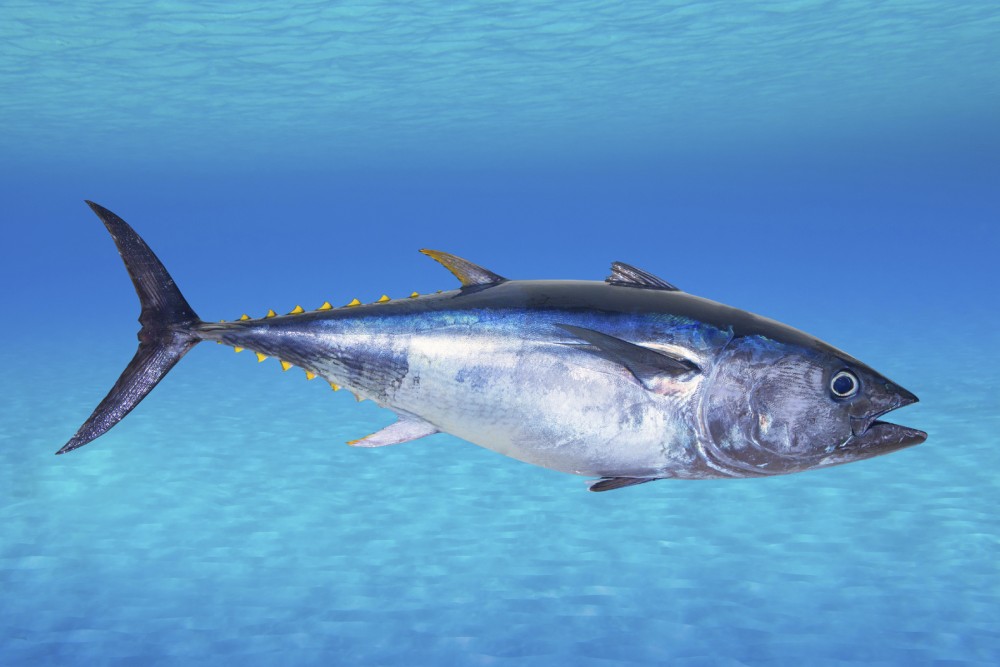
"caption": "The IUCN says the Atlantic bluefin tuna is endangered. Its stocks have declined globally between 29 percent and 51 percent over the past 21 to 39 years, according to the conservation group. Photo: Tono Balaguer/iStockphoto",
"description": "The IUCN \u003ca href=\"http://www.iucnredlist.org/details/21860/0\">says\u003c/a> the Atlantic bluefin tuna is endangered. Its stocks have declined globally between 29 percent and 51 percent over the past 21 to 39 years, according to the conservation group.",
"title": "The IUCN says the Atlantic bluefin tuna is endangered. Its stocks have declined globally between 29 percent and 51 percent over the past 21 to 39 years, according to the conservation group.",
"credit": null,
"status": "inherit",
"isLoading": false,
"fetchFailed": false
},
"bayareabites_91828": {
"type": "attachments",
"id": "bayareabites_91828",
"meta": {
"index": "attachments_1716263798",
"site": "bayareabites",
"id": "91828",
"found": true
},
"parent": 91825,
"imgSizes": {
"kqedFullSize": {
"file": "https://ww2.kqed.org/app/uploads/sites/24/2015/01/changefoodsystem.jpg",
"width": 800,
"height": 533
}
},
"publishDate": 1420326885,
"modified": 1420326906,
"caption": "Want to change the food system? You can vote with your fork, but you can also join a campaign that's confronting the problems directly. Photo: Tim Pannell/Corbis ",
"description": null,
"title": "changefoodsystem",
"credit": null,
"status": "inherit",
"isLoading": false,
"fetchFailed": false
},
"bayareabites_91051": {
"type": "attachments",
"id": "bayareabites_91051",
"meta": {
"index": "attachments_1716263798",
"site": "bayareabites",
"id": "91051",
"found": true
},
"parent": 91045,
"imgSizes": {
"kqedFullSize": {
"file": "https://ww2.kqed.org/app/uploads/sites/24/2014/12/Kendra_and_Zach_Penny.jpg",
"width": 1000,
"height": 666
}
},
"publishDate": 1418851678,
"modified": 1420235245,
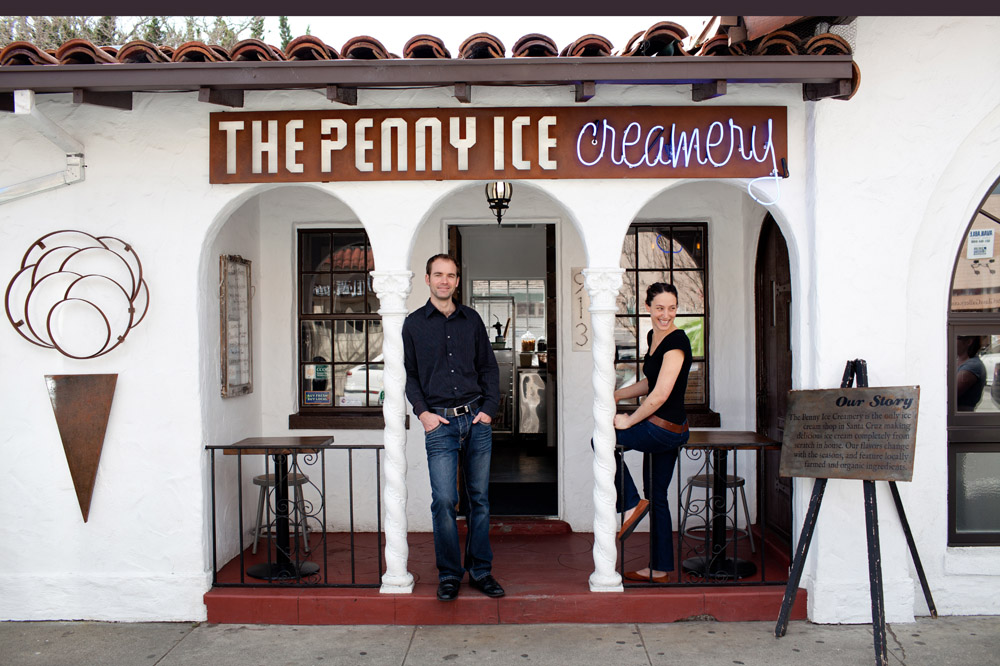
"caption": "The first food business the partners opened was an ice cream parlor where everything -- even the ripples and add-ins -- is made from scratch. Photo: Molly Watson",
"description": null,
"title": "high_res04",
"credit": null,
"status": "inherit",
"isLoading": false,
"fetchFailed": false
},
"bayareabites_91686": {
"type": "attachments",
"id": "bayareabites_91686",
"meta": {
"index": "attachments_1716263798",
"site": "bayareabites",
"id": "91686",
"found": true
},
"parent": 91685,
"imgSizes": {
"kqedFullSize": {
"file": "https://ww2.kqed.org/app/uploads/sites/24/2014/12/enriched-cage_custom-d0bd8668df5a4ff7e1d06e2d462ee7e0310f571b-e1419897443870.jpg",
"width": 1000,
"height": 641
}
},
"publishDate": 1419895903,
"modified": 1419897438,
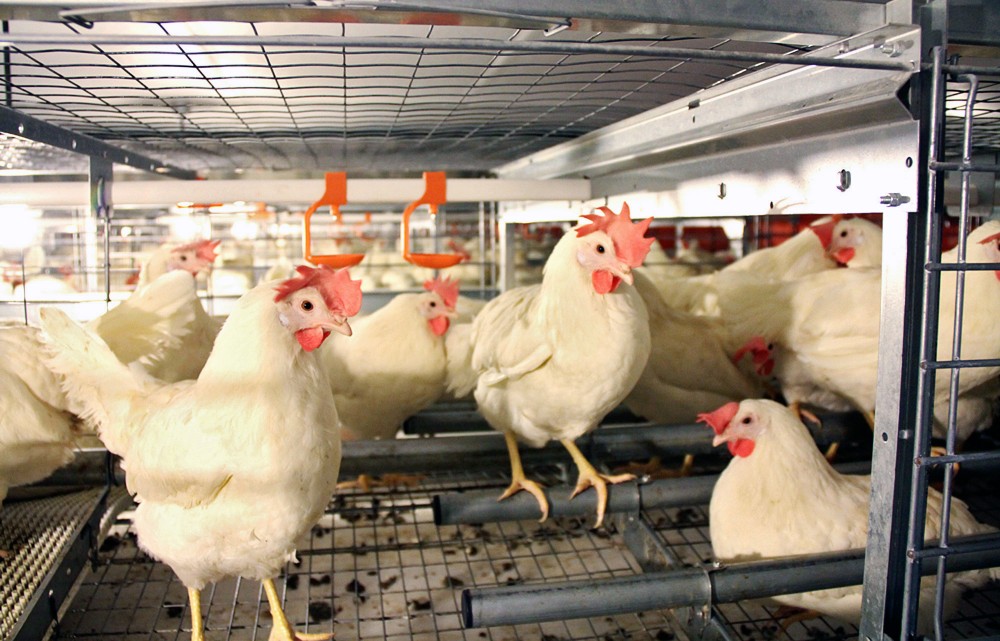
"caption": "These \"enriched cages\" at the JS West farm in Atwater, Calif., comply with the state's new law. They are larger and allow chickens to perch and lay eggs in enclosed spaces. Photo: Jill Benson/AP ",
"description": "These \"enriched cages\" at the JS West farm in Atwater, Calif., comply with the state's new law. They are larger and allow chickens to perch and lay eggs in enclosed spaces.",
"title": "These \"enriched cages\" at the JS West farm in Atwater, Calif., comply with the state's new law. They are larger and allow chickens to perch and lay eggs in enclosed spaces.",
"credit": null,
"status": "inherit",
"isLoading": false,
"fetchFailed": false
},
"bayareabites_91423": {
"type": "attachments",
"id": "bayareabites_91423",
"meta": {
"index": "attachments_1716263798",
"site": "bayareabites",
"id": "91423",
"found": true
},
"parent": 91418,
"imgSizes": {
"kqedFullSize": {
"file": "https://ww2.kqed.org/app/uploads/sites/24/2014/12/eggs.jpg",
"width": 700,
"height": 411
}
},
"publishDate": 1419354912,
"modified": 1419354942,
"caption": "Free-range eggs from Pennypack Farm in Pennsylvania. Photo: Christopher Paquette/Flickr ",
"description": null,
"title": "eggs",
"credit": null,
"status": "inherit",
"isLoading": false,
"fetchFailed": false
},
"bayareabites_91193": {
"type": "attachments",
"id": "bayareabites_91193",
"meta": {
"index": "attachments_1716263798",
"site": "bayareabites",
"id": "91193",
"found": true
},
"parent": 91191,
"imgSizes": {
"kqedFullSize": {
"file": "https://ww2.kqed.org/app/uploads/sites/24/2014/12/cuba-food-2_enl-cb5c84796dd304b05905ee2f8d6b371b4837d37a-e1418942761520.jpg",
"width": 1000,
"height": 667
}
},
"publishDate": 1418942484,
"modified": 1418942757,
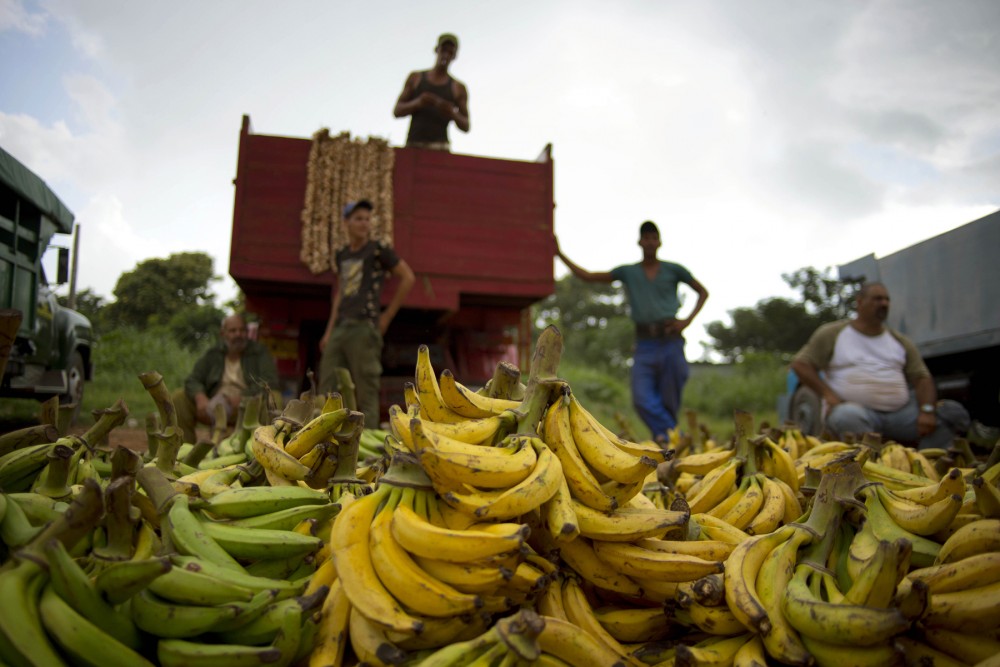
"caption": "Banana growers at a market on the outskirts of Havana, Cuba, on Sept. 30, 2013. Cuba currently imports few fruits and vegetables from the U.S., but the American Farm Bureau says the change in relations may allow for new trade opportunities. Photo: Ramon Espinosa/AP",
"description": "Banana growers at a market on the outskirts of Havana, Cuba, on Sept. 30, 2013. Cuba currently imports few fruits and vegetables from the U.S., but the American Farm Bureau says the change in relations may allow for new trade opportunities.",
"title": "Banana growers at a market on the outskirts of Havana, Cuba, on Sept. 30, 2013. Cuba currently imports few fruits and vegetables from the U.S., but the American Farm Bureau says the change in relations may allow for new trade opportunities.",
"credit": null,
"status": "inherit",
"isLoading": false,
"fetchFailed": false
},
"bayareabites_90756": {
"type": "attachments",
"id": "bayareabites_90756",
"meta": {
"index": "attachments_1716263798",
"site": "bayareabites",
"id": "90756",
"found": true
},
"parent": 90748,
"imgSizes": {
"kqedFullSize": {
"file": "https://ww2.kqed.org/app/uploads/sites/24/2014/12/mexico-farm-labor.jpg",
"width": 900,
"height": 592
}
},
"publishDate": 1418181731,
"modified": 1418181743,
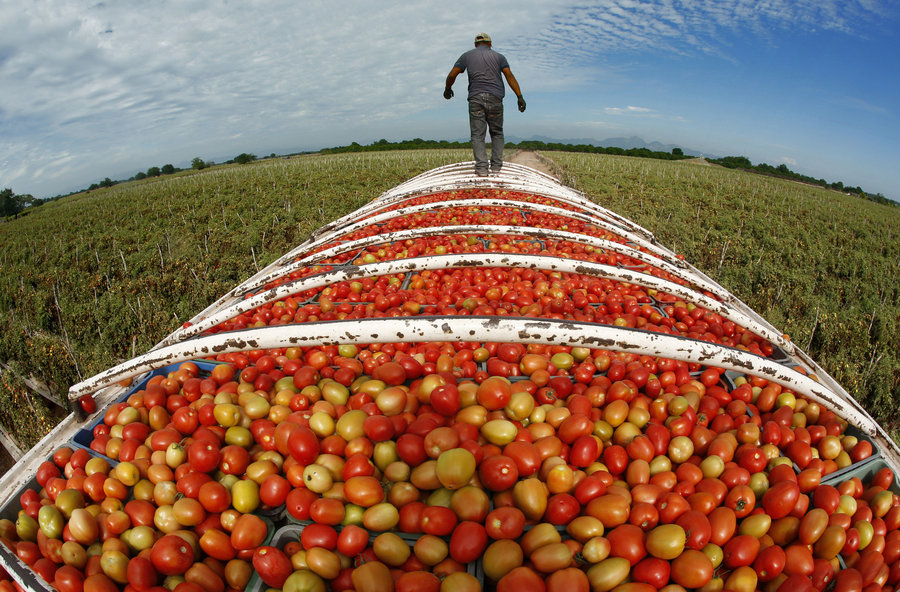
"caption": "At the end of the day, Roma tomatoes are ready for transport in Cristo Rey in the state of Sinaloa. Half the tomatoes consumed in the U.S. come from Mexico. Photo: Don Bartletti/Los Angeles Times",
"description": null,
"title": "mexico-farm-labor",
"credit": null,
"status": "inherit",
"isLoading": false,
"fetchFailed": false
},
"bayareabites_90717": {
"type": "attachments",
"id": "bayareabites_90717",
"meta": {
"index": "attachments_1716263798",
"site": "bayareabites",
"id": "90717",
"found": true
},
"parent": 90716,
"imgSizes": {
"kqedFullSize": {
"file": "https://ww2.kqed.org/app/uploads/sites/24/2014/12/carrot-8fb1fe4b6fce4279cd17e6de7b3b7c5ea2817f70.jpg",
"width": 718,
"height": 539
}
},
"publishDate": 1418168905,
"modified": 1418168905,
"caption": null,
"description": "A still from the Intermarché campaign for ugly fruits and vegetable",
"title": "A still from the Intermarché campaign for ugly fruits and vegetables.",
"credit": null,
"status": "inherit",
"isLoading": false,
"fetchFailed": false
},
"bayareabites_90525": {
"type": "attachments",
"id": "bayareabites_90525",
"meta": {
"index": "attachments_1716263798",
"site": "bayareabites",
"id": "90525",
"found": true
},
"parent": 90524,
"imgSizes": {
"kqedFullSize": {
"file": "https://ww2.kqed.org/app/uploads/sites/24/2014/12/grapenuts2_wide-f7263377e1fe948d93390f9144f18783a0d28bee-e1417817835786.jpg",
"width": 1000,
"height": 562
}
},
"publishDate": 1417817634,
"modified": 1417817830,
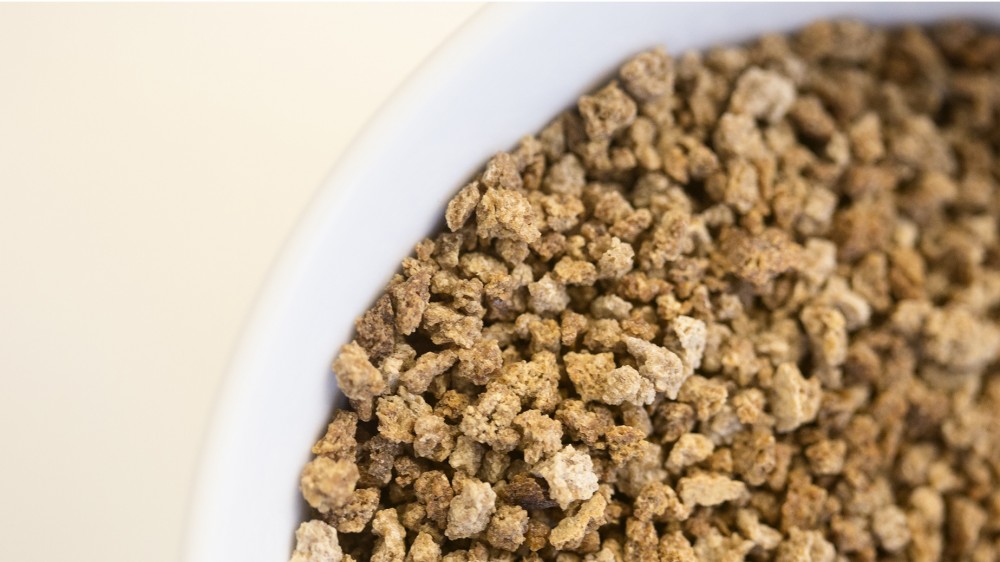
"caption": "The Original Grape-Nuts, which now bear a non-GMO label, no longer contain vitamins A, D, B-12 and B-2. Photo: Claire Eggers/NPR",
"description": "The Original Grape-Nuts, which now bear a non-GMO label, no longer contain vitamins A, D, B-12 and B-2.",
"title": "The Original Grape-Nuts, which now bear a non-GMO label, no longer contain vitamins A, D, B-12 and B-2.",
"credit": null,
"status": "inherit",
"isLoading": false,
"fetchFailed": false
},
"bayareabites_90374": {
"type": "attachments",
"id": "bayareabites_90374",
"meta": {
"index": "attachments_1716263798",
"site": "bayareabites",
"id": "90374",
"found": true
},
"parent": 90373,
"imgSizes": {
"kqedFullSize": {
"file": "https://ww2.kqed.org/app/uploads/sites/24/2014/12/ap762130238467-fde1e3e4034124fbdfcddf7722ed357552b4dcf7-e1417470499441.jpg",
"width": 1000,
"height": 750
}
},
"publishDate": 1417464059,
"modified": 1417464059,
"caption": "Syrian refugees break their fast outside their tent at a Syrian refugee camp in Marj, Lebanon, on June 29. The World Food Program says it has suspended a food voucher program serving more than 1.7 million Syrian refugees because of a funding crisis. Photo: Bilal Hussein/AP",
"description": "Syrian refugees break their fast outside their tent at a Syrian refugee camp in Marj, Lebanon, on June 29. The World Food Program says it has suspended a food voucher program serving more than 1.7 million Syrian refugees because of a funding crisis.",
"title": "Syrian refugees break their fast outside their tent at a Syrian refugee camp in Marj, Lebanon, on June 29. The World Food Program says it has suspended a food voucher program serving more than 1.7 million Syrian refugees because of a funding crisis.",
"credit": null,
"status": "inherit",
"isLoading": false,
"fetchFailed": false
}
},
"audioPlayerReducer": {
"postId": "stream_live",
"isPaused": true,
"isPlaying": false,
"pfsActive": false,
"pledgeModalIsOpen": true,
"playerDrawerIsOpen": false,
"liveAudioPlayStartedAt": 0,
"liveAudioPlayContext": ""
},
"authorsReducer": {
"byline_bayareabites_91962": {
"type": "authors",
"id": "byline_bayareabites_91962",
"meta": {
"override": true
},
"slug": "byline_bayareabites_91962",
"name": "Eliza Barclay",
"isLoading": false
},
"byline_bayareabites_91895": {
"type": "authors",
"id": "byline_bayareabites_91895",
"meta": {
"override": true
},
"slug": "byline_bayareabites_91895",
"name": "Eliza Barclay",
"isLoading": false
},
"byline_bayareabites_91685": {
"type": "authors",
"id": "byline_bayareabites_91685",
"meta": {
"override": true
},
"slug": "byline_bayareabites_91685",
"name": "Dan Charles",
"isLoading": false
},
"byline_bayareabites_91418": {
"type": "authors",
"id": "byline_bayareabites_91418",
"meta": {
"override": true
},
"slug": "byline_bayareabites_91418",
"name": "Anders Kelto",
"isLoading": false
},
"byline_bayareabites_91191": {
"type": "authors",
"id": "byline_bayareabites_91191",
"meta": {
"override": true
},
"slug": "byline_bayareabites_91191",
"name": "Eliza Barclay",
"isLoading": false
},
"byline_bayareabites_90748": {
"type": "authors",
"id": "byline_bayareabites_90748",
"meta": {
"override": true
},
"slug": "byline_bayareabites_90748",
"name": "NPR Staff",
"isLoading": false
},
"byline_bayareabites_90716": {
"type": "authors",
"id": "byline_bayareabites_90716",
"meta": {
"override": true
},
"slug": "byline_bayareabites_90716",
"name": "Maria Godoy",
"isLoading": false
},
"byline_bayareabites_90524": {
"type": "authors",
"id": "byline_bayareabites_90524",
"meta": {
"override": true
},
"slug": "byline_bayareabites_90524",
"name": "Dan Charles",
"isLoading": false
},
"byline_bayareabites_90373": {
"type": "authors",
"id": "byline_bayareabites_90373",
"meta": {
"override": true
},
"slug": "byline_bayareabites_90373",
"name": "Krishnadev Calamur",
"isLoading": false
},
"nprfood": {
"type": "authors",
"id": "5403",
"meta": {
"index": "authors_1716337520",
"id": "5403",
"found": true
},
"name": "NPR Food",
"firstName": "NPR Food",
"lastName": null,
"slug": "nprfood",
"email": "nprfood@kqed.org",
"display_author_email": false,
"staff_mastheads": [],
"title": null,
"bio": "Food and Health-related stories from NPR including NPR Radio; NPR's food blog, \"The Salt\"; NPR's Health News blog, \"Shots\"; NPR's Breaking News blog \"The Two-Way\"; NPR's global stories blog \"Goats and Soda,\" NPR's economy explainer \"Planet Money\"; food-related technology news from NPR's \"All Tech Considered\"; and food series \"Kitchen Window.\"",
"avatar": "https://secure.gravatar.com/avatar/c4b735bb26404fa18ce2447d32e64291?s=600&d=blank&r=g",
"twitter": "nprfood",
"facebook": null,
"instagram": null,
"linkedin": null,
"sites": [
{
"site": "bayareabites",
"roles": [
"contributor"
]
},
{
"site": "food",
"roles": [
"contributor"
]
}
],
"headData": {
"title": "NPR Food | KQED",
"description": null,
"ogImgSrc": "https://secure.gravatar.com/avatar/c4b735bb26404fa18ce2447d32e64291?s=600&d=blank&r=g",
"twImgSrc": "https://secure.gravatar.com/avatar/c4b735bb26404fa18ce2447d32e64291?s=600&d=blank&r=g"
},
"isLoading": false,
"link": "/author/nprfood"
},
"susanhathaway": {
"type": "authors",
"id": "5578",
"meta": {
"index": "authors_1716337520",
"id": "5578",
"found": true
},
"name": "Susan Hathaway",
"firstName": "Susan",
"lastName": "Hathaway",
"slug": "susanhathaway",
"email": "susan@redpenassoc.com",
"display_author_email": false,
"staff_mastheads": [],
"title": "KQED Contributor",
"bio": "From making blob-shaped pancakes for her family at age 6 to presumptuously reinventing recipes from well-known chefs, Susan has had a life-long food love affair. You'll usually find her sniffing out great ingredient sources, locating intriguing food stories, inventing recipes and exercising like a demon as an antidote to her passion. This Bay Area native is a longtime food & wine journalist and blogger who has contributed to regional publications such as the San Jose Mercury News and its affiliates, Metro, San Francisco Chronicle, South Bay Accent, Urbanspoon and other epistles that are lucky enough not to have been killed off yet by the publishing crisis.",
"avatar": "https://secure.gravatar.com/avatar/50460b73cde689778bd54c5eb183c0993d24c99dd4ed52f8207c15a3af0d7a33?s=600&d=blank&r=g",
"twitter": null,
"bluesky": null,
"facebook": null,
"instagram": null,
"linkedin": null,
"sites": [
{
"site": "bayareabites",
"roles": [
"subscriber"
]
},
{
"site": "food",
"roles": [
"subscriber"
]
}
],
"headData": {
"title": "Susan Hathaway | KQED",
"description": "KQED Contributor",
"ogImgSrc": "https://secure.gravatar.com/avatar/50460b73cde689778bd54c5eb183c0993d24c99dd4ed52f8207c15a3af0d7a33?s=600&d=blank&r=g",
"twImgSrc": "https://secure.gravatar.com/avatar/50460b73cde689778bd54c5eb183c0993d24c99dd4ed52f8207c15a3af0d7a33?s=600&d=blank&r=g"
},
"isLoading": false,
"link": "/author/susanhathaway"
},
"civileat": {
"type": "authors",
"id": "5583",
"meta": {
"index": "authors_1716337520",
"id": "5583",
"found": true
},
"name": "Civil Eats",
"firstName": "Civil",
"lastName": "Eats",
"slug": "civileat",
"email": "twilight@civileats.com",
"display_author_email": false,
"staff_mastheads": [],
"title": null,
"bio": "\u003ca href=\"http://civileats.com/\">Civil Eats\u003c/a> is a daily news source for critical thought about the American food system. We publish stories that shift the conversation around sustainable agriculture in an effort to build economically and socially just communities. Follow Civil Eats on Twitter \u003ca href=\"https://twitter.com/CivilEats\">@civileats\u003c/a> and on \u003ca href=\"https://www.facebook.com/pages/Civil-Eats/56766540637\">Facebook\u003c/a>.",
"avatar": "https://secure.gravatar.com/avatar/8f6f50bfb6403afe7cbc194b66cc1d4d?s=600&d=blank&r=g",
"twitter": "CivilEats",
"facebook": "/pages/Civil-Eats/56766540637?ref=hl",
"instagram": null,
"linkedin": null,
"sites": [
{
"site": "bayareabites",
"roles": [
"contributor"
]
},
{
"site": "food",
"roles": [
"contributor"
]
}
],
"headData": {
"title": "Civil Eats | KQED",
"description": null,
"ogImgSrc": "https://secure.gravatar.com/avatar/8f6f50bfb6403afe7cbc194b66cc1d4d?s=600&d=blank&r=g",
"twImgSrc": "https://secure.gravatar.com/avatar/8f6f50bfb6403afe7cbc194b66cc1d4d?s=600&d=blank&r=g"
},
"isLoading": false,
"link": "/author/civileat"
}
},
"pagesReducer": {
"bayareabites_category_politics-activism-food-safety": {
"type": "terms",
"id": "bayareabites_2035",
"meta": {
"index": "terms_1716263798",
"site": "bayareabites",
"id": "2035",
"score": 13.896381
},
"featImg": null,
"name": "politics, activism, food safety",
"description": null,
"taxonomy": "category",
"headData": {
"twImgId": null,
"twTitle": null,
"ogTitle": null,
"ogImgId": null,
"twDescription": null,
"description": null,
"title": "politics, activism, food safety Archives | KQED Bay Area Bites",
"ogDescription": null
},
"ttid": 943,
"slug": "politics-activism-food-safety",
"isLoading": false,
"title": "politics, activism, food safety",
"pageMeta": {
"site": "bayareabites",
"WpPageTemplate": "page-topic-editorial",
"currentPage": 34
},
"blocks": [
{
"blockName": "kqed/post-list",
"attrs": {
"layout": "cardArticle2",
"query": "posts/bayareabites?category=politics-activism-food-safety",
"seeMore": false,
"paginated": true,
"page": 34
}
},
{
"blockName": "kqed/ad"
}
]
}
},
"pfsSessionReducer": {},
"postsReducer": {
"stream_live": {
"type": "live",
"id": "stream_live",
"audioUrl": "https://streams.kqed.org/kqedradio",
"title": "Live Stream",
"excerpt": "Live Stream information currently unavailable.",
"link": "/radio",
"featImg": "",
"label": {
"name": "KQED Live",
"link": "/"
}
},
"stream_kqedNewscast": {
"type": "posts",
"id": "stream_kqedNewscast",
"audioUrl": "https://www.kqed.org/.stream/anon/radio/RDnews/newscast.mp3?_=1",
"title": "KQED Newscast",
"featImg": "",
"label": {
"name": "88.5 FM",
"link": "/"
}
},
"bayareabites_92041": {
"type": "posts",
"id": "bayareabites_92041",
"meta": {
"index": "posts_1716263798",
"site": "bayareabites",
"id": "92041",
"score": null,
"sort": [
1421173132000
]
},
"parent": 0,
"labelTerm": {
"site": "bayareabites"
},
"blocks": [],
"publishDate": 1421173132,
"format": "aside",
"disqusTitle": "The Future Strawberry: Will the Loss of a Major Pesticide Help the Industry to Go Green? ",
"title": "The Future Strawberry: Will the Loss of a Major Pesticide Help the Industry to Go Green? ",
"headTitle": "Bay Area Bites | KQED Food",
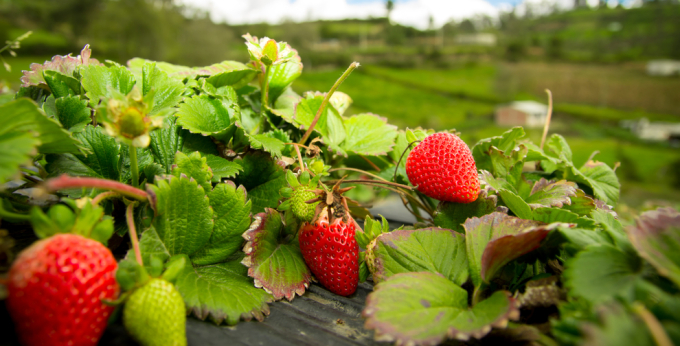
"content": "\u003cfigure id=\"attachment_92046\" class=\"wp-caption aligncenter\" style=\"max-width: 680px\">\u003ca href=\"http://ww2.kqed.org/bayareabites/wp-content/uploads/sites/24/2015/01/strawberry.jpg\">\u003cimg src=\"http://ww2.kqed.org/bayareabites/wp-content/uploads/sites/24/2015/01/strawberry.jpg\" alt=\"Strawberries in the field. Photo: Shutterstock\" width=\"680\" height=\"346\" class=\"size-full wp-image-92046\">\u003c/a>\u003cfigcaption class=\"wp-caption-text\">Strawberries in the field. Photo: Shutterstock\u003c/figcaption>\u003c/figure>\n\u003cp>By \u003ca href=\"http://civileats.com/author/jsteinberger/\" target=\"_blank\">Jillian Steinberger\u003c/a>, \u003ca href=\"http://civileats.com/2015/01/12/the-future-strawberry-will-the-loss-of-a-major-pesticide-help-the-industry-to-go-green/\" target=\"_blank\">Civil Eats\u003c/a> (1/12/15)\u003c/p>\n\u003cp>When it comes to growing strawberries, \u003ca href=\"http://www.farmfuelinc.com/\" target=\"_blank\">Farm Fuel, Inc.\u003c/a>, a Watsonville, California-based company, is on the cutting edge.\u003c/p>\n\u003cp>The company grows wild and domesticated mustard and lightly processes the harvest into mustard meal, a soil amendment. They also work with farmers on a technique called \u003ca href=\"http://www.ars.usda.gov/research/projects/projects.htm?accn_no=424327\" target=\"_blank\">Anaerobic Soil Disinfestation (ASD)\u003c/a>. This precise farming technique involves applying a combination of water and carbon-rich material (think rice bran, grape pomace, mustard meal, and molasses), and then wrapping the soil in plastic. Under the plastic, the ingredients combine to create anaerobic conditions.\u003c/p>\n\u003cp>The idea with both of these approaches is to kill the organisms that cause the \u003ca href=\"http://en.wikipedia.org/wiki/List_of_strawberry_diseases\" target=\"_blank\">long list of diseases\u003c/a> that plague strawberry farmers–without pesticides or \u003ca href=\"http://www.panna.org/resources/specific-pesticides/fumigants\" target=\"_blank\">fumigants\u003c/a> (a form of pesticide that treats the soil before anything is even planted). Why the search for alternatives?\u003c/p>\n\u003cp>“As pesticide use becomes more restricted, growers have a greater need for solutions that are effective and affordable,” says Farm Fuel CEO and research director Stefanie Bourcier, who has received sizable grants to work with both organic and conventional farmers on these non-toxic techniques. “Ultimately, ASD and mustard meal offer both organic and conventional growers more options.”\u003c/p>\n\u003cp>[ad fullwidth]\u003c/p>\n\u003cp>The restrictions Bourcier is talking about are no small change. For over 40 years, U.S. strawberry farms–88 percent of which are in California–have relied on methyl bromide, the pesticide that works like a “magic bullet” to control diseases, persistent pests, and weeds. Methyl bromide has made it possible for growers to blanket coastal communities—from Santa Cruz south to Ventura County—with acres of perfect red berries that sell for as little as $2 to $3 a basket.\u003c/p>\n\u003cp>Now, after a very long, gradual phase out, this fumigant–also a \u003ca href=\"http://ehp.niehs.nih.gov/1205682/\" target=\"_blank\">potent neurotoxin\u003c/a>, known for affecting the health of \u003ca href=\"http://www.ewg.org/research/heavy-methyl-bromide-use-near-california-schools/health-effects-methyl-bromide\" target=\"_blank\">populations\u003c/a> living close to strawberry fields and a contributor to the \u003ca href=\"http://www.mnn.com/home-blog/guest-columnist/blogs/can-private-industry-solve-the-dead-sea-disaster-it-created\" target=\"_blank\">disappearance of the Dead Sea\u003c/a>–will no longer be in use by 2017.\u003c/p>\n\u003cp>Methyl bromide sterilizes the soil by killing off virtually all micro-organisms, good and bad. But the chemical also contributes to the thinning of the stratospheric ozone layer when it evaporates during application. For this reason, thanks to the internationally binding \u003ca href=\"http://ozone.unep.org/new_site/en/montreal_protocol.php\" target=\"_blank\">Montreal Protocol\u003c/a>, it has been gradually disappearing from the marketplace since 1993.\u003c/p>\n\u003cp>Now, most conventional growers–many of whom say there are no other reliable methods to eradicate pests and diseases–are scrambling for other options. Farmers and regulators have invested considerable resources into other fumigants, including the highly controversial \u003ca href=\"http://www.pesticidereform.org/article.php?id=392\" target=\"_blank\">methyl iodide\u003c/a>—another known carcinogen and neurotoxin that is considered one of the most toxic chemicals on earth. But after\u003ca href=\"http://ww2.kqed.org/news/2012/11/21/methyl-iodide-manufacturer-to-end-sales-of-controversial-pesticide\" target=\"_blank\"> public uproar\u003c/a>, the manufacturer, Arysta LifeScience Corporation, withdrew it from the market in 2012.\u003c/p>\n\u003cp>And while other chemicals are plentiful in the marketplace, some advocates of alternative farming methods see a positive side to the phase out: New organic and agroecological methods–like the ones Farm Fuel is working on–are on the rise in the 2.6 billion industry.\u003c/p>\n\u003cfigure id=\"attachment_92047\" class=\"wp-caption aligncenter\" style=\"max-width: 1024px\">\u003ca href=\"http://ww2.kqed.org/bayareabites/wp-content/uploads/sites/24/2015/01/UCSC_CASFS_Strawberry_Planting_by_Interns.jpg\">\u003cimg src=\"http://ww2.kqed.org/bayareabites/wp-content/uploads/sites/24/2015/01/UCSC_CASFS_Strawberry_Planting_by_Interns.jpg\" alt=\"Interns plant strawberry starts in an ASD trial field at the Center for Agroecology & Sustainable Food Systems at U.C. Santa Cruz. Photo: Brandon Blackburn \" width=\"1024\" height=\"575\" class=\"size-full wp-image-92047\">\u003c/a>\u003cfigcaption class=\"wp-caption-text\">Interns plant strawberry starts in an ASD trial field at the Center for Agroecology & Sustainable Food Systems at U.C. Santa Cruz. Photo: Brandon Blackburn\u003c/figcaption>\u003c/figure>\n\u003ch3>A Real Sea Change? Or Just Different Pesticides?\u003c/h3>\n\u003cp>While the \u003ca href=\"http://news.agropages.com/News/NewsDetail---6315.htm\" target=\"_blank\">European Union phased out methyl bromide\u003c/a> completely in 2013, the \u003ca href=\"http://www.epa.gov/ozone/mbr/cueinfo.html\" target=\"_blank\">Environmental Protection Agency (EPA) has been granting so-called critical use exemptions (CUEs) since 2005\u003c/a>. These have been granted whenever an industry argues that not using methyl bromide would create “significant market disruptions” and when there are “no technically or economically feasible alternatives or substitutes.” But after 2016, CUEs will no longer be an option.\u003c/p>\n\u003cp>For California growers, this change is worrisome. Today, strawberry farms and nurseries account for nearly all methyl bromide used in agriculture. But they’ve only been granted a CUE for 412 tons this year, enough to treat 8,000 acres, or 20 percent of the 40,000 acres planted in strawberries, according to Carolyn O’Donnell, Communication Director at the \u003ca href=\"http://www.calstrawberry.com/\" target=\"_blank\">California Strawberry Commission\u003c/a> (CSC).\u003c/p>\n\u003cp>In 2016, that number will drop to 255 tons–enough for only around 9 percent of the current strawberry acreage.\u003c/p>\n\u003cp>To help growers make the inevitable transition, University of California and U.S. Department of Agriculture (USDA) researchers have spent several years testing methyl bromide alternatives, both chemical and biological, with well over $5 million in grants.\u003c/p>\n\u003cp>Professor Carol Shennan, an agroecologist at the \u003ca href=\"http://casfs.ucsc.edu/\" target=\"_blank\">University of California, Santa Cruz\u003c/a>, is at the forefront of the research with multiple year grants from the USDA to study Anaerobic Soil Disinfestation at the farm scale. Over 10 years, Dr. Shennan and lead researcher Dr. Joji Muramoto have seen \u003ca href=\"https://www.youtube.com/watch?v=_7phq_p2JQk\" target=\"_blank\">positive results with field tests\u003c/a> on farms around the state. In fact, \u003ca href=\"http://www.epa.gov/ozone/mbr/CUN2015/2015CUNStrawberry.pdf\" target=\"_blank\">a government document\u003c/a> notes that, “These experimental trials have shown good disease suppression and fruit yields comparable to methyl bromide treatments and other chemical fumigants.”\u003c/p>\n\u003cp>Farm Fuel brought ASD to market in 2011, which was its first commercial introduction. In 2013, California’s Department of Pesticide Regulation (DPR) awarded the company a three-year grant to introduce conventional growers to the non-toxic alternative. Currently, the company has 22 trial sites across California and another 28 commercial clients. It estimates that about 25 percent of the new acreage it treated in 2014 was on conventional farms. Farm Fuel also claims that it is cost effective, with a per acre cost of $2,700 compared to $3,900 or more for methyl bromide.\u003c/p>\n\u003cp>Despite these efforts, most conventional growers will begin using other fumigants. In particular, the \u003ca href=\"http://www.epa.gov/ozone/mbr/alts.html\" target=\"_blank\">EPA recommends\u003c/a> as substitutes chloropicrin and 1,3-D, and combinations of the two with other chemicals. Neither is considered as effective as methyl bromide and both have negative \u003ca href=\"http://www.nrdc.org/health/kids/farm/chap1.asp\" target=\"_blank\">health impacts\u003c/a>.\u003c/p>\n\u003cp>After World War I, leftover stockpiles of \u003ca href=\"http://www.cdc.gov/niosh/ershdb/EmergencyResponseCard_29750034.html\" target=\"_blank\">chloropicrin\u003c/a>—a weapon then nicknamed “vomiting gas”—were directed to agricultural use. Although its use is on the rise in the U.S., chloropicrin was \u003ca href=\"http://www.pesticides.gov.uk/guidance/industries/pesticides/topics/pesticide-approvals/eu/eu-reviews/Withdrawal-of-chloropicrin-products-from-the-market\" target=\"_blank\">phased out in Europe\u003c/a> in 2013 due to respiratory health effects. The other go-to fumigant is 1,3-D, a known carcinogen produced by Dow Chemical. The DPR outlawed \u003ca href=\"http://www.ncbi.nlm.nih.gov/pmc/articles/PMC1519572/\" target=\"_blank\">1,3-D\u003c/a> in 1990, but allowed it back on the market in 2004 with restrictions, anticipating its need in light of the phase-out of methyl bromide.\u003c/p>\n\u003cp>\u003ca href=\"http://www.cdpr.ca.gov/dprbios.htm\" target=\"_blank\">DPR Director Brian Leahy\u003c/a> believes that ASD shows promise and he says that the department is actively committed to helping California farmers find less toxic ways to tackle soilborne pests and reduce their use of chemical fumigants. Leahy, a former organic rice farmer, said in a recent email exchange: “It is no secret that the department has and continues to take a long hard look at fumigants to ensure they are used in a protective manner. DPR believes the right to farm does not mean the right to cause harm.”\u003c/p>\n\u003cp>“Slowly but surely the fumigant tools are going away,” says the California Strawberry Commission’s O’Donnell. The Commission also received a grant from DPR to study ASD in 2014.\u003c/p>\n\u003cp>As O’Donnell sees it there is no one-size-fits-all solution to the pests that plague strawberry growers, but adding ASD to the toolbox is good for all farmers. “What is coming out of the research is essentially a cookbook full of recipes,” says O’Donnell. “‘If you have this soil type and these types of disease organisms, then these are the materials and methods you need to use,’ and so on.”\u003c/p>\n\u003cp>O’Donnell says that strawberry farmers are already in the habit of trying out new techniques on small sections of their fields—and that 20 percent of conventional growers also have organic operations. Plus, she says, “Anyone who’s working on strawberries—they’re all talking to each other.” CSC also hosts “field days” to help farmers connect to scientists.\u003c/p>\n\u003cp>However, O’Donnell is hesitant to embrace biological controls because she says it’s unclear whether they’ll be able to perform as consistently as fumigants over the long term.\u003c/p>\n\u003cp>What farmers need—or want—is another magic bullet. O’Donnell, whose organization represents approximately 400 farmers, points to the up-front investment strawberry farmers make, spending up to $20,000 per acre for the land, plants, fertilizer, etc. before they harvest a single berry. “If your crop peters out, you lose your investment—and sometimes your house or your business.” In other words, farmers have to be sure they’ll protect their investment or they won’t adopt new methods.\u003c/p>\n\u003ch3>What About Organic?\u003c/h3>\n\u003cp>Some farmers have been growing strawberries for years without methyl bromide. Take \u003ca href=\"http://library.ucsc.edu/reg-hist/cultiv/cochran\" target=\"_blank\">Jim Cochran\u003c/a>, president of \u003ca href=\"http://www.swantonberryfarm.com/\" target=\"_blank\">Swanton Berry Farm\u003c/a>, a 75-acre farm in Davenport, just north of Santa Cruz. Cochran is also the first farmer to grow organic strawberries in the state. He sits on the board of directors at Farm Fuel and is part of the company’s ASD trials along with seven other strawberry farms, in collaboration with the \u003ca href=\"http://casfs.ucsc.edu/\" target=\"_blank\">Center for Agroecology & Sustainable Food Systems\u003c/a> at U.C. Santa Cruz.\u003c/p>\n\u003cp>Like any strawberry farmer, Cochran is concerned with pests and diseases and he is interested in ASD. However, for over 30 years he has relied on traditional organic practices such as adding compost to his soil and crop rotations. Each field gets planted in strawberries just once every five or six years. During other years the fields are planted with crops like cauliflower or broccoli—which are modestly profitable—or the fields are fallow with cover crops like alfalfa. On the other hand, conventional growers who rely on chemical fumigants grow strawberries in the same field every other year.\u003c/p>\n\u003cp>“The multi-crop organic farm is vastly more complex than the single crop chemical strawberry farm. It requires much more management,” says Cochran. Crop rotation and organic methods are expensive and the yields are generally a little lower. “It’s not easy. What we’re up against is people who use chemicals and produce strawberries at $2.50 a basket and can still be quite profitable,” he says.\u003c/p>\n\u003cp>\u003ca href=\"http://library.ucsc.edu/reg-hist/cultiv/cantisano\" target=\"_blank\">Amigo Cantisano\u003c/a>, a leading organics advisor who helped found the \u003ca href=\"http://eco-farm.org/\" target=\"_blank\">Ecological Farming Association\u003c/a> and \u003ca href=\"http://www.ccof.org/\" target=\"_blank\">California Certified Organic Farmers\u003c/a> (CCOF), says that ASD is “an increasingly viable alternative to methyl bromide, and that’s a good thing.” But he worries that fumigants allow farmers not to “deal with soil biologically in a holistic way.”\u003c/p>\n\u003cp>As Cantisano sees it, controls—whether they are chemical or biological—allow farmers to forego building up the necessary \u003ca href=\"http://www.soilfoodweb.com/\" target=\"_blank\">soil foodweb\u003c/a>. And fungicides wipe out soil flora, which create resistance to the very pathogens methyl bromide is used to kill. “The lack of a long-term \u003ca href=\"http://science.howstuffworks.com/environmental/green-science/organic-farming1.htm\" target=\"_blank\">crop rotation\u003c/a> system eliminates the opportunity for the soil to cleanse itself biologically,” he says.\u003c/p>\n\u003cp>Of course, it’s not just conventional growers who rely on methyl bromide. While organic farmers do not use it in the fields, their \u003ca href=\"http://www.epa.gov/ozone/mbr/CUN2013/2013CUNStrawberryNursery.pdf\" target=\"_blank\">certified pest-free nursery “starts”\u003c/a> (baby plants) are grown in soil sterilized with methyl bromide, just like conventional growers. This is legal for certified organic farms, and the justification is that even one diseased start could ruin an entire crop.\u003c/p>\n\u003cp>According to Lisa Bunin, Organic Policy Director at the \u003ca href=\"http://www.centerforfoodsafety.org/\" target=\"_blank\">Center for Food Safety\u003c/a> (CFS), “Both stages in the strawberry production process use enormous amounts of methyl bromide, and both represent critical junctures in the supply chain that need to figure out alternative production strategies.” According to a \u003ca href=\"https://beta.cironline.org/reports/even-organic-strawberries-are-grown-with-dangerous-pesticides/\" target=\"_blank\">recent in-depth report by the Center for Investigative Reporting\u003c/a>, CFS is leading a project to grow an experimental nursery crop of organic strawberry starts in Central California, and late last year, six organic farms planted those starts in soil for the first time.\u003c/p>\n\u003ch3>What Lies Ahead?\u003c/h3>\n\u003cp>While the DPR will clearly continue to allow—and indeed support—the use of chemical fumigants, Director Leahy is cognizant of the bigger picture. “In order to better understand pest control for any crop, California needs to better understand the soil ecosystem and how pests behave,” he says. “This requires a major public investment and dedicated research.”\u003c/p>\n\u003cp>Meanwhile, it’s likely that companies like \u003ca href=\"http://www.farmfuelinc.com/\" target=\"_blank\">Farm Fuel\u003c/a> will gradually make inroads into the market as they develop relationships with the many curious farmers willing to give ASD and other biological approaches a try.\u003c/p>\n\u003cp>Back in 1996–just a couple years after the Montreal Protocol’s phase-out went into effect–some individuals at the EPA were already talking about non-chemical approaches. In a \u003ca href=\"http://mbao.org/orgsber2.html\" target=\"_blank\">paper they released that year\u003c/a>, the officials wrote: “Organic strawberry production is an effective integrated approach that offers an alternative to methyl bromide use for California strawberries.” Sometimes we have to look back to look forward.\u003c/p>\n\u003cp>[ad floatright]\u003c/p>\n\u003cp>\u003cstrong>About the Writer\u003c/strong>\u003cbr>\nJillian Laurel Steinberger is on the case, always looking for a good story to write about plants, health, and food justice. Recent stories investigate the herbal economy, mushroom culture, Fibershed, drought tolerant edible gardening, and rethinking wheat. Her style is informed by whole systems thinking and pattern literacy à la Permaculture. She is a regular contributor to \u003cem>Edible East Bay\u003c/em> and \u003cem>Edible Monterey Bay\u003c/em>, and her work has appeared in \u003cem>BUST\u003c/em>, \u003cem>Bitch\u003c/em>, the \u003cem>San Francisco Chronicle\u003c/em>, \u003cem>San Jose Mercury News\u003c/em>, and the \u003cem>Huffington Post\u003c/em>. \u003c/p>\n\n",
"disqusIdentifier": "92041 http://blogs.kqed.org/bayareabites/?p=92041",
"disqusUrl": "https://ww2.kqed.org/bayareabites/2015/01/13/the-future-strawberry-will-the-loss-of-a-major-pesticide-help-the-industry-to-go-green/",
"stats": {
"hasVideo": false,
"hasChartOrMap": false,
"hasAudio": false,
"hasPolis": false,
"wordCount": 2284,
"hasGoogleForm": false,
"hasGallery": false,
"hasHearkenModule": false,
"iframeSrcs": [],
"paragraphCount": 37
},
"modified": 1421270449,
"excerpt": "When it comes to growing strawberries, Farm Fuel, Inc., a Watsonville, California-based company, is on the cutting edge.",
"headData": {
"twImgId": "",
"twTitle": "",
"ogTitle": "",
"ogImgId": "",
"twDescription": "",
"description": "When it comes to growing strawberries, Farm Fuel, Inc., a Watsonville, California-based company, is on the cutting edge.",
"title": "The Future Strawberry: Will the Loss of a Major Pesticide Help the Industry to Go Green? | KQED",
"ogDescription": "",
"schema": {
"@context": "https://schema.org",
"@type": "Article",
"headline": "The Future Strawberry: Will the Loss of a Major Pesticide Help the Industry to Go Green? ",
"datePublished": "2015-01-13T10:18:52-08:00",
"dateModified": "2015-01-14T13:20:49-08:00",
"image": "https://cdn.kqed.org/wp-content/uploads/2020/02/KQED-OG-Image@1x.png"
}
},
"guestAuthors": [],
"slug": "the-future-strawberry-will-the-loss-of-a-major-pesticide-help-the-industry-to-go-green",
"status": "publish",
"path": "/bayareabites/92041/the-future-strawberry-will-the-loss-of-a-major-pesticide-help-the-industry-to-go-green",
"audioTrackLength": null,
"parsedContent": [
{
"type": "contentString",
"content": "\u003cdiv class=\"post-body\">\u003cp>\u003cfigure id=\"attachment_92046\" class=\"wp-caption aligncenter\" style=\"max-width: 680px\">\u003ca href=\"http://ww2.kqed.org/bayareabites/wp-content/uploads/sites/24/2015/01/strawberry.jpg\">\u003cimg src=\"http://ww2.kqed.org/bayareabites/wp-content/uploads/sites/24/2015/01/strawberry.jpg\" alt=\"Strawberries in the field. Photo: Shutterstock\" width=\"680\" height=\"346\" class=\"size-full wp-image-92046\">\u003c/a>\u003cfigcaption class=\"wp-caption-text\">Strawberries in the field. Photo: Shutterstock\u003c/figcaption>\u003c/figure>\n\u003cp>By \u003ca href=\"http://civileats.com/author/jsteinberger/\" target=\"_blank\">Jillian Steinberger\u003c/a>, \u003ca href=\"http://civileats.com/2015/01/12/the-future-strawberry-will-the-loss-of-a-major-pesticide-help-the-industry-to-go-green/\" target=\"_blank\">Civil Eats\u003c/a> (1/12/15)\u003c/p>\n\u003cp>When it comes to growing strawberries, \u003ca href=\"http://www.farmfuelinc.com/\" target=\"_blank\">Farm Fuel, Inc.\u003c/a>, a Watsonville, California-based company, is on the cutting edge.\u003c/p>\n\u003cp>The company grows wild and domesticated mustard and lightly processes the harvest into mustard meal, a soil amendment. They also work with farmers on a technique called \u003ca href=\"http://www.ars.usda.gov/research/projects/projects.htm?accn_no=424327\" target=\"_blank\">Anaerobic Soil Disinfestation (ASD)\u003c/a>. This precise farming technique involves applying a combination of water and carbon-rich material (think rice bran, grape pomace, mustard meal, and molasses), and then wrapping the soil in plastic. Under the plastic, the ingredients combine to create anaerobic conditions.\u003c/p>\n\u003cp>The idea with both of these approaches is to kill the organisms that cause the \u003ca href=\"http://en.wikipedia.org/wiki/List_of_strawberry_diseases\" target=\"_blank\">long list of diseases\u003c/a> that plague strawberry farmers–without pesticides or \u003ca href=\"http://www.panna.org/resources/specific-pesticides/fumigants\" target=\"_blank\">fumigants\u003c/a> (a form of pesticide that treats the soil before anything is even planted). Why the search for alternatives?\u003c/p>\n\u003cp>“As pesticide use becomes more restricted, growers have a greater need for solutions that are effective and affordable,” says Farm Fuel CEO and research director Stefanie Bourcier, who has received sizable grants to work with both organic and conventional farmers on these non-toxic techniques. “Ultimately, ASD and mustard meal offer both organic and conventional growers more options.”\u003c/p>\n\u003cp>\u003c/p>\u003c/div>",
"attributes": {
"named": {},
"numeric": []
}
},
{
"type": "component",
"content": "",
"name": "ad",
"attributes": {
"named": {
"label": "fullwidth"
},
"numeric": [
"fullwidth"
]
}
},
{
"type": "contentString",
"content": "\u003cdiv class=\"post-body\">\u003cp>\u003c/p>\n\u003cp>The restrictions Bourcier is talking about are no small change. For over 40 years, U.S. strawberry farms–88 percent of which are in California–have relied on methyl bromide, the pesticide that works like a “magic bullet” to control diseases, persistent pests, and weeds. Methyl bromide has made it possible for growers to blanket coastal communities—from Santa Cruz south to Ventura County—with acres of perfect red berries that sell for as little as $2 to $3 a basket.\u003c/p>\n\u003cp>Now, after a very long, gradual phase out, this fumigant–also a \u003ca href=\"http://ehp.niehs.nih.gov/1205682/\" target=\"_blank\">potent neurotoxin\u003c/a>, known for affecting the health of \u003ca href=\"http://www.ewg.org/research/heavy-methyl-bromide-use-near-california-schools/health-effects-methyl-bromide\" target=\"_blank\">populations\u003c/a> living close to strawberry fields and a contributor to the \u003ca href=\"http://www.mnn.com/home-blog/guest-columnist/blogs/can-private-industry-solve-the-dead-sea-disaster-it-created\" target=\"_blank\">disappearance of the Dead Sea\u003c/a>–will no longer be in use by 2017.\u003c/p>\n\u003cp>Methyl bromide sterilizes the soil by killing off virtually all micro-organisms, good and bad. But the chemical also contributes to the thinning of the stratospheric ozone layer when it evaporates during application. For this reason, thanks to the internationally binding \u003ca href=\"http://ozone.unep.org/new_site/en/montreal_protocol.php\" target=\"_blank\">Montreal Protocol\u003c/a>, it has been gradually disappearing from the marketplace since 1993.\u003c/p>\n\u003cp>Now, most conventional growers–many of whom say there are no other reliable methods to eradicate pests and diseases–are scrambling for other options. Farmers and regulators have invested considerable resources into other fumigants, including the highly controversial \u003ca href=\"http://www.pesticidereform.org/article.php?id=392\" target=\"_blank\">methyl iodide\u003c/a>—another known carcinogen and neurotoxin that is considered one of the most toxic chemicals on earth. But after\u003ca href=\"http://ww2.kqed.org/news/2012/11/21/methyl-iodide-manufacturer-to-end-sales-of-controversial-pesticide\" target=\"_blank\"> public uproar\u003c/a>, the manufacturer, Arysta LifeScience Corporation, withdrew it from the market in 2012.\u003c/p>\n\u003cp>And while other chemicals are plentiful in the marketplace, some advocates of alternative farming methods see a positive side to the phase out: New organic and agroecological methods–like the ones Farm Fuel is working on–are on the rise in the 2.6 billion industry.\u003c/p>\n\u003cfigure id=\"attachment_92047\" class=\"wp-caption aligncenter\" style=\"max-width: 1024px\">\u003ca href=\"http://ww2.kqed.org/bayareabites/wp-content/uploads/sites/24/2015/01/UCSC_CASFS_Strawberry_Planting_by_Interns.jpg\">\u003cimg src=\"http://ww2.kqed.org/bayareabites/wp-content/uploads/sites/24/2015/01/UCSC_CASFS_Strawberry_Planting_by_Interns.jpg\" alt=\"Interns plant strawberry starts in an ASD trial field at the Center for Agroecology & Sustainable Food Systems at U.C. Santa Cruz. Photo: Brandon Blackburn \" width=\"1024\" height=\"575\" class=\"size-full wp-image-92047\">\u003c/a>\u003cfigcaption class=\"wp-caption-text\">Interns plant strawberry starts in an ASD trial field at the Center for Agroecology & Sustainable Food Systems at U.C. Santa Cruz. Photo: Brandon Blackburn\u003c/figcaption>\u003c/figure>\n\u003ch3>A Real Sea Change? Or Just Different Pesticides?\u003c/h3>\n\u003cp>While the \u003ca href=\"http://news.agropages.com/News/NewsDetail---6315.htm\" target=\"_blank\">European Union phased out methyl bromide\u003c/a> completely in 2013, the \u003ca href=\"http://www.epa.gov/ozone/mbr/cueinfo.html\" target=\"_blank\">Environmental Protection Agency (EPA) has been granting so-called critical use exemptions (CUEs) since 2005\u003c/a>. These have been granted whenever an industry argues that not using methyl bromide would create “significant market disruptions” and when there are “no technically or economically feasible alternatives or substitutes.” But after 2016, CUEs will no longer be an option.\u003c/p>\n\u003cp>For California growers, this change is worrisome. Today, strawberry farms and nurseries account for nearly all methyl bromide used in agriculture. But they’ve only been granted a CUE for 412 tons this year, enough to treat 8,000 acres, or 20 percent of the 40,000 acres planted in strawberries, according to Carolyn O’Donnell, Communication Director at the \u003ca href=\"http://www.calstrawberry.com/\" target=\"_blank\">California Strawberry Commission\u003c/a> (CSC).\u003c/p>\n\u003cp>In 2016, that number will drop to 255 tons–enough for only around 9 percent of the current strawberry acreage.\u003c/p>\n\u003cp>To help growers make the inevitable transition, University of California and U.S. Department of Agriculture (USDA) researchers have spent several years testing methyl bromide alternatives, both chemical and biological, with well over $5 million in grants.\u003c/p>\n\u003cp>Professor Carol Shennan, an agroecologist at the \u003ca href=\"http://casfs.ucsc.edu/\" target=\"_blank\">University of California, Santa Cruz\u003c/a>, is at the forefront of the research with multiple year grants from the USDA to study Anaerobic Soil Disinfestation at the farm scale. Over 10 years, Dr. Shennan and lead researcher Dr. Joji Muramoto have seen \u003ca href=\"https://www.youtube.com/watch?v=_7phq_p2JQk\" target=\"_blank\">positive results with field tests\u003c/a> on farms around the state. In fact, \u003ca href=\"http://www.epa.gov/ozone/mbr/CUN2015/2015CUNStrawberry.pdf\" target=\"_blank\">a government document\u003c/a> notes that, “These experimental trials have shown good disease suppression and fruit yields comparable to methyl bromide treatments and other chemical fumigants.”\u003c/p>\n\u003cp>Farm Fuel brought ASD to market in 2011, which was its first commercial introduction. In 2013, California’s Department of Pesticide Regulation (DPR) awarded the company a three-year grant to introduce conventional growers to the non-toxic alternative. Currently, the company has 22 trial sites across California and another 28 commercial clients. It estimates that about 25 percent of the new acreage it treated in 2014 was on conventional farms. Farm Fuel also claims that it is cost effective, with a per acre cost of $2,700 compared to $3,900 or more for methyl bromide.\u003c/p>\n\u003cp>Despite these efforts, most conventional growers will begin using other fumigants. In particular, the \u003ca href=\"http://www.epa.gov/ozone/mbr/alts.html\" target=\"_blank\">EPA recommends\u003c/a> as substitutes chloropicrin and 1,3-D, and combinations of the two with other chemicals. Neither is considered as effective as methyl bromide and both have negative \u003ca href=\"http://www.nrdc.org/health/kids/farm/chap1.asp\" target=\"_blank\">health impacts\u003c/a>.\u003c/p>\n\u003cp>After World War I, leftover stockpiles of \u003ca href=\"http://www.cdc.gov/niosh/ershdb/EmergencyResponseCard_29750034.html\" target=\"_blank\">chloropicrin\u003c/a>—a weapon then nicknamed “vomiting gas”—were directed to agricultural use. Although its use is on the rise in the U.S., chloropicrin was \u003ca href=\"http://www.pesticides.gov.uk/guidance/industries/pesticides/topics/pesticide-approvals/eu/eu-reviews/Withdrawal-of-chloropicrin-products-from-the-market\" target=\"_blank\">phased out in Europe\u003c/a> in 2013 due to respiratory health effects. The other go-to fumigant is 1,3-D, a known carcinogen produced by Dow Chemical. The DPR outlawed \u003ca href=\"http://www.ncbi.nlm.nih.gov/pmc/articles/PMC1519572/\" target=\"_blank\">1,3-D\u003c/a> in 1990, but allowed it back on the market in 2004 with restrictions, anticipating its need in light of the phase-out of methyl bromide.\u003c/p>\n\u003cp>\u003ca href=\"http://www.cdpr.ca.gov/dprbios.htm\" target=\"_blank\">DPR Director Brian Leahy\u003c/a> believes that ASD shows promise and he says that the department is actively committed to helping California farmers find less toxic ways to tackle soilborne pests and reduce their use of chemical fumigants. Leahy, a former organic rice farmer, said in a recent email exchange: “It is no secret that the department has and continues to take a long hard look at fumigants to ensure they are used in a protective manner. DPR believes the right to farm does not mean the right to cause harm.”\u003c/p>\n\u003cp>“Slowly but surely the fumigant tools are going away,” says the California Strawberry Commission’s O’Donnell. The Commission also received a grant from DPR to study ASD in 2014.\u003c/p>\n\u003cp>As O’Donnell sees it there is no one-size-fits-all solution to the pests that plague strawberry growers, but adding ASD to the toolbox is good for all farmers. “What is coming out of the research is essentially a cookbook full of recipes,” says O’Donnell. “‘If you have this soil type and these types of disease organisms, then these are the materials and methods you need to use,’ and so on.”\u003c/p>\n\u003cp>O’Donnell says that strawberry farmers are already in the habit of trying out new techniques on small sections of their fields—and that 20 percent of conventional growers also have organic operations. Plus, she says, “Anyone who’s working on strawberries—they’re all talking to each other.” CSC also hosts “field days” to help farmers connect to scientists.\u003c/p>\n\u003cp>However, O’Donnell is hesitant to embrace biological controls because she says it’s unclear whether they’ll be able to perform as consistently as fumigants over the long term.\u003c/p>\n\u003cp>What farmers need—or want—is another magic bullet. O’Donnell, whose organization represents approximately 400 farmers, points to the up-front investment strawberry farmers make, spending up to $20,000 per acre for the land, plants, fertilizer, etc. before they harvest a single berry. “If your crop peters out, you lose your investment—and sometimes your house or your business.” In other words, farmers have to be sure they’ll protect their investment or they won’t adopt new methods.\u003c/p>\n\u003ch3>What About Organic?\u003c/h3>\n\u003cp>Some farmers have been growing strawberries for years without methyl bromide. Take \u003ca href=\"http://library.ucsc.edu/reg-hist/cultiv/cochran\" target=\"_blank\">Jim Cochran\u003c/a>, president of \u003ca href=\"http://www.swantonberryfarm.com/\" target=\"_blank\">Swanton Berry Farm\u003c/a>, a 75-acre farm in Davenport, just north of Santa Cruz. Cochran is also the first farmer to grow organic strawberries in the state. He sits on the board of directors at Farm Fuel and is part of the company’s ASD trials along with seven other strawberry farms, in collaboration with the \u003ca href=\"http://casfs.ucsc.edu/\" target=\"_blank\">Center for Agroecology & Sustainable Food Systems\u003c/a> at U.C. Santa Cruz.\u003c/p>\n\u003cp>Like any strawberry farmer, Cochran is concerned with pests and diseases and he is interested in ASD. However, for over 30 years he has relied on traditional organic practices such as adding compost to his soil and crop rotations. Each field gets planted in strawberries just once every five or six years. During other years the fields are planted with crops like cauliflower or broccoli—which are modestly profitable—or the fields are fallow with cover crops like alfalfa. On the other hand, conventional growers who rely on chemical fumigants grow strawberries in the same field every other year.\u003c/p>\n\u003cp>“The multi-crop organic farm is vastly more complex than the single crop chemical strawberry farm. It requires much more management,” says Cochran. Crop rotation and organic methods are expensive and the yields are generally a little lower. “It’s not easy. What we’re up against is people who use chemicals and produce strawberries at $2.50 a basket and can still be quite profitable,” he says.\u003c/p>\n\u003cp>\u003ca href=\"http://library.ucsc.edu/reg-hist/cultiv/cantisano\" target=\"_blank\">Amigo Cantisano\u003c/a>, a leading organics advisor who helped found the \u003ca href=\"http://eco-farm.org/\" target=\"_blank\">Ecological Farming Association\u003c/a> and \u003ca href=\"http://www.ccof.org/\" target=\"_blank\">California Certified Organic Farmers\u003c/a> (CCOF), says that ASD is “an increasingly viable alternative to methyl bromide, and that’s a good thing.” But he worries that fumigants allow farmers not to “deal with soil biologically in a holistic way.”\u003c/p>\n\u003cp>As Cantisano sees it, controls—whether they are chemical or biological—allow farmers to forego building up the necessary \u003ca href=\"http://www.soilfoodweb.com/\" target=\"_blank\">soil foodweb\u003c/a>. And fungicides wipe out soil flora, which create resistance to the very pathogens methyl bromide is used to kill. “The lack of a long-term \u003ca href=\"http://science.howstuffworks.com/environmental/green-science/organic-farming1.htm\" target=\"_blank\">crop rotation\u003c/a> system eliminates the opportunity for the soil to cleanse itself biologically,” he says.\u003c/p>\n\u003cp>Of course, it’s not just conventional growers who rely on methyl bromide. While organic farmers do not use it in the fields, their \u003ca href=\"http://www.epa.gov/ozone/mbr/CUN2013/2013CUNStrawberryNursery.pdf\" target=\"_blank\">certified pest-free nursery “starts”\u003c/a> (baby plants) are grown in soil sterilized with methyl bromide, just like conventional growers. This is legal for certified organic farms, and the justification is that even one diseased start could ruin an entire crop.\u003c/p>\n\u003cp>According to Lisa Bunin, Organic Policy Director at the \u003ca href=\"http://www.centerforfoodsafety.org/\" target=\"_blank\">Center for Food Safety\u003c/a> (CFS), “Both stages in the strawberry production process use enormous amounts of methyl bromide, and both represent critical junctures in the supply chain that need to figure out alternative production strategies.” According to a \u003ca href=\"https://beta.cironline.org/reports/even-organic-strawberries-are-grown-with-dangerous-pesticides/\" target=\"_blank\">recent in-depth report by the Center for Investigative Reporting\u003c/a>, CFS is leading a project to grow an experimental nursery crop of organic strawberry starts in Central California, and late last year, six organic farms planted those starts in soil for the first time.\u003c/p>\n\u003ch3>What Lies Ahead?\u003c/h3>\n\u003cp>While the DPR will clearly continue to allow—and indeed support—the use of chemical fumigants, Director Leahy is cognizant of the bigger picture. “In order to better understand pest control for any crop, California needs to better understand the soil ecosystem and how pests behave,” he says. “This requires a major public investment and dedicated research.”\u003c/p>\n\u003cp>Meanwhile, it’s likely that companies like \u003ca href=\"http://www.farmfuelinc.com/\" target=\"_blank\">Farm Fuel\u003c/a> will gradually make inroads into the market as they develop relationships with the many curious farmers willing to give ASD and other biological approaches a try.\u003c/p>\n\u003cp>Back in 1996–just a couple years after the Montreal Protocol’s phase-out went into effect–some individuals at the EPA were already talking about non-chemical approaches. In a \u003ca href=\"http://mbao.org/orgsber2.html\" target=\"_blank\">paper they released that year\u003c/a>, the officials wrote: “Organic strawberry production is an effective integrated approach that offers an alternative to methyl bromide use for California strawberries.” Sometimes we have to look back to look forward.\u003c/p>\n\u003cp>\u003c/p>\u003c/div>",
"attributes": {
"named": {},
"numeric": []
}
},
{
"type": "component",
"content": "",
"name": "ad",
"attributes": {
"named": {
"label": "floatright"
},
"numeric": [
"floatright"
]
}
},
{
"type": "contentString",
"content": "\u003cdiv class=\"post-body\">\u003cp>\u003c/p>\n\u003cp>\u003cstrong>About the Writer\u003c/strong>\u003cbr>\nJillian Laurel Steinberger is on the case, always looking for a good story to write about plants, health, and food justice. Recent stories investigate the herbal economy, mushroom culture, Fibershed, drought tolerant edible gardening, and rethinking wheat. Her style is informed by whole systems thinking and pattern literacy à la Permaculture. She is a regular contributor to \u003cem>Edible East Bay\u003c/em> and \u003cem>Edible Monterey Bay\u003c/em>, and her work has appeared in \u003cem>BUST\u003c/em>, \u003cem>Bitch\u003c/em>, the \u003cem>San Francisco Chronicle\u003c/em>, \u003cem>San Jose Mercury News\u003c/em>, and the \u003cem>Huffington Post\u003c/em>. \u003c/p>\n\n\u003c/div>\u003c/p>",
"attributes": {
"named": {},
"numeric": []
}
}
],
"link": "/bayareabites/92041/the-future-strawberry-will-the-loss-of-a-major-pesticide-help-the-industry-to-go-green",
"authors": [
"5583"
],
"categories": [
"bayareabites_13718",
"bayareabites_1874",
"bayareabites_10028",
"bayareabites_2035",
"bayareabites_358",
"bayareabites_60"
],
"tags": [
"bayareabites_14065",
"bayareabites_11445",
"bayareabites_1012"
],
"featImg": "bayareabites_92046",
"label": "bayareabites"
},
"bayareabites_91962": {
"type": "posts",
"id": "bayareabites_91962",
"meta": {
"index": "posts_1716263798",
"site": "bayareabites",
"id": "91962",
"score": null,
"sort": [
1421083773000
]
},
"parent": 0,
"labelTerm": {
"site": "bayareabites"
},
"blocks": [],
"publishDate": 1421083773,
"format": "aside",
"disqusTitle": "What Might Be Missing From MyPlate? Water",
"title": "What Might Be Missing From MyPlate? Water",
"headTitle": "Bay Area Bites | KQED Food",
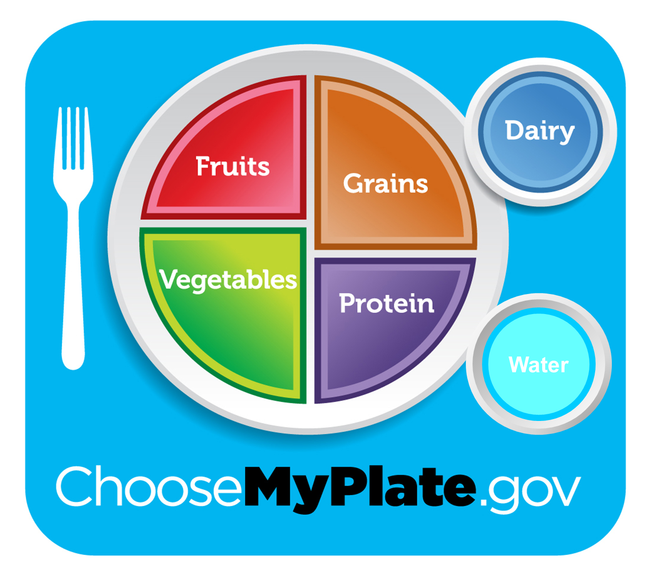
"content": "\u003cfigure id=\"attachment_91963\" class=\"wp-caption aligncenter\" style=\"max-width: 649px\">\u003ca href=\"http://ww2.kqed.org/bayareabites/wp-content/uploads/sites/24/2015/01/water-myplate_custom-7fd5ef3d1ae94826d10feee902a0971207e3e4e0.png\">\u003cimg src=\"http://ww2.kqed.org/bayareabites/wp-content/uploads/sites/24/2015/01/water-myplate_custom-7fd5ef3d1ae94826d10feee902a0971207e3e4e0.png\" alt=\"The University of California's Nutrition Policy Institute has proposed that MyPlate include an icon for water. Image: UC Division of Agriculture and Natural Resources \" width=\"649\" height=\"575\" class=\"size-full wp-image-91963\">\u003c/a>\u003cfigcaption class=\"wp-caption-text\">The University of California's Nutrition Policy Institute has proposed that MyPlate include an icon for water. Image: UC Division of Agriculture and Natural Resources\u003c/figcaption>\u003c/figure>\n\u003cp>by \u003ca href=\"http://www.npr.org/people/348764033/eliza-barclay\" target=\"_blank\">Eliza Barclay\u003c/a>, \u003ca href=\"http://www.npr.org/blogs/thesalt/2015/01/12/376172800/what-might-be-missing-from-myplate-water\" target=\"_blank\">The Salt at NPR Food\u003c/a> (1/12/15)\u003c/p>\n\u003cp>Sometime in the next few weeks, we'll be hearing from the Dietary Guidelines Advisory Committee. The \u003ca href=\"http://www.health.gov/dietaryguidelines/2015.asp#overview\">panel\u003c/a> of nutrition experts is tasked with reviewing the latest science on nutrition and medicine and making recommendations on how to update the next version of the federal government's guidance on eating.\u003c/p>\n\u003cp>A lot of people are eagerly awaiting this report, including a group of scientists keenly interested in what the panel has to say about what we're drinking. Since the last version of the guidelines was released in 2010, more evidence has piled up showing the benefits of drinking water and the harm that can come from \u003ca href=\"http://www.npr.org/blogs/thesalt/2014/06/09/319230765/fruit-juice-vs-soda-both-beverages-pack-in-sugar-and-health-risk\">drinking sugary beverages\u003c/a>.\u003c/p>\n\u003cp>Of course, there are lots of ways to spread public health messages like \"drink water, not soda.\" But this faction of scientists, led by a couple of folks at the University of California's Nutrition Policy Institute, has its sights set on adding a water icon to MyPlate, the image of a plate divided into portions that \u003ca href=\"http://www.npr.org/blogs/health/2011/06/02/136884100/new-symbol-for-healthful-eating-hello-plate-goodbye-pyramid\">replaced\u003c/a> the food pyramid in 2011. (The plate already has a circle to represent dairy, so the water circle would be an addition, not a replacement for the recommended dairy beverage.)\u003c/p>\n\u003cp>\"Consumption of sugary beverages is the leading contributor to \u003ca href=\"http://www.npr.org/blogs/thesalt/2014/02/03/271130613/sweet-tooth-gone-bad-why-22-teaspoons-of-sugar-per-day-is-deadly\">added sugar\u003c/a> in the American diet,\" says \u003ca href=\"http://ucanr.edu/?facultyid=26511\">Christina Hecht\u003c/a>, senior policy adviser at the UC Nutrition Policy Institute and one of the water advocates. \"If people could make that one change to drink water to quench their thirst instead of sugar beverages, that would solve a big piece of the problem.\"\u003c/p>\n\u003cp>[ad fullwidth]\u003c/p>\n\u003cp>Most Americans never actually read the Dietary Guidelines, Hecht notes, but that MyPlate image is pinned to the walls of thousands of school and hospital cafeterias and myriad other public institutions.\u003c/p>\n\u003cp>\"MyPlate is used so extensively for nutrition education around the country, and it's a positive promotional message,\" says Hecht.\u003c/p>\n\u003cp>Hecht, along with Kelly Brownell of Duke University and Barry Popkin of the\u003cstrong> \u003c/strong>\u003ca href=\"http://www.cpc.unc.edu/\">Carolina Population Center\u003c/a> at the University of North Carolina at Chapel Hill, recently submitted a \u003ca href=\"http://ucanr.edu/blogs/food/blogfiles/26976.pdf\">letter\u003c/a> to the panel making the case for including stronger language on water as a substitute for soda and other sugary beverages, and for the addition of the water symbol.\u003c/p>\n\u003cp>The next step, Hecht says, is to wait for the report, and if it does call for changes to how the guidelines treat beverages, then she and her fellow advocates will try to mobilize a flood of comments in favor of the water icon. Their hope is that later this year, the U.S. Department of Agriculture, which came up with MyPlate, will agree to the suggested changes to the graphic.\u003c/p>\n\u003cp>\"Asking for a change in the MyPlate graphic is a big ask,\" Hecht says. \"But I am feeling a little optimistic; it seems to me that the climate is very favorable for this.\" \u003c/p>\n\u003cp>\u003c/p>\n\u003cp>\u003cem>Copyright 2015 \u003ca href=\"http://www.npr.org/\" target=\"_blank\">NPR\u003c/a>.\u003c/em> \u003c/p>\n\n",
"disqusIdentifier": "91962 http://blogs.kqed.org/bayareabites/?p=91962",
"disqusUrl": "https://ww2.kqed.org/bayareabites/2015/01/12/what-might-be-missing-from-myplate-water/",
"stats": {
"hasVideo": false,
"hasChartOrMap": false,
"hasAudio": false,
"hasPolis": false,
"wordCount": 512,
"hasGoogleForm": false,
"hasGallery": false,
"hasHearkenModule": false,
"iframeSrcs": [],
"paragraphCount": 13
},
"modified": 1421084357,
"excerpt": "Since the 2010 Dietary Guidelines, more evidence has piled up showing the benefits of drinking water and the risks of sugary beverages. So scientists say it's time for a water symbol on MyPlate.",
"headData": {
"twImgId": "",
"twTitle": "",
"ogTitle": "",
"ogImgId": "",
"twDescription": "",
"description": "Since the 2010 Dietary Guidelines, more evidence has piled up showing the benefits of drinking water and the risks of sugary beverages. So scientists say it's time for a water symbol on MyPlate.",
"title": "What Might Be Missing From MyPlate? Water | KQED",
"ogDescription": "",
"schema": {
"@context": "https://schema.org",
"@type": "Article",
"headline": "What Might Be Missing From MyPlate? Water",
"datePublished": "2015-01-12T09:29:33-08:00",
"dateModified": "2015-01-12T09:39:17-08:00",
"image": "https://cdn.kqed.org/wp-content/uploads/2020/02/KQED-OG-Image@1x.png"
}
},
"guestAuthors": [],
"slug": "what-might-be-missing-from-myplate-water",
"status": "publish",
"nprApiLink": "http://api.npr.org/query?id=376172800&apiKey=MDAxOTAwOTE4MDEyMTkxMDAzNjczZDljZA004",
"nprByline": "Eliza Barclay",
"nprStoryDate": "Mon, 12 Jan 2015 12:14:28 -0500",
"nprLastModifiedDate": "Mon, 12 Jan 2015 12:14:28 -0500",
"nprHtmlLink": "http://www.npr.org/blogs/thesalt/2015/01/12/376172800/what-might-be-missing-from-myplate-water?ft=3&f=376172800",
"nprStoryId": "376172800",
"nprRetrievedStory": "1",
"nprPubDate": "Mon, 12 Jan 2015 12:14:00 -0500",
"path": "/bayareabites/91962/what-might-be-missing-from-myplate-water",
"audioTrackLength": null,
"parsedContent": [
{
"type": "contentString",
"content": "\u003cdiv class=\"post-body\">\u003cp>\u003cfigure id=\"attachment_91963\" class=\"wp-caption aligncenter\" style=\"max-width: 649px\">\u003ca href=\"http://ww2.kqed.org/bayareabites/wp-content/uploads/sites/24/2015/01/water-myplate_custom-7fd5ef3d1ae94826d10feee902a0971207e3e4e0.png\">\u003cimg src=\"http://ww2.kqed.org/bayareabites/wp-content/uploads/sites/24/2015/01/water-myplate_custom-7fd5ef3d1ae94826d10feee902a0971207e3e4e0.png\" alt=\"The University of California's Nutrition Policy Institute has proposed that MyPlate include an icon for water. Image: UC Division of Agriculture and Natural Resources \" width=\"649\" height=\"575\" class=\"size-full wp-image-91963\">\u003c/a>\u003cfigcaption class=\"wp-caption-text\">The University of California's Nutrition Policy Institute has proposed that MyPlate include an icon for water. Image: UC Division of Agriculture and Natural Resources\u003c/figcaption>\u003c/figure>\n\u003cp>by \u003ca href=\"http://www.npr.org/people/348764033/eliza-barclay\" target=\"_blank\">Eliza Barclay\u003c/a>, \u003ca href=\"http://www.npr.org/blogs/thesalt/2015/01/12/376172800/what-might-be-missing-from-myplate-water\" target=\"_blank\">The Salt at NPR Food\u003c/a> (1/12/15)\u003c/p>\n\u003cp>Sometime in the next few weeks, we'll be hearing from the Dietary Guidelines Advisory Committee. The \u003ca href=\"http://www.health.gov/dietaryguidelines/2015.asp#overview\">panel\u003c/a> of nutrition experts is tasked with reviewing the latest science on nutrition and medicine and making recommendations on how to update the next version of the federal government's guidance on eating.\u003c/p>\n\u003cp>A lot of people are eagerly awaiting this report, including a group of scientists keenly interested in what the panel has to say about what we're drinking. Since the last version of the guidelines was released in 2010, more evidence has piled up showing the benefits of drinking water and the harm that can come from \u003ca href=\"http://www.npr.org/blogs/thesalt/2014/06/09/319230765/fruit-juice-vs-soda-both-beverages-pack-in-sugar-and-health-risk\">drinking sugary beverages\u003c/a>.\u003c/p>\n\u003cp>Of course, there are lots of ways to spread public health messages like \"drink water, not soda.\" But this faction of scientists, led by a couple of folks at the University of California's Nutrition Policy Institute, has its sights set on adding a water icon to MyPlate, the image of a plate divided into portions that \u003ca href=\"http://www.npr.org/blogs/health/2011/06/02/136884100/new-symbol-for-healthful-eating-hello-plate-goodbye-pyramid\">replaced\u003c/a> the food pyramid in 2011. (The plate already has a circle to represent dairy, so the water circle would be an addition, not a replacement for the recommended dairy beverage.)\u003c/p>\n\u003cp>\"Consumption of sugary beverages is the leading contributor to \u003ca href=\"http://www.npr.org/blogs/thesalt/2014/02/03/271130613/sweet-tooth-gone-bad-why-22-teaspoons-of-sugar-per-day-is-deadly\">added sugar\u003c/a> in the American diet,\" says \u003ca href=\"http://ucanr.edu/?facultyid=26511\">Christina Hecht\u003c/a>, senior policy adviser at the UC Nutrition Policy Institute and one of the water advocates. \"If people could make that one change to drink water to quench their thirst instead of sugar beverages, that would solve a big piece of the problem.\"\u003c/p>\n\u003cp>\u003c/p>\u003c/div>",
"attributes": {
"named": {},
"numeric": []
}
},
{
"type": "component",
"content": "",
"name": "ad",
"attributes": {
"named": {
"label": "fullwidth"
},
"numeric": [
"fullwidth"
]
}
},
{
"type": "contentString",
"content": "\u003cdiv class=\"post-body\">\u003cp>\u003c/p>\n\u003cp>Most Americans never actually read the Dietary Guidelines, Hecht notes, but that MyPlate image is pinned to the walls of thousands of school and hospital cafeterias and myriad other public institutions.\u003c/p>\n\u003cp>\"MyPlate is used so extensively for nutrition education around the country, and it's a positive promotional message,\" says Hecht.\u003c/p>\n\u003cp>Hecht, along with Kelly Brownell of Duke University and Barry Popkin of the\u003cstrong> \u003c/strong>\u003ca href=\"http://www.cpc.unc.edu/\">Carolina Population Center\u003c/a> at the University of North Carolina at Chapel Hill, recently submitted a \u003ca href=\"http://ucanr.edu/blogs/food/blogfiles/26976.pdf\">letter\u003c/a> to the panel making the case for including stronger language on water as a substitute for soda and other sugary beverages, and for the addition of the water symbol.\u003c/p>\n\u003cp>The next step, Hecht says, is to wait for the report, and if it does call for changes to how the guidelines treat beverages, then she and her fellow advocates will try to mobilize a flood of comments in favor of the water icon. Their hope is that later this year, the U.S. Department of Agriculture, which came up with MyPlate, will agree to the suggested changes to the graphic.\u003c/p>\n\u003cp>\"Asking for a change in the MyPlate graphic is a big ask,\" Hecht says. \"But I am feeling a little optimistic; it seems to me that the climate is very favorable for this.\" \u003c/p>\n\u003cp>\u003c/p>\n\u003cp>\u003cem>Copyright 2015 \u003ca href=\"http://www.npr.org/\" target=\"_blank\">NPR\u003c/a>.\u003c/em> \u003c/p>\n\n\u003c/div>\u003c/p>",
"attributes": {
"named": {},
"numeric": []
}
}
],
"link": "/bayareabites/91962/what-might-be-missing-from-myplate-water",
"authors": [
"byline_bayareabites_91962"
],
"categories": [
"bayareabites_13306",
"bayareabites_4084",
"bayareabites_1245",
"bayareabites_10916",
"bayareabites_2035",
"bayareabites_11070"
],
"tags": [
"bayareabites_14058",
"bayareabites_14057",
"bayareabites_449",
"bayareabites_14781",
"bayareabites_511",
"bayareabites_10921",
"bayareabites_1344"
],
"featImg": "bayareabites_91963",
"label": "bayareabites"
},
"bayareabites_91895": {
"type": "posts",
"id": "bayareabites_91895",
"meta": {
"index": "posts_1716263798",
"site": "bayareabites",
"id": "91895",
"score": null,
"sort": [
1420664431000
]
},
"parent": 0,
"labelTerm": {
"site": "bayareabites"
},
"blocks": [],
"publishDate": 1420664431,
"format": "aside",
"disqusTitle": "Why Some Chefs Just Can't Quit Serving Bluefin Tuna",
"title": "Why Some Chefs Just Can't Quit Serving Bluefin Tuna",
"headTitle": "Bay Area Bites | KQED Food",
"content": "\u003cfigure id=\"attachment_91897\" class=\"wp-caption aligncenter\" style=\"max-width: 1000px\">\u003ca href=\"http://ww2.kqed.org/bayareabites/wp-content/uploads/sites/24/2015/01/bluefin-tuna-1_enl-4508bc0741d23812a49587be7ea12a6d7cf3bba3-e1420664098474.jpg\">\u003cimg src=\"http://ww2.kqed.org/bayareabites/wp-content/uploads/sites/24/2015/01/bluefin-tuna-1_enl-4508bc0741d23812a49587be7ea12a6d7cf3bba3-e1420664098474.jpg\" alt=\"Hand-rolled bluefin tuna sushi is prepared with green onions at Vegas Uncork'd by Bon Appetit's Grand Tasting event in Las Vegas. Photo: Ethan Miller/Getty Images for Vegas Uncork'd\" width=\"1000\" height=\"667\" class=\"size-full wp-image-91897\">\u003c/a>\u003cfigcaption class=\"wp-caption-text\">Hand-rolled bluefin tuna sushi is prepared with green onions at Vegas Uncork'd by Bon Appetit's Grand Tasting event in Las Vegas. Photo: Ethan Miller/Getty Images for Vegas Uncork'd\u003c/figcaption>\u003c/figure>\n\u003cp>\u003ca href=\"http://www.npr.org/blogs/thesalt/2015/01/07/375366742/why-some-chefs-just-cant-quit-serving-bluefin-tuna\" target=\"_blank\">by \u003c/a>\u003ca href=\"http://www.npr.org/people/348764033/eliza-barclay\" target=\"_blank\">Eliza Barclay\u003c/a>, The Salt at NPR Food (1/7/15)\u003c/p>\n\u003cp>On Monday, a single 380-pound bluefin tuna \u003ca href=\"http://phys.org/news/2015-01-bluefin-tuna-nets-tokyo-year.html\">sold\u003c/a> for about $37,500 in the first auction of the year at the Tsukiji fish market in Tokyo. That's far below the peak price of \u003ca href=\"http://www.npr.org/blogs/thesalt/2013/01/07/168813383/the-1-76-million-tuna-great-for-publicity-bad-for-the-species\">$1.76 million\u003c/a> that a bluefin went for at the same market in 2013, and this year's price isn't a good indicator of the supply, or population status. But it is a reminder of the unrelenting hunger and willingness to pay top dollar for the fatty pink flesh of this swiftly disappearing wild fish.\u003c/p>\n\u003cp>The 2015 inaugural bluefin is bound for a popular restaurant chain in Japan called Sushi-Zanmai, according to \u003ca href=\"http://phys.org/news/2015-01-bluefin-tuna-nets-tokyo-year.html\">wire reports\u003c/a>. Japan consumes 80 percent of the world's bluefin, and international conservation groups say that demand from the Asian sushi and sashimi industry is mainly to blame for the rapid decline in bluefin populations in recent decades.\u003c/p>\n\u003cp>In November, the International Union for Conservation of Nature's Red List \u003ca href=\"http://www.iucnredlist.org/news/global-appetite-for-resources-pushing-new-species-to-the-brink\">moved\u003c/a> Pacific bluefin tuna from \"least concern\" to \"vulnerable,\" which means that the fish is now threatened with extinction. It joins the southern bluefin, which is \"critically endangered\" — the third, and most threatened IUCN designation — and the Atlantic bluefin, which is \"endangered,\" the second level. In all cases, overfishing is making it nearly impossible for the spawning stock to rebuild the population.\u003c/p>\n\u003cp>But, just as many Japanese sushi chefs can't say no to the glistening meat on offer, neither can several American chefs — even though U.S. conservation groups and marine biologists have been badgering them about bluefin for years. The \u003ca href=\"http://www.huffingtonpost.com/samuel-fromartz/nobu-feels-the-heat-about_b_213314.html\">media\u003c/a> and the food cognoscenti made a big stink about it in 2009, and in 2010, the Center for Biological Diversity launched the \u003ca href=\"https://www.facebook.com/pages/Bluefin-Tuna-Boycott-Join-the-Bluefin-Brigade/107330386001726\">Bluefin Boycott\u003c/a>, which has garnered 80,000 signatures from people who've pledged not to eat the fish or serve it. (Among the signatories were owners of big-name restaurants like Blue Hill, Chez Panisse and Tataki Sushi.)\u003c/p>\n\u003cp>[ad fullwidth]\u003c/p>\n\u003cp>But you'll still find tiny morsels of bluefin on tasting menus at glittery sushi restaurants in New York and Los Angeles like Nobu, Morimoto and Masa, and at the Michelin-starred Terra in Napa Valley. It has become a luxury food item — like shark fin or \u003ca href=\"http://www.npr.org/blogs/thesalt/2014/08/03/337162283/taste-for-rare-wild-pangolin-is-driving-the-mammal-to-extinction\">pangolin\u003c/a> in Asia.\u003c/p>\n\u003cfigure id=\"attachment_91896\" class=\"wp-caption aligncenter\" style=\"max-width: 1000px\">\u003ca href=\"http://ww2.kqed.org/bayareabites/wp-content/uploads/sites/24/2015/01/bluefin-tuna-2_enl-808feafef2fcb638e46945e81c26827fd39a25d9-e1420664178117.jpg\">\u003cimg src=\"http://ww2.kqed.org/bayareabites/wp-content/uploads/sites/24/2015/01/bluefin-tuna-2_enl-808feafef2fcb638e46945e81c26827fd39a25d9-e1420664178117.jpg\" alt=\"The IUCN says the Atlantic bluefin tuna is endangered. Its stocks have declined globally between 29 percent and 51 percent over the past 21 to 39 years, according to the conservation group. Photo: Tono Balaguer/iStockphoto\" width=\"1000\" height=\"667\" class=\"size-full wp-image-91896\">\u003c/a>\u003cfigcaption class=\"wp-caption-text\">The IUCN says the Atlantic bluefin tuna is endangered. Its stocks have declined globally between 29 percent and 51 percent over the past 21 to 39 years, according to the conservation group. Photo: Tono Balaguer/iStockphoto\u003c/figcaption>\u003c/figure>\n\u003cp>And we received an invitation in October from Jaleo, one of celebrity chef Jose Andres' Spanish-themed restaurants in Washington, D.C., for a \"Tuna Celebration\" featuring four dishes with bluefin. (The event was postponed; more on it and Andres later.)\u003c/p>\n\u003cp>There's one clear reason why it's still on menus: \"Bluefin tuna belly is one of the most delicious things in the world,\" says \u003ca href=\"http://www.ciachef.edu/bruce-mattel/\">Bruce Mattel\u003c/a>, associate dean of food production at the Culinary Institute of America. But, he says, the decision to serve bluefin is \"largely driven by demographics and customer base\" — in other words, chefs beholden to people spending hundreds of dollars on a meal.\u003c/p>\n\u003cp>Chefs at top restaurants can't really play dumb about how few bluefin are left in the sea, Mattel says.\u003c/p>\n\u003cp>\"I think most [chefs] are aware of the conservation issues,\" Mattel tells us. \"I don't know how you cannot be aware if you have a passion for fish.\"\u003c/p>\n\u003cp>One internationally acclaimed chef who's aware — and gravely concerned — is Japanese sushi master Jiro Ono, subject of the 2011 documentary \u003ca href=\"http://www.npr.org/2012/03/16/148737187/cameras-follow-worlds-greatest-sushi-chef\">Jiro Dreams of Sushi\u003c/a> and the chef \u003ca href=\"http://www.npr.org/blogs/thesalt/2014/04/23/306227740/obama-gets-a-taste-of-jiros-dream-sushi-in-name-of-diplomacy\">who prepared sushi \u003c/a>for President Obama during a visit to Japan in April 2014. In November, Ono told the Foreign Correspondents' Club of Japan: \"I can't imagine at all that sushi in the future will be made of the same materials we use today. I told my young men three years ago sushi materials will totally change in five years. And now, such a trend is becoming a reality little by little.\" \u003ca href=\"http://www.nydailynews.com/life-style/eats/jiro-ono-warns-raw-deal-overfishing-article-1.1998645\">According to\u003c/a> the \u003cem>New York Daily News\u003c/em>, Ono was referring to his troubles getting high-quality Pacific bluefin, and having to rely on Atlantic bluefin instead.\u003c/p>\n\u003cp>Mattel of the CIA says he won't order that species of tuna anymore, whether he's dining or cooking. And he's troubled and perplexed by chefs' continued use of it, when there are so many other delicious fish they could be cooking instead. \"When you think about the diversity of the oceans, it just baffles that we're so dependent on this species,\" says Mattel.\u003c/p>\n\u003cp>We asked the chefs at Nobu and Terra in Napa Valley to explain why they still serve it, but we got no response to our calls and emails.\u003c/p>\n\u003cp>After repeated requests for an interview, Jose Andres finally sat down with us to explain why he included bluefin on the menu for his Tuna Celebration. The event was postponed last fall, but Andres says he may still host it in May. It will be focused around\u003cstrong> \u003c/strong>a \u003cem>ronqueo\u003c/em>, a coastal Spanish tradition of carving a whole bluefin tuna in front of an audience.\u003c/p>\n\u003cp>\"What I wanted to do was celebrate the way of life of the people in the Mediterranean, show the disappearing way of life, the \u003cem>ronqueo\u003c/em>, the \u003cem>almadraba\u003c/em>,\" he says, referring to the \u003ca href=\"https://www.youtube.com/watch?v=XhIqzqpE9D8\">elaborate and ancient system of nets\u003c/a> used in small fishing communities. For the celebration, he hopes to bring over fishermen from Galicia, Spain, who catch the fish this way only once a year.\u003c/p>\n\u003cp>And ultimately, Andres argues, these artisanal fishermen who've been catching Atlantic bluefin their whole lives the same way their grandfathers did, are not to blame for the species' decimation.\u003c/p>\n\u003cp>\"I believe something radical should be done. We should be stopping those [large fishing] fleets following those tunas. If that means also stopping those \u003cem>almadraba\u003c/em> in Spain, Turkey, Italy, I will say so ... but I don't believe those \u003cem>almadraba\u003c/em> catchers are the problem.\" (After our interview, Andres said he might not serve bluefin at the tuna event, after all.)\u003c/p>\n\u003cp>\u003ca href=\"http://www.biologicaldiversity.org/about/staff/\">Catherine Kilduff\u003c/a>, staff attorney for the Center for Biological Diversity, agrees that the agencies charged with regulating fishing of bluefin haven't set low enough limits for fishermen big or small to allow the populations to recover. And, she says, the fishermen who catch bluefin can still make a lot of money from them.\u003c/p>\n\u003cp>\"Unfortunately, this is an environmental issue that's been very responsive in the past to economics,\" she says. \"There are still people who want to buy it; that's why the price is so high. The only way to break that loop is to have people say they're valuable in the oceans.\"\u003c/p>\n\u003cp>But, Kilduff says, eating a tuna caught by an artisanal fisherman in a Mediterranean \u003cem>almadraba\u003c/em> isn't any more defensible than eating one caught by a massive Japanese trawler: \"The argument that there's a way to catch them that makes it sustainable is kind of a red herring.\" (This is why some fishermen have decided instead to try and farm bluefin, as we've \u003ca href=\"http://ww2.kqed.org/bayareabites/2014/07/30/farming-the-bluefin-tuna-tiger-of-the-ocean-is-not-without-a-price/\">reported\u003c/a>.)\u003c/p>\n\u003cp>And while American consumers are not the primary consumers of bluefin, their influence still matters a lot, she says.\u003c/p>\n\u003cp>\"Public demand that these fish not go extinct is the only thing that's going to save them,\" says Kilduff. \"Having people go into restaurants [serving it and telling them not to] is probably the most direct way to vote on those issues.\" \u003c/p>\n\u003cp>[ad floatright]\u003c/p>\n\u003cp>\u003cem>Copyright 2015 \u003ca href=\"http://www.npr.org/\" target=\"_blank\">NPR\u003c/a>.\u003c/em> \u003c/p>\n\n",
"disqusIdentifier": "91895 http://blogs.kqed.org/bayareabites/?p=91895",
"disqusUrl": "https://ww2.kqed.org/bayareabites/2015/01/07/why-some-chefs-just-cant-quit-serving-bluefin-tuna/",
"stats": {
"hasVideo": false,
"hasChartOrMap": false,
"hasAudio": false,
"hasPolis": false,
"wordCount": 1301,
"hasGoogleForm": false,
"hasGallery": false,
"hasHearkenModule": false,
"iframeSrcs": [],
"paragraphCount": 25
},
"modified": 1420664431,
"excerpt": "Japanese sushi chefs often can't resist bluefin tuna on offer. Some American chefs can't either, even though conservation groups and marine biologists have been badgering them about bluefin for years.",
"headData": {
"twImgId": "",
"twTitle": "",
"ogTitle": "",
"ogImgId": "",
"twDescription": "",
"description": "Japanese sushi chefs often can't resist bluefin tuna on offer. Some American chefs can't either, even though conservation groups and marine biologists have been badgering them about bluefin for years.",
"title": "Why Some Chefs Just Can't Quit Serving Bluefin Tuna | KQED",
"ogDescription": "",
"schema": {
"@context": "https://schema.org",
"@type": "Article",
"headline": "Why Some Chefs Just Can't Quit Serving Bluefin Tuna",
"datePublished": "2015-01-07T13:00:31-08:00",
"dateModified": "2015-01-07T13:00:31-08:00",
"image": "https://cdn.kqed.org/wp-content/uploads/2020/02/KQED-OG-Image@1x.png"
}
},
"guestAuthors": [],
"slug": "why-some-chefs-just-cant-quit-serving-bluefin-tuna",
"status": "publish",
"nprApiLink": "http://api.npr.org/query?id=375366742&apiKey=MDAxOTAwOTE4MDEyMTkxMDAzNjczZDljZA004",
"nprByline": "Eliza Barclay",
"nprStoryDate": "Wed, 07 Jan 2015 12:01:00 -0500",
"nprLastModifiedDate": "Wed, 07 Jan 2015 14:27:59 -0500",
"nprHtmlLink": "http://www.npr.org/blogs/thesalt/2015/01/07/375366742/why-some-chefs-just-cant-quit-serving-bluefin-tuna?ft=3&f=375366742",
"nprStoryId": "375366742",
"nprRetrievedStory": "1",
"nprPubDate": "Wed, 07 Jan 2015 14:28:00 -0500",
"path": "/bayareabites/91895/why-some-chefs-just-cant-quit-serving-bluefin-tuna",
"audioTrackLength": null,
"parsedContent": [
{
"type": "contentString",
"content": "\u003cdiv class=\"post-body\">\u003cp>\u003cfigure id=\"attachment_91897\" class=\"wp-caption aligncenter\" style=\"max-width: 1000px\">\u003ca href=\"http://ww2.kqed.org/bayareabites/wp-content/uploads/sites/24/2015/01/bluefin-tuna-1_enl-4508bc0741d23812a49587be7ea12a6d7cf3bba3-e1420664098474.jpg\">\u003cimg src=\"http://ww2.kqed.org/bayareabites/wp-content/uploads/sites/24/2015/01/bluefin-tuna-1_enl-4508bc0741d23812a49587be7ea12a6d7cf3bba3-e1420664098474.jpg\" alt=\"Hand-rolled bluefin tuna sushi is prepared with green onions at Vegas Uncork'd by Bon Appetit's Grand Tasting event in Las Vegas. Photo: Ethan Miller/Getty Images for Vegas Uncork'd\" width=\"1000\" height=\"667\" class=\"size-full wp-image-91897\">\u003c/a>\u003cfigcaption class=\"wp-caption-text\">Hand-rolled bluefin tuna sushi is prepared with green onions at Vegas Uncork'd by Bon Appetit's Grand Tasting event in Las Vegas. Photo: Ethan Miller/Getty Images for Vegas Uncork'd\u003c/figcaption>\u003c/figure>\n\u003cp>\u003ca href=\"http://www.npr.org/blogs/thesalt/2015/01/07/375366742/why-some-chefs-just-cant-quit-serving-bluefin-tuna\" target=\"_blank\">by \u003c/a>\u003ca href=\"http://www.npr.org/people/348764033/eliza-barclay\" target=\"_blank\">Eliza Barclay\u003c/a>, The Salt at NPR Food (1/7/15)\u003c/p>\n\u003cp>On Monday, a single 380-pound bluefin tuna \u003ca href=\"http://phys.org/news/2015-01-bluefin-tuna-nets-tokyo-year.html\">sold\u003c/a> for about $37,500 in the first auction of the year at the Tsukiji fish market in Tokyo. That's far below the peak price of \u003ca href=\"http://www.npr.org/blogs/thesalt/2013/01/07/168813383/the-1-76-million-tuna-great-for-publicity-bad-for-the-species\">$1.76 million\u003c/a> that a bluefin went for at the same market in 2013, and this year's price isn't a good indicator of the supply, or population status. But it is a reminder of the unrelenting hunger and willingness to pay top dollar for the fatty pink flesh of this swiftly disappearing wild fish.\u003c/p>\n\u003cp>The 2015 inaugural bluefin is bound for a popular restaurant chain in Japan called Sushi-Zanmai, according to \u003ca href=\"http://phys.org/news/2015-01-bluefin-tuna-nets-tokyo-year.html\">wire reports\u003c/a>. Japan consumes 80 percent of the world's bluefin, and international conservation groups say that demand from the Asian sushi and sashimi industry is mainly to blame for the rapid decline in bluefin populations in recent decades.\u003c/p>\n\u003cp>In November, the International Union for Conservation of Nature's Red List \u003ca href=\"http://www.iucnredlist.org/news/global-appetite-for-resources-pushing-new-species-to-the-brink\">moved\u003c/a> Pacific bluefin tuna from \"least concern\" to \"vulnerable,\" which means that the fish is now threatened with extinction. It joins the southern bluefin, which is \"critically endangered\" — the third, and most threatened IUCN designation — and the Atlantic bluefin, which is \"endangered,\" the second level. In all cases, overfishing is making it nearly impossible for the spawning stock to rebuild the population.\u003c/p>\n\u003cp>But, just as many Japanese sushi chefs can't say no to the glistening meat on offer, neither can several American chefs — even though U.S. conservation groups and marine biologists have been badgering them about bluefin for years. The \u003ca href=\"http://www.huffingtonpost.com/samuel-fromartz/nobu-feels-the-heat-about_b_213314.html\">media\u003c/a> and the food cognoscenti made a big stink about it in 2009, and in 2010, the Center for Biological Diversity launched the \u003ca href=\"https://www.facebook.com/pages/Bluefin-Tuna-Boycott-Join-the-Bluefin-Brigade/107330386001726\">Bluefin Boycott\u003c/a>, which has garnered 80,000 signatures from people who've pledged not to eat the fish or serve it. (Among the signatories were owners of big-name restaurants like Blue Hill, Chez Panisse and Tataki Sushi.)\u003c/p>\n\u003cp>\u003c/p>\u003c/div>",
"attributes": {
"named": {},
"numeric": []
}
},
{
"type": "component",
"content": "",
"name": "ad",
"attributes": {
"named": {
"label": "fullwidth"
},
"numeric": [
"fullwidth"
]
}
},
{
"type": "contentString",
"content": "\u003cdiv class=\"post-body\">\u003cp>\u003c/p>\n\u003cp>But you'll still find tiny morsels of bluefin on tasting menus at glittery sushi restaurants in New York and Los Angeles like Nobu, Morimoto and Masa, and at the Michelin-starred Terra in Napa Valley. It has become a luxury food item — like shark fin or \u003ca href=\"http://www.npr.org/blogs/thesalt/2014/08/03/337162283/taste-for-rare-wild-pangolin-is-driving-the-mammal-to-extinction\">pangolin\u003c/a> in Asia.\u003c/p>\n\u003cfigure id=\"attachment_91896\" class=\"wp-caption aligncenter\" style=\"max-width: 1000px\">\u003ca href=\"http://ww2.kqed.org/bayareabites/wp-content/uploads/sites/24/2015/01/bluefin-tuna-2_enl-808feafef2fcb638e46945e81c26827fd39a25d9-e1420664178117.jpg\">\u003cimg src=\"http://ww2.kqed.org/bayareabites/wp-content/uploads/sites/24/2015/01/bluefin-tuna-2_enl-808feafef2fcb638e46945e81c26827fd39a25d9-e1420664178117.jpg\" alt=\"The IUCN says the Atlantic bluefin tuna is endangered. Its stocks have declined globally between 29 percent and 51 percent over the past 21 to 39 years, according to the conservation group. Photo: Tono Balaguer/iStockphoto\" width=\"1000\" height=\"667\" class=\"size-full wp-image-91896\">\u003c/a>\u003cfigcaption class=\"wp-caption-text\">The IUCN says the Atlantic bluefin tuna is endangered. Its stocks have declined globally between 29 percent and 51 percent over the past 21 to 39 years, according to the conservation group. Photo: Tono Balaguer/iStockphoto\u003c/figcaption>\u003c/figure>\n\u003cp>And we received an invitation in October from Jaleo, one of celebrity chef Jose Andres' Spanish-themed restaurants in Washington, D.C., for a \"Tuna Celebration\" featuring four dishes with bluefin. (The event was postponed; more on it and Andres later.)\u003c/p>\n\u003cp>There's one clear reason why it's still on menus: \"Bluefin tuna belly is one of the most delicious things in the world,\" says \u003ca href=\"http://www.ciachef.edu/bruce-mattel/\">Bruce Mattel\u003c/a>, associate dean of food production at the Culinary Institute of America. But, he says, the decision to serve bluefin is \"largely driven by demographics and customer base\" — in other words, chefs beholden to people spending hundreds of dollars on a meal.\u003c/p>\n\u003cp>Chefs at top restaurants can't really play dumb about how few bluefin are left in the sea, Mattel says.\u003c/p>\n\u003cp>\"I think most [chefs] are aware of the conservation issues,\" Mattel tells us. \"I don't know how you cannot be aware if you have a passion for fish.\"\u003c/p>\n\u003cp>One internationally acclaimed chef who's aware — and gravely concerned — is Japanese sushi master Jiro Ono, subject of the 2011 documentary \u003ca href=\"http://www.npr.org/2012/03/16/148737187/cameras-follow-worlds-greatest-sushi-chef\">Jiro Dreams of Sushi\u003c/a> and the chef \u003ca href=\"http://www.npr.org/blogs/thesalt/2014/04/23/306227740/obama-gets-a-taste-of-jiros-dream-sushi-in-name-of-diplomacy\">who prepared sushi \u003c/a>for President Obama during a visit to Japan in April 2014. In November, Ono told the Foreign Correspondents' Club of Japan: \"I can't imagine at all that sushi in the future will be made of the same materials we use today. I told my young men three years ago sushi materials will totally change in five years. And now, such a trend is becoming a reality little by little.\" \u003ca href=\"http://www.nydailynews.com/life-style/eats/jiro-ono-warns-raw-deal-overfishing-article-1.1998645\">According to\u003c/a> the \u003cem>New York Daily News\u003c/em>, Ono was referring to his troubles getting high-quality Pacific bluefin, and having to rely on Atlantic bluefin instead.\u003c/p>\n\u003cp>Mattel of the CIA says he won't order that species of tuna anymore, whether he's dining or cooking. And he's troubled and perplexed by chefs' continued use of it, when there are so many other delicious fish they could be cooking instead. \"When you think about the diversity of the oceans, it just baffles that we're so dependent on this species,\" says Mattel.\u003c/p>\n\u003cp>We asked the chefs at Nobu and Terra in Napa Valley to explain why they still serve it, but we got no response to our calls and emails.\u003c/p>\n\u003cp>After repeated requests for an interview, Jose Andres finally sat down with us to explain why he included bluefin on the menu for his Tuna Celebration. The event was postponed last fall, but Andres says he may still host it in May. It will be focused around\u003cstrong> \u003c/strong>a \u003cem>ronqueo\u003c/em>, a coastal Spanish tradition of carving a whole bluefin tuna in front of an audience.\u003c/p>\n\u003cp>\"What I wanted to do was celebrate the way of life of the people in the Mediterranean, show the disappearing way of life, the \u003cem>ronqueo\u003c/em>, the \u003cem>almadraba\u003c/em>,\" he says, referring to the \u003ca href=\"https://www.youtube.com/watch?v=XhIqzqpE9D8\">elaborate and ancient system of nets\u003c/a> used in small fishing communities. For the celebration, he hopes to bring over fishermen from Galicia, Spain, who catch the fish this way only once a year.\u003c/p>\n\u003cp>And ultimately, Andres argues, these artisanal fishermen who've been catching Atlantic bluefin their whole lives the same way their grandfathers did, are not to blame for the species' decimation.\u003c/p>\n\u003cp>\"I believe something radical should be done. We should be stopping those [large fishing] fleets following those tunas. If that means also stopping those \u003cem>almadraba\u003c/em> in Spain, Turkey, Italy, I will say so ... but I don't believe those \u003cem>almadraba\u003c/em> catchers are the problem.\" (After our interview, Andres said he might not serve bluefin at the tuna event, after all.)\u003c/p>\n\u003cp>\u003ca href=\"http://www.biologicaldiversity.org/about/staff/\">Catherine Kilduff\u003c/a>, staff attorney for the Center for Biological Diversity, agrees that the agencies charged with regulating fishing of bluefin haven't set low enough limits for fishermen big or small to allow the populations to recover. And, she says, the fishermen who catch bluefin can still make a lot of money from them.\u003c/p>\n\u003cp>\"Unfortunately, this is an environmental issue that's been very responsive in the past to economics,\" she says. \"There are still people who want to buy it; that's why the price is so high. The only way to break that loop is to have people say they're valuable in the oceans.\"\u003c/p>\n\u003cp>But, Kilduff says, eating a tuna caught by an artisanal fisherman in a Mediterranean \u003cem>almadraba\u003c/em> isn't any more defensible than eating one caught by a massive Japanese trawler: \"The argument that there's a way to catch them that makes it sustainable is kind of a red herring.\" (This is why some fishermen have decided instead to try and farm bluefin, as we've \u003ca href=\"http://ww2.kqed.org/bayareabites/2014/07/30/farming-the-bluefin-tuna-tiger-of-the-ocean-is-not-without-a-price/\">reported\u003c/a>.)\u003c/p>\n\u003cp>And while American consumers are not the primary consumers of bluefin, their influence still matters a lot, she says.\u003c/p>\n\u003cp>\"Public demand that these fish not go extinct is the only thing that's going to save them,\" says Kilduff. \"Having people go into restaurants [serving it and telling them not to] is probably the most direct way to vote on those issues.\" \u003c/p>\n\u003cp>\u003c/p>\u003c/div>",
"attributes": {
"named": {},
"numeric": []
}
},
{
"type": "component",
"content": "",
"name": "ad",
"attributes": {
"named": {
"label": "floatright"
},
"numeric": [
"floatright"
]
}
},
{
"type": "contentString",
"content": "\u003cdiv class=\"post-body\">\u003cp>\u003c/p>\n\u003cp>\u003cem>Copyright 2015 \u003ca href=\"http://www.npr.org/\" target=\"_blank\">NPR\u003c/a>.\u003c/em> \u003c/p>\n\n\u003c/div>\u003c/p>",
"attributes": {
"named": {},
"numeric": []
}
}
],
"link": "/bayareabites/91895/why-some-chefs-just-cant-quit-serving-bluefin-tuna",
"authors": [
"byline_bayareabites_91895"
],
"categories": [
"bayareabites_10916",
"bayareabites_2035",
"bayareabites_60"
],
"tags": [
"bayareabites_13635",
"bayareabites_14055",
"bayareabites_989",
"bayareabites_335",
"bayareabites_336",
"bayareabites_10921",
"bayareabites_1956"
],
"featImg": "bayareabites_91896",
"label": "bayareabites"
},
"bayareabites_91825": {
"type": "posts",
"id": "bayareabites_91825",
"meta": {
"index": "posts_1716263798",
"site": "bayareabites",
"id": "91825",
"score": null,
"sort": [
1420327279000
]
},
"parent": 0,
"labelTerm": {
"site": "bayareabites"
},
"blocks": [],
"publishDate": 1420327279,
"format": "aside",
"disqusTitle": "A Resolution For Foodies Who Want To Do Good: Pick A Campaign",
"title": "A Resolution For Foodies Who Want To Do Good: Pick A Campaign",
"headTitle": "Bay Area Bites | KQED Food",
"content": "\u003cfigure id=\"attachment_91828\" class=\"wp-caption aligncenter\" style=\"max-width: 800px\">\u003ca href=\"http://ww2.kqed.org/bayareabites/wp-content/uploads/sites/24/2015/01/changefoodsystem.jpg\">\u003cimg src=\"http://ww2.kqed.org/bayareabites/wp-content/uploads/sites/24/2015/01/changefoodsystem.jpg\" alt=\"Want to change the food system? You can vote with your fork, but you can also join a campaign that's confronting the problems directly. Photo: Tim Pannell/Corbis \" width=\"800\" height=\"533\" class=\"size-full wp-image-91828\">\u003c/a>\u003cfigcaption class=\"wp-caption-text\">Want to change the food system? You can vote with your fork, but you can also join a campaign that's confronting the problems directly. Photo: Tim Pannell/Corbis\u003c/figcaption>\u003c/figure>\n\u003cp>by \u003ca href=\"http://www.npr.org/people/2100208/allison-aubrey\" target=\"_blank\">Allison Aubrey\u003c/a> and \u003ca href=\"http://www.npr.org/people/348764033/eliza-barclay\" target=\"_blank\">Eliza Barclay\u003c/a>, \u003ca href=\"http://www.npr.org/blogs/thesalt/2015/01/02/374579964/a-resolution-for-foodies-who-want-to-do-good-pick-a-campaign\" target=\"_blank\">The Salt at NPR Food\u003c/a> (1/2/15)\u003c/p>\n\u003cp>Say you're kicking off 2015 with big plans to be a conscientious food consumer.\u003c/p>\n\u003cp>One obvious path is to vote with your fork and your wallet, purchasing products such as \u003ca href=\"http://ww2.kqed.org/bayareabites/2014/09/03/perdue-says-its-hatching-chicks-are-off-antibiotics/\">antibiotic-free meat;\u003c/a> \u003ca href=\"http://ww2.kqed.org/bayareabites/2014/12/23/farm-fresh-natural-eggs-not-always-what-theyre-cracked-up-to-be/\">local, pasture-raised eggs\u003c/a>; or\u003ca href=\"http://www.npr.org/blogs/thesalt/2013/02/13/171891081/bean-to-bar-chocolate-makers-dare-to-bare-how-its-done\"> bean-to-bar chocolate\u003c/a>.\u003c/p>\n\u003cp>It can feel good to support the food producers whose ideals match your own. And nowadays there are a lot of alternatives to Big Food at the supermarket.\u003c/p>\n\u003cp>But there's another way to nudge change in the food system: Support a campaign that's confronting the problems more directly.\u003c/p>\n\u003cp>[ad fullwidth]\u003c/p>\n\u003cp>The biggest food companies in the world — think Nestle, PepsiCo, Mars, Smithfield, Cargill, General Mills, Unilever, Coca-Cola, Kellogg — are the major players in the food system. They control the supply chain from the raw materials to the packaging, and set the labor and environmental precedents of much of what we consume.\u003c/p>\n\u003cp>There are now a wide range of campaigns aimed at pushing these global companies to respond more directly to consumers' concerns about everything from antibiotics to greenhouse gas emissions to labor abuses.\u003c/p>\n\u003cp>We'd argue that these campaigns — which have a growing number of victories under their belts — may have a bigger impact than your individual choices at the supermarket.\u003c/p>\n\u003cp>Take, for instance, Oxfam's \u003ca href=\"http://www.behindthebrands.org/en-us\">Behind the Brands\u003c/a>, which, as we've \u003ca href=\"http://www.npr.org/blogs/thesalt/2014/08/30/343963519/can-oxfam-nudge-big-food-companies-to-do-right\">reported\u003c/a>, is putting pressure on the 10 biggest food companies to be more transparent about how they do business.\u003c/p>\n\u003cp>Oxfam has leaned on these global brands to disclose the companies in their supply chain. When a problem is identified — like the working conditions of cacao farmers in West Africa — Oxfam has pushed the companies to use their leverage with suppliers to address issues like gender inequality. One example: \u003ca href=\"https://www.youtube.com/watch?v=V5ua_Ny1XVw&list=UUX1IND5NlfU01edaqQwJIAg\">a Times Square event\u003c/a> on the plight of female cocoa farmers in Africa, which garnered plenty of attention.\u003c/p>\n\u003cp>And what came of these efforts? \u003ca href=\"http://www.behindthebrands.org/en-us/campaign-news/power-of-you\">Agreements\u003c/a> with three large chocolate companies — Mars, Mondelez and Nestle — which committed to doing more to address the issues of poverty and worker's rights.\u003c/p>\n\u003cp>When it comes to nudging the meat industry to rethink how it uses antibiotics, the Pew Charitable Trusts, Keep Antibiotics Working and other groups have advocated for using the drugs only to treat sick animals. Those activists were applauding in September when Perdue Farms \u003ca href=\"http://www.perduefarms.com/News_Room/Press_Releases/details.asp?id=1104&title=Perdue%20Foods%20reaches%20milestone%20in%20reducing%20antibiotic%20use,%20sets%20standard%20for%20responsible%20use\">announced\u003c/a> it had stopped injecting antibiotics into eggs that are just about to hatch.\u003c/p>\n\u003cp>Palm oil is a hot issue, too. As we've \u003ca href=\"http://www.npr.org/blogs/thesalt/2014/09/18/349562067/sweet-dunkin-donuts-and-krispy-kreme-pump-up-pledge-on-palm-oil\">noted\u003c/a>, the rain forest protection coalition Forest Heroes has been lobbying many companies that rely on the oil to cut ties with suppliers that have a history of clear-cutting rain forests and destroying wildlife habitat and carbon-rich peatlands. And they've made inroads with Krispy Kreme, Dunkin' Brands and \u003ca href=\"http://www.npr.org/blogs/thesalt/2014/02/20/280257631/how-tracing-the-oil-in-your-pop-tarts-may-help-save-rainforests\">Kellogg\u003c/a>, the maker of Pop-Tarts and other products made with palm oil.\u003c/p>\n\u003cp>The livestock industry is responsible for 12 percent of global greenhouse gas emissions, and that's motivating a lot of consumers to eat less meat. But since the demand for meat isn't going to drop anytime soon, the \u003ca href=\"http://grsbeef.org/\">Global Roundtable for Sustainable Beef,\u003c/a> a coalition of beef producers and buyers and environmental groups, is trying to figure out how to guide producers to cut those emissions.\u003c/p>\n\u003cp>And right here in the U.S., the fair food movement, lead by groups like the Fair Food Standards Council and the \u003ca href=\"http://www.ciw-online.org/\">Coalition of Immokalee Farmworkers\u003c/a>, has managed to improve the working conditions of Florida tomato pickers by pressuring big corporate buyers like Wal-Mart. As The Salt \u003ca href=\"http://www.npr.org/blogs/thesalt/2014/12/12/370338800/fla-tomato-pickers-wins-could-extend-to-dairy-berry-workers\">reported\u003c/a>, those wins may soon be extended to other farms.\u003c/p>\n\u003cp>\u003c/p>\n\u003cp>\u003cem>Copyright 2015 \u003ca href=\"http://www.npr.org/\" target=\"_blank\">NPR\u003c/a>.\u003c/em> \u003c/p>\n\n",
"disqusIdentifier": "91825 http://blogs.kqed.org/bayareabites/?p=91825",
"disqusUrl": "https://ww2.kqed.org/bayareabites/2015/01/03/a-resolution-for-foodies-who-want-to-do-good-pick-a-campaign/",
"stats": {
"hasVideo": false,
"hasChartOrMap": false,
"hasAudio": false,
"hasPolis": false,
"wordCount": 647,
"hasGoogleForm": false,
"hasGallery": false,
"hasHearkenModule": false,
"iframeSrcs": [],
"paragraphCount": 18
},
"modified": 1420327279,
"excerpt": "Want to change the food system? You can vote with your fork, but you can also support a campaign that's confronting the problems head on.",
"headData": {
"twImgId": "",
"twTitle": "",
"ogTitle": "",
"ogImgId": "",
"twDescription": "",
"description": "Want to change the food system? You can vote with your fork, but you can also support a campaign that's confronting the problems head on.",
"title": "A Resolution For Foodies Who Want To Do Good: Pick A Campaign | KQED",
"ogDescription": "",
"schema": {
"@context": "https://schema.org",
"@type": "Article",
"headline": "A Resolution For Foodies Who Want To Do Good: Pick A Campaign",
"datePublished": "2015-01-03T15:21:19-08:00",
"dateModified": "2015-01-03T15:21:19-08:00",
"image": "https://cdn.kqed.org/wp-content/uploads/2020/02/KQED-OG-Image@1x.png"
}
},
"guestAuthors": [],
"slug": "a-resolution-for-foodies-who-want-to-do-good-pick-a-campaign",
"status": "publish",
"nprApiLink": "http://api.npr.org/query?id=374579964&apiKey=MDAxOTAwOTE4MDEyMTkxMDAzNjczZDljZA004",
"nprStoryDate": "Fri, 02 Jan 2015 17:39:00 -0500",
"nprLastModifiedDate": "Sat, 03 Jan 2015 17:40:22 -0500",
"nprHtmlLink": "http://www.npr.org/blogs/thesalt/2015/01/02/374579964/a-resolution-for-foodies-who-want-to-do-good-pick-a-campaign?ft=3&f=374579964",
"nprStoryId": "374579964",
"nprRetrievedStory": "1",
"nprPubDate": "Sat, 03 Jan 2015 17:40:00 -0500",
"path": "/bayareabites/91825/a-resolution-for-foodies-who-want-to-do-good-pick-a-campaign",
"audioTrackLength": null,
"parsedContent": [
{
"type": "contentString",
"content": "\u003cdiv class=\"post-body\">\u003cp>\u003cfigure id=\"attachment_91828\" class=\"wp-caption aligncenter\" style=\"max-width: 800px\">\u003ca href=\"http://ww2.kqed.org/bayareabites/wp-content/uploads/sites/24/2015/01/changefoodsystem.jpg\">\u003cimg src=\"http://ww2.kqed.org/bayareabites/wp-content/uploads/sites/24/2015/01/changefoodsystem.jpg\" alt=\"Want to change the food system? You can vote with your fork, but you can also join a campaign that's confronting the problems directly. Photo: Tim Pannell/Corbis \" width=\"800\" height=\"533\" class=\"size-full wp-image-91828\">\u003c/a>\u003cfigcaption class=\"wp-caption-text\">Want to change the food system? You can vote with your fork, but you can also join a campaign that's confronting the problems directly. Photo: Tim Pannell/Corbis\u003c/figcaption>\u003c/figure>\n\u003cp>by \u003ca href=\"http://www.npr.org/people/2100208/allison-aubrey\" target=\"_blank\">Allison Aubrey\u003c/a> and \u003ca href=\"http://www.npr.org/people/348764033/eliza-barclay\" target=\"_blank\">Eliza Barclay\u003c/a>, \u003ca href=\"http://www.npr.org/blogs/thesalt/2015/01/02/374579964/a-resolution-for-foodies-who-want-to-do-good-pick-a-campaign\" target=\"_blank\">The Salt at NPR Food\u003c/a> (1/2/15)\u003c/p>\n\u003cp>Say you're kicking off 2015 with big plans to be a conscientious food consumer.\u003c/p>\n\u003cp>One obvious path is to vote with your fork and your wallet, purchasing products such as \u003ca href=\"http://ww2.kqed.org/bayareabites/2014/09/03/perdue-says-its-hatching-chicks-are-off-antibiotics/\">antibiotic-free meat;\u003c/a> \u003ca href=\"http://ww2.kqed.org/bayareabites/2014/12/23/farm-fresh-natural-eggs-not-always-what-theyre-cracked-up-to-be/\">local, pasture-raised eggs\u003c/a>; or\u003ca href=\"http://www.npr.org/blogs/thesalt/2013/02/13/171891081/bean-to-bar-chocolate-makers-dare-to-bare-how-its-done\"> bean-to-bar chocolate\u003c/a>.\u003c/p>\n\u003cp>It can feel good to support the food producers whose ideals match your own. And nowadays there are a lot of alternatives to Big Food at the supermarket.\u003c/p>\n\u003cp>But there's another way to nudge change in the food system: Support a campaign that's confronting the problems more directly.\u003c/p>\n\u003cp>\u003c/p>\u003c/div>",
"attributes": {
"named": {},
"numeric": []
}
},
{
"type": "component",
"content": "",
"name": "ad",
"attributes": {
"named": {
"label": "fullwidth"
},
"numeric": [
"fullwidth"
]
}
},
{
"type": "contentString",
"content": "\u003cdiv class=\"post-body\">\u003cp>\u003c/p>\n\u003cp>The biggest food companies in the world — think Nestle, PepsiCo, Mars, Smithfield, Cargill, General Mills, Unilever, Coca-Cola, Kellogg — are the major players in the food system. They control the supply chain from the raw materials to the packaging, and set the labor and environmental precedents of much of what we consume.\u003c/p>\n\u003cp>There are now a wide range of campaigns aimed at pushing these global companies to respond more directly to consumers' concerns about everything from antibiotics to greenhouse gas emissions to labor abuses.\u003c/p>\n\u003cp>We'd argue that these campaigns — which have a growing number of victories under their belts — may have a bigger impact than your individual choices at the supermarket.\u003c/p>\n\u003cp>Take, for instance, Oxfam's \u003ca href=\"http://www.behindthebrands.org/en-us\">Behind the Brands\u003c/a>, which, as we've \u003ca href=\"http://www.npr.org/blogs/thesalt/2014/08/30/343963519/can-oxfam-nudge-big-food-companies-to-do-right\">reported\u003c/a>, is putting pressure on the 10 biggest food companies to be more transparent about how they do business.\u003c/p>\n\u003cp>Oxfam has leaned on these global brands to disclose the companies in their supply chain. When a problem is identified — like the working conditions of cacao farmers in West Africa — Oxfam has pushed the companies to use their leverage with suppliers to address issues like gender inequality. One example: \u003ca href=\"https://www.youtube.com/watch?v=V5ua_Ny1XVw&list=UUX1IND5NlfU01edaqQwJIAg\">a Times Square event\u003c/a> on the plight of female cocoa farmers in Africa, which garnered plenty of attention.\u003c/p>\n\u003cp>And what came of these efforts? \u003ca href=\"http://www.behindthebrands.org/en-us/campaign-news/power-of-you\">Agreements\u003c/a> with three large chocolate companies — Mars, Mondelez and Nestle — which committed to doing more to address the issues of poverty and worker's rights.\u003c/p>\n\u003cp>When it comes to nudging the meat industry to rethink how it uses antibiotics, the Pew Charitable Trusts, Keep Antibiotics Working and other groups have advocated for using the drugs only to treat sick animals. Those activists were applauding in September when Perdue Farms \u003ca href=\"http://www.perduefarms.com/News_Room/Press_Releases/details.asp?id=1104&title=Perdue%20Foods%20reaches%20milestone%20in%20reducing%20antibiotic%20use,%20sets%20standard%20for%20responsible%20use\">announced\u003c/a> it had stopped injecting antibiotics into eggs that are just about to hatch.\u003c/p>\n\u003cp>Palm oil is a hot issue, too. As we've \u003ca href=\"http://www.npr.org/blogs/thesalt/2014/09/18/349562067/sweet-dunkin-donuts-and-krispy-kreme-pump-up-pledge-on-palm-oil\">noted\u003c/a>, the rain forest protection coalition Forest Heroes has been lobbying many companies that rely on the oil to cut ties with suppliers that have a history of clear-cutting rain forests and destroying wildlife habitat and carbon-rich peatlands. And they've made inroads with Krispy Kreme, Dunkin' Brands and \u003ca href=\"http://www.npr.org/blogs/thesalt/2014/02/20/280257631/how-tracing-the-oil-in-your-pop-tarts-may-help-save-rainforests\">Kellogg\u003c/a>, the maker of Pop-Tarts and other products made with palm oil.\u003c/p>\n\u003cp>The livestock industry is responsible for 12 percent of global greenhouse gas emissions, and that's motivating a lot of consumers to eat less meat. But since the demand for meat isn't going to drop anytime soon, the \u003ca href=\"http://grsbeef.org/\">Global Roundtable for Sustainable Beef,\u003c/a> a coalition of beef producers and buyers and environmental groups, is trying to figure out how to guide producers to cut those emissions.\u003c/p>\n\u003cp>And right here in the U.S., the fair food movement, lead by groups like the Fair Food Standards Council and the \u003ca href=\"http://www.ciw-online.org/\">Coalition of Immokalee Farmworkers\u003c/a>, has managed to improve the working conditions of Florida tomato pickers by pressuring big corporate buyers like Wal-Mart. As The Salt \u003ca href=\"http://www.npr.org/blogs/thesalt/2014/12/12/370338800/fla-tomato-pickers-wins-could-extend-to-dairy-berry-workers\">reported\u003c/a>, those wins may soon be extended to other farms.\u003c/p>\n\u003cp>\u003c/p>\n\u003cp>\u003cem>Copyright 2015 \u003ca href=\"http://www.npr.org/\" target=\"_blank\">NPR\u003c/a>.\u003c/em> \u003c/p>\n\n\u003c/div>\u003c/p>",
"attributes": {
"named": {},
"numeric": []
}
}
],
"link": "/bayareabites/91825/a-resolution-for-foodies-who-want-to-do-good-pick-a-campaign",
"authors": [
"5403"
],
"categories": [
"bayareabites_4084",
"bayareabites_1763",
"bayareabites_10916",
"bayareabites_2035"
],
"tags": [
"bayareabites_11271",
"bayareabites_14046",
"bayareabites_14048",
"bayareabites_14047",
"bayareabites_1695",
"bayareabites_1686",
"bayareabites_11269",
"bayareabites_612"
],
"featImg": "bayareabites_91828",
"label": "bayareabites"
},
"bayareabites_91045": {
"type": "posts",
"id": "bayareabites_91045",
"meta": {
"index": "posts_1716263798",
"site": "bayareabites",
"id": "91045",
"score": null,
"sort": [
1420242874000
]
},
"parent": 0,
"labelTerm": {
"site": "bayareabites"
},
"blocks": [],
"publishDate": 1420242874,
"format": "aside",
"disqusTitle": "Kendra Baker's New Santa Cruz Food Empire Gaining Fans",
"title": "Kendra Baker's New Santa Cruz Food Empire Gaining Fans",
"headTitle": "Bay Area Bites | KQED Food",
"content": "\u003cfigure id=\"attachment_91052\" class=\"wp-caption aligncenter\" style=\"max-width: 1000px\">\u003ca href=\"http://ww2.kqed.org/bayareabites/wp-content/uploads/sites/24/2014/12/Kendra_and_Zach.jpg\">\u003cimg src=\"http://ww2.kqed.org/bayareabites/wp-content/uploads/sites/24/2014/12/Kendra_and_Zach.jpg\" alt=\"Former Bar Tartine and Manresa pastry chef Kendra Baker joined with business brain Zach Davis to launch a bustling food dominion on the coast. Photo: CJ Nugent\" width=\"1000\" height=\"750\" class=\"size-full wp-image-91052\">\u003c/a>\u003cfigcaption class=\"wp-caption-text\">Former Bar Tartine and Manresa pastry chef Kendra Baker joined with business brain Zach Davis to launch a bustling food dominion on the coast. Photo: CJ Nugent\u003c/figcaption>\u003c/figure>\n\u003cp>Looking past the saltwater taffy, snow cones and deep-fried Twinkies that some visitors might characterize as \u003ca href=\"http://beachboardwalk.com/food/\" target=\"_blank\">cuisine\u003c/a> in the laid-back beach town of \u003ca href=\"http://www.santacruzca.org/\" target=\"_blank\">Santa Cruz\u003c/a>, a food revolution is taking place. In the last few years, talented chefs have been busily opening new eateries and the restaurant scene \"over the hill,\" as valley residents call it, is as exciting as it's ever been.\u003c/p>\n\u003cp>While guests are atwitter over all the great new eating in Santa Cruz these days, the clear leader is the now-multi-location empire of heralded pastry chef Kendra Baker, whose resume includes \u003ca href=\"http://www.bartartine.com/\" target=\"_blank\">Bar Tartine\u003c/a> and \u003ca href=\"http://www.manresarestaurant.com/\" target=\"_blank\">Manresa\u003c/a>. In just four years, Baker and her business partner, Zachary Davis, have opened three ice cream shops, a beachside lunch cafe, a serious sit-down restaurant and a pop-up space. \u003c/p>\n\u003cp>Given the fact that 60% of \u003ca href=\"http://online.csp.edu/blog/business/why-do-90-of-restaurants-fail-in-the-first-year\" target=\"_blank\">new restaurants fail in the first year\u003c/a>, it's clear that Baker and Davis are doing something right. Their restaurant group, the \u003ca href=\"http://theglassjar.com/\" target=\"_blank\">Glass Jar\u003c/a>, now has about 120 employees and an uncompromising vision of matching top-notch cooking using local organic ingredients with the unique, funky gestalt of Surf City. \u003c/p>\n\u003cp>Two-star Michelin chef \u003ca href=\"http://en.wikipedia.org/wiki/David_Kinch\" target=\"_blank\">David Kinch\u003c/a> of Manresa in Los Gatos -- Baker's previous boss -- pegged it when he called her \"obsessive,\" adding that this is a common characteristic found in many successful people. He has also called her \"smart, hardworking and ambitious.\" This might well be the combination needed to buck the odds in a tough industry.\u003c/p>\n\u003cfigure id=\"attachment_91053\" class=\"wp-caption aligncenter\" style=\"max-width: 1000px\">\u003ca href=\"http://ww2.kqed.org/bayareabites/wp-content/uploads/sites/24/2014/12/Kendra_cracking_eggs.jpg\">\u003cimg src=\"http://ww2.kqed.org/bayareabites/wp-content/uploads/sites/24/2014/12/Kendra_cracking_eggs.jpg\" alt=\"Baker is a pastry whiz, where her creations at Bar Tartine and Manresa have garnered praise and happy tummies. Photo: Molly Watson\" width=\"1000\" height=\"1501\" class=\"size-full wp-image-91053\">\u003c/a>\u003cfigcaption class=\"wp-caption-text\">Baker is a pastry whiz, where her creations at Bar Tartine and Manresa have garnered praise and happy tummies.\u003cbr>Photo: Molly Watson\u003c/figcaption>\u003c/figure>\n\u003cp>Baker took an interesting route to where she sits today. Growing up in Sacramento, she regularly vacationed in Santa Cruz as a child and later attended the town's \u003ca href=\"http://www.ucsc.edu/\" target=\"_blank\">University of California\u003c/a> campus. She had no interest in food then -- her original major was chemistry -- until discovering \u003ca href=\"http://casfs.ucsc.edu/about/facilities.html\" target=\"_blank\">UCSC's 30-acre gardens\u003c/a>, a renowned agricultural research and training center. \u003c/p>\n\u003cp>[ad fullwidth]\u003c/p>\n\u003cp>”I got excited about growing your own food and about all the amazing work they were doing,\" she says. \"That was really inspiring to me. As a result, I thought food was this thing that bound communities together.\"\u003c/p>\n\u003cp>During college, she started working in a local restaurant, \u003ca href=\"http://gabriellacafe.com/\" target=\"_blank\">Gabriella Cafe\u003c/a>, that was serious about organic ingredients, then took a cooking job there after graduation. Next up was culinary school -- \u003ca href=\"http://academics.jwu.edu/college-of-culinary-arts/\" target=\"_blank\">Johnson & Wales\u003c/a> in Rhode Island -- and some European training, where an internship in France with a pastry chef opened her eyes again. \"It's an incredible medium,\" she says about pastry. \"I love the whimsy I can create in my pastry desserts but I also like the control and fine details.\"\u003c/p>\n\u003cp>Working her way west, she cooked in Boston, then became the opening chef at Bar Tartine in San Francisco's Mission district, an instant hit. Later, she was plucked by Kinch to head up the pastry program at Manresa, where she and her desserts received accolades. \u003c/p>\n\u003cp>But percolating in her head was launching her own venture, working with longtime friend Davis, who had recently completed a green MBA program to complement work in technology and other businesses. While the two share an itch for achievement with good conscience, the most fortuitous aspect of their pairing is Baker's culinary prowess combined with Davis's solid business skills. \u003c/p>\n\u003cp>Their intention wasn't just to launch a food business but to locate it in a family-friendly place that would accommodate other goals. \"There were so many reasons why that was Santa Cruz,\" Baker explains. \"It's an incredible place. We have the mountains and the ocean for personal pleasure. And it's an excellent place to raise our families. On the culinary side, the bounty of \u003ca href=\"http://www.santacruzchamber.org/cwt/external/wcpages/facts/agriculture.aspx\" target=\"_blank\">agriculture\u003c/a> that's available to us here is unbelievable.\"\u003c/p>\n\u003cfigure id=\"attachment_91051\" class=\"wp-caption aligncenter\" style=\"max-width: 1000px\">\u003ca href=\"http://ww2.kqed.org/bayareabites/wp-content/uploads/sites/24/2014/12/Kendra_and_Zach_Penny.jpg\">\u003cimg src=\"http://ww2.kqed.org/bayareabites/wp-content/uploads/sites/24/2014/12/Kendra_and_Zach_Penny.jpg\" alt=\"The first food business the partners opened was an ice cream parlor where everything -- even the ripples and add-ins -- is made from scratch. Photo: Molly Watson\" width=\"1000\" height=\"666\" class=\"size-full wp-image-91051\">\u003c/a>\u003cfigcaption class=\"wp-caption-text\">The first food business the partners opened was an ice cream parlor where everything -- even the ripples and add-ins -- is made from scratch. Photo: Molly Watson\u003c/figcaption>\u003c/figure>\n\u003cp>Their timing didn't hurt, either. In 2010, when they embarked, \"We recognized that Santa Cruz was ripe for businesses like ours,\" Baker explains. \"We have a demographic here that really appreciates great food and supports our local farmers through the \u003ca href=\"http://www.santacruzfarmersmarket.org/\" target=\"_blank\">farmers markets\u003c/a> and wants good food for their families and themselves. There was a little bit of a void -- at least, not enough of this kind of food. So we recognized that there was definitely potential here for our businesses.\"\u003c/p>\n\u003cp>They wrote a 70-page business plan for an ice cream shop that they called the \u003ca href=\"http://thepennyicecreamery.com/\" target=\"_blank\">Penny Ice Creamery\u003c/a>. This is no ordinary \"gourmet\" gelato store; they applied for and received a pasteurization license so they could make their own custard base. Other ice cream shops typically use a purchased base. All ripples, add-ins and the like are house-made. Cones are baked one at a time and hand rolled. Ingredients are as organic, local and sublime as they can find. \u003c/p>\n\u003cp>Their cute downtown scoop shop offers nine flavors at a time, including classics along with a rotating list of luscious seasonal choices like brown-butter spiced pumpkin seed, black pepper quince and honey yogurt walnut jam. Customers can get a cap of toasted, house-made marshmallow fluff if they desire.\u003c/p>\n\u003cfigure id=\"attachment_91054\" class=\"wp-caption aligncenter\" style=\"max-width: 1000px\">\u003ca href=\"http://ww2.kqed.org/bayareabites/wp-content/uploads/sites/24/2014/12/Penny_hand_rolled_cones.jpg\">\u003cimg src=\"http://ww2.kqed.org/bayareabites/wp-content/uploads/sites/24/2014/12/Penny_hand_rolled_cones.jpg\" alt=\"Not only does the Penny Ice Creamery make its own custard base but the cones are individually hand rolled and baked on site. Photo: Molly Watson\" width=\"1000\" height=\"667\" class=\"size-full wp-image-91054\">\u003c/a>\u003cfigcaption class=\"wp-caption-text\">Not only does the Penny Ice Creamery make its own custard base but the cones are individually hand rolled and baked on site. Photo: Molly Watson\u003c/figcaption>\u003c/figure>\n\u003cp>Given such attention to quality and detail, \"the Penny,\" as Baker calls it, proudly identifies itself as “the only ice cream shop in Northern California making all our ice cream completely from scratch.” Shortly before the shop opened, Baker and Davis each became new parents -- their respective sons were born two weeks apart -- then they started working 100-hour weeks as their business geared up.\u003c/p>\n\u003cp>A key aspect that made the Penny possible was a $250,000 loan obtained through \u003ca href=\"http://www.allbusiness.com/government/government-bodies-offices-government/11820858-1.html\" target=\"_blank\">Obama's SBA Recovery Act\u003c/a>. To show their appreciation, Baker and Davis made a \u003ca href=\"https://www.youtube.com/watch?v=AmWjlA9FlAo&feature=player_embedded\" target=\"_blank\">YouTube thank-you video\u003c/a> receiving more than 100,000 hits, which got the attention of Joe Biden (he called them) and Michelle Obama's office (inviting them to a State of the Union address and reception). \u003c/p>\n\u003cp>Baker and Davis only spent enough time in the capitol to sit in the First Lady's box and meet some dignitaries, then flew back to scoop ice cream. Not surprising, since the Penny's business was going gangbusters. Far exceeding projections, the explosive sales enabled two more scoop shops to be opened in Santa Cruz as well as new kiosks at local farmers markets. \u003c/p>\n\u003cfigure id=\"attachment_91055\" class=\"wp-caption aligncenter\" style=\"max-width: 1000px\">\u003ca href=\"http://ww2.kqed.org/bayareabites/wp-content/uploads/sites/24/2014/12/Penny_scoop.jpg\">\u003cimg src=\"http://ww2.kqed.org/bayareabites/wp-content/uploads/sites/24/2014/12/Penny_scoop.jpg\" alt=\"Among a slew of delectable flavors are brown-butter spiced pumpkin seed, black pepper quince and honey yogurt walnut jam. Photo: Molly Watson\" width=\"1000\" height=\"750\" class=\"size-full wp-image-91055\">\u003c/a>\u003cfigcaption class=\"wp-caption-text\">Among a slew of delectable flavors are brown-butter spiced pumpkin seed, black pepper quince and honey yogurt walnut jam. Photo: Molly Watson\u003c/figcaption>\u003c/figure>\n\u003cp>In 2011, the partners opened a super-casual beachfront cafe that they called \u003ca href=\"http://thepicnicbasketsc.com/\" target=\"_blank\">The Picnic Basket\u003c/a> that followed the same freshness-first mentality of their ice cream stores. Sandwiches and salads are inventive, delicious and available for eating in or out. House-made pickles and just-baked bread enhance classics like a killer BLT or reuben, while the chicken salad sandwich with avocado, greens and pickled onions is amazing.\u003c/p>\n\u003cp>Naturally, corned beef and hot dogs come from renowned local butcher and salumi maker, \u003ca href=\"http://www.elsalchichero.com/\" target=\"_blank\">El Salchichero\u003c/a>, and ice cream is from the Penny. A long deck in front delivers views of the beach and nearby pier. The crowds were large from the moment this eating spot opened.\u003c/p>\n\u003cfigure id=\"attachment_91056\" class=\"wp-caption aligncenter\" style=\"max-width: 1000px\">\u003ca href=\"http://ww2.kqed.org/bayareabites/wp-content/uploads/sites/24/2014/12/Picnic_Basket_Exterior.jpg\">\u003cimg src=\"http://ww2.kqed.org/bayareabites/wp-content/uploads/sites/24/2014/12/Picnic_Basket_Exterior.jpg\" alt=\"Located across from the beach, The Picnic Basket has become the town's go-to place for sandwiches, salads and snacks. Photo: Zachary Davis\" width=\"1000\" height=\"750\" class=\"size-full wp-image-91056\">\u003c/a>\u003cfigcaption class=\"wp-caption-text\">Located across from the beach, the Picnic Basket has become the town's go-to place for sandwiches, salads and snacks. Photo: Zachary Davis\u003c/figcaption>\u003c/figure>\n\u003cp>The pair's most ambitious step took place in early 2014 with the opening of \u003ca href=\"http://assembleforfood.com/\" target=\"_blank\">Assembly\u003c/a> in downtown Santa Cruz. A spacious, modern sit-down restaurant that celebrates local ingredients in a deceptively rustic menu -- like chicken leg confit with merquez sausage, carrot-lentil puree and artichoke/green olive relish -- this eatery was also mobbed from the day it opened. \u003c/p>\n\u003cp>At Assembly, Baker works with executive chef Carlo Espinas, formerly of Comstock Saloon in San Francisco, to produce comforting, affordable fare with enough pizzazz to attract foodies. Communal tables encourage the neighborly vibe that Baker has been seeking since she was first enthralled with the gardens at UCSC. \u003c/p>\n\u003cp>Assembly has been smiled upon by critics like the San Francisco Chronicle's Michael Bauer. Regarding The Picnic Basket, he wrote: \"For my money, it's the only place to stop.\" \u003c/p>\n\u003cfigure id=\"attachment_91049\" class=\"wp-caption aligncenter\" style=\"max-width: 1000px\">\u003ca href=\"http://ww2.kqed.org/bayareabites/wp-content/uploads/sites/24/2014/12/Assembly_interior.jpg\">\u003cimg src=\"http://ww2.kqed.org/bayareabites/wp-content/uploads/sites/24/2014/12/Assembly_interior.jpg\" alt=\"This modern, sit-down restaurant features rustic, fresh cuisine and several communal tables. Photo: Nicole Nelson\" width=\"1000\" height=\"1500\" class=\"size-full wp-image-91049\">\u003c/a>\u003cfigcaption class=\"wp-caption-text\">This modern, sit-down restaurant features rustic, fresh cuisine and several communal tables. Photo: Nicole Nelson\u003c/figcaption>\u003c/figure>\n\u003cp>Baker's and Davis's youngest venture is \u003ca href=\"http://heypopup.com/\" target=\"_blank\">POPUP\u003c/a>, a space adjacent to Assembly whose charter is showcasing intriguing, emerging food businesses that deserve local discovery. Besides being a weekly source for the wondrous bread and pastries from the \u003ca href=\"http://manresarestaurant.blogspot.com/2013/03/manresa-bread-project.html\" target=\"_blank\">Manresa Bread Project\u003c/a>, POPUP has presented scrumptious pies from \u003ca href=\"http://companionbakeshop.com/%20\" target=\"_blank\">Companion Bakeshop\u003c/a> (think Meyer lemon buttermilk) and delicious, small-batch steam buns and other snacks from \u003ca href=\"http://mortaldumpling.com/\" target=\"_blank\">Mortal Dumpling\u003c/a>.\u003c/p>\n\u003cp>While shooting for multiple Michelin stars might be the egotistical objective of some new chefs when they open their own boîte, this is not in Baker's business plan. \"We have foodies in this community but we also have people who just want to eat,\" she explains. \"We want to create a place where people feel comfortable and where it's not like a '\u003ca href=\"http://en.wikipedia.org/wiki/Portlandia_%28TV_series%29\" target=\"_blank\">Portlandia\u003c/a>' skit.\"\u003c/p>\n\u003cfigure id=\"attachment_91050\" class=\"wp-caption aligncenter\" style=\"max-width: 1000px\">\u003ca href=\"http://ww2.kqed.org/bayareabites/wp-content/uploads/sites/24/2014/12/Assembly_Sidewalk.jpg\">\u003cimg src=\"http://ww2.kqed.org/bayareabites/wp-content/uploads/sites/24/2014/12/Assembly_Sidewalk.jpg\" alt=\"Located in downtown Santa Cruz, Assembly serves food throughout the day and has moderate prices. Photo: Molly Watson\" width=\"1000\" height=\"667\" class=\"size-full wp-image-91050\">\u003c/a>\u003cfigcaption class=\"wp-caption-text\">Located in downtown Santa Cruz, Assembly serves food throughout the day and has moderate prices. Photo: Molly Watson\u003c/figcaption>\u003c/figure>\n\u003cp>All their businesses aim to please the cross section of people that make up just about any community, she says. \"We made a conscious decision to balance our menu with things that are known and comfortable and accessible with things that are out there. For example, in the ice cream shop, we always have our Tahitian vanilla bean and our chocolate sorbet, but then we'll throw something like candy cap mushroom in the case or strawberry pink peppercorn.\"\u003c/p>\n\u003cp>For a chef who proudly states that \"I don't do precious,\" the various enterprises within The Glass Jar would seem to be a success. Baker's role these days might be overseeing menu development while Davis handles business as CEO but this is just one element in the overall game plan that brought them to Santa Cruz and business ownership. \u003c/p>\n\u003cp>[ad floatright]\u003c/p>\n\u003cp>With their families, Baker and Davis have put down roots in the coastal town. Davis now has three young children and Baker just gave birth to another baby. In a business empire dedicated to celebrating food and community, they haven't forgotten that all-important second element.\u003c/p>\n\n",
"disqusIdentifier": "91045 http://blogs.kqed.org/bayareabites/?p=91045",
"disqusUrl": "https://ww2.kqed.org/bayareabites/2015/01/02/kendra-bakers-new-santa-cruz-food-empire-gaining-fans/",
"stats": {
"hasVideo": false,
"hasChartOrMap": false,
"hasAudio": false,
"hasPolis": false,
"wordCount": 1785,
"hasGoogleForm": false,
"hasGallery": false,
"hasHearkenModule": false,
"iframeSrcs": [],
"paragraphCount": 28
},
"modified": 1420326101,
"excerpt": "There's more than surf up these days in coastside Santa Cruz, where pastry chef Kendra Baker and business partner Zach Davis have launched no less than six successful food outposts since 2010. ",
"headData": {
"twImgId": "",
"twTitle": "",
"ogTitle": "",
"ogImgId": "",
"twDescription": "",
"description": "There's more than surf up these days in coastside Santa Cruz, where pastry chef Kendra Baker and business partner Zach Davis have launched no less than six successful food outposts since 2010. ",
"title": "Kendra Baker's New Santa Cruz Food Empire Gaining Fans | KQED",
"ogDescription": "",
"schema": {
"@context": "https://schema.org",
"@type": "Article",
"headline": "Kendra Baker's New Santa Cruz Food Empire Gaining Fans",
"datePublished": "2015-01-02T15:54:34-08:00",
"dateModified": "2015-01-03T15:01:41-08:00",
"image": "https://cdn.kqed.org/wp-content/uploads/2020/02/KQED-OG-Image@1x.png"
}
},
"guestAuthors": [],
"slug": "kendra-bakers-new-santa-cruz-food-empire-gaining-fans",
"status": "publish",
"path": "/bayareabites/91045/kendra-bakers-new-santa-cruz-food-empire-gaining-fans",
"audioTrackLength": null,
"parsedContent": [
{
"type": "contentString",
"content": "\u003cdiv class=\"post-body\">\u003cp>\u003cfigure id=\"attachment_91052\" class=\"wp-caption aligncenter\" style=\"max-width: 1000px\">\u003ca href=\"http://ww2.kqed.org/bayareabites/wp-content/uploads/sites/24/2014/12/Kendra_and_Zach.jpg\">\u003cimg src=\"http://ww2.kqed.org/bayareabites/wp-content/uploads/sites/24/2014/12/Kendra_and_Zach.jpg\" alt=\"Former Bar Tartine and Manresa pastry chef Kendra Baker joined with business brain Zach Davis to launch a bustling food dominion on the coast. Photo: CJ Nugent\" width=\"1000\" height=\"750\" class=\"size-full wp-image-91052\">\u003c/a>\u003cfigcaption class=\"wp-caption-text\">Former Bar Tartine and Manresa pastry chef Kendra Baker joined with business brain Zach Davis to launch a bustling food dominion on the coast. Photo: CJ Nugent\u003c/figcaption>\u003c/figure>\n\u003cp>Looking past the saltwater taffy, snow cones and deep-fried Twinkies that some visitors might characterize as \u003ca href=\"http://beachboardwalk.com/food/\" target=\"_blank\">cuisine\u003c/a> in the laid-back beach town of \u003ca href=\"http://www.santacruzca.org/\" target=\"_blank\">Santa Cruz\u003c/a>, a food revolution is taking place. In the last few years, talented chefs have been busily opening new eateries and the restaurant scene \"over the hill,\" as valley residents call it, is as exciting as it's ever been.\u003c/p>\n\u003cp>While guests are atwitter over all the great new eating in Santa Cruz these days, the clear leader is the now-multi-location empire of heralded pastry chef Kendra Baker, whose resume includes \u003ca href=\"http://www.bartartine.com/\" target=\"_blank\">Bar Tartine\u003c/a> and \u003ca href=\"http://www.manresarestaurant.com/\" target=\"_blank\">Manresa\u003c/a>. In just four years, Baker and her business partner, Zachary Davis, have opened three ice cream shops, a beachside lunch cafe, a serious sit-down restaurant and a pop-up space. \u003c/p>\n\u003cp>Given the fact that 60% of \u003ca href=\"http://online.csp.edu/blog/business/why-do-90-of-restaurants-fail-in-the-first-year\" target=\"_blank\">new restaurants fail in the first year\u003c/a>, it's clear that Baker and Davis are doing something right. Their restaurant group, the \u003ca href=\"http://theglassjar.com/\" target=\"_blank\">Glass Jar\u003c/a>, now has about 120 employees and an uncompromising vision of matching top-notch cooking using local organic ingredients with the unique, funky gestalt of Surf City. \u003c/p>\n\u003cp>Two-star Michelin chef \u003ca href=\"http://en.wikipedia.org/wiki/David_Kinch\" target=\"_blank\">David Kinch\u003c/a> of Manresa in Los Gatos -- Baker's previous boss -- pegged it when he called her \"obsessive,\" adding that this is a common characteristic found in many successful people. He has also called her \"smart, hardworking and ambitious.\" This might well be the combination needed to buck the odds in a tough industry.\u003c/p>\n\u003cfigure id=\"attachment_91053\" class=\"wp-caption aligncenter\" style=\"max-width: 1000px\">\u003ca href=\"http://ww2.kqed.org/bayareabites/wp-content/uploads/sites/24/2014/12/Kendra_cracking_eggs.jpg\">\u003cimg src=\"http://ww2.kqed.org/bayareabites/wp-content/uploads/sites/24/2014/12/Kendra_cracking_eggs.jpg\" alt=\"Baker is a pastry whiz, where her creations at Bar Tartine and Manresa have garnered praise and happy tummies. Photo: Molly Watson\" width=\"1000\" height=\"1501\" class=\"size-full wp-image-91053\">\u003c/a>\u003cfigcaption class=\"wp-caption-text\">Baker is a pastry whiz, where her creations at Bar Tartine and Manresa have garnered praise and happy tummies.\u003cbr>Photo: Molly Watson\u003c/figcaption>\u003c/figure>\n\u003cp>Baker took an interesting route to where she sits today. Growing up in Sacramento, she regularly vacationed in Santa Cruz as a child and later attended the town's \u003ca href=\"http://www.ucsc.edu/\" target=\"_blank\">University of California\u003c/a> campus. She had no interest in food then -- her original major was chemistry -- until discovering \u003ca href=\"http://casfs.ucsc.edu/about/facilities.html\" target=\"_blank\">UCSC's 30-acre gardens\u003c/a>, a renowned agricultural research and training center. \u003c/p>\n\u003cp>\u003c/p>\u003c/div>",
"attributes": {
"named": {},
"numeric": []
}
},
{
"type": "component",
"content": "",
"name": "ad",
"attributes": {
"named": {
"label": "fullwidth"
},
"numeric": [
"fullwidth"
]
}
},
{
"type": "contentString",
"content": "\u003cdiv class=\"post-body\">\u003cp>\u003c/p>\n\u003cp>”I got excited about growing your own food and about all the amazing work they were doing,\" she says. \"That was really inspiring to me. As a result, I thought food was this thing that bound communities together.\"\u003c/p>\n\u003cp>During college, she started working in a local restaurant, \u003ca href=\"http://gabriellacafe.com/\" target=\"_blank\">Gabriella Cafe\u003c/a>, that was serious about organic ingredients, then took a cooking job there after graduation. Next up was culinary school -- \u003ca href=\"http://academics.jwu.edu/college-of-culinary-arts/\" target=\"_blank\">Johnson & Wales\u003c/a> in Rhode Island -- and some European training, where an internship in France with a pastry chef opened her eyes again. \"It's an incredible medium,\" she says about pastry. \"I love the whimsy I can create in my pastry desserts but I also like the control and fine details.\"\u003c/p>\n\u003cp>Working her way west, she cooked in Boston, then became the opening chef at Bar Tartine in San Francisco's Mission district, an instant hit. Later, she was plucked by Kinch to head up the pastry program at Manresa, where she and her desserts received accolades. \u003c/p>\n\u003cp>But percolating in her head was launching her own venture, working with longtime friend Davis, who had recently completed a green MBA program to complement work in technology and other businesses. While the two share an itch for achievement with good conscience, the most fortuitous aspect of their pairing is Baker's culinary prowess combined with Davis's solid business skills. \u003c/p>\n\u003cp>Their intention wasn't just to launch a food business but to locate it in a family-friendly place that would accommodate other goals. \"There were so many reasons why that was Santa Cruz,\" Baker explains. \"It's an incredible place. We have the mountains and the ocean for personal pleasure. And it's an excellent place to raise our families. On the culinary side, the bounty of \u003ca href=\"http://www.santacruzchamber.org/cwt/external/wcpages/facts/agriculture.aspx\" target=\"_blank\">agriculture\u003c/a> that's available to us here is unbelievable.\"\u003c/p>\n\u003cfigure id=\"attachment_91051\" class=\"wp-caption aligncenter\" style=\"max-width: 1000px\">\u003ca href=\"http://ww2.kqed.org/bayareabites/wp-content/uploads/sites/24/2014/12/Kendra_and_Zach_Penny.jpg\">\u003cimg src=\"http://ww2.kqed.org/bayareabites/wp-content/uploads/sites/24/2014/12/Kendra_and_Zach_Penny.jpg\" alt=\"The first food business the partners opened was an ice cream parlor where everything -- even the ripples and add-ins -- is made from scratch. Photo: Molly Watson\" width=\"1000\" height=\"666\" class=\"size-full wp-image-91051\">\u003c/a>\u003cfigcaption class=\"wp-caption-text\">The first food business the partners opened was an ice cream parlor where everything -- even the ripples and add-ins -- is made from scratch. Photo: Molly Watson\u003c/figcaption>\u003c/figure>\n\u003cp>Their timing didn't hurt, either. In 2010, when they embarked, \"We recognized that Santa Cruz was ripe for businesses like ours,\" Baker explains. \"We have a demographic here that really appreciates great food and supports our local farmers through the \u003ca href=\"http://www.santacruzfarmersmarket.org/\" target=\"_blank\">farmers markets\u003c/a> and wants good food for their families and themselves. There was a little bit of a void -- at least, not enough of this kind of food. So we recognized that there was definitely potential here for our businesses.\"\u003c/p>\n\u003cp>They wrote a 70-page business plan for an ice cream shop that they called the \u003ca href=\"http://thepennyicecreamery.com/\" target=\"_blank\">Penny Ice Creamery\u003c/a>. This is no ordinary \"gourmet\" gelato store; they applied for and received a pasteurization license so they could make their own custard base. Other ice cream shops typically use a purchased base. All ripples, add-ins and the like are house-made. Cones are baked one at a time and hand rolled. Ingredients are as organic, local and sublime as they can find. \u003c/p>\n\u003cp>Their cute downtown scoop shop offers nine flavors at a time, including classics along with a rotating list of luscious seasonal choices like brown-butter spiced pumpkin seed, black pepper quince and honey yogurt walnut jam. Customers can get a cap of toasted, house-made marshmallow fluff if they desire.\u003c/p>\n\u003cfigure id=\"attachment_91054\" class=\"wp-caption aligncenter\" style=\"max-width: 1000px\">\u003ca href=\"http://ww2.kqed.org/bayareabites/wp-content/uploads/sites/24/2014/12/Penny_hand_rolled_cones.jpg\">\u003cimg src=\"http://ww2.kqed.org/bayareabites/wp-content/uploads/sites/24/2014/12/Penny_hand_rolled_cones.jpg\" alt=\"Not only does the Penny Ice Creamery make its own custard base but the cones are individually hand rolled and baked on site. Photo: Molly Watson\" width=\"1000\" height=\"667\" class=\"size-full wp-image-91054\">\u003c/a>\u003cfigcaption class=\"wp-caption-text\">Not only does the Penny Ice Creamery make its own custard base but the cones are individually hand rolled and baked on site. Photo: Molly Watson\u003c/figcaption>\u003c/figure>\n\u003cp>Given such attention to quality and detail, \"the Penny,\" as Baker calls it, proudly identifies itself as “the only ice cream shop in Northern California making all our ice cream completely from scratch.” Shortly before the shop opened, Baker and Davis each became new parents -- their respective sons were born two weeks apart -- then they started working 100-hour weeks as their business geared up.\u003c/p>\n\u003cp>A key aspect that made the Penny possible was a $250,000 loan obtained through \u003ca href=\"http://www.allbusiness.com/government/government-bodies-offices-government/11820858-1.html\" target=\"_blank\">Obama's SBA Recovery Act\u003c/a>. To show their appreciation, Baker and Davis made a \u003ca href=\"https://www.youtube.com/watch?v=AmWjlA9FlAo&feature=player_embedded\" target=\"_blank\">YouTube thank-you video\u003c/a> receiving more than 100,000 hits, which got the attention of Joe Biden (he called them) and Michelle Obama's office (inviting them to a State of the Union address and reception). \u003c/p>\n\u003cp>Baker and Davis only spent enough time in the capitol to sit in the First Lady's box and meet some dignitaries, then flew back to scoop ice cream. Not surprising, since the Penny's business was going gangbusters. Far exceeding projections, the explosive sales enabled two more scoop shops to be opened in Santa Cruz as well as new kiosks at local farmers markets. \u003c/p>\n\u003cfigure id=\"attachment_91055\" class=\"wp-caption aligncenter\" style=\"max-width: 1000px\">\u003ca href=\"http://ww2.kqed.org/bayareabites/wp-content/uploads/sites/24/2014/12/Penny_scoop.jpg\">\u003cimg src=\"http://ww2.kqed.org/bayareabites/wp-content/uploads/sites/24/2014/12/Penny_scoop.jpg\" alt=\"Among a slew of delectable flavors are brown-butter spiced pumpkin seed, black pepper quince and honey yogurt walnut jam. Photo: Molly Watson\" width=\"1000\" height=\"750\" class=\"size-full wp-image-91055\">\u003c/a>\u003cfigcaption class=\"wp-caption-text\">Among a slew of delectable flavors are brown-butter spiced pumpkin seed, black pepper quince and honey yogurt walnut jam. Photo: Molly Watson\u003c/figcaption>\u003c/figure>\n\u003cp>In 2011, the partners opened a super-casual beachfront cafe that they called \u003ca href=\"http://thepicnicbasketsc.com/\" target=\"_blank\">The Picnic Basket\u003c/a> that followed the same freshness-first mentality of their ice cream stores. Sandwiches and salads are inventive, delicious and available for eating in or out. House-made pickles and just-baked bread enhance classics like a killer BLT or reuben, while the chicken salad sandwich with avocado, greens and pickled onions is amazing.\u003c/p>\n\u003cp>Naturally, corned beef and hot dogs come from renowned local butcher and salumi maker, \u003ca href=\"http://www.elsalchichero.com/\" target=\"_blank\">El Salchichero\u003c/a>, and ice cream is from the Penny. A long deck in front delivers views of the beach and nearby pier. The crowds were large from the moment this eating spot opened.\u003c/p>\n\u003cfigure id=\"attachment_91056\" class=\"wp-caption aligncenter\" style=\"max-width: 1000px\">\u003ca href=\"http://ww2.kqed.org/bayareabites/wp-content/uploads/sites/24/2014/12/Picnic_Basket_Exterior.jpg\">\u003cimg src=\"http://ww2.kqed.org/bayareabites/wp-content/uploads/sites/24/2014/12/Picnic_Basket_Exterior.jpg\" alt=\"Located across from the beach, The Picnic Basket has become the town's go-to place for sandwiches, salads and snacks. Photo: Zachary Davis\" width=\"1000\" height=\"750\" class=\"size-full wp-image-91056\">\u003c/a>\u003cfigcaption class=\"wp-caption-text\">Located across from the beach, the Picnic Basket has become the town's go-to place for sandwiches, salads and snacks. Photo: Zachary Davis\u003c/figcaption>\u003c/figure>\n\u003cp>The pair's most ambitious step took place in early 2014 with the opening of \u003ca href=\"http://assembleforfood.com/\" target=\"_blank\">Assembly\u003c/a> in downtown Santa Cruz. A spacious, modern sit-down restaurant that celebrates local ingredients in a deceptively rustic menu -- like chicken leg confit with merquez sausage, carrot-lentil puree and artichoke/green olive relish -- this eatery was also mobbed from the day it opened. \u003c/p>\n\u003cp>At Assembly, Baker works with executive chef Carlo Espinas, formerly of Comstock Saloon in San Francisco, to produce comforting, affordable fare with enough pizzazz to attract foodies. Communal tables encourage the neighborly vibe that Baker has been seeking since she was first enthralled with the gardens at UCSC. \u003c/p>\n\u003cp>Assembly has been smiled upon by critics like the San Francisco Chronicle's Michael Bauer. Regarding The Picnic Basket, he wrote: \"For my money, it's the only place to stop.\" \u003c/p>\n\u003cfigure id=\"attachment_91049\" class=\"wp-caption aligncenter\" style=\"max-width: 1000px\">\u003ca href=\"http://ww2.kqed.org/bayareabites/wp-content/uploads/sites/24/2014/12/Assembly_interior.jpg\">\u003cimg src=\"http://ww2.kqed.org/bayareabites/wp-content/uploads/sites/24/2014/12/Assembly_interior.jpg\" alt=\"This modern, sit-down restaurant features rustic, fresh cuisine and several communal tables. Photo: Nicole Nelson\" width=\"1000\" height=\"1500\" class=\"size-full wp-image-91049\">\u003c/a>\u003cfigcaption class=\"wp-caption-text\">This modern, sit-down restaurant features rustic, fresh cuisine and several communal tables. Photo: Nicole Nelson\u003c/figcaption>\u003c/figure>\n\u003cp>Baker's and Davis's youngest venture is \u003ca href=\"http://heypopup.com/\" target=\"_blank\">POPUP\u003c/a>, a space adjacent to Assembly whose charter is showcasing intriguing, emerging food businesses that deserve local discovery. Besides being a weekly source for the wondrous bread and pastries from the \u003ca href=\"http://manresarestaurant.blogspot.com/2013/03/manresa-bread-project.html\" target=\"_blank\">Manresa Bread Project\u003c/a>, POPUP has presented scrumptious pies from \u003ca href=\"http://companionbakeshop.com/%20\" target=\"_blank\">Companion Bakeshop\u003c/a> (think Meyer lemon buttermilk) and delicious, small-batch steam buns and other snacks from \u003ca href=\"http://mortaldumpling.com/\" target=\"_blank\">Mortal Dumpling\u003c/a>.\u003c/p>\n\u003cp>While shooting for multiple Michelin stars might be the egotistical objective of some new chefs when they open their own boîte, this is not in Baker's business plan. \"We have foodies in this community but we also have people who just want to eat,\" she explains. \"We want to create a place where people feel comfortable and where it's not like a '\u003ca href=\"http://en.wikipedia.org/wiki/Portlandia_%28TV_series%29\" target=\"_blank\">Portlandia\u003c/a>' skit.\"\u003c/p>\n\u003cfigure id=\"attachment_91050\" class=\"wp-caption aligncenter\" style=\"max-width: 1000px\">\u003ca href=\"http://ww2.kqed.org/bayareabites/wp-content/uploads/sites/24/2014/12/Assembly_Sidewalk.jpg\">\u003cimg src=\"http://ww2.kqed.org/bayareabites/wp-content/uploads/sites/24/2014/12/Assembly_Sidewalk.jpg\" alt=\"Located in downtown Santa Cruz, Assembly serves food throughout the day and has moderate prices. Photo: Molly Watson\" width=\"1000\" height=\"667\" class=\"size-full wp-image-91050\">\u003c/a>\u003cfigcaption class=\"wp-caption-text\">Located in downtown Santa Cruz, Assembly serves food throughout the day and has moderate prices. Photo: Molly Watson\u003c/figcaption>\u003c/figure>\n\u003cp>All their businesses aim to please the cross section of people that make up just about any community, she says. \"We made a conscious decision to balance our menu with things that are known and comfortable and accessible with things that are out there. For example, in the ice cream shop, we always have our Tahitian vanilla bean and our chocolate sorbet, but then we'll throw something like candy cap mushroom in the case or strawberry pink peppercorn.\"\u003c/p>\n\u003cp>For a chef who proudly states that \"I don't do precious,\" the various enterprises within The Glass Jar would seem to be a success. Baker's role these days might be overseeing menu development while Davis handles business as CEO but this is just one element in the overall game plan that brought them to Santa Cruz and business ownership. \u003c/p>\n\u003cp>\u003c/p>\u003c/div>",
"attributes": {
"named": {},
"numeric": []
}
},
{
"type": "component",
"content": "",
"name": "ad",
"attributes": {
"named": {
"label": "floatright"
},
"numeric": [
"floatright"
]
}
},
{
"type": "contentString",
"content": "\u003cdiv class=\"post-body\">\u003cp>\u003c/p>\n\u003cp>With their families, Baker and Davis have put down roots in the coastal town. Davis now has three young children and Baker just gave birth to another baby. In a business empire dedicated to celebrating food and community, they haven't forgotten that all-important second element.\u003c/p>\n\n\u003c/div>\u003c/p>",
"attributes": {
"named": {},
"numeric": []
}
}
],
"link": "/bayareabites/91045/kendra-bakers-new-santa-cruz-food-empire-gaining-fans",
"authors": [
"5578"
],
"categories": [
"bayareabites_109",
"bayareabites_752",
"bayareabites_1653",
"bayareabites_4084",
"bayareabites_1875",
"bayareabites_2035",
"bayareabites_1807"
],
"tags": [
"bayareabites_14044",
"bayareabites_3952",
"bayareabites_2763",
"bayareabites_14039",
"bayareabites_3997",
"bayareabites_14041",
"bayareabites_14040",
"bayareabites_8979",
"bayareabites_14042",
"bayareabites_141",
"bayareabites_14043",
"bayareabites_14045"
],
"featImg": "bayareabites_91051",
"label": "bayareabites"
},
"bayareabites_91685": {
"type": "posts",
"id": "bayareabites_91685",
"meta": {
"index": "posts_1716263798",
"site": "bayareabites",
"id": "91685",
"score": null,
"sort": [
1419897605000
]
},
"parent": 0,
"labelTerm": {
"site": "bayareabites"
},
"blocks": [],
"publishDate": 1419897605,
"format": "aside",
"disqusTitle": "How California's New Rules Are Scrambling The Egg Industry",
"title": "How California's New Rules Are Scrambling The Egg Industry",
"headTitle": "Bay Area Bites | KQED Food",
"content": "\u003cfigure id=\"attachment_91686\" class=\"wp-caption aligncenter\" style=\"max-width: 1000px\">\u003ca href=\"http://ww2.kqed.org/bayareabites/wp-content/uploads/sites/24/2014/12/enriched-cage_custom-d0bd8668df5a4ff7e1d06e2d462ee7e0310f571b-e1419897443870.jpg\">\u003cimg src=\"http://ww2.kqed.org/bayareabites/wp-content/uploads/sites/24/2014/12/enriched-cage_custom-d0bd8668df5a4ff7e1d06e2d462ee7e0310f571b-e1419897443870.jpg\" alt=\"These "enriched cages" at the JS West farm in Atwater, Calif., comply with the state's new law. They are larger and allow chickens to perch and lay eggs in enclosed spaces. Photo: Jill Benson/AP\" width=\"1000\" height=\"641\" class=\"size-full wp-image-91686\">\u003c/a>\u003cfigcaption class=\"wp-caption-text\">These \"enriched cages\" at the JS West farm in Atwater, Calif., comply with the state's new law. They are larger and allow chickens to perch and lay eggs in enclosed spaces. Photo: Jill Benson/AP\u003c/figcaption>\u003c/figure>\n\u003cp>Listen to the Story on All Things Considered:\u003cbr>\nhttp://pd.npr.org/anon.npr-mp3/npr/atc/2014/12/20141229_atc_how_californias_new_egg_rules_are_shaking_up_the_egg_industry.mp3\u003c/p>\n\u003cp>by \u003ca href=\"http://www.npr.org/people/143160021/daniel-charles\" target=\"_blank\">Dan Charles\u003c/a>, \u003ca href=\"http://www.npr.org/blogs/thesalt/2014/12/29/373802858/how-californias-new-rules-are-scrambling-the-egg-industry\" target=\"_blank\">The Salt at NPR Food\u003c/a> (12/29/14)\u003c/p>\n\u003cp>Within just a few days, on Jan. 1, all eggs sold in California will have to come from chickens that live in more spacious quarters — almost twice as spacious, in fact, as the cages that have been the industry standard.\u003c/p>\n\u003cp>It's been a shock to the egg industry, and to grocery stores. Eggs are one of those staples that any self-respecting grocery retailers absolutely, positively has to keep in stock. \"You have to have bread, milk, lettuce. You have to have eggs,\" says Ronald Fong, the president and CEO of the \u003ca href=\"http://www.cagrocers.com/\">California Grocers Association\u003c/a>.\u003c/p>\n\u003cp>That's why, right now, California's grocers are doing whatever it takes to get their hands on eggs that are stamped with with a new, almost incomprehensible label: CA SEFS Compliant, which stands for California Shell Egg Food Safety Compliant.\u003c/p>\n\u003cp>[ad fullwidth]\u003c/p>\n\u003cp>That stamp means that those eggs comply with a new regulation, the result of a voter initiative that passed with over 60 percent of the vote in 2008.\u003c/p>\n\u003cp>Proposition 2, as it's called, required eggs in California to come from chickens that have enough room to fully extend their limbs and turn around freely. It was a direct challenge to the egg industry, because most egg-laying chickens can't do that in standard hen houses where they live in small cages, five or ten birds to a cage.\u003c/p>\n\u003cp>State officials had to figure out how to translate Prop. 2's requirement into specific regulations. California's state veterinarian, \u003ca href=\"http://www.cdfa.ca.gov/exec/public_affairs/cdfaexecstaffbios.html\">Dr. Annette Jones\u003c/a>, turned to animal welfare experts at the University of California, Davis. \"We actually did hire some scientists at UC Davis to do a study for us, to kind of give us their feel, based on some field trials that they did, of how much space\" the law required, Jones says.\u003c/p>\n\u003cp>In the end, they decided that each chicken is legally entitled to at least 116 square inches of floor space.\u003c/p>\n\u003cp>As a result, as of January 1, most egg producers in the U.S. cannot sell eggs in California.\u003c/p>\n\u003cp>Egg producers have responded in several ways.\u003c/p>\n\u003cfigure id=\"attachment_91687\" class=\"wp-caption aligncenter\" style=\"max-width: 1000px\">\u003ca href=\"http://ww2.kqed.org/bayareabites/wp-content/uploads/sites/24/2014/12/img_5767_custom-00ee09e63229e2104bed0c2d9e1f9011db4e9049-e1419897523733.jpg\">\u003cimg src=\"http://ww2.kqed.org/bayareabites/wp-content/uploads/sites/24/2014/12/img_5767_custom-00ee09e63229e2104bed0c2d9e1f9011db4e9049-e1419897523733.jpg\" alt=\"Free-range chicken houses allow chickens to move around freely, but critics say birds are more frequently injured than in cages. Photo: Dan Charles/NPR\" width=\"1000\" height=\"666\" class=\"size-full wp-image-91687\">\u003c/a>\u003cfigcaption class=\"wp-caption-text\">Free-range chicken houses allow chickens to move around freely, but critics say birds are more frequently injured than in cages. Photo: Dan Charles/NPR\u003c/figcaption>\u003c/figure>\n\u003cp>Some have tried to \u003ca href=\"http://www.npr.org/blogs/thesalt/2014/03/07/286811197/poultry-farmers-to-fight-back-on-california-cage-free-egg-law\">challenge\u003c/a> the California rules in court. So far, that's failed. Jones says that other egg producers have built new hen houses - either \u003ca href=\"http://www.npr.org/blogs/thesalt/2013/06/27/195639341/what-the-rise-of-cage-free-eggs-means-for-chickens\">free-range\u003c/a> houses, where chickens can walk around on the floor, or houses with larger \"\u003ca href=\"http://www.npr.org/blogs/thesalt/2012/01/26/145900751/ex-foes-stage-coop-detat-for-egg-laying-chickens\">enriched cages\u003c/a>\" with perches and enclosed hutches where chickens can lay their eggs. \"In general, poultry farmers are trying to move in that direction, to provide more space and the ability for their hens to exhibit more natural behaviors,\" she says.\u003c/p>\n\u003cp>But building new barns takes time and costs a lot of money. Ronald Fong, from the California Grocers Association, says most egg producers so far have taken a simpler, cheaper route. \"They are complying with the new standards by reducing the flock size,\" he says. They've kept their cages for now, but they've cut the number of birds in each cage in half.\u003c/p>\n\u003cp>This means, of course, fewer chickens in each house and fewer eggs delivered to supermarkets.\u003c/p>\n\u003cp>People in the egg industry say that this is one reason why the egg industry in California has gone into a sharp decline. According to government \u003ca href=\"http://usda.mannlib.cornell.edu/MannUsda/viewDocumentInfo.do?documentID=1028\">statistics\u003c/a>, the number of egg-laying chickens in California has fallen by 23 percent over the past two years.\u003c/p>\n\u003cp>In the rest of the country, though, egg production is expanding, and egg brokers who supply the California market have been ringing up egg producers all across the country, offering high prices for eggs that meet California's new rules.\u003c/p>\n\u003cp>Fong says they're succeeding in lining up enough supplies. \"It is going to be business as usual come January 1,\" he says.\u003c/p>\n\u003cp>California's consumers, though, will pay. \"We can confirm that egg prices have gone up at least 35 percent. Some have reported going up 70 percent,\" Fong says.\u003c/p>\n\u003cp>The situation may be more extreme in California, but egg prices are soaring in lots of places. Much of the increase is due simply to increased demand. People are just eating more eggs. In addition, Mexico is buying more U.S. eggs because disease in Mexico's chicken flocks has cut its domestic production.\u003c/p>\n\u003cp>With prices so high, more egg producers are likely to expand, building new hen houses. And because of California's law, those houses are more likely to give chickens more room to spread their wings. \u003c/p>\n\u003cp>\u003c/p>\n\u003cp>\u003cem>Copyright 2014 \u003ca href=\"http://www.npr.org/\" target=\"_blank\">NPR\u003c/a>.\u003c/em>\u003c/p>\n\n",
"disqusIdentifier": "91685 http://blogs.kqed.org/bayareabites/?p=91685",
"disqusUrl": "https://ww2.kqed.org/bayareabites/2014/12/29/how-californias-new-rules-are-scrambling-the-egg-industry/",
"stats": {
"hasVideo": false,
"hasChartOrMap": false,
"hasAudio": false,
"hasPolis": false,
"wordCount": 833,
"hasGoogleForm": false,
"hasGallery": false,
"hasHearkenModule": false,
"iframeSrcs": [],
"paragraphCount": 23
},
"modified": 1419897605,
"excerpt": "On Jan. 1, all eggs sold in California will have to come from chickens living in more spacious digs. The rules have disrupted the egg industry, and pushed prices up at grocery stores in California.",
"headData": {
"twImgId": "",
"twTitle": "",
"ogTitle": "",
"ogImgId": "",
"twDescription": "",
"description": "On Jan. 1, all eggs sold in California will have to come from chickens living in more spacious digs. The rules have disrupted the egg industry, and pushed prices up at grocery stores in California.",
"title": "How California's New Rules Are Scrambling The Egg Industry | KQED",
"ogDescription": "",
"schema": {
"@context": "https://schema.org",
"@type": "Article",
"headline": "How California's New Rules Are Scrambling The Egg Industry",
"datePublished": "2014-12-29T16:00:05-08:00",
"dateModified": "2014-12-29T16:00:05-08:00",
"image": "https://cdn.kqed.org/wp-content/uploads/2020/02/KQED-OG-Image@1x.png"
}
},
"guestAuthors": [],
"slug": "how-californias-new-rules-are-scrambling-the-egg-industry",
"status": "publish",
"nprApiLink": "http://api.npr.org/query?id=373802858&apiKey=MDAxOTAwOTE4MDEyMTkxMDAzNjczZDljZA004",
"nprByline": "Dan Charles",
"nprStoryDate": "Mon, 29 Dec 2014 18:07:00 -0500",
"nprLastModifiedDate": "Mon, 29 Dec 2014 18:38:23 -0500",
"nprHtmlLink": "http://www.npr.org/blogs/thesalt/2014/12/29/373802858/how-californias-new-rules-are-scrambling-the-egg-industry?ft=3&f=373802858",
"nprAudio": "http://pd.npr.org/anon.npr-mp3/npr/atc/2014/12/20141229_atc_how_californias_new_egg_rules_are_shaking_up_the_egg_industry.mp3?orgId=1&topicId=1053&ft=3&f=373802858",
"nprAudioM3u": "http://api.npr.org/m3u/1373835171-9de664.m3u?orgId=1&topicId=1053&ft=3&f=373802858",
"nprStoryId": "373802858",
"nprRetrievedStory": "1",
"nprPubDate": "Mon, 29 Dec 2014 18:38:00 -0500",
"path": "/bayareabites/91685/how-californias-new-rules-are-scrambling-the-egg-industry",
"audioUrl": "http://pd.npr.org/anon.npr-mp3/npr/atc/2014/12/20141229_atc_how_californias_new_egg_rules_are_shaking_up_the_egg_industry.mp3",
"audioDuration": null,
"audioTrackLength": null,
"parsedContent": [
{
"type": "contentString",
"content": "\u003cdiv class=\"post-body\">\u003cp>\u003cfigure id=\"attachment_91686\" class=\"wp-caption aligncenter\" style=\"max-width: 1000px\">\u003ca href=\"http://ww2.kqed.org/bayareabites/wp-content/uploads/sites/24/2014/12/enriched-cage_custom-d0bd8668df5a4ff7e1d06e2d462ee7e0310f571b-e1419897443870.jpg\">\u003cimg src=\"http://ww2.kqed.org/bayareabites/wp-content/uploads/sites/24/2014/12/enriched-cage_custom-d0bd8668df5a4ff7e1d06e2d462ee7e0310f571b-e1419897443870.jpg\" alt=\"These "enriched cages" at the JS West farm in Atwater, Calif., comply with the state's new law. They are larger and allow chickens to perch and lay eggs in enclosed spaces. Photo: Jill Benson/AP\" width=\"1000\" height=\"641\" class=\"size-full wp-image-91686\">\u003c/a>\u003cfigcaption class=\"wp-caption-text\">These \"enriched cages\" at the JS West farm in Atwater, Calif., comply with the state's new law. They are larger and allow chickens to perch and lay eggs in enclosed spaces. Photo: Jill Benson/AP\u003c/figcaption>\u003c/figure>\n\u003cp>Listen to the Story on All Things Considered:\u003cbr>\nhttp://pd.npr.org/anon.npr-mp3/npr/atc/2014/12/20141229_atc_how_californias_new_egg_rules_are_shaking_up_the_egg_industry.mp3\u003c/p>\n\u003cp>by \u003ca href=\"http://www.npr.org/people/143160021/daniel-charles\" target=\"_blank\">Dan Charles\u003c/a>, \u003ca href=\"http://www.npr.org/blogs/thesalt/2014/12/29/373802858/how-californias-new-rules-are-scrambling-the-egg-industry\" target=\"_blank\">The Salt at NPR Food\u003c/a> (12/29/14)\u003c/p>\n\u003cp>Within just a few days, on Jan. 1, all eggs sold in California will have to come from chickens that live in more spacious quarters — almost twice as spacious, in fact, as the cages that have been the industry standard.\u003c/p>\n\u003cp>It's been a shock to the egg industry, and to grocery stores. Eggs are one of those staples that any self-respecting grocery retailers absolutely, positively has to keep in stock. \"You have to have bread, milk, lettuce. You have to have eggs,\" says Ronald Fong, the president and CEO of the \u003ca href=\"http://www.cagrocers.com/\">California Grocers Association\u003c/a>.\u003c/p>\n\u003cp>That's why, right now, California's grocers are doing whatever it takes to get their hands on eggs that are stamped with with a new, almost incomprehensible label: CA SEFS Compliant, which stands for California Shell Egg Food Safety Compliant.\u003c/p>\n\u003cp>\u003c/p>\u003c/div>",
"attributes": {
"named": {},
"numeric": []
}
},
{
"type": "component",
"content": "",
"name": "ad",
"attributes": {
"named": {
"label": "fullwidth"
},
"numeric": [
"fullwidth"
]
}
},
{
"type": "contentString",
"content": "\u003cdiv class=\"post-body\">\u003cp>\u003c/p>\n\u003cp>That stamp means that those eggs comply with a new regulation, the result of a voter initiative that passed with over 60 percent of the vote in 2008.\u003c/p>\n\u003cp>Proposition 2, as it's called, required eggs in California to come from chickens that have enough room to fully extend their limbs and turn around freely. It was a direct challenge to the egg industry, because most egg-laying chickens can't do that in standard hen houses where they live in small cages, five or ten birds to a cage.\u003c/p>\n\u003cp>State officials had to figure out how to translate Prop. 2's requirement into specific regulations. California's state veterinarian, \u003ca href=\"http://www.cdfa.ca.gov/exec/public_affairs/cdfaexecstaffbios.html\">Dr. Annette Jones\u003c/a>, turned to animal welfare experts at the University of California, Davis. \"We actually did hire some scientists at UC Davis to do a study for us, to kind of give us their feel, based on some field trials that they did, of how much space\" the law required, Jones says.\u003c/p>\n\u003cp>In the end, they decided that each chicken is legally entitled to at least 116 square inches of floor space.\u003c/p>\n\u003cp>As a result, as of January 1, most egg producers in the U.S. cannot sell eggs in California.\u003c/p>\n\u003cp>Egg producers have responded in several ways.\u003c/p>\n\u003cfigure id=\"attachment_91687\" class=\"wp-caption aligncenter\" style=\"max-width: 1000px\">\u003ca href=\"http://ww2.kqed.org/bayareabites/wp-content/uploads/sites/24/2014/12/img_5767_custom-00ee09e63229e2104bed0c2d9e1f9011db4e9049-e1419897523733.jpg\">\u003cimg src=\"http://ww2.kqed.org/bayareabites/wp-content/uploads/sites/24/2014/12/img_5767_custom-00ee09e63229e2104bed0c2d9e1f9011db4e9049-e1419897523733.jpg\" alt=\"Free-range chicken houses allow chickens to move around freely, but critics say birds are more frequently injured than in cages. Photo: Dan Charles/NPR\" width=\"1000\" height=\"666\" class=\"size-full wp-image-91687\">\u003c/a>\u003cfigcaption class=\"wp-caption-text\">Free-range chicken houses allow chickens to move around freely, but critics say birds are more frequently injured than in cages. Photo: Dan Charles/NPR\u003c/figcaption>\u003c/figure>\n\u003cp>Some have tried to \u003ca href=\"http://www.npr.org/blogs/thesalt/2014/03/07/286811197/poultry-farmers-to-fight-back-on-california-cage-free-egg-law\">challenge\u003c/a> the California rules in court. So far, that's failed. Jones says that other egg producers have built new hen houses - either \u003ca href=\"http://www.npr.org/blogs/thesalt/2013/06/27/195639341/what-the-rise-of-cage-free-eggs-means-for-chickens\">free-range\u003c/a> houses, where chickens can walk around on the floor, or houses with larger \"\u003ca href=\"http://www.npr.org/blogs/thesalt/2012/01/26/145900751/ex-foes-stage-coop-detat-for-egg-laying-chickens\">enriched cages\u003c/a>\" with perches and enclosed hutches where chickens can lay their eggs. \"In general, poultry farmers are trying to move in that direction, to provide more space and the ability for their hens to exhibit more natural behaviors,\" she says.\u003c/p>\n\u003cp>But building new barns takes time and costs a lot of money. Ronald Fong, from the California Grocers Association, says most egg producers so far have taken a simpler, cheaper route. \"They are complying with the new standards by reducing the flock size,\" he says. They've kept their cages for now, but they've cut the number of birds in each cage in half.\u003c/p>\n\u003cp>This means, of course, fewer chickens in each house and fewer eggs delivered to supermarkets.\u003c/p>\n\u003cp>People in the egg industry say that this is one reason why the egg industry in California has gone into a sharp decline. According to government \u003ca href=\"http://usda.mannlib.cornell.edu/MannUsda/viewDocumentInfo.do?documentID=1028\">statistics\u003c/a>, the number of egg-laying chickens in California has fallen by 23 percent over the past two years.\u003c/p>\n\u003cp>In the rest of the country, though, egg production is expanding, and egg brokers who supply the California market have been ringing up egg producers all across the country, offering high prices for eggs that meet California's new rules.\u003c/p>\n\u003cp>Fong says they're succeeding in lining up enough supplies. \"It is going to be business as usual come January 1,\" he says.\u003c/p>\n\u003cp>California's consumers, though, will pay. \"We can confirm that egg prices have gone up at least 35 percent. Some have reported going up 70 percent,\" Fong says.\u003c/p>\n\u003cp>The situation may be more extreme in California, but egg prices are soaring in lots of places. Much of the increase is due simply to increased demand. People are just eating more eggs. In addition, Mexico is buying more U.S. eggs because disease in Mexico's chicken flocks has cut its domestic production.\u003c/p>\n\u003cp>With prices so high, more egg producers are likely to expand, building new hen houses. And because of California's law, those houses are more likely to give chickens more room to spread their wings. \u003c/p>\n\u003cp>\u003c/p>\n\u003cp>\u003cem>Copyright 2014 \u003ca href=\"http://www.npr.org/\" target=\"_blank\">NPR\u003c/a>.\u003c/em>\u003c/p>\n\n\u003c/div>\u003c/p>",
"attributes": {
"named": {},
"numeric": []
}
}
],
"link": "/bayareabites/91685/how-californias-new-rules-are-scrambling-the-egg-industry",
"authors": [
"byline_bayareabites_91685"
],
"categories": [
"bayareabites_1874",
"bayareabites_10028",
"bayareabites_4084",
"bayareabites_10916",
"bayareabites_2035"
],
"tags": [
"bayareabites_9887",
"bayareabites_14036",
"bayareabites_250",
"bayareabites_11270",
"bayareabites_33",
"bayareabites_10921"
],
"featImg": "bayareabites_91686",
"label": "bayareabites"
},
"bayareabites_91418": {
"type": "posts",
"id": "bayareabites_91418",
"meta": {
"index": "posts_1716263798",
"site": "bayareabites",
"id": "91418",
"score": null,
"sort": [
1419355910000
]
},
"parent": 0,
"labelTerm": {
"site": "bayareabites"
},
"blocks": [],
"publishDate": 1419355910,
"format": "aside",
"disqusTitle": "Farm Fresh? Natural? Eggs Not Always What They're Cracked Up To Be",
"title": "Farm Fresh? Natural? Eggs Not Always What They're Cracked Up To Be",
"headTitle": "Bay Area Bites | KQED Food",
"content": "\u003cfigure id=\"attachment_91423\" class=\"wp-caption aligncenter\" style=\"max-width: 700px\">\u003ca href=\"http://ww2.kqed.org/bayareabites/wp-content/uploads/sites/24/2014/12/eggs.jpg\">\u003cimg src=\"http://ww2.kqed.org/bayareabites/wp-content/uploads/sites/24/2014/12/eggs.jpg\" alt=\"Free-range eggs from Pennypack Farm in Pennsylvania. Photo: Christopher Paquette/Flickr \" width=\"700\" height=\"411\" class=\"size-full wp-image-91423\">\u003c/a>\u003cfigcaption class=\"wp-caption-text\">Free-range eggs from Pennypack Farm in Pennsylvania. Photo: \u003ca href=\"https://www.flickr.com/photos/chpaquette/3541346092\" target=\"_blank\">Christopher Paquette/Flickr\u003c/a>\u003c/figcaption>\u003c/figure>\n\u003cp>by \u003ca href=\"http://www.npr.org/people/348740555/anders-kelto\" target=\"_blank\">Anders Kelto\u003c/a>, \u003ca href=\"http://www.npr.org/blogs/thesalt/2014/12/23/370377902/farm-fresh-natural-eggs-not-always-what-they-re-cracked-up-to-be\" target=\"_blank\">The Salt at NPR Food\u003c/a> (12/23/14)\u003c/p>\n\u003cp>You're in the supermarket gathering ingredients for eggnog and a Christmas Bundt cake, and you're staring at a wall of egg cartons. They're plastered with terms that all sound pretty wonderful: All-Natural, Cage-Free, Free-Range, Farm Fresh, Organic, No Hormones, Omega-3 and so on.\u003c/p>\n\u003cp>And yet the longer you stare at them, the more confused you become. You are tired and hungry, so you just grab the cheapest one – or the one with the most adorable chicken illustration – and head for the checkout line.\u003c/p>\n\u003cp>This is what I've been doing ever since I moved back to U.S. five months ago after four years abroad. Then I finally cracked. It was time to figure out what all this egg jargon actually means.\u003c/p>\n\u003cp>Here is the result. Consider it a glossary for the wannabe informed egg buyer.\u003c/p>\n\u003cp>[ad fullwidth]\u003c/p>\n\u003cp>\u003cstrong>Farm Fresh\u003c/strong>\u003c/p>\n\u003cp>\u003cem>What You Might Think It Means: \u003c/em>Your friendly local farmer rises at dawn to harvest a dozen (still warm) eggs, and puts them into this egg carton, which is rushed to your local store.\u003c/p>\n\u003cp>\u003cem>What It Actually Means: \u003c/em>\"It literally means nothing,\" says \u003ca href=\"http://www.humanesociety.org/about/leadership/executive_staff/paul_shapiro.html\">Paul Shapiro\u003c/a>, vice president of the Humane Society of the U.S., and an expert on commercial egg production. He says the term is probably meant to conjure up a favorable image in the consumer's mind, but it has no substance whatsoever.\u003c/p>\n\u003cp>\u003cstrong>All Natural\u003c/strong>\u003c/p>\n\u003cp>\u003cem>What You Might Think It Means: \u003c/em>Chickens eating a \"natural\" diet and doing what chickens, you know, naturally do.\u003c/p>\n\u003cp>\u003cem>What It Actually Means: \u003c/em>Once again, this phrase has no real meaning. Shapiro says it's an ironic term, too, \"because [conventional chickens] are raised in the least natural conditions imaginable.\"\u003c/p>\n\u003cp>OK, let's pause for a minute. How exactly \u003cem>are\u003c/em> most eggs in the U.S. produced?\u003c/p>\n\u003cp>According to the \u003ca href=\"http://www2.sustainableeggcoalition.org/research\" target=\"_blank\">Coalition for Sustainable Egg Supply,\u003c/a> a group that includes commercial egg producers, the U.S. Department of Agriculture and several universities, 95 percent of eggs in the U.S. come from chickens raised in something called battery cages. These cages house anywhere from four to 12 birds, giving each bird roughly 67 square inches of floor space (that's about the size of an iPad).\u003c/p>\n\u003cp>Come Jan. 1, 2015, though, eggs sold in California will have to come from chickens enjoying at least 116 square inches of space.\u003c/p>\n\u003cp>The cages are stacked in long rows, inside massive barns that usually house tens of thousands of birds. They're typically fed a mixture of corn and feed made from animal byproducts. Watch a video of one such facility:\u003c/p>\n\u003cp>[youtube //www.youtube.com/watch?v=ThLEXBV6HW8]\u003c/p>\n\u003cp>Commercial egg producers note that this method of production is safe and economical. It's what keeps egg prices down.\u003c/p>\n\u003cp>But many animal welfare advocates believe these battery cage facilities are inhumane. \"The birds never go outside, are unable to spread their wings, and are essentially immobilized for their entire lives,\" says Shapiro.\u003c/p>\n\u003cp>Ethics aside, this is by far the most common method of egg production. So unless a label tells you otherwise, you can assume this is what you're buying – even if it's labeled \"Farm Fresh\" or \"All Natural.\"\u003c/p>\n\u003cp>\u003cstrong>Cage-Free\u003c/strong>\u003c/p>\n\u003cfigure id=\"attachment_91419\" class=\"wp-caption aligncenter\" style=\"max-width: 1000px\">\u003ca href=\"http://ww2.kqed.org/bayareabites/wp-content/uploads/sites/24/2014/12/cage-free-eggs_enl-95148fe1292f34b31ff12caf4efab295d73d65e6-e1419355087426.jpg\">\u003cimg src=\"http://ww2.kqed.org/bayareabites/wp-content/uploads/sites/24/2014/12/cage-free-eggs_enl-95148fe1292f34b31ff12caf4efab295d73d65e6-e1419355087426.jpg\" alt=\"Cage-free eggs for sale in 2008 in Knoxville, Tenn. Photo: Joel Kramer/Flickr\" width=\"1000\" height=\"667\" class=\"size-full wp-image-91419\">\u003c/a>\u003cfigcaption class=\"wp-caption-text\">Cage-free eggs for sale in 2008 in Knoxville, Tenn. Photo: \u003ca href=\"https://www.flickr.com/photos/75001512@N00/2480673724/in/photolist-4Md6SC-8SaHPb-5ZJuBd-5ZJvqC-5ZEhH8-5ZEhvZ-5ZEhhz-5ZJuqL-6u8XJm-a242Fq-6FPuZ-8d7f4s-5zenda-g1KQ9p-g1KZ7p-g1KHa3-5ZEgFc-8u1KXR-8d7fkN-7yBmhb\" target=\"_blank\">Joel Kramer/Flickr\u003c/a>\u003c/figcaption>\u003c/figure>\n\u003cp>\u003cem>What You Might Think It Means: \u003c/em>Chickens happily wandering around a big red barn, pecking at corn kernels on a hay-covered floor — like the feeding farm I used to visit with my grandma.\u003c/p>\n\u003cp>\u003cem>What It Actually Means: \u003c/em>Exactly what it sounds like: The hens don't live in cages. But they don't live in bucolic red barns, either. They usually live in aviaries: massive industrial barns that house thousands of birds. Each bird has, on average, one square foot of space.\u003c/p>\n\u003cp>Shapiro and other animal welfare advocates believe cage-free birds are better off than their caged counterparts. \"They're not exactly living on Old McDonald's farm, but they're able to walk around, perch, lay their eggs in a nest and spread their wings – all important natural behaviors,\" he says.\u003c/p>\n\u003cp>But the science around the health of cage-free birds is less clear. \u003ca href=\"http://www.ans.msu.edu/people/dr_janice_swanson\" target=\"_blank\">Janice Swanson\u003c/a>, an animal scientist at Michigan State University, has been leading a three-year \u003ca href=\"http://www2.sustainableeggcoalition.org/\" target=\"_blank\">study\u003c/a> of egg production techniques.\u003c/p>\n\u003cp>She says cage-free birds have more feathers and stronger bones and exhibit more natural behaviors. But crowded aviaries also come with risks: reduced air quality, and twice the likelihood of dying. Over the course of their three-year study, less than 5 percent of birds in cages died, compared to more than 11 percent of cage-free birds. One of the most common causes of death was pecking by other chickens.\u003c/p>\n\u003cp>\u003cstrong>No Hormones\u003c/strong>\u003c/p>\n\u003cp>\u003cem>What you might think it means: \u003c/em>These birds were spared injections of nasty hormones that might cause them to sprout hair in unusual places and render them unhealthy for us to eat.\u003c/p>\n\u003cp>\u003cem>What It Actually Means\u003c/em>: This term is rather misleading, because it's illegal to give hormones to poultry, and no large-scale farms in the U.S. do so. It's like putting a label on a cereal box that says, \"No toxic waste.\"\u003c/p>\n\u003cp>\u003cstrong>No Antibiotics\u003c/strong>\u003c/p>\n\u003cp>\u003cem>What You Might Think It Means: \u003c/em>These birds don't need antibiotics because they are healthy and clean.\u003c/p>\n\u003cp>\u003cem>What It Actually Means: \u003c/em>Once again, this is a somewhat misleading term, because antibiotics are rarely used in the egg industry, says Shapiro. Chickens that are raised for their meat, on the other hand, do commonly get antibiotics to fend off disease and increase animal growth.\u003c/p>\n\u003cp>\u003cstrong>Free-Range\u003c/strong>\u003c/p>\n\u003cp>\u003cem>What You Might Think It Means: \u003c/em>Hens playfully strolling and tumbling down green hills, home on the range.\u003c/p>\n\u003cp>\u003cem>What It Actually Means: \u003c/em>Free-range means cage-free plus \"access to the outdoors.\" But as Mark Kastel of the \u003ca href=\"http://www.cornucopia.org/\" target=\"_blank\">Cornucopia Institute\u003c/a> notes, this \"access\" typically means a few small doors that lead to a screened-in porch with cement, dirt, or a modicum of grass. And often, Kastel says, industrial fans that suck ammonia out of the building create \"hurricane winds\" through the small doorways, \"and the birds don't really want to walk through that.\"\u003c/p>\n\u003cp>Kastel claims the vast majority of free-range birds in commercial egg facilities never actually go outside. So in most cases, he says, free-range means the same thing as cage-free. Unlike poultry production, there's also no government oversight of the term \"free range\" when it comes to eggs, so companies can more or less interpret it as they see fit.\u003c/p>\n\u003cp>\u003cstrong>Vegetarian Diet\u003c/strong>\u003c/p>\n\u003cp>\u003cem>What You Might Think It Means: \u003c/em>Chickens enjoying a salad bar of grass, herbs, Brussels sprouts and kale – you know, their natural diet.\u003c/p>\n\u003cp>\u003cem>What It Actually Means: \u003c/em>This is perhaps the most confusing claim because chickens are not vegetarian. They're omnivores that, in the wild, get most of their protein from worms, grasshoppers and other insects. Hens that are fed a \"vegetarian diet\" are probably eating corn fortified with amino acids.\u003c/p>\n\u003cp>\u003cstrong>Omega-3\u003c/strong>\u003c/p>\n\u003cfigure id=\"attachment_91420\" class=\"wp-caption aligncenter\" style=\"max-width: 1000px\">\u003ca href=\"http://ww2.kqed.org/bayareabites/wp-content/uploads/sites/24/2014/12/omega-3-7e962e8e57d19662ccebca9fb38d4fc4192b567c-e1419355358593.jpg\">\u003cimg src=\"http://ww2.kqed.org/bayareabites/wp-content/uploads/sites/24/2014/12/omega-3-7e962e8e57d19662ccebca9fb38d4fc4192b567c-e1419355358593.jpg\" alt=\"Eggs labeled as organic and omega-3 for sale under the Fresh & Easy store brand on Oct. 14, 2014. Photo: SITS Girls/Flickr \" width=\"1000\" height=\"749\" class=\"size-full wp-image-91420\">\u003c/a>\u003cfigcaption class=\"wp-caption-text\">Eggs labeled as organic and omega-3 for sale under the Fresh & Easy store brand on Oct. 14, 2014. Photo: \u003ca href=\"https://www.flickr.com/photos/sitsgirls/15516345256\" target=\"_blank\">SITS Girls/Flickr\u003c/a>\u003c/figcaption>\u003c/figure>\n\u003cp>\u003cem>What You Might Think It Means: \u003c/em>The hens are fed a healthier diet, which leads to eggs rich in omega-3 acids, which make me smarter.\u003c/p>\n\u003cp>\u003cem>What It Actually Means: \u003c/em>The hens are probably given a bit of flax seed mixed in with their corn feed, possibly leading to higher levels of omega-3s in their eggs.\u003c/p>\n\u003cp>\u003cstrong>Organic\u003c/strong>\u003c/p>\n\u003cp>\u003cem>What You Might Think It Means: \u003c/em>Chickens with hemp bracelets and yoga pants change the sign on their coop from \"Chicken Coop\" to \"Chicken Co-op,\" then begin composting.\u003c/p>\n\u003cp>\u003cem>What It Actually Means: \u003c/em>\"Organic\" actually means something very specific, and egg producers who use it are subject to USDA regulation. Organic eggs must come from chickens that are free-range (cage-free plus access to the outdoors), fed organic feed (no synthetic pesticides) and receive no hormones or antibiotics.\u003c/p>\n\u003cp>But as was the case with \"free-range\" eggs, Kastel says \"organic\" eggs are usually coming from birds that live in crowded, industrial aviaries. His organization has created an \u003ca href=\"http://www.cornucopia.org/organic-egg-scorecard/\" target=\"_blank\">egg scorecard\u003c/a> that rates organic egg farms on a much wider variety of factors.\u003c/p>\n\u003cp>\u003cstrong>Pasture-Raised\u003c/strong>\u003c/p>\n\u003cfigure id=\"attachment_91430\" class=\"wp-caption aligncenter\" style=\"max-width: 700px\">\u003ca href=\"http://ww2.kqed.org/bayareabites/wp-content/uploads/sites/24/2014/12/pasture-raised.jpg\">\u003cimg src=\"http://ww2.kqed.org/bayareabites/wp-content/uploads/sites/24/2014/12/pasture-raised.jpg\" alt=\"Shelly's Farm Fresh of Brentwood, Calif., sells pasture-raised eggs at farmers markets. Photo: CUESA/Flickr \" width=\"700\" height=\"524\" class=\"size-full wp-image-91430\">\u003c/a>\u003cfigcaption class=\"wp-caption-text\">Shelly's Farm Fresh of Brentwood, Calif., sells pasture-raised eggs at farmers markets. Photo: CUESA/Flickr\u003c/figcaption>\u003c/figure>\n\u003cp>\u003cem>What You Might Think It Means: \u003c/em>Chickens dashing between the legs of friendly cows and sheep on a sprawling pasture of peace and harmony.\u003c/p>\n\u003cp>\u003cem>What It Actually Means: \u003c/em>In terms of replicating chickens' natural environment and way of life, pasture-raised is pretty much the gold standard. Pasture-raised birds spend most of their life outdoors, with a fair amount of space plus access to a barn. Many are able to eat a diet of worms, insects and grass, along with corn feed (which may or may not be organic).\u003c/p>\n\u003cp>That said, Kastel says there is a wide range of \"pasture-raised\" farms. Some have spacious fields; others are a bit crowded (some farms list the square footage per bird on their carton.) Some farms rotate their birds through different pastures to ensure a rich, varied diet; others keep the birds on the same plot of land. Some have trees and bushes, which he says chickens prefer; others are flat, wide-open fields.\u003c/p>\n\u003cp>\u003cstrong>Certified Humane / Animal Welfare Approved\u003c/strong>\u003c/p>\n\u003cp>\u003cem>What You Might Think It Means: \u003c/em>The animals on these farms are treated humanely.\u003c/p>\n\u003cp>\u003cem>What It Actually Means: \u003c/em>What constitutes \"humane\" treatment is subjective – and a topic of much debate. But the third-party auditing organizations \u003ca href=\"http://certifiedhumane.org/\" target=\"_blank\">Certified Humane\u003c/a>, \u003ca href=\"http://animalwelfareapproved.org/\" target=\"_blank\">Animal Welfare Approved\u003c/a> and \u003ca href=\"http://www.humaneheartland.org/\" target=\"_blank\">American Humane Certified\u003c/a> assess egg farms according to a robust set of animal welfare guidelines.\u003c/p>\n\u003cp>\u003cstrong>So, where can I buy eggs with these labels?\u003c/strong>\u003c/p>\n\u003cp>Cage-free: Most grocery stores. Growing consumer demand has led to wider availability in recent years.\u003c/p>\n\u003cp>Free-range, organic and pasture-raised: Many grocery stores, local food co-ops, farmers markets and community-supported agriculture programs. \u003c/p>\n\u003cp>[ad floatright]\u003c/p>\n\u003cp>\u003cem>Copyright 2014 \u003ca href=\"http://www.npr.org\" target=\"_blank\">NPR\u003c/a>.\u003c/em> \u003c/p>\n\n",
"disqusIdentifier": "91418 http://blogs.kqed.org/bayareabites/?p=91418",
"disqusUrl": "https://ww2.kqed.org/bayareabites/2014/12/23/farm-fresh-natural-eggs-not-always-what-theyre-cracked-up-to-be/",
"stats": {
"hasVideo": true,
"hasChartOrMap": false,
"hasAudio": false,
"hasPolis": false,
"wordCount": 1694,
"hasGoogleForm": false,
"hasGallery": false,
"hasHearkenModule": false,
"iframeSrcs": [],
"paragraphCount": 58
},
"modified": 1419355910,
"excerpt": "Egg cartons these days are often plastered with an array of terms that can confuse and even mislead consumers. Here's a glossary of carton jargon for the wannabe informed egg buyer.",
"headData": {
"twImgId": "",
"twTitle": "",
"ogTitle": "",
"ogImgId": "",
"twDescription": "",
"description": "Egg cartons these days are often plastered with an array of terms that can confuse and even mislead consumers. Here's a glossary of carton jargon for the wannabe informed egg buyer.",
"title": "Farm Fresh? Natural? Eggs Not Always What They're Cracked Up To Be | KQED",
"ogDescription": "",
"schema": {
"@context": "https://schema.org",
"@type": "Article",
"headline": "Farm Fresh? Natural? Eggs Not Always What They're Cracked Up To Be",
"datePublished": "2014-12-23T09:31:50-08:00",
"dateModified": "2014-12-23T09:31:50-08:00",
"image": "https://cdn.kqed.org/wp-content/uploads/2020/02/KQED-OG-Image@1x.png"
}
},
"guestAuthors": [],
"slug": "farm-fresh-natural-eggs-not-always-what-theyre-cracked-up-to-be",
"status": "publish",
"nprApiLink": "http://api.npr.org/query?id=370377902&apiKey=MDAxOTAwOTE4MDEyMTkxMDAzNjczZDljZA004",
"nprByline": "Anders Kelto",
"nprStoryDate": "Tue, 23 Dec 2014 10:56:00 -0500",
"nprLastModifiedDate": "Tue, 23 Dec 2014 11:17:35 -0500",
"nprHtmlLink": "http://www.npr.org/blogs/thesalt/2014/12/23/370377902/farm-fresh-natural-eggs-not-always-what-they-re-cracked-up-to-be?ft=3&f=370377902",
"nprStoryId": "370377902",
"nprRetrievedStory": "1",
"nprPubDate": "Tue, 23 Dec 2014 11:17:00 -0500",
"path": "/bayareabites/91418/farm-fresh-natural-eggs-not-always-what-theyre-cracked-up-to-be",
"audioTrackLength": null,
"parsedContent": [
{
"type": "contentString",
"content": "\u003cdiv class=\"post-body\">\u003cp>\u003cfigure id=\"attachment_91423\" class=\"wp-caption aligncenter\" style=\"max-width: 700px\">\u003ca href=\"http://ww2.kqed.org/bayareabites/wp-content/uploads/sites/24/2014/12/eggs.jpg\">\u003cimg src=\"http://ww2.kqed.org/bayareabites/wp-content/uploads/sites/24/2014/12/eggs.jpg\" alt=\"Free-range eggs from Pennypack Farm in Pennsylvania. Photo: Christopher Paquette/Flickr \" width=\"700\" height=\"411\" class=\"size-full wp-image-91423\">\u003c/a>\u003cfigcaption class=\"wp-caption-text\">Free-range eggs from Pennypack Farm in Pennsylvania. Photo: \u003ca href=\"https://www.flickr.com/photos/chpaquette/3541346092\" target=\"_blank\">Christopher Paquette/Flickr\u003c/a>\u003c/figcaption>\u003c/figure>\n\u003cp>by \u003ca href=\"http://www.npr.org/people/348740555/anders-kelto\" target=\"_blank\">Anders Kelto\u003c/a>, \u003ca href=\"http://www.npr.org/blogs/thesalt/2014/12/23/370377902/farm-fresh-natural-eggs-not-always-what-they-re-cracked-up-to-be\" target=\"_blank\">The Salt at NPR Food\u003c/a> (12/23/14)\u003c/p>\n\u003cp>You're in the supermarket gathering ingredients for eggnog and a Christmas Bundt cake, and you're staring at a wall of egg cartons. They're plastered with terms that all sound pretty wonderful: All-Natural, Cage-Free, Free-Range, Farm Fresh, Organic, No Hormones, Omega-3 and so on.\u003c/p>\n\u003cp>And yet the longer you stare at them, the more confused you become. You are tired and hungry, so you just grab the cheapest one – or the one with the most adorable chicken illustration – and head for the checkout line.\u003c/p>\n\u003cp>This is what I've been doing ever since I moved back to U.S. five months ago after four years abroad. Then I finally cracked. It was time to figure out what all this egg jargon actually means.\u003c/p>\n\u003cp>Here is the result. Consider it a glossary for the wannabe informed egg buyer.\u003c/p>\n\u003cp>\u003c/p>\u003c/div>",
"attributes": {
"named": {},
"numeric": []
}
},
{
"type": "component",
"content": "",
"name": "ad",
"attributes": {
"named": {
"label": "fullwidth"
},
"numeric": [
"fullwidth"
]
}
},
{
"type": "contentString",
"content": "\u003cdiv class=\"post-body\">\u003cp>\u003c/p>\n\u003cp>\u003cstrong>Farm Fresh\u003c/strong>\u003c/p>\n\u003cp>\u003cem>What You Might Think It Means: \u003c/em>Your friendly local farmer rises at dawn to harvest a dozen (still warm) eggs, and puts them into this egg carton, which is rushed to your local store.\u003c/p>\n\u003cp>\u003cem>What It Actually Means: \u003c/em>\"It literally means nothing,\" says \u003ca href=\"http://www.humanesociety.org/about/leadership/executive_staff/paul_shapiro.html\">Paul Shapiro\u003c/a>, vice president of the Humane Society of the U.S., and an expert on commercial egg production. He says the term is probably meant to conjure up a favorable image in the consumer's mind, but it has no substance whatsoever.\u003c/p>\n\u003cp>\u003cstrong>All Natural\u003c/strong>\u003c/p>\n\u003cp>\u003cem>What You Might Think It Means: \u003c/em>Chickens eating a \"natural\" diet and doing what chickens, you know, naturally do.\u003c/p>\n\u003cp>\u003cem>What It Actually Means: \u003c/em>Once again, this phrase has no real meaning. Shapiro says it's an ironic term, too, \"because [conventional chickens] are raised in the least natural conditions imaginable.\"\u003c/p>\n\u003cp>OK, let's pause for a minute. How exactly \u003cem>are\u003c/em> most eggs in the U.S. produced?\u003c/p>\n\u003cp>According to the \u003ca href=\"http://www2.sustainableeggcoalition.org/research\" target=\"_blank\">Coalition for Sustainable Egg Supply,\u003c/a> a group that includes commercial egg producers, the U.S. Department of Agriculture and several universities, 95 percent of eggs in the U.S. come from chickens raised in something called battery cages. These cages house anywhere from four to 12 birds, giving each bird roughly 67 square inches of floor space (that's about the size of an iPad).\u003c/p>\n\u003cp>Come Jan. 1, 2015, though, eggs sold in California will have to come from chickens enjoying at least 116 square inches of space.\u003c/p>\n\u003cp>The cages are stacked in long rows, inside massive barns that usually house tens of thousands of birds. They're typically fed a mixture of corn and feed made from animal byproducts. Watch a video of one such facility:\u003c/p>\n\u003cp>\u003c/p>\u003cp>\u003cspan class='utils-parseShortcode-shortcodes-__youtubeShortcode__embedYoutube'>\n \u003cspan class='utils-parseShortcode-shortcodes-__youtubeShortcode__embedYoutubeInside'>\n \u003ciframe\n loading='lazy'\n class='utils-parseShortcode-shortcodes-__youtubeShortcode__youtubePlayer'\n type='text/html'\n src='//www.youtube.com/embed/ThLEXBV6HW8'\n title='//www.youtube.com/embed/ThLEXBV6HW8'\n allowfullscreen='true'\n style='border:0;'>\u003c/iframe>\n \u003c/span>\n \u003c/span>\u003c/p>\u003cp>\u003c/p>\n\u003cp>Commercial egg producers note that this method of production is safe and economical. It's what keeps egg prices down.\u003c/p>\n\u003cp>But many animal welfare advocates believe these battery cage facilities are inhumane. \"The birds never go outside, are unable to spread their wings, and are essentially immobilized for their entire lives,\" says Shapiro.\u003c/p>\n\u003cp>Ethics aside, this is by far the most common method of egg production. So unless a label tells you otherwise, you can assume this is what you're buying – even if it's labeled \"Farm Fresh\" or \"All Natural.\"\u003c/p>\n\u003cp>\u003cstrong>Cage-Free\u003c/strong>\u003c/p>\n\u003cfigure id=\"attachment_91419\" class=\"wp-caption aligncenter\" style=\"max-width: 1000px\">\u003ca href=\"http://ww2.kqed.org/bayareabites/wp-content/uploads/sites/24/2014/12/cage-free-eggs_enl-95148fe1292f34b31ff12caf4efab295d73d65e6-e1419355087426.jpg\">\u003cimg src=\"http://ww2.kqed.org/bayareabites/wp-content/uploads/sites/24/2014/12/cage-free-eggs_enl-95148fe1292f34b31ff12caf4efab295d73d65e6-e1419355087426.jpg\" alt=\"Cage-free eggs for sale in 2008 in Knoxville, Tenn. Photo: Joel Kramer/Flickr\" width=\"1000\" height=\"667\" class=\"size-full wp-image-91419\">\u003c/a>\u003cfigcaption class=\"wp-caption-text\">Cage-free eggs for sale in 2008 in Knoxville, Tenn. Photo: \u003ca href=\"https://www.flickr.com/photos/75001512@N00/2480673724/in/photolist-4Md6SC-8SaHPb-5ZJuBd-5ZJvqC-5ZEhH8-5ZEhvZ-5ZEhhz-5ZJuqL-6u8XJm-a242Fq-6FPuZ-8d7f4s-5zenda-g1KQ9p-g1KZ7p-g1KHa3-5ZEgFc-8u1KXR-8d7fkN-7yBmhb\" target=\"_blank\">Joel Kramer/Flickr\u003c/a>\u003c/figcaption>\u003c/figure>\n\u003cp>\u003cem>What You Might Think It Means: \u003c/em>Chickens happily wandering around a big red barn, pecking at corn kernels on a hay-covered floor — like the feeding farm I used to visit with my grandma.\u003c/p>\n\u003cp>\u003cem>What It Actually Means: \u003c/em>Exactly what it sounds like: The hens don't live in cages. But they don't live in bucolic red barns, either. They usually live in aviaries: massive industrial barns that house thousands of birds. Each bird has, on average, one square foot of space.\u003c/p>\n\u003cp>Shapiro and other animal welfare advocates believe cage-free birds are better off than their caged counterparts. \"They're not exactly living on Old McDonald's farm, but they're able to walk around, perch, lay their eggs in a nest and spread their wings – all important natural behaviors,\" he says.\u003c/p>\n\u003cp>But the science around the health of cage-free birds is less clear. \u003ca href=\"http://www.ans.msu.edu/people/dr_janice_swanson\" target=\"_blank\">Janice Swanson\u003c/a>, an animal scientist at Michigan State University, has been leading a three-year \u003ca href=\"http://www2.sustainableeggcoalition.org/\" target=\"_blank\">study\u003c/a> of egg production techniques.\u003c/p>\n\u003cp>She says cage-free birds have more feathers and stronger bones and exhibit more natural behaviors. But crowded aviaries also come with risks: reduced air quality, and twice the likelihood of dying. Over the course of their three-year study, less than 5 percent of birds in cages died, compared to more than 11 percent of cage-free birds. One of the most common causes of death was pecking by other chickens.\u003c/p>\n\u003cp>\u003cstrong>No Hormones\u003c/strong>\u003c/p>\n\u003cp>\u003cem>What you might think it means: \u003c/em>These birds were spared injections of nasty hormones that might cause them to sprout hair in unusual places and render them unhealthy for us to eat.\u003c/p>\n\u003cp>\u003cem>What It Actually Means\u003c/em>: This term is rather misleading, because it's illegal to give hormones to poultry, and no large-scale farms in the U.S. do so. It's like putting a label on a cereal box that says, \"No toxic waste.\"\u003c/p>\n\u003cp>\u003cstrong>No Antibiotics\u003c/strong>\u003c/p>\n\u003cp>\u003cem>What You Might Think It Means: \u003c/em>These birds don't need antibiotics because they are healthy and clean.\u003c/p>\n\u003cp>\u003cem>What It Actually Means: \u003c/em>Once again, this is a somewhat misleading term, because antibiotics are rarely used in the egg industry, says Shapiro. Chickens that are raised for their meat, on the other hand, do commonly get antibiotics to fend off disease and increase animal growth.\u003c/p>\n\u003cp>\u003cstrong>Free-Range\u003c/strong>\u003c/p>\n\u003cp>\u003cem>What You Might Think It Means: \u003c/em>Hens playfully strolling and tumbling down green hills, home on the range.\u003c/p>\n\u003cp>\u003cem>What It Actually Means: \u003c/em>Free-range means cage-free plus \"access to the outdoors.\" But as Mark Kastel of the \u003ca href=\"http://www.cornucopia.org/\" target=\"_blank\">Cornucopia Institute\u003c/a> notes, this \"access\" typically means a few small doors that lead to a screened-in porch with cement, dirt, or a modicum of grass. And often, Kastel says, industrial fans that suck ammonia out of the building create \"hurricane winds\" through the small doorways, \"and the birds don't really want to walk through that.\"\u003c/p>\n\u003cp>Kastel claims the vast majority of free-range birds in commercial egg facilities never actually go outside. So in most cases, he says, free-range means the same thing as cage-free. Unlike poultry production, there's also no government oversight of the term \"free range\" when it comes to eggs, so companies can more or less interpret it as they see fit.\u003c/p>\n\u003cp>\u003cstrong>Vegetarian Diet\u003c/strong>\u003c/p>\n\u003cp>\u003cem>What You Might Think It Means: \u003c/em>Chickens enjoying a salad bar of grass, herbs, Brussels sprouts and kale – you know, their natural diet.\u003c/p>\n\u003cp>\u003cem>What It Actually Means: \u003c/em>This is perhaps the most confusing claim because chickens are not vegetarian. They're omnivores that, in the wild, get most of their protein from worms, grasshoppers and other insects. Hens that are fed a \"vegetarian diet\" are probably eating corn fortified with amino acids.\u003c/p>\n\u003cp>\u003cstrong>Omega-3\u003c/strong>\u003c/p>\n\u003cfigure id=\"attachment_91420\" class=\"wp-caption aligncenter\" style=\"max-width: 1000px\">\u003ca href=\"http://ww2.kqed.org/bayareabites/wp-content/uploads/sites/24/2014/12/omega-3-7e962e8e57d19662ccebca9fb38d4fc4192b567c-e1419355358593.jpg\">\u003cimg src=\"http://ww2.kqed.org/bayareabites/wp-content/uploads/sites/24/2014/12/omega-3-7e962e8e57d19662ccebca9fb38d4fc4192b567c-e1419355358593.jpg\" alt=\"Eggs labeled as organic and omega-3 for sale under the Fresh & Easy store brand on Oct. 14, 2014. Photo: SITS Girls/Flickr \" width=\"1000\" height=\"749\" class=\"size-full wp-image-91420\">\u003c/a>\u003cfigcaption class=\"wp-caption-text\">Eggs labeled as organic and omega-3 for sale under the Fresh & Easy store brand on Oct. 14, 2014. Photo: \u003ca href=\"https://www.flickr.com/photos/sitsgirls/15516345256\" target=\"_blank\">SITS Girls/Flickr\u003c/a>\u003c/figcaption>\u003c/figure>\n\u003cp>\u003cem>What You Might Think It Means: \u003c/em>The hens are fed a healthier diet, which leads to eggs rich in omega-3 acids, which make me smarter.\u003c/p>\n\u003cp>\u003cem>What It Actually Means: \u003c/em>The hens are probably given a bit of flax seed mixed in with their corn feed, possibly leading to higher levels of omega-3s in their eggs.\u003c/p>\n\u003cp>\u003cstrong>Organic\u003c/strong>\u003c/p>\n\u003cp>\u003cem>What You Might Think It Means: \u003c/em>Chickens with hemp bracelets and yoga pants change the sign on their coop from \"Chicken Coop\" to \"Chicken Co-op,\" then begin composting.\u003c/p>\n\u003cp>\u003cem>What It Actually Means: \u003c/em>\"Organic\" actually means something very specific, and egg producers who use it are subject to USDA regulation. Organic eggs must come from chickens that are free-range (cage-free plus access to the outdoors), fed organic feed (no synthetic pesticides) and receive no hormones or antibiotics.\u003c/p>\n\u003cp>But as was the case with \"free-range\" eggs, Kastel says \"organic\" eggs are usually coming from birds that live in crowded, industrial aviaries. His organization has created an \u003ca href=\"http://www.cornucopia.org/organic-egg-scorecard/\" target=\"_blank\">egg scorecard\u003c/a> that rates organic egg farms on a much wider variety of factors.\u003c/p>\n\u003cp>\u003cstrong>Pasture-Raised\u003c/strong>\u003c/p>\n\u003cfigure id=\"attachment_91430\" class=\"wp-caption aligncenter\" style=\"max-width: 700px\">\u003ca href=\"http://ww2.kqed.org/bayareabites/wp-content/uploads/sites/24/2014/12/pasture-raised.jpg\">\u003cimg src=\"http://ww2.kqed.org/bayareabites/wp-content/uploads/sites/24/2014/12/pasture-raised.jpg\" alt=\"Shelly's Farm Fresh of Brentwood, Calif., sells pasture-raised eggs at farmers markets. Photo: CUESA/Flickr \" width=\"700\" height=\"524\" class=\"size-full wp-image-91430\">\u003c/a>\u003cfigcaption class=\"wp-caption-text\">Shelly's Farm Fresh of Brentwood, Calif., sells pasture-raised eggs at farmers markets. Photo: CUESA/Flickr\u003c/figcaption>\u003c/figure>\n\u003cp>\u003cem>What You Might Think It Means: \u003c/em>Chickens dashing between the legs of friendly cows and sheep on a sprawling pasture of peace and harmony.\u003c/p>\n\u003cp>\u003cem>What It Actually Means: \u003c/em>In terms of replicating chickens' natural environment and way of life, pasture-raised is pretty much the gold standard. Pasture-raised birds spend most of their life outdoors, with a fair amount of space plus access to a barn. Many are able to eat a diet of worms, insects and grass, along with corn feed (which may or may not be organic).\u003c/p>\n\u003cp>That said, Kastel says there is a wide range of \"pasture-raised\" farms. Some have spacious fields; others are a bit crowded (some farms list the square footage per bird on their carton.) Some farms rotate their birds through different pastures to ensure a rich, varied diet; others keep the birds on the same plot of land. Some have trees and bushes, which he says chickens prefer; others are flat, wide-open fields.\u003c/p>\n\u003cp>\u003cstrong>Certified Humane / Animal Welfare Approved\u003c/strong>\u003c/p>\n\u003cp>\u003cem>What You Might Think It Means: \u003c/em>The animals on these farms are treated humanely.\u003c/p>\n\u003cp>\u003cem>What It Actually Means: \u003c/em>What constitutes \"humane\" treatment is subjective – and a topic of much debate. But the third-party auditing organizations \u003ca href=\"http://certifiedhumane.org/\" target=\"_blank\">Certified Humane\u003c/a>, \u003ca href=\"http://animalwelfareapproved.org/\" target=\"_blank\">Animal Welfare Approved\u003c/a> and \u003ca href=\"http://www.humaneheartland.org/\" target=\"_blank\">American Humane Certified\u003c/a> assess egg farms according to a robust set of animal welfare guidelines.\u003c/p>\n\u003cp>\u003cstrong>So, where can I buy eggs with these labels?\u003c/strong>\u003c/p>\n\u003cp>Cage-free: Most grocery stores. Growing consumer demand has led to wider availability in recent years.\u003c/p>\n\u003cp>Free-range, organic and pasture-raised: Many grocery stores, local food co-ops, farmers markets and community-supported agriculture programs. \u003c/p>\n\u003cp>\u003c/p>\u003c/div>",
"attributes": {
"named": {},
"numeric": []
}
},
{
"type": "component",
"content": "",
"name": "ad",
"attributes": {
"named": {
"label": "floatright"
},
"numeric": [
"floatright"
]
}
},
{
"type": "contentString",
"content": "\u003cdiv class=\"post-body\">\u003cp>\u003c/p>\n\u003cp>\u003cem>Copyright 2014 \u003ca href=\"http://www.npr.org\" target=\"_blank\">NPR\u003c/a>.\u003c/em> \u003c/p>\n\n\u003c/div>\u003c/p>",
"attributes": {
"named": {},
"numeric": []
}
}
],
"link": "/bayareabites/91418/farm-fresh-natural-eggs-not-always-what-theyre-cracked-up-to-be",
"authors": [
"byline_bayareabites_91418"
],
"categories": [
"bayareabites_1874",
"bayareabites_10028",
"bayareabites_1245",
"bayareabites_10916",
"bayareabites_2035"
],
"tags": [
"bayareabites_14031",
"bayareabites_11915",
"bayareabites_33",
"bayareabites_14030",
"bayareabites_13614",
"bayareabites_8902",
"bayareabites_10921"
],
"featImg": "bayareabites_91423",
"label": "bayareabites"
},
"bayareabites_91191": {
"type": "posts",
"id": "bayareabites_91191",
"meta": {
"index": "posts_1716263798",
"site": "bayareabites",
"id": "91191",
"score": null,
"sort": [
1418942949000
]
},
"parent": 0,
"labelTerm": {
"site": "bayareabites"
},
"blocks": [],
"publishDate": 1418942949,
"format": "aside",
"disqusTitle": "What The Change In U.S.-Cuba Relations Might Mean For Food",
"title": "What The Change In U.S.-Cuba Relations Might Mean For Food",
"headTitle": "Bay Area Bites | KQED Food",
"content": "\u003cfigure id=\"attachment_91192\" class=\"wp-caption aligncenter\" style=\"max-width: 1000px\">\u003ca href=\"http://ww2.kqed.org/bayareabites/wp-content/uploads/sites/24/2014/12/cuba-food-1_enl-e620b823165d6772e5283e23366830315e2c9952-e1418942691481.jpg\">\u003cimg src=\"http://ww2.kqed.org/bayareabites/wp-content/uploads/sites/24/2014/12/cuba-food-1_enl-e620b823165d6772e5283e23366830315e2c9952-e1418942691481.jpg\" alt=\"Sugar, coffee, fruit juice for babies, oil and salt inside a market subsidized by the government in Havana on July 11, 2013. Photo: Enrique De La Osa/Reuters/Landov\" width=\"1000\" height=\"647\" class=\"size-full wp-image-91192\">\u003c/a>\u003cfigcaption class=\"wp-caption-text\">Sugar, coffee, fruit juice for babies, oil and salt inside a market subsidized by the government in Havana on July 11, 2013. Photo: Enrique De La Osa/Reuters/Landov\u003c/figcaption>\u003c/figure>\n\u003cp>by \u003ca href=\"http://www.npr.org/people/348764033/eliza-barclay\" target=\"_blank\">Eliza Barclay\u003c/a>, \u003ca href=\"http://www.npr.org/blogs/thesalt/2014/12/18/371478629/what-the-change-in-u-s-cuba-relations-might-mean-for-food\" target=\"_blank\">The Salt at NPR Food\u003c/a> (12/18/14)\u003c/p>\n\u003cp>It took a few hours for Cubans to realize the magnitude of President Obama's \u003ca href=\"http://www.npr.org/blogs/thetwo-way/2014/12/17/371398638/cuba-frees-american-contractor-alan-gross\">announcement\u003c/a> on Wednesday about changes in the relationship between the U.S. and Cuba, according to Cuban blogger Yoani Sánchez.\u003c/p>\n\u003cp>Why? Because a lot of people were at the market, buying fish. \"It is important to also say that the news had fierce competition, like the arrival of fish to the rationed market, after years of disappearance,\" \u003ca href=\"https://generacionyen.wordpress.com/2014/12/17/has-d-day-arrived/\">wrote\u003c/a> Sanchez, who is perhaps the \u003ca href=\"http://www.npr.org/2013/04/02/175997121/cuban-blogger-wants-fidels-cuba-miamis-cuba-to-unite\">most celebrated dissident\u003c/a> on the island.\u003c/p>\n\u003cp>As you've probably heard — or seen, if you've traveled to Cuba — food (and, at times, the lack thereof) remains one of the most striking emblems of Cuba's dysfunctional economic system. Let's just say that the agreement between Obama and Cuban President Raul Castro will probably eventually mean big changes for the food supply in Cuba.\u003c/p>\n\u003cp>But if you're picturing Cubans sipping Frappuccinos at Starbucks in Havana, or a Carnival cruise ship full of American tourists unloading in the port and filing into a gleaming new McDonald's, analysts say, \"Hold your horses.\" Such massive changes are, in theory, perhaps more possible than they were on Tuesday, but not before our two governments work out a huge number of issues embedded in our super complex trade relationship.\u003c/p>\n\u003cp>[ad fullwidth]\u003c/p>\n\u003cp>Obama and Castro's speeches were significant and expansive, says John Kavulich, president of the \u003ca href=\"http://www.cubatrade.org/\">U.S.-Cuba Trade and Economic Council\u003c/a>, but \"the details are what matter. What people tend to forget is it's not what the U.S. wants to do to or for Cuba. It's about what Cuba feels is in its interest.\"\u003c/p>\n\u003cp>Most Cubans depend on monthly rations (limited amounts of deeply subsidized food) of rice, beans, coffee and a few other staple foods for their sustenance. There's also a \u003ca href=\"http://www.npr.org/2014/04/13/301476324/what-life-in-the-new-cuba-is-really-like\">thriving black market\u003c/a> for food, supplying the wealthy and the foreigners with gourmet items like blue cheese and smoked salmon smuggled in by suitcase. (I traveled to Cuba in 2003 and 2007, first on a person-to-person license and then on a freelance journalist visa. Like so many other American visitors, I was utterly bewitched by the place. And I lost weight there — probably because candy bars and other snacks were so hard to come by.)\u003c/p>\n\u003cp>Of course, Cuba is far more food secure than many of its similarly impoverished neighbors in Latin America like Honduras and Haiti. But animal (and fish) protein is in extremely limited supply, and to buy food, Cubans have to wrestle with a \u003ca href=\"http://www.havanatimes.org/?p=107265\">\"jigsaw puzzle\"\u003c/a> — different markets and currencies for different food products.\u003c/p>\n\u003cp>Cuba imports about 80 percent of its food, which costs the government $2 billion a year. Since 2000, a solid chunk of that has come from the U.S. In 2013, American firms sold $348 million worth of agricultural goods to Cuba, according to the U.S.-Cuba Trade and Economic Council. The top three products? Frozen chicken, soybean meal (for animal feed) and corn.\u003c/p>\n\u003cp>Wednesday's announcement was not the end of the embargo, of course. But Obama's \u003ca href=\"http://www.whitehouse.gov/issues/foreign-policy/cuba\">new approach\u003c/a> to Cuba includes \"expanded sales and exports of certain goods and services from the U.S. to Cuba.\" That includes agricultural products, from commodities like rice and beans to butter.\u003c/p>\n\u003cfigure id=\"attachment_91193\" class=\"wp-caption aligncenter\" style=\"max-width: 1000px\">\u003ca href=\"http://ww2.kqed.org/bayareabites/wp-content/uploads/sites/24/2014/12/cuba-food-2_enl-cb5c84796dd304b05905ee2f8d6b371b4837d37a-e1418942761520.jpg\">\u003cimg src=\"http://ww2.kqed.org/bayareabites/wp-content/uploads/sites/24/2014/12/cuba-food-2_enl-cb5c84796dd304b05905ee2f8d6b371b4837d37a-e1418942761520.jpg\" alt=\"Banana growers at a market on the outskirts of Havana, Cuba, on Sept. 30, 2013. Cuba currently imports few fruits and vegetables from the U.S., but the American Farm Bureau says the change in relations may allow for new trade opportunities. Photo: Ramon Espinosa/AP\" width=\"1000\" height=\"667\" class=\"size-full wp-image-91193\">\u003c/a>\u003cfigcaption class=\"wp-caption-text\">Banana growers at a market on the outskirts of Havana, Cuba, on Sept. 30, 2013. Cuba currently imports few fruits and vegetables from the U.S., but the American Farm Bureau says the change in relations may allow for new trade opportunities. Photo: Ramon Espinosa/AP\u003c/figcaption>\u003c/figure>\n\u003cp>And for U.S. agricultural producers, the most important part of Wednesday's announcement was Obama's call to lift restrictions on financial transactions for food products, says David Salmonsen, a trade specialist with the \u003ca href=\"http://www.fb.org/\">American Farm Bureau\u003c/a>.\u003c/p>\n\u003cp>Currently, any agricultural producer who wants to sell to Cuba has to get cash upfront from the Cuban government before shipping, and the money exchange must be handled through a third-party bank, which means all kinds of extra transaction costs.\u003c/p>\n\u003cp>If the Treasury Department and Commerce Department go along with Obama's order, then those producers will now be able to do business more directly with the Cuban government and its banks, says Salmonsen.\u003c/p>\n\u003cp>Without those extra transaction costs, certain U.S. producers that don't currently sell to Cuba — like fruit and vegetables producers — may finally be able to offer the Cuban government a competitive price. Or rice from the Southeast U.S.: Cuba used to buy it, until we were out-competed by Brazil and Vietnam.\u003c/p>\n\u003cp>\u003ca href=\"http://www.cargill.com/news/releases/2014/NA31716068.jsp\">Cargill\u003c/a>, for one, says it's optimistic about the opportunities. So is the\u003ca href=\"http://soygrowers.com/progress-relations-cuba-creates-multiple-opportunities-american-soy/\"> American Soybean Association\u003c/a>.\u003c/p>\n\u003cp>\"Depending on how it develops, it could put our producers back into a more normal trading relationship with Cuba, so that the whole supply chain evolves, and demand rises as barriers are reduced and eliminated,\" says Salmonsen.\u003c/p>\n\u003cp>But as Kavulich points out, food isn't necessarily Cuba's biggest priority: Investments in infrastructure may be more desperately needed.\u003c/p>\n\u003cp>Still, \"there are opportunities\" for food companies, he says, but what happens when the \"Cubans say, 'That's all well and good, but we need help with financing?' The risk of doing business with the Cuban government is huge.\"\u003c/p>\n\u003cp>Cuba's government has considerable trade deficits with other nations, but little with the U.S. If American businesses want to sell more to Cuba, they might find themselves waiting a while to get paid, he says.\u003c/p>\n\u003cp>The big trade picture aside, the outlook for Cuban cuisine is also a bit murky. As I \u003ca href=\"http://www.npr.org/blogs/thesalt/2012/01/27/145836157/cuban-chefs-modernize-their-cuisine-despite-u-s-embargo\">reported\u003c/a> in 2012, Cuban chefs haven't been able to incorporate many modern cooking techniques, or exotic ingredients. (I don't think sous vides machines can get past the embargo.) So chefs may have to wait a while before they can import some of the American ingredients they covet.\u003c/p>\n\u003cp>As Sanchez wrote, Wednesday's announcement \"is just the beginning.\" It's tempting to get excited about the future of Cuban food, but \"keep the corks in the bottles,\" she says. \u003c/p>\n\u003cp>[ad floatright]\u003c/p>\n\u003cp>\u003cem>Copyright 2014 \u003ca href=\"http://www.npr.org/\" target=\"_blank\">NPR\u003c/a>.\u003c/em> \u003c/p>\n\n",
"disqusIdentifier": "91191 http://blogs.kqed.org/bayareabites/?p=91191",
"disqusUrl": "https://ww2.kqed.org/bayareabites/2014/12/18/what-the-change-in-u-s-cuba-relations-might-mean-for-food/",
"stats": {
"hasVideo": false,
"hasChartOrMap": false,
"hasAudio": false,
"hasPolis": false,
"wordCount": 1058,
"hasGoogleForm": false,
"hasGallery": false,
"hasHearkenModule": false,
"iframeSrcs": [],
"paragraphCount": 24
},
"modified": 1418942949,
"excerpt": "The decision to normalize relations is driving all kinds of speculation about American food companies opening up shop in Cuba. But analysts say: Don't expect to see McDonald's there anytime soon.",
"headData": {
"twImgId": "",
"twTitle": "",
"ogTitle": "",
"ogImgId": "",
"twDescription": "",
"description": "The decision to normalize relations is driving all kinds of speculation about American food companies opening up shop in Cuba. But analysts say: Don't expect to see McDonald's there anytime soon.",
"title": "What The Change In U.S.-Cuba Relations Might Mean For Food | KQED",
"ogDescription": "",
"schema": {
"@context": "https://schema.org",
"@type": "Article",
"headline": "What The Change In U.S.-Cuba Relations Might Mean For Food",
"datePublished": "2014-12-18T14:49:09-08:00",
"dateModified": "2014-12-18T14:49:09-08:00",
"image": "https://cdn.kqed.org/wp-content/uploads/2020/02/KQED-OG-Image@1x.png"
}
},
"guestAuthors": [],
"slug": "what-the-change-in-u-s-cuba-relations-might-mean-for-food",
"status": "publish",
"nprApiLink": "http://api.npr.org/query?id=371478629&apiKey=MDAxOTAwOTE4MDEyMTkxMDAzNjczZDljZA004",
"nprByline": "Eliza Barclay",
"nprStoryDate": "Thu, 18 Dec 2014 17:06:00 -0500",
"nprLastModifiedDate": "Thu, 18 Dec 2014 17:36:27 -0500",
"nprHtmlLink": "http://www.npr.org/blogs/thesalt/2014/12/18/371478629/what-the-change-in-u-s-cuba-relations-might-mean-for-food?ft=3&f=371478629",
"nprStoryId": "371478629",
"nprRetrievedStory": "1",
"nprPubDate": "Thu, 18 Dec 2014 17:36:00 -0500",
"path": "/bayareabites/91191/what-the-change-in-u-s-cuba-relations-might-mean-for-food",
"audioTrackLength": null,
"parsedContent": [
{
"type": "contentString",
"content": "\u003cdiv class=\"post-body\">\u003cp>\u003cfigure id=\"attachment_91192\" class=\"wp-caption aligncenter\" style=\"max-width: 1000px\">\u003ca href=\"http://ww2.kqed.org/bayareabites/wp-content/uploads/sites/24/2014/12/cuba-food-1_enl-e620b823165d6772e5283e23366830315e2c9952-e1418942691481.jpg\">\u003cimg src=\"http://ww2.kqed.org/bayareabites/wp-content/uploads/sites/24/2014/12/cuba-food-1_enl-e620b823165d6772e5283e23366830315e2c9952-e1418942691481.jpg\" alt=\"Sugar, coffee, fruit juice for babies, oil and salt inside a market subsidized by the government in Havana on July 11, 2013. Photo: Enrique De La Osa/Reuters/Landov\" width=\"1000\" height=\"647\" class=\"size-full wp-image-91192\">\u003c/a>\u003cfigcaption class=\"wp-caption-text\">Sugar, coffee, fruit juice for babies, oil and salt inside a market subsidized by the government in Havana on July 11, 2013. Photo: Enrique De La Osa/Reuters/Landov\u003c/figcaption>\u003c/figure>\n\u003cp>by \u003ca href=\"http://www.npr.org/people/348764033/eliza-barclay\" target=\"_blank\">Eliza Barclay\u003c/a>, \u003ca href=\"http://www.npr.org/blogs/thesalt/2014/12/18/371478629/what-the-change-in-u-s-cuba-relations-might-mean-for-food\" target=\"_blank\">The Salt at NPR Food\u003c/a> (12/18/14)\u003c/p>\n\u003cp>It took a few hours for Cubans to realize the magnitude of President Obama's \u003ca href=\"http://www.npr.org/blogs/thetwo-way/2014/12/17/371398638/cuba-frees-american-contractor-alan-gross\">announcement\u003c/a> on Wednesday about changes in the relationship between the U.S. and Cuba, according to Cuban blogger Yoani Sánchez.\u003c/p>\n\u003cp>Why? Because a lot of people were at the market, buying fish. \"It is important to also say that the news had fierce competition, like the arrival of fish to the rationed market, after years of disappearance,\" \u003ca href=\"https://generacionyen.wordpress.com/2014/12/17/has-d-day-arrived/\">wrote\u003c/a> Sanchez, who is perhaps the \u003ca href=\"http://www.npr.org/2013/04/02/175997121/cuban-blogger-wants-fidels-cuba-miamis-cuba-to-unite\">most celebrated dissident\u003c/a> on the island.\u003c/p>\n\u003cp>As you've probably heard — or seen, if you've traveled to Cuba — food (and, at times, the lack thereof) remains one of the most striking emblems of Cuba's dysfunctional economic system. Let's just say that the agreement between Obama and Cuban President Raul Castro will probably eventually mean big changes for the food supply in Cuba.\u003c/p>\n\u003cp>But if you're picturing Cubans sipping Frappuccinos at Starbucks in Havana, or a Carnival cruise ship full of American tourists unloading in the port and filing into a gleaming new McDonald's, analysts say, \"Hold your horses.\" Such massive changes are, in theory, perhaps more possible than they were on Tuesday, but not before our two governments work out a huge number of issues embedded in our super complex trade relationship.\u003c/p>\n\u003cp>\u003c/p>\u003c/div>",
"attributes": {
"named": {},
"numeric": []
}
},
{
"type": "component",
"content": "",
"name": "ad",
"attributes": {
"named": {
"label": "fullwidth"
},
"numeric": [
"fullwidth"
]
}
},
{
"type": "contentString",
"content": "\u003cdiv class=\"post-body\">\u003cp>\u003c/p>\n\u003cp>Obama and Castro's speeches were significant and expansive, says John Kavulich, president of the \u003ca href=\"http://www.cubatrade.org/\">U.S.-Cuba Trade and Economic Council\u003c/a>, but \"the details are what matter. What people tend to forget is it's not what the U.S. wants to do to or for Cuba. It's about what Cuba feels is in its interest.\"\u003c/p>\n\u003cp>Most Cubans depend on monthly rations (limited amounts of deeply subsidized food) of rice, beans, coffee and a few other staple foods for their sustenance. There's also a \u003ca href=\"http://www.npr.org/2014/04/13/301476324/what-life-in-the-new-cuba-is-really-like\">thriving black market\u003c/a> for food, supplying the wealthy and the foreigners with gourmet items like blue cheese and smoked salmon smuggled in by suitcase. (I traveled to Cuba in 2003 and 2007, first on a person-to-person license and then on a freelance journalist visa. Like so many other American visitors, I was utterly bewitched by the place. And I lost weight there — probably because candy bars and other snacks were so hard to come by.)\u003c/p>\n\u003cp>Of course, Cuba is far more food secure than many of its similarly impoverished neighbors in Latin America like Honduras and Haiti. But animal (and fish) protein is in extremely limited supply, and to buy food, Cubans have to wrestle with a \u003ca href=\"http://www.havanatimes.org/?p=107265\">\"jigsaw puzzle\"\u003c/a> — different markets and currencies for different food products.\u003c/p>\n\u003cp>Cuba imports about 80 percent of its food, which costs the government $2 billion a year. Since 2000, a solid chunk of that has come from the U.S. In 2013, American firms sold $348 million worth of agricultural goods to Cuba, according to the U.S.-Cuba Trade and Economic Council. The top three products? Frozen chicken, soybean meal (for animal feed) and corn.\u003c/p>\n\u003cp>Wednesday's announcement was not the end of the embargo, of course. But Obama's \u003ca href=\"http://www.whitehouse.gov/issues/foreign-policy/cuba\">new approach\u003c/a> to Cuba includes \"expanded sales and exports of certain goods and services from the U.S. to Cuba.\" That includes agricultural products, from commodities like rice and beans to butter.\u003c/p>\n\u003cfigure id=\"attachment_91193\" class=\"wp-caption aligncenter\" style=\"max-width: 1000px\">\u003ca href=\"http://ww2.kqed.org/bayareabites/wp-content/uploads/sites/24/2014/12/cuba-food-2_enl-cb5c84796dd304b05905ee2f8d6b371b4837d37a-e1418942761520.jpg\">\u003cimg src=\"http://ww2.kqed.org/bayareabites/wp-content/uploads/sites/24/2014/12/cuba-food-2_enl-cb5c84796dd304b05905ee2f8d6b371b4837d37a-e1418942761520.jpg\" alt=\"Banana growers at a market on the outskirts of Havana, Cuba, on Sept. 30, 2013. Cuba currently imports few fruits and vegetables from the U.S., but the American Farm Bureau says the change in relations may allow for new trade opportunities. Photo: Ramon Espinosa/AP\" width=\"1000\" height=\"667\" class=\"size-full wp-image-91193\">\u003c/a>\u003cfigcaption class=\"wp-caption-text\">Banana growers at a market on the outskirts of Havana, Cuba, on Sept. 30, 2013. Cuba currently imports few fruits and vegetables from the U.S., but the American Farm Bureau says the change in relations may allow for new trade opportunities. Photo: Ramon Espinosa/AP\u003c/figcaption>\u003c/figure>\n\u003cp>And for U.S. agricultural producers, the most important part of Wednesday's announcement was Obama's call to lift restrictions on financial transactions for food products, says David Salmonsen, a trade specialist with the \u003ca href=\"http://www.fb.org/\">American Farm Bureau\u003c/a>.\u003c/p>\n\u003cp>Currently, any agricultural producer who wants to sell to Cuba has to get cash upfront from the Cuban government before shipping, and the money exchange must be handled through a third-party bank, which means all kinds of extra transaction costs.\u003c/p>\n\u003cp>If the Treasury Department and Commerce Department go along with Obama's order, then those producers will now be able to do business more directly with the Cuban government and its banks, says Salmonsen.\u003c/p>\n\u003cp>Without those extra transaction costs, certain U.S. producers that don't currently sell to Cuba — like fruit and vegetables producers — may finally be able to offer the Cuban government a competitive price. Or rice from the Southeast U.S.: Cuba used to buy it, until we were out-competed by Brazil and Vietnam.\u003c/p>\n\u003cp>\u003ca href=\"http://www.cargill.com/news/releases/2014/NA31716068.jsp\">Cargill\u003c/a>, for one, says it's optimistic about the opportunities. So is the\u003ca href=\"http://soygrowers.com/progress-relations-cuba-creates-multiple-opportunities-american-soy/\"> American Soybean Association\u003c/a>.\u003c/p>\n\u003cp>\"Depending on how it develops, it could put our producers back into a more normal trading relationship with Cuba, so that the whole supply chain evolves, and demand rises as barriers are reduced and eliminated,\" says Salmonsen.\u003c/p>\n\u003cp>But as Kavulich points out, food isn't necessarily Cuba's biggest priority: Investments in infrastructure may be more desperately needed.\u003c/p>\n\u003cp>Still, \"there are opportunities\" for food companies, he says, but what happens when the \"Cubans say, 'That's all well and good, but we need help with financing?' The risk of doing business with the Cuban government is huge.\"\u003c/p>\n\u003cp>Cuba's government has considerable trade deficits with other nations, but little with the U.S. If American businesses want to sell more to Cuba, they might find themselves waiting a while to get paid, he says.\u003c/p>\n\u003cp>The big trade picture aside, the outlook for Cuban cuisine is also a bit murky. As I \u003ca href=\"http://www.npr.org/blogs/thesalt/2012/01/27/145836157/cuban-chefs-modernize-their-cuisine-despite-u-s-embargo\">reported\u003c/a> in 2012, Cuban chefs haven't been able to incorporate many modern cooking techniques, or exotic ingredients. (I don't think sous vides machines can get past the embargo.) So chefs may have to wait a while before they can import some of the American ingredients they covet.\u003c/p>\n\u003cp>As Sanchez wrote, Wednesday's announcement \"is just the beginning.\" It's tempting to get excited about the future of Cuban food, but \"keep the corks in the bottles,\" she says. \u003c/p>\n\u003cp>\u003c/p>\u003c/div>",
"attributes": {
"named": {},
"numeric": []
}
},
{
"type": "component",
"content": "",
"name": "ad",
"attributes": {
"named": {
"label": "floatright"
},
"numeric": [
"floatright"
]
}
},
{
"type": "contentString",
"content": "\u003cdiv class=\"post-body\">\u003cp>\u003c/p>\n\u003cp>\u003cem>Copyright 2014 \u003ca href=\"http://www.npr.org/\" target=\"_blank\">NPR\u003c/a>.\u003c/em> \u003c/p>\n\n\u003c/div>\u003c/p>",
"attributes": {
"named": {},
"numeric": []
}
}
],
"link": "/bayareabites/91191/what-the-change-in-u-s-cuba-relations-might-mean-for-food",
"authors": [
"byline_bayareabites_91191"
],
"categories": [
"bayareabites_1962",
"bayareabites_10028",
"bayareabites_10916",
"bayareabites_2035"
],
"tags": [
"bayareabites_11236",
"bayareabites_11855",
"bayareabites_10921"
],
"featImg": "bayareabites_91193",
"label": "bayareabites"
},
"bayareabites_90748": {
"type": "posts",
"id": "bayareabites_90748",
"meta": {
"index": "posts_1716263798",
"site": "bayareabites",
"id": "90748",
"score": null,
"sort": [
1418182274000
]
},
"parent": 0,
"labelTerm": {
"site": "bayareabites"
},
"blocks": [],
"publishDate": 1418182274,
"format": "aside",
"disqusTitle": "Mexican Megafarms Supplying U.S. Market Are Rife With Labor Abuses",
"title": "Mexican Megafarms Supplying U.S. Market Are Rife With Labor Abuses",
"headTitle": "Bay Area Bites | KQED Food",
"content": "\u003cfigure id=\"attachment_90756\" class=\"wp-caption aligncenter\" style=\"max-width: 900px\">\u003ca href=\"http://ww2.kqed.org/bayareabites/wp-content/uploads/sites/24/2014/12/mexico-farm-labor.jpg\">\u003cimg src=\"http://ww2.kqed.org/bayareabites/wp-content/uploads/sites/24/2014/12/mexico-farm-labor.jpg\" alt=\"At the end of the day, Roma tomatoes are ready for transport in Cristo Rey in the state of Sinaloa. Half the tomatoes consumed in the U.S. come from Mexico. Photo: Don Bartletti/Los Angeles Times\" width=\"900\" height=\"592\" class=\"size-full wp-image-90756\">\u003c/a>\u003cfigcaption class=\"wp-caption-text\">At the end of the day, Roma tomatoes are ready for transport in Cristo Rey in the state of Sinaloa. Half the tomatoes consumed in the U.S. come from Mexico. Photo: Don Bartletti/Los Angeles Times\u003c/figcaption>\u003c/figure>\n\u003cp>by NPR Staff, \u003ca href=\"http://www.npr.org/blogs/thesalt/2014/12/09/369645204/mexican-megafarms-supplying-u-s-market-are-rife-with-labor-abuses\" target=\"_blank\">The Salt at NPR Food\u003c/a> (12/9/14)\u003c/p>\n\u003cp>\"Product of Mexico\" — it's a label you see on fruit and vegetable stickers in supermarkets across the U.S.\u003c/p>\n\u003cp>It's also the name of an \u003ca href=\"http://graphics.latimes.com/product-of-mexico-camps/\">investigative series\u003c/a> appearing this week in the \u003cem>Los Angeles Times\u003c/em>.\u003c/p>\n\u003cp>\u003cem>Morning Edition's\u003c/em> Steve Inskeep spoke to reporter Richard Marosi about his \u003ca href=\"http://graphics.latimes.com/product-of-mexico-camps/\">18-month investigation\u003c/a> in Mexico. Wednesday's story in the series follows Ricardo Martinez, a farmworker who tried, unsuccessfully, to leave a labor camp.\u003c/p>\n\u003cp>According to Marosi, the farmworkers are \"the invisible people of Mexico, the poorest, the most discriminated.\" That's what makes them so vulnerable to abuse in farm labor camps.\u003c/p>\n\u003cp>[ad fullwidth]\u003c/p>\n\u003cp>The camps are in remote regions of west and northwest Mexico, and attached to the megafarms that produce millions of pounds of tomatoes, bell peppers, cucumbers and other vegetables, much of them bound for the U.S.\u003c/p>\n\u003cfigure id=\"attachment_90758\" class=\"wp-caption aligncenter\" style=\"max-width: 900px\">\u003ca href=\"http://ww2.kqed.org/bayareabites/wp-content/uploads/sites/24/2014/12/mexican-labor-camp.jpg\">\u003cimg src=\"http://ww2.kqed.org/bayareabites/wp-content/uploads/sites/24/2014/12/mexican-labor-camp.jpg\" alt=\"The 12-foot-by-12-foot rooms at Campo San Jose each house as many as six people, who sleep on concrete bunks nightly for months at a time. A restful night is hard to come by, as light and the sounds of crying babies and loud music spill over from adjoining rooms. Thieves jump the partitions and pilfer food, and rats scurry on the steel slats. Photo: Don Bartletti/Los Angeles Times\" width=\"900\" height=\"574\" class=\"size-full wp-image-90758\">\u003c/a>\u003cfigcaption class=\"wp-caption-text\">The 12-foot-by-12-foot rooms at Campo San Jose each house as many as six people, who sleep on concrete bunks nightly for months at a time. A restful night is hard to come by, as light and the sounds of crying babies and loud music spill over from adjoining rooms. Thieves jump the partitions and pilfer food, and rats scurry on the steel slats. Photo: Don Bartletti/Los Angeles Times\u003c/figcaption>\u003c/figure>\n\u003cp>\"They live in rooms six-by-eight generally, and shed-like housing, sometimes no furniture. They sleep on scraps of cardboard,\" Marosi says.\u003c/p>\n\u003cp>The workers are forced to buy food from the company stores where the prices are heavily inflated. Even making $8 to $12 dollars a day, which is more than they might make at home, they can't keep up with the high costs.\u003c/p>\n\u003cp>\"A lot of these places, they illegally withhold the wages of the workers; they're there on three-month contracts, they're not paid until the end,\" he says. That means they don't even have the money to catch a bus and escape the farm.\u003c/p>\n\u003cp>Marosi says a lot of the blame lies with firms who project an image of social responsibility or tote their many badges of certifications from labor groups. In reality, they are not actually enforcing their standards.\u003c/p>\n\u003cp>\"I went and looked at some of the places with some of the better reputations and I found appalling conditions at many of them,\" including one where people were actually being held captive, he says.\u003c/p>\n\u003cp>There are other problems, too: \"Some of these camps are so remote that people, even if they want to go check the conditions, don't know where they are. So it's up to the agribusiness owners to tell them and sometimes they don't,\" explains Marosi.\u003c/p>\n\u003cp>There are American exporters and representatives of retailers like Wal-Mart in Mexico, he says, but they're looking out for food safety, not the conditions of the laborers.\u003c/p>\n\u003cp>For example, the farms Marosi saw has very advanced irrigation canals to grow high-quality tomatoes and cucumbers. But the labor force has no water to shower with when they go home.\u003c/p>\n\u003cp>The only way these conditions may change is if the U.S. puts pressure on the retailers who buy from the Mexican megafarms, says Marosi.\u003c/p>\n\u003cfigure id=\"attachment_90759\" class=\"wp-caption aligncenter\" style=\"max-width: 900px\">\u003ca href=\"http://ww2.kqed.org/bayareabites/wp-content/uploads/sites/24/2014/12/mexican-labor-camp1.jpg\">\u003cimg src=\"http://ww2.kqed.org/bayareabites/wp-content/uploads/sites/24/2014/12/mexican-labor-camp1.jpg\" alt=\"Workers pick fresh basil in a field in Villa Benito Juarez, Sinaloa. The tender leaves are carefully boxed for export to the United States. Photo: Don Bartletti/Los Angeles Times\" width=\"900\" height=\"582\" class=\"size-full wp-image-90759\">\u003c/a>\u003cfigcaption class=\"wp-caption-text\">Workers pick fresh basil in a field in Villa Benito Juarez, Sinaloa. The tender leaves are carefully boxed for export to the United States. Photo: Don Bartletti/Los Angeles Times\u003c/figcaption>\u003c/figure>\n\u003cp>\"If there's consumer pressure,\" he says, \"retailers at that point can act to bring in higher, third-party, independent auditors to make sure that the [retailers'] requirements of \u003ca href=\"http://corporate.walmart.com/global-responsibility/ethical-sourcing/audit-process\">social responsibility guidelines\u003c/a> are being met.\"\u003c/p>\n\u003cp>Following Marosi's investigation, some companies have reported that they've instituted corrective action plans or ceased operations with unsafe megafarms. However, even a year after one farm was raided for its poor worker conditions, it still produced 700 million pounds of tomatoes.\u003c/p>\n\u003cp>The problem isn't limited to big box retailers either — even farmers markets can import from Mexico. As Marosi explains. \"A lot of the farmer's market is sourced from regional wholesalers or regional produce markets and much of that comes from Mexico.\"\u003c/p>\n\u003cp>\u003cem>For more videos and photos from the investigation, visit the \u003ca href=\"http://graphics.latimes.com/product-of-mexico-camps/\">Los Angeles Times' site\u003c/a>.\u003c/em> \u003c/p>\n\u003cp>\u003c/p>\n\u003cp>\u003cem>Copyright 2014 \u003ca href=\"http://www.npr.org/\" target=\"_blank\">NPR\u003c/a>.\u003c/em>\u003c/p>\n\n",
"disqusIdentifier": "90748 http://blogs.kqed.org/bayareabites/?p=90748",
"disqusUrl": "https://ww2.kqed.org/bayareabites/2014/12/09/mexican-megafarms-supplying-u-s-market-are-rife-with-labor-abuses/",
"stats": {
"hasVideo": false,
"hasChartOrMap": false,
"hasAudio": false,
"hasPolis": false,
"wordCount": 748,
"hasGoogleForm": false,
"hasGallery": false,
"hasHearkenModule": false,
"iframeSrcs": [],
"paragraphCount": 22
},
"modified": 1418182274,
"excerpt": "An investigation by the \u003cem>Los Angeles Times\u003c/em> into labor camps on Mexican megafarms reveals appalling conditions. Reporter Richard Marosi says that U.S. consumers need to pressure retailers for change.",
"headData": {
"twImgId": "",
"twTitle": "",
"ogTitle": "",
"ogImgId": "",
"twDescription": "",
"description": "An investigation by the Los Angeles Times into labor camps on Mexican megafarms reveals appalling conditions. Reporter Richard Marosi says that U.S. consumers need to pressure retailers for change.",
"title": "Mexican Megafarms Supplying U.S. Market Are Rife With Labor Abuses | KQED",
"ogDescription": "",
"schema": {
"@context": "https://schema.org",
"@type": "Article",
"headline": "Mexican Megafarms Supplying U.S. Market Are Rife With Labor Abuses",
"datePublished": "2014-12-09T19:31:14-08:00",
"dateModified": "2014-12-09T19:31:14-08:00",
"image": "https://cdn.kqed.org/wp-content/uploads/2020/02/KQED-OG-Image@1x.png"
}
},
"guestAuthors": [],
"slug": "mexican-megafarms-supplying-u-s-market-are-rife-with-labor-abuses",
"status": "publish",
"nprApiLink": "http://api.npr.org/query?id=369645204&apiKey=MDAxOTAwOTE4MDEyMTkxMDAzNjczZDljZA004",
"nprByline": "NPR Staff",
"nprStoryDate": "Tue, 09 Dec 2014 21:02:13 -0500",
"nprLastModifiedDate": "Tue, 09 Dec 2014 21:02:13 -0500",
"nprHtmlLink": "http://www.npr.org/blogs/thesalt/2014/12/09/369645204/mexican-megafarms-supplying-u-s-market-are-rife-with-labor-abuses?ft=3&f=369645204",
"nprStoryId": "369645204",
"nprRetrievedStory": "1",
"nprPubDate": "Tue, 09 Dec 2014 21:02:00 -0500",
"path": "/bayareabites/90748/mexican-megafarms-supplying-u-s-market-are-rife-with-labor-abuses",
"audioTrackLength": null,
"parsedContent": [
{
"type": "contentString",
"content": "\u003cdiv class=\"post-body\">\u003cp>\u003cfigure id=\"attachment_90756\" class=\"wp-caption aligncenter\" style=\"max-width: 900px\">\u003ca href=\"http://ww2.kqed.org/bayareabites/wp-content/uploads/sites/24/2014/12/mexico-farm-labor.jpg\">\u003cimg src=\"http://ww2.kqed.org/bayareabites/wp-content/uploads/sites/24/2014/12/mexico-farm-labor.jpg\" alt=\"At the end of the day, Roma tomatoes are ready for transport in Cristo Rey in the state of Sinaloa. Half the tomatoes consumed in the U.S. come from Mexico. Photo: Don Bartletti/Los Angeles Times\" width=\"900\" height=\"592\" class=\"size-full wp-image-90756\">\u003c/a>\u003cfigcaption class=\"wp-caption-text\">At the end of the day, Roma tomatoes are ready for transport in Cristo Rey in the state of Sinaloa. Half the tomatoes consumed in the U.S. come from Mexico. Photo: Don Bartletti/Los Angeles Times\u003c/figcaption>\u003c/figure>\n\u003cp>by NPR Staff, \u003ca href=\"http://www.npr.org/blogs/thesalt/2014/12/09/369645204/mexican-megafarms-supplying-u-s-market-are-rife-with-labor-abuses\" target=\"_blank\">The Salt at NPR Food\u003c/a> (12/9/14)\u003c/p>\n\u003cp>\"Product of Mexico\" — it's a label you see on fruit and vegetable stickers in supermarkets across the U.S.\u003c/p>\n\u003cp>It's also the name of an \u003ca href=\"http://graphics.latimes.com/product-of-mexico-camps/\">investigative series\u003c/a> appearing this week in the \u003cem>Los Angeles Times\u003c/em>.\u003c/p>\n\u003cp>\u003cem>Morning Edition's\u003c/em> Steve Inskeep spoke to reporter Richard Marosi about his \u003ca href=\"http://graphics.latimes.com/product-of-mexico-camps/\">18-month investigation\u003c/a> in Mexico. Wednesday's story in the series follows Ricardo Martinez, a farmworker who tried, unsuccessfully, to leave a labor camp.\u003c/p>\n\u003cp>According to Marosi, the farmworkers are \"the invisible people of Mexico, the poorest, the most discriminated.\" That's what makes them so vulnerable to abuse in farm labor camps.\u003c/p>\n\u003cp>\u003c/p>\u003c/div>",
"attributes": {
"named": {},
"numeric": []
}
},
{
"type": "component",
"content": "",
"name": "ad",
"attributes": {
"named": {
"label": "fullwidth"
},
"numeric": [
"fullwidth"
]
}
},
{
"type": "contentString",
"content": "\u003cdiv class=\"post-body\">\u003cp>\u003c/p>\n\u003cp>The camps are in remote regions of west and northwest Mexico, and attached to the megafarms that produce millions of pounds of tomatoes, bell peppers, cucumbers and other vegetables, much of them bound for the U.S.\u003c/p>\n\u003cfigure id=\"attachment_90758\" class=\"wp-caption aligncenter\" style=\"max-width: 900px\">\u003ca href=\"http://ww2.kqed.org/bayareabites/wp-content/uploads/sites/24/2014/12/mexican-labor-camp.jpg\">\u003cimg src=\"http://ww2.kqed.org/bayareabites/wp-content/uploads/sites/24/2014/12/mexican-labor-camp.jpg\" alt=\"The 12-foot-by-12-foot rooms at Campo San Jose each house as many as six people, who sleep on concrete bunks nightly for months at a time. A restful night is hard to come by, as light and the sounds of crying babies and loud music spill over from adjoining rooms. Thieves jump the partitions and pilfer food, and rats scurry on the steel slats. Photo: Don Bartletti/Los Angeles Times\" width=\"900\" height=\"574\" class=\"size-full wp-image-90758\">\u003c/a>\u003cfigcaption class=\"wp-caption-text\">The 12-foot-by-12-foot rooms at Campo San Jose each house as many as six people, who sleep on concrete bunks nightly for months at a time. A restful night is hard to come by, as light and the sounds of crying babies and loud music spill over from adjoining rooms. Thieves jump the partitions and pilfer food, and rats scurry on the steel slats. Photo: Don Bartletti/Los Angeles Times\u003c/figcaption>\u003c/figure>\n\u003cp>\"They live in rooms six-by-eight generally, and shed-like housing, sometimes no furniture. They sleep on scraps of cardboard,\" Marosi says.\u003c/p>\n\u003cp>The workers are forced to buy food from the company stores where the prices are heavily inflated. Even making $8 to $12 dollars a day, which is more than they might make at home, they can't keep up with the high costs.\u003c/p>\n\u003cp>\"A lot of these places, they illegally withhold the wages of the workers; they're there on three-month contracts, they're not paid until the end,\" he says. That means they don't even have the money to catch a bus and escape the farm.\u003c/p>\n\u003cp>Marosi says a lot of the blame lies with firms who project an image of social responsibility or tote their many badges of certifications from labor groups. In reality, they are not actually enforcing their standards.\u003c/p>\n\u003cp>\"I went and looked at some of the places with some of the better reputations and I found appalling conditions at many of them,\" including one where people were actually being held captive, he says.\u003c/p>\n\u003cp>There are other problems, too: \"Some of these camps are so remote that people, even if they want to go check the conditions, don't know where they are. So it's up to the agribusiness owners to tell them and sometimes they don't,\" explains Marosi.\u003c/p>\n\u003cp>There are American exporters and representatives of retailers like Wal-Mart in Mexico, he says, but they're looking out for food safety, not the conditions of the laborers.\u003c/p>\n\u003cp>For example, the farms Marosi saw has very advanced irrigation canals to grow high-quality tomatoes and cucumbers. But the labor force has no water to shower with when they go home.\u003c/p>\n\u003cp>The only way these conditions may change is if the U.S. puts pressure on the retailers who buy from the Mexican megafarms, says Marosi.\u003c/p>\n\u003cfigure id=\"attachment_90759\" class=\"wp-caption aligncenter\" style=\"max-width: 900px\">\u003ca href=\"http://ww2.kqed.org/bayareabites/wp-content/uploads/sites/24/2014/12/mexican-labor-camp1.jpg\">\u003cimg src=\"http://ww2.kqed.org/bayareabites/wp-content/uploads/sites/24/2014/12/mexican-labor-camp1.jpg\" alt=\"Workers pick fresh basil in a field in Villa Benito Juarez, Sinaloa. The tender leaves are carefully boxed for export to the United States. Photo: Don Bartletti/Los Angeles Times\" width=\"900\" height=\"582\" class=\"size-full wp-image-90759\">\u003c/a>\u003cfigcaption class=\"wp-caption-text\">Workers pick fresh basil in a field in Villa Benito Juarez, Sinaloa. The tender leaves are carefully boxed for export to the United States. Photo: Don Bartletti/Los Angeles Times\u003c/figcaption>\u003c/figure>\n\u003cp>\"If there's consumer pressure,\" he says, \"retailers at that point can act to bring in higher, third-party, independent auditors to make sure that the [retailers'] requirements of \u003ca href=\"http://corporate.walmart.com/global-responsibility/ethical-sourcing/audit-process\">social responsibility guidelines\u003c/a> are being met.\"\u003c/p>\n\u003cp>Following Marosi's investigation, some companies have reported that they've instituted corrective action plans or ceased operations with unsafe megafarms. However, even a year after one farm was raided for its poor worker conditions, it still produced 700 million pounds of tomatoes.\u003c/p>\n\u003cp>The problem isn't limited to big box retailers either — even farmers markets can import from Mexico. As Marosi explains. \"A lot of the farmer's market is sourced from regional wholesalers or regional produce markets and much of that comes from Mexico.\"\u003c/p>\n\u003cp>\u003cem>For more videos and photos from the investigation, visit the \u003ca href=\"http://graphics.latimes.com/product-of-mexico-camps/\">Los Angeles Times' site\u003c/a>.\u003c/em> \u003c/p>\n\u003cp>\u003c/p>\n\u003cp>\u003cem>Copyright 2014 \u003ca href=\"http://www.npr.org/\" target=\"_blank\">NPR\u003c/a>.\u003c/em>\u003c/p>\n\n\u003c/div>\u003c/p>",
"attributes": {
"named": {},
"numeric": []
}
}
],
"link": "/bayareabites/90748/mexican-megafarms-supplying-u-s-market-are-rife-with-labor-abuses",
"authors": [
"byline_bayareabites_90748"
],
"categories": [
"bayareabites_1874",
"bayareabites_10028",
"bayareabites_10916",
"bayareabites_2035"
],
"tags": [
"bayareabites_13983",
"bayareabites_13982",
"bayareabites_13984",
"bayareabites_2561",
"bayareabites_10921"
],
"featImg": "bayareabites_90756",
"label": "bayareabites"
},
"bayareabites_90716": {
"type": "posts",
"id": "bayareabites_90716",
"meta": {
"index": "posts_1716263798",
"site": "bayareabites",
"id": "90716",
"score": null,
"sort": [
1418169354000
]
},
"parent": 0,
"labelTerm": {
"site": "bayareabites"
},
"blocks": [],
"publishDate": 1418169354,
"format": "aside",
"disqusTitle": "In Europe, Ugly Sells In The Produce Aisle",
"title": "In Europe, Ugly Sells In The Produce Aisle",
"headTitle": "Bay Area Bites | KQED Food",
"content": "\u003cp>by Maria Godoy, \u003ca href=\"http://www.npr.org/blogs/thesalt/2014/12/09/369613561/in-europe-ugly-sells-in-the-produce-aisle\" target=\"_blank\">The Salt at NPR Food\u003c/a> (12/9/14)\u003c/p>\n\u003cp>[vimeo 105657593]\u003c/p>\n\u003cp>In Europe, the ugly ducklings of the produce aisle are increasingly admired for their inner swans.\u003c/p>\n\u003cp>Call it the return of unsightly fruit.\u003c/p>\n\u003cp>Retailers (at least in Europe and the U.S.) by default now cater to the perfectionist shopper who prefers only the plump, round tomato or the unblemished apple to grace the fruit bowl. But many fruits and vegetables, while edible and nutritious, don't measure up.\u003c/p>\n\u003cp>[ad fullwidth]\u003c/p>\n\u003cp>That means farmers end up tossing out a huge amount of food that fails to meet retailers' cosmetic standards – in some cases, as \u003ca href=\"http://www.unep.org/newscentre/Default.aspx?DocumentID=2726&ArticleID=9611\">much as 20 to 40 percent\u003c/a> of fresh produce gets wasted, according to estimates from the United Nations Environment Program.\u003c/p>\n\u003cp>But the European Union declared 2014 to be the Year Against Food Waste. And earlier this year, French retailer Intermarche, the country's third-largest supermarket, took that initiative viral, launching a cheeky \"inglorious fruit\" campaign to get consumers to see the beauty of ugly produce.\u003c/p>\n\u003cp>[vimeo 98441820]\u003c/p>\n\u003cp>As this video shows, the Intermarche campaign made hideous fruits and veggies the star of the show. In TV commercials and print ads, the supermarket promoted absurd-looking produce like \"the grotesque apple,\" \"the failed lemon,\" \"the disfigured eggplant,\" \"the ugly carrot\" and the \"unfortunate clementine.\"\u003c/p>\n\u003cp>The campaign was a temporary experiment in a store in Provins, outside of Paris. Intermarche bought up the lumpy and bumpy stuff that would have gotten discarded and gave it its own aisle in the supermarket, selling it at a 30 percent discount. And to convince shoppers that looks may have suffered, but taste did not, the retailer also sold soups and shakes made with them\u003c/p>\n\u003cp>That initial campaign, launched in March, was quite successful: Marcel, the creative agency behind Intermarche's campaign, says overall store traffic rose 24 percent. It was so successful, in fact, that Intermarche brought the idea back for \u003ca href=\"http://www.connexionfrance.com/Ugly-fruit-veg-Intermarche-soup-juice-16212-view-article.html\">a week in October\u003c/a> in all of its 1,800 stores, and its competitors in France, Auchan and Monoprix, have \u003ca href=\"http://www.dw.de/imperfect-fruit-and-vegetables-back-en-vogue-in-france/a-17893176\">launched similar initiatives\u003c/a>.\u003c/p>\n\u003cp>And ugly fruit fever is spreading.\u003c/p>\n\u003cp>In Portugal, \u003cem>The New York Times\u003c/em> \u003ca href=\"http://www.nytimes.com/2014/05/25/world/europe/tempting-europe-with-ugly-fruit.html?_r=0\">reports\u003c/a>, a food cooperative called Fruta Feia (Ugly Fruit) buys up produce too gnarly for supermarkets and sells it to customers attracted both to its lower prices and its food waste prevention mission. Farmers like the scheme, too — they get extra income instead of adding the ugly ones to the rubbish pile.\u003c/p>\n\u003cp>In the U.K., \"a growing number of supermarkets are preparing to follow the French lead and stock produce that isn't as aesthetically pleasing,\" market intelligence firm Companies and Markets \u003ca href=\"http://www.companiesandmarkets.com/News/Food-and-Drink/Ugly-fruit-and-vegetables-to-see-UK-supermarket-shelves/NI9639\">wrote\u003c/a> in a research note.\u003c/p>\n\u003cp>This summer, Waitrose, a sort of U.K. version of Whole Foods, stocked apples prominently branded as \"\u003ca href=\"http://www.fruitnet.com/fpj/article/161683/waitrose-begins-selling-ugly-fruit\">weather blemished\u003c/a>\" – the result of extensive damage from hail at its South African farm suppliers. In previous years the retailer has sold imperfect eggplants, carrots and plums.\u003c/p>\n\u003cp>Other supermarkets are finding different uses for the produce, says Shazia Ejaz of the British Retail Consortium, an industry group.\u003c/p>\n\u003cfigure id=\"attachment_90718\" class=\"wp-caption alignleft\" style=\"max-width: 233px\">\u003ca href=\"http://ww2.kqed.org/bayareabites/wp-content/uploads/sites/24/2014/12/waitroseapples_enl-b8ed4d883c5688977b0c071932eee50fe891b514-e1418169252557.jpg\">\u003cimg src=\"http://ww2.kqed.org/bayareabites/wp-content/uploads/sites/24/2014/12/waitroseapples_enl-b8ed4d883c5688977b0c071932eee50fe891b514-233x290.jpg\" alt='This summer, U.K. supermarket chain Waitrose stocked apples prominently branded as \"weather blemished\" – the result of extensive damage from hail at its South African farm suppliers. Photo: Courtesy of Waitrose' width=\"233\" height=\"290\" class=\"size-medium wp-image-90718\">\u003c/a>\u003cfigcaption class=\"wp-caption-text\">This summer, U.K. supermarket chain Waitrose stocked apples prominently branded as \"weather blemished\" – the result of extensive damage from hail at its South African farm suppliers. Photo: Courtesy of Waitrose\u003c/figcaption>\u003c/figure>\n\u003cp>\"The key is to make the most of the crop, which all supermarkets are doing,\" she tells The Salt in an email. \"This could be using the best of the crop for bagged or loose produce, but [also] looking for alternative uses for those that don't make the grade — i.e. pre-prepared produce (a growing trend), ready meals and soups.\"\u003c/p>\n\u003cp>So what's driving the interest? The European Union relaxed strict rules governing the sale of imperfect fruit in 2009. But \u003ca href=\"http://www.tristramstuart.co.uk/\">Tristram Stuart\u003c/a>, a food waste activist with the group Feeding the 5000, says growing consumer awareness was also crucial.\u003c/p>\n\u003cp>\"Supermarkets will cater to what public demand requires,\" he says. And, he notes, \"there are not a lot of environmental measures out there that are going to save you money, but stopping wasting food is one of them.\"\u003c/p>\n\u003cp>And consumers will scoop up these tasty uglies when they know the story behind their unfortunate looks, says Waitrose spokesperson Jess Hughes.\u003c/p>\n\u003cp>\"We always find these products are popular with customers — they always sell well,\" Hughes tells The Salt via email.\u003c/p>\n\u003cp>For now, there appear to be limits to just how much imperfection retailers will take.\u003c/p>\n\u003cp>\"The experience of retailers in the U.K. is that customers naturally select, they always pick the cream of the crop,\" Ejaz says.\u003c/p>\n\u003cp>And even Intermarche \u003ca href=\"http://www.connexionfrance.com/Ugly-fruit-veg-Intermarche-soup-juice-16212-view-article.html\">has said\u003c/a> its promotion of inglorious fruits can only be occasional, as problems with suppliers occur.\u003c/p>\n\u003cp>Nonetheless, the fever is also making the leap across the pond: In Canada, \u003ca href=\"https://www.youtube.com/watch?v=Ja_SRYNpnQU&feature=youtu.be&list=UUHK7tgD0IUq0KvvkDF1FbHw\">Safeway is experimenting\u003c/a> with \"misfit produce\" displays. And your local U.S. farmers market might just have \"seconds\" of peaches, tomatoes or apples for sale. Stay tuned: Plenty of activists stateside are hoping to bring ugly fruit to a supermarket or CSA near you soon. \u003c/p>\n\u003cp>\u003c/p>\n\u003cp>\u003cem>Copyright 2014 \u003ca href=\"http://www.npr.org/\" target=\"_blank\">NPR\u003c/a>.\u003c/em>\u003c/p>\n\n",
"disqusIdentifier": "90716 http://blogs.kqed.org/bayareabites/?p=90716",
"disqusUrl": "https://ww2.kqed.org/bayareabites/2014/12/09/in-europe-ugly-sells-in-the-produce-aisle/",
"stats": {
"hasVideo": true,
"hasChartOrMap": false,
"hasAudio": false,
"hasPolis": false,
"wordCount": 848,
"hasGoogleForm": false,
"hasGallery": false,
"hasHearkenModule": false,
"iframeSrcs": [],
"paragraphCount": 28
},
"modified": 1418169354,
"excerpt": "Lumpy, bumpy produce that fails to meet supermarkets' high bar for beauty usually ends up as waste. But increasingly, European supermarkets are finding that ugly sells, if you tell the right story.",
"headData": {
"twImgId": "",
"twTitle": "",
"ogTitle": "",
"ogImgId": "",
"twDescription": "",
"description": "Lumpy, bumpy produce that fails to meet supermarkets' high bar for beauty usually ends up as waste. But increasingly, European supermarkets are finding that ugly sells, if you tell the right story.",
"title": "In Europe, Ugly Sells In The Produce Aisle | KQED",
"ogDescription": "",
"schema": {
"@context": "https://schema.org",
"@type": "Article",
"headline": "In Europe, Ugly Sells In The Produce Aisle",
"datePublished": "2014-12-09T15:55:54-08:00",
"dateModified": "2014-12-09T15:55:54-08:00",
"image": "https://cdn.kqed.org/wp-content/uploads/2020/02/KQED-OG-Image@1x.png"
}
},
"guestAuthors": [],
"slug": "in-europe-ugly-sells-in-the-produce-aisle",
"status": "publish",
"nprApiLink": "http://api.npr.org/query?id=369613561&apiKey=MDAxOTAwOTE4MDEyMTkxMDAzNjczZDljZA004",
"nprByline": "Maria Godoy",
"nprStoryDate": "Tue, 09 Dec 2014 18:46:14 -0500",
"nprLastModifiedDate": "Tue, 09 Dec 2014 18:46:14 -0500",
"nprHtmlLink": "http://www.npr.org/blogs/thesalt/2014/12/09/369613561/in-europe-ugly-sells-in-the-produce-aisle?ft=3&f=369613561",
"nprStoryId": "369613561",
"nprRetrievedStory": "1",
"nprPubDate": "Tue, 09 Dec 2014 18:46:00 -0500",
"path": "/bayareabites/90716/in-europe-ugly-sells-in-the-produce-aisle",
"audioTrackLength": null,
"parsedContent": [
{
"type": "contentString",
"content": "\u003cdiv class=\"post-body\">\u003cp>\u003cp>by Maria Godoy, \u003ca href=\"http://www.npr.org/blogs/thesalt/2014/12/09/369613561/in-europe-ugly-sells-in-the-produce-aisle\" target=\"_blank\">The Salt at NPR Food\u003c/a> (12/9/14)\u003c/p>\n\u003cp>\u003c/p>\u003c/div>",
"attributes": {
"named": {},
"numeric": []
}
},
{
"type": "component",
"content": "",
"name": "vimeo",
"attributes": {
"named": {
"label": "105657593"
},
"numeric": [
"105657593"
]
}
},
{
"type": "contentString",
"content": "\u003cdiv class=\"post-body\">\u003cp>\u003c/p>\n\u003cp>In Europe, the ugly ducklings of the produce aisle are increasingly admired for their inner swans.\u003c/p>\n\u003cp>Call it the return of unsightly fruit.\u003c/p>\n\u003cp>Retailers (at least in Europe and the U.S.) by default now cater to the perfectionist shopper who prefers only the plump, round tomato or the unblemished apple to grace the fruit bowl. But many fruits and vegetables, while edible and nutritious, don't measure up.\u003c/p>\n\u003cp>\u003c/p>\u003c/div>",
"attributes": {
"named": {},
"numeric": []
}
},
{
"type": "component",
"content": "",
"name": "ad",
"attributes": {
"named": {
"label": "fullwidth"
},
"numeric": [
"fullwidth"
]
}
},
{
"type": "contentString",
"content": "\u003cdiv class=\"post-body\">\u003cp>\u003c/p>\n\u003cp>That means farmers end up tossing out a huge amount of food that fails to meet retailers' cosmetic standards – in some cases, as \u003ca href=\"http://www.unep.org/newscentre/Default.aspx?DocumentID=2726&ArticleID=9611\">much as 20 to 40 percent\u003c/a> of fresh produce gets wasted, according to estimates from the United Nations Environment Program.\u003c/p>\n\u003cp>But the European Union declared 2014 to be the Year Against Food Waste. And earlier this year, French retailer Intermarche, the country's third-largest supermarket, took that initiative viral, launching a cheeky \"inglorious fruit\" campaign to get consumers to see the beauty of ugly produce.\u003c/p>\n\u003cp>\u003c/p>\u003c/div>",
"attributes": {
"named": {},
"numeric": []
}
},
{
"type": "component",
"content": "",
"name": "vimeo",
"attributes": {
"named": {
"label": "98441820"
},
"numeric": [
"98441820"
]
}
},
{
"type": "contentString",
"content": "\u003cdiv class=\"post-body\">\u003cp>\u003c/p>\n\u003cp>As this video shows, the Intermarche campaign made hideous fruits and veggies the star of the show. In TV commercials and print ads, the supermarket promoted absurd-looking produce like \"the grotesque apple,\" \"the failed lemon,\" \"the disfigured eggplant,\" \"the ugly carrot\" and the \"unfortunate clementine.\"\u003c/p>\n\u003cp>The campaign was a temporary experiment in a store in Provins, outside of Paris. Intermarche bought up the lumpy and bumpy stuff that would have gotten discarded and gave it its own aisle in the supermarket, selling it at a 30 percent discount. And to convince shoppers that looks may have suffered, but taste did not, the retailer also sold soups and shakes made with them\u003c/p>\n\u003cp>That initial campaign, launched in March, was quite successful: Marcel, the creative agency behind Intermarche's campaign, says overall store traffic rose 24 percent. It was so successful, in fact, that Intermarche brought the idea back for \u003ca href=\"http://www.connexionfrance.com/Ugly-fruit-veg-Intermarche-soup-juice-16212-view-article.html\">a week in October\u003c/a> in all of its 1,800 stores, and its competitors in France, Auchan and Monoprix, have \u003ca href=\"http://www.dw.de/imperfect-fruit-and-vegetables-back-en-vogue-in-france/a-17893176\">launched similar initiatives\u003c/a>.\u003c/p>\n\u003cp>And ugly fruit fever is spreading.\u003c/p>\n\u003cp>In Portugal, \u003cem>The New York Times\u003c/em> \u003ca href=\"http://www.nytimes.com/2014/05/25/world/europe/tempting-europe-with-ugly-fruit.html?_r=0\">reports\u003c/a>, a food cooperative called Fruta Feia (Ugly Fruit) buys up produce too gnarly for supermarkets and sells it to customers attracted both to its lower prices and its food waste prevention mission. Farmers like the scheme, too — they get extra income instead of adding the ugly ones to the rubbish pile.\u003c/p>\n\u003cp>In the U.K., \"a growing number of supermarkets are preparing to follow the French lead and stock produce that isn't as aesthetically pleasing,\" market intelligence firm Companies and Markets \u003ca href=\"http://www.companiesandmarkets.com/News/Food-and-Drink/Ugly-fruit-and-vegetables-to-see-UK-supermarket-shelves/NI9639\">wrote\u003c/a> in a research note.\u003c/p>\n\u003cp>This summer, Waitrose, a sort of U.K. version of Whole Foods, stocked apples prominently branded as \"\u003ca href=\"http://www.fruitnet.com/fpj/article/161683/waitrose-begins-selling-ugly-fruit\">weather blemished\u003c/a>\" – the result of extensive damage from hail at its South African farm suppliers. In previous years the retailer has sold imperfect eggplants, carrots and plums.\u003c/p>\n\u003cp>Other supermarkets are finding different uses for the produce, says Shazia Ejaz of the British Retail Consortium, an industry group.\u003c/p>\n\u003cfigure id=\"attachment_90718\" class=\"wp-caption alignleft\" style=\"max-width: 233px\">\u003ca href=\"http://ww2.kqed.org/bayareabites/wp-content/uploads/sites/24/2014/12/waitroseapples_enl-b8ed4d883c5688977b0c071932eee50fe891b514-e1418169252557.jpg\">\u003cimg src=\"http://ww2.kqed.org/bayareabites/wp-content/uploads/sites/24/2014/12/waitroseapples_enl-b8ed4d883c5688977b0c071932eee50fe891b514-233x290.jpg\" alt='This summer, U.K. supermarket chain Waitrose stocked apples prominently branded as \"weather blemished\" – the result of extensive damage from hail at its South African farm suppliers. Photo: Courtesy of Waitrose' width=\"233\" height=\"290\" class=\"size-medium wp-image-90718\">\u003c/a>\u003cfigcaption class=\"wp-caption-text\">This summer, U.K. supermarket chain Waitrose stocked apples prominently branded as \"weather blemished\" – the result of extensive damage from hail at its South African farm suppliers. Photo: Courtesy of Waitrose\u003c/figcaption>\u003c/figure>\n\u003cp>\"The key is to make the most of the crop, which all supermarkets are doing,\" she tells The Salt in an email. \"This could be using the best of the crop for bagged or loose produce, but [also] looking for alternative uses for those that don't make the grade — i.e. pre-prepared produce (a growing trend), ready meals and soups.\"\u003c/p>\n\u003cp>So what's driving the interest? The European Union relaxed strict rules governing the sale of imperfect fruit in 2009. But \u003ca href=\"http://www.tristramstuart.co.uk/\">Tristram Stuart\u003c/a>, a food waste activist with the group Feeding the 5000, says growing consumer awareness was also crucial.\u003c/p>\n\u003cp>\"Supermarkets will cater to what public demand requires,\" he says. And, he notes, \"there are not a lot of environmental measures out there that are going to save you money, but stopping wasting food is one of them.\"\u003c/p>\n\u003cp>And consumers will scoop up these tasty uglies when they know the story behind their unfortunate looks, says Waitrose spokesperson Jess Hughes.\u003c/p>\n\u003cp>\"We always find these products are popular with customers — they always sell well,\" Hughes tells The Salt via email.\u003c/p>\n\u003cp>For now, there appear to be limits to just how much imperfection retailers will take.\u003c/p>\n\u003cp>\"The experience of retailers in the U.K. is that customers naturally select, they always pick the cream of the crop,\" Ejaz says.\u003c/p>\n\u003cp>And even Intermarche \u003ca href=\"http://www.connexionfrance.com/Ugly-fruit-veg-Intermarche-soup-juice-16212-view-article.html\">has said\u003c/a> its promotion of inglorious fruits can only be occasional, as problems with suppliers occur.\u003c/p>\n\u003cp>Nonetheless, the fever is also making the leap across the pond: In Canada, \u003ca href=\"https://www.youtube.com/watch?v=Ja_SRYNpnQU&feature=youtu.be&list=UUHK7tgD0IUq0KvvkDF1FbHw\">Safeway is experimenting\u003c/a> with \"misfit produce\" displays. And your local U.S. farmers market might just have \"seconds\" of peaches, tomatoes or apples for sale. Stay tuned: Plenty of activists stateside are hoping to bring ugly fruit to a supermarket or CSA near you soon. \u003c/p>\n\u003cp>\u003c/p>\n\u003cp>\u003cem>Copyright 2014 \u003ca href=\"http://www.npr.org/\" target=\"_blank\">NPR\u003c/a>.\u003c/em>\u003c/p>\n\n\u003c/div>\u003c/p>",
"attributes": {
"named": {},
"numeric": []
}
}
],
"link": "/bayareabites/90716/in-europe-ugly-sells-in-the-produce-aisle",
"authors": [
"byline_bayareabites_90716"
],
"categories": [
"bayareabites_3032",
"bayareabites_4084",
"bayareabites_10916",
"bayareabites_2035"
],
"tags": [
"bayareabites_3707",
"bayareabites_13981",
"bayareabites_667",
"bayareabites_10921",
"bayareabites_13980"
],
"featImg": "bayareabites_90717",
"label": "bayareabites"
},
"bayareabites_90524": {
"type": "posts",
"id": "bayareabites_90524",
"meta": {
"index": "posts_1716263798",
"site": "bayareabites",
"id": "90524",
"score": null,
"sort": [
1417818181000
]
},
"parent": 0,
"labelTerm": {
"site": "bayareabites"
},
"blocks": [],
"publishDate": 1417818181,
"format": "aside",
"disqusTitle": "Why Did Vitamins Disappear From Non-GMO Breakfast Cereal?",
"title": "Why Did Vitamins Disappear From Non-GMO Breakfast Cereal?",
"headTitle": "Bay Area Bites | KQED Food",
"content": "\u003cfigure id=\"attachment_90525\" class=\"wp-caption aligncenter\" style=\"max-width: 1000px\">\u003ca href=\"http://ww2.kqed.org/bayareabites/wp-content/uploads/sites/24/2014/12/grapenuts2_wide-f7263377e1fe948d93390f9144f18783a0d28bee-e1417817835786.jpg\">\u003cimg src=\"http://ww2.kqed.org/bayareabites/wp-content/uploads/sites/24/2014/12/grapenuts2_wide-f7263377e1fe948d93390f9144f18783a0d28bee-e1417817835786.jpg\" alt=\"The Original Grape-Nuts, which now bear a non-GMO label, no longer contain vitamins A, D, B-12 and B-2. Photo: Claire Eggers/NPR\" width=\"1000\" height=\"562\" class=\"size-full wp-image-90525\">\u003c/a>\u003cfigcaption class=\"wp-caption-text\">The Original Grape-Nuts, which now bear a non-GMO label, no longer contain vitamins A, D, B-12 and B-2. Photo: Claire Eggers/NPR\u003c/figcaption>\u003c/figure>\n\u003cp>by \u003ca href=\"http://www.npr.org/people/143160021/daniel-charles\" target=\"_blank\">Dan Charles\u003c/a>, \u003ca href=\"http://www.npr.org/blogs/thesalt/2014/12/05/368248812/why-did-vitamins-disappear-from-non-gmo-breakfast-cereal\" target=\"_blank\">The Salt at NPR Food\u003c/a> (12/5/14)\u003c/p>\n\u003cp>Remember when Cheerios and Grape-Nuts went GMO-free? That was about a year ago, when their corporate creators \u003ca href=\"http://www.foodnavigator-usa.com/Manufacturers/Post-unveils-non-GMO-verified-Grape-Nuts-as-Gen-Mills-says-goodbye-to-GMOs-in-Original-Cheerios\">announced\u003c/a> that these products would no longer contain ingredients made from genetically modified organisms like common types of corn, soybeans or sugar beets.\u003c/p>\n\u003cp>When they actually arrived on supermarket shelves, though, there was a mysterious change in their list of ingredients. Four vitamins that previously had been added to Grape-Nuts — Vitamins A, D, B-12 and B-2 (also known as riboflavin) — were gone. Riboflavin vanished from Cheerios.\u003c/p>\n\u003cp>\u003ca href=\"http://www.cropsoil.uga.edu/personnel/faculty/parrott.html\">Wayne Parrott\u003c/a>, a professor of crop science at the University of Georgia and defender of GMOs, was among the first to point out the change. He \u003ca href=\"http://www.foodnavigator-usa.com/R-D/Goodbye-GMOs-and-vitamin-B12-D-A-and-Riboflavin-New-non-GMO-Grape-Nuts-and-Original-Cheerios-are-certainly-less-nutritious-claims-professor\">criticized\u003c/a> General Mills and Post Foods for marketing their non-GMO cereals as especially wholesome. \"The new version [of Cheerios] is certainly less nutritious,\" he told a reporter for Foodnavigator-usa.com, which covers the food industry.\u003c/p>\n\u003cfigure id=\"attachment_90526\" class=\"wp-caption alignleft\" style=\"max-width: 250px\">\u003ca href=\"http://ww2.kqed.org/bayareabites/wp-content/uploads/sites/24/2014/12/box_custom-fc9fb5f7add2ba52beb64df33b453cfdfcaa2f18-e1417817897119.jpg\">\u003cimg src=\"http://ww2.kqed.org/bayareabites/wp-content/uploads/sites/24/2014/12/box_custom-fc9fb5f7add2ba52beb64df33b453cfdfcaa2f18-e1417817897119.jpg\" alt=\"Vitamins may fail the non-GMO test for a variety of reasons, but they may not necessarily come from GMO microbes. Photo: Claire Eggers/NPR\" width=\"250\" class=\"size-full wp-image-90526\">\u003c/a>\u003cfigcaption class=\"wp-caption-text\">Vitamins may fail the non-GMO test for a variety of reasons, but they may not necessarily come from GMO microbes. Photo: Claire Eggers/NPR\u003c/figcaption>\u003c/figure>\n\u003cp>This mini-controversy never got much attention. Recently, though, as we \u003ca href=\"http://www.npr.org/blogs/thesalt/2014/12/04/368001548/who-made-that-flavor-maybe-a-genetically-altered-microbe\">interviewed scientists\u003c/a> who are using genetically altered yeast and bacteria to make nutrients and flavors, we recalled the strange case of the vanishing vitamins. We wondered: Do GMO microbes make vitamins, too? Is that why they can't be used in non-GMO cereals?\u003c/p>\n\u003cp>[ad fullwidth]\u003c/p>\n\u003cp>The companies directly involved weren't terribly helpful. Post Foods, the maker of Grape-Nuts, informed us in a prepared statement that vitamins were removed because \"they did not meet non-GMO standards,\" but refused to explain why this was so.\u003c/p>\n\u003cp>Two of the world's major vitamin makers, \u003ca href=\"http://www.newtrition.basf.com/web/global/newtrition/en_GB/market_segments/dietary_supplements/index\">BASF\u003c/a> and \u003ca href=\"http://www.dsm.com/markets/foodandbeverages/en_US/products/vitamins.html\">DSM\u003c/a>, declined to provide details of their manufacturing. \"There is very little non-proprietary information I could talk to you about,\" a spokesman for DSM wrote in an email.\u003c/p>\n\u003cp>We dug further and discovered that vitamins may fail the non-GMO test for a variety of reasons.\u003c/p>\n\u003cp>Some companies are most likely making vitamin B-12 and riboflavin using genetically modified microbes; they have, at least, \u003ca href=\"http://link.springer.com/article/10.1038/sj.jim.2900604#page-1\">published\u003c/a> scientific papers showing how this can be done.\u003c/p>\n\u003cp>On the other hand, these vitamins don't \u003cem>necessarily\u003c/em> come from GMO microbes. There are strains of bacteria that produce these vitamins naturally. Yet even such microbes may not qualify for non-GMO status, because there's another hurdle. Vitamin-makers have to show that their microbes consumed feed — glucose, for instance — that came from non-GMO sources.\u003c/p>\n\u003cp>There's a further complication. Some vitamins have to be mixed with other substances, such as cornstarch, to handle them easily. Can't prove that the cornstarch was free of genetic modification? Sorry, no non-GMO certification from the \u003ca href=\"http://www.nongmoproject.org/\">Non GMO Project\u003c/a>, an independent organization.\u003c/p>\n\u003cp>Bethany Davis, director of regulatory affairs at \u003ca href=\"http://www.foodstate.com/\">FoodState\u003c/a>, which sells nutritional supplements, says that for all those reasons, vitamins get very tight scrutiny before they can be certified as non-GMO.\u003c/p>\n\u003cp>It is still possible to find non-GMO vitamins, she says. Increasingly, you can get them from China. But it requires additional time and attention. Big cereal manufacturers like General Mills or Post Foods, Davis says, may find it easier just to drop vitamins from the recipe.\u003c/p>\n\u003cp>Extracting vitamins from ordinary foods like carrots is possible, but it's generally much more expensive.\u003c/p>\n\u003cp>That leaves one method of vitamin production that's cheap, industrial-scale, and reliably non-GMO: synthetic chemistry. Vitamins are commonly manufactured from scratch in chemical factories, using ingredients that cannot be linked to any genes or biological process at all. That technology may not inspire great affection, but it does, at least, qualify as non-GMO.\u003c/p>\n\u003cp>\u003c/p>\n\u003cp> \u003cem>Copyright 2014 \u003ca href=\"http://www.npr.org/\" target=\"_blank\">NPR\u003c/a>.\u003c/em> \u003c/p>\n\n",
"disqusIdentifier": "90524 http://blogs.kqed.org/bayareabites/?p=90524",
"disqusUrl": "https://ww2.kqed.org/bayareabites/2014/12/05/why-did-vitamins-disappear-from-non-gmo-breakfast-cereal/",
"stats": {
"hasVideo": false,
"hasChartOrMap": false,
"hasAudio": false,
"hasPolis": false,
"wordCount": 657,
"hasGoogleForm": false,
"hasGallery": false,
"hasHearkenModule": false,
"iframeSrcs": [],
"paragraphCount": 18
},
"modified": 1417818181,
"excerpt": "When GMO-free cereals landed in supermarkets, some vitamins had mysteriously vanished from them. But these vitamins don't necessarily come from genetically altered organisms.",
"headData": {
"twImgId": "",
"twTitle": "",
"ogTitle": "",
"ogImgId": "",
"twDescription": "",
"description": "When GMO-free cereals landed in supermarkets, some vitamins had mysteriously vanished from them. But these vitamins don't necessarily come from genetically altered organisms.",
"title": "Why Did Vitamins Disappear From Non-GMO Breakfast Cereal? | KQED",
"ogDescription": "",
"schema": {
"@context": "https://schema.org",
"@type": "Article",
"headline": "Why Did Vitamins Disappear From Non-GMO Breakfast Cereal?",
"datePublished": "2014-12-05T14:23:01-08:00",
"dateModified": "2014-12-05T14:23:01-08:00",
"image": "https://cdn.kqed.org/wp-content/uploads/2020/02/KQED-OG-Image@1x.png"
}
},
"guestAuthors": [],
"slug": "why-did-vitamins-disappear-from-non-gmo-breakfast-cereal",
"status": "publish",
"nprApiLink": "http://api.npr.org/query?id=368248812&apiKey=MDAxOTAwOTE4MDEyMTkxMDAzNjczZDljZA004",
"nprByline": "Dan Charles",
"nprStoryDate": "Fri, 05 Dec 2014 15:50:00 -0500",
"nprLastModifiedDate": "Fri, 05 Dec 2014 16:15:50 -0500",
"nprHtmlLink": "http://www.npr.org/blogs/thesalt/2014/12/05/368248812/why-did-vitamins-disappear-from-non-gmo-breakfast-cereal?ft=3&f=368248812",
"nprStoryId": "368248812",
"nprRetrievedStory": "1",
"nprPubDate": "Fri, 05 Dec 2014 16:15:00 -0500",
"path": "/bayareabites/90524/why-did-vitamins-disappear-from-non-gmo-breakfast-cereal",
"audioTrackLength": null,
"parsedContent": [
{
"type": "contentString",
"content": "\u003cdiv class=\"post-body\">\u003cp>\u003cfigure id=\"attachment_90525\" class=\"wp-caption aligncenter\" style=\"max-width: 1000px\">\u003ca href=\"http://ww2.kqed.org/bayareabites/wp-content/uploads/sites/24/2014/12/grapenuts2_wide-f7263377e1fe948d93390f9144f18783a0d28bee-e1417817835786.jpg\">\u003cimg src=\"http://ww2.kqed.org/bayareabites/wp-content/uploads/sites/24/2014/12/grapenuts2_wide-f7263377e1fe948d93390f9144f18783a0d28bee-e1417817835786.jpg\" alt=\"The Original Grape-Nuts, which now bear a non-GMO label, no longer contain vitamins A, D, B-12 and B-2. Photo: Claire Eggers/NPR\" width=\"1000\" height=\"562\" class=\"size-full wp-image-90525\">\u003c/a>\u003cfigcaption class=\"wp-caption-text\">The Original Grape-Nuts, which now bear a non-GMO label, no longer contain vitamins A, D, B-12 and B-2. Photo: Claire Eggers/NPR\u003c/figcaption>\u003c/figure>\n\u003cp>by \u003ca href=\"http://www.npr.org/people/143160021/daniel-charles\" target=\"_blank\">Dan Charles\u003c/a>, \u003ca href=\"http://www.npr.org/blogs/thesalt/2014/12/05/368248812/why-did-vitamins-disappear-from-non-gmo-breakfast-cereal\" target=\"_blank\">The Salt at NPR Food\u003c/a> (12/5/14)\u003c/p>\n\u003cp>Remember when Cheerios and Grape-Nuts went GMO-free? That was about a year ago, when their corporate creators \u003ca href=\"http://www.foodnavigator-usa.com/Manufacturers/Post-unveils-non-GMO-verified-Grape-Nuts-as-Gen-Mills-says-goodbye-to-GMOs-in-Original-Cheerios\">announced\u003c/a> that these products would no longer contain ingredients made from genetically modified organisms like common types of corn, soybeans or sugar beets.\u003c/p>\n\u003cp>When they actually arrived on supermarket shelves, though, there was a mysterious change in their list of ingredients. Four vitamins that previously had been added to Grape-Nuts — Vitamins A, D, B-12 and B-2 (also known as riboflavin) — were gone. Riboflavin vanished from Cheerios.\u003c/p>\n\u003cp>\u003ca href=\"http://www.cropsoil.uga.edu/personnel/faculty/parrott.html\">Wayne Parrott\u003c/a>, a professor of crop science at the University of Georgia and defender of GMOs, was among the first to point out the change. He \u003ca href=\"http://www.foodnavigator-usa.com/R-D/Goodbye-GMOs-and-vitamin-B12-D-A-and-Riboflavin-New-non-GMO-Grape-Nuts-and-Original-Cheerios-are-certainly-less-nutritious-claims-professor\">criticized\u003c/a> General Mills and Post Foods for marketing their non-GMO cereals as especially wholesome. \"The new version [of Cheerios] is certainly less nutritious,\" he told a reporter for Foodnavigator-usa.com, which covers the food industry.\u003c/p>\n\u003cfigure id=\"attachment_90526\" class=\"wp-caption alignleft\" style=\"max-width: 250px\">\u003ca href=\"http://ww2.kqed.org/bayareabites/wp-content/uploads/sites/24/2014/12/box_custom-fc9fb5f7add2ba52beb64df33b453cfdfcaa2f18-e1417817897119.jpg\">\u003cimg src=\"http://ww2.kqed.org/bayareabites/wp-content/uploads/sites/24/2014/12/box_custom-fc9fb5f7add2ba52beb64df33b453cfdfcaa2f18-e1417817897119.jpg\" alt=\"Vitamins may fail the non-GMO test for a variety of reasons, but they may not necessarily come from GMO microbes. Photo: Claire Eggers/NPR\" width=\"250\" class=\"size-full wp-image-90526\">\u003c/a>\u003cfigcaption class=\"wp-caption-text\">Vitamins may fail the non-GMO test for a variety of reasons, but they may not necessarily come from GMO microbes. Photo: Claire Eggers/NPR\u003c/figcaption>\u003c/figure>\n\u003cp>This mini-controversy never got much attention. Recently, though, as we \u003ca href=\"http://www.npr.org/blogs/thesalt/2014/12/04/368001548/who-made-that-flavor-maybe-a-genetically-altered-microbe\">interviewed scientists\u003c/a> who are using genetically altered yeast and bacteria to make nutrients and flavors, we recalled the strange case of the vanishing vitamins. We wondered: Do GMO microbes make vitamins, too? Is that why they can't be used in non-GMO cereals?\u003c/p>\n\u003cp>\u003c/p>\u003c/div>",
"attributes": {
"named": {},
"numeric": []
}
},
{
"type": "component",
"content": "",
"name": "ad",
"attributes": {
"named": {
"label": "fullwidth"
},
"numeric": [
"fullwidth"
]
}
},
{
"type": "contentString",
"content": "\u003cdiv class=\"post-body\">\u003cp>\u003c/p>\n\u003cp>The companies directly involved weren't terribly helpful. Post Foods, the maker of Grape-Nuts, informed us in a prepared statement that vitamins were removed because \"they did not meet non-GMO standards,\" but refused to explain why this was so.\u003c/p>\n\u003cp>Two of the world's major vitamin makers, \u003ca href=\"http://www.newtrition.basf.com/web/global/newtrition/en_GB/market_segments/dietary_supplements/index\">BASF\u003c/a> and \u003ca href=\"http://www.dsm.com/markets/foodandbeverages/en_US/products/vitamins.html\">DSM\u003c/a>, declined to provide details of their manufacturing. \"There is very little non-proprietary information I could talk to you about,\" a spokesman for DSM wrote in an email.\u003c/p>\n\u003cp>We dug further and discovered that vitamins may fail the non-GMO test for a variety of reasons.\u003c/p>\n\u003cp>Some companies are most likely making vitamin B-12 and riboflavin using genetically modified microbes; they have, at least, \u003ca href=\"http://link.springer.com/article/10.1038/sj.jim.2900604#page-1\">published\u003c/a> scientific papers showing how this can be done.\u003c/p>\n\u003cp>On the other hand, these vitamins don't \u003cem>necessarily\u003c/em> come from GMO microbes. There are strains of bacteria that produce these vitamins naturally. Yet even such microbes may not qualify for non-GMO status, because there's another hurdle. Vitamin-makers have to show that their microbes consumed feed — glucose, for instance — that came from non-GMO sources.\u003c/p>\n\u003cp>There's a further complication. Some vitamins have to be mixed with other substances, such as cornstarch, to handle them easily. Can't prove that the cornstarch was free of genetic modification? Sorry, no non-GMO certification from the \u003ca href=\"http://www.nongmoproject.org/\">Non GMO Project\u003c/a>, an independent organization.\u003c/p>\n\u003cp>Bethany Davis, director of regulatory affairs at \u003ca href=\"http://www.foodstate.com/\">FoodState\u003c/a>, which sells nutritional supplements, says that for all those reasons, vitamins get very tight scrutiny before they can be certified as non-GMO.\u003c/p>\n\u003cp>It is still possible to find non-GMO vitamins, she says. Increasingly, you can get them from China. But it requires additional time and attention. Big cereal manufacturers like General Mills or Post Foods, Davis says, may find it easier just to drop vitamins from the recipe.\u003c/p>\n\u003cp>Extracting vitamins from ordinary foods like carrots is possible, but it's generally much more expensive.\u003c/p>\n\u003cp>That leaves one method of vitamin production that's cheap, industrial-scale, and reliably non-GMO: synthetic chemistry. Vitamins are commonly manufactured from scratch in chemical factories, using ingredients that cannot be linked to any genes or biological process at all. That technology may not inspire great affection, but it does, at least, qualify as non-GMO.\u003c/p>\n\u003cp>\u003c/p>\n\u003cp> \u003cem>Copyright 2014 \u003ca href=\"http://www.npr.org/\" target=\"_blank\">NPR\u003c/a>.\u003c/em> \u003c/p>\n\n\u003c/div>\u003c/p>",
"attributes": {
"named": {},
"numeric": []
}
}
],
"link": "/bayareabites/90524/why-did-vitamins-disappear-from-non-gmo-breakfast-cereal",
"authors": [
"byline_bayareabites_90524"
],
"categories": [
"bayareabites_4084",
"bayareabites_1245",
"bayareabites_10916",
"bayareabites_2035"
],
"tags": [
"bayareabites_11198",
"bayareabites_11270",
"bayareabites_10787",
"bayareabites_10921",
"bayareabites_1598"
],
"featImg": "bayareabites_90525",
"label": "bayareabites"
},
"bayareabites_90373": {
"type": "posts",
"id": "bayareabites_90373",
"meta": {
"index": "posts_1716263798",
"site": "bayareabites",
"id": "90373",
"score": null,
"sort": [
1417470611000
]
},
"parent": 0,
"labelTerm": {
"site": "bayareabites"
},
"blocks": [],
"publishDate": 1417470611,
"format": "aside",
"disqusTitle": "U.N. Agency Suspends Food Aid For 1.7 Million Syrian Refugees",
"title": "U.N. Agency Suspends Food Aid For 1.7 Million Syrian Refugees",
"headTitle": "Bay Area Bites | KQED Food",
"content": "\u003cfigure id=\"attachment_90374\" class=\"wp-caption aligncenter\" style=\"max-width: 1000px\">\u003ca href=\"http://ww2.kqed.org/bayareabites/wp-content/uploads/sites/24/2014/12/ap762130238467-fde1e3e4034124fbdfcddf7722ed357552b4dcf7-e1417470499441.jpg\">\u003cimg src=\"http://ww2.kqed.org/bayareabites/wp-content/uploads/sites/24/2014/12/ap762130238467-fde1e3e4034124fbdfcddf7722ed357552b4dcf7-e1417470499441.jpg\" alt=\"Syrian refugees break their fast outside their tent at a Syrian refugee camp in Marj, Lebanon, on June 29. The World Food Program says it has suspended a food voucher program serving more than 1.7 million Syrian refugees because of a funding crisis. Photo: Bilal Hussein/AP\" width=\"1000\" height=\"750\" class=\"size-full wp-image-90374\">\u003c/a>\u003cfigcaption class=\"wp-caption-text\">Syrian refugees break their fast outside their tent at a Syrian refugee camp in Marj, Lebanon, on June 29. The World Food Program says it has suspended a food voucher program serving more than 1.7 million Syrian refugees because of a funding crisis. Photo: Bilal Hussein/AP\u003c/figcaption>\u003c/figure>\n\u003cp>by Krishnadev Calamur, \u003ca href=\"http://www.npr.org/blogs/thetwo-way/2014/12/01/367772593/u-n-agency-suspends-food-aid-for-1-7m-syrian-refugees\" target=\"_blank\">The Two-Way at NPR Food\u003c/a> (12/1/14)\u003c/p>\n\u003cp>The World Food Program \u003ca href=\"http://www.wfp.org/news/news-release/wfp-forced-suspend-syrian-refugee-food-assistance-warns-terrible-impact-winter-nea\">says\u003c/a> a funding crisis is forcing it to suspend a food voucher program for nearly 2 million \u003ca href=\"http://www.npr.org/tags/175577492/syrian-refugees\">Syrian refugees\u003c/a> in neighboring countries.\u003c/p>\n\u003cp>\"A suspension of WFP food assistance will endanger the health and safety of these refugees and will potentially cause further tensions, instability and insecurity in the neighboring host countries,\" WFP Executive Director Ertharin Cousin said in a statement on the Rome-based organization's website. \"The suspension of WFP food assistance will be disastrous for many already suffering families.\"\u003c/p>\n\u003cp>More than 1.7 million Syrian refugees in Jordan, Lebanon, Turkey, Iraq and Egypt were using the WFP's vouchers to buy food in local shops.\u003c/p>\n\u003cp>In all, the violence in \u003ca href=\"http://www.npr.org/tags/126941010/syria\">Syria\u003c/a>, which began in 2011, has created a humanitarian crisis and \u003ca href=\"http://data.unhcr.org/syrianrefugees/regional.php\">more than 3 million refugees\u003c/a>. Another 6.5 million Syrians have been internally displaced by the fighting pitting President Bashar Assad's forces against a coalition of rebel groups, both moderate and Islamist.\u003c/p>\n\u003cp>[ad fullwidth]\u003c/p>\n\u003cp>The U.N. agency's decision comes ahead of winter, when there is a need for both food and clothing. The agency said it needs $64 million now to support the refugees this month. It said the voucher program has pumped $800 million into those countries surrounding Syria that host the refugees.\u003c/p>\n\u003cp>\"We are very concerned about the negative impact these cuts will have on the refugees as well as the countries which host them,\" Muhannad Hadi, WFP regional emergency coordinator for the Syria crisis, said in the statement. \"These countries have shouldered a heavy burden throughout this crisis.\" \u003c/p>\n\u003cp>\u003c/p>\n\u003cp>\u003cem>Copyright 2014 \u003ca href=\"http://www.npr.org/\" target=\"_blank\">NPR\u003c/a>.\u003c/em> \u003c/p>\n\n",
"disqusIdentifier": "90373 http://blogs.kqed.org/bayareabites/?p=90373",
"disqusUrl": "https://ww2.kqed.org/bayareabites/2014/12/01/u-n-agency-suspends-food-aid-for-1-7-million-syrian-refugees/",
"stats": {
"hasVideo": false,
"hasChartOrMap": false,
"hasAudio": false,
"hasPolis": false,
"wordCount": 324,
"hasGoogleForm": false,
"hasGallery": false,
"hasHearkenModule": false,
"iframeSrcs": [],
"paragraphCount": 10
},
"modified": 1417470611,
"excerpt": "The World Food Program says it needs $64 million immediately to continue a voucher program that allows refugees in countries bordering Syria to buy food in local shops.",
"headData": {
"twImgId": "",
"twTitle": "",
"ogTitle": "",
"ogImgId": "",
"twDescription": "",
"description": "The World Food Program says it needs $64 million immediately to continue a voucher program that allows refugees in countries bordering Syria to buy food in local shops.",
"title": "U.N. Agency Suspends Food Aid For 1.7 Million Syrian Refugees | KQED",
"ogDescription": "",
"schema": {
"@context": "https://schema.org",
"@type": "Article",
"headline": "U.N. Agency Suspends Food Aid For 1.7 Million Syrian Refugees",
"datePublished": "2014-12-01T13:50:11-08:00",
"dateModified": "2014-12-01T13:50:11-08:00",
"image": "https://cdn.kqed.org/wp-content/uploads/2020/02/KQED-OG-Image@1x.png"
}
},
"guestAuthors": [],
"slug": "u-n-agency-suspends-food-aid-for-1-7-million-syrian-refugees",
"status": "publish",
"nprApiLink": "http://api.npr.org/query?id=367772593&apiKey=MDAxOTAwOTE4MDEyMTkxMDAzNjczZDljZA004",
"nprByline": "Krishnadev Calamur",
"nprStoryDate": "Mon, 01 Dec 2014 12:32:00 -0500",
"nprLastModifiedDate": "Mon, 01 Dec 2014 14:50:11 -0500",
"nprHtmlLink": "http://www.npr.org/blogs/thetwo-way/2014/12/01/367772593/u-n-agency-suspends-food-aid-for-1-7m-syrian-refugees?ft=3&f=367772593",
"nprStoryId": "367772593",
"nprRetrievedStory": "1",
"nprPubDate": "Mon, 01 Dec 2014 14:50:00 -0500",
"path": "/bayareabites/90373/u-n-agency-suspends-food-aid-for-1-7-million-syrian-refugees",
"audioTrackLength": null,
"parsedContent": [
{
"type": "contentString",
"content": "\u003cdiv class=\"post-body\">\u003cp>\u003cfigure id=\"attachment_90374\" class=\"wp-caption aligncenter\" style=\"max-width: 1000px\">\u003ca href=\"http://ww2.kqed.org/bayareabites/wp-content/uploads/sites/24/2014/12/ap762130238467-fde1e3e4034124fbdfcddf7722ed357552b4dcf7-e1417470499441.jpg\">\u003cimg src=\"http://ww2.kqed.org/bayareabites/wp-content/uploads/sites/24/2014/12/ap762130238467-fde1e3e4034124fbdfcddf7722ed357552b4dcf7-e1417470499441.jpg\" alt=\"Syrian refugees break their fast outside their tent at a Syrian refugee camp in Marj, Lebanon, on June 29. The World Food Program says it has suspended a food voucher program serving more than 1.7 million Syrian refugees because of a funding crisis. Photo: Bilal Hussein/AP\" width=\"1000\" height=\"750\" class=\"size-full wp-image-90374\">\u003c/a>\u003cfigcaption class=\"wp-caption-text\">Syrian refugees break their fast outside their tent at a Syrian refugee camp in Marj, Lebanon, on June 29. The World Food Program says it has suspended a food voucher program serving more than 1.7 million Syrian refugees because of a funding crisis. Photo: Bilal Hussein/AP\u003c/figcaption>\u003c/figure>\n\u003cp>by Krishnadev Calamur, \u003ca href=\"http://www.npr.org/blogs/thetwo-way/2014/12/01/367772593/u-n-agency-suspends-food-aid-for-1-7m-syrian-refugees\" target=\"_blank\">The Two-Way at NPR Food\u003c/a> (12/1/14)\u003c/p>\n\u003cp>The World Food Program \u003ca href=\"http://www.wfp.org/news/news-release/wfp-forced-suspend-syrian-refugee-food-assistance-warns-terrible-impact-winter-nea\">says\u003c/a> a funding crisis is forcing it to suspend a food voucher program for nearly 2 million \u003ca href=\"http://www.npr.org/tags/175577492/syrian-refugees\">Syrian refugees\u003c/a> in neighboring countries.\u003c/p>\n\u003cp>\"A suspension of WFP food assistance will endanger the health and safety of these refugees and will potentially cause further tensions, instability and insecurity in the neighboring host countries,\" WFP Executive Director Ertharin Cousin said in a statement on the Rome-based organization's website. \"The suspension of WFP food assistance will be disastrous for many already suffering families.\"\u003c/p>\n\u003cp>More than 1.7 million Syrian refugees in Jordan, Lebanon, Turkey, Iraq and Egypt were using the WFP's vouchers to buy food in local shops.\u003c/p>\n\u003cp>In all, the violence in \u003ca href=\"http://www.npr.org/tags/126941010/syria\">Syria\u003c/a>, which began in 2011, has created a humanitarian crisis and \u003ca href=\"http://data.unhcr.org/syrianrefugees/regional.php\">more than 3 million refugees\u003c/a>. Another 6.5 million Syrians have been internally displaced by the fighting pitting President Bashar Assad's forces against a coalition of rebel groups, both moderate and Islamist.\u003c/p>\n\u003cp>\u003c/p>\u003c/div>",
"attributes": {
"named": {},
"numeric": []
}
},
{
"type": "component",
"content": "",
"name": "ad",
"attributes": {
"named": {
"label": "fullwidth"
},
"numeric": [
"fullwidth"
]
}
},
{
"type": "contentString",
"content": "\u003cdiv class=\"post-body\">\u003cp>\u003c/p>\n\u003cp>The U.N. agency's decision comes ahead of winter, when there is a need for both food and clothing. The agency said it needs $64 million now to support the refugees this month. It said the voucher program has pumped $800 million into those countries surrounding Syria that host the refugees.\u003c/p>\n\u003cp>\"We are very concerned about the negative impact these cuts will have on the refugees as well as the countries which host them,\" Muhannad Hadi, WFP regional emergency coordinator for the Syria crisis, said in the statement. \"These countries have shouldered a heavy burden throughout this crisis.\" \u003c/p>\n\u003cp>\u003c/p>\n\u003cp>\u003cem>Copyright 2014 \u003ca href=\"http://www.npr.org/\" target=\"_blank\">NPR\u003c/a>.\u003c/em> \u003c/p>\n\n\u003c/div>\u003c/p>",
"attributes": {
"named": {},
"numeric": []
}
}
],
"link": "/bayareabites/90373/u-n-agency-suspends-food-aid-for-1-7-million-syrian-refugees",
"authors": [
"byline_bayareabites_90373"
],
"categories": [
"bayareabites_3032",
"bayareabites_10916",
"bayareabites_2035"
],
"tags": [
"bayareabites_13950",
"bayareabites_11465",
"bayareabites_12704"
],
"featImg": "bayareabites_90374",
"label": "bayareabites"
}
},
"podcastsReducer": {
"isFetching": false,
"fetchFailed": false,
"hasFetched": false,
"podcasts": {}
},
"radioProgramsReducer": {
"isFetching": false,
"fetchFailed": false,
"hasFetched": false,
"radioPrograms": {}
},
"radioSearchSegmentsReducer": {},
"programsReducer": {
"all-things-considered": {
"id": "all-things-considered",
"title": "All Things Considered",
"info": "Every weekday, \u003cem>All Things Considered\u003c/em> hosts Robert Siegel, Audie Cornish, Ari Shapiro, and Kelly McEvers present the program's trademark mix of news, interviews, commentaries, reviews, and offbeat features. Michel Martin hosts on the weekends.",
"airtime": "MON-FRI 1pm-2pm, 4:30pm-6:30pm\u003cbr />SAT-SUN 5pm-6pm",
"imageSrc": "https://cdn.kqed.org/wp-content/uploads/2024/04/All-Things-Considered-Podcast-Tile-360x360-1.jpg",
"officialWebsiteLink": "https://www.npr.org/programs/all-things-considered/",
"meta": {
"site": "news",
"source": "npr"
},
"link": "/radio/program/all-things-considered"
},
"american-suburb-podcast": {
"id": "american-suburb-podcast",
"title": "American Suburb: The Podcast",
"tagline": "The flip side of gentrification, told through one town",
"info": "Gentrification is changing cities across America, forcing people from neighborhoods they have long called home. Call them the displaced. Now those priced out of the Bay Area are looking for a better life in an unlikely place. American Suburb follows this migration to one California town along the Delta, 45 miles from San Francisco. But is this once sleepy suburb ready for them?",
"imageSrc": "https://cdn.kqed.org/wp-content/uploads/2024/04/American-Suburb-Podcast-Tile-703x703-1.jpg",
"officialWebsiteLink": "/news/series/american-suburb-podcast",
"meta": {
"site": "news",
"source": "kqed",
"order": 19
},
"link": "/news/series/american-suburb-podcast/",
"subscribe": {
"npr": "https://rpb3r.app.goo.gl/RBrW",
"apple": "https://itunes.apple.com/WebObjects/MZStore.woa/wa/viewPodcast?mt=2&id=1287748328",
"tuneIn": "https://tunein.com/radio/American-Suburb-p1086805/",
"rss": "https://ww2.kqed.org/news/series/american-suburb-podcast/feed/podcast",
"google": "https://podcasts.google.com/feed/aHR0cHM6Ly9mZWVkcy5tZWdhcGhvbmUuZm0vS1FJTkMzMDExODgxNjA5"
}
},
"baycurious": {
"id": "baycurious",
"title": "Bay Curious",
"tagline": "Exploring the Bay Area, one question at a time",
"info": "KQED’s new podcast, Bay Curious, gets to the bottom of the mysteries — both profound and peculiar — that give the Bay Area its unique identity. And we’ll do it with your help! You ask the questions. You decide what Bay Curious investigates. And you join us on the journey to find the answers.",
"imageSrc": "https://cdn.kqed.org/wp-content/uploads/2024/04/Bay-Curious-Podcast-Tile-703x703-1.jpg",
"imageAlt": "KQED Bay Curious",
"officialWebsiteLink": "/news/series/baycurious",
"meta": {
"site": "news",
"source": "kqed",
"order": 3
},
"link": "/podcasts/baycurious",
"subscribe": {
"apple": "https://podcasts.apple.com/us/podcast/bay-curious/id1172473406",
"npr": "https://www.npr.org/podcasts/500557090/bay-curious",
"rss": "https://ww2.kqed.org/news/category/bay-curious-podcast/feed/podcast",
"amazon": "https://music.amazon.com/podcasts/9a90d476-aa04-455d-9a4c-0871ed6216d4/bay-curious",
"stitcher": "https://www.stitcher.com/podcast/kqed/bay-curious",
"spotify": "https://open.spotify.com/show/6O76IdmhixfijmhTZLIJ8k"
}
},
"bbc-world-service": {
"id": "bbc-world-service",
"title": "BBC World Service",
"info": "The day's top stories from BBC News compiled twice daily in the week, once at weekends.",
"airtime": "MON-FRI 9pm-10pm, TUE-FRI 1am-2am",
"imageSrc": "https://cdn.kqed.org/wp-content/uploads/2024/04/BBC-World-Service-Podcast-Tile-360x360-1.jpg",
"officialWebsiteLink": "https://www.bbc.co.uk/sounds/play/live:bbc_world_service",
"meta": {
"site": "news",
"source": "BBC World Service"
},
"link": "/radio/program/bbc-world-service",
"subscribe": {
"apple": "https://itunes.apple.com/us/podcast/global-news-podcast/id135067274?mt=2",
"tuneIn": "https://tunein.com/radio/BBC-World-Service-p455581/",
"rss": "https://podcasts.files.bbci.co.uk/p02nq0gn.rss"
}
},
"californiareport": {
"id": "californiareport",
"title": "The California Report",
"tagline": "California, day by day",
"info": "KQED’s statewide radio news program providing daily coverage of issues, trends and public policy decisions.",
"imageSrc": "https://cdn.kqed.org/wp-content/uploads/2024/04/The-California-Report-Podcast-Tile-703x703-1.jpg",
"imageAlt": "KQED The California Report",
"officialWebsiteLink": "/californiareport",
"meta": {
"site": "news",
"source": "kqed",
"order": 8
},
"link": "/californiareport",
"subscribe": {
"apple": "https://podcasts.apple.com/us/podcast/kqeds-the-california-report/id79681292",
"amazon": "https://music.amazon.com/podcasts/26099305-72af-4542-9dde-ac1807fe36d5/kqed-s-the-california-report",
"npr": "https://www.npr.org/podcasts/432285393/the-california-report",
"stitcher": "https://www.stitcher.com/podcast/kqedfm-kqeds-the-california-report-podcast-8838",
"rss": "https://ww2.kqed.org/news/tag/tcram/feed/podcast"
}
},
"californiareportmagazine": {
"id": "californiareportmagazine",
"title": "The California Report Magazine",
"tagline": "Your state, your stories",
"info": "Every week, The California Report Magazine takes you on a road trip for the ears: to visit the places and meet the people who make California unique. The in-depth storytelling podcast from the California Report.",
"airtime": "FRI 4:30pm-5pm, 6:30pm-7pm, 11pm-11:30pm",
"imageSrc": "https://cdn.kqed.org/wp-content/uploads/2024/04/The-California-Report-Magazine-Podcast-Tile-703x703-1.jpg",
"imageAlt": "KQED The California Report Magazine",
"officialWebsiteLink": "/californiareportmagazine",
"meta": {
"site": "news",
"source": "kqed",
"order": 10
},
"link": "/californiareportmagazine",
"subscribe": {
"apple": "https://podcasts.apple.com/us/podcast/the-california-report-magazine/id1314750545",
"google": "https://podcasts.google.com/feed/aHR0cHM6Ly9mZWVkcy5tZWdhcGhvbmUuZm0vS1FJTkM3NjkwNjk1OTAz",
"npr": "https://www.npr.org/podcasts/564733126/the-california-report-magazine",
"stitcher": "https://www.stitcher.com/podcast/kqed/the-california-report-magazine",
"rss": "https://ww2.kqed.org/news/tag/tcrmag/feed/podcast"
}
},
"city-arts": {
"id": "city-arts",
"title": "City Arts & Lectures",
"info": "A one-hour radio program to hear celebrated writers, artists and thinkers address contemporary ideas and values, often discussing the creative process. Please note: tapes or transcripts are not available",
"imageSrc": "https://ww2.kqed.org/radio/wp-content/uploads/sites/50/2018/05/cityartsandlecture-300x300.jpg",
"officialWebsiteLink": "https://www.cityarts.net/",
"airtime": "SUN 1pm-2pm, TUE 10pm, WED 1am",
"meta": {
"site": "news",
"source": "City Arts & Lectures"
},
"link": "https://www.cityarts.net",
"subscribe": {
"tuneIn": "https://tunein.com/radio/City-Arts-and-Lectures-p692/",
"rss": "https://www.cityarts.net/feed/"
}
},
"closealltabs": {
"id": "closealltabs",
"title": "Close All Tabs",
"tagline": "Your irreverent guide to the trends redefining our world",
"info": "Close All Tabs breaks down how digital culture shapes our world through thoughtful insights and irreverent humor.",
"imageSrc": "https://cdn.kqed.org/wp-content/uploads/2025/02/CAT_2_Tile-scaled.jpg",
"imageAlt": "KQED Close All Tabs",
"officialWebsiteLink": "/podcasts/closealltabs",
"meta": {
"site": "news",
"source": "kqed",
"order": 1
},
"link": "/podcasts/closealltabs",
"subscribe": {
"apple": "https://podcasts.apple.com/us/podcast/close-all-tabs/id214663465",
"rss": "https://feeds.megaphone.fm/KQINC6993880386",
"amazon": "https://music.amazon.com/podcasts/92d9d4ac-67a3-4eed-b10a-fb45d45b1ef2/close-all-tabs",
"spotify": "https://open.spotify.com/show/6LAJFHnGK1pYXYzv6SIol6?si=deb0cae19813417c"
}
},
"code-switch-life-kit": {
"id": "code-switch-life-kit",
"title": "Code Switch / Life Kit",
"info": "\u003cem>Code Switch\u003c/em>, which listeners will hear in the first part of the hour, has fearless and much-needed conversations about race. Hosted by journalists of color, the show tackles the subject of race head-on, exploring how it impacts every part of society — from politics and pop culture to history, sports and more.\u003cbr />\u003cbr />\u003cem>Life Kit\u003c/em>, which will be in the second part of the hour, guides you through spaces and feelings no one prepares you for — from finances to mental health, from workplace microaggressions to imposter syndrome, from relationships to parenting. The show features experts with real world experience and shares their knowledge. Because everyone needs a little help being human.\u003cbr />\u003cbr />\u003ca href=\"https://www.npr.org/podcasts/510312/codeswitch\">\u003cem>Code Switch\u003c/em> offical site and podcast\u003c/a>\u003cbr />\u003ca href=\"https://www.npr.org/lifekit\">\u003cem>Life Kit\u003c/em> offical site and podcast\u003c/a>\u003cbr />",
"airtime": "SUN 9pm-10pm",
"imageSrc": "https://cdn.kqed.org/wp-content/uploads/2024/04/Code-Switch-Life-Kit-Podcast-Tile-360x360-1.jpg",
"meta": {
"site": "radio",
"source": "npr"
},
"link": "/radio/program/code-switch-life-kit",
"subscribe": {
"apple": "https://podcasts.apple.com/podcast/1112190608?mt=2&at=11l79Y&ct=nprdirectory",
"google": "https://podcasts.google.com/feed/aHR0cHM6Ly93d3cubnByLm9yZy9yc3MvcG9kY2FzdC5waHA_aWQ9NTEwMzEy",
"spotify": "https://open.spotify.com/show/3bExJ9JQpkwNhoHvaIIuyV",
"rss": "https://feeds.npr.org/510312/podcast.xml"
}
},
"commonwealth-club": {
"id": "commonwealth-club",
"title": "Commonwealth Club of California Podcast",
"info": "The Commonwealth Club of California is the nation's oldest and largest public affairs forum. As a non-partisan forum, The Club brings to the public airwaves diverse viewpoints on important topics. The Club's weekly radio broadcast - the oldest in the U.S., dating back to 1924 - is carried across the nation on public radio stations and is now podcasting. Our website archive features audio of our recent programs, as well as selected speeches from our long and distinguished history. This podcast feed is usually updated twice a week and is always un-edited.",
"airtime": "THU 10pm, FRI 1am",
"imageSrc": "https://cdn.kqed.org/wp-content/uploads/2024/04/Commonwealth-Club-Podcast-Tile-360x360-1.jpg",
"officialWebsiteLink": "https://www.commonwealthclub.org/podcasts",
"meta": {
"site": "news",
"source": "Commonwealth Club of California"
},
"link": "/radio/program/commonwealth-club",
"subscribe": {
"apple": "https://itunes.apple.com/us/podcast/commonwealth-club-of-california-podcast/id976334034?mt=2",
"google": "https://podcasts.google.com/feed/aHR0cDovL3d3dy5jb21tb253ZWFsdGhjbHViLm9yZy9hdWRpby9wb2RjYXN0L3dlZWtseS54bWw",
"tuneIn": "https://tunein.com/radio/Commonwealth-Club-of-California-p1060/"
}
},
"forum": {
"id": "forum",
"title": "Forum",
"tagline": "The conversation starts here",
"info": "KQED’s live call-in program discussing local, state, national and international issues, as well as in-depth interviews.",
"airtime": "MON-FRI 9am-11am, 10pm-11pm",
"imageSrc": "https://cdn.kqed.org/wp-content/uploads/2024/04/Forum-Podcast-Tile-703x703-1.jpg",
"imageAlt": "KQED Forum with Mina Kim and Alexis Madrigal",
"officialWebsiteLink": "/forum",
"meta": {
"site": "news",
"source": "kqed",
"order": 9
},
"link": "/forum",
"subscribe": {
"apple": "https://podcasts.apple.com/us/podcast/kqeds-forum/id73329719",
"google": "https://podcasts.google.com/feed/aHR0cHM6Ly9mZWVkcy5tZWdhcGhvbmUuZm0vS1FJTkM5NTU3MzgxNjMz",
"npr": "https://www.npr.org/podcasts/432307980/forum",
"stitcher": "https://www.stitcher.com/podcast/kqedfm-kqeds-forum-podcast",
"rss": "https://feeds.megaphone.fm/KQINC9557381633"
}
},
"freakonomics-radio": {
"id": "freakonomics-radio",
"title": "Freakonomics Radio",
"info": "Freakonomics Radio is a one-hour award-winning podcast and public-radio project hosted by Stephen Dubner, with co-author Steve Levitt as a regular guest. It is produced in partnership with WNYC.",
"imageSrc": "https://ww2.kqed.org/news/wp-content/uploads/sites/10/2018/05/freakonomicsRadio.png",
"officialWebsiteLink": "http://freakonomics.com/",
"airtime": "SUN 1am-2am, SAT 3pm-4pm",
"meta": {
"site": "radio",
"source": "WNYC"
},
"link": "/radio/program/freakonomics-radio",
"subscribe": {
"npr": "https://rpb3r.app.goo.gl/4s8b",
"apple": "https://itunes.apple.com/us/podcast/freakonomics-radio/id354668519",
"tuneIn": "https://tunein.com/podcasts/WNYC-Podcasts/Freakonomics-Radio-p272293/",
"rss": "https://feeds.feedburner.com/freakonomicsradio"
}
},
"fresh-air": {
"id": "fresh-air",
"title": "Fresh Air",
"info": "Hosted by Terry Gross, \u003cem>Fresh Air from WHYY\u003c/em> is the Peabody Award-winning weekday magazine of contemporary arts and issues. One of public radio's most popular programs, Fresh Air features intimate conversations with today's biggest luminaries.",
"airtime": "MON-FRI 7pm-8pm",
"imageSrc": "https://cdn.kqed.org/wp-content/uploads/2024/04/Fresh-Air-Podcast-Tile-360x360-1.jpg",
"officialWebsiteLink": "https://www.npr.org/programs/fresh-air/",
"meta": {
"site": "radio",
"source": "npr"
},
"link": "/radio/program/fresh-air",
"subscribe": {
"npr": "https://rpb3r.app.goo.gl/4s8b",
"apple": "https://itunes.apple.com/WebObjects/MZStore.woa/wa/viewPodcast?s=143441&mt=2&id=214089682&at=11l79Y&ct=nprdirectory",
"tuneIn": "https://tunein.com/radio/Fresh-Air-p17/",
"rss": "https://feeds.npr.org/381444908/podcast.xml"
}
},
"here-and-now": {
"id": "here-and-now",
"title": "Here & Now",
"info": "A live production of NPR and WBUR Boston, in collaboration with stations across the country, Here & Now reflects the fluid world of news as it's happening in the middle of the day, with timely, in-depth news, interviews and conversation. Hosted by Robin Young, Jeremy Hobson and Tonya Mosley.",
"airtime": "MON-THU 11am-12pm",
"imageSrc": "https://cdn.kqed.org/wp-content/uploads/2024/04/Here-And-Now-Podcast-Tile-360x360-1.jpg",
"officialWebsiteLink": "http://www.wbur.org/hereandnow",
"meta": {
"site": "news",
"source": "npr"
},
"link": "/radio/program/here-and-now",
"subsdcribe": {
"apple": "https://itunes.apple.com/WebObjects/MZStore.woa/wa/viewPodcast?mt=2&id=426698661",
"tuneIn": "https://tunein.com/radio/Here--Now-p211/",
"rss": "https://feeds.npr.org/510051/podcast.xml"
}
},
"hidden-brain": {
"id": "hidden-brain",
"title": "Hidden Brain",
"info": "Shankar Vedantam uses science and storytelling to reveal the unconscious patterns that drive human behavior, shape our choices and direct our relationships.",
"imageSrc": "https://ww2.kqed.org/radio/wp-content/uploads/sites/50/2018/05/hiddenbrain.jpg",
"officialWebsiteLink": "https://www.npr.org/series/423302056/hidden-brain",
"airtime": "SUN 7pm-8pm",
"meta": {
"site": "news",
"source": "NPR"
},
"link": "/radio/program/hidden-brain",
"subscribe": {
"apple": "https://itunes.apple.com/us/podcast/hidden-brain/id1028908750?mt=2",
"tuneIn": "https://tunein.com/podcasts/Science-Podcasts/Hidden-Brain-p787503/",
"rss": "https://feeds.npr.org/510308/podcast.xml"
}
},
"how-i-built-this": {
"id": "how-i-built-this",
"title": "How I Built This with Guy Raz",
"info": "Guy Raz dives into the stories behind some of the world's best known companies. How I Built This weaves a narrative journey about innovators, entrepreneurs and idealists—and the movements they built.",
"imageSrc": "https://ww2.kqed.org/news/wp-content/uploads/sites/10/2018/05/howIBuiltThis.png",
"officialWebsiteLink": "https://www.npr.org/podcasts/510313/how-i-built-this",
"airtime": "SUN 7:30pm-8pm",
"meta": {
"site": "news",
"source": "npr"
},
"link": "/radio/program/how-i-built-this",
"subscribe": {
"npr": "https://rpb3r.app.goo.gl/3zxy",
"apple": "https://itunes.apple.com/us/podcast/how-i-built-this-with-guy-raz/id1150510297?mt=2",
"tuneIn": "https://tunein.com/podcasts/Arts--Culture-Podcasts/How-I-Built-This-p910896/",
"rss": "https://feeds.npr.org/510313/podcast.xml"
}
},
"hyphenacion": {
"id": "hyphenacion",
"title": "Hyphenación",
"tagline": "Where conversation and cultura meet",
"info": "What kind of no sabo word is Hyphenación? For us, it’s about living within a hyphenation. Like being a third-gen Mexican-American from the Texas border now living that Bay Area Chicano life. Like Xorje! Each week we bring together a couple of hyphenated Latinos to talk all about personal life choices: family, careers, relationships, belonging … everything is on the table. ",
"imageSrc": "https://cdn.kqed.org/wp-content/uploads/2025/03/Hyphenacion_FinalAssets_PodcastTile.png",
"imageAlt": "KQED Hyphenación",
"officialWebsiteLink": "/podcasts/hyphenacion",
"meta": {
"site": "news",
"source": "kqed",
"order": 15
},
"link": "/podcasts/hyphenacion",
"subscribe": {
"apple": "https://podcasts.apple.com/us/podcast/hyphenaci%C3%B3n/id1191591838",
"spotify": "https://open.spotify.com/show/2p3Fifq96nw9BPcmFdIq0o?si=39209f7b25774f38",
"youtube": "https://www.youtube.com/c/kqedarts",
"amazon": "https://music.amazon.com/podcasts/6c3dd23c-93fb-4aab-97ba-1725fa6315f1/hyphenaci%C3%B3n",
"rss": "https://feeds.megaphone.fm/KQINC2275451163"
}
},
"jerrybrown": {
"id": "jerrybrown",
"title": "The Political Mind of Jerry Brown",
"tagline": "Lessons from a lifetime in politics",
"info": "The Political Mind of Jerry Brown brings listeners the wisdom of the former Governor, Mayor, and presidential candidate. Scott Shafer interviewed Brown for more than 40 hours, covering the former governor's life and half-century in the political game – and Brown has some lessons he'd like to share. ",
"imageSrc": "https://cdn.kqed.org/wp-content/uploads/2024/04/The-Political-Mind-of-Jerry-Brown-Podcast-Tile-703x703-1.jpg",
"imageAlt": "KQED The Political Mind of Jerry Brown",
"officialWebsiteLink": "/podcasts/jerrybrown",
"meta": {
"site": "news",
"source": "kqed",
"order": 18
},
"link": "/podcasts/jerrybrown",
"subscribe": {
"npr": "https://www.npr.org/podcasts/790253322/the-political-mind-of-jerry-brown",
"apple": "https://itunes.apple.com/us/podcast/id1492194549",
"rss": "https://ww2.kqed.org/news/series/jerrybrown/feed/podcast/",
"tuneIn": "http://tun.in/pjGcK",
"stitcher": "https://www.stitcher.com/podcast/kqed/the-political-mind-of-jerry-brown",
"spotify": "https://open.spotify.com/show/54C1dmuyFyKMFttY6X2j6r?si=K8SgRCoISNK6ZbjpXrX5-w",
"amazon": "https://music.amazon.com/podcasts/44420f75-3b0e-4301-ab3b-16da6b09e543/the-political-mind-of-jerry-brown"
}
},
"latino-usa": {
"id": "latino-usa",
"title": "Latino USA",
"airtime": "MON 1am-2am, SUN 6pm-7pm",
"info": "Latino USA, the radio journal of news and culture, is the only national, English-language radio program produced from a Latino perspective.",
"imageSrc": "https://ww2.kqed.org/radio/wp-content/uploads/sites/50/2018/04/latinoUsa.jpg",
"officialWebsiteLink": "http://latinousa.org/",
"meta": {
"site": "news",
"source": "npr"
},
"link": "/radio/program/latino-usa",
"subscribe": {
"npr": "https://rpb3r.app.goo.gl/xtTd",
"apple": "https://itunes.apple.com/WebObjects/MZStore.woa/wa/viewPodcast?s=143441&mt=2&id=79681317&at=11l79Y&ct=nprdirectory",
"tuneIn": "https://tunein.com/radio/Latino-USA-p621/",
"rss": "https://feeds.npr.org/510016/podcast.xml"
}
},
"marketplace": {
"id": "marketplace",
"title": "Marketplace",
"info": "Our flagship program, helmed by Kai Ryssdal, examines what the day in money delivered, through stories, conversations, newsworthy numbers and more. Updated Monday through Friday at about 3:30 p.m. PT.",
"airtime": "MON-FRI 4pm-4:30pm, MON-WED 6:30pm-7pm",
"imageSrc": "https://cdn.kqed.org/wp-content/uploads/2024/04/Marketplace-Podcast-Tile-360x360-1.jpg",
"officialWebsiteLink": "https://www.marketplace.org/",
"meta": {
"site": "news",
"source": "American Public Media"
},
"link": "/radio/program/marketplace",
"subscribe": {
"apple": "https://itunes.apple.com/WebObjects/MZStore.woa/wa/viewPodcast?s=143441&mt=2&id=201853034&at=11l79Y&ct=nprdirectory",
"tuneIn": "https://tunein.com/radio/APM-Marketplace-p88/",
"rss": "https://feeds.publicradio.org/public_feeds/marketplace-pm/rss/rss"
}
},
"masters-of-scale": {
"id": "masters-of-scale",
"title": "Masters of Scale",
"info": "Masters of Scale is an original podcast in which LinkedIn co-founder and Greylock Partner Reid Hoffman sets out to describe and prove theories that explain how great entrepreneurs take their companies from zero to a gazillion in ingenious fashion.",
"airtime": "Every other Wednesday June 12 through October 16 at 8pm (repeats Thursdays at 2am)",
"imageSrc": "https://cdn.kqed.org/wp-content/uploads/2024/04/Masters-of-Scale-Podcast-Tile-360x360-1.jpg",
"officialWebsiteLink": "https://mastersofscale.com/",
"meta": {
"site": "radio",
"source": "WaitWhat"
},
"link": "/radio/program/masters-of-scale",
"subscribe": {
"apple": "http://mastersofscale.app.link/",
"rss": "https://rss.art19.com/masters-of-scale"
}
},
"mindshift": {
"id": "mindshift",
"title": "MindShift",
"tagline": "A podcast about the future of learning and how we raise our kids",
"info": "The MindShift podcast explores the innovations in education that are shaping how kids learn. Hosts Ki Sung and Katrina Schwartz introduce listeners to educators, researchers, parents and students who are developing effective ways to improve how kids learn. We cover topics like how fed-up administrators are developing surprising tactics to deal with classroom disruptions; how listening to podcasts are helping kids develop reading skills; the consequences of overparenting; and why interdisciplinary learning can engage students on all ends of the traditional achievement spectrum. This podcast is part of the MindShift education site, a division of KQED News. KQED is an NPR/PBS member station based in San Francisco. You can also visit the MindShift website for episodes and supplemental blog posts or tweet us \u003ca href=\"https://twitter.com/MindShiftKQED\">@MindShiftKQED\u003c/a> or visit us at \u003ca href=\"/mindshift\">MindShift.KQED.org\u003c/a>",
"imageSrc": "https://cdn.kqed.org/wp-content/uploads/2024/04/Mindshift-Podcast-Tile-703x703-1.jpg",
"imageAlt": "KQED MindShift: How We Will Learn",
"officialWebsiteLink": "/mindshift/",
"meta": {
"site": "news",
"source": "kqed",
"order": 12
},
"link": "/podcasts/mindshift",
"subscribe": {
"apple": "https://podcasts.apple.com/us/podcast/mindshift-podcast/id1078765985",
"google": "https://podcasts.google.com/feed/aHR0cHM6Ly9mZWVkcy5tZWdhcGhvbmUuZm0vS1FJTkM1NzY0NjAwNDI5",
"npr": "https://www.npr.org/podcasts/464615685/mind-shift-podcast",
"stitcher": "https://www.stitcher.com/podcast/kqed/stories-teachers-share",
"spotify": "https://open.spotify.com/show/0MxSpNYZKNprFLCl7eEtyx"
}
},
"morning-edition": {
"id": "morning-edition",
"title": "Morning Edition",
"info": "\u003cem>Morning Edition\u003c/em> takes listeners around the country and the world with multi-faceted stories and commentaries every weekday. Hosts Steve Inskeep, David Greene and Rachel Martin bring you the latest breaking news and features to prepare you for the day.",
"airtime": "MON-FRI 3am-9am",
"imageSrc": "https://cdn.kqed.org/wp-content/uploads/2024/04/Morning-Edition-Podcast-Tile-360x360-1.jpg",
"officialWebsiteLink": "https://www.npr.org/programs/morning-edition/",
"meta": {
"site": "news",
"source": "npr"
},
"link": "/radio/program/morning-edition"
},
"onourwatch": {
"id": "onourwatch",
"title": "On Our Watch",
"tagline": "Deeply-reported investigative journalism",
"info": "For decades, the process for how police police themselves has been inconsistent – if not opaque. In some states, like California, these proceedings were completely hidden. After a new police transparency law unsealed scores of internal affairs files, our reporters set out to examine these cases and the shadow world of police discipline. On Our Watch brings listeners into the rooms where officers are questioned and witnesses are interrogated to find out who this system is really protecting. Is it the officers, or the public they've sworn to serve?",
"imageSrc": "https://cdn.kqed.org/wp-content/uploads/2024/04/On-Our-Watch-Podcast-Tile-703x703-1.jpg",
"imageAlt": "On Our Watch from NPR and KQED",
"officialWebsiteLink": "/podcasts/onourwatch",
"meta": {
"site": "news",
"source": "kqed",
"order": 11
},
"link": "/podcasts/onourwatch",
"subscribe": {
"apple": "https://podcasts.apple.com/podcast/id1567098962",
"google": "https://podcasts.google.com/feed/aHR0cHM6Ly9mZWVkcy5ucHIub3JnLzUxMDM2MC9wb2RjYXN0LnhtbD9zYz1nb29nbGVwb2RjYXN0cw",
"npr": "https://rpb3r.app.goo.gl/onourwatch",
"spotify": "https://open.spotify.com/show/0OLWoyizopu6tY1XiuX70x",
"tuneIn": "https://tunein.com/radio/On-Our-Watch-p1436229/",
"stitcher": "https://www.stitcher.com/show/on-our-watch",
"rss": "https://feeds.npr.org/510360/podcast.xml"
}
},
"on-the-media": {
"id": "on-the-media",
"title": "On The Media",
"info": "Our weekly podcast explores how the media 'sausage' is made, casts an incisive eye on fluctuations in the marketplace of ideas, and examines threats to the freedom of information and expression in America and abroad. For one hour a week, the show tries to lift the veil from the process of \"making media,\" especially news media, because it's through that lens that we see the world and the world sees us",
"airtime": "SUN 2pm-3pm, MON 12am-1am",
"imageSrc": "https://ww2.kqed.org/radio/wp-content/uploads/sites/50/2018/04/onTheMedia.png",
"officialWebsiteLink": "https://www.wnycstudios.org/shows/otm",
"meta": {
"site": "news",
"source": "wnyc"
},
"link": "/radio/program/on-the-media",
"subscribe": {
"apple": "https://itunes.apple.com/us/podcast/on-the-media/id73330715?mt=2",
"tuneIn": "https://tunein.com/radio/On-the-Media-p69/",
"rss": "http://feeds.wnyc.org/onthemedia"
}
},
"pbs-newshour": {
"id": "pbs-newshour",
"title": "PBS NewsHour",
"info": "Analysis, background reports and updates from the PBS NewsHour putting today's news in context.",
"airtime": "MON-FRI 3pm-4pm",
"imageSrc": "https://cdn.kqed.org/wp-content/uploads/2024/04/PBS-News-Hour-Podcast-Tile-360x360-1.jpg",
"officialWebsiteLink": "https://www.pbs.org/newshour/",
"meta": {
"site": "news",
"source": "pbs"
},
"link": "/radio/program/pbs-newshour",
"subscribe": {
"apple": "https://itunes.apple.com/us/podcast/pbs-newshour-full-show/id394432287?mt=2",
"tuneIn": "https://tunein.com/radio/PBS-NewsHour---Full-Show-p425698/",
"rss": "https://www.pbs.org/newshour/feeds/rss/podcasts/show"
}
},
"perspectives": {
"id": "perspectives",
"title": "Perspectives",
"tagline": "KQED's series of daily listener commentaries since 1991",
"info": "KQED's series of daily listener commentaries since 1991.",
"imageSrc": "https://cdn.kqed.org/wp-content/uploads/2025/01/Perspectives_Tile_Final.jpg",
"imageAlt": "KQED Perspectives",
"officialWebsiteLink": "/perspectives/",
"meta": {
"site": "radio",
"source": "kqed",
"order": 14
},
"link": "/perspectives",
"subscribe": {
"apple": "https://podcasts.apple.com/us/podcast/id73801135",
"npr": "https://www.npr.org/podcasts/432309616/perspectives",
"rss": "https://ww2.kqed.org/perspectives/category/perspectives/feed/",
"google": "https://podcasts.google.com/feed/aHR0cHM6Ly93dzIua3FlZC5vcmcvcGVyc3BlY3RpdmVzL2NhdGVnb3J5L3BlcnNwZWN0aXZlcy9mZWVkLw"
}
},
"planet-money": {
"id": "planet-money",
"title": "Planet Money",
"info": "The economy explained. Imagine you could call up a friend and say, Meet me at the bar and tell me what's going on with the economy. Now imagine that's actually a fun evening.",
"airtime": "SUN 3pm-4pm",
"imageSrc": "https://ww2.kqed.org/radio/wp-content/uploads/sites/50/2018/04/planetmoney.jpg",
"officialWebsiteLink": "https://www.npr.org/sections/money/",
"meta": {
"site": "news",
"source": "npr"
},
"link": "/radio/program/planet-money",
"subscribe": {
"npr": "https://rpb3r.app.goo.gl/M4f5",
"apple": "https://itunes.apple.com/us/podcast/planet-money/id290783428?mt=2",
"tuneIn": "https://tunein.com/podcasts/Business--Economics-Podcasts/Planet-Money-p164680/",
"rss": "https://feeds.npr.org/510289/podcast.xml"
}
},
"politicalbreakdown": {
"id": "politicalbreakdown",
"title": "Political Breakdown",
"tagline": "Politics from a personal perspective",
"info": "Political Breakdown is a new series that explores the political intersection of California and the nation. Each week hosts Scott Shafer and Marisa Lagos are joined with a new special guest to unpack politics -- with personality — and offer an insider’s glimpse at how politics happens.",
"airtime": "THU 6:30pm-7pm",
"imageSrc": "https://cdn.kqed.org/wp-content/uploads/2024/04/Political-Breakdown-2024-Podcast-Tile-703x703-1.jpg",
"imageAlt": "KQED Political Breakdown",
"officialWebsiteLink": "/podcasts/politicalbreakdown",
"meta": {
"site": "radio",
"source": "kqed",
"order": 5
},
"link": "/podcasts/politicalbreakdown",
"subscribe": {
"apple": "https://podcasts.apple.com/us/podcast/political-breakdown/id1327641087",
"amazon": "https://music.amazon.com/podcasts/e0c2d153-ad36-4c8d-901d-f1da6a724824/political-breakdown",
"npr": "https://www.npr.org/podcasts/572155894/political-breakdown",
"stitcher": "https://www.stitcher.com/podcast/kqed/political-breakdown",
"spotify": "https://open.spotify.com/show/07RVyIjIdk2WDuVehvBMoN",
"rss": "https://ww2.kqed.org/news/tag/political-breakdown/feed/podcast"
}
},
"possible": {
"id": "possible",
"title": "Possible",
"info": "Possible is hosted by entrepreneur Reid Hoffman and writer Aria Finger. Together in Possible, Hoffman and Finger lead enlightening discussions about building a brighter collective future. The show features interviews with visionary guests like Trevor Noah, Sam Altman and Janette Sadik-Khan. Possible paints an optimistic portrait of the world we can create through science, policy, business, art and our shared humanity. It asks: What if everything goes right for once? How can we get there? Each episode also includes a short fiction story generated by advanced AI GPT-4, serving as a thought-provoking springboard to speculate how humanity could leverage technology for good.",
"airtime": "SUN 2pm",
"imageSrc": "https://cdn.kqed.org/wp-content/uploads/2024/04/Possible-Podcast-Tile-360x360-1.jpg",
"officialWebsiteLink": "https://www.possible.fm/",
"meta": {
"site": "news",
"source": "Possible"
},
"link": "/radio/program/possible",
"subscribe": {
"apple": "https://podcasts.apple.com/us/podcast/possible/id1677184070",
"spotify": "https://open.spotify.com/show/730YpdUSNlMyPQwNnyjp4k"
}
},
"pri-the-world": {
"id": "pri-the-world",
"title": "PRI's The World: Latest Edition",
"info": "Each weekday, host Marco Werman and his team of producers bring you the world's most interesting stories in an hour of radio that reminds us just how small our planet really is.",
"airtime": "MON-FRI 2pm-3pm",
"imageSrc": "https://cdn.kqed.org/wp-content/uploads/2024/04/The-World-Podcast-Tile-360x360-1.jpg",
"officialWebsiteLink": "https://www.pri.org/programs/the-world",
"meta": {
"site": "news",
"source": "PRI"
},
"link": "/radio/program/pri-the-world",
"subscribe": {
"apple": "https://itunes.apple.com/us/podcast/pris-the-world-latest-edition/id278196007?mt=2",
"tuneIn": "https://tunein.com/podcasts/News--Politics-Podcasts/PRIs-The-World-p24/",
"rss": "http://feeds.feedburner.com/pri/theworld"
}
},
"radiolab": {
"id": "radiolab",
"title": "Radiolab",
"info": "A two-time Peabody Award-winner, Radiolab is an investigation told through sounds and stories, and centered around one big idea. In the Radiolab world, information sounds like music and science and culture collide. Hosted by Jad Abumrad and Robert Krulwich, the show is designed for listeners who demand skepticism, but appreciate wonder. WNYC Studios is the producer of other leading podcasts including Freakonomics Radio, Death, Sex & Money, On the Media and many more.",
"airtime": "SUN 12am-1am, SAT 2pm-3pm",
"imageSrc": "https://ww2.kqed.org/radio/wp-content/uploads/sites/50/2018/04/radiolab1400.png",
"officialWebsiteLink": "https://www.wnycstudios.org/shows/radiolab/",
"meta": {
"site": "science",
"source": "WNYC"
},
"link": "/radio/program/radiolab",
"subscribe": {
"apple": "https://itunes.apple.com/us/podcast/radiolab/id152249110?mt=2",
"tuneIn": "https://tunein.com/radio/RadioLab-p68032/",
"rss": "https://feeds.wnyc.org/radiolab"
}
},
"reveal": {
"id": "reveal",
"title": "Reveal",
"info": "Created by The Center for Investigative Reporting and PRX, Reveal is public radios first one-hour weekly radio show and podcast dedicated to investigative reporting. Credible, fact based and without a partisan agenda, Reveal combines the power and artistry of driveway moment storytelling with data-rich reporting on critically important issues. The result is stories that inform and inspire, arming our listeners with information to right injustices, hold the powerful accountable and improve lives.Reveal is hosted by Al Letson and showcases the award-winning work of CIR and newsrooms large and small across the nation. In a radio and podcast market crowded with choices, Reveal focuses on important and often surprising stories that illuminate the world for our listeners.",
"airtime": "SAT 4pm-5pm",
"imageSrc": "https://ww2.kqed.org/radio/wp-content/uploads/sites/50/2018/04/reveal300px.png",
"officialWebsiteLink": "https://www.revealnews.org/episodes/",
"meta": {
"site": "news",
"source": "npr"
},
"link": "/radio/program/reveal",
"subscribe": {
"apple": "https://itunes.apple.com/us/podcast/reveal/id886009669",
"tuneIn": "https://tunein.com/radio/Reveal-p679597/",
"rss": "http://feeds.revealradio.org/revealpodcast"
}
},
"rightnowish": {
"id": "rightnowish",
"title": "Rightnowish",
"tagline": "Art is where you find it",
"info": "Rightnowish digs into life in the Bay Area right now… ish. Journalist Pendarvis Harshaw takes us to galleries painted on the sides of liquor stores in West Oakland. We'll dance in warehouses in the Bayview, make smoothies with kids in South Berkeley, and listen to classical music in a 1984 Cutlass Supreme in Richmond. Every week, Pen talks to movers and shakers about how the Bay Area shapes what they create, and how they shape the place we call home.",
"imageSrc": "https://cdn.kqed.org/wp-content/uploads/2024/04/Rightnowish-Podcast-Tile-500x500-1.jpg",
"imageAlt": "KQED Rightnowish with Pendarvis Harshaw",
"officialWebsiteLink": "/podcasts/rightnowish",
"meta": {
"site": "arts",
"source": "kqed",
"order": 16
},
"link": "/podcasts/rightnowish",
"subscribe": {
"npr": "https://www.npr.org/podcasts/721590300/rightnowish",
"rss": "https://ww2.kqed.org/arts/programs/rightnowish/feed/podcast",
"apple": "https://podcasts.apple.com/us/podcast/rightnowish/id1482187648",
"stitcher": "https://www.stitcher.com/podcast/kqed/rightnowish",
"google": "https://podcasts.google.com/feed/aHR0cHM6Ly9mZWVkcy5tZWdhcGhvbmUuZm0vS1FJTkMxMjU5MTY3NDc4",
"spotify": "https://open.spotify.com/show/7kEJuafTzTVan7B78ttz1I"
}
},
"science-friday": {
"id": "science-friday",
"title": "Science Friday",
"info": "Science Friday is a weekly science talk show, broadcast live over public radio stations nationwide. Each week, the show focuses on science topics that are in the news and tries to bring an educated, balanced discussion to bear on the scientific issues at hand. Panels of expert guests join host Ira Flatow, a veteran science journalist, to discuss science and to take questions from listeners during the call-in portion of the program.",
"airtime": "FRI 11am-1pm",
"imageSrc": "https://cdn.kqed.org/wp-content/uploads/2024/04/Science-Friday-Podcast-Tile-360x360-1.jpg",
"officialWebsiteLink": "https://www.wnycstudios.org/shows/science-friday",
"meta": {
"site": "news",
"source": "npr"
},
"link": "/radio/program/science-friday",
"subscribe": {
"apple": "https://itunes.apple.com/WebObjects/MZStore.woa/wa/viewPodcast?s=143441&mt=2&id=73329284&at=11l79Y&ct=nprdirectory",
"tuneIn": "https://tunein.com/radio/Science-Friday-p394/",
"rss": "http://feeds.wnyc.org/science-friday"
}
},
"snap-judgment": {
"id": "snap-judgment",
"title": "Snap Judgment",
"tagline": "Real stories with killer beats",
"info": "The Snap Judgment radio show and podcast mixes real stories with killer beats to produce cinematic, dramatic radio. Snap's musical brand of storytelling dares listeners to see the world through the eyes of another. This is storytelling... with a BEAT!! Snap first aired on public radio stations nationwide in July 2010. Today, Snap Judgment airs on over 450 public radio stations and is brought to the airwaves by KQED & PRX.",
"airtime": "SAT 1pm-2pm, 9pm-10pm",
"imageSrc": "https://cdn.kqed.org/wp-content/uploads/2024/05/Snap-Judgment-Podcast-Tile-703x703-1.jpg",
"imageAlt": "KQED Snap Judgment",
"officialWebsiteLink": "https://snapjudgment.org",
"meta": {
"site": "arts",
"source": "kqed",
"order": 4
},
"link": "https://snapjudgment.org",
"subscribe": {
"apple": "https://podcasts.apple.com/us/podcast/snap-judgment/id283657561",
"npr": "https://www.npr.org/podcasts/449018144/snap-judgment",
"stitcher": "https://www.pandora.com/podcast/snap-judgment/PC:241?source=stitcher-sunset",
"spotify": "https://open.spotify.com/show/3Cct7ZWmxHNAtLgBTqjC5v",
"rss": "https://snap.feed.snapjudgment.org/"
}
},
"soldout": {
"id": "soldout",
"title": "SOLD OUT: Rethinking Housing in America",
"tagline": "A new future for housing",
"info": "Sold Out: Rethinking Housing in America",
"imageSrc": "https://cdn.kqed.org/wp-content/uploads/2024/04/Sold-Out-Podcast-Tile-703x703-1.jpg",
"imageAlt": "KQED Sold Out: Rethinking Housing in America",
"officialWebsiteLink": "/podcasts/soldout",
"meta": {
"site": "news",
"source": "kqed",
"order": 13
},
"link": "/podcasts/soldout",
"subscribe": {
"npr": "https://www.npr.org/podcasts/911586047/s-o-l-d-o-u-t-a-new-future-for-housing",
"apple": "https://podcasts.apple.com/us/podcast/introducing-sold-out-rethinking-housing-in-america/id1531354937",
"rss": "https://feeds.megaphone.fm/soldout",
"spotify": "https://open.spotify.com/show/38dTBSk2ISFoPiyYNoKn1X",
"stitcher": "https://www.stitcher.com/podcast/kqed/sold-out-rethinking-housing-in-america",
"tunein": "https://tunein.com/radio/SOLD-OUT-Rethinking-Housing-in-America-p1365871/"
}
},
"spooked": {
"id": "spooked",
"title": "Spooked",
"tagline": "True-life supernatural stories",
"info": "",
"imageSrc": "https://cdn.kqed.org/wp-content/uploads/2024/10/Spooked-Podcast-Tile-703x703-1.jpg",
"imageAlt": "KQED Spooked",
"officialWebsiteLink": "https://spookedpodcast.org/",
"meta": {
"site": "news",
"source": "kqed",
"order": 7
},
"link": "https://spookedpodcast.org/",
"subscribe": {
"apple": "https://podcasts.apple.com/us/podcast/spooked/id1279361017",
"npr": "https://www.npr.org/podcasts/549547848/snap-judgment-presents-spooked",
"spotify": "https://open.spotify.com/show/76571Rfl3m7PLJQZKQIGCT",
"rss": "https://feeds.simplecast.com/TBotaapn"
}
},
"tech-nation": {
"id": "tech-nation",
"title": "Tech Nation Radio Podcast",
"info": "Tech Nation is a weekly public radio program, hosted by Dr. Moira Gunn. Founded in 1993, it has grown from a simple interview show to a multi-faceted production, featuring conversations with noted technology and science leaders, and a weekly science and technology-related commentary.",
"airtime": "FRI 10pm",
"imageSrc": "https://cdn.kqed.org/wp-content/uploads/2024/04/Tech-Nation-Radio-Podcast-Tile-360x360-1.jpg",
"officialWebsiteLink": "http://technation.podomatic.com/",
"meta": {
"site": "science",
"source": "Tech Nation Media"
},
"link": "/radio/program/tech-nation",
"subscribe": {
"rss": "https://technation.podomatic.com/rss2.xml"
}
},
"ted-radio-hour": {
"id": "ted-radio-hour",
"title": "TED Radio Hour",
"info": "The TED Radio Hour is a journey through fascinating ideas, astonishing inventions, fresh approaches to old problems, and new ways to think and create.",
"airtime": "SUN 3pm-4pm, SAT 10pm-11pm",
"imageSrc": "https://ww2.kqed.org/radio/wp-content/uploads/sites/50/2018/04/tedRadioHour.jpg",
"officialWebsiteLink": "https://www.npr.org/programs/ted-radio-hour/?showDate=2018-06-22",
"meta": {
"site": "news",
"source": "npr"
},
"link": "/radio/program/ted-radio-hour",
"subscribe": {
"npr": "https://rpb3r.app.goo.gl/8vsS",
"apple": "https://itunes.apple.com/WebObjects/MZStore.woa/wa/viewPodcast?s=143441&mt=2&id=523121474&at=11l79Y&ct=nprdirectory",
"tuneIn": "https://tunein.com/radio/TED-Radio-Hour-p418021/",
"rss": "https://feeds.npr.org/510298/podcast.xml"
}
},
"thebay": {
"id": "thebay",
"title": "The Bay",
"tagline": "Local news to keep you rooted",
"info": "Host Devin Katayama walks you through the biggest story of the day with reporters and newsmakers.",
"imageSrc": "https://cdn.kqed.org/wp-content/uploads/2024/04/The-Bay-Podcast-Tile-703x703-1.jpg",
"imageAlt": "KQED The Bay",
"officialWebsiteLink": "/podcasts/thebay",
"meta": {
"site": "radio",
"source": "kqed",
"order": 2
},
"link": "/podcasts/thebay",
"subscribe": {
"apple": "https://podcasts.apple.com/us/podcast/the-bay/id1350043452",
"amazon": "https://music.amazon.com/podcasts/d800ea4c-7a2c-42f2-b861-edaf78a5db0b/the-bay",
"npr": "https://www.npr.org/podcasts/586725995/the-bay",
"stitcher": "https://www.stitcher.com/podcast/kqed/the-bay",
"spotify": "https://open.spotify.com/show/4BIKBKIujizLHlIlBNaAqQ",
"rss": "https://feeds.megaphone.fm/KQINC8259786327"
}
},
"thelatest": {
"id": "thelatest",
"title": "The Latest",
"tagline": "Trusted local news in real time",
"info": "",
"imageSrc": "https://cdn.kqed.org/wp-content/uploads/2025/05/The-Latest-2025-Podcast-Tile-703x703-1.jpg",
"imageAlt": "KQED The Latest",
"officialWebsiteLink": "/thelatest",
"meta": {
"site": "news",
"source": "kqed",
"order": 6
},
"link": "/thelatest",
"subscribe": {
"apple": "https://podcasts.apple.com/us/podcast/the-latest-from-kqed/id1197721799",
"npr": "https://www.npr.org/podcasts/1257949365/the-latest-from-k-q-e-d",
"spotify": "https://open.spotify.com/show/5KIIXMgM9GTi5AepwOYvIZ?si=bd3053fec7244dba",
"rss": "https://feeds.megaphone.fm/KQINC9137121918"
}
},
"theleap": {
"id": "theleap",
"title": "The Leap",
"tagline": "What if you closed your eyes, and jumped?",
"info": "Stories about people making dramatic, risky changes, told by award-winning public radio reporter Judy Campbell.",
"imageSrc": "https://cdn.kqed.org/wp-content/uploads/2024/04/The-Leap-Podcast-Tile-703x703-1.jpg",
"imageAlt": "KQED The Leap",
"officialWebsiteLink": "/podcasts/theleap",
"meta": {
"site": "news",
"source": "kqed",
"order": 17
},
"link": "/podcasts/theleap",
"subscribe": {
"apple": "https://podcasts.apple.com/us/podcast/the-leap/id1046668171",
"npr": "https://www.npr.org/podcasts/447248267/the-leap",
"stitcher": "https://www.stitcher.com/podcast/kqed/the-leap",
"spotify": "https://open.spotify.com/show/3sSlVHHzU0ytLwuGs1SD1U",
"rss": "https://ww2.kqed.org/news/programs/the-leap/feed/podcast"
}
},
"the-moth-radio-hour": {
"id": "the-moth-radio-hour",
"title": "The Moth Radio Hour",
"info": "Since its launch in 1997, The Moth has presented thousands of true stories, told live and without notes, to standing-room-only crowds worldwide. Moth storytellers stand alone, under a spotlight, with only a microphone and a roomful of strangers. The storyteller and the audience embark on a high-wire act of shared experience which is both terrifying and exhilarating. Since 2008, The Moth podcast has featured many of our favorite stories told live on Moth stages around the country. For information on all of our programs and live events, visit themoth.org.",
"airtime": "SAT 8pm-9pm and SUN 11am-12pm",
"imageSrc": "https://ww2.kqed.org/radio/wp-content/uploads/sites/50/2018/04/theMoth.jpg",
"officialWebsiteLink": "https://themoth.org/",
"meta": {
"site": "arts",
"source": "prx"
},
"link": "/radio/program/the-moth-radio-hour",
"subscribe": {
"apple": "https://itunes.apple.com/us/podcast/the-moth-podcast/id275699983?mt=2",
"tuneIn": "https://tunein.com/radio/The-Moth-p273888/",
"rss": "http://feeds.themoth.org/themothpodcast"
}
},
"the-new-yorker-radio-hour": {
"id": "the-new-yorker-radio-hour",
"title": "The New Yorker Radio Hour",
"info": "The New Yorker Radio Hour is a weekly program presented by the magazine's editor, David Remnick, and produced by WNYC Studios and The New Yorker. Each episode features a diverse mix of interviews, profiles, storytelling, and an occasional burst of humor inspired by the magazine, and shaped by its writers, artists, and editors. This isn't a radio version of a magazine, but something all its own, reflecting the rich possibilities of audio storytelling and conversation. Theme music for the show was composed and performed by Merrill Garbus of tUnE-YArDs.",
"airtime": "SAT 10am-11am",
"imageSrc": "https://cdn.kqed.org/wp-content/uploads/2024/04/The-New-Yorker-Podcast-Tile-360x360-1.jpg",
"officialWebsiteLink": "https://www.wnycstudios.org/shows/tnyradiohour",
"meta": {
"site": "arts",
"source": "WNYC"
},
"link": "/radio/program/the-new-yorker-radio-hour",
"subscribe": {
"apple": "https://itunes.apple.com/us/podcast/id1050430296",
"tuneIn": "https://tunein.com/podcasts/WNYC-Podcasts/New-Yorker-Radio-Hour-p803804/",
"rss": "https://feeds.feedburner.com/newyorkerradiohour"
}
},
"the-sam-sanders-show": {
"id": "the-sam-sanders-show",
"title": "The Sam Sanders Show",
"info": "One of public radio's most dynamic voices, Sam Sanders helped launch The NPR Politics Podcast and hosted NPR's hit show It's Been A Minute. Now, the award-winning host returns with something brand new, The Sam Sanders Show. Every week, Sam Sanders and friends dig into the culture that shapes our lives: what's driving the biggest trends, how artists really think, and even the memes you can't stop scrolling past. Sam is beloved for his way of unpacking the world and bringing you up close to fresh currents and engaging conversations. The Sam Sanders Show is smart, funny and always a good time.",
"airtime": "FRI 12-1pm AND SAT 11am-12pm",
"imageSrc": "https://cdn.kqed.org/wp-content/uploads/2025/11/The-Sam-Sanders-Show-Podcast-Tile-400x400-1.jpg",
"officialWebsiteLink": "https://www.kcrw.com/shows/the-sam-sanders-show/latest",
"meta": {
"site": "arts",
"source": "KCRW"
},
"link": "https://www.kcrw.com/shows/the-sam-sanders-show/latest",
"subscribe": {
"rss": "https://feed.cdnstream1.com/zjb/feed/download/ac/28/59/ac28594c-e1d0-4231-8728-61865cdc80e8.xml"
}
},
"the-splendid-table": {
"id": "the-splendid-table",
"title": "The Splendid Table",
"info": "\u003cem>The Splendid Table\u003c/em> hosts our nation's conversations about cooking, sustainability and food culture.",
"imageSrc": "https://cdn.kqed.org/wp-content/uploads/2024/04/The-Splendid-Table-Podcast-Tile-360x360-1.jpg",
"officialWebsiteLink": "https://www.splendidtable.org/",
"airtime": "SUN 10-11 pm",
"meta": {
"site": "radio",
"source": "npr"
},
"link": "/radio/program/the-splendid-table"
},
"this-american-life": {
"id": "this-american-life",
"title": "This American Life",
"info": "This American Life is a weekly public radio show, heard by 2.2 million people on more than 500 stations. Another 2.5 million people download the weekly podcast. It is hosted by Ira Glass, produced in collaboration with Chicago Public Media, delivered to stations by PRX The Public Radio Exchange, and has won all of the major broadcasting awards.",
"airtime": "SAT 12pm-1pm, 7pm-8pm",
"imageSrc": "https://ww2.kqed.org/radio/wp-content/uploads/sites/50/2018/04/thisAmericanLife.png",
"officialWebsiteLink": "https://www.thisamericanlife.org/",
"meta": {
"site": "news",
"source": "wbez"
},
"link": "/radio/program/this-american-life",
"subscribe": {
"apple": "https://itunes.apple.com/WebObjects/MZStore.woa/wa/viewPodcast?s=143441&mt=2&id=201671138&at=11l79Y&ct=nprdirectory",
"rss": "https://www.thisamericanlife.org/podcast/rss.xml"
}
},
"tinydeskradio": {
"id": "tinydeskradio",
"title": "Tiny Desk Radio",
"info": "We're bringing the best of Tiny Desk to the airwaves, only on public radio.",
"airtime": "SUN 8pm and SAT 9pm",
"imageSrc": "https://cdn.kqed.org/wp-content/uploads/2025/04/300x300-For-Member-Station-Logo-Tiny-Desk-Radio-@2x.png",
"officialWebsiteLink": "https://www.npr.org/series/g-s1-52030/tiny-desk-radio",
"meta": {
"site": "news",
"source": "npr"
},
"link": "/radio/program/tinydeskradio",
"subscribe": {
"rss": "https://feeds.npr.org/g-s1-52030/rss.xml"
}
},
"wait-wait-dont-tell-me": {
"id": "wait-wait-dont-tell-me",
"title": "Wait Wait... Don't Tell Me!",
"info": "Peter Sagal and Bill Kurtis host the weekly NPR News quiz show alongside some of the best and brightest news and entertainment personalities.",
"airtime": "SUN 10am-11am, SAT 11am-12pm, SAT 6pm-7pm",
"imageSrc": "https://cdn.kqed.org/wp-content/uploads/2024/04/Wait-Wait-Podcast-Tile-300x300-1.jpg",
"officialWebsiteLink": "https://www.npr.org/programs/wait-wait-dont-tell-me/",
"meta": {
"site": "news",
"source": "npr"
},
"link": "/radio/program/wait-wait-dont-tell-me",
"subscribe": {
"npr": "https://rpb3r.app.goo.gl/Xogv",
"apple": "https://itunes.apple.com/WebObjects/MZStore.woa/wa/viewPodcast?s=143441&mt=2&id=121493804&at=11l79Y&ct=nprdirectory",
"tuneIn": "https://tunein.com/radio/Wait-Wait-Dont-Tell-Me-p46/",
"rss": "https://feeds.npr.org/344098539/podcast.xml"
}
},
"weekend-edition-saturday": {
"id": "weekend-edition-saturday",
"title": "Weekend Edition Saturday",
"info": "Weekend Edition Saturday wraps up the week's news and offers a mix of analysis and features on a wide range of topics, including arts, sports, entertainment, and human interest stories. The two-hour program is hosted by NPR's Peabody Award-winning Scott Simon.",
"airtime": "SAT 5am-10am",
"imageSrc": "https://cdn.kqed.org/wp-content/uploads/2024/04/Weekend-Edition-Podcast-Tile-360x360-1.jpg",
"officialWebsiteLink": "https://www.npr.org/programs/weekend-edition-saturday/",
"meta": {
"site": "news",
"source": "npr"
},
"link": "/radio/program/weekend-edition-saturday"
},
"weekend-edition-sunday": {
"id": "weekend-edition-sunday",
"title": "Weekend Edition Sunday",
"info": "Weekend Edition Sunday features interviews with newsmakers, artists, scientists, politicians, musicians, writers, theologians and historians. The program has covered news events from Nelson Mandela's 1990 release from a South African prison to the capture of Saddam Hussein.",
"airtime": "SUN 5am-10am",
"imageSrc": "https://cdn.kqed.org/wp-content/uploads/2024/04/Weekend-Edition-Podcast-Tile-360x360-1.jpg",
"officialWebsiteLink": "https://www.npr.org/programs/weekend-edition-sunday/",
"meta": {
"site": "news",
"source": "npr"
},
"link": "/radio/program/weekend-edition-sunday"
}
},
"racesReducer": {},
"racesGenElectionReducer": {},
"racesGenElection2026Reducer": {},
"racesGenElection2026PresidentialReducer": {},
"radioSchedulesReducer": {},
"listsReducer": {
"posts/bayareabites?category=politics-activism-food-safety": {
"isFetching": false,
"latestQuery": {
"from": 396,
"size": 12
},
"vitalsOnly": false,
"totalRequested": 12,
"isLoading": false,
"isLoadingMore": true,
"total": {
"value": 832,
"relation": "eq"
},
"items": [
"bayareabites_92041",
"bayareabites_91962",
"bayareabites_91895",
"bayareabites_91825",
"bayareabites_91045",
"bayareabites_91685",
"bayareabites_91418",
"bayareabites_91191",
"bayareabites_90748",
"bayareabites_90716",
"bayareabites_90524",
"bayareabites_90373"
],
"complete": true
}
},
"recallGuideReducer": {
"intros": {},
"policy": {},
"candidates": {}
},
"savedArticleReducer": {
"articles": [],
"status": {}
},
"newslettersReducer": {
"isFetching": false,
"fetchFailed": false,
"hasFetched": false,
"newsletters": {},
"isSubscribing": false,
"isUnsubscribing": false,
"subscribedNewsletters": {}
},
"termsReducer": {
"about": {
"name": "About",
"type": "terms",
"id": "about",
"slug": "about",
"link": "/about",
"taxonomy": "site"
},
"arts": {
"name": "Arts & Culture",
"grouping": [
"arts",
"pop",
"trulyca"
],
"description": "KQED Arts provides daily in-depth coverage of the Bay Area's music, art, film, performing arts, literature and arts news, as well as cultural commentary and criticism.",
"type": "terms",
"id": "arts",
"slug": "arts",
"link": "/arts",
"taxonomy": "site"
},
"artschool": {
"name": "Art School",
"parent": "arts",
"type": "terms",
"id": "artschool",
"slug": "artschool",
"link": "/artschool",
"taxonomy": "site"
},
"bayareabites": {
"name": "KQED food",
"grouping": [
"food",
"bayareabites",
"checkplease"
],
"parent": "food",
"type": "terms",
"id": "bayareabites",
"slug": "bayareabites",
"link": "/food",
"taxonomy": "site"
},
"bayareahiphop": {
"name": "Bay Area Hiphop",
"type": "terms",
"id": "bayareahiphop",
"slug": "bayareahiphop",
"link": "/bayareahiphop",
"taxonomy": "site"
},
"campaign21": {
"name": "Campaign 21",
"type": "terms",
"id": "campaign21",
"slug": "campaign21",
"link": "/campaign21",
"taxonomy": "site"
},
"careers": {
"name": "Careers",
"type": "terms",
"id": "careers",
"slug": "careers",
"link": "/careers",
"taxonomy": "site"
},
"checkplease": {
"name": "KQED food",
"grouping": [
"food",
"bayareabites",
"checkplease"
],
"parent": "food",
"type": "terms",
"id": "checkplease",
"slug": "checkplease",
"link": "/food",
"taxonomy": "site"
},
"education": {
"name": "Education",
"grouping": [
"education"
],
"type": "terms",
"id": "education",
"slug": "education",
"link": "/education",
"taxonomy": "site"
},
"elections": {
"name": "Elections",
"type": "terms",
"id": "elections",
"slug": "elections",
"link": "/elections",
"taxonomy": "site"
},
"events": {
"name": "Events",
"type": "terms",
"id": "events",
"slug": "events",
"link": "/events",
"taxonomy": "site"
},
"event": {
"name": "Event",
"alias": "events",
"type": "terms",
"id": "event",
"slug": "event",
"link": "/event",
"taxonomy": "site"
},
"filmschoolshorts": {
"name": "Film School Shorts",
"type": "terms",
"id": "filmschoolshorts",
"slug": "filmschoolshorts",
"link": "/filmschoolshorts",
"taxonomy": "site"
},
"food": {
"name": "KQED food",
"grouping": [
"food",
"bayareabites",
"checkplease"
],
"type": "terms",
"id": "food",
"slug": "food",
"link": "/food",
"taxonomy": "site"
},
"forum": {
"name": "Forum",
"relatedContentQuery": "posts/forum?",
"parent": "news",
"type": "terms",
"id": "forum",
"slug": "forum",
"link": "/forum",
"taxonomy": "site"
},
"futureofyou": {
"name": "Future of You",
"grouping": [
"science",
"futureofyou"
],
"parent": "science",
"type": "terms",
"id": "futureofyou",
"slug": "futureofyou",
"link": "/futureofyou",
"taxonomy": "site"
},
"jpepinheart": {
"name": "KQED food",
"relatedContentQuery": "posts/food,bayareabites,checkplease",
"parent": "food",
"type": "terms",
"id": "jpepinheart",
"slug": "jpepinheart",
"link": "/food",
"taxonomy": "site"
},
"liveblog": {
"name": "Live Blog",
"type": "terms",
"id": "liveblog",
"slug": "liveblog",
"link": "/liveblog",
"taxonomy": "site"
},
"livetv": {
"name": "Live TV",
"parent": "tv",
"type": "terms",
"id": "livetv",
"slug": "livetv",
"link": "/livetv",
"taxonomy": "site"
},
"lowdown": {
"name": "The Lowdown",
"relatedContentQuery": "posts/lowdown?",
"parent": "news",
"type": "terms",
"id": "lowdown",
"slug": "lowdown",
"link": "/lowdown",
"taxonomy": "site"
},
"mindshift": {
"name": "Mindshift",
"parent": "news",
"description": "MindShift explores the future of education by highlighting the innovative – and sometimes counterintuitive – ways educators and parents are helping all children succeed.",
"type": "terms",
"id": "mindshift",
"slug": "mindshift",
"link": "/mindshift",
"taxonomy": "site"
},
"news": {
"name": "News",
"grouping": [
"news",
"forum"
],
"type": "terms",
"id": "news",
"slug": "news",
"link": "/news",
"taxonomy": "site"
},
"newsletters": {
"name": "newsletters",
"type": "terms",
"id": "newsletters",
"slug": "newsletters",
"link": "/newsletters",
"taxonomy": "site"
},
"perspectives": {
"name": "Perspectives",
"parent": "radio",
"type": "terms",
"id": "perspectives",
"slug": "perspectives",
"link": "/perspectives",
"taxonomy": "site"
},
"podcasts": {
"name": "Podcasts",
"type": "terms",
"id": "podcasts",
"slug": "podcasts",
"link": "/podcasts",
"taxonomy": "site"
},
"pop": {
"name": "Pop",
"parent": "arts",
"type": "terms",
"id": "pop",
"slug": "pop",
"link": "/pop",
"taxonomy": "site"
},
"pressroom": {
"name": "Pressroom",
"type": "terms",
"id": "pressroom",
"slug": "pressroom",
"link": "/pressroom",
"taxonomy": "site"
},
"quest": {
"name": "Quest",
"parent": "science",
"type": "terms",
"id": "quest",
"slug": "quest",
"link": "/quest",
"taxonomy": "site"
},
"radio": {
"name": "Radio",
"grouping": [
"forum",
"perspectives"
],
"description": "Listen to KQED Public Radio – home of Forum and The California Report – on 88.5 FM in San Francisco, 89.3 FM in Sacramento, 88.3 FM in Santa Rosa and 88.1 FM in Martinez.",
"type": "terms",
"id": "radio",
"slug": "radio",
"link": "/radio",
"taxonomy": "site"
},
"root": {
"name": "KQED",
"image": "https://ww2.kqed.org/app/uploads/2020/02/KQED-OG-Image@1x.png",
"imageWidth": 1200,
"imageHeight": 630,
"headData": {
"title": "KQED | News, Radio, Podcasts, TV | Public Media for Northern California",
"description": "KQED provides public radio, television, and independent reporting on issues that matter to the Bay Area. We’re the NPR and PBS member station for Northern California."
},
"type": "terms",
"id": "root",
"slug": "root",
"link": "/root",
"taxonomy": "site"
},
"science": {
"name": "Science",
"grouping": [
"science",
"futureofyou"
],
"description": "KQED Science brings you award-winning science and environment coverage from the Bay Area and beyond.",
"type": "terms",
"id": "science",
"slug": "science",
"link": "/science",
"taxonomy": "site"
},
"stateofhealth": {
"name": "State of Health",
"parent": "science",
"type": "terms",
"id": "stateofhealth",
"slug": "stateofhealth",
"link": "/stateofhealth",
"taxonomy": "site"
},
"support": {
"name": "Support",
"type": "terms",
"id": "support",
"slug": "support",
"link": "/support",
"taxonomy": "site"
},
"thedolist": {
"name": "The Do List",
"parent": "arts",
"type": "terms",
"id": "thedolist",
"slug": "thedolist",
"link": "/thedolist",
"taxonomy": "site"
},
"trulyca": {
"name": "Truly CA",
"grouping": [
"arts",
"pop",
"trulyca"
],
"parent": "arts",
"type": "terms",
"id": "trulyca",
"slug": "trulyca",
"link": "/trulyca",
"taxonomy": "site"
},
"tv": {
"name": "TV",
"type": "terms",
"id": "tv",
"slug": "tv",
"link": "/tv",
"taxonomy": "site"
},
"voterguide": {
"name": "Voter Guide",
"parent": "elections",
"alias": "elections",
"type": "terms",
"id": "voterguide",
"slug": "voterguide",
"link": "/voterguide",
"taxonomy": "site"
},
"guiaelectoral": {
"name": "Guia Electoral",
"parent": "elections",
"alias": "elections",
"type": "terms",
"id": "guiaelectoral",
"slug": "guiaelectoral",
"link": "/guiaelectoral",
"taxonomy": "site"
},
"bayareabites_category_politics-activism-food-safety": {
"isLoading": true
},
"bayareabites_2035": {
"type": "terms",
"id": "bayareabites_2035",
"meta": {
"index": "terms_1716263798",
"site": "bayareabites",
"id": "2035",
"found": true
},
"relationships": {},
"featImg": null,
"name": "politics, activism, food safety",
"description": null,
"taxonomy": "category",
"headData": {
"twImgId": null,
"twTitle": null,
"ogTitle": null,
"ogImgId": null,
"twDescription": null,
"description": null,
"title": "politics, activism, food safety Archives | KQED Bay Area Bites",
"ogDescription": null
},
"ttid": 943,
"slug": "politics-activism-food-safety",
"isLoading": false,
"link": "/bayareabites/category/politics-activism-food-safety"
},
"bayareabites_13718": {
"type": "terms",
"id": "bayareabites_13718",
"meta": {
"index": "terms_1716263798",
"site": "bayareabites",
"id": "13718",
"found": true
},
"relationships": {},
"featImg": null,
"name": "Civil Eats",
"description": null,
"taxonomy": "category",
"headData": {
"twImgId": null,
"twTitle": null,
"ogTitle": null,
"ogImgId": null,
"twDescription": null,
"description": null,
"title": "Civil Eats Archives | KQED Bay Area Bites",
"ogDescription": null
},
"ttid": 8190,
"slug": "civil-eats",
"isLoading": false,
"link": "/bayareabites/category/civil-eats"
},
"bayareabites_1874": {
"type": "terms",
"id": "bayareabites_1874",
"meta": {
"index": "terms_1716263798",
"site": "bayareabites",
"id": "1874",
"found": true
},
"relationships": {},
"featImg": null,
"name": "farmers and farms",
"description": null,
"taxonomy": "category",
"headData": {
"twImgId": null,
"twTitle": null,
"ogTitle": null,
"ogImgId": null,
"twDescription": null,
"description": null,
"title": "farmers and farms Archives | KQED Bay Area Bites",
"ogDescription": null
},
"ttid": 1452,
"slug": "farmers-farmers-markets",
"isLoading": false,
"link": "/bayareabites/category/farmers-farmers-markets"
},
"bayareabites_10028": {
"type": "terms",
"id": "bayareabites_10028",
"meta": {
"index": "terms_1716263798",
"site": "bayareabites",
"id": "10028",
"found": true
},
"relationships": {},
"featImg": null,
"name": "food news",
"description": null,
"taxonomy": "category",
"headData": {
"twImgId": null,
"twTitle": null,
"ogTitle": null,
"ogImgId": null,
"twDescription": null,
"description": null,
"title": "food news Archives | KQED Bay Area Bites",
"ogDescription": null
},
"ttid": 8301,
"slug": "food-news",
"isLoading": false,
"link": "/bayareabites/category/food-news"
},
"bayareabites_358": {
"type": "terms",
"id": "bayareabites_358",
"meta": {
"index": "terms_1716263798",
"site": "bayareabites",
"id": "358",
"found": true
},
"relationships": {},
"featImg": null,
"name": "science",
"description": null,
"taxonomy": "category",
"headData": {
"twImgId": null,
"twTitle": null,
"ogTitle": null,
"ogImgId": null,
"twDescription": null,
"description": null,
"title": "science Archives | KQED Bay Area Bites",
"ogDescription": null
},
"ttid": 7943,
"slug": "science",
"isLoading": false,
"link": "/bayareabites/category/science"
},
"bayareabites_60": {
"type": "terms",
"id": "bayareabites_60",
"meta": {
"index": "terms_1716263798",
"site": "bayareabites",
"id": "60",
"found": true
},
"relationships": {},
"featImg": null,
"name": "sustainability, environment, climate change",
"description": null,
"taxonomy": "category",
"headData": {
"twImgId": null,
"twTitle": null,
"ogTitle": null,
"ogImgId": null,
"twDescription": null,
"description": null,
"title": "sustainability, environment, climate change Archives | KQED Bay Area Bites",
"ogDescription": null
},
"ttid": 23,
"slug": "sustainability",
"isLoading": false,
"link": "/bayareabites/category/sustainability"
},
"bayareabites_14065": {
"type": "terms",
"id": "bayareabites_14065",
"meta": {
"index": "terms_1716263798",
"site": "bayareabites",
"id": "14065",
"found": true
},
"relationships": {},
"featImg": null,
"name": "foodscience",
"description": null,
"taxonomy": "tag",
"headData": {
"twImgId": null,
"twTitle": null,
"ogTitle": null,
"ogImgId": null,
"twDescription": null,
"description": null,
"title": "foodscience Archives | KQED Bay Area Bites",
"ogDescription": null
},
"ttid": 8540,
"slug": "foodscience",
"isLoading": false,
"link": "/bayareabites/tag/foodscience"
},
"bayareabites_11445": {
"type": "terms",
"id": "bayareabites_11445",
"meta": {
"index": "terms_1716263798",
"site": "bayareabites",
"id": "11445",
"found": true
},
"relationships": {},
"featImg": null,
"name": "pesticides",
"description": null,
"taxonomy": "tag",
"headData": {
"twImgId": null,
"twTitle": null,
"ogTitle": null,
"ogImgId": null,
"twDescription": null,
"description": null,
"title": "pesticides Archives | KQED Bay Area Bites",
"ogDescription": null
},
"ttid": 5905,
"slug": "pesticides",
"isLoading": false,
"link": "/bayareabites/tag/pesticides"
},
"bayareabites_1012": {
"type": "terms",
"id": "bayareabites_1012",
"meta": {
"index": "terms_1716263798",
"site": "bayareabites",
"id": "1012",
"found": true
},
"relationships": {},
"featImg": null,
"name": "strawberries",
"description": null,
"taxonomy": "tag",
"headData": {
"twImgId": null,
"twTitle": null,
"ogTitle": null,
"ogImgId": null,
"twDescription": null,
"description": null,
"title": "strawberries Archives | KQED Bay Area Bites",
"ogDescription": null
},
"ttid": 923,
"slug": "strawberries",
"isLoading": false,
"link": "/bayareabites/tag/strawberries"
},
"bayareabites_13306": {
"type": "terms",
"id": "bayareabites_13306",
"meta": {
"index": "terms_1716263798",
"site": "bayareabites",
"id": "13306",
"found": true
},
"relationships": {},
"featImg": null,
"name": "beverages",
"description": null,
"taxonomy": "category",
"headData": {
"twImgId": null,
"twTitle": null,
"ogTitle": null,
"ogImgId": null,
"twDescription": null,
"description": null,
"title": "beverages Archives | KQED Bay Area Bites",
"ogDescription": null
},
"ttid": 7773,
"slug": "beverages",
"isLoading": false,
"link": "/bayareabites/category/beverages"
},
"bayareabites_4084": {
"type": "terms",
"id": "bayareabites_4084",
"meta": {
"index": "terms_1716263798",
"site": "bayareabites",
"id": "4084",
"found": true
},
"relationships": {},
"featImg": null,
"name": "food trends and technology",
"description": null,
"taxonomy": "category",
"headData": {
"twImgId": null,
"twTitle": null,
"ogTitle": null,
"ogImgId": null,
"twDescription": null,
"description": null,
"title": "food trends and technology Archives | KQED Bay Area Bites",
"ogDescription": null
},
"ttid": 2573,
"slug": "food-and-technology",
"isLoading": false,
"link": "/bayareabites/category/food-and-technology"
},
"bayareabites_1245": {
"type": "terms",
"id": "bayareabites_1245",
"meta": {
"index": "terms_1716263798",
"site": "bayareabites",
"id": "1245",
"found": true
},
"relationships": {},
"featImg": null,
"name": "health and nutrition",
"description": null,
"taxonomy": "category",
"headData": {
"twImgId": null,
"twTitle": null,
"ogTitle": null,
"ogImgId": null,
"twDescription": null,
"description": null,
"title": "health and nutrition Archives | KQED Bay Area Bites",
"ogDescription": null
},
"ttid": 1078,
"slug": "health-and-nutrition",
"isLoading": false,
"link": "/bayareabites/category/health-and-nutrition"
},
"bayareabites_10916": {
"type": "terms",
"id": "bayareabites_10916",
"meta": {
"index": "terms_1716263798",
"site": "bayareabites",
"id": "10916",
"found": true
},
"relationships": {},
"featImg": null,
"name": "NPR food",
"description": null,
"taxonomy": "category",
"headData": {
"twImgId": null,
"twTitle": null,
"ogTitle": null,
"ogImgId": null,
"twDescription": null,
"description": null,
"title": "NPR food Archives | KQED Bay Area Bites",
"ogDescription": null
},
"ttid": 5375,
"slug": "npr-food",
"isLoading": false,
"link": "/bayareabites/category/npr-food"
},
"bayareabites_11070": {
"type": "terms",
"id": "bayareabites_11070",
"meta": {
"index": "terms_1716263798",
"site": "bayareabites",
"id": "11070",
"found": true
},
"relationships": {},
"featImg": null,
"name": "soda",
"description": null,
"taxonomy": "category",
"headData": {
"twImgId": null,
"twTitle": null,
"ogTitle": null,
"ogImgId": null,
"twDescription": null,
"description": null,
"title": "soda Archives | KQED Bay Area Bites",
"ogDescription": null
},
"ttid": 7810,
"slug": "soda",
"isLoading": false,
"link": "/bayareabites/category/soda"
},
"bayareabites_14058": {
"type": "terms",
"id": "bayareabites_14058",
"meta": {
"index": "terms_1716263798",
"site": "bayareabites",
"id": "14058",
"found": true
},
"relationships": {},
"featImg": null,
"name": "Dietary Guidelines",
"description": null,
"taxonomy": "tag",
"headData": {
"twImgId": null,
"twTitle": null,
"ogTitle": null,
"ogImgId": null,
"twDescription": null,
"description": null,
"title": "Dietary Guidelines Archives | KQED Bay Area Bites",
"ogDescription": null
},
"ttid": 8532,
"slug": "dietary-guidelines",
"isLoading": false,
"link": "/bayareabites/tag/dietary-guidelines"
},
"bayareabites_14057": {
"type": "terms",
"id": "bayareabites_14057",
"meta": {
"index": "terms_1716263798",
"site": "bayareabites",
"id": "14057",
"found": true
},
"relationships": {},
"featImg": null,
"name": "MyPlate",
"description": null,
"taxonomy": "tag",
"headData": {
"twImgId": null,
"twTitle": null,
"ogTitle": null,
"ogImgId": null,
"twDescription": null,
"description": null,
"title": "MyPlate Archives | KQED Bay Area Bites",
"ogDescription": null
},
"ttid": 8531,
"slug": "myplate",
"isLoading": false,
"link": "/bayareabites/tag/myplate"
},
"bayareabites_449": {
"type": "terms",
"id": "bayareabites_449",
"meta": {
"index": "terms_1716263798",
"site": "bayareabites",
"id": "449",
"found": true
},
"relationships": {},
"featImg": null,
"name": "nutrition",
"description": null,
"taxonomy": "tag",
"headData": {
"twImgId": null,
"twTitle": null,
"ogTitle": null,
"ogImgId": null,
"twDescription": null,
"description": null,
"title": "nutrition Archives | KQED Bay Area Bites",
"ogDescription": null
},
"ttid": 414,
"slug": "nutrition",
"isLoading": false,
"link": "/bayareabites/tag/nutrition"
},
"bayareabites_14781": {
"type": "terms",
"id": "bayareabites_14781",
"meta": {
"index": "terms_1716263798",
"site": "bayareabites",
"id": "14781",
"found": true
},
"relationships": {},
"featImg": null,
"name": "soda",
"description": null,
"taxonomy": "tag",
"headData": {
"twImgId": null,
"twTitle": null,
"ogTitle": null,
"ogImgId": null,
"twDescription": null,
"description": null,
"title": "soda Archives | KQED Bay Area Bites",
"ogDescription": null
},
"ttid": 5529,
"slug": "soda",
"isLoading": false,
"link": "/bayareabites/tag/soda"
},
"bayareabites_511": {
"type": "terms",
"id": "bayareabites_511",
"meta": {
"index": "terms_1716263798",
"site": "bayareabites",
"id": "511",
"found": true
},
"relationships": {},
"featImg": null,
"name": "sugar",
"description": null,
"taxonomy": "tag",
"headData": {
"twImgId": null,
"twTitle": null,
"ogTitle": null,
"ogImgId": null,
"twDescription": null,
"description": null,
"title": "sugar Archives | KQED Bay Area Bites",
"ogDescription": null
},
"ttid": 476,
"slug": "sugar",
"isLoading": false,
"link": "/bayareabites/tag/sugar"
},
"bayareabites_10921": {
"type": "terms",
"id": "bayareabites_10921",
"meta": {
"index": "terms_1716263798",
"site": "bayareabites",
"id": "10921",
"found": true
},
"relationships": {},
"featImg": null,
"name": "the salt",
"description": null,
"taxonomy": "tag",
"headData": {
"twImgId": null,
"twTitle": null,
"ogTitle": null,
"ogImgId": null,
"twDescription": null,
"description": null,
"title": "the salt Archives | KQED Bay Area Bites",
"ogDescription": null
},
"ttid": 5380,
"slug": "the-salt",
"isLoading": false,
"link": "/bayareabites/tag/the-salt"
},
"bayareabites_1344": {
"type": "terms",
"id": "bayareabites_1344",
"meta": {
"index": "terms_1716263798",
"site": "bayareabites",
"id": "1344",
"found": true
},
"relationships": {},
"featImg": null,
"name": "water",
"description": null,
"taxonomy": "tag",
"headData": {
"twImgId": null,
"twTitle": null,
"ogTitle": null,
"ogImgId": null,
"twDescription": null,
"description": null,
"title": "water Archives | KQED Bay Area Bites",
"ogDescription": null
},
"ttid": 1295,
"slug": "water",
"isLoading": false,
"link": "/bayareabites/tag/water"
},
"bayareabites_13635": {
"type": "terms",
"id": "bayareabites_13635",
"meta": {
"index": "terms_1716263798",
"site": "bayareabites",
"id": "13635",
"found": true
},
"relationships": {},
"featImg": null,
"name": "bluefin tuna",
"description": null,
"taxonomy": "tag",
"headData": {
"twImgId": null,
"twTitle": null,
"ogTitle": null,
"ogImgId": null,
"twDescription": null,
"description": null,
"title": "bluefin tuna Archives | KQED Bay Area Bites",
"ogDescription": null
},
"ttid": 8105,
"slug": "bluefin-tuna",
"isLoading": false,
"link": "/bayareabites/tag/bluefin-tuna"
},
"bayareabites_14055": {
"type": "terms",
"id": "bayareabites_14055",
"meta": {
"index": "terms_1716263798",
"site": "bayareabites",
"id": "14055",
"found": true
},
"relationships": {},
"featImg": null,
"name": "endangered species",
"description": null,
"taxonomy": "tag",
"headData": {
"twImgId": null,
"twTitle": null,
"ogTitle": null,
"ogImgId": null,
"twDescription": null,
"description": null,
"title": "endangered species Archives | KQED Bay Area Bites",
"ogDescription": null
},
"ttid": 8529,
"slug": "endangered-species",
"isLoading": false,
"link": "/bayareabites/tag/endangered-species"
},
"bayareabites_989": {
"type": "terms",
"id": "bayareabites_989",
"meta": {
"index": "terms_1716263798",
"site": "bayareabites",
"id": "989",
"found": true
},
"relationships": {},
"featImg": null,
"name": "japan",
"description": null,
"taxonomy": "tag",
"headData": {
"twImgId": null,
"twTitle": null,
"ogTitle": null,
"ogImgId": null,
"twDescription": null,
"description": null,
"title": "japan Archives | KQED Bay Area Bites",
"ogDescription": null
},
"ttid": 900,
"slug": "japan",
"isLoading": false,
"link": "/bayareabites/tag/japan"
},
"bayareabites_335": {
"type": "terms",
"id": "bayareabites_335",
"meta": {
"index": "terms_1716263798",
"site": "bayareabites",
"id": "335",
"found": true
},
"relationships": {},
"featImg": null,
"name": "Japanese",
"description": null,
"taxonomy": "tag",
"headData": {
"twImgId": null,
"twTitle": null,
"ogTitle": null,
"ogImgId": null,
"twDescription": null,
"description": null,
"title": "Japanese Archives | KQED Bay Area Bites",
"ogDescription": null
},
"ttid": 300,
"slug": "japanese",
"isLoading": false,
"link": "/bayareabites/tag/japanese"
},
"bayareabites_336": {
"type": "terms",
"id": "bayareabites_336",
"meta": {
"index": "terms_1716263798",
"site": "bayareabites",
"id": "336",
"found": true
},
"relationships": {},
"featImg": null,
"name": "sushi",
"description": null,
"taxonomy": "tag",
"headData": {
"twImgId": null,
"twTitle": null,
"ogTitle": null,
"ogImgId": null,
"twDescription": null,
"description": null,
"title": "sushi Archives | KQED Bay Area Bites",
"ogDescription": null
},
"ttid": 301,
"slug": "sushi",
"isLoading": false,
"link": "/bayareabites/tag/sushi"
},
"bayareabites_1956": {
"type": "terms",
"id": "bayareabites_1956",
"meta": {
"index": "terms_1716263798",
"site": "bayareabites",
"id": "1956",
"found": true
},
"relationships": {},
"featImg": null,
"name": "tuna",
"description": null,
"taxonomy": "tag",
"headData": {
"twImgId": null,
"twTitle": null,
"ogTitle": null,
"ogImgId": null,
"twDescription": null,
"description": null,
"title": "tuna Archives | KQED Bay Area Bites",
"ogDescription": null
},
"ttid": 2191,
"slug": "tuna",
"isLoading": false,
"link": "/bayareabites/tag/tuna"
},
"bayareabites_1763": {
"type": "terms",
"id": "bayareabites_1763",
"meta": {
"index": "terms_1716263798",
"site": "bayareabites",
"id": "1763",
"found": true
},
"relationships": {},
"featImg": null,
"name": "holidays and traditions",
"description": null,
"taxonomy": "category",
"headData": {
"twImgId": null,
"twTitle": null,
"ogTitle": null,
"ogImgId": null,
"twDescription": null,
"description": null,
"title": "holidays and traditions Archives | KQED Bay Area Bites",
"ogDescription": null
},
"ttid": 1254,
"slug": "holidays-and-traditions",
"isLoading": false,
"link": "/bayareabites/category/holidays-and-traditions"
},
"bayareabites_11271": {
"type": "terms",
"id": "bayareabites_11271",
"meta": {
"index": "terms_1716263798",
"site": "bayareabites",
"id": "11271",
"found": true
},
"relationships": {},
"featImg": null,
"name": "big food",
"description": null,
"taxonomy": "tag",
"headData": {
"twImgId": null,
"twTitle": null,
"ogTitle": null,
"ogImgId": null,
"twDescription": null,
"description": null,
"title": "big food Archives | KQED Bay Area Bites",
"ogDescription": null
},
"ttid": 5730,
"slug": "big-food",
"isLoading": false,
"link": "/bayareabites/tag/big-food"
},
"bayareabites_14046": {
"type": "terms",
"id": "bayareabites_14046",
"meta": {
"index": "terms_1716263798",
"site": "bayareabites",
"id": "14046",
"found": true
},
"relationships": {},
"featImg": null,
"name": "campaigns",
"description": null,
"taxonomy": "tag",
"headData": {
"twImgId": null,
"twTitle": null,
"ogTitle": null,
"ogImgId": null,
"twDescription": null,
"description": null,
"title": "campaigns Archives | KQED Bay Area Bites",
"ogDescription": null
},
"ttid": 8520,
"slug": "campaigns",
"isLoading": false,
"link": "/bayareabites/tag/campaigns"
},
"bayareabites_14048": {
"type": "terms",
"id": "bayareabites_14048",
"meta": {
"index": "terms_1716263798",
"site": "bayareabites",
"id": "14048",
"found": true
},
"relationships": {},
"featImg": null,
"name": "Coalition of Immokalee Farmworkers",
"description": null,
"taxonomy": "tag",
"headData": {
"twImgId": null,
"twTitle": null,
"ogTitle": null,
"ogImgId": null,
"twDescription": null,
"description": null,
"title": "Coalition of Immokalee Farmworkers Archives | KQED Bay Area Bites",
"ogDescription": null
},
"ttid": 8522,
"slug": "coalition-of-immokalee-farmworkers",
"isLoading": false,
"link": "/bayareabites/tag/coalition-of-immokalee-farmworkers"
},
"bayareabites_14047": {
"type": "terms",
"id": "bayareabites_14047",
"meta": {
"index": "terms_1716263798",
"site": "bayareabites",
"id": "14047",
"found": true
},
"relationships": {},
"featImg": null,
"name": "Global Roundtable for Sustainable Beef",
"description": null,
"taxonomy": "tag",
"headData": {
"twImgId": null,
"twTitle": null,
"ogTitle": null,
"ogImgId": null,
"twDescription": null,
"description": null,
"title": "Global Roundtable for Sustainable Beef Archives | KQED Bay Area Bites",
"ogDescription": null
},
"ttid": 8521,
"slug": "global-roundtable-for-sustainable-beef",
"isLoading": false,
"link": "/bayareabites/tag/global-roundtable-for-sustainable-beef"
},
"bayareabites_1695": {
"type": "terms",
"id": "bayareabites_1695",
"meta": {
"index": "terms_1716263798",
"site": "bayareabites",
"id": "1695",
"found": true
},
"relationships": {},
"featImg": null,
"name": "New Year's Resolutions",
"description": null,
"taxonomy": "tag",
"headData": {
"twImgId": null,
"twTitle": null,
"ogTitle": null,
"ogImgId": null,
"twDescription": null,
"description": null,
"title": "New Year's Resolutions Archives | KQED Bay Area Bites",
"ogDescription": null
},
"ttid": 1353,
"slug": "new-years-resolutions",
"isLoading": false,
"link": "/bayareabites/tag/new-years-resolutions"
},
"bayareabites_1686": {
"type": "terms",
"id": "bayareabites_1686",
"meta": {
"index": "terms_1716263798",
"site": "bayareabites",
"id": "1686",
"found": true
},
"relationships": {},
"featImg": null,
"name": "new years",
"description": null,
"taxonomy": "tag",
"headData": {
"twImgId": null,
"twTitle": null,
"ogTitle": null,
"ogImgId": null,
"twDescription": null,
"description": null,
"title": "new years Archives | KQED Bay Area Bites",
"ogDescription": null
},
"ttid": 1347,
"slug": "new-years",
"isLoading": false,
"link": "/bayareabites/tag/new-years"
},
"bayareabites_11269": {
"type": "terms",
"id": "bayareabites_11269",
"meta": {
"index": "terms_1716263798",
"site": "bayareabites",
"id": "11269",
"found": true
},
"relationships": {},
"featImg": null,
"name": "oxfam",
"description": null,
"taxonomy": "tag",
"headData": {
"twImgId": null,
"twTitle": null,
"ogTitle": null,
"ogImgId": null,
"twDescription": null,
"description": null,
"title": "oxfam Archives | KQED Bay Area Bites",
"ogDescription": null
},
"ttid": 5728,
"slug": "oxfam",
"isLoading": false,
"link": "/bayareabites/tag/oxfam"
},
"bayareabites_612": {
"type": "terms",
"id": "bayareabites_612",
"meta": {
"index": "terms_1716263798",
"site": "bayareabites",
"id": "612",
"found": true
},
"relationships": {},
"featImg": null,
"name": "resolutions",
"description": null,
"taxonomy": "tag",
"headData": {
"twImgId": null,
"twTitle": null,
"ogTitle": null,
"ogImgId": null,
"twDescription": null,
"description": null,
"title": "resolutions Archives | KQED Bay Area Bites",
"ogDescription": null
},
"ttid": 577,
"slug": "resolutions",
"isLoading": false,
"link": "/bayareabites/tag/resolutions"
},
"bayareabites_109": {
"type": "terms",
"id": "bayareabites_109",
"meta": {
"index": "terms_1716263798",
"site": "bayareabites",
"id": "109",
"found": true
},
"relationships": {},
"featImg": null,
"name": "bay area",
"description": null,
"taxonomy": "category",
"headData": {
"twImgId": null,
"twTitle": null,
"ogTitle": null,
"ogImgId": null,
"twDescription": null,
"description": null,
"title": "bay area Archives | KQED Bay Area Bites",
"ogDescription": null
},
"ttid": 73,
"slug": "bay-area",
"isLoading": false,
"link": "/bayareabites/category/bay-area"
},
"bayareabites_752": {
"type": "terms",
"id": "bayareabites_752",
"meta": {
"index": "terms_1716263798",
"site": "bayareabites",
"id": "752",
"found": true
},
"relationships": {},
"featImg": null,
"name": "Bay Area Bites Food + Drink",
"description": null,
"taxonomy": "category",
"headData": {
"twImgId": null,
"twTitle": null,
"ogTitle": null,
"ogImgId": null,
"twDescription": null,
"description": null,
"title": "Bay Area Bites Food + Drink Archives | KQED Bay Area Bites",
"ogDescription": null
},
"ttid": 1,
"slug": "food-and-drink",
"isLoading": false,
"link": "/bayareabites/category/food-and-drink"
},
"bayareabites_1653": {
"type": "terms",
"id": "bayareabites_1653",
"meta": {
"index": "terms_1716263798",
"site": "bayareabites",
"id": "1653",
"found": true
},
"relationships": {},
"featImg": null,
"name": "dessert and chocolate",
"description": null,
"taxonomy": "category",
"headData": {
"twImgId": null,
"twTitle": null,
"ogTitle": null,
"ogImgId": null,
"twDescription": null,
"description": null,
"title": "dessert and chocolate Archives | KQED Bay Area Bites",
"ogDescription": null
},
"ttid": 12,
"slug": "dessert-and-chocolate",
"isLoading": false,
"link": "/bayareabites/category/dessert-and-chocolate"
},
"bayareabites_1875": {
"type": "terms",
"id": "bayareabites_1875",
"meta": {
"index": "terms_1716263798",
"site": "bayareabites",
"id": "1875",
"found": true
},
"relationships": {},
"featImg": null,
"name": "local food businesses",
"description": null,
"taxonomy": "category",
"headData": {
"twImgId": null,
"twTitle": null,
"ogTitle": null,
"ogImgId": null,
"twDescription": null,
"description": null,
"title": "local food businesses Archives | KQED Bay Area Bites",
"ogDescription": null
},
"ttid": 1453,
"slug": "local-food-businesses",
"isLoading": false,
"link": "/bayareabites/category/local-food-businesses"
},
"bayareabites_1807": {
"type": "terms",
"id": "bayareabites_1807",
"meta": {
"index": "terms_1716263798",
"site": "bayareabites",
"id": "1807",
"found": true
},
"relationships": {},
"featImg": null,
"name": "restaurants, bars, cafes, pop-ups",
"description": null,
"taxonomy": "category",
"headData": {
"twImgId": null,
"twTitle": null,
"ogTitle": null,
"ogImgId": null,
"twDescription": null,
"description": null,
"title": "restaurants, bars, cafes, pop-ups Archives | KQED Bay Area Bites",
"ogDescription": null
},
"ttid": 56,
"slug": "restaurants-and-bars",
"isLoading": false,
"link": "/bayareabites/category/restaurants-and-bars"
},
"bayareabites_14044": {
"type": "terms",
"id": "bayareabites_14044",
"meta": {
"index": "terms_1716263798",
"site": "bayareabites",
"id": "14044",
"found": true
},
"relationships": {},
"featImg": null,
"name": "Assembly",
"description": null,
"taxonomy": "tag",
"headData": {
"twImgId": null,
"twTitle": null,
"ogTitle": null,
"ogImgId": null,
"twDescription": null,
"description": null,
"title": "Assembly Archives | KQED Bay Area Bites",
"ogDescription": null
},
"ttid": 8518,
"slug": "assembly",
"isLoading": false,
"link": "/bayareabites/tag/assembly"
},
"bayareabites_3952": {
"type": "terms",
"id": "bayareabites_3952",
"meta": {
"index": "terms_1716263798",
"site": "bayareabites",
"id": "3952",
"found": true
},
"relationships": {},
"featImg": null,
"name": "bar tartine",
"description": null,
"taxonomy": "tag",
"headData": {
"twImgId": null,
"twTitle": null,
"ogTitle": null,
"ogImgId": null,
"twDescription": null,
"description": null,
"title": "bar tartine Archives | KQED Bay Area Bites",
"ogDescription": null
},
"ttid": 2512,
"slug": "bar-tartine",
"isLoading": false,
"link": "/bayareabites/tag/bar-tartine"
},
"bayareabites_2763": {
"type": "terms",
"id": "bayareabites_2763",
"meta": {
"index": "terms_1716263798",
"site": "bayareabites",
"id": "2763",
"found": true
},
"relationships": {},
"featImg": null,
"name": "david kinch",
"description": null,
"taxonomy": "tag",
"headData": {
"twImgId": null,
"twTitle": null,
"ogTitle": null,
"ogImgId": null,
"twDescription": null,
"description": null,
"title": "david kinch Archives | KQED Bay Area Bites",
"ogDescription": null
},
"ttid": 1948,
"slug": "david-kinch",
"isLoading": false,
"link": "/bayareabites/tag/david-kinch"
},
"bayareabites_14039": {
"type": "terms",
"id": "bayareabites_14039",
"meta": {
"index": "terms_1716263798",
"site": "bayareabites",
"id": "14039",
"found": true
},
"relationships": {},
"featImg": null,
"name": "Kendra Baker",
"description": null,
"taxonomy": "tag",
"headData": {
"twImgId": null,
"twTitle": null,
"ogTitle": null,
"ogImgId": null,
"twDescription": null,
"description": null,
"title": "Kendra Baker Archives | KQED Bay Area Bites",
"ogDescription": null
},
"ttid": 8513,
"slug": "kendra-baker",
"isLoading": false,
"link": "/bayareabites/tag/kendra-baker"
},
"bayareabites_3997": {
"type": "terms",
"id": "bayareabites_3997",
"meta": {
"index": "terms_1716263798",
"site": "bayareabites",
"id": "3997",
"found": true
},
"relationships": {},
"featImg": null,
"name": "manresa",
"description": null,
"taxonomy": "tag",
"headData": {
"twImgId": null,
"twTitle": null,
"ogTitle": null,
"ogImgId": null,
"twDescription": null,
"description": null,
"title": "manresa Archives | KQED Bay Area Bites",
"ogDescription": null
},
"ttid": 2525,
"slug": "manresa",
"isLoading": false,
"link": "/bayareabites/tag/manresa"
},
"bayareabites_14041": {
"type": "terms",
"id": "bayareabites_14041",
"meta": {
"index": "terms_1716263798",
"site": "bayareabites",
"id": "14041",
"found": true
},
"relationships": {},
"featImg": null,
"name": "Manresa Bread Project",
"description": null,
"taxonomy": "tag",
"headData": {
"twImgId": null,
"twTitle": null,
"ogTitle": null,
"ogImgId": null,
"twDescription": null,
"description": null,
"title": "Manresa Bread Project Archives | KQED Bay Area Bites",
"ogDescription": null
},
"ttid": 8515,
"slug": "manresa-bread-project",
"isLoading": false,
"link": "/bayareabites/tag/manresa-bread-project"
},
"bayareabites_14040": {
"type": "terms",
"id": "bayareabites_14040",
"meta": {
"index": "terms_1716263798",
"site": "bayareabites",
"id": "14040",
"found": true
},
"relationships": {},
"featImg": null,
"name": "Mortal Dumpling",
"description": null,
"taxonomy": "tag",
"headData": {
"twImgId": null,
"twTitle": null,
"ogTitle": null,
"ogImgId": null,
"twDescription": null,
"description": null,
"title": "Mortal Dumpling Archives | KQED Bay Area Bites",
"ogDescription": null
},
"ttid": 8514,
"slug": "mortal-dumpling",
"isLoading": false,
"link": "/bayareabites/tag/mortal-dumpling"
},
"bayareabites_8979": {
"type": "terms",
"id": "bayareabites_8979",
"meta": {
"index": "terms_1716263798",
"site": "bayareabites",
"id": "8979",
"found": true
},
"relationships": {},
"featImg": null,
"name": "penny ice creamery",
"description": null,
"taxonomy": "tag",
"headData": {
"twImgId": null,
"twTitle": null,
"ogTitle": null,
"ogImgId": null,
"twDescription": null,
"description": null,
"title": "penny ice creamery Archives | KQED Bay Area Bites",
"ogDescription": null
},
"ttid": 3432,
"slug": "penny-ice-creamery",
"isLoading": false,
"link": "/bayareabites/tag/penny-ice-creamery"
},
"bayareabites_14042": {
"type": "terms",
"id": "bayareabites_14042",
"meta": {
"index": "terms_1716263798",
"site": "bayareabites",
"id": "14042",
"found": true
},
"relationships": {},
"featImg": null,
"name": "POPUP",
"description": null,
"taxonomy": "tag",
"headData": {
"twImgId": null,
"twTitle": null,
"ogTitle": null,
"ogImgId": null,
"twDescription": null,
"description": null,
"title": "POPUP Archives | KQED Bay Area Bites",
"ogDescription": null
},
"ttid": 8516,
"slug": "popup",
"isLoading": false,
"link": "/bayareabites/tag/popup"
},
"bayareabites_141": {
"type": "terms",
"id": "bayareabites_141",
"meta": {
"index": "terms_1716263798",
"site": "bayareabites",
"id": "141",
"found": true
},
"relationships": {},
"featImg": null,
"name": "santa cruz",
"description": null,
"taxonomy": "tag",
"headData": {
"twImgId": null,
"twTitle": null,
"ogTitle": null,
"ogImgId": null,
"twDescription": null,
"description": null,
"title": "santa cruz Archives | KQED Bay Area Bites",
"ogDescription": null
},
"ttid": 106,
"slug": "santa-cruz",
"isLoading": false,
"link": "/bayareabites/tag/santa-cruz"
},
"bayareabites_14043": {
"type": "terms",
"id": "bayareabites_14043",
"meta": {
"index": "terms_1716263798",
"site": "bayareabites",
"id": "14043",
"found": true
},
"relationships": {},
"featImg": null,
"name": "The Picnic Basket",
"description": null,
"taxonomy": "tag",
"headData": {
"twImgId": null,
"twTitle": null,
"ogTitle": null,
"ogImgId": null,
"twDescription": null,
"description": null,
"title": "The Picnic Basket Archives | KQED Bay Area Bites",
"ogDescription": null
},
"ttid": 8517,
"slug": "the-picnic-basket",
"isLoading": false,
"link": "/bayareabites/tag/the-picnic-basket"
},
"bayareabites_14045": {
"type": "terms",
"id": "bayareabites_14045",
"meta": {
"index": "terms_1716263798",
"site": "bayareabites",
"id": "14045",
"found": true
},
"relationships": {},
"featImg": null,
"name": "Zach Davis",
"description": null,
"taxonomy": "tag",
"headData": {
"twImgId": null,
"twTitle": null,
"ogTitle": null,
"ogImgId": null,
"twDescription": null,
"description": null,
"title": "Zach Davis Archives | KQED Bay Area Bites",
"ogDescription": null
},
"ttid": 8519,
"slug": "zach-davis",
"isLoading": false,
"link": "/bayareabites/tag/zach-davis"
},
"bayareabites_9887": {
"type": "terms",
"id": "bayareabites_9887",
"meta": {
"index": "terms_1716263798",
"site": "bayareabites",
"id": "9887",
"found": true
},
"relationships": {},
"featImg": null,
"name": "animal rights",
"description": null,
"taxonomy": "tag",
"headData": {
"twImgId": null,
"twTitle": null,
"ogTitle": null,
"ogImgId": null,
"twDescription": null,
"description": null,
"title": "animal rights Archives | KQED Bay Area Bites",
"ogDescription": null
},
"ttid": 4341,
"slug": "animal-rights",
"isLoading": false,
"link": "/bayareabites/tag/animal-rights"
},
"bayareabites_14036": {
"type": "terms",
"id": "bayareabites_14036",
"meta": {
"index": "terms_1716263798",
"site": "bayareabites",
"id": "14036",
"found": true
},
"relationships": {},
"featImg": null,
"name": "CA SEFS Compliant",
"description": null,
"taxonomy": "tag",
"headData": {
"twImgId": null,
"twTitle": null,
"ogTitle": null,
"ogImgId": null,
"twDescription": null,
"description": null,
"title": "CA SEFS Compliant Archives | KQED Bay Area Bites",
"ogDescription": null
},
"ttid": 8510,
"slug": "ca-sefs-compliant",
"isLoading": false,
"link": "/bayareabites/tag/ca-sefs-compliant"
},
"bayareabites_250": {
"type": "terms",
"id": "bayareabites_250",
"meta": {
"index": "terms_1716263798",
"site": "bayareabites",
"id": "250",
"found": true
},
"relationships": {},
"featImg": null,
"name": "California",
"description": null,
"taxonomy": "tag",
"headData": {
"twImgId": null,
"twTitle": null,
"ogTitle": null,
"ogImgId": null,
"twDescription": null,
"description": null,
"title": "California Archives | KQED Bay Area Bites",
"ogDescription": null
},
"ttid": 215,
"slug": "california",
"isLoading": false,
"link": "/bayareabites/tag/california"
},
"bayareabites_11270": {
"type": "terms",
"id": "bayareabites_11270",
"meta": {
"index": "terms_1716263798",
"site": "bayareabites",
"id": "11270",
"found": true
},
"relationships": {},
"featImg": null,
"name": "dan charles",
"description": null,
"taxonomy": "tag",
"headData": {
"twImgId": null,
"twTitle": null,
"ogTitle": null,
"ogImgId": null,
"twDescription": null,
"description": null,
"title": "dan charles Archives | KQED Bay Area Bites",
"ogDescription": null
},
"ttid": 5729,
"slug": "dan-charles",
"isLoading": false,
"link": "/bayareabites/tag/dan-charles"
},
"bayareabites_33": {
"type": "terms",
"id": "bayareabites_33",
"meta": {
"index": "terms_1716263798",
"site": "bayareabites",
"id": "33",
"found": true
},
"relationships": {},
"featImg": null,
"name": "eggs",
"description": null,
"taxonomy": "tag",
"headData": {
"twImgId": null,
"twTitle": null,
"ogTitle": null,
"ogImgId": null,
"twDescription": null,
"description": null,
"title": "eggs Archives | KQED Bay Area Bites",
"ogDescription": null
},
"ttid": 1497,
"slug": "eggs",
"isLoading": false,
"link": "/bayareabites/tag/eggs"
},
"bayareabites_14031": {
"type": "terms",
"id": "bayareabites_14031",
"meta": {
"index": "terms_1716263798",
"site": "bayareabites",
"id": "14031",
"found": true
},
"relationships": {},
"featImg": null,
"name": "all natural",
"description": null,
"taxonomy": "tag",
"headData": {
"twImgId": null,
"twTitle": null,
"ogTitle": null,
"ogImgId": null,
"twDescription": null,
"description": null,
"title": "all natural Archives | KQED Bay Area Bites",
"ogDescription": null
},
"ttid": 8505,
"slug": "all-natural",
"isLoading": false,
"link": "/bayareabites/tag/all-natural"
},
"bayareabites_11915": {
"type": "terms",
"id": "bayareabites_11915",
"meta": {
"index": "terms_1716263798",
"site": "bayareabites",
"id": "11915",
"found": true
},
"relationships": {},
"featImg": null,
"name": "cage-free",
"description": null,
"taxonomy": "tag",
"headData": {
"twImgId": null,
"twTitle": null,
"ogTitle": null,
"ogImgId": null,
"twDescription": null,
"description": null,
"title": "cage-free Archives | KQED Bay Area Bites",
"ogDescription": null
},
"ttid": 6377,
"slug": "cage-free",
"isLoading": false,
"link": "/bayareabites/tag/cage-free"
},
"bayareabites_14030": {
"type": "terms",
"id": "bayareabites_14030",
"meta": {
"index": "terms_1716263798",
"site": "bayareabites",
"id": "14030",
"found": true
},
"relationships": {},
"featImg": null,
"name": "farm fresh",
"description": null,
"taxonomy": "tag",
"headData": {
"twImgId": null,
"twTitle": null,
"ogTitle": null,
"ogImgId": null,
"twDescription": null,
"description": null,
"title": "farm fresh Archives | KQED Bay Area Bites",
"ogDescription": null
},
"ttid": 8504,
"slug": "farm-fresh",
"isLoading": false,
"link": "/bayareabites/tag/farm-fresh"
},
"bayareabites_13614": {
"type": "terms",
"id": "bayareabites_13614",
"meta": {
"index": "terms_1716263798",
"site": "bayareabites",
"id": "13614",
"found": true
},
"relationships": {},
"featImg": null,
"name": "omega 3",
"description": null,
"taxonomy": "tag",
"headData": {
"twImgId": null,
"twTitle": null,
"ogTitle": null,
"ogImgId": null,
"twDescription": null,
"description": null,
"title": "omega 3 Archives | KQED Bay Area Bites",
"ogDescription": null
},
"ttid": 8084,
"slug": "omega-3",
"isLoading": false,
"link": "/bayareabites/tag/omega-3"
},
"bayareabites_8902": {
"type": "terms",
"id": "bayareabites_8902",
"meta": {
"index": "terms_1716263798",
"site": "bayareabites",
"id": "8902",
"found": true
},
"relationships": {},
"featImg": null,
"name": "pasture-raised",
"description": null,
"taxonomy": "tag",
"headData": {
"twImgId": null,
"twTitle": null,
"ogTitle": null,
"ogImgId": null,
"twDescription": null,
"description": null,
"title": "pasture-raised Archives | KQED Bay Area Bites",
"ogDescription": null
},
"ttid": 3355,
"slug": "pasture-raised",
"isLoading": false,
"link": "/bayareabites/tag/pasture-raised"
},
"bayareabites_1962": {
"type": "terms",
"id": "bayareabites_1962",
"meta": {
"index": "terms_1716263798",
"site": "bayareabites",
"id": "1962",
"found": true
},
"relationships": {},
"featImg": null,
"name": "economy and food costs",
"description": null,
"taxonomy": "category",
"headData": {
"twImgId": null,
"twTitle": null,
"ogTitle": null,
"ogImgId": null,
"twDescription": null,
"description": null,
"title": "economy and food costs Archives | KQED Bay Area Bites",
"ogDescription": null
},
"ttid": 1488,
"slug": "economy-and-food-costs",
"isLoading": false,
"link": "/bayareabites/category/economy-and-food-costs"
},
"bayareabites_11236": {
"type": "terms",
"id": "bayareabites_11236",
"meta": {
"index": "terms_1716263798",
"site": "bayareabites",
"id": "11236",
"found": true
},
"relationships": {},
"featImg": null,
"name": "cuba",
"description": null,
"taxonomy": "tag",
"headData": {
"twImgId": null,
"twTitle": null,
"ogTitle": null,
"ogImgId": null,
"twDescription": null,
"description": null,
"title": "cuba Archives | KQED Bay Area Bites",
"ogDescription": null
},
"ttid": 5695,
"slug": "cuba",
"isLoading": false,
"link": "/bayareabites/tag/cuba"
},
"bayareabites_11855": {
"type": "terms",
"id": "bayareabites_11855",
"meta": {
"index": "terms_1716263798",
"site": "bayareabites",
"id": "11855",
"found": true
},
"relationships": {},
"featImg": null,
"name": "president obama",
"description": null,
"taxonomy": "tag",
"headData": {
"twImgId": null,
"twTitle": null,
"ogTitle": null,
"ogImgId": null,
"twDescription": null,
"description": null,
"title": "president obama Archives | KQED Bay Area Bites",
"ogDescription": null
},
"ttid": 6317,
"slug": "president-obama",
"isLoading": false,
"link": "/bayareabites/tag/president-obama"
},
"bayareabites_13983": {
"type": "terms",
"id": "bayareabites_13983",
"meta": {
"index": "terms_1716263798",
"site": "bayareabites",
"id": "13983",
"found": true
},
"relationships": {},
"featImg": null,
"name": "labor camps",
"description": null,
"taxonomy": "tag",
"headData": {
"twImgId": null,
"twTitle": null,
"ogTitle": null,
"ogImgId": null,
"twDescription": null,
"description": null,
"title": "labor camps Archives | KQED Bay Area Bites",
"ogDescription": null
},
"ttid": 8457,
"slug": "labor-camps",
"isLoading": false,
"link": "/bayareabites/tag/labor-camps"
},
"bayareabites_13982": {
"type": "terms",
"id": "bayareabites_13982",
"meta": {
"index": "terms_1716263798",
"site": "bayareabites",
"id": "13982",
"found": true
},
"relationships": {},
"featImg": null,
"name": "Los Angeles Times",
"description": null,
"taxonomy": "tag",
"headData": {
"twImgId": null,
"twTitle": null,
"ogTitle": null,
"ogImgId": null,
"twDescription": null,
"description": null,
"title": "Los Angeles Times Archives | KQED Bay Area Bites",
"ogDescription": null
},
"ttid": 8456,
"slug": "los-angeles-times",
"isLoading": false,
"link": "/bayareabites/tag/los-angeles-times"
},
"bayareabites_13984": {
"type": "terms",
"id": "bayareabites_13984",
"meta": {
"index": "terms_1716263798",
"site": "bayareabites",
"id": "13984",
"found": true
},
"relationships": {},
"featImg": null,
"name": "megafarms",
"description": null,
"taxonomy": "tag",
"headData": {
"twImgId": null,
"twTitle": null,
"ogTitle": null,
"ogImgId": null,
"twDescription": null,
"description": null,
"title": "megafarms Archives | KQED Bay Area Bites",
"ogDescription": null
},
"ttid": 8458,
"slug": "megafarms",
"isLoading": false,
"link": "/bayareabites/tag/megafarms"
},
"bayareabites_2561": {
"type": "terms",
"id": "bayareabites_2561",
"meta": {
"index": "terms_1716263798",
"site": "bayareabites",
"id": "2561",
"found": true
},
"relationships": {},
"featImg": null,
"name": "Mexico",
"description": null,
"taxonomy": "tag",
"headData": {
"twImgId": null,
"twTitle": null,
"ogTitle": null,
"ogImgId": null,
"twDescription": null,
"description": null,
"title": "Mexico Archives | KQED Bay Area Bites",
"ogDescription": null
},
"ttid": 2218,
"slug": "mexico",
"isLoading": false,
"link": "/bayareabites/tag/mexico"
},
"bayareabites_3032": {
"type": "terms",
"id": "bayareabites_3032",
"meta": {
"index": "terms_1716263798",
"site": "bayareabites",
"id": "3032",
"found": true
},
"relationships": {},
"featImg": null,
"name": "food banks, hunger, volunteer",
"description": null,
"taxonomy": "category",
"headData": {
"twImgId": null,
"twTitle": null,
"ogTitle": null,
"ogImgId": null,
"twDescription": null,
"description": null,
"title": "food banks, hunger, volunteer Archives | KQED Bay Area Bites",
"ogDescription": null
},
"ttid": 2109,
"slug": "food-banks-hunger-volunteer",
"isLoading": false,
"link": "/bayareabites/category/food-banks-hunger-volunteer"
},
"bayareabites_3707": {
"type": "terms",
"id": "bayareabites_3707",
"meta": {
"index": "terms_1716263798",
"site": "bayareabites",
"id": "3707",
"found": true
},
"relationships": {},
"featImg": null,
"name": "food waste",
"description": null,
"taxonomy": "tag",
"headData": {
"twImgId": null,
"twTitle": null,
"ogTitle": null,
"ogImgId": null,
"twDescription": null,
"description": null,
"title": "food waste Archives | KQED Bay Area Bites",
"ogDescription": null
},
"ttid": 2448,
"slug": "food-waste",
"isLoading": false,
"link": "/bayareabites/tag/food-waste"
},
"bayareabites_13981": {
"type": "terms",
"id": "bayareabites_13981",
"meta": {
"index": "terms_1716263798",
"site": "bayareabites",
"id": "13981",
"found": true
},
"relationships": {},
"featImg": null,
"name": "misfit produce",
"description": null,
"taxonomy": "tag",
"headData": {
"twImgId": null,
"twTitle": null,
"ogTitle": null,
"ogImgId": null,
"twDescription": null,
"description": null,
"title": "misfit produce Archives | KQED Bay Area Bites",
"ogDescription": null
},
"ttid": 8455,
"slug": "misfit-produce",
"isLoading": false,
"link": "/bayareabites/tag/misfit-produce"
},
"bayareabites_667": {
"type": "terms",
"id": "bayareabites_667",
"meta": {
"index": "terms_1716263798",
"site": "bayareabites",
"id": "667",
"found": true
},
"relationships": {},
"featImg": null,
"name": "produce",
"description": null,
"taxonomy": "tag",
"headData": {
"twImgId": null,
"twTitle": null,
"ogTitle": null,
"ogImgId": null,
"twDescription": null,
"description": null,
"title": "produce Archives | KQED Bay Area Bites",
"ogDescription": null
},
"ttid": 632,
"slug": "produce",
"isLoading": false,
"link": "/bayareabites/tag/produce"
},
"bayareabites_13980": {
"type": "terms",
"id": "bayareabites_13980",
"meta": {
"index": "terms_1716263798",
"site": "bayareabites",
"id": "13980",
"found": true
},
"relationships": {},
"featImg": null,
"name": "ugly produce",
"description": null,
"taxonomy": "tag",
"headData": {
"twImgId": null,
"twTitle": null,
"ogTitle": null,
"ogImgId": null,
"twDescription": null,
"description": null,
"title": "ugly produce Archives | KQED Bay Area Bites",
"ogDescription": null
},
"ttid": 8454,
"slug": "ugly-produce",
"isLoading": false,
"link": "/bayareabites/tag/ugly-produce"
},
"bayareabites_11198": {
"type": "terms",
"id": "bayareabites_11198",
"meta": {
"index": "terms_1716263798",
"site": "bayareabites",
"id": "11198",
"found": true
},
"relationships": {},
"featImg": null,
"name": "cereal",
"description": null,
"taxonomy": "tag",
"headData": {
"twImgId": null,
"twTitle": null,
"ogTitle": null,
"ogImgId": null,
"twDescription": null,
"description": null,
"title": "cereal Archives | KQED Bay Area Bites",
"ogDescription": null
},
"ttid": 5657,
"slug": "cereal",
"isLoading": false,
"link": "/bayareabites/tag/cereal"
},
"bayareabites_10787": {
"type": "terms",
"id": "bayareabites_10787",
"meta": {
"index": "terms_1716263798",
"site": "bayareabites",
"id": "10787",
"found": true
},
"relationships": {},
"featImg": null,
"name": "GMOs",
"description": null,
"taxonomy": "tag",
"headData": {
"twImgId": null,
"twTitle": null,
"ogTitle": null,
"ogImgId": null,
"twDescription": null,
"description": null,
"title": "GMOs Archives | KQED Bay Area Bites",
"ogDescription": null
},
"ttid": 5241,
"slug": "gmos",
"isLoading": false,
"link": "/bayareabites/tag/gmos"
},
"bayareabites_1598": {
"type": "terms",
"id": "bayareabites_1598",
"meta": {
"index": "terms_1716263798",
"site": "bayareabites",
"id": "1598",
"found": true
},
"relationships": {},
"featImg": null,
"name": "vitamins",
"description": null,
"taxonomy": "tag",
"headData": {
"twImgId": null,
"twTitle": null,
"ogTitle": null,
"ogImgId": null,
"twDescription": null,
"description": null,
"title": "vitamins Archives | KQED Bay Area Bites",
"ogDescription": null
},
"ttid": 1300,
"slug": "vitamins",
"isLoading": false,
"link": "/bayareabites/tag/vitamins"
},
"bayareabites_13950": {
"type": "terms",
"id": "bayareabites_13950",
"meta": {
"index": "terms_1716263798",
"site": "bayareabites",
"id": "13950",
"found": true
},
"relationships": {},
"featImg": null,
"name": "Syria",
"description": null,
"taxonomy": "tag",
"headData": {
"twImgId": null,
"twTitle": null,
"ogTitle": null,
"ogImgId": null,
"twDescription": null,
"description": null,
"title": "Syria Archives | KQED Bay Area Bites",
"ogDescription": null
},
"ttid": 8424,
"slug": "syria",
"isLoading": false,
"link": "/bayareabites/tag/syria"
},
"bayareabites_11465": {
"type": "terms",
"id": "bayareabites_11465",
"meta": {
"index": "terms_1716263798",
"site": "bayareabites",
"id": "11465",
"found": true
},
"relationships": {},
"featImg": null,
"name": "the two-way",
"description": null,
"taxonomy": "tag",
"headData": {
"twImgId": null,
"twTitle": null,
"ogTitle": null,
"ogImgId": null,
"twDescription": null,
"description": null,
"title": "the two-way Archives | KQED Bay Area Bites",
"ogDescription": null
},
"ttid": 5926,
"slug": "the-two-way",
"isLoading": false,
"link": "/bayareabites/tag/the-two-way"
},
"bayareabites_12704": {
"type": "terms",
"id": "bayareabites_12704",
"meta": {
"index": "terms_1716263798",
"site": "bayareabites",
"id": "12704",
"found": true
},
"relationships": {},
"featImg": null,
"name": "World Food Program",
"description": null,
"taxonomy": "tag",
"headData": {
"twImgId": null,
"twTitle": null,
"ogTitle": null,
"ogImgId": null,
"twDescription": null,
"description": null,
"title": "World Food Program Archives | KQED Bay Area Bites",
"ogDescription": null
},
"ttid": 7167,
"slug": "world-food-program",
"isLoading": false,
"link": "/bayareabites/tag/world-food-program"
}
},
"userPermissionsReducer": {
"wpLoggedIn": false
},
"eventsReducer": {},
"fssReducer": {},
"tvDailyScheduleReducer": {},
"tvWeeklyScheduleReducer": {},
"tvPrimetimeScheduleReducer": {},
"tvMonthlyScheduleReducer": {},
"userAccountReducer": {
"user": {
"email": null,
"emailStatus": "EMAIL_UNVALIDATED",
"loggedStatus": "LOGGED_OUT",
"loggingChecked": false,
"articles": [],
"firstName": null,
"lastName": null,
"phoneNumber": null,
"fetchingMembership": false,
"membershipError": false,
"memberships": [
{
"id": null,
"startDate": null,
"firstName": null,
"lastName": null,
"familyNumber": null,
"memberNumber": null,
"memberSince": null,
"expirationDate": null,
"pfsEligible": false,
"isSustaining": false,
"membershipLevel": "Prospect",
"membershipStatus": "Non Member",
"lastGiftDate": null,
"renewalDate": null,
"lastDonationAmount": null
}
]
},
"authModal": {
"isOpen": false,
"view": "LANDING_VIEW"
},
"error": null
},
"youthMediaReducer": {},
"checkPleaseReducer": {
"filterData": {
"region": {
"key": "Restaurant Region",
"filters": [
"Any Region"
]
},
"cuisine": {
"key": "Restaurant Cuisine",
"filters": [
"Any Cuisine"
]
}
},
"restaurantDataById": {},
"restaurantIdsSorted": [],
"error": null
},
"userAgentReducer": {
"userAgent": "Mozilla/5.0 AppleWebKit/537.36 (KHTML, like Gecko; compatible; ClaudeBot/1.0; +claudebot@anthropic.com)",
"isBot": true
},
"requestOutcomesReducer": {
"notFound": []
}
}