window.__IS_SSR__=true
window.__INITIAL_STATE__={
"attachmentsReducer": {
"audio_0": {
"type": "attachments",
"id": "audio_0",
"imgSizes": {
"kqedFullSize": {
"file": "https://ww2.kqed.org/news/wp-content/themes/KQED-unified/img/audio_bgs/background0.jpg"
}
}
},
"audio_1": {
"type": "attachments",
"id": "audio_1",
"imgSizes": {
"kqedFullSize": {
"file": "https://ww2.kqed.org/news/wp-content/themes/KQED-unified/img/audio_bgs/background1.jpg"
}
}
},
"audio_2": {
"type": "attachments",
"id": "audio_2",
"imgSizes": {
"kqedFullSize": {
"file": "https://ww2.kqed.org/news/wp-content/themes/KQED-unified/img/audio_bgs/background2.jpg"
}
}
},
"audio_3": {
"type": "attachments",
"id": "audio_3",
"imgSizes": {
"kqedFullSize": {
"file": "https://ww2.kqed.org/news/wp-content/themes/KQED-unified/img/audio_bgs/background3.jpg"
}
}
},
"audio_4": {
"type": "attachments",
"id": "audio_4",
"imgSizes": {
"kqedFullSize": {
"file": "https://ww2.kqed.org/news/wp-content/themes/KQED-unified/img/audio_bgs/background4.jpg"
}
}
},
"placeholder": {
"type": "attachments",
"id": "placeholder",
"imgSizes": {
"thumbnail": {
"file": "https://cdn.kqed.org/wp-content/uploads/2024/12/KQED-Default-Image-816638274-2000x1333-1-160x107.jpg",
"width": 160,
"height": 107,
"mimeType": "image/jpeg"
},
"medium": {
"file": "https://cdn.kqed.org/wp-content/uploads/2024/12/KQED-Default-Image-816638274-2000x1333-1-800x533.jpg",
"width": 800,
"height": 533,
"mimeType": "image/jpeg"
},
"medium_large": {
"file": "https://cdn.kqed.org/wp-content/uploads/2024/12/KQED-Default-Image-816638274-2000x1333-1-768x512.jpg",
"width": 768,
"height": 512,
"mimeType": "image/jpeg"
},
"large": {
"file": "https://cdn.kqed.org/wp-content/uploads/2024/12/KQED-Default-Image-816638274-2000x1333-1-1020x680.jpg",
"width": 1020,
"height": 680,
"mimeType": "image/jpeg"
},
"1536x1536": {
"file": "https://cdn.kqed.org/wp-content/uploads/2024/12/KQED-Default-Image-816638274-2000x1333-1-1536x1024.jpg",
"width": 1536,
"height": 1024,
"mimeType": "image/jpeg"
},
"fd-lrg": {
"file": "https://cdn.kqed.org/wp-content/uploads/2024/12/KQED-Default-Image-816638274-2000x1333-1-1536x1024.jpg",
"width": 1536,
"height": 1024,
"mimeType": "image/jpeg"
},
"fd-med": {
"file": "https://cdn.kqed.org/wp-content/uploads/2024/12/KQED-Default-Image-816638274-2000x1333-1-1020x680.jpg",
"width": 1020,
"height": 680,
"mimeType": "image/jpeg"
},
"fd-sm": {
"file": "https://cdn.kqed.org/wp-content/uploads/2024/12/KQED-Default-Image-816638274-2000x1333-1-800x533.jpg",
"width": 800,
"height": 533,
"mimeType": "image/jpeg"
},
"post-thumbnail": {
"file": "https://cdn.kqed.org/wp-content/uploads/2024/12/KQED-Default-Image-816638274-2000x1333-1-672x372.jpg",
"width": 672,
"height": 372,
"mimeType": "image/jpeg"
},
"twentyfourteen-full-width": {
"file": "https://cdn.kqed.org/wp-content/uploads/2024/12/KQED-Default-Image-816638274-2000x1333-1-1038x576.jpg",
"width": 1038,
"height": 576,
"mimeType": "image/jpeg"
},
"xxsmall": {
"file": "https://cdn.kqed.org/wp-content/uploads/2024/12/KQED-Default-Image-816638274-2000x1333-1-160x107.jpg",
"width": 160,
"height": 107,
"mimeType": "image/jpeg"
},
"xsmall": {
"file": "https://cdn.kqed.org/wp-content/uploads/2024/12/KQED-Default-Image-816638274-2000x1333-1-672x372.jpg",
"width": 672,
"height": 372,
"mimeType": "image/jpeg"
},
"small": {
"file": "https://cdn.kqed.org/wp-content/uploads/2024/12/KQED-Default-Image-816638274-2000x1333-1-672x372.jpg",
"width": 672,
"height": 372,
"mimeType": "image/jpeg"
},
"xlarge": {
"file": "https://cdn.kqed.org/wp-content/uploads/2024/12/KQED-Default-Image-816638274-2000x1333-1-1020x680.jpg",
"width": 1020,
"height": 680,
"mimeType": "image/jpeg"
},
"full-width": {
"file": "https://cdn.kqed.org/wp-content/uploads/2024/12/KQED-Default-Image-816638274-2000x1333-1-1920x1280.jpg",
"width": 1920,
"height": 1280,
"mimeType": "image/jpeg"
},
"guest-author-32": {
"file": "https://cdn.kqed.org/wp-content/uploads/2025/01/KQED-Default-Image-816638274-1333x1333-1-160x160.jpg",
"width": 32,
"height": 32,
"mimeType": "image/jpeg"
},
"guest-author-50": {
"file": "https://cdn.kqed.org/wp-content/uploads/2025/01/KQED-Default-Image-816638274-1333x1333-1-160x160.jpg",
"width": 50,
"height": 50,
"mimeType": "image/jpeg"
},
"guest-author-64": {
"file": "https://cdn.kqed.org/wp-content/uploads/2025/01/KQED-Default-Image-816638274-1333x1333-1-160x160.jpg",
"width": 64,
"height": 64,
"mimeType": "image/jpeg"
},
"guest-author-96": {
"file": "https://cdn.kqed.org/wp-content/uploads/2025/01/KQED-Default-Image-816638274-1333x1333-1-160x160.jpg",
"width": 96,
"height": 96,
"mimeType": "image/jpeg"
},
"guest-author-128": {
"file": "https://cdn.kqed.org/wp-content/uploads/2025/01/KQED-Default-Image-816638274-1333x1333-1-160x160.jpg",
"width": 128,
"height": 128,
"mimeType": "image/jpeg"
},
"detail": {
"file": "https://cdn.kqed.org/wp-content/uploads/2025/01/KQED-Default-Image-816638274-1333x1333-1-160x160.jpg",
"width": 160,
"height": 160,
"mimeType": "image/jpeg"
},
"kqedFullSize": {
"file": "https://cdn.kqed.org/wp-content/uploads/2024/12/KQED-Default-Image-816638274-2000x1333-1.jpg",
"width": 2000,
"height": 1333
}
}
},
"bayareabites_114755": {
"type": "attachments",
"id": "bayareabites_114755",
"meta": {
"index": "attachments_1716263798",
"site": "bayareabites",
"id": "114755",
"found": true
},
"parent": 114754,
"imgSizes": {
"small": {
"file": "https://ww2.kqed.org/app/uploads/sites/24/2017/01/ap_17019070067659-d0d10f1333c8bad3f7c532c65e03e42487303ce2-520x390.jpg",
"width": 520,
"mimeType": "image/jpeg",
"height": 390
},
"twentyfourteen-full-width": {
"file": "https://ww2.kqed.org/app/uploads/sites/24/2017/01/ap_17019070067659-d0d10f1333c8bad3f7c532c65e03e42487303ce2-1038x576.jpg",
"width": 1038,
"mimeType": "image/jpeg",
"height": 576
},
"thumbnail": {
"file": "https://ww2.kqed.org/app/uploads/sites/24/2017/01/ap_17019070067659-d0d10f1333c8bad3f7c532c65e03e42487303ce2-160x120.jpg",
"width": 160,
"mimeType": "image/jpeg",
"height": 120
},
"fd-sm": {
"file": "https://ww2.kqed.org/app/uploads/sites/24/2017/01/ap_17019070067659-d0d10f1333c8bad3f7c532c65e03e42487303ce2-960x720.jpg",
"width": 960,
"mimeType": "image/jpeg",
"height": 720
},
"post-thumbnail": {
"file": "https://ww2.kqed.org/app/uploads/sites/24/2017/01/ap_17019070067659-d0d10f1333c8bad3f7c532c65e03e42487303ce2-672x372.jpg",
"width": 672,
"mimeType": "image/jpeg",
"height": 372
},
"xsmall": {
"file": "https://ww2.kqed.org/app/uploads/sites/24/2017/01/ap_17019070067659-d0d10f1333c8bad3f7c532c65e03e42487303ce2-375x281.jpg",
"width": 375,
"mimeType": "image/jpeg",
"height": 281
},
"kqedFullSize": {
"file": "https://ww2.kqed.org/app/uploads/sites/24/2017/01/ap_17019070067659-d0d10f1333c8bad3f7c532c65e03e42487303ce2.jpg",
"width": 3699,
"height": 2774
},
"large": {
"file": "https://ww2.kqed.org/app/uploads/sites/24/2017/01/ap_17019070067659-d0d10f1333c8bad3f7c532c65e03e42487303ce2-1020x765.jpg",
"width": 1020,
"mimeType": "image/jpeg",
"height": 765
},
"xlarge": {
"file": "https://ww2.kqed.org/app/uploads/sites/24/2017/01/ap_17019070067659-d0d10f1333c8bad3f7c532c65e03e42487303ce2-1180x885.jpg",
"width": 1180,
"mimeType": "image/jpeg",
"height": 885
},
"guest-author-50": {
"file": "https://ww2.kqed.org/app/uploads/sites/24/2017/01/ap_17019070067659-d0d10f1333c8bad3f7c532c65e03e42487303ce2-50x50.jpg",
"width": 50,
"mimeType": "image/jpeg",
"height": 50
},
"guest-author-96": {
"file": "https://ww2.kqed.org/app/uploads/sites/24/2017/01/ap_17019070067659-d0d10f1333c8bad3f7c532c65e03e42487303ce2-96x96.jpg",
"width": 96,
"mimeType": "image/jpeg",
"height": 96
},
"medium": {
"file": "https://ww2.kqed.org/app/uploads/sites/24/2017/01/ap_17019070067659-d0d10f1333c8bad3f7c532c65e03e42487303ce2-800x600.jpg",
"width": 800,
"mimeType": "image/jpeg",
"height": 600
},
"guest-author-64": {
"file": "https://ww2.kqed.org/app/uploads/sites/24/2017/01/ap_17019070067659-d0d10f1333c8bad3f7c532c65e03e42487303ce2-64x64.jpg",
"width": 64,
"mimeType": "image/jpeg",
"height": 64
},
"guest-author-32": {
"file": "https://ww2.kqed.org/app/uploads/sites/24/2017/01/ap_17019070067659-d0d10f1333c8bad3f7c532c65e03e42487303ce2-32x32.jpg",
"width": 32,
"mimeType": "image/jpeg",
"height": 32
},
"fd-lrg": {
"file": "https://ww2.kqed.org/app/uploads/sites/24/2017/01/ap_17019070067659-d0d10f1333c8bad3f7c532c65e03e42487303ce2-1920x1440.jpg",
"width": 1920,
"mimeType": "image/jpeg",
"height": 1440
},
"fd-med": {
"file": "https://ww2.kqed.org/app/uploads/sites/24/2017/01/ap_17019070067659-d0d10f1333c8bad3f7c532c65e03e42487303ce2-1180x885.jpg",
"width": 1180,
"mimeType": "image/jpeg",
"height": 885
},
"full-width": {
"file": "https://ww2.kqed.org/app/uploads/sites/24/2017/01/ap_17019070067659-d0d10f1333c8bad3f7c532c65e03e42487303ce2-1920x1440.jpg",
"width": 1920,
"mimeType": "image/jpeg",
"height": 1440
},
"detail": {
"file": "https://ww2.kqed.org/app/uploads/sites/24/2017/01/ap_17019070067659-d0d10f1333c8bad3f7c532c65e03e42487303ce2-150x150.jpg",
"width": 150,
"mimeType": "image/jpeg",
"height": 150
},
"medium_large": {
"file": "https://ww2.kqed.org/app/uploads/sites/24/2017/01/ap_17019070067659-d0d10f1333c8bad3f7c532c65e03e42487303ce2-768x576.jpg",
"width": 768,
"mimeType": "image/jpeg",
"height": 576
},
"guest-author-128": {
"file": "https://ww2.kqed.org/app/uploads/sites/24/2017/01/ap_17019070067659-d0d10f1333c8bad3f7c532c65e03e42487303ce2-128x128.jpg",
"width": 128,
"mimeType": "image/jpeg",
"height": 128
},
"xxsmall": {
"file": "https://ww2.kqed.org/app/uploads/sites/24/2017/01/ap_17019070067659-d0d10f1333c8bad3f7c532c65e03e42487303ce2-240x180.jpg",
"width": 240,
"mimeType": "image/jpeg",
"height": 180
}
},
"publishDate": 1484936424,
"modified": 1484936744,
"caption": "Sonny Perdue, who's been named to head the U.S. Department of Agriculture, has held many political offices in his home state of Georgia. Farmers liked him. Environmentalists, not so much.",
"description": "Sonny Perdue, who's been named to head the U.S. Department of Agriculture, has held many political offices in his home state of Georgia. Farmers liked him. Environmentalists, not so much.",
"title": "Sonny Perdue, who's been named to head the U.S. Department of Agriculture, has held many political offices in his home state of Georgia. Farmers liked him. Environmentalists, not so much.",
"credit": "Evan Vucci/AP",
"status": "inherit",
"isLoading": false,
"fetchFailed": false
},
"bayareabites_114703": {
"type": "attachments",
"id": "bayareabites_114703",
"meta": {
"index": "attachments_1716263798",
"site": "bayareabites",
"id": "114703",
"found": true
},
"parent": 114702,
"imgSizes": {
"small": {
"file": "https://ww2.kqed.org/app/uploads/sites/24/2017/01/ap_16197600754915_wide-b2bfa95a23bee1e423b7a1b18cd340bd1ddaa93d-520x293.jpg",
"width": 520,
"mimeType": "image/jpeg",
"height": 293
},
"twentyfourteen-full-width": {
"file": "https://ww2.kqed.org/app/uploads/sites/24/2017/01/ap_16197600754915_wide-b2bfa95a23bee1e423b7a1b18cd340bd1ddaa93d-1038x576.jpg",
"width": 1038,
"mimeType": "image/jpeg",
"height": 576
},
"thumbnail": {
"file": "https://ww2.kqed.org/app/uploads/sites/24/2017/01/ap_16197600754915_wide-b2bfa95a23bee1e423b7a1b18cd340bd1ddaa93d-160x90.jpg",
"width": 160,
"mimeType": "image/jpeg",
"height": 90
},
"fd-sm": {
"file": "https://ww2.kqed.org/app/uploads/sites/24/2017/01/ap_16197600754915_wide-b2bfa95a23bee1e423b7a1b18cd340bd1ddaa93d-960x540.jpg",
"width": 960,
"mimeType": "image/jpeg",
"height": 540
},
"post-thumbnail": {
"file": "https://ww2.kqed.org/app/uploads/sites/24/2017/01/ap_16197600754915_wide-b2bfa95a23bee1e423b7a1b18cd340bd1ddaa93d-672x372.jpg",
"width": 672,
"mimeType": "image/jpeg",
"height": 372
},
"xsmall": {
"file": "https://ww2.kqed.org/app/uploads/sites/24/2017/01/ap_16197600754915_wide-b2bfa95a23bee1e423b7a1b18cd340bd1ddaa93d-375x211.jpg",
"width": 375,
"mimeType": "image/jpeg",
"height": 211
},
"kqedFullSize": {
"file": "https://ww2.kqed.org/app/uploads/sites/24/2017/01/ap_16197600754915_wide-b2bfa95a23bee1e423b7a1b18cd340bd1ddaa93d.jpg",
"width": 4339,
"height": 2441
},
"large": {
"file": "https://ww2.kqed.org/app/uploads/sites/24/2017/01/ap_16197600754915_wide-b2bfa95a23bee1e423b7a1b18cd340bd1ddaa93d-1020x574.jpg",
"width": 1020,
"mimeType": "image/jpeg",
"height": 574
},
"xlarge": {
"file": "https://ww2.kqed.org/app/uploads/sites/24/2017/01/ap_16197600754915_wide-b2bfa95a23bee1e423b7a1b18cd340bd1ddaa93d-1180x664.jpg",
"width": 1180,
"mimeType": "image/jpeg",
"height": 664
},
"guest-author-50": {
"file": "https://ww2.kqed.org/app/uploads/sites/24/2017/01/ap_16197600754915_wide-b2bfa95a23bee1e423b7a1b18cd340bd1ddaa93d-50x50.jpg",
"width": 50,
"mimeType": "image/jpeg",
"height": 50
},
"guest-author-96": {
"file": "https://ww2.kqed.org/app/uploads/sites/24/2017/01/ap_16197600754915_wide-b2bfa95a23bee1e423b7a1b18cd340bd1ddaa93d-96x96.jpg",
"width": 96,
"mimeType": "image/jpeg",
"height": 96
},
"medium": {
"file": "https://ww2.kqed.org/app/uploads/sites/24/2017/01/ap_16197600754915_wide-b2bfa95a23bee1e423b7a1b18cd340bd1ddaa93d-800x450.jpg",
"width": 800,
"mimeType": "image/jpeg",
"height": 450
},
"guest-author-64": {
"file": "https://ww2.kqed.org/app/uploads/sites/24/2017/01/ap_16197600754915_wide-b2bfa95a23bee1e423b7a1b18cd340bd1ddaa93d-64x64.jpg",
"width": 64,
"mimeType": "image/jpeg",
"height": 64
},
"guest-author-32": {
"file": "https://ww2.kqed.org/app/uploads/sites/24/2017/01/ap_16197600754915_wide-b2bfa95a23bee1e423b7a1b18cd340bd1ddaa93d-32x32.jpg",
"width": 32,
"mimeType": "image/jpeg",
"height": 32
},
"fd-lrg": {
"file": "https://ww2.kqed.org/app/uploads/sites/24/2017/01/ap_16197600754915_wide-b2bfa95a23bee1e423b7a1b18cd340bd1ddaa93d-1920x1080.jpg",
"width": 1920,
"mimeType": "image/jpeg",
"height": 1080
},
"fd-med": {
"file": "https://ww2.kqed.org/app/uploads/sites/24/2017/01/ap_16197600754915_wide-b2bfa95a23bee1e423b7a1b18cd340bd1ddaa93d-1180x664.jpg",
"width": 1180,
"mimeType": "image/jpeg",
"height": 664
},
"full-width": {
"file": "https://ww2.kqed.org/app/uploads/sites/24/2017/01/ap_16197600754915_wide-b2bfa95a23bee1e423b7a1b18cd340bd1ddaa93d-1920x1080.jpg",
"width": 1920,
"mimeType": "image/jpeg",
"height": 1080
},
"detail": {
"file": "https://ww2.kqed.org/app/uploads/sites/24/2017/01/ap_16197600754915_wide-b2bfa95a23bee1e423b7a1b18cd340bd1ddaa93d-150x150.jpg",
"width": 150,
"mimeType": "image/jpeg",
"height": 150
},
"medium_large": {
"file": "https://ww2.kqed.org/app/uploads/sites/24/2017/01/ap_16197600754915_wide-b2bfa95a23bee1e423b7a1b18cd340bd1ddaa93d-768x432.jpg",
"width": 768,
"mimeType": "image/jpeg",
"height": 432
},
"guest-author-128": {
"file": "https://ww2.kqed.org/app/uploads/sites/24/2017/01/ap_16197600754915_wide-b2bfa95a23bee1e423b7a1b18cd340bd1ddaa93d-128x128.jpg",
"width": 128,
"mimeType": "image/jpeg",
"height": 128
},
"xxsmall": {
"file": "https://ww2.kqed.org/app/uploads/sites/24/2017/01/ap_16197600754915_wide-b2bfa95a23bee1e423b7a1b18cd340bd1ddaa93d-240x135.jpg",
"width": 240,
"mimeType": "image/jpeg",
"height": 135
}
},
"publishDate": 1484859185,
"modified": 1484859364,
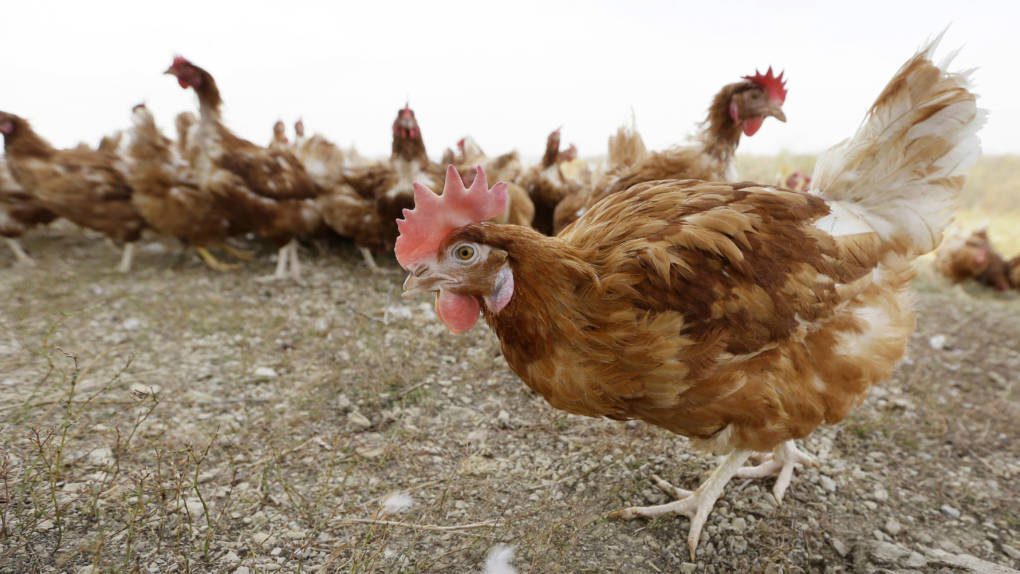
"caption": "Cage-free chickens walk in a fenced pasture at an organic farm near Waukon, Iowa.",
"description": "Cage-free chickens walk in a fenced pasture at an organic farm near Waukon, Iowa.",
"title": "Cage-free chickens walk in a fenced pasture at an organic farm near Waukon, Iowa.",
"credit": "Charlie Neibergall/AP",
"status": "inherit",
"isLoading": false,
"fetchFailed": false
},
"bayareabites_114639": {
"type": "attachments",
"id": "bayareabites_114639",
"meta": {
"index": "attachments_1716263798",
"site": "bayareabites",
"id": "114639",
"found": true
},
"parent": 21523,
"imgSizes": {
"small": {
"file": "https://ww2.kqed.org/app/uploads/sites/24/2017/01/Martin_Luther_King_Jr_NYWTS_6-520x433.jpg",
"width": 520,
"mimeType": "image/jpeg",
"height": 433
},
"twentyfourteen-full-width": {
"file": "https://ww2.kqed.org/app/uploads/sites/24/2017/01/Martin_Luther_King_Jr_NYWTS_6-1038x576.jpg",
"width": 1038,
"mimeType": "image/jpeg",
"height": 576
},
"thumbnail": {
"file": "https://ww2.kqed.org/app/uploads/sites/24/2017/01/Martin_Luther_King_Jr_NYWTS_6-160x133.jpg",
"width": 160,
"mimeType": "image/jpeg",
"height": 133
},
"fd-sm": {
"file": "https://ww2.kqed.org/app/uploads/sites/24/2017/01/Martin_Luther_King_Jr_NYWTS_6-960x799.jpg",
"width": 960,
"mimeType": "image/jpeg",
"height": 799
},
"post-thumbnail": {
"file": "https://ww2.kqed.org/app/uploads/sites/24/2017/01/Martin_Luther_King_Jr_NYWTS_6-672x372.jpg",
"width": 672,
"mimeType": "image/jpeg",
"height": 372
},
"xsmall": {
"file": "https://ww2.kqed.org/app/uploads/sites/24/2017/01/Martin_Luther_King_Jr_NYWTS_6-375x312.jpg",
"width": 375,
"mimeType": "image/jpeg",
"height": 312
},
"kqedFullSize": {
"file": "https://ww2.kqed.org/app/uploads/sites/24/2017/01/Martin_Luther_King_Jr_NYWTS_6.jpg",
"width": 1442,
"height": 1200
},
"large": {
"file": "https://ww2.kqed.org/app/uploads/sites/24/2017/01/Martin_Luther_King_Jr_NYWTS_6-1020x849.jpg",
"width": 1020,
"mimeType": "image/jpeg",
"height": 849
},
"xlarge": {
"file": "https://ww2.kqed.org/app/uploads/sites/24/2017/01/Martin_Luther_King_Jr_NYWTS_6-1180x982.jpg",
"width": 1180,
"mimeType": "image/jpeg",
"height": 982
},
"guest-author-50": {
"file": "https://ww2.kqed.org/app/uploads/sites/24/2017/01/Martin_Luther_King_Jr_NYWTS_6-50x50.jpg",
"width": 50,
"mimeType": "image/jpeg",
"height": 50
},
"guest-author-96": {
"file": "https://ww2.kqed.org/app/uploads/sites/24/2017/01/Martin_Luther_King_Jr_NYWTS_6-96x96.jpg",
"width": 96,
"mimeType": "image/jpeg",
"height": 96
},
"medium": {
"file": "https://ww2.kqed.org/app/uploads/sites/24/2017/01/Martin_Luther_King_Jr_NYWTS_6-800x666.jpg",
"width": 800,
"mimeType": "image/jpeg",
"height": 666
},
"guest-author-64": {
"file": "https://ww2.kqed.org/app/uploads/sites/24/2017/01/Martin_Luther_King_Jr_NYWTS_6-64x64.jpg",
"width": 64,
"mimeType": "image/jpeg",
"height": 64
},
"guest-author-32": {
"file": "https://ww2.kqed.org/app/uploads/sites/24/2017/01/Martin_Luther_King_Jr_NYWTS_6-32x32.jpg",
"width": 32,
"mimeType": "image/jpeg",
"height": 32
},
"fd-med": {
"file": "https://ww2.kqed.org/app/uploads/sites/24/2017/01/Martin_Luther_King_Jr_NYWTS_6-1180x982.jpg",
"width": 1180,
"mimeType": "image/jpeg",
"height": 982
},
"detail": {
"file": "https://ww2.kqed.org/app/uploads/sites/24/2017/01/Martin_Luther_King_Jr_NYWTS_6-150x150.jpg",
"width": 150,
"mimeType": "image/jpeg",
"height": 150
},
"medium_large": {
"file": "https://ww2.kqed.org/app/uploads/sites/24/2017/01/Martin_Luther_King_Jr_NYWTS_6-768x639.jpg",
"width": 768,
"mimeType": "image/jpeg",
"height": 639
},
"guest-author-128": {
"file": "https://ww2.kqed.org/app/uploads/sites/24/2017/01/Martin_Luther_King_Jr_NYWTS_6-128x128.jpg",
"width": 128,
"mimeType": "image/jpeg",
"height": 128
},
"xxsmall": {
"file": "https://ww2.kqed.org/app/uploads/sites/24/2017/01/Martin_Luther_King_Jr_NYWTS_6-240x200.jpg",
"width": 240,
"mimeType": "image/jpeg",
"height": 200
}
},
"publishDate": 1484470654,
"modified": 1484471252,
"caption": "Rev. Martin Luther King, head-and-shoulders portrait, seated, facing front, hands extended upward, during a press conference",
"description": null,
"title": "Martin_Luther_King_Jr_NYWTS_6",
"credit": "World Telegram & Sun photo by Dick DeMarsico\t",
"status": "inherit",
"isLoading": false,
"fetchFailed": false
},
"bayareabites_114593": {
"type": "attachments",
"id": "bayareabites_114593",
"meta": {
"index": "attachments_1716263798",
"site": "bayareabites",
"id": "114593",
"found": true
},
"parent": 114592,
"imgSizes": {
"small": {
"file": "https://ww2.kqed.org/app/uploads/sites/24/2017/01/ap_070615051672_custom-c5063f68d2db09a505af77b462270eddb493b8b9-520x341.jpg",
"width": 520,
"mimeType": "image/jpeg",
"height": 341
},
"twentyfourteen-full-width": {
"file": "https://ww2.kqed.org/app/uploads/sites/24/2017/01/ap_070615051672_custom-c5063f68d2db09a505af77b462270eddb493b8b9-1038x576.jpg",
"width": 1038,
"mimeType": "image/jpeg",
"height": 576
},
"thumbnail": {
"file": "https://ww2.kqed.org/app/uploads/sites/24/2017/01/ap_070615051672_custom-c5063f68d2db09a505af77b462270eddb493b8b9-160x105.jpg",
"width": 160,
"mimeType": "image/jpeg",
"height": 105
},
"fd-sm": {
"file": "https://ww2.kqed.org/app/uploads/sites/24/2017/01/ap_070615051672_custom-c5063f68d2db09a505af77b462270eddb493b8b9-960x630.jpg",
"width": 960,
"mimeType": "image/jpeg",
"height": 630
},
"post-thumbnail": {
"file": "https://ww2.kqed.org/app/uploads/sites/24/2017/01/ap_070615051672_custom-c5063f68d2db09a505af77b462270eddb493b8b9-672x372.jpg",
"width": 672,
"mimeType": "image/jpeg",
"height": 372
},
"xsmall": {
"file": "https://ww2.kqed.org/app/uploads/sites/24/2017/01/ap_070615051672_custom-c5063f68d2db09a505af77b462270eddb493b8b9-375x246.jpg",
"width": 375,
"mimeType": "image/jpeg",
"height": 246
},
"kqedFullSize": {
"file": "https://ww2.kqed.org/app/uploads/sites/24/2017/01/ap_070615051672_custom-c5063f68d2db09a505af77b462270eddb493b8b9.jpg",
"width": 2989,
"height": 1961
},
"large": {
"file": "https://ww2.kqed.org/app/uploads/sites/24/2017/01/ap_070615051672_custom-c5063f68d2db09a505af77b462270eddb493b8b9-1020x669.jpg",
"width": 1020,
"mimeType": "image/jpeg",
"height": 669
},
"xlarge": {
"file": "https://ww2.kqed.org/app/uploads/sites/24/2017/01/ap_070615051672_custom-c5063f68d2db09a505af77b462270eddb493b8b9-1180x774.jpg",
"width": 1180,
"mimeType": "image/jpeg",
"height": 774
},
"guest-author-50": {
"file": "https://ww2.kqed.org/app/uploads/sites/24/2017/01/ap_070615051672_custom-c5063f68d2db09a505af77b462270eddb493b8b9-50x50.jpg",
"width": 50,
"mimeType": "image/jpeg",
"height": 50
},
"guest-author-96": {
"file": "https://ww2.kqed.org/app/uploads/sites/24/2017/01/ap_070615051672_custom-c5063f68d2db09a505af77b462270eddb493b8b9-96x96.jpg",
"width": 96,
"mimeType": "image/jpeg",
"height": 96
},
"medium": {
"file": "https://ww2.kqed.org/app/uploads/sites/24/2017/01/ap_070615051672_custom-c5063f68d2db09a505af77b462270eddb493b8b9-800x525.jpg",
"width": 800,
"mimeType": "image/jpeg",
"height": 525
},
"guest-author-64": {
"file": "https://ww2.kqed.org/app/uploads/sites/24/2017/01/ap_070615051672_custom-c5063f68d2db09a505af77b462270eddb493b8b9-64x64.jpg",
"width": 64,
"mimeType": "image/jpeg",
"height": 64
},
"guest-author-32": {
"file": "https://ww2.kqed.org/app/uploads/sites/24/2017/01/ap_070615051672_custom-c5063f68d2db09a505af77b462270eddb493b8b9-32x32.jpg",
"width": 32,
"mimeType": "image/jpeg",
"height": 32
},
"fd-lrg": {
"file": "https://ww2.kqed.org/app/uploads/sites/24/2017/01/ap_070615051672_custom-c5063f68d2db09a505af77b462270eddb493b8b9-1920x1260.jpg",
"width": 1920,
"mimeType": "image/jpeg",
"height": 1260
},
"fd-med": {
"file": "https://ww2.kqed.org/app/uploads/sites/24/2017/01/ap_070615051672_custom-c5063f68d2db09a505af77b462270eddb493b8b9-1180x774.jpg",
"width": 1180,
"mimeType": "image/jpeg",
"height": 774
},
"full-width": {
"file": "https://ww2.kqed.org/app/uploads/sites/24/2017/01/ap_070615051672_custom-c5063f68d2db09a505af77b462270eddb493b8b9-1920x1260.jpg",
"width": 1920,
"mimeType": "image/jpeg",
"height": 1260
},
"detail": {
"file": "https://ww2.kqed.org/app/uploads/sites/24/2017/01/ap_070615051672_custom-c5063f68d2db09a505af77b462270eddb493b8b9-150x150.jpg",
"width": 150,
"mimeType": "image/jpeg",
"height": 150
},
"medium_large": {
"file": "https://ww2.kqed.org/app/uploads/sites/24/2017/01/ap_070615051672_custom-c5063f68d2db09a505af77b462270eddb493b8b9-768x504.jpg",
"width": 768,
"mimeType": "image/jpeg",
"height": 504
},
"guest-author-128": {
"file": "https://ww2.kqed.org/app/uploads/sites/24/2017/01/ap_070615051672_custom-c5063f68d2db09a505af77b462270eddb493b8b9-128x128.jpg",
"width": 128,
"mimeType": "image/jpeg",
"height": 128
},
"xxsmall": {
"file": "https://ww2.kqed.org/app/uploads/sites/24/2017/01/ap_070615051672_custom-c5063f68d2db09a505af77b462270eddb493b8b9-240x157.jpg",
"width": 240,
"mimeType": "image/jpeg",
"height": 157
}
},
"publishDate": 1484182374,
"modified": 1484182374,
"caption": null,
"description": "Organic produce for sale at a supermarket in Quincy, Mass",
"title": "Organic produce for sale at a supermarket in Quincy, Mass.",
"credit": null,
"status": "inherit",
"isLoading": false,
"fetchFailed": false
},
"bayareabites_114579": {
"type": "attachments",
"id": "bayareabites_114579",
"meta": {
"index": "attachments_1716263798",
"site": "bayareabites",
"id": "114579",
"found": true
},
"parent": 114578,
"imgSizes": {
"small": {
"file": "https://ww2.kqed.org/app/uploads/sites/24/2017/01/cedar-mesa_custom-9a3a50559155b425ce843161fd16dbc99ee94b2c-520x346.jpg",
"width": 520,
"mimeType": "image/jpeg",
"height": 346
},
"twentyfourteen-full-width": {
"file": "https://ww2.kqed.org/app/uploads/sites/24/2017/01/cedar-mesa_custom-9a3a50559155b425ce843161fd16dbc99ee94b2c-1038x576.jpg",
"width": 1038,
"mimeType": "image/jpeg",
"height": 576
},
"thumbnail": {
"file": "https://ww2.kqed.org/app/uploads/sites/24/2017/01/cedar-mesa_custom-9a3a50559155b425ce843161fd16dbc99ee94b2c-160x107.jpg",
"width": 160,
"mimeType": "image/jpeg",
"height": 107
},
"fd-sm": {
"file": "https://ww2.kqed.org/app/uploads/sites/24/2017/01/cedar-mesa_custom-9a3a50559155b425ce843161fd16dbc99ee94b2c-960x639.jpg",
"width": 960,
"mimeType": "image/jpeg",
"height": 639
},
"post-thumbnail": {
"file": "https://ww2.kqed.org/app/uploads/sites/24/2017/01/cedar-mesa_custom-9a3a50559155b425ce843161fd16dbc99ee94b2c-672x372.jpg",
"width": 672,
"mimeType": "image/jpeg",
"height": 372
},
"xsmall": {
"file": "https://ww2.kqed.org/app/uploads/sites/24/2017/01/cedar-mesa_custom-9a3a50559155b425ce843161fd16dbc99ee94b2c-375x250.jpg",
"width": 375,
"mimeType": "image/jpeg",
"height": 250
},
"kqedFullSize": {
"file": "https://ww2.kqed.org/app/uploads/sites/24/2017/01/cedar-mesa_custom-9a3a50559155b425ce843161fd16dbc99ee94b2c.jpg",
"width": 2550,
"height": 1698
},
"large": {
"file": "https://ww2.kqed.org/app/uploads/sites/24/2017/01/cedar-mesa_custom-9a3a50559155b425ce843161fd16dbc99ee94b2c-1020x679.jpg",
"width": 1020,
"mimeType": "image/jpeg",
"height": 679
},
"xlarge": {
"file": "https://ww2.kqed.org/app/uploads/sites/24/2017/01/cedar-mesa_custom-9a3a50559155b425ce843161fd16dbc99ee94b2c-1180x786.jpg",
"width": 1180,
"mimeType": "image/jpeg",
"height": 786
},
"guest-author-50": {
"file": "https://ww2.kqed.org/app/uploads/sites/24/2017/01/cedar-mesa_custom-9a3a50559155b425ce843161fd16dbc99ee94b2c-50x50.jpg",
"width": 50,
"mimeType": "image/jpeg",
"height": 50
},
"guest-author-96": {
"file": "https://ww2.kqed.org/app/uploads/sites/24/2017/01/cedar-mesa_custom-9a3a50559155b425ce843161fd16dbc99ee94b2c-96x96.jpg",
"width": 96,
"mimeType": "image/jpeg",
"height": 96
},
"medium": {
"file": "https://ww2.kqed.org/app/uploads/sites/24/2017/01/cedar-mesa_custom-9a3a50559155b425ce843161fd16dbc99ee94b2c-800x533.jpg",
"width": 800,
"mimeType": "image/jpeg",
"height": 533
},
"guest-author-64": {
"file": "https://ww2.kqed.org/app/uploads/sites/24/2017/01/cedar-mesa_custom-9a3a50559155b425ce843161fd16dbc99ee94b2c-64x64.jpg",
"width": 64,
"mimeType": "image/jpeg",
"height": 64
},
"guest-author-32": {
"file": "https://ww2.kqed.org/app/uploads/sites/24/2017/01/cedar-mesa_custom-9a3a50559155b425ce843161fd16dbc99ee94b2c-32x32.jpg",
"width": 32,
"mimeType": "image/jpeg",
"height": 32
},
"fd-lrg": {
"file": "https://ww2.kqed.org/app/uploads/sites/24/2017/01/cedar-mesa_custom-9a3a50559155b425ce843161fd16dbc99ee94b2c-1920x1278.jpg",
"width": 1920,
"mimeType": "image/jpeg",
"height": 1278
},
"fd-med": {
"file": "https://ww2.kqed.org/app/uploads/sites/24/2017/01/cedar-mesa_custom-9a3a50559155b425ce843161fd16dbc99ee94b2c-1180x786.jpg",
"width": 1180,
"mimeType": "image/jpeg",
"height": 786
},
"full-width": {
"file": "https://ww2.kqed.org/app/uploads/sites/24/2017/01/cedar-mesa_custom-9a3a50559155b425ce843161fd16dbc99ee94b2c-1920x1278.jpg",
"width": 1920,
"mimeType": "image/jpeg",
"height": 1278
},
"detail": {
"file": "https://ww2.kqed.org/app/uploads/sites/24/2017/01/cedar-mesa_custom-9a3a50559155b425ce843161fd16dbc99ee94b2c-150x150.jpg",
"width": 150,
"mimeType": "image/jpeg",
"height": 150
},
"medium_large": {
"file": "https://ww2.kqed.org/app/uploads/sites/24/2017/01/cedar-mesa_custom-9a3a50559155b425ce843161fd16dbc99ee94b2c-768x511.jpg",
"width": 768,
"mimeType": "image/jpeg",
"height": 511
},
"guest-author-128": {
"file": "https://ww2.kqed.org/app/uploads/sites/24/2017/01/cedar-mesa_custom-9a3a50559155b425ce843161fd16dbc99ee94b2c-128x128.jpg",
"width": 128,
"mimeType": "image/jpeg",
"height": 128
},
"xxsmall": {
"file": "https://ww2.kqed.org/app/uploads/sites/24/2017/01/cedar-mesa_custom-9a3a50559155b425ce843161fd16dbc99ee94b2c-240x160.jpg",
"width": 240,
"mimeType": "image/jpeg",
"height": 160
}
},
"publishDate": 1484095627,
"modified": 1484097502,
"caption": "A prehistoric granary overlooking Cedar Mesa, a site inside the newly created Bears Ears National Monument in Utah that is sacred to many Native American tribes. Natives still hunt and forage for food and medicine throughout the Bears Ears region.",
"description": "A prehistoric granary overlooking Cedar Mesa, a site inside the newly created Bears Ears National Monument in Utah that is sacred to many Native American tribes. Natives still hunt and forage for food and medicine throughout the Bears Ears region.",
"title": "A prehistoric granary overlooking Cedar Mesa, a site inside the newly created Bears Ears National Monument in Utah that is sacred to many Native American tribes. Natives still hunt and forage for food and medicine throughout the Bears Ears region.",
"credit": "Josh Ewing/Courtesy of Bears Ears Inter-Tribal Coalition",
"status": "inherit",
"isLoading": false,
"fetchFailed": false
},
"bayareabites_114400": {
"type": "attachments",
"id": "bayareabites_114400",
"meta": {
"index": "attachments_1716263798",
"site": "bayareabites",
"id": "114400",
"found": true
},
"parent": 114399,
"imgSizes": {
"small": {
"file": "https://ww2.kqed.org/app/uploads/sites/24/2016/12/farm-workers_slide-7dac7935e215c1cb2790d2f6510e4e595f71e9ba-520x347.jpg",
"width": 520,
"mimeType": "image/jpeg",
"height": 347
},
"twentyfourteen-full-width": {
"file": "https://ww2.kqed.org/app/uploads/sites/24/2016/12/farm-workers_slide-7dac7935e215c1cb2790d2f6510e4e595f71e9ba-1038x576.jpg",
"width": 1038,
"mimeType": "image/jpeg",
"height": 576
},
"thumbnail": {
"file": "https://ww2.kqed.org/app/uploads/sites/24/2016/12/farm-workers_slide-7dac7935e215c1cb2790d2f6510e4e595f71e9ba-160x107.jpg",
"width": 160,
"mimeType": "image/jpeg",
"height": 107
},
"fd-sm": {
"file": "https://ww2.kqed.org/app/uploads/sites/24/2016/12/farm-workers_slide-7dac7935e215c1cb2790d2f6510e4e595f71e9ba-960x640.jpg",
"width": 960,
"mimeType": "image/jpeg",
"height": 640
},
"post-thumbnail": {
"file": "https://ww2.kqed.org/app/uploads/sites/24/2016/12/farm-workers_slide-7dac7935e215c1cb2790d2f6510e4e595f71e9ba-672x372.jpg",
"width": 672,
"mimeType": "image/jpeg",
"height": 372
},
"xsmall": {
"file": "https://ww2.kqed.org/app/uploads/sites/24/2016/12/farm-workers_slide-7dac7935e215c1cb2790d2f6510e4e595f71e9ba-375x250.jpg",
"width": 375,
"mimeType": "image/jpeg",
"height": 250
},
"kqedFullSize": {
"file": "https://ww2.kqed.org/app/uploads/sites/24/2016/12/farm-workers_slide-7dac7935e215c1cb2790d2f6510e4e595f71e9ba.jpg",
"width": 1998,
"height": 1332
},
"large": {
"file": "https://ww2.kqed.org/app/uploads/sites/24/2016/12/farm-workers_slide-7dac7935e215c1cb2790d2f6510e4e595f71e9ba-1020x680.jpg",
"width": 1020,
"mimeType": "image/jpeg",
"height": 680
},
"xlarge": {
"file": "https://ww2.kqed.org/app/uploads/sites/24/2016/12/farm-workers_slide-7dac7935e215c1cb2790d2f6510e4e595f71e9ba-1180x787.jpg",
"width": 1180,
"mimeType": "image/jpeg",
"height": 787
},
"guest-author-50": {
"file": "https://ww2.kqed.org/app/uploads/sites/24/2016/12/farm-workers_slide-7dac7935e215c1cb2790d2f6510e4e595f71e9ba-50x50.jpg",
"width": 50,
"mimeType": "image/jpeg",
"height": 50
},
"guest-author-96": {
"file": "https://ww2.kqed.org/app/uploads/sites/24/2016/12/farm-workers_slide-7dac7935e215c1cb2790d2f6510e4e595f71e9ba-96x96.jpg",
"width": 96,
"mimeType": "image/jpeg",
"height": 96
},
"medium": {
"file": "https://ww2.kqed.org/app/uploads/sites/24/2016/12/farm-workers_slide-7dac7935e215c1cb2790d2f6510e4e595f71e9ba-800x533.jpg",
"width": 800,
"mimeType": "image/jpeg",
"height": 533
},
"guest-author-64": {
"file": "https://ww2.kqed.org/app/uploads/sites/24/2016/12/farm-workers_slide-7dac7935e215c1cb2790d2f6510e4e595f71e9ba-64x64.jpg",
"width": 64,
"mimeType": "image/jpeg",
"height": 64
},
"guest-author-32": {
"file": "https://ww2.kqed.org/app/uploads/sites/24/2016/12/farm-workers_slide-7dac7935e215c1cb2790d2f6510e4e595f71e9ba-32x32.jpg",
"width": 32,
"mimeType": "image/jpeg",
"height": 32
},
"fd-lrg": {
"file": "https://ww2.kqed.org/app/uploads/sites/24/2016/12/farm-workers_slide-7dac7935e215c1cb2790d2f6510e4e595f71e9ba-1920x1280.jpg",
"width": 1920,
"mimeType": "image/jpeg",
"height": 1280
},
"fd-med": {
"file": "https://ww2.kqed.org/app/uploads/sites/24/2016/12/farm-workers_slide-7dac7935e215c1cb2790d2f6510e4e595f71e9ba-1180x787.jpg",
"width": 1180,
"mimeType": "image/jpeg",
"height": 787
},
"full-width": {
"file": "https://ww2.kqed.org/app/uploads/sites/24/2016/12/farm-workers_slide-7dac7935e215c1cb2790d2f6510e4e595f71e9ba-1920x1280.jpg",
"width": 1920,
"mimeType": "image/jpeg",
"height": 1280
},
"detail": {
"file": "https://ww2.kqed.org/app/uploads/sites/24/2016/12/farm-workers_slide-7dac7935e215c1cb2790d2f6510e4e595f71e9ba-150x150.jpg",
"width": 150,
"mimeType": "image/jpeg",
"height": 150
},
"medium_large": {
"file": "https://ww2.kqed.org/app/uploads/sites/24/2016/12/farm-workers_slide-7dac7935e215c1cb2790d2f6510e4e595f71e9ba-768x512.jpg",
"width": 768,
"mimeType": "image/jpeg",
"height": 512
},
"guest-author-128": {
"file": "https://ww2.kqed.org/app/uploads/sites/24/2016/12/farm-workers_slide-7dac7935e215c1cb2790d2f6510e4e595f71e9ba-128x128.jpg",
"width": 128,
"mimeType": "image/jpeg",
"height": 128
},
"xxsmall": {
"file": "https://ww2.kqed.org/app/uploads/sites/24/2016/12/farm-workers_slide-7dac7935e215c1cb2790d2f6510e4e595f71e9ba-240x160.jpg",
"width": 240,
"mimeType": "image/jpeg",
"height": 160
}
},
"publishDate": 1483030981,
"modified": 1483031812,
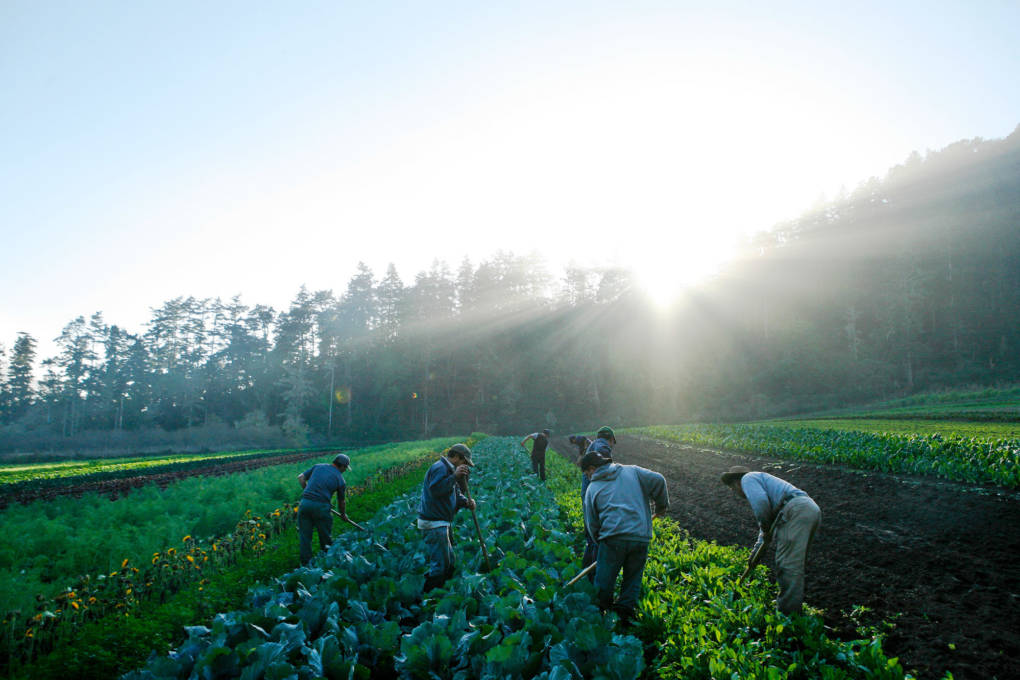
"caption": "Many large-scale farms rely heavily on immigrant labor. And many farmers are opposed to Donald Trump's strong stance against illegal immigrant.",
"description": "Many large-scale farms rely heavily on immigrant labor. And many farmers are opposed to Donald Trump's strong stance against illegal immigrant",
"title": "Many large-scale farms rely heavily on immigrant labor. And many farmers are opposed to Donald Trump's strong stance against illegal immigrant.",
"credit": "Ryan Anson/Bloomberg via Getty Images",
"status": "inherit",
"isLoading": false,
"fetchFailed": false
},
"bayareabites_114357": {
"type": "attachments",
"id": "bayareabites_114357",
"meta": {
"index": "attachments_1716263798",
"site": "bayareabites",
"id": "114357",
"found": true
},
"parent": 114279,
"imgSizes": {
"small": {
"file": "https://ww2.kqed.org/app/uploads/sites/24/2016/12/alt_feature-520x260.jpg",
"width": 520,
"mimeType": "image/jpeg",
"height": 260
},
"twentyfourteen-full-width": {
"file": "https://ww2.kqed.org/app/uploads/sites/24/2016/12/alt_feature-1038x576.jpg",
"width": 1038,
"mimeType": "image/jpeg",
"height": 576
},
"thumbnail": {
"file": "https://ww2.kqed.org/app/uploads/sites/24/2016/12/alt_feature-160x80.jpg",
"width": 160,
"mimeType": "image/jpeg",
"height": 80
},
"fd-sm": {
"file": "https://ww2.kqed.org/app/uploads/sites/24/2016/12/alt_feature-960x480.jpg",
"width": 960,
"mimeType": "image/jpeg",
"height": 480
},
"post-thumbnail": {
"file": "https://ww2.kqed.org/app/uploads/sites/24/2016/12/alt_feature-672x372.jpg",
"width": 672,
"mimeType": "image/jpeg",
"height": 372
},
"xsmall": {
"file": "https://ww2.kqed.org/app/uploads/sites/24/2016/12/alt_feature-375x188.jpg",
"width": 375,
"mimeType": "image/jpeg",
"height": 188
},
"kqedFullSize": {
"file": "https://ww2.kqed.org/app/uploads/sites/24/2016/12/alt_feature.jpg",
"width": 1920,
"height": 960
},
"large": {
"file": "https://ww2.kqed.org/app/uploads/sites/24/2016/12/alt_feature-1020x510.jpg",
"width": 1020,
"mimeType": "image/jpeg",
"height": 510
},
"xlarge": {
"file": "https://ww2.kqed.org/app/uploads/sites/24/2016/12/alt_feature-1180x590.jpg",
"width": 1180,
"mimeType": "image/jpeg",
"height": 590
},
"guest-author-50": {
"file": "https://ww2.kqed.org/app/uploads/sites/24/2016/12/alt_feature-50x50.jpg",
"width": 50,
"mimeType": "image/jpeg",
"height": 50
},
"guest-author-96": {
"file": "https://ww2.kqed.org/app/uploads/sites/24/2016/12/alt_feature-96x96.jpg",
"width": 96,
"mimeType": "image/jpeg",
"height": 96
},
"medium": {
"file": "https://ww2.kqed.org/app/uploads/sites/24/2016/12/alt_feature-800x400.jpg",
"width": 800,
"mimeType": "image/jpeg",
"height": 400
},
"guest-author-64": {
"file": "https://ww2.kqed.org/app/uploads/sites/24/2016/12/alt_feature-64x64.jpg",
"width": 64,
"mimeType": "image/jpeg",
"height": 64
},
"guest-author-32": {
"file": "https://ww2.kqed.org/app/uploads/sites/24/2016/12/alt_feature-32x32.jpg",
"width": 32,
"mimeType": "image/jpeg",
"height": 32
},
"fd-lrg": {
"file": "https://ww2.kqed.org/app/uploads/sites/24/2016/12/alt_feature-1920x960.jpg",
"width": 1920,
"mimeType": "image/jpeg",
"height": 960
},
"fd-med": {
"file": "https://ww2.kqed.org/app/uploads/sites/24/2016/12/alt_feature-1180x590.jpg",
"width": 1180,
"mimeType": "image/jpeg",
"height": 590
},
"full-width": {
"file": "https://ww2.kqed.org/app/uploads/sites/24/2016/12/alt_feature-1920x960.jpg",
"width": 1920,
"mimeType": "image/jpeg",
"height": 960
},
"detail": {
"file": "https://ww2.kqed.org/app/uploads/sites/24/2016/12/alt_feature-150x150.jpg",
"width": 150,
"mimeType": "image/jpeg",
"height": 150
},
"medium_large": {
"file": "https://ww2.kqed.org/app/uploads/sites/24/2016/12/alt_feature-768x384.jpg",
"width": 768,
"mimeType": "image/jpeg",
"height": 384
},
"guest-author-128": {
"file": "https://ww2.kqed.org/app/uploads/sites/24/2016/12/alt_feature-128x128.jpg",
"width": 128,
"mimeType": "image/jpeg",
"height": 128
},
"xxsmall": {
"file": "https://ww2.kqed.org/app/uploads/sites/24/2016/12/alt_feature-240x120.jpg",
"width": 240,
"mimeType": "image/jpeg",
"height": 120
}
},
"publishDate": 1482425237,
"modified": 1482425699,
"caption": "Closing announcements from alaMar, Ozumo in Oakland, Actual Cafe, and Cajun Pacific.\n",
"description": "Closing announcements from alaMar, Ozumo in Oakland, Actual Cafe, and Cajun Pacific.\n",
"title": "Closing announcements from alaMar, Ozumo in Oakland, Actual Cafe, and Cajun Pacific.",
"credit": "Facebook pages of alaMar, Ozumo in Oakland, Actual Cafe, and Cajun Pacific.",
"status": "inherit",
"isLoading": false,
"fetchFailed": false
},
"bayareabites_114365": {
"type": "attachments",
"id": "bayareabites_114365",
"meta": {
"index": "attachments_1716263798",
"site": "bayareabites",
"id": "114365",
"found": true
},
"parent": 114364,
"imgSizes": {
"small": {
"file": "https://ww2.kqed.org/app/uploads/sites/24/2016/12/ap_429719989775-55_wide-6f2ba8d0335d18165c00e115a0dcaad8ee712a5e-520x292.jpg",
"width": 520,
"mimeType": "image/jpeg",
"height": 292
},
"twentyfourteen-full-width": {
"file": "https://ww2.kqed.org/app/uploads/sites/24/2016/12/ap_429719989775-55_wide-6f2ba8d0335d18165c00e115a0dcaad8ee712a5e-1038x576.jpg",
"width": 1038,
"mimeType": "image/jpeg",
"height": 576
},
"thumbnail": {
"file": "https://ww2.kqed.org/app/uploads/sites/24/2016/12/ap_429719989775-55_wide-6f2ba8d0335d18165c00e115a0dcaad8ee712a5e-160x90.jpg",
"width": 160,
"mimeType": "image/jpeg",
"height": 90
},
"fd-sm": {
"file": "https://ww2.kqed.org/app/uploads/sites/24/2016/12/ap_429719989775-55_wide-6f2ba8d0335d18165c00e115a0dcaad8ee712a5e-960x540.jpg",
"width": 960,
"mimeType": "image/jpeg",
"height": 540
},
"post-thumbnail": {
"file": "https://ww2.kqed.org/app/uploads/sites/24/2016/12/ap_429719989775-55_wide-6f2ba8d0335d18165c00e115a0dcaad8ee712a5e-672x372.jpg",
"width": 672,
"mimeType": "image/jpeg",
"height": 372
},
"xsmall": {
"file": "https://ww2.kqed.org/app/uploads/sites/24/2016/12/ap_429719989775-55_wide-6f2ba8d0335d18165c00e115a0dcaad8ee712a5e-375x211.jpg",
"width": 375,
"mimeType": "image/jpeg",
"height": 211
},
"kqedFullSize": {
"file": "https://ww2.kqed.org/app/uploads/sites/24/2016/12/ap_429719989775-55_wide-6f2ba8d0335d18165c00e115a0dcaad8ee712a5e.jpg",
"width": 1947,
"height": 1095
},
"large": {
"file": "https://ww2.kqed.org/app/uploads/sites/24/2016/12/ap_429719989775-55_wide-6f2ba8d0335d18165c00e115a0dcaad8ee712a5e-1020x574.jpg",
"width": 1020,
"mimeType": "image/jpeg",
"height": 574
},
"xlarge": {
"file": "https://ww2.kqed.org/app/uploads/sites/24/2016/12/ap_429719989775-55_wide-6f2ba8d0335d18165c00e115a0dcaad8ee712a5e-1180x664.jpg",
"width": 1180,
"mimeType": "image/jpeg",
"height": 664
},
"guest-author-50": {
"file": "https://ww2.kqed.org/app/uploads/sites/24/2016/12/ap_429719989775-55_wide-6f2ba8d0335d18165c00e115a0dcaad8ee712a5e-50x50.jpg",
"width": 50,
"mimeType": "image/jpeg",
"height": 50
},
"guest-author-96": {
"file": "https://ww2.kqed.org/app/uploads/sites/24/2016/12/ap_429719989775-55_wide-6f2ba8d0335d18165c00e115a0dcaad8ee712a5e-96x96.jpg",
"width": 96,
"mimeType": "image/jpeg",
"height": 96
},
"medium": {
"file": "https://ww2.kqed.org/app/uploads/sites/24/2016/12/ap_429719989775-55_wide-6f2ba8d0335d18165c00e115a0dcaad8ee712a5e-800x450.jpg",
"width": 800,
"mimeType": "image/jpeg",
"height": 450
},
"guest-author-64": {
"file": "https://ww2.kqed.org/app/uploads/sites/24/2016/12/ap_429719989775-55_wide-6f2ba8d0335d18165c00e115a0dcaad8ee712a5e-64x64.jpg",
"width": 64,
"mimeType": "image/jpeg",
"height": 64
},
"guest-author-32": {
"file": "https://ww2.kqed.org/app/uploads/sites/24/2016/12/ap_429719989775-55_wide-6f2ba8d0335d18165c00e115a0dcaad8ee712a5e-32x32.jpg",
"width": 32,
"mimeType": "image/jpeg",
"height": 32
},
"fd-lrg": {
"file": "https://ww2.kqed.org/app/uploads/sites/24/2016/12/ap_429719989775-55_wide-6f2ba8d0335d18165c00e115a0dcaad8ee712a5e-1920x1080.jpg",
"width": 1920,
"mimeType": "image/jpeg",
"height": 1080
},
"fd-med": {
"file": "https://ww2.kqed.org/app/uploads/sites/24/2016/12/ap_429719989775-55_wide-6f2ba8d0335d18165c00e115a0dcaad8ee712a5e-1180x664.jpg",
"width": 1180,
"mimeType": "image/jpeg",
"height": 664
},
"full-width": {
"file": "https://ww2.kqed.org/app/uploads/sites/24/2016/12/ap_429719989775-55_wide-6f2ba8d0335d18165c00e115a0dcaad8ee712a5e-1920x1080.jpg",
"width": 1920,
"mimeType": "image/jpeg",
"height": 1080
},
"detail": {
"file": "https://ww2.kqed.org/app/uploads/sites/24/2016/12/ap_429719989775-55_wide-6f2ba8d0335d18165c00e115a0dcaad8ee712a5e-150x150.jpg",
"width": 150,
"mimeType": "image/jpeg",
"height": 150
},
"medium_large": {
"file": "https://ww2.kqed.org/app/uploads/sites/24/2016/12/ap_429719989775-55_wide-6f2ba8d0335d18165c00e115a0dcaad8ee712a5e-768x432.jpg",
"width": 768,
"mimeType": "image/jpeg",
"height": 432
},
"guest-author-128": {
"file": "https://ww2.kqed.org/app/uploads/sites/24/2016/12/ap_429719989775-55_wide-6f2ba8d0335d18165c00e115a0dcaad8ee712a5e-128x128.jpg",
"width": 128,
"mimeType": "image/jpeg",
"height": 128
},
"xxsmall": {
"file": "https://ww2.kqed.org/app/uploads/sites/24/2016/12/ap_429719989775-55_wide-6f2ba8d0335d18165c00e115a0dcaad8ee712a5e-240x135.jpg",
"width": 240,
"mimeType": "image/jpeg",
"height": 135
}
},
"publishDate": 1482461866,
"modified": 1482461901,
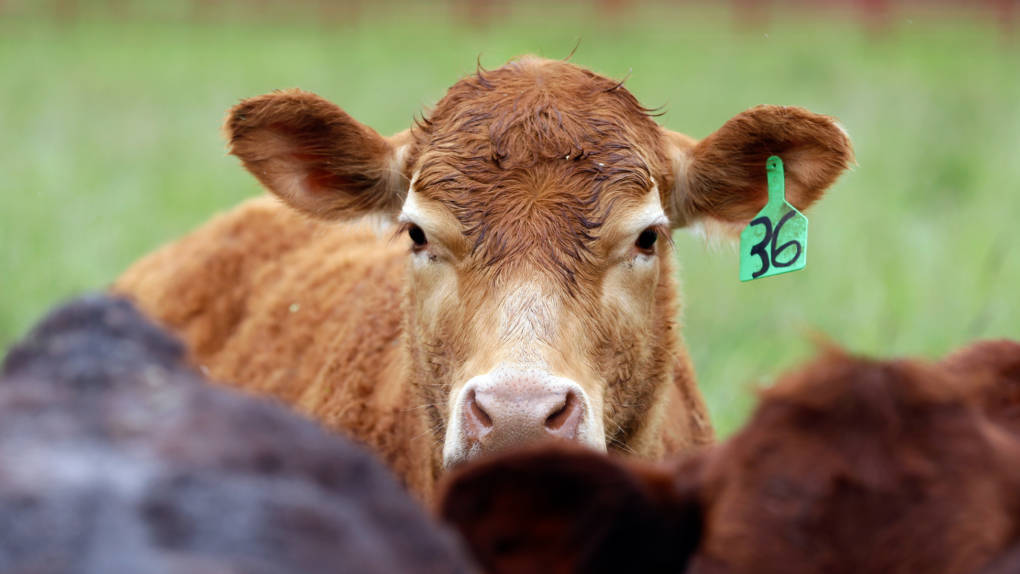
"caption": "Antibiotic- and growth-hormone-free cattle gather at a farm in Yamhill, Ore. Despite farmers pledging to reduce or stop antibiotics use, a new report finds that sales of antibiotics for use on farms are going up.",
"description": "Antibiotic- and growth-hormone-free cattle gather at a farm in Yamhill, Ore. Despite farmers pledging to reduce or stop antibiotics use, a new report finds that sales of antibiotics for use on farms are going up.",
"title": "Antibiotic- and growth-hormone-free cattle gather at a farm in Yamhill, Ore. Despite farmers pledging to reduce or stop antibiotics use, a new report finds that sales of antibiotics for use on farms are going up.",
"credit": "Don Ryan/AP",
"status": "inherit",
"isLoading": false,
"fetchFailed": false
},
"bayareabites_114245": {
"type": "attachments",
"id": "bayareabites_114245",
"meta": {
"index": "attachments_1716263798",
"site": "bayareabites",
"id": "114245",
"found": true
},
"parent": 114244,
"imgSizes": {
"small": {
"file": "https://ww2.kqed.org/app/uploads/sites/24/2016/12/gettyimages-567417857-55_wide-607087ca33eeca63f6ee75f7686c2290c2881770-520x293.jpg",
"width": 520,
"mimeType": "image/jpeg",
"height": 293
},
"twentyfourteen-full-width": {
"file": "https://ww2.kqed.org/app/uploads/sites/24/2016/12/gettyimages-567417857-55_wide-607087ca33eeca63f6ee75f7686c2290c2881770-1038x576.jpg",
"width": 1038,
"mimeType": "image/jpeg",
"height": 576
},
"thumbnail": {
"file": "https://ww2.kqed.org/app/uploads/sites/24/2016/12/gettyimages-567417857-55_wide-607087ca33eeca63f6ee75f7686c2290c2881770-160x90.jpg",
"width": 160,
"mimeType": "image/jpeg",
"height": 90
},
"fd-sm": {
"file": "https://ww2.kqed.org/app/uploads/sites/24/2016/12/gettyimages-567417857-55_wide-607087ca33eeca63f6ee75f7686c2290c2881770-960x540.jpg",
"width": 960,
"mimeType": "image/jpeg",
"height": 540
},
"post-thumbnail": {
"file": "https://ww2.kqed.org/app/uploads/sites/24/2016/12/gettyimages-567417857-55_wide-607087ca33eeca63f6ee75f7686c2290c2881770-672x372.jpg",
"width": 672,
"mimeType": "image/jpeg",
"height": 372
},
"xsmall": {
"file": "https://ww2.kqed.org/app/uploads/sites/24/2016/12/gettyimages-567417857-55_wide-607087ca33eeca63f6ee75f7686c2290c2881770-375x211.jpg",
"width": 375,
"mimeType": "image/jpeg",
"height": 211
},
"kqedFullSize": {
"file": "https://ww2.kqed.org/app/uploads/sites/24/2016/12/gettyimages-567417857-55_wide-607087ca33eeca63f6ee75f7686c2290c2881770.jpg",
"width": 1989,
"height": 1119
},
"large": {
"file": "https://ww2.kqed.org/app/uploads/sites/24/2016/12/gettyimages-567417857-55_wide-607087ca33eeca63f6ee75f7686c2290c2881770-1020x574.jpg",
"width": 1020,
"mimeType": "image/jpeg",
"height": 574
},
"xlarge": {
"file": "https://ww2.kqed.org/app/uploads/sites/24/2016/12/gettyimages-567417857-55_wide-607087ca33eeca63f6ee75f7686c2290c2881770-1180x664.jpg",
"width": 1180,
"mimeType": "image/jpeg",
"height": 664
},
"guest-author-50": {
"file": "https://ww2.kqed.org/app/uploads/sites/24/2016/12/gettyimages-567417857-55_wide-607087ca33eeca63f6ee75f7686c2290c2881770-50x50.jpg",
"width": 50,
"mimeType": "image/jpeg",
"height": 50
},
"guest-author-96": {
"file": "https://ww2.kqed.org/app/uploads/sites/24/2016/12/gettyimages-567417857-55_wide-607087ca33eeca63f6ee75f7686c2290c2881770-96x96.jpg",
"width": 96,
"mimeType": "image/jpeg",
"height": 96
},
"medium": {
"file": "https://ww2.kqed.org/app/uploads/sites/24/2016/12/gettyimages-567417857-55_wide-607087ca33eeca63f6ee75f7686c2290c2881770-800x450.jpg",
"width": 800,
"mimeType": "image/jpeg",
"height": 450
},
"guest-author-64": {
"file": "https://ww2.kqed.org/app/uploads/sites/24/2016/12/gettyimages-567417857-55_wide-607087ca33eeca63f6ee75f7686c2290c2881770-64x64.jpg",
"width": 64,
"mimeType": "image/jpeg",
"height": 64
},
"guest-author-32": {
"file": "https://ww2.kqed.org/app/uploads/sites/24/2016/12/gettyimages-567417857-55_wide-607087ca33eeca63f6ee75f7686c2290c2881770-32x32.jpg",
"width": 32,
"mimeType": "image/jpeg",
"height": 32
},
"fd-lrg": {
"file": "https://ww2.kqed.org/app/uploads/sites/24/2016/12/gettyimages-567417857-55_wide-607087ca33eeca63f6ee75f7686c2290c2881770-1920x1080.jpg",
"width": 1920,
"mimeType": "image/jpeg",
"height": 1080
},
"fd-med": {
"file": "https://ww2.kqed.org/app/uploads/sites/24/2016/12/gettyimages-567417857-55_wide-607087ca33eeca63f6ee75f7686c2290c2881770-1180x664.jpg",
"width": 1180,
"mimeType": "image/jpeg",
"height": 664
},
"full-width": {
"file": "https://ww2.kqed.org/app/uploads/sites/24/2016/12/gettyimages-567417857-55_wide-607087ca33eeca63f6ee75f7686c2290c2881770-1920x1080.jpg",
"width": 1920,
"mimeType": "image/jpeg",
"height": 1080
},
"detail": {
"file": "https://ww2.kqed.org/app/uploads/sites/24/2016/12/gettyimages-567417857-55_wide-607087ca33eeca63f6ee75f7686c2290c2881770-150x150.jpg",
"width": 150,
"mimeType": "image/jpeg",
"height": 150
},
"medium_large": {
"file": "https://ww2.kqed.org/app/uploads/sites/24/2016/12/gettyimages-567417857-55_wide-607087ca33eeca63f6ee75f7686c2290c2881770-768x432.jpg",
"width": 768,
"mimeType": "image/jpeg",
"height": 432
},
"guest-author-128": {
"file": "https://ww2.kqed.org/app/uploads/sites/24/2016/12/gettyimages-567417857-55_wide-607087ca33eeca63f6ee75f7686c2290c2881770-128x128.jpg",
"width": 128,
"mimeType": "image/jpeg",
"height": 128
},
"xxsmall": {
"file": "https://ww2.kqed.org/app/uploads/sites/24/2016/12/gettyimages-567417857-55_wide-607087ca33eeca63f6ee75f7686c2290c2881770-240x135.jpg",
"width": 240,
"mimeType": "image/jpeg",
"height": 135
}
},
"publishDate": 1482342771,
"modified": 1482343253,
"caption": "Companies are selling \"milk\" derived from a wide variety of plants. The dairy industry isn't happy about it.",
"description": "Companies are selling \"milk\" derived from a wide variety of plants. The dairy industry isn't happy about it.",
"title": "Companies are selling \"milk\" derived from a wide variety of plants. The dairy industry isn't happy about it.",
"credit": "Bob Chamberlin/LA Times via Getty Images",
"status": "inherit",
"isLoading": false,
"fetchFailed": false
},
"bayareabites_114025": {
"type": "attachments",
"id": "bayareabites_114025",
"meta": {
"index": "attachments_1716263798",
"site": "bayareabites",
"id": "114025",
"found": true
},
"parent": 114024,
"imgSizes": {
"small": {
"file": "https://ww2.kqed.org/app/uploads/sites/24/2016/12/gettyimages-629934680_wide-b39f8be1700952438d55f5c5d67e7632ce4a811a-520x293.jpg",
"width": 520,
"mimeType": "image/jpeg",
"height": 293
},
"twentyfourteen-full-width": {
"file": "https://ww2.kqed.org/app/uploads/sites/24/2016/12/gettyimages-629934680_wide-b39f8be1700952438d55f5c5d67e7632ce4a811a-1038x576.jpg",
"width": 1038,
"mimeType": "image/jpeg",
"height": 576
},
"thumbnail": {
"file": "https://ww2.kqed.org/app/uploads/sites/24/2016/12/gettyimages-629934680_wide-b39f8be1700952438d55f5c5d67e7632ce4a811a-160x90.jpg",
"width": 160,
"mimeType": "image/jpeg",
"height": 90
},
"fd-sm": {
"file": "https://ww2.kqed.org/app/uploads/sites/24/2016/12/gettyimages-629934680_wide-b39f8be1700952438d55f5c5d67e7632ce4a811a-960x540.jpg",
"width": 960,
"mimeType": "image/jpeg",
"height": 540
},
"post-thumbnail": {
"file": "https://ww2.kqed.org/app/uploads/sites/24/2016/12/gettyimages-629934680_wide-b39f8be1700952438d55f5c5d67e7632ce4a811a-672x372.jpg",
"width": 672,
"mimeType": "image/jpeg",
"height": 372
},
"xsmall": {
"file": "https://ww2.kqed.org/app/uploads/sites/24/2016/12/gettyimages-629934680_wide-b39f8be1700952438d55f5c5d67e7632ce4a811a-375x211.jpg",
"width": 375,
"mimeType": "image/jpeg",
"height": 211
},
"kqedFullSize": {
"file": "https://ww2.kqed.org/app/uploads/sites/24/2016/12/gettyimages-629934680_wide-b39f8be1700952438d55f5c5d67e7632ce4a811a.jpg",
"width": 4927,
"height": 2772
},
"large": {
"file": "https://ww2.kqed.org/app/uploads/sites/24/2016/12/gettyimages-629934680_wide-b39f8be1700952438d55f5c5d67e7632ce4a811a-1020x574.jpg",
"width": 1020,
"mimeType": "image/jpeg",
"height": 574
},
"xlarge": {
"file": "https://ww2.kqed.org/app/uploads/sites/24/2016/12/gettyimages-629934680_wide-b39f8be1700952438d55f5c5d67e7632ce4a811a-1180x664.jpg",
"width": 1180,
"mimeType": "image/jpeg",
"height": 664
},
"guest-author-50": {
"file": "https://ww2.kqed.org/app/uploads/sites/24/2016/12/gettyimages-629934680_wide-b39f8be1700952438d55f5c5d67e7632ce4a811a-50x50.jpg",
"width": 50,
"mimeType": "image/jpeg",
"height": 50
},
"guest-author-96": {
"file": "https://ww2.kqed.org/app/uploads/sites/24/2016/12/gettyimages-629934680_wide-b39f8be1700952438d55f5c5d67e7632ce4a811a-96x96.jpg",
"width": 96,
"mimeType": "image/jpeg",
"height": 96
},
"medium": {
"file": "https://ww2.kqed.org/app/uploads/sites/24/2016/12/gettyimages-629934680_wide-b39f8be1700952438d55f5c5d67e7632ce4a811a-800x450.jpg",
"width": 800,
"mimeType": "image/jpeg",
"height": 450
},
"guest-author-64": {
"file": "https://ww2.kqed.org/app/uploads/sites/24/2016/12/gettyimages-629934680_wide-b39f8be1700952438d55f5c5d67e7632ce4a811a-64x64.jpg",
"width": 64,
"mimeType": "image/jpeg",
"height": 64
},
"guest-author-32": {
"file": "https://ww2.kqed.org/app/uploads/sites/24/2016/12/gettyimages-629934680_wide-b39f8be1700952438d55f5c5d67e7632ce4a811a-32x32.jpg",
"width": 32,
"mimeType": "image/jpeg",
"height": 32
},
"fd-lrg": {
"file": "https://ww2.kqed.org/app/uploads/sites/24/2016/12/gettyimages-629934680_wide-b39f8be1700952438d55f5c5d67e7632ce4a811a-1920x1080.jpg",
"width": 1920,
"mimeType": "image/jpeg",
"height": 1080
},
"fd-med": {
"file": "https://ww2.kqed.org/app/uploads/sites/24/2016/12/gettyimages-629934680_wide-b39f8be1700952438d55f5c5d67e7632ce4a811a-1180x664.jpg",
"width": 1180,
"mimeType": "image/jpeg",
"height": 664
},
"full-width": {
"file": "https://ww2.kqed.org/app/uploads/sites/24/2016/12/gettyimages-629934680_wide-b39f8be1700952438d55f5c5d67e7632ce4a811a-1920x1080.jpg",
"width": 1920,
"mimeType": "image/jpeg",
"height": 1080
},
"detail": {
"file": "https://ww2.kqed.org/app/uploads/sites/24/2016/12/gettyimages-629934680_wide-b39f8be1700952438d55f5c5d67e7632ce4a811a-150x150.jpg",
"width": 150,
"mimeType": "image/jpeg",
"height": 150
},
"medium_large": {
"file": "https://ww2.kqed.org/app/uploads/sites/24/2016/12/gettyimages-629934680_wide-b39f8be1700952438d55f5c5d67e7632ce4a811a-768x432.jpg",
"width": 768,
"mimeType": "image/jpeg",
"height": 432
},
"guest-author-128": {
"file": "https://ww2.kqed.org/app/uploads/sites/24/2016/12/gettyimages-629934680_wide-b39f8be1700952438d55f5c5d67e7632ce4a811a-128x128.jpg",
"width": 128,
"mimeType": "image/jpeg",
"height": 128
},
"xxsmall": {
"file": "https://ww2.kqed.org/app/uploads/sites/24/2016/12/gettyimages-629934680_wide-b39f8be1700952438d55f5c5d67e7632ce4a811a-240x135.jpg",
"width": 240,
"mimeType": "image/jpeg",
"height": 135
}
},
"publishDate": 1481829150,
"modified": 1481830053,
"caption": "Patrons are reflected in a mirror as they eat at Trump Tower Grille at Trump Tower in New York. A critical Vanity Fair review preceded criticism of the magazine by the president-elect on Twitter.",
"description": "Patrons are reflected in a mirror as they eat at Trump Tower Grille at Trump Tower in New York. A critical Vanity Fair review preceded criticism of the magazine by the president-elect on Twitter.",
"title": "Patrons are reflected in a mirror as they eat at Trump Tower Grille at Trump Tower in New York. A critical Vanity Fair review preceded criticism of the magazine by the president-elect on Twitter.",
"credit": "Jim Watson/AFP/Getty Images",
"status": "inherit",
"isLoading": false,
"fetchFailed": false
},
"bayareabites_113994": {
"type": "attachments",
"id": "bayareabites_113994",
"meta": {
"index": "attachments_1716263798",
"site": "bayareabites",
"id": "113994",
"found": true
},
"parent": 113993,
"imgSizes": {
"small": {
"file": "https://ww2.kqed.org/app/uploads/sites/24/2016/12/img_8648_new-ecadbc7a496bdc45914dd78fa1f416a26edd4f64-520x390.jpg",
"width": 520,
"mimeType": "image/jpeg",
"height": 390
},
"twentyfourteen-full-width": {
"file": "https://ww2.kqed.org/app/uploads/sites/24/2016/12/img_8648_new-ecadbc7a496bdc45914dd78fa1f416a26edd4f64-1038x576.jpg",
"width": 1038,
"mimeType": "image/jpeg",
"height": 576
},
"thumbnail": {
"file": "https://ww2.kqed.org/app/uploads/sites/24/2016/12/img_8648_new-ecadbc7a496bdc45914dd78fa1f416a26edd4f64-160x120.jpg",
"width": 160,
"mimeType": "image/jpeg",
"height": 120
},
"fd-sm": {
"file": "https://ww2.kqed.org/app/uploads/sites/24/2016/12/img_8648_new-ecadbc7a496bdc45914dd78fa1f416a26edd4f64-960x721.jpg",
"width": 960,
"mimeType": "image/jpeg",
"height": 721
},
"post-thumbnail": {
"file": "https://ww2.kqed.org/app/uploads/sites/24/2016/12/img_8648_new-ecadbc7a496bdc45914dd78fa1f416a26edd4f64-672x372.jpg",
"width": 672,
"mimeType": "image/jpeg",
"height": 372
},
"xsmall": {
"file": "https://ww2.kqed.org/app/uploads/sites/24/2016/12/img_8648_new-ecadbc7a496bdc45914dd78fa1f416a26edd4f64-375x281.jpg",
"width": 375,
"mimeType": "image/jpeg",
"height": 281
},
"kqedFullSize": {
"file": "https://ww2.kqed.org/app/uploads/sites/24/2016/12/img_8648_new-ecadbc7a496bdc45914dd78fa1f416a26edd4f64.jpg",
"width": 2770,
"height": 2079
},
"large": {
"file": "https://ww2.kqed.org/app/uploads/sites/24/2016/12/img_8648_new-ecadbc7a496bdc45914dd78fa1f416a26edd4f64-1020x766.jpg",
"width": 1020,
"mimeType": "image/jpeg",
"height": 766
},
"xlarge": {
"file": "https://ww2.kqed.org/app/uploads/sites/24/2016/12/img_8648_new-ecadbc7a496bdc45914dd78fa1f416a26edd4f64-1180x886.jpg",
"width": 1180,
"mimeType": "image/jpeg",
"height": 886
},
"guest-author-50": {
"file": "https://ww2.kqed.org/app/uploads/sites/24/2016/12/img_8648_new-ecadbc7a496bdc45914dd78fa1f416a26edd4f64-50x50.jpg",
"width": 50,
"mimeType": "image/jpeg",
"height": 50
},
"guest-author-96": {
"file": "https://ww2.kqed.org/app/uploads/sites/24/2016/12/img_8648_new-ecadbc7a496bdc45914dd78fa1f416a26edd4f64-96x96.jpg",
"width": 96,
"mimeType": "image/jpeg",
"height": 96
},
"medium": {
"file": "https://ww2.kqed.org/app/uploads/sites/24/2016/12/img_8648_new-ecadbc7a496bdc45914dd78fa1f416a26edd4f64-800x600.jpg",
"width": 800,
"mimeType": "image/jpeg",
"height": 600
},
"guest-author-64": {
"file": "https://ww2.kqed.org/app/uploads/sites/24/2016/12/img_8648_new-ecadbc7a496bdc45914dd78fa1f416a26edd4f64-64x64.jpg",
"width": 64,
"mimeType": "image/jpeg",
"height": 64
},
"guest-author-32": {
"file": "https://ww2.kqed.org/app/uploads/sites/24/2016/12/img_8648_new-ecadbc7a496bdc45914dd78fa1f416a26edd4f64-32x32.jpg",
"width": 32,
"mimeType": "image/jpeg",
"height": 32
},
"fd-lrg": {
"file": "https://ww2.kqed.org/app/uploads/sites/24/2016/12/img_8648_new-ecadbc7a496bdc45914dd78fa1f416a26edd4f64-1920x1441.jpg",
"width": 1920,
"mimeType": "image/jpeg",
"height": 1441
},
"fd-med": {
"file": "https://ww2.kqed.org/app/uploads/sites/24/2016/12/img_8648_new-ecadbc7a496bdc45914dd78fa1f416a26edd4f64-1180x886.jpg",
"width": 1180,
"mimeType": "image/jpeg",
"height": 886
},
"full-width": {
"file": "https://ww2.kqed.org/app/uploads/sites/24/2016/12/img_8648_new-ecadbc7a496bdc45914dd78fa1f416a26edd4f64-1920x1441.jpg",
"width": 1920,
"mimeType": "image/jpeg",
"height": 1441
},
"detail": {
"file": "https://ww2.kqed.org/app/uploads/sites/24/2016/12/img_8648_new-ecadbc7a496bdc45914dd78fa1f416a26edd4f64-150x150.jpg",
"width": 150,
"mimeType": "image/jpeg",
"height": 150
},
"medium_large": {
"file": "https://ww2.kqed.org/app/uploads/sites/24/2016/12/img_8648_new-ecadbc7a496bdc45914dd78fa1f416a26edd4f64-768x576.jpg",
"width": 768,
"mimeType": "image/jpeg",
"height": 576
},
"guest-author-128": {
"file": "https://ww2.kqed.org/app/uploads/sites/24/2016/12/img_8648_new-ecadbc7a496bdc45914dd78fa1f416a26edd4f64-128x128.jpg",
"width": 128,
"mimeType": "image/jpeg",
"height": 128
},
"xxsmall": {
"file": "https://ww2.kqed.org/app/uploads/sites/24/2016/12/img_8648_new-ecadbc7a496bdc45914dd78fa1f416a26edd4f64-240x180.jpg",
"width": 240,
"mimeType": "image/jpeg",
"height": 180
}
},
"publishDate": 1481762915,
"modified": 1481763885,
"caption": "Craig Watts produces chickens for Perdue on his farm in Fairmont, N.C. He's been one of the most vocal critics of the contract farming system.",
"description": "Craig Watts produces chickens for Perdue on his farm in Fairmont, N.C. He's been one of the most vocal critics of the contract farming system.",
"title": "Craig Watts produces chickens for Perdue on his farm in Fairmont, N.C. He's been one of the most vocal critics of the contract farming system.",
"credit": "Dan Charles/NPR",
"status": "inherit",
"isLoading": false,
"fetchFailed": false
},
"bayareabites_113894": {
"type": "attachments",
"id": "bayareabites_113894",
"meta": {
"index": "attachments_1716263798",
"site": "bayareabites",
"id": "113894",
"found": true
},
"parent": 113893,
"imgSizes": {
"small": {
"file": "https://ww2.kqed.org/app/uploads/sites/24/2016/12/gettyimages-508822938-5b3ca8a7bcc92be3658105a56b4a2b6052e5370a-520x390.jpg",
"width": 520,
"mimeType": "image/jpeg",
"height": 390
},
"twentyfourteen-full-width": {
"file": "https://ww2.kqed.org/app/uploads/sites/24/2016/12/gettyimages-508822938-5b3ca8a7bcc92be3658105a56b4a2b6052e5370a-1038x576.jpg",
"width": 1038,
"mimeType": "image/jpeg",
"height": 576
},
"thumbnail": {
"file": "https://ww2.kqed.org/app/uploads/sites/24/2016/12/gettyimages-508822938-5b3ca8a7bcc92be3658105a56b4a2b6052e5370a-160x120.jpg",
"width": 160,
"mimeType": "image/jpeg",
"height": 120
},
"fd-sm": {
"file": "https://ww2.kqed.org/app/uploads/sites/24/2016/12/gettyimages-508822938-5b3ca8a7bcc92be3658105a56b4a2b6052e5370a-960x720.jpg",
"width": 960,
"mimeType": "image/jpeg",
"height": 720
},
"post-thumbnail": {
"file": "https://ww2.kqed.org/app/uploads/sites/24/2016/12/gettyimages-508822938-5b3ca8a7bcc92be3658105a56b4a2b6052e5370a-672x372.jpg",
"width": 672,
"mimeType": "image/jpeg",
"height": 372
},
"xsmall": {
"file": "https://ww2.kqed.org/app/uploads/sites/24/2016/12/gettyimages-508822938-5b3ca8a7bcc92be3658105a56b4a2b6052e5370a-375x281.jpg",
"width": 375,
"mimeType": "image/jpeg",
"height": 281
},
"kqedFullSize": {
"file": "https://ww2.kqed.org/app/uploads/sites/24/2016/12/gettyimages-508822938-5b3ca8a7bcc92be3658105a56b4a2b6052e5370a.jpg",
"width": 2935,
"height": 2200
},
"large": {
"file": "https://ww2.kqed.org/app/uploads/sites/24/2016/12/gettyimages-508822938-5b3ca8a7bcc92be3658105a56b4a2b6052e5370a-1020x765.jpg",
"width": 1020,
"mimeType": "image/jpeg",
"height": 765
},
"xlarge": {
"file": "https://ww2.kqed.org/app/uploads/sites/24/2016/12/gettyimages-508822938-5b3ca8a7bcc92be3658105a56b4a2b6052e5370a-1180x884.jpg",
"width": 1180,
"mimeType": "image/jpeg",
"height": 884
},
"guest-author-50": {
"file": "https://ww2.kqed.org/app/uploads/sites/24/2016/12/gettyimages-508822938-5b3ca8a7bcc92be3658105a56b4a2b6052e5370a-50x50.jpg",
"width": 50,
"mimeType": "image/jpeg",
"height": 50
},
"guest-author-96": {
"file": "https://ww2.kqed.org/app/uploads/sites/24/2016/12/gettyimages-508822938-5b3ca8a7bcc92be3658105a56b4a2b6052e5370a-96x96.jpg",
"width": 96,
"mimeType": "image/jpeg",
"height": 96
},
"medium": {
"file": "https://ww2.kqed.org/app/uploads/sites/24/2016/12/gettyimages-508822938-5b3ca8a7bcc92be3658105a56b4a2b6052e5370a-800x600.jpg",
"width": 800,
"mimeType": "image/jpeg",
"height": 600
},
"guest-author-64": {
"file": "https://ww2.kqed.org/app/uploads/sites/24/2016/12/gettyimages-508822938-5b3ca8a7bcc92be3658105a56b4a2b6052e5370a-64x64.jpg",
"width": 64,
"mimeType": "image/jpeg",
"height": 64
},
"guest-author-32": {
"file": "https://ww2.kqed.org/app/uploads/sites/24/2016/12/gettyimages-508822938-5b3ca8a7bcc92be3658105a56b4a2b6052e5370a-32x32.jpg",
"width": 32,
"mimeType": "image/jpeg",
"height": 32
},
"fd-lrg": {
"file": "https://ww2.kqed.org/app/uploads/sites/24/2016/12/gettyimages-508822938-5b3ca8a7bcc92be3658105a56b4a2b6052e5370a-1920x1439.jpg",
"width": 1920,
"mimeType": "image/jpeg",
"height": 1439
},
"fd-med": {
"file": "https://ww2.kqed.org/app/uploads/sites/24/2016/12/gettyimages-508822938-5b3ca8a7bcc92be3658105a56b4a2b6052e5370a-1180x884.jpg",
"width": 1180,
"mimeType": "image/jpeg",
"height": 884
},
"full-width": {
"file": "https://ww2.kqed.org/app/uploads/sites/24/2016/12/gettyimages-508822938-5b3ca8a7bcc92be3658105a56b4a2b6052e5370a-1920x1439.jpg",
"width": 1920,
"mimeType": "image/jpeg",
"height": 1439
},
"detail": {
"file": "https://ww2.kqed.org/app/uploads/sites/24/2016/12/gettyimages-508822938-5b3ca8a7bcc92be3658105a56b4a2b6052e5370a-150x150.jpg",
"width": 150,
"mimeType": "image/jpeg",
"height": 150
},
"medium_large": {
"file": "https://ww2.kqed.org/app/uploads/sites/24/2016/12/gettyimages-508822938-5b3ca8a7bcc92be3658105a56b4a2b6052e5370a-768x576.jpg",
"width": 768,
"mimeType": "image/jpeg",
"height": 576
},
"guest-author-128": {
"file": "https://ww2.kqed.org/app/uploads/sites/24/2016/12/gettyimages-508822938-5b3ca8a7bcc92be3658105a56b4a2b6052e5370a-128x128.jpg",
"width": 128,
"mimeType": "image/jpeg",
"height": 128
},
"xxsmall": {
"file": "https://ww2.kqed.org/app/uploads/sites/24/2016/12/gettyimages-508822938-5b3ca8a7bcc92be3658105a56b4a2b6052e5370a-240x180.jpg",
"width": 240,
"mimeType": "image/jpeg",
"height": 180
}
},
"publishDate": 1481331880,
"modified": 1481392319,
"caption": "While we know the future first lady Melania Trump subsists on more than precious metals, we know little about her food preferences.",
"description": "While we know the future first lady Melania Trump subsists on more than precious metals, we know little about her food preferences.",
"title": "While we know the future first lady Melania Trump subsists on more than precious metals, we know little about her food preferences.",
"credit": "Joe Raedle/Getty Images",
"status": "inherit",
"isLoading": false,
"fetchFailed": false
}
},
"audioPlayerReducer": {
"postId": "stream_live",
"isPaused": true,
"isPlaying": false,
"pfsActive": false,
"pledgeModalIsOpen": true,
"playerDrawerIsOpen": false,
"liveAudioPlayStartedAt": 0,
"liveAudioPlayContext": ""
},
"authorsReducer": {
"byline_bayareabites_114754": {
"type": "authors",
"id": "byline_bayareabites_114754",
"meta": {
"override": true
},
"slug": "byline_bayareabites_114754",
"name": "Johnny Kauffman, \u003ca href=\"http://www.wabe.org/\">WABE-FM\u003c/a> at NPR Food",
"isLoading": false
},
"byline_bayareabites_114702": {
"type": "authors",
"id": "byline_bayareabites_114702",
"meta": {
"override": true
},
"slug": "byline_bayareabites_114702",
"name": "Dan Charles, NPR Food",
"isLoading": false
},
"byline_bayareabites_114592": {
"type": "authors",
"id": "byline_bayareabites_114592",
"meta": {
"override": true
},
"slug": "byline_bayareabites_114592",
"name": "Dan Charles, NPR Food",
"isLoading": false
},
"byline_bayareabites_114578": {
"type": "authors",
"id": "byline_bayareabites_114578",
"meta": {
"override": true
},
"slug": "byline_bayareabites_114578",
"name": "Kristina Johnson, \u003ca href=\"https://thefern.org/\">FERN\u003c/a> at \u003ca href=\"https://ww2.kqed.org/bayareabites/author/nprfood/\">NPR Food\u003c/a>",
"isLoading": false
},
"byline_bayareabites_114399": {
"type": "authors",
"id": "byline_bayareabites_114399",
"meta": {
"override": true
},
"slug": "byline_bayareabites_114399",
"name": "Dan Charles and Allison Aubrey, NPR Food",
"isLoading": false
},
"byline_bayareabites_114364": {
"type": "authors",
"id": "byline_bayareabites_114364",
"meta": {
"override": true
},
"slug": "byline_bayareabites_114364",
"name": "Dan Charles, NPR Food",
"isLoading": false
},
"byline_bayareabites_114244": {
"type": "authors",
"id": "byline_bayareabites_114244",
"meta": {
"override": true
},
"slug": "byline_bayareabites_114244",
"name": "Dan Charles, NPR Food",
"isLoading": false
},
"byline_bayareabites_114024": {
"type": "authors",
"id": "byline_bayareabites_114024",
"meta": {
"override": true
},
"slug": "byline_bayareabites_114024",
"name": "Jim Zarroli, NPR ",
"isLoading": false
},
"byline_bayareabites_113993": {
"type": "authors",
"id": "byline_bayareabites_113993",
"meta": {
"override": true
},
"slug": "byline_bayareabites_113993",
"name": "Dan Charles, NPR Food",
"isLoading": false
},
"byline_bayareabites_113893": {
"type": "authors",
"id": "byline_bayareabites_113893",
"meta": {
"override": true
},
"slug": "byline_bayareabites_113893",
"name": "Anya Sacharow, \u003ca href=\"https://ww2.kqed.org/bayareabites/contributors/\">NPR Food\u003c/a>",
"isLoading": false
},
"wendy-goodfriend": {
"type": "authors",
"id": "5014",
"meta": {
"index": "authors_1716337520",
"id": "5014",
"found": true
},
"name": "Wendy Goodfriend",
"firstName": "Wendy",
"lastName": "Goodfriend",
"slug": "wendy-goodfriend",
"email": "wendy@wendygoodfriend.com",
"display_author_email": false,
"staff_mastheads": [],
"title": "KQED Contributor",
"bio": "I was the Senior Digital Producer for KQED Food up until July, 2018. Since 2001, I designed, produced, managed and contributed to mostly food-related websites and blogs for KQED including: KQED.org; KQED Food; Bay Area Bites; Check, Please! Bay Area; Taste This; Celebrity Chefs; seven of Jacques Pepin's TV series websites; and Joanne Weir's Cooking in the City. I initiated the majority of KQED Food's social media feeds and maintained them up until 2017. As far as content creation, photography is my passion and I also shoot video and write stories. My photos have been used in articles for KQED Food, News, Arts, and Science as well as for promotional purposes in print and online. Professional education and training includes: clinical psychology, photography, commercial cooking, web design, information architecture and UX.",
"avatar": "https://secure.gravatar.com/avatar/dfba64372339cc34cf17e446e6f18fa8?s=600&d=blank&r=g",
"twitter": null,
"facebook": "bayareabites",
"instagram": null,
"linkedin": "wendygoodfriend",
"sites": [
{
"site": "jpepinheart",
"roles": []
},
{
"site": "about",
"roles": [
"editor"
]
},
{
"site": "bayareabites",
"roles": [
"subscriber"
]
},
{
"site": "science",
"roles": [
"administrator"
]
},
{
"site": "checkplease",
"roles": [
"subscriber"
]
},
{
"site": "food",
"roles": [
"author"
]
},
{
"site": "essentialpepin",
"roles": [
"administrator"
]
}
],
"headData": {
"title": "Wendy Goodfriend | KQED",
"description": "KQED Contributor",
"ogImgSrc": "https://secure.gravatar.com/avatar/dfba64372339cc34cf17e446e6f18fa8?s=600&d=blank&r=g",
"twImgSrc": "https://secure.gravatar.com/avatar/dfba64372339cc34cf17e446e6f18fa8?s=600&d=blank&r=g"
},
"isLoading": false,
"link": "/author/wendy-goodfriend"
},
"shelbypope": {
"type": "authors",
"id": "5566",
"meta": {
"index": "authors_1716337520",
"id": "5566",
"found": true
},
"name": "Shelby Pope",
"firstName": "Shelby",
"lastName": "Pope",
"slug": "shelbypope",
"email": "shelbylpope@gmail.com",
"display_author_email": false,
"staff_mastheads": [],
"title": "KQED Contributor",
"bio": "Shelby Pope is a freelance writer living and eating her way through the East Bay. She’s written about food, art and science for publications including the Smithsonian, Lucky Peach, and the Washington Post's pet blog. When she’s not taste testing sourdough bread to find the Bay Area’s best loaf, you can find her on Twitter \u003ca href=\"https://twitter.com/shelbylpope\">@shelbylpope\u003c/a> or at \u003ca href=\"https://shelbypope.com/\">shelbypope.com\u003c/a>",
"avatar": "https://secure.gravatar.com/avatar/df74e904399e45720e48e36c6e1ae7a90c32216eb2c9c82f3b2e1a9641b507d3?s=600&d=blank&r=g",
"twitter": "shelbylpope",
"bluesky": null,
"facebook": null,
"instagram": null,
"linkedin": null,
"sites": [
{
"site": "arts",
"roles": [
"subscriber"
]
},
{
"site": "food",
"roles": [
"subscriber"
]
}
],
"headData": {
"title": "Shelby Pope | KQED",
"description": "KQED Contributor",
"ogImgSrc": "https://secure.gravatar.com/avatar/df74e904399e45720e48e36c6e1ae7a90c32216eb2c9c82f3b2e1a9641b507d3?s=600&d=blank&r=g",
"twImgSrc": "https://secure.gravatar.com/avatar/df74e904399e45720e48e36c6e1ae7a90c32216eb2c9c82f3b2e1a9641b507d3?s=600&d=blank&r=g"
},
"isLoading": false,
"link": "/author/shelbypope"
}
},
"pagesReducer": {
"bayareabites_category_politics-activism-food-safety": {
"type": "terms",
"id": "bayareabites_2035",
"meta": {
"index": "terms_1716263798",
"site": "bayareabites",
"id": "2035",
"score": 13.8962145
},
"featImg": null,
"name": "politics, activism, food safety",
"description": null,
"taxonomy": "category",
"headData": {
"twImgId": null,
"twTitle": null,
"ogTitle": null,
"ogImgId": null,
"twDescription": null,
"description": null,
"title": "politics, activism, food safety Archives | KQED Bay Area Bites",
"ogDescription": null
},
"ttid": 943,
"slug": "politics-activism-food-safety",
"isLoading": false,
"title": "politics, activism, food safety",
"pageMeta": {
"site": "bayareabites",
"WpPageTemplate": "page-topic-editorial",
"currentPage": 17
},
"blocks": [
{
"blockName": "kqed/post-list",
"attrs": {
"layout": "cardArticle2",
"query": "posts/bayareabites?category=politics-activism-food-safety",
"seeMore": false,
"paginated": true,
"page": 17
}
},
{
"blockName": "kqed/ad"
}
]
}
},
"pfsSessionReducer": {},
"postsReducer": {
"stream_live": {
"type": "live",
"id": "stream_live",
"audioUrl": "https://streams.kqed.org/kqedradio",
"title": "Live Stream",
"excerpt": "Live Stream information currently unavailable.",
"link": "/radio",
"featImg": "",
"label": {
"name": "KQED Live",
"link": "/"
}
},
"stream_kqedNewscast": {
"type": "posts",
"id": "stream_kqedNewscast",
"audioUrl": "https://www.kqed.org/.stream/anon/radio/RDnews/newscast.mp3?_=1",
"title": "KQED Newscast",
"featImg": "",
"label": {
"name": "88.5 FM",
"link": "/"
}
},
"bayareabites_114754": {
"type": "posts",
"id": "bayareabites_114754",
"meta": {
"index": "posts_1716263798",
"site": "bayareabites",
"id": "114754",
"score": null,
"sort": [
1484936795000
]
},
"parent": 0,
"labelTerm": {},
"blocks": [],
"publishDate": 1484936795,
"format": "standard",
"disqusTitle": "Trump's Pick To Lead USDA Heads To Washington With Some Political Baggage",
"title": "Trump's Pick To Lead USDA Heads To Washington With Some Political Baggage",
"headTitle": "Bay Area Bites | KQED Food",
"content": "\u003cp>\u003cstrong>\u003c/strong>Last year, Georgia's former governor, Sonny Perdue, called up a farmer named Gary Paulk for some advice about planting blackberry bushes. Paulk thought it was a prank.\u003c/p>\n\u003cp>\"I picked up the phone and he said, 'Gary, how you doing? This is Sonny Perdue,' \" Paulk recalls. \"And I said, 'Yeah right, and I'm Mickey Mouse.' \" Paulk says he apologized when he realized it actually was Perdue on the line.\u003c/p>\n\u003cp>Perdue is now Donald Trump's pick for secretary of agriculture, and Paulk expects that he'll keep calling farmers for advice, and maybe just conversation.\u003c/p>\n\u003cp>The 70-year-old Perdue has deep roots in agriculture. He's the son of a farmer and ran three businesses in the industry. Along with a farming and garden supply company, and a shipping company that operates through the Savannah port, Perdue ran AGrowstar, a company that buys and sells grain throughout the southeast.\u003c/p>\n\u003cp>Perdue, a veterinarian by training, joked that the dirty nature of job qualified him to be governor.\u003c/p>\n\u003cp>[ad fullwidth]\u003c/p>\n\u003cp>While in office he regularly visited clinics to spay and neuter cats and dogs.\u003c/p>\n\u003cp>\"I don't get to do this every day,\" \u003ca href=\"http://chronicle.augusta.com/stories/2009/12/19/met_560131.shtml\">Perdue told a local paper\u003c/a>. \"When you have a governor who's a veterinarian and can draw a little bit of attention to the issue, it's still very important.\"\u003c/p>\n\u003cp>When Perdue was Georgia's governor, Paulk, who grows muscadine grapes, which are often used to make a sweet Southern wine, served on Perdue's agriculture advisory commission.\u003c/p>\n\u003cp>\"He took a very hands-on approach to it,\" Paulk says. \"He took it very serious, and took our advice to him very seriously.\"\u003c/p>\n\u003cp>As Paulk describes it, his advice to Perdue as governor was similar to what organized farm groups want Perdue to accomplish today, as head of the USDA: Loosen regulations, increase public awareness of agriculture, and boost trade.\u003c/p>\n\u003cp>\"He comes from the farm and he's very familiar with agriculture and how important it is to not just Georgia's economy but the American economy,\" says Zippy Duvall, president of the American Farm Bureau Federation and a native Georgian himself. Duvall, who was previously head of the Georgia Farm Bureau, says Perdue has an \"open-door policy\" when it comes to farmers.\u003c/p>\n\u003cp>But while farmers like Paulk and DuVall praise their former governor, environmental and consumer safety groups have a harsher assessment.\u003c/p>\n\u003cp>Neill Herring, a long-time environmental lobbyist in Georgia, says Perdue focused on a certain kind of people in rural areas: ones with money.\u003c/p>\n\u003cp>\"He was focused on people who were comfortable,\" says Herring. \"Those were his constituents, those were the people who he aimed to please, and I think he did.\"\u003c/p>\n\u003cp>As governor, Perdue was caught in a more than a few scandals involving his businesses and personal property deals.\u003c/p>\n\u003cp>He convinced the state legislature to spend millions on a \u003ca href=\"http://www.ajc.com/news/state--regional-govt--politics/like-trump-sonny-perdue-once-had-questions-asked-about-his-finances/bedShz5lEdaVn6C72zsUKO/\">fishing museum\u003c/a> just miles from his home that hasn't attracted as many visitors as expected. \u003cem>The New York Times\u003c/em> \u003ca href=\"http://www.nytimes.com/2011/01/18/us/18fishing.html\">called\u003c/a> it a symbol of wasteful spending.\u003c/p>\n\u003cp>Perdue \u003ca href=\"http://www.npr.org/templates/story/story.php?storyId=16281915\">attracted national attention\u003c/a> during a drought in 2007, when he held a prayer for rain on the steps of the Georgia state capitol.\u003c/p>\n\u003cp>\"I'm here today to appeal to you and to all Georgians, and all people who believe in the power of prayer, to ask God to shower our state, our region, our nation with the blessings of water,\" he said.\u003c/p>\n\u003cp>After the announcement of Perdue's nomination, national environmental groups unleashed a chorus of criticism. \"It seems like he's well poised to gut agriculture regulations that protect independent farmers, workers and consumers so that agribusiness can continue to prioritize profits above food safety, farmer livelihoods, worker safety and the environment,\" said Wenonah Hauter, executive director of Food and Water Watch.\u003c/p>\n\u003cp>Duvall says the criticism of Perdue is simply wrong.\u003c/p>\n\u003cp>\"I have hunted with Sonny Perdue,\" says Duvall, \"He's just a really good guy, and I know that he appreciates the natural resources that we have in this country.\" \u003c/p>\n\u003cp>\u003c/p>\n\u003cp>\u003cem>Copyright 2017 \u003ca href=\"http://www.wabe.org/\">WABE-FM\u003c/a>.\u003c/em>\u003c/p>\n\n",
"disqusIdentifier": "114754 https://ww2.kqed.org/bayareabites/?p=114754",
"disqusUrl": "https://ww2.kqed.org/bayareabites/2017/01/20/trumps-pick-to-lead-usda-heads-to-washington-with-some-political-baggage/",
"stats": {
"hasVideo": false,
"hasChartOrMap": false,
"hasAudio": false,
"hasPolis": false,
"wordCount": 672,
"hasGoogleForm": false,
"hasGallery": false,
"hasHearkenModule": false,
"iframeSrcs": [],
"paragraphCount": 24
},
"modified": 1484936795,
"excerpt": "Sonny Perdue, who's been named to head the U.S. Department of Agriculture, has held many political offices in his home state of Georgia. Farmers liked him. Environmentalists, not so much.",
"headData": {
"twImgId": "",
"twTitle": "",
"ogTitle": "",
"ogImgId": "",
"twDescription": "",
"description": "Sonny Perdue, who's been named to head the U.S. Department of Agriculture, has held many political offices in his home state of Georgia. Farmers liked him. Environmentalists, not so much.",
"title": "Trump's Pick To Lead USDA Heads To Washington With Some Political Baggage | KQED",
"ogDescription": "",
"schema": {
"@context": "https://schema.org",
"@type": "Article",
"headline": "Trump's Pick To Lead USDA Heads To Washington With Some Political Baggage",
"datePublished": "2017-01-20T10:26:35-08:00",
"dateModified": "2017-01-20T10:26:35-08:00",
"image": "https://cdn.kqed.org/wp-content/uploads/2020/02/KQED-OG-Image@1x.png"
}
},
"guestAuthors": [],
"slug": "trumps-pick-to-lead-usda-heads-to-washington-with-some-political-baggage",
"status": "publish",
"sourceUrl": "https://ww2.kqed.org/bayareabites/category/food-news/",
"nprApiLink": "http://api.npr.org/query?id=510645027&apiKey=MDAxOTAwOTE4MDEyMTkxMDAzNjczZDljZA004",
"nprByline": "Johnny Kauffman, \u003ca href=\"http://www.wabe.org/\">WABE-FM\u003c/a> at NPR Food",
"nprStoryDate": "Fri, 20 Jan 2017 11:22:41 -0500",
"nprLastModifiedDate": "Fri, 20 Jan 2017 11:22:41 -0500",
"nprHtmlLink": "http://www.npr.org/sections/thesalt/2017/01/20/510645027/trumps-pick-to-lead-usda-heads-to-washington-with-some-political-baggage?ft=nprml&f=510645027",
"nprImageAgency": "AP",
"nprImageCredit": "Evan Vucci",
"source": "Food News",
"nprStoryId": "510645027",
"nprRetrievedStory": "1",
"nprPubDate": "Fri, 20 Jan 2017 11:22:00 -0500",
"path": "/bayareabites/114754/trumps-pick-to-lead-usda-heads-to-washington-with-some-political-baggage",
"audioTrackLength": null,
"parsedContent": [
{
"type": "contentString",
"content": "\u003cdiv class=\"post-body\">\u003cp>\u003cp>\u003cstrong>\u003c/strong>Last year, Georgia's former governor, Sonny Perdue, called up a farmer named Gary Paulk for some advice about planting blackberry bushes. Paulk thought it was a prank.\u003c/p>\n\u003cp>\"I picked up the phone and he said, 'Gary, how you doing? This is Sonny Perdue,' \" Paulk recalls. \"And I said, 'Yeah right, and I'm Mickey Mouse.' \" Paulk says he apologized when he realized it actually was Perdue on the line.\u003c/p>\n\u003cp>Perdue is now Donald Trump's pick for secretary of agriculture, and Paulk expects that he'll keep calling farmers for advice, and maybe just conversation.\u003c/p>\n\u003cp>The 70-year-old Perdue has deep roots in agriculture. He's the son of a farmer and ran three businesses in the industry. Along with a farming and garden supply company, and a shipping company that operates through the Savannah port, Perdue ran AGrowstar, a company that buys and sells grain throughout the southeast.\u003c/p>\n\u003cp>Perdue, a veterinarian by training, joked that the dirty nature of job qualified him to be governor.\u003c/p>\n\u003cp>\u003c/p>\u003c/div>",
"attributes": {
"named": {},
"numeric": []
}
},
{
"type": "component",
"content": "",
"name": "ad",
"attributes": {
"named": {
"label": "fullwidth"
},
"numeric": [
"fullwidth"
]
}
},
{
"type": "contentString",
"content": "\u003cdiv class=\"post-body\">\u003cp>\u003c/p>\n\u003cp>While in office he regularly visited clinics to spay and neuter cats and dogs.\u003c/p>\n\u003cp>\"I don't get to do this every day,\" \u003ca href=\"http://chronicle.augusta.com/stories/2009/12/19/met_560131.shtml\">Perdue told a local paper\u003c/a>. \"When you have a governor who's a veterinarian and can draw a little bit of attention to the issue, it's still very important.\"\u003c/p>\n\u003cp>When Perdue was Georgia's governor, Paulk, who grows muscadine grapes, which are often used to make a sweet Southern wine, served on Perdue's agriculture advisory commission.\u003c/p>\n\u003cp>\"He took a very hands-on approach to it,\" Paulk says. \"He took it very serious, and took our advice to him very seriously.\"\u003c/p>\n\u003cp>As Paulk describes it, his advice to Perdue as governor was similar to what organized farm groups want Perdue to accomplish today, as head of the USDA: Loosen regulations, increase public awareness of agriculture, and boost trade.\u003c/p>\n\u003cp>\"He comes from the farm and he's very familiar with agriculture and how important it is to not just Georgia's economy but the American economy,\" says Zippy Duvall, president of the American Farm Bureau Federation and a native Georgian himself. Duvall, who was previously head of the Georgia Farm Bureau, says Perdue has an \"open-door policy\" when it comes to farmers.\u003c/p>\n\u003cp>But while farmers like Paulk and DuVall praise their former governor, environmental and consumer safety groups have a harsher assessment.\u003c/p>\n\u003cp>Neill Herring, a long-time environmental lobbyist in Georgia, says Perdue focused on a certain kind of people in rural areas: ones with money.\u003c/p>\n\u003cp>\"He was focused on people who were comfortable,\" says Herring. \"Those were his constituents, those were the people who he aimed to please, and I think he did.\"\u003c/p>\n\u003cp>As governor, Perdue was caught in a more than a few scandals involving his businesses and personal property deals.\u003c/p>\n\u003cp>He convinced the state legislature to spend millions on a \u003ca href=\"http://www.ajc.com/news/state--regional-govt--politics/like-trump-sonny-perdue-once-had-questions-asked-about-his-finances/bedShz5lEdaVn6C72zsUKO/\">fishing museum\u003c/a> just miles from his home that hasn't attracted as many visitors as expected. \u003cem>The New York Times\u003c/em> \u003ca href=\"http://www.nytimes.com/2011/01/18/us/18fishing.html\">called\u003c/a> it a symbol of wasteful spending.\u003c/p>\n\u003cp>Perdue \u003ca href=\"http://www.npr.org/templates/story/story.php?storyId=16281915\">attracted national attention\u003c/a> during a drought in 2007, when he held a prayer for rain on the steps of the Georgia state capitol.\u003c/p>\n\u003cp>\"I'm here today to appeal to you and to all Georgians, and all people who believe in the power of prayer, to ask God to shower our state, our region, our nation with the blessings of water,\" he said.\u003c/p>\n\u003cp>After the announcement of Perdue's nomination, national environmental groups unleashed a chorus of criticism. \"It seems like he's well poised to gut agriculture regulations that protect independent farmers, workers and consumers so that agribusiness can continue to prioritize profits above food safety, farmer livelihoods, worker safety and the environment,\" said Wenonah Hauter, executive director of Food and Water Watch.\u003c/p>\n\u003cp>Duvall says the criticism of Perdue is simply wrong.\u003c/p>\n\u003cp>\"I have hunted with Sonny Perdue,\" says Duvall, \"He's just a really good guy, and I know that he appreciates the natural resources that we have in this country.\" \u003c/p>\n\u003cp>\u003c/p>\n\u003cp>\u003cem>Copyright 2017 \u003ca href=\"http://www.wabe.org/\">WABE-FM\u003c/a>.\u003c/em>\u003c/p>\n\n\u003c/div>\u003c/p>",
"attributes": {
"named": {},
"numeric": []
}
}
],
"link": "/bayareabites/114754/trumps-pick-to-lead-usda-heads-to-washington-with-some-political-baggage",
"authors": [
"byline_bayareabites_114754"
],
"categories": [
"bayareabites_10028",
"bayareabites_2035",
"bayareabites_358"
],
"tags": [
"bayareabites_15721",
"bayareabites_15720",
"bayareabites_15697"
],
"featImg": "bayareabites_114755",
"label": "source_bayareabites_114754"
},
"bayareabites_114702": {
"type": "posts",
"id": "bayareabites_114702",
"meta": {
"index": "posts_1716263798",
"site": "bayareabites",
"id": "114702",
"score": null,
"sort": [
1484859478000
]
},
"parent": 0,
"labelTerm": {},
"blocks": [],
"publishDate": 1484859478,
"format": "standard",
"disqusTitle": "Organic Chickens Get More Room To Roam",
"title": "Organic Chickens Get More Room To Roam",
"headTitle": "Bay Area Bites | KQED Food",
"content": "\u003cp>It took years of heated debate, but the federal government has finally decided just how much living space an organic chicken should have.\u003c/p>\n\u003cp>It's part of a new set of \u003ca href=\"https://www.ams.usda.gov/press-release/usda-strengthens-rules-organic-livestock-and-poultry-ensures-fairness-organic\">rules\u003c/a> that cover many aspects of animal welfare in the organic food industry. But the biggest impact of the rule will be felt in the organic egg industry.\u003c/p>\n\u003cp>Organic egg producers always were required to let their hens go outside. But the organic rules didn't define exactly how much space the animals needed. So some organic egg producers built large chicken houses, containing tens of thousands of hens, while allowing those hens access only to a small enclosed porch, rather than pasture.\u003c/p>\n\u003cp>Organic activists, such as the Cornucopia Institute, have \u003ca href=\"https://www.cornucopia.org/scrambled-eggs-separating-factory-farm-egg-production-from-authentic-organic-agriculture/\">accused\u003c/a> those large-scale organic egg producers of violating the spirit of the organic rules, and called on the USDA to crack down on them.\u003c/p>\n\u003cp>According to the new rules, farmers must provide at least one square foot of outdoor space for each 2.25 pounds of poultry in their flock. According to Jesse Laflamme, CEO of \u003ca href=\"http://peteandgerrys.com/\">Pete and Gerry's Organic Eggs\u003c/a>, that translates to about two square feet per egg-laying hen, or about an acre for a flock of 20,000.\u003c/p>\n\u003cp>[ad fullwidth]\u003c/p>\n\u003cp>Elanor Starmer, who's in charge of the USDA's Agriculture Marketing Service Administrator, which runs the National Organic Program, said in a telephone call with reporters that \"\"this rule will level the playing field and provide clarity to the industry.\" Laflamme, who also participated in the call, said that the rule also will help small-scale farmers survive in the industry. \"This is an issue of concentrated organic production versus distributed organic production,\" he said.\u003c/p>\n\u003cp>According to a survey of organic egg producers that the USDA cited in its rule, about a quarter of all organic egg production currently comes from farms that don't meet the new standard. But the USDA is allowing them a lengthy transition period to adapt. According to the new rule they'll have up to five years to change their operations, building new houses or creating more pasture for their hens, if they want to keep selling certified organic eggs.\u003c/p>\n\u003cp>The Organic Trade Association, which represents many of the largest organic food companies, praised the new rule, calling it \"not only welcome but essential\" in order to strengthen consumer confidence in the organic label.\u003c/p>\n\u003cp>But the rule also met some harsh criticism.\u003c/p>\n\u003cp>The Cornucopia Institute, in a \u003ca href=\"https://www.cornucopia.org/2017/01/years-making-organic-welfare-rule-way-little-way-late/\">statement\u003c/a>, called the rule \"(way) too little and (way) too late.\" According to Mark Kastel, Cornucopia's senior farm policy analyst, two square feet per hen is \"woefully inadequate\" and is far less than organically raised hens in Europe get.\u003c/p>\n\u003cp>On the other side of the debate, the National Pork Producers Council \u003ca href=\"http://nppc.org/another-midnight-regulation-dumped-on-farmers/\">condemned\u003c/a> the new rule as an \"unnecessary, unscientific midnight regulation.\" Dave Warner, a spokesman for the pork producers, wrote in an email to The Salt that the new rule doesn't affect many pork producers directly, because little pork is raised organically, but\"we oppose the rule on principle and because it sets a bad precedent.\"\u003c/p>\n\u003cp>According to the NPPC, the National Organic Program has no authority to issue animal welfare regulations, because animal welfare is outside the scope of the law that established the organic program in the first place. In a statement, NPPC president John Weber said that \"this is precisely the type of executive branch overreach that Congress will reign in through regulatory reform.\" \u003c/p>\n\u003cp>\u003c/p>\n\u003cp>\u003cem>Copyright 2017 \u003ca href=\"http://www.npr.org/\" target=\"_blank\">NPR\u003c/a>.\u003c/em> \u003c/p>\n\n",
"disqusIdentifier": "114702 https://ww2.kqed.org/bayareabites/?p=114702",
"disqusUrl": "https://ww2.kqed.org/bayareabites/2017/01/19/organic-chickens-get-more-room-to-roam/",
"stats": {
"hasVideo": false,
"hasChartOrMap": false,
"hasAudio": false,
"hasPolis": false,
"wordCount": 584,
"hasGoogleForm": false,
"hasGallery": false,
"hasHearkenModule": false,
"iframeSrcs": [],
"paragraphCount": 15
},
"modified": 1484859561,
"excerpt": "New rules for organic farming will require farmers to give chickens more pasture. Some of the biggest organic egg producers will have to change their practices, or stop calling their eggs organic.",
"headData": {
"twImgId": "",
"twTitle": "",
"ogTitle": "",
"ogImgId": "",
"twDescription": "",
"description": "New rules for organic farming will require farmers to give chickens more pasture. Some of the biggest organic egg producers will have to change their practices, or stop calling their eggs organic.",
"title": "Organic Chickens Get More Room To Roam | KQED",
"ogDescription": "",
"schema": {
"@context": "https://schema.org",
"@type": "Article",
"headline": "Organic Chickens Get More Room To Roam",
"datePublished": "2017-01-19T12:57:58-08:00",
"dateModified": "2017-01-19T12:59:21-08:00",
"image": "https://cdn.kqed.org/wp-content/uploads/2020/02/KQED-OG-Image@1x.png"
}
},
"guestAuthors": [],
"slug": "organic-chickens-get-more-room-to-roam",
"status": "publish",
"sourceUrl": "https://ww2.kqed.org/bayareabites/category/politics-activism-food-safety/",
"nprApiLink": "http://api.npr.org/query?id=510474179&apiKey=MDAxOTAwOTE4MDEyMTkxMDAzNjczZDljZA004",
"nprByline": "Dan Charles, NPR Food",
"nprStoryDate": "Wed, 18 Jan 2017 19:20:00 -0500",
"nprLastModifiedDate": "Wed, 18 Jan 2017 19:20:40 -0500",
"nprHtmlLink": "http://www.npr.org/sections/thesalt/2017/01/18/510474179/organic-chickens-get-more-room-to-roam?ft=nprml&f=510474179",
"nprImageAgency": "AP",
"nprImageCredit": "Charlie Neibergall",
"source": "Politics, Activism, Food Safety",
"nprStoryId": "510474179",
"nprRetrievedStory": "1",
"nprPubDate": "Wed, 18 Jan 2017 19:20:00 -0500",
"path": "/bayareabites/114702/organic-chickens-get-more-room-to-roam",
"audioTrackLength": null,
"parsedContent": [
{
"type": "contentString",
"content": "\u003cdiv class=\"post-body\">\u003cp>\u003cp>It took years of heated debate, but the federal government has finally decided just how much living space an organic chicken should have.\u003c/p>\n\u003cp>It's part of a new set of \u003ca href=\"https://www.ams.usda.gov/press-release/usda-strengthens-rules-organic-livestock-and-poultry-ensures-fairness-organic\">rules\u003c/a> that cover many aspects of animal welfare in the organic food industry. But the biggest impact of the rule will be felt in the organic egg industry.\u003c/p>\n\u003cp>Organic egg producers always were required to let their hens go outside. But the organic rules didn't define exactly how much space the animals needed. So some organic egg producers built large chicken houses, containing tens of thousands of hens, while allowing those hens access only to a small enclosed porch, rather than pasture.\u003c/p>\n\u003cp>Organic activists, such as the Cornucopia Institute, have \u003ca href=\"https://www.cornucopia.org/scrambled-eggs-separating-factory-farm-egg-production-from-authentic-organic-agriculture/\">accused\u003c/a> those large-scale organic egg producers of violating the spirit of the organic rules, and called on the USDA to crack down on them.\u003c/p>\n\u003cp>According to the new rules, farmers must provide at least one square foot of outdoor space for each 2.25 pounds of poultry in their flock. According to Jesse Laflamme, CEO of \u003ca href=\"http://peteandgerrys.com/\">Pete and Gerry's Organic Eggs\u003c/a>, that translates to about two square feet per egg-laying hen, or about an acre for a flock of 20,000.\u003c/p>\n\u003cp>\u003c/p>\u003c/div>",
"attributes": {
"named": {},
"numeric": []
}
},
{
"type": "component",
"content": "",
"name": "ad",
"attributes": {
"named": {
"label": "fullwidth"
},
"numeric": [
"fullwidth"
]
}
},
{
"type": "contentString",
"content": "\u003cdiv class=\"post-body\">\u003cp>\u003c/p>\n\u003cp>Elanor Starmer, who's in charge of the USDA's Agriculture Marketing Service Administrator, which runs the National Organic Program, said in a telephone call with reporters that \"\"this rule will level the playing field and provide clarity to the industry.\" Laflamme, who also participated in the call, said that the rule also will help small-scale farmers survive in the industry. \"This is an issue of concentrated organic production versus distributed organic production,\" he said.\u003c/p>\n\u003cp>According to a survey of organic egg producers that the USDA cited in its rule, about a quarter of all organic egg production currently comes from farms that don't meet the new standard. But the USDA is allowing them a lengthy transition period to adapt. According to the new rule they'll have up to five years to change their operations, building new houses or creating more pasture for their hens, if they want to keep selling certified organic eggs.\u003c/p>\n\u003cp>The Organic Trade Association, which represents many of the largest organic food companies, praised the new rule, calling it \"not only welcome but essential\" in order to strengthen consumer confidence in the organic label.\u003c/p>\n\u003cp>But the rule also met some harsh criticism.\u003c/p>\n\u003cp>The Cornucopia Institute, in a \u003ca href=\"https://www.cornucopia.org/2017/01/years-making-organic-welfare-rule-way-little-way-late/\">statement\u003c/a>, called the rule \"(way) too little and (way) too late.\" According to Mark Kastel, Cornucopia's senior farm policy analyst, two square feet per hen is \"woefully inadequate\" and is far less than organically raised hens in Europe get.\u003c/p>\n\u003cp>On the other side of the debate, the National Pork Producers Council \u003ca href=\"http://nppc.org/another-midnight-regulation-dumped-on-farmers/\">condemned\u003c/a> the new rule as an \"unnecessary, unscientific midnight regulation.\" Dave Warner, a spokesman for the pork producers, wrote in an email to The Salt that the new rule doesn't affect many pork producers directly, because little pork is raised organically, but\"we oppose the rule on principle and because it sets a bad precedent.\"\u003c/p>\n\u003cp>According to the NPPC, the National Organic Program has no authority to issue animal welfare regulations, because animal welfare is outside the scope of the law that established the organic program in the first place. In a statement, NPPC president John Weber said that \"this is precisely the type of executive branch overreach that Congress will reign in through regulatory reform.\" \u003c/p>\n\u003cp>\u003c/p>\n\u003cp>\u003cem>Copyright 2017 \u003ca href=\"http://www.npr.org/\" target=\"_blank\">NPR\u003c/a>.\u003c/em> \u003c/p>\n\n\u003c/div>\u003c/p>",
"attributes": {
"named": {},
"numeric": []
}
}
],
"link": "/bayareabites/114702/organic-chickens-get-more-room-to-roam",
"authors": [
"byline_bayareabites_114702"
],
"categories": [
"bayareabites_1874",
"bayareabites_10028",
"bayareabites_4084",
"bayareabites_2035",
"bayareabites_358",
"bayareabites_60"
],
"tags": [
"bayareabites_8249",
"bayareabites_33",
"bayareabites_65"
],
"featImg": "bayareabites_114703",
"label": "source_bayareabites_114702"
},
"bayareabites_21523": {
"type": "posts",
"id": "bayareabites_21523",
"meta": {
"index": "posts_1716263798",
"site": "bayareabites",
"id": "21523",
"score": null,
"sort": [
1484488835000
]
},
"parent": 0,
"labelTerm": {
"site": "bayareabites"
},
"blocks": [],
"publishDate": 1484488835,
"format": "standard",
"disqusTitle": "Remembering Martin Luther King, Jr. - Food for Thought",
"title": "Remembering Martin Luther King, Jr. - Food for Thought",
"headTitle": "Bay Area Bites | KQED Food",
"content": "\u003cp>This year would have been Martin Luther King, Jr.'s 88th birthday. It is also the 52st anniversary of the \u003ca href=\"http://mlk-kpp01.stanford.edu/index.php/encyclopedia/encyclopedia/enc_selma_to_montgomery_march/\" target=\"_blank\">Selma to Montgomery March\u003c/a>. To honor the memory of the iconic civil rights leader and \u003ca href=\"http://nobelprize.org/nobel_prizes/peace/laureates/1964/king-bio.html\">Nobel Peace prize\u003c/a> winner here are quotes in which he expresses thoughts about hunger, poverty and food injustice. \u003c/p>\n\u003cp>After winning the Nobel Peace Prize in 1964 through his work to end racial segregation and discrimination through civil disobedience and other nonviolent methodology his focus shifted towards opposing the Vietnam War and alleviating poverty.\u003c/p>\n\u003cblockquote>\u003cp>\"The curse of poverty has no justification in our age. It is socially as cruel and blind as the practice of cannibalism at the dawn of civilization, when men ate each other because they had not yet learned to take food from the soil or to consume the abundant animal life around them. The time has come for us to civilize ourselves by the total, direct and immediate abolition of poverty.\"\u003cbr>\n\u003ca href=\"http://www.drmartinlutherkingjr.com/wherewearegoing.htm\" target=\"_blank\">Where Do We Go from Here: Chaos or Community?\u003c/a>, 1967.\u003c/p>\u003c/blockquote>\n\u003cblockquote>\u003cp>\"I have the audacity to believe that peoples everywhere can have three meals a day for their bodies, education and culture for their minds, and dignity, equality, and freedom for their spirits.\"\u003cbr>\n\u003ca href=\"http://mlk-kpp01.stanford.edu/index.php/encyclopedia/documentsentry/doc_acceptance_speech_at_nobel_peace_prize_ceremony/\" target=\"_blank\">Acceptance Speech at Nobel Peace Prize Ceremony\u003c/a>, December 10, 1964\u003c/p>\u003c/blockquote>\n\u003cp>https://youtu.be/5r98tT0j1a0\u003c/p>\n\u003cblockquote>\u003cp>\"Man was born into barbarism when killing his fellow man was a normal condition of existence. He became endowed with a conscience. And he has now reached the day when violence toward another human being must become as abhorrent as eating another's flesh.\"\u003cbr>\n\u003ca href=\"http://www.amazon.com/Why-We-Cant-Wait-Mentor/dp/0451627547\" target=\"_blank\">Why We Can't Wait\u003c/a>, 1963.\u003c/p>\u003c/blockquote>\n\u003cblockquote>\u003cp>\"I started thinking about the fact that no matter how long an old Negro woman had been shopping downtown and got a little tired and needed to get a hamburger or a cup of coffee at a lunch counter, she couldn’t get it there.\"\u003cbr>\n“\u003ca href=\"http://mlk-kpp01.stanford.edu/index.php/encyclopedia/documentsentry/doc_the_american_dream/\" target=\"_blank\">The American Dream\u003c/a>\" delivered at Ebenezer Baptist Church, Atlanta, Georgia, July 4, 1965.\u003c/p>\u003c/blockquote>\n\u003cblockquote>\u003cp>\"So yes, the dream has been shattered, (Amen) and I have had my nightmarish experiences, but I tell you this morning once more that I haven’t lost the faith. (No, sir) I still have a dream (A dream, Yes, sir) that one day all of God’s children will have food and clothing and material well-being for their bodies, culture and education for their minds, and freedom for their spirits. (Yes)\"\u003cbr>\n“\u003ca href=\"http://mlk-kpp01.stanford.edu/index.php/encyclopedia/documentsentry/doc_the_american_dream/\" target=\"_blank\">The American Dream\u003c/a>\" delivered at Ebenezer Baptist Church, Atlanta, Georgia, July 4, 1965.\u003c/p>\u003c/blockquote>\n\u003cblockquote>\u003cp>\"Let us march on poverty (Let us march) until no American parent has to skip a meal so that their children may eat. (Yes, sir) March on poverty (Let us march) until no starved man walks the streets of our cities and towns (Yes, sir) in search of jobs that do not exist. (Yes, sir) Let us march on poverty (Let us march) until wrinkled stomachs in Mississippi are filled, (That's right) and the idle industries of Appalachia are realized and revitalized, and broken lives in sweltering ghettos are mended and remolded.\"\u003cbr>\n\u003ca href=\"http://mlk-kpp01.stanford.edu/index.php/encyclopedia/documentsentry/doc_address_at_the_conclusion_of_selma_march/\" target=\"_blank\">Address at the Conclusion of the Selma to Montgomery March\u003c/a>, March 25, 1965\n\u003c/p>\u003c/blockquote>\n\u003cp>https://youtu.be/gM-tfj6lp6w\u003c/p>\n\u003cblockquote>\u003cp>\"There is another thing closely related to racism that I would like to mention as another challenge. We are challenged to rid our nation and the world of poverty. Like a monstrous octopus, poverty spreads its nagging, prehensile tentacles into hamlets and villages all over our world. Two-thirds of the people of the world go to bed hungry tonight. They are ill-housed; they are ill-nourished; they are shabbily clad. I’ve seen it in Latin America; I’ve seen it in Africa; I’ve seen this poverty in Asia.\"\u003c/p>\n\u003cp>\"As I noticed these things, something within me cried out, 'Can we in America stand idly by and not be concerned?' And an answer came: 'Oh no!' Because the destiny of the United States is tied up with the destiny of India and every other nation. And I started thinking of the fact that we spend in America millions of dollars a day to store surplus food, and I said to myself, 'I know where we can store that food free of charge—in the wrinkled stomachs of millions of God’s children all over the world who go to bed hungry at night.' And maybe we spend far too much of our national budget establishing military bases around the world rather than bases of genuine concern and understanding.\"\u003cbr>\n“\u003ca href=\"http://mlk-kpp01.stanford.edu/index.php/encyclopedia/documentsentry/doc_remaining_awake_through_a_great_revolution/\" target=\"_blank\">Remaining Awake Through a Great Revolution\u003c/a>\" Delivered at the National Cathedral, Washington, D.C., March 31, 1968.\n\u003c/p>\u003c/blockquote>\n\u003cblockquote>\u003cp>\"If any of you are around when I have to meet my day, I don’t want a long funeral. And if you get somebody to deliver the eulogy, tell them not to talk too long. (Yes) And every now and then I wonder what I want them to say. Tell them not to mention that I have a Nobel Peace Prize—that isn’t important. Tell them not to mention that I have three or four hundred other awards—that’s not important. Tell them not to mention where I went to school. (Yes)\u003c/p>\n\u003cul>\n\tI'd like somebody to mention that day that Martin Luther King, Jr., tried to give his life serving others. (Yes)\u003cbr>\nI'd like for somebody to say that day that Martin Luther King, Jr., tried to love somebody.\u003cbr>\nI want you to say that day that I tried to be right on the war question. (Amen)\u003cbr>\nI want you to be able to say that day that I did try to feed the hungry. (Yes)\u003cbr>\nAnd I want you to be able to say that day that I did try in my life to clothe those who were naked. (Yes)\u003cbr>\nI want you to say on that day that I did try in my life to visit those who were in prison. (Lord)\u003cbr>\nI want you to say that I tried to love and serve humanity. (Yes)\"\n\u003c/ul>\n\u003cp>\u003ca href=\"http://mlk-kpp01.stanford.edu/index.php/encyclopedia/documentsentry/doc_the_drum_major_instinct/\" target=\"_blank\">“The Drum Major Instinct\"\u003c/a> February 4, 1968\n\u003c/p>\u003c/blockquote>\n\u003cp>\u003cstrong>\u003cem>RIP Dr. Martin Luther King, Jr.\u003c/em>\u003c/strong>\u003c/p>\n\u003cul>\n\u003cstrong>Related Links:\u003c/strong>\n\u003cli>\u003ca href=\"http://mlk-kpp01.stanford.edu/index.php/encyclopedia/multimedia_contents\" target=\"_blank\">The Martin Luther King, Jr. Research and Education Institute: Speeches and Sermons\u003c/a> (audio and text)\u003c/li>\n\u003cli>\u003ca href=\"http://en.wikipedia.org/wiki/Sermons_and_speeches_of_Martin_Luther_King,_Jr.\" target=\"_blank\">Sermons and speeches of Martin Luther King, Jr.\u003c/a>\u003c/li>\n\u003cli>\u003ca href=\"http://www.mlkonline.net/speeches.html\" target=\"_blank\">Martin Luther King Jr Speeches\u003c/a> (audio and video)\n\u003c/li>\n\u003cli>\u003ca href=\"http://commons.wikimedia.org/wiki/Martin_Luther_King,_Jr.\" target=\"_blank\">Wikimedia Commons Photos of Martin Luther King, Jr.\u003c/a>\u003c/li>\n\u003c/ul>\n\u003cp>\u003cem>Post was originally published 1/15/11 and has been updated for accuracy\u003c/em>\u003c/p>\n\u003cp>[ad fullwidth]\u003c/p>\u003cp>[ad floatright]\u003c/p>\n",
"disqusIdentifier": "21523 http://blogs.kqed.org/bayareabites/?p=21523",
"disqusUrl": "https://ww2.kqed.org/bayareabites/2017/01/15/remembering-martin-luther-king-jr-food-for-thought/",
"stats": {
"hasVideo": false,
"hasChartOrMap": false,
"hasAudio": false,
"hasPolis": false,
"wordCount": 1079,
"hasGoogleForm": false,
"hasGallery": false,
"hasHearkenModule": false,
"iframeSrcs": [],
"paragraphCount": 16
},
"modified": 1484593322,
"excerpt": " To honor the memory of Martin Luther King, Jr., the iconic civil rights leader and Nobel Peace prize winner here are quotes in which he expresses thoughts about hunger, poverty and food injustice. ",
"headData": {
"twImgId": "",
"twTitle": "",
"ogTitle": "",
"ogImgId": "",
"twDescription": "",
"description": " To honor the memory of Martin Luther King, Jr., the iconic civil rights leader and Nobel Peace prize winner here are quotes in which he expresses thoughts about hunger, poverty and food injustice. ",
"title": "Remembering Martin Luther King, Jr. - Food for Thought | KQED",
"ogDescription": "",
"schema": {
"@context": "https://schema.org",
"@type": "Article",
"headline": "Remembering Martin Luther King, Jr. - Food for Thought",
"datePublished": "2017-01-15T06:00:35-08:00",
"dateModified": "2017-01-16T11:02:02-08:00",
"image": "https://cdn.kqed.org/wp-content/uploads/2020/02/KQED-OG-Image@1x.png"
}
},
"guestAuthors": [],
"slug": "remembering-martin-luther-king-jr-food-for-thought",
"status": "publish",
"path": "/bayareabites/21523/remembering-martin-luther-king-jr-food-for-thought",
"audioTrackLength": null,
"parsedContent": [
{
"type": "contentString",
"content": "\u003cdiv class=\"post-body\">\u003cp>\u003cp>This year would have been Martin Luther King, Jr.'s 88th birthday. It is also the 52st anniversary of the \u003ca href=\"http://mlk-kpp01.stanford.edu/index.php/encyclopedia/encyclopedia/enc_selma_to_montgomery_march/\" target=\"_blank\">Selma to Montgomery March\u003c/a>. To honor the memory of the iconic civil rights leader and \u003ca href=\"http://nobelprize.org/nobel_prizes/peace/laureates/1964/king-bio.html\">Nobel Peace prize\u003c/a> winner here are quotes in which he expresses thoughts about hunger, poverty and food injustice. \u003c/p>\n\u003cp>After winning the Nobel Peace Prize in 1964 through his work to end racial segregation and discrimination through civil disobedience and other nonviolent methodology his focus shifted towards opposing the Vietnam War and alleviating poverty.\u003c/p>\n\u003cblockquote>\u003cp>\"The curse of poverty has no justification in our age. It is socially as cruel and blind as the practice of cannibalism at the dawn of civilization, when men ate each other because they had not yet learned to take food from the soil or to consume the abundant animal life around them. The time has come for us to civilize ourselves by the total, direct and immediate abolition of poverty.\"\u003cbr>\n\u003ca href=\"http://www.drmartinlutherkingjr.com/wherewearegoing.htm\" target=\"_blank\">Where Do We Go from Here: Chaos or Community?\u003c/a>, 1967.\u003c/p>\u003c/blockquote>\n\u003cblockquote>\u003cp>\"I have the audacity to believe that peoples everywhere can have three meals a day for their bodies, education and culture for their minds, and dignity, equality, and freedom for their spirits.\"\u003cbr>\n\u003ca href=\"http://mlk-kpp01.stanford.edu/index.php/encyclopedia/documentsentry/doc_acceptance_speech_at_nobel_peace_prize_ceremony/\" target=\"_blank\">Acceptance Speech at Nobel Peace Prize Ceremony\u003c/a>, December 10, 1964\u003c/p>\u003c/blockquote>\u003c/p>\u003cp>\u003cspan class='utils-parseShortcode-shortcodes-__youtubeShortcode__embedYoutube'>\n \u003cspan class='utils-parseShortcode-shortcodes-__youtubeShortcode__embedYoutubeInside'>\n \u003ciframe\n loading='lazy'\n class='utils-parseShortcode-shortcodes-__youtubeShortcode__youtubePlayer'\n type='text/html'\n src='//www.youtube.com/embed/5r98tT0j1a0'\n title='//www.youtube.com/embed/5r98tT0j1a0'\n allowfullscreen='true'\n style='border:0;'>\u003c/iframe>\n \u003c/span>\n \u003c/span>\u003c/p>\u003cp>\u003cblockquote>\u003cp>\"Man was born into barbarism when killing his fellow man was a normal condition of existence. He became endowed with a conscience. And he has now reached the day when violence toward another human being must become as abhorrent as eating another's flesh.\"\u003cbr>\n\u003ca href=\"http://www.amazon.com/Why-We-Cant-Wait-Mentor/dp/0451627547\" target=\"_blank\">Why We Can't Wait\u003c/a>, 1963.\u003c/p>\u003c/blockquote>\n\u003cblockquote>\u003cp>\"I started thinking about the fact that no matter how long an old Negro woman had been shopping downtown and got a little tired and needed to get a hamburger or a cup of coffee at a lunch counter, she couldn’t get it there.\"\u003cbr>\n“\u003ca href=\"http://mlk-kpp01.stanford.edu/index.php/encyclopedia/documentsentry/doc_the_american_dream/\" target=\"_blank\">The American Dream\u003c/a>\" delivered at Ebenezer Baptist Church, Atlanta, Georgia, July 4, 1965.\u003c/p>\u003c/blockquote>\n\u003cblockquote>\u003cp>\"So yes, the dream has been shattered, (Amen) and I have had my nightmarish experiences, but I tell you this morning once more that I haven’t lost the faith. (No, sir) I still have a dream (A dream, Yes, sir) that one day all of God’s children will have food and clothing and material well-being for their bodies, culture and education for their minds, and freedom for their spirits. (Yes)\"\u003cbr>\n“\u003ca href=\"http://mlk-kpp01.stanford.edu/index.php/encyclopedia/documentsentry/doc_the_american_dream/\" target=\"_blank\">The American Dream\u003c/a>\" delivered at Ebenezer Baptist Church, Atlanta, Georgia, July 4, 1965.\u003c/p>\u003c/blockquote>\n\u003cblockquote>\u003cp>\"Let us march on poverty (Let us march) until no American parent has to skip a meal so that their children may eat. (Yes, sir) March on poverty (Let us march) until no starved man walks the streets of our cities and towns (Yes, sir) in search of jobs that do not exist. (Yes, sir) Let us march on poverty (Let us march) until wrinkled stomachs in Mississippi are filled, (That's right) and the idle industries of Appalachia are realized and revitalized, and broken lives in sweltering ghettos are mended and remolded.\"\u003cbr>\n\u003ca href=\"http://mlk-kpp01.stanford.edu/index.php/encyclopedia/documentsentry/doc_address_at_the_conclusion_of_selma_march/\" target=\"_blank\">Address at the Conclusion of the Selma to Montgomery March\u003c/a>, March 25, 1965\n\u003c/p>\u003c/blockquote>\u003c/p>\u003cp>\u003cspan class='utils-parseShortcode-shortcodes-__youtubeShortcode__embedYoutube'>\n \u003cspan class='utils-parseShortcode-shortcodes-__youtubeShortcode__embedYoutubeInside'>\n \u003ciframe\n loading='lazy'\n class='utils-parseShortcode-shortcodes-__youtubeShortcode__youtubePlayer'\n type='text/html'\n src='//www.youtube.com/embed/gM-tfj6lp6w'\n title='//www.youtube.com/embed/gM-tfj6lp6w'\n allowfullscreen='true'\n style='border:0;'>\u003c/iframe>\n \u003c/span>\n \u003c/span>\u003c/p>\u003cp>\u003cblockquote>\u003cp>\"There is another thing closely related to racism that I would like to mention as another challenge. We are challenged to rid our nation and the world of poverty. Like a monstrous octopus, poverty spreads its nagging, prehensile tentacles into hamlets and villages all over our world. Two-thirds of the people of the world go to bed hungry tonight. They are ill-housed; they are ill-nourished; they are shabbily clad. I’ve seen it in Latin America; I’ve seen it in Africa; I’ve seen this poverty in Asia.\"\u003c/p>\n\u003cp>\"As I noticed these things, something within me cried out, 'Can we in America stand idly by and not be concerned?' And an answer came: 'Oh no!' Because the destiny of the United States is tied up with the destiny of India and every other nation. And I started thinking of the fact that we spend in America millions of dollars a day to store surplus food, and I said to myself, 'I know where we can store that food free of charge—in the wrinkled stomachs of millions of God’s children all over the world who go to bed hungry at night.' And maybe we spend far too much of our national budget establishing military bases around the world rather than bases of genuine concern and understanding.\"\u003cbr>\n“\u003ca href=\"http://mlk-kpp01.stanford.edu/index.php/encyclopedia/documentsentry/doc_remaining_awake_through_a_great_revolution/\" target=\"_blank\">Remaining Awake Through a Great Revolution\u003c/a>\" Delivered at the National Cathedral, Washington, D.C., March 31, 1968.\n\u003c/p>\u003c/blockquote>\n\u003cblockquote>\u003cp>\"If any of you are around when I have to meet my day, I don’t want a long funeral. And if you get somebody to deliver the eulogy, tell them not to talk too long. (Yes) And every now and then I wonder what I want them to say. Tell them not to mention that I have a Nobel Peace Prize—that isn’t important. Tell them not to mention that I have three or four hundred other awards—that’s not important. Tell them not to mention where I went to school. (Yes)\u003c/p>\n\u003cul>\n\tI'd like somebody to mention that day that Martin Luther King, Jr., tried to give his life serving others. (Yes)\u003cbr>\nI'd like for somebody to say that day that Martin Luther King, Jr., tried to love somebody.\u003cbr>\nI want you to say that day that I tried to be right on the war question. (Amen)\u003cbr>\nI want you to be able to say that day that I did try to feed the hungry. (Yes)\u003cbr>\nAnd I want you to be able to say that day that I did try in my life to clothe those who were naked. (Yes)\u003cbr>\nI want you to say on that day that I did try in my life to visit those who were in prison. (Lord)\u003cbr>\nI want you to say that I tried to love and serve humanity. (Yes)\"\n\u003c/ul>\n\u003cp>\u003ca href=\"http://mlk-kpp01.stanford.edu/index.php/encyclopedia/documentsentry/doc_the_drum_major_instinct/\" target=\"_blank\">“The Drum Major Instinct\"\u003c/a> February 4, 1968\n\u003c/p>\u003c/blockquote>\n\u003cp>\u003cstrong>\u003cem>RIP Dr. Martin Luther King, Jr.\u003c/em>\u003c/strong>\u003c/p>\n\u003cul>\n\u003cstrong>Related Links:\u003c/strong>\n\u003cli>\u003ca href=\"http://mlk-kpp01.stanford.edu/index.php/encyclopedia/multimedia_contents\" target=\"_blank\">The Martin Luther King, Jr. Research and Education Institute: Speeches and Sermons\u003c/a> (audio and text)\u003c/li>\n\u003cli>\u003ca href=\"http://en.wikipedia.org/wiki/Sermons_and_speeches_of_Martin_Luther_King,_Jr.\" target=\"_blank\">Sermons and speeches of Martin Luther King, Jr.\u003c/a>\u003c/li>\n\u003cli>\u003ca href=\"http://www.mlkonline.net/speeches.html\" target=\"_blank\">Martin Luther King Jr Speeches\u003c/a> (audio and video)\n\u003c/li>\n\u003cli>\u003ca href=\"http://commons.wikimedia.org/wiki/Martin_Luther_King,_Jr.\" target=\"_blank\">Wikimedia Commons Photos of Martin Luther King, Jr.\u003c/a>\u003c/li>\n\u003c/ul>\n\u003cp>\u003cem>Post was originally published 1/15/11 and has been updated for accuracy\u003c/em>\u003c/p>\n\u003cp>\u003c/p>\u003c/div>",
"attributes": {
"named": {},
"numeric": []
}
},
{
"type": "component",
"content": "",
"name": "ad",
"attributes": {
"named": {
"label": "fullwidth"
},
"numeric": [
"fullwidth"
]
}
},
{
"type": "contentString",
"content": "\u003cdiv class=\"post-body\">\u003cp>\u003c/p>\u003cp>\u003c/p>\u003c/div>",
"attributes": {
"named": {},
"numeric": []
}
},
{
"type": "component",
"content": "",
"name": "ad",
"attributes": {
"named": {
"label": "floatright"
},
"numeric": [
"floatright"
]
}
},
{
"type": "contentString",
"content": "\u003cdiv class=\"post-body\">\u003cp>\u003c/p>\n\u003c/div>\u003c/p>",
"attributes": {
"named": {},
"numeric": []
}
}
],
"link": "/bayareabites/21523/remembering-martin-luther-king-jr-food-for-thought",
"authors": [
"5014"
],
"categories": [
"bayareabites_3032",
"bayareabites_1763",
"bayareabites_2035"
],
"tags": [
"bayareabites_11066",
"bayareabites_10081",
"bayareabites_248",
"bayareabites_1743",
"bayareabites_3344",
"bayareabites_8832",
"bayareabites_14079",
"bayareabites_14078"
],
"featImg": "bayareabites_114639",
"label": "bayareabites"
},
"bayareabites_114592": {
"type": "posts",
"id": "bayareabites_114592",
"meta": {
"index": "posts_1716263798",
"site": "bayareabites",
"id": "114592",
"score": null,
"sort": [
1484186485000
]
},
"parent": 0,
"labelTerm": {
"site": "bayareabites"
},
"blocks": [],
"publishDate": 1484186485,
"format": "standard",
"disqusTitle": "Why Going Organic Just Got Easier For Farmers",
"title": "Why Going Organic Just Got Easier For Farmers",
"headTitle": "Bay Area Bites | KQED Food",
"content": "\u003cp>Let's say you're a farmer in the Midwest, growing conventional corn and soybeans. Times are tough right now. Prices are in the toilet.\u003c/p>\n\u003cp>If only you were selling organic soybeans and corn. They're worth almost \u003ca href=\"http://rodaleinstitute.org/farm/organic-price-report-tool/\">twice as much\u003c/a>, per bushel, as your conventional crops.\u003c/p>\n\u003cp>So why not grow organic crops instead? There's a catch. You'd have to follow the organic rules, renouncing synthetic pesticides and fertilizer, for three entire years before any of your crops could be sold as organic. For those three \"transition\" years, you'd have the worst of all worlds: Low organic yields and low conventional prices.\u003c/p>\n\u003cp>The Organic Trade Association, which represents America's biggest organic food companies, wants to make it easier for farmers to get over this hurdle. And its \u003ca href=\"https://www.ota.com/advocacy/organic-standards/organic-trade-association-usda-certified-transitional-program\">proposal\u003c/a> has just been \u003ca href=\"https://www.ams.usda.gov/content/ams-announces-accreditation-program-transitional-agricultural-products\">approved\u003c/a> by the U.S. Department of Agriculture. It's a new certification for food grown during this transition period. This certification, the OTA hopes, will put money in farmers' pockets and encourage them to take the leap into organic certification.\u003c/p>\n\u003cp>\"This is all about creating more organic farms here in America,\" says George Kalogridis, who works for the \u003ca href=\"http://www.clarksongrain.com/\">Clarkson Grain Company\u003c/a> in Cerro Gordo, Ill. Clarkson Grain buys and sells both organic and non-GMO corn and soybeans.\u003c/p>\n\u003cp>[ad fullwidth]\u003c/p>\n\u003cp>\"What's driven this is the organic animal-feed market,\" says Kalogridis. There's been a chronic shortage of organic grain in the United States in recent years, and without more organic grain to feed chickens and cows, it's hard to satisfy consumers' hunger for organic meat, milk and eggs.\u003c/p>\n\u003cp>Kalogridis says that many farmers are ready to go organic, and this new certification will make it feasible. \"We've identified 150,000 to 250,000 acres that could be transitioned,\" he says, \"and that could be ramped up rather quickly.\"\u003c/p>\n\u003cp>Clarkson Grain, he says, expects to offer farmers higher prices for transitional crops, about halfway between the prices of organic and conventional grain. The company will pass that increased price along to buyers, such as poultry farmers, who also are moving into organic production.\u003c/p>\n\u003cp>It's not clear, however, whether \"transitional\" food will fetch higher prices in a supermarket. One problem is the wording of a label for such food. The word \"transitional\" isn't exactly catchy marketing, and food companies may not be allowed to say much more than that.\u003c/p>\n\u003cp>\"On-package labeling [of transitional food] is going to be a challenge for retailers, says Nate Lewis, OTA's director of farm policy. According to Nate Lewis, food companies can't imply that \"transitional\" food is organic. In fact, the label on this food can't even mention the word organic. \"The O-word is clearly regulated by the National Organic Program,\" he says.\u003c/p>\n\u003cp>The value of this certification, Lewis say, may lie not in the supermarket but farther back the supply chain. Many egg producers or dairies also are interested in getting into organic production, and they're looking for new suppliers. They may pay extra for certified transitional grain, if it helps them lock in a reliable supply of organic animal feed for the future. \u003c/p>\n\u003cp>\u003c/p>\n\u003cp> \u003cem>Copyright 2017 \u003ca href=\"http://www.npr.org/\" target=\"_blank\">NPR\u003c/a>.\u003c/em>\u003c/p>\n\n",
"disqusIdentifier": "114592 http://ww2.kqed.org/bayareabites/?p=114592",
"disqusUrl": "https://ww2.kqed.org/bayareabites/2017/01/11/why-going-organic-just-got-easier-for-farmers/",
"stats": {
"hasVideo": false,
"hasChartOrMap": false,
"hasAudio": false,
"hasPolis": false,
"wordCount": 529,
"hasGoogleForm": false,
"hasGallery": false,
"hasHearkenModule": false,
"iframeSrcs": [],
"paragraphCount": 14
},
"modified": 1484187850,
"excerpt": "Farmers have to follow organic rules for three years before they can sell their food as certified organic. That transition period can mean much lower profits. But a new certification may change that.",
"headData": {
"twImgId": "",
"twTitle": "",
"ogTitle": "",
"ogImgId": "",
"twDescription": "",
"description": "Farmers have to follow organic rules for three years before they can sell their food as certified organic. That transition period can mean much lower profits. But a new certification may change that.",
"title": "Why Going Organic Just Got Easier For Farmers | KQED",
"ogDescription": "",
"schema": {
"@context": "https://schema.org",
"@type": "Article",
"headline": "Why Going Organic Just Got Easier For Farmers",
"datePublished": "2017-01-11T18:01:25-08:00",
"dateModified": "2017-01-11T18:24:10-08:00",
"image": "https://cdn.kqed.org/wp-content/uploads/2020/02/KQED-OG-Image@1x.png"
}
},
"guestAuthors": [],
"slug": "why-going-organic-just-got-easier-for-farmers",
"status": "publish",
"nprApiLink": "http://api.npr.org/query?id=509317400&apiKey=MDAxOTAwOTE4MDEyMTkxMDAzNjczZDljZA004",
"nprByline": "Dan Charles, NPR Food",
"nprStoryDate": "Wed, 11 Jan 2017 17:35:00 -0500",
"nprLastModifiedDate": "Wed, 11 Jan 2017 17:35:35 -0500",
"nprHtmlLink": "http://www.npr.org/sections/thesalt/2017/01/11/509317400/why-going-organic-just-got-easier-for-farmers?ft=nprml&f=509317400",
"nprImageAgency": "AP",
"nprImageCredit": "Stephan Savoia",
"nprStoryId": "509317400",
"nprRetrievedStory": "1",
"nprPubDate": "Wed, 11 Jan 2017 17:35:00 -0500",
"path": "/bayareabites/114592/why-going-organic-just-got-easier-for-farmers",
"audioTrackLength": null,
"parsedContent": [
{
"type": "contentString",
"content": "\u003cdiv class=\"post-body\">\u003cp>\u003cp>Let's say you're a farmer in the Midwest, growing conventional corn and soybeans. Times are tough right now. Prices are in the toilet.\u003c/p>\n\u003cp>If only you were selling organic soybeans and corn. They're worth almost \u003ca href=\"http://rodaleinstitute.org/farm/organic-price-report-tool/\">twice as much\u003c/a>, per bushel, as your conventional crops.\u003c/p>\n\u003cp>So why not grow organic crops instead? There's a catch. You'd have to follow the organic rules, renouncing synthetic pesticides and fertilizer, for three entire years before any of your crops could be sold as organic. For those three \"transition\" years, you'd have the worst of all worlds: Low organic yields and low conventional prices.\u003c/p>\n\u003cp>The Organic Trade Association, which represents America's biggest organic food companies, wants to make it easier for farmers to get over this hurdle. And its \u003ca href=\"https://www.ota.com/advocacy/organic-standards/organic-trade-association-usda-certified-transitional-program\">proposal\u003c/a> has just been \u003ca href=\"https://www.ams.usda.gov/content/ams-announces-accreditation-program-transitional-agricultural-products\">approved\u003c/a> by the U.S. Department of Agriculture. It's a new certification for food grown during this transition period. This certification, the OTA hopes, will put money in farmers' pockets and encourage them to take the leap into organic certification.\u003c/p>\n\u003cp>\"This is all about creating more organic farms here in America,\" says George Kalogridis, who works for the \u003ca href=\"http://www.clarksongrain.com/\">Clarkson Grain Company\u003c/a> in Cerro Gordo, Ill. Clarkson Grain buys and sells both organic and non-GMO corn and soybeans.\u003c/p>\n\u003cp>\u003c/p>\u003c/div>",
"attributes": {
"named": {},
"numeric": []
}
},
{
"type": "component",
"content": "",
"name": "ad",
"attributes": {
"named": {
"label": "fullwidth"
},
"numeric": [
"fullwidth"
]
}
},
{
"type": "contentString",
"content": "\u003cdiv class=\"post-body\">\u003cp>\u003c/p>\n\u003cp>\"What's driven this is the organic animal-feed market,\" says Kalogridis. There's been a chronic shortage of organic grain in the United States in recent years, and without more organic grain to feed chickens and cows, it's hard to satisfy consumers' hunger for organic meat, milk and eggs.\u003c/p>\n\u003cp>Kalogridis says that many farmers are ready to go organic, and this new certification will make it feasible. \"We've identified 150,000 to 250,000 acres that could be transitioned,\" he says, \"and that could be ramped up rather quickly.\"\u003c/p>\n\u003cp>Clarkson Grain, he says, expects to offer farmers higher prices for transitional crops, about halfway between the prices of organic and conventional grain. The company will pass that increased price along to buyers, such as poultry farmers, who also are moving into organic production.\u003c/p>\n\u003cp>It's not clear, however, whether \"transitional\" food will fetch higher prices in a supermarket. One problem is the wording of a label for such food. The word \"transitional\" isn't exactly catchy marketing, and food companies may not be allowed to say much more than that.\u003c/p>\n\u003cp>\"On-package labeling [of transitional food] is going to be a challenge for retailers, says Nate Lewis, OTA's director of farm policy. According to Nate Lewis, food companies can't imply that \"transitional\" food is organic. In fact, the label on this food can't even mention the word organic. \"The O-word is clearly regulated by the National Organic Program,\" he says.\u003c/p>\n\u003cp>The value of this certification, Lewis say, may lie not in the supermarket but farther back the supply chain. Many egg producers or dairies also are interested in getting into organic production, and they're looking for new suppliers. They may pay extra for certified transitional grain, if it helps them lock in a reliable supply of organic animal feed for the future. \u003c/p>\n\u003cp>\u003c/p>\n\u003cp> \u003cem>Copyright 2017 \u003ca href=\"http://www.npr.org/\" target=\"_blank\">NPR\u003c/a>.\u003c/em>\u003c/p>\n\n\u003c/div>\u003c/p>",
"attributes": {
"named": {},
"numeric": []
}
}
],
"link": "/bayareabites/114592/why-going-organic-just-got-easier-for-farmers",
"authors": [
"byline_bayareabites_114592"
],
"categories": [
"bayareabites_1874",
"bayareabites_10028",
"bayareabites_4084",
"bayareabites_1245",
"bayareabites_12555",
"bayareabites_2035",
"bayareabites_358",
"bayareabites_60"
],
"tags": [
"bayareabites_65"
],
"featImg": "bayareabites_114593",
"label": "bayareabites"
},
"bayareabites_114578": {
"type": "posts",
"id": "bayareabites_114578",
"meta": {
"index": "posts_1716263798",
"site": "bayareabites",
"id": "114578",
"score": null,
"sort": [
1484098832000
]
},
"parent": 0,
"labelTerm": {
"site": "bayareabites"
},
"blocks": [],
"publishDate": 1484098832,
"format": "image",
"disqusTitle": "Bears Ears Monument Is A Win For Tribal Food Sovereignty. Will Trump Undo It?",
"title": "Bears Ears Monument Is A Win For Tribal Food Sovereignty. Will Trump Undo It?",
"headTitle": "Bay Area Bites | KQED Food",
"content": "\u003cp>Seven years ago, the Navajo tribal council in southeastern Utah started mapping the secret sites where medicine men and women forage for healing plants and Native people source wild foods. They wanted to make a case for protecting the landscape known as Bears Ears, a place sacred not only to their tribe but to many other tribes in the region, going back thousands of years. In one of his final acts in office, President Obama late last month \u003ca href=\"http://www.npr.org/sections/thetwo-way/2016/12/28/507314596/obama-designates-two-new-national-monuments-in-nevada-and-utah\">created\u003c/a> the 1.35 million-acre Bears Ears National Monument, a move that proponents say will safeguard the area's ecology and guarantee food sovereignty for the region's Native Americans.\u003c/p>\n\u003cp>\"Up to 20,000 Natives of various tribes live within 45 minutes of Bears Ears, including 10,000 Navajos that live just across the border in Arizona,\" says Gavin Noyes, director of the \u003ca href=\"http://utahdinebikeyah.org\">Utah Diné Bikéyah\u003c/a>, the Navajo nonprofit that developed the initial draft of the monument proposal in 2013. \"It's one of the wildest, most intact landscapes in Utah.\"\u003c/p>\n\u003cp> About 16,000 people live in San Juan County, where Bears Ears is located. Roughly half are Navajo, and many in the tribe lack running water and electricity, says Noyes. But the land still provides.\u003c/p>\n\u003cp>Women hike into the hills to gather wild onions and sumac berries for soup. They bundle juniper branches to burn, so they can stir the ashes into their family's blue corn mush. And they forage for piñon nuts, which saved tribes from starvation during times of drought.\u003c/p>\n\u003cfigure id=\"attachment_114580\" class=\"wp-caption aligncenter\" style=\"max-width: 1899px\">\u003cimg src=\"http://ww2.kqed.org/bayareabites/wp-content/uploads/sites/24/2017/01/crane-petroglyph-josh-ewing-1920x1080_wide-f4117ba36b6977379cab7e1a004619232a6ac7ed.jpg\" alt=\"A petroglyph of a crane on Comb Ridge, part of the Bears Ears National Monument. The Ancestral Puebloans lived in the area's alcoves and grew corn in its washes, according to the Bears Ears Inter-Tribal Coalition.\" width=\"1899\" height=\"1068\" class=\"size-full wp-image-114580\" srcset=\"https://ww2.kqed.org/app/uploads/sites/24/2017/01/crane-petroglyph-josh-ewing-1920x1080_wide-f4117ba36b6977379cab7e1a004619232a6ac7ed.jpg 1899w, https://ww2.kqed.org/app/uploads/sites/24/2017/01/crane-petroglyph-josh-ewing-1920x1080_wide-f4117ba36b6977379cab7e1a004619232a6ac7ed-160x90.jpg 160w, https://ww2.kqed.org/app/uploads/sites/24/2017/01/crane-petroglyph-josh-ewing-1920x1080_wide-f4117ba36b6977379cab7e1a004619232a6ac7ed-800x450.jpg 800w, https://ww2.kqed.org/app/uploads/sites/24/2017/01/crane-petroglyph-josh-ewing-1920x1080_wide-f4117ba36b6977379cab7e1a004619232a6ac7ed-768x432.jpg 768w, https://ww2.kqed.org/app/uploads/sites/24/2017/01/crane-petroglyph-josh-ewing-1920x1080_wide-f4117ba36b6977379cab7e1a004619232a6ac7ed-1020x574.jpg 1020w, https://ww2.kqed.org/app/uploads/sites/24/2017/01/crane-petroglyph-josh-ewing-1920x1080_wide-f4117ba36b6977379cab7e1a004619232a6ac7ed-1180x664.jpg 1180w, https://ww2.kqed.org/app/uploads/sites/24/2017/01/crane-petroglyph-josh-ewing-1920x1080_wide-f4117ba36b6977379cab7e1a004619232a6ac7ed-960x540.jpg 960w, https://ww2.kqed.org/app/uploads/sites/24/2017/01/crane-petroglyph-josh-ewing-1920x1080_wide-f4117ba36b6977379cab7e1a004619232a6ac7ed-240x135.jpg 240w, https://ww2.kqed.org/app/uploads/sites/24/2017/01/crane-petroglyph-josh-ewing-1920x1080_wide-f4117ba36b6977379cab7e1a004619232a6ac7ed-375x211.jpg 375w, https://ww2.kqed.org/app/uploads/sites/24/2017/01/crane-petroglyph-josh-ewing-1920x1080_wide-f4117ba36b6977379cab7e1a004619232a6ac7ed-520x292.jpg 520w\" sizes=\"(max-width: 1899px) 100vw, 1899px\">\u003cfigcaption class=\"wp-caption-text\">A petroglyph of a crane on Comb Ridge, part of the Bears Ears National Monument. The Ancestral Puebloans lived in the area's alcoves and grew corn in its washes, according to the Bears Ears Inter-Tribal Coalition. \u003ccite>(Josh Ewing/Bears Ears Inter-Tribal Coalition)\u003c/cite>\u003c/figcaption>\u003c/figure>\n\u003cp>Native hunters seek deer and rabbits, while elders collect sage leaves to throw over the fire in the sweat lodge, purifying the air and the thoughts of those inside. And when doctors fail to cure ailments, healers look to the sky for bird medicine in the prayerful flight of a red-tailed hawk or a golden eagle rising over flat-backed mesas.\u003c/p>\n\u003cp>[ad fullwidth]\u003c/p>\n\u003cp>Under the Bears Ears Monument designation, an intertribal coalition will partner with the U.S. Forest Service and the Bureau of Land Management to manage the area — which is slightly bigger than the state of Delaware — ensuring that tribes have access to food supplies and firewood. Such a partnership has never been attempted before in the 48 contiguous states.\u003c/p>\n\u003cp>For whites, conservation is a matter of not using the land, Noyes says. For Natives, it means actively tending it as they have for generations. \"Our goal is to change how Americans view landscapes so that they include cultures\" as well as plants and animals, he says.\u003c/p>\n\u003cp>But not everyone sees Bears Ears as a sacred source of food and healing — instead viewing the area for its energy-extraction and mineral potential, or for ranching. The Democratic president's most prominent critics – many of them Republican lawmakers at the state and federal levels — are already calling on fellow Republican Donald Trump to reverse the order after he takes office. That's something no president has done in the 111-year history of the Antiquities Act, the law that allows presidents to designate monuments. Especially in Utah, many of Obama's opponents would like to see the area stay open to potential energy extraction.\u003c/p>\n\u003cfigure id=\"attachment_114581\" class=\"wp-caption aligncenter\" style=\"max-width: 3330px\">\u003cimg src=\"http://ww2.kqed.org/bayareabites/wp-content/uploads/sites/24/2017/01/ap_16210709498363-9d60ab6aef8d7dcd0dc7e9b6f52d08a8bb9379a7.jpg\" alt=\"Last summer, protesters opposed to the creation of the Bears Ears monument held signs after U.S. Interior Secretary Sally Jewell arrived for a meeting with San Juan County Commissioners in Monticello, Utah. Now that the area has received monument designation, critics are calling on Donald Trump to undo it.\" width=\"3330\" height=\"2494\" class=\"size-full wp-image-114581\" srcset=\"https://ww2.kqed.org/app/uploads/sites/24/2017/01/ap_16210709498363-9d60ab6aef8d7dcd0dc7e9b6f52d08a8bb9379a7.jpg 3330w, https://ww2.kqed.org/app/uploads/sites/24/2017/01/ap_16210709498363-9d60ab6aef8d7dcd0dc7e9b6f52d08a8bb9379a7-160x120.jpg 160w, https://ww2.kqed.org/app/uploads/sites/24/2017/01/ap_16210709498363-9d60ab6aef8d7dcd0dc7e9b6f52d08a8bb9379a7-800x599.jpg 800w, https://ww2.kqed.org/app/uploads/sites/24/2017/01/ap_16210709498363-9d60ab6aef8d7dcd0dc7e9b6f52d08a8bb9379a7-768x575.jpg 768w, https://ww2.kqed.org/app/uploads/sites/24/2017/01/ap_16210709498363-9d60ab6aef8d7dcd0dc7e9b6f52d08a8bb9379a7-1020x764.jpg 1020w, https://ww2.kqed.org/app/uploads/sites/24/2017/01/ap_16210709498363-9d60ab6aef8d7dcd0dc7e9b6f52d08a8bb9379a7-1180x884.jpg 1180w, https://ww2.kqed.org/app/uploads/sites/24/2017/01/ap_16210709498363-9d60ab6aef8d7dcd0dc7e9b6f52d08a8bb9379a7-960x719.jpg 960w, https://ww2.kqed.org/app/uploads/sites/24/2017/01/ap_16210709498363-9d60ab6aef8d7dcd0dc7e9b6f52d08a8bb9379a7-240x180.jpg 240w, https://ww2.kqed.org/app/uploads/sites/24/2017/01/ap_16210709498363-9d60ab6aef8d7dcd0dc7e9b6f52d08a8bb9379a7-375x281.jpg 375w, https://ww2.kqed.org/app/uploads/sites/24/2017/01/ap_16210709498363-9d60ab6aef8d7dcd0dc7e9b6f52d08a8bb9379a7-520x389.jpg 520w\" sizes=\"(max-width: 3330px) 100vw, 3330px\">\u003cfigcaption class=\"wp-caption-text\">Last summer, protesters opposed to the creation of the Bears Ears monument held signs after U.S. Interior Secretary Sally Jewell arrived for a meeting with San Juan County Commissioners in Monticello, Utah. Now that the area has received monument designation, critics are calling on Donald Trump to undo it. \u003ccite>(Rick Bowmer/AP)\u003c/cite>\u003c/figcaption>\u003c/figure>\n\u003cp>Bruce Adams is a cattle rancher and San Juan County commissioner. Last year, Adams said that while it's important to look out for the rights of Natives, the white \"people who came to the area in the late 1800s\" need to survive, too. And for them, that means raising livestock, but also extracting oil, gas, copper and uranium. \"Why should one group of people be given consideration over the rest of us?\" he said.\u003c/p>\n\u003cp>The state's top politicians are just as disturbed at the news. Utah Rep. Rob Bishop says in a \u003ca href=\"http://fox13now.com/2016/12/28/utah-republicans-critical-of-bears-ears-national-monument-designation/\">video\u003c/a>, \"Utahns will use every tool at our disposal ... whether it is judicial action, legislative action or even executive action\" to repeal the Bears Ears decision.\u003c/p>\n\u003cp>Utah Attorney General Sean Reyes says his office is readying a lawsuit against the federal government. And Utah Rep. Jason Chaffetz, the chairman of the House Committee on Oversight and Government Reform, sent subpoenas to Interior Secretary Sally Jewell and Christy Goldfuss, managing director of the White House Council on Environmental Quality, demanding all documents related to the Bears Ears designation dating to 2013.\u003c/p>\n\u003cp>But even some tribal members worry that greater federal presence under the new monument designation will make it harder for them to access wild resources. They've been failed by the U.S. government before and aren't inclined to trust it this time around. \"As Native American[s], we understand what broken treaties and broken promises mean. We've lived it for the last 200 years,\" said Rebecca Benally, a Native American and the first woman elected to the San Juan County Commission, at a news conference. Benally has opposed the monument proposal from the start, saying the federal government should focus instead on paving the county's 700 miles of dirt roads and lowering unemployment.\u003c/p>\n\u003cfigure id=\"attachment_114582\" class=\"wp-caption aligncenter\" style=\"max-width: 3600px\">\u003cimg src=\"http://ww2.kqed.org/bayareabites/wp-content/uploads/sites/24/2017/01/ap_16210709588146_custom-41c4ccd518dd3a584fb385bf03b087d738f303ff.jpg\" alt=\"The Moon House is a stunning structure created by the Ancestral Puebloans in the 13th century. It's located on Cedar Mesa, in the McCloyd Canyon, part of the new Bears Ears monument.\" width=\"3600\" height=\"2285\" class=\"size-full wp-image-114582\" srcset=\"https://ww2.kqed.org/app/uploads/sites/24/2017/01/ap_16210709588146_custom-41c4ccd518dd3a584fb385bf03b087d738f303ff.jpg 3600w, https://ww2.kqed.org/app/uploads/sites/24/2017/01/ap_16210709588146_custom-41c4ccd518dd3a584fb385bf03b087d738f303ff-160x102.jpg 160w, https://ww2.kqed.org/app/uploads/sites/24/2017/01/ap_16210709588146_custom-41c4ccd518dd3a584fb385bf03b087d738f303ff-800x508.jpg 800w, https://ww2.kqed.org/app/uploads/sites/24/2017/01/ap_16210709588146_custom-41c4ccd518dd3a584fb385bf03b087d738f303ff-768x487.jpg 768w, https://ww2.kqed.org/app/uploads/sites/24/2017/01/ap_16210709588146_custom-41c4ccd518dd3a584fb385bf03b087d738f303ff-1020x647.jpg 1020w, https://ww2.kqed.org/app/uploads/sites/24/2017/01/ap_16210709588146_custom-41c4ccd518dd3a584fb385bf03b087d738f303ff-1180x749.jpg 1180w, https://ww2.kqed.org/app/uploads/sites/24/2017/01/ap_16210709588146_custom-41c4ccd518dd3a584fb385bf03b087d738f303ff-960x609.jpg 960w, https://ww2.kqed.org/app/uploads/sites/24/2017/01/ap_16210709588146_custom-41c4ccd518dd3a584fb385bf03b087d738f303ff-240x152.jpg 240w, https://ww2.kqed.org/app/uploads/sites/24/2017/01/ap_16210709588146_custom-41c4ccd518dd3a584fb385bf03b087d738f303ff-375x238.jpg 375w, https://ww2.kqed.org/app/uploads/sites/24/2017/01/ap_16210709588146_custom-41c4ccd518dd3a584fb385bf03b087d738f303ff-520x330.jpg 520w\" sizes=\"(max-width: 3600px) 100vw, 3600px\">\u003cfigcaption class=\"wp-caption-text\">The Moon House is a stunning structure created by the Ancestral Puebloans in the 13th century. It's located on Cedar Mesa, in the McCloyd Canyon, part of the new Bears Ears monument. \u003ccite>(Rick Bowmer/AP)\u003c/cite>\u003c/figcaption>\u003c/figure>\n\u003cp>The anger in Utah is part of the larger discord over public lands in the West, where almost half of all land is \u003ca href=\"https://fas.org/sgp/crs/misc/R42346.pdf\">federally owned\u003c/a>. But in the case of Bears Ears, the battle lines feel especially deep because of the fissures between Native peoples and the descendants of Mormon settlers.\u003c/p>\n\u003cp>In 2015, members of the \u003ca href=\"http://utahdinebikeyah.org\">Utah Diné Bikéyah\u003c/a> formed the Bears Ears \u003ca href=\"http://bearsearscoalition.org/\">intertribal coalition\u003c/a> with five other tribes to draw up a plan to safeguard 1.9 million acres from energy extraction. The coalition sent its plan to the San Juan County Commission, but nothing happened. The tribes claim discrimination, citing the fact that a majority of the commissioners are white.\u003c/p>\n\u003cp>But county leaders say race had nothing to with it. \"San Juan County is the 29th-poorest county in the country. To say we don't want to even look for oil is stupid,\" former San Juan County commissioner Phil Lyman said. Lyman served \u003ca href=\"http://www.sltrib.com/home/3796711-155/phil-lyman-begins-10-day-jail-sentence\">10 days in jail\u003c/a> last year and was put on probation from the commission after he led an ATV ride over a Native American archaeological site to protest the closure of Recapture Canyon by federal authorities who sought to protect the artifacts.\u003c/p>\n\u003cp>Ultimately, the county commissioners rejected the tribal proposal. Instead they sent their own plan, which maintained land for energy extraction, to Bishop and Chaffetz, who at the time were drafting a master proposal for managing Utah's controversial public lands.\u003c/p>\n\u003cp>Both Bishop and Chaffetz are part of the chorus of voices in the West calling for the federal government to cede control of public land to the states. Bishop is chairman of the House Natural Resources Committee and his biggest campaign donors are from the \u003ca href=\"http://www.sltrib.com/home/4765799-155/inside-obamas-decision-to-name-the\">oil and gas industry\u003c/a>, according to \u003cem>The Salt Lake Tribune.\u003c/em>\u003c/p>\n\u003cp>Beginning in 2013, Bishop and Chaffetz conducted more than \u003ca href=\"http://robbishop.house.gov/uploadedfiles/pli_by_the_numbers_-_introduction.pdf\">1,200 stakeholder\u003c/a> meetings with energy companies, ranchers and environmentalists. The intertribal council says it was intentionally excluded. Last year, when the two politicians revealed their \u003ca href=\"http://robbishop.house.gov/issues/issue/?IssueID=3623\">Public Lands Initiative\u003c/a>, the tribes argued that large swaths of land in the Bears Ears had been left out, leaving it vulnerable to energy companies. Environmentalists raged that the bill \u003ca href=\"http://www.hcn.org/issues/48.3/the-failed-compromises-of-rep-rob-bishops-public-lands-masterplan\">favored fossil fuels\u003c/a>.\u003c/p>\n\u003cp>By the time the Public Lands Initiative was released, the intertribal coalition, convinced that it had no other choice, had reached out to Obama on its own. The bill failed to get to a floor vote before Congress adjourned for the year.\u003c/p>\n\u003cp>The White House, though, kept talking with the tribes, and they got what they wanted. So too did the \u003ca href=\"http://www.sltrib.com/home/3898005-155/as-utah-lawmakers-prepare-to-protest\">71 percent \u003c/a>of people in Utah who said they supported protecting Bears Ears, according to one poll.\u003c/p>\n\u003cp>The Bears Ears Monument will cover 1.35 million acres, less than the 1.9 million acres that the tribal coalition had requested. And the final plan\u003ca href=\"http://www.hcn.org/articles/obama-designates-bears-ears-national-monument\"> didn't entirely ignore\u003c/a> the Public Lands Initiative. For instance, the monument boundaries exclude the Daneros uranium mine, which mine operators say they hope to expand soon.\u003c/p>\n\u003cp>Mining within the monument will be prohibited, but ranchers can still graze there, according to a \u003ca href=\"https://content.govdelivery.com/accounts/USDAOC/bulletins/17ccc61\">statement\u003c/a> by the Department of the Interior.\u003c/p>\n\u003cp>Adams \u003ca href=\"http://fox13now.com/2017/01/02/utah-ag-says-lawsuit-pending-over-bears-ears-national-monument/\">told reporters\u003c/a> that San Juan County will join the state in suing the federal government over Bears Ears. Meanwhile, Utah Sen. Orrin Hatch says he is scheduling a meeting with Montana Rep. Ryan Zinke, Trump's pick for secretary of the interior, to discuss what can be done about Bears Ears.\u003c/p>\n\u003cp>And while no president has ever undone a predecessor's monument designation, it's possible Trump could try to be the first, even though some experts doubt he could win the legal case. Even if he doesn't try, Congress \u003ca href=\"http://www.sltrib.com/news/4563968-155/if-obama-declares-a-bears-ears\">could cancel the monument\u003c/a>. It has done so in the past, but only 11 times — and only \u003ca href=\"http://www.usatoday.com/story/news/politics/2016/06/26/obamas-national-monuments-more-than-conservation/82931356/\">once\u003c/a> in the last 50 years.\u003c/p>\n\u003chr>\n\u003cp>\u003cem>This story comes to us from the \u003c/em>\u003ca href=\"http://www.thefern.org/\" target=\"_blank\">Food & Environment Reporting Network\u003c/a>,\u003cem> an independent, nonprofit investigative news organization where Kristina Johnson is associate editor. A version of the story first appeared in FERN's\u003c/em> Ag Insider. \u003c/p>\n\u003cp>[ad floatright]\u003c/p>\n\u003cp>\u003cem>Copyright 2017 \u003ca href=\"http://www.npr.org/\" target=\"_blank\">NPR\u003c/a>.\u003c/em>\u003c/p>\n\n",
"disqusIdentifier": "114578 http://ww2.kqed.org/bayareabites/?p=114578",
"disqusUrl": "https://ww2.kqed.org/bayareabites/2017/01/10/bears-ears-monument-is-a-win-for-tribal-food-sovereignty-will-trump-undo-it/",
"stats": {
"hasVideo": false,
"hasChartOrMap": false,
"hasAudio": false,
"hasPolis": false,
"wordCount": 1650,
"hasGoogleForm": false,
"hasGallery": false,
"hasHearkenModule": false,
"iframeSrcs": [],
"paragraphCount": 28
},
"modified": 1484098832,
"excerpt": "The newly created monument preserves 1.3 million acres in Utah where natives have foraged for millennia. But critics who point to the land's energy extraction potential want the designation undone.",
"headData": {
"twImgId": "",
"twTitle": "",
"ogTitle": "",
"ogImgId": "",
"twDescription": "",
"description": "The newly created monument preserves 1.3 million acres in Utah where natives have foraged for millennia. But critics who point to the land's energy extraction potential want the designation undone.",
"title": "Bears Ears Monument Is A Win For Tribal Food Sovereignty. Will Trump Undo It? | KQED",
"ogDescription": "",
"schema": {
"@context": "https://schema.org",
"@type": "Article",
"headline": "Bears Ears Monument Is A Win For Tribal Food Sovereignty. Will Trump Undo It?",
"datePublished": "2017-01-10T17:40:32-08:00",
"dateModified": "2017-01-10T17:40:32-08:00",
"image": "https://cdn.kqed.org/wp-content/uploads/2020/02/KQED-OG-Image@1x.png"
}
},
"guestAuthors": [],
"slug": "bears-ears-monument-is-a-win-for-tribal-food-sovereignty-will-trump-undo-it",
"status": "publish",
"nprApiLink": "http://api.npr.org/query?id=508586040&apiKey=MDAxOTAwOTE4MDEyMTkxMDAzNjczZDljZA004",
"nprByline": "Kristina Johnson, \u003ca href=\"https://thefern.org/\">FERN\u003c/a> at \u003ca href=\"https://ww2.kqed.org/bayareabites/author/nprfood/\">NPR Food\u003c/a>",
"nprStoryDate": "Mon, 09 Jan 2017 12:51:00 -0500",
"nprLastModifiedDate": "Mon, 09 Jan 2017 16:36:33 -0500",
"nprHtmlLink": "http://www.npr.org/sections/thesalt/2017/01/09/508586040/bears-ears-monument-is-a-win-for-tribal-food-sovereignty-will-trump-undo-it?ft=nprml&f=508586040",
"nprImageAgency": "Courtesy of Bears Ears Inter-Tribal Coalition",
"nprImageCredit": "Josh Ewing",
"nprStoryId": "508586040",
"nprRetrievedStory": "1",
"nprPubDate": "Mon, 09 Jan 2017 16:36:00 -0500",
"path": "/bayareabites/114578/bears-ears-monument-is-a-win-for-tribal-food-sovereignty-will-trump-undo-it",
"audioTrackLength": null,
"parsedContent": [
{
"type": "contentString",
"content": "\u003cdiv class=\"post-body\">\u003cp>\u003cp>Seven years ago, the Navajo tribal council in southeastern Utah started mapping the secret sites where medicine men and women forage for healing plants and Native people source wild foods. They wanted to make a case for protecting the landscape known as Bears Ears, a place sacred not only to their tribe but to many other tribes in the region, going back thousands of years. In one of his final acts in office, President Obama late last month \u003ca href=\"http://www.npr.org/sections/thetwo-way/2016/12/28/507314596/obama-designates-two-new-national-monuments-in-nevada-and-utah\">created\u003c/a> the 1.35 million-acre Bears Ears National Monument, a move that proponents say will safeguard the area's ecology and guarantee food sovereignty for the region's Native Americans.\u003c/p>\n\u003cp>\"Up to 20,000 Natives of various tribes live within 45 minutes of Bears Ears, including 10,000 Navajos that live just across the border in Arizona,\" says Gavin Noyes, director of the \u003ca href=\"http://utahdinebikeyah.org\">Utah Diné Bikéyah\u003c/a>, the Navajo nonprofit that developed the initial draft of the monument proposal in 2013. \"It's one of the wildest, most intact landscapes in Utah.\"\u003c/p>\n\u003cp> About 16,000 people live in San Juan County, where Bears Ears is located. Roughly half are Navajo, and many in the tribe lack running water and electricity, says Noyes. But the land still provides.\u003c/p>\n\u003cp>Women hike into the hills to gather wild onions and sumac berries for soup. They bundle juniper branches to burn, so they can stir the ashes into their family's blue corn mush. And they forage for piñon nuts, which saved tribes from starvation during times of drought.\u003c/p>\n\u003cfigure id=\"attachment_114580\" class=\"wp-caption aligncenter\" style=\"max-width: 1899px\">\u003cimg src=\"http://ww2.kqed.org/bayareabites/wp-content/uploads/sites/24/2017/01/crane-petroglyph-josh-ewing-1920x1080_wide-f4117ba36b6977379cab7e1a004619232a6ac7ed.jpg\" alt=\"A petroglyph of a crane on Comb Ridge, part of the Bears Ears National Monument. The Ancestral Puebloans lived in the area's alcoves and grew corn in its washes, according to the Bears Ears Inter-Tribal Coalition.\" width=\"1899\" height=\"1068\" class=\"size-full wp-image-114580\" srcset=\"https://ww2.kqed.org/app/uploads/sites/24/2017/01/crane-petroglyph-josh-ewing-1920x1080_wide-f4117ba36b6977379cab7e1a004619232a6ac7ed.jpg 1899w, https://ww2.kqed.org/app/uploads/sites/24/2017/01/crane-petroglyph-josh-ewing-1920x1080_wide-f4117ba36b6977379cab7e1a004619232a6ac7ed-160x90.jpg 160w, https://ww2.kqed.org/app/uploads/sites/24/2017/01/crane-petroglyph-josh-ewing-1920x1080_wide-f4117ba36b6977379cab7e1a004619232a6ac7ed-800x450.jpg 800w, https://ww2.kqed.org/app/uploads/sites/24/2017/01/crane-petroglyph-josh-ewing-1920x1080_wide-f4117ba36b6977379cab7e1a004619232a6ac7ed-768x432.jpg 768w, https://ww2.kqed.org/app/uploads/sites/24/2017/01/crane-petroglyph-josh-ewing-1920x1080_wide-f4117ba36b6977379cab7e1a004619232a6ac7ed-1020x574.jpg 1020w, https://ww2.kqed.org/app/uploads/sites/24/2017/01/crane-petroglyph-josh-ewing-1920x1080_wide-f4117ba36b6977379cab7e1a004619232a6ac7ed-1180x664.jpg 1180w, https://ww2.kqed.org/app/uploads/sites/24/2017/01/crane-petroglyph-josh-ewing-1920x1080_wide-f4117ba36b6977379cab7e1a004619232a6ac7ed-960x540.jpg 960w, https://ww2.kqed.org/app/uploads/sites/24/2017/01/crane-petroglyph-josh-ewing-1920x1080_wide-f4117ba36b6977379cab7e1a004619232a6ac7ed-240x135.jpg 240w, https://ww2.kqed.org/app/uploads/sites/24/2017/01/crane-petroglyph-josh-ewing-1920x1080_wide-f4117ba36b6977379cab7e1a004619232a6ac7ed-375x211.jpg 375w, https://ww2.kqed.org/app/uploads/sites/24/2017/01/crane-petroglyph-josh-ewing-1920x1080_wide-f4117ba36b6977379cab7e1a004619232a6ac7ed-520x292.jpg 520w\" sizes=\"(max-width: 1899px) 100vw, 1899px\">\u003cfigcaption class=\"wp-caption-text\">A petroglyph of a crane on Comb Ridge, part of the Bears Ears National Monument. The Ancestral Puebloans lived in the area's alcoves and grew corn in its washes, according to the Bears Ears Inter-Tribal Coalition. \u003ccite>(Josh Ewing/Bears Ears Inter-Tribal Coalition)\u003c/cite>\u003c/figcaption>\u003c/figure>\n\u003cp>Native hunters seek deer and rabbits, while elders collect sage leaves to throw over the fire in the sweat lodge, purifying the air and the thoughts of those inside. And when doctors fail to cure ailments, healers look to the sky for bird medicine in the prayerful flight of a red-tailed hawk or a golden eagle rising over flat-backed mesas.\u003c/p>\n\u003cp>\u003c/p>\u003c/div>",
"attributes": {
"named": {},
"numeric": []
}
},
{
"type": "component",
"content": "",
"name": "ad",
"attributes": {
"named": {
"label": "fullwidth"
},
"numeric": [
"fullwidth"
]
}
},
{
"type": "contentString",
"content": "\u003cdiv class=\"post-body\">\u003cp>\u003c/p>\n\u003cp>Under the Bears Ears Monument designation, an intertribal coalition will partner with the U.S. Forest Service and the Bureau of Land Management to manage the area — which is slightly bigger than the state of Delaware — ensuring that tribes have access to food supplies and firewood. Such a partnership has never been attempted before in the 48 contiguous states.\u003c/p>\n\u003cp>For whites, conservation is a matter of not using the land, Noyes says. For Natives, it means actively tending it as they have for generations. \"Our goal is to change how Americans view landscapes so that they include cultures\" as well as plants and animals, he says.\u003c/p>\n\u003cp>But not everyone sees Bears Ears as a sacred source of food and healing — instead viewing the area for its energy-extraction and mineral potential, or for ranching. The Democratic president's most prominent critics – many of them Republican lawmakers at the state and federal levels — are already calling on fellow Republican Donald Trump to reverse the order after he takes office. That's something no president has done in the 111-year history of the Antiquities Act, the law that allows presidents to designate monuments. Especially in Utah, many of Obama's opponents would like to see the area stay open to potential energy extraction.\u003c/p>\n\u003cfigure id=\"attachment_114581\" class=\"wp-caption aligncenter\" style=\"max-width: 3330px\">\u003cimg src=\"http://ww2.kqed.org/bayareabites/wp-content/uploads/sites/24/2017/01/ap_16210709498363-9d60ab6aef8d7dcd0dc7e9b6f52d08a8bb9379a7.jpg\" alt=\"Last summer, protesters opposed to the creation of the Bears Ears monument held signs after U.S. Interior Secretary Sally Jewell arrived for a meeting with San Juan County Commissioners in Monticello, Utah. Now that the area has received monument designation, critics are calling on Donald Trump to undo it.\" width=\"3330\" height=\"2494\" class=\"size-full wp-image-114581\" srcset=\"https://ww2.kqed.org/app/uploads/sites/24/2017/01/ap_16210709498363-9d60ab6aef8d7dcd0dc7e9b6f52d08a8bb9379a7.jpg 3330w, https://ww2.kqed.org/app/uploads/sites/24/2017/01/ap_16210709498363-9d60ab6aef8d7dcd0dc7e9b6f52d08a8bb9379a7-160x120.jpg 160w, https://ww2.kqed.org/app/uploads/sites/24/2017/01/ap_16210709498363-9d60ab6aef8d7dcd0dc7e9b6f52d08a8bb9379a7-800x599.jpg 800w, https://ww2.kqed.org/app/uploads/sites/24/2017/01/ap_16210709498363-9d60ab6aef8d7dcd0dc7e9b6f52d08a8bb9379a7-768x575.jpg 768w, https://ww2.kqed.org/app/uploads/sites/24/2017/01/ap_16210709498363-9d60ab6aef8d7dcd0dc7e9b6f52d08a8bb9379a7-1020x764.jpg 1020w, https://ww2.kqed.org/app/uploads/sites/24/2017/01/ap_16210709498363-9d60ab6aef8d7dcd0dc7e9b6f52d08a8bb9379a7-1180x884.jpg 1180w, https://ww2.kqed.org/app/uploads/sites/24/2017/01/ap_16210709498363-9d60ab6aef8d7dcd0dc7e9b6f52d08a8bb9379a7-960x719.jpg 960w, https://ww2.kqed.org/app/uploads/sites/24/2017/01/ap_16210709498363-9d60ab6aef8d7dcd0dc7e9b6f52d08a8bb9379a7-240x180.jpg 240w, https://ww2.kqed.org/app/uploads/sites/24/2017/01/ap_16210709498363-9d60ab6aef8d7dcd0dc7e9b6f52d08a8bb9379a7-375x281.jpg 375w, https://ww2.kqed.org/app/uploads/sites/24/2017/01/ap_16210709498363-9d60ab6aef8d7dcd0dc7e9b6f52d08a8bb9379a7-520x389.jpg 520w\" sizes=\"(max-width: 3330px) 100vw, 3330px\">\u003cfigcaption class=\"wp-caption-text\">Last summer, protesters opposed to the creation of the Bears Ears monument held signs after U.S. Interior Secretary Sally Jewell arrived for a meeting with San Juan County Commissioners in Monticello, Utah. Now that the area has received monument designation, critics are calling on Donald Trump to undo it. \u003ccite>(Rick Bowmer/AP)\u003c/cite>\u003c/figcaption>\u003c/figure>\n\u003cp>Bruce Adams is a cattle rancher and San Juan County commissioner. Last year, Adams said that while it's important to look out for the rights of Natives, the white \"people who came to the area in the late 1800s\" need to survive, too. And for them, that means raising livestock, but also extracting oil, gas, copper and uranium. \"Why should one group of people be given consideration over the rest of us?\" he said.\u003c/p>\n\u003cp>The state's top politicians are just as disturbed at the news. Utah Rep. Rob Bishop says in a \u003ca href=\"http://fox13now.com/2016/12/28/utah-republicans-critical-of-bears-ears-national-monument-designation/\">video\u003c/a>, \"Utahns will use every tool at our disposal ... whether it is judicial action, legislative action or even executive action\" to repeal the Bears Ears decision.\u003c/p>\n\u003cp>Utah Attorney General Sean Reyes says his office is readying a lawsuit against the federal government. And Utah Rep. Jason Chaffetz, the chairman of the House Committee on Oversight and Government Reform, sent subpoenas to Interior Secretary Sally Jewell and Christy Goldfuss, managing director of the White House Council on Environmental Quality, demanding all documents related to the Bears Ears designation dating to 2013.\u003c/p>\n\u003cp>But even some tribal members worry that greater federal presence under the new monument designation will make it harder for them to access wild resources. They've been failed by the U.S. government before and aren't inclined to trust it this time around. \"As Native American[s], we understand what broken treaties and broken promises mean. We've lived it for the last 200 years,\" said Rebecca Benally, a Native American and the first woman elected to the San Juan County Commission, at a news conference. Benally has opposed the monument proposal from the start, saying the federal government should focus instead on paving the county's 700 miles of dirt roads and lowering unemployment.\u003c/p>\n\u003cfigure id=\"attachment_114582\" class=\"wp-caption aligncenter\" style=\"max-width: 3600px\">\u003cimg src=\"http://ww2.kqed.org/bayareabites/wp-content/uploads/sites/24/2017/01/ap_16210709588146_custom-41c4ccd518dd3a584fb385bf03b087d738f303ff.jpg\" alt=\"The Moon House is a stunning structure created by the Ancestral Puebloans in the 13th century. It's located on Cedar Mesa, in the McCloyd Canyon, part of the new Bears Ears monument.\" width=\"3600\" height=\"2285\" class=\"size-full wp-image-114582\" srcset=\"https://ww2.kqed.org/app/uploads/sites/24/2017/01/ap_16210709588146_custom-41c4ccd518dd3a584fb385bf03b087d738f303ff.jpg 3600w, https://ww2.kqed.org/app/uploads/sites/24/2017/01/ap_16210709588146_custom-41c4ccd518dd3a584fb385bf03b087d738f303ff-160x102.jpg 160w, https://ww2.kqed.org/app/uploads/sites/24/2017/01/ap_16210709588146_custom-41c4ccd518dd3a584fb385bf03b087d738f303ff-800x508.jpg 800w, https://ww2.kqed.org/app/uploads/sites/24/2017/01/ap_16210709588146_custom-41c4ccd518dd3a584fb385bf03b087d738f303ff-768x487.jpg 768w, https://ww2.kqed.org/app/uploads/sites/24/2017/01/ap_16210709588146_custom-41c4ccd518dd3a584fb385bf03b087d738f303ff-1020x647.jpg 1020w, https://ww2.kqed.org/app/uploads/sites/24/2017/01/ap_16210709588146_custom-41c4ccd518dd3a584fb385bf03b087d738f303ff-1180x749.jpg 1180w, https://ww2.kqed.org/app/uploads/sites/24/2017/01/ap_16210709588146_custom-41c4ccd518dd3a584fb385bf03b087d738f303ff-960x609.jpg 960w, https://ww2.kqed.org/app/uploads/sites/24/2017/01/ap_16210709588146_custom-41c4ccd518dd3a584fb385bf03b087d738f303ff-240x152.jpg 240w, https://ww2.kqed.org/app/uploads/sites/24/2017/01/ap_16210709588146_custom-41c4ccd518dd3a584fb385bf03b087d738f303ff-375x238.jpg 375w, https://ww2.kqed.org/app/uploads/sites/24/2017/01/ap_16210709588146_custom-41c4ccd518dd3a584fb385bf03b087d738f303ff-520x330.jpg 520w\" sizes=\"(max-width: 3600px) 100vw, 3600px\">\u003cfigcaption class=\"wp-caption-text\">The Moon House is a stunning structure created by the Ancestral Puebloans in the 13th century. It's located on Cedar Mesa, in the McCloyd Canyon, part of the new Bears Ears monument. \u003ccite>(Rick Bowmer/AP)\u003c/cite>\u003c/figcaption>\u003c/figure>\n\u003cp>The anger in Utah is part of the larger discord over public lands in the West, where almost half of all land is \u003ca href=\"https://fas.org/sgp/crs/misc/R42346.pdf\">federally owned\u003c/a>. But in the case of Bears Ears, the battle lines feel especially deep because of the fissures between Native peoples and the descendants of Mormon settlers.\u003c/p>\n\u003cp>In 2015, members of the \u003ca href=\"http://utahdinebikeyah.org\">Utah Diné Bikéyah\u003c/a> formed the Bears Ears \u003ca href=\"http://bearsearscoalition.org/\">intertribal coalition\u003c/a> with five other tribes to draw up a plan to safeguard 1.9 million acres from energy extraction. The coalition sent its plan to the San Juan County Commission, but nothing happened. The tribes claim discrimination, citing the fact that a majority of the commissioners are white.\u003c/p>\n\u003cp>But county leaders say race had nothing to with it. \"San Juan County is the 29th-poorest county in the country. To say we don't want to even look for oil is stupid,\" former San Juan County commissioner Phil Lyman said. Lyman served \u003ca href=\"http://www.sltrib.com/home/3796711-155/phil-lyman-begins-10-day-jail-sentence\">10 days in jail\u003c/a> last year and was put on probation from the commission after he led an ATV ride over a Native American archaeological site to protest the closure of Recapture Canyon by federal authorities who sought to protect the artifacts.\u003c/p>\n\u003cp>Ultimately, the county commissioners rejected the tribal proposal. Instead they sent their own plan, which maintained land for energy extraction, to Bishop and Chaffetz, who at the time were drafting a master proposal for managing Utah's controversial public lands.\u003c/p>\n\u003cp>Both Bishop and Chaffetz are part of the chorus of voices in the West calling for the federal government to cede control of public land to the states. Bishop is chairman of the House Natural Resources Committee and his biggest campaign donors are from the \u003ca href=\"http://www.sltrib.com/home/4765799-155/inside-obamas-decision-to-name-the\">oil and gas industry\u003c/a>, according to \u003cem>The Salt Lake Tribune.\u003c/em>\u003c/p>\n\u003cp>Beginning in 2013, Bishop and Chaffetz conducted more than \u003ca href=\"http://robbishop.house.gov/uploadedfiles/pli_by_the_numbers_-_introduction.pdf\">1,200 stakeholder\u003c/a> meetings with energy companies, ranchers and environmentalists. The intertribal council says it was intentionally excluded. Last year, when the two politicians revealed their \u003ca href=\"http://robbishop.house.gov/issues/issue/?IssueID=3623\">Public Lands Initiative\u003c/a>, the tribes argued that large swaths of land in the Bears Ears had been left out, leaving it vulnerable to energy companies. Environmentalists raged that the bill \u003ca href=\"http://www.hcn.org/issues/48.3/the-failed-compromises-of-rep-rob-bishops-public-lands-masterplan\">favored fossil fuels\u003c/a>.\u003c/p>\n\u003cp>By the time the Public Lands Initiative was released, the intertribal coalition, convinced that it had no other choice, had reached out to Obama on its own. The bill failed to get to a floor vote before Congress adjourned for the year.\u003c/p>\n\u003cp>The White House, though, kept talking with the tribes, and they got what they wanted. So too did the \u003ca href=\"http://www.sltrib.com/home/3898005-155/as-utah-lawmakers-prepare-to-protest\">71 percent \u003c/a>of people in Utah who said they supported protecting Bears Ears, according to one poll.\u003c/p>\n\u003cp>The Bears Ears Monument will cover 1.35 million acres, less than the 1.9 million acres that the tribal coalition had requested. And the final plan\u003ca href=\"http://www.hcn.org/articles/obama-designates-bears-ears-national-monument\"> didn't entirely ignore\u003c/a> the Public Lands Initiative. For instance, the monument boundaries exclude the Daneros uranium mine, which mine operators say they hope to expand soon.\u003c/p>\n\u003cp>Mining within the monument will be prohibited, but ranchers can still graze there, according to a \u003ca href=\"https://content.govdelivery.com/accounts/USDAOC/bulletins/17ccc61\">statement\u003c/a> by the Department of the Interior.\u003c/p>\n\u003cp>Adams \u003ca href=\"http://fox13now.com/2017/01/02/utah-ag-says-lawsuit-pending-over-bears-ears-national-monument/\">told reporters\u003c/a> that San Juan County will join the state in suing the federal government over Bears Ears. Meanwhile, Utah Sen. Orrin Hatch says he is scheduling a meeting with Montana Rep. Ryan Zinke, Trump's pick for secretary of the interior, to discuss what can be done about Bears Ears.\u003c/p>\n\u003cp>And while no president has ever undone a predecessor's monument designation, it's possible Trump could try to be the first, even though some experts doubt he could win the legal case. Even if he doesn't try, Congress \u003ca href=\"http://www.sltrib.com/news/4563968-155/if-obama-declares-a-bears-ears\">could cancel the monument\u003c/a>. It has done so in the past, but only 11 times — and only \u003ca href=\"http://www.usatoday.com/story/news/politics/2016/06/26/obamas-national-monuments-more-than-conservation/82931356/\">once\u003c/a> in the last 50 years.\u003c/p>\n\u003chr>\n\u003cp>\u003cem>This story comes to us from the \u003c/em>\u003ca href=\"http://www.thefern.org/\" target=\"_blank\">Food & Environment Reporting Network\u003c/a>,\u003cem> an independent, nonprofit investigative news organization where Kristina Johnson is associate editor. A version of the story first appeared in FERN's\u003c/em> Ag Insider. \u003c/p>\n\u003cp>\u003c/p>\u003c/div>",
"attributes": {
"named": {},
"numeric": []
}
},
{
"type": "component",
"content": "",
"name": "ad",
"attributes": {
"named": {
"label": "floatright"
},
"numeric": [
"floatright"
]
}
},
{
"type": "contentString",
"content": "\u003cdiv class=\"post-body\">\u003cp>\u003c/p>\n\u003cp>\u003cem>Copyright 2017 \u003ca href=\"http://www.npr.org/\" target=\"_blank\">NPR\u003c/a>.\u003c/em>\u003c/p>\n\n\u003c/div>\u003c/p>",
"attributes": {
"named": {},
"numeric": []
}
}
],
"link": "/bayareabites/114578/bears-ears-monument-is-a-win-for-tribal-food-sovereignty-will-trump-undo-it",
"authors": [
"byline_bayareabites_114578"
],
"categories": [
"bayareabites_2035",
"bayareabites_60"
],
"tags": [
"bayareabites_15715"
],
"featImg": "bayareabites_114579",
"label": "bayareabites"
},
"bayareabites_114399": {
"type": "posts",
"id": "bayareabites_114399",
"meta": {
"index": "posts_1716263798",
"site": "bayareabites",
"id": "114399",
"score": null,
"sort": [
1483032072000
]
},
"parent": 0,
"labelTerm": {},
"blocks": [],
"publishDate": 1483032072,
"format": "standard",
"disqusTitle": "Big Battles Over Farm And Food Policies May Be Brewing As Trump Era Begins",
"title": "Big Battles Over Farm And Food Policies May Be Brewing As Trump Era Begins",
"headTitle": "Bay Area Bites | KQED Food",
"content": "\u003cp>At first glance, food policy seems to be an afterthought in the Trump administration. The campaign saw few debates about food or farming. And the president-elect hasn't yet nominated someone to head the Department of Agriculture or the Food and Drug Administration.\u003c/p>\n\u003cp>But Donald Trump's lack of attention won't make future food battles any less cutthroat. Plenty of people in Washington, including powerful factions within the Republican majority in Congress, are hoping to change a wide variety of food-related policies, and believe that the new administration offers a prime opportunity to make those changes happen. Kip Tom, a farmer in Indiana who was a member of Trump's advisory committee on agricultural policy, recently told The Salt that this is a time to \"swing for the fences.\"\u003c/p>\n\u003cp>Parke Wilde, an expert on food policy at Tufts University, told us in an email that shortly after the election, he had predicted that food policies would escape radical changes simply because they enjoyed a lower profile. He has changed his mind since, because \"every news report seems to show that the incoming administration plans to pursue 100 fights simultaneously. I have never seen that approach work in American politics previously. But, in these wild times, who knows?\"\u003c/p>\n\u003cp>Here is a list of potential changes to watch for.\u003c/p>\n\u003cp>\u003cstrong>1. Will the successful alliance of farmers and poverty advocates crumble?\u003c/strong>\u003c/p>\n\u003cp>[ad fullwidth]\u003c/p>\n\u003cp>The Farm Bill, which funds both food stamps (now known as SNAP) and farm subsidies, is due to be renegotiated by the end of 2018. Some conservative Republicans probably will renew their efforts, previously unsuccessful, to scuttle the whole package, separating the farm-related provisions and the nutrition programs into separate bills. Many observers believe that this would leave each of them more vulnerable to attack. The political factions that have traditionally supported this bill, though, including farm groups and poverty advocates, are likely to mount a fierce counterattack. The stakes are high. SNAP, in particular, is one of the country's most important \"safety net\" programs for the poor.\u003c/p>\n\u003cp>\u003cstrong>2. School lunch reforms and nutrition standards may be under attack\u003c/strong>\u003c/p>\n\u003cp>There could be attempts to roll back parts of the school lunch reforms ushered in during the Obama administration. Margo Wootan of the Center for Science in the Public Interest, who has been a key player in pushing for healthier food in schools, told us that \"given the deregulatory, anti-science rhetoric during the [Trump] campaign, we are on high alert.\" She says Congress \"might try to rollback school meal standards or try to dismantle the National School Lunch Program\" by converting them into \"block grants\" that states could manage with only limited federal oversight.\u003c/p>\n\u003cp>Wootan says other nutrition policies at risk include new menu labeling rules. Federal standards requiring chain restaurants to list calories on menus or menu boards are set to go into effect in 2017. Those rules were mandated by the Affordable Care Act. But Wootan says she's concerned that changes being considered by the incoming administration could \"weaken the provision of information to consumers.\" And she says the Dietary Guidelines for Americans that were updated this year and serve as the basis for national nutrition programs \"could be part of anti-science efforts\" during the Trump administration. The guidelines are set to be updated again in 2020.\u003c/p>\n\u003cp>\u003cstrong>3. Will the administration compromise on farmworkers?\u003c/strong>\u003c/p>\n\u003cp>Hostility to illegal immigration was central to Trump's campaign. But farm groups, many of them bedrock supporters of the Republican Party, are adamantly opposed to any wholesale deportation of immigrants who aren't in the country legally. Many large-scale dairy farmers, and growers of fruits and vegetables, rely heavily on immigrant labor. This promises to be a delicate backroom negotiation.\u003c/p>\n\u003cp>\u003cstrong>4. Environmental regulations. Which will go first?\u003c/strong>\u003c/p>\n\u003cp>Among farmers, few regulations have inspired more hostility than the Environmental Protection Agency's Clean Water Rule. It laid out, among other things, a definition of which waterways should be subject to regulation under the Clean Water Act. Farmers were outraged to discover that some of their streams and ponds might be subject to federal regulation. It's likely that the EPA, under Scott Pruitt, will look for ways to withdraw or revise that rule.\u003c/p>\n\u003cp>Other environmental regulations that are less well-known but probably more significant may also face scrutiny. Among them are the \"conservation compliance\" provisions of the Farm Bill. Under this law, farmers who plow up native grasslands or drain wetlands can lose their federal crop subsidies. The EPA also could reduce the number of large-scale animal feeding operations that it regulates as \"point sources\" of pollution.\u003c/p>\n\u003cp>Environmental groups are concerned about what Trump's pick for EPA administrator will mean for the plight of bees. Bees are important to agriculture since so many crops rely on the pollination services they provide. And as \u003ca href=\"http://www.npr.org/sections/thesalt/2015/11/24/457130929/as-beekeepers-lose-more-hives-time-for-new-rules-on-pesticides\">we've reported\u003c/a>, scientists are concerned that the widespread use of neonicotinoid (neonic) pesticides on crops such as corn and soybeans is linked to bee decline. Under the Obama administration, the EPA has been reviewing the safety of neonics. The Sierra Club is watching this issue closely. It pointed out in an email to its supporters that \"If Scott Pruitt is confirmed as EPA head ... it is clear he will severely weaken the EPA's power.\" The Sierra Club email continues: \"the fate of bees — and all the crops and ecosystems that depend on them — may come down to a standoff between the Trump administration and science itself.\"\u003c/p>\n\u003cp>\u003cstrong>5. Will political inertia trump Trump?\u003c/strong>\u003c/p>\n\u003cp>Ferd Hoefner is one of the true veterans of Washington's food policy community. He has been part of these debates for almost four decades and has been policy director of the National Sustainable Agriculture Coalition, which represents small farmers, for 28 years. And Hoefner, in contrast to every other policy advocate and lobbyist whom we contacted, believes that the Trump administration may choose to continue some pieces of\u003cstrong> \u003c/strong>Obama's legacy in food and farm policy.\u003c/p>\n\u003cp>Take the environment, he says. Alongside the predictable push to dismantle some environmental regulations, Hoefner sees a good chance that the next Farm Bill might actually contain a new initiative that environmentalists will welcome. It will focus on ways to improve the fertility and microbial health of farmland soil. Soil health has always been central to the concerns of organic farmers. \"We have witnessed in the last several years a tremendous amount of interest in soil health from more conventional farms and organizations,\" Hoefner writes, in an email to The Salt.\u003c/p>\n\u003cp>Hoefner also predicts that the Trump administration will end up supporting another piece of the Obama legacy, a controversial regulation issued in recent weeks, that protects farmers from abuse at the hands of meat packers and large-scale poultry producers. According to Hoefner, it makes little sense, politically, for Trump to dump a rule that benefits some of his strongest supporters, small farmers who raise cattle, hogs and poultry.\u003c/p>\n\u003cp>[ad floatright]\u003c/p>\n\u003cp> \u003cem>Copyright 2016 \u003ca href=\"http://www.npr.org/\" target=\"_blank\">NPR\u003c/a>.\u003c/em> \u003c/p>\n\n",
"disqusIdentifier": "114399 http://ww2.kqed.org/bayareabites/?p=114399",
"disqusUrl": "https://ww2.kqed.org/bayareabites/2016/12/29/big-battles-over-farm-and-food-policies-may-be-brewing-as-trump-era-begins/",
"stats": {
"hasVideo": false,
"hasChartOrMap": false,
"hasAudio": false,
"hasPolis": false,
"wordCount": 1168,
"hasGoogleForm": false,
"hasGallery": false,
"hasHearkenModule": false,
"iframeSrcs": [],
"paragraphCount": 22
},
"modified": 1483032072,
"excerpt": "President-elect Donald Trump hasn't said much about food and farm policy or named his choices for top food-related jobs. But the coming years will likely see profound battles over food and nutrition.",
"headData": {
"twImgId": "",
"twTitle": "",
"ogTitle": "",
"ogImgId": "",
"twDescription": "",
"description": "President-elect Donald Trump hasn't said much about food and farm policy or named his choices for top food-related jobs. But the coming years will likely see profound battles over food and nutrition.",
"title": "Big Battles Over Farm And Food Policies May Be Brewing As Trump Era Begins | KQED",
"ogDescription": "",
"schema": {
"@context": "https://schema.org",
"@type": "Article",
"headline": "Big Battles Over Farm And Food Policies May Be Brewing As Trump Era Begins",
"datePublished": "2016-12-29T09:21:12-08:00",
"dateModified": "2016-12-29T09:21:12-08:00",
"image": "https://cdn.kqed.org/wp-content/uploads/2020/02/KQED-OG-Image@1x.png"
}
},
"guestAuthors": [],
"slug": "big-battles-over-farm-and-food-policies-may-be-brewing-as-trump-era-begins",
"status": "publish",
"sourceUrl": "https://ww2.kqed.org/bayareabites/category/politics-activism-food-safety/",
"nprApiLink": "http://api.npr.org/query?id=506592753&apiKey=MDAxOTAwOTE4MDEyMTkxMDAzNjczZDljZA004",
"nprByline": "Dan Charles and Allison Aubrey, NPR Food",
"nprStoryDate": "Wed, 28 Dec 2016 15:00:00 -0500",
"nprLastModifiedDate": "Wed, 28 Dec 2016 15:30:00 -0500",
"nprHtmlLink": "http://www.npr.org/sections/thesalt/2016/12/28/506592753/big-battles-over-farm-and-food-policies-may-be-brewing-as-trump-era-begins?ft=nprml&f=506592753",
"nprImageAgency": "Bloomberg via Getty Images",
"nprImageCredit": "Ryan Anson",
"source": "Food Politics",
"nprStoryId": "506592753",
"nprRetrievedStory": "1",
"nprPubDate": "Wed, 28 Dec 2016 15:30:00 -0500",
"path": "/bayareabites/114399/big-battles-over-farm-and-food-policies-may-be-brewing-as-trump-era-begins",
"audioTrackLength": null,
"parsedContent": [
{
"type": "contentString",
"content": "\u003cdiv class=\"post-body\">\u003cp>\u003cp>At first glance, food policy seems to be an afterthought in the Trump administration. The campaign saw few debates about food or farming. And the president-elect hasn't yet nominated someone to head the Department of Agriculture or the Food and Drug Administration.\u003c/p>\n\u003cp>But Donald Trump's lack of attention won't make future food battles any less cutthroat. Plenty of people in Washington, including powerful factions within the Republican majority in Congress, are hoping to change a wide variety of food-related policies, and believe that the new administration offers a prime opportunity to make those changes happen. Kip Tom, a farmer in Indiana who was a member of Trump's advisory committee on agricultural policy, recently told The Salt that this is a time to \"swing for the fences.\"\u003c/p>\n\u003cp>Parke Wilde, an expert on food policy at Tufts University, told us in an email that shortly after the election, he had predicted that food policies would escape radical changes simply because they enjoyed a lower profile. He has changed his mind since, because \"every news report seems to show that the incoming administration plans to pursue 100 fights simultaneously. I have never seen that approach work in American politics previously. But, in these wild times, who knows?\"\u003c/p>\n\u003cp>Here is a list of potential changes to watch for.\u003c/p>\n\u003cp>\u003cstrong>1. Will the successful alliance of farmers and poverty advocates crumble?\u003c/strong>\u003c/p>\n\u003cp>\u003c/p>\u003c/div>",
"attributes": {
"named": {},
"numeric": []
}
},
{
"type": "component",
"content": "",
"name": "ad",
"attributes": {
"named": {
"label": "fullwidth"
},
"numeric": [
"fullwidth"
]
}
},
{
"type": "contentString",
"content": "\u003cdiv class=\"post-body\">\u003cp>\u003c/p>\n\u003cp>The Farm Bill, which funds both food stamps (now known as SNAP) and farm subsidies, is due to be renegotiated by the end of 2018. Some conservative Republicans probably will renew their efforts, previously unsuccessful, to scuttle the whole package, separating the farm-related provisions and the nutrition programs into separate bills. Many observers believe that this would leave each of them more vulnerable to attack. The political factions that have traditionally supported this bill, though, including farm groups and poverty advocates, are likely to mount a fierce counterattack. The stakes are high. SNAP, in particular, is one of the country's most important \"safety net\" programs for the poor.\u003c/p>\n\u003cp>\u003cstrong>2. School lunch reforms and nutrition standards may be under attack\u003c/strong>\u003c/p>\n\u003cp>There could be attempts to roll back parts of the school lunch reforms ushered in during the Obama administration. Margo Wootan of the Center for Science in the Public Interest, who has been a key player in pushing for healthier food in schools, told us that \"given the deregulatory, anti-science rhetoric during the [Trump] campaign, we are on high alert.\" She says Congress \"might try to rollback school meal standards or try to dismantle the National School Lunch Program\" by converting them into \"block grants\" that states could manage with only limited federal oversight.\u003c/p>\n\u003cp>Wootan says other nutrition policies at risk include new menu labeling rules. Federal standards requiring chain restaurants to list calories on menus or menu boards are set to go into effect in 2017. Those rules were mandated by the Affordable Care Act. But Wootan says she's concerned that changes being considered by the incoming administration could \"weaken the provision of information to consumers.\" And she says the Dietary Guidelines for Americans that were updated this year and serve as the basis for national nutrition programs \"could be part of anti-science efforts\" during the Trump administration. The guidelines are set to be updated again in 2020.\u003c/p>\n\u003cp>\u003cstrong>3. Will the administration compromise on farmworkers?\u003c/strong>\u003c/p>\n\u003cp>Hostility to illegal immigration was central to Trump's campaign. But farm groups, many of them bedrock supporters of the Republican Party, are adamantly opposed to any wholesale deportation of immigrants who aren't in the country legally. Many large-scale dairy farmers, and growers of fruits and vegetables, rely heavily on immigrant labor. This promises to be a delicate backroom negotiation.\u003c/p>\n\u003cp>\u003cstrong>4. Environmental regulations. Which will go first?\u003c/strong>\u003c/p>\n\u003cp>Among farmers, few regulations have inspired more hostility than the Environmental Protection Agency's Clean Water Rule. It laid out, among other things, a definition of which waterways should be subject to regulation under the Clean Water Act. Farmers were outraged to discover that some of their streams and ponds might be subject to federal regulation. It's likely that the EPA, under Scott Pruitt, will look for ways to withdraw or revise that rule.\u003c/p>\n\u003cp>Other environmental regulations that are less well-known but probably more significant may also face scrutiny. Among them are the \"conservation compliance\" provisions of the Farm Bill. Under this law, farmers who plow up native grasslands or drain wetlands can lose their federal crop subsidies. The EPA also could reduce the number of large-scale animal feeding operations that it regulates as \"point sources\" of pollution.\u003c/p>\n\u003cp>Environmental groups are concerned about what Trump's pick for EPA administrator will mean for the plight of bees. Bees are important to agriculture since so many crops rely on the pollination services they provide. And as \u003ca href=\"http://www.npr.org/sections/thesalt/2015/11/24/457130929/as-beekeepers-lose-more-hives-time-for-new-rules-on-pesticides\">we've reported\u003c/a>, scientists are concerned that the widespread use of neonicotinoid (neonic) pesticides on crops such as corn and soybeans is linked to bee decline. Under the Obama administration, the EPA has been reviewing the safety of neonics. The Sierra Club is watching this issue closely. It pointed out in an email to its supporters that \"If Scott Pruitt is confirmed as EPA head ... it is clear he will severely weaken the EPA's power.\" The Sierra Club email continues: \"the fate of bees — and all the crops and ecosystems that depend on them — may come down to a standoff between the Trump administration and science itself.\"\u003c/p>\n\u003cp>\u003cstrong>5. Will political inertia trump Trump?\u003c/strong>\u003c/p>\n\u003cp>Ferd Hoefner is one of the true veterans of Washington's food policy community. He has been part of these debates for almost four decades and has been policy director of the National Sustainable Agriculture Coalition, which represents small farmers, for 28 years. And Hoefner, in contrast to every other policy advocate and lobbyist whom we contacted, believes that the Trump administration may choose to continue some pieces of\u003cstrong> \u003c/strong>Obama's legacy in food and farm policy.\u003c/p>\n\u003cp>Take the environment, he says. Alongside the predictable push to dismantle some environmental regulations, Hoefner sees a good chance that the next Farm Bill might actually contain a new initiative that environmentalists will welcome. It will focus on ways to improve the fertility and microbial health of farmland soil. Soil health has always been central to the concerns of organic farmers. \"We have witnessed in the last several years a tremendous amount of interest in soil health from more conventional farms and organizations,\" Hoefner writes, in an email to The Salt.\u003c/p>\n\u003cp>Hoefner also predicts that the Trump administration will end up supporting another piece of the Obama legacy, a controversial regulation issued in recent weeks, that protects farmers from abuse at the hands of meat packers and large-scale poultry producers. According to Hoefner, it makes little sense, politically, for Trump to dump a rule that benefits some of his strongest supporters, small farmers who raise cattle, hogs and poultry.\u003c/p>\n\u003cp>\u003c/p>\u003c/div>",
"attributes": {
"named": {},
"numeric": []
}
},
{
"type": "component",
"content": "",
"name": "ad",
"attributes": {
"named": {
"label": "floatright"
},
"numeric": [
"floatright"
]
}
},
{
"type": "contentString",
"content": "\u003cdiv class=\"post-body\">\u003cp>\u003c/p>\n\u003cp> \u003cem>Copyright 2016 \u003ca href=\"http://www.npr.org/\" target=\"_blank\">NPR\u003c/a>.\u003c/em> \u003c/p>\n\n\u003c/div>\u003c/p>",
"attributes": {
"named": {},
"numeric": []
}
}
],
"link": "/bayareabites/114399/big-battles-over-farm-and-food-policies-may-be-brewing-as-trump-era-begins",
"authors": [
"byline_bayareabites_114399"
],
"categories": [
"bayareabites_1874",
"bayareabites_10028",
"bayareabites_4084",
"bayareabites_2035",
"bayareabites_358",
"bayareabites_60"
],
"tags": [
"bayareabites_1111",
"bayareabites_11497",
"bayareabites_450"
],
"featImg": "bayareabites_114400",
"label": "source_bayareabites_114399"
},
"bayareabites_114279": {
"type": "posts",
"id": "bayareabites_114279",
"meta": {
"index": "posts_1716263798",
"site": "bayareabites",
"id": "114279",
"score": null,
"sort": [
1482847635000
]
},
"parent": 0,
"labelTerm": {},
"blocks": [],
"publishDate": 1482847635,
"format": "standard",
"disqusTitle": "Here's Why 2016 Was Rough For Bay Area Restaurants",
"title": "Here's Why 2016 Was Rough For Bay Area Restaurants",
"headTitle": "Bay Area Bites | KQED Food",
"content": "\u003cp>Most people can agree that 2016 was a \u003ca href=\"http://www.slate.com/articles/news_and_politics/history/2016/07/is_2016_the_worst_year_in_history.html\" target=\"_blank\">hard year\u003c/a>. And in the Bay Area, one group was hit particularly hard: restaurateurs. It seemed like every week, a \u003ca href=\"http://www.sfchronicle.com/restaurants/article/Range-to-close-after-more-than-11-years-on-10695260.php\" target=\"_blank\">beloved eatery \u003c/a>closed, while another one opened, only to shut down a \u003ca href=\"http://www.sfchronicle.com/restaurants/article/Rash-of-new-restaurants-folding-in-short-order-10626867.php\" target=\"_blank\">few months later\u003c/a>. As the Bay Area continues to enjoy tech-fueled economic growth, the restaurant industry has suffered, even as the accolades--in 2015 \u003cem>Bon Appetit\u003c/em> named San Francisco the country’s \u003ca href=\"http://www.bonappetit.com/restaurants-travel/best-new-restaurants/article/sf-city\" target=\"_blank\">best food city\u003c/a>!--continue to pile up. Everything is expensive: while SF commercial rents have \u003ca href=\"https://www.bloomberg.com/news/articles/2016-03-24/tech-slowdown-seen-in-san-francisco-s-commercial-property-market\" target=\"_blank\">relaxed slightly\u003c/a>, the're still astronomical, forcing chefs to look beyond San Francisco and into the East Bay. The increase in housing prices over the last few years has caused restaurant employees to work farther and farther from their jobs, leading to unsustainable, multiple hour commutes. And on top of all that, food prices \u003ca href=\"http://www.sfchronicle.com/restaurants/article/Why-is-it-so-expensive-to-dine-out-in-San-6856554.php\" target=\"_blank\">continue to rise\u003c/a>.\u003c/p>\n\u003cp>The result of all this? In 2017, the restaurants you go to--from the hole-in-the wall joint near your office to the fancy, anniversary dinner spot--will look different. They might be closed one day a week, to make up for their shortage of qualified staff. Your go-to dish might be more expensive, to make up for the rising minimum wage. They might be closed for good, and quickly replaced with an \u003ca href=\"http://sf.eater.com/2016/12/14/13956538/gosu-edm-tea-house-san-francisco\" target=\"_blank\">EDM bubble tea shop\u003c/a>. Here are a few of the issues that the industry grappled with in 2016, and how they’re planning for 2017.\u003c/p>\n\u003cfigure id=\"attachment_93666\" class=\"wp-caption aligncenter\" style=\"max-width: 1920px\">\u003cimg class=\"size-full wp-image-93666\" src=\"http://ww2.kqed.org/bayareabites/wp-content/uploads/sites/24/2015/03/edited2.jpg\" alt=\"Oakland Mayor Libby Schaaf speaks at a Wednesday press conference about the new minimum wage Photo: Shelby Pope\" width=\"1920\" height=\"1626\" srcset=\"https://ww2.kqed.org/app/uploads/sites/24/2015/03/edited2.jpg 1920w, https://ww2.kqed.org/app/uploads/sites/24/2015/03/edited2-400x339.jpg 400w, https://ww2.kqed.org/app/uploads/sites/24/2015/03/edited2-800x678.jpg 800w, https://ww2.kqed.org/app/uploads/sites/24/2015/03/edited2-1440x1220.jpg 1440w, https://ww2.kqed.org/app/uploads/sites/24/2015/03/edited2-1180x999.jpg 1180w, https://ww2.kqed.org/app/uploads/sites/24/2015/03/edited2-768x650.jpg 768w, https://ww2.kqed.org/app/uploads/sites/24/2015/03/edited2-320x271.jpg 320w\" sizes=\"(max-width: 1920px) 100vw, 1920px\">\u003cfigcaption class=\"wp-caption-text\">Oakland Mayor Libby Schaaf speaks at a press conference about the new minimum wage Photo: Shelby Pope\u003c/figcaption>\u003c/figure>\n\u003ch3>What’s a fair wage?\u003c/h3>\n\u003cp>This year, Bay Area restaurants contended with the question of how much their workers should make. There were visible struggles, like Oakland’s \u003ca href=\"http://www.eastbaytimes.com/2016/11/29/minimum-wage-protest-closes-intersection-in-east-oakland/\" target=\"_blank\">Fight For $15 protests\u003c/a>, where fast food workers joined with child care workers and airport employees to agitate for higher wages. Then there were the less visible discussions about pay, with restaurants still reeling from Oakland’s minimum wage hike in 2015, when it jumped from $9/hr to $12.25. (This year, it rose to $12.55) Most restaurateurs support fair pay for their workers. But the sudden jump--unlike graduated increases, like San Francisco’s, which will raise to $15 by 2018--caused restaurants to scramble, as they tried to scrounge up the money to cover the higher labor costs.\u003c/p>\n\u003cp>Just this month, Nelson German, the chef behind Oakland seafood restaurant alaMar \u003ca href=\"http://insidescoopsf.sfgate.com/blog/2016/12/20/alamar-kitchen-retools-in-oakland-caters-to-new-restaurant-economy/\" target=\"_blank\">announced his decision\u003c/a> to end the restaurant in it’s current form and reopen it as a casual eatery with counter service. One of the reasons? The minimum wage. When the Semifreddi’s cafe on Claremont \u003ca href=\"http://www.berkeleyside.com/2016/09/08/berkeleys-semifreddis-bakery-to-close-sept-30/\" target=\"_blank\">closed\u003c/a>, they mentioned similar reasons. Uptown sushi restaurant Ozumo cited the higher cost of everything, \u003ca href=\"http://insidescoopsf.sfgate.com/blog/2016/11/14/oaklands-ozumo-to-close/\" target=\"_blank\">from rent to labor,\u003c/a> as explanation for their recent shuttering. And wages will continue to rise. On January 1, 2017, Oakland’s minimum wage rises to $12.86, and next summer, San Francisco’s minimum wage increases to $14/hr. (Depressingly, the new minimum wages, while obviously a step in the right direction, are still woefully inadequate for the current Bay Area housing market: advocacy group Oakland Rising \u003ca href=\"https://twitter.com/OaklandRising/status/809534977842946048?lang=en\" target=\"_blank\">recently tweeted\u003c/a> that “A minimum wage worker would need to work 130 hours a week to afford median rent in Oakland”).\u003c/p>\n\u003cfigure id=\"attachment_96358\" class=\"wp-caption aligncenter\" style=\"max-width: 720px\">\u003cimg class=\"size-full wp-image-96358\" src=\"http://ww2.kqed.org/bayareabites/wp-content/uploads/sites/24/2015/05/4434448412_6822b151cf_o-720x480.png\" alt=\"Actual Café.\" width=\"720\" height=\"480\" srcset=\"https://ww2.kqed.org/app/uploads/sites/24/2015/05/4434448412_6822b151cf_o-720x480.png 720w, https://ww2.kqed.org/app/uploads/sites/24/2015/05/4434448412_6822b151cf_o-720x480-400x267.png 400w\" sizes=\"(max-width: 720px) 100vw, 720px\">\u003cfigcaption class=\"wp-caption-text\">Actual Café. \u003ccite>(Carrie Cizauskas/Flickr)\u003c/cite>\u003c/figcaption>\u003c/figure>\n\u003ch3>Fewer workers, fewer restaurants\u003c/h3>\n\u003cp>One of the biggest problems currently facing the Bay Area restaurant industry is a lack of qualified staff. Part of the reason is the sheer amount of restaurants in the area, leading to stiff competition for business and skilled staff members. (\u003ca href=\"http://www.nytimes.com/2016/09/19/technology/how-tech-companies-disrupted-silicon-valleys-restaurant-scene.html\" target=\"_blank\">In an interview\u003c/a> with the \u003cem>New York Times\u003c/em>, Delfina co-owner Craig Stoll admitted to posting Craigslist ads featuring pictures of dramatic butchery and pretty waitresses to attract employees). But the core issue is an untenable cost of living. It’s simply too expensive for someone to survive in the Bay Area on a sous chef, dishwasher or server salary--an issue that contributed to Oakland’s Actual Cafe and Victory Burger \u003ca href=\"http://www.berkeleyside.com/2016/12/16/bites-7-east-bay-restaurant-closures-announced/\" target=\"_blank\">recent closures\u003c/a>.\u003c/p>\n\u003cp>[ad fullwidth]\u003c/p>\n\u003cp>Some workers stay, commuting into San Francisco from cheaper cities like Concord or Hercules, falling asleep in their chef’s whites on the two-hour, late-night bus ride back. Some defect to startups looking for people to make their catered lunches, and who could blame them: a steady, 9-5 food service position (with benefits!) that pays twice as much as their last restaurant job? Restaurants have always had to grapple with razor-thin profit margins. But now, they’re having to think like labor activists: how do you create conditions that allow your employees to survive? (Lazy Bear even flirted with the idea of \u003ca href=\"http://sf.eater.com/2015/11/3/9667006/future-of-dining-panel-san-francisco\" target=\"_blank\">subsidized employee housing\u003c/a>). Many think that the city should do more, anything, to make things easier--to ease up on permit fees (a SF liquor license costs \u003ca href=\"http://sf.eater.com/2016/10/3/13150324/new-liquor-licenses-san-francisco\" target=\"_blank\">around $300,000\u003c/a>) or increase affordable housing--but progress is slow. Chris Pastena, who owns Chop Bar, Lungomare and Calavera, is Oakland’s largest private restaurant employer. But he recently told Hoodline that he’s \u003ca href=\"https://www.hoodline.com/2016/12/pastena-without-small-biz-focus-oakland-will-end-up-with-chain-stores\" target=\"_blank\">not going to open\u003c/a> any new restaurants until the city does more to encourage small businesses.\u003c/p>\n\u003cfigure id=\"attachment_109835\" class=\"wp-caption aligncenter\" style=\"max-width: 1024px\">\u003cimg class=\"size-full wp-image-109835\" src=\"http://ww2.kqed.org/bayareabites/wp-content/uploads/sites/24/2016/06/20160525_LocoLOakland_Daniel-Patterson-in-Kitchen_AudreyMa-1369-1024x683.jpg\" alt=\"Daniel Patterson in the kitchen of Oakland’s first LocoL.\" width=\"1024\" height=\"683\" srcset=\"https://ww2.kqed.org/app/uploads/sites/24/2016/06/20160525_LocoLOakland_Daniel-Patterson-in-Kitchen_AudreyMa-1369-1024x683.jpg 1024w, https://ww2.kqed.org/app/uploads/sites/24/2016/06/20160525_LocoLOakland_Daniel-Patterson-in-Kitchen_AudreyMa-1369-1024x683-400x267.jpg 400w, https://ww2.kqed.org/app/uploads/sites/24/2016/06/20160525_LocoLOakland_Daniel-Patterson-in-Kitchen_AudreyMa-1369-1024x683-800x534.jpg 800w, https://ww2.kqed.org/app/uploads/sites/24/2016/06/20160525_LocoLOakland_Daniel-Patterson-in-Kitchen_AudreyMa-1369-1024x683-768x512.jpg 768w, https://ww2.kqed.org/app/uploads/sites/24/2016/06/20160525_LocoLOakland_Daniel-Patterson-in-Kitchen_AudreyMa-1369-1024x683-960x640.jpg 960w\" sizes=\"(max-width: 1024px) 100vw, 1024px\">\u003cfigcaption class=\"wp-caption-text\">Daniel Patterson in the kitchen of Oakland’s first LocoL. \u003ccite>(Audrey Ma)\u003c/cite>\u003c/figcaption>\u003c/figure>\n\u003ch3>The rise of fast casual\u003c/h3>\n\u003cp>As restaurant owners see their friends and colleagues fail, they’re less likely to take risks. That’s especially true if there are investors involved, people used to quick returns on their investment. That leads to an emphasis on the familiar, the proven success: another Burmese restaurant, another ramen joint, another \u003ca href=\"http://sf.eater.com/2016/5/26/11787814/tony-gemignani-slice-house-walnut-creek\" target=\"_blank\">Tony Gemignani pizza place\u003c/a>. Sure, there have been plenty of new, innovative 2016 openings, places like \u003ca href=\"https://ww2.kqed.org/bayareabites/2016/05/26/locol-oakland-opens-with-cheap-tasty-burgs-and-bowls/\" target=\"_blank\">LocoL\u003c/a> or The Perennial. And there will be plenty of those next year, too. But you’ll also see things like an outpost of pricey sushi spot \u003ca href=\"http://sf.eater.com/2016/11/28/13771292/nobu-palo-alto-epiphany-hotel\" target=\"_blank\">Nobu\u003c/a> and an extension of salad chain Tender Greens. The corporations behind these chains know that the Bay Area is a market full of newly wealthy food obsessives, and unlike local restaurants, they can afford the city’s litany of expensive fees and permits.\u003c/p>\n\u003cp>[ad floatright]\u003c/p>\n\u003cp>Many restaurant owners see \u003ca href=\"https://ww2.kqed.org/bayareabites/2016/08/25/a-guide-to-healthy-fast-food-in-the-bay-area/\" target=\"_blank\">fast casual restaurants\u003c/a>, instead of ones with full table service, as the solution to their economic woes. No table service cuts down on labor costs, offers diners a cheaper experience while shorter menus means a more efficient use of expensive labor. Earlier this year, Souvla owner Charles Bililies attributed part of his success to the restaurant's ability to produce a \u003ca href=\"http://modernluxury.com/san-francisco/story/the-great-restaurant-deluge\" target=\"_blank\">huge volume of orders\u003c/a>, thanks to their streamlined menu and collaborations with delivery apps and catering. 2017 will see more and more restaurants with this type of fast casual experience, from \u003ca href=\"http://insidescoopsf.sfgate.com/blog/2016/06/13/the-kebabery-camino-to-open-kebab-shop-in-oakland/\" target=\"_blank\">The Kebabery\u003c/a> in Oakland to \u003ca href=\"http://insidescoopsf.sfgate.com/blog/2016/11/08/heres-the-menu-for-rt-rotisserie-the-rich-table-spinoff-headed-to-hayes-valley/\" target=\"_blank\">RT Rotisserie\u003c/a> in Hayes Valley.\u003c/p>\n\n",
"disqusIdentifier": "114279 http://ww2.kqed.org/bayareabites/?p=114279",
"disqusUrl": "https://ww2.kqed.org/bayareabites/2016/12/27/heres-why-2016-was-rough-for-bay-area-restaurants/",
"stats": {
"hasVideo": false,
"hasChartOrMap": false,
"hasAudio": false,
"hasPolis": false,
"wordCount": 1142,
"hasGoogleForm": false,
"hasGallery": false,
"hasHearkenModule": false,
"iframeSrcs": [],
"paragraphCount": 10
},
"modified": 1486318068,
"excerpt": "A look into some of the issues Bay Area restaurateurs are struggling with going into 2017. ",
"headData": {
"twImgId": "",
"twTitle": "",
"ogTitle": "",
"ogImgId": "",
"twDescription": "",
"description": "A look into some of the issues Bay Area restaurateurs are struggling with going into 2017. ",
"title": "Here's Why 2016 Was Rough For Bay Area Restaurants | KQED",
"ogDescription": "",
"schema": {
"@context": "https://schema.org",
"@type": "Article",
"headline": "Here's Why 2016 Was Rough For Bay Area Restaurants",
"datePublished": "2016-12-27T06:07:15-08:00",
"dateModified": "2017-02-05T10:07:48-08:00",
"image": "https://cdn.kqed.org/wp-content/uploads/2020/02/KQED-OG-Image@1x.png"
}
},
"guestAuthors": [],
"slug": "heres-why-2016-was-rough-for-bay-area-restaurants",
"status": "publish",
"sourceUrl": "https://ww2.kqed.org/bayareabites/category/economy-and-food-costs/",
"source": "Economy And Food Costs",
"path": "/bayareabites/114279/heres-why-2016-was-rough-for-bay-area-restaurants",
"audioTrackLength": null,
"parsedContent": [
{
"type": "contentString",
"content": "\u003cdiv class=\"post-body\">\u003cp>\u003cp>Most people can agree that 2016 was a \u003ca href=\"http://www.slate.com/articles/news_and_politics/history/2016/07/is_2016_the_worst_year_in_history.html\" target=\"_blank\">hard year\u003c/a>. And in the Bay Area, one group was hit particularly hard: restaurateurs. It seemed like every week, a \u003ca href=\"http://www.sfchronicle.com/restaurants/article/Range-to-close-after-more-than-11-years-on-10695260.php\" target=\"_blank\">beloved eatery \u003c/a>closed, while another one opened, only to shut down a \u003ca href=\"http://www.sfchronicle.com/restaurants/article/Rash-of-new-restaurants-folding-in-short-order-10626867.php\" target=\"_blank\">few months later\u003c/a>. As the Bay Area continues to enjoy tech-fueled economic growth, the restaurant industry has suffered, even as the accolades--in 2015 \u003cem>Bon Appetit\u003c/em> named San Francisco the country’s \u003ca href=\"http://www.bonappetit.com/restaurants-travel/best-new-restaurants/article/sf-city\" target=\"_blank\">best food city\u003c/a>!--continue to pile up. Everything is expensive: while SF commercial rents have \u003ca href=\"https://www.bloomberg.com/news/articles/2016-03-24/tech-slowdown-seen-in-san-francisco-s-commercial-property-market\" target=\"_blank\">relaxed slightly\u003c/a>, the're still astronomical, forcing chefs to look beyond San Francisco and into the East Bay. The increase in housing prices over the last few years has caused restaurant employees to work farther and farther from their jobs, leading to unsustainable, multiple hour commutes. And on top of all that, food prices \u003ca href=\"http://www.sfchronicle.com/restaurants/article/Why-is-it-so-expensive-to-dine-out-in-San-6856554.php\" target=\"_blank\">continue to rise\u003c/a>.\u003c/p>\n\u003cp>The result of all this? In 2017, the restaurants you go to--from the hole-in-the wall joint near your office to the fancy, anniversary dinner spot--will look different. They might be closed one day a week, to make up for their shortage of qualified staff. Your go-to dish might be more expensive, to make up for the rising minimum wage. They might be closed for good, and quickly replaced with an \u003ca href=\"http://sf.eater.com/2016/12/14/13956538/gosu-edm-tea-house-san-francisco\" target=\"_blank\">EDM bubble tea shop\u003c/a>. Here are a few of the issues that the industry grappled with in 2016, and how they’re planning for 2017.\u003c/p>\n\u003cfigure id=\"attachment_93666\" class=\"wp-caption aligncenter\" style=\"max-width: 1920px\">\u003cimg class=\"size-full wp-image-93666\" src=\"http://ww2.kqed.org/bayareabites/wp-content/uploads/sites/24/2015/03/edited2.jpg\" alt=\"Oakland Mayor Libby Schaaf speaks at a Wednesday press conference about the new minimum wage Photo: Shelby Pope\" width=\"1920\" height=\"1626\" srcset=\"https://ww2.kqed.org/app/uploads/sites/24/2015/03/edited2.jpg 1920w, https://ww2.kqed.org/app/uploads/sites/24/2015/03/edited2-400x339.jpg 400w, https://ww2.kqed.org/app/uploads/sites/24/2015/03/edited2-800x678.jpg 800w, https://ww2.kqed.org/app/uploads/sites/24/2015/03/edited2-1440x1220.jpg 1440w, https://ww2.kqed.org/app/uploads/sites/24/2015/03/edited2-1180x999.jpg 1180w, https://ww2.kqed.org/app/uploads/sites/24/2015/03/edited2-768x650.jpg 768w, https://ww2.kqed.org/app/uploads/sites/24/2015/03/edited2-320x271.jpg 320w\" sizes=\"(max-width: 1920px) 100vw, 1920px\">\u003cfigcaption class=\"wp-caption-text\">Oakland Mayor Libby Schaaf speaks at a press conference about the new minimum wage Photo: Shelby Pope\u003c/figcaption>\u003c/figure>\n\u003ch3>What’s a fair wage?\u003c/h3>\n\u003cp>This year, Bay Area restaurants contended with the question of how much their workers should make. There were visible struggles, like Oakland’s \u003ca href=\"http://www.eastbaytimes.com/2016/11/29/minimum-wage-protest-closes-intersection-in-east-oakland/\" target=\"_blank\">Fight For $15 protests\u003c/a>, where fast food workers joined with child care workers and airport employees to agitate for higher wages. Then there were the less visible discussions about pay, with restaurants still reeling from Oakland’s minimum wage hike in 2015, when it jumped from $9/hr to $12.25. (This year, it rose to $12.55) Most restaurateurs support fair pay for their workers. But the sudden jump--unlike graduated increases, like San Francisco’s, which will raise to $15 by 2018--caused restaurants to scramble, as they tried to scrounge up the money to cover the higher labor costs.\u003c/p>\n\u003cp>Just this month, Nelson German, the chef behind Oakland seafood restaurant alaMar \u003ca href=\"http://insidescoopsf.sfgate.com/blog/2016/12/20/alamar-kitchen-retools-in-oakland-caters-to-new-restaurant-economy/\" target=\"_blank\">announced his decision\u003c/a> to end the restaurant in it’s current form and reopen it as a casual eatery with counter service. One of the reasons? The minimum wage. When the Semifreddi’s cafe on Claremont \u003ca href=\"http://www.berkeleyside.com/2016/09/08/berkeleys-semifreddis-bakery-to-close-sept-30/\" target=\"_blank\">closed\u003c/a>, they mentioned similar reasons. Uptown sushi restaurant Ozumo cited the higher cost of everything, \u003ca href=\"http://insidescoopsf.sfgate.com/blog/2016/11/14/oaklands-ozumo-to-close/\" target=\"_blank\">from rent to labor,\u003c/a> as explanation for their recent shuttering. And wages will continue to rise. On January 1, 2017, Oakland’s minimum wage rises to $12.86, and next summer, San Francisco’s minimum wage increases to $14/hr. (Depressingly, the new minimum wages, while obviously a step in the right direction, are still woefully inadequate for the current Bay Area housing market: advocacy group Oakland Rising \u003ca href=\"https://twitter.com/OaklandRising/status/809534977842946048?lang=en\" target=\"_blank\">recently tweeted\u003c/a> that “A minimum wage worker would need to work 130 hours a week to afford median rent in Oakland”).\u003c/p>\n\u003cfigure id=\"attachment_96358\" class=\"wp-caption aligncenter\" style=\"max-width: 720px\">\u003cimg class=\"size-full wp-image-96358\" src=\"http://ww2.kqed.org/bayareabites/wp-content/uploads/sites/24/2015/05/4434448412_6822b151cf_o-720x480.png\" alt=\"Actual Café.\" width=\"720\" height=\"480\" srcset=\"https://ww2.kqed.org/app/uploads/sites/24/2015/05/4434448412_6822b151cf_o-720x480.png 720w, https://ww2.kqed.org/app/uploads/sites/24/2015/05/4434448412_6822b151cf_o-720x480-400x267.png 400w\" sizes=\"(max-width: 720px) 100vw, 720px\">\u003cfigcaption class=\"wp-caption-text\">Actual Café. \u003ccite>(Carrie Cizauskas/Flickr)\u003c/cite>\u003c/figcaption>\u003c/figure>\n\u003ch3>Fewer workers, fewer restaurants\u003c/h3>\n\u003cp>One of the biggest problems currently facing the Bay Area restaurant industry is a lack of qualified staff. Part of the reason is the sheer amount of restaurants in the area, leading to stiff competition for business and skilled staff members. (\u003ca href=\"http://www.nytimes.com/2016/09/19/technology/how-tech-companies-disrupted-silicon-valleys-restaurant-scene.html\" target=\"_blank\">In an interview\u003c/a> with the \u003cem>New York Times\u003c/em>, Delfina co-owner Craig Stoll admitted to posting Craigslist ads featuring pictures of dramatic butchery and pretty waitresses to attract employees). But the core issue is an untenable cost of living. It’s simply too expensive for someone to survive in the Bay Area on a sous chef, dishwasher or server salary--an issue that contributed to Oakland’s Actual Cafe and Victory Burger \u003ca href=\"http://www.berkeleyside.com/2016/12/16/bites-7-east-bay-restaurant-closures-announced/\" target=\"_blank\">recent closures\u003c/a>.\u003c/p>\n\u003cp>\u003c/p>\u003c/div>",
"attributes": {
"named": {},
"numeric": []
}
},
{
"type": "component",
"content": "",
"name": "ad",
"attributes": {
"named": {
"label": "fullwidth"
},
"numeric": [
"fullwidth"
]
}
},
{
"type": "contentString",
"content": "\u003cdiv class=\"post-body\">\u003cp>\u003c/p>\n\u003cp>Some workers stay, commuting into San Francisco from cheaper cities like Concord or Hercules, falling asleep in their chef’s whites on the two-hour, late-night bus ride back. Some defect to startups looking for people to make their catered lunches, and who could blame them: a steady, 9-5 food service position (with benefits!) that pays twice as much as their last restaurant job? Restaurants have always had to grapple with razor-thin profit margins. But now, they’re having to think like labor activists: how do you create conditions that allow your employees to survive? (Lazy Bear even flirted with the idea of \u003ca href=\"http://sf.eater.com/2015/11/3/9667006/future-of-dining-panel-san-francisco\" target=\"_blank\">subsidized employee housing\u003c/a>). Many think that the city should do more, anything, to make things easier--to ease up on permit fees (a SF liquor license costs \u003ca href=\"http://sf.eater.com/2016/10/3/13150324/new-liquor-licenses-san-francisco\" target=\"_blank\">around $300,000\u003c/a>) or increase affordable housing--but progress is slow. Chris Pastena, who owns Chop Bar, Lungomare and Calavera, is Oakland’s largest private restaurant employer. But he recently told Hoodline that he’s \u003ca href=\"https://www.hoodline.com/2016/12/pastena-without-small-biz-focus-oakland-will-end-up-with-chain-stores\" target=\"_blank\">not going to open\u003c/a> any new restaurants until the city does more to encourage small businesses.\u003c/p>\n\u003cfigure id=\"attachment_109835\" class=\"wp-caption aligncenter\" style=\"max-width: 1024px\">\u003cimg class=\"size-full wp-image-109835\" src=\"http://ww2.kqed.org/bayareabites/wp-content/uploads/sites/24/2016/06/20160525_LocoLOakland_Daniel-Patterson-in-Kitchen_AudreyMa-1369-1024x683.jpg\" alt=\"Daniel Patterson in the kitchen of Oakland’s first LocoL.\" width=\"1024\" height=\"683\" srcset=\"https://ww2.kqed.org/app/uploads/sites/24/2016/06/20160525_LocoLOakland_Daniel-Patterson-in-Kitchen_AudreyMa-1369-1024x683.jpg 1024w, https://ww2.kqed.org/app/uploads/sites/24/2016/06/20160525_LocoLOakland_Daniel-Patterson-in-Kitchen_AudreyMa-1369-1024x683-400x267.jpg 400w, https://ww2.kqed.org/app/uploads/sites/24/2016/06/20160525_LocoLOakland_Daniel-Patterson-in-Kitchen_AudreyMa-1369-1024x683-800x534.jpg 800w, https://ww2.kqed.org/app/uploads/sites/24/2016/06/20160525_LocoLOakland_Daniel-Patterson-in-Kitchen_AudreyMa-1369-1024x683-768x512.jpg 768w, https://ww2.kqed.org/app/uploads/sites/24/2016/06/20160525_LocoLOakland_Daniel-Patterson-in-Kitchen_AudreyMa-1369-1024x683-960x640.jpg 960w\" sizes=\"(max-width: 1024px) 100vw, 1024px\">\u003cfigcaption class=\"wp-caption-text\">Daniel Patterson in the kitchen of Oakland’s first LocoL. \u003ccite>(Audrey Ma)\u003c/cite>\u003c/figcaption>\u003c/figure>\n\u003ch3>The rise of fast casual\u003c/h3>\n\u003cp>As restaurant owners see their friends and colleagues fail, they’re less likely to take risks. That’s especially true if there are investors involved, people used to quick returns on their investment. That leads to an emphasis on the familiar, the proven success: another Burmese restaurant, another ramen joint, another \u003ca href=\"http://sf.eater.com/2016/5/26/11787814/tony-gemignani-slice-house-walnut-creek\" target=\"_blank\">Tony Gemignani pizza place\u003c/a>. Sure, there have been plenty of new, innovative 2016 openings, places like \u003ca href=\"https://ww2.kqed.org/bayareabites/2016/05/26/locol-oakland-opens-with-cheap-tasty-burgs-and-bowls/\" target=\"_blank\">LocoL\u003c/a> or The Perennial. And there will be plenty of those next year, too. But you’ll also see things like an outpost of pricey sushi spot \u003ca href=\"http://sf.eater.com/2016/11/28/13771292/nobu-palo-alto-epiphany-hotel\" target=\"_blank\">Nobu\u003c/a> and an extension of salad chain Tender Greens. The corporations behind these chains know that the Bay Area is a market full of newly wealthy food obsessives, and unlike local restaurants, they can afford the city’s litany of expensive fees and permits.\u003c/p>\n\u003cp>\u003c/p>\u003c/div>",
"attributes": {
"named": {},
"numeric": []
}
},
{
"type": "component",
"content": "",
"name": "ad",
"attributes": {
"named": {
"label": "floatright"
},
"numeric": [
"floatright"
]
}
},
{
"type": "contentString",
"content": "\u003cdiv class=\"post-body\">\u003cp>\u003c/p>\n\u003cp>Many restaurant owners see \u003ca href=\"https://ww2.kqed.org/bayareabites/2016/08/25/a-guide-to-healthy-fast-food-in-the-bay-area/\" target=\"_blank\">fast casual restaurants\u003c/a>, instead of ones with full table service, as the solution to their economic woes. No table service cuts down on labor costs, offers diners a cheaper experience while shorter menus means a more efficient use of expensive labor. Earlier this year, Souvla owner Charles Bililies attributed part of his success to the restaurant's ability to produce a \u003ca href=\"http://modernluxury.com/san-francisco/story/the-great-restaurant-deluge\" target=\"_blank\">huge volume of orders\u003c/a>, thanks to their streamlined menu and collaborations with delivery apps and catering. 2017 will see more and more restaurants with this type of fast casual experience, from \u003ca href=\"http://insidescoopsf.sfgate.com/blog/2016/06/13/the-kebabery-camino-to-open-kebab-shop-in-oakland/\" target=\"_blank\">The Kebabery\u003c/a> in Oakland to \u003ca href=\"http://insidescoopsf.sfgate.com/blog/2016/11/08/heres-the-menu-for-rt-rotisserie-the-rich-table-spinoff-headed-to-hayes-valley/\" target=\"_blank\">RT Rotisserie\u003c/a> in Hayes Valley.\u003c/p>\n\n\u003c/div>\u003c/p>",
"attributes": {
"named": {},
"numeric": []
}
}
],
"link": "/bayareabites/114279/heres-why-2016-was-rough-for-bay-area-restaurants",
"authors": [
"5566"
],
"categories": [
"bayareabites_109",
"bayareabites_1962",
"bayareabites_11028",
"bayareabites_10028",
"bayareabites_4084",
"bayareabites_1875",
"bayareabites_2035"
],
"tags": [
"bayareabites_14765",
"bayareabites_15706",
"bayareabites_14183"
],
"featImg": "bayareabites_114357",
"label": "source_bayareabites_114279"
},
"bayareabites_114364": {
"type": "posts",
"id": "bayareabites_114364",
"meta": {
"index": "posts_1716263798",
"site": "bayareabites",
"id": "114364",
"score": null,
"sort": [
1482462129000
]
},
"parent": 0,
"labelTerm": {},
"blocks": [],
"publishDate": 1482462129,
"format": "standard",
"disqusTitle": "Despite Pledges To Cut Back, Farms Are Still Using Antibiotics",
"title": "Despite Pledges To Cut Back, Farms Are Still Using Antibiotics",
"headTitle": "Bay Area Bites | KQED Food",
"content": "\u003cp>It's a continuing paradox of the meat industry. Every year, more restaurants and food companies announce that they will sell only meat produced with minimal or no use of antibiotics. And every year, despite those pledges, more antibiotics are administered to the nation's swine, cattle and poultry.\u003c/p>\n\u003cp>According to the latest \u003ca href=\"http://www.fda.gov/AnimalVeterinary/NewsEvents/CVMUpdates/ucm534244.htm?source=govdelivery&utm_medium=email&utm_source=govdelivery\">figures\u003c/a>, released this week by the U.S. Food and Drug Administration, antibiotic sales for use on farm animals increased by 1 percent in 2015, compared to the previous year. The increase was slightly greater – 2 percent — for antibiotics used as human medicine.\u003c/p>\n\u003cp>The FDA and other public health agencies have been pushing farmers to rely less on these drugs. Heavy use of antibiotics both in human medicine and in agriculture has led to the emergence of drug-resistant bacteria, complicating the task of treating many infections.\u003c/p>\n\u003cp>But the FDA finds a glimmer of good news in the latest figures, pointing out that the rate of increase has slowed. In the previous year, antibiotic use had increased by 4 percent, and a total of 22 percent from 2009 to 2014.\u003c/p>\n\u003cp>The poultry industry has made the most ambitious promises to reduce antibiotic use. Perdue Farms \u003ca href=\"http://www.npr.org/sections/thesalt/2016/10/07/497033243/perdue-goes-almost-antibiotic-free\">says\u003c/a> that 95 percent of its chickens already are raised with no antibiotics at all. Tyson Foods, the largest producer, has \u003ca href=\"http://www.tysonfoods.com/media/news-releases/2015/04/antibiotics-announcement.aspx\">announced\u003c/a> that it is \"striving\" to end the use of antibiotics that also are used in human medicine. Tyson will continue to deploy a class of antibiotics called ionophores, which can't be used on humans. The new report, however, doesn't shed any light on the impact of these moves, because it doesn't show how much of each drug is used on cattle, swine or poultry.\u003c/p>\n\u003cp>[ad fullwidth]\u003c/p>\n\u003cp>In a statement, David Wallinga, from the Natural Resources Defense Council, said that \"this report further underscores how urgently we need more and stronger government action\" to reduce antibiotic use.\u003c/p>\n\u003cp>Ron Phillips, from the Animal Health Institute, which represents veterinary drug manufacturers, says that the FDA's data on drug sales tell us little about what's most important — whether the use of those drugs is leading to more drug-resistant bacteria. He says that another recent government \u003ca href=\"http://www.fda.gov/AnimalVeterinary/NewsEvents/CVMUpdates/ucm529719.htm\">report\u003c/a>, from the National Antimicrobial Resistance Monitoring System, shows \"very encouraging trends.\" According to that report, bacteria found on meat at slaughter have not shown increasing resistance to most antibiotics in recent years.\u003c/p>\n\u003cp>There are some concerning trends, however. Some species of bacteria found on cattle have shown increasing levels of resistance to ciproflaxin, and turkey samples showed a big increase in Salmonella that's resistant to several different drugs. \u003c/p>\n\u003cp>\u003c/p>\n\u003cp>\u003cem>Copyright 2016 \u003ca href=\"http://www.npr.org/\" target=\"_blank\">NPR\u003c/a>.\u003c/em>\u003c/p>\n\n",
"disqusIdentifier": "114364 http://ww2.kqed.org/bayareabites/?p=114364",
"disqusUrl": "https://ww2.kqed.org/bayareabites/2016/12/22/despite-pledges-to-cut-back-farms-are-still-using-antibiotics/",
"stats": {
"hasVideo": false,
"hasChartOrMap": false,
"hasAudio": false,
"hasPolis": false,
"wordCount": 443,
"hasGoogleForm": false,
"hasGallery": false,
"hasHearkenModule": false,
"iframeSrcs": [],
"paragraphCount": 11
},
"modified": 1482462129,
"excerpt": "Many meat producers say they are reducing their use of antibiotics. Yet the latest government statistics show that sales of these drugs for farm use continue to grow.",
"headData": {
"twImgId": "",
"twTitle": "",
"ogTitle": "",
"ogImgId": "",
"twDescription": "",
"description": "Many meat producers say they are reducing their use of antibiotics. Yet the latest government statistics show that sales of these drugs for farm use continue to grow.",
"title": "Despite Pledges To Cut Back, Farms Are Still Using Antibiotics | KQED",
"ogDescription": "",
"schema": {
"@context": "https://schema.org",
"@type": "Article",
"headline": "Despite Pledges To Cut Back, Farms Are Still Using Antibiotics",
"datePublished": "2016-12-22T19:02:09-08:00",
"dateModified": "2016-12-22T19:02:09-08:00",
"image": "https://cdn.kqed.org/wp-content/uploads/2020/02/KQED-OG-Image@1x.png"
}
},
"guestAuthors": [],
"slug": "despite-pledges-to-cut-back-farms-are-still-using-antibiotics",
"status": "publish",
"sourceUrl": "https://ww2.kqed.org/bayareabites/category/health-and-nutrition/",
"nprApiLink": "http://api.npr.org/query?id=506599017&apiKey=MDAxOTAwOTE4MDEyMTkxMDAzNjczZDljZA004",
"nprByline": "Dan Charles, NPR Food",
"nprStoryDate": "Thu, 22 Dec 2016 18:12:00 -0500",
"nprLastModifiedDate": "Thu, 22 Dec 2016 18:48:02 -0500",
"nprHtmlLink": "http://www.npr.org/sections/thesalt/2016/12/22/506599017/despite-pledges-to-cut-back-farms-are-still-using-antibiotics?ft=nprml&f=506599017",
"nprImageAgency": "AP",
"nprImageCredit": "Don Ryan",
"source": "Health and Nutrition",
"nprStoryId": "506599017",
"nprRetrievedStory": "1",
"nprPubDate": "Thu, 22 Dec 2016 18:48:00 -0500",
"path": "/bayareabites/114364/despite-pledges-to-cut-back-farms-are-still-using-antibiotics",
"audioTrackLength": null,
"parsedContent": [
{
"type": "contentString",
"content": "\u003cdiv class=\"post-body\">\u003cp>\u003cp>It's a continuing paradox of the meat industry. Every year, more restaurants and food companies announce that they will sell only meat produced with minimal or no use of antibiotics. And every year, despite those pledges, more antibiotics are administered to the nation's swine, cattle and poultry.\u003c/p>\n\u003cp>According to the latest \u003ca href=\"http://www.fda.gov/AnimalVeterinary/NewsEvents/CVMUpdates/ucm534244.htm?source=govdelivery&utm_medium=email&utm_source=govdelivery\">figures\u003c/a>, released this week by the U.S. Food and Drug Administration, antibiotic sales for use on farm animals increased by 1 percent in 2015, compared to the previous year. The increase was slightly greater – 2 percent — for antibiotics used as human medicine.\u003c/p>\n\u003cp>The FDA and other public health agencies have been pushing farmers to rely less on these drugs. Heavy use of antibiotics both in human medicine and in agriculture has led to the emergence of drug-resistant bacteria, complicating the task of treating many infections.\u003c/p>\n\u003cp>But the FDA finds a glimmer of good news in the latest figures, pointing out that the rate of increase has slowed. In the previous year, antibiotic use had increased by 4 percent, and a total of 22 percent from 2009 to 2014.\u003c/p>\n\u003cp>The poultry industry has made the most ambitious promises to reduce antibiotic use. Perdue Farms \u003ca href=\"http://www.npr.org/sections/thesalt/2016/10/07/497033243/perdue-goes-almost-antibiotic-free\">says\u003c/a> that 95 percent of its chickens already are raised with no antibiotics at all. Tyson Foods, the largest producer, has \u003ca href=\"http://www.tysonfoods.com/media/news-releases/2015/04/antibiotics-announcement.aspx\">announced\u003c/a> that it is \"striving\" to end the use of antibiotics that also are used in human medicine. Tyson will continue to deploy a class of antibiotics called ionophores, which can't be used on humans. The new report, however, doesn't shed any light on the impact of these moves, because it doesn't show how much of each drug is used on cattle, swine or poultry.\u003c/p>\n\u003cp>\u003c/p>\u003c/div>",
"attributes": {
"named": {},
"numeric": []
}
},
{
"type": "component",
"content": "",
"name": "ad",
"attributes": {
"named": {
"label": "fullwidth"
},
"numeric": [
"fullwidth"
]
}
},
{
"type": "contentString",
"content": "\u003cdiv class=\"post-body\">\u003cp>\u003c/p>\n\u003cp>In a statement, David Wallinga, from the Natural Resources Defense Council, said that \"this report further underscores how urgently we need more and stronger government action\" to reduce antibiotic use.\u003c/p>\n\u003cp>Ron Phillips, from the Animal Health Institute, which represents veterinary drug manufacturers, says that the FDA's data on drug sales tell us little about what's most important — whether the use of those drugs is leading to more drug-resistant bacteria. He says that another recent government \u003ca href=\"http://www.fda.gov/AnimalVeterinary/NewsEvents/CVMUpdates/ucm529719.htm\">report\u003c/a>, from the National Antimicrobial Resistance Monitoring System, shows \"very encouraging trends.\" According to that report, bacteria found on meat at slaughter have not shown increasing resistance to most antibiotics in recent years.\u003c/p>\n\u003cp>There are some concerning trends, however. Some species of bacteria found on cattle have shown increasing levels of resistance to ciproflaxin, and turkey samples showed a big increase in Salmonella that's resistant to several different drugs. \u003c/p>\n\u003cp>\u003c/p>\n\u003cp>\u003cem>Copyright 2016 \u003ca href=\"http://www.npr.org/\" target=\"_blank\">NPR\u003c/a>.\u003c/em>\u003c/p>\n\n\u003c/div>\u003c/p>",
"attributes": {
"named": {},
"numeric": []
}
}
],
"link": "/bayareabites/114364/despite-pledges-to-cut-back-farms-are-still-using-antibiotics",
"authors": [
"byline_bayareabites_114364"
],
"categories": [
"bayareabites_1874",
"bayareabites_10028",
"bayareabites_1245",
"bayareabites_2035",
"bayareabites_358"
],
"tags": [
"bayareabites_11521",
"bayareabites_8914"
],
"featImg": "bayareabites_114365",
"label": "source_bayareabites_114364"
},
"bayareabites_114244": {
"type": "posts",
"id": "bayareabites_114244",
"meta": {
"index": "posts_1716263798",
"site": "bayareabites",
"id": "114244",
"score": null,
"sort": [
1482343388000
]
},
"parent": 0,
"labelTerm": {},
"blocks": [],
"publishDate": 1482343388,
"format": "audio",
"disqusTitle": "Soy, Almond, Coconut: If It's Not From A Cow, Can You Legally Call It Milk?",
"title": "Soy, Almond, Coconut: If It's Not From A Cow, Can You Legally Call It Milk?",
"headTitle": "Bay Area Bites | KQED Food",
"content": "\u003cp>\u003cstrong>Listen to the story on Morning Edition:\u003c/strong>\u003cbr>\nhttps://ondemand.npr.org/anon.npr-mp3/npr/me/2016/12/20161221_me_soy_almond_coconut_if_its_not_from_a_cow_can_you_legally_call_it_milk.mp3\u003c/p>\n\u003cp>Beth Briczinski has been keeping a list of all the things companies are turning into products labeled as a kind of milk. \"There's soy and almond and rice,\" she says. \"Hemp, pistachio, macadamia nut, sunflower.\"\u003c/p>\n\u003cp>Briczinski is highly annoyed by these products. She's vice president for dairy foods and nutrition at the \u003ca href=\"http://www.nmpf.org/\">National Milk Producers Federation\u003c/a>, which represents the original milk producers: dairy farmers.\u003c/p>\n\u003cp>These other \"milk\" products, she says, are confusing consumers. She recalls a recent conversation in which one of her friends, who is trained as a food scientist, thought a plant-based product can be called milk \"because it has the same nutrients\" as milk.\u003c/p>\n\u003cp>This is exactly what those companies want you to think, Briczinski says. It's why they label their products \"milk\" and place them in the dairy aisle at the supermarket. But the products are not the same at all. Some milk-like drinks contain very little protein or calcium.\u003c/p>\n\u003cp>[ad fullwidth]\u003c/p>\n\u003cp>This week, a group of 32 members of Congress, many of them from big milk-producing states, came to Briczinski's aid. They wrote a \u003ca href=\"https://welch.house.gov/media-center/press-releases/welch-leads-bipartisan-effort-stop-illegal-branding-fake-milk-real-milk\">letter\u003c/a> to the Food and Drug Administration, calling on the FDA to order manufacturers of plant-based drinks to find some other name. Democratic Vermont Rep. Peter Welch, a co-author of the letter, points out that the FDA already has a legal definition of milk, and \"the FDA regulation defines milk as something that comes from a mammary gland. So we're asking the FDA basically to enforce its own regulation.\"\u003c/p>\n\u003cp>Nancy Chapman, executive director of the \u003ca href=\"http://www.soyfoods.org/about-us\">Soyfoods Association of North America\u003c/a>, responds to this with a question. \"If you break open a coconut, what's inside? Coconut milk.\"\u003c/p>\n\u003cp>\u003cstrong>Updated at 10 a.m.:\u003c/strong> Several alert listeners wrote to inform us that what's found inside a coconut is coconut water, not coconut milk. Coconut milk is a product that's made from the meat of the coconut.\u003c/p>\n\u003cp>Chapman says the word \"milk,\" in practice, has a very broad meaning. \"It's just a liquid that is taken from a particular protein source — a coconut, a soy[bean], a cow, a goat, a whatever.\"\u003c/p>\n\u003cp>This week's letter is only the latest round in a long-running battle over the milk label. In 2000, the National Milk Producers Federation filed a formal \u003ca href=\"http://www.dairynetwork.com/doc/milk-producers-sack-soy-beverages-0001\">complaint\u003c/a> with the FDA, asking the agency to crack down on the labeling of plant-based drinks as \"milk.\" Three years earlier, in 1997, the Soyfoods Association of America had \u003ca href=\"http://www.soyfoods.org/wp-content/uploads/SANA-Citizen-Petition-No.-97P-0078-2-28-97.pdf\">asked\u003c/a> the FDA to recognize that \"soymilk\" is the common and accepted name for a product derived from soybeans and water.\u003c/p>\n\u003cp>So far, the agency has declined to take a stand, and there's little sign that this week's letter from Capitol Hill will change things. An FDA spokesperson told The Salt in an email that the agency \"plans to respond directly to the lawmakers on their letter.\" \u003c/p>\n\u003cp>\u003c/p>\n\u003cp>\u003cem>Copyright 2016 \u003ca href=\"http://www.npr.org/\" target=\"_blank\">NPR\u003c/a>.\u003c/em> \u003c/p>\n\n",
"disqusIdentifier": "114244 http://ww2.kqed.org/bayareabites/?p=114244",
"disqusUrl": "https://ww2.kqed.org/bayareabites/2016/12/21/soy-almond-coconut-if-its-not-from-a-cow-can-you-legally-call-it-milk/",
"stats": {
"hasVideo": false,
"hasChartOrMap": false,
"hasAudio": false,
"hasPolis": false,
"wordCount": 512,
"hasGoogleForm": false,
"hasGallery": false,
"hasHearkenModule": false,
"iframeSrcs": [],
"paragraphCount": 14
},
"modified": 1482343470,
"excerpt": "Some members of Congress are calling on the government to crack down on food labels like soy milk or hemp milk. They say the \"milk\" label is legally reserved for only one beverage source: cows.",
"headData": {
"twImgId": "",
"twTitle": "",
"ogTitle": "",
"ogImgId": "",
"twDescription": "",
"description": "Some members of Congress are calling on the government to crack down on food labels like soy milk or hemp milk. They say the "milk" label is legally reserved for only one beverage source: cows.",
"title": "Soy, Almond, Coconut: If It's Not From A Cow, Can You Legally Call It Milk? | KQED",
"ogDescription": "",
"schema": {
"@context": "https://schema.org",
"@type": "Article",
"headline": "Soy, Almond, Coconut: If It's Not From A Cow, Can You Legally Call It Milk?",
"datePublished": "2016-12-21T10:03:08-08:00",
"dateModified": "2016-12-21T10:04:30-08:00",
"image": "https://cdn.kqed.org/wp-content/uploads/2020/02/KQED-OG-Image@1x.png"
}
},
"guestAuthors": [],
"slug": "soy-almond-coconut-if-its-not-from-a-cow-can-you-legally-call-it-milk",
"status": "publish",
"nprApiLink": "http://api.npr.org/query?id=506319408&apiKey=MDAxOTAwOTE4MDEyMTkxMDAzNjczZDljZA004",
"nprStoryDate": "Wed, 21 Dec 2016 04:56:00 -0500",
"nprLastModifiedDate": "Wed, 21 Dec 2016 11:07:00 -0500",
"nprHtmlLink": "http://www.npr.org/sections/thesalt/2016/12/21/506319408/soy-almond-coconut-if-its-not-from-a-cow-can-you-legally-call-it-milk?ft=nprml&f=506319408",
"nprAudio": "https://ondemand.npr.org/anon.npr-mp3/npr/me/2016/12/20161221_me_soy_almond_coconut_if_its_not_from_a_cow_can_you_legally_call_it_milk.mp3?orgId=1&topicId=1006&d=138&p=3&story=506319408&t=progseg&e=506391625&seg=3&ft=nprml&f=506319408",
"nprImageAgency": "LA Times via Getty Images",
"source": "Marketing, Advertising & Labeling",
"nprAudioM3u": "http://api.npr.org/m3u/1506401504-501f1f.m3u?orgId=1&topicId=1006&d=138&p=3&story=506319408&t=progseg&e=506391625&seg=3&ft=nprml&f=506319408",
"nprStoryId": "506319408",
"sourceUrl": "https://ww2.kqed.org/bayareabites/category/marketing-and-advertising/",
"nprByline": "Dan Charles, NPR Food",
"nprImageCredit": "Bob Chamberlin",
"nprRetrievedStory": "1",
"nprPubDate": "Wed, 21 Dec 2016 11:07:00 -0500",
"path": "/bayareabites/114244/soy-almond-coconut-if-its-not-from-a-cow-can-you-legally-call-it-milk",
"audioUrl": "https://ondemand.npr.org/anon.npr-mp3/npr/me/2016/12/20161221_me_soy_almond_coconut_if_its_not_from_a_cow_can_you_legally_call_it_milk.mp3?orgId=1&topicId=1006&d=138&p=3&story=506319408&t=progseg&e=506391625&seg=3&ft=nprml&f=506319408",
"audioTrackLength": null,
"parsedContent": [
{
"type": "contentString",
"content": "\u003cdiv class=\"post-body\">\u003cp>\u003cp>\u003cstrong>Listen to the story on Morning Edition:\u003c/strong>\u003cbr>\n\u003c/p>\u003c/div>",
"attributes": {
"named": {},
"numeric": []
}
},
{
"type": "component",
"content": "",
"name": "nprOneAudioLink",
"attributes": {
"named": {
"src": "https://ondemand.npr.org/anon.npr-mp3/npr/me/2016/12/20161221_me_soy_almond_coconut_if_its_not_from_a_cow_can_you_legally_call_it_milk.mp3"
},
"numeric": []
}
},
{
"type": "contentString",
"content": "\u003cdiv class=\"post-body\">\u003cp>\u003c/p>\n\u003cp>Beth Briczinski has been keeping a list of all the things companies are turning into products labeled as a kind of milk. \"There's soy and almond and rice,\" she says. \"Hemp, pistachio, macadamia nut, sunflower.\"\u003c/p>\n\u003cp>Briczinski is highly annoyed by these products. She's vice president for dairy foods and nutrition at the \u003ca href=\"http://www.nmpf.org/\">National Milk Producers Federation\u003c/a>, which represents the original milk producers: dairy farmers.\u003c/p>\n\u003cp>These other \"milk\" products, she says, are confusing consumers. She recalls a recent conversation in which one of her friends, who is trained as a food scientist, thought a plant-based product can be called milk \"because it has the same nutrients\" as milk.\u003c/p>\n\u003cp>This is exactly what those companies want you to think, Briczinski says. It's why they label their products \"milk\" and place them in the dairy aisle at the supermarket. But the products are not the same at all. Some milk-like drinks contain very little protein or calcium.\u003c/p>\n\u003cp>\u003c/p>\u003c/div>",
"attributes": {
"named": {},
"numeric": []
}
},
{
"type": "component",
"content": "",
"name": "ad",
"attributes": {
"named": {
"label": "fullwidth"
},
"numeric": [
"fullwidth"
]
}
},
{
"type": "contentString",
"content": "\u003cdiv class=\"post-body\">\u003cp>\u003c/p>\n\u003cp>This week, a group of 32 members of Congress, many of them from big milk-producing states, came to Briczinski's aid. They wrote a \u003ca href=\"https://welch.house.gov/media-center/press-releases/welch-leads-bipartisan-effort-stop-illegal-branding-fake-milk-real-milk\">letter\u003c/a> to the Food and Drug Administration, calling on the FDA to order manufacturers of plant-based drinks to find some other name. Democratic Vermont Rep. Peter Welch, a co-author of the letter, points out that the FDA already has a legal definition of milk, and \"the FDA regulation defines milk as something that comes from a mammary gland. So we're asking the FDA basically to enforce its own regulation.\"\u003c/p>\n\u003cp>Nancy Chapman, executive director of the \u003ca href=\"http://www.soyfoods.org/about-us\">Soyfoods Association of North America\u003c/a>, responds to this with a question. \"If you break open a coconut, what's inside? Coconut milk.\"\u003c/p>\n\u003cp>\u003cstrong>Updated at 10 a.m.:\u003c/strong> Several alert listeners wrote to inform us that what's found inside a coconut is coconut water, not coconut milk. Coconut milk is a product that's made from the meat of the coconut.\u003c/p>\n\u003cp>Chapman says the word \"milk,\" in practice, has a very broad meaning. \"It's just a liquid that is taken from a particular protein source — a coconut, a soy[bean], a cow, a goat, a whatever.\"\u003c/p>\n\u003cp>This week's letter is only the latest round in a long-running battle over the milk label. In 2000, the National Milk Producers Federation filed a formal \u003ca href=\"http://www.dairynetwork.com/doc/milk-producers-sack-soy-beverages-0001\">complaint\u003c/a> with the FDA, asking the agency to crack down on the labeling of plant-based drinks as \"milk.\" Three years earlier, in 1997, the Soyfoods Association of America had \u003ca href=\"http://www.soyfoods.org/wp-content/uploads/SANA-Citizen-Petition-No.-97P-0078-2-28-97.pdf\">asked\u003c/a> the FDA to recognize that \"soymilk\" is the common and accepted name for a product derived from soybeans and water.\u003c/p>\n\u003cp>So far, the agency has declined to take a stand, and there's little sign that this week's letter from Capitol Hill will change things. An FDA spokesperson told The Salt in an email that the agency \"plans to respond directly to the lawmakers on their letter.\" \u003c/p>\n\u003cp>\u003c/p>\n\u003cp>\u003cem>Copyright 2016 \u003ca href=\"http://www.npr.org/\" target=\"_blank\">NPR\u003c/a>.\u003c/em> \u003c/p>\n\n\u003c/div>\u003c/p>",
"attributes": {
"named": {},
"numeric": []
}
}
],
"link": "/bayareabites/114244/soy-almond-coconut-if-its-not-from-a-cow-can-you-legally-call-it-milk",
"authors": [
"byline_bayareabites_114244"
],
"categories": [
"bayareabites_12555",
"bayareabites_2035"
],
"tags": [
"bayareabites_8841",
"bayareabites_9067",
"bayareabites_15705",
"bayareabites_1621",
"bayareabites_15704"
],
"featImg": "bayareabites_114245",
"label": "source_bayareabites_114244"
},
"bayareabites_114024": {
"type": "posts",
"id": "bayareabites_114024",
"meta": {
"index": "posts_1716263798",
"site": "bayareabites",
"id": "114024",
"score": null,
"sort": [
1481829856000
]
},
"parent": 0,
"labelTerm": {},
"blocks": [],
"publishDate": 1481829856,
"format": "standard",
"disqusTitle": "Trump Lashes Out At Vanity Fair, One Day After It Lambastes His Restaurant",
"title": "Trump Lashes Out At Vanity Fair, One Day After It Lambastes His Restaurant",
"headTitle": "Bay Area Bites | KQED Food",
"content": "\u003cp>One day after Vanity Fair printed a \u003ca href=\"http://www.vanityfair.com/news/2016/12/trump-grill-review\">highly critical piece \u003c/a>about one of his restaurants, President-elect Donald Trump escalated his feud with the magazine's editor, calling him a \"no talent.\"\u003c/p>\n\u003cp>\"Has anyone looked at the really poor numbers of @VanityFair Magazine,\" Trump said in an early-morning Tweet. \"Way down, big trouble, dead! Graydon Carter, no talent, will be out!\"\u003c/p>\n\u003cblockquote class=\"twitter-tweet\" data-lang=\"en\">\n\u003cp lang=\"en\" dir=\"ltr\">Has anyone looked at the really poor numbers of \u003ca href=\"https://twitter.com/VanityFair\">@VanityFair\u003c/a> Magazine. Way down, big trouble, dead! Graydon Carter, no talent, will be out!\u003c/p>\n\u003cp>— Donald J. Trump (@realDonaldTrump) \u003ca href=\"https://twitter.com/realDonaldTrump/status/809383989018497024\">December 15, 2016\u003c/a>\u003c/p>\u003c/blockquote>\n\u003cp> \u003cscript async src=\"//platform.twitter.com/widgets.js\" charset=\"utf-8\">\u003c/script>\u003c/p>\n\u003cp>Although Trump didn't refer to it, the magazine's website on Tuesday published a rough review of Trump Grill, located in the lobby of Trump Tower in Manhattan. The article, by politics and media writer Tina Nguyen, was headlined, \"Trump Grill could be the worst restaurant in America.\"\u003c/p>\n\u003cfigure id=\"attachment_114026\" class=\"wp-caption aligncenter\" style=\"max-width: 640px\">\u003cimg src=\"http://ww2.kqed.org/bayareabites/wp-content/uploads/sites/24/2016/12/ap_16349090409406-77f103a61b78e65173d76a27221e0ee0fd82f33e-1020x765.jpg\" alt=\"President-elect Donald Trump, shown here at a rally in Wisconsin on Tuesday, has a history of using Twitter to lash back at critics.\" width=\"640\" height=\"480\" class=\"size-large wp-image-114026\" srcset=\"https://ww2.kqed.org/app/uploads/sites/24/2016/12/ap_16349090409406-77f103a61b78e65173d76a27221e0ee0fd82f33e-1020x765.jpg 1020w, https://ww2.kqed.org/app/uploads/sites/24/2016/12/ap_16349090409406-77f103a61b78e65173d76a27221e0ee0fd82f33e-160x120.jpg 160w, https://ww2.kqed.org/app/uploads/sites/24/2016/12/ap_16349090409406-77f103a61b78e65173d76a27221e0ee0fd82f33e-800x600.jpg 800w, https://ww2.kqed.org/app/uploads/sites/24/2016/12/ap_16349090409406-77f103a61b78e65173d76a27221e0ee0fd82f33e-768x576.jpg 768w, https://ww2.kqed.org/app/uploads/sites/24/2016/12/ap_16349090409406-77f103a61b78e65173d76a27221e0ee0fd82f33e-1180x885.jpg 1180w, https://ww2.kqed.org/app/uploads/sites/24/2016/12/ap_16349090409406-77f103a61b78e65173d76a27221e0ee0fd82f33e-960x720.jpg 960w, https://ww2.kqed.org/app/uploads/sites/24/2016/12/ap_16349090409406-77f103a61b78e65173d76a27221e0ee0fd82f33e-240x180.jpg 240w, https://ww2.kqed.org/app/uploads/sites/24/2016/12/ap_16349090409406-77f103a61b78e65173d76a27221e0ee0fd82f33e-375x281.jpg 375w, https://ww2.kqed.org/app/uploads/sites/24/2016/12/ap_16349090409406-77f103a61b78e65173d76a27221e0ee0fd82f33e-520x390.jpg 520w\" sizes=\"(max-width: 640px) 100vw, 640px\">\u003cfigcaption class=\"wp-caption-text\">President-elect Donald Trump, shown here at a rally in Wisconsin on Tuesday, has a history of using Twitter to lash back at critics. \u003ccite>(Evan Vucci/AP)\u003c/cite>\u003c/figcaption>\u003c/figure>\n\u003cp>Nguyen lambasted the restaurant for its tacky decor and indifferent menu.\u003c/p>\n\u003cp>[ad fullwidth]\u003c/p>\n\u003cp>Among the foods served, she wrote, was a short-rib burger \"molded into a sad little meat thing, sitting in the center of a massive, rapidly staling brioche bun, hiding its shame under a slice of melted orange cheese. It came with overcooked woody batons called 'fries'—how can someone mess up fries?—and ketchup masquerading as Heinz. If the cheeseburger is a quintessential part of America's identity, Trump's pledge to 'make America great again' suddenly appeared not very promising.\"\u003c/p>\n\u003cp>She was no less critical of the way the restaurant looked:\u003c/p>\n\u003cblockquote>\n\u003cp>\"The restaurant features a stingy number of French-ish paintings that look as though they were bought from Home Goods. Wall-sized mirrors serve to make the place look much bigger than it actually is. The bathrooms transport diners to the experience of desperately searching for toilet paper at a Venezulan grocery store.\"\u003c/p>\n\u003c/blockquote>\n\u003cp>Trump has had a long-running feud with Carter, co-creator of the satirical magazine Spy, which once got under the real-estate developer's skin by calling him a \"short-fingered vulgarian.\"\u003c/p>\n\u003cp>As \u003ca href=\"http://www.npr.org/2016/03/07/469209254/decades-later-spy-magazine-founders-continue-to-torment-trump\">Carter explained\u003c/a> to NPR's David Folkenflik in March:\u003c/p>\n\u003cblockquote>\n\u003cp>\"He'll send me pictures, tear sheets from magazines, and he did it as recently as April. With a gold sharpie, he'll circle his fingers and in his handwriting say, see, not so short. And this April when he sent me one, I should have held onto the thing. But I sent it right back by messenger with a note stapled at the top saying, actually, quite short. And I know it just gives him absolute fits. And now that it's become sort of part of the whole campaign rhetoric, I'm sure he wants to just kill me with those-- with those little hands.\"\u003c/p>\n\u003c/blockquote>\n\u003cp>More recently, the magazine and its editors have regularly lambasted the President-elect.\u003c/p>\n\u003cp>\"Only in America could a man whose staff reportedly took away his Twitter account because he couldn't control himself be given the nuclear codes,\" Carter \u003ca href=\"http://www.vanityfair.com/news/2016/11/graydon-carter-donald-trump-president\">wrote\u003c/a> after the election.\u003c/p>\n\u003cp>Trump has a history of using Twitter to lash out at people he disapproves of, including media figures such as CNN's Jeff Zeleny and Katy Tur of NBC.\u003c/p>\n\u003cp>Joel Kaplan, associate dean for professional graduate studies at Syracuse University's Newhouse School, noted, \"If we have learned nothing else from this election, it is that Trump has a long memory for anyone who has ever slighted him.\"\u003c/p>\n\u003cp>Kaplan said members of the media \"have a lot more to worry about\" than Trump's tweets about a top magazine editor.\u003c/p>\n\u003cp>\"Seriously, there is something refreshing about the president of the United States personally going after the media instead of letting his press secretary or vice president do the dirty work,\" Kaplan wrote, in an email to NPR.\u003c/p>\n\u003cp>\"And members of the media should have thick skin; at least skin as thick as the politicians we tend to skewer on a daily basis.\" \u003c/p>\n\u003cp>\u003c/p>\n\u003cp> \u003cem>Copyright 2016 \u003ca href=\"http://www.npr.org/\" target=\"_blank\">NPR\u003c/a>. \u003c/em>\u003c/p>\n\n",
"disqusIdentifier": "114024 http://ww2.kqed.org/bayareabites/?p=114024",
"disqusUrl": "https://ww2.kqed.org/bayareabites/2016/12/15/trump-lashes-out-at-vanity-fair-one-day-after-it-lambastes-his-restaurant/",
"stats": {
"hasVideo": false,
"hasChartOrMap": false,
"hasAudio": false,
"hasPolis": false,
"wordCount": 678,
"hasGoogleForm": false,
"hasGallery": false,
"hasHearkenModule": false,
"iframeSrcs": [],
"paragraphCount": 22
},
"modified": 1481830063,
"excerpt": "Trump has had a long-running feud with the magazine's editor, who once termed him a \"short-fingered vulgarian.\"",
"headData": {
"twImgId": "",
"twTitle": "",
"ogTitle": "",
"ogImgId": "",
"twDescription": "",
"description": "Trump has had a long-running feud with the magazine's editor, who once termed him a "short-fingered vulgarian."",
"title": "Trump Lashes Out At Vanity Fair, One Day After It Lambastes His Restaurant | KQED",
"ogDescription": "",
"schema": {
"@context": "https://schema.org",
"@type": "Article",
"headline": "Trump Lashes Out At Vanity Fair, One Day After It Lambastes His Restaurant",
"datePublished": "2016-12-15T11:24:16-08:00",
"dateModified": "2016-12-15T11:27:43-08:00",
"image": "https://cdn.kqed.org/wp-content/uploads/2020/02/KQED-OG-Image@1x.png"
}
},
"guestAuthors": [],
"slug": "trump-lashes-out-at-vanity-fair-one-day-after-it-lambastes-his-restaurant",
"status": "publish",
"sourceUrl": "https://ww2.kqed.org/bayareabites/category/food-news/",
"nprApiLink": "http://api.npr.org/query?id=505692944&apiKey=MDAxOTAwOTE4MDEyMTkxMDAzNjczZDljZA004",
"nprByline": "Jim Zarroli, NPR ",
"nprStoryDate": "Thu, 15 Dec 2016 13:40:00 -0500",
"nprLastModifiedDate": "Thu, 15 Dec 2016 13:42:33 -0500",
"nprHtmlLink": "http://www.npr.org/2016/12/15/505692944/trump-lashes-out-at-vanity-fair-one-day-after-it-lambastes-his-restaurant?ft=nprml&f=505692944",
"nprImageAgency": "AFP/Getty Images",
"nprImageCredit": "Jim Watson",
"source": "Food News",
"nprStoryId": "505692944",
"nprRetrievedStory": "1",
"nprPubDate": "Thu, 15 Dec 2016 13:42:00 -0500",
"path": "/bayareabites/114024/trump-lashes-out-at-vanity-fair-one-day-after-it-lambastes-his-restaurant",
"audioTrackLength": null,
"parsedContent": [
{
"type": "contentString",
"content": "\u003cdiv class=\"post-body\">\u003cp>\u003cp>One day after Vanity Fair printed a \u003ca href=\"http://www.vanityfair.com/news/2016/12/trump-grill-review\">highly critical piece \u003c/a>about one of his restaurants, President-elect Donald Trump escalated his feud with the magazine's editor, calling him a \"no talent.\"\u003c/p>\n\u003cp>\"Has anyone looked at the really poor numbers of @VanityFair Magazine,\" Trump said in an early-morning Tweet. \"Way down, big trouble, dead! Graydon Carter, no talent, will be out!\"\u003c/p>\n\u003cblockquote class=\"twitter-tweet\" data-lang=\"en\">\n\u003cp lang=\"en\" dir=\"ltr\">Has anyone looked at the really poor numbers of \u003ca href=\"https://twitter.com/VanityFair\">@VanityFair\u003c/a> Magazine. Way down, big trouble, dead! Graydon Carter, no talent, will be out!\u003c/p>\n\u003cp>— Donald J. Trump (@realDonaldTrump) \u003ca href=\"https://twitter.com/realDonaldTrump/status/809383989018497024\">December 15, 2016\u003c/a>\u003c/p>\u003c/blockquote>\n\u003cp> \u003cscript async src=\"//platform.twitter.com/widgets.js\" charset=\"utf-8\">\u003c/script>\u003c/p>\n\u003cp>Although Trump didn't refer to it, the magazine's website on Tuesday published a rough review of Trump Grill, located in the lobby of Trump Tower in Manhattan. The article, by politics and media writer Tina Nguyen, was headlined, \"Trump Grill could be the worst restaurant in America.\"\u003c/p>\n\u003cfigure id=\"attachment_114026\" class=\"wp-caption aligncenter\" style=\"max-width: 640px\">\u003cimg src=\"http://ww2.kqed.org/bayareabites/wp-content/uploads/sites/24/2016/12/ap_16349090409406-77f103a61b78e65173d76a27221e0ee0fd82f33e-1020x765.jpg\" alt=\"President-elect Donald Trump, shown here at a rally in Wisconsin on Tuesday, has a history of using Twitter to lash back at critics.\" width=\"640\" height=\"480\" class=\"size-large wp-image-114026\" srcset=\"https://ww2.kqed.org/app/uploads/sites/24/2016/12/ap_16349090409406-77f103a61b78e65173d76a27221e0ee0fd82f33e-1020x765.jpg 1020w, https://ww2.kqed.org/app/uploads/sites/24/2016/12/ap_16349090409406-77f103a61b78e65173d76a27221e0ee0fd82f33e-160x120.jpg 160w, https://ww2.kqed.org/app/uploads/sites/24/2016/12/ap_16349090409406-77f103a61b78e65173d76a27221e0ee0fd82f33e-800x600.jpg 800w, https://ww2.kqed.org/app/uploads/sites/24/2016/12/ap_16349090409406-77f103a61b78e65173d76a27221e0ee0fd82f33e-768x576.jpg 768w, https://ww2.kqed.org/app/uploads/sites/24/2016/12/ap_16349090409406-77f103a61b78e65173d76a27221e0ee0fd82f33e-1180x885.jpg 1180w, https://ww2.kqed.org/app/uploads/sites/24/2016/12/ap_16349090409406-77f103a61b78e65173d76a27221e0ee0fd82f33e-960x720.jpg 960w, https://ww2.kqed.org/app/uploads/sites/24/2016/12/ap_16349090409406-77f103a61b78e65173d76a27221e0ee0fd82f33e-240x180.jpg 240w, https://ww2.kqed.org/app/uploads/sites/24/2016/12/ap_16349090409406-77f103a61b78e65173d76a27221e0ee0fd82f33e-375x281.jpg 375w, https://ww2.kqed.org/app/uploads/sites/24/2016/12/ap_16349090409406-77f103a61b78e65173d76a27221e0ee0fd82f33e-520x390.jpg 520w\" sizes=\"(max-width: 640px) 100vw, 640px\">\u003cfigcaption class=\"wp-caption-text\">President-elect Donald Trump, shown here at a rally in Wisconsin on Tuesday, has a history of using Twitter to lash back at critics. \u003ccite>(Evan Vucci/AP)\u003c/cite>\u003c/figcaption>\u003c/figure>\n\u003cp>Nguyen lambasted the restaurant for its tacky decor and indifferent menu.\u003c/p>\n\u003cp>\u003c/p>\u003c/div>",
"attributes": {
"named": {},
"numeric": []
}
},
{
"type": "component",
"content": "",
"name": "ad",
"attributes": {
"named": {
"label": "fullwidth"
},
"numeric": [
"fullwidth"
]
}
},
{
"type": "contentString",
"content": "\u003cdiv class=\"post-body\">\u003cp>\u003c/p>\n\u003cp>Among the foods served, she wrote, was a short-rib burger \"molded into a sad little meat thing, sitting in the center of a massive, rapidly staling brioche bun, hiding its shame under a slice of melted orange cheese. It came with overcooked woody batons called 'fries'—how can someone mess up fries?—and ketchup masquerading as Heinz. If the cheeseburger is a quintessential part of America's identity, Trump's pledge to 'make America great again' suddenly appeared not very promising.\"\u003c/p>\n\u003cp>She was no less critical of the way the restaurant looked:\u003c/p>\n\u003cblockquote>\n\u003cp>\"The restaurant features a stingy number of French-ish paintings that look as though they were bought from Home Goods. Wall-sized mirrors serve to make the place look much bigger than it actually is. The bathrooms transport diners to the experience of desperately searching for toilet paper at a Venezulan grocery store.\"\u003c/p>\n\u003c/blockquote>\n\u003cp>Trump has had a long-running feud with Carter, co-creator of the satirical magazine Spy, which once got under the real-estate developer's skin by calling him a \"short-fingered vulgarian.\"\u003c/p>\n\u003cp>As \u003ca href=\"http://www.npr.org/2016/03/07/469209254/decades-later-spy-magazine-founders-continue-to-torment-trump\">Carter explained\u003c/a> to NPR's David Folkenflik in March:\u003c/p>\n\u003cblockquote>\n\u003cp>\"He'll send me pictures, tear sheets from magazines, and he did it as recently as April. With a gold sharpie, he'll circle his fingers and in his handwriting say, see, not so short. And this April when he sent me one, I should have held onto the thing. But I sent it right back by messenger with a note stapled at the top saying, actually, quite short. And I know it just gives him absolute fits. And now that it's become sort of part of the whole campaign rhetoric, I'm sure he wants to just kill me with those-- with those little hands.\"\u003c/p>\n\u003c/blockquote>\n\u003cp>More recently, the magazine and its editors have regularly lambasted the President-elect.\u003c/p>\n\u003cp>\"Only in America could a man whose staff reportedly took away his Twitter account because he couldn't control himself be given the nuclear codes,\" Carter \u003ca href=\"http://www.vanityfair.com/news/2016/11/graydon-carter-donald-trump-president\">wrote\u003c/a> after the election.\u003c/p>\n\u003cp>Trump has a history of using Twitter to lash out at people he disapproves of, including media figures such as CNN's Jeff Zeleny and Katy Tur of NBC.\u003c/p>\n\u003cp>Joel Kaplan, associate dean for professional graduate studies at Syracuse University's Newhouse School, noted, \"If we have learned nothing else from this election, it is that Trump has a long memory for anyone who has ever slighted him.\"\u003c/p>\n\u003cp>Kaplan said members of the media \"have a lot more to worry about\" than Trump's tweets about a top magazine editor.\u003c/p>\n\u003cp>\"Seriously, there is something refreshing about the president of the United States personally going after the media instead of letting his press secretary or vice president do the dirty work,\" Kaplan wrote, in an email to NPR.\u003c/p>\n\u003cp>\"And members of the media should have thick skin; at least skin as thick as the politicians we tend to skewer on a daily basis.\" \u003c/p>\n\u003cp>\u003c/p>\n\u003cp> \u003cem>Copyright 2016 \u003ca href=\"http://www.npr.org/\" target=\"_blank\">NPR\u003c/a>. \u003c/em>\u003c/p>\n\n\u003c/div>\u003c/p>",
"attributes": {
"named": {},
"numeric": []
}
}
],
"link": "/bayareabites/114024/trump-lashes-out-at-vanity-fair-one-day-after-it-lambastes-his-restaurant",
"authors": [
"byline_bayareabites_114024"
],
"categories": [
"bayareabites_10028",
"bayareabites_2035",
"bayareabites_1807"
],
"tags": [
"bayareabites_1111",
"bayareabites_15697",
"bayareabites_15698",
"bayareabites_10571"
],
"featImg": "bayareabites_114025",
"label": "source_bayareabites_114024"
},
"bayareabites_113993": {
"type": "posts",
"id": "bayareabites_113993",
"meta": {
"index": "posts_1716263798",
"site": "bayareabites",
"id": "113993",
"score": null,
"sort": [
1481764853000
]
},
"parent": 0,
"labelTerm": {
"site": "bayareabites"
},
"blocks": [],
"publishDate": 1481764853,
"format": "standard",
"disqusTitle": "After A Long Fight, New Rules Defend Small Farmers. For Now",
"title": "After A Long Fight, New Rules Defend Small Farmers. For Now",
"headTitle": "Bay Area Bites | KQED Food",
"content": "\u003cp>This week, just days before he says goodbye to his job, Secretary of Agriculture Tom Vilsack landed one last punch in a brawl that's gone on at his department since he got there eight long years ago.\u003c/p>\n\u003cp>He announced new \u003ca href=\"http://www.usda.gov/wps/portal/usda/usdahome?contentidonly=true&contentid=2016/12/0263.xml\">regulations\u003c/a> that are intended to protect small farmers from mistreatment at the hands of meat packers, swine dealers, and poultry companies. Advocates for small farmers, including the Rural Advancement Foundation International-USA, \u003ca href=\"http://rafiusa.org/blog/usda-rules/\">praised\u003c/a> it as an important step toward ending abuses of power by the handful of companies that dominate the meat industry. The National Pork Producers Council, on the other hand, was furious, \u003ca href=\"http://nppc.org/white-house-issues-midnight-gipsa-rule/\">calling\u003c/a> Vilsack's move \"an apparent attack on rural America for its role in helping elect Donald Trump as president.\"\u003c/p>\n\u003cp>The sharply partisan reaction to the new regulations suggests that the new rules face an uncertain future. Some of them aren't set to become final until after Trump takes office.\u003c/p>\n\u003cp>The regulation has its roots in complaints by farmers about growing concentration of power in the poultry, pork and beef industries. A few big companies dominate each of those businesses.\u003c/p>\n\u003cp>In the case of poultry, the major companies typically rely on \"contract farmers\" who build and own the chicken housing, but depend on poultry companies to supply everything else, including the birds and the feed. Some of these contract farmers say that under these arrangements, they carry much of the risk, but have almost no power.\u003c/p>\n\u003cp>[ad fullwidth]\u003c/p>\n\u003cp>Contract farming has been on the rise in the pork industry as well. And in the beef industry, some farmers say they can't be guaranteed a fair price for their animals, because just four companies control three-quarters of the market.\u003c/p>\n\u003cp>In 2008, Congress asked Vilsack's agency to write rules to protect farmers against unfair practices in the meat industry. Later, though, after meat industry protests, Congress changed its mind and blocked any further work on the rules. Last year, that legislative dam broke, and Vilsack charged through the opening.\u003c/p>\n\u003cp>The new rules come in several parts. The \u003ca href=\"https://www.gipsa.usda.gov/federalregister/fr16/Poultry-Grower-Ranking-Systems-Proposed-Rule.pdf\">first\u003c/a>, which could takes effect almost immediately, makes clear that unfair, discriminatory, or deceptive behavior toward any individual farmer violates the law. Until now, some courts had decided that the law only prohibits behavior that reduces competition in the entire industry. Vilsack called that \"an extraordinarily high burden\" of proof for farmers to meet.\u003c/p>\n\u003cp>Other rules \u003ca href=\"https://www.gipsa.usda.gov/federalregister/fr16/Unfair-Practices-Undue-Preferences-Violation-PSA-Proposed-Rule.pdf\">define\u003c/a> what those unfair, discriminatory and deceptive practices are. They include a requirement that companies share information about how they set prices and ban retaliation against farmers who complain.\u003c/p>\n\u003cp>The National Pork Producers Council, in its \u003ca href=\"http://nppc.org/white-house-issues-midnight-gipsa-rule/\">statement\u003c/a>, said the new rules would have a devastating effect because they will increase the risk of lawsuits by farmers. That increased \"legal uncertainty,\" according to the NPPC, will actually hurt small farmers, because more companies will decide instead to produce their own hogs, on their own farms, cutting small farmers out of the action.\u003c/p>\n\u003cp>It's unclear whether all of the rules will take effect. Some of them, including the definitions of what practices are unfair, discriminatory, or deceptive, won't be final when the Obama administration leaves office. The incoming Trump administration could move to block them or simply refuse to enforce them. \u003c/p>\n\u003cp>\u003c/p>\n\u003cp>\u003cem>Copyright 2016 \u003ca href=\"http://www.npr.org/\" target=\"_blank\">NPR\u003c/a>.\u003c/em>\u003c/p>\n\n",
"disqusIdentifier": "113993 http://ww2.kqed.org/bayareabites/?p=113993",
"disqusUrl": "https://ww2.kqed.org/bayareabites/2016/12/14/after-a-long-fight-new-rules-defend-small-farmers-for-now/",
"stats": {
"hasVideo": false,
"hasChartOrMap": false,
"hasAudio": false,
"hasPolis": false,
"wordCount": 544,
"hasGoogleForm": false,
"hasGallery": false,
"hasHearkenModule": false,
"iframeSrcs": [],
"paragraphCount": 14
},
"modified": 1481764853,
"excerpt": "After years of controversy, the U.S. has issued regulations to protect farmers from mistreatment by big meat packers and poultry companies. But will the rules survive under the Trump administration?",
"headData": {
"twImgId": "",
"twTitle": "",
"ogTitle": "",
"ogImgId": "",
"twDescription": "",
"description": "After years of controversy, the U.S. has issued regulations to protect farmers from mistreatment by big meat packers and poultry companies. But will the rules survive under the Trump administration?",
"title": "After A Long Fight, New Rules Defend Small Farmers. For Now | KQED",
"ogDescription": "",
"schema": {
"@context": "https://schema.org",
"@type": "Article",
"headline": "After A Long Fight, New Rules Defend Small Farmers. For Now",
"datePublished": "2016-12-14T17:20:53-08:00",
"dateModified": "2016-12-14T17:20:53-08:00",
"image": "https://cdn.kqed.org/wp-content/uploads/2020/02/KQED-OG-Image@1x.png"
}
},
"guestAuthors": [],
"slug": "after-a-long-fight-new-rules-defend-small-farmers-for-now",
"status": "publish",
"nprApiLink": "http://api.npr.org/query?id=505597011&apiKey=MDAxOTAwOTE4MDEyMTkxMDAzNjczZDljZA004",
"nprByline": "Dan Charles, NPR Food",
"nprStoryDate": "Wed, 14 Dec 2016 18:16:39 -0500",
"nprLastModifiedDate": "Wed, 14 Dec 2016 18:16:39 -0500",
"nprHtmlLink": "http://www.npr.org/sections/thesalt/2016/12/14/505597011/after-a-long-fight-new-rules-defend-small-farmers-for-now?ft=nprml&f=505597011",
"nprImageAgency": "NPR",
"nprImageCredit": "Dan Charles",
"nprStoryId": "505597011",
"nprRetrievedStory": "1",
"nprPubDate": "Wed, 14 Dec 2016 18:16:00 -0500",
"path": "/bayareabites/113993/after-a-long-fight-new-rules-defend-small-farmers-for-now",
"audioTrackLength": null,
"parsedContent": [
{
"type": "contentString",
"content": "\u003cdiv class=\"post-body\">\u003cp>\u003cp>This week, just days before he says goodbye to his job, Secretary of Agriculture Tom Vilsack landed one last punch in a brawl that's gone on at his department since he got there eight long years ago.\u003c/p>\n\u003cp>He announced new \u003ca href=\"http://www.usda.gov/wps/portal/usda/usdahome?contentidonly=true&contentid=2016/12/0263.xml\">regulations\u003c/a> that are intended to protect small farmers from mistreatment at the hands of meat packers, swine dealers, and poultry companies. Advocates for small farmers, including the Rural Advancement Foundation International-USA, \u003ca href=\"http://rafiusa.org/blog/usda-rules/\">praised\u003c/a> it as an important step toward ending abuses of power by the handful of companies that dominate the meat industry. The National Pork Producers Council, on the other hand, was furious, \u003ca href=\"http://nppc.org/white-house-issues-midnight-gipsa-rule/\">calling\u003c/a> Vilsack's move \"an apparent attack on rural America for its role in helping elect Donald Trump as president.\"\u003c/p>\n\u003cp>The sharply partisan reaction to the new regulations suggests that the new rules face an uncertain future. Some of them aren't set to become final until after Trump takes office.\u003c/p>\n\u003cp>The regulation has its roots in complaints by farmers about growing concentration of power in the poultry, pork and beef industries. A few big companies dominate each of those businesses.\u003c/p>\n\u003cp>In the case of poultry, the major companies typically rely on \"contract farmers\" who build and own the chicken housing, but depend on poultry companies to supply everything else, including the birds and the feed. Some of these contract farmers say that under these arrangements, they carry much of the risk, but have almost no power.\u003c/p>\n\u003cp>\u003c/p>\u003c/div>",
"attributes": {
"named": {},
"numeric": []
}
},
{
"type": "component",
"content": "",
"name": "ad",
"attributes": {
"named": {
"label": "fullwidth"
},
"numeric": [
"fullwidth"
]
}
},
{
"type": "contentString",
"content": "\u003cdiv class=\"post-body\">\u003cp>\u003c/p>\n\u003cp>Contract farming has been on the rise in the pork industry as well. And in the beef industry, some farmers say they can't be guaranteed a fair price for their animals, because just four companies control three-quarters of the market.\u003c/p>\n\u003cp>In 2008, Congress asked Vilsack's agency to write rules to protect farmers against unfair practices in the meat industry. Later, though, after meat industry protests, Congress changed its mind and blocked any further work on the rules. Last year, that legislative dam broke, and Vilsack charged through the opening.\u003c/p>\n\u003cp>The new rules come in several parts. The \u003ca href=\"https://www.gipsa.usda.gov/federalregister/fr16/Poultry-Grower-Ranking-Systems-Proposed-Rule.pdf\">first\u003c/a>, which could takes effect almost immediately, makes clear that unfair, discriminatory, or deceptive behavior toward any individual farmer violates the law. Until now, some courts had decided that the law only prohibits behavior that reduces competition in the entire industry. Vilsack called that \"an extraordinarily high burden\" of proof for farmers to meet.\u003c/p>\n\u003cp>Other rules \u003ca href=\"https://www.gipsa.usda.gov/federalregister/fr16/Unfair-Practices-Undue-Preferences-Violation-PSA-Proposed-Rule.pdf\">define\u003c/a> what those unfair, discriminatory and deceptive practices are. They include a requirement that companies share information about how they set prices and ban retaliation against farmers who complain.\u003c/p>\n\u003cp>The National Pork Producers Council, in its \u003ca href=\"http://nppc.org/white-house-issues-midnight-gipsa-rule/\">statement\u003c/a>, said the new rules would have a devastating effect because they will increase the risk of lawsuits by farmers. That increased \"legal uncertainty,\" according to the NPPC, will actually hurt small farmers, because more companies will decide instead to produce their own hogs, on their own farms, cutting small farmers out of the action.\u003c/p>\n\u003cp>It's unclear whether all of the rules will take effect. Some of them, including the definitions of what practices are unfair, discriminatory, or deceptive, won't be final when the Obama administration leaves office. The incoming Trump administration could move to block them or simply refuse to enforce them. \u003c/p>\n\u003cp>\u003c/p>\n\u003cp>\u003cem>Copyright 2016 \u003ca href=\"http://www.npr.org/\" target=\"_blank\">NPR\u003c/a>.\u003c/em>\u003c/p>\n\n\u003c/div>\u003c/p>",
"attributes": {
"named": {},
"numeric": []
}
}
],
"link": "/bayareabites/113993/after-a-long-fight-new-rules-defend-small-farmers-for-now",
"authors": [
"byline_bayareabites_113993"
],
"categories": [
"bayareabites_1874",
"bayareabites_10028",
"bayareabites_2035"
],
"featImg": "bayareabites_113994",
"label": "bayareabites"
},
"bayareabites_113893": {
"type": "posts",
"id": "bayareabites_113893",
"meta": {
"index": "posts_1716263798",
"site": "bayareabites",
"id": "113893",
"score": null,
"sort": [
1481392562000
]
},
"parent": 0,
"labelTerm": {
"site": "bayareabites"
},
"blocks": [],
"publishDate": 1481392562,
"format": "standard",
"disqusTitle": "First Ladies Often Forge Food Trends, But Melania's Menu Is A Mystery",
"title": "First Ladies Often Forge Food Trends, But Melania's Menu Is A Mystery",
"headTitle": "Bay Area Bites | KQED Food",
"content": "\u003cp>In a \u003ca href=\"http://www.gq.com/story/melania-trump-gq-interview\">photo for \u003cem>GQ \u003c/em>\u003c/a>earlier this year, Melania Trump sat in a white dress at a white table posed with a fork and spoon, twirling a thick platinum rope necklace in a bowl like a piece of bucatini.\u003c/p>\n\u003cp>While we know the future first lady subsists on more than precious metals, we know little about her food preferences – except that she eats seven pieces of fruit a day. Given this, it's impossible to discern how or if she will affect the culinary tone of the White House and the country at large—a role that typically falls to the first lady.\u003c/p>\n\u003cp>Indeed, food was on Michelle Obama's agenda before she got to 1600 Pennsylvania Ave. According to Sam Kass, the Obama's former chef dating back to their Chicago days, the family was like all busy families — struggling to get healthy meals on the table for the kids.\u003c/p>\n\u003cp>\"The first lady carried a lot of stress about making sure their daughters were getting what they needed to be healthy,\" says Kass, who went on to spend six years working with both Obamas at the White House. \"That was the underpinning of where our approach and philosophies started to bond.\"\u003c/p>\n\u003cp>Kass changed the Obama's diet—more fruits, vegetables, and whole grains; less processed foods and desserts. As first lady, Michelle Obama passionately told her family's culinary story, especially how it benefited the health of her girls. She and Kass turned to broader health initiatives beyond the first family's table. They grew a vegetable garden on the South Lawn, launched the health and lifestyle initiative \"\u003ca href=\"http://www.letsmove.gov/\">Let's Move\u003c/a>,\" tackled school lunch reform and redrew the United States Department of Agriculture's food pyramid as a simplified icon called \"\u003ca href=\"https://www.choosemyplate.gov/\">My Plate\u003c/a>.\"\u003c/p>\n\u003cfigure id=\"attachment_113895\" class=\"wp-caption aligncenter\" style=\"max-width: 1920px\">\u003cimg src=\"http://ww2.kqed.org/bayareabites/wp-content/uploads/sites/24/2016/12/ap16280732883599-143e8e1d988b0eb87418e670ddcef64765e20d6e-e1481392398848.jpg\" alt=\"President Barack Obama is handed a pair of gardening gloves as first lady Michelle Obama, second from right, and NBA basketball player Alonzo Mourning, left, watch during the harvest of the White House Kitchen Garden on the South Lawn White House in Washington.\" width=\"1920\" height=\"1440\" class=\"size-full wp-image-113895\">\u003cfigcaption class=\"wp-caption-text\">President Barack Obama is handed a pair of gardening gloves as first lady Michelle Obama, second from right, and NBA basketball player Alonzo Mourning, left, watch during the harvest of the White House Kitchen Garden on the South Lawn White House in Washington. \u003ccite>(Carolyn Kaster/AP)\u003c/cite>\u003c/figcaption>\u003c/figure>\n\u003cp>Kass recalls making the family dinner the night after the \"My Plate\" announcement. \"The First Lady came into the kitchen and said, 'So, we're asking everybody across the country to make their plate look like \"My Plate.\" Every plate coming out of this kitchen better look like \"My Plate.\"\"\u003c/p>\n\u003cp>[ad fullwidth]\u003c/p>\n\u003cp>Michelle Obama has arguably prioritized healthier national eating habits more than any other FLOTUS in history. Past first ladies have had a range of appetites for politicizing the national fork, and the era dictates the initiative. During the Great Depression, Eleanor Roosevelt oversaw a White House of culinary austerity (and infamously bad food). With the help of Cornell University's School of Home Economics, she devised seven-and-a-half-cent meals, designed for both nutrition and economy, and shared these with President Franklin D. Roosevelt and their guests.\u003c/p>\n\u003cp>\"It wasn't about flavor,\" says National First Ladies' Library historian Carl Anthony. \"It was about simple, economic and nutritious. It was an important statement for that time.\"\u003c/p>\n\u003cp>Eleanor Roosevelt did have one defining culinary pleasure: She liked to cook scrambled eggs herself in a chafing dish that was brought to her along with the ingredients. The Roosevelt Sunday supper consisted of the first lady's eggs, cold meat, salad and dessert from the kitchen.\u003c/p>\n\u003cfigure id=\"attachment_113896\" class=\"wp-caption aligncenter\" style=\"max-width: 2247px\">\u003cimg src=\"http://ww2.kqed.org/bayareabites/wp-content/uploads/sites/24/2016/12/ap321201016_vert-b97b874c14893867271461d438d65d75973e851e.jpg\" alt=\"Eleanor Roosevelt ladles soup into a bowl to help feed unemployed women in the Grand Central Restaurant kitchen in New York City in 1932 during the Great Depression.\" width=\"2247\" height=\"3000\" class=\"size-full wp-image-113896\" srcset=\"https://ww2.kqed.org/app/uploads/sites/24/2016/12/ap321201016_vert-b97b874c14893867271461d438d65d75973e851e.jpg 2247w, https://ww2.kqed.org/app/uploads/sites/24/2016/12/ap321201016_vert-b97b874c14893867271461d438d65d75973e851e-160x214.jpg 160w, https://ww2.kqed.org/app/uploads/sites/24/2016/12/ap321201016_vert-b97b874c14893867271461d438d65d75973e851e-800x1068.jpg 800w, https://ww2.kqed.org/app/uploads/sites/24/2016/12/ap321201016_vert-b97b874c14893867271461d438d65d75973e851e-768x1025.jpg 768w, https://ww2.kqed.org/app/uploads/sites/24/2016/12/ap321201016_vert-b97b874c14893867271461d438d65d75973e851e-1020x1362.jpg 1020w, https://ww2.kqed.org/app/uploads/sites/24/2016/12/ap321201016_vert-b97b874c14893867271461d438d65d75973e851e-1180x1575.jpg 1180w, https://ww2.kqed.org/app/uploads/sites/24/2016/12/ap321201016_vert-b97b874c14893867271461d438d65d75973e851e-960x1282.jpg 960w, https://ww2.kqed.org/app/uploads/sites/24/2016/12/ap321201016_vert-b97b874c14893867271461d438d65d75973e851e-240x320.jpg 240w, https://ww2.kqed.org/app/uploads/sites/24/2016/12/ap321201016_vert-b97b874c14893867271461d438d65d75973e851e-375x501.jpg 375w, https://ww2.kqed.org/app/uploads/sites/24/2016/12/ap321201016_vert-b97b874c14893867271461d438d65d75973e851e-520x694.jpg 520w\" sizes=\"(max-width: 2247px) 100vw, 2247px\">\u003cfigcaption class=\"wp-caption-text\">Eleanor Roosevelt ladles soup into a bowl to help feed unemployed women in the Grand Central Restaurant kitchen in New York City in 1932 during the Great Depression. \u003ccite>(Associated Press)\u003c/cite>\u003c/figcaption>\u003c/figure>\n\u003cp>After Eleanor Roosevelt's Depression-era austerity, Mamie Eisenhower defined efficiency and thrift during her White House tenure in the 1950s. As a military wife, she had managed the family's finances for years. She kept an account of leftovers, and if an excess of turkey was in the kitchen after a dinner, she'd order the chefs to make turkey hash. Her famous saying was, \"I could squeeze a dollar so tight, you could hear the eagle scream.\" She was also enamored with the innovations of her day—gelatin and all manners of frozen, boxed and canned foods.\" She wanted the White House kitchen staff to make full use of these things,\" Anthony explains.\u003c/p>\n\u003cp>In 1961, when Jacqueline Kennedy became first lady, she brought her impeccable taste for both French style and French food. She hired Gallic chef René Verdon to run the White House kitchen, banishing the bleak culinary era of previous administrations. Under Jackie Kennedy's instruction, White House menus were streamlined to three refined courses, including dishes such as poached salmon, rack of lamb and \u003cem>haricots vert aux amandes\u003c/em>.\u003c/p>\n\u003cp>\"Jackie wanted to show the sophistication of the U.S. to the eyes of the world,\" Anthony says. \"In the Cold War we had come of age, and she felt that we must be considered equal to England, France and Russia.\"\u003c/p>\n\u003cp>Changes in the White House kitchen were often as dramatic as a change in political Parties or the difference in age between a sitting president and the incoming president-elect. The generational pass-off between grandmotherly Barbara Bush and Hillary Rodham Clinton recalled the transition of the elder Mamie Eisenhower to a youthful Jackie Kennedy.\u003c/p>\n\u003cp>Like Jackie Kennedy, Hillary Clinton came to the role wanting to revamp White House food. Unlike Jackie Kennedy, her mandate was American food and wine as well as healthful menus and a flourish of global flavors. She tapped an American chef named Walter Scheib from the upscale Greenbrier resort in West Virginia. For his audition lunch, Scheib cooked a pecan-crusted lamb with morel sauce and red-curried sweet potatoes, which got him the gig. \"It turned out that Mrs. Clinton's favorite meat is lamb,\" Scheib writes in his book \u003cem>White House Chef\u003c/em>. \"Her taste for spicy food made the curried sweet potatoes a big hit as well.\"\u003c/p>\n\u003cp>\"Food was of great interest to her,\" adds Anthony. \"She came into the White House with a plan to make that real sense of diversity and regional American food reflected in the nation's house.\"\u003c/p>\n\u003cp>The farm-to-table frenzy had yet to peak during the Clinton White House era. But Hillary Clinton's kitchen was on the cusp. Though Scheib stayed on when the Clintons left, he was at odds with Laura Bush's simpler demands of the kitchen: ready-made spare ribs, smoked turkey breast and other prepackaged food. He left in 2005. \"The White House kitchen had become a more mundane place than I ever imagined it could be,\" Scheib writes.\u003c/p>\n\u003cp>We can't say yet what will come after Michelle Obama's era. Will Melania Trump articulate a culinary vision? \"We presume that Melania Trump doesn't cook, but we don't know that,\" says Anthony. \"Maybe she's sitting in the kitchen with her mom and making goulash.\"\u003c/p>\n\u003cp>\u003cem>Anya Sacharow is the author of \u003c/em>Brooklyn Street Style: the No-Rules Guide to Fashion\u003cem>. She writes, cooks and lives in Brooklyn. \u003c/em> \u003c/p>\n\u003cp>[ad floatright]\u003c/p>\n\u003cp>\u003cem>Copyright 2016 \u003ca href=\"http://www.npr.org/\" target=\"_blank\">NPR\u003c/a>.\u003c/em> \u003c/p>\n\n",
"disqusIdentifier": "113893 http://ww2.kqed.org/bayareabites/?p=113893",
"disqusUrl": "https://ww2.kqed.org/bayareabites/2016/12/10/first-ladies-often-forge-food-trends-but-melanias-menu-is-a-mystery/",
"stats": {
"hasVideo": false,
"hasChartOrMap": false,
"hasAudio": false,
"hasPolis": false,
"wordCount": 1170,
"hasGoogleForm": false,
"hasGallery": false,
"hasHearkenModule": false,
"iframeSrcs": [],
"paragraphCount": 21
},
"modified": 1481392562,
"excerpt": "Eleanor brought scrambled eggs and culinary austerity. Mamie favored boxes, cans and leftovers. Jackie embraced French food and Michelle redefined the national plate. And Melania? Who knows?",
"headData": {
"twImgId": "",
"twTitle": "",
"ogTitle": "",
"ogImgId": "",
"twDescription": "",
"description": "Eleanor brought scrambled eggs and culinary austerity. Mamie favored boxes, cans and leftovers. Jackie embraced French food and Michelle redefined the national plate. And Melania? Who knows?",
"title": "First Ladies Often Forge Food Trends, But Melania's Menu Is A Mystery | KQED",
"ogDescription": "",
"schema": {
"@context": "https://schema.org",
"@type": "Article",
"headline": "First Ladies Often Forge Food Trends, But Melania's Menu Is A Mystery",
"datePublished": "2016-12-10T09:56:02-08:00",
"dateModified": "2016-12-10T09:56:02-08:00",
"image": "https://cdn.kqed.org/wp-content/uploads/2020/02/KQED-OG-Image@1x.png"
}
},
"guestAuthors": [],
"slug": "first-ladies-often-forge-food-trends-but-melanias-menu-is-a-mystery",
"status": "publish",
"nprApiLink": "http://api.npr.org/query?id=504693961&apiKey=MDAxOTAwOTE4MDEyMTkxMDAzNjczZDljZA004",
"nprByline": "Anya Sacharow, \u003ca href=\"https://ww2.kqed.org/bayareabites/contributors/\">NPR Food\u003c/a>",
"nprStoryDate": "Fri, 09 Dec 2016 07:00:00 -0500",
"nprLastModifiedDate": "Fri, 09 Dec 2016 10:18:33 -0500",
"nprHtmlLink": "http://www.npr.org/sections/thesalt/2016/12/09/504693961/first-ladies-often-forge-food-trends-but-melanias-menu-is-a-mystery?ft=nprml&f=504693961",
"nprImageAgency": "Getty Images",
"nprImageCredit": "Joe Raedle",
"nprStoryId": "504693961",
"nprRetrievedStory": "1",
"nprPubDate": "Fri, 09 Dec 2016 10:18:00 -0500",
"path": "/bayareabites/113893/first-ladies-often-forge-food-trends-but-melanias-menu-is-a-mystery",
"audioTrackLength": null,
"parsedContent": [
{
"type": "contentString",
"content": "\u003cdiv class=\"post-body\">\u003cp>\u003cp>In a \u003ca href=\"http://www.gq.com/story/melania-trump-gq-interview\">photo for \u003cem>GQ \u003c/em>\u003c/a>earlier this year, Melania Trump sat in a white dress at a white table posed with a fork and spoon, twirling a thick platinum rope necklace in a bowl like a piece of bucatini.\u003c/p>\n\u003cp>While we know the future first lady subsists on more than precious metals, we know little about her food preferences – except that she eats seven pieces of fruit a day. Given this, it's impossible to discern how or if she will affect the culinary tone of the White House and the country at large—a role that typically falls to the first lady.\u003c/p>\n\u003cp>Indeed, food was on Michelle Obama's agenda before she got to 1600 Pennsylvania Ave. According to Sam Kass, the Obama's former chef dating back to their Chicago days, the family was like all busy families — struggling to get healthy meals on the table for the kids.\u003c/p>\n\u003cp>\"The first lady carried a lot of stress about making sure their daughters were getting what they needed to be healthy,\" says Kass, who went on to spend six years working with both Obamas at the White House. \"That was the underpinning of where our approach and philosophies started to bond.\"\u003c/p>\n\u003cp>Kass changed the Obama's diet—more fruits, vegetables, and whole grains; less processed foods and desserts. As first lady, Michelle Obama passionately told her family's culinary story, especially how it benefited the health of her girls. She and Kass turned to broader health initiatives beyond the first family's table. They grew a vegetable garden on the South Lawn, launched the health and lifestyle initiative \"\u003ca href=\"http://www.letsmove.gov/\">Let's Move\u003c/a>,\" tackled school lunch reform and redrew the United States Department of Agriculture's food pyramid as a simplified icon called \"\u003ca href=\"https://www.choosemyplate.gov/\">My Plate\u003c/a>.\"\u003c/p>\n\u003cfigure id=\"attachment_113895\" class=\"wp-caption aligncenter\" style=\"max-width: 1920px\">\u003cimg src=\"http://ww2.kqed.org/bayareabites/wp-content/uploads/sites/24/2016/12/ap16280732883599-143e8e1d988b0eb87418e670ddcef64765e20d6e-e1481392398848.jpg\" alt=\"President Barack Obama is handed a pair of gardening gloves as first lady Michelle Obama, second from right, and NBA basketball player Alonzo Mourning, left, watch during the harvest of the White House Kitchen Garden on the South Lawn White House in Washington.\" width=\"1920\" height=\"1440\" class=\"size-full wp-image-113895\">\u003cfigcaption class=\"wp-caption-text\">President Barack Obama is handed a pair of gardening gloves as first lady Michelle Obama, second from right, and NBA basketball player Alonzo Mourning, left, watch during the harvest of the White House Kitchen Garden on the South Lawn White House in Washington. \u003ccite>(Carolyn Kaster/AP)\u003c/cite>\u003c/figcaption>\u003c/figure>\n\u003cp>Kass recalls making the family dinner the night after the \"My Plate\" announcement. \"The First Lady came into the kitchen and said, 'So, we're asking everybody across the country to make their plate look like \"My Plate.\" Every plate coming out of this kitchen better look like \"My Plate.\"\"\u003c/p>\n\u003cp>\u003c/p>\u003c/div>",
"attributes": {
"named": {},
"numeric": []
}
},
{
"type": "component",
"content": "",
"name": "ad",
"attributes": {
"named": {
"label": "fullwidth"
},
"numeric": [
"fullwidth"
]
}
},
{
"type": "contentString",
"content": "\u003cdiv class=\"post-body\">\u003cp>\u003c/p>\n\u003cp>Michelle Obama has arguably prioritized healthier national eating habits more than any other FLOTUS in history. Past first ladies have had a range of appetites for politicizing the national fork, and the era dictates the initiative. During the Great Depression, Eleanor Roosevelt oversaw a White House of culinary austerity (and infamously bad food). With the help of Cornell University's School of Home Economics, she devised seven-and-a-half-cent meals, designed for both nutrition and economy, and shared these with President Franklin D. Roosevelt and their guests.\u003c/p>\n\u003cp>\"It wasn't about flavor,\" says National First Ladies' Library historian Carl Anthony. \"It was about simple, economic and nutritious. It was an important statement for that time.\"\u003c/p>\n\u003cp>Eleanor Roosevelt did have one defining culinary pleasure: She liked to cook scrambled eggs herself in a chafing dish that was brought to her along with the ingredients. The Roosevelt Sunday supper consisted of the first lady's eggs, cold meat, salad and dessert from the kitchen.\u003c/p>\n\u003cfigure id=\"attachment_113896\" class=\"wp-caption aligncenter\" style=\"max-width: 2247px\">\u003cimg src=\"http://ww2.kqed.org/bayareabites/wp-content/uploads/sites/24/2016/12/ap321201016_vert-b97b874c14893867271461d438d65d75973e851e.jpg\" alt=\"Eleanor Roosevelt ladles soup into a bowl to help feed unemployed women in the Grand Central Restaurant kitchen in New York City in 1932 during the Great Depression.\" width=\"2247\" height=\"3000\" class=\"size-full wp-image-113896\" srcset=\"https://ww2.kqed.org/app/uploads/sites/24/2016/12/ap321201016_vert-b97b874c14893867271461d438d65d75973e851e.jpg 2247w, https://ww2.kqed.org/app/uploads/sites/24/2016/12/ap321201016_vert-b97b874c14893867271461d438d65d75973e851e-160x214.jpg 160w, https://ww2.kqed.org/app/uploads/sites/24/2016/12/ap321201016_vert-b97b874c14893867271461d438d65d75973e851e-800x1068.jpg 800w, https://ww2.kqed.org/app/uploads/sites/24/2016/12/ap321201016_vert-b97b874c14893867271461d438d65d75973e851e-768x1025.jpg 768w, https://ww2.kqed.org/app/uploads/sites/24/2016/12/ap321201016_vert-b97b874c14893867271461d438d65d75973e851e-1020x1362.jpg 1020w, https://ww2.kqed.org/app/uploads/sites/24/2016/12/ap321201016_vert-b97b874c14893867271461d438d65d75973e851e-1180x1575.jpg 1180w, https://ww2.kqed.org/app/uploads/sites/24/2016/12/ap321201016_vert-b97b874c14893867271461d438d65d75973e851e-960x1282.jpg 960w, https://ww2.kqed.org/app/uploads/sites/24/2016/12/ap321201016_vert-b97b874c14893867271461d438d65d75973e851e-240x320.jpg 240w, https://ww2.kqed.org/app/uploads/sites/24/2016/12/ap321201016_vert-b97b874c14893867271461d438d65d75973e851e-375x501.jpg 375w, https://ww2.kqed.org/app/uploads/sites/24/2016/12/ap321201016_vert-b97b874c14893867271461d438d65d75973e851e-520x694.jpg 520w\" sizes=\"(max-width: 2247px) 100vw, 2247px\">\u003cfigcaption class=\"wp-caption-text\">Eleanor Roosevelt ladles soup into a bowl to help feed unemployed women in the Grand Central Restaurant kitchen in New York City in 1932 during the Great Depression. \u003ccite>(Associated Press)\u003c/cite>\u003c/figcaption>\u003c/figure>\n\u003cp>After Eleanor Roosevelt's Depression-era austerity, Mamie Eisenhower defined efficiency and thrift during her White House tenure in the 1950s. As a military wife, she had managed the family's finances for years. She kept an account of leftovers, and if an excess of turkey was in the kitchen after a dinner, she'd order the chefs to make turkey hash. Her famous saying was, \"I could squeeze a dollar so tight, you could hear the eagle scream.\" She was also enamored with the innovations of her day—gelatin and all manners of frozen, boxed and canned foods.\" She wanted the White House kitchen staff to make full use of these things,\" Anthony explains.\u003c/p>\n\u003cp>In 1961, when Jacqueline Kennedy became first lady, she brought her impeccable taste for both French style and French food. She hired Gallic chef René Verdon to run the White House kitchen, banishing the bleak culinary era of previous administrations. Under Jackie Kennedy's instruction, White House menus were streamlined to three refined courses, including dishes such as poached salmon, rack of lamb and \u003cem>haricots vert aux amandes\u003c/em>.\u003c/p>\n\u003cp>\"Jackie wanted to show the sophistication of the U.S. to the eyes of the world,\" Anthony says. \"In the Cold War we had come of age, and she felt that we must be considered equal to England, France and Russia.\"\u003c/p>\n\u003cp>Changes in the White House kitchen were often as dramatic as a change in political Parties or the difference in age between a sitting president and the incoming president-elect. The generational pass-off between grandmotherly Barbara Bush and Hillary Rodham Clinton recalled the transition of the elder Mamie Eisenhower to a youthful Jackie Kennedy.\u003c/p>\n\u003cp>Like Jackie Kennedy, Hillary Clinton came to the role wanting to revamp White House food. Unlike Jackie Kennedy, her mandate was American food and wine as well as healthful menus and a flourish of global flavors. She tapped an American chef named Walter Scheib from the upscale Greenbrier resort in West Virginia. For his audition lunch, Scheib cooked a pecan-crusted lamb with morel sauce and red-curried sweet potatoes, which got him the gig. \"It turned out that Mrs. Clinton's favorite meat is lamb,\" Scheib writes in his book \u003cem>White House Chef\u003c/em>. \"Her taste for spicy food made the curried sweet potatoes a big hit as well.\"\u003c/p>\n\u003cp>\"Food was of great interest to her,\" adds Anthony. \"She came into the White House with a plan to make that real sense of diversity and regional American food reflected in the nation's house.\"\u003c/p>\n\u003cp>The farm-to-table frenzy had yet to peak during the Clinton White House era. But Hillary Clinton's kitchen was on the cusp. Though Scheib stayed on when the Clintons left, he was at odds with Laura Bush's simpler demands of the kitchen: ready-made spare ribs, smoked turkey breast and other prepackaged food. He left in 2005. \"The White House kitchen had become a more mundane place than I ever imagined it could be,\" Scheib writes.\u003c/p>\n\u003cp>We can't say yet what will come after Michelle Obama's era. Will Melania Trump articulate a culinary vision? \"We presume that Melania Trump doesn't cook, but we don't know that,\" says Anthony. \"Maybe she's sitting in the kitchen with her mom and making goulash.\"\u003c/p>\n\u003cp>\u003cem>Anya Sacharow is the author of \u003c/em>Brooklyn Street Style: the No-Rules Guide to Fashion\u003cem>. She writes, cooks and lives in Brooklyn. \u003c/em> \u003c/p>\n\u003cp>\u003c/p>\u003c/div>",
"attributes": {
"named": {},
"numeric": []
}
},
{
"type": "component",
"content": "",
"name": "ad",
"attributes": {
"named": {
"label": "floatright"
},
"numeric": [
"floatright"
]
}
},
{
"type": "contentString",
"content": "\u003cdiv class=\"post-body\">\u003cp>\u003c/p>\n\u003cp>\u003cem>Copyright 2016 \u003ca href=\"http://www.npr.org/\" target=\"_blank\">NPR\u003c/a>.\u003c/em> \u003c/p>\n\n\u003c/div>\u003c/p>",
"attributes": {
"named": {},
"numeric": []
}
}
],
"link": "/bayareabites/113893/first-ladies-often-forge-food-trends-but-melanias-menu-is-a-mystery",
"authors": [
"byline_bayareabites_113893"
],
"categories": [
"bayareabites_2035"
],
"featImg": "bayareabites_113894",
"label": "bayareabites"
}
},
"podcastsReducer": {
"isFetching": false,
"fetchFailed": false,
"hasFetched": false,
"podcasts": {}
},
"radioProgramsReducer": {
"isFetching": false,
"fetchFailed": false,
"hasFetched": false,
"radioPrograms": {}
},
"radioSearchSegmentsReducer": {},
"programsReducer": {
"all-things-considered": {
"id": "all-things-considered",
"title": "All Things Considered",
"info": "Every weekday, \u003cem>All Things Considered\u003c/em> hosts Robert Siegel, Audie Cornish, Ari Shapiro, and Kelly McEvers present the program's trademark mix of news, interviews, commentaries, reviews, and offbeat features. Michel Martin hosts on the weekends.",
"airtime": "MON-FRI 1pm-2pm, 4:30pm-6:30pm\u003cbr />SAT-SUN 5pm-6pm",
"imageSrc": "https://cdn.kqed.org/wp-content/uploads/2024/04/All-Things-Considered-Podcast-Tile-360x360-1.jpg",
"officialWebsiteLink": "https://www.npr.org/programs/all-things-considered/",
"meta": {
"site": "news",
"source": "npr"
},
"link": "/radio/program/all-things-considered"
},
"american-suburb-podcast": {
"id": "american-suburb-podcast",
"title": "American Suburb: The Podcast",
"tagline": "The flip side of gentrification, told through one town",
"info": "Gentrification is changing cities across America, forcing people from neighborhoods they have long called home. Call them the displaced. Now those priced out of the Bay Area are looking for a better life in an unlikely place. American Suburb follows this migration to one California town along the Delta, 45 miles from San Francisco. But is this once sleepy suburb ready for them?",
"imageSrc": "https://cdn.kqed.org/wp-content/uploads/2024/04/American-Suburb-Podcast-Tile-703x703-1.jpg",
"officialWebsiteLink": "/news/series/american-suburb-podcast",
"meta": {
"site": "news",
"source": "kqed",
"order": 19
},
"link": "/news/series/american-suburb-podcast/",
"subscribe": {
"npr": "https://rpb3r.app.goo.gl/RBrW",
"apple": "https://itunes.apple.com/WebObjects/MZStore.woa/wa/viewPodcast?mt=2&id=1287748328",
"tuneIn": "https://tunein.com/radio/American-Suburb-p1086805/",
"rss": "https://ww2.kqed.org/news/series/american-suburb-podcast/feed/podcast",
"google": "https://podcasts.google.com/feed/aHR0cHM6Ly9mZWVkcy5tZWdhcGhvbmUuZm0vS1FJTkMzMDExODgxNjA5"
}
},
"baycurious": {
"id": "baycurious",
"title": "Bay Curious",
"tagline": "Exploring the Bay Area, one question at a time",
"info": "KQED’s new podcast, Bay Curious, gets to the bottom of the mysteries — both profound and peculiar — that give the Bay Area its unique identity. And we’ll do it with your help! You ask the questions. You decide what Bay Curious investigates. And you join us on the journey to find the answers.",
"imageSrc": "https://cdn.kqed.org/wp-content/uploads/2024/04/Bay-Curious-Podcast-Tile-703x703-1.jpg",
"imageAlt": "KQED Bay Curious",
"officialWebsiteLink": "/news/series/baycurious",
"meta": {
"site": "news",
"source": "kqed",
"order": 3
},
"link": "/podcasts/baycurious",
"subscribe": {
"apple": "https://podcasts.apple.com/us/podcast/bay-curious/id1172473406",
"npr": "https://www.npr.org/podcasts/500557090/bay-curious",
"rss": "https://ww2.kqed.org/news/category/bay-curious-podcast/feed/podcast",
"amazon": "https://music.amazon.com/podcasts/9a90d476-aa04-455d-9a4c-0871ed6216d4/bay-curious",
"stitcher": "https://www.stitcher.com/podcast/kqed/bay-curious",
"spotify": "https://open.spotify.com/show/6O76IdmhixfijmhTZLIJ8k"
}
},
"bbc-world-service": {
"id": "bbc-world-service",
"title": "BBC World Service",
"info": "The day's top stories from BBC News compiled twice daily in the week, once at weekends.",
"airtime": "MON-FRI 9pm-10pm, TUE-FRI 1am-2am",
"imageSrc": "https://cdn.kqed.org/wp-content/uploads/2024/04/BBC-World-Service-Podcast-Tile-360x360-1.jpg",
"officialWebsiteLink": "https://www.bbc.co.uk/sounds/play/live:bbc_world_service",
"meta": {
"site": "news",
"source": "BBC World Service"
},
"link": "/radio/program/bbc-world-service",
"subscribe": {
"apple": "https://itunes.apple.com/us/podcast/global-news-podcast/id135067274?mt=2",
"tuneIn": "https://tunein.com/radio/BBC-World-Service-p455581/",
"rss": "https://podcasts.files.bbci.co.uk/p02nq0gn.rss"
}
},
"californiareport": {
"id": "californiareport",
"title": "The California Report",
"tagline": "California, day by day",
"info": "KQED’s statewide radio news program providing daily coverage of issues, trends and public policy decisions.",
"imageSrc": "https://cdn.kqed.org/wp-content/uploads/2024/04/The-California-Report-Podcast-Tile-703x703-1.jpg",
"imageAlt": "KQED The California Report",
"officialWebsiteLink": "/californiareport",
"meta": {
"site": "news",
"source": "kqed",
"order": 8
},
"link": "/californiareport",
"subscribe": {
"apple": "https://podcasts.apple.com/us/podcast/kqeds-the-california-report/id79681292",
"amazon": "https://music.amazon.com/podcasts/26099305-72af-4542-9dde-ac1807fe36d5/kqed-s-the-california-report",
"npr": "https://www.npr.org/podcasts/432285393/the-california-report",
"stitcher": "https://www.stitcher.com/podcast/kqedfm-kqeds-the-california-report-podcast-8838",
"rss": "https://ww2.kqed.org/news/tag/tcram/feed/podcast"
}
},
"californiareportmagazine": {
"id": "californiareportmagazine",
"title": "The California Report Magazine",
"tagline": "Your state, your stories",
"info": "Every week, The California Report Magazine takes you on a road trip for the ears: to visit the places and meet the people who make California unique. The in-depth storytelling podcast from the California Report.",
"airtime": "FRI 4:30pm-5pm, 6:30pm-7pm, 11pm-11:30pm",
"imageSrc": "https://cdn.kqed.org/wp-content/uploads/2024/04/The-California-Report-Magazine-Podcast-Tile-703x703-1.jpg",
"imageAlt": "KQED The California Report Magazine",
"officialWebsiteLink": "/californiareportmagazine",
"meta": {
"site": "news",
"source": "kqed",
"order": 10
},
"link": "/californiareportmagazine",
"subscribe": {
"apple": "https://podcasts.apple.com/us/podcast/the-california-report-magazine/id1314750545",
"google": "https://podcasts.google.com/feed/aHR0cHM6Ly9mZWVkcy5tZWdhcGhvbmUuZm0vS1FJTkM3NjkwNjk1OTAz",
"npr": "https://www.npr.org/podcasts/564733126/the-california-report-magazine",
"stitcher": "https://www.stitcher.com/podcast/kqed/the-california-report-magazine",
"rss": "https://ww2.kqed.org/news/tag/tcrmag/feed/podcast"
}
},
"city-arts": {
"id": "city-arts",
"title": "City Arts & Lectures",
"info": "A one-hour radio program to hear celebrated writers, artists and thinkers address contemporary ideas and values, often discussing the creative process. Please note: tapes or transcripts are not available",
"imageSrc": "https://ww2.kqed.org/radio/wp-content/uploads/sites/50/2018/05/cityartsandlecture-300x300.jpg",
"officialWebsiteLink": "https://www.cityarts.net/",
"airtime": "SUN 1pm-2pm, TUE 10pm, WED 1am",
"meta": {
"site": "news",
"source": "City Arts & Lectures"
},
"link": "https://www.cityarts.net",
"subscribe": {
"tuneIn": "https://tunein.com/radio/City-Arts-and-Lectures-p692/",
"rss": "https://www.cityarts.net/feed/"
}
},
"closealltabs": {
"id": "closealltabs",
"title": "Close All Tabs",
"tagline": "Your irreverent guide to the trends redefining our world",
"info": "Close All Tabs breaks down how digital culture shapes our world through thoughtful insights and irreverent humor.",
"imageSrc": "https://cdn.kqed.org/wp-content/uploads/2025/02/CAT_2_Tile-scaled.jpg",
"imageAlt": "KQED Close All Tabs",
"officialWebsiteLink": "/podcasts/closealltabs",
"meta": {
"site": "news",
"source": "kqed",
"order": 1
},
"link": "/podcasts/closealltabs",
"subscribe": {
"apple": "https://podcasts.apple.com/us/podcast/close-all-tabs/id214663465",
"rss": "https://feeds.megaphone.fm/KQINC6993880386",
"amazon": "https://music.amazon.com/podcasts/92d9d4ac-67a3-4eed-b10a-fb45d45b1ef2/close-all-tabs",
"spotify": "https://open.spotify.com/show/6LAJFHnGK1pYXYzv6SIol6?si=deb0cae19813417c"
}
},
"code-switch-life-kit": {
"id": "code-switch-life-kit",
"title": "Code Switch / Life Kit",
"info": "\u003cem>Code Switch\u003c/em>, which listeners will hear in the first part of the hour, has fearless and much-needed conversations about race. Hosted by journalists of color, the show tackles the subject of race head-on, exploring how it impacts every part of society — from politics and pop culture to history, sports and more.\u003cbr />\u003cbr />\u003cem>Life Kit\u003c/em>, which will be in the second part of the hour, guides you through spaces and feelings no one prepares you for — from finances to mental health, from workplace microaggressions to imposter syndrome, from relationships to parenting. The show features experts with real world experience and shares their knowledge. Because everyone needs a little help being human.\u003cbr />\u003cbr />\u003ca href=\"https://www.npr.org/podcasts/510312/codeswitch\">\u003cem>Code Switch\u003c/em> offical site and podcast\u003c/a>\u003cbr />\u003ca href=\"https://www.npr.org/lifekit\">\u003cem>Life Kit\u003c/em> offical site and podcast\u003c/a>\u003cbr />",
"airtime": "SUN 9pm-10pm",
"imageSrc": "https://cdn.kqed.org/wp-content/uploads/2024/04/Code-Switch-Life-Kit-Podcast-Tile-360x360-1.jpg",
"meta": {
"site": "radio",
"source": "npr"
},
"link": "/radio/program/code-switch-life-kit",
"subscribe": {
"apple": "https://podcasts.apple.com/podcast/1112190608?mt=2&at=11l79Y&ct=nprdirectory",
"google": "https://podcasts.google.com/feed/aHR0cHM6Ly93d3cubnByLm9yZy9yc3MvcG9kY2FzdC5waHA_aWQ9NTEwMzEy",
"spotify": "https://open.spotify.com/show/3bExJ9JQpkwNhoHvaIIuyV",
"rss": "https://feeds.npr.org/510312/podcast.xml"
}
},
"commonwealth-club": {
"id": "commonwealth-club",
"title": "Commonwealth Club of California Podcast",
"info": "The Commonwealth Club of California is the nation's oldest and largest public affairs forum. As a non-partisan forum, The Club brings to the public airwaves diverse viewpoints on important topics. The Club's weekly radio broadcast - the oldest in the U.S., dating back to 1924 - is carried across the nation on public radio stations and is now podcasting. Our website archive features audio of our recent programs, as well as selected speeches from our long and distinguished history. This podcast feed is usually updated twice a week and is always un-edited.",
"airtime": "THU 10pm, FRI 1am",
"imageSrc": "https://cdn.kqed.org/wp-content/uploads/2024/04/Commonwealth-Club-Podcast-Tile-360x360-1.jpg",
"officialWebsiteLink": "https://www.commonwealthclub.org/podcasts",
"meta": {
"site": "news",
"source": "Commonwealth Club of California"
},
"link": "/radio/program/commonwealth-club",
"subscribe": {
"apple": "https://itunes.apple.com/us/podcast/commonwealth-club-of-california-podcast/id976334034?mt=2",
"google": "https://podcasts.google.com/feed/aHR0cDovL3d3dy5jb21tb253ZWFsdGhjbHViLm9yZy9hdWRpby9wb2RjYXN0L3dlZWtseS54bWw",
"tuneIn": "https://tunein.com/radio/Commonwealth-Club-of-California-p1060/"
}
},
"forum": {
"id": "forum",
"title": "Forum",
"tagline": "The conversation starts here",
"info": "KQED’s live call-in program discussing local, state, national and international issues, as well as in-depth interviews.",
"airtime": "MON-FRI 9am-11am, 10pm-11pm",
"imageSrc": "https://cdn.kqed.org/wp-content/uploads/2024/04/Forum-Podcast-Tile-703x703-1.jpg",
"imageAlt": "KQED Forum with Mina Kim and Alexis Madrigal",
"officialWebsiteLink": "/forum",
"meta": {
"site": "news",
"source": "kqed",
"order": 9
},
"link": "/forum",
"subscribe": {
"apple": "https://podcasts.apple.com/us/podcast/kqeds-forum/id73329719",
"google": "https://podcasts.google.com/feed/aHR0cHM6Ly9mZWVkcy5tZWdhcGhvbmUuZm0vS1FJTkM5NTU3MzgxNjMz",
"npr": "https://www.npr.org/podcasts/432307980/forum",
"stitcher": "https://www.stitcher.com/podcast/kqedfm-kqeds-forum-podcast",
"rss": "https://feeds.megaphone.fm/KQINC9557381633"
}
},
"freakonomics-radio": {
"id": "freakonomics-radio",
"title": "Freakonomics Radio",
"info": "Freakonomics Radio is a one-hour award-winning podcast and public-radio project hosted by Stephen Dubner, with co-author Steve Levitt as a regular guest. It is produced in partnership with WNYC.",
"imageSrc": "https://ww2.kqed.org/news/wp-content/uploads/sites/10/2018/05/freakonomicsRadio.png",
"officialWebsiteLink": "http://freakonomics.com/",
"airtime": "SUN 1am-2am, SAT 3pm-4pm",
"meta": {
"site": "radio",
"source": "WNYC"
},
"link": "/radio/program/freakonomics-radio",
"subscribe": {
"npr": "https://rpb3r.app.goo.gl/4s8b",
"apple": "https://itunes.apple.com/us/podcast/freakonomics-radio/id354668519",
"tuneIn": "https://tunein.com/podcasts/WNYC-Podcasts/Freakonomics-Radio-p272293/",
"rss": "https://feeds.feedburner.com/freakonomicsradio"
}
},
"fresh-air": {
"id": "fresh-air",
"title": "Fresh Air",
"info": "Hosted by Terry Gross, \u003cem>Fresh Air from WHYY\u003c/em> is the Peabody Award-winning weekday magazine of contemporary arts and issues. One of public radio's most popular programs, Fresh Air features intimate conversations with today's biggest luminaries.",
"airtime": "MON-FRI 7pm-8pm",
"imageSrc": "https://cdn.kqed.org/wp-content/uploads/2024/04/Fresh-Air-Podcast-Tile-360x360-1.jpg",
"officialWebsiteLink": "https://www.npr.org/programs/fresh-air/",
"meta": {
"site": "radio",
"source": "npr"
},
"link": "/radio/program/fresh-air",
"subscribe": {
"npr": "https://rpb3r.app.goo.gl/4s8b",
"apple": "https://itunes.apple.com/WebObjects/MZStore.woa/wa/viewPodcast?s=143441&mt=2&id=214089682&at=11l79Y&ct=nprdirectory",
"tuneIn": "https://tunein.com/radio/Fresh-Air-p17/",
"rss": "https://feeds.npr.org/381444908/podcast.xml"
}
},
"here-and-now": {
"id": "here-and-now",
"title": "Here & Now",
"info": "A live production of NPR and WBUR Boston, in collaboration with stations across the country, Here & Now reflects the fluid world of news as it's happening in the middle of the day, with timely, in-depth news, interviews and conversation. Hosted by Robin Young, Jeremy Hobson and Tonya Mosley.",
"airtime": "MON-THU 11am-12pm",
"imageSrc": "https://cdn.kqed.org/wp-content/uploads/2024/04/Here-And-Now-Podcast-Tile-360x360-1.jpg",
"officialWebsiteLink": "http://www.wbur.org/hereandnow",
"meta": {
"site": "news",
"source": "npr"
},
"link": "/radio/program/here-and-now",
"subsdcribe": {
"apple": "https://itunes.apple.com/WebObjects/MZStore.woa/wa/viewPodcast?mt=2&id=426698661",
"tuneIn": "https://tunein.com/radio/Here--Now-p211/",
"rss": "https://feeds.npr.org/510051/podcast.xml"
}
},
"hidden-brain": {
"id": "hidden-brain",
"title": "Hidden Brain",
"info": "Shankar Vedantam uses science and storytelling to reveal the unconscious patterns that drive human behavior, shape our choices and direct our relationships.",
"imageSrc": "https://ww2.kqed.org/radio/wp-content/uploads/sites/50/2018/05/hiddenbrain.jpg",
"officialWebsiteLink": "https://www.npr.org/series/423302056/hidden-brain",
"airtime": "SUN 7pm-8pm",
"meta": {
"site": "news",
"source": "NPR"
},
"link": "/radio/program/hidden-brain",
"subscribe": {
"apple": "https://itunes.apple.com/us/podcast/hidden-brain/id1028908750?mt=2",
"tuneIn": "https://tunein.com/podcasts/Science-Podcasts/Hidden-Brain-p787503/",
"rss": "https://feeds.npr.org/510308/podcast.xml"
}
},
"how-i-built-this": {
"id": "how-i-built-this",
"title": "How I Built This with Guy Raz",
"info": "Guy Raz dives into the stories behind some of the world's best known companies. How I Built This weaves a narrative journey about innovators, entrepreneurs and idealists—and the movements they built.",
"imageSrc": "https://ww2.kqed.org/news/wp-content/uploads/sites/10/2018/05/howIBuiltThis.png",
"officialWebsiteLink": "https://www.npr.org/podcasts/510313/how-i-built-this",
"airtime": "SUN 7:30pm-8pm",
"meta": {
"site": "news",
"source": "npr"
},
"link": "/radio/program/how-i-built-this",
"subscribe": {
"npr": "https://rpb3r.app.goo.gl/3zxy",
"apple": "https://itunes.apple.com/us/podcast/how-i-built-this-with-guy-raz/id1150510297?mt=2",
"tuneIn": "https://tunein.com/podcasts/Arts--Culture-Podcasts/How-I-Built-This-p910896/",
"rss": "https://feeds.npr.org/510313/podcast.xml"
}
},
"hyphenacion": {
"id": "hyphenacion",
"title": "Hyphenación",
"tagline": "Where conversation and cultura meet",
"info": "What kind of no sabo word is Hyphenación? For us, it’s about living within a hyphenation. Like being a third-gen Mexican-American from the Texas border now living that Bay Area Chicano life. Like Xorje! Each week we bring together a couple of hyphenated Latinos to talk all about personal life choices: family, careers, relationships, belonging … everything is on the table. ",
"imageSrc": "https://cdn.kqed.org/wp-content/uploads/2025/03/Hyphenacion_FinalAssets_PodcastTile.png",
"imageAlt": "KQED Hyphenación",
"officialWebsiteLink": "/podcasts/hyphenacion",
"meta": {
"site": "news",
"source": "kqed",
"order": 15
},
"link": "/podcasts/hyphenacion",
"subscribe": {
"apple": "https://podcasts.apple.com/us/podcast/hyphenaci%C3%B3n/id1191591838",
"spotify": "https://open.spotify.com/show/2p3Fifq96nw9BPcmFdIq0o?si=39209f7b25774f38",
"youtube": "https://www.youtube.com/c/kqedarts",
"amazon": "https://music.amazon.com/podcasts/6c3dd23c-93fb-4aab-97ba-1725fa6315f1/hyphenaci%C3%B3n",
"rss": "https://feeds.megaphone.fm/KQINC2275451163"
}
},
"jerrybrown": {
"id": "jerrybrown",
"title": "The Political Mind of Jerry Brown",
"tagline": "Lessons from a lifetime in politics",
"info": "The Political Mind of Jerry Brown brings listeners the wisdom of the former Governor, Mayor, and presidential candidate. Scott Shafer interviewed Brown for more than 40 hours, covering the former governor's life and half-century in the political game – and Brown has some lessons he'd like to share. ",
"imageSrc": "https://cdn.kqed.org/wp-content/uploads/2024/04/The-Political-Mind-of-Jerry-Brown-Podcast-Tile-703x703-1.jpg",
"imageAlt": "KQED The Political Mind of Jerry Brown",
"officialWebsiteLink": "/podcasts/jerrybrown",
"meta": {
"site": "news",
"source": "kqed",
"order": 18
},
"link": "/podcasts/jerrybrown",
"subscribe": {
"npr": "https://www.npr.org/podcasts/790253322/the-political-mind-of-jerry-brown",
"apple": "https://itunes.apple.com/us/podcast/id1492194549",
"rss": "https://ww2.kqed.org/news/series/jerrybrown/feed/podcast/",
"tuneIn": "http://tun.in/pjGcK",
"stitcher": "https://www.stitcher.com/podcast/kqed/the-political-mind-of-jerry-brown",
"spotify": "https://open.spotify.com/show/54C1dmuyFyKMFttY6X2j6r?si=K8SgRCoISNK6ZbjpXrX5-w",
"amazon": "https://music.amazon.com/podcasts/44420f75-3b0e-4301-ab3b-16da6b09e543/the-political-mind-of-jerry-brown"
}
},
"latino-usa": {
"id": "latino-usa",
"title": "Latino USA",
"airtime": "MON 1am-2am, SUN 6pm-7pm",
"info": "Latino USA, the radio journal of news and culture, is the only national, English-language radio program produced from a Latino perspective.",
"imageSrc": "https://ww2.kqed.org/radio/wp-content/uploads/sites/50/2018/04/latinoUsa.jpg",
"officialWebsiteLink": "http://latinousa.org/",
"meta": {
"site": "news",
"source": "npr"
},
"link": "/radio/program/latino-usa",
"subscribe": {
"npr": "https://rpb3r.app.goo.gl/xtTd",
"apple": "https://itunes.apple.com/WebObjects/MZStore.woa/wa/viewPodcast?s=143441&mt=2&id=79681317&at=11l79Y&ct=nprdirectory",
"tuneIn": "https://tunein.com/radio/Latino-USA-p621/",
"rss": "https://feeds.npr.org/510016/podcast.xml"
}
},
"marketplace": {
"id": "marketplace",
"title": "Marketplace",
"info": "Our flagship program, helmed by Kai Ryssdal, examines what the day in money delivered, through stories, conversations, newsworthy numbers and more. Updated Monday through Friday at about 3:30 p.m. PT.",
"airtime": "MON-FRI 4pm-4:30pm, MON-WED 6:30pm-7pm",
"imageSrc": "https://cdn.kqed.org/wp-content/uploads/2024/04/Marketplace-Podcast-Tile-360x360-1.jpg",
"officialWebsiteLink": "https://www.marketplace.org/",
"meta": {
"site": "news",
"source": "American Public Media"
},
"link": "/radio/program/marketplace",
"subscribe": {
"apple": "https://itunes.apple.com/WebObjects/MZStore.woa/wa/viewPodcast?s=143441&mt=2&id=201853034&at=11l79Y&ct=nprdirectory",
"tuneIn": "https://tunein.com/radio/APM-Marketplace-p88/",
"rss": "https://feeds.publicradio.org/public_feeds/marketplace-pm/rss/rss"
}
},
"masters-of-scale": {
"id": "masters-of-scale",
"title": "Masters of Scale",
"info": "Masters of Scale is an original podcast in which LinkedIn co-founder and Greylock Partner Reid Hoffman sets out to describe and prove theories that explain how great entrepreneurs take their companies from zero to a gazillion in ingenious fashion.",
"airtime": "Every other Wednesday June 12 through October 16 at 8pm (repeats Thursdays at 2am)",
"imageSrc": "https://cdn.kqed.org/wp-content/uploads/2024/04/Masters-of-Scale-Podcast-Tile-360x360-1.jpg",
"officialWebsiteLink": "https://mastersofscale.com/",
"meta": {
"site": "radio",
"source": "WaitWhat"
},
"link": "/radio/program/masters-of-scale",
"subscribe": {
"apple": "http://mastersofscale.app.link/",
"rss": "https://rss.art19.com/masters-of-scale"
}
},
"mindshift": {
"id": "mindshift",
"title": "MindShift",
"tagline": "A podcast about the future of learning and how we raise our kids",
"info": "The MindShift podcast explores the innovations in education that are shaping how kids learn. Hosts Ki Sung and Katrina Schwartz introduce listeners to educators, researchers, parents and students who are developing effective ways to improve how kids learn. We cover topics like how fed-up administrators are developing surprising tactics to deal with classroom disruptions; how listening to podcasts are helping kids develop reading skills; the consequences of overparenting; and why interdisciplinary learning can engage students on all ends of the traditional achievement spectrum. This podcast is part of the MindShift education site, a division of KQED News. KQED is an NPR/PBS member station based in San Francisco. You can also visit the MindShift website for episodes and supplemental blog posts or tweet us \u003ca href=\"https://twitter.com/MindShiftKQED\">@MindShiftKQED\u003c/a> or visit us at \u003ca href=\"/mindshift\">MindShift.KQED.org\u003c/a>",
"imageSrc": "https://cdn.kqed.org/wp-content/uploads/2024/04/Mindshift-Podcast-Tile-703x703-1.jpg",
"imageAlt": "KQED MindShift: How We Will Learn",
"officialWebsiteLink": "/mindshift/",
"meta": {
"site": "news",
"source": "kqed",
"order": 12
},
"link": "/podcasts/mindshift",
"subscribe": {
"apple": "https://podcasts.apple.com/us/podcast/mindshift-podcast/id1078765985",
"google": "https://podcasts.google.com/feed/aHR0cHM6Ly9mZWVkcy5tZWdhcGhvbmUuZm0vS1FJTkM1NzY0NjAwNDI5",
"npr": "https://www.npr.org/podcasts/464615685/mind-shift-podcast",
"stitcher": "https://www.stitcher.com/podcast/kqed/stories-teachers-share",
"spotify": "https://open.spotify.com/show/0MxSpNYZKNprFLCl7eEtyx"
}
},
"morning-edition": {
"id": "morning-edition",
"title": "Morning Edition",
"info": "\u003cem>Morning Edition\u003c/em> takes listeners around the country and the world with multi-faceted stories and commentaries every weekday. Hosts Steve Inskeep, David Greene and Rachel Martin bring you the latest breaking news and features to prepare you for the day.",
"airtime": "MON-FRI 3am-9am",
"imageSrc": "https://cdn.kqed.org/wp-content/uploads/2024/04/Morning-Edition-Podcast-Tile-360x360-1.jpg",
"officialWebsiteLink": "https://www.npr.org/programs/morning-edition/",
"meta": {
"site": "news",
"source": "npr"
},
"link": "/radio/program/morning-edition"
},
"onourwatch": {
"id": "onourwatch",
"title": "On Our Watch",
"tagline": "Deeply-reported investigative journalism",
"info": "For decades, the process for how police police themselves has been inconsistent – if not opaque. In some states, like California, these proceedings were completely hidden. After a new police transparency law unsealed scores of internal affairs files, our reporters set out to examine these cases and the shadow world of police discipline. On Our Watch brings listeners into the rooms where officers are questioned and witnesses are interrogated to find out who this system is really protecting. Is it the officers, or the public they've sworn to serve?",
"imageSrc": "https://cdn.kqed.org/wp-content/uploads/2024/04/On-Our-Watch-Podcast-Tile-703x703-1.jpg",
"imageAlt": "On Our Watch from NPR and KQED",
"officialWebsiteLink": "/podcasts/onourwatch",
"meta": {
"site": "news",
"source": "kqed",
"order": 11
},
"link": "/podcasts/onourwatch",
"subscribe": {
"apple": "https://podcasts.apple.com/podcast/id1567098962",
"google": "https://podcasts.google.com/feed/aHR0cHM6Ly9mZWVkcy5ucHIub3JnLzUxMDM2MC9wb2RjYXN0LnhtbD9zYz1nb29nbGVwb2RjYXN0cw",
"npr": "https://rpb3r.app.goo.gl/onourwatch",
"spotify": "https://open.spotify.com/show/0OLWoyizopu6tY1XiuX70x",
"tuneIn": "https://tunein.com/radio/On-Our-Watch-p1436229/",
"stitcher": "https://www.stitcher.com/show/on-our-watch",
"rss": "https://feeds.npr.org/510360/podcast.xml"
}
},
"on-the-media": {
"id": "on-the-media",
"title": "On The Media",
"info": "Our weekly podcast explores how the media 'sausage' is made, casts an incisive eye on fluctuations in the marketplace of ideas, and examines threats to the freedom of information and expression in America and abroad. For one hour a week, the show tries to lift the veil from the process of \"making media,\" especially news media, because it's through that lens that we see the world and the world sees us",
"airtime": "SUN 2pm-3pm, MON 12am-1am",
"imageSrc": "https://ww2.kqed.org/radio/wp-content/uploads/sites/50/2018/04/onTheMedia.png",
"officialWebsiteLink": "https://www.wnycstudios.org/shows/otm",
"meta": {
"site": "news",
"source": "wnyc"
},
"link": "/radio/program/on-the-media",
"subscribe": {
"apple": "https://itunes.apple.com/us/podcast/on-the-media/id73330715?mt=2",
"tuneIn": "https://tunein.com/radio/On-the-Media-p69/",
"rss": "http://feeds.wnyc.org/onthemedia"
}
},
"pbs-newshour": {
"id": "pbs-newshour",
"title": "PBS NewsHour",
"info": "Analysis, background reports and updates from the PBS NewsHour putting today's news in context.",
"airtime": "MON-FRI 3pm-4pm",
"imageSrc": "https://cdn.kqed.org/wp-content/uploads/2024/04/PBS-News-Hour-Podcast-Tile-360x360-1.jpg",
"officialWebsiteLink": "https://www.pbs.org/newshour/",
"meta": {
"site": "news",
"source": "pbs"
},
"link": "/radio/program/pbs-newshour",
"subscribe": {
"apple": "https://itunes.apple.com/us/podcast/pbs-newshour-full-show/id394432287?mt=2",
"tuneIn": "https://tunein.com/radio/PBS-NewsHour---Full-Show-p425698/",
"rss": "https://www.pbs.org/newshour/feeds/rss/podcasts/show"
}
},
"perspectives": {
"id": "perspectives",
"title": "Perspectives",
"tagline": "KQED's series of daily listener commentaries since 1991",
"info": "KQED's series of daily listener commentaries since 1991.",
"imageSrc": "https://cdn.kqed.org/wp-content/uploads/2025/01/Perspectives_Tile_Final.jpg",
"imageAlt": "KQED Perspectives",
"officialWebsiteLink": "/perspectives/",
"meta": {
"site": "radio",
"source": "kqed",
"order": 14
},
"link": "/perspectives",
"subscribe": {
"apple": "https://podcasts.apple.com/us/podcast/id73801135",
"npr": "https://www.npr.org/podcasts/432309616/perspectives",
"rss": "https://ww2.kqed.org/perspectives/category/perspectives/feed/",
"google": "https://podcasts.google.com/feed/aHR0cHM6Ly93dzIua3FlZC5vcmcvcGVyc3BlY3RpdmVzL2NhdGVnb3J5L3BlcnNwZWN0aXZlcy9mZWVkLw"
}
},
"planet-money": {
"id": "planet-money",
"title": "Planet Money",
"info": "The economy explained. Imagine you could call up a friend and say, Meet me at the bar and tell me what's going on with the economy. Now imagine that's actually a fun evening.",
"airtime": "SUN 3pm-4pm",
"imageSrc": "https://ww2.kqed.org/radio/wp-content/uploads/sites/50/2018/04/planetmoney.jpg",
"officialWebsiteLink": "https://www.npr.org/sections/money/",
"meta": {
"site": "news",
"source": "npr"
},
"link": "/radio/program/planet-money",
"subscribe": {
"npr": "https://rpb3r.app.goo.gl/M4f5",
"apple": "https://itunes.apple.com/us/podcast/planet-money/id290783428?mt=2",
"tuneIn": "https://tunein.com/podcasts/Business--Economics-Podcasts/Planet-Money-p164680/",
"rss": "https://feeds.npr.org/510289/podcast.xml"
}
},
"politicalbreakdown": {
"id": "politicalbreakdown",
"title": "Political Breakdown",
"tagline": "Politics from a personal perspective",
"info": "Political Breakdown is a new series that explores the political intersection of California and the nation. Each week hosts Scott Shafer and Marisa Lagos are joined with a new special guest to unpack politics -- with personality — and offer an insider’s glimpse at how politics happens.",
"airtime": "THU 6:30pm-7pm",
"imageSrc": "https://cdn.kqed.org/wp-content/uploads/2024/04/Political-Breakdown-2024-Podcast-Tile-703x703-1.jpg",
"imageAlt": "KQED Political Breakdown",
"officialWebsiteLink": "/podcasts/politicalbreakdown",
"meta": {
"site": "radio",
"source": "kqed",
"order": 5
},
"link": "/podcasts/politicalbreakdown",
"subscribe": {
"apple": "https://podcasts.apple.com/us/podcast/political-breakdown/id1327641087",
"amazon": "https://music.amazon.com/podcasts/e0c2d153-ad36-4c8d-901d-f1da6a724824/political-breakdown",
"npr": "https://www.npr.org/podcasts/572155894/political-breakdown",
"stitcher": "https://www.stitcher.com/podcast/kqed/political-breakdown",
"spotify": "https://open.spotify.com/show/07RVyIjIdk2WDuVehvBMoN",
"rss": "https://ww2.kqed.org/news/tag/political-breakdown/feed/podcast"
}
},
"possible": {
"id": "possible",
"title": "Possible",
"info": "Possible is hosted by entrepreneur Reid Hoffman and writer Aria Finger. Together in Possible, Hoffman and Finger lead enlightening discussions about building a brighter collective future. The show features interviews with visionary guests like Trevor Noah, Sam Altman and Janette Sadik-Khan. Possible paints an optimistic portrait of the world we can create through science, policy, business, art and our shared humanity. It asks: What if everything goes right for once? How can we get there? Each episode also includes a short fiction story generated by advanced AI GPT-4, serving as a thought-provoking springboard to speculate how humanity could leverage technology for good.",
"airtime": "SUN 2pm",
"imageSrc": "https://cdn.kqed.org/wp-content/uploads/2024/04/Possible-Podcast-Tile-360x360-1.jpg",
"officialWebsiteLink": "https://www.possible.fm/",
"meta": {
"site": "news",
"source": "Possible"
},
"link": "/radio/program/possible",
"subscribe": {
"apple": "https://podcasts.apple.com/us/podcast/possible/id1677184070",
"spotify": "https://open.spotify.com/show/730YpdUSNlMyPQwNnyjp4k"
}
},
"pri-the-world": {
"id": "pri-the-world",
"title": "PRI's The World: Latest Edition",
"info": "Each weekday, host Marco Werman and his team of producers bring you the world's most interesting stories in an hour of radio that reminds us just how small our planet really is.",
"airtime": "MON-FRI 2pm-3pm",
"imageSrc": "https://cdn.kqed.org/wp-content/uploads/2024/04/The-World-Podcast-Tile-360x360-1.jpg",
"officialWebsiteLink": "https://www.pri.org/programs/the-world",
"meta": {
"site": "news",
"source": "PRI"
},
"link": "/radio/program/pri-the-world",
"subscribe": {
"apple": "https://itunes.apple.com/us/podcast/pris-the-world-latest-edition/id278196007?mt=2",
"tuneIn": "https://tunein.com/podcasts/News--Politics-Podcasts/PRIs-The-World-p24/",
"rss": "http://feeds.feedburner.com/pri/theworld"
}
},
"radiolab": {
"id": "radiolab",
"title": "Radiolab",
"info": "A two-time Peabody Award-winner, Radiolab is an investigation told through sounds and stories, and centered around one big idea. In the Radiolab world, information sounds like music and science and culture collide. Hosted by Jad Abumrad and Robert Krulwich, the show is designed for listeners who demand skepticism, but appreciate wonder. WNYC Studios is the producer of other leading podcasts including Freakonomics Radio, Death, Sex & Money, On the Media and many more.",
"airtime": "SUN 12am-1am, SAT 2pm-3pm",
"imageSrc": "https://ww2.kqed.org/radio/wp-content/uploads/sites/50/2018/04/radiolab1400.png",
"officialWebsiteLink": "https://www.wnycstudios.org/shows/radiolab/",
"meta": {
"site": "science",
"source": "WNYC"
},
"link": "/radio/program/radiolab",
"subscribe": {
"apple": "https://itunes.apple.com/us/podcast/radiolab/id152249110?mt=2",
"tuneIn": "https://tunein.com/radio/RadioLab-p68032/",
"rss": "https://feeds.wnyc.org/radiolab"
}
},
"reveal": {
"id": "reveal",
"title": "Reveal",
"info": "Created by The Center for Investigative Reporting and PRX, Reveal is public radios first one-hour weekly radio show and podcast dedicated to investigative reporting. Credible, fact based and without a partisan agenda, Reveal combines the power and artistry of driveway moment storytelling with data-rich reporting on critically important issues. The result is stories that inform and inspire, arming our listeners with information to right injustices, hold the powerful accountable and improve lives.Reveal is hosted by Al Letson and showcases the award-winning work of CIR and newsrooms large and small across the nation. In a radio and podcast market crowded with choices, Reveal focuses on important and often surprising stories that illuminate the world for our listeners.",
"airtime": "SAT 4pm-5pm",
"imageSrc": "https://ww2.kqed.org/radio/wp-content/uploads/sites/50/2018/04/reveal300px.png",
"officialWebsiteLink": "https://www.revealnews.org/episodes/",
"meta": {
"site": "news",
"source": "npr"
},
"link": "/radio/program/reveal",
"subscribe": {
"apple": "https://itunes.apple.com/us/podcast/reveal/id886009669",
"tuneIn": "https://tunein.com/radio/Reveal-p679597/",
"rss": "http://feeds.revealradio.org/revealpodcast"
}
},
"rightnowish": {
"id": "rightnowish",
"title": "Rightnowish",
"tagline": "Art is where you find it",
"info": "Rightnowish digs into life in the Bay Area right now… ish. Journalist Pendarvis Harshaw takes us to galleries painted on the sides of liquor stores in West Oakland. We'll dance in warehouses in the Bayview, make smoothies with kids in South Berkeley, and listen to classical music in a 1984 Cutlass Supreme in Richmond. Every week, Pen talks to movers and shakers about how the Bay Area shapes what they create, and how they shape the place we call home.",
"imageSrc": "https://cdn.kqed.org/wp-content/uploads/2024/04/Rightnowish-Podcast-Tile-500x500-1.jpg",
"imageAlt": "KQED Rightnowish with Pendarvis Harshaw",
"officialWebsiteLink": "/podcasts/rightnowish",
"meta": {
"site": "arts",
"source": "kqed",
"order": 16
},
"link": "/podcasts/rightnowish",
"subscribe": {
"npr": "https://www.npr.org/podcasts/721590300/rightnowish",
"rss": "https://ww2.kqed.org/arts/programs/rightnowish/feed/podcast",
"apple": "https://podcasts.apple.com/us/podcast/rightnowish/id1482187648",
"stitcher": "https://www.stitcher.com/podcast/kqed/rightnowish",
"google": "https://podcasts.google.com/feed/aHR0cHM6Ly9mZWVkcy5tZWdhcGhvbmUuZm0vS1FJTkMxMjU5MTY3NDc4",
"spotify": "https://open.spotify.com/show/7kEJuafTzTVan7B78ttz1I"
}
},
"science-friday": {
"id": "science-friday",
"title": "Science Friday",
"info": "Science Friday is a weekly science talk show, broadcast live over public radio stations nationwide. Each week, the show focuses on science topics that are in the news and tries to bring an educated, balanced discussion to bear on the scientific issues at hand. Panels of expert guests join host Ira Flatow, a veteran science journalist, to discuss science and to take questions from listeners during the call-in portion of the program.",
"airtime": "FRI 11am-1pm",
"imageSrc": "https://cdn.kqed.org/wp-content/uploads/2024/04/Science-Friday-Podcast-Tile-360x360-1.jpg",
"officialWebsiteLink": "https://www.wnycstudios.org/shows/science-friday",
"meta": {
"site": "news",
"source": "npr"
},
"link": "/radio/program/science-friday",
"subscribe": {
"apple": "https://itunes.apple.com/WebObjects/MZStore.woa/wa/viewPodcast?s=143441&mt=2&id=73329284&at=11l79Y&ct=nprdirectory",
"tuneIn": "https://tunein.com/radio/Science-Friday-p394/",
"rss": "http://feeds.wnyc.org/science-friday"
}
},
"snap-judgment": {
"id": "snap-judgment",
"title": "Snap Judgment",
"tagline": "Real stories with killer beats",
"info": "The Snap Judgment radio show and podcast mixes real stories with killer beats to produce cinematic, dramatic radio. Snap's musical brand of storytelling dares listeners to see the world through the eyes of another. This is storytelling... with a BEAT!! Snap first aired on public radio stations nationwide in July 2010. Today, Snap Judgment airs on over 450 public radio stations and is brought to the airwaves by KQED & PRX.",
"airtime": "SAT 1pm-2pm, 9pm-10pm",
"imageSrc": "https://cdn.kqed.org/wp-content/uploads/2024/05/Snap-Judgment-Podcast-Tile-703x703-1.jpg",
"imageAlt": "KQED Snap Judgment",
"officialWebsiteLink": "https://snapjudgment.org",
"meta": {
"site": "arts",
"source": "kqed",
"order": 4
},
"link": "https://snapjudgment.org",
"subscribe": {
"apple": "https://podcasts.apple.com/us/podcast/snap-judgment/id283657561",
"npr": "https://www.npr.org/podcasts/449018144/snap-judgment",
"stitcher": "https://www.pandora.com/podcast/snap-judgment/PC:241?source=stitcher-sunset",
"spotify": "https://open.spotify.com/show/3Cct7ZWmxHNAtLgBTqjC5v",
"rss": "https://snap.feed.snapjudgment.org/"
}
},
"soldout": {
"id": "soldout",
"title": "SOLD OUT: Rethinking Housing in America",
"tagline": "A new future for housing",
"info": "Sold Out: Rethinking Housing in America",
"imageSrc": "https://cdn.kqed.org/wp-content/uploads/2024/04/Sold-Out-Podcast-Tile-703x703-1.jpg",
"imageAlt": "KQED Sold Out: Rethinking Housing in America",
"officialWebsiteLink": "/podcasts/soldout",
"meta": {
"site": "news",
"source": "kqed",
"order": 13
},
"link": "/podcasts/soldout",
"subscribe": {
"npr": "https://www.npr.org/podcasts/911586047/s-o-l-d-o-u-t-a-new-future-for-housing",
"apple": "https://podcasts.apple.com/us/podcast/introducing-sold-out-rethinking-housing-in-america/id1531354937",
"rss": "https://feeds.megaphone.fm/soldout",
"spotify": "https://open.spotify.com/show/38dTBSk2ISFoPiyYNoKn1X",
"stitcher": "https://www.stitcher.com/podcast/kqed/sold-out-rethinking-housing-in-america",
"tunein": "https://tunein.com/radio/SOLD-OUT-Rethinking-Housing-in-America-p1365871/"
}
},
"spooked": {
"id": "spooked",
"title": "Spooked",
"tagline": "True-life supernatural stories",
"info": "",
"imageSrc": "https://cdn.kqed.org/wp-content/uploads/2024/10/Spooked-Podcast-Tile-703x703-1.jpg",
"imageAlt": "KQED Spooked",
"officialWebsiteLink": "https://spookedpodcast.org/",
"meta": {
"site": "news",
"source": "kqed",
"order": 7
},
"link": "https://spookedpodcast.org/",
"subscribe": {
"apple": "https://podcasts.apple.com/us/podcast/spooked/id1279361017",
"npr": "https://www.npr.org/podcasts/549547848/snap-judgment-presents-spooked",
"spotify": "https://open.spotify.com/show/76571Rfl3m7PLJQZKQIGCT",
"rss": "https://feeds.simplecast.com/TBotaapn"
}
},
"tech-nation": {
"id": "tech-nation",
"title": "Tech Nation Radio Podcast",
"info": "Tech Nation is a weekly public radio program, hosted by Dr. Moira Gunn. Founded in 1993, it has grown from a simple interview show to a multi-faceted production, featuring conversations with noted technology and science leaders, and a weekly science and technology-related commentary.",
"airtime": "FRI 10pm",
"imageSrc": "https://cdn.kqed.org/wp-content/uploads/2024/04/Tech-Nation-Radio-Podcast-Tile-360x360-1.jpg",
"officialWebsiteLink": "http://technation.podomatic.com/",
"meta": {
"site": "science",
"source": "Tech Nation Media"
},
"link": "/radio/program/tech-nation",
"subscribe": {
"rss": "https://technation.podomatic.com/rss2.xml"
}
},
"ted-radio-hour": {
"id": "ted-radio-hour",
"title": "TED Radio Hour",
"info": "The TED Radio Hour is a journey through fascinating ideas, astonishing inventions, fresh approaches to old problems, and new ways to think and create.",
"airtime": "SUN 3pm-4pm, SAT 10pm-11pm",
"imageSrc": "https://ww2.kqed.org/radio/wp-content/uploads/sites/50/2018/04/tedRadioHour.jpg",
"officialWebsiteLink": "https://www.npr.org/programs/ted-radio-hour/?showDate=2018-06-22",
"meta": {
"site": "news",
"source": "npr"
},
"link": "/radio/program/ted-radio-hour",
"subscribe": {
"npr": "https://rpb3r.app.goo.gl/8vsS",
"apple": "https://itunes.apple.com/WebObjects/MZStore.woa/wa/viewPodcast?s=143441&mt=2&id=523121474&at=11l79Y&ct=nprdirectory",
"tuneIn": "https://tunein.com/radio/TED-Radio-Hour-p418021/",
"rss": "https://feeds.npr.org/510298/podcast.xml"
}
},
"thebay": {
"id": "thebay",
"title": "The Bay",
"tagline": "Local news to keep you rooted",
"info": "Host Devin Katayama walks you through the biggest story of the day with reporters and newsmakers.",
"imageSrc": "https://cdn.kqed.org/wp-content/uploads/2024/04/The-Bay-Podcast-Tile-703x703-1.jpg",
"imageAlt": "KQED The Bay",
"officialWebsiteLink": "/podcasts/thebay",
"meta": {
"site": "radio",
"source": "kqed",
"order": 2
},
"link": "/podcasts/thebay",
"subscribe": {
"apple": "https://podcasts.apple.com/us/podcast/the-bay/id1350043452",
"amazon": "https://music.amazon.com/podcasts/d800ea4c-7a2c-42f2-b861-edaf78a5db0b/the-bay",
"npr": "https://www.npr.org/podcasts/586725995/the-bay",
"stitcher": "https://www.stitcher.com/podcast/kqed/the-bay",
"spotify": "https://open.spotify.com/show/4BIKBKIujizLHlIlBNaAqQ",
"rss": "https://feeds.megaphone.fm/KQINC8259786327"
}
},
"thelatest": {
"id": "thelatest",
"title": "The Latest",
"tagline": "Trusted local news in real time",
"info": "",
"imageSrc": "https://cdn.kqed.org/wp-content/uploads/2025/05/The-Latest-2025-Podcast-Tile-703x703-1.jpg",
"imageAlt": "KQED The Latest",
"officialWebsiteLink": "/thelatest",
"meta": {
"site": "news",
"source": "kqed",
"order": 6
},
"link": "/thelatest",
"subscribe": {
"apple": "https://podcasts.apple.com/us/podcast/the-latest-from-kqed/id1197721799",
"npr": "https://www.npr.org/podcasts/1257949365/the-latest-from-k-q-e-d",
"spotify": "https://open.spotify.com/show/5KIIXMgM9GTi5AepwOYvIZ?si=bd3053fec7244dba",
"rss": "https://feeds.megaphone.fm/KQINC9137121918"
}
},
"theleap": {
"id": "theleap",
"title": "The Leap",
"tagline": "What if you closed your eyes, and jumped?",
"info": "Stories about people making dramatic, risky changes, told by award-winning public radio reporter Judy Campbell.",
"imageSrc": "https://cdn.kqed.org/wp-content/uploads/2024/04/The-Leap-Podcast-Tile-703x703-1.jpg",
"imageAlt": "KQED The Leap",
"officialWebsiteLink": "/podcasts/theleap",
"meta": {
"site": "news",
"source": "kqed",
"order": 17
},
"link": "/podcasts/theleap",
"subscribe": {
"apple": "https://podcasts.apple.com/us/podcast/the-leap/id1046668171",
"npr": "https://www.npr.org/podcasts/447248267/the-leap",
"stitcher": "https://www.stitcher.com/podcast/kqed/the-leap",
"spotify": "https://open.spotify.com/show/3sSlVHHzU0ytLwuGs1SD1U",
"rss": "https://ww2.kqed.org/news/programs/the-leap/feed/podcast"
}
},
"the-moth-radio-hour": {
"id": "the-moth-radio-hour",
"title": "The Moth Radio Hour",
"info": "Since its launch in 1997, The Moth has presented thousands of true stories, told live and without notes, to standing-room-only crowds worldwide. Moth storytellers stand alone, under a spotlight, with only a microphone and a roomful of strangers. The storyteller and the audience embark on a high-wire act of shared experience which is both terrifying and exhilarating. Since 2008, The Moth podcast has featured many of our favorite stories told live on Moth stages around the country. For information on all of our programs and live events, visit themoth.org.",
"airtime": "SAT 8pm-9pm and SUN 11am-12pm",
"imageSrc": "https://ww2.kqed.org/radio/wp-content/uploads/sites/50/2018/04/theMoth.jpg",
"officialWebsiteLink": "https://themoth.org/",
"meta": {
"site": "arts",
"source": "prx"
},
"link": "/radio/program/the-moth-radio-hour",
"subscribe": {
"apple": "https://itunes.apple.com/us/podcast/the-moth-podcast/id275699983?mt=2",
"tuneIn": "https://tunein.com/radio/The-Moth-p273888/",
"rss": "http://feeds.themoth.org/themothpodcast"
}
},
"the-new-yorker-radio-hour": {
"id": "the-new-yorker-radio-hour",
"title": "The New Yorker Radio Hour",
"info": "The New Yorker Radio Hour is a weekly program presented by the magazine's editor, David Remnick, and produced by WNYC Studios and The New Yorker. Each episode features a diverse mix of interviews, profiles, storytelling, and an occasional burst of humor inspired by the magazine, and shaped by its writers, artists, and editors. This isn't a radio version of a magazine, but something all its own, reflecting the rich possibilities of audio storytelling and conversation. Theme music for the show was composed and performed by Merrill Garbus of tUnE-YArDs.",
"airtime": "SAT 10am-11am",
"imageSrc": "https://cdn.kqed.org/wp-content/uploads/2024/04/The-New-Yorker-Podcast-Tile-360x360-1.jpg",
"officialWebsiteLink": "https://www.wnycstudios.org/shows/tnyradiohour",
"meta": {
"site": "arts",
"source": "WNYC"
},
"link": "/radio/program/the-new-yorker-radio-hour",
"subscribe": {
"apple": "https://itunes.apple.com/us/podcast/id1050430296",
"tuneIn": "https://tunein.com/podcasts/WNYC-Podcasts/New-Yorker-Radio-Hour-p803804/",
"rss": "https://feeds.feedburner.com/newyorkerradiohour"
}
},
"the-sam-sanders-show": {
"id": "the-sam-sanders-show",
"title": "The Sam Sanders Show",
"info": "One of public radio's most dynamic voices, Sam Sanders helped launch The NPR Politics Podcast and hosted NPR's hit show It's Been A Minute. Now, the award-winning host returns with something brand new, The Sam Sanders Show. Every week, Sam Sanders and friends dig into the culture that shapes our lives: what's driving the biggest trends, how artists really think, and even the memes you can't stop scrolling past. Sam is beloved for his way of unpacking the world and bringing you up close to fresh currents and engaging conversations. The Sam Sanders Show is smart, funny and always a good time.",
"airtime": "FRI 12-1pm AND SAT 11am-12pm",
"imageSrc": "https://cdn.kqed.org/wp-content/uploads/2025/11/The-Sam-Sanders-Show-Podcast-Tile-400x400-1.jpg",
"officialWebsiteLink": "https://www.kcrw.com/shows/the-sam-sanders-show/latest",
"meta": {
"site": "arts",
"source": "KCRW"
},
"link": "https://www.kcrw.com/shows/the-sam-sanders-show/latest",
"subscribe": {
"rss": "https://feed.cdnstream1.com/zjb/feed/download/ac/28/59/ac28594c-e1d0-4231-8728-61865cdc80e8.xml"
}
},
"the-splendid-table": {
"id": "the-splendid-table",
"title": "The Splendid Table",
"info": "\u003cem>The Splendid Table\u003c/em> hosts our nation's conversations about cooking, sustainability and food culture.",
"imageSrc": "https://cdn.kqed.org/wp-content/uploads/2024/04/The-Splendid-Table-Podcast-Tile-360x360-1.jpg",
"officialWebsiteLink": "https://www.splendidtable.org/",
"airtime": "SUN 10-11 pm",
"meta": {
"site": "radio",
"source": "npr"
},
"link": "/radio/program/the-splendid-table"
},
"this-american-life": {
"id": "this-american-life",
"title": "This American Life",
"info": "This American Life is a weekly public radio show, heard by 2.2 million people on more than 500 stations. Another 2.5 million people download the weekly podcast. It is hosted by Ira Glass, produced in collaboration with Chicago Public Media, delivered to stations by PRX The Public Radio Exchange, and has won all of the major broadcasting awards.",
"airtime": "SAT 12pm-1pm, 7pm-8pm",
"imageSrc": "https://ww2.kqed.org/radio/wp-content/uploads/sites/50/2018/04/thisAmericanLife.png",
"officialWebsiteLink": "https://www.thisamericanlife.org/",
"meta": {
"site": "news",
"source": "wbez"
},
"link": "/radio/program/this-american-life",
"subscribe": {
"apple": "https://itunes.apple.com/WebObjects/MZStore.woa/wa/viewPodcast?s=143441&mt=2&id=201671138&at=11l79Y&ct=nprdirectory",
"rss": "https://www.thisamericanlife.org/podcast/rss.xml"
}
},
"tinydeskradio": {
"id": "tinydeskradio",
"title": "Tiny Desk Radio",
"info": "We're bringing the best of Tiny Desk to the airwaves, only on public radio.",
"airtime": "SUN 8pm and SAT 9pm",
"imageSrc": "https://cdn.kqed.org/wp-content/uploads/2025/04/300x300-For-Member-Station-Logo-Tiny-Desk-Radio-@2x.png",
"officialWebsiteLink": "https://www.npr.org/series/g-s1-52030/tiny-desk-radio",
"meta": {
"site": "news",
"source": "npr"
},
"link": "/radio/program/tinydeskradio",
"subscribe": {
"rss": "https://feeds.npr.org/g-s1-52030/rss.xml"
}
},
"wait-wait-dont-tell-me": {
"id": "wait-wait-dont-tell-me",
"title": "Wait Wait... Don't Tell Me!",
"info": "Peter Sagal and Bill Kurtis host the weekly NPR News quiz show alongside some of the best and brightest news and entertainment personalities.",
"airtime": "SUN 10am-11am, SAT 11am-12pm, SAT 6pm-7pm",
"imageSrc": "https://cdn.kqed.org/wp-content/uploads/2024/04/Wait-Wait-Podcast-Tile-300x300-1.jpg",
"officialWebsiteLink": "https://www.npr.org/programs/wait-wait-dont-tell-me/",
"meta": {
"site": "news",
"source": "npr"
},
"link": "/radio/program/wait-wait-dont-tell-me",
"subscribe": {
"npr": "https://rpb3r.app.goo.gl/Xogv",
"apple": "https://itunes.apple.com/WebObjects/MZStore.woa/wa/viewPodcast?s=143441&mt=2&id=121493804&at=11l79Y&ct=nprdirectory",
"tuneIn": "https://tunein.com/radio/Wait-Wait-Dont-Tell-Me-p46/",
"rss": "https://feeds.npr.org/344098539/podcast.xml"
}
},
"weekend-edition-saturday": {
"id": "weekend-edition-saturday",
"title": "Weekend Edition Saturday",
"info": "Weekend Edition Saturday wraps up the week's news and offers a mix of analysis and features on a wide range of topics, including arts, sports, entertainment, and human interest stories. The two-hour program is hosted by NPR's Peabody Award-winning Scott Simon.",
"airtime": "SAT 5am-10am",
"imageSrc": "https://cdn.kqed.org/wp-content/uploads/2024/04/Weekend-Edition-Podcast-Tile-360x360-1.jpg",
"officialWebsiteLink": "https://www.npr.org/programs/weekend-edition-saturday/",
"meta": {
"site": "news",
"source": "npr"
},
"link": "/radio/program/weekend-edition-saturday"
},
"weekend-edition-sunday": {
"id": "weekend-edition-sunday",
"title": "Weekend Edition Sunday",
"info": "Weekend Edition Sunday features interviews with newsmakers, artists, scientists, politicians, musicians, writers, theologians and historians. The program has covered news events from Nelson Mandela's 1990 release from a South African prison to the capture of Saddam Hussein.",
"airtime": "SUN 5am-10am",
"imageSrc": "https://cdn.kqed.org/wp-content/uploads/2024/04/Weekend-Edition-Podcast-Tile-360x360-1.jpg",
"officialWebsiteLink": "https://www.npr.org/programs/weekend-edition-sunday/",
"meta": {
"site": "news",
"source": "npr"
},
"link": "/radio/program/weekend-edition-sunday"
}
},
"racesReducer": {},
"racesGenElectionReducer": {},
"racesGenElection2026Reducer": {},
"racesGenElection2026PresidentialReducer": {},
"radioSchedulesReducer": {},
"listsReducer": {
"posts/bayareabites?category=politics-activism-food-safety": {
"isFetching": false,
"latestQuery": {
"from": 192,
"size": 12
},
"vitalsOnly": false,
"totalRequested": 12,
"isLoading": false,
"isLoadingMore": true,
"total": {
"value": 832,
"relation": "eq"
},
"items": [
"bayareabites_114754",
"bayareabites_114702",
"bayareabites_21523",
"bayareabites_114592",
"bayareabites_114578",
"bayareabites_114399",
"bayareabites_114279",
"bayareabites_114364",
"bayareabites_114244",
"bayareabites_114024",
"bayareabites_113993",
"bayareabites_113893"
],
"complete": true
}
},
"recallGuideReducer": {
"intros": {},
"policy": {},
"candidates": {}
},
"savedArticleReducer": {
"articles": [],
"status": {}
},
"newslettersReducer": {
"isFetching": false,
"fetchFailed": false,
"hasFetched": false,
"newsletters": {},
"isSubscribing": false,
"isUnsubscribing": false,
"subscribedNewsletters": {}
},
"termsReducer": {
"about": {
"name": "About",
"type": "terms",
"id": "about",
"slug": "about",
"link": "/about",
"taxonomy": "site"
},
"arts": {
"name": "Arts & Culture",
"grouping": [
"arts",
"pop",
"trulyca"
],
"description": "KQED Arts provides daily in-depth coverage of the Bay Area's music, art, film, performing arts, literature and arts news, as well as cultural commentary and criticism.",
"type": "terms",
"id": "arts",
"slug": "arts",
"link": "/arts",
"taxonomy": "site"
},
"artschool": {
"name": "Art School",
"parent": "arts",
"type": "terms",
"id": "artschool",
"slug": "artschool",
"link": "/artschool",
"taxonomy": "site"
},
"bayareabites": {
"name": "KQED food",
"grouping": [
"food",
"bayareabites",
"checkplease"
],
"parent": "food",
"type": "terms",
"id": "bayareabites",
"slug": "bayareabites",
"link": "/food",
"taxonomy": "site"
},
"bayareahiphop": {
"name": "Bay Area Hiphop",
"type": "terms",
"id": "bayareahiphop",
"slug": "bayareahiphop",
"link": "/bayareahiphop",
"taxonomy": "site"
},
"campaign21": {
"name": "Campaign 21",
"type": "terms",
"id": "campaign21",
"slug": "campaign21",
"link": "/campaign21",
"taxonomy": "site"
},
"careers": {
"name": "Careers",
"type": "terms",
"id": "careers",
"slug": "careers",
"link": "/careers",
"taxonomy": "site"
},
"checkplease": {
"name": "KQED food",
"grouping": [
"food",
"bayareabites",
"checkplease"
],
"parent": "food",
"type": "terms",
"id": "checkplease",
"slug": "checkplease",
"link": "/food",
"taxonomy": "site"
},
"education": {
"name": "Education",
"grouping": [
"education"
],
"type": "terms",
"id": "education",
"slug": "education",
"link": "/education",
"taxonomy": "site"
},
"elections": {
"name": "Elections",
"type": "terms",
"id": "elections",
"slug": "elections",
"link": "/elections",
"taxonomy": "site"
},
"events": {
"name": "Events",
"type": "terms",
"id": "events",
"slug": "events",
"link": "/events",
"taxonomy": "site"
},
"event": {
"name": "Event",
"alias": "events",
"type": "terms",
"id": "event",
"slug": "event",
"link": "/event",
"taxonomy": "site"
},
"filmschoolshorts": {
"name": "Film School Shorts",
"type": "terms",
"id": "filmschoolshorts",
"slug": "filmschoolshorts",
"link": "/filmschoolshorts",
"taxonomy": "site"
},
"food": {
"name": "KQED food",
"grouping": [
"food",
"bayareabites",
"checkplease"
],
"type": "terms",
"id": "food",
"slug": "food",
"link": "/food",
"taxonomy": "site"
},
"forum": {
"name": "Forum",
"relatedContentQuery": "posts/forum?",
"parent": "news",
"type": "terms",
"id": "forum",
"slug": "forum",
"link": "/forum",
"taxonomy": "site"
},
"futureofyou": {
"name": "Future of You",
"grouping": [
"science",
"futureofyou"
],
"parent": "science",
"type": "terms",
"id": "futureofyou",
"slug": "futureofyou",
"link": "/futureofyou",
"taxonomy": "site"
},
"jpepinheart": {
"name": "KQED food",
"relatedContentQuery": "posts/food,bayareabites,checkplease",
"parent": "food",
"type": "terms",
"id": "jpepinheart",
"slug": "jpepinheart",
"link": "/food",
"taxonomy": "site"
},
"liveblog": {
"name": "Live Blog",
"type": "terms",
"id": "liveblog",
"slug": "liveblog",
"link": "/liveblog",
"taxonomy": "site"
},
"livetv": {
"name": "Live TV",
"parent": "tv",
"type": "terms",
"id": "livetv",
"slug": "livetv",
"link": "/livetv",
"taxonomy": "site"
},
"lowdown": {
"name": "The Lowdown",
"relatedContentQuery": "posts/lowdown?",
"parent": "news",
"type": "terms",
"id": "lowdown",
"slug": "lowdown",
"link": "/lowdown",
"taxonomy": "site"
},
"mindshift": {
"name": "Mindshift",
"parent": "news",
"description": "MindShift explores the future of education by highlighting the innovative – and sometimes counterintuitive – ways educators and parents are helping all children succeed.",
"type": "terms",
"id": "mindshift",
"slug": "mindshift",
"link": "/mindshift",
"taxonomy": "site"
},
"news": {
"name": "News",
"grouping": [
"news",
"forum"
],
"type": "terms",
"id": "news",
"slug": "news",
"link": "/news",
"taxonomy": "site"
},
"newsletters": {
"name": "newsletters",
"type": "terms",
"id": "newsletters",
"slug": "newsletters",
"link": "/newsletters",
"taxonomy": "site"
},
"perspectives": {
"name": "Perspectives",
"parent": "radio",
"type": "terms",
"id": "perspectives",
"slug": "perspectives",
"link": "/perspectives",
"taxonomy": "site"
},
"podcasts": {
"name": "Podcasts",
"type": "terms",
"id": "podcasts",
"slug": "podcasts",
"link": "/podcasts",
"taxonomy": "site"
},
"pop": {
"name": "Pop",
"parent": "arts",
"type": "terms",
"id": "pop",
"slug": "pop",
"link": "/pop",
"taxonomy": "site"
},
"pressroom": {
"name": "Pressroom",
"type": "terms",
"id": "pressroom",
"slug": "pressroom",
"link": "/pressroom",
"taxonomy": "site"
},
"quest": {
"name": "Quest",
"parent": "science",
"type": "terms",
"id": "quest",
"slug": "quest",
"link": "/quest",
"taxonomy": "site"
},
"radio": {
"name": "Radio",
"grouping": [
"forum",
"perspectives"
],
"description": "Listen to KQED Public Radio – home of Forum and The California Report – on 88.5 FM in San Francisco, 89.3 FM in Sacramento, 88.3 FM in Santa Rosa and 88.1 FM in Martinez.",
"type": "terms",
"id": "radio",
"slug": "radio",
"link": "/radio",
"taxonomy": "site"
},
"root": {
"name": "KQED",
"image": "https://ww2.kqed.org/app/uploads/2020/02/KQED-OG-Image@1x.png",
"imageWidth": 1200,
"imageHeight": 630,
"headData": {
"title": "KQED | News, Radio, Podcasts, TV | Public Media for Northern California",
"description": "KQED provides public radio, television, and independent reporting on issues that matter to the Bay Area. We’re the NPR and PBS member station for Northern California."
},
"type": "terms",
"id": "root",
"slug": "root",
"link": "/root",
"taxonomy": "site"
},
"science": {
"name": "Science",
"grouping": [
"science",
"futureofyou"
],
"description": "KQED Science brings you award-winning science and environment coverage from the Bay Area and beyond.",
"type": "terms",
"id": "science",
"slug": "science",
"link": "/science",
"taxonomy": "site"
},
"stateofhealth": {
"name": "State of Health",
"parent": "science",
"type": "terms",
"id": "stateofhealth",
"slug": "stateofhealth",
"link": "/stateofhealth",
"taxonomy": "site"
},
"support": {
"name": "Support",
"type": "terms",
"id": "support",
"slug": "support",
"link": "/support",
"taxonomy": "site"
},
"thedolist": {
"name": "The Do List",
"parent": "arts",
"type": "terms",
"id": "thedolist",
"slug": "thedolist",
"link": "/thedolist",
"taxonomy": "site"
},
"trulyca": {
"name": "Truly CA",
"grouping": [
"arts",
"pop",
"trulyca"
],
"parent": "arts",
"type": "terms",
"id": "trulyca",
"slug": "trulyca",
"link": "/trulyca",
"taxonomy": "site"
},
"tv": {
"name": "TV",
"type": "terms",
"id": "tv",
"slug": "tv",
"link": "/tv",
"taxonomy": "site"
},
"voterguide": {
"name": "Voter Guide",
"parent": "elections",
"alias": "elections",
"type": "terms",
"id": "voterguide",
"slug": "voterguide",
"link": "/voterguide",
"taxonomy": "site"
},
"guiaelectoral": {
"name": "Guia Electoral",
"parent": "elections",
"alias": "elections",
"type": "terms",
"id": "guiaelectoral",
"slug": "guiaelectoral",
"link": "/guiaelectoral",
"taxonomy": "site"
},
"bayareabites_category_politics-activism-food-safety": {
"isLoading": true
},
"bayareabites_2035": {
"type": "terms",
"id": "bayareabites_2035",
"meta": {
"index": "terms_1716263798",
"site": "bayareabites",
"id": "2035",
"found": true
},
"relationships": {},
"featImg": null,
"name": "politics, activism, food safety",
"description": null,
"taxonomy": "category",
"headData": {
"twImgId": null,
"twTitle": null,
"ogTitle": null,
"ogImgId": null,
"twDescription": null,
"description": null,
"title": "politics, activism, food safety Archives | KQED Bay Area Bites",
"ogDescription": null
},
"ttid": 943,
"slug": "politics-activism-food-safety",
"isLoading": false,
"link": "/bayareabites/category/politics-activism-food-safety"
},
"source_bayareabites_114754": {
"type": "terms",
"id": "source_bayareabites_114754",
"meta": {
"override": true
},
"name": "Food News",
"link": "https://ww2.kqed.org/bayareabites/category/food-news/",
"isLoading": false
},
"source_bayareabites_114702": {
"type": "terms",
"id": "source_bayareabites_114702",
"meta": {
"override": true
},
"name": "Politics, Activism, Food Safety",
"link": "https://ww2.kqed.org/bayareabites/category/politics-activism-food-safety/",
"isLoading": false
},
"source_bayareabites_114399": {
"type": "terms",
"id": "source_bayareabites_114399",
"meta": {
"override": true
},
"name": "Food Politics",
"link": "https://ww2.kqed.org/bayareabites/category/politics-activism-food-safety/",
"isLoading": false
},
"source_bayareabites_114279": {
"type": "terms",
"id": "source_bayareabites_114279",
"meta": {
"override": true
},
"name": "Economy And Food Costs",
"link": "https://ww2.kqed.org/bayareabites/category/economy-and-food-costs/",
"isLoading": false
},
"source_bayareabites_114364": {
"type": "terms",
"id": "source_bayareabites_114364",
"meta": {
"override": true
},
"name": "Health and Nutrition",
"link": "https://ww2.kqed.org/bayareabites/category/health-and-nutrition/",
"isLoading": false
},
"source_bayareabites_114244": {
"type": "terms",
"id": "source_bayareabites_114244",
"meta": {
"override": true
},
"name": "Marketing, Advertising & Labeling",
"link": "https://ww2.kqed.org/bayareabites/category/marketing-and-advertising/",
"isLoading": false
},
"source_bayareabites_114024": {
"type": "terms",
"id": "source_bayareabites_114024",
"meta": {
"override": true
},
"name": "Food News",
"link": "https://ww2.kqed.org/bayareabites/category/food-news/",
"isLoading": false
},
"bayareabites_10028": {
"type": "terms",
"id": "bayareabites_10028",
"meta": {
"index": "terms_1716263798",
"site": "bayareabites",
"id": "10028",
"found": true
},
"relationships": {},
"featImg": null,
"name": "food news",
"description": null,
"taxonomy": "category",
"headData": {
"twImgId": null,
"twTitle": null,
"ogTitle": null,
"ogImgId": null,
"twDescription": null,
"description": null,
"title": "food news Archives | KQED Bay Area Bites",
"ogDescription": null
},
"ttid": 8301,
"slug": "food-news",
"isLoading": false,
"link": "/bayareabites/category/food-news"
},
"bayareabites_358": {
"type": "terms",
"id": "bayareabites_358",
"meta": {
"index": "terms_1716263798",
"site": "bayareabites",
"id": "358",
"found": true
},
"relationships": {},
"featImg": null,
"name": "science",
"description": null,
"taxonomy": "category",
"headData": {
"twImgId": null,
"twTitle": null,
"ogTitle": null,
"ogImgId": null,
"twDescription": null,
"description": null,
"title": "science Archives | KQED Bay Area Bites",
"ogDescription": null
},
"ttid": 7943,
"slug": "science",
"isLoading": false,
"link": "/bayareabites/category/science"
},
"bayareabites_15721": {
"type": "terms",
"id": "bayareabites_15721",
"meta": {
"index": "terms_1716263798",
"site": "bayareabites",
"id": "15721",
"found": true
},
"relationships": {},
"featImg": null,
"name": "secretary of agriculture",
"description": null,
"taxonomy": "tag",
"headData": {
"twImgId": null,
"twTitle": null,
"ogTitle": null,
"ogImgId": null,
"twDescription": null,
"description": null,
"title": "secretary of agriculture Archives | KQED Bay Area Bites",
"ogDescription": null
},
"ttid": 100051,
"slug": "secretary-of-agriculture",
"isLoading": false,
"link": "/bayareabites/tag/secretary-of-agriculture"
},
"bayareabites_15720": {
"type": "terms",
"id": "bayareabites_15720",
"meta": {
"index": "terms_1716263798",
"site": "bayareabites",
"id": "15720",
"found": true
},
"relationships": {},
"featImg": null,
"name": "Sonny Perdue",
"description": null,
"taxonomy": "tag",
"headData": {
"twImgId": null,
"twTitle": null,
"ogTitle": null,
"ogImgId": null,
"twDescription": null,
"description": null,
"title": "Sonny Perdue Archives | KQED Bay Area Bites",
"ogDescription": null
},
"ttid": 100050,
"slug": "sonny-perdue",
"isLoading": false,
"link": "/bayareabites/tag/sonny-perdue"
},
"bayareabites_15697": {
"type": "terms",
"id": "bayareabites_15697",
"meta": {
"index": "terms_1716263798",
"site": "bayareabites",
"id": "15697",
"found": true
},
"relationships": {},
"featImg": null,
"name": "Trump",
"description": null,
"taxonomy": "tag",
"headData": {
"twImgId": null,
"twTitle": null,
"ogTitle": null,
"ogImgId": null,
"twDescription": null,
"description": null,
"title": "Trump Archives | KQED Bay Area Bites",
"ogDescription": null
},
"ttid": 100027,
"slug": "trump",
"isLoading": false,
"link": "/bayareabites/tag/trump"
},
"bayareabites_1874": {
"type": "terms",
"id": "bayareabites_1874",
"meta": {
"index": "terms_1716263798",
"site": "bayareabites",
"id": "1874",
"found": true
},
"relationships": {},
"featImg": null,
"name": "farmers and farms",
"description": null,
"taxonomy": "category",
"headData": {
"twImgId": null,
"twTitle": null,
"ogTitle": null,
"ogImgId": null,
"twDescription": null,
"description": null,
"title": "farmers and farms Archives | KQED Bay Area Bites",
"ogDescription": null
},
"ttid": 1452,
"slug": "farmers-farmers-markets",
"isLoading": false,
"link": "/bayareabites/category/farmers-farmers-markets"
},
"bayareabites_4084": {
"type": "terms",
"id": "bayareabites_4084",
"meta": {
"index": "terms_1716263798",
"site": "bayareabites",
"id": "4084",
"found": true
},
"relationships": {},
"featImg": null,
"name": "food trends and technology",
"description": null,
"taxonomy": "category",
"headData": {
"twImgId": null,
"twTitle": null,
"ogTitle": null,
"ogImgId": null,
"twDescription": null,
"description": null,
"title": "food trends and technology Archives | KQED Bay Area Bites",
"ogDescription": null
},
"ttid": 2573,
"slug": "food-and-technology",
"isLoading": false,
"link": "/bayareabites/category/food-and-technology"
},
"bayareabites_60": {
"type": "terms",
"id": "bayareabites_60",
"meta": {
"index": "terms_1716263798",
"site": "bayareabites",
"id": "60",
"found": true
},
"relationships": {},
"featImg": null,
"name": "sustainability, environment, climate change",
"description": null,
"taxonomy": "category",
"headData": {
"twImgId": null,
"twTitle": null,
"ogTitle": null,
"ogImgId": null,
"twDescription": null,
"description": null,
"title": "sustainability, environment, climate change Archives | KQED Bay Area Bites",
"ogDescription": null
},
"ttid": 23,
"slug": "sustainability",
"isLoading": false,
"link": "/bayareabites/category/sustainability"
},
"bayareabites_8249": {
"type": "terms",
"id": "bayareabites_8249",
"meta": {
"index": "terms_1716263798",
"site": "bayareabites",
"id": "8249",
"found": true
},
"relationships": {},
"featImg": null,
"name": "chickens",
"description": null,
"taxonomy": "tag",
"headData": {
"twImgId": null,
"twTitle": null,
"ogTitle": null,
"ogImgId": null,
"twDescription": null,
"description": null,
"title": "chickens Archives | KQED Bay Area Bites",
"ogDescription": null
},
"ttid": 2702,
"slug": "chickens",
"isLoading": false,
"link": "/bayareabites/tag/chickens"
},
"bayareabites_33": {
"type": "terms",
"id": "bayareabites_33",
"meta": {
"index": "terms_1716263798",
"site": "bayareabites",
"id": "33",
"found": true
},
"relationships": {},
"featImg": null,
"name": "eggs",
"description": null,
"taxonomy": "tag",
"headData": {
"twImgId": null,
"twTitle": null,
"ogTitle": null,
"ogImgId": null,
"twDescription": null,
"description": null,
"title": "eggs Archives | KQED Bay Area Bites",
"ogDescription": null
},
"ttid": 1497,
"slug": "eggs",
"isLoading": false,
"link": "/bayareabites/tag/eggs"
},
"bayareabites_65": {
"type": "terms",
"id": "bayareabites_65",
"meta": {
"index": "terms_1716263798",
"site": "bayareabites",
"id": "65",
"found": true
},
"relationships": {},
"featImg": null,
"name": "organic",
"description": null,
"taxonomy": "tag",
"headData": {
"twImgId": null,
"twTitle": null,
"ogTitle": null,
"ogImgId": null,
"twDescription": null,
"description": null,
"title": "organic Archives | KQED Bay Area Bites",
"ogDescription": null
},
"ttid": 29,
"slug": "organic",
"isLoading": false,
"link": "/bayareabites/tag/organic"
},
"bayareabites_3032": {
"type": "terms",
"id": "bayareabites_3032",
"meta": {
"index": "terms_1716263798",
"site": "bayareabites",
"id": "3032",
"found": true
},
"relationships": {},
"featImg": null,
"name": "food banks, hunger, volunteer",
"description": null,
"taxonomy": "category",
"headData": {
"twImgId": null,
"twTitle": null,
"ogTitle": null,
"ogImgId": null,
"twDescription": null,
"description": null,
"title": "food banks, hunger, volunteer Archives | KQED Bay Area Bites",
"ogDescription": null
},
"ttid": 2109,
"slug": "food-banks-hunger-volunteer",
"isLoading": false,
"link": "/bayareabites/category/food-banks-hunger-volunteer"
},
"bayareabites_1763": {
"type": "terms",
"id": "bayareabites_1763",
"meta": {
"index": "terms_1716263798",
"site": "bayareabites",
"id": "1763",
"found": true
},
"relationships": {},
"featImg": null,
"name": "holidays and traditions",
"description": null,
"taxonomy": "category",
"headData": {
"twImgId": null,
"twTitle": null,
"ogTitle": null,
"ogImgId": null,
"twDescription": null,
"description": null,
"title": "holidays and traditions Archives | KQED Bay Area Bites",
"ogDescription": null
},
"ttid": 1254,
"slug": "holidays-and-traditions",
"isLoading": false,
"link": "/bayareabites/category/holidays-and-traditions"
},
"bayareabites_11066": {
"type": "terms",
"id": "bayareabites_11066",
"meta": {
"index": "terms_1716263798",
"site": "bayareabites",
"id": "11066",
"found": true
},
"relationships": {},
"featImg": null,
"name": "civil rights",
"description": null,
"taxonomy": "tag",
"headData": {
"twImgId": null,
"twTitle": null,
"ogTitle": null,
"ogImgId": null,
"twDescription": null,
"description": null,
"title": "civil rights Archives | KQED Bay Area Bites",
"ogDescription": null
},
"ttid": 5525,
"slug": "civil-rights",
"isLoading": false,
"link": "/bayareabites/tag/civil-rights"
},
"bayareabites_10081": {
"type": "terms",
"id": "bayareabites_10081",
"meta": {
"index": "terms_1716263798",
"site": "bayareabites",
"id": "10081",
"found": true
},
"relationships": {},
"featImg": null,
"name": "dr king",
"description": null,
"taxonomy": "tag",
"headData": {
"twImgId": null,
"twTitle": null,
"ogTitle": null,
"ogImgId": null,
"twDescription": null,
"description": null,
"title": "dr king Archives | KQED Bay Area Bites",
"ogDescription": null
},
"ttid": 4535,
"slug": "dr-king",
"isLoading": false,
"link": "/bayareabites/tag/dr-king"
},
"bayareabites_248": {
"type": "terms",
"id": "bayareabites_248",
"meta": {
"index": "terms_1716263798",
"site": "bayareabites",
"id": "248",
"found": true
},
"relationships": {},
"featImg": null,
"name": "hunger",
"description": null,
"taxonomy": "tag",
"headData": {
"twImgId": null,
"twTitle": null,
"ogTitle": null,
"ogImgId": null,
"twDescription": null,
"description": null,
"title": "hunger Archives | KQED Bay Area Bites",
"ogDescription": null
},
"ttid": 213,
"slug": "hunger",
"isLoading": false,
"link": "/bayareabites/tag/hunger"
},
"bayareabites_1743": {
"type": "terms",
"id": "bayareabites_1743",
"meta": {
"index": "terms_1716263798",
"site": "bayareabites",
"id": "1743",
"found": true
},
"relationships": {},
"featImg": null,
"name": "inauguration",
"description": null,
"taxonomy": "tag",
"headData": {
"twImgId": null,
"twTitle": null,
"ogTitle": null,
"ogImgId": null,
"twDescription": null,
"description": null,
"title": "inauguration Archives | KQED Bay Area Bites",
"ogDescription": null
},
"ttid": 1377,
"slug": "inauguration",
"isLoading": false,
"link": "/bayareabites/tag/inauguration"
},
"bayareabites_3344": {
"type": "terms",
"id": "bayareabites_3344",
"meta": {
"index": "terms_1716263798",
"site": "bayareabites",
"id": "3344",
"found": true
},
"relationships": {},
"featImg": null,
"name": "martin luther king",
"description": null,
"taxonomy": "tag",
"headData": {
"twImgId": null,
"twTitle": null,
"ogTitle": null,
"ogImgId": null,
"twDescription": null,
"description": null,
"title": "martin luther king Archives | KQED Bay Area Bites",
"ogDescription": null
},
"ttid": 2257,
"slug": "martin-luther-king",
"isLoading": false,
"link": "/bayareabites/tag/martin-luther-king"
},
"bayareabites_8832": {
"type": "terms",
"id": "bayareabites_8832",
"meta": {
"index": "terms_1716263798",
"site": "bayareabites",
"id": "8832",
"found": true
},
"relationships": {},
"featImg": null,
"name": "poverty",
"description": null,
"taxonomy": "tag",
"headData": {
"twImgId": null,
"twTitle": null,
"ogTitle": null,
"ogImgId": null,
"twDescription": null,
"description": null,
"title": "poverty Archives | KQED Bay Area Bites",
"ogDescription": null
},
"ttid": 3285,
"slug": "poverty",
"isLoading": false,
"link": "/bayareabites/tag/poverty"
},
"bayareabites_14079": {
"type": "terms",
"id": "bayareabites_14079",
"meta": {
"index": "terms_1716263798",
"site": "bayareabites",
"id": "14079",
"found": true
},
"relationships": {},
"featImg": null,
"name": "selma",
"description": null,
"taxonomy": "tag",
"headData": {
"twImgId": null,
"twTitle": null,
"ogTitle": null,
"ogImgId": null,
"twDescription": null,
"description": null,
"title": "selma Archives | KQED Bay Area Bites",
"ogDescription": null
},
"ttid": 8554,
"slug": "selma",
"isLoading": false,
"link": "/bayareabites/tag/selma"
},
"bayareabites_14078": {
"type": "terms",
"id": "bayareabites_14078",
"meta": {
"index": "terms_1716263798",
"site": "bayareabites",
"id": "14078",
"found": true
},
"relationships": {},
"featImg": null,
"name": "Selma to Montgomery March",
"description": null,
"taxonomy": "tag",
"headData": {
"twImgId": null,
"twTitle": null,
"ogTitle": null,
"ogImgId": null,
"twDescription": null,
"description": null,
"title": "Selma to Montgomery March Archives | KQED Bay Area Bites",
"ogDescription": null
},
"ttid": 8553,
"slug": "selma-to-montgomery-march",
"isLoading": false,
"link": "/bayareabites/tag/selma-to-montgomery-march"
},
"bayareabites_1245": {
"type": "terms",
"id": "bayareabites_1245",
"meta": {
"index": "terms_1716263798",
"site": "bayareabites",
"id": "1245",
"found": true
},
"relationships": {},
"featImg": null,
"name": "health and nutrition",
"description": null,
"taxonomy": "category",
"headData": {
"twImgId": null,
"twTitle": null,
"ogTitle": null,
"ogImgId": null,
"twDescription": null,
"description": null,
"title": "health and nutrition Archives | KQED Bay Area Bites",
"ogDescription": null
},
"ttid": 1078,
"slug": "health-and-nutrition",
"isLoading": false,
"link": "/bayareabites/category/health-and-nutrition"
},
"bayareabites_12555": {
"type": "terms",
"id": "bayareabites_12555",
"meta": {
"index": "terms_1716263798",
"site": "bayareabites",
"id": "12555",
"found": true
},
"relationships": {},
"featImg": null,
"name": "marketing, advertising & labeling",
"description": null,
"taxonomy": "category",
"headData": {
"twImgId": null,
"twTitle": null,
"ogTitle": null,
"ogImgId": null,
"twDescription": null,
"description": null,
"title": "marketing, advertising & labeling Archives | KQED Bay Area Bites",
"ogDescription": null
},
"ttid": 7018,
"slug": "marketing-and-advertising",
"isLoading": false,
"link": "/bayareabites/category/marketing-and-advertising"
},
"bayareabites_15715": {
"type": "terms",
"id": "bayareabites_15715",
"meta": {
"index": "terms_1716263798",
"site": "bayareabites",
"id": "15715",
"found": true
},
"relationships": {},
"featImg": null,
"name": "Bears Ears Monument",
"description": null,
"taxonomy": "tag",
"headData": {
"twImgId": null,
"twTitle": null,
"ogTitle": null,
"ogImgId": null,
"twDescription": null,
"description": null,
"title": "Bears Ears Monument Archives | KQED Bay Area Bites",
"ogDescription": null
},
"ttid": 100045,
"slug": "bears-ears-monument",
"isLoading": false,
"link": "/bayareabites/tag/bears-ears-monument"
},
"bayareabites_1111": {
"type": "terms",
"id": "bayareabites_1111",
"meta": {
"index": "terms_1716263798",
"site": "bayareabites",
"id": "1111",
"found": true
},
"relationships": {},
"featImg": null,
"name": "Donald Trump",
"description": null,
"taxonomy": "tag",
"headData": {
"twImgId": null,
"twTitle": null,
"ogTitle": null,
"ogImgId": null,
"twDescription": null,
"description": null,
"title": "Donald Trump Archives | KQED Bay Area Bites",
"ogDescription": null
},
"ttid": 994,
"slug": "donald-trump",
"isLoading": false,
"link": "/bayareabites/tag/donald-trump"
},
"bayareabites_11497": {
"type": "terms",
"id": "bayareabites_11497",
"meta": {
"index": "terms_1716263798",
"site": "bayareabites",
"id": "11497",
"found": true
},
"relationships": {},
"featImg": null,
"name": "food policy",
"description": null,
"taxonomy": "tag",
"headData": {
"twImgId": null,
"twTitle": null,
"ogTitle": null,
"ogImgId": null,
"twDescription": null,
"description": null,
"title": "food policy Archives | KQED Bay Area Bites",
"ogDescription": null
},
"ttid": 5958,
"slug": "food-policy",
"isLoading": false,
"link": "/bayareabites/tag/food-policy"
},
"bayareabites_450": {
"type": "terms",
"id": "bayareabites_450",
"meta": {
"index": "terms_1716263798",
"site": "bayareabites",
"id": "450",
"found": true
},
"relationships": {},
"featImg": null,
"name": "school lunch",
"description": null,
"taxonomy": "tag",
"headData": {
"twImgId": null,
"twTitle": null,
"ogTitle": null,
"ogImgId": null,
"twDescription": null,
"description": null,
"title": "school lunch Archives | KQED Bay Area Bites",
"ogDescription": null
},
"ttid": 415,
"slug": "school-lunch",
"isLoading": false,
"link": "/bayareabites/tag/school-lunch"
},
"bayareabites_109": {
"type": "terms",
"id": "bayareabites_109",
"meta": {
"index": "terms_1716263798",
"site": "bayareabites",
"id": "109",
"found": true
},
"relationships": {},
"featImg": null,
"name": "bay area",
"description": null,
"taxonomy": "category",
"headData": {
"twImgId": null,
"twTitle": null,
"ogTitle": null,
"ogImgId": null,
"twDescription": null,
"description": null,
"title": "bay area Archives | KQED Bay Area Bites",
"ogDescription": null
},
"ttid": 73,
"slug": "bay-area",
"isLoading": false,
"link": "/bayareabites/category/bay-area"
},
"bayareabites_1962": {
"type": "terms",
"id": "bayareabites_1962",
"meta": {
"index": "terms_1716263798",
"site": "bayareabites",
"id": "1962",
"found": true
},
"relationships": {},
"featImg": null,
"name": "economy and food costs",
"description": null,
"taxonomy": "category",
"headData": {
"twImgId": null,
"twTitle": null,
"ogTitle": null,
"ogImgId": null,
"twDescription": null,
"description": null,
"title": "economy and food costs Archives | KQED Bay Area Bites",
"ogDescription": null
},
"ttid": 1488,
"slug": "economy-and-food-costs",
"isLoading": false,
"link": "/bayareabites/category/economy-and-food-costs"
},
"bayareabites_11028": {
"type": "terms",
"id": "bayareabites_11028",
"meta": {
"index": "terms_1716263798",
"site": "bayareabites",
"id": "11028",
"found": true
},
"relationships": {},
"featImg": null,
"name": "food art",
"description": null,
"taxonomy": "category",
"headData": {
"twImgId": null,
"twTitle": null,
"ogTitle": null,
"ogImgId": null,
"twDescription": null,
"description": null,
"title": "food art Archives | KQED Bay Area Bites",
"ogDescription": null
},
"ttid": 7736,
"slug": "food-art",
"isLoading": false,
"link": "/bayareabites/category/food-art"
},
"bayareabites_1875": {
"type": "terms",
"id": "bayareabites_1875",
"meta": {
"index": "terms_1716263798",
"site": "bayareabites",
"id": "1875",
"found": true
},
"relationships": {},
"featImg": null,
"name": "local food businesses",
"description": null,
"taxonomy": "category",
"headData": {
"twImgId": null,
"twTitle": null,
"ogTitle": null,
"ogImgId": null,
"twDescription": null,
"description": null,
"title": "local food businesses Archives | KQED Bay Area Bites",
"ogDescription": null
},
"ttid": 1453,
"slug": "local-food-businesses",
"isLoading": false,
"link": "/bayareabites/category/local-food-businesses"
},
"bayareabites_14765": {
"type": "terms",
"id": "bayareabites_14765",
"meta": {
"index": "terms_1716263798",
"site": "bayareabites",
"id": "14765",
"found": true
},
"relationships": {},
"featImg": null,
"name": "economy and food costs",
"description": null,
"taxonomy": "tag",
"headData": {
"twImgId": null,
"twTitle": null,
"ogTitle": null,
"ogImgId": null,
"twDescription": null,
"description": null,
"title": "economy and food costs Archives | KQED Bay Area Bites",
"ogDescription": null
},
"ttid": 3503,
"slug": "economy-and-food-costs",
"isLoading": false,
"link": "/bayareabites/tag/economy-and-food-costs"
},
"bayareabites_15706": {
"type": "terms",
"id": "bayareabites_15706",
"meta": {
"index": "terms_1716263798",
"site": "bayareabites",
"id": "15706",
"found": true
},
"relationships": {},
"featImg": null,
"name": "labor shortage",
"description": null,
"taxonomy": "tag",
"headData": {
"twImgId": null,
"twTitle": null,
"ogTitle": null,
"ogImgId": null,
"twDescription": null,
"description": null,
"title": "labor shortage Archives | KQED Bay Area Bites",
"ogDescription": null
},
"ttid": 100036,
"slug": "labor-shortage",
"isLoading": false,
"link": "/bayareabites/tag/labor-shortage"
},
"bayareabites_14183": {
"type": "terms",
"id": "bayareabites_14183",
"meta": {
"index": "terms_1716263798",
"site": "bayareabites",
"id": "14183",
"found": true
},
"relationships": {},
"featImg": null,
"name": "Oakland minimum wage",
"description": null,
"taxonomy": "tag",
"headData": {
"twImgId": null,
"twTitle": null,
"ogTitle": null,
"ogImgId": null,
"twDescription": null,
"description": null,
"title": "Oakland minimum wage Archives | KQED Bay Area Bites",
"ogDescription": null
},
"ttid": 8659,
"slug": "oakland-minimum-wage",
"isLoading": false,
"link": "/bayareabites/tag/oakland-minimum-wage"
},
"bayareabites_11521": {
"type": "terms",
"id": "bayareabites_11521",
"meta": {
"index": "terms_1716263798",
"site": "bayareabites",
"id": "11521",
"found": true
},
"relationships": {},
"featImg": null,
"name": "antibiotics",
"description": null,
"taxonomy": "tag",
"headData": {
"twImgId": null,
"twTitle": null,
"ogTitle": null,
"ogImgId": null,
"twDescription": null,
"description": null,
"title": "antibiotics Archives | KQED Bay Area Bites",
"ogDescription": null
},
"ttid": 5982,
"slug": "antibiotics",
"isLoading": false,
"link": "/bayareabites/tag/antibiotics"
},
"bayareabites_8914": {
"type": "terms",
"id": "bayareabites_8914",
"meta": {
"index": "terms_1716263798",
"site": "bayareabites",
"id": "8914",
"found": true
},
"relationships": {},
"featImg": null,
"name": "livestock",
"description": null,
"taxonomy": "tag",
"headData": {
"twImgId": null,
"twTitle": null,
"ogTitle": null,
"ogImgId": null,
"twDescription": null,
"description": null,
"title": "livestock Archives | KQED Bay Area Bites",
"ogDescription": null
},
"ttid": 3367,
"slug": "livestock",
"isLoading": false,
"link": "/bayareabites/tag/livestock"
},
"bayareabites_8841": {
"type": "terms",
"id": "bayareabites_8841",
"meta": {
"index": "terms_1716263798",
"site": "bayareabites",
"id": "8841",
"found": true
},
"relationships": {},
"featImg": null,
"name": "almond milk",
"description": null,
"taxonomy": "tag",
"headData": {
"twImgId": null,
"twTitle": null,
"ogTitle": null,
"ogImgId": null,
"twDescription": null,
"description": null,
"title": "almond milk Archives | KQED Bay Area Bites",
"ogDescription": null
},
"ttid": 3294,
"slug": "almond-milk",
"isLoading": false,
"link": "/bayareabites/tag/almond-milk"
},
"bayareabites_9067": {
"type": "terms",
"id": "bayareabites_9067",
"meta": {
"index": "terms_1716263798",
"site": "bayareabites",
"id": "9067",
"found": true
},
"relationships": {},
"featImg": null,
"name": "coconut milk",
"description": null,
"taxonomy": "tag",
"headData": {
"twImgId": null,
"twTitle": null,
"ogTitle": null,
"ogImgId": null,
"twDescription": null,
"description": null,
"title": "coconut milk Archives | KQED Bay Area Bites",
"ogDescription": null
},
"ttid": 3521,
"slug": "coconut-milk",
"isLoading": false,
"link": "/bayareabites/tag/coconut-milk"
},
"bayareabites_15705": {
"type": "terms",
"id": "bayareabites_15705",
"meta": {
"index": "terms_1716263798",
"site": "bayareabites",
"id": "15705",
"found": true
},
"relationships": {},
"featImg": null,
"name": "hemp milk",
"description": null,
"taxonomy": "tag",
"headData": {
"twImgId": null,
"twTitle": null,
"ogTitle": null,
"ogImgId": null,
"twDescription": null,
"description": null,
"title": "hemp milk Archives | KQED Bay Area Bites",
"ogDescription": null
},
"ttid": 100035,
"slug": "hemp-milk",
"isLoading": false,
"link": "/bayareabites/tag/hemp-milk"
},
"bayareabites_1621": {
"type": "terms",
"id": "bayareabites_1621",
"meta": {
"index": "terms_1716263798",
"site": "bayareabites",
"id": "1621",
"found": true
},
"relationships": {},
"featImg": null,
"name": "milk",
"description": null,
"taxonomy": "tag",
"headData": {
"twImgId": null,
"twTitle": null,
"ogTitle": null,
"ogImgId": null,
"twDescription": null,
"description": null,
"title": "milk Archives | KQED Bay Area Bites",
"ogDescription": null
},
"ttid": 1320,
"slug": "milk",
"isLoading": false,
"link": "/bayareabites/tag/milk"
},
"bayareabites_15704": {
"type": "terms",
"id": "bayareabites_15704",
"meta": {
"index": "terms_1716263798",
"site": "bayareabites",
"id": "15704",
"found": true
},
"relationships": {},
"featImg": null,
"name": "soy milk",
"description": null,
"taxonomy": "tag",
"headData": {
"twImgId": null,
"twTitle": null,
"ogTitle": null,
"ogImgId": null,
"twDescription": null,
"description": null,
"title": "soy milk Archives | KQED Bay Area Bites",
"ogDescription": null
},
"ttid": 100034,
"slug": "soy-milk",
"isLoading": false,
"link": "/bayareabites/tag/soy-milk"
},
"bayareabites_1807": {
"type": "terms",
"id": "bayareabites_1807",
"meta": {
"index": "terms_1716263798",
"site": "bayareabites",
"id": "1807",
"found": true
},
"relationships": {},
"featImg": null,
"name": "restaurants, bars, cafes, pop-ups",
"description": null,
"taxonomy": "category",
"headData": {
"twImgId": null,
"twTitle": null,
"ogTitle": null,
"ogImgId": null,
"twDescription": null,
"description": null,
"title": "restaurants, bars, cafes, pop-ups Archives | KQED Bay Area Bites",
"ogDescription": null
},
"ttid": 56,
"slug": "restaurants-and-bars",
"isLoading": false,
"link": "/bayareabites/category/restaurants-and-bars"
},
"bayareabites_15698": {
"type": "terms",
"id": "bayareabites_15698",
"meta": {
"index": "terms_1716263798",
"site": "bayareabites",
"id": "15698",
"found": true
},
"relationships": {},
"featImg": null,
"name": "Trump Grill",
"description": null,
"taxonomy": "tag",
"headData": {
"twImgId": null,
"twTitle": null,
"ogTitle": null,
"ogImgId": null,
"twDescription": null,
"description": null,
"title": "Trump Grill Archives | KQED Bay Area Bites",
"ogDescription": null
},
"ttid": 100028,
"slug": "trump-grill",
"isLoading": false,
"link": "/bayareabites/tag/trump-grill"
},
"bayareabites_10571": {
"type": "terms",
"id": "bayareabites_10571",
"meta": {
"index": "terms_1716263798",
"site": "bayareabites",
"id": "10571",
"found": true
},
"relationships": {},
"featImg": null,
"name": "vanity fair",
"description": null,
"taxonomy": "tag",
"headData": {
"twImgId": null,
"twTitle": null,
"ogTitle": null,
"ogImgId": null,
"twDescription": null,
"description": null,
"title": "vanity fair Archives | KQED Bay Area Bites",
"ogDescription": null
},
"ttid": 5025,
"slug": "vanity-fair",
"isLoading": false,
"link": "/bayareabites/tag/vanity-fair"
}
},
"userPermissionsReducer": {
"wpLoggedIn": false
},
"eventsReducer": {},
"fssReducer": {},
"tvDailyScheduleReducer": {},
"tvWeeklyScheduleReducer": {},
"tvPrimetimeScheduleReducer": {},
"tvMonthlyScheduleReducer": {},
"userAccountReducer": {
"user": {
"email": null,
"emailStatus": "EMAIL_UNVALIDATED",
"loggedStatus": "LOGGED_OUT",
"loggingChecked": false,
"articles": [],
"firstName": null,
"lastName": null,
"phoneNumber": null,
"fetchingMembership": false,
"membershipError": false,
"memberships": [
{
"id": null,
"startDate": null,
"firstName": null,
"lastName": null,
"familyNumber": null,
"memberNumber": null,
"memberSince": null,
"expirationDate": null,
"pfsEligible": false,
"isSustaining": false,
"membershipLevel": "Prospect",
"membershipStatus": "Non Member",
"lastGiftDate": null,
"renewalDate": null,
"lastDonationAmount": null
}
]
},
"authModal": {
"isOpen": false,
"view": "LANDING_VIEW"
},
"error": null
},
"youthMediaReducer": {},
"checkPleaseReducer": {
"filterData": {
"region": {
"key": "Restaurant Region",
"filters": [
"Any Region"
]
},
"cuisine": {
"key": "Restaurant Cuisine",
"filters": [
"Any Cuisine"
]
}
},
"restaurantDataById": {},
"restaurantIdsSorted": [],
"error": null
},
"userAgentReducer": {
"userAgent": "Mozilla/5.0 AppleWebKit/537.36 (KHTML, like Gecko; compatible; ClaudeBot/1.0; +claudebot@anthropic.com)",
"isBot": true
},
"requestOutcomesReducer": {
"notFound": []
}
}