window.__IS_SSR__=true
window.__INITIAL_STATE__={
"attachmentsReducer": {
"audio_0": {
"type": "attachments",
"id": "audio_0",
"imgSizes": {
"kqedFullSize": {
"file": "https://ww2.kqed.org/news/wp-content/themes/KQED-unified/img/audio_bgs/background0.jpg"
}
}
},
"audio_1": {
"type": "attachments",
"id": "audio_1",
"imgSizes": {
"kqedFullSize": {
"file": "https://ww2.kqed.org/news/wp-content/themes/KQED-unified/img/audio_bgs/background1.jpg"
}
}
},
"audio_2": {
"type": "attachments",
"id": "audio_2",
"imgSizes": {
"kqedFullSize": {
"file": "https://ww2.kqed.org/news/wp-content/themes/KQED-unified/img/audio_bgs/background2.jpg"
}
}
},
"audio_3": {
"type": "attachments",
"id": "audio_3",
"imgSizes": {
"kqedFullSize": {
"file": "https://ww2.kqed.org/news/wp-content/themes/KQED-unified/img/audio_bgs/background3.jpg"
}
}
},
"audio_4": {
"type": "attachments",
"id": "audio_4",
"imgSizes": {
"kqedFullSize": {
"file": "https://ww2.kqed.org/news/wp-content/themes/KQED-unified/img/audio_bgs/background4.jpg"
}
}
},
"placeholder": {
"type": "attachments",
"id": "placeholder",
"imgSizes": {
"thumbnail": {
"file": "https://cdn.kqed.org/wp-content/uploads/2024/12/KQED-Default-Image-816638274-2000x1333-1-160x107.jpg",
"width": 160,
"height": 107,
"mimeType": "image/jpeg"
},
"medium": {
"file": "https://cdn.kqed.org/wp-content/uploads/2024/12/KQED-Default-Image-816638274-2000x1333-1-800x533.jpg",
"width": 800,
"height": 533,
"mimeType": "image/jpeg"
},
"medium_large": {
"file": "https://cdn.kqed.org/wp-content/uploads/2024/12/KQED-Default-Image-816638274-2000x1333-1-768x512.jpg",
"width": 768,
"height": 512,
"mimeType": "image/jpeg"
},
"large": {
"file": "https://cdn.kqed.org/wp-content/uploads/2024/12/KQED-Default-Image-816638274-2000x1333-1-1020x680.jpg",
"width": 1020,
"height": 680,
"mimeType": "image/jpeg"
},
"1536x1536": {
"file": "https://cdn.kqed.org/wp-content/uploads/2024/12/KQED-Default-Image-816638274-2000x1333-1-1536x1024.jpg",
"width": 1536,
"height": 1024,
"mimeType": "image/jpeg"
},
"fd-lrg": {
"file": "https://cdn.kqed.org/wp-content/uploads/2024/12/KQED-Default-Image-816638274-2000x1333-1-1536x1024.jpg",
"width": 1536,
"height": 1024,
"mimeType": "image/jpeg"
},
"fd-med": {
"file": "https://cdn.kqed.org/wp-content/uploads/2024/12/KQED-Default-Image-816638274-2000x1333-1-1020x680.jpg",
"width": 1020,
"height": 680,
"mimeType": "image/jpeg"
},
"fd-sm": {
"file": "https://cdn.kqed.org/wp-content/uploads/2024/12/KQED-Default-Image-816638274-2000x1333-1-800x533.jpg",
"width": 800,
"height": 533,
"mimeType": "image/jpeg"
},
"post-thumbnail": {
"file": "https://cdn.kqed.org/wp-content/uploads/2024/12/KQED-Default-Image-816638274-2000x1333-1-672x372.jpg",
"width": 672,
"height": 372,
"mimeType": "image/jpeg"
},
"twentyfourteen-full-width": {
"file": "https://cdn.kqed.org/wp-content/uploads/2024/12/KQED-Default-Image-816638274-2000x1333-1-1038x576.jpg",
"width": 1038,
"height": 576,
"mimeType": "image/jpeg"
},
"xxsmall": {
"file": "https://cdn.kqed.org/wp-content/uploads/2024/12/KQED-Default-Image-816638274-2000x1333-1-160x107.jpg",
"width": 160,
"height": 107,
"mimeType": "image/jpeg"
},
"xsmall": {
"file": "https://cdn.kqed.org/wp-content/uploads/2024/12/KQED-Default-Image-816638274-2000x1333-1-672x372.jpg",
"width": 672,
"height": 372,
"mimeType": "image/jpeg"
},
"small": {
"file": "https://cdn.kqed.org/wp-content/uploads/2024/12/KQED-Default-Image-816638274-2000x1333-1-672x372.jpg",
"width": 672,
"height": 372,
"mimeType": "image/jpeg"
},
"xlarge": {
"file": "https://cdn.kqed.org/wp-content/uploads/2024/12/KQED-Default-Image-816638274-2000x1333-1-1020x680.jpg",
"width": 1020,
"height": 680,
"mimeType": "image/jpeg"
},
"full-width": {
"file": "https://cdn.kqed.org/wp-content/uploads/2024/12/KQED-Default-Image-816638274-2000x1333-1-1920x1280.jpg",
"width": 1920,
"height": 1280,
"mimeType": "image/jpeg"
},
"guest-author-32": {
"file": "https://cdn.kqed.org/wp-content/uploads/2025/01/KQED-Default-Image-816638274-1333x1333-1-160x160.jpg",
"width": 32,
"height": 32,
"mimeType": "image/jpeg"
},
"guest-author-50": {
"file": "https://cdn.kqed.org/wp-content/uploads/2025/01/KQED-Default-Image-816638274-1333x1333-1-160x160.jpg",
"width": 50,
"height": 50,
"mimeType": "image/jpeg"
},
"guest-author-64": {
"file": "https://cdn.kqed.org/wp-content/uploads/2025/01/KQED-Default-Image-816638274-1333x1333-1-160x160.jpg",
"width": 64,
"height": 64,
"mimeType": "image/jpeg"
},
"guest-author-96": {
"file": "https://cdn.kqed.org/wp-content/uploads/2025/01/KQED-Default-Image-816638274-1333x1333-1-160x160.jpg",
"width": 96,
"height": 96,
"mimeType": "image/jpeg"
},
"guest-author-128": {
"file": "https://cdn.kqed.org/wp-content/uploads/2025/01/KQED-Default-Image-816638274-1333x1333-1-160x160.jpg",
"width": 128,
"height": 128,
"mimeType": "image/jpeg"
},
"detail": {
"file": "https://cdn.kqed.org/wp-content/uploads/2025/01/KQED-Default-Image-816638274-1333x1333-1-160x160.jpg",
"width": 160,
"height": 160,
"mimeType": "image/jpeg"
},
"kqedFullSize": {
"file": "https://cdn.kqed.org/wp-content/uploads/2024/12/KQED-Default-Image-816638274-2000x1333-1.jpg",
"width": 2000,
"height": 1333
}
}
},
"bayareabites_115697": {
"type": "attachments",
"id": "bayareabites_115697",
"meta": {
"index": "attachments_1716263798",
"site": "bayareabites",
"id": "115697",
"found": true
},
"parent": 115696,
"imgSizes": {
"small": {
"file": "https://ww2.kqed.org/app/uploads/sites/24/2017/03/subway-sandwiches-7ea554c9496635f7ab5ef37330b29a6589dc0caf-520x390.jpg",
"width": 520,
"mimeType": "image/jpeg",
"height": 390
},
"twentyfourteen-full-width": {
"file": "https://ww2.kqed.org/app/uploads/sites/24/2017/03/subway-sandwiches-7ea554c9496635f7ab5ef37330b29a6589dc0caf-1038x576.jpg",
"width": 1038,
"mimeType": "image/jpeg",
"height": 576
},
"thumbnail": {
"file": "https://ww2.kqed.org/app/uploads/sites/24/2017/03/subway-sandwiches-7ea554c9496635f7ab5ef37330b29a6589dc0caf-160x120.jpg",
"width": 160,
"mimeType": "image/jpeg",
"height": 120
},
"fd-sm": {
"file": "https://ww2.kqed.org/app/uploads/sites/24/2017/03/subway-sandwiches-7ea554c9496635f7ab5ef37330b29a6589dc0caf-960x720.jpg",
"width": 960,
"mimeType": "image/jpeg",
"height": 720
},
"post-thumbnail": {
"file": "https://ww2.kqed.org/app/uploads/sites/24/2017/03/subway-sandwiches-7ea554c9496635f7ab5ef37330b29a6589dc0caf-672x372.jpg",
"width": 672,
"mimeType": "image/jpeg",
"height": 372
},
"xsmall": {
"file": "https://ww2.kqed.org/app/uploads/sites/24/2017/03/subway-sandwiches-7ea554c9496635f7ab5ef37330b29a6589dc0caf-375x281.jpg",
"width": 375,
"mimeType": "image/jpeg",
"height": 281
},
"kqedFullSize": {
"file": "https://ww2.kqed.org/app/uploads/sites/24/2017/03/subway-sandwiches-7ea554c9496635f7ab5ef37330b29a6589dc0caf.jpg",
"width": 1177,
"height": 883
},
"large": {
"file": "https://ww2.kqed.org/app/uploads/sites/24/2017/03/subway-sandwiches-7ea554c9496635f7ab5ef37330b29a6589dc0caf-1020x765.jpg",
"width": 1020,
"mimeType": "image/jpeg",
"height": 765
},
"guest-author-50": {
"file": "https://ww2.kqed.org/app/uploads/sites/24/2017/03/subway-sandwiches-7ea554c9496635f7ab5ef37330b29a6589dc0caf-50x50.jpg",
"width": 50,
"mimeType": "image/jpeg",
"height": 50
},
"guest-author-96": {
"file": "https://ww2.kqed.org/app/uploads/sites/24/2017/03/subway-sandwiches-7ea554c9496635f7ab5ef37330b29a6589dc0caf-96x96.jpg",
"width": 96,
"mimeType": "image/jpeg",
"height": 96
},
"medium": {
"file": "https://ww2.kqed.org/app/uploads/sites/24/2017/03/subway-sandwiches-7ea554c9496635f7ab5ef37330b29a6589dc0caf-800x600.jpg",
"width": 800,
"mimeType": "image/jpeg",
"height": 600
},
"guest-author-64": {
"file": "https://ww2.kqed.org/app/uploads/sites/24/2017/03/subway-sandwiches-7ea554c9496635f7ab5ef37330b29a6589dc0caf-64x64.jpg",
"width": 64,
"mimeType": "image/jpeg",
"height": 64
},
"guest-author-32": {
"file": "https://ww2.kqed.org/app/uploads/sites/24/2017/03/subway-sandwiches-7ea554c9496635f7ab5ef37330b29a6589dc0caf-32x32.jpg",
"width": 32,
"mimeType": "image/jpeg",
"height": 32
},
"detail": {
"file": "https://ww2.kqed.org/app/uploads/sites/24/2017/03/subway-sandwiches-7ea554c9496635f7ab5ef37330b29a6589dc0caf-150x150.jpg",
"width": 150,
"mimeType": "image/jpeg",
"height": 150
},
"medium_large": {
"file": "https://ww2.kqed.org/app/uploads/sites/24/2017/03/subway-sandwiches-7ea554c9496635f7ab5ef37330b29a6589dc0caf-768x576.jpg",
"width": 768,
"mimeType": "image/jpeg",
"height": 576
},
"guest-author-128": {
"file": "https://ww2.kqed.org/app/uploads/sites/24/2017/03/subway-sandwiches-7ea554c9496635f7ab5ef37330b29a6589dc0caf-128x128.jpg",
"width": 128,
"mimeType": "image/jpeg",
"height": 128
},
"xxsmall": {
"file": "https://ww2.kqed.org/app/uploads/sites/24/2017/03/subway-sandwiches-7ea554c9496635f7ab5ef37330b29a6589dc0caf-240x180.jpg",
"width": 240,
"mimeType": "image/jpeg",
"height": 180
}
},
"publishDate": 1488477572,
"modified": 1488478000,
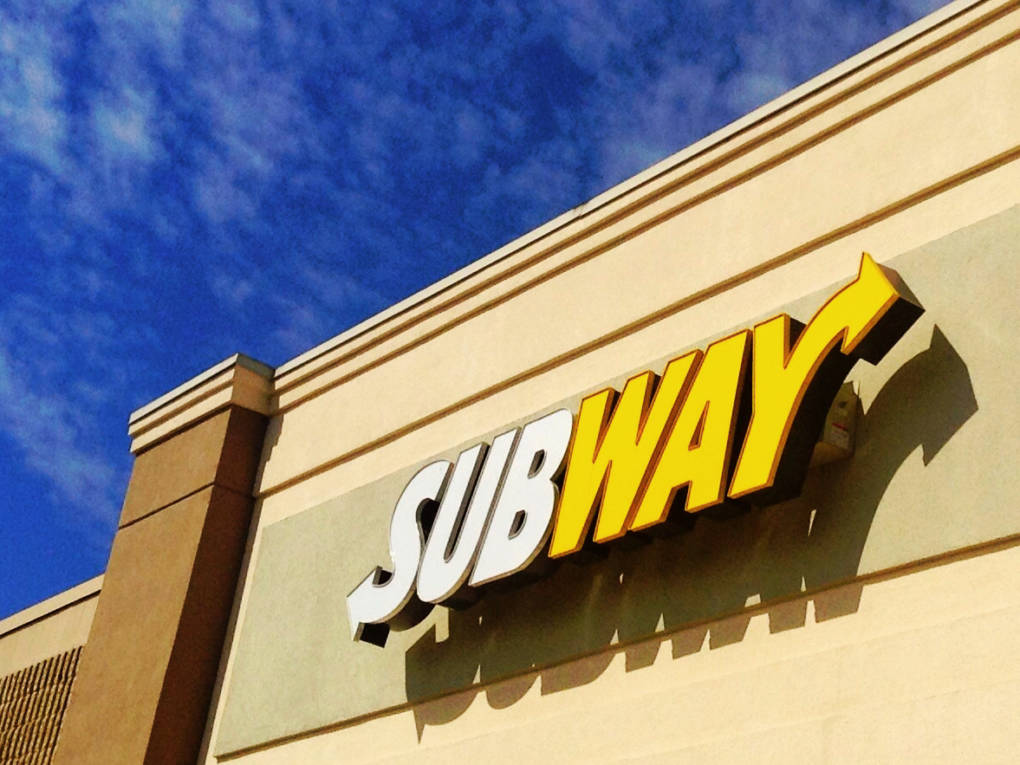
"caption": "Tests on Subway chicken sandwiches in Canada have concluded that Subway chicken was only half meat — with the other half soy.",
"description": "Tests on Subway chicken sandwiches in Canada have concluded that Subway chicken was only half meat — with the other half so",
"title": "Tests on Subway chicken sandwiches in Canada have concluded that Subway chicken was only half meat — with the other half soy.",
"credit": "Mike Mozart/Flickr",
"status": "inherit",
"isLoading": false,
"fetchFailed": false
},
"bayareabites_115418": {
"type": "attachments",
"id": "bayareabites_115418",
"meta": {
"index": "attachments_1716263798",
"site": "bayareabites",
"id": "115418",
"found": true
},
"parent": 115417,
"imgSizes": {
"small": {
"file": "https://ww2.kqed.org/app/uploads/sites/24/2017/02/last-stand1-bd1041024510404d1a716bf574600d4d8a619e5a-520x390.jpg",
"width": 520,
"mimeType": "image/jpeg",
"height": 390
},
"twentyfourteen-full-width": {
"file": "https://ww2.kqed.org/app/uploads/sites/24/2017/02/last-stand1-bd1041024510404d1a716bf574600d4d8a619e5a-1038x576.jpg",
"width": 1038,
"mimeType": "image/jpeg",
"height": 576
},
"thumbnail": {
"file": "https://ww2.kqed.org/app/uploads/sites/24/2017/02/last-stand1-bd1041024510404d1a716bf574600d4d8a619e5a-160x120.jpg",
"width": 160,
"mimeType": "image/jpeg",
"height": 120
},
"fd-sm": {
"file": "https://ww2.kqed.org/app/uploads/sites/24/2017/02/last-stand1-bd1041024510404d1a716bf574600d4d8a619e5a-960x720.jpg",
"width": 960,
"mimeType": "image/jpeg",
"height": 720
},
"post-thumbnail": {
"file": "https://ww2.kqed.org/app/uploads/sites/24/2017/02/last-stand1-bd1041024510404d1a716bf574600d4d8a619e5a-672x372.jpg",
"width": 672,
"mimeType": "image/jpeg",
"height": 372
},
"xsmall": {
"file": "https://ww2.kqed.org/app/uploads/sites/24/2017/02/last-stand1-bd1041024510404d1a716bf574600d4d8a619e5a-375x281.jpg",
"width": 375,
"mimeType": "image/jpeg",
"height": 281
},
"kqedFullSize": {
"file": "https://ww2.kqed.org/app/uploads/sites/24/2017/02/last-stand1-bd1041024510404d1a716bf574600d4d8a619e5a.jpg",
"width": 1906,
"height": 1429
},
"large": {
"file": "https://ww2.kqed.org/app/uploads/sites/24/2017/02/last-stand1-bd1041024510404d1a716bf574600d4d8a619e5a-1020x765.jpg",
"width": 1020,
"mimeType": "image/jpeg",
"height": 765
},
"xlarge": {
"file": "https://ww2.kqed.org/app/uploads/sites/24/2017/02/last-stand1-bd1041024510404d1a716bf574600d4d8a619e5a-1180x885.jpg",
"width": 1180,
"mimeType": "image/jpeg",
"height": 885
},
"guest-author-50": {
"file": "https://ww2.kqed.org/app/uploads/sites/24/2017/02/last-stand1-bd1041024510404d1a716bf574600d4d8a619e5a-50x50.jpg",
"width": 50,
"mimeType": "image/jpeg",
"height": 50
},
"guest-author-96": {
"file": "https://ww2.kqed.org/app/uploads/sites/24/2017/02/last-stand1-bd1041024510404d1a716bf574600d4d8a619e5a-96x96.jpg",
"width": 96,
"mimeType": "image/jpeg",
"height": 96
},
"medium": {
"file": "https://ww2.kqed.org/app/uploads/sites/24/2017/02/last-stand1-bd1041024510404d1a716bf574600d4d8a619e5a-800x600.jpg",
"width": 800,
"mimeType": "image/jpeg",
"height": 600
},
"guest-author-64": {
"file": "https://ww2.kqed.org/app/uploads/sites/24/2017/02/last-stand1-bd1041024510404d1a716bf574600d4d8a619e5a-64x64.jpg",
"width": 64,
"mimeType": "image/jpeg",
"height": 64
},
"guest-author-32": {
"file": "https://ww2.kqed.org/app/uploads/sites/24/2017/02/last-stand1-bd1041024510404d1a716bf574600d4d8a619e5a-32x32.jpg",
"width": 32,
"mimeType": "image/jpeg",
"height": 32
},
"fd-med": {
"file": "https://ww2.kqed.org/app/uploads/sites/24/2017/02/last-stand1-bd1041024510404d1a716bf574600d4d8a619e5a-1180x885.jpg",
"width": 1180,
"mimeType": "image/jpeg",
"height": 885
},
"detail": {
"file": "https://ww2.kqed.org/app/uploads/sites/24/2017/02/last-stand1-bd1041024510404d1a716bf574600d4d8a619e5a-150x150.jpg",
"width": 150,
"mimeType": "image/jpeg",
"height": 150
},
"medium_large": {
"file": "https://ww2.kqed.org/app/uploads/sites/24/2017/02/last-stand1-bd1041024510404d1a716bf574600d4d8a619e5a-768x576.jpg",
"width": 768,
"mimeType": "image/jpeg",
"height": 576
},
"guest-author-128": {
"file": "https://ww2.kqed.org/app/uploads/sites/24/2017/02/last-stand1-bd1041024510404d1a716bf574600d4d8a619e5a-128x128.jpg",
"width": 128,
"mimeType": "image/jpeg",
"height": 128
},
"xxsmall": {
"file": "https://ww2.kqed.org/app/uploads/sites/24/2017/02/last-stand1-bd1041024510404d1a716bf574600d4d8a619e5a-240x180.jpg",
"width": 240,
"mimeType": "image/jpeg",
"height": 180
}
},
"publishDate": 1487279179,
"modified": 1487314932,
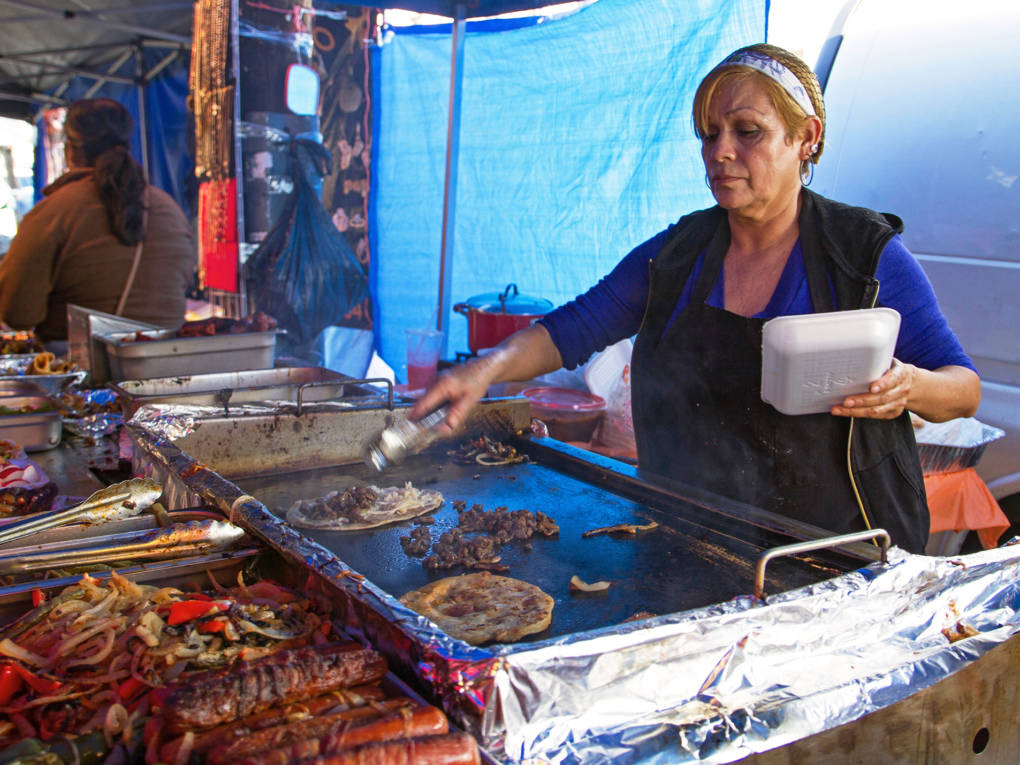
"caption": "A street vendor makes huaraches and quesadillas on the sidewalk in the piñata district in Los Angeles. LA is the only major U.S. city where selling food on the sidewalk is illegal. President Trump's immigration policies have pushed the city council to change the law. But the devil is in the details.",
"description": "A street vendor makes \u003cem>huaraches\u003c/em> and quesadillas on the sidewalk in the piñata district in Los Angeles. LA is the only major U.S. city where selling food on the sidewalk is illegal. President Trump's immigration policies have pushed the city council to change the law. But the devil is in the detail",
"title": "A street vendor makes huaraches and quesadillas on the sidewalk in the piñata district in Los Angeles. LA is the only major U.S. city where selling food on the sidewalk is illegal. President Trump's immigration policies have pushed the city council to change the law. But the devil is in the details.",
"credit": "Camellia Tse for NPR",
"status": "inherit",
"isLoading": false,
"fetchFailed": false
},
"bayareabites_115441": {
"type": "attachments",
"id": "bayareabites_115441",
"meta": {
"index": "attachments_1716263798",
"site": "bayareabites",
"id": "115441",
"found": true
},
"parent": 115440,
"imgSizes": {
"small": {
"file": "https://ww2.kqed.org/app/uploads/sites/24/2017/02/14947952449_22f0fbf60a_o_1_enl-b0803c36ac42357f59f0de8a2a714eefd93753b0-520x388.jpg",
"width": 520,
"mimeType": "image/jpeg",
"height": 388
},
"twentyfourteen-full-width": {
"file": "https://ww2.kqed.org/app/uploads/sites/24/2017/02/14947952449_22f0fbf60a_o_1_enl-b0803c36ac42357f59f0de8a2a714eefd93753b0-1038x576.jpg",
"width": 1038,
"mimeType": "image/jpeg",
"height": 576
},
"thumbnail": {
"file": "https://ww2.kqed.org/app/uploads/sites/24/2017/02/14947952449_22f0fbf60a_o_1_enl-b0803c36ac42357f59f0de8a2a714eefd93753b0-160x120.jpg",
"width": 160,
"mimeType": "image/jpeg",
"height": 120
},
"fd-sm": {
"file": "https://ww2.kqed.org/app/uploads/sites/24/2017/02/14947952449_22f0fbf60a_o_1_enl-b0803c36ac42357f59f0de8a2a714eefd93753b0-960x717.jpg",
"width": 960,
"mimeType": "image/jpeg",
"height": 717
},
"post-thumbnail": {
"file": "https://ww2.kqed.org/app/uploads/sites/24/2017/02/14947952449_22f0fbf60a_o_1_enl-b0803c36ac42357f59f0de8a2a714eefd93753b0-672x372.jpg",
"width": 672,
"mimeType": "image/jpeg",
"height": 372
},
"xsmall": {
"file": "https://ww2.kqed.org/app/uploads/sites/24/2017/02/14947952449_22f0fbf60a_o_1_enl-b0803c36ac42357f59f0de8a2a714eefd93753b0-375x280.jpg",
"width": 375,
"mimeType": "image/jpeg",
"height": 280
},
"kqedFullSize": {
"file": "https://ww2.kqed.org/app/uploads/sites/24/2017/02/14947952449_22f0fbf60a_o_1_enl-b0803c36ac42357f59f0de8a2a714eefd93753b0.jpg",
"width": 2000,
"height": 1494
},
"large": {
"file": "https://ww2.kqed.org/app/uploads/sites/24/2017/02/14947952449_22f0fbf60a_o_1_enl-b0803c36ac42357f59f0de8a2a714eefd93753b0-1020x762.jpg",
"width": 1020,
"mimeType": "image/jpeg",
"height": 762
},
"xlarge": {
"file": "https://ww2.kqed.org/app/uploads/sites/24/2017/02/14947952449_22f0fbf60a_o_1_enl-b0803c36ac42357f59f0de8a2a714eefd93753b0-1180x881.jpg",
"width": 1180,
"mimeType": "image/jpeg",
"height": 881
},
"guest-author-50": {
"file": "https://ww2.kqed.org/app/uploads/sites/24/2017/02/14947952449_22f0fbf60a_o_1_enl-b0803c36ac42357f59f0de8a2a714eefd93753b0-50x50.jpg",
"width": 50,
"mimeType": "image/jpeg",
"height": 50
},
"guest-author-96": {
"file": "https://ww2.kqed.org/app/uploads/sites/24/2017/02/14947952449_22f0fbf60a_o_1_enl-b0803c36ac42357f59f0de8a2a714eefd93753b0-96x96.jpg",
"width": 96,
"mimeType": "image/jpeg",
"height": 96
},
"medium": {
"file": "https://ww2.kqed.org/app/uploads/sites/24/2017/02/14947952449_22f0fbf60a_o_1_enl-b0803c36ac42357f59f0de8a2a714eefd93753b0-800x598.jpg",
"width": 800,
"mimeType": "image/jpeg",
"height": 598
},
"guest-author-64": {
"file": "https://ww2.kqed.org/app/uploads/sites/24/2017/02/14947952449_22f0fbf60a_o_1_enl-b0803c36ac42357f59f0de8a2a714eefd93753b0-64x64.jpg",
"width": 64,
"mimeType": "image/jpeg",
"height": 64
},
"guest-author-32": {
"file": "https://ww2.kqed.org/app/uploads/sites/24/2017/02/14947952449_22f0fbf60a_o_1_enl-b0803c36ac42357f59f0de8a2a714eefd93753b0-32x32.jpg",
"width": 32,
"mimeType": "image/jpeg",
"height": 32
},
"fd-lrg": {
"file": "https://ww2.kqed.org/app/uploads/sites/24/2017/02/14947952449_22f0fbf60a_o_1_enl-b0803c36ac42357f59f0de8a2a714eefd93753b0-1920x1434.jpg",
"width": 1920,
"mimeType": "image/jpeg",
"height": 1434
},
"fd-med": {
"file": "https://ww2.kqed.org/app/uploads/sites/24/2017/02/14947952449_22f0fbf60a_o_1_enl-b0803c36ac42357f59f0de8a2a714eefd93753b0-1180x881.jpg",
"width": 1180,
"mimeType": "image/jpeg",
"height": 881
},
"full-width": {
"file": "https://ww2.kqed.org/app/uploads/sites/24/2017/02/14947952449_22f0fbf60a_o_1_enl-b0803c36ac42357f59f0de8a2a714eefd93753b0-1920x1434.jpg",
"width": 1920,
"mimeType": "image/jpeg",
"height": 1434
},
"detail": {
"file": "https://ww2.kqed.org/app/uploads/sites/24/2017/02/14947952449_22f0fbf60a_o_1_enl-b0803c36ac42357f59f0de8a2a714eefd93753b0-150x150.jpg",
"width": 150,
"mimeType": "image/jpeg",
"height": 150
},
"medium_large": {
"file": "https://ww2.kqed.org/app/uploads/sites/24/2017/02/14947952449_22f0fbf60a_o_1_enl-b0803c36ac42357f59f0de8a2a714eefd93753b0-768x574.jpg",
"width": 768,
"mimeType": "image/jpeg",
"height": 574
},
"guest-author-128": {
"file": "https://ww2.kqed.org/app/uploads/sites/24/2017/02/14947952449_22f0fbf60a_o_1_enl-b0803c36ac42357f59f0de8a2a714eefd93753b0-128x128.jpg",
"width": 128,
"mimeType": "image/jpeg",
"height": 128
},
"xxsmall": {
"file": "https://ww2.kqed.org/app/uploads/sites/24/2017/02/14947952449_22f0fbf60a_o_1_enl-b0803c36ac42357f59f0de8a2a714eefd93753b0-240x179.jpg",
"width": 240,
"mimeType": "image/jpeg",
"height": 179
}
},
"publishDate": 1487307848,
"modified": 1487309763,
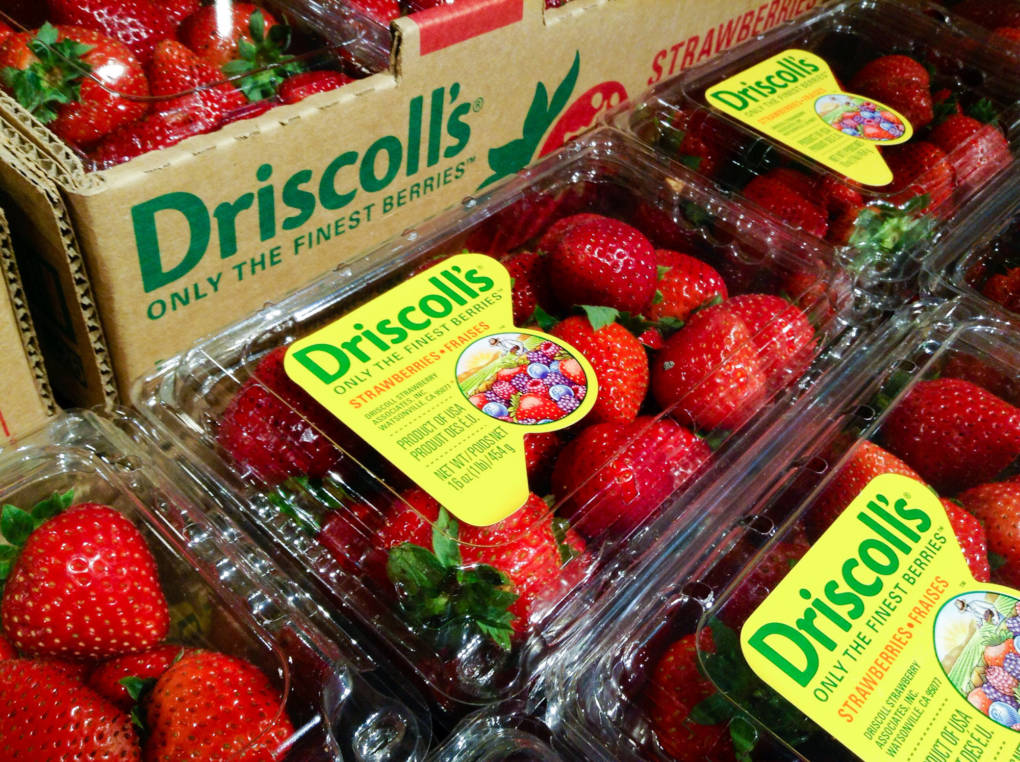
"caption": "Driscoll's, the largest berry producer in the world, now grows about the same quantity of raspberries and strawberries in Mexico as it does in California. Many American producers have recently expanded their production to Mexico.",
"description": "Driscoll's, the largest berry producer in the world, now grows about the same quantity of raspberries and strawberries in Mexico as it does in California. Many American producers have recently expanded their production to Mexico.",
"title": "Driscoll's, the largest berry producer in the world, now grows about the same quantity of raspberries and strawberries in Mexico as it does in California. Many American producers have recently expanded their production to Mexico.",
"credit": " \u003ca href=\"https://www.flickr.com/photos/jeepersmedia/14947952449/in/photolist-oLUPK2-p48Fxn-p48Jd2-oLUPRq-oLUS4F-oLUTgG-oLUau6-p2n639-p4n2Fy-p2n6WJ-oLUjtu-oLU7Hp-p4p2aH-h6Xxi9-83eq63-c4LyRW-oF2p5W-8UWb4g-4biFE3-oVuzSW-a4k6uK-dy5RRK-qitbi-CvgfS-iXuvgi-9WxWgb\">Mike Mozart/Flickr\u003c/a>",
"status": "inherit",
"isLoading": false,
"fetchFailed": false
},
"bayareabites_115394": {
"type": "attachments",
"id": "bayareabites_115394",
"meta": {
"index": "attachments_1716263798",
"site": "bayareabites",
"id": "115394",
"found": true
},
"parent": 115393,
"imgSizes": {
"small": {
"file": "https://ww2.kqed.org/app/uploads/sites/24/2017/02/chef-andres_enl-2071a59afd80b67d5bb5d106723124f0cd638c7a-520x377.jpg",
"width": 520,
"mimeType": "image/jpeg",
"height": 377
},
"twentyfourteen-full-width": {
"file": "https://ww2.kqed.org/app/uploads/sites/24/2017/02/chef-andres_enl-2071a59afd80b67d5bb5d106723124f0cd638c7a-1038x576.jpg",
"width": 1038,
"mimeType": "image/jpeg",
"height": 576
},
"thumbnail": {
"file": "https://ww2.kqed.org/app/uploads/sites/24/2017/02/chef-andres_enl-2071a59afd80b67d5bb5d106723124f0cd638c7a-160x116.jpg",
"width": 160,
"mimeType": "image/jpeg",
"height": 116
},
"fd-sm": {
"file": "https://ww2.kqed.org/app/uploads/sites/24/2017/02/chef-andres_enl-2071a59afd80b67d5bb5d106723124f0cd638c7a-960x696.jpg",
"width": 960,
"mimeType": "image/jpeg",
"height": 696
},
"post-thumbnail": {
"file": "https://ww2.kqed.org/app/uploads/sites/24/2017/02/chef-andres_enl-2071a59afd80b67d5bb5d106723124f0cd638c7a-672x372.jpg",
"width": 672,
"mimeType": "image/jpeg",
"height": 372
},
"xsmall": {
"file": "https://ww2.kqed.org/app/uploads/sites/24/2017/02/chef-andres_enl-2071a59afd80b67d5bb5d106723124f0cd638c7a-375x272.jpg",
"width": 375,
"mimeType": "image/jpeg",
"height": 272
},
"kqedFullSize": {
"file": "https://ww2.kqed.org/app/uploads/sites/24/2017/02/chef-andres_enl-2071a59afd80b67d5bb5d106723124f0cd638c7a.jpg",
"width": 2000,
"height": 1450
},
"large": {
"file": "https://ww2.kqed.org/app/uploads/sites/24/2017/02/chef-andres_enl-2071a59afd80b67d5bb5d106723124f0cd638c7a-1020x740.jpg",
"width": 1020,
"mimeType": "image/jpeg",
"height": 740
},
"xlarge": {
"file": "https://ww2.kqed.org/app/uploads/sites/24/2017/02/chef-andres_enl-2071a59afd80b67d5bb5d106723124f0cd638c7a-1180x856.jpg",
"width": 1180,
"mimeType": "image/jpeg",
"height": 856
},
"guest-author-50": {
"file": "https://ww2.kqed.org/app/uploads/sites/24/2017/02/chef-andres_enl-2071a59afd80b67d5bb5d106723124f0cd638c7a-50x50.jpg",
"width": 50,
"mimeType": "image/jpeg",
"height": 50
},
"guest-author-96": {
"file": "https://ww2.kqed.org/app/uploads/sites/24/2017/02/chef-andres_enl-2071a59afd80b67d5bb5d106723124f0cd638c7a-96x96.jpg",
"width": 96,
"mimeType": "image/jpeg",
"height": 96
},
"medium": {
"file": "https://ww2.kqed.org/app/uploads/sites/24/2017/02/chef-andres_enl-2071a59afd80b67d5bb5d106723124f0cd638c7a-800x580.jpg",
"width": 800,
"mimeType": "image/jpeg",
"height": 580
},
"guest-author-64": {
"file": "https://ww2.kqed.org/app/uploads/sites/24/2017/02/chef-andres_enl-2071a59afd80b67d5bb5d106723124f0cd638c7a-64x64.jpg",
"width": 64,
"mimeType": "image/jpeg",
"height": 64
},
"guest-author-32": {
"file": "https://ww2.kqed.org/app/uploads/sites/24/2017/02/chef-andres_enl-2071a59afd80b67d5bb5d106723124f0cd638c7a-32x32.jpg",
"width": 32,
"mimeType": "image/jpeg",
"height": 32
},
"fd-lrg": {
"file": "https://ww2.kqed.org/app/uploads/sites/24/2017/02/chef-andres_enl-2071a59afd80b67d5bb5d106723124f0cd638c7a-1920x1392.jpg",
"width": 1920,
"mimeType": "image/jpeg",
"height": 1392
},
"fd-med": {
"file": "https://ww2.kqed.org/app/uploads/sites/24/2017/02/chef-andres_enl-2071a59afd80b67d5bb5d106723124f0cd638c7a-1180x856.jpg",
"width": 1180,
"mimeType": "image/jpeg",
"height": 856
},
"full-width": {
"file": "https://ww2.kqed.org/app/uploads/sites/24/2017/02/chef-andres_enl-2071a59afd80b67d5bb5d106723124f0cd638c7a-1920x1392.jpg",
"width": 1920,
"mimeType": "image/jpeg",
"height": 1392
},
"detail": {
"file": "https://ww2.kqed.org/app/uploads/sites/24/2017/02/chef-andres_enl-2071a59afd80b67d5bb5d106723124f0cd638c7a-150x150.jpg",
"width": 150,
"mimeType": "image/jpeg",
"height": 150
},
"medium_large": {
"file": "https://ww2.kqed.org/app/uploads/sites/24/2017/02/chef-andres_enl-2071a59afd80b67d5bb5d106723124f0cd638c7a-768x557.jpg",
"width": 768,
"mimeType": "image/jpeg",
"height": 557
},
"guest-author-128": {
"file": "https://ww2.kqed.org/app/uploads/sites/24/2017/02/chef-andres_enl-2071a59afd80b67d5bb5d106723124f0cd638c7a-128x128.jpg",
"width": 128,
"mimeType": "image/jpeg",
"height": 128
},
"xxsmall": {
"file": "https://ww2.kqed.org/app/uploads/sites/24/2017/02/chef-andres_enl-2071a59afd80b67d5bb5d106723124f0cd638c7a-240x174.jpg",
"width": 240,
"mimeType": "image/jpeg",
"height": 174
}
},
"publishDate": 1487206886,
"modified": 1487207043,
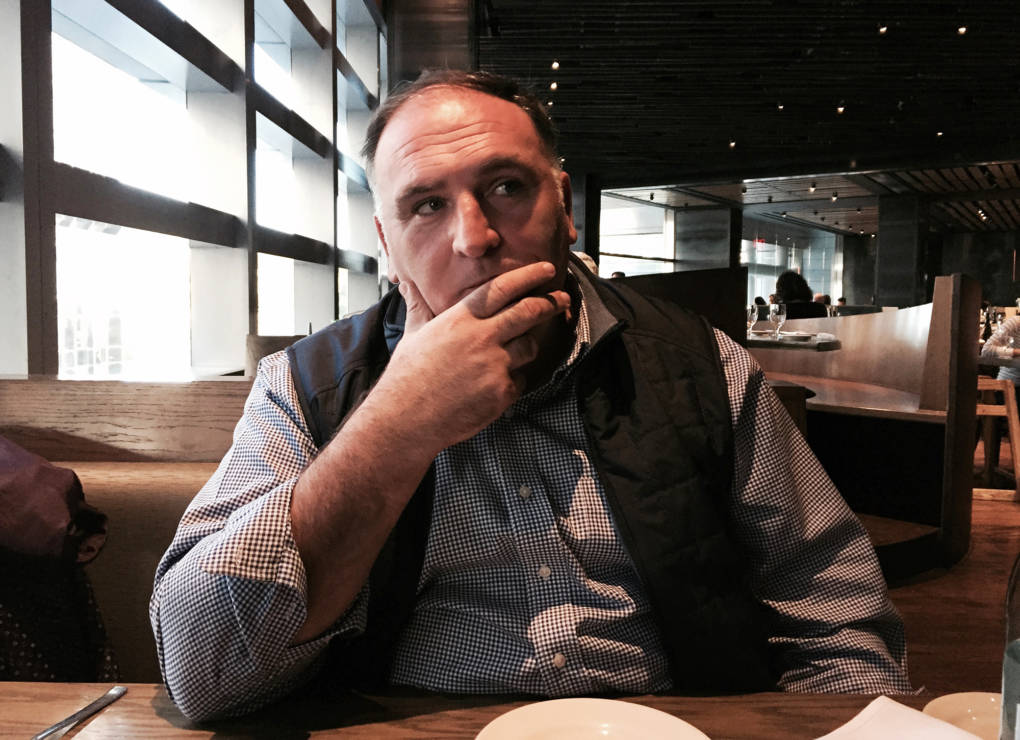
"caption": "Chef José Andrés will shutter five of his restaurants on Thursday as part of a boycott in response to President Trump's immigration policies.",
"description": "Chef José Andrés will shutter five of his restaurants on Thursday as part of a boycott in response to President Trump's immigration policie",
"title": "Chef José Andrés will shutter five of his restaurants on Thursday as part of a boycott in response to President Trump's immigration policies.",
"credit": "Beth J. Harpaz/AP",
"status": "inherit",
"isLoading": false,
"fetchFailed": false
},
"bayareabites_115350": {
"type": "attachments",
"id": "bayareabites_115350",
"meta": {
"index": "attachments_1716263798",
"site": "bayareabites",
"id": "115350",
"found": true
},
"parent": 115265,
"imgSizes": {
"small": {
"file": "https://ww2.kqed.org/app/uploads/sites/24/2017/02/1-Refugees-make-coffee-2000-520x693.jpg",
"width": 520,
"mimeType": "image/jpeg",
"height": 693
},
"twentyfourteen-full-width": {
"file": "https://ww2.kqed.org/app/uploads/sites/24/2017/02/1-Refugees-make-coffee-2000-1038x576.jpg",
"width": 1038,
"mimeType": "image/jpeg",
"height": 576
},
"thumbnail": {
"file": "https://ww2.kqed.org/app/uploads/sites/24/2017/02/1-Refugees-make-coffee-2000-160x213.jpg",
"width": 160,
"mimeType": "image/jpeg",
"height": 213
},
"fd-sm": {
"file": "https://ww2.kqed.org/app/uploads/sites/24/2017/02/1-Refugees-make-coffee-2000-960x1280.jpg",
"width": 960,
"mimeType": "image/jpeg",
"height": 1280
},
"post-thumbnail": {
"file": "https://ww2.kqed.org/app/uploads/sites/24/2017/02/1-Refugees-make-coffee-2000-672x372.jpg",
"width": 672,
"mimeType": "image/jpeg",
"height": 372
},
"xsmall": {
"file": "https://ww2.kqed.org/app/uploads/sites/24/2017/02/1-Refugees-make-coffee-2000-375x500.jpg",
"width": 375,
"mimeType": "image/jpeg",
"height": 500
},
"kqedFullSize": {
"file": "https://ww2.kqed.org/app/uploads/sites/24/2017/02/1-Refugees-make-coffee-2000.jpg",
"width": 2000,
"height": 2667
},
"large": {
"file": "https://ww2.kqed.org/app/uploads/sites/24/2017/02/1-Refugees-make-coffee-2000-1020x1360.jpg",
"width": 1020,
"mimeType": "image/jpeg",
"height": 1360
},
"xlarge": {
"file": "https://ww2.kqed.org/app/uploads/sites/24/2017/02/1-Refugees-make-coffee-2000-1180x1574.jpg",
"width": 1180,
"mimeType": "image/jpeg",
"height": 1574
},
"guest-author-50": {
"file": "https://ww2.kqed.org/app/uploads/sites/24/2017/02/1-Refugees-make-coffee-2000-50x50.jpg",
"width": 50,
"mimeType": "image/jpeg",
"height": 50
},
"guest-author-96": {
"file": "https://ww2.kqed.org/app/uploads/sites/24/2017/02/1-Refugees-make-coffee-2000-96x96.jpg",
"width": 96,
"mimeType": "image/jpeg",
"height": 96
},
"medium": {
"file": "https://ww2.kqed.org/app/uploads/sites/24/2017/02/1-Refugees-make-coffee-2000-800x1067.jpg",
"width": 800,
"mimeType": "image/jpeg",
"height": 1067
},
"guest-author-64": {
"file": "https://ww2.kqed.org/app/uploads/sites/24/2017/02/1-Refugees-make-coffee-2000-64x64.jpg",
"width": 64,
"mimeType": "image/jpeg",
"height": 64
},
"guest-author-32": {
"file": "https://ww2.kqed.org/app/uploads/sites/24/2017/02/1-Refugees-make-coffee-2000-32x32.jpg",
"width": 32,
"mimeType": "image/jpeg",
"height": 32
},
"fd-lrg": {
"file": "https://ww2.kqed.org/app/uploads/sites/24/2017/02/1-Refugees-make-coffee-2000-1920x2560.jpg",
"width": 1920,
"mimeType": "image/jpeg",
"height": 2560
},
"fd-med": {
"file": "https://ww2.kqed.org/app/uploads/sites/24/2017/02/1-Refugees-make-coffee-2000-1180x1574.jpg",
"width": 1180,
"mimeType": "image/jpeg",
"height": 1574
},
"full-width": {
"file": "https://ww2.kqed.org/app/uploads/sites/24/2017/02/1-Refugees-make-coffee-2000-1920x2560.jpg",
"width": 1920,
"mimeType": "image/jpeg",
"height": 2560
},
"detail": {
"file": "https://ww2.kqed.org/app/uploads/sites/24/2017/02/1-Refugees-make-coffee-2000-150x150.jpg",
"width": 150,
"mimeType": "image/jpeg",
"height": 150
},
"medium_large": {
"file": "https://ww2.kqed.org/app/uploads/sites/24/2017/02/1-Refugees-make-coffee-2000-768x1024.jpg",
"width": 768,
"mimeType": "image/jpeg",
"height": 1024
},
"guest-author-128": {
"file": "https://ww2.kqed.org/app/uploads/sites/24/2017/02/1-Refugees-make-coffee-2000-128x128.jpg",
"width": 128,
"mimeType": "image/jpeg",
"height": 128
},
"xxsmall": {
"file": "https://ww2.kqed.org/app/uploads/sites/24/2017/02/1-Refugees-make-coffee-2000-240x320.jpg",
"width": 240,
"mimeType": "image/jpeg",
"height": 320
}
},
"publishDate": 1487109996,
"modified": 1487110339,
"caption": "All the baristas working at Berkeley's 1951 Coffee Company are recent refugees",
"description": null,
"title": "1-Refugees-make-coffee-2000",
"credit": "Courtesy 1951 Coffee Company",
"status": "inherit",
"isLoading": false,
"fetchFailed": false
},
"bayareabites_115274": {
"type": "attachments",
"id": "bayareabites_115274",
"meta": {
"index": "attachments_1716263798",
"site": "bayareabites",
"id": "115274",
"found": true
},
"parent": 115273,
"imgSizes": {
"small": {
"file": "https://ww2.kqed.org/app/uploads/sites/24/2017/02/cheapeats2_wide-05fb98d6b9b328ebc4a3e00a3c9e08c64e00eefe-520x293.jpg",
"width": 520,
"mimeType": "image/jpeg",
"height": 293
},
"twentyfourteen-full-width": {
"file": "https://ww2.kqed.org/app/uploads/sites/24/2017/02/cheapeats2_wide-05fb98d6b9b328ebc4a3e00a3c9e08c64e00eefe-1038x576.jpg",
"width": 1038,
"mimeType": "image/jpeg",
"height": 576
},
"thumbnail": {
"file": "https://ww2.kqed.org/app/uploads/sites/24/2017/02/cheapeats2_wide-05fb98d6b9b328ebc4a3e00a3c9e08c64e00eefe-160x90.jpg",
"width": 160,
"mimeType": "image/jpeg",
"height": 90
},
"fd-sm": {
"file": "https://ww2.kqed.org/app/uploads/sites/24/2017/02/cheapeats2_wide-05fb98d6b9b328ebc4a3e00a3c9e08c64e00eefe-960x540.jpg",
"width": 960,
"mimeType": "image/jpeg",
"height": 540
},
"post-thumbnail": {
"file": "https://ww2.kqed.org/app/uploads/sites/24/2017/02/cheapeats2_wide-05fb98d6b9b328ebc4a3e00a3c9e08c64e00eefe-672x372.jpg",
"width": 672,
"mimeType": "image/jpeg",
"height": 372
},
"xsmall": {
"file": "https://ww2.kqed.org/app/uploads/sites/24/2017/02/cheapeats2_wide-05fb98d6b9b328ebc4a3e00a3c9e08c64e00eefe-375x211.jpg",
"width": 375,
"mimeType": "image/jpeg",
"height": 211
},
"kqedFullSize": {
"file": "https://ww2.kqed.org/app/uploads/sites/24/2017/02/cheapeats2_wide-05fb98d6b9b328ebc4a3e00a3c9e08c64e00eefe.jpg",
"width": 1931,
"height": 1087
},
"large": {
"file": "https://ww2.kqed.org/app/uploads/sites/24/2017/02/cheapeats2_wide-05fb98d6b9b328ebc4a3e00a3c9e08c64e00eefe-1020x574.jpg",
"width": 1020,
"mimeType": "image/jpeg",
"height": 574
},
"xlarge": {
"file": "https://ww2.kqed.org/app/uploads/sites/24/2017/02/cheapeats2_wide-05fb98d6b9b328ebc4a3e00a3c9e08c64e00eefe-1180x664.jpg",
"width": 1180,
"mimeType": "image/jpeg",
"height": 664
},
"guest-author-50": {
"file": "https://ww2.kqed.org/app/uploads/sites/24/2017/02/cheapeats2_wide-05fb98d6b9b328ebc4a3e00a3c9e08c64e00eefe-50x50.jpg",
"width": 50,
"mimeType": "image/jpeg",
"height": 50
},
"guest-author-96": {
"file": "https://ww2.kqed.org/app/uploads/sites/24/2017/02/cheapeats2_wide-05fb98d6b9b328ebc4a3e00a3c9e08c64e00eefe-96x96.jpg",
"width": 96,
"mimeType": "image/jpeg",
"height": 96
},
"medium": {
"file": "https://ww2.kqed.org/app/uploads/sites/24/2017/02/cheapeats2_wide-05fb98d6b9b328ebc4a3e00a3c9e08c64e00eefe-800x450.jpg",
"width": 800,
"mimeType": "image/jpeg",
"height": 450
},
"guest-author-64": {
"file": "https://ww2.kqed.org/app/uploads/sites/24/2017/02/cheapeats2_wide-05fb98d6b9b328ebc4a3e00a3c9e08c64e00eefe-64x64.jpg",
"width": 64,
"mimeType": "image/jpeg",
"height": 64
},
"guest-author-32": {
"file": "https://ww2.kqed.org/app/uploads/sites/24/2017/02/cheapeats2_wide-05fb98d6b9b328ebc4a3e00a3c9e08c64e00eefe-32x32.jpg",
"width": 32,
"mimeType": "image/jpeg",
"height": 32
},
"fd-lrg": {
"file": "https://ww2.kqed.org/app/uploads/sites/24/2017/02/cheapeats2_wide-05fb98d6b9b328ebc4a3e00a3c9e08c64e00eefe-1920x1081.jpg",
"width": 1920,
"mimeType": "image/jpeg",
"height": 1081
},
"fd-med": {
"file": "https://ww2.kqed.org/app/uploads/sites/24/2017/02/cheapeats2_wide-05fb98d6b9b328ebc4a3e00a3c9e08c64e00eefe-1180x664.jpg",
"width": 1180,
"mimeType": "image/jpeg",
"height": 664
},
"full-width": {
"file": "https://ww2.kqed.org/app/uploads/sites/24/2017/02/cheapeats2_wide-05fb98d6b9b328ebc4a3e00a3c9e08c64e00eefe-1920x1081.jpg",
"width": 1920,
"mimeType": "image/jpeg",
"height": 1081
},
"detail": {
"file": "https://ww2.kqed.org/app/uploads/sites/24/2017/02/cheapeats2_wide-05fb98d6b9b328ebc4a3e00a3c9e08c64e00eefe-150x150.jpg",
"width": 150,
"mimeType": "image/jpeg",
"height": 150
},
"medium_large": {
"file": "https://ww2.kqed.org/app/uploads/sites/24/2017/02/cheapeats2_wide-05fb98d6b9b328ebc4a3e00a3c9e08c64e00eefe-768x432.jpg",
"width": 768,
"mimeType": "image/jpeg",
"height": 432
},
"guest-author-128": {
"file": "https://ww2.kqed.org/app/uploads/sites/24/2017/02/cheapeats2_wide-05fb98d6b9b328ebc4a3e00a3c9e08c64e00eefe-128x128.jpg",
"width": 128,
"mimeType": "image/jpeg",
"height": 128
},
"xxsmall": {
"file": "https://ww2.kqed.org/app/uploads/sites/24/2017/02/cheapeats2_wide-05fb98d6b9b328ebc4a3e00a3c9e08c64e00eefe-240x135.jpg",
"width": 240,
"mimeType": "image/jpeg",
"height": 135
}
},
"publishDate": 1487002141,
"modified": 1487002358,
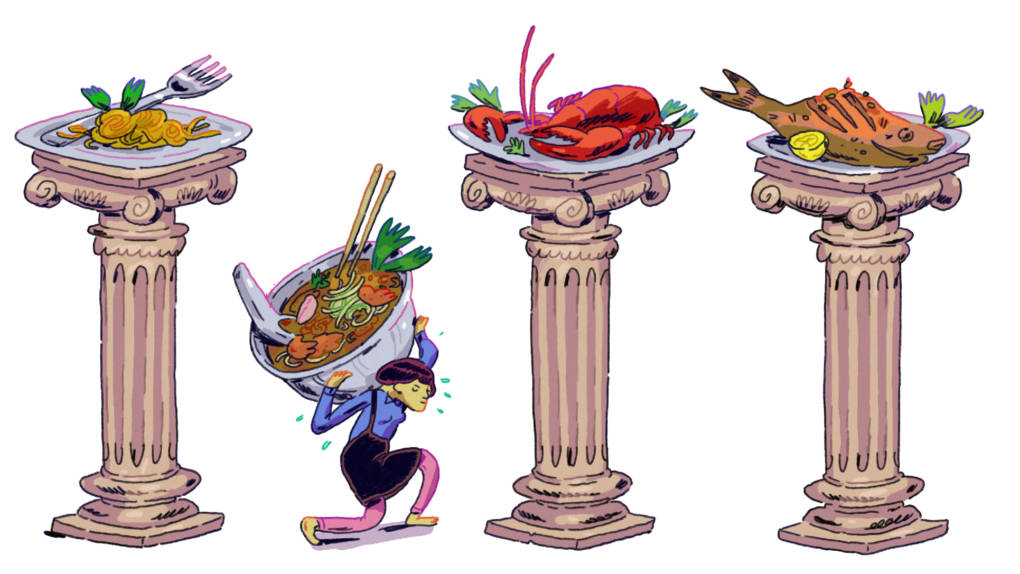
"caption": "One restaurant challenges our assumptions that immigrant food must be cheap.",
"description": "One restaurant challenges our assumptions that immigrant food must be cheap.",
"title": "One restaurant challenges our assumptions that immigrant food must be cheap.",
"credit": "Alex Reynolds/NPR",
"status": "inherit",
"isLoading": false,
"fetchFailed": false
},
"bayareabites_115199": {
"type": "attachments",
"id": "bayareabites_115199",
"meta": {
"index": "attachments_1716263798",
"site": "bayareabites",
"id": "115199",
"found": true
},
"parent": 115198,
"imgSizes": {
"small": {
"file": "https://ww2.kqed.org/app/uploads/sites/24/2017/02/gettyimages-52782736_custom-b37e4bc22675e4f97e61162df77683e6b153584e-520x379.jpg",
"width": 520,
"mimeType": "image/jpeg",
"height": 379
},
"twentyfourteen-full-width": {
"file": "https://ww2.kqed.org/app/uploads/sites/24/2017/02/gettyimages-52782736_custom-b37e4bc22675e4f97e61162df77683e6b153584e-1038x576.jpg",
"width": 1038,
"mimeType": "image/jpeg",
"height": 576
},
"thumbnail": {
"file": "https://ww2.kqed.org/app/uploads/sites/24/2017/02/gettyimages-52782736_custom-b37e4bc22675e4f97e61162df77683e6b153584e-160x117.jpg",
"width": 160,
"mimeType": "image/jpeg",
"height": 117
},
"fd-sm": {
"file": "https://ww2.kqed.org/app/uploads/sites/24/2017/02/gettyimages-52782736_custom-b37e4bc22675e4f97e61162df77683e6b153584e-960x700.jpg",
"width": 960,
"mimeType": "image/jpeg",
"height": 700
},
"post-thumbnail": {
"file": "https://ww2.kqed.org/app/uploads/sites/24/2017/02/gettyimages-52782736_custom-b37e4bc22675e4f97e61162df77683e6b153584e-672x372.jpg",
"width": 672,
"mimeType": "image/jpeg",
"height": 372
},
"xsmall": {
"file": "https://ww2.kqed.org/app/uploads/sites/24/2017/02/gettyimages-52782736_custom-b37e4bc22675e4f97e61162df77683e6b153584e-375x273.jpg",
"width": 375,
"mimeType": "image/jpeg",
"height": 273
},
"kqedFullSize": {
"file": "https://ww2.kqed.org/app/uploads/sites/24/2017/02/gettyimages-52782736_custom-b37e4bc22675e4f97e61162df77683e6b153584e.jpg",
"width": 3000,
"height": 2186
},
"large": {
"file": "https://ww2.kqed.org/app/uploads/sites/24/2017/02/gettyimages-52782736_custom-b37e4bc22675e4f97e61162df77683e6b153584e-1020x743.jpg",
"width": 1020,
"mimeType": "image/jpeg",
"height": 743
},
"xlarge": {
"file": "https://ww2.kqed.org/app/uploads/sites/24/2017/02/gettyimages-52782736_custom-b37e4bc22675e4f97e61162df77683e6b153584e-1180x860.jpg",
"width": 1180,
"mimeType": "image/jpeg",
"height": 860
},
"guest-author-50": {
"file": "https://ww2.kqed.org/app/uploads/sites/24/2017/02/gettyimages-52782736_custom-b37e4bc22675e4f97e61162df77683e6b153584e-50x50.jpg",
"width": 50,
"mimeType": "image/jpeg",
"height": 50
},
"guest-author-96": {
"file": "https://ww2.kqed.org/app/uploads/sites/24/2017/02/gettyimages-52782736_custom-b37e4bc22675e4f97e61162df77683e6b153584e-96x96.jpg",
"width": 96,
"mimeType": "image/jpeg",
"height": 96
},
"medium": {
"file": "https://ww2.kqed.org/app/uploads/sites/24/2017/02/gettyimages-52782736_custom-b37e4bc22675e4f97e61162df77683e6b153584e-800x583.jpg",
"width": 800,
"mimeType": "image/jpeg",
"height": 583
},
"guest-author-64": {
"file": "https://ww2.kqed.org/app/uploads/sites/24/2017/02/gettyimages-52782736_custom-b37e4bc22675e4f97e61162df77683e6b153584e-64x64.jpg",
"width": 64,
"mimeType": "image/jpeg",
"height": 64
},
"guest-author-32": {
"file": "https://ww2.kqed.org/app/uploads/sites/24/2017/02/gettyimages-52782736_custom-b37e4bc22675e4f97e61162df77683e6b153584e-32x32.jpg",
"width": 32,
"mimeType": "image/jpeg",
"height": 32
},
"fd-lrg": {
"file": "https://ww2.kqed.org/app/uploads/sites/24/2017/02/gettyimages-52782736_custom-b37e4bc22675e4f97e61162df77683e6b153584e-1920x1399.jpg",
"width": 1920,
"mimeType": "image/jpeg",
"height": 1399
},
"fd-med": {
"file": "https://ww2.kqed.org/app/uploads/sites/24/2017/02/gettyimages-52782736_custom-b37e4bc22675e4f97e61162df77683e6b153584e-1180x860.jpg",
"width": 1180,
"mimeType": "image/jpeg",
"height": 860
},
"full-width": {
"file": "https://ww2.kqed.org/app/uploads/sites/24/2017/02/gettyimages-52782736_custom-b37e4bc22675e4f97e61162df77683e6b153584e-1920x1399.jpg",
"width": 1920,
"mimeType": "image/jpeg",
"height": 1399
},
"detail": {
"file": "https://ww2.kqed.org/app/uploads/sites/24/2017/02/gettyimages-52782736_custom-b37e4bc22675e4f97e61162df77683e6b153584e-150x150.jpg",
"width": 150,
"mimeType": "image/jpeg",
"height": 150
},
"medium_large": {
"file": "https://ww2.kqed.org/app/uploads/sites/24/2017/02/gettyimages-52782736_custom-b37e4bc22675e4f97e61162df77683e6b153584e-768x560.jpg",
"width": 768,
"mimeType": "image/jpeg",
"height": 560
},
"guest-author-128": {
"file": "https://ww2.kqed.org/app/uploads/sites/24/2017/02/gettyimages-52782736_custom-b37e4bc22675e4f97e61162df77683e6b153584e-128x128.jpg",
"width": 128,
"mimeType": "image/jpeg",
"height": 128
},
"xxsmall": {
"file": "https://ww2.kqed.org/app/uploads/sites/24/2017/02/gettyimages-52782736_custom-b37e4bc22675e4f97e61162df77683e6b153584e-240x175.jpg",
"width": 240,
"mimeType": "image/jpeg",
"height": 175
}
},
"publishDate": 1486751743,
"modified": 1486751930,
"caption": "American writer, abolitionist and orator Frederick Douglass edits a journal at his desk, late 1870s. Douglass was acutely conscious of being a literary witness to the inhumane institution of slavery he had escaped as a young man. He made sure to document his life in not one but three autobiographies.",
"description": "American writer, abolitionist and orator Frederick Douglass edits a journal at his desk, late 1870s. Douglass was acutely conscious of being a literary witness to the inhumane institution of slavery he had escaped as a young man. He made sure to document his life in not one but three autobiographies",
"title": "American writer, abolitionist and orator Frederick Douglass edits a journal at his desk, late 1870s. Douglass was acutely conscious of being a literary witness to the inhumane institution of slavery he had escaped as a young man. He made sure to document his life in not one but three autobiographies.",
"credit": "Hulton Archive/Getty Images",
"status": "inherit",
"isLoading": false,
"fetchFailed": false
},
"bayareabites_115180": {
"type": "attachments",
"id": "bayareabites_115180",
"meta": {
"index": "attachments_1716263798",
"site": "bayareabites",
"id": "115180",
"found": true
},
"parent": 115179,
"imgSizes": {
"small": {
"file": "https://ww2.kqed.org/app/uploads/sites/24/2017/02/img_8342.jpg_wide-cb70dfa08c886e0262fc21da1414d5caca9b5bb6-520x292.jpe",
"width": 520,
"mimeType": "image/jpeg",
"height": 292
},
"twentyfourteen-full-width": {
"file": "https://ww2.kqed.org/app/uploads/sites/24/2017/02/img_8342.jpg_wide-cb70dfa08c886e0262fc21da1414d5caca9b5bb6-1038x576.jpe",
"width": 1038,
"mimeType": "image/jpeg",
"height": 576
},
"thumbnail": {
"file": "https://ww2.kqed.org/app/uploads/sites/24/2017/02/img_8342.jpg_wide-cb70dfa08c886e0262fc21da1414d5caca9b5bb6-160x90.jpe",
"width": 160,
"mimeType": "image/jpeg",
"height": 90
},
"fd-sm": {
"file": "https://ww2.kqed.org/app/uploads/sites/24/2017/02/img_8342.jpg_wide-cb70dfa08c886e0262fc21da1414d5caca9b5bb6-960x540.jpe",
"width": 960,
"mimeType": "image/jpeg",
"height": 540
},
"post-thumbnail": {
"file": "https://ww2.kqed.org/app/uploads/sites/24/2017/02/img_8342.jpg_wide-cb70dfa08c886e0262fc21da1414d5caca9b5bb6-672x372.jpe",
"width": 672,
"mimeType": "image/jpeg",
"height": 372
},
"xsmall": {
"file": "https://ww2.kqed.org/app/uploads/sites/24/2017/02/img_8342.jpg_wide-cb70dfa08c886e0262fc21da1414d5caca9b5bb6-375x211.jpe",
"width": 375,
"mimeType": "image/jpeg",
"height": 211
},
"kqedFullSize": {
"file": "https://ww2.kqed.org/app/uploads/sites/24/2017/02/img_8342.jpg_wide-cb70dfa08c886e0262fc21da1414d5caca9b5bb6.jpe",
"width": 1394,
"height": 784
},
"large": {
"file": "https://ww2.kqed.org/app/uploads/sites/24/2017/02/img_8342.jpg_wide-cb70dfa08c886e0262fc21da1414d5caca9b5bb6-1020x574.jpe",
"width": 1020,
"mimeType": "image/jpeg",
"height": 574
},
"xlarge": {
"file": "https://ww2.kqed.org/app/uploads/sites/24/2017/02/img_8342.jpg_wide-cb70dfa08c886e0262fc21da1414d5caca9b5bb6-1180x664.jpe",
"width": 1180,
"mimeType": "image/jpeg",
"height": 664
},
"guest-author-50": {
"file": "https://ww2.kqed.org/app/uploads/sites/24/2017/02/img_8342.jpg_wide-cb70dfa08c886e0262fc21da1414d5caca9b5bb6-50x50.jpe",
"width": 50,
"mimeType": "image/jpeg",
"height": 50
},
"guest-author-96": {
"file": "https://ww2.kqed.org/app/uploads/sites/24/2017/02/img_8342.jpg_wide-cb70dfa08c886e0262fc21da1414d5caca9b5bb6-96x96.jpe",
"width": 96,
"mimeType": "image/jpeg",
"height": 96
},
"medium": {
"file": "https://ww2.kqed.org/app/uploads/sites/24/2017/02/img_8342.jpg_wide-cb70dfa08c886e0262fc21da1414d5caca9b5bb6-800x450.jpe",
"width": 800,
"mimeType": "image/jpeg",
"height": 450
},
"guest-author-64": {
"file": "https://ww2.kqed.org/app/uploads/sites/24/2017/02/img_8342.jpg_wide-cb70dfa08c886e0262fc21da1414d5caca9b5bb6-64x64.jpe",
"width": 64,
"mimeType": "image/jpeg",
"height": 64
},
"guest-author-32": {
"file": "https://ww2.kqed.org/app/uploads/sites/24/2017/02/img_8342.jpg_wide-cb70dfa08c886e0262fc21da1414d5caca9b5bb6-32x32.jpe",
"width": 32,
"mimeType": "image/jpeg",
"height": 32
},
"fd-med": {
"file": "https://ww2.kqed.org/app/uploads/sites/24/2017/02/img_8342.jpg_wide-cb70dfa08c886e0262fc21da1414d5caca9b5bb6-1180x664.jpe",
"width": 1180,
"mimeType": "image/jpeg",
"height": 664
},
"detail": {
"file": "https://ww2.kqed.org/app/uploads/sites/24/2017/02/img_8342.jpg_wide-cb70dfa08c886e0262fc21da1414d5caca9b5bb6-150x150.jpe",
"width": 150,
"mimeType": "image/jpeg",
"height": 150
},
"medium_large": {
"file": "https://ww2.kqed.org/app/uploads/sites/24/2017/02/img_8342.jpg_wide-cb70dfa08c886e0262fc21da1414d5caca9b5bb6-768x432.jpe",
"width": 768,
"mimeType": "image/jpeg",
"height": 432
},
"guest-author-128": {
"file": "https://ww2.kqed.org/app/uploads/sites/24/2017/02/img_8342.jpg_wide-cb70dfa08c886e0262fc21da1414d5caca9b5bb6-128x128.jpe",
"width": 128,
"mimeType": "image/jpeg",
"height": 128
},
"xxsmall": {
"file": "https://ww2.kqed.org/app/uploads/sites/24/2017/02/img_8342.jpg_wide-cb70dfa08c886e0262fc21da1414d5caca9b5bb6-240x135.jpe",
"width": 240,
"mimeType": "image/jpeg",
"height": 135
}
},
"publishDate": 1486675011,
"modified": 1486675308,
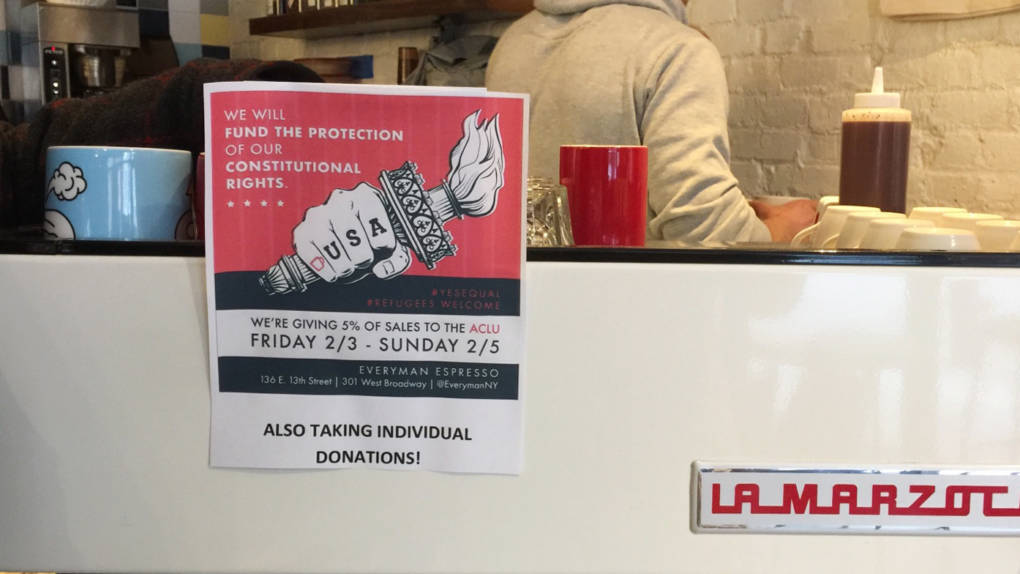
"caption": "At Everyman Espresso in New York City's East Village, customers were greeted with a sign announcing a fundraiser to help defend immigrants.",
"description": "At Everyman Espresso in New York City's East Village, customers were greeted with a sign announcing a fundraiser to help defend immigrants.",
"title": "At Everyman Espresso in New York City's East Village, customers were greeted with a sign announcing a fundraiser to help defend immigrants.",
"credit": "Allison Aubrey/NPR",
"status": "inherit",
"isLoading": false,
"fetchFailed": false
},
"bayareabites_115037": {
"type": "attachments",
"id": "bayareabites_115037",
"meta": {
"index": "attachments_1716263798",
"site": "bayareabites",
"id": "115037",
"found": true
},
"parent": 115036,
"imgSizes": {
"small": {
"file": "https://ww2.kqed.org/app/uploads/sites/24/2017/02/bud-promo_wide-3693bd87bec165f0dee0c2905e46df957086c685-520x292.jpg",
"width": 520,
"mimeType": "image/jpeg",
"height": 292
},
"twentyfourteen-full-width": {
"file": "https://ww2.kqed.org/app/uploads/sites/24/2017/02/bud-promo_wide-3693bd87bec165f0dee0c2905e46df957086c685-1038x576.jpg",
"width": 1038,
"mimeType": "image/jpeg",
"height": 576
},
"thumbnail": {
"file": "https://ww2.kqed.org/app/uploads/sites/24/2017/02/bud-promo_wide-3693bd87bec165f0dee0c2905e46df957086c685-160x90.jpg",
"width": 160,
"mimeType": "image/jpeg",
"height": 90
},
"fd-sm": {
"file": "https://ww2.kqed.org/app/uploads/sites/24/2017/02/bud-promo_wide-3693bd87bec165f0dee0c2905e46df957086c685-960x540.jpg",
"width": 960,
"mimeType": "image/jpeg",
"height": 540
},
"post-thumbnail": {
"file": "https://ww2.kqed.org/app/uploads/sites/24/2017/02/bud-promo_wide-3693bd87bec165f0dee0c2905e46df957086c685-672x372.jpg",
"width": 672,
"mimeType": "image/jpeg",
"height": 372
},
"xsmall": {
"file": "https://ww2.kqed.org/app/uploads/sites/24/2017/02/bud-promo_wide-3693bd87bec165f0dee0c2905e46df957086c685-375x211.jpg",
"width": 375,
"mimeType": "image/jpeg",
"height": 211
},
"kqedFullSize": {
"file": "https://ww2.kqed.org/app/uploads/sites/24/2017/02/bud-promo_wide-3693bd87bec165f0dee0c2905e46df957086c685.jpg",
"width": 1430,
"height": 804
},
"large": {
"file": "https://ww2.kqed.org/app/uploads/sites/24/2017/02/bud-promo_wide-3693bd87bec165f0dee0c2905e46df957086c685-1020x573.jpg",
"width": 1020,
"mimeType": "image/jpeg",
"height": 573
},
"xlarge": {
"file": "https://ww2.kqed.org/app/uploads/sites/24/2017/02/bud-promo_wide-3693bd87bec165f0dee0c2905e46df957086c685-1180x663.jpg",
"width": 1180,
"mimeType": "image/jpeg",
"height": 663
},
"guest-author-50": {
"file": "https://ww2.kqed.org/app/uploads/sites/24/2017/02/bud-promo_wide-3693bd87bec165f0dee0c2905e46df957086c685-50x50.jpg",
"width": 50,
"mimeType": "image/jpeg",
"height": 50
},
"guest-author-96": {
"file": "https://ww2.kqed.org/app/uploads/sites/24/2017/02/bud-promo_wide-3693bd87bec165f0dee0c2905e46df957086c685-96x96.jpg",
"width": 96,
"mimeType": "image/jpeg",
"height": 96
},
"medium": {
"file": "https://ww2.kqed.org/app/uploads/sites/24/2017/02/bud-promo_wide-3693bd87bec165f0dee0c2905e46df957086c685-800x450.jpg",
"width": 800,
"mimeType": "image/jpeg",
"height": 450
},
"guest-author-64": {
"file": "https://ww2.kqed.org/app/uploads/sites/24/2017/02/bud-promo_wide-3693bd87bec165f0dee0c2905e46df957086c685-64x64.jpg",
"width": 64,
"mimeType": "image/jpeg",
"height": 64
},
"guest-author-32": {
"file": "https://ww2.kqed.org/app/uploads/sites/24/2017/02/bud-promo_wide-3693bd87bec165f0dee0c2905e46df957086c685-32x32.jpg",
"width": 32,
"mimeType": "image/jpeg",
"height": 32
},
"fd-med": {
"file": "https://ww2.kqed.org/app/uploads/sites/24/2017/02/bud-promo_wide-3693bd87bec165f0dee0c2905e46df957086c685-1180x663.jpg",
"width": 1180,
"mimeType": "image/jpeg",
"height": 663
},
"detail": {
"file": "https://ww2.kqed.org/app/uploads/sites/24/2017/02/bud-promo_wide-3693bd87bec165f0dee0c2905e46df957086c685-150x150.jpg",
"width": 150,
"mimeType": "image/jpeg",
"height": 150
},
"medium_large": {
"file": "https://ww2.kqed.org/app/uploads/sites/24/2017/02/bud-promo_wide-3693bd87bec165f0dee0c2905e46df957086c685-768x432.jpg",
"width": 768,
"mimeType": "image/jpeg",
"height": 432
},
"guest-author-128": {
"file": "https://ww2.kqed.org/app/uploads/sites/24/2017/02/bud-promo_wide-3693bd87bec165f0dee0c2905e46df957086c685-128x128.jpg",
"width": 128,
"mimeType": "image/jpeg",
"height": 128
},
"xxsmall": {
"file": "https://ww2.kqed.org/app/uploads/sites/24/2017/02/bud-promo_wide-3693bd87bec165f0dee0c2905e46df957086c685-240x135.jpg",
"width": 240,
"mimeType": "image/jpeg",
"height": 135
}
},
"publishDate": 1486155494,
"modified": 1486155952,
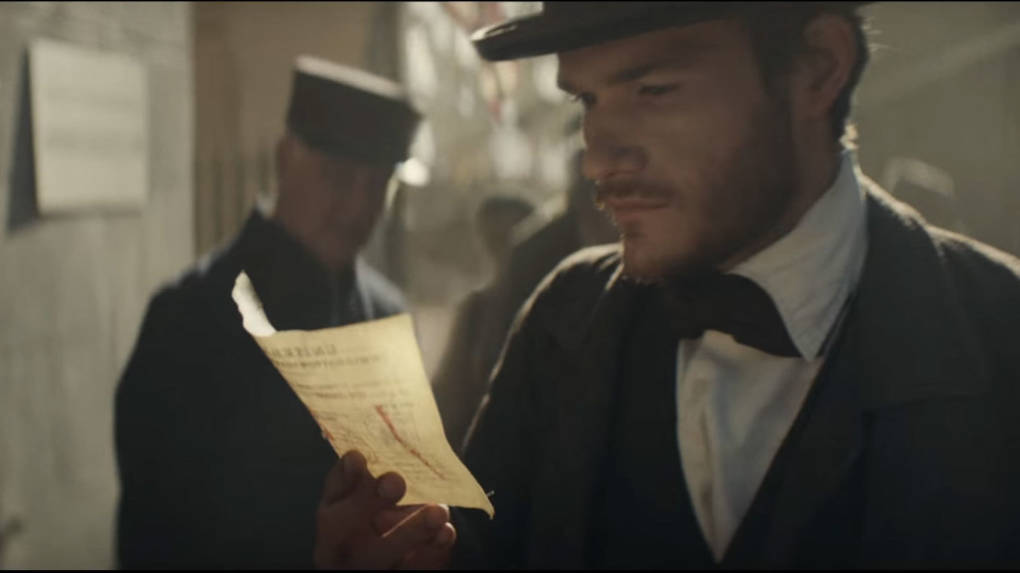
"caption": "A still from Budweiser's Super Bowl ad tells the story of one of Budweiser's founders.",
"description": "A still from Budweiser's Super Bowl ad tells the story of one of Budweiser's founders.",
"title": "A still from Budweiser's Super Bowl ad tells the story of one of Budweiser's founders.",
"credit": null,
"status": "inherit",
"isLoading": false,
"fetchFailed": false
},
"bayareabites_115024": {
"type": "attachments",
"id": "bayareabites_115024",
"meta": {
"index": "attachments_1716263798",
"site": "bayareabites",
"id": "115024",
"found": true
},
"parent": 115023,
"imgSizes": {
"small": {
"file": "https://ww2.kqed.org/app/uploads/sites/24/2017/02/bodegas-1_enl-339f5dc389b12e9255482ef5b581f8ff674721a2-520x346.jpg",
"width": 520,
"mimeType": "image/jpeg",
"height": 346
},
"twentyfourteen-full-width": {
"file": "https://ww2.kqed.org/app/uploads/sites/24/2017/02/bodegas-1_enl-339f5dc389b12e9255482ef5b581f8ff674721a2-1038x576.jpg",
"width": 1038,
"mimeType": "image/jpeg",
"height": 576
},
"thumbnail": {
"file": "https://ww2.kqed.org/app/uploads/sites/24/2017/02/bodegas-1_enl-339f5dc389b12e9255482ef5b581f8ff674721a2-160x107.jpg",
"width": 160,
"mimeType": "image/jpeg",
"height": 107
},
"fd-sm": {
"file": "https://ww2.kqed.org/app/uploads/sites/24/2017/02/bodegas-1_enl-339f5dc389b12e9255482ef5b581f8ff674721a2-960x639.jpg",
"width": 960,
"mimeType": "image/jpeg",
"height": 639
},
"post-thumbnail": {
"file": "https://ww2.kqed.org/app/uploads/sites/24/2017/02/bodegas-1_enl-339f5dc389b12e9255482ef5b581f8ff674721a2-672x372.jpg",
"width": 672,
"mimeType": "image/jpeg",
"height": 372
},
"xsmall": {
"file": "https://ww2.kqed.org/app/uploads/sites/24/2017/02/bodegas-1_enl-339f5dc389b12e9255482ef5b581f8ff674721a2-375x250.jpg",
"width": 375,
"mimeType": "image/jpeg",
"height": 250
},
"kqedFullSize": {
"file": "https://ww2.kqed.org/app/uploads/sites/24/2017/02/bodegas-1_enl-339f5dc389b12e9255482ef5b581f8ff674721a2.jpg",
"width": 2000,
"height": 1332
},
"large": {
"file": "https://ww2.kqed.org/app/uploads/sites/24/2017/02/bodegas-1_enl-339f5dc389b12e9255482ef5b581f8ff674721a2-1020x679.jpg",
"width": 1020,
"mimeType": "image/jpeg",
"height": 679
},
"xlarge": {
"file": "https://ww2.kqed.org/app/uploads/sites/24/2017/02/bodegas-1_enl-339f5dc389b12e9255482ef5b581f8ff674721a2-1180x786.jpg",
"width": 1180,
"mimeType": "image/jpeg",
"height": 786
},
"guest-author-50": {
"file": "https://ww2.kqed.org/app/uploads/sites/24/2017/02/bodegas-1_enl-339f5dc389b12e9255482ef5b581f8ff674721a2-50x50.jpg",
"width": 50,
"mimeType": "image/jpeg",
"height": 50
},
"guest-author-96": {
"file": "https://ww2.kqed.org/app/uploads/sites/24/2017/02/bodegas-1_enl-339f5dc389b12e9255482ef5b581f8ff674721a2-96x96.jpg",
"width": 96,
"mimeType": "image/jpeg",
"height": 96
},
"medium": {
"file": "https://ww2.kqed.org/app/uploads/sites/24/2017/02/bodegas-1_enl-339f5dc389b12e9255482ef5b581f8ff674721a2-800x533.jpg",
"width": 800,
"mimeType": "image/jpeg",
"height": 533
},
"guest-author-64": {
"file": "https://ww2.kqed.org/app/uploads/sites/24/2017/02/bodegas-1_enl-339f5dc389b12e9255482ef5b581f8ff674721a2-64x64.jpg",
"width": 64,
"mimeType": "image/jpeg",
"height": 64
},
"guest-author-32": {
"file": "https://ww2.kqed.org/app/uploads/sites/24/2017/02/bodegas-1_enl-339f5dc389b12e9255482ef5b581f8ff674721a2-32x32.jpg",
"width": 32,
"mimeType": "image/jpeg",
"height": 32
},
"fd-lrg": {
"file": "https://ww2.kqed.org/app/uploads/sites/24/2017/02/bodegas-1_enl-339f5dc389b12e9255482ef5b581f8ff674721a2-1920x1279.jpg",
"width": 1920,
"mimeType": "image/jpeg",
"height": 1279
},
"fd-med": {
"file": "https://ww2.kqed.org/app/uploads/sites/24/2017/02/bodegas-1_enl-339f5dc389b12e9255482ef5b581f8ff674721a2-1180x786.jpg",
"width": 1180,
"mimeType": "image/jpeg",
"height": 786
},
"full-width": {
"file": "https://ww2.kqed.org/app/uploads/sites/24/2017/02/bodegas-1_enl-339f5dc389b12e9255482ef5b581f8ff674721a2-1920x1279.jpg",
"width": 1920,
"mimeType": "image/jpeg",
"height": 1279
},
"detail": {
"file": "https://ww2.kqed.org/app/uploads/sites/24/2017/02/bodegas-1_enl-339f5dc389b12e9255482ef5b581f8ff674721a2-150x150.jpg",
"width": 150,
"mimeType": "image/jpeg",
"height": 150
},
"medium_large": {
"file": "https://ww2.kqed.org/app/uploads/sites/24/2017/02/bodegas-1_enl-339f5dc389b12e9255482ef5b581f8ff674721a2-768x511.jpg",
"width": 768,
"mimeType": "image/jpeg",
"height": 511
},
"guest-author-128": {
"file": "https://ww2.kqed.org/app/uploads/sites/24/2017/02/bodegas-1_enl-339f5dc389b12e9255482ef5b581f8ff674721a2-128x128.jpg",
"width": 128,
"mimeType": "image/jpeg",
"height": 128
},
"xxsmall": {
"file": "https://ww2.kqed.org/app/uploads/sites/24/2017/02/bodegas-1_enl-339f5dc389b12e9255482ef5b581f8ff674721a2-240x160.jpg",
"width": 240,
"mimeType": "image/jpeg",
"height": 160
}
},
"publishDate": 1486085257,
"modified": 1486088707,
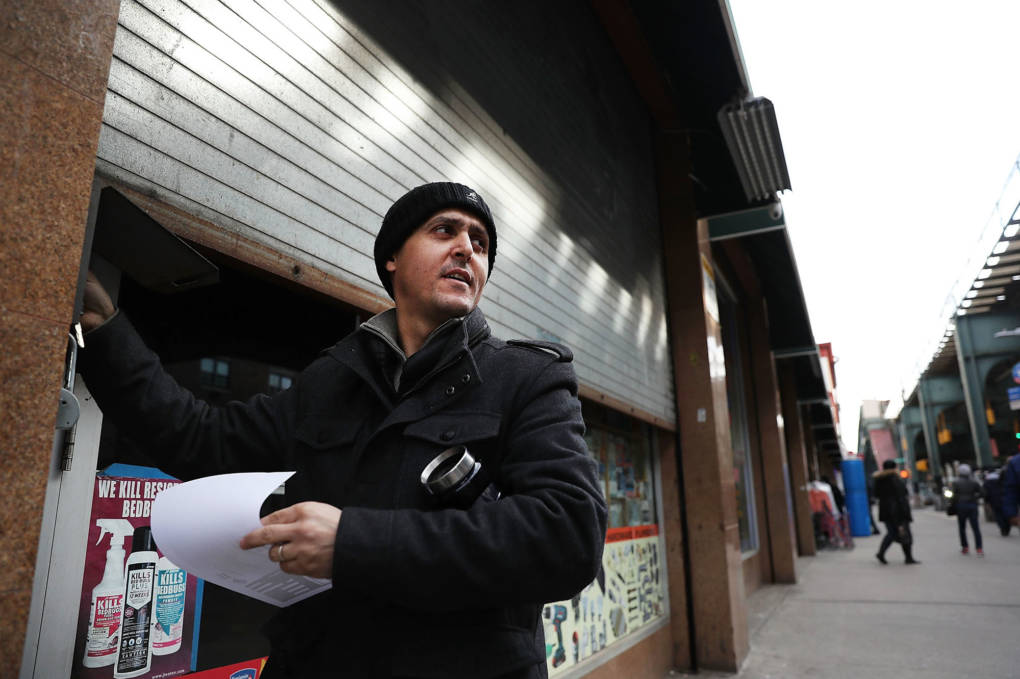
"caption": "A Yemeni business owner closes the gate to his store Thursday in the Brooklyn borough of New York City. Across the city, Yemeni-owned bodega and grocery stores will shut down from noon to 8 p.m. to protest President Trump's executive order banning immigrants and refugees from seven Muslim-majority countries, including Yemen.",
"description": "A Yemeni business owner closes the gate to his store Thursday in the Brooklyn borough of New York City. Across the city, Yemeni-owned bodega and grocery stores will shut down from noon to 8 p.m. to protest President Trump's executive order banning immigrants and refugees from seven Muslim-majority countries, including Yeme",
"title": "A Yemeni business owner closes the gate to his store Thursday in the Brooklyn borough of New York City. Across the city, Yemeni-owned bodega and grocery stores will shut down from noon to 8 p.m. to protest President Trump's executive order banning immigrants and refugees from seven Muslim-majority countries, including Yemen.",
"credit": "Spencer Platt/Getty Images",
"status": "inherit",
"isLoading": false,
"fetchFailed": false
},
"bayareabites_114833": {
"type": "attachments",
"id": "bayareabites_114833",
"meta": {
"index": "attachments_1716263798",
"site": "bayareabites",
"id": "114833",
"found": true
},
"parent": 114832,
"imgSizes": {
"small": {
"file": "https://ww2.kqed.org/app/uploads/sites/24/2017/01/gettyimages-627971250_enl-cf1d6e4c4feb913ee078e4929f1fee91e36a573c-520x346.jpg",
"width": 520,
"mimeType": "image/jpeg",
"height": 346
},
"twentyfourteen-full-width": {
"file": "https://ww2.kqed.org/app/uploads/sites/24/2017/01/gettyimages-627971250_enl-cf1d6e4c4feb913ee078e4929f1fee91e36a573c-1038x576.jpg",
"width": 1038,
"mimeType": "image/jpeg",
"height": 576
},
"thumbnail": {
"file": "https://ww2.kqed.org/app/uploads/sites/24/2017/01/gettyimages-627971250_enl-cf1d6e4c4feb913ee078e4929f1fee91e36a573c-160x107.jpg",
"width": 160,
"mimeType": "image/jpeg",
"height": 107
},
"fd-sm": {
"file": "https://ww2.kqed.org/app/uploads/sites/24/2017/01/gettyimages-627971250_enl-cf1d6e4c4feb913ee078e4929f1fee91e36a573c-960x639.jpg",
"width": 960,
"mimeType": "image/jpeg",
"height": 639
},
"post-thumbnail": {
"file": "https://ww2.kqed.org/app/uploads/sites/24/2017/01/gettyimages-627971250_enl-cf1d6e4c4feb913ee078e4929f1fee91e36a573c-672x372.jpg",
"width": 672,
"mimeType": "image/jpeg",
"height": 372
},
"xsmall": {
"file": "https://ww2.kqed.org/app/uploads/sites/24/2017/01/gettyimages-627971250_enl-cf1d6e4c4feb913ee078e4929f1fee91e36a573c-375x250.jpg",
"width": 375,
"mimeType": "image/jpeg",
"height": 250
},
"kqedFullSize": {
"file": "https://ww2.kqed.org/app/uploads/sites/24/2017/01/gettyimages-627971250_enl-cf1d6e4c4feb913ee078e4929f1fee91e36a573c.jpg",
"width": 2000,
"height": 1332
},
"large": {
"file": "https://ww2.kqed.org/app/uploads/sites/24/2017/01/gettyimages-627971250_enl-cf1d6e4c4feb913ee078e4929f1fee91e36a573c-1020x679.jpg",
"width": 1020,
"mimeType": "image/jpeg",
"height": 679
},
"xlarge": {
"file": "https://ww2.kqed.org/app/uploads/sites/24/2017/01/gettyimages-627971250_enl-cf1d6e4c4feb913ee078e4929f1fee91e36a573c-1180x786.jpg",
"width": 1180,
"mimeType": "image/jpeg",
"height": 786
},
"guest-author-50": {
"file": "https://ww2.kqed.org/app/uploads/sites/24/2017/01/gettyimages-627971250_enl-cf1d6e4c4feb913ee078e4929f1fee91e36a573c-50x50.jpg",
"width": 50,
"mimeType": "image/jpeg",
"height": 50
},
"guest-author-96": {
"file": "https://ww2.kqed.org/app/uploads/sites/24/2017/01/gettyimages-627971250_enl-cf1d6e4c4feb913ee078e4929f1fee91e36a573c-96x96.jpg",
"width": 96,
"mimeType": "image/jpeg",
"height": 96
},
"medium": {
"file": "https://ww2.kqed.org/app/uploads/sites/24/2017/01/gettyimages-627971250_enl-cf1d6e4c4feb913ee078e4929f1fee91e36a573c-800x533.jpg",
"width": 800,
"mimeType": "image/jpeg",
"height": 533
},
"guest-author-64": {
"file": "https://ww2.kqed.org/app/uploads/sites/24/2017/01/gettyimages-627971250_enl-cf1d6e4c4feb913ee078e4929f1fee91e36a573c-64x64.jpg",
"width": 64,
"mimeType": "image/jpeg",
"height": 64
},
"guest-author-32": {
"file": "https://ww2.kqed.org/app/uploads/sites/24/2017/01/gettyimages-627971250_enl-cf1d6e4c4feb913ee078e4929f1fee91e36a573c-32x32.jpg",
"width": 32,
"mimeType": "image/jpeg",
"height": 32
},
"fd-lrg": {
"file": "https://ww2.kqed.org/app/uploads/sites/24/2017/01/gettyimages-627971250_enl-cf1d6e4c4feb913ee078e4929f1fee91e36a573c-1920x1279.jpg",
"width": 1920,
"mimeType": "image/jpeg",
"height": 1279
},
"fd-med": {
"file": "https://ww2.kqed.org/app/uploads/sites/24/2017/01/gettyimages-627971250_enl-cf1d6e4c4feb913ee078e4929f1fee91e36a573c-1180x786.jpg",
"width": 1180,
"mimeType": "image/jpeg",
"height": 786
},
"full-width": {
"file": "https://ww2.kqed.org/app/uploads/sites/24/2017/01/gettyimages-627971250_enl-cf1d6e4c4feb913ee078e4929f1fee91e36a573c-1920x1279.jpg",
"width": 1920,
"mimeType": "image/jpeg",
"height": 1279
},
"detail": {
"file": "https://ww2.kqed.org/app/uploads/sites/24/2017/01/gettyimages-627971250_enl-cf1d6e4c4feb913ee078e4929f1fee91e36a573c-150x150.jpg",
"width": 150,
"mimeType": "image/jpeg",
"height": 150
},
"medium_large": {
"file": "https://ww2.kqed.org/app/uploads/sites/24/2017/01/gettyimages-627971250_enl-cf1d6e4c4feb913ee078e4929f1fee91e36a573c-768x511.jpg",
"width": 768,
"mimeType": "image/jpeg",
"height": 511
},
"guest-author-128": {
"file": "https://ww2.kqed.org/app/uploads/sites/24/2017/01/gettyimages-627971250_enl-cf1d6e4c4feb913ee078e4929f1fee91e36a573c-128x128.jpg",
"width": 128,
"mimeType": "image/jpeg",
"height": 128
},
"xxsmall": {
"file": "https://ww2.kqed.org/app/uploads/sites/24/2017/01/gettyimages-627971250_enl-cf1d6e4c4feb913ee078e4929f1fee91e36a573c-240x160.jpg",
"width": 240,
"mimeType": "image/jpeg",
"height": 160
}
},
"publishDate": 1485367486,
"modified": 1485367826,
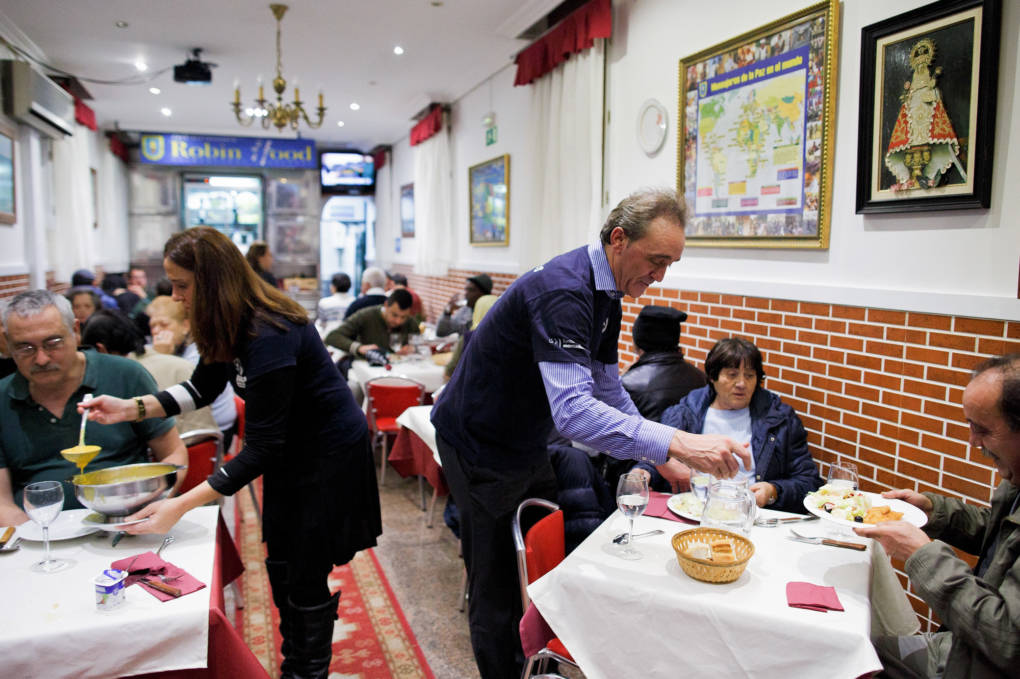
"caption": "Volunteers serve free dinner to homeless people at Robin Hood restaurant in Madrid.",
"description": "Volunteers serve free dinner to homeless people at Robin Hood restaurant in Madrid.",
"title": "Volunteers serve free dinner to homeless people at Robin Hood restaurant in Madrid.",
"credit": "Pablo Blazquez Dominguez/Getty Images",
"status": "inherit",
"isLoading": false,
"fetchFailed": false
},
"bayareabites_114762": {
"type": "attachments",
"id": "bayareabites_114762",
"meta": {
"index": "attachments_1716263798",
"site": "bayareabites",
"id": "114762",
"found": true
},
"parent": 114761,
"imgSizes": {
"small": {
"file": "https://ww2.kqed.org/app/uploads/sites/24/2017/01/eating-fish_enl-9dde30074bbca2f78a7af4a49c9e0908b058a5f6-520x348.jpg",
"width": 520,
"mimeType": "image/jpeg",
"height": 348
},
"twentyfourteen-full-width": {
"file": "https://ww2.kqed.org/app/uploads/sites/24/2017/01/eating-fish_enl-9dde30074bbca2f78a7af4a49c9e0908b058a5f6-1038x576.jpg",
"width": 1038,
"mimeType": "image/jpeg",
"height": 576
},
"thumbnail": {
"file": "https://ww2.kqed.org/app/uploads/sites/24/2017/01/eating-fish_enl-9dde30074bbca2f78a7af4a49c9e0908b058a5f6-160x107.jpg",
"width": 160,
"mimeType": "image/jpeg",
"height": 107
},
"fd-sm": {
"file": "https://ww2.kqed.org/app/uploads/sites/24/2017/01/eating-fish_enl-9dde30074bbca2f78a7af4a49c9e0908b058a5f6-960x643.jpg",
"width": 960,
"mimeType": "image/jpeg",
"height": 643
},
"post-thumbnail": {
"file": "https://ww2.kqed.org/app/uploads/sites/24/2017/01/eating-fish_enl-9dde30074bbca2f78a7af4a49c9e0908b058a5f6-672x372.jpg",
"width": 672,
"mimeType": "image/jpeg",
"height": 372
},
"xsmall": {
"file": "https://ww2.kqed.org/app/uploads/sites/24/2017/01/eating-fish_enl-9dde30074bbca2f78a7af4a49c9e0908b058a5f6-375x251.jpg",
"width": 375,
"mimeType": "image/jpeg",
"height": 251
},
"kqedFullSize": {
"file": "https://ww2.kqed.org/app/uploads/sites/24/2017/01/eating-fish_enl-9dde30074bbca2f78a7af4a49c9e0908b058a5f6.jpg",
"width": 1990,
"height": 1332
},
"large": {
"file": "https://ww2.kqed.org/app/uploads/sites/24/2017/01/eating-fish_enl-9dde30074bbca2f78a7af4a49c9e0908b058a5f6-1020x683.jpg",
"width": 1020,
"mimeType": "image/jpeg",
"height": 683
},
"xlarge": {
"file": "https://ww2.kqed.org/app/uploads/sites/24/2017/01/eating-fish_enl-9dde30074bbca2f78a7af4a49c9e0908b058a5f6-1180x790.jpg",
"width": 1180,
"mimeType": "image/jpeg",
"height": 790
},
"guest-author-50": {
"file": "https://ww2.kqed.org/app/uploads/sites/24/2017/01/eating-fish_enl-9dde30074bbca2f78a7af4a49c9e0908b058a5f6-50x50.jpg",
"width": 50,
"mimeType": "image/jpeg",
"height": 50
},
"guest-author-96": {
"file": "https://ww2.kqed.org/app/uploads/sites/24/2017/01/eating-fish_enl-9dde30074bbca2f78a7af4a49c9e0908b058a5f6-96x96.jpg",
"width": 96,
"mimeType": "image/jpeg",
"height": 96
},
"medium": {
"file": "https://ww2.kqed.org/app/uploads/sites/24/2017/01/eating-fish_enl-9dde30074bbca2f78a7af4a49c9e0908b058a5f6-800x535.jpg",
"width": 800,
"mimeType": "image/jpeg",
"height": 535
},
"guest-author-64": {
"file": "https://ww2.kqed.org/app/uploads/sites/24/2017/01/eating-fish_enl-9dde30074bbca2f78a7af4a49c9e0908b058a5f6-64x64.jpg",
"width": 64,
"mimeType": "image/jpeg",
"height": 64
},
"guest-author-32": {
"file": "https://ww2.kqed.org/app/uploads/sites/24/2017/01/eating-fish_enl-9dde30074bbca2f78a7af4a49c9e0908b058a5f6-32x32.jpg",
"width": 32,
"mimeType": "image/jpeg",
"height": 32
},
"fd-lrg": {
"file": "https://ww2.kqed.org/app/uploads/sites/24/2017/01/eating-fish_enl-9dde30074bbca2f78a7af4a49c9e0908b058a5f6-1920x1285.jpg",
"width": 1920,
"mimeType": "image/jpeg",
"height": 1285
},
"fd-med": {
"file": "https://ww2.kqed.org/app/uploads/sites/24/2017/01/eating-fish_enl-9dde30074bbca2f78a7af4a49c9e0908b058a5f6-1180x790.jpg",
"width": 1180,
"mimeType": "image/jpeg",
"height": 790
},
"full-width": {
"file": "https://ww2.kqed.org/app/uploads/sites/24/2017/01/eating-fish_enl-9dde30074bbca2f78a7af4a49c9e0908b058a5f6-1920x1285.jpg",
"width": 1920,
"mimeType": "image/jpeg",
"height": 1285
},
"detail": {
"file": "https://ww2.kqed.org/app/uploads/sites/24/2017/01/eating-fish_enl-9dde30074bbca2f78a7af4a49c9e0908b058a5f6-150x150.jpg",
"width": 150,
"mimeType": "image/jpeg",
"height": 150
},
"medium_large": {
"file": "https://ww2.kqed.org/app/uploads/sites/24/2017/01/eating-fish_enl-9dde30074bbca2f78a7af4a49c9e0908b058a5f6-768x514.jpg",
"width": 768,
"mimeType": "image/jpeg",
"height": 514
},
"guest-author-128": {
"file": "https://ww2.kqed.org/app/uploads/sites/24/2017/01/eating-fish_enl-9dde30074bbca2f78a7af4a49c9e0908b058a5f6-128x128.jpg",
"width": 128,
"mimeType": "image/jpeg",
"height": 128
},
"xxsmall": {
"file": "https://ww2.kqed.org/app/uploads/sites/24/2017/01/eating-fish_enl-9dde30074bbca2f78a7af4a49c9e0908b058a5f6-240x161.jpg",
"width": 240,
"mimeType": "image/jpeg",
"height": 161
}
},
"publishDate": 1484937389,
"modified": 1484937609,
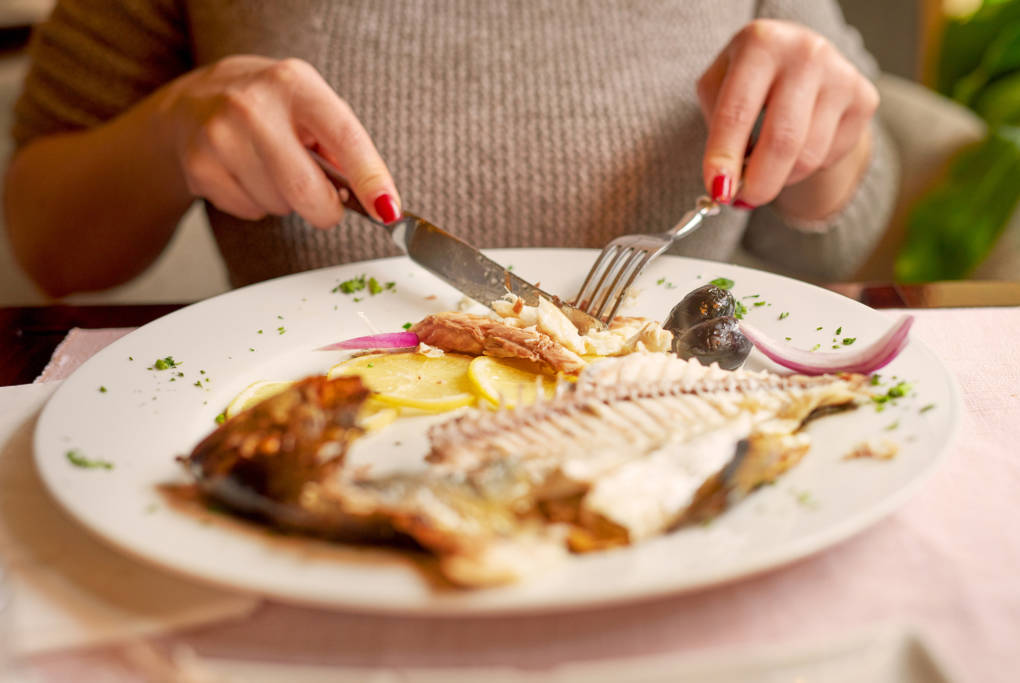
"caption": "Concerns about mercury contamination have led many pregnant women to under-consume seafood. So the FDA issued a new chart explaining what to eat and what to avoid. But critics say it muddles matters.",
"description": "Concerns about mercury contamination have led many pregnant women to under-consume seafood. So the FDA issued a new chart explaining what to eat and what to avoid. But critics say it muddles matter",
"title": "Concerns about mercury contamination have led many pregnant women to under-consume seafood. So the FDA issued a new chart explaining what to eat and what to avoid. But critics say it muddles matters.",
"credit": "stock_colors/Getty Images",
"status": "inherit",
"isLoading": false,
"fetchFailed": false
}
},
"audioPlayerReducer": {
"postId": "stream_live",
"isPaused": true,
"isPlaying": false,
"pfsActive": false,
"pledgeModalIsOpen": true,
"playerDrawerIsOpen": false,
"liveAudioPlayStartedAt": 0,
"liveAudioPlayContext": ""
},
"authorsReducer": {
"byline_bayareabites_115696": {
"type": "authors",
"id": "byline_bayareabites_115696",
"meta": {
"override": true
},
"slug": "byline_bayareabites_115696",
"name": "Camila Domonoske, NPR's the two-way",
"isLoading": false
},
"byline_bayareabites_115417": {
"type": "authors",
"id": "byline_bayareabites_115417",
"meta": {
"override": true
},
"slug": "byline_bayareabites_115417",
"name": "Abbie Fentress Swanson, \u003ca href=\"https://ww2.kqed.org/bayareabites/author/nprfood/\">NPR Food\u003c/a>",
"isLoading": false
},
"byline_bayareabites_115440": {
"type": "authors",
"id": "byline_bayareabites_115440",
"meta": {
"override": true
},
"slug": "byline_bayareabites_115440",
"name": "Dan Charles, NPR Food",
"isLoading": false
},
"byline_bayareabites_115393": {
"type": "authors",
"id": "byline_bayareabites_115393",
"meta": {
"override": true
},
"slug": "byline_bayareabites_115393",
"name": "Maria Godoy, NPR Food",
"isLoading": false
},
"byline_bayareabites_115273": {
"type": "authors",
"id": "byline_bayareabites_115273",
"meta": {
"override": true
},
"slug": "byline_bayareabites_115273",
"name": "Diep Tran, \u003ca href=\"https://ww2.kqed.org/bayareabites/author/nprfood/\">NPR Food\u003c/a>",
"isLoading": false
},
"byline_bayareabites_115198": {
"type": "authors",
"id": "byline_bayareabites_115198",
"meta": {
"override": true
},
"slug": "byline_bayareabites_115198",
"name": "Nina Martyris, \u003ca href=\"https://ww2.kqed.org/bayareabites/author/nprfood/\">NPR Food\u003c/a>",
"isLoading": false
},
"byline_bayareabites_115179": {
"type": "authors",
"id": "byline_bayareabites_115179",
"meta": {
"override": true
},
"slug": "byline_bayareabites_115179",
"name": "Allison Aubrey, NPR Food",
"isLoading": false
},
"byline_bayareabites_115036": {
"type": "authors",
"id": "byline_bayareabites_115036",
"meta": {
"override": true
},
"slug": "byline_bayareabites_115036",
"name": "Maria Godoy, NPR Food",
"isLoading": false
},
"byline_bayareabites_115023": {
"type": "authors",
"id": "byline_bayareabites_115023",
"meta": {
"override": true
},
"slug": "byline_bayareabites_115023",
"name": "Maria Godoy, NPR Food",
"isLoading": false
},
"byline_bayareabites_114832": {
"type": "authors",
"id": "byline_bayareabites_114832",
"meta": {
"override": true
},
"slug": "byline_bayareabites_114832",
"name": "Lauren Frayer, NPR Food",
"isLoading": false
},
"byline_bayareabites_114761": {
"type": "authors",
"id": "byline_bayareabites_114761",
"meta": {
"override": true
},
"slug": "byline_bayareabites_114761",
"name": "Clare Leschin-Hoar, \u003ca href=\"https://ww2.kqed.org/bayareabites/author/nprfood/\">NPR Food\u003c/a>",
"isLoading": false
},
"annamindess": {
"type": "authors",
"id": "5283",
"meta": {
"index": "authors_1716337520",
"id": "5283",
"found": true
},
"name": "Anna Mindess",
"firstName": "Anna",
"lastName": "Mindess",
"slug": "annamindess",
"email": "amindess@aol.com",
"display_author_email": false,
"staff_mastheads": [],
"title": "KQED Contributor",
"bio": "My passion is exploring the connections between food, travel and culture. I am a regular contributor to AFAR, Edible East Bay Magazine, Oakland Magazine, Berkeleyside's NOSH and other publications. I usually take a route that's slightly off the beaten path, like \u003ca href=\"http://edibleeastbay.com/online-magazine/fall-harvest-2017/fun-with-food-insults/\">collecting food-related insults\u003c/a> around the world or \u003ca href=\"https://www.afar.com/magazine/what-i-learned-hawking-sweet-potatoes-with-a-street-vendor-in-taiwan?email=amindess%40aol.com&utm_source=Sailthru&utm_medium=email&utm_campaign=Doctors%20Without%20Borders&utm_term=Daily%20Wander%20Newsletter\">volunteering with a Sweet Potato Mama\u003c/a> (street food seller) in Tapei.\r\n\r\nCulture is the thread that ties together my several careers. I also work as a sign language interpreter, educator and author. My study of Deaf culture has taken me around the world, where I am always on a quest to find Deaf-owned restaurants. I love making connections between my different worlds, for example in this AFAR story where I share \u003ca href=\"https://www.afar.com/magazine/tips-from-a-sign-language-interpreter-for-overcoming-language-barriers\">tips for communicating across cultures\u003c/a> that I learned from the real experts, Deaf people. Or this \u003ca href=\"http://edibleeastbay.com/online-magazine/fall-harvest-2017/deaf-chefs-compete/\">profile of a Deaf chef and culinary arts instructor\u003c/a> at the California School for the Deaf.\r\n\r\nTo see my visual/edible take on the world, follow me on Instagram: \u003ca href=\"https://www.instagram.com/annamindess/\">annamindess. \u003c/a>\r\n\r\nFor more of my stories: visit Contently \u003ca href=\"http://annamindess.contently.com\">annamindess.contently.com\u003c/a>",
"avatar": "https://secure.gravatar.com/avatar/23c79f04bf3d58b2e727d35ca471d184e8945f6ed82e41a0c062eab5e7dc2bb5?s=600&d=blank&r=g",
"twitter": null,
"bluesky": null,
"facebook": null,
"instagram": null,
"linkedin": null,
"sites": [
{
"site": "arts",
"roles": [
"subscriber"
]
},
{
"site": "bayareabites",
"roles": [
"author"
]
},
{
"site": "food",
"roles": [
"contributor"
]
}
],
"headData": {
"title": "Anna Mindess | KQED",
"description": "KQED Contributor",
"ogImgSrc": "https://secure.gravatar.com/avatar/23c79f04bf3d58b2e727d35ca471d184e8945f6ed82e41a0c062eab5e7dc2bb5?s=600&d=blank&r=g",
"twImgSrc": "https://secure.gravatar.com/avatar/23c79f04bf3d58b2e727d35ca471d184e8945f6ed82e41a0c062eab5e7dc2bb5?s=600&d=blank&r=g"
},
"isLoading": false,
"link": "/author/annamindess"
}
},
"pagesReducer": {
"bayareabites_category_politics-activism-food-safety": {
"type": "terms",
"id": "bayareabites_2035",
"meta": {
"index": "terms_1716263798",
"site": "bayareabites",
"id": "2035",
"score": 13.89613
},
"featImg": null,
"name": "politics, activism, food safety",
"description": null,
"taxonomy": "category",
"headData": {
"twImgId": null,
"twTitle": null,
"ogTitle": null,
"ogImgId": null,
"twDescription": null,
"description": null,
"title": "politics, activism, food safety Archives | KQED Bay Area Bites",
"ogDescription": null
},
"ttid": 943,
"slug": "politics-activism-food-safety",
"isLoading": false,
"title": "politics, activism, food safety",
"pageMeta": {
"site": "bayareabites",
"WpPageTemplate": "page-topic-editorial",
"currentPage": 16
},
"blocks": [
{
"blockName": "kqed/post-list",
"attrs": {
"layout": "cardArticle2",
"query": "posts/bayareabites?category=politics-activism-food-safety",
"seeMore": false,
"paginated": true,
"page": 16
}
},
{
"blockName": "kqed/ad"
}
]
}
},
"pfsSessionReducer": {},
"postsReducer": {
"stream_live": {
"type": "live",
"id": "stream_live",
"audioUrl": "https://streams.kqed.org/kqedradio",
"title": "Live Stream",
"excerpt": "Live Stream information currently unavailable.",
"link": "/radio",
"featImg": "",
"label": {
"name": "KQED Live",
"link": "/"
}
},
"stream_kqedNewscast": {
"type": "posts",
"id": "stream_kqedNewscast",
"audioUrl": "https://www.kqed.org/.stream/anon/radio/RDnews/newscast.mp3?_=1",
"title": "KQED Newscast",
"featImg": "",
"label": {
"name": "88.5 FM",
"link": "/"
}
},
"bayareabites_115696": {
"type": "posts",
"id": "bayareabites_115696",
"meta": {
"index": "posts_1716263798",
"site": "bayareabites",
"id": "115696",
"score": null,
"sort": [
1488478910000
]
},
"parent": 0,
"labelTerm": {
"site": "bayareabites"
},
"blocks": [],
"publishDate": 1488478910,
"format": "standard",
"disqusTitle": "DNA Tests Find Subway Chicken Only 50 Percent Meat, Canadian News Program Reports",
"title": "DNA Tests Find Subway Chicken Only 50 Percent Meat, Canadian News Program Reports",
"headTitle": "Bay Area Bites | KQED Food",
"content": "\u003cp>A Canadian investigative consumer program ordered DNA analysis of several fast-food chicken sandwiches and concluded that Subway chicken was only half meat — with the other half soy.\u003c/p>\n\u003cp>The sandwich chain strongly rebuts the allegations, with a spokesman calling them \"absolutely false\" and calling for a retraction.\u003c/p>\n\u003cp>The tests were conducted by a DNA researcher at Trent University's \u003ca href=\"http://www.forensicdna.ca/\">Wildlife Forensic DNA Laboratory\u003c/a>, for a CBC \u003cem>Marketplace \u003c/em>\u003ca href=\"http://www.cbc.ca/marketplace/episodes/2015-2016/chicken\">episode\u003c/a> dedicated to testing fast-food chicken dishes, and have not been independently confirmed.\u003c/p>\n\u003cp>On the episode, which aired Friday, the show found that dishes from McDonald's, Wendy's, A&W and Tim Horton's restaurants in Canada came in at 80 percent and 90 percent chicken DNA. (The meat was tested without any sauce or condiment, but seasoning and marinating would keep any chicken down from a pure 100 percent result, the CBC \u003ca href=\"http://www.cbc.ca/news/business/marketplace-chicken-fast-food-1.3993967\">notes\u003c/a>.)\u003c/p>\n\u003cp>But Subway's dishes were an outlier. \"The oven roasted chicken scored 53.6 per cent chicken DNA, and the chicken strips were found to have just 42.8 per cent chicken DNA,\" the CBC reports. \"The majority of the remaining DNA? Soy.\"\u003c/p>\n\u003cp>[ad fullwidth]\u003c/p>\n\u003cp>Last week, Subway \u003ca href=\"http://www.cbc.ca/marketplace/blog/company-responses-chicken\">told the CBC\u003c/a> that Subway Canada \"cannot confirm the veracity of the results of the lab testing you had conducted.\" Chicken strips and roasted chicken at Subway contain \"contain 1% or less of soy protein ... to help stabilize the texture and moisture,\" the company told the CBC, and it promised to \"look into this\" with Subway's supplier.\u003c/p>\n\u003cp>On Wednesday, a Subway spokesperson more emphatically rejected the CBC's claims.\u003c/p>\n\u003cp>\"The accusations made by CBC Marketplace about the content of our chicken are absolutely false and misleading. Our chicken is 100% white meat with seasonings, marinated and delivered to our stores as a finished, cooked product,\" the spokesman said in a statement sent to NPR. \"We have advised them of our strong objections. We do not know how they produced such unreliable and factually incorrect data, but we are insisting on a full retraction.\"\u003c/p>\n\u003cp>The CBC \u003cem>Marketplace\u003c/em> report raised a larger issue, beyond the question of Subway's chicken makeup.\u003c/p>\n\u003cp>In general, according to the report, the fast-food chicken tested had \"about a quarter less protein\" than home-cooked chicken, and sodium levels \"seven to 10 times what they would be in a piece of unadulterated chicken.\"\u003c/p>\n\u003cp>\"People think they're doing themselves a favour and making themselves a healthy choice\" by picking chicken, a nutritionist told the CBC.\u003c/p>\n\u003cp>\"But from a sodium perspective you might as well eat a big portion of poutine\" — that is, the Canadian dish with french fries, gravy and cheese curds. \u003c/p>\n\u003cp>\u003c/p>\n\u003cp>\u003cem>Copyright 2017 \u003ca href=\"http://www.npr.org/\" target=\"_blank\">NPR\u003c/a>.\u003c/em>\u003c/p>\n\n",
"disqusIdentifier": "115696 https://ww2.kqed.org/bayareabites/?p=115696",
"disqusUrl": "https://ww2.kqed.org/bayareabites/2017/03/02/dna-tests-find-subway-chicken-only-50-percent-meat-canadian-news-program-reports/",
"stats": {
"hasVideo": false,
"hasChartOrMap": false,
"hasAudio": false,
"hasPolis": false,
"wordCount": 444,
"hasGoogleForm": false,
"hasGallery": false,
"hasHearkenModule": false,
"iframeSrcs": [],
"paragraphCount": 15
},
"modified": 1488478910,
"excerpt": "The CBC's investigative consumer show \u003cem>Marketplace\u003c/em> ordered the DNA analysis. The sandwich chain unilaterally denies the accusation, with a spokesman calling the claims \"absolutely false.\"",
"headData": {
"twImgId": "",
"twTitle": "",
"ogTitle": "",
"ogImgId": "",
"twDescription": "",
"description": "The CBC's investigative consumer show Marketplace ordered the DNA analysis. The sandwich chain unilaterally denies the accusation, with a spokesman calling the claims "absolutely false."",
"title": "DNA Tests Find Subway Chicken Only 50 Percent Meat, Canadian News Program Reports | KQED",
"ogDescription": "",
"schema": {
"@context": "https://schema.org",
"@type": "Article",
"headline": "DNA Tests Find Subway Chicken Only 50 Percent Meat, Canadian News Program Reports",
"datePublished": "2017-03-02T10:21:50-08:00",
"dateModified": "2017-03-02T10:21:50-08:00",
"image": "https://cdn.kqed.org/wp-content/uploads/2020/02/KQED-OG-Image@1x.png"
}
},
"guestAuthors": [],
"slug": "dna-tests-find-subway-chicken-only-50-percent-meat-canadian-news-program-reports",
"status": "publish",
"nprApiLink": "http://api.npr.org/query?id=517920680&apiKey=MDAxOTAwOTE4MDEyMTkxMDAzNjczZDljZA004",
"nprByline": "Camila Domonoske, NPR's the two-way",
"nprStoryDate": "Wed, 01 Mar 2017 12:39:00 -0500",
"nprLastModifiedDate": "Wed, 01 Mar 2017 14:07:04 -0500",
"nprHtmlLink": "http://www.npr.org/sections/thetwo-way/2017/03/01/517920680/dna-tests-find-subway-chicken-only-50-percent-meat-canadian-media-reports?ft=nprml&f=517920680",
"nprImageAgency": "Flickr",
"nprImageCredit": "Mike Mozart",
"nprStoryId": "517920680",
"nprRetrievedStory": "1",
"nprPubDate": "Wed, 01 Mar 2017 14:07:00 -0500",
"path": "/bayareabites/115696/dna-tests-find-subway-chicken-only-50-percent-meat-canadian-news-program-reports",
"audioTrackLength": null,
"parsedContent": [
{
"type": "contentString",
"content": "\u003cdiv class=\"post-body\">\u003cp>\u003cp>A Canadian investigative consumer program ordered DNA analysis of several fast-food chicken sandwiches and concluded that Subway chicken was only half meat — with the other half soy.\u003c/p>\n\u003cp>The sandwich chain strongly rebuts the allegations, with a spokesman calling them \"absolutely false\" and calling for a retraction.\u003c/p>\n\u003cp>The tests were conducted by a DNA researcher at Trent University's \u003ca href=\"http://www.forensicdna.ca/\">Wildlife Forensic DNA Laboratory\u003c/a>, for a CBC \u003cem>Marketplace \u003c/em>\u003ca href=\"http://www.cbc.ca/marketplace/episodes/2015-2016/chicken\">episode\u003c/a> dedicated to testing fast-food chicken dishes, and have not been independently confirmed.\u003c/p>\n\u003cp>On the episode, which aired Friday, the show found that dishes from McDonald's, Wendy's, A&W and Tim Horton's restaurants in Canada came in at 80 percent and 90 percent chicken DNA. (The meat was tested without any sauce or condiment, but seasoning and marinating would keep any chicken down from a pure 100 percent result, the CBC \u003ca href=\"http://www.cbc.ca/news/business/marketplace-chicken-fast-food-1.3993967\">notes\u003c/a>.)\u003c/p>\n\u003cp>But Subway's dishes were an outlier. \"The oven roasted chicken scored 53.6 per cent chicken DNA, and the chicken strips were found to have just 42.8 per cent chicken DNA,\" the CBC reports. \"The majority of the remaining DNA? Soy.\"\u003c/p>\n\u003cp>\u003c/p>\u003c/div>",
"attributes": {
"named": {},
"numeric": []
}
},
{
"type": "component",
"content": "",
"name": "ad",
"attributes": {
"named": {
"label": "fullwidth"
},
"numeric": [
"fullwidth"
]
}
},
{
"type": "contentString",
"content": "\u003cdiv class=\"post-body\">\u003cp>\u003c/p>\n\u003cp>Last week, Subway \u003ca href=\"http://www.cbc.ca/marketplace/blog/company-responses-chicken\">told the CBC\u003c/a> that Subway Canada \"cannot confirm the veracity of the results of the lab testing you had conducted.\" Chicken strips and roasted chicken at Subway contain \"contain 1% or less of soy protein ... to help stabilize the texture and moisture,\" the company told the CBC, and it promised to \"look into this\" with Subway's supplier.\u003c/p>\n\u003cp>On Wednesday, a Subway spokesperson more emphatically rejected the CBC's claims.\u003c/p>\n\u003cp>\"The accusations made by CBC Marketplace about the content of our chicken are absolutely false and misleading. Our chicken is 100% white meat with seasonings, marinated and delivered to our stores as a finished, cooked product,\" the spokesman said in a statement sent to NPR. \"We have advised them of our strong objections. We do not know how they produced such unreliable and factually incorrect data, but we are insisting on a full retraction.\"\u003c/p>\n\u003cp>The CBC \u003cem>Marketplace\u003c/em> report raised a larger issue, beyond the question of Subway's chicken makeup.\u003c/p>\n\u003cp>In general, according to the report, the fast-food chicken tested had \"about a quarter less protein\" than home-cooked chicken, and sodium levels \"seven to 10 times what they would be in a piece of unadulterated chicken.\"\u003c/p>\n\u003cp>\"People think they're doing themselves a favour and making themselves a healthy choice\" by picking chicken, a nutritionist told the CBC.\u003c/p>\n\u003cp>\"But from a sodium perspective you might as well eat a big portion of poutine\" — that is, the Canadian dish with french fries, gravy and cheese curds. \u003c/p>\n\u003cp>\u003c/p>\n\u003cp>\u003cem>Copyright 2017 \u003ca href=\"http://www.npr.org/\" target=\"_blank\">NPR\u003c/a>.\u003c/em>\u003c/p>\n\n\u003c/div>\u003c/p>",
"attributes": {
"named": {},
"numeric": []
}
}
],
"link": "/bayareabites/115696/dna-tests-find-subway-chicken-only-50-percent-meat-canadian-news-program-reports",
"authors": [
"byline_bayareabites_115696"
],
"categories": [
"bayareabites_10028",
"bayareabites_2035",
"bayareabites_358",
"bayareabites_181"
],
"tags": [
"bayareabites_13296",
"bayareabites_10012",
"bayareabites_13089"
],
"featImg": "bayareabites_115697",
"label": "bayareabites"
},
"bayareabites_115417": {
"type": "posts",
"id": "bayareabites_115417",
"meta": {
"index": "posts_1716263798",
"site": "bayareabites",
"id": "115417",
"score": null,
"sort": [
1487317334000
]
},
"parent": 0,
"labelTerm": {
"site": "bayareabites"
},
"blocks": [],
"publishDate": 1487317334,
"format": "standard",
"disqusTitle": "L.A.'s Moves to Protect Immigrant Street-Food Vendors Come With a Catch",
"title": "L.A.'s Moves to Protect Immigrant Street-Food Vendors Come With a Catch",
"headTitle": "Bay Area Bites | KQED Food",
"content": "\u003cp>On a sidewalk in Los Angeles' bustling piñata district, Enrique is using tongs to dip long, rosy strips of pig skin into a vat of boiling oil. When they're blistering, crispy and slightly cool, he lays the \u003cem>chicharrones\u003c/em> on the table for hungry passersby. This is the taste of his native Mexico and it is delicious. But, technically, that \u003cem>chicharrón\u003c/em> is also illegal.\u003c/p>\n\u003cp>\"In the U.S., street vending is not criminalized in New York or Chicago. Only here,\" Enrique says. \"Why?\" He and other street vendors we spoke with for this story asked that we use only their first names because of recent raids that have led to the deportations of some people in the country illegally.\u003c/p>\n\u003cp>LA is the only major American city where it is against the law to sell food and merchandise on the sidewalk. Criminal charges are relatively rare — \u003ca href=\"https://economicrt.org/publication/sidewalk-stimulus/\" target=\"_blank\">of the 50,000 street vendors in LA, \u003c/a>just 22 were convicted of misdemeanors last year, according to the city attorney's office. Even so, President Trump's \u003ca href=\"https://www.whitehouse.gov/the-press-office/2017/01/25/executive-order-border-security-and-immigration-enforcement-improvements\" target=\"_blank\">executive order\u003c/a> to speed up the deportation of undocumented immigrants has pushed local elected officials to change the law.\u003c/p>\n\u003cfigure id=\"attachment_115419\" class=\"wp-caption aligncenter\" style=\"max-width: 1933px\">\u003cimg src=\"https://ww2.kqed.org/bayareabites/wp-content/uploads/sites/24/2017/02/fried-chicharro-nes1-ae828cd396265a6f3bc51be144058aac1ed62477.jpg\" alt=\"Chicharrones, or pork rinds, fry in the piñata district in Los Angeles.\" width=\"1933\" height=\"1450\" class=\"size-full wp-image-115419\" srcset=\"https://ww2.kqed.org/app/uploads/sites/24/2017/02/fried-chicharro-nes1-ae828cd396265a6f3bc51be144058aac1ed62477.jpg 1933w, https://ww2.kqed.org/app/uploads/sites/24/2017/02/fried-chicharro-nes1-ae828cd396265a6f3bc51be144058aac1ed62477-160x120.jpg 160w, https://ww2.kqed.org/app/uploads/sites/24/2017/02/fried-chicharro-nes1-ae828cd396265a6f3bc51be144058aac1ed62477-800x600.jpg 800w, https://ww2.kqed.org/app/uploads/sites/24/2017/02/fried-chicharro-nes1-ae828cd396265a6f3bc51be144058aac1ed62477-768x576.jpg 768w, https://ww2.kqed.org/app/uploads/sites/24/2017/02/fried-chicharro-nes1-ae828cd396265a6f3bc51be144058aac1ed62477-1020x765.jpg 1020w, https://ww2.kqed.org/app/uploads/sites/24/2017/02/fried-chicharro-nes1-ae828cd396265a6f3bc51be144058aac1ed62477-1180x885.jpg 1180w, https://ww2.kqed.org/app/uploads/sites/24/2017/02/fried-chicharro-nes1-ae828cd396265a6f3bc51be144058aac1ed62477-960x720.jpg 960w, https://ww2.kqed.org/app/uploads/sites/24/2017/02/fried-chicharro-nes1-ae828cd396265a6f3bc51be144058aac1ed62477-240x180.jpg 240w, https://ww2.kqed.org/app/uploads/sites/24/2017/02/fried-chicharro-nes1-ae828cd396265a6f3bc51be144058aac1ed62477-375x281.jpg 375w, https://ww2.kqed.org/app/uploads/sites/24/2017/02/fried-chicharro-nes1-ae828cd396265a6f3bc51be144058aac1ed62477-520x390.jpg 520w\" sizes=\"(max-width: 1933px) 100vw, 1933px\">\u003cfigcaption class=\"wp-caption-text\">Chicharrones, or pork rinds, fry in the piñata district in Los Angeles. \u003ccite>(Camellia Tse for NPR)\u003c/cite>\u003c/figcaption>\u003c/figure>\n\u003cp>\"It does not make good economic or moral sense to criminalize Angelenos who are trying to make an honest living and support their families,\" says Mayor Eric Garcetti. \"Finding a pathway to regulate street vending is not just the right thing to do for vendors, it's also good for the public and our local tax base.\"\u003c/p>\n\u003cp>So, on Wednesday, the city council voted, 13-0, to change the law regulating street vending in Los Angeles. Street vending is not yet legalized in LA; it will take months to finalize a legal permit system for sidewalk vendors.\u003c/p>\n\u003cp>[ad fullwidth]\u003c/p>\n\u003cp>But the council fast-tracked one part of its proposal so that vendors with unpaid fines won't be charged with misdemeanor penalties. Mayor Garcetti is expected to sign it into law by the end of the week. Now, vendors who haven't paid their tickets won't face criminal charges, arrests or risk deportation for selling tacos, \u003cem>paletas\u003c/em> and bacon-wrapped hotdogs on the streets of Los Angeles.\u003c/p>\n\u003cp>The council's plan to overhaul the city's street-vending law is heartening to Mario, an ice cream vendor from Puebla, Mexico, who has been making and selling 32 different flavors in the piñata district for almost a decade. \"This will help us to pay rent, all the bills, to buy clothes and shoes for our children,\" he says.\u003c/p>\n\u003cp>Street vendors occasionally receive tickets for doing business on the sidewalk. Last year, across Los Angeles, the city collected $9,880 in fines. Individual citations range from $50 to over $1,000, according to Leadership for Urban Renewal Network, a community group that has been working for years to create a legal permit system for sidewalk vendors. This can be steep for vendors like Mario, who make about $75 a day selling food. Vendors can also get their equipment confiscated by police.\u003c/p>\n\u003cp>\"I have three children. I need to take care of them. Our rent is $1,300. All this costs money,\" says Mario.\u003c/p>\n\u003cp>But the devil is in the details. The city council's proposed street vending overhaul includes controversial changes. In commercial and industrial districts, for example, the new law would allow just two stationary vendors per block. In the piñata district, there are easily 100 vendors lining East Olympic Boulevard on the long block between Kohler and Merchant streets.\u003c/p>\n\u003cfigure id=\"attachment_115420\" class=\"wp-caption aligncenter\" style=\"max-width: 1952px\">\u003cimg src=\"https://ww2.kqed.org/bayareabites/wp-content/uploads/sites/24/2017/02/merced1-f830e9705a466019c5ea1d5a0006d27478b9ed96.jpg\" alt=\"Merced is a vendor in the piñata district. She is worried that the city council's plan for a legal permitting system for sidewalk vendors, as proposed, will severely limit how many vendors can be on a given sidewalk, leaving many without a place to do business.\" width=\"1952\" height=\"1464\" class=\"size-full wp-image-115420\" srcset=\"https://ww2.kqed.org/app/uploads/sites/24/2017/02/merced1-f830e9705a466019c5ea1d5a0006d27478b9ed96.jpg 1952w, https://ww2.kqed.org/app/uploads/sites/24/2017/02/merced1-f830e9705a466019c5ea1d5a0006d27478b9ed96-160x120.jpg 160w, https://ww2.kqed.org/app/uploads/sites/24/2017/02/merced1-f830e9705a466019c5ea1d5a0006d27478b9ed96-800x600.jpg 800w, https://ww2.kqed.org/app/uploads/sites/24/2017/02/merced1-f830e9705a466019c5ea1d5a0006d27478b9ed96-768x576.jpg 768w, https://ww2.kqed.org/app/uploads/sites/24/2017/02/merced1-f830e9705a466019c5ea1d5a0006d27478b9ed96-1020x765.jpg 1020w, https://ww2.kqed.org/app/uploads/sites/24/2017/02/merced1-f830e9705a466019c5ea1d5a0006d27478b9ed96-1180x885.jpg 1180w, https://ww2.kqed.org/app/uploads/sites/24/2017/02/merced1-f830e9705a466019c5ea1d5a0006d27478b9ed96-960x720.jpg 960w, https://ww2.kqed.org/app/uploads/sites/24/2017/02/merced1-f830e9705a466019c5ea1d5a0006d27478b9ed96-240x180.jpg 240w, https://ww2.kqed.org/app/uploads/sites/24/2017/02/merced1-f830e9705a466019c5ea1d5a0006d27478b9ed96-375x281.jpg 375w, https://ww2.kqed.org/app/uploads/sites/24/2017/02/merced1-f830e9705a466019c5ea1d5a0006d27478b9ed96-520x390.jpg 520w\" sizes=\"(max-width: 1952px) 100vw, 1952px\">\u003cfigcaption class=\"wp-caption-text\">Merced is a vendor in the piñata district. She is worried that the city council's plan for a legal permitting system for sidewalk vendors, as proposed, will severely limit how many vendors can be on a given sidewalk, leaving many without a place to do business. \u003ccite>(Camellia Tse for NPR)\u003c/cite>\u003c/figcaption>\u003c/figure>\n\u003cp>\"Where will the other 98 go?\" asks Merced. She's selling sunglasses at the market for $5 a pair and is urging vendors to voice their concerns in subsequent public city council meetings. Perhaps the piñata district can be excluded from the two-vendor measure in the new law, she says.\u003c/p>\n\u003cp>Some LA communities don't want any vendors on their blocks. \"In Westwood, we have an abundance of food and retail and we would like ... to be able to opt out of a street vending program,\" says Andrew Thomas, executive director of the \u003ca href=\"http://www.thewestwoodvillage.com/\" target=\"_blank\">Westwood Village Improvement Association\u003c/a>.\u003c/p>\n\u003cp>Norm Langer, the owner of \u003ca href=\"http://www.langersdeli.com/\" target=\"_blank\">Langer's Deli\u003c/a>, one of the go-to spots for tourists and hungry Angelenos to get their pastrami fix, says there are already too many vendors working the block where his restaurant is located at Alvarado and 7th Street.\u003c/p>\n\u003cp>\"I am OK with the vendors as long as they do what the city council will propose, and that's two people on every city block,\" says Langer. \"But who is going to enforce all this? The city council says the permit fees will cover it. No, they won't. There are health department issues. There's no visible sign of sanitation. Some of these people are selling food and there's no place for them to wash their hands. They're grilling hot dogs with bacon and flies.\"\u003c/p>\n\u003cp>Nakul Mahendro doesn't want a hot dog stand to set up shop in front of his hip Indian restaurant, \u003ca href=\"https://www.badmaashla.com/\">Badmaash\u003c/a>, in downtown LA. But he is a big fan of street food and fears his favorite vendors down the pike will go out of business from high fees for health department and business permitting.\u003c/p>\n\u003cp>The licensing fees that vendors will have to pay will take time to hash out. \"It's important that we decriminalize street vending so that it can be regulated by the city and the health department. Just don't change anything about \u003ca href=\"https://www.yelp.com/biz/ave-26-taco-stand-los-angeles\" target=\"_blank\">Avenue 26 Tacos\u003c/a>,\" says Mahendro.\u003c/p>\n\u003cp>Councilman Joe Buscaino has been one of the lead local officials pushing to change the law. He is confident that all concerns from brick-and-mortar restaurants will be addressed when the permitting system is finalized.\u003c/p>\n\u003cp>\"Los Angeles is a diverse city, and it is difficult to create a one-size fits all solution, which is why this proposal allows community members to customize the regulations to fit their unique neighborhood,\" says Buscaino.\u003c/p>\n\u003cp>Meanwhile in the piñata district, tensions are high. Last week, 160 people were detained by immigration enforcement agents in Southern California, and Trump is expected to sign a new executive order related to immigration this week.\u003c/p>\n\u003cp>\"We came to the U.S. to succeed and live a better life. We don't want to bother anyone. We aren't committing crimes,\" says the \u003cem>chicharrón\u003c/em> man, Enrique. Choking back tears, he says: \"I've always agreed that those who commit crimes should be deported to their home countries. But people who haven't done anything? What have we done wrong?\"\u003c/p>\n\u003cp>\u003cem>Abbie Fentress Swanson is a journalist based in Los Angeles. She covers agriculture, food production, science, health and the environment.\u003c/em> \u003c/p>\n\u003cp>[ad floatright]\u003c/p>\n\u003cp>\u003cem>Copyright 2017 \u003ca href=\"http://www.npr.org/\" target=\"_blank\">NPR\u003c/a>.\u003c/em>\u003c/p>\n\n",
"disqusIdentifier": "115417 https://ww2.kqed.org/bayareabites/?p=115417",
"disqusUrl": "https://ww2.kqed.org/bayareabites/2017/02/16/las-moves-to-protect-immigrant-street-food-vendors-come-with-a-catch/",
"stats": {
"hasVideo": false,
"hasChartOrMap": false,
"hasAudio": false,
"hasPolis": false,
"wordCount": 1197,
"hasGoogleForm": false,
"hasGallery": false,
"hasHearkenModule": false,
"iframeSrcs": [],
"paragraphCount": 24
},
"modified": 1487355220,
"excerpt": "L.A. is the only major U.S. city where selling food on the sidewalk is illegal. President Trump's immigration policies have pushed the City Council to change the law. But the devil is in the details.",
"headData": {
"twImgId": "",
"twTitle": "",
"ogTitle": "",
"ogImgId": "",
"twDescription": "",
"description": "L.A. is the only major U.S. city where selling food on the sidewalk is illegal. President Trump's immigration policies have pushed the City Council to change the law. But the devil is in the details.",
"title": "L.A.'s Moves to Protect Immigrant Street-Food Vendors Come With a Catch | KQED",
"ogDescription": "",
"schema": {
"@context": "https://schema.org",
"@type": "Article",
"headline": "L.A.'s Moves to Protect Immigrant Street-Food Vendors Come With a Catch",
"datePublished": "2017-02-16T23:42:14-08:00",
"dateModified": "2017-02-17T10:13:40-08:00",
"image": "https://cdn.kqed.org/wp-content/uploads/2020/02/KQED-OG-Image@1x.png"
}
},
"guestAuthors": [],
"slug": "las-moves-to-protect-immigrant-street-food-vendors-come-with-a-catch",
"status": "publish",
"nprApiLink": "http://api.npr.org/query?id=515257761&apiKey=MDAxOTAwOTE4MDEyMTkxMDAzNjczZDljZA004",
"nprByline": "Abbie Fentress Swanson, \u003ca href=\"https://ww2.kqed.org/bayareabites/author/nprfood/\">NPR Food\u003c/a>",
"nprStoryDate": "Thu, 16 Feb 2017 06:00:00 -0500",
"nprLastModifiedDate": "Thu, 16 Feb 2017 11:49:00 -0500",
"nprHtmlLink": "http://www.npr.org/sections/thesalt/2017/02/16/515257761/las-moves-to-protect-immigrant-street-food-vendors-come-with-a-catch?ft=nprml&f=515257761",
"nprImageAgency": "Camellia Tse for NPR",
"nprStoryId": "515257761",
"nprRetrievedStory": "1",
"nprPubDate": "Thu, 16 Feb 2017 11:49:00 -0500",
"path": "/bayareabites/115417/las-moves-to-protect-immigrant-street-food-vendors-come-with-a-catch",
"audioTrackLength": null,
"parsedContent": [
{
"type": "contentString",
"content": "\u003cdiv class=\"post-body\">\u003cp>\u003cp>On a sidewalk in Los Angeles' bustling piñata district, Enrique is using tongs to dip long, rosy strips of pig skin into a vat of boiling oil. When they're blistering, crispy and slightly cool, he lays the \u003cem>chicharrones\u003c/em> on the table for hungry passersby. This is the taste of his native Mexico and it is delicious. But, technically, that \u003cem>chicharrón\u003c/em> is also illegal.\u003c/p>\n\u003cp>\"In the U.S., street vending is not criminalized in New York or Chicago. Only here,\" Enrique says. \"Why?\" He and other street vendors we spoke with for this story asked that we use only their first names because of recent raids that have led to the deportations of some people in the country illegally.\u003c/p>\n\u003cp>LA is the only major American city where it is against the law to sell food and merchandise on the sidewalk. Criminal charges are relatively rare — \u003ca href=\"https://economicrt.org/publication/sidewalk-stimulus/\" target=\"_blank\">of the 50,000 street vendors in LA, \u003c/a>just 22 were convicted of misdemeanors last year, according to the city attorney's office. Even so, President Trump's \u003ca href=\"https://www.whitehouse.gov/the-press-office/2017/01/25/executive-order-border-security-and-immigration-enforcement-improvements\" target=\"_blank\">executive order\u003c/a> to speed up the deportation of undocumented immigrants has pushed local elected officials to change the law.\u003c/p>\n\u003cfigure id=\"attachment_115419\" class=\"wp-caption aligncenter\" style=\"max-width: 1933px\">\u003cimg src=\"https://ww2.kqed.org/bayareabites/wp-content/uploads/sites/24/2017/02/fried-chicharro-nes1-ae828cd396265a6f3bc51be144058aac1ed62477.jpg\" alt=\"Chicharrones, or pork rinds, fry in the piñata district in Los Angeles.\" width=\"1933\" height=\"1450\" class=\"size-full wp-image-115419\" srcset=\"https://ww2.kqed.org/app/uploads/sites/24/2017/02/fried-chicharro-nes1-ae828cd396265a6f3bc51be144058aac1ed62477.jpg 1933w, https://ww2.kqed.org/app/uploads/sites/24/2017/02/fried-chicharro-nes1-ae828cd396265a6f3bc51be144058aac1ed62477-160x120.jpg 160w, https://ww2.kqed.org/app/uploads/sites/24/2017/02/fried-chicharro-nes1-ae828cd396265a6f3bc51be144058aac1ed62477-800x600.jpg 800w, https://ww2.kqed.org/app/uploads/sites/24/2017/02/fried-chicharro-nes1-ae828cd396265a6f3bc51be144058aac1ed62477-768x576.jpg 768w, https://ww2.kqed.org/app/uploads/sites/24/2017/02/fried-chicharro-nes1-ae828cd396265a6f3bc51be144058aac1ed62477-1020x765.jpg 1020w, https://ww2.kqed.org/app/uploads/sites/24/2017/02/fried-chicharro-nes1-ae828cd396265a6f3bc51be144058aac1ed62477-1180x885.jpg 1180w, https://ww2.kqed.org/app/uploads/sites/24/2017/02/fried-chicharro-nes1-ae828cd396265a6f3bc51be144058aac1ed62477-960x720.jpg 960w, https://ww2.kqed.org/app/uploads/sites/24/2017/02/fried-chicharro-nes1-ae828cd396265a6f3bc51be144058aac1ed62477-240x180.jpg 240w, https://ww2.kqed.org/app/uploads/sites/24/2017/02/fried-chicharro-nes1-ae828cd396265a6f3bc51be144058aac1ed62477-375x281.jpg 375w, https://ww2.kqed.org/app/uploads/sites/24/2017/02/fried-chicharro-nes1-ae828cd396265a6f3bc51be144058aac1ed62477-520x390.jpg 520w\" sizes=\"(max-width: 1933px) 100vw, 1933px\">\u003cfigcaption class=\"wp-caption-text\">Chicharrones, or pork rinds, fry in the piñata district in Los Angeles. \u003ccite>(Camellia Tse for NPR)\u003c/cite>\u003c/figcaption>\u003c/figure>\n\u003cp>\"It does not make good economic or moral sense to criminalize Angelenos who are trying to make an honest living and support their families,\" says Mayor Eric Garcetti. \"Finding a pathway to regulate street vending is not just the right thing to do for vendors, it's also good for the public and our local tax base.\"\u003c/p>\n\u003cp>So, on Wednesday, the city council voted, 13-0, to change the law regulating street vending in Los Angeles. Street vending is not yet legalized in LA; it will take months to finalize a legal permit system for sidewalk vendors.\u003c/p>\n\u003cp>\u003c/p>\u003c/div>",
"attributes": {
"named": {},
"numeric": []
}
},
{
"type": "component",
"content": "",
"name": "ad",
"attributes": {
"named": {
"label": "fullwidth"
},
"numeric": [
"fullwidth"
]
}
},
{
"type": "contentString",
"content": "\u003cdiv class=\"post-body\">\u003cp>\u003c/p>\n\u003cp>But the council fast-tracked one part of its proposal so that vendors with unpaid fines won't be charged with misdemeanor penalties. Mayor Garcetti is expected to sign it into law by the end of the week. Now, vendors who haven't paid their tickets won't face criminal charges, arrests or risk deportation for selling tacos, \u003cem>paletas\u003c/em> and bacon-wrapped hotdogs on the streets of Los Angeles.\u003c/p>\n\u003cp>The council's plan to overhaul the city's street-vending law is heartening to Mario, an ice cream vendor from Puebla, Mexico, who has been making and selling 32 different flavors in the piñata district for almost a decade. \"This will help us to pay rent, all the bills, to buy clothes and shoes for our children,\" he says.\u003c/p>\n\u003cp>Street vendors occasionally receive tickets for doing business on the sidewalk. Last year, across Los Angeles, the city collected $9,880 in fines. Individual citations range from $50 to over $1,000, according to Leadership for Urban Renewal Network, a community group that has been working for years to create a legal permit system for sidewalk vendors. This can be steep for vendors like Mario, who make about $75 a day selling food. Vendors can also get their equipment confiscated by police.\u003c/p>\n\u003cp>\"I have three children. I need to take care of them. Our rent is $1,300. All this costs money,\" says Mario.\u003c/p>\n\u003cp>But the devil is in the details. The city council's proposed street vending overhaul includes controversial changes. In commercial and industrial districts, for example, the new law would allow just two stationary vendors per block. In the piñata district, there are easily 100 vendors lining East Olympic Boulevard on the long block between Kohler and Merchant streets.\u003c/p>\n\u003cfigure id=\"attachment_115420\" class=\"wp-caption aligncenter\" style=\"max-width: 1952px\">\u003cimg src=\"https://ww2.kqed.org/bayareabites/wp-content/uploads/sites/24/2017/02/merced1-f830e9705a466019c5ea1d5a0006d27478b9ed96.jpg\" alt=\"Merced is a vendor in the piñata district. She is worried that the city council's plan for a legal permitting system for sidewalk vendors, as proposed, will severely limit how many vendors can be on a given sidewalk, leaving many without a place to do business.\" width=\"1952\" height=\"1464\" class=\"size-full wp-image-115420\" srcset=\"https://ww2.kqed.org/app/uploads/sites/24/2017/02/merced1-f830e9705a466019c5ea1d5a0006d27478b9ed96.jpg 1952w, https://ww2.kqed.org/app/uploads/sites/24/2017/02/merced1-f830e9705a466019c5ea1d5a0006d27478b9ed96-160x120.jpg 160w, https://ww2.kqed.org/app/uploads/sites/24/2017/02/merced1-f830e9705a466019c5ea1d5a0006d27478b9ed96-800x600.jpg 800w, https://ww2.kqed.org/app/uploads/sites/24/2017/02/merced1-f830e9705a466019c5ea1d5a0006d27478b9ed96-768x576.jpg 768w, https://ww2.kqed.org/app/uploads/sites/24/2017/02/merced1-f830e9705a466019c5ea1d5a0006d27478b9ed96-1020x765.jpg 1020w, https://ww2.kqed.org/app/uploads/sites/24/2017/02/merced1-f830e9705a466019c5ea1d5a0006d27478b9ed96-1180x885.jpg 1180w, https://ww2.kqed.org/app/uploads/sites/24/2017/02/merced1-f830e9705a466019c5ea1d5a0006d27478b9ed96-960x720.jpg 960w, https://ww2.kqed.org/app/uploads/sites/24/2017/02/merced1-f830e9705a466019c5ea1d5a0006d27478b9ed96-240x180.jpg 240w, https://ww2.kqed.org/app/uploads/sites/24/2017/02/merced1-f830e9705a466019c5ea1d5a0006d27478b9ed96-375x281.jpg 375w, https://ww2.kqed.org/app/uploads/sites/24/2017/02/merced1-f830e9705a466019c5ea1d5a0006d27478b9ed96-520x390.jpg 520w\" sizes=\"(max-width: 1952px) 100vw, 1952px\">\u003cfigcaption class=\"wp-caption-text\">Merced is a vendor in the piñata district. She is worried that the city council's plan for a legal permitting system for sidewalk vendors, as proposed, will severely limit how many vendors can be on a given sidewalk, leaving many without a place to do business. \u003ccite>(Camellia Tse for NPR)\u003c/cite>\u003c/figcaption>\u003c/figure>\n\u003cp>\"Where will the other 98 go?\" asks Merced. She's selling sunglasses at the market for $5 a pair and is urging vendors to voice their concerns in subsequent public city council meetings. Perhaps the piñata district can be excluded from the two-vendor measure in the new law, she says.\u003c/p>\n\u003cp>Some LA communities don't want any vendors on their blocks. \"In Westwood, we have an abundance of food and retail and we would like ... to be able to opt out of a street vending program,\" says Andrew Thomas, executive director of the \u003ca href=\"http://www.thewestwoodvillage.com/\" target=\"_blank\">Westwood Village Improvement Association\u003c/a>.\u003c/p>\n\u003cp>Norm Langer, the owner of \u003ca href=\"http://www.langersdeli.com/\" target=\"_blank\">Langer's Deli\u003c/a>, one of the go-to spots for tourists and hungry Angelenos to get their pastrami fix, says there are already too many vendors working the block where his restaurant is located at Alvarado and 7th Street.\u003c/p>\n\u003cp>\"I am OK with the vendors as long as they do what the city council will propose, and that's two people on every city block,\" says Langer. \"But who is going to enforce all this? The city council says the permit fees will cover it. No, they won't. There are health department issues. There's no visible sign of sanitation. Some of these people are selling food and there's no place for them to wash their hands. They're grilling hot dogs with bacon and flies.\"\u003c/p>\n\u003cp>Nakul Mahendro doesn't want a hot dog stand to set up shop in front of his hip Indian restaurant, \u003ca href=\"https://www.badmaashla.com/\">Badmaash\u003c/a>, in downtown LA. But he is a big fan of street food and fears his favorite vendors down the pike will go out of business from high fees for health department and business permitting.\u003c/p>\n\u003cp>The licensing fees that vendors will have to pay will take time to hash out. \"It's important that we decriminalize street vending so that it can be regulated by the city and the health department. Just don't change anything about \u003ca href=\"https://www.yelp.com/biz/ave-26-taco-stand-los-angeles\" target=\"_blank\">Avenue 26 Tacos\u003c/a>,\" says Mahendro.\u003c/p>\n\u003cp>Councilman Joe Buscaino has been one of the lead local officials pushing to change the law. He is confident that all concerns from brick-and-mortar restaurants will be addressed when the permitting system is finalized.\u003c/p>\n\u003cp>\"Los Angeles is a diverse city, and it is difficult to create a one-size fits all solution, which is why this proposal allows community members to customize the regulations to fit their unique neighborhood,\" says Buscaino.\u003c/p>\n\u003cp>Meanwhile in the piñata district, tensions are high. Last week, 160 people were detained by immigration enforcement agents in Southern California, and Trump is expected to sign a new executive order related to immigration this week.\u003c/p>\n\u003cp>\"We came to the U.S. to succeed and live a better life. We don't want to bother anyone. We aren't committing crimes,\" says the \u003cem>chicharrón\u003c/em> man, Enrique. Choking back tears, he says: \"I've always agreed that those who commit crimes should be deported to their home countries. But people who haven't done anything? What have we done wrong?\"\u003c/p>\n\u003cp>\u003cem>Abbie Fentress Swanson is a journalist based in Los Angeles. She covers agriculture, food production, science, health and the environment.\u003c/em> \u003c/p>\n\u003cp>\u003c/p>\u003c/div>",
"attributes": {
"named": {},
"numeric": []
}
},
{
"type": "component",
"content": "",
"name": "ad",
"attributes": {
"named": {
"label": "floatright"
},
"numeric": [
"floatright"
]
}
},
{
"type": "contentString",
"content": "\u003cdiv class=\"post-body\">\u003cp>\u003c/p>\n\u003cp>\u003cem>Copyright 2017 \u003ca href=\"http://www.npr.org/\" target=\"_blank\">NPR\u003c/a>.\u003c/em>\u003c/p>\n\n\u003c/div>\u003c/p>",
"attributes": {
"named": {},
"numeric": []
}
}
],
"link": "/bayareabites/115417/las-moves-to-protect-immigrant-street-food-vendors-come-with-a-catch",
"authors": [
"byline_bayareabites_115417"
],
"categories": [
"bayareabites_10028",
"bayareabites_2035",
"bayareabites_181"
],
"tags": [
"bayareabites_452",
"bayareabites_182",
"bayareabites_15762",
"bayareabites_15697"
],
"featImg": "bayareabites_115418",
"label": "bayareabites"
},
"bayareabites_115440": {
"type": "posts",
"id": "bayareabites_115440",
"meta": {
"index": "posts_1716263798",
"site": "bayareabites",
"id": "115440",
"score": null,
"sort": [
1487310102000
]
},
"parent": 0,
"labelTerm": {
"site": "bayareabites"
},
"blocks": [],
"publishDate": 1487310102,
"format": "audio",
"disqusTitle": "Why Ditching NAFTA Could Hurt America's Farmers More Than Mexico's",
"title": "Why Ditching NAFTA Could Hurt America's Farmers More Than Mexico's",
"headTitle": "Bay Area Bites | KQED Food",
"content": "\u003cp>\u003cstrong>Listen to the story on All Things Considered:\u003c/strong>\u003cbr>\nhttps://ondemand.npr.org/anon.npr-mp3/npr/atc/2017/02/20170216_atc_why_ditching_nafta_could_hurt_americas_farmers_more_than_mexicos.mp3\u003c/p>\n\u003cp>Garland Reiter is one of the people behind the rise in imported food from Mexico.\u003c/p>\n\u003cp>His family has been growing strawberries in California for generations and selling them under the name \u003ca href=\"https://www.driscolls.com/about/heritage\">Driscoll's\u003c/a>. Today, it's the biggest berry producer in the world.\u003c/p>\n\u003cp>In the early 1990s, the Reiter family started growing strawberries and raspberries in Mexico, in addition to California. It found regions in Mexico where the climate allowed them to grow the fruit — especially raspberries — during seasons of the year when it hadn't been feasible back home. \"Our move really was for year-round product, and quality,\" says Reiter, who is executive chairman of \u003ca href=\"http://www.berry.net/\">Reiter Associated Cos\u003c/a>.\u003c/p>\n\u003cp>The North American Free Trade Agreement went into effect at that same time, in 1994. But that's coincidence, Reiter says; NAFTA had very little to do with the move into Mexico. \"To tell you the truth, we paid minimal attention to that,\" he says.\u003c/p>\n\u003cp>[ad fullwidth]\u003c/p>\n\u003cp>Many U.S. fruit and vegetable growers have made the same move over the past two decades. They've all done it to expand their growing season, and also to cut costs. Farmworkers in Mexico get paid very little, compared with workers in the U.S.\u003c/p>\n\u003cp>Reiter says that when he got to Mexico and met his Mexican partners, he discovered another reason to locate there. \"They're farmers. They want to be farmers. That \u003cem>is\u003c/em> their industry,\" he says. There's excitement about new fruit varieties, and new methods of growing crops.\u003c/p>\n\u003cp>Since 1992, raspberry exports from Mexico to the U.S. have gone from zero to $500 million each year. The increase in strawberry exports is similar. Total Mexican shipments of fruits and vegetables to the U.S. have increased by nine times over the last 25 years, to $12 billion a year. People in the industry say most of that increase is a result of U.S. companies setting up production in Mexico.\u003c/p>\n\u003cp>President Trump's criticism of trade with Mexico has unsettled the industry. He has talked about possibly taxing imports from Mexico or renegotiating NAFTA. Mexican officials have threatened to retaliate against American exports.\u003c/p>\n\u003cp>But Reiter says such moves would just force Americans to pay a little more for Mexican fruit. It wouldn't bring production back to the U.S.\u003c/p>\n\u003cp>\"If you look at the magnitude of the investment in Mexico, there's no way that's coming back to California,\" he says. \"There's absolutely no way.\"\u003c/p>\n\u003cp>He'll keep growing in Mexico, in part because it would be hard for Americans to replace Mexican production with fresh berries from somewhere else.\u003c/p>\n\u003cp>Yet the situation on the other side of the trade equation, for U.S exports to Mexico, is considerably different.\u003c/p>\n\u003cp>Those exports also have grown dramatically, but a lot of them are commodities that Mexico could buy from other places, such as corn, soybeans and dairy products.\u003c/p>\n\u003cp>\"Mexico is the No. 1 buyer of U.S. dairy products in the world,\" says John Wilson, senior vice president of \u003ca href=\"http://www.dfamilk.com/\">Dairy Farmers of America\u003c/a>, a cooperative with 14,000 dairy farmer members.\u003c/p>\n\u003cp>American dairy farmers have come to rely on exports in recent years. About 15 percent of all milk is processed into products for export. Wilson's cooperative, for instance, has a plant in Portales, N.M., that receives milk from big dairy farmers in the eastern part of that state and dries it into powder. \"About 38 million pounds of [milk] powder moved from the plant into Mexico last year,\" Wilson says. In total, the U.S. exports about $500 million worth of milk powder to Mexico annually. That's up more than 10 times from 20 years ago.\u003c/p>\n\u003cp>The U.S. also exports billions of dollars' worth of corn, soybeans and pork. And NAFTA is really important for most of those exports. It allows products to enter Mexico duty-free and makes American commodities just slightly cheaper than the competition, such as milk powder from New Zealand.\u003c/p>\n\u003cp>\"Pennies do matter in the milk business,\" Wilson says. \"It's a very competitive business worldwide, and the presence or absence of a tariff can make or break a deal.\"\u003c/p>\n\u003cp>Wilson says he doesn't know exactly how much it would cost American dairy farmers if Mexico bought less of their milk powder. \"We don't even like to speculate about that,\" he says. But it certainly would hurt. \u003c/p>\n\u003cp>\u003c/p>\n\u003cp> \u003cem>Copyright 2017 \u003ca href=\"http://www.npr.org/\" target=\"_blank\">NPR\u003c/a>.\u003c/em> \u003c/p>\n\n",
"disqusIdentifier": "115440 https://ww2.kqed.org/bayareabites/?p=115440",
"disqusUrl": "https://ww2.kqed.org/bayareabites/2017/02/16/why-ditching-nafta-could-hurt-americas-farmers-more-than-mexicos/",
"stats": {
"hasVideo": false,
"hasChartOrMap": false,
"hasAudio": false,
"hasPolis": false,
"wordCount": 759,
"hasGoogleForm": false,
"hasGallery": false,
"hasHearkenModule": false,
"iframeSrcs": [],
"paragraphCount": 22
},
"modified": 1487317715,
"excerpt": "Trade in food between the U.S. and Mexico has exploded over the past 15 years. President Trump is talking about restricting that trade, but when it comes to food, such moves could backfire.",
"headData": {
"twImgId": "",
"twTitle": "",
"ogTitle": "",
"ogImgId": "",
"twDescription": "",
"description": "Trade in food between the U.S. and Mexico has exploded over the past 15 years. President Trump is talking about restricting that trade, but when it comes to food, such moves could backfire.",
"title": "Why Ditching NAFTA Could Hurt America's Farmers More Than Mexico's | KQED",
"ogDescription": "",
"schema": {
"@context": "https://schema.org",
"@type": "Article",
"headline": "Why Ditching NAFTA Could Hurt America's Farmers More Than Mexico's",
"datePublished": "2017-02-16T21:41:42-08:00",
"dateModified": "2017-02-16T23:48:35-08:00",
"image": "https://cdn.kqed.org/wp-content/uploads/2020/02/KQED-OG-Image@1x.png"
}
},
"guestAuthors": [],
"slug": "why-ditching-nafta-could-hurt-americas-farmers-more-than-mexicos",
"status": "publish",
"nprApiLink": "http://api.npr.org/query?id=515380213&apiKey=MDAxOTAwOTE4MDEyMTkxMDAzNjczZDljZA004",
"nprByline": "Dan Charles, NPR Food",
"nprStoryDate": "Thu, 16 Feb 2017 16:31:00 -0500",
"nprLastModifiedDate": "Thu, 16 Feb 2017 19:12:20 -0500",
"nprHtmlLink": "http://www.npr.org/sections/thesalt/2017/02/16/515380213/why-ditching-nafta-could-hurt-americas-farmers-more-than-mexicos?ft=nprml&f=515380213",
"nprAudio": "https://ondemand.npr.org/anon.npr-mp3/npr/atc/2017/02/20170216_atc_why_ditching_nafta_could_hurt_americas_farmers_more_than_mexicos.mp3?orgId=1&topicId=1053&d=235&p=2&story=515380213&t=progseg&e=515539685&seg=16&ft=nprml&f=515380213",
"nprImageAgency": "Flickr",
"nprImageCredit": "Mike Mozart",
"nprAudioM3u": "http://api.npr.org/m3u/1515638250-1714d7.m3u?orgId=1&topicId=1053&d=235&p=2&story=515380213&t=progseg&e=515539685&seg=16&ft=nprml&f=515380213",
"nprStoryId": "515380213",
"nprRetrievedStory": "1",
"nprPubDate": "Thu, 16 Feb 2017 19:12:00 -0500",
"path": "/bayareabites/115440/why-ditching-nafta-could-hurt-americas-farmers-more-than-mexicos",
"audioUrl": "https://ondemand.npr.org/anon.npr-mp3/npr/atc/2017/02/20170216_atc_why_ditching_nafta_could_hurt_americas_farmers_more_than_mexicos.mp3?orgId=1&topicId=1053&d=235&p=2&story=515380213&t=progseg&e=515539685&seg=16&ft=nprml&f=515380213",
"audioTrackLength": null,
"parsedContent": [
{
"type": "contentString",
"content": "\u003cdiv class=\"post-body\">\u003cp>\u003cp>\u003cstrong>Listen to the story on All Things Considered:\u003c/strong>\u003cbr>\n\u003c/p>\u003c/div>",
"attributes": {
"named": {},
"numeric": []
}
},
{
"type": "component",
"content": "",
"name": "nprOneAudioLink",
"attributes": {
"named": {
"src": "https://ondemand.npr.org/anon.npr-mp3/npr/atc/2017/02/20170216_atc_why_ditching_nafta_could_hurt_americas_farmers_more_than_mexicos.mp3"
},
"numeric": []
}
},
{
"type": "contentString",
"content": "\u003cdiv class=\"post-body\">\u003cp>\u003c/p>\n\u003cp>Garland Reiter is one of the people behind the rise in imported food from Mexico.\u003c/p>\n\u003cp>His family has been growing strawberries in California for generations and selling them under the name \u003ca href=\"https://www.driscolls.com/about/heritage\">Driscoll's\u003c/a>. Today, it's the biggest berry producer in the world.\u003c/p>\n\u003cp>In the early 1990s, the Reiter family started growing strawberries and raspberries in Mexico, in addition to California. It found regions in Mexico where the climate allowed them to grow the fruit — especially raspberries — during seasons of the year when it hadn't been feasible back home. \"Our move really was for year-round product, and quality,\" says Reiter, who is executive chairman of \u003ca href=\"http://www.berry.net/\">Reiter Associated Cos\u003c/a>.\u003c/p>\n\u003cp>The North American Free Trade Agreement went into effect at that same time, in 1994. But that's coincidence, Reiter says; NAFTA had very little to do with the move into Mexico. \"To tell you the truth, we paid minimal attention to that,\" he says.\u003c/p>\n\u003cp>\u003c/p>\u003c/div>",
"attributes": {
"named": {},
"numeric": []
}
},
{
"type": "component",
"content": "",
"name": "ad",
"attributes": {
"named": {
"label": "fullwidth"
},
"numeric": [
"fullwidth"
]
}
},
{
"type": "contentString",
"content": "\u003cdiv class=\"post-body\">\u003cp>\u003c/p>\n\u003cp>Many U.S. fruit and vegetable growers have made the same move over the past two decades. They've all done it to expand their growing season, and also to cut costs. Farmworkers in Mexico get paid very little, compared with workers in the U.S.\u003c/p>\n\u003cp>Reiter says that when he got to Mexico and met his Mexican partners, he discovered another reason to locate there. \"They're farmers. They want to be farmers. That \u003cem>is\u003c/em> their industry,\" he says. There's excitement about new fruit varieties, and new methods of growing crops.\u003c/p>\n\u003cp>Since 1992, raspberry exports from Mexico to the U.S. have gone from zero to $500 million each year. The increase in strawberry exports is similar. Total Mexican shipments of fruits and vegetables to the U.S. have increased by nine times over the last 25 years, to $12 billion a year. People in the industry say most of that increase is a result of U.S. companies setting up production in Mexico.\u003c/p>\n\u003cp>President Trump's criticism of trade with Mexico has unsettled the industry. He has talked about possibly taxing imports from Mexico or renegotiating NAFTA. Mexican officials have threatened to retaliate against American exports.\u003c/p>\n\u003cp>But Reiter says such moves would just force Americans to pay a little more for Mexican fruit. It wouldn't bring production back to the U.S.\u003c/p>\n\u003cp>\"If you look at the magnitude of the investment in Mexico, there's no way that's coming back to California,\" he says. \"There's absolutely no way.\"\u003c/p>\n\u003cp>He'll keep growing in Mexico, in part because it would be hard for Americans to replace Mexican production with fresh berries from somewhere else.\u003c/p>\n\u003cp>Yet the situation on the other side of the trade equation, for U.S exports to Mexico, is considerably different.\u003c/p>\n\u003cp>Those exports also have grown dramatically, but a lot of them are commodities that Mexico could buy from other places, such as corn, soybeans and dairy products.\u003c/p>\n\u003cp>\"Mexico is the No. 1 buyer of U.S. dairy products in the world,\" says John Wilson, senior vice president of \u003ca href=\"http://www.dfamilk.com/\">Dairy Farmers of America\u003c/a>, a cooperative with 14,000 dairy farmer members.\u003c/p>\n\u003cp>American dairy farmers have come to rely on exports in recent years. About 15 percent of all milk is processed into products for export. Wilson's cooperative, for instance, has a plant in Portales, N.M., that receives milk from big dairy farmers in the eastern part of that state and dries it into powder. \"About 38 million pounds of [milk] powder moved from the plant into Mexico last year,\" Wilson says. In total, the U.S. exports about $500 million worth of milk powder to Mexico annually. That's up more than 10 times from 20 years ago.\u003c/p>\n\u003cp>The U.S. also exports billions of dollars' worth of corn, soybeans and pork. And NAFTA is really important for most of those exports. It allows products to enter Mexico duty-free and makes American commodities just slightly cheaper than the competition, such as milk powder from New Zealand.\u003c/p>\n\u003cp>\"Pennies do matter in the milk business,\" Wilson says. \"It's a very competitive business worldwide, and the presence or absence of a tariff can make or break a deal.\"\u003c/p>\n\u003cp>Wilson says he doesn't know exactly how much it would cost American dairy farmers if Mexico bought less of their milk powder. \"We don't even like to speculate about that,\" he says. But it certainly would hurt. \u003c/p>\n\u003cp>\u003c/p>\n\u003cp> \u003cem>Copyright 2017 \u003ca href=\"http://www.npr.org/\" target=\"_blank\">NPR\u003c/a>.\u003c/em> \u003c/p>\n\n\u003c/div>\u003c/p>",
"attributes": {
"named": {},
"numeric": []
}
}
],
"link": "/bayareabites/115440/why-ditching-nafta-could-hurt-americas-farmers-more-than-mexicos",
"authors": [
"byline_bayareabites_115440"
],
"categories": [
"bayareabites_1874",
"bayareabites_10028",
"bayareabites_2035"
],
"tags": [
"bayareabites_10480",
"bayareabites_15761",
"bayareabites_134",
"bayareabites_2561",
"bayareabites_1621",
"bayareabites_12898",
"bayareabites_15697"
],
"featImg": "bayareabites_115441",
"label": "bayareabites"
},
"bayareabites_115393": {
"type": "posts",
"id": "bayareabites_115393",
"meta": {
"index": "posts_1716263798",
"site": "bayareabites",
"id": "115393",
"score": null,
"sort": [
1487207135000
]
},
"parent": 0,
"labelTerm": {
"site": "bayareabites"
},
"blocks": [],
"publishDate": 1487207135,
"format": "audio",
"disqusTitle": "Chef José Andrés To Close Restaurants For The 'Day Without Immigrants'",
"title": "Chef José Andrés To Close Restaurants For The 'Day Without Immigrants'",
"headTitle": "Bay Area Bites | KQED Food",
"content": "\u003cp>\u003cstrong>Listen to the story on All Things Considered:\u003c/strong>\u003cbr>\nhttps://ondemand.npr.org/anon.npr-mp3/npr/atc/2017/02/20170215_atc_chef_jos_andrs_to_close_restaurants_for_day_without_immigrants.mp3\u003c/p>\n\u003cp>Across the U.S., protesters are calling for a \"Day Without Immigrants\" on Thursday. It's a boycott calling for immigrants not to go to work, in response to President Trump's immigration policies and his plan to build a border wall between the U.S. and Mexico.\u003c/p>\n\u003cp>The protest seems to have been organized by word of mouth through social media. It's unclear how many people will actually participate, though reports suggest restaurants in \u003ca href=\"http://austin.eater.com/2017/2/15/14623434/day-without-immigrants-protest-austin-restaurants\">Austin, Texas\u003c/a>; \u003ca href=\"http://www.westword.com/restaurants/colorado-restaurant-association-alerts-members-to-day-without-immigrants-8797802\">Denver\u003c/a> and \u003ca href=\"http://ny.eater.com/2017/2/15/14626130/blue-ribbon-restaurants-will-close-thursday-in-support-of-a-day-without-immigrants\">New York City\u003c/a>, as well as the \u003ca href=\"http://www.philly.com/philly/news/A-day-without-immigrants-protest-.html\">Philadelphia\u003c/a> region, plan to join in. But in Washington, D.C., a number of restaurants have already announced that they'll close for the day in solidarity with immigrant workers. That includes five restaurants owned by celebrity chef José Andrés.\u003c/p>\n\u003cp>\"It was a very easy decision,\" Andrés tells NPR's Robert Siegel. \"When you have employees that have been with you almost 25 years, and they come to you in an organized way and they tell you, 'Don't get upset but Thursday we are not coming to work,' [the] next thing you ask is, 'What's going on? What's happening?' So I decided to join them and support them — that's what we're doing.\"\u003c/p>\n\u003cp>For Andrés, who came to the U.S. from Spain in 1991 and is now an American citizen, this is also personal. \"It seems immigrants, especially Latinos, it seems we are under attack,\" he says. \"It seems we are part of the American dream, but somehow it seems that America is not recognizing what we are doing.\"\u003c/p>\n\u003cp>[ad fullwidth]\u003c/p>\n\u003cp>The idea behind the strike, Andrés says, is to show America what would happen if all immigrants were to disappear. Not all of Andrés' restaurants will be closing. One of them, China Chilcano, will remain open \"so those employees that want to work ... have a place to do it,\" he says.\u003c/p>\n\u003cp>Andrés is also engaged in a \u003ca href=\"http://www.npr.org/2017/01/05/508419794/trump-deposed-for-90-minutes-in-civil-case-involving-chef-jose-andres\">legal battle\u003c/a> with President Trump, who sued him after the chef backed out of a deal to open a restaurant in Trump's Washington, D.C., hotel. Andrés pulled out of the deal after Trump referred to Mexican immigrants as \"rapists\" and as people \"bringing drugs\" and \"bringing crime\" while announcing his candidacy for president in June 2015.\u003c/p>\n\u003cp>\"We have over 11 million undocumented immigrants in America,\" Andrés says. \"They are part of the American DNA. They are taking care of our farms, our golf clubs, our wineries, our fishing boats\" — and, of course, American restaurants. \"We need to be giving those 11 million undocumented in America the right to finally belong,\" he says.\u003c/p>\n\u003cp>It's estimated that 1 in 4 restaurant workers is foreign-born, according to an analysis of census data conducted by \u003ca href=\"http://www.rocunited.org/\" target=\"_blank\">Restaurant Opportunities Centers United\u003c/a>. And the vast \u003ca href=\"https://www.ers.usda.gov/topics/farm-economy/farm-labor/background.aspx#migrationpatterns\">majority\u003c/a> of farmworkers are immigrants; many of them are in the U.S. without legal authorization.\u003c/p>\n\u003cp>The U.S. food system's heavy reliance on immigrants is one reason that, as \u003ca href=\"http://www.npr.org/sections/thesalt/2017/02/08/514133875/amid-travel-ban-debate-chefs-and-food-brands-take-a-stand-on-immigration\">we've reported\u003c/a>, not just chefs but many restaurants and food brands, large and small, have come out in support of immigrants in recent weeks in response to the president's policies.\u003c/p>\n\u003cp>Andrés says the vigorous national conversation over immigration illustrates that it's high time Congress took up the issue. \"What we need to do today is to draw a line in the sand and to say, 'Immigration reform cannot wait any longer,' \" he says.\u003c/p>\n\u003cp>Andrés says that the lack of an immigration policy that recognizes the role these immigrants play in the U.S. economy is \"a new form of slavery, to a degree.\"\u003c/p>\n\u003cp>\"We let them come in,\" he says. \"We need them to work on the farms. We will not be able to be serving a salad at the [congressional] cafeteria if we didn't have many of those people working, very often underpaid, without health care, working long hours.\" \u003c/p>\n\u003cp>\u003c/p>\n\u003cp>\u003cem>Copyright 2017 \u003ca href=\"http://www.npr.org/\" target=\"_blank\">NPR\u003c/a>.\u003c/em>\u003c/p>\n\n",
"disqusIdentifier": "115393 https://ww2.kqed.org/bayareabites/?p=115393",
"disqusUrl": "https://ww2.kqed.org/bayareabites/2017/02/15/chef-jose-andres-to-close-restaurants-for-the-day-without-immigrants/",
"stats": {
"hasVideo": false,
"hasChartOrMap": false,
"hasAudio": false,
"hasPolis": false,
"wordCount": 694,
"hasGoogleForm": false,
"hasGallery": false,
"hasHearkenModule": false,
"iframeSrcs": [],
"paragraphCount": 16
},
"modified": 1487207135,
"excerpt": "The celebrity chef will shut five of his restaurants Thursday. It's part of a national boycott calling on immigrants not to go to work in response to President Trump's immigration policies.",
"headData": {
"twImgId": "",
"twTitle": "",
"ogTitle": "",
"ogImgId": "",
"twDescription": "",
"description": "The celebrity chef will shut five of his restaurants Thursday. It's part of a national boycott calling on immigrants not to go to work in response to President Trump's immigration policies.",
"title": "Chef José Andrés To Close Restaurants For The 'Day Without Immigrants' | KQED",
"ogDescription": "",
"schema": {
"@context": "https://schema.org",
"@type": "Article",
"headline": "Chef José Andrés To Close Restaurants For The 'Day Without Immigrants'",
"datePublished": "2017-02-15T17:05:35-08:00",
"dateModified": "2017-02-15T17:05:35-08:00",
"image": "https://cdn.kqed.org/wp-content/uploads/2020/02/KQED-OG-Image@1x.png"
}
},
"guestAuthors": [],
"slug": "chef-jose-andres-to-close-restaurants-for-the-day-without-immigrants",
"status": "publish",
"nprApiLink": "http://api.npr.org/query?id=515441650&apiKey=MDAxOTAwOTE4MDEyMTkxMDAzNjczZDljZA004",
"nprByline": "Maria Godoy, NPR Food",
"nprStoryDate": "Wed, 15 Feb 2017 16:29:00 -0500",
"nprLastModifiedDate": "Wed, 15 Feb 2017 18:54:55 -0500",
"nprHtmlLink": "http://www.npr.org/sections/thesalt/2017/02/15/515441650/chef-jos-andr-s-to-close-restaurants-for-day-without-immigrants?ft=nprml&f=515441650",
"nprAudio": "https://ondemand.npr.org/anon.npr-mp3/npr/atc/2017/02/20170215_atc_chef_jos_andrs_to_close_restaurants_for_day_without_immigrants.mp3?orgId=1&topicId=1053&d=273&p=2&story=515441650&t=progseg&e=515351241&seg=4&ft=nprml&f=515441650",
"nprImageAgency": "AP",
"nprImageCredit": "Beth J. Harpaz",
"nprAudioM3u": "http://api.npr.org/m3u/1515441651-27782b.m3u?orgId=1&topicId=1053&d=273&p=2&story=515441650&t=progseg&e=515351241&seg=4&ft=nprml&f=515441650",
"nprStoryId": "515441650",
"nprRetrievedStory": "1",
"nprPubDate": "Wed, 15 Feb 2017 18:54:00 -0500",
"path": "/bayareabites/115393/chef-jose-andres-to-close-restaurants-for-the-day-without-immigrants",
"audioUrl": "https://ondemand.npr.org/anon.npr-mp3/npr/atc/2017/02/20170215_atc_chef_jos_andrs_to_close_restaurants_for_day_without_immigrants.mp3?orgId=1&topicId=1053&d=273&p=2&story=515441650&t=progseg&e=515351241&seg=4&ft=nprml&f=515441650",
"audioTrackLength": null,
"parsedContent": [
{
"type": "contentString",
"content": "\u003cdiv class=\"post-body\">\u003cp>\u003cp>\u003cstrong>Listen to the story on All Things Considered:\u003c/strong>\u003cbr>\n\u003c/p>\u003c/div>",
"attributes": {
"named": {},
"numeric": []
}
},
{
"type": "component",
"content": "",
"name": "nprOneAudioLink",
"attributes": {
"named": {
"src": "https://ondemand.npr.org/anon.npr-mp3/npr/atc/2017/02/20170215_atc_chef_jos_andrs_to_close_restaurants_for_day_without_immigrants.mp3"
},
"numeric": []
}
},
{
"type": "contentString",
"content": "\u003cdiv class=\"post-body\">\u003cp>\u003c/p>\n\u003cp>Across the U.S., protesters are calling for a \"Day Without Immigrants\" on Thursday. It's a boycott calling for immigrants not to go to work, in response to President Trump's immigration policies and his plan to build a border wall between the U.S. and Mexico.\u003c/p>\n\u003cp>The protest seems to have been organized by word of mouth through social media. It's unclear how many people will actually participate, though reports suggest restaurants in \u003ca href=\"http://austin.eater.com/2017/2/15/14623434/day-without-immigrants-protest-austin-restaurants\">Austin, Texas\u003c/a>; \u003ca href=\"http://www.westword.com/restaurants/colorado-restaurant-association-alerts-members-to-day-without-immigrants-8797802\">Denver\u003c/a> and \u003ca href=\"http://ny.eater.com/2017/2/15/14626130/blue-ribbon-restaurants-will-close-thursday-in-support-of-a-day-without-immigrants\">New York City\u003c/a>, as well as the \u003ca href=\"http://www.philly.com/philly/news/A-day-without-immigrants-protest-.html\">Philadelphia\u003c/a> region, plan to join in. But in Washington, D.C., a number of restaurants have already announced that they'll close for the day in solidarity with immigrant workers. That includes five restaurants owned by celebrity chef José Andrés.\u003c/p>\n\u003cp>\"It was a very easy decision,\" Andrés tells NPR's Robert Siegel. \"When you have employees that have been with you almost 25 years, and they come to you in an organized way and they tell you, 'Don't get upset but Thursday we are not coming to work,' [the] next thing you ask is, 'What's going on? What's happening?' So I decided to join them and support them — that's what we're doing.\"\u003c/p>\n\u003cp>For Andrés, who came to the U.S. from Spain in 1991 and is now an American citizen, this is also personal. \"It seems immigrants, especially Latinos, it seems we are under attack,\" he says. \"It seems we are part of the American dream, but somehow it seems that America is not recognizing what we are doing.\"\u003c/p>\n\u003cp>\u003c/p>\u003c/div>",
"attributes": {
"named": {},
"numeric": []
}
},
{
"type": "component",
"content": "",
"name": "ad",
"attributes": {
"named": {
"label": "fullwidth"
},
"numeric": [
"fullwidth"
]
}
},
{
"type": "contentString",
"content": "\u003cdiv class=\"post-body\">\u003cp>\u003c/p>\n\u003cp>The idea behind the strike, Andrés says, is to show America what would happen if all immigrants were to disappear. Not all of Andrés' restaurants will be closing. One of them, China Chilcano, will remain open \"so those employees that want to work ... have a place to do it,\" he says.\u003c/p>\n\u003cp>Andrés is also engaged in a \u003ca href=\"http://www.npr.org/2017/01/05/508419794/trump-deposed-for-90-minutes-in-civil-case-involving-chef-jose-andres\">legal battle\u003c/a> with President Trump, who sued him after the chef backed out of a deal to open a restaurant in Trump's Washington, D.C., hotel. Andrés pulled out of the deal after Trump referred to Mexican immigrants as \"rapists\" and as people \"bringing drugs\" and \"bringing crime\" while announcing his candidacy for president in June 2015.\u003c/p>\n\u003cp>\"We have over 11 million undocumented immigrants in America,\" Andrés says. \"They are part of the American DNA. They are taking care of our farms, our golf clubs, our wineries, our fishing boats\" — and, of course, American restaurants. \"We need to be giving those 11 million undocumented in America the right to finally belong,\" he says.\u003c/p>\n\u003cp>It's estimated that 1 in 4 restaurant workers is foreign-born, according to an analysis of census data conducted by \u003ca href=\"http://www.rocunited.org/\" target=\"_blank\">Restaurant Opportunities Centers United\u003c/a>. And the vast \u003ca href=\"https://www.ers.usda.gov/topics/farm-economy/farm-labor/background.aspx#migrationpatterns\">majority\u003c/a> of farmworkers are immigrants; many of them are in the U.S. without legal authorization.\u003c/p>\n\u003cp>The U.S. food system's heavy reliance on immigrants is one reason that, as \u003ca href=\"http://www.npr.org/sections/thesalt/2017/02/08/514133875/amid-travel-ban-debate-chefs-and-food-brands-take-a-stand-on-immigration\">we've reported\u003c/a>, not just chefs but many restaurants and food brands, large and small, have come out in support of immigrants in recent weeks in response to the president's policies.\u003c/p>\n\u003cp>Andrés says the vigorous national conversation over immigration illustrates that it's high time Congress took up the issue. \"What we need to do today is to draw a line in the sand and to say, 'Immigration reform cannot wait any longer,' \" he says.\u003c/p>\n\u003cp>Andrés says that the lack of an immigration policy that recognizes the role these immigrants play in the U.S. economy is \"a new form of slavery, to a degree.\"\u003c/p>\n\u003cp>\"We let them come in,\" he says. \"We need them to work on the farms. We will not be able to be serving a salad at the [congressional] cafeteria if we didn't have many of those people working, very often underpaid, without health care, working long hours.\" \u003c/p>\n\u003cp>\u003c/p>\n\u003cp>\u003cem>Copyright 2017 \u003ca href=\"http://www.npr.org/\" target=\"_blank\">NPR\u003c/a>.\u003c/em>\u003c/p>\n\n\u003c/div>\u003c/p>",
"attributes": {
"named": {},
"numeric": []
}
}
],
"link": "/bayareabites/115393/chef-jose-andres-to-close-restaurants-for-the-day-without-immigrants",
"authors": [
"byline_bayareabites_115393"
],
"categories": [
"bayareabites_11028",
"bayareabites_10028",
"bayareabites_2035"
],
"tags": [
"bayareabites_15756",
"bayareabites_15757"
],
"featImg": "bayareabites_115394",
"label": "bayareabites"
},
"bayareabites_115265": {
"type": "posts",
"id": "bayareabites_115265",
"meta": {
"index": "posts_1716263798",
"site": "bayareabites",
"id": "115265",
"score": null,
"sort": [
1487113395000
]
},
"parent": 0,
"labelTerm": {},
"blocks": [],
"publishDate": 1487113395,
"format": "standard",
"disqusTitle": "Refugees’ Life Stories Deepen the Brew at 1951 Coffee Company",
"title": "Refugees’ Life Stories Deepen the Brew at 1951 Coffee Company",
"headTitle": "Bay Area Bites | KQED Food",
"content": "\u003cp>When baristas hand over your low-fat latte, you probably don’t consider the paths that brought them to stand across the counter from you. But at 1951 Coffee Company, the Berkeley café that opened in January and is staffed entirely by refugees, the baristas’ life journeys are actually the point.\u003c/p>\n\u003cfigure id=\"attachment_115348\" class=\"wp-caption aligncenter\" style=\"max-width: 2000px\">\u003cimg src=\"https://ww2.kqed.org/bayareabites/wp-content/uploads/sites/24/2017/02/2-wall-info-2000.jpg\" alt=\"1951 Coffee Company is named for the date the UN set up protections for refugees.\" width=\"2000\" height=\"1440\" class=\"size-full wp-image-115348\" srcset=\"https://ww2.kqed.org/app/uploads/sites/24/2017/02/2-wall-info-2000.jpg 2000w, https://ww2.kqed.org/app/uploads/sites/24/2017/02/2-wall-info-2000-160x115.jpg 160w, https://ww2.kqed.org/app/uploads/sites/24/2017/02/2-wall-info-2000-800x576.jpg 800w, https://ww2.kqed.org/app/uploads/sites/24/2017/02/2-wall-info-2000-768x553.jpg 768w, https://ww2.kqed.org/app/uploads/sites/24/2017/02/2-wall-info-2000-1020x734.jpg 1020w, https://ww2.kqed.org/app/uploads/sites/24/2017/02/2-wall-info-2000-1180x850.jpg 1180w, https://ww2.kqed.org/app/uploads/sites/24/2017/02/2-wall-info-2000-960x691.jpg 960w, https://ww2.kqed.org/app/uploads/sites/24/2017/02/2-wall-info-2000-240x173.jpg 240w, https://ww2.kqed.org/app/uploads/sites/24/2017/02/2-wall-info-2000-375x270.jpg 375w, https://ww2.kqed.org/app/uploads/sites/24/2017/02/2-wall-info-2000-520x374.jpg 520w\" sizes=\"(max-width: 2000px) 100vw, 2000px\">\u003cfigcaption class=\"wp-caption-text\">1951 Coffee Company is named for the date the UN set up protections for refugees. \u003ccite>(Anna Mindess)\u003c/cite>\u003c/figcaption>\u003c/figure>\n\u003cp>A tall gentleman with an intense gaze and a quiet voice, David [not his real name] takes orders for coffee, tea and muffins from the line of morning customers. David left his home in Uganda when he feared persecution under his country’s repressive policies. The former lawyer escaped to Nairobi, Kenya, where he waited in a refugee camp for two years until the United Nations High Commission for Refugees (UNHCR) found a spot to resettle him in the U.S. But first, he had to successfully complete the vetting process, a subject he wants Americans to understand. “It breaks my heart,” he says, “that people think it is so easy to come into this country. It is very hard; it is definitely an ‘extreme vetting process,’ which can take many years and requires interviews by agents from the FBI, CIA and the Department of Justice.”\u003c/p>\n\u003cfigure id=\"attachment_115351\" class=\"wp-caption aligncenter\" style=\"max-width: 2000px\">\u003cimg src=\"https://ww2.kqed.org/bayareabites/wp-content/uploads/sites/24/2017/02/3-Tshirt-2000.jpg\" alt=\"1951 Coffee's T shirt reaffirms their mission.\" width=\"2000\" height=\"2148\" class=\"size-full wp-image-115351\" srcset=\"https://ww2.kqed.org/app/uploads/sites/24/2017/02/3-Tshirt-2000.jpg 2000w, https://ww2.kqed.org/app/uploads/sites/24/2017/02/3-Tshirt-2000-160x172.jpg 160w, https://ww2.kqed.org/app/uploads/sites/24/2017/02/3-Tshirt-2000-800x859.jpg 800w, https://ww2.kqed.org/app/uploads/sites/24/2017/02/3-Tshirt-2000-768x825.jpg 768w, https://ww2.kqed.org/app/uploads/sites/24/2017/02/3-Tshirt-2000-1020x1095.jpg 1020w, https://ww2.kqed.org/app/uploads/sites/24/2017/02/3-Tshirt-2000-1180x1267.jpg 1180w, https://ww2.kqed.org/app/uploads/sites/24/2017/02/3-Tshirt-2000-960x1031.jpg 960w, https://ww2.kqed.org/app/uploads/sites/24/2017/02/3-Tshirt-2000-240x258.jpg 240w, https://ww2.kqed.org/app/uploads/sites/24/2017/02/3-Tshirt-2000-375x403.jpg 375w, https://ww2.kqed.org/app/uploads/sites/24/2017/02/3-Tshirt-2000-520x558.jpg 520w\" sizes=\"(max-width: 2000px) 100vw, 2000px\">\u003cfigcaption class=\"wp-caption-text\">1951 Coffee's T shirt reaffirms their mission. \u003ccite>(Anna Mindess)\u003c/cite>\u003c/figcaption>\u003c/figure>\n\u003cp>By the time he was hired at 1951 Coffee, David had almost given up hope of landing the job he so badly needed. He had already used up some of his limited funds to pay for clothes and transportation to 16 entry-level job interviews at hotels, nursing homes, and businesses. All turned him down, which left him deeply discouraged. He assumed that the combination of his skin color and accent led him to be judged and feared rather than given a chance. He now works at the café five days a week and is actively looking for a second job for the night shift to make ends meet. “As a refugee and a person of color in the Bay Area,” David adds, “I tremble all the time, worrying about my safety everyday. “But,” he adds, “I love this country and look forward to serving it in some way to thank you for giving me this opportunity.”\u003c/p>\n\u003cfigure id=\"attachment_115352\" class=\"wp-caption aligncenter\" style=\"max-width: 2000px\">\u003cimg src=\"https://ww2.kqed.org/bayareabites/wp-content/uploads/sites/24/2017/02/4-Doug-and-Rachel-2000.jpg\" alt=\"Rachel Taber and Doug Hewitt, co-founders of 1951 Coffee Company.\" width=\"2000\" height=\"1594\" class=\"size-full wp-image-115352\" srcset=\"https://ww2.kqed.org/app/uploads/sites/24/2017/02/4-Doug-and-Rachel-2000.jpg 2000w, https://ww2.kqed.org/app/uploads/sites/24/2017/02/4-Doug-and-Rachel-2000-160x128.jpg 160w, https://ww2.kqed.org/app/uploads/sites/24/2017/02/4-Doug-and-Rachel-2000-800x638.jpg 800w, https://ww2.kqed.org/app/uploads/sites/24/2017/02/4-Doug-and-Rachel-2000-768x612.jpg 768w, https://ww2.kqed.org/app/uploads/sites/24/2017/02/4-Doug-and-Rachel-2000-1020x813.jpg 1020w, https://ww2.kqed.org/app/uploads/sites/24/2017/02/4-Doug-and-Rachel-2000-1180x940.jpg 1180w, https://ww2.kqed.org/app/uploads/sites/24/2017/02/4-Doug-and-Rachel-2000-960x765.jpg 960w, https://ww2.kqed.org/app/uploads/sites/24/2017/02/4-Doug-and-Rachel-2000-240x191.jpg 240w, https://ww2.kqed.org/app/uploads/sites/24/2017/02/4-Doug-and-Rachel-2000-375x299.jpg 375w, https://ww2.kqed.org/app/uploads/sites/24/2017/02/4-Doug-and-Rachel-2000-520x414.jpg 520w\" sizes=\"(max-width: 2000px) 100vw, 2000px\">\u003cfigcaption class=\"wp-caption-text\">Rachel Taber and Doug Hewitt, co-founders of 1951 Coffee Company. \u003ccite>(Anna Mindess)\u003c/cite>\u003c/figcaption>\u003c/figure>\n\u003cp>Before founding 1951 Coffee Company with Rachel Taber, Doug Hewitt’s job as an employment specialist at the International Rescue Committee (IRC), included preparing refugees for job interviews. He repeatedly witnessed a disheartening pattern: on the way to the interview, the refugees would chat with him personably. “But when prospective employers started asking them questions, they would get nervous,” explains Hewitt. “Their English would become even more ‘broken.’” They also might lose points for the way they answered typical American job interview questions, such as “Where do you see yourself in five years?” While this sounds like a simple query, an honest reply is not necessarily what the employer is looking for. Digital barriers add even more challenges today, as most applications must be completed online. When it asks for previous job experience, the location can only be selected from a list of the 50 states. There is no field to enter international job experience and without the conventional list of references, most prospective employers just don’t want to take the risk of hiring a refugee.\u003c/p>\n\u003cp>Hewitt would discuss these concerns with Taber, a co-worker at IRC, over a cup of coffee. Their shared love for the caffeinated beverage led to charts listing their ratings of nearby coffee spots and a jointly owned espresso machine for their office. “Okay, you can call it an obsession,” says Taber, smiling. They began to envision a place where refugees could be trained and supported while gaining the experience that could further their work lives. Hewitt, who had experience working as a coffee roaster, imagined many opportunities this field could offer refugees. They agreed that refugees + café seemed like a winning combination.\u003c/p>\n\u003cfigure id=\"attachment_115349\" class=\"wp-caption aligncenter\" style=\"max-width: 2000px\">\u003cimg src=\"https://ww2.kqed.org/bayareabites/wp-content/uploads/sites/24/2017/02/5-lines-on-floor-2000.jpg\" alt=\"The colorful stripes on the cafe's floor suggest the long journey to resettlement.\" width=\"2000\" height=\"2667\" class=\"size-full wp-image-115349\" srcset=\"https://ww2.kqed.org/app/uploads/sites/24/2017/02/5-lines-on-floor-2000.jpg 2000w, https://ww2.kqed.org/app/uploads/sites/24/2017/02/5-lines-on-floor-2000-160x213.jpg 160w, https://ww2.kqed.org/app/uploads/sites/24/2017/02/5-lines-on-floor-2000-800x1067.jpg 800w, https://ww2.kqed.org/app/uploads/sites/24/2017/02/5-lines-on-floor-2000-768x1024.jpg 768w, https://ww2.kqed.org/app/uploads/sites/24/2017/02/5-lines-on-floor-2000-1020x1360.jpg 1020w, https://ww2.kqed.org/app/uploads/sites/24/2017/02/5-lines-on-floor-2000-1180x1574.jpg 1180w, https://ww2.kqed.org/app/uploads/sites/24/2017/02/5-lines-on-floor-2000-960x1280.jpg 960w, https://ww2.kqed.org/app/uploads/sites/24/2017/02/5-lines-on-floor-2000-240x320.jpg 240w, https://ww2.kqed.org/app/uploads/sites/24/2017/02/5-lines-on-floor-2000-375x500.jpg 375w, https://ww2.kqed.org/app/uploads/sites/24/2017/02/5-lines-on-floor-2000-520x693.jpg 520w\" sizes=\"(max-width: 2000px) 100vw, 2000px\">\u003cfigcaption class=\"wp-caption-text\">The colorful stripes on the cafe's floor suggest the long journey to resettlement. \u003ccite>(Anna Mindess)\u003c/cite>\u003c/figcaption>\u003c/figure>\n\u003cp>Taber, whose background is in fundraising, saw the Bay Area as the perfect place for this kind of social entrepreneurism, with its longtime support for immigrants and refugees coupled with an appreciation of high-end coffee culture. Though they faced numerous hurdles, many organizations and individuals (including the \u003ca href=\"http://www.fpcberkeley.org/\">First Presbyterian Church of Berkeley\u003c/a>, who owned the space where their restaurant is housed and the \u003ca href=\"http://montaag.com/\">Montaag\u003c/a> design firm) appeared --almost miraculously-- to offer support.\u003c/p>\n\u003cp>[ad fullwidth]\u003c/p>\n\u003cp>The year 1951 in the café’s name refers to a convention held by the UNHCR in Geneva in 1951. During that convention, the word “refugee” and the guidelines for protecting them were first defined. That fact and many other details about the long arduous journey that refugees face are illustrated with artwork that lines the walls of the café. “We want this to be a space for education and for starting dialogues, says Taber.\u003c/p>\n\u003cfigure id=\"attachment_115353\" class=\"wp-caption aligncenter\" style=\"max-width: 2000px\">\u003cimg src=\"https://ww2.kqed.org/bayareabites/wp-content/uploads/sites/24/2017/02/6-Nazira-2000.jpg\" alt=\"Nazira was a journalist in Afghanistan. She has just begun a new life here.\" width=\"2000\" height=\"1433\" class=\"size-full wp-image-115353\" srcset=\"https://ww2.kqed.org/app/uploads/sites/24/2017/02/6-Nazira-2000.jpg 2000w, https://ww2.kqed.org/app/uploads/sites/24/2017/02/6-Nazira-2000-160x115.jpg 160w, https://ww2.kqed.org/app/uploads/sites/24/2017/02/6-Nazira-2000-800x573.jpg 800w, https://ww2.kqed.org/app/uploads/sites/24/2017/02/6-Nazira-2000-768x550.jpg 768w, https://ww2.kqed.org/app/uploads/sites/24/2017/02/6-Nazira-2000-1020x731.jpg 1020w, https://ww2.kqed.org/app/uploads/sites/24/2017/02/6-Nazira-2000-1180x845.jpg 1180w, https://ww2.kqed.org/app/uploads/sites/24/2017/02/6-Nazira-2000-960x688.jpg 960w, https://ww2.kqed.org/app/uploads/sites/24/2017/02/6-Nazira-2000-240x172.jpg 240w, https://ww2.kqed.org/app/uploads/sites/24/2017/02/6-Nazira-2000-375x269.jpg 375w, https://ww2.kqed.org/app/uploads/sites/24/2017/02/6-Nazira-2000-520x373.jpg 520w\" sizes=\"(max-width: 2000px) 100vw, 2000px\">\u003cfigcaption class=\"wp-caption-text\">Nazira was a journalist in Afghanistan. She has just begun a new life here. \u003ccite>(Anna Mindess)\u003c/cite>\u003c/figcaption>\u003c/figure>\n\u003cp>Another employee is slowly and carefully steaming milk. Nazira has a shy smile and a workable command of English, even though she has only been in the U.S. for two months. Before she left Afghanistan, she was a journalist for TV, radio and newspapers and also worked with the AJSC, an organization in Afghanistan that advocates for female journalists who face a special set of challenges. Her husband had applied for and received a Special Immigrant Visa, which is usually given to those who have provided valuable service to the United States Government.\u003c/p>\n\u003cp>Although in her job as journalist, Nazira spent one month traveling around the U.S. in 2014 to report on our midterm elections, that exposure did not prevent the difficulties she has had in adjusting. Leaving her home and family and the ensuing culture shock made her ill for the first three weeks she was here. She felt physically safe but mentally upset and cried often. The stress was extreme. “We had nothing here, “Nazira says. “I had so many things in my heart but no one to talk to about them.” She went to IRC for help and found Hewitt and Taber.\u003c/p>\n\u003cfigure id=\"attachment_115354\" class=\"wp-caption aligncenter\" style=\"max-width: 2000px\">\u003cimg src=\"https://ww2.kqed.org/bayareabites/wp-content/uploads/sites/24/2017/02/7-Nazira-and-Batool-2000.jpg\" alt=\"Nazira works with Batool, a Syrian refugee who was interviewed on The California Report. See link below to hear her family's story.\" width=\"2000\" height=\"1500\" class=\"size-full wp-image-115354\" srcset=\"https://ww2.kqed.org/app/uploads/sites/24/2017/02/7-Nazira-and-Batool-2000.jpg 2000w, https://ww2.kqed.org/app/uploads/sites/24/2017/02/7-Nazira-and-Batool-2000-160x120.jpg 160w, https://ww2.kqed.org/app/uploads/sites/24/2017/02/7-Nazira-and-Batool-2000-800x600.jpg 800w, https://ww2.kqed.org/app/uploads/sites/24/2017/02/7-Nazira-and-Batool-2000-768x576.jpg 768w, https://ww2.kqed.org/app/uploads/sites/24/2017/02/7-Nazira-and-Batool-2000-1020x765.jpg 1020w, https://ww2.kqed.org/app/uploads/sites/24/2017/02/7-Nazira-and-Batool-2000-1180x885.jpg 1180w, https://ww2.kqed.org/app/uploads/sites/24/2017/02/7-Nazira-and-Batool-2000-960x720.jpg 960w, https://ww2.kqed.org/app/uploads/sites/24/2017/02/7-Nazira-and-Batool-2000-240x180.jpg 240w, https://ww2.kqed.org/app/uploads/sites/24/2017/02/7-Nazira-and-Batool-2000-375x281.jpg 375w, https://ww2.kqed.org/app/uploads/sites/24/2017/02/7-Nazira-and-Batool-2000-520x390.jpg 520w\" sizes=\"(max-width: 2000px) 100vw, 2000px\">\u003cfigcaption class=\"wp-caption-text\">Nazira works with Batool, a Syrian refugee who was interviewed on The California Report. \u003ca href=\"http://audio.californiareport.org/archive/R201702031630/b\">Listen to her family's story\u003c/a>. \u003ccite>(Anna Mindess)\u003c/cite>\u003c/figcaption>\u003c/figure>\n\u003cp>“I needed a job. I wanted to get out of the house and stand on my own two feet. When I met Rachel, she was so kind. I didn’t know anything about coffee, but she hired me.” Nazira learned how to prepare coffee plus the cultural code of American customer service. But she still finds many challenges in her new home, including transportation. “We wait such a long time for the bus every day. Why don’t the citizens try to do something about this?” Nazira asks. She wants to go to college, but cannot afford to do so until she has been a resident for one year.\u003c/p>\n\u003cp>“The people here are good, they have been so supportive to me,” says Nazira, “but not the system. In my country, we may be poor, but education is free. I don’t understand why the media doesn’t report on this, as well as need for better public transportation and health care. At home, we used to have as high as 85% illiteracy, but people still listened to the radio and were involved with the issues that affected their lives.”\u003c/p>\n\u003cfigure id=\"attachment_115355\" class=\"wp-caption aligncenter\" style=\"max-width: 2000px\">\u003cimg src=\"https://ww2.kqed.org/bayareabites/wp-content/uploads/sites/24/2017/02/8-Diorama-2000.jpg\" alt=\"This diorama aims to educate patrons about the many steps and uncertainties faced by refugees.\" width=\"2000\" height=\"1500\" class=\"size-full wp-image-115355\" srcset=\"https://ww2.kqed.org/app/uploads/sites/24/2017/02/8-Diorama-2000.jpg 2000w, https://ww2.kqed.org/app/uploads/sites/24/2017/02/8-Diorama-2000-160x120.jpg 160w, https://ww2.kqed.org/app/uploads/sites/24/2017/02/8-Diorama-2000-800x600.jpg 800w, https://ww2.kqed.org/app/uploads/sites/24/2017/02/8-Diorama-2000-768x576.jpg 768w, https://ww2.kqed.org/app/uploads/sites/24/2017/02/8-Diorama-2000-1020x765.jpg 1020w, https://ww2.kqed.org/app/uploads/sites/24/2017/02/8-Diorama-2000-1180x885.jpg 1180w, https://ww2.kqed.org/app/uploads/sites/24/2017/02/8-Diorama-2000-960x720.jpg 960w, https://ww2.kqed.org/app/uploads/sites/24/2017/02/8-Diorama-2000-240x180.jpg 240w, https://ww2.kqed.org/app/uploads/sites/24/2017/02/8-Diorama-2000-375x281.jpg 375w, https://ww2.kqed.org/app/uploads/sites/24/2017/02/8-Diorama-2000-520x390.jpg 520w\" sizes=\"(max-width: 2000px) 100vw, 2000px\">\u003cfigcaption class=\"wp-caption-text\">This diorama aims to educate patrons about the many steps and uncertainties faced by refugees. \u003ccite>(Anna Mindess)\u003c/cite>\u003c/figcaption>\u003c/figure>\n\u003cp>The large diorama on the wall shows the refugee’s long path to resettlement, which can take from 5 to 20 years. That latter number was the case for 1951 Coffee’s senior barista, Meg, who is in a constant state of motion around the cafe, supporting other employees, checking the bathroom, making sure everything is running smoothly. When Meg was 2 years old, his family fled Bhutan and spent the next 20 years in a massive Nepali refugee camp with 1,400 other families. Life was hard: they were only allotted rice and a few vegetables and had to cover their flimsy huts with plastic to withstand the summer rains. In 2007, after a fire quickly spread through the thatched bamboo-covered huts in the camp, his family had to live in the jungle for two months. Meg went to school in the camp and became a teacher of English, math, and science. He probably never imagined that eventually, he would be teaching other refugees about coffee culture in the U.S.\u003c/p>\n\u003cfigure id=\"attachment_115356\" class=\"wp-caption aligncenter\" style=\"max-width: 2000px\">\u003cimg src=\"https://ww2.kqed.org/bayareabites/wp-content/uploads/sites/24/2017/02/9-Meg-2000.jpg\" alt=\"Senior barista Meg shares his experience by training new employees.\" width=\"2000\" height=\"1448\" class=\"size-full wp-image-115356\" srcset=\"https://ww2.kqed.org/app/uploads/sites/24/2017/02/9-Meg-2000.jpg 2000w, https://ww2.kqed.org/app/uploads/sites/24/2017/02/9-Meg-2000-160x116.jpg 160w, https://ww2.kqed.org/app/uploads/sites/24/2017/02/9-Meg-2000-800x579.jpg 800w, https://ww2.kqed.org/app/uploads/sites/24/2017/02/9-Meg-2000-768x556.jpg 768w, https://ww2.kqed.org/app/uploads/sites/24/2017/02/9-Meg-2000-1020x738.jpg 1020w, https://ww2.kqed.org/app/uploads/sites/24/2017/02/9-Meg-2000-1180x854.jpg 1180w, https://ww2.kqed.org/app/uploads/sites/24/2017/02/9-Meg-2000-960x695.jpg 960w, https://ww2.kqed.org/app/uploads/sites/24/2017/02/9-Meg-2000-240x174.jpg 240w, https://ww2.kqed.org/app/uploads/sites/24/2017/02/9-Meg-2000-375x272.jpg 375w, https://ww2.kqed.org/app/uploads/sites/24/2017/02/9-Meg-2000-520x376.jpg 520w\" sizes=\"(max-width: 2000px) 100vw, 2000px\">\u003cfigcaption class=\"wp-caption-text\">Senior barista Meg shares his experience by training new employees. \u003ccite>(Anna Mindess)\u003c/cite>\u003c/figcaption>\u003c/figure>\n\u003cp>Long before the birth of the 1951 Coffee concept, when Doug Hewitt was just volunteering with IRC, he hired Meg to occasionally package the coffee he was roasting for his job at \u003ca href=\"https://bootcoffee.com/\">Boot Coffee Consulting\u003c/a> in Marin. He also saw how Meg tried to get steady work but was repeatedly turned down for his lack of skills. Finally, \u003ca href=\"http://careers-blog.chipotle.com/irc/\">Chipotle\u003c/a>, who had a relationship with IRC, decided to open several new restaurants, including one at 50 California in San Francisco. Since it was a new location they gave all their new hires, including Meg, a week of training. He became one of Chipotle’s best workers and was eventually offered a management position. Witnessing the way that training made all the difference, Hewitt asked Meg if he could recreate that experience for the refugees at IRC. Hewitt set up a volunteer “food service training” program at IRC, which only happened on intermittent Fridays. While he and other volunteers offered English classes, Meg handled the hands on training.\u003c/p>\n\u003cp>When Chipotle offered him a job as a manager, Meg had to turn it down because the long days required would not have allowed him to fulfill his other obligations, which included volunteering at IRC to help newly arrived refugees. He was also attending Laney College, taking classes in English, math and business, taking care of his parents and playing soccer. He recently married Indira, a woman he knew from the camp. But Indira lives in Vancouver, where she takes care of her parents, while Meg and his parents live here. The couple meets in Seattle when they can.\u003c/p>\n\u003cp>Meg’s goal is to open a restaurant or a non-profit that combines food service and refugees. In September 2016, he became an American citizen in an emotional ceremony with 1000 other new Americans at Oakland’s Paramount Theater. “It’s a blessing. I am so proud.” His message to other refugees is: “You have to believe in yourself.”\u003c/p>\n\u003cp>“Some groups try to raise money for refugees by only highlighting their vulnerabilities,” says Hewitt. “We were inspired by these amazing people, their resilience and determination to work through challenges together as a team.” He and Taber hope this model can be replicated across the country.\u003c/p>\n\u003cul>\n\u003cstrong>Listen to two stories on the California Report about 1951 Coffee Company:\u003c/strong>\n\u003cli>\u003ca href=\"http://audio.californiareport.org/archive/R201702031630/a\">An overview of 1951 Coffee Company\u003c/a>\u003c/li>\n\u003cli>\u003ca href=\"http://audio.californiareport.org/archive/R201702031630/b\">Interviews with Batool and her family\u003c/a>, Syrian refugees, who have been here 2 years\u003c/li>\n\u003c/ul>\n\u003cp>[ad floatright]\u003c/p>\n\u003cp>\u003ca href=\"http://1951coffee.com\">\u003cstrong>1951 Coffee Company\u003c/strong>\u003c/a>\u003cbr>\n2410 Channing Way [\u003ca href=\"https://goo.gl/vPYTRr\" target=\"_blank\">Map\u003c/a>]\u003cbr>\nBerkeley, CA 94704\u003cbr>\nPh: (510) 280-6171\u003cbr>\nHours: Mon-Fri 7am-7pm, Sat-Sun 8am-7pm\u003cbr>\nFacebook: \u003ca href=\"https://www.facebook.com/1951coffee/\">1951 Coffee Company\u003c/a>\u003cbr>\nTwitter: \u003ca href=\"https://twitter.com/1951Coffee\">@1951coffee\u003c/a>\u003cbr>\nInstagram: \u003ca href=\"https://www.instagram.com/1951coffee/\">1951coffee\u003c/a>\u003c/p>\n\n",
"disqusIdentifier": "115265 https://ww2.kqed.org/bayareabites/?p=115265",
"disqusUrl": "https://ww2.kqed.org/bayareabites/2017/02/14/refugees-life-stories-deepen-the-brew-at-1951-coffee-company/",
"stats": {
"hasVideo": false,
"hasChartOrMap": false,
"hasAudio": false,
"hasPolis": false,
"wordCount": 1971,
"hasGoogleForm": false,
"hasGallery": false,
"hasHearkenModule": false,
"iframeSrcs": [],
"paragraphCount": 19
},
"modified": 1546991348,
"excerpt": "The stories of the refugee baristas' journeys to work at 1951 Coffee Company can enrich your cup of java.",
"headData": {
"twImgId": "",
"twTitle": "",
"ogTitle": "",
"ogImgId": "",
"twDescription": "",
"description": "The stories of the refugee baristas' journeys to work at 1951 Coffee Company can enrich your cup of java.",
"title": "Refugees’ Life Stories Deepen the Brew at 1951 Coffee Company | KQED",
"ogDescription": "",
"schema": {
"@context": "https://schema.org",
"@type": "Article",
"headline": "Refugees’ Life Stories Deepen the Brew at 1951 Coffee Company",
"datePublished": "2017-02-14T15:03:15-08:00",
"dateModified": "2019-01-08T15:49:08-08:00",
"image": "https://cdn.kqed.org/wp-content/uploads/2020/02/KQED-OG-Image@1x.png"
}
},
"guestAuthors": [],
"slug": "refugees-life-stories-deepen-the-brew-at-1951-coffee-company",
"status": "publish",
"sourceUrl": "https://ww2.kqed.org/bayareabites/category/politics-activism-food-safety/",
"source": "Politics, Activism, Food Safety",
"path": "/bayareabites/115265/refugees-life-stories-deepen-the-brew-at-1951-coffee-company",
"audioTrackLength": null,
"parsedContent": [
{
"type": "contentString",
"content": "\u003cdiv class=\"post-body\">\u003cp>\u003cp>When baristas hand over your low-fat latte, you probably don’t consider the paths that brought them to stand across the counter from you. But at 1951 Coffee Company, the Berkeley café that opened in January and is staffed entirely by refugees, the baristas’ life journeys are actually the point.\u003c/p>\n\u003cfigure id=\"attachment_115348\" class=\"wp-caption aligncenter\" style=\"max-width: 2000px\">\u003cimg src=\"https://ww2.kqed.org/bayareabites/wp-content/uploads/sites/24/2017/02/2-wall-info-2000.jpg\" alt=\"1951 Coffee Company is named for the date the UN set up protections for refugees.\" width=\"2000\" height=\"1440\" class=\"size-full wp-image-115348\" srcset=\"https://ww2.kqed.org/app/uploads/sites/24/2017/02/2-wall-info-2000.jpg 2000w, https://ww2.kqed.org/app/uploads/sites/24/2017/02/2-wall-info-2000-160x115.jpg 160w, https://ww2.kqed.org/app/uploads/sites/24/2017/02/2-wall-info-2000-800x576.jpg 800w, https://ww2.kqed.org/app/uploads/sites/24/2017/02/2-wall-info-2000-768x553.jpg 768w, https://ww2.kqed.org/app/uploads/sites/24/2017/02/2-wall-info-2000-1020x734.jpg 1020w, https://ww2.kqed.org/app/uploads/sites/24/2017/02/2-wall-info-2000-1180x850.jpg 1180w, https://ww2.kqed.org/app/uploads/sites/24/2017/02/2-wall-info-2000-960x691.jpg 960w, https://ww2.kqed.org/app/uploads/sites/24/2017/02/2-wall-info-2000-240x173.jpg 240w, https://ww2.kqed.org/app/uploads/sites/24/2017/02/2-wall-info-2000-375x270.jpg 375w, https://ww2.kqed.org/app/uploads/sites/24/2017/02/2-wall-info-2000-520x374.jpg 520w\" sizes=\"(max-width: 2000px) 100vw, 2000px\">\u003cfigcaption class=\"wp-caption-text\">1951 Coffee Company is named for the date the UN set up protections for refugees. \u003ccite>(Anna Mindess)\u003c/cite>\u003c/figcaption>\u003c/figure>\n\u003cp>A tall gentleman with an intense gaze and a quiet voice, David [not his real name] takes orders for coffee, tea and muffins from the line of morning customers. David left his home in Uganda when he feared persecution under his country’s repressive policies. The former lawyer escaped to Nairobi, Kenya, where he waited in a refugee camp for two years until the United Nations High Commission for Refugees (UNHCR) found a spot to resettle him in the U.S. But first, he had to successfully complete the vetting process, a subject he wants Americans to understand. “It breaks my heart,” he says, “that people think it is so easy to come into this country. It is very hard; it is definitely an ‘extreme vetting process,’ which can take many years and requires interviews by agents from the FBI, CIA and the Department of Justice.”\u003c/p>\n\u003cfigure id=\"attachment_115351\" class=\"wp-caption aligncenter\" style=\"max-width: 2000px\">\u003cimg src=\"https://ww2.kqed.org/bayareabites/wp-content/uploads/sites/24/2017/02/3-Tshirt-2000.jpg\" alt=\"1951 Coffee's T shirt reaffirms their mission.\" width=\"2000\" height=\"2148\" class=\"size-full wp-image-115351\" srcset=\"https://ww2.kqed.org/app/uploads/sites/24/2017/02/3-Tshirt-2000.jpg 2000w, https://ww2.kqed.org/app/uploads/sites/24/2017/02/3-Tshirt-2000-160x172.jpg 160w, https://ww2.kqed.org/app/uploads/sites/24/2017/02/3-Tshirt-2000-800x859.jpg 800w, https://ww2.kqed.org/app/uploads/sites/24/2017/02/3-Tshirt-2000-768x825.jpg 768w, https://ww2.kqed.org/app/uploads/sites/24/2017/02/3-Tshirt-2000-1020x1095.jpg 1020w, https://ww2.kqed.org/app/uploads/sites/24/2017/02/3-Tshirt-2000-1180x1267.jpg 1180w, https://ww2.kqed.org/app/uploads/sites/24/2017/02/3-Tshirt-2000-960x1031.jpg 960w, https://ww2.kqed.org/app/uploads/sites/24/2017/02/3-Tshirt-2000-240x258.jpg 240w, https://ww2.kqed.org/app/uploads/sites/24/2017/02/3-Tshirt-2000-375x403.jpg 375w, https://ww2.kqed.org/app/uploads/sites/24/2017/02/3-Tshirt-2000-520x558.jpg 520w\" sizes=\"(max-width: 2000px) 100vw, 2000px\">\u003cfigcaption class=\"wp-caption-text\">1951 Coffee's T shirt reaffirms their mission. \u003ccite>(Anna Mindess)\u003c/cite>\u003c/figcaption>\u003c/figure>\n\u003cp>By the time he was hired at 1951 Coffee, David had almost given up hope of landing the job he so badly needed. He had already used up some of his limited funds to pay for clothes and transportation to 16 entry-level job interviews at hotels, nursing homes, and businesses. All turned him down, which left him deeply discouraged. He assumed that the combination of his skin color and accent led him to be judged and feared rather than given a chance. He now works at the café five days a week and is actively looking for a second job for the night shift to make ends meet. “As a refugee and a person of color in the Bay Area,” David adds, “I tremble all the time, worrying about my safety everyday. “But,” he adds, “I love this country and look forward to serving it in some way to thank you for giving me this opportunity.”\u003c/p>\n\u003cfigure id=\"attachment_115352\" class=\"wp-caption aligncenter\" style=\"max-width: 2000px\">\u003cimg src=\"https://ww2.kqed.org/bayareabites/wp-content/uploads/sites/24/2017/02/4-Doug-and-Rachel-2000.jpg\" alt=\"Rachel Taber and Doug Hewitt, co-founders of 1951 Coffee Company.\" width=\"2000\" height=\"1594\" class=\"size-full wp-image-115352\" srcset=\"https://ww2.kqed.org/app/uploads/sites/24/2017/02/4-Doug-and-Rachel-2000.jpg 2000w, https://ww2.kqed.org/app/uploads/sites/24/2017/02/4-Doug-and-Rachel-2000-160x128.jpg 160w, https://ww2.kqed.org/app/uploads/sites/24/2017/02/4-Doug-and-Rachel-2000-800x638.jpg 800w, https://ww2.kqed.org/app/uploads/sites/24/2017/02/4-Doug-and-Rachel-2000-768x612.jpg 768w, https://ww2.kqed.org/app/uploads/sites/24/2017/02/4-Doug-and-Rachel-2000-1020x813.jpg 1020w, https://ww2.kqed.org/app/uploads/sites/24/2017/02/4-Doug-and-Rachel-2000-1180x940.jpg 1180w, https://ww2.kqed.org/app/uploads/sites/24/2017/02/4-Doug-and-Rachel-2000-960x765.jpg 960w, https://ww2.kqed.org/app/uploads/sites/24/2017/02/4-Doug-and-Rachel-2000-240x191.jpg 240w, https://ww2.kqed.org/app/uploads/sites/24/2017/02/4-Doug-and-Rachel-2000-375x299.jpg 375w, https://ww2.kqed.org/app/uploads/sites/24/2017/02/4-Doug-and-Rachel-2000-520x414.jpg 520w\" sizes=\"(max-width: 2000px) 100vw, 2000px\">\u003cfigcaption class=\"wp-caption-text\">Rachel Taber and Doug Hewitt, co-founders of 1951 Coffee Company. \u003ccite>(Anna Mindess)\u003c/cite>\u003c/figcaption>\u003c/figure>\n\u003cp>Before founding 1951 Coffee Company with Rachel Taber, Doug Hewitt’s job as an employment specialist at the International Rescue Committee (IRC), included preparing refugees for job interviews. He repeatedly witnessed a disheartening pattern: on the way to the interview, the refugees would chat with him personably. “But when prospective employers started asking them questions, they would get nervous,” explains Hewitt. “Their English would become even more ‘broken.’” They also might lose points for the way they answered typical American job interview questions, such as “Where do you see yourself in five years?” While this sounds like a simple query, an honest reply is not necessarily what the employer is looking for. Digital barriers add even more challenges today, as most applications must be completed online. When it asks for previous job experience, the location can only be selected from a list of the 50 states. There is no field to enter international job experience and without the conventional list of references, most prospective employers just don’t want to take the risk of hiring a refugee.\u003c/p>\n\u003cp>Hewitt would discuss these concerns with Taber, a co-worker at IRC, over a cup of coffee. Their shared love for the caffeinated beverage led to charts listing their ratings of nearby coffee spots and a jointly owned espresso machine for their office. “Okay, you can call it an obsession,” says Taber, smiling. They began to envision a place where refugees could be trained and supported while gaining the experience that could further their work lives. Hewitt, who had experience working as a coffee roaster, imagined many opportunities this field could offer refugees. They agreed that refugees + café seemed like a winning combination.\u003c/p>\n\u003cfigure id=\"attachment_115349\" class=\"wp-caption aligncenter\" style=\"max-width: 2000px\">\u003cimg src=\"https://ww2.kqed.org/bayareabites/wp-content/uploads/sites/24/2017/02/5-lines-on-floor-2000.jpg\" alt=\"The colorful stripes on the cafe's floor suggest the long journey to resettlement.\" width=\"2000\" height=\"2667\" class=\"size-full wp-image-115349\" srcset=\"https://ww2.kqed.org/app/uploads/sites/24/2017/02/5-lines-on-floor-2000.jpg 2000w, https://ww2.kqed.org/app/uploads/sites/24/2017/02/5-lines-on-floor-2000-160x213.jpg 160w, https://ww2.kqed.org/app/uploads/sites/24/2017/02/5-lines-on-floor-2000-800x1067.jpg 800w, https://ww2.kqed.org/app/uploads/sites/24/2017/02/5-lines-on-floor-2000-768x1024.jpg 768w, https://ww2.kqed.org/app/uploads/sites/24/2017/02/5-lines-on-floor-2000-1020x1360.jpg 1020w, https://ww2.kqed.org/app/uploads/sites/24/2017/02/5-lines-on-floor-2000-1180x1574.jpg 1180w, https://ww2.kqed.org/app/uploads/sites/24/2017/02/5-lines-on-floor-2000-960x1280.jpg 960w, https://ww2.kqed.org/app/uploads/sites/24/2017/02/5-lines-on-floor-2000-240x320.jpg 240w, https://ww2.kqed.org/app/uploads/sites/24/2017/02/5-lines-on-floor-2000-375x500.jpg 375w, https://ww2.kqed.org/app/uploads/sites/24/2017/02/5-lines-on-floor-2000-520x693.jpg 520w\" sizes=\"(max-width: 2000px) 100vw, 2000px\">\u003cfigcaption class=\"wp-caption-text\">The colorful stripes on the cafe's floor suggest the long journey to resettlement. \u003ccite>(Anna Mindess)\u003c/cite>\u003c/figcaption>\u003c/figure>\n\u003cp>Taber, whose background is in fundraising, saw the Bay Area as the perfect place for this kind of social entrepreneurism, with its longtime support for immigrants and refugees coupled with an appreciation of high-end coffee culture. Though they faced numerous hurdles, many organizations and individuals (including the \u003ca href=\"http://www.fpcberkeley.org/\">First Presbyterian Church of Berkeley\u003c/a>, who owned the space where their restaurant is housed and the \u003ca href=\"http://montaag.com/\">Montaag\u003c/a> design firm) appeared --almost miraculously-- to offer support.\u003c/p>\n\u003cp>\u003c/p>\u003c/div>",
"attributes": {
"named": {},
"numeric": []
}
},
{
"type": "component",
"content": "",
"name": "ad",
"attributes": {
"named": {
"label": "fullwidth"
},
"numeric": [
"fullwidth"
]
}
},
{
"type": "contentString",
"content": "\u003cdiv class=\"post-body\">\u003cp>\u003c/p>\n\u003cp>The year 1951 in the café’s name refers to a convention held by the UNHCR in Geneva in 1951. During that convention, the word “refugee” and the guidelines for protecting them were first defined. That fact and many other details about the long arduous journey that refugees face are illustrated with artwork that lines the walls of the café. “We want this to be a space for education and for starting dialogues, says Taber.\u003c/p>\n\u003cfigure id=\"attachment_115353\" class=\"wp-caption aligncenter\" style=\"max-width: 2000px\">\u003cimg src=\"https://ww2.kqed.org/bayareabites/wp-content/uploads/sites/24/2017/02/6-Nazira-2000.jpg\" alt=\"Nazira was a journalist in Afghanistan. She has just begun a new life here.\" width=\"2000\" height=\"1433\" class=\"size-full wp-image-115353\" srcset=\"https://ww2.kqed.org/app/uploads/sites/24/2017/02/6-Nazira-2000.jpg 2000w, https://ww2.kqed.org/app/uploads/sites/24/2017/02/6-Nazira-2000-160x115.jpg 160w, https://ww2.kqed.org/app/uploads/sites/24/2017/02/6-Nazira-2000-800x573.jpg 800w, https://ww2.kqed.org/app/uploads/sites/24/2017/02/6-Nazira-2000-768x550.jpg 768w, https://ww2.kqed.org/app/uploads/sites/24/2017/02/6-Nazira-2000-1020x731.jpg 1020w, https://ww2.kqed.org/app/uploads/sites/24/2017/02/6-Nazira-2000-1180x845.jpg 1180w, https://ww2.kqed.org/app/uploads/sites/24/2017/02/6-Nazira-2000-960x688.jpg 960w, https://ww2.kqed.org/app/uploads/sites/24/2017/02/6-Nazira-2000-240x172.jpg 240w, https://ww2.kqed.org/app/uploads/sites/24/2017/02/6-Nazira-2000-375x269.jpg 375w, https://ww2.kqed.org/app/uploads/sites/24/2017/02/6-Nazira-2000-520x373.jpg 520w\" sizes=\"(max-width: 2000px) 100vw, 2000px\">\u003cfigcaption class=\"wp-caption-text\">Nazira was a journalist in Afghanistan. She has just begun a new life here. \u003ccite>(Anna Mindess)\u003c/cite>\u003c/figcaption>\u003c/figure>\n\u003cp>Another employee is slowly and carefully steaming milk. Nazira has a shy smile and a workable command of English, even though she has only been in the U.S. for two months. Before she left Afghanistan, she was a journalist for TV, radio and newspapers and also worked with the AJSC, an organization in Afghanistan that advocates for female journalists who face a special set of challenges. Her husband had applied for and received a Special Immigrant Visa, which is usually given to those who have provided valuable service to the United States Government.\u003c/p>\n\u003cp>Although in her job as journalist, Nazira spent one month traveling around the U.S. in 2014 to report on our midterm elections, that exposure did not prevent the difficulties she has had in adjusting. Leaving her home and family and the ensuing culture shock made her ill for the first three weeks she was here. She felt physically safe but mentally upset and cried often. The stress was extreme. “We had nothing here, “Nazira says. “I had so many things in my heart but no one to talk to about them.” She went to IRC for help and found Hewitt and Taber.\u003c/p>\n\u003cfigure id=\"attachment_115354\" class=\"wp-caption aligncenter\" style=\"max-width: 2000px\">\u003cimg src=\"https://ww2.kqed.org/bayareabites/wp-content/uploads/sites/24/2017/02/7-Nazira-and-Batool-2000.jpg\" alt=\"Nazira works with Batool, a Syrian refugee who was interviewed on The California Report. See link below to hear her family's story.\" width=\"2000\" height=\"1500\" class=\"size-full wp-image-115354\" srcset=\"https://ww2.kqed.org/app/uploads/sites/24/2017/02/7-Nazira-and-Batool-2000.jpg 2000w, https://ww2.kqed.org/app/uploads/sites/24/2017/02/7-Nazira-and-Batool-2000-160x120.jpg 160w, https://ww2.kqed.org/app/uploads/sites/24/2017/02/7-Nazira-and-Batool-2000-800x600.jpg 800w, https://ww2.kqed.org/app/uploads/sites/24/2017/02/7-Nazira-and-Batool-2000-768x576.jpg 768w, https://ww2.kqed.org/app/uploads/sites/24/2017/02/7-Nazira-and-Batool-2000-1020x765.jpg 1020w, https://ww2.kqed.org/app/uploads/sites/24/2017/02/7-Nazira-and-Batool-2000-1180x885.jpg 1180w, https://ww2.kqed.org/app/uploads/sites/24/2017/02/7-Nazira-and-Batool-2000-960x720.jpg 960w, https://ww2.kqed.org/app/uploads/sites/24/2017/02/7-Nazira-and-Batool-2000-240x180.jpg 240w, https://ww2.kqed.org/app/uploads/sites/24/2017/02/7-Nazira-and-Batool-2000-375x281.jpg 375w, https://ww2.kqed.org/app/uploads/sites/24/2017/02/7-Nazira-and-Batool-2000-520x390.jpg 520w\" sizes=\"(max-width: 2000px) 100vw, 2000px\">\u003cfigcaption class=\"wp-caption-text\">Nazira works with Batool, a Syrian refugee who was interviewed on The California Report. \u003ca href=\"http://audio.californiareport.org/archive/R201702031630/b\">Listen to her family's story\u003c/a>. \u003ccite>(Anna Mindess)\u003c/cite>\u003c/figcaption>\u003c/figure>\n\u003cp>“I needed a job. I wanted to get out of the house and stand on my own two feet. When I met Rachel, she was so kind. I didn’t know anything about coffee, but she hired me.” Nazira learned how to prepare coffee plus the cultural code of American customer service. But she still finds many challenges in her new home, including transportation. “We wait such a long time for the bus every day. Why don’t the citizens try to do something about this?” Nazira asks. She wants to go to college, but cannot afford to do so until she has been a resident for one year.\u003c/p>\n\u003cp>“The people here are good, they have been so supportive to me,” says Nazira, “but not the system. In my country, we may be poor, but education is free. I don’t understand why the media doesn’t report on this, as well as need for better public transportation and health care. At home, we used to have as high as 85% illiteracy, but people still listened to the radio and were involved with the issues that affected their lives.”\u003c/p>\n\u003cfigure id=\"attachment_115355\" class=\"wp-caption aligncenter\" style=\"max-width: 2000px\">\u003cimg src=\"https://ww2.kqed.org/bayareabites/wp-content/uploads/sites/24/2017/02/8-Diorama-2000.jpg\" alt=\"This diorama aims to educate patrons about the many steps and uncertainties faced by refugees.\" width=\"2000\" height=\"1500\" class=\"size-full wp-image-115355\" srcset=\"https://ww2.kqed.org/app/uploads/sites/24/2017/02/8-Diorama-2000.jpg 2000w, https://ww2.kqed.org/app/uploads/sites/24/2017/02/8-Diorama-2000-160x120.jpg 160w, https://ww2.kqed.org/app/uploads/sites/24/2017/02/8-Diorama-2000-800x600.jpg 800w, https://ww2.kqed.org/app/uploads/sites/24/2017/02/8-Diorama-2000-768x576.jpg 768w, https://ww2.kqed.org/app/uploads/sites/24/2017/02/8-Diorama-2000-1020x765.jpg 1020w, https://ww2.kqed.org/app/uploads/sites/24/2017/02/8-Diorama-2000-1180x885.jpg 1180w, https://ww2.kqed.org/app/uploads/sites/24/2017/02/8-Diorama-2000-960x720.jpg 960w, https://ww2.kqed.org/app/uploads/sites/24/2017/02/8-Diorama-2000-240x180.jpg 240w, https://ww2.kqed.org/app/uploads/sites/24/2017/02/8-Diorama-2000-375x281.jpg 375w, https://ww2.kqed.org/app/uploads/sites/24/2017/02/8-Diorama-2000-520x390.jpg 520w\" sizes=\"(max-width: 2000px) 100vw, 2000px\">\u003cfigcaption class=\"wp-caption-text\">This diorama aims to educate patrons about the many steps and uncertainties faced by refugees. \u003ccite>(Anna Mindess)\u003c/cite>\u003c/figcaption>\u003c/figure>\n\u003cp>The large diorama on the wall shows the refugee’s long path to resettlement, which can take from 5 to 20 years. That latter number was the case for 1951 Coffee’s senior barista, Meg, who is in a constant state of motion around the cafe, supporting other employees, checking the bathroom, making sure everything is running smoothly. When Meg was 2 years old, his family fled Bhutan and spent the next 20 years in a massive Nepali refugee camp with 1,400 other families. Life was hard: they were only allotted rice and a few vegetables and had to cover their flimsy huts with plastic to withstand the summer rains. In 2007, after a fire quickly spread through the thatched bamboo-covered huts in the camp, his family had to live in the jungle for two months. Meg went to school in the camp and became a teacher of English, math, and science. He probably never imagined that eventually, he would be teaching other refugees about coffee culture in the U.S.\u003c/p>\n\u003cfigure id=\"attachment_115356\" class=\"wp-caption aligncenter\" style=\"max-width: 2000px\">\u003cimg src=\"https://ww2.kqed.org/bayareabites/wp-content/uploads/sites/24/2017/02/9-Meg-2000.jpg\" alt=\"Senior barista Meg shares his experience by training new employees.\" width=\"2000\" height=\"1448\" class=\"size-full wp-image-115356\" srcset=\"https://ww2.kqed.org/app/uploads/sites/24/2017/02/9-Meg-2000.jpg 2000w, https://ww2.kqed.org/app/uploads/sites/24/2017/02/9-Meg-2000-160x116.jpg 160w, https://ww2.kqed.org/app/uploads/sites/24/2017/02/9-Meg-2000-800x579.jpg 800w, https://ww2.kqed.org/app/uploads/sites/24/2017/02/9-Meg-2000-768x556.jpg 768w, https://ww2.kqed.org/app/uploads/sites/24/2017/02/9-Meg-2000-1020x738.jpg 1020w, https://ww2.kqed.org/app/uploads/sites/24/2017/02/9-Meg-2000-1180x854.jpg 1180w, https://ww2.kqed.org/app/uploads/sites/24/2017/02/9-Meg-2000-960x695.jpg 960w, https://ww2.kqed.org/app/uploads/sites/24/2017/02/9-Meg-2000-240x174.jpg 240w, https://ww2.kqed.org/app/uploads/sites/24/2017/02/9-Meg-2000-375x272.jpg 375w, https://ww2.kqed.org/app/uploads/sites/24/2017/02/9-Meg-2000-520x376.jpg 520w\" sizes=\"(max-width: 2000px) 100vw, 2000px\">\u003cfigcaption class=\"wp-caption-text\">Senior barista Meg shares his experience by training new employees. \u003ccite>(Anna Mindess)\u003c/cite>\u003c/figcaption>\u003c/figure>\n\u003cp>Long before the birth of the 1951 Coffee concept, when Doug Hewitt was just volunteering with IRC, he hired Meg to occasionally package the coffee he was roasting for his job at \u003ca href=\"https://bootcoffee.com/\">Boot Coffee Consulting\u003c/a> in Marin. He also saw how Meg tried to get steady work but was repeatedly turned down for his lack of skills. Finally, \u003ca href=\"http://careers-blog.chipotle.com/irc/\">Chipotle\u003c/a>, who had a relationship with IRC, decided to open several new restaurants, including one at 50 California in San Francisco. Since it was a new location they gave all their new hires, including Meg, a week of training. He became one of Chipotle’s best workers and was eventually offered a management position. Witnessing the way that training made all the difference, Hewitt asked Meg if he could recreate that experience for the refugees at IRC. Hewitt set up a volunteer “food service training” program at IRC, which only happened on intermittent Fridays. While he and other volunteers offered English classes, Meg handled the hands on training.\u003c/p>\n\u003cp>When Chipotle offered him a job as a manager, Meg had to turn it down because the long days required would not have allowed him to fulfill his other obligations, which included volunteering at IRC to help newly arrived refugees. He was also attending Laney College, taking classes in English, math and business, taking care of his parents and playing soccer. He recently married Indira, a woman he knew from the camp. But Indira lives in Vancouver, where she takes care of her parents, while Meg and his parents live here. The couple meets in Seattle when they can.\u003c/p>\n\u003cp>Meg’s goal is to open a restaurant or a non-profit that combines food service and refugees. In September 2016, he became an American citizen in an emotional ceremony with 1000 other new Americans at Oakland’s Paramount Theater. “It’s a blessing. I am so proud.” His message to other refugees is: “You have to believe in yourself.”\u003c/p>\n\u003cp>“Some groups try to raise money for refugees by only highlighting their vulnerabilities,” says Hewitt. “We were inspired by these amazing people, their resilience and determination to work through challenges together as a team.” He and Taber hope this model can be replicated across the country.\u003c/p>\n\u003cul>\n\u003cstrong>Listen to two stories on the California Report about 1951 Coffee Company:\u003c/strong>\n\u003cli>\u003ca href=\"http://audio.californiareport.org/archive/R201702031630/a\">An overview of 1951 Coffee Company\u003c/a>\u003c/li>\n\u003cli>\u003ca href=\"http://audio.californiareport.org/archive/R201702031630/b\">Interviews with Batool and her family\u003c/a>, Syrian refugees, who have been here 2 years\u003c/li>\n\u003c/ul>\n\u003cp>\u003c/p>\u003c/div>",
"attributes": {
"named": {},
"numeric": []
}
},
{
"type": "component",
"content": "",
"name": "ad",
"attributes": {
"named": {
"label": "floatright"
},
"numeric": [
"floatright"
]
}
},
{
"type": "contentString",
"content": "\u003cdiv class=\"post-body\">\u003cp>\u003c/p>\n\u003cp>\u003ca href=\"http://1951coffee.com\">\u003cstrong>1951 Coffee Company\u003c/strong>\u003c/a>\u003cbr>\n2410 Channing Way [\u003ca href=\"https://goo.gl/vPYTRr\" target=\"_blank\">Map\u003c/a>]\u003cbr>\nBerkeley, CA 94704\u003cbr>\nPh: (510) 280-6171\u003cbr>\nHours: Mon-Fri 7am-7pm, Sat-Sun 8am-7pm\u003cbr>\nFacebook: \u003ca href=\"https://www.facebook.com/1951coffee/\">1951 Coffee Company\u003c/a>\u003cbr>\nTwitter: \u003ca href=\"https://twitter.com/1951Coffee\">@1951coffee\u003c/a>\u003cbr>\nInstagram: \u003ca href=\"https://www.instagram.com/1951coffee/\">1951coffee\u003c/a>\u003c/p>\n\n\u003c/div>\u003c/p>",
"attributes": {
"named": {},
"numeric": []
}
}
],
"link": "/bayareabites/115265/refugees-life-stories-deepen-the-brew-at-1951-coffee-company",
"authors": [
"5283"
],
"categories": [
"bayareabites_109",
"bayareabites_264",
"bayareabites_13306",
"bayareabites_8770",
"bayareabites_11028",
"bayareabites_10028",
"bayareabites_4084",
"bayareabites_1875",
"bayareabites_2035",
"bayareabites_1248"
],
"tags": [
"bayareabites_14751",
"bayareabites_16270",
"bayareabites_16263",
"bayareabites_452",
"bayareabites_2243"
],
"featImg": "bayareabites_115350",
"label": "source_bayareabites_115265"
},
"bayareabites_115273": {
"type": "posts",
"id": "bayareabites_115273",
"meta": {
"index": "posts_1716263798",
"site": "bayareabites",
"id": "115273",
"score": null,
"sort": [
1487002454000
]
},
"parent": 0,
"labelTerm": {
"site": "bayareabites"
},
"blocks": [],
"publishDate": 1487002454,
"format": "standard",
"disqusTitle": "Cheap Eats, Cheap Labor: The Hidden Human Costs Of Those Lists",
"title": "Cheap Eats, Cheap Labor: The Hidden Human Costs Of Those Lists",
"headTitle": "Bay Area Bites | KQED Food",
"content": "\u003cp>Everyone loves a cheap eats list. A treasure map to $1 tacos! $4 banh mi! $6 pad Thai! More often than not, the Xs that mark the cheap spots are in the city's immigrant enclaves. Indeed, food media is never so diverse as when it runs these lists, its pages fill with names of restaurateurs and chefs of color.\u003c/p>\n\u003cp>These lists infuriate me.\u003c/p>\n\u003cp>Before I became a restaurant owner, I spent my childhood in my relatives' pho restaurants. Because of that, I have deep compassion for and understanding of the pressures facing immigrant restaurateurs.\u003c/p>\n\u003cp>I watched my aunts and uncles work 16-hour days, only to charge cut-rate prices for their food. And I also witnessed the grueling hours that their employees put in, also at cut-rate wages. It is a cruel reality that immigrant enterprise is powered by the cheap labor of fellow immigrants.\u003c/p>\n\u003cp>Restaurant workers are already among the \u003ca href=\"http://www.epi.org/publication/restaurant-workers/\">lowest paid workers\u003c/a> in America. Many full-time workers rely on public assistance to make ends meet. Often enough, restaurant workers could not afford to eat at the restaurants where they work. And at the bottom of this system are the employees of the restaurants on these cheap eats list.\u003c/p>\n\u003cp>[ad fullwidth]\u003c/p>\n\u003cp>American enterprise has long been a gateway to the American dream for many immigrants. But much of it was also \u003ca href=\"http://www.pbs.org/opb/historydetectives/feature/indentured-servants-in-the-us/\">built on exploited labor\u003c/a>. Enslaved African-Americans built Southern plantations. Chinese immigrant workers built the railroads. Latino migrant farm workers are the backbone that turned California into America's agricultural powerhouse.\u003c/p>\n\u003cp>This view of people of color as sources of \"cheap\" labor bleeds into our restaurant culture: Immigrant food is often expected to be cheap, because, implicitly, the labor that produces it is expected to be cheap, because that labor has historically been cheap. And so pulling together a \"cheap eats\" list rather than, say, an \"affordable eats\" list both invokes that history and reinforces it by prioritizing price at the expense of labor.\u003c/p>\n\u003cp>At my restaurant, an appetizer of spring rolls is $7. A chicken banh mi with house-made mayo and a side of fries or slaw is $12. A chicken pho is $11. I use sustainably grown chickens; the vegetables are from the farmers market. My staff are paid well over minimum wage. Generally, though, my prices are compared not to other restaurants that use sustainable ingredients and work towards paying their workers a living wage, but to Vietnamese restaurants where bowls of pho run $7, banh mis are $3 (or you can buy two and get one free). And because of that focus on price above all else, I've been criticized for being too expensive. I've been told flatly by Yelpers, customers and food reviewers that my restaurant is too expensive \"for Vietnamese food.\"\u003c/p>\n\u003cp>I'm fully aware of the irony here: My family and I came to the U.S. as refugees in the 1970s and '80s. My relatives, like so many immigrant entrepreneurs, did what they had to do with their restaurant to survive and created a business model that worked for their time. That business model became the dominant model. It continues to be the dominant model. That business model is the one the ultimately traps the entrepreneur who would like to break out of this mold.\u003c/p>\n\u003cp>I have worked hard to combat the underlying racism that drives so much of the \"celebration\" of \"cheap eats,\" and I believe that consumers and food media can play a large part in this fight. We need to rethink the very idea behind cheap eats lists. We need to recognize that the narratives we tell ourselves about immigrant resourcefulness and tenacity also makes us willfully blind to the human cost that makes the $3 banh mi possible.\u003c/p>\n\u003cp>These lists are part of a broader restaurant culture that devalues labor and ignores the consequences of that devaluation. And these lists make it difficult for immigrant businesses — and I include my own here — to break out of the trope that equates communities of color with cheap food and cheap labor. I don't see treasure in cheap eats. Restaurants where workers are paid fairly and the food respected? That's the true treasure.\u003c/p>\n\u003cp>\u003cem>Diep Tran is the chef and owner of Good Girl Dinette, a popular Los Angeles diner serving local, seasonal Vietnamese comfort food.\u003c/em>\u003c/p>\n\u003cp>\u003cem>This essay was crafted in response to a summit on racism and difference in food, staged at \u003ca href=\"http://rivendellwriterscolony.org/\">Rivendell Writers Colony\u003c/a> by \u003ca href=\"https://www.southernfoodways.org/\">The Southern Foodways Alliance \u003c/a>and \u003ca href=\"http://tonitiptonmartin.com/foundation/\">Soul Summit\u003c/a>.\u003c/em>\u003c/p>\n\u003cp>\u003c/p>\n\u003cp>\u003cem>Copyright 2017 \u003ca href=\"http://www.npr.org/\" target=\"_blank\">NPR\u003c/a>.\u003c/em>\u003c/p>\n\n",
"disqusIdentifier": "115273 https://ww2.kqed.org/bayareabites/?p=115273",
"disqusUrl": "https://ww2.kqed.org/bayareabites/2017/02/13/cheap-eats-cheap-labor-the-hidden-human-costs-of-those-lists/",
"stats": {
"hasVideo": false,
"hasChartOrMap": false,
"hasAudio": false,
"hasPolis": false,
"wordCount": 758,
"hasGoogleForm": false,
"hasGallery": false,
"hasHearkenModule": false,
"iframeSrcs": [],
"paragraphCount": 16
},
"modified": 1487002454,
"excerpt": "Those all-too-common lists of cheap places to eat are part of a broader restaurant culture that devalues immigrant labor and ignores the consequences, says commentator and restaurateur Diep Tran.",
"headData": {
"twImgId": "",
"twTitle": "",
"ogTitle": "",
"ogImgId": "",
"twDescription": "",
"description": "Those all-too-common lists of cheap places to eat are part of a broader restaurant culture that devalues immigrant labor and ignores the consequences, says commentator and restaurateur Diep Tran.",
"title": "Cheap Eats, Cheap Labor: The Hidden Human Costs Of Those Lists | KQED",
"ogDescription": "",
"schema": {
"@context": "https://schema.org",
"@type": "Article",
"headline": "Cheap Eats, Cheap Labor: The Hidden Human Costs Of Those Lists",
"datePublished": "2017-02-13T08:14:14-08:00",
"dateModified": "2017-02-13T08:14:14-08:00",
"image": "https://cdn.kqed.org/wp-content/uploads/2020/02/KQED-OG-Image@1x.png"
}
},
"guestAuthors": [],
"slug": "cheap-eats-cheap-labor-the-hidden-human-costs-of-those-lists",
"status": "publish",
"nprApiLink": "http://api.npr.org/query?id=512905725&apiKey=MDAxOTAwOTE4MDEyMTkxMDAzNjczZDljZA004",
"nprByline": "Diep Tran, \u003ca href=\"https://ww2.kqed.org/bayareabites/author/nprfood/\">NPR Food\u003c/a>",
"nprStoryDate": "Sun, 12 Feb 2017 07:00:03 -0500",
"nprLastModifiedDate": "Sun, 12 Feb 2017 07:00:03 -0500",
"nprHtmlLink": "http://www.npr.org/sections/thesalt/2017/02/12/512905725/cheap-eats-cheap-labor-the-hidden-human-costs-of-those-lists?ft=nprml&f=512905725",
"nprImageAgency": "Alex Reynolds/NPR",
"nprStoryId": "512905725",
"nprRetrievedStory": "1",
"nprPubDate": "Sun, 12 Feb 2017 07:00:00 -0500",
"path": "/bayareabites/115273/cheap-eats-cheap-labor-the-hidden-human-costs-of-those-lists",
"audioTrackLength": null,
"parsedContent": [
{
"type": "contentString",
"content": "\u003cdiv class=\"post-body\">\u003cp>\u003cp>Everyone loves a cheap eats list. A treasure map to $1 tacos! $4 banh mi! $6 pad Thai! More often than not, the Xs that mark the cheap spots are in the city's immigrant enclaves. Indeed, food media is never so diverse as when it runs these lists, its pages fill with names of restaurateurs and chefs of color.\u003c/p>\n\u003cp>These lists infuriate me.\u003c/p>\n\u003cp>Before I became a restaurant owner, I spent my childhood in my relatives' pho restaurants. Because of that, I have deep compassion for and understanding of the pressures facing immigrant restaurateurs.\u003c/p>\n\u003cp>I watched my aunts and uncles work 16-hour days, only to charge cut-rate prices for their food. And I also witnessed the grueling hours that their employees put in, also at cut-rate wages. It is a cruel reality that immigrant enterprise is powered by the cheap labor of fellow immigrants.\u003c/p>\n\u003cp>Restaurant workers are already among the \u003ca href=\"http://www.epi.org/publication/restaurant-workers/\">lowest paid workers\u003c/a> in America. Many full-time workers rely on public assistance to make ends meet. Often enough, restaurant workers could not afford to eat at the restaurants where they work. And at the bottom of this system are the employees of the restaurants on these cheap eats list.\u003c/p>\n\u003cp>\u003c/p>\u003c/div>",
"attributes": {
"named": {},
"numeric": []
}
},
{
"type": "component",
"content": "",
"name": "ad",
"attributes": {
"named": {
"label": "fullwidth"
},
"numeric": [
"fullwidth"
]
}
},
{
"type": "contentString",
"content": "\u003cdiv class=\"post-body\">\u003cp>\u003c/p>\n\u003cp>American enterprise has long been a gateway to the American dream for many immigrants. But much of it was also \u003ca href=\"http://www.pbs.org/opb/historydetectives/feature/indentured-servants-in-the-us/\">built on exploited labor\u003c/a>. Enslaved African-Americans built Southern plantations. Chinese immigrant workers built the railroads. Latino migrant farm workers are the backbone that turned California into America's agricultural powerhouse.\u003c/p>\n\u003cp>This view of people of color as sources of \"cheap\" labor bleeds into our restaurant culture: Immigrant food is often expected to be cheap, because, implicitly, the labor that produces it is expected to be cheap, because that labor has historically been cheap. And so pulling together a \"cheap eats\" list rather than, say, an \"affordable eats\" list both invokes that history and reinforces it by prioritizing price at the expense of labor.\u003c/p>\n\u003cp>At my restaurant, an appetizer of spring rolls is $7. A chicken banh mi with house-made mayo and a side of fries or slaw is $12. A chicken pho is $11. I use sustainably grown chickens; the vegetables are from the farmers market. My staff are paid well over minimum wage. Generally, though, my prices are compared not to other restaurants that use sustainable ingredients and work towards paying their workers a living wage, but to Vietnamese restaurants where bowls of pho run $7, banh mis are $3 (or you can buy two and get one free). And because of that focus on price above all else, I've been criticized for being too expensive. I've been told flatly by Yelpers, customers and food reviewers that my restaurant is too expensive \"for Vietnamese food.\"\u003c/p>\n\u003cp>I'm fully aware of the irony here: My family and I came to the U.S. as refugees in the 1970s and '80s. My relatives, like so many immigrant entrepreneurs, did what they had to do with their restaurant to survive and created a business model that worked for their time. That business model became the dominant model. It continues to be the dominant model. That business model is the one the ultimately traps the entrepreneur who would like to break out of this mold.\u003c/p>\n\u003cp>I have worked hard to combat the underlying racism that drives so much of the \"celebration\" of \"cheap eats,\" and I believe that consumers and food media can play a large part in this fight. We need to rethink the very idea behind cheap eats lists. We need to recognize that the narratives we tell ourselves about immigrant resourcefulness and tenacity also makes us willfully blind to the human cost that makes the $3 banh mi possible.\u003c/p>\n\u003cp>These lists are part of a broader restaurant culture that devalues labor and ignores the consequences of that devaluation. And these lists make it difficult for immigrant businesses — and I include my own here — to break out of the trope that equates communities of color with cheap food and cheap labor. I don't see treasure in cheap eats. Restaurants where workers are paid fairly and the food respected? That's the true treasure.\u003c/p>\n\u003cp>\u003cem>Diep Tran is the chef and owner of Good Girl Dinette, a popular Los Angeles diner serving local, seasonal Vietnamese comfort food.\u003c/em>\u003c/p>\n\u003cp>\u003cem>This essay was crafted in response to a summit on racism and difference in food, staged at \u003ca href=\"http://rivendellwriterscolony.org/\">Rivendell Writers Colony\u003c/a> by \u003ca href=\"https://www.southernfoodways.org/\">The Southern Foodways Alliance \u003c/a>and \u003ca href=\"http://tonitiptonmartin.com/foundation/\">Soul Summit\u003c/a>.\u003c/em>\u003c/p>\n\u003cp>\u003c/p>\n\u003cp>\u003cem>Copyright 2017 \u003ca href=\"http://www.npr.org/\" target=\"_blank\">NPR\u003c/a>.\u003c/em>\u003c/p>\n\n\u003c/div>\u003c/p>",
"attributes": {
"named": {},
"numeric": []
}
}
],
"link": "/bayareabites/115273/cheap-eats-cheap-labor-the-hidden-human-costs-of-those-lists",
"authors": [
"byline_bayareabites_115273"
],
"categories": [
"bayareabites_1962",
"bayareabites_11028",
"bayareabites_10028",
"bayareabites_2035"
],
"tags": [
"bayareabites_452",
"bayareabites_14947"
],
"featImg": "bayareabites_115274",
"label": "bayareabites"
},
"bayareabites_115198": {
"type": "posts",
"id": "bayareabites_115198",
"meta": {
"index": "posts_1716263798",
"site": "bayareabites",
"id": "115198",
"score": null,
"sort": [
1486752219000
]
},
"parent": 0,
"labelTerm": {
"site": "bayareabites"
},
"blocks": [],
"publishDate": 1486752219,
"format": "standard",
"disqusTitle": "Frederick Douglass On How Slave Owners Used Food As A Weapon Of Control",
"title": "Frederick Douglass On How Slave Owners Used Food As A Weapon Of Control",
"headTitle": "Bay Area Bites | KQED Food",
"content": "\u003cp>President Trump recently described Frederick Douglass as \"an example of somebody who's done an amazing job and is being recognized more and more, I notice.\" The president's muddled tense – it came out sounding as if the 19th-century abolitionist were alive with a galloping Twitter following – provoked some mirth on social media. But the spotlight on one of America's great moral heroes is a welcome one.\u003c/p>\n\u003cp>Douglass was born on a plantation in Eastern Maryland in 1817 or 1818 – he did not know his birthday, much less have a long-form birth certificate – to a black mother (from whom he was separated as a boy) and a white father (whom he never knew and who was likely the \"master\" of the house). He was parceled out to serve different members of the family. His childhood was marked by hunger and cold, and his teen years passed in one long stretch of hard labor, coma-like fatigue, routine floggings, hunger, and other commonplace tortures from the slavery handbook.\u003c/p>\n\u003cp>At 20, he ran away to New York and started his new life as an anti-slavery orator and activist. Acutely conscious of being a literary witness to the inhumane institution he had escaped, he made sure to document his life in not one but three autobiographies. His memoirs bring alive the immoral mechanics of slavery and its weapons of control. Chief among them: food.\u003c/p>\n\u003cp>Hunger was the young Fred's faithful boyhood companion. \"I have often been so pinched with hunger, that I have fought with the dog – 'Old Nep' – for the smallest crumbs that fell from the kitchen table, and have been glad when I won a single crumb in the combat,\" he wrote in \u003ca href=\"http://onlinebooks.library.upenn.edu/webbin/gutbook/lookup?num=202\">My Bondage and My Freedom\u003c/a>\u003cem>.\u003c/em>\u003cem> \u003c/em>\"Many times have I followed, with eager step, the waiting-girl when she went out to shake the table cloth, to get the crumbs and small bones flung out for the cats.\"\u003c/p>\n\u003cfigure id=\"attachment_115200\" class=\"wp-caption alignright\" style=\"max-width: 640px\">\u003cimg src=\"https://ww2.kqed.org/bayareabites/wp-content/uploads/sites/24/2017/02/gettyimages-2663655_custom-c7f0255bbf2f6e3dfe154040dd87efb53c6bf7cf-1020x1360.jpg\" alt=\"As a young enslaved boy in Baltimore, Frederick Douglass bartered pieces of bread for lessons in literacy. His teachers were white neighborhood kids, who could read and write but had no food. At 20, he ran away to New York and started his new life as an anti-slavery orator and activist.\" width=\"640\" height=\"853\" class=\"size-large wp-image-115200\" srcset=\"https://ww2.kqed.org/app/uploads/sites/24/2017/02/gettyimages-2663655_custom-c7f0255bbf2f6e3dfe154040dd87efb53c6bf7cf-1020x1360.jpg 1020w, https://ww2.kqed.org/app/uploads/sites/24/2017/02/gettyimages-2663655_custom-c7f0255bbf2f6e3dfe154040dd87efb53c6bf7cf-160x213.jpg 160w, https://ww2.kqed.org/app/uploads/sites/24/2017/02/gettyimages-2663655_custom-c7f0255bbf2f6e3dfe154040dd87efb53c6bf7cf-800x1067.jpg 800w, https://ww2.kqed.org/app/uploads/sites/24/2017/02/gettyimages-2663655_custom-c7f0255bbf2f6e3dfe154040dd87efb53c6bf7cf-768x1024.jpg 768w, https://ww2.kqed.org/app/uploads/sites/24/2017/02/gettyimages-2663655_custom-c7f0255bbf2f6e3dfe154040dd87efb53c6bf7cf-1180x1574.jpg 1180w, https://ww2.kqed.org/app/uploads/sites/24/2017/02/gettyimages-2663655_custom-c7f0255bbf2f6e3dfe154040dd87efb53c6bf7cf-960x1280.jpg 960w, https://ww2.kqed.org/app/uploads/sites/24/2017/02/gettyimages-2663655_custom-c7f0255bbf2f6e3dfe154040dd87efb53c6bf7cf-240x320.jpg 240w, https://ww2.kqed.org/app/uploads/sites/24/2017/02/gettyimages-2663655_custom-c7f0255bbf2f6e3dfe154040dd87efb53c6bf7cf-375x500.jpg 375w, https://ww2.kqed.org/app/uploads/sites/24/2017/02/gettyimages-2663655_custom-c7f0255bbf2f6e3dfe154040dd87efb53c6bf7cf-520x693.jpg 520w\" sizes=\"(max-width: 640px) 100vw, 640px\">\u003cfigcaption class=\"wp-caption-text\">As a young enslaved boy in Baltimore, Frederick Douglass bartered pieces of bread for lessons in literacy. His teachers were white neighborhood kids, who could read and write but had no food. At 20, he ran away to New York and started his new life as an anti-slavery orator and activist. \u003ccite>(Hulton Archive/Getty Images)\u003c/cite>\u003c/figcaption>\u003c/figure>\n\u003cp>\"Never mind, honey—better day comin,' \" the elders would say to solace the orphaned boy. It was not just the family pets the child had to compete with. One of the most debasing scenes in Douglass' first memoir, \u003ca href=\"https://www.gutenberg.org/files/23/23-h/23-h.htm\">Narrative of the Life of Frederick Douglass\u003c/a>\u003cem>,\u003c/em>\u003cem> \u003c/em>describes the way he ate:\u003c/p>\n\u003cblockquote>\n\u003cp>\"Our food was coarse corn meal boiled. This was called \u003cem>mush\u003c/em>. It was put into a large wooden tray or trough, and set down upon the ground. The children were then called, like so many pigs, and like so many pigs they would come and devour the mush; some with oyster-shells, others with pieces of shingle, some with naked hands, and none with spoons. He that ate fastest got most; he that was strongest secured the best place; and few left the trough satisfied.\"\u003c/p>\n\u003c/blockquote>\n\u003cp>Douglass makes it a point to nail the boastful lie put out by slaveholders – one that persists to this day – that \"their slaves enjoy more of the physical comforts of life than the peasantry of any country in the world.\"\u003c/p>\n\u003cp>[ad fullwidth]\u003c/p>\n\u003cp>In truth, rations consisted of a monthly allowance of a bushel of third-rate corn, pickled pork (which was \"often tainted\") and \"poorest quality herrings\" – barely enough to sustain grown men and women through their backbreaking labors in the field. Not all the enslaved, however, were so ill-fed. Waiting at the \"glittering table of the great house\" – a table loaded with the choicest meats, the bounty of the Chesapeake Bay, platters of fruit, asparagus, celery and cauliflower, cheese, butter, cream and the finest wines and brandies from France – was a group of black servants chosen for their loyalty and comely looks. These glossy servants constituted \"a sort of black aristocracy,\" wrote Douglass. By elevating them, the slave owner was playing the old divide-and-rule trick, and it worked. The difference, Douglass wrote, \"between these favored few, and the sorrow and hunger-smitten multitudes of the quarter and the field, was immense.\"\u003c/p>\n\u003cp>The \"hunger-smitten multitudes\" did what they could to supplement their scanty diets. \"They did this by hunting, fishing, growing their own vegetables – or stealing,\" says \u003ca href=\"http://www.fredopie.com/\">Frederick Douglass Opie\u003c/a>, professor of history and foodways at Babson College, who, of course, is named after the activist. \"In their moral universe, they felt, 'You stole me, you mistreated me, therefore to steal from you is quite normal.' \" If caught, say, eating an orange from the owner's abundant fruit garden, the punishment was flogging. When even this proved futile, a tar fence was erected around the forbidden fruit. Anyone whose body bore the merest trace of tar was brutally whipped by the chief gardener.\u003c/p>\n\u003cp>But if deprivation was one form of control, a far more insidious and malicious one was the annual Christmas holidays, where gluttony and binge drinking was almost mandatory. During those six days, the enslaved could do what they chose, and while a few spent time with distant family or hunting or working on their homes, most were happy to engage in playing sports, \"fiddling, dancing, and drinking whiskey; and this latter mode of spending the time was by far the most agreeable to the feelings of our masters. ... It was deemed a disgrace not to get drunk at Christmas.\" To encourage whiskey benders, the \"masters\" took bets to see who could drink the most whiskey, thus \"getting whole multitudes to drink to excess.\"\u003c/p>\n\u003cfigure id=\"attachment_115201\" class=\"wp-caption alignright\" style=\"max-width: 640px\">\u003cimg src=\"https://ww2.kqed.org/bayareabites/wp-content/uploads/sites/24/2017/02/frederick_douglass_portrait_custom-a8e22b52180c1608c71dbab0849f660ecf3ef999-1020x1466.jpe\" alt=\"Frederick Douglass, circa 1879.\" width=\"640\" height=\"920\" class=\"size-large wp-image-115201\" srcset=\"https://ww2.kqed.org/app/uploads/sites/24/2017/02/frederick_douglass_portrait_custom-a8e22b52180c1608c71dbab0849f660ecf3ef999-1020x1466.jpe 1020w, https://ww2.kqed.org/app/uploads/sites/24/2017/02/frederick_douglass_portrait_custom-a8e22b52180c1608c71dbab0849f660ecf3ef999-160x230.jpe 160w, https://ww2.kqed.org/app/uploads/sites/24/2017/02/frederick_douglass_portrait_custom-a8e22b52180c1608c71dbab0849f660ecf3ef999-800x1149.jpe 800w, https://ww2.kqed.org/app/uploads/sites/24/2017/02/frederick_douglass_portrait_custom-a8e22b52180c1608c71dbab0849f660ecf3ef999-768x1103.jpe 768w, https://ww2.kqed.org/app/uploads/sites/24/2017/02/frederick_douglass_portrait_custom-a8e22b52180c1608c71dbab0849f660ecf3ef999-1180x1695.jpe 1180w, https://ww2.kqed.org/app/uploads/sites/24/2017/02/frederick_douglass_portrait_custom-a8e22b52180c1608c71dbab0849f660ecf3ef999-960x1379.jpe 960w, https://ww2.kqed.org/app/uploads/sites/24/2017/02/frederick_douglass_portrait_custom-a8e22b52180c1608c71dbab0849f660ecf3ef999-240x345.jpe 240w, https://ww2.kqed.org/app/uploads/sites/24/2017/02/frederick_douglass_portrait_custom-a8e22b52180c1608c71dbab0849f660ecf3ef999-375x539.jpe 375w, https://ww2.kqed.org/app/uploads/sites/24/2017/02/frederick_douglass_portrait_custom-a8e22b52180c1608c71dbab0849f660ecf3ef999-520x747.jpe 520w\" sizes=\"(max-width: 640px) 100vw, 640px\">\u003cfigcaption class=\"wp-caption-text\">Frederick Douglass, circa 1879. \u003ccite>(George Warren/National Archives)\u003c/cite>\u003c/figcaption>\u003c/figure>\n\u003cp>The nefarious aim of these revels was to equate dissipation with liberty. At the end of the holidays, sickened by the excessive alcohol, the hungover men felt \"that we had almost as well be slaves to man as to rum.\" And so, Douglass wrote, \"we staggered up from the filth of our wallowing, took a long breath, and marched to the field – feeling, upon the whole, rather glad to go, from what our master had deceived us into a belief was freedom, back to the arms of slavery.\"\u003c/p>\n\u003cp>Douglass sounds even angrier at these obligatory orgies – he calls them \"part and parcel of the gross fraud, wrong, and inhumanity of slavery\" – than at other, more direct forms of cruelty.\u003c/p>\n\u003cp>\"It was a form of bread and circus,\" says Opie. \"Slaves were also given intoxicated drinks, so they would have little time to think of escaping. If you didn't take it, you were considered ungrateful. It was a form of social control.\"\u003c/p>\n\u003cp>When he was about 8 years old, Douglass was sent to Baltimore, which proved to be a turning point. The mistress of the house gave him the most precious gift in his life – she taught him the alphabet. But when her husband forbade her to continue – teaching slaves to read and write was a crime – she immediately stopped his lessons.\u003c/p>\n\u003cp>It was too late. The little boy had been given a peek into the transformative world of words and was desperate to learn. He did so by bartering pieces of bread – he had free access to it; in Baltimore, the urban codes of slavery were less harsh than in rural Maryland – for lessons in literacy. His teachers were white neighborhood kids, who could read and write but had no food. \"This bread I used to bestow upon the hungry little urchins, who, in return, would give me that more valuable bread of knowledge,\" Douglass wrote in one of the most moving lines in \u003cem>Narrative\u003c/em>.\u003c/p>\n\u003cp>\"This also shows the ingenuity of enslaved people,\" says Opie, \"and how they tricked and leveraged whatever little they had to get ahead.\"\u003c/p>\n\u003cp>Today, when one thinks of Frederick Douglass, the image that springs to mind is of a distinguished, gray-haired man in a double-breasted suit. It is difficult to imagine him as a half-starved boy garbed in nothing but a coarse, knee-length shirt, sleeping on the floor in a corn sack he had stolen. As he wrote in \u003cem>Narrative\u003c/em>, \"My feet have been so cracked with the frost, that the pen with which I am writing might be laid in the gashes.\"\u003c/p>\n\u003cp>It is a heartbreaking image – redeemed by one little word, \"pen.\" A pen that he wielded with passion, clarity and irony to gash the life out of slavery.\u003c/p>\n\u003cp>\u003ca href=\"http://ninamartyris.pressfolios.com/\">Nina Martyris\u003c/a>\u003cem> \u003c/em>\u003cem>is a journalist based in Knoxville, Tenn.\u003c/em>\u003c/p>\n\u003cp>[ad floatright]\u003c/p>\n\u003cp> \u003cem>Copyright 2017 \u003ca href=\"http://www.npr.org/\" target=\"_blank\">NPR\u003c/a>.\u003c/em>\u003c/p>\n\n",
"disqusIdentifier": "115198 https://ww2.kqed.org/bayareabites/?p=115198",
"disqusUrl": "https://ww2.kqed.org/bayareabites/2017/02/10/frederick-douglass-on-how-slave-owners-used-food-as-a-weapon-of-control/",
"stats": {
"hasVideo": false,
"hasChartOrMap": false,
"hasAudio": false,
"hasPolis": false,
"wordCount": 1450,
"hasGoogleForm": false,
"hasGallery": false,
"hasHearkenModule": false,
"iframeSrcs": [],
"paragraphCount": 22
},
"modified": 1486752219,
"excerpt": "Hunger was Douglass' constant companion as a boy. As a young man, he escaped slavery and became a heroic abolitionist who revealed how food was a key tool in the immoral mechanics of slavery.",
"headData": {
"twImgId": "",
"twTitle": "",
"ogTitle": "",
"ogImgId": "",
"twDescription": "",
"description": "Hunger was Douglass' constant companion as a boy. As a young man, he escaped slavery and became a heroic abolitionist who revealed how food was a key tool in the immoral mechanics of slavery.",
"title": "Frederick Douglass On How Slave Owners Used Food As A Weapon Of Control | KQED",
"ogDescription": "",
"schema": {
"@context": "https://schema.org",
"@type": "Article",
"headline": "Frederick Douglass On How Slave Owners Used Food As A Weapon Of Control",
"datePublished": "2017-02-10T10:43:39-08:00",
"dateModified": "2017-02-10T10:43:39-08:00",
"image": "https://cdn.kqed.org/wp-content/uploads/2020/02/KQED-OG-Image@1x.png"
}
},
"guestAuthors": [],
"slug": "frederick-douglass-on-how-slave-owners-used-food-as-a-weapon-of-control",
"status": "publish",
"nprApiLink": "http://api.npr.org/query?id=514385071&apiKey=MDAxOTAwOTE4MDEyMTkxMDAzNjczZDljZA004",
"nprByline": "Nina Martyris, \u003ca href=\"https://ww2.kqed.org/bayareabites/author/nprfood/\">NPR Food\u003c/a>",
"nprStoryDate": "Fri, 10 Feb 2017 11:42:00 -0500",
"nprLastModifiedDate": "Fri, 10 Feb 2017 12:26:49 -0500",
"nprHtmlLink": "http://www.npr.org/sections/thesalt/2017/02/10/514385071/frederick-douglass-on-how-slave-owners-used-food-as-a-weapon-of-control?ft=nprml&f=514385071",
"nprImageAgency": "Getty Images",
"nprImageCredit": "Hulton Archive",
"nprStoryId": "514385071",
"nprRetrievedStory": "1",
"nprPubDate": "Fri, 10 Feb 2017 12:26:00 -0500",
"path": "/bayareabites/115198/frederick-douglass-on-how-slave-owners-used-food-as-a-weapon-of-control",
"audioTrackLength": null,
"parsedContent": [
{
"type": "contentString",
"content": "\u003cdiv class=\"post-body\">\u003cp>\u003cp>President Trump recently described Frederick Douglass as \"an example of somebody who's done an amazing job and is being recognized more and more, I notice.\" The president's muddled tense – it came out sounding as if the 19th-century abolitionist were alive with a galloping Twitter following – provoked some mirth on social media. But the spotlight on one of America's great moral heroes is a welcome one.\u003c/p>\n\u003cp>Douglass was born on a plantation in Eastern Maryland in 1817 or 1818 – he did not know his birthday, much less have a long-form birth certificate – to a black mother (from whom he was separated as a boy) and a white father (whom he never knew and who was likely the \"master\" of the house). He was parceled out to serve different members of the family. His childhood was marked by hunger and cold, and his teen years passed in one long stretch of hard labor, coma-like fatigue, routine floggings, hunger, and other commonplace tortures from the slavery handbook.\u003c/p>\n\u003cp>At 20, he ran away to New York and started his new life as an anti-slavery orator and activist. Acutely conscious of being a literary witness to the inhumane institution he had escaped, he made sure to document his life in not one but three autobiographies. His memoirs bring alive the immoral mechanics of slavery and its weapons of control. Chief among them: food.\u003c/p>\n\u003cp>Hunger was the young Fred's faithful boyhood companion. \"I have often been so pinched with hunger, that I have fought with the dog – 'Old Nep' – for the smallest crumbs that fell from the kitchen table, and have been glad when I won a single crumb in the combat,\" he wrote in \u003ca href=\"http://onlinebooks.library.upenn.edu/webbin/gutbook/lookup?num=202\">My Bondage and My Freedom\u003c/a>\u003cem>.\u003c/em>\u003cem> \u003c/em>\"Many times have I followed, with eager step, the waiting-girl when she went out to shake the table cloth, to get the crumbs and small bones flung out for the cats.\"\u003c/p>\n\u003cfigure id=\"attachment_115200\" class=\"wp-caption alignright\" style=\"max-width: 640px\">\u003cimg src=\"https://ww2.kqed.org/bayareabites/wp-content/uploads/sites/24/2017/02/gettyimages-2663655_custom-c7f0255bbf2f6e3dfe154040dd87efb53c6bf7cf-1020x1360.jpg\" alt=\"As a young enslaved boy in Baltimore, Frederick Douglass bartered pieces of bread for lessons in literacy. His teachers were white neighborhood kids, who could read and write but had no food. At 20, he ran away to New York and started his new life as an anti-slavery orator and activist.\" width=\"640\" height=\"853\" class=\"size-large wp-image-115200\" srcset=\"https://ww2.kqed.org/app/uploads/sites/24/2017/02/gettyimages-2663655_custom-c7f0255bbf2f6e3dfe154040dd87efb53c6bf7cf-1020x1360.jpg 1020w, https://ww2.kqed.org/app/uploads/sites/24/2017/02/gettyimages-2663655_custom-c7f0255bbf2f6e3dfe154040dd87efb53c6bf7cf-160x213.jpg 160w, https://ww2.kqed.org/app/uploads/sites/24/2017/02/gettyimages-2663655_custom-c7f0255bbf2f6e3dfe154040dd87efb53c6bf7cf-800x1067.jpg 800w, https://ww2.kqed.org/app/uploads/sites/24/2017/02/gettyimages-2663655_custom-c7f0255bbf2f6e3dfe154040dd87efb53c6bf7cf-768x1024.jpg 768w, https://ww2.kqed.org/app/uploads/sites/24/2017/02/gettyimages-2663655_custom-c7f0255bbf2f6e3dfe154040dd87efb53c6bf7cf-1180x1574.jpg 1180w, https://ww2.kqed.org/app/uploads/sites/24/2017/02/gettyimages-2663655_custom-c7f0255bbf2f6e3dfe154040dd87efb53c6bf7cf-960x1280.jpg 960w, https://ww2.kqed.org/app/uploads/sites/24/2017/02/gettyimages-2663655_custom-c7f0255bbf2f6e3dfe154040dd87efb53c6bf7cf-240x320.jpg 240w, https://ww2.kqed.org/app/uploads/sites/24/2017/02/gettyimages-2663655_custom-c7f0255bbf2f6e3dfe154040dd87efb53c6bf7cf-375x500.jpg 375w, https://ww2.kqed.org/app/uploads/sites/24/2017/02/gettyimages-2663655_custom-c7f0255bbf2f6e3dfe154040dd87efb53c6bf7cf-520x693.jpg 520w\" sizes=\"(max-width: 640px) 100vw, 640px\">\u003cfigcaption class=\"wp-caption-text\">As a young enslaved boy in Baltimore, Frederick Douglass bartered pieces of bread for lessons in literacy. His teachers were white neighborhood kids, who could read and write but had no food. At 20, he ran away to New York and started his new life as an anti-slavery orator and activist. \u003ccite>(Hulton Archive/Getty Images)\u003c/cite>\u003c/figcaption>\u003c/figure>\n\u003cp>\"Never mind, honey—better day comin,' \" the elders would say to solace the orphaned boy. It was not just the family pets the child had to compete with. One of the most debasing scenes in Douglass' first memoir, \u003ca href=\"https://www.gutenberg.org/files/23/23-h/23-h.htm\">Narrative of the Life of Frederick Douglass\u003c/a>\u003cem>,\u003c/em>\u003cem> \u003c/em>describes the way he ate:\u003c/p>\n\u003cblockquote>\n\u003cp>\"Our food was coarse corn meal boiled. This was called \u003cem>mush\u003c/em>. It was put into a large wooden tray or trough, and set down upon the ground. The children were then called, like so many pigs, and like so many pigs they would come and devour the mush; some with oyster-shells, others with pieces of shingle, some with naked hands, and none with spoons. He that ate fastest got most; he that was strongest secured the best place; and few left the trough satisfied.\"\u003c/p>\n\u003c/blockquote>\n\u003cp>Douglass makes it a point to nail the boastful lie put out by slaveholders – one that persists to this day – that \"their slaves enjoy more of the physical comforts of life than the peasantry of any country in the world.\"\u003c/p>\n\u003cp>\u003c/p>\u003c/div>",
"attributes": {
"named": {},
"numeric": []
}
},
{
"type": "component",
"content": "",
"name": "ad",
"attributes": {
"named": {
"label": "fullwidth"
},
"numeric": [
"fullwidth"
]
}
},
{
"type": "contentString",
"content": "\u003cdiv class=\"post-body\">\u003cp>\u003c/p>\n\u003cp>In truth, rations consisted of a monthly allowance of a bushel of third-rate corn, pickled pork (which was \"often tainted\") and \"poorest quality herrings\" – barely enough to sustain grown men and women through their backbreaking labors in the field. Not all the enslaved, however, were so ill-fed. Waiting at the \"glittering table of the great house\" – a table loaded with the choicest meats, the bounty of the Chesapeake Bay, platters of fruit, asparagus, celery and cauliflower, cheese, butter, cream and the finest wines and brandies from France – was a group of black servants chosen for their loyalty and comely looks. These glossy servants constituted \"a sort of black aristocracy,\" wrote Douglass. By elevating them, the slave owner was playing the old divide-and-rule trick, and it worked. The difference, Douglass wrote, \"between these favored few, and the sorrow and hunger-smitten multitudes of the quarter and the field, was immense.\"\u003c/p>\n\u003cp>The \"hunger-smitten multitudes\" did what they could to supplement their scanty diets. \"They did this by hunting, fishing, growing their own vegetables – or stealing,\" says \u003ca href=\"http://www.fredopie.com/\">Frederick Douglass Opie\u003c/a>, professor of history and foodways at Babson College, who, of course, is named after the activist. \"In their moral universe, they felt, 'You stole me, you mistreated me, therefore to steal from you is quite normal.' \" If caught, say, eating an orange from the owner's abundant fruit garden, the punishment was flogging. When even this proved futile, a tar fence was erected around the forbidden fruit. Anyone whose body bore the merest trace of tar was brutally whipped by the chief gardener.\u003c/p>\n\u003cp>But if deprivation was one form of control, a far more insidious and malicious one was the annual Christmas holidays, where gluttony and binge drinking was almost mandatory. During those six days, the enslaved could do what they chose, and while a few spent time with distant family or hunting or working on their homes, most were happy to engage in playing sports, \"fiddling, dancing, and drinking whiskey; and this latter mode of spending the time was by far the most agreeable to the feelings of our masters. ... It was deemed a disgrace not to get drunk at Christmas.\" To encourage whiskey benders, the \"masters\" took bets to see who could drink the most whiskey, thus \"getting whole multitudes to drink to excess.\"\u003c/p>\n\u003cfigure id=\"attachment_115201\" class=\"wp-caption alignright\" style=\"max-width: 640px\">\u003cimg src=\"https://ww2.kqed.org/bayareabites/wp-content/uploads/sites/24/2017/02/frederick_douglass_portrait_custom-a8e22b52180c1608c71dbab0849f660ecf3ef999-1020x1466.jpe\" alt=\"Frederick Douglass, circa 1879.\" width=\"640\" height=\"920\" class=\"size-large wp-image-115201\" srcset=\"https://ww2.kqed.org/app/uploads/sites/24/2017/02/frederick_douglass_portrait_custom-a8e22b52180c1608c71dbab0849f660ecf3ef999-1020x1466.jpe 1020w, https://ww2.kqed.org/app/uploads/sites/24/2017/02/frederick_douglass_portrait_custom-a8e22b52180c1608c71dbab0849f660ecf3ef999-160x230.jpe 160w, https://ww2.kqed.org/app/uploads/sites/24/2017/02/frederick_douglass_portrait_custom-a8e22b52180c1608c71dbab0849f660ecf3ef999-800x1149.jpe 800w, https://ww2.kqed.org/app/uploads/sites/24/2017/02/frederick_douglass_portrait_custom-a8e22b52180c1608c71dbab0849f660ecf3ef999-768x1103.jpe 768w, https://ww2.kqed.org/app/uploads/sites/24/2017/02/frederick_douglass_portrait_custom-a8e22b52180c1608c71dbab0849f660ecf3ef999-1180x1695.jpe 1180w, https://ww2.kqed.org/app/uploads/sites/24/2017/02/frederick_douglass_portrait_custom-a8e22b52180c1608c71dbab0849f660ecf3ef999-960x1379.jpe 960w, https://ww2.kqed.org/app/uploads/sites/24/2017/02/frederick_douglass_portrait_custom-a8e22b52180c1608c71dbab0849f660ecf3ef999-240x345.jpe 240w, https://ww2.kqed.org/app/uploads/sites/24/2017/02/frederick_douglass_portrait_custom-a8e22b52180c1608c71dbab0849f660ecf3ef999-375x539.jpe 375w, https://ww2.kqed.org/app/uploads/sites/24/2017/02/frederick_douglass_portrait_custom-a8e22b52180c1608c71dbab0849f660ecf3ef999-520x747.jpe 520w\" sizes=\"(max-width: 640px) 100vw, 640px\">\u003cfigcaption class=\"wp-caption-text\">Frederick Douglass, circa 1879. \u003ccite>(George Warren/National Archives)\u003c/cite>\u003c/figcaption>\u003c/figure>\n\u003cp>The nefarious aim of these revels was to equate dissipation with liberty. At the end of the holidays, sickened by the excessive alcohol, the hungover men felt \"that we had almost as well be slaves to man as to rum.\" And so, Douglass wrote, \"we staggered up from the filth of our wallowing, took a long breath, and marched to the field – feeling, upon the whole, rather glad to go, from what our master had deceived us into a belief was freedom, back to the arms of slavery.\"\u003c/p>\n\u003cp>Douglass sounds even angrier at these obligatory orgies – he calls them \"part and parcel of the gross fraud, wrong, and inhumanity of slavery\" – than at other, more direct forms of cruelty.\u003c/p>\n\u003cp>\"It was a form of bread and circus,\" says Opie. \"Slaves were also given intoxicated drinks, so they would have little time to think of escaping. If you didn't take it, you were considered ungrateful. It was a form of social control.\"\u003c/p>\n\u003cp>When he was about 8 years old, Douglass was sent to Baltimore, which proved to be a turning point. The mistress of the house gave him the most precious gift in his life – she taught him the alphabet. But when her husband forbade her to continue – teaching slaves to read and write was a crime – she immediately stopped his lessons.\u003c/p>\n\u003cp>It was too late. The little boy had been given a peek into the transformative world of words and was desperate to learn. He did so by bartering pieces of bread – he had free access to it; in Baltimore, the urban codes of slavery were less harsh than in rural Maryland – for lessons in literacy. His teachers were white neighborhood kids, who could read and write but had no food. \"This bread I used to bestow upon the hungry little urchins, who, in return, would give me that more valuable bread of knowledge,\" Douglass wrote in one of the most moving lines in \u003cem>Narrative\u003c/em>.\u003c/p>\n\u003cp>\"This also shows the ingenuity of enslaved people,\" says Opie, \"and how they tricked and leveraged whatever little they had to get ahead.\"\u003c/p>\n\u003cp>Today, when one thinks of Frederick Douglass, the image that springs to mind is of a distinguished, gray-haired man in a double-breasted suit. It is difficult to imagine him as a half-starved boy garbed in nothing but a coarse, knee-length shirt, sleeping on the floor in a corn sack he had stolen. As he wrote in \u003cem>Narrative\u003c/em>, \"My feet have been so cracked with the frost, that the pen with which I am writing might be laid in the gashes.\"\u003c/p>\n\u003cp>It is a heartbreaking image – redeemed by one little word, \"pen.\" A pen that he wielded with passion, clarity and irony to gash the life out of slavery.\u003c/p>\n\u003cp>\u003ca href=\"http://ninamartyris.pressfolios.com/\">Nina Martyris\u003c/a>\u003cem> \u003c/em>\u003cem>is a journalist based in Knoxville, Tenn.\u003c/em>\u003c/p>\n\u003cp>\u003c/p>\u003c/div>",
"attributes": {
"named": {},
"numeric": []
}
},
{
"type": "component",
"content": "",
"name": "ad",
"attributes": {
"named": {
"label": "floatright"
},
"numeric": [
"floatright"
]
}
},
{
"type": "contentString",
"content": "\u003cdiv class=\"post-body\">\u003cp>\u003c/p>\n\u003cp> \u003cem>Copyright 2017 \u003ca href=\"http://www.npr.org/\" target=\"_blank\">NPR\u003c/a>.\u003c/em>\u003c/p>\n\n\u003c/div>\u003c/p>",
"attributes": {
"named": {},
"numeric": []
}
}
],
"link": "/bayareabites/115198/frederick-douglass-on-how-slave-owners-used-food-as-a-weapon-of-control",
"authors": [
"byline_bayareabites_115198"
],
"categories": [
"bayareabites_11028",
"bayareabites_10028",
"bayareabites_2035"
],
"tags": [
"bayareabites_15749"
],
"featImg": "bayareabites_115199",
"label": "bayareabites"
},
"bayareabites_115179": {
"type": "posts",
"id": "bayareabites_115179",
"meta": {
"index": "posts_1716263798",
"site": "bayareabites",
"id": "115179",
"score": null,
"sort": [
1486675417000
]
},
"parent": 0,
"labelTerm": {},
"blocks": [],
"publishDate": 1486675417,
"format": "audio",
"disqusTitle": "Amid Travel Ban Debate, Chefs And Food Brands Take A Stand On Immigration",
"title": "Amid Travel Ban Debate, Chefs And Food Brands Take A Stand On Immigration",
"headTitle": "Bay Area Bites | KQED Food",
"content": "\u003cp>\u003cstrong>Listen to the story on All Things Considered:\u003c/strong>\u003cbr>\nhttps://ondemand.npr.org/anon.npr-mp3/npr/atc/2017/02/20170208_atc_sanctuary_restaurants.mp3\u003c/p>\n\u003cp>Customers who walked through the door of \u003ca href=\"http://www.everymanespresso.com/about/\">Everyman Espresso\u003c/a>, a cafe in New York's East Village, last weekend got a pitch at the check-out counter to support a fundraiser to help defend immigrants.\u003c/p>\n\u003cp>\"We're donating 5 percent [of our proceeds] to the ACLU in response to the \u003ca href=\"http://www.npr.org/2017/01/31/512439121/trumps-executive-order-on-immigration-annotated'\">travel ban\u003c/a>,\" Eric Grimm, a manager at the cafe, explained.\u003c/p>\n\u003cp>Grimm was referring to the executive order issued by President Trump restricting people from seven majority-Muslim countries from entering the U.S.\u003c/p>\n\u003cp>Over 800 cafes around the country \u003ca href=\"http://sprudge.com/a-nationwide-coffee-fundraiser-for-the-aclu-115163.html\">participated \u003c/a>in the weekend fundraiser, which was the brainchild of \u003ca href=\"http://sprudge.com/\">Sprudge\u003c/a>, a coffee publication and event organizer. Organizers say at least $400,000 was raised — though only two-thirds of the cafes have reported their tallies, so they expect that number to keep rising.\u003c/p>\n\u003cp>[ad fullwidth]\u003c/p>\n\u003cp>\"I think it speaks to the wider moment we're in right now,\" Jordan Michelman of Sprudge told us.\u003c/p>\n\u003cp>It's a way of saying \"immigrants are welcome here,\" says Sam Penix, the owner of Everyman Espresso. Penix says he wants to remind people that \"we're a nation of immigrants, a city of immigrants.\" And restaurants and cafes depend on immigrants as employees, too.\u003c/p>\n\u003cp>The food industry is often the on-ramp to employment for immigrants. An estimated one in four restaurant workers are foreign-born, according to an analysis done by \u003ca href=\"http://www.rocunited.org/\" target=\"_blank\" rel=\"noopener\">Restaurant Opportunities Centers United\u003c/a> using data from the Census' American Community Survey for 2015.\u003c/p>\n\u003cp>And the vast \u003ca href=\"https://www.ers.usda.gov/topics/farm-economy/farm-labor/background.aspx#migrationpatterns\">majority\u003c/a> of farm workers are immigrants, many of whom are in the U.S. without legal authorization.\u003c/p>\n\u003cp>The U.S. food supply depends on immigrants. Ben Hall, a chef and co-owner of the Russell Street Deli in Detroit, says lots of people don't realize this. \"We can't run a business without labor,\" says Hall.\u003c/p>\n\u003cp>Hall has designated his deli as a\u003ca href=\"http://rocunited.org/2017/01/sanctuary-restaurants-movement-launches-promote-hate-discrimination-free-workplaces/\"> sanctuary restaurant\u003c/a>, which is a nationwide movement aimed at promoting discrimination-free workplaces and helping protect workers from discriminatory acts based on their immigration status, gender, religion or other factors.\u003c/p>\n\u003cp>It's not just independent cafes and restaurants speaking up. Big brands have jumped in, too.\u003c/p>\n\u003cp>Just After President Trump's travel ban was announced, Starbucks' CEO Howard Schultz \u003ca href=\"https://news.starbucks.com/news/living-our-values-in-uncertain-times\">wrote\u003c/a> to all his employees assuring them \"we are doing everything possible to support and help\" employees who are impacted by the travel ban. For example, Starbucks is offering free legal advice to employees with questions about immigration status. And the company announced plans to hire 10,000 refugees over the next five years.\u003c/p>\n\u003cfigure id=\"attachment_115181\" class=\"wp-caption aligncenter\" style=\"max-width: 1131px\">\u003cimg class=\"size-full wp-image-115181\" src=\"https://ww2.kqed.org/bayareabites/wp-content/uploads/sites/24/2017/02/img_8339.jpg_slide-b148252dc57e67310791a5e547297f1ceb180880.jpe\" alt=\"Owner Sam Penix (left) talks with manager Eric Grimm at the Everyday Espresso cafe.\" width=\"1131\" height=\"754\" srcset=\"https://ww2.kqed.org/app/uploads/sites/24/2017/02/img_8339.jpg_slide-b148252dc57e67310791a5e547297f1ceb180880.jpe 1131w, https://ww2.kqed.org/app/uploads/sites/24/2017/02/img_8339.jpg_slide-b148252dc57e67310791a5e547297f1ceb180880-160x107.jpe 160w, https://ww2.kqed.org/app/uploads/sites/24/2017/02/img_8339.jpg_slide-b148252dc57e67310791a5e547297f1ceb180880-800x533.jpe 800w, https://ww2.kqed.org/app/uploads/sites/24/2017/02/img_8339.jpg_slide-b148252dc57e67310791a5e547297f1ceb180880-768x512.jpe 768w, https://ww2.kqed.org/app/uploads/sites/24/2017/02/img_8339.jpg_slide-b148252dc57e67310791a5e547297f1ceb180880-1020x680.jpe 1020w, https://ww2.kqed.org/app/uploads/sites/24/2017/02/img_8339.jpg_slide-b148252dc57e67310791a5e547297f1ceb180880-960x640.jpe 960w, https://ww2.kqed.org/app/uploads/sites/24/2017/02/img_8339.jpg_slide-b148252dc57e67310791a5e547297f1ceb180880-240x160.jpe 240w, https://ww2.kqed.org/app/uploads/sites/24/2017/02/img_8339.jpg_slide-b148252dc57e67310791a5e547297f1ceb180880-375x250.jpe 375w, https://ww2.kqed.org/app/uploads/sites/24/2017/02/img_8339.jpg_slide-b148252dc57e67310791a5e547297f1ceb180880-520x347.jpe 520w\" sizes=\"(max-width: 1131px) 100vw, 1131px\">\u003cfigcaption class=\"wp-caption-text\">Owner Sam Penix (left) talks with manager Eric Grimm at the Everyday Espresso cafe. \u003ccite>(Allison Aubrey/NPR)\u003c/cite>\u003c/figcaption>\u003c/figure>\n\u003cp>The CEO of PepsiCo, Indra Nooyi, who is foreign-born, sent an email to her employees after the travel ban was announced. \"We are an incredibly diverse organization, comprised of men and women from all walks of life and every corner of the globe — including the countries impacted by this new policy,\" Nooyi wrote. Her email affirmed the value of diversity. \"PepsiCo remains a place where everyone feels welcome and anyone can succeed. These are values we will never abandon,\" Nooyi wrote. She pledged to remain \"steadfastly committed to the safety, security and well-being of all our associates.\"\u003c/p>\n\u003cp>As food companies decide how and whether to weigh in, some brands are finding that speaking up for immigrants and inclusion is good for business.\u003c/p>\n\u003cp>\"This is a very important time and we really want to be part of this conversation,\" says \u003ca href=\"https://www.linkedin.com/in/sepanta-bagherpour-8427496\">Sepanta Bagherpour\u003c/a>, director of marketing at Nando's Peri-Peri, a chicken restaurant chain. (He's South African.) The company is currently promoting its Everyone Is Welcome campaign.\u003c/p>\n\u003cp>Nando's has 38 restaurants in the U.S. and 1,200 internationally. When I walked by one of the Washington, D.C., locations, I noticed a big, bold sign in the storefront window that read:\u003c/p>\n\u003cp>\"Nando's Peri-Peri is an immigrant employing, gay loving, Muslim respecting, racism opposing, equal paying, multi-cultural restaurant.\"\u003c/p>\n\u003cp>Bagherpour says the Nando's brand — which began in South Africa in the waning days of apartheid — is built on social commentary. And he says this campaign has been good for business. The company says that traffic and sales have jumped compared to the same time last year.\u003c/p>\n\u003cp>But taking sides in this national conversation has its risks.\u003c/p>\n\u003cp>\"We've definitely seen push back,\" says Russell Street Deli's Ben Hall. After he was featured in a national business story on the sanctuary restaurant movement, he was slammed on social media.\u003c/p>\n\u003cp>There were comments such as: \"I'll never ever eat in your restaurant,\" and \"I only want my food [to be] made by an American.\"\u003c/p>\n\u003cp>Hall says he was taken aback, but he realizes this conversation elicits strong feelings on both sides. And, in the end, despite the negative comments on social media, his deli has been more crowded than usual for this time of year.\u003c/p>\n\u003cp>\u003c/p>\n\u003cp>\u003cem>Copyright 2017 \u003ca href=\"http://www.npr.org/\" target=\"_blank\" rel=\"noopener\">NPR\u003c/a>.\u003c/em>\u003c/p>\n\n",
"disqusIdentifier": "115179 https://ww2.kqed.org/bayareabites/?p=115179",
"disqusUrl": "https://ww2.kqed.org/bayareabites/2017/02/09/amid-travel-ban-debate-chefs-and-food-brands-take-a-stand-on-immigration/",
"stats": {
"hasVideo": false,
"hasChartOrMap": false,
"hasAudio": false,
"hasPolis": false,
"wordCount": 848,
"hasGoogleForm": false,
"hasGallery": false,
"hasHearkenModule": false,
"iframeSrcs": [],
"paragraphCount": 26
},
"modified": 1552435747,
"excerpt": "From pledges to hire refugees to fundraisers for the ACLU, food businesses large and small are getting vocal about their support for immigrants in the wake of President Trump's new policies.",
"headData": {
"twImgId": "",
"twTitle": "",
"ogTitle": "",
"ogImgId": "",
"twDescription": "",
"description": "From pledges to hire refugees to fundraisers for the ACLU, food businesses large and small are getting vocal about their support for immigrants in the wake of President Trump's new policies.",
"title": "Amid Travel Ban Debate, Chefs And Food Brands Take A Stand On Immigration | KQED",
"ogDescription": "",
"schema": {
"@context": "https://schema.org",
"@type": "Article",
"headline": "Amid Travel Ban Debate, Chefs And Food Brands Take A Stand On Immigration",
"datePublished": "2017-02-09T13:23:37-08:00",
"dateModified": "2019-03-12T17:09:07-07:00",
"image": "https://cdn.kqed.org/wp-content/uploads/2020/02/KQED-OG-Image@1x.png"
}
},
"guestAuthors": [],
"slug": "amid-travel-ban-debate-chefs-and-food-brands-take-a-stand-on-immigration",
"status": "publish",
"nprApiLink": "http://api.npr.org/query?id=514133875&apiKey=MDAxOTAwOTE4MDEyMTkxMDAzNjczZDljZA004",
"nprStoryDate": "Wed, 08 Feb 2017 16:59:00 -0500",
"nprLastModifiedDate": "Thu, 09 Feb 2017 00:07:43 -0500",
"nprHtmlLink": "http://www.npr.org/sections/thesalt/2017/02/08/514133875/amid-travel-ban-debate-chefs-and-food-brands-take-a-stand-on-immigration?ft=nprml&f=514133875",
"nprAudio": "https://ondemand.npr.org/anon.npr-mp3/npr/atc/2017/02/20170208_atc_sanctuary_restaurants.mp3?orgId=1&topicId=1006&d=247&p=2&story=514133875&t=progseg&e=514065942&seg=3&ft=nprml&f=514133875",
"nprImageAgency": "NPR",
"source": "Politics, Activism, Food Safety",
"nprAudioM3u": "http://api.npr.org/m3u/1514177848-a298e0.m3u?orgId=1&topicId=1006&d=247&p=2&story=514133875&t=progseg&e=514065942&seg=3&ft=nprml&f=514133875",
"nprStoryId": "514133875",
"sourceUrl": "https://ww2.kqed.org/bayareabites/category/politics-activism-food-safety/",
"nprByline": "Allison Aubrey, NPR Food",
"audioTrackLength": 248,
"nprImageCredit": "Allison Aubrey",
"nprRetrievedStory": "1",
"nprPubDate": "Thu, 09 Feb 2017 00:07:00 -0500",
"path": "/bayareabites/115179/amid-travel-ban-debate-chefs-and-food-brands-take-a-stand-on-immigration",
"audioUrl": "https://ondemand.npr.org/anon.npr-mp3/npr/atc/2017/02/20170208_atc_sanctuary_restaurants.mp3?orgId=1&topicId=1006&d=247&p=2&story=514133875&t=progseg&e=514065942&seg=3&ft=nprml&f=514133875",
"parsedContent": [
{
"type": "contentString",
"content": "\u003cdiv class=\"post-body\">\u003cp>\u003cp>\u003cstrong>Listen to the story on All Things Considered:\u003c/strong>\u003cbr>\n\u003c/p>\u003c/div>",
"attributes": {
"named": {},
"numeric": []
}
},
{
"type": "component",
"content": "",
"name": "nprOneAudioLink",
"attributes": {
"named": {
"src": "https://ondemand.npr.org/anon.npr-mp3/npr/atc/2017/02/20170208_atc_sanctuary_restaurants.mp3"
},
"numeric": []
}
},
{
"type": "contentString",
"content": "\u003cdiv class=\"post-body\">\u003cp>\u003c/p>\n\u003cp>Customers who walked through the door of \u003ca href=\"http://www.everymanespresso.com/about/\">Everyman Espresso\u003c/a>, a cafe in New York's East Village, last weekend got a pitch at the check-out counter to support a fundraiser to help defend immigrants.\u003c/p>\n\u003cp>\"We're donating 5 percent [of our proceeds] to the ACLU in response to the \u003ca href=\"http://www.npr.org/2017/01/31/512439121/trumps-executive-order-on-immigration-annotated'\">travel ban\u003c/a>,\" Eric Grimm, a manager at the cafe, explained.\u003c/p>\n\u003cp>Grimm was referring to the executive order issued by President Trump restricting people from seven majority-Muslim countries from entering the U.S.\u003c/p>\n\u003cp>Over 800 cafes around the country \u003ca href=\"http://sprudge.com/a-nationwide-coffee-fundraiser-for-the-aclu-115163.html\">participated \u003c/a>in the weekend fundraiser, which was the brainchild of \u003ca href=\"http://sprudge.com/\">Sprudge\u003c/a>, a coffee publication and event organizer. Organizers say at least $400,000 was raised — though only two-thirds of the cafes have reported their tallies, so they expect that number to keep rising.\u003c/p>\n\u003cp>\u003c/p>\u003c/div>",
"attributes": {
"named": {},
"numeric": []
}
},
{
"type": "component",
"content": "",
"name": "ad",
"attributes": {
"named": {
"label": "fullwidth"
},
"numeric": [
"fullwidth"
]
}
},
{
"type": "contentString",
"content": "\u003cdiv class=\"post-body\">\u003cp>\u003c/p>\n\u003cp>\"I think it speaks to the wider moment we're in right now,\" Jordan Michelman of Sprudge told us.\u003c/p>\n\u003cp>It's a way of saying \"immigrants are welcome here,\" says Sam Penix, the owner of Everyman Espresso. Penix says he wants to remind people that \"we're a nation of immigrants, a city of immigrants.\" And restaurants and cafes depend on immigrants as employees, too.\u003c/p>\n\u003cp>The food industry is often the on-ramp to employment for immigrants. An estimated one in four restaurant workers are foreign-born, according to an analysis done by \u003ca href=\"http://www.rocunited.org/\" target=\"_blank\" rel=\"noopener\">Restaurant Opportunities Centers United\u003c/a> using data from the Census' American Community Survey for 2015.\u003c/p>\n\u003cp>And the vast \u003ca href=\"https://www.ers.usda.gov/topics/farm-economy/farm-labor/background.aspx#migrationpatterns\">majority\u003c/a> of farm workers are immigrants, many of whom are in the U.S. without legal authorization.\u003c/p>\n\u003cp>The U.S. food supply depends on immigrants. Ben Hall, a chef and co-owner of the Russell Street Deli in Detroit, says lots of people don't realize this. \"We can't run a business without labor,\" says Hall.\u003c/p>\n\u003cp>Hall has designated his deli as a\u003ca href=\"http://rocunited.org/2017/01/sanctuary-restaurants-movement-launches-promote-hate-discrimination-free-workplaces/\"> sanctuary restaurant\u003c/a>, which is a nationwide movement aimed at promoting discrimination-free workplaces and helping protect workers from discriminatory acts based on their immigration status, gender, religion or other factors.\u003c/p>\n\u003cp>It's not just independent cafes and restaurants speaking up. Big brands have jumped in, too.\u003c/p>\n\u003cp>Just After President Trump's travel ban was announced, Starbucks' CEO Howard Schultz \u003ca href=\"https://news.starbucks.com/news/living-our-values-in-uncertain-times\">wrote\u003c/a> to all his employees assuring them \"we are doing everything possible to support and help\" employees who are impacted by the travel ban. For example, Starbucks is offering free legal advice to employees with questions about immigration status. And the company announced plans to hire 10,000 refugees over the next five years.\u003c/p>\n\u003cfigure id=\"attachment_115181\" class=\"wp-caption aligncenter\" style=\"max-width: 1131px\">\u003cimg class=\"size-full wp-image-115181\" src=\"https://ww2.kqed.org/bayareabites/wp-content/uploads/sites/24/2017/02/img_8339.jpg_slide-b148252dc57e67310791a5e547297f1ceb180880.jpe\" alt=\"Owner Sam Penix (left) talks with manager Eric Grimm at the Everyday Espresso cafe.\" width=\"1131\" height=\"754\" srcset=\"https://ww2.kqed.org/app/uploads/sites/24/2017/02/img_8339.jpg_slide-b148252dc57e67310791a5e547297f1ceb180880.jpe 1131w, https://ww2.kqed.org/app/uploads/sites/24/2017/02/img_8339.jpg_slide-b148252dc57e67310791a5e547297f1ceb180880-160x107.jpe 160w, https://ww2.kqed.org/app/uploads/sites/24/2017/02/img_8339.jpg_slide-b148252dc57e67310791a5e547297f1ceb180880-800x533.jpe 800w, https://ww2.kqed.org/app/uploads/sites/24/2017/02/img_8339.jpg_slide-b148252dc57e67310791a5e547297f1ceb180880-768x512.jpe 768w, https://ww2.kqed.org/app/uploads/sites/24/2017/02/img_8339.jpg_slide-b148252dc57e67310791a5e547297f1ceb180880-1020x680.jpe 1020w, https://ww2.kqed.org/app/uploads/sites/24/2017/02/img_8339.jpg_slide-b148252dc57e67310791a5e547297f1ceb180880-960x640.jpe 960w, https://ww2.kqed.org/app/uploads/sites/24/2017/02/img_8339.jpg_slide-b148252dc57e67310791a5e547297f1ceb180880-240x160.jpe 240w, https://ww2.kqed.org/app/uploads/sites/24/2017/02/img_8339.jpg_slide-b148252dc57e67310791a5e547297f1ceb180880-375x250.jpe 375w, https://ww2.kqed.org/app/uploads/sites/24/2017/02/img_8339.jpg_slide-b148252dc57e67310791a5e547297f1ceb180880-520x347.jpe 520w\" sizes=\"(max-width: 1131px) 100vw, 1131px\">\u003cfigcaption class=\"wp-caption-text\">Owner Sam Penix (left) talks with manager Eric Grimm at the Everyday Espresso cafe. \u003ccite>(Allison Aubrey/NPR)\u003c/cite>\u003c/figcaption>\u003c/figure>\n\u003cp>The CEO of PepsiCo, Indra Nooyi, who is foreign-born, sent an email to her employees after the travel ban was announced. \"We are an incredibly diverse organization, comprised of men and women from all walks of life and every corner of the globe — including the countries impacted by this new policy,\" Nooyi wrote. Her email affirmed the value of diversity. \"PepsiCo remains a place where everyone feels welcome and anyone can succeed. These are values we will never abandon,\" Nooyi wrote. She pledged to remain \"steadfastly committed to the safety, security and well-being of all our associates.\"\u003c/p>\n\u003cp>As food companies decide how and whether to weigh in, some brands are finding that speaking up for immigrants and inclusion is good for business.\u003c/p>\n\u003cp>\"This is a very important time and we really want to be part of this conversation,\" says \u003ca href=\"https://www.linkedin.com/in/sepanta-bagherpour-8427496\">Sepanta Bagherpour\u003c/a>, director of marketing at Nando's Peri-Peri, a chicken restaurant chain. (He's South African.) The company is currently promoting its Everyone Is Welcome campaign.\u003c/p>\n\u003cp>Nando's has 38 restaurants in the U.S. and 1,200 internationally. When I walked by one of the Washington, D.C., locations, I noticed a big, bold sign in the storefront window that read:\u003c/p>\n\u003cp>\"Nando's Peri-Peri is an immigrant employing, gay loving, Muslim respecting, racism opposing, equal paying, multi-cultural restaurant.\"\u003c/p>\n\u003cp>Bagherpour says the Nando's brand — which began in South Africa in the waning days of apartheid — is built on social commentary. And he says this campaign has been good for business. The company says that traffic and sales have jumped compared to the same time last year.\u003c/p>\n\u003cp>But taking sides in this national conversation has its risks.\u003c/p>\n\u003cp>\"We've definitely seen push back,\" says Russell Street Deli's Ben Hall. After he was featured in a national business story on the sanctuary restaurant movement, he was slammed on social media.\u003c/p>\n\u003cp>There were comments such as: \"I'll never ever eat in your restaurant,\" and \"I only want my food [to be] made by an American.\"\u003c/p>\n\u003cp>Hall says he was taken aback, but he realizes this conversation elicits strong feelings on both sides. And, in the end, despite the negative comments on social media, his deli has been more crowded than usual for this time of year.\u003c/p>\n\u003cp>\u003c/p>\n\u003cp>\u003cem>Copyright 2017 \u003ca href=\"http://www.npr.org/\" target=\"_blank\" rel=\"noopener\">NPR\u003c/a>.\u003c/em>\u003c/p>\n\n\u003c/div>\u003c/p>",
"attributes": {
"named": {},
"numeric": []
}
}
],
"link": "/bayareabites/115179/amid-travel-ban-debate-chefs-and-food-brands-take-a-stand-on-immigration",
"authors": [
"byline_bayareabites_115179"
],
"categories": [
"bayareabites_11028",
"bayareabites_10028",
"bayareabites_2035"
],
"tags": [
"bayareabites_10995",
"bayareabites_11497",
"bayareabites_392"
],
"featImg": "bayareabites_115180",
"label": "source_bayareabites_115179"
},
"bayareabites_115036": {
"type": "posts",
"id": "bayareabites_115036",
"meta": {
"index": "posts_1716263798",
"site": "bayareabites",
"id": "115036",
"score": null,
"sort": [
1486155787000
]
},
"parent": 0,
"labelTerm": {},
"blocks": [],
"publishDate": 1486155787,
"format": "video",
"disqusTitle": "Budweiser's Super Bowl Ad About Immigration Reverberates In More Ways Than One",
"title": "Budweiser's Super Bowl Ad About Immigration Reverberates In More Ways Than One",
"headTitle": "Bay Area Bites | KQED Food",
"content": "\u003cp>\"You don't look like you're from around here,\" a young Adolphus Busch is told as he arrives in America from Germany to pursue his dream of making beer. So begins Budweiser's new Super Bowl ad, released earlier this week into an ongoing political maelstrom over immigration.\u003c/p>\n\u003cp>The ad depicts the company's founder trudging through swamps and mud, surviving a steamboat fire and being greeted with outright hostility before getting to St. Louis and meeting Eberhard Anheuser — i.e., the Anheuser in Anheuser-Busch. Despite the beer giant's protestations that the ad is not political, it has hit a nerve among conservatives for taking a seemingly pro-immigrant stance at a time of widespread protests against President Trump's ban on travelers from seven Muslim-majority nations.\u003c/p>\n\u003cp>But lost in all the brouhaha is the true story of the 19th-century German immigrants behind the rise of American brewing.\u003c/p>\n\u003cp>First, let's start with a little historical nitpicking with that ad. Historian Maureen Ogle, author of \u003cem>Ambitious Brew: The Story of American Beer,\u003c/em> says that when Busch arrived in St. Louis, Mo., he didn't just run into Eberhard Anheuser — he married his daughter and took over the small brewery that Anheuser, a prosperous soap-maker, had acquired.\u003c/p>\n\u003cp>Also, neither Anheuser nor Busch was the source of the original Budweiser. Ogle says the Bud brand was started by one of Busch's friends, Carl Conrad. Busch eventually bought Budweiser from Conrad — but that happened in the 1880s, long after he'd already become a successful brewer.\u003c/p>\n\u003cp>[ad fullwidth]\u003c/p>\n\u003cp>But there's one thing in the Budweiser ad that rings true to history: the anti-German immigrant hostility that Busch is depicted enduring on the streets. \"Go back home!\" a man tells him angrily.\u003c/p>\n\u003cp>While we don't know if Busch himself ever walked through such hostile crowds, Ogle says the 1850s were certainly an era marked by \"xenophobic turmoil.\"\u003c/p>\n\u003cp>Busch was part of a large wave of German immigrants, including Frederick Miller and Frederick Pabst, who helped build American brewing in the mid-1800s. The still-new nation was in the middle of a great debate over what it meant to be an American. And it was seeing a huge influx of immigrants — not just from Germany, but Ireland, too.\u003c/p>\n\u003cp>\"Both the Irish and Germans came from cultures where alcohol was a respectable habit,\" says Ogle.\u003c/p>\n\u003cp>Many native-born Americans were worried about how all those newcomers, and their customs, would affect national identity, Ogle says. That's partly what gave rise to the temperance movement. It wasn't just about condemning alcohol, it was about defining the moral character of America.\u003c/p>\n\u003cp>\"That was a serious culture clash,\" Ogle says. \"And it did fuel a really strong prohibition movement.\"\u003c/p>\n\u003cp>Many Germans who came over set up beer halls in towns with large German enclaves, like St. Louis, Cincinnati and Milwaukee.\u003c/p>\n\u003cp>\"Americans thought of it as disreputable — only low-class people drank,\" Ogle says. \"If you went into a tavern, you were going into the seventh circle of hell.\"\u003c/p>\n\u003cp>This was the 1840s and '50s, when America was still debating the great question of slavery, and whether to legalize it outside the South. Ogle says many working-class whites in the North who organized against the expansion of slavery did so, in part, out of fear that they'd be competing for low-skill jobs. These working-class whites were anti-immigrant for the same reasons, she says.\u003c/p>\n\u003cp>\"There were pitched battles in the streets where people were saying, 'You don't belong here. Go home. We don't want any more immigrants, ' \" Ogle says.\u003c/p>\n\u003cp>The Republican Party was born in Wisconsin in this climate, she says, to combat the expansion of slavery into the western territories, but also as a way for German immigrants to stand up for themselves.\u003c/p>\n\u003cp>\"In Milwaukee [the Republican Party] was made up of German immigrants who were determined to protect immigrant rights and who wanted to end slavery,\" she says.\u003c/p>\n\u003cp>As for Busch, he became an American citizen and was extremely proud of it, Ogle says. He died before the start of World War I — when anti-German sentiment became rampant in the U.S. His wife, Lilly Anheuser Busch, suffered a terrible indignity. Suspected of being a German spy, she was forced to undergo a full-body exam — body cavities included — by order of the attorney general on her way back from visiting relatives in Germany. And his family was denounced in newspapers as un-American, their loyalties to the nation openly questioned.\u003c/p>\n\u003cp>One other thing to note: Many of those German immigrants of the mid-19th century were essentially refugees. They were fleeing constant warfare in Europe and came to America in search of stability.\u003c/p>\n\u003cp>So while Budweiser's ad represents a glowing representation of the American Dream, the truth is more complicated and, in fact, reflects a history of immigration that reverberates today.\u003c/p>\n\u003cp>\u003c/p>\n\u003cp>\"Right now a little history is valuable for just about everything,\" Ogle says.\u003cbr>\n\u003cem>\u003cbr>\nCopyright 2017 \u003ca href=\"http://www.npr.org/\" target=\"_blank\">NPR\u003c/a>.\u003c/em> \u003c/p>\n\n",
"disqusIdentifier": "115036 https://ww2.kqed.org/bayareabites/?p=115036",
"disqusUrl": "https://ww2.kqed.org/bayareabites/2017/02/03/budweisers-super-bowl-ad-about-immigration-reverberates-in-more-ways-than-one/",
"stats": {
"hasVideo": false,
"hasChartOrMap": false,
"hasAudio": false,
"hasPolis": false,
"wordCount": 849,
"hasGoogleForm": false,
"hasGallery": false,
"hasHearkenModule": false,
"iframeSrcs": [],
"paragraphCount": 23
},
"modified": 1486155787,
"excerpt": "Despite taking some historical liberties, Bud's new ad about its founder gets some things right — like the hostility toward new immigrants and suspicion of their un-American ways (like drinking).",
"headData": {
"twImgId": "",
"twTitle": "",
"ogTitle": "",
"ogImgId": "",
"twDescription": "",
"description": "Despite taking some historical liberties, Bud's new ad about its founder gets some things right — like the hostility toward new immigrants and suspicion of their un-American ways (like drinking).",
"title": "Budweiser's Super Bowl Ad About Immigration Reverberates In More Ways Than One | KQED",
"ogDescription": "",
"schema": {
"@context": "https://schema.org",
"@type": "Article",
"headline": "Budweiser's Super Bowl Ad About Immigration Reverberates In More Ways Than One",
"datePublished": "2017-02-03T13:03:07-08:00",
"dateModified": "2017-02-03T13:03:07-08:00",
"image": "https://cdn.kqed.org/wp-content/uploads/2020/02/KQED-OG-Image@1x.png"
}
},
"guestAuthors": [],
"slug": "budweisers-super-bowl-ad-about-immigration-reverberates-in-more-ways-than-one",
"status": "publish",
"sourceUrl": "https://ww2.kqed.org/bayareabites/category/marketing-and-advertising/",
"nprApiLink": "http://api.npr.org/query?id=513263766&apiKey=MDAxOTAwOTE4MDEyMTkxMDAzNjczZDljZA004",
"videoEmbed": "https://youtu.be/HtBZvl7dIu4",
"nprByline": "Maria Godoy, NPR Food",
"nprStoryDate": "Fri, 03 Feb 2017 13:44:00 -0500",
"nprLastModifiedDate": "Fri, 03 Feb 2017 15:41:43 -0500",
"nprHtmlLink": "http://www.npr.org/sections/thesalt/2017/02/03/513263766/budweiser-s-super-bowl-ad-misses-the-real-timelier-story-about-immigrants-and-be?ft=nprml&f=513263766",
"nprImageAgency": "Budweiser via YouTube/ Screenshot by NPR",
"source": "Marketing, Advertising & Labeling",
"nprStoryId": "513263766",
"nprRetrievedStory": "1",
"nprPubDate": "Fri, 03 Feb 2017 15:41:00 -0500",
"path": "/bayareabites/115036/budweisers-super-bowl-ad-about-immigration-reverberates-in-more-ways-than-one",
"audioTrackLength": null,
"parsedContent": [
{
"type": "contentString",
"content": "\u003cdiv class=\"post-body\">\u003cp>\u003cp>\"You don't look like you're from around here,\" a young Adolphus Busch is told as he arrives in America from Germany to pursue his dream of making beer. So begins Budweiser's new Super Bowl ad, released earlier this week into an ongoing political maelstrom over immigration.\u003c/p>\n\u003cp>The ad depicts the company's founder trudging through swamps and mud, surviving a steamboat fire and being greeted with outright hostility before getting to St. Louis and meeting Eberhard Anheuser — i.e., the Anheuser in Anheuser-Busch. Despite the beer giant's protestations that the ad is not political, it has hit a nerve among conservatives for taking a seemingly pro-immigrant stance at a time of widespread protests against President Trump's ban on travelers from seven Muslim-majority nations.\u003c/p>\n\u003cp>But lost in all the brouhaha is the true story of the 19th-century German immigrants behind the rise of American brewing.\u003c/p>\n\u003cp>First, let's start with a little historical nitpicking with that ad. Historian Maureen Ogle, author of \u003cem>Ambitious Brew: The Story of American Beer,\u003c/em> says that when Busch arrived in St. Louis, Mo., he didn't just run into Eberhard Anheuser — he married his daughter and took over the small brewery that Anheuser, a prosperous soap-maker, had acquired.\u003c/p>\n\u003cp>Also, neither Anheuser nor Busch was the source of the original Budweiser. Ogle says the Bud brand was started by one of Busch's friends, Carl Conrad. Busch eventually bought Budweiser from Conrad — but that happened in the 1880s, long after he'd already become a successful brewer.\u003c/p>\n\u003cp>\u003c/p>\u003c/div>",
"attributes": {
"named": {},
"numeric": []
}
},
{
"type": "component",
"content": "",
"name": "ad",
"attributes": {
"named": {
"label": "fullwidth"
},
"numeric": [
"fullwidth"
]
}
},
{
"type": "contentString",
"content": "\u003cdiv class=\"post-body\">\u003cp>\u003c/p>\n\u003cp>But there's one thing in the Budweiser ad that rings true to history: the anti-German immigrant hostility that Busch is depicted enduring on the streets. \"Go back home!\" a man tells him angrily.\u003c/p>\n\u003cp>While we don't know if Busch himself ever walked through such hostile crowds, Ogle says the 1850s were certainly an era marked by \"xenophobic turmoil.\"\u003c/p>\n\u003cp>Busch was part of a large wave of German immigrants, including Frederick Miller and Frederick Pabst, who helped build American brewing in the mid-1800s. The still-new nation was in the middle of a great debate over what it meant to be an American. And it was seeing a huge influx of immigrants — not just from Germany, but Ireland, too.\u003c/p>\n\u003cp>\"Both the Irish and Germans came from cultures where alcohol was a respectable habit,\" says Ogle.\u003c/p>\n\u003cp>Many native-born Americans were worried about how all those newcomers, and their customs, would affect national identity, Ogle says. That's partly what gave rise to the temperance movement. It wasn't just about condemning alcohol, it was about defining the moral character of America.\u003c/p>\n\u003cp>\"That was a serious culture clash,\" Ogle says. \"And it did fuel a really strong prohibition movement.\"\u003c/p>\n\u003cp>Many Germans who came over set up beer halls in towns with large German enclaves, like St. Louis, Cincinnati and Milwaukee.\u003c/p>\n\u003cp>\"Americans thought of it as disreputable — only low-class people drank,\" Ogle says. \"If you went into a tavern, you were going into the seventh circle of hell.\"\u003c/p>\n\u003cp>This was the 1840s and '50s, when America was still debating the great question of slavery, and whether to legalize it outside the South. Ogle says many working-class whites in the North who organized against the expansion of slavery did so, in part, out of fear that they'd be competing for low-skill jobs. These working-class whites were anti-immigrant for the same reasons, she says.\u003c/p>\n\u003cp>\"There were pitched battles in the streets where people were saying, 'You don't belong here. Go home. We don't want any more immigrants, ' \" Ogle says.\u003c/p>\n\u003cp>The Republican Party was born in Wisconsin in this climate, she says, to combat the expansion of slavery into the western territories, but also as a way for German immigrants to stand up for themselves.\u003c/p>\n\u003cp>\"In Milwaukee [the Republican Party] was made up of German immigrants who were determined to protect immigrant rights and who wanted to end slavery,\" she says.\u003c/p>\n\u003cp>As for Busch, he became an American citizen and was extremely proud of it, Ogle says. He died before the start of World War I — when anti-German sentiment became rampant in the U.S. His wife, Lilly Anheuser Busch, suffered a terrible indignity. Suspected of being a German spy, she was forced to undergo a full-body exam — body cavities included — by order of the attorney general on her way back from visiting relatives in Germany. And his family was denounced in newspapers as un-American, their loyalties to the nation openly questioned.\u003c/p>\n\u003cp>One other thing to note: Many of those German immigrants of the mid-19th century were essentially refugees. They were fleeing constant warfare in Europe and came to America in search of stability.\u003c/p>\n\u003cp>So while Budweiser's ad represents a glowing representation of the American Dream, the truth is more complicated and, in fact, reflects a history of immigration that reverberates today.\u003c/p>\n\u003cp>\u003c/p>\n\u003cp>\"Right now a little history is valuable for just about everything,\" Ogle says.\u003cbr>\n\u003cem>\u003cbr>\nCopyright 2017 \u003ca href=\"http://www.npr.org/\" target=\"_blank\">NPR\u003c/a>.\u003c/em> \u003c/p>\n\n\u003c/div>\u003c/p>",
"attributes": {
"named": {},
"numeric": []
}
}
],
"link": "/bayareabites/115036/budweisers-super-bowl-ad-about-immigration-reverberates-in-more-ways-than-one",
"authors": [
"byline_bayareabites_115036"
],
"categories": [
"bayareabites_11028",
"bayareabites_10028",
"bayareabites_12555",
"bayareabites_2035",
"bayareabites_1593",
"bayareabites_316"
],
"tags": [
"bayareabites_13025",
"bayareabites_14177",
"bayareabites_3381"
],
"featImg": "bayareabites_115037",
"label": "source_bayareabites_115036"
},
"bayareabites_115023": {
"type": "posts",
"id": "bayareabites_115023",
"meta": {
"index": "posts_1716263798",
"site": "bayareabites",
"id": "115023",
"score": null,
"sort": [
1486088914000
]
},
"parent": 0,
"labelTerm": {
"site": "bayareabites"
},
"blocks": [],
"publishDate": 1486088914,
"format": "standard",
"disqusTitle": "New York City Bodegas Strike To Protest Trump's Travel Ban",
"title": "New York City Bodegas Strike To Protest Trump's Travel Ban",
"headTitle": "Bay Area Bites | KQED Food",
"content": "\u003cp>Yemeni-owned bodegas across New York City's five boroughs shut their doors at noon ET Thursday to protest President Trump's executive order barring travelers from seven Muslim-majority countries.\u003c/p>\n\u003cp>\u003ca href=\"http://www.npr.org/2017/01/31/512439121/trumps-executive-order-on-immigration-annotated'\">Under the order\u003c/a> signed last Friday, travelers from not only Yemen but also Iraq, Iran, Libya, Somalia, Sudan and Syria are barred from entering the U.S. for 90 days. The order also suspends admissions of new refugees for 120 days.\u003c/p>\n\u003cblockquote class=\"twitter-tweet\" data-lang=\"en\">\n\u003cp lang=\"und\" dir=\"ltr\">\u003ca href=\"https://twitter.com/hashtag/bodegastrike?src=hash\">#bodegastrike\u003c/a> \u003ca href=\"https://t.co/rYrYeXK1XN\">pic.twitter.com/rYrYeXK1XN\u003c/a>\u003c/p>\n\u003cp>— katie ???? (@katieraffa) \u003ca href=\"https://twitter.com/katieraffa/status/827247655042572294\">February 2, 2017\u003c/a>\u003c/p>\u003c/blockquote>\n\u003cp>\u003cscript async src=\"//platform.twitter.com/widgets.js\" charset=\"utf-8\">\u003c/script>\u003c/p>\n\u003cp>For \u003ca href=\"http://www.wnyc.org/story/yemeni-businesses-shut-their-doors-protest-trump-policies\">Sulaiman Al-Audi\u003c/a>, who works at the Best and Tasty Grocery on 143rd Street, the travel ban sends the message that he is not welcome here. Audi was born in Yemen but has been in the U.S. since 2002.\u003c/p>\n\u003cp>\"We've been here over a decade, and we've never posed any threat to anybody. We're just here to make a living,\" he told Annmarie Fertoli of NPR member station WNYC.\u003c/p>\n\u003cp>[ad fullwidth]\u003c/p>\n\u003cp>Audi says he has started the application process to bring his wife and baby to the U.S. But he doesn't know what happens next.\u003c/p>\n\u003cp>Debbie Almontaser, who \u003ca href=\"https://www.facebook.com/events/1792162054368070/?active_tab=about\">organized\u003c/a> Thursday's bodega protests, says about 1,000 shops are participating. She says that restaurants and other stores have also closed in solidarity.\u003c/p>\n\u003cp>\"The message that the merchants are sending is that they are part of the American fabric and the Muslim ban has devastated them and their families,\" says Almontaser, who is of Yemeni descent. She too, is personally affected by the new travel restrictions.\u003c/p>\n\u003cblockquote class=\"twitter-tweet\" data-lang=\"en\">\n\u003cp lang=\"en\" dir=\"ltr\">Follow \u003ca href=\"https://twitter.com/hashtag/BodegaStrike?src=hash\">#BodegaStrike\u003c/a> to get news about ~1,000 \u003ca href=\"https://twitter.com/hashtag/NYC?src=hash\">#NYC\u003c/a> bodegas partaking in a strike today from noon to 8 pm to stand against the \u003ca href=\"https://twitter.com/hashtag/MuslimBan?src=hash\">#MuslimBan\u003c/a>. \u003ca href=\"https://t.co/1jKVjgJVf6\">pic.twitter.com/1jKVjgJVf6\u003c/a>\u003c/p>\n\u003cp>— Mai El-Sadany (@maitelsadany) \u003ca href=\"https://twitter.com/maitelsadany/status/827227875736690688\">February 2, 2017\u003c/a>\u003c/p>\u003c/blockquote>\n\u003cp>\u003cscript async src=\"//platform.twitter.com/widgets.js\" charset=\"utf-8\">\u003c/script>\u003c/p>\n\u003cp>\"My brother-in-law's wife is still stuck in Jordan,\" she told me. \"She was awaiting her visa and now because of the ban she won't be able to join him and her children.\"\u003c/p>\n\u003cp>At Best and Tasty Grocery, a sign greeted customers. It read: \"In support of our family, friends and loved ones who are stranded at U.S. airports and overseas, we are closing our business today.\"\u003c/p>\n\u003cp>Alina Babar, a hospital worker and regular customer, expressed sympathy for the strike. \"I think it's brave of them to take a stand,\" she told WNYC, \"and I think they have every right to do it, and I think that they feel like they're being treated poorly.\"\u003c/p>\n\u003cp>Many bodega workers and their supporters have gathered for a rally at in Brooklyn Borough Hall in solidarity with the Yemeni-American community. \u003c/p>\n\u003cblockquote class=\"twitter-tweet\" data-lang=\"en\">\n\u003cp lang=\"en\" dir=\"ltr\">In tears at the amazing turn out for \u003ca href=\"https://twitter.com/hashtag/BodegaStrike?src=hash\">#BodegaStrike\u003c/a> by Yemenis and it's only 3pm. \u003ca href=\"https://t.co/JbFbPHwZLJ\">pic.twitter.com/JbFbPHwZLJ\u003c/a>\u003c/p>\n\u003cp>— Dr.Debbie Almontaser (@DebbiAlmontaser) \u003ca href=\"https://twitter.com/DebbiAlmontaser/status/827246299468722177\">February 2, 2017\u003c/a>\u003c/p>\u003c/blockquote>\n\u003cp>\u003cscript async src=\"//platform.twitter.com/widgets.js\" charset=\"utf-8\">\u003c/script>\u003c/p>\n\u003cp>\u003c/p>\n\u003cp>\u003cem>Copyright 2017 \u003ca href=\"http://www.npr.org/\" target=\"_blank\">NPR\u003c/a>.\u003c/em> \u003c/p>\n\n",
"disqusIdentifier": "115023 https://ww2.kqed.org/bayareabites/?p=115023",
"disqusUrl": "https://ww2.kqed.org/bayareabites/2017/02/02/new-york-city-bodegas-strike-to-protest-trumps-travel-ban/",
"stats": {
"hasVideo": false,
"hasChartOrMap": false,
"hasAudio": false,
"hasPolis": false,
"wordCount": 466,
"hasGoogleForm": false,
"hasGallery": false,
"hasHearkenModule": false,
"iframeSrcs": [],
"paragraphCount": 20
},
"modified": 1486089316,
"excerpt": "Yemeni-owned shops shut their doors for eight hours across the five boroughs. Organizers say many owners were personally affected by the ban on travelers from seven Muslim-majority nations.",
"headData": {
"twImgId": "",
"twTitle": "",
"ogTitle": "",
"ogImgId": "",
"twDescription": "",
"description": "Yemeni-owned shops shut their doors for eight hours across the five boroughs. Organizers say many owners were personally affected by the ban on travelers from seven Muslim-majority nations.",
"title": "New York City Bodegas Strike To Protest Trump's Travel Ban | KQED",
"ogDescription": "",
"schema": {
"@context": "https://schema.org",
"@type": "Article",
"headline": "New York City Bodegas Strike To Protest Trump's Travel Ban",
"datePublished": "2017-02-02T18:28:34-08:00",
"dateModified": "2017-02-02T18:35:16-08:00",
"image": "https://cdn.kqed.org/wp-content/uploads/2020/02/KQED-OG-Image@1x.png"
}
},
"guestAuthors": [],
"slug": "new-york-city-bodegas-strike-to-protest-trumps-travel-ban",
"status": "publish",
"nprApiLink": "http://api.npr.org/query?id=513118265&apiKey=MDAxOTAwOTE4MDEyMTkxMDAzNjczZDljZA004",
"nprByline": "Maria Godoy, NPR Food",
"nprStoryDate": "Thu, 02 Feb 2017 17:20:00 -0500",
"nprLastModifiedDate": "Thu, 02 Feb 2017 19:26:50 -0500",
"nprHtmlLink": "http://www.npr.org/sections/thesalt/2017/02/02/513118265/new-york-city-bodegas-strike-in-protest-of-trumps-travel-ban?ft=nprml&f=513118265",
"nprImageAgency": "Getty Images",
"nprImageCredit": "Spencer Platt",
"nprStoryId": "513118265",
"nprRetrievedStory": "1",
"nprPubDate": "Thu, 02 Feb 2017 19:26:00 -0500",
"path": "/bayareabites/115023/new-york-city-bodegas-strike-to-protest-trumps-travel-ban",
"audioTrackLength": null,
"parsedContent": [
{
"type": "contentString",
"content": "\u003cdiv class=\"post-body\">\u003cp>\u003cp>Yemeni-owned bodegas across New York City's five boroughs shut their doors at noon ET Thursday to protest President Trump's executive order barring travelers from seven Muslim-majority countries.\u003c/p>\n\u003cp>\u003ca href=\"http://www.npr.org/2017/01/31/512439121/trumps-executive-order-on-immigration-annotated'\">Under the order\u003c/a> signed last Friday, travelers from not only Yemen but also Iraq, Iran, Libya, Somalia, Sudan and Syria are barred from entering the U.S. for 90 days. The order also suspends admissions of new refugees for 120 days.\u003c/p>\n\u003cblockquote class=\"twitter-tweet\" data-lang=\"en\">\n\u003cp lang=\"und\" dir=\"ltr\">\u003ca href=\"https://twitter.com/hashtag/bodegastrike?src=hash\">#bodegastrike\u003c/a> \u003ca href=\"https://t.co/rYrYeXK1XN\">pic.twitter.com/rYrYeXK1XN\u003c/a>\u003c/p>\n\u003cp>— katie ???? (@katieraffa) \u003ca href=\"https://twitter.com/katieraffa/status/827247655042572294\">February 2, 2017\u003c/a>\u003c/p>\u003c/blockquote>\n\u003cp>\u003cscript async src=\"//platform.twitter.com/widgets.js\" charset=\"utf-8\">\u003c/script>\u003c/p>\n\u003cp>For \u003ca href=\"http://www.wnyc.org/story/yemeni-businesses-shut-their-doors-protest-trump-policies\">Sulaiman Al-Audi\u003c/a>, who works at the Best and Tasty Grocery on 143rd Street, the travel ban sends the message that he is not welcome here. Audi was born in Yemen but has been in the U.S. since 2002.\u003c/p>\n\u003cp>\"We've been here over a decade, and we've never posed any threat to anybody. We're just here to make a living,\" he told Annmarie Fertoli of NPR member station WNYC.\u003c/p>\n\u003cp>\u003c/p>\u003c/div>",
"attributes": {
"named": {},
"numeric": []
}
},
{
"type": "component",
"content": "",
"name": "ad",
"attributes": {
"named": {
"label": "fullwidth"
},
"numeric": [
"fullwidth"
]
}
},
{
"type": "contentString",
"content": "\u003cdiv class=\"post-body\">\u003cp>\u003c/p>\n\u003cp>Audi says he has started the application process to bring his wife and baby to the U.S. But he doesn't know what happens next.\u003c/p>\n\u003cp>Debbie Almontaser, who \u003ca href=\"https://www.facebook.com/events/1792162054368070/?active_tab=about\">organized\u003c/a> Thursday's bodega protests, says about 1,000 shops are participating. She says that restaurants and other stores have also closed in solidarity.\u003c/p>\n\u003cp>\"The message that the merchants are sending is that they are part of the American fabric and the Muslim ban has devastated them and their families,\" says Almontaser, who is of Yemeni descent. She too, is personally affected by the new travel restrictions.\u003c/p>\n\u003cblockquote class=\"twitter-tweet\" data-lang=\"en\">\n\u003cp lang=\"en\" dir=\"ltr\">Follow \u003ca href=\"https://twitter.com/hashtag/BodegaStrike?src=hash\">#BodegaStrike\u003c/a> to get news about ~1,000 \u003ca href=\"https://twitter.com/hashtag/NYC?src=hash\">#NYC\u003c/a> bodegas partaking in a strike today from noon to 8 pm to stand against the \u003ca href=\"https://twitter.com/hashtag/MuslimBan?src=hash\">#MuslimBan\u003c/a>. \u003ca href=\"https://t.co/1jKVjgJVf6\">pic.twitter.com/1jKVjgJVf6\u003c/a>\u003c/p>\n\u003cp>— Mai El-Sadany (@maitelsadany) \u003ca href=\"https://twitter.com/maitelsadany/status/827227875736690688\">February 2, 2017\u003c/a>\u003c/p>\u003c/blockquote>\n\u003cp>\u003cscript async src=\"//platform.twitter.com/widgets.js\" charset=\"utf-8\">\u003c/script>\u003c/p>\n\u003cp>\"My brother-in-law's wife is still stuck in Jordan,\" she told me. \"She was awaiting her visa and now because of the ban she won't be able to join him and her children.\"\u003c/p>\n\u003cp>At Best and Tasty Grocery, a sign greeted customers. It read: \"In support of our family, friends and loved ones who are stranded at U.S. airports and overseas, we are closing our business today.\"\u003c/p>\n\u003cp>Alina Babar, a hospital worker and regular customer, expressed sympathy for the strike. \"I think it's brave of them to take a stand,\" she told WNYC, \"and I think they have every right to do it, and I think that they feel like they're being treated poorly.\"\u003c/p>\n\u003cp>Many bodega workers and their supporters have gathered for a rally at in Brooklyn Borough Hall in solidarity with the Yemeni-American community. \u003c/p>\n\u003cblockquote class=\"twitter-tweet\" data-lang=\"en\">\n\u003cp lang=\"en\" dir=\"ltr\">In tears at the amazing turn out for \u003ca href=\"https://twitter.com/hashtag/BodegaStrike?src=hash\">#BodegaStrike\u003c/a> by Yemenis and it's only 3pm. \u003ca href=\"https://t.co/JbFbPHwZLJ\">pic.twitter.com/JbFbPHwZLJ\u003c/a>\u003c/p>\n\u003cp>— Dr.Debbie Almontaser (@DebbiAlmontaser) \u003ca href=\"https://twitter.com/DebbiAlmontaser/status/827246299468722177\">February 2, 2017\u003c/a>\u003c/p>\u003c/blockquote>\n\u003cp>\u003cscript async src=\"//platform.twitter.com/widgets.js\" charset=\"utf-8\">\u003c/script>\u003c/p>\n\u003cp>\u003c/p>\n\u003cp>\u003cem>Copyright 2017 \u003ca href=\"http://www.npr.org/\" target=\"_blank\">NPR\u003c/a>.\u003c/em> \u003c/p>\n\n\u003c/div>\u003c/p>",
"attributes": {
"named": {},
"numeric": []
}
}
],
"link": "/bayareabites/115023/new-york-city-bodegas-strike-to-protest-trumps-travel-ban",
"authors": [
"byline_bayareabites_115023"
],
"categories": [
"bayareabites_10028",
"bayareabites_2035"
],
"tags": [
"bayareabites_1111",
"bayareabites_14177",
"bayareabites_13254",
"bayareabites_72",
"bayareabites_15735"
],
"featImg": "bayareabites_115024",
"label": "bayareabites"
},
"bayareabites_114832": {
"type": "posts",
"id": "bayareabites_114832",
"meta": {
"index": "posts_1716263798",
"site": "bayareabites",
"id": "114832",
"score": null,
"sort": [
1485368001000
]
},
"parent": 0,
"labelTerm": {
"site": "bayareabites"
},
"blocks": [],
"publishDate": 1485368001,
"format": "audio",
"disqusTitle": "Spain's 'Robin Hood Restaurant' Charges The Rich And Feeds The Poor",
"title": "Spain's 'Robin Hood Restaurant' Charges The Rich And Feeds The Poor",
"headTitle": "Bay Area Bites | KQED Food",
"content": "\u003cp>\u003cstrong>Listen to the story on All Things Considered:\u003c/strong>\u003cbr>\nhttps://ondemand.npr.org/anon.npr-mp3/npr/atc/2017/01/20170124_atc_spains_robin_hood_restaurant_charges_the_rich_and_feeds_the_poor.mp3\u003c/p>\n\u003cp>On a frigid winter night, a man wearing two coats shuffles into a brightly lit brick restaurant in downtown Madrid. Staff greet him warmly; he's been here many times. The maître d' stamps his ID card, and the hungry man selects a table with a red tablecloth, under a big brass chandelier.\u003c/p>\n\u003cp>The man, Luis Gallardo, is homeless — and so are all the diners, every night, at the city's Robin Hood restaurant. Its mission is to charge the rich and feed the poor. Paying customers at breakfast and lunch foot the bill for the restaurant to serve dinner to homeless people, free of charge.\u003c/p>\n\u003cp>It's become Spain's most sought-after lunch reservation. The restaurant has poached staff from luxury hotels. Celebrity chefs are lining up to cook once a week. For paying clients, the lunch is fully booked through the end of March.\u003c/p>\n\u003cfigure id=\"attachment_114834\" class=\"wp-caption aligncenter\" style=\"max-width: 1780px\">\u003cimg src=\"https://ww2.kqed.org/bayareabites/wp-content/uploads/sites/24/2017/01/gettyimages-627971264-81bbffea04626ee866c930f26e82b796bdf16e46.jpg\" alt='A dinner patron chats with Father Angel (right), who says that he wants homeless people to \"eat with the same dignity as any other customer.\"' width=\"1780\" height=\"1334\" class=\"size-full wp-image-114834\" srcset=\"https://ww2.kqed.org/app/uploads/sites/24/2017/01/gettyimages-627971264-81bbffea04626ee866c930f26e82b796bdf16e46.jpg 1780w, https://ww2.kqed.org/app/uploads/sites/24/2017/01/gettyimages-627971264-81bbffea04626ee866c930f26e82b796bdf16e46-160x120.jpg 160w, https://ww2.kqed.org/app/uploads/sites/24/2017/01/gettyimages-627971264-81bbffea04626ee866c930f26e82b796bdf16e46-800x600.jpg 800w, https://ww2.kqed.org/app/uploads/sites/24/2017/01/gettyimages-627971264-81bbffea04626ee866c930f26e82b796bdf16e46-768x576.jpg 768w, https://ww2.kqed.org/app/uploads/sites/24/2017/01/gettyimages-627971264-81bbffea04626ee866c930f26e82b796bdf16e46-1020x764.jpg 1020w, https://ww2.kqed.org/app/uploads/sites/24/2017/01/gettyimages-627971264-81bbffea04626ee866c930f26e82b796bdf16e46-1180x884.jpg 1180w, https://ww2.kqed.org/app/uploads/sites/24/2017/01/gettyimages-627971264-81bbffea04626ee866c930f26e82b796bdf16e46-960x719.jpg 960w, https://ww2.kqed.org/app/uploads/sites/24/2017/01/gettyimages-627971264-81bbffea04626ee866c930f26e82b796bdf16e46-240x180.jpg 240w, https://ww2.kqed.org/app/uploads/sites/24/2017/01/gettyimages-627971264-81bbffea04626ee866c930f26e82b796bdf16e46-375x281.jpg 375w, https://ww2.kqed.org/app/uploads/sites/24/2017/01/gettyimages-627971264-81bbffea04626ee866c930f26e82b796bdf16e46-520x390.jpg 520w\" sizes=\"(max-width: 1780px) 100vw, 1780px\">\u003cfigcaption class=\"wp-caption-text\">A dinner patron chats with Father Angel (right), who says that he wants homeless people to \"eat with the same dignity as any other customer.\" \u003ccite>(Pablo Blazquez Dominguez/Getty Images)\u003c/cite>\u003c/figcaption>\u003c/figure>\n\u003cp>The restaurant opened in early December, and is run by an 80-year-old Catholic priest, Ángel García Rodriguez, whom everyone knows simply as \"Padre Ángel.\"\u003c/p>\n\u003cp>[ad fullwidth]\u003c/p>\n\u003cp>\"I want them to eat with the same dignity as any other customer,\" Father Ángel says. \"And the same quality, with glasses made of crystal, not plastic, and in an atmosphere of friendship and conversation.\"\u003c/p>\n\u003cp>Outside, there's a sign listing the house rules: Patrons are allowed to sing as they please, as long as it doesn't disturb other customers. They can use the free wifi and borrow a cell phone if they need to make a call. They're free to bring their own food and order only drinks, if they prefer. Or they can take over the kitchen for a birthday party or other special celebration.\u003c/p>\n\u003cp>As founder of \u003ca href=\"http://www.mensajerosdelapaz.com/\">Messengers of Peace\u003c/a>, a local charity, Padre Ángel has also converted an abandoned church nearby into a sort of community center. It's the only church in Madrid that's open 24 hours a day — with free coffee, television and places for patrons to sleep. He or a colleague celebrates Mass there daily.\u003c/p>\n\u003cp>On the night NPR visited, the Robin Hood waiters served mushroom consommé, followed by roast turkey and potatoes. For dessert, there's a choice of vanilla pudding or yogurt.\u003c/p>\n\u003cp>Gallardo, the man in two coats, says the meal reminds him of Christmases past, before the accounting firm he ran went bankrupt and he had to lay off 60 employees. He shows NPR some photos on his cell phone of a dining table holding a huge spread of sweets and a bottle of French wine. He says the photos were taken two years ago at his home, which he has since had to sell to pay debts.\u003c/p>\n\u003cp>\"We were just like any other family,\" says Gallardo, 48, shaking his head. His wife has now left him.\u003c/p>\n\u003cp>He lives on the street now, sleeping in ATM machine alcoves.\u003c/p>\n\u003cp>As for his future, he says: \"My future is now. I can't even talk about tomorrow. I'd like to know, but I don't what it holds.\"\u003c/p>\n\u003cfigure id=\"attachment_114835\" class=\"wp-caption aligncenter\" style=\"max-width: 1776px\">\u003cimg src=\"https://ww2.kqed.org/bayareabites/wp-content/uploads/sites/24/2017/01/gettyimages-627971270-006b21027aadbddbe425886faf3eacc4940f5b97.jpg\" alt=\"Robin Hood Restaurant has become quite the hotspot — the restaurant has poached staff from luxury hotels and celebrity chefs are lining up to work there once a week.\" width=\"1776\" height=\"1332\" class=\"size-full wp-image-114835\" srcset=\"https://ww2.kqed.org/app/uploads/sites/24/2017/01/gettyimages-627971270-006b21027aadbddbe425886faf3eacc4940f5b97.jpg 1776w, https://ww2.kqed.org/app/uploads/sites/24/2017/01/gettyimages-627971270-006b21027aadbddbe425886faf3eacc4940f5b97-160x120.jpg 160w, https://ww2.kqed.org/app/uploads/sites/24/2017/01/gettyimages-627971270-006b21027aadbddbe425886faf3eacc4940f5b97-800x600.jpg 800w, https://ww2.kqed.org/app/uploads/sites/24/2017/01/gettyimages-627971270-006b21027aadbddbe425886faf3eacc4940f5b97-768x576.jpg 768w, https://ww2.kqed.org/app/uploads/sites/24/2017/01/gettyimages-627971270-006b21027aadbddbe425886faf3eacc4940f5b97-1020x765.jpg 1020w, https://ww2.kqed.org/app/uploads/sites/24/2017/01/gettyimages-627971270-006b21027aadbddbe425886faf3eacc4940f5b97-1180x885.jpg 1180w, https://ww2.kqed.org/app/uploads/sites/24/2017/01/gettyimages-627971270-006b21027aadbddbe425886faf3eacc4940f5b97-960x720.jpg 960w, https://ww2.kqed.org/app/uploads/sites/24/2017/01/gettyimages-627971270-006b21027aadbddbe425886faf3eacc4940f5b97-240x180.jpg 240w, https://ww2.kqed.org/app/uploads/sites/24/2017/01/gettyimages-627971270-006b21027aadbddbe425886faf3eacc4940f5b97-375x281.jpg 375w, https://ww2.kqed.org/app/uploads/sites/24/2017/01/gettyimages-627971270-006b21027aadbddbe425886faf3eacc4940f5b97-520x390.jpg 520w\" sizes=\"(max-width: 1776px) 100vw, 1776px\">\u003cfigcaption class=\"wp-caption-text\">Robin Hood Restaurant has become quite the hotspot — the restaurant has poached staff from luxury hotels and celebrity chefs are lining up to work there once a week. \u003ccite>(Pablo Blazquez Dominguez/Getty Images)\u003c/cite>\u003c/figcaption>\u003c/figure>\n\u003cp>Spain's economy may be out of recession, but its effects are lingering. Unemployment still hovers near 20 percent. The Robin Hood Restaurant feeds more than 100 needy people each night, in two shifts.\u003c/p>\n\u003cp>Back in the kitchen, the restaurant's dishwasher has just broken down. A volunteer plunges her hands into the sink and starts washing plates by hand.\u003c/p>\n\u003cp>\"Some of our diners are very educated, and some are a bit ashamed to be here,\" says Nieve Cuenca, a retiree who comes to help out in the kitchen once a week.\u003c/p>\n\u003cp>\"I love this work. It's the best thing I've ever done in my life,\" she says, elbow-deep in soapy water. \u003c/p>\n\u003cp>\u003c/p>\n\u003cp>\u003cem>Copyright 2017 \u003ca href=\"http://www.npr.org/\" target=\"_blank\">NPR\u003c/a>.\u003c/em> \u003c/p>\n\n",
"disqusIdentifier": "114832 https://ww2.kqed.org/bayareabites/?p=114832",
"disqusUrl": "https://ww2.kqed.org/bayareabites/2017/01/25/spains-robin-hood-restaurant-charges-the-rich-and-feeds-the-poor/",
"stats": {
"hasVideo": false,
"hasChartOrMap": false,
"hasAudio": false,
"hasPolis": false,
"wordCount": 719,
"hasGoogleForm": false,
"hasGallery": false,
"hasHearkenModule": false,
"iframeSrcs": [],
"paragraphCount": 20
},
"modified": 1485368001,
"excerpt": "As the country reels from its financial crisis, a new restaurant, run by a Catholic priest, lets paying daytime customers foot the dinner bill for homeless people to dine with dignity — and style.",
"headData": {
"twImgId": "",
"twTitle": "",
"ogTitle": "",
"ogImgId": "",
"twDescription": "",
"description": "As the country reels from its financial crisis, a new restaurant, run by a Catholic priest, lets paying daytime customers foot the dinner bill for homeless people to dine with dignity — and style.",
"title": "Spain's 'Robin Hood Restaurant' Charges The Rich And Feeds The Poor | KQED",
"ogDescription": "",
"schema": {
"@context": "https://schema.org",
"@type": "Article",
"headline": "Spain's 'Robin Hood Restaurant' Charges The Rich And Feeds The Poor",
"datePublished": "2017-01-25T10:13:21-08:00",
"dateModified": "2017-01-25T10:13:21-08:00",
"image": "https://cdn.kqed.org/wp-content/uploads/2020/02/KQED-OG-Image@1x.png"
}
},
"guestAuthors": [],
"slug": "spains-robin-hood-restaurant-charges-the-rich-and-feeds-the-poor",
"status": "publish",
"nprApiLink": "http://api.npr.org/query?id=511267616&apiKey=MDAxOTAwOTE4MDEyMTkxMDAzNjczZDljZA004",
"nprByline": "Lauren Frayer, NPR Food",
"nprStoryDate": "Tue, 24 Jan 2017 15:50:00 -0500",
"nprLastModifiedDate": "Tue, 24 Jan 2017 16:53:57 -0500",
"nprHtmlLink": "http://www.npr.org/sections/thesalt/2017/01/24/511267616/spains-robin-hood-restaurant-charges-the-rich-and-feeds-the-poor?ft=nprml&f=511267616",
"nprAudio": "https://ondemand.npr.org/anon.npr-mp3/npr/atc/2017/01/20170124_atc_spains_robin_hood_restaurant_charges_the_rich_and_feeds_the_poor.mp3?orgId=1&topicId=1053&d=220&p=2&story=511267616&t=progseg&e=511364915&seg=8&ft=nprml&f=511267616",
"nprImageAgency": "Getty Images",
"nprImageCredit": "Pablo Blazquez Dominguez",
"nprAudioM3u": "http://api.npr.org/m3u/1511468504-052e43.m3u?orgId=1&topicId=1053&d=220&p=2&story=511267616&t=progseg&e=511364915&seg=8&ft=nprml&f=511267616",
"nprStoryId": "511267616",
"nprRetrievedStory": "1",
"nprPubDate": "Tue, 24 Jan 2017 18:06:00 -0500",
"path": "/bayareabites/114832/spains-robin-hood-restaurant-charges-the-rich-and-feeds-the-poor",
"audioUrl": "https://ondemand.npr.org/anon.npr-mp3/npr/atc/2017/01/20170124_atc_spains_robin_hood_restaurant_charges_the_rich_and_feeds_the_poor.mp3?orgId=1&topicId=1053&d=220&p=2&story=511267616&t=progseg&e=511364915&seg=8&ft=nprml&f=511267616",
"audioTrackLength": null,
"parsedContent": [
{
"type": "contentString",
"content": "\u003cdiv class=\"post-body\">\u003cp>\u003cp>\u003cstrong>Listen to the story on All Things Considered:\u003c/strong>\u003cbr>\n\u003c/p>\u003c/div>",
"attributes": {
"named": {},
"numeric": []
}
},
{
"type": "component",
"content": "",
"name": "nprOneAudioLink",
"attributes": {
"named": {
"src": "https://ondemand.npr.org/anon.npr-mp3/npr/atc/2017/01/20170124_atc_spains_robin_hood_restaurant_charges_the_rich_and_feeds_the_poor.mp3"
},
"numeric": []
}
},
{
"type": "contentString",
"content": "\u003cdiv class=\"post-body\">\u003cp>\u003c/p>\n\u003cp>On a frigid winter night, a man wearing two coats shuffles into a brightly lit brick restaurant in downtown Madrid. Staff greet him warmly; he's been here many times. The maître d' stamps his ID card, and the hungry man selects a table with a red tablecloth, under a big brass chandelier.\u003c/p>\n\u003cp>The man, Luis Gallardo, is homeless — and so are all the diners, every night, at the city's Robin Hood restaurant. Its mission is to charge the rich and feed the poor. Paying customers at breakfast and lunch foot the bill for the restaurant to serve dinner to homeless people, free of charge.\u003c/p>\n\u003cp>It's become Spain's most sought-after lunch reservation. The restaurant has poached staff from luxury hotels. Celebrity chefs are lining up to cook once a week. For paying clients, the lunch is fully booked through the end of March.\u003c/p>\n\u003cfigure id=\"attachment_114834\" class=\"wp-caption aligncenter\" style=\"max-width: 1780px\">\u003cimg src=\"https://ww2.kqed.org/bayareabites/wp-content/uploads/sites/24/2017/01/gettyimages-627971264-81bbffea04626ee866c930f26e82b796bdf16e46.jpg\" alt='A dinner patron chats with Father Angel (right), who says that he wants homeless people to \"eat with the same dignity as any other customer.\"' width=\"1780\" height=\"1334\" class=\"size-full wp-image-114834\" srcset=\"https://ww2.kqed.org/app/uploads/sites/24/2017/01/gettyimages-627971264-81bbffea04626ee866c930f26e82b796bdf16e46.jpg 1780w, https://ww2.kqed.org/app/uploads/sites/24/2017/01/gettyimages-627971264-81bbffea04626ee866c930f26e82b796bdf16e46-160x120.jpg 160w, https://ww2.kqed.org/app/uploads/sites/24/2017/01/gettyimages-627971264-81bbffea04626ee866c930f26e82b796bdf16e46-800x600.jpg 800w, https://ww2.kqed.org/app/uploads/sites/24/2017/01/gettyimages-627971264-81bbffea04626ee866c930f26e82b796bdf16e46-768x576.jpg 768w, https://ww2.kqed.org/app/uploads/sites/24/2017/01/gettyimages-627971264-81bbffea04626ee866c930f26e82b796bdf16e46-1020x764.jpg 1020w, https://ww2.kqed.org/app/uploads/sites/24/2017/01/gettyimages-627971264-81bbffea04626ee866c930f26e82b796bdf16e46-1180x884.jpg 1180w, https://ww2.kqed.org/app/uploads/sites/24/2017/01/gettyimages-627971264-81bbffea04626ee866c930f26e82b796bdf16e46-960x719.jpg 960w, https://ww2.kqed.org/app/uploads/sites/24/2017/01/gettyimages-627971264-81bbffea04626ee866c930f26e82b796bdf16e46-240x180.jpg 240w, https://ww2.kqed.org/app/uploads/sites/24/2017/01/gettyimages-627971264-81bbffea04626ee866c930f26e82b796bdf16e46-375x281.jpg 375w, https://ww2.kqed.org/app/uploads/sites/24/2017/01/gettyimages-627971264-81bbffea04626ee866c930f26e82b796bdf16e46-520x390.jpg 520w\" sizes=\"(max-width: 1780px) 100vw, 1780px\">\u003cfigcaption class=\"wp-caption-text\">A dinner patron chats with Father Angel (right), who says that he wants homeless people to \"eat with the same dignity as any other customer.\" \u003ccite>(Pablo Blazquez Dominguez/Getty Images)\u003c/cite>\u003c/figcaption>\u003c/figure>\n\u003cp>The restaurant opened in early December, and is run by an 80-year-old Catholic priest, Ángel García Rodriguez, whom everyone knows simply as \"Padre Ángel.\"\u003c/p>\n\u003cp>\u003c/p>\u003c/div>",
"attributes": {
"named": {},
"numeric": []
}
},
{
"type": "component",
"content": "",
"name": "ad",
"attributes": {
"named": {
"label": "fullwidth"
},
"numeric": [
"fullwidth"
]
}
},
{
"type": "contentString",
"content": "\u003cdiv class=\"post-body\">\u003cp>\u003c/p>\n\u003cp>\"I want them to eat with the same dignity as any other customer,\" Father Ángel says. \"And the same quality, with glasses made of crystal, not plastic, and in an atmosphere of friendship and conversation.\"\u003c/p>\n\u003cp>Outside, there's a sign listing the house rules: Patrons are allowed to sing as they please, as long as it doesn't disturb other customers. They can use the free wifi and borrow a cell phone if they need to make a call. They're free to bring their own food and order only drinks, if they prefer. Or they can take over the kitchen for a birthday party or other special celebration.\u003c/p>\n\u003cp>As founder of \u003ca href=\"http://www.mensajerosdelapaz.com/\">Messengers of Peace\u003c/a>, a local charity, Padre Ángel has also converted an abandoned church nearby into a sort of community center. It's the only church in Madrid that's open 24 hours a day — with free coffee, television and places for patrons to sleep. He or a colleague celebrates Mass there daily.\u003c/p>\n\u003cp>On the night NPR visited, the Robin Hood waiters served mushroom consommé, followed by roast turkey and potatoes. For dessert, there's a choice of vanilla pudding or yogurt.\u003c/p>\n\u003cp>Gallardo, the man in two coats, says the meal reminds him of Christmases past, before the accounting firm he ran went bankrupt and he had to lay off 60 employees. He shows NPR some photos on his cell phone of a dining table holding a huge spread of sweets and a bottle of French wine. He says the photos were taken two years ago at his home, which he has since had to sell to pay debts.\u003c/p>\n\u003cp>\"We were just like any other family,\" says Gallardo, 48, shaking his head. His wife has now left him.\u003c/p>\n\u003cp>He lives on the street now, sleeping in ATM machine alcoves.\u003c/p>\n\u003cp>As for his future, he says: \"My future is now. I can't even talk about tomorrow. I'd like to know, but I don't what it holds.\"\u003c/p>\n\u003cfigure id=\"attachment_114835\" class=\"wp-caption aligncenter\" style=\"max-width: 1776px\">\u003cimg src=\"https://ww2.kqed.org/bayareabites/wp-content/uploads/sites/24/2017/01/gettyimages-627971270-006b21027aadbddbe425886faf3eacc4940f5b97.jpg\" alt=\"Robin Hood Restaurant has become quite the hotspot — the restaurant has poached staff from luxury hotels and celebrity chefs are lining up to work there once a week.\" width=\"1776\" height=\"1332\" class=\"size-full wp-image-114835\" srcset=\"https://ww2.kqed.org/app/uploads/sites/24/2017/01/gettyimages-627971270-006b21027aadbddbe425886faf3eacc4940f5b97.jpg 1776w, https://ww2.kqed.org/app/uploads/sites/24/2017/01/gettyimages-627971270-006b21027aadbddbe425886faf3eacc4940f5b97-160x120.jpg 160w, https://ww2.kqed.org/app/uploads/sites/24/2017/01/gettyimages-627971270-006b21027aadbddbe425886faf3eacc4940f5b97-800x600.jpg 800w, https://ww2.kqed.org/app/uploads/sites/24/2017/01/gettyimages-627971270-006b21027aadbddbe425886faf3eacc4940f5b97-768x576.jpg 768w, https://ww2.kqed.org/app/uploads/sites/24/2017/01/gettyimages-627971270-006b21027aadbddbe425886faf3eacc4940f5b97-1020x765.jpg 1020w, https://ww2.kqed.org/app/uploads/sites/24/2017/01/gettyimages-627971270-006b21027aadbddbe425886faf3eacc4940f5b97-1180x885.jpg 1180w, https://ww2.kqed.org/app/uploads/sites/24/2017/01/gettyimages-627971270-006b21027aadbddbe425886faf3eacc4940f5b97-960x720.jpg 960w, https://ww2.kqed.org/app/uploads/sites/24/2017/01/gettyimages-627971270-006b21027aadbddbe425886faf3eacc4940f5b97-240x180.jpg 240w, https://ww2.kqed.org/app/uploads/sites/24/2017/01/gettyimages-627971270-006b21027aadbddbe425886faf3eacc4940f5b97-375x281.jpg 375w, https://ww2.kqed.org/app/uploads/sites/24/2017/01/gettyimages-627971270-006b21027aadbddbe425886faf3eacc4940f5b97-520x390.jpg 520w\" sizes=\"(max-width: 1776px) 100vw, 1776px\">\u003cfigcaption class=\"wp-caption-text\">Robin Hood Restaurant has become quite the hotspot — the restaurant has poached staff from luxury hotels and celebrity chefs are lining up to work there once a week. \u003ccite>(Pablo Blazquez Dominguez/Getty Images)\u003c/cite>\u003c/figcaption>\u003c/figure>\n\u003cp>Spain's economy may be out of recession, but its effects are lingering. Unemployment still hovers near 20 percent. The Robin Hood Restaurant feeds more than 100 needy people each night, in two shifts.\u003c/p>\n\u003cp>Back in the kitchen, the restaurant's dishwasher has just broken down. A volunteer plunges her hands into the sink and starts washing plates by hand.\u003c/p>\n\u003cp>\"Some of our diners are very educated, and some are a bit ashamed to be here,\" says Nieve Cuenca, a retiree who comes to help out in the kitchen once a week.\u003c/p>\n\u003cp>\"I love this work. It's the best thing I've ever done in my life,\" she says, elbow-deep in soapy water. \u003c/p>\n\u003cp>\u003c/p>\n\u003cp>\u003cem>Copyright 2017 \u003ca href=\"http://www.npr.org/\" target=\"_blank\">NPR\u003c/a>.\u003c/em> \u003c/p>\n\n\u003c/div>\u003c/p>",
"attributes": {
"named": {},
"numeric": []
}
}
],
"link": "/bayareabites/114832/spains-robin-hood-restaurant-charges-the-rich-and-feeds-the-poor",
"authors": [
"byline_bayareabites_114832"
],
"categories": [
"bayareabites_1962",
"bayareabites_3032",
"bayareabites_2035"
],
"tags": [
"bayareabites_3038",
"bayareabites_248",
"bayareabites_15726",
"bayareabites_9114"
],
"featImg": "bayareabites_114833",
"label": "bayareabites"
},
"bayareabites_114761": {
"type": "posts",
"id": "bayareabites_114761",
"meta": {
"index": "posts_1716263798",
"site": "bayareabites",
"id": "114761",
"score": null,
"sort": [
1484937867000
]
},
"parent": 0,
"labelTerm": {},
"blocks": [],
"publishDate": 1484937867,
"format": "standard",
"disqusTitle": "FDA Issues New Seafood Advice For Moms-To-Be. Not Everyone Is Thrilled",
"title": "FDA Issues New Seafood Advice For Moms-To-Be. Not Everyone Is Thrilled",
"headTitle": "Bay Area Bites | KQED Food",
"content": "\u003cp>For many pregnant women, understanding what seafood is safe and healthy, and what should be avoided because of mercury concerns comes with a lot of hand-wringing. In part, that's because the federal government's advice on the matter, first issued in 2004, has long been criticized as unclear.\u003c/p>\n\u003cp>That guidance has included advice on how much seafood to eat, and which species pregnant and nursing women should avoid over concerns about mercury contamination.\u003c/p>\n\u003cp>But critics say the government advisory has done more harm than good, scaring many pregnant and nursing women (and let's be real — pretty much everyone else) away from eating seafood altogether.\u003c/p>\n\u003cp>The problem is real. According to a spokesman for the Food and Drug Administration, the agency analyzed fish consumption data from more than 1,000 pregnant women in the U.S. and found that 21 percent of them ate no fish whatsoever in the previous month. And those who did eat fish consumed far less than recommended by the Dietary Guidelines: Some 50 percent ate less than 2 ounces a week and 75 percent ate less than 4 ounces.\u003c/p>\n\u003cp>This week, in the waning days of the Obama administration, the FDA and Environmental Protection Agency issued an \u003ca href=\"http://www.fda.gov/Food/FoodborneIllnessContaminants/Metals/ucm393070.htm\">update to the advice\u003c/a>, listing more than 60 species in a chart that ranks fish as a \"best choice,\" \"good choice\" and \"choices to avoid.\" The goal is to make it easier for moms-to-be to feel confident about the type of seafood they include in their diets.\u003c/p>\n\u003cp>[ad fullwidth]\u003c/p>\n\u003cp>The new advice recommends consumers choose a variety of fish to eat. And it comes with an easy-to-understand illustration of what an appropriate portion size should be: 4 ounces for an adult, the full size of your palm; and 2 ounces for children aged 4-7 — which is more like the inside cup of your palm.\u003c/p>\n\u003cp>And while expectant mothers have long been warned to stay away from shark, King mackerel, swordfish and tilefish from the Gulf of Mexico, now there's three new species on the list of what to avoid: marlin, orange roughy, and bigeye tuna.\u003c/p>\n\u003cp>But, not everyone is thrilled with the new advice.\u003c/p>\n\u003cp>\"You can put this in with the Chelsea Manning pardon, it's that controversial,\" says Dr. Tom Brenna, a professor of human nutrition at Cornell University and a member of the government's 2015 Dietary Guideline Committee.\u003c/p>\n\u003cp>Brenna and other critics say the new advice doesn't always jibe with the agency's own scientific findings.\u003c/p>\n\u003cp>For instance, a \u003ca href=\"http://www.fda.gov/downloads/Food/FoodborneIllnessContaminants/Metals/UCM396785.pdf\">2014 report from the FDA\u003c/a> looked at the net effects of eating commercial fish during pregnancy on the neurodevelopment of growing babies. The report found it would be safe to eat 61 ounces of halibut a week. (That's about 15 four-ounce servings.) But the new advisory from the FDA suggests that halibut be limited to just once a week.\u003c/p>\n\u003cp>\"They're completely ignoring their own [2014] report,\" Brenna says. \"It's a terrible, awful message. They've ignored the nutrition science and at best, they're ranking the amount of mercury.\"\u003c/p>\n\u003cp>And Brenna argues that splitting tuna into three different categories muddles an already complex message even further. Bigeye tuna (often known as ahi) falls on the \"avoid\" list, while albacore and yellowfin are listed as \"good choices,\" and canned light tuna, which includes skipjack, is listed as a \"best choice.\"\u003c/p>\n\u003cp>\"People won't see there's a difference between the types of tuna, they'll only see that tuna is on the list,\" Brenna says.\u003c/p>\n\u003cp>Meanwhile, others worried the new advice might prompt pregnant women and small kids to eat too much tuna. \"If pregnant women or small kids followed the new advice from the government on mercury and tuna[,] they could easily consume more mercury than is safe for developing brains,\" Lisa Lefferts, a senior scientist with The Center for Science in the Public Interest, said in a statement.\u003c/p>\n\u003cp>In an email to NPR, FDA spokesperson Peter Cassell says it's important to note that this guidance is targeted to certain women and young children. \"We took a cautious and highly protective approach in determining which fish belonged in each category and are comfortable with the limits we are providing.\"\u003c/p>\n\u003cp>While mercury looms large when we're talking about pregnant women and seafood, it's not the only contaminant of concern.\u003c/p>\n\u003cp>The new EPA/FDA chart lists both wild striped bass and bluefish as \"good choices,\" meaning one serving a week is OK. But striped bass and bluefish on the East Coast have been known to have high levels of PCBs, which can build up in the fatty tissues of fish and bring health risks to humans, says Tim Fitzgerald of the Environmental Defense Fund.\u003c/p>\n\u003cp>That's why, to cite one example, depending the fish's size, Maryland's consumption advisory recommends women limit meals of striped bass to as little as\u003ca href=\"http://www.mde.state.md.us/programs/Marylander/CitizensInfoCenterHome/Documents/Fish%20Consumption%20Docs/Maryland_Fish_Advisories_2014_Web_bluecatedit.pdf\"> one serving a month\u003c/a> — far less than the new FDA/EPA advisory recommends.\u003c/p>\n\u003cp>The FDA maintains that its final consumption recommendations were based on rigorous scientific analysis. Agency spokesman Cassell says the FDA believes the recommendations will instill confidence, not uncertainty.\u003c/p>\n\u003cp>Brenna disagrees.\u003c/p>\n\u003cp>\"I think the advice they're giving is not based on the evidence in their own detailed report,\" he says, \"and that it confuses everyone.\"\u003c/p>\n\u003chr>\n\u003cp>\u003cem>\u003ca href=\"http://www.leschin-hoar.com/\">Clare Leschin-Hoar\u003c/a>\u003cem> is a journalist based in San Diego who covers food policy and sustainability issues.\u003c/em> \u003c/em>\u003c/p>\n\u003cp>\u003c/p>\n\u003cp> \u003cem>Copyright 2017\u003ca href=\"http://www.npr.org/\" target=\"_blank\"> NPR\u003c/a>.\u003c/em> \u003c/p>\n\n",
"disqusIdentifier": "114761 https://ww2.kqed.org/bayareabites/?p=114761",
"disqusUrl": "https://ww2.kqed.org/bayareabites/2017/01/20/fda-issues-new-seafood-advice-for-moms-to-be-not-everyone-is-thrilled/",
"stats": {
"hasVideo": false,
"hasChartOrMap": false,
"hasAudio": false,
"hasPolis": false,
"wordCount": 910,
"hasGoogleForm": false,
"hasGallery": false,
"hasHearkenModule": false,
"iframeSrcs": [],
"paragraphCount": 26
},
"modified": 1484937867,
"excerpt": "Concerns about mercury contamination have led many pregnant women to under-consume seafood. So the FDA issued a new chart explaining what to eat and what to avoid. But critics say it muddles matters.",
"headData": {
"twImgId": "",
"twTitle": "",
"ogTitle": "",
"ogImgId": "",
"twDescription": "",
"description": "Concerns about mercury contamination have led many pregnant women to under-consume seafood. So the FDA issued a new chart explaining what to eat and what to avoid. But critics say it muddles matters.",
"title": "FDA Issues New Seafood Advice For Moms-To-Be. Not Everyone Is Thrilled | KQED",
"ogDescription": "",
"schema": {
"@context": "https://schema.org",
"@type": "Article",
"headline": "FDA Issues New Seafood Advice For Moms-To-Be. Not Everyone Is Thrilled",
"datePublished": "2017-01-20T10:44:27-08:00",
"dateModified": "2017-01-20T10:44:27-08:00",
"image": "https://cdn.kqed.org/wp-content/uploads/2020/02/KQED-OG-Image@1x.png"
}
},
"guestAuthors": [],
"slug": "fda-issues-new-seafood-advice-for-moms-to-be-not-everyone-is-thrilled",
"status": "publish",
"sourceUrl": "https://ww2.kqed.org/bayareabites/category/politics-activism-food-safety/",
"nprApiLink": "http://api.npr.org/query?id=510659518&apiKey=MDAxOTAwOTE4MDEyMTkxMDAzNjczZDljZA004",
"nprByline": "Clare Leschin-Hoar, \u003ca href=\"https://ww2.kqed.org/bayareabites/author/nprfood/\">NPR Food\u003c/a>",
"nprStoryDate": "Thu, 19 Jan 2017 21:06:00 -0500",
"nprLastModifiedDate": "Fri, 20 Jan 2017 11:29:32 -0500",
"nprHtmlLink": "http://www.npr.org/sections/thesalt/2017/01/19/510659518/fda-issues-new-seafood-advice-for-moms-to-be-not-everyone-is-thrilled?ft=nprml&f=510659518",
"nprImageAgency": "Getty Images",
"nprImageCredit": "stock_colors",
"source": "Politics, Activism, Food Safety",
"nprStoryId": "510659518",
"nprRetrievedStory": "1",
"nprPubDate": "Fri, 20 Jan 2017 11:29:00 -0500",
"path": "/bayareabites/114761/fda-issues-new-seafood-advice-for-moms-to-be-not-everyone-is-thrilled",
"audioTrackLength": null,
"parsedContent": [
{
"type": "contentString",
"content": "\u003cdiv class=\"post-body\">\u003cp>\u003cp>For many pregnant women, understanding what seafood is safe and healthy, and what should be avoided because of mercury concerns comes with a lot of hand-wringing. In part, that's because the federal government's advice on the matter, first issued in 2004, has long been criticized as unclear.\u003c/p>\n\u003cp>That guidance has included advice on how much seafood to eat, and which species pregnant and nursing women should avoid over concerns about mercury contamination.\u003c/p>\n\u003cp>But critics say the government advisory has done more harm than good, scaring many pregnant and nursing women (and let's be real — pretty much everyone else) away from eating seafood altogether.\u003c/p>\n\u003cp>The problem is real. According to a spokesman for the Food and Drug Administration, the agency analyzed fish consumption data from more than 1,000 pregnant women in the U.S. and found that 21 percent of them ate no fish whatsoever in the previous month. And those who did eat fish consumed far less than recommended by the Dietary Guidelines: Some 50 percent ate less than 2 ounces a week and 75 percent ate less than 4 ounces.\u003c/p>\n\u003cp>This week, in the waning days of the Obama administration, the FDA and Environmental Protection Agency issued an \u003ca href=\"http://www.fda.gov/Food/FoodborneIllnessContaminants/Metals/ucm393070.htm\">update to the advice\u003c/a>, listing more than 60 species in a chart that ranks fish as a \"best choice,\" \"good choice\" and \"choices to avoid.\" The goal is to make it easier for moms-to-be to feel confident about the type of seafood they include in their diets.\u003c/p>\n\u003cp>\u003c/p>\u003c/div>",
"attributes": {
"named": {},
"numeric": []
}
},
{
"type": "component",
"content": "",
"name": "ad",
"attributes": {
"named": {
"label": "fullwidth"
},
"numeric": [
"fullwidth"
]
}
},
{
"type": "contentString",
"content": "\u003cdiv class=\"post-body\">\u003cp>\u003c/p>\n\u003cp>The new advice recommends consumers choose a variety of fish to eat. And it comes with an easy-to-understand illustration of what an appropriate portion size should be: 4 ounces for an adult, the full size of your palm; and 2 ounces for children aged 4-7 — which is more like the inside cup of your palm.\u003c/p>\n\u003cp>And while expectant mothers have long been warned to stay away from shark, King mackerel, swordfish and tilefish from the Gulf of Mexico, now there's three new species on the list of what to avoid: marlin, orange roughy, and bigeye tuna.\u003c/p>\n\u003cp>But, not everyone is thrilled with the new advice.\u003c/p>\n\u003cp>\"You can put this in with the Chelsea Manning pardon, it's that controversial,\" says Dr. Tom Brenna, a professor of human nutrition at Cornell University and a member of the government's 2015 Dietary Guideline Committee.\u003c/p>\n\u003cp>Brenna and other critics say the new advice doesn't always jibe with the agency's own scientific findings.\u003c/p>\n\u003cp>For instance, a \u003ca href=\"http://www.fda.gov/downloads/Food/FoodborneIllnessContaminants/Metals/UCM396785.pdf\">2014 report from the FDA\u003c/a> looked at the net effects of eating commercial fish during pregnancy on the neurodevelopment of growing babies. The report found it would be safe to eat 61 ounces of halibut a week. (That's about 15 four-ounce servings.) But the new advisory from the FDA suggests that halibut be limited to just once a week.\u003c/p>\n\u003cp>\"They're completely ignoring their own [2014] report,\" Brenna says. \"It's a terrible, awful message. They've ignored the nutrition science and at best, they're ranking the amount of mercury.\"\u003c/p>\n\u003cp>And Brenna argues that splitting tuna into three different categories muddles an already complex message even further. Bigeye tuna (often known as ahi) falls on the \"avoid\" list, while albacore and yellowfin are listed as \"good choices,\" and canned light tuna, which includes skipjack, is listed as a \"best choice.\"\u003c/p>\n\u003cp>\"People won't see there's a difference between the types of tuna, they'll only see that tuna is on the list,\" Brenna says.\u003c/p>\n\u003cp>Meanwhile, others worried the new advice might prompt pregnant women and small kids to eat too much tuna. \"If pregnant women or small kids followed the new advice from the government on mercury and tuna[,] they could easily consume more mercury than is safe for developing brains,\" Lisa Lefferts, a senior scientist with The Center for Science in the Public Interest, said in a statement.\u003c/p>\n\u003cp>In an email to NPR, FDA spokesperson Peter Cassell says it's important to note that this guidance is targeted to certain women and young children. \"We took a cautious and highly protective approach in determining which fish belonged in each category and are comfortable with the limits we are providing.\"\u003c/p>\n\u003cp>While mercury looms large when we're talking about pregnant women and seafood, it's not the only contaminant of concern.\u003c/p>\n\u003cp>The new EPA/FDA chart lists both wild striped bass and bluefish as \"good choices,\" meaning one serving a week is OK. But striped bass and bluefish on the East Coast have been known to have high levels of PCBs, which can build up in the fatty tissues of fish and bring health risks to humans, says Tim Fitzgerald of the Environmental Defense Fund.\u003c/p>\n\u003cp>That's why, to cite one example, depending the fish's size, Maryland's consumption advisory recommends women limit meals of striped bass to as little as\u003ca href=\"http://www.mde.state.md.us/programs/Marylander/CitizensInfoCenterHome/Documents/Fish%20Consumption%20Docs/Maryland_Fish_Advisories_2014_Web_bluecatedit.pdf\"> one serving a month\u003c/a> — far less than the new FDA/EPA advisory recommends.\u003c/p>\n\u003cp>The FDA maintains that its final consumption recommendations were based on rigorous scientific analysis. Agency spokesman Cassell says the FDA believes the recommendations will instill confidence, not uncertainty.\u003c/p>\n\u003cp>Brenna disagrees.\u003c/p>\n\u003cp>\"I think the advice they're giving is not based on the evidence in their own detailed report,\" he says, \"and that it confuses everyone.\"\u003c/p>\n\u003chr>\n\u003cp>\u003cem>\u003ca href=\"http://www.leschin-hoar.com/\">Clare Leschin-Hoar\u003c/a>\u003cem> is a journalist based in San Diego who covers food policy and sustainability issues.\u003c/em> \u003c/em>\u003c/p>\n\u003cp>\u003c/p>\n\u003cp> \u003cem>Copyright 2017\u003ca href=\"http://www.npr.org/\" target=\"_blank\"> NPR\u003c/a>.\u003c/em> \u003c/p>\n\n\u003c/div>\u003c/p>",
"attributes": {
"named": {},
"numeric": []
}
}
],
"link": "/bayareabites/114761/fda-issues-new-seafood-advice-for-moms-to-be-not-everyone-is-thrilled",
"authors": [
"byline_bayareabites_114761"
],
"categories": [
"bayareabites_10028",
"bayareabites_1245",
"bayareabites_1246",
"bayareabites_2035",
"bayareabites_358"
],
"tags": [
"bayareabites_2608",
"bayareabites_376",
"bayareabites_15722",
"bayareabites_2058",
"bayareabites_323"
],
"featImg": "bayareabites_114762",
"label": "source_bayareabites_114761"
}
},
"podcastsReducer": {
"isFetching": false,
"fetchFailed": false,
"hasFetched": false,
"podcasts": {}
},
"radioProgramsReducer": {
"isFetching": false,
"fetchFailed": false,
"hasFetched": false,
"radioPrograms": {}
},
"radioSearchSegmentsReducer": {},
"programsReducer": {
"all-things-considered": {
"id": "all-things-considered",
"title": "All Things Considered",
"info": "Every weekday, \u003cem>All Things Considered\u003c/em> hosts Robert Siegel, Audie Cornish, Ari Shapiro, and Kelly McEvers present the program's trademark mix of news, interviews, commentaries, reviews, and offbeat features. Michel Martin hosts on the weekends.",
"airtime": "MON-FRI 1pm-2pm, 4:30pm-6:30pm\u003cbr />SAT-SUN 5pm-6pm",
"imageSrc": "https://cdn.kqed.org/wp-content/uploads/2024/04/All-Things-Considered-Podcast-Tile-360x360-1.jpg",
"officialWebsiteLink": "https://www.npr.org/programs/all-things-considered/",
"meta": {
"site": "news",
"source": "npr"
},
"link": "/radio/program/all-things-considered"
},
"american-suburb-podcast": {
"id": "american-suburb-podcast",
"title": "American Suburb: The Podcast",
"tagline": "The flip side of gentrification, told through one town",
"info": "Gentrification is changing cities across America, forcing people from neighborhoods they have long called home. Call them the displaced. Now those priced out of the Bay Area are looking for a better life in an unlikely place. American Suburb follows this migration to one California town along the Delta, 45 miles from San Francisco. But is this once sleepy suburb ready for them?",
"imageSrc": "https://cdn.kqed.org/wp-content/uploads/2024/04/American-Suburb-Podcast-Tile-703x703-1.jpg",
"officialWebsiteLink": "/news/series/american-suburb-podcast",
"meta": {
"site": "news",
"source": "kqed",
"order": 19
},
"link": "/news/series/american-suburb-podcast/",
"subscribe": {
"npr": "https://rpb3r.app.goo.gl/RBrW",
"apple": "https://itunes.apple.com/WebObjects/MZStore.woa/wa/viewPodcast?mt=2&id=1287748328",
"tuneIn": "https://tunein.com/radio/American-Suburb-p1086805/",
"rss": "https://ww2.kqed.org/news/series/american-suburb-podcast/feed/podcast",
"google": "https://podcasts.google.com/feed/aHR0cHM6Ly9mZWVkcy5tZWdhcGhvbmUuZm0vS1FJTkMzMDExODgxNjA5"
}
},
"baycurious": {
"id": "baycurious",
"title": "Bay Curious",
"tagline": "Exploring the Bay Area, one question at a time",
"info": "KQED’s new podcast, Bay Curious, gets to the bottom of the mysteries — both profound and peculiar — that give the Bay Area its unique identity. And we’ll do it with your help! You ask the questions. You decide what Bay Curious investigates. And you join us on the journey to find the answers.",
"imageSrc": "https://cdn.kqed.org/wp-content/uploads/2024/04/Bay-Curious-Podcast-Tile-703x703-1.jpg",
"imageAlt": "KQED Bay Curious",
"officialWebsiteLink": "/news/series/baycurious",
"meta": {
"site": "news",
"source": "kqed",
"order": 3
},
"link": "/podcasts/baycurious",
"subscribe": {
"apple": "https://podcasts.apple.com/us/podcast/bay-curious/id1172473406",
"npr": "https://www.npr.org/podcasts/500557090/bay-curious",
"rss": "https://ww2.kqed.org/news/category/bay-curious-podcast/feed/podcast",
"amazon": "https://music.amazon.com/podcasts/9a90d476-aa04-455d-9a4c-0871ed6216d4/bay-curious",
"stitcher": "https://www.stitcher.com/podcast/kqed/bay-curious",
"spotify": "https://open.spotify.com/show/6O76IdmhixfijmhTZLIJ8k"
}
},
"bbc-world-service": {
"id": "bbc-world-service",
"title": "BBC World Service",
"info": "The day's top stories from BBC News compiled twice daily in the week, once at weekends.",
"airtime": "MON-FRI 9pm-10pm, TUE-FRI 1am-2am",
"imageSrc": "https://cdn.kqed.org/wp-content/uploads/2024/04/BBC-World-Service-Podcast-Tile-360x360-1.jpg",
"officialWebsiteLink": "https://www.bbc.co.uk/sounds/play/live:bbc_world_service",
"meta": {
"site": "news",
"source": "BBC World Service"
},
"link": "/radio/program/bbc-world-service",
"subscribe": {
"apple": "https://itunes.apple.com/us/podcast/global-news-podcast/id135067274?mt=2",
"tuneIn": "https://tunein.com/radio/BBC-World-Service-p455581/",
"rss": "https://podcasts.files.bbci.co.uk/p02nq0gn.rss"
}
},
"californiareport": {
"id": "californiareport",
"title": "The California Report",
"tagline": "California, day by day",
"info": "KQED’s statewide radio news program providing daily coverage of issues, trends and public policy decisions.",
"imageSrc": "https://cdn.kqed.org/wp-content/uploads/2024/04/The-California-Report-Podcast-Tile-703x703-1.jpg",
"imageAlt": "KQED The California Report",
"officialWebsiteLink": "/californiareport",
"meta": {
"site": "news",
"source": "kqed",
"order": 8
},
"link": "/californiareport",
"subscribe": {
"apple": "https://podcasts.apple.com/us/podcast/kqeds-the-california-report/id79681292",
"amazon": "https://music.amazon.com/podcasts/26099305-72af-4542-9dde-ac1807fe36d5/kqed-s-the-california-report",
"npr": "https://www.npr.org/podcasts/432285393/the-california-report",
"stitcher": "https://www.stitcher.com/podcast/kqedfm-kqeds-the-california-report-podcast-8838",
"rss": "https://ww2.kqed.org/news/tag/tcram/feed/podcast"
}
},
"californiareportmagazine": {
"id": "californiareportmagazine",
"title": "The California Report Magazine",
"tagline": "Your state, your stories",
"info": "Every week, The California Report Magazine takes you on a road trip for the ears: to visit the places and meet the people who make California unique. The in-depth storytelling podcast from the California Report.",
"airtime": "FRI 4:30pm-5pm, 6:30pm-7pm, 11pm-11:30pm",
"imageSrc": "https://cdn.kqed.org/wp-content/uploads/2024/04/The-California-Report-Magazine-Podcast-Tile-703x703-1.jpg",
"imageAlt": "KQED The California Report Magazine",
"officialWebsiteLink": "/californiareportmagazine",
"meta": {
"site": "news",
"source": "kqed",
"order": 10
},
"link": "/californiareportmagazine",
"subscribe": {
"apple": "https://podcasts.apple.com/us/podcast/the-california-report-magazine/id1314750545",
"google": "https://podcasts.google.com/feed/aHR0cHM6Ly9mZWVkcy5tZWdhcGhvbmUuZm0vS1FJTkM3NjkwNjk1OTAz",
"npr": "https://www.npr.org/podcasts/564733126/the-california-report-magazine",
"stitcher": "https://www.stitcher.com/podcast/kqed/the-california-report-magazine",
"rss": "https://ww2.kqed.org/news/tag/tcrmag/feed/podcast"
}
},
"city-arts": {
"id": "city-arts",
"title": "City Arts & Lectures",
"info": "A one-hour radio program to hear celebrated writers, artists and thinkers address contemporary ideas and values, often discussing the creative process. Please note: tapes or transcripts are not available",
"imageSrc": "https://ww2.kqed.org/radio/wp-content/uploads/sites/50/2018/05/cityartsandlecture-300x300.jpg",
"officialWebsiteLink": "https://www.cityarts.net/",
"airtime": "SUN 1pm-2pm, TUE 10pm, WED 1am",
"meta": {
"site": "news",
"source": "City Arts & Lectures"
},
"link": "https://www.cityarts.net",
"subscribe": {
"tuneIn": "https://tunein.com/radio/City-Arts-and-Lectures-p692/",
"rss": "https://www.cityarts.net/feed/"
}
},
"closealltabs": {
"id": "closealltabs",
"title": "Close All Tabs",
"tagline": "Your irreverent guide to the trends redefining our world",
"info": "Close All Tabs breaks down how digital culture shapes our world through thoughtful insights and irreverent humor.",
"imageSrc": "https://cdn.kqed.org/wp-content/uploads/2025/02/CAT_2_Tile-scaled.jpg",
"imageAlt": "KQED Close All Tabs",
"officialWebsiteLink": "/podcasts/closealltabs",
"meta": {
"site": "news",
"source": "kqed",
"order": 1
},
"link": "/podcasts/closealltabs",
"subscribe": {
"apple": "https://podcasts.apple.com/us/podcast/close-all-tabs/id214663465",
"rss": "https://feeds.megaphone.fm/KQINC6993880386",
"amazon": "https://music.amazon.com/podcasts/92d9d4ac-67a3-4eed-b10a-fb45d45b1ef2/close-all-tabs",
"spotify": "https://open.spotify.com/show/6LAJFHnGK1pYXYzv6SIol6?si=deb0cae19813417c"
}
},
"code-switch-life-kit": {
"id": "code-switch-life-kit",
"title": "Code Switch / Life Kit",
"info": "\u003cem>Code Switch\u003c/em>, which listeners will hear in the first part of the hour, has fearless and much-needed conversations about race. Hosted by journalists of color, the show tackles the subject of race head-on, exploring how it impacts every part of society — from politics and pop culture to history, sports and more.\u003cbr />\u003cbr />\u003cem>Life Kit\u003c/em>, which will be in the second part of the hour, guides you through spaces and feelings no one prepares you for — from finances to mental health, from workplace microaggressions to imposter syndrome, from relationships to parenting. The show features experts with real world experience and shares their knowledge. Because everyone needs a little help being human.\u003cbr />\u003cbr />\u003ca href=\"https://www.npr.org/podcasts/510312/codeswitch\">\u003cem>Code Switch\u003c/em> offical site and podcast\u003c/a>\u003cbr />\u003ca href=\"https://www.npr.org/lifekit\">\u003cem>Life Kit\u003c/em> offical site and podcast\u003c/a>\u003cbr />",
"airtime": "SUN 9pm-10pm",
"imageSrc": "https://cdn.kqed.org/wp-content/uploads/2024/04/Code-Switch-Life-Kit-Podcast-Tile-360x360-1.jpg",
"meta": {
"site": "radio",
"source": "npr"
},
"link": "/radio/program/code-switch-life-kit",
"subscribe": {
"apple": "https://podcasts.apple.com/podcast/1112190608?mt=2&at=11l79Y&ct=nprdirectory",
"google": "https://podcasts.google.com/feed/aHR0cHM6Ly93d3cubnByLm9yZy9yc3MvcG9kY2FzdC5waHA_aWQ9NTEwMzEy",
"spotify": "https://open.spotify.com/show/3bExJ9JQpkwNhoHvaIIuyV",
"rss": "https://feeds.npr.org/510312/podcast.xml"
}
},
"commonwealth-club": {
"id": "commonwealth-club",
"title": "Commonwealth Club of California Podcast",
"info": "The Commonwealth Club of California is the nation's oldest and largest public affairs forum. As a non-partisan forum, The Club brings to the public airwaves diverse viewpoints on important topics. The Club's weekly radio broadcast - the oldest in the U.S., dating back to 1924 - is carried across the nation on public radio stations and is now podcasting. Our website archive features audio of our recent programs, as well as selected speeches from our long and distinguished history. This podcast feed is usually updated twice a week and is always un-edited.",
"airtime": "THU 10pm, FRI 1am",
"imageSrc": "https://cdn.kqed.org/wp-content/uploads/2024/04/Commonwealth-Club-Podcast-Tile-360x360-1.jpg",
"officialWebsiteLink": "https://www.commonwealthclub.org/podcasts",
"meta": {
"site": "news",
"source": "Commonwealth Club of California"
},
"link": "/radio/program/commonwealth-club",
"subscribe": {
"apple": "https://itunes.apple.com/us/podcast/commonwealth-club-of-california-podcast/id976334034?mt=2",
"google": "https://podcasts.google.com/feed/aHR0cDovL3d3dy5jb21tb253ZWFsdGhjbHViLm9yZy9hdWRpby9wb2RjYXN0L3dlZWtseS54bWw",
"tuneIn": "https://tunein.com/radio/Commonwealth-Club-of-California-p1060/"
}
},
"forum": {
"id": "forum",
"title": "Forum",
"tagline": "The conversation starts here",
"info": "KQED’s live call-in program discussing local, state, national and international issues, as well as in-depth interviews.",
"airtime": "MON-FRI 9am-11am, 10pm-11pm",
"imageSrc": "https://cdn.kqed.org/wp-content/uploads/2024/04/Forum-Podcast-Tile-703x703-1.jpg",
"imageAlt": "KQED Forum with Mina Kim and Alexis Madrigal",
"officialWebsiteLink": "/forum",
"meta": {
"site": "news",
"source": "kqed",
"order": 9
},
"link": "/forum",
"subscribe": {
"apple": "https://podcasts.apple.com/us/podcast/kqeds-forum/id73329719",
"google": "https://podcasts.google.com/feed/aHR0cHM6Ly9mZWVkcy5tZWdhcGhvbmUuZm0vS1FJTkM5NTU3MzgxNjMz",
"npr": "https://www.npr.org/podcasts/432307980/forum",
"stitcher": "https://www.stitcher.com/podcast/kqedfm-kqeds-forum-podcast",
"rss": "https://feeds.megaphone.fm/KQINC9557381633"
}
},
"freakonomics-radio": {
"id": "freakonomics-radio",
"title": "Freakonomics Radio",
"info": "Freakonomics Radio is a one-hour award-winning podcast and public-radio project hosted by Stephen Dubner, with co-author Steve Levitt as a regular guest. It is produced in partnership with WNYC.",
"imageSrc": "https://ww2.kqed.org/news/wp-content/uploads/sites/10/2018/05/freakonomicsRadio.png",
"officialWebsiteLink": "http://freakonomics.com/",
"airtime": "SUN 1am-2am, SAT 3pm-4pm",
"meta": {
"site": "radio",
"source": "WNYC"
},
"link": "/radio/program/freakonomics-radio",
"subscribe": {
"npr": "https://rpb3r.app.goo.gl/4s8b",
"apple": "https://itunes.apple.com/us/podcast/freakonomics-radio/id354668519",
"tuneIn": "https://tunein.com/podcasts/WNYC-Podcasts/Freakonomics-Radio-p272293/",
"rss": "https://feeds.feedburner.com/freakonomicsradio"
}
},
"fresh-air": {
"id": "fresh-air",
"title": "Fresh Air",
"info": "Hosted by Terry Gross, \u003cem>Fresh Air from WHYY\u003c/em> is the Peabody Award-winning weekday magazine of contemporary arts and issues. One of public radio's most popular programs, Fresh Air features intimate conversations with today's biggest luminaries.",
"airtime": "MON-FRI 7pm-8pm",
"imageSrc": "https://cdn.kqed.org/wp-content/uploads/2024/04/Fresh-Air-Podcast-Tile-360x360-1.jpg",
"officialWebsiteLink": "https://www.npr.org/programs/fresh-air/",
"meta": {
"site": "radio",
"source": "npr"
},
"link": "/radio/program/fresh-air",
"subscribe": {
"npr": "https://rpb3r.app.goo.gl/4s8b",
"apple": "https://itunes.apple.com/WebObjects/MZStore.woa/wa/viewPodcast?s=143441&mt=2&id=214089682&at=11l79Y&ct=nprdirectory",
"tuneIn": "https://tunein.com/radio/Fresh-Air-p17/",
"rss": "https://feeds.npr.org/381444908/podcast.xml"
}
},
"here-and-now": {
"id": "here-and-now",
"title": "Here & Now",
"info": "A live production of NPR and WBUR Boston, in collaboration with stations across the country, Here & Now reflects the fluid world of news as it's happening in the middle of the day, with timely, in-depth news, interviews and conversation. Hosted by Robin Young, Jeremy Hobson and Tonya Mosley.",
"airtime": "MON-THU 11am-12pm",
"imageSrc": "https://cdn.kqed.org/wp-content/uploads/2024/04/Here-And-Now-Podcast-Tile-360x360-1.jpg",
"officialWebsiteLink": "http://www.wbur.org/hereandnow",
"meta": {
"site": "news",
"source": "npr"
},
"link": "/radio/program/here-and-now",
"subsdcribe": {
"apple": "https://itunes.apple.com/WebObjects/MZStore.woa/wa/viewPodcast?mt=2&id=426698661",
"tuneIn": "https://tunein.com/radio/Here--Now-p211/",
"rss": "https://feeds.npr.org/510051/podcast.xml"
}
},
"hidden-brain": {
"id": "hidden-brain",
"title": "Hidden Brain",
"info": "Shankar Vedantam uses science and storytelling to reveal the unconscious patterns that drive human behavior, shape our choices and direct our relationships.",
"imageSrc": "https://ww2.kqed.org/radio/wp-content/uploads/sites/50/2018/05/hiddenbrain.jpg",
"officialWebsiteLink": "https://www.npr.org/series/423302056/hidden-brain",
"airtime": "SUN 7pm-8pm",
"meta": {
"site": "news",
"source": "NPR"
},
"link": "/radio/program/hidden-brain",
"subscribe": {
"apple": "https://itunes.apple.com/us/podcast/hidden-brain/id1028908750?mt=2",
"tuneIn": "https://tunein.com/podcasts/Science-Podcasts/Hidden-Brain-p787503/",
"rss": "https://feeds.npr.org/510308/podcast.xml"
}
},
"how-i-built-this": {
"id": "how-i-built-this",
"title": "How I Built This with Guy Raz",
"info": "Guy Raz dives into the stories behind some of the world's best known companies. How I Built This weaves a narrative journey about innovators, entrepreneurs and idealists—and the movements they built.",
"imageSrc": "https://ww2.kqed.org/news/wp-content/uploads/sites/10/2018/05/howIBuiltThis.png",
"officialWebsiteLink": "https://www.npr.org/podcasts/510313/how-i-built-this",
"airtime": "SUN 7:30pm-8pm",
"meta": {
"site": "news",
"source": "npr"
},
"link": "/radio/program/how-i-built-this",
"subscribe": {
"npr": "https://rpb3r.app.goo.gl/3zxy",
"apple": "https://itunes.apple.com/us/podcast/how-i-built-this-with-guy-raz/id1150510297?mt=2",
"tuneIn": "https://tunein.com/podcasts/Arts--Culture-Podcasts/How-I-Built-This-p910896/",
"rss": "https://feeds.npr.org/510313/podcast.xml"
}
},
"hyphenacion": {
"id": "hyphenacion",
"title": "Hyphenación",
"tagline": "Where conversation and cultura meet",
"info": "What kind of no sabo word is Hyphenación? For us, it’s about living within a hyphenation. Like being a third-gen Mexican-American from the Texas border now living that Bay Area Chicano life. Like Xorje! Each week we bring together a couple of hyphenated Latinos to talk all about personal life choices: family, careers, relationships, belonging … everything is on the table. ",
"imageSrc": "https://cdn.kqed.org/wp-content/uploads/2025/03/Hyphenacion_FinalAssets_PodcastTile.png",
"imageAlt": "KQED Hyphenación",
"officialWebsiteLink": "/podcasts/hyphenacion",
"meta": {
"site": "news",
"source": "kqed",
"order": 15
},
"link": "/podcasts/hyphenacion",
"subscribe": {
"apple": "https://podcasts.apple.com/us/podcast/hyphenaci%C3%B3n/id1191591838",
"spotify": "https://open.spotify.com/show/2p3Fifq96nw9BPcmFdIq0o?si=39209f7b25774f38",
"youtube": "https://www.youtube.com/c/kqedarts",
"amazon": "https://music.amazon.com/podcasts/6c3dd23c-93fb-4aab-97ba-1725fa6315f1/hyphenaci%C3%B3n",
"rss": "https://feeds.megaphone.fm/KQINC2275451163"
}
},
"jerrybrown": {
"id": "jerrybrown",
"title": "The Political Mind of Jerry Brown",
"tagline": "Lessons from a lifetime in politics",
"info": "The Political Mind of Jerry Brown brings listeners the wisdom of the former Governor, Mayor, and presidential candidate. Scott Shafer interviewed Brown for more than 40 hours, covering the former governor's life and half-century in the political game – and Brown has some lessons he'd like to share. ",
"imageSrc": "https://cdn.kqed.org/wp-content/uploads/2024/04/The-Political-Mind-of-Jerry-Brown-Podcast-Tile-703x703-1.jpg",
"imageAlt": "KQED The Political Mind of Jerry Brown",
"officialWebsiteLink": "/podcasts/jerrybrown",
"meta": {
"site": "news",
"source": "kqed",
"order": 18
},
"link": "/podcasts/jerrybrown",
"subscribe": {
"npr": "https://www.npr.org/podcasts/790253322/the-political-mind-of-jerry-brown",
"apple": "https://itunes.apple.com/us/podcast/id1492194549",
"rss": "https://ww2.kqed.org/news/series/jerrybrown/feed/podcast/",
"tuneIn": "http://tun.in/pjGcK",
"stitcher": "https://www.stitcher.com/podcast/kqed/the-political-mind-of-jerry-brown",
"spotify": "https://open.spotify.com/show/54C1dmuyFyKMFttY6X2j6r?si=K8SgRCoISNK6ZbjpXrX5-w",
"amazon": "https://music.amazon.com/podcasts/44420f75-3b0e-4301-ab3b-16da6b09e543/the-political-mind-of-jerry-brown"
}
},
"latino-usa": {
"id": "latino-usa",
"title": "Latino USA",
"airtime": "MON 1am-2am, SUN 6pm-7pm",
"info": "Latino USA, the radio journal of news and culture, is the only national, English-language radio program produced from a Latino perspective.",
"imageSrc": "https://ww2.kqed.org/radio/wp-content/uploads/sites/50/2018/04/latinoUsa.jpg",
"officialWebsiteLink": "http://latinousa.org/",
"meta": {
"site": "news",
"source": "npr"
},
"link": "/radio/program/latino-usa",
"subscribe": {
"npr": "https://rpb3r.app.goo.gl/xtTd",
"apple": "https://itunes.apple.com/WebObjects/MZStore.woa/wa/viewPodcast?s=143441&mt=2&id=79681317&at=11l79Y&ct=nprdirectory",
"tuneIn": "https://tunein.com/radio/Latino-USA-p621/",
"rss": "https://feeds.npr.org/510016/podcast.xml"
}
},
"marketplace": {
"id": "marketplace",
"title": "Marketplace",
"info": "Our flagship program, helmed by Kai Ryssdal, examines what the day in money delivered, through stories, conversations, newsworthy numbers and more. Updated Monday through Friday at about 3:30 p.m. PT.",
"airtime": "MON-FRI 4pm-4:30pm, MON-WED 6:30pm-7pm",
"imageSrc": "https://cdn.kqed.org/wp-content/uploads/2024/04/Marketplace-Podcast-Tile-360x360-1.jpg",
"officialWebsiteLink": "https://www.marketplace.org/",
"meta": {
"site": "news",
"source": "American Public Media"
},
"link": "/radio/program/marketplace",
"subscribe": {
"apple": "https://itunes.apple.com/WebObjects/MZStore.woa/wa/viewPodcast?s=143441&mt=2&id=201853034&at=11l79Y&ct=nprdirectory",
"tuneIn": "https://tunein.com/radio/APM-Marketplace-p88/",
"rss": "https://feeds.publicradio.org/public_feeds/marketplace-pm/rss/rss"
}
},
"masters-of-scale": {
"id": "masters-of-scale",
"title": "Masters of Scale",
"info": "Masters of Scale is an original podcast in which LinkedIn co-founder and Greylock Partner Reid Hoffman sets out to describe and prove theories that explain how great entrepreneurs take their companies from zero to a gazillion in ingenious fashion.",
"airtime": "Every other Wednesday June 12 through October 16 at 8pm (repeats Thursdays at 2am)",
"imageSrc": "https://cdn.kqed.org/wp-content/uploads/2024/04/Masters-of-Scale-Podcast-Tile-360x360-1.jpg",
"officialWebsiteLink": "https://mastersofscale.com/",
"meta": {
"site": "radio",
"source": "WaitWhat"
},
"link": "/radio/program/masters-of-scale",
"subscribe": {
"apple": "http://mastersofscale.app.link/",
"rss": "https://rss.art19.com/masters-of-scale"
}
},
"mindshift": {
"id": "mindshift",
"title": "MindShift",
"tagline": "A podcast about the future of learning and how we raise our kids",
"info": "The MindShift podcast explores the innovations in education that are shaping how kids learn. Hosts Ki Sung and Katrina Schwartz introduce listeners to educators, researchers, parents and students who are developing effective ways to improve how kids learn. We cover topics like how fed-up administrators are developing surprising tactics to deal with classroom disruptions; how listening to podcasts are helping kids develop reading skills; the consequences of overparenting; and why interdisciplinary learning can engage students on all ends of the traditional achievement spectrum. This podcast is part of the MindShift education site, a division of KQED News. KQED is an NPR/PBS member station based in San Francisco. You can also visit the MindShift website for episodes and supplemental blog posts or tweet us \u003ca href=\"https://twitter.com/MindShiftKQED\">@MindShiftKQED\u003c/a> or visit us at \u003ca href=\"/mindshift\">MindShift.KQED.org\u003c/a>",
"imageSrc": "https://cdn.kqed.org/wp-content/uploads/2024/04/Mindshift-Podcast-Tile-703x703-1.jpg",
"imageAlt": "KQED MindShift: How We Will Learn",
"officialWebsiteLink": "/mindshift/",
"meta": {
"site": "news",
"source": "kqed",
"order": 12
},
"link": "/podcasts/mindshift",
"subscribe": {
"apple": "https://podcasts.apple.com/us/podcast/mindshift-podcast/id1078765985",
"google": "https://podcasts.google.com/feed/aHR0cHM6Ly9mZWVkcy5tZWdhcGhvbmUuZm0vS1FJTkM1NzY0NjAwNDI5",
"npr": "https://www.npr.org/podcasts/464615685/mind-shift-podcast",
"stitcher": "https://www.stitcher.com/podcast/kqed/stories-teachers-share",
"spotify": "https://open.spotify.com/show/0MxSpNYZKNprFLCl7eEtyx"
}
},
"morning-edition": {
"id": "morning-edition",
"title": "Morning Edition",
"info": "\u003cem>Morning Edition\u003c/em> takes listeners around the country and the world with multi-faceted stories and commentaries every weekday. Hosts Steve Inskeep, David Greene and Rachel Martin bring you the latest breaking news and features to prepare you for the day.",
"airtime": "MON-FRI 3am-9am",
"imageSrc": "https://cdn.kqed.org/wp-content/uploads/2024/04/Morning-Edition-Podcast-Tile-360x360-1.jpg",
"officialWebsiteLink": "https://www.npr.org/programs/morning-edition/",
"meta": {
"site": "news",
"source": "npr"
},
"link": "/radio/program/morning-edition"
},
"onourwatch": {
"id": "onourwatch",
"title": "On Our Watch",
"tagline": "Deeply-reported investigative journalism",
"info": "For decades, the process for how police police themselves has been inconsistent – if not opaque. In some states, like California, these proceedings were completely hidden. After a new police transparency law unsealed scores of internal affairs files, our reporters set out to examine these cases and the shadow world of police discipline. On Our Watch brings listeners into the rooms where officers are questioned and witnesses are interrogated to find out who this system is really protecting. Is it the officers, or the public they've sworn to serve?",
"imageSrc": "https://cdn.kqed.org/wp-content/uploads/2024/04/On-Our-Watch-Podcast-Tile-703x703-1.jpg",
"imageAlt": "On Our Watch from NPR and KQED",
"officialWebsiteLink": "/podcasts/onourwatch",
"meta": {
"site": "news",
"source": "kqed",
"order": 11
},
"link": "/podcasts/onourwatch",
"subscribe": {
"apple": "https://podcasts.apple.com/podcast/id1567098962",
"google": "https://podcasts.google.com/feed/aHR0cHM6Ly9mZWVkcy5ucHIub3JnLzUxMDM2MC9wb2RjYXN0LnhtbD9zYz1nb29nbGVwb2RjYXN0cw",
"npr": "https://rpb3r.app.goo.gl/onourwatch",
"spotify": "https://open.spotify.com/show/0OLWoyizopu6tY1XiuX70x",
"tuneIn": "https://tunein.com/radio/On-Our-Watch-p1436229/",
"stitcher": "https://www.stitcher.com/show/on-our-watch",
"rss": "https://feeds.npr.org/510360/podcast.xml"
}
},
"on-the-media": {
"id": "on-the-media",
"title": "On The Media",
"info": "Our weekly podcast explores how the media 'sausage' is made, casts an incisive eye on fluctuations in the marketplace of ideas, and examines threats to the freedom of information and expression in America and abroad. For one hour a week, the show tries to lift the veil from the process of \"making media,\" especially news media, because it's through that lens that we see the world and the world sees us",
"airtime": "SUN 2pm-3pm, MON 12am-1am",
"imageSrc": "https://ww2.kqed.org/radio/wp-content/uploads/sites/50/2018/04/onTheMedia.png",
"officialWebsiteLink": "https://www.wnycstudios.org/shows/otm",
"meta": {
"site": "news",
"source": "wnyc"
},
"link": "/radio/program/on-the-media",
"subscribe": {
"apple": "https://itunes.apple.com/us/podcast/on-the-media/id73330715?mt=2",
"tuneIn": "https://tunein.com/radio/On-the-Media-p69/",
"rss": "http://feeds.wnyc.org/onthemedia"
}
},
"pbs-newshour": {
"id": "pbs-newshour",
"title": "PBS NewsHour",
"info": "Analysis, background reports and updates from the PBS NewsHour putting today's news in context.",
"airtime": "MON-FRI 3pm-4pm",
"imageSrc": "https://cdn.kqed.org/wp-content/uploads/2024/04/PBS-News-Hour-Podcast-Tile-360x360-1.jpg",
"officialWebsiteLink": "https://www.pbs.org/newshour/",
"meta": {
"site": "news",
"source": "pbs"
},
"link": "/radio/program/pbs-newshour",
"subscribe": {
"apple": "https://itunes.apple.com/us/podcast/pbs-newshour-full-show/id394432287?mt=2",
"tuneIn": "https://tunein.com/radio/PBS-NewsHour---Full-Show-p425698/",
"rss": "https://www.pbs.org/newshour/feeds/rss/podcasts/show"
}
},
"perspectives": {
"id": "perspectives",
"title": "Perspectives",
"tagline": "KQED's series of daily listener commentaries since 1991",
"info": "KQED's series of daily listener commentaries since 1991.",
"imageSrc": "https://cdn.kqed.org/wp-content/uploads/2025/01/Perspectives_Tile_Final.jpg",
"imageAlt": "KQED Perspectives",
"officialWebsiteLink": "/perspectives/",
"meta": {
"site": "radio",
"source": "kqed",
"order": 14
},
"link": "/perspectives",
"subscribe": {
"apple": "https://podcasts.apple.com/us/podcast/id73801135",
"npr": "https://www.npr.org/podcasts/432309616/perspectives",
"rss": "https://ww2.kqed.org/perspectives/category/perspectives/feed/",
"google": "https://podcasts.google.com/feed/aHR0cHM6Ly93dzIua3FlZC5vcmcvcGVyc3BlY3RpdmVzL2NhdGVnb3J5L3BlcnNwZWN0aXZlcy9mZWVkLw"
}
},
"planet-money": {
"id": "planet-money",
"title": "Planet Money",
"info": "The economy explained. Imagine you could call up a friend and say, Meet me at the bar and tell me what's going on with the economy. Now imagine that's actually a fun evening.",
"airtime": "SUN 3pm-4pm",
"imageSrc": "https://ww2.kqed.org/radio/wp-content/uploads/sites/50/2018/04/planetmoney.jpg",
"officialWebsiteLink": "https://www.npr.org/sections/money/",
"meta": {
"site": "news",
"source": "npr"
},
"link": "/radio/program/planet-money",
"subscribe": {
"npr": "https://rpb3r.app.goo.gl/M4f5",
"apple": "https://itunes.apple.com/us/podcast/planet-money/id290783428?mt=2",
"tuneIn": "https://tunein.com/podcasts/Business--Economics-Podcasts/Planet-Money-p164680/",
"rss": "https://feeds.npr.org/510289/podcast.xml"
}
},
"politicalbreakdown": {
"id": "politicalbreakdown",
"title": "Political Breakdown",
"tagline": "Politics from a personal perspective",
"info": "Political Breakdown is a new series that explores the political intersection of California and the nation. Each week hosts Scott Shafer and Marisa Lagos are joined with a new special guest to unpack politics -- with personality — and offer an insider’s glimpse at how politics happens.",
"airtime": "THU 6:30pm-7pm",
"imageSrc": "https://cdn.kqed.org/wp-content/uploads/2024/04/Political-Breakdown-2024-Podcast-Tile-703x703-1.jpg",
"imageAlt": "KQED Political Breakdown",
"officialWebsiteLink": "/podcasts/politicalbreakdown",
"meta": {
"site": "radio",
"source": "kqed",
"order": 5
},
"link": "/podcasts/politicalbreakdown",
"subscribe": {
"apple": "https://podcasts.apple.com/us/podcast/political-breakdown/id1327641087",
"amazon": "https://music.amazon.com/podcasts/e0c2d153-ad36-4c8d-901d-f1da6a724824/political-breakdown",
"npr": "https://www.npr.org/podcasts/572155894/political-breakdown",
"stitcher": "https://www.stitcher.com/podcast/kqed/political-breakdown",
"spotify": "https://open.spotify.com/show/07RVyIjIdk2WDuVehvBMoN",
"rss": "https://ww2.kqed.org/news/tag/political-breakdown/feed/podcast"
}
},
"possible": {
"id": "possible",
"title": "Possible",
"info": "Possible is hosted by entrepreneur Reid Hoffman and writer Aria Finger. Together in Possible, Hoffman and Finger lead enlightening discussions about building a brighter collective future. The show features interviews with visionary guests like Trevor Noah, Sam Altman and Janette Sadik-Khan. Possible paints an optimistic portrait of the world we can create through science, policy, business, art and our shared humanity. It asks: What if everything goes right for once? How can we get there? Each episode also includes a short fiction story generated by advanced AI GPT-4, serving as a thought-provoking springboard to speculate how humanity could leverage technology for good.",
"airtime": "SUN 2pm",
"imageSrc": "https://cdn.kqed.org/wp-content/uploads/2024/04/Possible-Podcast-Tile-360x360-1.jpg",
"officialWebsiteLink": "https://www.possible.fm/",
"meta": {
"site": "news",
"source": "Possible"
},
"link": "/radio/program/possible",
"subscribe": {
"apple": "https://podcasts.apple.com/us/podcast/possible/id1677184070",
"spotify": "https://open.spotify.com/show/730YpdUSNlMyPQwNnyjp4k"
}
},
"pri-the-world": {
"id": "pri-the-world",
"title": "PRI's The World: Latest Edition",
"info": "Each weekday, host Marco Werman and his team of producers bring you the world's most interesting stories in an hour of radio that reminds us just how small our planet really is.",
"airtime": "MON-FRI 2pm-3pm",
"imageSrc": "https://cdn.kqed.org/wp-content/uploads/2024/04/The-World-Podcast-Tile-360x360-1.jpg",
"officialWebsiteLink": "https://www.pri.org/programs/the-world",
"meta": {
"site": "news",
"source": "PRI"
},
"link": "/radio/program/pri-the-world",
"subscribe": {
"apple": "https://itunes.apple.com/us/podcast/pris-the-world-latest-edition/id278196007?mt=2",
"tuneIn": "https://tunein.com/podcasts/News--Politics-Podcasts/PRIs-The-World-p24/",
"rss": "http://feeds.feedburner.com/pri/theworld"
}
},
"radiolab": {
"id": "radiolab",
"title": "Radiolab",
"info": "A two-time Peabody Award-winner, Radiolab is an investigation told through sounds and stories, and centered around one big idea. In the Radiolab world, information sounds like music and science and culture collide. Hosted by Jad Abumrad and Robert Krulwich, the show is designed for listeners who demand skepticism, but appreciate wonder. WNYC Studios is the producer of other leading podcasts including Freakonomics Radio, Death, Sex & Money, On the Media and many more.",
"airtime": "SUN 12am-1am, SAT 2pm-3pm",
"imageSrc": "https://ww2.kqed.org/radio/wp-content/uploads/sites/50/2018/04/radiolab1400.png",
"officialWebsiteLink": "https://www.wnycstudios.org/shows/radiolab/",
"meta": {
"site": "science",
"source": "WNYC"
},
"link": "/radio/program/radiolab",
"subscribe": {
"apple": "https://itunes.apple.com/us/podcast/radiolab/id152249110?mt=2",
"tuneIn": "https://tunein.com/radio/RadioLab-p68032/",
"rss": "https://feeds.wnyc.org/radiolab"
}
},
"reveal": {
"id": "reveal",
"title": "Reveal",
"info": "Created by The Center for Investigative Reporting and PRX, Reveal is public radios first one-hour weekly radio show and podcast dedicated to investigative reporting. Credible, fact based and without a partisan agenda, Reveal combines the power and artistry of driveway moment storytelling with data-rich reporting on critically important issues. The result is stories that inform and inspire, arming our listeners with information to right injustices, hold the powerful accountable and improve lives.Reveal is hosted by Al Letson and showcases the award-winning work of CIR and newsrooms large and small across the nation. In a radio and podcast market crowded with choices, Reveal focuses on important and often surprising stories that illuminate the world for our listeners.",
"airtime": "SAT 4pm-5pm",
"imageSrc": "https://ww2.kqed.org/radio/wp-content/uploads/sites/50/2018/04/reveal300px.png",
"officialWebsiteLink": "https://www.revealnews.org/episodes/",
"meta": {
"site": "news",
"source": "npr"
},
"link": "/radio/program/reveal",
"subscribe": {
"apple": "https://itunes.apple.com/us/podcast/reveal/id886009669",
"tuneIn": "https://tunein.com/radio/Reveal-p679597/",
"rss": "http://feeds.revealradio.org/revealpodcast"
}
},
"rightnowish": {
"id": "rightnowish",
"title": "Rightnowish",
"tagline": "Art is where you find it",
"info": "Rightnowish digs into life in the Bay Area right now… ish. Journalist Pendarvis Harshaw takes us to galleries painted on the sides of liquor stores in West Oakland. We'll dance in warehouses in the Bayview, make smoothies with kids in South Berkeley, and listen to classical music in a 1984 Cutlass Supreme in Richmond. Every week, Pen talks to movers and shakers about how the Bay Area shapes what they create, and how they shape the place we call home.",
"imageSrc": "https://cdn.kqed.org/wp-content/uploads/2024/04/Rightnowish-Podcast-Tile-500x500-1.jpg",
"imageAlt": "KQED Rightnowish with Pendarvis Harshaw",
"officialWebsiteLink": "/podcasts/rightnowish",
"meta": {
"site": "arts",
"source": "kqed",
"order": 16
},
"link": "/podcasts/rightnowish",
"subscribe": {
"npr": "https://www.npr.org/podcasts/721590300/rightnowish",
"rss": "https://ww2.kqed.org/arts/programs/rightnowish/feed/podcast",
"apple": "https://podcasts.apple.com/us/podcast/rightnowish/id1482187648",
"stitcher": "https://www.stitcher.com/podcast/kqed/rightnowish",
"google": "https://podcasts.google.com/feed/aHR0cHM6Ly9mZWVkcy5tZWdhcGhvbmUuZm0vS1FJTkMxMjU5MTY3NDc4",
"spotify": "https://open.spotify.com/show/7kEJuafTzTVan7B78ttz1I"
}
},
"science-friday": {
"id": "science-friday",
"title": "Science Friday",
"info": "Science Friday is a weekly science talk show, broadcast live over public radio stations nationwide. Each week, the show focuses on science topics that are in the news and tries to bring an educated, balanced discussion to bear on the scientific issues at hand. Panels of expert guests join host Ira Flatow, a veteran science journalist, to discuss science and to take questions from listeners during the call-in portion of the program.",
"airtime": "FRI 11am-1pm",
"imageSrc": "https://cdn.kqed.org/wp-content/uploads/2024/04/Science-Friday-Podcast-Tile-360x360-1.jpg",
"officialWebsiteLink": "https://www.wnycstudios.org/shows/science-friday",
"meta": {
"site": "news",
"source": "npr"
},
"link": "/radio/program/science-friday",
"subscribe": {
"apple": "https://itunes.apple.com/WebObjects/MZStore.woa/wa/viewPodcast?s=143441&mt=2&id=73329284&at=11l79Y&ct=nprdirectory",
"tuneIn": "https://tunein.com/radio/Science-Friday-p394/",
"rss": "http://feeds.wnyc.org/science-friday"
}
},
"snap-judgment": {
"id": "snap-judgment",
"title": "Snap Judgment",
"tagline": "Real stories with killer beats",
"info": "The Snap Judgment radio show and podcast mixes real stories with killer beats to produce cinematic, dramatic radio. Snap's musical brand of storytelling dares listeners to see the world through the eyes of another. This is storytelling... with a BEAT!! Snap first aired on public radio stations nationwide in July 2010. Today, Snap Judgment airs on over 450 public radio stations and is brought to the airwaves by KQED & PRX.",
"airtime": "SAT 1pm-2pm, 9pm-10pm",
"imageSrc": "https://cdn.kqed.org/wp-content/uploads/2024/05/Snap-Judgment-Podcast-Tile-703x703-1.jpg",
"imageAlt": "KQED Snap Judgment",
"officialWebsiteLink": "https://snapjudgment.org",
"meta": {
"site": "arts",
"source": "kqed",
"order": 4
},
"link": "https://snapjudgment.org",
"subscribe": {
"apple": "https://podcasts.apple.com/us/podcast/snap-judgment/id283657561",
"npr": "https://www.npr.org/podcasts/449018144/snap-judgment",
"stitcher": "https://www.pandora.com/podcast/snap-judgment/PC:241?source=stitcher-sunset",
"spotify": "https://open.spotify.com/show/3Cct7ZWmxHNAtLgBTqjC5v",
"rss": "https://snap.feed.snapjudgment.org/"
}
},
"soldout": {
"id": "soldout",
"title": "SOLD OUT: Rethinking Housing in America",
"tagline": "A new future for housing",
"info": "Sold Out: Rethinking Housing in America",
"imageSrc": "https://cdn.kqed.org/wp-content/uploads/2024/04/Sold-Out-Podcast-Tile-703x703-1.jpg",
"imageAlt": "KQED Sold Out: Rethinking Housing in America",
"officialWebsiteLink": "/podcasts/soldout",
"meta": {
"site": "news",
"source": "kqed",
"order": 13
},
"link": "/podcasts/soldout",
"subscribe": {
"npr": "https://www.npr.org/podcasts/911586047/s-o-l-d-o-u-t-a-new-future-for-housing",
"apple": "https://podcasts.apple.com/us/podcast/introducing-sold-out-rethinking-housing-in-america/id1531354937",
"rss": "https://feeds.megaphone.fm/soldout",
"spotify": "https://open.spotify.com/show/38dTBSk2ISFoPiyYNoKn1X",
"stitcher": "https://www.stitcher.com/podcast/kqed/sold-out-rethinking-housing-in-america",
"tunein": "https://tunein.com/radio/SOLD-OUT-Rethinking-Housing-in-America-p1365871/"
}
},
"spooked": {
"id": "spooked",
"title": "Spooked",
"tagline": "True-life supernatural stories",
"info": "",
"imageSrc": "https://cdn.kqed.org/wp-content/uploads/2024/10/Spooked-Podcast-Tile-703x703-1.jpg",
"imageAlt": "KQED Spooked",
"officialWebsiteLink": "https://spookedpodcast.org/",
"meta": {
"site": "news",
"source": "kqed",
"order": 7
},
"link": "https://spookedpodcast.org/",
"subscribe": {
"apple": "https://podcasts.apple.com/us/podcast/spooked/id1279361017",
"npr": "https://www.npr.org/podcasts/549547848/snap-judgment-presents-spooked",
"spotify": "https://open.spotify.com/show/76571Rfl3m7PLJQZKQIGCT",
"rss": "https://feeds.simplecast.com/TBotaapn"
}
},
"tech-nation": {
"id": "tech-nation",
"title": "Tech Nation Radio Podcast",
"info": "Tech Nation is a weekly public radio program, hosted by Dr. Moira Gunn. Founded in 1993, it has grown from a simple interview show to a multi-faceted production, featuring conversations with noted technology and science leaders, and a weekly science and technology-related commentary.",
"airtime": "FRI 10pm",
"imageSrc": "https://cdn.kqed.org/wp-content/uploads/2024/04/Tech-Nation-Radio-Podcast-Tile-360x360-1.jpg",
"officialWebsiteLink": "http://technation.podomatic.com/",
"meta": {
"site": "science",
"source": "Tech Nation Media"
},
"link": "/radio/program/tech-nation",
"subscribe": {
"rss": "https://technation.podomatic.com/rss2.xml"
}
},
"ted-radio-hour": {
"id": "ted-radio-hour",
"title": "TED Radio Hour",
"info": "The TED Radio Hour is a journey through fascinating ideas, astonishing inventions, fresh approaches to old problems, and new ways to think and create.",
"airtime": "SUN 3pm-4pm, SAT 10pm-11pm",
"imageSrc": "https://ww2.kqed.org/radio/wp-content/uploads/sites/50/2018/04/tedRadioHour.jpg",
"officialWebsiteLink": "https://www.npr.org/programs/ted-radio-hour/?showDate=2018-06-22",
"meta": {
"site": "news",
"source": "npr"
},
"link": "/radio/program/ted-radio-hour",
"subscribe": {
"npr": "https://rpb3r.app.goo.gl/8vsS",
"apple": "https://itunes.apple.com/WebObjects/MZStore.woa/wa/viewPodcast?s=143441&mt=2&id=523121474&at=11l79Y&ct=nprdirectory",
"tuneIn": "https://tunein.com/radio/TED-Radio-Hour-p418021/",
"rss": "https://feeds.npr.org/510298/podcast.xml"
}
},
"thebay": {
"id": "thebay",
"title": "The Bay",
"tagline": "Local news to keep you rooted",
"info": "Host Devin Katayama walks you through the biggest story of the day with reporters and newsmakers.",
"imageSrc": "https://cdn.kqed.org/wp-content/uploads/2024/04/The-Bay-Podcast-Tile-703x703-1.jpg",
"imageAlt": "KQED The Bay",
"officialWebsiteLink": "/podcasts/thebay",
"meta": {
"site": "radio",
"source": "kqed",
"order": 2
},
"link": "/podcasts/thebay",
"subscribe": {
"apple": "https://podcasts.apple.com/us/podcast/the-bay/id1350043452",
"amazon": "https://music.amazon.com/podcasts/d800ea4c-7a2c-42f2-b861-edaf78a5db0b/the-bay",
"npr": "https://www.npr.org/podcasts/586725995/the-bay",
"stitcher": "https://www.stitcher.com/podcast/kqed/the-bay",
"spotify": "https://open.spotify.com/show/4BIKBKIujizLHlIlBNaAqQ",
"rss": "https://feeds.megaphone.fm/KQINC8259786327"
}
},
"thelatest": {
"id": "thelatest",
"title": "The Latest",
"tagline": "Trusted local news in real time",
"info": "",
"imageSrc": "https://cdn.kqed.org/wp-content/uploads/2025/05/The-Latest-2025-Podcast-Tile-703x703-1.jpg",
"imageAlt": "KQED The Latest",
"officialWebsiteLink": "/thelatest",
"meta": {
"site": "news",
"source": "kqed",
"order": 6
},
"link": "/thelatest",
"subscribe": {
"apple": "https://podcasts.apple.com/us/podcast/the-latest-from-kqed/id1197721799",
"npr": "https://www.npr.org/podcasts/1257949365/the-latest-from-k-q-e-d",
"spotify": "https://open.spotify.com/show/5KIIXMgM9GTi5AepwOYvIZ?si=bd3053fec7244dba",
"rss": "https://feeds.megaphone.fm/KQINC9137121918"
}
},
"theleap": {
"id": "theleap",
"title": "The Leap",
"tagline": "What if you closed your eyes, and jumped?",
"info": "Stories about people making dramatic, risky changes, told by award-winning public radio reporter Judy Campbell.",
"imageSrc": "https://cdn.kqed.org/wp-content/uploads/2024/04/The-Leap-Podcast-Tile-703x703-1.jpg",
"imageAlt": "KQED The Leap",
"officialWebsiteLink": "/podcasts/theleap",
"meta": {
"site": "news",
"source": "kqed",
"order": 17
},
"link": "/podcasts/theleap",
"subscribe": {
"apple": "https://podcasts.apple.com/us/podcast/the-leap/id1046668171",
"npr": "https://www.npr.org/podcasts/447248267/the-leap",
"stitcher": "https://www.stitcher.com/podcast/kqed/the-leap",
"spotify": "https://open.spotify.com/show/3sSlVHHzU0ytLwuGs1SD1U",
"rss": "https://ww2.kqed.org/news/programs/the-leap/feed/podcast"
}
},
"the-moth-radio-hour": {
"id": "the-moth-radio-hour",
"title": "The Moth Radio Hour",
"info": "Since its launch in 1997, The Moth has presented thousands of true stories, told live and without notes, to standing-room-only crowds worldwide. Moth storytellers stand alone, under a spotlight, with only a microphone and a roomful of strangers. The storyteller and the audience embark on a high-wire act of shared experience which is both terrifying and exhilarating. Since 2008, The Moth podcast has featured many of our favorite stories told live on Moth stages around the country. For information on all of our programs and live events, visit themoth.org.",
"airtime": "SAT 8pm-9pm and SUN 11am-12pm",
"imageSrc": "https://ww2.kqed.org/radio/wp-content/uploads/sites/50/2018/04/theMoth.jpg",
"officialWebsiteLink": "https://themoth.org/",
"meta": {
"site": "arts",
"source": "prx"
},
"link": "/radio/program/the-moth-radio-hour",
"subscribe": {
"apple": "https://itunes.apple.com/us/podcast/the-moth-podcast/id275699983?mt=2",
"tuneIn": "https://tunein.com/radio/The-Moth-p273888/",
"rss": "http://feeds.themoth.org/themothpodcast"
}
},
"the-new-yorker-radio-hour": {
"id": "the-new-yorker-radio-hour",
"title": "The New Yorker Radio Hour",
"info": "The New Yorker Radio Hour is a weekly program presented by the magazine's editor, David Remnick, and produced by WNYC Studios and The New Yorker. Each episode features a diverse mix of interviews, profiles, storytelling, and an occasional burst of humor inspired by the magazine, and shaped by its writers, artists, and editors. This isn't a radio version of a magazine, but something all its own, reflecting the rich possibilities of audio storytelling and conversation. Theme music for the show was composed and performed by Merrill Garbus of tUnE-YArDs.",
"airtime": "SAT 10am-11am",
"imageSrc": "https://cdn.kqed.org/wp-content/uploads/2024/04/The-New-Yorker-Podcast-Tile-360x360-1.jpg",
"officialWebsiteLink": "https://www.wnycstudios.org/shows/tnyradiohour",
"meta": {
"site": "arts",
"source": "WNYC"
},
"link": "/radio/program/the-new-yorker-radio-hour",
"subscribe": {
"apple": "https://itunes.apple.com/us/podcast/id1050430296",
"tuneIn": "https://tunein.com/podcasts/WNYC-Podcasts/New-Yorker-Radio-Hour-p803804/",
"rss": "https://feeds.feedburner.com/newyorkerradiohour"
}
},
"the-sam-sanders-show": {
"id": "the-sam-sanders-show",
"title": "The Sam Sanders Show",
"info": "One of public radio's most dynamic voices, Sam Sanders helped launch The NPR Politics Podcast and hosted NPR's hit show It's Been A Minute. Now, the award-winning host returns with something brand new, The Sam Sanders Show. Every week, Sam Sanders and friends dig into the culture that shapes our lives: what's driving the biggest trends, how artists really think, and even the memes you can't stop scrolling past. Sam is beloved for his way of unpacking the world and bringing you up close to fresh currents and engaging conversations. The Sam Sanders Show is smart, funny and always a good time.",
"airtime": "FRI 12-1pm AND SAT 11am-12pm",
"imageSrc": "https://cdn.kqed.org/wp-content/uploads/2025/11/The-Sam-Sanders-Show-Podcast-Tile-400x400-1.jpg",
"officialWebsiteLink": "https://www.kcrw.com/shows/the-sam-sanders-show/latest",
"meta": {
"site": "arts",
"source": "KCRW"
},
"link": "https://www.kcrw.com/shows/the-sam-sanders-show/latest",
"subscribe": {
"rss": "https://feed.cdnstream1.com/zjb/feed/download/ac/28/59/ac28594c-e1d0-4231-8728-61865cdc80e8.xml"
}
},
"the-splendid-table": {
"id": "the-splendid-table",
"title": "The Splendid Table",
"info": "\u003cem>The Splendid Table\u003c/em> hosts our nation's conversations about cooking, sustainability and food culture.",
"imageSrc": "https://cdn.kqed.org/wp-content/uploads/2024/04/The-Splendid-Table-Podcast-Tile-360x360-1.jpg",
"officialWebsiteLink": "https://www.splendidtable.org/",
"airtime": "SUN 10-11 pm",
"meta": {
"site": "radio",
"source": "npr"
},
"link": "/radio/program/the-splendid-table"
},
"this-american-life": {
"id": "this-american-life",
"title": "This American Life",
"info": "This American Life is a weekly public radio show, heard by 2.2 million people on more than 500 stations. Another 2.5 million people download the weekly podcast. It is hosted by Ira Glass, produced in collaboration with Chicago Public Media, delivered to stations by PRX The Public Radio Exchange, and has won all of the major broadcasting awards.",
"airtime": "SAT 12pm-1pm, 7pm-8pm",
"imageSrc": "https://ww2.kqed.org/radio/wp-content/uploads/sites/50/2018/04/thisAmericanLife.png",
"officialWebsiteLink": "https://www.thisamericanlife.org/",
"meta": {
"site": "news",
"source": "wbez"
},
"link": "/radio/program/this-american-life",
"subscribe": {
"apple": "https://itunes.apple.com/WebObjects/MZStore.woa/wa/viewPodcast?s=143441&mt=2&id=201671138&at=11l79Y&ct=nprdirectory",
"rss": "https://www.thisamericanlife.org/podcast/rss.xml"
}
},
"tinydeskradio": {
"id": "tinydeskradio",
"title": "Tiny Desk Radio",
"info": "We're bringing the best of Tiny Desk to the airwaves, only on public radio.",
"airtime": "SUN 8pm and SAT 9pm",
"imageSrc": "https://cdn.kqed.org/wp-content/uploads/2025/04/300x300-For-Member-Station-Logo-Tiny-Desk-Radio-@2x.png",
"officialWebsiteLink": "https://www.npr.org/series/g-s1-52030/tiny-desk-radio",
"meta": {
"site": "news",
"source": "npr"
},
"link": "/radio/program/tinydeskradio",
"subscribe": {
"rss": "https://feeds.npr.org/g-s1-52030/rss.xml"
}
},
"wait-wait-dont-tell-me": {
"id": "wait-wait-dont-tell-me",
"title": "Wait Wait... Don't Tell Me!",
"info": "Peter Sagal and Bill Kurtis host the weekly NPR News quiz show alongside some of the best and brightest news and entertainment personalities.",
"airtime": "SUN 10am-11am, SAT 11am-12pm, SAT 6pm-7pm",
"imageSrc": "https://cdn.kqed.org/wp-content/uploads/2024/04/Wait-Wait-Podcast-Tile-300x300-1.jpg",
"officialWebsiteLink": "https://www.npr.org/programs/wait-wait-dont-tell-me/",
"meta": {
"site": "news",
"source": "npr"
},
"link": "/radio/program/wait-wait-dont-tell-me",
"subscribe": {
"npr": "https://rpb3r.app.goo.gl/Xogv",
"apple": "https://itunes.apple.com/WebObjects/MZStore.woa/wa/viewPodcast?s=143441&mt=2&id=121493804&at=11l79Y&ct=nprdirectory",
"tuneIn": "https://tunein.com/radio/Wait-Wait-Dont-Tell-Me-p46/",
"rss": "https://feeds.npr.org/344098539/podcast.xml"
}
},
"weekend-edition-saturday": {
"id": "weekend-edition-saturday",
"title": "Weekend Edition Saturday",
"info": "Weekend Edition Saturday wraps up the week's news and offers a mix of analysis and features on a wide range of topics, including arts, sports, entertainment, and human interest stories. The two-hour program is hosted by NPR's Peabody Award-winning Scott Simon.",
"airtime": "SAT 5am-10am",
"imageSrc": "https://cdn.kqed.org/wp-content/uploads/2024/04/Weekend-Edition-Podcast-Tile-360x360-1.jpg",
"officialWebsiteLink": "https://www.npr.org/programs/weekend-edition-saturday/",
"meta": {
"site": "news",
"source": "npr"
},
"link": "/radio/program/weekend-edition-saturday"
},
"weekend-edition-sunday": {
"id": "weekend-edition-sunday",
"title": "Weekend Edition Sunday",
"info": "Weekend Edition Sunday features interviews with newsmakers, artists, scientists, politicians, musicians, writers, theologians and historians. The program has covered news events from Nelson Mandela's 1990 release from a South African prison to the capture of Saddam Hussein.",
"airtime": "SUN 5am-10am",
"imageSrc": "https://cdn.kqed.org/wp-content/uploads/2024/04/Weekend-Edition-Podcast-Tile-360x360-1.jpg",
"officialWebsiteLink": "https://www.npr.org/programs/weekend-edition-sunday/",
"meta": {
"site": "news",
"source": "npr"
},
"link": "/radio/program/weekend-edition-sunday"
}
},
"racesReducer": {},
"racesGenElectionReducer": {},
"racesGenElection2026Reducer": {},
"racesGenElection2026PresidentialReducer": {},
"radioSchedulesReducer": {},
"listsReducer": {
"posts/bayareabites?category=politics-activism-food-safety": {
"isFetching": false,
"latestQuery": {
"from": 180,
"size": 12
},
"vitalsOnly": false,
"totalRequested": 12,
"isLoading": false,
"isLoadingMore": true,
"total": {
"value": 832,
"relation": "eq"
},
"items": [
"bayareabites_115696",
"bayareabites_115417",
"bayareabites_115440",
"bayareabites_115393",
"bayareabites_115265",
"bayareabites_115273",
"bayareabites_115198",
"bayareabites_115179",
"bayareabites_115036",
"bayareabites_115023",
"bayareabites_114832",
"bayareabites_114761"
],
"complete": true
}
},
"recallGuideReducer": {
"intros": {},
"policy": {},
"candidates": {}
},
"savedArticleReducer": {
"articles": [],
"status": {}
},
"newslettersReducer": {
"isFetching": false,
"fetchFailed": false,
"hasFetched": false,
"newsletters": {},
"isSubscribing": false,
"isUnsubscribing": false,
"subscribedNewsletters": {}
},
"termsReducer": {
"about": {
"name": "About",
"type": "terms",
"id": "about",
"slug": "about",
"link": "/about",
"taxonomy": "site"
},
"arts": {
"name": "Arts & Culture",
"grouping": [
"arts",
"pop",
"trulyca"
],
"description": "KQED Arts provides daily in-depth coverage of the Bay Area's music, art, film, performing arts, literature and arts news, as well as cultural commentary and criticism.",
"type": "terms",
"id": "arts",
"slug": "arts",
"link": "/arts",
"taxonomy": "site"
},
"artschool": {
"name": "Art School",
"parent": "arts",
"type": "terms",
"id": "artschool",
"slug": "artschool",
"link": "/artschool",
"taxonomy": "site"
},
"bayareabites": {
"name": "KQED food",
"grouping": [
"food",
"bayareabites",
"checkplease"
],
"parent": "food",
"type": "terms",
"id": "bayareabites",
"slug": "bayareabites",
"link": "/food",
"taxonomy": "site"
},
"bayareahiphop": {
"name": "Bay Area Hiphop",
"type": "terms",
"id": "bayareahiphop",
"slug": "bayareahiphop",
"link": "/bayareahiphop",
"taxonomy": "site"
},
"campaign21": {
"name": "Campaign 21",
"type": "terms",
"id": "campaign21",
"slug": "campaign21",
"link": "/campaign21",
"taxonomy": "site"
},
"careers": {
"name": "Careers",
"type": "terms",
"id": "careers",
"slug": "careers",
"link": "/careers",
"taxonomy": "site"
},
"checkplease": {
"name": "KQED food",
"grouping": [
"food",
"bayareabites",
"checkplease"
],
"parent": "food",
"type": "terms",
"id": "checkplease",
"slug": "checkplease",
"link": "/food",
"taxonomy": "site"
},
"education": {
"name": "Education",
"grouping": [
"education"
],
"type": "terms",
"id": "education",
"slug": "education",
"link": "/education",
"taxonomy": "site"
},
"elections": {
"name": "Elections",
"type": "terms",
"id": "elections",
"slug": "elections",
"link": "/elections",
"taxonomy": "site"
},
"events": {
"name": "Events",
"type": "terms",
"id": "events",
"slug": "events",
"link": "/events",
"taxonomy": "site"
},
"event": {
"name": "Event",
"alias": "events",
"type": "terms",
"id": "event",
"slug": "event",
"link": "/event",
"taxonomy": "site"
},
"filmschoolshorts": {
"name": "Film School Shorts",
"type": "terms",
"id": "filmschoolshorts",
"slug": "filmschoolshorts",
"link": "/filmschoolshorts",
"taxonomy": "site"
},
"food": {
"name": "KQED food",
"grouping": [
"food",
"bayareabites",
"checkplease"
],
"type": "terms",
"id": "food",
"slug": "food",
"link": "/food",
"taxonomy": "site"
},
"forum": {
"name": "Forum",
"relatedContentQuery": "posts/forum?",
"parent": "news",
"type": "terms",
"id": "forum",
"slug": "forum",
"link": "/forum",
"taxonomy": "site"
},
"futureofyou": {
"name": "Future of You",
"grouping": [
"science",
"futureofyou"
],
"parent": "science",
"type": "terms",
"id": "futureofyou",
"slug": "futureofyou",
"link": "/futureofyou",
"taxonomy": "site"
},
"jpepinheart": {
"name": "KQED food",
"relatedContentQuery": "posts/food,bayareabites,checkplease",
"parent": "food",
"type": "terms",
"id": "jpepinheart",
"slug": "jpepinheart",
"link": "/food",
"taxonomy": "site"
},
"liveblog": {
"name": "Live Blog",
"type": "terms",
"id": "liveblog",
"slug": "liveblog",
"link": "/liveblog",
"taxonomy": "site"
},
"livetv": {
"name": "Live TV",
"parent": "tv",
"type": "terms",
"id": "livetv",
"slug": "livetv",
"link": "/livetv",
"taxonomy": "site"
},
"lowdown": {
"name": "The Lowdown",
"relatedContentQuery": "posts/lowdown?",
"parent": "news",
"type": "terms",
"id": "lowdown",
"slug": "lowdown",
"link": "/lowdown",
"taxonomy": "site"
},
"mindshift": {
"name": "Mindshift",
"parent": "news",
"description": "MindShift explores the future of education by highlighting the innovative – and sometimes counterintuitive – ways educators and parents are helping all children succeed.",
"type": "terms",
"id": "mindshift",
"slug": "mindshift",
"link": "/mindshift",
"taxonomy": "site"
},
"news": {
"name": "News",
"grouping": [
"news",
"forum"
],
"type": "terms",
"id": "news",
"slug": "news",
"link": "/news",
"taxonomy": "site"
},
"newsletters": {
"name": "newsletters",
"type": "terms",
"id": "newsletters",
"slug": "newsletters",
"link": "/newsletters",
"taxonomy": "site"
},
"perspectives": {
"name": "Perspectives",
"parent": "radio",
"type": "terms",
"id": "perspectives",
"slug": "perspectives",
"link": "/perspectives",
"taxonomy": "site"
},
"podcasts": {
"name": "Podcasts",
"type": "terms",
"id": "podcasts",
"slug": "podcasts",
"link": "/podcasts",
"taxonomy": "site"
},
"pop": {
"name": "Pop",
"parent": "arts",
"type": "terms",
"id": "pop",
"slug": "pop",
"link": "/pop",
"taxonomy": "site"
},
"pressroom": {
"name": "Pressroom",
"type": "terms",
"id": "pressroom",
"slug": "pressroom",
"link": "/pressroom",
"taxonomy": "site"
},
"quest": {
"name": "Quest",
"parent": "science",
"type": "terms",
"id": "quest",
"slug": "quest",
"link": "/quest",
"taxonomy": "site"
},
"radio": {
"name": "Radio",
"grouping": [
"forum",
"perspectives"
],
"description": "Listen to KQED Public Radio – home of Forum and The California Report – on 88.5 FM in San Francisco, 89.3 FM in Sacramento, 88.3 FM in Santa Rosa and 88.1 FM in Martinez.",
"type": "terms",
"id": "radio",
"slug": "radio",
"link": "/radio",
"taxonomy": "site"
},
"root": {
"name": "KQED",
"image": "https://ww2.kqed.org/app/uploads/2020/02/KQED-OG-Image@1x.png",
"imageWidth": 1200,
"imageHeight": 630,
"headData": {
"title": "KQED | News, Radio, Podcasts, TV | Public Media for Northern California",
"description": "KQED provides public radio, television, and independent reporting on issues that matter to the Bay Area. We’re the NPR and PBS member station for Northern California."
},
"type": "terms",
"id": "root",
"slug": "root",
"link": "/root",
"taxonomy": "site"
},
"science": {
"name": "Science",
"grouping": [
"science",
"futureofyou"
],
"description": "KQED Science brings you award-winning science and environment coverage from the Bay Area and beyond.",
"type": "terms",
"id": "science",
"slug": "science",
"link": "/science",
"taxonomy": "site"
},
"stateofhealth": {
"name": "State of Health",
"parent": "science",
"type": "terms",
"id": "stateofhealth",
"slug": "stateofhealth",
"link": "/stateofhealth",
"taxonomy": "site"
},
"support": {
"name": "Support",
"type": "terms",
"id": "support",
"slug": "support",
"link": "/support",
"taxonomy": "site"
},
"thedolist": {
"name": "The Do List",
"parent": "arts",
"type": "terms",
"id": "thedolist",
"slug": "thedolist",
"link": "/thedolist",
"taxonomy": "site"
},
"trulyca": {
"name": "Truly CA",
"grouping": [
"arts",
"pop",
"trulyca"
],
"parent": "arts",
"type": "terms",
"id": "trulyca",
"slug": "trulyca",
"link": "/trulyca",
"taxonomy": "site"
},
"tv": {
"name": "TV",
"type": "terms",
"id": "tv",
"slug": "tv",
"link": "/tv",
"taxonomy": "site"
},
"voterguide": {
"name": "Voter Guide",
"parent": "elections",
"alias": "elections",
"type": "terms",
"id": "voterguide",
"slug": "voterguide",
"link": "/voterguide",
"taxonomy": "site"
},
"guiaelectoral": {
"name": "Guia Electoral",
"parent": "elections",
"alias": "elections",
"type": "terms",
"id": "guiaelectoral",
"slug": "guiaelectoral",
"link": "/guiaelectoral",
"taxonomy": "site"
},
"bayareabites_category_politics-activism-food-safety": {
"isLoading": true
},
"bayareabites_2035": {
"type": "terms",
"id": "bayareabites_2035",
"meta": {
"index": "terms_1716263798",
"site": "bayareabites",
"id": "2035",
"found": true
},
"relationships": {},
"featImg": null,
"name": "politics, activism, food safety",
"description": null,
"taxonomy": "category",
"headData": {
"twImgId": null,
"twTitle": null,
"ogTitle": null,
"ogImgId": null,
"twDescription": null,
"description": null,
"title": "politics, activism, food safety Archives | KQED Bay Area Bites",
"ogDescription": null
},
"ttid": 943,
"slug": "politics-activism-food-safety",
"isLoading": false,
"link": "/bayareabites/category/politics-activism-food-safety"
},
"source_bayareabites_115265": {
"type": "terms",
"id": "source_bayareabites_115265",
"meta": {
"override": true
},
"name": "Politics, Activism, Food Safety",
"link": "https://ww2.kqed.org/bayareabites/category/politics-activism-food-safety/",
"isLoading": false
},
"source_bayareabites_115179": {
"type": "terms",
"id": "source_bayareabites_115179",
"meta": {
"override": true
},
"name": "Politics, Activism, Food Safety",
"link": "https://ww2.kqed.org/bayareabites/category/politics-activism-food-safety/",
"isLoading": false
},
"source_bayareabites_115036": {
"type": "terms",
"id": "source_bayareabites_115036",
"meta": {
"override": true
},
"name": "Marketing, Advertising & Labeling",
"link": "https://ww2.kqed.org/bayareabites/category/marketing-and-advertising/",
"isLoading": false
},
"source_bayareabites_114761": {
"type": "terms",
"id": "source_bayareabites_114761",
"meta": {
"override": true
},
"name": "Politics, Activism, Food Safety",
"link": "https://ww2.kqed.org/bayareabites/category/politics-activism-food-safety/",
"isLoading": false
},
"bayareabites_10028": {
"type": "terms",
"id": "bayareabites_10028",
"meta": {
"index": "terms_1716263798",
"site": "bayareabites",
"id": "10028",
"found": true
},
"relationships": {},
"featImg": null,
"name": "food news",
"description": null,
"taxonomy": "category",
"headData": {
"twImgId": null,
"twTitle": null,
"ogTitle": null,
"ogImgId": null,
"twDescription": null,
"description": null,
"title": "food news Archives | KQED Bay Area Bites",
"ogDescription": null
},
"ttid": 8301,
"slug": "food-news",
"isLoading": false,
"link": "/bayareabites/category/food-news"
},
"bayareabites_358": {
"type": "terms",
"id": "bayareabites_358",
"meta": {
"index": "terms_1716263798",
"site": "bayareabites",
"id": "358",
"found": true
},
"relationships": {},
"featImg": null,
"name": "science",
"description": null,
"taxonomy": "category",
"headData": {
"twImgId": null,
"twTitle": null,
"ogTitle": null,
"ogImgId": null,
"twDescription": null,
"description": null,
"title": "science Archives | KQED Bay Area Bites",
"ogDescription": null
},
"ttid": 7943,
"slug": "science",
"isLoading": false,
"link": "/bayareabites/category/science"
},
"bayareabites_181": {
"type": "terms",
"id": "bayareabites_181",
"meta": {
"index": "terms_1716263798",
"site": "bayareabites",
"id": "181",
"found": true
},
"relationships": {},
"featImg": null,
"name": "street food and fast food",
"description": null,
"taxonomy": "category",
"headData": {
"twImgId": null,
"twTitle": null,
"ogTitle": null,
"ogImgId": null,
"twDescription": null,
"description": null,
"title": "street food and fast food Archives | KQED Bay Area Bites",
"ogDescription": null
},
"ttid": 1872,
"slug": "street-food",
"isLoading": false,
"link": "/bayareabites/category/street-food"
},
"bayareabites_13296": {
"type": "terms",
"id": "bayareabites_13296",
"meta": {
"index": "terms_1716263798",
"site": "bayareabites",
"id": "13296",
"found": true
},
"relationships": {},
"featImg": null,
"name": "DNA",
"description": null,
"taxonomy": "tag",
"headData": {
"twImgId": null,
"twTitle": null,
"ogTitle": null,
"ogImgId": null,
"twDescription": null,
"description": null,
"title": "DNA Archives | KQED Bay Area Bites",
"ogDescription": null
},
"ttid": 7763,
"slug": "dna",
"isLoading": false,
"link": "/bayareabites/tag/dna"
},
"bayareabites_10012": {
"type": "terms",
"id": "bayareabites_10012",
"meta": {
"index": "terms_1716263798",
"site": "bayareabites",
"id": "10012",
"found": true
},
"relationships": {},
"featImg": null,
"name": "food fraud",
"description": null,
"taxonomy": "tag",
"headData": {
"twImgId": null,
"twTitle": null,
"ogTitle": null,
"ogImgId": null,
"twDescription": null,
"description": null,
"title": "food fraud Archives | KQED Bay Area Bites",
"ogDescription": null
},
"ttid": 4466,
"slug": "food-fraud",
"isLoading": false,
"link": "/bayareabites/tag/food-fraud"
},
"bayareabites_13089": {
"type": "terms",
"id": "bayareabites_13089",
"meta": {
"index": "terms_1716263798",
"site": "bayareabites",
"id": "13089",
"found": true
},
"relationships": {},
"featImg": null,
"name": "Subway",
"description": null,
"taxonomy": "tag",
"headData": {
"twImgId": null,
"twTitle": null,
"ogTitle": null,
"ogImgId": null,
"twDescription": null,
"description": null,
"title": "Subway Archives | KQED Bay Area Bites",
"ogDescription": null
},
"ttid": 7552,
"slug": "subway",
"isLoading": false,
"link": "/bayareabites/tag/subway"
},
"bayareabites_452": {
"type": "terms",
"id": "bayareabites_452",
"meta": {
"index": "terms_1716263798",
"site": "bayareabites",
"id": "452",
"found": true
},
"relationships": {},
"featImg": null,
"name": "immigrants",
"description": null,
"taxonomy": "tag",
"headData": {
"twImgId": null,
"twTitle": null,
"ogTitle": null,
"ogImgId": null,
"twDescription": null,
"description": null,
"title": "immigrants Archives | KQED Bay Area Bites",
"ogDescription": null
},
"ttid": 417,
"slug": "immigrants",
"isLoading": false,
"link": "/bayareabites/tag/immigrants"
},
"bayareabites_182": {
"type": "terms",
"id": "bayareabites_182",
"meta": {
"index": "terms_1716263798",
"site": "bayareabites",
"id": "182",
"found": true
},
"relationships": {},
"featImg": null,
"name": "los angeles",
"description": null,
"taxonomy": "tag",
"headData": {
"twImgId": null,
"twTitle": null,
"ogTitle": null,
"ogImgId": null,
"twDescription": null,
"description": null,
"title": "los angeles Archives | KQED Bay Area Bites",
"ogDescription": null
},
"ttid": 147,
"slug": "los-angeles",
"isLoading": false,
"link": "/bayareabites/tag/los-angeles"
},
"bayareabites_15762": {
"type": "terms",
"id": "bayareabites_15762",
"meta": {
"index": "terms_1716263798",
"site": "bayareabites",
"id": "15762",
"found": true
},
"relationships": {},
"featImg": null,
"name": "street-food vendors",
"description": null,
"taxonomy": "tag",
"headData": {
"twImgId": null,
"twTitle": null,
"ogTitle": null,
"ogImgId": null,
"twDescription": null,
"description": null,
"title": "street-food vendors Archives | KQED Bay Area Bites",
"ogDescription": null
},
"ttid": 100092,
"slug": "street-food-vendors",
"isLoading": false,
"link": "/bayareabites/tag/street-food-vendors"
},
"bayareabites_15697": {
"type": "terms",
"id": "bayareabites_15697",
"meta": {
"index": "terms_1716263798",
"site": "bayareabites",
"id": "15697",
"found": true
},
"relationships": {},
"featImg": null,
"name": "Trump",
"description": null,
"taxonomy": "tag",
"headData": {
"twImgId": null,
"twTitle": null,
"ogTitle": null,
"ogImgId": null,
"twDescription": null,
"description": null,
"title": "Trump Archives | KQED Bay Area Bites",
"ogDescription": null
},
"ttid": 100027,
"slug": "trump",
"isLoading": false,
"link": "/bayareabites/tag/trump"
},
"bayareabites_1874": {
"type": "terms",
"id": "bayareabites_1874",
"meta": {
"index": "terms_1716263798",
"site": "bayareabites",
"id": "1874",
"found": true
},
"relationships": {},
"featImg": null,
"name": "farmers and farms",
"description": null,
"taxonomy": "category",
"headData": {
"twImgId": null,
"twTitle": null,
"ogTitle": null,
"ogImgId": null,
"twDescription": null,
"description": null,
"title": "farmers and farms Archives | KQED Bay Area Bites",
"ogDescription": null
},
"ttid": 1452,
"slug": "farmers-farmers-markets",
"isLoading": false,
"link": "/bayareabites/category/farmers-farmers-markets"
},
"bayareabites_10480": {
"type": "terms",
"id": "bayareabites_10480",
"meta": {
"index": "terms_1716263798",
"site": "bayareabites",
"id": "10480",
"found": true
},
"relationships": {},
"featImg": null,
"name": "dairy",
"description": null,
"taxonomy": "tag",
"headData": {
"twImgId": null,
"twTitle": null,
"ogTitle": null,
"ogImgId": null,
"twDescription": null,
"description": null,
"title": "dairy Archives | KQED Bay Area Bites",
"ogDescription": null
},
"ttid": 4934,
"slug": "dairy",
"isLoading": false,
"link": "/bayareabites/tag/dairy"
},
"bayareabites_15761": {
"type": "terms",
"id": "bayareabites_15761",
"meta": {
"index": "terms_1716263798",
"site": "bayareabites",
"id": "15761",
"found": true
},
"relationships": {},
"featImg": null,
"name": "Driscoll's",
"description": null,
"taxonomy": "tag",
"headData": {
"twImgId": null,
"twTitle": null,
"ogTitle": null,
"ogImgId": null,
"twDescription": null,
"description": null,
"title": "Driscoll's Archives | KQED Bay Area Bites",
"ogDescription": null
},
"ttid": 100091,
"slug": "driscolls",
"isLoading": false,
"link": "/bayareabites/tag/driscolls"
},
"bayareabites_134": {
"type": "terms",
"id": "bayareabites_134",
"meta": {
"index": "terms_1716263798",
"site": "bayareabites",
"id": "134",
"found": true
},
"relationships": {},
"featImg": null,
"name": "farmers",
"description": null,
"taxonomy": "tag",
"headData": {
"twImgId": null,
"twTitle": null,
"ogTitle": null,
"ogImgId": null,
"twDescription": null,
"description": null,
"title": "farmers Archives | KQED Bay Area Bites",
"ogDescription": null
},
"ttid": 99,
"slug": "farmers",
"isLoading": false,
"link": "/bayareabites/tag/farmers"
},
"bayareabites_2561": {
"type": "terms",
"id": "bayareabites_2561",
"meta": {
"index": "terms_1716263798",
"site": "bayareabites",
"id": "2561",
"found": true
},
"relationships": {},
"featImg": null,
"name": "Mexico",
"description": null,
"taxonomy": "tag",
"headData": {
"twImgId": null,
"twTitle": null,
"ogTitle": null,
"ogImgId": null,
"twDescription": null,
"description": null,
"title": "Mexico Archives | KQED Bay Area Bites",
"ogDescription": null
},
"ttid": 2218,
"slug": "mexico",
"isLoading": false,
"link": "/bayareabites/tag/mexico"
},
"bayareabites_1621": {
"type": "terms",
"id": "bayareabites_1621",
"meta": {
"index": "terms_1716263798",
"site": "bayareabites",
"id": "1621",
"found": true
},
"relationships": {},
"featImg": null,
"name": "milk",
"description": null,
"taxonomy": "tag",
"headData": {
"twImgId": null,
"twTitle": null,
"ogTitle": null,
"ogImgId": null,
"twDescription": null,
"description": null,
"title": "milk Archives | KQED Bay Area Bites",
"ogDescription": null
},
"ttid": 1320,
"slug": "milk",
"isLoading": false,
"link": "/bayareabites/tag/milk"
},
"bayareabites_12898": {
"type": "terms",
"id": "bayareabites_12898",
"meta": {
"index": "terms_1716263798",
"site": "bayareabites",
"id": "12898",
"found": true
},
"relationships": {},
"featImg": null,
"name": "NAFTA",
"description": null,
"taxonomy": "tag",
"headData": {
"twImgId": null,
"twTitle": null,
"ogTitle": null,
"ogImgId": null,
"twDescription": null,
"description": null,
"title": "NAFTA Archives | KQED Bay Area Bites",
"ogDescription": null
},
"ttid": 7361,
"slug": "nafta",
"isLoading": false,
"link": "/bayareabites/tag/nafta"
},
"bayareabites_11028": {
"type": "terms",
"id": "bayareabites_11028",
"meta": {
"index": "terms_1716263798",
"site": "bayareabites",
"id": "11028",
"found": true
},
"relationships": {},
"featImg": null,
"name": "food art",
"description": null,
"taxonomy": "category",
"headData": {
"twImgId": null,
"twTitle": null,
"ogTitle": null,
"ogImgId": null,
"twDescription": null,
"description": null,
"title": "food art Archives | KQED Bay Area Bites",
"ogDescription": null
},
"ttid": 7736,
"slug": "food-art",
"isLoading": false,
"link": "/bayareabites/category/food-art"
},
"bayareabites_15756": {
"type": "terms",
"id": "bayareabites_15756",
"meta": {
"index": "terms_1716263798",
"site": "bayareabites",
"id": "15756",
"found": true
},
"relationships": {},
"featImg": null,
"name": "Chef José Andrés",
"description": null,
"taxonomy": "tag",
"headData": {
"twImgId": null,
"twTitle": null,
"ogTitle": null,
"ogImgId": null,
"twDescription": null,
"description": null,
"title": "Chef José Andrés Archives | KQED Bay Area Bites",
"ogDescription": null
},
"ttid": 100086,
"slug": "chef-jose-andres",
"isLoading": false,
"link": "/bayareabites/tag/chef-jose-andres"
},
"bayareabites_15757": {
"type": "terms",
"id": "bayareabites_15757",
"meta": {
"index": "terms_1716263798",
"site": "bayareabites",
"id": "15757",
"found": true
},
"relationships": {},
"featImg": null,
"name": "Day Without Immigrants",
"description": null,
"taxonomy": "tag",
"headData": {
"twImgId": null,
"twTitle": null,
"ogTitle": null,
"ogImgId": null,
"twDescription": null,
"description": null,
"title": "Day Without Immigrants Archives | KQED Bay Area Bites",
"ogDescription": null
},
"ttid": 100087,
"slug": "day-without-immigrants",
"isLoading": false,
"link": "/bayareabites/tag/day-without-immigrants"
},
"bayareabites_109": {
"type": "terms",
"id": "bayareabites_109",
"meta": {
"index": "terms_1716263798",
"site": "bayareabites",
"id": "109",
"found": true
},
"relationships": {},
"featImg": null,
"name": "bay area",
"description": null,
"taxonomy": "category",
"headData": {
"twImgId": null,
"twTitle": null,
"ogTitle": null,
"ogImgId": null,
"twDescription": null,
"description": null,
"title": "bay area Archives | KQED Bay Area Bites",
"ogDescription": null
},
"ttid": 73,
"slug": "bay-area",
"isLoading": false,
"link": "/bayareabites/category/bay-area"
},
"bayareabites_264": {
"type": "terms",
"id": "bayareabites_264",
"meta": {
"index": "terms_1716263798",
"site": "bayareabites",
"id": "264",
"found": true
},
"relationships": {},
"featImg": null,
"name": "berkeley",
"description": null,
"taxonomy": "category",
"headData": {
"twImgId": null,
"twTitle": null,
"ogTitle": null,
"ogImgId": null,
"twDescription": null,
"description": null,
"title": "berkeley Archives | KQED Bay Area Bites",
"ogDescription": null
},
"ttid": 7636,
"slug": "berkeley",
"isLoading": false,
"link": "/bayareabites/category/berkeley"
},
"bayareabites_13306": {
"type": "terms",
"id": "bayareabites_13306",
"meta": {
"index": "terms_1716263798",
"site": "bayareabites",
"id": "13306",
"found": true
},
"relationships": {},
"featImg": null,
"name": "beverages",
"description": null,
"taxonomy": "category",
"headData": {
"twImgId": null,
"twTitle": null,
"ogTitle": null,
"ogImgId": null,
"twDescription": null,
"description": null,
"title": "beverages Archives | KQED Bay Area Bites",
"ogDescription": null
},
"ttid": 7773,
"slug": "beverages",
"isLoading": false,
"link": "/bayareabites/category/beverages"
},
"bayareabites_8770": {
"type": "terms",
"id": "bayareabites_8770",
"meta": {
"index": "terms_1716263798",
"site": "bayareabites",
"id": "8770",
"found": true
},
"relationships": {},
"featImg": null,
"name": "east bay",
"description": null,
"taxonomy": "category",
"headData": {
"twImgId": null,
"twTitle": null,
"ogTitle": null,
"ogImgId": null,
"twDescription": null,
"description": null,
"title": "east bay Archives | KQED Bay Area Bites",
"ogDescription": null
},
"ttid": 7634,
"slug": "east-bay",
"isLoading": false,
"link": "/bayareabites/category/east-bay"
},
"bayareabites_4084": {
"type": "terms",
"id": "bayareabites_4084",
"meta": {
"index": "terms_1716263798",
"site": "bayareabites",
"id": "4084",
"found": true
},
"relationships": {},
"featImg": null,
"name": "food trends and technology",
"description": null,
"taxonomy": "category",
"headData": {
"twImgId": null,
"twTitle": null,
"ogTitle": null,
"ogImgId": null,
"twDescription": null,
"description": null,
"title": "food trends and technology Archives | KQED Bay Area Bites",
"ogDescription": null
},
"ttid": 2573,
"slug": "food-and-technology",
"isLoading": false,
"link": "/bayareabites/category/food-and-technology"
},
"bayareabites_1875": {
"type": "terms",
"id": "bayareabites_1875",
"meta": {
"index": "terms_1716263798",
"site": "bayareabites",
"id": "1875",
"found": true
},
"relationships": {},
"featImg": null,
"name": "local food businesses",
"description": null,
"taxonomy": "category",
"headData": {
"twImgId": null,
"twTitle": null,
"ogTitle": null,
"ogImgId": null,
"twDescription": null,
"description": null,
"title": "local food businesses Archives | KQED Bay Area Bites",
"ogDescription": null
},
"ttid": 1453,
"slug": "local-food-businesses",
"isLoading": false,
"link": "/bayareabites/category/local-food-businesses"
},
"bayareabites_1248": {
"type": "terms",
"id": "bayareabites_1248",
"meta": {
"index": "terms_1716263798",
"site": "bayareabites",
"id": "1248",
"found": true
},
"relationships": {},
"featImg": null,
"name": "tea and coffee",
"description": null,
"taxonomy": "category",
"headData": {
"twImgId": null,
"twTitle": null,
"ogTitle": null,
"ogImgId": null,
"twDescription": null,
"description": null,
"title": "tea and coffee Archives | KQED Bay Area Bites",
"ogDescription": null
},
"ttid": 1086,
"slug": "tea-and-coffee",
"isLoading": false,
"link": "/bayareabites/category/tea-and-coffee"
},
"bayareabites_14751": {
"type": "terms",
"id": "bayareabites_14751",
"meta": {
"index": "terms_1716263798",
"site": "bayareabites",
"id": "14751",
"found": true
},
"relationships": {},
"featImg": null,
"name": "berkeley",
"description": null,
"taxonomy": "tag",
"headData": {
"twImgId": null,
"twTitle": null,
"ogTitle": null,
"ogImgId": null,
"twDescription": null,
"description": null,
"title": "berkeley Archives | KQED Bay Area Bites",
"ogDescription": null
},
"ttid": 229,
"slug": "berkeley",
"isLoading": false,
"link": "/bayareabites/tag/berkeley"
},
"bayareabites_16270": {
"type": "terms",
"id": "bayareabites_16270",
"meta": {
"index": "terms_1716263798",
"site": "bayareabites",
"id": "16270",
"found": true
},
"relationships": {},
"featImg": null,
"name": "coffee shop",
"description": null,
"taxonomy": "tag",
"headData": {
"twImgId": null,
"twTitle": null,
"ogTitle": null,
"ogImgId": null,
"twDescription": null,
"description": null,
"title": "coffee shop Archives | KQED Bay Area Bites",
"ogDescription": null
},
"ttid": 100600,
"slug": "coffee-shop",
"isLoading": false,
"link": "/bayareabites/tag/coffee-shop"
},
"bayareabites_16263": {
"type": "terms",
"id": "bayareabites_16263",
"meta": {
"index": "terms_1716263798",
"site": "bayareabites",
"id": "16263",
"found": true
},
"relationships": {},
"featImg": null,
"name": "culture",
"description": null,
"taxonomy": "tag",
"headData": {
"twImgId": null,
"twTitle": null,
"ogTitle": null,
"ogImgId": null,
"twDescription": null,
"description": null,
"title": "culture Archives | KQED Bay Area Bites",
"ogDescription": null
},
"ttid": 100593,
"slug": "culture",
"isLoading": false,
"link": "/bayareabites/tag/culture"
},
"bayareabites_2243": {
"type": "terms",
"id": "bayareabites_2243",
"meta": {
"index": "terms_1716263798",
"site": "bayareabites",
"id": "2243",
"found": true
},
"relationships": {},
"featImg": null,
"name": "politics",
"description": null,
"taxonomy": "tag",
"headData": {
"twImgId": null,
"twTitle": null,
"ogTitle": null,
"ogImgId": null,
"twDescription": null,
"description": null,
"title": "politics Archives | KQED Bay Area Bites",
"ogDescription": null
},
"ttid": 1668,
"slug": "politics",
"isLoading": false,
"link": "/bayareabites/tag/politics"
},
"bayareabites_1962": {
"type": "terms",
"id": "bayareabites_1962",
"meta": {
"index": "terms_1716263798",
"site": "bayareabites",
"id": "1962",
"found": true
},
"relationships": {},
"featImg": null,
"name": "economy and food costs",
"description": null,
"taxonomy": "category",
"headData": {
"twImgId": null,
"twTitle": null,
"ogTitle": null,
"ogImgId": null,
"twDescription": null,
"description": null,
"title": "economy and food costs Archives | KQED Bay Area Bites",
"ogDescription": null
},
"ttid": 1488,
"slug": "economy-and-food-costs",
"isLoading": false,
"link": "/bayareabites/category/economy-and-food-costs"
},
"bayareabites_14947": {
"type": "terms",
"id": "bayareabites_14947",
"meta": {
"index": "terms_1716263798",
"site": "bayareabites",
"id": "14947",
"found": true
},
"relationships": {},
"featImg": null,
"name": "labor",
"description": null,
"taxonomy": "tag",
"headData": {
"twImgId": null,
"twTitle": null,
"ogTitle": null,
"ogImgId": null,
"twDescription": null,
"description": null,
"title": "labor Archives | KQED Bay Area Bites",
"ogDescription": null
},
"ttid": 99277,
"slug": "labor",
"isLoading": false,
"link": "/bayareabites/tag/labor"
},
"bayareabites_15749": {
"type": "terms",
"id": "bayareabites_15749",
"meta": {
"index": "terms_1716263798",
"site": "bayareabites",
"id": "15749",
"found": true
},
"relationships": {},
"featImg": null,
"name": "Frederick Douglass",
"description": null,
"taxonomy": "tag",
"headData": {
"twImgId": null,
"twTitle": null,
"ogTitle": null,
"ogImgId": null,
"twDescription": null,
"description": null,
"title": "Frederick Douglass Archives | KQED Bay Area Bites",
"ogDescription": null
},
"ttid": 100079,
"slug": "frederick-douglass",
"isLoading": false,
"link": "/bayareabites/tag/frederick-douglass"
},
"bayareabites_10995": {
"type": "terms",
"id": "bayareabites_10995",
"meta": {
"index": "terms_1716263798",
"site": "bayareabites",
"id": "10995",
"found": true
},
"relationships": {},
"featImg": null,
"name": "All Things Considered",
"description": null,
"taxonomy": "tag",
"headData": {
"twImgId": null,
"twTitle": null,
"ogTitle": null,
"ogImgId": null,
"twDescription": null,
"description": null,
"title": "All Things Considered Archives | KQED Bay Area Bites",
"ogDescription": null
},
"ttid": 5454,
"slug": "all-things-considered",
"isLoading": false,
"link": "/bayareabites/tag/all-things-considered"
},
"bayareabites_11497": {
"type": "terms",
"id": "bayareabites_11497",
"meta": {
"index": "terms_1716263798",
"site": "bayareabites",
"id": "11497",
"found": true
},
"relationships": {},
"featImg": null,
"name": "food policy",
"description": null,
"taxonomy": "tag",
"headData": {
"twImgId": null,
"twTitle": null,
"ogTitle": null,
"ogImgId": null,
"twDescription": null,
"description": null,
"title": "food policy Archives | KQED Bay Area Bites",
"ogDescription": null
},
"ttid": 5958,
"slug": "food-policy",
"isLoading": false,
"link": "/bayareabites/tag/food-policy"
},
"bayareabites_392": {
"type": "terms",
"id": "bayareabites_392",
"meta": {
"index": "terms_1716263798",
"site": "bayareabites",
"id": "392",
"found": true
},
"relationships": {},
"featImg": null,
"name": "npr",
"description": null,
"taxonomy": "tag",
"headData": {
"twImgId": null,
"twTitle": null,
"ogTitle": null,
"ogImgId": null,
"twDescription": null,
"description": null,
"title": "npr Archives | KQED Bay Area Bites",
"ogDescription": null
},
"ttid": 357,
"slug": "npr",
"isLoading": false,
"link": "/bayareabites/tag/npr"
},
"bayareabites_12555": {
"type": "terms",
"id": "bayareabites_12555",
"meta": {
"index": "terms_1716263798",
"site": "bayareabites",
"id": "12555",
"found": true
},
"relationships": {},
"featImg": null,
"name": "marketing, advertising & labeling",
"description": null,
"taxonomy": "category",
"headData": {
"twImgId": null,
"twTitle": null,
"ogTitle": null,
"ogImgId": null,
"twDescription": null,
"description": null,
"title": "marketing, advertising & labeling Archives | KQED Bay Area Bites",
"ogDescription": null
},
"ttid": 7018,
"slug": "marketing-and-advertising",
"isLoading": false,
"link": "/bayareabites/category/marketing-and-advertising"
},
"bayareabites_1593": {
"type": "terms",
"id": "bayareabites_1593",
"meta": {
"index": "terms_1716263798",
"site": "bayareabites",
"id": "1593",
"found": true
},
"relationships": {},
"featImg": null,
"name": "tv, film, video, photography",
"description": null,
"taxonomy": "category",
"headData": {
"twImgId": null,
"twTitle": null,
"ogTitle": null,
"ogImgId": null,
"twDescription": null,
"description": null,
"title": "tv, film, video, photography Archives | KQED Bay Area Bites",
"ogDescription": null
},
"ttid": 9,
"slug": "tv-film-video",
"isLoading": false,
"link": "/bayareabites/category/tv-film-video"
},
"bayareabites_316": {
"type": "terms",
"id": "bayareabites_316",
"meta": {
"index": "terms_1716263798",
"site": "bayareabites",
"id": "316",
"found": true
},
"relationships": {},
"featImg": null,
"name": "video",
"description": null,
"taxonomy": "category",
"headData": {
"twImgId": null,
"twTitle": null,
"ogTitle": null,
"ogImgId": null,
"twDescription": null,
"description": null,
"title": "video Archives | KQED Bay Area Bites",
"ogDescription": null
},
"ttid": 5360,
"slug": "video",
"isLoading": false,
"link": "/bayareabites/category/video"
},
"bayareabites_13025": {
"type": "terms",
"id": "bayareabites_13025",
"meta": {
"index": "terms_1716263798",
"site": "bayareabites",
"id": "13025",
"found": true
},
"relationships": {},
"featImg": null,
"name": "budweiser",
"description": null,
"taxonomy": "tag",
"headData": {
"twImgId": null,
"twTitle": null,
"ogTitle": null,
"ogImgId": null,
"twDescription": null,
"description": null,
"title": "budweiser Archives | KQED Bay Area Bites",
"ogDescription": null
},
"ttid": 7488,
"slug": "budweiser",
"isLoading": false,
"link": "/bayareabites/tag/budweiser"
},
"bayareabites_14177": {
"type": "terms",
"id": "bayareabites_14177",
"meta": {
"index": "terms_1716263798",
"site": "bayareabites",
"id": "14177",
"found": true
},
"relationships": {},
"featImg": null,
"name": "immigration",
"description": null,
"taxonomy": "tag",
"headData": {
"twImgId": null,
"twTitle": null,
"ogTitle": null,
"ogImgId": null,
"twDescription": null,
"description": null,
"title": "immigration Archives | KQED Bay Area Bites",
"ogDescription": null
},
"ttid": 8653,
"slug": "immigration",
"isLoading": false,
"link": "/bayareabites/tag/immigration"
},
"bayareabites_3381": {
"type": "terms",
"id": "bayareabites_3381",
"meta": {
"index": "terms_1716263798",
"site": "bayareabites",
"id": "3381",
"found": true
},
"relationships": {},
"featImg": null,
"name": "super bowl",
"description": null,
"taxonomy": "tag",
"headData": {
"twImgId": null,
"twTitle": null,
"ogTitle": null,
"ogImgId": null,
"twDescription": null,
"description": null,
"title": "super bowl Archives | KQED Bay Area Bites",
"ogDescription": null
},
"ttid": 2271,
"slug": "super-bowl",
"isLoading": false,
"link": "/bayareabites/tag/super-bowl"
},
"bayareabites_1111": {
"type": "terms",
"id": "bayareabites_1111",
"meta": {
"index": "terms_1716263798",
"site": "bayareabites",
"id": "1111",
"found": true
},
"relationships": {},
"featImg": null,
"name": "Donald Trump",
"description": null,
"taxonomy": "tag",
"headData": {
"twImgId": null,
"twTitle": null,
"ogTitle": null,
"ogImgId": null,
"twDescription": null,
"description": null,
"title": "Donald Trump Archives | KQED Bay Area Bites",
"ogDescription": null
},
"ttid": 994,
"slug": "donald-trump",
"isLoading": false,
"link": "/bayareabites/tag/donald-trump"
},
"bayareabites_13254": {
"type": "terms",
"id": "bayareabites_13254",
"meta": {
"index": "terms_1716263798",
"site": "bayareabites",
"id": "13254",
"found": true
},
"relationships": {},
"featImg": null,
"name": "Muslim",
"description": null,
"taxonomy": "tag",
"headData": {
"twImgId": null,
"twTitle": null,
"ogTitle": null,
"ogImgId": null,
"twDescription": null,
"description": null,
"title": "Muslim Archives | KQED Bay Area Bites",
"ogDescription": null
},
"ttid": 7720,
"slug": "muslim",
"isLoading": false,
"link": "/bayareabites/tag/muslim"
},
"bayareabites_72": {
"type": "terms",
"id": "bayareabites_72",
"meta": {
"index": "terms_1716263798",
"site": "bayareabites",
"id": "72",
"found": true
},
"relationships": {},
"featImg": null,
"name": "New York City",
"description": null,
"taxonomy": "tag",
"headData": {
"twImgId": null,
"twTitle": null,
"ogTitle": null,
"ogImgId": null,
"twDescription": null,
"description": null,
"title": "New York City Archives | KQED Bay Area Bites",
"ogDescription": null
},
"ttid": 36,
"slug": "new-york-city",
"isLoading": false,
"link": "/bayareabites/tag/new-york-city"
},
"bayareabites_15735": {
"type": "terms",
"id": "bayareabites_15735",
"meta": {
"index": "terms_1716263798",
"site": "bayareabites",
"id": "15735",
"found": true
},
"relationships": {},
"featImg": null,
"name": "Yemen",
"description": null,
"taxonomy": "tag",
"headData": {
"twImgId": null,
"twTitle": null,
"ogTitle": null,
"ogImgId": null,
"twDescription": null,
"description": null,
"title": "Yemen Archives | KQED Bay Area Bites",
"ogDescription": null
},
"ttid": 100065,
"slug": "yemen",
"isLoading": false,
"link": "/bayareabites/tag/yemen"
},
"bayareabites_3032": {
"type": "terms",
"id": "bayareabites_3032",
"meta": {
"index": "terms_1716263798",
"site": "bayareabites",
"id": "3032",
"found": true
},
"relationships": {},
"featImg": null,
"name": "food banks, hunger, volunteer",
"description": null,
"taxonomy": "category",
"headData": {
"twImgId": null,
"twTitle": null,
"ogTitle": null,
"ogImgId": null,
"twDescription": null,
"description": null,
"title": "food banks, hunger, volunteer Archives | KQED Bay Area Bites",
"ogDescription": null
},
"ttid": 2109,
"slug": "food-banks-hunger-volunteer",
"isLoading": false,
"link": "/bayareabites/category/food-banks-hunger-volunteer"
},
"bayareabites_3038": {
"type": "terms",
"id": "bayareabites_3038",
"meta": {
"index": "terms_1716263798",
"site": "bayareabites",
"id": "3038",
"found": true
},
"relationships": {},
"featImg": null,
"name": "homeless",
"description": null,
"taxonomy": "tag",
"headData": {
"twImgId": null,
"twTitle": null,
"ogTitle": null,
"ogImgId": null,
"twDescription": null,
"description": null,
"title": "homeless Archives | KQED Bay Area Bites",
"ogDescription": null
},
"ttid": 2113,
"slug": "homeless",
"isLoading": false,
"link": "/bayareabites/tag/homeless"
},
"bayareabites_248": {
"type": "terms",
"id": "bayareabites_248",
"meta": {
"index": "terms_1716263798",
"site": "bayareabites",
"id": "248",
"found": true
},
"relationships": {},
"featImg": null,
"name": "hunger",
"description": null,
"taxonomy": "tag",
"headData": {
"twImgId": null,
"twTitle": null,
"ogTitle": null,
"ogImgId": null,
"twDescription": null,
"description": null,
"title": "hunger Archives | KQED Bay Area Bites",
"ogDescription": null
},
"ttid": 213,
"slug": "hunger",
"isLoading": false,
"link": "/bayareabites/tag/hunger"
},
"bayareabites_15726": {
"type": "terms",
"id": "bayareabites_15726",
"meta": {
"index": "terms_1716263798",
"site": "bayareabites",
"id": "15726",
"found": true
},
"relationships": {},
"featImg": null,
"name": "Robin Hood Restaurant",
"description": null,
"taxonomy": "tag",
"headData": {
"twImgId": null,
"twTitle": null,
"ogTitle": null,
"ogImgId": null,
"twDescription": null,
"description": null,
"title": "Robin Hood Restaurant Archives | KQED Bay Area Bites",
"ogDescription": null
},
"ttid": 100056,
"slug": "robin-hood-restaurant",
"isLoading": false,
"link": "/bayareabites/tag/robin-hood-restaurant"
},
"bayareabites_9114": {
"type": "terms",
"id": "bayareabites_9114",
"meta": {
"index": "terms_1716263798",
"site": "bayareabites",
"id": "9114",
"found": true
},
"relationships": {},
"featImg": null,
"name": "spain",
"description": null,
"taxonomy": "tag",
"headData": {
"twImgId": null,
"twTitle": null,
"ogTitle": null,
"ogImgId": null,
"twDescription": null,
"description": null,
"title": "spain Archives | KQED Bay Area Bites",
"ogDescription": null
},
"ttid": 3568,
"slug": "spain",
"isLoading": false,
"link": "/bayareabites/tag/spain"
},
"bayareabites_1245": {
"type": "terms",
"id": "bayareabites_1245",
"meta": {
"index": "terms_1716263798",
"site": "bayareabites",
"id": "1245",
"found": true
},
"relationships": {},
"featImg": null,
"name": "health and nutrition",
"description": null,
"taxonomy": "category",
"headData": {
"twImgId": null,
"twTitle": null,
"ogTitle": null,
"ogImgId": null,
"twDescription": null,
"description": null,
"title": "health and nutrition Archives | KQED Bay Area Bites",
"ogDescription": null
},
"ttid": 1078,
"slug": "health-and-nutrition",
"isLoading": false,
"link": "/bayareabites/category/health-and-nutrition"
},
"bayareabites_1246": {
"type": "terms",
"id": "bayareabites_1246",
"meta": {
"index": "terms_1716263798",
"site": "bayareabites",
"id": "1246",
"found": true
},
"relationships": {},
"featImg": null,
"name": "kids and family",
"description": null,
"taxonomy": "category",
"headData": {
"twImgId": null,
"twTitle": null,
"ogTitle": null,
"ogImgId": null,
"twDescription": null,
"description": null,
"title": "kids and family Archives | KQED Bay Area Bites",
"ogDescription": null
},
"ttid": 1085,
"slug": "kids-and-family",
"isLoading": false,
"link": "/bayareabites/category/kids-and-family"
},
"bayareabites_2608": {
"type": "terms",
"id": "bayareabites_2608",
"meta": {
"index": "terms_1716263798",
"site": "bayareabites",
"id": "2608",
"found": true
},
"relationships": {},
"featImg": null,
"name": "FDA",
"description": null,
"taxonomy": "tag",
"headData": {
"twImgId": null,
"twTitle": null,
"ogTitle": null,
"ogImgId": null,
"twDescription": null,
"description": null,
"title": "FDA Archives | KQED Bay Area Bites",
"ogDescription": null
},
"ttid": 1862,
"slug": "fda",
"isLoading": false,
"link": "/bayareabites/tag/fda"
},
"bayareabites_376": {
"type": "terms",
"id": "bayareabites_376",
"meta": {
"index": "terms_1716263798",
"site": "bayareabites",
"id": "376",
"found": true
},
"relationships": {},
"featImg": null,
"name": "fish",
"description": null,
"taxonomy": "tag",
"headData": {
"twImgId": null,
"twTitle": null,
"ogTitle": null,
"ogImgId": null,
"twDescription": null,
"description": null,
"title": "fish Archives | KQED Bay Area Bites",
"ogDescription": null
},
"ttid": 341,
"slug": "fish",
"isLoading": false,
"link": "/bayareabites/tag/fish"
},
"bayareabites_15722": {
"type": "terms",
"id": "bayareabites_15722",
"meta": {
"index": "terms_1716263798",
"site": "bayareabites",
"id": "15722",
"found": true
},
"relationships": {},
"featImg": null,
"name": "mecury",
"description": null,
"taxonomy": "tag",
"headData": {
"twImgId": null,
"twTitle": null,
"ogTitle": null,
"ogImgId": null,
"twDescription": null,
"description": null,
"title": "mecury Archives | KQED Bay Area Bites",
"ogDescription": null
},
"ttid": 100052,
"slug": "mecury",
"isLoading": false,
"link": "/bayareabites/tag/mecury"
},
"bayareabites_2058": {
"type": "terms",
"id": "bayareabites_2058",
"meta": {
"index": "terms_1716263798",
"site": "bayareabites",
"id": "2058",
"found": true
},
"relationships": {},
"featImg": null,
"name": "pregnancy",
"description": null,
"taxonomy": "tag",
"headData": {
"twImgId": null,
"twTitle": null,
"ogTitle": null,
"ogImgId": null,
"twDescription": null,
"description": null,
"title": "pregnancy Archives | KQED Bay Area Bites",
"ogDescription": null
},
"ttid": 1549,
"slug": "pregnancy",
"isLoading": false,
"link": "/bayareabites/tag/pregnancy"
},
"bayareabites_323": {
"type": "terms",
"id": "bayareabites_323",
"meta": {
"index": "terms_1716263798",
"site": "bayareabites",
"id": "323",
"found": true
},
"relationships": {},
"featImg": null,
"name": "seafood",
"description": null,
"taxonomy": "tag",
"headData": {
"twImgId": null,
"twTitle": null,
"ogTitle": null,
"ogImgId": null,
"twDescription": null,
"description": null,
"title": "seafood Archives | KQED Bay Area Bites",
"ogDescription": null
},
"ttid": 288,
"slug": "seafood",
"isLoading": false,
"link": "/bayareabites/tag/seafood"
}
},
"userPermissionsReducer": {
"wpLoggedIn": false
},
"eventsReducer": {},
"fssReducer": {},
"tvDailyScheduleReducer": {},
"tvWeeklyScheduleReducer": {},
"tvPrimetimeScheduleReducer": {},
"tvMonthlyScheduleReducer": {},
"userAccountReducer": {
"user": {
"email": null,
"emailStatus": "EMAIL_UNVALIDATED",
"loggedStatus": "LOGGED_OUT",
"loggingChecked": false,
"articles": [],
"firstName": null,
"lastName": null,
"phoneNumber": null,
"fetchingMembership": false,
"membershipError": false,
"memberships": [
{
"id": null,
"startDate": null,
"firstName": null,
"lastName": null,
"familyNumber": null,
"memberNumber": null,
"memberSince": null,
"expirationDate": null,
"pfsEligible": false,
"isSustaining": false,
"membershipLevel": "Prospect",
"membershipStatus": "Non Member",
"lastGiftDate": null,
"renewalDate": null,
"lastDonationAmount": null
}
]
},
"authModal": {
"isOpen": false,
"view": "LANDING_VIEW"
},
"error": null
},
"youthMediaReducer": {},
"checkPleaseReducer": {
"filterData": {
"region": {
"key": "Restaurant Region",
"filters": [
"Any Region"
]
},
"cuisine": {
"key": "Restaurant Cuisine",
"filters": [
"Any Cuisine"
]
}
},
"restaurantDataById": {},
"restaurantIdsSorted": [],
"error": null
},
"userAgentReducer": {
"userAgent": "Mozilla/5.0 AppleWebKit/537.36 (KHTML, like Gecko; compatible; ClaudeBot/1.0; +claudebot@anthropic.com)",
"isBot": true
},
"requestOutcomesReducer": {
"notFound": []
}
}