window.__IS_SSR__=true
window.__INITIAL_STATE__={
"attachmentsReducer": {
"audio_0": {
"type": "attachments",
"id": "audio_0",
"imgSizes": {
"kqedFullSize": {
"file": "https://ww2.kqed.org/news/wp-content/themes/KQED-unified/img/audio_bgs/background0.jpg"
}
}
},
"audio_1": {
"type": "attachments",
"id": "audio_1",
"imgSizes": {
"kqedFullSize": {
"file": "https://ww2.kqed.org/news/wp-content/themes/KQED-unified/img/audio_bgs/background1.jpg"
}
}
},
"audio_2": {
"type": "attachments",
"id": "audio_2",
"imgSizes": {
"kqedFullSize": {
"file": "https://ww2.kqed.org/news/wp-content/themes/KQED-unified/img/audio_bgs/background2.jpg"
}
}
},
"audio_3": {
"type": "attachments",
"id": "audio_3",
"imgSizes": {
"kqedFullSize": {
"file": "https://ww2.kqed.org/news/wp-content/themes/KQED-unified/img/audio_bgs/background3.jpg"
}
}
},
"audio_4": {
"type": "attachments",
"id": "audio_4",
"imgSizes": {
"kqedFullSize": {
"file": "https://ww2.kqed.org/news/wp-content/themes/KQED-unified/img/audio_bgs/background4.jpg"
}
}
},
"placeholder": {
"type": "attachments",
"id": "placeholder",
"imgSizes": {
"thumbnail": {
"file": "https://cdn.kqed.org/wp-content/uploads/2024/12/KQED-Default-Image-816638274-2000x1333-1-160x107.jpg",
"width": 160,
"height": 107,
"mimeType": "image/jpeg"
},
"medium": {
"file": "https://cdn.kqed.org/wp-content/uploads/2024/12/KQED-Default-Image-816638274-2000x1333-1-800x533.jpg",
"width": 800,
"height": 533,
"mimeType": "image/jpeg"
},
"medium_large": {
"file": "https://cdn.kqed.org/wp-content/uploads/2024/12/KQED-Default-Image-816638274-2000x1333-1-768x512.jpg",
"width": 768,
"height": 512,
"mimeType": "image/jpeg"
},
"large": {
"file": "https://cdn.kqed.org/wp-content/uploads/2024/12/KQED-Default-Image-816638274-2000x1333-1-1020x680.jpg",
"width": 1020,
"height": 680,
"mimeType": "image/jpeg"
},
"1536x1536": {
"file": "https://cdn.kqed.org/wp-content/uploads/2024/12/KQED-Default-Image-816638274-2000x1333-1-1536x1024.jpg",
"width": 1536,
"height": 1024,
"mimeType": "image/jpeg"
},
"fd-lrg": {
"file": "https://cdn.kqed.org/wp-content/uploads/2024/12/KQED-Default-Image-816638274-2000x1333-1-1536x1024.jpg",
"width": 1536,
"height": 1024,
"mimeType": "image/jpeg"
},
"fd-med": {
"file": "https://cdn.kqed.org/wp-content/uploads/2024/12/KQED-Default-Image-816638274-2000x1333-1-1020x680.jpg",
"width": 1020,
"height": 680,
"mimeType": "image/jpeg"
},
"fd-sm": {
"file": "https://cdn.kqed.org/wp-content/uploads/2024/12/KQED-Default-Image-816638274-2000x1333-1-800x533.jpg",
"width": 800,
"height": 533,
"mimeType": "image/jpeg"
},
"post-thumbnail": {
"file": "https://cdn.kqed.org/wp-content/uploads/2024/12/KQED-Default-Image-816638274-2000x1333-1-672x372.jpg",
"width": 672,
"height": 372,
"mimeType": "image/jpeg"
},
"twentyfourteen-full-width": {
"file": "https://cdn.kqed.org/wp-content/uploads/2024/12/KQED-Default-Image-816638274-2000x1333-1-1038x576.jpg",
"width": 1038,
"height": 576,
"mimeType": "image/jpeg"
},
"xxsmall": {
"file": "https://cdn.kqed.org/wp-content/uploads/2024/12/KQED-Default-Image-816638274-2000x1333-1-160x107.jpg",
"width": 160,
"height": 107,
"mimeType": "image/jpeg"
},
"xsmall": {
"file": "https://cdn.kqed.org/wp-content/uploads/2024/12/KQED-Default-Image-816638274-2000x1333-1-672x372.jpg",
"width": 672,
"height": 372,
"mimeType": "image/jpeg"
},
"small": {
"file": "https://cdn.kqed.org/wp-content/uploads/2024/12/KQED-Default-Image-816638274-2000x1333-1-672x372.jpg",
"width": 672,
"height": 372,
"mimeType": "image/jpeg"
},
"xlarge": {
"file": "https://cdn.kqed.org/wp-content/uploads/2024/12/KQED-Default-Image-816638274-2000x1333-1-1020x680.jpg",
"width": 1020,
"height": 680,
"mimeType": "image/jpeg"
},
"full-width": {
"file": "https://cdn.kqed.org/wp-content/uploads/2024/12/KQED-Default-Image-816638274-2000x1333-1-1920x1280.jpg",
"width": 1920,
"height": 1280,
"mimeType": "image/jpeg"
},
"guest-author-32": {
"file": "https://cdn.kqed.org/wp-content/uploads/2025/01/KQED-Default-Image-816638274-1333x1333-1-160x160.jpg",
"width": 32,
"height": 32,
"mimeType": "image/jpeg"
},
"guest-author-50": {
"file": "https://cdn.kqed.org/wp-content/uploads/2025/01/KQED-Default-Image-816638274-1333x1333-1-160x160.jpg",
"width": 50,
"height": 50,
"mimeType": "image/jpeg"
},
"guest-author-64": {
"file": "https://cdn.kqed.org/wp-content/uploads/2025/01/KQED-Default-Image-816638274-1333x1333-1-160x160.jpg",
"width": 64,
"height": 64,
"mimeType": "image/jpeg"
},
"guest-author-96": {
"file": "https://cdn.kqed.org/wp-content/uploads/2025/01/KQED-Default-Image-816638274-1333x1333-1-160x160.jpg",
"width": 96,
"height": 96,
"mimeType": "image/jpeg"
},
"guest-author-128": {
"file": "https://cdn.kqed.org/wp-content/uploads/2025/01/KQED-Default-Image-816638274-1333x1333-1-160x160.jpg",
"width": 128,
"height": 128,
"mimeType": "image/jpeg"
},
"detail": {
"file": "https://cdn.kqed.org/wp-content/uploads/2025/01/KQED-Default-Image-816638274-1333x1333-1-160x160.jpg",
"width": 160,
"height": 160,
"mimeType": "image/jpeg"
},
"kqedFullSize": {
"file": "https://cdn.kqed.org/wp-content/uploads/2024/12/KQED-Default-Image-816638274-2000x1333-1.jpg",
"width": 2000,
"height": 1333
}
}
},
"bayareabites_117061": {
"type": "attachments",
"id": "bayareabites_117061",
"meta": {
"index": "attachments_1716263798",
"site": "bayareabites",
"id": "117061",
"found": true
},
"parent": 117059,
"imgSizes": {
"small": {
"file": "https://ww2.kqed.org/app/uploads/sites/24/2017/05/170411-immigration-520x347.jpg",
"width": 520,
"mimeType": "image/jpeg",
"height": 347
},
"twentyfourteen-full-width": {
"file": "https://ww2.kqed.org/app/uploads/sites/24/2017/05/170411-immigration-1038x576.jpg",
"width": 1038,
"mimeType": "image/jpeg",
"height": 576
},
"thumbnail": {
"file": "https://ww2.kqed.org/app/uploads/sites/24/2017/05/170411-immigration-160x107.jpg",
"width": 160,
"mimeType": "image/jpeg",
"height": 107
},
"fd-sm": {
"file": "https://ww2.kqed.org/app/uploads/sites/24/2017/05/170411-immigration-960x640.jpg",
"width": 960,
"mimeType": "image/jpeg",
"height": 640
},
"post-thumbnail": {
"file": "https://ww2.kqed.org/app/uploads/sites/24/2017/05/170411-immigration-672x372.jpg",
"width": 672,
"mimeType": "image/jpeg",
"height": 372
},
"xsmall": {
"file": "https://ww2.kqed.org/app/uploads/sites/24/2017/05/170411-immigration-375x250.jpg",
"width": 375,
"mimeType": "image/jpeg",
"height": 250
},
"kqedFullSize": {
"file": "https://ww2.kqed.org/app/uploads/sites/24/2017/05/170411-immigration.jpg",
"width": 1200,
"height": 800
},
"large": {
"file": "https://ww2.kqed.org/app/uploads/sites/24/2017/05/170411-immigration-1020x680.jpg",
"width": 1020,
"mimeType": "image/jpeg",
"height": 680
},
"xlarge": {
"file": "https://ww2.kqed.org/app/uploads/sites/24/2017/05/170411-immigration-1180x787.jpg",
"width": 1180,
"mimeType": "image/jpeg",
"height": 787
},
"guest-author-50": {
"file": "https://ww2.kqed.org/app/uploads/sites/24/2017/05/170411-immigration-50x50.jpg",
"width": 50,
"mimeType": "image/jpeg",
"height": 50
},
"guest-author-96": {
"file": "https://ww2.kqed.org/app/uploads/sites/24/2017/05/170411-immigration-96x96.jpg",
"width": 96,
"mimeType": "image/jpeg",
"height": 96
},
"medium": {
"file": "https://ww2.kqed.org/app/uploads/sites/24/2017/05/170411-immigration-800x533.jpg",
"width": 800,
"mimeType": "image/jpeg",
"height": 533
},
"guest-author-64": {
"file": "https://ww2.kqed.org/app/uploads/sites/24/2017/05/170411-immigration-64x64.jpg",
"width": 64,
"mimeType": "image/jpeg",
"height": 64
},
"guest-author-32": {
"file": "https://ww2.kqed.org/app/uploads/sites/24/2017/05/170411-immigration-32x32.jpg",
"width": 32,
"mimeType": "image/jpeg",
"height": 32
},
"fd-med": {
"file": "https://ww2.kqed.org/app/uploads/sites/24/2017/05/170411-immigration-1180x787.jpg",
"width": 1180,
"mimeType": "image/jpeg",
"height": 787
},
"detail": {
"file": "https://ww2.kqed.org/app/uploads/sites/24/2017/05/170411-immigration-150x150.jpg",
"width": 150,
"mimeType": "image/jpeg",
"height": 150
},
"medium_large": {
"file": "https://ww2.kqed.org/app/uploads/sites/24/2017/05/170411-immigration-768x512.jpg",
"width": 768,
"mimeType": "image/jpeg",
"height": 512
},
"guest-author-128": {
"file": "https://ww2.kqed.org/app/uploads/sites/24/2017/05/170411-immigration-128x128.jpg",
"width": 128,
"mimeType": "image/jpeg",
"height": 128
},
"xxsmall": {
"file": "https://ww2.kqed.org/app/uploads/sites/24/2017/05/170411-immigration-240x160.jpg",
"width": 240,
"mimeType": "image/jpeg",
"height": 160
}
},
"publishDate": 1493671654,
"modified": 1493672062,
"caption": null,
"description": null,
"title": "170411-immigration",
"credit": "CC-licensed by \u003ca href=\"https://www.flickr.com/photos/michaeldavidson/1338824126/\">Michael Davidson\u003c/a>",
"status": "inherit",
"isLoading": false,
"fetchFailed": false
},
"bayareabites_117020": {
"type": "attachments",
"id": "bayareabites_117020",
"meta": {
"index": "attachments_1716263798",
"site": "bayareabites",
"id": "117020",
"found": true
},
"parent": 117019,
"imgSizes": {
"small": {
"file": "https://ww2.kqed.org/app/uploads/sites/24/2017/04/gettyimages-639821392-ae1dcb9e2af6219903804878ece0062843223851-520x390.jpg",
"width": 520,
"mimeType": "image/jpeg",
"height": 390
},
"twentyfourteen-full-width": {
"file": "https://ww2.kqed.org/app/uploads/sites/24/2017/04/gettyimages-639821392-ae1dcb9e2af6219903804878ece0062843223851-911x576.jpg",
"width": 911,
"mimeType": "image/jpeg",
"height": 576
},
"thumbnail": {
"file": "https://ww2.kqed.org/app/uploads/sites/24/2017/04/gettyimages-639821392-ae1dcb9e2af6219903804878ece0062843223851-160x120.jpg",
"width": 160,
"mimeType": "image/jpeg",
"height": 120
},
"post-thumbnail": {
"file": "https://ww2.kqed.org/app/uploads/sites/24/2017/04/gettyimages-639821392-ae1dcb9e2af6219903804878ece0062843223851-672x372.jpg",
"width": 672,
"mimeType": "image/jpeg",
"height": 372
},
"xsmall": {
"file": "https://ww2.kqed.org/app/uploads/sites/24/2017/04/gettyimages-639821392-ae1dcb9e2af6219903804878ece0062843223851-375x281.jpg",
"width": 375,
"mimeType": "image/jpeg",
"height": 281
},
"kqedFullSize": {
"file": "https://ww2.kqed.org/app/uploads/sites/24/2017/04/gettyimages-639821392-ae1dcb9e2af6219903804878ece0062843223851.jpg",
"width": 911,
"height": 683
},
"guest-author-50": {
"file": "https://ww2.kqed.org/app/uploads/sites/24/2017/04/gettyimages-639821392-ae1dcb9e2af6219903804878ece0062843223851-50x50.jpg",
"width": 50,
"mimeType": "image/jpeg",
"height": 50
},
"guest-author-96": {
"file": "https://ww2.kqed.org/app/uploads/sites/24/2017/04/gettyimages-639821392-ae1dcb9e2af6219903804878ece0062843223851-96x96.jpg",
"width": 96,
"mimeType": "image/jpeg",
"height": 96
},
"medium": {
"file": "https://ww2.kqed.org/app/uploads/sites/24/2017/04/gettyimages-639821392-ae1dcb9e2af6219903804878ece0062843223851-800x600.jpg",
"width": 800,
"mimeType": "image/jpeg",
"height": 600
},
"guest-author-64": {
"file": "https://ww2.kqed.org/app/uploads/sites/24/2017/04/gettyimages-639821392-ae1dcb9e2af6219903804878ece0062843223851-64x64.jpg",
"width": 64,
"mimeType": "image/jpeg",
"height": 64
},
"guest-author-32": {
"file": "https://ww2.kqed.org/app/uploads/sites/24/2017/04/gettyimages-639821392-ae1dcb9e2af6219903804878ece0062843223851-32x32.jpg",
"width": 32,
"mimeType": "image/jpeg",
"height": 32
},
"detail": {
"file": "https://ww2.kqed.org/app/uploads/sites/24/2017/04/gettyimages-639821392-ae1dcb9e2af6219903804878ece0062843223851-150x150.jpg",
"width": 150,
"mimeType": "image/jpeg",
"height": 150
},
"medium_large": {
"file": "https://ww2.kqed.org/app/uploads/sites/24/2017/04/gettyimages-639821392-ae1dcb9e2af6219903804878ece0062843223851-768x576.jpg",
"width": 768,
"mimeType": "image/jpeg",
"height": 576
},
"guest-author-128": {
"file": "https://ww2.kqed.org/app/uploads/sites/24/2017/04/gettyimages-639821392-ae1dcb9e2af6219903804878ece0062843223851-128x128.jpg",
"width": 128,
"mimeType": "image/jpeg",
"height": 128
},
"xxsmall": {
"file": "https://ww2.kqed.org/app/uploads/sites/24/2017/04/gettyimages-639821392-ae1dcb9e2af6219903804878ece0062843223851-240x180.jpg",
"width": 240,
"mimeType": "image/jpeg",
"height": 180
}
},
"publishDate": 1493408228,
"modified": 1493409154,
"caption": "Interdisciplinary artist and TED Fellow, Damon Davis.",
"description": "Interdisciplinary artist and TED Fellow, Damon Davis.",
"title": "Interdisciplinary artist and TED Fellow, Damon Davis.",
"credit": "Maarten de Boer/Getty Images",
"status": "inherit",
"isLoading": false,
"fetchFailed": false
},
"bayareabites_117001": {
"type": "attachments",
"id": "bayareabites_117001",
"meta": {
"index": "attachments_1716263798",
"site": "bayareabites",
"id": "117001",
"found": true
},
"parent": 117000,
"imgSizes": {
"small": {
"file": "https://ww2.kqed.org/app/uploads/sites/24/2017/04/tyson_wide-54173c636eae6806c523810ecffc26eece1afc34-520x292.jpg",
"width": 520,
"mimeType": "image/jpeg",
"height": 292
},
"twentyfourteen-full-width": {
"file": "https://ww2.kqed.org/app/uploads/sites/24/2017/04/tyson_wide-54173c636eae6806c523810ecffc26eece1afc34-1038x576.jpg",
"width": 1038,
"mimeType": "image/jpeg",
"height": 576
},
"thumbnail": {
"file": "https://ww2.kqed.org/app/uploads/sites/24/2017/04/tyson_wide-54173c636eae6806c523810ecffc26eece1afc34-160x90.jpg",
"width": 160,
"mimeType": "image/jpeg",
"height": 90
},
"fd-sm": {
"file": "https://ww2.kqed.org/app/uploads/sites/24/2017/04/tyson_wide-54173c636eae6806c523810ecffc26eece1afc34-960x540.jpg",
"width": 960,
"mimeType": "image/jpeg",
"height": 540
},
"post-thumbnail": {
"file": "https://ww2.kqed.org/app/uploads/sites/24/2017/04/tyson_wide-54173c636eae6806c523810ecffc26eece1afc34-672x372.jpg",
"width": 672,
"mimeType": "image/jpeg",
"height": 372
},
"xsmall": {
"file": "https://ww2.kqed.org/app/uploads/sites/24/2017/04/tyson_wide-54173c636eae6806c523810ecffc26eece1afc34-375x211.jpg",
"width": 375,
"mimeType": "image/jpeg",
"height": 211
},
"kqedFullSize": {
"file": "https://ww2.kqed.org/app/uploads/sites/24/2017/04/tyson_wide-54173c636eae6806c523810ecffc26eece1afc34.jpg",
"width": 1497,
"height": 842
},
"large": {
"file": "https://ww2.kqed.org/app/uploads/sites/24/2017/04/tyson_wide-54173c636eae6806c523810ecffc26eece1afc34-1020x574.jpg",
"width": 1020,
"mimeType": "image/jpeg",
"height": 574
},
"xlarge": {
"file": "https://ww2.kqed.org/app/uploads/sites/24/2017/04/tyson_wide-54173c636eae6806c523810ecffc26eece1afc34-1180x664.jpg",
"width": 1180,
"mimeType": "image/jpeg",
"height": 664
},
"guest-author-50": {
"file": "https://ww2.kqed.org/app/uploads/sites/24/2017/04/tyson_wide-54173c636eae6806c523810ecffc26eece1afc34-50x50.jpg",
"width": 50,
"mimeType": "image/jpeg",
"height": 50
},
"guest-author-96": {
"file": "https://ww2.kqed.org/app/uploads/sites/24/2017/04/tyson_wide-54173c636eae6806c523810ecffc26eece1afc34-96x96.jpg",
"width": 96,
"mimeType": "image/jpeg",
"height": 96
},
"medium": {
"file": "https://ww2.kqed.org/app/uploads/sites/24/2017/04/tyson_wide-54173c636eae6806c523810ecffc26eece1afc34-800x450.jpg",
"width": 800,
"mimeType": "image/jpeg",
"height": 450
},
"guest-author-64": {
"file": "https://ww2.kqed.org/app/uploads/sites/24/2017/04/tyson_wide-54173c636eae6806c523810ecffc26eece1afc34-64x64.jpg",
"width": 64,
"mimeType": "image/jpeg",
"height": 64
},
"guest-author-32": {
"file": "https://ww2.kqed.org/app/uploads/sites/24/2017/04/tyson_wide-54173c636eae6806c523810ecffc26eece1afc34-32x32.jpg",
"width": 32,
"mimeType": "image/jpeg",
"height": 32
},
"fd-med": {
"file": "https://ww2.kqed.org/app/uploads/sites/24/2017/04/tyson_wide-54173c636eae6806c523810ecffc26eece1afc34-1180x664.jpg",
"width": 1180,
"mimeType": "image/jpeg",
"height": 664
},
"detail": {
"file": "https://ww2.kqed.org/app/uploads/sites/24/2017/04/tyson_wide-54173c636eae6806c523810ecffc26eece1afc34-150x150.jpg",
"width": 150,
"mimeType": "image/jpeg",
"height": 150
},
"medium_large": {
"file": "https://ww2.kqed.org/app/uploads/sites/24/2017/04/tyson_wide-54173c636eae6806c523810ecffc26eece1afc34-768x432.jpg",
"width": 768,
"mimeType": "image/jpeg",
"height": 432
},
"guest-author-128": {
"file": "https://ww2.kqed.org/app/uploads/sites/24/2017/04/tyson_wide-54173c636eae6806c523810ecffc26eece1afc34-128x128.jpg",
"width": 128,
"mimeType": "image/jpeg",
"height": 128
},
"xxsmall": {
"file": "https://ww2.kqed.org/app/uploads/sites/24/2017/04/tyson_wide-54173c636eae6806c523810ecffc26eece1afc34-240x135.jpg",
"width": 240,
"mimeType": "image/jpeg",
"height": 135
}
},
"publishDate": 1493233384,
"modified": 1493233670,
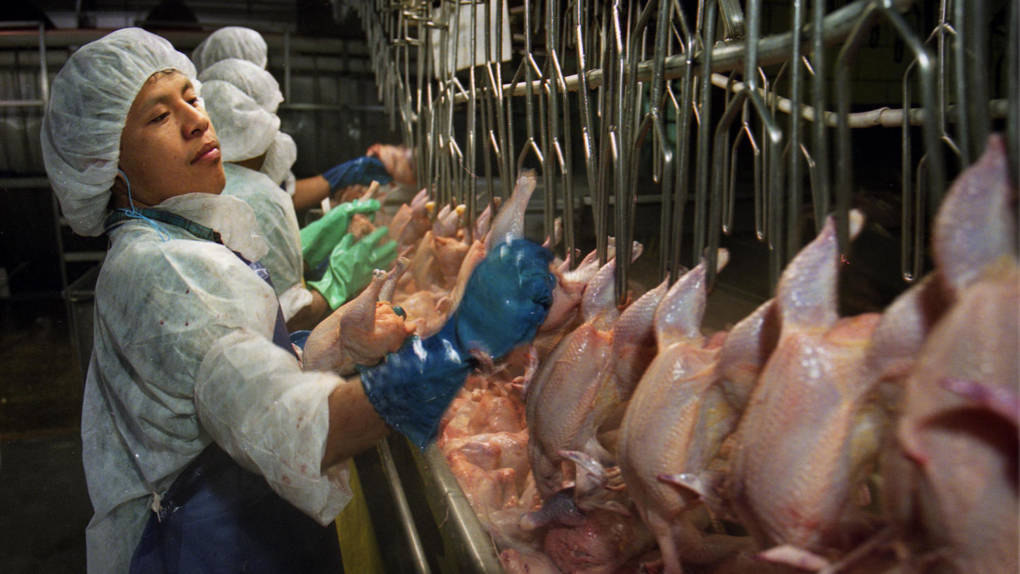
"caption": "Poultry workers at major U.S. meat-processing plants are highly susceptible to repetitive-motion injuries, denied bathroom breaks and are most often immigrants and refugees.",
"description": "Poultry workers at major U.S. meat-processing plants are highly susceptible to repetitive-motion injuries, denied bathroom breaks and are most often immigrants and refugees.",
"title": "Poultry workers at major U.S. meat-processing plants are highly susceptible to repetitive-motion injuries, denied bathroom breaks and are most often immigrants and refugees.",
"credit": "Earl Dotter/Oxfam",
"status": "inherit",
"isLoading": false,
"fetchFailed": false
},
"bayareabites_116923": {
"type": "attachments",
"id": "bayareabites_116923",
"meta": {
"index": "attachments_1716263798",
"site": "bayareabites",
"id": "116923",
"found": true
},
"parent": 116922,
"imgSizes": {
"small": {
"file": "https://ww2.kqed.org/app/uploads/sites/24/2017/04/breadmold_wide-358f830f7abff5cfb5db1908eadb775ab701b99b-520x292.jpe",
"width": 520,
"mimeType": "image/jpeg",
"height": 292
},
"twentyfourteen-full-width": {
"file": "https://ww2.kqed.org/app/uploads/sites/24/2017/04/breadmold_wide-358f830f7abff5cfb5db1908eadb775ab701b99b-1038x576.jpe",
"width": 1038,
"mimeType": "image/jpeg",
"height": 576
},
"thumbnail": {
"file": "https://ww2.kqed.org/app/uploads/sites/24/2017/04/breadmold_wide-358f830f7abff5cfb5db1908eadb775ab701b99b-160x90.jpe",
"width": 160,
"mimeType": "image/jpeg",
"height": 90
},
"fd-sm": {
"file": "https://ww2.kqed.org/app/uploads/sites/24/2017/04/breadmold_wide-358f830f7abff5cfb5db1908eadb775ab701b99b-960x540.jpe",
"width": 960,
"mimeType": "image/jpeg",
"height": 540
},
"post-thumbnail": {
"file": "https://ww2.kqed.org/app/uploads/sites/24/2017/04/breadmold_wide-358f830f7abff5cfb5db1908eadb775ab701b99b-672x372.jpe",
"width": 672,
"mimeType": "image/jpeg",
"height": 372
},
"xsmall": {
"file": "https://ww2.kqed.org/app/uploads/sites/24/2017/04/breadmold_wide-358f830f7abff5cfb5db1908eadb775ab701b99b-375x211.jpe",
"width": 375,
"mimeType": "image/jpeg",
"height": 211
},
"kqedFullSize": {
"file": "https://ww2.kqed.org/app/uploads/sites/24/2017/04/breadmold_wide-358f830f7abff5cfb5db1908eadb775ab701b99b.jpe",
"width": 3000,
"height": 1687
},
"large": {
"file": "https://ww2.kqed.org/app/uploads/sites/24/2017/04/breadmold_wide-358f830f7abff5cfb5db1908eadb775ab701b99b-1020x574.jpe",
"width": 1020,
"mimeType": "image/jpeg",
"height": 574
},
"xlarge": {
"file": "https://ww2.kqed.org/app/uploads/sites/24/2017/04/breadmold_wide-358f830f7abff5cfb5db1908eadb775ab701b99b-1180x664.jpe",
"width": 1180,
"mimeType": "image/jpeg",
"height": 664
},
"guest-author-50": {
"file": "https://ww2.kqed.org/app/uploads/sites/24/2017/04/breadmold_wide-358f830f7abff5cfb5db1908eadb775ab701b99b-50x50.jpe",
"width": 50,
"mimeType": "image/jpeg",
"height": 50
},
"guest-author-96": {
"file": "https://ww2.kqed.org/app/uploads/sites/24/2017/04/breadmold_wide-358f830f7abff5cfb5db1908eadb775ab701b99b-96x96.jpe",
"width": 96,
"mimeType": "image/jpeg",
"height": 96
},
"medium": {
"file": "https://ww2.kqed.org/app/uploads/sites/24/2017/04/breadmold_wide-358f830f7abff5cfb5db1908eadb775ab701b99b-800x450.jpe",
"width": 800,
"mimeType": "image/jpeg",
"height": 450
},
"guest-author-64": {
"file": "https://ww2.kqed.org/app/uploads/sites/24/2017/04/breadmold_wide-358f830f7abff5cfb5db1908eadb775ab701b99b-64x64.jpe",
"width": 64,
"mimeType": "image/jpeg",
"height": 64
},
"guest-author-32": {
"file": "https://ww2.kqed.org/app/uploads/sites/24/2017/04/breadmold_wide-358f830f7abff5cfb5db1908eadb775ab701b99b-32x32.jpe",
"width": 32,
"mimeType": "image/jpeg",
"height": 32
},
"fd-lrg": {
"file": "https://ww2.kqed.org/app/uploads/sites/24/2017/04/breadmold_wide-358f830f7abff5cfb5db1908eadb775ab701b99b-1920x1080.jpe",
"width": 1920,
"mimeType": "image/jpeg",
"height": 1080
},
"fd-med": {
"file": "https://ww2.kqed.org/app/uploads/sites/24/2017/04/breadmold_wide-358f830f7abff5cfb5db1908eadb775ab701b99b-1180x664.jpe",
"width": 1180,
"mimeType": "image/jpeg",
"height": 664
},
"full-width": {
"file": "https://ww2.kqed.org/app/uploads/sites/24/2017/04/breadmold_wide-358f830f7abff5cfb5db1908eadb775ab701b99b-1920x1080.jpe",
"width": 1920,
"mimeType": "image/jpeg",
"height": 1080
},
"detail": {
"file": "https://ww2.kqed.org/app/uploads/sites/24/2017/04/breadmold_wide-358f830f7abff5cfb5db1908eadb775ab701b99b-150x150.jpe",
"width": 150,
"mimeType": "image/jpeg",
"height": 150
},
"medium_large": {
"file": "https://ww2.kqed.org/app/uploads/sites/24/2017/04/breadmold_wide-358f830f7abff5cfb5db1908eadb775ab701b99b-768x432.jpe",
"width": 768,
"mimeType": "image/jpeg",
"height": 432
},
"guest-author-128": {
"file": "https://ww2.kqed.org/app/uploads/sites/24/2017/04/breadmold_wide-358f830f7abff5cfb5db1908eadb775ab701b99b-128x128.jpe",
"width": 128,
"mimeType": "image/jpeg",
"height": 128
},
"xxsmall": {
"file": "https://ww2.kqed.org/app/uploads/sites/24/2017/04/breadmold_wide-358f830f7abff5cfb5db1908eadb775ab701b99b-240x135.jpe",
"width": 240,
"mimeType": "image/jpeg",
"height": 135
}
},
"publishDate": 1492792997,
"modified": 1492793315,
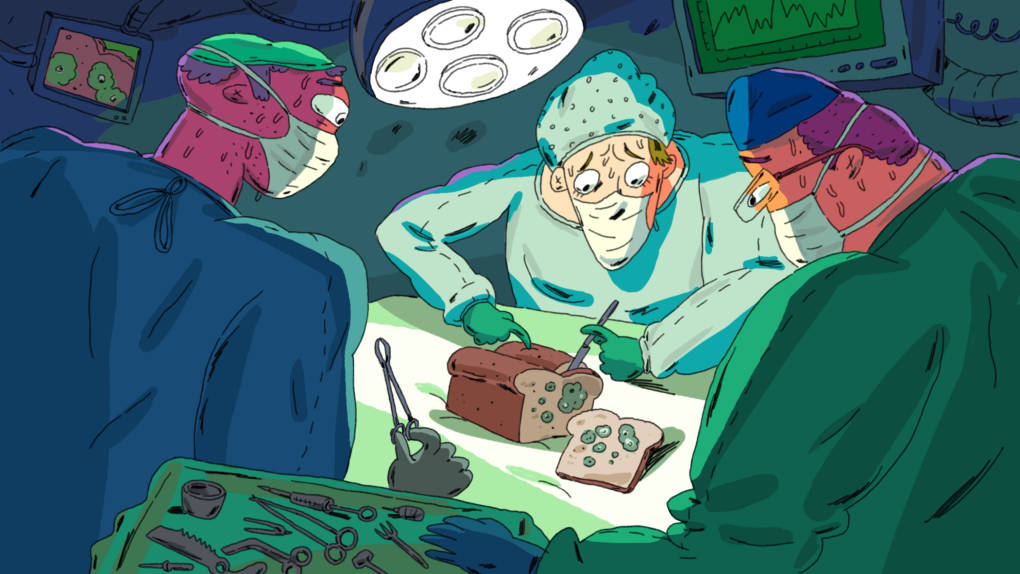
"caption": "You may be tempted to save a piece of a moldy loaf by discarding the fuzzy bits. But food safety experts say molds penetrate deeper into the food than what's visible to us. And eating moldy food comes with health risks.",
"description": "You may be tempted to save a piece of a moldy loaf by discarding the fuzzy bits. But food safety experts say molds penetrate deeper into the food than what's visible to us. And eating moldy food comes with health risks",
"title": "You may be tempted to save a piece of a moldy loaf by discarding the fuzzy bits. But food safety experts say molds penetrate deeper into the food than what's visible to us. And eating moldy food comes with health risks.",
"credit": "Alex Reynolds/NPR",
"status": "inherit",
"isLoading": false,
"fetchFailed": false
},
"bayareabites_116892": {
"type": "attachments",
"id": "bayareabites_116892",
"meta": {
"index": "attachments_1716263798",
"site": "bayareabites",
"id": "116892",
"found": true
},
"parent": 116891,
"imgSizes": {
"small": {
"file": "https://ww2.kqed.org/app/uploads/sites/24/2017/04/amado-packing-shots-80-_custom-45cb17dcdc9a99e57bfb26b0cf32756ff23b9d26-520x344.jpg",
"width": 520,
"mimeType": "image/jpeg",
"height": 344
},
"twentyfourteen-full-width": {
"file": "https://ww2.kqed.org/app/uploads/sites/24/2017/04/amado-packing-shots-80-_custom-45cb17dcdc9a99e57bfb26b0cf32756ff23b9d26-931x576.jpg",
"width": 931,
"mimeType": "image/jpeg",
"height": 576
},
"thumbnail": {
"file": "https://ww2.kqed.org/app/uploads/sites/24/2017/04/amado-packing-shots-80-_custom-45cb17dcdc9a99e57bfb26b0cf32756ff23b9d26-160x106.jpg",
"width": 160,
"mimeType": "image/jpeg",
"height": 106
},
"post-thumbnail": {
"file": "https://ww2.kqed.org/app/uploads/sites/24/2017/04/amado-packing-shots-80-_custom-45cb17dcdc9a99e57bfb26b0cf32756ff23b9d26-672x372.jpg",
"width": 672,
"mimeType": "image/jpeg",
"height": 372
},
"xsmall": {
"file": "https://ww2.kqed.org/app/uploads/sites/24/2017/04/amado-packing-shots-80-_custom-45cb17dcdc9a99e57bfb26b0cf32756ff23b9d26-375x248.jpg",
"width": 375,
"mimeType": "image/jpeg",
"height": 248
},
"kqedFullSize": {
"file": "https://ww2.kqed.org/app/uploads/sites/24/2017/04/amado-packing-shots-80-_custom-45cb17dcdc9a99e57bfb26b0cf32756ff23b9d26.jpg",
"width": 931,
"height": 616
},
"guest-author-50": {
"file": "https://ww2.kqed.org/app/uploads/sites/24/2017/04/amado-packing-shots-80-_custom-45cb17dcdc9a99e57bfb26b0cf32756ff23b9d26-50x50.jpg",
"width": 50,
"mimeType": "image/jpeg",
"height": 50
},
"guest-author-96": {
"file": "https://ww2.kqed.org/app/uploads/sites/24/2017/04/amado-packing-shots-80-_custom-45cb17dcdc9a99e57bfb26b0cf32756ff23b9d26-96x96.jpg",
"width": 96,
"mimeType": "image/jpeg",
"height": 96
},
"medium": {
"file": "https://ww2.kqed.org/app/uploads/sites/24/2017/04/amado-packing-shots-80-_custom-45cb17dcdc9a99e57bfb26b0cf32756ff23b9d26-800x529.jpg",
"width": 800,
"mimeType": "image/jpeg",
"height": 529
},
"guest-author-64": {
"file": "https://ww2.kqed.org/app/uploads/sites/24/2017/04/amado-packing-shots-80-_custom-45cb17dcdc9a99e57bfb26b0cf32756ff23b9d26-64x64.jpg",
"width": 64,
"mimeType": "image/jpeg",
"height": 64
},
"guest-author-32": {
"file": "https://ww2.kqed.org/app/uploads/sites/24/2017/04/amado-packing-shots-80-_custom-45cb17dcdc9a99e57bfb26b0cf32756ff23b9d26-32x32.jpg",
"width": 32,
"mimeType": "image/jpeg",
"height": 32
},
"detail": {
"file": "https://ww2.kqed.org/app/uploads/sites/24/2017/04/amado-packing-shots-80-_custom-45cb17dcdc9a99e57bfb26b0cf32756ff23b9d26-150x150.jpg",
"width": 150,
"mimeType": "image/jpeg",
"height": 150
},
"medium_large": {
"file": "https://ww2.kqed.org/app/uploads/sites/24/2017/04/amado-packing-shots-80-_custom-45cb17dcdc9a99e57bfb26b0cf32756ff23b9d26-768x508.jpg",
"width": 768,
"mimeType": "image/jpeg",
"height": 508
},
"guest-author-128": {
"file": "https://ww2.kqed.org/app/uploads/sites/24/2017/04/amado-packing-shots-80-_custom-45cb17dcdc9a99e57bfb26b0cf32756ff23b9d26-128x128.jpg",
"width": 128,
"mimeType": "image/jpeg",
"height": 128
},
"xxsmall": {
"file": "https://ww2.kqed.org/app/uploads/sites/24/2017/04/amado-packing-shots-80-_custom-45cb17dcdc9a99e57bfb26b0cf32756ff23b9d26-240x159.jpg",
"width": 240,
"mimeType": "image/jpeg",
"height": 159
}
},
"publishDate": 1492640794,
"modified": 1492641045,
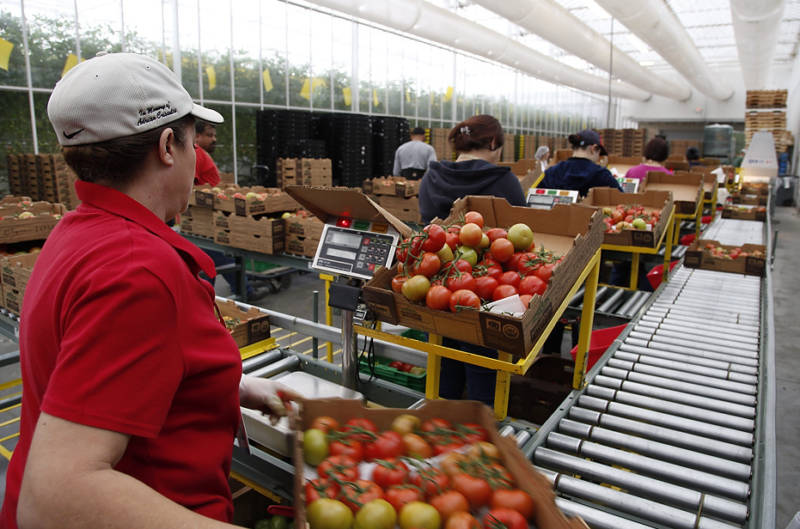
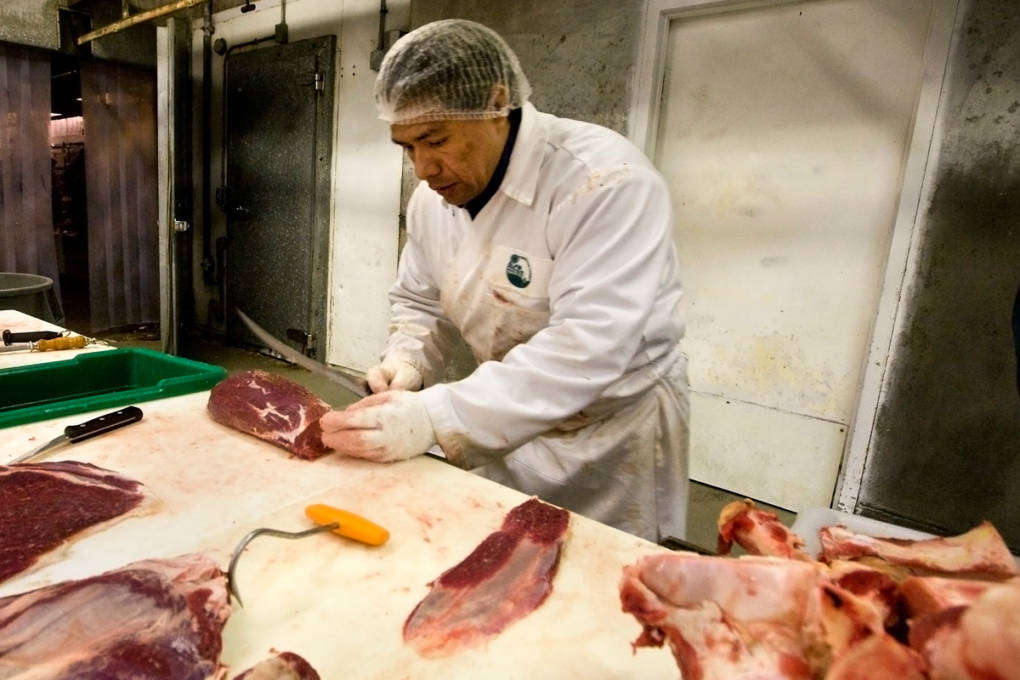
"caption": "The family-owned Wholesum Harvest had to meet a checklist of more than 300 standards — including many worker protections — to become the first American farm certified by Fair Trade USA. Workers at its Nogales, Ariz., tomato farm recently received a check for more than $30,000 — workers will collectively decide how to spend it.",
"description": "The family-owned Wholesum Harvest had to meet a checklist of more than 300 standards — including many worker protections — to become the first American farm certified by Fair Trade USA. Workers at its Nogales, Ariz., tomato farm recently received a check for more than $30,000 — workers will collectively decide how to spe",
"title": "The family-owned Wholesum Harvest had to meet a checklist of more than 300 standards — including many worker protections — to become the first American farm certified by Fair Trade USA. Workers at its Nogales, Ariz., tomato farm recently received a check for more than $30,000 — workers will collectively decide how to spend it.",
"credit": "Courtesy of Wholesum Harvest",
"status": "inherit",
"isLoading": false,
"fetchFailed": false
},
"bayareabites_116888": {
"type": "attachments",
"id": "bayareabites_116888",
"meta": {
"index": "attachments_1716263798",
"site": "bayareabites",
"id": "116888",
"found": true
},
"parent": 116883,
"imgSizes": {
"small": {
"file": "https://ww2.kqed.org/app/uploads/sites/24/2017/04/170413-chlorpyrifos-520x347.jpg",
"width": 520,
"mimeType": "image/jpeg",
"height": 347
},
"twentyfourteen-full-width": {
"file": "https://ww2.kqed.org/app/uploads/sites/24/2017/04/170413-chlorpyrifos-1038x576.jpg",
"width": 1038,
"mimeType": "image/jpeg",
"height": 576
},
"thumbnail": {
"file": "https://ww2.kqed.org/app/uploads/sites/24/2017/04/170413-chlorpyrifos-160x107.jpg",
"width": 160,
"mimeType": "image/jpeg",
"height": 107
},
"fd-sm": {
"file": "https://ww2.kqed.org/app/uploads/sites/24/2017/04/170413-chlorpyrifos-960x640.jpg",
"width": 960,
"mimeType": "image/jpeg",
"height": 640
},
"post-thumbnail": {
"file": "https://ww2.kqed.org/app/uploads/sites/24/2017/04/170413-chlorpyrifos-672x372.jpg",
"width": 672,
"mimeType": "image/jpeg",
"height": 372
},
"xsmall": {
"file": "https://ww2.kqed.org/app/uploads/sites/24/2017/04/170413-chlorpyrifos-375x250.jpg",
"width": 375,
"mimeType": "image/jpeg",
"height": 250
},
"kqedFullSize": {
"file": "https://ww2.kqed.org/app/uploads/sites/24/2017/04/170413-chlorpyrifos.jpg",
"width": 1200,
"height": 800
},
"large": {
"file": "https://ww2.kqed.org/app/uploads/sites/24/2017/04/170413-chlorpyrifos-1020x680.jpg",
"width": 1020,
"mimeType": "image/jpeg",
"height": 680
},
"xlarge": {
"file": "https://ww2.kqed.org/app/uploads/sites/24/2017/04/170413-chlorpyrifos-1180x787.jpg",
"width": 1180,
"mimeType": "image/jpeg",
"height": 787
},
"guest-author-50": {
"file": "https://ww2.kqed.org/app/uploads/sites/24/2017/04/170413-chlorpyrifos-50x50.jpg",
"width": 50,
"mimeType": "image/jpeg",
"height": 50
},
"guest-author-96": {
"file": "https://ww2.kqed.org/app/uploads/sites/24/2017/04/170413-chlorpyrifos-96x96.jpg",
"width": 96,
"mimeType": "image/jpeg",
"height": 96
},
"medium": {
"file": "https://ww2.kqed.org/app/uploads/sites/24/2017/04/170413-chlorpyrifos-800x533.jpg",
"width": 800,
"mimeType": "image/jpeg",
"height": 533
},
"guest-author-64": {
"file": "https://ww2.kqed.org/app/uploads/sites/24/2017/04/170413-chlorpyrifos-64x64.jpg",
"width": 64,
"mimeType": "image/jpeg",
"height": 64
},
"guest-author-32": {
"file": "https://ww2.kqed.org/app/uploads/sites/24/2017/04/170413-chlorpyrifos-32x32.jpg",
"width": 32,
"mimeType": "image/jpeg",
"height": 32
},
"fd-med": {
"file": "https://ww2.kqed.org/app/uploads/sites/24/2017/04/170413-chlorpyrifos-1180x787.jpg",
"width": 1180,
"mimeType": "image/jpeg",
"height": 787
},
"detail": {
"file": "https://ww2.kqed.org/app/uploads/sites/24/2017/04/170413-chlorpyrifos-150x150.jpg",
"width": 150,
"mimeType": "image/jpeg",
"height": 150
},
"medium_large": {
"file": "https://ww2.kqed.org/app/uploads/sites/24/2017/04/170413-chlorpyrifos-768x512.jpg",
"width": 768,
"mimeType": "image/jpeg",
"height": 512
},
"guest-author-128": {
"file": "https://ww2.kqed.org/app/uploads/sites/24/2017/04/170413-chlorpyrifos-128x128.jpg",
"width": 128,
"mimeType": "image/jpeg",
"height": 128
},
"xxsmall": {
"file": "https://ww2.kqed.org/app/uploads/sites/24/2017/04/170413-chlorpyrifos-240x160.jpg",
"width": 240,
"mimeType": "image/jpeg",
"height": 160
}
},
"publishDate": 1492632138,
"modified": 1492632138,
"caption": null,
"description": null,
"title": "170413-chlorpyrifos",
"credit": null,
"status": "inherit",
"isLoading": false,
"fetchFailed": false
},
"bayareabites_116835": {
"type": "attachments",
"id": "bayareabites_116835",
"meta": {
"index": "attachments_1716263798",
"site": "bayareabites",
"id": "116835",
"found": true
},
"parent": 0,
"imgSizes": {
"small": {
"file": "https://ww2.kqed.org/app/uploads/sites/24/2017/04/Screen-Shot-2017-03-18-at-3.50.08-PM-520x298.jpg",
"width": 520,
"mimeType": "image/jpeg",
"height": 298
},
"twentyfourteen-full-width": {
"file": "https://ww2.kqed.org/app/uploads/sites/24/2017/04/Screen-Shot-2017-03-18-at-3.50.08-PM-1038x576.jpg",
"width": 1038,
"mimeType": "image/jpeg",
"height": 576
},
"thumbnail": {
"file": "https://ww2.kqed.org/app/uploads/sites/24/2017/04/Screen-Shot-2017-03-18-at-3.50.08-PM-160x92.jpg",
"width": 160,
"mimeType": "image/jpeg",
"height": 92
},
"fd-sm": {
"file": "https://ww2.kqed.org/app/uploads/sites/24/2017/04/Screen-Shot-2017-03-18-at-3.50.08-PM-960x550.jpg",
"width": 960,
"mimeType": "image/jpeg",
"height": 550
},
"post-thumbnail": {
"file": "https://ww2.kqed.org/app/uploads/sites/24/2017/04/Screen-Shot-2017-03-18-at-3.50.08-PM-672x372.jpg",
"width": 672,
"mimeType": "image/jpeg",
"height": 372
},
"xsmall": {
"file": "https://ww2.kqed.org/app/uploads/sites/24/2017/04/Screen-Shot-2017-03-18-at-3.50.08-PM-375x215.jpg",
"width": 375,
"mimeType": "image/jpeg",
"height": 215
},
"kqedFullSize": {
"file": "https://ww2.kqed.org/app/uploads/sites/24/2017/04/Screen-Shot-2017-03-18-at-3.50.08-PM.jpg",
"width": 1920,
"height": 1099
},
"large": {
"file": "https://ww2.kqed.org/app/uploads/sites/24/2017/04/Screen-Shot-2017-03-18-at-3.50.08-PM-1020x584.jpg",
"width": 1020,
"mimeType": "image/jpeg",
"height": 584
},
"xlarge": {
"file": "https://ww2.kqed.org/app/uploads/sites/24/2017/04/Screen-Shot-2017-03-18-at-3.50.08-PM-1180x675.jpg",
"width": 1180,
"mimeType": "image/jpeg",
"height": 675
},
"guest-author-50": {
"file": "https://ww2.kqed.org/app/uploads/sites/24/2017/04/Screen-Shot-2017-03-18-at-3.50.08-PM-50x50.jpg",
"width": 50,
"mimeType": "image/jpeg",
"height": 50
},
"guest-author-96": {
"file": "https://ww2.kqed.org/app/uploads/sites/24/2017/04/Screen-Shot-2017-03-18-at-3.50.08-PM-96x96.jpg",
"width": 96,
"mimeType": "image/jpeg",
"height": 96
},
"medium": {
"file": "https://ww2.kqed.org/app/uploads/sites/24/2017/04/Screen-Shot-2017-03-18-at-3.50.08-PM-800x458.jpg",
"width": 800,
"mimeType": "image/jpeg",
"height": 458
},
"guest-author-64": {
"file": "https://ww2.kqed.org/app/uploads/sites/24/2017/04/Screen-Shot-2017-03-18-at-3.50.08-PM-64x64.jpg",
"width": 64,
"mimeType": "image/jpeg",
"height": 64
},
"guest-author-32": {
"file": "https://ww2.kqed.org/app/uploads/sites/24/2017/04/Screen-Shot-2017-03-18-at-3.50.08-PM-32x32.jpg",
"width": 32,
"mimeType": "image/jpeg",
"height": 32
},
"fd-lrg": {
"file": "https://ww2.kqed.org/app/uploads/sites/24/2017/04/Screen-Shot-2017-03-18-at-3.50.08-PM-1920x1099.jpg",
"width": 1920,
"mimeType": "image/jpeg",
"height": 1099
},
"fd-med": {
"file": "https://ww2.kqed.org/app/uploads/sites/24/2017/04/Screen-Shot-2017-03-18-at-3.50.08-PM-1180x675.jpg",
"width": 1180,
"mimeType": "image/jpeg",
"height": 675
},
"full-width": {
"file": "https://ww2.kqed.org/app/uploads/sites/24/2017/04/Screen-Shot-2017-03-18-at-3.50.08-PM-1920x1099.jpg",
"width": 1920,
"mimeType": "image/jpeg",
"height": 1099
},
"detail": {
"file": "https://ww2.kqed.org/app/uploads/sites/24/2017/04/Screen-Shot-2017-03-18-at-3.50.08-PM-150x150.jpg",
"width": 150,
"mimeType": "image/jpeg",
"height": 150
},
"medium_large": {
"file": "https://ww2.kqed.org/app/uploads/sites/24/2017/04/Screen-Shot-2017-03-18-at-3.50.08-PM-768x440.jpg",
"width": 768,
"mimeType": "image/jpeg",
"height": 440
},
"guest-author-128": {
"file": "https://ww2.kqed.org/app/uploads/sites/24/2017/04/Screen-Shot-2017-03-18-at-3.50.08-PM-128x128.jpg",
"width": 128,
"mimeType": "image/jpeg",
"height": 128
},
"xxsmall": {
"file": "https://ww2.kqed.org/app/uploads/sites/24/2017/04/Screen-Shot-2017-03-18-at-3.50.08-PM-240x137.jpg",
"width": 240,
"mimeType": "image/jpeg",
"height": 137
}
},
"publishDate": 1492458535,
"modified": 1492458724,
"caption": "A still from the Perennial Plate's Kickstarter video.",
"description": "A still from the Perennial Plate's Kickstarter video.",
"title": "A still from the Perennial Plate's Kickstarter video.",
"credit": "The Perennial Plate ",
"status": "inherit",
"isLoading": false,
"fetchFailed": false
},
"bayareabites_116824": {
"type": "attachments",
"id": "bayareabites_116824",
"meta": {
"index": "attachments_1716263798",
"site": "bayareabites",
"id": "116824",
"found": true
},
"parent": 116823,
"imgSizes": {
"small": {
"file": "https://ww2.kqed.org/app/uploads/sites/24/2017/04/FOT_1956_Farallones-Institute-Group-Photo-1970s-520x414.jpg",
"width": 520,
"mimeType": "image/jpeg",
"height": 414
},
"twentyfourteen-full-width": {
"file": "https://ww2.kqed.org/app/uploads/sites/24/2017/04/FOT_1956_Farallones-Institute-Group-Photo-1970s-1038x576.jpg",
"width": 1038,
"mimeType": "image/jpeg",
"height": 576
},
"thumbnail": {
"file": "https://ww2.kqed.org/app/uploads/sites/24/2017/04/FOT_1956_Farallones-Institute-Group-Photo-1970s-160x127.jpg",
"width": 160,
"mimeType": "image/jpeg",
"height": 127
},
"fd-sm": {
"file": "https://ww2.kqed.org/app/uploads/sites/24/2017/04/FOT_1956_Farallones-Institute-Group-Photo-1970s-960x764.jpg",
"width": 960,
"mimeType": "image/jpeg",
"height": 764
},
"post-thumbnail": {
"file": "https://ww2.kqed.org/app/uploads/sites/24/2017/04/FOT_1956_Farallones-Institute-Group-Photo-1970s-672x372.jpg",
"width": 672,
"mimeType": "image/jpeg",
"height": 372
},
"xsmall": {
"file": "https://ww2.kqed.org/app/uploads/sites/24/2017/04/FOT_1956_Farallones-Institute-Group-Photo-1970s-375x298.jpg",
"width": 375,
"mimeType": "image/jpeg",
"height": 298
},
"kqedFullSize": {
"file": "https://ww2.kqed.org/app/uploads/sites/24/2017/04/FOT_1956_Farallones-Institute-Group-Photo-1970s.jpg",
"width": 1400,
"height": 1114
},
"large": {
"file": "https://ww2.kqed.org/app/uploads/sites/24/2017/04/FOT_1956_Farallones-Institute-Group-Photo-1970s-1020x812.jpg",
"width": 1020,
"mimeType": "image/jpeg",
"height": 812
},
"xlarge": {
"file": "https://ww2.kqed.org/app/uploads/sites/24/2017/04/FOT_1956_Farallones-Institute-Group-Photo-1970s-1180x939.jpg",
"width": 1180,
"mimeType": "image/jpeg",
"height": 939
},
"guest-author-50": {
"file": "https://ww2.kqed.org/app/uploads/sites/24/2017/04/FOT_1956_Farallones-Institute-Group-Photo-1970s-50x50.jpg",
"width": 50,
"mimeType": "image/jpeg",
"height": 50
},
"guest-author-96": {
"file": "https://ww2.kqed.org/app/uploads/sites/24/2017/04/FOT_1956_Farallones-Institute-Group-Photo-1970s-96x96.jpg",
"width": 96,
"mimeType": "image/jpeg",
"height": 96
},
"medium": {
"file": "https://ww2.kqed.org/app/uploads/sites/24/2017/04/FOT_1956_Farallones-Institute-Group-Photo-1970s-800x637.jpg",
"width": 800,
"mimeType": "image/jpeg",
"height": 637
},
"guest-author-64": {
"file": "https://ww2.kqed.org/app/uploads/sites/24/2017/04/FOT_1956_Farallones-Institute-Group-Photo-1970s-64x64.jpg",
"width": 64,
"mimeType": "image/jpeg",
"height": 64
},
"guest-author-32": {
"file": "https://ww2.kqed.org/app/uploads/sites/24/2017/04/FOT_1956_Farallones-Institute-Group-Photo-1970s-32x32.jpg",
"width": 32,
"mimeType": "image/jpeg",
"height": 32
},
"fd-med": {
"file": "https://ww2.kqed.org/app/uploads/sites/24/2017/04/FOT_1956_Farallones-Institute-Group-Photo-1970s-1180x939.jpg",
"width": 1180,
"mimeType": "image/jpeg",
"height": 939
},
"detail": {
"file": "https://ww2.kqed.org/app/uploads/sites/24/2017/04/FOT_1956_Farallones-Institute-Group-Photo-1970s-150x150.jpg",
"width": 150,
"mimeType": "image/jpeg",
"height": 150
},
"medium_large": {
"file": "https://ww2.kqed.org/app/uploads/sites/24/2017/04/FOT_1956_Farallones-Institute-Group-Photo-1970s-768x611.jpg",
"width": 768,
"mimeType": "image/jpeg",
"height": 611
},
"guest-author-128": {
"file": "https://ww2.kqed.org/app/uploads/sites/24/2017/04/FOT_1956_Farallones-Institute-Group-Photo-1970s-128x128.jpg",
"width": 128,
"mimeType": "image/jpeg",
"height": 128
},
"xxsmall": {
"file": "https://ww2.kqed.org/app/uploads/sites/24/2017/04/FOT_1956_Farallones-Institute-Group-Photo-1970s-240x191.jpg",
"width": 240,
"mimeType": "image/jpeg",
"height": 191
}
},
"publishDate": 1492453706,
"modified": 1492453767,
"caption": "Farollones Institute Group Photo 1970s; courtesy Mark Kitchell's Evolution of Organic",
"description": null,
"title": "FOT_1956_Farallones Institute - Group Photo - 1970s",
"credit": null,
"status": "inherit",
"isLoading": false,
"fetchFailed": false
},
"bayareabites_116813": {
"type": "attachments",
"id": "bayareabites_116813",
"meta": {
"index": "attachments_1716263798",
"site": "bayareabites",
"id": "116813",
"found": true
},
"parent": 116810,
"imgSizes": {
"small": {
"file": "https://ww2.kqed.org/app/uploads/sites/24/2017/04/170410-crispr-520x347.jpg",
"width": 520,
"mimeType": "image/jpeg",
"height": 347
},
"twentyfourteen-full-width": {
"file": "https://ww2.kqed.org/app/uploads/sites/24/2017/04/170410-crispr-1038x576.jpg",
"width": 1038,
"mimeType": "image/jpeg",
"height": 576
},
"thumbnail": {
"file": "https://ww2.kqed.org/app/uploads/sites/24/2017/04/170410-crispr-160x107.jpg",
"width": 160,
"mimeType": "image/jpeg",
"height": 107
},
"fd-sm": {
"file": "https://ww2.kqed.org/app/uploads/sites/24/2017/04/170410-crispr-960x640.jpg",
"width": 960,
"mimeType": "image/jpeg",
"height": 640
},
"post-thumbnail": {
"file": "https://ww2.kqed.org/app/uploads/sites/24/2017/04/170410-crispr-672x372.jpg",
"width": 672,
"mimeType": "image/jpeg",
"height": 372
},
"xsmall": {
"file": "https://ww2.kqed.org/app/uploads/sites/24/2017/04/170410-crispr-375x250.jpg",
"width": 375,
"mimeType": "image/jpeg",
"height": 250
},
"kqedFullSize": {
"file": "https://ww2.kqed.org/app/uploads/sites/24/2017/04/170410-crispr.jpg",
"width": 1200,
"height": 800
},
"large": {
"file": "https://ww2.kqed.org/app/uploads/sites/24/2017/04/170410-crispr-1020x680.jpg",
"width": 1020,
"mimeType": "image/jpeg",
"height": 680
},
"xlarge": {
"file": "https://ww2.kqed.org/app/uploads/sites/24/2017/04/170410-crispr-1180x787.jpg",
"width": 1180,
"mimeType": "image/jpeg",
"height": 787
},
"guest-author-50": {
"file": "https://ww2.kqed.org/app/uploads/sites/24/2017/04/170410-crispr-50x50.jpg",
"width": 50,
"mimeType": "image/jpeg",
"height": 50
},
"guest-author-96": {
"file": "https://ww2.kqed.org/app/uploads/sites/24/2017/04/170410-crispr-96x96.jpg",
"width": 96,
"mimeType": "image/jpeg",
"height": 96
},
"medium": {
"file": "https://ww2.kqed.org/app/uploads/sites/24/2017/04/170410-crispr-800x533.jpg",
"width": 800,
"mimeType": "image/jpeg",
"height": 533
},
"guest-author-64": {
"file": "https://ww2.kqed.org/app/uploads/sites/24/2017/04/170410-crispr-64x64.jpg",
"width": 64,
"mimeType": "image/jpeg",
"height": 64
},
"guest-author-32": {
"file": "https://ww2.kqed.org/app/uploads/sites/24/2017/04/170410-crispr-32x32.jpg",
"width": 32,
"mimeType": "image/jpeg",
"height": 32
},
"fd-med": {
"file": "https://ww2.kqed.org/app/uploads/sites/24/2017/04/170410-crispr-1180x787.jpg",
"width": 1180,
"mimeType": "image/jpeg",
"height": 787
},
"detail": {
"file": "https://ww2.kqed.org/app/uploads/sites/24/2017/04/170410-crispr-150x150.jpg",
"width": 150,
"mimeType": "image/jpeg",
"height": 150
},
"medium_large": {
"file": "https://ww2.kqed.org/app/uploads/sites/24/2017/04/170410-crispr-768x512.jpg",
"width": 768,
"mimeType": "image/jpeg",
"height": 512
},
"guest-author-128": {
"file": "https://ww2.kqed.org/app/uploads/sites/24/2017/04/170410-crispr-128x128.jpg",
"width": 128,
"mimeType": "image/jpeg",
"height": 128
},
"xxsmall": {
"file": "https://ww2.kqed.org/app/uploads/sites/24/2017/04/170410-crispr-240x160.jpg",
"width": 240,
"mimeType": "image/jpeg",
"height": 160
}
},
"publishDate": 1492065167,
"modified": 1492065167,
"caption": null,
"description": null,
"title": "170410-crispr",
"credit": null,
"status": "inherit",
"isLoading": false,
"fetchFailed": false
},
"bayareabites_116768": {
"type": "attachments",
"id": "bayareabites_116768",
"meta": {
"index": "attachments_1716263798",
"site": "bayareabites",
"id": "116768",
"found": true
},
"parent": 116718,
"imgSizes": {
"small": {
"file": "https://ww2.kqed.org/app/uploads/sites/24/2017/04/1-PKC-NEW-520x375.jpg",
"width": 520,
"mimeType": "image/jpeg",
"height": 375
},
"twentyfourteen-full-width": {
"file": "https://ww2.kqed.org/app/uploads/sites/24/2017/04/1-PKC-NEW-1038x576.jpg",
"width": 1038,
"mimeType": "image/jpeg",
"height": 576
},
"thumbnail": {
"file": "https://ww2.kqed.org/app/uploads/sites/24/2017/04/1-PKC-NEW-160x115.jpg",
"width": 160,
"mimeType": "image/jpeg",
"height": 115
},
"fd-sm": {
"file": "https://ww2.kqed.org/app/uploads/sites/24/2017/04/1-PKC-NEW-960x692.jpg",
"width": 960,
"mimeType": "image/jpeg",
"height": 692
},
"post-thumbnail": {
"file": "https://ww2.kqed.org/app/uploads/sites/24/2017/04/1-PKC-NEW-672x372.jpg",
"width": 672,
"mimeType": "image/jpeg",
"height": 372
},
"xsmall": {
"file": "https://ww2.kqed.org/app/uploads/sites/24/2017/04/1-PKC-NEW-375x270.jpg",
"width": 375,
"mimeType": "image/jpeg",
"height": 270
},
"kqedFullSize": {
"file": "https://ww2.kqed.org/app/uploads/sites/24/2017/04/1-PKC-NEW.jpg",
"width": 1920,
"height": 1384
},
"large": {
"file": "https://ww2.kqed.org/app/uploads/sites/24/2017/04/1-PKC-NEW-1020x735.jpg",
"width": 1020,
"mimeType": "image/jpeg",
"height": 735
},
"xlarge": {
"file": "https://ww2.kqed.org/app/uploads/sites/24/2017/04/1-PKC-NEW-1180x851.jpg",
"width": 1180,
"mimeType": "image/jpeg",
"height": 851
},
"guest-author-50": {
"file": "https://ww2.kqed.org/app/uploads/sites/24/2017/04/1-PKC-NEW-50x50.jpg",
"width": 50,
"mimeType": "image/jpeg",
"height": 50
},
"guest-author-96": {
"file": "https://ww2.kqed.org/app/uploads/sites/24/2017/04/1-PKC-NEW-96x96.jpg",
"width": 96,
"mimeType": "image/jpeg",
"height": 96
},
"medium": {
"file": "https://ww2.kqed.org/app/uploads/sites/24/2017/04/1-PKC-NEW-800x577.jpg",
"width": 800,
"mimeType": "image/jpeg",
"height": 577
},
"guest-author-64": {
"file": "https://ww2.kqed.org/app/uploads/sites/24/2017/04/1-PKC-NEW-64x64.jpg",
"width": 64,
"mimeType": "image/jpeg",
"height": 64
},
"guest-author-32": {
"file": "https://ww2.kqed.org/app/uploads/sites/24/2017/04/1-PKC-NEW-32x32.jpg",
"width": 32,
"mimeType": "image/jpeg",
"height": 32
},
"fd-lrg": {
"file": "https://ww2.kqed.org/app/uploads/sites/24/2017/04/1-PKC-NEW-1920x1384.jpg",
"width": 1920,
"mimeType": "image/jpeg",
"height": 1384
},
"fd-med": {
"file": "https://ww2.kqed.org/app/uploads/sites/24/2017/04/1-PKC-NEW-1180x851.jpg",
"width": 1180,
"mimeType": "image/jpeg",
"height": 851
},
"full-width": {
"file": "https://ww2.kqed.org/app/uploads/sites/24/2017/04/1-PKC-NEW-1920x1384.jpg",
"width": 1920,
"mimeType": "image/jpeg",
"height": 1384
},
"detail": {
"file": "https://ww2.kqed.org/app/uploads/sites/24/2017/04/1-PKC-NEW-150x150.jpg",
"width": 150,
"mimeType": "image/jpeg",
"height": 150
},
"medium_large": {
"file": "https://ww2.kqed.org/app/uploads/sites/24/2017/04/1-PKC-NEW-768x554.jpg",
"width": 768,
"mimeType": "image/jpeg",
"height": 554
},
"guest-author-128": {
"file": "https://ww2.kqed.org/app/uploads/sites/24/2017/04/1-PKC-NEW-128x128.jpg",
"width": 128,
"mimeType": "image/jpeg",
"height": 128
},
"xxsmall": {
"file": "https://ww2.kqed.org/app/uploads/sites/24/2017/04/1-PKC-NEW-240x173.jpg",
"width": 240,
"mimeType": "image/jpeg",
"height": 173
}
},
"publishDate": 1492047682,
"modified": 1492049188,
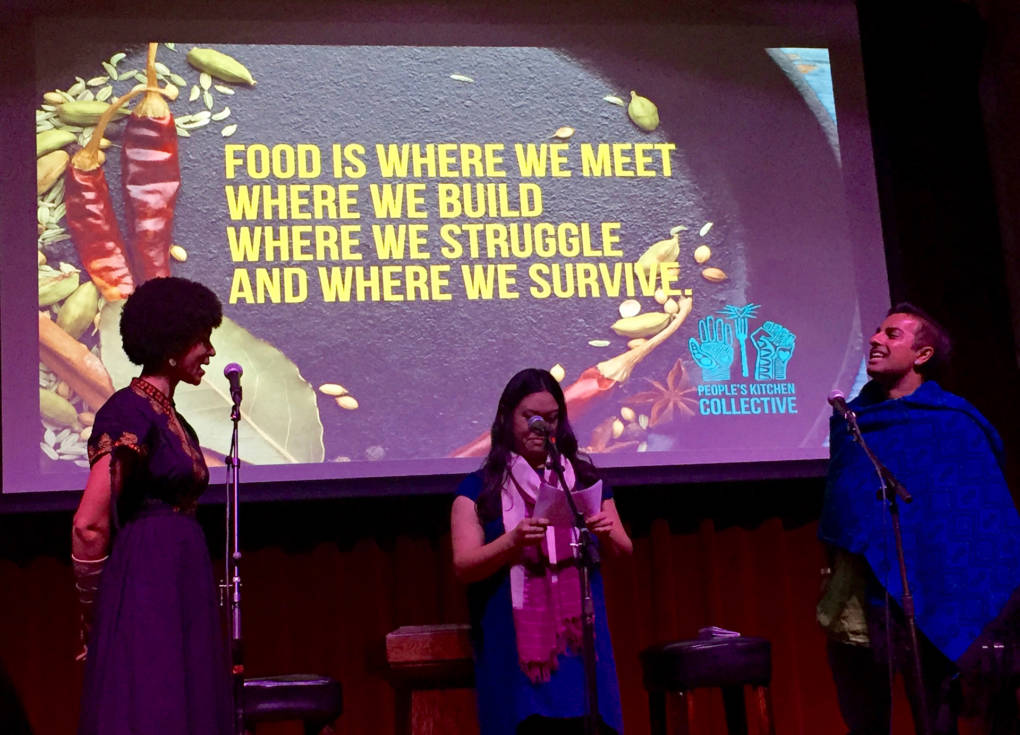
"caption": "Saqib Keval, Sita Kuratomi Bhaumik and Jocelyn Jackson inspired the crowd with their words and songs.",
"description": null,
"title": "Saqib Keval, Sita Kuratomi Bhaumik and Jocelyn Jackson inspired the crowd with their words and songs.",
"credit": "Anna Mindess",
"status": "inherit",
"isLoading": false,
"fetchFailed": false
},
"bayareabites_116659": {
"type": "attachments",
"id": "bayareabites_116659",
"meta": {
"index": "attachments_1716263798",
"site": "bayareabites",
"id": "116659",
"found": true
},
"parent": 116656,
"imgSizes": {
"small": {
"file": "https://ww2.kqed.org/app/uploads/sites/24/2017/04/170405-marin-local-slaughter-1-520x347.jpg",
"width": 520,
"mimeType": "image/jpeg",
"height": 347
},
"twentyfourteen-full-width": {
"file": "https://ww2.kqed.org/app/uploads/sites/24/2017/04/170405-marin-local-slaughter-1-1038x576.jpg",
"width": 1038,
"mimeType": "image/jpeg",
"height": 576
},
"thumbnail": {
"file": "https://ww2.kqed.org/app/uploads/sites/24/2017/04/170405-marin-local-slaughter-1-160x107.jpg",
"width": 160,
"mimeType": "image/jpeg",
"height": 107
},
"fd-sm": {
"file": "https://ww2.kqed.org/app/uploads/sites/24/2017/04/170405-marin-local-slaughter-1-960x640.jpg",
"width": 960,
"mimeType": "image/jpeg",
"height": 640
},
"post-thumbnail": {
"file": "https://ww2.kqed.org/app/uploads/sites/24/2017/04/170405-marin-local-slaughter-1-672x372.jpg",
"width": 672,
"mimeType": "image/jpeg",
"height": 372
},
"xsmall": {
"file": "https://ww2.kqed.org/app/uploads/sites/24/2017/04/170405-marin-local-slaughter-1-375x250.jpg",
"width": 375,
"mimeType": "image/jpeg",
"height": 250
},
"kqedFullSize": {
"file": "https://ww2.kqed.org/app/uploads/sites/24/2017/04/170405-marin-local-slaughter-1.jpg",
"width": 1200,
"height": 800
},
"large": {
"file": "https://ww2.kqed.org/app/uploads/sites/24/2017/04/170405-marin-local-slaughter-1-1020x680.jpg",
"width": 1020,
"mimeType": "image/jpeg",
"height": 680
},
"xlarge": {
"file": "https://ww2.kqed.org/app/uploads/sites/24/2017/04/170405-marin-local-slaughter-1-1180x787.jpg",
"width": 1180,
"mimeType": "image/jpeg",
"height": 787
},
"guest-author-50": {
"file": "https://ww2.kqed.org/app/uploads/sites/24/2017/04/170405-marin-local-slaughter-1-50x50.jpg",
"width": 50,
"mimeType": "image/jpeg",
"height": 50
},
"guest-author-96": {
"file": "https://ww2.kqed.org/app/uploads/sites/24/2017/04/170405-marin-local-slaughter-1-96x96.jpg",
"width": 96,
"mimeType": "image/jpeg",
"height": 96
},
"medium": {
"file": "https://ww2.kqed.org/app/uploads/sites/24/2017/04/170405-marin-local-slaughter-1-800x533.jpg",
"width": 800,
"mimeType": "image/jpeg",
"height": 533
},
"guest-author-64": {
"file": "https://ww2.kqed.org/app/uploads/sites/24/2017/04/170405-marin-local-slaughter-1-64x64.jpg",
"width": 64,
"mimeType": "image/jpeg",
"height": 64
},
"guest-author-32": {
"file": "https://ww2.kqed.org/app/uploads/sites/24/2017/04/170405-marin-local-slaughter-1-32x32.jpg",
"width": 32,
"mimeType": "image/jpeg",
"height": 32
},
"fd-med": {
"file": "https://ww2.kqed.org/app/uploads/sites/24/2017/04/170405-marin-local-slaughter-1-1180x787.jpg",
"width": 1180,
"mimeType": "image/jpeg",
"height": 787
},
"detail": {
"file": "https://ww2.kqed.org/app/uploads/sites/24/2017/04/170405-marin-local-slaughter-1-150x150.jpg",
"width": 150,
"mimeType": "image/jpeg",
"height": 150
},
"medium_large": {
"file": "https://ww2.kqed.org/app/uploads/sites/24/2017/04/170405-marin-local-slaughter-1-768x512.jpg",
"width": 768,
"mimeType": "image/jpeg",
"height": 512
},
"guest-author-128": {
"file": "https://ww2.kqed.org/app/uploads/sites/24/2017/04/170405-marin-local-slaughter-1-128x128.jpg",
"width": 128,
"mimeType": "image/jpeg",
"height": 128
},
"xxsmall": {
"file": "https://ww2.kqed.org/app/uploads/sites/24/2017/04/170405-marin-local-slaughter-1-240x160.jpg",
"width": 240,
"mimeType": "image/jpeg",
"height": 160
}
},
"publishDate": 1491586428,
"modified": 1491586564,
"caption": "Marin Sun Farms Processing Plant - Oscar",
"description": "Marin Sun Farms Processing Plant - Oscar",
"title": "170405-marin-local-slaughter-1",
"credit": "Marin Sun Farm photo CC-licensed by \u003ca href=\"https://www.flickr.com/photos/artbandito/4744345974\">Carrie Cizauskas\u003c/a>",
"status": "inherit",
"isLoading": false,
"fetchFailed": false
},
"bayareabites_116556": {
"type": "attachments",
"id": "bayareabites_116556",
"meta": {
"index": "attachments_1716263798",
"site": "bayareabites",
"id": "116556",
"found": true
},
"parent": 116500,
"imgSizes": {
"small": {
"file": "https://ww2.kqed.org/app/uploads/sites/24/2017/04/1-table-new-520x529.jpg",
"width": 520,
"mimeType": "image/jpeg",
"height": 529
},
"twentyfourteen-full-width": {
"file": "https://ww2.kqed.org/app/uploads/sites/24/2017/04/1-table-new-1038x576.jpg",
"width": 1038,
"mimeType": "image/jpeg",
"height": 576
},
"thumbnail": {
"file": "https://ww2.kqed.org/app/uploads/sites/24/2017/04/1-table-new-160x163.jpg",
"width": 160,
"mimeType": "image/jpeg",
"height": 163
},
"fd-sm": {
"file": "https://ww2.kqed.org/app/uploads/sites/24/2017/04/1-table-new-960x977.jpg",
"width": 960,
"mimeType": "image/jpeg",
"height": 977
},
"post-thumbnail": {
"file": "https://ww2.kqed.org/app/uploads/sites/24/2017/04/1-table-new-672x372.jpg",
"width": 672,
"mimeType": "image/jpeg",
"height": 372
},
"xsmall": {
"file": "https://ww2.kqed.org/app/uploads/sites/24/2017/04/1-table-new-375x381.jpg",
"width": 375,
"mimeType": "image/jpeg",
"height": 381
},
"kqedFullSize": {
"file": "https://ww2.kqed.org/app/uploads/sites/24/2017/04/1-table-new.jpg",
"width": 1920,
"height": 1953
},
"large": {
"file": "https://ww2.kqed.org/app/uploads/sites/24/2017/04/1-table-new-1020x1038.jpg",
"width": 1020,
"mimeType": "image/jpeg",
"height": 1038
},
"xlarge": {
"file": "https://ww2.kqed.org/app/uploads/sites/24/2017/04/1-table-new-1180x1200.jpg",
"width": 1180,
"mimeType": "image/jpeg",
"height": 1200
},
"guest-author-50": {
"file": "https://ww2.kqed.org/app/uploads/sites/24/2017/04/1-table-new-50x50.jpg",
"width": 50,
"mimeType": "image/jpeg",
"height": 50
},
"guest-author-96": {
"file": "https://ww2.kqed.org/app/uploads/sites/24/2017/04/1-table-new-96x96.jpg",
"width": 96,
"mimeType": "image/jpeg",
"height": 96
},
"medium": {
"file": "https://ww2.kqed.org/app/uploads/sites/24/2017/04/1-table-new-800x814.jpg",
"width": 800,
"mimeType": "image/jpeg",
"height": 814
},
"guest-author-64": {
"file": "https://ww2.kqed.org/app/uploads/sites/24/2017/04/1-table-new-64x64.jpg",
"width": 64,
"mimeType": "image/jpeg",
"height": 64
},
"guest-author-32": {
"file": "https://ww2.kqed.org/app/uploads/sites/24/2017/04/1-table-new-32x32.jpg",
"width": 32,
"mimeType": "image/jpeg",
"height": 32
},
"fd-lrg": {
"file": "https://ww2.kqed.org/app/uploads/sites/24/2017/04/1-table-new-1920x1953.jpg",
"width": 1920,
"mimeType": "image/jpeg",
"height": 1953
},
"fd-med": {
"file": "https://ww2.kqed.org/app/uploads/sites/24/2017/04/1-table-new-1180x1200.jpg",
"width": 1180,
"mimeType": "image/jpeg",
"height": 1200
},
"full-width": {
"file": "https://ww2.kqed.org/app/uploads/sites/24/2017/04/1-table-new-1920x1953.jpg",
"width": 1920,
"mimeType": "image/jpeg",
"height": 1953
},
"detail": {
"file": "https://ww2.kqed.org/app/uploads/sites/24/2017/04/1-table-new-150x150.jpg",
"width": 150,
"mimeType": "image/jpeg",
"height": 150
},
"medium_large": {
"file": "https://ww2.kqed.org/app/uploads/sites/24/2017/04/1-table-new-768x781.jpg",
"width": 768,
"mimeType": "image/jpeg",
"height": 781
},
"guest-author-128": {
"file": "https://ww2.kqed.org/app/uploads/sites/24/2017/04/1-table-new-128x128.jpg",
"width": 128,
"mimeType": "image/jpeg",
"height": 128
},
"xxsmall": {
"file": "https://ww2.kqed.org/app/uploads/sites/24/2017/04/1-table-new-240x244.jpg",
"width": 240,
"mimeType": "image/jpeg",
"height": 244
}
},
"publishDate": 1491356101,
"modified": 1491356473,
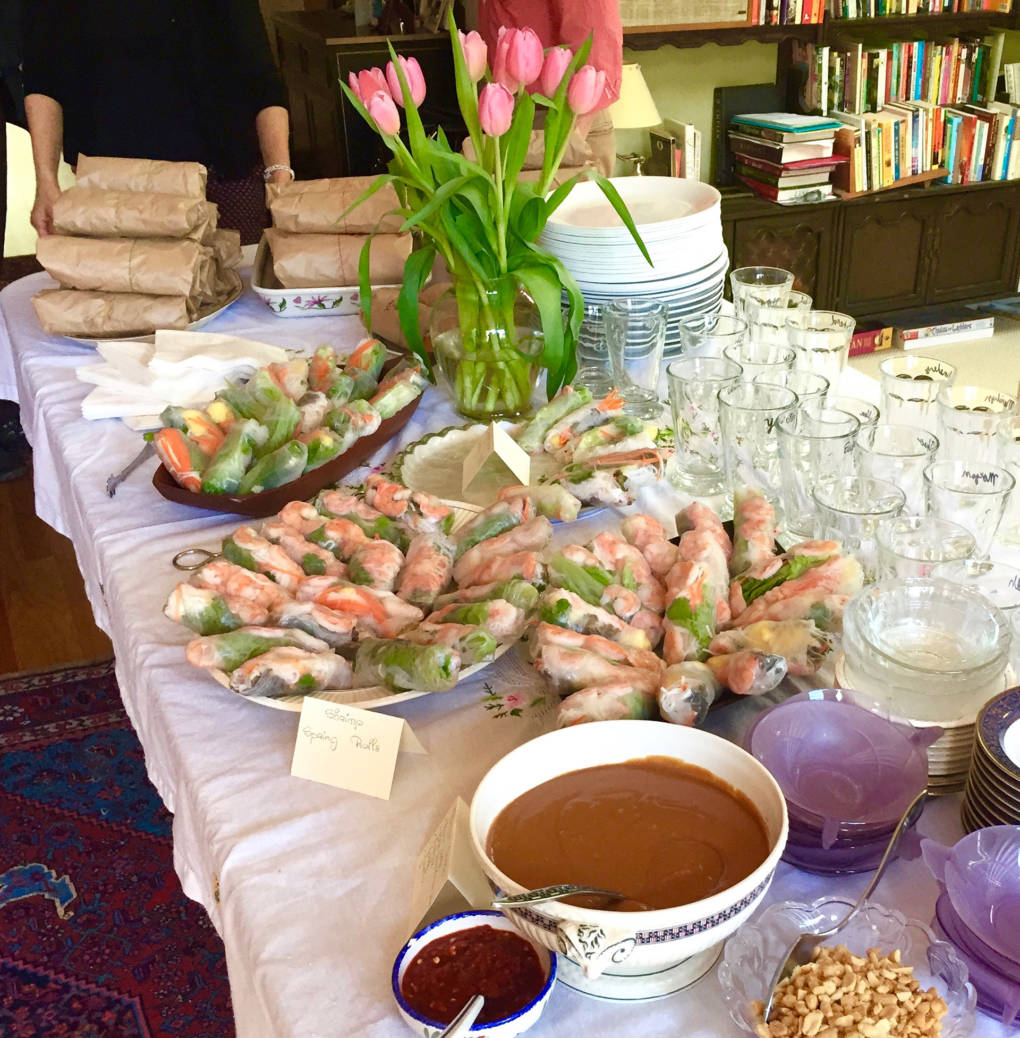
"caption": "A Vietnamese lunch prepared by Thoa van Seventer.",
"description": null,
"title": "1-table-new",
"credit": "Anna Mindess",
"status": "inherit",
"isLoading": false,
"fetchFailed": false
}
},
"audioPlayerReducer": {
"postId": "stream_live",
"isPaused": true,
"isPlaying": false,
"pfsActive": false,
"pledgeModalIsOpen": true,
"playerDrawerIsOpen": false,
"liveAudioPlayStartedAt": 0,
"liveAudioPlayContext": ""
},
"authorsReducer": {
"byline_bayareabites_117059": {
"type": "authors",
"id": "byline_bayareabites_117059",
"meta": {
"override": true
},
"slug": "byline_bayareabites_117059",
"name": "\u003ca href=\"http://civileats.com/author/ccooke/\">Christina Cooke\u003c/a>, \u003ca href=\"https://ww2.kqed.org/bayareabites/author/civileat/\">Civil Eats\u003c/a>",
"isLoading": false
},
"byline_bayareabites_117019": {
"type": "authors",
"id": "byline_bayareabites_117019",
"meta": {
"override": true
},
"slug": "byline_bayareabites_117019",
"name": "Nina Gregory, \u003cstrong>\u003ca href=\"http://www.npr.org/sections/codeswitch/2017/04/28/516430327/at-ted-this-week-two-speakers-got-to-the-root-of-things\">NPR Food\u003c/a>\u003c/strong>",
"isLoading": false
},
"byline_bayareabites_117000": {
"type": "authors",
"id": "byline_bayareabites_117000",
"meta": {
"override": true
},
"slug": "byline_bayareabites_117000",
"name": "Peggy Lowe, \u003cstrong>\u003ca href=\"http://www.npr.org/sections/thesalt/2017/04/26/525736888/tyson-foods-promises-better-conditions-and-safety-for-meat-workers\">NPR Food\u003c/a>\u003c/strong>",
"isLoading": false
},
"byline_bayareabites_116922": {
"type": "authors",
"id": "byline_bayareabites_116922",
"meta": {
"override": true
},
"slug": "byline_bayareabites_116922",
"name": "Natalie Jacewicz, \u003cstrong>\u003ca href=\"http://www.npr.org/sections/thesalt/2017/04/21/523647669/is-it-safe-to-eat-moldy-bread\">NPR Food\u003c/a>\u003c/strong>",
"isLoading": false
},
"byline_bayareabites_116891": {
"type": "authors",
"id": "byline_bayareabites_116891",
"meta": {
"override": true
},
"slug": "byline_bayareabites_116891",
"name": "Nick Romeo, \u003ca href=\"https://ww2.kqed.org/bayareabites/author/nprfood/\">NPR Food\u003c/a>",
"isLoading": false
},
"byline_bayareabites_116883": {
"type": "authors",
"id": "byline_bayareabites_116883",
"meta": {
"override": true
},
"slug": "byline_bayareabites_116883",
"name": "\u003ca href=\"http://civileats.com/author/egrossman/\">Elizabeth Grossman\u003c/a>, \u003ca href=\"https://ww2.kqed.org/bayareabites/author/civileat/\">Civil Eats\u003c/a>",
"isLoading": false
},
"byline_bayareabites_116810": {
"type": "authors",
"id": "byline_bayareabites_116810",
"meta": {
"override": true
},
"slug": "byline_bayareabites_116810",
"name": "\u003ca href=\"http://civileats.com/author/tgreenaway/\">Twilight Greenaway\u003c/a>, \u003ca href=\"https://ww2.kqed.org/bayareabites/author/civileat/\">Civil Eats\u003c/a>",
"isLoading": false
},
"byline_bayareabites_116656": {
"type": "authors",
"id": "byline_bayareabites_116656",
"meta": {
"override": true
},
"slug": "byline_bayareabites_116656",
"name": "\u003ca href=\"http://civileats.com/author/aorlowski/\">Aaron Orlowski\u003c/a>, \u003ca href=\"https://ww2.kqed.org/bayareabites/author/civileat/\">Civil Eats\u003c/a>",
"isLoading": false
},
"marktaylor-2": {
"type": "authors",
"id": "8",
"meta": {
"index": "authors_1716337520",
"id": "8",
"found": true
},
"name": "Mark Taylor",
"firstName": "Mark",
"lastName": "Taylor",
"slug": "marktaylor-2",
"email": "mark@emptypictures.net",
"display_author_email": false,
"staff_mastheads": [],
"title": null,
"bio": "Mark Taylor founded KQED Arts in 2005 and served as Senior Interactive Producer for Arts and Culture through 2014. Taylor was the online arts editor of KQED's daily arts blog for nine years and created the station's first web-original podcasts, Gallery Crawl and The Writers' Block.\r\n\r\nTaylor is an experimental filmmaker and visual artist whose work has been collected by the Library of Congress, Stanford University and the New York Museum of Modern Art, among many others. He teaches Media Studies at the University of San Francisco and is exploring the connection between film and food. \u003ca href=\"http://emptypictures.net/\">Visit Mark Taylor's website\u003c/a> at emptypictures.net.",
"avatar": "https://secure.gravatar.com/avatar/3452322b4dec4379500b11b74718f5da?s=600&d=blank&r=g",
"twitter": null,
"facebook": null,
"instagram": null,
"linkedin": null,
"sites": [
{
"site": "arts",
"roles": [
"Administrator",
"contributor"
]
},
{
"site": "bayareabites",
"roles": [
"author"
]
},
{
"site": "checkplease",
"roles": [
"subscriber"
]
},
{
"site": "food",
"roles": [
"contributor"
]
}
],
"headData": {
"title": "Mark Taylor | KQED",
"description": null,
"ogImgSrc": "https://secure.gravatar.com/avatar/3452322b4dec4379500b11b74718f5da?s=600&d=blank&r=g",
"twImgSrc": "https://secure.gravatar.com/avatar/3452322b4dec4379500b11b74718f5da?s=600&d=blank&r=g"
},
"isLoading": false,
"link": "/author/marktaylor-2"
},
"annamindess": {
"type": "authors",
"id": "5283",
"meta": {
"index": "authors_1716337520",
"id": "5283",
"found": true
},
"name": "Anna Mindess",
"firstName": "Anna",
"lastName": "Mindess",
"slug": "annamindess",
"email": "amindess@aol.com",
"display_author_email": false,
"staff_mastheads": [],
"title": "KQED Contributor",
"bio": "My passion is exploring the connections between food, travel and culture. I am a regular contributor to AFAR, Edible East Bay Magazine, Oakland Magazine, Berkeleyside's NOSH and other publications. I usually take a route that's slightly off the beaten path, like \u003ca href=\"http://edibleeastbay.com/online-magazine/fall-harvest-2017/fun-with-food-insults/\">collecting food-related insults\u003c/a> around the world or \u003ca href=\"https://www.afar.com/magazine/what-i-learned-hawking-sweet-potatoes-with-a-street-vendor-in-taiwan?email=amindess%40aol.com&utm_source=Sailthru&utm_medium=email&utm_campaign=Doctors%20Without%20Borders&utm_term=Daily%20Wander%20Newsletter\">volunteering with a Sweet Potato Mama\u003c/a> (street food seller) in Tapei.\r\n\r\nCulture is the thread that ties together my several careers. I also work as a sign language interpreter, educator and author. My study of Deaf culture has taken me around the world, where I am always on a quest to find Deaf-owned restaurants. I love making connections between my different worlds, for example in this AFAR story where I share \u003ca href=\"https://www.afar.com/magazine/tips-from-a-sign-language-interpreter-for-overcoming-language-barriers\">tips for communicating across cultures\u003c/a> that I learned from the real experts, Deaf people. Or this \u003ca href=\"http://edibleeastbay.com/online-magazine/fall-harvest-2017/deaf-chefs-compete/\">profile of a Deaf chef and culinary arts instructor\u003c/a> at the California School for the Deaf.\r\n\r\nTo see my visual/edible take on the world, follow me on Instagram: \u003ca href=\"https://www.instagram.com/annamindess/\">annamindess. \u003c/a>\r\n\r\nFor more of my stories: visit Contently \u003ca href=\"http://annamindess.contently.com\">annamindess.contently.com\u003c/a>",
"avatar": "https://secure.gravatar.com/avatar/23c79f04bf3d58b2e727d35ca471d184e8945f6ed82e41a0c062eab5e7dc2bb5?s=600&d=blank&r=g",
"twitter": null,
"bluesky": null,
"facebook": null,
"instagram": null,
"linkedin": null,
"sites": [
{
"site": "arts",
"roles": [
"subscriber"
]
},
{
"site": "bayareabites",
"roles": [
"author"
]
},
{
"site": "food",
"roles": [
"contributor"
]
}
],
"headData": {
"title": "Anna Mindess | KQED",
"description": "KQED Contributor",
"ogImgSrc": "https://secure.gravatar.com/avatar/23c79f04bf3d58b2e727d35ca471d184e8945f6ed82e41a0c062eab5e7dc2bb5?s=600&d=blank&r=g",
"twImgSrc": "https://secure.gravatar.com/avatar/23c79f04bf3d58b2e727d35ca471d184e8945f6ed82e41a0c062eab5e7dc2bb5?s=600&d=blank&r=g"
},
"isLoading": false,
"link": "/author/annamindess"
},
"shelbypope": {
"type": "authors",
"id": "5566",
"meta": {
"index": "authors_1716337520",
"id": "5566",
"found": true
},
"name": "Shelby Pope",
"firstName": "Shelby",
"lastName": "Pope",
"slug": "shelbypope",
"email": "shelbylpope@gmail.com",
"display_author_email": false,
"staff_mastheads": [],
"title": "KQED Contributor",
"bio": "Shelby Pope is a freelance writer living and eating her way through the East Bay. She’s written about food, art and science for publications including the Smithsonian, Lucky Peach, and the Washington Post's pet blog. When she’s not taste testing sourdough bread to find the Bay Area’s best loaf, you can find her on Twitter \u003ca href=\"https://twitter.com/shelbylpope\">@shelbylpope\u003c/a> or at \u003ca href=\"https://shelbypope.com/\">shelbypope.com\u003c/a>",
"avatar": "https://secure.gravatar.com/avatar/df74e904399e45720e48e36c6e1ae7a90c32216eb2c9c82f3b2e1a9641b507d3?s=600&d=blank&r=g",
"twitter": "shelbylpope",
"bluesky": null,
"facebook": null,
"instagram": null,
"linkedin": null,
"sites": [
{
"site": "arts",
"roles": [
"subscriber"
]
},
{
"site": "food",
"roles": [
"subscriber"
]
}
],
"headData": {
"title": "Shelby Pope | KQED",
"description": "KQED Contributor",
"ogImgSrc": "https://secure.gravatar.com/avatar/df74e904399e45720e48e36c6e1ae7a90c32216eb2c9c82f3b2e1a9641b507d3?s=600&d=blank&r=g",
"twImgSrc": "https://secure.gravatar.com/avatar/df74e904399e45720e48e36c6e1ae7a90c32216eb2c9c82f3b2e1a9641b507d3?s=600&d=blank&r=g"
},
"isLoading": false,
"link": "/author/shelbypope"
}
},
"pagesReducer": {
"bayareabites_category_politics-activism-food-safety": {
"type": "terms",
"id": "bayareabites_2035",
"meta": {
"index": "terms_1716263798",
"site": "bayareabites",
"id": "2035",
"score": 13.89613
},
"featImg": null,
"name": "politics, activism, food safety",
"description": null,
"taxonomy": "category",
"headData": {
"twImgId": null,
"twTitle": null,
"ogTitle": null,
"ogImgId": null,
"twDescription": null,
"description": null,
"title": "politics, activism, food safety Archives | KQED Bay Area Bites",
"ogDescription": null
},
"ttid": 943,
"slug": "politics-activism-food-safety",
"isLoading": false,
"title": "politics, activism, food safety",
"pageMeta": {
"site": "bayareabites",
"WpPageTemplate": "page-topic-editorial",
"currentPage": 14
},
"blocks": [
{
"blockName": "kqed/post-list",
"attrs": {
"layout": "cardArticle2",
"query": "posts/bayareabites?category=politics-activism-food-safety",
"seeMore": false,
"paginated": true,
"page": 14
}
},
{
"blockName": "kqed/ad"
}
]
}
},
"pfsSessionReducer": {},
"postsReducer": {
"stream_live": {
"type": "live",
"id": "stream_live",
"audioUrl": "https://streams.kqed.org/kqedradio",
"title": "Live Stream",
"excerpt": "Live Stream information currently unavailable.",
"link": "/radio",
"featImg": "",
"label": {
"name": "KQED Live",
"link": "/"
}
},
"stream_kqedNewscast": {
"type": "posts",
"id": "stream_kqedNewscast",
"audioUrl": "https://www.kqed.org/.stream/anon/radio/RDnews/newscast.mp3?_=1",
"title": "KQED Newscast",
"featImg": "",
"label": {
"name": "88.5 FM",
"link": "/"
}
},
"bayareabites_117059": {
"type": "posts",
"id": "bayareabites_117059",
"meta": {
"index": "posts_1716263798",
"site": "bayareabites",
"id": "117059",
"score": null,
"sort": [
1493674317000
]
},
"parent": 0,
"labelTerm": {
"site": "bayareabites"
},
"blocks": [],
"publishDate": 1493674317,
"format": "standard",
"disqusTitle": "As Food and Farmworkers Retreat, Guestworker Program Poised to Grow",
"title": "As Food and Farmworkers Retreat, Guestworker Program Poised to Grow",
"headTitle": "Bay Area Bites | KQED Food",
"content": "\u003cp>An unfamiliar car pulled into the labor camp of a blueberry farm in Southern New Jersey last month, and the four year-round farmworkers on site stopped what they were doing, went inside, and locked themselves in their rooms. Afraid of being deported by federal immigration agents operating with \u003ca href=\"http://www.politifact.com/truth-o-meter/article/2017/feb/24/trump-ushers-big-changes-immigration-deportations-/\">increased authority\u003c/a> since President Trump signed an \u003ca href=\"https://www.whitehouse.gov/the-press-office/2017/01/25/presidential-executive-order-enhancing-public-safety-interior-united\">executive order\u003c/a> to that effect in January, the workers stayed locked in their rooms overnight, forgoing dinner and talking to each other through the walls rather than in the open.\u003c/p>\n\u003cp>Though the strange car ultimately proved harmless, the workers later described the incident—and how fearful they felt—to Kathia Ramirez, the food justice coordinator of a farmworker support committee called \u003cem>El Comite de Apoyo a los Trabajadores Agrícolas\u003c/em>, or \u003ca href=\"http://cata-farmworkers.org/\">CATA\u003c/a>.\u003c/p>\n\u003cp>“The undocumented community is living in more fear and hiding under the shadows,” Ramirez said. “People should not live with the fear that they will be detained and not know what will happen to their families.”\u003c/p>\n\u003cp>While the ultimate effect of the anxiety remains to be seen, several likely possibilities exist, according to the people with whom Civil Eats spoke. As some foreign-born workers retreat from sight, farms and restaurants may have a hard time securing the staff they need to harvest crops and serve meals. Additionally, worker exploitation may proliferate as farmers rely increasingly on the H-2A agricultural guestworker program, known to place workers at a disadvantage, and as workers refrain from speaking up for themselves for fear of deportation.\u003c/p>\n\u003cp>The American food system \u003ca href=\"http://civileats.com/2016/11/29/if-trump-goes-hard-on-immigration-who-will-grow-process-and-serve-our-food/\">relies heavily on the work of people born outside U.S. borders\u003c/a>, many of whom are undocumented—and living on edge. In fact, \u003ca href=\"https://www.doleta.gov/agworker/pdf/NAWS_Research_Report_12_Final_508_Compliant.pdf\">73 percent\u003c/a> of the 2.5 million farmworkers planting, cultivating, and harvesting our crops each season are foreign-born, mostly in Mexico. And between \u003ca href=\"https://www.ers.usda.gov/topics/farm-economy/farm-labor/background.aspx#Numbers\">30 percent\u003c/a> and \u003ca href=\"https://www.farmworkerjustice.org/sites/default/files/NAWS%2520data%2520factsht%25201-13-15FINAL.pdf\">70 percent\u003c/a> are undocumented, according to various sources.\u003c/p>\n\u003cp>[ad fullwidth]\u003c/p>\n\u003cp>On the service industry side, of the 12 million restaurant workers in the U.S., 1.3 million, or 11 percent, are undocumented, and an additional 2.6 million are foreign-born but documented, according to the \u003ca href=\"http://rocunited.org/\">Restaurant Opportunities Centers (ROC) United\u003c/a>. In major metropolitan areas like New York, Los Angeles, and Chicago, closer to 45 percent of restaurant workers are undocumented, and 70 percent are foreign born, ROC United estimates.\u003c/p>\n\u003cp>Since deportations have picked up—targeting more varied populations than the Obama administration campaign, including young people registered with the \u003ca href=\"http://www.npr.org/2017/02/15/515441744/daca-recipient-detained-by-u-s-immigration-authorities\">Deferred Action for Childhood Arrivals\u003c/a> (DACA) program—immigrants are wary of traveling or appearing in public.\u003c/p>\n\u003cp>“The whole community is targeted; they all have friends and neighbors who could be apprehended,” said Don Cameron, who manages the 6,000-acre \u003ca href=\"http://www.terranovaranch.com/\">Terranova Ranch\u003c/a> in California’s San Joaquin Valley. “We’ve heard of people leaving their jobs and going back to Mexico. Once we get into the summer, I think this is really going to hit farming hard.”\u003c/p>\n\u003cp>This sense of fear pervading the agricultural workforce could severely impact the U.S. food system.\u003c/p>\n\u003cp>\u003cstrong>An Agricultural Guestworker Program Poised to Grow—And Exploit?\u003c/strong>\u003c/p>\n\u003cp>Because hiring agricultural workers through the H-2A visa program is expensive, requiring farmers to transport workers from Mexico and supply them with housing and a set wage, many farmers opt to hire from the undocumented population instead. Though the number of H-2A visas issued has roughly doubled since 2011, it’s still relatively small: In 2015, only about 4 percent of farmworkers came to the U.S. through the guestworker program.\u003c/p>\n\u003cp>“I think what we’re going to see is that more farmers are applying for H-2A visas,” said Gail Wadsworth, executive director of the \u003ca href=\"http://www.cirsinc.org/\">California Institute for Rural Studies\u003c/a>. If that happens, farmworkers could suffer, say some advocates.\u003c/p>\n\u003cp>First established in 1952 to offset labor shortages prompted by World War II, the H-2A program brings guest workers to the U.S. on temporary contracts to fill positions employers are unable to fill with domestic workers. Because the program ties workers to a specific employer, advocates say it creates the opportunity for exploitation.\u003c/p>\n\u003cp>“Guestworker programs [are] not designed to be good to workers; they’re almost always designed to be good for the employer,” Wadsworth said. In particular, she said the H-2A program “is ripe for abuse, simply because it gives workers very little ability to change their situation. If they’re unhappy with their employer, their employer can just deport them. They don’t have any recourse.”\u003c/p>\n\u003cfigure id=\"attachment_117063\" class=\"wp-caption aligncenter\" style=\"max-width: 700px\">\u003cimg src=\"https://ww2.kqed.org/bayareabites/wp-content/uploads/sites/24/2017/05/170411-immigration-2-700x467.jpg\" alt=\"\" width=\"700\" height=\"467\" class=\"size-full wp-image-117063\" srcset=\"https://ww2.kqed.org/app/uploads/sites/24/2017/05/170411-immigration-2-700x467.jpg 700w, https://ww2.kqed.org/app/uploads/sites/24/2017/05/170411-immigration-2-700x467-160x107.jpg 160w, https://ww2.kqed.org/app/uploads/sites/24/2017/05/170411-immigration-2-700x467-240x160.jpg 240w, https://ww2.kqed.org/app/uploads/sites/24/2017/05/170411-immigration-2-700x467-375x250.jpg 375w, https://ww2.kqed.org/app/uploads/sites/24/2017/05/170411-immigration-2-700x467-520x347.jpg 520w\" sizes=\"(max-width: 700px) 100vw, 700px\">\u003cfigcaption class=\"wp-caption-text\">Photo by \u003ca href=\"https://www.flickr.com/photos/russloar/13896831903\">Russ Allison Loar\u003c/a>\u003c/figcaption>\u003c/figure>\n\u003cp>The Southern Poverty Law Center, in a \u003ca href=\"https://www.splcenter.org/20130218/close-slavery-guestworker-programs-united-states\">recent report\u003c/a>, characterized today’s guestworker programs as rife with wage and contract abuse, documented discrimination, and on-the-job injuries without effective recourse.\u003c/p>\n\u003cp>CATA’s Ramirez regularly visits the labor camps at apple, peach, and blueberry farms in South New Jersey to educate workers about topics like the risks of exposure to heat and pesticides. She has noticed many violations of the conditions required by the H-2A program.\u003c/p>\n\u003cp>Workers have reported that their employers have taken away their visas and IDs and forbidden them from leaving the property or making phone calls—a practice that constitutes \u003ca href=\"https://www.unodc.org/unodc/en/human-trafficking/what-is-human-trafficking.html#What_is_Human_Trafficking\">human trafficking\u003c/a>—and sometimes workers \u003ca href=\"http://civileats.com/2012/09/11/farmworker-wage-theft-as-common-as-dirt/\">do not receive the full wages they are owed\u003c/a>, Ramirez said. Additionally, living conditions are sometimes extremely poor.\u003c/p>\n\u003cp>“When I go visit some of the labor camps, it reminds me of the rural communities in Mexico,” said Ramirez, whose parents are from Oaxaca. “They have pests; they have bed bugs, roaches, mice. On other occasions, I’ve seen an overload of trash and a lot of flies, especially in the summer,” she said. “The beds are not in the greatest condition—some of them don’t even have a mattress; they just have the foam.”\u003c/p>\n\u003cp>In North Carolina, one of \u003ca href=\"http://www.globalworkers.org/iii-h-2a-workers-us-%25E2%2580%2593-figures\">the top states to use\u003c/a> the H-2A program, Anna Jensen serves as executive director of \u003ca href=\"https://www.facebook.com/ncproyecto/\">NC Farmworkers Project\u003c/a>, a nonprofit that connects workers with health information and medical services. Jensen worries that the administration’s discriminatory rhetoric will embolden growers to seal off their contracted workers.\u003c/p>\n\u003cp>“As advocates, [labor] camp access has always been an issue for us, having to negotiate with employers to let us talk to their workers,” Jensen said. “We’re worried that the current climate will justify some of the fear tactics [like discouraging workers from visiting health clinics or speaking with outsiders] that advocates see in an attempt to keep workers isolated.”\u003c/p>\n\u003cp>\u003ca href=\"https://www.farmworkerjustice.org/\">Farmworker Justice\u003c/a> President Bruce Goldstein sees the potential for the H-2A program, as it grows, to run into the same trouble as the controversial \u003ca href=\"https://migration.ucdavis.edu/rmn/more.php?id=1112\">Bracero Program\u003c/a>, which brought 4.6 million Mexican workers to the U.S. to fill short-term agricultural contracts between 1942 and 1964. While in theory, the program offered safeguards for the Mexican worker—much like the H-2A program today—the rules were not well enforced, and Mexican workers suffered abuses including wage theft and substandard housing and food. Former Department of Labor official Lee G. Williams described the Bracero as a system of “\u003ca href=\"https://www.splcenter.org/20130218/close-slavery-guestworker-programs-united-states\">legalized slavery\u003c/a>.”\u003c/p>\n\u003cp>But as use of today’s guestworker programs become more widespread, they could be equally hard on workers. “The [agribusiness] lobbying that goes on to change the H-2A program … would eliminate many of the labor protections that existed under the Bracero program,” Goldstein said. “There’s no limit on the number of H-2A visas, and so the H-2A program can grow to be the size of the Bracero program and larger, and it can also, as it gets larger, become just as notorious.”\u003c/p>\n\u003cp>\u003cstrong>Rolling Back Worker Protection Regulations\u003c/strong>\u003c/p>\n\u003cp>On top of the likely expansion of the H-2A guestworker program, Trump’s \u003ca href=\"http://civileats.com/2017/03/23/trumps-budget-would-set-food-system-progress-back-by-generations/\">proposed 2018 budget\u003c/a> includes \u003ca href=\"https://www.nytimes.com/interactive/2017/03/16/us/politics/trump-budget-cuts.html?_r=0\">massive cuts\u003c/a> to the departments that oversee the fair treatment and protection of the country’s workers, including those on farms and in restaurants.\u003c/p>\n\u003cp>The proposed cuts include a 20 percent decrease in funding to the \u003ca href=\"https://www.dol.gov/general/aboutdol/majorlaws\">Department of Labor\u003c/a>—which regulates wages and hours and workplace safety and health, as well as the \u003ca href=\"https://www.dol.gov/whd/mspa/index.htm\">Migrant and Seasonal Agricultural Worker Protection Act\u003c/a> and the \u003ca href=\"https://www.dol.gov/whd/flsa/\">Fair Labor Standards Act\u003c/a>. It also includes a 31 percent cut to the Environmental Protection Agency—which sets \u003ca href=\"https://www.epa.gov/pesticide-worker-safety/agricultural-worker-protection-standard-wps\">worker protection standards\u003c/a> for farmworkers and pesticide handlers. Trump also proposed \u003ca href=\"https://www.theatlantic.com/politics/archive/2017/03/legal-services-corporation/520083/\">eliminating the Legal Services Corporation\u003c/a>, a nonprofit corporation that helps low-income people obtain representation in civil cases.\u003c/p>\n\u003cp>Additionally, Republicans \u003ca href=\"https://amp.theguardian.com/business/2017/mar/06/labor-protection-laws-repeal-poultry-industry-workers\">voted in early March\u003c/a> to repeal the \u003ca href=\"https://obamawhitehouse.archives.gov/the-press-office/2014/07/31/executive-order-fair-pay-and-safe-workplaces\">Fair Pay and Safe Workplaces Executive Order\u003c/a> that President Obama signed in July 2014, which requires companies contracting with the federal government to keep and disclose records of on-the-job accidents and fatalities.\u003c/p>\n\u003cp>“There are widespread violations of the limited labor protections that apply to farmworkers,” Goldstein said. “The presence of so many undocumented workers who are afraid of deportation means that some unscrupulous employers may take advantage and violate the minimum wage and other rights. We’re concerned that this administration wants to cut back the budgets of federal agencies that enforce [those] rights.”\u003c/p>\n\u003cp>Meanwhile, agribusiness groups are lobbying the administration to make the H-2A program more beneficial for U.S. employers. And they appear to be getting through: a \u003ca href=\"http://apps.washingtonpost.com/g/documents/national/draft-executive-orders-on-immigration/2315/\">draft executive order\u003c/a> leaked to the press in January revealed that Trump planned to “prioritize the protection of American workers” and ensure the “efficient processing” of H-2A applications.\u003c/p>\n\u003cp>Goldstein said while the concept of “efficiency” could be taken in a number of ways, “Historically, that’s a euphemism for slashing the wage rates, removing other labor protections, and minimizing government oversight of the agricultural guestworker program.”\u003c/p>\n\u003cp>\u003cstrong>The Effect of Fear on Farms and Restaurants\u003c/strong>\u003c/p>\n\u003cp>Don Cameron relies on about 125 farmworkers at a time to harvest from mid-June to the end of November to harvest the 25 crops grown at Terranova Ranch. Because his farm cultivates primarily specialty crops—like peppers with the stems removed for use in salsas—much of the harvest requires picking by hand.\u003c/p>\n\u003cp>“I already have plants being grown in the greenhouse for this year’s crop,” Cameron said. “I’m pretty nervous; I don’t know if I’ll have the labor to do the harvest.”\u003c/p>\n\u003cp>Unless he can develop a good way to mechanically harvest the crops he grows, Cameron said, he may have to change what he plants moving forward.\u003c/p>\n\u003cfigure id=\"attachment_117062\" class=\"wp-caption aligncenter\" style=\"max-width: 1200px\">\u003cimg src=\"https://ww2.kqed.org/bayareabites/wp-content/uploads/sites/24/2017/05/170411-immigration-3.jpg\" alt=\"Ansel Adams documented farmworkers at Japanese internment camps in California.\" width=\"1200\" height=\"800\" class=\"size-full wp-image-117062\" srcset=\"https://ww2.kqed.org/app/uploads/sites/24/2017/05/170411-immigration-3.jpg 1200w, https://ww2.kqed.org/app/uploads/sites/24/2017/05/170411-immigration-3-160x107.jpg 160w, https://ww2.kqed.org/app/uploads/sites/24/2017/05/170411-immigration-3-800x533.jpg 800w, https://ww2.kqed.org/app/uploads/sites/24/2017/05/170411-immigration-3-768x512.jpg 768w, https://ww2.kqed.org/app/uploads/sites/24/2017/05/170411-immigration-3-1020x680.jpg 1020w, https://ww2.kqed.org/app/uploads/sites/24/2017/05/170411-immigration-3-1180x787.jpg 1180w, https://ww2.kqed.org/app/uploads/sites/24/2017/05/170411-immigration-3-960x640.jpg 960w, https://ww2.kqed.org/app/uploads/sites/24/2017/05/170411-immigration-3-240x160.jpg 240w, https://ww2.kqed.org/app/uploads/sites/24/2017/05/170411-immigration-3-375x250.jpg 375w, https://ww2.kqed.org/app/uploads/sites/24/2017/05/170411-immigration-3-520x347.jpg 520w\" sizes=\"(max-width: 1200px) 100vw, 1200px\">\u003cfigcaption class=\"wp-caption-text\">Ansel Adams documented farmworkers at Japanese internment camps in California. \u003ccite>(Ansel Adams)\u003c/cite>\u003c/figcaption>\u003c/figure>\n\u003cp>CIRS’ Wadsworth thinks many farmers will respond similarly—moving away from labor-intensive crops and opting for those that are easier to harvest mechanically. “It could be a total shift of production in California,” she said.\u003c/p>\n\u003cp>Restaurant owners, who were experiencing a labor shortage even before Trump took office, are also concerned. Right after the election, the 200 restaurant owner members of ROC United penned \u003ca href=\"http://rocunited.org/2017/01/restaurant-owners-support-immigrants/\">an open letter\u003c/a> to Trump.\u003c/p>\n\u003cp>“We continue to grow exponentially while confronted with the absolute worst labor shortage in recent memory,” the letter said. “America’s restaurant industry cannot survive without the many skilled professionals in our ranks. We must retain each and every employee and we depend heavily, especially in metropolitan areas, on immigrant workers.”\u003c/p>\n\u003cp>Saru Jayaraman, co-founder and co-director of ROC United, doesn’t buy the fact that the Trump actually intends to deport large numbers of foreign workers, on whom \u003ca href=\"https://qz.com/909220/donald-trump-requested-64-foreign-guest-workers-for-his-mar-a-lago-winter-white-house/\">he relies for his own businesses\u003c/a>. “I don’t think this man or this administration has any intent of actually removing 11 million people or more,” Jayaraman said. The real goal, she says, is “to create a culture of fear among workers in the nation so that workers don’t speak up for their rights or organize.”\u003c/p>\n\u003cp>\u003cstrong>Standing Up for Foreign Workers\u003c/strong>\u003c/p>\n\u003cp>On election day in Raleigh, North Carolina, Centro Mexican restaurant chef and owner Angela Salamanca gave her entire staff time off so they could cast their ballots—and even hired a mariachi band to parade them down to the county board of elections. As the sense of fear has grown over the intervening months, Salamanca has tried to continue providing her staff the support they need, even though she too feels frustrated, disillusioned, and sad.\u003c/p>\n\u003cp>“Unfortunately, it’s taken over our lives—the worry, anxiety, and fear of what’s going to happen,” Salamanca said. “We’ve had plenty of conversations about Plan B—what we’ll do if someone gets deported and they have children—what do we’ll do with their family, what do we’ll do with their things.”\u003c/p>\n\u003cp>But there are bright spots: in addition to closing the restaurant for the \u003ca href=\"http://www.cnn.com/2017/02/16/us/day-without-immigrants-vignettes/\">Day Without Immigrants\u003c/a>, Salamanca brought in an immigration attorney to deliver a know-your-rights workshop, to which she invited restaurant workers from other Raleigh establishments as well, and it heartened her staff to know they actually do have some legal ground to stand on if detained.\u003c/p>\n\u003cp>Additionally, many people in the community have stepped forward with offers to help. “It’s reassuring that there are people with all kinds of talents and resources that say, ‘Hey, if you need anything, just let me know,’” Salamanca said. “It’s good to know there are people out there who are willing to support whatever happens.”\u003c/p>\n\u003cp>While she described the Trump administration’s immigration policies as “horrific,” Jayaraman sees “much more than a silver lining” to the situation. For one, she’s seen more people willing to stand up and speak out.\u003c/p>\n\u003cp>“There will be a lot of pain and anguish and separated families, but there will also be the greatest rising up in our industry that we have ever seen. That could actually fix a lot of other problems we’ve had in our industry for long time,” Jayaraman said. “[Workers are] outraged, and it’s empowering them to come forward in ways I haven’t seen.”\u003c/p>\n\u003cp>ROC United co-led a coalition that successfully \u003ca href=\"http://rocunited.org/2017/02/roc-praises-andrew-puzders-withdrawal-calls-workers-rights-supporter-u-s-secretary-labor/\">called for Andy Puzder to withdraw\u003c/a> from consideration for the Labor Department secretary position, and its \u003ca href=\"http://civileats.com/2017/02/14/sanctuary-restaurants-want-to-feed-the-resistance/\">sanctuary restaurant program\u003c/a> and \u003ca href=\"http://rocunited.org/our-work/#one-fair-wage\">One Fair Wage\u003c/a> campaign have gained traction in multiple states.\u003c/p>\n\u003cp>In New Jersey, Ramirez and her CATA coworkers are holding workshops at farmworker camps, health clinics, and Head Start programs to educate farmworkers and other immigrants on their rights if they’re detained. The CATA office has extended their hours to help workers fill out forms designating what should happen to their money, property, and children if they are deported.\u003c/p>\n\u003cp>And, in North Carolina, Anna Jensen and the NC Farmworkers Project hopes to offer de-escalation workshops at the farmworker camps and hold community meetings about new legislation. They’re also looking to build relationships. “Since we can’t predict the future, mostly what we’re looking at is strengthening the networks we have,” Jensen said.\u003c/p>\n\u003cp>Ultimately, Salamanca sees the administration’s anti-immigrant policies—and the sense of fear they produce—as unsustainable both for the food system and society as a whole.\u003c/p>\n\u003cp>“The White House can put things in action that are going to make our lives very, very difficult for a while,” she said, “but there will come a time when something is going to break. And in the meantime, we take care of each other.”\u003c/p>\n\u003chr>\n\u003cp>[ad floatright]\u003c/p>\n\u003cp>\u003cstrong>About the Author\u003c/strong>\u003cbr>\nChristina Cooke is Civil Eats' associate editor. Based in North Carolina, she has also covered people, place, science, business, and culture for venues including The New Yorker, The New York Times, TheAtlantic.com, The Guardian, Oxford American, and High Country News. In the past, she has worked as a staff writer for the Chattanooga Times Free Press in Tennessee and a weekly paper in Portland, Oregon. A graduate of the documentary writing program at the Salt Institute of Documentary Studies and the creative nonfiction writing MFA program at Portland State University, she teaches interviewing and nonfiction writing at the Center for Documentary Studies at Duke University. Find out more at www.christinacooke.com.\u003c/p>\n\n",
"disqusIdentifier": "117059 https://ww2.kqed.org/bayareabites/?p=117059",
"disqusUrl": "https://ww2.kqed.org/bayareabites/2017/05/01/as-food-and-farmworkers-retreat-guestworker-program-poised-to-grow/",
"stats": {
"hasVideo": false,
"hasChartOrMap": false,
"hasAudio": false,
"hasPolis": false,
"wordCount": 2776,
"hasGoogleForm": false,
"hasGallery": false,
"hasHearkenModule": false,
"iframeSrcs": [],
"paragraphCount": 52
},
"modified": 1493675746,
"excerpt": "The Trump administration’s fear-inducing immigration policies could lead to a farm and restaurant labor shortage, greater use of the H-2A visa program, and a climate rife with worker exploitation.",
"headData": {
"twImgId": "",
"twTitle": "",
"ogTitle": "",
"ogImgId": "",
"twDescription": "",
"description": "The Trump administration’s fear-inducing immigration policies could lead to a farm and restaurant labor shortage, greater use of the H-2A visa program, and a climate rife with worker exploitation.",
"title": "As Food and Farmworkers Retreat, Guestworker Program Poised to Grow | KQED",
"ogDescription": "",
"schema": {
"@context": "https://schema.org",
"@type": "Article",
"headline": "As Food and Farmworkers Retreat, Guestworker Program Poised to Grow",
"datePublished": "2017-05-01T14:31:57-07:00",
"dateModified": "2017-05-01T14:55:46-07:00",
"image": "https://cdn.kqed.org/wp-content/uploads/2020/02/KQED-OG-Image@1x.png"
}
},
"guestAuthors": [],
"slug": "as-food-and-farmworkers-retreat-guestworker-program-poised-to-grow",
"status": "publish",
"nprByline": "\u003ca href=\"http://civileats.com/author/ccooke/\">Christina Cooke\u003c/a>, \u003ca href=\"https://ww2.kqed.org/bayareabites/author/civileat/\">Civil Eats\u003c/a>",
"path": "/bayareabites/117059/as-food-and-farmworkers-retreat-guestworker-program-poised-to-grow",
"audioTrackLength": null,
"parsedContent": [
{
"type": "contentString",
"content": "\u003cdiv class=\"post-body\">\u003cp>\u003cp>An unfamiliar car pulled into the labor camp of a blueberry farm in Southern New Jersey last month, and the four year-round farmworkers on site stopped what they were doing, went inside, and locked themselves in their rooms. Afraid of being deported by federal immigration agents operating with \u003ca href=\"http://www.politifact.com/truth-o-meter/article/2017/feb/24/trump-ushers-big-changes-immigration-deportations-/\">increased authority\u003c/a> since President Trump signed an \u003ca href=\"https://www.whitehouse.gov/the-press-office/2017/01/25/presidential-executive-order-enhancing-public-safety-interior-united\">executive order\u003c/a> to that effect in January, the workers stayed locked in their rooms overnight, forgoing dinner and talking to each other through the walls rather than in the open.\u003c/p>\n\u003cp>Though the strange car ultimately proved harmless, the workers later described the incident—and how fearful they felt—to Kathia Ramirez, the food justice coordinator of a farmworker support committee called \u003cem>El Comite de Apoyo a los Trabajadores Agrícolas\u003c/em>, or \u003ca href=\"http://cata-farmworkers.org/\">CATA\u003c/a>.\u003c/p>\n\u003cp>“The undocumented community is living in more fear and hiding under the shadows,” Ramirez said. “People should not live with the fear that they will be detained and not know what will happen to their families.”\u003c/p>\n\u003cp>While the ultimate effect of the anxiety remains to be seen, several likely possibilities exist, according to the people with whom Civil Eats spoke. As some foreign-born workers retreat from sight, farms and restaurants may have a hard time securing the staff they need to harvest crops and serve meals. Additionally, worker exploitation may proliferate as farmers rely increasingly on the H-2A agricultural guestworker program, known to place workers at a disadvantage, and as workers refrain from speaking up for themselves for fear of deportation.\u003c/p>\n\u003cp>The American food system \u003ca href=\"http://civileats.com/2016/11/29/if-trump-goes-hard-on-immigration-who-will-grow-process-and-serve-our-food/\">relies heavily on the work of people born outside U.S. borders\u003c/a>, many of whom are undocumented—and living on edge. In fact, \u003ca href=\"https://www.doleta.gov/agworker/pdf/NAWS_Research_Report_12_Final_508_Compliant.pdf\">73 percent\u003c/a> of the 2.5 million farmworkers planting, cultivating, and harvesting our crops each season are foreign-born, mostly in Mexico. And between \u003ca href=\"https://www.ers.usda.gov/topics/farm-economy/farm-labor/background.aspx#Numbers\">30 percent\u003c/a> and \u003ca href=\"https://www.farmworkerjustice.org/sites/default/files/NAWS%2520data%2520factsht%25201-13-15FINAL.pdf\">70 percent\u003c/a> are undocumented, according to various sources.\u003c/p>\n\u003cp>\u003c/p>\u003c/div>",
"attributes": {
"named": {},
"numeric": []
}
},
{
"type": "component",
"content": "",
"name": "ad",
"attributes": {
"named": {
"label": "fullwidth"
},
"numeric": [
"fullwidth"
]
}
},
{
"type": "contentString",
"content": "\u003cdiv class=\"post-body\">\u003cp>\u003c/p>\n\u003cp>On the service industry side, of the 12 million restaurant workers in the U.S., 1.3 million, or 11 percent, are undocumented, and an additional 2.6 million are foreign-born but documented, according to the \u003ca href=\"http://rocunited.org/\">Restaurant Opportunities Centers (ROC) United\u003c/a>. In major metropolitan areas like New York, Los Angeles, and Chicago, closer to 45 percent of restaurant workers are undocumented, and 70 percent are foreign born, ROC United estimates.\u003c/p>\n\u003cp>Since deportations have picked up—targeting more varied populations than the Obama administration campaign, including young people registered with the \u003ca href=\"http://www.npr.org/2017/02/15/515441744/daca-recipient-detained-by-u-s-immigration-authorities\">Deferred Action for Childhood Arrivals\u003c/a> (DACA) program—immigrants are wary of traveling or appearing in public.\u003c/p>\n\u003cp>“The whole community is targeted; they all have friends and neighbors who could be apprehended,” said Don Cameron, who manages the 6,000-acre \u003ca href=\"http://www.terranovaranch.com/\">Terranova Ranch\u003c/a> in California’s San Joaquin Valley. “We’ve heard of people leaving their jobs and going back to Mexico. Once we get into the summer, I think this is really going to hit farming hard.”\u003c/p>\n\u003cp>This sense of fear pervading the agricultural workforce could severely impact the U.S. food system.\u003c/p>\n\u003cp>\u003cstrong>An Agricultural Guestworker Program Poised to Grow—And Exploit?\u003c/strong>\u003c/p>\n\u003cp>Because hiring agricultural workers through the H-2A visa program is expensive, requiring farmers to transport workers from Mexico and supply them with housing and a set wage, many farmers opt to hire from the undocumented population instead. Though the number of H-2A visas issued has roughly doubled since 2011, it’s still relatively small: In 2015, only about 4 percent of farmworkers came to the U.S. through the guestworker program.\u003c/p>\n\u003cp>“I think what we’re going to see is that more farmers are applying for H-2A visas,” said Gail Wadsworth, executive director of the \u003ca href=\"http://www.cirsinc.org/\">California Institute for Rural Studies\u003c/a>. If that happens, farmworkers could suffer, say some advocates.\u003c/p>\n\u003cp>First established in 1952 to offset labor shortages prompted by World War II, the H-2A program brings guest workers to the U.S. on temporary contracts to fill positions employers are unable to fill with domestic workers. Because the program ties workers to a specific employer, advocates say it creates the opportunity for exploitation.\u003c/p>\n\u003cp>“Guestworker programs [are] not designed to be good to workers; they’re almost always designed to be good for the employer,” Wadsworth said. In particular, she said the H-2A program “is ripe for abuse, simply because it gives workers very little ability to change their situation. If they’re unhappy with their employer, their employer can just deport them. They don’t have any recourse.”\u003c/p>\n\u003cfigure id=\"attachment_117063\" class=\"wp-caption aligncenter\" style=\"max-width: 700px\">\u003cimg src=\"https://ww2.kqed.org/bayareabites/wp-content/uploads/sites/24/2017/05/170411-immigration-2-700x467.jpg\" alt=\"\" width=\"700\" height=\"467\" class=\"size-full wp-image-117063\" srcset=\"https://ww2.kqed.org/app/uploads/sites/24/2017/05/170411-immigration-2-700x467.jpg 700w, https://ww2.kqed.org/app/uploads/sites/24/2017/05/170411-immigration-2-700x467-160x107.jpg 160w, https://ww2.kqed.org/app/uploads/sites/24/2017/05/170411-immigration-2-700x467-240x160.jpg 240w, https://ww2.kqed.org/app/uploads/sites/24/2017/05/170411-immigration-2-700x467-375x250.jpg 375w, https://ww2.kqed.org/app/uploads/sites/24/2017/05/170411-immigration-2-700x467-520x347.jpg 520w\" sizes=\"(max-width: 700px) 100vw, 700px\">\u003cfigcaption class=\"wp-caption-text\">Photo by \u003ca href=\"https://www.flickr.com/photos/russloar/13896831903\">Russ Allison Loar\u003c/a>\u003c/figcaption>\u003c/figure>\n\u003cp>The Southern Poverty Law Center, in a \u003ca href=\"https://www.splcenter.org/20130218/close-slavery-guestworker-programs-united-states\">recent report\u003c/a>, characterized today’s guestworker programs as rife with wage and contract abuse, documented discrimination, and on-the-job injuries without effective recourse.\u003c/p>\n\u003cp>CATA’s Ramirez regularly visits the labor camps at apple, peach, and blueberry farms in South New Jersey to educate workers about topics like the risks of exposure to heat and pesticides. She has noticed many violations of the conditions required by the H-2A program.\u003c/p>\n\u003cp>Workers have reported that their employers have taken away their visas and IDs and forbidden them from leaving the property or making phone calls—a practice that constitutes \u003ca href=\"https://www.unodc.org/unodc/en/human-trafficking/what-is-human-trafficking.html#What_is_Human_Trafficking\">human trafficking\u003c/a>—and sometimes workers \u003ca href=\"http://civileats.com/2012/09/11/farmworker-wage-theft-as-common-as-dirt/\">do not receive the full wages they are owed\u003c/a>, Ramirez said. Additionally, living conditions are sometimes extremely poor.\u003c/p>\n\u003cp>“When I go visit some of the labor camps, it reminds me of the rural communities in Mexico,” said Ramirez, whose parents are from Oaxaca. “They have pests; they have bed bugs, roaches, mice. On other occasions, I’ve seen an overload of trash and a lot of flies, especially in the summer,” she said. “The beds are not in the greatest condition—some of them don’t even have a mattress; they just have the foam.”\u003c/p>\n\u003cp>In North Carolina, one of \u003ca href=\"http://www.globalworkers.org/iii-h-2a-workers-us-%25E2%2580%2593-figures\">the top states to use\u003c/a> the H-2A program, Anna Jensen serves as executive director of \u003ca href=\"https://www.facebook.com/ncproyecto/\">NC Farmworkers Project\u003c/a>, a nonprofit that connects workers with health information and medical services. Jensen worries that the administration’s discriminatory rhetoric will embolden growers to seal off their contracted workers.\u003c/p>\n\u003cp>“As advocates, [labor] camp access has always been an issue for us, having to negotiate with employers to let us talk to their workers,” Jensen said. “We’re worried that the current climate will justify some of the fear tactics [like discouraging workers from visiting health clinics or speaking with outsiders] that advocates see in an attempt to keep workers isolated.”\u003c/p>\n\u003cp>\u003ca href=\"https://www.farmworkerjustice.org/\">Farmworker Justice\u003c/a> President Bruce Goldstein sees the potential for the H-2A program, as it grows, to run into the same trouble as the controversial \u003ca href=\"https://migration.ucdavis.edu/rmn/more.php?id=1112\">Bracero Program\u003c/a>, which brought 4.6 million Mexican workers to the U.S. to fill short-term agricultural contracts between 1942 and 1964. While in theory, the program offered safeguards for the Mexican worker—much like the H-2A program today—the rules were not well enforced, and Mexican workers suffered abuses including wage theft and substandard housing and food. Former Department of Labor official Lee G. Williams described the Bracero as a system of “\u003ca href=\"https://www.splcenter.org/20130218/close-slavery-guestworker-programs-united-states\">legalized slavery\u003c/a>.”\u003c/p>\n\u003cp>But as use of today’s guestworker programs become more widespread, they could be equally hard on workers. “The [agribusiness] lobbying that goes on to change the H-2A program … would eliminate many of the labor protections that existed under the Bracero program,” Goldstein said. “There’s no limit on the number of H-2A visas, and so the H-2A program can grow to be the size of the Bracero program and larger, and it can also, as it gets larger, become just as notorious.”\u003c/p>\n\u003cp>\u003cstrong>Rolling Back Worker Protection Regulations\u003c/strong>\u003c/p>\n\u003cp>On top of the likely expansion of the H-2A guestworker program, Trump’s \u003ca href=\"http://civileats.com/2017/03/23/trumps-budget-would-set-food-system-progress-back-by-generations/\">proposed 2018 budget\u003c/a> includes \u003ca href=\"https://www.nytimes.com/interactive/2017/03/16/us/politics/trump-budget-cuts.html?_r=0\">massive cuts\u003c/a> to the departments that oversee the fair treatment and protection of the country’s workers, including those on farms and in restaurants.\u003c/p>\n\u003cp>The proposed cuts include a 20 percent decrease in funding to the \u003ca href=\"https://www.dol.gov/general/aboutdol/majorlaws\">Department of Labor\u003c/a>—which regulates wages and hours and workplace safety and health, as well as the \u003ca href=\"https://www.dol.gov/whd/mspa/index.htm\">Migrant and Seasonal Agricultural Worker Protection Act\u003c/a> and the \u003ca href=\"https://www.dol.gov/whd/flsa/\">Fair Labor Standards Act\u003c/a>. It also includes a 31 percent cut to the Environmental Protection Agency—which sets \u003ca href=\"https://www.epa.gov/pesticide-worker-safety/agricultural-worker-protection-standard-wps\">worker protection standards\u003c/a> for farmworkers and pesticide handlers. Trump also proposed \u003ca href=\"https://www.theatlantic.com/politics/archive/2017/03/legal-services-corporation/520083/\">eliminating the Legal Services Corporation\u003c/a>, a nonprofit corporation that helps low-income people obtain representation in civil cases.\u003c/p>\n\u003cp>Additionally, Republicans \u003ca href=\"https://amp.theguardian.com/business/2017/mar/06/labor-protection-laws-repeal-poultry-industry-workers\">voted in early March\u003c/a> to repeal the \u003ca href=\"https://obamawhitehouse.archives.gov/the-press-office/2014/07/31/executive-order-fair-pay-and-safe-workplaces\">Fair Pay and Safe Workplaces Executive Order\u003c/a> that President Obama signed in July 2014, which requires companies contracting with the federal government to keep and disclose records of on-the-job accidents and fatalities.\u003c/p>\n\u003cp>“There are widespread violations of the limited labor protections that apply to farmworkers,” Goldstein said. “The presence of so many undocumented workers who are afraid of deportation means that some unscrupulous employers may take advantage and violate the minimum wage and other rights. We’re concerned that this administration wants to cut back the budgets of federal agencies that enforce [those] rights.”\u003c/p>\n\u003cp>Meanwhile, agribusiness groups are lobbying the administration to make the H-2A program more beneficial for U.S. employers. And they appear to be getting through: a \u003ca href=\"http://apps.washingtonpost.com/g/documents/national/draft-executive-orders-on-immigration/2315/\">draft executive order\u003c/a> leaked to the press in January revealed that Trump planned to “prioritize the protection of American workers” and ensure the “efficient processing” of H-2A applications.\u003c/p>\n\u003cp>Goldstein said while the concept of “efficiency” could be taken in a number of ways, “Historically, that’s a euphemism for slashing the wage rates, removing other labor protections, and minimizing government oversight of the agricultural guestworker program.”\u003c/p>\n\u003cp>\u003cstrong>The Effect of Fear on Farms and Restaurants\u003c/strong>\u003c/p>\n\u003cp>Don Cameron relies on about 125 farmworkers at a time to harvest from mid-June to the end of November to harvest the 25 crops grown at Terranova Ranch. Because his farm cultivates primarily specialty crops—like peppers with the stems removed for use in salsas—much of the harvest requires picking by hand.\u003c/p>\n\u003cp>“I already have plants being grown in the greenhouse for this year’s crop,” Cameron said. “I’m pretty nervous; I don’t know if I’ll have the labor to do the harvest.”\u003c/p>\n\u003cp>Unless he can develop a good way to mechanically harvest the crops he grows, Cameron said, he may have to change what he plants moving forward.\u003c/p>\n\u003cfigure id=\"attachment_117062\" class=\"wp-caption aligncenter\" style=\"max-width: 1200px\">\u003cimg src=\"https://ww2.kqed.org/bayareabites/wp-content/uploads/sites/24/2017/05/170411-immigration-3.jpg\" alt=\"Ansel Adams documented farmworkers at Japanese internment camps in California.\" width=\"1200\" height=\"800\" class=\"size-full wp-image-117062\" srcset=\"https://ww2.kqed.org/app/uploads/sites/24/2017/05/170411-immigration-3.jpg 1200w, https://ww2.kqed.org/app/uploads/sites/24/2017/05/170411-immigration-3-160x107.jpg 160w, https://ww2.kqed.org/app/uploads/sites/24/2017/05/170411-immigration-3-800x533.jpg 800w, https://ww2.kqed.org/app/uploads/sites/24/2017/05/170411-immigration-3-768x512.jpg 768w, https://ww2.kqed.org/app/uploads/sites/24/2017/05/170411-immigration-3-1020x680.jpg 1020w, https://ww2.kqed.org/app/uploads/sites/24/2017/05/170411-immigration-3-1180x787.jpg 1180w, https://ww2.kqed.org/app/uploads/sites/24/2017/05/170411-immigration-3-960x640.jpg 960w, https://ww2.kqed.org/app/uploads/sites/24/2017/05/170411-immigration-3-240x160.jpg 240w, https://ww2.kqed.org/app/uploads/sites/24/2017/05/170411-immigration-3-375x250.jpg 375w, https://ww2.kqed.org/app/uploads/sites/24/2017/05/170411-immigration-3-520x347.jpg 520w\" sizes=\"(max-width: 1200px) 100vw, 1200px\">\u003cfigcaption class=\"wp-caption-text\">Ansel Adams documented farmworkers at Japanese internment camps in California. \u003ccite>(Ansel Adams)\u003c/cite>\u003c/figcaption>\u003c/figure>\n\u003cp>CIRS’ Wadsworth thinks many farmers will respond similarly—moving away from labor-intensive crops and opting for those that are easier to harvest mechanically. “It could be a total shift of production in California,” she said.\u003c/p>\n\u003cp>Restaurant owners, who were experiencing a labor shortage even before Trump took office, are also concerned. Right after the election, the 200 restaurant owner members of ROC United penned \u003ca href=\"http://rocunited.org/2017/01/restaurant-owners-support-immigrants/\">an open letter\u003c/a> to Trump.\u003c/p>\n\u003cp>“We continue to grow exponentially while confronted with the absolute worst labor shortage in recent memory,” the letter said. “America’s restaurant industry cannot survive without the many skilled professionals in our ranks. We must retain each and every employee and we depend heavily, especially in metropolitan areas, on immigrant workers.”\u003c/p>\n\u003cp>Saru Jayaraman, co-founder and co-director of ROC United, doesn’t buy the fact that the Trump actually intends to deport large numbers of foreign workers, on whom \u003ca href=\"https://qz.com/909220/donald-trump-requested-64-foreign-guest-workers-for-his-mar-a-lago-winter-white-house/\">he relies for his own businesses\u003c/a>. “I don’t think this man or this administration has any intent of actually removing 11 million people or more,” Jayaraman said. The real goal, she says, is “to create a culture of fear among workers in the nation so that workers don’t speak up for their rights or organize.”\u003c/p>\n\u003cp>\u003cstrong>Standing Up for Foreign Workers\u003c/strong>\u003c/p>\n\u003cp>On election day in Raleigh, North Carolina, Centro Mexican restaurant chef and owner Angela Salamanca gave her entire staff time off so they could cast their ballots—and even hired a mariachi band to parade them down to the county board of elections. As the sense of fear has grown over the intervening months, Salamanca has tried to continue providing her staff the support they need, even though she too feels frustrated, disillusioned, and sad.\u003c/p>\n\u003cp>“Unfortunately, it’s taken over our lives—the worry, anxiety, and fear of what’s going to happen,” Salamanca said. “We’ve had plenty of conversations about Plan B—what we’ll do if someone gets deported and they have children—what do we’ll do with their family, what do we’ll do with their things.”\u003c/p>\n\u003cp>But there are bright spots: in addition to closing the restaurant for the \u003ca href=\"http://www.cnn.com/2017/02/16/us/day-without-immigrants-vignettes/\">Day Without Immigrants\u003c/a>, Salamanca brought in an immigration attorney to deliver a know-your-rights workshop, to which she invited restaurant workers from other Raleigh establishments as well, and it heartened her staff to know they actually do have some legal ground to stand on if detained.\u003c/p>\n\u003cp>Additionally, many people in the community have stepped forward with offers to help. “It’s reassuring that there are people with all kinds of talents and resources that say, ‘Hey, if you need anything, just let me know,’” Salamanca said. “It’s good to know there are people out there who are willing to support whatever happens.”\u003c/p>\n\u003cp>While she described the Trump administration’s immigration policies as “horrific,” Jayaraman sees “much more than a silver lining” to the situation. For one, she’s seen more people willing to stand up and speak out.\u003c/p>\n\u003cp>“There will be a lot of pain and anguish and separated families, but there will also be the greatest rising up in our industry that we have ever seen. That could actually fix a lot of other problems we’ve had in our industry for long time,” Jayaraman said. “[Workers are] outraged, and it’s empowering them to come forward in ways I haven’t seen.”\u003c/p>\n\u003cp>ROC United co-led a coalition that successfully \u003ca href=\"http://rocunited.org/2017/02/roc-praises-andrew-puzders-withdrawal-calls-workers-rights-supporter-u-s-secretary-labor/\">called for Andy Puzder to withdraw\u003c/a> from consideration for the Labor Department secretary position, and its \u003ca href=\"http://civileats.com/2017/02/14/sanctuary-restaurants-want-to-feed-the-resistance/\">sanctuary restaurant program\u003c/a> and \u003ca href=\"http://rocunited.org/our-work/#one-fair-wage\">One Fair Wage\u003c/a> campaign have gained traction in multiple states.\u003c/p>\n\u003cp>In New Jersey, Ramirez and her CATA coworkers are holding workshops at farmworker camps, health clinics, and Head Start programs to educate farmworkers and other immigrants on their rights if they’re detained. The CATA office has extended their hours to help workers fill out forms designating what should happen to their money, property, and children if they are deported.\u003c/p>\n\u003cp>And, in North Carolina, Anna Jensen and the NC Farmworkers Project hopes to offer de-escalation workshops at the farmworker camps and hold community meetings about new legislation. They’re also looking to build relationships. “Since we can’t predict the future, mostly what we’re looking at is strengthening the networks we have,” Jensen said.\u003c/p>\n\u003cp>Ultimately, Salamanca sees the administration’s anti-immigrant policies—and the sense of fear they produce—as unsustainable both for the food system and society as a whole.\u003c/p>\n\u003cp>“The White House can put things in action that are going to make our lives very, very difficult for a while,” she said, “but there will come a time when something is going to break. And in the meantime, we take care of each other.”\u003c/p>\n\u003chr>\n\u003cp>\u003c/p>\u003c/div>",
"attributes": {
"named": {},
"numeric": []
}
},
{
"type": "component",
"content": "",
"name": "ad",
"attributes": {
"named": {
"label": "floatright"
},
"numeric": [
"floatright"
]
}
},
{
"type": "contentString",
"content": "\u003cdiv class=\"post-body\">\u003cp>\u003c/p>\n\u003cp>\u003cstrong>About the Author\u003c/strong>\u003cbr>\nChristina Cooke is Civil Eats' associate editor. Based in North Carolina, she has also covered people, place, science, business, and culture for venues including The New Yorker, The New York Times, TheAtlantic.com, The Guardian, Oxford American, and High Country News. In the past, she has worked as a staff writer for the Chattanooga Times Free Press in Tennessee and a weekly paper in Portland, Oregon. A graduate of the documentary writing program at the Salt Institute of Documentary Studies and the creative nonfiction writing MFA program at Portland State University, she teaches interviewing and nonfiction writing at the Center for Documentary Studies at Duke University. Find out more at www.christinacooke.com.\u003c/p>\n\n\u003c/div>\u003c/p>",
"attributes": {
"named": {},
"numeric": []
}
}
],
"link": "/bayareabites/117059/as-food-and-farmworkers-retreat-guestworker-program-poised-to-grow",
"authors": [
"byline_bayareabites_117059"
],
"categories": [
"bayareabites_1874",
"bayareabites_10028",
"bayareabites_2035"
],
"featImg": "bayareabites_117061",
"label": "bayareabites"
},
"bayareabites_117019": {
"type": "posts",
"id": "bayareabites_117019",
"meta": {
"index": "posts_1716263798",
"site": "bayareabites",
"id": "117019",
"score": null,
"sort": [
1493409297000
]
},
"parent": 0,
"labelTerm": {
"site": "bayareabites"
},
"blocks": [],
"publishDate": 1493409297,
"format": "aside",
"disqusTitle": "At TED This Week, Two Speakers Got To The Root Of Things",
"title": "At TED This Week, Two Speakers Got To The Root Of Things",
"headTitle": "Bay Area Bites | KQED Food",
"content": "\u003cp>https://www.youtube.com/watch?v=vKGxMnAlMWE\u003c/p>\n\u003cp>At the TED Conference in Vancouver this week two TED Fellows talked about putting ideas to work to invigorate marginalized communities from within, while harnessing the collective power, creativity, and good will of residents who want to live in thriving, healthy and safe neighborhoods.\u003c/p>\n\u003cp>Devita Davison, executive director of FoodLab Detroit, offered a different means of taking action: \"transformation and hope: through food.\" She began by reminding the audience of Detroit's apex in the 1950s, when the city's name itself represented the strength of America's manufacturing capabilities and ingenuity. \"Now, today, just a half a century later, Detroit is the poster child for urban decay.\"\u003c/p>\n\u003cp>Between a shrinking population and decades of disinvestment, Davison pointed to the persistent problem of scarcity for its mostly African-American population. \"There is a scarcity in Detroit. There is a scarcity of retail. More specifically: fresh food retail. Resulting in a city,\" she said, \"where 70 percent of Detroiters are obese and overweight. And they struggle... to access nutritious food.\"\u003c/p>\n\u003cp>Emphasizing the proliferation of fast food and convenience stores — and the shortage of supermarkets and fresh produce — Davison said, \"this is not good news about the city of Detroit. But this is... the story Detroiters intend to change. No... this is the story that Detroiters ARE changing. Through urban agriculture and food entrepreneurship.\"\u003c/p>\n\u003cp>[ad fullwidth]\u003c/p>\n\u003cp>Despite — or perhaps because of — deindustrialization and a rapidly shrinking population, Detroit has, what she calls, \"unique assets.\" Specifically, the city has some 40 square miles of vacant lots. It is close to water, the soil is fertile and there are a lot of people willing to work, people who also want fresh fruits and vegetables. And what's happening, Davison said, is, \"a people-powered grass roots movement... transforming this city to what was the capital of American industry into an agrarian paradise.\"\u003c/p>\n\u003cp>As the audience applauded, Davison continued, \"For those of us who are working in urban agriculture in Detroit, Michigan today, our vision for the future of the city is very clear. We're working to make sure Detroit is the most sustainable, most food secure city on planet earth! And we're just getting started.\"\u003c/p>\n\u003cp>She detailed some of the grassroots progress underway: more than 1,500 urban farms and gardens where more than just produce is being grown. Community is also being cultivated on these plots of land as people grow food together. Davison invites the audience along, \"Come walk with me, I want to take you to a few Detroit neighborhoods, and I want you to see what it looks like... folks who are moving the needle in low-income communities and people of color.\"\u003c/p>\n\u003cp>https://www.instagram.com/p/BNbcHn7BrSc/\u003c/p>\n\u003cp>She showed a photo of Oakland Avenue Farms, in Detroit's North End neighborhood. It looks like a small city park, except for the abundant plants pouring out of tidy planters and growing in large, green bushes from the ground. Davison described the five acres as, \"art, architecture, sustainable ecologies and new market practices. In the truest sense of the word, this is what agriCULTURE looks like in the city of Detroit.\"\u003c/p>\n\u003cp>A $500,000 grant will allow the farm to do everything from designing an irrigation system to rehabbing a vacant house and building a store produce to sell. They'll host culinary events where guests will not just tour the farm and meet the grower, but have chefs prepare farm-to-table dinners with produce at peak season. \"We want to change people's relationship to food. We want them to know exactly where their food comes from that is grown on that farm that's on the plate.\"\u003c/p>\n\u003cp>Davison's tour traverses the city to the Brightmoor neighborhood on the west side of Detroit, a lower income community with about 13,000 residents. In this community, Davison explains, they're taking a block-by-block approach to addressing the lack of access to healthy food. \"You'll find a 21-block 'micro-neighborhood' called Brightmoor Farmway. Now what was a notorious, unsafe, underserved community has transformed into a welcoming, beautiful, safe farmway, lush with parks and gardens and farms and greenhouses.\" She showed images of a blossoming youth garden, an abandoned house that's been painted into a giant blackboard where people draw bright messages for each other and a building the community bought out of foreclosure that's been transformed into a community kitchen and cafe.\u003c/p>\n\u003cp>Her final example is a nonprofit organization, Keep Growing Detroit, whose aim is to have most of the city's produce grown locally. To that end, the organization has distributed 70,000 seeds which helped lead to some 550,000 pounds of produce being grown in the Motor City.\u003c/p>\n\u003cp>\"In a city like Detroit where far too many African-Americans are dying as a result of diet-related diseases,\" she acknowledges the progress being made on the food scene there, pointing to Detroit Vegan Soul, a restaurant that grew from delivery to catering to two restaurants that serve plant-based food. \"Detroiters are hungry for culturally appropriate, fresh, delicious food.\"\u003c/p>\n\u003cp>Davison ended her time on the TED stage by describing the work of her organization, Food Lab Detroit. They help local food entrepreneurs build their businesses with everything from incubation, to workshops to access to experts and mentors so that they can, \"grow and scale.\" While acknowledging that Detroit's problems are deep and systemic, Davison offers some hope: those small businesses, run by people traditionally excluded from the business world, last year provided 252 jobs and generated more than $7.5 million in revenue. Not mention lots of delicious, nutritious meals grown from the ground of what's for too long been seeded with despair and decay.\u003c/p>\n\u003cp>Before interdisciplinary artist and TED Fellow, Damon Davis, took to the stage on Monday, an excerpt from his film, \"Whose Streets,\" was shown. The documentary, about the unrest in Ferguson in 2014, premiered earlier this year at the Sundance Film Festival and will open in theaters on August 11.\u003c/p>\n\u003cfigure id=\"attachment_117020\" class=\"wp-caption aligncenter\" style=\"max-width: 911px\">\u003ca href=\"https://ww2.kqed.org/bayareabites/wp-content/uploads/sites/24/2017/04/gettyimages-639821392-ae1dcb9e2af6219903804878ece0062843223851.jpg\">\u003cimg src=\"https://ww2.kqed.org/bayareabites/wp-content/uploads/sites/24/2017/04/gettyimages-639821392-ae1dcb9e2af6219903804878ece0062843223851.jpg\" alt=\"Interdisciplinary artist and TED Fellow, Damon Davis.\" width=\"911\" height=\"683\" class=\"size-full wp-image-117020\" srcset=\"https://ww2.kqed.org/app/uploads/sites/24/2017/04/gettyimages-639821392-ae1dcb9e2af6219903804878ece0062843223851.jpg 911w, https://ww2.kqed.org/app/uploads/sites/24/2017/04/gettyimages-639821392-ae1dcb9e2af6219903804878ece0062843223851-160x120.jpg 160w, https://ww2.kqed.org/app/uploads/sites/24/2017/04/gettyimages-639821392-ae1dcb9e2af6219903804878ece0062843223851-800x600.jpg 800w, https://ww2.kqed.org/app/uploads/sites/24/2017/04/gettyimages-639821392-ae1dcb9e2af6219903804878ece0062843223851-768x576.jpg 768w, https://ww2.kqed.org/app/uploads/sites/24/2017/04/gettyimages-639821392-ae1dcb9e2af6219903804878ece0062843223851-240x180.jpg 240w, https://ww2.kqed.org/app/uploads/sites/24/2017/04/gettyimages-639821392-ae1dcb9e2af6219903804878ece0062843223851-375x281.jpg 375w, https://ww2.kqed.org/app/uploads/sites/24/2017/04/gettyimages-639821392-ae1dcb9e2af6219903804878ece0062843223851-520x390.jpg 520w\" sizes=\"(max-width: 911px) 100vw, 911px\">\u003c/a>\u003cfigcaption class=\"wp-caption-text\">Interdisciplinary artist and TED Fellow, Damon Davis. \u003ccite>(Maarten de Boer/Getty Images)\u003c/cite>\u003c/figcaption>\u003c/figure>\n\u003cp>Davis began his talk by acknowledging his fear while standing onstage. \"But what happens when, even in the face of... fear, you do what you gotta do. That's called courage. And just like fear, courage is contagious.\"\u003c/p>\n\u003cp>From East St. Louis, Illinois, Damon said that when Michael Brown, Jr., was gunned down by police, he thought, \"He ain't the first, and he won't be the last young kid to lose his life to law enforcement. But see,\" he continued, \"his death was different. When Mike was killed, I remember the powers that be trying to use fear as a weapon. The police response to a community in mourning was to use force to impose fear. Fear of militarized police, imprisonment, fines. The media even tried to make us afraid of each other by the way that they spun the story... this time was different.\"\u003c/p>\n\u003cp>A musician and an artist whose work is in the permanent collection at the Smithsonian Museum of African American History and Culture, Davis' work tells the story of contemporary African-Americans. After the protests had gone on for a few days, he felt compelled to go see what was going on. \"When I got out there, I found something surprising. I found anger... but what I found more of was love — people with love for themselves, love for their community, and it was beautiful. Until them police showed up. Then a new emotion was interjected into the conversation: fear.\"\u003c/p>\n\u003cp>Then, he said, that fear turned to action: yelling, screaming, protesting. Davis went home and started \"making things specific to the protest... things that would give people voice and things that would fortify them for the road ahead.\"\u003c/p>\n\u003cp>He took photographs of the hands of the people there, portraits of protest. He posted them on boarded-up buildings and hoped it would boost the community's morale. Those photos are now in the permanent collection of the Smithsonian Museum of African American History and Culture.\u003c/p>\n\u003cp>But he and his filmmaking partner, Sabaah Folayan, wanted to do more. So they started making their documentary, \"Whose Streets.\"\u003c/p>\n\u003cp>\"I kinda became a conduit for all of this courage that was given to me. And I think that's part of our job as artists. I think we should be conveyors of courage in the work that we do. We are the wall between the normal folks and the people that use their power to spread fear and hate, especially in times like these.\"\u003c/p>\n\u003cp>As the TED audience, which includes powerful leaders from corporate and cultural institutions, sat rapt, in silence, he turned to them, \"I'm going to ask you, y'all the movers and shakers, y'know,\" he whispered, \"the 'thought leaders.' What are you going to do with the gifts that you've been given to break us from the fear that binds us every day? Because, see, I'm afraid every day. I can't remember a time when I wasn't... but once I figured out how to use that fear, I found my power.\" \u003c/p>\n\u003cp>[ad floatright]\u003c/p>\n\u003cp>\u003cem>Copyright 2017 \u003ca href=\"http://www.npr.org/\" target=\"_blank\">NPR\u003c/a>. \u003c/em>\u003c/p>\n\n",
"disqusIdentifier": "117019 https://ww2.kqed.org/bayareabites/?p=117019",
"disqusUrl": "https://ww2.kqed.org/bayareabites/2017/04/28/at-ted-this-week-two-speakers-got-to-the-root-of-things/",
"stats": {
"hasVideo": true,
"hasChartOrMap": false,
"hasAudio": false,
"hasPolis": false,
"wordCount": 1549,
"hasGoogleForm": false,
"hasGallery": false,
"hasHearkenModule": false,
"iframeSrcs": [],
"paragraphCount": 25
},
"modified": 1493421329,
"excerpt": "At the TED Conference in Vancouver this week, two Fellows, Devita Davison and Damon Davis talked about putting ideas to work to invigorate marginalized communities from within.",
"headData": {
"twImgId": "",
"twTitle": "",
"ogTitle": "",
"ogImgId": "",
"twDescription": "",
"description": "At the TED Conference in Vancouver this week, two Fellows, Devita Davison and Damon Davis talked about putting ideas to work to invigorate marginalized communities from within.",
"title": "At TED This Week, Two Speakers Got To The Root Of Things | KQED",
"ogDescription": "",
"schema": {
"@context": "https://schema.org",
"@type": "Article",
"headline": "At TED This Week, Two Speakers Got To The Root Of Things",
"datePublished": "2017-04-28T12:54:57-07:00",
"dateModified": "2017-04-28T16:15:29-07:00",
"image": "https://cdn.kqed.org/wp-content/uploads/2020/02/KQED-OG-Image@1x.png"
}
},
"guestAuthors": [],
"slug": "at-ted-this-week-two-speakers-got-to-the-root-of-things",
"status": "publish",
"nprApiLink": "http://api.npr.org/query?id=516430327&apiKey=MDAxOTAwOTE4MDEyMTkxMDAzNjczZDljZA004",
"nprByline": "Nina Gregory, \u003cstrong>\u003ca href=\"http://www.npr.org/sections/codeswitch/2017/04/28/516430327/at-ted-this-week-two-speakers-got-to-the-root-of-things\">NPR Food\u003c/a>\u003c/strong>",
"nprStoryDate": "Fri, 28 Apr 2017 15:31:00 -0400",
"nprLastModifiedDate": "Fri, 28 Apr 2017 15:33:42 -0400",
"nprHtmlLink": "http://www.npr.org/sections/codeswitch/2017/04/28/516430327/at-ted-this-week-two-speakers-got-to-the-root-of-things?ft=nprml&f=516430327",
"nprImageAgency": "Getty Images",
"nprImageCredit": "Maarten de Boer",
"nprStoryId": "516430327",
"nprRetrievedStory": "1",
"nprPubDate": "Fri, 28 Apr 2017 15:33:00 -0400",
"path": "/bayareabites/117019/at-ted-this-week-two-speakers-got-to-the-root-of-things",
"audioTrackLength": null,
"parsedContent": [
{
"type": "contentString",
"content": "\u003cdiv class=\"post-body\">\u003cp>\u003c/p>\u003cp>\u003cspan class='utils-parseShortcode-shortcodes-__youtubeShortcode__embedYoutube'>\n \u003cspan class='utils-parseShortcode-shortcodes-__youtubeShortcode__embedYoutubeInside'>\n \u003ciframe\n loading='lazy'\n class='utils-parseShortcode-shortcodes-__youtubeShortcode__youtubePlayer'\n type='text/html'\n src='//www.youtube.com/embed/vKGxMnAlMWE'\n title='//www.youtube.com/embed/vKGxMnAlMWE'\n allowfullscreen='true'\n style='border:0;'>\u003c/iframe>\n \u003c/span>\n \u003c/span>\u003c/p>\u003cp>\u003cp>At the TED Conference in Vancouver this week two TED Fellows talked about putting ideas to work to invigorate marginalized communities from within, while harnessing the collective power, creativity, and good will of residents who want to live in thriving, healthy and safe neighborhoods.\u003c/p>\n\u003cp>Devita Davison, executive director of FoodLab Detroit, offered a different means of taking action: \"transformation and hope: through food.\" She began by reminding the audience of Detroit's apex in the 1950s, when the city's name itself represented the strength of America's manufacturing capabilities and ingenuity. \"Now, today, just a half a century later, Detroit is the poster child for urban decay.\"\u003c/p>\n\u003cp>Between a shrinking population and decades of disinvestment, Davison pointed to the persistent problem of scarcity for its mostly African-American population. \"There is a scarcity in Detroit. There is a scarcity of retail. More specifically: fresh food retail. Resulting in a city,\" she said, \"where 70 percent of Detroiters are obese and overweight. And they struggle... to access nutritious food.\"\u003c/p>\n\u003cp>Emphasizing the proliferation of fast food and convenience stores — and the shortage of supermarkets and fresh produce — Davison said, \"this is not good news about the city of Detroit. But this is... the story Detroiters intend to change. No... this is the story that Detroiters ARE changing. Through urban agriculture and food entrepreneurship.\"\u003c/p>\n\u003cp>\u003c/p>\u003c/div>",
"attributes": {
"named": {},
"numeric": []
}
},
{
"type": "component",
"content": "",
"name": "ad",
"attributes": {
"named": {
"label": "fullwidth"
},
"numeric": [
"fullwidth"
]
}
},
{
"type": "contentString",
"content": "\u003cdiv class=\"post-body\">\u003cp>\u003c/p>\n\u003cp>Despite — or perhaps because of — deindustrialization and a rapidly shrinking population, Detroit has, what she calls, \"unique assets.\" Specifically, the city has some 40 square miles of vacant lots. It is close to water, the soil is fertile and there are a lot of people willing to work, people who also want fresh fruits and vegetables. And what's happening, Davison said, is, \"a people-powered grass roots movement... transforming this city to what was the capital of American industry into an agrarian paradise.\"\u003c/p>\n\u003cp>As the audience applauded, Davison continued, \"For those of us who are working in urban agriculture in Detroit, Michigan today, our vision for the future of the city is very clear. We're working to make sure Detroit is the most sustainable, most food secure city on planet earth! And we're just getting started.\"\u003c/p>\n\u003cp>She detailed some of the grassroots progress underway: more than 1,500 urban farms and gardens where more than just produce is being grown. Community is also being cultivated on these plots of land as people grow food together. Davison invites the audience along, \"Come walk with me, I want to take you to a few Detroit neighborhoods, and I want you to see what it looks like... folks who are moving the needle in low-income communities and people of color.\"\u003c/p>\u003c/p>\u003c/div>",
"attributes": {
"named": {},
"numeric": []
}
},
{
"type": "component",
"content": "",
"name": "instagramLink",
"attributes": {
"named": {
"instagramUrl": "https://www.instagram.com/p/BNbcHn7BrSc/"
},
"numeric": []
}
},
{
"type": "contentString",
"content": "\u003cdiv class=\"post-body\">\u003cp>\u003cp>She showed a photo of Oakland Avenue Farms, in Detroit's North End neighborhood. It looks like a small city park, except for the abundant plants pouring out of tidy planters and growing in large, green bushes from the ground. Davison described the five acres as, \"art, architecture, sustainable ecologies and new market practices. In the truest sense of the word, this is what agriCULTURE looks like in the city of Detroit.\"\u003c/p>\n\u003cp>A $500,000 grant will allow the farm to do everything from designing an irrigation system to rehabbing a vacant house and building a store produce to sell. They'll host culinary events where guests will not just tour the farm and meet the grower, but have chefs prepare farm-to-table dinners with produce at peak season. \"We want to change people's relationship to food. We want them to know exactly where their food comes from that is grown on that farm that's on the plate.\"\u003c/p>\n\u003cp>Davison's tour traverses the city to the Brightmoor neighborhood on the west side of Detroit, a lower income community with about 13,000 residents. In this community, Davison explains, they're taking a block-by-block approach to addressing the lack of access to healthy food. \"You'll find a 21-block 'micro-neighborhood' called Brightmoor Farmway. Now what was a notorious, unsafe, underserved community has transformed into a welcoming, beautiful, safe farmway, lush with parks and gardens and farms and greenhouses.\" She showed images of a blossoming youth garden, an abandoned house that's been painted into a giant blackboard where people draw bright messages for each other and a building the community bought out of foreclosure that's been transformed into a community kitchen and cafe.\u003c/p>\n\u003cp>Her final example is a nonprofit organization, Keep Growing Detroit, whose aim is to have most of the city's produce grown locally. To that end, the organization has distributed 70,000 seeds which helped lead to some 550,000 pounds of produce being grown in the Motor City.\u003c/p>\n\u003cp>\"In a city like Detroit where far too many African-Americans are dying as a result of diet-related diseases,\" she acknowledges the progress being made on the food scene there, pointing to Detroit Vegan Soul, a restaurant that grew from delivery to catering to two restaurants that serve plant-based food. \"Detroiters are hungry for culturally appropriate, fresh, delicious food.\"\u003c/p>\n\u003cp>Davison ended her time on the TED stage by describing the work of her organization, Food Lab Detroit. They help local food entrepreneurs build their businesses with everything from incubation, to workshops to access to experts and mentors so that they can, \"grow and scale.\" While acknowledging that Detroit's problems are deep and systemic, Davison offers some hope: those small businesses, run by people traditionally excluded from the business world, last year provided 252 jobs and generated more than $7.5 million in revenue. Not mention lots of delicious, nutritious meals grown from the ground of what's for too long been seeded with despair and decay.\u003c/p>\n\u003cp>Before interdisciplinary artist and TED Fellow, Damon Davis, took to the stage on Monday, an excerpt from his film, \"Whose Streets,\" was shown. The documentary, about the unrest in Ferguson in 2014, premiered earlier this year at the Sundance Film Festival and will open in theaters on August 11.\u003c/p>\n\u003cfigure id=\"attachment_117020\" class=\"wp-caption aligncenter\" style=\"max-width: 911px\">\u003ca href=\"https://ww2.kqed.org/bayareabites/wp-content/uploads/sites/24/2017/04/gettyimages-639821392-ae1dcb9e2af6219903804878ece0062843223851.jpg\">\u003cimg src=\"https://ww2.kqed.org/bayareabites/wp-content/uploads/sites/24/2017/04/gettyimages-639821392-ae1dcb9e2af6219903804878ece0062843223851.jpg\" alt=\"Interdisciplinary artist and TED Fellow, Damon Davis.\" width=\"911\" height=\"683\" class=\"size-full wp-image-117020\" srcset=\"https://ww2.kqed.org/app/uploads/sites/24/2017/04/gettyimages-639821392-ae1dcb9e2af6219903804878ece0062843223851.jpg 911w, https://ww2.kqed.org/app/uploads/sites/24/2017/04/gettyimages-639821392-ae1dcb9e2af6219903804878ece0062843223851-160x120.jpg 160w, https://ww2.kqed.org/app/uploads/sites/24/2017/04/gettyimages-639821392-ae1dcb9e2af6219903804878ece0062843223851-800x600.jpg 800w, https://ww2.kqed.org/app/uploads/sites/24/2017/04/gettyimages-639821392-ae1dcb9e2af6219903804878ece0062843223851-768x576.jpg 768w, https://ww2.kqed.org/app/uploads/sites/24/2017/04/gettyimages-639821392-ae1dcb9e2af6219903804878ece0062843223851-240x180.jpg 240w, https://ww2.kqed.org/app/uploads/sites/24/2017/04/gettyimages-639821392-ae1dcb9e2af6219903804878ece0062843223851-375x281.jpg 375w, https://ww2.kqed.org/app/uploads/sites/24/2017/04/gettyimages-639821392-ae1dcb9e2af6219903804878ece0062843223851-520x390.jpg 520w\" sizes=\"(max-width: 911px) 100vw, 911px\">\u003c/a>\u003cfigcaption class=\"wp-caption-text\">Interdisciplinary artist and TED Fellow, Damon Davis. \u003ccite>(Maarten de Boer/Getty Images)\u003c/cite>\u003c/figcaption>\u003c/figure>\n\u003cp>Davis began his talk by acknowledging his fear while standing onstage. \"But what happens when, even in the face of... fear, you do what you gotta do. That's called courage. And just like fear, courage is contagious.\"\u003c/p>\n\u003cp>From East St. Louis, Illinois, Damon said that when Michael Brown, Jr., was gunned down by police, he thought, \"He ain't the first, and he won't be the last young kid to lose his life to law enforcement. But see,\" he continued, \"his death was different. When Mike was killed, I remember the powers that be trying to use fear as a weapon. The police response to a community in mourning was to use force to impose fear. Fear of militarized police, imprisonment, fines. The media even tried to make us afraid of each other by the way that they spun the story... this time was different.\"\u003c/p>\n\u003cp>A musician and an artist whose work is in the permanent collection at the Smithsonian Museum of African American History and Culture, Davis' work tells the story of contemporary African-Americans. After the protests had gone on for a few days, he felt compelled to go see what was going on. \"When I got out there, I found something surprising. I found anger... but what I found more of was love — people with love for themselves, love for their community, and it was beautiful. Until them police showed up. Then a new emotion was interjected into the conversation: fear.\"\u003c/p>\n\u003cp>Then, he said, that fear turned to action: yelling, screaming, protesting. Davis went home and started \"making things specific to the protest... things that would give people voice and things that would fortify them for the road ahead.\"\u003c/p>\n\u003cp>He took photographs of the hands of the people there, portraits of protest. He posted them on boarded-up buildings and hoped it would boost the community's morale. Those photos are now in the permanent collection of the Smithsonian Museum of African American History and Culture.\u003c/p>\n\u003cp>But he and his filmmaking partner, Sabaah Folayan, wanted to do more. So they started making their documentary, \"Whose Streets.\"\u003c/p>\n\u003cp>\"I kinda became a conduit for all of this courage that was given to me. And I think that's part of our job as artists. I think we should be conveyors of courage in the work that we do. We are the wall between the normal folks and the people that use their power to spread fear and hate, especially in times like these.\"\u003c/p>\n\u003cp>As the TED audience, which includes powerful leaders from corporate and cultural institutions, sat rapt, in silence, he turned to them, \"I'm going to ask you, y'all the movers and shakers, y'know,\" he whispered, \"the 'thought leaders.' What are you going to do with the gifts that you've been given to break us from the fear that binds us every day? Because, see, I'm afraid every day. I can't remember a time when I wasn't... but once I figured out how to use that fear, I found my power.\" \u003c/p>\n\u003cp>\u003c/p>\u003c/div>",
"attributes": {
"named": {},
"numeric": []
}
},
{
"type": "component",
"content": "",
"name": "ad",
"attributes": {
"named": {
"label": "floatright"
},
"numeric": [
"floatright"
]
}
},
{
"type": "contentString",
"content": "\u003cdiv class=\"post-body\">\u003cp>\u003c/p>\n\u003cp>\u003cem>Copyright 2017 \u003ca href=\"http://www.npr.org/\" target=\"_blank\">NPR\u003c/a>. \u003c/em>\u003c/p>\n\n\u003c/div>\u003c/p>",
"attributes": {
"named": {},
"numeric": []
}
}
],
"link": "/bayareabites/117019/at-ted-this-week-two-speakers-got-to-the-root-of-things",
"authors": [
"byline_bayareabites_117019"
],
"categories": [
"bayareabites_1962",
"bayareabites_4084",
"bayareabites_1245",
"bayareabites_10916",
"bayareabites_2035",
"bayareabites_316"
],
"tags": [
"bayareabites_11837",
"bayareabites_15834"
],
"featImg": "bayareabites_117020",
"label": "bayareabites"
},
"bayareabites_117000": {
"type": "posts",
"id": "bayareabites_117000",
"meta": {
"index": "posts_1716263798",
"site": "bayareabites",
"id": "117000",
"score": null,
"sort": [
1493233726000
]
},
"parent": 0,
"labelTerm": {
"site": "bayareabites"
},
"blocks": [],
"publishDate": 1493233726,
"format": "standard",
"disqusTitle": "Tyson Foods Promises Better Conditions And Safety For Meat Workers",
"title": "Tyson Foods Promises Better Conditions And Safety For Meat Workers",
"headTitle": "Bay Area Bites | KQED Food",
"content": "\u003cp>Under pressure from worker advocates and growing consumer awareness, Tyson Foods on Wednesday promised better conditions for employees at its meat-processing plants.\u003c/p>\n\u003cp>Tyson, in a rare move for an industry heavily criticized for lack of worker safeguards, announced it would provide regularly scheduled bathroom breaks, give more attention to line speeds at plants, offer training on workers' rights and establish safety councils that include employees.\u003c/p>\n\u003cp>The initiatives are an expansion of a workplace safety pilot program launched in 2015 and social compliance audits begun in 2012, says Gary Mickelson, a Tyson spokesman. They are also part of \u003ca href=\"http://ir.tyson.com/investor-relations/news-releases/news-releases-details/2016/Tom-Hayes-to-Succeed-Donnie-Smith-as-CEO-of-Tyson-Foods-on-December-31-2016/default.aspx\">new CEO Tom Hayes'\u003c/a> deeper focus on sustainability, Mickelson says.\u003c/p>\n\u003cp>The announcement was made in conjunction with Oxfam America, an anti-poverty group that has long pushed for such concessions, and the United Food and Commercial Workers International Union, the primary union for 70,000 U.S. poultry workers.\u003c/p>\n\u003cp>A \u003ca href=\"http://harvestpublicmedia.org/topic/dangerous-jobs-cheap-meat\">Harvest Public Media investigation\u003c/a> found that the more than 500,000 men and women who work in slaughterhouses and meat-processing plants have some of the most dangerous factory jobs in America. Government fines for abuses are low and lines speeds are so fast that workers are often crippled for life with repetitive motion problems, the investigation found.\u003c/p>\n\u003cp>[ad fullwidth]\u003c/p>\n\u003cp>In a \u003ca href=\"http://www.kunc.org/post/poultry-plant-workers-face-abuse-job-report-says\">report issued last year called \"No Relief,\"\u003c/a> Oxfam charged that workers at the four largest U.S. poultry companies — Tyson Foods, Sanderson Farms, Perdue Farms and Pilgrim's Pride — are routinely denied bathroom breaks, forcing some to wear adult diapers to work and others to urinate on themselves in order to avoid retribution from supervisors.\u003c/p>\n\u003cp>Oxfam and other worker advocates want to use consumers as a lever to push companies to make changes. Without pressure from grocery-shoppers – much like buyers' growing concerns about animal welfare issues and antibiotic use – food companies have been slow to respond, says Oliver Gottfried, a senior campaign strategist for Oxfam America.\u003c/p>\n\u003cp>https://www.youtube.com/watch?v=KctDrk6yVsY\u003c/p>\n\u003cp>\"Consumers are becoming more aware of that and we feel like once they learned what was happening to the hands that were feeding them, the hands that were processing the chicken, that they'd want to speak out about it,\" Gottfried says. \"And they have.\"\u003c/p>\n\u003cp>Gottfried \u003ca href=\"https://secure2.oxfamamerica.org/page/s/stand_with_poultry_workers\">points to an Oxfam petition\u003c/a>, signed by 150,000 people, demanding that Tyson Foods, Sanderson Farms, Perdue Farms and Pilgrim's Pride offer fair and safe working conditions.\u003c/p>\n\u003cp>Tyson, based in Springdale, Ark., employs 114,000 people, including roughly 95,000 in the company's U.S. chicken, beef, pork and prepared foods facilities.\u003c/p>\n\u003cp>Wednesday's announcement was among the first for incoming Chief Operating Officer Noel White, who was named to the spot in February \u003ca href=\"http://siouxcityjournal.com/business/local/king-to-depart-tyson-foods-white-to-serve-as-chief/article_be82e9e0-5358-58bc-91fb-8e3818cfcc2c.html\">following a shakeup of Tyson's leadership team\u003c/a>.\u003c/p>\n\u003cp>\"We've always been committed to supporting our employees and have sound workplace practices in place, but also want to do better,\" White said in a prepared announcement. \"That's why we're taking steps that include expanding training, improving workplace safety and compensation, increasing transparency and helping workers with life skills.\"\u003c/p>\n\u003cp>Other initiatives announced Wednesday include hiking wages, publicly sharing results of a third-party audit on worker conditions, increasing benefits to include more vacation and holidays, and expanding existing safety programs.\u003c/p>\n\u003cp>Gottfried says Tyson is the first company to respond to Oxfam's call to action. Next up is Perdue, which Oxfam will visit this week to share customers' petitions calling for better working conditions.\u003c/p>\n\u003cp>The meatpacking industry has had a culture of secrecy and a lack of transparency in the past, Gottfried says, adding that the more consumers know about that, the more that culture will change.\u003c/p>\n\u003cp>\"The lack of response from these companies to requests from consumers, to requests from advocates like Oxfam, to requests from the media, is to pretend that simply the problem doesn't exist and ignore it,\" Gottfried says. \"We believe they can't do that anymore.\"\u003c/p>\n\u003cp>\u003cem>This\u003c/em>\u003cem> story comes to us from \u003ca href=\"http://www.harvestpublicmedia.org\">Harvest Public Media\u003c/a>, a reporting collaboration focused on food and agriculture. \u003c/em> \u003c/p>\n\u003cp>\u003c/p>\n\u003cp>\u003cem>Copyright 2017 \u003ca href=\"//www.kcur.org/\" target=\"_blank\">KCUR-FM\u003c/a>. \u003c/em>\u003c/p>\n\n",
"disqusIdentifier": "117000 https://ww2.kqed.org/bayareabites/?p=117000",
"disqusUrl": "https://ww2.kqed.org/bayareabites/2017/04/26/tyson-foods-promises-better-conditions-and-safety-for-meat-workers/",
"stats": {
"hasVideo": true,
"hasChartOrMap": false,
"hasAudio": false,
"hasPolis": false,
"wordCount": 674,
"hasGoogleForm": false,
"hasGallery": false,
"hasHearkenModule": false,
"iframeSrcs": [],
"paragraphCount": 20
},
"modified": 1493233726,
"excerpt": "Meat-processing employs more than a half-million people. An investigation found they've got some of the most dangerous factory jobs in America and suffer from injury, low pay and lack of work breaks.",
"headData": {
"twImgId": "",
"twTitle": "",
"ogTitle": "",
"ogImgId": "",
"twDescription": "",
"description": "Meat-processing employs more than a half-million people. An investigation found they've got some of the most dangerous factory jobs in America and suffer from injury, low pay and lack of work breaks.",
"title": "Tyson Foods Promises Better Conditions And Safety For Meat Workers | KQED",
"ogDescription": "",
"schema": {
"@context": "https://schema.org",
"@type": "Article",
"headline": "Tyson Foods Promises Better Conditions And Safety For Meat Workers",
"datePublished": "2017-04-26T12:08:46-07:00",
"dateModified": "2017-04-26T12:08:46-07:00",
"image": "https://cdn.kqed.org/wp-content/uploads/2020/02/KQED-OG-Image@1x.png"
}
},
"guestAuthors": [],
"slug": "tyson-foods-promises-better-conditions-and-safety-for-meat-workers",
"status": "publish",
"nprApiLink": "http://api.npr.org/query?id=525736888&apiKey=MDAxOTAwOTE4MDEyMTkxMDAzNjczZDljZA004",
"nprByline": "Peggy Lowe, \u003cstrong>\u003ca href=\"http://www.npr.org/sections/thesalt/2017/04/26/525736888/tyson-foods-promises-better-conditions-and-safety-for-meat-workers\">NPR Food\u003c/a>\u003c/strong>",
"nprStoryDate": "Wed, 26 Apr 2017 14:36:40 -0400",
"nprLastModifiedDate": "Wed, 26 Apr 2017 14:36:40 -0400",
"nprHtmlLink": "http://www.npr.org/sections/thesalt/2017/04/26/525736888/tyson-foods-promises-better-conditions-and-safety-for-meat-workers?ft=nprml&f=525736888",
"nprImageAgency": "Oxfam",
"nprImageCredit": "Earl Dotter",
"nprStoryId": "525736888",
"nprRetrievedStory": "1",
"nprPubDate": "Wed, 26 Apr 2017 14:36:00 -0400",
"path": "/bayareabites/117000/tyson-foods-promises-better-conditions-and-safety-for-meat-workers",
"audioTrackLength": null,
"parsedContent": [
{
"type": "contentString",
"content": "\u003cdiv class=\"post-body\">\u003cp>\u003cp>Under pressure from worker advocates and growing consumer awareness, Tyson Foods on Wednesday promised better conditions for employees at its meat-processing plants.\u003c/p>\n\u003cp>Tyson, in a rare move for an industry heavily criticized for lack of worker safeguards, announced it would provide regularly scheduled bathroom breaks, give more attention to line speeds at plants, offer training on workers' rights and establish safety councils that include employees.\u003c/p>\n\u003cp>The initiatives are an expansion of a workplace safety pilot program launched in 2015 and social compliance audits begun in 2012, says Gary Mickelson, a Tyson spokesman. They are also part of \u003ca href=\"http://ir.tyson.com/investor-relations/news-releases/news-releases-details/2016/Tom-Hayes-to-Succeed-Donnie-Smith-as-CEO-of-Tyson-Foods-on-December-31-2016/default.aspx\">new CEO Tom Hayes'\u003c/a> deeper focus on sustainability, Mickelson says.\u003c/p>\n\u003cp>The announcement was made in conjunction with Oxfam America, an anti-poverty group that has long pushed for such concessions, and the United Food and Commercial Workers International Union, the primary union for 70,000 U.S. poultry workers.\u003c/p>\n\u003cp>A \u003ca href=\"http://harvestpublicmedia.org/topic/dangerous-jobs-cheap-meat\">Harvest Public Media investigation\u003c/a> found that the more than 500,000 men and women who work in slaughterhouses and meat-processing plants have some of the most dangerous factory jobs in America. Government fines for abuses are low and lines speeds are so fast that workers are often crippled for life with repetitive motion problems, the investigation found.\u003c/p>\n\u003cp>\u003c/p>\u003c/div>",
"attributes": {
"named": {},
"numeric": []
}
},
{
"type": "component",
"content": "",
"name": "ad",
"attributes": {
"named": {
"label": "fullwidth"
},
"numeric": [
"fullwidth"
]
}
},
{
"type": "contentString",
"content": "\u003cdiv class=\"post-body\">\u003cp>\u003c/p>\n\u003cp>In a \u003ca href=\"http://www.kunc.org/post/poultry-plant-workers-face-abuse-job-report-says\">report issued last year called \"No Relief,\"\u003c/a> Oxfam charged that workers at the four largest U.S. poultry companies — Tyson Foods, Sanderson Farms, Perdue Farms and Pilgrim's Pride — are routinely denied bathroom breaks, forcing some to wear adult diapers to work and others to urinate on themselves in order to avoid retribution from supervisors.\u003c/p>\n\u003cp>Oxfam and other worker advocates want to use consumers as a lever to push companies to make changes. Without pressure from grocery-shoppers – much like buyers' growing concerns about animal welfare issues and antibiotic use – food companies have been slow to respond, says Oliver Gottfried, a senior campaign strategist for Oxfam America.\u003c/p>\u003c/p>\u003cp>\u003cspan class='utils-parseShortcode-shortcodes-__youtubeShortcode__embedYoutube'>\n \u003cspan class='utils-parseShortcode-shortcodes-__youtubeShortcode__embedYoutubeInside'>\n \u003ciframe\n loading='lazy'\n class='utils-parseShortcode-shortcodes-__youtubeShortcode__youtubePlayer'\n type='text/html'\n src='//www.youtube.com/embed/KctDrk6yVsY'\n title='//www.youtube.com/embed/KctDrk6yVsY'\n allowfullscreen='true'\n style='border:0;'>\u003c/iframe>\n \u003c/span>\n \u003c/span>\u003c/p>\u003cp>\u003cp>\"Consumers are becoming more aware of that and we feel like once they learned what was happening to the hands that were feeding them, the hands that were processing the chicken, that they'd want to speak out about it,\" Gottfried says. \"And they have.\"\u003c/p>\n\u003cp>Gottfried \u003ca href=\"https://secure2.oxfamamerica.org/page/s/stand_with_poultry_workers\">points to an Oxfam petition\u003c/a>, signed by 150,000 people, demanding that Tyson Foods, Sanderson Farms, Perdue Farms and Pilgrim's Pride offer fair and safe working conditions.\u003c/p>\n\u003cp>Tyson, based in Springdale, Ark., employs 114,000 people, including roughly 95,000 in the company's U.S. chicken, beef, pork and prepared foods facilities.\u003c/p>\n\u003cp>Wednesday's announcement was among the first for incoming Chief Operating Officer Noel White, who was named to the spot in February \u003ca href=\"http://siouxcityjournal.com/business/local/king-to-depart-tyson-foods-white-to-serve-as-chief/article_be82e9e0-5358-58bc-91fb-8e3818cfcc2c.html\">following a shakeup of Tyson's leadership team\u003c/a>.\u003c/p>\n\u003cp>\"We've always been committed to supporting our employees and have sound workplace practices in place, but also want to do better,\" White said in a prepared announcement. \"That's why we're taking steps that include expanding training, improving workplace safety and compensation, increasing transparency and helping workers with life skills.\"\u003c/p>\n\u003cp>Other initiatives announced Wednesday include hiking wages, publicly sharing results of a third-party audit on worker conditions, increasing benefits to include more vacation and holidays, and expanding existing safety programs.\u003c/p>\n\u003cp>Gottfried says Tyson is the first company to respond to Oxfam's call to action. Next up is Perdue, which Oxfam will visit this week to share customers' petitions calling for better working conditions.\u003c/p>\n\u003cp>The meatpacking industry has had a culture of secrecy and a lack of transparency in the past, Gottfried says, adding that the more consumers know about that, the more that culture will change.\u003c/p>\n\u003cp>\"The lack of response from these companies to requests from consumers, to requests from advocates like Oxfam, to requests from the media, is to pretend that simply the problem doesn't exist and ignore it,\" Gottfried says. \"We believe they can't do that anymore.\"\u003c/p>\n\u003cp>\u003cem>This\u003c/em>\u003cem> story comes to us from \u003ca href=\"http://www.harvestpublicmedia.org\">Harvest Public Media\u003c/a>, a reporting collaboration focused on food and agriculture. \u003c/em> \u003c/p>\n\u003cp>\u003c/p>\n\u003cp>\u003cem>Copyright 2017 \u003ca href=\"//www.kcur.org/\" target=\"_blank\">KCUR-FM\u003c/a>. \u003c/em>\u003c/p>\n\n\u003c/div>\u003c/p>",
"attributes": {
"named": {},
"numeric": []
}
}
],
"link": "/bayareabites/117000/tyson-foods-promises-better-conditions-and-safety-for-meat-workers",
"authors": [
"byline_bayareabites_117000"
],
"categories": [
"bayareabites_1962",
"bayareabites_10028",
"bayareabites_10916",
"bayareabites_2035"
],
"tags": [
"bayareabites_3898",
"bayareabites_14419"
],
"featImg": "bayareabites_117001",
"label": "bayareabites"
},
"bayareabites_116922": {
"type": "posts",
"id": "bayareabites_116922",
"meta": {
"index": "posts_1716263798",
"site": "bayareabites",
"id": "116922",
"score": null,
"sort": [
1492793397000
]
},
"parent": 0,
"labelTerm": {
"site": "bayareabites"
},
"blocks": [],
"publishDate": 1492793397,
"format": "standard",
"disqusTitle": "Is It Safe To Eat Moldy Bread?",
"title": "Is It Safe To Eat Moldy Bread?",
"headTitle": "Bay Area Bites | KQED Food",
"content": "\u003cp>Like politics and music, the question of whether to eat moldy food can divide families, with relatives' admonishments reverberating in one's head for years.\u003c/p>\n\u003cp>\"Every time I throw out moldy bread, I can still hear my dad lecturing me: 'That's perfectly good! Just cut that part off! It's penicillin!'\" says Shawna Iwaniuk, a graphic designer in Alberta, Canada. \"But ... I just can't.\"\u003c/p>\n\u003cp>So, who's right? Is the furry green stuff a death knell for a baguette, or just a minor setback?\u003c/p>\n\u003cp>For food safety experts, the answer is clear: Moldy bread is bad news.\u003c/p>\n\u003cp>\"We don't recommend cutting mold off of bread, because it's a soft food,\" says Marianne Gravely, a senior technical information specialist for the United States Department of Agriculture. \"With soft food, it's very easy for the roots [of the mold], or the tentacles, or whatever creepy word you want to use, to penetrate\" deeper into the food.\u003c/p>\n\u003cp>[ad fullwidth]\u003c/p>\n\u003cp>Molds, which look like \u003ca href=\"http://fineartamerica.com/featured/bread-mold-fungus-rhizopus-nigricans-gregory-g-dimijian.html\">mini-mushrooms\u003c/a> under a microscope, are actually \u003ca href=\"https://www.fsis.usda.gov/wps/portal/fsis/topics/food-safety-education/get-answers/food-safety-fact-sheets/safe-food-handling/molds-on-food-are-they-dangerous_/ct_index\">a type of fungi\u003c/a>, with visible spores on the surface and a network of microscopic roots that twist deep below that are often invisible to the naked eye. So a mold's penetration into a piece of bread may be greater than a quick look-over suggests, says Gravely.\u003c/p>\n\u003cp>You might have slightly more leeway when it comes to sliced bread in a bag: If after careful inspection of the interior and exterior of the bread on a long loaf, you can tell one end is unaffected, keep it, Gravely says. But otherwise, it should be tossed — the fact that bread is sliced is no guarantor that mold hasn't spread.\u003c/p>\n\u003cp>\"I have seen mold spread from one slice to the next,\" she says.\u003c/p>\n\u003cp>What's more, by the time mold has moved in, other harmful kinds of bacteria associated with food spoiling may also have infiltrated the food.\u003c/p>\n\u003cp>Some molds, like those used for Gorgonzola cheese, are safe to eat. But the mold dotting bread isn't a benign source of extra fiber. Gravely says people who eat moldy food may suffer \u003ca href=\"https://www.cdc.gov/mold/faqs.htm#affect\">allergic reactions and respiratory problems\u003c/a>. Even inhaling mold can be dangerous. To avoid breathing mold, the USDA recommends putting food in a plastic bag and then in a covered trashcan, out of the reach of children and animals.\u003c/p>\n\u003cp>\"I'm sure some people would really want to press the situation, but bread is cheap,\" says Gravely. \"Go buy some more.\"\u003c/p>\n\u003cp>Soft fruits, lunch meats and jams also must be tossed once moldy, she adds. But for those who mourn their castaway croissants, there's some good news: Tougher foods are salvageable even after fungus has invaded. Hard cheeses, salamis and vegetables like carrots, bell peppers and cabbage have tougher surfaces, making it more difficult for a mold's roots to move through. So you can excise the mold at the surface before it ruins the food's interior. For such foods, Gravely recommends cutting the mold out with a clean knife, allowing an inch of buffer on each side of a fuzzy patch.\u003c/p>\n\u003cp>Of course, the best way to cut down on funeral dirges for food past its prime is not to let the food get moldy in the first place. Gravely advises inspecting produce sold in plastic containers before buying it at the store. If shoppers discover a couple of moldy strawberries once at home, no need to jettison the entire bunch — just wash the other strawberries well and make sure the mold hasn't spread. The U.S. Department of Health and Human Services also \u003ca href=\"https://www.foodsafety.gov/keep/foodkeeperapp/index.html\">has an app\u003c/a> that helps consumers know how long different types of food generally last. Refrigerating food keeps it fresh longer, and cleaning the refrigerator every few months helps purge any food beginning to mold.\u003c/p>\n\u003cp>\"They're pretty clever and adaptable,\" Gravely says of mold spores. \"They prefer moist environments and warm temperatures, but they can grow in the refrigerator, and they can grow in sweet things or salty things.\"\u003c/p>\n\u003cp>But consumers shouldn't feel overwhelmed by the puny kitchen invaders, she says. After all, she adds, remember who's in charge: \"Food in your kitchen is completely within your control.\"\u003c/p>\n\u003chr>\n\u003cp>Gnawing Questions\u003cem> is a semi-weekly column answering the food mysteries puzzling us and our readers. Got a question you want us to explore? \u003cstrong>Let us know via our\u003ca href=\"https://help.npr.org/customer/portal/emails/new?i=1&s=The%20Salt\"> contact form\u003c/a>.\u003c/strong>\u003c/em> \u003c/p>\n\u003cp>\u003c/p>\n\u003cp>\u003cem>Copyright 2017 \u003ca href=\"http://www.npr.org/\" target=\"_blank\">NPR\u003c/a>. \u003c/em>\u003c/p>\n\n",
"disqusIdentifier": "116922 https://ww2.kqed.org/bayareabites/?p=116922",
"disqusUrl": "https://ww2.kqed.org/bayareabites/2017/04/21/is-it-safe-to-eat-moldy-bread/",
"stats": {
"hasVideo": false,
"hasChartOrMap": false,
"hasAudio": false,
"hasPolis": false,
"wordCount": 739,
"hasGoogleForm": false,
"hasGallery": false,
"hasHearkenModule": false,
"iframeSrcs": [],
"paragraphCount": 19
},
"modified": 1492793397,
"excerpt": "No, say food safety experts. Molds can easily penetrate deep into a soft food, like bread. But you can salvage other foods with tougher surfaces, like cabbages, carrots and hard cheeses.",
"headData": {
"twImgId": "",
"twTitle": "",
"ogTitle": "",
"ogImgId": "",
"twDescription": "",
"description": "No, say food safety experts. Molds can easily penetrate deep into a soft food, like bread. But you can salvage other foods with tougher surfaces, like cabbages, carrots and hard cheeses.",
"title": "Is It Safe To Eat Moldy Bread? | KQED",
"ogDescription": "",
"schema": {
"@context": "https://schema.org",
"@type": "Article",
"headline": "Is It Safe To Eat Moldy Bread?",
"datePublished": "2017-04-21T09:49:57-07:00",
"dateModified": "2017-04-21T09:49:57-07:00",
"image": "https://cdn.kqed.org/wp-content/uploads/2020/02/KQED-OG-Image@1x.png"
}
},
"guestAuthors": [],
"slug": "is-it-safe-to-eat-moldy-bread",
"status": "publish",
"nprApiLink": "http://api.npr.org/query?id=523647669&apiKey=MDAxOTAwOTE4MDEyMTkxMDAzNjczZDljZA004",
"nprByline": "Natalie Jacewicz, \u003cstrong>\u003ca href=\"http://www.npr.org/sections/thesalt/2017/04/21/523647669/is-it-safe-to-eat-moldy-bread\">NPR Food\u003c/a>\u003c/strong>",
"nprStoryDate": "Fri, 21 Apr 2017 09:00:00 -0400",
"nprLastModifiedDate": "Fri, 21 Apr 2017 09:15:25 -0400",
"nprHtmlLink": "http://www.npr.org/sections/thesalt/2017/04/21/523647669/is-it-safe-to-eat-moldy-bread?ft=nprml&f=523647669",
"nprImageAgency": "Alex Reynolds/NPR",
"nprStoryId": "523647669",
"nprRetrievedStory": "1",
"nprPubDate": "Fri, 21 Apr 2017 09:15:00 -0400",
"path": "/bayareabites/116922/is-it-safe-to-eat-moldy-bread",
"audioTrackLength": null,
"parsedContent": [
{
"type": "contentString",
"content": "\u003cdiv class=\"post-body\">\u003cp>\u003cp>Like politics and music, the question of whether to eat moldy food can divide families, with relatives' admonishments reverberating in one's head for years.\u003c/p>\n\u003cp>\"Every time I throw out moldy bread, I can still hear my dad lecturing me: 'That's perfectly good! Just cut that part off! It's penicillin!'\" says Shawna Iwaniuk, a graphic designer in Alberta, Canada. \"But ... I just can't.\"\u003c/p>\n\u003cp>So, who's right? Is the furry green stuff a death knell for a baguette, or just a minor setback?\u003c/p>\n\u003cp>For food safety experts, the answer is clear: Moldy bread is bad news.\u003c/p>\n\u003cp>\"We don't recommend cutting mold off of bread, because it's a soft food,\" says Marianne Gravely, a senior technical information specialist for the United States Department of Agriculture. \"With soft food, it's very easy for the roots [of the mold], or the tentacles, or whatever creepy word you want to use, to penetrate\" deeper into the food.\u003c/p>\n\u003cp>\u003c/p>\u003c/div>",
"attributes": {
"named": {},
"numeric": []
}
},
{
"type": "component",
"content": "",
"name": "ad",
"attributes": {
"named": {
"label": "fullwidth"
},
"numeric": [
"fullwidth"
]
}
},
{
"type": "contentString",
"content": "\u003cdiv class=\"post-body\">\u003cp>\u003c/p>\n\u003cp>Molds, which look like \u003ca href=\"http://fineartamerica.com/featured/bread-mold-fungus-rhizopus-nigricans-gregory-g-dimijian.html\">mini-mushrooms\u003c/a> under a microscope, are actually \u003ca href=\"https://www.fsis.usda.gov/wps/portal/fsis/topics/food-safety-education/get-answers/food-safety-fact-sheets/safe-food-handling/molds-on-food-are-they-dangerous_/ct_index\">a type of fungi\u003c/a>, with visible spores on the surface and a network of microscopic roots that twist deep below that are often invisible to the naked eye. So a mold's penetration into a piece of bread may be greater than a quick look-over suggests, says Gravely.\u003c/p>\n\u003cp>You might have slightly more leeway when it comes to sliced bread in a bag: If after careful inspection of the interior and exterior of the bread on a long loaf, you can tell one end is unaffected, keep it, Gravely says. But otherwise, it should be tossed — the fact that bread is sliced is no guarantor that mold hasn't spread.\u003c/p>\n\u003cp>\"I have seen mold spread from one slice to the next,\" she says.\u003c/p>\n\u003cp>What's more, by the time mold has moved in, other harmful kinds of bacteria associated with food spoiling may also have infiltrated the food.\u003c/p>\n\u003cp>Some molds, like those used for Gorgonzola cheese, are safe to eat. But the mold dotting bread isn't a benign source of extra fiber. Gravely says people who eat moldy food may suffer \u003ca href=\"https://www.cdc.gov/mold/faqs.htm#affect\">allergic reactions and respiratory problems\u003c/a>. Even inhaling mold can be dangerous. To avoid breathing mold, the USDA recommends putting food in a plastic bag and then in a covered trashcan, out of the reach of children and animals.\u003c/p>\n\u003cp>\"I'm sure some people would really want to press the situation, but bread is cheap,\" says Gravely. \"Go buy some more.\"\u003c/p>\n\u003cp>Soft fruits, lunch meats and jams also must be tossed once moldy, she adds. But for those who mourn their castaway croissants, there's some good news: Tougher foods are salvageable even after fungus has invaded. Hard cheeses, salamis and vegetables like carrots, bell peppers and cabbage have tougher surfaces, making it more difficult for a mold's roots to move through. So you can excise the mold at the surface before it ruins the food's interior. For such foods, Gravely recommends cutting the mold out with a clean knife, allowing an inch of buffer on each side of a fuzzy patch.\u003c/p>\n\u003cp>Of course, the best way to cut down on funeral dirges for food past its prime is not to let the food get moldy in the first place. Gravely advises inspecting produce sold in plastic containers before buying it at the store. If shoppers discover a couple of moldy strawberries once at home, no need to jettison the entire bunch — just wash the other strawberries well and make sure the mold hasn't spread. The U.S. Department of Health and Human Services also \u003ca href=\"https://www.foodsafety.gov/keep/foodkeeperapp/index.html\">has an app\u003c/a> that helps consumers know how long different types of food generally last. Refrigerating food keeps it fresh longer, and cleaning the refrigerator every few months helps purge any food beginning to mold.\u003c/p>\n\u003cp>\"They're pretty clever and adaptable,\" Gravely says of mold spores. \"They prefer moist environments and warm temperatures, but they can grow in the refrigerator, and they can grow in sweet things or salty things.\"\u003c/p>\n\u003cp>But consumers shouldn't feel overwhelmed by the puny kitchen invaders, she says. After all, she adds, remember who's in charge: \"Food in your kitchen is completely within your control.\"\u003c/p>\n\u003chr>\n\u003cp>Gnawing Questions\u003cem> is a semi-weekly column answering the food mysteries puzzling us and our readers. Got a question you want us to explore? \u003cstrong>Let us know via our\u003ca href=\"https://help.npr.org/customer/portal/emails/new?i=1&s=The%20Salt\"> contact form\u003c/a>.\u003c/strong>\u003c/em> \u003c/p>\n\u003cp>\u003c/p>\n\u003cp>\u003cem>Copyright 2017 \u003ca href=\"http://www.npr.org/\" target=\"_blank\">NPR\u003c/a>. \u003c/em>\u003c/p>\n\n\u003c/div>\u003c/p>",
"attributes": {
"named": {},
"numeric": []
}
}
],
"link": "/bayareabites/116922/is-it-safe-to-eat-moldy-bread",
"authors": [
"byline_bayareabites_116922"
],
"categories": [
"bayareabites_1245",
"bayareabites_10916",
"bayareabites_2035"
],
"tags": [
"bayareabites_59",
"bayareabites_1412",
"bayareabites_12335"
],
"featImg": "bayareabites_116923",
"label": "bayareabites"
},
"bayareabites_116891": {
"type": "posts",
"id": "bayareabites_116891",
"meta": {
"index": "posts_1716263798",
"site": "bayareabites",
"id": "116891",
"score": null,
"sort": [
1492641710000
]
},
"parent": 0,
"labelTerm": {},
"blocks": [],
"publishDate": 1492641710,
"format": "standard",
"disqusTitle": "Not Just For Foreign Foods: Fair-Trade Label Comes To U.S. Farms",
"title": "Not Just For Foreign Foods: Fair-Trade Label Comes To U.S. Farms",
"headTitle": "Bay Area Bites | KQED Food",
"content": "\u003cp>Workers at a tomato farm in Nogales, Ariz., got a check this month for more than $30,000. And they expect more money to come.\u003c/p>\n\u003cp>The approximately 130 workers of Wholesum Harvest are still deciding how to spend the money, but they say their initial priorities include subsidizing transportation, recreation areas and medical insurance.\u003c/p>\n\u003cp>Located just north of the Mexican border, the family-owned Wholesum Harvest is the first farm in the United States to receive certification from Fair Trade USA, which means it has demonstrated compliance with a checklist of more than 300 standards detailing working conditions and environmental protection.\u003c/p>\n\u003cp>Every fair-trade purchase involves a small financial premium paid by retailers and, ultimately, consumers. As the funds from these premiums accumulate, workers receive distribution checks and organize into committees to decide how best to spend the money.\u003c/p>\n\u003cp>Consumers in the United States have likely seen fair-trade labels on coffee beans or cocoa grown by farmers in countries like Ethiopia or Guatemala. But fair-trade certification now covers everything from clothing to seafood, and Fair Trade USA wants to expand its labels to cover domestic operations as well.\u003c/p>\n\u003cp>[ad fullwidth]\u003c/p>\n\u003cp>When the organization got started, \"the feeling was that workers and farmers in the States didn't need it,\" says Paul Rice, president of Fair Trade USA. But that sentiment is changing.\u003c/p>\n\u003cp>Officials at Fair Trade USA expect another dozen American farms to become certified in the next year. And over the past few years, other nonprofits, such as the Agricultural Justice Project and the Equitable Food Initiative, have launched their own labeling efforts. \u003c/p>\n\u003cp>When Fair Trade USA opened its doors in 1998, the nonprofit's focus was improving pay and working conditions for farmers in countries with the fewest legal protections. By providing a standard label that indicated adherence to a clear set of ethical and environmental standards, the organization aimed to help retailers and consumers decide which products to stock or purchase. (Fair Trade USA split from the umbrella organization Fairtrade International at the end of 2011, citing the desire to certify a broader range of producers and companies as Fair Trade.)\u003c/p>\n\u003cp>But while the United States has stronger labor laws and environmental safeguards than some countries, conditions for many agricultural workers are still far below Fair Trade USA's standards.\u003c/p>\n\u003cp>Wholesum, which grows organic cucumbers, squash, eggplant and bell peppers in addition to tomatoes, was already fair-trade certified at its farm in Sonora, Mexico, so it was a natural step to apply for the label at its U.S. operation. It became certified in October, roughly four months after it began the lengthy process of audits and inspections.\u003c/p>\n\u003cfigure id=\"attachment_116893\" class=\"wp-caption aligncenter\" style=\"max-width: 960px\">\u003cimg src=\"https://ww2.kqed.org/bayareabites/wp-content/uploads/sites/24/2017/04/amado-packing-shots-62-_custom-ecbb57661a7632bb6e8695c9fbb41708af83beb2.jpg\" alt=\"Wholesum Harvest made many changes as part of its fair-trade certification, including switching to carbon-neutral pallets and working to protect an endangered species of cactus.\" width=\"960\" height=\"639\" class=\"size-full wp-image-116893\" srcset=\"https://ww2.kqed.org/app/uploads/sites/24/2017/04/amado-packing-shots-62-_custom-ecbb57661a7632bb6e8695c9fbb41708af83beb2.jpg 960w, https://ww2.kqed.org/app/uploads/sites/24/2017/04/amado-packing-shots-62-_custom-ecbb57661a7632bb6e8695c9fbb41708af83beb2-160x107.jpg 160w, https://ww2.kqed.org/app/uploads/sites/24/2017/04/amado-packing-shots-62-_custom-ecbb57661a7632bb6e8695c9fbb41708af83beb2-800x533.jpg 800w, https://ww2.kqed.org/app/uploads/sites/24/2017/04/amado-packing-shots-62-_custom-ecbb57661a7632bb6e8695c9fbb41708af83beb2-768x511.jpg 768w, https://ww2.kqed.org/app/uploads/sites/24/2017/04/amado-packing-shots-62-_custom-ecbb57661a7632bb6e8695c9fbb41708af83beb2-240x160.jpg 240w, https://ww2.kqed.org/app/uploads/sites/24/2017/04/amado-packing-shots-62-_custom-ecbb57661a7632bb6e8695c9fbb41708af83beb2-375x250.jpg 375w, https://ww2.kqed.org/app/uploads/sites/24/2017/04/amado-packing-shots-62-_custom-ecbb57661a7632bb6e8695c9fbb41708af83beb2-520x346.jpg 520w\" sizes=\"(max-width: 960px) 100vw, 960px\">\u003cfigcaption class=\"wp-caption-text\">Wholesum Harvest made many changes as part of its fair-trade certification, including switching to carbon-neutral pallets and working to protect an endangered species of cactus. \u003ccite>(Courtesy of Wholesum Harvest)\u003c/cite>\u003c/figcaption>\u003c/figure>\n\u003cp>\"Fair trade is meant to do what laws have been unable to do,\" says Hannah La Luzerne, Wholesum's sustainability manager. The farm was voluntarily meeting many of the fair-trade standards, but she saw the label as a way to communicate the company's values with greater credibility.\u003c/p>\n\u003cp>\"People have always been central to our mission, but this is a way to show we're not just talking about it – the third-party audit is a kind of guarantee to our customers,\" she says.\u003c/p>\n\u003cp>Still, what exactly the label guarantees is not always clear to consumers.\u003c/p>\n\u003cp>\"There's still a big lack of understanding of what fair trade is,\" says Ricardo Crisantes, a member of the family that has owned and operated Wholesum for three generations. \"Most people associate it with something good, but they couldn't say exactly what that good is.\"\u003c/p>\n\u003cp>Rice groups the standards into three broad categories: better working conditions, better pay and worker empowerment. They cover things like the frequency of worker breaks, wages, safety conditions, working hours, pesticide use and product packaging.\u003c/p>\n\u003cp>The certification process prompted many changes at Wholesum. The staff has established a permanent nondevelopment zone to protect an endangered species of cactus; switched to carbon-neutral pallets; spent dozens of hours interviewing workers about their needs and educating them about their rights; and invested in a record-keeping system to document their compliance with fair-trade standards.\u003c/p>\n\u003cp>The certification has given the workers additional responsibilities as well. Important decisions are voted on by the entire community of workers, and they have elected a committee to research and analyze projects they might pay for with their fair-trade premiums.\u003c/p>\n\u003cp>The workers at Wholesum's Sonora location, for example, have purchased school buses to help their children get to school; built a soccer field and a tortilla factory that sells its tortillas back to the community at cost; and subsidized medical vouchers for dental and vision care. After hurricanes devastated parts of central Mexico a few years ago, the workers voted to send a sizable check to the Red Cross to help recovery in the region.\u003c/p>\n\u003cp>Many of the workers on fair-trade committees end up learning skills in accounting, project management and community organizing. \"You might have a guy who makes $18,000 a year managing a budget of $200,000,\" Crisantes says.\u003c/p>\n\u003cp>Hazzany Ibarra has worked as a tomato packer at Wholesum's Arizona warehouse for five years and is now vice president of its workers' committee. He spends about five hours a week in meetings, conversations or research related to fair trade.\u003c/p>\n\u003cp>Now that the workers have received their first check, \"I'm excited but also nervous,\" he says. \"We know we have to do things, but we don't always know how to do them yet.\"\u003c/p>\n\u003cp>But he says he wants consumers considering whether to buy a fair-trade product to understand that \"it really does mean something.\"\u003c/p>\n\u003cp>\"It's not a lie,\" he says. \"All of it's true – fair-trade premiums pay for projects that really matter.\"\u003c/p>\n\u003chr>\n\u003cp>\u003cem>Nick Romeo is a journalist based in Palo Alto, Calif. His work has appeared in publications including \u003c/em>The New Yorker, The Washington Post\u003cem> and \u003c/em>National Geographic\u003cem>.\u003c/em> \u003c/p>\n\u003cp>\u003c/p>\n\u003cp> \u003cem>Copyright 2017 \u003ca href=\"http://www.npr.org/\" target=\"_blank\">NPR\u003c/a>.\u003c/em> \u003c/p>\n\n",
"disqusIdentifier": "116891 https://ww2.kqed.org/bayareabites/?p=116891",
"disqusUrl": "https://ww2.kqed.org/bayareabites/2017/04/19/not-just-for-foreign-foods-fair-trade-label-comes-to-u-s-farms/",
"stats": {
"hasVideo": false,
"hasChartOrMap": false,
"hasAudio": false,
"hasPolis": false,
"wordCount": 1017,
"hasGoogleForm": false,
"hasGallery": false,
"hasHearkenModule": false,
"iframeSrcs": [],
"paragraphCount": 27
},
"modified": 1492641710,
"excerpt": "Since 1998, Fair Trade USA has been certifying farms overseas that met its standards for workers and the environment. Now, the group is looking closer to home, starting with an Arizona organic farm.",
"headData": {
"twImgId": "",
"twTitle": "",
"ogTitle": "",
"ogImgId": "",
"twDescription": "",
"description": "Since 1998, Fair Trade USA has been certifying farms overseas that met its standards for workers and the environment. Now, the group is looking closer to home, starting with an Arizona organic farm.",
"title": "Not Just For Foreign Foods: Fair-Trade Label Comes To U.S. Farms | KQED",
"ogDescription": "",
"schema": {
"@context": "https://schema.org",
"@type": "Article",
"headline": "Not Just For Foreign Foods: Fair-Trade Label Comes To U.S. Farms",
"datePublished": "2017-04-19T15:41:50-07:00",
"dateModified": "2017-04-19T15:41:50-07:00",
"image": "https://cdn.kqed.org/wp-content/uploads/2020/02/KQED-OG-Image@1x.png"
}
},
"guestAuthors": [],
"slug": "not-just-for-foreign-foods-fair-trade-label-comes-to-u-s-farms",
"status": "publish",
"sourceUrl": "https://ww2.kqed.org/bayareabites/category/politics-activism-food-safety/",
"nprApiLink": "http://api.npr.org/query?id=524377647&apiKey=MDAxOTAwOTE4MDEyMTkxMDAzNjczZDljZA004",
"nprByline": "Nick Romeo, \u003ca href=\"https://ww2.kqed.org/bayareabites/author/nprfood/\">NPR Food\u003c/a>",
"nprStoryDate": "Wed, 19 Apr 2017 13:32:00 -0400",
"nprLastModifiedDate": "Wed, 19 Apr 2017 13:32:19 -0400",
"nprHtmlLink": "http://www.npr.org/sections/thesalt/2017/04/19/524377647/not-just-for-foreign-foods-fair-trade-label-comes-to-u-s-farms?ft=nprml&f=524377647",
"nprImageAgency": "Courtesy of Wholesum Harvest",
"source": "Politics, Activism, Food Safety",
"nprStoryId": "524377647",
"nprRetrievedStory": "1",
"nprPubDate": "Wed, 19 Apr 2017 13:32:00 -0400",
"path": "/bayareabites/116891/not-just-for-foreign-foods-fair-trade-label-comes-to-u-s-farms",
"audioTrackLength": null,
"parsedContent": [
{
"type": "contentString",
"content": "\u003cdiv class=\"post-body\">\u003cp>\u003cp>Workers at a tomato farm in Nogales, Ariz., got a check this month for more than $30,000. And they expect more money to come.\u003c/p>\n\u003cp>The approximately 130 workers of Wholesum Harvest are still deciding how to spend the money, but they say their initial priorities include subsidizing transportation, recreation areas and medical insurance.\u003c/p>\n\u003cp>Located just north of the Mexican border, the family-owned Wholesum Harvest is the first farm in the United States to receive certification from Fair Trade USA, which means it has demonstrated compliance with a checklist of more than 300 standards detailing working conditions and environmental protection.\u003c/p>\n\u003cp>Every fair-trade purchase involves a small financial premium paid by retailers and, ultimately, consumers. As the funds from these premiums accumulate, workers receive distribution checks and organize into committees to decide how best to spend the money.\u003c/p>\n\u003cp>Consumers in the United States have likely seen fair-trade labels on coffee beans or cocoa grown by farmers in countries like Ethiopia or Guatemala. But fair-trade certification now covers everything from clothing to seafood, and Fair Trade USA wants to expand its labels to cover domestic operations as well.\u003c/p>\n\u003cp>\u003c/p>\u003c/div>",
"attributes": {
"named": {},
"numeric": []
}
},
{
"type": "component",
"content": "",
"name": "ad",
"attributes": {
"named": {
"label": "fullwidth"
},
"numeric": [
"fullwidth"
]
}
},
{
"type": "contentString",
"content": "\u003cdiv class=\"post-body\">\u003cp>\u003c/p>\n\u003cp>When the organization got started, \"the feeling was that workers and farmers in the States didn't need it,\" says Paul Rice, president of Fair Trade USA. But that sentiment is changing.\u003c/p>\n\u003cp>Officials at Fair Trade USA expect another dozen American farms to become certified in the next year. And over the past few years, other nonprofits, such as the Agricultural Justice Project and the Equitable Food Initiative, have launched their own labeling efforts. \u003c/p>\n\u003cp>When Fair Trade USA opened its doors in 1998, the nonprofit's focus was improving pay and working conditions for farmers in countries with the fewest legal protections. By providing a standard label that indicated adherence to a clear set of ethical and environmental standards, the organization aimed to help retailers and consumers decide which products to stock or purchase. (Fair Trade USA split from the umbrella organization Fairtrade International at the end of 2011, citing the desire to certify a broader range of producers and companies as Fair Trade.)\u003c/p>\n\u003cp>But while the United States has stronger labor laws and environmental safeguards than some countries, conditions for many agricultural workers are still far below Fair Trade USA's standards.\u003c/p>\n\u003cp>Wholesum, which grows organic cucumbers, squash, eggplant and bell peppers in addition to tomatoes, was already fair-trade certified at its farm in Sonora, Mexico, so it was a natural step to apply for the label at its U.S. operation. It became certified in October, roughly four months after it began the lengthy process of audits and inspections.\u003c/p>\n\u003cfigure id=\"attachment_116893\" class=\"wp-caption aligncenter\" style=\"max-width: 960px\">\u003cimg src=\"https://ww2.kqed.org/bayareabites/wp-content/uploads/sites/24/2017/04/amado-packing-shots-62-_custom-ecbb57661a7632bb6e8695c9fbb41708af83beb2.jpg\" alt=\"Wholesum Harvest made many changes as part of its fair-trade certification, including switching to carbon-neutral pallets and working to protect an endangered species of cactus.\" width=\"960\" height=\"639\" class=\"size-full wp-image-116893\" srcset=\"https://ww2.kqed.org/app/uploads/sites/24/2017/04/amado-packing-shots-62-_custom-ecbb57661a7632bb6e8695c9fbb41708af83beb2.jpg 960w, https://ww2.kqed.org/app/uploads/sites/24/2017/04/amado-packing-shots-62-_custom-ecbb57661a7632bb6e8695c9fbb41708af83beb2-160x107.jpg 160w, https://ww2.kqed.org/app/uploads/sites/24/2017/04/amado-packing-shots-62-_custom-ecbb57661a7632bb6e8695c9fbb41708af83beb2-800x533.jpg 800w, https://ww2.kqed.org/app/uploads/sites/24/2017/04/amado-packing-shots-62-_custom-ecbb57661a7632bb6e8695c9fbb41708af83beb2-768x511.jpg 768w, https://ww2.kqed.org/app/uploads/sites/24/2017/04/amado-packing-shots-62-_custom-ecbb57661a7632bb6e8695c9fbb41708af83beb2-240x160.jpg 240w, https://ww2.kqed.org/app/uploads/sites/24/2017/04/amado-packing-shots-62-_custom-ecbb57661a7632bb6e8695c9fbb41708af83beb2-375x250.jpg 375w, https://ww2.kqed.org/app/uploads/sites/24/2017/04/amado-packing-shots-62-_custom-ecbb57661a7632bb6e8695c9fbb41708af83beb2-520x346.jpg 520w\" sizes=\"(max-width: 960px) 100vw, 960px\">\u003cfigcaption class=\"wp-caption-text\">Wholesum Harvest made many changes as part of its fair-trade certification, including switching to carbon-neutral pallets and working to protect an endangered species of cactus. \u003ccite>(Courtesy of Wholesum Harvest)\u003c/cite>\u003c/figcaption>\u003c/figure>\n\u003cp>\"Fair trade is meant to do what laws have been unable to do,\" says Hannah La Luzerne, Wholesum's sustainability manager. The farm was voluntarily meeting many of the fair-trade standards, but she saw the label as a way to communicate the company's values with greater credibility.\u003c/p>\n\u003cp>\"People have always been central to our mission, but this is a way to show we're not just talking about it – the third-party audit is a kind of guarantee to our customers,\" she says.\u003c/p>\n\u003cp>Still, what exactly the label guarantees is not always clear to consumers.\u003c/p>\n\u003cp>\"There's still a big lack of understanding of what fair trade is,\" says Ricardo Crisantes, a member of the family that has owned and operated Wholesum for three generations. \"Most people associate it with something good, but they couldn't say exactly what that good is.\"\u003c/p>\n\u003cp>Rice groups the standards into three broad categories: better working conditions, better pay and worker empowerment. They cover things like the frequency of worker breaks, wages, safety conditions, working hours, pesticide use and product packaging.\u003c/p>\n\u003cp>The certification process prompted many changes at Wholesum. The staff has established a permanent nondevelopment zone to protect an endangered species of cactus; switched to carbon-neutral pallets; spent dozens of hours interviewing workers about their needs and educating them about their rights; and invested in a record-keeping system to document their compliance with fair-trade standards.\u003c/p>\n\u003cp>The certification has given the workers additional responsibilities as well. Important decisions are voted on by the entire community of workers, and they have elected a committee to research and analyze projects they might pay for with their fair-trade premiums.\u003c/p>\n\u003cp>The workers at Wholesum's Sonora location, for example, have purchased school buses to help their children get to school; built a soccer field and a tortilla factory that sells its tortillas back to the community at cost; and subsidized medical vouchers for dental and vision care. After hurricanes devastated parts of central Mexico a few years ago, the workers voted to send a sizable check to the Red Cross to help recovery in the region.\u003c/p>\n\u003cp>Many of the workers on fair-trade committees end up learning skills in accounting, project management and community organizing. \"You might have a guy who makes $18,000 a year managing a budget of $200,000,\" Crisantes says.\u003c/p>\n\u003cp>Hazzany Ibarra has worked as a tomato packer at Wholesum's Arizona warehouse for five years and is now vice president of its workers' committee. He spends about five hours a week in meetings, conversations or research related to fair trade.\u003c/p>\n\u003cp>Now that the workers have received their first check, \"I'm excited but also nervous,\" he says. \"We know we have to do things, but we don't always know how to do them yet.\"\u003c/p>\n\u003cp>But he says he wants consumers considering whether to buy a fair-trade product to understand that \"it really does mean something.\"\u003c/p>\n\u003cp>\"It's not a lie,\" he says. \"All of it's true – fair-trade premiums pay for projects that really matter.\"\u003c/p>\n\u003chr>\n\u003cp>\u003cem>Nick Romeo is a journalist based in Palo Alto, Calif. His work has appeared in publications including \u003c/em>The New Yorker, The Washington Post\u003cem> and \u003c/em>National Geographic\u003cem>.\u003c/em> \u003c/p>\n\u003cp>\u003c/p>\n\u003cp> \u003cem>Copyright 2017 \u003ca href=\"http://www.npr.org/\" target=\"_blank\">NPR\u003c/a>.\u003c/em> \u003c/p>\n\n\u003c/div>\u003c/p>",
"attributes": {
"named": {},
"numeric": []
}
}
],
"link": "/bayareabites/116891/not-just-for-foreign-foods-fair-trade-label-comes-to-u-s-farms",
"authors": [
"byline_bayareabites_116891"
],
"categories": [
"bayareabites_1874",
"bayareabites_2035",
"bayareabites_60"
],
"tags": [
"bayareabites_98",
"bayareabites_15828",
"bayareabites_15266"
],
"featImg": "bayareabites_116892",
"label": "source_bayareabites_116891"
},
"bayareabites_116883": {
"type": "posts",
"id": "bayareabites_116883",
"meta": {
"index": "posts_1716263798",
"site": "bayareabites",
"id": "116883",
"score": null,
"sort": [
1492635736000
]
},
"parent": 0,
"labelTerm": {
"site": "bayareabites"
},
"blocks": [],
"publishDate": 1492635736,
"format": "image",
"disqusTitle": "Can California Reverse EPA’s U-Turn on Pesticide Ban?",
"title": "Can California Reverse EPA’s U-Turn on Pesticide Ban?",
"headTitle": "Bay Area Bites | KQED Food",
"content": "\u003cp>A year and a half ago, the Environmental Protection Agency (EPA) \u003ca href=\"http://www.foxnews.com/politics/2015/10/30/epa-may-ban-common-pesticide-used-on-fruits-and-vegetables.html\">announced\u003c/a> it would ban the use of the neurotoxic \u003ca href=\"https://www.epa.gov/ingredients-used-pesticide-products/order-denying-petition-revoke-all-tolerances-pesticide\">insecticide chlorpyrifos\u003c/a> on food crops. Then, at the end of March—reversing course on decades of agency science and a decision that was years in the making—EPA Administrator Scott Pruitt announced that the agency \u003ca href=\"https://www.epa.gov/ingredients-used-pesticide-products/order-denying-petition-revoke-all-tolerances-pesticide\">would not ban\u003c/a> the pesticide after all.\u003c/p>\n\u003cp>In the wake of Pruitt’s decision, and given overwhelming scientific evidence of adverse impacts on \u003ca href=\"http://civileats.com/2017/02/02/as-trumps-epa-takes-shape-heres-your-pesticide-cheat-sheet/\">children’s neurological development\u003c/a>, environmental and farmworker \u003ca href=\"http://www.panna.org/press-release/trumps-epa-ignores-its-own-science-farmworker-communities-call-california-ban\">advocates in California\u003c/a> are calling on their state, which uses more chlorpyrifos than any other, to ban the insecticide. As it has for other environmental issues—air quality, for example—California could take action on chlorpyrifos that would have nationwide impacts.\u003c/p>\n\u003cp>Chlorpyrifos has long been on the radar of California’s environmental health advocates. Since 1999, University of California, Berkeley \u003ca href=\"http://www.healthresearchforaction.org/sph/chamacos-cohort-study\">researchers have been studying\u003c/a> the effects of \u003ca href=\"http://bit.ly/2oNPjW8\">organophosphate\u003c/a>pesticides—including \u003ca href=\"http://civileats.com/2015/09/16/5-reasons-to-care-whether-the-epa-bans-chlorpyrifos-on-your-food/\">chlorpyrifos\u003c/a>—on children in the state’s farming communities. They’ve consistently found that exposure, which often begins prenatally, is linked to lower IQ, \u003ca href=\"http://e360.yale.edu/features/from_the_fields_to_inner_city_pesticides_affect_childrens_iq\">cognition\u003c/a> and\u003ca href=\"http://pediatrics.aappublications.org/content/118/6/e1845?download=true&sso=1&sso_redirect_count=2&nfstatus=401&nftoken=00000000-0000-0000-0000-000000000000&nfstatusdescription=ERROR%3A%20No%20local%20token&nfstatus=401&nftoken=00000000-0000-0000-0000-000000000000&nfstatusdescription=ERROR%3a+No+local+token\">attention problems\u003c/a>, and other adverse effects. State data also shows children’s exposure to be widespread.\u003c/p>\n\u003cp>A \u003ca href=\"http://www.cehtp.org/file/pesticides_schools_report_april2014_pdf\">2014 California Department of Public Health report\u003c/a> found chlorpyrifos among the top 10 pesticides used within a quarter-mile of schools in the 15 agricultural counties studied. This puts thousands of children at risk of exposure.\u003c/p>\n\u003cp>Approximately one million pounds of chlorpyrifos—about 20 percent of what’s used nationwide—are applied annually in California to dozens of food crops, including almonds, citrus, grapes, and broccoli. The greatest use is in agricultural counties, like Fresno, Kern, and Tulare counties, where homes and schools are often adjacent to agricultural fields. State air monitoring in several of these communities has found chlorpyrifos levels that \u003ca href=\"https://www.nrdc.org/experts/miriam-rotkin-ellman/federal-reversal-means-ca-must-ban-pesticide-toxic-kids\">exceed EPA safety targets by three to 44 times\u003c/a>.\u003c/p>\n\u003cp>[ad fullwidth]\u003c/p>\n\u003cp>“It’s time to get it out of the fields,” said United Farm Workers national vice president, Erik Nicholson.\u003c/p>\n\u003cp>\u003cstrong>EPA’s Contradictory Decision\u003c/strong>\u003c/p>\n\u003cp>With \u003ca href=\"http://civileats.com/2015/09/16/5-reasons-to-care-whether-the-epa-bans-chlorpyrifos-on-your-food/\">adverse neurodevelopmental effects\u003c/a> well documented, the \u003ca href=\"https://www.epa.gov/ingredients-used-pesticide-products/chlorpyrifos\">EPA has been restricting chlorpyrifos’ use\u003c/a>. Most indoor residential uses, and use on tomatoes, are now banned. Use on various other food crops is restricted. The EPA also requires buffer zones around public spaces and homes. And in its 2016 \u003ca href=\"https://www.epa.gov/ingredients-used-pesticide-products/revised-human-health-risk-assessment-chlorpyrifos\">human health risk assessment\u003c/a>, the agency concluded that chlorpyrifos may be causing \u003ca href=\"https://www.regulations.gov/document?D=EPA-HQ-OPP-2015-0653-0454\">neurodevelopmental problems\u003c/a> at \u003ca href=\"https://www.regulations.gov/document?D=EPA-HQ-OPP-2015-0653-0454\">extremely low levels\u003c/a> of exposure. The EPA has also found \u003ca href=\"https://www.nrdc.org/experts/miriam-rotkin-ellman/epa-toxic-pesticide-fruitsveggies-puts-kids-risk\">residues on food at levels far above\u003c/a> what it considers safe.\u003c/p>\n\u003cp>These neurodevelopmental effects have been found in lab studies and long-term studies of children exposed to chlorpyrifos. Additional research has found \u003ca href=\"https://www.ncbi.nlm.nih.gov/pubmed/22547821\">physical alterations in the brains\u003c/a> of chlorpyrifos-exposed children that correspond to learning and behavior disorders.\u003c/p>\n\u003cp>“These results are really very consistent,” said Irva Hertz-Picciotto, professor of public health at the University of California, Davis and director of the university’s Environmental Health Sciences Center. She calls the outcome of children’s exposure to neurotoxic chemicals like chlorpyrifos “\u003ca href=\"https://ehp.niehs.nih.gov/EHP358/\">a chronic, silent epidemic\u003c/a>.”\u003c/p>\n\u003cp>The EPA’s current decision results from a 10-year legal process that began in 2007. In October 2015, the agency proposed (in a \u003ca href=\"https://web.archive.org/web/20160415171542/https://www.epa.gov/pesticides/epa-proposes-revoke-chlorpyrifos-food-residue-tolerances\">press release\u003c/a> that is \u003ca href=\"https://www.epa.gov/newsreleases/search/year/2015?filter=&page=11\">no longer available\u003c/a> on the EPA’s \u003ca href=\"https://www.epa.gov/pesticides/epa-proposes-revoke-chlorpyrifos-food-residue-tolerances\">website\u003c/a>) to \u003ca href=\"https://www.epa.gov/sites/production/files/2015-10/documents/chlorpyrifos_nprm_prepublicationcopy_2015-10-28.pdf\">ban\u003c/a>chlorpyrifos for food crops because cumulative food and drinking water exposures could exceed safety limits.\u003c/p>\n\u003cp>Now, under Pruitt, the EPA says more study is needed and chlorpyrifos’ safety doesn’t have to be reconsidered until 2022.\u003c/p>\n\u003cp>“I think this is a very unfortunate decision,” said Philip Landrigan, dean of global health and a pediatrics professor at Mt. Sinai Hospital in New York. “Not only is it scientifically wrong but it’s also morally wrong. And it shows a blatant disregard for a very strong body of science.”\u003c/p>\n\u003cp>\u003ca href=\"https://www.epa.gov/newsreleases/agriculture-community-reacts-recent-epa-action\">Agricultural trade groups,\u003c/a> including the American Farm Bureau Federation and Corn Growers Association, \u003ca href=\"https://www.ccgga.org/epa-denies-activist-petition-aimed-to-ban-chlorpyrifos/\">welcomed the EPA decision\u003c/a>, as did \u003ca href=\"http://www.chlorpyrifos.com/news-and-resources/news/2017/20170329a.htm\">Dow AgroSciences\u003c/a>, a major chlorpyrifos producer.\u003c/p>\n\u003cp>\u003cstrong>California has Authority to Ban Chlorpyrifos\u003c/strong>\u003c/p>\n\u003cp>On March 31, Californians for Pesticide Reform held \u003ca href=\"http://www.panna.org/press-release/trumps-epa-ignores-its-own-science-farmworker-communities-call-california-ban\">rallies protesting the EPA’s decision\u003c/a>—and calling for a state ban on chlorpyrifos—in Salinas, Fresno, and other agricultural communities in the state. “California has the independent authority to ban chlorpyrifos here,” Natural Resource Defense Council (NRDC) senior scientist Miriam Rotkin-Ellman told Civil Eats. “What we need is for California to follow the science.”\u003c/p>\n\u003cp>In fact, California can do just that. If state authorities determine the science doesn’t support its use, state-level authorities have the authority to ban a pesticide. For example, due to concern for its toxicity to bees, California refused to allow the pesticide \u003ca href=\"https://www.pressreader.com/usa/los-angeles-times/20150911/281835757480818\">sulfloxaflor\u003c/a> to be used in the same way the EPA did. And under the state’s safe drinking water law, California is in the process of listing\u003ca href=\"http://civileats.com/2017/02/02/as-trumps-epa-takes-shape-heres-your-pesticide-cheat-sheet/\">glyphosate\u003c/a>—the active ingredient in Roundup—as a \u003ca href=\"http://civileats.com/2017/02/02/as-trumps-epa-takes-shape-heres-your-pesticide-cheat-sheet/\">carcinogen\u003c/a>, a move that goes well beyond the EPA.\u003c/p>\n\u003cp>A California chlorpyrifos ban would be a powerful market signal, since the state grows \u003ca href=\"https://www.cdfa.ca.gov/statistics/\">more than a third\u003c/a> of U.S. vegetables and \u003ca href=\"https://www.cdfa.ca.gov/statistics/\">two-thirds\u003c/a> of U.S. fruits and nuts. It could also significantly reduce children’s exposures, given the proximity of California homes and schools to active farm fields.\u003c/p>\n\u003cp>“It’s my hope that our Governor will follow through on his promise to lead when the feds fail us,” said Lucia Calderon, \u003ca href=\"http://safeagsafeschools.org/\">Safe Ag Safe Schools coalition\u003c/a> coordinator in California’s Monterey and Santa Cruz Counties.\u003c/p>\n\u003cp>The state’s chlorpyrifos restrictions already exceed federal requirements. “In California, the pesticide cannot be used without licensing, training, and oversight by a county agricultural commission,” explained California Department of Pesticide Regulation (CDPR) spokesperson Charlotte Fadipe. California growers must explain “when, where, and how they want to use the pesticide,” and obtain county permits. Some counties require buffers of up to 150 feet between pesticide application and schools, rivers, or other sensitive sites.\u003c/p>\n\u003cp>In January, CDPR announced it would increase air monitoring for pesticides, including chlorpyrifos. “California,” Fadipe explained, “is the only state that monitors air as part of its continuous reevaluation of pesticides to ensure the protection of workers, public health, and the environment.”\u003c/p>\n\u003cp>But \u003ca href=\"https://www.nrdc.org/experts/miriam-rotkin-ellman/federal-reversal-means-ca-must-ban-pesticide-toxic-kids\">environmental health advocates\u003c/a> say more rigorous monitoring is warranted, given the \u003ca href=\"https://www.nrdc.org/experts/miriam-rotkin-ellman/federal-reversal-means-ca-must-ban-pesticide-toxic-kids\">high levels found\u003c/a> in \u003ca href=\"https://www.nrdc.org/experts/miriam-rotkin-ellman/federal-reversal-means-ca-must-ban-pesticide-toxic-kids\">agricultural communities\u003c/a>. They’d also like to see tighter restrictions on pesticide use around schools, including for chlorpyrifos, which can easily drift from where it’s applied. “It’s fairly clear that the buffer zones currently proposed are nowhere [near] what’s needed to protect against chlorpyrifos,” said Rotkin-Ellman.\u003c/p>\n\u003cp>“The implication of the EPA’s decision could be far-reaching and that concerns me,” said Brenda Eskenazi, director of the University of California Berkeley’s \u003ca href=\"http://cerch.berkeley.edu/\">Center for Environment Research and Children’s Health\u003c/a>, who has led \u003ca href=\"http://sph.berkeley.edu/brenda-eskenazi\">groundbreaking research\u003c/a> investigating organophosphate pesticides’ impacts on children’s health. “These chemicals are poison and we have enough doubt about their safety that we need to be reconsidering their use.”\u003c/p>\n\u003cp>As for the EPA decision, “It’s not over yet,” said Patti Goldman, managing attorney with \u003ca href=\"http://earthjustice.org/features/what-you-need-to-know-about-chlorpyrifos\">Earthjustice\u003c/a>, which is representing NRDC and PANNA in a lawsuit aimed at compelling the EPA to act rather than wait for more evidence. “The real tragedy,” said Goldman, is “as the delay keeps going on, more children are being exposed every year.”\u003c/p>\n\u003cp>“It’s an outrage that the science is being ignored at the federal level but a real travesty to have it ignored in the state when we know what’s at stake for children’s lives,” said Rotkin-Ellman.\u003c/p>\n\u003cp>\u003cem>Editor’s note: This post has been updated to reflect the fact that sulfloxaflor is not a neonicotinoid pesticide, though it does also have significant negative impacts to bees, and that California significantly restricted but did not fully ban its use.\u003c/em>\u003c/p>\n\u003chr>\n\u003cp>[ad floatright]\u003c/p>\n\u003cp>\u003cstrong>About the Author\u003c/strong>\u003cbr>\nElizabeth Grossman is a senior reporter for Civil Eats focused on environmental and science issues. She is the author of \u003cem>Chasing Molecules\u003c/em>, \u003cem>High Tech Trash\u003c/em>, \u003cem>Watershed\u003c/em> and other books. Her work has appeared in a variety of publications, including National Geographic News, \u003cem>The Guardian\u003c/em>, The Intercept, \u003cem>Scientific American\u003c/em>, \u003cem>Environmental Health Perspectives\u003c/em>, Yale e360, Ensia, \u003cem>High Country News\u003c/em>, \u003cem>The Washington Post\u003c/em>, Salon, \u003cem>The Nation\u003c/em>, and \u003cem>Mother Jones\u003c/em>.\u003c/p>\n\n",
"disqusIdentifier": "116883 https://ww2.kqed.org/bayareabites/?p=116883",
"disqusUrl": "https://ww2.kqed.org/bayareabites/2017/04/19/can-california-reverse-epas-u-turn-on-pesticide-ban/",
"stats": {
"hasVideo": false,
"hasChartOrMap": false,
"hasAudio": false,
"hasPolis": false,
"wordCount": 1440,
"hasGoogleForm": false,
"hasGallery": false,
"hasHearkenModule": false,
"iframeSrcs": [],
"paragraphCount": 29
},
"modified": 1492637810,
"excerpt": "Lawmakers in the Golden State have the power to go beyond the agency’s recent decision not to ban chlorpyrifos, a neurotoxin that impacts thousands of children, farmworkers, and rural communities.",
"headData": {
"twImgId": "",
"twTitle": "",
"ogTitle": "",
"ogImgId": "",
"twDescription": "",
"description": "Lawmakers in the Golden State have the power to go beyond the agency’s recent decision not to ban chlorpyrifos, a neurotoxin that impacts thousands of children, farmworkers, and rural communities.",
"title": "Can California Reverse EPA’s U-Turn on Pesticide Ban? | KQED",
"ogDescription": "",
"schema": {
"@context": "https://schema.org",
"@type": "Article",
"headline": "Can California Reverse EPA’s U-Turn on Pesticide Ban?",
"datePublished": "2017-04-19T14:02:16-07:00",
"dateModified": "2017-04-19T14:36:50-07:00",
"image": "https://cdn.kqed.org/wp-content/uploads/2020/02/KQED-OG-Image@1x.png"
}
},
"guestAuthors": [],
"slug": "can-california-reverse-epas-u-turn-on-pesticide-ban",
"status": "publish",
"nprByline": "\u003ca href=\"http://civileats.com/author/egrossman/\">Elizabeth Grossman\u003c/a>, \u003ca href=\"https://ww2.kqed.org/bayareabites/author/civileat/\">Civil Eats\u003c/a>",
"path": "/bayareabites/116883/can-california-reverse-epas-u-turn-on-pesticide-ban",
"audioTrackLength": null,
"parsedContent": [
{
"type": "contentString",
"content": "\u003cdiv class=\"post-body\">\u003cp>\u003cp>A year and a half ago, the Environmental Protection Agency (EPA) \u003ca href=\"http://www.foxnews.com/politics/2015/10/30/epa-may-ban-common-pesticide-used-on-fruits-and-vegetables.html\">announced\u003c/a> it would ban the use of the neurotoxic \u003ca href=\"https://www.epa.gov/ingredients-used-pesticide-products/order-denying-petition-revoke-all-tolerances-pesticide\">insecticide chlorpyrifos\u003c/a> on food crops. Then, at the end of March—reversing course on decades of agency science and a decision that was years in the making—EPA Administrator Scott Pruitt announced that the agency \u003ca href=\"https://www.epa.gov/ingredients-used-pesticide-products/order-denying-petition-revoke-all-tolerances-pesticide\">would not ban\u003c/a> the pesticide after all.\u003c/p>\n\u003cp>In the wake of Pruitt’s decision, and given overwhelming scientific evidence of adverse impacts on \u003ca href=\"http://civileats.com/2017/02/02/as-trumps-epa-takes-shape-heres-your-pesticide-cheat-sheet/\">children’s neurological development\u003c/a>, environmental and farmworker \u003ca href=\"http://www.panna.org/press-release/trumps-epa-ignores-its-own-science-farmworker-communities-call-california-ban\">advocates in California\u003c/a> are calling on their state, which uses more chlorpyrifos than any other, to ban the insecticide. As it has for other environmental issues—air quality, for example—California could take action on chlorpyrifos that would have nationwide impacts.\u003c/p>\n\u003cp>Chlorpyrifos has long been on the radar of California’s environmental health advocates. Since 1999, University of California, Berkeley \u003ca href=\"http://www.healthresearchforaction.org/sph/chamacos-cohort-study\">researchers have been studying\u003c/a> the effects of \u003ca href=\"http://bit.ly/2oNPjW8\">organophosphate\u003c/a>pesticides—including \u003ca href=\"http://civileats.com/2015/09/16/5-reasons-to-care-whether-the-epa-bans-chlorpyrifos-on-your-food/\">chlorpyrifos\u003c/a>—on children in the state’s farming communities. They’ve consistently found that exposure, which often begins prenatally, is linked to lower IQ, \u003ca href=\"http://e360.yale.edu/features/from_the_fields_to_inner_city_pesticides_affect_childrens_iq\">cognition\u003c/a> and\u003ca href=\"http://pediatrics.aappublications.org/content/118/6/e1845?download=true&sso=1&sso_redirect_count=2&nfstatus=401&nftoken=00000000-0000-0000-0000-000000000000&nfstatusdescription=ERROR%3A%20No%20local%20token&nfstatus=401&nftoken=00000000-0000-0000-0000-000000000000&nfstatusdescription=ERROR%3a+No+local+token\">attention problems\u003c/a>, and other adverse effects. State data also shows children’s exposure to be widespread.\u003c/p>\n\u003cp>A \u003ca href=\"http://www.cehtp.org/file/pesticides_schools_report_april2014_pdf\">2014 California Department of Public Health report\u003c/a> found chlorpyrifos among the top 10 pesticides used within a quarter-mile of schools in the 15 agricultural counties studied. This puts thousands of children at risk of exposure.\u003c/p>\n\u003cp>Approximately one million pounds of chlorpyrifos—about 20 percent of what’s used nationwide—are applied annually in California to dozens of food crops, including almonds, citrus, grapes, and broccoli. The greatest use is in agricultural counties, like Fresno, Kern, and Tulare counties, where homes and schools are often adjacent to agricultural fields. State air monitoring in several of these communities has found chlorpyrifos levels that \u003ca href=\"https://www.nrdc.org/experts/miriam-rotkin-ellman/federal-reversal-means-ca-must-ban-pesticide-toxic-kids\">exceed EPA safety targets by three to 44 times\u003c/a>.\u003c/p>\n\u003cp>\u003c/p>\u003c/div>",
"attributes": {
"named": {},
"numeric": []
}
},
{
"type": "component",
"content": "",
"name": "ad",
"attributes": {
"named": {
"label": "fullwidth"
},
"numeric": [
"fullwidth"
]
}
},
{
"type": "contentString",
"content": "\u003cdiv class=\"post-body\">\u003cp>\u003c/p>\n\u003cp>“It’s time to get it out of the fields,” said United Farm Workers national vice president, Erik Nicholson.\u003c/p>\n\u003cp>\u003cstrong>EPA’s Contradictory Decision\u003c/strong>\u003c/p>\n\u003cp>With \u003ca href=\"http://civileats.com/2015/09/16/5-reasons-to-care-whether-the-epa-bans-chlorpyrifos-on-your-food/\">adverse neurodevelopmental effects\u003c/a> well documented, the \u003ca href=\"https://www.epa.gov/ingredients-used-pesticide-products/chlorpyrifos\">EPA has been restricting chlorpyrifos’ use\u003c/a>. Most indoor residential uses, and use on tomatoes, are now banned. Use on various other food crops is restricted. The EPA also requires buffer zones around public spaces and homes. And in its 2016 \u003ca href=\"https://www.epa.gov/ingredients-used-pesticide-products/revised-human-health-risk-assessment-chlorpyrifos\">human health risk assessment\u003c/a>, the agency concluded that chlorpyrifos may be causing \u003ca href=\"https://www.regulations.gov/document?D=EPA-HQ-OPP-2015-0653-0454\">neurodevelopmental problems\u003c/a> at \u003ca href=\"https://www.regulations.gov/document?D=EPA-HQ-OPP-2015-0653-0454\">extremely low levels\u003c/a> of exposure. The EPA has also found \u003ca href=\"https://www.nrdc.org/experts/miriam-rotkin-ellman/epa-toxic-pesticide-fruitsveggies-puts-kids-risk\">residues on food at levels far above\u003c/a> what it considers safe.\u003c/p>\n\u003cp>These neurodevelopmental effects have been found in lab studies and long-term studies of children exposed to chlorpyrifos. Additional research has found \u003ca href=\"https://www.ncbi.nlm.nih.gov/pubmed/22547821\">physical alterations in the brains\u003c/a> of chlorpyrifos-exposed children that correspond to learning and behavior disorders.\u003c/p>\n\u003cp>“These results are really very consistent,” said Irva Hertz-Picciotto, professor of public health at the University of California, Davis and director of the university’s Environmental Health Sciences Center. She calls the outcome of children’s exposure to neurotoxic chemicals like chlorpyrifos “\u003ca href=\"https://ehp.niehs.nih.gov/EHP358/\">a chronic, silent epidemic\u003c/a>.”\u003c/p>\n\u003cp>The EPA’s current decision results from a 10-year legal process that began in 2007. In October 2015, the agency proposed (in a \u003ca href=\"https://web.archive.org/web/20160415171542/https://www.epa.gov/pesticides/epa-proposes-revoke-chlorpyrifos-food-residue-tolerances\">press release\u003c/a> that is \u003ca href=\"https://www.epa.gov/newsreleases/search/year/2015?filter=&page=11\">no longer available\u003c/a> on the EPA’s \u003ca href=\"https://www.epa.gov/pesticides/epa-proposes-revoke-chlorpyrifos-food-residue-tolerances\">website\u003c/a>) to \u003ca href=\"https://www.epa.gov/sites/production/files/2015-10/documents/chlorpyrifos_nprm_prepublicationcopy_2015-10-28.pdf\">ban\u003c/a>chlorpyrifos for food crops because cumulative food and drinking water exposures could exceed safety limits.\u003c/p>\n\u003cp>Now, under Pruitt, the EPA says more study is needed and chlorpyrifos’ safety doesn’t have to be reconsidered until 2022.\u003c/p>\n\u003cp>“I think this is a very unfortunate decision,” said Philip Landrigan, dean of global health and a pediatrics professor at Mt. Sinai Hospital in New York. “Not only is it scientifically wrong but it’s also morally wrong. And it shows a blatant disregard for a very strong body of science.”\u003c/p>\n\u003cp>\u003ca href=\"https://www.epa.gov/newsreleases/agriculture-community-reacts-recent-epa-action\">Agricultural trade groups,\u003c/a> including the American Farm Bureau Federation and Corn Growers Association, \u003ca href=\"https://www.ccgga.org/epa-denies-activist-petition-aimed-to-ban-chlorpyrifos/\">welcomed the EPA decision\u003c/a>, as did \u003ca href=\"http://www.chlorpyrifos.com/news-and-resources/news/2017/20170329a.htm\">Dow AgroSciences\u003c/a>, a major chlorpyrifos producer.\u003c/p>\n\u003cp>\u003cstrong>California has Authority to Ban Chlorpyrifos\u003c/strong>\u003c/p>\n\u003cp>On March 31, Californians for Pesticide Reform held \u003ca href=\"http://www.panna.org/press-release/trumps-epa-ignores-its-own-science-farmworker-communities-call-california-ban\">rallies protesting the EPA’s decision\u003c/a>—and calling for a state ban on chlorpyrifos—in Salinas, Fresno, and other agricultural communities in the state. “California has the independent authority to ban chlorpyrifos here,” Natural Resource Defense Council (NRDC) senior scientist Miriam Rotkin-Ellman told Civil Eats. “What we need is for California to follow the science.”\u003c/p>\n\u003cp>In fact, California can do just that. If state authorities determine the science doesn’t support its use, state-level authorities have the authority to ban a pesticide. For example, due to concern for its toxicity to bees, California refused to allow the pesticide \u003ca href=\"https://www.pressreader.com/usa/los-angeles-times/20150911/281835757480818\">sulfloxaflor\u003c/a> to be used in the same way the EPA did. And under the state’s safe drinking water law, California is in the process of listing\u003ca href=\"http://civileats.com/2017/02/02/as-trumps-epa-takes-shape-heres-your-pesticide-cheat-sheet/\">glyphosate\u003c/a>—the active ingredient in Roundup—as a \u003ca href=\"http://civileats.com/2017/02/02/as-trumps-epa-takes-shape-heres-your-pesticide-cheat-sheet/\">carcinogen\u003c/a>, a move that goes well beyond the EPA.\u003c/p>\n\u003cp>A California chlorpyrifos ban would be a powerful market signal, since the state grows \u003ca href=\"https://www.cdfa.ca.gov/statistics/\">more than a third\u003c/a> of U.S. vegetables and \u003ca href=\"https://www.cdfa.ca.gov/statistics/\">two-thirds\u003c/a> of U.S. fruits and nuts. It could also significantly reduce children’s exposures, given the proximity of California homes and schools to active farm fields.\u003c/p>\n\u003cp>“It’s my hope that our Governor will follow through on his promise to lead when the feds fail us,” said Lucia Calderon, \u003ca href=\"http://safeagsafeschools.org/\">Safe Ag Safe Schools coalition\u003c/a> coordinator in California’s Monterey and Santa Cruz Counties.\u003c/p>\n\u003cp>The state’s chlorpyrifos restrictions already exceed federal requirements. “In California, the pesticide cannot be used without licensing, training, and oversight by a county agricultural commission,” explained California Department of Pesticide Regulation (CDPR) spokesperson Charlotte Fadipe. California growers must explain “when, where, and how they want to use the pesticide,” and obtain county permits. Some counties require buffers of up to 150 feet between pesticide application and schools, rivers, or other sensitive sites.\u003c/p>\n\u003cp>In January, CDPR announced it would increase air monitoring for pesticides, including chlorpyrifos. “California,” Fadipe explained, “is the only state that monitors air as part of its continuous reevaluation of pesticides to ensure the protection of workers, public health, and the environment.”\u003c/p>\n\u003cp>But \u003ca href=\"https://www.nrdc.org/experts/miriam-rotkin-ellman/federal-reversal-means-ca-must-ban-pesticide-toxic-kids\">environmental health advocates\u003c/a> say more rigorous monitoring is warranted, given the \u003ca href=\"https://www.nrdc.org/experts/miriam-rotkin-ellman/federal-reversal-means-ca-must-ban-pesticide-toxic-kids\">high levels found\u003c/a> in \u003ca href=\"https://www.nrdc.org/experts/miriam-rotkin-ellman/federal-reversal-means-ca-must-ban-pesticide-toxic-kids\">agricultural communities\u003c/a>. They’d also like to see tighter restrictions on pesticide use around schools, including for chlorpyrifos, which can easily drift from where it’s applied. “It’s fairly clear that the buffer zones currently proposed are nowhere [near] what’s needed to protect against chlorpyrifos,” said Rotkin-Ellman.\u003c/p>\n\u003cp>“The implication of the EPA’s decision could be far-reaching and that concerns me,” said Brenda Eskenazi, director of the University of California Berkeley’s \u003ca href=\"http://cerch.berkeley.edu/\">Center for Environment Research and Children’s Health\u003c/a>, who has led \u003ca href=\"http://sph.berkeley.edu/brenda-eskenazi\">groundbreaking research\u003c/a> investigating organophosphate pesticides’ impacts on children’s health. “These chemicals are poison and we have enough doubt about their safety that we need to be reconsidering their use.”\u003c/p>\n\u003cp>As for the EPA decision, “It’s not over yet,” said Patti Goldman, managing attorney with \u003ca href=\"http://earthjustice.org/features/what-you-need-to-know-about-chlorpyrifos\">Earthjustice\u003c/a>, which is representing NRDC and PANNA in a lawsuit aimed at compelling the EPA to act rather than wait for more evidence. “The real tragedy,” said Goldman, is “as the delay keeps going on, more children are being exposed every year.”\u003c/p>\n\u003cp>“It’s an outrage that the science is being ignored at the federal level but a real travesty to have it ignored in the state when we know what’s at stake for children’s lives,” said Rotkin-Ellman.\u003c/p>\n\u003cp>\u003cem>Editor’s note: This post has been updated to reflect the fact that sulfloxaflor is not a neonicotinoid pesticide, though it does also have significant negative impacts to bees, and that California significantly restricted but did not fully ban its use.\u003c/em>\u003c/p>\n\u003chr>\n\u003cp>\u003c/p>\u003c/div>",
"attributes": {
"named": {},
"numeric": []
}
},
{
"type": "component",
"content": "",
"name": "ad",
"attributes": {
"named": {
"label": "floatright"
},
"numeric": [
"floatright"
]
}
},
{
"type": "contentString",
"content": "\u003cdiv class=\"post-body\">\u003cp>\u003c/p>\n\u003cp>\u003cstrong>About the Author\u003c/strong>\u003cbr>\nElizabeth Grossman is a senior reporter for Civil Eats focused on environmental and science issues. She is the author of \u003cem>Chasing Molecules\u003c/em>, \u003cem>High Tech Trash\u003c/em>, \u003cem>Watershed\u003c/em> and other books. Her work has appeared in a variety of publications, including National Geographic News, \u003cem>The Guardian\u003c/em>, The Intercept, \u003cem>Scientific American\u003c/em>, \u003cem>Environmental Health Perspectives\u003c/em>, Yale e360, Ensia, \u003cem>High Country News\u003c/em>, \u003cem>The Washington Post\u003c/em>, Salon, \u003cem>The Nation\u003c/em>, and \u003cem>Mother Jones\u003c/em>.\u003c/p>\n\n\u003c/div>\u003c/p>",
"attributes": {
"named": {},
"numeric": []
}
}
],
"link": "/bayareabites/116883/can-california-reverse-epas-u-turn-on-pesticide-ban",
"authors": [
"byline_bayareabites_116883"
],
"categories": [
"bayareabites_1874",
"bayareabites_10028",
"bayareabites_1245",
"bayareabites_2035",
"bayareabites_358",
"bayareabites_60"
],
"tags": [
"bayareabites_15827",
"bayareabites_11952",
"bayareabites_15714",
"bayareabites_11445"
],
"featImg": "bayareabites_116888",
"label": "bayareabites"
},
"bayareabites_116831": {
"type": "posts",
"id": "bayareabites_116831",
"meta": {
"index": "posts_1716263798",
"site": "bayareabites",
"id": "116831",
"score": null,
"sort": [
1492545556000
]
},
"parent": 0,
"labelTerm": {},
"blocks": [],
"publishDate": 1492545556,
"format": "image",
"disqusTitle": "Can The Perennial Plate Change Your Mind Through Your Facebook Newsfeed?",
"title": "Can The Perennial Plate Change Your Mind Through Your Facebook Newsfeed?",
"headTitle": "Bay Area Bites | KQED Food",
"content": "\u003cp>As the election results started trickling in last November, Daniel Klein started thinking about how he could make a difference. He knew that whatever he did would likely involve filmmaking. Since 2009, he and his wife Mirra Fine had produced the \u003ca href=\"http://www.theperennialplate.com/\" target=\"_blank\">Perennial Plate\u003c/a>, whose weekly episodes explored sustainable eating through the lens of a variety of food professionals, like a Sri Lankan tea farmer or a Spanish duck farmer producing humane foie gras. The show was a success, earning a robust following and two James Beard Awards. But after the election, Klein wanted to reach a different audience: “How do we not just make these films to make ourselves feel good?” he asked himself. “How are we actually going to make them effective in changing hearts and minds?”\u003c/p>\n\u003cfigure id=\"attachment_116832\" class=\"wp-caption aligncenter\" style=\"max-width: 1920px\">\u003cimg class=\"size-full wp-image-116832\" src=\"https://ww2.kqed.org/bayareabites/wp-content/uploads/sites/24/2017/04/8448182199_3b527d6ae9_o.jpg\" alt=\"A still from a Perennial Plate episode set in China.\" width=\"1920\" height=\"1280\" srcset=\"https://ww2.kqed.org/app/uploads/sites/24/2017/04/8448182199_3b527d6ae9_o.jpg 1920w, https://ww2.kqed.org/app/uploads/sites/24/2017/04/8448182199_3b527d6ae9_o-160x107.jpg 160w, https://ww2.kqed.org/app/uploads/sites/24/2017/04/8448182199_3b527d6ae9_o-800x533.jpg 800w, https://ww2.kqed.org/app/uploads/sites/24/2017/04/8448182199_3b527d6ae9_o-768x512.jpg 768w, https://ww2.kqed.org/app/uploads/sites/24/2017/04/8448182199_3b527d6ae9_o-1020x680.jpg 1020w, https://ww2.kqed.org/app/uploads/sites/24/2017/04/8448182199_3b527d6ae9_o-1180x787.jpg 1180w, https://ww2.kqed.org/app/uploads/sites/24/2017/04/8448182199_3b527d6ae9_o-960x640.jpg 960w, https://ww2.kqed.org/app/uploads/sites/24/2017/04/8448182199_3b527d6ae9_o-240x160.jpg 240w, https://ww2.kqed.org/app/uploads/sites/24/2017/04/8448182199_3b527d6ae9_o-375x250.jpg 375w, https://ww2.kqed.org/app/uploads/sites/24/2017/04/8448182199_3b527d6ae9_o-520x347.jpg 520w\" sizes=\"(max-width: 1920px) 100vw, 1920px\">\u003cfigcaption class=\"wp-caption-text\">A still from a Perennial Plate episode set in China. \u003ccite>(The Perennial Plate )\u003c/cite>\u003c/figcaption>\u003c/figure>\n\u003cp>As Klein read election post-mortems, one thing kept sticking out. Many pundits seized upon fake news on Facebook as a major factor in President Trump’s unexpected victory--a \u003ca href=\"http://graphics.wsj.com/blue-feed-red-feed/\" target=\"_blank\">popular \u003cem>Wall Street Journal\u003c/em> graphic\u003c/a> demonstrated the schism between news stories that appeared on liberal newsfeeds (pieces on how much undocumented immigrants contribute in taxes, “The Best Science Shows That Guns Do Not Save Lives”) and their conservative counterparts (stories on why Canada’s welcome of Muslim immigrants is a bad idea, a “GUN CONTROL FAIL”). Klein had an idea. What if he and Fine harnessed the power of Facebook’s targeted advertising, a key ingredient to so-called “fake news,” and used it for good?\u003c/p>\n\u003cfigure id=\"attachment_116834\" class=\"wp-caption aligncenter\" style=\"max-width: 1920px\">\u003cimg class=\"size-full wp-image-116834\" src=\"https://ww2.kqed.org/bayareabites/wp-content/uploads/sites/24/2017/04/34006471715_49aa192054_o.jpg\" alt=\"The Perennial Plate team, from left: James Klein, Mirra Fine, Daniel Klein and Hunter Johnson.\" width=\"1920\" height=\"1268\" srcset=\"https://ww2.kqed.org/app/uploads/sites/24/2017/04/34006471715_49aa192054_o.jpg 1920w, https://ww2.kqed.org/app/uploads/sites/24/2017/04/34006471715_49aa192054_o-160x106.jpg 160w, https://ww2.kqed.org/app/uploads/sites/24/2017/04/34006471715_49aa192054_o-800x528.jpg 800w, https://ww2.kqed.org/app/uploads/sites/24/2017/04/34006471715_49aa192054_o-768x507.jpg 768w, https://ww2.kqed.org/app/uploads/sites/24/2017/04/34006471715_49aa192054_o-1020x674.jpg 1020w, https://ww2.kqed.org/app/uploads/sites/24/2017/04/34006471715_49aa192054_o-1180x779.jpg 1180w, https://ww2.kqed.org/app/uploads/sites/24/2017/04/34006471715_49aa192054_o-960x634.jpg 960w, https://ww2.kqed.org/app/uploads/sites/24/2017/04/34006471715_49aa192054_o-240x159.jpg 240w, https://ww2.kqed.org/app/uploads/sites/24/2017/04/34006471715_49aa192054_o-375x248.jpg 375w, https://ww2.kqed.org/app/uploads/sites/24/2017/04/34006471715_49aa192054_o-520x343.jpg 520w\" sizes=\"(max-width: 1920px) 100vw, 1920px\">\u003cfigcaption class=\"wp-caption-text\">The Perennial Plate team, from left: James Klein, Mirra Fine, Daniel Klein and Hunter Johnson. \u003ccite>(The Perennial Plate )\u003c/cite>\u003c/figcaption>\u003c/figure>\n\u003cp>That’s the idea behind their new project, “\u003ca href=\"https://www.kickstarter.com/projects/588580164/resistance-through-storytelling\" target=\"_blank\">Resistance Through Storytelling\u003c/a>.” Klein, Fine and filmmaker Hunter Johnson plan to create short documentaries about five different immigrant or refugee families across the United States, centered around a cross-generational family dinner where each member discusses their immigration experience. The team will then distribute the films through Facebook’s hyper-stratified targeting options, aiming for moderate voters in swing states--selecting, say, people who live in Wisconsin and like the Packers--to combat what Klein calls the “anti-immigration echo chamber” in some newsfeeds.\u003c/p>\n\u003cp>https://vimeo.com/210462526\u003c/p>\n\u003cp>“Almost every undocumented immigrant [coming] to this country is just looking for a better life, and refugees--who suffer more than pretty much anybody on the planet--are also looking for that opportunity,” he said. “We want people to think about how we’re all connected in the United States, and stray from the policies the government is putting in place that are pulling us apart, rather than bringing us together.”\u003c/p>\n\u003cp>[ad fullwidth]\u003c/p>\n\u003cp>Almost every culture has a tradition of family meals, Klein points out. “By telling these personal, beautiful and inspiring stories, I think there’s an opportunity to get someone to have a little different perspective on one family or a group of people or culture,” he said.\u003c/p>\n\u003cfigure id=\"attachment_116836\" class=\"wp-caption aligncenter\" style=\"max-width: 1920px\">\u003cimg class=\"size-full wp-image-116836\" src=\"https://ww2.kqed.org/bayareabites/wp-content/uploads/sites/24/2017/04/Screen-Shot-2017-03-22-at-9.47.25-PM.jpg\" alt=\"The breakdown of how the team will spend their Kickstarter funding.\" width=\"1920\" height=\"1076\" srcset=\"https://ww2.kqed.org/app/uploads/sites/24/2017/04/Screen-Shot-2017-03-22-at-9.47.25-PM.jpg 1920w, https://ww2.kqed.org/app/uploads/sites/24/2017/04/Screen-Shot-2017-03-22-at-9.47.25-PM-160x90.jpg 160w, https://ww2.kqed.org/app/uploads/sites/24/2017/04/Screen-Shot-2017-03-22-at-9.47.25-PM-800x448.jpg 800w, https://ww2.kqed.org/app/uploads/sites/24/2017/04/Screen-Shot-2017-03-22-at-9.47.25-PM-768x430.jpg 768w, https://ww2.kqed.org/app/uploads/sites/24/2017/04/Screen-Shot-2017-03-22-at-9.47.25-PM-1020x572.jpg 1020w, https://ww2.kqed.org/app/uploads/sites/24/2017/04/Screen-Shot-2017-03-22-at-9.47.25-PM-1180x661.jpg 1180w, https://ww2.kqed.org/app/uploads/sites/24/2017/04/Screen-Shot-2017-03-22-at-9.47.25-PM-960x538.jpg 960w, https://ww2.kqed.org/app/uploads/sites/24/2017/04/Screen-Shot-2017-03-22-at-9.47.25-PM-240x135.jpg 240w, https://ww2.kqed.org/app/uploads/sites/24/2017/04/Screen-Shot-2017-03-22-at-9.47.25-PM-375x210.jpg 375w, https://ww2.kqed.org/app/uploads/sites/24/2017/04/Screen-Shot-2017-03-22-at-9.47.25-PM-520x291.jpg 520w\" sizes=\"(max-width: 1920px) 100vw, 1920px\">\u003cfigcaption class=\"wp-caption-text\">The breakdown of how the team will spend their Kickstarter funding. \u003ccite>(The Perennial Plate )\u003c/cite>\u003c/figcaption>\u003c/figure>\n\u003cp>It’s an ambitious project. Klein and his team are asking $50,000 from \u003ca href=\"https://www.kickstarter.com/projects/588580164/resistance-through-storytelling\" target=\"_blank\">their Kickstarter\u003c/a>: half for the filmmaking and half for their Facebook advertising budget. They’ve currently raised more than half, but still need to raise the rest before their deadline on April 27. It’s a more expensive and overtly political venture than the Perennial Plate, but Klein believes it’s worth it to to break up newsfeeds featuring the same narrative. That homogeneity in news sources is what got us into this mess, he says.\u003c/p>\n\u003cp>“When you are in a bubble, you tend to stick with the people around you, with the influences you have,” he said. “If your Facebook feed is anything like mine, [it’s] a constant bombardment of ideas that ring true to what I already believe instead of trying to expand my horizons.”\u003c/p>\n\u003cp>Klein isn’t sure what families he’ll be featuring. He’s looking into families in California, in places like the Bay Area, to get the perspective of families living in sanctuary cities. Klein and Fine live in Minnesota, home to the \u003ca href=\"https://en.wikipedia.org/wiki/History_of_the_Somalis_in_Minneapolis%E2%80%93Saint_Paul\" target=\"_blank\">largest concentration\u003c/a> of Somali immigrants in the US, and they’d like to show how Trump’s travel ban and deportation threats (ICE currently plans to \u003ca href=\"http://www.newsweek.com/4000-somalis-deportation-us-ambassador-581498\" target=\"_blank\">deport about 4,000 Somali immigrants\u003c/a>) are affecting the population. The project’s aesthetics will likely change and shift over time, but there’s one thing that Klein is already sure of: the tone of the films.\u003c/p>\n\u003cfigure id=\"attachment_116830\" class=\"wp-caption aligncenter\" style=\"max-width: 1920px\">\u003cimg class=\"size-full wp-image-116830\" src=\"https://ww2.kqed.org/bayareabites/wp-content/uploads/sites/24/2017/04/8435524233_749cca97ad_k.jpg\" alt=\"Fine and Klein in Gujarat, India.\" width=\"1920\" height=\"1280\" srcset=\"https://ww2.kqed.org/app/uploads/sites/24/2017/04/8435524233_749cca97ad_k.jpg 1920w, https://ww2.kqed.org/app/uploads/sites/24/2017/04/8435524233_749cca97ad_k-160x107.jpg 160w, https://ww2.kqed.org/app/uploads/sites/24/2017/04/8435524233_749cca97ad_k-800x533.jpg 800w, https://ww2.kqed.org/app/uploads/sites/24/2017/04/8435524233_749cca97ad_k-768x512.jpg 768w, https://ww2.kqed.org/app/uploads/sites/24/2017/04/8435524233_749cca97ad_k-1020x680.jpg 1020w, https://ww2.kqed.org/app/uploads/sites/24/2017/04/8435524233_749cca97ad_k-1180x787.jpg 1180w, https://ww2.kqed.org/app/uploads/sites/24/2017/04/8435524233_749cca97ad_k-960x640.jpg 960w, https://ww2.kqed.org/app/uploads/sites/24/2017/04/8435524233_749cca97ad_k-240x160.jpg 240w, https://ww2.kqed.org/app/uploads/sites/24/2017/04/8435524233_749cca97ad_k-375x250.jpg 375w, https://ww2.kqed.org/app/uploads/sites/24/2017/04/8435524233_749cca97ad_k-520x347.jpg 520w\" sizes=\"(max-width: 1920px) 100vw, 1920px\">\u003cfigcaption class=\"wp-caption-text\">Fine and Klein in Gujarat, India. \u003ccite>(The Perennial Plate)\u003c/cite>\u003c/figcaption>\u003c/figure>\n\u003cp>He doesn’t want to play the part of the smug liberal, lecturing people about how they should vote. His main goal, he says, is to show viewers that immigrants share the same traits that Americans, particularly conservative Americans, value: things like hard work, loyalty and family. There are lots of people who have never met an immigrant or refugee, whose opinions on immigrants are shaped by cable TV pundits or Trump’s \u003ca href=\"https://apnews.com/20cb3e3adefa45eb933a7ac6acc207d6\" target=\"_blank\">preoccupation with crimes committed by immigrants\u003c/a>. The Perennial Plate team aims to present immigrant families as just another neighborhood family, one who bickers and burns food and laughs together the same way the viewer and their family does.\u003c/p>\n\u003cp>“I want people to develop a human connection with someone that they might not normally have,” Klein said. If you’ve never met an immigrant from Somalia or Mexico, and all you know is that they’re \u003ca href=\"https://assets.donaldjtrump.com/Immigration-Reform-Trump.pdf\" target=\"_blank\">committing crimes and taking our jobs\u003c/a>, Klein hopes his films might change your attitude. “Suddenly you see a film [and] you really like this person's personality, and just thinking a little bit differently about [immigration], that’s all we can really hope for. We hope that spirals into a different way of thinking about the way our government approaches those groups of people.”\u003c/p>\n\u003cp>\u003c/p>\n\u003cp>“Change is oftentimes pretty vague,” Klein added. “For us, it’s about doing the little piece that we can, and in our case, what we can do is tell stories. And stories are very powerful.”\u003c/p>\n\n",
"disqusIdentifier": "116831 https://ww2.kqed.org/bayareabites/?p=116831",
"disqusUrl": "https://ww2.kqed.org/bayareabites/2017/04/18/can-the-perennial-plate-change-your-mind-through-your-facebook-newsfeed/",
"stats": {
"hasVideo": false,
"hasChartOrMap": false,
"hasAudio": false,
"hasPolis": false,
"wordCount": 1066,
"hasGoogleForm": false,
"hasGallery": false,
"hasHearkenModule": false,
"iframeSrcs": [],
"paragraphCount": 13
},
"modified": 1492545556,
"excerpt": "The popular web series wants to target moderate voters with Facebook ads telling positive immigrant stories.",
"headData": {
"twImgId": "",
"twTitle": "",
"ogTitle": "",
"ogImgId": "",
"twDescription": "",
"description": "The popular web series wants to target moderate voters with Facebook ads telling positive immigrant stories.",
"title": "Can The Perennial Plate Change Your Mind Through Your Facebook Newsfeed? | KQED",
"ogDescription": "",
"schema": {
"@context": "https://schema.org",
"@type": "Article",
"headline": "Can The Perennial Plate Change Your Mind Through Your Facebook Newsfeed?",
"datePublished": "2017-04-18T12:59:16-07:00",
"dateModified": "2017-04-18T12:59:16-07:00",
"image": "https://cdn.kqed.org/wp-content/uploads/2020/02/KQED-OG-Image@1x.png"
}
},
"guestAuthors": [],
"slug": "can-the-perennial-plate-change-your-mind-through-your-facebook-newsfeed",
"status": "publish",
"sourceUrl": "https://ww2.kqed.org/bayareabites/category/politics-activism-food-safety/",
"source": "Politics, Activism, Food Safety",
"path": "/bayareabites/116831/can-the-perennial-plate-change-your-mind-through-your-facebook-newsfeed",
"audioTrackLength": null,
"parsedContent": [
{
"type": "contentString",
"content": "\u003cdiv class=\"post-body\">\u003cp>\u003cp>As the election results started trickling in last November, Daniel Klein started thinking about how he could make a difference. He knew that whatever he did would likely involve filmmaking. Since 2009, he and his wife Mirra Fine had produced the \u003ca href=\"http://www.theperennialplate.com/\" target=\"_blank\">Perennial Plate\u003c/a>, whose weekly episodes explored sustainable eating through the lens of a variety of food professionals, like a Sri Lankan tea farmer or a Spanish duck farmer producing humane foie gras. The show was a success, earning a robust following and two James Beard Awards. But after the election, Klein wanted to reach a different audience: “How do we not just make these films to make ourselves feel good?” he asked himself. “How are we actually going to make them effective in changing hearts and minds?”\u003c/p>\n\u003cfigure id=\"attachment_116832\" class=\"wp-caption aligncenter\" style=\"max-width: 1920px\">\u003cimg class=\"size-full wp-image-116832\" src=\"https://ww2.kqed.org/bayareabites/wp-content/uploads/sites/24/2017/04/8448182199_3b527d6ae9_o.jpg\" alt=\"A still from a Perennial Plate episode set in China.\" width=\"1920\" height=\"1280\" srcset=\"https://ww2.kqed.org/app/uploads/sites/24/2017/04/8448182199_3b527d6ae9_o.jpg 1920w, https://ww2.kqed.org/app/uploads/sites/24/2017/04/8448182199_3b527d6ae9_o-160x107.jpg 160w, https://ww2.kqed.org/app/uploads/sites/24/2017/04/8448182199_3b527d6ae9_o-800x533.jpg 800w, https://ww2.kqed.org/app/uploads/sites/24/2017/04/8448182199_3b527d6ae9_o-768x512.jpg 768w, https://ww2.kqed.org/app/uploads/sites/24/2017/04/8448182199_3b527d6ae9_o-1020x680.jpg 1020w, https://ww2.kqed.org/app/uploads/sites/24/2017/04/8448182199_3b527d6ae9_o-1180x787.jpg 1180w, https://ww2.kqed.org/app/uploads/sites/24/2017/04/8448182199_3b527d6ae9_o-960x640.jpg 960w, https://ww2.kqed.org/app/uploads/sites/24/2017/04/8448182199_3b527d6ae9_o-240x160.jpg 240w, https://ww2.kqed.org/app/uploads/sites/24/2017/04/8448182199_3b527d6ae9_o-375x250.jpg 375w, https://ww2.kqed.org/app/uploads/sites/24/2017/04/8448182199_3b527d6ae9_o-520x347.jpg 520w\" sizes=\"(max-width: 1920px) 100vw, 1920px\">\u003cfigcaption class=\"wp-caption-text\">A still from a Perennial Plate episode set in China. \u003ccite>(The Perennial Plate )\u003c/cite>\u003c/figcaption>\u003c/figure>\n\u003cp>As Klein read election post-mortems, one thing kept sticking out. Many pundits seized upon fake news on Facebook as a major factor in President Trump’s unexpected victory--a \u003ca href=\"http://graphics.wsj.com/blue-feed-red-feed/\" target=\"_blank\">popular \u003cem>Wall Street Journal\u003c/em> graphic\u003c/a> demonstrated the schism between news stories that appeared on liberal newsfeeds (pieces on how much undocumented immigrants contribute in taxes, “The Best Science Shows That Guns Do Not Save Lives”) and their conservative counterparts (stories on why Canada’s welcome of Muslim immigrants is a bad idea, a “GUN CONTROL FAIL”). Klein had an idea. What if he and Fine harnessed the power of Facebook’s targeted advertising, a key ingredient to so-called “fake news,” and used it for good?\u003c/p>\n\u003cfigure id=\"attachment_116834\" class=\"wp-caption aligncenter\" style=\"max-width: 1920px\">\u003cimg class=\"size-full wp-image-116834\" src=\"https://ww2.kqed.org/bayareabites/wp-content/uploads/sites/24/2017/04/34006471715_49aa192054_o.jpg\" alt=\"The Perennial Plate team, from left: James Klein, Mirra Fine, Daniel Klein and Hunter Johnson.\" width=\"1920\" height=\"1268\" srcset=\"https://ww2.kqed.org/app/uploads/sites/24/2017/04/34006471715_49aa192054_o.jpg 1920w, https://ww2.kqed.org/app/uploads/sites/24/2017/04/34006471715_49aa192054_o-160x106.jpg 160w, https://ww2.kqed.org/app/uploads/sites/24/2017/04/34006471715_49aa192054_o-800x528.jpg 800w, https://ww2.kqed.org/app/uploads/sites/24/2017/04/34006471715_49aa192054_o-768x507.jpg 768w, https://ww2.kqed.org/app/uploads/sites/24/2017/04/34006471715_49aa192054_o-1020x674.jpg 1020w, https://ww2.kqed.org/app/uploads/sites/24/2017/04/34006471715_49aa192054_o-1180x779.jpg 1180w, https://ww2.kqed.org/app/uploads/sites/24/2017/04/34006471715_49aa192054_o-960x634.jpg 960w, https://ww2.kqed.org/app/uploads/sites/24/2017/04/34006471715_49aa192054_o-240x159.jpg 240w, https://ww2.kqed.org/app/uploads/sites/24/2017/04/34006471715_49aa192054_o-375x248.jpg 375w, https://ww2.kqed.org/app/uploads/sites/24/2017/04/34006471715_49aa192054_o-520x343.jpg 520w\" sizes=\"(max-width: 1920px) 100vw, 1920px\">\u003cfigcaption class=\"wp-caption-text\">The Perennial Plate team, from left: James Klein, Mirra Fine, Daniel Klein and Hunter Johnson. \u003ccite>(The Perennial Plate )\u003c/cite>\u003c/figcaption>\u003c/figure>\n\u003cp>That’s the idea behind their new project, “\u003ca href=\"https://www.kickstarter.com/projects/588580164/resistance-through-storytelling\" target=\"_blank\">Resistance Through Storytelling\u003c/a>.” Klein, Fine and filmmaker Hunter Johnson plan to create short documentaries about five different immigrant or refugee families across the United States, centered around a cross-generational family dinner where each member discusses their immigration experience. The team will then distribute the films through Facebook’s hyper-stratified targeting options, aiming for moderate voters in swing states--selecting, say, people who live in Wisconsin and like the Packers--to combat what Klein calls the “anti-immigration echo chamber” in some newsfeeds.\u003c/p>\u003c/p>\u003c/div>",
"attributes": {
"named": {},
"numeric": []
}
},
{
"type": "component",
"content": "",
"name": "vimeoLink",
"attributes": {
"named": {
"vimeoId": "210462526"
},
"numeric": []
}
},
{
"type": "contentString",
"content": "\u003cdiv class=\"post-body\">\u003cp>\u003cp>“Almost every undocumented immigrant [coming] to this country is just looking for a better life, and refugees--who suffer more than pretty much anybody on the planet--are also looking for that opportunity,” he said. “We want people to think about how we’re all connected in the United States, and stray from the policies the government is putting in place that are pulling us apart, rather than bringing us together.”\u003c/p>\n\u003cp>\u003c/p>\u003c/div>",
"attributes": {
"named": {},
"numeric": []
}
},
{
"type": "component",
"content": "",
"name": "ad",
"attributes": {
"named": {
"label": "fullwidth"
},
"numeric": [
"fullwidth"
]
}
},
{
"type": "contentString",
"content": "\u003cdiv class=\"post-body\">\u003cp>\u003c/p>\n\u003cp>Almost every culture has a tradition of family meals, Klein points out. “By telling these personal, beautiful and inspiring stories, I think there’s an opportunity to get someone to have a little different perspective on one family or a group of people or culture,” he said.\u003c/p>\n\u003cfigure id=\"attachment_116836\" class=\"wp-caption aligncenter\" style=\"max-width: 1920px\">\u003cimg class=\"size-full wp-image-116836\" src=\"https://ww2.kqed.org/bayareabites/wp-content/uploads/sites/24/2017/04/Screen-Shot-2017-03-22-at-9.47.25-PM.jpg\" alt=\"The breakdown of how the team will spend their Kickstarter funding.\" width=\"1920\" height=\"1076\" srcset=\"https://ww2.kqed.org/app/uploads/sites/24/2017/04/Screen-Shot-2017-03-22-at-9.47.25-PM.jpg 1920w, https://ww2.kqed.org/app/uploads/sites/24/2017/04/Screen-Shot-2017-03-22-at-9.47.25-PM-160x90.jpg 160w, https://ww2.kqed.org/app/uploads/sites/24/2017/04/Screen-Shot-2017-03-22-at-9.47.25-PM-800x448.jpg 800w, https://ww2.kqed.org/app/uploads/sites/24/2017/04/Screen-Shot-2017-03-22-at-9.47.25-PM-768x430.jpg 768w, https://ww2.kqed.org/app/uploads/sites/24/2017/04/Screen-Shot-2017-03-22-at-9.47.25-PM-1020x572.jpg 1020w, https://ww2.kqed.org/app/uploads/sites/24/2017/04/Screen-Shot-2017-03-22-at-9.47.25-PM-1180x661.jpg 1180w, https://ww2.kqed.org/app/uploads/sites/24/2017/04/Screen-Shot-2017-03-22-at-9.47.25-PM-960x538.jpg 960w, https://ww2.kqed.org/app/uploads/sites/24/2017/04/Screen-Shot-2017-03-22-at-9.47.25-PM-240x135.jpg 240w, https://ww2.kqed.org/app/uploads/sites/24/2017/04/Screen-Shot-2017-03-22-at-9.47.25-PM-375x210.jpg 375w, https://ww2.kqed.org/app/uploads/sites/24/2017/04/Screen-Shot-2017-03-22-at-9.47.25-PM-520x291.jpg 520w\" sizes=\"(max-width: 1920px) 100vw, 1920px\">\u003cfigcaption class=\"wp-caption-text\">The breakdown of how the team will spend their Kickstarter funding. \u003ccite>(The Perennial Plate )\u003c/cite>\u003c/figcaption>\u003c/figure>\n\u003cp>It’s an ambitious project. Klein and his team are asking $50,000 from \u003ca href=\"https://www.kickstarter.com/projects/588580164/resistance-through-storytelling\" target=\"_blank\">their Kickstarter\u003c/a>: half for the filmmaking and half for their Facebook advertising budget. They’ve currently raised more than half, but still need to raise the rest before their deadline on April 27. It’s a more expensive and overtly political venture than the Perennial Plate, but Klein believes it’s worth it to to break up newsfeeds featuring the same narrative. That homogeneity in news sources is what got us into this mess, he says.\u003c/p>\n\u003cp>“When you are in a bubble, you tend to stick with the people around you, with the influences you have,” he said. “If your Facebook feed is anything like mine, [it’s] a constant bombardment of ideas that ring true to what I already believe instead of trying to expand my horizons.”\u003c/p>\n\u003cp>Klein isn’t sure what families he’ll be featuring. He’s looking into families in California, in places like the Bay Area, to get the perspective of families living in sanctuary cities. Klein and Fine live in Minnesota, home to the \u003ca href=\"https://en.wikipedia.org/wiki/History_of_the_Somalis_in_Minneapolis%E2%80%93Saint_Paul\" target=\"_blank\">largest concentration\u003c/a> of Somali immigrants in the US, and they’d like to show how Trump’s travel ban and deportation threats (ICE currently plans to \u003ca href=\"http://www.newsweek.com/4000-somalis-deportation-us-ambassador-581498\" target=\"_blank\">deport about 4,000 Somali immigrants\u003c/a>) are affecting the population. The project’s aesthetics will likely change and shift over time, but there’s one thing that Klein is already sure of: the tone of the films.\u003c/p>\n\u003cfigure id=\"attachment_116830\" class=\"wp-caption aligncenter\" style=\"max-width: 1920px\">\u003cimg class=\"size-full wp-image-116830\" src=\"https://ww2.kqed.org/bayareabites/wp-content/uploads/sites/24/2017/04/8435524233_749cca97ad_k.jpg\" alt=\"Fine and Klein in Gujarat, India.\" width=\"1920\" height=\"1280\" srcset=\"https://ww2.kqed.org/app/uploads/sites/24/2017/04/8435524233_749cca97ad_k.jpg 1920w, https://ww2.kqed.org/app/uploads/sites/24/2017/04/8435524233_749cca97ad_k-160x107.jpg 160w, https://ww2.kqed.org/app/uploads/sites/24/2017/04/8435524233_749cca97ad_k-800x533.jpg 800w, https://ww2.kqed.org/app/uploads/sites/24/2017/04/8435524233_749cca97ad_k-768x512.jpg 768w, https://ww2.kqed.org/app/uploads/sites/24/2017/04/8435524233_749cca97ad_k-1020x680.jpg 1020w, https://ww2.kqed.org/app/uploads/sites/24/2017/04/8435524233_749cca97ad_k-1180x787.jpg 1180w, https://ww2.kqed.org/app/uploads/sites/24/2017/04/8435524233_749cca97ad_k-960x640.jpg 960w, https://ww2.kqed.org/app/uploads/sites/24/2017/04/8435524233_749cca97ad_k-240x160.jpg 240w, https://ww2.kqed.org/app/uploads/sites/24/2017/04/8435524233_749cca97ad_k-375x250.jpg 375w, https://ww2.kqed.org/app/uploads/sites/24/2017/04/8435524233_749cca97ad_k-520x347.jpg 520w\" sizes=\"(max-width: 1920px) 100vw, 1920px\">\u003cfigcaption class=\"wp-caption-text\">Fine and Klein in Gujarat, India. \u003ccite>(The Perennial Plate)\u003c/cite>\u003c/figcaption>\u003c/figure>\n\u003cp>He doesn’t want to play the part of the smug liberal, lecturing people about how they should vote. His main goal, he says, is to show viewers that immigrants share the same traits that Americans, particularly conservative Americans, value: things like hard work, loyalty and family. There are lots of people who have never met an immigrant or refugee, whose opinions on immigrants are shaped by cable TV pundits or Trump’s \u003ca href=\"https://apnews.com/20cb3e3adefa45eb933a7ac6acc207d6\" target=\"_blank\">preoccupation with crimes committed by immigrants\u003c/a>. The Perennial Plate team aims to present immigrant families as just another neighborhood family, one who bickers and burns food and laughs together the same way the viewer and their family does.\u003c/p>\n\u003cp>“I want people to develop a human connection with someone that they might not normally have,” Klein said. If you’ve never met an immigrant from Somalia or Mexico, and all you know is that they’re \u003ca href=\"https://assets.donaldjtrump.com/Immigration-Reform-Trump.pdf\" target=\"_blank\">committing crimes and taking our jobs\u003c/a>, Klein hopes his films might change your attitude. “Suddenly you see a film [and] you really like this person's personality, and just thinking a little bit differently about [immigration], that’s all we can really hope for. We hope that spirals into a different way of thinking about the way our government approaches those groups of people.”\u003c/p>\n\u003cp>\u003c/p>\n\u003cp>“Change is oftentimes pretty vague,” Klein added. “For us, it’s about doing the little piece that we can, and in our case, what we can do is tell stories. And stories are very powerful.”\u003c/p>\n\n\u003c/div>\u003c/p>",
"attributes": {
"named": {},
"numeric": []
}
}
],
"link": "/bayareabites/116831/can-the-perennial-plate-change-your-mind-through-your-facebook-newsfeed",
"authors": [
"5566"
],
"categories": [
"bayareabites_11028",
"bayareabites_4084",
"bayareabites_2035"
],
"tags": [
"bayareabites_8917",
"bayareabites_3510",
"bayareabites_9452",
"bayareabites_9453"
],
"featImg": "bayareabites_116835",
"label": "source_bayareabites_116831"
},
"bayareabites_116823": {
"type": "posts",
"id": "bayareabites_116823",
"meta": {
"index": "posts_1716263798",
"site": "bayareabites",
"id": "116823",
"score": null,
"sort": [
1492473545000
]
},
"parent": 0,
"labelTerm": {},
"blocks": [],
"publishDate": 1492473545,
"format": "video",
"disqusTitle": "It's Not Easy Being Green: Food Activism at the 2017 SF Green Film Festival",
"title": "It's Not Easy Being Green: Food Activism at the 2017 SF Green Film Festival",
"headTitle": "Bay Area Bites | KQED Food",
"content": "\u003cp>Three films at the\u003ca href=\"http://www.greenfilmfest.org/\" target=\"_blank\"> 2017 San Francisco Green Film Festival\u003c/a> (April 20-26) highlight, perhaps unintentionally, how hard it is to do the right thing. Or maybe they demonstrate how easy it is, but how often the right thing is ignored in favor of the expedient. This dilemma is familiar to anyone paying attention, vexing arguments that range across the landscape of human activity. Yes, it might be true that a particular practice is harmful in the long run, but the short-term benefits (usually jobs, economics) trump all other concerns. \u003c/p>\n\u003cp>What I mean is best expressed in the story of Dick Goin, a man whose decades-long fight to remove two dams and return Chinook salmon to their ancestral spawning grounds in Washington's Elwha River is poetically profiled in Jennifer Galvin & Sachi Cunningham's \u003ca href=\"http://www.thememoryoffish.com/\" target=\"_blank\">\u003cem>The Memory of Fish\u003c/em>\u003c/a> (Saturday, April 22, 3pm, Roxie Cinema).\u003c/p>\n\u003cfigure id=\"attachment_116825\" class=\"wp-caption aligncenter\" style=\"max-width: 1400px\">\u003cimg src=\"https://ww2.kqed.org/bayareabites/wp-content/uploads/sites/24/2017/04/The-Memory-of-Fish-3.jpg\" alt=\"Dick Goin, The Memory of Fish\" width=\"1400\" height=\"788\" class=\"size-full wp-image-116825\" srcset=\"https://ww2.kqed.org/app/uploads/sites/24/2017/04/The-Memory-of-Fish-3.jpg 1400w, https://ww2.kqed.org/app/uploads/sites/24/2017/04/The-Memory-of-Fish-3-160x90.jpg 160w, https://ww2.kqed.org/app/uploads/sites/24/2017/04/The-Memory-of-Fish-3-800x450.jpg 800w, https://ww2.kqed.org/app/uploads/sites/24/2017/04/The-Memory-of-Fish-3-768x432.jpg 768w, https://ww2.kqed.org/app/uploads/sites/24/2017/04/The-Memory-of-Fish-3-1020x574.jpg 1020w, https://ww2.kqed.org/app/uploads/sites/24/2017/04/The-Memory-of-Fish-3-1180x664.jpg 1180w, https://ww2.kqed.org/app/uploads/sites/24/2017/04/The-Memory-of-Fish-3-960x540.jpg 960w, https://ww2.kqed.org/app/uploads/sites/24/2017/04/The-Memory-of-Fish-3-240x135.jpg 240w, https://ww2.kqed.org/app/uploads/sites/24/2017/04/The-Memory-of-Fish-3-375x211.jpg 375w, https://ww2.kqed.org/app/uploads/sites/24/2017/04/The-Memory-of-Fish-3-520x293.jpg 520w\" sizes=\"(max-width: 1400px) 100vw, 1400px\">\u003cfigcaption class=\"wp-caption-text\">Dick Goin, The Memory of Fish\u003c/figcaption>\u003c/figure>\n\u003cp>Goin's relationship with the river began when he was just a kid. His family suffered the ravages of the infamous Dust Bowl, sold what little they had and headed west from southwestern Iowa. They arrived on the banks of the Elwha \"poor as rats,\" surviving starvation because of the river's rich natural resources, most particularly the hefty salmon that thrived there. Goin spent his whole life on the river, which was dammed early in the 20th century to produce hydro-electricity, fueling mills that produced everything from tires to canned fish. At 18, Goin went to work at Rayonier Incorporated, servicing the machines powered by the dams he despised for 41 1/2 years. He recounts witnessing juvenile salmonids hit the pollution generated by Rayonier and going belly up and wonders at his inaction. \"Should I have then said, 'Hell, I won't work here anymore?'\" How would he have put food on the table for his young family? He says, \"You accept the necessities of life...\"\u003c/p>\n\u003cp>https://youtu.be/5GwGlEX0ktw\u003c/p>\n\u003cp>The combination of the dams, which inhibited spawning, the canneries that chopped and packaged the fish and other companies that spewed pollution resulted in a huge decline of the Chinook population. Goin's own fishing records track reductions in the size and quantity of the fish. Once Goin retired, and most of the factories previously powered by the dams went out of business, he began to lobby for the restoration of the river. Of course there was resistance. No one had ever undertaken such a \u003ca href=\"http://projects.seattletimes.com/2016/elwha/\" target=\"_blank\">massive dam removal project\u003c/a>. What would happen to the river if it was returned to its former state?\u003c/p>\n\u003cp>[ad fullwidth]\u003c/p>\n\u003cp>This timeline brings up a troubling question. Did Goin advocate for the river's restoration when his livelihood depended on the power generated by its two dams? This is the complicated heart of the conservation question, the sticky point located at the center of enlightenment, convenience and self interest. Why is it so difficult to do the right thing?\u003c/p>\n\u003cfigure id=\"attachment_116826\" class=\"wp-caption aligncenter\" style=\"max-width: 1400px\">\u003cimg src=\"https://ww2.kqed.org/bayareabites/wp-content/uploads/sites/24/2017/04/FOT_2257_Sunburst-Farm_Apple-pickers.jpg\" alt=\"Sunburst Farm apple pickers; Evolution of Organic\" width=\"1400\" height=\"1013\" class=\"size-full wp-image-116826\" srcset=\"https://ww2.kqed.org/app/uploads/sites/24/2017/04/FOT_2257_Sunburst-Farm_Apple-pickers.jpg 1400w, https://ww2.kqed.org/app/uploads/sites/24/2017/04/FOT_2257_Sunburst-Farm_Apple-pickers-160x116.jpg 160w, https://ww2.kqed.org/app/uploads/sites/24/2017/04/FOT_2257_Sunburst-Farm_Apple-pickers-800x579.jpg 800w, https://ww2.kqed.org/app/uploads/sites/24/2017/04/FOT_2257_Sunburst-Farm_Apple-pickers-768x556.jpg 768w, https://ww2.kqed.org/app/uploads/sites/24/2017/04/FOT_2257_Sunburst-Farm_Apple-pickers-1020x738.jpg 1020w, https://ww2.kqed.org/app/uploads/sites/24/2017/04/FOT_2257_Sunburst-Farm_Apple-pickers-1180x854.jpg 1180w, https://ww2.kqed.org/app/uploads/sites/24/2017/04/FOT_2257_Sunburst-Farm_Apple-pickers-960x695.jpg 960w, https://ww2.kqed.org/app/uploads/sites/24/2017/04/FOT_2257_Sunburst-Farm_Apple-pickers-240x174.jpg 240w, https://ww2.kqed.org/app/uploads/sites/24/2017/04/FOT_2257_Sunburst-Farm_Apple-pickers-375x271.jpg 375w, https://ww2.kqed.org/app/uploads/sites/24/2017/04/FOT_2257_Sunburst-Farm_Apple-pickers-520x376.jpg 520w\" sizes=\"(max-width: 1400px) 100vw, 1400px\">\u003cfigcaption class=\"wp-caption-text\">Sunburst Farm apple pickers; Evolution of Organic\u003c/figcaption>\u003c/figure>\n\u003cp>The festival's opening night film, Mark Kitchell's \u003ca href=\"http://evolutionoforganic.com/\" target=\"_blank\">Evolution of Organic\u003c/a> (Thursday, April 20, 7:30pm, Castro Theatre) provides a partial answer. There were indeed people devoted to a principle that was a little more enlightened than it was self-interested. In reaction to the industrial farming practices of the late 1960s and early 1970s, a small band of \"hippies\" sought natural food alternatives for themselves, their families and their communities. However, making a living as an organic farmer was exceedingly difficult in an era when the term was at best obscure and at worst denigrated. This core group of true believers persisted because growing healthy food and responsibly stewarding the land was the right thing to do. They adopted farming practices and innovated food distribution operations out of necessity. \u003c/p>\n\u003cp>Images of this early movement are endearingly hilarious, looking how you would expect coastal Californians looked in the early 1970s. One image, the one I would have liked to use to promote this post, is of a group of naked, long-haired men and women crouched together on a patch of land, boobs and penises dangling freely, arms draped over one another as the afternoon sun kisses their honey-colored skin. One can only imagine the night ahead after a day's work digging in the dirt! \u003c/p>\n\u003cp>https://youtu.be/Mh_9ojGcYoE\u003c/p>\n\u003cp>The film -- in four acts -- tracks the rise of the \"organic\" movement, which has come to mean so much (and sometimes so little) in today's supermarket. Inspired by Rachel Carson's \u003ca href=\"https://en.wikipedia.org/wiki/Silent_Spring\" target=\"_blank\">\u003cem>Silent Spring\u003c/em>\u003c/a>, an influential tome documenting the detrimental effects of pesticides, and the arrival of English master gardener \u003ca href=\"https://en.wikipedia.org/wiki/Alan_Chadwick\" target=\"_blank\">Alan Chadwick\u003c/a> at the University of California, Santa Cruz, early organic farmers had to resist prevalent farming practices and rediscover a history of seemingly lost knowledge. (Funny that. A few decades of industrial farming could somehow wipe away millennia of practice. How easily we humans forget.) \u003c/p>\n\u003cfigure id=\"attachment_116827\" class=\"wp-caption aligncenter\" style=\"max-width: 1400px\">\u003cimg src=\"https://ww2.kqed.org/bayareabites/wp-content/uploads/sites/24/2017/04/FOT_2098_RMarks-PVF-Annie-Marks-Apples.jpg\" alt=\"Evolution of Organic\" width=\"1400\" height=\"930\" class=\"size-full wp-image-116827\" srcset=\"https://ww2.kqed.org/app/uploads/sites/24/2017/04/FOT_2098_RMarks-PVF-Annie-Marks-Apples.jpg 1400w, https://ww2.kqed.org/app/uploads/sites/24/2017/04/FOT_2098_RMarks-PVF-Annie-Marks-Apples-160x106.jpg 160w, https://ww2.kqed.org/app/uploads/sites/24/2017/04/FOT_2098_RMarks-PVF-Annie-Marks-Apples-800x531.jpg 800w, https://ww2.kqed.org/app/uploads/sites/24/2017/04/FOT_2098_RMarks-PVF-Annie-Marks-Apples-768x510.jpg 768w, https://ww2.kqed.org/app/uploads/sites/24/2017/04/FOT_2098_RMarks-PVF-Annie-Marks-Apples-1020x678.jpg 1020w, https://ww2.kqed.org/app/uploads/sites/24/2017/04/FOT_2098_RMarks-PVF-Annie-Marks-Apples-1180x784.jpg 1180w, https://ww2.kqed.org/app/uploads/sites/24/2017/04/FOT_2098_RMarks-PVF-Annie-Marks-Apples-960x638.jpg 960w, https://ww2.kqed.org/app/uploads/sites/24/2017/04/FOT_2098_RMarks-PVF-Annie-Marks-Apples-240x159.jpg 240w, https://ww2.kqed.org/app/uploads/sites/24/2017/04/FOT_2098_RMarks-PVF-Annie-Marks-Apples-375x249.jpg 375w, https://ww2.kqed.org/app/uploads/sites/24/2017/04/FOT_2098_RMarks-PVF-Annie-Marks-Apples-520x345.jpg 520w\" sizes=\"(max-width: 1400px) 100vw, 1400px\">\u003cfigcaption class=\"wp-caption-text\">Evolution of Organic \u003ccite>(Annie Marks)\u003c/cite>\u003c/figcaption>\u003c/figure>\n\u003cp>Starting with the beginnings of the movement, when the desire for clean food meant either growing it or distributing it yourself, the film documents the rise of organic practice, illuminating an era when producers shared knowledge on the tailgates of their pick-up trucks. As with all things, organic farming grew because there was a demand. The cash register really is capitalism's ballot box. After a couple of decades in obscurity, the baby lettuce (AKA \"spring mix\") craze of the early 1990s put organic on the map. A couple well-publicized pesticide health scares later, large supermarket chains began to feel the demand. Increased value brought larger producers, many switching their commercial practices to organic. The film's final act locates the current seeds of the movement's future, perhaps even as a redress to atmospheric carbon. \u003c/p>\n\u003cp>An interesting point that quickly rushed by was the impending retirement of the organic \"elders.\" This made me wonder about the fate of all the organic farmland this group of pioneers has cleared and converted. Is it in the process of sub-division, turning into vineyards or remote homes for California's coastal elite?\u003c/p>\n\u003cp>Again, the question arises: what is the right action? Is it favorably aligned with the self interests of those who struggled in obscurity for decades before finding themselves at the vanguard of a food movement that generated a great deal of health and wealth? \u003c/p>\n\u003cfigure id=\"attachment_116828\" class=\"wp-caption aligncenter\" style=\"max-width: 1400px\">\u003cimg src=\"https://ww2.kqed.org/bayareabites/wp-content/uploads/sites/24/2017/04/6_Rancher-Dusty-Crary-visiting-fathers-grave_Beth-Aala.jpg\" alt=\"Dusty Crary visits his father's grave; Rancher, Farmer, Fisherman\" width=\"1400\" height=\"1050\" class=\"size-full wp-image-116828\" srcset=\"https://ww2.kqed.org/app/uploads/sites/24/2017/04/6_Rancher-Dusty-Crary-visiting-fathers-grave_Beth-Aala.jpg 1400w, https://ww2.kqed.org/app/uploads/sites/24/2017/04/6_Rancher-Dusty-Crary-visiting-fathers-grave_Beth-Aala-160x120.jpg 160w, https://ww2.kqed.org/app/uploads/sites/24/2017/04/6_Rancher-Dusty-Crary-visiting-fathers-grave_Beth-Aala-800x600.jpg 800w, https://ww2.kqed.org/app/uploads/sites/24/2017/04/6_Rancher-Dusty-Crary-visiting-fathers-grave_Beth-Aala-768x576.jpg 768w, https://ww2.kqed.org/app/uploads/sites/24/2017/04/6_Rancher-Dusty-Crary-visiting-fathers-grave_Beth-Aala-1020x765.jpg 1020w, https://ww2.kqed.org/app/uploads/sites/24/2017/04/6_Rancher-Dusty-Crary-visiting-fathers-grave_Beth-Aala-1180x885.jpg 1180w, https://ww2.kqed.org/app/uploads/sites/24/2017/04/6_Rancher-Dusty-Crary-visiting-fathers-grave_Beth-Aala-960x720.jpg 960w, https://ww2.kqed.org/app/uploads/sites/24/2017/04/6_Rancher-Dusty-Crary-visiting-fathers-grave_Beth-Aala-240x180.jpg 240w, https://ww2.kqed.org/app/uploads/sites/24/2017/04/6_Rancher-Dusty-Crary-visiting-fathers-grave_Beth-Aala-375x281.jpg 375w, https://ww2.kqed.org/app/uploads/sites/24/2017/04/6_Rancher-Dusty-Crary-visiting-fathers-grave_Beth-Aala-520x390.jpg 520w\" sizes=\"(max-width: 1400px) 100vw, 1400px\">\u003cfigcaption class=\"wp-caption-text\">Dusty Crary visits his father's grave; Rancher, Farmer, Fisherman \u003ccite>(Beth AAla)\u003c/cite>\u003c/figcaption>\u003c/figure>\n\u003cp>If Susan Froemke and John Hoffman's Discovery Channel documentary \u003ca href=\"http://rancherfarmerfisherman.com/\" target=\"_blank\">\u003cem>Rancher, Farmer, Fisherman\u003c/em>\u003c/a> (Wednesday, April 26, 6pm, Castro Theatre) is any indication, the answer would be ... complicated. Ultimately, the documentary's characters fight a good fight, protecting land from oil drilling, adopting till-free farming practices and creating fishing quotas to responsibly steward the delicate resources of a fishery. But what motivates these people to ultimately do the right thing? \u003c/p>\n\u003cp>https://youtu.be/evg6U1mo3kg\u003c/p>\n\u003cp>In the case of the Montana ranchers, the large tracts of property their families have inhabited for generations became threatened by proposed drilling on nearby federal lands. They fought not only to shut this activity down, but worked with conservation groups to permanently secure adjacent areas and limit the uses for their own properties for generations. Their self interest conserves the landscape for their descendants, while also protecting over a million acres from development. It's a net good, with direct benefits for a select few. \u003c/p>\n\u003cp>Similarly, the cadre of Louisiana commercial fishermen featured in the film created fishing quotas for themselves, but only after the stocks of red snapper from which they made their living very nearly collapsed. Finally, after years of warning, they came together to cooperatively save the fishery on which their lives depended. Why did this action take so long? What is it about the human species that makes this kind of enlightened action so elusive? \u003c/p>\n\u003cp>[ad floatright]\u003c/p>\n\u003cp>I suppose there is no answer to this question, only a willingness to continue asking that is the hallmark of the San Francisco Green Film Festival. The festival runs April 20-26, 2017. For tickets and information visit \u003ca href=\"http://www.greenfilmfest.org/\" target=\"_blank\">greenfilmfest.org\u003c/a>.\u003c/p>\n\n",
"disqusIdentifier": "116823 https://ww2.kqed.org/bayareabites/?p=116823",
"disqusUrl": "https://ww2.kqed.org/bayareabites/2017/04/17/its-not-easy-being-green-food-activism-at-the-2017-sf-green-film-festival/",
"stats": {
"hasVideo": false,
"hasChartOrMap": false,
"hasAudio": false,
"hasPolis": false,
"wordCount": 1344,
"hasGoogleForm": false,
"hasGallery": false,
"hasHearkenModule": false,
"iframeSrcs": [],
"paragraphCount": 17
},
"modified": 1546993454,
"excerpt": "Three food-related films at the 2017 SF Green Film Festival highlight the challenges of conservation. The festival runs April 20-26, 2017.",
"headData": {
"twImgId": "",
"twTitle": "",
"ogTitle": "",
"ogImgId": "",
"twDescription": "",
"description": "Three food-related films at the 2017 SF Green Film Festival highlight the challenges of conservation. The festival runs April 20-26, 2017.",
"title": "It's Not Easy Being Green: Food Activism at the 2017 SF Green Film Festival | KQED",
"ogDescription": "",
"schema": {
"@context": "https://schema.org",
"@type": "Article",
"headline": "It's Not Easy Being Green: Food Activism at the 2017 SF Green Film Festival",
"datePublished": "2017-04-17T16:59:05-07:00",
"dateModified": "2019-01-08T16:24:14-08:00",
"image": "https://cdn.kqed.org/wp-content/uploads/2020/02/KQED-OG-Image@1x.png"
}
},
"guestAuthors": [],
"slug": "its-not-easy-being-green-food-activism-at-the-2017-sf-green-film-festival",
"status": "publish",
"sourceUrl": "https://ww2.kqed.org/bayareabites/category/sustainability/",
"source": "Sustainability, Environment, Climate Change",
"path": "/bayareabites/116823/its-not-easy-being-green-food-activism-at-the-2017-sf-green-film-festival",
"audioTrackLength": null,
"parsedContent": [
{
"type": "contentString",
"content": "\u003cdiv class=\"post-body\">\u003cp>\u003cp>Three films at the\u003ca href=\"http://www.greenfilmfest.org/\" target=\"_blank\"> 2017 San Francisco Green Film Festival\u003c/a> (April 20-26) highlight, perhaps unintentionally, how hard it is to do the right thing. Or maybe they demonstrate how easy it is, but how often the right thing is ignored in favor of the expedient. This dilemma is familiar to anyone paying attention, vexing arguments that range across the landscape of human activity. Yes, it might be true that a particular practice is harmful in the long run, but the short-term benefits (usually jobs, economics) trump all other concerns. \u003c/p>\n\u003cp>What I mean is best expressed in the story of Dick Goin, a man whose decades-long fight to remove two dams and return Chinook salmon to their ancestral spawning grounds in Washington's Elwha River is poetically profiled in Jennifer Galvin & Sachi Cunningham's \u003ca href=\"http://www.thememoryoffish.com/\" target=\"_blank\">\u003cem>The Memory of Fish\u003c/em>\u003c/a> (Saturday, April 22, 3pm, Roxie Cinema).\u003c/p>\n\u003cfigure id=\"attachment_116825\" class=\"wp-caption aligncenter\" style=\"max-width: 1400px\">\u003cimg src=\"https://ww2.kqed.org/bayareabites/wp-content/uploads/sites/24/2017/04/The-Memory-of-Fish-3.jpg\" alt=\"Dick Goin, The Memory of Fish\" width=\"1400\" height=\"788\" class=\"size-full wp-image-116825\" srcset=\"https://ww2.kqed.org/app/uploads/sites/24/2017/04/The-Memory-of-Fish-3.jpg 1400w, https://ww2.kqed.org/app/uploads/sites/24/2017/04/The-Memory-of-Fish-3-160x90.jpg 160w, https://ww2.kqed.org/app/uploads/sites/24/2017/04/The-Memory-of-Fish-3-800x450.jpg 800w, https://ww2.kqed.org/app/uploads/sites/24/2017/04/The-Memory-of-Fish-3-768x432.jpg 768w, https://ww2.kqed.org/app/uploads/sites/24/2017/04/The-Memory-of-Fish-3-1020x574.jpg 1020w, https://ww2.kqed.org/app/uploads/sites/24/2017/04/The-Memory-of-Fish-3-1180x664.jpg 1180w, https://ww2.kqed.org/app/uploads/sites/24/2017/04/The-Memory-of-Fish-3-960x540.jpg 960w, https://ww2.kqed.org/app/uploads/sites/24/2017/04/The-Memory-of-Fish-3-240x135.jpg 240w, https://ww2.kqed.org/app/uploads/sites/24/2017/04/The-Memory-of-Fish-3-375x211.jpg 375w, https://ww2.kqed.org/app/uploads/sites/24/2017/04/The-Memory-of-Fish-3-520x293.jpg 520w\" sizes=\"(max-width: 1400px) 100vw, 1400px\">\u003cfigcaption class=\"wp-caption-text\">Dick Goin, The Memory of Fish\u003c/figcaption>\u003c/figure>\n\u003cp>Goin's relationship with the river began when he was just a kid. His family suffered the ravages of the infamous Dust Bowl, sold what little they had and headed west from southwestern Iowa. They arrived on the banks of the Elwha \"poor as rats,\" surviving starvation because of the river's rich natural resources, most particularly the hefty salmon that thrived there. Goin spent his whole life on the river, which was dammed early in the 20th century to produce hydro-electricity, fueling mills that produced everything from tires to canned fish. At 18, Goin went to work at Rayonier Incorporated, servicing the machines powered by the dams he despised for 41 1/2 years. He recounts witnessing juvenile salmonids hit the pollution generated by Rayonier and going belly up and wonders at his inaction. \"Should I have then said, 'Hell, I won't work here anymore?'\" How would he have put food on the table for his young family? He says, \"You accept the necessities of life...\"\u003c/p>\u003c/p>\u003cp>\u003cspan class='utils-parseShortcode-shortcodes-__youtubeShortcode__embedYoutube'>\n \u003cspan class='utils-parseShortcode-shortcodes-__youtubeShortcode__embedYoutubeInside'>\n \u003ciframe\n loading='lazy'\n class='utils-parseShortcode-shortcodes-__youtubeShortcode__youtubePlayer'\n type='text/html'\n src='//www.youtube.com/embed/5GwGlEX0ktw'\n title='//www.youtube.com/embed/5GwGlEX0ktw'\n allowfullscreen='true'\n style='border:0;'>\u003c/iframe>\n \u003c/span>\n \u003c/span>\u003c/p>\u003cp>\u003cp>The combination of the dams, which inhibited spawning, the canneries that chopped and packaged the fish and other companies that spewed pollution resulted in a huge decline of the Chinook population. Goin's own fishing records track reductions in the size and quantity of the fish. Once Goin retired, and most of the factories previously powered by the dams went out of business, he began to lobby for the restoration of the river. Of course there was resistance. No one had ever undertaken such a \u003ca href=\"http://projects.seattletimes.com/2016/elwha/\" target=\"_blank\">massive dam removal project\u003c/a>. What would happen to the river if it was returned to its former state?\u003c/p>\n\u003cp>\u003c/p>\u003c/div>",
"attributes": {
"named": {},
"numeric": []
}
},
{
"type": "component",
"content": "",
"name": "ad",
"attributes": {
"named": {
"label": "fullwidth"
},
"numeric": [
"fullwidth"
]
}
},
{
"type": "contentString",
"content": "\u003cdiv class=\"post-body\">\u003cp>\u003c/p>\n\u003cp>This timeline brings up a troubling question. Did Goin advocate for the river's restoration when his livelihood depended on the power generated by its two dams? This is the complicated heart of the conservation question, the sticky point located at the center of enlightenment, convenience and self interest. Why is it so difficult to do the right thing?\u003c/p>\n\u003cfigure id=\"attachment_116826\" class=\"wp-caption aligncenter\" style=\"max-width: 1400px\">\u003cimg src=\"https://ww2.kqed.org/bayareabites/wp-content/uploads/sites/24/2017/04/FOT_2257_Sunburst-Farm_Apple-pickers.jpg\" alt=\"Sunburst Farm apple pickers; Evolution of Organic\" width=\"1400\" height=\"1013\" class=\"size-full wp-image-116826\" srcset=\"https://ww2.kqed.org/app/uploads/sites/24/2017/04/FOT_2257_Sunburst-Farm_Apple-pickers.jpg 1400w, https://ww2.kqed.org/app/uploads/sites/24/2017/04/FOT_2257_Sunburst-Farm_Apple-pickers-160x116.jpg 160w, https://ww2.kqed.org/app/uploads/sites/24/2017/04/FOT_2257_Sunburst-Farm_Apple-pickers-800x579.jpg 800w, https://ww2.kqed.org/app/uploads/sites/24/2017/04/FOT_2257_Sunburst-Farm_Apple-pickers-768x556.jpg 768w, https://ww2.kqed.org/app/uploads/sites/24/2017/04/FOT_2257_Sunburst-Farm_Apple-pickers-1020x738.jpg 1020w, https://ww2.kqed.org/app/uploads/sites/24/2017/04/FOT_2257_Sunburst-Farm_Apple-pickers-1180x854.jpg 1180w, https://ww2.kqed.org/app/uploads/sites/24/2017/04/FOT_2257_Sunburst-Farm_Apple-pickers-960x695.jpg 960w, https://ww2.kqed.org/app/uploads/sites/24/2017/04/FOT_2257_Sunburst-Farm_Apple-pickers-240x174.jpg 240w, https://ww2.kqed.org/app/uploads/sites/24/2017/04/FOT_2257_Sunburst-Farm_Apple-pickers-375x271.jpg 375w, https://ww2.kqed.org/app/uploads/sites/24/2017/04/FOT_2257_Sunburst-Farm_Apple-pickers-520x376.jpg 520w\" sizes=\"(max-width: 1400px) 100vw, 1400px\">\u003cfigcaption class=\"wp-caption-text\">Sunburst Farm apple pickers; Evolution of Organic\u003c/figcaption>\u003c/figure>\n\u003cp>The festival's opening night film, Mark Kitchell's \u003ca href=\"http://evolutionoforganic.com/\" target=\"_blank\">Evolution of Organic\u003c/a> (Thursday, April 20, 7:30pm, Castro Theatre) provides a partial answer. There were indeed people devoted to a principle that was a little more enlightened than it was self-interested. In reaction to the industrial farming practices of the late 1960s and early 1970s, a small band of \"hippies\" sought natural food alternatives for themselves, their families and their communities. However, making a living as an organic farmer was exceedingly difficult in an era when the term was at best obscure and at worst denigrated. This core group of true believers persisted because growing healthy food and responsibly stewarding the land was the right thing to do. They adopted farming practices and innovated food distribution operations out of necessity. \u003c/p>\n\u003cp>Images of this early movement are endearingly hilarious, looking how you would expect coastal Californians looked in the early 1970s. One image, the one I would have liked to use to promote this post, is of a group of naked, long-haired men and women crouched together on a patch of land, boobs and penises dangling freely, arms draped over one another as the afternoon sun kisses their honey-colored skin. One can only imagine the night ahead after a day's work digging in the dirt! \u003c/p>\u003c/p>\u003cp>\u003cspan class='utils-parseShortcode-shortcodes-__youtubeShortcode__embedYoutube'>\n \u003cspan class='utils-parseShortcode-shortcodes-__youtubeShortcode__embedYoutubeInside'>\n \u003ciframe\n loading='lazy'\n class='utils-parseShortcode-shortcodes-__youtubeShortcode__youtubePlayer'\n type='text/html'\n src='//www.youtube.com/embed/Mh_9ojGcYoE'\n title='//www.youtube.com/embed/Mh_9ojGcYoE'\n allowfullscreen='true'\n style='border:0;'>\u003c/iframe>\n \u003c/span>\n \u003c/span>\u003c/p>\u003cp>\u003cp>The film -- in four acts -- tracks the rise of the \"organic\" movement, which has come to mean so much (and sometimes so little) in today's supermarket. Inspired by Rachel Carson's \u003ca href=\"https://en.wikipedia.org/wiki/Silent_Spring\" target=\"_blank\">\u003cem>Silent Spring\u003c/em>\u003c/a>, an influential tome documenting the detrimental effects of pesticides, and the arrival of English master gardener \u003ca href=\"https://en.wikipedia.org/wiki/Alan_Chadwick\" target=\"_blank\">Alan Chadwick\u003c/a> at the University of California, Santa Cruz, early organic farmers had to resist prevalent farming practices and rediscover a history of seemingly lost knowledge. (Funny that. A few decades of industrial farming could somehow wipe away millennia of practice. How easily we humans forget.) \u003c/p>\n\u003cfigure id=\"attachment_116827\" class=\"wp-caption aligncenter\" style=\"max-width: 1400px\">\u003cimg src=\"https://ww2.kqed.org/bayareabites/wp-content/uploads/sites/24/2017/04/FOT_2098_RMarks-PVF-Annie-Marks-Apples.jpg\" alt=\"Evolution of Organic\" width=\"1400\" height=\"930\" class=\"size-full wp-image-116827\" srcset=\"https://ww2.kqed.org/app/uploads/sites/24/2017/04/FOT_2098_RMarks-PVF-Annie-Marks-Apples.jpg 1400w, https://ww2.kqed.org/app/uploads/sites/24/2017/04/FOT_2098_RMarks-PVF-Annie-Marks-Apples-160x106.jpg 160w, https://ww2.kqed.org/app/uploads/sites/24/2017/04/FOT_2098_RMarks-PVF-Annie-Marks-Apples-800x531.jpg 800w, https://ww2.kqed.org/app/uploads/sites/24/2017/04/FOT_2098_RMarks-PVF-Annie-Marks-Apples-768x510.jpg 768w, https://ww2.kqed.org/app/uploads/sites/24/2017/04/FOT_2098_RMarks-PVF-Annie-Marks-Apples-1020x678.jpg 1020w, https://ww2.kqed.org/app/uploads/sites/24/2017/04/FOT_2098_RMarks-PVF-Annie-Marks-Apples-1180x784.jpg 1180w, https://ww2.kqed.org/app/uploads/sites/24/2017/04/FOT_2098_RMarks-PVF-Annie-Marks-Apples-960x638.jpg 960w, https://ww2.kqed.org/app/uploads/sites/24/2017/04/FOT_2098_RMarks-PVF-Annie-Marks-Apples-240x159.jpg 240w, https://ww2.kqed.org/app/uploads/sites/24/2017/04/FOT_2098_RMarks-PVF-Annie-Marks-Apples-375x249.jpg 375w, https://ww2.kqed.org/app/uploads/sites/24/2017/04/FOT_2098_RMarks-PVF-Annie-Marks-Apples-520x345.jpg 520w\" sizes=\"(max-width: 1400px) 100vw, 1400px\">\u003cfigcaption class=\"wp-caption-text\">Evolution of Organic \u003ccite>(Annie Marks)\u003c/cite>\u003c/figcaption>\u003c/figure>\n\u003cp>Starting with the beginnings of the movement, when the desire for clean food meant either growing it or distributing it yourself, the film documents the rise of organic practice, illuminating an era when producers shared knowledge on the tailgates of their pick-up trucks. As with all things, organic farming grew because there was a demand. The cash register really is capitalism's ballot box. After a couple of decades in obscurity, the baby lettuce (AKA \"spring mix\") craze of the early 1990s put organic on the map. A couple well-publicized pesticide health scares later, large supermarket chains began to feel the demand. Increased value brought larger producers, many switching their commercial practices to organic. The film's final act locates the current seeds of the movement's future, perhaps even as a redress to atmospheric carbon. \u003c/p>\n\u003cp>An interesting point that quickly rushed by was the impending retirement of the organic \"elders.\" This made me wonder about the fate of all the organic farmland this group of pioneers has cleared and converted. Is it in the process of sub-division, turning into vineyards or remote homes for California's coastal elite?\u003c/p>\n\u003cp>Again, the question arises: what is the right action? Is it favorably aligned with the self interests of those who struggled in obscurity for decades before finding themselves at the vanguard of a food movement that generated a great deal of health and wealth? \u003c/p>\n\u003cfigure id=\"attachment_116828\" class=\"wp-caption aligncenter\" style=\"max-width: 1400px\">\u003cimg src=\"https://ww2.kqed.org/bayareabites/wp-content/uploads/sites/24/2017/04/6_Rancher-Dusty-Crary-visiting-fathers-grave_Beth-Aala.jpg\" alt=\"Dusty Crary visits his father's grave; Rancher, Farmer, Fisherman\" width=\"1400\" height=\"1050\" class=\"size-full wp-image-116828\" srcset=\"https://ww2.kqed.org/app/uploads/sites/24/2017/04/6_Rancher-Dusty-Crary-visiting-fathers-grave_Beth-Aala.jpg 1400w, https://ww2.kqed.org/app/uploads/sites/24/2017/04/6_Rancher-Dusty-Crary-visiting-fathers-grave_Beth-Aala-160x120.jpg 160w, https://ww2.kqed.org/app/uploads/sites/24/2017/04/6_Rancher-Dusty-Crary-visiting-fathers-grave_Beth-Aala-800x600.jpg 800w, https://ww2.kqed.org/app/uploads/sites/24/2017/04/6_Rancher-Dusty-Crary-visiting-fathers-grave_Beth-Aala-768x576.jpg 768w, https://ww2.kqed.org/app/uploads/sites/24/2017/04/6_Rancher-Dusty-Crary-visiting-fathers-grave_Beth-Aala-1020x765.jpg 1020w, https://ww2.kqed.org/app/uploads/sites/24/2017/04/6_Rancher-Dusty-Crary-visiting-fathers-grave_Beth-Aala-1180x885.jpg 1180w, https://ww2.kqed.org/app/uploads/sites/24/2017/04/6_Rancher-Dusty-Crary-visiting-fathers-grave_Beth-Aala-960x720.jpg 960w, https://ww2.kqed.org/app/uploads/sites/24/2017/04/6_Rancher-Dusty-Crary-visiting-fathers-grave_Beth-Aala-240x180.jpg 240w, https://ww2.kqed.org/app/uploads/sites/24/2017/04/6_Rancher-Dusty-Crary-visiting-fathers-grave_Beth-Aala-375x281.jpg 375w, https://ww2.kqed.org/app/uploads/sites/24/2017/04/6_Rancher-Dusty-Crary-visiting-fathers-grave_Beth-Aala-520x390.jpg 520w\" sizes=\"(max-width: 1400px) 100vw, 1400px\">\u003cfigcaption class=\"wp-caption-text\">Dusty Crary visits his father's grave; Rancher, Farmer, Fisherman \u003ccite>(Beth AAla)\u003c/cite>\u003c/figcaption>\u003c/figure>\n\u003cp>If Susan Froemke and John Hoffman's Discovery Channel documentary \u003ca href=\"http://rancherfarmerfisherman.com/\" target=\"_blank\">\u003cem>Rancher, Farmer, Fisherman\u003c/em>\u003c/a> (Wednesday, April 26, 6pm, Castro Theatre) is any indication, the answer would be ... complicated. Ultimately, the documentary's characters fight a good fight, protecting land from oil drilling, adopting till-free farming practices and creating fishing quotas to responsibly steward the delicate resources of a fishery. But what motivates these people to ultimately do the right thing? \u003c/p>\u003c/p>\u003cp>\u003cspan class='utils-parseShortcode-shortcodes-__youtubeShortcode__embedYoutube'>\n \u003cspan class='utils-parseShortcode-shortcodes-__youtubeShortcode__embedYoutubeInside'>\n \u003ciframe\n loading='lazy'\n class='utils-parseShortcode-shortcodes-__youtubeShortcode__youtubePlayer'\n type='text/html'\n src='//www.youtube.com/embed/evg6U1mo3kg'\n title='//www.youtube.com/embed/evg6U1mo3kg'\n allowfullscreen='true'\n style='border:0;'>\u003c/iframe>\n \u003c/span>\n \u003c/span>\u003c/p>\u003cp>\u003cp>In the case of the Montana ranchers, the large tracts of property their families have inhabited for generations became threatened by proposed drilling on nearby federal lands. They fought not only to shut this activity down, but worked with conservation groups to permanently secure adjacent areas and limit the uses for their own properties for generations. Their self interest conserves the landscape for their descendants, while also protecting over a million acres from development. It's a net good, with direct benefits for a select few. \u003c/p>\n\u003cp>Similarly, the cadre of Louisiana commercial fishermen featured in the film created fishing quotas for themselves, but only after the stocks of red snapper from which they made their living very nearly collapsed. Finally, after years of warning, they came together to cooperatively save the fishery on which their lives depended. Why did this action take so long? What is it about the human species that makes this kind of enlightened action so elusive? \u003c/p>\n\u003cp>\u003c/p>\u003c/div>",
"attributes": {
"named": {},
"numeric": []
}
},
{
"type": "component",
"content": "",
"name": "ad",
"attributes": {
"named": {
"label": "floatright"
},
"numeric": [
"floatright"
]
}
},
{
"type": "contentString",
"content": "\u003cdiv class=\"post-body\">\u003cp>\u003c/p>\n\u003cp>I suppose there is no answer to this question, only a willingness to continue asking that is the hallmark of the San Francisco Green Film Festival. The festival runs April 20-26, 2017. For tickets and information visit \u003ca href=\"http://www.greenfilmfest.org/\" target=\"_blank\">greenfilmfest.org\u003c/a>.\u003c/p>\n\n\u003c/div>\u003c/p>",
"attributes": {
"named": {},
"numeric": []
}
}
],
"link": "/bayareabites/116823/its-not-easy-being-green-food-activism-at-the-2017-sf-green-film-festival",
"authors": [
"8"
],
"categories": [
"bayareabites_50",
"bayareabites_11028",
"bayareabites_2090",
"bayareabites_2035",
"bayareabites_60",
"bayareabites_1593",
"bayareabites_316"
],
"tags": [
"bayareabites_14453",
"bayareabites_16263",
"bayareabites_3905",
"bayareabites_1121",
"bayareabites_14780",
"bayareabites_3707"
],
"featImg": "bayareabites_116824",
"label": "source_bayareabites_116823"
},
"bayareabites_116810": {
"type": "posts",
"id": "bayareabites_116810",
"meta": {
"index": "posts_1716263798",
"site": "bayareabites",
"id": "116810",
"score": null,
"sort": [
1492181846000
]
},
"parent": 0,
"labelTerm": {
"site": "bayareabites"
},
"blocks": [],
"publishDate": 1492181846,
"format": "image",
"disqusTitle": "Monsanto’s Driverless Car: Is CRISPR Gene Editing Driving Seed Consolidation?",
"title": "Monsanto’s Driverless Car: Is CRISPR Gene Editing Driving Seed Consolidation?",
"headTitle": "Bay Area Bites | KQED Food",
"content": "\u003cp>When the CEOs of both Monsanto and Bayer met with Donald Trump to talk about their potential merger just three days before the inauguration, they made some \u003ca href=\"https://www.bloomberg.com/politics/articles/2017-01-17/bayer-to-invest-8-billion-and-add-3-000-jobs-trump-aide-says\">big promises\u003c/a>. If the union between the world’s largest seed company and the German multinational chemical, pharmaceutical, and life-sciences company is blessed by antitrust regulators, the companies have pledged to add 3,000 high-tech American jobs and to combine—rather than consolidate and trim—their R&D budgets to the tune of $16 billion over the next six years, or $2.7 billion a year.\u003c/p>\n\u003cp>The two companies have been locked in a dance since May 2016, when Monsanto \u003ca href=\"https://www.wsj.com/articles/monsanto-rejects-bayer-merger-offer-says-its-open-to-talks-1464110057\">rejected\u003c/a> Bayer’s initial $62 billion offer. Then, last fall, the merger reappeared in the news in a noteworthy chain of events.\u003c/p>\n\u003cp>On September 14, Bayer upped its offer to $66 billion and Monsanto accepted, putting a third major seed company merger on the table, beside ChemChina’s \u003ca href=\"https://www.wsj.com/articles/chemchina-offers-more-than-43-billion-for-syngenta-1454480529\">$43 billion takeover\u003c/a> of Syngenta and Dow Chemical’s \u003ca href=\"https://www.bloomberg.com/news/articles/2017-01-24/dupont-earnings-top-estimates-on-sales-of-plastics-to-carmakers\">intended merger\u003c/a> with DuPont. On the day it was announced, the \u003cem>Washington Post\u003c/em> \u003ca href=\"https://www.washingtonpost.com/news/business/wp/2016/09/14/bayer-and-monsanto-merge-in-mega-deal-aimed-at-domi-worlds-food-supply/?utm_term=.70f457ae8a04\">called the Bayer-Monsanto deal\u003c/a> the “mega-deal that could reshape [the] world’s food supply.”\u003c/p>\n\u003cp>Less than a week later, spokespeople for the companies behind all three mergers were asked to \u003ca href=\"https://www.judiciary.senate.gov/meetings/consolidation-and-competition-in-the-us-seed-and-agrochemical-industry\">testify\u003c/a> before the senate judiciary committee, on what senator Chuck Grassley (R-Iowa) called a “\u003ca href=\"http://bigstory.ap.org/article/05fc5120c295442fbc7c0f2a11ce19cd/senate-panel-scrutinize-proposed-bayer-monsanto-merger\">merger tsunami\u003c/a>.” Then, just two days later, Monsanto \u003ca href=\"http://news.monsanto.com/press-release/corporate/monsanto-announces-global-licensing-agreement-broad-institute-key-genome-edi\">announced\u003c/a> it had licensed the rights to use CRISPR/Cas9 gene editing—a technology that has been \u003ca href=\"http://www.newyorker.com/magazine/2015/11/16/the-gene-hackers\">called\u003c/a> the “Model T of genetics” for its power to change the way we live.\u003c/p>\n\u003cp>This rapid-fire timing may have been a coincidence, but it also may be a sign of what’s to come. And it’s just one of many indications that CRISPR/Cas9 and other next-generation gene editing technologies will likely be at the forefront of the seed industry in the years ahead. Some even see gene editing, which is said to be simpler, less expensive, and more consumer-friendly than traditional genetic engineering, as one factor \u003ca href=\"http://www.theepochtimes.com/n3/2162211-why-crispr-is-key-to-massive-agribusiness-consolidations/\">driving\u003c/a> the mergers. And while that’s up for debate, it’s clearly an important part of the strategy for companies looking to control, and profit from, the world’s seeds.\u003c/p>\n\u003cp>[ad fullwidth]\u003c/p>\n\u003cp>Last week the European Union \u003ca href=\"https://www.nytimes.com/2017/04/05/business/syngenta-chemchina-takeover.html?mwrsm=Email&_r=0\">cleared the way\u003c/a> for the ChemChina–Syngenta takeover, suggesting the other two mergers may be imminent. If that happens, the resulting three companies would control nearly 60 percent of global seedstocks (including as much as 80 percent of U.S. corn seeds) and 70 percent of the global pesticide market. And these companies are also making a bid to control much more than seeds and pesticides. Monsanto, for example, is already making a play to control many other facets of modern agriculture—including tools for precision planting and high-tech \u003ca href=\"https://techcrunch.com/2013/10/02/monsanto-acquires-weather-big-data-company-climate-corporation-for-930m/\">weather prediction\u003c/a>.\u003c/p>\n\u003cp>So while much of the \u003ca href=\"http://www.nationalgeographic.com/magazine/2016/08/dna-crispr-gene-editing-science-ethics/\">media coverage\u003c/a> of \u003ca href=\"http://gizmodo.com/everything-you-need-to-know-about-crispr-the-new-tool-1702114381\">gene editing\u003c/a> has pointed to its potential to break molds and change the genetic playing field, when it comes to agriculture, it will likely follow a more familiar path: CRISPR and other similar technology will most likely be used by scientists mainly to continue developing seeds that withstand consistent doses of pesticides on large, industrialized farms.\u003c/p>\n\u003cp>“Monsanto has been conducting research with genome-editing techniques for years, and we are excited to be integrating additional technology from licensing partners in to this body of work,” Tom Adams, biotechnology lead for Monsanto, said in an email. Over the past year, the company has announced several licensing agreements that will allow it to access gene-editing technologies, such as CRISPR/Cas9 and CRISPR-Cpf1 (which is said to be \u003ca href=\"http://www.nature.com/articles/ncomms14406\">more precise\u003c/a>), as well as a tool from Dow AgroScience called EXZACT™ Precision Technology\u003csup>®\u003c/sup> Platform\u003cu>,\u003c/u> among others.\u003c/p>\n\u003cp>Although Adams said this work is still in its early days, he added, “we believe that genome-editing techniques have great potential to improve and unlock capabilities across our leading germplasm and genome libraries to enable a wide variety of improvements across crop systems.” However, he added, “We do not view it as a replacement for plant biotechnology.”\u003c/p>\n\u003cp>\u003cstrong>SEED: The Untold Story will premiere on the PBS series \u003ci>Independent Lens\u003c/i> on \u003cspan class=\"aBn\" tabindex=\"0\" data-term=\"goog_1829742120\">\u003cspan class=\"aQJ\">April 17, 2017 at 10PM\u003c/span>\u003c/span>. \u003ca href=\"http://www.pbs.org/independentlens/films/seed-the-untold-story/\">Learn more\u003c/a>. \u003c/strong>\u003c/p>\n\u003cp>https://youtu.be/3ys0fgZ7hmA\u003c/p>\n\u003cp>\u003cstrong>Gene Editing vs. Genetic Engineering\u003c/strong>\u003c/p>\n\u003cp>Since 1996, Monsanto has released a series of genetically engineered herbicide-resistant seeds, beginning with Roundup Ready soybeans in 1996, and moving on to corn, cotton, sugar beets, canola, and more. Today, Roundup Ready crops account for over \u003ca href=\"https://www.ers.usda.gov/data-products/adoption-of-genetically-engineered-crops-in-the-us/recent-trends-in-ge-adoption.aspx\">94 percent of the soybeans and 89 percent of the corn\u003c/a> grown in the United States.\u003c/p>\n\u003cp>As these products have come to dominate the farm landscape, weeds have also become resistant to Roundup. According to the \u003ca href=\"http://wssa.net/wp-content/uploads/WSSA-Fact-Sheet-on-Superweeds_16-Sep-2014.pdf\">Weed Science Society of America\u003c/a>, “overreliance on herbicides with a single mechanism of action to control certain weeds has led to the selection of weeds resistant to that mechanism of action.” Similarly, incidents of pesticide resistance have also \u003ca href=\"https://www.wsj.com/articles/limits-sought-on-gmo-corn-as-pest-resistance-grows-1425587078\">been on the rise\u003c/a>.\u003c/p>\n\u003cfigure id=\"attachment_116814\" class=\"wp-caption alignright\" style=\"max-width: 400px\">\u003cimg src=\"https://ww2.kqed.org/bayareabites/wp-content/uploads/sites/24/2017/04/170410-crispr-2.jpg\" alt=\"Roundup\" width=\"400\" height=\"300\" class=\"size-full wp-image-116814\" srcset=\"https://ww2.kqed.org/app/uploads/sites/24/2017/04/170410-crispr-2.jpg 400w, https://ww2.kqed.org/app/uploads/sites/24/2017/04/170410-crispr-2-160x120.jpg 160w, https://ww2.kqed.org/app/uploads/sites/24/2017/04/170410-crispr-2-240x180.jpg 240w, https://ww2.kqed.org/app/uploads/sites/24/2017/04/170410-crispr-2-375x281.jpg 375w\" sizes=\"(max-width: 400px) 100vw, 400px\">\u003cfigcaption class=\"wp-caption-text\">Roundup \u003ccite>( \u003ca href=\"https://www.flickr.com/photos/jeepersmedia/26673445341\">Mike Mozart\u003c/a>)\u003c/cite>\u003c/figcaption>\u003c/figure>\n\u003cp>As a result, farmers often find themselves on what critics call a \u003ca href=\"http://www.panna.org/gmos-pesticides-profit/pesticide-treadmill\">pesticide treadmill\u003c/a>, where each new form of resistance requires a more powerful solution. Companies have spent the last several years working on seeds with “stacked traits,” which combine two or more genes of interest into a single plant. In the case of Monsanto, that has meant, for instance, \u003ca href=\"https://www.fool.com/investing/2016/09/03/are-you-ready-for-monsantos-1-billion-herbicide-fa.aspx\">breeding seeds\u003c/a> that tolerate both glyphosate and a second herbicide called dicamba.\u003c/p>\n\u003cp>The main difference between gene editing and classical genetic engineering is that the former allows scientists to manipulate the genetic makeup of an organism—by changing or “knocking out” the function of a gene—without introducing genes from other organisms. This last part is key, because it’s often the combination of parts of various organisms—such as genes from bacteria added to corn to create herbicide resistance or genes from an arctic flounder added to strawberries to make them able to withstand cold weather—that has made the public wary of GMOs in their food.\u003c/p>\n\u003cp>But the image of CRISPR/Cas9 and other gene editing tools as an “entirely pristine” technology that rules out all foreign DNA isn’t entirely accurate, says Maywa Montenegro, a Ph.D. candidate in Environmental Science, Policy, and Management at University of California, Berkeley.\u003c/p>\n\u003cp>“They aren’t wrong in saying CRISPR doesn’t need to introduce foreign DNA, but it absolutely can. That’s what it’s very good at,” she said. “But it’s also important for people to understand that you can create huge, impactful changes in a plant’s functioning without introducing anything foreign.” De-activating, or knocking out, a gene function, can significantly change the plants and animals involved.\u003c/p>\n\u003cp>In the case of the \u003ca href=\"http://www.nature.com/nbt/journal/v32/n9/full/nbt.2969.html\">mildew-resistant wheat\u003c/a> developed in China, for instance, scientists were able to introduce “targeted mutations” using CRISPR/Cas9 without inserting new genes. In another example, Cibus, a San Diego-based startup, has produced (and commercialized) an \u003ca href=\"https://www.cibus.com/\">herbicide-resistant canola\u003c/a> using another early gene-editing technique called Rapid Trait Development System (RTDS).\u003c/p>\n\u003cp>The company also \u003ca href=\"http://www.agriculture.com/technology/how-gene-editing-will-change-agriculture\">says\u003c/a> it has other crops, such as herbicide-resistant rice and flax seeds, in the pipeline. DuPont is also working with the Berkeley-based start-up Caribou Biosciences (founded by \u003ca href=\"http://www.dailycal.org/2016/02/18/caribou-biosciences-co-founded-campus-researcher-jennifer-doudna-receives-intellectual-property-rights-crispr-technology/\">Jennifer Doudna\u003c/a>, one of the founders and patent-holders of CRISPR/Cas9 technology) to develop gene-edited, drought-resistant corn and wheat varieties.\u003c/p>\n\u003cp>The most widely discussed food produced using gene editing today is a \u003ca href=\"http://agsci.psu.edu/magazine/articles/2016/fall-winter/a-crispr-mushroom\">non-browning mushroom\u003c/a> developed using CRISPR/Cas9 at Pennsylvania State University. The mushroom received a great deal of media attention last spring, when the Penn State scientists received \u003ca href=\"https://www.aphis.usda.gov/biotechnology/downloads/reg_loi/15-321-01_air_response_signed.pdf\">a letter\u003c/a> from the U.S. Department of Agriculture (USDA) informing them that the agency would not be regulating its field testing.\u003c/p>\n\u003cp>At the time, a number of media outlets reported that the mushroom had “\u003ca href=\"http://www.nature.com/news/gene-edited-crispr-mushroom-escapes-us-regulation-1.19754\">escaped regulation\u003c/a>,” suggesting that gene editing was not only remarkably different than tradition genetic engineering in crucial ways, but that it also might be the key to avoiding government oversight. But on both accounts, the reality may be less cut and dried.\u003c/p>\n\u003cp>\u003cstrong>Will Gene-Edited Seeds be Regulated?\u003c/strong>\u003c/p>\n\u003cp>Doug Gurian-Sherman, director of sustainable agriculture and senior scientist for the \u003ca href=\"http://www.centerforfoodsafety.org/\">Center for Food Safety\u003c/a> (CFS), says the letter USDA sent to Penn State about the non-browning mushroom was just one of over 30 that went out at that time in response to requests by a variety of entities working with gene-editing technology.\u003c/p>\n\u003cp>While the USDA did clearly mention the fact that the mushroom didn’t contain any foreign DNA in its response, that wasn’t the only reason it abdicated its regulatory authority. Just as important, it seems, is the fact that the mushroom was not in any way considered a “plant pest.”\u003c/p>\n\u003cp>You see, when it comes to regulating GMO crops, plant pests have been at the heart of the USDA’s regulation approach; all other genetically engineered products fall under the auspices of either the U.S. Food and Drug Administration (FDA) or the Environmental Protection Agency (EPA). (A document from the Pew Charitable Trusts includes a \u003ca href=\"http://www.pewtrusts.org/~/media/legacy/uploadedfiles/wwwpewtrustsorg/reports/food_and_biotechnology/hhsbiotech0901pdf.pdf\">handy chart\u003c/a> detailing which agency is supposed to regulate what types of organisms.)\u003c/p>\n\u003cp>In fact, the \u003ca href=\"https://www.aphis.usda.gov/biotechnology/downloads/reg_loi/15-321-01_air_response_signed.pdf\">letter\u003c/a> sent to Penn State concluded with this sentence: “Please be advised that the white button mushroom variety described in your letter may still be subject to other regulatory authorities such as the FDA or EPA.”\u003c/p>\n\u003cp>So gene editing was by no means the only factor at hand. “As soon as they put genes in from any plant pest they would immediately become regulated by USDA,” said Gurian-Sherman.\u003c/p>\n\u003cp>Of course, exactly how the FDA plans to regulate gene editing is yet to be seen. Since January, the agency has been \u003ca href=\"https://s3.amazonaws.com/public-inspection.federalregister.gov/2017-00840.pdf\">seeking public input\u003c/a> on the topic in both medical research and agriculture. One core question at hand is whether gene editing will be considered “genetic engineering.” And at a time when a growing number of consumers want to know exactly what’s in their food—and around \u003ca href=\"http://abcnews.go.com/Technology/story?id=97567&page=1\">90 percent\u003c/a> of Americans say they want to see genetically engineered ingredients in food labeled—this is as much a question of consumer demand as it is a question of regulation.\u003c/p>\n\u003cp>“We already see lots of people who are supportive of genetic engineering, calling [gene editing] ‘advanced breeding,’” said Gurian-Sherman. But, he added, “In terms of most of the legal definitions of genetic engineering that are out there right now, it applies. I think it is a legitimate area for argument whether this is generally safer or not or more acceptable, but they clearly don’t want to label it genetic engineering.”\u003c/p>\n\u003cp>According to Michael Hansen, senior staff scientist at Consumers Union, “the FDA’s documents now \u003ca href=\"https://www.fda.gov/Food/GuidanceRegulation/GuidanceDocumentsRegulatoryInformation/ucm059098.htm\">clearly say\u003c/a> their definition of bioengineering is the same as the \u003ca href=\"http://civileats.com/2017/04/10/monsantos-driverless-car-is-crispr-gene-editing-driving-seed-consolidation/definition%2520of%2520modern%2520biotechnolgy\">definition\u003c/a> of modern biotechnology held by \u003ca href=\"http://www.fao.org/fao-who-codexalimentarius/en/\">Codex Alimentarius\u003c/a>.” That’s the “Food Code” established by the U.N. Food and Agriculture Organization and the World Health Organization. The Codex definition refers to any organism made using “the application of in vitro nucleic acid techniques.” And since gene editing does precisely that, Hansen believes the answer is clear: Gene editing should be seen as genetic engineering.\u003c/p>\n\u003cp>But not everyone agrees. In an \u003ca href=\"http://www.nature.com/ng/journal/v48/n2/full/ng.3505.html\">editorial\u003c/a> last January, for instance, the editors of \u003cem>Nature\u003c/em> endorsed “the principle of transparency in the production of genome-edited crops and livestock…with no further need for regulation or distinction of these goods from the products of traditional breeding.”\u003c/p>\n\u003cp>U.C. Berkeley’s Montenegro describes CRISPR/Cas9 as a kind of Swiss army knife with the potential to be paradigm-shifting. But, she adds that, for that reason, it calls for a lot more scrutiny and regulatory oversight\u003c/p>\n\u003cp>Hansen agrees. Using gene editing, he said, “You can identify a key sequence you want to cut. But wherever that sequence occurs in the genome, you would get a cut. And you will also get a cut at sequences that look similar.”\u003c/p>\n\u003cp>Hansen also points to the fact that scientists have experienced at least some \u003ca href=\"http://onlinelibrary.wiley.com/doi/10.1111/febs.13586/full\">off-target effects\u003c/a> with most gene editing technology to date. He points to the case of an \u003ca href=\"http://www.nature.com/news/hiv-overcomes-crispr-gene-editing-attack-1.19712\">effort to destroy the HIV virus\u003c/a> with CRISPR/Cas9. Although scientists engineered T-cells with CRISPR to recognize and destroy HIV, he said, “it took the HIV just a couple of weeks to evolve resistance to CRISPR.”\u003c/p>\n\u003cp>And in a recent effort to \u003ca href=\"http://arep.med.harvard.edu/pdf/Ostrov_Church_2016.pdf\">artificially synthesize\u003c/a> a new genome for \u003cem>E. coli\u003c/em>, a group of scientists decided not to use gene editing because, they wrote, “these strategies…likely would introduce off-target mutations.”\u003c/p>\n\u003cp>Despite these concerns, CFS’s Gurian-Sherman says there are big questions about how regulatory bodies under the Trump administration will choose to respond to the technology. For one, he says, gene editing could be much harder to test for.\u003c/p>\n\u003cp>“Detecting [transgenic] engineered changes, for a molecular biologist is really, really easy,” he said. But some of these [gene edits] are not going to leave much of a fingerprint, if at all, and they’re going to be very hard to trace,” he said. “So something like the kind of testing the \u003ca href=\"https://www.nongmoproject.org/\">Non-GMO Project\u003c/a> does probably wouldn’t be possible in foods edited with CRISPR.”\u003c/p>\n\u003cp>Ultimately, Monsanto appears to be preparing for the possibility of regulation. When Lux Research, an independent technology research and advisory firm, looked into the Monsanto-Bayer merger in December, they surmised that gene editing was an important part of Monsanto’s appeal to Bayer, but that it was by no means the only technology they’re banking on.\u003c/p>\n\u003cp>“Monsanto’s advantage in the space is that they’re super diverse and they have their hands in all the cookie jars,” said Laura Lee, the author of \u003ca href=\"https://members.luxresearchinc.com/research/report/21808\">Lux’s report\u003c/a>. “So they’d be able to advance traits using CRISPR, or if the regulatory bodies step in and decide to classify CRISPR as genetic modification or put a harmful label on it, they’ll have of other options.”\u003c/p>\n\u003cp>\u003cstrong>“More Accessible” Technology\u003c/strong>\u003c/p>\n\u003cp>While CRISPR and other gene editing tools are seen as more affordable and more efficient, they’re also being touted as more accessible than traditional genetic engineering—and they are already being used in small private laboratories.\u003c/p>\n\u003cp>“We think the fact that this science is accessible to and being explored by many researchers across the public and private sectors is exciting—and will only improve the types of products that will ultimately be accessible to farmers,” said Monsanto’s Tom Adams.\u003c/p>\n\u003cp>Indeed, most traditional genetically engineered traits take years and cost millions to produce (an average of $\u003ca href=\"https://croplife.org/wp-content/uploads/pdf_files/Getting-a-Biotech-Crop-to-Market-Phillips-McDougall-Study.pdf\">136 million\u003c/a> to be exact). So bringing that number down could bring more constituents into the fold, despite the consolidation at the top.\u003c/p>\n\u003cp>But seeds produced this way will still be subject to strict intellectual property fines, says Gurian-Sherman. “[CRISPR] won’t be as controllable by the big companies, but the patenting (or lack thereof) could really be a limiting factor for smaller companies,” he said. Case in point, a non-exclusive license to use CRISPR/Cas9 is valued at \u003ca href=\"https://www.forbes.com/sites/jacobsherkow/2017/02/21/how-much-is-a-crispr-patent-license-worth/#141d34066b77\">$265 million\u003c/a>.\u003c/p>\n\u003cp>Of course, if that license is used to create a handful of seed traits, it could be more than worth the investment for a company like Monsanto—particularly if it can deliver on sought-after traits such as drought tolerance. And it might lead one to deduce that a newly merged company such as Monsanto-Bayer would use gene editing to bring down its overall R&D budget.\u003c/p>\n\u003cp>But that’s not necessarily the case, says Montenegro. In addition to facing pressure from the Trump Administration to spend mightily in the U.S., she points to an economic phenomenon called \u003ca href=\"https://en.wikipedia.org/wiki/Jevons_paradox\">Jevons paradox\u003c/a>, wherein technology makes a process more efficient, but that efficiency ends up leading to increasing demand. (Jevon first observed the phenomenon while observing the coal industry of the 19th Century.)\u003c/p>\n\u003cp>Another important question is whether this more accessible technology will be put to use to create seeds designed for alternative or more sustainable farming systems.\u003c/p>\n\u003cp>Montenegro says she has heard from one plant breeder at the University of Minnesota who was interested in using CRISPR/Cas9 for \u003ca href=\"http://open-pollinated-seeds.org.uk/participatory-plant-breeding/\">participatory plant breeding\u003c/a>—a tactic involving farmers that is often used in the developing world—and to breed plants that could be amenable to diversified organic farming systems. But she says it’s not likely that a wider playing field will change the basic premise of the bulk of the work done using gene-editing technology—which is to engineer seeds used on large-scale industrial farms.\u003c/p>\n\u003cp>“While I don’t want to foreclose the possibility of using CRISPR for agroecology, [companies and institutions] are underinvesting and undercutting basic agroecology research to such a large degree that even the lower-hanging fruit hasn’t yet been picked,” Montenegro said. This “massive asymmetry” makes her doubtful that the technology will help researchers tread new paths when it comes to sustainable practices.\u003c/p>\n\u003cp>Gurian-Sherman is no more optimistic. “There are ways you can breed or adapt crops for sustainable agricultural systems that don’t rely on inputs like fertilizers and pesticides as much,” he said. “You can breed crops that attract natural enemies, or take advantage of the slower release of organic nutrients from cover crops and manure. I can go on and on about traits that are valuable to sustainable farming. But that’s not going to be of interest to these companies because they’re actually antithetical to their business models.”\u003c/p>\n\u003cp>Consumers Union’s Hansen says the current excitement about gene editing reminds him of the very early days or genetic engineering. “In the late 80s and early 90s, they were saying they’d be able to do everything with GE. Thirty years later, all you have is herbicide-tolerant plants and Bt plants. Or that’s the vast majority.”\u003c/p>\n\u003cp>\u003cem>This story was created in partnership with \u003ca href=\"https://itvs.org/\">ITVS\u003c/a>.\u003c/em>\u003c/p>\n\u003cp>[ad floatright]\u003c/p>\n\u003cp>\u003cstrong>About the Author\u003c/strong>\u003cbr>\nTwilight Greenaway is the Managing Editor of Civil Eats. Her articles about food and farming have appeared in The New York Times, NPR.org, The Guardian, TakePart, Modern Farmer, Gastronomica and on Grist, where she served as the food editor from 2011-2012. See more at \u003ca href=\"http://www.twilightgreenaway.com/\">TwilightGreenaway.com\u003c/a>.\u003c/p>\n\n",
"disqusIdentifier": "116810 https://ww2.kqed.org/bayareabites/?p=116810",
"disqusUrl": "https://ww2.kqed.org/bayareabites/2017/04/14/monsantos-driverless-car-is-crispr-gene-editing-driving-seed-consolidation/",
"stats": {
"hasVideo": false,
"hasChartOrMap": false,
"hasAudio": false,
"hasPolis": false,
"wordCount": 3177,
"hasGoogleForm": false,
"hasGallery": false,
"hasHearkenModule": false,
"iframeSrcs": [],
"paragraphCount": 55
},
"modified": 1492181846,
"excerpt": "Gene editing technology is being heralded as a game-changer, but it raises serious questions as five of the Big Six agriculture and chemical companies seek to merge.",
"headData": {
"twImgId": "",
"twTitle": "",
"ogTitle": "",
"ogImgId": "",
"twDescription": "",
"description": "Gene editing technology is being heralded as a game-changer, but it raises serious questions as five of the Big Six agriculture and chemical companies seek to merge.",
"title": "Monsanto’s Driverless Car: Is CRISPR Gene Editing Driving Seed Consolidation? | KQED",
"ogDescription": "",
"schema": {
"@context": "https://schema.org",
"@type": "Article",
"headline": "Monsanto’s Driverless Car: Is CRISPR Gene Editing Driving Seed Consolidation?",
"datePublished": "2017-04-14T07:57:26-07:00",
"dateModified": "2017-04-14T07:57:26-07:00",
"image": "https://cdn.kqed.org/wp-content/uploads/2020/02/KQED-OG-Image@1x.png"
}
},
"guestAuthors": [],
"slug": "monsantos-driverless-car-is-crispr-gene-editing-driving-seed-consolidation",
"status": "publish",
"nprByline": "\u003ca href=\"http://civileats.com/author/tgreenaway/\">Twilight Greenaway\u003c/a>, \u003ca href=\"https://ww2.kqed.org/bayareabites/author/civileat/\">Civil Eats\u003c/a>",
"path": "/bayareabites/116810/monsantos-driverless-car-is-crispr-gene-editing-driving-seed-consolidation",
"audioTrackLength": null,
"parsedContent": [
{
"type": "contentString",
"content": "\u003cdiv class=\"post-body\">\u003cp>\u003cp>When the CEOs of both Monsanto and Bayer met with Donald Trump to talk about their potential merger just three days before the inauguration, they made some \u003ca href=\"https://www.bloomberg.com/politics/articles/2017-01-17/bayer-to-invest-8-billion-and-add-3-000-jobs-trump-aide-says\">big promises\u003c/a>. If the union between the world’s largest seed company and the German multinational chemical, pharmaceutical, and life-sciences company is blessed by antitrust regulators, the companies have pledged to add 3,000 high-tech American jobs and to combine—rather than consolidate and trim—their R&D budgets to the tune of $16 billion over the next six years, or $2.7 billion a year.\u003c/p>\n\u003cp>The two companies have been locked in a dance since May 2016, when Monsanto \u003ca href=\"https://www.wsj.com/articles/monsanto-rejects-bayer-merger-offer-says-its-open-to-talks-1464110057\">rejected\u003c/a> Bayer’s initial $62 billion offer. Then, last fall, the merger reappeared in the news in a noteworthy chain of events.\u003c/p>\n\u003cp>On September 14, Bayer upped its offer to $66 billion and Monsanto accepted, putting a third major seed company merger on the table, beside ChemChina’s \u003ca href=\"https://www.wsj.com/articles/chemchina-offers-more-than-43-billion-for-syngenta-1454480529\">$43 billion takeover\u003c/a> of Syngenta and Dow Chemical’s \u003ca href=\"https://www.bloomberg.com/news/articles/2017-01-24/dupont-earnings-top-estimates-on-sales-of-plastics-to-carmakers\">intended merger\u003c/a> with DuPont. On the day it was announced, the \u003cem>Washington Post\u003c/em> \u003ca href=\"https://www.washingtonpost.com/news/business/wp/2016/09/14/bayer-and-monsanto-merge-in-mega-deal-aimed-at-domi-worlds-food-supply/?utm_term=.70f457ae8a04\">called the Bayer-Monsanto deal\u003c/a> the “mega-deal that could reshape [the] world’s food supply.”\u003c/p>\n\u003cp>Less than a week later, spokespeople for the companies behind all three mergers were asked to \u003ca href=\"https://www.judiciary.senate.gov/meetings/consolidation-and-competition-in-the-us-seed-and-agrochemical-industry\">testify\u003c/a> before the senate judiciary committee, on what senator Chuck Grassley (R-Iowa) called a “\u003ca href=\"http://bigstory.ap.org/article/05fc5120c295442fbc7c0f2a11ce19cd/senate-panel-scrutinize-proposed-bayer-monsanto-merger\">merger tsunami\u003c/a>.” Then, just two days later, Monsanto \u003ca href=\"http://news.monsanto.com/press-release/corporate/monsanto-announces-global-licensing-agreement-broad-institute-key-genome-edi\">announced\u003c/a> it had licensed the rights to use CRISPR/Cas9 gene editing—a technology that has been \u003ca href=\"http://www.newyorker.com/magazine/2015/11/16/the-gene-hackers\">called\u003c/a> the “Model T of genetics” for its power to change the way we live.\u003c/p>\n\u003cp>This rapid-fire timing may have been a coincidence, but it also may be a sign of what’s to come. And it’s just one of many indications that CRISPR/Cas9 and other next-generation gene editing technologies will likely be at the forefront of the seed industry in the years ahead. Some even see gene editing, which is said to be simpler, less expensive, and more consumer-friendly than traditional genetic engineering, as one factor \u003ca href=\"http://www.theepochtimes.com/n3/2162211-why-crispr-is-key-to-massive-agribusiness-consolidations/\">driving\u003c/a> the mergers. And while that’s up for debate, it’s clearly an important part of the strategy for companies looking to control, and profit from, the world’s seeds.\u003c/p>\n\u003cp>\u003c/p>\u003c/div>",
"attributes": {
"named": {},
"numeric": []
}
},
{
"type": "component",
"content": "",
"name": "ad",
"attributes": {
"named": {
"label": "fullwidth"
},
"numeric": [
"fullwidth"
]
}
},
{
"type": "contentString",
"content": "\u003cdiv class=\"post-body\">\u003cp>\u003c/p>\n\u003cp>Last week the European Union \u003ca href=\"https://www.nytimes.com/2017/04/05/business/syngenta-chemchina-takeover.html?mwrsm=Email&_r=0\">cleared the way\u003c/a> for the ChemChina–Syngenta takeover, suggesting the other two mergers may be imminent. If that happens, the resulting three companies would control nearly 60 percent of global seedstocks (including as much as 80 percent of U.S. corn seeds) and 70 percent of the global pesticide market. And these companies are also making a bid to control much more than seeds and pesticides. Monsanto, for example, is already making a play to control many other facets of modern agriculture—including tools for precision planting and high-tech \u003ca href=\"https://techcrunch.com/2013/10/02/monsanto-acquires-weather-big-data-company-climate-corporation-for-930m/\">weather prediction\u003c/a>.\u003c/p>\n\u003cp>So while much of the \u003ca href=\"http://www.nationalgeographic.com/magazine/2016/08/dna-crispr-gene-editing-science-ethics/\">media coverage\u003c/a> of \u003ca href=\"http://gizmodo.com/everything-you-need-to-know-about-crispr-the-new-tool-1702114381\">gene editing\u003c/a> has pointed to its potential to break molds and change the genetic playing field, when it comes to agriculture, it will likely follow a more familiar path: CRISPR and other similar technology will most likely be used by scientists mainly to continue developing seeds that withstand consistent doses of pesticides on large, industrialized farms.\u003c/p>\n\u003cp>“Monsanto has been conducting research with genome-editing techniques for years, and we are excited to be integrating additional technology from licensing partners in to this body of work,” Tom Adams, biotechnology lead for Monsanto, said in an email. Over the past year, the company has announced several licensing agreements that will allow it to access gene-editing technologies, such as CRISPR/Cas9 and CRISPR-Cpf1 (which is said to be \u003ca href=\"http://www.nature.com/articles/ncomms14406\">more precise\u003c/a>), as well as a tool from Dow AgroScience called EXZACT™ Precision Technology\u003csup>®\u003c/sup> Platform\u003cu>,\u003c/u> among others.\u003c/p>\n\u003cp>Although Adams said this work is still in its early days, he added, “we believe that genome-editing techniques have great potential to improve and unlock capabilities across our leading germplasm and genome libraries to enable a wide variety of improvements across crop systems.” However, he added, “We do not view it as a replacement for plant biotechnology.”\u003c/p>\n\u003cp>\u003cstrong>SEED: The Untold Story will premiere on the PBS series \u003ci>Independent Lens\u003c/i> on \u003cspan class=\"aBn\" tabindex=\"0\" data-term=\"goog_1829742120\">\u003cspan class=\"aQJ\">April 17, 2017 at 10PM\u003c/span>\u003c/span>. \u003ca href=\"http://www.pbs.org/independentlens/films/seed-the-untold-story/\">Learn more\u003c/a>. \u003c/strong>\u003c/p>\u003c/p>\u003cp>\u003cspan class='utils-parseShortcode-shortcodes-__youtubeShortcode__embedYoutube'>\n \u003cspan class='utils-parseShortcode-shortcodes-__youtubeShortcode__embedYoutubeInside'>\n \u003ciframe\n loading='lazy'\n class='utils-parseShortcode-shortcodes-__youtubeShortcode__youtubePlayer'\n type='text/html'\n src='//www.youtube.com/embed/3ys0fgZ7hmA'\n title='//www.youtube.com/embed/3ys0fgZ7hmA'\n allowfullscreen='true'\n style='border:0;'>\u003c/iframe>\n \u003c/span>\n \u003c/span>\u003c/p>\u003cp>\u003cp>\u003cstrong>Gene Editing vs. Genetic Engineering\u003c/strong>\u003c/p>\n\u003cp>Since 1996, Monsanto has released a series of genetically engineered herbicide-resistant seeds, beginning with Roundup Ready soybeans in 1996, and moving on to corn, cotton, sugar beets, canola, and more. Today, Roundup Ready crops account for over \u003ca href=\"https://www.ers.usda.gov/data-products/adoption-of-genetically-engineered-crops-in-the-us/recent-trends-in-ge-adoption.aspx\">94 percent of the soybeans and 89 percent of the corn\u003c/a> grown in the United States.\u003c/p>\n\u003cp>As these products have come to dominate the farm landscape, weeds have also become resistant to Roundup. According to the \u003ca href=\"http://wssa.net/wp-content/uploads/WSSA-Fact-Sheet-on-Superweeds_16-Sep-2014.pdf\">Weed Science Society of America\u003c/a>, “overreliance on herbicides with a single mechanism of action to control certain weeds has led to the selection of weeds resistant to that mechanism of action.” Similarly, incidents of pesticide resistance have also \u003ca href=\"https://www.wsj.com/articles/limits-sought-on-gmo-corn-as-pest-resistance-grows-1425587078\">been on the rise\u003c/a>.\u003c/p>\n\u003cfigure id=\"attachment_116814\" class=\"wp-caption alignright\" style=\"max-width: 400px\">\u003cimg src=\"https://ww2.kqed.org/bayareabites/wp-content/uploads/sites/24/2017/04/170410-crispr-2.jpg\" alt=\"Roundup\" width=\"400\" height=\"300\" class=\"size-full wp-image-116814\" srcset=\"https://ww2.kqed.org/app/uploads/sites/24/2017/04/170410-crispr-2.jpg 400w, https://ww2.kqed.org/app/uploads/sites/24/2017/04/170410-crispr-2-160x120.jpg 160w, https://ww2.kqed.org/app/uploads/sites/24/2017/04/170410-crispr-2-240x180.jpg 240w, https://ww2.kqed.org/app/uploads/sites/24/2017/04/170410-crispr-2-375x281.jpg 375w\" sizes=\"(max-width: 400px) 100vw, 400px\">\u003cfigcaption class=\"wp-caption-text\">Roundup \u003ccite>( \u003ca href=\"https://www.flickr.com/photos/jeepersmedia/26673445341\">Mike Mozart\u003c/a>)\u003c/cite>\u003c/figcaption>\u003c/figure>\n\u003cp>As a result, farmers often find themselves on what critics call a \u003ca href=\"http://www.panna.org/gmos-pesticides-profit/pesticide-treadmill\">pesticide treadmill\u003c/a>, where each new form of resistance requires a more powerful solution. Companies have spent the last several years working on seeds with “stacked traits,” which combine two or more genes of interest into a single plant. In the case of Monsanto, that has meant, for instance, \u003ca href=\"https://www.fool.com/investing/2016/09/03/are-you-ready-for-monsantos-1-billion-herbicide-fa.aspx\">breeding seeds\u003c/a> that tolerate both glyphosate and a second herbicide called dicamba.\u003c/p>\n\u003cp>The main difference between gene editing and classical genetic engineering is that the former allows scientists to manipulate the genetic makeup of an organism—by changing or “knocking out” the function of a gene—without introducing genes from other organisms. This last part is key, because it’s often the combination of parts of various organisms—such as genes from bacteria added to corn to create herbicide resistance or genes from an arctic flounder added to strawberries to make them able to withstand cold weather—that has made the public wary of GMOs in their food.\u003c/p>\n\u003cp>But the image of CRISPR/Cas9 and other gene editing tools as an “entirely pristine” technology that rules out all foreign DNA isn’t entirely accurate, says Maywa Montenegro, a Ph.D. candidate in Environmental Science, Policy, and Management at University of California, Berkeley.\u003c/p>\n\u003cp>“They aren’t wrong in saying CRISPR doesn’t need to introduce foreign DNA, but it absolutely can. That’s what it’s very good at,” she said. “But it’s also important for people to understand that you can create huge, impactful changes in a plant’s functioning without introducing anything foreign.” De-activating, or knocking out, a gene function, can significantly change the plants and animals involved.\u003c/p>\n\u003cp>In the case of the \u003ca href=\"http://www.nature.com/nbt/journal/v32/n9/full/nbt.2969.html\">mildew-resistant wheat\u003c/a> developed in China, for instance, scientists were able to introduce “targeted mutations” using CRISPR/Cas9 without inserting new genes. In another example, Cibus, a San Diego-based startup, has produced (and commercialized) an \u003ca href=\"https://www.cibus.com/\">herbicide-resistant canola\u003c/a> using another early gene-editing technique called Rapid Trait Development System (RTDS).\u003c/p>\n\u003cp>The company also \u003ca href=\"http://www.agriculture.com/technology/how-gene-editing-will-change-agriculture\">says\u003c/a> it has other crops, such as herbicide-resistant rice and flax seeds, in the pipeline. DuPont is also working with the Berkeley-based start-up Caribou Biosciences (founded by \u003ca href=\"http://www.dailycal.org/2016/02/18/caribou-biosciences-co-founded-campus-researcher-jennifer-doudna-receives-intellectual-property-rights-crispr-technology/\">Jennifer Doudna\u003c/a>, one of the founders and patent-holders of CRISPR/Cas9 technology) to develop gene-edited, drought-resistant corn and wheat varieties.\u003c/p>\n\u003cp>The most widely discussed food produced using gene editing today is a \u003ca href=\"http://agsci.psu.edu/magazine/articles/2016/fall-winter/a-crispr-mushroom\">non-browning mushroom\u003c/a> developed using CRISPR/Cas9 at Pennsylvania State University. The mushroom received a great deal of media attention last spring, when the Penn State scientists received \u003ca href=\"https://www.aphis.usda.gov/biotechnology/downloads/reg_loi/15-321-01_air_response_signed.pdf\">a letter\u003c/a> from the U.S. Department of Agriculture (USDA) informing them that the agency would not be regulating its field testing.\u003c/p>\n\u003cp>At the time, a number of media outlets reported that the mushroom had “\u003ca href=\"http://www.nature.com/news/gene-edited-crispr-mushroom-escapes-us-regulation-1.19754\">escaped regulation\u003c/a>,” suggesting that gene editing was not only remarkably different than tradition genetic engineering in crucial ways, but that it also might be the key to avoiding government oversight. But on both accounts, the reality may be less cut and dried.\u003c/p>\n\u003cp>\u003cstrong>Will Gene-Edited Seeds be Regulated?\u003c/strong>\u003c/p>\n\u003cp>Doug Gurian-Sherman, director of sustainable agriculture and senior scientist for the \u003ca href=\"http://www.centerforfoodsafety.org/\">Center for Food Safety\u003c/a> (CFS), says the letter USDA sent to Penn State about the non-browning mushroom was just one of over 30 that went out at that time in response to requests by a variety of entities working with gene-editing technology.\u003c/p>\n\u003cp>While the USDA did clearly mention the fact that the mushroom didn’t contain any foreign DNA in its response, that wasn’t the only reason it abdicated its regulatory authority. Just as important, it seems, is the fact that the mushroom was not in any way considered a “plant pest.”\u003c/p>\n\u003cp>You see, when it comes to regulating GMO crops, plant pests have been at the heart of the USDA’s regulation approach; all other genetically engineered products fall under the auspices of either the U.S. Food and Drug Administration (FDA) or the Environmental Protection Agency (EPA). (A document from the Pew Charitable Trusts includes a \u003ca href=\"http://www.pewtrusts.org/~/media/legacy/uploadedfiles/wwwpewtrustsorg/reports/food_and_biotechnology/hhsbiotech0901pdf.pdf\">handy chart\u003c/a> detailing which agency is supposed to regulate what types of organisms.)\u003c/p>\n\u003cp>In fact, the \u003ca href=\"https://www.aphis.usda.gov/biotechnology/downloads/reg_loi/15-321-01_air_response_signed.pdf\">letter\u003c/a> sent to Penn State concluded with this sentence: “Please be advised that the white button mushroom variety described in your letter may still be subject to other regulatory authorities such as the FDA or EPA.”\u003c/p>\n\u003cp>So gene editing was by no means the only factor at hand. “As soon as they put genes in from any plant pest they would immediately become regulated by USDA,” said Gurian-Sherman.\u003c/p>\n\u003cp>Of course, exactly how the FDA plans to regulate gene editing is yet to be seen. Since January, the agency has been \u003ca href=\"https://s3.amazonaws.com/public-inspection.federalregister.gov/2017-00840.pdf\">seeking public input\u003c/a> on the topic in both medical research and agriculture. One core question at hand is whether gene editing will be considered “genetic engineering.” And at a time when a growing number of consumers want to know exactly what’s in their food—and around \u003ca href=\"http://abcnews.go.com/Technology/story?id=97567&page=1\">90 percent\u003c/a> of Americans say they want to see genetically engineered ingredients in food labeled—this is as much a question of consumer demand as it is a question of regulation.\u003c/p>\n\u003cp>“We already see lots of people who are supportive of genetic engineering, calling [gene editing] ‘advanced breeding,’” said Gurian-Sherman. But, he added, “In terms of most of the legal definitions of genetic engineering that are out there right now, it applies. I think it is a legitimate area for argument whether this is generally safer or not or more acceptable, but they clearly don’t want to label it genetic engineering.”\u003c/p>\n\u003cp>According to Michael Hansen, senior staff scientist at Consumers Union, “the FDA’s documents now \u003ca href=\"https://www.fda.gov/Food/GuidanceRegulation/GuidanceDocumentsRegulatoryInformation/ucm059098.htm\">clearly say\u003c/a> their definition of bioengineering is the same as the \u003ca href=\"http://civileats.com/2017/04/10/monsantos-driverless-car-is-crispr-gene-editing-driving-seed-consolidation/definition%2520of%2520modern%2520biotechnolgy\">definition\u003c/a> of modern biotechnology held by \u003ca href=\"http://www.fao.org/fao-who-codexalimentarius/en/\">Codex Alimentarius\u003c/a>.” That’s the “Food Code” established by the U.N. Food and Agriculture Organization and the World Health Organization. The Codex definition refers to any organism made using “the application of in vitro nucleic acid techniques.” And since gene editing does precisely that, Hansen believes the answer is clear: Gene editing should be seen as genetic engineering.\u003c/p>\n\u003cp>But not everyone agrees. In an \u003ca href=\"http://www.nature.com/ng/journal/v48/n2/full/ng.3505.html\">editorial\u003c/a> last January, for instance, the editors of \u003cem>Nature\u003c/em> endorsed “the principle of transparency in the production of genome-edited crops and livestock…with no further need for regulation or distinction of these goods from the products of traditional breeding.”\u003c/p>\n\u003cp>U.C. Berkeley’s Montenegro describes CRISPR/Cas9 as a kind of Swiss army knife with the potential to be paradigm-shifting. But, she adds that, for that reason, it calls for a lot more scrutiny and regulatory oversight\u003c/p>\n\u003cp>Hansen agrees. Using gene editing, he said, “You can identify a key sequence you want to cut. But wherever that sequence occurs in the genome, you would get a cut. And you will also get a cut at sequences that look similar.”\u003c/p>\n\u003cp>Hansen also points to the fact that scientists have experienced at least some \u003ca href=\"http://onlinelibrary.wiley.com/doi/10.1111/febs.13586/full\">off-target effects\u003c/a> with most gene editing technology to date. He points to the case of an \u003ca href=\"http://www.nature.com/news/hiv-overcomes-crispr-gene-editing-attack-1.19712\">effort to destroy the HIV virus\u003c/a> with CRISPR/Cas9. Although scientists engineered T-cells with CRISPR to recognize and destroy HIV, he said, “it took the HIV just a couple of weeks to evolve resistance to CRISPR.”\u003c/p>\n\u003cp>And in a recent effort to \u003ca href=\"http://arep.med.harvard.edu/pdf/Ostrov_Church_2016.pdf\">artificially synthesize\u003c/a> a new genome for \u003cem>E. coli\u003c/em>, a group of scientists decided not to use gene editing because, they wrote, “these strategies…likely would introduce off-target mutations.”\u003c/p>\n\u003cp>Despite these concerns, CFS’s Gurian-Sherman says there are big questions about how regulatory bodies under the Trump administration will choose to respond to the technology. For one, he says, gene editing could be much harder to test for.\u003c/p>\n\u003cp>“Detecting [transgenic] engineered changes, for a molecular biologist is really, really easy,” he said. But some of these [gene edits] are not going to leave much of a fingerprint, if at all, and they’re going to be very hard to trace,” he said. “So something like the kind of testing the \u003ca href=\"https://www.nongmoproject.org/\">Non-GMO Project\u003c/a> does probably wouldn’t be possible in foods edited with CRISPR.”\u003c/p>\n\u003cp>Ultimately, Monsanto appears to be preparing for the possibility of regulation. When Lux Research, an independent technology research and advisory firm, looked into the Monsanto-Bayer merger in December, they surmised that gene editing was an important part of Monsanto’s appeal to Bayer, but that it was by no means the only technology they’re banking on.\u003c/p>\n\u003cp>“Monsanto’s advantage in the space is that they’re super diverse and they have their hands in all the cookie jars,” said Laura Lee, the author of \u003ca href=\"https://members.luxresearchinc.com/research/report/21808\">Lux’s report\u003c/a>. “So they’d be able to advance traits using CRISPR, or if the regulatory bodies step in and decide to classify CRISPR as genetic modification or put a harmful label on it, they’ll have of other options.”\u003c/p>\n\u003cp>\u003cstrong>“More Accessible” Technology\u003c/strong>\u003c/p>\n\u003cp>While CRISPR and other gene editing tools are seen as more affordable and more efficient, they’re also being touted as more accessible than traditional genetic engineering—and they are already being used in small private laboratories.\u003c/p>\n\u003cp>“We think the fact that this science is accessible to and being explored by many researchers across the public and private sectors is exciting—and will only improve the types of products that will ultimately be accessible to farmers,” said Monsanto’s Tom Adams.\u003c/p>\n\u003cp>Indeed, most traditional genetically engineered traits take years and cost millions to produce (an average of $\u003ca href=\"https://croplife.org/wp-content/uploads/pdf_files/Getting-a-Biotech-Crop-to-Market-Phillips-McDougall-Study.pdf\">136 million\u003c/a> to be exact). So bringing that number down could bring more constituents into the fold, despite the consolidation at the top.\u003c/p>\n\u003cp>But seeds produced this way will still be subject to strict intellectual property fines, says Gurian-Sherman. “[CRISPR] won’t be as controllable by the big companies, but the patenting (or lack thereof) could really be a limiting factor for smaller companies,” he said. Case in point, a non-exclusive license to use CRISPR/Cas9 is valued at \u003ca href=\"https://www.forbes.com/sites/jacobsherkow/2017/02/21/how-much-is-a-crispr-patent-license-worth/#141d34066b77\">$265 million\u003c/a>.\u003c/p>\n\u003cp>Of course, if that license is used to create a handful of seed traits, it could be more than worth the investment for a company like Monsanto—particularly if it can deliver on sought-after traits such as drought tolerance. And it might lead one to deduce that a newly merged company such as Monsanto-Bayer would use gene editing to bring down its overall R&D budget.\u003c/p>\n\u003cp>But that’s not necessarily the case, says Montenegro. In addition to facing pressure from the Trump Administration to spend mightily in the U.S., she points to an economic phenomenon called \u003ca href=\"https://en.wikipedia.org/wiki/Jevons_paradox\">Jevons paradox\u003c/a>, wherein technology makes a process more efficient, but that efficiency ends up leading to increasing demand. (Jevon first observed the phenomenon while observing the coal industry of the 19th Century.)\u003c/p>\n\u003cp>Another important question is whether this more accessible technology will be put to use to create seeds designed for alternative or more sustainable farming systems.\u003c/p>\n\u003cp>Montenegro says she has heard from one plant breeder at the University of Minnesota who was interested in using CRISPR/Cas9 for \u003ca href=\"http://open-pollinated-seeds.org.uk/participatory-plant-breeding/\">participatory plant breeding\u003c/a>—a tactic involving farmers that is often used in the developing world—and to breed plants that could be amenable to diversified organic farming systems. But she says it’s not likely that a wider playing field will change the basic premise of the bulk of the work done using gene-editing technology—which is to engineer seeds used on large-scale industrial farms.\u003c/p>\n\u003cp>“While I don’t want to foreclose the possibility of using CRISPR for agroecology, [companies and institutions] are underinvesting and undercutting basic agroecology research to such a large degree that even the lower-hanging fruit hasn’t yet been picked,” Montenegro said. This “massive asymmetry” makes her doubtful that the technology will help researchers tread new paths when it comes to sustainable practices.\u003c/p>\n\u003cp>Gurian-Sherman is no more optimistic. “There are ways you can breed or adapt crops for sustainable agricultural systems that don’t rely on inputs like fertilizers and pesticides as much,” he said. “You can breed crops that attract natural enemies, or take advantage of the slower release of organic nutrients from cover crops and manure. I can go on and on about traits that are valuable to sustainable farming. But that’s not going to be of interest to these companies because they’re actually antithetical to their business models.”\u003c/p>\n\u003cp>Consumers Union’s Hansen says the current excitement about gene editing reminds him of the very early days or genetic engineering. “In the late 80s and early 90s, they were saying they’d be able to do everything with GE. Thirty years later, all you have is herbicide-tolerant plants and Bt plants. Or that’s the vast majority.”\u003c/p>\n\u003cp>\u003cem>This story was created in partnership with \u003ca href=\"https://itvs.org/\">ITVS\u003c/a>.\u003c/em>\u003c/p>\n\u003cp>\u003c/p>\u003c/div>",
"attributes": {
"named": {},
"numeric": []
}
},
{
"type": "component",
"content": "",
"name": "ad",
"attributes": {
"named": {
"label": "floatright"
},
"numeric": [
"floatright"
]
}
},
{
"type": "contentString",
"content": "\u003cdiv class=\"post-body\">\u003cp>\u003c/p>\n\u003cp>\u003cstrong>About the Author\u003c/strong>\u003cbr>\nTwilight Greenaway is the Managing Editor of Civil Eats. Her articles about food and farming have appeared in The New York Times, NPR.org, The Guardian, TakePart, Modern Farmer, Gastronomica and on Grist, where she served as the food editor from 2011-2012. See more at \u003ca href=\"http://www.twilightgreenaway.com/\">TwilightGreenaway.com\u003c/a>.\u003c/p>\n\n\u003c/div>\u003c/p>",
"attributes": {
"named": {},
"numeric": []
}
}
],
"link": "/bayareabites/116810/monsantos-driverless-car-is-crispr-gene-editing-driving-seed-consolidation",
"authors": [
"byline_bayareabites_116810"
],
"categories": [
"bayareabites_1874",
"bayareabites_11028",
"bayareabites_10028",
"bayareabites_4084",
"bayareabites_1245",
"bayareabites_2035",
"bayareabites_358",
"bayareabites_60"
],
"tags": [
"bayareabites_15412",
"bayareabites_12277",
"bayareabites_10787",
"bayareabites_10773",
"bayareabites_14236",
"bayareabites_15823",
"bayareabites_8523"
],
"featImg": "bayareabites_116813",
"label": "bayareabites"
},
"bayareabites_116718": {
"type": "posts",
"id": "bayareabites_116718",
"meta": {
"index": "posts_1716263798",
"site": "bayareabites",
"id": "116718",
"score": null,
"sort": [
1492102241000
]
},
"parent": 0,
"labelTerm": {},
"blocks": [],
"publishDate": 1492102241,
"format": "aside",
"disqusTitle": "La Cocina's 'Voices from the Kitchen' Speak Passionately on Race",
"title": "La Cocina's 'Voices from the Kitchen' Speak Passionately on Race",
"headTitle": "Bay Area Bites | KQED Food",
"content": "\u003cfigure id=\"attachment_116767\" class=\"wp-caption aligncenter\" style=\"max-width: 1050px\">\u003cimg class=\"size-full wp-image-116767\" src=\"https://ww2.kqed.org/bayareabites/wp-content/uploads/sites/24/2017/04/@JenBaxterSF-the-crowd-.jpg\" alt=\"A full house of engaged audience members learn from Voices from the Kitchen.\" width=\"1050\" height=\"700\" srcset=\"https://ww2.kqed.org/app/uploads/sites/24/2017/04/@JenBaxterSF-the-crowd-.jpg 1050w, https://ww2.kqed.org/app/uploads/sites/24/2017/04/@JenBaxterSF-the-crowd--160x107.jpg 160w, https://ww2.kqed.org/app/uploads/sites/24/2017/04/@JenBaxterSF-the-crowd--800x533.jpg 800w, https://ww2.kqed.org/app/uploads/sites/24/2017/04/@JenBaxterSF-the-crowd--768x512.jpg 768w, https://ww2.kqed.org/app/uploads/sites/24/2017/04/@JenBaxterSF-the-crowd--1020x680.jpg 1020w, https://ww2.kqed.org/app/uploads/sites/24/2017/04/@JenBaxterSF-the-crowd--960x640.jpg 960w, https://ww2.kqed.org/app/uploads/sites/24/2017/04/@JenBaxterSF-the-crowd--240x160.jpg 240w, https://ww2.kqed.org/app/uploads/sites/24/2017/04/@JenBaxterSF-the-crowd--375x250.jpg 375w, https://ww2.kqed.org/app/uploads/sites/24/2017/04/@JenBaxterSF-the-crowd--520x347.jpg 520w\" sizes=\"(max-width: 1050px) 100vw, 1050px\">\u003cfigcaption class=\"wp-caption-text\">A full house of engaged audience members learn from Voices from the Kitchen. \u003ccite>(\u003ca href=\"https://www.instagram.com/JenBaxterSF/\">@JenBaxterSF\u003c/a>)\u003c/cite>\u003c/figcaption>\u003c/figure>\n\u003cp>\u003ca href=\"http://voicesfromthekitchen.org/\" target=\"_blank\">F&B: Voices from the Kitchen\u003c/a>, \u003ca href=\"https://www.lacocinasf.org/\" target=\"_blank\">La Cocina\u003c/a>’s latest storytelling performance on April 7 at The Swedish American Hall featured the impassioned words of more than a dozen chefs, poets, writers, historians and activists on the topic of \u003ca href=\"http://voicesfromthekitchen.org/storytellers-1-1/\">\u003cstrong>Race\u003c/strong>\u003c/a>. The evening started with food and drinks from both well-known chefs and a couple of graduates from La Cocina’s Incubator program.\u003c/p>\n\u003cp>\u003cstrong>Some highlights from the two-hour performance:\u003c/strong>\u003c/p>\n\u003cfigure id=\"attachment_116768\" class=\"wp-caption aligncenter\" style=\"max-width: 1920px\">\u003cimg class=\"size-full wp-image-116768\" src=\"https://ww2.kqed.org/bayareabites/wp-content/uploads/sites/24/2017/04/1-PKC-NEW.jpg\" alt=\"People’s Kitchen Collective: Saqib Keval, Sita Kuratomi Bhaumik and Jocelyn Jackson inspired the crowd with their words and songs.\" width=\"1920\" height=\"1384\" srcset=\"https://ww2.kqed.org/app/uploads/sites/24/2017/04/1-PKC-NEW.jpg 1920w, https://ww2.kqed.org/app/uploads/sites/24/2017/04/1-PKC-NEW-160x115.jpg 160w, https://ww2.kqed.org/app/uploads/sites/24/2017/04/1-PKC-NEW-800x577.jpg 800w, https://ww2.kqed.org/app/uploads/sites/24/2017/04/1-PKC-NEW-768x554.jpg 768w, https://ww2.kqed.org/app/uploads/sites/24/2017/04/1-PKC-NEW-1020x735.jpg 1020w, https://ww2.kqed.org/app/uploads/sites/24/2017/04/1-PKC-NEW-1180x851.jpg 1180w, https://ww2.kqed.org/app/uploads/sites/24/2017/04/1-PKC-NEW-960x692.jpg 960w, https://ww2.kqed.org/app/uploads/sites/24/2017/04/1-PKC-NEW-240x173.jpg 240w, https://ww2.kqed.org/app/uploads/sites/24/2017/04/1-PKC-NEW-375x270.jpg 375w, https://ww2.kqed.org/app/uploads/sites/24/2017/04/1-PKC-NEW-520x375.jpg 520w\" sizes=\"(max-width: 1920px) 100vw, 1920px\">\u003cfigcaption class=\"wp-caption-text\">People’s Kitchen Collective: Saqib Keval, Sita Kuratomi Bhaumik and Jocelyn Jackson inspired the crowd with their words and songs. \u003ccite>(Anna Mindess)\u003c/cite>\u003c/figcaption>\u003c/figure>\n\u003cp>Co-founders of the \u003ca href=\"http://peopleskitchencollective.com/\">People’s Kitchen Collective\u003c/a> (PKC) Saqib Keval, Sita Kuratomi Bhaumik and Jocelyn Jackson entered from the audience, while Jackson sang in a deep throaty voice, “We who believe in freedom cannot rest…until it’s found.” Then all three alternated with a barrage of wisdom: “We have so much fucking faith in the power of food to fix everything.” “For centuries, food has been a weapon...keeping us stuffed and starved.” “Food deserts are not a naturally occurring phenomenon.” “Food is a strategy for resistance.”\u003c/p>\n\u003cfigure id=\"attachment_116769\" class=\"wp-caption aligncenter\" style=\"max-width: 1920px\">\u003cimg class=\"size-full wp-image-116769\" src=\"https://ww2.kqed.org/bayareabites/wp-content/uploads/sites/24/2017/04/2-PKC-BPP-NEW.jpg\" alt=\"The PKC shared the story of the Black Panther Party's hugely successful Free Breakfast Program.\" width=\"1920\" height=\"1502\" srcset=\"https://ww2.kqed.org/app/uploads/sites/24/2017/04/2-PKC-BPP-NEW.jpg 1920w, https://ww2.kqed.org/app/uploads/sites/24/2017/04/2-PKC-BPP-NEW-160x125.jpg 160w, https://ww2.kqed.org/app/uploads/sites/24/2017/04/2-PKC-BPP-NEW-800x626.jpg 800w, https://ww2.kqed.org/app/uploads/sites/24/2017/04/2-PKC-BPP-NEW-768x601.jpg 768w, https://ww2.kqed.org/app/uploads/sites/24/2017/04/2-PKC-BPP-NEW-1020x798.jpg 1020w, https://ww2.kqed.org/app/uploads/sites/24/2017/04/2-PKC-BPP-NEW-1180x923.jpg 1180w, https://ww2.kqed.org/app/uploads/sites/24/2017/04/2-PKC-BPP-NEW-960x751.jpg 960w, https://ww2.kqed.org/app/uploads/sites/24/2017/04/2-PKC-BPP-NEW-240x188.jpg 240w, https://ww2.kqed.org/app/uploads/sites/24/2017/04/2-PKC-BPP-NEW-375x293.jpg 375w, https://ww2.kqed.org/app/uploads/sites/24/2017/04/2-PKC-BPP-NEW-520x407.jpg 520w\" sizes=\"(max-width: 1920px) 100vw, 1920px\">\u003cfigcaption class=\"wp-caption-text\">The PKC shared the story of the Black Panther Party's hugely successful Free Breakfast Program. \u003ccite>(Anna Mindess)\u003c/cite>\u003c/figcaption>\u003c/figure>\n\u003cp>As inspiration, they described the \u003ca href=\"http://www.pbs.org/independentlens/videos/free-breakfast-program/\">Black Panther Party’s Free Breakfast for School Children program\u003c/a> that began in Oakland in 1969 and in a few years fed over 100,000 children nationwide. It was so successful that it inspired fear in J. Edgar Hoover, the head of the FBI, who called it “the most dangerous domestic threat to national security.” The PKC explained that while the state was trying to keep food out of the hands of black and brown children, the Black Panther Party viewed breakfast as an active tool of resistance. The breakfast program was revolutionary. And now there are free breakfast and lunch programs in schools. Why don't they come with a history lesson? they ask. Why don’t we teach children the roots of that meal?\u003c/p>\n\u003cp>The three co-founders of the PKC then challenged the so-called “Farm to Table” movement to acknowledge that food does not magically make it from the farm to the table without the toil of people in the middle. It would be more accurately termed “Farm to Kitchen to Table.” And why, they asked, should this food be enjoyed only in restaurants? The meal can’t end at the table. It should be accessible to all people, so a better motto would be “Farm to Kitchen to Table to Streets.” And they exhorted the audience to take this message out on the streets.\u003c/p>\n\u003cfigure id=\"attachment_116770\" class=\"wp-caption aligncenter\" style=\"max-width: 1920px\">\u003cimg class=\"size-full wp-image-116770\" src=\"https://ww2.kqed.org/bayareabites/wp-content/uploads/sites/24/2017/04/3-Asian-salad-NEW.jpg\" alt='Bonnie Tsui showed some of the offensive names used for the supposedly \"Asian salad\" that is a mainstay on restaurant menus all over the country.' width=\"1920\" height=\"1607\" srcset=\"https://ww2.kqed.org/app/uploads/sites/24/2017/04/3-Asian-salad-NEW.jpg 1920w, https://ww2.kqed.org/app/uploads/sites/24/2017/04/3-Asian-salad-NEW-160x134.jpg 160w, https://ww2.kqed.org/app/uploads/sites/24/2017/04/3-Asian-salad-NEW-800x670.jpg 800w, https://ww2.kqed.org/app/uploads/sites/24/2017/04/3-Asian-salad-NEW-768x643.jpg 768w, https://ww2.kqed.org/app/uploads/sites/24/2017/04/3-Asian-salad-NEW-1020x854.jpg 1020w, https://ww2.kqed.org/app/uploads/sites/24/2017/04/3-Asian-salad-NEW-1180x988.jpg 1180w, https://ww2.kqed.org/app/uploads/sites/24/2017/04/3-Asian-salad-NEW-960x804.jpg 960w, https://ww2.kqed.org/app/uploads/sites/24/2017/04/3-Asian-salad-NEW-240x201.jpg 240w, https://ww2.kqed.org/app/uploads/sites/24/2017/04/3-Asian-salad-NEW-375x314.jpg 375w, https://ww2.kqed.org/app/uploads/sites/24/2017/04/3-Asian-salad-NEW-520x435.jpg 520w\" sizes=\"(max-width: 1920px) 100vw, 1920px\">\u003cfigcaption class=\"wp-caption-text\">Bonnie Tsui showed some of the offensive names used for the supposedly \"Asian salad\" that is a mainstay on restaurant menus all over the country. \u003ccite>(Anna Mindess)\u003c/cite>\u003c/figcaption>\u003c/figure>\n\u003cp>Journalist \u003ca href=\"http://www.bonnietsui.com/\">Bonnie Tsui\u003c/a> shared her quest to solve “the curious case of the Asian salad,” a dish cooked up by non-Asians, which is so common on a swath of American restaurant menus that we don’t even question its Asian-ness. The mystery stems from its raw vegetable ingredients, which are not traditionally served in China. In the popular imagination, adding soy sauce or sesame oil somehow transforms it to being “Asian.”\u003c/p>\n\u003cp>[ad fullwidth]\u003c/p>\n\u003cp>But Tsui’s issue with this ubiquitous dish is less with its supposedly “Asian” ingredients and more with the variety of offensive names with which it is labeled at places like TGIFridays, Cheesecake Factory, Rainforest Café, and Applebee's. She showed slides of menus with names like “Asian Emperor salad,” “Oriental chop chop,” “Mr. Mao’s” and “secret Asian man.”\u003c/p>\n\u003cp>Even though the subject is just salad, Tsui views the use of broad terms to reference an entire continent as stereotypical. The problem is that the words are a blind spot for white people who don’t consider themselves racist. And even with a bowl of salad, words do matter.\u003c/p>\n\u003cfigure id=\"attachment_116773\" class=\"wp-caption aligncenter\" style=\"max-width: 1920px\">\u003cimg class=\"size-full wp-image-116773\" src=\"https://ww2.kqed.org/bayareabites/wp-content/uploads/sites/24/2017/04/nourish-resist-NEW.jpg\" alt='Three members of the woman-led collaborative of people of color, Nourish/Resist, who spoke about micro-aggressions, macro-impact, \"staying woke\" and creating safe spaces.' width=\"1920\" height=\"1285\" srcset=\"https://ww2.kqed.org/app/uploads/sites/24/2017/04/nourish-resist-NEW.jpg 1920w, https://ww2.kqed.org/app/uploads/sites/24/2017/04/nourish-resist-NEW-160x107.jpg 160w, https://ww2.kqed.org/app/uploads/sites/24/2017/04/nourish-resist-NEW-800x535.jpg 800w, https://ww2.kqed.org/app/uploads/sites/24/2017/04/nourish-resist-NEW-768x514.jpg 768w, https://ww2.kqed.org/app/uploads/sites/24/2017/04/nourish-resist-NEW-1020x683.jpg 1020w, https://ww2.kqed.org/app/uploads/sites/24/2017/04/nourish-resist-NEW-1180x790.jpg 1180w, https://ww2.kqed.org/app/uploads/sites/24/2017/04/nourish-resist-NEW-960x643.jpg 960w, https://ww2.kqed.org/app/uploads/sites/24/2017/04/nourish-resist-NEW-240x161.jpg 240w, https://ww2.kqed.org/app/uploads/sites/24/2017/04/nourish-resist-NEW-375x251.jpg 375w, https://ww2.kqed.org/app/uploads/sites/24/2017/04/nourish-resist-NEW-520x348.jpg 520w\" sizes=\"(max-width: 1920px) 100vw, 1920px\">\u003cfigcaption class=\"wp-caption-text\">Members of the woman-led collaborative of people of color, Nourish/Resist, urged people to disrupt micro-aggressions. \u003ccite>(Anna Mindess)\u003c/cite>\u003c/figcaption>\u003c/figure>\n\u003cp>Three members of the \u003ca href=\"https://nourishresist.org/\">woman-led collaborative\u003c/a> of people of color, \u003ca href=\"https://ww2.kqed.org/bayareabites/2017/04/04/fighting-trump-one-delicious-meal-at-a-time-with-nourishresist/\">Nourish/Resist\u003c/a>, encouraged audience members to check their language and privilege, \"stay woke\" and create safe spaces for stories of struggle and survival. They use food as a tool for resistance.\u003c/p>\n\u003cfigure id=\"attachment_116765\" class=\"wp-caption aligncenter\" style=\"max-width: 467px\">\u003cimg class=\"size-full wp-image-116765\" src=\"https://ww2.kqed.org/bayareabites/wp-content/uploads/sites/24/2017/04/@JenBaxterSF-Michael-Twitty-2.jpg\" alt=\"Culinary historian Michael Twitty shares stories from his childhood that ultimately led him to focus on preparing, preserving and promoting African American foodways.\" width=\"467\" height=\"700\" srcset=\"https://ww2.kqed.org/app/uploads/sites/24/2017/04/@JenBaxterSF-Michael-Twitty-2.jpg 467w, https://ww2.kqed.org/app/uploads/sites/24/2017/04/@JenBaxterSF-Michael-Twitty-2-160x240.jpg 160w, https://ww2.kqed.org/app/uploads/sites/24/2017/04/@JenBaxterSF-Michael-Twitty-2-240x360.jpg 240w, https://ww2.kqed.org/app/uploads/sites/24/2017/04/@JenBaxterSF-Michael-Twitty-2-375x562.jpg 375w\" sizes=\"(max-width: 467px) 100vw, 467px\">\u003cfigcaption class=\"wp-caption-text\">Culinary historian Michael Twitty shares stories from his childhood that ultimately led him to focus on preparing, preserving and promoting African American foodways. \u003ccite>(\u003ca href=\"https://www.instagram.com/JenBaxterSF/\">@JenBaxterSF\u003c/a>)\u003c/cite>\u003c/figcaption>\u003c/figure>\n\u003cp>Culinary historian Michael Twitty, author of the award-winning blog \u003ca href=\"https://afroculinaria.com/\">Afroculinaria\u003c/a>, recounted that as a kid, he hated soul food and hated being black, even though he was “the great-grandson of Jim Crow people.” If he didn’t like The Wiz, of course, he hated collard greens and chitterlings. He called okra “an instrument of Black medieval torture” and longed for fast food.\u003c/p>\n\u003cp>Until one day when his grandmother said, “we’re gonna make some lemonade” and started singing a song “lemonade, lemonade, made in the shade, stirred with a spade…” When he asked her about the song she told him it was a slave song passed down from her great-grandfather who was born into slavery. That piqued his curiosity and once he started asking questions, “the kitchen was filled with ancestors and I got to meet them.” He also learned the stories behind the iconic dishes.\u003c/p>\n\u003cp>“Chitterlings was the story of using the whole animal. People who had nothing could waste nothing. Collard greens represented strength.” When his grandmother said “we carried okra seeds in our hair,” he understood, that while seeds may not have literally been carried in hair, “they represent the seeds for everything we had carried in our heads and you couldn’t take that away from us.” So in teaching him about food, his grandmother taught him his own black history. As Twitty put it, “Teaching me not to hate my soul, but how to love it. “\u003c/p>\n\u003cfigure id=\"attachment_116771\" class=\"wp-caption aligncenter\" style=\"max-width: 1000px\">\u003cimg class=\"size-full wp-image-116771\" src=\"https://ww2.kqed.org/bayareabites/wp-content/uploads/sites/24/2017/04/5-Saru-NEW.jpg\" alt=\"Saru Jayaraman of ROC exhorts the crowd to take action to end low wages, unfair practices and segregation in the restaurant industry.\" width=\"1000\" height=\"730\" srcset=\"https://ww2.kqed.org/app/uploads/sites/24/2017/04/5-Saru-NEW.jpg 1000w, https://ww2.kqed.org/app/uploads/sites/24/2017/04/5-Saru-NEW-160x117.jpg 160w, https://ww2.kqed.org/app/uploads/sites/24/2017/04/5-Saru-NEW-800x584.jpg 800w, https://ww2.kqed.org/app/uploads/sites/24/2017/04/5-Saru-NEW-768x561.jpg 768w, https://ww2.kqed.org/app/uploads/sites/24/2017/04/5-Saru-NEW-960x701.jpg 960w, https://ww2.kqed.org/app/uploads/sites/24/2017/04/5-Saru-NEW-240x175.jpg 240w, https://ww2.kqed.org/app/uploads/sites/24/2017/04/5-Saru-NEW-375x274.jpg 375w, https://ww2.kqed.org/app/uploads/sites/24/2017/04/5-Saru-NEW-520x380.jpg 520w\" sizes=\"(max-width: 1000px) 100vw, 1000px\">\u003cfigcaption class=\"wp-caption-text\">Saru Jayaraman of ROC exhorts the crowd to take action to end low wages, unfair practices and segregation in the restaurant industry. \u003ccite>(Anna Mindess)\u003c/cite>\u003c/figcaption>\u003c/figure>\n\u003cp>In her talk, entitled \"On Ending Jim Crow In The Bay Area Restaurant Industry,\" Saru Jayaraman of \u003ca href=\"http://rocunited.org/\">ROC United\u003c/a> (Restaurant Opportunities Centers United) discussed her organization’s goal to improve wages and working conditions for the nation’s 12 million restaurant workers. She reminded the audience that while white men can earn $150,000/year as fine dining servers or bartenders, the majority of food service workers are the lowest paid of all employees.\u003c/p>\n\u003cp>Jayaraman also shared the shocking news that numerous surveys in cities across the U.S. have found that the largest race-based wage gap in the country is found right here in the Bay Area, where there is a $5.50/hour gap between white workers and workers of color. “We are better than this,\" she told the audience. “We think we are progressive, but we are not and we participate in segregation every time we eat out. Each of us has to take a part in changing the way we eat out.”\u003c/p>\n\u003cp>Then she introduced noted chef, restaurateur and author \u003ca href=\"https://en.wikipedia.org/wiki/Daniel_Patterson_(chef)\">Daniel Patterson\u003c/a>, who is spearheading a project with other chefs to desegregate their kitchens and collaborate on the \u003ca href=\"http://www.eastbayexpress.com/WhatTheFork/archives/2016/02/16/a-nonprofit-restaurant-in-east-oakland-will-aim-to-prioritize-people-over-profits\">upcoming COLORS restaurant\u003c/a> in Oakland. Located near the Fruitvale BART station, it will train hundred of workers of color. Patterson wants to create a model for standardizing hiring and promotions because “as long as there is implicit bias, you can train all the workers in the world but they will never get hired.” His goal is to change the face of fine dining “until fine dining does not resemble Trump's America.”\u003c/p>\n\u003cfigure id=\"attachment_116766\" class=\"wp-caption aligncenter\" style=\"max-width: 1050px\">\u003cimg class=\"size-full wp-image-116766\" src=\"https://ww2.kqed.org/bayareabites/wp-content/uploads/sites/24/2017/04/@JenBaxterSF-Sugarfoot-2.jpg\" alt=\"Stephanie Fields shares her stories of growing up in the rural South and discovering La Cocina, where she got support for her business Sugarfoot.\" width=\"1050\" height=\"700\" srcset=\"https://ww2.kqed.org/app/uploads/sites/24/2017/04/@JenBaxterSF-Sugarfoot-2.jpg 1050w, https://ww2.kqed.org/app/uploads/sites/24/2017/04/@JenBaxterSF-Sugarfoot-2-160x107.jpg 160w, https://ww2.kqed.org/app/uploads/sites/24/2017/04/@JenBaxterSF-Sugarfoot-2-800x533.jpg 800w, https://ww2.kqed.org/app/uploads/sites/24/2017/04/@JenBaxterSF-Sugarfoot-2-768x512.jpg 768w, https://ww2.kqed.org/app/uploads/sites/24/2017/04/@JenBaxterSF-Sugarfoot-2-1020x680.jpg 1020w, https://ww2.kqed.org/app/uploads/sites/24/2017/04/@JenBaxterSF-Sugarfoot-2-960x640.jpg 960w, https://ww2.kqed.org/app/uploads/sites/24/2017/04/@JenBaxterSF-Sugarfoot-2-240x160.jpg 240w, https://ww2.kqed.org/app/uploads/sites/24/2017/04/@JenBaxterSF-Sugarfoot-2-375x250.jpg 375w, https://ww2.kqed.org/app/uploads/sites/24/2017/04/@JenBaxterSF-Sugarfoot-2-520x347.jpg 520w\" sizes=\"(max-width: 1050px) 100vw, 1050px\">\u003cfigcaption class=\"wp-caption-text\">Stephanie Fields shares her stories of growing up in the rural South and discovering La Cocina, where she got support for her business Sugarfoot. \u003ccite>(\u003ca href=\"https://www.instagram.com/JenBaxterSF/\">@JenBaxterSF\u003c/a>)\u003c/cite>\u003c/figcaption>\u003c/figure>\n\u003cp>One of the most compelling stories of the evening was delivered by Stephanie Fields, of \u003ca href=\"http://www.sugarfootkitchen.com\">Sugarfoot Kitchen\u003c/a>, a “Southern comfort catering company,” and a graduate of La Cocina. Her pepper jelly turkey meatballs were a standout at the pre-show food tasting.\u003c/p>\n\u003cp>Fields described her hometown of Henderson, North Carolina in the rural South, a place where the working poor are disillusioned and angry and 36% of residents live in poverty. In a town where 60% of the population is Black, she told us, “You can still call up the KKK for your daily dose of hate from Grand Wizard Mr. Bobbit (and she played his offensive phone recording to prove it). While her family often used the n-word in anger, Fields grew up with friends from both cultures.\u003c/p>\n\u003cfigure id=\"attachment_116774\" class=\"wp-caption aligncenter\" style=\"max-width: 1920px\">\u003cimg class=\"size-full wp-image-116774\" src=\"https://ww2.kqed.org/bayareabites/wp-content/uploads/sites/24/2017/04/turkey-meatballs-NEW.jpg\" alt=\"Stephanie Fields' moist and flavorful pepper turkey meatballs were a crowd pleaser.\" width=\"1920\" height=\"1440\" srcset=\"https://ww2.kqed.org/app/uploads/sites/24/2017/04/turkey-meatballs-NEW.jpg 1920w, https://ww2.kqed.org/app/uploads/sites/24/2017/04/turkey-meatballs-NEW-160x120.jpg 160w, https://ww2.kqed.org/app/uploads/sites/24/2017/04/turkey-meatballs-NEW-800x600.jpg 800w, https://ww2.kqed.org/app/uploads/sites/24/2017/04/turkey-meatballs-NEW-768x576.jpg 768w, https://ww2.kqed.org/app/uploads/sites/24/2017/04/turkey-meatballs-NEW-1020x765.jpg 1020w, https://ww2.kqed.org/app/uploads/sites/24/2017/04/turkey-meatballs-NEW-1180x885.jpg 1180w, https://ww2.kqed.org/app/uploads/sites/24/2017/04/turkey-meatballs-NEW-960x720.jpg 960w, https://ww2.kqed.org/app/uploads/sites/24/2017/04/turkey-meatballs-NEW-240x180.jpg 240w, https://ww2.kqed.org/app/uploads/sites/24/2017/04/turkey-meatballs-NEW-375x281.jpg 375w, https://ww2.kqed.org/app/uploads/sites/24/2017/04/turkey-meatballs-NEW-520x390.jpg 520w\" sizes=\"(max-width: 1920px) 100vw, 1920px\">\u003cfigcaption class=\"wp-caption-text\">Stephanie Fields' moist and flavorful pepper turkey meatballs were a crowd pleaser. \u003ccite>(Anna Mindess)\u003c/cite>\u003c/figcaption>\u003c/figure>\n\u003cp>She started her business through La Cocina’s incubator program in 2013 and plans to open her Southern restaurant in San Francisco’s Portola district this fall. But Fields confessed that a crisis of conscience almost caused her to close Sugarfoot just one month after she opened it. It happened when she read an open letter that Michael Twitty penned to \u003ca href=\"http://www.huffingtonpost.com/2013/06/19/paula-deen-racist-comments-n-word-caught-on-video_n_3467287.html\">Paula Deen after the uproar\u003c/a> about her use of racist comments. He wrote, “We are surrounded by culinary injustice where some Southerners take credit for things that enslaved Africans and their descendants played key roles in disseminating.”\u003c/p>\n\u003cp>Fields stated, “I had to make a choice not to be “some southerner.” After reading Twitty’s words, she realized that there would be no Southern food without slavery and wondered if she could still claim the food she grew up on -- the okra, collard greens and cheese grits -- as her own. After doing research and talking to friends across race and gender lines, she decided, “I am Southern and I had to eat something.”\u003c/p>\n\u003cp>She also realized: “I cannot undo the pain, undo the shame and undo the history, but what I can do is acknowledge where this food comes from and I can be grateful and be kind.” “Empathy,” she added, “is being a member of a tribe that isn’t yours, but still is.\"\u003c/p>\n\u003cp>[ad floatright]\u003c/p>\n\u003cp>\u003cem>The next \u003ca href=\"http://voicesfromthekitchen.org/\">F&B: Voices from the Kitchen\u003c/a> event will be on October 19 with the theme: \u003cstrong>Refuge\u003c/strong>.\u003c/em>\u003c/p>\n\n",
"disqusIdentifier": "116718 https://ww2.kqed.org/bayareabites/?p=116718",
"disqusUrl": "https://ww2.kqed.org/bayareabites/2017/04/13/la-cocinas-voices-from-the-kitchen-speak-passionately-on-race/",
"stats": {
"hasVideo": false,
"hasChartOrMap": false,
"hasAudio": false,
"hasPolis": false,
"wordCount": 1821,
"hasGoogleForm": false,
"hasGallery": false,
"hasHearkenModule": false,
"iframeSrcs": [],
"paragraphCount": 23
},
"modified": 1492474573,
"excerpt": "La Cocina’s stirring storytelling performance on Race had writers, historians and activists discussing the connection between food and resistance. ",
"headData": {
"twImgId": "",
"twTitle": "",
"ogTitle": "",
"ogImgId": "",
"twDescription": "",
"description": "La Cocina’s stirring storytelling performance on Race had writers, historians and activists discussing the connection between food and resistance. ",
"title": "La Cocina's 'Voices from the Kitchen' Speak Passionately on Race | KQED",
"ogDescription": "",
"schema": {
"@context": "https://schema.org",
"@type": "Article",
"headline": "La Cocina's 'Voices from the Kitchen' Speak Passionately on Race",
"datePublished": "2017-04-13T09:50:41-07:00",
"dateModified": "2017-04-17T17:16:13-07:00",
"image": "https://cdn.kqed.org/wp-content/uploads/2020/02/KQED-OG-Image@1x.png"
}
},
"guestAuthors": [],
"slug": "la-cocinas-voices-from-the-kitchen-speak-passionately-on-race",
"status": "publish",
"sourceUrl": "https://ww2.kqed.org/bayareabites/category/politics-activism-food-safety/",
"source": "Politics & Activism",
"path": "/bayareabites/116718/la-cocinas-voices-from-the-kitchen-speak-passionately-on-race",
"audioTrackLength": null,
"parsedContent": [
{
"type": "contentString",
"content": "\u003cdiv class=\"post-body\">\u003cp>\u003cfigure id=\"attachment_116767\" class=\"wp-caption aligncenter\" style=\"max-width: 1050px\">\u003cimg class=\"size-full wp-image-116767\" src=\"https://ww2.kqed.org/bayareabites/wp-content/uploads/sites/24/2017/04/@JenBaxterSF-the-crowd-.jpg\" alt=\"A full house of engaged audience members learn from Voices from the Kitchen.\" width=\"1050\" height=\"700\" srcset=\"https://ww2.kqed.org/app/uploads/sites/24/2017/04/@JenBaxterSF-the-crowd-.jpg 1050w, https://ww2.kqed.org/app/uploads/sites/24/2017/04/@JenBaxterSF-the-crowd--160x107.jpg 160w, https://ww2.kqed.org/app/uploads/sites/24/2017/04/@JenBaxterSF-the-crowd--800x533.jpg 800w, https://ww2.kqed.org/app/uploads/sites/24/2017/04/@JenBaxterSF-the-crowd--768x512.jpg 768w, https://ww2.kqed.org/app/uploads/sites/24/2017/04/@JenBaxterSF-the-crowd--1020x680.jpg 1020w, https://ww2.kqed.org/app/uploads/sites/24/2017/04/@JenBaxterSF-the-crowd--960x640.jpg 960w, https://ww2.kqed.org/app/uploads/sites/24/2017/04/@JenBaxterSF-the-crowd--240x160.jpg 240w, https://ww2.kqed.org/app/uploads/sites/24/2017/04/@JenBaxterSF-the-crowd--375x250.jpg 375w, https://ww2.kqed.org/app/uploads/sites/24/2017/04/@JenBaxterSF-the-crowd--520x347.jpg 520w\" sizes=\"(max-width: 1050px) 100vw, 1050px\">\u003cfigcaption class=\"wp-caption-text\">A full house of engaged audience members learn from Voices from the Kitchen. \u003ccite>(\u003ca href=\"https://www.instagram.com/JenBaxterSF/\">@JenBaxterSF\u003c/a>)\u003c/cite>\u003c/figcaption>\u003c/figure>\n\u003cp>\u003ca href=\"http://voicesfromthekitchen.org/\" target=\"_blank\">F&B: Voices from the Kitchen\u003c/a>, \u003ca href=\"https://www.lacocinasf.org/\" target=\"_blank\">La Cocina\u003c/a>’s latest storytelling performance on April 7 at The Swedish American Hall featured the impassioned words of more than a dozen chefs, poets, writers, historians and activists on the topic of \u003ca href=\"http://voicesfromthekitchen.org/storytellers-1-1/\">\u003cstrong>Race\u003c/strong>\u003c/a>. The evening started with food and drinks from both well-known chefs and a couple of graduates from La Cocina’s Incubator program.\u003c/p>\n\u003cp>\u003cstrong>Some highlights from the two-hour performance:\u003c/strong>\u003c/p>\n\u003cfigure id=\"attachment_116768\" class=\"wp-caption aligncenter\" style=\"max-width: 1920px\">\u003cimg class=\"size-full wp-image-116768\" src=\"https://ww2.kqed.org/bayareabites/wp-content/uploads/sites/24/2017/04/1-PKC-NEW.jpg\" alt=\"People’s Kitchen Collective: Saqib Keval, Sita Kuratomi Bhaumik and Jocelyn Jackson inspired the crowd with their words and songs.\" width=\"1920\" height=\"1384\" srcset=\"https://ww2.kqed.org/app/uploads/sites/24/2017/04/1-PKC-NEW.jpg 1920w, https://ww2.kqed.org/app/uploads/sites/24/2017/04/1-PKC-NEW-160x115.jpg 160w, https://ww2.kqed.org/app/uploads/sites/24/2017/04/1-PKC-NEW-800x577.jpg 800w, https://ww2.kqed.org/app/uploads/sites/24/2017/04/1-PKC-NEW-768x554.jpg 768w, https://ww2.kqed.org/app/uploads/sites/24/2017/04/1-PKC-NEW-1020x735.jpg 1020w, https://ww2.kqed.org/app/uploads/sites/24/2017/04/1-PKC-NEW-1180x851.jpg 1180w, https://ww2.kqed.org/app/uploads/sites/24/2017/04/1-PKC-NEW-960x692.jpg 960w, https://ww2.kqed.org/app/uploads/sites/24/2017/04/1-PKC-NEW-240x173.jpg 240w, https://ww2.kqed.org/app/uploads/sites/24/2017/04/1-PKC-NEW-375x270.jpg 375w, https://ww2.kqed.org/app/uploads/sites/24/2017/04/1-PKC-NEW-520x375.jpg 520w\" sizes=\"(max-width: 1920px) 100vw, 1920px\">\u003cfigcaption class=\"wp-caption-text\">People’s Kitchen Collective: Saqib Keval, Sita Kuratomi Bhaumik and Jocelyn Jackson inspired the crowd with their words and songs. \u003ccite>(Anna Mindess)\u003c/cite>\u003c/figcaption>\u003c/figure>\n\u003cp>Co-founders of the \u003ca href=\"http://peopleskitchencollective.com/\">People’s Kitchen Collective\u003c/a> (PKC) Saqib Keval, Sita Kuratomi Bhaumik and Jocelyn Jackson entered from the audience, while Jackson sang in a deep throaty voice, “We who believe in freedom cannot rest…until it’s found.” Then all three alternated with a barrage of wisdom: “We have so much fucking faith in the power of food to fix everything.” “For centuries, food has been a weapon...keeping us stuffed and starved.” “Food deserts are not a naturally occurring phenomenon.” “Food is a strategy for resistance.”\u003c/p>\n\u003cfigure id=\"attachment_116769\" class=\"wp-caption aligncenter\" style=\"max-width: 1920px\">\u003cimg class=\"size-full wp-image-116769\" src=\"https://ww2.kqed.org/bayareabites/wp-content/uploads/sites/24/2017/04/2-PKC-BPP-NEW.jpg\" alt=\"The PKC shared the story of the Black Panther Party's hugely successful Free Breakfast Program.\" width=\"1920\" height=\"1502\" srcset=\"https://ww2.kqed.org/app/uploads/sites/24/2017/04/2-PKC-BPP-NEW.jpg 1920w, https://ww2.kqed.org/app/uploads/sites/24/2017/04/2-PKC-BPP-NEW-160x125.jpg 160w, https://ww2.kqed.org/app/uploads/sites/24/2017/04/2-PKC-BPP-NEW-800x626.jpg 800w, https://ww2.kqed.org/app/uploads/sites/24/2017/04/2-PKC-BPP-NEW-768x601.jpg 768w, https://ww2.kqed.org/app/uploads/sites/24/2017/04/2-PKC-BPP-NEW-1020x798.jpg 1020w, https://ww2.kqed.org/app/uploads/sites/24/2017/04/2-PKC-BPP-NEW-1180x923.jpg 1180w, https://ww2.kqed.org/app/uploads/sites/24/2017/04/2-PKC-BPP-NEW-960x751.jpg 960w, https://ww2.kqed.org/app/uploads/sites/24/2017/04/2-PKC-BPP-NEW-240x188.jpg 240w, https://ww2.kqed.org/app/uploads/sites/24/2017/04/2-PKC-BPP-NEW-375x293.jpg 375w, https://ww2.kqed.org/app/uploads/sites/24/2017/04/2-PKC-BPP-NEW-520x407.jpg 520w\" sizes=\"(max-width: 1920px) 100vw, 1920px\">\u003cfigcaption class=\"wp-caption-text\">The PKC shared the story of the Black Panther Party's hugely successful Free Breakfast Program. \u003ccite>(Anna Mindess)\u003c/cite>\u003c/figcaption>\u003c/figure>\n\u003cp>As inspiration, they described the \u003ca href=\"http://www.pbs.org/independentlens/videos/free-breakfast-program/\">Black Panther Party’s Free Breakfast for School Children program\u003c/a> that began in Oakland in 1969 and in a few years fed over 100,000 children nationwide. It was so successful that it inspired fear in J. Edgar Hoover, the head of the FBI, who called it “the most dangerous domestic threat to national security.” The PKC explained that while the state was trying to keep food out of the hands of black and brown children, the Black Panther Party viewed breakfast as an active tool of resistance. The breakfast program was revolutionary. And now there are free breakfast and lunch programs in schools. Why don't they come with a history lesson? they ask. Why don’t we teach children the roots of that meal?\u003c/p>\n\u003cp>The three co-founders of the PKC then challenged the so-called “Farm to Table” movement to acknowledge that food does not magically make it from the farm to the table without the toil of people in the middle. It would be more accurately termed “Farm to Kitchen to Table.” And why, they asked, should this food be enjoyed only in restaurants? The meal can’t end at the table. It should be accessible to all people, so a better motto would be “Farm to Kitchen to Table to Streets.” And they exhorted the audience to take this message out on the streets.\u003c/p>\n\u003cfigure id=\"attachment_116770\" class=\"wp-caption aligncenter\" style=\"max-width: 1920px\">\u003cimg class=\"size-full wp-image-116770\" src=\"https://ww2.kqed.org/bayareabites/wp-content/uploads/sites/24/2017/04/3-Asian-salad-NEW.jpg\" alt='Bonnie Tsui showed some of the offensive names used for the supposedly \"Asian salad\" that is a mainstay on restaurant menus all over the country.' width=\"1920\" height=\"1607\" srcset=\"https://ww2.kqed.org/app/uploads/sites/24/2017/04/3-Asian-salad-NEW.jpg 1920w, https://ww2.kqed.org/app/uploads/sites/24/2017/04/3-Asian-salad-NEW-160x134.jpg 160w, https://ww2.kqed.org/app/uploads/sites/24/2017/04/3-Asian-salad-NEW-800x670.jpg 800w, https://ww2.kqed.org/app/uploads/sites/24/2017/04/3-Asian-salad-NEW-768x643.jpg 768w, https://ww2.kqed.org/app/uploads/sites/24/2017/04/3-Asian-salad-NEW-1020x854.jpg 1020w, https://ww2.kqed.org/app/uploads/sites/24/2017/04/3-Asian-salad-NEW-1180x988.jpg 1180w, https://ww2.kqed.org/app/uploads/sites/24/2017/04/3-Asian-salad-NEW-960x804.jpg 960w, https://ww2.kqed.org/app/uploads/sites/24/2017/04/3-Asian-salad-NEW-240x201.jpg 240w, https://ww2.kqed.org/app/uploads/sites/24/2017/04/3-Asian-salad-NEW-375x314.jpg 375w, https://ww2.kqed.org/app/uploads/sites/24/2017/04/3-Asian-salad-NEW-520x435.jpg 520w\" sizes=\"(max-width: 1920px) 100vw, 1920px\">\u003cfigcaption class=\"wp-caption-text\">Bonnie Tsui showed some of the offensive names used for the supposedly \"Asian salad\" that is a mainstay on restaurant menus all over the country. \u003ccite>(Anna Mindess)\u003c/cite>\u003c/figcaption>\u003c/figure>\n\u003cp>Journalist \u003ca href=\"http://www.bonnietsui.com/\">Bonnie Tsui\u003c/a> shared her quest to solve “the curious case of the Asian salad,” a dish cooked up by non-Asians, which is so common on a swath of American restaurant menus that we don’t even question its Asian-ness. The mystery stems from its raw vegetable ingredients, which are not traditionally served in China. In the popular imagination, adding soy sauce or sesame oil somehow transforms it to being “Asian.”\u003c/p>\n\u003cp>\u003c/p>\u003c/div>",
"attributes": {
"named": {},
"numeric": []
}
},
{
"type": "component",
"content": "",
"name": "ad",
"attributes": {
"named": {
"label": "fullwidth"
},
"numeric": [
"fullwidth"
]
}
},
{
"type": "contentString",
"content": "\u003cdiv class=\"post-body\">\u003cp>\u003c/p>\n\u003cp>But Tsui’s issue with this ubiquitous dish is less with its supposedly “Asian” ingredients and more with the variety of offensive names with which it is labeled at places like TGIFridays, Cheesecake Factory, Rainforest Café, and Applebee's. She showed slides of menus with names like “Asian Emperor salad,” “Oriental chop chop,” “Mr. Mao’s” and “secret Asian man.”\u003c/p>\n\u003cp>Even though the subject is just salad, Tsui views the use of broad terms to reference an entire continent as stereotypical. The problem is that the words are a blind spot for white people who don’t consider themselves racist. And even with a bowl of salad, words do matter.\u003c/p>\n\u003cfigure id=\"attachment_116773\" class=\"wp-caption aligncenter\" style=\"max-width: 1920px\">\u003cimg class=\"size-full wp-image-116773\" src=\"https://ww2.kqed.org/bayareabites/wp-content/uploads/sites/24/2017/04/nourish-resist-NEW.jpg\" alt='Three members of the woman-led collaborative of people of color, Nourish/Resist, who spoke about micro-aggressions, macro-impact, \"staying woke\" and creating safe spaces.' width=\"1920\" height=\"1285\" srcset=\"https://ww2.kqed.org/app/uploads/sites/24/2017/04/nourish-resist-NEW.jpg 1920w, https://ww2.kqed.org/app/uploads/sites/24/2017/04/nourish-resist-NEW-160x107.jpg 160w, https://ww2.kqed.org/app/uploads/sites/24/2017/04/nourish-resist-NEW-800x535.jpg 800w, https://ww2.kqed.org/app/uploads/sites/24/2017/04/nourish-resist-NEW-768x514.jpg 768w, https://ww2.kqed.org/app/uploads/sites/24/2017/04/nourish-resist-NEW-1020x683.jpg 1020w, https://ww2.kqed.org/app/uploads/sites/24/2017/04/nourish-resist-NEW-1180x790.jpg 1180w, https://ww2.kqed.org/app/uploads/sites/24/2017/04/nourish-resist-NEW-960x643.jpg 960w, https://ww2.kqed.org/app/uploads/sites/24/2017/04/nourish-resist-NEW-240x161.jpg 240w, https://ww2.kqed.org/app/uploads/sites/24/2017/04/nourish-resist-NEW-375x251.jpg 375w, https://ww2.kqed.org/app/uploads/sites/24/2017/04/nourish-resist-NEW-520x348.jpg 520w\" sizes=\"(max-width: 1920px) 100vw, 1920px\">\u003cfigcaption class=\"wp-caption-text\">Members of the woman-led collaborative of people of color, Nourish/Resist, urged people to disrupt micro-aggressions. \u003ccite>(Anna Mindess)\u003c/cite>\u003c/figcaption>\u003c/figure>\n\u003cp>Three members of the \u003ca href=\"https://nourishresist.org/\">woman-led collaborative\u003c/a> of people of color, \u003ca href=\"https://ww2.kqed.org/bayareabites/2017/04/04/fighting-trump-one-delicious-meal-at-a-time-with-nourishresist/\">Nourish/Resist\u003c/a>, encouraged audience members to check their language and privilege, \"stay woke\" and create safe spaces for stories of struggle and survival. They use food as a tool for resistance.\u003c/p>\n\u003cfigure id=\"attachment_116765\" class=\"wp-caption aligncenter\" style=\"max-width: 467px\">\u003cimg class=\"size-full wp-image-116765\" src=\"https://ww2.kqed.org/bayareabites/wp-content/uploads/sites/24/2017/04/@JenBaxterSF-Michael-Twitty-2.jpg\" alt=\"Culinary historian Michael Twitty shares stories from his childhood that ultimately led him to focus on preparing, preserving and promoting African American foodways.\" width=\"467\" height=\"700\" srcset=\"https://ww2.kqed.org/app/uploads/sites/24/2017/04/@JenBaxterSF-Michael-Twitty-2.jpg 467w, https://ww2.kqed.org/app/uploads/sites/24/2017/04/@JenBaxterSF-Michael-Twitty-2-160x240.jpg 160w, https://ww2.kqed.org/app/uploads/sites/24/2017/04/@JenBaxterSF-Michael-Twitty-2-240x360.jpg 240w, https://ww2.kqed.org/app/uploads/sites/24/2017/04/@JenBaxterSF-Michael-Twitty-2-375x562.jpg 375w\" sizes=\"(max-width: 467px) 100vw, 467px\">\u003cfigcaption class=\"wp-caption-text\">Culinary historian Michael Twitty shares stories from his childhood that ultimately led him to focus on preparing, preserving and promoting African American foodways. \u003ccite>(\u003ca href=\"https://www.instagram.com/JenBaxterSF/\">@JenBaxterSF\u003c/a>)\u003c/cite>\u003c/figcaption>\u003c/figure>\n\u003cp>Culinary historian Michael Twitty, author of the award-winning blog \u003ca href=\"https://afroculinaria.com/\">Afroculinaria\u003c/a>, recounted that as a kid, he hated soul food and hated being black, even though he was “the great-grandson of Jim Crow people.” If he didn’t like The Wiz, of course, he hated collard greens and chitterlings. He called okra “an instrument of Black medieval torture” and longed for fast food.\u003c/p>\n\u003cp>Until one day when his grandmother said, “we’re gonna make some lemonade” and started singing a song “lemonade, lemonade, made in the shade, stirred with a spade…” When he asked her about the song she told him it was a slave song passed down from her great-grandfather who was born into slavery. That piqued his curiosity and once he started asking questions, “the kitchen was filled with ancestors and I got to meet them.” He also learned the stories behind the iconic dishes.\u003c/p>\n\u003cp>“Chitterlings was the story of using the whole animal. People who had nothing could waste nothing. Collard greens represented strength.” When his grandmother said “we carried okra seeds in our hair,” he understood, that while seeds may not have literally been carried in hair, “they represent the seeds for everything we had carried in our heads and you couldn’t take that away from us.” So in teaching him about food, his grandmother taught him his own black history. As Twitty put it, “Teaching me not to hate my soul, but how to love it. “\u003c/p>\n\u003cfigure id=\"attachment_116771\" class=\"wp-caption aligncenter\" style=\"max-width: 1000px\">\u003cimg class=\"size-full wp-image-116771\" src=\"https://ww2.kqed.org/bayareabites/wp-content/uploads/sites/24/2017/04/5-Saru-NEW.jpg\" alt=\"Saru Jayaraman of ROC exhorts the crowd to take action to end low wages, unfair practices and segregation in the restaurant industry.\" width=\"1000\" height=\"730\" srcset=\"https://ww2.kqed.org/app/uploads/sites/24/2017/04/5-Saru-NEW.jpg 1000w, https://ww2.kqed.org/app/uploads/sites/24/2017/04/5-Saru-NEW-160x117.jpg 160w, https://ww2.kqed.org/app/uploads/sites/24/2017/04/5-Saru-NEW-800x584.jpg 800w, https://ww2.kqed.org/app/uploads/sites/24/2017/04/5-Saru-NEW-768x561.jpg 768w, https://ww2.kqed.org/app/uploads/sites/24/2017/04/5-Saru-NEW-960x701.jpg 960w, https://ww2.kqed.org/app/uploads/sites/24/2017/04/5-Saru-NEW-240x175.jpg 240w, https://ww2.kqed.org/app/uploads/sites/24/2017/04/5-Saru-NEW-375x274.jpg 375w, https://ww2.kqed.org/app/uploads/sites/24/2017/04/5-Saru-NEW-520x380.jpg 520w\" sizes=\"(max-width: 1000px) 100vw, 1000px\">\u003cfigcaption class=\"wp-caption-text\">Saru Jayaraman of ROC exhorts the crowd to take action to end low wages, unfair practices and segregation in the restaurant industry. \u003ccite>(Anna Mindess)\u003c/cite>\u003c/figcaption>\u003c/figure>\n\u003cp>In her talk, entitled \"On Ending Jim Crow In The Bay Area Restaurant Industry,\" Saru Jayaraman of \u003ca href=\"http://rocunited.org/\">ROC United\u003c/a> (Restaurant Opportunities Centers United) discussed her organization’s goal to improve wages and working conditions for the nation’s 12 million restaurant workers. She reminded the audience that while white men can earn $150,000/year as fine dining servers or bartenders, the majority of food service workers are the lowest paid of all employees.\u003c/p>\n\u003cp>Jayaraman also shared the shocking news that numerous surveys in cities across the U.S. have found that the largest race-based wage gap in the country is found right here in the Bay Area, where there is a $5.50/hour gap between white workers and workers of color. “We are better than this,\" she told the audience. “We think we are progressive, but we are not and we participate in segregation every time we eat out. Each of us has to take a part in changing the way we eat out.”\u003c/p>\n\u003cp>Then she introduced noted chef, restaurateur and author \u003ca href=\"https://en.wikipedia.org/wiki/Daniel_Patterson_(chef)\">Daniel Patterson\u003c/a>, who is spearheading a project with other chefs to desegregate their kitchens and collaborate on the \u003ca href=\"http://www.eastbayexpress.com/WhatTheFork/archives/2016/02/16/a-nonprofit-restaurant-in-east-oakland-will-aim-to-prioritize-people-over-profits\">upcoming COLORS restaurant\u003c/a> in Oakland. Located near the Fruitvale BART station, it will train hundred of workers of color. Patterson wants to create a model for standardizing hiring and promotions because “as long as there is implicit bias, you can train all the workers in the world but they will never get hired.” His goal is to change the face of fine dining “until fine dining does not resemble Trump's America.”\u003c/p>\n\u003cfigure id=\"attachment_116766\" class=\"wp-caption aligncenter\" style=\"max-width: 1050px\">\u003cimg class=\"size-full wp-image-116766\" src=\"https://ww2.kqed.org/bayareabites/wp-content/uploads/sites/24/2017/04/@JenBaxterSF-Sugarfoot-2.jpg\" alt=\"Stephanie Fields shares her stories of growing up in the rural South and discovering La Cocina, where she got support for her business Sugarfoot.\" width=\"1050\" height=\"700\" srcset=\"https://ww2.kqed.org/app/uploads/sites/24/2017/04/@JenBaxterSF-Sugarfoot-2.jpg 1050w, https://ww2.kqed.org/app/uploads/sites/24/2017/04/@JenBaxterSF-Sugarfoot-2-160x107.jpg 160w, https://ww2.kqed.org/app/uploads/sites/24/2017/04/@JenBaxterSF-Sugarfoot-2-800x533.jpg 800w, https://ww2.kqed.org/app/uploads/sites/24/2017/04/@JenBaxterSF-Sugarfoot-2-768x512.jpg 768w, https://ww2.kqed.org/app/uploads/sites/24/2017/04/@JenBaxterSF-Sugarfoot-2-1020x680.jpg 1020w, https://ww2.kqed.org/app/uploads/sites/24/2017/04/@JenBaxterSF-Sugarfoot-2-960x640.jpg 960w, https://ww2.kqed.org/app/uploads/sites/24/2017/04/@JenBaxterSF-Sugarfoot-2-240x160.jpg 240w, https://ww2.kqed.org/app/uploads/sites/24/2017/04/@JenBaxterSF-Sugarfoot-2-375x250.jpg 375w, https://ww2.kqed.org/app/uploads/sites/24/2017/04/@JenBaxterSF-Sugarfoot-2-520x347.jpg 520w\" sizes=\"(max-width: 1050px) 100vw, 1050px\">\u003cfigcaption class=\"wp-caption-text\">Stephanie Fields shares her stories of growing up in the rural South and discovering La Cocina, where she got support for her business Sugarfoot. \u003ccite>(\u003ca href=\"https://www.instagram.com/JenBaxterSF/\">@JenBaxterSF\u003c/a>)\u003c/cite>\u003c/figcaption>\u003c/figure>\n\u003cp>One of the most compelling stories of the evening was delivered by Stephanie Fields, of \u003ca href=\"http://www.sugarfootkitchen.com\">Sugarfoot Kitchen\u003c/a>, a “Southern comfort catering company,” and a graduate of La Cocina. Her pepper jelly turkey meatballs were a standout at the pre-show food tasting.\u003c/p>\n\u003cp>Fields described her hometown of Henderson, North Carolina in the rural South, a place where the working poor are disillusioned and angry and 36% of residents live in poverty. In a town where 60% of the population is Black, she told us, “You can still call up the KKK for your daily dose of hate from Grand Wizard Mr. Bobbit (and she played his offensive phone recording to prove it). While her family often used the n-word in anger, Fields grew up with friends from both cultures.\u003c/p>\n\u003cfigure id=\"attachment_116774\" class=\"wp-caption aligncenter\" style=\"max-width: 1920px\">\u003cimg class=\"size-full wp-image-116774\" src=\"https://ww2.kqed.org/bayareabites/wp-content/uploads/sites/24/2017/04/turkey-meatballs-NEW.jpg\" alt=\"Stephanie Fields' moist and flavorful pepper turkey meatballs were a crowd pleaser.\" width=\"1920\" height=\"1440\" srcset=\"https://ww2.kqed.org/app/uploads/sites/24/2017/04/turkey-meatballs-NEW.jpg 1920w, https://ww2.kqed.org/app/uploads/sites/24/2017/04/turkey-meatballs-NEW-160x120.jpg 160w, https://ww2.kqed.org/app/uploads/sites/24/2017/04/turkey-meatballs-NEW-800x600.jpg 800w, https://ww2.kqed.org/app/uploads/sites/24/2017/04/turkey-meatballs-NEW-768x576.jpg 768w, https://ww2.kqed.org/app/uploads/sites/24/2017/04/turkey-meatballs-NEW-1020x765.jpg 1020w, https://ww2.kqed.org/app/uploads/sites/24/2017/04/turkey-meatballs-NEW-1180x885.jpg 1180w, https://ww2.kqed.org/app/uploads/sites/24/2017/04/turkey-meatballs-NEW-960x720.jpg 960w, https://ww2.kqed.org/app/uploads/sites/24/2017/04/turkey-meatballs-NEW-240x180.jpg 240w, https://ww2.kqed.org/app/uploads/sites/24/2017/04/turkey-meatballs-NEW-375x281.jpg 375w, https://ww2.kqed.org/app/uploads/sites/24/2017/04/turkey-meatballs-NEW-520x390.jpg 520w\" sizes=\"(max-width: 1920px) 100vw, 1920px\">\u003cfigcaption class=\"wp-caption-text\">Stephanie Fields' moist and flavorful pepper turkey meatballs were a crowd pleaser. \u003ccite>(Anna Mindess)\u003c/cite>\u003c/figcaption>\u003c/figure>\n\u003cp>She started her business through La Cocina’s incubator program in 2013 and plans to open her Southern restaurant in San Francisco’s Portola district this fall. But Fields confessed that a crisis of conscience almost caused her to close Sugarfoot just one month after she opened it. It happened when she read an open letter that Michael Twitty penned to \u003ca href=\"http://www.huffingtonpost.com/2013/06/19/paula-deen-racist-comments-n-word-caught-on-video_n_3467287.html\">Paula Deen after the uproar\u003c/a> about her use of racist comments. He wrote, “We are surrounded by culinary injustice where some Southerners take credit for things that enslaved Africans and their descendants played key roles in disseminating.”\u003c/p>\n\u003cp>Fields stated, “I had to make a choice not to be “some southerner.” After reading Twitty’s words, she realized that there would be no Southern food without slavery and wondered if she could still claim the food she grew up on -- the okra, collard greens and cheese grits -- as her own. After doing research and talking to friends across race and gender lines, she decided, “I am Southern and I had to eat something.”\u003c/p>\n\u003cp>She also realized: “I cannot undo the pain, undo the shame and undo the history, but what I can do is acknowledge where this food comes from and I can be grateful and be kind.” “Empathy,” she added, “is being a member of a tribe that isn’t yours, but still is.\"\u003c/p>\n\u003cp>\u003c/p>\u003c/div>",
"attributes": {
"named": {},
"numeric": []
}
},
{
"type": "component",
"content": "",
"name": "ad",
"attributes": {
"named": {
"label": "floatright"
},
"numeric": [
"floatright"
]
}
},
{
"type": "contentString",
"content": "\u003cdiv class=\"post-body\">\u003cp>\u003c/p>\n\u003cp>\u003cem>The next \u003ca href=\"http://voicesfromthekitchen.org/\">F&B: Voices from the Kitchen\u003c/a> event will be on October 19 with the theme: \u003cstrong>Refuge\u003c/strong>.\u003c/em>\u003c/p>\n\n\u003c/div>\u003c/p>",
"attributes": {
"named": {},
"numeric": []
}
}
],
"link": "/bayareabites/116718/la-cocinas-voices-from-the-kitchen-speak-passionately-on-race",
"authors": [
"5283"
],
"categories": [
"bayareabites_2998",
"bayareabites_109",
"bayareabites_50",
"bayareabites_2407",
"bayareabites_1865",
"bayareabites_2090",
"bayareabites_1875",
"bayareabites_2035",
"bayareabites_90"
],
"tags": [
"bayareabites_295",
"bayareabites_15821",
"bayareabites_15810",
"bayareabites_15822",
"bayareabites_14803",
"bayareabites_11424"
],
"featImg": "bayareabites_116768",
"label": "source_bayareabites_116718"
},
"bayareabites_116656": {
"type": "posts",
"id": "bayareabites_116656",
"meta": {
"index": "posts_1716263798",
"site": "bayareabites",
"id": "116656",
"score": null,
"sort": [
1491588309000
]
},
"parent": 0,
"labelTerm": {
"site": "bayareabites"
},
"blocks": [],
"publishDate": 1491588309,
"format": "standard",
"disqusTitle": "Marin County Decision to Allow Local Slaughter Fires Up a Debate",
"title": "Marin County Decision to Allow Local Slaughter Fires Up a Debate",
"headTitle": "Bay Area Bites | KQED Food",
"content": "\u003cp>One vision of a progressive food system celebrates diverse local farms and an approach to meat production that reduces the suffering of animals eventually slated to be slaughtered.\u003c/p>\n\u003cp>But another vision insists that animal slaughter will never expunge its inherently inhumane nature, and that only plants should feed a growing global population.\u003c/p>\n\u003cp>Which is more progressive? And which is more sustainable? In many communities, food activists are too busy combating new concentrated animal feeding operations (CAFOs) or looking for alternatives to large-scale commodity crop production to debate the finer points of niche issues like local animal slaughter.\u003c/p>\n\u003cp>That’s not the case in Marin County, California, \u003ca href=\"http://www.nytimes.com/2005/11/05/us/organic-farmings-american-heartland-awaits-royals.html\">a stronghold of the organic and local food movements\u003c/a>, where a recent choice by the county board of supervisors \u003ca href=\"http://www.marincounty.org/~/media/files/maringov/board-actions/2017/march/17031414cdadevpcodeltr.pdf?la=en\">to allow small-scale local animal slaughter\u003c/a> has fueled a fight over the meaning of sustainable food policies.\u003c/p>\n\u003cp>To some locals, the reversal of the ban on all animal slaughter that the board enacted in 2003 adds another positive chapter to the county’s storied local food ethos.\u003c/p>\n\u003cp>[ad fullwidth]\u003c/p>\n\u003cp>“If you do not encourage the model of more local, sustainable, transparent food systems, then you’re going to end up with Monsanto and Swift and the large conglomerates producing food in a manner that is unhealthy and environmentally completely inappropriate,” said Mark Pasternak, a rabbit farmer and the owner of \u003ca href=\"http://www.devilsgulchranch.com/index.html\">Devil’s Gulch Ranch\u003c/a>.\u003c/p>\n\u003cp>But to others, \u003ca href=\"http://civileats.com/2017/01/10/sustainable-meat-supporters-and-vegan-activists-both-claim-bullying/\">the very phrase “sustainable meat” is an oxymoron\u003c/a>, an impossibility. By permitting any animal slaughter—even the small-scale, local kind—Marin County is regressing and papering over the sins of animal agriculture, they say.\u003c/p>\n\u003cp>\u003cstrong>Small-Scale Slaughter Permitted\u003cbr>\n\u003c/strong>\u003cbr>\nThe change in the code, \u003ca href=\"http://www.marinij.com/article/NO/20170314/NEWS/170319891\">unanimously approved by the board of supervisors last month\u003c/a>, allows small-scale slaughter of poultry—less than 20,000 birds or rabbits per year—and permits mobile slaughter units for all kinds of animals, including cows, pigs, and poultry to visit farms. The county won’t be inspecting slaughter operations, said Jeremy Tejirian, a planning manager for the county, although the \u003ca href=\"https://www.fsis.usda.gov/wps/portal/fsis/topics/food-safety-education/get-answers/food-safety-fact-sheets/production-and-inspection/slaughter-inspection-101/slaughter-inspection-101\">USDA inspects all slaughter units\u003c/a> for cows and pigs, including the mobile units that Marin is now using.\u003c/p>\n\u003cp>Marin County had considered allowing brick-and-mortar slaughterhouses, but decided against it. Officials also thought about retaining a rabbit slaughter ban when some residents protested the killing of animals that are also popular household pets, but ended up lifting it as well.\u003c/p>\n\u003cp>Supporters say lifting the ban will allow them to keep a great portion of the meat supply chain local, while also growing new aspects of their businesses. The rule change also highlights the limited number of options for small farmers everywhere, even in a place like Marin County, where there exists both demand for and supply of locally raised meat. Previously, farmers and ranchers had to send their animals to sometimes far-distant slaughterhouses for processing. Some Marin poultry farmers send their birds to Stockton or Sacramento, nearly 100 miles away. And though \u003ca href=\"http://www.marinsunfarms.com/about-us/\">the nearest beef processing plant\u003c/a> is just over the Sonoma county line to the north of Marin, \u003ca href=\"http://civileats.com/2017/03/28/meat-processing-in-a-box/\">minimizing or eliminating animal transport\u003c/a> is key to humane treatment of poultry and livestock.\u003c/p>\n\u003cp>And that Sonoma County slaughterhouse has taken over the operations from Rancho Feeding, which earned notoriety after employees admitted to \u003ca href=\"http://www.pressdemocrat.com/news/5185001-181/rancho-feeding-corp-co-owner-sentenced\">slaughtering diseased and uninspected cows\u003c/a>, leading to a federal recall of 8.7 million pounds of beef.\u003c/p>\n\u003cp>Fifty years ago, there were about 10,000 slaughtering facilities scattered throughout the United States. Then in 1967, Congress passed the \u003ca href=\"https://www.farmtoconsumer.org/blog/2015/09/10/the-wholesome-meat-act-of-1967-disaster-for-small-slaughterhouses-from-the-start/\">Wholesome Meat Act\u003c/a>, which mandated that state slaughter rules be at least as strict as federal ones. The act ended up driving major consolidation in the meat processing industry, and today, there are fewer than 3,000 slaughterhouses throughout the country.\u003c/p>\n\u003cp>Federal inspections are required for all large animal slaughter operations, and for poultry slaughter operations that process more than 20,000 animals per year. State regulations govern smaller poultry operations, and in California, only county rules cover poultry operations slaughtering fewer than 5,000 animals per year.\u003c/p>\n\u003cp>Across California’s 58 counties, rules regulating animal slaughter vary considerably, with urbanized areas generally having stricter limits, said Dave Runsten, the policy director for the \u003ca href=\"http://www.caff.org/\">Community Alliance with Family Farmers\u003c/a>, a California advocacy group.\u003c/p>\n\u003cp>\u003cstrong>The Debate Rages On\u003c/strong>\u003c/p>\n\u003cp>People on both sides of the issue hold strong opinions.\u003c/p>\n\u003cp>\u003ca href=\"http://miyokoskitchen.com/\">Miyoko Schinner\u003c/a>, an author, \u003ca href=\"http://www.artisanveganlife.com/\">vegan chef\u003c/a>, and animal rights activist based in Marin takes issue with the growing local, grass-fed beef movement. When applied to meat, terms like “local,” “humane,” and “farm-to-table” are just catch phrases that obscure the reality that meat will never feed the 9 billion people projected to populate the world by 2050, she said.\u003c/p>\n\u003cp>“Grass-fed may be more sustainable than CAFOs, but it’s not as sustainable as plants,” she said. “In my view, there’s so much more you can do with seven acres to grow plants and feed people.”\u003c/p>\n\u003cp>Lifting the ban on animal slaughter will encourage more meat consumption, Schinner said. “What that is doing is promoting the myth of sustainable animal agriculture,” she added. “It’s making people feel better about continuing to eat animal products.”\u003c/p>\n\u003cp>On the other hand, humane meat advocated say that allowing on-farm and small-scale animal slaughter enables farmers of pasture-raised chickens to retain more control over their product. It’s also a more humane alternative to industrialized slaughterhouses, in which dozens of chickens stream by on an assembly line every minute, making inspection difficult, Runsten said.\u003c/p>\n\u003cp>“It’s a thing that used to be done on farms all the time,” he added. “If more of them took the path that Marin took, and said this is a right of farmers to do that, I think it would open up more opportunities for people.”\u003c/p>\n\u003cp>Additionally, there’s a bottleneck in the local food supply chain under current practices as farmers end up having to reserve slots in slaughterhouses months ahead of time, said Pete Kennedy, who is on the board of directors for the \u003ca href=\"https://www.farmtoconsumer.org/\">Farm-to-Consumer Legal Defense Fund\u003c/a>, which advocates for less restrictive regulations on raw milk and small-scale animal slaughter. On-farm slaughter will help relieve the holdup.\u003c/p>\n\u003cp>Allowing local, on-farm slaughter “is really just a chance to improve the local infrastructure and better meet the demand for locally-produced meat,” said Kennedy, whose group is advocating for\u003ca href=\"http://civileats.com/2015/11/04/could-this-bill-make-local-meat-more-affordable-prime-act/\">legislation that would legalize the sale of custom-processed meat\u003c/a>.\u003c/p>\n\u003cp>In addition, unspoken don’t-ask-don’t-tell animal slaughter practices common in California leave farmers in legal limbo, said Pasternak of Devil’s Gulch Ranch. Better to explicitly approve slaughter, as Marin County has now done, he said.\u003c/p>\n\u003cp>“You need to know before you spend the money, time, and effort that you’re able to do it,” said Pasternak, whose farm is outside the areas zoned for animal slaughter. “It’s critical for young farmers, beginning farmers, and any farmers, if they want to invest the money in diversifying, in selling their products.”\u003c/p>\n\u003cp>Pasternak also pointed to aesthetic benefits of lifting the ban. Farms are commercial enterprises, and dirty, sometimes noisy activities—such as slaughtering animals, spraying fields, and driving tractors—are necessary to retain the open space Marin residents cherish. Many wealthy people in the area near his farm “want to look at nice green pastures with a cow, but don’t want any commercial activity with smells or sounds or dust,” Pasternak said.\u003c/p>\n\u003cp>But in Marin County, \u003ca href=\"http://www.marineconomicconsulting.com/Presentations/CAMS%20Forum%20030117.pdf\">some residents worry\u003c/a> animal slaughter could harm the local economy. “I think it has the potential to be an unmitigated disaster,” said \u003ca href=\"http://www.marineconomicconsulting.com/consultants.php\">Jon Haveman, an economist in Marin County\u003c/a>. He said he doesn’t oppose all animal slaughter and just believes it needs to be done in more suitable places with fewer tourists and residents.\u003c/p>\n\u003cp>Declining residential property values could threaten the county’s budget, he said. Tourism could decline. Additionally, he worries about water use in a drought-prone area. Slaughtering requires large amounts of water–130 gallons per cow, and five to 10 gallons per chicken–and the guts and offal have to be disposed of lest predators cart them off. Less stringent inspection rules for smaller slaughter operations could lead people to cheat.\u003c/p>\n\u003cp>Some people in Marin County are already plotting legal recourse. “There are people looking at it pretty aggressively, and I’d be pretty surprised if there was not legal action brought,” Haveman said.\u003c/p>\n\u003chr>\n\u003cp>[ad floatright]\u003c/p>\n\u003cp>\u003cstrong>About the Author\u003c/strong>\u003cbr>\n\u003ca href=\"http://civileats.com/author/aorlowski/\" target=\"_blank\">Aaron Orlowski\u003c/a> is a California-based environment, food and science journalist. He often writes about agriculture, fish (both farmed and wild), water resources, and renewable energy. Before settling on the West Coast, he worked for newspapers in North and South Dakota. In his spare time, he attempts to salvage untested recipes in the kitchen.\u003c/p>\n\n",
"disqusIdentifier": "116656 https://ww2.kqed.org/bayareabites/?p=116656",
"disqusUrl": "https://ww2.kqed.org/bayareabites/2017/04/07/marin-county-decision-to-allow-local-slaughter-fires-up-a-debate/",
"stats": {
"hasVideo": false,
"hasChartOrMap": false,
"hasAudio": false,
"hasPolis": false,
"wordCount": 1522,
"hasGoogleForm": false,
"hasGallery": false,
"hasHearkenModule": false,
"iframeSrcs": [],
"paragraphCount": 32
},
"modified": 1491588666,
"excerpt": "In a county famous for its support of local food, the uproar over lifting Marin’s ban on local slaughter raises questions about sustainable food policy.",
"headData": {
"twImgId": "",
"twTitle": "",
"ogTitle": "",
"ogImgId": "",
"twDescription": "",
"description": "In a county famous for its support of local food, the uproar over lifting Marin’s ban on local slaughter raises questions about sustainable food policy.",
"title": "Marin County Decision to Allow Local Slaughter Fires Up a Debate | KQED",
"ogDescription": "",
"schema": {
"@context": "https://schema.org",
"@type": "Article",
"headline": "Marin County Decision to Allow Local Slaughter Fires Up a Debate",
"datePublished": "2017-04-07T11:05:09-07:00",
"dateModified": "2017-04-07T11:11:06-07:00",
"image": "https://cdn.kqed.org/wp-content/uploads/2020/02/KQED-OG-Image@1x.png"
}
},
"guestAuthors": [],
"slug": "marin-county-decision-to-allow-local-slaughter-fires-up-a-debate",
"status": "publish",
"nprByline": "\u003ca href=\"http://civileats.com/author/aorlowski/\">Aaron Orlowski\u003c/a>, \u003ca href=\"https://ww2.kqed.org/bayareabites/author/civileat/\">Civil Eats\u003c/a>",
"path": "/bayareabites/116656/marin-county-decision-to-allow-local-slaughter-fires-up-a-debate",
"audioTrackLength": null,
"parsedContent": [
{
"type": "contentString",
"content": "\u003cdiv class=\"post-body\">\u003cp>\u003cp>One vision of a progressive food system celebrates diverse local farms and an approach to meat production that reduces the suffering of animals eventually slated to be slaughtered.\u003c/p>\n\u003cp>But another vision insists that animal slaughter will never expunge its inherently inhumane nature, and that only plants should feed a growing global population.\u003c/p>\n\u003cp>Which is more progressive? And which is more sustainable? In many communities, food activists are too busy combating new concentrated animal feeding operations (CAFOs) or looking for alternatives to large-scale commodity crop production to debate the finer points of niche issues like local animal slaughter.\u003c/p>\n\u003cp>That’s not the case in Marin County, California, \u003ca href=\"http://www.nytimes.com/2005/11/05/us/organic-farmings-american-heartland-awaits-royals.html\">a stronghold of the organic and local food movements\u003c/a>, where a recent choice by the county board of supervisors \u003ca href=\"http://www.marincounty.org/~/media/files/maringov/board-actions/2017/march/17031414cdadevpcodeltr.pdf?la=en\">to allow small-scale local animal slaughter\u003c/a> has fueled a fight over the meaning of sustainable food policies.\u003c/p>\n\u003cp>To some locals, the reversal of the ban on all animal slaughter that the board enacted in 2003 adds another positive chapter to the county’s storied local food ethos.\u003c/p>\n\u003cp>\u003c/p>\u003c/div>",
"attributes": {
"named": {},
"numeric": []
}
},
{
"type": "component",
"content": "",
"name": "ad",
"attributes": {
"named": {
"label": "fullwidth"
},
"numeric": [
"fullwidth"
]
}
},
{
"type": "contentString",
"content": "\u003cdiv class=\"post-body\">\u003cp>\u003c/p>\n\u003cp>“If you do not encourage the model of more local, sustainable, transparent food systems, then you’re going to end up with Monsanto and Swift and the large conglomerates producing food in a manner that is unhealthy and environmentally completely inappropriate,” said Mark Pasternak, a rabbit farmer and the owner of \u003ca href=\"http://www.devilsgulchranch.com/index.html\">Devil’s Gulch Ranch\u003c/a>.\u003c/p>\n\u003cp>But to others, \u003ca href=\"http://civileats.com/2017/01/10/sustainable-meat-supporters-and-vegan-activists-both-claim-bullying/\">the very phrase “sustainable meat” is an oxymoron\u003c/a>, an impossibility. By permitting any animal slaughter—even the small-scale, local kind—Marin County is regressing and papering over the sins of animal agriculture, they say.\u003c/p>\n\u003cp>\u003cstrong>Small-Scale Slaughter Permitted\u003cbr>\n\u003c/strong>\u003cbr>\nThe change in the code, \u003ca href=\"http://www.marinij.com/article/NO/20170314/NEWS/170319891\">unanimously approved by the board of supervisors last month\u003c/a>, allows small-scale slaughter of poultry—less than 20,000 birds or rabbits per year—and permits mobile slaughter units for all kinds of animals, including cows, pigs, and poultry to visit farms. The county won’t be inspecting slaughter operations, said Jeremy Tejirian, a planning manager for the county, although the \u003ca href=\"https://www.fsis.usda.gov/wps/portal/fsis/topics/food-safety-education/get-answers/food-safety-fact-sheets/production-and-inspection/slaughter-inspection-101/slaughter-inspection-101\">USDA inspects all slaughter units\u003c/a> for cows and pigs, including the mobile units that Marin is now using.\u003c/p>\n\u003cp>Marin County had considered allowing brick-and-mortar slaughterhouses, but decided against it. Officials also thought about retaining a rabbit slaughter ban when some residents protested the killing of animals that are also popular household pets, but ended up lifting it as well.\u003c/p>\n\u003cp>Supporters say lifting the ban will allow them to keep a great portion of the meat supply chain local, while also growing new aspects of their businesses. The rule change also highlights the limited number of options for small farmers everywhere, even in a place like Marin County, where there exists both demand for and supply of locally raised meat. Previously, farmers and ranchers had to send their animals to sometimes far-distant slaughterhouses for processing. Some Marin poultry farmers send their birds to Stockton or Sacramento, nearly 100 miles away. And though \u003ca href=\"http://www.marinsunfarms.com/about-us/\">the nearest beef processing plant\u003c/a> is just over the Sonoma county line to the north of Marin, \u003ca href=\"http://civileats.com/2017/03/28/meat-processing-in-a-box/\">minimizing or eliminating animal transport\u003c/a> is key to humane treatment of poultry and livestock.\u003c/p>\n\u003cp>And that Sonoma County slaughterhouse has taken over the operations from Rancho Feeding, which earned notoriety after employees admitted to \u003ca href=\"http://www.pressdemocrat.com/news/5185001-181/rancho-feeding-corp-co-owner-sentenced\">slaughtering diseased and uninspected cows\u003c/a>, leading to a federal recall of 8.7 million pounds of beef.\u003c/p>\n\u003cp>Fifty years ago, there were about 10,000 slaughtering facilities scattered throughout the United States. Then in 1967, Congress passed the \u003ca href=\"https://www.farmtoconsumer.org/blog/2015/09/10/the-wholesome-meat-act-of-1967-disaster-for-small-slaughterhouses-from-the-start/\">Wholesome Meat Act\u003c/a>, which mandated that state slaughter rules be at least as strict as federal ones. The act ended up driving major consolidation in the meat processing industry, and today, there are fewer than 3,000 slaughterhouses throughout the country.\u003c/p>\n\u003cp>Federal inspections are required for all large animal slaughter operations, and for poultry slaughter operations that process more than 20,000 animals per year. State regulations govern smaller poultry operations, and in California, only county rules cover poultry operations slaughtering fewer than 5,000 animals per year.\u003c/p>\n\u003cp>Across California’s 58 counties, rules regulating animal slaughter vary considerably, with urbanized areas generally having stricter limits, said Dave Runsten, the policy director for the \u003ca href=\"http://www.caff.org/\">Community Alliance with Family Farmers\u003c/a>, a California advocacy group.\u003c/p>\n\u003cp>\u003cstrong>The Debate Rages On\u003c/strong>\u003c/p>\n\u003cp>People on both sides of the issue hold strong opinions.\u003c/p>\n\u003cp>\u003ca href=\"http://miyokoskitchen.com/\">Miyoko Schinner\u003c/a>, an author, \u003ca href=\"http://www.artisanveganlife.com/\">vegan chef\u003c/a>, and animal rights activist based in Marin takes issue with the growing local, grass-fed beef movement. When applied to meat, terms like “local,” “humane,” and “farm-to-table” are just catch phrases that obscure the reality that meat will never feed the 9 billion people projected to populate the world by 2050, she said.\u003c/p>\n\u003cp>“Grass-fed may be more sustainable than CAFOs, but it’s not as sustainable as plants,” she said. “In my view, there’s so much more you can do with seven acres to grow plants and feed people.”\u003c/p>\n\u003cp>Lifting the ban on animal slaughter will encourage more meat consumption, Schinner said. “What that is doing is promoting the myth of sustainable animal agriculture,” she added. “It’s making people feel better about continuing to eat animal products.”\u003c/p>\n\u003cp>On the other hand, humane meat advocated say that allowing on-farm and small-scale animal slaughter enables farmers of pasture-raised chickens to retain more control over their product. It’s also a more humane alternative to industrialized slaughterhouses, in which dozens of chickens stream by on an assembly line every minute, making inspection difficult, Runsten said.\u003c/p>\n\u003cp>“It’s a thing that used to be done on farms all the time,” he added. “If more of them took the path that Marin took, and said this is a right of farmers to do that, I think it would open up more opportunities for people.”\u003c/p>\n\u003cp>Additionally, there’s a bottleneck in the local food supply chain under current practices as farmers end up having to reserve slots in slaughterhouses months ahead of time, said Pete Kennedy, who is on the board of directors for the \u003ca href=\"https://www.farmtoconsumer.org/\">Farm-to-Consumer Legal Defense Fund\u003c/a>, which advocates for less restrictive regulations on raw milk and small-scale animal slaughter. On-farm slaughter will help relieve the holdup.\u003c/p>\n\u003cp>Allowing local, on-farm slaughter “is really just a chance to improve the local infrastructure and better meet the demand for locally-produced meat,” said Kennedy, whose group is advocating for\u003ca href=\"http://civileats.com/2015/11/04/could-this-bill-make-local-meat-more-affordable-prime-act/\">legislation that would legalize the sale of custom-processed meat\u003c/a>.\u003c/p>\n\u003cp>In addition, unspoken don’t-ask-don’t-tell animal slaughter practices common in California leave farmers in legal limbo, said Pasternak of Devil’s Gulch Ranch. Better to explicitly approve slaughter, as Marin County has now done, he said.\u003c/p>\n\u003cp>“You need to know before you spend the money, time, and effort that you’re able to do it,” said Pasternak, whose farm is outside the areas zoned for animal slaughter. “It’s critical for young farmers, beginning farmers, and any farmers, if they want to invest the money in diversifying, in selling their products.”\u003c/p>\n\u003cp>Pasternak also pointed to aesthetic benefits of lifting the ban. Farms are commercial enterprises, and dirty, sometimes noisy activities—such as slaughtering animals, spraying fields, and driving tractors—are necessary to retain the open space Marin residents cherish. Many wealthy people in the area near his farm “want to look at nice green pastures with a cow, but don’t want any commercial activity with smells or sounds or dust,” Pasternak said.\u003c/p>\n\u003cp>But in Marin County, \u003ca href=\"http://www.marineconomicconsulting.com/Presentations/CAMS%20Forum%20030117.pdf\">some residents worry\u003c/a> animal slaughter could harm the local economy. “I think it has the potential to be an unmitigated disaster,” said \u003ca href=\"http://www.marineconomicconsulting.com/consultants.php\">Jon Haveman, an economist in Marin County\u003c/a>. He said he doesn’t oppose all animal slaughter and just believes it needs to be done in more suitable places with fewer tourists and residents.\u003c/p>\n\u003cp>Declining residential property values could threaten the county’s budget, he said. Tourism could decline. Additionally, he worries about water use in a drought-prone area. Slaughtering requires large amounts of water–130 gallons per cow, and five to 10 gallons per chicken–and the guts and offal have to be disposed of lest predators cart them off. Less stringent inspection rules for smaller slaughter operations could lead people to cheat.\u003c/p>\n\u003cp>Some people in Marin County are already plotting legal recourse. “There are people looking at it pretty aggressively, and I’d be pretty surprised if there was not legal action brought,” Haveman said.\u003c/p>\n\u003chr>\n\u003cp>\u003c/p>\u003c/div>",
"attributes": {
"named": {},
"numeric": []
}
},
{
"type": "component",
"content": "",
"name": "ad",
"attributes": {
"named": {
"label": "floatright"
},
"numeric": [
"floatright"
]
}
},
{
"type": "contentString",
"content": "\u003cdiv class=\"post-body\">\u003cp>\u003c/p>\n\u003cp>\u003cstrong>About the Author\u003c/strong>\u003cbr>\n\u003ca href=\"http://civileats.com/author/aorlowski/\" target=\"_blank\">Aaron Orlowski\u003c/a> is a California-based environment, food and science journalist. He often writes about agriculture, fish (both farmed and wild), water resources, and renewable energy. Before settling on the West Coast, he worked for newspapers in North and South Dakota. In his spare time, he attempts to salvage untested recipes in the kitchen.\u003c/p>\n\n\u003c/div>\u003c/p>",
"attributes": {
"named": {},
"numeric": []
}
}
],
"link": "/bayareabites/116656/marin-county-decision-to-allow-local-slaughter-fires-up-a-debate",
"authors": [
"byline_bayareabites_116656"
],
"categories": [
"bayareabites_11028",
"bayareabites_10028",
"bayareabites_15153",
"bayareabites_15155",
"bayareabites_2035",
"bayareabites_358",
"bayareabites_60"
],
"tags": [
"bayareabites_9887",
"bayareabites_243",
"bayareabites_8967"
],
"featImg": "bayareabites_116659",
"label": "bayareabites"
},
"bayareabites_116500": {
"type": "posts",
"id": "bayareabites_116500",
"meta": {
"index": "posts_1716263798",
"site": "bayareabites",
"id": "116500",
"score": null,
"sort": [
1491502180000
]
},
"parent": 0,
"labelTerm": {},
"blocks": [],
"publishDate": 1491502180,
"format": "standard",
"disqusTitle": "Tapestry Suppers Serve Up Immigrants’ Stories with Good Food and Company",
"title": "Tapestry Suppers Serve Up Immigrants’ Stories with Good Food and Company",
"headTitle": "Bay Area Bites | KQED Food",
"content": "\u003cp>A lovely garden party. Inviting platters of delicate shrimp rolls and crusty \u003cem>banh mi\u003c/em> sandwiches. Groups of people in lively conversations, getting to know each other. But there is another powerful thread running through this recent South Bay get-together, brought into focus as hostess Thoa van Seventer shares her story of leaving Vietnam and suddenly chokes up with emotion. When American troops pulled out of Vietnam in 1975, Thoa was 17 years old. Six years later, her father succumbed to despair and passed away. Thoa, her mother and sisters remained in Saigon under Viet Cong rule until 1985 when the former French Ambassador to Vietnam sponsored her family for French residency. But at that point, Thoa had a hard choice to make since she had just received a marriage proposal from a chief military officer's son in Vietnam.\u003c/p>\n\u003cfigure id=\"attachment_116557\" class=\"wp-caption aligncenter\" style=\"max-width: 1920px\">\u003cimg class=\"size-full wp-image-116557\" src=\"https://ww2.kqed.org/bayareabites/wp-content/uploads/sites/24/2017/04/2-Thoa-new.jpg\" alt=\"Thoa van Seventer shares her story with guests at the first Tapestry Supper.\" width=\"1920\" height=\"1513\" srcset=\"https://ww2.kqed.org/app/uploads/sites/24/2017/04/2-Thoa-new.jpg 1920w, https://ww2.kqed.org/app/uploads/sites/24/2017/04/2-Thoa-new-160x126.jpg 160w, https://ww2.kqed.org/app/uploads/sites/24/2017/04/2-Thoa-new-800x630.jpg 800w, https://ww2.kqed.org/app/uploads/sites/24/2017/04/2-Thoa-new-768x605.jpg 768w, https://ww2.kqed.org/app/uploads/sites/24/2017/04/2-Thoa-new-1020x804.jpg 1020w, https://ww2.kqed.org/app/uploads/sites/24/2017/04/2-Thoa-new-1180x930.jpg 1180w, https://ww2.kqed.org/app/uploads/sites/24/2017/04/2-Thoa-new-960x757.jpg 960w, https://ww2.kqed.org/app/uploads/sites/24/2017/04/2-Thoa-new-240x189.jpg 240w, https://ww2.kqed.org/app/uploads/sites/24/2017/04/2-Thoa-new-375x296.jpg 375w, https://ww2.kqed.org/app/uploads/sites/24/2017/04/2-Thoa-new-520x410.jpg 520w\" sizes=\"(max-width: 1920px) 100vw, 1920px\">\u003cfigcaption class=\"wp-caption-text\">Thoa van Seventer shares her story with guests at the first Tapestry Supper. \u003ccite>(Anna Mindess)\u003c/cite>\u003c/figcaption>\u003c/figure>\n\u003cp>Her voice breaks as she explains to the assembled guests, “I told him ‘No, thank you’ because freedom is everything; freedom is more important than a broken heart. I made a hard choice to leave everything behind.” Thoa and her family had few possessions when they arrived in Paris in the freezing cold winter of 1985. “We came to France as beggars,” she says. “When we landed, we didn’t know if we would be welcome. But I felt like a child, who was lovingly adopted by the French people. They helped us a lot. I am so grateful to the country that adopted me.”\u003c/p>\n\u003cp>“When I see pictures of the refugees now,” she adds, “I feel respect for the refugees and for the people who help them.” And with that, Thoa serves a tray of flavorful crab and asparagus soup to her guests.\u003c/p>\n\u003cfigure id=\"attachment_116558\" class=\"wp-caption aligncenter\" style=\"max-width: 1920px\">\u003cimg class=\"size-full wp-image-116558\" src=\"https://ww2.kqed.org/bayareabites/wp-content/uploads/sites/24/2017/04/3-soup-new.jpg\" alt=\"Crab and asparagus soup, a traditional dish for Vietnamese weddings.\" width=\"1920\" height=\"1920\" srcset=\"https://ww2.kqed.org/app/uploads/sites/24/2017/04/3-soup-new.jpg 1920w, https://ww2.kqed.org/app/uploads/sites/24/2017/04/3-soup-new-160x160.jpg 160w, https://ww2.kqed.org/app/uploads/sites/24/2017/04/3-soup-new-800x800.jpg 800w, https://ww2.kqed.org/app/uploads/sites/24/2017/04/3-soup-new-768x768.jpg 768w, https://ww2.kqed.org/app/uploads/sites/24/2017/04/3-soup-new-1020x1020.jpg 1020w, https://ww2.kqed.org/app/uploads/sites/24/2017/04/3-soup-new-1180x1180.jpg 1180w, https://ww2.kqed.org/app/uploads/sites/24/2017/04/3-soup-new-960x960.jpg 960w, https://ww2.kqed.org/app/uploads/sites/24/2017/04/3-soup-new-240x240.jpg 240w, https://ww2.kqed.org/app/uploads/sites/24/2017/04/3-soup-new-375x375.jpg 375w, https://ww2.kqed.org/app/uploads/sites/24/2017/04/3-soup-new-520x520.jpg 520w, https://ww2.kqed.org/app/uploads/sites/24/2017/04/3-soup-new-32x32.jpg 32w, https://ww2.kqed.org/app/uploads/sites/24/2017/04/3-soup-new-50x50.jpg 50w, https://ww2.kqed.org/app/uploads/sites/24/2017/04/3-soup-new-64x64.jpg 64w, https://ww2.kqed.org/app/uploads/sites/24/2017/04/3-soup-new-96x96.jpg 96w, https://ww2.kqed.org/app/uploads/sites/24/2017/04/3-soup-new-128x128.jpg 128w, https://ww2.kqed.org/app/uploads/sites/24/2017/04/3-soup-new-150x150.jpg 150w\" sizes=\"(max-width: 1920px) 100vw, 1920px\">\u003cfigcaption class=\"wp-caption-text\">Crab and asparagus soup, a traditional dish for Vietnamese weddings. \u003ccite>(Anna Mindess)\u003c/cite>\u003c/figcaption>\u003c/figure>\n\u003cp>This moving encounter is from the first in a series of “Tapestry Suppers” organized by Danielle Tsi, a freelance photographer and owner of the blog \u003ca href=\"http://www.beyondtheplate.net/\">Beyond the Plate\u003c/a>. Her goal is to get people together to share their experiences and break down barriers by showcasing immigrant stories and cuisines. “I want to bring people together to connect offline, instead of just getting sucked into the digital black hole of news,” says Tsi, who emigrated from Singapore ten years ago.\u003c/p>\n\u003cfigure id=\"attachment_116559\" class=\"wp-caption aligncenter\" style=\"max-width: 1920px\">\u003cimg class=\"size-full wp-image-116559\" src=\"https://ww2.kqed.org/bayareabites/wp-content/uploads/sites/24/2017/04/4-Danielle-new.jpg\" alt=\"Danielle Tsi, founder of Tapestry Suppers and owner of Beyond the Plate blog.\" width=\"1920\" height=\"1536\" srcset=\"https://ww2.kqed.org/app/uploads/sites/24/2017/04/4-Danielle-new.jpg 1920w, https://ww2.kqed.org/app/uploads/sites/24/2017/04/4-Danielle-new-160x128.jpg 160w, https://ww2.kqed.org/app/uploads/sites/24/2017/04/4-Danielle-new-800x640.jpg 800w, https://ww2.kqed.org/app/uploads/sites/24/2017/04/4-Danielle-new-768x614.jpg 768w, https://ww2.kqed.org/app/uploads/sites/24/2017/04/4-Danielle-new-1020x816.jpg 1020w, https://ww2.kqed.org/app/uploads/sites/24/2017/04/4-Danielle-new-1180x944.jpg 1180w, https://ww2.kqed.org/app/uploads/sites/24/2017/04/4-Danielle-new-960x768.jpg 960w, https://ww2.kqed.org/app/uploads/sites/24/2017/04/4-Danielle-new-240x192.jpg 240w, https://ww2.kqed.org/app/uploads/sites/24/2017/04/4-Danielle-new-375x300.jpg 375w, https://ww2.kqed.org/app/uploads/sites/24/2017/04/4-Danielle-new-520x416.jpg 520w\" sizes=\"(max-width: 1920px) 100vw, 1920px\">\u003cfigcaption class=\"wp-caption-text\">Danielle Tsi, founder of Tapestry Suppers and owner of Beyond the Plate blog. \u003ccite>(Anna Mindess)\u003c/cite>\u003c/figcaption>\u003c/figure>\n\u003cp>“As an immigrant myself who is not a citizen and can’t vote, what can I do? Give money to causes. But I want to do more. There is so much culture and diversity in the Bay Area,” says Tsi. “In Singapore, enjoying food together is a big unifier across all the different cultural groups there. People often underestimate the power of food—besides feeding and nurturing it can also to foster empathy. And food is a way to chip away at the public’s ignorance.”\u003c/p>\n\u003cp>[ad fullwidth]\u003c/p>\n\u003cp>Tsi combined the ideas of people sharing food, learning about immigrants and raising money for good causes. Each get-together features a different immigrant home chef and raise money for a cause of their choice. (This one raised $350 for \u003ca href=\"http://www.rescue.org\">The International Rescue Committee\u003c/a>.) Her idea seems to resonate in these unsettled times. The first event sold out in four days, which may partly be due to the fact that Thoa van Seventer is a beloved yoga instructor. Many of the 30 guests who gathered at her home in Palo Alto were her students and fellow yogis, including Danielle Tsi.\u003c/p>\n\u003cp>While Thoa’s oldest sister left Viet Nam two years after the communists took over in 1975, she, her younger sisters and mother did not get out until ten years later. In the intervening years, her mother advised: “you better learn something” and arranged for her daughters to take cooking lessons. The guests at the Tapestry Supper lunch enjoyed the benefits of her mother’s forethought.\u003c/p>\n\u003cfigure id=\"attachment_116560\" class=\"wp-caption aligncenter\" style=\"max-width: 1920px\">\u003cimg class=\"size-full wp-image-116560\" src=\"https://ww2.kqed.org/bayareabites/wp-content/uploads/sites/24/2017/04/5-plate-new.jpg\" alt=\"Shrimp rolls and banh mi sandwich made by Thoa van Seventer.\" width=\"1920\" height=\"1440\" srcset=\"https://ww2.kqed.org/app/uploads/sites/24/2017/04/5-plate-new.jpg 1920w, https://ww2.kqed.org/app/uploads/sites/24/2017/04/5-plate-new-160x120.jpg 160w, https://ww2.kqed.org/app/uploads/sites/24/2017/04/5-plate-new-800x600.jpg 800w, https://ww2.kqed.org/app/uploads/sites/24/2017/04/5-plate-new-768x576.jpg 768w, https://ww2.kqed.org/app/uploads/sites/24/2017/04/5-plate-new-1020x765.jpg 1020w, https://ww2.kqed.org/app/uploads/sites/24/2017/04/5-plate-new-1180x885.jpg 1180w, https://ww2.kqed.org/app/uploads/sites/24/2017/04/5-plate-new-960x720.jpg 960w, https://ww2.kqed.org/app/uploads/sites/24/2017/04/5-plate-new-240x180.jpg 240w, https://ww2.kqed.org/app/uploads/sites/24/2017/04/5-plate-new-375x281.jpg 375w, https://ww2.kqed.org/app/uploads/sites/24/2017/04/5-plate-new-520x390.jpg 520w\" sizes=\"(max-width: 1920px) 100vw, 1920px\">\u003cfigcaption class=\"wp-caption-text\">Shrimp rolls and banh mi sandwich made by Thoa van Seventer. \u003ccite>(Anna Mindess)\u003c/cite>\u003c/figcaption>\u003c/figure>\n\u003cp>The dishes Thoa prepared were familiar, but the execution exquisite. They drew high praise from the other Vietnamese guests. The rice paper on the delicate shrimp rolls was perfectly tender, the filling held a surprise bite of fresh pineapple. The varied ingredients in the banh mi sandwich combined in harmony, and the crab and asparagus soup, a traditional dish for weddings, was sublime.\u003c/p>\n\u003cp>Thoa confides that she is puzzled and saddened by a friend of hers, who is also Vietnamese, but has a completely different attitude to the refugees who are desperately trying to escape persecution right now. The friend states she doesn’t want them here in the U.S. “She says that we should just take care of ourselves and our country and keep everything we can,” Thoa reports. She is dumbstruck by this lack of empathy, knowing full well that the refugees are not coming by choice, but face a stark choice: leave or die.\u003c/p>\n\u003cfigure id=\"attachment_116561\" class=\"wp-caption aligncenter\" style=\"max-width: 1920px\">\u003cimg class=\"size-full wp-image-116561\" src=\"https://ww2.kqed.org/bayareabites/wp-content/uploads/sites/24/2017/04/6-Anh-new.jpg\" alt=\"Anh Hodges also has a story to share.\" width=\"1920\" height=\"1367\" srcset=\"https://ww2.kqed.org/app/uploads/sites/24/2017/04/6-Anh-new.jpg 1920w, https://ww2.kqed.org/app/uploads/sites/24/2017/04/6-Anh-new-160x114.jpg 160w, https://ww2.kqed.org/app/uploads/sites/24/2017/04/6-Anh-new-800x570.jpg 800w, https://ww2.kqed.org/app/uploads/sites/24/2017/04/6-Anh-new-768x547.jpg 768w, https://ww2.kqed.org/app/uploads/sites/24/2017/04/6-Anh-new-1020x726.jpg 1020w, https://ww2.kqed.org/app/uploads/sites/24/2017/04/6-Anh-new-1180x840.jpg 1180w, https://ww2.kqed.org/app/uploads/sites/24/2017/04/6-Anh-new-960x684.jpg 960w, https://ww2.kqed.org/app/uploads/sites/24/2017/04/6-Anh-new-240x171.jpg 240w, https://ww2.kqed.org/app/uploads/sites/24/2017/04/6-Anh-new-375x267.jpg 375w, https://ww2.kqed.org/app/uploads/sites/24/2017/04/6-Anh-new-520x370.jpg 520w\" sizes=\"(max-width: 1920px) 100vw, 1920px\">\u003cfigcaption class=\"wp-caption-text\">Anh Hodges also has a story to share. \u003ccite>(Anna Mindess)\u003c/cite>\u003c/figcaption>\u003c/figure>\n\u003cp>One of the guests, Anh Hodges, shared with her tablemates her own harrowing story of numerous thwarted attempts to escape Vietnam throughout her childhood. In 1978, four brothers and one sister in her family of 11 children did escape to avoid the Cambodian draft. But when Anh and her other sisters repeatedly tried to leave they were often caught, sometimes beaten, or sent to prison for several months. Her mother would pay money to men who were supposed to help them escape by boat, but took advantage of them and just kept their money.\u003c/p>\n\u003cp>The family would not give up. After 13 failed attempts, in 1989, they finally made it out by plane. Sponsored by one of her older brothers, Anh stayed in Los Angeles for a year and then came up north. In Vietnam, she had been a high school teacher of English and math. She wanted to continue her studies, but there was no money for that. So she attended beauty school instead, became a hairstylist and eventually owned her own salon in San Jose for 20 years, with 20 employees. A friend at the table tells of Ahn’s contributions: donating the produce from her organic garden to a local school; her volunteering at the local hospital; and other good deeds.\u003c/p>\n\u003cfigure id=\"attachment_116562\" class=\"wp-caption aligncenter\" style=\"max-width: 1920px\">\u003cimg class=\"size-full wp-image-116562\" src=\"https://ww2.kqed.org/bayareabites/wp-content/uploads/sites/24/2017/04/7-group-new.jpg\" alt=\"The point of Tapestry Suppers is for people to get to know each other and share their stories.\" width=\"1920\" height=\"1429\" srcset=\"https://ww2.kqed.org/app/uploads/sites/24/2017/04/7-group-new.jpg 1920w, https://ww2.kqed.org/app/uploads/sites/24/2017/04/7-group-new-160x119.jpg 160w, https://ww2.kqed.org/app/uploads/sites/24/2017/04/7-group-new-800x595.jpg 800w, https://ww2.kqed.org/app/uploads/sites/24/2017/04/7-group-new-768x572.jpg 768w, https://ww2.kqed.org/app/uploads/sites/24/2017/04/7-group-new-1020x759.jpg 1020w, https://ww2.kqed.org/app/uploads/sites/24/2017/04/7-group-new-1180x878.jpg 1180w, https://ww2.kqed.org/app/uploads/sites/24/2017/04/7-group-new-960x715.jpg 960w, https://ww2.kqed.org/app/uploads/sites/24/2017/04/7-group-new-240x179.jpg 240w, https://ww2.kqed.org/app/uploads/sites/24/2017/04/7-group-new-375x279.jpg 375w, https://ww2.kqed.org/app/uploads/sites/24/2017/04/7-group-new-520x387.jpg 520w\" sizes=\"(max-width: 1920px) 100vw, 1920px\">\u003cfigcaption class=\"wp-caption-text\">The point of Tapestry Suppers is for people to get to know each other and share their stories. \u003ccite>(Anna Mindess)\u003c/cite>\u003c/figcaption>\u003c/figure>\n\u003cp>The host of the next Tapestry Supper, April Chou, left Burma in 1977 at age 15, as an immigrant. She says, “when the military junta took over in 1962, no one had freedom, no one dared to speak up, as often relatives and friends ended up in jail. They shut down all private businesses and food was often rationed. Schools, especially universities, were shut down regularly due to student uprisings. Then came the massacre in 1988. Some of my old friends survived by living in the jungle. It’s sad to see Burma become one of the poorest countries with the lowest GDP despite its rich natural resources.”\u003c/p>\n\u003cfigure id=\"attachment_116563\" class=\"wp-caption aligncenter\" style=\"max-width: 1920px\">\u003cimg class=\"size-full wp-image-116563\" src=\"https://ww2.kqed.org/bayareabites/wp-content/uploads/sites/24/2017/04/8-April-new.jpg\" alt=\"April Chou will be the host of the next Tapestry Supper and cook food from her native Burma.\" width=\"1920\" height=\"1537\" srcset=\"https://ww2.kqed.org/app/uploads/sites/24/2017/04/8-April-new.jpg 1920w, https://ww2.kqed.org/app/uploads/sites/24/2017/04/8-April-new-160x128.jpg 160w, https://ww2.kqed.org/app/uploads/sites/24/2017/04/8-April-new-800x640.jpg 800w, https://ww2.kqed.org/app/uploads/sites/24/2017/04/8-April-new-768x615.jpg 768w, https://ww2.kqed.org/app/uploads/sites/24/2017/04/8-April-new-1020x817.jpg 1020w, https://ww2.kqed.org/app/uploads/sites/24/2017/04/8-April-new-1180x945.jpg 1180w, https://ww2.kqed.org/app/uploads/sites/24/2017/04/8-April-new-960x769.jpg 960w, https://ww2.kqed.org/app/uploads/sites/24/2017/04/8-April-new-240x192.jpg 240w, https://ww2.kqed.org/app/uploads/sites/24/2017/04/8-April-new-375x300.jpg 375w, https://ww2.kqed.org/app/uploads/sites/24/2017/04/8-April-new-520x416.jpg 520w\" sizes=\"(max-width: 1920px) 100vw, 1920px\">\u003cfigcaption class=\"wp-caption-text\">April Chou will be the host of the next Tapestry Supper and cook food from her native Burma. \u003ccite>(Anna Mindess)\u003c/cite>\u003c/figcaption>\u003c/figure>\n\u003cp>After many years working in high tech, Chou got more involved with Ashtanga yoga and Vipassana mediation, became vegan, switched gears and attended \u003ca href=\"https://www.baumancollege.org/\">Bauman College\u003c/a>’s Natural Chef training program. She is still finalizing the menu for April 23, and says she will probably make crudités and dips, tea leaf salad, coconut rice, and chicken/vegetable curry.\u003c/p>\n\u003cp>The next Tapestry Supper will be held in Sunnyvale on April 23. Tickets will be available for purchase starting Monday April 10 at 9am. Monthly dinners will follow through the summer, with different chefs. May's dinner will be an Iranian meal and Tsi is exploring possibility of featuring Tanzanian, Indian and Syrian cuisines. She does not yet have a website and advises that the best way to stay informed about future events is to sign up for her \u003ca href=\"http://eepurl.com/cFMhND\">newsletter and mailing list\u003c/a>.\u003c/p>\n\u003cp>[ad floatright]\u003c/p>\n\u003cp>As Tsi states \u003ca href=\"http://www.beyondtheplate.net/2017/03/tapestry-suppers-immigrant-stories/\">on her blog\u003c/a> \"At a time of strong anti-immigrant sentiment in the U.S., our gatherings are the antidote to this zeitgeist by bringing people around the table to share a meal and learn about the multitude of cultures that make the Bay Area such a vibrant place to live. We believe that a society is made stronger by the diversity of its parts, and that the best way to learn about cultures foreign to us is through their cuisine.\"\u003c/p>\n\n",
"disqusIdentifier": "116500 https://ww2.kqed.org/bayareabites/?p=116500",
"disqusUrl": "https://ww2.kqed.org/bayareabites/2017/04/06/tapestry-suppers-serve-up-immigrants-stories-with-good-food-and-company/",
"stats": {
"hasVideo": false,
"hasChartOrMap": false,
"hasAudio": false,
"hasPolis": false,
"wordCount": 1478,
"hasGoogleForm": false,
"hasGallery": false,
"hasHearkenModule": false,
"iframeSrcs": [],
"paragraphCount": 17
},
"modified": 1492041876,
"excerpt": "Tapestry Suppers pair immigrant home chefs with guests who want to learn about their experiences, culture and cuisine. ",
"headData": {
"twImgId": "",
"twTitle": "",
"ogTitle": "",
"ogImgId": "",
"twDescription": "",
"description": "Tapestry Suppers pair immigrant home chefs with guests who want to learn about their experiences, culture and cuisine. ",
"title": "Tapestry Suppers Serve Up Immigrants’ Stories with Good Food and Company | KQED",
"ogDescription": "",
"schema": {
"@context": "https://schema.org",
"@type": "Article",
"headline": "Tapestry Suppers Serve Up Immigrants’ Stories with Good Food and Company",
"datePublished": "2017-04-06T11:09:40-07:00",
"dateModified": "2017-04-12T17:04:36-07:00",
"image": "https://cdn.kqed.org/wp-content/uploads/2020/02/KQED-OG-Image@1x.png"
}
},
"guestAuthors": [],
"slug": "tapestry-suppers-serve-up-immigrants-stories-with-good-food-and-company",
"status": "publish",
"sourceUrl": "https://ww2.kqed.org/bayareabites/category/restaurants-and-bars/",
"source": "Pop-Ups, Dinner Parties",
"path": "/bayareabites/116500/tapestry-suppers-serve-up-immigrants-stories-with-good-food-and-company",
"audioTrackLength": null,
"parsedContent": [
{
"type": "contentString",
"content": "\u003cdiv class=\"post-body\">\u003cp>\u003cp>A lovely garden party. Inviting platters of delicate shrimp rolls and crusty \u003cem>banh mi\u003c/em> sandwiches. Groups of people in lively conversations, getting to know each other. But there is another powerful thread running through this recent South Bay get-together, brought into focus as hostess Thoa van Seventer shares her story of leaving Vietnam and suddenly chokes up with emotion. When American troops pulled out of Vietnam in 1975, Thoa was 17 years old. Six years later, her father succumbed to despair and passed away. Thoa, her mother and sisters remained in Saigon under Viet Cong rule until 1985 when the former French Ambassador to Vietnam sponsored her family for French residency. But at that point, Thoa had a hard choice to make since she had just received a marriage proposal from a chief military officer's son in Vietnam.\u003c/p>\n\u003cfigure id=\"attachment_116557\" class=\"wp-caption aligncenter\" style=\"max-width: 1920px\">\u003cimg class=\"size-full wp-image-116557\" src=\"https://ww2.kqed.org/bayareabites/wp-content/uploads/sites/24/2017/04/2-Thoa-new.jpg\" alt=\"Thoa van Seventer shares her story with guests at the first Tapestry Supper.\" width=\"1920\" height=\"1513\" srcset=\"https://ww2.kqed.org/app/uploads/sites/24/2017/04/2-Thoa-new.jpg 1920w, https://ww2.kqed.org/app/uploads/sites/24/2017/04/2-Thoa-new-160x126.jpg 160w, https://ww2.kqed.org/app/uploads/sites/24/2017/04/2-Thoa-new-800x630.jpg 800w, https://ww2.kqed.org/app/uploads/sites/24/2017/04/2-Thoa-new-768x605.jpg 768w, https://ww2.kqed.org/app/uploads/sites/24/2017/04/2-Thoa-new-1020x804.jpg 1020w, https://ww2.kqed.org/app/uploads/sites/24/2017/04/2-Thoa-new-1180x930.jpg 1180w, https://ww2.kqed.org/app/uploads/sites/24/2017/04/2-Thoa-new-960x757.jpg 960w, https://ww2.kqed.org/app/uploads/sites/24/2017/04/2-Thoa-new-240x189.jpg 240w, https://ww2.kqed.org/app/uploads/sites/24/2017/04/2-Thoa-new-375x296.jpg 375w, https://ww2.kqed.org/app/uploads/sites/24/2017/04/2-Thoa-new-520x410.jpg 520w\" sizes=\"(max-width: 1920px) 100vw, 1920px\">\u003cfigcaption class=\"wp-caption-text\">Thoa van Seventer shares her story with guests at the first Tapestry Supper. \u003ccite>(Anna Mindess)\u003c/cite>\u003c/figcaption>\u003c/figure>\n\u003cp>Her voice breaks as she explains to the assembled guests, “I told him ‘No, thank you’ because freedom is everything; freedom is more important than a broken heart. I made a hard choice to leave everything behind.” Thoa and her family had few possessions when they arrived in Paris in the freezing cold winter of 1985. “We came to France as beggars,” she says. “When we landed, we didn’t know if we would be welcome. But I felt like a child, who was lovingly adopted by the French people. They helped us a lot. I am so grateful to the country that adopted me.”\u003c/p>\n\u003cp>“When I see pictures of the refugees now,” she adds, “I feel respect for the refugees and for the people who help them.” And with that, Thoa serves a tray of flavorful crab and asparagus soup to her guests.\u003c/p>\n\u003cfigure id=\"attachment_116558\" class=\"wp-caption aligncenter\" style=\"max-width: 1920px\">\u003cimg class=\"size-full wp-image-116558\" src=\"https://ww2.kqed.org/bayareabites/wp-content/uploads/sites/24/2017/04/3-soup-new.jpg\" alt=\"Crab and asparagus soup, a traditional dish for Vietnamese weddings.\" width=\"1920\" height=\"1920\" srcset=\"https://ww2.kqed.org/app/uploads/sites/24/2017/04/3-soup-new.jpg 1920w, https://ww2.kqed.org/app/uploads/sites/24/2017/04/3-soup-new-160x160.jpg 160w, https://ww2.kqed.org/app/uploads/sites/24/2017/04/3-soup-new-800x800.jpg 800w, https://ww2.kqed.org/app/uploads/sites/24/2017/04/3-soup-new-768x768.jpg 768w, https://ww2.kqed.org/app/uploads/sites/24/2017/04/3-soup-new-1020x1020.jpg 1020w, https://ww2.kqed.org/app/uploads/sites/24/2017/04/3-soup-new-1180x1180.jpg 1180w, https://ww2.kqed.org/app/uploads/sites/24/2017/04/3-soup-new-960x960.jpg 960w, https://ww2.kqed.org/app/uploads/sites/24/2017/04/3-soup-new-240x240.jpg 240w, https://ww2.kqed.org/app/uploads/sites/24/2017/04/3-soup-new-375x375.jpg 375w, https://ww2.kqed.org/app/uploads/sites/24/2017/04/3-soup-new-520x520.jpg 520w, https://ww2.kqed.org/app/uploads/sites/24/2017/04/3-soup-new-32x32.jpg 32w, https://ww2.kqed.org/app/uploads/sites/24/2017/04/3-soup-new-50x50.jpg 50w, https://ww2.kqed.org/app/uploads/sites/24/2017/04/3-soup-new-64x64.jpg 64w, https://ww2.kqed.org/app/uploads/sites/24/2017/04/3-soup-new-96x96.jpg 96w, https://ww2.kqed.org/app/uploads/sites/24/2017/04/3-soup-new-128x128.jpg 128w, https://ww2.kqed.org/app/uploads/sites/24/2017/04/3-soup-new-150x150.jpg 150w\" sizes=\"(max-width: 1920px) 100vw, 1920px\">\u003cfigcaption class=\"wp-caption-text\">Crab and asparagus soup, a traditional dish for Vietnamese weddings. \u003ccite>(Anna Mindess)\u003c/cite>\u003c/figcaption>\u003c/figure>\n\u003cp>This moving encounter is from the first in a series of “Tapestry Suppers” organized by Danielle Tsi, a freelance photographer and owner of the blog \u003ca href=\"http://www.beyondtheplate.net/\">Beyond the Plate\u003c/a>. Her goal is to get people together to share their experiences and break down barriers by showcasing immigrant stories and cuisines. “I want to bring people together to connect offline, instead of just getting sucked into the digital black hole of news,” says Tsi, who emigrated from Singapore ten years ago.\u003c/p>\n\u003cfigure id=\"attachment_116559\" class=\"wp-caption aligncenter\" style=\"max-width: 1920px\">\u003cimg class=\"size-full wp-image-116559\" src=\"https://ww2.kqed.org/bayareabites/wp-content/uploads/sites/24/2017/04/4-Danielle-new.jpg\" alt=\"Danielle Tsi, founder of Tapestry Suppers and owner of Beyond the Plate blog.\" width=\"1920\" height=\"1536\" srcset=\"https://ww2.kqed.org/app/uploads/sites/24/2017/04/4-Danielle-new.jpg 1920w, https://ww2.kqed.org/app/uploads/sites/24/2017/04/4-Danielle-new-160x128.jpg 160w, https://ww2.kqed.org/app/uploads/sites/24/2017/04/4-Danielle-new-800x640.jpg 800w, https://ww2.kqed.org/app/uploads/sites/24/2017/04/4-Danielle-new-768x614.jpg 768w, https://ww2.kqed.org/app/uploads/sites/24/2017/04/4-Danielle-new-1020x816.jpg 1020w, https://ww2.kqed.org/app/uploads/sites/24/2017/04/4-Danielle-new-1180x944.jpg 1180w, https://ww2.kqed.org/app/uploads/sites/24/2017/04/4-Danielle-new-960x768.jpg 960w, https://ww2.kqed.org/app/uploads/sites/24/2017/04/4-Danielle-new-240x192.jpg 240w, https://ww2.kqed.org/app/uploads/sites/24/2017/04/4-Danielle-new-375x300.jpg 375w, https://ww2.kqed.org/app/uploads/sites/24/2017/04/4-Danielle-new-520x416.jpg 520w\" sizes=\"(max-width: 1920px) 100vw, 1920px\">\u003cfigcaption class=\"wp-caption-text\">Danielle Tsi, founder of Tapestry Suppers and owner of Beyond the Plate blog. \u003ccite>(Anna Mindess)\u003c/cite>\u003c/figcaption>\u003c/figure>\n\u003cp>“As an immigrant myself who is not a citizen and can’t vote, what can I do? Give money to causes. But I want to do more. There is so much culture and diversity in the Bay Area,” says Tsi. “In Singapore, enjoying food together is a big unifier across all the different cultural groups there. People often underestimate the power of food—besides feeding and nurturing it can also to foster empathy. And food is a way to chip away at the public’s ignorance.”\u003c/p>\n\u003cp>\u003c/p>\u003c/div>",
"attributes": {
"named": {},
"numeric": []
}
},
{
"type": "component",
"content": "",
"name": "ad",
"attributes": {
"named": {
"label": "fullwidth"
},
"numeric": [
"fullwidth"
]
}
},
{
"type": "contentString",
"content": "\u003cdiv class=\"post-body\">\u003cp>\u003c/p>\n\u003cp>Tsi combined the ideas of people sharing food, learning about immigrants and raising money for good causes. Each get-together features a different immigrant home chef and raise money for a cause of their choice. (This one raised $350 for \u003ca href=\"http://www.rescue.org\">The International Rescue Committee\u003c/a>.) Her idea seems to resonate in these unsettled times. The first event sold out in four days, which may partly be due to the fact that Thoa van Seventer is a beloved yoga instructor. Many of the 30 guests who gathered at her home in Palo Alto were her students and fellow yogis, including Danielle Tsi.\u003c/p>\n\u003cp>While Thoa’s oldest sister left Viet Nam two years after the communists took over in 1975, she, her younger sisters and mother did not get out until ten years later. In the intervening years, her mother advised: “you better learn something” and arranged for her daughters to take cooking lessons. The guests at the Tapestry Supper lunch enjoyed the benefits of her mother’s forethought.\u003c/p>\n\u003cfigure id=\"attachment_116560\" class=\"wp-caption aligncenter\" style=\"max-width: 1920px\">\u003cimg class=\"size-full wp-image-116560\" src=\"https://ww2.kqed.org/bayareabites/wp-content/uploads/sites/24/2017/04/5-plate-new.jpg\" alt=\"Shrimp rolls and banh mi sandwich made by Thoa van Seventer.\" width=\"1920\" height=\"1440\" srcset=\"https://ww2.kqed.org/app/uploads/sites/24/2017/04/5-plate-new.jpg 1920w, https://ww2.kqed.org/app/uploads/sites/24/2017/04/5-plate-new-160x120.jpg 160w, https://ww2.kqed.org/app/uploads/sites/24/2017/04/5-plate-new-800x600.jpg 800w, https://ww2.kqed.org/app/uploads/sites/24/2017/04/5-plate-new-768x576.jpg 768w, https://ww2.kqed.org/app/uploads/sites/24/2017/04/5-plate-new-1020x765.jpg 1020w, https://ww2.kqed.org/app/uploads/sites/24/2017/04/5-plate-new-1180x885.jpg 1180w, https://ww2.kqed.org/app/uploads/sites/24/2017/04/5-plate-new-960x720.jpg 960w, https://ww2.kqed.org/app/uploads/sites/24/2017/04/5-plate-new-240x180.jpg 240w, https://ww2.kqed.org/app/uploads/sites/24/2017/04/5-plate-new-375x281.jpg 375w, https://ww2.kqed.org/app/uploads/sites/24/2017/04/5-plate-new-520x390.jpg 520w\" sizes=\"(max-width: 1920px) 100vw, 1920px\">\u003cfigcaption class=\"wp-caption-text\">Shrimp rolls and banh mi sandwich made by Thoa van Seventer. \u003ccite>(Anna Mindess)\u003c/cite>\u003c/figcaption>\u003c/figure>\n\u003cp>The dishes Thoa prepared were familiar, but the execution exquisite. They drew high praise from the other Vietnamese guests. The rice paper on the delicate shrimp rolls was perfectly tender, the filling held a surprise bite of fresh pineapple. The varied ingredients in the banh mi sandwich combined in harmony, and the crab and asparagus soup, a traditional dish for weddings, was sublime.\u003c/p>\n\u003cp>Thoa confides that she is puzzled and saddened by a friend of hers, who is also Vietnamese, but has a completely different attitude to the refugees who are desperately trying to escape persecution right now. The friend states she doesn’t want them here in the U.S. “She says that we should just take care of ourselves and our country and keep everything we can,” Thoa reports. She is dumbstruck by this lack of empathy, knowing full well that the refugees are not coming by choice, but face a stark choice: leave or die.\u003c/p>\n\u003cfigure id=\"attachment_116561\" class=\"wp-caption aligncenter\" style=\"max-width: 1920px\">\u003cimg class=\"size-full wp-image-116561\" src=\"https://ww2.kqed.org/bayareabites/wp-content/uploads/sites/24/2017/04/6-Anh-new.jpg\" alt=\"Anh Hodges also has a story to share.\" width=\"1920\" height=\"1367\" srcset=\"https://ww2.kqed.org/app/uploads/sites/24/2017/04/6-Anh-new.jpg 1920w, https://ww2.kqed.org/app/uploads/sites/24/2017/04/6-Anh-new-160x114.jpg 160w, https://ww2.kqed.org/app/uploads/sites/24/2017/04/6-Anh-new-800x570.jpg 800w, https://ww2.kqed.org/app/uploads/sites/24/2017/04/6-Anh-new-768x547.jpg 768w, https://ww2.kqed.org/app/uploads/sites/24/2017/04/6-Anh-new-1020x726.jpg 1020w, https://ww2.kqed.org/app/uploads/sites/24/2017/04/6-Anh-new-1180x840.jpg 1180w, https://ww2.kqed.org/app/uploads/sites/24/2017/04/6-Anh-new-960x684.jpg 960w, https://ww2.kqed.org/app/uploads/sites/24/2017/04/6-Anh-new-240x171.jpg 240w, https://ww2.kqed.org/app/uploads/sites/24/2017/04/6-Anh-new-375x267.jpg 375w, https://ww2.kqed.org/app/uploads/sites/24/2017/04/6-Anh-new-520x370.jpg 520w\" sizes=\"(max-width: 1920px) 100vw, 1920px\">\u003cfigcaption class=\"wp-caption-text\">Anh Hodges also has a story to share. \u003ccite>(Anna Mindess)\u003c/cite>\u003c/figcaption>\u003c/figure>\n\u003cp>One of the guests, Anh Hodges, shared with her tablemates her own harrowing story of numerous thwarted attempts to escape Vietnam throughout her childhood. In 1978, four brothers and one sister in her family of 11 children did escape to avoid the Cambodian draft. But when Anh and her other sisters repeatedly tried to leave they were often caught, sometimes beaten, or sent to prison for several months. Her mother would pay money to men who were supposed to help them escape by boat, but took advantage of them and just kept their money.\u003c/p>\n\u003cp>The family would not give up. After 13 failed attempts, in 1989, they finally made it out by plane. Sponsored by one of her older brothers, Anh stayed in Los Angeles for a year and then came up north. In Vietnam, she had been a high school teacher of English and math. She wanted to continue her studies, but there was no money for that. So she attended beauty school instead, became a hairstylist and eventually owned her own salon in San Jose for 20 years, with 20 employees. A friend at the table tells of Ahn’s contributions: donating the produce from her organic garden to a local school; her volunteering at the local hospital; and other good deeds.\u003c/p>\n\u003cfigure id=\"attachment_116562\" class=\"wp-caption aligncenter\" style=\"max-width: 1920px\">\u003cimg class=\"size-full wp-image-116562\" src=\"https://ww2.kqed.org/bayareabites/wp-content/uploads/sites/24/2017/04/7-group-new.jpg\" alt=\"The point of Tapestry Suppers is for people to get to know each other and share their stories.\" width=\"1920\" height=\"1429\" srcset=\"https://ww2.kqed.org/app/uploads/sites/24/2017/04/7-group-new.jpg 1920w, https://ww2.kqed.org/app/uploads/sites/24/2017/04/7-group-new-160x119.jpg 160w, https://ww2.kqed.org/app/uploads/sites/24/2017/04/7-group-new-800x595.jpg 800w, https://ww2.kqed.org/app/uploads/sites/24/2017/04/7-group-new-768x572.jpg 768w, https://ww2.kqed.org/app/uploads/sites/24/2017/04/7-group-new-1020x759.jpg 1020w, https://ww2.kqed.org/app/uploads/sites/24/2017/04/7-group-new-1180x878.jpg 1180w, https://ww2.kqed.org/app/uploads/sites/24/2017/04/7-group-new-960x715.jpg 960w, https://ww2.kqed.org/app/uploads/sites/24/2017/04/7-group-new-240x179.jpg 240w, https://ww2.kqed.org/app/uploads/sites/24/2017/04/7-group-new-375x279.jpg 375w, https://ww2.kqed.org/app/uploads/sites/24/2017/04/7-group-new-520x387.jpg 520w\" sizes=\"(max-width: 1920px) 100vw, 1920px\">\u003cfigcaption class=\"wp-caption-text\">The point of Tapestry Suppers is for people to get to know each other and share their stories. \u003ccite>(Anna Mindess)\u003c/cite>\u003c/figcaption>\u003c/figure>\n\u003cp>The host of the next Tapestry Supper, April Chou, left Burma in 1977 at age 15, as an immigrant. She says, “when the military junta took over in 1962, no one had freedom, no one dared to speak up, as often relatives and friends ended up in jail. They shut down all private businesses and food was often rationed. Schools, especially universities, were shut down regularly due to student uprisings. Then came the massacre in 1988. Some of my old friends survived by living in the jungle. It’s sad to see Burma become one of the poorest countries with the lowest GDP despite its rich natural resources.”\u003c/p>\n\u003cfigure id=\"attachment_116563\" class=\"wp-caption aligncenter\" style=\"max-width: 1920px\">\u003cimg class=\"size-full wp-image-116563\" src=\"https://ww2.kqed.org/bayareabites/wp-content/uploads/sites/24/2017/04/8-April-new.jpg\" alt=\"April Chou will be the host of the next Tapestry Supper and cook food from her native Burma.\" width=\"1920\" height=\"1537\" srcset=\"https://ww2.kqed.org/app/uploads/sites/24/2017/04/8-April-new.jpg 1920w, https://ww2.kqed.org/app/uploads/sites/24/2017/04/8-April-new-160x128.jpg 160w, https://ww2.kqed.org/app/uploads/sites/24/2017/04/8-April-new-800x640.jpg 800w, https://ww2.kqed.org/app/uploads/sites/24/2017/04/8-April-new-768x615.jpg 768w, https://ww2.kqed.org/app/uploads/sites/24/2017/04/8-April-new-1020x817.jpg 1020w, https://ww2.kqed.org/app/uploads/sites/24/2017/04/8-April-new-1180x945.jpg 1180w, https://ww2.kqed.org/app/uploads/sites/24/2017/04/8-April-new-960x769.jpg 960w, https://ww2.kqed.org/app/uploads/sites/24/2017/04/8-April-new-240x192.jpg 240w, https://ww2.kqed.org/app/uploads/sites/24/2017/04/8-April-new-375x300.jpg 375w, https://ww2.kqed.org/app/uploads/sites/24/2017/04/8-April-new-520x416.jpg 520w\" sizes=\"(max-width: 1920px) 100vw, 1920px\">\u003cfigcaption class=\"wp-caption-text\">April Chou will be the host of the next Tapestry Supper and cook food from her native Burma. \u003ccite>(Anna Mindess)\u003c/cite>\u003c/figcaption>\u003c/figure>\n\u003cp>After many years working in high tech, Chou got more involved with Ashtanga yoga and Vipassana mediation, became vegan, switched gears and attended \u003ca href=\"https://www.baumancollege.org/\">Bauman College\u003c/a>’s Natural Chef training program. She is still finalizing the menu for April 23, and says she will probably make crudités and dips, tea leaf salad, coconut rice, and chicken/vegetable curry.\u003c/p>\n\u003cp>The next Tapestry Supper will be held in Sunnyvale on April 23. Tickets will be available for purchase starting Monday April 10 at 9am. Monthly dinners will follow through the summer, with different chefs. May's dinner will be an Iranian meal and Tsi is exploring possibility of featuring Tanzanian, Indian and Syrian cuisines. She does not yet have a website and advises that the best way to stay informed about future events is to sign up for her \u003ca href=\"http://eepurl.com/cFMhND\">newsletter and mailing list\u003c/a>.\u003c/p>\n\u003cp>\u003c/p>\u003c/div>",
"attributes": {
"named": {},
"numeric": []
}
},
{
"type": "component",
"content": "",
"name": "ad",
"attributes": {
"named": {
"label": "floatright"
},
"numeric": [
"floatright"
]
}
},
{
"type": "contentString",
"content": "\u003cdiv class=\"post-body\">\u003cp>\u003c/p>\n\u003cp>As Tsi states \u003ca href=\"http://www.beyondtheplate.net/2017/03/tapestry-suppers-immigrant-stories/\">on her blog\u003c/a> \"At a time of strong anti-immigrant sentiment in the U.S., our gatherings are the antidote to this zeitgeist by bringing people around the table to share a meal and learn about the multitude of cultures that make the Bay Area such a vibrant place to live. We believe that a society is made stronger by the diversity of its parts, and that the best way to learn about cultures foreign to us is through their cuisine.\"\u003c/p>\n\n\u003c/div>\u003c/p>",
"attributes": {
"named": {},
"numeric": []
}
}
],
"link": "/bayareabites/116500/tapestry-suppers-serve-up-immigrants-stories-with-good-food-and-company",
"authors": [
"5283"
],
"categories": [
"bayareabites_2998",
"bayareabites_109",
"bayareabites_1865",
"bayareabites_2332",
"bayareabites_2035",
"bayareabites_1807",
"bayareabites_91"
],
"tags": [
"bayareabites_15806",
"bayareabites_14117",
"bayareabites_15803",
"bayareabites_452",
"bayareabites_12834",
"bayareabites_15805",
"bayareabites_15802",
"bayareabites_15804",
"bayareabites_10793",
"bayareabites_10756",
"bayareabites_10985",
"bayareabites_13581",
"bayareabites_1130"
],
"featImg": "bayareabites_116556",
"label": "source_bayareabites_116500"
}
},
"podcastsReducer": {
"isFetching": false,
"fetchFailed": false,
"hasFetched": false,
"podcasts": {}
},
"radioProgramsReducer": {
"isFetching": false,
"fetchFailed": false,
"hasFetched": false,
"radioPrograms": {}
},
"radioSearchSegmentsReducer": {},
"programsReducer": {
"all-things-considered": {
"id": "all-things-considered",
"title": "All Things Considered",
"info": "Every weekday, \u003cem>All Things Considered\u003c/em> hosts Robert Siegel, Audie Cornish, Ari Shapiro, and Kelly McEvers present the program's trademark mix of news, interviews, commentaries, reviews, and offbeat features. Michel Martin hosts on the weekends.",
"airtime": "MON-FRI 1pm-2pm, 4:30pm-6:30pm\u003cbr />SAT-SUN 5pm-6pm",
"imageSrc": "https://cdn.kqed.org/wp-content/uploads/2024/04/All-Things-Considered-Podcast-Tile-360x360-1.jpg",
"officialWebsiteLink": "https://www.npr.org/programs/all-things-considered/",
"meta": {
"site": "news",
"source": "npr"
},
"link": "/radio/program/all-things-considered"
},
"american-suburb-podcast": {
"id": "american-suburb-podcast",
"title": "American Suburb: The Podcast",
"tagline": "The flip side of gentrification, told through one town",
"info": "Gentrification is changing cities across America, forcing people from neighborhoods they have long called home. Call them the displaced. Now those priced out of the Bay Area are looking for a better life in an unlikely place. American Suburb follows this migration to one California town along the Delta, 45 miles from San Francisco. But is this once sleepy suburb ready for them?",
"imageSrc": "https://cdn.kqed.org/wp-content/uploads/2024/04/American-Suburb-Podcast-Tile-703x703-1.jpg",
"officialWebsiteLink": "/news/series/american-suburb-podcast",
"meta": {
"site": "news",
"source": "kqed",
"order": 19
},
"link": "/news/series/american-suburb-podcast/",
"subscribe": {
"npr": "https://rpb3r.app.goo.gl/RBrW",
"apple": "https://itunes.apple.com/WebObjects/MZStore.woa/wa/viewPodcast?mt=2&id=1287748328",
"tuneIn": "https://tunein.com/radio/American-Suburb-p1086805/",
"rss": "https://ww2.kqed.org/news/series/american-suburb-podcast/feed/podcast",
"google": "https://podcasts.google.com/feed/aHR0cHM6Ly9mZWVkcy5tZWdhcGhvbmUuZm0vS1FJTkMzMDExODgxNjA5"
}
},
"baycurious": {
"id": "baycurious",
"title": "Bay Curious",
"tagline": "Exploring the Bay Area, one question at a time",
"info": "KQED’s new podcast, Bay Curious, gets to the bottom of the mysteries — both profound and peculiar — that give the Bay Area its unique identity. And we’ll do it with your help! You ask the questions. You decide what Bay Curious investigates. And you join us on the journey to find the answers.",
"imageSrc": "https://cdn.kqed.org/wp-content/uploads/2024/04/Bay-Curious-Podcast-Tile-703x703-1.jpg",
"imageAlt": "KQED Bay Curious",
"officialWebsiteLink": "/news/series/baycurious",
"meta": {
"site": "news",
"source": "kqed",
"order": 3
},
"link": "/podcasts/baycurious",
"subscribe": {
"apple": "https://podcasts.apple.com/us/podcast/bay-curious/id1172473406",
"npr": "https://www.npr.org/podcasts/500557090/bay-curious",
"rss": "https://ww2.kqed.org/news/category/bay-curious-podcast/feed/podcast",
"amazon": "https://music.amazon.com/podcasts/9a90d476-aa04-455d-9a4c-0871ed6216d4/bay-curious",
"stitcher": "https://www.stitcher.com/podcast/kqed/bay-curious",
"spotify": "https://open.spotify.com/show/6O76IdmhixfijmhTZLIJ8k"
}
},
"bbc-world-service": {
"id": "bbc-world-service",
"title": "BBC World Service",
"info": "The day's top stories from BBC News compiled twice daily in the week, once at weekends.",
"airtime": "MON-FRI 9pm-10pm, TUE-FRI 1am-2am",
"imageSrc": "https://cdn.kqed.org/wp-content/uploads/2024/04/BBC-World-Service-Podcast-Tile-360x360-1.jpg",
"officialWebsiteLink": "https://www.bbc.co.uk/sounds/play/live:bbc_world_service",
"meta": {
"site": "news",
"source": "BBC World Service"
},
"link": "/radio/program/bbc-world-service",
"subscribe": {
"apple": "https://itunes.apple.com/us/podcast/global-news-podcast/id135067274?mt=2",
"tuneIn": "https://tunein.com/radio/BBC-World-Service-p455581/",
"rss": "https://podcasts.files.bbci.co.uk/p02nq0gn.rss"
}
},
"californiareport": {
"id": "californiareport",
"title": "The California Report",
"tagline": "California, day by day",
"info": "KQED’s statewide radio news program providing daily coverage of issues, trends and public policy decisions.",
"imageSrc": "https://cdn.kqed.org/wp-content/uploads/2024/04/The-California-Report-Podcast-Tile-703x703-1.jpg",
"imageAlt": "KQED The California Report",
"officialWebsiteLink": "/californiareport",
"meta": {
"site": "news",
"source": "kqed",
"order": 8
},
"link": "/californiareport",
"subscribe": {
"apple": "https://podcasts.apple.com/us/podcast/kqeds-the-california-report/id79681292",
"amazon": "https://music.amazon.com/podcasts/26099305-72af-4542-9dde-ac1807fe36d5/kqed-s-the-california-report",
"npr": "https://www.npr.org/podcasts/432285393/the-california-report",
"stitcher": "https://www.stitcher.com/podcast/kqedfm-kqeds-the-california-report-podcast-8838",
"rss": "https://ww2.kqed.org/news/tag/tcram/feed/podcast"
}
},
"californiareportmagazine": {
"id": "californiareportmagazine",
"title": "The California Report Magazine",
"tagline": "Your state, your stories",
"info": "Every week, The California Report Magazine takes you on a road trip for the ears: to visit the places and meet the people who make California unique. The in-depth storytelling podcast from the California Report.",
"airtime": "FRI 4:30pm-5pm, 6:30pm-7pm, 11pm-11:30pm",
"imageSrc": "https://cdn.kqed.org/wp-content/uploads/2024/04/The-California-Report-Magazine-Podcast-Tile-703x703-1.jpg",
"imageAlt": "KQED The California Report Magazine",
"officialWebsiteLink": "/californiareportmagazine",
"meta": {
"site": "news",
"source": "kqed",
"order": 10
},
"link": "/californiareportmagazine",
"subscribe": {
"apple": "https://podcasts.apple.com/us/podcast/the-california-report-magazine/id1314750545",
"google": "https://podcasts.google.com/feed/aHR0cHM6Ly9mZWVkcy5tZWdhcGhvbmUuZm0vS1FJTkM3NjkwNjk1OTAz",
"npr": "https://www.npr.org/podcasts/564733126/the-california-report-magazine",
"stitcher": "https://www.stitcher.com/podcast/kqed/the-california-report-magazine",
"rss": "https://ww2.kqed.org/news/tag/tcrmag/feed/podcast"
}
},
"city-arts": {
"id": "city-arts",
"title": "City Arts & Lectures",
"info": "A one-hour radio program to hear celebrated writers, artists and thinkers address contemporary ideas and values, often discussing the creative process. Please note: tapes or transcripts are not available",
"imageSrc": "https://ww2.kqed.org/radio/wp-content/uploads/sites/50/2018/05/cityartsandlecture-300x300.jpg",
"officialWebsiteLink": "https://www.cityarts.net/",
"airtime": "SUN 1pm-2pm, TUE 10pm, WED 1am",
"meta": {
"site": "news",
"source": "City Arts & Lectures"
},
"link": "https://www.cityarts.net",
"subscribe": {
"tuneIn": "https://tunein.com/radio/City-Arts-and-Lectures-p692/",
"rss": "https://www.cityarts.net/feed/"
}
},
"closealltabs": {
"id": "closealltabs",
"title": "Close All Tabs",
"tagline": "Your irreverent guide to the trends redefining our world",
"info": "Close All Tabs breaks down how digital culture shapes our world through thoughtful insights and irreverent humor.",
"imageSrc": "https://cdn.kqed.org/wp-content/uploads/2025/02/CAT_2_Tile-scaled.jpg",
"imageAlt": "KQED Close All Tabs",
"officialWebsiteLink": "/podcasts/closealltabs",
"meta": {
"site": "news",
"source": "kqed",
"order": 1
},
"link": "/podcasts/closealltabs",
"subscribe": {
"apple": "https://podcasts.apple.com/us/podcast/close-all-tabs/id214663465",
"rss": "https://feeds.megaphone.fm/KQINC6993880386",
"amazon": "https://music.amazon.com/podcasts/92d9d4ac-67a3-4eed-b10a-fb45d45b1ef2/close-all-tabs",
"spotify": "https://open.spotify.com/show/6LAJFHnGK1pYXYzv6SIol6?si=deb0cae19813417c"
}
},
"code-switch-life-kit": {
"id": "code-switch-life-kit",
"title": "Code Switch / Life Kit",
"info": "\u003cem>Code Switch\u003c/em>, which listeners will hear in the first part of the hour, has fearless and much-needed conversations about race. Hosted by journalists of color, the show tackles the subject of race head-on, exploring how it impacts every part of society — from politics and pop culture to history, sports and more.\u003cbr />\u003cbr />\u003cem>Life Kit\u003c/em>, which will be in the second part of the hour, guides you through spaces and feelings no one prepares you for — from finances to mental health, from workplace microaggressions to imposter syndrome, from relationships to parenting. The show features experts with real world experience and shares their knowledge. Because everyone needs a little help being human.\u003cbr />\u003cbr />\u003ca href=\"https://www.npr.org/podcasts/510312/codeswitch\">\u003cem>Code Switch\u003c/em> offical site and podcast\u003c/a>\u003cbr />\u003ca href=\"https://www.npr.org/lifekit\">\u003cem>Life Kit\u003c/em> offical site and podcast\u003c/a>\u003cbr />",
"airtime": "SUN 9pm-10pm",
"imageSrc": "https://cdn.kqed.org/wp-content/uploads/2024/04/Code-Switch-Life-Kit-Podcast-Tile-360x360-1.jpg",
"meta": {
"site": "radio",
"source": "npr"
},
"link": "/radio/program/code-switch-life-kit",
"subscribe": {
"apple": "https://podcasts.apple.com/podcast/1112190608?mt=2&at=11l79Y&ct=nprdirectory",
"google": "https://podcasts.google.com/feed/aHR0cHM6Ly93d3cubnByLm9yZy9yc3MvcG9kY2FzdC5waHA_aWQ9NTEwMzEy",
"spotify": "https://open.spotify.com/show/3bExJ9JQpkwNhoHvaIIuyV",
"rss": "https://feeds.npr.org/510312/podcast.xml"
}
},
"commonwealth-club": {
"id": "commonwealth-club",
"title": "Commonwealth Club of California Podcast",
"info": "The Commonwealth Club of California is the nation's oldest and largest public affairs forum. As a non-partisan forum, The Club brings to the public airwaves diverse viewpoints on important topics. The Club's weekly radio broadcast - the oldest in the U.S., dating back to 1924 - is carried across the nation on public radio stations and is now podcasting. Our website archive features audio of our recent programs, as well as selected speeches from our long and distinguished history. This podcast feed is usually updated twice a week and is always un-edited.",
"airtime": "THU 10pm, FRI 1am",
"imageSrc": "https://cdn.kqed.org/wp-content/uploads/2024/04/Commonwealth-Club-Podcast-Tile-360x360-1.jpg",
"officialWebsiteLink": "https://www.commonwealthclub.org/podcasts",
"meta": {
"site": "news",
"source": "Commonwealth Club of California"
},
"link": "/radio/program/commonwealth-club",
"subscribe": {
"apple": "https://itunes.apple.com/us/podcast/commonwealth-club-of-california-podcast/id976334034?mt=2",
"google": "https://podcasts.google.com/feed/aHR0cDovL3d3dy5jb21tb253ZWFsdGhjbHViLm9yZy9hdWRpby9wb2RjYXN0L3dlZWtseS54bWw",
"tuneIn": "https://tunein.com/radio/Commonwealth-Club-of-California-p1060/"
}
},
"forum": {
"id": "forum",
"title": "Forum",
"tagline": "The conversation starts here",
"info": "KQED’s live call-in program discussing local, state, national and international issues, as well as in-depth interviews.",
"airtime": "MON-FRI 9am-11am, 10pm-11pm",
"imageSrc": "https://cdn.kqed.org/wp-content/uploads/2024/04/Forum-Podcast-Tile-703x703-1.jpg",
"imageAlt": "KQED Forum with Mina Kim and Alexis Madrigal",
"officialWebsiteLink": "/forum",
"meta": {
"site": "news",
"source": "kqed",
"order": 9
},
"link": "/forum",
"subscribe": {
"apple": "https://podcasts.apple.com/us/podcast/kqeds-forum/id73329719",
"google": "https://podcasts.google.com/feed/aHR0cHM6Ly9mZWVkcy5tZWdhcGhvbmUuZm0vS1FJTkM5NTU3MzgxNjMz",
"npr": "https://www.npr.org/podcasts/432307980/forum",
"stitcher": "https://www.stitcher.com/podcast/kqedfm-kqeds-forum-podcast",
"rss": "https://feeds.megaphone.fm/KQINC9557381633"
}
},
"freakonomics-radio": {
"id": "freakonomics-radio",
"title": "Freakonomics Radio",
"info": "Freakonomics Radio is a one-hour award-winning podcast and public-radio project hosted by Stephen Dubner, with co-author Steve Levitt as a regular guest. It is produced in partnership with WNYC.",
"imageSrc": "https://ww2.kqed.org/news/wp-content/uploads/sites/10/2018/05/freakonomicsRadio.png",
"officialWebsiteLink": "http://freakonomics.com/",
"airtime": "SUN 1am-2am, SAT 3pm-4pm",
"meta": {
"site": "radio",
"source": "WNYC"
},
"link": "/radio/program/freakonomics-radio",
"subscribe": {
"npr": "https://rpb3r.app.goo.gl/4s8b",
"apple": "https://itunes.apple.com/us/podcast/freakonomics-radio/id354668519",
"tuneIn": "https://tunein.com/podcasts/WNYC-Podcasts/Freakonomics-Radio-p272293/",
"rss": "https://feeds.feedburner.com/freakonomicsradio"
}
},
"fresh-air": {
"id": "fresh-air",
"title": "Fresh Air",
"info": "Hosted by Terry Gross, \u003cem>Fresh Air from WHYY\u003c/em> is the Peabody Award-winning weekday magazine of contemporary arts and issues. One of public radio's most popular programs, Fresh Air features intimate conversations with today's biggest luminaries.",
"airtime": "MON-FRI 7pm-8pm",
"imageSrc": "https://cdn.kqed.org/wp-content/uploads/2024/04/Fresh-Air-Podcast-Tile-360x360-1.jpg",
"officialWebsiteLink": "https://www.npr.org/programs/fresh-air/",
"meta": {
"site": "radio",
"source": "npr"
},
"link": "/radio/program/fresh-air",
"subscribe": {
"npr": "https://rpb3r.app.goo.gl/4s8b",
"apple": "https://itunes.apple.com/WebObjects/MZStore.woa/wa/viewPodcast?s=143441&mt=2&id=214089682&at=11l79Y&ct=nprdirectory",
"tuneIn": "https://tunein.com/radio/Fresh-Air-p17/",
"rss": "https://feeds.npr.org/381444908/podcast.xml"
}
},
"here-and-now": {
"id": "here-and-now",
"title": "Here & Now",
"info": "A live production of NPR and WBUR Boston, in collaboration with stations across the country, Here & Now reflects the fluid world of news as it's happening in the middle of the day, with timely, in-depth news, interviews and conversation. Hosted by Robin Young, Jeremy Hobson and Tonya Mosley.",
"airtime": "MON-THU 11am-12pm",
"imageSrc": "https://cdn.kqed.org/wp-content/uploads/2024/04/Here-And-Now-Podcast-Tile-360x360-1.jpg",
"officialWebsiteLink": "http://www.wbur.org/hereandnow",
"meta": {
"site": "news",
"source": "npr"
},
"link": "/radio/program/here-and-now",
"subsdcribe": {
"apple": "https://itunes.apple.com/WebObjects/MZStore.woa/wa/viewPodcast?mt=2&id=426698661",
"tuneIn": "https://tunein.com/radio/Here--Now-p211/",
"rss": "https://feeds.npr.org/510051/podcast.xml"
}
},
"hidden-brain": {
"id": "hidden-brain",
"title": "Hidden Brain",
"info": "Shankar Vedantam uses science and storytelling to reveal the unconscious patterns that drive human behavior, shape our choices and direct our relationships.",
"imageSrc": "https://ww2.kqed.org/radio/wp-content/uploads/sites/50/2018/05/hiddenbrain.jpg",
"officialWebsiteLink": "https://www.npr.org/series/423302056/hidden-brain",
"airtime": "SUN 7pm-8pm",
"meta": {
"site": "news",
"source": "NPR"
},
"link": "/radio/program/hidden-brain",
"subscribe": {
"apple": "https://itunes.apple.com/us/podcast/hidden-brain/id1028908750?mt=2",
"tuneIn": "https://tunein.com/podcasts/Science-Podcasts/Hidden-Brain-p787503/",
"rss": "https://feeds.npr.org/510308/podcast.xml"
}
},
"how-i-built-this": {
"id": "how-i-built-this",
"title": "How I Built This with Guy Raz",
"info": "Guy Raz dives into the stories behind some of the world's best known companies. How I Built This weaves a narrative journey about innovators, entrepreneurs and idealists—and the movements they built.",
"imageSrc": "https://ww2.kqed.org/news/wp-content/uploads/sites/10/2018/05/howIBuiltThis.png",
"officialWebsiteLink": "https://www.npr.org/podcasts/510313/how-i-built-this",
"airtime": "SUN 7:30pm-8pm",
"meta": {
"site": "news",
"source": "npr"
},
"link": "/radio/program/how-i-built-this",
"subscribe": {
"npr": "https://rpb3r.app.goo.gl/3zxy",
"apple": "https://itunes.apple.com/us/podcast/how-i-built-this-with-guy-raz/id1150510297?mt=2",
"tuneIn": "https://tunein.com/podcasts/Arts--Culture-Podcasts/How-I-Built-This-p910896/",
"rss": "https://feeds.npr.org/510313/podcast.xml"
}
},
"hyphenacion": {
"id": "hyphenacion",
"title": "Hyphenación",
"tagline": "Where conversation and cultura meet",
"info": "What kind of no sabo word is Hyphenación? For us, it’s about living within a hyphenation. Like being a third-gen Mexican-American from the Texas border now living that Bay Area Chicano life. Like Xorje! Each week we bring together a couple of hyphenated Latinos to talk all about personal life choices: family, careers, relationships, belonging … everything is on the table. ",
"imageSrc": "https://cdn.kqed.org/wp-content/uploads/2025/03/Hyphenacion_FinalAssets_PodcastTile.png",
"imageAlt": "KQED Hyphenación",
"officialWebsiteLink": "/podcasts/hyphenacion",
"meta": {
"site": "news",
"source": "kqed",
"order": 15
},
"link": "/podcasts/hyphenacion",
"subscribe": {
"apple": "https://podcasts.apple.com/us/podcast/hyphenaci%C3%B3n/id1191591838",
"spotify": "https://open.spotify.com/show/2p3Fifq96nw9BPcmFdIq0o?si=39209f7b25774f38",
"youtube": "https://www.youtube.com/c/kqedarts",
"amazon": "https://music.amazon.com/podcasts/6c3dd23c-93fb-4aab-97ba-1725fa6315f1/hyphenaci%C3%B3n",
"rss": "https://feeds.megaphone.fm/KQINC2275451163"
}
},
"jerrybrown": {
"id": "jerrybrown",
"title": "The Political Mind of Jerry Brown",
"tagline": "Lessons from a lifetime in politics",
"info": "The Political Mind of Jerry Brown brings listeners the wisdom of the former Governor, Mayor, and presidential candidate. Scott Shafer interviewed Brown for more than 40 hours, covering the former governor's life and half-century in the political game – and Brown has some lessons he'd like to share. ",
"imageSrc": "https://cdn.kqed.org/wp-content/uploads/2024/04/The-Political-Mind-of-Jerry-Brown-Podcast-Tile-703x703-1.jpg",
"imageAlt": "KQED The Political Mind of Jerry Brown",
"officialWebsiteLink": "/podcasts/jerrybrown",
"meta": {
"site": "news",
"source": "kqed",
"order": 18
},
"link": "/podcasts/jerrybrown",
"subscribe": {
"npr": "https://www.npr.org/podcasts/790253322/the-political-mind-of-jerry-brown",
"apple": "https://itunes.apple.com/us/podcast/id1492194549",
"rss": "https://ww2.kqed.org/news/series/jerrybrown/feed/podcast/",
"tuneIn": "http://tun.in/pjGcK",
"stitcher": "https://www.stitcher.com/podcast/kqed/the-political-mind-of-jerry-brown",
"spotify": "https://open.spotify.com/show/54C1dmuyFyKMFttY6X2j6r?si=K8SgRCoISNK6ZbjpXrX5-w",
"amazon": "https://music.amazon.com/podcasts/44420f75-3b0e-4301-ab3b-16da6b09e543/the-political-mind-of-jerry-brown"
}
},
"latino-usa": {
"id": "latino-usa",
"title": "Latino USA",
"airtime": "MON 1am-2am, SUN 6pm-7pm",
"info": "Latino USA, the radio journal of news and culture, is the only national, English-language radio program produced from a Latino perspective.",
"imageSrc": "https://ww2.kqed.org/radio/wp-content/uploads/sites/50/2018/04/latinoUsa.jpg",
"officialWebsiteLink": "http://latinousa.org/",
"meta": {
"site": "news",
"source": "npr"
},
"link": "/radio/program/latino-usa",
"subscribe": {
"npr": "https://rpb3r.app.goo.gl/xtTd",
"apple": "https://itunes.apple.com/WebObjects/MZStore.woa/wa/viewPodcast?s=143441&mt=2&id=79681317&at=11l79Y&ct=nprdirectory",
"tuneIn": "https://tunein.com/radio/Latino-USA-p621/",
"rss": "https://feeds.npr.org/510016/podcast.xml"
}
},
"marketplace": {
"id": "marketplace",
"title": "Marketplace",
"info": "Our flagship program, helmed by Kai Ryssdal, examines what the day in money delivered, through stories, conversations, newsworthy numbers and more. Updated Monday through Friday at about 3:30 p.m. PT.",
"airtime": "MON-FRI 4pm-4:30pm, MON-WED 6:30pm-7pm",
"imageSrc": "https://cdn.kqed.org/wp-content/uploads/2024/04/Marketplace-Podcast-Tile-360x360-1.jpg",
"officialWebsiteLink": "https://www.marketplace.org/",
"meta": {
"site": "news",
"source": "American Public Media"
},
"link": "/radio/program/marketplace",
"subscribe": {
"apple": "https://itunes.apple.com/WebObjects/MZStore.woa/wa/viewPodcast?s=143441&mt=2&id=201853034&at=11l79Y&ct=nprdirectory",
"tuneIn": "https://tunein.com/radio/APM-Marketplace-p88/",
"rss": "https://feeds.publicradio.org/public_feeds/marketplace-pm/rss/rss"
}
},
"masters-of-scale": {
"id": "masters-of-scale",
"title": "Masters of Scale",
"info": "Masters of Scale is an original podcast in which LinkedIn co-founder and Greylock Partner Reid Hoffman sets out to describe and prove theories that explain how great entrepreneurs take their companies from zero to a gazillion in ingenious fashion.",
"airtime": "Every other Wednesday June 12 through October 16 at 8pm (repeats Thursdays at 2am)",
"imageSrc": "https://cdn.kqed.org/wp-content/uploads/2024/04/Masters-of-Scale-Podcast-Tile-360x360-1.jpg",
"officialWebsiteLink": "https://mastersofscale.com/",
"meta": {
"site": "radio",
"source": "WaitWhat"
},
"link": "/radio/program/masters-of-scale",
"subscribe": {
"apple": "http://mastersofscale.app.link/",
"rss": "https://rss.art19.com/masters-of-scale"
}
},
"mindshift": {
"id": "mindshift",
"title": "MindShift",
"tagline": "A podcast about the future of learning and how we raise our kids",
"info": "The MindShift podcast explores the innovations in education that are shaping how kids learn. Hosts Ki Sung and Katrina Schwartz introduce listeners to educators, researchers, parents and students who are developing effective ways to improve how kids learn. We cover topics like how fed-up administrators are developing surprising tactics to deal with classroom disruptions; how listening to podcasts are helping kids develop reading skills; the consequences of overparenting; and why interdisciplinary learning can engage students on all ends of the traditional achievement spectrum. This podcast is part of the MindShift education site, a division of KQED News. KQED is an NPR/PBS member station based in San Francisco. You can also visit the MindShift website for episodes and supplemental blog posts or tweet us \u003ca href=\"https://twitter.com/MindShiftKQED\">@MindShiftKQED\u003c/a> or visit us at \u003ca href=\"/mindshift\">MindShift.KQED.org\u003c/a>",
"imageSrc": "https://cdn.kqed.org/wp-content/uploads/2024/04/Mindshift-Podcast-Tile-703x703-1.jpg",
"imageAlt": "KQED MindShift: How We Will Learn",
"officialWebsiteLink": "/mindshift/",
"meta": {
"site": "news",
"source": "kqed",
"order": 12
},
"link": "/podcasts/mindshift",
"subscribe": {
"apple": "https://podcasts.apple.com/us/podcast/mindshift-podcast/id1078765985",
"google": "https://podcasts.google.com/feed/aHR0cHM6Ly9mZWVkcy5tZWdhcGhvbmUuZm0vS1FJTkM1NzY0NjAwNDI5",
"npr": "https://www.npr.org/podcasts/464615685/mind-shift-podcast",
"stitcher": "https://www.stitcher.com/podcast/kqed/stories-teachers-share",
"spotify": "https://open.spotify.com/show/0MxSpNYZKNprFLCl7eEtyx"
}
},
"morning-edition": {
"id": "morning-edition",
"title": "Morning Edition",
"info": "\u003cem>Morning Edition\u003c/em> takes listeners around the country and the world with multi-faceted stories and commentaries every weekday. Hosts Steve Inskeep, David Greene and Rachel Martin bring you the latest breaking news and features to prepare you for the day.",
"airtime": "MON-FRI 3am-9am",
"imageSrc": "https://cdn.kqed.org/wp-content/uploads/2024/04/Morning-Edition-Podcast-Tile-360x360-1.jpg",
"officialWebsiteLink": "https://www.npr.org/programs/morning-edition/",
"meta": {
"site": "news",
"source": "npr"
},
"link": "/radio/program/morning-edition"
},
"onourwatch": {
"id": "onourwatch",
"title": "On Our Watch",
"tagline": "Deeply-reported investigative journalism",
"info": "For decades, the process for how police police themselves has been inconsistent – if not opaque. In some states, like California, these proceedings were completely hidden. After a new police transparency law unsealed scores of internal affairs files, our reporters set out to examine these cases and the shadow world of police discipline. On Our Watch brings listeners into the rooms where officers are questioned and witnesses are interrogated to find out who this system is really protecting. Is it the officers, or the public they've sworn to serve?",
"imageSrc": "https://cdn.kqed.org/wp-content/uploads/2024/04/On-Our-Watch-Podcast-Tile-703x703-1.jpg",
"imageAlt": "On Our Watch from NPR and KQED",
"officialWebsiteLink": "/podcasts/onourwatch",
"meta": {
"site": "news",
"source": "kqed",
"order": 11
},
"link": "/podcasts/onourwatch",
"subscribe": {
"apple": "https://podcasts.apple.com/podcast/id1567098962",
"google": "https://podcasts.google.com/feed/aHR0cHM6Ly9mZWVkcy5ucHIub3JnLzUxMDM2MC9wb2RjYXN0LnhtbD9zYz1nb29nbGVwb2RjYXN0cw",
"npr": "https://rpb3r.app.goo.gl/onourwatch",
"spotify": "https://open.spotify.com/show/0OLWoyizopu6tY1XiuX70x",
"tuneIn": "https://tunein.com/radio/On-Our-Watch-p1436229/",
"stitcher": "https://www.stitcher.com/show/on-our-watch",
"rss": "https://feeds.npr.org/510360/podcast.xml"
}
},
"on-the-media": {
"id": "on-the-media",
"title": "On The Media",
"info": "Our weekly podcast explores how the media 'sausage' is made, casts an incisive eye on fluctuations in the marketplace of ideas, and examines threats to the freedom of information and expression in America and abroad. For one hour a week, the show tries to lift the veil from the process of \"making media,\" especially news media, because it's through that lens that we see the world and the world sees us",
"airtime": "SUN 2pm-3pm, MON 12am-1am",
"imageSrc": "https://ww2.kqed.org/radio/wp-content/uploads/sites/50/2018/04/onTheMedia.png",
"officialWebsiteLink": "https://www.wnycstudios.org/shows/otm",
"meta": {
"site": "news",
"source": "wnyc"
},
"link": "/radio/program/on-the-media",
"subscribe": {
"apple": "https://itunes.apple.com/us/podcast/on-the-media/id73330715?mt=2",
"tuneIn": "https://tunein.com/radio/On-the-Media-p69/",
"rss": "http://feeds.wnyc.org/onthemedia"
}
},
"pbs-newshour": {
"id": "pbs-newshour",
"title": "PBS NewsHour",
"info": "Analysis, background reports and updates from the PBS NewsHour putting today's news in context.",
"airtime": "MON-FRI 3pm-4pm",
"imageSrc": "https://cdn.kqed.org/wp-content/uploads/2024/04/PBS-News-Hour-Podcast-Tile-360x360-1.jpg",
"officialWebsiteLink": "https://www.pbs.org/newshour/",
"meta": {
"site": "news",
"source": "pbs"
},
"link": "/radio/program/pbs-newshour",
"subscribe": {
"apple": "https://itunes.apple.com/us/podcast/pbs-newshour-full-show/id394432287?mt=2",
"tuneIn": "https://tunein.com/radio/PBS-NewsHour---Full-Show-p425698/",
"rss": "https://www.pbs.org/newshour/feeds/rss/podcasts/show"
}
},
"perspectives": {
"id": "perspectives",
"title": "Perspectives",
"tagline": "KQED's series of daily listener commentaries since 1991",
"info": "KQED's series of daily listener commentaries since 1991.",
"imageSrc": "https://cdn.kqed.org/wp-content/uploads/2025/01/Perspectives_Tile_Final.jpg",
"imageAlt": "KQED Perspectives",
"officialWebsiteLink": "/perspectives/",
"meta": {
"site": "radio",
"source": "kqed",
"order": 14
},
"link": "/perspectives",
"subscribe": {
"apple": "https://podcasts.apple.com/us/podcast/id73801135",
"npr": "https://www.npr.org/podcasts/432309616/perspectives",
"rss": "https://ww2.kqed.org/perspectives/category/perspectives/feed/",
"google": "https://podcasts.google.com/feed/aHR0cHM6Ly93dzIua3FlZC5vcmcvcGVyc3BlY3RpdmVzL2NhdGVnb3J5L3BlcnNwZWN0aXZlcy9mZWVkLw"
}
},
"planet-money": {
"id": "planet-money",
"title": "Planet Money",
"info": "The economy explained. Imagine you could call up a friend and say, Meet me at the bar and tell me what's going on with the economy. Now imagine that's actually a fun evening.",
"airtime": "SUN 3pm-4pm",
"imageSrc": "https://ww2.kqed.org/radio/wp-content/uploads/sites/50/2018/04/planetmoney.jpg",
"officialWebsiteLink": "https://www.npr.org/sections/money/",
"meta": {
"site": "news",
"source": "npr"
},
"link": "/radio/program/planet-money",
"subscribe": {
"npr": "https://rpb3r.app.goo.gl/M4f5",
"apple": "https://itunes.apple.com/us/podcast/planet-money/id290783428?mt=2",
"tuneIn": "https://tunein.com/podcasts/Business--Economics-Podcasts/Planet-Money-p164680/",
"rss": "https://feeds.npr.org/510289/podcast.xml"
}
},
"politicalbreakdown": {
"id": "politicalbreakdown",
"title": "Political Breakdown",
"tagline": "Politics from a personal perspective",
"info": "Political Breakdown is a new series that explores the political intersection of California and the nation. Each week hosts Scott Shafer and Marisa Lagos are joined with a new special guest to unpack politics -- with personality — and offer an insider’s glimpse at how politics happens.",
"airtime": "THU 6:30pm-7pm",
"imageSrc": "https://cdn.kqed.org/wp-content/uploads/2024/04/Political-Breakdown-2024-Podcast-Tile-703x703-1.jpg",
"imageAlt": "KQED Political Breakdown",
"officialWebsiteLink": "/podcasts/politicalbreakdown",
"meta": {
"site": "radio",
"source": "kqed",
"order": 5
},
"link": "/podcasts/politicalbreakdown",
"subscribe": {
"apple": "https://podcasts.apple.com/us/podcast/political-breakdown/id1327641087",
"amazon": "https://music.amazon.com/podcasts/e0c2d153-ad36-4c8d-901d-f1da6a724824/political-breakdown",
"npr": "https://www.npr.org/podcasts/572155894/political-breakdown",
"stitcher": "https://www.stitcher.com/podcast/kqed/political-breakdown",
"spotify": "https://open.spotify.com/show/07RVyIjIdk2WDuVehvBMoN",
"rss": "https://ww2.kqed.org/news/tag/political-breakdown/feed/podcast"
}
},
"possible": {
"id": "possible",
"title": "Possible",
"info": "Possible is hosted by entrepreneur Reid Hoffman and writer Aria Finger. Together in Possible, Hoffman and Finger lead enlightening discussions about building a brighter collective future. The show features interviews with visionary guests like Trevor Noah, Sam Altman and Janette Sadik-Khan. Possible paints an optimistic portrait of the world we can create through science, policy, business, art and our shared humanity. It asks: What if everything goes right for once? How can we get there? Each episode also includes a short fiction story generated by advanced AI GPT-4, serving as a thought-provoking springboard to speculate how humanity could leverage technology for good.",
"airtime": "SUN 2pm",
"imageSrc": "https://cdn.kqed.org/wp-content/uploads/2024/04/Possible-Podcast-Tile-360x360-1.jpg",
"officialWebsiteLink": "https://www.possible.fm/",
"meta": {
"site": "news",
"source": "Possible"
},
"link": "/radio/program/possible",
"subscribe": {
"apple": "https://podcasts.apple.com/us/podcast/possible/id1677184070",
"spotify": "https://open.spotify.com/show/730YpdUSNlMyPQwNnyjp4k"
}
},
"pri-the-world": {
"id": "pri-the-world",
"title": "PRI's The World: Latest Edition",
"info": "Each weekday, host Marco Werman and his team of producers bring you the world's most interesting stories in an hour of radio that reminds us just how small our planet really is.",
"airtime": "MON-FRI 2pm-3pm",
"imageSrc": "https://cdn.kqed.org/wp-content/uploads/2024/04/The-World-Podcast-Tile-360x360-1.jpg",
"officialWebsiteLink": "https://www.pri.org/programs/the-world",
"meta": {
"site": "news",
"source": "PRI"
},
"link": "/radio/program/pri-the-world",
"subscribe": {
"apple": "https://itunes.apple.com/us/podcast/pris-the-world-latest-edition/id278196007?mt=2",
"tuneIn": "https://tunein.com/podcasts/News--Politics-Podcasts/PRIs-The-World-p24/",
"rss": "http://feeds.feedburner.com/pri/theworld"
}
},
"radiolab": {
"id": "radiolab",
"title": "Radiolab",
"info": "A two-time Peabody Award-winner, Radiolab is an investigation told through sounds and stories, and centered around one big idea. In the Radiolab world, information sounds like music and science and culture collide. Hosted by Jad Abumrad and Robert Krulwich, the show is designed for listeners who demand skepticism, but appreciate wonder. WNYC Studios is the producer of other leading podcasts including Freakonomics Radio, Death, Sex & Money, On the Media and many more.",
"airtime": "SUN 12am-1am, SAT 2pm-3pm",
"imageSrc": "https://ww2.kqed.org/radio/wp-content/uploads/sites/50/2018/04/radiolab1400.png",
"officialWebsiteLink": "https://www.wnycstudios.org/shows/radiolab/",
"meta": {
"site": "science",
"source": "WNYC"
},
"link": "/radio/program/radiolab",
"subscribe": {
"apple": "https://itunes.apple.com/us/podcast/radiolab/id152249110?mt=2",
"tuneIn": "https://tunein.com/radio/RadioLab-p68032/",
"rss": "https://feeds.wnyc.org/radiolab"
}
},
"reveal": {
"id": "reveal",
"title": "Reveal",
"info": "Created by The Center for Investigative Reporting and PRX, Reveal is public radios first one-hour weekly radio show and podcast dedicated to investigative reporting. Credible, fact based and without a partisan agenda, Reveal combines the power and artistry of driveway moment storytelling with data-rich reporting on critically important issues. The result is stories that inform and inspire, arming our listeners with information to right injustices, hold the powerful accountable and improve lives.Reveal is hosted by Al Letson and showcases the award-winning work of CIR and newsrooms large and small across the nation. In a radio and podcast market crowded with choices, Reveal focuses on important and often surprising stories that illuminate the world for our listeners.",
"airtime": "SAT 4pm-5pm",
"imageSrc": "https://ww2.kqed.org/radio/wp-content/uploads/sites/50/2018/04/reveal300px.png",
"officialWebsiteLink": "https://www.revealnews.org/episodes/",
"meta": {
"site": "news",
"source": "npr"
},
"link": "/radio/program/reveal",
"subscribe": {
"apple": "https://itunes.apple.com/us/podcast/reveal/id886009669",
"tuneIn": "https://tunein.com/radio/Reveal-p679597/",
"rss": "http://feeds.revealradio.org/revealpodcast"
}
},
"rightnowish": {
"id": "rightnowish",
"title": "Rightnowish",
"tagline": "Art is where you find it",
"info": "Rightnowish digs into life in the Bay Area right now… ish. Journalist Pendarvis Harshaw takes us to galleries painted on the sides of liquor stores in West Oakland. We'll dance in warehouses in the Bayview, make smoothies with kids in South Berkeley, and listen to classical music in a 1984 Cutlass Supreme in Richmond. Every week, Pen talks to movers and shakers about how the Bay Area shapes what they create, and how they shape the place we call home.",
"imageSrc": "https://cdn.kqed.org/wp-content/uploads/2024/04/Rightnowish-Podcast-Tile-500x500-1.jpg",
"imageAlt": "KQED Rightnowish with Pendarvis Harshaw",
"officialWebsiteLink": "/podcasts/rightnowish",
"meta": {
"site": "arts",
"source": "kqed",
"order": 16
},
"link": "/podcasts/rightnowish",
"subscribe": {
"npr": "https://www.npr.org/podcasts/721590300/rightnowish",
"rss": "https://ww2.kqed.org/arts/programs/rightnowish/feed/podcast",
"apple": "https://podcasts.apple.com/us/podcast/rightnowish/id1482187648",
"stitcher": "https://www.stitcher.com/podcast/kqed/rightnowish",
"google": "https://podcasts.google.com/feed/aHR0cHM6Ly9mZWVkcy5tZWdhcGhvbmUuZm0vS1FJTkMxMjU5MTY3NDc4",
"spotify": "https://open.spotify.com/show/7kEJuafTzTVan7B78ttz1I"
}
},
"science-friday": {
"id": "science-friday",
"title": "Science Friday",
"info": "Science Friday is a weekly science talk show, broadcast live over public radio stations nationwide. Each week, the show focuses on science topics that are in the news and tries to bring an educated, balanced discussion to bear on the scientific issues at hand. Panels of expert guests join host Ira Flatow, a veteran science journalist, to discuss science and to take questions from listeners during the call-in portion of the program.",
"airtime": "FRI 11am-1pm",
"imageSrc": "https://cdn.kqed.org/wp-content/uploads/2024/04/Science-Friday-Podcast-Tile-360x360-1.jpg",
"officialWebsiteLink": "https://www.wnycstudios.org/shows/science-friday",
"meta": {
"site": "news",
"source": "npr"
},
"link": "/radio/program/science-friday",
"subscribe": {
"apple": "https://itunes.apple.com/WebObjects/MZStore.woa/wa/viewPodcast?s=143441&mt=2&id=73329284&at=11l79Y&ct=nprdirectory",
"tuneIn": "https://tunein.com/radio/Science-Friday-p394/",
"rss": "http://feeds.wnyc.org/science-friday"
}
},
"snap-judgment": {
"id": "snap-judgment",
"title": "Snap Judgment",
"tagline": "Real stories with killer beats",
"info": "The Snap Judgment radio show and podcast mixes real stories with killer beats to produce cinematic, dramatic radio. Snap's musical brand of storytelling dares listeners to see the world through the eyes of another. This is storytelling... with a BEAT!! Snap first aired on public radio stations nationwide in July 2010. Today, Snap Judgment airs on over 450 public radio stations and is brought to the airwaves by KQED & PRX.",
"airtime": "SAT 1pm-2pm, 9pm-10pm",
"imageSrc": "https://cdn.kqed.org/wp-content/uploads/2024/05/Snap-Judgment-Podcast-Tile-703x703-1.jpg",
"imageAlt": "KQED Snap Judgment",
"officialWebsiteLink": "https://snapjudgment.org",
"meta": {
"site": "arts",
"source": "kqed",
"order": 4
},
"link": "https://snapjudgment.org",
"subscribe": {
"apple": "https://podcasts.apple.com/us/podcast/snap-judgment/id283657561",
"npr": "https://www.npr.org/podcasts/449018144/snap-judgment",
"stitcher": "https://www.pandora.com/podcast/snap-judgment/PC:241?source=stitcher-sunset",
"spotify": "https://open.spotify.com/show/3Cct7ZWmxHNAtLgBTqjC5v",
"rss": "https://snap.feed.snapjudgment.org/"
}
},
"soldout": {
"id": "soldout",
"title": "SOLD OUT: Rethinking Housing in America",
"tagline": "A new future for housing",
"info": "Sold Out: Rethinking Housing in America",
"imageSrc": "https://cdn.kqed.org/wp-content/uploads/2024/04/Sold-Out-Podcast-Tile-703x703-1.jpg",
"imageAlt": "KQED Sold Out: Rethinking Housing in America",
"officialWebsiteLink": "/podcasts/soldout",
"meta": {
"site": "news",
"source": "kqed",
"order": 13
},
"link": "/podcasts/soldout",
"subscribe": {
"npr": "https://www.npr.org/podcasts/911586047/s-o-l-d-o-u-t-a-new-future-for-housing",
"apple": "https://podcasts.apple.com/us/podcast/introducing-sold-out-rethinking-housing-in-america/id1531354937",
"rss": "https://feeds.megaphone.fm/soldout",
"spotify": "https://open.spotify.com/show/38dTBSk2ISFoPiyYNoKn1X",
"stitcher": "https://www.stitcher.com/podcast/kqed/sold-out-rethinking-housing-in-america",
"tunein": "https://tunein.com/radio/SOLD-OUT-Rethinking-Housing-in-America-p1365871/"
}
},
"spooked": {
"id": "spooked",
"title": "Spooked",
"tagline": "True-life supernatural stories",
"info": "",
"imageSrc": "https://cdn.kqed.org/wp-content/uploads/2024/10/Spooked-Podcast-Tile-703x703-1.jpg",
"imageAlt": "KQED Spooked",
"officialWebsiteLink": "https://spookedpodcast.org/",
"meta": {
"site": "news",
"source": "kqed",
"order": 7
},
"link": "https://spookedpodcast.org/",
"subscribe": {
"apple": "https://podcasts.apple.com/us/podcast/spooked/id1279361017",
"npr": "https://www.npr.org/podcasts/549547848/snap-judgment-presents-spooked",
"spotify": "https://open.spotify.com/show/76571Rfl3m7PLJQZKQIGCT",
"rss": "https://feeds.simplecast.com/TBotaapn"
}
},
"tech-nation": {
"id": "tech-nation",
"title": "Tech Nation Radio Podcast",
"info": "Tech Nation is a weekly public radio program, hosted by Dr. Moira Gunn. Founded in 1993, it has grown from a simple interview show to a multi-faceted production, featuring conversations with noted technology and science leaders, and a weekly science and technology-related commentary.",
"airtime": "FRI 10pm",
"imageSrc": "https://cdn.kqed.org/wp-content/uploads/2024/04/Tech-Nation-Radio-Podcast-Tile-360x360-1.jpg",
"officialWebsiteLink": "http://technation.podomatic.com/",
"meta": {
"site": "science",
"source": "Tech Nation Media"
},
"link": "/radio/program/tech-nation",
"subscribe": {
"rss": "https://technation.podomatic.com/rss2.xml"
}
},
"ted-radio-hour": {
"id": "ted-radio-hour",
"title": "TED Radio Hour",
"info": "The TED Radio Hour is a journey through fascinating ideas, astonishing inventions, fresh approaches to old problems, and new ways to think and create.",
"airtime": "SUN 3pm-4pm, SAT 10pm-11pm",
"imageSrc": "https://ww2.kqed.org/radio/wp-content/uploads/sites/50/2018/04/tedRadioHour.jpg",
"officialWebsiteLink": "https://www.npr.org/programs/ted-radio-hour/?showDate=2018-06-22",
"meta": {
"site": "news",
"source": "npr"
},
"link": "/radio/program/ted-radio-hour",
"subscribe": {
"npr": "https://rpb3r.app.goo.gl/8vsS",
"apple": "https://itunes.apple.com/WebObjects/MZStore.woa/wa/viewPodcast?s=143441&mt=2&id=523121474&at=11l79Y&ct=nprdirectory",
"tuneIn": "https://tunein.com/radio/TED-Radio-Hour-p418021/",
"rss": "https://feeds.npr.org/510298/podcast.xml"
}
},
"thebay": {
"id": "thebay",
"title": "The Bay",
"tagline": "Local news to keep you rooted",
"info": "Host Devin Katayama walks you through the biggest story of the day with reporters and newsmakers.",
"imageSrc": "https://cdn.kqed.org/wp-content/uploads/2024/04/The-Bay-Podcast-Tile-703x703-1.jpg",
"imageAlt": "KQED The Bay",
"officialWebsiteLink": "/podcasts/thebay",
"meta": {
"site": "radio",
"source": "kqed",
"order": 2
},
"link": "/podcasts/thebay",
"subscribe": {
"apple": "https://podcasts.apple.com/us/podcast/the-bay/id1350043452",
"amazon": "https://music.amazon.com/podcasts/d800ea4c-7a2c-42f2-b861-edaf78a5db0b/the-bay",
"npr": "https://www.npr.org/podcasts/586725995/the-bay",
"stitcher": "https://www.stitcher.com/podcast/kqed/the-bay",
"spotify": "https://open.spotify.com/show/4BIKBKIujizLHlIlBNaAqQ",
"rss": "https://feeds.megaphone.fm/KQINC8259786327"
}
},
"thelatest": {
"id": "thelatest",
"title": "The Latest",
"tagline": "Trusted local news in real time",
"info": "",
"imageSrc": "https://cdn.kqed.org/wp-content/uploads/2025/05/The-Latest-2025-Podcast-Tile-703x703-1.jpg",
"imageAlt": "KQED The Latest",
"officialWebsiteLink": "/thelatest",
"meta": {
"site": "news",
"source": "kqed",
"order": 6
},
"link": "/thelatest",
"subscribe": {
"apple": "https://podcasts.apple.com/us/podcast/the-latest-from-kqed/id1197721799",
"npr": "https://www.npr.org/podcasts/1257949365/the-latest-from-k-q-e-d",
"spotify": "https://open.spotify.com/show/5KIIXMgM9GTi5AepwOYvIZ?si=bd3053fec7244dba",
"rss": "https://feeds.megaphone.fm/KQINC9137121918"
}
},
"theleap": {
"id": "theleap",
"title": "The Leap",
"tagline": "What if you closed your eyes, and jumped?",
"info": "Stories about people making dramatic, risky changes, told by award-winning public radio reporter Judy Campbell.",
"imageSrc": "https://cdn.kqed.org/wp-content/uploads/2024/04/The-Leap-Podcast-Tile-703x703-1.jpg",
"imageAlt": "KQED The Leap",
"officialWebsiteLink": "/podcasts/theleap",
"meta": {
"site": "news",
"source": "kqed",
"order": 17
},
"link": "/podcasts/theleap",
"subscribe": {
"apple": "https://podcasts.apple.com/us/podcast/the-leap/id1046668171",
"npr": "https://www.npr.org/podcasts/447248267/the-leap",
"stitcher": "https://www.stitcher.com/podcast/kqed/the-leap",
"spotify": "https://open.spotify.com/show/3sSlVHHzU0ytLwuGs1SD1U",
"rss": "https://ww2.kqed.org/news/programs/the-leap/feed/podcast"
}
},
"the-moth-radio-hour": {
"id": "the-moth-radio-hour",
"title": "The Moth Radio Hour",
"info": "Since its launch in 1997, The Moth has presented thousands of true stories, told live and without notes, to standing-room-only crowds worldwide. Moth storytellers stand alone, under a spotlight, with only a microphone and a roomful of strangers. The storyteller and the audience embark on a high-wire act of shared experience which is both terrifying and exhilarating. Since 2008, The Moth podcast has featured many of our favorite stories told live on Moth stages around the country. For information on all of our programs and live events, visit themoth.org.",
"airtime": "SAT 8pm-9pm and SUN 11am-12pm",
"imageSrc": "https://ww2.kqed.org/radio/wp-content/uploads/sites/50/2018/04/theMoth.jpg",
"officialWebsiteLink": "https://themoth.org/",
"meta": {
"site": "arts",
"source": "prx"
},
"link": "/radio/program/the-moth-radio-hour",
"subscribe": {
"apple": "https://itunes.apple.com/us/podcast/the-moth-podcast/id275699983?mt=2",
"tuneIn": "https://tunein.com/radio/The-Moth-p273888/",
"rss": "http://feeds.themoth.org/themothpodcast"
}
},
"the-new-yorker-radio-hour": {
"id": "the-new-yorker-radio-hour",
"title": "The New Yorker Radio Hour",
"info": "The New Yorker Radio Hour is a weekly program presented by the magazine's editor, David Remnick, and produced by WNYC Studios and The New Yorker. Each episode features a diverse mix of interviews, profiles, storytelling, and an occasional burst of humor inspired by the magazine, and shaped by its writers, artists, and editors. This isn't a radio version of a magazine, but something all its own, reflecting the rich possibilities of audio storytelling and conversation. Theme music for the show was composed and performed by Merrill Garbus of tUnE-YArDs.",
"airtime": "SAT 10am-11am",
"imageSrc": "https://cdn.kqed.org/wp-content/uploads/2024/04/The-New-Yorker-Podcast-Tile-360x360-1.jpg",
"officialWebsiteLink": "https://www.wnycstudios.org/shows/tnyradiohour",
"meta": {
"site": "arts",
"source": "WNYC"
},
"link": "/radio/program/the-new-yorker-radio-hour",
"subscribe": {
"apple": "https://itunes.apple.com/us/podcast/id1050430296",
"tuneIn": "https://tunein.com/podcasts/WNYC-Podcasts/New-Yorker-Radio-Hour-p803804/",
"rss": "https://feeds.feedburner.com/newyorkerradiohour"
}
},
"the-sam-sanders-show": {
"id": "the-sam-sanders-show",
"title": "The Sam Sanders Show",
"info": "One of public radio's most dynamic voices, Sam Sanders helped launch The NPR Politics Podcast and hosted NPR's hit show It's Been A Minute. Now, the award-winning host returns with something brand new, The Sam Sanders Show. Every week, Sam Sanders and friends dig into the culture that shapes our lives: what's driving the biggest trends, how artists really think, and even the memes you can't stop scrolling past. Sam is beloved for his way of unpacking the world and bringing you up close to fresh currents and engaging conversations. The Sam Sanders Show is smart, funny and always a good time.",
"airtime": "FRI 12-1pm AND SAT 11am-12pm",
"imageSrc": "https://cdn.kqed.org/wp-content/uploads/2025/11/The-Sam-Sanders-Show-Podcast-Tile-400x400-1.jpg",
"officialWebsiteLink": "https://www.kcrw.com/shows/the-sam-sanders-show/latest",
"meta": {
"site": "arts",
"source": "KCRW"
},
"link": "https://www.kcrw.com/shows/the-sam-sanders-show/latest",
"subscribe": {
"rss": "https://feed.cdnstream1.com/zjb/feed/download/ac/28/59/ac28594c-e1d0-4231-8728-61865cdc80e8.xml"
}
},
"the-splendid-table": {
"id": "the-splendid-table",
"title": "The Splendid Table",
"info": "\u003cem>The Splendid Table\u003c/em> hosts our nation's conversations about cooking, sustainability and food culture.",
"imageSrc": "https://cdn.kqed.org/wp-content/uploads/2024/04/The-Splendid-Table-Podcast-Tile-360x360-1.jpg",
"officialWebsiteLink": "https://www.splendidtable.org/",
"airtime": "SUN 10-11 pm",
"meta": {
"site": "radio",
"source": "npr"
},
"link": "/radio/program/the-splendid-table"
},
"this-american-life": {
"id": "this-american-life",
"title": "This American Life",
"info": "This American Life is a weekly public radio show, heard by 2.2 million people on more than 500 stations. Another 2.5 million people download the weekly podcast. It is hosted by Ira Glass, produced in collaboration with Chicago Public Media, delivered to stations by PRX The Public Radio Exchange, and has won all of the major broadcasting awards.",
"airtime": "SAT 12pm-1pm, 7pm-8pm",
"imageSrc": "https://ww2.kqed.org/radio/wp-content/uploads/sites/50/2018/04/thisAmericanLife.png",
"officialWebsiteLink": "https://www.thisamericanlife.org/",
"meta": {
"site": "news",
"source": "wbez"
},
"link": "/radio/program/this-american-life",
"subscribe": {
"apple": "https://itunes.apple.com/WebObjects/MZStore.woa/wa/viewPodcast?s=143441&mt=2&id=201671138&at=11l79Y&ct=nprdirectory",
"rss": "https://www.thisamericanlife.org/podcast/rss.xml"
}
},
"tinydeskradio": {
"id": "tinydeskradio",
"title": "Tiny Desk Radio",
"info": "We're bringing the best of Tiny Desk to the airwaves, only on public radio.",
"airtime": "SUN 8pm and SAT 9pm",
"imageSrc": "https://cdn.kqed.org/wp-content/uploads/2025/04/300x300-For-Member-Station-Logo-Tiny-Desk-Radio-@2x.png",
"officialWebsiteLink": "https://www.npr.org/series/g-s1-52030/tiny-desk-radio",
"meta": {
"site": "news",
"source": "npr"
},
"link": "/radio/program/tinydeskradio",
"subscribe": {
"rss": "https://feeds.npr.org/g-s1-52030/rss.xml"
}
},
"wait-wait-dont-tell-me": {
"id": "wait-wait-dont-tell-me",
"title": "Wait Wait... Don't Tell Me!",
"info": "Peter Sagal and Bill Kurtis host the weekly NPR News quiz show alongside some of the best and brightest news and entertainment personalities.",
"airtime": "SUN 10am-11am, SAT 11am-12pm, SAT 6pm-7pm",
"imageSrc": "https://cdn.kqed.org/wp-content/uploads/2024/04/Wait-Wait-Podcast-Tile-300x300-1.jpg",
"officialWebsiteLink": "https://www.npr.org/programs/wait-wait-dont-tell-me/",
"meta": {
"site": "news",
"source": "npr"
},
"link": "/radio/program/wait-wait-dont-tell-me",
"subscribe": {
"npr": "https://rpb3r.app.goo.gl/Xogv",
"apple": "https://itunes.apple.com/WebObjects/MZStore.woa/wa/viewPodcast?s=143441&mt=2&id=121493804&at=11l79Y&ct=nprdirectory",
"tuneIn": "https://tunein.com/radio/Wait-Wait-Dont-Tell-Me-p46/",
"rss": "https://feeds.npr.org/344098539/podcast.xml"
}
},
"weekend-edition-saturday": {
"id": "weekend-edition-saturday",
"title": "Weekend Edition Saturday",
"info": "Weekend Edition Saturday wraps up the week's news and offers a mix of analysis and features on a wide range of topics, including arts, sports, entertainment, and human interest stories. The two-hour program is hosted by NPR's Peabody Award-winning Scott Simon.",
"airtime": "SAT 5am-10am",
"imageSrc": "https://cdn.kqed.org/wp-content/uploads/2024/04/Weekend-Edition-Podcast-Tile-360x360-1.jpg",
"officialWebsiteLink": "https://www.npr.org/programs/weekend-edition-saturday/",
"meta": {
"site": "news",
"source": "npr"
},
"link": "/radio/program/weekend-edition-saturday"
},
"weekend-edition-sunday": {
"id": "weekend-edition-sunday",
"title": "Weekend Edition Sunday",
"info": "Weekend Edition Sunday features interviews with newsmakers, artists, scientists, politicians, musicians, writers, theologians and historians. The program has covered news events from Nelson Mandela's 1990 release from a South African prison to the capture of Saddam Hussein.",
"airtime": "SUN 5am-10am",
"imageSrc": "https://cdn.kqed.org/wp-content/uploads/2024/04/Weekend-Edition-Podcast-Tile-360x360-1.jpg",
"officialWebsiteLink": "https://www.npr.org/programs/weekend-edition-sunday/",
"meta": {
"site": "news",
"source": "npr"
},
"link": "/radio/program/weekend-edition-sunday"
}
},
"racesReducer": {},
"racesGenElectionReducer": {},
"racesGenElection2026Reducer": {},
"racesGenElection2026PresidentialReducer": {},
"radioSchedulesReducer": {},
"listsReducer": {
"posts/bayareabites?category=politics-activism-food-safety": {
"isFetching": false,
"latestQuery": {
"from": 156,
"size": 12
},
"vitalsOnly": false,
"totalRequested": 12,
"isLoading": false,
"isLoadingMore": true,
"total": {
"value": 832,
"relation": "eq"
},
"items": [
"bayareabites_117059",
"bayareabites_117019",
"bayareabites_117000",
"bayareabites_116922",
"bayareabites_116891",
"bayareabites_116883",
"bayareabites_116831",
"bayareabites_116823",
"bayareabites_116810",
"bayareabites_116718",
"bayareabites_116656",
"bayareabites_116500"
],
"complete": true
}
},
"recallGuideReducer": {
"intros": {},
"policy": {},
"candidates": {}
},
"savedArticleReducer": {
"articles": [],
"status": {}
},
"newslettersReducer": {
"isFetching": false,
"fetchFailed": false,
"hasFetched": false,
"newsletters": {},
"isSubscribing": false,
"isUnsubscribing": false,
"subscribedNewsletters": {}
},
"termsReducer": {
"about": {
"name": "About",
"type": "terms",
"id": "about",
"slug": "about",
"link": "/about",
"taxonomy": "site"
},
"arts": {
"name": "Arts & Culture",
"grouping": [
"arts",
"pop",
"trulyca"
],
"description": "KQED Arts provides daily in-depth coverage of the Bay Area's music, art, film, performing arts, literature and arts news, as well as cultural commentary and criticism.",
"type": "terms",
"id": "arts",
"slug": "arts",
"link": "/arts",
"taxonomy": "site"
},
"artschool": {
"name": "Art School",
"parent": "arts",
"type": "terms",
"id": "artschool",
"slug": "artschool",
"link": "/artschool",
"taxonomy": "site"
},
"bayareabites": {
"name": "KQED food",
"grouping": [
"food",
"bayareabites",
"checkplease"
],
"parent": "food",
"type": "terms",
"id": "bayareabites",
"slug": "bayareabites",
"link": "/food",
"taxonomy": "site"
},
"bayareahiphop": {
"name": "Bay Area Hiphop",
"type": "terms",
"id": "bayareahiphop",
"slug": "bayareahiphop",
"link": "/bayareahiphop",
"taxonomy": "site"
},
"campaign21": {
"name": "Campaign 21",
"type": "terms",
"id": "campaign21",
"slug": "campaign21",
"link": "/campaign21",
"taxonomy": "site"
},
"careers": {
"name": "Careers",
"type": "terms",
"id": "careers",
"slug": "careers",
"link": "/careers",
"taxonomy": "site"
},
"checkplease": {
"name": "KQED food",
"grouping": [
"food",
"bayareabites",
"checkplease"
],
"parent": "food",
"type": "terms",
"id": "checkplease",
"slug": "checkplease",
"link": "/food",
"taxonomy": "site"
},
"education": {
"name": "Education",
"grouping": [
"education"
],
"type": "terms",
"id": "education",
"slug": "education",
"link": "/education",
"taxonomy": "site"
},
"elections": {
"name": "Elections",
"type": "terms",
"id": "elections",
"slug": "elections",
"link": "/elections",
"taxonomy": "site"
},
"events": {
"name": "Events",
"type": "terms",
"id": "events",
"slug": "events",
"link": "/events",
"taxonomy": "site"
},
"event": {
"name": "Event",
"alias": "events",
"type": "terms",
"id": "event",
"slug": "event",
"link": "/event",
"taxonomy": "site"
},
"filmschoolshorts": {
"name": "Film School Shorts",
"type": "terms",
"id": "filmschoolshorts",
"slug": "filmschoolshorts",
"link": "/filmschoolshorts",
"taxonomy": "site"
},
"food": {
"name": "KQED food",
"grouping": [
"food",
"bayareabites",
"checkplease"
],
"type": "terms",
"id": "food",
"slug": "food",
"link": "/food",
"taxonomy": "site"
},
"forum": {
"name": "Forum",
"relatedContentQuery": "posts/forum?",
"parent": "news",
"type": "terms",
"id": "forum",
"slug": "forum",
"link": "/forum",
"taxonomy": "site"
},
"futureofyou": {
"name": "Future of You",
"grouping": [
"science",
"futureofyou"
],
"parent": "science",
"type": "terms",
"id": "futureofyou",
"slug": "futureofyou",
"link": "/futureofyou",
"taxonomy": "site"
},
"jpepinheart": {
"name": "KQED food",
"relatedContentQuery": "posts/food,bayareabites,checkplease",
"parent": "food",
"type": "terms",
"id": "jpepinheart",
"slug": "jpepinheart",
"link": "/food",
"taxonomy": "site"
},
"liveblog": {
"name": "Live Blog",
"type": "terms",
"id": "liveblog",
"slug": "liveblog",
"link": "/liveblog",
"taxonomy": "site"
},
"livetv": {
"name": "Live TV",
"parent": "tv",
"type": "terms",
"id": "livetv",
"slug": "livetv",
"link": "/livetv",
"taxonomy": "site"
},
"lowdown": {
"name": "The Lowdown",
"relatedContentQuery": "posts/lowdown?",
"parent": "news",
"type": "terms",
"id": "lowdown",
"slug": "lowdown",
"link": "/lowdown",
"taxonomy": "site"
},
"mindshift": {
"name": "Mindshift",
"parent": "news",
"description": "MindShift explores the future of education by highlighting the innovative – and sometimes counterintuitive – ways educators and parents are helping all children succeed.",
"type": "terms",
"id": "mindshift",
"slug": "mindshift",
"link": "/mindshift",
"taxonomy": "site"
},
"news": {
"name": "News",
"grouping": [
"news",
"forum"
],
"type": "terms",
"id": "news",
"slug": "news",
"link": "/news",
"taxonomy": "site"
},
"newsletters": {
"name": "newsletters",
"type": "terms",
"id": "newsletters",
"slug": "newsletters",
"link": "/newsletters",
"taxonomy": "site"
},
"perspectives": {
"name": "Perspectives",
"parent": "radio",
"type": "terms",
"id": "perspectives",
"slug": "perspectives",
"link": "/perspectives",
"taxonomy": "site"
},
"podcasts": {
"name": "Podcasts",
"type": "terms",
"id": "podcasts",
"slug": "podcasts",
"link": "/podcasts",
"taxonomy": "site"
},
"pop": {
"name": "Pop",
"parent": "arts",
"type": "terms",
"id": "pop",
"slug": "pop",
"link": "/pop",
"taxonomy": "site"
},
"pressroom": {
"name": "Pressroom",
"type": "terms",
"id": "pressroom",
"slug": "pressroom",
"link": "/pressroom",
"taxonomy": "site"
},
"quest": {
"name": "Quest",
"parent": "science",
"type": "terms",
"id": "quest",
"slug": "quest",
"link": "/quest",
"taxonomy": "site"
},
"radio": {
"name": "Radio",
"grouping": [
"forum",
"perspectives"
],
"description": "Listen to KQED Public Radio – home of Forum and The California Report – on 88.5 FM in San Francisco, 89.3 FM in Sacramento, 88.3 FM in Santa Rosa and 88.1 FM in Martinez.",
"type": "terms",
"id": "radio",
"slug": "radio",
"link": "/radio",
"taxonomy": "site"
},
"root": {
"name": "KQED",
"image": "https://ww2.kqed.org/app/uploads/2020/02/KQED-OG-Image@1x.png",
"imageWidth": 1200,
"imageHeight": 630,
"headData": {
"title": "KQED | News, Radio, Podcasts, TV | Public Media for Northern California",
"description": "KQED provides public radio, television, and independent reporting on issues that matter to the Bay Area. We’re the NPR and PBS member station for Northern California."
},
"type": "terms",
"id": "root",
"slug": "root",
"link": "/root",
"taxonomy": "site"
},
"science": {
"name": "Science",
"grouping": [
"science",
"futureofyou"
],
"description": "KQED Science brings you award-winning science and environment coverage from the Bay Area and beyond.",
"type": "terms",
"id": "science",
"slug": "science",
"link": "/science",
"taxonomy": "site"
},
"stateofhealth": {
"name": "State of Health",
"parent": "science",
"type": "terms",
"id": "stateofhealth",
"slug": "stateofhealth",
"link": "/stateofhealth",
"taxonomy": "site"
},
"support": {
"name": "Support",
"type": "terms",
"id": "support",
"slug": "support",
"link": "/support",
"taxonomy": "site"
},
"thedolist": {
"name": "The Do List",
"parent": "arts",
"type": "terms",
"id": "thedolist",
"slug": "thedolist",
"link": "/thedolist",
"taxonomy": "site"
},
"trulyca": {
"name": "Truly CA",
"grouping": [
"arts",
"pop",
"trulyca"
],
"parent": "arts",
"type": "terms",
"id": "trulyca",
"slug": "trulyca",
"link": "/trulyca",
"taxonomy": "site"
},
"tv": {
"name": "TV",
"type": "terms",
"id": "tv",
"slug": "tv",
"link": "/tv",
"taxonomy": "site"
},
"voterguide": {
"name": "Voter Guide",
"parent": "elections",
"alias": "elections",
"type": "terms",
"id": "voterguide",
"slug": "voterguide",
"link": "/voterguide",
"taxonomy": "site"
},
"guiaelectoral": {
"name": "Guia Electoral",
"parent": "elections",
"alias": "elections",
"type": "terms",
"id": "guiaelectoral",
"slug": "guiaelectoral",
"link": "/guiaelectoral",
"taxonomy": "site"
},
"bayareabites_category_politics-activism-food-safety": {
"isLoading": true
},
"bayareabites_2035": {
"type": "terms",
"id": "bayareabites_2035",
"meta": {
"index": "terms_1716263798",
"site": "bayareabites",
"id": "2035",
"found": true
},
"relationships": {},
"featImg": null,
"name": "politics, activism, food safety",
"description": null,
"taxonomy": "category",
"headData": {
"twImgId": null,
"twTitle": null,
"ogTitle": null,
"ogImgId": null,
"twDescription": null,
"description": null,
"title": "politics, activism, food safety Archives | KQED Bay Area Bites",
"ogDescription": null
},
"ttid": 943,
"slug": "politics-activism-food-safety",
"isLoading": false,
"link": "/bayareabites/category/politics-activism-food-safety"
},
"source_bayareabites_116891": {
"type": "terms",
"id": "source_bayareabites_116891",
"meta": {
"override": true
},
"name": "Politics, Activism, Food Safety",
"link": "https://ww2.kqed.org/bayareabites/category/politics-activism-food-safety/",
"isLoading": false
},
"source_bayareabites_116831": {
"type": "terms",
"id": "source_bayareabites_116831",
"meta": {
"override": true
},
"name": "Politics, Activism, Food Safety",
"link": "https://ww2.kqed.org/bayareabites/category/politics-activism-food-safety/",
"isLoading": false
},
"source_bayareabites_116823": {
"type": "terms",
"id": "source_bayareabites_116823",
"meta": {
"override": true
},
"name": "Sustainability, Environment, Climate Change",
"link": "https://ww2.kqed.org/bayareabites/category/sustainability/",
"isLoading": false
},
"source_bayareabites_116718": {
"type": "terms",
"id": "source_bayareabites_116718",
"meta": {
"override": true
},
"name": "Politics & Activism",
"link": "https://ww2.kqed.org/bayareabites/category/politics-activism-food-safety/",
"isLoading": false
},
"source_bayareabites_116500": {
"type": "terms",
"id": "source_bayareabites_116500",
"meta": {
"override": true
},
"name": "Pop-Ups, Dinner Parties",
"link": "https://ww2.kqed.org/bayareabites/category/restaurants-and-bars/",
"isLoading": false
},
"bayareabites_1874": {
"type": "terms",
"id": "bayareabites_1874",
"meta": {
"index": "terms_1716263798",
"site": "bayareabites",
"id": "1874",
"found": true
},
"relationships": {},
"featImg": null,
"name": "farmers and farms",
"description": null,
"taxonomy": "category",
"headData": {
"twImgId": null,
"twTitle": null,
"ogTitle": null,
"ogImgId": null,
"twDescription": null,
"description": null,
"title": "farmers and farms Archives | KQED Bay Area Bites",
"ogDescription": null
},
"ttid": 1452,
"slug": "farmers-farmers-markets",
"isLoading": false,
"link": "/bayareabites/category/farmers-farmers-markets"
},
"bayareabites_10028": {
"type": "terms",
"id": "bayareabites_10028",
"meta": {
"index": "terms_1716263798",
"site": "bayareabites",
"id": "10028",
"found": true
},
"relationships": {},
"featImg": null,
"name": "food news",
"description": null,
"taxonomy": "category",
"headData": {
"twImgId": null,
"twTitle": null,
"ogTitle": null,
"ogImgId": null,
"twDescription": null,
"description": null,
"title": "food news Archives | KQED Bay Area Bites",
"ogDescription": null
},
"ttid": 8301,
"slug": "food-news",
"isLoading": false,
"link": "/bayareabites/category/food-news"
},
"bayareabites_1962": {
"type": "terms",
"id": "bayareabites_1962",
"meta": {
"index": "terms_1716263798",
"site": "bayareabites",
"id": "1962",
"found": true
},
"relationships": {},
"featImg": null,
"name": "economy and food costs",
"description": null,
"taxonomy": "category",
"headData": {
"twImgId": null,
"twTitle": null,
"ogTitle": null,
"ogImgId": null,
"twDescription": null,
"description": null,
"title": "economy and food costs Archives | KQED Bay Area Bites",
"ogDescription": null
},
"ttid": 1488,
"slug": "economy-and-food-costs",
"isLoading": false,
"link": "/bayareabites/category/economy-and-food-costs"
},
"bayareabites_4084": {
"type": "terms",
"id": "bayareabites_4084",
"meta": {
"index": "terms_1716263798",
"site": "bayareabites",
"id": "4084",
"found": true
},
"relationships": {},
"featImg": null,
"name": "food trends and technology",
"description": null,
"taxonomy": "category",
"headData": {
"twImgId": null,
"twTitle": null,
"ogTitle": null,
"ogImgId": null,
"twDescription": null,
"description": null,
"title": "food trends and technology Archives | KQED Bay Area Bites",
"ogDescription": null
},
"ttid": 2573,
"slug": "food-and-technology",
"isLoading": false,
"link": "/bayareabites/category/food-and-technology"
},
"bayareabites_1245": {
"type": "terms",
"id": "bayareabites_1245",
"meta": {
"index": "terms_1716263798",
"site": "bayareabites",
"id": "1245",
"found": true
},
"relationships": {},
"featImg": null,
"name": "health and nutrition",
"description": null,
"taxonomy": "category",
"headData": {
"twImgId": null,
"twTitle": null,
"ogTitle": null,
"ogImgId": null,
"twDescription": null,
"description": null,
"title": "health and nutrition Archives | KQED Bay Area Bites",
"ogDescription": null
},
"ttid": 1078,
"slug": "health-and-nutrition",
"isLoading": false,
"link": "/bayareabites/category/health-and-nutrition"
},
"bayareabites_10916": {
"type": "terms",
"id": "bayareabites_10916",
"meta": {
"index": "terms_1716263798",
"site": "bayareabites",
"id": "10916",
"found": true
},
"relationships": {},
"featImg": null,
"name": "NPR food",
"description": null,
"taxonomy": "category",
"headData": {
"twImgId": null,
"twTitle": null,
"ogTitle": null,
"ogImgId": null,
"twDescription": null,
"description": null,
"title": "NPR food Archives | KQED Bay Area Bites",
"ogDescription": null
},
"ttid": 5375,
"slug": "npr-food",
"isLoading": false,
"link": "/bayareabites/category/npr-food"
},
"bayareabites_316": {
"type": "terms",
"id": "bayareabites_316",
"meta": {
"index": "terms_1716263798",
"site": "bayareabites",
"id": "316",
"found": true
},
"relationships": {},
"featImg": null,
"name": "video",
"description": null,
"taxonomy": "category",
"headData": {
"twImgId": null,
"twTitle": null,
"ogTitle": null,
"ogImgId": null,
"twDescription": null,
"description": null,
"title": "video Archives | KQED Bay Area Bites",
"ogDescription": null
},
"ttid": 5360,
"slug": "video",
"isLoading": false,
"link": "/bayareabites/category/video"
},
"bayareabites_11837": {
"type": "terms",
"id": "bayareabites_11837",
"meta": {
"index": "terms_1716263798",
"site": "bayareabites",
"id": "11837",
"found": true
},
"relationships": {},
"featImg": null,
"name": "Detroit",
"description": null,
"taxonomy": "tag",
"headData": {
"twImgId": null,
"twTitle": null,
"ogTitle": null,
"ogImgId": null,
"twDescription": null,
"description": null,
"title": "Detroit Archives | KQED Bay Area Bites",
"ogDescription": null
},
"ttid": 6299,
"slug": "detroit",
"isLoading": false,
"link": "/bayareabites/tag/detroit"
},
"bayareabites_15834": {
"type": "terms",
"id": "bayareabites_15834",
"meta": {
"index": "terms_1716263798",
"site": "bayareabites",
"id": "15834",
"found": true
},
"relationships": {},
"featImg": null,
"name": "TED talks",
"description": null,
"taxonomy": "tag",
"headData": {
"twImgId": null,
"twTitle": null,
"ogTitle": null,
"ogImgId": null,
"twDescription": null,
"description": null,
"title": "TED talks Archives | KQED Bay Area Bites",
"ogDescription": null
},
"ttid": 100164,
"slug": "ted-talks",
"isLoading": false,
"link": "/bayareabites/tag/ted-talks"
},
"bayareabites_3898": {
"type": "terms",
"id": "bayareabites_3898",
"meta": {
"index": "terms_1716263798",
"site": "bayareabites",
"id": "3898",
"found": true
},
"relationships": {},
"featImg": null,
"name": "meat industry",
"description": null,
"taxonomy": "tag",
"headData": {
"twImgId": null,
"twTitle": null,
"ogTitle": null,
"ogImgId": null,
"twDescription": null,
"description": null,
"title": "meat industry Archives | KQED Bay Area Bites",
"ogDescription": null
},
"ttid": 2488,
"slug": "meat-industry",
"isLoading": false,
"link": "/bayareabites/tag/meat-industry"
},
"bayareabites_14419": {
"type": "terms",
"id": "bayareabites_14419",
"meta": {
"index": "terms_1716263798",
"site": "bayareabites",
"id": "14419",
"found": true
},
"relationships": {},
"featImg": null,
"name": "tyson foods",
"description": null,
"taxonomy": "tag",
"headData": {
"twImgId": null,
"twTitle": null,
"ogTitle": null,
"ogImgId": null,
"twDescription": null,
"description": null,
"title": "tyson foods Archives | KQED Bay Area Bites",
"ogDescription": null
},
"ttid": 98795,
"slug": "tyson-foods",
"isLoading": false,
"link": "/bayareabites/tag/tyson-foods"
},
"bayareabites_59": {
"type": "terms",
"id": "bayareabites_59",
"meta": {
"index": "terms_1716263798",
"site": "bayareabites",
"id": "59",
"found": true
},
"relationships": {},
"featImg": null,
"name": "bread",
"description": null,
"taxonomy": "tag",
"headData": {
"twImgId": null,
"twTitle": null,
"ogTitle": null,
"ogImgId": null,
"twDescription": null,
"description": null,
"title": "bread Archives | KQED Bay Area Bites",
"ogDescription": null
},
"ttid": 22,
"slug": "bread",
"isLoading": false,
"link": "/bayareabites/tag/bread"
},
"bayareabites_1412": {
"type": "terms",
"id": "bayareabites_1412",
"meta": {
"index": "terms_1716263798",
"site": "bayareabites",
"id": "1412",
"found": true
},
"relationships": {},
"featImg": null,
"name": "food safety",
"description": null,
"taxonomy": "tag",
"headData": {
"twImgId": null,
"twTitle": null,
"ogTitle": null,
"ogImgId": null,
"twDescription": null,
"description": null,
"title": "food safety Archives | KQED Bay Area Bites",
"ogDescription": null
},
"ttid": 1205,
"slug": "food-safety",
"isLoading": false,
"link": "/bayareabites/tag/food-safety"
},
"bayareabites_12335": {
"type": "terms",
"id": "bayareabites_12335",
"meta": {
"index": "terms_1716263798",
"site": "bayareabites",
"id": "12335",
"found": true
},
"relationships": {},
"featImg": null,
"name": "mold",
"description": null,
"taxonomy": "tag",
"headData": {
"twImgId": null,
"twTitle": null,
"ogTitle": null,
"ogImgId": null,
"twDescription": null,
"description": null,
"title": "mold Archives | KQED Bay Area Bites",
"ogDescription": null
},
"ttid": 6797,
"slug": "mold",
"isLoading": false,
"link": "/bayareabites/tag/mold"
},
"bayareabites_60": {
"type": "terms",
"id": "bayareabites_60",
"meta": {
"index": "terms_1716263798",
"site": "bayareabites",
"id": "60",
"found": true
},
"relationships": {},
"featImg": null,
"name": "sustainability, environment, climate change",
"description": null,
"taxonomy": "category",
"headData": {
"twImgId": null,
"twTitle": null,
"ogTitle": null,
"ogImgId": null,
"twDescription": null,
"description": null,
"title": "sustainability, environment, climate change Archives | KQED Bay Area Bites",
"ogDescription": null
},
"ttid": 23,
"slug": "sustainability",
"isLoading": false,
"link": "/bayareabites/category/sustainability"
},
"bayareabites_98": {
"type": "terms",
"id": "bayareabites_98",
"meta": {
"index": "terms_1716263798",
"site": "bayareabites",
"id": "98",
"found": true
},
"relationships": {},
"featImg": null,
"name": "fair trade",
"description": null,
"taxonomy": "tag",
"headData": {
"twImgId": null,
"twTitle": null,
"ogTitle": null,
"ogImgId": null,
"twDescription": null,
"description": null,
"title": "fair trade Archives | KQED Bay Area Bites",
"ogDescription": null
},
"ttid": 62,
"slug": "fair-trade",
"isLoading": false,
"link": "/bayareabites/tag/fair-trade"
},
"bayareabites_15828": {
"type": "terms",
"id": "bayareabites_15828",
"meta": {
"index": "terms_1716263798",
"site": "bayareabites",
"id": "15828",
"found": true
},
"relationships": {},
"featImg": null,
"name": "Fair Trade USA",
"description": null,
"taxonomy": "tag",
"headData": {
"twImgId": null,
"twTitle": null,
"ogTitle": null,
"ogImgId": null,
"twDescription": null,
"description": null,
"title": "Fair Trade USA Archives | KQED Bay Area Bites",
"ogDescription": null
},
"ttid": 100158,
"slug": "fair-trade-usa",
"isLoading": false,
"link": "/bayareabites/tag/fair-trade-usa"
},
"bayareabites_15266": {
"type": "terms",
"id": "bayareabites_15266",
"meta": {
"index": "terms_1716263798",
"site": "bayareabites",
"id": "15266",
"found": true
},
"relationships": {},
"featImg": null,
"name": "workers rights",
"description": null,
"taxonomy": "tag",
"headData": {
"twImgId": null,
"twTitle": null,
"ogTitle": null,
"ogImgId": null,
"twDescription": null,
"description": null,
"title": "workers rights Archives | KQED Bay Area Bites",
"ogDescription": null
},
"ttid": 99596,
"slug": "workers-rights",
"isLoading": false,
"link": "/bayareabites/tag/workers-rights"
},
"bayareabites_358": {
"type": "terms",
"id": "bayareabites_358",
"meta": {
"index": "terms_1716263798",
"site": "bayareabites",
"id": "358",
"found": true
},
"relationships": {},
"featImg": null,
"name": "science",
"description": null,
"taxonomy": "category",
"headData": {
"twImgId": null,
"twTitle": null,
"ogTitle": null,
"ogImgId": null,
"twDescription": null,
"description": null,
"title": "science Archives | KQED Bay Area Bites",
"ogDescription": null
},
"ttid": 7943,
"slug": "science",
"isLoading": false,
"link": "/bayareabites/category/science"
},
"bayareabites_15827": {
"type": "terms",
"id": "bayareabites_15827",
"meta": {
"index": "terms_1716263798",
"site": "bayareabites",
"id": "15827",
"found": true
},
"relationships": {},
"featImg": null,
"name": "chlorpyrifos",
"description": null,
"taxonomy": "tag",
"headData": {
"twImgId": null,
"twTitle": null,
"ogTitle": null,
"ogImgId": null,
"twDescription": null,
"description": null,
"title": "chlorpyrifos Archives | KQED Bay Area Bites",
"ogDescription": null
},
"ttid": 100157,
"slug": "chlorpyrifos",
"isLoading": false,
"link": "/bayareabites/tag/chlorpyrifos"
},
"bayareabites_11952": {
"type": "terms",
"id": "bayareabites_11952",
"meta": {
"index": "terms_1716263798",
"site": "bayareabites",
"id": "11952",
"found": true
},
"relationships": {},
"featImg": null,
"name": "EPA",
"description": null,
"taxonomy": "tag",
"headData": {
"twImgId": null,
"twTitle": null,
"ogTitle": null,
"ogImgId": null,
"twDescription": null,
"description": null,
"title": "EPA Archives | KQED Bay Area Bites",
"ogDescription": null
},
"ttid": 6414,
"slug": "epa",
"isLoading": false,
"link": "/bayareabites/tag/epa"
},
"bayareabites_15714": {
"type": "terms",
"id": "bayareabites_15714",
"meta": {
"index": "terms_1716263798",
"site": "bayareabites",
"id": "15714",
"found": true
},
"relationships": {},
"featImg": null,
"name": "neurotoxin",
"description": null,
"taxonomy": "tag",
"headData": {
"twImgId": null,
"twTitle": null,
"ogTitle": null,
"ogImgId": null,
"twDescription": null,
"description": null,
"title": "neurotoxin Archives | KQED Bay Area Bites",
"ogDescription": null
},
"ttid": 100044,
"slug": "neurotoxin",
"isLoading": false,
"link": "/bayareabites/tag/neurotoxin"
},
"bayareabites_11445": {
"type": "terms",
"id": "bayareabites_11445",
"meta": {
"index": "terms_1716263798",
"site": "bayareabites",
"id": "11445",
"found": true
},
"relationships": {},
"featImg": null,
"name": "pesticides",
"description": null,
"taxonomy": "tag",
"headData": {
"twImgId": null,
"twTitle": null,
"ogTitle": null,
"ogImgId": null,
"twDescription": null,
"description": null,
"title": "pesticides Archives | KQED Bay Area Bites",
"ogDescription": null
},
"ttid": 5905,
"slug": "pesticides",
"isLoading": false,
"link": "/bayareabites/tag/pesticides"
},
"bayareabites_11028": {
"type": "terms",
"id": "bayareabites_11028",
"meta": {
"index": "terms_1716263798",
"site": "bayareabites",
"id": "11028",
"found": true
},
"relationships": {},
"featImg": null,
"name": "food art",
"description": null,
"taxonomy": "category",
"headData": {
"twImgId": null,
"twTitle": null,
"ogTitle": null,
"ogImgId": null,
"twDescription": null,
"description": null,
"title": "food art Archives | KQED Bay Area Bites",
"ogDescription": null
},
"ttid": 7736,
"slug": "food-art",
"isLoading": false,
"link": "/bayareabites/category/food-art"
},
"bayareabites_8917": {
"type": "terms",
"id": "bayareabites_8917",
"meta": {
"index": "terms_1716263798",
"site": "bayareabites",
"id": "8917",
"found": true
},
"relationships": {},
"featImg": null,
"name": "daniel klein",
"description": null,
"taxonomy": "tag",
"headData": {
"twImgId": null,
"twTitle": null,
"ogTitle": null,
"ogImgId": null,
"twDescription": null,
"description": null,
"title": "daniel klein Archives | KQED Bay Area Bites",
"ogDescription": null
},
"ttid": 3370,
"slug": "daniel-klein",
"isLoading": false,
"link": "/bayareabites/tag/daniel-klein"
},
"bayareabites_3510": {
"type": "terms",
"id": "bayareabites_3510",
"meta": {
"index": "terms_1716263798",
"site": "bayareabites",
"id": "3510",
"found": true
},
"relationships": {},
"featImg": null,
"name": "facebook",
"description": null,
"taxonomy": "tag",
"headData": {
"twImgId": null,
"twTitle": null,
"ogTitle": null,
"ogImgId": null,
"twDescription": null,
"description": null,
"title": "facebook Archives | KQED Bay Area Bites",
"ogDescription": null
},
"ttid": 2334,
"slug": "facebook",
"isLoading": false,
"link": "/bayareabites/tag/facebook"
},
"bayareabites_9452": {
"type": "terms",
"id": "bayareabites_9452",
"meta": {
"index": "terms_1716263798",
"site": "bayareabites",
"id": "9452",
"found": true
},
"relationships": {},
"featImg": null,
"name": "Mirra Fine",
"description": null,
"taxonomy": "tag",
"headData": {
"twImgId": null,
"twTitle": null,
"ogTitle": null,
"ogImgId": null,
"twDescription": null,
"description": null,
"title": "Mirra Fine Archives | KQED Bay Area Bites",
"ogDescription": null
},
"ttid": 3906,
"slug": "mirra-fine",
"isLoading": false,
"link": "/bayareabites/tag/mirra-fine"
},
"bayareabites_9453": {
"type": "terms",
"id": "bayareabites_9453",
"meta": {
"index": "terms_1716263798",
"site": "bayareabites",
"id": "9453",
"found": true
},
"relationships": {},
"featImg": null,
"name": "The Perrenial Plate",
"description": null,
"taxonomy": "tag",
"headData": {
"twImgId": null,
"twTitle": null,
"ogTitle": null,
"ogImgId": null,
"twDescription": null,
"description": null,
"title": "The Perrenial Plate Archives | KQED Bay Area Bites",
"ogDescription": null
},
"ttid": 3907,
"slug": "the-perrenial-plate",
"isLoading": false,
"link": "/bayareabites/tag/the-perrenial-plate"
},
"bayareabites_50": {
"type": "terms",
"id": "bayareabites_50",
"meta": {
"index": "terms_1716263798",
"site": "bayareabites",
"id": "50",
"found": true
},
"relationships": {},
"featImg": null,
"name": "events",
"description": null,
"taxonomy": "category",
"headData": {
"twImgId": null,
"twTitle": null,
"ogTitle": null,
"ogImgId": null,
"twDescription": null,
"description": null,
"title": "events Archives | KQED Bay Area Bites",
"ogDescription": null
},
"ttid": 750,
"slug": "events",
"isLoading": false,
"link": "/bayareabites/category/events"
},
"bayareabites_2090": {
"type": "terms",
"id": "bayareabites_2090",
"meta": {
"index": "terms_1716263798",
"site": "bayareabites",
"id": "2090",
"found": true
},
"relationships": {},
"featImg": null,
"name": "food history and celebrities",
"description": null,
"taxonomy": "category",
"headData": {
"twImgId": null,
"twTitle": null,
"ogTitle": null,
"ogImgId": null,
"twDescription": null,
"description": null,
"title": "food history and celebrities Archives | KQED Bay Area Bites",
"ogDescription": null
},
"ttid": 1561,
"slug": "food-history-and-celebrities",
"isLoading": false,
"link": "/bayareabites/category/food-history-and-celebrities"
},
"bayareabites_1593": {
"type": "terms",
"id": "bayareabites_1593",
"meta": {
"index": "terms_1716263798",
"site": "bayareabites",
"id": "1593",
"found": true
},
"relationships": {},
"featImg": null,
"name": "tv, film, video, photography",
"description": null,
"taxonomy": "category",
"headData": {
"twImgId": null,
"twTitle": null,
"ogTitle": null,
"ogImgId": null,
"twDescription": null,
"description": null,
"title": "tv, film, video, photography Archives | KQED Bay Area Bites",
"ogDescription": null
},
"ttid": 9,
"slug": "tv-film-video",
"isLoading": false,
"link": "/bayareabites/category/tv-film-video"
},
"bayareabites_14453": {
"type": "terms",
"id": "bayareabites_14453",
"meta": {
"index": "terms_1716263798",
"site": "bayareabites",
"id": "14453",
"found": true
},
"relationships": {},
"featImg": null,
"name": "bay area",
"description": null,
"taxonomy": "tag",
"headData": {
"twImgId": null,
"twTitle": null,
"ogTitle": null,
"ogImgId": null,
"twDescription": null,
"description": null,
"title": "bay area Archives | KQED Bay Area Bites",
"ogDescription": null
},
"ttid": 98829,
"slug": "bay-area",
"isLoading": false,
"link": "/bayareabites/tag/bay-area"
},
"bayareabites_16263": {
"type": "terms",
"id": "bayareabites_16263",
"meta": {
"index": "terms_1716263798",
"site": "bayareabites",
"id": "16263",
"found": true
},
"relationships": {},
"featImg": null,
"name": "culture",
"description": null,
"taxonomy": "tag",
"headData": {
"twImgId": null,
"twTitle": null,
"ogTitle": null,
"ogImgId": null,
"twDescription": null,
"description": null,
"title": "culture Archives | KQED Bay Area Bites",
"ogDescription": null
},
"ttid": 100593,
"slug": "culture",
"isLoading": false,
"link": "/bayareabites/tag/culture"
},
"bayareabites_3905": {
"type": "terms",
"id": "bayareabites_3905",
"meta": {
"index": "terms_1716263798",
"site": "bayareabites",
"id": "3905",
"found": true
},
"relationships": {},
"featImg": null,
"name": "earth day",
"description": null,
"taxonomy": "tag",
"headData": {
"twImgId": null,
"twTitle": null,
"ogTitle": null,
"ogImgId": null,
"twDescription": null,
"description": null,
"title": "earth day Archives | KQED Bay Area Bites",
"ogDescription": null
},
"ttid": 2492,
"slug": "earth-day",
"isLoading": false,
"link": "/bayareabites/tag/earth-day"
},
"bayareabites_1121": {
"type": "terms",
"id": "bayareabites_1121",
"meta": {
"index": "terms_1716263798",
"site": "bayareabites",
"id": "1121",
"found": true
},
"relationships": {},
"featImg": null,
"name": "event",
"description": null,
"taxonomy": "tag",
"headData": {
"twImgId": null,
"twTitle": null,
"ogTitle": null,
"ogImgId": null,
"twDescription": null,
"description": null,
"title": "event Archives | KQED Bay Area Bites",
"ogDescription": null
},
"ttid": 1000,
"slug": "event",
"isLoading": false,
"link": "/bayareabites/tag/event"
},
"bayareabites_14780": {
"type": "terms",
"id": "bayareabites_14780",
"meta": {
"index": "terms_1716263798",
"site": "bayareabites",
"id": "14780",
"found": true
},
"relationships": {},
"featImg": null,
"name": "food art",
"description": null,
"taxonomy": "tag",
"headData": {
"twImgId": null,
"twTitle": null,
"ogTitle": null,
"ogImgId": null,
"twDescription": null,
"description": null,
"title": "food art Archives | KQED Bay Area Bites",
"ogDescription": null
},
"ttid": 5487,
"slug": "food-art",
"isLoading": false,
"link": "/bayareabites/tag/food-art"
},
"bayareabites_3707": {
"type": "terms",
"id": "bayareabites_3707",
"meta": {
"index": "terms_1716263798",
"site": "bayareabites",
"id": "3707",
"found": true
},
"relationships": {},
"featImg": null,
"name": "food waste",
"description": null,
"taxonomy": "tag",
"headData": {
"twImgId": null,
"twTitle": null,
"ogTitle": null,
"ogImgId": null,
"twDescription": null,
"description": null,
"title": "food waste Archives | KQED Bay Area Bites",
"ogDescription": null
},
"ttid": 2448,
"slug": "food-waste",
"isLoading": false,
"link": "/bayareabites/tag/food-waste"
},
"bayareabites_15412": {
"type": "terms",
"id": "bayareabites_15412",
"meta": {
"index": "terms_1716263798",
"site": "bayareabites",
"id": "15412",
"found": true
},
"relationships": {},
"featImg": null,
"name": "CRISPR",
"description": null,
"taxonomy": "tag",
"headData": {
"twImgId": null,
"twTitle": null,
"ogTitle": null,
"ogImgId": null,
"twDescription": null,
"description": null,
"title": "CRISPR Archives | KQED Bay Area Bites",
"ogDescription": null
},
"ttid": 99742,
"slug": "crispr",
"isLoading": false,
"link": "/bayareabites/tag/crispr"
},
"bayareabites_12277": {
"type": "terms",
"id": "bayareabites_12277",
"meta": {
"index": "terms_1716263798",
"site": "bayareabites",
"id": "12277",
"found": true
},
"relationships": {},
"featImg": null,
"name": "genetic engineering",
"description": null,
"taxonomy": "tag",
"headData": {
"twImgId": null,
"twTitle": null,
"ogTitle": null,
"ogImgId": null,
"twDescription": null,
"description": null,
"title": "genetic engineering Archives | KQED Bay Area Bites",
"ogDescription": null
},
"ttid": 6739,
"slug": "genetic-engineering",
"isLoading": false,
"link": "/bayareabites/tag/genetic-engineering"
},
"bayareabites_10787": {
"type": "terms",
"id": "bayareabites_10787",
"meta": {
"index": "terms_1716263798",
"site": "bayareabites",
"id": "10787",
"found": true
},
"relationships": {},
"featImg": null,
"name": "GMOs",
"description": null,
"taxonomy": "tag",
"headData": {
"twImgId": null,
"twTitle": null,
"ogTitle": null,
"ogImgId": null,
"twDescription": null,
"description": null,
"title": "GMOs Archives | KQED Bay Area Bites",
"ogDescription": null
},
"ttid": 5241,
"slug": "gmos",
"isLoading": false,
"link": "/bayareabites/tag/gmos"
},
"bayareabites_10773": {
"type": "terms",
"id": "bayareabites_10773",
"meta": {
"index": "terms_1716263798",
"site": "bayareabites",
"id": "10773",
"found": true
},
"relationships": {},
"featImg": null,
"name": "Monsanto",
"description": null,
"taxonomy": "tag",
"headData": {
"twImgId": null,
"twTitle": null,
"ogTitle": null,
"ogImgId": null,
"twDescription": null,
"description": null,
"title": "Monsanto Archives | KQED Bay Area Bites",
"ogDescription": null
},
"ttid": 5227,
"slug": "monsanto",
"isLoading": false,
"link": "/bayareabites/tag/monsanto"
},
"bayareabites_14236": {
"type": "terms",
"id": "bayareabites_14236",
"meta": {
"index": "terms_1716263798",
"site": "bayareabites",
"id": "14236",
"found": true
},
"relationships": {},
"featImg": null,
"name": "roundup",
"description": null,
"taxonomy": "tag",
"headData": {
"twImgId": null,
"twTitle": null,
"ogTitle": null,
"ogImgId": null,
"twDescription": null,
"description": null,
"title": "roundup Archives | KQED Bay Area Bites",
"ogDescription": null
},
"ttid": 8712,
"slug": "roundup",
"isLoading": false,
"link": "/bayareabites/tag/roundup"
},
"bayareabites_15823": {
"type": "terms",
"id": "bayareabites_15823",
"meta": {
"index": "terms_1716263798",
"site": "bayareabites",
"id": "15823",
"found": true
},
"relationships": {},
"featImg": null,
"name": "Seed",
"description": null,
"taxonomy": "tag",
"headData": {
"twImgId": null,
"twTitle": null,
"ogTitle": null,
"ogImgId": null,
"twDescription": null,
"description": null,
"title": "Seed Archives | KQED Bay Area Bites",
"ogDescription": null
},
"ttid": 100153,
"slug": "seed",
"isLoading": false,
"link": "/bayareabites/tag/seed"
},
"bayareabites_8523": {
"type": "terms",
"id": "bayareabites_8523",
"meta": {
"index": "terms_1716263798",
"site": "bayareabites",
"id": "8523",
"found": true
},
"relationships": {},
"featImg": null,
"name": "seeds",
"description": null,
"taxonomy": "tag",
"headData": {
"twImgId": null,
"twTitle": null,
"ogTitle": null,
"ogImgId": null,
"twDescription": null,
"description": null,
"title": "seeds Archives | KQED Bay Area Bites",
"ogDescription": null
},
"ttid": 2976,
"slug": "seeds",
"isLoading": false,
"link": "/bayareabites/tag/seeds"
},
"bayareabites_2998": {
"type": "terms",
"id": "bayareabites_2998",
"meta": {
"index": "terms_1716263798",
"site": "bayareabites",
"id": "2998",
"found": true
},
"relationships": {},
"featImg": null,
"name": "asian food and drink",
"description": null,
"taxonomy": "category",
"headData": {
"twImgId": null,
"twTitle": null,
"ogTitle": null,
"ogImgId": null,
"twDescription": null,
"description": null,
"title": "asian food and drink Archives | KQED Bay Area Bites",
"ogDescription": null
},
"ttid": 58,
"slug": "asian-food-and-drink",
"isLoading": false,
"link": "/bayareabites/category/asian-food-and-drink"
},
"bayareabites_109": {
"type": "terms",
"id": "bayareabites_109",
"meta": {
"index": "terms_1716263798",
"site": "bayareabites",
"id": "109",
"found": true
},
"relationships": {},
"featImg": null,
"name": "bay area",
"description": null,
"taxonomy": "category",
"headData": {
"twImgId": null,
"twTitle": null,
"ogTitle": null,
"ogImgId": null,
"twDescription": null,
"description": null,
"title": "bay area Archives | KQED Bay Area Bites",
"ogDescription": null
},
"ttid": 73,
"slug": "bay-area",
"isLoading": false,
"link": "/bayareabites/category/bay-area"
},
"bayareabites_2407": {
"type": "terms",
"id": "bayareabites_2407",
"meta": {
"index": "terms_1716263798",
"site": "bayareabites",
"id": "2407",
"found": true
},
"relationships": {},
"featImg": null,
"name": "food art, writing, music, dance",
"description": null,
"taxonomy": "category",
"headData": {
"twImgId": null,
"twTitle": null,
"ogTitle": null,
"ogImgId": null,
"twDescription": null,
"description": null,
"title": "food art, writing, music, dance Archives | KQED Bay Area Bites",
"ogDescription": null
},
"ttid": 941,
"slug": "food-art-writing-music",
"isLoading": false,
"link": "/bayareabites/category/food-art-writing-music"
},
"bayareabites_1865": {
"type": "terms",
"id": "bayareabites_1865",
"meta": {
"index": "terms_1716263798",
"site": "bayareabites",
"id": "1865",
"found": true
},
"relationships": {},
"featImg": null,
"name": "food bloggers and social media",
"description": null,
"taxonomy": "category",
"headData": {
"twImgId": null,
"twTitle": null,
"ogTitle": null,
"ogImgId": null,
"twDescription": null,
"description": null,
"title": "food bloggers and social media Archives | KQED Bay Area Bites",
"ogDescription": null
},
"ttid": 1240,
"slug": "food-bloggers-and-social-media",
"isLoading": false,
"link": "/bayareabites/category/food-bloggers-and-social-media"
},
"bayareabites_1875": {
"type": "terms",
"id": "bayareabites_1875",
"meta": {
"index": "terms_1716263798",
"site": "bayareabites",
"id": "1875",
"found": true
},
"relationships": {},
"featImg": null,
"name": "local food businesses",
"description": null,
"taxonomy": "category",
"headData": {
"twImgId": null,
"twTitle": null,
"ogTitle": null,
"ogImgId": null,
"twDescription": null,
"description": null,
"title": "local food businesses Archives | KQED Bay Area Bites",
"ogDescription": null
},
"ttid": 1453,
"slug": "local-food-businesses",
"isLoading": false,
"link": "/bayareabites/category/local-food-businesses"
},
"bayareabites_90": {
"type": "terms",
"id": "bayareabites_90",
"meta": {
"index": "terms_1716263798",
"site": "bayareabites",
"id": "90",
"found": true
},
"relationships": {},
"featImg": null,
"name": "san francisco",
"description": null,
"taxonomy": "category",
"headData": {
"twImgId": null,
"twTitle": null,
"ogTitle": null,
"ogImgId": null,
"twDescription": null,
"description": null,
"title": "san francisco Archives | KQED Bay Area Bites",
"ogDescription": null
},
"ttid": 54,
"slug": "san-francisco",
"isLoading": false,
"link": "/bayareabites/category/san-francisco"
},
"bayareabites_295": {
"type": "terms",
"id": "bayareabites_295",
"meta": {
"index": "terms_1716263798",
"site": "bayareabites",
"id": "295",
"found": true
},
"relationships": {},
"featImg": null,
"name": "La Cocina",
"description": null,
"taxonomy": "tag",
"headData": {
"twImgId": null,
"twTitle": null,
"ogTitle": null,
"ogImgId": null,
"twDescription": null,
"description": null,
"title": "La Cocina Archives | KQED Bay Area Bites",
"ogDescription": null
},
"ttid": 260,
"slug": "la-cocina",
"isLoading": false,
"link": "/bayareabites/tag/la-cocina"
},
"bayareabites_15821": {
"type": "terms",
"id": "bayareabites_15821",
"meta": {
"index": "terms_1716263798",
"site": "bayareabites",
"id": "15821",
"found": true
},
"relationships": {},
"featImg": null,
"name": "Michael Twitty",
"description": null,
"taxonomy": "tag",
"headData": {
"twImgId": null,
"twTitle": null,
"ogTitle": null,
"ogImgId": null,
"twDescription": null,
"description": null,
"title": "Michael Twitty Archives | KQED Bay Area Bites",
"ogDescription": null
},
"ttid": 100151,
"slug": "michael-twitty",
"isLoading": false,
"link": "/bayareabites/tag/michael-twitty"
},
"bayareabites_15810": {
"type": "terms",
"id": "bayareabites_15810",
"meta": {
"index": "terms_1716263798",
"site": "bayareabites",
"id": "15810",
"found": true
},
"relationships": {},
"featImg": null,
"name": "Nourish/Resist",
"description": null,
"taxonomy": "tag",
"headData": {
"twImgId": null,
"twTitle": null,
"ogTitle": null,
"ogImgId": null,
"twDescription": null,
"description": null,
"title": "Nourish/Resist Archives | KQED Bay Area Bites",
"ogDescription": null
},
"ttid": 100140,
"slug": "nourishresist",
"isLoading": false,
"link": "/bayareabites/tag/nourishresist"
},
"bayareabites_15822": {
"type": "terms",
"id": "bayareabites_15822",
"meta": {
"index": "terms_1716263798",
"site": "bayareabites",
"id": "15822",
"found": true
},
"relationships": {},
"featImg": null,
"name": "People’s Kitchen Collective",
"description": null,
"taxonomy": "tag",
"headData": {
"twImgId": null,
"twTitle": null,
"ogTitle": null,
"ogImgId": null,
"twDescription": null,
"description": null,
"title": "People’s Kitchen Collective Archives | KQED Bay Area Bites",
"ogDescription": null
},
"ttid": 100152,
"slug": "peoples-kitchen-collective",
"isLoading": false,
"link": "/bayareabites/tag/peoples-kitchen-collective"
},
"bayareabites_14803": {
"type": "terms",
"id": "bayareabites_14803",
"meta": {
"index": "terms_1716263798",
"site": "bayareabites",
"id": "14803",
"found": true
},
"relationships": {},
"featImg": null,
"name": "race",
"description": null,
"taxonomy": "tag",
"headData": {
"twImgId": null,
"twTitle": null,
"ogTitle": null,
"ogImgId": null,
"twDescription": null,
"description": null,
"title": "race Archives | KQED Bay Area Bites",
"ogDescription": null
},
"ttid": 99133,
"slug": "race",
"isLoading": false,
"link": "/bayareabites/tag/race"
},
"bayareabites_11424": {
"type": "terms",
"id": "bayareabites_11424",
"meta": {
"index": "terms_1716263798",
"site": "bayareabites",
"id": "11424",
"found": true
},
"relationships": {},
"featImg": null,
"name": "saru jayaraman",
"description": null,
"taxonomy": "tag",
"headData": {
"twImgId": null,
"twTitle": null,
"ogTitle": null,
"ogImgId": null,
"twDescription": null,
"description": null,
"title": "saru jayaraman Archives | KQED Bay Area Bites",
"ogDescription": null
},
"ttid": 5884,
"slug": "saru-jayaraman",
"isLoading": false,
"link": "/bayareabites/tag/saru-jayaraman"
},
"bayareabites_15153": {
"type": "terms",
"id": "bayareabites_15153",
"meta": {
"index": "terms_1716263798",
"site": "bayareabites",
"id": "15153",
"found": true
},
"relationships": {},
"featImg": null,
"name": "marin",
"description": null,
"taxonomy": "category",
"headData": {
"twImgId": null,
"twTitle": null,
"ogTitle": null,
"ogImgId": null,
"twDescription": null,
"description": null,
"title": "marin Archives | KQED Bay Area Bites",
"ogDescription": null
},
"ttid": 99483,
"slug": "marin",
"isLoading": false,
"link": "/bayareabites/category/marin"
},
"bayareabites_15155": {
"type": "terms",
"id": "bayareabites_15155",
"meta": {
"index": "terms_1716263798",
"site": "bayareabites",
"id": "15155",
"found": true
},
"relationships": {},
"featImg": null,
"name": "north bay",
"description": null,
"taxonomy": "category",
"headData": {
"twImgId": null,
"twTitle": null,
"ogTitle": null,
"ogImgId": null,
"twDescription": null,
"description": null,
"title": "north bay Archives | KQED Bay Area Bites",
"ogDescription": null
},
"ttid": 99485,
"slug": "north-bay",
"isLoading": false,
"link": "/bayareabites/category/north-bay"
},
"bayareabites_9887": {
"type": "terms",
"id": "bayareabites_9887",
"meta": {
"index": "terms_1716263798",
"site": "bayareabites",
"id": "9887",
"found": true
},
"relationships": {},
"featImg": null,
"name": "animal rights",
"description": null,
"taxonomy": "tag",
"headData": {
"twImgId": null,
"twTitle": null,
"ogTitle": null,
"ogImgId": null,
"twDescription": null,
"description": null,
"title": "animal rights Archives | KQED Bay Area Bites",
"ogDescription": null
},
"ttid": 4341,
"slug": "animal-rights",
"isLoading": false,
"link": "/bayareabites/tag/animal-rights"
},
"bayareabites_243": {
"type": "terms",
"id": "bayareabites_243",
"meta": {
"index": "terms_1716263798",
"site": "bayareabites",
"id": "243",
"found": true
},
"relationships": {},
"featImg": null,
"name": "meat",
"description": null,
"taxonomy": "tag",
"headData": {
"twImgId": null,
"twTitle": null,
"ogTitle": null,
"ogImgId": null,
"twDescription": null,
"description": null,
"title": "meat Archives | KQED Bay Area Bites",
"ogDescription": null
},
"ttid": 208,
"slug": "meat",
"isLoading": false,
"link": "/bayareabites/tag/meat"
},
"bayareabites_8967": {
"type": "terms",
"id": "bayareabites_8967",
"meta": {
"index": "terms_1716263798",
"site": "bayareabites",
"id": "8967",
"found": true
},
"relationships": {},
"featImg": null,
"name": "slaughterhouse",
"description": null,
"taxonomy": "tag",
"headData": {
"twImgId": null,
"twTitle": null,
"ogTitle": null,
"ogImgId": null,
"twDescription": null,
"description": null,
"title": "slaughterhouse Archives | KQED Bay Area Bites",
"ogDescription": null
},
"ttid": 3420,
"slug": "slaughterhouse",
"isLoading": false,
"link": "/bayareabites/tag/slaughterhouse"
},
"bayareabites_2332": {
"type": "terms",
"id": "bayareabites_2332",
"meta": {
"index": "terms_1716263798",
"site": "bayareabites",
"id": "2332",
"found": true
},
"relationships": {},
"featImg": null,
"name": "palo alto",
"description": null,
"taxonomy": "category",
"headData": {
"twImgId": null,
"twTitle": null,
"ogTitle": null,
"ogImgId": null,
"twDescription": null,
"description": null,
"title": "palo alto Archives | KQED Bay Area Bites",
"ogDescription": null
},
"ttid": 8586,
"slug": "palo-alto",
"isLoading": false,
"link": "/bayareabites/category/palo-alto"
},
"bayareabites_1807": {
"type": "terms",
"id": "bayareabites_1807",
"meta": {
"index": "terms_1716263798",
"site": "bayareabites",
"id": "1807",
"found": true
},
"relationships": {},
"featImg": null,
"name": "restaurants, bars, cafes, pop-ups",
"description": null,
"taxonomy": "category",
"headData": {
"twImgId": null,
"twTitle": null,
"ogTitle": null,
"ogImgId": null,
"twDescription": null,
"description": null,
"title": "restaurants, bars, cafes, pop-ups Archives | KQED Bay Area Bites",
"ogDescription": null
},
"ttid": 56,
"slug": "restaurants-and-bars",
"isLoading": false,
"link": "/bayareabites/category/restaurants-and-bars"
},
"bayareabites_91": {
"type": "terms",
"id": "bayareabites_91",
"meta": {
"index": "terms_1716263798",
"site": "bayareabites",
"id": "91",
"found": true
},
"relationships": {},
"featImg": null,
"name": "south bay",
"description": null,
"taxonomy": "category",
"headData": {
"twImgId": null,
"twTitle": null,
"ogTitle": null,
"ogImgId": null,
"twDescription": null,
"description": null,
"title": "south bay Archives | KQED Bay Area Bites",
"ogDescription": null
},
"ttid": 8157,
"slug": "south-bay",
"isLoading": false,
"link": "/bayareabites/category/south-bay"
},
"bayareabites_15806": {
"type": "terms",
"id": "bayareabites_15806",
"meta": {
"index": "terms_1716263798",
"site": "bayareabites",
"id": "15806",
"found": true
},
"relationships": {},
"featImg": null,
"name": "asparagus crab soup",
"description": null,
"taxonomy": "tag",
"headData": {
"twImgId": null,
"twTitle": null,
"ogTitle": null,
"ogImgId": null,
"twDescription": null,
"description": null,
"title": "asparagus crab soup Archives | KQED Bay Area Bites",
"ogDescription": null
},
"ttid": 100136,
"slug": "asparagus-crab-soup",
"isLoading": false,
"link": "/bayareabites/tag/asparagus-crab-soup"
},
"bayareabites_14117": {
"type": "terms",
"id": "bayareabites_14117",
"meta": {
"index": "terms_1716263798",
"site": "bayareabites",
"id": "14117",
"found": true
},
"relationships": {},
"featImg": null,
"name": "banh mi sandwiches",
"description": null,
"taxonomy": "tag",
"headData": {
"twImgId": null,
"twTitle": null,
"ogTitle": null,
"ogImgId": null,
"twDescription": null,
"description": null,
"title": "banh mi sandwiches Archives | KQED Bay Area Bites",
"ogDescription": null
},
"ttid": 8593,
"slug": "banh-mi-sandwiches",
"isLoading": false,
"link": "/bayareabites/tag/banh-mi-sandwiches"
},
"bayareabites_15803": {
"type": "terms",
"id": "bayareabites_15803",
"meta": {
"index": "terms_1716263798",
"site": "bayareabites",
"id": "15803",
"found": true
},
"relationships": {},
"featImg": null,
"name": "Danielle Tsi",
"description": null,
"taxonomy": "tag",
"headData": {
"twImgId": null,
"twTitle": null,
"ogTitle": null,
"ogImgId": null,
"twDescription": null,
"description": null,
"title": "Danielle Tsi Archives | KQED Bay Area Bites",
"ogDescription": null
},
"ttid": 100133,
"slug": "danielle-tsi",
"isLoading": false,
"link": "/bayareabites/tag/danielle-tsi"
},
"bayareabites_452": {
"type": "terms",
"id": "bayareabites_452",
"meta": {
"index": "terms_1716263798",
"site": "bayareabites",
"id": "452",
"found": true
},
"relationships": {},
"featImg": null,
"name": "immigrants",
"description": null,
"taxonomy": "tag",
"headData": {
"twImgId": null,
"twTitle": null,
"ogTitle": null,
"ogImgId": null,
"twDescription": null,
"description": null,
"title": "immigrants Archives | KQED Bay Area Bites",
"ogDescription": null
},
"ttid": 417,
"slug": "immigrants",
"isLoading": false,
"link": "/bayareabites/tag/immigrants"
},
"bayareabites_12834": {
"type": "terms",
"id": "bayareabites_12834",
"meta": {
"index": "terms_1716263798",
"site": "bayareabites",
"id": "12834",
"found": true
},
"relationships": {},
"featImg": null,
"name": "refugees",
"description": null,
"taxonomy": "tag",
"headData": {
"twImgId": null,
"twTitle": null,
"ogTitle": null,
"ogImgId": null,
"twDescription": null,
"description": null,
"title": "refugees Archives | KQED Bay Area Bites",
"ogDescription": null
},
"ttid": 7297,
"slug": "refugees",
"isLoading": false,
"link": "/bayareabites/tag/refugees"
},
"bayareabites_15805": {
"type": "terms",
"id": "bayareabites_15805",
"meta": {
"index": "terms_1716263798",
"site": "bayareabites",
"id": "15805",
"found": true
},
"relationships": {},
"featImg": null,
"name": "shrimp rolls",
"description": null,
"taxonomy": "tag",
"headData": {
"twImgId": null,
"twTitle": null,
"ogTitle": null,
"ogImgId": null,
"twDescription": null,
"description": null,
"title": "shrimp rolls Archives | KQED Bay Area Bites",
"ogDescription": null
},
"ttid": 100135,
"slug": "shrimp-rolls",
"isLoading": false,
"link": "/bayareabites/tag/shrimp-rolls"
},
"bayareabites_15802": {
"type": "terms",
"id": "bayareabites_15802",
"meta": {
"index": "terms_1716263798",
"site": "bayareabites",
"id": "15802",
"found": true
},
"relationships": {},
"featImg": null,
"name": "Tapestry Suppers",
"description": null,
"taxonomy": "tag",
"headData": {
"twImgId": null,
"twTitle": null,
"ogTitle": null,
"ogImgId": null,
"twDescription": null,
"description": null,
"title": "Tapestry Suppers Archives | KQED Bay Area Bites",
"ogDescription": null
},
"ttid": 100132,
"slug": "tapestry-suppers",
"isLoading": false,
"link": "/bayareabites/tag/tapestry-suppers"
},
"bayareabites_15804": {
"type": "terms",
"id": "bayareabites_15804",
"meta": {
"index": "terms_1716263798",
"site": "bayareabites",
"id": "15804",
"found": true
},
"relationships": {},
"featImg": null,
"name": "Thoa van Seventer",
"description": null,
"taxonomy": "tag",
"headData": {
"twImgId": null,
"twTitle": null,
"ogTitle": null,
"ogImgId": null,
"twDescription": null,
"description": null,
"title": "Thoa van Seventer Archives | KQED Bay Area Bites",
"ogDescription": null
},
"ttid": 100134,
"slug": "thoa-van-seventer",
"isLoading": false,
"link": "/bayareabites/tag/thoa-van-seventer"
},
"bayareabites_10793": {
"type": "terms",
"id": "bayareabites_10793",
"meta": {
"index": "terms_1716263798",
"site": "bayareabites",
"id": "10793",
"found": true
},
"relationships": {},
"featImg": null,
"name": "vietnamese cooking",
"description": null,
"taxonomy": "tag",
"headData": {
"twImgId": null,
"twTitle": null,
"ogTitle": null,
"ogImgId": null,
"twDescription": null,
"description": null,
"title": "vietnamese cooking Archives | KQED Bay Area Bites",
"ogDescription": null
},
"ttid": 5247,
"slug": "vietnamese-cooking",
"isLoading": false,
"link": "/bayareabites/tag/vietnamese-cooking"
},
"bayareabites_10756": {
"type": "terms",
"id": "bayareabites_10756",
"meta": {
"index": "terms_1716263798",
"site": "bayareabites",
"id": "10756",
"found": true
},
"relationships": {},
"featImg": null,
"name": "vietnamese food",
"description": null,
"taxonomy": "tag",
"headData": {
"twImgId": null,
"twTitle": null,
"ogTitle": null,
"ogImgId": null,
"twDescription": null,
"description": null,
"title": "vietnamese food Archives | KQED Bay Area Bites",
"ogDescription": null
},
"ttid": 5210,
"slug": "vietnamese-food",
"isLoading": false,
"link": "/bayareabites/tag/vietnamese-food"
},
"bayareabites_10985": {
"type": "terms",
"id": "bayareabites_10985",
"meta": {
"index": "terms_1716263798",
"site": "bayareabites",
"id": "10985",
"found": true
},
"relationships": {},
"featImg": null,
"name": "Vietnamese Home Cooking",
"description": null,
"taxonomy": "tag",
"headData": {
"twImgId": null,
"twTitle": null,
"ogTitle": null,
"ogImgId": null,
"twDescription": null,
"description": null,
"title": "Vietnamese Home Cooking Archives | KQED Bay Area Bites",
"ogDescription": null
},
"ttid": 5444,
"slug": "vietnamese-home-cooking",
"isLoading": false,
"link": "/bayareabites/tag/vietnamese-home-cooking"
},
"bayareabites_13581": {
"type": "terms",
"id": "bayareabites_13581",
"meta": {
"index": "terms_1716263798",
"site": "bayareabites",
"id": "13581",
"found": true
},
"relationships": {},
"featImg": null,
"name": "vietnamese sandwiches",
"description": null,
"taxonomy": "tag",
"headData": {
"twImgId": null,
"twTitle": null,
"ogTitle": null,
"ogImgId": null,
"twDescription": null,
"description": null,
"title": "vietnamese sandwiches Archives | KQED Bay Area Bites",
"ogDescription": null
},
"ttid": 8051,
"slug": "vietnamese-sandwiches",
"isLoading": false,
"link": "/bayareabites/tag/vietnamese-sandwiches"
},
"bayareabites_1130": {
"type": "terms",
"id": "bayareabites_1130",
"meta": {
"index": "terms_1716263798",
"site": "bayareabites",
"id": "1130",
"found": true
},
"relationships": {},
"featImg": null,
"name": "vietnamese soup",
"description": null,
"taxonomy": "tag",
"headData": {
"twImgId": null,
"twTitle": null,
"ogTitle": null,
"ogImgId": null,
"twDescription": null,
"description": null,
"title": "vietnamese soup Archives | KQED Bay Area Bites",
"ogDescription": null
},
"ttid": 1010,
"slug": "vietnamese-soup",
"isLoading": false,
"link": "/bayareabites/tag/vietnamese-soup"
}
},
"userPermissionsReducer": {
"wpLoggedIn": false
},
"eventsReducer": {},
"fssReducer": {},
"tvDailyScheduleReducer": {},
"tvWeeklyScheduleReducer": {},
"tvPrimetimeScheduleReducer": {},
"tvMonthlyScheduleReducer": {},
"userAccountReducer": {
"user": {
"email": null,
"emailStatus": "EMAIL_UNVALIDATED",
"loggedStatus": "LOGGED_OUT",
"loggingChecked": false,
"articles": [],
"firstName": null,
"lastName": null,
"phoneNumber": null,
"fetchingMembership": false,
"membershipError": false,
"memberships": [
{
"id": null,
"startDate": null,
"firstName": null,
"lastName": null,
"familyNumber": null,
"memberNumber": null,
"memberSince": null,
"expirationDate": null,
"pfsEligible": false,
"isSustaining": false,
"membershipLevel": "Prospect",
"membershipStatus": "Non Member",
"lastGiftDate": null,
"renewalDate": null,
"lastDonationAmount": null
}
]
},
"authModal": {
"isOpen": false,
"view": "LANDING_VIEW"
},
"error": null
},
"youthMediaReducer": {},
"checkPleaseReducer": {
"filterData": {
"region": {
"key": "Restaurant Region",
"filters": [
"Any Region"
]
},
"cuisine": {
"key": "Restaurant Cuisine",
"filters": [
"Any Cuisine"
]
}
},
"restaurantDataById": {},
"restaurantIdsSorted": [],
"error": null
},
"userAgentReducer": {
"userAgent": "Mozilla/5.0 AppleWebKit/537.36 (KHTML, like Gecko; compatible; ClaudeBot/1.0; +claudebot@anthropic.com)",
"isBot": true
},
"requestOutcomesReducer": {
"notFound": []
}
}