window.__IS_SSR__=true
window.__INITIAL_STATE__={
"attachmentsReducer": {
"audio_0": {
"type": "attachments",
"id": "audio_0",
"imgSizes": {
"kqedFullSize": {
"file": "https://ww2.kqed.org/news/wp-content/themes/KQED-unified/img/audio_bgs/background0.jpg"
}
}
},
"audio_1": {
"type": "attachments",
"id": "audio_1",
"imgSizes": {
"kqedFullSize": {
"file": "https://ww2.kqed.org/news/wp-content/themes/KQED-unified/img/audio_bgs/background1.jpg"
}
}
},
"audio_2": {
"type": "attachments",
"id": "audio_2",
"imgSizes": {
"kqedFullSize": {
"file": "https://ww2.kqed.org/news/wp-content/themes/KQED-unified/img/audio_bgs/background2.jpg"
}
}
},
"audio_3": {
"type": "attachments",
"id": "audio_3",
"imgSizes": {
"kqedFullSize": {
"file": "https://ww2.kqed.org/news/wp-content/themes/KQED-unified/img/audio_bgs/background3.jpg"
}
}
},
"audio_4": {
"type": "attachments",
"id": "audio_4",
"imgSizes": {
"kqedFullSize": {
"file": "https://ww2.kqed.org/news/wp-content/themes/KQED-unified/img/audio_bgs/background4.jpg"
}
}
},
"placeholder": {
"type": "attachments",
"id": "placeholder",
"imgSizes": {
"thumbnail": {
"file": "https://cdn.kqed.org/wp-content/uploads/2024/12/KQED-Default-Image-816638274-2000x1333-1-160x107.jpg",
"width": 160,
"height": 107,
"mimeType": "image/jpeg"
},
"medium": {
"file": "https://cdn.kqed.org/wp-content/uploads/2024/12/KQED-Default-Image-816638274-2000x1333-1-800x533.jpg",
"width": 800,
"height": 533,
"mimeType": "image/jpeg"
},
"medium_large": {
"file": "https://cdn.kqed.org/wp-content/uploads/2024/12/KQED-Default-Image-816638274-2000x1333-1-768x512.jpg",
"width": 768,
"height": 512,
"mimeType": "image/jpeg"
},
"large": {
"file": "https://cdn.kqed.org/wp-content/uploads/2024/12/KQED-Default-Image-816638274-2000x1333-1-1020x680.jpg",
"width": 1020,
"height": 680,
"mimeType": "image/jpeg"
},
"1536x1536": {
"file": "https://cdn.kqed.org/wp-content/uploads/2024/12/KQED-Default-Image-816638274-2000x1333-1-1536x1024.jpg",
"width": 1536,
"height": 1024,
"mimeType": "image/jpeg"
},
"fd-lrg": {
"file": "https://cdn.kqed.org/wp-content/uploads/2024/12/KQED-Default-Image-816638274-2000x1333-1-1536x1024.jpg",
"width": 1536,
"height": 1024,
"mimeType": "image/jpeg"
},
"fd-med": {
"file": "https://cdn.kqed.org/wp-content/uploads/2024/12/KQED-Default-Image-816638274-2000x1333-1-1020x680.jpg",
"width": 1020,
"height": 680,
"mimeType": "image/jpeg"
},
"fd-sm": {
"file": "https://cdn.kqed.org/wp-content/uploads/2024/12/KQED-Default-Image-816638274-2000x1333-1-800x533.jpg",
"width": 800,
"height": 533,
"mimeType": "image/jpeg"
},
"post-thumbnail": {
"file": "https://cdn.kqed.org/wp-content/uploads/2024/12/KQED-Default-Image-816638274-2000x1333-1-672x372.jpg",
"width": 672,
"height": 372,
"mimeType": "image/jpeg"
},
"twentyfourteen-full-width": {
"file": "https://cdn.kqed.org/wp-content/uploads/2024/12/KQED-Default-Image-816638274-2000x1333-1-1038x576.jpg",
"width": 1038,
"height": 576,
"mimeType": "image/jpeg"
},
"xxsmall": {
"file": "https://cdn.kqed.org/wp-content/uploads/2024/12/KQED-Default-Image-816638274-2000x1333-1-160x107.jpg",
"width": 160,
"height": 107,
"mimeType": "image/jpeg"
},
"xsmall": {
"file": "https://cdn.kqed.org/wp-content/uploads/2024/12/KQED-Default-Image-816638274-2000x1333-1-672x372.jpg",
"width": 672,
"height": 372,
"mimeType": "image/jpeg"
},
"small": {
"file": "https://cdn.kqed.org/wp-content/uploads/2024/12/KQED-Default-Image-816638274-2000x1333-1-672x372.jpg",
"width": 672,
"height": 372,
"mimeType": "image/jpeg"
},
"xlarge": {
"file": "https://cdn.kqed.org/wp-content/uploads/2024/12/KQED-Default-Image-816638274-2000x1333-1-1020x680.jpg",
"width": 1020,
"height": 680,
"mimeType": "image/jpeg"
},
"full-width": {
"file": "https://cdn.kqed.org/wp-content/uploads/2024/12/KQED-Default-Image-816638274-2000x1333-1-1920x1280.jpg",
"width": 1920,
"height": 1280,
"mimeType": "image/jpeg"
},
"guest-author-32": {
"file": "https://cdn.kqed.org/wp-content/uploads/2025/01/KQED-Default-Image-816638274-1333x1333-1-160x160.jpg",
"width": 32,
"height": 32,
"mimeType": "image/jpeg"
},
"guest-author-50": {
"file": "https://cdn.kqed.org/wp-content/uploads/2025/01/KQED-Default-Image-816638274-1333x1333-1-160x160.jpg",
"width": 50,
"height": 50,
"mimeType": "image/jpeg"
},
"guest-author-64": {
"file": "https://cdn.kqed.org/wp-content/uploads/2025/01/KQED-Default-Image-816638274-1333x1333-1-160x160.jpg",
"width": 64,
"height": 64,
"mimeType": "image/jpeg"
},
"guest-author-96": {
"file": "https://cdn.kqed.org/wp-content/uploads/2025/01/KQED-Default-Image-816638274-1333x1333-1-160x160.jpg",
"width": 96,
"height": 96,
"mimeType": "image/jpeg"
},
"guest-author-128": {
"file": "https://cdn.kqed.org/wp-content/uploads/2025/01/KQED-Default-Image-816638274-1333x1333-1-160x160.jpg",
"width": 128,
"height": 128,
"mimeType": "image/jpeg"
},
"detail": {
"file": "https://cdn.kqed.org/wp-content/uploads/2025/01/KQED-Default-Image-816638274-1333x1333-1-160x160.jpg",
"width": 160,
"height": 160,
"mimeType": "image/jpeg"
},
"kqedFullSize": {
"file": "https://cdn.kqed.org/wp-content/uploads/2024/12/KQED-Default-Image-816638274-2000x1333-1.jpg",
"width": 2000,
"height": 1333
}
}
},
"bayareabites_57876": {
"type": "attachments",
"id": "bayareabites_57876",
"meta": {
"index": "attachments_1716263798",
"site": "bayareabites",
"id": "57876",
"found": true
},
"parent": 57874,
"imgSizes": {
"kqedFullSize": {
"file": "https://ww2.kqed.org/app/uploads/sites/24/2013/03/rhubarb-wit2_vert-8e1bdc15b6ccabeac20708234242fed8a18c6f43.jpg",
"width": 200,
"height": 267
}
},
"publishDate": 1362519160,
"modified": 1362519160,
"caption": null,
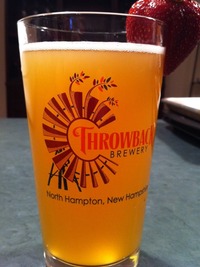
"description": "Throwback Brewery in New Hampshire is one of almost 20 New England breweries using malts from Massachusetts' micro-malt house Vally Malt.",
"title": "Throwback Brewery in New Hampshire is one of almost 20 New England breweries using malts from Massachusetts' micro-malt house Vally Malt.",
"credit": null,
"status": "inherit",
"isLoading": false,
"fetchFailed": false
},
"bayareabites_57843": {
"type": "attachments",
"id": "bayareabites_57843",
"meta": {
"index": "attachments_1716263798",
"site": "bayareabites",
"id": "57843",
"found": true
},
"parent": 57842,
"imgSizes": {
"kqedFullSize": {
"file": "https://ww2.kqed.org/app/uploads/sites/24/2013/03/istock_000020458833small_wide-2b698b5d9443d4ff962a572f9204862859313bac.jpg",
"width": 200,
"height": 112
}
},
"publishDate": 1362509548,
"modified": 1362509548,
"caption": null,
"description": "Most people polled said government programs to make fresh fruits and vegetables more affordable sound like a great idea, according to a new survey.",
"title": "Most people polled said government programs to make fresh fruits and vegetables more affordable sound like a great idea, according to a new survey.",
"credit": null,
"status": "inherit",
"isLoading": false,
"fetchFailed": false
},
"bayareabites_57744": {
"type": "attachments",
"id": "bayareabites_57744",
"meta": {
"index": "attachments_1716263798",
"site": "bayareabites",
"id": "57744",
"found": true
},
"parent": 57743,
"imgSizes": {
"kqedFullSize": {
"file": "https://ww2.kqed.org/app/uploads/sites/24/2013/03/russ-daughters-cutting-board-bagel-_wide-872bf47fffa96d4c771f4dfbf324ea885e750e14.jpg",
"width": 200,
"height": 112
}
},
"publishDate": 1362421285,
"modified": 1362421285,
"caption": null,
"description": "Russ and Daughters, which opened on the Lower East Side in 1914, specializes in smoked fish.",
"title": "Russ and Daughters, which opened on the Lower East Side in 1914, specializes in smoked fish.",
"credit": null,
"status": "inherit",
"isLoading": false,
"fetchFailed": false
},
"bayareabites_57680": {
"type": "attachments",
"id": "bayareabites_57680",
"meta": {
"index": "attachments_1716263798",
"site": "bayareabites",
"id": "57680",
"found": true
},
"parent": 57679,
"imgSizes": {
"kqedFullSize": {
"file": "https://ww2.kqed.org/app/uploads/sites/24/2013/03/soda-india-f4d9585ce33b882da36d021b7a3e0ce1f82f4777.jpg",
"width": 200,
"height": 149
}
},
"publishDate": 1362169383,
"modified": 1362169383,
"caption": "A performer drinks a soda in Ahmedabad, India in 2010. A study found that rising diabetes prevalence in countries like India is strongly tied to sugar consumption. Photo: Sam Panthaky/AFP/Getty Images",
"description": "A performer drinks a soda in Ahmedabad, India in 2010. A study found that rising diabetes prevalence in countries like India is strongly tied to sugar consumption.",
"title": "A performer drinks a soda in Ahmedabad, India in 2010. A study found that rising diabetes prevalence in countries like India is strongly tied to sugar consumption.",
"credit": null,
"status": "inherit",
"isLoading": false,
"fetchFailed": false
},
"bayareabites_57685": {
"type": "attachments",
"id": "bayareabites_57685",
"meta": {
"index": "attachments_1716263798",
"site": "bayareabites",
"id": "57685",
"found": true
},
"parent": 57684,
"imgSizes": {
"kqedFullSize": {
"file": "https://ww2.kqed.org/app/uploads/sites/24/2013/03/o-a-place-at-the-table-570_custom-91ecc63205db5013bf502f1bc7a653eb09983583.jpg",
"width": 200,
"height": 296
}
},
"publishDate": 1362268778,
"modified": 1362268778,
"caption": null,
"description": "The poster for the documentary \u003cem>A Place At The Table\u003c/em>.",
"title": "The poster for the documentary A Place At The Table.",
"credit": null,
"status": "inherit",
"isLoading": false,
"fetchFailed": false
},
"bayareabites_57663": {
"type": "attachments",
"id": "bayareabites_57663",
"meta": {
"index": "attachments_1716263798",
"site": "bayareabites",
"id": "57663",
"found": true
},
"parent": 57662,
"imgSizes": {
"kqedFullSize": {
"file": "https://ww2.kqed.org/app/uploads/sites/24/2013/03/blueberrypollinator_wide-01d0c4148a2d5664b00625e48ad4a535e21eeeb1.jpg",
"width": 200,
"height": 112
}
},
"publishDate": 1362158998,
"modified": 1362158998,
"caption": null,
"description": "Wild bees, such as this Andrena bee visiting highbush blueberry flowers, play a key role in boosting crop yields.",
"title": "Wild bees, such as this Andrena bee visiting highbush blueberry flowers, play a key role in boosting crop yields.",
"credit": null,
"status": "inherit",
"isLoading": false,
"fetchFailed": false
},
"bayareabites_57610": {
"type": "attachments",
"id": "bayareabites_57610",
"meta": {
"index": "attachments_1716263798",
"site": "bayareabites",
"id": "57610",
"found": true
},
"parent": 57609,
"imgSizes": {
"kqedFullSize": {
"file": "https://ww2.kqed.org/app/uploads/sites/24/2013/02/horse-86f78156ef3431872d7957cf4b0a836f964c8bf3.jpg",
"width": 200,
"height": 149
}
},
"publishDate": 1362076886,
"modified": 1362076886,
"caption": null,
"description": "The great horse meat scandal infographic.",
"title": "The great horse meat scandal infographic.",
"credit": null,
"status": "inherit",
"isLoading": false,
"fetchFailed": false
},
"bayareabites_57510": {
"type": "attachments",
"id": "bayareabites_57510",
"meta": {
"index": "attachments_1716263798",
"site": "bayareabites",
"id": "57510",
"found": true
},
"parent": 57509,
"imgSizes": {
"kqedFullSize": {
"file": "https://ww2.kqed.org/app/uploads/sites/24/2013/02/lentilsmain_wide-87f94b479b74ed420b74551f93899da319f5d8e9.jpg",
"width": 200,
"height": 112
}
},
"publishDate": 1361951884,
"modified": 1361951884,
"caption": null,
"description": "Three types of lentils in jars",
"title": "Three types of lentils in jars",
"credit": null,
"status": "inherit",
"isLoading": false,
"fetchFailed": false
},
"bayareabites_57462": {
"type": "attachments",
"id": "bayareabites_57462",
"meta": {
"index": "attachments_1716263798",
"site": "bayareabites",
"id": "57462",
"found": true
},
"parent": 57461,
"imgSizes": {
"kqedFullSize": {
"file": "https://ww2.kqed.org/app/uploads/sites/24/2013/02/istock_000013301504xsmall-f6cb6d0e50842ac2703fbc540f20d81c9a18d512.jpg",
"width": 200,
"height": 149
}
},
"publishDate": 1361923378,
"modified": 1361923378,
"caption": null,
"description": "Potato chips",
"title": "Potato chips",
"credit": null,
"status": "inherit",
"isLoading": false,
"fetchFailed": false
},
"bayareabites_57449": {
"type": "attachments",
"id": "bayareabites_57449",
"meta": {
"index": "attachments_1716263798",
"site": "bayareabites",
"id": "57449",
"found": true
},
"parent": 57448,
"imgSizes": {
"kqedFullSize": {
"file": "https://ww2.kqed.org/app/uploads/sites/24/2013/02/grocerygirl_wide-2a46dd8052c534f1dc04f3fbdb65647ff28e2210.jpg",
"width": 200,
"height": 112
}
},
"publishDate": 1361897045,
"modified": 1361897045,
"caption": null,
"description": "Oxfam's \"report card\" evaluates giants of the supermarket aisle on their commitment to social and environmental issues",
"title": "Oxfam's \"report card\" evaluates giants of the supermarket aisle on their commitment to social and environmental issues.",
"credit": null,
"status": "inherit",
"isLoading": false,
"fetchFailed": false
},
"bayareabites_57382": {
"type": "attachments",
"id": "bayareabites_57382",
"meta": {
"index": "attachments_1716263798",
"site": "bayareabites",
"id": "57382",
"found": true
},
"parent": 57381,
"imgSizes": {
"kqedFullSize": {
"file": "https://ww2.kqed.org/app/uploads/sites/24/2013/02/oliveoil_wide-7b9ee071a13a3dba8d2f495200807c76e95a4dd9.jpg",
"width": 200,
"height": 112
}
},
"publishDate": 1361815517,
"modified": 1361815517,
"caption": null,
"description": null,
"title": "Don't hold back on the olive oil, a Spanish study concludes.",
"credit": null,
"status": "inherit",
"isLoading": false,
"fetchFailed": false
},
"bayareabites_57371": {
"type": "attachments",
"id": "bayareabites_57371",
"meta": {
"index": "attachments_1716263798",
"site": "bayareabites",
"id": "57371",
"found": true
},
"parent": 57370,
"imgSizes": {
"kqedFullSize": {
"file": "https://ww2.kqed.org/app/uploads/sites/24/2013/02/ikeaballscc-fc410c850e8b439e48aedbf3b5136b01f03f87b8.jpg",
"width": 200,
"height": 149
}
},
"publishDate": 1361814228,
"modified": 1361814228,
"caption": "For many, Swedish meatballs are part of the allure of shopping at Ikea. Photo: Marit & Toomas Hinnosaar/Flickr",
"description": "For many, Swedish meatballs are part of the allure of shopping at Ikea.",
"title": "For many, Swedish meatballs are part of the allure of shopping at Ikea.",
"credit": null,
"status": "inherit",
"isLoading": false,
"fetchFailed": false
}
},
"audioPlayerReducer": {
"postId": "stream_live",
"isPaused": true,
"isPlaying": false,
"pfsActive": false,
"pledgeModalIsOpen": true,
"playerDrawerIsOpen": false,
"liveAudioPlayStartedAt": 0,
"liveAudioPlayContext": ""
},
"authorsReducer": {
"byline_bayareabites_57874": {
"type": "authors",
"id": "byline_bayareabites_57874",
"meta": {
"override": true
},
"slug": "byline_bayareabites_57874",
"name": "April Fehling",
"isLoading": false
},
"byline_bayareabites_57842": {
"type": "authors",
"id": "byline_bayareabites_57842",
"meta": {
"override": true
},
"slug": "byline_bayareabites_57842",
"name": "Nancy Shute",
"isLoading": false
},
"byline_bayareabites_57743": {
"type": "authors",
"id": "byline_bayareabites_57743",
"meta": {
"override": true
},
"slug": "byline_bayareabites_57743",
"name": "Joel Rose",
"isLoading": false
},
"byline_bayareabites_57679": {
"type": "authors",
"id": "byline_bayareabites_57679",
"meta": {
"override": true
},
"slug": "byline_bayareabites_57679",
"name": "Eliza Barclay",
"isLoading": false
},
"byline_bayareabites_57684": {
"type": "authors",
"id": "byline_bayareabites_57684",
"meta": {
"override": true
},
"slug": "byline_bayareabites_57684",
"name": "Allison Aubrey",
"isLoading": false
},
"byline_bayareabites_57662": {
"type": "authors",
"id": "byline_bayareabites_57662",
"meta": {
"override": true
},
"slug": "byline_bayareabites_57662",
"name": "Dan Charles",
"isLoading": false
},
"byline_bayareabites_57609": {
"type": "authors",
"id": "byline_bayareabites_57609",
"meta": {
"override": true
},
"slug": "byline_bayareabites_57609",
"name": "Nancy Shute",
"isLoading": false
},
"byline_bayareabites_57509": {
"type": "authors",
"id": "byline_bayareabites_57509",
"meta": {
"override": true
},
"slug": "byline_bayareabites_57509",
"name": "T. Susan Chang",
"isLoading": false
},
"byline_bayareabites_57461": {
"type": "authors",
"id": "byline_bayareabites_57461",
"meta": {
"override": true
},
"slug": "byline_bayareabites_57461",
"name": "Nell Boeschenstein",
"isLoading": false
},
"byline_bayareabites_57448": {
"type": "authors",
"id": "byline_bayareabites_57448",
"meta": {
"override": true
},
"slug": "byline_bayareabites_57448",
"name": "Dan Charles",
"isLoading": false
},
"byline_bayareabites_57381": {
"type": "authors",
"id": "byline_bayareabites_57381",
"meta": {
"override": true
},
"slug": "byline_bayareabites_57381",
"name": "Scott Hensley",
"isLoading": false
},
"byline_bayareabites_57370": {
"type": "authors",
"id": "byline_bayareabites_57370",
"meta": {
"override": true
},
"slug": "byline_bayareabites_57370",
"name": "Maria Godoy",
"isLoading": false
}
},
"pagesReducer": {
"bayareabites_category_npr-food": {
"type": "terms",
"id": "bayareabites_10916",
"meta": {
"index": "terms_1716263798",
"site": "bayareabites",
"id": "10916",
"score": 13.894455
},
"featImg": null,
"name": "NPR food",
"description": null,
"taxonomy": "category",
"headData": {
"twImgId": null,
"twTitle": null,
"ogTitle": null,
"ogImgId": null,
"twDescription": null,
"description": null,
"title": "NPR food Archives | KQED Bay Area Bites",
"ogDescription": null
},
"ttid": 5375,
"slug": "npr-food",
"isLoading": false,
"title": "NPR food",
"pageMeta": {
"site": "bayareabites",
"WpPageTemplate": "page-topic-editorial",
"currentPage": 88
},
"blocks": [
{
"blockName": "kqed/post-list",
"attrs": {
"layout": "cardArticle2",
"query": "posts/bayareabites?category=npr-food",
"seeMore": false,
"paginated": true,
"page": 88
}
},
{
"blockName": "kqed/ad"
}
]
}
},
"pfsSessionReducer": {},
"postsReducer": {
"stream_live": {
"type": "live",
"id": "stream_live",
"audioUrl": "https://hls.kqed.org/hls/kqed_app/playlist.m3u8",
"title": "Live Stream",
"excerpt": "Live Stream information currently unavailable.",
"link": "/radio",
"featImg": "",
"label": {
"name": "KQED Live",
"link": "/"
}
},
"stream_kqedNewscast": {
"type": "posts",
"id": "stream_kqedNewscast",
"audioUrl": "https://www.kqed.org/.stream/anon/radio/RDnews/newscast.mp3?_=1",
"title": "KQED Newscast",
"featImg": "",
"label": {
"name": "88.5 FM",
"link": "/"
}
},
"bayareabites_57874": {
"type": "posts",
"id": "bayareabites_57874",
"meta": {
"index": "posts_1716263798",
"site": "bayareabites",
"id": "57874",
"score": null,
"sort": [
1362521343000
]
},
"parent": 0,
"labelTerm": {
"site": "bayareabites"
},
"blocks": [],
"publishDate": 1362521343,
"format": "aside",
"disqusTitle": "Who Grew Your Pint? How Craft Brews Boost Local Farmers",
"title": "Who Grew Your Pint? How Craft Brews Boost Local Farmers",
"headTitle": "Bay Area Bites | KQED Food",
"content": "\u003cfigure id=\"attachment_57882\" class=\"wp-caption aligncenter\" style=\"max-width: 890px\">\u003ca href=\"http://ww2.kqed.org/bayareabites/wp-content/uploads/sites/24/2013/03/malt.jpg\">\u003cimg src=\"http://ww2.kqed.org/bayareabites/wp-content/uploads/sites/24/2013/03/malt.jpg\" alt=\"North Carolina farmers Buddy Hoffner (left) and son Chris have been growing barley for Riverbend Malt House in Asheville since 2010. Riverbend then processes the grain into malt for use by local breweries Photo: Salisbury Post/Karissa Minn\" width=\"890\" height=\"500\" class=\"size-full wp-image-57882\">\u003c/a>\u003cfigcaption class=\"wp-caption-text\">North Carolina farmers Buddy Hoffner (left) and son Chris have been growing barley for Riverbend Malt House in Asheville since 2010. Riverbend then processes the grain into malt for use by local breweries Photo: Salisbury Post/Karissa Minn\u003c/figcaption>\u003c/figure>\n\u003cp>\u003cstrong>Post by April Fehling\u003c/strong>, \u003ca href=\"http://www.npr.org/blogs/thesalt/2013/02/07/171409157/who-grew-your-pint-how-craft-brews-boost-local-farmers\">The Salt at NPR Food\u003c/a> (3/5/13)\u003c/p>\n\u003cp>Brent Manning is a maltster on a mission. The co-founder of Riverbend Malt House in Asheville, N.C., wants people to be able to taste local grains in North Carolina's beers, just as vino aficionados can identify the provenance of fine wines.\u003c/p>\n\u003cp>\"In the wine industry ... they will tell you that the No. 1 Syrah grape grows on this hillside over here because it's a bit rockier,\" Manning explains. \"It's that very same connection to the soil and the underlying geology that creates these nuances in flavors.\"\u003c/p>\n\u003cp>And a critical element in creating beer with truly local flavor, Manning contends, is malt made from local grains.\u003c/p>\n\u003cp>Asheville's beer lovers are \"farm-to-table, local, local, local-focused,\" Manning says. But when he and business partner Brian Simpson opened \u003ca href=\"http://riverbendmalt.com/\" target=\"_blank\">Riverbend\u003c/a> in 2010, \"it was almost comical that with so much of this local beer, the only thing local [in the beer] was the water.\"\u003c/p>\n\u003cfigure id=\"attachment_57883\" class=\"wp-caption alignleft\" style=\"max-width: 290px\">\u003ca href=\"http://ww2.kqed.org/bayareabites/wp-content/uploads/sites/24/2013/03/malt1.jpg\">\u003cimg src=\"http://ww2.kqed.org/bayareabites/wp-content/uploads/sites/24/2013/03/malt1-290x217.jpg\" alt=\"Valley Malt, in Hadley, Mass., works with 25 farmers growing six different types of grain in the Northeast. Photo: Courtesy of Valley Malt\" width=\"290\" height=\"217\" class=\"size-medium wp-image-57883\">\u003c/a>\u003cfigcaption class=\"wp-caption-text\">Valley Malt, in Hadley, Mass., works with 25 farmers growing six different types of grain in the Northeast. Photo: Courtesy of Valley Malt\u003c/figcaption>\u003c/figure>\n\u003cp>As we've reported, water certainly can \u003ca href=\"http://www.npr.org/blogs/thesalt/2012/06/09/154574766/to-grow-a-craft-beer-business-the-secrets-in-the-water\" target=\"_blank\">impart flavor to beer\u003c/a>. But when it comes to creating a distinct North Carolina flavor, Manning is focused on locally sourced malt.\u003c/p>\n\u003cp>[ad fullwidth]\u003c/p>\n\u003cp>Malt is an essential element in beer, along with water, hops and yeast. But while most beer drinkers know that malt comes from grain, many have no idea how it's made.\u003c/p>\n\u003cp>That's where the maltster — yes, that's the name for people who malt — comes in: between the farmer, who grows the grain, and the brewer, who makes the beer.\u003c/p>\n\u003cp>To make malt, the raw grain (typically barley, wheat or rye) is sprouted in water, then dried. \u003ca href=\"http://riverbendmalt.com/?page_id=115\" target=\"_blank\">The process\u003c/a> creates enzymes, breaks down the starch in the grain and produces sugars — all critical before brewing can begin.\u003c/p>\n\u003cp>For decades, breweries have typically purchased their malt from large-scale, mechanized facilities that pool massive volumes of grains grown throughout the U.S., Canada and Europe.\u003c/p>\n\u003cp>The explosion of microbreweries in recent years has spurred a small but growing craft malt industry, where tiny malt houses — facilities where malt is produced — conduct the malting process, often entirely by hand.\u003c/p>\n\u003cp>Emphasis on small. Andrea Stanley, who opened \u003ca href=\"http://www.valleymalt.com/\" target=\"_blank\">Valley Malt\u003c/a> in Hadley, Mass., with her husband in 2010, says their business produces in one year what a typical Midwest malt house processes in a single day.\u003c/p>\n\u003cfigure id=\"attachment_57884\" class=\"wp-caption alignleft\" style=\"max-width: 216px\">\u003ca href=\"http://ww2.kqed.org/bayareabites/wp-content/uploads/sites/24/2013/03/malt2.jpg\">\u003cimg src=\"http://ww2.kqed.org/bayareabites/wp-content/uploads/sites/24/2013/03/malt2-216x290.jpg\" alt=\"Throwback Brewery in New Hampshire is one of almost 20 New England breweries using malts from Massachusetts' micro-malt house Vally Malt. Photo: Courtesy of Throwback Brewery\" width=\"216\" height=\"290\" class=\"size-medium wp-image-57884\">\u003c/a>\u003cfigcaption class=\"wp-caption-text\">Throwback Brewery in New Hampshire is one of almost 20 New England breweries using malts from Massachusetts' micro-malt house Vally Malt. Photo: Courtesy of Throwback Brewery\u003c/figcaption>\u003c/figure>\n\u003cp>Back in Asheville, Brent Manning acknowledges that Riverbend also \"is microscopic on the grain-buyer scale right now.\"\u003c/p>\n\u003cp>But micro-malting isn't about being big, after all. Riverbend's goal, Manning says, is \"to create another niche market for these farmers to sell their grain to.\"\u003c/p>\n\u003cp>That's certainly true for farmer Peter Martens, who grows a variety of grains on his certified organic farm in New York's Finger Lakes region. In 2010, he and his father planted 20 acres of malting barley for Valley Malt, \"more out of curiosity than anything else.\"\u003c/p>\n\u003cp>This year, they've planted more than 80 acres of malting barley. With demand strong, Martens is considering boosting production even further.\u003c/p>\n\u003cp>Craft malt houses have another benefit for farmers, says Manning: They offer some insurance against the vagaries of the market. Farmers' livelihoods depend on the price they get when they sell their product — and that price can vary wildly. Riverbend's goal \"was to get farmers out of that commodity price loop,\" Manning says.\u003c/p>\n\u003cp>Amy Poirier says that has proven true on her family's farm, \u003ca href=\"http://www.hoffnerorganicfarms.com/\">Hoffner Organic Farms\u003c/a>, in Mount Ulla, N.C. Contracting with Riverbend has guaranteed a set price for their barley each year, she says. \"So those fluctuations,\" Poirier says, \"we don't have to worry about them as much.\"\u003c/p>\n\u003cp>Back in upstate New York, farmer Peter Martens says he's now getting calls regularly from new maltsters looking for certified organic barley.\u003c/p>\n\u003cp>More importantly, the craft maltsters \"seem to be really knowledgeable about what they're doing\" — and intent on building a business model that can last, Martens says.\u003c/p>\n\u003cp>Brewing locally sourced beer is a business, after all, which means everyone in the production chain must have an eye toward staying in the black. Even so, the locavore ethos is alive and well.\u003c/p>\n\u003cp>In Massachusetts, for instance, Valley Malt encourages small farmers just learning how to grow grain for malt, Andrea Stanley says. She and her husband currently work with 25 farmers and offer assistance with seed, equipment and harvesting.\u003c/p>\n\u003cp>\u003c/p>\n\u003cp>\"It is a lot of coordination and a lot of work,\" Stanley says. \"I could easily just tell one of our [more experienced] farmers, 'Can you plant more acres for me?' ... But for now, we have certain values that are driving our business that just aren't about the bottom line.\"\u003cbr>\n\u003cem>\u003cbr>\nCopyright 2013 \u003ca href=\"http://www.npr.org/\">NPR\u003c/a>.\u003c/em> \u003c/p>\n\n",
"disqusIdentifier": "57874 http://blogs.kqed.org/bayareabites/?p=57874",
"disqusUrl": "https://ww2.kqed.org/bayareabites/2013/03/05/who-grew-your-pint-how-craft-brews-boost-local-farmers/",
"stats": {
"hasVideo": false,
"hasChartOrMap": false,
"hasAudio": false,
"hasPolis": false,
"wordCount": 886,
"hasGoogleForm": false,
"hasGallery": false,
"hasHearkenModule": false,
"iframeSrcs": [],
"paragraphCount": 25
},
"modified": 1362521343,
"excerpt": "Malt is an essential component of beer, but most comes from a handful of industrial processors that pool grains from across the U.S. and Canada. Now, a small but growing number of craft malt houses are malting grains from small regional farmers, enabling microbreweries to offer truly local beers.",
"headData": {
"twImgId": "",
"twTitle": "",
"ogTitle": "",
"ogImgId": "",
"twDescription": "",
"description": "Malt is an essential component of beer, but most comes from a handful of industrial processors that pool grains from across the U.S. and Canada. Now, a small but growing number of craft malt houses are malting grains from small regional farmers, enabling microbreweries to offer truly local beers.",
"title": "Who Grew Your Pint? How Craft Brews Boost Local Farmers | KQED",
"ogDescription": "",
"schema": {
"@context": "https://schema.org",
"@type": "Article",
"headline": "Who Grew Your Pint? How Craft Brews Boost Local Farmers",
"datePublished": "2013-03-05T14:09:03-08:00",
"dateModified": "2013-03-05T14:09:03-08:00",
"image": "https://cdn.kqed.org/wp-content/uploads/2020/02/KQED-OG-Image@1x.png"
}
},
"guestAuthors": [],
"slug": "who-grew-your-pint-how-craft-brews-boost-local-farmers",
"status": "publish",
"nprApiLink": "http://api.npr.org/query?id=171409157&apiKey=MDAxOTAwOTE4MDEyMTkxMDAzNjczZDljZA004",
"nprByline": "April Fehling",
"nprStoryDate": "Tue, 05 Mar 2013 14:49:00 -0500",
"nprLastModifiedDate": "Tue, 05 Mar 2013 15:27:50 -0500",
"nprHtmlLink": "http://www.npr.org/blogs/thesalt/2013/02/07/171409157/who-grew-your-pint-how-craft-brews-boost-local-farmers?ft=3&f=171409157",
"nprStoryId": "171409157",
"nprRetrievedStory": "1",
"nprPubDate": "Tue, 05 Mar 2013 15:27:00 -0500",
"path": "/bayareabites/57874/who-grew-your-pint-how-craft-brews-boost-local-farmers",
"audioTrackLength": null,
"parsedContent": [
{
"type": "contentString",
"content": "\u003cdiv class=\"post-body\">\u003cp>\u003cfigure id=\"attachment_57882\" class=\"wp-caption aligncenter\" style=\"max-width: 890px\">\u003ca href=\"http://ww2.kqed.org/bayareabites/wp-content/uploads/sites/24/2013/03/malt.jpg\">\u003cimg src=\"http://ww2.kqed.org/bayareabites/wp-content/uploads/sites/24/2013/03/malt.jpg\" alt=\"North Carolina farmers Buddy Hoffner (left) and son Chris have been growing barley for Riverbend Malt House in Asheville since 2010. Riverbend then processes the grain into malt for use by local breweries Photo: Salisbury Post/Karissa Minn\" width=\"890\" height=\"500\" class=\"size-full wp-image-57882\">\u003c/a>\u003cfigcaption class=\"wp-caption-text\">North Carolina farmers Buddy Hoffner (left) and son Chris have been growing barley for Riverbend Malt House in Asheville since 2010. Riverbend then processes the grain into malt for use by local breweries Photo: Salisbury Post/Karissa Minn\u003c/figcaption>\u003c/figure>\n\u003cp>\u003cstrong>Post by April Fehling\u003c/strong>, \u003ca href=\"http://www.npr.org/blogs/thesalt/2013/02/07/171409157/who-grew-your-pint-how-craft-brews-boost-local-farmers\">The Salt at NPR Food\u003c/a> (3/5/13)\u003c/p>\n\u003cp>Brent Manning is a maltster on a mission. The co-founder of Riverbend Malt House in Asheville, N.C., wants people to be able to taste local grains in North Carolina's beers, just as vino aficionados can identify the provenance of fine wines.\u003c/p>\n\u003cp>\"In the wine industry ... they will tell you that the No. 1 Syrah grape grows on this hillside over here because it's a bit rockier,\" Manning explains. \"It's that very same connection to the soil and the underlying geology that creates these nuances in flavors.\"\u003c/p>\n\u003cp>And a critical element in creating beer with truly local flavor, Manning contends, is malt made from local grains.\u003c/p>\n\u003cp>Asheville's beer lovers are \"farm-to-table, local, local, local-focused,\" Manning says. But when he and business partner Brian Simpson opened \u003ca href=\"http://riverbendmalt.com/\" target=\"_blank\">Riverbend\u003c/a> in 2010, \"it was almost comical that with so much of this local beer, the only thing local [in the beer] was the water.\"\u003c/p>\n\u003cfigure id=\"attachment_57883\" class=\"wp-caption alignleft\" style=\"max-width: 290px\">\u003ca href=\"http://ww2.kqed.org/bayareabites/wp-content/uploads/sites/24/2013/03/malt1.jpg\">\u003cimg src=\"http://ww2.kqed.org/bayareabites/wp-content/uploads/sites/24/2013/03/malt1-290x217.jpg\" alt=\"Valley Malt, in Hadley, Mass., works with 25 farmers growing six different types of grain in the Northeast. Photo: Courtesy of Valley Malt\" width=\"290\" height=\"217\" class=\"size-medium wp-image-57883\">\u003c/a>\u003cfigcaption class=\"wp-caption-text\">Valley Malt, in Hadley, Mass., works with 25 farmers growing six different types of grain in the Northeast. Photo: Courtesy of Valley Malt\u003c/figcaption>\u003c/figure>\n\u003cp>As we've reported, water certainly can \u003ca href=\"http://www.npr.org/blogs/thesalt/2012/06/09/154574766/to-grow-a-craft-beer-business-the-secrets-in-the-water\" target=\"_blank\">impart flavor to beer\u003c/a>. But when it comes to creating a distinct North Carolina flavor, Manning is focused on locally sourced malt.\u003c/p>\n\u003cp>\u003c/p>\u003c/div>",
"attributes": {
"named": {},
"numeric": []
}
},
{
"type": "component",
"content": "",
"name": "ad",
"attributes": {
"named": {
"label": "fullwidth"
},
"numeric": [
"fullwidth"
]
}
},
{
"type": "contentString",
"content": "\u003cdiv class=\"post-body\">\u003cp>\u003c/p>\n\u003cp>Malt is an essential element in beer, along with water, hops and yeast. But while most beer drinkers know that malt comes from grain, many have no idea how it's made.\u003c/p>\n\u003cp>That's where the maltster — yes, that's the name for people who malt — comes in: between the farmer, who grows the grain, and the brewer, who makes the beer.\u003c/p>\n\u003cp>To make malt, the raw grain (typically barley, wheat or rye) is sprouted in water, then dried. \u003ca href=\"http://riverbendmalt.com/?page_id=115\" target=\"_blank\">The process\u003c/a> creates enzymes, breaks down the starch in the grain and produces sugars — all critical before brewing can begin.\u003c/p>\n\u003cp>For decades, breweries have typically purchased their malt from large-scale, mechanized facilities that pool massive volumes of grains grown throughout the U.S., Canada and Europe.\u003c/p>\n\u003cp>The explosion of microbreweries in recent years has spurred a small but growing craft malt industry, where tiny malt houses — facilities where malt is produced — conduct the malting process, often entirely by hand.\u003c/p>\n\u003cp>Emphasis on small. Andrea Stanley, who opened \u003ca href=\"http://www.valleymalt.com/\" target=\"_blank\">Valley Malt\u003c/a> in Hadley, Mass., with her husband in 2010, says their business produces in one year what a typical Midwest malt house processes in a single day.\u003c/p>\n\u003cfigure id=\"attachment_57884\" class=\"wp-caption alignleft\" style=\"max-width: 216px\">\u003ca href=\"http://ww2.kqed.org/bayareabites/wp-content/uploads/sites/24/2013/03/malt2.jpg\">\u003cimg src=\"http://ww2.kqed.org/bayareabites/wp-content/uploads/sites/24/2013/03/malt2-216x290.jpg\" alt=\"Throwback Brewery in New Hampshire is one of almost 20 New England breweries using malts from Massachusetts' micro-malt house Vally Malt. Photo: Courtesy of Throwback Brewery\" width=\"216\" height=\"290\" class=\"size-medium wp-image-57884\">\u003c/a>\u003cfigcaption class=\"wp-caption-text\">Throwback Brewery in New Hampshire is one of almost 20 New England breweries using malts from Massachusetts' micro-malt house Vally Malt. Photo: Courtesy of Throwback Brewery\u003c/figcaption>\u003c/figure>\n\u003cp>Back in Asheville, Brent Manning acknowledges that Riverbend also \"is microscopic on the grain-buyer scale right now.\"\u003c/p>\n\u003cp>But micro-malting isn't about being big, after all. Riverbend's goal, Manning says, is \"to create another niche market for these farmers to sell their grain to.\"\u003c/p>\n\u003cp>That's certainly true for farmer Peter Martens, who grows a variety of grains on his certified organic farm in New York's Finger Lakes region. In 2010, he and his father planted 20 acres of malting barley for Valley Malt, \"more out of curiosity than anything else.\"\u003c/p>\n\u003cp>This year, they've planted more than 80 acres of malting barley. With demand strong, Martens is considering boosting production even further.\u003c/p>\n\u003cp>Craft malt houses have another benefit for farmers, says Manning: They offer some insurance against the vagaries of the market. Farmers' livelihoods depend on the price they get when they sell their product — and that price can vary wildly. Riverbend's goal \"was to get farmers out of that commodity price loop,\" Manning says.\u003c/p>\n\u003cp>Amy Poirier says that has proven true on her family's farm, \u003ca href=\"http://www.hoffnerorganicfarms.com/\">Hoffner Organic Farms\u003c/a>, in Mount Ulla, N.C. Contracting with Riverbend has guaranteed a set price for their barley each year, she says. \"So those fluctuations,\" Poirier says, \"we don't have to worry about them as much.\"\u003c/p>\n\u003cp>Back in upstate New York, farmer Peter Martens says he's now getting calls regularly from new maltsters looking for certified organic barley.\u003c/p>\n\u003cp>More importantly, the craft maltsters \"seem to be really knowledgeable about what they're doing\" — and intent on building a business model that can last, Martens says.\u003c/p>\n\u003cp>Brewing locally sourced beer is a business, after all, which means everyone in the production chain must have an eye toward staying in the black. Even so, the locavore ethos is alive and well.\u003c/p>\n\u003cp>In Massachusetts, for instance, Valley Malt encourages small farmers just learning how to grow grain for malt, Andrea Stanley says. She and her husband currently work with 25 farmers and offer assistance with seed, equipment and harvesting.\u003c/p>\n\u003cp>\u003c/p>\n\u003cp>\"It is a lot of coordination and a lot of work,\" Stanley says. \"I could easily just tell one of our [more experienced] farmers, 'Can you plant more acres for me?' ... But for now, we have certain values that are driving our business that just aren't about the bottom line.\"\u003cbr>\n\u003cem>\u003cbr>\nCopyright 2013 \u003ca href=\"http://www.npr.org/\">NPR\u003c/a>.\u003c/em> \u003c/p>\n\n\u003c/div>\u003c/p>",
"attributes": {
"named": {},
"numeric": []
}
}
],
"link": "/bayareabites/57874/who-grew-your-pint-how-craft-brews-boost-local-farmers",
"authors": [
"byline_bayareabites_57874"
],
"categories": [
"bayareabites_301",
"bayareabites_1874",
"bayareabites_4084",
"bayareabites_10916"
],
"tags": [
"bayareabites_11327",
"bayareabites_14753",
"bayareabites_11329",
"bayareabites_4214",
"bayareabites_11325",
"bayareabites_11324",
"bayareabites_11328",
"bayareabites_11326",
"bayareabites_10921"
],
"featImg": "bayareabites_57876",
"label": "bayareabites"
},
"bayareabites_57842": {
"type": "posts",
"id": "bayareabites_57842",
"meta": {
"index": "posts_1716263798",
"site": "bayareabites",
"id": "57842",
"score": null,
"sort": [
1362509955000
]
},
"parent": 0,
"labelTerm": {
"site": "bayareabites"
},
"blocks": [],
"publishDate": 1362509955,
"format": "aside",
"disqusTitle": "Give Me Liberty, And Give Me Government-Subsidized Broccoli ",
"title": "Give Me Liberty, And Give Me Government-Subsidized Broccoli ",
"headTitle": "Bay Area Bites | KQED Food",
"content": "\u003cfigure id=\"attachment_57848\" class=\"wp-caption aligncenter\" style=\"max-width: 843px\">\u003ca href=\"http://ww2.kqed.org/bayareabites/wp-content/uploads/sites/24/2013/03/produce.jpg\">\u003cimg src=\"http://ww2.kqed.org/bayareabites/wp-content/uploads/sites/24/2013/03/produce.jpg\" alt=\"Most people polled said government programs to make fresh fruits and vegetables more affordable sound like a great idea, according to a new survey. Photo: iStockphoto.com\" width=\"843\" height=\"473\" class=\"size-full wp-image-57848\">\u003c/a>\u003cfigcaption class=\"wp-caption-text\">Most people polled said government programs to make fresh fruits and vegetables more affordable sound like a great idea, according to a new survey. Photo: iStockphoto.com\u003c/figcaption>\u003c/figure>\n\u003cp>\u003cstrong>Post by Nancy Shute\u003c/strong>, \u003ca href=\"http://www.npr.org/blogs/thesalt/2013/03/05/173518468/give-me-liberty-and-give-me-government-subsidized-broccoli\">The Salt at NPR Food\u003c/a> (3/5/13)\u003c/p>\n\u003cp>Americans are all for government efforts to get them to eat more healthfully, as long as they don't feel like they're being bullied into it. That's what people said in a new survey about government efforts to influence how we eat, like New York City's ban on supersized sodas.\u003c/p>\n\u003cp>In the past decade, state and federal governments have launched dozens of new laws and programs to promote healthful eating and exercise. They've put a lot of effort into measuring what works, but surprisingly little effort into finding out what the people at the receiving end think.\u003c/p>\n\u003cp>So researchers at Harvard's School of Public Health asked. The 1,817 people polled were surprisingly positive about these new public health laws. They backed efforts to get kids exercising more, with 88 percent saying that public school kids should be required to have 45 minutes of physical activity each day. Making fresh fruits and vegetables more affordable, and requiring restaurants to post calorie counts, also won a big majority of votes.\u003c/p>\n\u003cp>Three-quarters of people said that food manufacturers and chain restaurants should be told to cut the salt content of their foods. And 76 percent of those surveyed said that banning the use of food stamps to buy soda and other sugary beverages was good policy.\u003c/p>\n\u003cp>[ad fullwidth]\u003c/p>\n\u003cp>But laws that came across as punitive were a lot less popular.\u003c/p>\n\u003cp>Less than one-third of people said students should be punished for having soda or other junk foods at school. A proposal to charge a $50 insurance surcharge for obese people was also a nonstarter. People were worried about how these sorts of programs would affect their liberty and privacy, with objections such as \"government should stay out of matters like what people eat.\"\u003c/p>\n\u003cp>\"We clearly saw that the more coercion was involved, the more people you lost,\" says \u003ca href=\"http://www.hsph.harvard.edu/michelle-mello/\">Michelle Mello\u003c/a>, a professor of law and public health at the Harvard School of Public Health, who was a co-author of the \u003ca href=\"http://www.healthaffairs.org/Media/toc/2013_03_toc.pdf\">study\u003c/a>. It was published in the March \u003cem>Health Affairs\u003c/em>.\u003c/p>\n\u003cp>The researchers were surprised to find that people with health problems like obesity and diabetes didn't object to new laws targeting them.\u003c/p>\n\u003cp>\"We thought that people who felt like targets would be much less likely to support them,\" says \u003ca href=\"http://peh.harvard.edu/people/morain.html\">Stephanie Morain\u003c/a>, a graduate student in ethics who co-authored the study. \"That wasn't true.\"\u003c/p>\n\u003cp>Smokers were the only ones to object to programs aimed at them — perhaps, the authors say, because such programs target a behavior rather than a disease.\u003c/p>\n\u003cp>Younger people and women said they were more comfortable with the government telling them how to eat than were older white men. But perhaps the biggest surprise was the strong support for government intervention from the African-American and Hispanic respondents.\u003c/p>\n\u003cp>African-Americans were two to four times more likely to support government action than whites, especially when it came to helping people control diabetes, and \u003ca href=\"http://www.npr.org/2012/01/09/144799538/controversy-swirls-around-harsh-anti-obesity-ads\">preventing childhood obesity\u003c/a>. And Hispanics were more likely than whites to support programs to prevent diabetes and heart disease.\u003c/p>\n\u003cp>\"People seemed to be advancing the welfare of their social group,\" says Morain, noting that African-American communities suffer disproportionately from obesity and diabetes.\u003c/p>\n\u003cp>\u003c/p>\n\u003cp>But though people are pretty supportive overall, the results make it clear that they're more likely to buy in if they feel like public health officials understand their values, and they have a voice in the process. \"If people feel like they're engaged in the policy-making process, they're more engaged across the board,\" Mello says.\u003cbr>\n\u003cem>\u003cbr>\nCopyright 2013 \u003ca href=\"http://www.npr.org/\">NPR\u003c/a>.\u003c/em> \u003c/p>\n\n",
"disqusIdentifier": "57842 http://blogs.kqed.org/bayareabites/?p=57842",
"disqusUrl": "https://ww2.kqed.org/bayareabites/2013/03/05/give-me-liberty-and-give-me-government-subsidized-broccoli/",
"stats": {
"hasVideo": false,
"hasChartOrMap": false,
"hasAudio": false,
"hasPolis": false,
"wordCount": 638,
"hasGoogleForm": false,
"hasGallery": false,
"hasHearkenModule": false,
"iframeSrcs": [],
"paragraphCount": 17
},
"modified": 1362510340,
"excerpt": "People don't mind new laws telling them how to eat, as long as they feel like they're not being coerced. That's the finding of a new study from the Harvard School of Public Health, which took the unusual step of asking people what they thought about government efforts to encourage healthy eating.",
"headData": {
"twImgId": "",
"twTitle": "",
"ogTitle": "",
"ogImgId": "",
"twDescription": "",
"description": "People don't mind new laws telling them how to eat, as long as they feel like they're not being coerced. That's the finding of a new study from the Harvard School of Public Health, which took the unusual step of asking people what they thought about government efforts to encourage healthy eating.",
"title": "Give Me Liberty, And Give Me Government-Subsidized Broccoli | KQED",
"ogDescription": "",
"schema": {
"@context": "https://schema.org",
"@type": "Article",
"headline": "Give Me Liberty, And Give Me Government-Subsidized Broccoli ",
"datePublished": "2013-03-05T10:59:15-08:00",
"dateModified": "2013-03-05T11:05:40-08:00",
"image": "https://cdn.kqed.org/wp-content/uploads/2020/02/KQED-OG-Image@1x.png"
}
},
"guestAuthors": [],
"slug": "give-me-liberty-and-give-me-government-subsidized-broccoli",
"status": "publish",
"nprApiLink": "http://api.npr.org/query?id=173518468&apiKey=MDAxOTAwOTE4MDEyMTkxMDAzNjczZDljZA004",
"nprByline": "Nancy Shute",
"nprStoryDate": "Tue, 05 Mar 2013 13:15:00 -0500",
"nprLastModifiedDate": "Tue, 05 Mar 2013 13:16:57 -0500",
"nprHtmlLink": "http://www.npr.org/blogs/thesalt/2013/03/05/173518468/give-me-liberty-and-give-me-government-subsidized-broccoli?ft=3&f=173518468",
"nprStoryId": "173518468",
"nprRetrievedStory": "1",
"nprPubDate": "Tue, 05 Mar 2013 13:16:00 -0500",
"path": "/bayareabites/57842/give-me-liberty-and-give-me-government-subsidized-broccoli",
"audioTrackLength": null,
"parsedContent": [
{
"type": "contentString",
"content": "\u003cdiv class=\"post-body\">\u003cp>\u003cfigure id=\"attachment_57848\" class=\"wp-caption aligncenter\" style=\"max-width: 843px\">\u003ca href=\"http://ww2.kqed.org/bayareabites/wp-content/uploads/sites/24/2013/03/produce.jpg\">\u003cimg src=\"http://ww2.kqed.org/bayareabites/wp-content/uploads/sites/24/2013/03/produce.jpg\" alt=\"Most people polled said government programs to make fresh fruits and vegetables more affordable sound like a great idea, according to a new survey. Photo: iStockphoto.com\" width=\"843\" height=\"473\" class=\"size-full wp-image-57848\">\u003c/a>\u003cfigcaption class=\"wp-caption-text\">Most people polled said government programs to make fresh fruits and vegetables more affordable sound like a great idea, according to a new survey. Photo: iStockphoto.com\u003c/figcaption>\u003c/figure>\n\u003cp>\u003cstrong>Post by Nancy Shute\u003c/strong>, \u003ca href=\"http://www.npr.org/blogs/thesalt/2013/03/05/173518468/give-me-liberty-and-give-me-government-subsidized-broccoli\">The Salt at NPR Food\u003c/a> (3/5/13)\u003c/p>\n\u003cp>Americans are all for government efforts to get them to eat more healthfully, as long as they don't feel like they're being bullied into it. That's what people said in a new survey about government efforts to influence how we eat, like New York City's ban on supersized sodas.\u003c/p>\n\u003cp>In the past decade, state and federal governments have launched dozens of new laws and programs to promote healthful eating and exercise. They've put a lot of effort into measuring what works, but surprisingly little effort into finding out what the people at the receiving end think.\u003c/p>\n\u003cp>So researchers at Harvard's School of Public Health asked. The 1,817 people polled were surprisingly positive about these new public health laws. They backed efforts to get kids exercising more, with 88 percent saying that public school kids should be required to have 45 minutes of physical activity each day. Making fresh fruits and vegetables more affordable, and requiring restaurants to post calorie counts, also won a big majority of votes.\u003c/p>\n\u003cp>Three-quarters of people said that food manufacturers and chain restaurants should be told to cut the salt content of their foods. And 76 percent of those surveyed said that banning the use of food stamps to buy soda and other sugary beverages was good policy.\u003c/p>\n\u003cp>\u003c/p>\u003c/div>",
"attributes": {
"named": {},
"numeric": []
}
},
{
"type": "component",
"content": "",
"name": "ad",
"attributes": {
"named": {
"label": "fullwidth"
},
"numeric": [
"fullwidth"
]
}
},
{
"type": "contentString",
"content": "\u003cdiv class=\"post-body\">\u003cp>\u003c/p>\n\u003cp>But laws that came across as punitive were a lot less popular.\u003c/p>\n\u003cp>Less than one-third of people said students should be punished for having soda or other junk foods at school. A proposal to charge a $50 insurance surcharge for obese people was also a nonstarter. People were worried about how these sorts of programs would affect their liberty and privacy, with objections such as \"government should stay out of matters like what people eat.\"\u003c/p>\n\u003cp>\"We clearly saw that the more coercion was involved, the more people you lost,\" says \u003ca href=\"http://www.hsph.harvard.edu/michelle-mello/\">Michelle Mello\u003c/a>, a professor of law and public health at the Harvard School of Public Health, who was a co-author of the \u003ca href=\"http://www.healthaffairs.org/Media/toc/2013_03_toc.pdf\">study\u003c/a>. It was published in the March \u003cem>Health Affairs\u003c/em>.\u003c/p>\n\u003cp>The researchers were surprised to find that people with health problems like obesity and diabetes didn't object to new laws targeting them.\u003c/p>\n\u003cp>\"We thought that people who felt like targets would be much less likely to support them,\" says \u003ca href=\"http://peh.harvard.edu/people/morain.html\">Stephanie Morain\u003c/a>, a graduate student in ethics who co-authored the study. \"That wasn't true.\"\u003c/p>\n\u003cp>Smokers were the only ones to object to programs aimed at them — perhaps, the authors say, because such programs target a behavior rather than a disease.\u003c/p>\n\u003cp>Younger people and women said they were more comfortable with the government telling them how to eat than were older white men. But perhaps the biggest surprise was the strong support for government intervention from the African-American and Hispanic respondents.\u003c/p>\n\u003cp>African-Americans were two to four times more likely to support government action than whites, especially when it came to helping people control diabetes, and \u003ca href=\"http://www.npr.org/2012/01/09/144799538/controversy-swirls-around-harsh-anti-obesity-ads\">preventing childhood obesity\u003c/a>. And Hispanics were more likely than whites to support programs to prevent diabetes and heart disease.\u003c/p>\n\u003cp>\"People seemed to be advancing the welfare of their social group,\" says Morain, noting that African-American communities suffer disproportionately from obesity and diabetes.\u003c/p>\n\u003cp>\u003c/p>\n\u003cp>But though people are pretty supportive overall, the results make it clear that they're more likely to buy in if they feel like public health officials understand their values, and they have a voice in the process. \"If people feel like they're engaged in the policy-making process, they're more engaged across the board,\" Mello says.\u003cbr>\n\u003cem>\u003cbr>\nCopyright 2013 \u003ca href=\"http://www.npr.org/\">NPR\u003c/a>.\u003c/em> \u003c/p>\n\n\u003c/div>\u003c/p>",
"attributes": {
"named": {},
"numeric": []
}
}
],
"link": "/bayareabites/57842/give-me-liberty-and-give-me-government-subsidized-broccoli",
"authors": [
"byline_bayareabites_57842"
],
"categories": [
"bayareabites_1245",
"bayareabites_10916",
"bayareabites_2035"
],
"tags": [
"bayareabites_10019",
"bayareabites_11316",
"bayareabites_11317",
"bayareabites_11315",
"bayareabites_11320",
"bayareabites_310",
"bayareabites_11319",
"bayareabites_11318",
"bayareabites_10921"
],
"featImg": "bayareabites_57843",
"label": "bayareabites"
},
"bayareabites_57743": {
"type": "posts",
"id": "bayareabites_57743",
"meta": {
"index": "posts_1716263798",
"site": "bayareabites",
"id": "57743",
"score": null,
"sort": [
1362424900000
]
},
"parent": 0,
"labelTerm": {
"site": "bayareabites"
},
"blocks": [],
"publishDate": 1362424900,
"format": "aside",
"disqusTitle": "Family Keeps Jewish Soulfood Alive At New York 'Appetizing' Store",
"title": "Family Keeps Jewish Soulfood Alive At New York 'Appetizing' Store",
"headTitle": "Bay Area Bites | KQED Food",
"content": "\u003cfigure id=\"attachment_57756\" class=\"wp-caption aligncenter\" style=\"max-width: 889px\">\u003ca href=\"http://ww2.kqed.org/bayareabites/wp-content/uploads/sites/24/2013/03/russ-daughters.jpg\">\u003cimg src=\"http://ww2.kqed.org/bayareabites/wp-content/uploads/sites/24/2013/03/russ-daughters.jpg\" alt=\"Russ and Daughters, which opened on the Lower East Side in 1914, specializes in smoked fish. Photo: Courtesy of Jen Snow, Russ & Daughters\" width=\"889\" height=\"500\" class=\"size-full wp-image-57756\">\u003c/a>\u003cfigcaption class=\"wp-caption-text\">Russ & Daughters, which opened on the Lower East Side in 1914, specializes in smoked fish.\u003cbr>Photo: Courtesy of Jen Snow, Russ & Daughters\u003c/figcaption>\u003c/figure>\n\u003cp>\u003cstrong>Listen to the Story on\u003c/strong> \u003ca href=\"http://www.npr.org/blogs/thesalt/2013/03/03/173264635/family-keeps-jewish-soulfood-alive-at-new-york-appetizing-store\">Weekend Edition Sunday:\u003c/a>\u003cbr>\n [audio src=\"http://pd.npr.org/anon.npr-mp3/npr/wesun/2013/03/20130303_wesun_17.mp3\"] \u003c/p>\n\u003cp>Post by Joel Rose, \u003ca href=\"http://www.npr.org/blogs/thesalt/2013/03/03/173264635/family-keeps-jewish-soulfood-alive-at-new-york-appetizing-store\">The Salt at NPR Food\u003c/a> (3/1/13)\u003c/p>\n\u003cp>It's been more than 100 years since Joel Russ started peddling herring from a barrel on the streets of New York.\u003c/p>\n\u003cfigure id=\"attachment_57757\" class=\"wp-caption alignleft\" style=\"max-width: 217px\">\u003ca href=\"http://ww2.kqed.org/bayareabites/wp-content/uploads/sites/24/2013/03/russ-daughters-night.jpg\">\u003cimg src=\"http://ww2.kqed.org/bayareabites/wp-content/uploads/sites/24/2013/03/russ-daughters-night-217x290.jpg\" alt='\"The House the Herring Built\" has served New York City for more than a century. Photo: Courtesy of Jen Snow, Russ & Daughters' width=\"217\" height=\"290\" class=\"size-medium wp-image-57757\">\u003c/a>\u003cfigcaption class=\"wp-caption-text\">\"The House the Herring Built\" has served New York City for more than a century. Photo: Courtesy of Jen Snow, Russ & Daughters\u003c/figcaption>\u003c/figure>\n\u003cp>Today, the restaurant \u003ca href=\"http://www.russanddaughters.com/\" target=\"_blank\">Russ & Daughters\u003c/a> is a destination for fans of smoked salmon, whitefish and caviar, among other delicacies. Longtime owner Mark Russ Federman has written a memoir about the family business called \u003cem>Russ & Daughters: Reflections and Recipes from the House the Herring Built\u003c/em>. \u003c/p>\n\u003cp>\"An appetizing store has the mingling odors of salt, smoke, pickle and sweet,\" says Federman, who ran Russ & Daughters from 1978 until he retired three years ago. \"So, all of that coming together makes for a unique sensory experience.\"\u003c/p>\n\u003cp>[ad fullwidth]\u003c/p>\n\u003cp>A century ago, the Lower East Side was packed with \"appetizing\" shops, where merchants would compete to satisfy the noshing needs of the neighborhood's Jewish clientele: pickled herring, smoked whitefish, sable and salmon, bagels and bialys, along with dried fruit, chocolate and candy.\u003c/p>\n\u003cp>Selling fish is in Federman's blood. His grandfather Joel Russ immigrated to New York from what's now southeastern Poland and opened the store in 1914. Russ didn't have any sons — but he did have three daughters. And Federman says he put them to work behind the counter.\u003c/p>\n\u003cblockquote>\u003cp>\"Down here, there were 20, 30 appetizing stores. And a lot of them had a sign over the door that said, 'Saperstein and Son,' 'Cohen and Son,' whatever, and sons. Sons. Nobody had, 'and daughters,' \" Federman says. \"So, he put a sign that said Russ & Daughters. That made him unique.\"\u003c/p>\u003c/blockquote>\n\u003cp>Federman says Hattie, Ida and Anne helped the business in other ways, too.\u003c/p>\n\u003cfigure id=\"attachment_57755\" class=\"wp-caption alignleft\" style=\"max-width: 290px\">\u003ca href=\"http://ww2.kqed.org/bayareabites/wp-content/uploads/sites/24/2013/03/russ-daughters-1939.jpg\">\u003cimg src=\"http://ww2.kqed.org/bayareabites/wp-content/uploads/sites/24/2013/03/russ-daughters-1939-290x217.jpg\" alt=\"Mark Russ Federman's mother, Anne, serves customers at Russ & Daughters in 1939. Photo: Courtesy of Russ & Daughters\" width=\"290\" height=\"217\" class=\"size-medium wp-image-57755\">\u003c/a>\u003cfigcaption class=\"wp-caption-text\">Mark Russ Federman's mother, Anne, serves customers at Russ & Daughters in 1939. Photo: Courtesy of Russ & Daughters\u003c/figcaption>\u003c/figure>\n\u003cp>\"These pretty young girls would be fishing herrings out of barrels, and slicing lox, and charming and disarming the toughest of New York's customers,\" he says. \"And these were tough customers.\"\u003c/p>\n\u003cp>Unlike his aunts and mother, Mark Russ Federman did have a choice about working in the family business. Federman went to law school. He got a job at an uptown law firm — and hated it. \u003c/p>\n\u003cp>In 1978, Federman came back to run the family business. And he was shocked at how hard the job was.\u003c/p>\n\u003cp>\"We're dealing with a finicky product,\" Federman says. \"We're talking about fish, most of it wild. Every fish is different. Every customer is different. Every employee is different. And the idea is to be able to line up fish and customer and counterman perfectly hundreds of times a day.\"\u003c/p>\n\u003cp>Today, the men and women behind the counter aren't all Russes. Some of them aren't even — heaven forbid — Jewish. Herman Vargas has been working here for 32 years, ever since he arrived in New York from the Dominican Republic.\u003c/p>\n\u003cblockquote>\u003cp>\"There is something called \u003cem>bashert\u003c/em> in Yiddish, which is like destiny. Now I can say [it is] so,\" Vargas says of his chosen profession. \"But when I first came in no, no way.\"\u003c/p>\u003c/blockquote>\n\u003cp>Russ & Daughters survived long enough to be rediscovered by foodies and food writers. Now, Mark Federman has handed the business over to a fourth generation of Russes — his nephew, Josh Russ Tupper, and his daughter, Niki Russ Federman. They've tried to bring the store into the 21st century gently, with innovations like ordering over the Internet. Though not all of their customers are interested.\u003c/p>\n\u003cblockquote>\u003cp>\"People will come back at me almost as if I've offended them,\" says Niki Federman. \"One person even said, 'Don't take my joy away from me. I have to come. I have to talk to Jose. He's my favorite counter guy. I've been seeing him for 30 years.'\"\u003c/p>\u003c/blockquote>\n\u003cp>All the Russes acknowledge that the success of the store is about more than the quality of its fish. That helps, says Federman.\u003c/p>\n\u003cfigure id=\"attachment_57758\" class=\"wp-caption alignleft\" style=\"max-width: 290px\">\u003ca href=\"http://ww2.kqed.org/bayareabites/wp-content/uploads/sites/24/2013/03/russ-and-daughters-owners.jpg\">\u003cimg src=\"http://ww2.kqed.org/bayareabites/wp-content/uploads/sites/24/2013/03/russ-and-daughters-owners-290x218.jpg\" alt=\"Mark Russ Federman (center) stands with the next generation of Russ and Daughters owners: his daughter Nikki and his nephew Josh Russ Tupper. Photo: Joel Rose/NPR \" width=\"290\" height=\"218\" class=\"size-medium wp-image-57758\">\u003c/a>\u003cfigcaption class=\"wp-caption-text\">Mark Russ Federman (center) stands with the next generation of Russ and Daughters owners: his daughter Nikki and his nephew Josh Russ Tupper.\u003cbr>Photo: Joel Rose/NPR\u003c/figcaption>\u003c/figure>\n\u003cp>But even after writing a book about the store, Federman says he's not quite sure why Russ and Daughters is still in business when so many appetizing stores aren't.\u003c/p>\n\u003cp> \"This store has a soul — a \u003cem>neshama\u003c/em>, as we say in Hebrew,\" says Federman. \"Some of the Russes get that. And that's what keeps us doing this kind of thing.\"\u003c/p>\n\u003cp> Even in retirement, Mark Russ Federman hasn't lost his enthusiasm for the store's products. His lunch order? Smoked salmon and sable on a bialy with cream cheese and tomato. \"To me, it's heaven,\" he says. \"If somebody asks me — and they have, actually — what's your dying meal, this is it.\" \u003c/p>\n\u003cp>\u003c/p>\n\u003cp>\u003cem>Copyright 2013 \u003ca href=\"http://www.npr.org/\">NPR\u003c/a>.\u003c/em> \u003c/p>\n\n",
"disqusIdentifier": "57743 http://blogs.kqed.org/bayareabites/?p=57743",
"disqusUrl": "https://ww2.kqed.org/bayareabites/2013/03/04/family-keeps-jewish-soulfood-alive-at-new-york-appetizing-store/",
"stats": {
"hasVideo": false,
"hasChartOrMap": false,
"hasAudio": true,
"hasPolis": false,
"wordCount": 877,
"hasGoogleForm": false,
"hasGallery": false,
"hasHearkenModule": false,
"iframeSrcs": [],
"paragraphCount": 24
},
"modified": 1362840574,
"excerpt": "When it opened its name alone made it different, advertising the shared ownership of the family's daughters, instead of sons. Today, the shop, which specializes in smoked fish, continues to thrive.",
"headData": {
"twImgId": "",
"twTitle": "",
"ogTitle": "",
"ogImgId": "",
"twDescription": "",
"description": "When it opened its name alone made it different, advertising the shared ownership of the family's daughters, instead of sons. Today, the shop, which specializes in smoked fish, continues to thrive.",
"title": "Family Keeps Jewish Soulfood Alive At New York 'Appetizing' Store | KQED",
"ogDescription": "",
"schema": {
"@context": "https://schema.org",
"@type": "Article",
"headline": "Family Keeps Jewish Soulfood Alive At New York 'Appetizing' Store",
"datePublished": "2013-03-04T11:21:40-08:00",
"dateModified": "2013-03-09T06:49:34-08:00",
"image": "https://cdn.kqed.org/wp-content/uploads/2020/02/KQED-OG-Image@1x.png"
}
},
"guestAuthors": [],
"slug": "family-keeps-jewish-soulfood-alive-at-new-york-appetizing-store",
"status": "publish",
"nprApiLink": "http://api.npr.org/query?id=173264635&apiKey=MDAxOTAwOTE4MDEyMTkxMDAzNjczZDljZA004",
"nprByline": "Joel Rose",
"nprStoryDate": "Sun, 03 Mar 2013 08:00:00 -0500",
"nprLastModifiedDate": "Sun, 03 Mar 2013 16:01:28 -0500",
"nprHtmlLink": "http://www.npr.org/blogs/thesalt/2013/03/03/173264635/family-keeps-jewish-soulfood-alive-at-new-york-appetizing-store?ft=3&f=173264635",
"nprAudio": "http://pd.npr.org/anon.npr-mp3/npr/wesun/2013/03/20130303_wesun_17.mp3?orgId=1&topicId=1053&ft=3&f=173264635",
"nprAudioM3u": "http://api.npr.org/m3u/1173350833-abbb2f.m3u?orgId=1&topicId=1053&ft=3&f=173264635",
"nprStoryId": "173264635",
"nprRetrievedStory": "1",
"nprPubDate": "Sun, 03 Mar 2013 16:01:00 -0500",
"path": "/bayareabites/57743/family-keeps-jewish-soulfood-alive-at-new-york-appetizing-store",
"audioUrl": "http://pd.npr.org/anon.npr-mp3/npr/wesun/2013/03/20130303_wesun_17.mp3?orgId=1&topicId=1053&ft=3&f=173264635",
"audioDuration": null,
"audioTrackLength": null,
"parsedContent": [
{
"type": "contentString",
"content": "\u003cdiv class=\"post-body\">\u003cp>\u003cfigure id=\"attachment_57756\" class=\"wp-caption aligncenter\" style=\"max-width: 889px\">\u003ca href=\"http://ww2.kqed.org/bayareabites/wp-content/uploads/sites/24/2013/03/russ-daughters.jpg\">\u003cimg src=\"http://ww2.kqed.org/bayareabites/wp-content/uploads/sites/24/2013/03/russ-daughters.jpg\" alt=\"Russ and Daughters, which opened on the Lower East Side in 1914, specializes in smoked fish. Photo: Courtesy of Jen Snow, Russ & Daughters\" width=\"889\" height=\"500\" class=\"size-full wp-image-57756\">\u003c/a>\u003cfigcaption class=\"wp-caption-text\">Russ & Daughters, which opened on the Lower East Side in 1914, specializes in smoked fish.\u003cbr>Photo: Courtesy of Jen Snow, Russ & Daughters\u003c/figcaption>\u003c/figure>\n\u003cp>\u003cstrong>Listen to the Story on\u003c/strong> \u003ca href=\"http://www.npr.org/blogs/thesalt/2013/03/03/173264635/family-keeps-jewish-soulfood-alive-at-new-york-appetizing-store\">Weekend Edition Sunday:\u003c/a>\u003cbr>\n \u003c/p>\u003c/div>",
"attributes": {
"named": {},
"numeric": []
}
},
{
"type": "component",
"content": "",
"name": "audio",
"attributes": {
"named": {
"src": "http://pd.npr.org/anon.npr-mp3/npr/wesun/2013/03/20130303_wesun_17.mp3",
"label": ""
},
"numeric": []
}
},
{
"type": "contentString",
"content": "\u003cdiv class=\"post-body\">\u003cp> \u003c/p>\n\u003cp>Post by Joel Rose, \u003ca href=\"http://www.npr.org/blogs/thesalt/2013/03/03/173264635/family-keeps-jewish-soulfood-alive-at-new-york-appetizing-store\">The Salt at NPR Food\u003c/a> (3/1/13)\u003c/p>\n\u003cp>It's been more than 100 years since Joel Russ started peddling herring from a barrel on the streets of New York.\u003c/p>\n\u003cfigure id=\"attachment_57757\" class=\"wp-caption alignleft\" style=\"max-width: 217px\">\u003ca href=\"http://ww2.kqed.org/bayareabites/wp-content/uploads/sites/24/2013/03/russ-daughters-night.jpg\">\u003cimg src=\"http://ww2.kqed.org/bayareabites/wp-content/uploads/sites/24/2013/03/russ-daughters-night-217x290.jpg\" alt='\"The House the Herring Built\" has served New York City for more than a century. Photo: Courtesy of Jen Snow, Russ & Daughters' width=\"217\" height=\"290\" class=\"size-medium wp-image-57757\">\u003c/a>\u003cfigcaption class=\"wp-caption-text\">\"The House the Herring Built\" has served New York City for more than a century. Photo: Courtesy of Jen Snow, Russ & Daughters\u003c/figcaption>\u003c/figure>\n\u003cp>Today, the restaurant \u003ca href=\"http://www.russanddaughters.com/\" target=\"_blank\">Russ & Daughters\u003c/a> is a destination for fans of smoked salmon, whitefish and caviar, among other delicacies. Longtime owner Mark Russ Federman has written a memoir about the family business called \u003cem>Russ & Daughters: Reflections and Recipes from the House the Herring Built\u003c/em>. \u003c/p>\n\u003cp>\"An appetizing store has the mingling odors of salt, smoke, pickle and sweet,\" says Federman, who ran Russ & Daughters from 1978 until he retired three years ago. \"So, all of that coming together makes for a unique sensory experience.\"\u003c/p>\n\u003cp>\u003c/p>\u003c/div>",
"attributes": {
"named": {},
"numeric": []
}
},
{
"type": "component",
"content": "",
"name": "ad",
"attributes": {
"named": {
"label": "fullwidth"
},
"numeric": [
"fullwidth"
]
}
},
{
"type": "contentString",
"content": "\u003cdiv class=\"post-body\">\u003cp>\u003c/p>\n\u003cp>A century ago, the Lower East Side was packed with \"appetizing\" shops, where merchants would compete to satisfy the noshing needs of the neighborhood's Jewish clientele: pickled herring, smoked whitefish, sable and salmon, bagels and bialys, along with dried fruit, chocolate and candy.\u003c/p>\n\u003cp>Selling fish is in Federman's blood. His grandfather Joel Russ immigrated to New York from what's now southeastern Poland and opened the store in 1914. Russ didn't have any sons — but he did have three daughters. And Federman says he put them to work behind the counter.\u003c/p>\n\u003cblockquote>\u003cp>\"Down here, there were 20, 30 appetizing stores. And a lot of them had a sign over the door that said, 'Saperstein and Son,' 'Cohen and Son,' whatever, and sons. Sons. Nobody had, 'and daughters,' \" Federman says. \"So, he put a sign that said Russ & Daughters. That made him unique.\"\u003c/p>\u003c/blockquote>\n\u003cp>Federman says Hattie, Ida and Anne helped the business in other ways, too.\u003c/p>\n\u003cfigure id=\"attachment_57755\" class=\"wp-caption alignleft\" style=\"max-width: 290px\">\u003ca href=\"http://ww2.kqed.org/bayareabites/wp-content/uploads/sites/24/2013/03/russ-daughters-1939.jpg\">\u003cimg src=\"http://ww2.kqed.org/bayareabites/wp-content/uploads/sites/24/2013/03/russ-daughters-1939-290x217.jpg\" alt=\"Mark Russ Federman's mother, Anne, serves customers at Russ & Daughters in 1939. Photo: Courtesy of Russ & Daughters\" width=\"290\" height=\"217\" class=\"size-medium wp-image-57755\">\u003c/a>\u003cfigcaption class=\"wp-caption-text\">Mark Russ Federman's mother, Anne, serves customers at Russ & Daughters in 1939. Photo: Courtesy of Russ & Daughters\u003c/figcaption>\u003c/figure>\n\u003cp>\"These pretty young girls would be fishing herrings out of barrels, and slicing lox, and charming and disarming the toughest of New York's customers,\" he says. \"And these were tough customers.\"\u003c/p>\n\u003cp>Unlike his aunts and mother, Mark Russ Federman did have a choice about working in the family business. Federman went to law school. He got a job at an uptown law firm — and hated it. \u003c/p>\n\u003cp>In 1978, Federman came back to run the family business. And he was shocked at how hard the job was.\u003c/p>\n\u003cp>\"We're dealing with a finicky product,\" Federman says. \"We're talking about fish, most of it wild. Every fish is different. Every customer is different. Every employee is different. And the idea is to be able to line up fish and customer and counterman perfectly hundreds of times a day.\"\u003c/p>\n\u003cp>Today, the men and women behind the counter aren't all Russes. Some of them aren't even — heaven forbid — Jewish. Herman Vargas has been working here for 32 years, ever since he arrived in New York from the Dominican Republic.\u003c/p>\n\u003cblockquote>\u003cp>\"There is something called \u003cem>bashert\u003c/em> in Yiddish, which is like destiny. Now I can say [it is] so,\" Vargas says of his chosen profession. \"But when I first came in no, no way.\"\u003c/p>\u003c/blockquote>\n\u003cp>Russ & Daughters survived long enough to be rediscovered by foodies and food writers. Now, Mark Federman has handed the business over to a fourth generation of Russes — his nephew, Josh Russ Tupper, and his daughter, Niki Russ Federman. They've tried to bring the store into the 21st century gently, with innovations like ordering over the Internet. Though not all of their customers are interested.\u003c/p>\n\u003cblockquote>\u003cp>\"People will come back at me almost as if I've offended them,\" says Niki Federman. \"One person even said, 'Don't take my joy away from me. I have to come. I have to talk to Jose. He's my favorite counter guy. I've been seeing him for 30 years.'\"\u003c/p>\u003c/blockquote>\n\u003cp>All the Russes acknowledge that the success of the store is about more than the quality of its fish. That helps, says Federman.\u003c/p>\n\u003cfigure id=\"attachment_57758\" class=\"wp-caption alignleft\" style=\"max-width: 290px\">\u003ca href=\"http://ww2.kqed.org/bayareabites/wp-content/uploads/sites/24/2013/03/russ-and-daughters-owners.jpg\">\u003cimg src=\"http://ww2.kqed.org/bayareabites/wp-content/uploads/sites/24/2013/03/russ-and-daughters-owners-290x218.jpg\" alt=\"Mark Russ Federman (center) stands with the next generation of Russ and Daughters owners: his daughter Nikki and his nephew Josh Russ Tupper. Photo: Joel Rose/NPR \" width=\"290\" height=\"218\" class=\"size-medium wp-image-57758\">\u003c/a>\u003cfigcaption class=\"wp-caption-text\">Mark Russ Federman (center) stands with the next generation of Russ and Daughters owners: his daughter Nikki and his nephew Josh Russ Tupper.\u003cbr>Photo: Joel Rose/NPR\u003c/figcaption>\u003c/figure>\n\u003cp>But even after writing a book about the store, Federman says he's not quite sure why Russ and Daughters is still in business when so many appetizing stores aren't.\u003c/p>\n\u003cp> \"This store has a soul — a \u003cem>neshama\u003c/em>, as we say in Hebrew,\" says Federman. \"Some of the Russes get that. And that's what keeps us doing this kind of thing.\"\u003c/p>\n\u003cp> Even in retirement, Mark Russ Federman hasn't lost his enthusiasm for the store's products. His lunch order? Smoked salmon and sable on a bialy with cream cheese and tomato. \"To me, it's heaven,\" he says. \"If somebody asks me — and they have, actually — what's your dying meal, this is it.\" \u003c/p>\n\u003cp>\u003c/p>\n\u003cp>\u003cem>Copyright 2013 \u003ca href=\"http://www.npr.org/\">NPR\u003c/a>.\u003c/em> \u003c/p>\n\n\u003c/div>\u003c/p>",
"attributes": {
"named": {},
"numeric": []
}
}
],
"link": "/bayareabites/57743/family-keeps-jewish-soulfood-alive-at-new-york-appetizing-store",
"authors": [
"byline_bayareabites_57743"
],
"categories": [
"bayareabites_2254",
"bayareabites_2090",
"bayareabites_10916",
"bayareabites_34"
],
"tags": [
"bayareabites_10831",
"bayareabites_71",
"bayareabites_10171",
"bayareabites_3662",
"bayareabites_72",
"bayareabites_11358",
"bayareabites_10921"
],
"featImg": "bayareabites_57744",
"label": "bayareabites"
},
"bayareabites_57679": {
"type": "posts",
"id": "bayareabites_57679",
"meta": {
"index": "posts_1716263798",
"site": "bayareabites",
"id": "57679",
"score": null,
"sort": [
1362273227000
]
},
"parent": 0,
"labelTerm": {
"site": "bayareabites"
},
"blocks": [],
"publishDate": 1362273227,
"format": "aside",
"disqusTitle": "Sugar's Role In Rise Of Diabetes Gets Clearer",
"title": "Sugar's Role In Rise Of Diabetes Gets Clearer",
"headTitle": "Bay Area Bites | KQED Food",
"content": "\u003cfigure id=\"attachment_57697\" class=\"wp-caption aligncenter\" style=\"max-width: 624px\">\u003ca href=\"http://ww2.kqed.org/bayareabites/wp-content/uploads/sites/24/2013/03/soda-india.jpg\">\u003cimg src=\"http://ww2.kqed.org/bayareabites/wp-content/uploads/sites/24/2013/03/soda-india.jpg\" alt=\"A performer drinks a soda in Ahmedabad, India in 2010. A study found that rising diabetes prevalence in countries like India is strongly tied to sugar consumption. Photo: Sam Panthaky/AFP/Getty Images\" width=\"624\" height=\"467\" class=\"size-full wp-image-57697\">\u003c/a>\u003cfigcaption class=\"wp-caption-text\">A performer drinks a soda in Ahmedabad, India in 2010. A study found that rising diabetes prevalence in countries like India is strongly tied to sugar consumption. Photo: Sam Panthaky/AFP/Getty Images\u003c/figcaption>\u003c/figure>\n\u003cp>Post by Eliza Barclay, \u003ca href=\"http://www.npr.org/blogs/thesalt/2013/02/28/173170149/sugars-role-in-rise-of-diabetes-gets-clearer\">The Salt at NPR Food\u003c/a> (3/1/13)\u003c/p>\n\u003cp>Robert Lustig wants to convince the world that sugar is making us very sick. And lately he's turned to an unconventional field – econometrics – to do it.\u003c/p>\n\u003cp>Lustig rounded up statisticians and epidemiologists to look at the relationship between food and diabetes risk. The \u003ca href=\"http://www.plosone.org/article/info%3Adoi%2F10.1371%2Fjournal.pone.0057873\">paper\u003c/a>, published this week in the journal \u003cem>PLoS One, \u003c/em>found that the more sugar on the market in 175 countries, the higher the country's diabetes rate.\u003c/p>\n\u003cp>\"I'm not suggesting sugar is the only cause of diabetes,\" \u003ca href=\"http://www.diabetes.ucsf.edu/members/robert-lustig\">Lustig\u003c/a>, a pediatric endocrinologist at the University of California, San Franciso, tells The Salt. \"But in this analysis it was the only thing that predicted it. And it was worldwide and over a decade.\"\u003c/p>\n\u003cp>The researchers found that for every additional 150 calories of sugar (the amount that's in a 12-ounce can of soda) available per person per day, the prevalence of diabetes in the population rose 1 percent. They compared that against an additional 150 calories of from any type of food, which caused only a 0.1 percent increase in the population's diabetes rate over the past decade.\u003c/p>\n\u003cp>[ad fullwidth]\u003c/p>\n\u003cp>The findings controlled for obesity, physical activity, and a number of economic and social variables.\u003c/p>\n\u003cp>\u003cem>New York Times\u003c/em> columnist Mark Bittman \u003ca href=\"http://opinionator.blogs.nytimes.com/2013/02/27/its-the-sugar-folks/\">called \u003c/a>the new study \"the closest thing to causation and a smoking gun that we will see\" for the relationship between sugar and diabetes.\u003c/p>\n\u003cp>But not everyone agrees this paper is the \"smoking gun\" for sugar.\u003c/p>\n\u003cp>\u003ca href=\"http://www.hsph.harvard.edu/frank-hu/\">Frank Hu\u003c/a>, an expert on diabetes epidemiology at Harvard, tells The Salt that while the study's findings track with other research linking sugar intake to the diabetes epidemic, Lustig's study by itself is \"weak evidence of a causal link.\"\u003c/p>\n\u003cp>Why? Because, he says, epidemiologists don't consider ecological studies like this one, which take a statistical snapshot, as reliable as prospective cohort studies, which follow a group of people over time.\u003c/p>\n\u003cp>Hu notes that he was also surprised to see that other foods did not predict diabetes risk nearly as strongly as sugar in Lustig's study. \"I don't know why this happened, because we know other foods are associated with diabetes risk – like highly refined grain products, white rice, bread, and other starchy foods. Those foods are not very different from sugar. But maybe sugar is a better indicator of certain dietary habits of population.\"\u003c/p>\n\u003cp>Lustig himself is the first one to admit that proving that any one thing causes a disease, especially a chronic disease, is tricky business. And Lustig's co-author Sanjay Basu \u003ca href=\"http://epianalysis.wordpress.com/2013/02/27/sugardiabetes/\">admitted\u003c/a> on an epidemiology blog this week that \"we can't 'prove causality' through any amount of statistics.\"\u003c/p>\n\u003cp>But Lustig insists that nailing down sugar's role in the rise of obesity and diabetes is useful, because it will give people a starting point.\u003c/p>\n\u003cp>\"The point is, if [diabetes is caused by] many things, you can handle each one, one at a time,\" says Lustig.\u003c/p>\n\u003cp>Where to start, then? Well, Lustig says, we could start by regulating it better, with stricter guidelines for sugar consumption, and taxes on it.\u003c/p>\n\u003cp>Sounds like he'll soon be pushing for legislation — especially since the doctor is pursuing a law degree.\u003c/p>\n\u003cp>He's certainly no lightweight when it comes to getting out the message. His YouTube \u003ca href=\"http://www.youtube.com/watch?feature=player_embedded&v=dBnniua6-oM\">video\u003c/a> \"Sugar: The Bitter Truth\" has attracted millions of viewers since it went viral in 2010.\u003c/p>\n\u003cp>\u003c/p>\n\u003cp>\u003cem>Copyright 2013 \u003ca href=\"http://www.npr.org/\">NPR\u003c/a>.\u003c/em> \u003c/p>\n\n",
"disqusIdentifier": "57679 http://blogs.kqed.org/bayareabites/?p=57679",
"disqusUrl": "https://ww2.kqed.org/bayareabites/2013/03/02/sugars-role-in-rise-of-diabetes-gets-clearer/",
"stats": {
"hasVideo": false,
"hasChartOrMap": false,
"hasAudio": false,
"hasPolis": false,
"wordCount": 613,
"hasGoogleForm": false,
"hasGallery": false,
"hasHearkenModule": false,
"iframeSrcs": [],
"paragraphCount": 20
},
"modified": 1371583482,
"excerpt": "Robert Lustig, a physician and anti-sugar crusader, found in a new study that countries where people have easy access to sugar are more likely to see a rise in diabetes. But skeptics say that sugar's not the only culprit.",
"headData": {
"twImgId": "",
"twTitle": "",
"ogTitle": "",
"ogImgId": "",
"twDescription": "",
"description": "Robert Lustig, a physician and anti-sugar crusader, found in a new study that countries where people have easy access to sugar are more likely to see a rise in diabetes. But skeptics say that sugar's not the only culprit.",
"title": "Sugar's Role In Rise Of Diabetes Gets Clearer | KQED",
"ogDescription": "",
"schema": {
"@context": "https://schema.org",
"@type": "Article",
"headline": "Sugar's Role In Rise Of Diabetes Gets Clearer",
"datePublished": "2013-03-02T17:13:47-08:00",
"dateModified": "2013-06-18T12:24:42-07:00",
"image": "https://cdn.kqed.org/wp-content/uploads/2020/02/KQED-OG-Image@1x.png"
}
},
"guestAuthors": [],
"slug": "sugars-role-in-rise-of-diabetes-gets-clearer",
"status": "publish",
"nprApiLink": "http://api.npr.org/query?id=173170149&apiKey=MDAxOTAwOTE4MDEyMTkxMDAzNjczZDljZA004",
"nprByline": "Eliza Barclay",
"nprStoryDate": "Fri, 01 Mar 2013 12:58:00 -0500",
"nprLastModifiedDate": "Fri, 01 Mar 2013 13:03:34 -0500",
"nprHtmlLink": "http://www.npr.org/blogs/thesalt/2013/02/28/173170149/sugars-role-in-rise-of-diabetes-gets-clearer?ft=3&f=173170149",
"nprStoryId": "173170149",
"nprRetrievedStory": "1",
"nprPubDate": "Fri, 01 Mar 2013 13:03:00 -0500",
"path": "/bayareabites/57679/sugars-role-in-rise-of-diabetes-gets-clearer",
"audioTrackLength": null,
"parsedContent": [
{
"type": "contentString",
"content": "\u003cdiv class=\"post-body\">\u003cp>\u003cfigure id=\"attachment_57697\" class=\"wp-caption aligncenter\" style=\"max-width: 624px\">\u003ca href=\"http://ww2.kqed.org/bayareabites/wp-content/uploads/sites/24/2013/03/soda-india.jpg\">\u003cimg src=\"http://ww2.kqed.org/bayareabites/wp-content/uploads/sites/24/2013/03/soda-india.jpg\" alt=\"A performer drinks a soda in Ahmedabad, India in 2010. A study found that rising diabetes prevalence in countries like India is strongly tied to sugar consumption. Photo: Sam Panthaky/AFP/Getty Images\" width=\"624\" height=\"467\" class=\"size-full wp-image-57697\">\u003c/a>\u003cfigcaption class=\"wp-caption-text\">A performer drinks a soda in Ahmedabad, India in 2010. A study found that rising diabetes prevalence in countries like India is strongly tied to sugar consumption. Photo: Sam Panthaky/AFP/Getty Images\u003c/figcaption>\u003c/figure>\n\u003cp>Post by Eliza Barclay, \u003ca href=\"http://www.npr.org/blogs/thesalt/2013/02/28/173170149/sugars-role-in-rise-of-diabetes-gets-clearer\">The Salt at NPR Food\u003c/a> (3/1/13)\u003c/p>\n\u003cp>Robert Lustig wants to convince the world that sugar is making us very sick. And lately he's turned to an unconventional field – econometrics – to do it.\u003c/p>\n\u003cp>Lustig rounded up statisticians and epidemiologists to look at the relationship between food and diabetes risk. The \u003ca href=\"http://www.plosone.org/article/info%3Adoi%2F10.1371%2Fjournal.pone.0057873\">paper\u003c/a>, published this week in the journal \u003cem>PLoS One, \u003c/em>found that the more sugar on the market in 175 countries, the higher the country's diabetes rate.\u003c/p>\n\u003cp>\"I'm not suggesting sugar is the only cause of diabetes,\" \u003ca href=\"http://www.diabetes.ucsf.edu/members/robert-lustig\">Lustig\u003c/a>, a pediatric endocrinologist at the University of California, San Franciso, tells The Salt. \"But in this analysis it was the only thing that predicted it. And it was worldwide and over a decade.\"\u003c/p>\n\u003cp>The researchers found that for every additional 150 calories of sugar (the amount that's in a 12-ounce can of soda) available per person per day, the prevalence of diabetes in the population rose 1 percent. They compared that against an additional 150 calories of from any type of food, which caused only a 0.1 percent increase in the population's diabetes rate over the past decade.\u003c/p>\n\u003cp>\u003c/p>\u003c/div>",
"attributes": {
"named": {},
"numeric": []
}
},
{
"type": "component",
"content": "",
"name": "ad",
"attributes": {
"named": {
"label": "fullwidth"
},
"numeric": [
"fullwidth"
]
}
},
{
"type": "contentString",
"content": "\u003cdiv class=\"post-body\">\u003cp>\u003c/p>\n\u003cp>The findings controlled for obesity, physical activity, and a number of economic and social variables.\u003c/p>\n\u003cp>\u003cem>New York Times\u003c/em> columnist Mark Bittman \u003ca href=\"http://opinionator.blogs.nytimes.com/2013/02/27/its-the-sugar-folks/\">called \u003c/a>the new study \"the closest thing to causation and a smoking gun that we will see\" for the relationship between sugar and diabetes.\u003c/p>\n\u003cp>But not everyone agrees this paper is the \"smoking gun\" for sugar.\u003c/p>\n\u003cp>\u003ca href=\"http://www.hsph.harvard.edu/frank-hu/\">Frank Hu\u003c/a>, an expert on diabetes epidemiology at Harvard, tells The Salt that while the study's findings track with other research linking sugar intake to the diabetes epidemic, Lustig's study by itself is \"weak evidence of a causal link.\"\u003c/p>\n\u003cp>Why? Because, he says, epidemiologists don't consider ecological studies like this one, which take a statistical snapshot, as reliable as prospective cohort studies, which follow a group of people over time.\u003c/p>\n\u003cp>Hu notes that he was also surprised to see that other foods did not predict diabetes risk nearly as strongly as sugar in Lustig's study. \"I don't know why this happened, because we know other foods are associated with diabetes risk – like highly refined grain products, white rice, bread, and other starchy foods. Those foods are not very different from sugar. But maybe sugar is a better indicator of certain dietary habits of population.\"\u003c/p>\n\u003cp>Lustig himself is the first one to admit that proving that any one thing causes a disease, especially a chronic disease, is tricky business. And Lustig's co-author Sanjay Basu \u003ca href=\"http://epianalysis.wordpress.com/2013/02/27/sugardiabetes/\">admitted\u003c/a> on an epidemiology blog this week that \"we can't 'prove causality' through any amount of statistics.\"\u003c/p>\n\u003cp>But Lustig insists that nailing down sugar's role in the rise of obesity and diabetes is useful, because it will give people a starting point.\u003c/p>\n\u003cp>\"The point is, if [diabetes is caused by] many things, you can handle each one, one at a time,\" says Lustig.\u003c/p>\n\u003cp>Where to start, then? Well, Lustig says, we could start by regulating it better, with stricter guidelines for sugar consumption, and taxes on it.\u003c/p>\n\u003cp>Sounds like he'll soon be pushing for legislation — especially since the doctor is pursuing a law degree.\u003c/p>\n\u003cp>He's certainly no lightweight when it comes to getting out the message. His YouTube \u003ca href=\"http://www.youtube.com/watch?feature=player_embedded&v=dBnniua6-oM\">video\u003c/a> \"Sugar: The Bitter Truth\" has attracted millions of viewers since it went viral in 2010.\u003c/p>\n\u003cp>\u003c/p>\n\u003cp>\u003cem>Copyright 2013 \u003ca href=\"http://www.npr.org/\">NPR\u003c/a>.\u003c/em> \u003c/p>\n\n\u003c/div>\u003c/p>",
"attributes": {
"named": {},
"numeric": []
}
}
],
"link": "/bayareabites/57679/sugars-role-in-rise-of-diabetes-gets-clearer",
"authors": [
"byline_bayareabites_57679"
],
"categories": [
"bayareabites_1245",
"bayareabites_10916"
],
"tags": [
"bayareabites_9771",
"bayareabites_11298",
"bayareabites_9224",
"bayareabites_511",
"bayareabites_10921",
"bayareabites_11854"
],
"featImg": "bayareabites_57680",
"label": "bayareabites"
},
"bayareabites_57684": {
"type": "posts",
"id": "bayareabites_57684",
"meta": {
"index": "posts_1716263798",
"site": "bayareabites",
"id": "57684",
"score": null,
"sort": [
1362271843000
]
},
"parent": 0,
"labelTerm": {
"site": "bayareabites"
},
"blocks": [],
"publishDate": 1362271843,
"format": "aside",
"disqusTitle": "Documentary 'A Place At The Table' Is A Call To Action On Hunger",
"title": "Documentary 'A Place At The Table' Is A Call To Action On Hunger",
"headTitle": "Bay Area Bites | KQED Food",
"content": "\u003cp>Post by Allison Aubrey, \u003ca href=\"http://www.npr.org/blogs/thesalt/2013/03/01/172040074/documentary-a-place-at-the-table-is-a-call-to-action-on-hunger\">The Salt at NPR Food\u003c/a> (3/1/13)\u003c/p>\n\u003cfigure id=\"attachment_57691\" class=\"wp-caption alignleft\" style=\"max-width: 300px\">\u003ca href=\"http://ww2.kqed.org/bayareabites/wp-content/uploads/sites/24/2013/03/aplaceatthetable.jpg\">\u003cimg class=\"size-full wp-image-57691\" src=\"http://ww2.kqed.org/bayareabites/wp-content/uploads/sites/24/2013/03/aplaceatthetable.jpg\" alt=\"The poster for the documentary A Place At The Table.\" width=\"300\" height=\"444\">\u003c/a>\u003cfigcaption class=\"wp-caption-text\">The poster for the documentary \u003cem>A Place At The Table\u003c/em>.\u003c/figcaption>\u003c/figure>\n\u003cp>One nation underfed. Really?\u003c/p>\n\u003cp>Many of us don't think of the U.S. as the land of the underfed.\u003c/p>\n\u003cp>In this era of the expanding waistlines, we hear far more concern about obesity than we do about hunger. But the two are more closely connected that many of us realize.\u003c/p>\n\u003cp>A new documentary, \u003cem>A Place at the Table\u003c/em>, peels back the curtain on the problem of food insecurity, weaving the stories of low-income Americans who struggle to put healthy food on the table, despite the fact that they have jobs.\u003c/p>\n\u003cp>[ad fullwidth]\u003c/p>\n\u003cp>As we've \u003ca href=\"http://m.npr.org/news/Health/160623735\">reported\u003c/a>, the U.S. Department of Agriculture estimates that about about 50 million Americans fall into this category of \"food insecure\" — meaning they don't always have the resources to buy the food they need. This includes nearly 17 million children in the U.S.\u003c/p>\n\u003cp>I attended a screening of the film - along with a panel discussion with the producers and folks from \u003ca href=\"http://www.participantmedia.com/\">Participant Media\u003c/a> (the people behind \u003ca href=\"http://www.npr.org/templates/story/story.php?storyId=105285829\">Food Inc.\u003c/a>). Judging from the reaction of the audience, the film works. At a gut level, the story of Barbie, a single mom from Philly who grew up in poverty, is wrenching.\u003c/p>\n\u003cp>As Barbie tries to break the cycle, she finds at times that she makes too much money to qualify for federal food assistance. And her paycheck runs out long before the end of the month.\u003c/p>\n\u003cp>As we watch her open cans of cheap pasta and peer into her near-empty fridge, our hearts leap.\u003c/p>\n\u003cp>The film includes the voices of hunger and nutrition experts, as well as advocates who criticize federal farm subsidies of crops such as wheat and corn. These crops supply the bulk of our nation's processed foods, which tend to be calorie dense, and nutrient poor.\u003c/p>\n\u003cp>Food policy expert Marion Nestle points out there are no subsidies for fruits and vegetables — one reason, perhaps, that they're so much more expensive. Raj Patel, author of \u003ca href=\"http://www.amazon.com/gp/product/1612191274?ie=UTF8&camp=1789&creativeASIN=1612191274&linkCode=xm2&tag=washpost-weekend-20\">Stuffed and Starved\u003c/a>, weighs in, too.\u003c/p>\n\u003cp>But as producer Lori Silverbush (married to chef \u003ca href=\"http://www.takepart.com/video/tom-colicchio-place-table-directors-kristi-jacobson-and-lori-silverbush\">Tom Colicchio,\u003c/a> who appears in the film) pointed out during the after-screening discussion, subsidies are just one part of a complex story.\u003c/p>\n\u003cp>The bottom line, according to hunger advocate Billy Shore of Share Our Strength: \"Childhood hunger in this nation is a solvable problem.\" Shore says we have enough food and good nutrition programs.\u003c/p>\n\u003cp>[youtube http://www.youtube.com/watch?v=ArI_ZHc-n5A]\u003c/p>\n\u003cp>\"What we need is to make sure the kids who need the food are able to access the programs,\" Shore says.\u003c/p>\n\u003cp>Participant Media, which helped embolden the food movement with \u003ca href=\"http://www.takepart.com/foodinc\">Food, Inc\u003c/a>., is hoping that the film serves another call to action.\u003c/p>\n\u003cp>They've launched a \u003ca href=\"http://www.takepart.com/place-at-the-table\">website \u003c/a>that will serve as a hub for for all sorts of hunger-related advocacy. And groups including Bread for the World, Feeding America, FRAC and Share Our Strength are all represented.\u003c/p>\n\u003cp>And back to that idea that hunger and obesity live in close quarters. I think Michael O'Sullivan of the Washington Post summed it up best in a \u003ca href=\"http://www.washingtonpost.com/gog/movies/a-place-at-the-table,1244912/critic-review.html#reviewNum1\">review\u003c/a> of the documentary:\u003c/p>\n\u003cp>\"The problem, as \u003cem>Table\u003c/em> shows, isn't that the next meal never comes. It's that when it arrives, too often it is filled with empty calories,\" O'Sullivan writes.\u003c/p>\n\u003cp>\u003c/p>\n\u003cp>\u003cem>Copyright 2013 \u003ca href=\"http://www.npr.org/\">NPR\u003c/a>.\u003c/em>\u003c/p>\n\n",
"disqusIdentifier": "57684 http://blogs.kqed.org/bayareabites/?p=57684",
"disqusUrl": "https://ww2.kqed.org/bayareabites/2013/03/02/documentary-a-place-at-the-table-is-a-call-to-action-on-hunger/",
"stats": {
"hasVideo": true,
"hasChartOrMap": false,
"hasAudio": false,
"hasPolis": false,
"wordCount": 571,
"hasGoogleForm": false,
"hasGallery": false,
"hasHearkenModule": false,
"iframeSrcs": [],
"paragraphCount": 22
},
"modified": 1551225244,
"excerpt": "A new documentary peels back the curtain on the problem of food insecurity in the U.S. It shows that hunger and obesity are more closely connected than many of us realize.",
"headData": {
"twImgId": "",
"twTitle": "",
"ogTitle": "",
"ogImgId": "",
"twDescription": "",
"description": "A new documentary peels back the curtain on the problem of food insecurity in the U.S. It shows that hunger and obesity are more closely connected than many of us realize.",
"title": "Documentary 'A Place At The Table' Is A Call To Action On Hunger | KQED",
"ogDescription": "",
"schema": {
"@context": "https://schema.org",
"@type": "Article",
"headline": "Documentary 'A Place At The Table' Is A Call To Action On Hunger",
"datePublished": "2013-03-02T16:50:43-08:00",
"dateModified": "2019-02-26T15:54:04-08:00",
"image": "https://cdn.kqed.org/wp-content/uploads/2020/02/KQED-OG-Image@1x.png"
}
},
"guestAuthors": [],
"slug": "documentary-a-place-at-the-table-is-a-call-to-action-on-hunger",
"status": "publish",
"nprApiLink": "http://api.npr.org/query?id=172040074&apiKey=MDAxOTAwOTE4MDEyMTkxMDAzNjczZDljZA004",
"nprByline": "Allison Aubrey",
"nprStoryDate": "Fri, 01 Mar 2013 18:09:00 -0500",
"nprLastModifiedDate": "Fri, 01 Mar 2013 18:09:36 -0500",
"nprHtmlLink": "http://www.npr.org/blogs/thesalt/2013/03/01/172040074/documentary-a-place-at-the-table-is-a-call-to-action-on-hunger?ft=3&f=172040074",
"nprStoryId": "172040074",
"nprRetrievedStory": "1",
"nprPubDate": "Fri, 01 Mar 2013 18:09:00 -0500",
"path": "/bayareabites/57684/documentary-a-place-at-the-table-is-a-call-to-action-on-hunger",
"audioTrackLength": null,
"parsedContent": [
{
"type": "contentString",
"content": "\u003cdiv class=\"post-body\">\u003cp>\u003cp>Post by Allison Aubrey, \u003ca href=\"http://www.npr.org/blogs/thesalt/2013/03/01/172040074/documentary-a-place-at-the-table-is-a-call-to-action-on-hunger\">The Salt at NPR Food\u003c/a> (3/1/13)\u003c/p>\n\u003cfigure id=\"attachment_57691\" class=\"wp-caption alignleft\" style=\"max-width: 300px\">\u003ca href=\"http://ww2.kqed.org/bayareabites/wp-content/uploads/sites/24/2013/03/aplaceatthetable.jpg\">\u003cimg class=\"size-full wp-image-57691\" src=\"http://ww2.kqed.org/bayareabites/wp-content/uploads/sites/24/2013/03/aplaceatthetable.jpg\" alt=\"The poster for the documentary A Place At The Table.\" width=\"300\" height=\"444\">\u003c/a>\u003cfigcaption class=\"wp-caption-text\">The poster for the documentary \u003cem>A Place At The Table\u003c/em>.\u003c/figcaption>\u003c/figure>\n\u003cp>One nation underfed. Really?\u003c/p>\n\u003cp>Many of us don't think of the U.S. as the land of the underfed.\u003c/p>\n\u003cp>In this era of the expanding waistlines, we hear far more concern about obesity than we do about hunger. But the two are more closely connected that many of us realize.\u003c/p>\n\u003cp>A new documentary, \u003cem>A Place at the Table\u003c/em>, peels back the curtain on the problem of food insecurity, weaving the stories of low-income Americans who struggle to put healthy food on the table, despite the fact that they have jobs.\u003c/p>\n\u003cp>\u003c/p>\u003c/div>",
"attributes": {
"named": {},
"numeric": []
}
},
{
"type": "component",
"content": "",
"name": "ad",
"attributes": {
"named": {
"label": "fullwidth"
},
"numeric": [
"fullwidth"
]
}
},
{
"type": "contentString",
"content": "\u003cdiv class=\"post-body\">\u003cp>\u003c/p>\n\u003cp>As we've \u003ca href=\"http://m.npr.org/news/Health/160623735\">reported\u003c/a>, the U.S. Department of Agriculture estimates that about about 50 million Americans fall into this category of \"food insecure\" — meaning they don't always have the resources to buy the food they need. This includes nearly 17 million children in the U.S.\u003c/p>\n\u003cp>I attended a screening of the film - along with a panel discussion with the producers and folks from \u003ca href=\"http://www.participantmedia.com/\">Participant Media\u003c/a> (the people behind \u003ca href=\"http://www.npr.org/templates/story/story.php?storyId=105285829\">Food Inc.\u003c/a>). Judging from the reaction of the audience, the film works. At a gut level, the story of Barbie, a single mom from Philly who grew up in poverty, is wrenching.\u003c/p>\n\u003cp>As Barbie tries to break the cycle, she finds at times that she makes too much money to qualify for federal food assistance. And her paycheck runs out long before the end of the month.\u003c/p>\n\u003cp>As we watch her open cans of cheap pasta and peer into her near-empty fridge, our hearts leap.\u003c/p>\n\u003cp>The film includes the voices of hunger and nutrition experts, as well as advocates who criticize federal farm subsidies of crops such as wheat and corn. These crops supply the bulk of our nation's processed foods, which tend to be calorie dense, and nutrient poor.\u003c/p>\n\u003cp>Food policy expert Marion Nestle points out there are no subsidies for fruits and vegetables — one reason, perhaps, that they're so much more expensive. Raj Patel, author of \u003ca href=\"http://www.amazon.com/gp/product/1612191274?ie=UTF8&camp=1789&creativeASIN=1612191274&linkCode=xm2&tag=washpost-weekend-20\">Stuffed and Starved\u003c/a>, weighs in, too.\u003c/p>\n\u003cp>But as producer Lori Silverbush (married to chef \u003ca href=\"http://www.takepart.com/video/tom-colicchio-place-table-directors-kristi-jacobson-and-lori-silverbush\">Tom Colicchio,\u003c/a> who appears in the film) pointed out during the after-screening discussion, subsidies are just one part of a complex story.\u003c/p>\n\u003cp>The bottom line, according to hunger advocate Billy Shore of Share Our Strength: \"Childhood hunger in this nation is a solvable problem.\" Shore says we have enough food and good nutrition programs.\u003c/p>\n\u003cp>\u003c/p>\u003cp>\u003cspan class='utils-parseShortcode-shortcodes-__youtubeShortcode__embedYoutube'>\n \u003cspan class='utils-parseShortcode-shortcodes-__youtubeShortcode__embedYoutubeInside'>\n \u003ciframe\n loading='lazy'\n class='utils-parseShortcode-shortcodes-__youtubeShortcode__youtubePlayer'\n type='text/html'\n src='//www.youtube.com/embed/ArI_ZHc-n5A'\n title='//www.youtube.com/embed/ArI_ZHc-n5A'\n allowfullscreen='true'\n style='border:0;'>\u003c/iframe>\n \u003c/span>\n \u003c/span>\u003c/p>\u003cp>\u003c/p>\n\u003cp>\"What we need is to make sure the kids who need the food are able to access the programs,\" Shore says.\u003c/p>\n\u003cp>Participant Media, which helped embolden the food movement with \u003ca href=\"http://www.takepart.com/foodinc\">Food, Inc\u003c/a>., is hoping that the film serves another call to action.\u003c/p>\n\u003cp>They've launched a \u003ca href=\"http://www.takepart.com/place-at-the-table\">website \u003c/a>that will serve as a hub for for all sorts of hunger-related advocacy. And groups including Bread for the World, Feeding America, FRAC and Share Our Strength are all represented.\u003c/p>\n\u003cp>And back to that idea that hunger and obesity live in close quarters. I think Michael O'Sullivan of the Washington Post summed it up best in a \u003ca href=\"http://www.washingtonpost.com/gog/movies/a-place-at-the-table,1244912/critic-review.html#reviewNum1\">review\u003c/a> of the documentary:\u003c/p>\n\u003cp>\"The problem, as \u003cem>Table\u003c/em> shows, isn't that the next meal never comes. It's that when it arrives, too often it is filled with empty calories,\" O'Sullivan writes.\u003c/p>\n\u003cp>\u003c/p>\n\u003cp>\u003cem>Copyright 2013 \u003ca href=\"http://www.npr.org/\">NPR\u003c/a>.\u003c/em>\u003c/p>\n\n\u003c/div>\u003c/p>",
"attributes": {
"named": {},
"numeric": []
}
}
],
"link": "/bayareabites/57684/documentary-a-place-at-the-table-is-a-call-to-action-on-hunger",
"authors": [
"byline_bayareabites_57684"
],
"categories": [
"bayareabites_1962",
"bayareabites_1245",
"bayareabites_1246",
"bayareabites_10916",
"bayareabites_2035",
"bayareabites_1593"
],
"tags": [
"bayareabites_11299",
"bayareabites_779",
"bayareabites_3570",
"bayareabites_248",
"bayareabites_449",
"bayareabites_2243",
"bayareabites_10921"
],
"featImg": "bayareabites_57685",
"label": "bayareabites"
},
"bayareabites_57662": {
"type": "posts",
"id": "bayareabites_57662",
"meta": {
"index": "posts_1716263798",
"site": "bayareabites",
"id": "57662",
"score": null,
"sort": [
1362159790000
]
},
"parent": 0,
"labelTerm": {
"site": "bayareabites"
},
"blocks": [],
"publishDate": 1362159790,
"format": "aside",
"disqusTitle": "Wild Bees Are Good For Crops, But Crops Are Bad For Bees",
"title": "Wild Bees Are Good For Crops, But Crops Are Bad For Bees",
"headTitle": "Bay Area Bites | KQED Food",
"content": "\u003cfigure id=\"attachment_57667\" class=\"wp-caption aligncenter\" style=\"max-width: 889px\">\u003ca href=\"http://ww2.kqed.org/bayareabites/wp-content/uploads/sites/24/2013/03/bees.jpg\">\u003cimg src=\"http://ww2.kqed.org/bayareabites/wp-content/uploads/sites/24/2013/03/bees.jpg\" alt=\"Wild bees, such as this Andrena bee visiting highbush blueberry flowers, play a key role in boosting crop yields. Left photo by Rufus Isaac/Right photo by Daniel M.N. Turner\" width=\"889\" height=\"500\" class=\"size-full wp-image-57667\">\u003c/a>\u003cfigcaption class=\"wp-caption-text\">Wild bees, such as this Andrena bee visiting highbush blueberry flowers, play a key role in boosting crop yields. Left photo by Rufus Isaac/Right photo by Daniel M.N. Turner\u003c/figcaption>\u003c/figure>\n\u003cp>\u003cstrong>Listen to the Story on\u003c/strong> \u003ca href=\"http://www.npr.org/blogs/thesalt/2013/03/01/173167125/wild-bees-are-good-for-crops-but-crops-are-bad-for-bees\">Morning Edition:\u003c/a>\u003cbr>\n [audio src=\"http://pd.npr.org/anon.npr-mp3/npr/me/2013/03/20130301_me_13.mp3\"] \u003c/p>\n\u003cp>Post by \u003ca href=\"http://www.npr.org/people/143160021/daniel-charles\">Dan Charles\u003c/a>, \u003ca href=\"http://www.npr.org/blogs/thesalt/2013/03/01/173167125/wild-bees-are-good-for-crops-but-crops-are-bad-for-bees\">The Salt at NPR Food\u003c/a> (3/1/13)\u003c/p>\n\u003cp>Some of the most healthful foods you can think of — blueberries, cranberries, apples, almonds and squash — would never get to your plate without the help of insects. No insects, no pollination. No pollination, no fruit.\u003c/p>\n\u003cp>Farmers who grow these crops often \u003ca href=\"http://www.npr.org/blogs/thesalt/2012/02/14/146872577/why-california-almonds-need-north-dakota-flowers-and-a-few-billion-bees\">rely on honeybees\u003c/a> to do the job. But scientists are now \u003ca href=\"http://www.sciencemag.org/content/early/2013/02/27/science.1230200\">reporting\u003c/a> that honeybees, while convenient, are not necessarily the best pollinators.\u003c/p>\n\u003cp>A huge collaboration of bee researchers, from more than a dozen countries, looked at how pollination happens in dozens of different crops, including strawberries, coffee, buckwheat, cherries and watermelons. As they report in the journal \u003cem>Science,\u003c/em> even when beekeepers installed plenty of hives in a field, yields usually got a boost when wild, native insects, such as bumblebees or carpenter bees, also showed up.\u003c/p>\n\u003cp>[ad fullwidth]\u003c/p>\n\u003cp>\"The surprising message in all of this is that honeybees cannot carry the load. Honeybees need help from their cousins and relatives, the other wild bees,\" says \u003ca href=\"http://www.entomology.umn.edu/People/GradFaculty/Spivak/\">Marla Spivak\u003c/a>, a professor of entomology at the University of Minnesota. \"So let's do something to promote it, so that we can keep honeybees healthy and our wild bee populations healthy.\"\u003c/p>\n\u003cp>Unfortunately, a second \u003ca href=\"http://www.sciencemag.org/content/early/2013/02/27/science.1232728\">study\u003c/a>, also released in \u003cem>Science\u003c/em> this week, makes it clear that wild bees aren't having an easy time of it.\u003c/p>\n\u003cp>That study essentially follows in the century-old footsteps of \u003ca href=\"http://news.wustl.edu/news/Pages/25037.aspx\">Charles Robertson\u003c/a>, \"one of America's great scientists that nobody knows about,\" says Laura Burkle, an ecologist at Montana State University.\u003c/p>\n\u003cp>Robertson taught biology and Greek at Blackburn College in Carlinville, Ill., and he was fascinated by the close connection between insects and flowers. He spent years in the forests around Carlinville, carefully noting which insects visited which wild flowers at what time of year.\u003c/p>\n\u003cp>Burkle and \u003ca href=\"http://www.biology.wustl.edu/faculty/knight/knightcv.html\">Tiffany Knight\u003c/a>, a colleague at Washington University in St. Louis, went back to Carlinville to see how much of the ecosystem that Robertson observed still exists today.\u003c/p>\n\u003cp>Much of the forested area around the town has been converted into fields of corn and soybeans — or suburbs. In the fragments of forest that remain, Burkle and Knight found all of the flowering plants that Robertson recorded in his notes a century ago. Of the 109 species of bees that Robertson saw, though, just over half seemed to have disappeared from that area.\u003c/p>\n\u003cp>\"We don't know why,\" says Burkle.\u003c/p>\n\u003cp>One possibility might be a loss of nesting sites for these bees. But a changing climate may also play a role.\u003c/p>\n\u003cp>The bees that disappeared tended to be species that depended on just a few kinds of flowers for food. For those bees to survive, their preferred flowers have to be blooming when the bees start flying and need food. The warming trend might have thrown off that timing.\u003c/p>\n\u003cfigure id=\"attachment_57668\" class=\"wp-caption alignleft\" style=\"max-width: 290px\">\u003ca href=\"http://ww2.kqed.org/bayareabites/wp-content/uploads/sites/24/2013/03/beekeepers.jpg\">\u003cimg src=\"http://ww2.kqed.org/bayareabites/wp-content/uploads/sites/24/2013/03/beekeepers-290x217.jpg\" alt=\"Hired beekeepers work to pollinate an almond orchard near Snelling, Calif. Wild bees play a critical role in helping honeybees pollinate crops, but they often can't survive on modern monoculture farms. Photo: Dan Charles/NPR\" width=\"290\" height=\"217\" class=\"size-medium wp-image-57668\">\u003c/a>\u003cfigcaption class=\"wp-caption-text\">Hired beekeepers work to pollinate an almond orchard near Snelling, Calif. Wild bees play a critical role in helping honeybees pollinate crops, but they often can't survive on modern monoculture farms. Photo: Dan Charles/NPR\u003c/figcaption>\u003c/figure>\n\u003cp>In fact, Burkle says, if you map the interactions between flowers and bees, they seem more tenuous now. Some flowers may get visited by just one or two kinds of bees, and maybe just for one week.\u003c/p>\n\u003cp>\"I don't know that these systems can take a lot more environmental change without something drastic happening,\" she says.\u003c/p>\n\u003cp>Many bee researchers are trying to figure out how to help those native bees — and how to help farmers who benefit from them.\u003c/p>\n\u003cp>\u003ca href=\"http://nature.berkeley.edu/kremenlab/\">Claire Kremen\u003c/a>, a conservation biologist at the University of California, Berkeley, who's a co-author of the first study in \u003cem>Science,\u003c/em> says one of the biggest problems for wild bees is the agricultural specialization that has produced huge fields of just one crop.\u003c/p>\n\u003cp>The almond groves of California, for example, are a sea of blossoms in February. It's a feast, as far as the eye can see, for honeybees that come here from all over the country.\u003c/p>\n\u003cp>\"But for the rest of the year, there's nothing blooming,\" she says.\u003c/p>\n\u003cp>That means there are no bees. \"In fact, in places where we have very large monocultures of almond, we don't find any native bees anymore,\" Kremen says.\u003c/p>\n\u003cp>Planting other flowers in and around these almond groves, maybe as hedgerows, blooming all summer long, would help, she says.\u003c/p>\n\u003cp>\u003c/p>\n\u003cp>Even better would be farms with smaller fields, and lots of different crops flowering at different times. Wild bees, Kremen says, need diversity.\u003cbr>\n\u003cem>\u003cbr>\nCopyright 2013 \u003ca href=\"http://www.npr.org/\">NPR\u003c/a>.\u003c/em> \u003c/p>\n\n",
"disqusIdentifier": "57662 http://blogs.kqed.org/bayareabites/?p=57662",
"disqusUrl": "https://ww2.kqed.org/bayareabites/2013/03/01/wild-bees-are-good-for-crops-but-crops-are-bad-for-bees/",
"stats": {
"hasVideo": false,
"hasChartOrMap": false,
"hasAudio": true,
"hasPolis": false,
"wordCount": 807,
"hasGoogleForm": false,
"hasGallery": false,
"hasHearkenModule": false,
"iframeSrcs": [],
"paragraphCount": 25
},
"modified": 1362159790,
"excerpt": "When it comes to pollinating our favorite crops — from coffee to watermelon — honeybees can't do it alone. Wild bees in the field play a critical role in creating bumper crops, a massive new study reports. But these bees are disappearing, and scientists say the rise of crop monocultures is partly to blame.",
"headData": {
"twImgId": "",
"twTitle": "",
"ogTitle": "",
"ogImgId": "",
"twDescription": "",
"description": "When it comes to pollinating our favorite crops — from coffee to watermelon — honeybees can't do it alone. Wild bees in the field play a critical role in creating bumper crops, a massive new study reports. But these bees are disappearing, and scientists say the rise of crop monocultures is partly to blame.",
"title": "Wild Bees Are Good For Crops, But Crops Are Bad For Bees | KQED",
"ogDescription": "",
"schema": {
"@context": "https://schema.org",
"@type": "Article",
"headline": "Wild Bees Are Good For Crops, But Crops Are Bad For Bees",
"datePublished": "2013-03-01T09:43:10-08:00",
"dateModified": "2013-03-01T09:43:10-08:00",
"image": "https://cdn.kqed.org/wp-content/uploads/2020/02/KQED-OG-Image@1x.png"
}
},
"guestAuthors": [],
"slug": "wild-bees-are-good-for-crops-but-crops-are-bad-for-bees",
"status": "publish",
"nprApiLink": "http://api.npr.org/query?id=173167125&apiKey=MDAxOTAwOTE4MDEyMTkxMDAzNjczZDljZA004",
"nprByline": "Dan Charles",
"nprStoryDate": "Fri, 01 Mar 2013 04:00:00 -0500",
"nprLastModifiedDate": "Fri, 01 Mar 2013 07:42:38 -0500",
"nprHtmlLink": "http://www.npr.org/blogs/thesalt/2013/03/01/173167125/wild-bees-are-good-for-crops-but-crops-are-bad-for-bees?ft=3&f=173167125",
"nprAudio": "http://pd.npr.org/anon.npr-mp3/npr/me/2013/03/20130301_me_13.mp3?orgId=1&topicId=1025&ft=3&f=173167125",
"nprAudioM3u": "http://api.npr.org/m3u/1173217283-3c5106.m3u?orgId=1&topicId=1025&ft=3&f=173167125",
"nprStoryId": "173167125",
"nprRetrievedStory": "1",
"nprPubDate": "Fri, 01 Mar 2013 05:41:00 -0500",
"path": "/bayareabites/57662/wild-bees-are-good-for-crops-but-crops-are-bad-for-bees",
"audioUrl": "http://pd.npr.org/anon.npr-mp3/npr/me/2013/03/20130301_me_13.mp3?orgId=1&topicId=1025&ft=3&f=173167125",
"audioDuration": null,
"audioTrackLength": null,
"parsedContent": [
{
"type": "contentString",
"content": "\u003cdiv class=\"post-body\">\u003cp>\u003cfigure id=\"attachment_57667\" class=\"wp-caption aligncenter\" style=\"max-width: 889px\">\u003ca href=\"http://ww2.kqed.org/bayareabites/wp-content/uploads/sites/24/2013/03/bees.jpg\">\u003cimg src=\"http://ww2.kqed.org/bayareabites/wp-content/uploads/sites/24/2013/03/bees.jpg\" alt=\"Wild bees, such as this Andrena bee visiting highbush blueberry flowers, play a key role in boosting crop yields. Left photo by Rufus Isaac/Right photo by Daniel M.N. Turner\" width=\"889\" height=\"500\" class=\"size-full wp-image-57667\">\u003c/a>\u003cfigcaption class=\"wp-caption-text\">Wild bees, such as this Andrena bee visiting highbush blueberry flowers, play a key role in boosting crop yields. Left photo by Rufus Isaac/Right photo by Daniel M.N. Turner\u003c/figcaption>\u003c/figure>\n\u003cp>\u003cstrong>Listen to the Story on\u003c/strong> \u003ca href=\"http://www.npr.org/blogs/thesalt/2013/03/01/173167125/wild-bees-are-good-for-crops-but-crops-are-bad-for-bees\">Morning Edition:\u003c/a>\u003cbr>\n \u003c/p>\u003c/div>",
"attributes": {
"named": {},
"numeric": []
}
},
{
"type": "component",
"content": "",
"name": "audio",
"attributes": {
"named": {
"src": "http://pd.npr.org/anon.npr-mp3/npr/me/2013/03/20130301_me_13.mp3",
"label": ""
},
"numeric": []
}
},
{
"type": "contentString",
"content": "\u003cdiv class=\"post-body\">\u003cp> \u003c/p>\n\u003cp>Post by \u003ca href=\"http://www.npr.org/people/143160021/daniel-charles\">Dan Charles\u003c/a>, \u003ca href=\"http://www.npr.org/blogs/thesalt/2013/03/01/173167125/wild-bees-are-good-for-crops-but-crops-are-bad-for-bees\">The Salt at NPR Food\u003c/a> (3/1/13)\u003c/p>\n\u003cp>Some of the most healthful foods you can think of — blueberries, cranberries, apples, almonds and squash — would never get to your plate without the help of insects. No insects, no pollination. No pollination, no fruit.\u003c/p>\n\u003cp>Farmers who grow these crops often \u003ca href=\"http://www.npr.org/blogs/thesalt/2012/02/14/146872577/why-california-almonds-need-north-dakota-flowers-and-a-few-billion-bees\">rely on honeybees\u003c/a> to do the job. But scientists are now \u003ca href=\"http://www.sciencemag.org/content/early/2013/02/27/science.1230200\">reporting\u003c/a> that honeybees, while convenient, are not necessarily the best pollinators.\u003c/p>\n\u003cp>A huge collaboration of bee researchers, from more than a dozen countries, looked at how pollination happens in dozens of different crops, including strawberries, coffee, buckwheat, cherries and watermelons. As they report in the journal \u003cem>Science,\u003c/em> even when beekeepers installed plenty of hives in a field, yields usually got a boost when wild, native insects, such as bumblebees or carpenter bees, also showed up.\u003c/p>\n\u003cp>\u003c/p>\u003c/div>",
"attributes": {
"named": {},
"numeric": []
}
},
{
"type": "component",
"content": "",
"name": "ad",
"attributes": {
"named": {
"label": "fullwidth"
},
"numeric": [
"fullwidth"
]
}
},
{
"type": "contentString",
"content": "\u003cdiv class=\"post-body\">\u003cp>\u003c/p>\n\u003cp>\"The surprising message in all of this is that honeybees cannot carry the load. Honeybees need help from their cousins and relatives, the other wild bees,\" says \u003ca href=\"http://www.entomology.umn.edu/People/GradFaculty/Spivak/\">Marla Spivak\u003c/a>, a professor of entomology at the University of Minnesota. \"So let's do something to promote it, so that we can keep honeybees healthy and our wild bee populations healthy.\"\u003c/p>\n\u003cp>Unfortunately, a second \u003ca href=\"http://www.sciencemag.org/content/early/2013/02/27/science.1232728\">study\u003c/a>, also released in \u003cem>Science\u003c/em> this week, makes it clear that wild bees aren't having an easy time of it.\u003c/p>\n\u003cp>That study essentially follows in the century-old footsteps of \u003ca href=\"http://news.wustl.edu/news/Pages/25037.aspx\">Charles Robertson\u003c/a>, \"one of America's great scientists that nobody knows about,\" says Laura Burkle, an ecologist at Montana State University.\u003c/p>\n\u003cp>Robertson taught biology and Greek at Blackburn College in Carlinville, Ill., and he was fascinated by the close connection between insects and flowers. He spent years in the forests around Carlinville, carefully noting which insects visited which wild flowers at what time of year.\u003c/p>\n\u003cp>Burkle and \u003ca href=\"http://www.biology.wustl.edu/faculty/knight/knightcv.html\">Tiffany Knight\u003c/a>, a colleague at Washington University in St. Louis, went back to Carlinville to see how much of the ecosystem that Robertson observed still exists today.\u003c/p>\n\u003cp>Much of the forested area around the town has been converted into fields of corn and soybeans — or suburbs. In the fragments of forest that remain, Burkle and Knight found all of the flowering plants that Robertson recorded in his notes a century ago. Of the 109 species of bees that Robertson saw, though, just over half seemed to have disappeared from that area.\u003c/p>\n\u003cp>\"We don't know why,\" says Burkle.\u003c/p>\n\u003cp>One possibility might be a loss of nesting sites for these bees. But a changing climate may also play a role.\u003c/p>\n\u003cp>The bees that disappeared tended to be species that depended on just a few kinds of flowers for food. For those bees to survive, their preferred flowers have to be blooming when the bees start flying and need food. The warming trend might have thrown off that timing.\u003c/p>\n\u003cfigure id=\"attachment_57668\" class=\"wp-caption alignleft\" style=\"max-width: 290px\">\u003ca href=\"http://ww2.kqed.org/bayareabites/wp-content/uploads/sites/24/2013/03/beekeepers.jpg\">\u003cimg src=\"http://ww2.kqed.org/bayareabites/wp-content/uploads/sites/24/2013/03/beekeepers-290x217.jpg\" alt=\"Hired beekeepers work to pollinate an almond orchard near Snelling, Calif. Wild bees play a critical role in helping honeybees pollinate crops, but they often can't survive on modern monoculture farms. Photo: Dan Charles/NPR\" width=\"290\" height=\"217\" class=\"size-medium wp-image-57668\">\u003c/a>\u003cfigcaption class=\"wp-caption-text\">Hired beekeepers work to pollinate an almond orchard near Snelling, Calif. Wild bees play a critical role in helping honeybees pollinate crops, but they often can't survive on modern monoculture farms. Photo: Dan Charles/NPR\u003c/figcaption>\u003c/figure>\n\u003cp>In fact, Burkle says, if you map the interactions between flowers and bees, they seem more tenuous now. Some flowers may get visited by just one or two kinds of bees, and maybe just for one week.\u003c/p>\n\u003cp>\"I don't know that these systems can take a lot more environmental change without something drastic happening,\" she says.\u003c/p>\n\u003cp>Many bee researchers are trying to figure out how to help those native bees — and how to help farmers who benefit from them.\u003c/p>\n\u003cp>\u003ca href=\"http://nature.berkeley.edu/kremenlab/\">Claire Kremen\u003c/a>, a conservation biologist at the University of California, Berkeley, who's a co-author of the first study in \u003cem>Science,\u003c/em> says one of the biggest problems for wild bees is the agricultural specialization that has produced huge fields of just one crop.\u003c/p>\n\u003cp>The almond groves of California, for example, are a sea of blossoms in February. It's a feast, as far as the eye can see, for honeybees that come here from all over the country.\u003c/p>\n\u003cp>\"But for the rest of the year, there's nothing blooming,\" she says.\u003c/p>\n\u003cp>That means there are no bees. \"In fact, in places where we have very large monocultures of almond, we don't find any native bees anymore,\" Kremen says.\u003c/p>\n\u003cp>Planting other flowers in and around these almond groves, maybe as hedgerows, blooming all summer long, would help, she says.\u003c/p>\n\u003cp>\u003c/p>\n\u003cp>Even better would be farms with smaller fields, and lots of different crops flowering at different times. Wild bees, Kremen says, need diversity.\u003cbr>\n\u003cem>\u003cbr>\nCopyright 2013 \u003ca href=\"http://www.npr.org/\">NPR\u003c/a>.\u003c/em> \u003c/p>\n\n\u003c/div>\u003c/p>",
"attributes": {
"named": {},
"numeric": []
}
}
],
"link": "/bayareabites/57662/wild-bees-are-good-for-crops-but-crops-are-bad-for-bees",
"authors": [
"byline_bayareabites_57662"
],
"categories": [
"bayareabites_1874",
"bayareabites_10916",
"bayareabites_2035",
"bayareabites_34",
"bayareabites_60"
],
"tags": [
"bayareabites_875",
"bayareabites_877",
"bayareabites_11297",
"bayareabites_10921"
],
"featImg": "bayareabites_57663",
"label": "bayareabites"
},
"bayareabites_57609": {
"type": "posts",
"id": "bayareabites_57609",
"meta": {
"index": "posts_1716263798",
"site": "bayareabites",
"id": "57609",
"score": null,
"sort": [
1362077611000
]
},
"parent": 0,
"labelTerm": {
"site": "bayareabites"
},
"blocks": [],
"publishDate": 1362077611,
"format": "aside",
"disqusTitle": "China's Horses May End Up In Russia's Kabobs",
"title": "China's Horses May End Up In Russia's Kabobs",
"headTitle": "Bay Area Bites | KQED Food",
"content": "\u003cp>Post by Nancy Shute, \u003ca href=\"http://www.npr.org/blogs/thesalt/2013/02/27/173072382/chinas-horses-may-end-up-in-russias-kabobs\">The Salt at NPR Food\u003c/a> (2/28/13)\u003c/p>\n\u003cp>China isn't a good place to be a horse, if your goal is to avoid ending up as the Russian kabobs known as shashlik.\u003c/p>\n\u003cp>China exports the most horse meat to the global market, while Russia has the biggest appetite for horseflesh, according to a new infographic on the continuing European \u003ca href=\"http://www.npr.org/blogs/thesalt/2013/02/15/172124931/romanian-horsement-in-british-lasagna-reveals-complex-global-food-trade\">scandal over horse meat\u003c/a> sold as beef.\u003c/p>\n\u003cp>Mike Stewart, editor of the newish blog \u003ca href=\"http://www.foodsafety.com.au/news/\">Australian Food Safety News\u003c/a>, tried to write a post untangling the many threads of the European horse meat scandal. \"But it was all so complex and confusing, it seemed like the simplest way to explain it was to do an \u003ca href=\"http://www.foodsafety.com.au/2013/02/the-great-horsemeat-scandal-explained/\">infographic,\u003c/a>\" he told The Salt.\u003c/p>\n\u003cp>So he dug into data from the U.N.'s \u003ca href=\"http://www.fao.org/index_en.htm\">Food and Agriculture Organization\u003c/a> on horse meat production, import and export, to find that some of the biggest players in the global market aren't in Europe at all.\u003c/p>\n\u003cp>[ad fullwidth]\u003c/p>\n\u003cp>If you'd fancy a more Eurocentric version, England's \u003cem>The Guardian\u003c/em> did a nice job \u003ca href=\"http://www.guardian.co.uk/uk/datablog/interactive/2013/feb/15/europe-trade-horsemeat-map-interactive?CMP=twt_gu\">tracking\u003c/a> the (legal) movement of horseflesh through Europe. \u003cem>Polpettine\u003c/em>, anyone? The Italians imported twice as much horse meat as the French in 2012.\u003c/p>\n\u003cp>\u003ca href=\"http://www.foodsafety.com.au/infographics/horsemeat\">\u003cimg width=\"560\" src=\"http://www.foodsafety.com.au/wp-content/uploads/2013/02/infographic-horsemeat.jpg\" alt=\"Horsemeat Scandal [Infographic]\">\u003c/a>\u003cbr>\n\u003cbr>Via: \u003ca href=\"http://www.foodsafety.com.au/news/\">The Australian Institute of Food Safety\u003c/a>\u003c/p>\n\u003cp>\u003c/p>\n\u003cp>\u003cem>Copyright 2013 \u003ca href=\"http://www.npr.org/\">NPR\u003c/a>.\u003c/em> \u003c/p>\n\n",
"disqusIdentifier": "57609 http://blogs.kqed.org/bayareabites/?p=57609",
"disqusUrl": "https://ww2.kqed.org/bayareabites/2013/02/28/chinas-horses-may-end-up-in-russias-kabobs/",
"stats": {
"hasVideo": false,
"hasChartOrMap": false,
"hasAudio": false,
"hasPolis": false,
"wordCount": 213,
"hasGoogleForm": false,
"hasGallery": false,
"hasHearkenModule": false,
"iframeSrcs": [],
"paragraphCount": 10
},
"modified": 1362077611,
"excerpt": "The horse meat scandal might be playing out in Europe, but China is the biggest producer in the global market for horseflesh, a new infographic reveals.",
"headData": {
"twImgId": "",
"twTitle": "",
"ogTitle": "",
"ogImgId": "",
"twDescription": "",
"description": "The horse meat scandal might be playing out in Europe, but China is the biggest producer in the global market for horseflesh, a new infographic reveals.",
"title": "China's Horses May End Up In Russia's Kabobs | KQED",
"ogDescription": "",
"schema": {
"@context": "https://schema.org",
"@type": "Article",
"headline": "China's Horses May End Up In Russia's Kabobs",
"datePublished": "2013-02-28T10:53:31-08:00",
"dateModified": "2013-02-28T10:53:31-08:00",
"image": "https://cdn.kqed.org/wp-content/uploads/2020/02/KQED-OG-Image@1x.png"
}
},
"guestAuthors": [],
"slug": "chinas-horses-may-end-up-in-russias-kabobs",
"status": "publish",
"nprApiLink": "http://api.npr.org/query?id=173072382&apiKey=MDAxOTAwOTE4MDEyMTkxMDAzNjczZDljZA004",
"nprByline": "Nancy Shute",
"nprStoryDate": "Thu, 28 Feb 2013 11:22:00 -0500",
"nprLastModifiedDate": "Thu, 28 Feb 2013 12:15:14 -0500",
"nprHtmlLink": "http://www.npr.org/blogs/thesalt/2013/02/27/173072382/chinas-horses-may-end-up-in-russias-kabobs?ft=3&f=173072382",
"nprStoryId": "173072382",
"nprRetrievedStory": "1",
"nprPubDate": "Thu, 28 Feb 2013 12:15:00 -0500",
"path": "/bayareabites/57609/chinas-horses-may-end-up-in-russias-kabobs",
"audioTrackLength": null,
"parsedContent": [
{
"type": "contentString",
"content": "\u003cdiv class=\"post-body\">\u003cp>\u003cp>Post by Nancy Shute, \u003ca href=\"http://www.npr.org/blogs/thesalt/2013/02/27/173072382/chinas-horses-may-end-up-in-russias-kabobs\">The Salt at NPR Food\u003c/a> (2/28/13)\u003c/p>\n\u003cp>China isn't a good place to be a horse, if your goal is to avoid ending up as the Russian kabobs known as shashlik.\u003c/p>\n\u003cp>China exports the most horse meat to the global market, while Russia has the biggest appetite for horseflesh, according to a new infographic on the continuing European \u003ca href=\"http://www.npr.org/blogs/thesalt/2013/02/15/172124931/romanian-horsement-in-british-lasagna-reveals-complex-global-food-trade\">scandal over horse meat\u003c/a> sold as beef.\u003c/p>\n\u003cp>Mike Stewart, editor of the newish blog \u003ca href=\"http://www.foodsafety.com.au/news/\">Australian Food Safety News\u003c/a>, tried to write a post untangling the many threads of the European horse meat scandal. \"But it was all so complex and confusing, it seemed like the simplest way to explain it was to do an \u003ca href=\"http://www.foodsafety.com.au/2013/02/the-great-horsemeat-scandal-explained/\">infographic,\u003c/a>\" he told The Salt.\u003c/p>\n\u003cp>So he dug into data from the U.N.'s \u003ca href=\"http://www.fao.org/index_en.htm\">Food and Agriculture Organization\u003c/a> on horse meat production, import and export, to find that some of the biggest players in the global market aren't in Europe at all.\u003c/p>\n\u003cp>\u003c/p>\u003c/div>",
"attributes": {
"named": {},
"numeric": []
}
},
{
"type": "component",
"content": "",
"name": "ad",
"attributes": {
"named": {
"label": "fullwidth"
},
"numeric": [
"fullwidth"
]
}
},
{
"type": "contentString",
"content": "\u003cdiv class=\"post-body\">\u003cp>\u003c/p>\n\u003cp>If you'd fancy a more Eurocentric version, England's \u003cem>The Guardian\u003c/em> did a nice job \u003ca href=\"http://www.guardian.co.uk/uk/datablog/interactive/2013/feb/15/europe-trade-horsemeat-map-interactive?CMP=twt_gu\">tracking\u003c/a> the (legal) movement of horseflesh through Europe. \u003cem>Polpettine\u003c/em>, anyone? The Italians imported twice as much horse meat as the French in 2012.\u003c/p>\n\u003cp>\u003ca href=\"http://www.foodsafety.com.au/infographics/horsemeat\">\u003cimg width=\"560\" src=\"http://www.foodsafety.com.au/wp-content/uploads/2013/02/infographic-horsemeat.jpg\" alt=\"Horsemeat Scandal [Infographic]\">\u003c/a>\u003cbr>\n\u003cbr>Via: \u003ca href=\"http://www.foodsafety.com.au/news/\">The Australian Institute of Food Safety\u003c/a>\u003c/p>\n\u003cp>\u003c/p>\n\u003cp>\u003cem>Copyright 2013 \u003ca href=\"http://www.npr.org/\">NPR\u003c/a>.\u003c/em> \u003c/p>\n\n\u003c/div>\u003c/p>",
"attributes": {
"named": {},
"numeric": []
}
}
],
"link": "/bayareabites/57609/chinas-horses-may-end-up-in-russias-kabobs",
"authors": [
"byline_bayareabites_57609"
],
"categories": [
"bayareabites_10916",
"bayareabites_2035"
],
"tags": [
"bayareabites_272",
"bayareabites_11293",
"bayareabites_11259",
"bayareabites_11291",
"bayareabites_11127",
"bayareabites_11292",
"bayareabites_11194",
"bayareabites_10921"
],
"featImg": "bayareabites_57610",
"label": "bayareabites"
},
"bayareabites_57509": {
"type": "posts",
"id": "bayareabites_57509",
"meta": {
"index": "posts_1716263798",
"site": "bayareabites",
"id": "57509",
"score": null,
"sort": [
1361953948000
]
},
"parent": 0,
"labelTerm": {
"site": "bayareabites"
},
"blocks": [],
"publishDate": 1361953948,
"format": "aside",
"disqusTitle": "In Praise Of The Humble Lentil",
"title": "In Praise Of The Humble Lentil",
"headTitle": "Bay Area Bites | KQED Food",
"content": "\u003cfigure id=\"attachment_57522\" class=\"wp-caption aligncenter\" style=\"max-width: 890px\">\u003ca href=\"http://ww2.kqed.org/bayareabites/wp-content/uploads/sites/24/2013/02/lentils.jpg\">\u003cimg src=\"http://ww2.kqed.org/bayareabites/wp-content/uploads/sites/24/2013/02/lentils.jpg\" alt=\"Three types of lentils in jars. Photo: T. Susan Chang for NPR\" width=\"890\" height=\"500\" class=\"size-full wp-image-57522\">\u003c/a>\u003cfigcaption class=\"wp-caption-text\">Three types of lentils in jars. Photo: T. Susan Chang for NPR\u003c/figcaption>\u003c/figure>\n\u003cp>Post by \u003ca href=\"http://www.npr.org/people/10593559/t-susan-chang\">T. Susan Chang\u003c/a>, \u003ca href=\"http://www.npr.org/2013/02/25/172894702/in-praise-of-the-humble-lentil\">Kitchen Window at NPR Food\u003c/a> (2/27/13)\u003c/p>\n\u003cp>Get recipes for \u003ca href=\"#mejadra\">Mudardara (Mejadra)\u003c/a>, \u003ca href=\"#meatballs\">Lentil Meatballs With Lemon Pesto\u003c/a> and \u003ca href=\"#dal\">Red Lentil Dal\u003c/a>.\u003c/p>\n\u003cp>The year I discovered lentils, I was broke and lonely and didn't know how to cook. Lentils, it turned out, would have gone a long way toward providing the solution to some of these problems. However, when I first had them, they were a mystery.\u003c/p>\n\u003cp>They also were the cheapest thing on the menu at the Middle Eastern deli around the corner. The dish was \u003cem>mudardara\u003c/em>, I was told. \"What's that again?\" I said, unable to untangle the knot of plosive consonants. It was repeated.\u003c/p>\n\u003cp>I sat by the window, watching the rain trickle down the plate glass, and slowly ate what I couldn't pronounce: the rice, the lentils, the caramelized onions. At the time, it seemed like the best food in the world — filling, nutty and earthen, the onions sweet and crisp on the edges. As I walked the block home, I muttered, \"Muhdaahrderer, moojardarah, murdarjerer,\" stumbling over the rolled \"r\" in the middle and wondering how I would go about ordering it the next time.\u003c/p>\n\u003cp>[ad fullwidth]\u003c/p>\n\u003cp>I didn't know then that \u003cem>mudardara\u003c/em> is as common as can be — a staple found throughout the Arab world — and is spelled \u003cem>mejadra \u003c/em>and\u003cem> mjaddarah\u003c/em> among others. Though it's thought to have originated in Persia, it's eaten everywhere between Greece and India, from North Africa to the Black Sea. Even if you have almost nothing, you can probably scrape together a handful of rice and a handful of lentils, and if you can do that, you have \u003cem>mudardara\u003c/em>.\u003c/p>\n\u003cp>Like many other intrinsically boring foods — say, tofu or grits — lentils shine because they get out of the way. They provide a vehicle and a backdrop for other flavors — whether it's good olive oil and gently gilded onions, or ground spices or minted yogurt. They provide a sturdy, comforting stage for a colorful cast of characters, from chaste cumin to tart sumac, brilliant lemon zest to cool cucumber.\u003c/p>\n\u003cp>It took me awhile to learn my away around the understated charm of lentils. I started with \u003ca href=\"http://www.npr.org/templates/story/story.php?storyId=95605411\">soup\u003c/a>, which was a cinch to make. Dry lentils were another story. Eventually, after many tooth-cracking undercooked lentils, I learned to pan-steam them with rice into the corner deli's signature dish. I learned, too, that the flavor wasn't magic. It was onions, as is usually the case. It's said that Esau's mess of potage — the one for which he sold his birthright — was an early variation of \u003cem>mudardara\u003c/em>. If it had fried onions, then I think I know how he felt.\u003c/p>\n\u003cp>Over the years, I have come to love lentils many different ways. I eat them in stews. I eat them seethed with bits of bacon or salt pork. I like them in cold salads. I especially like the red split lentils as \u003ca href=\"http://www.npr.org/2012/10/16/163014529/dals-simple-indian-comfort-food\">a hot, spiced \u003c/a>\u003ca href=\"http://www.npr.org/2012/10/16/163014529/dals-simple-indian-comfort-food\">dal\u003c/a>\u003cem>. \u003c/em>I recently found a recipe that transforms them into \"meatballs\" — airy, nutty, meatless ones.\u003c/p>\n\u003cp>Yet time and again, I return to that ancient blend of rice and legumes. It's not that I would sell my birthright (whatever that might be — my father's name? my mother's good teeth?). But somehow, after eating my lentils, I always feel comfortably full, as if I could want for nothing. And if I can pass along to my children the know-how expressed in a dash of cumin, a handful of grains and a crisply dealt-with onion, surely that's an inheritance worth a good deal more than a hill of beans.\u003c/p>\n\u003chr>\n\u003ch3>\u003ca name=\"mejadra\">\u003c/a>Recipe: Mudardara, Or Mejadra\u003c/h3>\n\u003cp>\u003cem>This version comes from \u003c/em>Jerusalem\u003cem> (10 Speed Press, 2012), the smashing cookbook by Yotam Ottolenghi and Sami Tamimi. It has lots and lots of fried onions. It's not a deep fry so much as a shallow fry, and the onions are so very, very good. If you don't want to fry, you can certainly caramelize the onions instead (using 3 tablespoons of oil and taking unhurried pains with the texture and the color).\u003c/em>\u003c/p>\n\u003cfigure id=\"attachment_57521\" class=\"wp-caption aligncenter\" style=\"max-width: 750px\">\u003ca href=\"http://ww2.kqed.org/bayareabites/wp-content/uploads/sites/24/2013/02/lentilsmejadra.jpg\">\u003cimg src=\"http://ww2.kqed.org/bayareabites/wp-content/uploads/sites/24/2013/02/lentilsmejadra.jpg\" alt=\"Mudardara, Or Mejadra. Photo: T. Susan Chang for NPR\" width=\"750\" height=\"500\" class=\"size-full wp-image-57521\">\u003c/a>\u003cfigcaption class=\"wp-caption-text\">Mudardara, Or Mejadra. Photo: T. Susan Chang for NPR\u003c/figcaption>\u003c/figure>\n\u003cp>\u003cem>Makes 4 servings \u003c/em>\u003c/p>\n\u003cp>1 1/4 cups green or brown lentils\u003c/p>\n\u003cp>4 medium onions (1 1/2 pounds before peeling)\u003c/p>\n\u003cp>3 tablespoons all-purpose flour\u003c/p>\n\u003cp>1 1/2 teaspoons salt, divided\u003c/p>\n\u003cp>1 cup sunflower oil\u003c/p>\n\u003cp>2 teaspoons cumin seeds\u003c/p>\n\u003cp>1 1/2 tablespoons coriander seeds\u003c/p>\n\u003cp>1 cup basmati rice\u003c/p>\n\u003cp>2 tablespoons olive oil\u003c/p>\n\u003cp>1/2 teaspoon ground turmeric\u003c/p>\n\u003cp>1 1/2 teaspoons ground allspice\u003c/p>\n\u003cp>1 1/2 teaspoons ground cinnamon\u003c/p>\n\u003cp>1 teaspoon sugar\u003c/p>\n\u003cp>Freshly ground black pepper\u003c/p>\n\u003cp>1 1/2 cups water\u003c/p>\n\u003cp>Place the lentils in a small saucepan, cover with plenty of water, bring to a boil and cook 12 to 15 minutes, until lentils have softened but still have a little bite. Drain and set aside.\u003c/p>\n\u003cp>Peel onions and slice thinly. Place on a large flat plate, sprinkle with the flour and 1 teaspoon salt, and mix well with your hands. Heat sunflower oil in a medium heavy-bottomed saucepan placed over high heat. Make sure the oil is hot by throwing in a small piece of onion; it should sizzle vigorously. Reduce the heat to medium-high and carefully (it may spit!) add a third of the sliced onion. Fry for 5 to 7 minutes, stirring occasionally with a slotted spoon, until the onion takes on a nice golden brown color and turns crispy (adjust the temperature so the onion doesn't fry too quickly and burn). Use the spoon to transfer the onion to a colander lined with paper towels and sprinkle with a little more salt. Do the same with the other two batches of onion, adding a little extra oil if needed.\u003c/p>\n\u003cp>Wipe clean the saucepan in which you fried the onion, and put in the cumin and coriander seeds. Place over medium heat and toast the seeds for a minute or two. Add the rice, olive oil, turmeric, allspice, cinnamon, sugar, remaining 1/2 teaspoon salt and plenty of black pepper. Stir to coat the rice with the oil, then add the cooked lentils and the water. Bring to a boil, cover with a lid and simmer over very low heat for 15 minutes.\u003c/p>\n\u003cp>Remove from the heat, lift off the lid and quickly cover the pan with a clean tea towel. Seal tightly with the lid and set aside for 10 minutes.\u003c/p>\n\u003cp>Finally, add half the fried onion to the rice and lentils and stir gently with a fork. Pile the mixture in a shallow serving bowl and top with the rest of the onion.\u003c/p>\n\u003chr>\n\u003ch3>\u003ca name=\"meatballs\">\u003c/a>Recipe: Lentil Meatballs With Lemon Pesto\u003c/h3>\n\u003cp>\u003cem>These meatballs, from Sara Forte's \u003c/em>The Sprouted Kitchen\u003cem> (10 Speed Press, 2012), are surprisingly light in texture, though robust in flavor. Don't skip the pesto, as it makes the dish — if Meyer lemons are not to be had, regular lemons will do.\u003c/em>\u003c/p>\n\u003cfigure id=\"attachment_57523\" class=\"wp-caption aligncenter\" style=\"max-width: 750px\">\u003ca href=\"http://ww2.kqed.org/bayareabites/wp-content/uploads/sites/24/2013/02/lentilsmeatballs.jpg\">\u003cimg src=\"http://ww2.kqed.org/bayareabites/wp-content/uploads/sites/24/2013/02/lentilsmeatballs.jpg\" alt=\"Lentil Meatballs With Lemon Pesto. Photo: T. Susan Chang for NPR\" width=\"750\" height=\"500\" class=\"size-full wp-image-57523\">\u003c/a>\u003cfigcaption class=\"wp-caption-text\">Lentil Meatballs With Lemon Pesto. Photo: T. Susan Chang for NPR\u003c/figcaption>\u003c/figure>\n\u003cp>\u003cem>Makes 4 servings\u003c/em>\u003c/p>\n\u003cp>1 cup lentils, rinsed\u003c/p>\n\u003cp>2 cups water\u003c/p>\n\u003cp>2 large eggs, lightly beaten\u003c/p>\n\u003cp>1 tablespoon extra-virgin olive oil\u003c/p>\n\u003cp>3/4 cup ricotta\u003c/p>\n\u003cp>1/4 cup freshly grated Parmesan cheese\u003c/p>\n\u003cp>2 cloves garlic, minced\u003c/p>\n\u003cp>1/2 teaspoon fennel seeds\u003c/p>\n\u003cp>2 tablespoons chopped fresh flat-leaf parsley\u003c/p>\n\u003cp>A few pinches of fresh thyme leaves or dried thyme\u003c/p>\n\u003cp>1 teaspoon sea salt\u003c/p>\n\u003cp>1 teaspoon freshly ground pepper\u003c/p>\n\u003cp>2/3 cup breadcrumbs\u003c/p>\n\u003cp>\u003cstrong>Lemon Pesto Sauce\u003c/strong>\u003c/p>\n\u003cp>1 clove garlic\u003c/p>\n\u003cp>1/4 cup pine nuts\u003c/p>\n\u003cp>Grated zest and juice of 1 Meyer lemon\u003c/p>\n\u003cp>Pinch of sea salt\u003c/p>\n\u003cp>1 cup packed fresh basil leaves\u003c/p>\n\u003cp>1/4 to 1/3 cup extra-virgin olive oil\u003c/p>\n\u003cp>2 tablespoons freshly grated Parmesan cheese\u003c/p>\n\u003cp>2 tablespoons water\u003c/p>\n\u003cp>Put the lentils in a pot with the water and bring to a gentle boil over medium-high heat. Reduce the heat to a simmer and cook, uncovered, until the lentils are tender, 15 to 20 minutes, adding water if the liquid has evaporated and the lentils are still tough. Drain the lentils and set aside to cool.\u003c/p>\n\u003cp>Transfer the lentils to a food processor and pulse until a chunky puree forms. Transfer to a large mixing bowl and add the eggs, olive oil, ricotta, Parmesan, garlic, fennel seeds, parsley, thyme, salt and pepper. Stir to combine well. Stir in the bread crumbs and let sit at room temperature for 15 minutes to allow the flavors to blend.\u003c/p>\n\u003cp>Preheat the oven to 400 degrees, and line a rimmed baking sheet with parchment paper. In the meantime, make pesto. In a food processor or mini blender, blend the garlic, pine nuts, lemon zest and juice, and salt until smooth.\u003c/p>\n\u003cp>Add the basil, 1/4 cup of olive oil and Parmesan, and pulse again until smooth, adding more olive oil as needed to smooth it out, and a bit of water as needed to get a thinner, saucelike consistency.\u003c/p>\n\u003cp>Check the lentil mixture by rolling a 1-inch ball together between your palms; it should hold together fairly well. If it seems too wet, add another tablespoon or two of the breadcrumbs to the mixture. Roll the lentil mixture into 1-inch balls and arrange them on the prepared baking sheet. They don't need a lot of space between. If you like a bit more of a crust, give them a thin brush of olive oil. Bake until the tops are golden brown, gently turning the balls over halfway through, 15 to 20 minutes. Remove to cool slightly.\u003c/p>\n\u003cp>Serve with a drizzle of pesto sauce.\u003c/p>\n\u003chr>\n\u003ch3>\u003ca name=\"dal\">\u003c/a>Recipe: Red Lentil Dal\u003c/h3>\n\u003cp>\u003cem>This very traditional recipe originally came from a family friend, Rohini Nilekani. I like it best with red split lentils (masoor dal), although yellow lentils (moong dal) also are good. You can find them at many natural foods stores, as well as online and at Indian groceries. The latter are your best bet for the harder-to-find items, such as fenugreek and curry leaves.\u003c/em>\u003c/p>\n\u003cp>\u003cem>Makes 4 servings\u003c/em>\u003c/p>\n\u003cp>1 1/2 cups red split lentils (masoor dal) or yellow lentils\u003c/p>\n\u003cp>3 tablespoons olive or vegetable oil\u003c/p>\n\u003cp>1 tablespoon black or brown mustard seeds\u003c/p>\n\u003cp>2 teaspoons fenugreek seeds\u003c/p>\n\u003cp>2 teaspoons cumin seeds\u003c/p>\n\u003cp>2 medium onions, finely chopped\u003c/p>\n\u003cp>1 or 2 small fresh green chili peppers (e.g. Thai bird chilies), finely chopped\u003c/p>\n\u003cp>10 to 12 curry leaves\u003c/p>\n\u003cp>4 tablespoons tomato paste\u003c/p>\n\u003cp>2 teaspoons ground coriander\u003c/p>\n\u003cp>Pinch of turmeric\u003c/p>\n\u003cp>Pinch of cayenne\u003c/p>\n\u003cp>1 teaspoon ground fennel seeds\u003c/p>\n\u003cp>Cilantro sprigs to garnish\u003c/p>\n\u003cp>Cooked rice\u003c/p>\n\u003cp>To cook the dal, place the lentils in a medium saucepan and cover with water by about 2 inches. Bring to a boil, reduce the heat and simmer, stirring often, until the dal forms a loose, tender mass (or until it achieves the texture you prefer), about 15 to 20 minutes depending on the age of the dal. Salt to taste.\u003c/p>\n\u003cp>In a heavy skillet, heat the oil over a medium-high flame until it shimmers. Grab a splatter screen or cover and add the mustard, fenugreek and cumin seeds to the pan (the mustard seeds will instantly begin to pop, so wield the splatter screen wisely). \u003cem>Before\u003c/em> the popping ceases, add the chopped onions, chili peppers and curry leaves, and reduce the heat to medium. Gently cook the onion mixture until the onions have softened and show a pale gold, stirring as you go and checking for salt, about 15 minutes.\u003c/p>\n\u003cp>Add the tomato paste and stir to amalgamate. If the onion-spice mixture is very dry and stiff, add water to loosen it until aromatic and slightly wet. Add the coriander, turmeric, cayenne and fennel and stir to mix. Add the cooked dal with salt to taste, and cook very gently until just married, turning off the heat before the pan dries out.\u003c/p>\n\u003cp>Garnish with cilantro and serve with rice. \u003c/p>\n\u003cp>\u003cstrong>About The Author\u003c/strong>\u003cbr>\nT. Susan Chang regularly reviews cookbooks for \u003cem>The Boston Globe\u003c/em>, NPR.org and the cookbook-indexing website \u003ca href=\"http://www.eatyourbooks.com/\">Eat Your Books\u003c/a>. She's the author of \u003ca href=\"http://www.amazon.com/Spoonful-Promises-Stories-Recipes-Well-Tempered/dp/0762772506/ref=sr_1_1?ie=UTF8&s=books&qid=1303827445&sr=8-1\">A Spoonful of Promises: Recipes and Stories From a Well-Tempered Table\u003c/a>. For more information, visit her blog, \u003ca href=\"http://tsusanchang.wordpress.com/\">Cookbooks for Dinner\u003c/a>.\u003c/p>\n\u003cp>[ad floatright]\u003c/p>\n\u003cp>\u003cem>Copyright 2013 \u003ca href=\"http://www.npr.org/\">NPR\u003c/a>.\u003c/em> \u003c/p>\n\n",
"disqusIdentifier": "57509 http://blogs.kqed.org/bayareabites/?p=57509",
"disqusUrl": "https://ww2.kqed.org/bayareabites/2013/02/27/in-praise-of-the-humble-lentil/",
"stats": {
"hasVideo": false,
"hasChartOrMap": false,
"hasAudio": false,
"hasPolis": false,
"wordCount": 2049,
"hasGoogleForm": false,
"hasGallery": false,
"hasHearkenModule": false,
"iframeSrcs": [],
"paragraphCount": 87
},
"modified": 1361954016,
"excerpt": "Like many other intrinsically boring foods — say, tofu or grits — lentils shine because they get out of the way. They provide a vehicle and a backdrop for other flavors — whether it's good olive oil and gently gilded onions, or ground spices and lemony pesto.",
"headData": {
"twImgId": "",
"twTitle": "",
"ogTitle": "",
"ogImgId": "",
"twDescription": "",
"description": "Like many other intrinsically boring foods — say, tofu or grits — lentils shine because they get out of the way. They provide a vehicle and a backdrop for other flavors — whether it's good olive oil and gently gilded onions, or ground spices and lemony pesto.",
"title": "In Praise Of The Humble Lentil | KQED",
"ogDescription": "",
"schema": {
"@context": "https://schema.org",
"@type": "Article",
"headline": "In Praise Of The Humble Lentil",
"datePublished": "2013-02-27T00:32:28-08:00",
"dateModified": "2013-02-27T00:33:36-08:00",
"image": "https://cdn.kqed.org/wp-content/uploads/2020/02/KQED-OG-Image@1x.png"
}
},
"guestAuthors": [],
"slug": "in-praise-of-the-humble-lentil",
"status": "publish",
"nprApiLink": "http://api.npr.org/query?id=172894702&apiKey=MDAxOTAwOTE4MDEyMTkxMDAzNjczZDljZA004",
"nprByline": "T. Susan Chang",
"nprStoryDate": "Wed, 27 Feb 2013 01:54:00 -0500",
"nprLastModifiedDate": "Wed, 27 Feb 2013 02:01:18 -0500",
"nprHtmlLink": "http://www.npr.org/2013/02/25/172894702/in-praise-of-the-humble-lentil?ft=3&f=172894702",
"nprStoryId": "172894702",
"nprRetrievedStory": "1",
"nprPubDate": "Wed, 27 Feb 2013 02:01:00 -0500",
"path": "/bayareabites/57509/in-praise-of-the-humble-lentil",
"audioTrackLength": null,
"parsedContent": [
{
"type": "contentString",
"content": "\u003cdiv class=\"post-body\">\u003cp>\u003cfigure id=\"attachment_57522\" class=\"wp-caption aligncenter\" style=\"max-width: 890px\">\u003ca href=\"http://ww2.kqed.org/bayareabites/wp-content/uploads/sites/24/2013/02/lentils.jpg\">\u003cimg src=\"http://ww2.kqed.org/bayareabites/wp-content/uploads/sites/24/2013/02/lentils.jpg\" alt=\"Three types of lentils in jars. Photo: T. Susan Chang for NPR\" width=\"890\" height=\"500\" class=\"size-full wp-image-57522\">\u003c/a>\u003cfigcaption class=\"wp-caption-text\">Three types of lentils in jars. Photo: T. Susan Chang for NPR\u003c/figcaption>\u003c/figure>\n\u003cp>Post by \u003ca href=\"http://www.npr.org/people/10593559/t-susan-chang\">T. Susan Chang\u003c/a>, \u003ca href=\"http://www.npr.org/2013/02/25/172894702/in-praise-of-the-humble-lentil\">Kitchen Window at NPR Food\u003c/a> (2/27/13)\u003c/p>\n\u003cp>Get recipes for \u003ca href=\"#mejadra\">Mudardara (Mejadra)\u003c/a>, \u003ca href=\"#meatballs\">Lentil Meatballs With Lemon Pesto\u003c/a> and \u003ca href=\"#dal\">Red Lentil Dal\u003c/a>.\u003c/p>\n\u003cp>The year I discovered lentils, I was broke and lonely and didn't know how to cook. Lentils, it turned out, would have gone a long way toward providing the solution to some of these problems. However, when I first had them, they were a mystery.\u003c/p>\n\u003cp>They also were the cheapest thing on the menu at the Middle Eastern deli around the corner. The dish was \u003cem>mudardara\u003c/em>, I was told. \"What's that again?\" I said, unable to untangle the knot of plosive consonants. It was repeated.\u003c/p>\n\u003cp>I sat by the window, watching the rain trickle down the plate glass, and slowly ate what I couldn't pronounce: the rice, the lentils, the caramelized onions. At the time, it seemed like the best food in the world — filling, nutty and earthen, the onions sweet and crisp on the edges. As I walked the block home, I muttered, \"Muhdaahrderer, moojardarah, murdarjerer,\" stumbling over the rolled \"r\" in the middle and wondering how I would go about ordering it the next time.\u003c/p>\n\u003cp>\u003c/p>\u003c/div>",
"attributes": {
"named": {},
"numeric": []
}
},
{
"type": "component",
"content": "",
"name": "ad",
"attributes": {
"named": {
"label": "fullwidth"
},
"numeric": [
"fullwidth"
]
}
},
{
"type": "contentString",
"content": "\u003cdiv class=\"post-body\">\u003cp>\u003c/p>\n\u003cp>I didn't know then that \u003cem>mudardara\u003c/em> is as common as can be — a staple found throughout the Arab world — and is spelled \u003cem>mejadra \u003c/em>and\u003cem> mjaddarah\u003c/em> among others. Though it's thought to have originated in Persia, it's eaten everywhere between Greece and India, from North Africa to the Black Sea. Even if you have almost nothing, you can probably scrape together a handful of rice and a handful of lentils, and if you can do that, you have \u003cem>mudardara\u003c/em>.\u003c/p>\n\u003cp>Like many other intrinsically boring foods — say, tofu or grits — lentils shine because they get out of the way. They provide a vehicle and a backdrop for other flavors — whether it's good olive oil and gently gilded onions, or ground spices or minted yogurt. They provide a sturdy, comforting stage for a colorful cast of characters, from chaste cumin to tart sumac, brilliant lemon zest to cool cucumber.\u003c/p>\n\u003cp>It took me awhile to learn my away around the understated charm of lentils. I started with \u003ca href=\"http://www.npr.org/templates/story/story.php?storyId=95605411\">soup\u003c/a>, which was a cinch to make. Dry lentils were another story. Eventually, after many tooth-cracking undercooked lentils, I learned to pan-steam them with rice into the corner deli's signature dish. I learned, too, that the flavor wasn't magic. It was onions, as is usually the case. It's said that Esau's mess of potage — the one for which he sold his birthright — was an early variation of \u003cem>mudardara\u003c/em>. If it had fried onions, then I think I know how he felt.\u003c/p>\n\u003cp>Over the years, I have come to love lentils many different ways. I eat them in stews. I eat them seethed with bits of bacon or salt pork. I like them in cold salads. I especially like the red split lentils as \u003ca href=\"http://www.npr.org/2012/10/16/163014529/dals-simple-indian-comfort-food\">a hot, spiced \u003c/a>\u003ca href=\"http://www.npr.org/2012/10/16/163014529/dals-simple-indian-comfort-food\">dal\u003c/a>\u003cem>. \u003c/em>I recently found a recipe that transforms them into \"meatballs\" — airy, nutty, meatless ones.\u003c/p>\n\u003cp>Yet time and again, I return to that ancient blend of rice and legumes. It's not that I would sell my birthright (whatever that might be — my father's name? my mother's good teeth?). But somehow, after eating my lentils, I always feel comfortably full, as if I could want for nothing. And if I can pass along to my children the know-how expressed in a dash of cumin, a handful of grains and a crisply dealt-with onion, surely that's an inheritance worth a good deal more than a hill of beans.\u003c/p>\n\u003chr>\n\u003ch3>\u003ca name=\"mejadra\">\u003c/a>Recipe: Mudardara, Or Mejadra\u003c/h3>\n\u003cp>\u003cem>This version comes from \u003c/em>Jerusalem\u003cem> (10 Speed Press, 2012), the smashing cookbook by Yotam Ottolenghi and Sami Tamimi. It has lots and lots of fried onions. It's not a deep fry so much as a shallow fry, and the onions are so very, very good. If you don't want to fry, you can certainly caramelize the onions instead (using 3 tablespoons of oil and taking unhurried pains with the texture and the color).\u003c/em>\u003c/p>\n\u003cfigure id=\"attachment_57521\" class=\"wp-caption aligncenter\" style=\"max-width: 750px\">\u003ca href=\"http://ww2.kqed.org/bayareabites/wp-content/uploads/sites/24/2013/02/lentilsmejadra.jpg\">\u003cimg src=\"http://ww2.kqed.org/bayareabites/wp-content/uploads/sites/24/2013/02/lentilsmejadra.jpg\" alt=\"Mudardara, Or Mejadra. Photo: T. Susan Chang for NPR\" width=\"750\" height=\"500\" class=\"size-full wp-image-57521\">\u003c/a>\u003cfigcaption class=\"wp-caption-text\">Mudardara, Or Mejadra. Photo: T. Susan Chang for NPR\u003c/figcaption>\u003c/figure>\n\u003cp>\u003cem>Makes 4 servings \u003c/em>\u003c/p>\n\u003cp>1 1/4 cups green or brown lentils\u003c/p>\n\u003cp>4 medium onions (1 1/2 pounds before peeling)\u003c/p>\n\u003cp>3 tablespoons all-purpose flour\u003c/p>\n\u003cp>1 1/2 teaspoons salt, divided\u003c/p>\n\u003cp>1 cup sunflower oil\u003c/p>\n\u003cp>2 teaspoons cumin seeds\u003c/p>\n\u003cp>1 1/2 tablespoons coriander seeds\u003c/p>\n\u003cp>1 cup basmati rice\u003c/p>\n\u003cp>2 tablespoons olive oil\u003c/p>\n\u003cp>1/2 teaspoon ground turmeric\u003c/p>\n\u003cp>1 1/2 teaspoons ground allspice\u003c/p>\n\u003cp>1 1/2 teaspoons ground cinnamon\u003c/p>\n\u003cp>1 teaspoon sugar\u003c/p>\n\u003cp>Freshly ground black pepper\u003c/p>\n\u003cp>1 1/2 cups water\u003c/p>\n\u003cp>Place the lentils in a small saucepan, cover with plenty of water, bring to a boil and cook 12 to 15 minutes, until lentils have softened but still have a little bite. Drain and set aside.\u003c/p>\n\u003cp>Peel onions and slice thinly. Place on a large flat plate, sprinkle with the flour and 1 teaspoon salt, and mix well with your hands. Heat sunflower oil in a medium heavy-bottomed saucepan placed over high heat. Make sure the oil is hot by throwing in a small piece of onion; it should sizzle vigorously. Reduce the heat to medium-high and carefully (it may spit!) add a third of the sliced onion. Fry for 5 to 7 minutes, stirring occasionally with a slotted spoon, until the onion takes on a nice golden brown color and turns crispy (adjust the temperature so the onion doesn't fry too quickly and burn). Use the spoon to transfer the onion to a colander lined with paper towels and sprinkle with a little more salt. Do the same with the other two batches of onion, adding a little extra oil if needed.\u003c/p>\n\u003cp>Wipe clean the saucepan in which you fried the onion, and put in the cumin and coriander seeds. Place over medium heat and toast the seeds for a minute or two. Add the rice, olive oil, turmeric, allspice, cinnamon, sugar, remaining 1/2 teaspoon salt and plenty of black pepper. Stir to coat the rice with the oil, then add the cooked lentils and the water. Bring to a boil, cover with a lid and simmer over very low heat for 15 minutes.\u003c/p>\n\u003cp>Remove from the heat, lift off the lid and quickly cover the pan with a clean tea towel. Seal tightly with the lid and set aside for 10 minutes.\u003c/p>\n\u003cp>Finally, add half the fried onion to the rice and lentils and stir gently with a fork. Pile the mixture in a shallow serving bowl and top with the rest of the onion.\u003c/p>\n\u003chr>\n\u003ch3>\u003ca name=\"meatballs\">\u003c/a>Recipe: Lentil Meatballs With Lemon Pesto\u003c/h3>\n\u003cp>\u003cem>These meatballs, from Sara Forte's \u003c/em>The Sprouted Kitchen\u003cem> (10 Speed Press, 2012), are surprisingly light in texture, though robust in flavor. Don't skip the pesto, as it makes the dish — if Meyer lemons are not to be had, regular lemons will do.\u003c/em>\u003c/p>\n\u003cfigure id=\"attachment_57523\" class=\"wp-caption aligncenter\" style=\"max-width: 750px\">\u003ca href=\"http://ww2.kqed.org/bayareabites/wp-content/uploads/sites/24/2013/02/lentilsmeatballs.jpg\">\u003cimg src=\"http://ww2.kqed.org/bayareabites/wp-content/uploads/sites/24/2013/02/lentilsmeatballs.jpg\" alt=\"Lentil Meatballs With Lemon Pesto. Photo: T. Susan Chang for NPR\" width=\"750\" height=\"500\" class=\"size-full wp-image-57523\">\u003c/a>\u003cfigcaption class=\"wp-caption-text\">Lentil Meatballs With Lemon Pesto. Photo: T. Susan Chang for NPR\u003c/figcaption>\u003c/figure>\n\u003cp>\u003cem>Makes 4 servings\u003c/em>\u003c/p>\n\u003cp>1 cup lentils, rinsed\u003c/p>\n\u003cp>2 cups water\u003c/p>\n\u003cp>2 large eggs, lightly beaten\u003c/p>\n\u003cp>1 tablespoon extra-virgin olive oil\u003c/p>\n\u003cp>3/4 cup ricotta\u003c/p>\n\u003cp>1/4 cup freshly grated Parmesan cheese\u003c/p>\n\u003cp>2 cloves garlic, minced\u003c/p>\n\u003cp>1/2 teaspoon fennel seeds\u003c/p>\n\u003cp>2 tablespoons chopped fresh flat-leaf parsley\u003c/p>\n\u003cp>A few pinches of fresh thyme leaves or dried thyme\u003c/p>\n\u003cp>1 teaspoon sea salt\u003c/p>\n\u003cp>1 teaspoon freshly ground pepper\u003c/p>\n\u003cp>2/3 cup breadcrumbs\u003c/p>\n\u003cp>\u003cstrong>Lemon Pesto Sauce\u003c/strong>\u003c/p>\n\u003cp>1 clove garlic\u003c/p>\n\u003cp>1/4 cup pine nuts\u003c/p>\n\u003cp>Grated zest and juice of 1 Meyer lemon\u003c/p>\n\u003cp>Pinch of sea salt\u003c/p>\n\u003cp>1 cup packed fresh basil leaves\u003c/p>\n\u003cp>1/4 to 1/3 cup extra-virgin olive oil\u003c/p>\n\u003cp>2 tablespoons freshly grated Parmesan cheese\u003c/p>\n\u003cp>2 tablespoons water\u003c/p>\n\u003cp>Put the lentils in a pot with the water and bring to a gentle boil over medium-high heat. Reduce the heat to a simmer and cook, uncovered, until the lentils are tender, 15 to 20 minutes, adding water if the liquid has evaporated and the lentils are still tough. Drain the lentils and set aside to cool.\u003c/p>\n\u003cp>Transfer the lentils to a food processor and pulse until a chunky puree forms. Transfer to a large mixing bowl and add the eggs, olive oil, ricotta, Parmesan, garlic, fennel seeds, parsley, thyme, salt and pepper. Stir to combine well. Stir in the bread crumbs and let sit at room temperature for 15 minutes to allow the flavors to blend.\u003c/p>\n\u003cp>Preheat the oven to 400 degrees, and line a rimmed baking sheet with parchment paper. In the meantime, make pesto. In a food processor or mini blender, blend the garlic, pine nuts, lemon zest and juice, and salt until smooth.\u003c/p>\n\u003cp>Add the basil, 1/4 cup of olive oil and Parmesan, and pulse again until smooth, adding more olive oil as needed to smooth it out, and a bit of water as needed to get a thinner, saucelike consistency.\u003c/p>\n\u003cp>Check the lentil mixture by rolling a 1-inch ball together between your palms; it should hold together fairly well. If it seems too wet, add another tablespoon or two of the breadcrumbs to the mixture. Roll the lentil mixture into 1-inch balls and arrange them on the prepared baking sheet. They don't need a lot of space between. If you like a bit more of a crust, give them a thin brush of olive oil. Bake until the tops are golden brown, gently turning the balls over halfway through, 15 to 20 minutes. Remove to cool slightly.\u003c/p>\n\u003cp>Serve with a drizzle of pesto sauce.\u003c/p>\n\u003chr>\n\u003ch3>\u003ca name=\"dal\">\u003c/a>Recipe: Red Lentil Dal\u003c/h3>\n\u003cp>\u003cem>This very traditional recipe originally came from a family friend, Rohini Nilekani. I like it best with red split lentils (masoor dal), although yellow lentils (moong dal) also are good. You can find them at many natural foods stores, as well as online and at Indian groceries. The latter are your best bet for the harder-to-find items, such as fenugreek and curry leaves.\u003c/em>\u003c/p>\n\u003cp>\u003cem>Makes 4 servings\u003c/em>\u003c/p>\n\u003cp>1 1/2 cups red split lentils (masoor dal) or yellow lentils\u003c/p>\n\u003cp>3 tablespoons olive or vegetable oil\u003c/p>\n\u003cp>1 tablespoon black or brown mustard seeds\u003c/p>\n\u003cp>2 teaspoons fenugreek seeds\u003c/p>\n\u003cp>2 teaspoons cumin seeds\u003c/p>\n\u003cp>2 medium onions, finely chopped\u003c/p>\n\u003cp>1 or 2 small fresh green chili peppers (e.g. Thai bird chilies), finely chopped\u003c/p>\n\u003cp>10 to 12 curry leaves\u003c/p>\n\u003cp>4 tablespoons tomato paste\u003c/p>\n\u003cp>2 teaspoons ground coriander\u003c/p>\n\u003cp>Pinch of turmeric\u003c/p>\n\u003cp>Pinch of cayenne\u003c/p>\n\u003cp>1 teaspoon ground fennel seeds\u003c/p>\n\u003cp>Cilantro sprigs to garnish\u003c/p>\n\u003cp>Cooked rice\u003c/p>\n\u003cp>To cook the dal, place the lentils in a medium saucepan and cover with water by about 2 inches. Bring to a boil, reduce the heat and simmer, stirring often, until the dal forms a loose, tender mass (or until it achieves the texture you prefer), about 15 to 20 minutes depending on the age of the dal. Salt to taste.\u003c/p>\n\u003cp>In a heavy skillet, heat the oil over a medium-high flame until it shimmers. Grab a splatter screen or cover and add the mustard, fenugreek and cumin seeds to the pan (the mustard seeds will instantly begin to pop, so wield the splatter screen wisely). \u003cem>Before\u003c/em> the popping ceases, add the chopped onions, chili peppers and curry leaves, and reduce the heat to medium. Gently cook the onion mixture until the onions have softened and show a pale gold, stirring as you go and checking for salt, about 15 minutes.\u003c/p>\n\u003cp>Add the tomato paste and stir to amalgamate. If the onion-spice mixture is very dry and stiff, add water to loosen it until aromatic and slightly wet. Add the coriander, turmeric, cayenne and fennel and stir to mix. Add the cooked dal with salt to taste, and cook very gently until just married, turning off the heat before the pan dries out.\u003c/p>\n\u003cp>Garnish with cilantro and serve with rice. \u003c/p>\n\u003cp>\u003cstrong>About The Author\u003c/strong>\u003cbr>\nT. Susan Chang regularly reviews cookbooks for \u003cem>The Boston Globe\u003c/em>, NPR.org and the cookbook-indexing website \u003ca href=\"http://www.eatyourbooks.com/\">Eat Your Books\u003c/a>. She's the author of \u003ca href=\"http://www.amazon.com/Spoonful-Promises-Stories-Recipes-Well-Tempered/dp/0762772506/ref=sr_1_1?ie=UTF8&s=books&qid=1303827445&sr=8-1\">A Spoonful of Promises: Recipes and Stories From a Well-Tempered Table\u003c/a>. For more information, visit her blog, \u003ca href=\"http://tsusanchang.wordpress.com/\">Cookbooks for Dinner\u003c/a>.\u003c/p>\n\u003cp>\u003c/p>\u003c/div>",
"attributes": {
"named": {},
"numeric": []
}
},
{
"type": "component",
"content": "",
"name": "ad",
"attributes": {
"named": {
"label": "floatright"
},
"numeric": [
"floatright"
]
}
},
{
"type": "contentString",
"content": "\u003cdiv class=\"post-body\">\u003cp>\u003c/p>\n\u003cp>\u003cem>Copyright 2013 \u003ca href=\"http://www.npr.org/\">NPR\u003c/a>.\u003c/em> \u003c/p>\n\n\u003c/div>\u003c/p>",
"attributes": {
"named": {},
"numeric": []
}
}
],
"link": "/bayareabites/57509/in-praise-of-the-humble-lentil",
"authors": [
"byline_bayareabites_57509"
],
"categories": [
"bayareabites_10916",
"bayareabites_12",
"bayareabites_1873"
],
"tags": [
"bayareabites_11287",
"bayareabites_11086",
"bayareabites_11286",
"bayareabites_11288",
"bayareabites_11121"
],
"featImg": "bayareabites_57510",
"label": "bayareabites"
},
"bayareabites_57461": {
"type": "posts",
"id": "bayareabites_57461",
"meta": {
"index": "posts_1716263798",
"site": "bayareabites",
"id": "57461",
"score": null,
"sort": [
1361925056000
]
},
"parent": 0,
"labelTerm": {
"site": "bayareabites"
},
"blocks": [],
"publishDate": 1361925056,
"format": "aside",
"disqusTitle": "How The Food Industry Manipulates Taste Buds With 'Salt Sugar Fat'",
"title": "How The Food Industry Manipulates Taste Buds With 'Salt Sugar Fat'",
"headTitle": "Bay Area Bites | KQED Food",
"content": "\u003cp>\u003cstrong>Listen to the Story\u003c/strong> on \u003ca href=\"http://www.npr.org/blogs/thesalt/2013/02/26/172969363/how-the-food-industry-manipulates-taste-buds-with-salt-sugar-fat\">Fresh Air from WHYY:\u003c/a>\u003cbr>\n [audio src=\"http://pd.npr.org/anon.npr-mp3/npr/fa/2013/02/20130226_fa_01.mp3\"] \u003c/p>\n\u003cp>Post by Nell Boeschenstein, \u003ca href=\"http://www.npr.org/blogs/thesalt/2013/02/26/172969363/how-the-food-industry-manipulates-taste-buds-with-salt-sugar-fat\">The Salt at NPR Food\u003cbr>\n\u003c/a> (2/26/13)\u003c/p>\n\u003cp>\u003ca href=\"http://www.npr.org/books/titles/172614586/salt-sugar-fat-how-the-food-giants-hooked-us\">\u003cimg src=\"http://ww2.kqed.org/bayareabites/wp-content/uploads/sites/24/2013/02/salt-sugar-fat-cover-191x290.jpg\" alt=\"Salt Sugar Fat: How the Food Giants Hooked Us. by Michael Moss\" width=\"191\" height=\"290\" class=\"alignleft size-medium wp-image-57473\">\u003c/a>Dealing Coke to customers called \"heavy users.\" Selling to teens in an attempt to hook them for life. Scientifically tweaking ratios of salt, sugar and fat to optimize consumer bliss.\u003c/p>\n\u003cp>In his new book, \u003ca href=\"http://www.npr.org/books/titles/172614586/salt-sugar-fat-how-the-food-giants-hooked-us\">\u003cem>Salt Sugar Fat: How the Food Giants Hooked Us\u003c/em>\u003c/a>, Pulitzer Prize-winning journalist Michael Moss goes inside the world of processed and packaged foods.\u003c/p>\n\u003cp>Moss begins his tale back in 1999, when a vice president at Kraft addressed a meeting of top executives of America's biggest food companies. His topic: the growing public health concerns over the \u003ca href=\"http://www.npr.org/series/136462878/living-large-obesity-in-america\">obesity epidemic\u003c/a> and the role packaged and processed foods were playing in it. Michael Mudd stated his case, pleading with his colleagues to pay attention to the health crisis and consider what companies could do to hold themselves accountable.\u003c/p>\n\u003cp>[ad fullwidth]\u003c/p>\n\u003cp>According to Moss, the first response came from the CEO of General Mills.\u003c/p>\n\u003cp>\"[He] got up and made some very forceful points from his perspective,\" Moss tells \u003cem>Fresh Air's\u003c/em> Dave Davies, \"and his points included this: We at General Mills have been responsible not only to consumers but to shareholders. We offer products that are low-fat, low-sugar, have whole grains in them, to people who are concerned about eating those products.\u003c/p>\n\u003cp>\"Bottom line being, though, that we need to ensure that our products taste good, because our accountability is also to our shareholders. And there's no way we could start down-formulating the usage of salt, sugar, fat if the end result is going to be something that people do not want to eat.\"\u003c/p>\n\u003cfigure id=\"attachment_57472\" class=\"wp-caption alignright\" style=\"max-width: 209px\">\u003ca href=\"http://ww2.kqed.org/bayareabites/wp-content/uploads/sites/24/2013/02/michael-moss.jpg\">\u003cimg src=\"http://ww2.kqed.org/bayareabites/wp-content/uploads/sites/24/2013/02/michael-moss-209x290.jpg\" alt=\"Michael Moss is a Pulitzer Prize-winning reporter for <em>The New York Times.</em> Photo: Tony Cenicola/The New York Times\" width=\"209\" height=\"290\" class=\"size-medium wp-image-57472\">\u003c/a>\u003cfigcaption class=\"wp-caption-text\">Michael Moss is a Pulitzer Prize-winning reporter for \u003cem>The New York Times.\u003c/em> Photo: Tony Cenicola/The New York Times\u003c/figcaption>\u003c/figure>\n\u003cp>In \u003cem>Salt Sugar Fat\u003c/em>, Moss details how those three ingredients became key to the success of processed and packaged foods — and how they are fueling the nationwide obesity epidemic.\u003c/p>\n\u003cp>Employing scientists to dissect elements of the palate and tweak ratios of salt, sugar and fat to optimize taste, the processed food industry, Moss says, has \u003ca href=\"http://www.npr.org/blogs/thesalt/2012/12/03/166395677/can-big-food-kick-its-obesity-habit-does-it-really-want-to\">hooked consumers\u003c/a> on their products the same way the cigarette industry hooked smokers on nicotine.\u003c/p>\n\u003cp>Since that meeting in 1999, when executives declined to craft an industrywide standard for more healthful products, some companies, like Kraft, have tackled the issue unilaterally, altering recipes to cut down on salt, sugar and fat. Moss' research, however, indicates that government regulation may be necessary to implement industrywide standards in the interest of public health.\u003c/p>\n\u003cp>\"I was surprised to hear from the former CEO of Philip Morris, who is no friend of government, no friend of government regulation,\" says Moss, \"to tell me that, 'Look, Michael, in the case of the processed food industry, what you're looking at is a total inability on their part to collectively decide to do the right thing by consumers on the health profile of their products. In this case, I can see how you might need government regulation if [for] nothing else [than] to give the companies cover from the pressure of Wall Street.' \"\u003c/p>\n\u003chr>\n\u003ch3>Interview Highlights\u003c/h3>\n\u003cp>\u003cstrong>On the marketing campaign for Frosted Mini-Wheats that called the cereal \"brain food\"\u003c/strong>\u003c/p>\n\u003cblockquote>\u003cp>\"What they came up with was some science that they had generated that they said showed that kids who ate Frosted Mini-Wheats for breakfast would be as much as or almost 20 percent more alert in the classroom, which the company translated into better grades for kids. ... You could almost see parents trying to do the math: 'Well, you know, Johnny got a C+ on that test, and if we bumped it up by 20 percent, hey, he's in an A-minus category.' That campaign went on for a while until the FTC jumped in and said, 'Hey, wait a minute, we're looking at your study and it doesn't really show anything near that kind of gain,' and not only that, but they weren't even looking at other breakfasts to compare to the Frosted Mini-Wheats.\"\u003c/p>\u003c/blockquote>\n\u003cp>\u003cstrong>On Coke's marketing strategy \u003c/strong>\u003c/p>\n\u003cblockquote>\u003cp>\"Within Coke they referred to their best customers not as you might think — 'consumers' or 'loyal fans' or something like that. They became known as 'heavy users.' And Coke had a formula ... that basically said, '20 percent of the people will use 80 percent of the product.' And, as Coke saw it, it was worth their while more to focus on those 20 percent using 80 percent of the product than to try to generate more consumption by the other 80 percent. So the heavy users of soda became those people who were drinking as many as 1,000 cans of soda a year, sometimes even more.\"\u003c/p>\u003c/blockquote>\n\u003cp>\u003cstrong>On hooking teens on brand loyalty\u003c/strong>\u003c/p>\n\u003cblockquote>\u003cp>\"The clientele were kids — teenagers — who were going out on their own for the first time with a little bit of change into an environment where they could make the decision about what to buy and, for $1 or $2, they could go in there and choose a soda or a snack and decide between brands. And this was critical to Coke, as it is to other companies, because those decisions early on, especially in the teen years, will develop brand loyalties. So a child that chooses Pepsi at age 13 or 14 is likely to maintain that brand loyalty through the rest of their life.\"\n\u003c/p>\u003c/blockquote>\n\u003cp>\u003cstrong>On Kraft owner Philip Morris' foresight with regards to processed foods\u003c/strong>\u003c/p>\n\u003cblockquote>\u003cp>\"As Philip Morris came under pressure for nicotine and cigarettes, it eventually started looking at the food divisions in light of the emerging obesity crisis. And there were moments in these internal documents where Philip Morris officials were saying to the food division, 'You guys are going to face a problem with salt, sugar, fat in terms of obesity of the same magnitude, if not more than [what] we're facing with nicotine right now. And you've got to start thinking about this issue and how you're going to deal with that.' \"\u003c/p>\u003c/blockquote>\n\u003cp>\u003cstrong>On visiting Kellogg \u003c/strong>\u003c/p>\n\u003cblockquote>\u003cp>\"They made for me special versions of some of their most iconic products ... without any salt in it to show me why they were having trouble cutting back. And, I have to say, it was a god-awful experience. ... starting with Cheez-Its, which normally I could eat all day long. The Cheez-Its without salt stuck to the roof of my mouth and I could barely swallow. Then we moved onto frozen waffles, which tasted like straw. The real moment came in tasting a cereal — I think it was Corn Flakes — which tasted hugely, awfully metallic. It was almost like a filling had come out of my mouth and it was sloshing around.\"\n\u003c/p>\u003c/blockquote>\n\u003chr>\n\u003cp>[ad floatright]\u003c/p>\n\u003cp>\u003cem>Copyright 2013 \u003ca href=\"http://www.npr.org/\">NPR\u003c/a>.\u003c/em> \u003c/p>\n\n",
"disqusIdentifier": "57461 http://blogs.kqed.org/bayareabites/?p=57461",
"disqusUrl": "https://ww2.kqed.org/bayareabites/2013/02/26/how-the-food-industry-manipulates-taste-buds-with-salt-sugar-fat/",
"stats": {
"hasVideo": false,
"hasChartOrMap": false,
"hasAudio": true,
"hasPolis": false,
"wordCount": 1153,
"hasGoogleForm": false,
"hasGallery": false,
"hasHearkenModule": false,
"iframeSrcs": [],
"paragraphCount": 25
},
"modified": 1361925785,
"excerpt": "From food scientists who study the human palate to maximize consumer bliss, to marketing campaigns that target teens to hook them for life on a brand, Pulitzer Prize-winning journalist Michael Moss' new book goes inside the world of processed, packaged goods.",
"headData": {
"twImgId": "",
"twTitle": "",
"ogTitle": "",
"ogImgId": "",
"twDescription": "",
"description": "From food scientists who study the human palate to maximize consumer bliss, to marketing campaigns that target teens to hook them for life on a brand, Pulitzer Prize-winning journalist Michael Moss' new book goes inside the world of processed, packaged goods.",
"title": "How The Food Industry Manipulates Taste Buds With 'Salt Sugar Fat' | KQED",
"ogDescription": "",
"schema": {
"@context": "https://schema.org",
"@type": "Article",
"headline": "How The Food Industry Manipulates Taste Buds With 'Salt Sugar Fat'",
"datePublished": "2013-02-26T16:30:56-08:00",
"dateModified": "2013-02-26T16:43:05-08:00",
"image": "https://cdn.kqed.org/wp-content/uploads/2020/02/KQED-OG-Image@1x.png"
}
},
"guestAuthors": [],
"slug": "how-the-food-industry-manipulates-taste-buds-with-salt-sugar-fat",
"status": "publish",
"nprApiLink": "http://api.npr.org/query?id=172969363&apiKey=MDAxOTAwOTE4MDEyMTkxMDAzNjczZDljZA004",
"nprByline": "Nell Boeschenstein",
"nprStoryDate": "Tue, 26 Feb 2013 11:00:00 -0500",
"nprLastModifiedDate": "Tue, 26 Feb 2013 15:05:07 -0500",
"nprHtmlLink": "http://www.npr.org/blogs/thesalt/2013/02/26/172969363/how-the-food-industry-manipulates-taste-buds-with-salt-sugar-fat?ft=3&f=172969363",
"nprAudio": "http://pd.npr.org/anon.npr-mp3/npr/fa/2013/02/20130226_fa_01.mp3?orgId=1&topicId=1033&ft=3&f=172969363",
"nprAudioM3u": "http://api.npr.org/m3u/1172960338-1af99a.m3u?orgId=1&topicId=1033&ft=3&f=172969363",
"nprStoryId": "172969363",
"nprRetrievedStory": "1",
"nprPubDate": "Tue, 26 Feb 2013 15:05:00 -0500",
"path": "/bayareabites/57461/how-the-food-industry-manipulates-taste-buds-with-salt-sugar-fat",
"audioUrl": "http://pd.npr.org/anon.npr-mp3/npr/fa/2013/02/20130226_fa_01.mp3?orgId=1&topicId=1033&ft=3&f=172969363",
"audioDuration": null,
"audioTrackLength": null,
"parsedContent": [
{
"type": "contentString",
"content": "\u003cdiv class=\"post-body\">\u003cp>\u003cp>\u003cstrong>Listen to the Story\u003c/strong> on \u003ca href=\"http://www.npr.org/blogs/thesalt/2013/02/26/172969363/how-the-food-industry-manipulates-taste-buds-with-salt-sugar-fat\">Fresh Air from WHYY:\u003c/a>\u003cbr>\n \u003c/p>\u003c/div>",
"attributes": {
"named": {},
"numeric": []
}
},
{
"type": "component",
"content": "",
"name": "audio",
"attributes": {
"named": {
"src": "http://pd.npr.org/anon.npr-mp3/npr/fa/2013/02/20130226_fa_01.mp3",
"label": ""
},
"numeric": []
}
},
{
"type": "contentString",
"content": "\u003cdiv class=\"post-body\">\u003cp> \u003c/p>\n\u003cp>Post by Nell Boeschenstein, \u003ca href=\"http://www.npr.org/blogs/thesalt/2013/02/26/172969363/how-the-food-industry-manipulates-taste-buds-with-salt-sugar-fat\">The Salt at NPR Food\u003cbr>\n\u003c/a> (2/26/13)\u003c/p>\n\u003cp>\u003ca href=\"http://www.npr.org/books/titles/172614586/salt-sugar-fat-how-the-food-giants-hooked-us\">\u003cimg src=\"http://ww2.kqed.org/bayareabites/wp-content/uploads/sites/24/2013/02/salt-sugar-fat-cover-191x290.jpg\" alt=\"Salt Sugar Fat: How the Food Giants Hooked Us. by Michael Moss\" width=\"191\" height=\"290\" class=\"alignleft size-medium wp-image-57473\">\u003c/a>Dealing Coke to customers called \"heavy users.\" Selling to teens in an attempt to hook them for life. Scientifically tweaking ratios of salt, sugar and fat to optimize consumer bliss.\u003c/p>\n\u003cp>In his new book, \u003ca href=\"http://www.npr.org/books/titles/172614586/salt-sugar-fat-how-the-food-giants-hooked-us\">\u003cem>Salt Sugar Fat: How the Food Giants Hooked Us\u003c/em>\u003c/a>, Pulitzer Prize-winning journalist Michael Moss goes inside the world of processed and packaged foods.\u003c/p>\n\u003cp>Moss begins his tale back in 1999, when a vice president at Kraft addressed a meeting of top executives of America's biggest food companies. His topic: the growing public health concerns over the \u003ca href=\"http://www.npr.org/series/136462878/living-large-obesity-in-america\">obesity epidemic\u003c/a> and the role packaged and processed foods were playing in it. Michael Mudd stated his case, pleading with his colleagues to pay attention to the health crisis and consider what companies could do to hold themselves accountable.\u003c/p>\n\u003cp>\u003c/p>\u003c/div>",
"attributes": {
"named": {},
"numeric": []
}
},
{
"type": "component",
"content": "",
"name": "ad",
"attributes": {
"named": {
"label": "fullwidth"
},
"numeric": [
"fullwidth"
]
}
},
{
"type": "contentString",
"content": "\u003cdiv class=\"post-body\">\u003cp>\u003c/p>\n\u003cp>According to Moss, the first response came from the CEO of General Mills.\u003c/p>\n\u003cp>\"[He] got up and made some very forceful points from his perspective,\" Moss tells \u003cem>Fresh Air's\u003c/em> Dave Davies, \"and his points included this: We at General Mills have been responsible not only to consumers but to shareholders. We offer products that are low-fat, low-sugar, have whole grains in them, to people who are concerned about eating those products.\u003c/p>\n\u003cp>\"Bottom line being, though, that we need to ensure that our products taste good, because our accountability is also to our shareholders. And there's no way we could start down-formulating the usage of salt, sugar, fat if the end result is going to be something that people do not want to eat.\"\u003c/p>\n\u003cfigure id=\"attachment_57472\" class=\"wp-caption alignright\" style=\"max-width: 209px\">\u003ca href=\"http://ww2.kqed.org/bayareabites/wp-content/uploads/sites/24/2013/02/michael-moss.jpg\">\u003cimg src=\"http://ww2.kqed.org/bayareabites/wp-content/uploads/sites/24/2013/02/michael-moss-209x290.jpg\" alt=\"Michael Moss is a Pulitzer Prize-winning reporter for <em>The New York Times.</em> Photo: Tony Cenicola/The New York Times\" width=\"209\" height=\"290\" class=\"size-medium wp-image-57472\">\u003c/a>\u003cfigcaption class=\"wp-caption-text\">Michael Moss is a Pulitzer Prize-winning reporter for \u003cem>The New York Times.\u003c/em> Photo: Tony Cenicola/The New York Times\u003c/figcaption>\u003c/figure>\n\u003cp>In \u003cem>Salt Sugar Fat\u003c/em>, Moss details how those three ingredients became key to the success of processed and packaged foods — and how they are fueling the nationwide obesity epidemic.\u003c/p>\n\u003cp>Employing scientists to dissect elements of the palate and tweak ratios of salt, sugar and fat to optimize taste, the processed food industry, Moss says, has \u003ca href=\"http://www.npr.org/blogs/thesalt/2012/12/03/166395677/can-big-food-kick-its-obesity-habit-does-it-really-want-to\">hooked consumers\u003c/a> on their products the same way the cigarette industry hooked smokers on nicotine.\u003c/p>\n\u003cp>Since that meeting in 1999, when executives declined to craft an industrywide standard for more healthful products, some companies, like Kraft, have tackled the issue unilaterally, altering recipes to cut down on salt, sugar and fat. Moss' research, however, indicates that government regulation may be necessary to implement industrywide standards in the interest of public health.\u003c/p>\n\u003cp>\"I was surprised to hear from the former CEO of Philip Morris, who is no friend of government, no friend of government regulation,\" says Moss, \"to tell me that, 'Look, Michael, in the case of the processed food industry, what you're looking at is a total inability on their part to collectively decide to do the right thing by consumers on the health profile of their products. In this case, I can see how you might need government regulation if [for] nothing else [than] to give the companies cover from the pressure of Wall Street.' \"\u003c/p>\n\u003chr>\n\u003ch3>Interview Highlights\u003c/h3>\n\u003cp>\u003cstrong>On the marketing campaign for Frosted Mini-Wheats that called the cereal \"brain food\"\u003c/strong>\u003c/p>\n\u003cblockquote>\u003cp>\"What they came up with was some science that they had generated that they said showed that kids who ate Frosted Mini-Wheats for breakfast would be as much as or almost 20 percent more alert in the classroom, which the company translated into better grades for kids. ... You could almost see parents trying to do the math: 'Well, you know, Johnny got a C+ on that test, and if we bumped it up by 20 percent, hey, he's in an A-minus category.' That campaign went on for a while until the FTC jumped in and said, 'Hey, wait a minute, we're looking at your study and it doesn't really show anything near that kind of gain,' and not only that, but they weren't even looking at other breakfasts to compare to the Frosted Mini-Wheats.\"\u003c/p>\u003c/blockquote>\n\u003cp>\u003cstrong>On Coke's marketing strategy \u003c/strong>\u003c/p>\n\u003cblockquote>\u003cp>\"Within Coke they referred to their best customers not as you might think — 'consumers' or 'loyal fans' or something like that. They became known as 'heavy users.' And Coke had a formula ... that basically said, '20 percent of the people will use 80 percent of the product.' And, as Coke saw it, it was worth their while more to focus on those 20 percent using 80 percent of the product than to try to generate more consumption by the other 80 percent. So the heavy users of soda became those people who were drinking as many as 1,000 cans of soda a year, sometimes even more.\"\u003c/p>\u003c/blockquote>\n\u003cp>\u003cstrong>On hooking teens on brand loyalty\u003c/strong>\u003c/p>\n\u003cblockquote>\u003cp>\"The clientele were kids — teenagers — who were going out on their own for the first time with a little bit of change into an environment where they could make the decision about what to buy and, for $1 or $2, they could go in there and choose a soda or a snack and decide between brands. And this was critical to Coke, as it is to other companies, because those decisions early on, especially in the teen years, will develop brand loyalties. So a child that chooses Pepsi at age 13 or 14 is likely to maintain that brand loyalty through the rest of their life.\"\n\u003c/p>\u003c/blockquote>\n\u003cp>\u003cstrong>On Kraft owner Philip Morris' foresight with regards to processed foods\u003c/strong>\u003c/p>\n\u003cblockquote>\u003cp>\"As Philip Morris came under pressure for nicotine and cigarettes, it eventually started looking at the food divisions in light of the emerging obesity crisis. And there were moments in these internal documents where Philip Morris officials were saying to the food division, 'You guys are going to face a problem with salt, sugar, fat in terms of obesity of the same magnitude, if not more than [what] we're facing with nicotine right now. And you've got to start thinking about this issue and how you're going to deal with that.' \"\u003c/p>\u003c/blockquote>\n\u003cp>\u003cstrong>On visiting Kellogg \u003c/strong>\u003c/p>\n\u003cblockquote>\u003cp>\"They made for me special versions of some of their most iconic products ... without any salt in it to show me why they were having trouble cutting back. And, I have to say, it was a god-awful experience. ... starting with Cheez-Its, which normally I could eat all day long. The Cheez-Its without salt stuck to the roof of my mouth and I could barely swallow. Then we moved onto frozen waffles, which tasted like straw. The real moment came in tasting a cereal — I think it was Corn Flakes — which tasted hugely, awfully metallic. It was almost like a filling had come out of my mouth and it was sloshing around.\"\n\u003c/p>\u003c/blockquote>\n\u003chr>\n\u003cp>\u003c/p>\u003c/div>",
"attributes": {
"named": {},
"numeric": []
}
},
{
"type": "component",
"content": "",
"name": "ad",
"attributes": {
"named": {
"label": "floatright"
},
"numeric": [
"floatright"
]
}
},
{
"type": "contentString",
"content": "\u003cdiv class=\"post-body\">\u003cp>\u003c/p>\n\u003cp>\u003cem>Copyright 2013 \u003ca href=\"http://www.npr.org/\">NPR\u003c/a>.\u003c/em> \u003c/p>\n\n\u003c/div>\u003c/p>",
"attributes": {
"named": {},
"numeric": []
}
}
],
"link": "/bayareabites/57461/how-the-food-industry-manipulates-taste-buds-with-salt-sugar-fat",
"authors": [
"byline_bayareabites_57461"
],
"categories": [
"bayareabites_4084",
"bayareabites_1245",
"bayareabites_10916",
"bayareabites_2035",
"bayareabites_34",
"bayareabites_181"
],
"tags": [
"bayareabites_11284",
"bayareabites_11278",
"bayareabites_11274",
"bayareabites_11281",
"bayareabites_11282",
"bayareabites_11277",
"bayareabites_11275",
"bayareabites_11283",
"bayareabites_11276",
"bayareabites_10921",
"bayareabites_11279"
],
"featImg": "bayareabites_57462",
"label": "bayareabites"
},
"bayareabites_57448": {
"type": "posts",
"id": "bayareabites_57448",
"meta": {
"index": "posts_1716263798",
"site": "bayareabites",
"id": "57448",
"score": null,
"sort": [
1361897516000
]
},
"parent": 0,
"labelTerm": {
"site": "bayareabites"
},
"blocks": [],
"publishDate": 1361897516,
"format": "aside",
"disqusTitle": "Oxfam Gives Big Food Companies Bad Behavior Grades",
"title": "Oxfam Gives Big Food Companies Bad Behavior Grades",
"headTitle": "Bay Area Bites | KQED Food",
"content": "\u003cfigure id=\"attachment_57454\" class=\"wp-caption aligncenter\" style=\"max-width: 890px\">\u003ca href=\"http://ww2.kqed.org/bayareabites/wp-content/uploads/sites/24/2013/02/supermarket.jpg\">\u003cimg src=\"http://ww2.kqed.org/bayareabites/wp-content/uploads/sites/24/2013/02/supermarket.jpg\" alt=\"Oxfam's "report card" evaluates giants of the supermarket aisle on their commitment to social and environmental issues. Photo: iStockphoto.com\" width=\"890\" height=\"500\" class=\"size-full wp-image-57454\">\u003c/a>\u003cfigcaption class=\"wp-caption-text\">Oxfam's \"report card\" evaluates giants of the supermarket aisle on their commitment to social and environmental issues. Photo: iStockphoto.com\u003c/figcaption>\u003c/figure>\n\u003cp>Post by \u003ca href=\"http://www.npr.org/people/143160021/daniel-charles\">Dan Charles\u003c/a>, \u003ca href=\"http://www.npr.org/blogs/thesalt/2013/02/25/172892327/oxfam-gives-big-food-companies-bad-behavior-grades\">The Salt at NPR Food\u003c/a> (3/26/13)\u003c/p>\n\u003cp>Do failing grades inspire more effort? \u003ca href=\"http://www.oxfamamerica.org/\">Oxfam\u003c/a> hopes so. The activist group on behalf of the poor has just handed out \u003ca href=\"http://www.oxfamamerica.org/behindthebrands\">report cards\u003c/a> to 10 of the world's top food companies, grading their commitments to protect the environment and treat people fairly.\u003c/p>\n\u003cp>Oxfam doesn't grade on the curve, evidently. Every company flunked. But two European-based companies, Nestle and Unilever, were at least better than the others.\u003c/p>\n\u003cp>Both companies have policies that are supposed to ensure that workers around the globe are treated fairly, for instance, and they're better than average at trying to limit greenhouse gas emissions. \u003ca href=\"http://www.nestle.com/brands\">Nestle\u003c/a> (Taster's Choice; Perrier) got especially high grades for its efforts to conserve water. \u003ca href=\"http://www.unileverusa.com/brands-in-action/\">Unilever\u003c/a> (Lipton Tea; Hellman's mayonnaise) got extra credit for policies aimed at helping small farmers.\u003c/p>\n\u003cp>Oxfam also assigned grades for how companies protect women's rights, contribute to climate change and provide information about their suppliers.\u003c/p>\n\u003cp>[ad fullwidth]\u003c/p>\n\u003cp>\u003ca href=\"http://www.abf.co.uk/about_us/our_group/our_grocery_brands\">Associated British Foods\u003c/a> (Mazola corn oil; Twinings Tea) came in at the bottom of Oxfam's rankings, but \u003ca href=\"http://www.kelloggs.com/en_US/our-brands.html\">Kellogg's\u003c/a> (Pop Tarts) and \u003ca href=\"http://www.generalmills.com/Brands.aspx\">General Mills\u003c/a> (Cheerios, Yoplait) weren't much better.\u003c/p>\n\u003cp>These grades, it should be noted, are based on official policies, not actual behavior. Neither Oxfam nor any other independent group has the resources to travel the globe to see firsthand how these policies are implemented on, say, tea plantations in remote corners of Sri Lanka and Mozambique.\u003c/p>\n\u003cp>Oxfam calls its new campaign \"Behind the Brands.\" This strategy — targeting companies that own popular consumer brands — is increasingly popular among environmentalists and other groups devoted to social change. \u003ca href=\"http://worldwildlife.org/experts/jason-clay\">Jason Clay\u003c/a>, a vice president of the World Wildlife Fund, laid out the reasons a couple of years ago in a \u003ca href=\"http://www.ted.com/talks/jason_clay_how_big_brands_can_save_biodiversity.html\">TED talk\u003c/a>.\u003c/p>\n\u003cp>It comes down to what's practical, Clay said. We could try to convince millions of farmers to work differently. We could try to persuade billions of consumers to buy different products. But it's a lot easier to put pressure on a few dozen companies — huge conglomerates that order commodities from every corner of the globe.\u003c/p>\n\u003cp>Those companies are extraordinarily sensitive when it comes to the image of their consumer brands. They already have very specific rules for their suppliers when it comes to quality and safety. How about associating those brands with environmental quality and worker well-being?\u003c/p>\n\u003cp>Oxfam says it will be happy to revise its grades when companies improve their performance. \u003c/p>\n\u003cp>\u003c/p>\n\u003cp>\u003cem>Copyright 2013 \u003ca href=\"http://www.npr.org/\">NPR\u003c/a>.\u003c/em> \u003c/p>\n\n",
"disqusIdentifier": "57448 http://blogs.kqed.org/bayareabites/?p=57448",
"disqusUrl": "https://ww2.kqed.org/bayareabites/2013/02/26/oxfam-gives-big-food-companies-bad-behavior-grades/",
"stats": {
"hasVideo": false,
"hasChartOrMap": false,
"hasAudio": false,
"hasPolis": false,
"wordCount": 440,
"hasGoogleForm": false,
"hasGallery": false,
"hasHearkenModule": false,
"iframeSrcs": [],
"paragraphCount": 14
},
"modified": 1361897516,
"excerpt": "When it comes to protecting the environment and issues like worker well-being and women's rights, 10 of the world's biggest food producers get failing grades from Oxfam, an activist group for the poor.",
"headData": {
"twImgId": "",
"twTitle": "",
"ogTitle": "",
"ogImgId": "",
"twDescription": "",
"description": "When it comes to protecting the environment and issues like worker well-being and women's rights, 10 of the world's biggest food producers get failing grades from Oxfam, an activist group for the poor.",
"title": "Oxfam Gives Big Food Companies Bad Behavior Grades | KQED",
"ogDescription": "",
"schema": {
"@context": "https://schema.org",
"@type": "Article",
"headline": "Oxfam Gives Big Food Companies Bad Behavior Grades",
"datePublished": "2013-02-26T08:51:56-08:00",
"dateModified": "2013-02-26T08:51:56-08:00",
"image": "https://cdn.kqed.org/wp-content/uploads/2020/02/KQED-OG-Image@1x.png"
}
},
"guestAuthors": [],
"slug": "oxfam-gives-big-food-companies-bad-behavior-grades",
"status": "publish",
"nprApiLink": "http://api.npr.org/query?id=172892327&apiKey=MDAxOTAwOTE4MDEyMTkxMDAzNjczZDljZA004",
"nprByline": "Dan Charles",
"nprStoryDate": "Tue, 26 Feb 2013 08:09:00 -0500",
"nprLastModifiedDate": "Tue, 26 Feb 2013 09:42:18 -0500",
"nprHtmlLink": "http://www.npr.org/blogs/thesalt/2013/02/25/172892327/oxfam-gives-big-food-companies-bad-behavior-grades?ft=3&f=172892327",
"nprStoryId": "172892327",
"nprRetrievedStory": "1",
"nprPubDate": "Tue, 26 Feb 2013 09:42:00 -0500",
"path": "/bayareabites/57448/oxfam-gives-big-food-companies-bad-behavior-grades",
"audioTrackLength": null,
"parsedContent": [
{
"type": "contentString",
"content": "\u003cdiv class=\"post-body\">\u003cp>\u003cfigure id=\"attachment_57454\" class=\"wp-caption aligncenter\" style=\"max-width: 890px\">\u003ca href=\"http://ww2.kqed.org/bayareabites/wp-content/uploads/sites/24/2013/02/supermarket.jpg\">\u003cimg src=\"http://ww2.kqed.org/bayareabites/wp-content/uploads/sites/24/2013/02/supermarket.jpg\" alt=\"Oxfam's "report card" evaluates giants of the supermarket aisle on their commitment to social and environmental issues. Photo: iStockphoto.com\" width=\"890\" height=\"500\" class=\"size-full wp-image-57454\">\u003c/a>\u003cfigcaption class=\"wp-caption-text\">Oxfam's \"report card\" evaluates giants of the supermarket aisle on their commitment to social and environmental issues. Photo: iStockphoto.com\u003c/figcaption>\u003c/figure>\n\u003cp>Post by \u003ca href=\"http://www.npr.org/people/143160021/daniel-charles\">Dan Charles\u003c/a>, \u003ca href=\"http://www.npr.org/blogs/thesalt/2013/02/25/172892327/oxfam-gives-big-food-companies-bad-behavior-grades\">The Salt at NPR Food\u003c/a> (3/26/13)\u003c/p>\n\u003cp>Do failing grades inspire more effort? \u003ca href=\"http://www.oxfamamerica.org/\">Oxfam\u003c/a> hopes so. The activist group on behalf of the poor has just handed out \u003ca href=\"http://www.oxfamamerica.org/behindthebrands\">report cards\u003c/a> to 10 of the world's top food companies, grading their commitments to protect the environment and treat people fairly.\u003c/p>\n\u003cp>Oxfam doesn't grade on the curve, evidently. Every company flunked. But two European-based companies, Nestle and Unilever, were at least better than the others.\u003c/p>\n\u003cp>Both companies have policies that are supposed to ensure that workers around the globe are treated fairly, for instance, and they're better than average at trying to limit greenhouse gas emissions. \u003ca href=\"http://www.nestle.com/brands\">Nestle\u003c/a> (Taster's Choice; Perrier) got especially high grades for its efforts to conserve water. \u003ca href=\"http://www.unileverusa.com/brands-in-action/\">Unilever\u003c/a> (Lipton Tea; Hellman's mayonnaise) got extra credit for policies aimed at helping small farmers.\u003c/p>\n\u003cp>Oxfam also assigned grades for how companies protect women's rights, contribute to climate change and provide information about their suppliers.\u003c/p>\n\u003cp>\u003c/p>\u003c/div>",
"attributes": {
"named": {},
"numeric": []
}
},
{
"type": "component",
"content": "",
"name": "ad",
"attributes": {
"named": {
"label": "fullwidth"
},
"numeric": [
"fullwidth"
]
}
},
{
"type": "contentString",
"content": "\u003cdiv class=\"post-body\">\u003cp>\u003c/p>\n\u003cp>\u003ca href=\"http://www.abf.co.uk/about_us/our_group/our_grocery_brands\">Associated British Foods\u003c/a> (Mazola corn oil; Twinings Tea) came in at the bottom of Oxfam's rankings, but \u003ca href=\"http://www.kelloggs.com/en_US/our-brands.html\">Kellogg's\u003c/a> (Pop Tarts) and \u003ca href=\"http://www.generalmills.com/Brands.aspx\">General Mills\u003c/a> (Cheerios, Yoplait) weren't much better.\u003c/p>\n\u003cp>These grades, it should be noted, are based on official policies, not actual behavior. Neither Oxfam nor any other independent group has the resources to travel the globe to see firsthand how these policies are implemented on, say, tea plantations in remote corners of Sri Lanka and Mozambique.\u003c/p>\n\u003cp>Oxfam calls its new campaign \"Behind the Brands.\" This strategy — targeting companies that own popular consumer brands — is increasingly popular among environmentalists and other groups devoted to social change. \u003ca href=\"http://worldwildlife.org/experts/jason-clay\">Jason Clay\u003c/a>, a vice president of the World Wildlife Fund, laid out the reasons a couple of years ago in a \u003ca href=\"http://www.ted.com/talks/jason_clay_how_big_brands_can_save_biodiversity.html\">TED talk\u003c/a>.\u003c/p>\n\u003cp>It comes down to what's practical, Clay said. We could try to convince millions of farmers to work differently. We could try to persuade billions of consumers to buy different products. But it's a lot easier to put pressure on a few dozen companies — huge conglomerates that order commodities from every corner of the globe.\u003c/p>\n\u003cp>Those companies are extraordinarily sensitive when it comes to the image of their consumer brands. They already have very specific rules for their suppliers when it comes to quality and safety. How about associating those brands with environmental quality and worker well-being?\u003c/p>\n\u003cp>Oxfam says it will be happy to revise its grades when companies improve their performance. \u003c/p>\n\u003cp>\u003c/p>\n\u003cp>\u003cem>Copyright 2013 \u003ca href=\"http://www.npr.org/\">NPR\u003c/a>.\u003c/em> \u003c/p>\n\n\u003c/div>\u003c/p>",
"attributes": {
"named": {},
"numeric": []
}
}
],
"link": "/bayareabites/57448/oxfam-gives-big-food-companies-bad-behavior-grades",
"authors": [
"byline_bayareabites_57448"
],
"categories": [
"bayareabites_4084",
"bayareabites_10916",
"bayareabites_2035",
"bayareabites_60"
],
"tags": [
"bayareabites_11271",
"bayareabites_11270",
"bayareabites_11274",
"bayareabites_11273",
"bayareabites_11272",
"bayareabites_11269",
"bayareabites_11196",
"bayareabites_10921"
],
"featImg": "bayareabites_57449",
"label": "bayareabites"
},
"bayareabites_57381": {
"type": "posts",
"id": "bayareabites_57381",
"meta": {
"index": "posts_1716263798",
"site": "bayareabites",
"id": "57381",
"score": null,
"sort": [
1361815904000
]
},
"parent": 0,
"labelTerm": {
"site": "bayareabites"
},
"blocks": [],
"publishDate": 1361815904,
"format": "aside",
"disqusTitle": "Spanish Test: Mediterranean Diet Shines In Clinical Study",
"title": "Spanish Test: Mediterranean Diet Shines In Clinical Study",
"headTitle": "Bay Area Bites | KQED Food",
"content": "\u003cfigure id=\"attachment_57384\" class=\"wp-caption alignleft\" style=\"max-width: 290px\">\u003ca href=\"http://ww2.kqed.org/bayareabites/wp-content/uploads/sites/24/2013/02/oliveoil.jpg\">\u003cimg src=\"http://ww2.kqed.org/bayareabites/wp-content/uploads/sites/24/2013/02/oliveoil-290x162.jpg\" alt=\"Don't hold back on the olive oil, a Spanish study concludes. Photo: hiphoto40/iStockphoto.com\" width=\"290\" height=\"162\" class=\"size-medium wp-image-57384\">\u003c/a>\u003cfigcaption class=\"wp-caption-text\">Don't hold back on the olive oil, a Spanish study concludes. Photo: hiphoto40/iStockphoto.com\u003c/figcaption>\u003c/figure>\n\u003cp>Post by Scott Hensley, Shots, \u003ca href=\"http://www.npr.org/blogs/health/2013/02/25/172872408/spanish-test-mediterranean-diet-shines-in-clinical-study\">NPR Health News\u003c/a>\u003c/p>\n\u003cp>Pour on the olive oil in good conscience, and add some nuts while you're at it.\u003c/p>\n\u003cp>A careful test of the so-called Mediterranean diet involving more than 7,000 people at a high risk of having heart attacks and strokes found the diet reduced them when compared with a low-fat diet. A regular diet of Mediterranean cuisine also reduced the risk of dying.\u003c/p>\n\u003cp>The findings, \u003ca href=\"http://www.nejm.org/doi/full/10.1056/NEJMoa1200303\">published online\u003c/a> by \u003cem>The New England Journal of Medicine,\u003c/em> come from a study conducted right in the heart of Mediterranean country: Spain.\u003c/p>\n\u003cp>A group of men and women, ages 55 to 80 at the start of the study, were randomly assigned to a low-fat diet or one of two variations of the Mediterranean diet: one featuring a lot of extra-virgin olive oil (more than a quarter cup a day) and the other including lots of nuts (more than an ounce a day of walnuts, almonds and hazelnuts).\u003c/p>\n\u003cp>[ad fullwidth]\u003c/p>\n\u003cp>The \u003ca href=\"http://www.nejm.org/action/showImage?doi=10.1056%2FNEJMoa1200303&iid=t01\">Mediterranean diet\u003c/a> is rich in fish, grains, nuts, fruits and vegetables. The diet is low in dairy products, red meat and processed foods.\u003c/p>\n\u003cp>In this study, funded mainly by the Spanish government, the researchers made sure people got regular training sessions in the particulars of each diet. They also checked people's actual consumption of olive oil and nuts with lab tests.\u003c/p>\n\u003cp>One thing the researchers didn't do was set any limits on calories or targets for exercise.\u003c/p>\n\u003cp>While lots of research has found benefits from the Mediterranean diet, many of the studies have observed what people have eaten and looked for associations. One of this study's strengths is that it randomly assigned people at high risk of developing cardiovascular disease to diets that stood to help then.\u003c/p>\n\u003cp>The study was stopped early (after a median follow-up of 4.8 years) because the benefits from the Mediterranean diet were already becoming apparent. Overall, the people consuming the diets rich in olive oil or nuts had about a 30 percent lower risk of having a heart attack, stroke or dying from a cardiovascular cause.\u003c/p>\n\u003cp>In absolute terms, there were about 8 of those problems for every 1,000 \u003ca href=\"http://www.medilexicon.com/medicaldictionary.php?t=67454\">person-years\u003c/a> in the Mediterranean diet groups compared with 11 per 1,000 person-years in the low-fat diet group.\u003c/p>\n\u003cp>\u003c/p>\n\u003cp>How does the Mediterranean diet work? The prevailing theory is that it lowers bad cholesterol and triglycerides while increasing protective good cholesterol. It may also also help the body's ability to process sugar.\u003cbr>\n\u003cem>\u003cbr>\nCopyright 2013 \u003ca href=\"http://www.npr.org/\">NPR\u003c/a>.\u003c/em>\u003c/p>\n\n",
"disqusIdentifier": "57381 http://blogs.kqed.org/bayareabites/?p=57381",
"disqusUrl": "https://ww2.kqed.org/bayareabites/2013/02/25/spanish-test-mediterranean-diet-shines-in-clinical-study/",
"stats": {
"hasVideo": false,
"hasChartOrMap": false,
"hasAudio": false,
"hasPolis": false,
"wordCount": 442,
"hasGoogleForm": false,
"hasGallery": false,
"hasHearkenModule": false,
"iframeSrcs": [],
"paragraphCount": 14
},
"modified": 1361816136,
"excerpt": "People who stuck with diets rich in olive oil and nuts had about a 30 percent lower risk of experiencing a major cardiovascular problem, such as a heart attack or stroke, than people who followed a low-fat diet.",
"headData": {
"twImgId": "",
"twTitle": "",
"ogTitle": "",
"ogImgId": "",
"twDescription": "",
"description": "People who stuck with diets rich in olive oil and nuts had about a 30 percent lower risk of experiencing a major cardiovascular problem, such as a heart attack or stroke, than people who followed a low-fat diet.",
"title": "Spanish Test: Mediterranean Diet Shines In Clinical Study | KQED",
"ogDescription": "",
"schema": {
"@context": "https://schema.org",
"@type": "Article",
"headline": "Spanish Test: Mediterranean Diet Shines In Clinical Study",
"datePublished": "2013-02-25T10:11:44-08:00",
"dateModified": "2013-02-25T10:15:36-08:00",
"image": "https://cdn.kqed.org/wp-content/uploads/2020/02/KQED-OG-Image@1x.png"
}
},
"guestAuthors": [],
"slug": "spanish-test-mediterranean-diet-shines-in-clinical-study",
"status": "publish",
"nprApiLink": "http://api.npr.org/query?id=172872408&apiKey=MDAxOTAwOTE4MDEyMTkxMDAzNjczZDljZA004",
"nprByline": "Scott Hensley",
"nprStoryDate": "Mon, 25 Feb 2013 12:26:00 -0500",
"nprLastModifiedDate": "Mon, 25 Feb 2013 12:33:39 -0500",
"nprHtmlLink": "http://www.npr.org/blogs/health/2013/02/25/172872408/spanish-test-mediterranean-diet-shines-in-clinical-study?ft=3&f=172872408",
"nprStoryId": "172872408",
"nprRetrievedStory": "1",
"nprPubDate": "Mon, 25 Feb 2013 12:33:00 -0500",
"path": "/bayareabites/57381/spanish-test-mediterranean-diet-shines-in-clinical-study",
"audioTrackLength": null,
"parsedContent": [
{
"type": "contentString",
"content": "\u003cdiv class=\"post-body\">\u003cp>\u003cfigure id=\"attachment_57384\" class=\"wp-caption alignleft\" style=\"max-width: 290px\">\u003ca href=\"http://ww2.kqed.org/bayareabites/wp-content/uploads/sites/24/2013/02/oliveoil.jpg\">\u003cimg src=\"http://ww2.kqed.org/bayareabites/wp-content/uploads/sites/24/2013/02/oliveoil-290x162.jpg\" alt=\"Don't hold back on the olive oil, a Spanish study concludes. Photo: hiphoto40/iStockphoto.com\" width=\"290\" height=\"162\" class=\"size-medium wp-image-57384\">\u003c/a>\u003cfigcaption class=\"wp-caption-text\">Don't hold back on the olive oil, a Spanish study concludes. Photo: hiphoto40/iStockphoto.com\u003c/figcaption>\u003c/figure>\n\u003cp>Post by Scott Hensley, Shots, \u003ca href=\"http://www.npr.org/blogs/health/2013/02/25/172872408/spanish-test-mediterranean-diet-shines-in-clinical-study\">NPR Health News\u003c/a>\u003c/p>\n\u003cp>Pour on the olive oil in good conscience, and add some nuts while you're at it.\u003c/p>\n\u003cp>A careful test of the so-called Mediterranean diet involving more than 7,000 people at a high risk of having heart attacks and strokes found the diet reduced them when compared with a low-fat diet. A regular diet of Mediterranean cuisine also reduced the risk of dying.\u003c/p>\n\u003cp>The findings, \u003ca href=\"http://www.nejm.org/doi/full/10.1056/NEJMoa1200303\">published online\u003c/a> by \u003cem>The New England Journal of Medicine,\u003c/em> come from a study conducted right in the heart of Mediterranean country: Spain.\u003c/p>\n\u003cp>A group of men and women, ages 55 to 80 at the start of the study, were randomly assigned to a low-fat diet or one of two variations of the Mediterranean diet: one featuring a lot of extra-virgin olive oil (more than a quarter cup a day) and the other including lots of nuts (more than an ounce a day of walnuts, almonds and hazelnuts).\u003c/p>\n\u003cp>\u003c/p>\u003c/div>",
"attributes": {
"named": {},
"numeric": []
}
},
{
"type": "component",
"content": "",
"name": "ad",
"attributes": {
"named": {
"label": "fullwidth"
},
"numeric": [
"fullwidth"
]
}
},
{
"type": "contentString",
"content": "\u003cdiv class=\"post-body\">\u003cp>\u003c/p>\n\u003cp>The \u003ca href=\"http://www.nejm.org/action/showImage?doi=10.1056%2FNEJMoa1200303&iid=t01\">Mediterranean diet\u003c/a> is rich in fish, grains, nuts, fruits and vegetables. The diet is low in dairy products, red meat and processed foods.\u003c/p>\n\u003cp>In this study, funded mainly by the Spanish government, the researchers made sure people got regular training sessions in the particulars of each diet. They also checked people's actual consumption of olive oil and nuts with lab tests.\u003c/p>\n\u003cp>One thing the researchers didn't do was set any limits on calories or targets for exercise.\u003c/p>\n\u003cp>While lots of research has found benefits from the Mediterranean diet, many of the studies have observed what people have eaten and looked for associations. One of this study's strengths is that it randomly assigned people at high risk of developing cardiovascular disease to diets that stood to help then.\u003c/p>\n\u003cp>The study was stopped early (after a median follow-up of 4.8 years) because the benefits from the Mediterranean diet were already becoming apparent. Overall, the people consuming the diets rich in olive oil or nuts had about a 30 percent lower risk of having a heart attack, stroke or dying from a cardiovascular cause.\u003c/p>\n\u003cp>In absolute terms, there were about 8 of those problems for every 1,000 \u003ca href=\"http://www.medilexicon.com/medicaldictionary.php?t=67454\">person-years\u003c/a> in the Mediterranean diet groups compared with 11 per 1,000 person-years in the low-fat diet group.\u003c/p>\n\u003cp>\u003c/p>\n\u003cp>How does the Mediterranean diet work? The prevailing theory is that it lowers bad cholesterol and triglycerides while increasing protective good cholesterol. It may also also help the body's ability to process sugar.\u003cbr>\n\u003cem>\u003cbr>\nCopyright 2013 \u003ca href=\"http://www.npr.org/\">NPR\u003c/a>.\u003c/em>\u003c/p>\n\n\u003c/div>\u003c/p>",
"attributes": {
"named": {},
"numeric": []
}
}
],
"link": "/bayareabites/57381/spanish-test-mediterranean-diet-shines-in-clinical-study",
"authors": [
"byline_bayareabites_57381"
],
"categories": [
"bayareabites_1245",
"bayareabites_10916"
],
"tags": [
"bayareabites_11262",
"bayareabites_11260",
"bayareabites_11261",
"bayareabites_8347",
"bayareabites_11018",
"bayareabites_11263",
"bayareabites_11264"
],
"featImg": "bayareabites_57382",
"label": "bayareabites"
},
"bayareabites_57370": {
"type": "posts",
"id": "bayareabites_57370",
"meta": {
"index": "posts_1716263798",
"site": "bayareabites",
"id": "57370",
"score": null,
"sort": [
1361814564000
]
},
"parent": 0,
"labelTerm": {
"site": "bayareabites"
},
"blocks": [],
"publishDate": 1361814564,
"format": "aside",
"disqusTitle": "Horse Meat Found In Ikea's Meatballs",
"title": "Horse Meat Found In Ikea's Meatballs",
"headTitle": "Bay Area Bites | KQED Food",
"content": "\u003cfigure id=\"attachment_57376\" class=\"wp-caption alignleft\" style=\"max-width: 290px\">\u003ca href=\"http://ww2.kqed.org/bayareabites/wp-content/uploads/sites/24/2013/02/meatballs.jpg\">\u003cimg src=\"http://ww2.kqed.org/bayareabites/wp-content/uploads/sites/24/2013/02/meatballs-290x217.jpg\" alt=\"For many, Swedish meatballs are part of the allure of shopping at Ikea. Photo: Marit & Toomas Hinnosaar/Flickr\" width=\"290\" height=\"217\" class=\"size-medium wp-image-57376\">\u003c/a>\u003cfigcaption class=\"wp-caption-text\">For many, Swedish meatballs are part of the allure of shopping at Ikea. Photo: Marit & Toomas Hinnosaar/Flickr\u003c/figcaption>\u003c/figure>\n\u003cp> Post by Maria Godoy, \u003ca href=\"http://www.npr.org/blogs/thesalt/2013/02/25/172869585/horsemeat-found-in-ikeas-meatballs\">The Salt at NPR Food\u003c/a> (2/25/13)\u003c/p>\n\u003cp>Bad news for those whose shopping trips at Ikea are partly motivated by the allure of the store's famous meatballs: The giant Swedish furniture retailer on Monday said it had recalled a batch of frozen meatballs sent to more than a dozen European countries after tests detected traces of horse meat.\u003c/p>\n\u003cp>Food inspectors in the Czech Republic discovered the horse meat DNA last week in 2.2-pound packs of frozen meatballs labeled as beef and pork and sold under the name \u003cem>Kottbullar\u003c/em>.\u003c/p>\n\u003cp>Ikea says it has pulled frozen meatballs from the same batch that were sent to its stores in Czech Republic, Slovakia, Hungary, France, the U.K., Portugal, Italy, the Netherlands, Ireland, Cyprus, Greece, Spain and Belgium, \u003cem>The Wall Street Journal\u003c/em> \u003ca href=\"http://online.wsj.com/article/SB10001424127887323384604578325864020138732.html\">reports\u003c/a>. The product was also removed from Ikea stores in Sweden.\u003c/p>\n\u003cp>\"As soon as we received information from the Czech authorities, we stopped sales of that particular production batch,\" Ikea spokeswoman Ylva Magnusson told the \u003cem>Journal\u003c/em>.\u003c/p>\n\u003cp>[ad fullwidth]\u003c/p>\n\u003cp>\"Our own checks have shown no traces of horse meat. Now we must of course look into this further,\" Ikea said in a \u003ca href=\"http://translate.google.com/translate?act=url&depth=1&hl=en&ie=UTF8&prev=_t&rurl=translate.google.com&sl=auto&tl=en&u=http://www.mynewsdesk.com/se/pressroom/ikea/pressrelease/view/viktig-information-om-test-i-tjeckien-840231\">statement\u003c/a> posted on its website.\u003c/p>\n\u003cp>All the meatballs come from the same supplier, Magnusson \u003ca href=\"http://abcnews.go.com/Business/wireStory/horse-meat-found-danish-pizzas-18580498\">told\u003c/a> The Associated Press, but she says shipments to the U.S. and other countries weren't affected.\u003c/p>\n\u003cp>While Ikea is primarily known for its ready-to-assemble furniture kits, it also does a brisk business selling specialty foods in its retail outlets, which include an in-store restaurant. Food sales brought in $1.72 billion in 2012, according to \u003cem>the Journal\u003c/em>.\u003c/p>\n\u003cp>Ikea is the latest retailer to be swept up in the ever-widening European horse meat scandal. Horse meat has been detected in a wide array of products, from frozen lasagnas to \u003ca href=\"http://www.npr.org/blogs/thesalt/2013/02/01/170873657/wheres-the-beef-burger-king-finds-horsemeat-in-its-patties\">burger meat\u003c/a> sold to Burger King's U.K. operations, and in a meat \u003ca href=\"http://www.businessweek.com/ap/2013-02-15/wal-mart-uk-chain-horsemeat-found-in-pasta-sauce\">pasta sauce\u003c/a> sold by Wal-Mart's U.K. supermarket chain, Asda. \u003c/p>\n\u003cp>\u003c/p>\n\u003cp>\u003cem>Copyright 2013 \u003ca href=\"http://www.npr.org/\">NPR\u003c/a>.\u003c/em> \u003c/p>\n\n",
"disqusIdentifier": "57370 http://blogs.kqed.org/bayareabites/?p=57370",
"disqusUrl": "https://ww2.kqed.org/bayareabites/2013/02/25/horse-meat-found-in-ikeas-meatballs/",
"stats": {
"hasVideo": false,
"hasChartOrMap": false,
"hasAudio": false,
"hasPolis": false,
"wordCount": 353,
"hasGoogleForm": false,
"hasGallery": false,
"hasHearkenModule": false,
"iframeSrcs": [],
"paragraphCount": 12
},
"modified": 1361815077,
"excerpt": "The Swedish furniture giant has become the latest retailer swept up in Europe's widening horse meat scandal. The affected meatballs have been pulled from stores in more than a dozen countries.",
"headData": {
"twImgId": "",
"twTitle": "",
"ogTitle": "",
"ogImgId": "",
"twDescription": "",
"description": "The Swedish furniture giant has become the latest retailer swept up in Europe's widening horse meat scandal. The affected meatballs have been pulled from stores in more than a dozen countries.",
"title": "Horse Meat Found In Ikea's Meatballs | KQED",
"ogDescription": "",
"schema": {
"@context": "https://schema.org",
"@type": "Article",
"headline": "Horse Meat Found In Ikea's Meatballs",
"datePublished": "2013-02-25T09:49:24-08:00",
"dateModified": "2013-02-25T09:57:57-08:00",
"image": "https://cdn.kqed.org/wp-content/uploads/2020/02/KQED-OG-Image@1x.png"
}
},
"guestAuthors": [],
"slug": "horse-meat-found-in-ikeas-meatballs",
"status": "publish",
"nprApiLink": "http://api.npr.org/query?id=172869585&apiKey=MDAxOTAwOTE4MDEyMTkxMDAzNjczZDljZA004",
"nprByline": "Maria Godoy",
"nprStoryDate": "Mon, 25 Feb 2013 09:59:00 -0500",
"nprLastModifiedDate": "Mon, 25 Feb 2013 11:36:58 -0500",
"nprHtmlLink": "http://www.npr.org/blogs/thesalt/2013/02/25/172869585/horsemeat-found-in-ikeas-meatballs?ft=3&f=172869585",
"nprStoryId": "172869585",
"nprRetrievedStory": "1",
"nprPubDate": "Mon, 25 Feb 2013 11:36:00 -0500",
"path": "/bayareabites/57370/horse-meat-found-in-ikeas-meatballs",
"audioTrackLength": null,
"parsedContent": [
{
"type": "contentString",
"content": "\u003cdiv class=\"post-body\">\u003cp>\u003cfigure id=\"attachment_57376\" class=\"wp-caption alignleft\" style=\"max-width: 290px\">\u003ca href=\"http://ww2.kqed.org/bayareabites/wp-content/uploads/sites/24/2013/02/meatballs.jpg\">\u003cimg src=\"http://ww2.kqed.org/bayareabites/wp-content/uploads/sites/24/2013/02/meatballs-290x217.jpg\" alt=\"For many, Swedish meatballs are part of the allure of shopping at Ikea. Photo: Marit & Toomas Hinnosaar/Flickr\" width=\"290\" height=\"217\" class=\"size-medium wp-image-57376\">\u003c/a>\u003cfigcaption class=\"wp-caption-text\">For many, Swedish meatballs are part of the allure of shopping at Ikea. Photo: Marit & Toomas Hinnosaar/Flickr\u003c/figcaption>\u003c/figure>\n\u003cp> Post by Maria Godoy, \u003ca href=\"http://www.npr.org/blogs/thesalt/2013/02/25/172869585/horsemeat-found-in-ikeas-meatballs\">The Salt at NPR Food\u003c/a> (2/25/13)\u003c/p>\n\u003cp>Bad news for those whose shopping trips at Ikea are partly motivated by the allure of the store's famous meatballs: The giant Swedish furniture retailer on Monday said it had recalled a batch of frozen meatballs sent to more than a dozen European countries after tests detected traces of horse meat.\u003c/p>\n\u003cp>Food inspectors in the Czech Republic discovered the horse meat DNA last week in 2.2-pound packs of frozen meatballs labeled as beef and pork and sold under the name \u003cem>Kottbullar\u003c/em>.\u003c/p>\n\u003cp>Ikea says it has pulled frozen meatballs from the same batch that were sent to its stores in Czech Republic, Slovakia, Hungary, France, the U.K., Portugal, Italy, the Netherlands, Ireland, Cyprus, Greece, Spain and Belgium, \u003cem>The Wall Street Journal\u003c/em> \u003ca href=\"http://online.wsj.com/article/SB10001424127887323384604578325864020138732.html\">reports\u003c/a>. The product was also removed from Ikea stores in Sweden.\u003c/p>\n\u003cp>\"As soon as we received information from the Czech authorities, we stopped sales of that particular production batch,\" Ikea spokeswoman Ylva Magnusson told the \u003cem>Journal\u003c/em>.\u003c/p>\n\u003cp>\u003c/p>\u003c/div>",
"attributes": {
"named": {},
"numeric": []
}
},
{
"type": "component",
"content": "",
"name": "ad",
"attributes": {
"named": {
"label": "fullwidth"
},
"numeric": [
"fullwidth"
]
}
},
{
"type": "contentString",
"content": "\u003cdiv class=\"post-body\">\u003cp>\u003c/p>\n\u003cp>\"Our own checks have shown no traces of horse meat. Now we must of course look into this further,\" Ikea said in a \u003ca href=\"http://translate.google.com/translate?act=url&depth=1&hl=en&ie=UTF8&prev=_t&rurl=translate.google.com&sl=auto&tl=en&u=http://www.mynewsdesk.com/se/pressroom/ikea/pressrelease/view/viktig-information-om-test-i-tjeckien-840231\">statement\u003c/a> posted on its website.\u003c/p>\n\u003cp>All the meatballs come from the same supplier, Magnusson \u003ca href=\"http://abcnews.go.com/Business/wireStory/horse-meat-found-danish-pizzas-18580498\">told\u003c/a> The Associated Press, but she says shipments to the U.S. and other countries weren't affected.\u003c/p>\n\u003cp>While Ikea is primarily known for its ready-to-assemble furniture kits, it also does a brisk business selling specialty foods in its retail outlets, which include an in-store restaurant. Food sales brought in $1.72 billion in 2012, according to \u003cem>the Journal\u003c/em>.\u003c/p>\n\u003cp>Ikea is the latest retailer to be swept up in the ever-widening European horse meat scandal. Horse meat has been detected in a wide array of products, from frozen lasagnas to \u003ca href=\"http://www.npr.org/blogs/thesalt/2013/02/01/170873657/wheres-the-beef-burger-king-finds-horsemeat-in-its-patties\">burger meat\u003c/a> sold to Burger King's U.K. operations, and in a meat \u003ca href=\"http://www.businessweek.com/ap/2013-02-15/wal-mart-uk-chain-horsemeat-found-in-pasta-sauce\">pasta sauce\u003c/a> sold by Wal-Mart's U.K. supermarket chain, Asda. \u003c/p>\n\u003cp>\u003c/p>\n\u003cp>\u003cem>Copyright 2013 \u003ca href=\"http://www.npr.org/\">NPR\u003c/a>.\u003c/em> \u003c/p>\n\n\u003c/div>\u003c/p>",
"attributes": {
"named": {},
"numeric": []
}
}
],
"link": "/bayareabites/57370/horse-meat-found-in-ikeas-meatballs",
"authors": [
"byline_bayareabites_57370"
],
"categories": [
"bayareabites_1245",
"bayareabites_10916",
"bayareabites_2035"
],
"tags": [
"bayareabites_9103",
"bayareabites_11259",
"bayareabites_11127",
"bayareabites_11258",
"bayareabites_2597",
"bayareabites_10921",
"bayareabites_11141"
],
"featImg": "bayareabites_57371",
"label": "bayareabites"
}
},
"podcastsReducer": {
"isFetching": false,
"fetchFailed": false,
"hasFetched": false,
"podcasts": {}
},
"radioProgramsReducer": {
"isFetching": false,
"fetchFailed": false,
"hasFetched": false,
"radioPrograms": {}
},
"radioSearchSegmentsReducer": {},
"programsReducer": {
"all-things-considered": {
"id": "all-things-considered",
"title": "All Things Considered",
"info": "Every weekday, \u003cem>All Things Considered\u003c/em> hosts Robert Siegel, Audie Cornish, Ari Shapiro, and Kelly McEvers present the program's trademark mix of news, interviews, commentaries, reviews, and offbeat features. Michel Martin hosts on the weekends.",
"airtime": "MON-FRI 1pm-2pm, 4:30pm-6:30pm\u003cbr />SAT-SUN 5pm-6pm",
"imageSrc": "https://cdn.kqed.org/wp-content/uploads/2024/04/All-Things-Considered-Podcast-Tile-360x360-1.jpg",
"officialWebsiteLink": "https://www.npr.org/programs/all-things-considered/",
"meta": {
"site": "news",
"source": "npr"
},
"link": "/radio/program/all-things-considered"
},
"american-suburb-podcast": {
"id": "american-suburb-podcast",
"title": "American Suburb: The Podcast",
"tagline": "The flip side of gentrification, told through one town",
"info": "Gentrification is changing cities across America, forcing people from neighborhoods they have long called home. Call them the displaced. Now those priced out of the Bay Area are looking for a better life in an unlikely place. American Suburb follows this migration to one California town along the Delta, 45 miles from San Francisco. But is this once sleepy suburb ready for them?",
"imageSrc": "https://cdn.kqed.org/wp-content/uploads/2024/04/American-Suburb-Podcast-Tile-703x703-1.jpg",
"officialWebsiteLink": "/news/series/american-suburb-podcast",
"meta": {
"site": "news",
"source": "kqed",
"order": 19
},
"link": "/news/series/american-suburb-podcast/",
"subscribe": {
"npr": "https://rpb3r.app.goo.gl/RBrW",
"apple": "https://itunes.apple.com/WebObjects/MZStore.woa/wa/viewPodcast?mt=2&id=1287748328",
"tuneIn": "https://tunein.com/radio/American-Suburb-p1086805/",
"rss": "https://ww2.kqed.org/news/series/american-suburb-podcast/feed/podcast",
"google": "https://podcasts.google.com/feed/aHR0cHM6Ly9mZWVkcy5tZWdhcGhvbmUuZm0vS1FJTkMzMDExODgxNjA5"
}
},
"baycurious": {
"id": "baycurious",
"title": "Bay Curious",
"tagline": "Exploring the Bay Area, one question at a time",
"info": "KQED’s new podcast, Bay Curious, gets to the bottom of the mysteries — both profound and peculiar — that give the Bay Area its unique identity. And we’ll do it with your help! You ask the questions. You decide what Bay Curious investigates. And you join us on the journey to find the answers.",
"imageSrc": "https://cdn.kqed.org/wp-content/uploads/2024/04/Bay-Curious-Podcast-Tile-703x703-1.jpg",
"imageAlt": "KQED Bay Curious",
"officialWebsiteLink": "/news/series/baycurious",
"meta": {
"site": "news",
"source": "kqed",
"order": 3
},
"link": "/podcasts/baycurious",
"subscribe": {
"apple": "https://podcasts.apple.com/us/podcast/bay-curious/id1172473406",
"npr": "https://www.npr.org/podcasts/500557090/bay-curious",
"rss": "https://ww2.kqed.org/news/category/bay-curious-podcast/feed/podcast",
"amazon": "https://music.amazon.com/podcasts/9a90d476-aa04-455d-9a4c-0871ed6216d4/bay-curious",
"stitcher": "https://www.stitcher.com/podcast/kqed/bay-curious",
"spotify": "https://open.spotify.com/show/6O76IdmhixfijmhTZLIJ8k"
}
},
"bbc-world-service": {
"id": "bbc-world-service",
"title": "BBC World Service",
"info": "The day's top stories from BBC News compiled twice daily in the week, once at weekends.",
"airtime": "MON-FRI 9pm-10pm, TUE-FRI 1am-2am",
"imageSrc": "https://cdn.kqed.org/wp-content/uploads/2024/04/BBC-World-Service-Podcast-Tile-360x360-1.jpg",
"officialWebsiteLink": "https://www.bbc.co.uk/sounds/play/live:bbc_world_service",
"meta": {
"site": "news",
"source": "BBC World Service"
},
"link": "/radio/program/bbc-world-service",
"subscribe": {
"apple": "https://itunes.apple.com/us/podcast/global-news-podcast/id135067274?mt=2",
"tuneIn": "https://tunein.com/radio/BBC-World-Service-p455581/",
"rss": "https://podcasts.files.bbci.co.uk/p02nq0gn.rss"
}
},
"californiareport": {
"id": "californiareport",
"title": "The California Report",
"tagline": "California, day by day",
"info": "KQED’s statewide radio news program providing daily coverage of issues, trends and public policy decisions.",
"imageSrc": "https://cdn.kqed.org/wp-content/uploads/2024/04/The-California-Report-Podcast-Tile-703x703-1.jpg",
"imageAlt": "KQED The California Report",
"officialWebsiteLink": "/californiareport",
"meta": {
"site": "news",
"source": "kqed",
"order": 8
},
"link": "/californiareport",
"subscribe": {
"apple": "https://podcasts.apple.com/us/podcast/kqeds-the-california-report/id79681292",
"amazon": "https://music.amazon.com/podcasts/26099305-72af-4542-9dde-ac1807fe36d5/kqed-s-the-california-report",
"npr": "https://www.npr.org/podcasts/432285393/the-california-report",
"stitcher": "https://www.stitcher.com/podcast/kqedfm-kqeds-the-california-report-podcast-8838",
"rss": "https://ww2.kqed.org/news/tag/tcram/feed/podcast"
}
},
"californiareportmagazine": {
"id": "californiareportmagazine",
"title": "The California Report Magazine",
"tagline": "Your state, your stories",
"info": "Every week, The California Report Magazine takes you on a road trip for the ears: to visit the places and meet the people who make California unique. The in-depth storytelling podcast from the California Report.",
"airtime": "FRI 4:30pm-5pm, 6:30pm-7pm, 11pm-11:30pm",
"imageSrc": "https://cdn.kqed.org/wp-content/uploads/2024/04/The-California-Report-Magazine-Podcast-Tile-703x703-1.jpg",
"imageAlt": "KQED The California Report Magazine",
"officialWebsiteLink": "/californiareportmagazine",
"meta": {
"site": "news",
"source": "kqed",
"order": 10
},
"link": "/californiareportmagazine",
"subscribe": {
"apple": "https://podcasts.apple.com/us/podcast/the-california-report-magazine/id1314750545",
"google": "https://podcasts.google.com/feed/aHR0cHM6Ly9mZWVkcy5tZWdhcGhvbmUuZm0vS1FJTkM3NjkwNjk1OTAz",
"npr": "https://www.npr.org/podcasts/564733126/the-california-report-magazine",
"stitcher": "https://www.stitcher.com/podcast/kqed/the-california-report-magazine",
"rss": "https://ww2.kqed.org/news/tag/tcrmag/feed/podcast"
}
},
"city-arts": {
"id": "city-arts",
"title": "City Arts & Lectures",
"info": "A one-hour radio program to hear celebrated writers, artists and thinkers address contemporary ideas and values, often discussing the creative process. Please note: tapes or transcripts are not available",
"imageSrc": "https://ww2.kqed.org/radio/wp-content/uploads/sites/50/2018/05/cityartsandlecture-300x300.jpg",
"officialWebsiteLink": "https://www.cityarts.net/",
"airtime": "SUN 1pm-2pm, TUE 10pm, WED 1am",
"meta": {
"site": "news",
"source": "City Arts & Lectures"
},
"link": "https://www.cityarts.net",
"subscribe": {
"tuneIn": "https://tunein.com/radio/City-Arts-and-Lectures-p692/",
"rss": "https://www.cityarts.net/feed/"
}
},
"closealltabs": {
"id": "closealltabs",
"title": "Close All Tabs",
"tagline": "Your irreverent guide to the trends redefining our world",
"info": "Close All Tabs breaks down how digital culture shapes our world through thoughtful insights and irreverent humor.",
"imageSrc": "https://cdn.kqed.org/wp-content/uploads/2025/02/CAT_2_Tile-scaled.jpg",
"imageAlt": "KQED Close All Tabs",
"officialWebsiteLink": "/podcasts/closealltabs",
"meta": {
"site": "news",
"source": "kqed",
"order": 1
},
"link": "/podcasts/closealltabs",
"subscribe": {
"apple": "https://podcasts.apple.com/us/podcast/close-all-tabs/id214663465",
"rss": "https://feeds.megaphone.fm/KQINC6993880386",
"amazon": "https://music.amazon.com/podcasts/92d9d4ac-67a3-4eed-b10a-fb45d45b1ef2/close-all-tabs",
"spotify": "https://open.spotify.com/show/6LAJFHnGK1pYXYzv6SIol6?si=deb0cae19813417c"
}
},
"code-switch-life-kit": {
"id": "code-switch-life-kit",
"title": "Code Switch / Life Kit",
"info": "\u003cem>Code Switch\u003c/em>, which listeners will hear in the first part of the hour, has fearless and much-needed conversations about race. Hosted by journalists of color, the show tackles the subject of race head-on, exploring how it impacts every part of society — from politics and pop culture to history, sports and more.\u003cbr />\u003cbr />\u003cem>Life Kit\u003c/em>, which will be in the second part of the hour, guides you through spaces and feelings no one prepares you for — from finances to mental health, from workplace microaggressions to imposter syndrome, from relationships to parenting. The show features experts with real world experience and shares their knowledge. Because everyone needs a little help being human.\u003cbr />\u003cbr />\u003ca href=\"https://www.npr.org/podcasts/510312/codeswitch\">\u003cem>Code Switch\u003c/em> offical site and podcast\u003c/a>\u003cbr />\u003ca href=\"https://www.npr.org/lifekit\">\u003cem>Life Kit\u003c/em> offical site and podcast\u003c/a>\u003cbr />",
"airtime": "SUN 9pm-10pm",
"imageSrc": "https://cdn.kqed.org/wp-content/uploads/2024/04/Code-Switch-Life-Kit-Podcast-Tile-360x360-1.jpg",
"meta": {
"site": "radio",
"source": "npr"
},
"link": "/radio/program/code-switch-life-kit",
"subscribe": {
"apple": "https://podcasts.apple.com/podcast/1112190608?mt=2&at=11l79Y&ct=nprdirectory",
"google": "https://podcasts.google.com/feed/aHR0cHM6Ly93d3cubnByLm9yZy9yc3MvcG9kY2FzdC5waHA_aWQ9NTEwMzEy",
"spotify": "https://open.spotify.com/show/3bExJ9JQpkwNhoHvaIIuyV",
"rss": "https://feeds.npr.org/510312/podcast.xml"
}
},
"commonwealth-club": {
"id": "commonwealth-club",
"title": "Commonwealth Club of California Podcast",
"info": "The Commonwealth Club of California is the nation's oldest and largest public affairs forum. As a non-partisan forum, The Club brings to the public airwaves diverse viewpoints on important topics. The Club's weekly radio broadcast - the oldest in the U.S., dating back to 1924 - is carried across the nation on public radio stations and is now podcasting. Our website archive features audio of our recent programs, as well as selected speeches from our long and distinguished history. This podcast feed is usually updated twice a week and is always un-edited.",
"airtime": "THU 10pm, FRI 1am",
"imageSrc": "https://cdn.kqed.org/wp-content/uploads/2024/04/Commonwealth-Club-Podcast-Tile-360x360-1.jpg",
"officialWebsiteLink": "https://www.commonwealthclub.org/podcasts",
"meta": {
"site": "news",
"source": "Commonwealth Club of California"
},
"link": "/radio/program/commonwealth-club",
"subscribe": {
"apple": "https://itunes.apple.com/us/podcast/commonwealth-club-of-california-podcast/id976334034?mt=2",
"google": "https://podcasts.google.com/feed/aHR0cDovL3d3dy5jb21tb253ZWFsdGhjbHViLm9yZy9hdWRpby9wb2RjYXN0L3dlZWtseS54bWw",
"tuneIn": "https://tunein.com/radio/Commonwealth-Club-of-California-p1060/"
}
},
"forum": {
"id": "forum",
"title": "Forum",
"tagline": "The conversation starts here",
"info": "KQED’s live call-in program discussing local, state, national and international issues, as well as in-depth interviews.",
"airtime": "MON-FRI 9am-11am, 10pm-11pm",
"imageSrc": "https://cdn.kqed.org/wp-content/uploads/2024/04/Forum-Podcast-Tile-703x703-1.jpg",
"imageAlt": "KQED Forum with Mina Kim and Alexis Madrigal",
"officialWebsiteLink": "/forum",
"meta": {
"site": "news",
"source": "kqed",
"order": 9
},
"link": "/forum",
"subscribe": {
"apple": "https://podcasts.apple.com/us/podcast/kqeds-forum/id73329719",
"google": "https://podcasts.google.com/feed/aHR0cHM6Ly9mZWVkcy5tZWdhcGhvbmUuZm0vS1FJTkM5NTU3MzgxNjMz",
"npr": "https://www.npr.org/podcasts/432307980/forum",
"stitcher": "https://www.stitcher.com/podcast/kqedfm-kqeds-forum-podcast",
"rss": "https://feeds.megaphone.fm/KQINC9557381633"
}
},
"freakonomics-radio": {
"id": "freakonomics-radio",
"title": "Freakonomics Radio",
"info": "Freakonomics Radio is a one-hour award-winning podcast and public-radio project hosted by Stephen Dubner, with co-author Steve Levitt as a regular guest. It is produced in partnership with WNYC.",
"imageSrc": "https://ww2.kqed.org/news/wp-content/uploads/sites/10/2018/05/freakonomicsRadio.png",
"officialWebsiteLink": "http://freakonomics.com/",
"airtime": "SUN 1am-2am, SAT 3pm-4pm",
"meta": {
"site": "radio",
"source": "WNYC"
},
"link": "/radio/program/freakonomics-radio",
"subscribe": {
"npr": "https://rpb3r.app.goo.gl/4s8b",
"apple": "https://itunes.apple.com/us/podcast/freakonomics-radio/id354668519",
"tuneIn": "https://tunein.com/podcasts/WNYC-Podcasts/Freakonomics-Radio-p272293/",
"rss": "https://feeds.feedburner.com/freakonomicsradio"
}
},
"fresh-air": {
"id": "fresh-air",
"title": "Fresh Air",
"info": "Hosted by Terry Gross, \u003cem>Fresh Air from WHYY\u003c/em> is the Peabody Award-winning weekday magazine of contemporary arts and issues. One of public radio's most popular programs, Fresh Air features intimate conversations with today's biggest luminaries.",
"airtime": "MON-FRI 7pm-8pm",
"imageSrc": "https://cdn.kqed.org/wp-content/uploads/2024/04/Fresh-Air-Podcast-Tile-360x360-1.jpg",
"officialWebsiteLink": "https://www.npr.org/programs/fresh-air/",
"meta": {
"site": "radio",
"source": "npr"
},
"link": "/radio/program/fresh-air",
"subscribe": {
"npr": "https://rpb3r.app.goo.gl/4s8b",
"apple": "https://itunes.apple.com/WebObjects/MZStore.woa/wa/viewPodcast?s=143441&mt=2&id=214089682&at=11l79Y&ct=nprdirectory",
"tuneIn": "https://tunein.com/radio/Fresh-Air-p17/",
"rss": "https://feeds.npr.org/381444908/podcast.xml"
}
},
"here-and-now": {
"id": "here-and-now",
"title": "Here & Now",
"info": "A live production of NPR and WBUR Boston, in collaboration with stations across the country, Here & Now reflects the fluid world of news as it's happening in the middle of the day, with timely, in-depth news, interviews and conversation. Hosted by Robin Young, Jeremy Hobson and Tonya Mosley.",
"airtime": "MON-THU 11am-12pm",
"imageSrc": "https://cdn.kqed.org/wp-content/uploads/2024/04/Here-And-Now-Podcast-Tile-360x360-1.jpg",
"officialWebsiteLink": "http://www.wbur.org/hereandnow",
"meta": {
"site": "news",
"source": "npr"
},
"link": "/radio/program/here-and-now",
"subsdcribe": {
"apple": "https://itunes.apple.com/WebObjects/MZStore.woa/wa/viewPodcast?mt=2&id=426698661",
"tuneIn": "https://tunein.com/radio/Here--Now-p211/",
"rss": "https://feeds.npr.org/510051/podcast.xml"
}
},
"hidden-brain": {
"id": "hidden-brain",
"title": "Hidden Brain",
"info": "Shankar Vedantam uses science and storytelling to reveal the unconscious patterns that drive human behavior, shape our choices and direct our relationships.",
"imageSrc": "https://ww2.kqed.org/radio/wp-content/uploads/sites/50/2018/05/hiddenbrain.jpg",
"officialWebsiteLink": "https://www.npr.org/series/423302056/hidden-brain",
"airtime": "SUN 7pm-8pm",
"meta": {
"site": "news",
"source": "NPR"
},
"link": "/radio/program/hidden-brain",
"subscribe": {
"apple": "https://itunes.apple.com/us/podcast/hidden-brain/id1028908750?mt=2",
"tuneIn": "https://tunein.com/podcasts/Science-Podcasts/Hidden-Brain-p787503/",
"rss": "https://feeds.npr.org/510308/podcast.xml"
}
},
"how-i-built-this": {
"id": "how-i-built-this",
"title": "How I Built This with Guy Raz",
"info": "Guy Raz dives into the stories behind some of the world's best known companies. How I Built This weaves a narrative journey about innovators, entrepreneurs and idealists—and the movements they built.",
"imageSrc": "https://ww2.kqed.org/news/wp-content/uploads/sites/10/2018/05/howIBuiltThis.png",
"officialWebsiteLink": "https://www.npr.org/podcasts/510313/how-i-built-this",
"airtime": "SUN 7:30pm-8pm",
"meta": {
"site": "news",
"source": "npr"
},
"link": "/radio/program/how-i-built-this",
"subscribe": {
"npr": "https://rpb3r.app.goo.gl/3zxy",
"apple": "https://itunes.apple.com/us/podcast/how-i-built-this-with-guy-raz/id1150510297?mt=2",
"tuneIn": "https://tunein.com/podcasts/Arts--Culture-Podcasts/How-I-Built-This-p910896/",
"rss": "https://feeds.npr.org/510313/podcast.xml"
}
},
"hyphenacion": {
"id": "hyphenacion",
"title": "Hyphenación",
"tagline": "Where conversation and cultura meet",
"info": "What kind of no sabo word is Hyphenación? For us, it’s about living within a hyphenation. Like being a third-gen Mexican-American from the Texas border now living that Bay Area Chicano life. Like Xorje! Each week we bring together a couple of hyphenated Latinos to talk all about personal life choices: family, careers, relationships, belonging … everything is on the table. ",
"imageSrc": "https://cdn.kqed.org/wp-content/uploads/2025/03/Hyphenacion_FinalAssets_PodcastTile.png",
"imageAlt": "KQED Hyphenación",
"officialWebsiteLink": "/podcasts/hyphenacion",
"meta": {
"site": "news",
"source": "kqed",
"order": 15
},
"link": "/podcasts/hyphenacion",
"subscribe": {
"apple": "https://podcasts.apple.com/us/podcast/hyphenaci%C3%B3n/id1191591838",
"spotify": "https://open.spotify.com/show/2p3Fifq96nw9BPcmFdIq0o?si=39209f7b25774f38",
"youtube": "https://www.youtube.com/c/kqedarts",
"amazon": "https://music.amazon.com/podcasts/6c3dd23c-93fb-4aab-97ba-1725fa6315f1/hyphenaci%C3%B3n",
"rss": "https://feeds.megaphone.fm/KQINC2275451163"
}
},
"jerrybrown": {
"id": "jerrybrown",
"title": "The Political Mind of Jerry Brown",
"tagline": "Lessons from a lifetime in politics",
"info": "The Political Mind of Jerry Brown brings listeners the wisdom of the former Governor, Mayor, and presidential candidate. Scott Shafer interviewed Brown for more than 40 hours, covering the former governor's life and half-century in the political game – and Brown has some lessons he'd like to share. ",
"imageSrc": "https://cdn.kqed.org/wp-content/uploads/2024/04/The-Political-Mind-of-Jerry-Brown-Podcast-Tile-703x703-1.jpg",
"imageAlt": "KQED The Political Mind of Jerry Brown",
"officialWebsiteLink": "/podcasts/jerrybrown",
"meta": {
"site": "news",
"source": "kqed",
"order": 18
},
"link": "/podcasts/jerrybrown",
"subscribe": {
"npr": "https://www.npr.org/podcasts/790253322/the-political-mind-of-jerry-brown",
"apple": "https://itunes.apple.com/us/podcast/id1492194549",
"rss": "https://ww2.kqed.org/news/series/jerrybrown/feed/podcast/",
"tuneIn": "http://tun.in/pjGcK",
"stitcher": "https://www.stitcher.com/podcast/kqed/the-political-mind-of-jerry-brown",
"spotify": "https://open.spotify.com/show/54C1dmuyFyKMFttY6X2j6r?si=K8SgRCoISNK6ZbjpXrX5-w",
"amazon": "https://music.amazon.com/podcasts/44420f75-3b0e-4301-ab3b-16da6b09e543/the-political-mind-of-jerry-brown"
}
},
"latino-usa": {
"id": "latino-usa",
"title": "Latino USA",
"airtime": "MON 1am-2am, SUN 6pm-7pm",
"info": "Latino USA, the radio journal of news and culture, is the only national, English-language radio program produced from a Latino perspective.",
"imageSrc": "https://ww2.kqed.org/radio/wp-content/uploads/sites/50/2018/04/latinoUsa.jpg",
"officialWebsiteLink": "http://latinousa.org/",
"meta": {
"site": "news",
"source": "npr"
},
"link": "/radio/program/latino-usa",
"subscribe": {
"npr": "https://rpb3r.app.goo.gl/xtTd",
"apple": "https://itunes.apple.com/WebObjects/MZStore.woa/wa/viewPodcast?s=143441&mt=2&id=79681317&at=11l79Y&ct=nprdirectory",
"tuneIn": "https://tunein.com/radio/Latino-USA-p621/",
"rss": "https://feeds.npr.org/510016/podcast.xml"
}
},
"marketplace": {
"id": "marketplace",
"title": "Marketplace",
"info": "Our flagship program, helmed by Kai Ryssdal, examines what the day in money delivered, through stories, conversations, newsworthy numbers and more. Updated Monday through Friday at about 3:30 p.m. PT.",
"airtime": "MON-FRI 4pm-4:30pm, MON-WED 6:30pm-7pm",
"imageSrc": "https://cdn.kqed.org/wp-content/uploads/2024/04/Marketplace-Podcast-Tile-360x360-1.jpg",
"officialWebsiteLink": "https://www.marketplace.org/",
"meta": {
"site": "news",
"source": "American Public Media"
},
"link": "/radio/program/marketplace",
"subscribe": {
"apple": "https://itunes.apple.com/WebObjects/MZStore.woa/wa/viewPodcast?s=143441&mt=2&id=201853034&at=11l79Y&ct=nprdirectory",
"tuneIn": "https://tunein.com/radio/APM-Marketplace-p88/",
"rss": "https://feeds.publicradio.org/public_feeds/marketplace-pm/rss/rss"
}
},
"masters-of-scale": {
"id": "masters-of-scale",
"title": "Masters of Scale",
"info": "Masters of Scale is an original podcast in which LinkedIn co-founder and Greylock Partner Reid Hoffman sets out to describe and prove theories that explain how great entrepreneurs take their companies from zero to a gazillion in ingenious fashion.",
"airtime": "Every other Wednesday June 12 through October 16 at 8pm (repeats Thursdays at 2am)",
"imageSrc": "https://cdn.kqed.org/wp-content/uploads/2024/04/Masters-of-Scale-Podcast-Tile-360x360-1.jpg",
"officialWebsiteLink": "https://mastersofscale.com/",
"meta": {
"site": "radio",
"source": "WaitWhat"
},
"link": "/radio/program/masters-of-scale",
"subscribe": {
"apple": "http://mastersofscale.app.link/",
"rss": "https://rss.art19.com/masters-of-scale"
}
},
"mindshift": {
"id": "mindshift",
"title": "MindShift",
"tagline": "A podcast about the future of learning and how we raise our kids",
"info": "The MindShift podcast explores the innovations in education that are shaping how kids learn. Hosts Ki Sung and Katrina Schwartz introduce listeners to educators, researchers, parents and students who are developing effective ways to improve how kids learn. We cover topics like how fed-up administrators are developing surprising tactics to deal with classroom disruptions; how listening to podcasts are helping kids develop reading skills; the consequences of overparenting; and why interdisciplinary learning can engage students on all ends of the traditional achievement spectrum. This podcast is part of the MindShift education site, a division of KQED News. KQED is an NPR/PBS member station based in San Francisco. You can also visit the MindShift website for episodes and supplemental blog posts or tweet us \u003ca href=\"https://twitter.com/MindShiftKQED\">@MindShiftKQED\u003c/a> or visit us at \u003ca href=\"/mindshift\">MindShift.KQED.org\u003c/a>",
"imageSrc": "https://cdn.kqed.org/wp-content/uploads/2024/04/Mindshift-Podcast-Tile-703x703-1.jpg",
"imageAlt": "KQED MindShift: How We Will Learn",
"officialWebsiteLink": "/mindshift/",
"meta": {
"site": "news",
"source": "kqed",
"order": 12
},
"link": "/podcasts/mindshift",
"subscribe": {
"apple": "https://podcasts.apple.com/us/podcast/mindshift-podcast/id1078765985",
"google": "https://podcasts.google.com/feed/aHR0cHM6Ly9mZWVkcy5tZWdhcGhvbmUuZm0vS1FJTkM1NzY0NjAwNDI5",
"npr": "https://www.npr.org/podcasts/464615685/mind-shift-podcast",
"stitcher": "https://www.stitcher.com/podcast/kqed/stories-teachers-share",
"spotify": "https://open.spotify.com/show/0MxSpNYZKNprFLCl7eEtyx"
}
},
"morning-edition": {
"id": "morning-edition",
"title": "Morning Edition",
"info": "\u003cem>Morning Edition\u003c/em> takes listeners around the country and the world with multi-faceted stories and commentaries every weekday. Hosts Steve Inskeep, David Greene and Rachel Martin bring you the latest breaking news and features to prepare you for the day.",
"airtime": "MON-FRI 3am-9am",
"imageSrc": "https://cdn.kqed.org/wp-content/uploads/2024/04/Morning-Edition-Podcast-Tile-360x360-1.jpg",
"officialWebsiteLink": "https://www.npr.org/programs/morning-edition/",
"meta": {
"site": "news",
"source": "npr"
},
"link": "/radio/program/morning-edition"
},
"onourwatch": {
"id": "onourwatch",
"title": "On Our Watch",
"tagline": "Deeply-reported investigative journalism",
"info": "For decades, the process for how police police themselves has been inconsistent – if not opaque. In some states, like California, these proceedings were completely hidden. After a new police transparency law unsealed scores of internal affairs files, our reporters set out to examine these cases and the shadow world of police discipline. On Our Watch brings listeners into the rooms where officers are questioned and witnesses are interrogated to find out who this system is really protecting. Is it the officers, or the public they've sworn to serve?",
"imageSrc": "https://cdn.kqed.org/wp-content/uploads/2024/04/On-Our-Watch-Podcast-Tile-703x703-1.jpg",
"imageAlt": "On Our Watch from NPR and KQED",
"officialWebsiteLink": "/podcasts/onourwatch",
"meta": {
"site": "news",
"source": "kqed",
"order": 11
},
"link": "/podcasts/onourwatch",
"subscribe": {
"apple": "https://podcasts.apple.com/podcast/id1567098962",
"google": "https://podcasts.google.com/feed/aHR0cHM6Ly9mZWVkcy5ucHIub3JnLzUxMDM2MC9wb2RjYXN0LnhtbD9zYz1nb29nbGVwb2RjYXN0cw",
"npr": "https://rpb3r.app.goo.gl/onourwatch",
"spotify": "https://open.spotify.com/show/0OLWoyizopu6tY1XiuX70x",
"tuneIn": "https://tunein.com/radio/On-Our-Watch-p1436229/",
"stitcher": "https://www.stitcher.com/show/on-our-watch",
"rss": "https://feeds.npr.org/510360/podcast.xml"
}
},
"on-the-media": {
"id": "on-the-media",
"title": "On The Media",
"info": "Our weekly podcast explores how the media 'sausage' is made, casts an incisive eye on fluctuations in the marketplace of ideas, and examines threats to the freedom of information and expression in America and abroad. For one hour a week, the show tries to lift the veil from the process of \"making media,\" especially news media, because it's through that lens that we see the world and the world sees us",
"airtime": "SUN 2pm-3pm, MON 12am-1am",
"imageSrc": "https://ww2.kqed.org/radio/wp-content/uploads/sites/50/2018/04/onTheMedia.png",
"officialWebsiteLink": "https://www.wnycstudios.org/shows/otm",
"meta": {
"site": "news",
"source": "wnyc"
},
"link": "/radio/program/on-the-media",
"subscribe": {
"apple": "https://itunes.apple.com/us/podcast/on-the-media/id73330715?mt=2",
"tuneIn": "https://tunein.com/radio/On-the-Media-p69/",
"rss": "http://feeds.wnyc.org/onthemedia"
}
},
"pbs-newshour": {
"id": "pbs-newshour",
"title": "PBS NewsHour",
"info": "Analysis, background reports and updates from the PBS NewsHour putting today's news in context.",
"airtime": "MON-FRI 3pm-4pm",
"imageSrc": "https://cdn.kqed.org/wp-content/uploads/2024/04/PBS-News-Hour-Podcast-Tile-360x360-1.jpg",
"officialWebsiteLink": "https://www.pbs.org/newshour/",
"meta": {
"site": "news",
"source": "pbs"
},
"link": "/radio/program/pbs-newshour",
"subscribe": {
"apple": "https://itunes.apple.com/us/podcast/pbs-newshour-full-show/id394432287?mt=2",
"tuneIn": "https://tunein.com/radio/PBS-NewsHour---Full-Show-p425698/",
"rss": "https://www.pbs.org/newshour/feeds/rss/podcasts/show"
}
},
"perspectives": {
"id": "perspectives",
"title": "Perspectives",
"tagline": "KQED's series of daily listener commentaries since 1991",
"info": "KQED's series of daily listener commentaries since 1991.",
"imageSrc": "https://cdn.kqed.org/wp-content/uploads/2025/01/Perspectives_Tile_Final.jpg",
"imageAlt": "KQED Perspectives",
"officialWebsiteLink": "/perspectives/",
"meta": {
"site": "radio",
"source": "kqed",
"order": 14
},
"link": "/perspectives",
"subscribe": {
"apple": "https://podcasts.apple.com/us/podcast/id73801135",
"npr": "https://www.npr.org/podcasts/432309616/perspectives",
"rss": "https://ww2.kqed.org/perspectives/category/perspectives/feed/",
"google": "https://podcasts.google.com/feed/aHR0cHM6Ly93dzIua3FlZC5vcmcvcGVyc3BlY3RpdmVzL2NhdGVnb3J5L3BlcnNwZWN0aXZlcy9mZWVkLw"
}
},
"planet-money": {
"id": "planet-money",
"title": "Planet Money",
"info": "The economy explained. Imagine you could call up a friend and say, Meet me at the bar and tell me what's going on with the economy. Now imagine that's actually a fun evening.",
"airtime": "SUN 3pm-4pm",
"imageSrc": "https://ww2.kqed.org/radio/wp-content/uploads/sites/50/2018/04/planetmoney.jpg",
"officialWebsiteLink": "https://www.npr.org/sections/money/",
"meta": {
"site": "news",
"source": "npr"
},
"link": "/radio/program/planet-money",
"subscribe": {
"npr": "https://rpb3r.app.goo.gl/M4f5",
"apple": "https://itunes.apple.com/us/podcast/planet-money/id290783428?mt=2",
"tuneIn": "https://tunein.com/podcasts/Business--Economics-Podcasts/Planet-Money-p164680/",
"rss": "https://feeds.npr.org/510289/podcast.xml"
}
},
"politicalbreakdown": {
"id": "politicalbreakdown",
"title": "Political Breakdown",
"tagline": "Politics from a personal perspective",
"info": "Political Breakdown is a new series that explores the political intersection of California and the nation. Each week hosts Scott Shafer and Marisa Lagos are joined with a new special guest to unpack politics -- with personality — and offer an insider’s glimpse at how politics happens.",
"airtime": "THU 6:30pm-7pm",
"imageSrc": "https://cdn.kqed.org/wp-content/uploads/2024/04/Political-Breakdown-2024-Podcast-Tile-703x703-1.jpg",
"imageAlt": "KQED Political Breakdown",
"officialWebsiteLink": "/podcasts/politicalbreakdown",
"meta": {
"site": "radio",
"source": "kqed",
"order": 5
},
"link": "/podcasts/politicalbreakdown",
"subscribe": {
"apple": "https://podcasts.apple.com/us/podcast/political-breakdown/id1327641087",
"amazon": "https://music.amazon.com/podcasts/e0c2d153-ad36-4c8d-901d-f1da6a724824/political-breakdown",
"npr": "https://www.npr.org/podcasts/572155894/political-breakdown",
"stitcher": "https://www.stitcher.com/podcast/kqed/political-breakdown",
"spotify": "https://open.spotify.com/show/07RVyIjIdk2WDuVehvBMoN",
"rss": "https://ww2.kqed.org/news/tag/political-breakdown/feed/podcast"
}
},
"possible": {
"id": "possible",
"title": "Possible",
"info": "Possible is hosted by entrepreneur Reid Hoffman and writer Aria Finger. Together in Possible, Hoffman and Finger lead enlightening discussions about building a brighter collective future. The show features interviews with visionary guests like Trevor Noah, Sam Altman and Janette Sadik-Khan. Possible paints an optimistic portrait of the world we can create through science, policy, business, art and our shared humanity. It asks: What if everything goes right for once? How can we get there? Each episode also includes a short fiction story generated by advanced AI GPT-4, serving as a thought-provoking springboard to speculate how humanity could leverage technology for good.",
"airtime": "SUN 2pm",
"imageSrc": "https://cdn.kqed.org/wp-content/uploads/2024/04/Possible-Podcast-Tile-360x360-1.jpg",
"officialWebsiteLink": "https://www.possible.fm/",
"meta": {
"site": "news",
"source": "Possible"
},
"link": "/radio/program/possible",
"subscribe": {
"apple": "https://podcasts.apple.com/us/podcast/possible/id1677184070",
"spotify": "https://open.spotify.com/show/730YpdUSNlMyPQwNnyjp4k"
}
},
"pri-the-world": {
"id": "pri-the-world",
"title": "PRI's The World: Latest Edition",
"info": "Each weekday, host Marco Werman and his team of producers bring you the world's most interesting stories in an hour of radio that reminds us just how small our planet really is.",
"airtime": "MON-FRI 2pm-3pm",
"imageSrc": "https://cdn.kqed.org/wp-content/uploads/2024/04/The-World-Podcast-Tile-360x360-1.jpg",
"officialWebsiteLink": "https://www.pri.org/programs/the-world",
"meta": {
"site": "news",
"source": "PRI"
},
"link": "/radio/program/pri-the-world",
"subscribe": {
"apple": "https://itunes.apple.com/us/podcast/pris-the-world-latest-edition/id278196007?mt=2",
"tuneIn": "https://tunein.com/podcasts/News--Politics-Podcasts/PRIs-The-World-p24/",
"rss": "http://feeds.feedburner.com/pri/theworld"
}
},
"radiolab": {
"id": "radiolab",
"title": "Radiolab",
"info": "A two-time Peabody Award-winner, Radiolab is an investigation told through sounds and stories, and centered around one big idea. In the Radiolab world, information sounds like music and science and culture collide. Hosted by Jad Abumrad and Robert Krulwich, the show is designed for listeners who demand skepticism, but appreciate wonder. WNYC Studios is the producer of other leading podcasts including Freakonomics Radio, Death, Sex & Money, On the Media and many more.",
"airtime": "SUN 12am-1am, SAT 2pm-3pm",
"imageSrc": "https://ww2.kqed.org/radio/wp-content/uploads/sites/50/2018/04/radiolab1400.png",
"officialWebsiteLink": "https://www.wnycstudios.org/shows/radiolab/",
"meta": {
"site": "science",
"source": "WNYC"
},
"link": "/radio/program/radiolab",
"subscribe": {
"apple": "https://itunes.apple.com/us/podcast/radiolab/id152249110?mt=2",
"tuneIn": "https://tunein.com/radio/RadioLab-p68032/",
"rss": "https://feeds.wnyc.org/radiolab"
}
},
"reveal": {
"id": "reveal",
"title": "Reveal",
"info": "Created by The Center for Investigative Reporting and PRX, Reveal is public radios first one-hour weekly radio show and podcast dedicated to investigative reporting. Credible, fact based and without a partisan agenda, Reveal combines the power and artistry of driveway moment storytelling with data-rich reporting on critically important issues. The result is stories that inform and inspire, arming our listeners with information to right injustices, hold the powerful accountable and improve lives.Reveal is hosted by Al Letson and showcases the award-winning work of CIR and newsrooms large and small across the nation. In a radio and podcast market crowded with choices, Reveal focuses on important and often surprising stories that illuminate the world for our listeners.",
"airtime": "SAT 4pm-5pm",
"imageSrc": "https://ww2.kqed.org/radio/wp-content/uploads/sites/50/2018/04/reveal300px.png",
"officialWebsiteLink": "https://www.revealnews.org/episodes/",
"meta": {
"site": "news",
"source": "npr"
},
"link": "/radio/program/reveal",
"subscribe": {
"apple": "https://itunes.apple.com/us/podcast/reveal/id886009669",
"tuneIn": "https://tunein.com/radio/Reveal-p679597/",
"rss": "http://feeds.revealradio.org/revealpodcast"
}
},
"rightnowish": {
"id": "rightnowish",
"title": "Rightnowish",
"tagline": "Art is where you find it",
"info": "Rightnowish digs into life in the Bay Area right now… ish. Journalist Pendarvis Harshaw takes us to galleries painted on the sides of liquor stores in West Oakland. We'll dance in warehouses in the Bayview, make smoothies with kids in South Berkeley, and listen to classical music in a 1984 Cutlass Supreme in Richmond. Every week, Pen talks to movers and shakers about how the Bay Area shapes what they create, and how they shape the place we call home.",
"imageSrc": "https://cdn.kqed.org/wp-content/uploads/2024/04/Rightnowish-Podcast-Tile-500x500-1.jpg",
"imageAlt": "KQED Rightnowish with Pendarvis Harshaw",
"officialWebsiteLink": "/podcasts/rightnowish",
"meta": {
"site": "arts",
"source": "kqed",
"order": 16
},
"link": "/podcasts/rightnowish",
"subscribe": {
"npr": "https://www.npr.org/podcasts/721590300/rightnowish",
"rss": "https://ww2.kqed.org/arts/programs/rightnowish/feed/podcast",
"apple": "https://podcasts.apple.com/us/podcast/rightnowish/id1482187648",
"stitcher": "https://www.stitcher.com/podcast/kqed/rightnowish",
"google": "https://podcasts.google.com/feed/aHR0cHM6Ly9mZWVkcy5tZWdhcGhvbmUuZm0vS1FJTkMxMjU5MTY3NDc4",
"spotify": "https://open.spotify.com/show/7kEJuafTzTVan7B78ttz1I"
}
},
"science-friday": {
"id": "science-friday",
"title": "Science Friday",
"info": "Science Friday is a weekly science talk show, broadcast live over public radio stations nationwide. Each week, the show focuses on science topics that are in the news and tries to bring an educated, balanced discussion to bear on the scientific issues at hand. Panels of expert guests join host Ira Flatow, a veteran science journalist, to discuss science and to take questions from listeners during the call-in portion of the program.",
"airtime": "FRI 11am-1pm",
"imageSrc": "https://cdn.kqed.org/wp-content/uploads/2024/04/Science-Friday-Podcast-Tile-360x360-1.jpg",
"officialWebsiteLink": "https://www.wnycstudios.org/shows/science-friday",
"meta": {
"site": "news",
"source": "npr"
},
"link": "/radio/program/science-friday",
"subscribe": {
"apple": "https://itunes.apple.com/WebObjects/MZStore.woa/wa/viewPodcast?s=143441&mt=2&id=73329284&at=11l79Y&ct=nprdirectory",
"tuneIn": "https://tunein.com/radio/Science-Friday-p394/",
"rss": "http://feeds.wnyc.org/science-friday"
}
},
"snap-judgment": {
"id": "snap-judgment",
"title": "Snap Judgment",
"tagline": "Real stories with killer beats",
"info": "The Snap Judgment radio show and podcast mixes real stories with killer beats to produce cinematic, dramatic radio. Snap's musical brand of storytelling dares listeners to see the world through the eyes of another. This is storytelling... with a BEAT!! Snap first aired on public radio stations nationwide in July 2010. Today, Snap Judgment airs on over 450 public radio stations and is brought to the airwaves by KQED & PRX.",
"airtime": "SAT 1pm-2pm, 9pm-10pm",
"imageSrc": "https://cdn.kqed.org/wp-content/uploads/2024/05/Snap-Judgment-Podcast-Tile-703x703-1.jpg",
"imageAlt": "KQED Snap Judgment",
"officialWebsiteLink": "https://snapjudgment.org",
"meta": {
"site": "arts",
"source": "kqed",
"order": 4
},
"link": "https://snapjudgment.org",
"subscribe": {
"apple": "https://podcasts.apple.com/us/podcast/snap-judgment/id283657561",
"npr": "https://www.npr.org/podcasts/449018144/snap-judgment",
"stitcher": "https://www.pandora.com/podcast/snap-judgment/PC:241?source=stitcher-sunset",
"spotify": "https://open.spotify.com/show/3Cct7ZWmxHNAtLgBTqjC5v",
"rss": "https://snap.feed.snapjudgment.org/"
}
},
"soldout": {
"id": "soldout",
"title": "SOLD OUT: Rethinking Housing in America",
"tagline": "A new future for housing",
"info": "Sold Out: Rethinking Housing in America",
"imageSrc": "https://cdn.kqed.org/wp-content/uploads/2024/04/Sold-Out-Podcast-Tile-703x703-1.jpg",
"imageAlt": "KQED Sold Out: Rethinking Housing in America",
"officialWebsiteLink": "/podcasts/soldout",
"meta": {
"site": "news",
"source": "kqed",
"order": 13
},
"link": "/podcasts/soldout",
"subscribe": {
"npr": "https://www.npr.org/podcasts/911586047/s-o-l-d-o-u-t-a-new-future-for-housing",
"apple": "https://podcasts.apple.com/us/podcast/introducing-sold-out-rethinking-housing-in-america/id1531354937",
"rss": "https://feeds.megaphone.fm/soldout",
"spotify": "https://open.spotify.com/show/38dTBSk2ISFoPiyYNoKn1X",
"stitcher": "https://www.stitcher.com/podcast/kqed/sold-out-rethinking-housing-in-america",
"tunein": "https://tunein.com/radio/SOLD-OUT-Rethinking-Housing-in-America-p1365871/"
}
},
"spooked": {
"id": "spooked",
"title": "Spooked",
"tagline": "True-life supernatural stories",
"info": "",
"imageSrc": "https://cdn.kqed.org/wp-content/uploads/2024/10/Spooked-Podcast-Tile-703x703-1.jpg",
"imageAlt": "KQED Spooked",
"officialWebsiteLink": "https://spookedpodcast.org/",
"meta": {
"site": "news",
"source": "kqed",
"order": 7
},
"link": "https://spookedpodcast.org/",
"subscribe": {
"apple": "https://podcasts.apple.com/us/podcast/spooked/id1279361017",
"npr": "https://www.npr.org/podcasts/549547848/snap-judgment-presents-spooked",
"spotify": "https://open.spotify.com/show/76571Rfl3m7PLJQZKQIGCT",
"rss": "https://feeds.simplecast.com/TBotaapn"
}
},
"tech-nation": {
"id": "tech-nation",
"title": "Tech Nation Radio Podcast",
"info": "Tech Nation is a weekly public radio program, hosted by Dr. Moira Gunn. Founded in 1993, it has grown from a simple interview show to a multi-faceted production, featuring conversations with noted technology and science leaders, and a weekly science and technology-related commentary.",
"airtime": "FRI 10pm",
"imageSrc": "https://cdn.kqed.org/wp-content/uploads/2024/04/Tech-Nation-Radio-Podcast-Tile-360x360-1.jpg",
"officialWebsiteLink": "http://technation.podomatic.com/",
"meta": {
"site": "science",
"source": "Tech Nation Media"
},
"link": "/radio/program/tech-nation",
"subscribe": {
"rss": "https://technation.podomatic.com/rss2.xml"
}
},
"ted-radio-hour": {
"id": "ted-radio-hour",
"title": "TED Radio Hour",
"info": "The TED Radio Hour is a journey through fascinating ideas, astonishing inventions, fresh approaches to old problems, and new ways to think and create.",
"airtime": "SUN 3pm-4pm, SAT 10pm-11pm",
"imageSrc": "https://ww2.kqed.org/radio/wp-content/uploads/sites/50/2018/04/tedRadioHour.jpg",
"officialWebsiteLink": "https://www.npr.org/programs/ted-radio-hour/?showDate=2018-06-22",
"meta": {
"site": "news",
"source": "npr"
},
"link": "/radio/program/ted-radio-hour",
"subscribe": {
"npr": "https://rpb3r.app.goo.gl/8vsS",
"apple": "https://itunes.apple.com/WebObjects/MZStore.woa/wa/viewPodcast?s=143441&mt=2&id=523121474&at=11l79Y&ct=nprdirectory",
"tuneIn": "https://tunein.com/radio/TED-Radio-Hour-p418021/",
"rss": "https://feeds.npr.org/510298/podcast.xml"
}
},
"thebay": {
"id": "thebay",
"title": "The Bay",
"tagline": "Local news to keep you rooted",
"info": "Host Devin Katayama walks you through the biggest story of the day with reporters and newsmakers.",
"imageSrc": "https://cdn.kqed.org/wp-content/uploads/2024/04/The-Bay-Podcast-Tile-703x703-1.jpg",
"imageAlt": "KQED The Bay",
"officialWebsiteLink": "/podcasts/thebay",
"meta": {
"site": "radio",
"source": "kqed",
"order": 2
},
"link": "/podcasts/thebay",
"subscribe": {
"apple": "https://podcasts.apple.com/us/podcast/the-bay/id1350043452",
"amazon": "https://music.amazon.com/podcasts/d800ea4c-7a2c-42f2-b861-edaf78a5db0b/the-bay",
"npr": "https://www.npr.org/podcasts/586725995/the-bay",
"stitcher": "https://www.stitcher.com/podcast/kqed/the-bay",
"spotify": "https://open.spotify.com/show/4BIKBKIujizLHlIlBNaAqQ",
"rss": "https://feeds.megaphone.fm/KQINC8259786327"
}
},
"thelatest": {
"id": "thelatest",
"title": "The Latest",
"tagline": "Trusted local news in real time",
"info": "",
"imageSrc": "https://cdn.kqed.org/wp-content/uploads/2025/05/The-Latest-2025-Podcast-Tile-703x703-1.jpg",
"imageAlt": "KQED The Latest",
"officialWebsiteLink": "/thelatest",
"meta": {
"site": "news",
"source": "kqed",
"order": 6
},
"link": "/thelatest",
"subscribe": {
"apple": "https://podcasts.apple.com/us/podcast/the-latest-from-kqed/id1197721799",
"npr": "https://www.npr.org/podcasts/1257949365/the-latest-from-k-q-e-d",
"spotify": "https://open.spotify.com/show/5KIIXMgM9GTi5AepwOYvIZ?si=bd3053fec7244dba",
"rss": "https://feeds.megaphone.fm/KQINC9137121918"
}
},
"theleap": {
"id": "theleap",
"title": "The Leap",
"tagline": "What if you closed your eyes, and jumped?",
"info": "Stories about people making dramatic, risky changes, told by award-winning public radio reporter Judy Campbell.",
"imageSrc": "https://cdn.kqed.org/wp-content/uploads/2024/04/The-Leap-Podcast-Tile-703x703-1.jpg",
"imageAlt": "KQED The Leap",
"officialWebsiteLink": "/podcasts/theleap",
"meta": {
"site": "news",
"source": "kqed",
"order": 17
},
"link": "/podcasts/theleap",
"subscribe": {
"apple": "https://podcasts.apple.com/us/podcast/the-leap/id1046668171",
"npr": "https://www.npr.org/podcasts/447248267/the-leap",
"stitcher": "https://www.stitcher.com/podcast/kqed/the-leap",
"spotify": "https://open.spotify.com/show/3sSlVHHzU0ytLwuGs1SD1U",
"rss": "https://ww2.kqed.org/news/programs/the-leap/feed/podcast"
}
},
"the-moth-radio-hour": {
"id": "the-moth-radio-hour",
"title": "The Moth Radio Hour",
"info": "Since its launch in 1997, The Moth has presented thousands of true stories, told live and without notes, to standing-room-only crowds worldwide. Moth storytellers stand alone, under a spotlight, with only a microphone and a roomful of strangers. The storyteller and the audience embark on a high-wire act of shared experience which is both terrifying and exhilarating. Since 2008, The Moth podcast has featured many of our favorite stories told live on Moth stages around the country. For information on all of our programs and live events, visit themoth.org.",
"airtime": "SAT 8pm-9pm and SUN 11am-12pm",
"imageSrc": "https://ww2.kqed.org/radio/wp-content/uploads/sites/50/2018/04/theMoth.jpg",
"officialWebsiteLink": "https://themoth.org/",
"meta": {
"site": "arts",
"source": "prx"
},
"link": "/radio/program/the-moth-radio-hour",
"subscribe": {
"apple": "https://itunes.apple.com/us/podcast/the-moth-podcast/id275699983?mt=2",
"tuneIn": "https://tunein.com/radio/The-Moth-p273888/",
"rss": "http://feeds.themoth.org/themothpodcast"
}
},
"the-new-yorker-radio-hour": {
"id": "the-new-yorker-radio-hour",
"title": "The New Yorker Radio Hour",
"info": "The New Yorker Radio Hour is a weekly program presented by the magazine's editor, David Remnick, and produced by WNYC Studios and The New Yorker. Each episode features a diverse mix of interviews, profiles, storytelling, and an occasional burst of humor inspired by the magazine, and shaped by its writers, artists, and editors. This isn't a radio version of a magazine, but something all its own, reflecting the rich possibilities of audio storytelling and conversation. Theme music for the show was composed and performed by Merrill Garbus of tUnE-YArDs.",
"airtime": "SAT 10am-11am",
"imageSrc": "https://cdn.kqed.org/wp-content/uploads/2024/04/The-New-Yorker-Podcast-Tile-360x360-1.jpg",
"officialWebsiteLink": "https://www.wnycstudios.org/shows/tnyradiohour",
"meta": {
"site": "arts",
"source": "WNYC"
},
"link": "/radio/program/the-new-yorker-radio-hour",
"subscribe": {
"apple": "https://itunes.apple.com/us/podcast/id1050430296",
"tuneIn": "https://tunein.com/podcasts/WNYC-Podcasts/New-Yorker-Radio-Hour-p803804/",
"rss": "https://feeds.feedburner.com/newyorkerradiohour"
}
},
"the-sam-sanders-show": {
"id": "the-sam-sanders-show",
"title": "The Sam Sanders Show",
"info": "One of public radio's most dynamic voices, Sam Sanders helped launch The NPR Politics Podcast and hosted NPR's hit show It's Been A Minute. Now, the award-winning host returns with something brand new, The Sam Sanders Show. Every week, Sam Sanders and friends dig into the culture that shapes our lives: what's driving the biggest trends, how artists really think, and even the memes you can't stop scrolling past. Sam is beloved for his way of unpacking the world and bringing you up close to fresh currents and engaging conversations. The Sam Sanders Show is smart, funny and always a good time.",
"airtime": "FRI 12-1pm AND SAT 11am-12pm",
"imageSrc": "https://cdn.kqed.org/wp-content/uploads/2025/11/The-Sam-Sanders-Show-Podcast-Tile-400x400-1.jpg",
"officialWebsiteLink": "https://www.kcrw.com/shows/the-sam-sanders-show/latest",
"meta": {
"site": "arts",
"source": "KCRW"
},
"link": "https://www.kcrw.com/shows/the-sam-sanders-show/latest",
"subscribe": {
"rss": "https://feed.cdnstream1.com/zjb/feed/download/ac/28/59/ac28594c-e1d0-4231-8728-61865cdc80e8.xml"
}
},
"the-splendid-table": {
"id": "the-splendid-table",
"title": "The Splendid Table",
"info": "\u003cem>The Splendid Table\u003c/em> hosts our nation's conversations about cooking, sustainability and food culture.",
"imageSrc": "https://cdn.kqed.org/wp-content/uploads/2024/04/The-Splendid-Table-Podcast-Tile-360x360-1.jpg",
"officialWebsiteLink": "https://www.splendidtable.org/",
"airtime": "SUN 10-11 pm",
"meta": {
"site": "radio",
"source": "npr"
},
"link": "/radio/program/the-splendid-table"
},
"this-american-life": {
"id": "this-american-life",
"title": "This American Life",
"info": "This American Life is a weekly public radio show, heard by 2.2 million people on more than 500 stations. Another 2.5 million people download the weekly podcast. It is hosted by Ira Glass, produced in collaboration with Chicago Public Media, delivered to stations by PRX The Public Radio Exchange, and has won all of the major broadcasting awards.",
"airtime": "SAT 12pm-1pm, 7pm-8pm",
"imageSrc": "https://ww2.kqed.org/radio/wp-content/uploads/sites/50/2018/04/thisAmericanLife.png",
"officialWebsiteLink": "https://www.thisamericanlife.org/",
"meta": {
"site": "news",
"source": "wbez"
},
"link": "/radio/program/this-american-life",
"subscribe": {
"apple": "https://itunes.apple.com/WebObjects/MZStore.woa/wa/viewPodcast?s=143441&mt=2&id=201671138&at=11l79Y&ct=nprdirectory",
"rss": "https://www.thisamericanlife.org/podcast/rss.xml"
}
},
"tinydeskradio": {
"id": "tinydeskradio",
"title": "Tiny Desk Radio",
"info": "We're bringing the best of Tiny Desk to the airwaves, only on public radio.",
"airtime": "SUN 8pm and SAT 9pm",
"imageSrc": "https://cdn.kqed.org/wp-content/uploads/2025/04/300x300-For-Member-Station-Logo-Tiny-Desk-Radio-@2x.png",
"officialWebsiteLink": "https://www.npr.org/series/g-s1-52030/tiny-desk-radio",
"meta": {
"site": "news",
"source": "npr"
},
"link": "/radio/program/tinydeskradio",
"subscribe": {
"rss": "https://feeds.npr.org/g-s1-52030/rss.xml"
}
},
"wait-wait-dont-tell-me": {
"id": "wait-wait-dont-tell-me",
"title": "Wait Wait... Don't Tell Me!",
"info": "Peter Sagal and Bill Kurtis host the weekly NPR News quiz show alongside some of the best and brightest news and entertainment personalities.",
"airtime": "SUN 10am-11am, SAT 11am-12pm, SAT 6pm-7pm",
"imageSrc": "https://cdn.kqed.org/wp-content/uploads/2024/04/Wait-Wait-Podcast-Tile-300x300-1.jpg",
"officialWebsiteLink": "https://www.npr.org/programs/wait-wait-dont-tell-me/",
"meta": {
"site": "news",
"source": "npr"
},
"link": "/radio/program/wait-wait-dont-tell-me",
"subscribe": {
"npr": "https://rpb3r.app.goo.gl/Xogv",
"apple": "https://itunes.apple.com/WebObjects/MZStore.woa/wa/viewPodcast?s=143441&mt=2&id=121493804&at=11l79Y&ct=nprdirectory",
"tuneIn": "https://tunein.com/radio/Wait-Wait-Dont-Tell-Me-p46/",
"rss": "https://feeds.npr.org/344098539/podcast.xml"
}
},
"weekend-edition-saturday": {
"id": "weekend-edition-saturday",
"title": "Weekend Edition Saturday",
"info": "Weekend Edition Saturday wraps up the week's news and offers a mix of analysis and features on a wide range of topics, including arts, sports, entertainment, and human interest stories. The two-hour program is hosted by NPR's Peabody Award-winning Scott Simon.",
"airtime": "SAT 5am-10am",
"imageSrc": "https://cdn.kqed.org/wp-content/uploads/2024/04/Weekend-Edition-Podcast-Tile-360x360-1.jpg",
"officialWebsiteLink": "https://www.npr.org/programs/weekend-edition-saturday/",
"meta": {
"site": "news",
"source": "npr"
},
"link": "/radio/program/weekend-edition-saturday"
},
"weekend-edition-sunday": {
"id": "weekend-edition-sunday",
"title": "Weekend Edition Sunday",
"info": "Weekend Edition Sunday features interviews with newsmakers, artists, scientists, politicians, musicians, writers, theologians and historians. The program has covered news events from Nelson Mandela's 1990 release from a South African prison to the capture of Saddam Hussein.",
"airtime": "SUN 5am-10am",
"imageSrc": "https://cdn.kqed.org/wp-content/uploads/2024/04/Weekend-Edition-Podcast-Tile-360x360-1.jpg",
"officialWebsiteLink": "https://www.npr.org/programs/weekend-edition-sunday/",
"meta": {
"site": "news",
"source": "npr"
},
"link": "/radio/program/weekend-edition-sunday"
}
},
"racesReducer": {},
"racesGenElectionReducer": {},
"racesGenElection2026Reducer": {},
"racesGenElection2026PresidentialReducer": {},
"radioSchedulesReducer": {},
"listsReducer": {
"posts/bayareabites?category=npr-food": {
"isFetching": false,
"latestQuery": {
"from": 1044,
"size": 12
},
"vitalsOnly": false,
"totalRequested": 12,
"isLoading": false,
"isLoadingMore": true,
"total": {
"value": 1108,
"relation": "eq"
},
"items": [
"bayareabites_57874",
"bayareabites_57842",
"bayareabites_57743",
"bayareabites_57679",
"bayareabites_57684",
"bayareabites_57662",
"bayareabites_57609",
"bayareabites_57509",
"bayareabites_57461",
"bayareabites_57448",
"bayareabites_57381",
"bayareabites_57370"
],
"complete": true
}
},
"recallGuideReducer": {
"intros": {},
"policy": {},
"candidates": {}
},
"savedArticleReducer": {
"articles": [],
"status": {}
},
"newslettersReducer": {
"isFetching": false,
"fetchFailed": false,
"hasFetched": false,
"newsletters": {},
"isSubscribing": false,
"isUnsubscribing": false,
"subscribedNewsletters": {}
},
"termsReducer": {
"about": {
"name": "About",
"type": "terms",
"id": "about",
"slug": "about",
"link": "/about",
"taxonomy": "site"
},
"arts": {
"name": "Arts & Culture",
"grouping": [
"arts",
"pop",
"trulyca"
],
"description": "KQED Arts provides daily in-depth coverage of the Bay Area's music, art, film, performing arts, literature and arts news, as well as cultural commentary and criticism.",
"type": "terms",
"id": "arts",
"slug": "arts",
"link": "/arts",
"taxonomy": "site"
},
"artschool": {
"name": "Art School",
"parent": "arts",
"type": "terms",
"id": "artschool",
"slug": "artschool",
"link": "/artschool",
"taxonomy": "site"
},
"bayareabites": {
"name": "KQED food",
"grouping": [
"food",
"bayareabites",
"checkplease"
],
"parent": "food",
"type": "terms",
"id": "bayareabites",
"slug": "bayareabites",
"link": "/food",
"taxonomy": "site"
},
"bayareahiphop": {
"name": "Bay Area Hiphop",
"type": "terms",
"id": "bayareahiphop",
"slug": "bayareahiphop",
"link": "/bayareahiphop",
"taxonomy": "site"
},
"campaign21": {
"name": "Campaign 21",
"type": "terms",
"id": "campaign21",
"slug": "campaign21",
"link": "/campaign21",
"taxonomy": "site"
},
"careers": {
"name": "Careers",
"type": "terms",
"id": "careers",
"slug": "careers",
"link": "/careers",
"taxonomy": "site"
},
"checkplease": {
"name": "KQED food",
"grouping": [
"food",
"bayareabites",
"checkplease"
],
"parent": "food",
"type": "terms",
"id": "checkplease",
"slug": "checkplease",
"link": "/food",
"taxonomy": "site"
},
"education": {
"name": "Education",
"grouping": [
"education"
],
"type": "terms",
"id": "education",
"slug": "education",
"link": "/education",
"taxonomy": "site"
},
"elections": {
"name": "Elections",
"type": "terms",
"id": "elections",
"slug": "elections",
"link": "/elections",
"taxonomy": "site"
},
"events": {
"name": "Events",
"type": "terms",
"id": "events",
"slug": "events",
"link": "/events",
"taxonomy": "site"
},
"event": {
"name": "Event",
"alias": "events",
"type": "terms",
"id": "event",
"slug": "event",
"link": "/event",
"taxonomy": "site"
},
"filmschoolshorts": {
"name": "Film School Shorts",
"type": "terms",
"id": "filmschoolshorts",
"slug": "filmschoolshorts",
"link": "/filmschoolshorts",
"taxonomy": "site"
},
"food": {
"name": "KQED food",
"grouping": [
"food",
"bayareabites",
"checkplease"
],
"type": "terms",
"id": "food",
"slug": "food",
"link": "/food",
"taxonomy": "site"
},
"forum": {
"name": "Forum",
"relatedContentQuery": "posts/forum?",
"parent": "news",
"type": "terms",
"id": "forum",
"slug": "forum",
"link": "/forum",
"taxonomy": "site"
},
"futureofyou": {
"name": "Future of You",
"grouping": [
"science",
"futureofyou"
],
"parent": "science",
"type": "terms",
"id": "futureofyou",
"slug": "futureofyou",
"link": "/futureofyou",
"taxonomy": "site"
},
"jpepinheart": {
"name": "KQED food",
"relatedContentQuery": "posts/food,bayareabites,checkplease",
"parent": "food",
"type": "terms",
"id": "jpepinheart",
"slug": "jpepinheart",
"link": "/food",
"taxonomy": "site"
},
"liveblog": {
"name": "Live Blog",
"type": "terms",
"id": "liveblog",
"slug": "liveblog",
"link": "/liveblog",
"taxonomy": "site"
},
"livetv": {
"name": "Live TV",
"parent": "tv",
"type": "terms",
"id": "livetv",
"slug": "livetv",
"link": "/livetv",
"taxonomy": "site"
},
"lowdown": {
"name": "The Lowdown",
"relatedContentQuery": "posts/lowdown?",
"parent": "news",
"type": "terms",
"id": "lowdown",
"slug": "lowdown",
"link": "/lowdown",
"taxonomy": "site"
},
"mindshift": {
"name": "Mindshift",
"parent": "news",
"description": "MindShift explores the future of education by highlighting the innovative – and sometimes counterintuitive – ways educators and parents are helping all children succeed.",
"type": "terms",
"id": "mindshift",
"slug": "mindshift",
"link": "/mindshift",
"taxonomy": "site"
},
"news": {
"name": "News",
"grouping": [
"news",
"forum"
],
"type": "terms",
"id": "news",
"slug": "news",
"link": "/news",
"taxonomy": "site"
},
"newsletters": {
"name": "newsletters",
"type": "terms",
"id": "newsletters",
"slug": "newsletters",
"link": "/newsletters",
"taxonomy": "site"
},
"perspectives": {
"name": "Perspectives",
"parent": "radio",
"type": "terms",
"id": "perspectives",
"slug": "perspectives",
"link": "/perspectives",
"taxonomy": "site"
},
"podcasts": {
"name": "Podcasts",
"type": "terms",
"id": "podcasts",
"slug": "podcasts",
"link": "/podcasts",
"taxonomy": "site"
},
"pop": {
"name": "Pop",
"parent": "arts",
"type": "terms",
"id": "pop",
"slug": "pop",
"link": "/pop",
"taxonomy": "site"
},
"pressroom": {
"name": "Pressroom",
"type": "terms",
"id": "pressroom",
"slug": "pressroom",
"link": "/pressroom",
"taxonomy": "site"
},
"quest": {
"name": "Quest",
"parent": "science",
"type": "terms",
"id": "quest",
"slug": "quest",
"link": "/quest",
"taxonomy": "site"
},
"radio": {
"name": "Radio",
"grouping": [
"forum",
"perspectives"
],
"description": "Listen to KQED Public Radio – home of Forum and The California Report – on 88.5 FM in San Francisco, 89.3 FM in Sacramento, 88.3 FM in Santa Rosa and 88.1 FM in Martinez.",
"type": "terms",
"id": "radio",
"slug": "radio",
"link": "/radio",
"taxonomy": "site"
},
"root": {
"name": "KQED",
"image": "https://ww2.kqed.org/app/uploads/2020/02/KQED-OG-Image@1x.png",
"imageWidth": 1200,
"imageHeight": 630,
"headData": {
"title": "KQED | News, Radio, Podcasts, TV | Public Media for Northern California",
"description": "KQED provides public radio, television, and independent reporting on issues that matter to the Bay Area. We’re the NPR and PBS member station for Northern California."
},
"type": "terms",
"id": "root",
"slug": "root",
"link": "/root",
"taxonomy": "site"
},
"science": {
"name": "Science",
"grouping": [
"science",
"futureofyou"
],
"description": "KQED Science brings you award-winning science and environment coverage from the Bay Area and beyond.",
"type": "terms",
"id": "science",
"slug": "science",
"link": "/science",
"taxonomy": "site"
},
"stateofhealth": {
"name": "State of Health",
"parent": "science",
"type": "terms",
"id": "stateofhealth",
"slug": "stateofhealth",
"link": "/stateofhealth",
"taxonomy": "site"
},
"support": {
"name": "Support",
"type": "terms",
"id": "support",
"slug": "support",
"link": "/support",
"taxonomy": "site"
},
"thedolist": {
"name": "The Do List",
"parent": "arts",
"type": "terms",
"id": "thedolist",
"slug": "thedolist",
"link": "/thedolist",
"taxonomy": "site"
},
"trulyca": {
"name": "Truly CA",
"grouping": [
"arts",
"pop",
"trulyca"
],
"parent": "arts",
"type": "terms",
"id": "trulyca",
"slug": "trulyca",
"link": "/trulyca",
"taxonomy": "site"
},
"tv": {
"name": "TV",
"type": "terms",
"id": "tv",
"slug": "tv",
"link": "/tv",
"taxonomy": "site"
},
"voterguide": {
"name": "Voter Guide",
"parent": "elections",
"alias": "elections",
"type": "terms",
"id": "voterguide",
"slug": "voterguide",
"link": "/voterguide",
"taxonomy": "site"
},
"guiaelectoral": {
"name": "Guia Electoral",
"parent": "elections",
"alias": "elections",
"type": "terms",
"id": "guiaelectoral",
"slug": "guiaelectoral",
"link": "/guiaelectoral",
"taxonomy": "site"
},
"bayareabites_category_npr-food": {
"isLoading": true
},
"bayareabites_10916": {
"type": "terms",
"id": "bayareabites_10916",
"meta": {
"index": "terms_1716263798",
"site": "bayareabites",
"id": "10916",
"found": true
},
"relationships": {},
"featImg": null,
"name": "NPR food",
"description": null,
"taxonomy": "category",
"headData": {
"twImgId": null,
"twTitle": null,
"ogTitle": null,
"ogImgId": null,
"twDescription": null,
"description": null,
"title": "NPR food Archives | KQED Bay Area Bites",
"ogDescription": null
},
"ttid": 5375,
"slug": "npr-food",
"isLoading": false,
"link": "/bayareabites/category/npr-food"
},
"bayareabites_301": {
"type": "terms",
"id": "bayareabites_301",
"meta": {
"index": "terms_1716263798",
"site": "bayareabites",
"id": "301",
"found": true
},
"relationships": {},
"featImg": null,
"name": "beer",
"description": "Beer",
"taxonomy": "category",
"headData": {
"twImgId": null,
"twTitle": null,
"ogTitle": null,
"ogImgId": null,
"twDescription": null,
"description": "beer",
"title": "beer Archives | KQED Bay Area Bites",
"ogDescription": null
},
"ttid": 1071,
"slug": "beer",
"isLoading": false,
"link": "/bayareabites/category/beer"
},
"bayareabites_1874": {
"type": "terms",
"id": "bayareabites_1874",
"meta": {
"index": "terms_1716263798",
"site": "bayareabites",
"id": "1874",
"found": true
},
"relationships": {},
"featImg": null,
"name": "farmers and farms",
"description": null,
"taxonomy": "category",
"headData": {
"twImgId": null,
"twTitle": null,
"ogTitle": null,
"ogImgId": null,
"twDescription": null,
"description": null,
"title": "farmers and farms Archives | KQED Bay Area Bites",
"ogDescription": null
},
"ttid": 1452,
"slug": "farmers-farmers-markets",
"isLoading": false,
"link": "/bayareabites/category/farmers-farmers-markets"
},
"bayareabites_4084": {
"type": "terms",
"id": "bayareabites_4084",
"meta": {
"index": "terms_1716263798",
"site": "bayareabites",
"id": "4084",
"found": true
},
"relationships": {},
"featImg": null,
"name": "food trends and technology",
"description": null,
"taxonomy": "category",
"headData": {
"twImgId": null,
"twTitle": null,
"ogTitle": null,
"ogImgId": null,
"twDescription": null,
"description": null,
"title": "food trends and technology Archives | KQED Bay Area Bites",
"ogDescription": null
},
"ttid": 2573,
"slug": "food-and-technology",
"isLoading": false,
"link": "/bayareabites/category/food-and-technology"
},
"bayareabites_11327": {
"type": "terms",
"id": "bayareabites_11327",
"meta": {
"index": "terms_1716263798",
"site": "bayareabites",
"id": "11327",
"found": true
},
"relationships": {},
"featImg": null,
"name": "Asheville",
"description": null,
"taxonomy": "tag",
"headData": {
"twImgId": null,
"twTitle": null,
"ogTitle": null,
"ogImgId": null,
"twDescription": null,
"description": null,
"title": "Asheville Archives | KQED Bay Area Bites",
"ogDescription": null
},
"ttid": 5786,
"slug": "asheville",
"isLoading": false,
"link": "/bayareabites/tag/asheville"
},
"bayareabites_14753": {
"type": "terms",
"id": "bayareabites_14753",
"meta": {
"index": "terms_1716263798",
"site": "bayareabites",
"id": "14753",
"found": true
},
"relationships": {},
"featImg": null,
"name": "beer",
"description": null,
"taxonomy": "tag",
"headData": {
"twImgId": null,
"twTitle": null,
"ogTitle": null,
"ogImgId": null,
"twDescription": null,
"description": null,
"title": "beer Archives | KQED Bay Area Bites",
"ogDescription": null
},
"ttid": 266,
"slug": "beer",
"isLoading": false,
"link": "/bayareabites/tag/beer"
},
"bayareabites_11329": {
"type": "terms",
"id": "bayareabites_11329",
"meta": {
"index": "terms_1716263798",
"site": "bayareabites",
"id": "11329",
"found": true
},
"relationships": {},
"featImg": null,
"name": "brewing",
"description": null,
"taxonomy": "tag",
"headData": {
"twImgId": null,
"twTitle": null,
"ogTitle": null,
"ogImgId": null,
"twDescription": null,
"description": null,
"title": "brewing Archives | KQED Bay Area Bites",
"ogDescription": null
},
"ttid": 5788,
"slug": "brewing",
"isLoading": false,
"link": "/bayareabites/tag/brewing"
},
"bayareabites_4214": {
"type": "terms",
"id": "bayareabites_4214",
"meta": {
"index": "terms_1716263798",
"site": "bayareabites",
"id": "4214",
"found": true
},
"relationships": {},
"featImg": null,
"name": "grain",
"description": null,
"taxonomy": "tag",
"headData": {
"twImgId": null,
"twTitle": null,
"ogTitle": null,
"ogImgId": null,
"twDescription": null,
"description": null,
"title": "grain Archives | KQED Bay Area Bites",
"ogDescription": null
},
"ttid": 2641,
"slug": "grain",
"isLoading": false,
"link": "/bayareabites/tag/grain"
},
"bayareabites_11325": {
"type": "terms",
"id": "bayareabites_11325",
"meta": {
"index": "terms_1716263798",
"site": "bayareabites",
"id": "11325",
"found": true
},
"relationships": {},
"featImg": null,
"name": "malster",
"description": null,
"taxonomy": "tag",
"headData": {
"twImgId": null,
"twTitle": null,
"ogTitle": null,
"ogImgId": null,
"twDescription": null,
"description": null,
"title": "malster Archives | KQED Bay Area Bites",
"ogDescription": null
},
"ttid": 5784,
"slug": "malster",
"isLoading": false,
"link": "/bayareabites/tag/malster"
},
"bayareabites_11324": {
"type": "terms",
"id": "bayareabites_11324",
"meta": {
"index": "terms_1716263798",
"site": "bayareabites",
"id": "11324",
"found": true
},
"relationships": {},
"featImg": null,
"name": "malt",
"description": null,
"taxonomy": "tag",
"headData": {
"twImgId": null,
"twTitle": null,
"ogTitle": null,
"ogImgId": null,
"twDescription": null,
"description": null,
"title": "malt Archives | KQED Bay Area Bites",
"ogDescription": null
},
"ttid": 5783,
"slug": "malt",
"isLoading": false,
"link": "/bayareabites/tag/malt"
},
"bayareabites_11328": {
"type": "terms",
"id": "bayareabites_11328",
"meta": {
"index": "terms_1716263798",
"site": "bayareabites",
"id": "11328",
"found": true
},
"relationships": {},
"featImg": null,
"name": "North Carolina",
"description": null,
"taxonomy": "tag",
"headData": {
"twImgId": null,
"twTitle": null,
"ogTitle": null,
"ogImgId": null,
"twDescription": null,
"description": null,
"title": "North Carolina Archives | KQED Bay Area Bites",
"ogDescription": null
},
"ttid": 5787,
"slug": "north-carolina",
"isLoading": false,
"link": "/bayareabites/tag/north-carolina"
},
"bayareabites_11326": {
"type": "terms",
"id": "bayareabites_11326",
"meta": {
"index": "terms_1716263798",
"site": "bayareabites",
"id": "11326",
"found": true
},
"relationships": {},
"featImg": null,
"name": "Riverbend Malt House",
"description": null,
"taxonomy": "tag",
"headData": {
"twImgId": null,
"twTitle": null,
"ogTitle": null,
"ogImgId": null,
"twDescription": null,
"description": null,
"title": "Riverbend Malt House Archives | KQED Bay Area Bites",
"ogDescription": null
},
"ttid": 5785,
"slug": "riverbend-malt-house",
"isLoading": false,
"link": "/bayareabites/tag/riverbend-malt-house"
},
"bayareabites_10921": {
"type": "terms",
"id": "bayareabites_10921",
"meta": {
"index": "terms_1716263798",
"site": "bayareabites",
"id": "10921",
"found": true
},
"relationships": {},
"featImg": null,
"name": "the salt",
"description": null,
"taxonomy": "tag",
"headData": {
"twImgId": null,
"twTitle": null,
"ogTitle": null,
"ogImgId": null,
"twDescription": null,
"description": null,
"title": "the salt Archives | KQED Bay Area Bites",
"ogDescription": null
},
"ttid": 5380,
"slug": "the-salt",
"isLoading": false,
"link": "/bayareabites/tag/the-salt"
},
"bayareabites_1245": {
"type": "terms",
"id": "bayareabites_1245",
"meta": {
"index": "terms_1716263798",
"site": "bayareabites",
"id": "1245",
"found": true
},
"relationships": {},
"featImg": null,
"name": "health and nutrition",
"description": null,
"taxonomy": "category",
"headData": {
"twImgId": null,
"twTitle": null,
"ogTitle": null,
"ogImgId": null,
"twDescription": null,
"description": null,
"title": "health and nutrition Archives | KQED Bay Area Bites",
"ogDescription": null
},
"ttid": 1078,
"slug": "health-and-nutrition",
"isLoading": false,
"link": "/bayareabites/category/health-and-nutrition"
},
"bayareabites_2035": {
"type": "terms",
"id": "bayareabites_2035",
"meta": {
"index": "terms_1716263798",
"site": "bayareabites",
"id": "2035",
"found": true
},
"relationships": {},
"featImg": null,
"name": "politics, activism, food safety",
"description": null,
"taxonomy": "category",
"headData": {
"twImgId": null,
"twTitle": null,
"ogTitle": null,
"ogImgId": null,
"twDescription": null,
"description": null,
"title": "politics, activism, food safety Archives | KQED Bay Area Bites",
"ogDescription": null
},
"ttid": 943,
"slug": "politics-activism-food-safety",
"isLoading": false,
"link": "/bayareabites/category/politics-activism-food-safety"
},
"bayareabites_10019": {
"type": "terms",
"id": "bayareabites_10019",
"meta": {
"index": "terms_1716263798",
"site": "bayareabites",
"id": "10019",
"found": true
},
"relationships": {},
"featImg": null,
"name": "childhood obesity",
"description": null,
"taxonomy": "tag",
"headData": {
"twImgId": null,
"twTitle": null,
"ogTitle": null,
"ogImgId": null,
"twDescription": null,
"description": null,
"title": "childhood obesity Archives | KQED Bay Area Bites",
"ogDescription": null
},
"ttid": 4473,
"slug": "childhood-obesity",
"isLoading": false,
"link": "/bayareabites/tag/childhood-obesity"
},
"bayareabites_11316": {
"type": "terms",
"id": "bayareabites_11316",
"meta": {
"index": "terms_1716263798",
"site": "bayareabites",
"id": "11316",
"found": true
},
"relationships": {},
"featImg": null,
"name": "government",
"description": null,
"taxonomy": "tag",
"headData": {
"twImgId": null,
"twTitle": null,
"ogTitle": null,
"ogImgId": null,
"twDescription": null,
"description": null,
"title": "government Archives | KQED Bay Area Bites",
"ogDescription": null
},
"ttid": 5775,
"slug": "government",
"isLoading": false,
"link": "/bayareabites/tag/government"
},
"bayareabites_11317": {
"type": "terms",
"id": "bayareabites_11317",
"meta": {
"index": "terms_1716263798",
"site": "bayareabites",
"id": "11317",
"found": true
},
"relationships": {},
"featImg": null,
"name": "government-subsidized",
"description": null,
"taxonomy": "tag",
"headData": {
"twImgId": null,
"twTitle": null,
"ogTitle": null,
"ogImgId": null,
"twDescription": null,
"description": null,
"title": "government-subsidized Archives | KQED Bay Area Bites",
"ogDescription": null
},
"ttid": 5776,
"slug": "government-subsidized",
"isLoading": false,
"link": "/bayareabites/tag/government-subsidized"
},
"bayareabites_11315": {
"type": "terms",
"id": "bayareabites_11315",
"meta": {
"index": "terms_1716263798",
"site": "bayareabites",
"id": "11315",
"found": true
},
"relationships": {},
"featImg": null,
"name": "Harvard's School of Public Health",
"description": null,
"taxonomy": "tag",
"headData": {
"twImgId": null,
"twTitle": null,
"ogTitle": null,
"ogImgId": null,
"twDescription": null,
"description": null,
"title": "Harvard's School of Public Health Archives | KQED Bay Area Bites",
"ogDescription": null
},
"ttid": 5774,
"slug": "harvards-school-of-public-health",
"isLoading": false,
"link": "/bayareabites/tag/harvards-school-of-public-health"
},
"bayareabites_11320": {
"type": "terms",
"id": "bayareabites_11320",
"meta": {
"index": "terms_1716263798",
"site": "bayareabites",
"id": "11320",
"found": true
},
"relationships": {},
"featImg": null,
"name": "Health Affairs",
"description": null,
"taxonomy": "tag",
"headData": {
"twImgId": null,
"twTitle": null,
"ogTitle": null,
"ogImgId": null,
"twDescription": null,
"description": null,
"title": "Health Affairs Archives | KQED Bay Area Bites",
"ogDescription": null
},
"ttid": 5779,
"slug": "health-affairs",
"isLoading": false,
"link": "/bayareabites/tag/health-affairs"
},
"bayareabites_310": {
"type": "terms",
"id": "bayareabites_310",
"meta": {
"index": "terms_1716263798",
"site": "bayareabites",
"id": "310",
"found": true
},
"relationships": {},
"featImg": null,
"name": "healthy eating",
"description": null,
"taxonomy": "tag",
"headData": {
"twImgId": null,
"twTitle": null,
"ogTitle": null,
"ogImgId": null,
"twDescription": null,
"description": null,
"title": "healthy eating Archives | KQED Bay Area Bites",
"ogDescription": null
},
"ttid": 275,
"slug": "healthy-eating",
"isLoading": false,
"link": "/bayareabites/tag/healthy-eating"
},
"bayareabites_11319": {
"type": "terms",
"id": "bayareabites_11319",
"meta": {
"index": "terms_1716263798",
"site": "bayareabites",
"id": "11319",
"found": true
},
"relationships": {},
"featImg": null,
"name": "public health",
"description": null,
"taxonomy": "tag",
"headData": {
"twImgId": null,
"twTitle": null,
"ogTitle": null,
"ogImgId": null,
"twDescription": null,
"description": null,
"title": "public health Archives | KQED Bay Area Bites",
"ogDescription": null
},
"ttid": 5778,
"slug": "public-health",
"isLoading": false,
"link": "/bayareabites/tag/public-health"
},
"bayareabites_11318": {
"type": "terms",
"id": "bayareabites_11318",
"meta": {
"index": "terms_1716263798",
"site": "bayareabites",
"id": "11318",
"found": true
},
"relationships": {},
"featImg": null,
"name": "study",
"description": null,
"taxonomy": "tag",
"headData": {
"twImgId": null,
"twTitle": null,
"ogTitle": null,
"ogImgId": null,
"twDescription": null,
"description": null,
"title": "study Archives | KQED Bay Area Bites",
"ogDescription": null
},
"ttid": 5777,
"slug": "study",
"isLoading": false,
"link": "/bayareabites/tag/study"
},
"bayareabites_2254": {
"type": "terms",
"id": "bayareabites_2254",
"meta": {
"index": "terms_1716263798",
"site": "bayareabites",
"id": "2254",
"found": true
},
"relationships": {},
"featImg": null,
"name": "books, magazines, newspapers",
"description": null,
"taxonomy": "category",
"headData": {
"twImgId": null,
"twTitle": null,
"ogTitle": null,
"ogImgId": null,
"twDescription": null,
"description": null,
"title": "books, magazines, newspapers Archives | KQED Bay Area Bites",
"ogDescription": null
},
"ttid": 11,
"slug": "books-and-magazines",
"isLoading": false,
"link": "/bayareabites/category/books-and-magazines"
},
"bayareabites_2090": {
"type": "terms",
"id": "bayareabites_2090",
"meta": {
"index": "terms_1716263798",
"site": "bayareabites",
"id": "2090",
"found": true
},
"relationships": {},
"featImg": null,
"name": "food history and celebrities",
"description": null,
"taxonomy": "category",
"headData": {
"twImgId": null,
"twTitle": null,
"ogTitle": null,
"ogImgId": null,
"twDescription": null,
"description": null,
"title": "food history and celebrities Archives | KQED Bay Area Bites",
"ogDescription": null
},
"ttid": 1561,
"slug": "food-history-and-celebrities",
"isLoading": false,
"link": "/bayareabites/category/food-history-and-celebrities"
},
"bayareabites_34": {
"type": "terms",
"id": "bayareabites_34",
"meta": {
"index": "terms_1716263798",
"site": "bayareabites",
"id": "34",
"found": true
},
"relationships": {},
"featImg": null,
"name": "radio",
"description": null,
"taxonomy": "category",
"headData": {
"twImgId": null,
"twTitle": null,
"ogTitle": null,
"ogImgId": null,
"twDescription": null,
"description": null,
"title": "radio Archives | KQED Bay Area Bites",
"ogDescription": null
},
"ttid": 1158,
"slug": "radio",
"isLoading": false,
"link": "/bayareabites/category/radio"
},
"bayareabites_10831": {
"type": "terms",
"id": "bayareabites_10831",
"meta": {
"index": "terms_1716263798",
"site": "bayareabites",
"id": "10831",
"found": true
},
"relationships": {},
"featImg": null,
"name": "bagels",
"description": null,
"taxonomy": "tag",
"headData": {
"twImgId": null,
"twTitle": null,
"ogTitle": null,
"ogImgId": null,
"twDescription": null,
"description": null,
"title": "bagels Archives | KQED Bay Area Bites",
"ogDescription": null
},
"ttid": 5285,
"slug": "bagels",
"isLoading": false,
"link": "/bayareabites/tag/bagels"
},
"bayareabites_71": {
"type": "terms",
"id": "bayareabites_71",
"meta": {
"index": "terms_1716263798",
"site": "bayareabites",
"id": "71",
"found": true
},
"relationships": {},
"featImg": null,
"name": "Jewish",
"description": null,
"taxonomy": "tag",
"headData": {
"twImgId": null,
"twTitle": null,
"ogTitle": null,
"ogImgId": null,
"twDescription": null,
"description": null,
"title": "Jewish Archives | KQED Bay Area Bites",
"ogDescription": null
},
"ttid": 35,
"slug": "jewish",
"isLoading": false,
"link": "/bayareabites/tag/jewish"
},
"bayareabites_10171": {
"type": "terms",
"id": "bayareabites_10171",
"meta": {
"index": "terms_1716263798",
"site": "bayareabites",
"id": "10171",
"found": true
},
"relationships": {},
"featImg": null,
"name": "Jewish deli",
"description": null,
"taxonomy": "tag",
"headData": {
"twImgId": null,
"twTitle": null,
"ogTitle": null,
"ogImgId": null,
"twDescription": null,
"description": null,
"title": "Jewish deli Archives | KQED Bay Area Bites",
"ogDescription": null
},
"ttid": 4625,
"slug": "jewish-deli",
"isLoading": false,
"link": "/bayareabites/tag/jewish-deli"
},
"bayareabites_3662": {
"type": "terms",
"id": "bayareabites_3662",
"meta": {
"index": "terms_1716263798",
"site": "bayareabites",
"id": "3662",
"found": true
},
"relationships": {},
"featImg": null,
"name": "Jewish food",
"description": null,
"taxonomy": "tag",
"headData": {
"twImgId": null,
"twTitle": null,
"ogTitle": null,
"ogImgId": null,
"twDescription": null,
"description": null,
"title": "Jewish food Archives | KQED Bay Area Bites",
"ogDescription": null
},
"ttid": 2419,
"slug": "jewish-food",
"isLoading": false,
"link": "/bayareabites/tag/jewish-food"
},
"bayareabites_72": {
"type": "terms",
"id": "bayareabites_72",
"meta": {
"index": "terms_1716263798",
"site": "bayareabites",
"id": "72",
"found": true
},
"relationships": {},
"featImg": null,
"name": "New York City",
"description": null,
"taxonomy": "tag",
"headData": {
"twImgId": null,
"twTitle": null,
"ogTitle": null,
"ogImgId": null,
"twDescription": null,
"description": null,
"title": "New York City Archives | KQED Bay Area Bites",
"ogDescription": null
},
"ttid": 36,
"slug": "new-york-city",
"isLoading": false,
"link": "/bayareabites/tag/new-york-city"
},
"bayareabites_11358": {
"type": "terms",
"id": "bayareabites_11358",
"meta": {
"index": "terms_1716263798",
"site": "bayareabites",
"id": "11358",
"found": true
},
"relationships": {},
"featImg": null,
"name": "russ & daughters",
"description": null,
"taxonomy": "tag",
"headData": {
"twImgId": null,
"twTitle": null,
"ogTitle": null,
"ogImgId": null,
"twDescription": null,
"description": null,
"title": "russ & daughters Archives | KQED Bay Area Bites",
"ogDescription": null
},
"ttid": 5818,
"slug": "russ-daughters",
"isLoading": false,
"link": "/bayareabites/tag/russ-daughters"
},
"bayareabites_9771": {
"type": "terms",
"id": "bayareabites_9771",
"meta": {
"index": "terms_1716263798",
"site": "bayareabites",
"id": "9771",
"found": true
},
"relationships": {},
"featImg": null,
"name": "Dr. Robert Lustig",
"description": null,
"taxonomy": "tag",
"headData": {
"twImgId": null,
"twTitle": null,
"ogTitle": null,
"ogImgId": null,
"twDescription": null,
"description": null,
"title": "Dr. Robert Lustig Archives | KQED Bay Area Bites",
"ogDescription": null
},
"ttid": 4225,
"slug": "dr-robert-lustig",
"isLoading": false,
"link": "/bayareabites/tag/dr-robert-lustig"
},
"bayareabites_11298": {
"type": "terms",
"id": "bayareabites_11298",
"meta": {
"index": "terms_1716263798",
"site": "bayareabites",
"id": "11298",
"found": true
},
"relationships": {},
"featImg": null,
"name": "PLoS One",
"description": null,
"taxonomy": "tag",
"headData": {
"twImgId": null,
"twTitle": null,
"ogTitle": null,
"ogImgId": null,
"twDescription": null,
"description": null,
"title": "PLoS One Archives | KQED Bay Area Bites",
"ogDescription": null
},
"ttid": 5757,
"slug": "plos-one",
"isLoading": false,
"link": "/bayareabites/tag/plos-one"
},
"bayareabites_9224": {
"type": "terms",
"id": "bayareabites_9224",
"meta": {
"index": "terms_1716263798",
"site": "bayareabites",
"id": "9224",
"found": true
},
"relationships": {},
"featImg": null,
"name": "Robert Lustig",
"description": null,
"taxonomy": "tag",
"headData": {
"twImgId": null,
"twTitle": null,
"ogTitle": null,
"ogImgId": null,
"twDescription": null,
"description": null,
"title": "Robert Lustig Archives | KQED Bay Area Bites",
"ogDescription": null
},
"ttid": 3678,
"slug": "robert-lustig",
"isLoading": false,
"link": "/bayareabites/tag/robert-lustig"
},
"bayareabites_511": {
"type": "terms",
"id": "bayareabites_511",
"meta": {
"index": "terms_1716263798",
"site": "bayareabites",
"id": "511",
"found": true
},
"relationships": {},
"featImg": null,
"name": "sugar",
"description": null,
"taxonomy": "tag",
"headData": {
"twImgId": null,
"twTitle": null,
"ogTitle": null,
"ogImgId": null,
"twDescription": null,
"description": null,
"title": "sugar Archives | KQED Bay Area Bites",
"ogDescription": null
},
"ttid": 476,
"slug": "sugar",
"isLoading": false,
"link": "/bayareabites/tag/sugar"
},
"bayareabites_11854": {
"type": "terms",
"id": "bayareabites_11854",
"meta": {
"index": "terms_1716263798",
"site": "bayareabites",
"id": "11854",
"found": true
},
"relationships": {},
"featImg": null,
"name": "Type 2 diabetes",
"description": null,
"taxonomy": "tag",
"headData": {
"twImgId": null,
"twTitle": null,
"ogTitle": null,
"ogImgId": null,
"twDescription": null,
"description": null,
"title": "Type 2 diabetes Archives | KQED Bay Area Bites",
"ogDescription": null
},
"ttid": 6316,
"slug": "type-2-diabetes",
"isLoading": false,
"link": "/bayareabites/tag/type-2-diabetes"
},
"bayareabites_1962": {
"type": "terms",
"id": "bayareabites_1962",
"meta": {
"index": "terms_1716263798",
"site": "bayareabites",
"id": "1962",
"found": true
},
"relationships": {},
"featImg": null,
"name": "economy and food costs",
"description": null,
"taxonomy": "category",
"headData": {
"twImgId": null,
"twTitle": null,
"ogTitle": null,
"ogImgId": null,
"twDescription": null,
"description": null,
"title": "economy and food costs Archives | KQED Bay Area Bites",
"ogDescription": null
},
"ttid": 1488,
"slug": "economy-and-food-costs",
"isLoading": false,
"link": "/bayareabites/category/economy-and-food-costs"
},
"bayareabites_1246": {
"type": "terms",
"id": "bayareabites_1246",
"meta": {
"index": "terms_1716263798",
"site": "bayareabites",
"id": "1246",
"found": true
},
"relationships": {},
"featImg": null,
"name": "kids and family",
"description": null,
"taxonomy": "category",
"headData": {
"twImgId": null,
"twTitle": null,
"ogTitle": null,
"ogImgId": null,
"twDescription": null,
"description": null,
"title": "kids and family Archives | KQED Bay Area Bites",
"ogDescription": null
},
"ttid": 1085,
"slug": "kids-and-family",
"isLoading": false,
"link": "/bayareabites/category/kids-and-family"
},
"bayareabites_1593": {
"type": "terms",
"id": "bayareabites_1593",
"meta": {
"index": "terms_1716263798",
"site": "bayareabites",
"id": "1593",
"found": true
},
"relationships": {},
"featImg": null,
"name": "tv, film, video, photography",
"description": null,
"taxonomy": "category",
"headData": {
"twImgId": null,
"twTitle": null,
"ogTitle": null,
"ogImgId": null,
"twDescription": null,
"description": null,
"title": "tv, film, video, photography Archives | KQED Bay Area Bites",
"ogDescription": null
},
"ttid": 9,
"slug": "tv-film-video",
"isLoading": false,
"link": "/bayareabites/category/tv-film-video"
},
"bayareabites_11299": {
"type": "terms",
"id": "bayareabites_11299",
"meta": {
"index": "terms_1716263798",
"site": "bayareabites",
"id": "11299",
"found": true
},
"relationships": {},
"featImg": null,
"name": "a place at the table",
"description": null,
"taxonomy": "tag",
"headData": {
"twImgId": null,
"twTitle": null,
"ogTitle": null,
"ogImgId": null,
"twDescription": null,
"description": null,
"title": "a place at the table Archives | KQED Bay Area Bites",
"ogDescription": null
},
"ttid": 5758,
"slug": "a-place-at-the-table",
"isLoading": false,
"link": "/bayareabites/tag/a-place-at-the-table"
},
"bayareabites_779": {
"type": "terms",
"id": "bayareabites_779",
"meta": {
"index": "terms_1716263798",
"site": "bayareabites",
"id": "779",
"found": true
},
"relationships": {},
"featImg": null,
"name": "documentary",
"description": null,
"taxonomy": "tag",
"headData": {
"twImgId": null,
"twTitle": null,
"ogTitle": null,
"ogImgId": null,
"twDescription": null,
"description": null,
"title": "documentary Archives | KQED Bay Area Bites",
"ogDescription": null
},
"ttid": 762,
"slug": "documentary",
"isLoading": false,
"link": "/bayareabites/tag/documentary"
},
"bayareabites_3570": {
"type": "terms",
"id": "bayareabites_3570",
"meta": {
"index": "terms_1716263798",
"site": "bayareabites",
"id": "3570",
"found": true
},
"relationships": {},
"featImg": null,
"name": "food inc",
"description": null,
"taxonomy": "tag",
"headData": {
"twImgId": null,
"twTitle": null,
"ogTitle": null,
"ogImgId": null,
"twDescription": null,
"description": null,
"title": "food inc Archives | KQED Bay Area Bites",
"ogDescription": null
},
"ttid": 2363,
"slug": "food-inc",
"isLoading": false,
"link": "/bayareabites/tag/food-inc"
},
"bayareabites_248": {
"type": "terms",
"id": "bayareabites_248",
"meta": {
"index": "terms_1716263798",
"site": "bayareabites",
"id": "248",
"found": true
},
"relationships": {},
"featImg": null,
"name": "hunger",
"description": null,
"taxonomy": "tag",
"headData": {
"twImgId": null,
"twTitle": null,
"ogTitle": null,
"ogImgId": null,
"twDescription": null,
"description": null,
"title": "hunger Archives | KQED Bay Area Bites",
"ogDescription": null
},
"ttid": 213,
"slug": "hunger",
"isLoading": false,
"link": "/bayareabites/tag/hunger"
},
"bayareabites_449": {
"type": "terms",
"id": "bayareabites_449",
"meta": {
"index": "terms_1716263798",
"site": "bayareabites",
"id": "449",
"found": true
},
"relationships": {},
"featImg": null,
"name": "nutrition",
"description": null,
"taxonomy": "tag",
"headData": {
"twImgId": null,
"twTitle": null,
"ogTitle": null,
"ogImgId": null,
"twDescription": null,
"description": null,
"title": "nutrition Archives | KQED Bay Area Bites",
"ogDescription": null
},
"ttid": 414,
"slug": "nutrition",
"isLoading": false,
"link": "/bayareabites/tag/nutrition"
},
"bayareabites_2243": {
"type": "terms",
"id": "bayareabites_2243",
"meta": {
"index": "terms_1716263798",
"site": "bayareabites",
"id": "2243",
"found": true
},
"relationships": {},
"featImg": null,
"name": "politics",
"description": null,
"taxonomy": "tag",
"headData": {
"twImgId": null,
"twTitle": null,
"ogTitle": null,
"ogImgId": null,
"twDescription": null,
"description": null,
"title": "politics Archives | KQED Bay Area Bites",
"ogDescription": null
},
"ttid": 1668,
"slug": "politics",
"isLoading": false,
"link": "/bayareabites/tag/politics"
},
"bayareabites_60": {
"type": "terms",
"id": "bayareabites_60",
"meta": {
"index": "terms_1716263798",
"site": "bayareabites",
"id": "60",
"found": true
},
"relationships": {},
"featImg": null,
"name": "sustainability, environment, climate change",
"description": null,
"taxonomy": "category",
"headData": {
"twImgId": null,
"twTitle": null,
"ogTitle": null,
"ogImgId": null,
"twDescription": null,
"description": null,
"title": "sustainability, environment, climate change Archives | KQED Bay Area Bites",
"ogDescription": null
},
"ttid": 23,
"slug": "sustainability",
"isLoading": false,
"link": "/bayareabites/category/sustainability"
},
"bayareabites_875": {
"type": "terms",
"id": "bayareabites_875",
"meta": {
"index": "terms_1716263798",
"site": "bayareabites",
"id": "875",
"found": true
},
"relationships": {},
"featImg": null,
"name": "bees",
"description": null,
"taxonomy": "tag",
"headData": {
"twImgId": null,
"twTitle": null,
"ogTitle": null,
"ogImgId": null,
"twDescription": null,
"description": null,
"title": "bees Archives | KQED Bay Area Bites",
"ogDescription": null
},
"ttid": 852,
"slug": "bees",
"isLoading": false,
"link": "/bayareabites/tag/bees"
},
"bayareabites_877": {
"type": "terms",
"id": "bayareabites_877",
"meta": {
"index": "terms_1716263798",
"site": "bayareabites",
"id": "877",
"found": true
},
"relationships": {},
"featImg": null,
"name": "honeybees",
"description": null,
"taxonomy": "tag",
"headData": {
"twImgId": null,
"twTitle": null,
"ogTitle": null,
"ogImgId": null,
"twDescription": null,
"description": null,
"title": "honeybees Archives | KQED Bay Area Bites",
"ogDescription": null
},
"ttid": 854,
"slug": "honeybees",
"isLoading": false,
"link": "/bayareabites/tag/honeybees"
},
"bayareabites_11297": {
"type": "terms",
"id": "bayareabites_11297",
"meta": {
"index": "terms_1716263798",
"site": "bayareabites",
"id": "11297",
"found": true
},
"relationships": {},
"featImg": null,
"name": "monocultures",
"description": null,
"taxonomy": "tag",
"headData": {
"twImgId": null,
"twTitle": null,
"ogTitle": null,
"ogImgId": null,
"twDescription": null,
"description": null,
"title": "monocultures Archives | KQED Bay Area Bites",
"ogDescription": null
},
"ttid": 5756,
"slug": "monocultures",
"isLoading": false,
"link": "/bayareabites/tag/monocultures"
},
"bayareabites_272": {
"type": "terms",
"id": "bayareabites_272",
"meta": {
"index": "terms_1716263798",
"site": "bayareabites",
"id": "272",
"found": true
},
"relationships": {},
"featImg": null,
"name": "china",
"description": null,
"taxonomy": "tag",
"headData": {
"twImgId": null,
"twTitle": null,
"ogTitle": null,
"ogImgId": null,
"twDescription": null,
"description": null,
"title": "china Archives | KQED Bay Area Bites",
"ogDescription": null
},
"ttid": 237,
"slug": "china",
"isLoading": false,
"link": "/bayareabites/tag/china"
},
"bayareabites_11293": {
"type": "terms",
"id": "bayareabites_11293",
"meta": {
"index": "terms_1716263798",
"site": "bayareabites",
"id": "11293",
"found": true
},
"relationships": {},
"featImg": null,
"name": "FAO",
"description": null,
"taxonomy": "tag",
"headData": {
"twImgId": null,
"twTitle": null,
"ogTitle": null,
"ogImgId": null,
"twDescription": null,
"description": null,
"title": "FAO Archives | KQED Bay Area Bites",
"ogDescription": null
},
"ttid": 5752,
"slug": "fao",
"isLoading": false,
"link": "/bayareabites/tag/fao"
},
"bayareabites_11259": {
"type": "terms",
"id": "bayareabites_11259",
"meta": {
"index": "terms_1716263798",
"site": "bayareabites",
"id": "11259",
"found": true
},
"relationships": {},
"featImg": null,
"name": "horse meat",
"description": null,
"taxonomy": "tag",
"headData": {
"twImgId": null,
"twTitle": null,
"ogTitle": null,
"ogImgId": null,
"twDescription": null,
"description": null,
"title": "horse meat Archives | KQED Bay Area Bites",
"ogDescription": null
},
"ttid": 5718,
"slug": "horse-meat",
"isLoading": false,
"link": "/bayareabites/tag/horse-meat"
},
"bayareabites_11291": {
"type": "terms",
"id": "bayareabites_11291",
"meta": {
"index": "terms_1716263798",
"site": "bayareabites",
"id": "11291",
"found": true
},
"relationships": {},
"featImg": null,
"name": "horse meat scandal",
"description": null,
"taxonomy": "tag",
"headData": {
"twImgId": null,
"twTitle": null,
"ogTitle": null,
"ogImgId": null,
"twDescription": null,
"description": null,
"title": "horse meat scandal Archives | KQED Bay Area Bites",
"ogDescription": null
},
"ttid": 5750,
"slug": "horse-meat-scandal",
"isLoading": false,
"link": "/bayareabites/tag/horse-meat-scandal"
},
"bayareabites_11127": {
"type": "terms",
"id": "bayareabites_11127",
"meta": {
"index": "terms_1716263798",
"site": "bayareabites",
"id": "11127",
"found": true
},
"relationships": {},
"featImg": null,
"name": "horsemeat",
"description": null,
"taxonomy": "tag",
"headData": {
"twImgId": null,
"twTitle": null,
"ogTitle": null,
"ogImgId": null,
"twDescription": null,
"description": null,
"title": "horsemeat Archives | KQED Bay Area Bites",
"ogDescription": null
},
"ttid": 5586,
"slug": "horsemeat",
"isLoading": false,
"link": "/bayareabites/tag/horsemeat"
},
"bayareabites_11292": {
"type": "terms",
"id": "bayareabites_11292",
"meta": {
"index": "terms_1716263798",
"site": "bayareabites",
"id": "11292",
"found": true
},
"relationships": {},
"featImg": null,
"name": "infographic",
"description": null,
"taxonomy": "tag",
"headData": {
"twImgId": null,
"twTitle": null,
"ogTitle": null,
"ogImgId": null,
"twDescription": null,
"description": null,
"title": "infographic Archives | KQED Bay Area Bites",
"ogDescription": null
},
"ttid": 5751,
"slug": "infographic",
"isLoading": false,
"link": "/bayareabites/tag/infographic"
},
"bayareabites_11194": {
"type": "terms",
"id": "bayareabites_11194",
"meta": {
"index": "terms_1716263798",
"site": "bayareabites",
"id": "11194",
"found": true
},
"relationships": {},
"featImg": null,
"name": "russia",
"description": null,
"taxonomy": "tag",
"headData": {
"twImgId": null,
"twTitle": null,
"ogTitle": null,
"ogImgId": null,
"twDescription": null,
"description": null,
"title": "russia Archives | KQED Bay Area Bites",
"ogDescription": null
},
"ttid": 5653,
"slug": "russia",
"isLoading": false,
"link": "/bayareabites/tag/russia"
},
"bayareabites_12": {
"type": "terms",
"id": "bayareabites_12",
"meta": {
"index": "terms_1716263798",
"site": "bayareabites",
"id": "12",
"found": true
},
"relationships": {},
"featImg": null,
"name": "recipes",
"description": null,
"taxonomy": "category",
"headData": {
"twImgId": null,
"twTitle": null,
"ogTitle": null,
"ogImgId": null,
"twDescription": null,
"description": null,
"title": "recipes Archives | KQED Bay Area Bites",
"ogDescription": null
},
"ttid": 10,
"slug": "recipes",
"isLoading": false,
"link": "/bayareabites/category/recipes"
},
"bayareabites_1873": {
"type": "terms",
"id": "bayareabites_1873",
"meta": {
"index": "terms_1716263798",
"site": "bayareabites",
"id": "1873",
"found": true
},
"relationships": {},
"featImg": null,
"name": "vegetarian and vegan",
"description": null,
"taxonomy": "category",
"headData": {
"twImgId": null,
"twTitle": null,
"ogTitle": null,
"ogImgId": null,
"twDescription": null,
"description": null,
"title": "vegetarian and vegan Archives | KQED Bay Area Bites",
"ogDescription": null
},
"ttid": 1451,
"slug": "vegetarian-and-vegan",
"isLoading": false,
"link": "/bayareabites/category/vegetarian-and-vegan"
},
"bayareabites_11287": {
"type": "terms",
"id": "bayareabites_11287",
"meta": {
"index": "terms_1716263798",
"site": "bayareabites",
"id": "11287",
"found": true
},
"relationships": {},
"featImg": null,
"name": "dal",
"description": null,
"taxonomy": "tag",
"headData": {
"twImgId": null,
"twTitle": null,
"ogTitle": null,
"ogImgId": null,
"twDescription": null,
"description": null,
"title": "dal Archives | KQED Bay Area Bites",
"ogDescription": null
},
"ttid": 5746,
"slug": "dal",
"isLoading": false,
"link": "/bayareabites/tag/dal"
},
"bayareabites_11086": {
"type": "terms",
"id": "bayareabites_11086",
"meta": {
"index": "terms_1716263798",
"site": "bayareabites",
"id": "11086",
"found": true
},
"relationships": {},
"featImg": null,
"name": "kitchen window",
"description": null,
"taxonomy": "tag",
"headData": {
"twImgId": null,
"twTitle": null,
"ogTitle": null,
"ogImgId": null,
"twDescription": null,
"description": null,
"title": "kitchen window Archives | KQED Bay Area Bites",
"ogDescription": null
},
"ttid": 5545,
"slug": "kitchen-window",
"isLoading": false,
"link": "/bayareabites/tag/kitchen-window"
},
"bayareabites_11286": {
"type": "terms",
"id": "bayareabites_11286",
"meta": {
"index": "terms_1716263798",
"site": "bayareabites",
"id": "11286",
"found": true
},
"relationships": {},
"featImg": null,
"name": "lentils",
"description": null,
"taxonomy": "tag",
"headData": {
"twImgId": null,
"twTitle": null,
"ogTitle": null,
"ogImgId": null,
"twDescription": null,
"description": null,
"title": "lentils Archives | KQED Bay Area Bites",
"ogDescription": null
},
"ttid": 5745,
"slug": "lentils",
"isLoading": false,
"link": "/bayareabites/tag/lentils"
},
"bayareabites_11288": {
"type": "terms",
"id": "bayareabites_11288",
"meta": {
"index": "terms_1716263798",
"site": "bayareabites",
"id": "11288",
"found": true
},
"relationships": {},
"featImg": null,
"name": "mudardara",
"description": null,
"taxonomy": "tag",
"headData": {
"twImgId": null,
"twTitle": null,
"ogTitle": null,
"ogImgId": null,
"twDescription": null,
"description": null,
"title": "mudardara Archives | KQED Bay Area Bites",
"ogDescription": null
},
"ttid": 5747,
"slug": "mudardara",
"isLoading": false,
"link": "/bayareabites/tag/mudardara"
},
"bayareabites_11121": {
"type": "terms",
"id": "bayareabites_11121",
"meta": {
"index": "terms_1716263798",
"site": "bayareabites",
"id": "11121",
"found": true
},
"relationships": {},
"featImg": null,
"name": "T. Susan Chang",
"description": null,
"taxonomy": "tag",
"headData": {
"twImgId": null,
"twTitle": null,
"ogTitle": null,
"ogImgId": null,
"twDescription": null,
"description": null,
"title": "T. Susan Chang Archives | KQED Bay Area Bites",
"ogDescription": null
},
"ttid": 5580,
"slug": "t-susan-chang",
"isLoading": false,
"link": "/bayareabites/tag/t-susan-chang"
},
"bayareabites_181": {
"type": "terms",
"id": "bayareabites_181",
"meta": {
"index": "terms_1716263798",
"site": "bayareabites",
"id": "181",
"found": true
},
"relationships": {},
"featImg": null,
"name": "street food and fast food",
"description": null,
"taxonomy": "category",
"headData": {
"twImgId": null,
"twTitle": null,
"ogTitle": null,
"ogImgId": null,
"twDescription": null,
"description": null,
"title": "street food and fast food Archives | KQED Bay Area Bites",
"ogDescription": null
},
"ttid": 1872,
"slug": "street-food",
"isLoading": false,
"link": "/bayareabites/category/street-food"
},
"bayareabites_11284": {
"type": "terms",
"id": "bayareabites_11284",
"meta": {
"index": "terms_1716263798",
"site": "bayareabites",
"id": "11284",
"found": true
},
"relationships": {},
"featImg": null,
"name": "Coke",
"description": null,
"taxonomy": "tag",
"headData": {
"twImgId": null,
"twTitle": null,
"ogTitle": null,
"ogImgId": null,
"twDescription": null,
"description": null,
"title": "Coke Archives | KQED Bay Area Bites",
"ogDescription": null
},
"ttid": 5743,
"slug": "coke",
"isLoading": false,
"link": "/bayareabites/tag/coke"
},
"bayareabites_11278": {
"type": "terms",
"id": "bayareabites_11278",
"meta": {
"index": "terms_1716263798",
"site": "bayareabites",
"id": "11278",
"found": true
},
"relationships": {},
"featImg": null,
"name": "Fresh Air",
"description": null,
"taxonomy": "tag",
"headData": {
"twImgId": null,
"twTitle": null,
"ogTitle": null,
"ogImgId": null,
"twDescription": null,
"description": null,
"title": "Fresh Air Archives | KQED Bay Area Bites",
"ogDescription": null
},
"ttid": 5737,
"slug": "fresh-air",
"isLoading": false,
"link": "/bayareabites/tag/fresh-air"
},
"bayareabites_11274": {
"type": "terms",
"id": "bayareabites_11274",
"meta": {
"index": "terms_1716263798",
"site": "bayareabites",
"id": "11274",
"found": true
},
"relationships": {},
"featImg": null,
"name": "general mills",
"description": null,
"taxonomy": "tag",
"headData": {
"twImgId": null,
"twTitle": null,
"ogTitle": null,
"ogImgId": null,
"twDescription": null,
"description": null,
"title": "general mills Archives | KQED Bay Area Bites",
"ogDescription": null
},
"ttid": 5733,
"slug": "general-mills",
"isLoading": false,
"link": "/bayareabites/tag/general-mills"
},
"bayareabites_11281": {
"type": "terms",
"id": "bayareabites_11281",
"meta": {
"index": "terms_1716263798",
"site": "bayareabites",
"id": "11281",
"found": true
},
"relationships": {},
"featImg": null,
"name": "Kellogg",
"description": null,
"taxonomy": "tag",
"headData": {
"twImgId": null,
"twTitle": null,
"ogTitle": null,
"ogImgId": null,
"twDescription": null,
"description": null,
"title": "Kellogg Archives | KQED Bay Area Bites",
"ogDescription": null
},
"ttid": 5740,
"slug": "kellogg",
"isLoading": false,
"link": "/bayareabites/tag/kellogg"
},
"bayareabites_11282": {
"type": "terms",
"id": "bayareabites_11282",
"meta": {
"index": "terms_1716263798",
"site": "bayareabites",
"id": "11282",
"found": true
},
"relationships": {},
"featImg": null,
"name": "Kraft",
"description": null,
"taxonomy": "tag",
"headData": {
"twImgId": null,
"twTitle": null,
"ogTitle": null,
"ogImgId": null,
"twDescription": null,
"description": null,
"title": "Kraft Archives | KQED Bay Area Bites",
"ogDescription": null
},
"ttid": 5741,
"slug": "kraft",
"isLoading": false,
"link": "/bayareabites/tag/kraft"
},
"bayareabites_11277": {
"type": "terms",
"id": "bayareabites_11277",
"meta": {
"index": "terms_1716263798",
"site": "bayareabites",
"id": "11277",
"found": true
},
"relationships": {},
"featImg": null,
"name": "Michael Moss",
"description": null,
"taxonomy": "tag",
"headData": {
"twImgId": null,
"twTitle": null,
"ogTitle": null,
"ogImgId": null,
"twDescription": null,
"description": null,
"title": "Michael Moss Archives | KQED Bay Area Bites",
"ogDescription": null
},
"ttid": 5736,
"slug": "michael-moss",
"isLoading": false,
"link": "/bayareabites/tag/michael-moss"
},
"bayareabites_11275": {
"type": "terms",
"id": "bayareabites_11275",
"meta": {
"index": "terms_1716263798",
"site": "bayareabites",
"id": "11275",
"found": true
},
"relationships": {},
"featImg": null,
"name": "Nell Boeschenstein",
"description": null,
"taxonomy": "tag",
"headData": {
"twImgId": null,
"twTitle": null,
"ogTitle": null,
"ogImgId": null,
"twDescription": null,
"description": null,
"title": "Nell Boeschenstein Archives | KQED Bay Area Bites",
"ogDescription": null
},
"ttid": 5734,
"slug": "nell-boeschenstein",
"isLoading": false,
"link": "/bayareabites/tag/nell-boeschenstein"
},
"bayareabites_11283": {
"type": "terms",
"id": "bayareabites_11283",
"meta": {
"index": "terms_1716263798",
"site": "bayareabites",
"id": "11283",
"found": true
},
"relationships": {},
"featImg": null,
"name": "Philip Morris",
"description": null,
"taxonomy": "tag",
"headData": {
"twImgId": null,
"twTitle": null,
"ogTitle": null,
"ogImgId": null,
"twDescription": null,
"description": null,
"title": "Philip Morris Archives | KQED Bay Area Bites",
"ogDescription": null
},
"ttid": 5742,
"slug": "philip-morris",
"isLoading": false,
"link": "/bayareabites/tag/philip-morris"
},
"bayareabites_11276": {
"type": "terms",
"id": "bayareabites_11276",
"meta": {
"index": "terms_1716263798",
"site": "bayareabites",
"id": "11276",
"found": true
},
"relationships": {},
"featImg": null,
"name": "Salt Sugar Fat: How the Food Giants Hooked Us",
"description": null,
"taxonomy": "tag",
"headData": {
"twImgId": null,
"twTitle": null,
"ogTitle": null,
"ogImgId": null,
"twDescription": null,
"description": null,
"title": "Salt Sugar Fat: How the Food Giants Hooked Us Archives | KQED Bay Area Bites",
"ogDescription": null
},
"ttid": 5735,
"slug": "salt-sugar-fat-how-the-food-giants-hooked-us",
"isLoading": false,
"link": "/bayareabites/tag/salt-sugar-fat-how-the-food-giants-hooked-us"
},
"bayareabites_11279": {
"type": "terms",
"id": "bayareabites_11279",
"meta": {
"index": "terms_1716263798",
"site": "bayareabites",
"id": "11279",
"found": true
},
"relationships": {},
"featImg": null,
"name": "whyy",
"description": null,
"taxonomy": "tag",
"headData": {
"twImgId": null,
"twTitle": null,
"ogTitle": null,
"ogImgId": null,
"twDescription": null,
"description": null,
"title": "whyy Archives | KQED Bay Area Bites",
"ogDescription": null
},
"ttid": 5738,
"slug": "whyy",
"isLoading": false,
"link": "/bayareabites/tag/whyy"
},
"bayareabites_11271": {
"type": "terms",
"id": "bayareabites_11271",
"meta": {
"index": "terms_1716263798",
"site": "bayareabites",
"id": "11271",
"found": true
},
"relationships": {},
"featImg": null,
"name": "big food",
"description": null,
"taxonomy": "tag",
"headData": {
"twImgId": null,
"twTitle": null,
"ogTitle": null,
"ogImgId": null,
"twDescription": null,
"description": null,
"title": "big food Archives | KQED Bay Area Bites",
"ogDescription": null
},
"ttid": 5730,
"slug": "big-food",
"isLoading": false,
"link": "/bayareabites/tag/big-food"
},
"bayareabites_11270": {
"type": "terms",
"id": "bayareabites_11270",
"meta": {
"index": "terms_1716263798",
"site": "bayareabites",
"id": "11270",
"found": true
},
"relationships": {},
"featImg": null,
"name": "dan charles",
"description": null,
"taxonomy": "tag",
"headData": {
"twImgId": null,
"twTitle": null,
"ogTitle": null,
"ogImgId": null,
"twDescription": null,
"description": null,
"title": "dan charles Archives | KQED Bay Area Bites",
"ogDescription": null
},
"ttid": 5729,
"slug": "dan-charles",
"isLoading": false,
"link": "/bayareabites/tag/dan-charles"
},
"bayareabites_11273": {
"type": "terms",
"id": "bayareabites_11273",
"meta": {
"index": "terms_1716263798",
"site": "bayareabites",
"id": "11273",
"found": true
},
"relationships": {},
"featImg": null,
"name": "kelloggs",
"description": null,
"taxonomy": "tag",
"headData": {
"twImgId": null,
"twTitle": null,
"ogTitle": null,
"ogImgId": null,
"twDescription": null,
"description": null,
"title": "kelloggs Archives | KQED Bay Area Bites",
"ogDescription": null
},
"ttid": 5732,
"slug": "kelloggs",
"isLoading": false,
"link": "/bayareabites/tag/kelloggs"
},
"bayareabites_11272": {
"type": "terms",
"id": "bayareabites_11272",
"meta": {
"index": "terms_1716263798",
"site": "bayareabites",
"id": "11272",
"found": true
},
"relationships": {},
"featImg": null,
"name": "nestle",
"description": null,
"taxonomy": "tag",
"headData": {
"twImgId": null,
"twTitle": null,
"ogTitle": null,
"ogImgId": null,
"twDescription": null,
"description": null,
"title": "nestle Archives | KQED Bay Area Bites",
"ogDescription": null
},
"ttid": 5731,
"slug": "nestle",
"isLoading": false,
"link": "/bayareabites/tag/nestle"
},
"bayareabites_11269": {
"type": "terms",
"id": "bayareabites_11269",
"meta": {
"index": "terms_1716263798",
"site": "bayareabites",
"id": "11269",
"found": true
},
"relationships": {},
"featImg": null,
"name": "oxfam",
"description": null,
"taxonomy": "tag",
"headData": {
"twImgId": null,
"twTitle": null,
"ogTitle": null,
"ogImgId": null,
"twDescription": null,
"description": null,
"title": "oxfam Archives | KQED Bay Area Bites",
"ogDescription": null
},
"ttid": 5728,
"slug": "oxfam",
"isLoading": false,
"link": "/bayareabites/tag/oxfam"
},
"bayareabites_11196": {
"type": "terms",
"id": "bayareabites_11196",
"meta": {
"index": "terms_1716263798",
"site": "bayareabites",
"id": "11196",
"found": true
},
"relationships": {},
"featImg": null,
"name": "The Food and Environment Reporting Network",
"description": null,
"taxonomy": "tag",
"headData": {
"twImgId": null,
"twTitle": null,
"ogTitle": null,
"ogImgId": null,
"twDescription": null,
"description": null,
"title": "The Food and Environment Reporting Network Archives | KQED Bay Area Bites",
"ogDescription": null
},
"ttid": 5655,
"slug": "the-food-and-environment-reporting-network",
"isLoading": false,
"link": "/bayareabites/tag/the-food-and-environment-reporting-network"
},
"bayareabites_11262": {
"type": "terms",
"id": "bayareabites_11262",
"meta": {
"index": "terms_1716263798",
"site": "bayareabites",
"id": "11262",
"found": true
},
"relationships": {},
"featImg": null,
"name": "heart attack",
"description": null,
"taxonomy": "tag",
"headData": {
"twImgId": null,
"twTitle": null,
"ogTitle": null,
"ogImgId": null,
"twDescription": null,
"description": null,
"title": "heart attack Archives | KQED Bay Area Bites",
"ogDescription": null
},
"ttid": 5721,
"slug": "heart-attack",
"isLoading": false,
"link": "/bayareabites/tag/heart-attack"
},
"bayareabites_11260": {
"type": "terms",
"id": "bayareabites_11260",
"meta": {
"index": "terms_1716263798",
"site": "bayareabites",
"id": "11260",
"found": true
},
"relationships": {},
"featImg": null,
"name": "Mediterranean Diet",
"description": null,
"taxonomy": "tag",
"headData": {
"twImgId": null,
"twTitle": null,
"ogTitle": null,
"ogImgId": null,
"twDescription": null,
"description": null,
"title": "Mediterranean Diet Archives | KQED Bay Area Bites",
"ogDescription": null
},
"ttid": 5719,
"slug": "mediterranean-diet",
"isLoading": false,
"link": "/bayareabites/tag/mediterranean-diet"
},
"bayareabites_11261": {
"type": "terms",
"id": "bayareabites_11261",
"meta": {
"index": "terms_1716263798",
"site": "bayareabites",
"id": "11261",
"found": true
},
"relationships": {},
"featImg": null,
"name": "npr health",
"description": null,
"taxonomy": "tag",
"headData": {
"twImgId": null,
"twTitle": null,
"ogTitle": null,
"ogImgId": null,
"twDescription": null,
"description": null,
"title": "npr health Archives | KQED Bay Area Bites",
"ogDescription": null
},
"ttid": 5720,
"slug": "npr-health",
"isLoading": false,
"link": "/bayareabites/tag/npr-health"
},
"bayareabites_8347": {
"type": "terms",
"id": "bayareabites_8347",
"meta": {
"index": "terms_1716263798",
"site": "bayareabites",
"id": "8347",
"found": true
},
"relationships": {},
"featImg": null,
"name": "olive oil",
"description": null,
"taxonomy": "tag",
"headData": {
"twImgId": null,
"twTitle": null,
"ogTitle": null,
"ogImgId": null,
"twDescription": null,
"description": null,
"title": "olive oil Archives | KQED Bay Area Bites",
"ogDescription": null
},
"ttid": 2800,
"slug": "olive-oil",
"isLoading": false,
"link": "/bayareabites/tag/olive-oil"
},
"bayareabites_11018": {
"type": "terms",
"id": "bayareabites_11018",
"meta": {
"index": "terms_1716263798",
"site": "bayareabites",
"id": "11018",
"found": true
},
"relationships": {},
"featImg": null,
"name": "shots",
"description": null,
"taxonomy": "tag",
"headData": {
"twImgId": null,
"twTitle": null,
"ogTitle": null,
"ogImgId": null,
"twDescription": null,
"description": null,
"title": "shots Archives | KQED Bay Area Bites",
"ogDescription": null
},
"ttid": 5477,
"slug": "shots",
"isLoading": false,
"link": "/bayareabites/tag/shots"
},
"bayareabites_11263": {
"type": "terms",
"id": "bayareabites_11263",
"meta": {
"index": "terms_1716263798",
"site": "bayareabites",
"id": "11263",
"found": true
},
"relationships": {},
"featImg": null,
"name": "stroke",
"description": null,
"taxonomy": "tag",
"headData": {
"twImgId": null,
"twTitle": null,
"ogTitle": null,
"ogImgId": null,
"twDescription": null,
"description": null,
"title": "stroke Archives | KQED Bay Area Bites",
"ogDescription": null
},
"ttid": 5722,
"slug": "stroke",
"isLoading": false,
"link": "/bayareabites/tag/stroke"
},
"bayareabites_11264": {
"type": "terms",
"id": "bayareabites_11264",
"meta": {
"index": "terms_1716263798",
"site": "bayareabites",
"id": "11264",
"found": true
},
"relationships": {},
"featImg": null,
"name": "The New England Journal of Medicine",
"description": null,
"taxonomy": "tag",
"headData": {
"twImgId": null,
"twTitle": null,
"ogTitle": null,
"ogImgId": null,
"twDescription": null,
"description": null,
"title": "The New England Journal of Medicine Archives | KQED Bay Area Bites",
"ogDescription": null
},
"ttid": 5723,
"slug": "the-new-england-journal-of-medicine",
"isLoading": false,
"link": "/bayareabites/tag/the-new-england-journal-of-medicine"
},
"bayareabites_9103": {
"type": "terms",
"id": "bayareabites_9103",
"meta": {
"index": "terms_1716263798",
"site": "bayareabites",
"id": "9103",
"found": true
},
"relationships": {},
"featImg": null,
"name": "burger king",
"description": null,
"taxonomy": "tag",
"headData": {
"twImgId": null,
"twTitle": null,
"ogTitle": null,
"ogImgId": null,
"twDescription": null,
"description": null,
"title": "burger king Archives | KQED Bay Area Bites",
"ogDescription": null
},
"ttid": 3557,
"slug": "burger-king",
"isLoading": false,
"link": "/bayareabites/tag/burger-king"
},
"bayareabites_11258": {
"type": "terms",
"id": "bayareabites_11258",
"meta": {
"index": "terms_1716263798",
"site": "bayareabites",
"id": "11258",
"found": true
},
"relationships": {},
"featImg": null,
"name": "ikea",
"description": null,
"taxonomy": "tag",
"headData": {
"twImgId": null,
"twTitle": null,
"ogTitle": null,
"ogImgId": null,
"twDescription": null,
"description": null,
"title": "ikea Archives | KQED Bay Area Bites",
"ogDescription": null
},
"ttid": 5717,
"slug": "ikea",
"isLoading": false,
"link": "/bayareabites/tag/ikea"
},
"bayareabites_2597": {
"type": "terms",
"id": "bayareabites_2597",
"meta": {
"index": "terms_1716263798",
"site": "bayareabites",
"id": "2597",
"found": true
},
"relationships": {},
"featImg": null,
"name": "meatballs",
"description": null,
"taxonomy": "tag",
"headData": {
"twImgId": null,
"twTitle": null,
"ogTitle": null,
"ogImgId": null,
"twDescription": null,
"description": null,
"title": "meatballs Archives | KQED Bay Area Bites",
"ogDescription": null
},
"ttid": 1857,
"slug": "meatballs",
"isLoading": false,
"link": "/bayareabites/tag/meatballs"
},
"bayareabites_11141": {
"type": "terms",
"id": "bayareabites_11141",
"meta": {
"index": "terms_1716263798",
"site": "bayareabites",
"id": "11141",
"found": true
},
"relationships": {},
"featImg": null,
"name": "Wal-Mart",
"description": null,
"taxonomy": "tag",
"headData": {
"twImgId": null,
"twTitle": null,
"ogTitle": null,
"ogImgId": null,
"twDescription": null,
"description": null,
"title": "Wal-Mart Archives | KQED Bay Area Bites",
"ogDescription": null
},
"ttid": 5600,
"slug": "wal-mart",
"isLoading": false,
"link": "/bayareabites/tag/wal-mart"
}
},
"userPermissionsReducer": {
"wpLoggedIn": false
},
"eventsReducer": {},
"fssReducer": {},
"tvDailyScheduleReducer": {},
"tvWeeklyScheduleReducer": {},
"tvPrimetimeScheduleReducer": {},
"tvMonthlyScheduleReducer": {},
"userAccountReducer": {
"user": {
"email": null,
"emailStatus": "EMAIL_UNVALIDATED",
"loggedStatus": "LOGGED_OUT",
"loggingChecked": false,
"articles": [],
"firstName": null,
"lastName": null,
"phoneNumber": null,
"fetchingMembership": false,
"membershipError": false,
"memberships": [
{
"id": null,
"startDate": null,
"firstName": null,
"lastName": null,
"familyNumber": null,
"memberNumber": null,
"memberSince": null,
"expirationDate": null,
"pfsEligible": false,
"isSustaining": false,
"membershipLevel": "Prospect",
"membershipStatus": "Non Member",
"lastGiftDate": null,
"renewalDate": null,
"lastDonationAmount": null
}
]
},
"authModal": {
"isOpen": false,
"view": "LANDING_VIEW"
},
"error": null
},
"youthMediaReducer": {},
"checkPleaseReducer": {
"filterData": {
"region": {
"key": "Restaurant Region",
"filters": [
"Any Region"
]
},
"cuisine": {
"key": "Restaurant Cuisine",
"filters": [
"Any Cuisine"
]
}
},
"restaurantDataById": {},
"restaurantIdsSorted": [],
"error": null
},
"userAgentReducer": {
"userAgent": "Mozilla/5.0 AppleWebKit/537.36 (KHTML, like Gecko; compatible; ClaudeBot/1.0; +claudebot@anthropic.com)",
"isBot": true
},
"requestOutcomesReducer": {
"notFound": []
},
"navPromosReducer": {
"isFetching": false,
"fetchFailed": false,
"hasFetched": true,
"promos": {
"news": {
"name": "2026 Voter Guide",
"link": "/voterguide",
"imageURL": "https://cdn.kqed.org/wp-content/uploads/2026/10/Nav-News-Nov2026ElectionCoverage@2x-7bd4aad4.png",
"description": "Get informed in minutes with our Voter Guide for California’s November 3 election."
},
"podcasts-radio": {},
"video-tv": {},
"events": {},
"support": {}
}
}
}