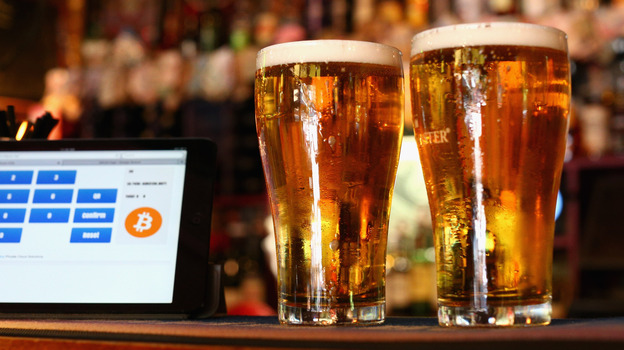
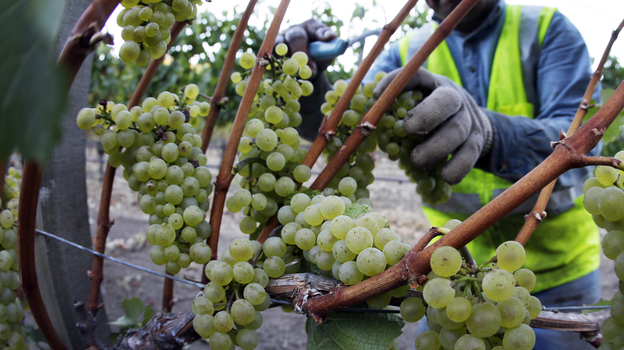
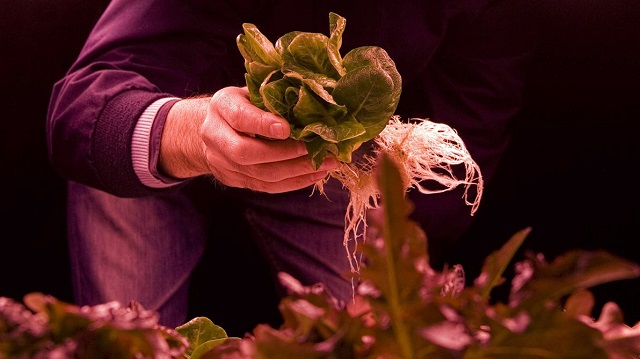
window.__IS_SSR__=true
window.__INITIAL_STATE__={
"attachmentsReducer": {
"audio_0": {
"type": "attachments",
"id": "audio_0",
"imgSizes": {
"kqedFullSize": {
"file": "https://ww2.kqed.org/news/wp-content/themes/KQED-unified/img/audio_bgs/background0.jpg"
}
}
},
"audio_1": {
"type": "attachments",
"id": "audio_1",
"imgSizes": {
"kqedFullSize": {
"file": "https://ww2.kqed.org/news/wp-content/themes/KQED-unified/img/audio_bgs/background1.jpg"
}
}
},
"audio_2": {
"type": "attachments",
"id": "audio_2",
"imgSizes": {
"kqedFullSize": {
"file": "https://ww2.kqed.org/news/wp-content/themes/KQED-unified/img/audio_bgs/background2.jpg"
}
}
},
"audio_3": {
"type": "attachments",
"id": "audio_3",
"imgSizes": {
"kqedFullSize": {
"file": "https://ww2.kqed.org/news/wp-content/themes/KQED-unified/img/audio_bgs/background3.jpg"
}
}
},
"audio_4": {
"type": "attachments",
"id": "audio_4",
"imgSizes": {
"kqedFullSize": {
"file": "https://ww2.kqed.org/news/wp-content/themes/KQED-unified/img/audio_bgs/background4.jpg"
}
}
},
"placeholder": {
"type": "attachments",
"id": "placeholder",
"imgSizes": {
"thumbnail": {
"file": "https://cdn.kqed.org/wp-content/uploads/2024/12/KQED-Default-Image-816638274-2000x1333-1-160x107.jpg",
"width": 160,
"height": 107,
"mimeType": "image/jpeg"
},
"medium": {
"file": "https://cdn.kqed.org/wp-content/uploads/2024/12/KQED-Default-Image-816638274-2000x1333-1-800x533.jpg",
"width": 800,
"height": 533,
"mimeType": "image/jpeg"
},
"medium_large": {
"file": "https://cdn.kqed.org/wp-content/uploads/2024/12/KQED-Default-Image-816638274-2000x1333-1-768x512.jpg",
"width": 768,
"height": 512,
"mimeType": "image/jpeg"
},
"large": {
"file": "https://cdn.kqed.org/wp-content/uploads/2024/12/KQED-Default-Image-816638274-2000x1333-1-1020x680.jpg",
"width": 1020,
"height": 680,
"mimeType": "image/jpeg"
},
"1536x1536": {
"file": "https://cdn.kqed.org/wp-content/uploads/2024/12/KQED-Default-Image-816638274-2000x1333-1-1536x1024.jpg",
"width": 1536,
"height": 1024,
"mimeType": "image/jpeg"
},
"fd-lrg": {
"file": "https://cdn.kqed.org/wp-content/uploads/2024/12/KQED-Default-Image-816638274-2000x1333-1-1536x1024.jpg",
"width": 1536,
"height": 1024,
"mimeType": "image/jpeg"
},
"fd-med": {
"file": "https://cdn.kqed.org/wp-content/uploads/2024/12/KQED-Default-Image-816638274-2000x1333-1-1020x680.jpg",
"width": 1020,
"height": 680,
"mimeType": "image/jpeg"
},
"fd-sm": {
"file": "https://cdn.kqed.org/wp-content/uploads/2024/12/KQED-Default-Image-816638274-2000x1333-1-800x533.jpg",
"width": 800,
"height": 533,
"mimeType": "image/jpeg"
},
"post-thumbnail": {
"file": "https://cdn.kqed.org/wp-content/uploads/2024/12/KQED-Default-Image-816638274-2000x1333-1-672x372.jpg",
"width": 672,
"height": 372,
"mimeType": "image/jpeg"
},
"twentyfourteen-full-width": {
"file": "https://cdn.kqed.org/wp-content/uploads/2024/12/KQED-Default-Image-816638274-2000x1333-1-1038x576.jpg",
"width": 1038,
"height": 576,
"mimeType": "image/jpeg"
},
"xxsmall": {
"file": "https://cdn.kqed.org/wp-content/uploads/2024/12/KQED-Default-Image-816638274-2000x1333-1-160x107.jpg",
"width": 160,
"height": 107,
"mimeType": "image/jpeg"
},
"xsmall": {
"file": "https://cdn.kqed.org/wp-content/uploads/2024/12/KQED-Default-Image-816638274-2000x1333-1-672x372.jpg",
"width": 672,
"height": 372,
"mimeType": "image/jpeg"
},
"small": {
"file": "https://cdn.kqed.org/wp-content/uploads/2024/12/KQED-Default-Image-816638274-2000x1333-1-672x372.jpg",
"width": 672,
"height": 372,
"mimeType": "image/jpeg"
},
"xlarge": {
"file": "https://cdn.kqed.org/wp-content/uploads/2024/12/KQED-Default-Image-816638274-2000x1333-1-1020x680.jpg",
"width": 1020,
"height": 680,
"mimeType": "image/jpeg"
},
"full-width": {
"file": "https://cdn.kqed.org/wp-content/uploads/2024/12/KQED-Default-Image-816638274-2000x1333-1-1920x1280.jpg",
"width": 1920,
"height": 1280,
"mimeType": "image/jpeg"
},
"guest-author-32": {
"file": "https://cdn.kqed.org/wp-content/uploads/2025/01/KQED-Default-Image-816638274-1333x1333-1-160x160.jpg",
"width": 32,
"height": 32,
"mimeType": "image/jpeg"
},
"guest-author-50": {
"file": "https://cdn.kqed.org/wp-content/uploads/2025/01/KQED-Default-Image-816638274-1333x1333-1-160x160.jpg",
"width": 50,
"height": 50,
"mimeType": "image/jpeg"
},
"guest-author-64": {
"file": "https://cdn.kqed.org/wp-content/uploads/2025/01/KQED-Default-Image-816638274-1333x1333-1-160x160.jpg",
"width": 64,
"height": 64,
"mimeType": "image/jpeg"
},
"guest-author-96": {
"file": "https://cdn.kqed.org/wp-content/uploads/2025/01/KQED-Default-Image-816638274-1333x1333-1-160x160.jpg",
"width": 96,
"height": 96,
"mimeType": "image/jpeg"
},
"guest-author-128": {
"file": "https://cdn.kqed.org/wp-content/uploads/2025/01/KQED-Default-Image-816638274-1333x1333-1-160x160.jpg",
"width": 128,
"height": 128,
"mimeType": "image/jpeg"
},
"detail": {
"file": "https://cdn.kqed.org/wp-content/uploads/2025/01/KQED-Default-Image-816638274-1333x1333-1-160x160.jpg",
"width": 160,
"height": 160,
"mimeType": "image/jpeg"
},
"kqedFullSize": {
"file": "https://cdn.kqed.org/wp-content/uploads/2024/12/KQED-Default-Image-816638274-2000x1333-1.jpg",
"width": 2000,
"height": 1333
}
}
},
"bayareabites_78363": {
"type": "attachments",
"id": "bayareabites_78363",
"meta": {
"index": "attachments_1716263798",
"site": "bayareabites",
"id": "78363",
"found": true
},
"parent": 78360,
"imgSizes": {
"kqedFullSize": {
"file": "https://ww2.kqed.org/app/uploads/sites/24/2014/02/180991506_wide-593dd75d67c04080108a669092e043a876fa7ec1-s4.jpg",
"width": 624,
"height": 350
}
},
"publishDate": 1392762071,
"modified": 1392762071,
"caption": "Bitcoin isn't just for shady business — it can also buy you some delicious goodness. The Old Fitzroy pub in Sydney, Australia, is one of many food and drink businesses beginning to accept Bitcoin as a valid method of payment. Photo: Cameron Spencer/Getty Images",
"description": "Bitcoin isn't just for shady business — it can also buy you some delicious goodness. The Old Fitzroy pub in Sydney, Australia, is one of many food and drink businesses beginning to accept Bitcoin as a valid method of paymen",
"title": "bitcoin food",
"credit": null,
"status": "inherit",
"isLoading": false,
"fetchFailed": false
},
"bayareabites_78357": {
"type": "attachments",
"id": "bayareabites_78357",
"meta": {
"index": "attachments_1716263798",
"site": "bayareabites",
"id": "78357",
"found": true
},
"parent": 78353,
"imgSizes": {
"kqedFullSize": {
"file": "https://ww2.kqed.org/app/uploads/sites/24/2014/02/ap298912867717-copy_wide-b846d5e790cbac3d42e60ca4055045e96e483416-s4.jpg",
"width": 624,
"height": 350
}
},
"publishDate": 1392756025,
"modified": 1392756025,
"caption": "Chardonnay grapes are picked in the Stelling Vineyard at Far Niente winery Wednesday morning, Aug. 28, 2013 in Oakville, Calif. Photo: Eric Risberg/AP",
"description": "Chardonnay grapes are picked in the Stelling Vineyard at Far Niente winery Wednesday morning, Aug. 28, 2013 in Oakville, Calif.",
"title": "ap298912867717-cChardonnay grapes are picked in the Stelling Vineyard at Far Niente winery Wednesday morning, Aug. 28, 2013 in Oakville, Calif. Photo: Eric Risberg/APopy",
"credit": null,
"status": "inherit",
"isLoading": false,
"fetchFailed": false
},
"bayareabites_78338": {
"type": "attachments",
"id": "bayareabites_78338",
"meta": {
"index": "attachments_1716263798",
"site": "bayareabites",
"id": "78338",
"found": true
},
"parent": 78332,
"imgSizes": {
"kqedFullSize": {
"file": "https://ww2.kqed.org/app/uploads/sites/24/2014/02/underground_02-copy_wide-7dcaf8290c4b2debacea94f1e1c86b9ed3d9b8481.jpg",
"width": 640,
"height": 359
}
},
"publishDate": 1392743516,
"modified": 1392743516,
"caption": "Zero Carbon Food is growing leafy greens, herbs and microgreens in a World War II bomb shelter in London. Photo: Zero Carbon Food",
"description": "Zero Carbon Food is growing leafy greens, herbs and microgreens in a World War II bomb shelter in London.",
"title": "underground_02-copy",
"credit": null,
"status": "inherit",
"isLoading": false,
"fetchFailed": false
},
"bayareabites_78326": {
"type": "attachments",
"id": "bayareabites_78326",
"meta": {
"index": "attachments_1716263798",
"site": "bayareabites",
"id": "78326",
"found": true
},
"parent": 78322,
"imgSizes": {
"kqedFullSize": {
"file": "https://ww2.kqed.org/app/uploads/sites/24/2014/02/2642901_wide-85ee87871e35c6267dd0d0c9603f72b9f153f183-s4.jpg",
"width": 624,
"height": 351
}
},
"publishDate": 1392657713,
"modified": 1392657713,
"caption": "Abraham Lincoln, the 16th president, used to cook alongside his wife.",
"description": "Abraham Lincoln, the 16th president, used to cook alongside his wife.",
"title": "Abraham Lincoln, the 16th president, used to cook alongside his wife.",
"credit": null,
"status": "inherit",
"isLoading": false,
"fetchFailed": false
},
"bayareabites_78319": {
"type": "attachments",
"id": "bayareabites_78319",
"meta": {
"index": "attachments_1716263798",
"site": "bayareabites",
"id": "78319",
"found": true
},
"parent": 78315,
"imgSizes": {
"kqedFullSize": {
"file": "https://ww2.kqed.org/app/uploads/sites/24/2014/02/zakuskitable_custom-cb2b5d9e736c4a74eba520f5fb67de0fcc940ded-s4.jpg",
"width": 624,
"height": 348
}
},
"publishDate": 1392598377,
"modified": 1392598377,
"caption": "Zakuski tables, like Slava and Luba Frumkin's, are known for their largesse. This spread includes smoked salmon and halibut, pickled green tomatoes, salted mackerel, Herring Under a Fur Coat and Georgian eggplant rolls. Photo: Denna Prichep/NPR",
"description": "Zakuski tables, like Slava and Luba Frumkin's, are known for their largesse. This spread includes smoked salmon and halibut, pickled green tomatoes, salted mackerel, Herring Under a Fur Coat and Georgian eggplant rolls. Photo: Denna Prichep/NPR",
"title": "zakuskitable",
"credit": null,
"status": "inherit",
"isLoading": false,
"fetchFailed": false
},
"bayareabites_78304": {
"type": "attachments",
"id": "bayareabites_78304",
"meta": {
"index": "attachments_1716263798",
"site": "bayareabites",
"id": "78304",
"found": true
},
"parent": 78293,
"imgSizes": {
"kqedFullSize": {
"file": "https://ww2.kqed.org/app/uploads/sites/24/2014/02/oysters_wide-2c16a2ce1b5b79623d7d153994380fa9546444e3-s4.jpg",
"width": 624,
"height": 350
}
},
"publishDate": 1392510611,
"modified": 1392510611,
"caption": "The stories linking oysters and other shellfish to lust go back to at least the ancient Greeks. (Maggie Starbard/NPR)",
"description": "The stories linking oysters and other shellfish to lust go back to at least the ancient Greeks. (Maggie Starbard/NPR)",
"title": "oysters",
"credit": null,
"status": "inherit",
"isLoading": false,
"fetchFailed": false
},
"bayareabites_78252": {
"type": "attachments",
"id": "bayareabites_78252",
"meta": {
"index": "attachments_1716263798",
"site": "bayareabites",
"id": "78252",
"found": true
},
"parent": 78251,
"imgSizes": {
"kqedFullSize": {
"file": "https://ww2.kqed.org/app/uploads/sites/24/2014/02/sochifood_01-82a2114be68b37403f60d9431540bf2c3c8a2ddb-e1392421761610.jpg",
"width": 640,
"height": 427
}
},
"publishDate": 1392421278,
"modified": 1392421278,
"caption": "Traditional foods in Sochi may be Russian, Ukrainian, Georgian or from the surrounding Krasnodar region. This table is set at Mari Vanna restaurant in Washington, D.C. (Meg Vogel/NPR)",
"description": null,
"title": "Traditional foods in Sochi may be Russian, Ukrainian, Georgian or from the surrounding Krasnodar region. This table is set at Mari Vanna restaurant in Washington, D.C. (Meg Vogel/NPR)",
"credit": null,
"status": "inherit",
"isLoading": false,
"fetchFailed": false
},
"bayareabites_78248": {
"type": "attachments",
"id": "bayareabites_78248",
"meta": {
"index": "attachments_1716263798",
"site": "bayareabites",
"id": "78248",
"found": true
},
"parent": 78238,
"imgSizes": {
"kqedFullSize": {
"file": "https://ww2.kqed.org/app/uploads/sites/24/2014/02/fish.jpg",
"width": 624,
"height": 468
}
},
"publishDate": 1392399049,
"modified": 1392399049,
"caption": "Beware of the big guys: Red snappers from tropical waters sometimes accumulate high levels of the neurotoxin ciguatera. Go for the smaller fish to avoid it. (Kamel Adjenef/iStockphoto)",
"description": "Beware of the big guys: Red snappers from tropical waters sometimes accumulate high levels of the neurotoxin ciguatera. Go for the smaller fish to avoid it. (Kamel Adjenef/iStockphoto)",
"title": "istock_000009589335medium",
"credit": null,
"status": "inherit",
"isLoading": false,
"fetchFailed": false
},
"bayareabites_78236": {
"type": "attachments",
"id": "bayareabites_78236",
"meta": {
"index": "attachments_1716263798",
"site": "bayareabites",
"id": "78236",
"found": true
},
"parent": 78225,
"imgSizes": {
"kqedFullSize": {
"file": "https://ww2.kqed.org/app/uploads/sites/24/2014/02/valentine-s-overall-1_custom-2632feccbded2d48b86221fe38101e460373c92d-s4.jpg",
"width": 624,
"height": 397
}
},
"publishDate": 1392334134,
"modified": 1392334134,
"caption": "An assortment of marbled Valentine's cookies. (T. Susan Chang/NPR)",
"description": "An assortment of marbled Valentine's cookies. (T. Susan Chang/NPR)",
"title": "valentine-s-overall-1",
"credit": null,
"status": "inherit",
"isLoading": false,
"fetchFailed": false
},
"bayareabites_78220": {
"type": "attachments",
"id": "bayareabites_78220",
"meta": {
"index": "attachments_1716263798",
"site": "bayareabites",
"id": "78220",
"found": true
},
"parent": 78212,
"imgSizes": {
"kqedFullSize": {
"file": "https://ww2.kqed.org/app/uploads/sites/24/2014/02/olympics640.jpg",
"width": 624,
"height": 415
}
},
"publishDate": 1392324374,
"modified": 1392324374,
"caption": "Peter Frenette of the United States jumps during training for the Men's Normal Hill Individual ahead of the start of the Sochi Games. (Lars Baron/Getty Images)",
"description": "Peter Frenette of the United States jumps during training for the Men's Normal Hill Individual ahead of the start of the Sochi Games. (Lars Baron/Getty Images)",
"title": "olympics640",
"credit": null,
"status": "inherit",
"isLoading": false,
"fetchFailed": false
},
"bayareabites_78206": {
"type": "attachments",
"id": "bayareabites_78206",
"meta": {
"index": "attachments_1716263798",
"site": "bayareabites",
"id": "78206",
"found": true
},
"parent": 78198,
"imgSizes": {
"kqedFullSize": {
"file": "https://ww2.kqed.org/app/uploads/sites/24/2014/02/fortune1-640.jpg",
"width": 624,
"height": 467
}
},
"publishDate": 1392310530,
"modified": 1392310530,
"caption": "The majority of patrons at Shanghai's Fortune Cookie restaurant are foreigners, particularly Americans who crave the American-Chinese food they grew up with but can't find in China. (Frank Langfitt/NPR)",
"description": "The majority of patrons at Shanghai's Fortune Cookie restaurant are foreigners, particularly Americans who crave the American-Chinese food they grew up with but can't find in China. (Frank Langfitt/NPR)",
"title": "fortune-cookie-1",
"credit": null,
"status": "inherit",
"isLoading": false,
"fetchFailed": false
},
"bayareabites_78061": {
"type": "attachments",
"id": "bayareabites_78061",
"meta": {
"index": "attachments_1716263798",
"site": "bayareabites",
"id": "78061",
"found": true
},
"parent": 78058,
"imgSizes": {
"kqedFullSize": {
"file": "https://ww2.kqed.org/app/uploads/sites/24/2014/02/milk.jpg",
"width": 624,
"height": 350
}
},
"publishDate": 1392230334,
"modified": 1392230334,
"caption": null,
"description": null,
"title": "milk",
"credit": null,
"status": "inherit",
"isLoading": false,
"fetchFailed": false
}
},
"audioPlayerReducer": {
"postId": "stream_live",
"isPaused": true,
"isPlaying": false,
"pfsActive": false,
"pledgeModalIsOpen": true,
"playerDrawerIsOpen": false,
"liveAudioPlayStartedAt": 0,
"liveAudioPlayContext": ""
},
"authorsReducer": {
"byline_bayareabites_78360": {
"type": "authors",
"id": "byline_bayareabites_78360",
"meta": {
"override": true
},
"slug": "byline_bayareabites_78360",
"name": "Linda Poon",
"isLoading": false
},
"byline_bayareabites_78353": {
"type": "authors",
"id": "byline_bayareabites_78353",
"meta": {
"override": true
},
"slug": "byline_bayareabites_78353",
"name": "NPR Staff",
"isLoading": false
},
"byline_bayareabites_78332": {
"type": "authors",
"id": "byline_bayareabites_78332",
"meta": {
"override": true
},
"slug": "byline_bayareabites_78332",
"name": "NPR Staff",
"isLoading": false
},
"byline_bayareabites_78322": {
"type": "authors",
"id": "byline_bayareabites_78322",
"meta": {
"override": true
},
"slug": "byline_bayareabites_78322",
"name": "NPR Staff",
"isLoading": false
},
"byline_bayareabites_78315": {
"type": "authors",
"id": "byline_bayareabites_78315",
"meta": {
"override": true
},
"slug": "byline_bayareabites_78315",
"name": "Deena Prichep",
"isLoading": false
},
"byline_bayareabites_78293": {
"type": "authors",
"id": "byline_bayareabites_78293",
"meta": {
"override": true
},
"slug": "byline_bayareabites_78293",
"name": "Allison Aubrey",
"isLoading": false
},
"byline_bayareabites_78251": {
"type": "authors",
"id": "byline_bayareabites_78251",
"meta": {
"override": true
},
"slug": "byline_bayareabites_78251",
"name": "Nancy Shute",
"isLoading": false
},
"byline_bayareabites_78238": {
"type": "authors",
"id": "byline_bayareabites_78238",
"meta": {
"override": true
},
"slug": "byline_bayareabites_78238",
"name": "Michaeleen Doucleff",
"isLoading": false
},
"byline_bayareabites_78225": {
"type": "authors",
"id": "byline_bayareabites_78225",
"meta": {
"override": true
},
"slug": "byline_bayareabites_78225",
"name": "T. Susan Chang",
"isLoading": false
},
"byline_bayareabites_78212": {
"type": "authors",
"id": "byline_bayareabites_78212",
"meta": {
"override": true
},
"slug": "byline_bayareabites_78212",
"name": "Eliza Barclay",
"isLoading": false
},
"byline_bayareabites_78198": {
"type": "authors",
"id": "byline_bayareabites_78198",
"meta": {
"override": true
},
"slug": "byline_bayareabites_78198",
"name": "Frank Langfitt",
"isLoading": false
},
"byline_bayareabites_78058": {
"type": "authors",
"id": "byline_bayareabites_78058",
"meta": {
"override": true
},
"slug": "byline_bayareabites_78058",
"name": "Allison Aubrey",
"isLoading": false
}
},
"pagesReducer": {
"bayareabites_category_npr-food": {
"type": "terms",
"id": "bayareabites_10916",
"meta": {
"index": "terms_1716263798",
"site": "bayareabites",
"id": "10916",
"score": 13.894751
},
"featImg": null,
"name": "NPR food",
"description": null,
"taxonomy": "category",
"headData": {
"twImgId": null,
"twTitle": null,
"ogTitle": null,
"ogImgId": null,
"twDescription": null,
"description": null,
"title": "NPR food Archives | KQED Bay Area Bites",
"ogDescription": null
},
"ttid": 5375,
"slug": "npr-food",
"isLoading": false,
"title": "NPR food",
"pageMeta": {
"site": "bayareabites",
"WpPageTemplate": "page-topic-editorial",
"currentPage": 53
},
"blocks": [
{
"blockName": "kqed/post-list",
"attrs": {
"layout": "cardArticle2",
"query": "posts/bayareabites?category=npr-food",
"seeMore": false,
"paginated": true,
"page": 53
}
},
{
"blockName": "kqed/ad"
}
]
}
},
"pfsSessionReducer": {},
"postsReducer": {
"stream_live": {
"type": "live",
"id": "stream_live",
"audioUrl": "https://hls.kqed.org/hls/kqed_app/playlist.m3u8",
"title": "Live Stream",
"excerpt": "Live Stream information currently unavailable.",
"link": "/radio",
"featImg": "",
"label": {
"name": "KQED Live",
"link": "/"
}
},
"stream_kqedNewscast": {
"type": "posts",
"id": "stream_kqedNewscast",
"audioUrl": "https://www.kqed.org/.stream/anon/radio/RDnews/newscast.mp3?_=1",
"title": "KQED Newscast",
"featImg": "",
"label": {
"name": "88.5 FM",
"link": "/"
}
},
"bayareabites_78360": {
"type": "posts",
"id": "bayareabites_78360",
"meta": {
"index": "posts_1716263798",
"site": "bayareabites",
"id": "78360",
"score": null,
"sort": [
1392762498000
]
},
"parent": 0,
"labelTerm": {
"site": "bayareabites"
},
"blocks": [],
"publishDate": 1392762498,
"format": "aside",
"disqusTitle": "Order Up! Food Businesses Find an Appetite for Bitcoin",
"title": "Order Up! Food Businesses Find an Appetite for Bitcoin",
"headTitle": "Bay Area Bites | KQED Food",
"content": "\u003cfigure id=\"attachment_78361\" class=\"wp-caption aligncenter\" style=\"max-width: 1674px\">\u003ca href=\"http://ww2.kqed.org/bayareabites/wp-content/uploads/sites/24/2014/02/180991506_wide-593dd75d67c04080108a669092e043a876fa7ec1.jpg\">\u003cimg src=\"http://ww2.kqed.org/bayareabites/wp-content/uploads/sites/24/2014/02/180991506_wide-593dd75d67c04080108a669092e043a876fa7ec1.jpg\" alt=\"Bitcoin isn't just for shady business — it can also buy you some delicious goodness. The Old Fitzroy pub in Sydney, Australia, is one of many food and drink businesses beginning to accept Bitcoin as a valid method of payment. Photo: Cameron Spencer/Getty Images\" width=\"1674\" height=\"940\" class=\"size-full wp-image-78361\">\u003c/a>\u003cfigcaption class=\"wp-caption-text\">Bitcoin isn't just for shady business — it can also buy you some delicious goodness. The Old Fitzroy pub in Sydney, Australia, is one of many food and drink businesses beginning to accept Bitcoin as a valid method of payment. Photo: Cameron Spencer/Getty Images\u003c/figcaption>\u003c/figure>\n\u003cp>Post by Linda Poon, \u003ca href=\"http://www.npr.org/blogs/thesalt/2014/02/18/275858587/order-up-food-businesses-find-an-appetite-for-bitcoin\" target=\"_blank\">The Salt at NPR Food \u003c/a>(2/18/2014)\u003c/p>\n\u003cp>Hungry for a Philly cheesesteak or a hot Reuben sandwich? That'll be about 0.001 bitcoin, please.\u003c/p>\n\u003cp>From restaurants to breweries, to even your \u003ca href=\"http://ww2.kqed.org/bayareabites/2013/11/12/have-bitcoin-to-burn-next-stop-could-be-the-farm/\">local farmers market\u003c/a> and \u003ca href=\"http://www.reddit.com/r/Bitcoin/comments/1u1g2u/these_adorable_little_girls_just_sold_me/\">lemonade stand\u003c/a>, the popular cryptocurrency has inched its ways into the food industry, as more vendors consider it a valid form of payment.\u003c/p>\n\u003cp>Unlike cash or credit, Bitcoin is an invisible currency that exists only online and can be transferred from person to person sans a centralized government or bank.\u003c/p>\n\u003cp>Today, you can use the virtual money to order Thai food and pizza through services like \u003ca href=\"Foodler\">Foodler\u003c/a> and \u003ca href=\"http://pizzaforcoins.com/\">Pizza For Coins\u003c/a>. There's a Subway in Allentown, Penn., that will gladly trade you a toasty 12-foot sub for the intangible currency. And sprinkled throughout the country are a handful of food trucks that have been testing Bitcoin out in the streets.\u003c/p>\n\u003cp>[ad fullwidth]\u003c/p>\n\u003cp>Heck, you can even use Bitcoin to prep for a zombie apocalypse at \u003ca href=\"http://www.survivalfood.com/bitcoin/\">SurvivalFood.com\u003c/a>.\u003c/p>\n\u003cp>And that's just in the U.S.\u003c/p>\n\u003cp>Overseas, you can spend the currency at the \u003ca href=\"http://www.thepinkcow.com/\">Pink Cow\u003c/a> café in Tokyo, \u003ca href=\"http://burgerbear.co.uk/\">Burger Bear\u003c/a> in London or the \u003ca href=\"https://www.facebook.com/TheOldFitzroyHotel\">Old Fitzroy\u003c/a> pub in Sydney, Australia, all of which are among the firsts to accept Bitcoin in their respective cities.\u003c/p>\n\u003cp>The digital currency is a welcomed alternative to credit cards for many small businesses. There's little risk in setting up a \u003ca href=\"https://bitcoin.org/en/choose-your-wallet\">Bitcoin wallet\u003c/a> for customers to directly transfer money into, and it beats the 3 percent merchant fee that vendors are charged for each credit card transaction. As the Huffington Post \u003ca href=\"http://www.huffingtonpost.com/2013/01/23/credit-cards-restaurants-cashless-dining_n_2482242.html\">reports\u003c/a>, last year 81 percent of money spent in American restaurants was charged to debit, credit or prepaid cards.\u003c/p>\n\u003cp>\"If you look at all of the transactions and all of those costs, they really add up,\" says \u003ca href=\"http://www.fuqua.duke.edu/faculty_research/faculty_directory/harvey/\">Campbell Harvey\u003c/a>, a financial economist at Duke University. So Bitcoin, he says, \"actually is an innovation that could potentially get rid of these transaction costs, and that makes it valuable.\"\u003c/p>\n\u003cp>But saving money is only part of the reason. For the owners of \u003ca href=\"http://peruvianbrothers.com/\">Peruvian Brothers\u003c/a>, the first Bitcoin-friendly food truck in D.C., it's all about giving their customers options.\u003c/p>\n\u003cp>\"In the food truck [business], we're all about allowing our customers to purchase their food anyway they'd like,\" says Peruvian Brothers co-founder Giuseppe Lanzone. \"And now, having them pay with Bitcoin is a different way to do it.\"\u003c/p>\n\u003cp>To pay, customers simply scan the QR code on the food truck, which reflects the real time exchange rate between bitcoins and dollars, and hit send.\u003c/p>\n\u003cp>Then there's the even bigger incentive: the potential profit from how much the value of a bitcoin fluctuates.\u003c/p>\n\u003cp>That's what got Wesley Kaake, owner of the \u003ca href=\"http://www.houseofhunger.com/\">House and Hunger\u003c/a> food truck in Minneapolis, interested. They made their first sale in Bitcoin back in May 2013, selling a sandwich and fries for $10 worth of bitcoins. At that time, he says, one bitcoin was worth roughly $80.\u003c/p>\n\u003cp>When Kaake talked to The Salt, the value of a bitcoin had surpassed $800. \"So holding on to that transaction alone, now knowing that it's 10 times that itself, I really did make a profit,\" Kaake says.\u003c/p>\n\u003cp>Since then, he's had a little under a dozen similar transactions – mainly from the more tech savvy crowd – and currently owns about 0.7 bitcoin altogether. Kaake says he has no plans to convert it to U.S. dollars until he hits a full bitcoin.\u003c/p>\n\u003cp>But just as the fluctuation can take you from rags to riches, bitcoin transactions can also go downhill for merchants. The value of the digital currency fell in the first week of February from a steady $850 to $700, according to \u003ca href=\"http://www.coindesk.com/price/\">CoinDesk\u003c/a>, which tracks current Bitcoin prices. Currently, the value hovers around the low-to-mid-$600s.\u003c/p>\n\u003cp>\"As a store of value, Bitcoin is very unreliable today,\" Harvey says. \"It is 10 times more volatile than the changes in the price of gold. It is 20 times more volatile than holding U.S. dollars.\"\u003c/p>\n\u003cp>That's why some food merchants, like Lanzone and his brother, Mario, have opted to cash in their bitcoin right after they make a sale.\u003c/p>\n\u003cp>The future of the 5-year-old Bitcoin is still uncertain. Millions of dollars' worth of bitcoins were seized from the infamous bust of \u003ca href=\"http://www.npr.org/blogs/alltechconsidered/2013/10/03/228579712/the-man-behind-the-shadowy-illicit-drug-market-silk-road\">Silk Road\u003c/a>, a shadowy illicit online marketplace, and Bitcoin prices have taken a nosedive in the past months. Just last week, a glitch in Mt. Gox, the leading Bitcoin exchange site, made prices drop once again.\u003c/p>\n\u003cp>Bitcoin may be the highest profile and most widely established of all digital currencies, but more than \u003ca href=\"http://coinmarketcap.com/\">100 different kinds\u003c/a> exist, and Harvey says the concept of cryptocurrency may not be going away anytime soon.\u003c/p>\n\u003cp>\"The basic idea is a good idea,\" he says. \"That is, to make the exchange of ownership more efficient.\"\u003c/p>\n\u003cp>So what if – knock on wood – Bitcoin does become obsolete? Kaake says he won't have any regrets.\u003c/p>\n\u003cp>\"Ultimately, I can at least say that I was a part of it,\" he told The Salt, adding that he has faith that the Bitcoin is here to stay.\u003c/p>\n\u003cp>\"I do see more regulations coming and a lot more of an uphill battle for it,\" he says. \"But I guess I don't have a fear that it will go away completely and lose all of its value.\" \u003c/p>\n\u003cp>\u003c/p>\n\u003cp>\u003cem>Copyright 2014 \u003ca href=\"http://www.npr.org/\" target=\"_blank\">NPR\u003c/a>.\u003c/em>\u003c/p>\n\n",
"disqusIdentifier": "78360 http://blogs.kqed.org/bayareabites/?p=78360",
"disqusUrl": "https://ww2.kqed.org/bayareabites/2014/02/18/order-up-food-businesses-find-an-appetite-for-bitcoin/",
"stats": {
"hasVideo": false,
"hasChartOrMap": false,
"hasAudio": false,
"hasPolis": false,
"wordCount": 958,
"hasGoogleForm": false,
"hasGallery": false,
"hasHearkenModule": false,
"iframeSrcs": [],
"paragraphCount": 29
},
"modified": 1392762498,
"excerpt": "From a Subway sandwich shop to a Peruvian chicken food truck, customers have a growing number of options for satisfying their hunger with Bitcoin. For food vendors, accepting the virtual currency offers substantial financial benefits – and risks, too.",
"headData": {
"twImgId": "",
"twTitle": "",
"ogTitle": "",
"ogImgId": "",
"twDescription": "",
"description": "From a Subway sandwich shop to a Peruvian chicken food truck, customers have a growing number of options for satisfying their hunger with Bitcoin. For food vendors, accepting the virtual currency offers substantial financial benefits – and risks, too.",
"title": "Order Up! Food Businesses Find an Appetite for Bitcoin | KQED",
"ogDescription": "",
"schema": {
"@context": "https://schema.org",
"@type": "Article",
"headline": "Order Up! Food Businesses Find an Appetite for Bitcoin",
"datePublished": "2014-02-18T14:28:18-08:00",
"dateModified": "2014-02-18T14:28:18-08:00",
"image": "https://cdn.kqed.org/wp-content/uploads/2020/02/KQED-OG-Image@1x.png"
}
},
"guestAuthors": [],
"slug": "order-up-food-businesses-find-an-appetite-for-bitcoin",
"status": "publish",
"nprApiLink": "http://api.npr.org/query?id=275858587&apiKey=MDAxOTAwOTE4MDEyMTkxMDAzNjczZDljZA004",
"nprByline": "Linda Poon",
"nprStoryDate": "Tue, 18 Feb 2014 16:12:00 -0500",
"nprLastModifiedDate": "Tue, 18 Feb 2014 16:12:32 -0500",
"nprHtmlLink": "http://www.npr.org/blogs/thesalt/2014/02/18/275858587/order-up-food-businesses-find-an-appetite-for-bitcoin?ft=3&f=275858587",
"nprStoryId": "275858587",
"nprRetrievedStory": "1",
"nprPubDate": "Tue, 18 Feb 2014 16:12:00 -0500",
"path": "/bayareabites/78360/order-up-food-businesses-find-an-appetite-for-bitcoin",
"audioTrackLength": null,
"parsedContent": [
{
"type": "contentString",
"content": "\u003cdiv class=\"post-body\">\u003cp>\u003cfigure id=\"attachment_78361\" class=\"wp-caption aligncenter\" style=\"max-width: 1674px\">\u003ca href=\"http://ww2.kqed.org/bayareabites/wp-content/uploads/sites/24/2014/02/180991506_wide-593dd75d67c04080108a669092e043a876fa7ec1.jpg\">\u003cimg src=\"http://ww2.kqed.org/bayareabites/wp-content/uploads/sites/24/2014/02/180991506_wide-593dd75d67c04080108a669092e043a876fa7ec1.jpg\" alt=\"Bitcoin isn't just for shady business — it can also buy you some delicious goodness. The Old Fitzroy pub in Sydney, Australia, is one of many food and drink businesses beginning to accept Bitcoin as a valid method of payment. Photo: Cameron Spencer/Getty Images\" width=\"1674\" height=\"940\" class=\"size-full wp-image-78361\">\u003c/a>\u003cfigcaption class=\"wp-caption-text\">Bitcoin isn't just for shady business — it can also buy you some delicious goodness. The Old Fitzroy pub in Sydney, Australia, is one of many food and drink businesses beginning to accept Bitcoin as a valid method of payment. Photo: Cameron Spencer/Getty Images\u003c/figcaption>\u003c/figure>\n\u003cp>Post by Linda Poon, \u003ca href=\"http://www.npr.org/blogs/thesalt/2014/02/18/275858587/order-up-food-businesses-find-an-appetite-for-bitcoin\" target=\"_blank\">The Salt at NPR Food \u003c/a>(2/18/2014)\u003c/p>\n\u003cp>Hungry for a Philly cheesesteak or a hot Reuben sandwich? That'll be about 0.001 bitcoin, please.\u003c/p>\n\u003cp>From restaurants to breweries, to even your \u003ca href=\"http://ww2.kqed.org/bayareabites/2013/11/12/have-bitcoin-to-burn-next-stop-could-be-the-farm/\">local farmers market\u003c/a> and \u003ca href=\"http://www.reddit.com/r/Bitcoin/comments/1u1g2u/these_adorable_little_girls_just_sold_me/\">lemonade stand\u003c/a>, the popular cryptocurrency has inched its ways into the food industry, as more vendors consider it a valid form of payment.\u003c/p>\n\u003cp>Unlike cash or credit, Bitcoin is an invisible currency that exists only online and can be transferred from person to person sans a centralized government or bank.\u003c/p>\n\u003cp>Today, you can use the virtual money to order Thai food and pizza through services like \u003ca href=\"Foodler\">Foodler\u003c/a> and \u003ca href=\"http://pizzaforcoins.com/\">Pizza For Coins\u003c/a>. There's a Subway in Allentown, Penn., that will gladly trade you a toasty 12-foot sub for the intangible currency. And sprinkled throughout the country are a handful of food trucks that have been testing Bitcoin out in the streets.\u003c/p>\n\u003cp>\u003c/p>\u003c/div>",
"attributes": {
"named": {},
"numeric": []
}
},
{
"type": "component",
"content": "",
"name": "ad",
"attributes": {
"named": {
"label": "fullwidth"
},
"numeric": [
"fullwidth"
]
}
},
{
"type": "contentString",
"content": "\u003cdiv class=\"post-body\">\u003cp>\u003c/p>\n\u003cp>Heck, you can even use Bitcoin to prep for a zombie apocalypse at \u003ca href=\"http://www.survivalfood.com/bitcoin/\">SurvivalFood.com\u003c/a>.\u003c/p>\n\u003cp>And that's just in the U.S.\u003c/p>\n\u003cp>Overseas, you can spend the currency at the \u003ca href=\"http://www.thepinkcow.com/\">Pink Cow\u003c/a> café in Tokyo, \u003ca href=\"http://burgerbear.co.uk/\">Burger Bear\u003c/a> in London or the \u003ca href=\"https://www.facebook.com/TheOldFitzroyHotel\">Old Fitzroy\u003c/a> pub in Sydney, Australia, all of which are among the firsts to accept Bitcoin in their respective cities.\u003c/p>\n\u003cp>The digital currency is a welcomed alternative to credit cards for many small businesses. There's little risk in setting up a \u003ca href=\"https://bitcoin.org/en/choose-your-wallet\">Bitcoin wallet\u003c/a> for customers to directly transfer money into, and it beats the 3 percent merchant fee that vendors are charged for each credit card transaction. As the Huffington Post \u003ca href=\"http://www.huffingtonpost.com/2013/01/23/credit-cards-restaurants-cashless-dining_n_2482242.html\">reports\u003c/a>, last year 81 percent of money spent in American restaurants was charged to debit, credit or prepaid cards.\u003c/p>\n\u003cp>\"If you look at all of the transactions and all of those costs, they really add up,\" says \u003ca href=\"http://www.fuqua.duke.edu/faculty_research/faculty_directory/harvey/\">Campbell Harvey\u003c/a>, a financial economist at Duke University. So Bitcoin, he says, \"actually is an innovation that could potentially get rid of these transaction costs, and that makes it valuable.\"\u003c/p>\n\u003cp>But saving money is only part of the reason. For the owners of \u003ca href=\"http://peruvianbrothers.com/\">Peruvian Brothers\u003c/a>, the first Bitcoin-friendly food truck in D.C., it's all about giving their customers options.\u003c/p>\n\u003cp>\"In the food truck [business], we're all about allowing our customers to purchase their food anyway they'd like,\" says Peruvian Brothers co-founder Giuseppe Lanzone. \"And now, having them pay with Bitcoin is a different way to do it.\"\u003c/p>\n\u003cp>To pay, customers simply scan the QR code on the food truck, which reflects the real time exchange rate between bitcoins and dollars, and hit send.\u003c/p>\n\u003cp>Then there's the even bigger incentive: the potential profit from how much the value of a bitcoin fluctuates.\u003c/p>\n\u003cp>That's what got Wesley Kaake, owner of the \u003ca href=\"http://www.houseofhunger.com/\">House and Hunger\u003c/a> food truck in Minneapolis, interested. They made their first sale in Bitcoin back in May 2013, selling a sandwich and fries for $10 worth of bitcoins. At that time, he says, one bitcoin was worth roughly $80.\u003c/p>\n\u003cp>When Kaake talked to The Salt, the value of a bitcoin had surpassed $800. \"So holding on to that transaction alone, now knowing that it's 10 times that itself, I really did make a profit,\" Kaake says.\u003c/p>\n\u003cp>Since then, he's had a little under a dozen similar transactions – mainly from the more tech savvy crowd – and currently owns about 0.7 bitcoin altogether. Kaake says he has no plans to convert it to U.S. dollars until he hits a full bitcoin.\u003c/p>\n\u003cp>But just as the fluctuation can take you from rags to riches, bitcoin transactions can also go downhill for merchants. The value of the digital currency fell in the first week of February from a steady $850 to $700, according to \u003ca href=\"http://www.coindesk.com/price/\">CoinDesk\u003c/a>, which tracks current Bitcoin prices. Currently, the value hovers around the low-to-mid-$600s.\u003c/p>\n\u003cp>\"As a store of value, Bitcoin is very unreliable today,\" Harvey says. \"It is 10 times more volatile than the changes in the price of gold. It is 20 times more volatile than holding U.S. dollars.\"\u003c/p>\n\u003cp>That's why some food merchants, like Lanzone and his brother, Mario, have opted to cash in their bitcoin right after they make a sale.\u003c/p>\n\u003cp>The future of the 5-year-old Bitcoin is still uncertain. Millions of dollars' worth of bitcoins were seized from the infamous bust of \u003ca href=\"http://www.npr.org/blogs/alltechconsidered/2013/10/03/228579712/the-man-behind-the-shadowy-illicit-drug-market-silk-road\">Silk Road\u003c/a>, a shadowy illicit online marketplace, and Bitcoin prices have taken a nosedive in the past months. Just last week, a glitch in Mt. Gox, the leading Bitcoin exchange site, made prices drop once again.\u003c/p>\n\u003cp>Bitcoin may be the highest profile and most widely established of all digital currencies, but more than \u003ca href=\"http://coinmarketcap.com/\">100 different kinds\u003c/a> exist, and Harvey says the concept of cryptocurrency may not be going away anytime soon.\u003c/p>\n\u003cp>\"The basic idea is a good idea,\" he says. \"That is, to make the exchange of ownership more efficient.\"\u003c/p>\n\u003cp>So what if – knock on wood – Bitcoin does become obsolete? Kaake says he won't have any regrets.\u003c/p>\n\u003cp>\"Ultimately, I can at least say that I was a part of it,\" he told The Salt, adding that he has faith that the Bitcoin is here to stay.\u003c/p>\n\u003cp>\"I do see more regulations coming and a lot more of an uphill battle for it,\" he says. \"But I guess I don't have a fear that it will go away completely and lose all of its value.\" \u003c/p>\n\u003cp>\u003c/p>\n\u003cp>\u003cem>Copyright 2014 \u003ca href=\"http://www.npr.org/\" target=\"_blank\">NPR\u003c/a>.\u003c/em>\u003c/p>\n\n\u003c/div>\u003c/p>",
"attributes": {
"named": {},
"numeric": []
}
}
],
"link": "/bayareabites/78360/order-up-food-businesses-find-an-appetite-for-bitcoin",
"authors": [
"byline_bayareabites_78360"
],
"categories": [
"bayareabites_1962",
"bayareabites_4084",
"bayareabites_10916",
"bayareabites_181"
],
"tags": [
"bayareabites_12686",
"bayareabites_13088",
"bayareabites_13089",
"bayareabites_10921"
],
"featImg": "bayareabites_78363",
"label": "bayareabites"
},
"bayareabites_78353": {
"type": "posts",
"id": "bayareabites_78353",
"meta": {
"index": "posts_1716263798",
"site": "bayareabites",
"id": "78353",
"score": null,
"sort": [
1392756171000
]
},
"parent": 0,
"labelTerm": {
"site": "bayareabites"
},
"blocks": [],
"publishDate": 1392756171,
"format": "aside",
"disqusTitle": "California Toasts 2013's Record Wine Grape Harvest",
"title": "California Toasts 2013's Record Wine Grape Harvest",
"headTitle": "Bay Area Bites | KQED Food",
"content": "\u003cfigure id=\"attachment_78354\" class=\"wp-caption aligncenter\" style=\"max-width: 1672px\">\u003ca href=\"http://ww2.kqed.org/bayareabites/wp-content/uploads/sites/24/2014/02/ap298912867717-copy_wide-b846d5e790cbac3d42e60ca4055045e96e483416.jpg\">\u003cimg src=\"http://ww2.kqed.org/bayareabites/wp-content/uploads/sites/24/2014/02/ap298912867717-copy_wide-b846d5e790cbac3d42e60ca4055045e96e483416.jpg\" alt=\"Chardonnay grapes are picked in the Stelling Vineyard at Far Niente winery Wednesday morning, Aug. 28, 2013 in Oakville, Calif. Photo: Eric Risberg/AP\" width=\"1672\" height=\"940\" class=\"size-full wp-image-78354\">\u003c/a>\u003cfigcaption class=\"wp-caption-text\">Chardonnay grapes are picked in the Stelling Vineyard at Far Niente winery Wednesday morning, Aug. 28, 2013 in Oakville, Calif. Photo: Eric Risberg/AP\u003c/figcaption>\u003c/figure>\n\u003cp>Post by NPR Staff, \u003ca href=\"http://pd.npr.org/anon.npr-mp3/npr/me/2014/02/20140218_me_california_toasts_2013s_record_wine_grape_harvest.mp3?orgId=1&topicId=1053&ft=3&f=278952357\" target=\"_blank\">The Salt at NPR Food\u003c/a> (2/18/2014)\u003c/p>\n\u003cp>\u003cstrong>Listen to the Story\u003c/strong> on \u003ca href=\"http://www.npr.org/blogs/thesalt/2014/02/18/278952357/california-toasts-2013s-record-wine-grape-harvest\">Morning Edition\u003c/a> [audio src=\"http://pd.npr.org/anon.npr-mp3/npr/me/2014/02/20140218_me_long-empty_air_raid_shelter_in_london_becomes_vegetable_farm.mp3\"] \u003c/p>\n\u003cp>California may be stricken by \u003ca href=\"http://ww2.kqed.org/news/2014/01/16/california-drought-update-governor-jerry-brown-declaring-drought-emergency\">drought\u003c/a>, but this month it's also celebrating a record wine grape harvest for 2013.\u003c/p>\n\u003cp>\u003ca href=\"http://www.winebusiness.com/company/management.cfm\">Cyril Penn\u003c/a>, editor of Wine Business Monthly, tells \u003cem>Morning Edition\u003c/em> that the state's \u003ca href=\"http://www.nass.usda.gov/Statistics_by_State/California/Publications/Grape_Crush/Reports/\">preliminary crush report\u003c/a> says 4.23 million tons of wine grapes were crushed in 2013, an increase of 5 percent over the 4.02 million tons crushed in 2012.\u003c/p>\n\u003cp>One of the reasons for California's second bumper crop in a row is that growers have been planting more grapes.\u003c/p>\n\u003cp>[ad fullwidth]\u003c/p>\n\u003cp>\"There was the old adage that the less quantity the greater the quality, but as there's been more demand for grapes, the myth about quality and quantity is not there anymore,\" says Penn.\u003c/p>\n\u003cp>The record harvest also benefited from good weather for grape growing in recent years. In places like Napa Valley, there is still water enough water underground to keep the vineyards thriving despite the drought.\u003c/p>\n\u003cp>But Penn says that luck might not hold much longer. The severe drought is likely to force growers top make some tough choices.\u003c/p>\n\u003cp>\"There are some grape growers that are making contingency plans for if they don't have enough water which blocks of grapes will they water and which ones won't they water,\" says Penn. \"Fortunately grapes use relatively little water compared to a lot of other crops.\"\u003c/p>\n\u003cp>For now, wine lovers can raise a glass. The record harvest will produce more wine, likely meaning California wine will cost less. \u003c/p>\n\u003cp>\u003c/p>\n\u003cp>\u003cem>Copyright 2014 \u003ca href=\"http://www.npr.org/\" target=\"_blank\">NPR\u003c/a>. \u003c/em>\u003c/p>\n\n",
"disqusIdentifier": "78353 http://blogs.kqed.org/bayareabites/?p=78353",
"disqusUrl": "https://ww2.kqed.org/bayareabites/2014/02/18/california-toasts-2013s-record-wine-grape-harvest/",
"stats": {
"hasVideo": false,
"hasChartOrMap": false,
"hasAudio": true,
"hasPolis": false,
"wordCount": 308,
"hasGoogleForm": false,
"hasGallery": false,
"hasHearkenModule": false,
"iframeSrcs": [],
"paragraphCount": 13
},
"modified": 1392756171,
"excerpt": "Finally there's some good news out of drought-ravaged California. The state's reporting the largest wine grape harvest on record.",
"headData": {
"twImgId": "",
"twTitle": "",
"ogTitle": "",
"ogImgId": "",
"twDescription": "",
"description": "Finally there's some good news out of drought-ravaged California. The state's reporting the largest wine grape harvest on record.",
"title": "California Toasts 2013's Record Wine Grape Harvest | KQED",
"ogDescription": "",
"schema": {
"@context": "https://schema.org",
"@type": "Article",
"headline": "California Toasts 2013's Record Wine Grape Harvest",
"datePublished": "2014-02-18T12:42:51-08:00",
"dateModified": "2014-02-18T12:42:51-08:00",
"image": "https://cdn.kqed.org/wp-content/uploads/2020/02/KQED-OG-Image@1x.png"
}
},
"guestAuthors": [],
"slug": "california-toasts-2013s-record-wine-grape-harvest",
"status": "publish",
"nprApiLink": "http://api.npr.org/query?id=278952357&apiKey=MDAxOTAwOTE4MDEyMTkxMDAzNjczZDljZA004",
"nprByline": "NPR Staff",
"nprStoryDate": "Tue, 18 Feb 2014 05:00:00 -0500",
"nprLastModifiedDate": "Tue, 18 Feb 2014 15:03:47 -0500",
"nprHtmlLink": "http://www.npr.org/blogs/thesalt/2014/02/18/278952357/california-toasts-2013s-record-wine-grape-harvest?ft=3&f=278952357",
"nprAudio": "http://pd.npr.org/anon.npr-mp3/npr/me/2014/02/20140218_me_california_toasts_2013s_record_wine_grape_harvest.mp3?orgId=1&topicId=1053&ft=3&f=278952357",
"nprAudioM3u": "http://api.npr.org/m3u/1278952358-cb0aa8.m3u?orgId=1&topicId=1053&ft=3&f=278952357",
"nprStoryId": "278952357",
"nprRetrievedStory": "1",
"nprPubDate": "Tue, 18 Feb 2014 15:03:00 -0500",
"path": "/bayareabites/78353/california-toasts-2013s-record-wine-grape-harvest",
"audioUrl": "http://pd.npr.org/anon.npr-mp3/npr/me/2014/02/20140218_me_california_toasts_2013s_record_wine_grape_harvest.mp3?orgId=1&topicId=1053&ft=3&f=278952357",
"audioDuration": null,
"audioTrackLength": null,
"parsedContent": [
{
"type": "contentString",
"content": "\u003cdiv class=\"post-body\">\u003cp>\u003cfigure id=\"attachment_78354\" class=\"wp-caption aligncenter\" style=\"max-width: 1672px\">\u003ca href=\"http://ww2.kqed.org/bayareabites/wp-content/uploads/sites/24/2014/02/ap298912867717-copy_wide-b846d5e790cbac3d42e60ca4055045e96e483416.jpg\">\u003cimg src=\"http://ww2.kqed.org/bayareabites/wp-content/uploads/sites/24/2014/02/ap298912867717-copy_wide-b846d5e790cbac3d42e60ca4055045e96e483416.jpg\" alt=\"Chardonnay grapes are picked in the Stelling Vineyard at Far Niente winery Wednesday morning, Aug. 28, 2013 in Oakville, Calif. Photo: Eric Risberg/AP\" width=\"1672\" height=\"940\" class=\"size-full wp-image-78354\">\u003c/a>\u003cfigcaption class=\"wp-caption-text\">Chardonnay grapes are picked in the Stelling Vineyard at Far Niente winery Wednesday morning, Aug. 28, 2013 in Oakville, Calif. Photo: Eric Risberg/AP\u003c/figcaption>\u003c/figure>\n\u003cp>Post by NPR Staff, \u003ca href=\"http://pd.npr.org/anon.npr-mp3/npr/me/2014/02/20140218_me_california_toasts_2013s_record_wine_grape_harvest.mp3?orgId=1&topicId=1053&ft=3&f=278952357\" target=\"_blank\">The Salt at NPR Food\u003c/a> (2/18/2014)\u003c/p>\n\u003cp>\u003cstrong>Listen to the Story\u003c/strong> on \u003ca href=\"http://www.npr.org/blogs/thesalt/2014/02/18/278952357/california-toasts-2013s-record-wine-grape-harvest\">Morning Edition\u003c/a> \u003c/p>\u003c/div>",
"attributes": {
"named": {},
"numeric": []
}
},
{
"type": "component",
"content": "",
"name": "audio",
"attributes": {
"named": {
"src": "http://pd.npr.org/anon.npr-mp3/npr/me/2014/02/20140218_me_long-empty_air_raid_shelter_in_london_becomes_vegetable_farm.mp3",
"label": ""
},
"numeric": []
}
},
{
"type": "contentString",
"content": "\u003cdiv class=\"post-body\">\u003cp> \u003c/p>\n\u003cp>California may be stricken by \u003ca href=\"http://ww2.kqed.org/news/2014/01/16/california-drought-update-governor-jerry-brown-declaring-drought-emergency\">drought\u003c/a>, but this month it's also celebrating a record wine grape harvest for 2013.\u003c/p>\n\u003cp>\u003ca href=\"http://www.winebusiness.com/company/management.cfm\">Cyril Penn\u003c/a>, editor of Wine Business Monthly, tells \u003cem>Morning Edition\u003c/em> that the state's \u003ca href=\"http://www.nass.usda.gov/Statistics_by_State/California/Publications/Grape_Crush/Reports/\">preliminary crush report\u003c/a> says 4.23 million tons of wine grapes were crushed in 2013, an increase of 5 percent over the 4.02 million tons crushed in 2012.\u003c/p>\n\u003cp>One of the reasons for California's second bumper crop in a row is that growers have been planting more grapes.\u003c/p>\n\u003cp>\u003c/p>\u003c/div>",
"attributes": {
"named": {},
"numeric": []
}
},
{
"type": "component",
"content": "",
"name": "ad",
"attributes": {
"named": {
"label": "fullwidth"
},
"numeric": [
"fullwidth"
]
}
},
{
"type": "contentString",
"content": "\u003cdiv class=\"post-body\">\u003cp>\u003c/p>\n\u003cp>\"There was the old adage that the less quantity the greater the quality, but as there's been more demand for grapes, the myth about quality and quantity is not there anymore,\" says Penn.\u003c/p>\n\u003cp>The record harvest also benefited from good weather for grape growing in recent years. In places like Napa Valley, there is still water enough water underground to keep the vineyards thriving despite the drought.\u003c/p>\n\u003cp>But Penn says that luck might not hold much longer. The severe drought is likely to force growers top make some tough choices.\u003c/p>\n\u003cp>\"There are some grape growers that are making contingency plans for if they don't have enough water which blocks of grapes will they water and which ones won't they water,\" says Penn. \"Fortunately grapes use relatively little water compared to a lot of other crops.\"\u003c/p>\n\u003cp>For now, wine lovers can raise a glass. The record harvest will produce more wine, likely meaning California wine will cost less. \u003c/p>\n\u003cp>\u003c/p>\n\u003cp>\u003cem>Copyright 2014 \u003ca href=\"http://www.npr.org/\" target=\"_blank\">NPR\u003c/a>. \u003c/em>\u003c/p>\n\n\u003c/div>\u003c/p>",
"attributes": {
"named": {},
"numeric": []
}
}
],
"link": "/bayareabites/78353/california-toasts-2013s-record-wine-grape-harvest",
"authors": [
"byline_bayareabites_78353"
],
"categories": [
"bayareabites_109",
"bayareabites_1962",
"bayareabites_1874",
"bayareabites_10916",
"bayareabites_34",
"bayareabites_60",
"bayareabites_119"
],
"tags": [
"bayareabites_11813",
"bayareabites_2758",
"bayareabites_10921",
"bayareabites_1344",
"bayareabites_14748"
],
"featImg": "bayareabites_78357",
"label": "bayareabites"
},
"bayareabites_78332": {
"type": "posts",
"id": "bayareabites_78332",
"meta": {
"index": "posts_1716263798",
"site": "bayareabites",
"id": "78332",
"score": null,
"sort": [
1392743538000
]
},
"parent": 0,
"labelTerm": {
"site": "bayareabites"
},
"blocks": [],
"publishDate": 1392743538,
"format": "aside",
"disqusTitle": "Old London Air Raid Shelter Becomes Vegetable Farm",
"title": "Old London Air Raid Shelter Becomes Vegetable Farm",
"headTitle": "Bay Area Bites | KQED Food",
"content": "\u003cfigure id=\"attachment_78333\" class=\"wp-caption alignleft\" style=\"max-width: 1192px\">\u003ca href=\"http://ww2.kqed.org/bayareabites/wp-content/uploads/sites/24/2014/02/underground_02-copy_wide-7dcaf8290c4b2debacea94f1e1c86b9ed3d9b848.jpg\">\u003cimg src=\"http://ww2.kqed.org/bayareabites/wp-content/uploads/sites/24/2014/02/underground_02-copy_wide-7dcaf8290c4b2debacea94f1e1c86b9ed3d9b848.jpg\" alt=\"Zero Carbon Food is growing leafy greens, herbs and microgreens in a World War II bomb shelter in London. Photo: Zero Carbon Food\" width=\"1192\" height=\"670\" class=\"size-full wp-image-78333\">\u003c/a>\u003cfigcaption class=\"wp-caption-text\">Zero Carbon Food is growing leafy greens, herbs and microgreens in a World War II bomb shelter in London. Photo: Zero Carbon Food\u003c/figcaption>\u003c/figure>\n\u003cp>Post by NPR Staff, \u003ca href=\"http://www.npr.org/blogs/thesalt/2014/02/18/278952319/old-london-air-raid-shelter-becomes-vegetable-farm\" target=\"_blank\">The Salt at NPR Food\u003c/a> (2/18/2014)\u003c/p>\n\u003cp>\u003cstrong>Listen to the Story\u003c/strong> on \u003ca href=\"http://www.npr.org/blogs/thesalt/2014/02/18/278952319/old-london-air-raid-shelter-becomes-vegetable-farm\">Morning Edition\u003c/a> [audio src=\"http://pd.npr.org/anon.npr-mp3/npr/me/2014/02/20140218_me_long-empty_air_raid_shelter_in_london_becomes_vegetable_farm.mp3\"] \u003c/p>\n\u003cp>During World War II, Londoners would descend spiral staircases into tunnels to escape German bombs. Now one of those long, empty air raid shelters is filled with fresh greens.\u003c/p>\n\u003cp>Ten stories underground, businessman \u003ca href=\"http://www.linkedin.com/profile/view?id=27054914&authType=OPENLINK&authToken=YGCF&locale=en_US&srchid=76442731392738183343&srchindex=2&srchtotal=9&trk=vsrp_people_res_name&trkInfo=VSRPsearchId%3A76442731392738183343%2CVSRPtargetId%3A27054914%2CVSRPcmpt%3Aprimary\">Steven Dring\u003c/a> and his partner Richard Ballard have turned the tunnel into a vegetable farm, called \u003ca href=\"http://www.zerocarbonfood.co.uk/\">Zero Carbon Food\u003c/a>. They're backed by two-star Michelin chef \u003ca href=\"http://www.le-gavroche.co.uk/\">Michel Roux Jr.\u003c/a>, who's helping to ensure that they're growing only the tastiest of vegetables.\u003c/p>\n\u003cp>According to Dring, this former bomb shelter is a surprisingly good place to grow food.\u003c/p>\n\u003cp>[ad fullwidth]\u003c/p>\n\u003cp>\"It's a nice sort of warm duvet of insulation for growing produce down there,\" Dring tells \u003cem>Morning Edition's\u003c/em> Renee Montagne.\u003c/p>\n\u003cp>So how's it set up?\u003c/p>\n\u003cp>Here's how Dring describes it: \"If you just imagine a bench with ... a mat on it, and then we just sew the seeds onto that mat. And then underneath the lights, the roots grow into the mat that's in the tray, and then every 12 hours, water waters the mat again, and under the light it grows, so no soil is required.\"\u003c/p>\n\u003cp>Sunlight, of course, doesn't reach that far underground. So Dring and Ballard use LED lights as a substitute. Dring says LED lights have evolved so much that you can pick and choose elements of the light spectrum to get light that's identical to the sun.\u003c/p>\n\u003cp>Those lights require energy, but to ensure the project truly is \"zero carbon,\" the energy comes from a company that gets all of its energy from wind and solar.\u003c/p>\n\u003cp>As for what's under cultivation way down there, Dring says they've got arugula, lettuce and \u003ca href=\"http://www.npr.org/blogs/thesalt/2012/08/29/160274163/introducing-microgreens-younger-and-maybe-more-nutritious-vegetables\">microherbs\u003c/a> like coriander, mustard leaf and tatsoi.\u003c/p>\n\u003cp>One day, they might also grow tomatoes, which Dring assures would be very tasty, despite the fact that they're hydroponic.\u003c/p>\n\u003cp>Chef Roux's \"palate is pretty damn good,\" says Dring. \"Selling a homogenous, sort of tasteless tomato is certainly not part of our plans.\"\u003c/p>\n\u003cp>Besides a commitment to good flavor, Dring says he's hopeful the venture will succeed because it also can reach consumers far more quickly than vegetables grown on a farm outside London.\u003c/p>\n\u003cp>\"Obviously as soon as you cut product, it starts to degrade in flavor,\" says Dring. \"We can get it to the market in from field to fork, in four to eight hours. Usually it travels 72 hours, maybe four or five days. That's what's really interesting to our customers and wholesalers — that's what's turning them on.\"\u003c/p>\n\u003cp>\u003c/p>\n\u003cp>\u003cem>Copyright 2014 \u003ca href=\"http://www.npr.org\" target=\"_blank\">NPR\u003c/a>. \u003c/em>\u003c/p>\n\n",
"disqusIdentifier": "78332 http://blogs.kqed.org/bayareabites/?p=78332",
"disqusUrl": "https://ww2.kqed.org/bayareabites/2014/02/18/old-london-air-raid-shelter-becomes-vegetable-farm/",
"stats": {
"hasVideo": false,
"hasChartOrMap": false,
"hasAudio": true,
"hasPolis": false,
"wordCount": 485,
"hasGoogleForm": false,
"hasGallery": false,
"hasHearkenModule": false,
"iframeSrcs": [],
"paragraphCount": 18
},
"modified": 1392743562,
"excerpt": "In a former bomb shelter beneath the streets of London, Zero Carbon Food is growing leafy greens, herbs and microgreens. And, believe it or not, this dark, dank underground farm is an energy efficient way to grow fresh produce.",
"headData": {
"twImgId": "",
"twTitle": "",
"ogTitle": "",
"ogImgId": "",
"twDescription": "",
"description": "In a former bomb shelter beneath the streets of London, Zero Carbon Food is growing leafy greens, herbs and microgreens. And, believe it or not, this dark, dank underground farm is an energy efficient way to grow fresh produce.",
"title": "Old London Air Raid Shelter Becomes Vegetable Farm | KQED",
"ogDescription": "",
"schema": {
"@context": "https://schema.org",
"@type": "Article",
"headline": "Old London Air Raid Shelter Becomes Vegetable Farm",
"datePublished": "2014-02-18T09:12:18-08:00",
"dateModified": "2014-02-18T09:12:42-08:00",
"image": "https://cdn.kqed.org/wp-content/uploads/2020/02/KQED-OG-Image@1x.png"
}
},
"guestAuthors": [],
"slug": "old-london-air-raid-shelter-becomes-vegetable-farm",
"status": "publish",
"nprApiLink": "http://api.npr.org/query?id=278952319&apiKey=MDAxOTAwOTE4MDEyMTkxMDAzNjczZDljZA004",
"nprByline": "NPR Staff",
"nprStoryDate": "Tue, 18 Feb 2014 05:00:00 -0500",
"nprLastModifiedDate": "Tue, 18 Feb 2014 11:53:27 -0500",
"nprHtmlLink": "http://www.npr.org/blogs/thesalt/2014/02/18/278952319/old-london-air-raid-shelter-becomes-vegetable-farm?ft=3&f=278952319",
"nprAudio": "http://pd.npr.org/anon.npr-mp3/npr/me/2014/02/20140218_me_long-empty_air_raid_shelter_in_london_becomes_vegetable_farm.mp3?orgId=1&topicId=1053&ft=3&f=278952319",
"nprAudioM3u": "http://api.npr.org/m3u/1278952320-306e76.m3u?orgId=1&topicId=1053&ft=3&f=278952319",
"nprStoryId": "278952319",
"nprRetrievedStory": "1",
"nprPubDate": "Tue, 18 Feb 2014 11:53:00 -0500",
"path": "/bayareabites/78332/old-london-air-raid-shelter-becomes-vegetable-farm",
"audioUrl": "http://pd.npr.org/anon.npr-mp3/npr/me/2014/02/20140218_me_long-empty_air_raid_shelter_in_london_becomes_vegetable_farm.mp3?orgId=1&topicId=1053&ft=3&f=278952319",
"audioDuration": null,
"audioTrackLength": null,
"parsedContent": [
{
"type": "contentString",
"content": "\u003cdiv class=\"post-body\">\u003cp>\u003cfigure id=\"attachment_78333\" class=\"wp-caption alignleft\" style=\"max-width: 1192px\">\u003ca href=\"http://ww2.kqed.org/bayareabites/wp-content/uploads/sites/24/2014/02/underground_02-copy_wide-7dcaf8290c4b2debacea94f1e1c86b9ed3d9b848.jpg\">\u003cimg src=\"http://ww2.kqed.org/bayareabites/wp-content/uploads/sites/24/2014/02/underground_02-copy_wide-7dcaf8290c4b2debacea94f1e1c86b9ed3d9b848.jpg\" alt=\"Zero Carbon Food is growing leafy greens, herbs and microgreens in a World War II bomb shelter in London. Photo: Zero Carbon Food\" width=\"1192\" height=\"670\" class=\"size-full wp-image-78333\">\u003c/a>\u003cfigcaption class=\"wp-caption-text\">Zero Carbon Food is growing leafy greens, herbs and microgreens in a World War II bomb shelter in London. Photo: Zero Carbon Food\u003c/figcaption>\u003c/figure>\n\u003cp>Post by NPR Staff, \u003ca href=\"http://www.npr.org/blogs/thesalt/2014/02/18/278952319/old-london-air-raid-shelter-becomes-vegetable-farm\" target=\"_blank\">The Salt at NPR Food\u003c/a> (2/18/2014)\u003c/p>\n\u003cp>\u003cstrong>Listen to the Story\u003c/strong> on \u003ca href=\"http://www.npr.org/blogs/thesalt/2014/02/18/278952319/old-london-air-raid-shelter-becomes-vegetable-farm\">Morning Edition\u003c/a> \u003c/p>\u003c/div>",
"attributes": {
"named": {},
"numeric": []
}
},
{
"type": "component",
"content": "",
"name": "audio",
"attributes": {
"named": {
"src": "http://pd.npr.org/anon.npr-mp3/npr/me/2014/02/20140218_me_long-empty_air_raid_shelter_in_london_becomes_vegetable_farm.mp3",
"label": ""
},
"numeric": []
}
},
{
"type": "contentString",
"content": "\u003cdiv class=\"post-body\">\u003cp> \u003c/p>\n\u003cp>During World War II, Londoners would descend spiral staircases into tunnels to escape German bombs. Now one of those long, empty air raid shelters is filled with fresh greens.\u003c/p>\n\u003cp>Ten stories underground, businessman \u003ca href=\"http://www.linkedin.com/profile/view?id=27054914&authType=OPENLINK&authToken=YGCF&locale=en_US&srchid=76442731392738183343&srchindex=2&srchtotal=9&trk=vsrp_people_res_name&trkInfo=VSRPsearchId%3A76442731392738183343%2CVSRPtargetId%3A27054914%2CVSRPcmpt%3Aprimary\">Steven Dring\u003c/a> and his partner Richard Ballard have turned the tunnel into a vegetable farm, called \u003ca href=\"http://www.zerocarbonfood.co.uk/\">Zero Carbon Food\u003c/a>. They're backed by two-star Michelin chef \u003ca href=\"http://www.le-gavroche.co.uk/\">Michel Roux Jr.\u003c/a>, who's helping to ensure that they're growing only the tastiest of vegetables.\u003c/p>\n\u003cp>According to Dring, this former bomb shelter is a surprisingly good place to grow food.\u003c/p>\n\u003cp>\u003c/p>\u003c/div>",
"attributes": {
"named": {},
"numeric": []
}
},
{
"type": "component",
"content": "",
"name": "ad",
"attributes": {
"named": {
"label": "fullwidth"
},
"numeric": [
"fullwidth"
]
}
},
{
"type": "contentString",
"content": "\u003cdiv class=\"post-body\">\u003cp>\u003c/p>\n\u003cp>\"It's a nice sort of warm duvet of insulation for growing produce down there,\" Dring tells \u003cem>Morning Edition's\u003c/em> Renee Montagne.\u003c/p>\n\u003cp>So how's it set up?\u003c/p>\n\u003cp>Here's how Dring describes it: \"If you just imagine a bench with ... a mat on it, and then we just sew the seeds onto that mat. And then underneath the lights, the roots grow into the mat that's in the tray, and then every 12 hours, water waters the mat again, and under the light it grows, so no soil is required.\"\u003c/p>\n\u003cp>Sunlight, of course, doesn't reach that far underground. So Dring and Ballard use LED lights as a substitute. Dring says LED lights have evolved so much that you can pick and choose elements of the light spectrum to get light that's identical to the sun.\u003c/p>\n\u003cp>Those lights require energy, but to ensure the project truly is \"zero carbon,\" the energy comes from a company that gets all of its energy from wind and solar.\u003c/p>\n\u003cp>As for what's under cultivation way down there, Dring says they've got arugula, lettuce and \u003ca href=\"http://www.npr.org/blogs/thesalt/2012/08/29/160274163/introducing-microgreens-younger-and-maybe-more-nutritious-vegetables\">microherbs\u003c/a> like coriander, mustard leaf and tatsoi.\u003c/p>\n\u003cp>One day, they might also grow tomatoes, which Dring assures would be very tasty, despite the fact that they're hydroponic.\u003c/p>\n\u003cp>Chef Roux's \"palate is pretty damn good,\" says Dring. \"Selling a homogenous, sort of tasteless tomato is certainly not part of our plans.\"\u003c/p>\n\u003cp>Besides a commitment to good flavor, Dring says he's hopeful the venture will succeed because it also can reach consumers far more quickly than vegetables grown on a farm outside London.\u003c/p>\n\u003cp>\"Obviously as soon as you cut product, it starts to degrade in flavor,\" says Dring. \"We can get it to the market in from field to fork, in four to eight hours. Usually it travels 72 hours, maybe four or five days. That's what's really interesting to our customers and wholesalers — that's what's turning them on.\"\u003c/p>\n\u003cp>\u003c/p>\n\u003cp>\u003cem>Copyright 2014 \u003ca href=\"http://www.npr.org\" target=\"_blank\">NPR\u003c/a>. \u003c/em>\u003c/p>\n\n\u003c/div>\u003c/p>",
"attributes": {
"named": {},
"numeric": []
}
}
],
"link": "/bayareabites/78332/old-london-air-raid-shelter-becomes-vegetable-farm",
"authors": [
"byline_bayareabites_78332"
],
"categories": [
"bayareabites_4084",
"bayareabites_2554",
"bayareabites_10916",
"bayareabites_34",
"bayareabites_60"
],
"tags": [
"bayareabites_13087",
"bayareabites_11955",
"bayareabites_13086",
"bayareabites_10921",
"bayareabites_13085"
],
"featImg": "bayareabites_78338",
"label": "bayareabites"
},
"bayareabites_78322": {
"type": "posts",
"id": "bayareabites_78322",
"meta": {
"index": "posts_1716263798",
"site": "bayareabites",
"id": "78322",
"score": null,
"sort": [
1392658054000
]
},
"parent": 0,
"labelTerm": {
"site": "bayareabites"
},
"blocks": [],
"publishDate": 1392658054,
"format": "aside",
"disqusTitle": "What Honest Abe's Appetite Tells Us About His Life",
"title": "What Honest Abe's Appetite Tells Us About His Life",
"headTitle": "Bay Area Bites | KQED Food",
"content": "\u003cp>\u003ca href=\"http://ww2.kqed.org/bayareabites/wp-content/uploads/sites/24/2014/02/2642901-24f0606d7a73753fde9c18c538d23b7083194f05.jpg\">\u003cimg class=\"size-full wp-image-78323\" src=\"http://ww2.kqed.org/bayareabites/wp-content/uploads/sites/24/2014/02/2642901-24f0606d7a73753fde9c18c538d23b7083194f05.jpg\" alt=\"Abraham Lincoln, the 16th president, used to cook alongside his wife. \" width=\"1448\" height=\"1086\">\u003c/a>\u003c/p>\n\u003cp>Post by NPR Staff, \u003ca href=\"http://www.npr.org/blogs/thesalt/2014/02/17/277059262/what-honest-abes-appetite-tells-us-about-his-life\" target=\"_blank\">The Salt at NPR Food\u003c/a> (2/17/2014)\u003c/p>\n\u003cfigure id=\"attachment_78328\" class=\"wp-caption alignleft\" style=\"max-width: 186px\">\u003ca href=\"http://ww2.kqed.org/bayareabites/wp-content/uploads/sites/24/2014/02/9781588344557_custom-51304644aef49084fb550af931f9a48e37abfdb6-s2-c85.jpg\">\u003cimg class=\"size-medium wp-image-78328\" src=\"http://ww2.kqed.org/bayareabites/wp-content/uploads/sites/24/2014/02/9781588344557_custom-51304644aef49084fb550af931f9a48e37abfdb6-s2-c85-186x290.jpg\" alt=\"Abraham Lincoln in the Kitchen: A Culinary View of Lincoln's Life and Times by Rae Katherine Eighmey\" width=\"186\" height=\"290\">\u003c/a>\u003cfigcaption class=\"wp-caption-text\">Abraham Lincoln in the Kitchen: A Culinary View of Lincoln's Life and Times by Rae Katherine Eighmey\u003c/figcaption>\u003c/figure>\n\u003cp>Most people know Abraham Lincoln for his achievements as president. He issued the Emancipation Proclamation and held the nation together through the trauma of the Civil War. His Gettysburg Address is one of the best known in American history.\u003c/p>\n\u003cp>But what you might not know is that Lincoln cooked.\u003c/p>\n\u003cp>From his childhood to his days in the White House, food played an integral part in shaping Lincoln's life, food historian \u003ca href=\"http://www.cookhistoric.com/Site/Home.html\">Rae Katherine Eighmey\u003c/a> tells \u003cem>Tell Me More's\u003c/em> Michel Martin.\u003c/p>\n\u003cp>[ad fullwidth]\u003c/p>\n\u003cp>Eighmey's new book, \u003cem>Abraham Lincoln in the Kitchen: A Culinary View of Lincoln's Life and Times\u003c/em>, looks at our 16th president's life through the extraordinary stories of what he ate, cooked and served, along with recipes modified for the modern kitchen.\u003c/p>\n\u003cp>\"By looking at his life through the foods that he ate or may have eaten, or was exposed to, you're able to build a picture of him as a human man and as a family man,\" she says.\u003c/p>\n\u003cp>What piqued Eighmey's interest was a simple tale of Lincoln putting on a blue apron after a day's work at his law office and helping his wife cook dinner. From there, Eighmey investigated stories of him cooking for the family after his mother died, cooking for his brothers as they journeyed down to New Orleans on a flatboat and of how the famous \u003ca href=\"http://voices.washingtonpost.com/mighty-appetite/2009/01/mary_todd_lincolns_white_cake.html\">Mary Todd Lincoln\u003c/a> white almond cake came to be. (Note: Modern recipes for the dessert are far easier than the original.)\u003c/p>\n\u003cp>Lincoln's cooking skills, says Eighmey, were part and parcel of the survival skills he needed during his hardscrabble upbringing. \"Like any pioneering child, you live in a one-room log cabin, you are essentially raised in the kitchen. When Lincoln's mother died [when he was 9], he and his sister had to take over taking care of themselves and their father.\"\u003c/p>\n\u003cp>One culinary moment that Eighmey says particularly captures Lincoln's personality involved Sen. Stephen Douglas and some gingerbread man cookies.\u003c/p>\n\u003cp>During one of their famous debates — which helped catapult Lincoln into the national spotlight and eventually, the presidency — Lincoln grew tired of the constant false praises from Douglas. So, to make him stop, Lincoln told a story from his childhood.\u003c/p>\n\u003cp>He talked about how he once shared gingerbread cookies his mother made with a neighboring boy, who then told him that \"there's nobody who likes gingerbread as much as I do, and nobody who gets as little as I do.\"\u003c/p>\n\u003cp>\"So Lincoln was contrasting that to how he doesn't get much flattery, and here Douglas was heaping it on him, you know, falsely,\" Eighmey says.\u003c/p>\n\u003cp>But the story doesn't just end there. In a way, Eighmey is also a detective, analyzing the stories to unravel recipes that Lincoln and his family likely used back in the 1800s.\u003c/p>\n\u003cp>For the gingerbread story, Eighmey says, the clues were Lincoln's description of the cookies: that they were made from sorghum flour and ginger, and that he could stuff them in his pocket, which meant that the cookies were sturdy in texture. Using that as the starting point, she sifted through old cookbooks to find the closest recipe that fit those elements.\u003c/p>\n\u003cp>After Lincoln died, Eighmey says, many mourning Americans began to \"savor his life through food,\" giving rise to recipes in his honor such as \"the Lincoln cake.\" There are several different cake recipes with this name from that era, she says. (Her book includes one for a large, lightly fruited cake.)\u003c/p>\n\u003cp>So what do you eat if you want to honor Lincoln's life this President's Day? Well, Eighmey suggest apples, which were his favorite food, and corn cakes.\u003c/p>\n\u003cp>\"He was said to have eaten those as fast as two women could prepare them,\" she says.\u003c/p>\n\u003cul>\n\u003cli>\u003ca href=\"http://www.npr.org/books/titles/277062068/abraham-lincoln-in-the-kitchen-a-culinary-view-of-lincolns-life-and-times\" target=\"_blank\">More on this book from NPR\u003c/a>\u003c/li>\n\u003cli>\u003ca href=\"http://www.npr.org/books/titles/277062068/abraham-lincoln-in-the-kitchen-a-culinary-view-of-lincolns-life-and-times#excerpt\" target=\"_blank\">Read an excerpt\u003c/a>\u003c/li>\n\u003c/ul>\n\u003cp>\u003c/p>\n\u003cp>\u003cem>Copyright 2014 \u003ca href=\"http://www.npr.org\" target=\"_blank\">NPR\u003c/a>.\u003cbr>\n\u003c/em>\u003c/p>\n\n",
"disqusIdentifier": "78322 http://blogs.kqed.org/bayareabites/?p=78322",
"disqusUrl": "https://ww2.kqed.org/bayareabites/2014/02/17/what-honest-abes-appetite-tells-us-about-his-life/",
"stats": {
"hasVideo": false,
"hasChartOrMap": false,
"hasAudio": false,
"hasPolis": false,
"wordCount": 678,
"hasGoogleForm": false,
"hasGallery": false,
"hasHearkenModule": false,
"iframeSrcs": [],
"paragraphCount": 21
},
"modified": 1392658054,
"excerpt": "Abraham Lincoln is known as one of America's greatest presidents. Turns out, he was also a cook who used to join his wife in the kitchen after work. In her new culinary biography of Lincoln, a food historian walks us through his life with stories — and recipes — of what he ate, cooked and served.",
"headData": {
"twImgId": "",
"twTitle": "",
"ogTitle": "",
"ogImgId": "",
"twDescription": "",
"description": "Abraham Lincoln is known as one of America's greatest presidents. Turns out, he was also a cook who used to join his wife in the kitchen after work. In her new culinary biography of Lincoln, a food historian walks us through his life with stories — and recipes — of what he ate, cooked and served.",
"title": "What Honest Abe's Appetite Tells Us About His Life | KQED",
"ogDescription": "",
"schema": {
"@context": "https://schema.org",
"@type": "Article",
"headline": "What Honest Abe's Appetite Tells Us About His Life",
"datePublished": "2014-02-17T09:27:34-08:00",
"dateModified": "2014-02-17T09:27:34-08:00",
"image": "https://cdn.kqed.org/wp-content/uploads/2020/02/KQED-OG-Image@1x.png"
}
},
"guestAuthors": [],
"slug": "what-honest-abes-appetite-tells-us-about-his-life",
"status": "publish",
"nprApiLink": "http://api.npr.org/query?id=277059262&apiKey=MDAxOTAwOTE4MDEyMTkxMDAzNjczZDljZA004",
"nprByline": "NPR Staff",
"nprStoryDate": "Mon, 17 Feb 2014 08:05:00 -0500",
"nprLastModifiedDate": "Mon, 17 Feb 2014 08:05:22 -0500",
"nprHtmlLink": "http://www.npr.org/blogs/thesalt/2014/02/17/277059262/what-honest-abes-appetite-tells-us-about-his-life?ft=3&f=277059262",
"nprStoryId": "277059262",
"nprRetrievedStory": "1",
"nprPubDate": "Mon, 17 Feb 2014 08:05:00 -0500",
"path": "/bayareabites/78322/what-honest-abes-appetite-tells-us-about-his-life",
"audioTrackLength": null,
"parsedContent": [
{
"type": "contentString",
"content": "\u003cdiv class=\"post-body\">\u003cp>\u003cp>\u003ca href=\"http://ww2.kqed.org/bayareabites/wp-content/uploads/sites/24/2014/02/2642901-24f0606d7a73753fde9c18c538d23b7083194f05.jpg\">\u003cimg class=\"size-full wp-image-78323\" src=\"http://ww2.kqed.org/bayareabites/wp-content/uploads/sites/24/2014/02/2642901-24f0606d7a73753fde9c18c538d23b7083194f05.jpg\" alt=\"Abraham Lincoln, the 16th president, used to cook alongside his wife. \" width=\"1448\" height=\"1086\">\u003c/a>\u003c/p>\n\u003cp>Post by NPR Staff, \u003ca href=\"http://www.npr.org/blogs/thesalt/2014/02/17/277059262/what-honest-abes-appetite-tells-us-about-his-life\" target=\"_blank\">The Salt at NPR Food\u003c/a> (2/17/2014)\u003c/p>\n\u003cfigure id=\"attachment_78328\" class=\"wp-caption alignleft\" style=\"max-width: 186px\">\u003ca href=\"http://ww2.kqed.org/bayareabites/wp-content/uploads/sites/24/2014/02/9781588344557_custom-51304644aef49084fb550af931f9a48e37abfdb6-s2-c85.jpg\">\u003cimg class=\"size-medium wp-image-78328\" src=\"http://ww2.kqed.org/bayareabites/wp-content/uploads/sites/24/2014/02/9781588344557_custom-51304644aef49084fb550af931f9a48e37abfdb6-s2-c85-186x290.jpg\" alt=\"Abraham Lincoln in the Kitchen: A Culinary View of Lincoln's Life and Times by Rae Katherine Eighmey\" width=\"186\" height=\"290\">\u003c/a>\u003cfigcaption class=\"wp-caption-text\">Abraham Lincoln in the Kitchen: A Culinary View of Lincoln's Life and Times by Rae Katherine Eighmey\u003c/figcaption>\u003c/figure>\n\u003cp>Most people know Abraham Lincoln for his achievements as president. He issued the Emancipation Proclamation and held the nation together through the trauma of the Civil War. His Gettysburg Address is one of the best known in American history.\u003c/p>\n\u003cp>But what you might not know is that Lincoln cooked.\u003c/p>\n\u003cp>From his childhood to his days in the White House, food played an integral part in shaping Lincoln's life, food historian \u003ca href=\"http://www.cookhistoric.com/Site/Home.html\">Rae Katherine Eighmey\u003c/a> tells \u003cem>Tell Me More's\u003c/em> Michel Martin.\u003c/p>\n\u003cp>\u003c/p>\u003c/div>",
"attributes": {
"named": {},
"numeric": []
}
},
{
"type": "component",
"content": "",
"name": "ad",
"attributes": {
"named": {
"label": "fullwidth"
},
"numeric": [
"fullwidth"
]
}
},
{
"type": "contentString",
"content": "\u003cdiv class=\"post-body\">\u003cp>\u003c/p>\n\u003cp>Eighmey's new book, \u003cem>Abraham Lincoln in the Kitchen: A Culinary View of Lincoln's Life and Times\u003c/em>, looks at our 16th president's life through the extraordinary stories of what he ate, cooked and served, along with recipes modified for the modern kitchen.\u003c/p>\n\u003cp>\"By looking at his life through the foods that he ate or may have eaten, or was exposed to, you're able to build a picture of him as a human man and as a family man,\" she says.\u003c/p>\n\u003cp>What piqued Eighmey's interest was a simple tale of Lincoln putting on a blue apron after a day's work at his law office and helping his wife cook dinner. From there, Eighmey investigated stories of him cooking for the family after his mother died, cooking for his brothers as they journeyed down to New Orleans on a flatboat and of how the famous \u003ca href=\"http://voices.washingtonpost.com/mighty-appetite/2009/01/mary_todd_lincolns_white_cake.html\">Mary Todd Lincoln\u003c/a> white almond cake came to be. (Note: Modern recipes for the dessert are far easier than the original.)\u003c/p>\n\u003cp>Lincoln's cooking skills, says Eighmey, were part and parcel of the survival skills he needed during his hardscrabble upbringing. \"Like any pioneering child, you live in a one-room log cabin, you are essentially raised in the kitchen. When Lincoln's mother died [when he was 9], he and his sister had to take over taking care of themselves and their father.\"\u003c/p>\n\u003cp>One culinary moment that Eighmey says particularly captures Lincoln's personality involved Sen. Stephen Douglas and some gingerbread man cookies.\u003c/p>\n\u003cp>During one of their famous debates — which helped catapult Lincoln into the national spotlight and eventually, the presidency — Lincoln grew tired of the constant false praises from Douglas. So, to make him stop, Lincoln told a story from his childhood.\u003c/p>\n\u003cp>He talked about how he once shared gingerbread cookies his mother made with a neighboring boy, who then told him that \"there's nobody who likes gingerbread as much as I do, and nobody who gets as little as I do.\"\u003c/p>\n\u003cp>\"So Lincoln was contrasting that to how he doesn't get much flattery, and here Douglas was heaping it on him, you know, falsely,\" Eighmey says.\u003c/p>\n\u003cp>But the story doesn't just end there. In a way, Eighmey is also a detective, analyzing the stories to unravel recipes that Lincoln and his family likely used back in the 1800s.\u003c/p>\n\u003cp>For the gingerbread story, Eighmey says, the clues were Lincoln's description of the cookies: that they were made from sorghum flour and ginger, and that he could stuff them in his pocket, which meant that the cookies were sturdy in texture. Using that as the starting point, she sifted through old cookbooks to find the closest recipe that fit those elements.\u003c/p>\n\u003cp>After Lincoln died, Eighmey says, many mourning Americans began to \"savor his life through food,\" giving rise to recipes in his honor such as \"the Lincoln cake.\" There are several different cake recipes with this name from that era, she says. (Her book includes one for a large, lightly fruited cake.)\u003c/p>\n\u003cp>So what do you eat if you want to honor Lincoln's life this President's Day? Well, Eighmey suggest apples, which were his favorite food, and corn cakes.\u003c/p>\n\u003cp>\"He was said to have eaten those as fast as two women could prepare them,\" she says.\u003c/p>\n\u003cul>\n\u003cli>\u003ca href=\"http://www.npr.org/books/titles/277062068/abraham-lincoln-in-the-kitchen-a-culinary-view-of-lincolns-life-and-times\" target=\"_blank\">More on this book from NPR\u003c/a>\u003c/li>\n\u003cli>\u003ca href=\"http://www.npr.org/books/titles/277062068/abraham-lincoln-in-the-kitchen-a-culinary-view-of-lincolns-life-and-times#excerpt\" target=\"_blank\">Read an excerpt\u003c/a>\u003c/li>\n\u003c/ul>\n\u003cp>\u003c/p>\n\u003cp>\u003cem>Copyright 2014 \u003ca href=\"http://www.npr.org\" target=\"_blank\">NPR\u003c/a>.\u003cbr>\n\u003c/em>\u003c/p>\n\n\u003c/div>\u003c/p>",
"attributes": {
"named": {},
"numeric": []
}
}
],
"link": "/bayareabites/78322/what-honest-abes-appetite-tells-us-about-his-life",
"authors": [
"byline_bayareabites_78322"
],
"categories": [
"bayareabites_2254",
"bayareabites_2090",
"bayareabites_10916",
"bayareabites_12",
"bayareabites_10"
],
"tags": [
"bayareabites_13084",
"bayareabites_2210",
"bayareabites_10921"
],
"featImg": "bayareabites_78326",
"label": "bayareabites"
},
"bayareabites_78315": {
"type": "posts",
"id": "bayareabites_78315",
"meta": {
"index": "posts_1716263798",
"site": "bayareabites",
"id": "78315",
"score": null,
"sort": [
1392598899000
]
},
"parent": 0,
"labelTerm": {
"site": "bayareabites"
},
"blocks": [],
"publishDate": 1392598899,
"format": "aside",
"disqusTitle": "Drink Vodka, Eat Pickles, Repeat: Mastering the Zakuski Spread",
"title": "Drink Vodka, Eat Pickles, Repeat: Mastering the Zakuski Spread",
"headTitle": "Bay Area Bites | KQED Food",
"content": "\u003cfigure id=\"attachment_78316\" class=\"wp-caption aligncenter\" style=\"max-width: 1678px\">\u003ca href=\"http://ww2.kqed.org/bayareabites/wp-content/uploads/sites/24/2014/02/zakuskitable_custom-cb2b5d9e736c4a74eba520f5fb67de0fcc940ded.jpg\">\u003cimg src=\"http://ww2.kqed.org/bayareabites/wp-content/uploads/sites/24/2014/02/zakuskitable_custom-cb2b5d9e736c4a74eba520f5fb67de0fcc940ded.jpg\" alt=\"Zakuski tables, like Slava and Luba Frumkin's, are known for their largesse. This spread includes smoked salmon and halibut, pickled green tomatoes, salted mackerel, Herring Under a Fur Coat and Georgian eggplant rolls. Photo: Deena Prichep/NPR\" width=\"1678\" height=\"938\" class=\"size-full wp-image-78316\">\u003c/a>\u003cfigcaption class=\"wp-caption-text\">Zakuski tables, like Slava and Luba Frumkin's, are known for their largesse. This spread includes smoked salmon and halibut, pickled green tomatoes, salted mackerel, Herring Under a Fur Coat and Georgian eggplant rolls. Photo: Deena Prichep/NPR\u003c/figcaption>\u003c/figure>\n\u003cp>Post by Deena Prichep, \u003ca href=\"http://www.npr.org/blogs/thesalt/2014/02/14/277043707/drink-vodka-eat-pickles-repeat-mastering-the-zakuski-spread\" target=\"_blank\">The Salt at NPR Food\u003c/a> (2/15/2014)\u003c/p>\n\u003cp>\u003cstrong>Listen to the Story\u003c/strong> on \u003ca href=\"http://www.npr.org/blogs/thesalt/2014/02/14/277043707/drink-vodka-eat-pickles-repeat-mastering-the-zakuski-spread\">Weekend Edition\u003c/a> [audio src=\"http://pd.npr.org/anon.npr-mp3/npr/wesat/2014/02/20140215_wesat_drink_vodka_eat_pickles_repeat_mastering_the_zakuski_spread.mp3\"] \u003c/p>\n\u003cp>As you gather with friends to watch the Olympics this weekend, why not prepare what they might serve in Sochi? Try, say, herring instead of chips.\u003c/p>\n\u003cp>But if you're really presenting food the Russian way, you'll need to make more than one snack. And get your libations in order.\u003c/p>\n\u003cp>\u003cem>Zakuski\u003c/em> are often described as Russia's answer to tapas — a little bite to have with your drink.\u003c/p>\n\u003cp>[ad fullwidth]\u003c/p>\n\u003cp>They can be as simple as salted herring, or as rich as blini and caviar. Traditionally, when you welcome guests in from the cold (whether from the Moscow streets, or from the hundreds of miles it takes to travel to a country estate), you give them a warming shot of vodka. And to protect your stomach and palate from the harsh vodka, you quickly follow it with a bite of \u003cem>zakuski\u003c/em>.\u003c/p>\n\u003cp>\"You do not exhale, and you immediately eat something to kind of stun the taste,\" explains \u003ca href=\"http://www.npr.org/blogs/thesalt/2013/09/17/223053778/kitchen-time-machine-a-culinary-romp-through-soviet-history\">Anya von Bremzen\u003c/a>, author of \u003cem>Mastering the Art of Soviet Cooking\u003c/em>. \"A shot of vodka, a little pickle, a little herring canapé.\"\u003c/p>\n\u003cp>And the dishes on the \u003cem>zakuski\u003c/em> table don't just provide a delicious snack. In a sense, they tell the story of Russia. There are pickles of all sorts — green tomatoes, apples, mushrooms, cabbage — a nod to the food preservation that kept produce available during the long Russian winters.\u003c/p>\n\u003cp>The \u003cem>zakuski\u003c/em> table also expanded during the Soviet Era — as new republics entered the Soviet Union, new flavors arose. There was the bright cuisine of the more temperate Caucasus — full of walnut sauce and fresh herbs for those with enough connections to secure them — and the Baltics, from which canned sprats are now a fixture on many \u003cem>zakuski\u003c/em> tables.\u003c/p>\n\u003cp>The Soviet Era was also the era of mayonnaise, which brought several mayo-blanketed salads to the \u003cem>zakuski\u003c/em> table, as the state promoted this new industrial product — salads like the appealingly named \"\u003ca href=\"http://russiapedia.rt.com/of-russian-origin/herring-under-fur-coat/\">Herring Under a Fur Coat\u003c/a>,\" or \u003ca href=\"http://www.wnyc.org/story/recipe-1970s-salat-olivier-russian-potato-salad-pickles/\">Salat Olivier\u003c/a>. Von Bremzen is quick to point out that the tangy Russian-brand mayonnaise, Provensal, is much tastier than its American brethren. There were also canned foods, including cans of hard-to-get items.\u003c/p>\n\u003cp>Laying out \u003cem>zakuski\u003c/em> wasn't just about food. In a sense, it showed who you were, von Bremzen notes — especially during Soviet times.\u003c/p>\n\u003cp>\"We had no housing to speak of, we had no cars to speak of, we all wore the same clothes,\" she says. \"So the way you could actually show status, power, hospitality — a whole host of emotions — was through food. Through making this lavish \u003cem>zakuski\u003c/em> table.\"\u003c/p>\n\u003cp>And lavish is definitely the right word. Go to a Russian party, and you will be treated to \u003cem>zakuski\u003c/em> after \u003cem>zakuski\u003c/em>, fit onto a groaning table with Tetris-like precision. At a recent evening outside of Portland, Ore., Bonnie Morales struggled to fit the \u003cem>zakuski\u003c/em> onto her parents' table.\u003c/p>\n\u003cp>\"Every single time, it's like we're not going to fit all this on here,\" Morales says with a laugh. \"It's kind of embarrassing if there's tablecloth visible.\"\u003c/p>\n\u003cp>The assortment of dishes is standard for a \u003cem>zakuski\u003c/em> party, but staggering for an untrained audience. Blini with butter and caviar; Salat Olivier; pickled green tomatoes, plums and apples; smoked salmon, halibut and black cod; salted mackerel; brown bread toasts with egg and smoked sprats; salted mushrooms; Herring Under a Fur Coat; fish in tomato sauce; Georgian eggplant rolls; and canapé with sprats.\u003c/p>\n\u003cp>And that's not counting the hot \u003cem>zakuski\u003c/em>: \u003cem>piroshki\u003c/em> stuffed with cabbage and golden raisins and pickled mustard seeds; blintzes filled with mushrooms; and \u003cem>pelmeni\u003c/em> filled with farmer cheese.\u003c/p>\n\u003cp>Although these \u003cem>zakuski\u003c/em> are all delicious, they're almost just an excuse to fill your glass — which is an excuse to make toasts.\u003c/p>\n\u003cp>Slava Frumkin, Morales' father, serves as the toastmaster, or \u003cem>tamada. \u003c/em>With his poetic prompting, others also raise their glasses, lifting toasts to family, to the table, to visiting family and new friends — all with a few bites of \u003cem>zakuski\u003c/em> in between.\u003c/p>\n\u003cp>And, as the accordion comes out, Frumkin raises a final glass to \u003ca href=\"http://kachkapdx.com/\">Kachka\u003c/a> — the \u003cem>zakuski\u003c/em> restaurant his daughter and son-in-law are preparing to open in Portland. They hope it will bring the family \u003cem>zakuski\u003c/em> tradition to a whole new American table. \u003c/p>\n\u003cp>\u003c/p>\n\u003cp>\u003cem>Copyright 2014 \u003ca href=\"http://www.npr.org/\" target=\"_blank\">NPR\u003c/a>. \u003c/em>\u003c/p>\n\n",
"disqusIdentifier": "78315 http://blogs.kqed.org/bayareabites/?p=78315",
"disqusUrl": "https://ww2.kqed.org/bayareabites/2014/02/16/drink-vodka-eat-pickles-repeat-mastering-the-zakuski-spread/",
"stats": {
"hasVideo": false,
"hasChartOrMap": false,
"hasAudio": true,
"hasPolis": false,
"wordCount": 799,
"hasGoogleForm": false,
"hasGallery": false,
"hasHearkenModule": false,
"iframeSrcs": [],
"paragraphCount": 22
},
"modified": 1392598899,
"excerpt": "\u003cem>Zakuski \u003c/em>are like Russian tapas. More than a delicious snack, these dishes also tell the story of Russia. From \"Herring Under a Fur Coat\" to pickled everything, \u003cem>zakuski \u003c/em>teach us about harsh winters and state-sponsored products in the Soviet era.",
"headData": {
"twImgId": "",
"twTitle": "",
"ogTitle": "",
"ogImgId": "",
"twDescription": "",
"description": "Zakuski are like Russian tapas. More than a delicious snack, these dishes also tell the story of Russia. From "Herring Under a Fur Coat" to pickled everything, zakuski teach us about harsh winters and state-sponsored products in the Soviet era.",
"title": "Drink Vodka, Eat Pickles, Repeat: Mastering the Zakuski Spread | KQED",
"ogDescription": "",
"schema": {
"@context": "https://schema.org",
"@type": "Article",
"headline": "Drink Vodka, Eat Pickles, Repeat: Mastering the Zakuski Spread",
"datePublished": "2014-02-16T17:01:39-08:00",
"dateModified": "2014-02-16T17:01:39-08:00",
"image": "https://cdn.kqed.org/wp-content/uploads/2020/02/KQED-OG-Image@1x.png"
}
},
"guestAuthors": [],
"slug": "drink-vodka-eat-pickles-repeat-mastering-the-zakuski-spread",
"status": "publish",
"nprApiLink": "http://api.npr.org/query?id=277043707&apiKey=MDAxOTAwOTE4MDEyMTkxMDAzNjczZDljZA004",
"nprByline": "Deena Prichep",
"nprStoryDate": "Sat, 15 Feb 2014 05:15:00 -0500",
"nprLastModifiedDate": "Sun, 16 Feb 2014 09:43:39 -0500",
"nprHtmlLink": "http://www.npr.org/blogs/thesalt/2014/02/14/277043707/drink-vodka-eat-pickles-repeat-mastering-the-zakuski-spread?ft=3&f=277043707",
"nprAudio": "http://pd.npr.org/anon.npr-mp3/npr/wesat/2014/02/20140215_wesat_drink_vodka_eat_pickles_repeat_mastering_the_zakuski_spread.mp3?orgId=1&topicId=1053&ft=3&f=277043707",
"nprAudioM3u": "http://api.npr.org/m3u/1277385123-b6181f.m3u?orgId=1&topicId=1053&ft=3&f=277043707",
"nprStoryId": "277043707",
"nprRetrievedStory": "1",
"nprPubDate": "Sun, 16 Feb 2014 09:43:00 -0500",
"path": "/bayareabites/78315/drink-vodka-eat-pickles-repeat-mastering-the-zakuski-spread",
"audioUrl": "http://pd.npr.org/anon.npr-mp3/npr/wesat/2014/02/20140215_wesat_drink_vodka_eat_pickles_repeat_mastering_the_zakuski_spread.mp3?orgId=1&topicId=1053&ft=3&f=277043707",
"audioDuration": null,
"audioTrackLength": null,
"parsedContent": [
{
"type": "contentString",
"content": "\u003cdiv class=\"post-body\">\u003cp>\u003cfigure id=\"attachment_78316\" class=\"wp-caption aligncenter\" style=\"max-width: 1678px\">\u003ca href=\"http://ww2.kqed.org/bayareabites/wp-content/uploads/sites/24/2014/02/zakuskitable_custom-cb2b5d9e736c4a74eba520f5fb67de0fcc940ded.jpg\">\u003cimg src=\"http://ww2.kqed.org/bayareabites/wp-content/uploads/sites/24/2014/02/zakuskitable_custom-cb2b5d9e736c4a74eba520f5fb67de0fcc940ded.jpg\" alt=\"Zakuski tables, like Slava and Luba Frumkin's, are known for their largesse. This spread includes smoked salmon and halibut, pickled green tomatoes, salted mackerel, Herring Under a Fur Coat and Georgian eggplant rolls. Photo: Deena Prichep/NPR\" width=\"1678\" height=\"938\" class=\"size-full wp-image-78316\">\u003c/a>\u003cfigcaption class=\"wp-caption-text\">Zakuski tables, like Slava and Luba Frumkin's, are known for their largesse. This spread includes smoked salmon and halibut, pickled green tomatoes, salted mackerel, Herring Under a Fur Coat and Georgian eggplant rolls. Photo: Deena Prichep/NPR\u003c/figcaption>\u003c/figure>\n\u003cp>Post by Deena Prichep, \u003ca href=\"http://www.npr.org/blogs/thesalt/2014/02/14/277043707/drink-vodka-eat-pickles-repeat-mastering-the-zakuski-spread\" target=\"_blank\">The Salt at NPR Food\u003c/a> (2/15/2014)\u003c/p>\n\u003cp>\u003cstrong>Listen to the Story\u003c/strong> on \u003ca href=\"http://www.npr.org/blogs/thesalt/2014/02/14/277043707/drink-vodka-eat-pickles-repeat-mastering-the-zakuski-spread\">Weekend Edition\u003c/a> \u003c/p>\u003c/div>",
"attributes": {
"named": {},
"numeric": []
}
},
{
"type": "component",
"content": "",
"name": "audio",
"attributes": {
"named": {
"src": "http://pd.npr.org/anon.npr-mp3/npr/wesat/2014/02/20140215_wesat_drink_vodka_eat_pickles_repeat_mastering_the_zakuski_spread.mp3",
"label": ""
},
"numeric": []
}
},
{
"type": "contentString",
"content": "\u003cdiv class=\"post-body\">\u003cp> \u003c/p>\n\u003cp>As you gather with friends to watch the Olympics this weekend, why not prepare what they might serve in Sochi? Try, say, herring instead of chips.\u003c/p>\n\u003cp>But if you're really presenting food the Russian way, you'll need to make more than one snack. And get your libations in order.\u003c/p>\n\u003cp>\u003cem>Zakuski\u003c/em> are often described as Russia's answer to tapas — a little bite to have with your drink.\u003c/p>\n\u003cp>\u003c/p>\u003c/div>",
"attributes": {
"named": {},
"numeric": []
}
},
{
"type": "component",
"content": "",
"name": "ad",
"attributes": {
"named": {
"label": "fullwidth"
},
"numeric": [
"fullwidth"
]
}
},
{
"type": "contentString",
"content": "\u003cdiv class=\"post-body\">\u003cp>\u003c/p>\n\u003cp>They can be as simple as salted herring, or as rich as blini and caviar. Traditionally, when you welcome guests in from the cold (whether from the Moscow streets, or from the hundreds of miles it takes to travel to a country estate), you give them a warming shot of vodka. And to protect your stomach and palate from the harsh vodka, you quickly follow it with a bite of \u003cem>zakuski\u003c/em>.\u003c/p>\n\u003cp>\"You do not exhale, and you immediately eat something to kind of stun the taste,\" explains \u003ca href=\"http://www.npr.org/blogs/thesalt/2013/09/17/223053778/kitchen-time-machine-a-culinary-romp-through-soviet-history\">Anya von Bremzen\u003c/a>, author of \u003cem>Mastering the Art of Soviet Cooking\u003c/em>. \"A shot of vodka, a little pickle, a little herring canapé.\"\u003c/p>\n\u003cp>And the dishes on the \u003cem>zakuski\u003c/em> table don't just provide a delicious snack. In a sense, they tell the story of Russia. There are pickles of all sorts — green tomatoes, apples, mushrooms, cabbage — a nod to the food preservation that kept produce available during the long Russian winters.\u003c/p>\n\u003cp>The \u003cem>zakuski\u003c/em> table also expanded during the Soviet Era — as new republics entered the Soviet Union, new flavors arose. There was the bright cuisine of the more temperate Caucasus — full of walnut sauce and fresh herbs for those with enough connections to secure them — and the Baltics, from which canned sprats are now a fixture on many \u003cem>zakuski\u003c/em> tables.\u003c/p>\n\u003cp>The Soviet Era was also the era of mayonnaise, which brought several mayo-blanketed salads to the \u003cem>zakuski\u003c/em> table, as the state promoted this new industrial product — salads like the appealingly named \"\u003ca href=\"http://russiapedia.rt.com/of-russian-origin/herring-under-fur-coat/\">Herring Under a Fur Coat\u003c/a>,\" or \u003ca href=\"http://www.wnyc.org/story/recipe-1970s-salat-olivier-russian-potato-salad-pickles/\">Salat Olivier\u003c/a>. Von Bremzen is quick to point out that the tangy Russian-brand mayonnaise, Provensal, is much tastier than its American brethren. There were also canned foods, including cans of hard-to-get items.\u003c/p>\n\u003cp>Laying out \u003cem>zakuski\u003c/em> wasn't just about food. In a sense, it showed who you were, von Bremzen notes — especially during Soviet times.\u003c/p>\n\u003cp>\"We had no housing to speak of, we had no cars to speak of, we all wore the same clothes,\" she says. \"So the way you could actually show status, power, hospitality — a whole host of emotions — was through food. Through making this lavish \u003cem>zakuski\u003c/em> table.\"\u003c/p>\n\u003cp>And lavish is definitely the right word. Go to a Russian party, and you will be treated to \u003cem>zakuski\u003c/em> after \u003cem>zakuski\u003c/em>, fit onto a groaning table with Tetris-like precision. At a recent evening outside of Portland, Ore., Bonnie Morales struggled to fit the \u003cem>zakuski\u003c/em> onto her parents' table.\u003c/p>\n\u003cp>\"Every single time, it's like we're not going to fit all this on here,\" Morales says with a laugh. \"It's kind of embarrassing if there's tablecloth visible.\"\u003c/p>\n\u003cp>The assortment of dishes is standard for a \u003cem>zakuski\u003c/em> party, but staggering for an untrained audience. Blini with butter and caviar; Salat Olivier; pickled green tomatoes, plums and apples; smoked salmon, halibut and black cod; salted mackerel; brown bread toasts with egg and smoked sprats; salted mushrooms; Herring Under a Fur Coat; fish in tomato sauce; Georgian eggplant rolls; and canapé with sprats.\u003c/p>\n\u003cp>And that's not counting the hot \u003cem>zakuski\u003c/em>: \u003cem>piroshki\u003c/em> stuffed with cabbage and golden raisins and pickled mustard seeds; blintzes filled with mushrooms; and \u003cem>pelmeni\u003c/em> filled with farmer cheese.\u003c/p>\n\u003cp>Although these \u003cem>zakuski\u003c/em> are all delicious, they're almost just an excuse to fill your glass — which is an excuse to make toasts.\u003c/p>\n\u003cp>Slava Frumkin, Morales' father, serves as the toastmaster, or \u003cem>tamada. \u003c/em>With his poetic prompting, others also raise their glasses, lifting toasts to family, to the table, to visiting family and new friends — all with a few bites of \u003cem>zakuski\u003c/em> in between.\u003c/p>\n\u003cp>And, as the accordion comes out, Frumkin raises a final glass to \u003ca href=\"http://kachkapdx.com/\">Kachka\u003c/a> — the \u003cem>zakuski\u003c/em> restaurant his daughter and son-in-law are preparing to open in Portland. They hope it will bring the family \u003cem>zakuski\u003c/em> tradition to a whole new American table. \u003c/p>\n\u003cp>\u003c/p>\n\u003cp>\u003cem>Copyright 2014 \u003ca href=\"http://www.npr.org/\" target=\"_blank\">NPR\u003c/a>. \u003c/em>\u003c/p>\n\n\u003c/div>\u003c/p>",
"attributes": {
"named": {},
"numeric": []
}
}
],
"link": "/bayareabites/78315/drink-vodka-eat-pickles-repeat-mastering-the-zakuski-spread",
"authors": [
"byline_bayareabites_78315"
],
"categories": [
"bayareabites_10916",
"bayareabites_34",
"bayareabites_61"
],
"tags": [
"bayareabites_529",
"bayareabites_11194",
"bayareabites_13079",
"bayareabites_13083",
"bayareabites_13082"
],
"featImg": "bayareabites_78319",
"label": "bayareabites"
},
"bayareabites_78293": {
"type": "posts",
"id": "bayareabites_78293",
"meta": {
"index": "posts_1716263798",
"site": "bayareabites",
"id": "78293",
"score": null,
"sort": [
1392510940000
]
},
"parent": 0,
"labelTerm": {
"site": "bayareabites"
},
"blocks": [],
"publishDate": 1392510940,
"format": "aside",
"disqusTitle": "For the Love of Oysters: How a Kiss From the Sea Evokes Passion",
"title": "For the Love of Oysters: How a Kiss From the Sea Evokes Passion",
"headTitle": "Bay Area Bites | KQED Food",
"content": "\u003cfigure id=\"attachment_78298\" class=\"wp-caption aligncenter\" style=\"max-width: 1449px\">\u003ca href=\"http://ww2.kqed.org/bayareabites/wp-content/uploads/sites/24/2014/02/oysters-de636efa2af93ba326d8c64cf4723b661565b750.jpg\">\u003cimg src=\"http://ww2.kqed.org/bayareabites/wp-content/uploads/sites/24/2014/02/oysters-de636efa2af93ba326d8c64cf4723b661565b750.jpg\" alt=\"The stories linking oysters and other shellfish to lust go back to at least the ancient Greeks. (Maggie Starbard/NPR)\" width=\"1449\" height=\"1086\" class=\"size-full wp-image-78298\">\u003c/a>\u003cfigcaption class=\"wp-caption-text\">The stories linking oysters and other shellfish to lust go back to at least the ancient Greeks. (Maggie Starbard/NPR)\u003c/figcaption>\u003c/figure>\n\u003cp>Post by \u003ca href=\"http://www.npr.org/blogs/thesalt/2014/02/14/276585292/for-the-love-of-oysters-how-a-kiss-from-the-sea-evokes-passion\" target=\"_blank\">Allison Aubrey\u003c/a>, \u003ca href=\"http://www.npr.org/blogs/thesalt/2014/02/14/276585292/for-the-love-of-oysters-how-a-kiss-from-the-sea-evokes-passion\" target=\"_blank\">The Salt at NPR Food\u003c/a> (2/15/2014)\u003c/p>\n\u003cp>\u003cstrong>Listen to the Story\u003c/strong> on \u003ca href=\"http://www.npr.org/blogs/thesalt/2014/02/14/276585292/for-the-love-of-oysters-how-a-kiss-from-the-sea-evokes-passion\">All Things Considered\u003c/a> [audio src=\"http://pd.npr.org/anon.npr-mp3/npr/atc/2014/02/20140214_atc_are_oysters_aphrodisiacs.mp3\"] \u003c/p>\n\u003cp>Question: Which of these foods are said to stir passion? An oyster, an avocado or a turnip? (Scroll down to the bottom for the answer.)\u003c/p>\n\u003cp>One of these, at least, is a gimme. The stories linking oysters and other shellfish to lust go back to at least the ancient Greeks.\u003c/p>\n\u003cp>Think of the image of Aphrodite, the goddess of love, rising out of the sea from the half-shell.\u003c/p>\n\u003cp>[ad fullwidth]\u003c/p>\n\u003cp>\"There's something primal about eating oysters,\" says oyster-lover MJ Gimbar. He describes them as creamy and velvety. \"It's like a kiss from the ocean.\"\u003c/p>\n\u003cfigure id=\"attachment_78299\" class=\"wp-caption aligncenter\" style=\"max-width: 1449px\">\u003ca href=\"http://ww2.kqed.org/bayareabites/wp-content/uploads/sites/24/2014/02/mj-420abca270b8400817a73532d777f1ffe59a2290.jpg\">\u003cimg src=\"http://ww2.kqed.org/bayareabites/wp-content/uploads/sites/24/2014/02/mj-420abca270b8400817a73532d777f1ffe59a2290.jpg\" alt=\"Fishmonger MJ Gimbar serves up some oysters at BlackSalt Fish Market & Restaurant in Washington, D.C. (Maggie Starbard/NPR)\" width=\"1449\" height=\"1086\" class=\"size-full wp-image-78299\">\u003c/a>\u003cfigcaption class=\"wp-caption-text\">Fishmonger MJ Gimbar serves up some oysters at BlackSalt Fish Market & Restaurant in Washington, D.C. (Maggie Starbard/NPR)\u003c/figcaption>\u003c/figure>\n\u003cp>It's a good thing his passions run so deep, because part of his job as fishmonger for the Washington, D.C-region's \u003ca href=\"http://www.blackrestaurantgroup.com/\">Black Restaurant Group\u003c/a> is to introduce newbies to the experience of oysters.\u003c/p>\n\u003cp>His trick: Offer up a big range of tastes. As he describes in his blog \u003ca href=\"http://theedibleocean.blogspot.com/2012/09/new-oyster-in-town.html\">The Edible Ocean\u003c/a>, not all oysters are salty.\u003c/p>\n\u003cp>During a tasting, he serves up a Kumamoto Oyster, which is sweet, almost melon-like.\u003c/p>\n\u003cp>Then he introduces a \u003ca href=\"http://barrenislandoysters.com/\">Barren Island Oyster\u003c/a>, which, by contrast, is buttery and mild, with hints of a mineral-like taste. \"The taste is indicative of where [the oyster] grows.\" Barren Island Oysters are harvested in the Chesapeake Bay.\u003c/p>\n\u003cp>Increasingly, fishmongers play up the equivalent of a wine terroir. \"The water [where the oysters are grown] and the species all make a difference\" to the taste, Gimbar says.\u003c/p>\n\u003cp>Now, when it comes to evoking an aphrodisiac effect? Well, if you talk to oyster-lovers like Gimbar, \u003cem>all\u003c/em> oysters seem to have the potential.\u003c/p>\n\u003cp>\"Isn't it the zinc?\" diners have asked Gimbar. Well, maybe. Oysters do contain zinc. And scientists have found a link between zinc and testosterone levels.\u003c/p>\n\u003cp>But this is a long way from proving that eating a plate-full can stir carnal lust.\u003c/p>\n\u003cp>In recent years, scientists have been studying the amino acids in mollusks, including oysters.\u003c/p>\n\u003cfigure id=\"attachment_78297\" class=\"wp-caption alignleft\" style=\"max-width: 217px\">\u003ca href=\"http://ww2.kqed.org/bayareabites/wp-content/uploads/sites/24/2014/02/oysters_vert-d5271dac1d26d693de53fc9677e292e12677067e.jpe\">\u003cimg src=\"http://ww2.kqed.org/bayareabites/wp-content/uploads/sites/24/2014/02/oysters_vert-d5271dac1d26d693de53fc9677e292e12677067e-217x290.jpe\" alt=\"Lunch with oysters and wine by Frans van Mieris, 1635-1681. (Universal Images Group/UIG via Getty Images)\" width=\"217\" height=\"290\" class=\"size-medium wp-image-78297\">\u003c/a>\u003cfigcaption class=\"wp-caption-text\">Lunch with oysters and wine by Frans van Mieris, 1635-1681. (Universal Images Group/UIG via Getty Images)\u003c/figcaption>\u003c/figure>\n\u003cp>One \u003ca href=\"http://www.ncbi.nlm.nih.gov/pubmed/?term=dl-Aspartic+acid+administration+improves+semen+quality+in+rabbit+bucks\">pape\u003c/a>r published a few years ago in the journal \u003cem>Animal Reproductive Science\u003c/em> documented a link between high levels of the amino acid D-Aspartic acid and improved sperm count — in rabbits.\u003c/p>\n\u003cp>Now, it's not clear how much of this amino acid we're getting when we eat a plate of oysters. And the extent to which this could be true in humans begs a \u003cem>lot\u003c/em> more scientific investigation.\u003c/p>\n\u003cp>But it's intriguing that, centuries after the Greeks made the love connection, scientists are still trying to pin down whether there's something to it.\u003c/p>\n\u003cp>Culinary historian \u003ca href=\"http://www.travel-new-england.com/blog/2012/11/19/an-interview-with-kathleen-wall-colonial-foodways-culinarian-for-plimoth-plantation/\">Kathleen Wall\u003c/a> of the Plimoth Plantation in Massachusetts has a different theory as to why the stories connecting love and oysters have amplified over time.\u003c/p>\n\u003cp>\"It's perception,\" Wall says. \"What people think about food has an effect on the body. It's the placebo effect.\" The stories we tell ourselves become true, she says.\u003c/p>\n\u003cp>She points to 17th-century Dutch paintings where scattered oyster shells are a common symbol of lust.\u003c/p>\n\u003cp>And how about the women who sold oysters in Colonial America? \"Oyster wenches were thought to be a little loose because they were so stirred up by the proximity [to the] oysters,\" Wall says.\u003c/p>\n\u003cp>\"We haven't let go of these [associations],\" Wall says. And over time, they've only become stronger.\u003c/p>\n\u003cp>Whether it's love or lust, oysters carry their past with them.\u003c/p>\n\u003cp>And, oh, I won't leave you in the lurch re: the avocado and the turnip. Turns out, they've all been said to stir up, well you know, desire.\u003c/p>\n\u003cp>Really, the turnip? Yes — \u003ca href=\"http://en.wikipedia.org/wiki/Thomas_Elyot\">Thomas Elyot\u003c/a>, an influential health writer from the 16th century, recommended the turnip to promote carnal lust.\u003c/p>\n\u003cp>So if oysters are not in your Valentine's Day budget, hey, maybe look to that root vegetable for an affordable alternative. \u003c/p>\n\u003ch3>How To Shuck An Oyster\u003c/h3>\n\u003cp>\u003cstrong>Step 1:\u003c/strong>\u003c/p>\n\u003cp>\u003ca href=\"http://ww2.kqed.org/bayareabites/wp-content/uploads/sites/24/2014/02/mg_4146-ba19619501ed429ad30d90d6d108542600921ed7.jpg\">\u003cimg src=\"http://ww2.kqed.org/bayareabites/wp-content/uploads/sites/24/2014/02/mg_4146-ba19619501ed429ad30d90d6d108542600921ed7.jpg\" alt=\"Wiggle (don't jab) the knife in from the hinge of the shell.Turn it like a key. Once you have leverage, MJ says you can pop off the top shell. Make sure the cup-side of the shell is on the bottom.\" width=\"1449\" height=\"1086\" class=\"aligncenter size-full wp-image-78294\">\u003c/a>\u003c/p>\n\u003cp>Wiggle (don't jab) the knife in from the hinge of the shell. Turn it like a key. Once you have leverage, MJ says you can pop off the top shell. Make sure the cup-side of the shell is on the bottom.\u003c/p>\n\u003cp>\u003cstrong>Step 2:\u003c/strong>\u003c/p>\n\u003cp>\u003ca href=\"http://ww2.kqed.org/bayareabites/wp-content/uploads/sites/24/2014/02/mg_4153_wide-21c1ed630febf440050dbf862e04888bbda59663.jpg\">\u003cimg src=\"http://ww2.kqed.org/bayareabites/wp-content/uploads/sites/24/2014/02/mg_4153_wide-21c1ed630febf440050dbf862e04888bbda59663.jpg\" alt=\"Slide the knife along the top to severe the abductor, which is the muscle attached to the shell.\" width=\"1673\" height=\"940\" class=\"aligncenter size-full wp-image-78295\">\u003c/a>\u003c/p>\n\u003cp>Slide the knife along the top to severe the abductor, which is the muscle attached to the shell.\u003c/p>\n\u003cp>\u003cstrong>Step 3:\u003c/strong>\u003c/p>\n\u003cp>\u003ca href=\"http://ww2.kqed.org/bayareabites/wp-content/uploads/sites/24/2014/02/mg_4160_wide-c5bef6325294058a4c2bab68dd3c4f41947a582d.jpg\">\u003cimg src=\"http://ww2.kqed.org/bayareabites/wp-content/uploads/sites/24/2014/02/mg_4160_wide-c5bef6325294058a4c2bab68dd3c4f41947a582d.jpg\" alt=\"Then slice along bottom, make sure you hold steady to preserve the liquor inside. Your oyster will now slide right off.\" width=\"1674\" height=\"940\" class=\"aligncenter size-full wp-image-78296\">\u003c/a>\u003c/p>\n\u003cp>Then slice along bottom, make sure you hold steady to preserve the liquor inside. Your oyster will now slide right off.\u003c/p>\n\u003cp>\u003c/p>\n\u003cp>\u003cem>Copyright 2014 \u003ca href=\"http://www.npr.org/\" target=\"_blank\">NPR\u003c/a>. \u003c/em>\u003c/p>\n\n",
"disqusIdentifier": "78293 http://blogs.kqed.org/bayareabites/?p=78293",
"disqusUrl": "https://ww2.kqed.org/bayareabites/2014/02/15/for-the-love-of-oysters-how-a-kiss-from-the-sea-evokes-passion/",
"stats": {
"hasVideo": false,
"hasChartOrMap": false,
"hasAudio": true,
"hasPolis": false,
"wordCount": 820,
"hasGoogleForm": false,
"hasGallery": false,
"hasHearkenModule": false,
"iframeSrcs": [],
"paragraphCount": 39
},
"modified": 1392511140,
"excerpt": "Scientists have made some attempts to link mollusks to increased libido. There's even evidence that consuming heavy doses of an amino acid found in oysters can increase sperm count – in rabbits. But do any of these findings actually prove that oysters can — ahem — amp up arousal? Not so much.",
"headData": {
"twImgId": "",
"twTitle": "",
"ogTitle": "",
"ogImgId": "",
"twDescription": "",
"description": "Scientists have made some attempts to link mollusks to increased libido. There's even evidence that consuming heavy doses of an amino acid found in oysters can increase sperm count – in rabbits. But do any of these findings actually prove that oysters can — ahem — amp up arousal? Not so much.",
"title": "For the Love of Oysters: How a Kiss From the Sea Evokes Passion | KQED",
"ogDescription": "",
"schema": {
"@context": "https://schema.org",
"@type": "Article",
"headline": "For the Love of Oysters: How a Kiss From the Sea Evokes Passion",
"datePublished": "2014-02-15T16:35:40-08:00",
"dateModified": "2014-02-15T16:39:00-08:00",
"image": "https://cdn.kqed.org/wp-content/uploads/2020/02/KQED-OG-Image@1x.png"
}
},
"guestAuthors": [],
"slug": "for-the-love-of-oysters-how-a-kiss-from-the-sea-evokes-passion",
"status": "publish",
"nprApiLink": "http://api.npr.org/query?id=276585292&apiKey=MDAxOTAwOTE4MDEyMTkxMDAzNjczZDljZA004",
"nprByline": "Allison Aubrey",
"nprStoryDate": "Fri, 14 Feb 2014 18:29:00 -0500",
"nprLastModifiedDate": "Fri, 14 Feb 2014 18:36:40 -0500",
"nprHtmlLink": "http://www.npr.org/blogs/thesalt/2014/02/14/276585292/for-the-love-of-oysters-how-a-kiss-from-the-sea-evokes-passion?ft=3&f=276585292",
"nprAudio": "http://pd.npr.org/anon.npr-mp3/npr/atc/2014/02/20140214_atc_are_oysters_aphrodisiacs.mp3?orgId=1&topicId=1053&ft=3&f=276585292",
"nprAudioM3u": "http://api.npr.org/m3u/1277040338-da55da.m3u?orgId=1&topicId=1053&ft=3&f=276585292",
"nprStoryId": "276585292",
"nprRetrievedStory": "1",
"nprPubDate": "Fri, 14 Feb 2014 19:58:00 -0500",
"path": "/bayareabites/78293/for-the-love-of-oysters-how-a-kiss-from-the-sea-evokes-passion",
"audioUrl": "http://pd.npr.org/anon.npr-mp3/npr/atc/2014/02/20140214_atc_are_oysters_aphrodisiacs.mp3?orgId=1&topicId=1053&ft=3&f=276585292",
"audioDuration": null,
"audioTrackLength": null,
"parsedContent": [
{
"type": "contentString",
"content": "\u003cdiv class=\"post-body\">\u003cp>\u003cfigure id=\"attachment_78298\" class=\"wp-caption aligncenter\" style=\"max-width: 1449px\">\u003ca href=\"http://ww2.kqed.org/bayareabites/wp-content/uploads/sites/24/2014/02/oysters-de636efa2af93ba326d8c64cf4723b661565b750.jpg\">\u003cimg src=\"http://ww2.kqed.org/bayareabites/wp-content/uploads/sites/24/2014/02/oysters-de636efa2af93ba326d8c64cf4723b661565b750.jpg\" alt=\"The stories linking oysters and other shellfish to lust go back to at least the ancient Greeks. (Maggie Starbard/NPR)\" width=\"1449\" height=\"1086\" class=\"size-full wp-image-78298\">\u003c/a>\u003cfigcaption class=\"wp-caption-text\">The stories linking oysters and other shellfish to lust go back to at least the ancient Greeks. (Maggie Starbard/NPR)\u003c/figcaption>\u003c/figure>\n\u003cp>Post by \u003ca href=\"http://www.npr.org/blogs/thesalt/2014/02/14/276585292/for-the-love-of-oysters-how-a-kiss-from-the-sea-evokes-passion\" target=\"_blank\">Allison Aubrey\u003c/a>, \u003ca href=\"http://www.npr.org/blogs/thesalt/2014/02/14/276585292/for-the-love-of-oysters-how-a-kiss-from-the-sea-evokes-passion\" target=\"_blank\">The Salt at NPR Food\u003c/a> (2/15/2014)\u003c/p>\n\u003cp>\u003cstrong>Listen to the Story\u003c/strong> on \u003ca href=\"http://www.npr.org/blogs/thesalt/2014/02/14/276585292/for-the-love-of-oysters-how-a-kiss-from-the-sea-evokes-passion\">All Things Considered\u003c/a> \u003c/p>\u003c/div>",
"attributes": {
"named": {},
"numeric": []
}
},
{
"type": "component",
"content": "",
"name": "audio",
"attributes": {
"named": {
"src": "http://pd.npr.org/anon.npr-mp3/npr/atc/2014/02/20140214_atc_are_oysters_aphrodisiacs.mp3",
"label": ""
},
"numeric": []
}
},
{
"type": "contentString",
"content": "\u003cdiv class=\"post-body\">\u003cp> \u003c/p>\n\u003cp>Question: Which of these foods are said to stir passion? An oyster, an avocado or a turnip? (Scroll down to the bottom for the answer.)\u003c/p>\n\u003cp>One of these, at least, is a gimme. The stories linking oysters and other shellfish to lust go back to at least the ancient Greeks.\u003c/p>\n\u003cp>Think of the image of Aphrodite, the goddess of love, rising out of the sea from the half-shell.\u003c/p>\n\u003cp>\u003c/p>\u003c/div>",
"attributes": {
"named": {},
"numeric": []
}
},
{
"type": "component",
"content": "",
"name": "ad",
"attributes": {
"named": {
"label": "fullwidth"
},
"numeric": [
"fullwidth"
]
}
},
{
"type": "contentString",
"content": "\u003cdiv class=\"post-body\">\u003cp>\u003c/p>\n\u003cp>\"There's something primal about eating oysters,\" says oyster-lover MJ Gimbar. He describes them as creamy and velvety. \"It's like a kiss from the ocean.\"\u003c/p>\n\u003cfigure id=\"attachment_78299\" class=\"wp-caption aligncenter\" style=\"max-width: 1449px\">\u003ca href=\"http://ww2.kqed.org/bayareabites/wp-content/uploads/sites/24/2014/02/mj-420abca270b8400817a73532d777f1ffe59a2290.jpg\">\u003cimg src=\"http://ww2.kqed.org/bayareabites/wp-content/uploads/sites/24/2014/02/mj-420abca270b8400817a73532d777f1ffe59a2290.jpg\" alt=\"Fishmonger MJ Gimbar serves up some oysters at BlackSalt Fish Market & Restaurant in Washington, D.C. (Maggie Starbard/NPR)\" width=\"1449\" height=\"1086\" class=\"size-full wp-image-78299\">\u003c/a>\u003cfigcaption class=\"wp-caption-text\">Fishmonger MJ Gimbar serves up some oysters at BlackSalt Fish Market & Restaurant in Washington, D.C. (Maggie Starbard/NPR)\u003c/figcaption>\u003c/figure>\n\u003cp>It's a good thing his passions run so deep, because part of his job as fishmonger for the Washington, D.C-region's \u003ca href=\"http://www.blackrestaurantgroup.com/\">Black Restaurant Group\u003c/a> is to introduce newbies to the experience of oysters.\u003c/p>\n\u003cp>His trick: Offer up a big range of tastes. As he describes in his blog \u003ca href=\"http://theedibleocean.blogspot.com/2012/09/new-oyster-in-town.html\">The Edible Ocean\u003c/a>, not all oysters are salty.\u003c/p>\n\u003cp>During a tasting, he serves up a Kumamoto Oyster, which is sweet, almost melon-like.\u003c/p>\n\u003cp>Then he introduces a \u003ca href=\"http://barrenislandoysters.com/\">Barren Island Oyster\u003c/a>, which, by contrast, is buttery and mild, with hints of a mineral-like taste. \"The taste is indicative of where [the oyster] grows.\" Barren Island Oysters are harvested in the Chesapeake Bay.\u003c/p>\n\u003cp>Increasingly, fishmongers play up the equivalent of a wine terroir. \"The water [where the oysters are grown] and the species all make a difference\" to the taste, Gimbar says.\u003c/p>\n\u003cp>Now, when it comes to evoking an aphrodisiac effect? Well, if you talk to oyster-lovers like Gimbar, \u003cem>all\u003c/em> oysters seem to have the potential.\u003c/p>\n\u003cp>\"Isn't it the zinc?\" diners have asked Gimbar. Well, maybe. Oysters do contain zinc. And scientists have found a link between zinc and testosterone levels.\u003c/p>\n\u003cp>But this is a long way from proving that eating a plate-full can stir carnal lust.\u003c/p>\n\u003cp>In recent years, scientists have been studying the amino acids in mollusks, including oysters.\u003c/p>\n\u003cfigure id=\"attachment_78297\" class=\"wp-caption alignleft\" style=\"max-width: 217px\">\u003ca href=\"http://ww2.kqed.org/bayareabites/wp-content/uploads/sites/24/2014/02/oysters_vert-d5271dac1d26d693de53fc9677e292e12677067e.jpe\">\u003cimg src=\"http://ww2.kqed.org/bayareabites/wp-content/uploads/sites/24/2014/02/oysters_vert-d5271dac1d26d693de53fc9677e292e12677067e-217x290.jpe\" alt=\"Lunch with oysters and wine by Frans van Mieris, 1635-1681. (Universal Images Group/UIG via Getty Images)\" width=\"217\" height=\"290\" class=\"size-medium wp-image-78297\">\u003c/a>\u003cfigcaption class=\"wp-caption-text\">Lunch with oysters and wine by Frans van Mieris, 1635-1681. (Universal Images Group/UIG via Getty Images)\u003c/figcaption>\u003c/figure>\n\u003cp>One \u003ca href=\"http://www.ncbi.nlm.nih.gov/pubmed/?term=dl-Aspartic+acid+administration+improves+semen+quality+in+rabbit+bucks\">pape\u003c/a>r published a few years ago in the journal \u003cem>Animal Reproductive Science\u003c/em> documented a link between high levels of the amino acid D-Aspartic acid and improved sperm count — in rabbits.\u003c/p>\n\u003cp>Now, it's not clear how much of this amino acid we're getting when we eat a plate of oysters. And the extent to which this could be true in humans begs a \u003cem>lot\u003c/em> more scientific investigation.\u003c/p>\n\u003cp>But it's intriguing that, centuries after the Greeks made the love connection, scientists are still trying to pin down whether there's something to it.\u003c/p>\n\u003cp>Culinary historian \u003ca href=\"http://www.travel-new-england.com/blog/2012/11/19/an-interview-with-kathleen-wall-colonial-foodways-culinarian-for-plimoth-plantation/\">Kathleen Wall\u003c/a> of the Plimoth Plantation in Massachusetts has a different theory as to why the stories connecting love and oysters have amplified over time.\u003c/p>\n\u003cp>\"It's perception,\" Wall says. \"What people think about food has an effect on the body. It's the placebo effect.\" The stories we tell ourselves become true, she says.\u003c/p>\n\u003cp>She points to 17th-century Dutch paintings where scattered oyster shells are a common symbol of lust.\u003c/p>\n\u003cp>And how about the women who sold oysters in Colonial America? \"Oyster wenches were thought to be a little loose because they were so stirred up by the proximity [to the] oysters,\" Wall says.\u003c/p>\n\u003cp>\"We haven't let go of these [associations],\" Wall says. And over time, they've only become stronger.\u003c/p>\n\u003cp>Whether it's love or lust, oysters carry their past with them.\u003c/p>\n\u003cp>And, oh, I won't leave you in the lurch re: the avocado and the turnip. Turns out, they've all been said to stir up, well you know, desire.\u003c/p>\n\u003cp>Really, the turnip? Yes — \u003ca href=\"http://en.wikipedia.org/wiki/Thomas_Elyot\">Thomas Elyot\u003c/a>, an influential health writer from the 16th century, recommended the turnip to promote carnal lust.\u003c/p>\n\u003cp>So if oysters are not in your Valentine's Day budget, hey, maybe look to that root vegetable for an affordable alternative. \u003c/p>\n\u003ch3>How To Shuck An Oyster\u003c/h3>\n\u003cp>\u003cstrong>Step 1:\u003c/strong>\u003c/p>\n\u003cp>\u003ca href=\"http://ww2.kqed.org/bayareabites/wp-content/uploads/sites/24/2014/02/mg_4146-ba19619501ed429ad30d90d6d108542600921ed7.jpg\">\u003cimg src=\"http://ww2.kqed.org/bayareabites/wp-content/uploads/sites/24/2014/02/mg_4146-ba19619501ed429ad30d90d6d108542600921ed7.jpg\" alt=\"Wiggle (don't jab) the knife in from the hinge of the shell.Turn it like a key. Once you have leverage, MJ says you can pop off the top shell. Make sure the cup-side of the shell is on the bottom.\" width=\"1449\" height=\"1086\" class=\"aligncenter size-full wp-image-78294\">\u003c/a>\u003c/p>\n\u003cp>Wiggle (don't jab) the knife in from the hinge of the shell. Turn it like a key. Once you have leverage, MJ says you can pop off the top shell. Make sure the cup-side of the shell is on the bottom.\u003c/p>\n\u003cp>\u003cstrong>Step 2:\u003c/strong>\u003c/p>\n\u003cp>\u003ca href=\"http://ww2.kqed.org/bayareabites/wp-content/uploads/sites/24/2014/02/mg_4153_wide-21c1ed630febf440050dbf862e04888bbda59663.jpg\">\u003cimg src=\"http://ww2.kqed.org/bayareabites/wp-content/uploads/sites/24/2014/02/mg_4153_wide-21c1ed630febf440050dbf862e04888bbda59663.jpg\" alt=\"Slide the knife along the top to severe the abductor, which is the muscle attached to the shell.\" width=\"1673\" height=\"940\" class=\"aligncenter size-full wp-image-78295\">\u003c/a>\u003c/p>\n\u003cp>Slide the knife along the top to severe the abductor, which is the muscle attached to the shell.\u003c/p>\n\u003cp>\u003cstrong>Step 3:\u003c/strong>\u003c/p>\n\u003cp>\u003ca href=\"http://ww2.kqed.org/bayareabites/wp-content/uploads/sites/24/2014/02/mg_4160_wide-c5bef6325294058a4c2bab68dd3c4f41947a582d.jpg\">\u003cimg src=\"http://ww2.kqed.org/bayareabites/wp-content/uploads/sites/24/2014/02/mg_4160_wide-c5bef6325294058a4c2bab68dd3c4f41947a582d.jpg\" alt=\"Then slice along bottom, make sure you hold steady to preserve the liquor inside. Your oyster will now slide right off.\" width=\"1674\" height=\"940\" class=\"aligncenter size-full wp-image-78296\">\u003c/a>\u003c/p>\n\u003cp>Then slice along bottom, make sure you hold steady to preserve the liquor inside. Your oyster will now slide right off.\u003c/p>\n\u003cp>\u003c/p>\n\u003cp>\u003cem>Copyright 2014 \u003ca href=\"http://www.npr.org/\" target=\"_blank\">NPR\u003c/a>. \u003c/em>\u003c/p>\n\n\u003c/div>\u003c/p>",
"attributes": {
"named": {},
"numeric": []
}
}
],
"link": "/bayareabites/78293/for-the-love-of-oysters-how-a-kiss-from-the-sea-evokes-passion",
"authors": [
"byline_bayareabites_78293"
],
"categories": [
"bayareabites_2090",
"bayareabites_1245",
"bayareabites_10916",
"bayareabites_34"
],
"tags": [
"bayareabites_13081",
"bayareabites_13080",
"bayareabites_1021",
"bayareabites_323"
],
"featImg": "bayareabites_78304",
"label": "bayareabites"
},
"bayareabites_78251": {
"type": "posts",
"id": "bayareabites_78251",
"meta": {
"index": "posts_1716263798",
"site": "bayareabites",
"id": "78251",
"score": null,
"sort": [
1392422329000
]
},
"parent": 0,
"labelTerm": {
"site": "bayareabites"
},
"blocks": [],
"publishDate": 1392422329,
"format": "aside",
"disqusTitle": "When Not in Sochi, Order the Khatchapuri and Eat Like You Are",
"title": "When Not in Sochi, Order the Khatchapuri and Eat Like You Are",
"headTitle": "Bay Area Bites | KQED Food",
"content": "\u003cfigure id=\"attachment_78252\" class=\"wp-caption alignleft\" style=\"max-width: 1024px\">\u003ca href=\"http://ww2.kqed.org/bayareabites/wp-content/uploads/sites/24/2014/02/sochifood_01-82a2114be68b37403f60d9431540bf2c3c8a2ddb-e1392421761610.jpg\">\u003cimg src=\"http://ww2.kqed.org/bayareabites/wp-content/uploads/sites/24/2014/02/sochifood_01-82a2114be68b37403f60d9431540bf2c3c8a2ddb-1024x682.jpg\" alt=\"Traditional foods in Sochi may be Russian, Ukrainian, Georgian or from the surrounding Krasnodar region. This table is set at Mari Vanna restaurant in Washington, D.C. (Meg Vogel/NPR)\" width=\"1024\" height=\"682\" class=\"size-large wp-image-78252\">\u003c/a>\u003cfigcaption class=\"wp-caption-text\">Traditional foods in Sochi may be Russian, Ukrainian, Georgian or from the surrounding Krasnodar region. This table is set at Mari Vanna restaurant in Washington, D.C. (Meg Vogel/NPR)\u003c/figcaption>\u003c/figure>\n\u003cp>Post by Nancy Schute, \u003ca href=\"http://www.npr.org/blogs/thesalt/2014/02/14/276987381/when-not-in-sochi-order-the-khatchapuri-and-eat-like-you-are\" target=\"_blank\">The Salt at NPR Food \u003c/a>(2/14/2014)\u003c/p>\n\u003cp>We've got more snow here in Washington, D.C., than they have in Sochi, and it's colder. But still it's hard not to dream about being at the Winter Olympics, especially since reports from athletes and spectators say that the food in Sochi is beyond delicious.\u003c/p>\n\u003cp>There's \u003cem>khatchapuri\u003c/em>, a pizza-like Georgian cheese pie that would be perfect for nibbling while walking aside the Black Sea. And \u003cem>solyanka\u003c/em>, a salty-spicy-sour Russian soup that would warm us up after a chilly morning watching triple toe loops. Some kabobs, of course, either the pork chunks known as \u003cem>shashlik\u003c/em> or ground lamb like a Turkish \u003cem>kofta\u003c/em>.\u003c/p>\n\u003cp>Just talking about Sochi food was enough to make Team Salt seriously hungry, so we trekked over to \u003ca href=\"http://www.marivanna.ru/\">Mari Vanna\u003c/a>, a Russian restaurant in downtown D.C., that's a hangout for NHL hockey star and Olympic player \u003ca href=\"http://www.npr.org/2013/10/01/228068494/hockeys-ovechkin-helps-move-olympic-torch-from-olympia?start=15&share=email\">Alex Ovechkin\u003c/a>.\u003c/p>\n\u003cp>Fortunately, the chef had been thinking Sochi, too. He made sure that \u003cem>khatchapuri\u003c/em> and \u003cem>solyanka \u003c/em>were on the menu. And that was just the start.\u003c/p>\n\u003cp>[ad fullwidth]\u003c/p>\n\u003cp>There was \u003cem>vinagret\u003c/em>, a beet and potato salad, and Olivier salad with potatoes, peas and ham. Both are traditional for parties in Russian homes. Blini plain, with smoked salmon and sour cream, and stuffed with mushrooms. Beef Stroganoff with kasha. Kabobs. And borscht, ruby red from beets, rich with meat and sour cream.\u003c/p>\n\u003cp>Don't forget the \u003cem>rassolnik\u003c/em>, a home-style Russian mushroom soup made tangy with chopped dill pickles. Chicken cutlets. Black bread. And fermented cabbage, lighter and much fresher than sauerkraut. \u003cem>Pelmeni\u003c/em>, little meat dumplings with more sour cream, and maybe a dash of that spicy Caucasian pepper sauce adjika. Dear reader, we ate it all.\u003c/p>\n\u003cp>[gallery type=\"slideshow\" link=\"file\" ids=\"78253,78254,78257,78256,78255,78259\"]\u003c/p>\n\u003cp>So is this Russian food or Ukrainian? Georgian or Greek? Central Asian? The answer is yes.\u003c/p>\n\u003cp>Sochi lies along ancient trade routes from Europe to Asia; cultures have been mingling here for centuries. During the Soviet era, when few were allowed to leave the boundaries of the USSR, a ticket to Sochi was a coveted perk. Think Miami, with comrades. (That's why they call it the \"Russian Riviera.\") And a big part of the perk was feasting on foods from nearby Georgia, Armenia or Azerbaijan, like that Georgian cheese bread.\u003c/p>\n\u003cp>\"Sochi food isn't just Russian food,\" says Alexander Lokhin, a Moscow native who is brand chef for Mari Vanni. \"It's what people who go on vacation like to eat.\"\u003c/p>\n\u003cp>But those Soviet vacations could stretch for weeks, and at some point people may have craved a taste of home. That helps explain the \u003cem>solyanka\u003c/em>, which is traditional Russian fare. \"It's a really good winter soup,\" Lokhin says. He loads up his version with smoked ham and lamb, cabbage and tomatoes. Green and black olives and lemon slices give it the essential tang, and hint at sunshine and seashore, even in the depths of winter.\u003c/p>\n\u003cp>\"If you can't come to Sochi,\" Lohkin says, \"Come to us.\"\u003c/p>\n\u003cp>We're glad we did. \u003c/p>\n\u003cp>\u003c/p>\n\u003cp>\u003cem>Copyright 2014 \u003ca href=\"http://www.npr.org/\" target=\"_blank\">NPR\u003c/a>. \u003c/em>\u003c/p>\n\n",
"disqusIdentifier": "78251 http://blogs.kqed.org/bayareabites/?p=78251",
"disqusUrl": "https://ww2.kqed.org/bayareabites/2014/02/14/when-not-in-sochi-order-the-khatchapuri-and-eat-like-you-are/",
"stats": {
"hasVideo": false,
"hasChartOrMap": false,
"hasAudio": false,
"hasPolis": false,
"wordCount": 556,
"hasGoogleForm": false,
"hasGallery": true,
"hasHearkenModule": false,
"iframeSrcs": [],
"paragraphCount": 17
},
"modified": 1392423431,
"excerpt": "Athletes and spectators are giving the food in Sochi rave reviews. But what are they eating, exactly? It's a mashup of Soviet-era Russian faves, punctuated with foods of the Caucasus that have long been special treats for people visiting the Russian Riviera.",
"headData": {
"twImgId": "",
"twTitle": "",
"ogTitle": "",
"ogImgId": "",
"twDescription": "",
"description": "Athletes and spectators are giving the food in Sochi rave reviews. But what are they eating, exactly? It's a mashup of Soviet-era Russian faves, punctuated with foods of the Caucasus that have long been special treats for people visiting the Russian Riviera.",
"title": "When Not in Sochi, Order the Khatchapuri and Eat Like You Are | KQED",
"ogDescription": "",
"schema": {
"@context": "https://schema.org",
"@type": "Article",
"headline": "When Not in Sochi, Order the Khatchapuri and Eat Like You Are",
"datePublished": "2014-02-14T15:58:49-08:00",
"dateModified": "2014-02-14T16:17:11-08:00",
"image": "https://cdn.kqed.org/wp-content/uploads/2020/02/KQED-OG-Image@1x.png"
}
},
"guestAuthors": [],
"slug": "when-not-in-sochi-order-the-khatchapuri-and-eat-like-you-are",
"status": "publish",
"nprApiLink": "http://api.npr.org/query?id=276987381&apiKey=MDAxOTAwOTE4MDEyMTkxMDAzNjczZDljZA004",
"nprByline": "Nancy Shute",
"nprStoryDate": "Fri, 14 Feb 2014 17:15:00 -0500",
"nprLastModifiedDate": "Fri, 14 Feb 2014 17:38:45 -0500",
"nprHtmlLink": "http://www.npr.org/blogs/thesalt/2014/02/14/276987381/when-not-in-sochi-order-the-khatchapuri-and-eat-like-you-are?ft=3&f=276987381",
"nprStoryId": "276987381",
"nprRetrievedStory": "1",
"nprPubDate": "Fri, 14 Feb 2014 17:38:00 -0500",
"path": "/bayareabites/78251/when-not-in-sochi-order-the-khatchapuri-and-eat-like-you-are",
"audioTrackLength": null,
"parsedContent": [
{
"type": "contentString",
"content": "\u003cdiv class=\"post-body\">\u003cp>\u003cfigure id=\"attachment_78252\" class=\"wp-caption alignleft\" style=\"max-width: 1024px\">\u003ca href=\"http://ww2.kqed.org/bayareabites/wp-content/uploads/sites/24/2014/02/sochifood_01-82a2114be68b37403f60d9431540bf2c3c8a2ddb-e1392421761610.jpg\">\u003cimg src=\"http://ww2.kqed.org/bayareabites/wp-content/uploads/sites/24/2014/02/sochifood_01-82a2114be68b37403f60d9431540bf2c3c8a2ddb-1024x682.jpg\" alt=\"Traditional foods in Sochi may be Russian, Ukrainian, Georgian or from the surrounding Krasnodar region. This table is set at Mari Vanna restaurant in Washington, D.C. (Meg Vogel/NPR)\" width=\"1024\" height=\"682\" class=\"size-large wp-image-78252\">\u003c/a>\u003cfigcaption class=\"wp-caption-text\">Traditional foods in Sochi may be Russian, Ukrainian, Georgian or from the surrounding Krasnodar region. This table is set at Mari Vanna restaurant in Washington, D.C. (Meg Vogel/NPR)\u003c/figcaption>\u003c/figure>\n\u003cp>Post by Nancy Schute, \u003ca href=\"http://www.npr.org/blogs/thesalt/2014/02/14/276987381/when-not-in-sochi-order-the-khatchapuri-and-eat-like-you-are\" target=\"_blank\">The Salt at NPR Food \u003c/a>(2/14/2014)\u003c/p>\n\u003cp>We've got more snow here in Washington, D.C., than they have in Sochi, and it's colder. But still it's hard not to dream about being at the Winter Olympics, especially since reports from athletes and spectators say that the food in Sochi is beyond delicious.\u003c/p>\n\u003cp>There's \u003cem>khatchapuri\u003c/em>, a pizza-like Georgian cheese pie that would be perfect for nibbling while walking aside the Black Sea. And \u003cem>solyanka\u003c/em>, a salty-spicy-sour Russian soup that would warm us up after a chilly morning watching triple toe loops. Some kabobs, of course, either the pork chunks known as \u003cem>shashlik\u003c/em> or ground lamb like a Turkish \u003cem>kofta\u003c/em>.\u003c/p>\n\u003cp>Just talking about Sochi food was enough to make Team Salt seriously hungry, so we trekked over to \u003ca href=\"http://www.marivanna.ru/\">Mari Vanna\u003c/a>, a Russian restaurant in downtown D.C., that's a hangout for NHL hockey star and Olympic player \u003ca href=\"http://www.npr.org/2013/10/01/228068494/hockeys-ovechkin-helps-move-olympic-torch-from-olympia?start=15&share=email\">Alex Ovechkin\u003c/a>.\u003c/p>\n\u003cp>Fortunately, the chef had been thinking Sochi, too. He made sure that \u003cem>khatchapuri\u003c/em> and \u003cem>solyanka \u003c/em>were on the menu. And that was just the start.\u003c/p>\n\u003cp>\u003c/p>\u003c/div>",
"attributes": {
"named": {},
"numeric": []
}
},
{
"type": "component",
"content": "",
"name": "ad",
"attributes": {
"named": {
"label": "fullwidth"
},
"numeric": [
"fullwidth"
]
}
},
{
"type": "contentString",
"content": "\u003cdiv class=\"post-body\">\u003cp>\u003c/p>\n\u003cp>There was \u003cem>vinagret\u003c/em>, a beet and potato salad, and Olivier salad with potatoes, peas and ham. Both are traditional for parties in Russian homes. Blini plain, with smoked salmon and sour cream, and stuffed with mushrooms. Beef Stroganoff with kasha. Kabobs. And borscht, ruby red from beets, rich with meat and sour cream.\u003c/p>\n\u003cp>Don't forget the \u003cem>rassolnik\u003c/em>, a home-style Russian mushroom soup made tangy with chopped dill pickles. Chicken cutlets. Black bread. And fermented cabbage, lighter and much fresher than sauerkraut. \u003cem>Pelmeni\u003c/em>, little meat dumplings with more sour cream, and maybe a dash of that spicy Caucasian pepper sauce adjika. Dear reader, we ate it all.\u003c/p>\n\u003cp>\u003c/p>\u003c/div>",
"attributes": {
"named": {},
"numeric": []
}
},
{
"type": "component",
"content": "",
"name": "gallery",
"attributes": {
"named": {
"type": "slideshow",
"link": "file",
"ids": "78253,78254,78257,78256,78255,78259",
"label": ""
},
"numeric": []
}
},
{
"type": "contentString",
"content": "\u003cdiv class=\"post-body\">\u003cp>\u003c/p>\n\u003cp>So is this Russian food or Ukrainian? Georgian or Greek? Central Asian? The answer is yes.\u003c/p>\n\u003cp>Sochi lies along ancient trade routes from Europe to Asia; cultures have been mingling here for centuries. During the Soviet era, when few were allowed to leave the boundaries of the USSR, a ticket to Sochi was a coveted perk. Think Miami, with comrades. (That's why they call it the \"Russian Riviera.\") And a big part of the perk was feasting on foods from nearby Georgia, Armenia or Azerbaijan, like that Georgian cheese bread.\u003c/p>\n\u003cp>\"Sochi food isn't just Russian food,\" says Alexander Lokhin, a Moscow native who is brand chef for Mari Vanni. \"It's what people who go on vacation like to eat.\"\u003c/p>\n\u003cp>But those Soviet vacations could stretch for weeks, and at some point people may have craved a taste of home. That helps explain the \u003cem>solyanka\u003c/em>, which is traditional Russian fare. \"It's a really good winter soup,\" Lokhin says. He loads up his version with smoked ham and lamb, cabbage and tomatoes. Green and black olives and lemon slices give it the essential tang, and hint at sunshine and seashore, even in the depths of winter.\u003c/p>\n\u003cp>\"If you can't come to Sochi,\" Lohkin says, \"Come to us.\"\u003c/p>\n\u003cp>We're glad we did. \u003c/p>\n\u003cp>\u003c/p>\n\u003cp>\u003cem>Copyright 2014 \u003ca href=\"http://www.npr.org/\" target=\"_blank\">NPR\u003c/a>. \u003c/em>\u003c/p>\n\n\u003c/div>\u003c/p>",
"attributes": {
"named": {},
"numeric": []
}
}
],
"link": "/bayareabites/78251/when-not-in-sochi-order-the-khatchapuri-and-eat-like-you-are",
"authors": [
"byline_bayareabites_78251"
],
"categories": [
"bayareabites_50",
"bayareabites_4084",
"bayareabites_10916",
"bayareabites_4",
"bayareabites_61"
],
"tags": [
"bayareabites_13073",
"bayareabites_11194",
"bayareabites_13079",
"bayareabites_10921"
],
"featImg": "bayareabites_78252",
"label": "bayareabites"
},
"bayareabites_78238": {
"type": "posts",
"id": "bayareabites_78238",
"meta": {
"index": "posts_1716263798",
"site": "bayareabites",
"id": "78238",
"score": null,
"sort": [
1392399101000
]
},
"parent": 0,
"labelTerm": {
"site": "bayareabites"
},
"blocks": [],
"publishDate": 1392399101,
"format": "aside",
"disqusTitle": "Sexually Transmitted Food Poisoning? A Fish Toxin Could Be To Blame",
"title": "Sexually Transmitted Food Poisoning? A Fish Toxin Could Be To Blame",
"headTitle": "Bay Area Bites | KQED Food",
"content": "\u003cfigure id=\"attachment_78239\" class=\"wp-caption aligncenter\" style=\"max-width: 1024px\">\u003ca href=\"http://ww2.kqed.org/bayareabites/wp-content/uploads/sites/24/2014/02/istock_000009589335medium-f2bdbaa68c3c0ec1585e4c25cb18d3a0ce51ffcf.jpg\">\u003cimg src=\"http://ww2.kqed.org/bayareabites/wp-content/uploads/sites/24/2014/02/istock_000009589335medium-f2bdbaa68c3c0ec1585e4c25cb18d3a0ce51ffcf-1024x768.jpg\" alt=\"Beware of the big guys: Red snappers from tropical waters sometimes accumulate high levels of the neurotoxin ciguatera. Go for the smaller fish to avoid it. (Kamel Adjenef/iStockphoto)\" width=\"1024\" height=\"768\" class=\"size-large wp-image-78239\">\u003c/a>\u003cfigcaption class=\"wp-caption-text\">Beware of the big guys: Red snappers from tropical waters sometimes accumulate high levels of the neurotoxin ciguatera. Go for the smaller fish to avoid it. (Kamel Adjenef/iStockphoto)\u003c/figcaption>\u003c/figure>\n\u003cp>Post by Michaeleen Doucleff, \u003ca href=\"http://www.npr.org/blogs/thesalt/2014/02/14/276453719/sexually-transmitted-food-poisoning-a-fish-toxin-could-be-to-blame\" target=\"_blank\">The Salt at NPR Food\u003c/a> (2/14/2014)\u003c/p>\n\u003cp>Twenty five years ago, two pals went out for a seafood dinner while vacationing in the Bahamas. What could be better than some fresh grouper steaks and a night on the town without the wives?\u003c/p>\n\u003cp>Um, plenty.\u003c/p>\n\u003cp>A few hours after dinner, the men started having stomach pains and diarrhea. Their legs began to tingle and burn. And their sense of temperature went haywire: Ice felt hot while fire felt cool.\u003c/p>\n\u003cfigure id=\"attachment_78240\" class=\"wp-caption alignleft\" style=\"max-width: 187px\">\u003ca href=\"http://ww2.kqed.org/bayareabites/wp-content/uploads/sites/24/2014/02/md-06-00456f1_enl-c25a1fa0d8cd623826c56de3adbe07b865a4583e.jpg\">\u003cimg src=\"http://ww2.kqed.org/bayareabites/wp-content/uploads/sites/24/2014/02/md-06-00456f1_enl-c25a1fa0d8cd623826c56de3adbe07b865a4583e-187x290.jpg\" alt=\"Four most wanted: A poster from Florida's Department of Health warns about the dangers of ciguatera in some tropical fish. (W.B. Stephan MPH, Health Educator, FPIC-M/Marine Drugs)\" width=\"187\" height=\"290\" class=\"size-medium wp-image-78240\">\u003c/a>\u003cfigcaption class=\"wp-caption-text\">Four most wanted: A poster from Florida's Department of Health warns about the dangers of ciguatera in some tropical fish. (W.B. Stephan MPH, Health Educator, FPIC-M/Marine Drugs)\u003c/figcaption>\u003c/figure>\n\u003cp>All the while, their wives were completely fine — until they had sex with their hubbies.\u003c/p>\n\u003cp>[ad fullwidth]\u003c/p>\n\u003cp>The men had ingested a potent fish toxin, a team of doctors \u003ca href=\"http://informahealthcare.com/doi/abs/10.3109/15563658909038583\">wrote\u003c/a> at the time in the journal \u003cem>Clinical Toxicology\u003c/em>. And they had passed the poison along to their wives through their sperm, the doctors hypothesized. For several weeks, the women had terrible pain and burning in their pelvis.\u003c/p>\n\u003cp>With fish \u003ca href=\"http://www.npr.org/blogs/thesalt/2012/03/14/148605158/fish-and-spices-top-list-of-imported-foods-that-make-us-sick\">now imported\u003c/a> to U.S. from all over the world, the toxin has since appeared outside its endemic tropical regions — in Vermont, North Carolina and \u003ca href=\"http://www.cdc.gov/mmwr/preview/mmwrhtml/mm6204a1.htm\">New York\u003c/a>. Some researchers are now worrying that \u003ca href=\"http://www.plosntds.org/article/info%3Adoi%2F10.1371%2Fjournal.pntd.0001416\">warming seas\u003c/a> could make the poison even more common.\u003c/p>\n\u003cp>The toxin, called \u003ca href=\"http://www.ncbi.nlm.nih.gov/pmc/articles/PMC2579736/\">ciguatera\u003c/a>, is one of the most potent poisons on Earth. The molecule pokes little holes in nerves, triggering crazy symptoms: reversal of how you experience temperature, vertigo and the sensation that your teeth are falling out.\u003c/p>\n\u003cp>\"Patients find the symptoms of ciguatera so strange,\" says neuropsychologist \u003ca href=\"http://www.melissafriedman.com/AboutMe.en.html\">Melissa Friedman\u003c/a>, who treats patients for the toxin at Mount Sinai Medical Center in Miami. \"I have heard people say they wake up and step on a cold floor and have a burning or uncomfortable sensation.\"\u003c/p>\n\u003cp>And then there's \u003ca href=\"http://www.mayoclinic.org/diseases-conditions/painful-intercourse/basics/definition/con-20033293\">dyspareunia\u003c/a>, otherwise known as painful sex.\u003c/p>\n\u003cp>This symptom isn't as common as others, because \"it's information people don't normally volunteer to their doctors,\" Friedman tells The Salt.\u003c/p>\n\u003cp>But since the two men in the Bahamas first reported a link between dyspareunia and ciguatera in 1989, a few others have also had the unfortunate symptom. For instance, six of nine people who got the fish poisoning from eating \u003ca href=\"http://www.flmnh.ufl.edu/fish/Gallery/Descript/GreaterAmberjack/GreaterAmberjack.html\">amberjack\u003c/a> in North Carolina in 2007 complained of painful intercourse, the Centers for Disease Control and Prevention \u003ca href=\"http://www.cdc.gov/mmwr/preview/mmwrhtml/mm5811a3.htm\">reported\u003c/a>. (The Bahamas cases, so far, have been the only ones in which sexual transmission was suspected.)\u003c/p>\n\u003cp>The toxin can also cause hallucinations or \"giddiness,\" Friedman says, if the fish came from the Pacific or Indian Oceans.\u003c/p>\n\u003cp>Although ciguatera is new to most people, poisonings are fairly common in \u003ca href=\"http://www.ncbi.nlm.nih.gov/pmc/articles/PMC2579736/table/t1-md-06-00456/\">tropical and subtropical regions\u003c/a>, Friedman says. \"In South Florida, ciguatera is considered endemic. It's not foreign to our emergency rooms here.\" (The CDC says it gets reports of about 30 cases of of poisoning by marine toxins, including ciguatera, each year in the U.S.)\u003c/p>\n\u003cp>Ciguatera is produced by a single-celled \u003ca href=\"http://botany.si.edu/references/dinoflag/Taxa/Gtoxicus.htm\">protozoan\u003c/a> that sticks to algae on tropical reefs. It then moves up the food chain and eventually accumulates in large, predator fish, such as red snapper, grouper, amberjack and barracuda — species that also happen to be quite tasty.\u003c/p>\n\u003cp>There's no cure for the poisoning, and treatments only offer minimum relief. Just a few bites from an infected filet, and you may be stuck with the strange neurological problems — and a restrained sex life — for a few weeks, Friedman says.\u003c/p>\n\u003cp>So what can you do avoid this nasty toxin?\u003c/p>\n\u003cp>Don't order the red snapper or grouper in tropical places \u003ca href=\"http://www.ncbi.nlm.nih.gov/pmc/articles/PMC2579736/table/t1-md-06-00456/\">where outbreaks have occurred\u003c/a>, she recommends. \"You can't detect the toxin by smell or sight. So you really don't know when you're eating it.\"\u003c/p>\n\u003cp>Plus, you can't cook, clean or freeze the toxin away from the fish. \"That's what so frustrating about the illness,\" she says. \"It doesn't occur because of improper cooking, storing or fish handling.\"\u003c/p>\n\u003cp>And when you do eat fin fish that hang around coral reefs, Friedman says, go for the smaller ones, less than about 6 pounds. Or eat a limited portion.\u003c/p>\n\u003cp>\"If you think you have ciguatera fish poisoning, try to save a piece of the fish,\" she adds. \"Then you can send it into the Food and Drug Administration for testing.\"\u003c/p>\n\u003cp>At least then you might have a better chance of finding out if your dinner is to blame for an unwelcome interruption of your sex life.\u003c/p>\n\u003cp>\u003c/p>\n\u003cp>\u003cem>Copyright 2014 \u003ca href=\"http://www.npr.org/\" target=\"_blank\">NPR\u003c/a>. \u003c/em>\u003c/p>\n\n",
"disqusIdentifier": "78238 http://blogs.kqed.org/bayareabites/?p=78238",
"disqusUrl": "https://ww2.kqed.org/bayareabites/2014/02/14/sexually-transmitted-food-poisoning-a-fish-toxin-could-be-to-blame/",
"stats": {
"hasVideo": false,
"hasChartOrMap": false,
"hasAudio": false,
"hasPolis": false,
"wordCount": 789,
"hasGoogleForm": false,
"hasGallery": false,
"hasHearkenModule": false,
"iframeSrcs": [],
"paragraphCount": 25
},
"modified": 1392399101,
"excerpt": "Tropical fish, like red snapper and grouper, can accumulate one of the most poisonous toxins on Earth, known as ciguatera. A few bites of an infected filet can trigger strange neurological effects: painful intercourse, reversal of how you feel temperature and the sensation of your teeth falling out. And doctors say there's a chance it spreads through sex.",
"headData": {
"twImgId": "",
"twTitle": "",
"ogTitle": "",
"ogImgId": "",
"twDescription": "",
"description": "Tropical fish, like red snapper and grouper, can accumulate one of the most poisonous toxins on Earth, known as ciguatera. A few bites of an infected filet can trigger strange neurological effects: painful intercourse, reversal of how you feel temperature and the sensation of your teeth falling out. And doctors say there's a chance it spreads through sex.",
"title": "Sexually Transmitted Food Poisoning? A Fish Toxin Could Be To Blame | KQED",
"ogDescription": "",
"schema": {
"@context": "https://schema.org",
"@type": "Article",
"headline": "Sexually Transmitted Food Poisoning? A Fish Toxin Could Be To Blame",
"datePublished": "2014-02-14T09:31:41-08:00",
"dateModified": "2014-02-14T09:31:41-08:00",
"image": "https://cdn.kqed.org/wp-content/uploads/2020/02/KQED-OG-Image@1x.png"
}
},
"guestAuthors": [],
"slug": "sexually-transmitted-food-poisoning-a-fish-toxin-could-be-to-blame",
"status": "publish",
"nprApiLink": "http://api.npr.org/query?id=276453719&apiKey=MDAxOTAwOTE4MDEyMTkxMDAzNjczZDljZA004",
"nprByline": "Michaeleen Doucleff",
"nprStoryDate": "Fri, 14 Feb 2014 11:29:00 -0500",
"nprLastModifiedDate": "Fri, 14 Feb 2014 11:29:27 -0500",
"nprHtmlLink": "http://www.npr.org/blogs/thesalt/2014/02/14/276453719/sexually-transmitted-food-poisoning-a-fish-toxin-could-be-to-blame?ft=3&f=276453719",
"nprStoryId": "276453719",
"nprRetrievedStory": "1",
"nprPubDate": "Fri, 14 Feb 2014 11:29:00 -0500",
"path": "/bayareabites/78238/sexually-transmitted-food-poisoning-a-fish-toxin-could-be-to-blame",
"audioTrackLength": null,
"parsedContent": [
{
"type": "contentString",
"content": "\u003cdiv class=\"post-body\">\u003cp>\u003cfigure id=\"attachment_78239\" class=\"wp-caption aligncenter\" style=\"max-width: 1024px\">\u003ca href=\"http://ww2.kqed.org/bayareabites/wp-content/uploads/sites/24/2014/02/istock_000009589335medium-f2bdbaa68c3c0ec1585e4c25cb18d3a0ce51ffcf.jpg\">\u003cimg src=\"http://ww2.kqed.org/bayareabites/wp-content/uploads/sites/24/2014/02/istock_000009589335medium-f2bdbaa68c3c0ec1585e4c25cb18d3a0ce51ffcf-1024x768.jpg\" alt=\"Beware of the big guys: Red snappers from tropical waters sometimes accumulate high levels of the neurotoxin ciguatera. Go for the smaller fish to avoid it. (Kamel Adjenef/iStockphoto)\" width=\"1024\" height=\"768\" class=\"size-large wp-image-78239\">\u003c/a>\u003cfigcaption class=\"wp-caption-text\">Beware of the big guys: Red snappers from tropical waters sometimes accumulate high levels of the neurotoxin ciguatera. Go for the smaller fish to avoid it. (Kamel Adjenef/iStockphoto)\u003c/figcaption>\u003c/figure>\n\u003cp>Post by Michaeleen Doucleff, \u003ca href=\"http://www.npr.org/blogs/thesalt/2014/02/14/276453719/sexually-transmitted-food-poisoning-a-fish-toxin-could-be-to-blame\" target=\"_blank\">The Salt at NPR Food\u003c/a> (2/14/2014)\u003c/p>\n\u003cp>Twenty five years ago, two pals went out for a seafood dinner while vacationing in the Bahamas. What could be better than some fresh grouper steaks and a night on the town without the wives?\u003c/p>\n\u003cp>Um, plenty.\u003c/p>\n\u003cp>A few hours after dinner, the men started having stomach pains and diarrhea. Their legs began to tingle and burn. And their sense of temperature went haywire: Ice felt hot while fire felt cool.\u003c/p>\n\u003cfigure id=\"attachment_78240\" class=\"wp-caption alignleft\" style=\"max-width: 187px\">\u003ca href=\"http://ww2.kqed.org/bayareabites/wp-content/uploads/sites/24/2014/02/md-06-00456f1_enl-c25a1fa0d8cd623826c56de3adbe07b865a4583e.jpg\">\u003cimg src=\"http://ww2.kqed.org/bayareabites/wp-content/uploads/sites/24/2014/02/md-06-00456f1_enl-c25a1fa0d8cd623826c56de3adbe07b865a4583e-187x290.jpg\" alt=\"Four most wanted: A poster from Florida's Department of Health warns about the dangers of ciguatera in some tropical fish. (W.B. Stephan MPH, Health Educator, FPIC-M/Marine Drugs)\" width=\"187\" height=\"290\" class=\"size-medium wp-image-78240\">\u003c/a>\u003cfigcaption class=\"wp-caption-text\">Four most wanted: A poster from Florida's Department of Health warns about the dangers of ciguatera in some tropical fish. (W.B. Stephan MPH, Health Educator, FPIC-M/Marine Drugs)\u003c/figcaption>\u003c/figure>\n\u003cp>All the while, their wives were completely fine — until they had sex with their hubbies.\u003c/p>\n\u003cp>\u003c/p>\u003c/div>",
"attributes": {
"named": {},
"numeric": []
}
},
{
"type": "component",
"content": "",
"name": "ad",
"attributes": {
"named": {
"label": "fullwidth"
},
"numeric": [
"fullwidth"
]
}
},
{
"type": "contentString",
"content": "\u003cdiv class=\"post-body\">\u003cp>\u003c/p>\n\u003cp>The men had ingested a potent fish toxin, a team of doctors \u003ca href=\"http://informahealthcare.com/doi/abs/10.3109/15563658909038583\">wrote\u003c/a> at the time in the journal \u003cem>Clinical Toxicology\u003c/em>. And they had passed the poison along to their wives through their sperm, the doctors hypothesized. For several weeks, the women had terrible pain and burning in their pelvis.\u003c/p>\n\u003cp>With fish \u003ca href=\"http://www.npr.org/blogs/thesalt/2012/03/14/148605158/fish-and-spices-top-list-of-imported-foods-that-make-us-sick\">now imported\u003c/a> to U.S. from all over the world, the toxin has since appeared outside its endemic tropical regions — in Vermont, North Carolina and \u003ca href=\"http://www.cdc.gov/mmwr/preview/mmwrhtml/mm6204a1.htm\">New York\u003c/a>. Some researchers are now worrying that \u003ca href=\"http://www.plosntds.org/article/info%3Adoi%2F10.1371%2Fjournal.pntd.0001416\">warming seas\u003c/a> could make the poison even more common.\u003c/p>\n\u003cp>The toxin, called \u003ca href=\"http://www.ncbi.nlm.nih.gov/pmc/articles/PMC2579736/\">ciguatera\u003c/a>, is one of the most potent poisons on Earth. The molecule pokes little holes in nerves, triggering crazy symptoms: reversal of how you experience temperature, vertigo and the sensation that your teeth are falling out.\u003c/p>\n\u003cp>\"Patients find the symptoms of ciguatera so strange,\" says neuropsychologist \u003ca href=\"http://www.melissafriedman.com/AboutMe.en.html\">Melissa Friedman\u003c/a>, who treats patients for the toxin at Mount Sinai Medical Center in Miami. \"I have heard people say they wake up and step on a cold floor and have a burning or uncomfortable sensation.\"\u003c/p>\n\u003cp>And then there's \u003ca href=\"http://www.mayoclinic.org/diseases-conditions/painful-intercourse/basics/definition/con-20033293\">dyspareunia\u003c/a>, otherwise known as painful sex.\u003c/p>\n\u003cp>This symptom isn't as common as others, because \"it's information people don't normally volunteer to their doctors,\" Friedman tells The Salt.\u003c/p>\n\u003cp>But since the two men in the Bahamas first reported a link between dyspareunia and ciguatera in 1989, a few others have also had the unfortunate symptom. For instance, six of nine people who got the fish poisoning from eating \u003ca href=\"http://www.flmnh.ufl.edu/fish/Gallery/Descript/GreaterAmberjack/GreaterAmberjack.html\">amberjack\u003c/a> in North Carolina in 2007 complained of painful intercourse, the Centers for Disease Control and Prevention \u003ca href=\"http://www.cdc.gov/mmwr/preview/mmwrhtml/mm5811a3.htm\">reported\u003c/a>. (The Bahamas cases, so far, have been the only ones in which sexual transmission was suspected.)\u003c/p>\n\u003cp>The toxin can also cause hallucinations or \"giddiness,\" Friedman says, if the fish came from the Pacific or Indian Oceans.\u003c/p>\n\u003cp>Although ciguatera is new to most people, poisonings are fairly common in \u003ca href=\"http://www.ncbi.nlm.nih.gov/pmc/articles/PMC2579736/table/t1-md-06-00456/\">tropical and subtropical regions\u003c/a>, Friedman says. \"In South Florida, ciguatera is considered endemic. It's not foreign to our emergency rooms here.\" (The CDC says it gets reports of about 30 cases of of poisoning by marine toxins, including ciguatera, each year in the U.S.)\u003c/p>\n\u003cp>Ciguatera is produced by a single-celled \u003ca href=\"http://botany.si.edu/references/dinoflag/Taxa/Gtoxicus.htm\">protozoan\u003c/a> that sticks to algae on tropical reefs. It then moves up the food chain and eventually accumulates in large, predator fish, such as red snapper, grouper, amberjack and barracuda — species that also happen to be quite tasty.\u003c/p>\n\u003cp>There's no cure for the poisoning, and treatments only offer minimum relief. Just a few bites from an infected filet, and you may be stuck with the strange neurological problems — and a restrained sex life — for a few weeks, Friedman says.\u003c/p>\n\u003cp>So what can you do avoid this nasty toxin?\u003c/p>\n\u003cp>Don't order the red snapper or grouper in tropical places \u003ca href=\"http://www.ncbi.nlm.nih.gov/pmc/articles/PMC2579736/table/t1-md-06-00456/\">where outbreaks have occurred\u003c/a>, she recommends. \"You can't detect the toxin by smell or sight. So you really don't know when you're eating it.\"\u003c/p>\n\u003cp>Plus, you can't cook, clean or freeze the toxin away from the fish. \"That's what so frustrating about the illness,\" she says. \"It doesn't occur because of improper cooking, storing or fish handling.\"\u003c/p>\n\u003cp>And when you do eat fin fish that hang around coral reefs, Friedman says, go for the smaller ones, less than about 6 pounds. Or eat a limited portion.\u003c/p>\n\u003cp>\"If you think you have ciguatera fish poisoning, try to save a piece of the fish,\" she adds. \"Then you can send it into the Food and Drug Administration for testing.\"\u003c/p>\n\u003cp>At least then you might have a better chance of finding out if your dinner is to blame for an unwelcome interruption of your sex life.\u003c/p>\n\u003cp>\u003c/p>\n\u003cp>\u003cem>Copyright 2014 \u003ca href=\"http://www.npr.org/\" target=\"_blank\">NPR\u003c/a>. \u003c/em>\u003c/p>\n\n\u003c/div>\u003c/p>",
"attributes": {
"named": {},
"numeric": []
}
}
],
"link": "/bayareabites/78238/sexually-transmitted-food-poisoning-a-fish-toxin-could-be-to-blame",
"authors": [
"byline_bayareabites_78238"
],
"categories": [
"bayareabites_1245",
"bayareabites_10916",
"bayareabites_61"
],
"tags": [
"bayareabites_10994",
"bayareabites_13076",
"bayareabites_2608",
"bayareabites_376",
"bayareabites_13078",
"bayareabites_1412",
"bayareabites_10921",
"bayareabites_13075"
],
"featImg": "bayareabites_78248",
"label": "bayareabites"
},
"bayareabites_78225": {
"type": "posts",
"id": "bayareabites_78225",
"meta": {
"index": "posts_1716263798",
"site": "bayareabites",
"id": "78225",
"score": null,
"sort": [
1392334159000
]
},
"parent": 0,
"labelTerm": {
"site": "bayareabites"
},
"blocks": [],
"publishDate": 1392334159,
"format": "aside",
"disqusTitle": "Valentine Hearts That Are Meant To Be Broken",
"title": "Valentine Hearts That Are Meant To Be Broken",
"headTitle": "Bay Area Bites | KQED Food",
"content": "\u003cfigure id=\"attachment_78226\" class=\"wp-caption aligncenter\" style=\"max-width: 1024px\">\u003ca href=\"http://ww2.kqed.org/bayareabites/wp-content/uploads/sites/24/2014/02/valentine-s-overall-1_enl-84b3950b7ec257b4c02a274f1d4d238ddb899c2a.jpg\">\u003cimg src=\"http://ww2.kqed.org/bayareabites/wp-content/uploads/sites/24/2014/02/valentine-s-overall-1_enl-84b3950b7ec257b4c02a274f1d4d238ddb899c2a-1024x686.jpg\" alt=\"An assortment of marbled Valentine's cookies. (T. Susan Chang/NPR)\" width=\"1024\" height=\"686\" class=\"size-large wp-image-78226\">\u003c/a>\u003cfigcaption class=\"wp-caption-text\">An assortment of marbled Valentine's cookies. (T. Susan Chang/NPR)\u003c/figcaption>\u003c/figure>\n\u003cp>Post by \u003ca href=\"http://www.npr.org/people/10593559/t-susan-chang\" target=\"_blank\">T. Susan Chang\u003c/a>, \u003ca href=\"http://www.npr.org/2014/02/12/275356369/valentine-hearts-that-are-meant-to-be-broken\" target=\"_blank\">Kitchen Window at NPR Food\u003c/a> (2/12/2014)\u003c/p>\n\u003cp>Get recipes for \u003ca href=\"#gingerbread\">Thin Crisp Gingerbread Cookies\u003c/a>, \u003ca href=\"#shortbread\">Shortbread Hearts\u003c/a> and \u003ca href=\"#icing\">Royal Icing\u003c/a>.\u003c/p>\n\u003cp>In first grade, my heart was stolen by Mark, who sat next to me and had an advanced phonics book (which I also craved). Then there were Peter, Eddie, Raja and Michael. These serial crushes continued right on up through my early 20s, at a rate of approximately three a year. Boys. I fell for their incipient mustaches, their bad attitudes and foul mouths, their poor poetry and bass guitars, their careless humor. I saw their swagger for what it was, but I loved it anyway.\u003c/p>\n\u003cp>When you're a kid, conversation hearts, waxy chocolates and powdery-smelling carnations are the currency of Valentine's Day. (That and a broken heart or two.) But a few years ago, my young daughter and I started a new tradition — one a whole lot tastier, and not dependent on the fickle affection of boys. We started baking gingerbread Valentine hearts — magnificent, ephemeral delights we learned to decorate from a book (Julia Usher's \u003cem>Cookie Swap\u003c/em>).\u003c/p>\n\u003cp>Now Valentine's brings happy afternoons in the kitchen while the late-winter sun slants in, illuminating the dots and paisleys of our edible treasures. We marble the wet icing with toothpicks or darning needles and stud them with dragées and luster dust. We brush-embroider lines of icing into flower petals with a sheared-off old paintbox brush. We labor over every cookie, just as if it weren't going to vanish in two bites.\u003c/p>\n\u003cp>[ad fullwidth]\u003c/p>\n\u003cp>As we work, I surreptitiously watch my 7-year-old, so like me in so many ways, for symptoms of the romantic affliction, for signs that a Hunter or Oscar or Elijah has made away with her heart. I never say a word, but I look for sighs, for the chin tilted on the palm, the little face staring out the window — telltale evidence of mooning.\u003c/p>\n\u003cp>But Zoe's brow is furrowed in concentration as she wields the toothpick, the craft brush, the parchment cone. Beneath her hands psychedelic patterns bloom, and when she sighs, it's a sigh of satisfaction. \"Look how beautiful, Mama!\" Then, more pragmatically, \"When can we eat them?\"\u003c/p>\n\u003cp>My daughter's face is the face of a future heartbreaker — I see it all written there, in the cheekbones, and there, in the limpid eyes. But for now, she's just a kid. I can no more protect her from the storms and sunlight of romance than I can protect these Valentine hearts from being devoured on the spot and left in a million crumbs. Nor do I want to, for hearts are made to be filled and broken, mended and made new again.\u003c/p>\n\u003cp>After we finish, I regard the hearts, in all their jeweled splendor, for one long moment. Really, they're too beautiful to eat. But then I do anyway, snapping each brittle heart in half, letting the ginger sting my tongue. A flash of spice and a moment's pleasure, and it's gone. Only the memories, more sweet than bitter, remain.\u003c/p>\n\u003chr>\n\u003ch3>\u003ca name=\"gingerbread\">\u003c/a>Thin Crisp Gingerbread Cookies\u003c/h3>\n\u003cp>\u003cem>These cookies, from Cook's Illustrated's \u003c/em>The New Best Recipe\u003cem> (America's Test Kitchen, 2004) yield a waferlike, not-too-sweet ginger snap that makes a perfect canvas for your icing masterpieces. And they can be made with either a food processor or an electric mixer.\u003c/em>\u003c/p>\n\u003cfigure id=\"attachment_78228\" class=\"wp-caption aligncenter\" style=\"max-width: 1024px\">\u003ca href=\"http://ww2.kqed.org/bayareabites/wp-content/uploads/sites/24/2014/02/marbling_enl-8c947602b11b0e97e3ee3dbff8230f0396ed266b.jpg\">\u003cimg src=\"http://ww2.kqed.org/bayareabites/wp-content/uploads/sites/24/2014/02/marbling_enl-8c947602b11b0e97e3ee3dbff8230f0396ed266b-1024x682.jpg\" alt=\"Marbled royal icing on gingerbread. (T. Susan Chang/NPR)\" width=\"1024\" height=\"682\" class=\"size-large wp-image-78228\">\u003c/a>\u003cfigcaption class=\"wp-caption-text\">Marbled royal icing on gingerbread. (T. Susan Chang/NPR)\u003c/figcaption>\u003c/figure>\n\u003cp>\u003cem>Makes approximately 5 dozen cookies\u003c/em>\u003c/p>\n\u003cp>3 cups unbleached all-purpose flour\u003c/p>\n\u003cp>3/4 cup packed dark brown sugar\u003c/p>\n\u003cp>3/4 teaspoon baking soda\u003c/p>\n\u003cp>1 tablespoon ground cinnamon\u003c/p>\n\u003cp>1 tablespoon ground ginger\u003c/p>\n\u003cp>1/2 teaspoon ground cloves\u003c/p>\n\u003cp>1/2 teaspoon salt\u003c/p>\n\u003cp>12 tablespoons (1 1/2 sticks) unsalted butter, softened but still cool, cut into 12 pieces\u003c/p>\n\u003cp>3/4 cup light or dark molasses\u003c/p>\n\u003cp>2 tablespoons milk\u003c/p>\n\u003cp>In a food processor, process the flour, brown sugar, baking soda, cinnamon, ginger, cloves and salt until combined, about 10 seconds. Scatter the butter pieces over the flour mixture and process until the mixture is sandy and resembles very fine meal about 15 seconds.\u003c/p>\n\u003cp>With the machine running, gradually add the molasses and milk; process until the dough is evenly moistened and forms a soft mass, about 10 seconds.\u003c/p>\n\u003cp>Alternatively, with an electric mixer, stir together the flour, brown sugar, baking soda, cinnamon, ginger, cloves and salt at low speed until combined, about 30 seconds. Stop the mixer and add the butter pieces; mix at medium-low speed until the mixture is sandy and resembles fine meal, about 1 1/2 minutes. Reduce the speed to low and, with the mixer running, gradually add the molasses and milk; mix until the dough is evenly moistened, about 20 seconds. Increase the speed to medium and mix until thoroughly combined, about 10 seconds.\u003c/p>\n\u003cp>Scrape the dough onto a work surface; divide it in quarters. Working with one portion at a time, roll the dough 1/8-inch thick between 2 large sheets of parchment paper. Leaving the dough sandwiched between the parchment, stack the dough on a baking sheet and freeze until firm, 15 to 20 minutes. (Alternatively, refrigerate the dough for 2 hours or overnight.)\u003c/p>\n\u003cp>Adjust the oven racks to the upper and lower-middle positions and heat the oven to 350 degrees. Line 2 baking sheets with parchment paper or spray them with nonstick cooking spray.\u003c/p>\n\u003cp>Remove 1 dough sheet from the freezer; place on the work surface. Peel off the top parchment sheet and gently lay it back in place. Flip the dough over; peel off and discard the second parchment sheet. Cut the dough into 2- to 3-inch gingerbread cookies, transferring the shapes to the prepared baking sheets with a wide metal spatula and spacing them 3/4 inch apart; set the scraps aside. Repeat with the remaining dough until the baking sheets are full.\u003c/p>\n\u003cp>Bake the cookies until set in the centers and the dough barely retains an imprint when touched very gently with a fingertip, 10 to 15 minutes, rotating the baking sheets front to back and switching positions top to bottom halfway through the baking time. Do not overbake. Cool the cookies on the sheets 2 minutes, then remove the cookies with a wide metal spatula to a wire rack; cool to room temperature.\u003c/p>\n\u003cp>Gather the scraps; repeat the rolling, cutting and baking steps. Once the cookies have cooled (which will happen quickly, as they're so thin), ice them.\u003c/p>\n\u003chr>\n\u003ch3>\u003ca name=\"shortbread\">\u003c/a>Shortbread Hearts\u003c/h3>\n\u003cp>\u003cem>These are liberally adapted from a recipe in Sheila Lukins and Julee Rosso's venerable \u003c/em>The Silver Palate\u003cem> (Workman, 1982). They freeze well but are quite brittle, so work gently when you're icing.\u003c/em>\u003c/p>\n\u003cfigure id=\"attachment_78229\" class=\"wp-caption aligncenter\" style=\"max-width: 745px\">\u003ca href=\"http://ww2.kqed.org/bayareabites/wp-content/uploads/sites/24/2014/02/shortbread-hearts_custom-cd8d10ede49186338412b60b8ee2b7b5a54eb244.jpg\">\u003cimg src=\"http://ww2.kqed.org/bayareabites/wp-content/uploads/sites/24/2014/02/shortbread-hearts_custom-cd8d10ede49186338412b60b8ee2b7b5a54eb244-745x1024.jpg\" alt=\"Shortbread Hearts. (T. Susan Chang/NPR)\" width=\"745\" height=\"1024\" class=\"size-large wp-image-78229\">\u003c/a>\u003cfigcaption class=\"wp-caption-text\">Shortbread Hearts. (T. Susan Chang/NPR)\u003c/figcaption>\u003c/figure>\n\u003cp>\u003cem>Makes 2 dozen cookies\u003c/em>\u003c/p>\n\u003cp>1/2 pound (2 sticks) unsalted butter\u003c/p>\n\u003cp>2/3 cup confectioner's sugar\u003c/p>\n\u003cp>2 cups unbleached all-purpose flour, sifted\u003c/p>\n\u003cp>1/2 teaspoon salt\u003c/p>\n\u003cp>1/2 teaspoon vanilla\u003c/p>\n\u003cp>In a stand mixer fitted with the paddle attachment, cream butter and confectioner's sugar together until light. Sift flour and salt together and add to the creamed mixture. Add vanilla and blend thoroughly.\u003c/p>\n\u003cp>Scrape the dough onto a floured work surface, divide in half, and flatten into disks about 1/2-inch thick. Wrap in plastic and set in the freezer until slightly firm (but not rock hard), about 5 to10 minutes.\u003c/p>\n\u003cp>Roll the dough out to slightly less than 1/4-inch thick. Cut out cookies with a 2 1/2- to 3-inch heart-shaped cookie cutter. Place on parchment-paper-lined baking sheet.\u003c/p>\n\u003cp>Preheat oven to 325 degrees. While the oven's heating, set the cookies someplace cold — either the refrigerator — or outside, if you don't have room and the air temperature outside is cooler. Bake the cookies for 10 to 12 minutes or until just cooked through — they needn't be colored or browned. Cool on a rack.\u003c/p>\n\u003chr>\n\u003ch3>\u003ca name=\"icing\">\u003c/a>Royal Icing\u003c/h3>\n\u003cp>\u003cem>This basic royal icing from \u003c/em>Cookie Swap\u003cem> by Julia Usher (Gibbs Smith, 2009) has been my standby for years. I've used both raw egg whites (saved in the freezer after making ice cream or \u003ca href=\"http://www.npr.org/2011/03/30/134953739/the-other-half-of-the-egg\">other yolk-intensive projects\u003c/a>\u003c/em>\u003cem>) and meringue powder, which is widely available at craft stores and baking supply sites. I think the raw whites may taste a little better, but the meringue powder has the advantages of being pasteurized and easy to work with.\u003c/em>\u003c/p>\n\u003cfigure id=\"attachment_78227\" class=\"wp-caption aligncenter\" style=\"max-width: 1024px\">\u003ca href=\"http://ww2.kqed.org/bayareabites/wp-content/uploads/sites/24/2014/02/valentine-s-overall-3_custom-5df80ae57fd74800f4c2e8d7f24449967d0322f3.jpg\">\u003cimg src=\"http://ww2.kqed.org/bayareabites/wp-content/uploads/sites/24/2014/02/valentine-s-overall-3_custom-5df80ae57fd74800f4c2e8d7f24449967d0322f3-1024x667.jpg\" alt=\"An assortment of iced gingerbread cookies for Valentine's Day. (T. Susan Chang/NPR)\" width=\"1024\" height=\"667\" class=\"size-large wp-image-78227\">\u003c/a>\u003cfigcaption class=\"wp-caption-text\">An assortment of iced gingerbread cookies for Valentine's Day. (T. Susan Chang/NPR)\u003c/figcaption>\u003c/figure>\n\u003cp>\u003cem>Makes about 4 1/2 cups\u003c/em>\u003c/p>\n\u003cp>2 pounds powdered sugar\u003c/p>\n\u003cp>1/2 teaspoon cream of tartar\u003c/p>\n\u003cp>About 11 tablespoons pasteurized whites (or 5 large egg whites)\u003c/p>\n\u003cp>Flavoring to taste\u003c/p>\n\u003cp>Soft gel food coloring, to desired shade (for example, Chefmaster Liqua-Gel)\u003c/p>\n\u003cp>Mix the powdered sugar and cream of tartar together in the bowl of an electric mixer. Stir in the egg whites by hand to moisten the sugar. Fit the electric mixer with a whip attachment and beat the mixture on low speed to evenly distribute the egg whites. Turn the mixer to medium-high speed and continue to beat about 2 minutes, until the icing is silky and very white. (The icing will lighten and thicken as you beat it.)\u003c/p>\n\u003cp>Beat in flavoring and/or food coloring, if desired. Mix well and thin with water\u003cstrong> \u003c/strong>to desired consistency before using.\u003c/p>\n\u003cp>\u003cstrong>Marbling\u003c/strong>\u003c/p>\n\u003cp>Extensive instructions, with photos, can be found at Julia Usher's excellent website, \u003ca href=\"http://cookieconnection.juliausher.com/\">Cookie Connection\u003c/a>. There you can find guidance on beadwork, piping, stenciling and flooding, along with photo galleries of cookies much more beautiful than mine. My own instructions, given here, are just a sketch to get you started.\u003c/p>\n\u003cp>You'll need 3 different colors of icing, thinned to the consistency of Elmer's Glue or slightly thicker. (That works out to about 2 to 3 tablespoons of water per cup of icing; add drop by drop as you get close. You can thicken the icing back up with confectioner's sugar.) Put one color in an open tub and the other two in parchment paper cones or piping bags with a small round pastry tip. Or, if you want maximum color combinations, divide your three colors so that you have a tub and a piping bag for each color.\u003c/p>\n\u003cp>Coat the whole cookie with one color of icing, spreading carefully but quickly with the back of a craft paintbrush.\u003c/p>\n\u003cp>Pipe lines or dots of contrasting color icing onto the wet topcoat. Drag a toothpick or darning needle straight across the lines, reversing direction when you reach the cookie's edge, to create a marbled effect. For miniature hearts, drag your needle through dots.\u003c/p>\n\u003cp>\u003cstrong>Brush Embroidery\u003c/strong>\u003c/p>\n\u003cp>Topcoat the cookie with icing in whatever color you like and let dry, preferably overnight.\u003c/p>\n\u003cp>For the brush embroidery, you'll need a thicker, slightly pasty consistency of icing (thinned with about 1 to 2 tablespoons of water per cup of icing). Once you've got the consistency to your satisfaction, fill a parchment paper cone or piping bag fitted with a small round tip with the icing.\u003c/p>\n\u003cp>Pipe curved petal outlines onto the cookie. Dampen a very small paintbrush (preferably square-tipped) and blot the excess water from the tip. Brush the icing toward the center of the petal to create a delicate shaded effect; finish by piping small dots at the center or in the background as desired. \u003c/p>\n\u003chr>\n\u003ch3>About The Author\u003c/h3>\n\u003cp>T. Susan Chang regularly reviews cookbooks for \u003cem>The Boston Globe,\u003c/em> NPR.org and the cookbook-indexing website \u003ca href=\"http://www.eatyourbooks.com/\">Eat Your Books\u003c/a>. She's the author of \u003ca href=\"http://www.amazon.com/Spoonful-Promises-Stories-Recipes-Well-Tempered/dp/0762772506/ref=sr_1_1?ie=UTF8&s=books&qid=1303827445&sr=8-1\">A Spoonful of Promises: Recipes and Stories From a Well-Tempered Table\u003c/a> and has just released the \u003ca href=\"http://itunes.apple.com/us/app/cookshelf-cookbook-rating/id638554845?mt=8\">CookShelf cookbook-rating app\u003c/a>, which is available on iPhone, iPad and Android devices. For more information, visit her blog, \u003ca href=\"http://tsusanchang.wordpress.com/\">Cookbooks for Dinner\u003c/a>.\u003c/p>\n\u003cp>[ad floatright]\u003c/p>\n\u003cp>\u003cem>Copyright 2014 \u003ca href=\"http://www.npr.org\" target=\"_blank\">NPR\u003c/a>. \u003c/em>\u003c/p>\n\n",
"disqusIdentifier": "78225 http://blogs.kqed.org/bayareabites/?p=78225",
"disqusUrl": "https://ww2.kqed.org/bayareabites/2014/02/13/valentine-hearts-that-are-meant-to-be-broken/",
"stats": {
"hasVideo": false,
"hasChartOrMap": false,
"hasAudio": false,
"hasPolis": false,
"wordCount": 1989,
"hasGoogleForm": false,
"hasGallery": false,
"hasHearkenModule": false,
"iframeSrcs": [],
"paragraphCount": 62
},
"modified": 1392334159,
"excerpt": "These edible treasures would be too pretty to eat — if they weren't so delicious. Bake a batch of gingerbread or shortbread hearts, bedeck them with royal icing — and if it suits your mood, break them in half before devouring them.",
"headData": {
"twImgId": "",
"twTitle": "",
"ogTitle": "",
"ogImgId": "",
"twDescription": "",
"description": "These edible treasures would be too pretty to eat — if they weren't so delicious. Bake a batch of gingerbread or shortbread hearts, bedeck them with royal icing — and if it suits your mood, break them in half before devouring them.",
"title": "Valentine Hearts That Are Meant To Be Broken | KQED",
"ogDescription": "",
"schema": {
"@context": "https://schema.org",
"@type": "Article",
"headline": "Valentine Hearts That Are Meant To Be Broken",
"datePublished": "2014-02-13T15:29:19-08:00",
"dateModified": "2014-02-13T15:29:19-08:00",
"image": "https://cdn.kqed.org/wp-content/uploads/2020/02/KQED-OG-Image@1x.png"
}
},
"guestAuthors": [],
"slug": "valentine-hearts-that-are-meant-to-be-broken",
"status": "publish",
"nprApiLink": "http://api.npr.org/query?id=275356369&apiKey=MDAxOTAwOTE4MDEyMTkxMDAzNjczZDljZA004",
"nprByline": "T. Susan Chang",
"nprStoryDate": "Wed, 12 Feb 2014 03:41:00 -0500",
"nprLastModifiedDate": "Wed, 12 Feb 2014 03:41:36 -0500",
"nprHtmlLink": "http://www.npr.org/2014/02/12/275356369/valentine-hearts-that-are-meant-to-be-broken?ft=3&f=275356369",
"nprStoryId": "275356369",
"nprRetrievedStory": "1",
"nprPubDate": "Wed, 12 Feb 2014 03:41:00 -0500",
"path": "/bayareabites/78225/valentine-hearts-that-are-meant-to-be-broken",
"audioTrackLength": null,
"parsedContent": [
{
"type": "contentString",
"content": "\u003cdiv class=\"post-body\">\u003cp>\u003cfigure id=\"attachment_78226\" class=\"wp-caption aligncenter\" style=\"max-width: 1024px\">\u003ca href=\"http://ww2.kqed.org/bayareabites/wp-content/uploads/sites/24/2014/02/valentine-s-overall-1_enl-84b3950b7ec257b4c02a274f1d4d238ddb899c2a.jpg\">\u003cimg src=\"http://ww2.kqed.org/bayareabites/wp-content/uploads/sites/24/2014/02/valentine-s-overall-1_enl-84b3950b7ec257b4c02a274f1d4d238ddb899c2a-1024x686.jpg\" alt=\"An assortment of marbled Valentine's cookies. (T. Susan Chang/NPR)\" width=\"1024\" height=\"686\" class=\"size-large wp-image-78226\">\u003c/a>\u003cfigcaption class=\"wp-caption-text\">An assortment of marbled Valentine's cookies. (T. Susan Chang/NPR)\u003c/figcaption>\u003c/figure>\n\u003cp>Post by \u003ca href=\"http://www.npr.org/people/10593559/t-susan-chang\" target=\"_blank\">T. Susan Chang\u003c/a>, \u003ca href=\"http://www.npr.org/2014/02/12/275356369/valentine-hearts-that-are-meant-to-be-broken\" target=\"_blank\">Kitchen Window at NPR Food\u003c/a> (2/12/2014)\u003c/p>\n\u003cp>Get recipes for \u003ca href=\"#gingerbread\">Thin Crisp Gingerbread Cookies\u003c/a>, \u003ca href=\"#shortbread\">Shortbread Hearts\u003c/a> and \u003ca href=\"#icing\">Royal Icing\u003c/a>.\u003c/p>\n\u003cp>In first grade, my heart was stolen by Mark, who sat next to me and had an advanced phonics book (which I also craved). Then there were Peter, Eddie, Raja and Michael. These serial crushes continued right on up through my early 20s, at a rate of approximately three a year. Boys. I fell for their incipient mustaches, their bad attitudes and foul mouths, their poor poetry and bass guitars, their careless humor. I saw their swagger for what it was, but I loved it anyway.\u003c/p>\n\u003cp>When you're a kid, conversation hearts, waxy chocolates and powdery-smelling carnations are the currency of Valentine's Day. (That and a broken heart or two.) But a few years ago, my young daughter and I started a new tradition — one a whole lot tastier, and not dependent on the fickle affection of boys. We started baking gingerbread Valentine hearts — magnificent, ephemeral delights we learned to decorate from a book (Julia Usher's \u003cem>Cookie Swap\u003c/em>).\u003c/p>\n\u003cp>Now Valentine's brings happy afternoons in the kitchen while the late-winter sun slants in, illuminating the dots and paisleys of our edible treasures. We marble the wet icing with toothpicks or darning needles and stud them with dragées and luster dust. We brush-embroider lines of icing into flower petals with a sheared-off old paintbox brush. We labor over every cookie, just as if it weren't going to vanish in two bites.\u003c/p>\n\u003cp>\u003c/p>\u003c/div>",
"attributes": {
"named": {},
"numeric": []
}
},
{
"type": "component",
"content": "",
"name": "ad",
"attributes": {
"named": {
"label": "fullwidth"
},
"numeric": [
"fullwidth"
]
}
},
{
"type": "contentString",
"content": "\u003cdiv class=\"post-body\">\u003cp>\u003c/p>\n\u003cp>As we work, I surreptitiously watch my 7-year-old, so like me in so many ways, for symptoms of the romantic affliction, for signs that a Hunter or Oscar or Elijah has made away with her heart. I never say a word, but I look for sighs, for the chin tilted on the palm, the little face staring out the window — telltale evidence of mooning.\u003c/p>\n\u003cp>But Zoe's brow is furrowed in concentration as she wields the toothpick, the craft brush, the parchment cone. Beneath her hands psychedelic patterns bloom, and when she sighs, it's a sigh of satisfaction. \"Look how beautiful, Mama!\" Then, more pragmatically, \"When can we eat them?\"\u003c/p>\n\u003cp>My daughter's face is the face of a future heartbreaker — I see it all written there, in the cheekbones, and there, in the limpid eyes. But for now, she's just a kid. I can no more protect her from the storms and sunlight of romance than I can protect these Valentine hearts from being devoured on the spot and left in a million crumbs. Nor do I want to, for hearts are made to be filled and broken, mended and made new again.\u003c/p>\n\u003cp>After we finish, I regard the hearts, in all their jeweled splendor, for one long moment. Really, they're too beautiful to eat. But then I do anyway, snapping each brittle heart in half, letting the ginger sting my tongue. A flash of spice and a moment's pleasure, and it's gone. Only the memories, more sweet than bitter, remain.\u003c/p>\n\u003chr>\n\u003ch3>\u003ca name=\"gingerbread\">\u003c/a>Thin Crisp Gingerbread Cookies\u003c/h3>\n\u003cp>\u003cem>These cookies, from Cook's Illustrated's \u003c/em>The New Best Recipe\u003cem> (America's Test Kitchen, 2004) yield a waferlike, not-too-sweet ginger snap that makes a perfect canvas for your icing masterpieces. And they can be made with either a food processor or an electric mixer.\u003c/em>\u003c/p>\n\u003cfigure id=\"attachment_78228\" class=\"wp-caption aligncenter\" style=\"max-width: 1024px\">\u003ca href=\"http://ww2.kqed.org/bayareabites/wp-content/uploads/sites/24/2014/02/marbling_enl-8c947602b11b0e97e3ee3dbff8230f0396ed266b.jpg\">\u003cimg src=\"http://ww2.kqed.org/bayareabites/wp-content/uploads/sites/24/2014/02/marbling_enl-8c947602b11b0e97e3ee3dbff8230f0396ed266b-1024x682.jpg\" alt=\"Marbled royal icing on gingerbread. (T. Susan Chang/NPR)\" width=\"1024\" height=\"682\" class=\"size-large wp-image-78228\">\u003c/a>\u003cfigcaption class=\"wp-caption-text\">Marbled royal icing on gingerbread. (T. Susan Chang/NPR)\u003c/figcaption>\u003c/figure>\n\u003cp>\u003cem>Makes approximately 5 dozen cookies\u003c/em>\u003c/p>\n\u003cp>3 cups unbleached all-purpose flour\u003c/p>\n\u003cp>3/4 cup packed dark brown sugar\u003c/p>\n\u003cp>3/4 teaspoon baking soda\u003c/p>\n\u003cp>1 tablespoon ground cinnamon\u003c/p>\n\u003cp>1 tablespoon ground ginger\u003c/p>\n\u003cp>1/2 teaspoon ground cloves\u003c/p>\n\u003cp>1/2 teaspoon salt\u003c/p>\n\u003cp>12 tablespoons (1 1/2 sticks) unsalted butter, softened but still cool, cut into 12 pieces\u003c/p>\n\u003cp>3/4 cup light or dark molasses\u003c/p>\n\u003cp>2 tablespoons milk\u003c/p>\n\u003cp>In a food processor, process the flour, brown sugar, baking soda, cinnamon, ginger, cloves and salt until combined, about 10 seconds. Scatter the butter pieces over the flour mixture and process until the mixture is sandy and resembles very fine meal about 15 seconds.\u003c/p>\n\u003cp>With the machine running, gradually add the molasses and milk; process until the dough is evenly moistened and forms a soft mass, about 10 seconds.\u003c/p>\n\u003cp>Alternatively, with an electric mixer, stir together the flour, brown sugar, baking soda, cinnamon, ginger, cloves and salt at low speed until combined, about 30 seconds. Stop the mixer and add the butter pieces; mix at medium-low speed until the mixture is sandy and resembles fine meal, about 1 1/2 minutes. Reduce the speed to low and, with the mixer running, gradually add the molasses and milk; mix until the dough is evenly moistened, about 20 seconds. Increase the speed to medium and mix until thoroughly combined, about 10 seconds.\u003c/p>\n\u003cp>Scrape the dough onto a work surface; divide it in quarters. Working with one portion at a time, roll the dough 1/8-inch thick between 2 large sheets of parchment paper. Leaving the dough sandwiched between the parchment, stack the dough on a baking sheet and freeze until firm, 15 to 20 minutes. (Alternatively, refrigerate the dough for 2 hours or overnight.)\u003c/p>\n\u003cp>Adjust the oven racks to the upper and lower-middle positions and heat the oven to 350 degrees. Line 2 baking sheets with parchment paper or spray them with nonstick cooking spray.\u003c/p>\n\u003cp>Remove 1 dough sheet from the freezer; place on the work surface. Peel off the top parchment sheet and gently lay it back in place. Flip the dough over; peel off and discard the second parchment sheet. Cut the dough into 2- to 3-inch gingerbread cookies, transferring the shapes to the prepared baking sheets with a wide metal spatula and spacing them 3/4 inch apart; set the scraps aside. Repeat with the remaining dough until the baking sheets are full.\u003c/p>\n\u003cp>Bake the cookies until set in the centers and the dough barely retains an imprint when touched very gently with a fingertip, 10 to 15 minutes, rotating the baking sheets front to back and switching positions top to bottom halfway through the baking time. Do not overbake. Cool the cookies on the sheets 2 minutes, then remove the cookies with a wide metal spatula to a wire rack; cool to room temperature.\u003c/p>\n\u003cp>Gather the scraps; repeat the rolling, cutting and baking steps. Once the cookies have cooled (which will happen quickly, as they're so thin), ice them.\u003c/p>\n\u003chr>\n\u003ch3>\u003ca name=\"shortbread\">\u003c/a>Shortbread Hearts\u003c/h3>\n\u003cp>\u003cem>These are liberally adapted from a recipe in Sheila Lukins and Julee Rosso's venerable \u003c/em>The Silver Palate\u003cem> (Workman, 1982). They freeze well but are quite brittle, so work gently when you're icing.\u003c/em>\u003c/p>\n\u003cfigure id=\"attachment_78229\" class=\"wp-caption aligncenter\" style=\"max-width: 745px\">\u003ca href=\"http://ww2.kqed.org/bayareabites/wp-content/uploads/sites/24/2014/02/shortbread-hearts_custom-cd8d10ede49186338412b60b8ee2b7b5a54eb244.jpg\">\u003cimg src=\"http://ww2.kqed.org/bayareabites/wp-content/uploads/sites/24/2014/02/shortbread-hearts_custom-cd8d10ede49186338412b60b8ee2b7b5a54eb244-745x1024.jpg\" alt=\"Shortbread Hearts. (T. Susan Chang/NPR)\" width=\"745\" height=\"1024\" class=\"size-large wp-image-78229\">\u003c/a>\u003cfigcaption class=\"wp-caption-text\">Shortbread Hearts. (T. Susan Chang/NPR)\u003c/figcaption>\u003c/figure>\n\u003cp>\u003cem>Makes 2 dozen cookies\u003c/em>\u003c/p>\n\u003cp>1/2 pound (2 sticks) unsalted butter\u003c/p>\n\u003cp>2/3 cup confectioner's sugar\u003c/p>\n\u003cp>2 cups unbleached all-purpose flour, sifted\u003c/p>\n\u003cp>1/2 teaspoon salt\u003c/p>\n\u003cp>1/2 teaspoon vanilla\u003c/p>\n\u003cp>In a stand mixer fitted with the paddle attachment, cream butter and confectioner's sugar together until light. Sift flour and salt together and add to the creamed mixture. Add vanilla and blend thoroughly.\u003c/p>\n\u003cp>Scrape the dough onto a floured work surface, divide in half, and flatten into disks about 1/2-inch thick. Wrap in plastic and set in the freezer until slightly firm (but not rock hard), about 5 to10 minutes.\u003c/p>\n\u003cp>Roll the dough out to slightly less than 1/4-inch thick. Cut out cookies with a 2 1/2- to 3-inch heart-shaped cookie cutter. Place on parchment-paper-lined baking sheet.\u003c/p>\n\u003cp>Preheat oven to 325 degrees. While the oven's heating, set the cookies someplace cold — either the refrigerator — or outside, if you don't have room and the air temperature outside is cooler. Bake the cookies for 10 to 12 minutes or until just cooked through — they needn't be colored or browned. Cool on a rack.\u003c/p>\n\u003chr>\n\u003ch3>\u003ca name=\"icing\">\u003c/a>Royal Icing\u003c/h3>\n\u003cp>\u003cem>This basic royal icing from \u003c/em>Cookie Swap\u003cem> by Julia Usher (Gibbs Smith, 2009) has been my standby for years. I've used both raw egg whites (saved in the freezer after making ice cream or \u003ca href=\"http://www.npr.org/2011/03/30/134953739/the-other-half-of-the-egg\">other yolk-intensive projects\u003c/a>\u003c/em>\u003cem>) and meringue powder, which is widely available at craft stores and baking supply sites. I think the raw whites may taste a little better, but the meringue powder has the advantages of being pasteurized and easy to work with.\u003c/em>\u003c/p>\n\u003cfigure id=\"attachment_78227\" class=\"wp-caption aligncenter\" style=\"max-width: 1024px\">\u003ca href=\"http://ww2.kqed.org/bayareabites/wp-content/uploads/sites/24/2014/02/valentine-s-overall-3_custom-5df80ae57fd74800f4c2e8d7f24449967d0322f3.jpg\">\u003cimg src=\"http://ww2.kqed.org/bayareabites/wp-content/uploads/sites/24/2014/02/valentine-s-overall-3_custom-5df80ae57fd74800f4c2e8d7f24449967d0322f3-1024x667.jpg\" alt=\"An assortment of iced gingerbread cookies for Valentine's Day. (T. Susan Chang/NPR)\" width=\"1024\" height=\"667\" class=\"size-large wp-image-78227\">\u003c/a>\u003cfigcaption class=\"wp-caption-text\">An assortment of iced gingerbread cookies for Valentine's Day. (T. Susan Chang/NPR)\u003c/figcaption>\u003c/figure>\n\u003cp>\u003cem>Makes about 4 1/2 cups\u003c/em>\u003c/p>\n\u003cp>2 pounds powdered sugar\u003c/p>\n\u003cp>1/2 teaspoon cream of tartar\u003c/p>\n\u003cp>About 11 tablespoons pasteurized whites (or 5 large egg whites)\u003c/p>\n\u003cp>Flavoring to taste\u003c/p>\n\u003cp>Soft gel food coloring, to desired shade (for example, Chefmaster Liqua-Gel)\u003c/p>\n\u003cp>Mix the powdered sugar and cream of tartar together in the bowl of an electric mixer. Stir in the egg whites by hand to moisten the sugar. Fit the electric mixer with a whip attachment and beat the mixture on low speed to evenly distribute the egg whites. Turn the mixer to medium-high speed and continue to beat about 2 minutes, until the icing is silky and very white. (The icing will lighten and thicken as you beat it.)\u003c/p>\n\u003cp>Beat in flavoring and/or food coloring, if desired. Mix well and thin with water\u003cstrong> \u003c/strong>to desired consistency before using.\u003c/p>\n\u003cp>\u003cstrong>Marbling\u003c/strong>\u003c/p>\n\u003cp>Extensive instructions, with photos, can be found at Julia Usher's excellent website, \u003ca href=\"http://cookieconnection.juliausher.com/\">Cookie Connection\u003c/a>. There you can find guidance on beadwork, piping, stenciling and flooding, along with photo galleries of cookies much more beautiful than mine. My own instructions, given here, are just a sketch to get you started.\u003c/p>\n\u003cp>You'll need 3 different colors of icing, thinned to the consistency of Elmer's Glue or slightly thicker. (That works out to about 2 to 3 tablespoons of water per cup of icing; add drop by drop as you get close. You can thicken the icing back up with confectioner's sugar.) Put one color in an open tub and the other two in parchment paper cones or piping bags with a small round pastry tip. Or, if you want maximum color combinations, divide your three colors so that you have a tub and a piping bag for each color.\u003c/p>\n\u003cp>Coat the whole cookie with one color of icing, spreading carefully but quickly with the back of a craft paintbrush.\u003c/p>\n\u003cp>Pipe lines or dots of contrasting color icing onto the wet topcoat. Drag a toothpick or darning needle straight across the lines, reversing direction when you reach the cookie's edge, to create a marbled effect. For miniature hearts, drag your needle through dots.\u003c/p>\n\u003cp>\u003cstrong>Brush Embroidery\u003c/strong>\u003c/p>\n\u003cp>Topcoat the cookie with icing in whatever color you like and let dry, preferably overnight.\u003c/p>\n\u003cp>For the brush embroidery, you'll need a thicker, slightly pasty consistency of icing (thinned with about 1 to 2 tablespoons of water per cup of icing). Once you've got the consistency to your satisfaction, fill a parchment paper cone or piping bag fitted with a small round tip with the icing.\u003c/p>\n\u003cp>Pipe curved petal outlines onto the cookie. Dampen a very small paintbrush (preferably square-tipped) and blot the excess water from the tip. Brush the icing toward the center of the petal to create a delicate shaded effect; finish by piping small dots at the center or in the background as desired. \u003c/p>\n\u003chr>\n\u003ch3>About The Author\u003c/h3>\n\u003cp>T. Susan Chang regularly reviews cookbooks for \u003cem>The Boston Globe,\u003c/em> NPR.org and the cookbook-indexing website \u003ca href=\"http://www.eatyourbooks.com/\">Eat Your Books\u003c/a>. She's the author of \u003ca href=\"http://www.amazon.com/Spoonful-Promises-Stories-Recipes-Well-Tempered/dp/0762772506/ref=sr_1_1?ie=UTF8&s=books&qid=1303827445&sr=8-1\">A Spoonful of Promises: Recipes and Stories From a Well-Tempered Table\u003c/a> and has just released the \u003ca href=\"http://itunes.apple.com/us/app/cookshelf-cookbook-rating/id638554845?mt=8\">CookShelf cookbook-rating app\u003c/a>, which is available on iPhone, iPad and Android devices. For more information, visit her blog, \u003ca href=\"http://tsusanchang.wordpress.com/\">Cookbooks for Dinner\u003c/a>.\u003c/p>\n\u003cp>\u003c/p>\u003c/div>",
"attributes": {
"named": {},
"numeric": []
}
},
{
"type": "component",
"content": "",
"name": "ad",
"attributes": {
"named": {
"label": "floatright"
},
"numeric": [
"floatright"
]
}
},
{
"type": "contentString",
"content": "\u003cdiv class=\"post-body\">\u003cp>\u003c/p>\n\u003cp>\u003cem>Copyright 2014 \u003ca href=\"http://www.npr.org\" target=\"_blank\">NPR\u003c/a>. \u003c/em>\u003c/p>\n\n\u003c/div>\u003c/p>",
"attributes": {
"named": {},
"numeric": []
}
}
],
"link": "/bayareabites/78225/valentine-hearts-that-are-meant-to-be-broken",
"authors": [
"byline_bayareabites_78225"
],
"categories": [
"bayareabites_12550",
"bayareabites_10916",
"bayareabites_12",
"bayareabites_13034"
],
"tags": [
"bayareabites_12741",
"bayareabites_11086",
"bayareabites_14738",
"bayareabites_81"
],
"featImg": "bayareabites_78236",
"label": "bayareabites"
},
"bayareabites_78212": {
"type": "posts",
"id": "bayareabites_78212",
"meta": {
"index": "posts_1716263798",
"site": "bayareabites",
"id": "78212",
"score": null,
"sort": [
1392324828000
]
},
"parent": 0,
"labelTerm": {
"site": "bayareabites"
},
"blocks": [],
"publishDate": 1392324828,
"format": "aside",
"disqusTitle": "How Many Calories Do Winter Olympians Strive For? It Depends",
"title": "How Many Calories Do Winter Olympians Strive For? It Depends",
"headTitle": "Bay Area Bites | KQED Food",
"content": "\u003cfigure id=\"attachment_78213\" class=\"wp-caption aligncenter\" style=\"max-width: 1024px\">\u003ca href=\"http://ww2.kqed.org/bayareabites/wp-content/uploads/sites/24/2014/02/467523103_slide-123a92b6618137f2cea6a5e796f07c8082b1ef53.jpg\">\u003cimg src=\"http://ww2.kqed.org/bayareabites/wp-content/uploads/sites/24/2014/02/467523103_slide-123a92b6618137f2cea6a5e796f07c8082b1ef53-1024x682.jpg\" alt=\"Peter Frenette of the United States jumps during training for the Men's Normal Hill Individual ahead of the start of the Sochi Games. (Lars Baron/Getty Images)\" width=\"1024\" height=\"682\" class=\"size-large wp-image-78213\">\u003c/a>\u003cfigcaption class=\"wp-caption-text\">Peter Frenette of the United States jumps during training for the Men's Normal Hill Individual ahead of the start of the Sochi Games. (Lars Baron/Getty Images)\u003c/figcaption>\u003c/figure>\n\u003cp>Post by Eliza Barclay, \u003ca href=\"http://www.npr.org/blogs/thesalt/2014/02/12/276030441/how-many-calories-do-winter-olympians-strive-for-it-depends\" target=\"_blank\">The Salt at NPR Food\u003c/a> (2/13/2014)\u003c/p>\n\u003cp>When we imagine Olympic athletes at the table before the most important competition of their lives, we might picture a huge plate of pasta, with Gatorade to wash it down and a well-deserved ice cream sundae for dessert.\u003c/p>\n\u003cp>Turns out, they might be preparing with a salad, a glass of beet juice and some almonds.\u003c/p>\n\u003cp>As we \u003ca href=\"http://www.npr.org/blogs/thesalt/2012/07/24/157317262/how-many-calories-do-olympic-athletes-need-it-depends\">reported\u003c/a> back in 2012 during the London Games, athletes actually deploy a pretty wide range of fueling strategies to coax peak performance from their bodies. Those strategies depend a lot on the demands of the sport – whether it's endurance or aesthetic – and maybe even a desired body shape (think speed skating).\u003c/p>\n\u003cp>For the Summer Games, there was Michael Phelps' legendary 12,000-calorie binge. On the other end of the spectrum were the wrestlers consuming just 1,200 calories the day of competition to make weight.\u003c/p>\n\u003cp>[ad fullwidth]\u003c/p>\n\u003cp>Winter athletes are just as likely to have specific calorie needs and goals, \u003ca href=\"http://www.npr.org/blogs/thesalt/2012/07/24/157317262/how-many-calories-do-olympic-athletes-need-it-depends\">Nanna Meyer\u003c/a>, senior sport dietitian for the U.S. Olympic Committee and a professor of sports nutrition at the University of Colorado at Colorado Springs, tells The Salt. In Sochi, Meyer is cooking for and advising the speed skaters. She's also \u003ca href=\"http://www.sochiatuccs.blogspot.com\">blogging\u003c/a> enthusiastically from such venues as the Olympic Dining Hall and the local grocery store. (According to Meyer, the food in Sochi is excellent — better even than in Turin, Italy.)\u003c/p>\n\u003cp>Meyer, who published a \u003ca href=\"http://www.olympiatoppen.no/fagomraader/idrettsernaering/Fagstoff/artikler/media39074.media\">paper\u003c/a> on sports nutrition for winter Olympians in 2011 in the \u003cem>Journal of Sports Science\u003c/em>, says choosing the right fuel is most challenging for cross-country skiers competing in long events. They're advised to load up on the carbs before competition (about 3 to 5 hours beforehand is the recommended timeframe), but they sometimes don't manage to get enough, and their performance suffers. Meanwhile, some ski jumpers are aiming to reduce their body weight. (The lighter the jumper, the longer the jump, the thinking goes.)\u003c/p>\n\u003cp>Meyer helped us put together the table below to show just how much energy winter Olympians aim to take in, by sport. She cautions that many of these numbers are rough estimates, and even within sports, male and female athletes may eat very different amounts.\u003c/p>\n\u003cp>\u003ca href=\"http://ww2.kqed.org/bayareabites/wp-content/uploads/sites/24/2014/02/Screen-Shot-2014-02-13-at-12.52.38-PM.png\">\u003cimg src=\"http://ww2.kqed.org/bayareabites/wp-content/uploads/sites/24/2014/02/Screen-Shot-2014-02-13-at-12.52.38-PM.png\" alt=\"Screen Shot 2014-02-13 at 12.52.38 PM\" width=\"698\" height=\"747\" class=\"aligncenter size-full wp-image-78223\">\u003c/a>\u003c/p>\n\u003cp>According to Meyer's research, more elite winter athletes have been trying to maintain lean and muscular physiques, and even intentionally low body weight, in recent years. But this has also heightened the risk of eating disorders, which she says have been documented among figure skaters, freestyle aerial skiers, cross-country skiers, biathletes, ski jumpers and Nordic combined athletes.\u003c/p>\n\u003cp>The sports dietician's job is to help bring some order to athletes' diets, whatever their goals. \"We help athletes build their plates, steer them away from McDonalds, and keep them excited with interesting new things in snacks and familiar things shortly before, during and after exercise (which would be their training or competitions),\" writes Meyer on her blog.\u003c/p>\n\u003cfigure id=\"attachment_78214\" class=\"wp-caption aligncenter\" style=\"max-width: 1024px\">\u003ca href=\"http://ww2.kqed.org/bayareabites/wp-content/uploads/sites/24/2014/02/468603929-e4145836159158755a893e8fbf8511e138c7ab62.jpg\">\u003cimg src=\"http://ww2.kqed.org/bayareabites/wp-content/uploads/sites/24/2014/02/468603929-e4145836159158755a893e8fbf8511e138c7ab62-1024x767.jpg\" alt=\"Kikkan Randall of the United States (left) and Denise Herrmann of Germany compete in the finals of the Ladies' Sprint Free during the Sochi 2014 Winter Olympics in Russia. (Richard Heathcote/Getty Images)\" width=\"1024\" height=\"767\" class=\"size-large wp-image-78214\">\u003c/a>\u003cfigcaption class=\"wp-caption-text\">Kikkan Randall of the United States (left) and Denise Herrmann of Germany compete in the finals of the Ladies' Sprint Free during the Sochi 2014 Winter Olympics in Russia. (Richard Heathcote/Getty Images)\u003c/figcaption>\u003c/figure>\n\u003cp>That sometimes means juicing fruits and vegetables, which Meyer was doing last week, or having easy-to-eat processed foods at the ready. \"Specific event needs may be energy bars (either with higher carbohydrate or protein content), gels with concentrated amounts of carbohydrate (some with caffeine), shot blocs (just like gummy bears with a sport nutrition twist), protein bars for recovery, powders for during and after exercise and so forth,\" she says.\u003c/p>\n\u003cp>But don't bet on these regimens sticking around for long. The field of sports nutrition is evolving fast and has come a long way since Meyer's days as a member of the Swiss Alpine Ski Team about 35 years ago.\u003c/p>\n\u003cp>\"When I was an athlete, all we had was bars and a sport drink ... Nowadays, we have anything from gooey, slobbery, sweet, viscous liquid or gummy bears with a touch of salt. Sport nutrition has taken its twists and turns,\" she blogs from Sochi. \u003c/p>\n\u003cp>\u003c/p>\n\u003cp>\u003cem>Copyright 2014 \u003ca href=\"visit%20http://www.npr.org/\" target=\"_blank\">NPR\u003c/a>. \u003c/em>\u003c/p>\n\n",
"disqusIdentifier": "78212 http://blogs.kqed.org/bayareabites/?p=78212",
"disqusUrl": "https://ww2.kqed.org/bayareabites/2014/02/13/how-many-calories-do-winter-olympians-strive-for-it-depends/",
"stats": {
"hasVideo": false,
"hasChartOrMap": false,
"hasAudio": false,
"hasPolis": false,
"wordCount": 723,
"hasGoogleForm": false,
"hasGallery": false,
"hasHearkenModule": false,
"iframeSrcs": [],
"paragraphCount": 17
},
"modified": 1392334414,
"excerpt": "From cross-country skiers to ski jumpers, elite athletes can have very different fueling priorities. Endurance winter athletes may need up to 5,000 calories on competition day, while ski jumpers hoping to stay light and lithe might limit themselves to 1,800 calories or less a day.",
"headData": {
"twImgId": "",
"twTitle": "",
"ogTitle": "",
"ogImgId": "",
"twDescription": "",
"description": "From cross-country skiers to ski jumpers, elite athletes can have very different fueling priorities. Endurance winter athletes may need up to 5,000 calories on competition day, while ski jumpers hoping to stay light and lithe might limit themselves to 1,800 calories or less a day.",
"title": "How Many Calories Do Winter Olympians Strive For? It Depends | KQED",
"ogDescription": "",
"schema": {
"@context": "https://schema.org",
"@type": "Article",
"headline": "How Many Calories Do Winter Olympians Strive For? It Depends",
"datePublished": "2014-02-13T12:53:48-08:00",
"dateModified": "2014-02-13T15:33:34-08:00",
"image": "https://cdn.kqed.org/wp-content/uploads/2020/02/KQED-OG-Image@1x.png"
}
},
"guestAuthors": [],
"slug": "how-many-calories-do-winter-olympians-strive-for-it-depends",
"status": "publish",
"nprApiLink": "http://api.npr.org/query?id=276030441&apiKey=MDAxOTAwOTE4MDEyMTkxMDAzNjczZDljZA004",
"nprByline": "Eliza Barclay",
"nprStoryDate": "Thu, 13 Feb 2014 14:18:00 -0500",
"nprLastModifiedDate": "Thu, 13 Feb 2014 14:22:26 -0500",
"nprHtmlLink": "http://www.npr.org/blogs/thesalt/2014/02/12/276030441/how-many-calories-do-winter-olympians-strive-for-it-depends?ft=3&f=276030441",
"nprStoryId": "276030441",
"nprRetrievedStory": "1",
"nprPubDate": "Thu, 13 Feb 2014 14:22:00 -0500",
"path": "/bayareabites/78212/how-many-calories-do-winter-olympians-strive-for-it-depends",
"audioTrackLength": null,
"parsedContent": [
{
"type": "contentString",
"content": "\u003cdiv class=\"post-body\">\u003cp>\u003cfigure id=\"attachment_78213\" class=\"wp-caption aligncenter\" style=\"max-width: 1024px\">\u003ca href=\"http://ww2.kqed.org/bayareabites/wp-content/uploads/sites/24/2014/02/467523103_slide-123a92b6618137f2cea6a5e796f07c8082b1ef53.jpg\">\u003cimg src=\"http://ww2.kqed.org/bayareabites/wp-content/uploads/sites/24/2014/02/467523103_slide-123a92b6618137f2cea6a5e796f07c8082b1ef53-1024x682.jpg\" alt=\"Peter Frenette of the United States jumps during training for the Men's Normal Hill Individual ahead of the start of the Sochi Games. (Lars Baron/Getty Images)\" width=\"1024\" height=\"682\" class=\"size-large wp-image-78213\">\u003c/a>\u003cfigcaption class=\"wp-caption-text\">Peter Frenette of the United States jumps during training for the Men's Normal Hill Individual ahead of the start of the Sochi Games. (Lars Baron/Getty Images)\u003c/figcaption>\u003c/figure>\n\u003cp>Post by Eliza Barclay, \u003ca href=\"http://www.npr.org/blogs/thesalt/2014/02/12/276030441/how-many-calories-do-winter-olympians-strive-for-it-depends\" target=\"_blank\">The Salt at NPR Food\u003c/a> (2/13/2014)\u003c/p>\n\u003cp>When we imagine Olympic athletes at the table before the most important competition of their lives, we might picture a huge plate of pasta, with Gatorade to wash it down and a well-deserved ice cream sundae for dessert.\u003c/p>\n\u003cp>Turns out, they might be preparing with a salad, a glass of beet juice and some almonds.\u003c/p>\n\u003cp>As we \u003ca href=\"http://www.npr.org/blogs/thesalt/2012/07/24/157317262/how-many-calories-do-olympic-athletes-need-it-depends\">reported\u003c/a> back in 2012 during the London Games, athletes actually deploy a pretty wide range of fueling strategies to coax peak performance from their bodies. Those strategies depend a lot on the demands of the sport – whether it's endurance or aesthetic – and maybe even a desired body shape (think speed skating).\u003c/p>\n\u003cp>For the Summer Games, there was Michael Phelps' legendary 12,000-calorie binge. On the other end of the spectrum were the wrestlers consuming just 1,200 calories the day of competition to make weight.\u003c/p>\n\u003cp>\u003c/p>\u003c/div>",
"attributes": {
"named": {},
"numeric": []
}
},
{
"type": "component",
"content": "",
"name": "ad",
"attributes": {
"named": {
"label": "fullwidth"
},
"numeric": [
"fullwidth"
]
}
},
{
"type": "contentString",
"content": "\u003cdiv class=\"post-body\">\u003cp>\u003c/p>\n\u003cp>Winter athletes are just as likely to have specific calorie needs and goals, \u003ca href=\"http://www.npr.org/blogs/thesalt/2012/07/24/157317262/how-many-calories-do-olympic-athletes-need-it-depends\">Nanna Meyer\u003c/a>, senior sport dietitian for the U.S. Olympic Committee and a professor of sports nutrition at the University of Colorado at Colorado Springs, tells The Salt. In Sochi, Meyer is cooking for and advising the speed skaters. She's also \u003ca href=\"http://www.sochiatuccs.blogspot.com\">blogging\u003c/a> enthusiastically from such venues as the Olympic Dining Hall and the local grocery store. (According to Meyer, the food in Sochi is excellent — better even than in Turin, Italy.)\u003c/p>\n\u003cp>Meyer, who published a \u003ca href=\"http://www.olympiatoppen.no/fagomraader/idrettsernaering/Fagstoff/artikler/media39074.media\">paper\u003c/a> on sports nutrition for winter Olympians in 2011 in the \u003cem>Journal of Sports Science\u003c/em>, says choosing the right fuel is most challenging for cross-country skiers competing in long events. They're advised to load up on the carbs before competition (about 3 to 5 hours beforehand is the recommended timeframe), but they sometimes don't manage to get enough, and their performance suffers. Meanwhile, some ski jumpers are aiming to reduce their body weight. (The lighter the jumper, the longer the jump, the thinking goes.)\u003c/p>\n\u003cp>Meyer helped us put together the table below to show just how much energy winter Olympians aim to take in, by sport. She cautions that many of these numbers are rough estimates, and even within sports, male and female athletes may eat very different amounts.\u003c/p>\n\u003cp>\u003ca href=\"http://ww2.kqed.org/bayareabites/wp-content/uploads/sites/24/2014/02/Screen-Shot-2014-02-13-at-12.52.38-PM.png\">\u003cimg src=\"http://ww2.kqed.org/bayareabites/wp-content/uploads/sites/24/2014/02/Screen-Shot-2014-02-13-at-12.52.38-PM.png\" alt=\"Screen Shot 2014-02-13 at 12.52.38 PM\" width=\"698\" height=\"747\" class=\"aligncenter size-full wp-image-78223\">\u003c/a>\u003c/p>\n\u003cp>According to Meyer's research, more elite winter athletes have been trying to maintain lean and muscular physiques, and even intentionally low body weight, in recent years. But this has also heightened the risk of eating disorders, which she says have been documented among figure skaters, freestyle aerial skiers, cross-country skiers, biathletes, ski jumpers and Nordic combined athletes.\u003c/p>\n\u003cp>The sports dietician's job is to help bring some order to athletes' diets, whatever their goals. \"We help athletes build their plates, steer them away from McDonalds, and keep them excited with interesting new things in snacks and familiar things shortly before, during and after exercise (which would be their training or competitions),\" writes Meyer on her blog.\u003c/p>\n\u003cfigure id=\"attachment_78214\" class=\"wp-caption aligncenter\" style=\"max-width: 1024px\">\u003ca href=\"http://ww2.kqed.org/bayareabites/wp-content/uploads/sites/24/2014/02/468603929-e4145836159158755a893e8fbf8511e138c7ab62.jpg\">\u003cimg src=\"http://ww2.kqed.org/bayareabites/wp-content/uploads/sites/24/2014/02/468603929-e4145836159158755a893e8fbf8511e138c7ab62-1024x767.jpg\" alt=\"Kikkan Randall of the United States (left) and Denise Herrmann of Germany compete in the finals of the Ladies' Sprint Free during the Sochi 2014 Winter Olympics in Russia. (Richard Heathcote/Getty Images)\" width=\"1024\" height=\"767\" class=\"size-large wp-image-78214\">\u003c/a>\u003cfigcaption class=\"wp-caption-text\">Kikkan Randall of the United States (left) and Denise Herrmann of Germany compete in the finals of the Ladies' Sprint Free during the Sochi 2014 Winter Olympics in Russia. (Richard Heathcote/Getty Images)\u003c/figcaption>\u003c/figure>\n\u003cp>That sometimes means juicing fruits and vegetables, which Meyer was doing last week, or having easy-to-eat processed foods at the ready. \"Specific event needs may be energy bars (either with higher carbohydrate or protein content), gels with concentrated amounts of carbohydrate (some with caffeine), shot blocs (just like gummy bears with a sport nutrition twist), protein bars for recovery, powders for during and after exercise and so forth,\" she says.\u003c/p>\n\u003cp>But don't bet on these regimens sticking around for long. The field of sports nutrition is evolving fast and has come a long way since Meyer's days as a member of the Swiss Alpine Ski Team about 35 years ago.\u003c/p>\n\u003cp>\"When I was an athlete, all we had was bars and a sport drink ... Nowadays, we have anything from gooey, slobbery, sweet, viscous liquid or gummy bears with a touch of salt. Sport nutrition has taken its twists and turns,\" she blogs from Sochi. \u003c/p>\n\u003cp>\u003c/p>\n\u003cp>\u003cem>Copyright 2014 \u003ca href=\"visit%20http://www.npr.org/\" target=\"_blank\">NPR\u003c/a>. \u003c/em>\u003c/p>\n\n\u003c/div>\u003c/p>",
"attributes": {
"named": {},
"numeric": []
}
}
],
"link": "/bayareabites/78212/how-many-calories-do-winter-olympians-strive-for-it-depends",
"authors": [
"byline_bayareabites_78212"
],
"categories": [
"bayareabites_50",
"bayareabites_1245",
"bayareabites_10916"
],
"tags": [
"bayareabites_13074",
"bayareabites_13073",
"bayareabites_14737",
"bayareabites_10921"
],
"featImg": "bayareabites_78220",
"label": "bayareabites"
},
"bayareabites_78198": {
"type": "posts",
"id": "bayareabites_78198",
"meta": {
"index": "posts_1716263798",
"site": "bayareabites",
"id": "78198",
"score": null,
"sort": [
1392311912000
]
},
"parent": 0,
"labelTerm": {
"site": "bayareabites"
},
"blocks": [],
"publishDate": 1392311912,
"format": "aside",
"disqusTitle": "Shanghai Warms Up To A New Cuisine: Chinese Food, American-Style",
"title": "Shanghai Warms Up To A New Cuisine: Chinese Food, American-Style",
"headTitle": "Bay Area Bites | KQED Food",
"content": "\u003cfigure id=\"attachment_78199\" class=\"wp-caption aligncenter\" style=\"max-width: 1024px\">\u003ca href=\"http://ww2.kqed.org/bayareabites/wp-content/uploads/sites/24/2014/02/fortune-cookie-1-4d80f452637436e624b3f3458afcc68496263e19.jpg\">\u003cimg src=\"http://ww2.kqed.org/bayareabites/wp-content/uploads/sites/24/2014/02/fortune-cookie-1-4d80f452637436e624b3f3458afcc68496263e19-1024x766.jpg\" alt=\"The majority of patrons at Shanghai's Fortune Cookie restaurant are foreigners, particularly Americans who crave the American-Chinese food they grew up with but can't find in China. (Frank Langfitt/NPR)\" width=\"1024\" height=\"766\" class=\"size-large wp-image-78199\">\u003c/a>\u003cfigcaption class=\"wp-caption-text\">The majority of patrons at Shanghai's Fortune Cookie restaurant are foreigners, particularly Americans who crave the American-Chinese food they grew up with but can't find in China. (Frank Langfitt/NPR)\u003c/figcaption>\u003c/figure>\n\u003cp>Post by \u003ca href=\"http://www.npr.org/people/4569077/frank-langfitt\" target=\"_blank\">Frank Langfitt\u003c/a>, \u003ca href=\"http://www.npr.org/blogs/thesalt/2014/02/12/275628045/cornell-pair-introduce-american-chinese-food-to-shanghai\" target=\"_blank\">The Salt at NPR Food\u003c/a> (2/12/2014)\u003c/p>\n\u003cp>\u003cstrong>Listen to the Story\u003c/strong> on \u003ca href=\"http://www.npr.org/blogs/thesalt/2014/02/12/275628045/cornell-pair-introduce-american-chinese-food-to-shanghai\">Morning Edition\u003c/a> [audio src=\"http://pd.npr.org/anon.npr-mp3/npr/me/2014/02/20140212_me_fortune_cookie_serves_up_american-chinese_takeout_in_china.mp3\"] \u003c/p>\n\u003cp>Imagine living in China and missing Chinese food. It happens. American expatriates who grew up with popular takeout dishes like General Tso's chicken can't find it in China because it essentially doesn't exist here.\u003c/p>\n\u003cp>Much of the Chinese food we grew up with isn't really Chinese. It's an American version of Chinese food. Chinese immigrants created it over time, adapting recipes with U.S. ingredients to appeal to American palates.\u003c/p>\n\u003cp>Now, Americans living in Shanghai can get a fix of their beloved Chinatown cuisine at a new restaurant \u003ca href=\"http://www.fortunecookieshanghai.com/\">called Fortune Cookie\u003c/a>.\u003c/p>\n\u003cp>[ad fullwidth]\u003c/p>\n\u003cp>A pair of American entrepreneurs launched Fortune Cookie last year to cater to nostalgic expatriates and local Chinese. The venture could be seen as one big prank — the culinary equivalent of coals to Newcastle.\u003c/p>\n\u003cfigure id=\"attachment_78200\" class=\"wp-caption aligncenter\" style=\"max-width: 1024px\">\u003ca href=\"http://ww2.kqed.org/bayareabites/wp-content/uploads/sites/24/2014/02/fortune-cookie-2-7d551554f49f12fcb1f3f21efc77fdf0e92eec30.jpg\">\u003cimg src=\"http://ww2.kqed.org/bayareabites/wp-content/uploads/sites/24/2014/02/fortune-cookie-2-7d551554f49f12fcb1f3f21efc77fdf0e92eec30-1024x766.jpg\" alt=\"American entrepreneurs David Rossi (left) and Fung Lam co-own Fortune Cookie, a new Shanghai restaurant that serves Chinatown cuisine. (Frank Langfitt/NPR)\" width=\"1024\" height=\"766\" class=\"size-large wp-image-78200\">\u003c/a>\u003cfigcaption class=\"wp-caption-text\">American entrepreneurs David Rossi (left) and Fung Lam co-own Fortune Cookie, a new Shanghai restaurant that serves Chinatown cuisine. (Frank Langfitt/NPR)\u003c/figcaption>\u003c/figure>\n\u003cp>\"A lot of people called us crazy and were banking on us closing after six months,\" says co-owner Fung Lam, 31, who grew up in North Jersey.\u003c/p>\n\u003cp>Eight months later, though, the doors here are still open, and Lam is hopeful he can find a market.\u003c/p>\n\u003cp>\"American-Chinese food is another regional cuisine for China,\" he says, likening it Sichuan, Hunan and Cantonese food, which seems a bit of a stretch.\u003c/p>\n\u003cp>Lam is a third-generation Chinese-American restaurateur. His grandfather came from Hong Kong and opened his first restaurant in Brooklyn in the 1960s. Lam spent his teenage years packing takeout boxes in one of the family's restaurants in New Jersey.\u003c/p>\n\u003cp>Fortune Cookie's core demographic includes patrons like Megan Emery-Moore, who teaches art at Shanghai American School. Emery-Moore grew up in a town of 20,000 in Missouri, where she waitressed at a Chinese restaurant.\u003c/p>\n\u003cp>\"They had amazing sweet-and-sour chicken,\" she recalls, \"so ever since then, I was always like: I've got to get more that was just like that.\"\u003c/p>\n\u003cp>As we chat, Emery-Moore digs into a plate of sweet-and-sour chicken covered in sauce and pineapples.\u003c/p>\n\u003cp>\"It's kind of embarrassing that you're in China eating American-Chinese food, but it was just spot on,\" says Emery-Moore, referring to her meal. She says the food transports her to another place and time. \"I feel calm. I feel relaxed. I feel like I'm at home.\"\u003c/p>\n\u003cp>\u003cstrong>No Taste Like Home\u003c/strong>\u003c/p>\n\u003cp>The food at Fortune Cookie tastes like home because many key ingredients — Skippy peanut butter, Mott's applesauce and Philadelphia cream cheese — originate there.\u003c/p>\n\u003cp>Mott's goes in the duck sauce as well as the chili sauce for spring rolls. Skippy is used in fried noodles and fried rice. Cream cheese serves as filling in Crab Rangoon, a deep-fried dumpling appetizer.\u003c/p>\n\u003cp>Standing in the restaurant's cramped kitchen next to a bubbling wok of sweet-and-sour sauce, Lam reveals the secret behind the dish Megan Emery-Moore swears by.\u003c/p>\n\u003cp>\"Off the top of my head, about one-third of it is Heinz ketchup,\" says Lam matter-of-factly. That's \"what gives it that bright, red-orangey color.\"\u003c/p>\n\u003cfigure id=\"attachment_78201\" class=\"wp-caption alignleft\" style=\"max-width: 234px\">\u003ca href=\"http://ww2.kqed.org/bayareabites/wp-content/uploads/sites/24/2014/02/fortune-cookie-3_enl-871508499b0327c57559bb3016166b09e59b7fbe.jpg\">\u003cimg src=\"http://ww2.kqed.org/bayareabites/wp-content/uploads/sites/24/2014/02/fortune-cookie-3_enl-871508499b0327c57559bb3016166b09e59b7fbe-234x290.jpg\" alt=\"Fortune Cookie serves authentic American-Chinese dishes, including many that won't be found elsewhere in China. (Frank Langfitt/NPR)\" width=\"234\" height=\"290\" class=\"size-medium wp-image-78201\">\u003c/a>\u003cfigcaption class=\"wp-caption-text\">Fortune Cookie serves authentic American-Chinese dishes, including many that won't be found elsewhere in China. (Frank Langfitt/NPR)\u003c/figcaption>\u003c/figure>\n\u003cp>When Lam came to Shanghai in 2012, he wasn't thinking about opening a place like this. He and his business partner, David Rossi, who met in a master's program in hospitality management at Cornell University, planned a quick-service restaurant that focused on healthy food.\u003c/p>\n\u003cp>When that concept ran into trouble — China is \u003ca href=\"http://www.npr.org/2013/02/11/171081595/auntie-annes-pretzels-in-beijing-why-the-chinese-didnt-bite\">a notoriously tough place to do business\u003c/a> — the pair considered what was missing from the burgeoning culinary scene in this city of 24 million.\u003c/p>\n\u003cp>\"If you're out here, there are so many pizzerias and burger places and bistro bars and tapas ... so you almost don't even miss being in the States,\" says Lam. But when he went looking for the Chinese comfort food his family made back home, he couldn't find it.\u003c/p>\n\u003cp>\"A light bulb went off,\" says Lam, who wears a pinstripe apron and black, backwards baseball cap.\u003c/p>\n\u003cp>\u003cstrong>Intro To Fortune Cookies And Takeout Boxes\u003c/strong>\u003c/p>\n\u003cp>Getting Fortune Cookie up and running wasn't easy. The owners sourced the restaurant's namesake, a treat that's unheard of in China, from a factory in neighboring Jiangsu province that exported to the Netherlands.\u003c/p>\n\u003cp>When the sample fortune cookies arrived, they cracked them open to find all the fortunes were written in Dutch. With the restaurant's opening looming, panic set in.\u003c/p>\n\u003cp>\"You have no idea how hard it is to write a fortune when you have to come up with 120 of them in one night,\" says Rossi, 33, who grew up in South Pasadena, Calif.\u003c/p>\n\u003cp>Rossi says the first 40 fortunes they wrote were pretty good, but by 2 a.m., their imaginations were spent. They wrote single-word messages such as \"Yes\" and \"No.\"\u003c/p>\n\u003cp>Guests were not impressed.\u003c/p>\n\u003cp>\"Who wrote this?\" Rossi recalls one bewildered customer complaining as he cracked open a cookie. \"This is horrific!\"\u003c/p>\n\u003cp>The restaurant now has a box where customers can suggest their own fortunes.\u003c/p>\n\u003cp>Chinese people make up about 40 percent of the lunch crowd at Fortune Cookie these days, and they seem to enjoy the food. Earlier this week, George Zhao, a management consultant who spent eight years in Melbourne, praised his dish of beef and broccoli. But Zhao said, in general, Westernized Chinese food lacks the subtlety of the original cuisine.\u003c/p>\n\u003cp>\"For example, the sweet-and-sour pork — the pork is too sweet,\" said Zhao. \"In China, we don't eat food this sweet.\"\u003c/p>\n\u003cp>A few booths away sat Jack Zhang, who works in advertising. A Chinese colleague brought him here to taste a new kind of food. After a plate of orange chicken, Zhang bit into his first fortune cookie. He furrowed his brow and searched for the words to describe it.\u003c/p>\n\u003cp>\"Hmmm. This is like glutinous rice,\" he said in Mandarin. \"It also tastes like a street-side pancake. I've never been to America, so I'm not quite clear about this thing.\"\u003c/p>\n\u003cp>Another thing at Fortune Cookie that intrigues people here are the white cardboard takeout boxes with wire handles and red pagodas on the side. Ubiquitous in America, they are known to Chinese only through scenes in Hollywood movies.\u003c/p>\n\u003cp>When the restaurant staff saw them for the first time, they were so excited, they took photos. Then, with \u003ca href=\"http://www.npr.org/tags/171457556/chinese-new-year\">Lunar New Year\u003c/a> approaching, they loaded up some boxes and fortune cookies and took them home to show their families. \u003c/p>\n\u003cp>[ad floatright]\u003c/p>\n\u003cp>\u003cem>Copyright 2014 \u003ca href=\"http://www.npr.org/\" target=\"_blank\">NPR\u003c/a>.\u003c/em>\u003c/p>\n\n",
"disqusIdentifier": "78198 http://blogs.kqed.org/bayareabites/?p=78198",
"disqusUrl": "https://ww2.kqed.org/bayareabites/2014/02/13/shanghai-warms-up-to-a-new-cuisine-chinese-food-american-style/",
"stats": {
"hasVideo": false,
"hasChartOrMap": false,
"hasAudio": true,
"hasPolis": false,
"wordCount": 1186,
"hasGoogleForm": false,
"hasGallery": false,
"hasHearkenModule": false,
"iframeSrcs": [],
"paragraphCount": 40
},
"modified": 1392311912,
"excerpt": "Chinese immigrants adapted their cuisine over time to appeal to American palates. So Americans looking for familiar dishes in China won't find many. But a new restaurant in Shanghai hopes to change that — offering expats a taste of home and introducing locals to foreign treats like fortune cookies.",
"headData": {
"twImgId": "",
"twTitle": "",
"ogTitle": "",
"ogImgId": "",
"twDescription": "",
"description": "Chinese immigrants adapted their cuisine over time to appeal to American palates. So Americans looking for familiar dishes in China won't find many. But a new restaurant in Shanghai hopes to change that — offering expats a taste of home and introducing locals to foreign treats like fortune cookies.",
"title": "Shanghai Warms Up To A New Cuisine: Chinese Food, American-Style | KQED",
"ogDescription": "",
"schema": {
"@context": "https://schema.org",
"@type": "Article",
"headline": "Shanghai Warms Up To A New Cuisine: Chinese Food, American-Style",
"datePublished": "2014-02-13T09:18:32-08:00",
"dateModified": "2014-02-13T09:18:32-08:00",
"image": "https://cdn.kqed.org/wp-content/uploads/2020/02/KQED-OG-Image@1x.png"
}
},
"guestAuthors": [],
"slug": "shanghai-warms-up-to-a-new-cuisine-chinese-food-american-style",
"status": "publish",
"nprApiLink": "http://api.npr.org/query?id=275628045&apiKey=MDAxOTAwOTE4MDEyMTkxMDAzNjczZDljZA004",
"nprByline": "Frank Langfitt",
"nprStoryDate": "Wed, 12 Feb 2014 06:32:00 -0500",
"nprLastModifiedDate": "Wed, 12 Feb 2014 11:25:51 -0500",
"nprHtmlLink": "http://www.npr.org/blogs/thesalt/2014/02/12/275628045/cornell-pair-introduce-american-chinese-food-to-shanghai?ft=3&f=275628045",
"nprAudio": "http://pd.npr.org/anon.npr-mp3/npr/me/2014/02/20140212_me_fortune_cookie_serves_up_american-chinese_takeout_in_china.mp3?orgId=1&topicId=1053&ft=3&f=275628045",
"nprAudioM3u": "http://api.npr.org/m3u/1275796951-8e3fce.m3u?orgId=1&topicId=1053&ft=3&f=275628045",
"nprStoryId": "275628045",
"nprRetrievedStory": "1",
"nprPubDate": "Wed, 12 Feb 2014 11:25:00 -0500",
"path": "/bayareabites/78198/shanghai-warms-up-to-a-new-cuisine-chinese-food-american-style",
"audioUrl": "http://pd.npr.org/anon.npr-mp3/npr/me/2014/02/20140212_me_fortune_cookie_serves_up_american-chinese_takeout_in_china.mp3?orgId=1&topicId=1053&ft=3&f=275628045",
"audioDuration": null,
"audioTrackLength": null,
"parsedContent": [
{
"type": "contentString",
"content": "\u003cdiv class=\"post-body\">\u003cp>\u003cfigure id=\"attachment_78199\" class=\"wp-caption aligncenter\" style=\"max-width: 1024px\">\u003ca href=\"http://ww2.kqed.org/bayareabites/wp-content/uploads/sites/24/2014/02/fortune-cookie-1-4d80f452637436e624b3f3458afcc68496263e19.jpg\">\u003cimg src=\"http://ww2.kqed.org/bayareabites/wp-content/uploads/sites/24/2014/02/fortune-cookie-1-4d80f452637436e624b3f3458afcc68496263e19-1024x766.jpg\" alt=\"The majority of patrons at Shanghai's Fortune Cookie restaurant are foreigners, particularly Americans who crave the American-Chinese food they grew up with but can't find in China. (Frank Langfitt/NPR)\" width=\"1024\" height=\"766\" class=\"size-large wp-image-78199\">\u003c/a>\u003cfigcaption class=\"wp-caption-text\">The majority of patrons at Shanghai's Fortune Cookie restaurant are foreigners, particularly Americans who crave the American-Chinese food they grew up with but can't find in China. (Frank Langfitt/NPR)\u003c/figcaption>\u003c/figure>\n\u003cp>Post by \u003ca href=\"http://www.npr.org/people/4569077/frank-langfitt\" target=\"_blank\">Frank Langfitt\u003c/a>, \u003ca href=\"http://www.npr.org/blogs/thesalt/2014/02/12/275628045/cornell-pair-introduce-american-chinese-food-to-shanghai\" target=\"_blank\">The Salt at NPR Food\u003c/a> (2/12/2014)\u003c/p>\n\u003cp>\u003cstrong>Listen to the Story\u003c/strong> on \u003ca href=\"http://www.npr.org/blogs/thesalt/2014/02/12/275628045/cornell-pair-introduce-american-chinese-food-to-shanghai\">Morning Edition\u003c/a> \u003c/p>\u003c/div>",
"attributes": {
"named": {},
"numeric": []
}
},
{
"type": "component",
"content": "",
"name": "audio",
"attributes": {
"named": {
"src": "http://pd.npr.org/anon.npr-mp3/npr/me/2014/02/20140212_me_fortune_cookie_serves_up_american-chinese_takeout_in_china.mp3",
"label": ""
},
"numeric": []
}
},
{
"type": "contentString",
"content": "\u003cdiv class=\"post-body\">\u003cp> \u003c/p>\n\u003cp>Imagine living in China and missing Chinese food. It happens. American expatriates who grew up with popular takeout dishes like General Tso's chicken can't find it in China because it essentially doesn't exist here.\u003c/p>\n\u003cp>Much of the Chinese food we grew up with isn't really Chinese. It's an American version of Chinese food. Chinese immigrants created it over time, adapting recipes with U.S. ingredients to appeal to American palates.\u003c/p>\n\u003cp>Now, Americans living in Shanghai can get a fix of their beloved Chinatown cuisine at a new restaurant \u003ca href=\"http://www.fortunecookieshanghai.com/\">called Fortune Cookie\u003c/a>.\u003c/p>\n\u003cp>\u003c/p>\u003c/div>",
"attributes": {
"named": {},
"numeric": []
}
},
{
"type": "component",
"content": "",
"name": "ad",
"attributes": {
"named": {
"label": "fullwidth"
},
"numeric": [
"fullwidth"
]
}
},
{
"type": "contentString",
"content": "\u003cdiv class=\"post-body\">\u003cp>\u003c/p>\n\u003cp>A pair of American entrepreneurs launched Fortune Cookie last year to cater to nostalgic expatriates and local Chinese. The venture could be seen as one big prank — the culinary equivalent of coals to Newcastle.\u003c/p>\n\u003cfigure id=\"attachment_78200\" class=\"wp-caption aligncenter\" style=\"max-width: 1024px\">\u003ca href=\"http://ww2.kqed.org/bayareabites/wp-content/uploads/sites/24/2014/02/fortune-cookie-2-7d551554f49f12fcb1f3f21efc77fdf0e92eec30.jpg\">\u003cimg src=\"http://ww2.kqed.org/bayareabites/wp-content/uploads/sites/24/2014/02/fortune-cookie-2-7d551554f49f12fcb1f3f21efc77fdf0e92eec30-1024x766.jpg\" alt=\"American entrepreneurs David Rossi (left) and Fung Lam co-own Fortune Cookie, a new Shanghai restaurant that serves Chinatown cuisine. (Frank Langfitt/NPR)\" width=\"1024\" height=\"766\" class=\"size-large wp-image-78200\">\u003c/a>\u003cfigcaption class=\"wp-caption-text\">American entrepreneurs David Rossi (left) and Fung Lam co-own Fortune Cookie, a new Shanghai restaurant that serves Chinatown cuisine. (Frank Langfitt/NPR)\u003c/figcaption>\u003c/figure>\n\u003cp>\"A lot of people called us crazy and were banking on us closing after six months,\" says co-owner Fung Lam, 31, who grew up in North Jersey.\u003c/p>\n\u003cp>Eight months later, though, the doors here are still open, and Lam is hopeful he can find a market.\u003c/p>\n\u003cp>\"American-Chinese food is another regional cuisine for China,\" he says, likening it Sichuan, Hunan and Cantonese food, which seems a bit of a stretch.\u003c/p>\n\u003cp>Lam is a third-generation Chinese-American restaurateur. His grandfather came from Hong Kong and opened his first restaurant in Brooklyn in the 1960s. Lam spent his teenage years packing takeout boxes in one of the family's restaurants in New Jersey.\u003c/p>\n\u003cp>Fortune Cookie's core demographic includes patrons like Megan Emery-Moore, who teaches art at Shanghai American School. Emery-Moore grew up in a town of 20,000 in Missouri, where she waitressed at a Chinese restaurant.\u003c/p>\n\u003cp>\"They had amazing sweet-and-sour chicken,\" she recalls, \"so ever since then, I was always like: I've got to get more that was just like that.\"\u003c/p>\n\u003cp>As we chat, Emery-Moore digs into a plate of sweet-and-sour chicken covered in sauce and pineapples.\u003c/p>\n\u003cp>\"It's kind of embarrassing that you're in China eating American-Chinese food, but it was just spot on,\" says Emery-Moore, referring to her meal. She says the food transports her to another place and time. \"I feel calm. I feel relaxed. I feel like I'm at home.\"\u003c/p>\n\u003cp>\u003cstrong>No Taste Like Home\u003c/strong>\u003c/p>\n\u003cp>The food at Fortune Cookie tastes like home because many key ingredients — Skippy peanut butter, Mott's applesauce and Philadelphia cream cheese — originate there.\u003c/p>\n\u003cp>Mott's goes in the duck sauce as well as the chili sauce for spring rolls. Skippy is used in fried noodles and fried rice. Cream cheese serves as filling in Crab Rangoon, a deep-fried dumpling appetizer.\u003c/p>\n\u003cp>Standing in the restaurant's cramped kitchen next to a bubbling wok of sweet-and-sour sauce, Lam reveals the secret behind the dish Megan Emery-Moore swears by.\u003c/p>\n\u003cp>\"Off the top of my head, about one-third of it is Heinz ketchup,\" says Lam matter-of-factly. That's \"what gives it that bright, red-orangey color.\"\u003c/p>\n\u003cfigure id=\"attachment_78201\" class=\"wp-caption alignleft\" style=\"max-width: 234px\">\u003ca href=\"http://ww2.kqed.org/bayareabites/wp-content/uploads/sites/24/2014/02/fortune-cookie-3_enl-871508499b0327c57559bb3016166b09e59b7fbe.jpg\">\u003cimg src=\"http://ww2.kqed.org/bayareabites/wp-content/uploads/sites/24/2014/02/fortune-cookie-3_enl-871508499b0327c57559bb3016166b09e59b7fbe-234x290.jpg\" alt=\"Fortune Cookie serves authentic American-Chinese dishes, including many that won't be found elsewhere in China. (Frank Langfitt/NPR)\" width=\"234\" height=\"290\" class=\"size-medium wp-image-78201\">\u003c/a>\u003cfigcaption class=\"wp-caption-text\">Fortune Cookie serves authentic American-Chinese dishes, including many that won't be found elsewhere in China. (Frank Langfitt/NPR)\u003c/figcaption>\u003c/figure>\n\u003cp>When Lam came to Shanghai in 2012, he wasn't thinking about opening a place like this. He and his business partner, David Rossi, who met in a master's program in hospitality management at Cornell University, planned a quick-service restaurant that focused on healthy food.\u003c/p>\n\u003cp>When that concept ran into trouble — China is \u003ca href=\"http://www.npr.org/2013/02/11/171081595/auntie-annes-pretzels-in-beijing-why-the-chinese-didnt-bite\">a notoriously tough place to do business\u003c/a> — the pair considered what was missing from the burgeoning culinary scene in this city of 24 million.\u003c/p>\n\u003cp>\"If you're out here, there are so many pizzerias and burger places and bistro bars and tapas ... so you almost don't even miss being in the States,\" says Lam. But when he went looking for the Chinese comfort food his family made back home, he couldn't find it.\u003c/p>\n\u003cp>\"A light bulb went off,\" says Lam, who wears a pinstripe apron and black, backwards baseball cap.\u003c/p>\n\u003cp>\u003cstrong>Intro To Fortune Cookies And Takeout Boxes\u003c/strong>\u003c/p>\n\u003cp>Getting Fortune Cookie up and running wasn't easy. The owners sourced the restaurant's namesake, a treat that's unheard of in China, from a factory in neighboring Jiangsu province that exported to the Netherlands.\u003c/p>\n\u003cp>When the sample fortune cookies arrived, they cracked them open to find all the fortunes were written in Dutch. With the restaurant's opening looming, panic set in.\u003c/p>\n\u003cp>\"You have no idea how hard it is to write a fortune when you have to come up with 120 of them in one night,\" says Rossi, 33, who grew up in South Pasadena, Calif.\u003c/p>\n\u003cp>Rossi says the first 40 fortunes they wrote were pretty good, but by 2 a.m., their imaginations were spent. They wrote single-word messages such as \"Yes\" and \"No.\"\u003c/p>\n\u003cp>Guests were not impressed.\u003c/p>\n\u003cp>\"Who wrote this?\" Rossi recalls one bewildered customer complaining as he cracked open a cookie. \"This is horrific!\"\u003c/p>\n\u003cp>The restaurant now has a box where customers can suggest their own fortunes.\u003c/p>\n\u003cp>Chinese people make up about 40 percent of the lunch crowd at Fortune Cookie these days, and they seem to enjoy the food. Earlier this week, George Zhao, a management consultant who spent eight years in Melbourne, praised his dish of beef and broccoli. But Zhao said, in general, Westernized Chinese food lacks the subtlety of the original cuisine.\u003c/p>\n\u003cp>\"For example, the sweet-and-sour pork — the pork is too sweet,\" said Zhao. \"In China, we don't eat food this sweet.\"\u003c/p>\n\u003cp>A few booths away sat Jack Zhang, who works in advertising. A Chinese colleague brought him here to taste a new kind of food. After a plate of orange chicken, Zhang bit into his first fortune cookie. He furrowed his brow and searched for the words to describe it.\u003c/p>\n\u003cp>\"Hmmm. This is like glutinous rice,\" he said in Mandarin. \"It also tastes like a street-side pancake. I've never been to America, so I'm not quite clear about this thing.\"\u003c/p>\n\u003cp>Another thing at Fortune Cookie that intrigues people here are the white cardboard takeout boxes with wire handles and red pagodas on the side. Ubiquitous in America, they are known to Chinese only through scenes in Hollywood movies.\u003c/p>\n\u003cp>When the restaurant staff saw them for the first time, they were so excited, they took photos. Then, with \u003ca href=\"http://www.npr.org/tags/171457556/chinese-new-year\">Lunar New Year\u003c/a> approaching, they loaded up some boxes and fortune cookies and took them home to show their families. \u003c/p>\n\u003cp>\u003c/p>\u003c/div>",
"attributes": {
"named": {},
"numeric": []
}
},
{
"type": "component",
"content": "",
"name": "ad",
"attributes": {
"named": {
"label": "floatright"
},
"numeric": [
"floatright"
]
}
},
{
"type": "contentString",
"content": "\u003cdiv class=\"post-body\">\u003cp>\u003c/p>\n\u003cp>\u003cem>Copyright 2014 \u003ca href=\"http://www.npr.org/\" target=\"_blank\">NPR\u003c/a>.\u003c/em>\u003c/p>\n\n\u003c/div>\u003c/p>",
"attributes": {
"named": {},
"numeric": []
}
}
],
"link": "/bayareabites/78198/shanghai-warms-up-to-a-new-cuisine-chinese-food-american-style",
"authors": [
"byline_bayareabites_78198"
],
"categories": [
"bayareabites_2998",
"bayareabites_10916",
"bayareabites_34"
],
"tags": [
"bayareabites_2386",
"bayareabites_1783",
"bayareabites_4206",
"bayareabites_10921"
],
"featImg": "bayareabites_78206",
"label": "bayareabites"
},
"bayareabites_78058": {
"type": "posts",
"id": "bayareabites_78058",
"meta": {
"index": "posts_1716263798",
"site": "bayareabites",
"id": "78058",
"score": null,
"sort": [
1392231220000
]
},
"parent": 0,
"labelTerm": {
"site": "bayareabites"
},
"blocks": [],
"publishDate": 1392231220,
"format": "aside",
"disqusTitle": "The Full-Fat Paradox: Whole Milk May Keep Us Lean",
"title": "The Full-Fat Paradox: Whole Milk May Keep Us Lean",
"headTitle": "Bay Area Bites | KQED Food",
"content": "\u003cfigure id=\"attachment_78059\" class=\"wp-caption aligncenter\" style=\"max-width: 1024px\">\u003ca href=\"http://ww2.kqed.org/bayareabites/wp-content/uploads/sites/24/2014/02/75540976_wide-b8d1f1b6896fddc51d5cdfc21ca43af07f609896.jpg\">\u003cimg src=\"http://ww2.kqed.org/bayareabites/wp-content/uploads/sites/24/2014/02/75540976_wide-b8d1f1b6896fddc51d5cdfc21ca43af07f609896-1024x575.jpg\" alt=\"A customer shops for milk at a Safeway in Livermore, Calif. Although it may seem counterintuitive, there's growing evidence that full-fat dairy is linked to reduced body weight. Photo: Justin Sullivan/Getty Images\" width=\"1024\" height=\"575\" class=\"size-large wp-image-78059\">\u003c/a>\u003cfigcaption class=\"wp-caption-text\">A customer shops for milk at a Safeway in Livermore, Calif. Although it may seem counterintuitive, there's growing evidence that full-fat dairy is linked to reduced body weight. Photo: Justin Sullivan/Getty Images\u003c/figcaption>\u003c/figure>\n\u003cp>Post by Allison Aubrey, \u003ca href=\"http://www.npr.org/blogs/thesalt/2014/02/12/275376259/the-full-fat-paradox-whole-milk-may-keep-us-lean\">The Salt at NPR Food\u003c/a> (2/12/14)\u003c/p>\n\u003cp>\u003cstrong>Listen to the Story\u003c/strong> on \u003ca href=\"http://www.npr.org/blogs/thesalt/2014/02/12/275376259/the-full-fat-paradox-whole-milk-may-keep-us-lean\">Morning Edition\u003c/a> [audio src=\"http://pd.npr.org/anon.npr-mp3/npr/me/2014/02/20140212_me_the_full-fat_paradox_whole_milk_may_keep_us_lean.mp3\"] \u003c/p>\n\u003cp>I have to admit, I melt at the creaminess of full-fat yogurt.\u003c/p>\n\u003cp>It's an indulgence that we're told to resist. And I try to abide. (Stealing a bite of my daughter's YoBaby doesn't count, does it?)\u003c/p>\n\u003cp>The reason we're told to limit dairy fat seems pretty straight forward. The extra calories packed into the fat is bad for our waistlines. That's the assumption.\u003c/p>\n\u003cp>[ad fullwidth]\u003c/p>\n\u003cp>But what if dairy fat isn't the dietary demon we've been led to believe? New research suggests we may want to look anew.\u003c/p>\n\u003cp>Consider the findings of two recent studies that conclude the consumption of whole fat dairy is linked to reduced body fat.\u003c/p>\n\u003cp>In one \u003ca href=\"http://www.ncbi.nlm.nih.gov/pubmed/23320900\">paper\u003c/a>, published by Swedish researchers in the \u003cem>Scandinavian Journal of Primary Health Care\u003c/em>, middle-aged men who consumed high-fat milk, butter and cream were significantly less likely to become obese over a period of 12 years compared to men who never or rarely ate high-fat dairy.\u003c/p>\n\u003cp>Yep, that's right. The butter and whole-milk eaters did better at keeping the pounds off.\u003c/p>\n\u003cp>\"I would say it's counter-intuitive,\" says \u003ca href=\"http://www.nationaldairycouncil.org/PressandMedia/Spokespeople/Pages/miller.aspx\">Greg Miller\u003c/a>, executive vice president of the National Dairy Council.\u003c/p>\n\u003cp>The second \u003ca href=\"http://www.ncbi.nlm.nih.gov/pubmed/22810464\">study\u003c/a>, published in the \u003cem>European Journal of Nutrition\u003c/em>, is a meta-analysis of 16 observational studies. There has been a hypothesis that high-fat dairy foods contribute to obesity and heart disease risk, but the reviewers concluded that the evidence does not support this hypothesis. In fact, the reviewers found that in most of the studies, high-fat dairy was associated with a \u003cem>lower\u003c/em> risk of obesity.\u003c/p>\n\u003cp>\"We continue to see more and more data coming out [finding that] consumption of whole-milk dairy products is associated with reduced body fat,\" Miller says.\u003c/p>\n\u003cp>It's not clear what might explain this phenomenon. Lots of folks point to the satiety factor. The higher levels of fat in whole milk products may make us feel fuller, faster. And as a result, the thinking goes, we may end up eating less.\u003c/p>\n\u003cp>Or the explanation could be more complex. \"There may be bio-active substances in the milk fat that may be altering our metabolism in a way that helps us utilize the fat and burn it for energy, rather than storing it in our bodies,\" Miller says.\u003c/p>\n\u003cp>Whatever the mechanism, this association between higher dairy fat and lower body weight appears to hold up in children, too.\u003c/p>\n\u003cp>As we \u003ca href=\"http://ww2.kqed.org/bayareabites/2013/03/20/whole-milk-or-skim-study-links-fattier-milk-to-slimmer-kids/\">reported\u003c/a> last year, a study of children published in the \u003cem>Archives Of Diseases in Childhood\u003c/em>, a sister publication of the \u003cem>British Medical Journal, \u003c/em>concluded that low-fat milk was associated with more weight gain over time.\u003c/p>\n\u003cp>\"It really surprised us,\" study author Mark DeBoer, a pediatrician at the University of Virginia, told us.\u003c/p>\n\u003cp>So, where does this leave us, the \u003cem>rule-followers\u003c/em>, who have complied with the skim-milk-is-best edict?\u003c/p>\n\u003cp>Well, opinions differ. The recommendations that led to the fat-free dairy boom were, in part, born out of concerns about cholesterol.\u003c/p>\n\u003cp>Whole-milk dairy products are relatively high in saturated fat. And eating too much saturated fat can increase the risk of heart disease. So many experts would agree that adults with high cholesterol should continue to limit dairy fat.\u003c/p>\n\u003cp>But it's also becoming clear that there are benefits to full-fat dairy too, at least for some consumers.\u003c/p>\n\u003cp>As we've \u003ca href=\"http://ww2.kqed.org/bayareabites/2013/12/10/fresh-research-finds-organic-milk-packs-in-omega-3s/\">reported\u003c/a>, in addition to the body weight association, organic whole milk contains beneficial omega-3 fatty acids.\u003c/p>\n\u003cp>It's unclear whether more people are opting for whole milk products. Though non-fat and low-fat are still dominating dairy sales, the organic sector is experiencing an uptick in whole-fat sales.\u003c/p>\n\u003cp>\"We definitely in the last few years are seeing a trend toward the whole fat products,\" \u003ca href=\"http://www.organicvalley.coop/?id=688\">George Siemon\u003c/a>, CEO of the farmer-owned Organic Valley, told us. His company's sales of whole-fat milk are up 10 percent, he says. And sales of skim milk have trailed off. Also, there's been a \u003ca href=\"http://articles.latimes.com/2014/jan/07/business/la-fi-mo-butter-20140107\">boom in butter sales\u003c/a>.\u003c/p>\n\u003cp>So, stay tuned. Though it's a \u003cem>sounds-too-good-to-be-true\u003c/em> finding, researchers are continuing to investigate how dairy fat may help people control their weight. \u003c/p>\n\u003cp>\u003c/p>\n\u003cp>\u003cem>Copyright 2014 \u003ca href=\"http://www.npr.org/\">NPR\u003c/a>.\u003c/em> \u003c/p>\n\n",
"disqusIdentifier": "78058 http://blogs.kqed.org/bayareabites/?p=78058",
"disqusUrl": "https://ww2.kqed.org/bayareabites/2014/02/12/the-full-fat-paradox-whole-milk-may-keep-us-lean/",
"stats": {
"hasVideo": false,
"hasChartOrMap": false,
"hasAudio": true,
"hasPolis": false,
"wordCount": 777,
"hasGoogleForm": false,
"hasGallery": false,
"hasHearkenModule": false,
"iframeSrcs": [],
"paragraphCount": 28
},
"modified": 1392231220,
"excerpt": "Two recent studies add to the growing evidence that consuming dairy fat may actually fend off weight gain. Experts say it may be time to revisit the assumption that when it comes to dairy, fat free is always best.",
"headData": {
"twImgId": "",
"twTitle": "",
"ogTitle": "",
"ogImgId": "",
"twDescription": "",
"description": "Two recent studies add to the growing evidence that consuming dairy fat may actually fend off weight gain. Experts say it may be time to revisit the assumption that when it comes to dairy, fat free is always best.",
"title": "The Full-Fat Paradox: Whole Milk May Keep Us Lean | KQED",
"ogDescription": "",
"schema": {
"@context": "https://schema.org",
"@type": "Article",
"headline": "The Full-Fat Paradox: Whole Milk May Keep Us Lean",
"datePublished": "2014-02-12T10:53:40-08:00",
"dateModified": "2014-02-12T10:53:40-08:00",
"image": "https://cdn.kqed.org/wp-content/uploads/2020/02/KQED-OG-Image@1x.png"
}
},
"guestAuthors": [],
"slug": "the-full-fat-paradox-whole-milk-may-keep-us-lean",
"status": "publish",
"nprApiLink": "http://api.npr.org/query?id=275376259&apiKey=MDAxOTAwOTE4MDEyMTkxMDAzNjczZDljZA004",
"nprByline": "Allison Aubrey",
"nprStoryDate": "Wed, 12 Feb 2014 03:38:00 -0500",
"nprLastModifiedDate": "Wed, 12 Feb 2014 07:43:54 -0500",
"nprHtmlLink": "http://www.npr.org/blogs/thesalt/2014/02/12/275376259/the-full-fat-paradox-whole-milk-may-keep-us-lean?ft=3&f=275376259",
"nprAudio": "http://pd.npr.org/anon.npr-mp3/npr/me/2014/02/20140212_me_the_full-fat_paradox_whole_milk_may_keep_us_lean.mp3?orgId=1&topicId=1134&ft=3&f=275376259",
"nprAudioM3u": "http://api.npr.org/m3u/1275796939-f8deb3.m3u?orgId=1&topicId=1134&ft=3&f=275376259",
"nprStoryId": "275376259",
"nprRetrievedStory": "1",
"nprPubDate": "Wed, 12 Feb 2014 07:57:00 -0500",
"path": "/bayareabites/78058/the-full-fat-paradox-whole-milk-may-keep-us-lean",
"audioUrl": "http://pd.npr.org/anon.npr-mp3/npr/me/2014/02/20140212_me_the_full-fat_paradox_whole_milk_may_keep_us_lean.mp3",
"audioDuration": null,
"audioTrackLength": null,
"parsedContent": [
{
"type": "contentString",
"content": "\u003cdiv class=\"post-body\">\u003cp>\u003cfigure id=\"attachment_78059\" class=\"wp-caption aligncenter\" style=\"max-width: 1024px\">\u003ca href=\"http://ww2.kqed.org/bayareabites/wp-content/uploads/sites/24/2014/02/75540976_wide-b8d1f1b6896fddc51d5cdfc21ca43af07f609896.jpg\">\u003cimg src=\"http://ww2.kqed.org/bayareabites/wp-content/uploads/sites/24/2014/02/75540976_wide-b8d1f1b6896fddc51d5cdfc21ca43af07f609896-1024x575.jpg\" alt=\"A customer shops for milk at a Safeway in Livermore, Calif. Although it may seem counterintuitive, there's growing evidence that full-fat dairy is linked to reduced body weight. Photo: Justin Sullivan/Getty Images\" width=\"1024\" height=\"575\" class=\"size-large wp-image-78059\">\u003c/a>\u003cfigcaption class=\"wp-caption-text\">A customer shops for milk at a Safeway in Livermore, Calif. Although it may seem counterintuitive, there's growing evidence that full-fat dairy is linked to reduced body weight. Photo: Justin Sullivan/Getty Images\u003c/figcaption>\u003c/figure>\n\u003cp>Post by Allison Aubrey, \u003ca href=\"http://www.npr.org/blogs/thesalt/2014/02/12/275376259/the-full-fat-paradox-whole-milk-may-keep-us-lean\">The Salt at NPR Food\u003c/a> (2/12/14)\u003c/p>\n\u003cp>\u003cstrong>Listen to the Story\u003c/strong> on \u003ca href=\"http://www.npr.org/blogs/thesalt/2014/02/12/275376259/the-full-fat-paradox-whole-milk-may-keep-us-lean\">Morning Edition\u003c/a> \u003c/p>\u003c/div>",
"attributes": {
"named": {},
"numeric": []
}
},
{
"type": "component",
"content": "",
"name": "audio",
"attributes": {
"named": {
"src": "http://pd.npr.org/anon.npr-mp3/npr/me/2014/02/20140212_me_the_full-fat_paradox_whole_milk_may_keep_us_lean.mp3",
"label": ""
},
"numeric": []
}
},
{
"type": "contentString",
"content": "\u003cdiv class=\"post-body\">\u003cp> \u003c/p>\n\u003cp>I have to admit, I melt at the creaminess of full-fat yogurt.\u003c/p>\n\u003cp>It's an indulgence that we're told to resist. And I try to abide. (Stealing a bite of my daughter's YoBaby doesn't count, does it?)\u003c/p>\n\u003cp>The reason we're told to limit dairy fat seems pretty straight forward. The extra calories packed into the fat is bad for our waistlines. That's the assumption.\u003c/p>\n\u003cp>\u003c/p>\u003c/div>",
"attributes": {
"named": {},
"numeric": []
}
},
{
"type": "component",
"content": "",
"name": "ad",
"attributes": {
"named": {
"label": "fullwidth"
},
"numeric": [
"fullwidth"
]
}
},
{
"type": "contentString",
"content": "\u003cdiv class=\"post-body\">\u003cp>\u003c/p>\n\u003cp>But what if dairy fat isn't the dietary demon we've been led to believe? New research suggests we may want to look anew.\u003c/p>\n\u003cp>Consider the findings of two recent studies that conclude the consumption of whole fat dairy is linked to reduced body fat.\u003c/p>\n\u003cp>In one \u003ca href=\"http://www.ncbi.nlm.nih.gov/pubmed/23320900\">paper\u003c/a>, published by Swedish researchers in the \u003cem>Scandinavian Journal of Primary Health Care\u003c/em>, middle-aged men who consumed high-fat milk, butter and cream were significantly less likely to become obese over a period of 12 years compared to men who never or rarely ate high-fat dairy.\u003c/p>\n\u003cp>Yep, that's right. The butter and whole-milk eaters did better at keeping the pounds off.\u003c/p>\n\u003cp>\"I would say it's counter-intuitive,\" says \u003ca href=\"http://www.nationaldairycouncil.org/PressandMedia/Spokespeople/Pages/miller.aspx\">Greg Miller\u003c/a>, executive vice president of the National Dairy Council.\u003c/p>\n\u003cp>The second \u003ca href=\"http://www.ncbi.nlm.nih.gov/pubmed/22810464\">study\u003c/a>, published in the \u003cem>European Journal of Nutrition\u003c/em>, is a meta-analysis of 16 observational studies. There has been a hypothesis that high-fat dairy foods contribute to obesity and heart disease risk, but the reviewers concluded that the evidence does not support this hypothesis. In fact, the reviewers found that in most of the studies, high-fat dairy was associated with a \u003cem>lower\u003c/em> risk of obesity.\u003c/p>\n\u003cp>\"We continue to see more and more data coming out [finding that] consumption of whole-milk dairy products is associated with reduced body fat,\" Miller says.\u003c/p>\n\u003cp>It's not clear what might explain this phenomenon. Lots of folks point to the satiety factor. The higher levels of fat in whole milk products may make us feel fuller, faster. And as a result, the thinking goes, we may end up eating less.\u003c/p>\n\u003cp>Or the explanation could be more complex. \"There may be bio-active substances in the milk fat that may be altering our metabolism in a way that helps us utilize the fat and burn it for energy, rather than storing it in our bodies,\" Miller says.\u003c/p>\n\u003cp>Whatever the mechanism, this association between higher dairy fat and lower body weight appears to hold up in children, too.\u003c/p>\n\u003cp>As we \u003ca href=\"http://ww2.kqed.org/bayareabites/2013/03/20/whole-milk-or-skim-study-links-fattier-milk-to-slimmer-kids/\">reported\u003c/a> last year, a study of children published in the \u003cem>Archives Of Diseases in Childhood\u003c/em>, a sister publication of the \u003cem>British Medical Journal, \u003c/em>concluded that low-fat milk was associated with more weight gain over time.\u003c/p>\n\u003cp>\"It really surprised us,\" study author Mark DeBoer, a pediatrician at the University of Virginia, told us.\u003c/p>\n\u003cp>So, where does this leave us, the \u003cem>rule-followers\u003c/em>, who have complied with the skim-milk-is-best edict?\u003c/p>\n\u003cp>Well, opinions differ. The recommendations that led to the fat-free dairy boom were, in part, born out of concerns about cholesterol.\u003c/p>\n\u003cp>Whole-milk dairy products are relatively high in saturated fat. And eating too much saturated fat can increase the risk of heart disease. So many experts would agree that adults with high cholesterol should continue to limit dairy fat.\u003c/p>\n\u003cp>But it's also becoming clear that there are benefits to full-fat dairy too, at least for some consumers.\u003c/p>\n\u003cp>As we've \u003ca href=\"http://ww2.kqed.org/bayareabites/2013/12/10/fresh-research-finds-organic-milk-packs-in-omega-3s/\">reported\u003c/a>, in addition to the body weight association, organic whole milk contains beneficial omega-3 fatty acids.\u003c/p>\n\u003cp>It's unclear whether more people are opting for whole milk products. Though non-fat and low-fat are still dominating dairy sales, the organic sector is experiencing an uptick in whole-fat sales.\u003c/p>\n\u003cp>\"We definitely in the last few years are seeing a trend toward the whole fat products,\" \u003ca href=\"http://www.organicvalley.coop/?id=688\">George Siemon\u003c/a>, CEO of the farmer-owned Organic Valley, told us. His company's sales of whole-fat milk are up 10 percent, he says. And sales of skim milk have trailed off. Also, there's been a \u003ca href=\"http://articles.latimes.com/2014/jan/07/business/la-fi-mo-butter-20140107\">boom in butter sales\u003c/a>.\u003c/p>\n\u003cp>So, stay tuned. Though it's a \u003cem>sounds-too-good-to-be-true\u003c/em> finding, researchers are continuing to investigate how dairy fat may help people control their weight. \u003c/p>\n\u003cp>\u003c/p>\n\u003cp>\u003cem>Copyright 2014 \u003ca href=\"http://www.npr.org/\">NPR\u003c/a>.\u003c/em> \u003c/p>\n\n\u003c/div>\u003c/p>",
"attributes": {
"named": {},
"numeric": []
}
}
],
"link": "/bayareabites/78058/the-full-fat-paradox-whole-milk-may-keep-us-lean",
"authors": [
"byline_bayareabites_78058"
],
"categories": [
"bayareabites_1245",
"bayareabites_10916",
"bayareabites_34"
],
"tags": [
"bayareabites_10480",
"bayareabites_11518",
"bayareabites_9225",
"bayareabites_13065",
"bayareabites_11318",
"bayareabites_10921",
"bayareabites_11419"
],
"featImg": "bayareabites_78061",
"label": "bayareabites"
}
},
"podcastsReducer": {
"isFetching": false,
"fetchFailed": false,
"hasFetched": false,
"podcasts": {}
},
"radioProgramsReducer": {
"isFetching": false,
"fetchFailed": false,
"hasFetched": false,
"radioPrograms": {}
},
"radioSearchSegmentsReducer": {},
"programsReducer": {
"all-things-considered": {
"id": "all-things-considered",
"title": "All Things Considered",
"info": "Every weekday, \u003cem>All Things Considered\u003c/em> hosts Robert Siegel, Audie Cornish, Ari Shapiro, and Kelly McEvers present the program's trademark mix of news, interviews, commentaries, reviews, and offbeat features. Michel Martin hosts on the weekends.",
"airtime": "MON-FRI 1pm-2pm, 4:30pm-6:30pm\u003cbr />SAT-SUN 5pm-6pm",
"imageSrc": "https://cdn.kqed.org/wp-content/uploads/2024/04/All-Things-Considered-Podcast-Tile-360x360-1.jpg",
"officialWebsiteLink": "https://www.npr.org/programs/all-things-considered/",
"meta": {
"site": "news",
"source": "npr"
},
"link": "/radio/program/all-things-considered"
},
"american-suburb-podcast": {
"id": "american-suburb-podcast",
"title": "American Suburb: The Podcast",
"tagline": "The flip side of gentrification, told through one town",
"info": "Gentrification is changing cities across America, forcing people from neighborhoods they have long called home. Call them the displaced. Now those priced out of the Bay Area are looking for a better life in an unlikely place. American Suburb follows this migration to one California town along the Delta, 45 miles from San Francisco. But is this once sleepy suburb ready for them?",
"imageSrc": "https://cdn.kqed.org/wp-content/uploads/2024/04/American-Suburb-Podcast-Tile-703x703-1.jpg",
"officialWebsiteLink": "/news/series/american-suburb-podcast",
"meta": {
"site": "news",
"source": "kqed",
"order": 19
},
"link": "/news/series/american-suburb-podcast/",
"subscribe": {
"npr": "https://rpb3r.app.goo.gl/RBrW",
"apple": "https://itunes.apple.com/WebObjects/MZStore.woa/wa/viewPodcast?mt=2&id=1287748328",
"tuneIn": "https://tunein.com/radio/American-Suburb-p1086805/",
"rss": "https://ww2.kqed.org/news/series/american-suburb-podcast/feed/podcast",
"google": "https://podcasts.google.com/feed/aHR0cHM6Ly9mZWVkcy5tZWdhcGhvbmUuZm0vS1FJTkMzMDExODgxNjA5"
}
},
"baycurious": {
"id": "baycurious",
"title": "Bay Curious",
"tagline": "Exploring the Bay Area, one question at a time",
"info": "KQED’s new podcast, Bay Curious, gets to the bottom of the mysteries — both profound and peculiar — that give the Bay Area its unique identity. And we’ll do it with your help! You ask the questions. You decide what Bay Curious investigates. And you join us on the journey to find the answers.",
"imageSrc": "https://cdn.kqed.org/wp-content/uploads/2024/04/Bay-Curious-Podcast-Tile-703x703-1.jpg",
"imageAlt": "KQED Bay Curious",
"officialWebsiteLink": "/news/series/baycurious",
"meta": {
"site": "news",
"source": "kqed",
"order": 3
},
"link": "/podcasts/baycurious",
"subscribe": {
"apple": "https://podcasts.apple.com/us/podcast/bay-curious/id1172473406",
"npr": "https://www.npr.org/podcasts/500557090/bay-curious",
"rss": "https://ww2.kqed.org/news/category/bay-curious-podcast/feed/podcast",
"amazon": "https://music.amazon.com/podcasts/9a90d476-aa04-455d-9a4c-0871ed6216d4/bay-curious",
"stitcher": "https://www.stitcher.com/podcast/kqed/bay-curious",
"spotify": "https://open.spotify.com/show/6O76IdmhixfijmhTZLIJ8k"
}
},
"bbc-world-service": {
"id": "bbc-world-service",
"title": "BBC World Service",
"info": "The day's top stories from BBC News compiled twice daily in the week, once at weekends.",
"airtime": "MON-FRI 9pm-10pm, TUE-FRI 1am-2am",
"imageSrc": "https://cdn.kqed.org/wp-content/uploads/2024/04/BBC-World-Service-Podcast-Tile-360x360-1.jpg",
"officialWebsiteLink": "https://www.bbc.co.uk/sounds/play/live:bbc_world_service",
"meta": {
"site": "news",
"source": "BBC World Service"
},
"link": "/radio/program/bbc-world-service",
"subscribe": {
"apple": "https://itunes.apple.com/us/podcast/global-news-podcast/id135067274?mt=2",
"tuneIn": "https://tunein.com/radio/BBC-World-Service-p455581/",
"rss": "https://podcasts.files.bbci.co.uk/p02nq0gn.rss"
}
},
"californiareport": {
"id": "californiareport",
"title": "The California Report",
"tagline": "California, day by day",
"info": "KQED’s statewide radio news program providing daily coverage of issues, trends and public policy decisions.",
"imageSrc": "https://cdn.kqed.org/wp-content/uploads/2024/04/The-California-Report-Podcast-Tile-703x703-1.jpg",
"imageAlt": "KQED The California Report",
"officialWebsiteLink": "/californiareport",
"meta": {
"site": "news",
"source": "kqed",
"order": 8
},
"link": "/californiareport",
"subscribe": {
"apple": "https://podcasts.apple.com/us/podcast/kqeds-the-california-report/id79681292",
"amazon": "https://music.amazon.com/podcasts/26099305-72af-4542-9dde-ac1807fe36d5/kqed-s-the-california-report",
"npr": "https://www.npr.org/podcasts/432285393/the-california-report",
"stitcher": "https://www.stitcher.com/podcast/kqedfm-kqeds-the-california-report-podcast-8838",
"rss": "https://ww2.kqed.org/news/tag/tcram/feed/podcast"
}
},
"californiareportmagazine": {
"id": "californiareportmagazine",
"title": "The California Report Magazine",
"tagline": "Your state, your stories",
"info": "Every week, The California Report Magazine takes you on a road trip for the ears: to visit the places and meet the people who make California unique. The in-depth storytelling podcast from the California Report.",
"airtime": "FRI 4:30pm-5pm, 6:30pm-7pm, 11pm-11:30pm",
"imageSrc": "https://cdn.kqed.org/wp-content/uploads/2024/04/The-California-Report-Magazine-Podcast-Tile-703x703-1.jpg",
"imageAlt": "KQED The California Report Magazine",
"officialWebsiteLink": "/californiareportmagazine",
"meta": {
"site": "news",
"source": "kqed",
"order": 10
},
"link": "/californiareportmagazine",
"subscribe": {
"apple": "https://podcasts.apple.com/us/podcast/the-california-report-magazine/id1314750545",
"google": "https://podcasts.google.com/feed/aHR0cHM6Ly9mZWVkcy5tZWdhcGhvbmUuZm0vS1FJTkM3NjkwNjk1OTAz",
"npr": "https://www.npr.org/podcasts/564733126/the-california-report-magazine",
"stitcher": "https://www.stitcher.com/podcast/kqed/the-california-report-magazine",
"rss": "https://ww2.kqed.org/news/tag/tcrmag/feed/podcast"
}
},
"city-arts": {
"id": "city-arts",
"title": "City Arts & Lectures",
"info": "A one-hour radio program to hear celebrated writers, artists and thinkers address contemporary ideas and values, often discussing the creative process. Please note: tapes or transcripts are not available",
"imageSrc": "https://ww2.kqed.org/radio/wp-content/uploads/sites/50/2018/05/cityartsandlecture-300x300.jpg",
"officialWebsiteLink": "https://www.cityarts.net/",
"airtime": "SUN 1pm-2pm, TUE 10pm, WED 1am",
"meta": {
"site": "news",
"source": "City Arts & Lectures"
},
"link": "https://www.cityarts.net",
"subscribe": {
"tuneIn": "https://tunein.com/radio/City-Arts-and-Lectures-p692/",
"rss": "https://www.cityarts.net/feed/"
}
},
"closealltabs": {
"id": "closealltabs",
"title": "Close All Tabs",
"tagline": "Your irreverent guide to the trends redefining our world",
"info": "Close All Tabs breaks down how digital culture shapes our world through thoughtful insights and irreverent humor.",
"imageSrc": "https://cdn.kqed.org/wp-content/uploads/2025/02/CAT_2_Tile-scaled.jpg",
"imageAlt": "KQED Close All Tabs",
"officialWebsiteLink": "/podcasts/closealltabs",
"meta": {
"site": "news",
"source": "kqed",
"order": 1
},
"link": "/podcasts/closealltabs",
"subscribe": {
"apple": "https://podcasts.apple.com/us/podcast/close-all-tabs/id214663465",
"rss": "https://feeds.megaphone.fm/KQINC6993880386",
"amazon": "https://music.amazon.com/podcasts/92d9d4ac-67a3-4eed-b10a-fb45d45b1ef2/close-all-tabs",
"spotify": "https://open.spotify.com/show/6LAJFHnGK1pYXYzv6SIol6?si=deb0cae19813417c"
}
},
"code-switch-life-kit": {
"id": "code-switch-life-kit",
"title": "Code Switch / Life Kit",
"info": "\u003cem>Code Switch\u003c/em>, which listeners will hear in the first part of the hour, has fearless and much-needed conversations about race. Hosted by journalists of color, the show tackles the subject of race head-on, exploring how it impacts every part of society — from politics and pop culture to history, sports and more.\u003cbr />\u003cbr />\u003cem>Life Kit\u003c/em>, which will be in the second part of the hour, guides you through spaces and feelings no one prepares you for — from finances to mental health, from workplace microaggressions to imposter syndrome, from relationships to parenting. The show features experts with real world experience and shares their knowledge. Because everyone needs a little help being human.\u003cbr />\u003cbr />\u003ca href=\"https://www.npr.org/podcasts/510312/codeswitch\">\u003cem>Code Switch\u003c/em> offical site and podcast\u003c/a>\u003cbr />\u003ca href=\"https://www.npr.org/lifekit\">\u003cem>Life Kit\u003c/em> offical site and podcast\u003c/a>\u003cbr />",
"airtime": "SUN 9pm-10pm",
"imageSrc": "https://cdn.kqed.org/wp-content/uploads/2024/04/Code-Switch-Life-Kit-Podcast-Tile-360x360-1.jpg",
"meta": {
"site": "radio",
"source": "npr"
},
"link": "/radio/program/code-switch-life-kit",
"subscribe": {
"apple": "https://podcasts.apple.com/podcast/1112190608?mt=2&at=11l79Y&ct=nprdirectory",
"google": "https://podcasts.google.com/feed/aHR0cHM6Ly93d3cubnByLm9yZy9yc3MvcG9kY2FzdC5waHA_aWQ9NTEwMzEy",
"spotify": "https://open.spotify.com/show/3bExJ9JQpkwNhoHvaIIuyV",
"rss": "https://feeds.npr.org/510312/podcast.xml"
}
},
"commonwealth-club": {
"id": "commonwealth-club",
"title": "Commonwealth Club of California Podcast",
"info": "The Commonwealth Club of California is the nation's oldest and largest public affairs forum. As a non-partisan forum, The Club brings to the public airwaves diverse viewpoints on important topics. The Club's weekly radio broadcast - the oldest in the U.S., dating back to 1924 - is carried across the nation on public radio stations and is now podcasting. Our website archive features audio of our recent programs, as well as selected speeches from our long and distinguished history. This podcast feed is usually updated twice a week and is always un-edited.",
"airtime": "THU 10pm, FRI 1am",
"imageSrc": "https://cdn.kqed.org/wp-content/uploads/2024/04/Commonwealth-Club-Podcast-Tile-360x360-1.jpg",
"officialWebsiteLink": "https://www.commonwealthclub.org/podcasts",
"meta": {
"site": "news",
"source": "Commonwealth Club of California"
},
"link": "/radio/program/commonwealth-club",
"subscribe": {
"apple": "https://itunes.apple.com/us/podcast/commonwealth-club-of-california-podcast/id976334034?mt=2",
"google": "https://podcasts.google.com/feed/aHR0cDovL3d3dy5jb21tb253ZWFsdGhjbHViLm9yZy9hdWRpby9wb2RjYXN0L3dlZWtseS54bWw",
"tuneIn": "https://tunein.com/radio/Commonwealth-Club-of-California-p1060/"
}
},
"forum": {
"id": "forum",
"title": "Forum",
"tagline": "The conversation starts here",
"info": "KQED’s live call-in program discussing local, state, national and international issues, as well as in-depth interviews.",
"airtime": "MON-FRI 9am-11am, 10pm-11pm",
"imageSrc": "https://cdn.kqed.org/wp-content/uploads/2024/04/Forum-Podcast-Tile-703x703-1.jpg",
"imageAlt": "KQED Forum with Mina Kim and Alexis Madrigal",
"officialWebsiteLink": "/forum",
"meta": {
"site": "news",
"source": "kqed",
"order": 9
},
"link": "/forum",
"subscribe": {
"apple": "https://podcasts.apple.com/us/podcast/kqeds-forum/id73329719",
"google": "https://podcasts.google.com/feed/aHR0cHM6Ly9mZWVkcy5tZWdhcGhvbmUuZm0vS1FJTkM5NTU3MzgxNjMz",
"npr": "https://www.npr.org/podcasts/432307980/forum",
"stitcher": "https://www.stitcher.com/podcast/kqedfm-kqeds-forum-podcast",
"rss": "https://feeds.megaphone.fm/KQINC9557381633"
}
},
"freakonomics-radio": {
"id": "freakonomics-radio",
"title": "Freakonomics Radio",
"info": "Freakonomics Radio is a one-hour award-winning podcast and public-radio project hosted by Stephen Dubner, with co-author Steve Levitt as a regular guest. It is produced in partnership with WNYC.",
"imageSrc": "https://ww2.kqed.org/news/wp-content/uploads/sites/10/2018/05/freakonomicsRadio.png",
"officialWebsiteLink": "http://freakonomics.com/",
"airtime": "SUN 1am-2am, SAT 3pm-4pm",
"meta": {
"site": "radio",
"source": "WNYC"
},
"link": "/radio/program/freakonomics-radio",
"subscribe": {
"npr": "https://rpb3r.app.goo.gl/4s8b",
"apple": "https://itunes.apple.com/us/podcast/freakonomics-radio/id354668519",
"tuneIn": "https://tunein.com/podcasts/WNYC-Podcasts/Freakonomics-Radio-p272293/",
"rss": "https://feeds.feedburner.com/freakonomicsradio"
}
},
"fresh-air": {
"id": "fresh-air",
"title": "Fresh Air",
"info": "Hosted by Terry Gross, \u003cem>Fresh Air from WHYY\u003c/em> is the Peabody Award-winning weekday magazine of contemporary arts and issues. One of public radio's most popular programs, Fresh Air features intimate conversations with today's biggest luminaries.",
"airtime": "MON-FRI 7pm-8pm",
"imageSrc": "https://cdn.kqed.org/wp-content/uploads/2024/04/Fresh-Air-Podcast-Tile-360x360-1.jpg",
"officialWebsiteLink": "https://www.npr.org/programs/fresh-air/",
"meta": {
"site": "radio",
"source": "npr"
},
"link": "/radio/program/fresh-air",
"subscribe": {
"npr": "https://rpb3r.app.goo.gl/4s8b",
"apple": "https://itunes.apple.com/WebObjects/MZStore.woa/wa/viewPodcast?s=143441&mt=2&id=214089682&at=11l79Y&ct=nprdirectory",
"tuneIn": "https://tunein.com/radio/Fresh-Air-p17/",
"rss": "https://feeds.npr.org/381444908/podcast.xml"
}
},
"here-and-now": {
"id": "here-and-now",
"title": "Here & Now",
"info": "A live production of NPR and WBUR Boston, in collaboration with stations across the country, Here & Now reflects the fluid world of news as it's happening in the middle of the day, with timely, in-depth news, interviews and conversation. Hosted by Robin Young, Jeremy Hobson and Tonya Mosley.",
"airtime": "MON-THU 11am-12pm",
"imageSrc": "https://cdn.kqed.org/wp-content/uploads/2024/04/Here-And-Now-Podcast-Tile-360x360-1.jpg",
"officialWebsiteLink": "http://www.wbur.org/hereandnow",
"meta": {
"site": "news",
"source": "npr"
},
"link": "/radio/program/here-and-now",
"subsdcribe": {
"apple": "https://itunes.apple.com/WebObjects/MZStore.woa/wa/viewPodcast?mt=2&id=426698661",
"tuneIn": "https://tunein.com/radio/Here--Now-p211/",
"rss": "https://feeds.npr.org/510051/podcast.xml"
}
},
"hidden-brain": {
"id": "hidden-brain",
"title": "Hidden Brain",
"info": "Shankar Vedantam uses science and storytelling to reveal the unconscious patterns that drive human behavior, shape our choices and direct our relationships.",
"imageSrc": "https://ww2.kqed.org/radio/wp-content/uploads/sites/50/2018/05/hiddenbrain.jpg",
"officialWebsiteLink": "https://www.npr.org/series/423302056/hidden-brain",
"airtime": "SUN 7pm-8pm",
"meta": {
"site": "news",
"source": "NPR"
},
"link": "/radio/program/hidden-brain",
"subscribe": {
"apple": "https://itunes.apple.com/us/podcast/hidden-brain/id1028908750?mt=2",
"tuneIn": "https://tunein.com/podcasts/Science-Podcasts/Hidden-Brain-p787503/",
"rss": "https://feeds.npr.org/510308/podcast.xml"
}
},
"how-i-built-this": {
"id": "how-i-built-this",
"title": "How I Built This with Guy Raz",
"info": "Guy Raz dives into the stories behind some of the world's best known companies. How I Built This weaves a narrative journey about innovators, entrepreneurs and idealists—and the movements they built.",
"imageSrc": "https://ww2.kqed.org/news/wp-content/uploads/sites/10/2018/05/howIBuiltThis.png",
"officialWebsiteLink": "https://www.npr.org/podcasts/510313/how-i-built-this",
"airtime": "SUN 7:30pm-8pm",
"meta": {
"site": "news",
"source": "npr"
},
"link": "/radio/program/how-i-built-this",
"subscribe": {
"npr": "https://rpb3r.app.goo.gl/3zxy",
"apple": "https://itunes.apple.com/us/podcast/how-i-built-this-with-guy-raz/id1150510297?mt=2",
"tuneIn": "https://tunein.com/podcasts/Arts--Culture-Podcasts/How-I-Built-This-p910896/",
"rss": "https://feeds.npr.org/510313/podcast.xml"
}
},
"hyphenacion": {
"id": "hyphenacion",
"title": "Hyphenación",
"tagline": "Where conversation and cultura meet",
"info": "What kind of no sabo word is Hyphenación? For us, it’s about living within a hyphenation. Like being a third-gen Mexican-American from the Texas border now living that Bay Area Chicano life. Like Xorje! Each week we bring together a couple of hyphenated Latinos to talk all about personal life choices: family, careers, relationships, belonging … everything is on the table. ",
"imageSrc": "https://cdn.kqed.org/wp-content/uploads/2025/03/Hyphenacion_FinalAssets_PodcastTile.png",
"imageAlt": "KQED Hyphenación",
"officialWebsiteLink": "/podcasts/hyphenacion",
"meta": {
"site": "news",
"source": "kqed",
"order": 15
},
"link": "/podcasts/hyphenacion",
"subscribe": {
"apple": "https://podcasts.apple.com/us/podcast/hyphenaci%C3%B3n/id1191591838",
"spotify": "https://open.spotify.com/show/2p3Fifq96nw9BPcmFdIq0o?si=39209f7b25774f38",
"youtube": "https://www.youtube.com/c/kqedarts",
"amazon": "https://music.amazon.com/podcasts/6c3dd23c-93fb-4aab-97ba-1725fa6315f1/hyphenaci%C3%B3n",
"rss": "https://feeds.megaphone.fm/KQINC2275451163"
}
},
"jerrybrown": {
"id": "jerrybrown",
"title": "The Political Mind of Jerry Brown",
"tagline": "Lessons from a lifetime in politics",
"info": "The Political Mind of Jerry Brown brings listeners the wisdom of the former Governor, Mayor, and presidential candidate. Scott Shafer interviewed Brown for more than 40 hours, covering the former governor's life and half-century in the political game – and Brown has some lessons he'd like to share. ",
"imageSrc": "https://cdn.kqed.org/wp-content/uploads/2024/04/The-Political-Mind-of-Jerry-Brown-Podcast-Tile-703x703-1.jpg",
"imageAlt": "KQED The Political Mind of Jerry Brown",
"officialWebsiteLink": "/podcasts/jerrybrown",
"meta": {
"site": "news",
"source": "kqed",
"order": 18
},
"link": "/podcasts/jerrybrown",
"subscribe": {
"npr": "https://www.npr.org/podcasts/790253322/the-political-mind-of-jerry-brown",
"apple": "https://itunes.apple.com/us/podcast/id1492194549",
"rss": "https://ww2.kqed.org/news/series/jerrybrown/feed/podcast/",
"tuneIn": "http://tun.in/pjGcK",
"stitcher": "https://www.stitcher.com/podcast/kqed/the-political-mind-of-jerry-brown",
"spotify": "https://open.spotify.com/show/54C1dmuyFyKMFttY6X2j6r?si=K8SgRCoISNK6ZbjpXrX5-w",
"amazon": "https://music.amazon.com/podcasts/44420f75-3b0e-4301-ab3b-16da6b09e543/the-political-mind-of-jerry-brown"
}
},
"latino-usa": {
"id": "latino-usa",
"title": "Latino USA",
"airtime": "MON 1am-2am, SUN 6pm-7pm",
"info": "Latino USA, the radio journal of news and culture, is the only national, English-language radio program produced from a Latino perspective.",
"imageSrc": "https://ww2.kqed.org/radio/wp-content/uploads/sites/50/2018/04/latinoUsa.jpg",
"officialWebsiteLink": "http://latinousa.org/",
"meta": {
"site": "news",
"source": "npr"
},
"link": "/radio/program/latino-usa",
"subscribe": {
"npr": "https://rpb3r.app.goo.gl/xtTd",
"apple": "https://itunes.apple.com/WebObjects/MZStore.woa/wa/viewPodcast?s=143441&mt=2&id=79681317&at=11l79Y&ct=nprdirectory",
"tuneIn": "https://tunein.com/radio/Latino-USA-p621/",
"rss": "https://feeds.npr.org/510016/podcast.xml"
}
},
"marketplace": {
"id": "marketplace",
"title": "Marketplace",
"info": "Our flagship program, helmed by Kai Ryssdal, examines what the day in money delivered, through stories, conversations, newsworthy numbers and more. Updated Monday through Friday at about 3:30 p.m. PT.",
"airtime": "MON-FRI 4pm-4:30pm, MON-WED 6:30pm-7pm",
"imageSrc": "https://cdn.kqed.org/wp-content/uploads/2024/04/Marketplace-Podcast-Tile-360x360-1.jpg",
"officialWebsiteLink": "https://www.marketplace.org/",
"meta": {
"site": "news",
"source": "American Public Media"
},
"link": "/radio/program/marketplace",
"subscribe": {
"apple": "https://itunes.apple.com/WebObjects/MZStore.woa/wa/viewPodcast?s=143441&mt=2&id=201853034&at=11l79Y&ct=nprdirectory",
"tuneIn": "https://tunein.com/radio/APM-Marketplace-p88/",
"rss": "https://feeds.publicradio.org/public_feeds/marketplace-pm/rss/rss"
}
},
"masters-of-scale": {
"id": "masters-of-scale",
"title": "Masters of Scale",
"info": "Masters of Scale is an original podcast in which LinkedIn co-founder and Greylock Partner Reid Hoffman sets out to describe and prove theories that explain how great entrepreneurs take their companies from zero to a gazillion in ingenious fashion.",
"airtime": "Every other Wednesday June 12 through October 16 at 8pm (repeats Thursdays at 2am)",
"imageSrc": "https://cdn.kqed.org/wp-content/uploads/2024/04/Masters-of-Scale-Podcast-Tile-360x360-1.jpg",
"officialWebsiteLink": "https://mastersofscale.com/",
"meta": {
"site": "radio",
"source": "WaitWhat"
},
"link": "/radio/program/masters-of-scale",
"subscribe": {
"apple": "http://mastersofscale.app.link/",
"rss": "https://rss.art19.com/masters-of-scale"
}
},
"mindshift": {
"id": "mindshift",
"title": "MindShift",
"tagline": "A podcast about the future of learning and how we raise our kids",
"info": "The MindShift podcast explores the innovations in education that are shaping how kids learn. Hosts Ki Sung and Katrina Schwartz introduce listeners to educators, researchers, parents and students who are developing effective ways to improve how kids learn. We cover topics like how fed-up administrators are developing surprising tactics to deal with classroom disruptions; how listening to podcasts are helping kids develop reading skills; the consequences of overparenting; and why interdisciplinary learning can engage students on all ends of the traditional achievement spectrum. This podcast is part of the MindShift education site, a division of KQED News. KQED is an NPR/PBS member station based in San Francisco. You can also visit the MindShift website for episodes and supplemental blog posts or tweet us \u003ca href=\"https://twitter.com/MindShiftKQED\">@MindShiftKQED\u003c/a> or visit us at \u003ca href=\"/mindshift\">MindShift.KQED.org\u003c/a>",
"imageSrc": "https://cdn.kqed.org/wp-content/uploads/2024/04/Mindshift-Podcast-Tile-703x703-1.jpg",
"imageAlt": "KQED MindShift: How We Will Learn",
"officialWebsiteLink": "/mindshift/",
"meta": {
"site": "news",
"source": "kqed",
"order": 12
},
"link": "/podcasts/mindshift",
"subscribe": {
"apple": "https://podcasts.apple.com/us/podcast/mindshift-podcast/id1078765985",
"google": "https://podcasts.google.com/feed/aHR0cHM6Ly9mZWVkcy5tZWdhcGhvbmUuZm0vS1FJTkM1NzY0NjAwNDI5",
"npr": "https://www.npr.org/podcasts/464615685/mind-shift-podcast",
"stitcher": "https://www.stitcher.com/podcast/kqed/stories-teachers-share",
"spotify": "https://open.spotify.com/show/0MxSpNYZKNprFLCl7eEtyx"
}
},
"morning-edition": {
"id": "morning-edition",
"title": "Morning Edition",
"info": "\u003cem>Morning Edition\u003c/em> takes listeners around the country and the world with multi-faceted stories and commentaries every weekday. Hosts Steve Inskeep, David Greene and Rachel Martin bring you the latest breaking news and features to prepare you for the day.",
"airtime": "MON-FRI 3am-9am",
"imageSrc": "https://cdn.kqed.org/wp-content/uploads/2024/04/Morning-Edition-Podcast-Tile-360x360-1.jpg",
"officialWebsiteLink": "https://www.npr.org/programs/morning-edition/",
"meta": {
"site": "news",
"source": "npr"
},
"link": "/radio/program/morning-edition"
},
"onourwatch": {
"id": "onourwatch",
"title": "On Our Watch",
"tagline": "Deeply-reported investigative journalism",
"info": "For decades, the process for how police police themselves has been inconsistent – if not opaque. In some states, like California, these proceedings were completely hidden. After a new police transparency law unsealed scores of internal affairs files, our reporters set out to examine these cases and the shadow world of police discipline. On Our Watch brings listeners into the rooms where officers are questioned and witnesses are interrogated to find out who this system is really protecting. Is it the officers, or the public they've sworn to serve?",
"imageSrc": "https://cdn.kqed.org/wp-content/uploads/2024/04/On-Our-Watch-Podcast-Tile-703x703-1.jpg",
"imageAlt": "On Our Watch from NPR and KQED",
"officialWebsiteLink": "/podcasts/onourwatch",
"meta": {
"site": "news",
"source": "kqed",
"order": 11
},
"link": "/podcasts/onourwatch",
"subscribe": {
"apple": "https://podcasts.apple.com/podcast/id1567098962",
"google": "https://podcasts.google.com/feed/aHR0cHM6Ly9mZWVkcy5ucHIub3JnLzUxMDM2MC9wb2RjYXN0LnhtbD9zYz1nb29nbGVwb2RjYXN0cw",
"npr": "https://rpb3r.app.goo.gl/onourwatch",
"spotify": "https://open.spotify.com/show/0OLWoyizopu6tY1XiuX70x",
"tuneIn": "https://tunein.com/radio/On-Our-Watch-p1436229/",
"stitcher": "https://www.stitcher.com/show/on-our-watch",
"rss": "https://feeds.npr.org/510360/podcast.xml"
}
},
"on-the-media": {
"id": "on-the-media",
"title": "On The Media",
"info": "Our weekly podcast explores how the media 'sausage' is made, casts an incisive eye on fluctuations in the marketplace of ideas, and examines threats to the freedom of information and expression in America and abroad. For one hour a week, the show tries to lift the veil from the process of \"making media,\" especially news media, because it's through that lens that we see the world and the world sees us",
"airtime": "SUN 2pm-3pm, MON 12am-1am",
"imageSrc": "https://ww2.kqed.org/radio/wp-content/uploads/sites/50/2018/04/onTheMedia.png",
"officialWebsiteLink": "https://www.wnycstudios.org/shows/otm",
"meta": {
"site": "news",
"source": "wnyc"
},
"link": "/radio/program/on-the-media",
"subscribe": {
"apple": "https://itunes.apple.com/us/podcast/on-the-media/id73330715?mt=2",
"tuneIn": "https://tunein.com/radio/On-the-Media-p69/",
"rss": "http://feeds.wnyc.org/onthemedia"
}
},
"pbs-newshour": {
"id": "pbs-newshour",
"title": "PBS NewsHour",
"info": "Analysis, background reports and updates from the PBS NewsHour putting today's news in context.",
"airtime": "MON-FRI 3pm-4pm",
"imageSrc": "https://cdn.kqed.org/wp-content/uploads/2024/04/PBS-News-Hour-Podcast-Tile-360x360-1.jpg",
"officialWebsiteLink": "https://www.pbs.org/newshour/",
"meta": {
"site": "news",
"source": "pbs"
},
"link": "/radio/program/pbs-newshour",
"subscribe": {
"apple": "https://itunes.apple.com/us/podcast/pbs-newshour-full-show/id394432287?mt=2",
"tuneIn": "https://tunein.com/radio/PBS-NewsHour---Full-Show-p425698/",
"rss": "https://www.pbs.org/newshour/feeds/rss/podcasts/show"
}
},
"perspectives": {
"id": "perspectives",
"title": "Perspectives",
"tagline": "KQED's series of daily listener commentaries since 1991",
"info": "KQED's series of daily listener commentaries since 1991.",
"imageSrc": "https://cdn.kqed.org/wp-content/uploads/2025/01/Perspectives_Tile_Final.jpg",
"imageAlt": "KQED Perspectives",
"officialWebsiteLink": "/perspectives/",
"meta": {
"site": "radio",
"source": "kqed",
"order": 14
},
"link": "/perspectives",
"subscribe": {
"apple": "https://podcasts.apple.com/us/podcast/id73801135",
"npr": "https://www.npr.org/podcasts/432309616/perspectives",
"rss": "https://ww2.kqed.org/perspectives/category/perspectives/feed/",
"google": "https://podcasts.google.com/feed/aHR0cHM6Ly93dzIua3FlZC5vcmcvcGVyc3BlY3RpdmVzL2NhdGVnb3J5L3BlcnNwZWN0aXZlcy9mZWVkLw"
}
},
"planet-money": {
"id": "planet-money",
"title": "Planet Money",
"info": "The economy explained. Imagine you could call up a friend and say, Meet me at the bar and tell me what's going on with the economy. Now imagine that's actually a fun evening.",
"airtime": "SUN 3pm-4pm",
"imageSrc": "https://ww2.kqed.org/radio/wp-content/uploads/sites/50/2018/04/planetmoney.jpg",
"officialWebsiteLink": "https://www.npr.org/sections/money/",
"meta": {
"site": "news",
"source": "npr"
},
"link": "/radio/program/planet-money",
"subscribe": {
"npr": "https://rpb3r.app.goo.gl/M4f5",
"apple": "https://itunes.apple.com/us/podcast/planet-money/id290783428?mt=2",
"tuneIn": "https://tunein.com/podcasts/Business--Economics-Podcasts/Planet-Money-p164680/",
"rss": "https://feeds.npr.org/510289/podcast.xml"
}
},
"politicalbreakdown": {
"id": "politicalbreakdown",
"title": "Political Breakdown",
"tagline": "Politics from a personal perspective",
"info": "Political Breakdown is a new series that explores the political intersection of California and the nation. Each week hosts Scott Shafer and Marisa Lagos are joined with a new special guest to unpack politics -- with personality — and offer an insider’s glimpse at how politics happens.",
"airtime": "THU 6:30pm-7pm",
"imageSrc": "https://cdn.kqed.org/wp-content/uploads/2024/04/Political-Breakdown-2024-Podcast-Tile-703x703-1.jpg",
"imageAlt": "KQED Political Breakdown",
"officialWebsiteLink": "/podcasts/politicalbreakdown",
"meta": {
"site": "radio",
"source": "kqed",
"order": 5
},
"link": "/podcasts/politicalbreakdown",
"subscribe": {
"apple": "https://podcasts.apple.com/us/podcast/political-breakdown/id1327641087",
"amazon": "https://music.amazon.com/podcasts/e0c2d153-ad36-4c8d-901d-f1da6a724824/political-breakdown",
"npr": "https://www.npr.org/podcasts/572155894/political-breakdown",
"stitcher": "https://www.stitcher.com/podcast/kqed/political-breakdown",
"spotify": "https://open.spotify.com/show/07RVyIjIdk2WDuVehvBMoN",
"rss": "https://ww2.kqed.org/news/tag/political-breakdown/feed/podcast"
}
},
"possible": {
"id": "possible",
"title": "Possible",
"info": "Possible is hosted by entrepreneur Reid Hoffman and writer Aria Finger. Together in Possible, Hoffman and Finger lead enlightening discussions about building a brighter collective future. The show features interviews with visionary guests like Trevor Noah, Sam Altman and Janette Sadik-Khan. Possible paints an optimistic portrait of the world we can create through science, policy, business, art and our shared humanity. It asks: What if everything goes right for once? How can we get there? Each episode also includes a short fiction story generated by advanced AI GPT-4, serving as a thought-provoking springboard to speculate how humanity could leverage technology for good.",
"airtime": "SUN 2pm",
"imageSrc": "https://cdn.kqed.org/wp-content/uploads/2024/04/Possible-Podcast-Tile-360x360-1.jpg",
"officialWebsiteLink": "https://www.possible.fm/",
"meta": {
"site": "news",
"source": "Possible"
},
"link": "/radio/program/possible",
"subscribe": {
"apple": "https://podcasts.apple.com/us/podcast/possible/id1677184070",
"spotify": "https://open.spotify.com/show/730YpdUSNlMyPQwNnyjp4k"
}
},
"pri-the-world": {
"id": "pri-the-world",
"title": "PRI's The World: Latest Edition",
"info": "Each weekday, host Marco Werman and his team of producers bring you the world's most interesting stories in an hour of radio that reminds us just how small our planet really is.",
"airtime": "MON-FRI 2pm-3pm",
"imageSrc": "https://cdn.kqed.org/wp-content/uploads/2024/04/The-World-Podcast-Tile-360x360-1.jpg",
"officialWebsiteLink": "https://www.pri.org/programs/the-world",
"meta": {
"site": "news",
"source": "PRI"
},
"link": "/radio/program/pri-the-world",
"subscribe": {
"apple": "https://itunes.apple.com/us/podcast/pris-the-world-latest-edition/id278196007?mt=2",
"tuneIn": "https://tunein.com/podcasts/News--Politics-Podcasts/PRIs-The-World-p24/",
"rss": "http://feeds.feedburner.com/pri/theworld"
}
},
"radiolab": {
"id": "radiolab",
"title": "Radiolab",
"info": "A two-time Peabody Award-winner, Radiolab is an investigation told through sounds and stories, and centered around one big idea. In the Radiolab world, information sounds like music and science and culture collide. Hosted by Jad Abumrad and Robert Krulwich, the show is designed for listeners who demand skepticism, but appreciate wonder. WNYC Studios is the producer of other leading podcasts including Freakonomics Radio, Death, Sex & Money, On the Media and many more.",
"airtime": "SUN 12am-1am, SAT 2pm-3pm",
"imageSrc": "https://ww2.kqed.org/radio/wp-content/uploads/sites/50/2018/04/radiolab1400.png",
"officialWebsiteLink": "https://www.wnycstudios.org/shows/radiolab/",
"meta": {
"site": "science",
"source": "WNYC"
},
"link": "/radio/program/radiolab",
"subscribe": {
"apple": "https://itunes.apple.com/us/podcast/radiolab/id152249110?mt=2",
"tuneIn": "https://tunein.com/radio/RadioLab-p68032/",
"rss": "https://feeds.wnyc.org/radiolab"
}
},
"reveal": {
"id": "reveal",
"title": "Reveal",
"info": "Created by The Center for Investigative Reporting and PRX, Reveal is public radios first one-hour weekly radio show and podcast dedicated to investigative reporting. Credible, fact based and without a partisan agenda, Reveal combines the power and artistry of driveway moment storytelling with data-rich reporting on critically important issues. The result is stories that inform and inspire, arming our listeners with information to right injustices, hold the powerful accountable and improve lives.Reveal is hosted by Al Letson and showcases the award-winning work of CIR and newsrooms large and small across the nation. In a radio and podcast market crowded with choices, Reveal focuses on important and often surprising stories that illuminate the world for our listeners.",
"airtime": "SAT 4pm-5pm",
"imageSrc": "https://ww2.kqed.org/radio/wp-content/uploads/sites/50/2018/04/reveal300px.png",
"officialWebsiteLink": "https://www.revealnews.org/episodes/",
"meta": {
"site": "news",
"source": "npr"
},
"link": "/radio/program/reveal",
"subscribe": {
"apple": "https://itunes.apple.com/us/podcast/reveal/id886009669",
"tuneIn": "https://tunein.com/radio/Reveal-p679597/",
"rss": "http://feeds.revealradio.org/revealpodcast"
}
},
"rightnowish": {
"id": "rightnowish",
"title": "Rightnowish",
"tagline": "Art is where you find it",
"info": "Rightnowish digs into life in the Bay Area right now… ish. Journalist Pendarvis Harshaw takes us to galleries painted on the sides of liquor stores in West Oakland. We'll dance in warehouses in the Bayview, make smoothies with kids in South Berkeley, and listen to classical music in a 1984 Cutlass Supreme in Richmond. Every week, Pen talks to movers and shakers about how the Bay Area shapes what they create, and how they shape the place we call home.",
"imageSrc": "https://cdn.kqed.org/wp-content/uploads/2024/04/Rightnowish-Podcast-Tile-500x500-1.jpg",
"imageAlt": "KQED Rightnowish with Pendarvis Harshaw",
"officialWebsiteLink": "/podcasts/rightnowish",
"meta": {
"site": "arts",
"source": "kqed",
"order": 16
},
"link": "/podcasts/rightnowish",
"subscribe": {
"npr": "https://www.npr.org/podcasts/721590300/rightnowish",
"rss": "https://ww2.kqed.org/arts/programs/rightnowish/feed/podcast",
"apple": "https://podcasts.apple.com/us/podcast/rightnowish/id1482187648",
"stitcher": "https://www.stitcher.com/podcast/kqed/rightnowish",
"google": "https://podcasts.google.com/feed/aHR0cHM6Ly9mZWVkcy5tZWdhcGhvbmUuZm0vS1FJTkMxMjU5MTY3NDc4",
"spotify": "https://open.spotify.com/show/7kEJuafTzTVan7B78ttz1I"
}
},
"science-friday": {
"id": "science-friday",
"title": "Science Friday",
"info": "Science Friday is a weekly science talk show, broadcast live over public radio stations nationwide. Each week, the show focuses on science topics that are in the news and tries to bring an educated, balanced discussion to bear on the scientific issues at hand. Panels of expert guests join host Ira Flatow, a veteran science journalist, to discuss science and to take questions from listeners during the call-in portion of the program.",
"airtime": "FRI 11am-1pm",
"imageSrc": "https://cdn.kqed.org/wp-content/uploads/2024/04/Science-Friday-Podcast-Tile-360x360-1.jpg",
"officialWebsiteLink": "https://www.wnycstudios.org/shows/science-friday",
"meta": {
"site": "news",
"source": "npr"
},
"link": "/radio/program/science-friday",
"subscribe": {
"apple": "https://itunes.apple.com/WebObjects/MZStore.woa/wa/viewPodcast?s=143441&mt=2&id=73329284&at=11l79Y&ct=nprdirectory",
"tuneIn": "https://tunein.com/radio/Science-Friday-p394/",
"rss": "http://feeds.wnyc.org/science-friday"
}
},
"snap-judgment": {
"id": "snap-judgment",
"title": "Snap Judgment",
"tagline": "Real stories with killer beats",
"info": "The Snap Judgment radio show and podcast mixes real stories with killer beats to produce cinematic, dramatic radio. Snap's musical brand of storytelling dares listeners to see the world through the eyes of another. This is storytelling... with a BEAT!! Snap first aired on public radio stations nationwide in July 2010. Today, Snap Judgment airs on over 450 public radio stations and is brought to the airwaves by KQED & PRX.",
"airtime": "SAT 1pm-2pm, 9pm-10pm",
"imageSrc": "https://cdn.kqed.org/wp-content/uploads/2024/05/Snap-Judgment-Podcast-Tile-703x703-1.jpg",
"imageAlt": "KQED Snap Judgment",
"officialWebsiteLink": "https://snapjudgment.org",
"meta": {
"site": "arts",
"source": "kqed",
"order": 4
},
"link": "https://snapjudgment.org",
"subscribe": {
"apple": "https://podcasts.apple.com/us/podcast/snap-judgment/id283657561",
"npr": "https://www.npr.org/podcasts/449018144/snap-judgment",
"stitcher": "https://www.pandora.com/podcast/snap-judgment/PC:241?source=stitcher-sunset",
"spotify": "https://open.spotify.com/show/3Cct7ZWmxHNAtLgBTqjC5v",
"rss": "https://snap.feed.snapjudgment.org/"
}
},
"soldout": {
"id": "soldout",
"title": "SOLD OUT: Rethinking Housing in America",
"tagline": "A new future for housing",
"info": "Sold Out: Rethinking Housing in America",
"imageSrc": "https://cdn.kqed.org/wp-content/uploads/2024/04/Sold-Out-Podcast-Tile-703x703-1.jpg",
"imageAlt": "KQED Sold Out: Rethinking Housing in America",
"officialWebsiteLink": "/podcasts/soldout",
"meta": {
"site": "news",
"source": "kqed",
"order": 13
},
"link": "/podcasts/soldout",
"subscribe": {
"npr": "https://www.npr.org/podcasts/911586047/s-o-l-d-o-u-t-a-new-future-for-housing",
"apple": "https://podcasts.apple.com/us/podcast/introducing-sold-out-rethinking-housing-in-america/id1531354937",
"rss": "https://feeds.megaphone.fm/soldout",
"spotify": "https://open.spotify.com/show/38dTBSk2ISFoPiyYNoKn1X",
"stitcher": "https://www.stitcher.com/podcast/kqed/sold-out-rethinking-housing-in-america",
"tunein": "https://tunein.com/radio/SOLD-OUT-Rethinking-Housing-in-America-p1365871/"
}
},
"spooked": {
"id": "spooked",
"title": "Spooked",
"tagline": "True-life supernatural stories",
"info": "",
"imageSrc": "https://cdn.kqed.org/wp-content/uploads/2024/10/Spooked-Podcast-Tile-703x703-1.jpg",
"imageAlt": "KQED Spooked",
"officialWebsiteLink": "https://spookedpodcast.org/",
"meta": {
"site": "news",
"source": "kqed",
"order": 7
},
"link": "https://spookedpodcast.org/",
"subscribe": {
"apple": "https://podcasts.apple.com/us/podcast/spooked/id1279361017",
"npr": "https://www.npr.org/podcasts/549547848/snap-judgment-presents-spooked",
"spotify": "https://open.spotify.com/show/76571Rfl3m7PLJQZKQIGCT",
"rss": "https://feeds.simplecast.com/TBotaapn"
}
},
"tech-nation": {
"id": "tech-nation",
"title": "Tech Nation Radio Podcast",
"info": "Tech Nation is a weekly public radio program, hosted by Dr. Moira Gunn. Founded in 1993, it has grown from a simple interview show to a multi-faceted production, featuring conversations with noted technology and science leaders, and a weekly science and technology-related commentary.",
"airtime": "FRI 10pm",
"imageSrc": "https://cdn.kqed.org/wp-content/uploads/2024/04/Tech-Nation-Radio-Podcast-Tile-360x360-1.jpg",
"officialWebsiteLink": "http://technation.podomatic.com/",
"meta": {
"site": "science",
"source": "Tech Nation Media"
},
"link": "/radio/program/tech-nation",
"subscribe": {
"rss": "https://technation.podomatic.com/rss2.xml"
}
},
"ted-radio-hour": {
"id": "ted-radio-hour",
"title": "TED Radio Hour",
"info": "The TED Radio Hour is a journey through fascinating ideas, astonishing inventions, fresh approaches to old problems, and new ways to think and create.",
"airtime": "SUN 3pm-4pm, SAT 10pm-11pm",
"imageSrc": "https://ww2.kqed.org/radio/wp-content/uploads/sites/50/2018/04/tedRadioHour.jpg",
"officialWebsiteLink": "https://www.npr.org/programs/ted-radio-hour/?showDate=2018-06-22",
"meta": {
"site": "news",
"source": "npr"
},
"link": "/radio/program/ted-radio-hour",
"subscribe": {
"npr": "https://rpb3r.app.goo.gl/8vsS",
"apple": "https://itunes.apple.com/WebObjects/MZStore.woa/wa/viewPodcast?s=143441&mt=2&id=523121474&at=11l79Y&ct=nprdirectory",
"tuneIn": "https://tunein.com/radio/TED-Radio-Hour-p418021/",
"rss": "https://feeds.npr.org/510298/podcast.xml"
}
},
"thebay": {
"id": "thebay",
"title": "The Bay",
"tagline": "Local news to keep you rooted",
"info": "Host Devin Katayama walks you through the biggest story of the day with reporters and newsmakers.",
"imageSrc": "https://cdn.kqed.org/wp-content/uploads/2024/04/The-Bay-Podcast-Tile-703x703-1.jpg",
"imageAlt": "KQED The Bay",
"officialWebsiteLink": "/podcasts/thebay",
"meta": {
"site": "radio",
"source": "kqed",
"order": 2
},
"link": "/podcasts/thebay",
"subscribe": {
"apple": "https://podcasts.apple.com/us/podcast/the-bay/id1350043452",
"amazon": "https://music.amazon.com/podcasts/d800ea4c-7a2c-42f2-b861-edaf78a5db0b/the-bay",
"npr": "https://www.npr.org/podcasts/586725995/the-bay",
"stitcher": "https://www.stitcher.com/podcast/kqed/the-bay",
"spotify": "https://open.spotify.com/show/4BIKBKIujizLHlIlBNaAqQ",
"rss": "https://feeds.megaphone.fm/KQINC8259786327"
}
},
"thelatest": {
"id": "thelatest",
"title": "The Latest",
"tagline": "Trusted local news in real time",
"info": "",
"imageSrc": "https://cdn.kqed.org/wp-content/uploads/2025/05/The-Latest-2025-Podcast-Tile-703x703-1.jpg",
"imageAlt": "KQED The Latest",
"officialWebsiteLink": "/thelatest",
"meta": {
"site": "news",
"source": "kqed",
"order": 6
},
"link": "/thelatest",
"subscribe": {
"apple": "https://podcasts.apple.com/us/podcast/the-latest-from-kqed/id1197721799",
"npr": "https://www.npr.org/podcasts/1257949365/the-latest-from-k-q-e-d",
"spotify": "https://open.spotify.com/show/5KIIXMgM9GTi5AepwOYvIZ?si=bd3053fec7244dba",
"rss": "https://feeds.megaphone.fm/KQINC9137121918"
}
},
"theleap": {
"id": "theleap",
"title": "The Leap",
"tagline": "What if you closed your eyes, and jumped?",
"info": "Stories about people making dramatic, risky changes, told by award-winning public radio reporter Judy Campbell.",
"imageSrc": "https://cdn.kqed.org/wp-content/uploads/2024/04/The-Leap-Podcast-Tile-703x703-1.jpg",
"imageAlt": "KQED The Leap",
"officialWebsiteLink": "/podcasts/theleap",
"meta": {
"site": "news",
"source": "kqed",
"order": 17
},
"link": "/podcasts/theleap",
"subscribe": {
"apple": "https://podcasts.apple.com/us/podcast/the-leap/id1046668171",
"npr": "https://www.npr.org/podcasts/447248267/the-leap",
"stitcher": "https://www.stitcher.com/podcast/kqed/the-leap",
"spotify": "https://open.spotify.com/show/3sSlVHHzU0ytLwuGs1SD1U",
"rss": "https://ww2.kqed.org/news/programs/the-leap/feed/podcast"
}
},
"the-moth-radio-hour": {
"id": "the-moth-radio-hour",
"title": "The Moth Radio Hour",
"info": "Since its launch in 1997, The Moth has presented thousands of true stories, told live and without notes, to standing-room-only crowds worldwide. Moth storytellers stand alone, under a spotlight, with only a microphone and a roomful of strangers. The storyteller and the audience embark on a high-wire act of shared experience which is both terrifying and exhilarating. Since 2008, The Moth podcast has featured many of our favorite stories told live on Moth stages around the country. For information on all of our programs and live events, visit themoth.org.",
"airtime": "SAT 8pm-9pm and SUN 11am-12pm",
"imageSrc": "https://ww2.kqed.org/radio/wp-content/uploads/sites/50/2018/04/theMoth.jpg",
"officialWebsiteLink": "https://themoth.org/",
"meta": {
"site": "arts",
"source": "prx"
},
"link": "/radio/program/the-moth-radio-hour",
"subscribe": {
"apple": "https://itunes.apple.com/us/podcast/the-moth-podcast/id275699983?mt=2",
"tuneIn": "https://tunein.com/radio/The-Moth-p273888/",
"rss": "http://feeds.themoth.org/themothpodcast"
}
},
"the-new-yorker-radio-hour": {
"id": "the-new-yorker-radio-hour",
"title": "The New Yorker Radio Hour",
"info": "The New Yorker Radio Hour is a weekly program presented by the magazine's editor, David Remnick, and produced by WNYC Studios and The New Yorker. Each episode features a diverse mix of interviews, profiles, storytelling, and an occasional burst of humor inspired by the magazine, and shaped by its writers, artists, and editors. This isn't a radio version of a magazine, but something all its own, reflecting the rich possibilities of audio storytelling and conversation. Theme music for the show was composed and performed by Merrill Garbus of tUnE-YArDs.",
"airtime": "SAT 10am-11am",
"imageSrc": "https://cdn.kqed.org/wp-content/uploads/2024/04/The-New-Yorker-Podcast-Tile-360x360-1.jpg",
"officialWebsiteLink": "https://www.wnycstudios.org/shows/tnyradiohour",
"meta": {
"site": "arts",
"source": "WNYC"
},
"link": "/radio/program/the-new-yorker-radio-hour",
"subscribe": {
"apple": "https://itunes.apple.com/us/podcast/id1050430296",
"tuneIn": "https://tunein.com/podcasts/WNYC-Podcasts/New-Yorker-Radio-Hour-p803804/",
"rss": "https://feeds.feedburner.com/newyorkerradiohour"
}
},
"the-sam-sanders-show": {
"id": "the-sam-sanders-show",
"title": "The Sam Sanders Show",
"info": "One of public radio's most dynamic voices, Sam Sanders helped launch The NPR Politics Podcast and hosted NPR's hit show It's Been A Minute. Now, the award-winning host returns with something brand new, The Sam Sanders Show. Every week, Sam Sanders and friends dig into the culture that shapes our lives: what's driving the biggest trends, how artists really think, and even the memes you can't stop scrolling past. Sam is beloved for his way of unpacking the world and bringing you up close to fresh currents and engaging conversations. The Sam Sanders Show is smart, funny and always a good time.",
"airtime": "FRI 12-1pm AND SAT 11am-12pm",
"imageSrc": "https://cdn.kqed.org/wp-content/uploads/2025/11/The-Sam-Sanders-Show-Podcast-Tile-400x400-1.jpg",
"officialWebsiteLink": "https://www.kcrw.com/shows/the-sam-sanders-show/latest",
"meta": {
"site": "arts",
"source": "KCRW"
},
"link": "https://www.kcrw.com/shows/the-sam-sanders-show/latest",
"subscribe": {
"rss": "https://feed.cdnstream1.com/zjb/feed/download/ac/28/59/ac28594c-e1d0-4231-8728-61865cdc80e8.xml"
}
},
"the-splendid-table": {
"id": "the-splendid-table",
"title": "The Splendid Table",
"info": "\u003cem>The Splendid Table\u003c/em> hosts our nation's conversations about cooking, sustainability and food culture.",
"imageSrc": "https://cdn.kqed.org/wp-content/uploads/2024/04/The-Splendid-Table-Podcast-Tile-360x360-1.jpg",
"officialWebsiteLink": "https://www.splendidtable.org/",
"airtime": "SUN 10-11 pm",
"meta": {
"site": "radio",
"source": "npr"
},
"link": "/radio/program/the-splendid-table"
},
"this-american-life": {
"id": "this-american-life",
"title": "This American Life",
"info": "This American Life is a weekly public radio show, heard by 2.2 million people on more than 500 stations. Another 2.5 million people download the weekly podcast. It is hosted by Ira Glass, produced in collaboration with Chicago Public Media, delivered to stations by PRX The Public Radio Exchange, and has won all of the major broadcasting awards.",
"airtime": "SAT 12pm-1pm, 7pm-8pm",
"imageSrc": "https://ww2.kqed.org/radio/wp-content/uploads/sites/50/2018/04/thisAmericanLife.png",
"officialWebsiteLink": "https://www.thisamericanlife.org/",
"meta": {
"site": "news",
"source": "wbez"
},
"link": "/radio/program/this-american-life",
"subscribe": {
"apple": "https://itunes.apple.com/WebObjects/MZStore.woa/wa/viewPodcast?s=143441&mt=2&id=201671138&at=11l79Y&ct=nprdirectory",
"rss": "https://www.thisamericanlife.org/podcast/rss.xml"
}
},
"tinydeskradio": {
"id": "tinydeskradio",
"title": "Tiny Desk Radio",
"info": "We're bringing the best of Tiny Desk to the airwaves, only on public radio.",
"airtime": "SUN 8pm and SAT 9pm",
"imageSrc": "https://cdn.kqed.org/wp-content/uploads/2025/04/300x300-For-Member-Station-Logo-Tiny-Desk-Radio-@2x.png",
"officialWebsiteLink": "https://www.npr.org/series/g-s1-52030/tiny-desk-radio",
"meta": {
"site": "news",
"source": "npr"
},
"link": "/radio/program/tinydeskradio",
"subscribe": {
"rss": "https://feeds.npr.org/g-s1-52030/rss.xml"
}
},
"wait-wait-dont-tell-me": {
"id": "wait-wait-dont-tell-me",
"title": "Wait Wait... Don't Tell Me!",
"info": "Peter Sagal and Bill Kurtis host the weekly NPR News quiz show alongside some of the best and brightest news and entertainment personalities.",
"airtime": "SUN 10am-11am, SAT 11am-12pm, SAT 6pm-7pm",
"imageSrc": "https://cdn.kqed.org/wp-content/uploads/2024/04/Wait-Wait-Podcast-Tile-300x300-1.jpg",
"officialWebsiteLink": "https://www.npr.org/programs/wait-wait-dont-tell-me/",
"meta": {
"site": "news",
"source": "npr"
},
"link": "/radio/program/wait-wait-dont-tell-me",
"subscribe": {
"npr": "https://rpb3r.app.goo.gl/Xogv",
"apple": "https://itunes.apple.com/WebObjects/MZStore.woa/wa/viewPodcast?s=143441&mt=2&id=121493804&at=11l79Y&ct=nprdirectory",
"tuneIn": "https://tunein.com/radio/Wait-Wait-Dont-Tell-Me-p46/",
"rss": "https://feeds.npr.org/344098539/podcast.xml"
}
},
"weekend-edition-saturday": {
"id": "weekend-edition-saturday",
"title": "Weekend Edition Saturday",
"info": "Weekend Edition Saturday wraps up the week's news and offers a mix of analysis and features on a wide range of topics, including arts, sports, entertainment, and human interest stories. The two-hour program is hosted by NPR's Peabody Award-winning Scott Simon.",
"airtime": "SAT 5am-10am",
"imageSrc": "https://cdn.kqed.org/wp-content/uploads/2024/04/Weekend-Edition-Podcast-Tile-360x360-1.jpg",
"officialWebsiteLink": "https://www.npr.org/programs/weekend-edition-saturday/",
"meta": {
"site": "news",
"source": "npr"
},
"link": "/radio/program/weekend-edition-saturday"
},
"weekend-edition-sunday": {
"id": "weekend-edition-sunday",
"title": "Weekend Edition Sunday",
"info": "Weekend Edition Sunday features interviews with newsmakers, artists, scientists, politicians, musicians, writers, theologians and historians. The program has covered news events from Nelson Mandela's 1990 release from a South African prison to the capture of Saddam Hussein.",
"airtime": "SUN 5am-10am",
"imageSrc": "https://cdn.kqed.org/wp-content/uploads/2024/04/Weekend-Edition-Podcast-Tile-360x360-1.jpg",
"officialWebsiteLink": "https://www.npr.org/programs/weekend-edition-sunday/",
"meta": {
"site": "news",
"source": "npr"
},
"link": "/radio/program/weekend-edition-sunday"
}
},
"racesReducer": {},
"racesGenElectionReducer": {},
"racesGenElection2026Reducer": {},
"racesGenElection2026PresidentialReducer": {},
"radioSchedulesReducer": {},
"listsReducer": {
"posts/bayareabites?category=npr-food": {
"isFetching": false,
"latestQuery": {
"from": 624,
"size": 12
},
"vitalsOnly": false,
"totalRequested": 12,
"isLoading": false,
"isLoadingMore": true,
"total": {
"value": 1108,
"relation": "eq"
},
"items": [
"bayareabites_78360",
"bayareabites_78353",
"bayareabites_78332",
"bayareabites_78322",
"bayareabites_78315",
"bayareabites_78293",
"bayareabites_78251",
"bayareabites_78238",
"bayareabites_78225",
"bayareabites_78212",
"bayareabites_78198",
"bayareabites_78058"
],
"complete": true
}
},
"recallGuideReducer": {
"intros": {},
"policy": {},
"candidates": {}
},
"savedArticleReducer": {
"articles": [],
"status": {}
},
"newslettersReducer": {
"isFetching": false,
"fetchFailed": false,
"hasFetched": false,
"newsletters": {},
"isSubscribing": false,
"isUnsubscribing": false,
"subscribedNewsletters": {}
},
"termsReducer": {
"about": {
"name": "About",
"type": "terms",
"id": "about",
"slug": "about",
"link": "/about",
"taxonomy": "site"
},
"arts": {
"name": "Arts & Culture",
"grouping": [
"arts",
"pop",
"trulyca"
],
"description": "KQED Arts provides daily in-depth coverage of the Bay Area's music, art, film, performing arts, literature and arts news, as well as cultural commentary and criticism.",
"type": "terms",
"id": "arts",
"slug": "arts",
"link": "/arts",
"taxonomy": "site"
},
"artschool": {
"name": "Art School",
"parent": "arts",
"type": "terms",
"id": "artschool",
"slug": "artschool",
"link": "/artschool",
"taxonomy": "site"
},
"bayareabites": {
"name": "KQED food",
"grouping": [
"food",
"bayareabites",
"checkplease"
],
"parent": "food",
"type": "terms",
"id": "bayareabites",
"slug": "bayareabites",
"link": "/food",
"taxonomy": "site"
},
"bayareahiphop": {
"name": "Bay Area Hiphop",
"type": "terms",
"id": "bayareahiphop",
"slug": "bayareahiphop",
"link": "/bayareahiphop",
"taxonomy": "site"
},
"campaign21": {
"name": "Campaign 21",
"type": "terms",
"id": "campaign21",
"slug": "campaign21",
"link": "/campaign21",
"taxonomy": "site"
},
"careers": {
"name": "Careers",
"type": "terms",
"id": "careers",
"slug": "careers",
"link": "/careers",
"taxonomy": "site"
},
"checkplease": {
"name": "KQED food",
"grouping": [
"food",
"bayareabites",
"checkplease"
],
"parent": "food",
"type": "terms",
"id": "checkplease",
"slug": "checkplease",
"link": "/food",
"taxonomy": "site"
},
"education": {
"name": "Education",
"grouping": [
"education"
],
"type": "terms",
"id": "education",
"slug": "education",
"link": "/education",
"taxonomy": "site"
},
"elections": {
"name": "Elections",
"type": "terms",
"id": "elections",
"slug": "elections",
"link": "/elections",
"taxonomy": "site"
},
"events": {
"name": "Events",
"type": "terms",
"id": "events",
"slug": "events",
"link": "/events",
"taxonomy": "site"
},
"event": {
"name": "Event",
"alias": "events",
"type": "terms",
"id": "event",
"slug": "event",
"link": "/event",
"taxonomy": "site"
},
"filmschoolshorts": {
"name": "Film School Shorts",
"type": "terms",
"id": "filmschoolshorts",
"slug": "filmschoolshorts",
"link": "/filmschoolshorts",
"taxonomy": "site"
},
"food": {
"name": "KQED food",
"grouping": [
"food",
"bayareabites",
"checkplease"
],
"type": "terms",
"id": "food",
"slug": "food",
"link": "/food",
"taxonomy": "site"
},
"forum": {
"name": "Forum",
"relatedContentQuery": "posts/forum?",
"parent": "news",
"type": "terms",
"id": "forum",
"slug": "forum",
"link": "/forum",
"taxonomy": "site"
},
"futureofyou": {
"name": "Future of You",
"grouping": [
"science",
"futureofyou"
],
"parent": "science",
"type": "terms",
"id": "futureofyou",
"slug": "futureofyou",
"link": "/futureofyou",
"taxonomy": "site"
},
"jpepinheart": {
"name": "KQED food",
"relatedContentQuery": "posts/food,bayareabites,checkplease",
"parent": "food",
"type": "terms",
"id": "jpepinheart",
"slug": "jpepinheart",
"link": "/food",
"taxonomy": "site"
},
"liveblog": {
"name": "Live Blog",
"type": "terms",
"id": "liveblog",
"slug": "liveblog",
"link": "/liveblog",
"taxonomy": "site"
},
"livetv": {
"name": "Live TV",
"parent": "tv",
"type": "terms",
"id": "livetv",
"slug": "livetv",
"link": "/livetv",
"taxonomy": "site"
},
"lowdown": {
"name": "The Lowdown",
"relatedContentQuery": "posts/lowdown?",
"parent": "news",
"type": "terms",
"id": "lowdown",
"slug": "lowdown",
"link": "/lowdown",
"taxonomy": "site"
},
"mindshift": {
"name": "Mindshift",
"parent": "news",
"description": "MindShift explores the future of education by highlighting the innovative – and sometimes counterintuitive – ways educators and parents are helping all children succeed.",
"type": "terms",
"id": "mindshift",
"slug": "mindshift",
"link": "/mindshift",
"taxonomy": "site"
},
"news": {
"name": "News",
"grouping": [
"news",
"forum"
],
"type": "terms",
"id": "news",
"slug": "news",
"link": "/news",
"taxonomy": "site"
},
"newsletters": {
"name": "newsletters",
"type": "terms",
"id": "newsletters",
"slug": "newsletters",
"link": "/newsletters",
"taxonomy": "site"
},
"perspectives": {
"name": "Perspectives",
"parent": "radio",
"type": "terms",
"id": "perspectives",
"slug": "perspectives",
"link": "/perspectives",
"taxonomy": "site"
},
"podcasts": {
"name": "Podcasts",
"type": "terms",
"id": "podcasts",
"slug": "podcasts",
"link": "/podcasts",
"taxonomy": "site"
},
"pop": {
"name": "Pop",
"parent": "arts",
"type": "terms",
"id": "pop",
"slug": "pop",
"link": "/pop",
"taxonomy": "site"
},
"pressroom": {
"name": "Pressroom",
"type": "terms",
"id": "pressroom",
"slug": "pressroom",
"link": "/pressroom",
"taxonomy": "site"
},
"quest": {
"name": "Quest",
"parent": "science",
"type": "terms",
"id": "quest",
"slug": "quest",
"link": "/quest",
"taxonomy": "site"
},
"radio": {
"name": "Radio",
"grouping": [
"forum",
"perspectives"
],
"description": "Listen to KQED Public Radio – home of Forum and The California Report – on 88.5 FM in San Francisco, 89.3 FM in Sacramento, 88.3 FM in Santa Rosa and 88.1 FM in Martinez.",
"type": "terms",
"id": "radio",
"slug": "radio",
"link": "/radio",
"taxonomy": "site"
},
"root": {
"name": "KQED",
"image": "https://ww2.kqed.org/app/uploads/2020/02/KQED-OG-Image@1x.png",
"imageWidth": 1200,
"imageHeight": 630,
"headData": {
"title": "KQED | News, Radio, Podcasts, TV | Public Media for Northern California",
"description": "KQED provides public radio, television, and independent reporting on issues that matter to the Bay Area. We’re the NPR and PBS member station for Northern California."
},
"type": "terms",
"id": "root",
"slug": "root",
"link": "/root",
"taxonomy": "site"
},
"science": {
"name": "Science",
"grouping": [
"science",
"futureofyou"
],
"description": "KQED Science brings you award-winning science and environment coverage from the Bay Area and beyond.",
"type": "terms",
"id": "science",
"slug": "science",
"link": "/science",
"taxonomy": "site"
},
"stateofhealth": {
"name": "State of Health",
"parent": "science",
"type": "terms",
"id": "stateofhealth",
"slug": "stateofhealth",
"link": "/stateofhealth",
"taxonomy": "site"
},
"support": {
"name": "Support",
"type": "terms",
"id": "support",
"slug": "support",
"link": "/support",
"taxonomy": "site"
},
"thedolist": {
"name": "The Do List",
"parent": "arts",
"type": "terms",
"id": "thedolist",
"slug": "thedolist",
"link": "/thedolist",
"taxonomy": "site"
},
"trulyca": {
"name": "Truly CA",
"grouping": [
"arts",
"pop",
"trulyca"
],
"parent": "arts",
"type": "terms",
"id": "trulyca",
"slug": "trulyca",
"link": "/trulyca",
"taxonomy": "site"
},
"tv": {
"name": "TV",
"type": "terms",
"id": "tv",
"slug": "tv",
"link": "/tv",
"taxonomy": "site"
},
"voterguide": {
"name": "Voter Guide",
"parent": "elections",
"alias": "elections",
"type": "terms",
"id": "voterguide",
"slug": "voterguide",
"link": "/voterguide",
"taxonomy": "site"
},
"guiaelectoral": {
"name": "Guia Electoral",
"parent": "elections",
"alias": "elections",
"type": "terms",
"id": "guiaelectoral",
"slug": "guiaelectoral",
"link": "/guiaelectoral",
"taxonomy": "site"
},
"bayareabites_category_npr-food": {
"isLoading": true
},
"bayareabites_10916": {
"type": "terms",
"id": "bayareabites_10916",
"meta": {
"index": "terms_1716263798",
"site": "bayareabites",
"id": "10916",
"found": true
},
"relationships": {},
"featImg": null,
"name": "NPR food",
"description": null,
"taxonomy": "category",
"headData": {
"twImgId": null,
"twTitle": null,
"ogTitle": null,
"ogImgId": null,
"twDescription": null,
"description": null,
"title": "NPR food Archives | KQED Bay Area Bites",
"ogDescription": null
},
"ttid": 5375,
"slug": "npr-food",
"isLoading": false,
"link": "/bayareabites/category/npr-food"
},
"bayareabites_1962": {
"type": "terms",
"id": "bayareabites_1962",
"meta": {
"index": "terms_1716263798",
"site": "bayareabites",
"id": "1962",
"found": true
},
"relationships": {},
"featImg": null,
"name": "economy and food costs",
"description": null,
"taxonomy": "category",
"headData": {
"twImgId": null,
"twTitle": null,
"ogTitle": null,
"ogImgId": null,
"twDescription": null,
"description": null,
"title": "economy and food costs Archives | KQED Bay Area Bites",
"ogDescription": null
},
"ttid": 1488,
"slug": "economy-and-food-costs",
"isLoading": false,
"link": "/bayareabites/category/economy-and-food-costs"
},
"bayareabites_4084": {
"type": "terms",
"id": "bayareabites_4084",
"meta": {
"index": "terms_1716263798",
"site": "bayareabites",
"id": "4084",
"found": true
},
"relationships": {},
"featImg": null,
"name": "food trends and technology",
"description": null,
"taxonomy": "category",
"headData": {
"twImgId": null,
"twTitle": null,
"ogTitle": null,
"ogImgId": null,
"twDescription": null,
"description": null,
"title": "food trends and technology Archives | KQED Bay Area Bites",
"ogDescription": null
},
"ttid": 2573,
"slug": "food-and-technology",
"isLoading": false,
"link": "/bayareabites/category/food-and-technology"
},
"bayareabites_181": {
"type": "terms",
"id": "bayareabites_181",
"meta": {
"index": "terms_1716263798",
"site": "bayareabites",
"id": "181",
"found": true
},
"relationships": {},
"featImg": null,
"name": "street food and fast food",
"description": null,
"taxonomy": "category",
"headData": {
"twImgId": null,
"twTitle": null,
"ogTitle": null,
"ogImgId": null,
"twDescription": null,
"description": null,
"title": "street food and fast food Archives | KQED Bay Area Bites",
"ogDescription": null
},
"ttid": 1872,
"slug": "street-food",
"isLoading": false,
"link": "/bayareabites/category/street-food"
},
"bayareabites_12686": {
"type": "terms",
"id": "bayareabites_12686",
"meta": {
"index": "terms_1716263798",
"site": "bayareabites",
"id": "12686",
"found": true
},
"relationships": {},
"featImg": null,
"name": "bitcoin",
"description": null,
"taxonomy": "tag",
"headData": {
"twImgId": null,
"twTitle": null,
"ogTitle": null,
"ogImgId": null,
"twDescription": null,
"description": null,
"title": "bitcoin Archives | KQED Bay Area Bites",
"ogDescription": null
},
"ttid": 7149,
"slug": "bitcoin",
"isLoading": false,
"link": "/bayareabites/tag/bitcoin"
},
"bayareabites_13088": {
"type": "terms",
"id": "bayareabites_13088",
"meta": {
"index": "terms_1716263798",
"site": "bayareabites",
"id": "13088",
"found": true
},
"relationships": {},
"featImg": null,
"name": "currency",
"description": null,
"taxonomy": "tag",
"headData": {
"twImgId": null,
"twTitle": null,
"ogTitle": null,
"ogImgId": null,
"twDescription": null,
"description": null,
"title": "currency Archives | KQED Bay Area Bites",
"ogDescription": null
},
"ttid": 7551,
"slug": "currency",
"isLoading": false,
"link": "/bayareabites/tag/currency"
},
"bayareabites_13089": {
"type": "terms",
"id": "bayareabites_13089",
"meta": {
"index": "terms_1716263798",
"site": "bayareabites",
"id": "13089",
"found": true
},
"relationships": {},
"featImg": null,
"name": "Subway",
"description": null,
"taxonomy": "tag",
"headData": {
"twImgId": null,
"twTitle": null,
"ogTitle": null,
"ogImgId": null,
"twDescription": null,
"description": null,
"title": "Subway Archives | KQED Bay Area Bites",
"ogDescription": null
},
"ttid": 7552,
"slug": "subway",
"isLoading": false,
"link": "/bayareabites/tag/subway"
},
"bayareabites_10921": {
"type": "terms",
"id": "bayareabites_10921",
"meta": {
"index": "terms_1716263798",
"site": "bayareabites",
"id": "10921",
"found": true
},
"relationships": {},
"featImg": null,
"name": "the salt",
"description": null,
"taxonomy": "tag",
"headData": {
"twImgId": null,
"twTitle": null,
"ogTitle": null,
"ogImgId": null,
"twDescription": null,
"description": null,
"title": "the salt Archives | KQED Bay Area Bites",
"ogDescription": null
},
"ttid": 5380,
"slug": "the-salt",
"isLoading": false,
"link": "/bayareabites/tag/the-salt"
},
"bayareabites_109": {
"type": "terms",
"id": "bayareabites_109",
"meta": {
"index": "terms_1716263798",
"site": "bayareabites",
"id": "109",
"found": true
},
"relationships": {},
"featImg": null,
"name": "bay area",
"description": null,
"taxonomy": "category",
"headData": {
"twImgId": null,
"twTitle": null,
"ogTitle": null,
"ogImgId": null,
"twDescription": null,
"description": null,
"title": "bay area Archives | KQED Bay Area Bites",
"ogDescription": null
},
"ttid": 73,
"slug": "bay-area",
"isLoading": false,
"link": "/bayareabites/category/bay-area"
},
"bayareabites_1874": {
"type": "terms",
"id": "bayareabites_1874",
"meta": {
"index": "terms_1716263798",
"site": "bayareabites",
"id": "1874",
"found": true
},
"relationships": {},
"featImg": null,
"name": "farmers and farms",
"description": null,
"taxonomy": "category",
"headData": {
"twImgId": null,
"twTitle": null,
"ogTitle": null,
"ogImgId": null,
"twDescription": null,
"description": null,
"title": "farmers and farms Archives | KQED Bay Area Bites",
"ogDescription": null
},
"ttid": 1452,
"slug": "farmers-farmers-markets",
"isLoading": false,
"link": "/bayareabites/category/farmers-farmers-markets"
},
"bayareabites_34": {
"type": "terms",
"id": "bayareabites_34",
"meta": {
"index": "terms_1716263798",
"site": "bayareabites",
"id": "34",
"found": true
},
"relationships": {},
"featImg": null,
"name": "radio",
"description": null,
"taxonomy": "category",
"headData": {
"twImgId": null,
"twTitle": null,
"ogTitle": null,
"ogImgId": null,
"twDescription": null,
"description": null,
"title": "radio Archives | KQED Bay Area Bites",
"ogDescription": null
},
"ttid": 1158,
"slug": "radio",
"isLoading": false,
"link": "/bayareabites/category/radio"
},
"bayareabites_60": {
"type": "terms",
"id": "bayareabites_60",
"meta": {
"index": "terms_1716263798",
"site": "bayareabites",
"id": "60",
"found": true
},
"relationships": {},
"featImg": null,
"name": "sustainability, environment, climate change",
"description": null,
"taxonomy": "category",
"headData": {
"twImgId": null,
"twTitle": null,
"ogTitle": null,
"ogImgId": null,
"twDescription": null,
"description": null,
"title": "sustainability, environment, climate change Archives | KQED Bay Area Bites",
"ogDescription": null
},
"ttid": 23,
"slug": "sustainability",
"isLoading": false,
"link": "/bayareabites/category/sustainability"
},
"bayareabites_119": {
"type": "terms",
"id": "bayareabites_119",
"meta": {
"index": "terms_1716263798",
"site": "bayareabites",
"id": "119",
"found": true
},
"relationships": {},
"featImg": null,
"name": "wine",
"description": null,
"taxonomy": "category",
"headData": {
"twImgId": null,
"twTitle": null,
"ogTitle": null,
"ogImgId": null,
"twDescription": null,
"description": null,
"title": "wine Archives | KQED Bay Area Bites",
"ogDescription": null
},
"ttid": 83,
"slug": "wine",
"isLoading": false,
"link": "/bayareabites/category/wine"
},
"bayareabites_11813": {
"type": "terms",
"id": "bayareabites_11813",
"meta": {
"index": "terms_1716263798",
"site": "bayareabites",
"id": "11813",
"found": true
},
"relationships": {},
"featImg": null,
"name": "drought",
"description": null,
"taxonomy": "tag",
"headData": {
"twImgId": null,
"twTitle": null,
"ogTitle": null,
"ogImgId": null,
"twDescription": null,
"description": null,
"title": "drought Archives | KQED Bay Area Bites",
"ogDescription": null
},
"ttid": 6275,
"slug": "drought",
"isLoading": false,
"link": "/bayareabites/tag/drought"
},
"bayareabites_2758": {
"type": "terms",
"id": "bayareabites_2758",
"meta": {
"index": "terms_1716263798",
"site": "bayareabites",
"id": "2758",
"found": true
},
"relationships": {},
"featImg": null,
"name": "grapes",
"description": null,
"taxonomy": "tag",
"headData": {
"twImgId": null,
"twTitle": null,
"ogTitle": null,
"ogImgId": null,
"twDescription": null,
"description": null,
"title": "grapes Archives | KQED Bay Area Bites",
"ogDescription": null
},
"ttid": 1943,
"slug": "grapes",
"isLoading": false,
"link": "/bayareabites/tag/grapes"
},
"bayareabites_1344": {
"type": "terms",
"id": "bayareabites_1344",
"meta": {
"index": "terms_1716263798",
"site": "bayareabites",
"id": "1344",
"found": true
},
"relationships": {},
"featImg": null,
"name": "water",
"description": null,
"taxonomy": "tag",
"headData": {
"twImgId": null,
"twTitle": null,
"ogTitle": null,
"ogImgId": null,
"twDescription": null,
"description": null,
"title": "water Archives | KQED Bay Area Bites",
"ogDescription": null
},
"ttid": 1295,
"slug": "water",
"isLoading": false,
"link": "/bayareabites/tag/water"
},
"bayareabites_14748": {
"type": "terms",
"id": "bayareabites_14748",
"meta": {
"index": "terms_1716263798",
"site": "bayareabites",
"id": "14748",
"found": true
},
"relationships": {},
"featImg": null,
"name": "wine",
"description": null,
"taxonomy": "tag",
"headData": {
"twImgId": null,
"twTitle": null,
"ogTitle": null,
"ogImgId": null,
"twDescription": null,
"description": null,
"title": "wine Archives | KQED Bay Area Bites",
"ogDescription": null
},
"ttid": 930,
"slug": "wine",
"isLoading": false,
"link": "/bayareabites/tag/wine"
},
"bayareabites_2554": {
"type": "terms",
"id": "bayareabites_2554",
"meta": {
"index": "terms_1716263798",
"site": "bayareabites",
"id": "2554",
"found": true
},
"relationships": {},
"featImg": null,
"name": "gardening and urban farming",
"description": null,
"taxonomy": "category",
"headData": {
"twImgId": null,
"twTitle": null,
"ogTitle": null,
"ogImgId": null,
"twDescription": null,
"description": null,
"title": "gardening and urban farming Archives | KQED Bay Area Bites",
"ogDescription": null
},
"ttid": 1016,
"slug": "gardening-and-urban-farming",
"isLoading": false,
"link": "/bayareabites/category/gardening-and-urban-farming"
},
"bayareabites_13087": {
"type": "terms",
"id": "bayareabites_13087",
"meta": {
"index": "terms_1716263798",
"site": "bayareabites",
"id": "13087",
"found": true
},
"relationships": {},
"featImg": null,
"name": "greenhouse",
"description": null,
"taxonomy": "tag",
"headData": {
"twImgId": null,
"twTitle": null,
"ogTitle": null,
"ogImgId": null,
"twDescription": null,
"description": null,
"title": "greenhouse Archives | KQED Bay Area Bites",
"ogDescription": null
},
"ttid": 7550,
"slug": "greenhouse",
"isLoading": false,
"link": "/bayareabites/tag/greenhouse"
},
"bayareabites_11955": {
"type": "terms",
"id": "bayareabites_11955",
"meta": {
"index": "terms_1716263798",
"site": "bayareabites",
"id": "11955",
"found": true
},
"relationships": {},
"featImg": null,
"name": "london",
"description": null,
"taxonomy": "tag",
"headData": {
"twImgId": null,
"twTitle": null,
"ogTitle": null,
"ogImgId": null,
"twDescription": null,
"description": null,
"title": "london Archives | KQED Bay Area Bites",
"ogDescription": null
},
"ttid": 6417,
"slug": "london",
"isLoading": false,
"link": "/bayareabites/tag/london"
},
"bayareabites_13086": {
"type": "terms",
"id": "bayareabites_13086",
"meta": {
"index": "terms_1716263798",
"site": "bayareabites",
"id": "13086",
"found": true
},
"relationships": {},
"featImg": null,
"name": "Michel Roux",
"description": null,
"taxonomy": "tag",
"headData": {
"twImgId": null,
"twTitle": null,
"ogTitle": null,
"ogImgId": null,
"twDescription": null,
"description": null,
"title": "Michel Roux Archives | KQED Bay Area Bites",
"ogDescription": null
},
"ttid": 7549,
"slug": "michel-roux",
"isLoading": false,
"link": "/bayareabites/tag/michel-roux"
},
"bayareabites_13085": {
"type": "terms",
"id": "bayareabites_13085",
"meta": {
"index": "terms_1716263798",
"site": "bayareabites",
"id": "13085",
"found": true
},
"relationships": {},
"featImg": null,
"name": "Zero Carbon Food",
"description": null,
"taxonomy": "tag",
"headData": {
"twImgId": null,
"twTitle": null,
"ogTitle": null,
"ogImgId": null,
"twDescription": null,
"description": null,
"title": "Zero Carbon Food Archives | KQED Bay Area Bites",
"ogDescription": null
},
"ttid": 7548,
"slug": "zero-carbon-food",
"isLoading": false,
"link": "/bayareabites/tag/zero-carbon-food"
},
"bayareabites_2254": {
"type": "terms",
"id": "bayareabites_2254",
"meta": {
"index": "terms_1716263798",
"site": "bayareabites",
"id": "2254",
"found": true
},
"relationships": {},
"featImg": null,
"name": "books, magazines, newspapers",
"description": null,
"taxonomy": "category",
"headData": {
"twImgId": null,
"twTitle": null,
"ogTitle": null,
"ogImgId": null,
"twDescription": null,
"description": null,
"title": "books, magazines, newspapers Archives | KQED Bay Area Bites",
"ogDescription": null
},
"ttid": 11,
"slug": "books-and-magazines",
"isLoading": false,
"link": "/bayareabites/category/books-and-magazines"
},
"bayareabites_2090": {
"type": "terms",
"id": "bayareabites_2090",
"meta": {
"index": "terms_1716263798",
"site": "bayareabites",
"id": "2090",
"found": true
},
"relationships": {},
"featImg": null,
"name": "food history and celebrities",
"description": null,
"taxonomy": "category",
"headData": {
"twImgId": null,
"twTitle": null,
"ogTitle": null,
"ogImgId": null,
"twDescription": null,
"description": null,
"title": "food history and celebrities Archives | KQED Bay Area Bites",
"ogDescription": null
},
"ttid": 1561,
"slug": "food-history-and-celebrities",
"isLoading": false,
"link": "/bayareabites/category/food-history-and-celebrities"
},
"bayareabites_12": {
"type": "terms",
"id": "bayareabites_12",
"meta": {
"index": "terms_1716263798",
"site": "bayareabites",
"id": "12",
"found": true
},
"relationships": {},
"featImg": null,
"name": "recipes",
"description": null,
"taxonomy": "category",
"headData": {
"twImgId": null,
"twTitle": null,
"ogTitle": null,
"ogImgId": null,
"twDescription": null,
"description": null,
"title": "recipes Archives | KQED Bay Area Bites",
"ogDescription": null
},
"ttid": 10,
"slug": "recipes",
"isLoading": false,
"link": "/bayareabites/category/recipes"
},
"bayareabites_10": {
"type": "terms",
"id": "bayareabites_10",
"meta": {
"index": "terms_1716263798",
"site": "bayareabites",
"id": "10",
"found": true
},
"relationships": {},
"featImg": null,
"name": "reviews",
"description": null,
"taxonomy": "category",
"headData": {
"twImgId": null,
"twTitle": null,
"ogTitle": null,
"ogImgId": null,
"twDescription": null,
"description": null,
"title": "reviews Archives | KQED Bay Area Bites",
"ogDescription": null
},
"ttid": 24,
"slug": "reviews",
"isLoading": false,
"link": "/bayareabites/category/reviews"
},
"bayareabites_13084": {
"type": "terms",
"id": "bayareabites_13084",
"meta": {
"index": "terms_1716263798",
"site": "bayareabites",
"id": "13084",
"found": true
},
"relationships": {},
"featImg": null,
"name": "Abraham Lincoln",
"description": null,
"taxonomy": "tag",
"headData": {
"twImgId": null,
"twTitle": null,
"ogTitle": null,
"ogImgId": null,
"twDescription": null,
"description": null,
"title": "Abraham Lincoln Archives | KQED Bay Area Bites",
"ogDescription": null
},
"ttid": 7547,
"slug": "abraham-lincoln",
"isLoading": false,
"link": "/bayareabites/tag/abraham-lincoln"
},
"bayareabites_2210": {
"type": "terms",
"id": "bayareabites_2210",
"meta": {
"index": "terms_1716263798",
"site": "bayareabites",
"id": "2210",
"found": true
},
"relationships": {},
"featImg": null,
"name": "book review",
"description": null,
"taxonomy": "tag",
"headData": {
"twImgId": null,
"twTitle": null,
"ogTitle": null,
"ogImgId": null,
"twDescription": null,
"description": null,
"title": "book review Archives | KQED Bay Area Bites",
"ogDescription": null
},
"ttid": 1644,
"slug": "book-review",
"isLoading": false,
"link": "/bayareabites/tag/book-review"
},
"bayareabites_61": {
"type": "terms",
"id": "bayareabites_61",
"meta": {
"index": "terms_1716263798",
"site": "bayareabites",
"id": "61",
"found": true
},
"relationships": {},
"featImg": null,
"name": "travel",
"description": null,
"taxonomy": "category",
"headData": {
"twImgId": null,
"twTitle": null,
"ogTitle": null,
"ogImgId": null,
"twDescription": null,
"description": null,
"title": "travel Archives | KQED Bay Area Bites",
"ogDescription": null
},
"ttid": 1216,
"slug": "travel",
"isLoading": false,
"link": "/bayareabites/category/travel"
},
"bayareabites_529": {
"type": "terms",
"id": "bayareabites_529",
"meta": {
"index": "terms_1716263798",
"site": "bayareabites",
"id": "529",
"found": true
},
"relationships": {},
"featImg": null,
"name": "herring",
"description": null,
"taxonomy": "tag",
"headData": {
"twImgId": null,
"twTitle": null,
"ogTitle": null,
"ogImgId": null,
"twDescription": null,
"description": null,
"title": "herring Archives | KQED Bay Area Bites",
"ogDescription": null
},
"ttid": 494,
"slug": "herring",
"isLoading": false,
"link": "/bayareabites/tag/herring"
},
"bayareabites_11194": {
"type": "terms",
"id": "bayareabites_11194",
"meta": {
"index": "terms_1716263798",
"site": "bayareabites",
"id": "11194",
"found": true
},
"relationships": {},
"featImg": null,
"name": "russia",
"description": null,
"taxonomy": "tag",
"headData": {
"twImgId": null,
"twTitle": null,
"ogTitle": null,
"ogImgId": null,
"twDescription": null,
"description": null,
"title": "russia Archives | KQED Bay Area Bites",
"ogDescription": null
},
"ttid": 5653,
"slug": "russia",
"isLoading": false,
"link": "/bayareabites/tag/russia"
},
"bayareabites_13079": {
"type": "terms",
"id": "bayareabites_13079",
"meta": {
"index": "terms_1716263798",
"site": "bayareabites",
"id": "13079",
"found": true
},
"relationships": {},
"featImg": null,
"name": "Sochi",
"description": null,
"taxonomy": "tag",
"headData": {
"twImgId": null,
"twTitle": null,
"ogTitle": null,
"ogImgId": null,
"twDescription": null,
"description": null,
"title": "Sochi Archives | KQED Bay Area Bites",
"ogDescription": null
},
"ttid": 7542,
"slug": "sochi",
"isLoading": false,
"link": "/bayareabites/tag/sochi"
},
"bayareabites_13083": {
"type": "terms",
"id": "bayareabites_13083",
"meta": {
"index": "terms_1716263798",
"site": "bayareabites",
"id": "13083",
"found": true
},
"relationships": {},
"featImg": null,
"name": "vodka",
"description": null,
"taxonomy": "tag",
"headData": {
"twImgId": null,
"twTitle": null,
"ogTitle": null,
"ogImgId": null,
"twDescription": null,
"description": null,
"title": "vodka Archives | KQED Bay Area Bites",
"ogDescription": null
},
"ttid": 7546,
"slug": "vodka",
"isLoading": false,
"link": "/bayareabites/tag/vodka"
},
"bayareabites_13082": {
"type": "terms",
"id": "bayareabites_13082",
"meta": {
"index": "terms_1716263798",
"site": "bayareabites",
"id": "13082",
"found": true
},
"relationships": {},
"featImg": null,
"name": "Zakuski",
"description": null,
"taxonomy": "tag",
"headData": {
"twImgId": null,
"twTitle": null,
"ogTitle": null,
"ogImgId": null,
"twDescription": null,
"description": null,
"title": "Zakuski Archives | KQED Bay Area Bites",
"ogDescription": null
},
"ttid": 7545,
"slug": "zakuski",
"isLoading": false,
"link": "/bayareabites/tag/zakuski"
},
"bayareabites_1245": {
"type": "terms",
"id": "bayareabites_1245",
"meta": {
"index": "terms_1716263798",
"site": "bayareabites",
"id": "1245",
"found": true
},
"relationships": {},
"featImg": null,
"name": "health and nutrition",
"description": null,
"taxonomy": "category",
"headData": {
"twImgId": null,
"twTitle": null,
"ogTitle": null,
"ogImgId": null,
"twDescription": null,
"description": null,
"title": "health and nutrition Archives | KQED Bay Area Bites",
"ogDescription": null
},
"ttid": 1078,
"slug": "health-and-nutrition",
"isLoading": false,
"link": "/bayareabites/category/health-and-nutrition"
},
"bayareabites_13081": {
"type": "terms",
"id": "bayareabites_13081",
"meta": {
"index": "terms_1716263798",
"site": "bayareabites",
"id": "13081",
"found": true
},
"relationships": {},
"featImg": null,
"name": "amino acid",
"description": null,
"taxonomy": "tag",
"headData": {
"twImgId": null,
"twTitle": null,
"ogTitle": null,
"ogImgId": null,
"twDescription": null,
"description": null,
"title": "amino acid Archives | KQED Bay Area Bites",
"ogDescription": null
},
"ttid": 7544,
"slug": "amino-acid",
"isLoading": false,
"link": "/bayareabites/tag/amino-acid"
},
"bayareabites_13080": {
"type": "terms",
"id": "bayareabites_13080",
"meta": {
"index": "terms_1716263798",
"site": "bayareabites",
"id": "13080",
"found": true
},
"relationships": {},
"featImg": null,
"name": "aphrodisiac",
"description": null,
"taxonomy": "tag",
"headData": {
"twImgId": null,
"twTitle": null,
"ogTitle": null,
"ogImgId": null,
"twDescription": null,
"description": null,
"title": "aphrodisiac Archives | KQED Bay Area Bites",
"ogDescription": null
},
"ttid": 7543,
"slug": "aphrodisiac",
"isLoading": false,
"link": "/bayareabites/tag/aphrodisiac"
},
"bayareabites_1021": {
"type": "terms",
"id": "bayareabites_1021",
"meta": {
"index": "terms_1716263798",
"site": "bayareabites",
"id": "1021",
"found": true
},
"relationships": {},
"featImg": null,
"name": "oysters",
"description": null,
"taxonomy": "tag",
"headData": {
"twImgId": null,
"twTitle": null,
"ogTitle": null,
"ogImgId": null,
"twDescription": null,
"description": null,
"title": "oysters Archives | KQED Bay Area Bites",
"ogDescription": null
},
"ttid": 929,
"slug": "oysters",
"isLoading": false,
"link": "/bayareabites/tag/oysters"
},
"bayareabites_323": {
"type": "terms",
"id": "bayareabites_323",
"meta": {
"index": "terms_1716263798",
"site": "bayareabites",
"id": "323",
"found": true
},
"relationships": {},
"featImg": null,
"name": "seafood",
"description": null,
"taxonomy": "tag",
"headData": {
"twImgId": null,
"twTitle": null,
"ogTitle": null,
"ogImgId": null,
"twDescription": null,
"description": null,
"title": "seafood Archives | KQED Bay Area Bites",
"ogDescription": null
},
"ttid": 288,
"slug": "seafood",
"isLoading": false,
"link": "/bayareabites/tag/seafood"
},
"bayareabites_50": {
"type": "terms",
"id": "bayareabites_50",
"meta": {
"index": "terms_1716263798",
"site": "bayareabites",
"id": "50",
"found": true
},
"relationships": {},
"featImg": null,
"name": "events",
"description": null,
"taxonomy": "category",
"headData": {
"twImgId": null,
"twTitle": null,
"ogTitle": null,
"ogImgId": null,
"twDescription": null,
"description": null,
"title": "events Archives | KQED Bay Area Bites",
"ogDescription": null
},
"ttid": 750,
"slug": "events",
"isLoading": false,
"link": "/bayareabites/category/events"
},
"bayareabites_4": {
"type": "terms",
"id": "bayareabites_4",
"meta": {
"index": "terms_1716263798",
"site": "bayareabites",
"id": "4",
"found": true
},
"relationships": {},
"featImg": null,
"name": "sports",
"description": null,
"taxonomy": "category",
"headData": {
"twImgId": null,
"twTitle": null,
"ogTitle": null,
"ogImgId": null,
"twDescription": null,
"description": null,
"title": "sports Archives | KQED Bay Area Bites",
"ogDescription": null
},
"ttid": 5814,
"slug": "sports",
"isLoading": false,
"link": "/bayareabites/category/sports"
},
"bayareabites_13073": {
"type": "terms",
"id": "bayareabites_13073",
"meta": {
"index": "terms_1716263798",
"site": "bayareabites",
"id": "13073",
"found": true
},
"relationships": {},
"featImg": null,
"name": "Olympics",
"description": null,
"taxonomy": "tag",
"headData": {
"twImgId": null,
"twTitle": null,
"ogTitle": null,
"ogImgId": null,
"twDescription": null,
"description": null,
"title": "Olympics Archives | KQED Bay Area Bites",
"ogDescription": null
},
"ttid": 7536,
"slug": "olympics",
"isLoading": false,
"link": "/bayareabites/tag/olympics"
},
"bayareabites_10994": {
"type": "terms",
"id": "bayareabites_10994",
"meta": {
"index": "terms_1716263798",
"site": "bayareabites",
"id": "10994",
"found": true
},
"relationships": {},
"featImg": null,
"name": "CDC",
"description": null,
"taxonomy": "tag",
"headData": {
"twImgId": null,
"twTitle": null,
"ogTitle": null,
"ogImgId": null,
"twDescription": null,
"description": null,
"title": "CDC Archives | KQED Bay Area Bites",
"ogDescription": null
},
"ttid": 5453,
"slug": "cdc",
"isLoading": false,
"link": "/bayareabites/tag/cdc"
},
"bayareabites_13076": {
"type": "terms",
"id": "bayareabites_13076",
"meta": {
"index": "terms_1716263798",
"site": "bayareabites",
"id": "13076",
"found": true
},
"relationships": {},
"featImg": null,
"name": "ciguatera",
"description": null,
"taxonomy": "tag",
"headData": {
"twImgId": null,
"twTitle": null,
"ogTitle": null,
"ogImgId": null,
"twDescription": null,
"description": null,
"title": "ciguatera Archives | KQED Bay Area Bites",
"ogDescription": null
},
"ttid": 7539,
"slug": "ciguatera",
"isLoading": false,
"link": "/bayareabites/tag/ciguatera"
},
"bayareabites_2608": {
"type": "terms",
"id": "bayareabites_2608",
"meta": {
"index": "terms_1716263798",
"site": "bayareabites",
"id": "2608",
"found": true
},
"relationships": {},
"featImg": null,
"name": "FDA",
"description": null,
"taxonomy": "tag",
"headData": {
"twImgId": null,
"twTitle": null,
"ogTitle": null,
"ogImgId": null,
"twDescription": null,
"description": null,
"title": "FDA Archives | KQED Bay Area Bites",
"ogDescription": null
},
"ttid": 1862,
"slug": "fda",
"isLoading": false,
"link": "/bayareabites/tag/fda"
},
"bayareabites_376": {
"type": "terms",
"id": "bayareabites_376",
"meta": {
"index": "terms_1716263798",
"site": "bayareabites",
"id": "376",
"found": true
},
"relationships": {},
"featImg": null,
"name": "fish",
"description": null,
"taxonomy": "tag",
"headData": {
"twImgId": null,
"twTitle": null,
"ogTitle": null,
"ogImgId": null,
"twDescription": null,
"description": null,
"title": "fish Archives | KQED Bay Area Bites",
"ogDescription": null
},
"ttid": 341,
"slug": "fish",
"isLoading": false,
"link": "/bayareabites/tag/fish"
},
"bayareabites_13078": {
"type": "terms",
"id": "bayareabites_13078",
"meta": {
"index": "terms_1716263798",
"site": "bayareabites",
"id": "13078",
"found": true
},
"relationships": {},
"featImg": null,
"name": "food poisoning",
"description": null,
"taxonomy": "tag",
"headData": {
"twImgId": null,
"twTitle": null,
"ogTitle": null,
"ogImgId": null,
"twDescription": null,
"description": null,
"title": "food poisoning Archives | KQED Bay Area Bites",
"ogDescription": null
},
"ttid": 7541,
"slug": "food-poisoning",
"isLoading": false,
"link": "/bayareabites/tag/food-poisoning"
},
"bayareabites_1412": {
"type": "terms",
"id": "bayareabites_1412",
"meta": {
"index": "terms_1716263798",
"site": "bayareabites",
"id": "1412",
"found": true
},
"relationships": {},
"featImg": null,
"name": "food safety",
"description": null,
"taxonomy": "tag",
"headData": {
"twImgId": null,
"twTitle": null,
"ogTitle": null,
"ogImgId": null,
"twDescription": null,
"description": null,
"title": "food safety Archives | KQED Bay Area Bites",
"ogDescription": null
},
"ttid": 1205,
"slug": "food-safety",
"isLoading": false,
"link": "/bayareabites/tag/food-safety"
},
"bayareabites_13075": {
"type": "terms",
"id": "bayareabites_13075",
"meta": {
"index": "terms_1716263798",
"site": "bayareabites",
"id": "13075",
"found": true
},
"relationships": {},
"featImg": null,
"name": "toxins",
"description": null,
"taxonomy": "tag",
"headData": {
"twImgId": null,
"twTitle": null,
"ogTitle": null,
"ogImgId": null,
"twDescription": null,
"description": null,
"title": "toxins Archives | KQED Bay Area Bites",
"ogDescription": null
},
"ttid": 7538,
"slug": "toxins",
"isLoading": false,
"link": "/bayareabites/tag/toxins"
},
"bayareabites_12550": {
"type": "terms",
"id": "bayareabites_12550",
"meta": {
"index": "terms_1716263798",
"site": "bayareabites",
"id": "12550",
"found": true
},
"relationships": {},
"featImg": null,
"name": "holiday recipes",
"description": null,
"taxonomy": "category",
"headData": {
"twImgId": null,
"twTitle": null,
"ogTitle": null,
"ogImgId": null,
"twDescription": null,
"description": null,
"title": "holiday recipes Archives | KQED Bay Area Bites",
"ogDescription": null
},
"ttid": 7013,
"slug": "holiday-recipes",
"isLoading": false,
"link": "/bayareabites/category/holiday-recipes"
},
"bayareabites_13034": {
"type": "terms",
"id": "bayareabites_13034",
"meta": {
"index": "terms_1716263798",
"site": "bayareabites",
"id": "13034",
"found": true
},
"relationships": {},
"featImg": null,
"name": "Valentine's Day recipes",
"description": null,
"taxonomy": "category",
"headData": {
"twImgId": null,
"twTitle": null,
"ogTitle": null,
"ogImgId": null,
"twDescription": null,
"description": null,
"title": "Valentine's Day recipes Archives | KQED Bay Area Bites",
"ogDescription": null
},
"ttid": 7497,
"slug": "valentines-day-recipes",
"isLoading": false,
"link": "/bayareabites/category/valentines-day-recipes"
},
"bayareabites_12741": {
"type": "terms",
"id": "bayareabites_12741",
"meta": {
"index": "terms_1716263798",
"site": "bayareabites",
"id": "12741",
"found": true
},
"relationships": {},
"featImg": null,
"name": "cookie baking",
"description": null,
"taxonomy": "tag",
"headData": {
"twImgId": null,
"twTitle": null,
"ogTitle": null,
"ogImgId": null,
"twDescription": null,
"description": null,
"title": "cookie baking Archives | KQED Bay Area Bites",
"ogDescription": null
},
"ttid": 7204,
"slug": "cookie-baking",
"isLoading": false,
"link": "/bayareabites/tag/cookie-baking"
},
"bayareabites_11086": {
"type": "terms",
"id": "bayareabites_11086",
"meta": {
"index": "terms_1716263798",
"site": "bayareabites",
"id": "11086",
"found": true
},
"relationships": {},
"featImg": null,
"name": "kitchen window",
"description": null,
"taxonomy": "tag",
"headData": {
"twImgId": null,
"twTitle": null,
"ogTitle": null,
"ogImgId": null,
"twDescription": null,
"description": null,
"title": "kitchen window Archives | KQED Bay Area Bites",
"ogDescription": null
},
"ttid": 5545,
"slug": "kitchen-window",
"isLoading": false,
"link": "/bayareabites/tag/kitchen-window"
},
"bayareabites_14738": {
"type": "terms",
"id": "bayareabites_14738",
"meta": {
"index": "terms_1716263798",
"site": "bayareabites",
"id": "14738",
"found": true
},
"relationships": {},
"featImg": null,
"name": "recipes",
"description": null,
"taxonomy": "tag",
"headData": {
"twImgId": null,
"twTitle": null,
"ogTitle": null,
"ogImgId": null,
"twDescription": null,
"description": null,
"title": "recipes Archives | KQED Bay Area Bites",
"ogDescription": null
},
"ttid": 831,
"slug": "recipes",
"isLoading": false,
"link": "/bayareabites/tag/recipes"
},
"bayareabites_81": {
"type": "terms",
"id": "bayareabites_81",
"meta": {
"index": "terms_1716263798",
"site": "bayareabites",
"id": "81",
"found": true
},
"relationships": {},
"featImg": null,
"name": "Valentine's Day",
"description": null,
"taxonomy": "tag",
"headData": {
"twImgId": null,
"twTitle": null,
"ogTitle": null,
"ogImgId": null,
"twDescription": null,
"description": null,
"title": "Valentine's Day Archives | KQED Bay Area Bites",
"ogDescription": null
},
"ttid": 45,
"slug": "valentines-day",
"isLoading": false,
"link": "/bayareabites/tag/valentines-day"
},
"bayareabites_13074": {
"type": "terms",
"id": "bayareabites_13074",
"meta": {
"index": "terms_1716263798",
"site": "bayareabites",
"id": "13074",
"found": true
},
"relationships": {},
"featImg": null,
"name": "athletes",
"description": null,
"taxonomy": "tag",
"headData": {
"twImgId": null,
"twTitle": null,
"ogTitle": null,
"ogImgId": null,
"twDescription": null,
"description": null,
"title": "athletes Archives | KQED Bay Area Bites",
"ogDescription": null
},
"ttid": 7537,
"slug": "athletes",
"isLoading": false,
"link": "/bayareabites/tag/athletes"
},
"bayareabites_14737": {
"type": "terms",
"id": "bayareabites_14737",
"meta": {
"index": "terms_1716263798",
"site": "bayareabites",
"id": "14737",
"found": true
},
"relationships": {},
"featImg": null,
"name": "sports",
"description": null,
"taxonomy": "tag",
"headData": {
"twImgId": null,
"twTitle": null,
"ogTitle": null,
"ogImgId": null,
"twDescription": null,
"description": null,
"title": "sports Archives | KQED Bay Area Bites",
"ogDescription": null
},
"ttid": 2285,
"slug": "sports",
"isLoading": false,
"link": "/bayareabites/tag/sports"
},
"bayareabites_2998": {
"type": "terms",
"id": "bayareabites_2998",
"meta": {
"index": "terms_1716263798",
"site": "bayareabites",
"id": "2998",
"found": true
},
"relationships": {},
"featImg": null,
"name": "asian food and drink",
"description": null,
"taxonomy": "category",
"headData": {
"twImgId": null,
"twTitle": null,
"ogTitle": null,
"ogImgId": null,
"twDescription": null,
"description": null,
"title": "asian food and drink Archives | KQED Bay Area Bites",
"ogDescription": null
},
"ttid": 58,
"slug": "asian-food-and-drink",
"isLoading": false,
"link": "/bayareabites/category/asian-food-and-drink"
},
"bayareabites_2386": {
"type": "terms",
"id": "bayareabites_2386",
"meta": {
"index": "terms_1716263798",
"site": "bayareabites",
"id": "2386",
"found": true
},
"relationships": {},
"featImg": null,
"name": "chinese food",
"description": null,
"taxonomy": "tag",
"headData": {
"twImgId": null,
"twTitle": null,
"ogTitle": null,
"ogImgId": null,
"twDescription": null,
"description": null,
"title": "chinese food Archives | KQED Bay Area Bites",
"ogDescription": null
},
"ttid": 1773,
"slug": "chinese-food",
"isLoading": false,
"link": "/bayareabites/tag/chinese-food"
},
"bayareabites_1783": {
"type": "terms",
"id": "bayareabites_1783",
"meta": {
"index": "terms_1716263798",
"site": "bayareabites",
"id": "1783",
"found": true
},
"relationships": {},
"featImg": null,
"name": "fortune cookie",
"description": null,
"taxonomy": "tag",
"headData": {
"twImgId": null,
"twTitle": null,
"ogTitle": null,
"ogImgId": null,
"twDescription": null,
"description": null,
"title": "fortune cookie Archives | KQED Bay Area Bites",
"ogDescription": null
},
"ttid": 1398,
"slug": "fortune-cookie",
"isLoading": false,
"link": "/bayareabites/tag/fortune-cookie"
},
"bayareabites_4206": {
"type": "terms",
"id": "bayareabites_4206",
"meta": {
"index": "terms_1716263798",
"site": "bayareabites",
"id": "4206",
"found": true
},
"relationships": {},
"featImg": null,
"name": "Shanghai",
"description": null,
"taxonomy": "tag",
"headData": {
"twImgId": null,
"twTitle": null,
"ogTitle": null,
"ogImgId": null,
"twDescription": null,
"description": null,
"title": "Shanghai Archives | KQED Bay Area Bites",
"ogDescription": null
},
"ttid": 2635,
"slug": "shanghai",
"isLoading": false,
"link": "/bayareabites/tag/shanghai"
},
"bayareabites_10480": {
"type": "terms",
"id": "bayareabites_10480",
"meta": {
"index": "terms_1716263798",
"site": "bayareabites",
"id": "10480",
"found": true
},
"relationships": {},
"featImg": null,
"name": "dairy",
"description": null,
"taxonomy": "tag",
"headData": {
"twImgId": null,
"twTitle": null,
"ogTitle": null,
"ogImgId": null,
"twDescription": null,
"description": null,
"title": "dairy Archives | KQED Bay Area Bites",
"ogDescription": null
},
"ttid": 4934,
"slug": "dairy",
"isLoading": false,
"link": "/bayareabites/tag/dairy"
},
"bayareabites_11518": {
"type": "terms",
"id": "bayareabites_11518",
"meta": {
"index": "terms_1716263798",
"site": "bayareabites",
"id": "11518",
"found": true
},
"relationships": {},
"featImg": null,
"name": "fat",
"description": null,
"taxonomy": "tag",
"headData": {
"twImgId": null,
"twTitle": null,
"ogTitle": null,
"ogImgId": null,
"twDescription": null,
"description": null,
"title": "fat Archives | KQED Bay Area Bites",
"ogDescription": null
},
"ttid": 5979,
"slug": "fat",
"isLoading": false,
"link": "/bayareabites/tag/fat"
},
"bayareabites_9225": {
"type": "terms",
"id": "bayareabites_9225",
"meta": {
"index": "terms_1716263798",
"site": "bayareabites",
"id": "9225",
"found": true
},
"relationships": {},
"featImg": null,
"name": "fat free",
"description": null,
"taxonomy": "tag",
"headData": {
"twImgId": null,
"twTitle": null,
"ogTitle": null,
"ogImgId": null,
"twDescription": null,
"description": null,
"title": "fat free Archives | KQED Bay Area Bites",
"ogDescription": null
},
"ttid": 3679,
"slug": "fat-free",
"isLoading": false,
"link": "/bayareabites/tag/fat-free"
},
"bayareabites_13065": {
"type": "terms",
"id": "bayareabites_13065",
"meta": {
"index": "terms_1716263798",
"site": "bayareabites",
"id": "13065",
"found": true
},
"relationships": {},
"featImg": null,
"name": "milk fat",
"description": null,
"taxonomy": "tag",
"headData": {
"twImgId": null,
"twTitle": null,
"ogTitle": null,
"ogImgId": null,
"twDescription": null,
"description": null,
"title": "milk fat Archives | KQED Bay Area Bites",
"ogDescription": null
},
"ttid": 7528,
"slug": "milk-fat",
"isLoading": false,
"link": "/bayareabites/tag/milk-fat"
},
"bayareabites_11318": {
"type": "terms",
"id": "bayareabites_11318",
"meta": {
"index": "terms_1716263798",
"site": "bayareabites",
"id": "11318",
"found": true
},
"relationships": {},
"featImg": null,
"name": "study",
"description": null,
"taxonomy": "tag",
"headData": {
"twImgId": null,
"twTitle": null,
"ogTitle": null,
"ogImgId": null,
"twDescription": null,
"description": null,
"title": "study Archives | KQED Bay Area Bites",
"ogDescription": null
},
"ttid": 5777,
"slug": "study",
"isLoading": false,
"link": "/bayareabites/tag/study"
},
"bayareabites_11419": {
"type": "terms",
"id": "bayareabites_11419",
"meta": {
"index": "terms_1716263798",
"site": "bayareabites",
"id": "11419",
"found": true
},
"relationships": {},
"featImg": null,
"name": "weight",
"description": null,
"taxonomy": "tag",
"headData": {
"twImgId": null,
"twTitle": null,
"ogTitle": null,
"ogImgId": null,
"twDescription": null,
"description": null,
"title": "weight Archives | KQED Bay Area Bites",
"ogDescription": null
},
"ttid": 5879,
"slug": "weight",
"isLoading": false,
"link": "/bayareabites/tag/weight"
}
},
"userPermissionsReducer": {
"wpLoggedIn": false
},
"eventsReducer": {},
"fssReducer": {},
"tvDailyScheduleReducer": {},
"tvWeeklyScheduleReducer": {},
"tvPrimetimeScheduleReducer": {},
"tvMonthlyScheduleReducer": {},
"userAccountReducer": {
"user": {
"email": null,
"emailStatus": "EMAIL_UNVALIDATED",
"loggedStatus": "LOGGED_OUT",
"loggingChecked": false,
"articles": [],
"firstName": null,
"lastName": null,
"phoneNumber": null,
"fetchingMembership": false,
"membershipError": false,
"memberships": [
{
"id": null,
"startDate": null,
"firstName": null,
"lastName": null,
"familyNumber": null,
"memberNumber": null,
"memberSince": null,
"expirationDate": null,
"pfsEligible": false,
"isSustaining": false,
"membershipLevel": "Prospect",
"membershipStatus": "Non Member",
"lastGiftDate": null,
"renewalDate": null,
"lastDonationAmount": null
}
]
},
"authModal": {
"isOpen": false,
"view": "LANDING_VIEW"
},
"error": null
},
"youthMediaReducer": {},
"checkPleaseReducer": {
"filterData": {
"region": {
"key": "Restaurant Region",
"filters": [
"Any Region"
]
},
"cuisine": {
"key": "Restaurant Cuisine",
"filters": [
"Any Cuisine"
]
}
},
"restaurantDataById": {},
"restaurantIdsSorted": [],
"error": null
},
"userAgentReducer": {
"userAgent": "Mozilla/5.0 AppleWebKit/537.36 (KHTML, like Gecko; compatible; ClaudeBot/1.0; +claudebot@anthropic.com)",
"isBot": true
},
"requestOutcomesReducer": {
"notFound": []
},
"navPromosReducer": {
"isFetching": false,
"fetchFailed": false,
"hasFetched": true,
"promos": {
"news": {
"name": "2026 Voter Guide",
"link": "/voterguide",
"imageURL": "https://cdn.kqed.org/wp-content/uploads/2026/10/Nav-News-Nov2026ElectionCoverage@2x-7bd4aad4.png",
"description": "Get informed in minutes with our Voter Guide for California’s November 3 election."
},
"podcasts-radio": {},
"video-tv": {},
"events": {},
"support": {}
}
}
}