window.__IS_SSR__=true
window.__INITIAL_STATE__={
"attachmentsReducer": {
"audio_0": {
"type": "attachments",
"id": "audio_0",
"imgSizes": {
"kqedFullSize": {
"file": "https://ww2.kqed.org/news/wp-content/themes/KQED-unified/img/audio_bgs/background0.jpg"
}
}
},
"audio_1": {
"type": "attachments",
"id": "audio_1",
"imgSizes": {
"kqedFullSize": {
"file": "https://ww2.kqed.org/news/wp-content/themes/KQED-unified/img/audio_bgs/background1.jpg"
}
}
},
"audio_2": {
"type": "attachments",
"id": "audio_2",
"imgSizes": {
"kqedFullSize": {
"file": "https://ww2.kqed.org/news/wp-content/themes/KQED-unified/img/audio_bgs/background2.jpg"
}
}
},
"audio_3": {
"type": "attachments",
"id": "audio_3",
"imgSizes": {
"kqedFullSize": {
"file": "https://ww2.kqed.org/news/wp-content/themes/KQED-unified/img/audio_bgs/background3.jpg"
}
}
},
"audio_4": {
"type": "attachments",
"id": "audio_4",
"imgSizes": {
"kqedFullSize": {
"file": "https://ww2.kqed.org/news/wp-content/themes/KQED-unified/img/audio_bgs/background4.jpg"
}
}
},
"placeholder": {
"type": "attachments",
"id": "placeholder",
"imgSizes": {
"thumbnail": {
"file": "https://cdn.kqed.org/wp-content/uploads/2024/12/KQED-Default-Image-816638274-2000x1333-1-160x107.jpg",
"width": 160,
"height": 107,
"mimeType": "image/jpeg"
},
"medium": {
"file": "https://cdn.kqed.org/wp-content/uploads/2024/12/KQED-Default-Image-816638274-2000x1333-1-800x533.jpg",
"width": 800,
"height": 533,
"mimeType": "image/jpeg"
},
"medium_large": {
"file": "https://cdn.kqed.org/wp-content/uploads/2024/12/KQED-Default-Image-816638274-2000x1333-1-768x512.jpg",
"width": 768,
"height": 512,
"mimeType": "image/jpeg"
},
"large": {
"file": "https://cdn.kqed.org/wp-content/uploads/2024/12/KQED-Default-Image-816638274-2000x1333-1-1020x680.jpg",
"width": 1020,
"height": 680,
"mimeType": "image/jpeg"
},
"1536x1536": {
"file": "https://cdn.kqed.org/wp-content/uploads/2024/12/KQED-Default-Image-816638274-2000x1333-1-1536x1024.jpg",
"width": 1536,
"height": 1024,
"mimeType": "image/jpeg"
},
"fd-lrg": {
"file": "https://cdn.kqed.org/wp-content/uploads/2024/12/KQED-Default-Image-816638274-2000x1333-1-1536x1024.jpg",
"width": 1536,
"height": 1024,
"mimeType": "image/jpeg"
},
"fd-med": {
"file": "https://cdn.kqed.org/wp-content/uploads/2024/12/KQED-Default-Image-816638274-2000x1333-1-1020x680.jpg",
"width": 1020,
"height": 680,
"mimeType": "image/jpeg"
},
"fd-sm": {
"file": "https://cdn.kqed.org/wp-content/uploads/2024/12/KQED-Default-Image-816638274-2000x1333-1-800x533.jpg",
"width": 800,
"height": 533,
"mimeType": "image/jpeg"
},
"post-thumbnail": {
"file": "https://cdn.kqed.org/wp-content/uploads/2024/12/KQED-Default-Image-816638274-2000x1333-1-672x372.jpg",
"width": 672,
"height": 372,
"mimeType": "image/jpeg"
},
"twentyfourteen-full-width": {
"file": "https://cdn.kqed.org/wp-content/uploads/2024/12/KQED-Default-Image-816638274-2000x1333-1-1038x576.jpg",
"width": 1038,
"height": 576,
"mimeType": "image/jpeg"
},
"xxsmall": {
"file": "https://cdn.kqed.org/wp-content/uploads/2024/12/KQED-Default-Image-816638274-2000x1333-1-160x107.jpg",
"width": 160,
"height": 107,
"mimeType": "image/jpeg"
},
"xsmall": {
"file": "https://cdn.kqed.org/wp-content/uploads/2024/12/KQED-Default-Image-816638274-2000x1333-1-672x372.jpg",
"width": 672,
"height": 372,
"mimeType": "image/jpeg"
},
"small": {
"file": "https://cdn.kqed.org/wp-content/uploads/2024/12/KQED-Default-Image-816638274-2000x1333-1-672x372.jpg",
"width": 672,
"height": 372,
"mimeType": "image/jpeg"
},
"xlarge": {
"file": "https://cdn.kqed.org/wp-content/uploads/2024/12/KQED-Default-Image-816638274-2000x1333-1-1020x680.jpg",
"width": 1020,
"height": 680,
"mimeType": "image/jpeg"
},
"full-width": {
"file": "https://cdn.kqed.org/wp-content/uploads/2024/12/KQED-Default-Image-816638274-2000x1333-1-1920x1280.jpg",
"width": 1920,
"height": 1280,
"mimeType": "image/jpeg"
},
"guest-author-32": {
"file": "https://cdn.kqed.org/wp-content/uploads/2025/01/KQED-Default-Image-816638274-1333x1333-1-160x160.jpg",
"width": 32,
"height": 32,
"mimeType": "image/jpeg"
},
"guest-author-50": {
"file": "https://cdn.kqed.org/wp-content/uploads/2025/01/KQED-Default-Image-816638274-1333x1333-1-160x160.jpg",
"width": 50,
"height": 50,
"mimeType": "image/jpeg"
},
"guest-author-64": {
"file": "https://cdn.kqed.org/wp-content/uploads/2025/01/KQED-Default-Image-816638274-1333x1333-1-160x160.jpg",
"width": 64,
"height": 64,
"mimeType": "image/jpeg"
},
"guest-author-96": {
"file": "https://cdn.kqed.org/wp-content/uploads/2025/01/KQED-Default-Image-816638274-1333x1333-1-160x160.jpg",
"width": 96,
"height": 96,
"mimeType": "image/jpeg"
},
"guest-author-128": {
"file": "https://cdn.kqed.org/wp-content/uploads/2025/01/KQED-Default-Image-816638274-1333x1333-1-160x160.jpg",
"width": 128,
"height": 128,
"mimeType": "image/jpeg"
},
"detail": {
"file": "https://cdn.kqed.org/wp-content/uploads/2025/01/KQED-Default-Image-816638274-1333x1333-1-160x160.jpg",
"width": 160,
"height": 160,
"mimeType": "image/jpeg"
},
"kqedFullSize": {
"file": "https://cdn.kqed.org/wp-content/uploads/2024/12/KQED-Default-Image-816638274-2000x1333-1.jpg",
"width": 2000,
"height": 1333
}
}
},
"bayareabites_78509": {
"type": "attachments",
"id": "bayareabites_78509",
"meta": {
"index": "attachments_1716263798",
"site": "bayareabites",
"id": "78509",
"found": true
},
"parent": 78504,
"imgSizes": {
"kqedFullSize": {
"file": "https://ww2.kqed.org/app/uploads/sites/24/2014/02/2305368176_f7780b9537_o-copy_wide-b5de3f6ea2db1c307d7b5041a9dda4479739a56f-s4.jpg",
"width": 624,
"height": 350
}
},
"publishDate": 1393127031,
"modified": 1393127031,
"caption": "While traditional cholents feature meat and beans cooked for a whole day, some modern versions, like this one, use vegetable protein and a quick braise. Photo: rusvaplauke/Flickr",
"description": null,
"title": "2305368176_f7780b9537_o-copy",
"credit": null,
"status": "inherit",
"isLoading": false,
"fetchFailed": false
},
"bayareabites_78502": {
"type": "attachments",
"id": "bayareabites_78502",
"meta": {
"index": "attachments_1716263798",
"site": "bayareabites",
"id": "78502",
"found": true
},
"parent": 78496,
"imgSizes": {
"kqedFullSize": {
"file": "https://ww2.kqed.org/app/uploads/sites/24/2014/02/470367019-fb3fa6b5e62a9021d9c715d1ece38398c955bebc-s4.jpg",
"width": 624,
"height": 467
}
},
"publishDate": 1393092003,
"modified": 1393092003,
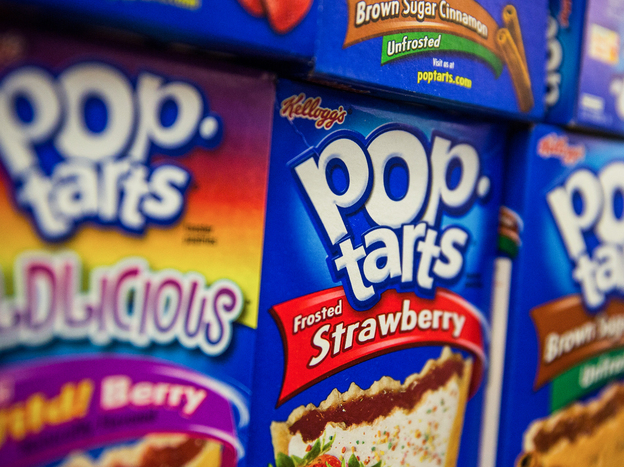
"caption": "Kellogg, maker of Pop-Tarts, announced Feb. 14 that it will buy palm oil — an ingredient in Pop-Tarts — only from companies that don't destroy rain forests where palm trees are grown. Photo: Andrew Burton/Getty Images",
"description": null,
"title": "470367019-fb3fa6b5e62a9021d9c715d1ece38398c955bebc-s4",
"credit": null,
"status": "inherit",
"isLoading": false,
"fetchFailed": false
},
"bayareabites_78492": {
"type": "attachments",
"id": "bayareabites_78492",
"meta": {
"index": "attachments_1716263798",
"site": "bayareabites",
"id": "78492",
"found": true
},
"parent": 78491,
"imgSizes": {
"kqedFullSize": {
"file": "https://ww2.kqed.org/app/uploads/sites/24/2014/02/beer-e4efd297e1abf1f2bbc52351c9f96cb8ba13c419.jpg",
"width": 444,
"height": 333
}
},
"publishDate": 1393090704,
"modified": 1393090704,
"caption": "Tyler BigChild, a board member of Vancouver's Drug Users Resource Center, is also part of its Brew Co-Op. The group teaches alcoholics how to make beer and wine, in the hopes that they'll stop risky behavior such as drinking rubbing alcohol. Photo: Portland Hotel Society",
"description": null,
"title": "beercanada",
"credit": null,
"status": "inherit",
"isLoading": false,
"fetchFailed": false
},
"bayareabites_78480": {
"type": "attachments",
"id": "bayareabites_78480",
"meta": {
"index": "attachments_1716263798",
"site": "bayareabites",
"id": "78480",
"found": true
},
"parent": 78477,
"imgSizes": {
"kqedFullSize": {
"file": "https://ww2.kqed.org/app/uploads/sites/24/2014/02/111515138_wide-ce102ecfd16994c517c6d011c79e47c722abe4f8-s4.jpg",
"width": 624,
"height": 350
}
},
"publishDate": 1393007165,
"modified": 1393007165,
"caption": "Customers at Sbarro in Chicago on April 4, 2011, the day that the company filed for Chapter 11 bankruptcy. Photo: Scott Olson/Getty Images",
"description": "Customers at Sbarro in Chicago on April 4, 2011, the day that the company filed for Chapter 11 bankruptcy.",
"title": "111515138_wide-ce102ecfd16994c517c6d011c79e47c722abe4f8-s4",
"credit": null,
"status": "inherit",
"isLoading": false,
"fetchFailed": false
},
"bayareabites_78472": {
"type": "attachments",
"id": "bayareabites_78472",
"meta": {
"index": "attachments_1716263798",
"site": "bayareabites",
"id": "78472",
"found": true
},
"parent": 78471,
"imgSizes": {
"kqedFullSize": {
"file": "https://ww2.kqed.org/app/uploads/sites/24/2014/02/img_0038-500x3752-acd39363fab6456be7443da211ff59e106d78fa2.jpg",
"width": 500,
"height": 375
}
},
"publishDate": 1392999459,
"modified": 1392999459,
"caption": "The Trader Joe's Peanut Butter Filled Pretzel: The salty-sweet snack that launched a bitter lawsuit. Courtesy of Tine Haupert",
"description": "The Trader Joe's Peanut Butter Filled Pretzel: The salty-sweet snack that launched a bitter lawsuit.",
"title": "trader joe's",
"credit": null,
"status": "inherit",
"isLoading": false,
"fetchFailed": false
},
"bayareabites_78449": {
"type": "attachments",
"id": "bayareabites_78449",
"meta": {
"index": "attachments_1716263798",
"site": "bayareabites",
"id": "78449",
"found": true
},
"parent": 78441,
"imgSizes": {
"kqedFullSize": {
"file": "https://ww2.kqed.org/app/uploads/sites/24/2014/02/boar_and_springer_gestation_11-17_mp4_187069_wide-04dc4a2d82d70a10ec570a438321dc61e3058212-s4.jpg",
"width": 624,
"height": 351
}
},
"publishDate": 1392943025,
"modified": 1392943025,
"caption": "A screengrab from an undercover video released by the Humane Society of the U.S. shows a pig in a gestation crate at Iron Maiden Farms in Owensboro, Ky. Photo: Courtesy of the Humane Society of the United States",
"description": null,
"title": "boar_and_springer_gestation_11-17_mp4_187069",
"credit": null,
"status": "inherit",
"isLoading": false,
"fetchFailed": false
},
"bayareabites_78439": {
"type": "attachments",
"id": "bayareabites_78439",
"meta": {
"index": "attachments_1716263798",
"site": "bayareabites",
"id": "78439",
"found": true
},
"parent": 78436,
"imgSizes": {
"kqedFullSize": {
"file": "https://ww2.kqed.org/app/uploads/sites/24/2014/02/sucks-6-pack_wide-225196aa3ae3639dfbfc1807420569463a3325c2-s4.jpeg",
"width": 624,
"height": 351
}
},
"publishDate": 1392935179,
"modified": 1392935179,
"caption": "Lagunitas Brewing Company's owners are nervous that the Russian River water they currently use to make beer could run out in the drought that's hammering California. Photo: Courtesy of Lagunitas Brewing Company",
"description": null,
"title": "sucks-6-pack",
"credit": null,
"status": "inherit",
"isLoading": false,
"fetchFailed": false
},
"bayareabites_78434": {
"type": "attachments",
"id": "bayareabites_78434",
"meta": {
"index": "attachments_1716263798",
"site": "bayareabites",
"id": "78434",
"found": true
},
"parent": 78428,
"imgSizes": {
"kqedFullSize": {
"file": "https://ww2.kqed.org/app/uploads/sites/24/2014/02/img_8673_new2_wide-b3f908a99e476f5a6323f8fcf24d2b7b6f505cc7-s4.jpg",
"width": 624,
"height": 351
}
},
"publishDate": 1392934662,
"modified": 1392934662,
"caption": "Benny Bunting, a farm advocate for Rural Advancement Foundation International-USA, in front of one of his old chicken houses in Oak City, N.C. Photo: Dan Charles/NPR",
"description": "Benny Bunting, a farm advocate for Rural Advancement Foundation International-USA, in front of one of his old chicken houses in Oak City, N.C.",
"title": "img_8673_new2",
"credit": null,
"status": "inherit",
"isLoading": false,
"fetchFailed": false
},
"bayareabites_78420": {
"type": "attachments",
"id": "bayareabites_78420",
"meta": {
"index": "attachments_1716263798",
"site": "bayareabites",
"id": "78420",
"found": true
},
"parent": 78408,
"imgSizes": {
"kqedFullSize": {
"file": "https://ww2.kqed.org/app/uploads/sites/24/2014/02/bananafoster_wide-b070b2978f1fa3965513ddd23926f522c3e22482-s4.jpg",
"width": 624,
"height": 350
}
},
"publishDate": 1392873265,
"modified": 1392873265,
"caption": "Caramelized Bananas With Nuts And Orange Liqueur. Photo: Laura B. Weiss/NPR",
"description": null,
"title": "bananafoster",
"credit": null,
"status": "inherit",
"isLoading": false,
"fetchFailed": false
},
"bayareabites_78406": {
"type": "attachments",
"id": "bayareabites_78406",
"meta": {
"index": "attachments_1716263798",
"site": "bayareabites",
"id": "78406",
"found": true
},
"parent": 78400,
"imgSizes": {
"kqedFullSize": {
"file": "https://ww2.kqed.org/app/uploads/sites/24/2014/02/istock_000023604746medium_wide-72382fd547b55268f978f384fb48625a75d97885-s4.jpg",
"width": 624,
"height": 350
}
},
"publishDate": 1392846984,
"modified": 1392846984,
"caption": "Do these chickens look medicated? Photo: iStockphoto",
"description": "Do these chickens look medicated? Photo: iStockphoto",
"title": "Chickens",
"credit": null,
"status": "inherit",
"isLoading": false,
"fetchFailed": false
},
"bayareabites_78396": {
"type": "attachments",
"id": "bayareabites_78396",
"meta": {
"index": "attachments_1716263798",
"site": "bayareabites",
"id": "78396",
"found": true
},
"parent": 78387,
"imgSizes": {
"kqedFullSize": {
"file": "https://ww2.kqed.org/app/uploads/sites/24/2014/02/ap03061904596-copy_wide-04e046a71a76521f2db3a98d6057ea0534e9dc32-s4.jpg",
"width": 624,
"height": 350
}
},
"publishDate": 1392838081,
"modified": 1392838081,
"caption": "Chickens gather around a feeder in a Tyson Foods poultry house in Washington County, Ark. April L. Brown/AP",
"description": "Chickens gather around a feeder in a Tyson Foods poultry house in Washington County, Ark. April L. Brown/AP",
"title": "ap03061904596-copy",
"credit": null,
"status": "inherit",
"isLoading": false,
"fetchFailed": false
},
"bayareabites_78373": {
"type": "attachments",
"id": "bayareabites_78373",
"meta": {
"index": "attachments_1716263798",
"site": "bayareabites",
"id": "78373",
"found": true
},
"parent": 78366,
"imgSizes": {
"kqedFullSize": {
"file": "https://ww2.kqed.org/app/uploads/sites/24/2014/02/istock_000033603238large_wide-32dcb62e87ee378a7bbbb984b5499a479a7fdc51-s4.jpg",
"width": 624,
"height": 350
}
},
"publishDate": 1392779769,
"modified": 1392779769,
"caption": "Comedy Central's Jon Stewart has called Chicago-style pizza \"tomato soup in a bread bowl.\" Photo: iStockphoto",
"description": "Comedy Central's Jon Stewart has called Chicago-style pizza \"tomato soup in a bread bowl.\" Photo: iStockphoto",
"title": "istock_000033603238large",
"credit": null,
"status": "inherit",
"isLoading": false,
"fetchFailed": false
}
},
"audioPlayerReducer": {
"postId": "stream_live",
"isPaused": true,
"isPlaying": false,
"pfsActive": false,
"pledgeModalIsOpen": true,
"playerDrawerIsOpen": false,
"liveAudioPlayStartedAt": 0,
"liveAudioPlayContext": ""
},
"authorsReducer": {
"byline_bayareabites_78504": {
"type": "authors",
"id": "byline_bayareabites_78504",
"meta": {
"override": true
},
"slug": "byline_bayareabites_78504",
"name": "Deena Prichep",
"isLoading": false
},
"byline_bayareabites_78496": {
"type": "authors",
"id": "byline_bayareabites_78496",
"meta": {
"override": true
},
"slug": "byline_bayareabites_78496",
"name": "Allison Aubrey",
"isLoading": false
},
"byline_bayareabites_78491": {
"type": "authors",
"id": "byline_bayareabites_78491",
"meta": {
"override": true
},
"slug": "byline_bayareabites_78491",
"name": "Bill Chappell",
"isLoading": false
},
"byline_bayareabites_78477": {
"type": "authors",
"id": "byline_bayareabites_78477",
"meta": {
"override": true
},
"slug": "byline_bayareabites_78477",
"name": "Emily Siner",
"isLoading": false
},
"byline_bayareabites_78471": {
"type": "authors",
"id": "byline_bayareabites_78471",
"meta": {
"override": true
},
"slug": "byline_bayareabites_78471",
"name": "Maria Godoy",
"isLoading": false
},
"byline_bayareabites_78441": {
"type": "authors",
"id": "byline_bayareabites_78441",
"meta": {
"override": true
},
"slug": "byline_bayareabites_78441",
"name": "Eliza Barclay",
"isLoading": false
},
"byline_bayareabites_78436": {
"type": "authors",
"id": "byline_bayareabites_78436",
"meta": {
"override": true
},
"slug": "byline_bayareabites_78436",
"name": "Alastair Bland",
"isLoading": false
},
"byline_bayareabites_78428": {
"type": "authors",
"id": "byline_bayareabites_78428",
"meta": {
"override": true
},
"slug": "byline_bayareabites_78428",
"name": "Dan Charles",
"isLoading": false
},
"byline_bayareabites_78408": {
"type": "authors",
"id": "byline_bayareabites_78408",
"meta": {
"override": true
},
"slug": "byline_bayareabites_78408",
"name": "Laura B. Weiss",
"isLoading": false
},
"byline_bayareabites_78400": {
"type": "authors",
"id": "byline_bayareabites_78400",
"meta": {
"override": true
},
"slug": "byline_bayareabites_78400",
"name": "Maria Godoy",
"isLoading": false
},
"byline_bayareabites_78387": {
"type": "authors",
"id": "byline_bayareabites_78387",
"meta": {
"override": true
},
"slug": "byline_bayareabites_78387",
"name": "Dan Charles",
"isLoading": false
},
"byline_bayareabites_78366": {
"type": "authors",
"id": "byline_bayareabites_78366",
"meta": {
"override": true
},
"slug": "byline_bayareabites_78366",
"name": "Nina Totenberg",
"isLoading": false
}
},
"pagesReducer": {
"bayareabites_category_npr-food": {
"type": "terms",
"id": "bayareabites_10916",
"meta": {
"index": "terms_1716263798",
"site": "bayareabites",
"id": "10916",
"score": 13.894709
},
"featImg": null,
"name": "NPR food",
"description": null,
"taxonomy": "category",
"headData": {
"twImgId": null,
"twTitle": null,
"ogTitle": null,
"ogImgId": null,
"twDescription": null,
"description": null,
"title": "NPR food Archives | KQED Bay Area Bites",
"ogDescription": null
},
"ttid": 5375,
"slug": "npr-food",
"isLoading": false,
"title": "NPR food",
"pageMeta": {
"site": "bayareabites",
"WpPageTemplate": "page-topic-editorial",
"currentPage": 52
},
"blocks": [
{
"blockName": "kqed/post-list",
"attrs": {
"layout": "cardArticle2",
"query": "posts/bayareabites?category=npr-food",
"seeMore": false,
"paginated": true,
"page": 52
}
},
{
"blockName": "kqed/ad"
}
]
}
},
"pfsSessionReducer": {},
"postsReducer": {
"stream_live": {
"type": "live",
"id": "stream_live",
"audioUrl": "https://hls.kqed.org/hls/kqed_app/playlist.m3u8",
"title": "Live Stream",
"excerpt": "Live Stream information currently unavailable.",
"link": "/radio",
"featImg": "",
"label": {
"name": "KQED Live",
"link": "/"
}
},
"stream_kqedNewscast": {
"type": "posts",
"id": "stream_kqedNewscast",
"audioUrl": "https://www.kqed.org/.stream/anon/radio/RDnews/newscast.mp3?_=1",
"title": "KQED Newscast",
"featImg": "",
"label": {
"name": "88.5 FM",
"link": "/"
}
},
"bayareabites_78504": {
"type": "posts",
"id": "bayareabites_78504",
"meta": {
"index": "posts_1716263798",
"site": "bayareabites",
"id": "78504",
"score": null,
"sort": [
1393174011000
]
},
"parent": 0,
"labelTerm": {
"site": "bayareabites"
},
"blocks": [],
"publishDate": 1393174011,
"format": "aside",
"disqusTitle": "Cholent: The Original Slow-Cooked Dish ",
"title": "Cholent: The Original Slow-Cooked Dish ",
"headTitle": "Bay Area Bites | KQED Food",
"content": "\u003cfigure id=\"attachment_78505\" class=\"wp-caption aligncenter\" style=\"max-width: 1024px\">\u003ca href=\"http://ww2.kqed.org/bayareabites/wp-content/uploads/sites/24/2014/02/2305368176_f7780b9537_o-copy_wide-b5de3f6ea2db1c307d7b5041a9dda4479739a56f.jpg\">\u003cimg src=\"http://ww2.kqed.org/bayareabites/wp-content/uploads/sites/24/2014/02/2305368176_f7780b9537_o-copy_wide-b5de3f6ea2db1c307d7b5041a9dda4479739a56f.jpg\" alt=\"While traditional cholents feature meat and beans cooked for a whole day, some modern versions, like this one, use vegetable protein and a quick braise. Photo: rusvaplauke/Flickr\" width=\"1024\" height=\"575\" class=\"size-full wp-image-78505\">\u003c/a>\u003cfigcaption class=\"wp-caption-text\">While traditional cholents feature meat and beans cooked for a whole day, some modern versions, like this one, use vegetable protein and a quick braise. Photo: rusvaplauke/Flickr\u003c/figcaption>\u003c/figure>\n\u003cp>Post by Deena Prichep, \u003ca href=\"http://www.npr.org/blogs/thesalt/2014/02/22/280231765/cholent-the-original-slow-cooked-dish\" target=\"_blank\">The Salt at NPR Food\u003c/a> (2/22/2014)\u003c/p>\n\u003cp>\u003cstrong>Listen to the Story\u003c/strong> on \u003ca href=\"http://www.npr.org/blogs/thesalt/2014/02/22/280231765/cholent-the-original-slow-cooked-dish\">Weekend Edition\u003c/a> [audio src=\"http://pd.npr.org/anon.npr-mp3/npr/wesat/2014/02/20140222_wesat_cholent_the_original_slow-cooked_dish_.mp3\"] \u003c/p>\n\u003cp>This chilly winter, many of us have warmed ourselves — and our kitchens — with long-cooked meals. Roasts, beans, and stews have been in heavy rotation. But there's a dish called \u003cem>cholent\u003c/em> that isn't just cooked for a few hours — it's cooked for a full day.\u003c/p>\n\u003cp>\u003cem>Cholent\u003c/em> is rooted in the Jewish Sabbath, which traditionally prohibits work from sundown Friday to sundown Saturday. Under some interpretations, this includes prohibitions on even turning on the oven or stove. So for those who want to have a hot meal (and many feel a religious imperative to do so), the solution is to set up a stewed dish cooking low and slow on Friday, long before the sunset. Over a day of slow cooking, flavors infuse, beans soften, and tough cuts of meat become tender. By the time synagogue services are complete on Saturday afternoon, the rich, flavorful stew is ready to ladle out.\u003c/p>\n\u003cp>Food historian \u003ca href=\"http://www.gilmarks.com/\">Gil Marks\u003c/a> has traced \u003cem>cholent's\u003c/em> journey over the past thousand years, as it moved through different countries.\u003c/p>\n\u003cp>[ad fullwidth]\u003c/p>\n\u003cp>\"The dish comes out of the Middle East, and then it spreads to North Africa, and by the 9th century, it's already found in Spain,\" Marks says.\u003c/p>\n\u003cp>The dish eventually made its way to Eastern Europe — the term \u003cem>cholent\u003c/em> refers to this version, which is most common in America. Eastern European (Ashkenazi) \u003cem>cholent\u003c/em> usually features beans, barley, and some sort of meat. The seasoning will vary. Marks points to Hungarian recipes with paprika, peppered Lithuanian variations, and Polish \u003cem>cholents\u003c/em> flavored with little more than onions and garlic.\u003c/p>\n\u003cp>The surviving versions from the Middle East through North African vary as well — from Iraqi \u003ca href=\"http://www.tasteofbeirut.com/2011/11/iraqi-jewish-chicken-and-rice-tibeat/\">\u003cem>tbit\u003c/em>\u003c/a> featuring a whole chicken stewed overnight with rice, to turmeric- and cumin-scented \u003ca href=\"http://www.dinnersanddreams.net/2011/01/skhina.html\">Moroccan \u003c/a>stews with long-cooked eggs that become caramel-colored.\u003c/p>\n\u003cp>And Marks maintains that \u003cem>cholent\u003c/em> didn't just change shape in different countries — it gave rise to new dishes. \u003ca href=\"http://www.foodandwine.com/recipes/toulouse-style-cassoulet\">Cassoulet\u003c/a> is a classic Southern French dish, but Marks thinks it has its roots in \u003cem>cholent\u003c/em>.\u003c/p>\n\u003cp>\"We do find a number of French sources from the Catholic church forbidding Christians from eating a long-cooked bean dish because it's Jewish,\" he says.\u003c/p>\n\u003cp>And \u003ca href=\"http://www.simplyrecipes.com/recipes/slow_cooked_boston_baked_beans/\">Boston baked beans\u003c/a> may seem like a dish born in America, but Marks maintains that it came from a version of \u003cem>cholent\u003c/em> made by Sephardic Jews – those of Spanish, Portuguese, Middle Eastern and North African descent.\u003c/p>\n\u003cp>Marks says the Puritans learned this version of the dish – called \u003cem>shachna --\u003c/em> from Jews they met during their time in Holland.\u003c/p>\n\u003cp>Shachna, Marks explains, consists of beans cooked in goose fat with honey. But the Puritans \"don't have goose, so they substitute pork. And they don't have honey, so they substitute either maple syrup or molasses.\"\u003c/p>\n\u003cp>Unfortunately, these \u003cem>cholent\u003c/em> theories on Boston baked beans and cassoulet can be difficult to really prove. But \u003cem>cholen\u003c/em>t has changed modern American cooking in ways that are undeniable.\u003c/p>\n\u003cp>Inventor Irving Naxon came up with over 200 patents, for everything from washing machines to sending data over telephone wires. But one of his most popular ideas was inspired by his mother's stories of making \u003cem>cholent\u003c/em> in Lithuania.\u003c/p>\n\u003cp>\"She would walk it over to the village bakery, where, as the ovens were turned off for the Sabbath, the pot of \u003cem>cholent\u003c/em> would be put in the oven,\" explains Naxon's daughter, Lenore. \"And that slow residual heat over the course of the 24 hours would be enough to cook the \u003cem>cholent\u003c/em>.\"\u003c/p>\n\u003cp>After the Saturday religious services, the kids would pick up their pots for a warm Sabbath meal.\u003c/p>\n\u003cp>\"So my father heard that story, and thought, hmm, well how can I take the crock and electrify it with some slow, even heat?\" Lenore Naxon remembers.\u003c/p>\n\u003cp>The resulting invention was first called the Naxon Beanery — but you might know it better as the \u003ca href=\"http://www.crock-pot.com/\">Crock-Pot\u003c/a>. It's an idea that went from the Middle East, to a little shtetl in Lithuania, to millions of American homes. And in some of them, it's still being used to make \u003cem>cholent.\u003c/em>\u003c/p>\n\u003chr>\n\u003ch3>Cholent\u003c/h3>\n\u003cp>\u003cem>yields about 6 servings\u003c/em>\u003c/p>\n\u003cp>\u003cem>This recipe comes from Devora Wilhelm of Portland's \u003ca href=\"http://www.maimonidesjds.org/\">Maimonides Jewish Day School\u003c/a> — it originally came from her mother, who got it from a Hungarian friend. Wilhelm stresses that you should feel free to tailor your cholent to your taste — use waxy or starchy potatoes, chickpeas or kidney or pinto beans. As Wilhelm encourages, \"it doesn't matter, it's cholent — do what you want.\"\u003c/em>\u003c/p>\n\u003cp>\u003cstrong>Ingredients:\u003c/strong>\u003c/p>\n\u003cp>a few tablespoons canola or olive oil\u003c/p>\n\u003cp>6 onions, peeled and sliced or diced in large pieces (they'll nearly melt by the end, so don't worry)\u003c/p>\n\u003cp>1 cup pinto beans, soaked overnight\u003c/p>\n\u003cp>1 cup barley, soaked overnight\u003cbr> 5 potatoes, peeled and cut up into large chunks (starchy or waxy)\u003c/p>\n\u003cp>generous sprinklings each of paprika, salt, black pepper, turmeric , garlic powder\u003c/p>\n\u003cp>About 1/4 — 3/4 of a chicken (this can be pieces of a whole bird, just legs or thighs, cut-up cutlets, etc.)\u003c/p>\n\u003cp>Heat oil in a medium heat over a large pot (or, if you have a stovetop-friendly slow cooker, you can use that). Saute the onions until soft and translucent. If you've used a separate pot, transfer to a slow cooker a this point. Add the beans, barley, and potatoes, and cover with water up to a few inches from the top of the cooker. Add the seasonings, then taste the water and adjust as needed to have a combination of flavors to your liking. Add the chicken, and add additional water if needed so that it's between 1-2 inches from the top of the crock.\u003c/p>\n\u003cp> Cook the cholent on high for three to five hours. Taste and adjust seasonings as needed, then turn to low and cook until the next day. Enjoy warm for lunch (although Wilhelm's children have been known to dip into it for breakfast). \u003c/p>\n\u003cp>[ad floatright]\u003c/p>\n\u003cp>\u003cem>Copyright 2014 \u003ca href=\"http://www.npr.org\" target=\"_blank\">NPR\u003c/a>. \u003c/em>\u003c/p>\n\n",
"disqusIdentifier": "78504 http://blogs.kqed.org/bayareabites/?p=78504",
"disqusUrl": "https://ww2.kqed.org/bayareabites/2014/02/23/cholent-the-original-slow-cooked-dish/",
"stats": {
"hasVideo": false,
"hasChartOrMap": false,
"hasAudio": true,
"hasPolis": false,
"wordCount": 1066,
"hasGoogleForm": false,
"hasGallery": false,
"hasHearkenModule": false,
"iframeSrcs": [],
"paragraphCount": 33
},
"modified": 1393127286,
"excerpt": "A stewed dish cooked very low and slow, \u003cem>cholent\u003c/em> has roots in the Jewish Sabbath. This ancient stew directly inspired the Crock-Pot – and maybe the French cassoulet and Boston baked beans as well.",
"headData": {
"twImgId": "",
"twTitle": "",
"ogTitle": "",
"ogImgId": "",
"twDescription": "",
"description": "A stewed dish cooked very low and slow, cholent has roots in the Jewish Sabbath. This ancient stew directly inspired the Crock-Pot – and maybe the French cassoulet and Boston baked beans as well.",
"title": "Cholent: The Original Slow-Cooked Dish | KQED",
"ogDescription": "",
"schema": {
"@context": "https://schema.org",
"@type": "Article",
"headline": "Cholent: The Original Slow-Cooked Dish ",
"datePublished": "2014-02-23T08:46:51-08:00",
"dateModified": "2014-02-22T19:48:06-08:00",
"image": "https://cdn.kqed.org/wp-content/uploads/2020/02/KQED-OG-Image@1x.png"
}
},
"guestAuthors": [],
"slug": "cholent-the-original-slow-cooked-dish",
"status": "publish",
"nprApiLink": "http://api.npr.org/query?id=280231765&apiKey=MDAxOTAwOTE4MDEyMTkxMDAzNjczZDljZA004",
"nprByline": "Deena Prichep",
"nprStoryDate": "Sat, 22 Feb 2014 08:00:00 -0500",
"nprLastModifiedDate": "Sat, 22 Feb 2014 13:49:50 -0500",
"nprHtmlLink": "http://www.npr.org/blogs/thesalt/2014/02/22/280231765/cholent-the-original-slow-cooked-dish?ft=3&f=280231765",
"nprAudio": "http://pd.npr.org/anon.npr-mp3/npr/wesat/2014/02/20140222_wesat_cholent_the_original_slow-cooked_dish_.mp3?orgId=1&topicId=1053&ft=3&f=280231765",
"nprAudioM3u": "http://api.npr.org/m3u/1281113194-0736fb.m3u?orgId=1&topicId=1053&ft=3&f=280231765",
"nprStoryId": "280231765",
"nprRetrievedStory": "1",
"nprPubDate": "Sat, 22 Feb 2014 13:49:00 -0500",
"path": "/bayareabites/78504/cholent-the-original-slow-cooked-dish",
"audioUrl": "http://pd.npr.org/anon.npr-mp3/npr/wesat/2014/02/20140222_wesat_cholent_the_original_slow-cooked_dish_.mp3?orgId=1&topicId=1053&ft=3&f=280231765",
"audioDuration": null,
"audioTrackLength": null,
"parsedContent": [
{
"type": "contentString",
"content": "\u003cdiv class=\"post-body\">\u003cp>\u003cfigure id=\"attachment_78505\" class=\"wp-caption aligncenter\" style=\"max-width: 1024px\">\u003ca href=\"http://ww2.kqed.org/bayareabites/wp-content/uploads/sites/24/2014/02/2305368176_f7780b9537_o-copy_wide-b5de3f6ea2db1c307d7b5041a9dda4479739a56f.jpg\">\u003cimg src=\"http://ww2.kqed.org/bayareabites/wp-content/uploads/sites/24/2014/02/2305368176_f7780b9537_o-copy_wide-b5de3f6ea2db1c307d7b5041a9dda4479739a56f.jpg\" alt=\"While traditional cholents feature meat and beans cooked for a whole day, some modern versions, like this one, use vegetable protein and a quick braise. Photo: rusvaplauke/Flickr\" width=\"1024\" height=\"575\" class=\"size-full wp-image-78505\">\u003c/a>\u003cfigcaption class=\"wp-caption-text\">While traditional cholents feature meat and beans cooked for a whole day, some modern versions, like this one, use vegetable protein and a quick braise. Photo: rusvaplauke/Flickr\u003c/figcaption>\u003c/figure>\n\u003cp>Post by Deena Prichep, \u003ca href=\"http://www.npr.org/blogs/thesalt/2014/02/22/280231765/cholent-the-original-slow-cooked-dish\" target=\"_blank\">The Salt at NPR Food\u003c/a> (2/22/2014)\u003c/p>\n\u003cp>\u003cstrong>Listen to the Story\u003c/strong> on \u003ca href=\"http://www.npr.org/blogs/thesalt/2014/02/22/280231765/cholent-the-original-slow-cooked-dish\">Weekend Edition\u003c/a> \u003c/p>\u003c/div>",
"attributes": {
"named": {},
"numeric": []
}
},
{
"type": "component",
"content": "",
"name": "audio",
"attributes": {
"named": {
"src": "http://pd.npr.org/anon.npr-mp3/npr/wesat/2014/02/20140222_wesat_cholent_the_original_slow-cooked_dish_.mp3",
"label": ""
},
"numeric": []
}
},
{
"type": "contentString",
"content": "\u003cdiv class=\"post-body\">\u003cp> \u003c/p>\n\u003cp>This chilly winter, many of us have warmed ourselves — and our kitchens — with long-cooked meals. Roasts, beans, and stews have been in heavy rotation. But there's a dish called \u003cem>cholent\u003c/em> that isn't just cooked for a few hours — it's cooked for a full day.\u003c/p>\n\u003cp>\u003cem>Cholent\u003c/em> is rooted in the Jewish Sabbath, which traditionally prohibits work from sundown Friday to sundown Saturday. Under some interpretations, this includes prohibitions on even turning on the oven or stove. So for those who want to have a hot meal (and many feel a religious imperative to do so), the solution is to set up a stewed dish cooking low and slow on Friday, long before the sunset. Over a day of slow cooking, flavors infuse, beans soften, and tough cuts of meat become tender. By the time synagogue services are complete on Saturday afternoon, the rich, flavorful stew is ready to ladle out.\u003c/p>\n\u003cp>Food historian \u003ca href=\"http://www.gilmarks.com/\">Gil Marks\u003c/a> has traced \u003cem>cholent's\u003c/em> journey over the past thousand years, as it moved through different countries.\u003c/p>\n\u003cp>\u003c/p>\u003c/div>",
"attributes": {
"named": {},
"numeric": []
}
},
{
"type": "component",
"content": "",
"name": "ad",
"attributes": {
"named": {
"label": "fullwidth"
},
"numeric": [
"fullwidth"
]
}
},
{
"type": "contentString",
"content": "\u003cdiv class=\"post-body\">\u003cp>\u003c/p>\n\u003cp>\"The dish comes out of the Middle East, and then it spreads to North Africa, and by the 9th century, it's already found in Spain,\" Marks says.\u003c/p>\n\u003cp>The dish eventually made its way to Eastern Europe — the term \u003cem>cholent\u003c/em> refers to this version, which is most common in America. Eastern European (Ashkenazi) \u003cem>cholent\u003c/em> usually features beans, barley, and some sort of meat. The seasoning will vary. Marks points to Hungarian recipes with paprika, peppered Lithuanian variations, and Polish \u003cem>cholents\u003c/em> flavored with little more than onions and garlic.\u003c/p>\n\u003cp>The surviving versions from the Middle East through North African vary as well — from Iraqi \u003ca href=\"http://www.tasteofbeirut.com/2011/11/iraqi-jewish-chicken-and-rice-tibeat/\">\u003cem>tbit\u003c/em>\u003c/a> featuring a whole chicken stewed overnight with rice, to turmeric- and cumin-scented \u003ca href=\"http://www.dinnersanddreams.net/2011/01/skhina.html\">Moroccan \u003c/a>stews with long-cooked eggs that become caramel-colored.\u003c/p>\n\u003cp>And Marks maintains that \u003cem>cholent\u003c/em> didn't just change shape in different countries — it gave rise to new dishes. \u003ca href=\"http://www.foodandwine.com/recipes/toulouse-style-cassoulet\">Cassoulet\u003c/a> is a classic Southern French dish, but Marks thinks it has its roots in \u003cem>cholent\u003c/em>.\u003c/p>\n\u003cp>\"We do find a number of French sources from the Catholic church forbidding Christians from eating a long-cooked bean dish because it's Jewish,\" he says.\u003c/p>\n\u003cp>And \u003ca href=\"http://www.simplyrecipes.com/recipes/slow_cooked_boston_baked_beans/\">Boston baked beans\u003c/a> may seem like a dish born in America, but Marks maintains that it came from a version of \u003cem>cholent\u003c/em> made by Sephardic Jews – those of Spanish, Portuguese, Middle Eastern and North African descent.\u003c/p>\n\u003cp>Marks says the Puritans learned this version of the dish – called \u003cem>shachna --\u003c/em> from Jews they met during their time in Holland.\u003c/p>\n\u003cp>Shachna, Marks explains, consists of beans cooked in goose fat with honey. But the Puritans \"don't have goose, so they substitute pork. And they don't have honey, so they substitute either maple syrup or molasses.\"\u003c/p>\n\u003cp>Unfortunately, these \u003cem>cholent\u003c/em> theories on Boston baked beans and cassoulet can be difficult to really prove. But \u003cem>cholen\u003c/em>t has changed modern American cooking in ways that are undeniable.\u003c/p>\n\u003cp>Inventor Irving Naxon came up with over 200 patents, for everything from washing machines to sending data over telephone wires. But one of his most popular ideas was inspired by his mother's stories of making \u003cem>cholent\u003c/em> in Lithuania.\u003c/p>\n\u003cp>\"She would walk it over to the village bakery, where, as the ovens were turned off for the Sabbath, the pot of \u003cem>cholent\u003c/em> would be put in the oven,\" explains Naxon's daughter, Lenore. \"And that slow residual heat over the course of the 24 hours would be enough to cook the \u003cem>cholent\u003c/em>.\"\u003c/p>\n\u003cp>After the Saturday religious services, the kids would pick up their pots for a warm Sabbath meal.\u003c/p>\n\u003cp>\"So my father heard that story, and thought, hmm, well how can I take the crock and electrify it with some slow, even heat?\" Lenore Naxon remembers.\u003c/p>\n\u003cp>The resulting invention was first called the Naxon Beanery — but you might know it better as the \u003ca href=\"http://www.crock-pot.com/\">Crock-Pot\u003c/a>. It's an idea that went from the Middle East, to a little shtetl in Lithuania, to millions of American homes. And in some of them, it's still being used to make \u003cem>cholent.\u003c/em>\u003c/p>\n\u003chr>\n\u003ch3>Cholent\u003c/h3>\n\u003cp>\u003cem>yields about 6 servings\u003c/em>\u003c/p>\n\u003cp>\u003cem>This recipe comes from Devora Wilhelm of Portland's \u003ca href=\"http://www.maimonidesjds.org/\">Maimonides Jewish Day School\u003c/a> — it originally came from her mother, who got it from a Hungarian friend. Wilhelm stresses that you should feel free to tailor your cholent to your taste — use waxy or starchy potatoes, chickpeas or kidney or pinto beans. As Wilhelm encourages, \"it doesn't matter, it's cholent — do what you want.\"\u003c/em>\u003c/p>\n\u003cp>\u003cstrong>Ingredients:\u003c/strong>\u003c/p>\n\u003cp>a few tablespoons canola or olive oil\u003c/p>\n\u003cp>6 onions, peeled and sliced or diced in large pieces (they'll nearly melt by the end, so don't worry)\u003c/p>\n\u003cp>1 cup pinto beans, soaked overnight\u003c/p>\n\u003cp>1 cup barley, soaked overnight\u003cbr> 5 potatoes, peeled and cut up into large chunks (starchy or waxy)\u003c/p>\n\u003cp>generous sprinklings each of paprika, salt, black pepper, turmeric , garlic powder\u003c/p>\n\u003cp>About 1/4 — 3/4 of a chicken (this can be pieces of a whole bird, just legs or thighs, cut-up cutlets, etc.)\u003c/p>\n\u003cp>Heat oil in a medium heat over a large pot (or, if you have a stovetop-friendly slow cooker, you can use that). Saute the onions until soft and translucent. If you've used a separate pot, transfer to a slow cooker a this point. Add the beans, barley, and potatoes, and cover with water up to a few inches from the top of the cooker. Add the seasonings, then taste the water and adjust as needed to have a combination of flavors to your liking. Add the chicken, and add additional water if needed so that it's between 1-2 inches from the top of the crock.\u003c/p>\n\u003cp> Cook the cholent on high for three to five hours. Taste and adjust seasonings as needed, then turn to low and cook until the next day. Enjoy warm for lunch (although Wilhelm's children have been known to dip into it for breakfast). \u003c/p>\n\u003cp>\u003c/p>\u003c/div>",
"attributes": {
"named": {},
"numeric": []
}
},
{
"type": "component",
"content": "",
"name": "ad",
"attributes": {
"named": {
"label": "floatright"
},
"numeric": [
"floatright"
]
}
},
{
"type": "contentString",
"content": "\u003cdiv class=\"post-body\">\u003cp>\u003c/p>\n\u003cp>\u003cem>Copyright 2014 \u003ca href=\"http://www.npr.org\" target=\"_blank\">NPR\u003c/a>. \u003c/em>\u003c/p>\n\n\u003c/div>\u003c/p>",
"attributes": {
"named": {},
"numeric": []
}
}
],
"link": "/bayareabites/78504/cholent-the-original-slow-cooked-dish",
"authors": [
"byline_bayareabites_78504"
],
"categories": [
"bayareabites_2695",
"bayareabites_10916",
"bayareabites_34",
"bayareabites_12"
],
"tags": [
"bayareabites_13099",
"bayareabites_3662",
"bayareabites_14738",
"bayareabites_10236",
"bayareabites_10921"
],
"featImg": "bayareabites_78509",
"label": "bayareabites"
},
"bayareabites_78496": {
"type": "posts",
"id": "bayareabites_78496",
"meta": {
"index": "posts_1716263798",
"site": "bayareabites",
"id": "78496",
"score": null,
"sort": [
1393099038000
]
},
"parent": 0,
"labelTerm": {
"site": "bayareabites"
},
"blocks": [],
"publishDate": 1393099038,
"format": "aside",
"disqusTitle": "How Tracing the Oil in Your Pop-Tarts May Help Save Rain Forests",
"title": "How Tracing the Oil in Your Pop-Tarts May Help Save Rain Forests",
"headTitle": "Bay Area Bites | KQED Food",
"content": "\u003cfigure id=\"attachment_78498\" class=\"wp-caption aligncenter\" style=\"max-width: 1673px\">\u003ca href=\"http://ww2.kqed.org/bayareabites/wp-content/uploads/sites/24/2014/02/180200907_wide-b1f809fbe160ba8d8eaa5c875cf56190e2c73bfc.jpg\">\u003cimg src=\"http://ww2.kqed.org/bayareabites/wp-content/uploads/sites/24/2014/02/180200907_wide-b1f809fbe160ba8d8eaa5c875cf56190e2c73bfc.jpg\" alt=\"An access road is constructed in a peatland forest being cleared for a palm oil plantation on Indonesia's Sumatra island in 2013. Photo: Chaideer Mahyuddin/AFP/Getty Images\" width=\"1673\" height=\"940\" class=\"size-full wp-image-78498\">\u003c/a>\u003cfigcaption class=\"wp-caption-text\">An access road is constructed in a peatland forest being cleared for a palm oil plantation on Indonesia's Sumatra island in 2013. Photo: Chaideer Mahyuddin/AFP/Getty Images\u003c/figcaption>\u003c/figure>\n\u003cp>Post by Allison Aubrey, \u003ca href=\"http://www.npr.org/blogs/thesalt/2014/02/20/280257631/how-tracing-the-oil-in-your-pop-tarts-may-help-save-rainforests\" target=\"_blank\">The Salt at NPR Food\u003c/a> (2/2/2014)\u003c/p>\n\u003cp>If you think a small shareholder can't get the attention of the multibillion-dollar palm oil industry, think again.\u003c/p>\n\u003cp>\u003ca href=\"http://www.linkedin.com/pub/lucia-von-reusner/35/834/577\">Lucia von Reusner\u003c/a> lives half a world away from the palm oil plantations in Southeast Asia that have become notorious for environmental, labor and human rights abuses.\u003c/p>\n\u003cp>So, how did she nudge for change? She couldn't tell palm oil plantations in Indonesia to clean up their act. But, as a Kellogg shareholder, she figured out how to put pressure on the company to use \u003cem>its\u003c/em> leverage to push for change.\u003c/p>\n\u003cp>Palm oil, of course, is the fat that lubricates so many of our packaged snacks today, from Pop-Tarts and Eggo waffles to soaps and other personal products. And global demand for palm oil has grown quickly.\u003c/p>\n\u003cp>[ad fullwidth]\u003c/p>\n\u003cp>The clear-cutting of precious forests in countries like Indonesia and Malaysia to grow the oil palm trees has been \u003ca href=\"http://www.ucsusa.org/global_warming/solutions/stop-deforestation/palm-oil-and-forests.html\">well-documented\u003c/a>. More recently, an investigation by \u003ca href=\"http://www.businessweek.com/articles/2013-07-18/indonesias-palm-oil-industry-rife-with-human-rights-abuses\">BloombergBusinessweek\u003c/a> into human rights abuses on Indonesian palm oil plantations and an \u003ca href=\"http://humanityunited.org/pdfs/Modern_Slavery_in_the_Palm_Oil_Industry.pdf\">Accenture analysis\u003c/a> that described the use of child labor have raised more awareness about other unsavory realities in the industry.\u003c/p>\n\u003cp>Von Reusner, who works as a shareholder advocate for \u003ca href=\"http://greencentury.com/?gclid=CJ-D7KzL27wCFeYDOgod6TYA0g\">Green Century Capital Management\u003c/a>, a mutual fund company that attracts green-minded investors\u003cem>\u003c/em>, saw an opportunity to do something about it.\u003c/p>\n\u003cp>She got on an earnings conference call in August 2013 with the CEO of Kellogg and asked this question:\u003c/p>\n\u003cp>\"As a company publicly committed to sustainability, how will Kellogg ensure that the Kellogg brand is not associated with illegal deforestation?\"\u003c/p>\n\u003cp>One of Kellogg's main suppliers of palm oil, \u003ca href=\"http://www.wilmar-international.com/\">Wilmar\u003c/a>, has, in the past, been ranked among least sustainable companies in the world by \u003ca href=\"http://www.newsweek.com/2012/10/22/newsweek-green-rankings-2012-u-s-500-list.html\">Newsweek's green rankings\u003c/a>.\u003c/p>\n\u003cfigure id=\"attachment_78497\" class=\"wp-caption aligncenter\" style=\"max-width: 1448px\">\u003ca href=\"http://ww2.kqed.org/bayareabites/wp-content/uploads/sites/24/2014/02/470367019-fb3fa6b5e62a9021d9c715d1ece38398c955bebc.jpg\">\u003cimg src=\"http://ww2.kqed.org/bayareabites/wp-content/uploads/sites/24/2014/02/470367019-fb3fa6b5e62a9021d9c715d1ece38398c955bebc.jpg\" alt=\"Kellogg, maker of Pop-Tarts, announced Feb. 14 that it will buy palm oil — an ingredient in Pop-Tarts — only from companies that don't destroy rain forests where palm trees are grown. Photo: Andrew Burton/Getty Images\" width=\"1448\" height=\"1086\" class=\"size-full wp-image-78497\">\u003c/a>\u003cfigcaption class=\"wp-caption-text\">Kellogg, maker of Pop-Tarts, announced Feb. 14 that it will buy palm oil — an ingredient in Pop-Tarts — only from companies that don't destroy rain forests where palm trees are grown. Photo: Andrew Burton/Getty Images\u003c/figcaption>\u003c/figure>\n\u003cp>Von Reusner's questioning garnered lots of attention and \u003ca href=\"http://mobile.bloomberg.com/news/2013-08-01/kellogg-ceo-challenged-on-rain-forest-harm-during-earnings-call.html\">was picked up\u003c/a> by Bloomberg News. And she filed a shareholder proposal aimed at getting Kellogg to make changes.\u003c/p>\n\u003cp>Now, keep in mind her mutual fund is a tiny investor in Kellogg. (Kellogg has $21 billion in publicly traded shares. Green Century owns about $180,000 worth.) But von Reusner didn't see this as an obstacle.\u003c/p>\n\u003cp>\"As a shareholder in Kellogg, Green Century has a direct voice that management was obligated to respond to,\" von Reusner tells us.\u003c/p>\n\u003cp>The chief sustainability officer at Kellogg, Diane Holdorf, says that even before this shareholder petition was filed, the company was already at work drafting a new policy on palm oil.\u003c/p>\n\u003cp>And this month, Kellogg released a new global commitment to work with palm oil suppliers to buy oil that is fully traceable to its source.\u003c/p>\n\u003cp>In a \u003ca href=\"http://newsroom.kelloggcompany.com/2014-02-14-Kellogg-Announces-Global-Commitment-To-Fully-Traceable-Sourcing-Of-Palm-Oil\">press release\u003c/a>, the company wrote, \"Kellogg is working through its supply chain — from suppliers to processors to growers — to ensure that palm oil it uses is sourced from plantations that uphold the company's commitment to protect forests and peat lands, as well as human and community rights. \"\u003c/p>\n\u003cp>Kellogg had already made substantial efforts to engage with its suppliers to change how it sources palm oil. And the company has been procuring oil produced to standards set by the \u003ca href=\"http://www.rspo.org/\">Roundtable on Sustainable Palm Oil\u003c/a>.\u003c/p>\n\u003cp>But it seems that von Reusner's actions may have been a nudge to the industry to go yet a step further. And there has been a chorus of voices joining her. For instance, multiple groups had been \u003ca href=\"http://www.forestheroes.org/\">leaning on\u003c/a> Kellogg to end its partnerships with supplier Wilmar.\u003c/p>\n\u003cp>Then, in December of last year, Wilmar \u003ca href=\"http://www.wilmar-international.com/sustainability/\">announced\u003c/a> a No Deforestation, No Exploitation policy, which advocates like von Reusner and Forest Heroes consider a big victory.\u003c/p>\n\u003cp>So if Kellogg and Wilmar are stepping up to make this new commitment, who's next? As we've \u003ca href=\"http://www.npr.org/blogs/thesalt/2013/03/12/174140241/can-dunkin-donuts-really-turn-its-palm-oil-green\">reported\u003c/a>, Dunkin' Donuts made changes after New York State Comptroller Thomas DiNapoli, who oversees the state's public pension fund, made a stink.\u003c/p>\n\u003cp>The folks at the Rainforest Action Network have a \u003ca href=\":%20http:/conflictpalmoil.org\">campaign\u003c/a> targeting 20 snack-food-makers to make changes in the way they source palm oil.\u003c/p>\n\u003cp>Now, lots of advocates say the commitment made by Kellogg is encouraging.\u003c/p>\n\u003cp>\"It's a very hopeful sign,\" says Laurel Sutherlin of the Rainforest Action Network. \"But it's too early to say, 'Problem solved.' \"\u003c/p>\n\u003cp>Sutherlin says it's important to keep pressuring companies to act on the commitments they're making. \u003c/p>\n\u003cp>\u003c/p>\n\u003cp>\u003cem>Copyright 2014 \u003ca href=\"http://www.npr.org\" target=\"_blank\">NPR\u003c/a>. \u003c/em>\u003c/p>\n\n",
"disqusIdentifier": "78496 http://blogs.kqed.org/bayareabites/?p=78496",
"disqusUrl": "https://ww2.kqed.org/bayareabites/2014/02/22/how-tracing-the-oil-in-your-pop-tarts-may-help-save-rain-forests/",
"stats": {
"hasVideo": false,
"hasChartOrMap": false,
"hasAudio": false,
"hasPolis": false,
"wordCount": 795,
"hasGoogleForm": false,
"hasGallery": false,
"hasHearkenModule": false,
"iframeSrcs": [],
"paragraphCount": 27
},
"modified": 1393092028,
"excerpt": "A Kellogg shareholder helped nudge the company to buy palm oil that's fully traceable to its source. The hope is that more transparency in the industry will prevent environmental and labor abuses.",
"headData": {
"twImgId": "",
"twTitle": "",
"ogTitle": "",
"ogImgId": "",
"twDescription": "",
"description": "A Kellogg shareholder helped nudge the company to buy palm oil that's fully traceable to its source. The hope is that more transparency in the industry will prevent environmental and labor abuses.",
"title": "How Tracing the Oil in Your Pop-Tarts May Help Save Rain Forests | KQED",
"ogDescription": "",
"schema": {
"@context": "https://schema.org",
"@type": "Article",
"headline": "How Tracing the Oil in Your Pop-Tarts May Help Save Rain Forests",
"datePublished": "2014-02-22T11:57:18-08:00",
"dateModified": "2014-02-22T10:00:28-08:00",
"image": "https://cdn.kqed.org/wp-content/uploads/2020/02/KQED-OG-Image@1x.png"
}
},
"guestAuthors": [],
"slug": "how-tracing-the-oil-in-your-pop-tarts-may-help-save-rain-forests",
"status": "publish",
"nprApiLink": "http://api.npr.org/query?id=280257631&apiKey=MDAxOTAwOTE4MDEyMTkxMDAzNjczZDljZA004",
"nprByline": "Allison Aubrey",
"nprStoryDate": "Fri, 21 Feb 2014 16:34:00 -0500",
"nprLastModifiedDate": "Fri, 21 Feb 2014 20:57:28 -0500",
"nprHtmlLink": "http://www.npr.org/blogs/thesalt/2014/02/20/280257631/how-tracing-the-oil-in-your-pop-tarts-may-help-save-rainforests?ft=3&f=280257631",
"nprStoryId": "280257631",
"nprRetrievedStory": "1",
"nprPubDate": "Fri, 21 Feb 2014 20:57:00 -0500",
"path": "/bayareabites/78496/how-tracing-the-oil-in-your-pop-tarts-may-help-save-rain-forests",
"audioTrackLength": null,
"parsedContent": [
{
"type": "contentString",
"content": "\u003cdiv class=\"post-body\">\u003cp>\u003cfigure id=\"attachment_78498\" class=\"wp-caption aligncenter\" style=\"max-width: 1673px\">\u003ca href=\"http://ww2.kqed.org/bayareabites/wp-content/uploads/sites/24/2014/02/180200907_wide-b1f809fbe160ba8d8eaa5c875cf56190e2c73bfc.jpg\">\u003cimg src=\"http://ww2.kqed.org/bayareabites/wp-content/uploads/sites/24/2014/02/180200907_wide-b1f809fbe160ba8d8eaa5c875cf56190e2c73bfc.jpg\" alt=\"An access road is constructed in a peatland forest being cleared for a palm oil plantation on Indonesia's Sumatra island in 2013. Photo: Chaideer Mahyuddin/AFP/Getty Images\" width=\"1673\" height=\"940\" class=\"size-full wp-image-78498\">\u003c/a>\u003cfigcaption class=\"wp-caption-text\">An access road is constructed in a peatland forest being cleared for a palm oil plantation on Indonesia's Sumatra island in 2013. Photo: Chaideer Mahyuddin/AFP/Getty Images\u003c/figcaption>\u003c/figure>\n\u003cp>Post by Allison Aubrey, \u003ca href=\"http://www.npr.org/blogs/thesalt/2014/02/20/280257631/how-tracing-the-oil-in-your-pop-tarts-may-help-save-rainforests\" target=\"_blank\">The Salt at NPR Food\u003c/a> (2/2/2014)\u003c/p>\n\u003cp>If you think a small shareholder can't get the attention of the multibillion-dollar palm oil industry, think again.\u003c/p>\n\u003cp>\u003ca href=\"http://www.linkedin.com/pub/lucia-von-reusner/35/834/577\">Lucia von Reusner\u003c/a> lives half a world away from the palm oil plantations in Southeast Asia that have become notorious for environmental, labor and human rights abuses.\u003c/p>\n\u003cp>So, how did she nudge for change? She couldn't tell palm oil plantations in Indonesia to clean up their act. But, as a Kellogg shareholder, she figured out how to put pressure on the company to use \u003cem>its\u003c/em> leverage to push for change.\u003c/p>\n\u003cp>Palm oil, of course, is the fat that lubricates so many of our packaged snacks today, from Pop-Tarts and Eggo waffles to soaps and other personal products. And global demand for palm oil has grown quickly.\u003c/p>\n\u003cp>\u003c/p>\u003c/div>",
"attributes": {
"named": {},
"numeric": []
}
},
{
"type": "component",
"content": "",
"name": "ad",
"attributes": {
"named": {
"label": "fullwidth"
},
"numeric": [
"fullwidth"
]
}
},
{
"type": "contentString",
"content": "\u003cdiv class=\"post-body\">\u003cp>\u003c/p>\n\u003cp>The clear-cutting of precious forests in countries like Indonesia and Malaysia to grow the oil palm trees has been \u003ca href=\"http://www.ucsusa.org/global_warming/solutions/stop-deforestation/palm-oil-and-forests.html\">well-documented\u003c/a>. More recently, an investigation by \u003ca href=\"http://www.businessweek.com/articles/2013-07-18/indonesias-palm-oil-industry-rife-with-human-rights-abuses\">BloombergBusinessweek\u003c/a> into human rights abuses on Indonesian palm oil plantations and an \u003ca href=\"http://humanityunited.org/pdfs/Modern_Slavery_in_the_Palm_Oil_Industry.pdf\">Accenture analysis\u003c/a> that described the use of child labor have raised more awareness about other unsavory realities in the industry.\u003c/p>\n\u003cp>Von Reusner, who works as a shareholder advocate for \u003ca href=\"http://greencentury.com/?gclid=CJ-D7KzL27wCFeYDOgod6TYA0g\">Green Century Capital Management\u003c/a>, a mutual fund company that attracts green-minded investors\u003cem>\u003c/em>, saw an opportunity to do something about it.\u003c/p>\n\u003cp>She got on an earnings conference call in August 2013 with the CEO of Kellogg and asked this question:\u003c/p>\n\u003cp>\"As a company publicly committed to sustainability, how will Kellogg ensure that the Kellogg brand is not associated with illegal deforestation?\"\u003c/p>\n\u003cp>One of Kellogg's main suppliers of palm oil, \u003ca href=\"http://www.wilmar-international.com/\">Wilmar\u003c/a>, has, in the past, been ranked among least sustainable companies in the world by \u003ca href=\"http://www.newsweek.com/2012/10/22/newsweek-green-rankings-2012-u-s-500-list.html\">Newsweek's green rankings\u003c/a>.\u003c/p>\n\u003cfigure id=\"attachment_78497\" class=\"wp-caption aligncenter\" style=\"max-width: 1448px\">\u003ca href=\"http://ww2.kqed.org/bayareabites/wp-content/uploads/sites/24/2014/02/470367019-fb3fa6b5e62a9021d9c715d1ece38398c955bebc.jpg\">\u003cimg src=\"http://ww2.kqed.org/bayareabites/wp-content/uploads/sites/24/2014/02/470367019-fb3fa6b5e62a9021d9c715d1ece38398c955bebc.jpg\" alt=\"Kellogg, maker of Pop-Tarts, announced Feb. 14 that it will buy palm oil — an ingredient in Pop-Tarts — only from companies that don't destroy rain forests where palm trees are grown. Photo: Andrew Burton/Getty Images\" width=\"1448\" height=\"1086\" class=\"size-full wp-image-78497\">\u003c/a>\u003cfigcaption class=\"wp-caption-text\">Kellogg, maker of Pop-Tarts, announced Feb. 14 that it will buy palm oil — an ingredient in Pop-Tarts — only from companies that don't destroy rain forests where palm trees are grown. Photo: Andrew Burton/Getty Images\u003c/figcaption>\u003c/figure>\n\u003cp>Von Reusner's questioning garnered lots of attention and \u003ca href=\"http://mobile.bloomberg.com/news/2013-08-01/kellogg-ceo-challenged-on-rain-forest-harm-during-earnings-call.html\">was picked up\u003c/a> by Bloomberg News. And she filed a shareholder proposal aimed at getting Kellogg to make changes.\u003c/p>\n\u003cp>Now, keep in mind her mutual fund is a tiny investor in Kellogg. (Kellogg has $21 billion in publicly traded shares. Green Century owns about $180,000 worth.) But von Reusner didn't see this as an obstacle.\u003c/p>\n\u003cp>\"As a shareholder in Kellogg, Green Century has a direct voice that management was obligated to respond to,\" von Reusner tells us.\u003c/p>\n\u003cp>The chief sustainability officer at Kellogg, Diane Holdorf, says that even before this shareholder petition was filed, the company was already at work drafting a new policy on palm oil.\u003c/p>\n\u003cp>And this month, Kellogg released a new global commitment to work with palm oil suppliers to buy oil that is fully traceable to its source.\u003c/p>\n\u003cp>In a \u003ca href=\"http://newsroom.kelloggcompany.com/2014-02-14-Kellogg-Announces-Global-Commitment-To-Fully-Traceable-Sourcing-Of-Palm-Oil\">press release\u003c/a>, the company wrote, \"Kellogg is working through its supply chain — from suppliers to processors to growers — to ensure that palm oil it uses is sourced from plantations that uphold the company's commitment to protect forests and peat lands, as well as human and community rights. \"\u003c/p>\n\u003cp>Kellogg had already made substantial efforts to engage with its suppliers to change how it sources palm oil. And the company has been procuring oil produced to standards set by the \u003ca href=\"http://www.rspo.org/\">Roundtable on Sustainable Palm Oil\u003c/a>.\u003c/p>\n\u003cp>But it seems that von Reusner's actions may have been a nudge to the industry to go yet a step further. And there has been a chorus of voices joining her. For instance, multiple groups had been \u003ca href=\"http://www.forestheroes.org/\">leaning on\u003c/a> Kellogg to end its partnerships with supplier Wilmar.\u003c/p>\n\u003cp>Then, in December of last year, Wilmar \u003ca href=\"http://www.wilmar-international.com/sustainability/\">announced\u003c/a> a No Deforestation, No Exploitation policy, which advocates like von Reusner and Forest Heroes consider a big victory.\u003c/p>\n\u003cp>So if Kellogg and Wilmar are stepping up to make this new commitment, who's next? As we've \u003ca href=\"http://www.npr.org/blogs/thesalt/2013/03/12/174140241/can-dunkin-donuts-really-turn-its-palm-oil-green\">reported\u003c/a>, Dunkin' Donuts made changes after New York State Comptroller Thomas DiNapoli, who oversees the state's public pension fund, made a stink.\u003c/p>\n\u003cp>The folks at the Rainforest Action Network have a \u003ca href=\":%20http:/conflictpalmoil.org\">campaign\u003c/a> targeting 20 snack-food-makers to make changes in the way they source palm oil.\u003c/p>\n\u003cp>Now, lots of advocates say the commitment made by Kellogg is encouraging.\u003c/p>\n\u003cp>\"It's a very hopeful sign,\" says Laurel Sutherlin of the Rainforest Action Network. \"But it's too early to say, 'Problem solved.' \"\u003c/p>\n\u003cp>Sutherlin says it's important to keep pressuring companies to act on the commitments they're making. \u003c/p>\n\u003cp>\u003c/p>\n\u003cp>\u003cem>Copyright 2014 \u003ca href=\"http://www.npr.org\" target=\"_blank\">NPR\u003c/a>. \u003c/em>\u003c/p>\n\n\u003c/div>\u003c/p>",
"attributes": {
"named": {},
"numeric": []
}
}
],
"link": "/bayareabites/78496/how-tracing-the-oil-in-your-pop-tarts-may-help-save-rain-forests",
"authors": [
"byline_bayareabites_78496"
],
"categories": [
"bayareabites_4084",
"bayareabites_10916",
"bayareabites_2035",
"bayareabites_60"
],
"tags": [
"bayareabites_13098",
"bayareabites_11281",
"bayareabites_11870",
"bayareabites_9680"
],
"featImg": "bayareabites_78502",
"label": "bayareabites"
},
"bayareabites_78491": {
"type": "posts",
"id": "bayareabites_78491",
"meta": {
"index": "posts_1716263798",
"site": "bayareabites",
"id": "78491",
"score": null,
"sort": [
1393091090000
]
},
"parent": 0,
"labelTerm": {
"site": "bayareabites"
},
"blocks": [],
"publishDate": 1393091090,
"format": "aside",
"disqusTitle": "Alcoholics Learn to Make Their Own Beer in Canadian Program",
"title": "Alcoholics Learn to Make Their Own Beer in Canadian Program",
"headTitle": "Bay Area Bites | KQED Food",
"content": "\u003cfigure id=\"attachment_78492\" class=\"wp-caption aligncenter\" style=\"max-width: 444px\">\u003ca href=\"http://ww2.kqed.org/bayareabites/wp-content/uploads/sites/24/2014/02/beer-e4efd297e1abf1f2bbc52351c9f96cb8ba13c419.jpg\">\u003cimg src=\"http://ww2.kqed.org/bayareabites/wp-content/uploads/sites/24/2014/02/beer-e4efd297e1abf1f2bbc52351c9f96cb8ba13c419.jpg\" alt=\"Tyler BigChild, a board member of Vancouver's Drug Users Resource Center, is also part of its Brew Co-Op. The group teaches alcoholics how to make beer and wine, in the hopes that they'll stop risky behavior such as drinking rubbing alcohol. Photo: Portland Hotel Society\" width=\"444\" height=\"333\" class=\"size-full wp-image-78492\">\u003c/a>\u003cfigcaption class=\"wp-caption-text\">Tyler BigChild, a board member of Vancouver's Drug Users Resource Center, is also part of its Brew Co-Op. The group teaches alcoholics how to make beer and wine, in the hopes that they'll stop risky behavior such as drinking rubbing alcohol. Photo: Portland Hotel Society\u003c/figcaption>\u003c/figure>\n\u003cp>Post by \u003ca href=\"http://www.npr.org/people/14562108/bill-chappell\" target=\"_blank\">Bill Chappell\u003c/a>, \u003ca href=\"http://www.npr.org/blogs/thetwo-way/2014/02/21/280885577/alcoholics-learn-to-make-their-own-beer-in-canadian-program\" target=\"_blank\">The Two-Way at NPR\u003c/a> (2/22/2014)\u003c/p>\n\u003cp>Call it a new twist on the old \"teach a man to fish\" adage. A group in Vancouver, British Columbia, is teaching inveterate alcoholics to brew their own beer and make their own wine, in an attempt to keep them from drinking unsafe liquids to get an alcoholic high.\u003c/p>\n\u003cp>The project is the work of the \u003ca href=\"http://portlandhotelsociety.tumblr.com/\">Portland Hotel Society\u003c/a>, which works to help people who suffer from mental illness and addictions in downtown Vancouver. News of the beer and wine project is spreading weeks after the publicly funded group's Drug Users Resource Center unveiled a coin-operated machine that \u003ca href=\"http://bc.ctvnews.ca/canada-s-first-crack-pipe-vending-machines-come-to-vancouver-1.1676803\">dispenses crack pipes for 25 cents\u003c/a>.\u003c/p>\n\u003cp>The Portland Hotel Society's leaders say they want to provide safe alternatives to people who might otherwise be forced into risky and unsafe behavior — everything from shoplifting booze to drinking any substance they can find that contains alcohol.\u003c/p>\n\u003cp>\"Obviously, we'd rather they didn't drink,\" the society's executive director, Mark Townsend, tells the \u003ca href=\"http://www.vancouversun.com/health/Vancouver+program+teaches+alcoholics+make+booze/9527571/story.html\">Vancouver Sun\u003c/a>. \"But if they do, we'd rather they didn't drink hand sanitizer.\"\u003c/p>\n\u003cp>[ad fullwidth]\u003c/p>\n\u003cp>The brewing program, which began about six months ago, requires participants to make several commitments in exchange for about five liters of home-brewed beer. Townsend says that in addition, they also get a sense of pride and achievement in making their own beer.\u003c/p>\n\u003cp>The brewers each pitch in $10 and work in groups of four to produce beer or wine in a style of their choosing — this week, they were making Dutch lager and a honey lager; a chardonnay was to be uncorked Friday, reports Canada's \u003ca href=\"http://news.nationalpost.com/2014/02/19/vancouver-drug-centre-teaching-alcoholics-to-brew-their-own-beer-so-theyll-stop-drinking-mouthwash\">National Post\u003c/a>. During the process, they're supervised by a brewmaster.\u003c/p>\n\u003cp>The participants must also attend the regular Friday-night meetings of the \"Drinker's Lounge,\" a support group that also includes an alcohol-swapping program that Townsend compares to a gun amnesty system. Members can bring containers of rubbing alcohol, for instance, and exchange them for regular drinks.\u003c/p>\n\u003cp>\"We're just trying to do what we can with no resources to make them a bit safer, make our community a bit safer, hopefully keep them alive for another day,\" Townsend told the \u003cem>Sun,\u003c/em> \"and with a possibility of not drinking in the way they do.\"\u003c/p>\n\u003cp>The brew-your-own program has been a hit. One participant tells the \u003cem>National Post\u003c/em> that it's \"more economically viable than buying it at a liquor store.\"\u003c/p>\n\u003cp>Soon the program will move past the brewing kits it's been getting from a home-brew supply store nearby, and make the beer from scratch. And the folks at the Portland Hotel Society say the brewing program is growing.\u003c/p>\n\u003cp>\"As the drinking community becomes aware of what we're doing, we're obviously having to expand the program,\" Drug Users Resource Center Director Kailin See tells the \u003cem>National Post.\u003c/em> \u003c/p>\n\u003cp>\u003c/p>\n\u003cp>\u003cem>Copyright 2014 \u003ca href=\"http://www.npr.org\" target=\"_blank\">NPR\u003c/a>. \u003c/em>\u003c/p>\n\n",
"disqusIdentifier": "78491 http://blogs.kqed.org/bayareabites/?p=78491",
"disqusUrl": "https://ww2.kqed.org/bayareabites/2014/02/22/alcoholics-learn-to-make-their-own-beer-in-canadian-program/",
"stats": {
"hasVideo": false,
"hasChartOrMap": false,
"hasAudio": false,
"hasPolis": false,
"wordCount": 536,
"hasGoogleForm": false,
"hasGallery": false,
"hasHearkenModule": false,
"iframeSrcs": [],
"paragraphCount": 15
},
"modified": 1393091143,
"excerpt": "In a twist on the old \"teach a man to fish\" adage, a Vancouver group teaches inveterate alcoholics to brew their own booze. The goal? Keeping them from drinking unsafe liquids that contain alcohol.",
"headData": {
"twImgId": "",
"twTitle": "",
"ogTitle": "",
"ogImgId": "",
"twDescription": "",
"description": "In a twist on the old "teach a man to fish" adage, a Vancouver group teaches inveterate alcoholics to brew their own booze. The goal? Keeping them from drinking unsafe liquids that contain alcohol.",
"title": "Alcoholics Learn to Make Their Own Beer in Canadian Program | KQED",
"ogDescription": "",
"schema": {
"@context": "https://schema.org",
"@type": "Article",
"headline": "Alcoholics Learn to Make Their Own Beer in Canadian Program",
"datePublished": "2014-02-22T09:44:50-08:00",
"dateModified": "2014-02-22T09:45:43-08:00",
"image": "https://cdn.kqed.org/wp-content/uploads/2020/02/KQED-OG-Image@1x.png"
}
},
"guestAuthors": [],
"slug": "alcoholics-learn-to-make-their-own-beer-in-canadian-program",
"status": "publish",
"nprApiLink": "http://api.npr.org/query?id=280885577&apiKey=MDAxOTAwOTE4MDEyMTkxMDAzNjczZDljZA004",
"nprByline": "Bill Chappell",
"nprStoryDate": "Fri, 21 Feb 2014 18:38:00 -0500",
"nprLastModifiedDate": "Fri, 21 Feb 2014 19:59:20 -0500",
"nprHtmlLink": "http://www.npr.org/blogs/thetwo-way/2014/02/21/280885577/alcoholics-learn-to-make-their-own-beer-in-canadian-program?ft=3&f=280885577",
"nprStoryId": "280885577",
"nprRetrievedStory": "1",
"nprPubDate": "Fri, 21 Feb 2014 19:59:00 -0500",
"path": "/bayareabites/78491/alcoholics-learn-to-make-their-own-beer-in-canadian-program",
"audioTrackLength": null,
"parsedContent": [
{
"type": "contentString",
"content": "\u003cdiv class=\"post-body\">\u003cp>\u003cfigure id=\"attachment_78492\" class=\"wp-caption aligncenter\" style=\"max-width: 444px\">\u003ca href=\"http://ww2.kqed.org/bayareabites/wp-content/uploads/sites/24/2014/02/beer-e4efd297e1abf1f2bbc52351c9f96cb8ba13c419.jpg\">\u003cimg src=\"http://ww2.kqed.org/bayareabites/wp-content/uploads/sites/24/2014/02/beer-e4efd297e1abf1f2bbc52351c9f96cb8ba13c419.jpg\" alt=\"Tyler BigChild, a board member of Vancouver's Drug Users Resource Center, is also part of its Brew Co-Op. The group teaches alcoholics how to make beer and wine, in the hopes that they'll stop risky behavior such as drinking rubbing alcohol. Photo: Portland Hotel Society\" width=\"444\" height=\"333\" class=\"size-full wp-image-78492\">\u003c/a>\u003cfigcaption class=\"wp-caption-text\">Tyler BigChild, a board member of Vancouver's Drug Users Resource Center, is also part of its Brew Co-Op. The group teaches alcoholics how to make beer and wine, in the hopes that they'll stop risky behavior such as drinking rubbing alcohol. Photo: Portland Hotel Society\u003c/figcaption>\u003c/figure>\n\u003cp>Post by \u003ca href=\"http://www.npr.org/people/14562108/bill-chappell\" target=\"_blank\">Bill Chappell\u003c/a>, \u003ca href=\"http://www.npr.org/blogs/thetwo-way/2014/02/21/280885577/alcoholics-learn-to-make-their-own-beer-in-canadian-program\" target=\"_blank\">The Two-Way at NPR\u003c/a> (2/22/2014)\u003c/p>\n\u003cp>Call it a new twist on the old \"teach a man to fish\" adage. A group in Vancouver, British Columbia, is teaching inveterate alcoholics to brew their own beer and make their own wine, in an attempt to keep them from drinking unsafe liquids to get an alcoholic high.\u003c/p>\n\u003cp>The project is the work of the \u003ca href=\"http://portlandhotelsociety.tumblr.com/\">Portland Hotel Society\u003c/a>, which works to help people who suffer from mental illness and addictions in downtown Vancouver. News of the beer and wine project is spreading weeks after the publicly funded group's Drug Users Resource Center unveiled a coin-operated machine that \u003ca href=\"http://bc.ctvnews.ca/canada-s-first-crack-pipe-vending-machines-come-to-vancouver-1.1676803\">dispenses crack pipes for 25 cents\u003c/a>.\u003c/p>\n\u003cp>The Portland Hotel Society's leaders say they want to provide safe alternatives to people who might otherwise be forced into risky and unsafe behavior — everything from shoplifting booze to drinking any substance they can find that contains alcohol.\u003c/p>\n\u003cp>\"Obviously, we'd rather they didn't drink,\" the society's executive director, Mark Townsend, tells the \u003ca href=\"http://www.vancouversun.com/health/Vancouver+program+teaches+alcoholics+make+booze/9527571/story.html\">Vancouver Sun\u003c/a>. \"But if they do, we'd rather they didn't drink hand sanitizer.\"\u003c/p>\n\u003cp>\u003c/p>\u003c/div>",
"attributes": {
"named": {},
"numeric": []
}
},
{
"type": "component",
"content": "",
"name": "ad",
"attributes": {
"named": {
"label": "fullwidth"
},
"numeric": [
"fullwidth"
]
}
},
{
"type": "contentString",
"content": "\u003cdiv class=\"post-body\">\u003cp>\u003c/p>\n\u003cp>The brewing program, which began about six months ago, requires participants to make several commitments in exchange for about five liters of home-brewed beer. Townsend says that in addition, they also get a sense of pride and achievement in making their own beer.\u003c/p>\n\u003cp>The brewers each pitch in $10 and work in groups of four to produce beer or wine in a style of their choosing — this week, they were making Dutch lager and a honey lager; a chardonnay was to be uncorked Friday, reports Canada's \u003ca href=\"http://news.nationalpost.com/2014/02/19/vancouver-drug-centre-teaching-alcoholics-to-brew-their-own-beer-so-theyll-stop-drinking-mouthwash\">National Post\u003c/a>. During the process, they're supervised by a brewmaster.\u003c/p>\n\u003cp>The participants must also attend the regular Friday-night meetings of the \"Drinker's Lounge,\" a support group that also includes an alcohol-swapping program that Townsend compares to a gun amnesty system. Members can bring containers of rubbing alcohol, for instance, and exchange them for regular drinks.\u003c/p>\n\u003cp>\"We're just trying to do what we can with no resources to make them a bit safer, make our community a bit safer, hopefully keep them alive for another day,\" Townsend told the \u003cem>Sun,\u003c/em> \"and with a possibility of not drinking in the way they do.\"\u003c/p>\n\u003cp>The brew-your-own program has been a hit. One participant tells the \u003cem>National Post\u003c/em> that it's \"more economically viable than buying it at a liquor store.\"\u003c/p>\n\u003cp>Soon the program will move past the brewing kits it's been getting from a home-brew supply store nearby, and make the beer from scratch. And the folks at the Portland Hotel Society say the brewing program is growing.\u003c/p>\n\u003cp>\"As the drinking community becomes aware of what we're doing, we're obviously having to expand the program,\" Drug Users Resource Center Director Kailin See tells the \u003cem>National Post.\u003c/em> \u003c/p>\n\u003cp>\u003c/p>\n\u003cp>\u003cem>Copyright 2014 \u003ca href=\"http://www.npr.org\" target=\"_blank\">NPR\u003c/a>. \u003c/em>\u003c/p>\n\n\u003c/div>\u003c/p>",
"attributes": {
"named": {},
"numeric": []
}
}
],
"link": "/bayareabites/78491/alcoholics-learn-to-make-their-own-beer-in-canadian-program",
"authors": [
"byline_bayareabites_78491"
],
"categories": [
"bayareabites_301",
"bayareabites_2638",
"bayareabites_1245",
"bayareabites_10916"
],
"tags": [
"bayareabites_11015",
"bayareabites_14753",
"bayareabites_590",
"bayareabites_11161",
"bayareabites_11465"
],
"featImg": "bayareabites_78492",
"label": "bayareabites"
},
"bayareabites_78477": {
"type": "posts",
"id": "bayareabites_78477",
"meta": {
"index": "posts_1716263798",
"site": "bayareabites",
"id": "78477",
"score": null,
"sort": [
1393007188000
]
},
"parent": 0,
"labelTerm": {
"site": "bayareabites"
},
"blocks": [],
"publishDate": 1393007188,
"format": "aside",
"disqusTitle": "What Sbarro's Downfall Says About Where We Get Our Fast Food Now",
"title": "What Sbarro's Downfall Says About Where We Get Our Fast Food Now",
"headTitle": "Bay Area Bites | KQED Food",
"content": "\u003cfigure id=\"attachment_78478\" class=\"wp-caption aligncenter\" style=\"max-width: 1674px\">\u003ca href=\"http://ww2.kqed.org/bayareabites/wp-content/uploads/sites/24/2014/02/111515138_wide-ce102ecfd16994c517c6d011c79e47c722abe4f8.jpg\">\u003cimg src=\"http://ww2.kqed.org/bayareabites/wp-content/uploads/sites/24/2014/02/111515138_wide-ce102ecfd16994c517c6d011c79e47c722abe4f8.jpg\" alt=\"Customers at Sbarro in Chicago on April 4, 2011, the day that the company filed for Chapter 11 bankruptcy. Photo: Scott Olson/Getty Images\" width=\"1674\" height=\"940\" class=\"size-full wp-image-78478\">\u003c/a>\u003cfigcaption class=\"wp-caption-text\">Customers at Sbarro in Chicago on April 4, 2011, the day that the company filed for Chapter 11 bankruptcy. Photo: Scott Olson/Getty Images\u003c/figcaption>\u003c/figure>\n\u003cp>Post by Emily Siner, \u003ca href=\"http://www.npr.org/blogs/thesalt/2014/02/21/280251252/what-sbarro-s-downfall-says-about-where-we-get-our-fast-food-now\" target=\"_blank\">The Salt at NPR Food\u003c/a> (2/21/2014)\u003c/p>\n\u003cp>In 1985, Joe Sbarro declared that he had high hopes for his cafeteria-style pizza chain, founded in 1956.\u003c/p>\n\u003cp>\"Sbarro's dream is to be another McDonald's,\" he \u003ca href=\"http://articles.latimes.com/1985-10-01/business/fi-19111_1_restaurant\">told Newsday\u003c/a>.\u003c/p>\n\u003cp>On Thursday that dream took a hit: The Italian chain that's become a shopping mall staple shut down 155 stores in the U.S. It's one more sign of the difficult journey for some mall restaurants since the recession — particularly food court bastions, like Sbarro, that haven't innovated much since their heyday in the 1980s.\u003c/p>\n\u003cp>The store closures are hardly the first sentinel of Sbarro's money troubles. When the company \u003ca href=\"http://www.huffingtonpost.com/2011/04/04/sbarro-pizza-bankruptcy-chapter_n_844290.html\">filed for bankruptcy\u003c/a> nearly three years ago, it blamed, in part, declining foot traffic in malls. Fewer people were shopping or traveling, so Sbarro and restaurants of its ilk had fewer potential customers.\u003c/p>\n\u003cp>[ad fullwidth]\u003c/p>\n\u003cp>That problem seems to have persisted. Most of the newly closed locations were also in mall food courts with a declining customer base, Sbarro spokesman Jon Dedmon tells The Salt.\u003c/p>\n\u003cp>But it's clearly not the case for all mall restaurants. The Cheesecake Factory, for example, \u003ca href=\"http://investors.thecheesecakefactory.com/phoenix.zhtml?c=109258&p=irol-newsArticle&id=1899569\">grew its profits\u003c/a> 16 percent in 2013. Restaurant analyst \u003ca href=\"http://www.baumwhiteman.com/michaelbio.html\">Michael Whiteman\u003c/a> says shopping malls have actually been relying on restaurants to fill empty retail space and bring in more customers.\u003c/p>\n\u003cp>\"As e-commerce has drained sales from traditional retail shops, [mall] developers successfully have been using food to provide a humanizing experience that you can't get on your smartphone or desktop,\" Whiteman says.\u003c/p>\n\u003cp>Still, the restaurant industry overall has been stagnating since even before the recession, says \u003ca href=\"https://www.npd.com/wps/portal/npd/us/about-npd/industry-experts/harry-balzer/\">Harry Balzer\u003c/a> of NPD Group. In 2000, the average American ate out 215 times. Last year, that number shrunk to 192, according to NPD data.\u003c/p>\n\u003cp>When people do eat out, they're increasingly gravitating towards newer chains, like Chipotle, Panera and Five Guys. These \"fast casual\" eateries are a step below a restaurant with full service but a step above, say, Sbarro. This is the kind of chain that's succeeding in the rocky restaurant business today, Balzer says. And Sbarro, which is pre-heated pizza slices, just isn't cutting it.\u003c/p>\n\u003cp>\"Traditional restaurants are all feeling the brunt of this,\" he says. \"They must all stay contemporary.\"\u003c/p>\n\u003cp>To Sbarro's credit, they are trying. They \u003ca href=\"http://nrn.com/fast-casual/sbarro-joins-fast-casual-pizza-race\">opened a Chipotle-style restaurant\u003c/a> called Pizza Cucinova in Ohio late last year, where diners could order customized pies and craft beer. And Sbarro still has 800 traditional locations and several hundred franchises worldwide — Joe Sbarro's dreams aren't quite dashed yet. \u003c/p>\n\u003cp>\u003c/p>\n\u003cp>\u003cem>Copyright 2014 \u003ca href=\"http://www.npr.org/\" target=\"_blank\">NPR\u003c/a>. \u003c/em>\u003c/p>\n\n",
"disqusIdentifier": "78477 http://blogs.kqed.org/bayareabites/?p=78477",
"disqusUrl": "https://ww2.kqed.org/bayareabites/2014/02/21/what-sbarros-downfall-says-about-where-we-get-our-fast-food-now/",
"stats": {
"hasVideo": false,
"hasChartOrMap": false,
"hasAudio": false,
"hasPolis": false,
"wordCount": 464,
"hasGoogleForm": false,
"hasGallery": false,
"hasHearkenModule": false,
"iframeSrcs": [],
"paragraphCount": 15
},
"modified": 1393007188,
"excerpt": "The pizza chain is closing 155 stores. Sure, malls have been hit hard, but Sbarro's problems are bigger: These days, diners are more likely to opt for \"fast casual\" options like Chipotle.",
"headData": {
"twImgId": "",
"twTitle": "",
"ogTitle": "",
"ogImgId": "",
"twDescription": "",
"description": "The pizza chain is closing 155 stores. Sure, malls have been hit hard, but Sbarro's problems are bigger: These days, diners are more likely to opt for "fast casual" options like Chipotle.",
"title": "What Sbarro's Downfall Says About Where We Get Our Fast Food Now | KQED",
"ogDescription": "",
"schema": {
"@context": "https://schema.org",
"@type": "Article",
"headline": "What Sbarro's Downfall Says About Where We Get Our Fast Food Now",
"datePublished": "2014-02-21T10:26:28-08:00",
"dateModified": "2014-02-21T10:26:28-08:00",
"image": "https://cdn.kqed.org/wp-content/uploads/2020/02/KQED-OG-Image@1x.png"
}
},
"guestAuthors": [],
"slug": "what-sbarros-downfall-says-about-where-we-get-our-fast-food-now",
"status": "publish",
"nprApiLink": "http://api.npr.org/query?id=280251252&apiKey=MDAxOTAwOTE4MDEyMTkxMDAzNjczZDljZA004",
"nprByline": "Emily Siner",
"nprStoryDate": "Fri, 21 Feb 2014 12:47:00 -0500",
"nprLastModifiedDate": "Fri, 21 Feb 2014 12:47:32 -0500",
"nprHtmlLink": "http://www.npr.org/blogs/thesalt/2014/02/21/280251252/what-sbarro-s-downfall-says-about-where-we-get-our-fast-food-now?ft=3&f=280251252",
"nprStoryId": "280251252",
"nprRetrievedStory": "1",
"nprPubDate": "Fri, 21 Feb 2014 12:47:00 -0500",
"path": "/bayareabites/78477/what-sbarros-downfall-says-about-where-we-get-our-fast-food-now",
"audioTrackLength": null,
"parsedContent": [
{
"type": "contentString",
"content": "\u003cdiv class=\"post-body\">\u003cp>\u003cfigure id=\"attachment_78478\" class=\"wp-caption aligncenter\" style=\"max-width: 1674px\">\u003ca href=\"http://ww2.kqed.org/bayareabites/wp-content/uploads/sites/24/2014/02/111515138_wide-ce102ecfd16994c517c6d011c79e47c722abe4f8.jpg\">\u003cimg src=\"http://ww2.kqed.org/bayareabites/wp-content/uploads/sites/24/2014/02/111515138_wide-ce102ecfd16994c517c6d011c79e47c722abe4f8.jpg\" alt=\"Customers at Sbarro in Chicago on April 4, 2011, the day that the company filed for Chapter 11 bankruptcy. Photo: Scott Olson/Getty Images\" width=\"1674\" height=\"940\" class=\"size-full wp-image-78478\">\u003c/a>\u003cfigcaption class=\"wp-caption-text\">Customers at Sbarro in Chicago on April 4, 2011, the day that the company filed for Chapter 11 bankruptcy. Photo: Scott Olson/Getty Images\u003c/figcaption>\u003c/figure>\n\u003cp>Post by Emily Siner, \u003ca href=\"http://www.npr.org/blogs/thesalt/2014/02/21/280251252/what-sbarro-s-downfall-says-about-where-we-get-our-fast-food-now\" target=\"_blank\">The Salt at NPR Food\u003c/a> (2/21/2014)\u003c/p>\n\u003cp>In 1985, Joe Sbarro declared that he had high hopes for his cafeteria-style pizza chain, founded in 1956.\u003c/p>\n\u003cp>\"Sbarro's dream is to be another McDonald's,\" he \u003ca href=\"http://articles.latimes.com/1985-10-01/business/fi-19111_1_restaurant\">told Newsday\u003c/a>.\u003c/p>\n\u003cp>On Thursday that dream took a hit: The Italian chain that's become a shopping mall staple shut down 155 stores in the U.S. It's one more sign of the difficult journey for some mall restaurants since the recession — particularly food court bastions, like Sbarro, that haven't innovated much since their heyday in the 1980s.\u003c/p>\n\u003cp>The store closures are hardly the first sentinel of Sbarro's money troubles. When the company \u003ca href=\"http://www.huffingtonpost.com/2011/04/04/sbarro-pizza-bankruptcy-chapter_n_844290.html\">filed for bankruptcy\u003c/a> nearly three years ago, it blamed, in part, declining foot traffic in malls. Fewer people were shopping or traveling, so Sbarro and restaurants of its ilk had fewer potential customers.\u003c/p>\n\u003cp>\u003c/p>\u003c/div>",
"attributes": {
"named": {},
"numeric": []
}
},
{
"type": "component",
"content": "",
"name": "ad",
"attributes": {
"named": {
"label": "fullwidth"
},
"numeric": [
"fullwidth"
]
}
},
{
"type": "contentString",
"content": "\u003cdiv class=\"post-body\">\u003cp>\u003c/p>\n\u003cp>That problem seems to have persisted. Most of the newly closed locations were also in mall food courts with a declining customer base, Sbarro spokesman Jon Dedmon tells The Salt.\u003c/p>\n\u003cp>But it's clearly not the case for all mall restaurants. The Cheesecake Factory, for example, \u003ca href=\"http://investors.thecheesecakefactory.com/phoenix.zhtml?c=109258&p=irol-newsArticle&id=1899569\">grew its profits\u003c/a> 16 percent in 2013. Restaurant analyst \u003ca href=\"http://www.baumwhiteman.com/michaelbio.html\">Michael Whiteman\u003c/a> says shopping malls have actually been relying on restaurants to fill empty retail space and bring in more customers.\u003c/p>\n\u003cp>\"As e-commerce has drained sales from traditional retail shops, [mall] developers successfully have been using food to provide a humanizing experience that you can't get on your smartphone or desktop,\" Whiteman says.\u003c/p>\n\u003cp>Still, the restaurant industry overall has been stagnating since even before the recession, says \u003ca href=\"https://www.npd.com/wps/portal/npd/us/about-npd/industry-experts/harry-balzer/\">Harry Balzer\u003c/a> of NPD Group. In 2000, the average American ate out 215 times. Last year, that number shrunk to 192, according to NPD data.\u003c/p>\n\u003cp>When people do eat out, they're increasingly gravitating towards newer chains, like Chipotle, Panera and Five Guys. These \"fast casual\" eateries are a step below a restaurant with full service but a step above, say, Sbarro. This is the kind of chain that's succeeding in the rocky restaurant business today, Balzer says. And Sbarro, which is pre-heated pizza slices, just isn't cutting it.\u003c/p>\n\u003cp>\"Traditional restaurants are all feeling the brunt of this,\" he says. \"They must all stay contemporary.\"\u003c/p>\n\u003cp>To Sbarro's credit, they are trying. They \u003ca href=\"http://nrn.com/fast-casual/sbarro-joins-fast-casual-pizza-race\">opened a Chipotle-style restaurant\u003c/a> called Pizza Cucinova in Ohio late last year, where diners could order customized pies and craft beer. And Sbarro still has 800 traditional locations and several hundred franchises worldwide — Joe Sbarro's dreams aren't quite dashed yet. \u003c/p>\n\u003cp>\u003c/p>\n\u003cp>\u003cem>Copyright 2014 \u003ca href=\"http://www.npr.org/\" target=\"_blank\">NPR\u003c/a>. \u003c/em>\u003c/p>\n\n\u003c/div>\u003c/p>",
"attributes": {
"named": {},
"numeric": []
}
}
],
"link": "/bayareabites/78477/what-sbarros-downfall-says-about-where-we-get-our-fast-food-now",
"authors": [
"byline_bayareabites_78477"
],
"categories": [
"bayareabites_1962",
"bayareabites_10916",
"bayareabites_181"
],
"tags": [
"bayareabites_12211",
"bayareabites_1435",
"bayareabites_443",
"bayareabites_13096",
"bayareabites_10921"
],
"featImg": "bayareabites_78480",
"label": "bayareabites"
},
"bayareabites_78471": {
"type": "posts",
"id": "bayareabites_78471",
"meta": {
"index": "posts_1716263798",
"site": "bayareabites",
"id": "78471",
"score": null,
"sort": [
1392999816000
]
},
"parent": 0,
"labelTerm": {
"site": "bayareabites"
},
"blocks": [],
"publishDate": 1392999816,
"format": "aside",
"disqusTitle": "Trader Joe's Caught in Sticky Lawsuit Over Peanut Butter Pretzels",
"title": "Trader Joe's Caught in Sticky Lawsuit Over Peanut Butter Pretzels",
"headTitle": "Bay Area Bites | KQED Food",
"content": "\u003cfigure id=\"attachment_78472\" class=\"wp-caption aligncenter\" style=\"max-width: 500px\">\u003ca href=\"http://ww2.kqed.org/bayareabites/wp-content/uploads/sites/24/2014/02/img_0038-500x3752-acd39363fab6456be7443da211ff59e106d78fa2.jpg\">\u003cimg src=\"http://ww2.kqed.org/bayareabites/wp-content/uploads/sites/24/2014/02/img_0038-500x3752-acd39363fab6456be7443da211ff59e106d78fa2.jpg\" alt=\"The Trader Joe's Peanut Butter Filled Pretzel: The salty-sweet snack that launched a bitter lawsuit. Courtesy of Tine Haupert\" width=\"500\" height=\"375\" class=\"size-full wp-image-78472\">\u003c/a>\u003cfigcaption class=\"wp-caption-text\">The Trader Joe's Peanut Butter Filled Pretzel: The salty-sweet snack that launched a bitter lawsuit. Courtesy of Tine Haupert\u003c/figcaption>\u003c/figure>\n\u003cp>Post by Maria Godoy, \u003ca href=\"http://www.npr.org/blogs/thesalt/2014/02/21/280284547/trader-joes-caught-in-sticky-lawsuit-over-peanut-butter-pretzels\" target=\"_blank\">The Salt at NPR Food\u003c/a> (2/21/2014)\u003c/p>\n\u003cp>\u003cstrong>Listen to the Story\u003c/strong> on \u003ca href=\"http://www.npr.org/blogs/thesalt/2014/02/21/280284547/trader-joes-caught-in-sticky-lawsuit-over-peanut-butter-pretzels\">Morning Edition\u003c/a> [audio src=\"http://pd.npr.org/anon.npr-mp3/npr/me/2014/02/20140221_me_trader_joes_caught_in_sticky_lawsuit_over_peanut_butter_pretzels.mp3\"] \u003c/p>\n\u003cp>Among the many snacks you can find in the aisles of Trader Joe's is an icon of sweet and salty goodness: the peanut butter pretzel. It's a combination so tasty, famed food writer Ruth Reichl once raved, \"You haven't lived until you've tried the two together.\"\u003c/p>\n\u003cp>But the beloved treats aren't just treasures for the palate — they're a pretty lucrative business worth millions of dollars. And now, Trader Joe's is being sued for allegedly cornering the market on the snack.\u003c/p>\n\u003cp>The plaintiff is Maxim Marketing, a Southern California company that claims to have invented the peanut butter pretzel in the early 1980s. And for more than 25 years, Maxim claims, it supplied the grocery chain with the snack, which is sold under the private Trader Joe's label. But Maxim says the retailer switched suppliers to packaged food giant ConAgra Foods, unfairly cutting it out of the business it pioneered. So Maxim is suing both companies, explains journalist Alfred Lee, who \u003ca href=\"http://www.labusinessjournal.com/news/2014/feb/17/pretzel-supplier-alleges-twisted-tale/?page=1&\">wrote about the lawsuit\u003c/a> for the \u003cem>Los Angeles Business Journal.\u003c/em>\u003c/p>\n\u003cp>[ad fullwidth]\u003c/p>\n\u003cp>\"They're suing for alleged breach of contract and also alleging the existence of a peanut butter pretzel monopoly,\" Lee tells \u003cem>Morning Edition\u003c/em> host David Greene. \"I realize that sounds kind of funny, but this isn't some bite-sized niche, if you will. It's a market worth tens of millions of dollars.\"\u003c/p>\n\u003cp>Maxim claims it sold Trader Joe's $9 million worth of peanut butter pretzels each year, and the grocer, in turn, sold the snacks at a gross markup of roughly 35 percent.\u003c/p>\n\u003cp>\"Maxim is a middle man that doesn't own its own factories,\" Lee explains, \"and ConAgra has bought up most of the peanut butter pretzel manufacturing capability in the United States. And Maxim is saying that this deal prevents them from essentially doing business.\"\u003c/p>\n\u003cp>Trader Joe's, which is privately held, is famously tight-lipped. It does not disclose its suppliers, and it has not commented publicly on the lawsuit nor responded to it in court.\u003c/p>\n\u003cp>Of course, Trader Joe's has the right to use any supplier it wants. And one way the company has traditionally cut costs is by bypassing the middle man and going straight to the manufacturer when it comes to creating its own private-label foods. So, really, it's up to the court to decide whether any contract was indeed breached, and whether the deal between Trader Joe's and ConAgra really does crumble competition in the pretzel marketplace.\u003c/p>\n\u003cp>One of the lawsuit's most surprising revelations? Turns out, the peanut butter pretzel is a marvel of food manufacturing. The technology to make a hard pretzel shell stuffed with peanut butter didn't even exist until the 1980s, Lee says. It's a process called co-extrusion — basically, an outer tube pumps out pretzel dough, while an inner tube pumps out peanut butter filling onto a conveyor belt. The whole thing is then sliced up and baked in a giant 100-foot oven.\u003c/p>\n\u003cp>\"It turns out that getting the mix right and the proportions right was pretty tricky,\" Lee says. \"If there is too much water in the pretzel or the shell is too thin, the things will explode. And imagine having to clean a 100-foot oven full of peanut butter.\" \u003c/p>\n\u003cp>\u003c/p>\n\u003cp>\u003cem>Copyright 2014 \u003ca href=\"http://www.npr.org\" target=\"_blank\">NPR\u003c/a>. \u003c/em>\u003c/p>\n\n",
"disqusIdentifier": "78471 http://blogs.kqed.org/bayareabites/?p=78471",
"disqusUrl": "https://ww2.kqed.org/bayareabites/2014/02/21/trader-joes-caught-in-sticky-lawsuit-over-peanut-butter-pretzels/",
"stats": {
"hasVideo": false,
"hasChartOrMap": false,
"hasAudio": true,
"hasPolis": false,
"wordCount": 614,
"hasGoogleForm": false,
"hasGallery": false,
"hasHearkenModule": false,
"iframeSrcs": [],
"paragraphCount": 15
},
"modified": 1393000109,
"excerpt": "Creating the salty-sweet snack was a bit of a technological marvel. And the company that claims to have invented it says Trader Joe's has unfairly cut it out of the pretzel marketplace.",
"headData": {
"twImgId": "",
"twTitle": "",
"ogTitle": "",
"ogImgId": "",
"twDescription": "",
"description": "Creating the salty-sweet snack was a bit of a technological marvel. And the company that claims to have invented it says Trader Joe's has unfairly cut it out of the pretzel marketplace.",
"title": "Trader Joe's Caught in Sticky Lawsuit Over Peanut Butter Pretzels | KQED",
"ogDescription": "",
"schema": {
"@context": "https://schema.org",
"@type": "Article",
"headline": "Trader Joe's Caught in Sticky Lawsuit Over Peanut Butter Pretzels",
"datePublished": "2014-02-21T08:23:36-08:00",
"dateModified": "2014-02-21T08:28:29-08:00",
"image": "https://cdn.kqed.org/wp-content/uploads/2020/02/KQED-OG-Image@1x.png"
}
},
"guestAuthors": [],
"slug": "trader-joes-caught-in-sticky-lawsuit-over-peanut-butter-pretzels",
"status": "publish",
"nprApiLink": "http://api.npr.org/query?id=280284547&apiKey=MDAxOTAwOTE4MDEyMTkxMDAzNjczZDljZA004",
"nprByline": "Maria Godoy",
"nprStoryDate": "Fri, 21 Feb 2014 03:37:00 -0500",
"nprLastModifiedDate": "Fri, 21 Feb 2014 09:34:03 -0500",
"nprHtmlLink": "http://www.npr.org/blogs/thesalt/2014/02/21/280284547/trader-joes-caught-in-sticky-lawsuit-over-peanut-butter-pretzels?ft=3&f=280284547",
"nprAudio": "http://pd.npr.org/anon.npr-mp3/npr/me/2014/02/20140221_me_trader_joes_caught_in_sticky_lawsuit_over_peanut_butter_pretzels.mp3?orgId=1&topicId=1006&ft=3&f=280284547",
"nprAudioM3u": "http://api.npr.org/m3u/1280528613-bd7e45.m3u?orgId=1&topicId=1006&ft=3&f=280284547",
"nprStoryId": "280284547",
"nprRetrievedStory": "1",
"nprPubDate": "Fri, 21 Feb 2014 09:34:00 -0500",
"path": "/bayareabites/78471/trader-joes-caught-in-sticky-lawsuit-over-peanut-butter-pretzels",
"audioUrl": "http://pd.npr.org/anon.npr-mp3/npr/me/2014/02/20140221_me_trader_joes_caught_in_sticky_lawsuit_over_peanut_butter_pretzels.mp3?orgId=1&topicId=1006&ft=3&f=280284547",
"audioDuration": null,
"audioTrackLength": null,
"parsedContent": [
{
"type": "contentString",
"content": "\u003cdiv class=\"post-body\">\u003cp>\u003cfigure id=\"attachment_78472\" class=\"wp-caption aligncenter\" style=\"max-width: 500px\">\u003ca href=\"http://ww2.kqed.org/bayareabites/wp-content/uploads/sites/24/2014/02/img_0038-500x3752-acd39363fab6456be7443da211ff59e106d78fa2.jpg\">\u003cimg src=\"http://ww2.kqed.org/bayareabites/wp-content/uploads/sites/24/2014/02/img_0038-500x3752-acd39363fab6456be7443da211ff59e106d78fa2.jpg\" alt=\"The Trader Joe's Peanut Butter Filled Pretzel: The salty-sweet snack that launched a bitter lawsuit. Courtesy of Tine Haupert\" width=\"500\" height=\"375\" class=\"size-full wp-image-78472\">\u003c/a>\u003cfigcaption class=\"wp-caption-text\">The Trader Joe's Peanut Butter Filled Pretzel: The salty-sweet snack that launched a bitter lawsuit. Courtesy of Tine Haupert\u003c/figcaption>\u003c/figure>\n\u003cp>Post by Maria Godoy, \u003ca href=\"http://www.npr.org/blogs/thesalt/2014/02/21/280284547/trader-joes-caught-in-sticky-lawsuit-over-peanut-butter-pretzels\" target=\"_blank\">The Salt at NPR Food\u003c/a> (2/21/2014)\u003c/p>\n\u003cp>\u003cstrong>Listen to the Story\u003c/strong> on \u003ca href=\"http://www.npr.org/blogs/thesalt/2014/02/21/280284547/trader-joes-caught-in-sticky-lawsuit-over-peanut-butter-pretzels\">Morning Edition\u003c/a> \u003c/p>\u003c/div>",
"attributes": {
"named": {},
"numeric": []
}
},
{
"type": "component",
"content": "",
"name": "audio",
"attributes": {
"named": {
"src": "http://pd.npr.org/anon.npr-mp3/npr/me/2014/02/20140221_me_trader_joes_caught_in_sticky_lawsuit_over_peanut_butter_pretzels.mp3",
"label": ""
},
"numeric": []
}
},
{
"type": "contentString",
"content": "\u003cdiv class=\"post-body\">\u003cp> \u003c/p>\n\u003cp>Among the many snacks you can find in the aisles of Trader Joe's is an icon of sweet and salty goodness: the peanut butter pretzel. It's a combination so tasty, famed food writer Ruth Reichl once raved, \"You haven't lived until you've tried the two together.\"\u003c/p>\n\u003cp>But the beloved treats aren't just treasures for the palate — they're a pretty lucrative business worth millions of dollars. And now, Trader Joe's is being sued for allegedly cornering the market on the snack.\u003c/p>\n\u003cp>The plaintiff is Maxim Marketing, a Southern California company that claims to have invented the peanut butter pretzel in the early 1980s. And for more than 25 years, Maxim claims, it supplied the grocery chain with the snack, which is sold under the private Trader Joe's label. But Maxim says the retailer switched suppliers to packaged food giant ConAgra Foods, unfairly cutting it out of the business it pioneered. So Maxim is suing both companies, explains journalist Alfred Lee, who \u003ca href=\"http://www.labusinessjournal.com/news/2014/feb/17/pretzel-supplier-alleges-twisted-tale/?page=1&\">wrote about the lawsuit\u003c/a> for the \u003cem>Los Angeles Business Journal.\u003c/em>\u003c/p>\n\u003cp>\u003c/p>\u003c/div>",
"attributes": {
"named": {},
"numeric": []
}
},
{
"type": "component",
"content": "",
"name": "ad",
"attributes": {
"named": {
"label": "fullwidth"
},
"numeric": [
"fullwidth"
]
}
},
{
"type": "contentString",
"content": "\u003cdiv class=\"post-body\">\u003cp>\u003c/p>\n\u003cp>\"They're suing for alleged breach of contract and also alleging the existence of a peanut butter pretzel monopoly,\" Lee tells \u003cem>Morning Edition\u003c/em> host David Greene. \"I realize that sounds kind of funny, but this isn't some bite-sized niche, if you will. It's a market worth tens of millions of dollars.\"\u003c/p>\n\u003cp>Maxim claims it sold Trader Joe's $9 million worth of peanut butter pretzels each year, and the grocer, in turn, sold the snacks at a gross markup of roughly 35 percent.\u003c/p>\n\u003cp>\"Maxim is a middle man that doesn't own its own factories,\" Lee explains, \"and ConAgra has bought up most of the peanut butter pretzel manufacturing capability in the United States. And Maxim is saying that this deal prevents them from essentially doing business.\"\u003c/p>\n\u003cp>Trader Joe's, which is privately held, is famously tight-lipped. It does not disclose its suppliers, and it has not commented publicly on the lawsuit nor responded to it in court.\u003c/p>\n\u003cp>Of course, Trader Joe's has the right to use any supplier it wants. And one way the company has traditionally cut costs is by bypassing the middle man and going straight to the manufacturer when it comes to creating its own private-label foods. So, really, it's up to the court to decide whether any contract was indeed breached, and whether the deal between Trader Joe's and ConAgra really does crumble competition in the pretzel marketplace.\u003c/p>\n\u003cp>One of the lawsuit's most surprising revelations? Turns out, the peanut butter pretzel is a marvel of food manufacturing. The technology to make a hard pretzel shell stuffed with peanut butter didn't even exist until the 1980s, Lee says. It's a process called co-extrusion — basically, an outer tube pumps out pretzel dough, while an inner tube pumps out peanut butter filling onto a conveyor belt. The whole thing is then sliced up and baked in a giant 100-foot oven.\u003c/p>\n\u003cp>\"It turns out that getting the mix right and the proportions right was pretty tricky,\" Lee says. \"If there is too much water in the pretzel or the shell is too thin, the things will explode. And imagine having to clean a 100-foot oven full of peanut butter.\" \u003c/p>\n\u003cp>\u003c/p>\n\u003cp>\u003cem>Copyright 2014 \u003ca href=\"http://www.npr.org\" target=\"_blank\">NPR\u003c/a>. \u003c/em>\u003c/p>\n\n\u003c/div>\u003c/p>",
"attributes": {
"named": {},
"numeric": []
}
}
],
"link": "/bayareabites/78471/trader-joes-caught-in-sticky-lawsuit-over-peanut-butter-pretzels",
"authors": [
"byline_bayareabites_78471"
],
"categories": [
"bayareabites_4084",
"bayareabites_12555",
"bayareabites_10916",
"bayareabites_34"
],
"tags": [
"bayareabites_11075",
"bayareabites_2826",
"bayareabites_1210",
"bayareabites_10921",
"bayareabites_1829"
],
"featImg": "bayareabites_78472",
"label": "bayareabites"
},
"bayareabites_78441": {
"type": "posts",
"id": "bayareabites_78441",
"meta": {
"index": "posts_1716263798",
"site": "bayareabites",
"id": "78441",
"score": null,
"sort": [
1392943042000
]
},
"parent": 0,
"labelTerm": {
"site": "bayareabites"
},
"blocks": [],
"publishDate": 1392943042,
"format": "aside",
"disqusTitle": "'Piglet Smoothie' Fed To Sows To Prevent Disease; Activists Outraged",
"title": "'Piglet Smoothie' Fed To Sows To Prevent Disease; Activists Outraged",
"headTitle": "Bay Area Bites | KQED Food",
"content": "\u003cfigure id=\"attachment_78442\" class=\"wp-caption aligncenter\" style=\"max-width: 1022px\">\u003ca href=\"http://ww2.kqed.org/bayareabites/wp-content/uploads/sites/24/2014/02/boar_and_springer_gestation_11-17_mp4_187069_wide-04dc4a2d82d70a10ec570a438321dc61e3058212.jpg\">\u003cimg src=\"http://ww2.kqed.org/bayareabites/wp-content/uploads/sites/24/2014/02/boar_and_springer_gestation_11-17_mp4_187069_wide-04dc4a2d82d70a10ec570a438321dc61e3058212.jpg\" alt=\"A screengrab from an undercover video released by the Humane Society of the U.S. shows a pig in a gestation crate at Iron Maiden Farms in Owensboro, Ky. Photo: Courtesy of the Humane Society of the United States\" width=\"1022\" height=\"575\" class=\"size-full wp-image-78442\">\u003c/a>\u003cfigcaption class=\"wp-caption-text\">A screengrab from an undercover video released by the Humane Society of the U.S. shows a pig in a gestation crate at Iron Maiden Farms in Owensboro, Ky. Photo: Courtesy of the Humane Society of the United States\u003c/figcaption>\u003c/figure>\n\u003cp>Post by Eliza Barclay, \u003ca href=\"http://www.npr.org/blogs/thesalt/2014/02/20/280183550/piglet-smoothie-fed-to-sows-to-prevent-disease-activists-outraged\" target=\"_blank\">The Salt at NPR Food\u003c/a> (2/20/2014)\u003c/p>\n\u003cp>Animal welfare groups go to great lengths to show us how \"the sausage\" is made inside the factory-style farms that produce most of our meat. For the last few years, they've armed activists with video cameras and sent them to document alleged abuses or risky practices undercover.\u003c/p>\n\u003cp>On Thursday, the Humane Society of the U.S. released its latest video — a look at how one hog farm in Kentucky is dealing with \u003ca href=\"http://www.npr.org/templates/story/story.php?storyId=265706146&live=1\">porcine epidemic diarrhea virus\u003c/a>, or PEDV. The fast-spreading virus has killed more than 2 million piglets in 25 states in the U.S. in since April 2013.\u003c/p>\n\u003cp>Let's just say it isn't pretty. (The video \u003ca href=\"http://www.humanesociety.org/news/press_releases/2014/02/Iron_Maiden_022014.html\">is available\u003c/a> on the Humane Society's website, but we should warn you that it's very, very graphic.)\u003c/p>\n\u003cp>In this video, we learn what happens to the piglets at Iron Maiden Hog Farm in Owensboro, K.Y., that succumbed to the virus: The animals are ground up and fed, as a \"smoothie\" — as HSUS dubs it — back to the sows, which could be their own mothers. (The exact size of the farm is unknown, but the barn shown in the video houses about 2,400 sows.)\u003c/p>\n\u003cp>[ad fullwidth]\u003c/p>\n\u003cp>\"It's beyond disturbing seeing piglets being prepared for this process,\" the unidentified narrator, an HSUS activist, tells viewers. \"It seems obvious that confining pigs in such an environment that causes open sores, extreme stress and filthy living conditions would only encourage the spread of disease.\"\u003c/p>\n\u003cp>Before we see the pile of dead piglets, we're shown how the sows at Iron Maiden are confined to narrow stalls that severely limit the animals' movement. No surprise here — these gestation crates are common in the industry, and animal welfare experts have long called on farmers to do away with them. (Many big producers are now moving away from the crates, as \u003ca href=\"http://ww2.kqed.org/bayareabites/2014/01/07/smithfield-prods-its-pork-suppliers-to-dump-pig-crates/\">we've reported\u003c/a>.)\u003c/p>\n\u003cp>But the HSUS claims the practice of feeding dead pigs to live pigs is illegal in the state of Kentucky, and may violate federal law, too. The Swine Health Protection Act prohibits feeding untreated garbage, which could be animal material, to pigs, unless it's \"household waste.\"\u003c/p>\n\u003cp>\"Pig factory farms are not 'households,' and killing piglets is not a 'household operation,'\" HSUS vice president Paul Shapiro tells The Salt.\u003c/p>\n\u003cp>But hog farmers and veterinarians say that while feeding the guts (or stool) of dead piglets back to sows may sound icky, it's the only option they've got to keep the dreaded PEDV from decimating herds and the whole of the U.S. hog supply.\u003c/p>\n\u003cp>In a \u003ca href=\"https://www.facebook.com/kentuckylivestock\">statement\u003c/a> posted on Facebook, the Kentucky Livestock Coalition, a group representing farm groups in the state, called it a \"widely-accepted and veterinary-recommended management practice.\"\u003c/p>\n\u003cp>\u003ca href=\"http://www.aasv.org/aasv/contacts.html\">Tom Burkgren\u003c/a>, executive director of the American Association of Swine Veterinarians, says that there are no vaccines or drugs to give to sows so that their piglets won't get the lethal virus. That means the only tool farmers have is \"controlled exposure,\" or feeding dead piglets to sows. What's more, he says, \"controlled exposure\" has been used for decades to protect animals against rare diseases like PEDV, which has only been in the U.S. for one year.\u003c/p>\n\u003cp>\"When I'm faced with the choice of seeing and carrying hundreds of dead baby pigs out of a barn or overcoming the 'ick factor,' I'm going to get over that 'ick factor,' because my goal is to save lives,\" Burkgren tells The Salt. (Burkgren adds that mother pigs sometimes cannibalize their babies like this on their own — he's seen it on farms where pigs are confined, and ones where they're allowed to pasture.)\u003c/p>\n\u003cp>But the HSUS points out that there's a higher risk of infection in large industrial hog operations like Iron Maiden, compared to smaller farms that raise their pigs outdoors. And \u003ca href=\"http://www.humanesociety.org/about/leadership/executive_staff/michael_blackwell.html\">Michael Blackwell\u003c/a>, senior director of veterinary policy for HSUS, says farmers do not necessarily have to resort to feeding pigs to pigs to prevent the spread of PEDV.\u003c/p>\n\u003cp>\"Keeping animals in a distress-free environment would help their immune systems. PEDV is a sentinel of the system not being in the best interest of the health of the animals,\" Blackwell told reporters in a press conference. \"We know we have limitations in the system in terms of inadequate space and nutrition.\"\u003c/p>\n\u003cp>As for HSUS' allegations of general abuse of the sows at Iron Maiden, Brent Burchett, a spokesman for the Kentucky Livestock Coalition, told The Salt in an email: \"I have personally toured this farm ... After watching the video, I believe it does not reflect the values of the producer in question.\" \u003c/p>\n\u003cp>\u003c/p>\n\u003cp>\u003cem>Copyright 2014 \u003ca href=\"http://www.npr.org/\" target=\"_blank\">NPR\u003c/a>. \u003c/em>\u003c/p>\n\n",
"disqusIdentifier": "78441 http://blogs.kqed.org/bayareabites/?p=78441",
"disqusUrl": "https://ww2.kqed.org/bayareabites/2014/02/20/piglet-smoothie-fed-to-sows-to-prevent-disease-activists-outraged/",
"stats": {
"hasVideo": false,
"hasChartOrMap": false,
"hasAudio": false,
"hasPolis": false,
"wordCount": 837,
"hasGoogleForm": false,
"hasGallery": false,
"hasHearkenModule": false,
"iframeSrcs": [],
"paragraphCount": 19
},
"modified": 1392943042,
"excerpt": "Undercover footage shows a hog farm feeding sows ground-up piglets who succumbed to a deadly virus. Veterinarians say it's the only method they have to protect herds against a fast-spreading disease.",
"headData": {
"twImgId": "",
"twTitle": "",
"ogTitle": "",
"ogImgId": "",
"twDescription": "",
"description": "Undercover footage shows a hog farm feeding sows ground-up piglets who succumbed to a deadly virus. Veterinarians say it's the only method they have to protect herds against a fast-spreading disease.",
"title": "'Piglet Smoothie' Fed To Sows To Prevent Disease; Activists Outraged | KQED",
"ogDescription": "",
"schema": {
"@context": "https://schema.org",
"@type": "Article",
"headline": "'Piglet Smoothie' Fed To Sows To Prevent Disease; Activists Outraged",
"datePublished": "2014-02-20T16:37:22-08:00",
"dateModified": "2014-02-20T16:37:22-08:00",
"image": "https://cdn.kqed.org/wp-content/uploads/2020/02/KQED-OG-Image@1x.png"
}
},
"guestAuthors": [],
"slug": "piglet-smoothie-fed-to-sows-to-prevent-disease-activists-outraged",
"status": "publish",
"nprApiLink": "http://api.npr.org/query?id=280183550&apiKey=MDAxOTAwOTE4MDEyMTkxMDAzNjczZDljZA004",
"nprByline": "Eliza Barclay",
"nprStoryDate": "Thu, 20 Feb 2014 16:37:00 -0500",
"nprLastModifiedDate": "Thu, 20 Feb 2014 16:46:32 -0500",
"nprHtmlLink": "http://www.npr.org/blogs/thesalt/2014/02/20/280183550/piglet-smoothie-fed-to-sows-to-prevent-disease-activists-outraged?ft=3&f=280183550",
"nprStoryId": "280183550",
"nprRetrievedStory": "1",
"nprPubDate": "Thu, 20 Feb 2014 16:46:00 -0500",
"path": "/bayareabites/78441/piglet-smoothie-fed-to-sows-to-prevent-disease-activists-outraged",
"audioTrackLength": null,
"parsedContent": [
{
"type": "contentString",
"content": "\u003cdiv class=\"post-body\">\u003cp>\u003cfigure id=\"attachment_78442\" class=\"wp-caption aligncenter\" style=\"max-width: 1022px\">\u003ca href=\"http://ww2.kqed.org/bayareabites/wp-content/uploads/sites/24/2014/02/boar_and_springer_gestation_11-17_mp4_187069_wide-04dc4a2d82d70a10ec570a438321dc61e3058212.jpg\">\u003cimg src=\"http://ww2.kqed.org/bayareabites/wp-content/uploads/sites/24/2014/02/boar_and_springer_gestation_11-17_mp4_187069_wide-04dc4a2d82d70a10ec570a438321dc61e3058212.jpg\" alt=\"A screengrab from an undercover video released by the Humane Society of the U.S. shows a pig in a gestation crate at Iron Maiden Farms in Owensboro, Ky. Photo: Courtesy of the Humane Society of the United States\" width=\"1022\" height=\"575\" class=\"size-full wp-image-78442\">\u003c/a>\u003cfigcaption class=\"wp-caption-text\">A screengrab from an undercover video released by the Humane Society of the U.S. shows a pig in a gestation crate at Iron Maiden Farms in Owensboro, Ky. Photo: Courtesy of the Humane Society of the United States\u003c/figcaption>\u003c/figure>\n\u003cp>Post by Eliza Barclay, \u003ca href=\"http://www.npr.org/blogs/thesalt/2014/02/20/280183550/piglet-smoothie-fed-to-sows-to-prevent-disease-activists-outraged\" target=\"_blank\">The Salt at NPR Food\u003c/a> (2/20/2014)\u003c/p>\n\u003cp>Animal welfare groups go to great lengths to show us how \"the sausage\" is made inside the factory-style farms that produce most of our meat. For the last few years, they've armed activists with video cameras and sent them to document alleged abuses or risky practices undercover.\u003c/p>\n\u003cp>On Thursday, the Humane Society of the U.S. released its latest video — a look at how one hog farm in Kentucky is dealing with \u003ca href=\"http://www.npr.org/templates/story/story.php?storyId=265706146&live=1\">porcine epidemic diarrhea virus\u003c/a>, or PEDV. The fast-spreading virus has killed more than 2 million piglets in 25 states in the U.S. in since April 2013.\u003c/p>\n\u003cp>Let's just say it isn't pretty. (The video \u003ca href=\"http://www.humanesociety.org/news/press_releases/2014/02/Iron_Maiden_022014.html\">is available\u003c/a> on the Humane Society's website, but we should warn you that it's very, very graphic.)\u003c/p>\n\u003cp>In this video, we learn what happens to the piglets at Iron Maiden Hog Farm in Owensboro, K.Y., that succumbed to the virus: The animals are ground up and fed, as a \"smoothie\" — as HSUS dubs it — back to the sows, which could be their own mothers. (The exact size of the farm is unknown, but the barn shown in the video houses about 2,400 sows.)\u003c/p>\n\u003cp>\u003c/p>\u003c/div>",
"attributes": {
"named": {},
"numeric": []
}
},
{
"type": "component",
"content": "",
"name": "ad",
"attributes": {
"named": {
"label": "fullwidth"
},
"numeric": [
"fullwidth"
]
}
},
{
"type": "contentString",
"content": "\u003cdiv class=\"post-body\">\u003cp>\u003c/p>\n\u003cp>\"It's beyond disturbing seeing piglets being prepared for this process,\" the unidentified narrator, an HSUS activist, tells viewers. \"It seems obvious that confining pigs in such an environment that causes open sores, extreme stress and filthy living conditions would only encourage the spread of disease.\"\u003c/p>\n\u003cp>Before we see the pile of dead piglets, we're shown how the sows at Iron Maiden are confined to narrow stalls that severely limit the animals' movement. No surprise here — these gestation crates are common in the industry, and animal welfare experts have long called on farmers to do away with them. (Many big producers are now moving away from the crates, as \u003ca href=\"http://ww2.kqed.org/bayareabites/2014/01/07/smithfield-prods-its-pork-suppliers-to-dump-pig-crates/\">we've reported\u003c/a>.)\u003c/p>\n\u003cp>But the HSUS claims the practice of feeding dead pigs to live pigs is illegal in the state of Kentucky, and may violate federal law, too. The Swine Health Protection Act prohibits feeding untreated garbage, which could be animal material, to pigs, unless it's \"household waste.\"\u003c/p>\n\u003cp>\"Pig factory farms are not 'households,' and killing piglets is not a 'household operation,'\" HSUS vice president Paul Shapiro tells The Salt.\u003c/p>\n\u003cp>But hog farmers and veterinarians say that while feeding the guts (or stool) of dead piglets back to sows may sound icky, it's the only option they've got to keep the dreaded PEDV from decimating herds and the whole of the U.S. hog supply.\u003c/p>\n\u003cp>In a \u003ca href=\"https://www.facebook.com/kentuckylivestock\">statement\u003c/a> posted on Facebook, the Kentucky Livestock Coalition, a group representing farm groups in the state, called it a \"widely-accepted and veterinary-recommended management practice.\"\u003c/p>\n\u003cp>\u003ca href=\"http://www.aasv.org/aasv/contacts.html\">Tom Burkgren\u003c/a>, executive director of the American Association of Swine Veterinarians, says that there are no vaccines or drugs to give to sows so that their piglets won't get the lethal virus. That means the only tool farmers have is \"controlled exposure,\" or feeding dead piglets to sows. What's more, he says, \"controlled exposure\" has been used for decades to protect animals against rare diseases like PEDV, which has only been in the U.S. for one year.\u003c/p>\n\u003cp>\"When I'm faced with the choice of seeing and carrying hundreds of dead baby pigs out of a barn or overcoming the 'ick factor,' I'm going to get over that 'ick factor,' because my goal is to save lives,\" Burkgren tells The Salt. (Burkgren adds that mother pigs sometimes cannibalize their babies like this on their own — he's seen it on farms where pigs are confined, and ones where they're allowed to pasture.)\u003c/p>\n\u003cp>But the HSUS points out that there's a higher risk of infection in large industrial hog operations like Iron Maiden, compared to smaller farms that raise their pigs outdoors. And \u003ca href=\"http://www.humanesociety.org/about/leadership/executive_staff/michael_blackwell.html\">Michael Blackwell\u003c/a>, senior director of veterinary policy for HSUS, says farmers do not necessarily have to resort to feeding pigs to pigs to prevent the spread of PEDV.\u003c/p>\n\u003cp>\"Keeping animals in a distress-free environment would help their immune systems. PEDV is a sentinel of the system not being in the best interest of the health of the animals,\" Blackwell told reporters in a press conference. \"We know we have limitations in the system in terms of inadequate space and nutrition.\"\u003c/p>\n\u003cp>As for HSUS' allegations of general abuse of the sows at Iron Maiden, Brent Burchett, a spokesman for the Kentucky Livestock Coalition, told The Salt in an email: \"I have personally toured this farm ... After watching the video, I believe it does not reflect the values of the producer in question.\" \u003c/p>\n\u003cp>\u003c/p>\n\u003cp>\u003cem>Copyright 2014 \u003ca href=\"http://www.npr.org/\" target=\"_blank\">NPR\u003c/a>. \u003c/em>\u003c/p>\n\n\u003c/div>\u003c/p>",
"attributes": {
"named": {},
"numeric": []
}
}
],
"link": "/bayareabites/78441/piglet-smoothie-fed-to-sows-to-prevent-disease-activists-outraged",
"authors": [
"byline_bayareabites_78441"
],
"categories": [
"bayareabites_1874",
"bayareabites_10916",
"bayareabites_2035",
"bayareabites_316"
],
"tags": [
"bayareabites_3897",
"bayareabites_12887",
"bayareabites_12886",
"bayareabites_11393",
"bayareabites_10921"
],
"featImg": "bayareabites_78449",
"label": "bayareabites"
},
"bayareabites_78436": {
"type": "posts",
"id": "bayareabites_78436",
"meta": {
"index": "posts_1716263798",
"site": "bayareabites",
"id": "78436",
"score": null,
"sort": [
1392935439000
]
},
"parent": 0,
"labelTerm": {
"site": "bayareabites"
},
"blocks": [],
"publishDate": 1392935439,
"format": "aside",
"disqusTitle": "California Brewers Fear Drought Could Leave Bad Taste in Your Beer",
"title": "California Brewers Fear Drought Could Leave Bad Taste in Your Beer",
"headTitle": "Bay Area Bites | KQED Food",
"content": "\u003cfigure id=\"attachment_78437\" class=\"wp-caption aligncenter\" style=\"max-width: 1671px\">\u003ca href=\"http://ww2.kqed.org/bayareabites/wp-content/uploads/sites/24/2014/02/sucks-6-pack_wide-225196aa3ae3639dfbfc1807420569463a3325c2.jpe\">\u003cimg src=\"http://ww2.kqed.org/bayareabites/wp-content/uploads/sites/24/2014/02/sucks-6-pack_wide-225196aa3ae3639dfbfc1807420569463a3325c2.jpe\" alt=\"Lagunitas Brewing Company's owners are nervous that the Russian River water they currently use to make beer could run out in the drought that's hammering California. Photo: Courtesy of Lagunitas Brewing Company\" width=\"1671\" height=\"941\" class=\"size-full wp-image-78437\">\u003c/a>\u003cfigcaption class=\"wp-caption-text\">Lagunitas Brewing Company's owners are nervous that the Russian River water they currently use to make beer could run out in the drought that's hammering California. Photo: Courtesy of Lagunitas Brewing Company\u003c/figcaption>\u003c/figure>\n\u003cp>Post by Alastair Bland, \u003ca href=\"http://www.npr.org/blogs/thesalt/2014/02/19/279627234/california-brewers-fear-drought-could-leave-bad-taste-in-your-beer\" target=\"_blank\">The Salt at NPR Food\u003c/a> (2/20/2014)\u003c/p>\n\u003cp>Brewers around the country boast that their \"pure\" local water is the key to their beers' unique flavor. Coors credits the trout streams of the Rockies. \u003ca href=\"http://olympia-beer.com/\" target=\"_blank\">Olympia Beer's\u003c/a> slogan is, \"It's the water.\" \u003ca href=\"http://coldspringbrewery.com/\">Cold Spring Brewing Co.\u003c/a>, in Minnesota, is named for a nearby natural spring.\u003c/p>\n\u003cp>In California's Sonoma County, Lagunitas Brewing Company, founded in 1993, has grown into one of the largest craft breweries in the nation. Like several other smaller local breweries, Lagunitas makes its beer with water from the \u003ca href=\"http://russianriverkeeper.drupalgardens.com/content/about-russian-river\">Russian River\u003c/a>, a 110-mile waterway that provides drinking water for more than half a million people.\u003c/p>\n\u003cp>But in the wake of 2013, the driest year ever recorded in California, Lagunitas' owners say they're nervous about shortages that could mean a switch from the river water to not-as-tasty well water.\u003c/p>\n\u003cp>\"If [the county] shifts us over to groundwater, we'd have to sacrifice our nice water supply — that unique, signature, clean Russian River water,\" says Jeremy Marshall, head brewer at Lagunitas.\u003c/p>\n\u003cp>[ad fullwidth]\u003c/p>\n\u003cp>The problem with groundwater, he says, is that it's heavy in minerals that don't go well with beer.\u003c/p>\n\u003cp>\"It would be like brewing with Alka-Seltzer,\" Marshall says.\u003c/p>\n\u003cp>According to \u003ca href=\"http://www.scwa.ca.gov/management/\">Jay Jasperse\u003c/a>, chief engineer with the Sonoma County Water Agency, the local well water is, in general, palatable. \"But in some [of the region's wells] there are taste and odor issues,\" he says. \"You have high nitrate concentrations in places, from agricultural industries, and iron and manganese.\"\u003c/p>\n\u003cp>Marshall says any off-flavors in the well water might not show through in a malty, bitter beer. However, the minerals could coax undesirable flavors from grainy and hoppy styles.\u003c/p>\n\u003cp>\"A beer that might normally taste crisp and refreshing could have an astringent taste — kind of planky, like Popsicle stick,\" Marshall says.\u003c/p>\n\u003cp>But Lagunitas fans needn't fret — yet — over planky beer. The company is in the midst of opening a\u003cstrong> \u003c/strong>new facility in Chicago, and Marshall says brewing could be entirely shifted to this location — at least for a while — if the water supply in Petaluma changes.\u003c/p>\n\u003cp>The Petaluma brewery, Marshall says, may also install a reverse osmosis system to handle any unsavory groundwater. The process forces water through a filtration membrane.\u003c/p>\n\u003cp>But the technology has its downsides. For one thing, it's wasteful: Of the water that goes in, only about 70 percent comes out in usable form. The rest contains concentrated levels of the undesired compounds and must be discarded.\u003c/p>\n\u003cp>Moreover, the water produced by reverse osmosis may even be too pure.\u003c/p>\n\u003cp>\"It's just H20 molecules,\" says Mitch Steele, brewmaster at Stone Brewing near San Diego, which uses it for some of its water supply. Steele says such water must be refortified with minerals before it can be used for brewing.\u003c/p>\n\u003cp>Marshall of Lagunitas says he has already had the brewery's existing water supply analyzed and, if he needs to use reverse osmosis, will \"basically rebuild the Russian River water by adding certain minerals back.\"\u003c/p>\n\u003cp>While Lagunitas is working on contingency plans, other breweries may not be as equipped or prepared should well water become a reality for the region's industries and residents.\u003c/p>\n\u003cp>Bear Republic Brewing Company is located about 30 miles north of Petaluma in the city of Healdsburg. The brewery receives its water from the Russian River, just like Lagunitas.\u003c/p>\n\u003cp>\"We don't have the option to switch to another supply,\" says Clay Grosskopf, Bear Republic's marketing manager. \"That would be an interesting curve ball for us to deal with.\"\u003c/p>\n\u003cp>Heavy rains \u003ca href=\"http://blogs.kqed.org/science/2014/02/05/despite-recent-rain-drought-fears-escalate-3/\">fell\u003c/a> last week, but the downpour has not offset the effects of the driest year in state history. Reservoirs remain at critically low levels, and rivers flows are likely to plummet again.\u003c/p>\n\u003cp>A major source of the Russian River is Lake Mendocino, and officials have warned that this reservoir could all but disappear this summer if the months remaining of spring produce little or no more heavy rainfall. \"We're having some serious issues with Lake Mendocino in ensuring that it has a sustainable water supply through the summer,\" says Jasperse.\u003c/p>\n\u003cp>If 2014 is exceptionally dry, water rationing will likely be enforced, though he isn't sure how this will affect local breweries, Jasperse adds.\u003c/p>\n\u003cp>Marshall says he is watching the weather forecasts, and he notes that his region's water resources have historically been generous to farmers, ranchers and urban residents.\u003c/p>\n\u003cp>\"This green area provides us and the people who live here with this delicious, clean water,\" he says. \"But we've been taking it for granted all along.\" \u003c/p>\n\u003cp>\u003c/p>\n\u003cp>\u003cem>Copyright 2014 \u003ca href=\"http://www.npr.org\" target=\"_blank\">NPR\u003c/a>. \u003c/em>\u003c/p>\n\n",
"disqusIdentifier": "78436 http://blogs.kqed.org/bayareabites/?p=78436",
"disqusUrl": "https://ww2.kqed.org/bayareabites/2014/02/20/california-brewers-fear-drought-could-leave-bad-taste-in-your-beer/",
"stats": {
"hasVideo": false,
"hasChartOrMap": false,
"hasAudio": false,
"hasPolis": false,
"wordCount": 817,
"hasGoogleForm": false,
"hasGallery": false,
"hasHearkenModule": false,
"iframeSrcs": [],
"paragraphCount": 27
},
"modified": 1392935439,
"excerpt": "Several brewers near Petaluma make beer with Russian River water, which officials say could run out by summer. That could force some to use well water heavy in minerals that might affect beer flavor.",
"headData": {
"twImgId": "",
"twTitle": "",
"ogTitle": "",
"ogImgId": "",
"twDescription": "",
"description": "Several brewers near Petaluma make beer with Russian River water, which officials say could run out by summer. That could force some to use well water heavy in minerals that might affect beer flavor.",
"title": "California Brewers Fear Drought Could Leave Bad Taste in Your Beer | KQED",
"ogDescription": "",
"schema": {
"@context": "https://schema.org",
"@type": "Article",
"headline": "California Brewers Fear Drought Could Leave Bad Taste in Your Beer",
"datePublished": "2014-02-20T14:30:39-08:00",
"dateModified": "2014-02-20T14:30:39-08:00",
"image": "https://cdn.kqed.org/wp-content/uploads/2020/02/KQED-OG-Image@1x.png"
}
},
"guestAuthors": [],
"slug": "california-brewers-fear-drought-could-leave-bad-taste-in-your-beer",
"status": "publish",
"nprApiLink": "http://api.npr.org/query?id=279627234&apiKey=MDAxOTAwOTE4MDEyMTkxMDAzNjczZDljZA004",
"nprByline": "Alastair Bland",
"nprStoryDate": "Wed, 19 Feb 2014 11:00:00 -0500",
"nprLastModifiedDate": "Thu, 20 Feb 2014 12:38:15 -0500",
"nprHtmlLink": "http://www.npr.org/blogs/thesalt/2014/02/19/279627234/california-brewers-fear-drought-could-leave-bad-taste-in-your-beer?ft=3&f=279627234",
"nprStoryId": "279627234",
"nprRetrievedStory": "1",
"path": "/bayareabites/78436/california-brewers-fear-drought-could-leave-bad-taste-in-your-beer",
"audioTrackLength": null,
"parsedContent": [
{
"type": "contentString",
"content": "\u003cdiv class=\"post-body\">\u003cp>\u003cfigure id=\"attachment_78437\" class=\"wp-caption aligncenter\" style=\"max-width: 1671px\">\u003ca href=\"http://ww2.kqed.org/bayareabites/wp-content/uploads/sites/24/2014/02/sucks-6-pack_wide-225196aa3ae3639dfbfc1807420569463a3325c2.jpe\">\u003cimg src=\"http://ww2.kqed.org/bayareabites/wp-content/uploads/sites/24/2014/02/sucks-6-pack_wide-225196aa3ae3639dfbfc1807420569463a3325c2.jpe\" alt=\"Lagunitas Brewing Company's owners are nervous that the Russian River water they currently use to make beer could run out in the drought that's hammering California. Photo: Courtesy of Lagunitas Brewing Company\" width=\"1671\" height=\"941\" class=\"size-full wp-image-78437\">\u003c/a>\u003cfigcaption class=\"wp-caption-text\">Lagunitas Brewing Company's owners are nervous that the Russian River water they currently use to make beer could run out in the drought that's hammering California. Photo: Courtesy of Lagunitas Brewing Company\u003c/figcaption>\u003c/figure>\n\u003cp>Post by Alastair Bland, \u003ca href=\"http://www.npr.org/blogs/thesalt/2014/02/19/279627234/california-brewers-fear-drought-could-leave-bad-taste-in-your-beer\" target=\"_blank\">The Salt at NPR Food\u003c/a> (2/20/2014)\u003c/p>\n\u003cp>Brewers around the country boast that their \"pure\" local water is the key to their beers' unique flavor. Coors credits the trout streams of the Rockies. \u003ca href=\"http://olympia-beer.com/\" target=\"_blank\">Olympia Beer's\u003c/a> slogan is, \"It's the water.\" \u003ca href=\"http://coldspringbrewery.com/\">Cold Spring Brewing Co.\u003c/a>, in Minnesota, is named for a nearby natural spring.\u003c/p>\n\u003cp>In California's Sonoma County, Lagunitas Brewing Company, founded in 1993, has grown into one of the largest craft breweries in the nation. Like several other smaller local breweries, Lagunitas makes its beer with water from the \u003ca href=\"http://russianriverkeeper.drupalgardens.com/content/about-russian-river\">Russian River\u003c/a>, a 110-mile waterway that provides drinking water for more than half a million people.\u003c/p>\n\u003cp>But in the wake of 2013, the driest year ever recorded in California, Lagunitas' owners say they're nervous about shortages that could mean a switch from the river water to not-as-tasty well water.\u003c/p>\n\u003cp>\"If [the county] shifts us over to groundwater, we'd have to sacrifice our nice water supply — that unique, signature, clean Russian River water,\" says Jeremy Marshall, head brewer at Lagunitas.\u003c/p>\n\u003cp>\u003c/p>\u003c/div>",
"attributes": {
"named": {},
"numeric": []
}
},
{
"type": "component",
"content": "",
"name": "ad",
"attributes": {
"named": {
"label": "fullwidth"
},
"numeric": [
"fullwidth"
]
}
},
{
"type": "contentString",
"content": "\u003cdiv class=\"post-body\">\u003cp>\u003c/p>\n\u003cp>The problem with groundwater, he says, is that it's heavy in minerals that don't go well with beer.\u003c/p>\n\u003cp>\"It would be like brewing with Alka-Seltzer,\" Marshall says.\u003c/p>\n\u003cp>According to \u003ca href=\"http://www.scwa.ca.gov/management/\">Jay Jasperse\u003c/a>, chief engineer with the Sonoma County Water Agency, the local well water is, in general, palatable. \"But in some [of the region's wells] there are taste and odor issues,\" he says. \"You have high nitrate concentrations in places, from agricultural industries, and iron and manganese.\"\u003c/p>\n\u003cp>Marshall says any off-flavors in the well water might not show through in a malty, bitter beer. However, the minerals could coax undesirable flavors from grainy and hoppy styles.\u003c/p>\n\u003cp>\"A beer that might normally taste crisp and refreshing could have an astringent taste — kind of planky, like Popsicle stick,\" Marshall says.\u003c/p>\n\u003cp>But Lagunitas fans needn't fret — yet — over planky beer. The company is in the midst of opening a\u003cstrong> \u003c/strong>new facility in Chicago, and Marshall says brewing could be entirely shifted to this location — at least for a while — if the water supply in Petaluma changes.\u003c/p>\n\u003cp>The Petaluma brewery, Marshall says, may also install a reverse osmosis system to handle any unsavory groundwater. The process forces water through a filtration membrane.\u003c/p>\n\u003cp>But the technology has its downsides. For one thing, it's wasteful: Of the water that goes in, only about 70 percent comes out in usable form. The rest contains concentrated levels of the undesired compounds and must be discarded.\u003c/p>\n\u003cp>Moreover, the water produced by reverse osmosis may even be too pure.\u003c/p>\n\u003cp>\"It's just H20 molecules,\" says Mitch Steele, brewmaster at Stone Brewing near San Diego, which uses it for some of its water supply. Steele says such water must be refortified with minerals before it can be used for brewing.\u003c/p>\n\u003cp>Marshall of Lagunitas says he has already had the brewery's existing water supply analyzed and, if he needs to use reverse osmosis, will \"basically rebuild the Russian River water by adding certain minerals back.\"\u003c/p>\n\u003cp>While Lagunitas is working on contingency plans, other breweries may not be as equipped or prepared should well water become a reality for the region's industries and residents.\u003c/p>\n\u003cp>Bear Republic Brewing Company is located about 30 miles north of Petaluma in the city of Healdsburg. The brewery receives its water from the Russian River, just like Lagunitas.\u003c/p>\n\u003cp>\"We don't have the option to switch to another supply,\" says Clay Grosskopf, Bear Republic's marketing manager. \"That would be an interesting curve ball for us to deal with.\"\u003c/p>\n\u003cp>Heavy rains \u003ca href=\"http://blogs.kqed.org/science/2014/02/05/despite-recent-rain-drought-fears-escalate-3/\">fell\u003c/a> last week, but the downpour has not offset the effects of the driest year in state history. Reservoirs remain at critically low levels, and rivers flows are likely to plummet again.\u003c/p>\n\u003cp>A major source of the Russian River is Lake Mendocino, and officials have warned that this reservoir could all but disappear this summer if the months remaining of spring produce little or no more heavy rainfall. \"We're having some serious issues with Lake Mendocino in ensuring that it has a sustainable water supply through the summer,\" says Jasperse.\u003c/p>\n\u003cp>If 2014 is exceptionally dry, water rationing will likely be enforced, though he isn't sure how this will affect local breweries, Jasperse adds.\u003c/p>\n\u003cp>Marshall says he is watching the weather forecasts, and he notes that his region's water resources have historically been generous to farmers, ranchers and urban residents.\u003c/p>\n\u003cp>\"This green area provides us and the people who live here with this delicious, clean water,\" he says. \"But we've been taking it for granted all along.\" \u003c/p>\n\u003cp>\u003c/p>\n\u003cp>\u003cem>Copyright 2014 \u003ca href=\"http://www.npr.org\" target=\"_blank\">NPR\u003c/a>. \u003c/em>\u003c/p>\n\n\u003c/div>\u003c/p>",
"attributes": {
"named": {},
"numeric": []
}
}
],
"link": "/bayareabites/78436/california-brewers-fear-drought-could-leave-bad-taste-in-your-beer",
"authors": [
"byline_bayareabites_78436"
],
"categories": [
"bayareabites_109",
"bayareabites_301",
"bayareabites_1962",
"bayareabites_10916",
"bayareabites_60"
],
"tags": [
"bayareabites_13094",
"bayareabites_14753",
"bayareabites_11813",
"bayareabites_10076",
"bayareabites_10624",
"bayareabites_10921",
"bayareabites_1344"
],
"featImg": "bayareabites_78439",
"label": "bayareabites"
},
"bayareabites_78428": {
"type": "posts",
"id": "bayareabites_78428",
"meta": {
"index": "posts_1716263798",
"site": "bayareabites",
"id": "78428",
"score": null,
"sort": [
1392934853000
]
},
"parent": 0,
"labelTerm": {
"site": "bayareabites"
},
"blocks": [],
"publishDate": 1392934853,
"format": "aside",
"disqusTitle": "The System Supplying America's Chickens Pits Farmer vs. Farmer",
"title": "The System Supplying America's Chickens Pits Farmer vs. Farmer",
"headTitle": "Bay Area Bites | KQED Food",
"content": "\u003cfigure id=\"attachment_78429\" class=\"wp-caption aligncenter\" style=\"max-width: 1672px\">\u003ca href=\"http://ww2.kqed.org/bayareabites/wp-content/uploads/sites/24/2014/02/img_8673_new2_wide-b3f908a99e476f5a6323f8fcf24d2b7b6f505cc7.jpg\">\u003cimg src=\"http://ww2.kqed.org/bayareabites/wp-content/uploads/sites/24/2014/02/img_8673_new2_wide-b3f908a99e476f5a6323f8fcf24d2b7b6f505cc7.jpg\" alt=\"Benny Bunting, a farm advocate for Rural Advancement Foundation International-USA, in front of one of his old chicken houses in Oak City, N.C. Photo: Dan Charles/NPR\" width=\"1672\" height=\"941\" class=\"size-full wp-image-78429\">\u003c/a>\u003cfigcaption class=\"wp-caption-text\">Benny Bunting, a farm advocate for Rural Advancement Foundation International-USA, in front of one of his old chicken houses in Oak City, N.C. Photo: Dan Charles/NPR\u003c/figcaption>\u003c/figure>\n\u003cp>Post by \u003ca href=\"http://www.npr.org/people/143160021/daniel-charles\" target=\"_blank\">Dan Charles\u003c/a>, \u003ca href=\"http://www.npr.org/blogs/thesalt/2014/02/20/279040721/the-system-that-supplies-our-chickens-pits-farmer-against-farmer\" target=\"_blank\">The Salt at NPR Food\u003c/a> (2/20/2014)\u003c/p>\n\u003cp>\u003cstrong>Listen to the Story\u003c/strong> on \u003ca href=\"http://www.npr.org/blogs/thesalt/2014/02/20/279040721/the-system-that-supplies-our-chickens-pits-farmer-against-farmer\">Morning Edition\u003c/a> [audio src=\"http://pd.npr.org/anon.npr-mp3/npr/me/2014/02/20140220_me_the_system_that_supplies_our_chickens_pits_farmer_against_farmer.mp3\"] \u003c/p>\n\u003cp>After reading Christopher Leonard's \u003cem>The Meat Racket\u003c/em>, a \u003ca href=\"http://ww2.kqed.org/bayareabites/2014/02/19/is-tyson-foods-chicken-empire-a-meat-racket/\">broadside\u003c/a> against the contract-farming system, I decided to take a closer look at it.\u003c/p>\n\u003cp>I drove to North Carolina and ended up in the kind of place that supplies practically all of our chickens: a metal-sided, 500-foot-long structure near the town of Fairmont.\u003c/p>\n\u003cp>In the dim light, I see 30,000 little chicks scuttling around on the floor. \"They're 12 days old,\" explains Craig Watts, who's growing these birds for Perdue Farms.\u003c/p>\n\u003cp>[ad fullwidth]\u003c/p>\n\u003cp>Perdue owns the chickens. It also supplies the feed that they eat. About a month from now, when the birds have grown to about 4.5 pounds, the company will send a truck to carry them away, and Watts will get paid. But he never knows how big his check will be.\u003c/p>\n\u003cp>\"It's like that test you took in school — you kind of want to know how you did, but you really don't? It's that kind of feeling,\" he says.\u003c/p>\n\u003cp>The uncertainty is part of a peculiar payment system that the chicken industry uses. It's often called a tournament. Critics say it's more like a lottery.\u003c/p>\n\u003cfigure id=\"attachment_78430\" class=\"wp-caption aligncenter\" style=\"max-width: 1448px\">\u003ca href=\"http://ww2.kqed.org/bayareabites/wp-content/uploads/sites/24/2014/02/img_8648_new-7d5fe3cca2adb6ca16b0615fc77b511fd162bbc6.jpg\">\u003cimg src=\"http://ww2.kqed.org/bayareabites/wp-content/uploads/sites/24/2014/02/img_8648_new-7d5fe3cca2adb6ca16b0615fc77b511fd162bbc6.jpg\" alt=\"Craig Watts produces chickens for Perdue on his farm in Fairmont, N.C. Photo: Dan Charles/NPR\" width=\"1448\" height=\"1087\" class=\"size-full wp-image-78430\">\u003c/a>\u003cfigcaption class=\"wp-caption-text\">Craig Watts produces chickens for Perdue on his farm in Fairmont, N.C. Photo: Dan Charles/NPR\u003c/figcaption>\u003c/figure>\n\u003cp>The companies set an average price that they will pay for raising the chickens — in this case, 5 cents per pound. But some farmers will get more than that, and others less, depending on a formula that measures their performance. It's mainly based on feed efficiency: how much weight the chickens gained, compared to how much feed the company supplied.\u003c/p>\n\u003cp>The farmers are ranked, like teams competing in a sports league. The top-ranked farmer can get paid up to 50 percent more, per pound of chicken delivered, than the one at the bottom. \"The pie doesn't change,\" Watts says. It's just divided into bigger and smaller slices.\u003c/p>\n\u003cp>The entire chicken industry uses this system, and \u003ca href=\"http://www.ces.ncsu.edu/profile/tom-vukina/\">Tom Vukina\u003c/a>, an economist at North Carolina State University who's studied it, says that from an economic point of view, it's beautiful.\u003c/p>\n\u003cp>\"It is really brilliant,\" says Vukina. It solves problems that academic economists have examined with high-powered theory. Problems such as how companies can make sure workers do a good job when they can't be monitored, or how to convince independent contractors to invest in new equipment.\u003c/p>\n\u003cp>\"This thing has phenomenal, theoretically correct design features that [the industry] came up with knowing absolutely nothing about contract theory,\" Vukina says, chuckling. \"It's actually remarkable! Totally mind-boggling!\"\u003c/p>\n\u003cp>He says the result is efficient production, and society as a whole is better off.\u003c/p>\n\u003cp>Yet some people involved in contract farming say it doesn't benefit everyone.\u003c/p>\n\u003cp>\"It's at the expense of the farmer, because the farmer's not the one making money. The company is making money,\" says \u003ca href=\"http://rafiusa.org/benny-bunting/\">Benny Bunting\u003c/a>, a former chicken farmer who now works for \u003ca href=\"http://rafiusa.org/\">Rural Advancement Foundation International-USA\u003c/a>, an organization devoted to farmers' rights. His job is to provide advice to farmers who find themselves in financial trouble.\u003c/p>\n\u003cp>We're sitting in Bunting's home in the small town of Oak City, N.C. Across from us is a wall of shelves filled with thick binders. Each binder bears the name of a farm family that ended up deeply in debt.\u003c/p>\n\u003cp>\"Every one of them is a person's life,\" says Bunting. \"The thing about my job is, most times, I meet people at the lowest time in their life, when they're in financial problems. That's what this represents.\"\u003c/p>\n\u003cp>Many of those farmers raised chickens. Bunting says they discovered, too late, that raising chickens is a raw deal.\u003c/p>\n\u003cp>To explain, he pulls out a brochure that \u003ca href=\"http://www.sandersonfarms.com/\">Sanderson Farms\u003c/a>, another poultry company, passed out while recruiting new farmers a few years ago. The cover shows brand-new chicken houses, gleaming and clean.\u003c/p>\n\u003cp>Turn the page, and the document shows how much a farmer can earn, in one year, from four big chicken houses: $222,856.\u003c/p>\n\u003cp>Imagine you're a farmer, Bunting says. Here's what you're thinking: \"I'm going to make that, but I'm going to get a bonus on top of that. Because I'm going to be the \u003cem>top\u003c/em> grower.\"\u003c/p>\n\u003cp>\"That's the perception,\" Bunting continues. \"Everyone thinks that they're going to be in the top percentile.\"\u003c/p>\n\u003cp>The brochure does lay out costs. There's one huge one: Building the chicken houses will cost a million dollars, which means taking on a mountain of debt.\u003c/p>\n\u003cp>But after making payments on that loan, the brochure estimates a farmer can clear $60,000 in profits. \"That looks really good,\" Bunting says.\u003c/p>\n\u003cp>Then you get into the business, he says, and you discover that there are expenses the brochure didn't really mention, such as repairs, a tractor and additional labor. That can eat up your profit.\u003c/p>\n\u003cp>On top of that, there's the uncertainty created by the tournament. This is not Lake Wobegon. No matter how hard the farmers work, half of them will be below average and make less money than the numbers in the brochure. According to Bunting, it means they won't be making enough to service that debt.\u003c/p>\n\u003cp>The really unfair thing, according to Craig Watts, is that whether he ends up at the top or the bottom of the rankings is out of his control. It seems to depend mainly on which birds the company sent him.\u003c/p>\n\u003cp>\"I've been a good grower, I've been a bad grower, and I've been an every-point-in-between grower, and I'm the same guy doing the same thing,\" he says. \"I'm the only thing that's constant on that farm.\"\u003c/p>\n\u003cp>But once you owe all that money, he says, you're stuck, because those loans are secured by the land on your farm, or by your home. \"We've got ties to the land, and they exploit that, because we're going to do whatever it takes not to lose our farm,\" Watts says.\u003c/p>\n\u003cp>There's one more aspect of contract farming, beyond the simple arithmetic of income and expenses, that makes some farmers angry. It's the feeling that this is not a deal between equals.\u003c/p>\n\u003cp>\"We've got to bite our tongue and do what they say, or face the consequences of being bankrupt,\" says Benny Bunting.\u003c/p>\n\u003cp>The chicken companies, for their part, \u003ca href=\"http://www.nationalchickencouncil.org/wp-content/uploads/2014/02/The-Meat-Racket-Myths-and-Facts.pdf\">say\u003c/a> the contracts they offer farmers are, in fact, fair. William Roenigk, a senior vice president at the \u003ca href=\"http://www.nationalchickencouncil.org/\">Chicken Council\u003c/a>, which represents the poultry industry, points out that contract farming has been around for 50 years. Farmers know exactly how it works, he says. And new farmers still want to sign up.\u003c/p>\n\u003cp>\"If this was not a good contractual relationship, overall, why would farmers who are not in the chicken business want to get into the chicken business?\" he asks.\u003c/p>\n\u003cp>Charles Postles has raised chickens for 30 years in Milford, Del. He says it has been a good choice, and he has no problem with the tournament payment system. \"It encourages producers to be efficient and to be vigilant in their management,\" he says. \"I think that's a fair system.\"\u003c/p>\n\u003cp>It's hard to know how many contract farmers agree with Postles. In one survey of poultry farmers in Delaware, three-quarters of those who responded were satisfied with their arrangement. But more than half of them also said that, in their opinion, the companies will retaliate if a farmer raises concerns. Many farmers didn't respond to the \u003ca href=\"http://udel.edu/~ilvento/SUMMARY.PDF\">survey\u003c/a>, which was commissioned by the chicken industry and conducted by the University of Delaware.\u003c/p>\n\u003cp>Complaints have been common enough that several years ago, the Obama administration proposed new rules to address them. The rules were supposed to give contract farmers more predictable minimum pay, and a better chance of getting compensation if a company treated them unfairly.\u003c/p>\n\u003cp>The chicken industry lobbied hard against those rules, and blocked many of them from going into effect.\u003c/p>\n\u003cp>In fact, contract farming is still expanding. It's now the way that most pork is produced, too.\u003c/p>\n\u003cp>[ad floatright]\u003c/p>\n\u003cp>\u003cem>Copyright 2014 \u003ca href=\"http://www.npr.org\" target=\"_blank\">NPR\u003c/a>. \u003c/em>\u003c/p>\n\n",
"disqusIdentifier": "78428 http://blogs.kqed.org/bayareabites/?p=78428",
"disqusUrl": "https://ww2.kqed.org/bayareabites/2014/02/20/the-system-supplying-americas-chickens-pits-farmer-vs-farmer/",
"stats": {
"hasVideo": false,
"hasChartOrMap": false,
"hasAudio": true,
"hasPolis": false,
"wordCount": 1436,
"hasGoogleForm": false,
"hasGallery": false,
"hasHearkenModule": false,
"iframeSrcs": [],
"paragraphCount": 42
},
"modified": 1392934853,
"excerpt": "Most of the nation's chicken meat is grown by contract farmers who get ranked against each other when it's time to get paid. Critics say someone always ends up losing — and, too often, deep in debt.",
"headData": {
"twImgId": "",
"twTitle": "",
"ogTitle": "",
"ogImgId": "",
"twDescription": "",
"description": "Most of the nation's chicken meat is grown by contract farmers who get ranked against each other when it's time to get paid. Critics say someone always ends up losing — and, too often, deep in debt.",
"title": "The System Supplying America's Chickens Pits Farmer vs. Farmer | KQED",
"ogDescription": "",
"schema": {
"@context": "https://schema.org",
"@type": "Article",
"headline": "The System Supplying America's Chickens Pits Farmer vs. Farmer",
"datePublished": "2014-02-20T14:20:53-08:00",
"dateModified": "2014-02-20T14:20:53-08:00",
"image": "https://cdn.kqed.org/wp-content/uploads/2020/02/KQED-OG-Image@1x.png"
}
},
"guestAuthors": [],
"slug": "the-system-supplying-americas-chickens-pits-farmer-vs-farmer",
"status": "publish",
"nprApiLink": "http://api.npr.org/query?id=279040721&apiKey=MDAxOTAwOTE4MDEyMTkxMDAzNjczZDljZA004",
"nprByline": "Dan Charles",
"nprStoryDate": "Thu, 20 Feb 2014 03:40:00 -0500",
"nprLastModifiedDate": "Thu, 20 Feb 2014 09:23:35 -0500",
"nprHtmlLink": "http://www.npr.org/blogs/thesalt/2014/02/20/279040721/the-system-that-supplies-our-chickens-pits-farmer-against-farmer?ft=3&f=279040721",
"nprAudio": "http://pd.npr.org/anon.npr-mp3/npr/me/2014/02/20140220_me_the_system_that_supplies_our_chickens_pits_farmer_against_farmer.mp3?orgId=1&topicId=1053&ft=3&f=279040721",
"nprAudioM3u": "http://api.npr.org/m3u/1279987840-77c113.m3u?orgId=1&topicId=1053&ft=3&f=279040721",
"nprStoryId": "279040721",
"nprRetrievedStory": "1",
"nprPubDate": "Thu, 20 Feb 2014 09:23:00 -0500",
"path": "/bayareabites/78428/the-system-supplying-americas-chickens-pits-farmer-vs-farmer",
"audioUrl": "http://pd.npr.org/anon.npr-mp3/npr/me/2014/02/20140220_me_the_system_that_supplies_our_chickens_pits_farmer_against_farmer.mp3",
"audioDuration": null,
"audioTrackLength": null,
"parsedContent": [
{
"type": "contentString",
"content": "\u003cdiv class=\"post-body\">\u003cp>\u003cfigure id=\"attachment_78429\" class=\"wp-caption aligncenter\" style=\"max-width: 1672px\">\u003ca href=\"http://ww2.kqed.org/bayareabites/wp-content/uploads/sites/24/2014/02/img_8673_new2_wide-b3f908a99e476f5a6323f8fcf24d2b7b6f505cc7.jpg\">\u003cimg src=\"http://ww2.kqed.org/bayareabites/wp-content/uploads/sites/24/2014/02/img_8673_new2_wide-b3f908a99e476f5a6323f8fcf24d2b7b6f505cc7.jpg\" alt=\"Benny Bunting, a farm advocate for Rural Advancement Foundation International-USA, in front of one of his old chicken houses in Oak City, N.C. Photo: Dan Charles/NPR\" width=\"1672\" height=\"941\" class=\"size-full wp-image-78429\">\u003c/a>\u003cfigcaption class=\"wp-caption-text\">Benny Bunting, a farm advocate for Rural Advancement Foundation International-USA, in front of one of his old chicken houses in Oak City, N.C. Photo: Dan Charles/NPR\u003c/figcaption>\u003c/figure>\n\u003cp>Post by \u003ca href=\"http://www.npr.org/people/143160021/daniel-charles\" target=\"_blank\">Dan Charles\u003c/a>, \u003ca href=\"http://www.npr.org/blogs/thesalt/2014/02/20/279040721/the-system-that-supplies-our-chickens-pits-farmer-against-farmer\" target=\"_blank\">The Salt at NPR Food\u003c/a> (2/20/2014)\u003c/p>\n\u003cp>\u003cstrong>Listen to the Story\u003c/strong> on \u003ca href=\"http://www.npr.org/blogs/thesalt/2014/02/20/279040721/the-system-that-supplies-our-chickens-pits-farmer-against-farmer\">Morning Edition\u003c/a> \u003c/p>\u003c/div>",
"attributes": {
"named": {},
"numeric": []
}
},
{
"type": "component",
"content": "",
"name": "audio",
"attributes": {
"named": {
"src": "http://pd.npr.org/anon.npr-mp3/npr/me/2014/02/20140220_me_the_system_that_supplies_our_chickens_pits_farmer_against_farmer.mp3",
"label": ""
},
"numeric": []
}
},
{
"type": "contentString",
"content": "\u003cdiv class=\"post-body\">\u003cp> \u003c/p>\n\u003cp>After reading Christopher Leonard's \u003cem>The Meat Racket\u003c/em>, a \u003ca href=\"http://ww2.kqed.org/bayareabites/2014/02/19/is-tyson-foods-chicken-empire-a-meat-racket/\">broadside\u003c/a> against the contract-farming system, I decided to take a closer look at it.\u003c/p>\n\u003cp>I drove to North Carolina and ended up in the kind of place that supplies practically all of our chickens: a metal-sided, 500-foot-long structure near the town of Fairmont.\u003c/p>\n\u003cp>In the dim light, I see 30,000 little chicks scuttling around on the floor. \"They're 12 days old,\" explains Craig Watts, who's growing these birds for Perdue Farms.\u003c/p>\n\u003cp>\u003c/p>\u003c/div>",
"attributes": {
"named": {},
"numeric": []
}
},
{
"type": "component",
"content": "",
"name": "ad",
"attributes": {
"named": {
"label": "fullwidth"
},
"numeric": [
"fullwidth"
]
}
},
{
"type": "contentString",
"content": "\u003cdiv class=\"post-body\">\u003cp>\u003c/p>\n\u003cp>Perdue owns the chickens. It also supplies the feed that they eat. About a month from now, when the birds have grown to about 4.5 pounds, the company will send a truck to carry them away, and Watts will get paid. But he never knows how big his check will be.\u003c/p>\n\u003cp>\"It's like that test you took in school — you kind of want to know how you did, but you really don't? It's that kind of feeling,\" he says.\u003c/p>\n\u003cp>The uncertainty is part of a peculiar payment system that the chicken industry uses. It's often called a tournament. Critics say it's more like a lottery.\u003c/p>\n\u003cfigure id=\"attachment_78430\" class=\"wp-caption aligncenter\" style=\"max-width: 1448px\">\u003ca href=\"http://ww2.kqed.org/bayareabites/wp-content/uploads/sites/24/2014/02/img_8648_new-7d5fe3cca2adb6ca16b0615fc77b511fd162bbc6.jpg\">\u003cimg src=\"http://ww2.kqed.org/bayareabites/wp-content/uploads/sites/24/2014/02/img_8648_new-7d5fe3cca2adb6ca16b0615fc77b511fd162bbc6.jpg\" alt=\"Craig Watts produces chickens for Perdue on his farm in Fairmont, N.C. Photo: Dan Charles/NPR\" width=\"1448\" height=\"1087\" class=\"size-full wp-image-78430\">\u003c/a>\u003cfigcaption class=\"wp-caption-text\">Craig Watts produces chickens for Perdue on his farm in Fairmont, N.C. Photo: Dan Charles/NPR\u003c/figcaption>\u003c/figure>\n\u003cp>The companies set an average price that they will pay for raising the chickens — in this case, 5 cents per pound. But some farmers will get more than that, and others less, depending on a formula that measures their performance. It's mainly based on feed efficiency: how much weight the chickens gained, compared to how much feed the company supplied.\u003c/p>\n\u003cp>The farmers are ranked, like teams competing in a sports league. The top-ranked farmer can get paid up to 50 percent more, per pound of chicken delivered, than the one at the bottom. \"The pie doesn't change,\" Watts says. It's just divided into bigger and smaller slices.\u003c/p>\n\u003cp>The entire chicken industry uses this system, and \u003ca href=\"http://www.ces.ncsu.edu/profile/tom-vukina/\">Tom Vukina\u003c/a>, an economist at North Carolina State University who's studied it, says that from an economic point of view, it's beautiful.\u003c/p>\n\u003cp>\"It is really brilliant,\" says Vukina. It solves problems that academic economists have examined with high-powered theory. Problems such as how companies can make sure workers do a good job when they can't be monitored, or how to convince independent contractors to invest in new equipment.\u003c/p>\n\u003cp>\"This thing has phenomenal, theoretically correct design features that [the industry] came up with knowing absolutely nothing about contract theory,\" Vukina says, chuckling. \"It's actually remarkable! Totally mind-boggling!\"\u003c/p>\n\u003cp>He says the result is efficient production, and society as a whole is better off.\u003c/p>\n\u003cp>Yet some people involved in contract farming say it doesn't benefit everyone.\u003c/p>\n\u003cp>\"It's at the expense of the farmer, because the farmer's not the one making money. The company is making money,\" says \u003ca href=\"http://rafiusa.org/benny-bunting/\">Benny Bunting\u003c/a>, a former chicken farmer who now works for \u003ca href=\"http://rafiusa.org/\">Rural Advancement Foundation International-USA\u003c/a>, an organization devoted to farmers' rights. His job is to provide advice to farmers who find themselves in financial trouble.\u003c/p>\n\u003cp>We're sitting in Bunting's home in the small town of Oak City, N.C. Across from us is a wall of shelves filled with thick binders. Each binder bears the name of a farm family that ended up deeply in debt.\u003c/p>\n\u003cp>\"Every one of them is a person's life,\" says Bunting. \"The thing about my job is, most times, I meet people at the lowest time in their life, when they're in financial problems. That's what this represents.\"\u003c/p>\n\u003cp>Many of those farmers raised chickens. Bunting says they discovered, too late, that raising chickens is a raw deal.\u003c/p>\n\u003cp>To explain, he pulls out a brochure that \u003ca href=\"http://www.sandersonfarms.com/\">Sanderson Farms\u003c/a>, another poultry company, passed out while recruiting new farmers a few years ago. The cover shows brand-new chicken houses, gleaming and clean.\u003c/p>\n\u003cp>Turn the page, and the document shows how much a farmer can earn, in one year, from four big chicken houses: $222,856.\u003c/p>\n\u003cp>Imagine you're a farmer, Bunting says. Here's what you're thinking: \"I'm going to make that, but I'm going to get a bonus on top of that. Because I'm going to be the \u003cem>top\u003c/em> grower.\"\u003c/p>\n\u003cp>\"That's the perception,\" Bunting continues. \"Everyone thinks that they're going to be in the top percentile.\"\u003c/p>\n\u003cp>The brochure does lay out costs. There's one huge one: Building the chicken houses will cost a million dollars, which means taking on a mountain of debt.\u003c/p>\n\u003cp>But after making payments on that loan, the brochure estimates a farmer can clear $60,000 in profits. \"That looks really good,\" Bunting says.\u003c/p>\n\u003cp>Then you get into the business, he says, and you discover that there are expenses the brochure didn't really mention, such as repairs, a tractor and additional labor. That can eat up your profit.\u003c/p>\n\u003cp>On top of that, there's the uncertainty created by the tournament. This is not Lake Wobegon. No matter how hard the farmers work, half of them will be below average and make less money than the numbers in the brochure. According to Bunting, it means they won't be making enough to service that debt.\u003c/p>\n\u003cp>The really unfair thing, according to Craig Watts, is that whether he ends up at the top or the bottom of the rankings is out of his control. It seems to depend mainly on which birds the company sent him.\u003c/p>\n\u003cp>\"I've been a good grower, I've been a bad grower, and I've been an every-point-in-between grower, and I'm the same guy doing the same thing,\" he says. \"I'm the only thing that's constant on that farm.\"\u003c/p>\n\u003cp>But once you owe all that money, he says, you're stuck, because those loans are secured by the land on your farm, or by your home. \"We've got ties to the land, and they exploit that, because we're going to do whatever it takes not to lose our farm,\" Watts says.\u003c/p>\n\u003cp>There's one more aspect of contract farming, beyond the simple arithmetic of income and expenses, that makes some farmers angry. It's the feeling that this is not a deal between equals.\u003c/p>\n\u003cp>\"We've got to bite our tongue and do what they say, or face the consequences of being bankrupt,\" says Benny Bunting.\u003c/p>\n\u003cp>The chicken companies, for their part, \u003ca href=\"http://www.nationalchickencouncil.org/wp-content/uploads/2014/02/The-Meat-Racket-Myths-and-Facts.pdf\">say\u003c/a> the contracts they offer farmers are, in fact, fair. William Roenigk, a senior vice president at the \u003ca href=\"http://www.nationalchickencouncil.org/\">Chicken Council\u003c/a>, which represents the poultry industry, points out that contract farming has been around for 50 years. Farmers know exactly how it works, he says. And new farmers still want to sign up.\u003c/p>\n\u003cp>\"If this was not a good contractual relationship, overall, why would farmers who are not in the chicken business want to get into the chicken business?\" he asks.\u003c/p>\n\u003cp>Charles Postles has raised chickens for 30 years in Milford, Del. He says it has been a good choice, and he has no problem with the tournament payment system. \"It encourages producers to be efficient and to be vigilant in their management,\" he says. \"I think that's a fair system.\"\u003c/p>\n\u003cp>It's hard to know how many contract farmers agree with Postles. In one survey of poultry farmers in Delaware, three-quarters of those who responded were satisfied with their arrangement. But more than half of them also said that, in their opinion, the companies will retaliate if a farmer raises concerns. Many farmers didn't respond to the \u003ca href=\"http://udel.edu/~ilvento/SUMMARY.PDF\">survey\u003c/a>, which was commissioned by the chicken industry and conducted by the University of Delaware.\u003c/p>\n\u003cp>Complaints have been common enough that several years ago, the Obama administration proposed new rules to address them. The rules were supposed to give contract farmers more predictable minimum pay, and a better chance of getting compensation if a company treated them unfairly.\u003c/p>\n\u003cp>The chicken industry lobbied hard against those rules, and blocked many of them from going into effect.\u003c/p>\n\u003cp>In fact, contract farming is still expanding. It's now the way that most pork is produced, too.\u003c/p>\n\u003cp>\u003c/p>\u003c/div>",
"attributes": {
"named": {},
"numeric": []
}
},
{
"type": "component",
"content": "",
"name": "ad",
"attributes": {
"named": {
"label": "floatright"
},
"numeric": [
"floatright"
]
}
},
{
"type": "contentString",
"content": "\u003cdiv class=\"post-body\">\u003cp>\u003c/p>\n\u003cp>\u003cem>Copyright 2014 \u003ca href=\"http://www.npr.org\" target=\"_blank\">NPR\u003c/a>. \u003c/em>\u003c/p>\n\n\u003c/div>\u003c/p>",
"attributes": {
"named": {},
"numeric": []
}
}
],
"link": "/bayareabites/78428/the-system-supplying-americas-chickens-pits-farmer-vs-farmer",
"authors": [
"byline_bayareabites_78428"
],
"categories": [
"bayareabites_1962",
"bayareabites_1874",
"bayareabites_4084",
"bayareabites_10916",
"bayareabites_2035",
"bayareabites_34"
],
"tags": [
"bayareabites_621",
"bayareabites_134",
"bayareabites_13092",
"bayareabites_10921",
"bayareabites_12192"
],
"featImg": "bayareabites_78434",
"label": "bayareabites"
},
"bayareabites_78408": {
"type": "posts",
"id": "bayareabites_78408",
"meta": {
"index": "posts_1716263798",
"site": "bayareabites",
"id": "78408",
"score": null,
"sort": [
1392910210000
]
},
"parent": 0,
"labelTerm": {
"site": "bayareabites"
},
"blocks": [],
"publishDate": 1392910210,
"format": "aside",
"disqusTitle": "Once Exotic, Now Ubiquitous, Bananas Deserve a Bunch More Respect",
"title": "Once Exotic, Now Ubiquitous, Bananas Deserve a Bunch More Respect",
"headTitle": "Bay Area Bites | KQED Food",
"content": "\u003cfigure id=\"attachment_78409\" class=\"wp-caption aligncenter\" style=\"max-width: 1675px\">\u003ca href=\"http://ww2.kqed.org/bayareabites/wp-content/uploads/sites/24/2014/02/bananasmain_wide-430ab70b4e81e4977d2f2a1d107063a891bf3b69.jpg\">\u003cimg src=\"http://ww2.kqed.org/bayareabites/wp-content/uploads/sites/24/2014/02/bananasmain_wide-430ab70b4e81e4977d2f2a1d107063a891bf3b69.jpg\" alt=\"Bananas can be used in lots of recipes. Photo: iStockphoto\" width=\"1675\" height=\"940\" class=\"size-full wp-image-78409\">\u003c/a>\u003cfigcaption class=\"wp-caption-text\">Bananas can be used in lots of recipes. Photo: iStockphoto\u003c/figcaption>\u003c/figure>\n\u003cp>Post by Laura B. Weiss, \u003ca href=\"http://www.npr.org/2014/02/18/279217361/once-exotic-now-ubiquitous-bananas-deserve-a-bunch-more-respect\" target=\"_blank\">Kitchen Window at NPR Food\u003c/a> (2/19/2014)\u003c/p>\n\u003cp>Get recipes for \u003ca href=\"#pie\">Banana Cream Pie\u003c/a>, \u003ca href=\"#caramelized\">Caramelized Bananas With Nuts And Orange Liqueur\u003c/a>, \u003ca href=\"#smoothie\">Banana Berry Smoothie With Almond Milk\u003c/a> and \u003ca href=\"#pancakes\">Whole-Wheat Blueberry Banana Pancakes\u003c/a>.\u003c/p>\n\u003cp>What's more American than apple pie? It's that familiar yellow-skinned fruit that, well, we all go bananas over.\u003c/p>\n\u003cp>Americans down more bananas than any other fruit — in fact, about 25 pounds a year, according to the Census Bureau. I'm among those legions of banana fans. In fact, I've been a die-hard banana enthusiast since childhood when, afflicted with food allergies, bananas were one of the few fruits I could eat. I still recall my mother standing by the stove, lapping sliced bananas in a pan with a simple but sublime sauce made from honey and butter. As the dish cooked, deeply fragrant caramel and floral notes wafted through our kitchen.\u003c/p>\n\u003cp>Although bananas are creamy, delicious and full of nutrients such as potassium and vitamin B6, the tropical fruit suffers from a persistent image problem.\u003c/p>\n\u003cp>[ad fullwidth]\u003c/p>\n\u003cp>\"The banana is the McDonald's hamburger of fruit,\" \u003ca href=\"http://www.npr.org/2011/08/30/139787380/bananas-the-uncertain-future-of-a-favorite-fruit\">says Dan Koeppel\u003c/a>, author of \u003cem>Banana: The Fate of the Fruit That Changed the World\u003c/em>. \"It's cheap and it's ubiquitous.\"\u003c/p>\n\u003cp>Indeed, most of us take the banana for granted. They're what you slice onto your breakfast cereal. They're the butt of jokes (\"There's \u003ca href=\"http://www.youtube.com/watch?v=EJ1a0ymGCKA\">a banana in my ear\u003c/a>!\"). They're available all year-round — an inexpensive food item that can't seem to match the allure of today's more trendy fruity offerings, such as the pomegranate or the goji berry.\u003c/p>\n\u003cp>But what I like best about the banana — which is a seedless berry, not a fruit, and the up-to-25 foot high \"tree\" is actually a giant herbaceous plant — is its versatility, especially when it comes to cooking. Indeed, there are a lot more things to do with bananas than peeling and eating them.\u003c/p>\n\u003cp>Bake bananas into that old bake-sale standby banana bread, moist and fragrant and studded with nuts and raisins. But don't stop there. Need something to enrich your pancake batter? Fold in some sliced bananas with blueberries or peaches. Or layer them in a cream-laden custard for a decadent banana cream pie. Then there's fritters, where the crunchy exterior plays off the molten bananas within. Swirl them in a blender to make daiquiris, and puree them in your morning smoothie for a dash of richness. (Are bananas fattening? You be the judge: A medium banana has 105 calories, but because of their rich taste and high fiber content, you feel full after eating one.)\u003c/p>\n\u003cp>Bananas play well with savory ingredients, too. Add curry and bananas to chicken, and plain old poultry morphs into a tropical delight, or prepare fish with bananas, a bit of coconut milk and some herbs, a bit of cumin or ginger.\u003c/p>\n\u003cp>It may now seem far-fetched, but the banana was once considered wildly exotic. First cultivated in ancient times in Southeast Asia, bananas arrived in Europe \u003ca href=\"http://cwh.ucsc.edu/bananas/Site/Early%20History%20of%20the%20Banana.html\">in the 15th century\u003c/a>. Until the late 19th century, the sunny yellow fruit was virtually unknown in the U.S. When bananas did arrive, they caused a huge sensation. At the 1876 Centennial Exposition in Philadelphia, the display of towering banana plants was so popular that a guard was posted to keep gawking fairgoers from pulling it apart for souvenirs, writes Virginia Scott Jenkins in \u003cem>Bananas: An American History\u003c/em>.\u003cem> \u003c/em>\u003c/p>\n\u003cp>It wasn't long before bananas — hundreds can hang from a single tree — became cheap and abundant. Their popularity meant that large U.S. growers, such as United Fruit Co., gobbled up land in Central America to expand their plantations to meet the growing demand. During the early 20th century, the U.S. intervened several times in order to support these economic interests. This is when the term \"banana republic\" was coined to describe a corrupt dictatorship whose government was controlled by American growers.\u003c/p>\n\u003cp>Today, Americans mostly know only one variety of bananas — the Cavendish. That's the familiar sweet or dessert banana. But there's also the plantain, or cooking banana, with its higher starch content. Beyond that, more than 1,000 red, blue, even black bananas with varied tastes and textures grow throughout the tropics, from Africa to South America.\u003c/p>\n\u003cp>But the familiar, reliable Cavendish is in trouble. \u003ca href=\"http://www.sciencedaily.com/releases/2013/11/131104092734.htm\">A virulent fungus\u003c/a>, which killed off the Gros Michel, an earlier common banana variety, poses a threat to the worldwide crop. Is there a danger that the banana Americans love could become extinct? It would \"take a long time\" before that happens, says Koeppel, and \"hopefully they'll find a replacement variety.\"\u003c/p>\n\u003cp>When it comes to storing bananas, as just about everyone knows, they typically start out a bit green, then turn a sunny yellow. After a few days, they develop brown spots, but that's when they're perfect for baking or folding into smoothies for dessert or breakfast — and that's my favorite way to give the humble banana its due.\u003c/p>\n\u003chr>\n\u003cp>\u003ca name=\"pie\">\u003c/a>\u003c/p>\n\u003ch3>Banana Cream Pie\u003c/h3>\n\u003cp>\u003cem>This recipe appeared in \u003c/em>Bon Appetit'\u003cem>s February 2003 issue, but it actually hails from McEwen's in Memphis, Tenn., whose banana cream pies are legendary. In this version, I reduced the sugar and increased the bananas for a more banana-y flavor. Though a plain pie crust is traditional, I used a chocolate cookie crumb crust instead. I find the chocolate contrasts nicely with the sweet custard.\u003c/em>\u003cem>\u003c/em>\u003c/p>\n\u003cfigure id=\"attachment_78411\" class=\"wp-caption aligncenter\" style=\"max-width: 1449px\">\u003ca href=\"http://ww2.kqed.org/bayareabites/wp-content/uploads/sites/24/2014/02/bananapie-3992e01975e68ab82f7620eb51e146b231980e1a.jpg\">\u003cimg src=\"http://ww2.kqed.org/bayareabites/wp-content/uploads/sites/24/2014/02/bananapie-3992e01975e68ab82f7620eb51e146b231980e1a.jpg\" alt=\"Banana Cream Pie. Photo: Laura B. Weiss/ NPR\" width=\"1449\" height=\"1086\" class=\"size-full wp-image-78411\">\u003c/a>\u003cfigcaption class=\"wp-caption-text\">Banana Cream Pie. Photo: Laura B. Weiss/ NPR\u003c/figcaption>\u003c/figure>\n\u003cp>\u003cem>Makes 8 to 10 servings\u003c/em>\u003cbr> \u003cstrong>\u003c/strong>\u003c/p>\n\u003cp>\u003cstrong>Crust\u003c/strong>\u003c/p>\n\u003cp>35 packaged chocolate cookies (such as chocolate wafers) to make 1 ½ cups crumbs\u003c/p>\n\u003cp>7 tablespoons unsalted butter, melted and cooled slightly\u003c/p>\n\u003cp>Pinch of salt\u003c/p>\n\u003cp>\u003cstrong>Filling\u003c/strong>\u003cstrong>\u003c/strong>\u003c/p>\n\u003cp>1/3 cup sugar\u003c/p>\n\u003cp>1/3 cup cornstarch\u003c/p>\n\u003cp>1/4 teaspoon salt\u003c/p>\n\u003cp>1 1/2 cups whipping cream\u003c/p>\n\u003cp>1 1/2 cups whole milk\u003c/p>\n\u003cp>3 large egg yolks\u003c/p>\n\u003cp>1/2 vanilla bean, split in half lengthwise\u003c/p>\n\u003cp>2 tablespoons (1/4 stick) unsalted butter\u003c/p>\n\u003cp>1 teaspoon vanilla extract\u003c/p>\n\u003cp>5 ripe bananas, peeled, cut crosswise into 1/4-inch-thick coins\u003c/p>\n\u003cp>To make the crust, place the cookies, melted butter and salt in the bowl of a food processor fitted with a metal blade. Pulse the crumbs 12 to 14 times until the crumbs are the consistency of cornmeal. If you prefer finer ones, pulse one or two additional times.\u003c/p>\n\u003cp>Pour the crumbs into a 9-inch pie plate. With your fingers, distribute the crumbs evenly around the pie plate. Be sure the crumbs reach all the way up the sides of the pie plate and cover the bottom completely. Press the crumbs down against the plate with the heel of your hand or with an offset spatula.\u003c/p>\n\u003cp>Refrigerate the crust for 1 hour or place it in the freezer for a half-hour covered tightly with plastic wrap. (I like to freeze the crust before filling it with the custard. It makes it firmer and holds the custard better.)\u003c/p>\n\u003cp>Preheat the oven to 350 degrees.\u003c/p>\n\u003cp>Bake the crust for 10 to 15 minutes. Cool the crust completely before filling. (You can wrap and freeze the crust for up to a month.)\u003c/p>\n\u003cp>To make the filling, whisk the sugar, cornstarch and salt in a large saucepan until it is well-combined.\u003c/p>\n\u003cp>Gradually whisk in a small amount of the cream, whisking thoroughly so that there are no lumps, over low heat\u003cem>. \u003c/em>Add the rest of the cream and the whole milk, whisking continuously to avoid lumps. Add the egg yolks and keep whisking. You should wind up with a smooth custard without lumps.\u003c/p>\n\u003cp>With a paring knife, carefully cut the vanilla bean vertically down the center and scrape the seeds onto a plate. Add the vanilla beans and pod to the mixture. Whisk the custard over medium-high heat until the custard thickens and boils. Be careful not to burn the custard. This should take 4 to 5 minutes.\u003c/p>\n\u003cp>Remove the custard from the heat. Remove the vanilla pod. Whisk in the unsalted butter and the vanilla extract. Pour the custard into a large bowl and refrigerate. Let the custard cool completely in the refrigerator. It will thicken in about an hour\u003cem>. \u003c/em>(If it's too thick, thin it with a bit of cream.)\u003c/p>\n\u003cp>When you're ready to assemble the pie, whisk the custard briefly then spread 1 cup of custard over the bottom of the chocolate cookie crust. Top with half of the sliced bananas. Pour 1 cup of the custard over the bananas making sure to cover the fruit completely. Repeat until you have used up all of the custard and bananas. Chill the banana cream pie for 2 hours. Top the pie with whipped cream and decorate the pie with banana slices. Cut the pie into wedges and serve.\u003c/p>\n\u003chr>\n\u003cp>\u003ca name=\"caramelized\">\u003c/a>\u003c/p>\n\u003ch3>Caramelized Bananas With Nuts And Orange Liqueur\u003c/h3>\n\u003cp>\u003cem>This preparation, adapted from \u003ca href=\"http://www.eatingwell.com/recipes/caramelized_bananas.html\">a 2004 \u003c/a>\u003c/em>\u003ca href=\"http://www.eatingwell.com/recipes/caramelized_bananas.html\">Eating Well\u003c/a>\u003cem>\u003ca href=\"http://www.eatingwell.com/recipes/caramelized_bananas.html\"> recipe\u003c/a>\u003c/em>\u003cem>, cooks the bananas quickly so they don't become mushy. The original recipe calls for rum, as do many other sautéed and baked banana recipes. But I prefer orange liqueur for the citrusy notes it brings to the dish. I like the addition of nuts for a bit of crunch.\u003c/em>\u003c/p>\n\u003cfigure id=\"attachment_78410\" class=\"wp-caption aligncenter\" style=\"max-width: 1674px\">\u003ca href=\"http://ww2.kqed.org/bayareabites/wp-content/uploads/sites/24/2014/02/bananafoster_wide-b070b2978f1fa3965513ddd23926f522c3e22482.jpg\">\u003cimg src=\"http://ww2.kqed.org/bayareabites/wp-content/uploads/sites/24/2014/02/bananafoster_wide-b070b2978f1fa3965513ddd23926f522c3e22482.jpg\" alt=\"Caramelized Bananas With Nuts And Orange Liqueur. Photo: Laura B. Weiss/NPR\" width=\"1674\" height=\"940\" class=\"size-full wp-image-78410\">\u003c/a>\u003cfigcaption class=\"wp-caption-text\">Caramelized Bananas With Nuts And Orange Liqueur. Photo: Laura B. Weiss/NPR\u003c/figcaption>\u003c/figure>\n\u003cp>\u003cem>Makes 4 servings\u003c/em>\u003c/p>\n\u003cp>4 medium firm bananas, peeled\u003c/p>\n\u003cp>4 tablespoons butter\u003c/p>\n\u003cp>4 tablespoons dark brown sugar\u003c/p>\n\u003cp>2 tablespoons honey\u003c/p>\n\u003cp>1/3 cup pecans or walnuts chopped very roughly\u003c/p>\n\u003cp>1/4 cup orange liqueur\u003c/p>\n\u003cp>1/8 teaspoon cinnamon\u003c/p>\n\u003cp>Vanilla ice cream\u003c/p>\n\u003cp>Cut the bananas in half crosswise, then again lengthwise. (This will make them easier to handle while cooking them.) Set the bananas aside.\u003c/p>\n\u003cp>Melt the butter in a medium skillet over medium heat. Add the brown sugar and honey and heat until the mixture just begins to caramelize, about 2 minutes. Saute the nuts for about 2 minutes in the butter-sugar mixture until they are well coated. Remove the nuts from the pan and set aside.\u003c/p>\n\u003cp>Place the banana slices on top of the sauce, flat side facing up. Cook for 1 to 2 minutes or long enough so that the bananas have a nutty brown coating, but not so long that the bananas become mushy.\u003c/p>\n\u003cp>Turn each banana slice carefully with a spatula and cook them cut side down for 1 minute.\u003c/p>\n\u003cp>Remove the bananas from the heat and add the orange liqueur and cinnamon. Place the pan back on the heat. Cook the bananas for about 1 minute longer in the sauce, basting them as they cook.\u003c/p>\n\u003cp>Place the bananas on a serving plate or on dessert plates. Spoon the sauce on top of the bananas. Top with the nuts. Serve immediately with a scoop of vanilla ice cream.\u003c/p>\n\u003chr>\n\u003cp>\u003ca name=\"smoothie\">\u003c/a>\u003c/p>\n\u003ch3>Banana Berry Smoothie With Almond Milk\u003c/h3>\n\u003cp>\u003cem>You can easily use fresh fruit in this recipe, but then you'll want to refrigerate the smoothie to chill it. I use frozen fruit so that I can drink the smoothie right away. With all the vegans and dairy intolerant people in my family, almond milk is my choice, but you could use milk or yogurt as well.\u003c/em>\u003c/p>\n\u003cfigure id=\"attachment_78412\" class=\"wp-caption aligncenter\" style=\"max-width: 1447px\">\u003ca href=\"http://ww2.kqed.org/bayareabites/wp-content/uploads/sites/24/2014/02/bananasmoothie-535637f6cc40c437c067e978f51bad545154000c.jpg\">\u003cimg src=\"http://ww2.kqed.org/bayareabites/wp-content/uploads/sites/24/2014/02/bananasmoothie-535637f6cc40c437c067e978f51bad545154000c.jpg\" alt=\"Banana Berry Smoothie With Almond Milk. Photo: Laura B. Weiss/NPR\" width=\"1447\" height=\"1086\" class=\"size-full wp-image-78412\">\u003c/a>\u003cfigcaption class=\"wp-caption-text\">Banana Berry Smoothie With Almond Milk. Photo: Laura B. Weiss/NPR\u003c/figcaption>\u003c/figure>\n\u003cp>\u003cem>Makes 2 large servings\u003c/em>\u003c/p>\n\u003cp>1 1/2 ripe bananas cut into pieces\u003c/p>\n\u003cp>1 cup frozen strawberries\u003c/p>\n\u003cp>1 cup frozen blueberries\u003c/p>\n\u003cp>1 1/2 cups almond milk, cold\u003c/p>\n\u003cp>1 teaspoon honey\u003c/p>\n\u003cp>1/4 cup orange juice\u003c/p>\n\u003cp>Place the fruit, almond milk, honey and orange juice into the container of a blender and blend until smooth. If you don't drink the smoothie immediately, place it in the refrigerator. If the smoothie becomes too thick, thin it with some additional almond milk.\u003c/p>\n\u003chr>\n\u003cp>\u003ca name=\"pancakes\">\u003c/a>\u003c/p>\n\u003ch3>Whole-Wheat Blueberry Banana Pancakes\u003c/h3>\n\u003cp>\u003cem>This is a combination of many pancake recipes I've tried over the years. The bananas are added to what's otherwise a classic blueberry pancake recipe. You could easily substitute peaches, raspberries or any other fruit for the blueberries and regular or soy milk for all or part of the buttermilk. \u003c/em>\u003c/p>\n\u003cfigure id=\"attachment_78413\" class=\"wp-caption aligncenter\" style=\"max-width: 1447px\">\u003ca href=\"http://ww2.kqed.org/bayareabites/wp-content/uploads/sites/24/2014/02/bananapancakes-51786c2001b66d7c9941fd7a37ea339bba04ea3c.jpg\">\u003cimg src=\"http://ww2.kqed.org/bayareabites/wp-content/uploads/sites/24/2014/02/bananapancakes-51786c2001b66d7c9941fd7a37ea339bba04ea3c.jpg\" alt=\"Whole Wheat Blueberry Banana Pancakes. Photo: Laura B. Weiss/NPR\" width=\"1447\" height=\"1086\" class=\"size-full wp-image-78413\">\u003c/a>\u003cfigcaption class=\"wp-caption-text\">Whole Wheat Blueberry Banana Pancakes. Photo: Laura B. Weiss/NPR\u003c/figcaption>\u003c/figure>\n\u003cp>\u003cem>Makes 6 servings\u003c/em>\u003c/p>\n\u003cp>2 cups whole-wheat pastry flour\u003c/p>\n\u003cp>1 teaspoon baking powder\u003c/p>\n\u003cp>1/2 teaspoon baking soda\u003c/p>\n\u003cp>1/2 teaspoon salt\u003c/p>\n\u003cp>3/4 cup buttermilk\u003c/p>\n\u003cp>1 cup whole milk\u003c/p>\n\u003cp>2 large eggs, lightly beaten\u003c/p>\n\u003cp>1 tablespoon honey\u003c/p>\n\u003cp>2 tablespoons butter, melted (melt in the microwave)\u003c/p>\n\u003cp>1 to 2 bananas sliced into 1/2-inch coins\u003c/p>\n\u003cp>2 cups blueberries\u003c/p>\n\u003cp>Maple syrup\u003c/p>\n\u003cp>To make the pancake batter, combine the flour, baking powder, baking soda and salt in a large bowl.\u003c/p>\n\u003cp>In another bowl, whisk together the buttermilk, milk, eggs, honey and melted butter. Add to the flour mixture. Stir all the ingredients until they are just combined. Lumps in pancake batter are perfectly fine. If you overmix the batter, the pancakes will be tough.\u003c/p>\n\u003cp>Melt a tablespoon of butter in a large skillet. Using a small ladle or a 1/2 cup measure, pour some batter into the pan. (If the skillet is large enough, you may be able to make as many as 4 small pancakes at a time, but be careful not to crowd them.) Drop four slices of bananas and 4 to 6 blueberries onto each pancake. When the edges have set and bubbles start to appear, flip the pancake with a spatula and cook the other side about 3 minutes. (To keep the pancakes from tearing, try to resist the temptation to flip them more than once.) Repeat this process with the remaining batter.\u003c/p>\n\u003cp>Serve with maple syrup. \u003c/p>\n\u003chr>\n\u003ch3>About the Author\u003c/h3>\n\u003cp>Laura B. Weiss' work has appeared in numerous national publications, including \u003cem>The New York Times,\u003c/em> \u003ca href=\"http://www.saveur.com/article/Kitchen/History-New-England-Indian-Pudding\">Saveur\u003c/a>,\u003cem> Travel + Leisure, \u003c/em>and on the Food Network website. She's a contributor to \u003ca href=\"http://designwire.interiordesign.net/events/15485/young-chinese-designers-make-western-debut\">Interior Design\u003c/a>\u003cem>'s\u003c/em>\u003cem> \u003c/em>blog\u003cem> \u003c/em>and\u003cem> \u003c/em>was an editor for the \u003cem>Zagat Long Island Restaurant Guide\u003c/em> \u003cem>2009-2011. \u003c/em>Laura is the author of \u003ca href=\"http://www.amazon.com/Ice-Cream-Global-History-Reaktion/dp/1861897928\">Ice Cream: A Global History\u003c/a>. Follow Laura on Twitter, \u003ca href=\"https://twitter.com/Foodandthings\" target=\"_blank\">@foodandthings\u003c/a>. \u003c/p>\n\u003cp>[ad floatright]\u003c/p>\n\u003cp>\u003cem>Copyright 2014 \u003ca href=\"http://www.npr.org/\" target=\"_blank\">NPR\u003c/a>. \u003c/em>\u003c/p>\n\n",
"disqusIdentifier": "78408 http://blogs.kqed.org/bayareabites/?p=78408",
"disqusUrl": "https://ww2.kqed.org/bayareabites/2014/02/20/once-exotic-now-ubiquitous-bananas-deserve-a-bunch-more-respect/",
"stats": {
"hasVideo": false,
"hasChartOrMap": false,
"hasAudio": false,
"hasPolis": false,
"wordCount": 2341,
"hasGoogleForm": false,
"hasGallery": false,
"hasHearkenModule": false,
"iframeSrcs": [],
"paragraphCount": 93
},
"modified": 1392873359,
"excerpt": "They're creamy, delicious, full of nutrients — and, as a crop, they have a complex history. But banana enthusiast Laura B. Weiss keeps it simple in her appreciation of America's No. 1 fruit, with sweet suggestions for breakfast and dessert.",
"headData": {
"twImgId": "",
"twTitle": "",
"ogTitle": "",
"ogImgId": "",
"twDescription": "",
"description": "They're creamy, delicious, full of nutrients — and, as a crop, they have a complex history. But banana enthusiast Laura B. Weiss keeps it simple in her appreciation of America's No. 1 fruit, with sweet suggestions for breakfast and dessert.",
"title": "Once Exotic, Now Ubiquitous, Bananas Deserve a Bunch More Respect | KQED",
"ogDescription": "",
"schema": {
"@context": "https://schema.org",
"@type": "Article",
"headline": "Once Exotic, Now Ubiquitous, Bananas Deserve a Bunch More Respect",
"datePublished": "2014-02-20T07:30:10-08:00",
"dateModified": "2014-02-19T21:15:59-08:00",
"image": "https://cdn.kqed.org/wp-content/uploads/2020/02/KQED-OG-Image@1x.png"
}
},
"guestAuthors": [],
"slug": "once-exotic-now-ubiquitous-bananas-deserve-a-bunch-more-respect",
"status": "publish",
"nprApiLink": "http://api.npr.org/query?id=279217361&apiKey=MDAxOTAwOTE4MDEyMTkxMDAzNjczZDljZA004",
"nprByline": "Laura B. Weiss",
"nprStoryDate": "Wed, 19 Feb 2014 09:26:00 -0500",
"nprLastModifiedDate": "Wed, 19 Feb 2014 09:38:03 -0500",
"nprHtmlLink": "http://www.npr.org/2014/02/18/279217361/once-exotic-now-ubiquitous-bananas-deserve-a-bunch-more-respect?ft=3&f=279217361",
"nprStoryId": "279217361",
"nprRetrievedStory": "1",
"nprPubDate": "Wed, 19 Feb 2014 09:38:00 -0500",
"path": "/bayareabites/78408/once-exotic-now-ubiquitous-bananas-deserve-a-bunch-more-respect",
"audioTrackLength": null,
"parsedContent": [
{
"type": "contentString",
"content": "\u003cdiv class=\"post-body\">\u003cp>\u003cfigure id=\"attachment_78409\" class=\"wp-caption aligncenter\" style=\"max-width: 1675px\">\u003ca href=\"http://ww2.kqed.org/bayareabites/wp-content/uploads/sites/24/2014/02/bananasmain_wide-430ab70b4e81e4977d2f2a1d107063a891bf3b69.jpg\">\u003cimg src=\"http://ww2.kqed.org/bayareabites/wp-content/uploads/sites/24/2014/02/bananasmain_wide-430ab70b4e81e4977d2f2a1d107063a891bf3b69.jpg\" alt=\"Bananas can be used in lots of recipes. Photo: iStockphoto\" width=\"1675\" height=\"940\" class=\"size-full wp-image-78409\">\u003c/a>\u003cfigcaption class=\"wp-caption-text\">Bananas can be used in lots of recipes. Photo: iStockphoto\u003c/figcaption>\u003c/figure>\n\u003cp>Post by Laura B. Weiss, \u003ca href=\"http://www.npr.org/2014/02/18/279217361/once-exotic-now-ubiquitous-bananas-deserve-a-bunch-more-respect\" target=\"_blank\">Kitchen Window at NPR Food\u003c/a> (2/19/2014)\u003c/p>\n\u003cp>Get recipes for \u003ca href=\"#pie\">Banana Cream Pie\u003c/a>, \u003ca href=\"#caramelized\">Caramelized Bananas With Nuts And Orange Liqueur\u003c/a>, \u003ca href=\"#smoothie\">Banana Berry Smoothie With Almond Milk\u003c/a> and \u003ca href=\"#pancakes\">Whole-Wheat Blueberry Banana Pancakes\u003c/a>.\u003c/p>\n\u003cp>What's more American than apple pie? It's that familiar yellow-skinned fruit that, well, we all go bananas over.\u003c/p>\n\u003cp>Americans down more bananas than any other fruit — in fact, about 25 pounds a year, according to the Census Bureau. I'm among those legions of banana fans. In fact, I've been a die-hard banana enthusiast since childhood when, afflicted with food allergies, bananas were one of the few fruits I could eat. I still recall my mother standing by the stove, lapping sliced bananas in a pan with a simple but sublime sauce made from honey and butter. As the dish cooked, deeply fragrant caramel and floral notes wafted through our kitchen.\u003c/p>\n\u003cp>Although bananas are creamy, delicious and full of nutrients such as potassium and vitamin B6, the tropical fruit suffers from a persistent image problem.\u003c/p>\n\u003cp>\u003c/p>\u003c/div>",
"attributes": {
"named": {},
"numeric": []
}
},
{
"type": "component",
"content": "",
"name": "ad",
"attributes": {
"named": {
"label": "fullwidth"
},
"numeric": [
"fullwidth"
]
}
},
{
"type": "contentString",
"content": "\u003cdiv class=\"post-body\">\u003cp>\u003c/p>\n\u003cp>\"The banana is the McDonald's hamburger of fruit,\" \u003ca href=\"http://www.npr.org/2011/08/30/139787380/bananas-the-uncertain-future-of-a-favorite-fruit\">says Dan Koeppel\u003c/a>, author of \u003cem>Banana: The Fate of the Fruit That Changed the World\u003c/em>. \"It's cheap and it's ubiquitous.\"\u003c/p>\n\u003cp>Indeed, most of us take the banana for granted. They're what you slice onto your breakfast cereal. They're the butt of jokes (\"There's \u003ca href=\"http://www.youtube.com/watch?v=EJ1a0ymGCKA\">a banana in my ear\u003c/a>!\"). They're available all year-round — an inexpensive food item that can't seem to match the allure of today's more trendy fruity offerings, such as the pomegranate or the goji berry.\u003c/p>\n\u003cp>But what I like best about the banana — which is a seedless berry, not a fruit, and the up-to-25 foot high \"tree\" is actually a giant herbaceous plant — is its versatility, especially when it comes to cooking. Indeed, there are a lot more things to do with bananas than peeling and eating them.\u003c/p>\n\u003cp>Bake bananas into that old bake-sale standby banana bread, moist and fragrant and studded with nuts and raisins. But don't stop there. Need something to enrich your pancake batter? Fold in some sliced bananas with blueberries or peaches. Or layer them in a cream-laden custard for a decadent banana cream pie. Then there's fritters, where the crunchy exterior plays off the molten bananas within. Swirl them in a blender to make daiquiris, and puree them in your morning smoothie for a dash of richness. (Are bananas fattening? You be the judge: A medium banana has 105 calories, but because of their rich taste and high fiber content, you feel full after eating one.)\u003c/p>\n\u003cp>Bananas play well with savory ingredients, too. Add curry and bananas to chicken, and plain old poultry morphs into a tropical delight, or prepare fish with bananas, a bit of coconut milk and some herbs, a bit of cumin or ginger.\u003c/p>\n\u003cp>It may now seem far-fetched, but the banana was once considered wildly exotic. First cultivated in ancient times in Southeast Asia, bananas arrived in Europe \u003ca href=\"http://cwh.ucsc.edu/bananas/Site/Early%20History%20of%20the%20Banana.html\">in the 15th century\u003c/a>. Until the late 19th century, the sunny yellow fruit was virtually unknown in the U.S. When bananas did arrive, they caused a huge sensation. At the 1876 Centennial Exposition in Philadelphia, the display of towering banana plants was so popular that a guard was posted to keep gawking fairgoers from pulling it apart for souvenirs, writes Virginia Scott Jenkins in \u003cem>Bananas: An American History\u003c/em>.\u003cem> \u003c/em>\u003c/p>\n\u003cp>It wasn't long before bananas — hundreds can hang from a single tree — became cheap and abundant. Their popularity meant that large U.S. growers, such as United Fruit Co., gobbled up land in Central America to expand their plantations to meet the growing demand. During the early 20th century, the U.S. intervened several times in order to support these economic interests. This is when the term \"banana republic\" was coined to describe a corrupt dictatorship whose government was controlled by American growers.\u003c/p>\n\u003cp>Today, Americans mostly know only one variety of bananas — the Cavendish. That's the familiar sweet or dessert banana. But there's also the plantain, or cooking banana, with its higher starch content. Beyond that, more than 1,000 red, blue, even black bananas with varied tastes and textures grow throughout the tropics, from Africa to South America.\u003c/p>\n\u003cp>But the familiar, reliable Cavendish is in trouble. \u003ca href=\"http://www.sciencedaily.com/releases/2013/11/131104092734.htm\">A virulent fungus\u003c/a>, which killed off the Gros Michel, an earlier common banana variety, poses a threat to the worldwide crop. Is there a danger that the banana Americans love could become extinct? It would \"take a long time\" before that happens, says Koeppel, and \"hopefully they'll find a replacement variety.\"\u003c/p>\n\u003cp>When it comes to storing bananas, as just about everyone knows, they typically start out a bit green, then turn a sunny yellow. After a few days, they develop brown spots, but that's when they're perfect for baking or folding into smoothies for dessert or breakfast — and that's my favorite way to give the humble banana its due.\u003c/p>\n\u003chr>\n\u003cp>\u003ca name=\"pie\">\u003c/a>\u003c/p>\n\u003ch3>Banana Cream Pie\u003c/h3>\n\u003cp>\u003cem>This recipe appeared in \u003c/em>Bon Appetit'\u003cem>s February 2003 issue, but it actually hails from McEwen's in Memphis, Tenn., whose banana cream pies are legendary. In this version, I reduced the sugar and increased the bananas for a more banana-y flavor. Though a plain pie crust is traditional, I used a chocolate cookie crumb crust instead. I find the chocolate contrasts nicely with the sweet custard.\u003c/em>\u003cem>\u003c/em>\u003c/p>\n\u003cfigure id=\"attachment_78411\" class=\"wp-caption aligncenter\" style=\"max-width: 1449px\">\u003ca href=\"http://ww2.kqed.org/bayareabites/wp-content/uploads/sites/24/2014/02/bananapie-3992e01975e68ab82f7620eb51e146b231980e1a.jpg\">\u003cimg src=\"http://ww2.kqed.org/bayareabites/wp-content/uploads/sites/24/2014/02/bananapie-3992e01975e68ab82f7620eb51e146b231980e1a.jpg\" alt=\"Banana Cream Pie. Photo: Laura B. Weiss/ NPR\" width=\"1449\" height=\"1086\" class=\"size-full wp-image-78411\">\u003c/a>\u003cfigcaption class=\"wp-caption-text\">Banana Cream Pie. Photo: Laura B. Weiss/ NPR\u003c/figcaption>\u003c/figure>\n\u003cp>\u003cem>Makes 8 to 10 servings\u003c/em>\u003cbr> \u003cstrong>\u003c/strong>\u003c/p>\n\u003cp>\u003cstrong>Crust\u003c/strong>\u003c/p>\n\u003cp>35 packaged chocolate cookies (such as chocolate wafers) to make 1 ½ cups crumbs\u003c/p>\n\u003cp>7 tablespoons unsalted butter, melted and cooled slightly\u003c/p>\n\u003cp>Pinch of salt\u003c/p>\n\u003cp>\u003cstrong>Filling\u003c/strong>\u003cstrong>\u003c/strong>\u003c/p>\n\u003cp>1/3 cup sugar\u003c/p>\n\u003cp>1/3 cup cornstarch\u003c/p>\n\u003cp>1/4 teaspoon salt\u003c/p>\n\u003cp>1 1/2 cups whipping cream\u003c/p>\n\u003cp>1 1/2 cups whole milk\u003c/p>\n\u003cp>3 large egg yolks\u003c/p>\n\u003cp>1/2 vanilla bean, split in half lengthwise\u003c/p>\n\u003cp>2 tablespoons (1/4 stick) unsalted butter\u003c/p>\n\u003cp>1 teaspoon vanilla extract\u003c/p>\n\u003cp>5 ripe bananas, peeled, cut crosswise into 1/4-inch-thick coins\u003c/p>\n\u003cp>To make the crust, place the cookies, melted butter and salt in the bowl of a food processor fitted with a metal blade. Pulse the crumbs 12 to 14 times until the crumbs are the consistency of cornmeal. If you prefer finer ones, pulse one or two additional times.\u003c/p>\n\u003cp>Pour the crumbs into a 9-inch pie plate. With your fingers, distribute the crumbs evenly around the pie plate. Be sure the crumbs reach all the way up the sides of the pie plate and cover the bottom completely. Press the crumbs down against the plate with the heel of your hand or with an offset spatula.\u003c/p>\n\u003cp>Refrigerate the crust for 1 hour or place it in the freezer for a half-hour covered tightly with plastic wrap. (I like to freeze the crust before filling it with the custard. It makes it firmer and holds the custard better.)\u003c/p>\n\u003cp>Preheat the oven to 350 degrees.\u003c/p>\n\u003cp>Bake the crust for 10 to 15 minutes. Cool the crust completely before filling. (You can wrap and freeze the crust for up to a month.)\u003c/p>\n\u003cp>To make the filling, whisk the sugar, cornstarch and salt in a large saucepan until it is well-combined.\u003c/p>\n\u003cp>Gradually whisk in a small amount of the cream, whisking thoroughly so that there are no lumps, over low heat\u003cem>. \u003c/em>Add the rest of the cream and the whole milk, whisking continuously to avoid lumps. Add the egg yolks and keep whisking. You should wind up with a smooth custard without lumps.\u003c/p>\n\u003cp>With a paring knife, carefully cut the vanilla bean vertically down the center and scrape the seeds onto a plate. Add the vanilla beans and pod to the mixture. Whisk the custard over medium-high heat until the custard thickens and boils. Be careful not to burn the custard. This should take 4 to 5 minutes.\u003c/p>\n\u003cp>Remove the custard from the heat. Remove the vanilla pod. Whisk in the unsalted butter and the vanilla extract. Pour the custard into a large bowl and refrigerate. Let the custard cool completely in the refrigerator. It will thicken in about an hour\u003cem>. \u003c/em>(If it's too thick, thin it with a bit of cream.)\u003c/p>\n\u003cp>When you're ready to assemble the pie, whisk the custard briefly then spread 1 cup of custard over the bottom of the chocolate cookie crust. Top with half of the sliced bananas. Pour 1 cup of the custard over the bananas making sure to cover the fruit completely. Repeat until you have used up all of the custard and bananas. Chill the banana cream pie for 2 hours. Top the pie with whipped cream and decorate the pie with banana slices. Cut the pie into wedges and serve.\u003c/p>\n\u003chr>\n\u003cp>\u003ca name=\"caramelized\">\u003c/a>\u003c/p>\n\u003ch3>Caramelized Bananas With Nuts And Orange Liqueur\u003c/h3>\n\u003cp>\u003cem>This preparation, adapted from \u003ca href=\"http://www.eatingwell.com/recipes/caramelized_bananas.html\">a 2004 \u003c/a>\u003c/em>\u003ca href=\"http://www.eatingwell.com/recipes/caramelized_bananas.html\">Eating Well\u003c/a>\u003cem>\u003ca href=\"http://www.eatingwell.com/recipes/caramelized_bananas.html\"> recipe\u003c/a>\u003c/em>\u003cem>, cooks the bananas quickly so they don't become mushy. The original recipe calls for rum, as do many other sautéed and baked banana recipes. But I prefer orange liqueur for the citrusy notes it brings to the dish. I like the addition of nuts for a bit of crunch.\u003c/em>\u003c/p>\n\u003cfigure id=\"attachment_78410\" class=\"wp-caption aligncenter\" style=\"max-width: 1674px\">\u003ca href=\"http://ww2.kqed.org/bayareabites/wp-content/uploads/sites/24/2014/02/bananafoster_wide-b070b2978f1fa3965513ddd23926f522c3e22482.jpg\">\u003cimg src=\"http://ww2.kqed.org/bayareabites/wp-content/uploads/sites/24/2014/02/bananafoster_wide-b070b2978f1fa3965513ddd23926f522c3e22482.jpg\" alt=\"Caramelized Bananas With Nuts And Orange Liqueur. Photo: Laura B. Weiss/NPR\" width=\"1674\" height=\"940\" class=\"size-full wp-image-78410\">\u003c/a>\u003cfigcaption class=\"wp-caption-text\">Caramelized Bananas With Nuts And Orange Liqueur. Photo: Laura B. Weiss/NPR\u003c/figcaption>\u003c/figure>\n\u003cp>\u003cem>Makes 4 servings\u003c/em>\u003c/p>\n\u003cp>4 medium firm bananas, peeled\u003c/p>\n\u003cp>4 tablespoons butter\u003c/p>\n\u003cp>4 tablespoons dark brown sugar\u003c/p>\n\u003cp>2 tablespoons honey\u003c/p>\n\u003cp>1/3 cup pecans or walnuts chopped very roughly\u003c/p>\n\u003cp>1/4 cup orange liqueur\u003c/p>\n\u003cp>1/8 teaspoon cinnamon\u003c/p>\n\u003cp>Vanilla ice cream\u003c/p>\n\u003cp>Cut the bananas in half crosswise, then again lengthwise. (This will make them easier to handle while cooking them.) Set the bananas aside.\u003c/p>\n\u003cp>Melt the butter in a medium skillet over medium heat. Add the brown sugar and honey and heat until the mixture just begins to caramelize, about 2 minutes. Saute the nuts for about 2 minutes in the butter-sugar mixture until they are well coated. Remove the nuts from the pan and set aside.\u003c/p>\n\u003cp>Place the banana slices on top of the sauce, flat side facing up. Cook for 1 to 2 minutes or long enough so that the bananas have a nutty brown coating, but not so long that the bananas become mushy.\u003c/p>\n\u003cp>Turn each banana slice carefully with a spatula and cook them cut side down for 1 minute.\u003c/p>\n\u003cp>Remove the bananas from the heat and add the orange liqueur and cinnamon. Place the pan back on the heat. Cook the bananas for about 1 minute longer in the sauce, basting them as they cook.\u003c/p>\n\u003cp>Place the bananas on a serving plate or on dessert plates. Spoon the sauce on top of the bananas. Top with the nuts. Serve immediately with a scoop of vanilla ice cream.\u003c/p>\n\u003chr>\n\u003cp>\u003ca name=\"smoothie\">\u003c/a>\u003c/p>\n\u003ch3>Banana Berry Smoothie With Almond Milk\u003c/h3>\n\u003cp>\u003cem>You can easily use fresh fruit in this recipe, but then you'll want to refrigerate the smoothie to chill it. I use frozen fruit so that I can drink the smoothie right away. With all the vegans and dairy intolerant people in my family, almond milk is my choice, but you could use milk or yogurt as well.\u003c/em>\u003c/p>\n\u003cfigure id=\"attachment_78412\" class=\"wp-caption aligncenter\" style=\"max-width: 1447px\">\u003ca href=\"http://ww2.kqed.org/bayareabites/wp-content/uploads/sites/24/2014/02/bananasmoothie-535637f6cc40c437c067e978f51bad545154000c.jpg\">\u003cimg src=\"http://ww2.kqed.org/bayareabites/wp-content/uploads/sites/24/2014/02/bananasmoothie-535637f6cc40c437c067e978f51bad545154000c.jpg\" alt=\"Banana Berry Smoothie With Almond Milk. Photo: Laura B. Weiss/NPR\" width=\"1447\" height=\"1086\" class=\"size-full wp-image-78412\">\u003c/a>\u003cfigcaption class=\"wp-caption-text\">Banana Berry Smoothie With Almond Milk. Photo: Laura B. Weiss/NPR\u003c/figcaption>\u003c/figure>\n\u003cp>\u003cem>Makes 2 large servings\u003c/em>\u003c/p>\n\u003cp>1 1/2 ripe bananas cut into pieces\u003c/p>\n\u003cp>1 cup frozen strawberries\u003c/p>\n\u003cp>1 cup frozen blueberries\u003c/p>\n\u003cp>1 1/2 cups almond milk, cold\u003c/p>\n\u003cp>1 teaspoon honey\u003c/p>\n\u003cp>1/4 cup orange juice\u003c/p>\n\u003cp>Place the fruit, almond milk, honey and orange juice into the container of a blender and blend until smooth. If you don't drink the smoothie immediately, place it in the refrigerator. If the smoothie becomes too thick, thin it with some additional almond milk.\u003c/p>\n\u003chr>\n\u003cp>\u003ca name=\"pancakes\">\u003c/a>\u003c/p>\n\u003ch3>Whole-Wheat Blueberry Banana Pancakes\u003c/h3>\n\u003cp>\u003cem>This is a combination of many pancake recipes I've tried over the years. The bananas are added to what's otherwise a classic blueberry pancake recipe. You could easily substitute peaches, raspberries or any other fruit for the blueberries and regular or soy milk for all or part of the buttermilk. \u003c/em>\u003c/p>\n\u003cfigure id=\"attachment_78413\" class=\"wp-caption aligncenter\" style=\"max-width: 1447px\">\u003ca href=\"http://ww2.kqed.org/bayareabites/wp-content/uploads/sites/24/2014/02/bananapancakes-51786c2001b66d7c9941fd7a37ea339bba04ea3c.jpg\">\u003cimg src=\"http://ww2.kqed.org/bayareabites/wp-content/uploads/sites/24/2014/02/bananapancakes-51786c2001b66d7c9941fd7a37ea339bba04ea3c.jpg\" alt=\"Whole Wheat Blueberry Banana Pancakes. Photo: Laura B. Weiss/NPR\" width=\"1447\" height=\"1086\" class=\"size-full wp-image-78413\">\u003c/a>\u003cfigcaption class=\"wp-caption-text\">Whole Wheat Blueberry Banana Pancakes. Photo: Laura B. Weiss/NPR\u003c/figcaption>\u003c/figure>\n\u003cp>\u003cem>Makes 6 servings\u003c/em>\u003c/p>\n\u003cp>2 cups whole-wheat pastry flour\u003c/p>\n\u003cp>1 teaspoon baking powder\u003c/p>\n\u003cp>1/2 teaspoon baking soda\u003c/p>\n\u003cp>1/2 teaspoon salt\u003c/p>\n\u003cp>3/4 cup buttermilk\u003c/p>\n\u003cp>1 cup whole milk\u003c/p>\n\u003cp>2 large eggs, lightly beaten\u003c/p>\n\u003cp>1 tablespoon honey\u003c/p>\n\u003cp>2 tablespoons butter, melted (melt in the microwave)\u003c/p>\n\u003cp>1 to 2 bananas sliced into 1/2-inch coins\u003c/p>\n\u003cp>2 cups blueberries\u003c/p>\n\u003cp>Maple syrup\u003c/p>\n\u003cp>To make the pancake batter, combine the flour, baking powder, baking soda and salt in a large bowl.\u003c/p>\n\u003cp>In another bowl, whisk together the buttermilk, milk, eggs, honey and melted butter. Add to the flour mixture. Stir all the ingredients until they are just combined. Lumps in pancake batter are perfectly fine. If you overmix the batter, the pancakes will be tough.\u003c/p>\n\u003cp>Melt a tablespoon of butter in a large skillet. Using a small ladle or a 1/2 cup measure, pour some batter into the pan. (If the skillet is large enough, you may be able to make as many as 4 small pancakes at a time, but be careful not to crowd them.) Drop four slices of bananas and 4 to 6 blueberries onto each pancake. When the edges have set and bubbles start to appear, flip the pancake with a spatula and cook the other side about 3 minutes. (To keep the pancakes from tearing, try to resist the temptation to flip them more than once.) Repeat this process with the remaining batter.\u003c/p>\n\u003cp>Serve with maple syrup. \u003c/p>\n\u003chr>\n\u003ch3>About the Author\u003c/h3>\n\u003cp>Laura B. Weiss' work has appeared in numerous national publications, including \u003cem>The New York Times,\u003c/em> \u003ca href=\"http://www.saveur.com/article/Kitchen/History-New-England-Indian-Pudding\">Saveur\u003c/a>,\u003cem> Travel + Leisure, \u003c/em>and on the Food Network website. She's a contributor to \u003ca href=\"http://designwire.interiordesign.net/events/15485/young-chinese-designers-make-western-debut\">Interior Design\u003c/a>\u003cem>'s\u003c/em>\u003cem> \u003c/em>blog\u003cem> \u003c/em>and\u003cem> \u003c/em>was an editor for the \u003cem>Zagat Long Island Restaurant Guide\u003c/em> \u003cem>2009-2011. \u003c/em>Laura is the author of \u003ca href=\"http://www.amazon.com/Ice-Cream-Global-History-Reaktion/dp/1861897928\">Ice Cream: A Global History\u003c/a>. Follow Laura on Twitter, \u003ca href=\"https://twitter.com/Foodandthings\" target=\"_blank\">@foodandthings\u003c/a>. \u003c/p>\n\u003cp>\u003c/p>\u003c/div>",
"attributes": {
"named": {},
"numeric": []
}
},
{
"type": "component",
"content": "",
"name": "ad",
"attributes": {
"named": {
"label": "floatright"
},
"numeric": [
"floatright"
]
}
},
{
"type": "contentString",
"content": "\u003cdiv class=\"post-body\">\u003cp>\u003c/p>\n\u003cp>\u003cem>Copyright 2014 \u003ca href=\"http://www.npr.org/\" target=\"_blank\">NPR\u003c/a>. \u003c/em>\u003c/p>\n\n\u003c/div>\u003c/p>",
"attributes": {
"named": {},
"numeric": []
}
}
],
"link": "/bayareabites/78408/once-exotic-now-ubiquitous-bananas-deserve-a-bunch-more-respect",
"authors": [
"byline_bayareabites_78408"
],
"categories": [
"bayareabites_10916",
"bayareabites_12"
],
"tags": [
"bayareabites_2203",
"bayareabites_11086",
"bayareabites_14738"
],
"featImg": "bayareabites_78420",
"label": "bayareabites"
},
"bayareabites_78400": {
"type": "posts",
"id": "bayareabites_78400",
"meta": {
"index": "posts_1716263798",
"site": "bayareabites",
"id": "78400",
"score": null,
"sort": [
1392847037000
]
},
"parent": 0,
"labelTerm": {
"site": "bayareabites"
},
"blocks": [],
"publishDate": 1392847037,
"format": "aside",
"disqusTitle": "Americans Want Antibiotic-Free Chicken, and the Industry is Listening",
"title": "Americans Want Antibiotic-Free Chicken, and the Industry is Listening",
"headTitle": "Bay Area Bites | KQED Food",
"content": "\u003cfigure id=\"attachment_78401\" class=\"wp-caption aligncenter\" style=\"max-width: 1674px\">\u003ca href=\"http://ww2.kqed.org/bayareabites/wp-content/uploads/sites/24/2014/02/istock_000023604746medium_wide-72382fd547b55268f978f384fb48625a75d97885.jpg\">\u003cimg src=\"http://ww2.kqed.org/bayareabites/wp-content/uploads/sites/24/2014/02/istock_000023604746medium_wide-72382fd547b55268f978f384fb48625a75d97885.jpg\" alt=\"Do these chickens look medicated? Photo: iStockphoto\" width=\"1674\" height=\"940\" class=\"size-full wp-image-78401\">\u003c/a>\u003cfigcaption class=\"wp-caption-text\">Do these chickens look medicated? Photo: iStockphoto\u003c/figcaption>\u003c/figure>\n\u003cp>Post by Maria Godoy, \u003ca href=\"http://www.npr.org/blogs/thesalt/2014/02/14/276976353/americans-want-antibiotic-free-chicken-and-the-industry-is-listening\" target=\"_blank\">The Salt at NPR Food\u003c/a> (2/19/2014)\u003c/p>\n\u003cp>In an age when consumers want transparency in how their food is produced, meat producers are under the microscope.\u003c/p>\n\u003cp>And the meat industry is responding: Antibiotic free chicken is showing up everywhere you look.\u003c/p>\n\u003cp>Industry leviathans Perdue Farms and Tyson Foods have both come out with their own antibiotic-free brands of chicken – something that might have seemed practically unthinkable several years back. In fact, this week Perdue is launching its first consumer advertising campaign for the \u003ca href=\"http://www.harvestlandbrand.com/\">Harvestland\u003c/a> product line – which the company claims is the nation's leading antibiotic-free brand of chicken. The ads urge shoppers to \"eat like our ancestors.\"\u003c/p>\n\u003cfigure id=\"attachment_78402\" class=\"wp-caption alignleft\" style=\"max-width: 223px\">\u003ca href=\"http://ww2.kqed.org/bayareabites/wp-content/uploads/sites/24/2014/02/hl_print_family_custom-5551cfeb2a2018d771ff220cf325279864e71555.jpe\">\u003cimg src=\"http://ww2.kqed.org/bayareabites/wp-content/uploads/sites/24/2014/02/hl_print_family_custom-5551cfeb2a2018d771ff220cf325279864e71555-223x290.jpe\" alt=\"Perdue's new ad campaign for its Harvestland brand of antibiotic-free chicken urges consumers to "eat like our ancestors." Photo: Courtesy of Harvestland\" width=\"223\" height=\"290\" class=\"size-medium wp-image-78402\">\u003c/a>\u003cfigcaption class=\"wp-caption-text\">Perdue's new ad campaign for its Harvestland brand of antibiotic-free chicken urges consumers to \"eat like our ancestors.\" Photo: Courtesy of Harvestland\u003c/figcaption>\u003c/figure>\n\u003cp>On a recent reporting trip to eastern North Carolina, my colleague Dan Charles found that all of the contract growers for Perdue in the region were already raising chickens without antibiotics.\u003c/p>\n\u003cp>[ad fullwidth]\u003c/p>\n\u003cp>The wave of naturalness is also hitting restaurants. Just last week, chicken-and-waffle-fry purveyor \u003ca href=\"http://media.chick-fil-a.com/Media/PDF/Chick-fil-A%20to%20Serve%20ABF%20Chicken.pdf\" target=\"_blank\">Chick-fil-A announced\u003c/a> it will completely phase out the use of chickens raised with antibiotics within five years. With some 1,800 retail outlets nationwide, the restaurant bills itself as the country' s largest chicken chain by domestic sales volume, which makes Chick-fil-A's decision big news in the industry.\u003c/p>\n\u003cp>\"The Chick-fil-A move does signal an important market change in responding to what consumers have been demanding for some time — that we stop feeding healthy animals daily antibiotics,\" says \u003ca href=\"http://consumersunion.org/experts/urvashi-rangan/\">Urvashi Rangan\u003c/a>, director of the food safety and sustainability group at \u003cem>Consumer Reports. \u003c/em>\u003c/p>\n\u003cp>Indeed, while antibiotic-free chicken is still a relatively small fraction of the market – accounting for about 9 percent of all fresh chicken sales in 2013 – it's a \"fast-growing sector,\" says Joe Kolano with \u003ca href=\"http://www.freshlookmarketing.com/index.htm\">IRI/FreshLook,\u003c/a> which tracks retail sales of perishable groceries.\u003c/p>\n\u003cp>Driving that growth is concern about the risks associated with routine use of antibiotics in farm animals, says \u003ca href=\"http://www.jhsph.edu/research/centers-and-institutes/johns-hopkins-center-for-a-livable-future/about/staff/Bios/martin.html\">Bob Martin\u003c/a>, director of food systems at the Center for Sustainable Living at Johns Hopkins.\u003c/p>\n\u003cp>As we've reported in our series \u003ca href=\"http://www.npr.org/tags/243035549/pharmed-food\">Pharmed Food,\u003c/a> use of antibiotics in livestock – especially in the low doses used for growth promotion – could lead to more antibiotic-resistant bacteria in animals and, eventually, in people too. Last fall, the Food and Drug Administration released long-awaited \u003ca href=\"http://ww2.kqed.org/bayareabites/2013/12/12/drug-companies-accept-fda-plan-to-phase-out-some-animal-antibiotic-uses/\">voluntary guidelines\u003c/a> that are intended to end the use of medically important antibiotics to fuel growth or improve feed efficiency within three years.\u003c/p>\n\u003cp>\"It's easier to make the switch\" away from antibiotics with chickens, Martin notes, because the animals have a relatively short life cycle: A broiler can reach market weight in less than two months, while hogs and cattle take a lot longer. \u003cem>\u003c/em>\u003c/p>\n\u003cp>\"I think it is good for public health that the industry is switching from antibiotic use,\" Martin says, \"because we consume a lot more chicken than any other meat.\"\u003c/p>\n\u003cp>One of the challenges of raising chickens free of antibiotics comes while the birds are still just eggs at the hatchery. As Tom Philpott \u003ca href=\"http://www.motherjones.com/tom-philpott/2014/01/organic-chicken-and-egg-antibiotics-edition\">reported recently\u003c/a> for \u003cem>Mother Jones\u003c/em>, eggs that will go on to become broiler birds (the kind raised for their meat) are routinely injected with a small dose of the antibiotic gentamicin before getting vaccinated against a common, deadly herpes virus that attacks chickens. The idea is that the antibiotic sterilizes the vaccination site. And guess what? Under USDA rules, even eggs that will go on to be sold as organic chickens can receive this dose of antibiotics on their first day of life.\u003c/p>\n\u003cp>That's one reason why \"it takes more effort than people realize\" to raise broiler birds completely free of antibiotics, Perdue spokeswoman Julie DeYoung tells The Salt. Over the last five years, she says, Perdue has converted about 80 percent of its hatcheries to be completely antibiotic free.\u003c/p>\n\u003cp>In another year or so, all of Perdue's hatcheries will be antibiotics-free, DeYoung says. While most of those birds will go on to be sold as conventional chicken – they will receive antibiotics if a flock is sick or at risk – they will at least start off antibiotic free, she says.\u003c/p>\n\u003cp>Of course, raising birds without antibiotics doesn't address all of the issues that critics raise with industrial chicken production. For instance, \u003cem>Consumer Reports'\u003c/em> Rangan notes, it doesn't necessarily mean that chickens will be kept in cleaner or roomier houses.\u003c/p>\n\u003cp>When Chipotle Mexican Grill \u003ca href=\"http://www.npr.org/blogs/thesalt/2012/05/31/154084442/antibiotic-free-meat-business-is-booming-thanks-to-chipotle\">went\u003c/a> antibiotic-free more than a decade ago, it also required its suppliers to meet what it calls humane housing standards for chickens. Chick-fil-A isn't planning on doing that with its suppliers. Even so, Chipotle spokesman Chris Arnold welcomed the competition.\u003c/p>\n\u003cp>\"It's great to see other people getting into this game, even if they aren't going as far as we do,\" Arnold tells us. \"The more people are raising the bar, the more the food chain will shift, and the more consumers will become knowledgeable about issues surrounding food production and why these things matter.\" \u003c/p>\n\u003cp>\u003c/p>\n\u003cp>\u003cem>Copyright 2014 \u003ca href=\"http://www.npr.org\" target=\"_blank\">NPR\u003c/a>. \u003c/em>\u003c/p>\n\n",
"disqusIdentifier": "78400 http://blogs.kqed.org/bayareabites/?p=78400",
"disqusUrl": "https://ww2.kqed.org/bayareabites/2014/02/19/americans-want-antibiotic-free-chicken-and-the-industry-is-listening/",
"stats": {
"hasVideo": false,
"hasChartOrMap": false,
"hasAudio": false,
"hasPolis": false,
"wordCount": 875,
"hasGoogleForm": false,
"hasGallery": false,
"hasHearkenModule": false,
"iframeSrcs": [],
"paragraphCount": 21
},
"modified": 1392847037,
"excerpt": "Chick-fil-A's plan to ditch antibiotics in its birds is part of a growing industry trend. Driving the growth is concern about the risks associated with routine use of antibiotics in farm animals.",
"headData": {
"twImgId": "",
"twTitle": "",
"ogTitle": "",
"ogImgId": "",
"twDescription": "",
"description": "Chick-fil-A's plan to ditch antibiotics in its birds is part of a growing industry trend. Driving the growth is concern about the risks associated with routine use of antibiotics in farm animals.",
"title": "Americans Want Antibiotic-Free Chicken, and the Industry is Listening | KQED",
"ogDescription": "",
"schema": {
"@context": "https://schema.org",
"@type": "Article",
"headline": "Americans Want Antibiotic-Free Chicken, and the Industry is Listening",
"datePublished": "2014-02-19T13:57:17-08:00",
"dateModified": "2014-02-19T13:57:17-08:00",
"image": "https://cdn.kqed.org/wp-content/uploads/2020/02/KQED-OG-Image@1x.png"
}
},
"guestAuthors": [],
"slug": "americans-want-antibiotic-free-chicken-and-the-industry-is-listening",
"status": "publish",
"nprApiLink": "http://api.npr.org/query?id=276976353&apiKey=MDAxOTAwOTE4MDEyMTkxMDAzNjczZDljZA004",
"nprByline": "Maria Godoy",
"nprStoryDate": "Wed, 19 Feb 2014 16:13:00 -0500",
"nprLastModifiedDate": "Wed, 19 Feb 2014 16:14:09 -0500",
"nprHtmlLink": "http://www.npr.org/blogs/thesalt/2014/02/14/276976353/americans-want-antibiotic-free-chicken-and-the-industry-is-listening?ft=3&f=276976353",
"nprStoryId": "276976353",
"nprRetrievedStory": "1",
"nprPubDate": "Wed, 19 Feb 2014 16:14:00 -0500",
"path": "/bayareabites/78400/americans-want-antibiotic-free-chicken-and-the-industry-is-listening",
"audioTrackLength": null,
"parsedContent": [
{
"type": "contentString",
"content": "\u003cdiv class=\"post-body\">\u003cp>\u003cfigure id=\"attachment_78401\" class=\"wp-caption aligncenter\" style=\"max-width: 1674px\">\u003ca href=\"http://ww2.kqed.org/bayareabites/wp-content/uploads/sites/24/2014/02/istock_000023604746medium_wide-72382fd547b55268f978f384fb48625a75d97885.jpg\">\u003cimg src=\"http://ww2.kqed.org/bayareabites/wp-content/uploads/sites/24/2014/02/istock_000023604746medium_wide-72382fd547b55268f978f384fb48625a75d97885.jpg\" alt=\"Do these chickens look medicated? Photo: iStockphoto\" width=\"1674\" height=\"940\" class=\"size-full wp-image-78401\">\u003c/a>\u003cfigcaption class=\"wp-caption-text\">Do these chickens look medicated? Photo: iStockphoto\u003c/figcaption>\u003c/figure>\n\u003cp>Post by Maria Godoy, \u003ca href=\"http://www.npr.org/blogs/thesalt/2014/02/14/276976353/americans-want-antibiotic-free-chicken-and-the-industry-is-listening\" target=\"_blank\">The Salt at NPR Food\u003c/a> (2/19/2014)\u003c/p>\n\u003cp>In an age when consumers want transparency in how their food is produced, meat producers are under the microscope.\u003c/p>\n\u003cp>And the meat industry is responding: Antibiotic free chicken is showing up everywhere you look.\u003c/p>\n\u003cp>Industry leviathans Perdue Farms and Tyson Foods have both come out with their own antibiotic-free brands of chicken – something that might have seemed practically unthinkable several years back. In fact, this week Perdue is launching its first consumer advertising campaign for the \u003ca href=\"http://www.harvestlandbrand.com/\">Harvestland\u003c/a> product line – which the company claims is the nation's leading antibiotic-free brand of chicken. The ads urge shoppers to \"eat like our ancestors.\"\u003c/p>\n\u003cfigure id=\"attachment_78402\" class=\"wp-caption alignleft\" style=\"max-width: 223px\">\u003ca href=\"http://ww2.kqed.org/bayareabites/wp-content/uploads/sites/24/2014/02/hl_print_family_custom-5551cfeb2a2018d771ff220cf325279864e71555.jpe\">\u003cimg src=\"http://ww2.kqed.org/bayareabites/wp-content/uploads/sites/24/2014/02/hl_print_family_custom-5551cfeb2a2018d771ff220cf325279864e71555-223x290.jpe\" alt=\"Perdue's new ad campaign for its Harvestland brand of antibiotic-free chicken urges consumers to "eat like our ancestors." Photo: Courtesy of Harvestland\" width=\"223\" height=\"290\" class=\"size-medium wp-image-78402\">\u003c/a>\u003cfigcaption class=\"wp-caption-text\">Perdue's new ad campaign for its Harvestland brand of antibiotic-free chicken urges consumers to \"eat like our ancestors.\" Photo: Courtesy of Harvestland\u003c/figcaption>\u003c/figure>\n\u003cp>On a recent reporting trip to eastern North Carolina, my colleague Dan Charles found that all of the contract growers for Perdue in the region were already raising chickens without antibiotics.\u003c/p>\n\u003cp>\u003c/p>\u003c/div>",
"attributes": {
"named": {},
"numeric": []
}
},
{
"type": "component",
"content": "",
"name": "ad",
"attributes": {
"named": {
"label": "fullwidth"
},
"numeric": [
"fullwidth"
]
}
},
{
"type": "contentString",
"content": "\u003cdiv class=\"post-body\">\u003cp>\u003c/p>\n\u003cp>The wave of naturalness is also hitting restaurants. Just last week, chicken-and-waffle-fry purveyor \u003ca href=\"http://media.chick-fil-a.com/Media/PDF/Chick-fil-A%20to%20Serve%20ABF%20Chicken.pdf\" target=\"_blank\">Chick-fil-A announced\u003c/a> it will completely phase out the use of chickens raised with antibiotics within five years. With some 1,800 retail outlets nationwide, the restaurant bills itself as the country' s largest chicken chain by domestic sales volume, which makes Chick-fil-A's decision big news in the industry.\u003c/p>\n\u003cp>\"The Chick-fil-A move does signal an important market change in responding to what consumers have been demanding for some time — that we stop feeding healthy animals daily antibiotics,\" says \u003ca href=\"http://consumersunion.org/experts/urvashi-rangan/\">Urvashi Rangan\u003c/a>, director of the food safety and sustainability group at \u003cem>Consumer Reports. \u003c/em>\u003c/p>\n\u003cp>Indeed, while antibiotic-free chicken is still a relatively small fraction of the market – accounting for about 9 percent of all fresh chicken sales in 2013 – it's a \"fast-growing sector,\" says Joe Kolano with \u003ca href=\"http://www.freshlookmarketing.com/index.htm\">IRI/FreshLook,\u003c/a> which tracks retail sales of perishable groceries.\u003c/p>\n\u003cp>Driving that growth is concern about the risks associated with routine use of antibiotics in farm animals, says \u003ca href=\"http://www.jhsph.edu/research/centers-and-institutes/johns-hopkins-center-for-a-livable-future/about/staff/Bios/martin.html\">Bob Martin\u003c/a>, director of food systems at the Center for Sustainable Living at Johns Hopkins.\u003c/p>\n\u003cp>As we've reported in our series \u003ca href=\"http://www.npr.org/tags/243035549/pharmed-food\">Pharmed Food,\u003c/a> use of antibiotics in livestock – especially in the low doses used for growth promotion – could lead to more antibiotic-resistant bacteria in animals and, eventually, in people too. Last fall, the Food and Drug Administration released long-awaited \u003ca href=\"http://ww2.kqed.org/bayareabites/2013/12/12/drug-companies-accept-fda-plan-to-phase-out-some-animal-antibiotic-uses/\">voluntary guidelines\u003c/a> that are intended to end the use of medically important antibiotics to fuel growth or improve feed efficiency within three years.\u003c/p>\n\u003cp>\"It's easier to make the switch\" away from antibiotics with chickens, Martin notes, because the animals have a relatively short life cycle: A broiler can reach market weight in less than two months, while hogs and cattle take a lot longer. \u003cem>\u003c/em>\u003c/p>\n\u003cp>\"I think it is good for public health that the industry is switching from antibiotic use,\" Martin says, \"because we consume a lot more chicken than any other meat.\"\u003c/p>\n\u003cp>One of the challenges of raising chickens free of antibiotics comes while the birds are still just eggs at the hatchery. As Tom Philpott \u003ca href=\"http://www.motherjones.com/tom-philpott/2014/01/organic-chicken-and-egg-antibiotics-edition\">reported recently\u003c/a> for \u003cem>Mother Jones\u003c/em>, eggs that will go on to become broiler birds (the kind raised for their meat) are routinely injected with a small dose of the antibiotic gentamicin before getting vaccinated against a common, deadly herpes virus that attacks chickens. The idea is that the antibiotic sterilizes the vaccination site. And guess what? Under USDA rules, even eggs that will go on to be sold as organic chickens can receive this dose of antibiotics on their first day of life.\u003c/p>\n\u003cp>That's one reason why \"it takes more effort than people realize\" to raise broiler birds completely free of antibiotics, Perdue spokeswoman Julie DeYoung tells The Salt. Over the last five years, she says, Perdue has converted about 80 percent of its hatcheries to be completely antibiotic free.\u003c/p>\n\u003cp>In another year or so, all of Perdue's hatcheries will be antibiotics-free, DeYoung says. While most of those birds will go on to be sold as conventional chicken – they will receive antibiotics if a flock is sick or at risk – they will at least start off antibiotic free, she says.\u003c/p>\n\u003cp>Of course, raising birds without antibiotics doesn't address all of the issues that critics raise with industrial chicken production. For instance, \u003cem>Consumer Reports'\u003c/em> Rangan notes, it doesn't necessarily mean that chickens will be kept in cleaner or roomier houses.\u003c/p>\n\u003cp>When Chipotle Mexican Grill \u003ca href=\"http://www.npr.org/blogs/thesalt/2012/05/31/154084442/antibiotic-free-meat-business-is-booming-thanks-to-chipotle\">went\u003c/a> antibiotic-free more than a decade ago, it also required its suppliers to meet what it calls humane housing standards for chickens. Chick-fil-A isn't planning on doing that with its suppliers. Even so, Chipotle spokesman Chris Arnold welcomed the competition.\u003c/p>\n\u003cp>\"It's great to see other people getting into this game, even if they aren't going as far as we do,\" Arnold tells us. \"The more people are raising the bar, the more the food chain will shift, and the more consumers will become knowledgeable about issues surrounding food production and why these things matter.\" \u003c/p>\n\u003cp>\u003c/p>\n\u003cp>\u003cem>Copyright 2014 \u003ca href=\"http://www.npr.org\" target=\"_blank\">NPR\u003c/a>. \u003c/em>\u003c/p>\n\n\u003c/div>\u003c/p>",
"attributes": {
"named": {},
"numeric": []
}
}
],
"link": "/bayareabites/78400/americans-want-antibiotic-free-chicken-and-the-industry-is-listening",
"authors": [
"byline_bayareabites_78400"
],
"categories": [
"bayareabites_1962",
"bayareabites_1874",
"bayareabites_4084",
"bayareabites_10916",
"bayareabites_2035"
],
"tags": [
"bayareabites_12941",
"bayareabites_11521",
"bayareabites_10643",
"bayareabites_621",
"bayareabites_12211",
"bayareabites_2608",
"bayareabites_13092",
"bayareabites_10921"
],
"featImg": "bayareabites_78406",
"label": "bayareabites"
},
"bayareabites_78387": {
"type": "posts",
"id": "bayareabites_78387",
"meta": {
"index": "posts_1716263798",
"site": "bayareabites",
"id": "78387",
"score": null,
"sort": [
1392838234000
]
},
"parent": 0,
"labelTerm": {
"site": "bayareabites"
},
"blocks": [],
"publishDate": 1392838234,
"format": "aside",
"disqusTitle": "Is Tyson Foods' Chicken Empire a 'Meat Racket'?",
"title": "Is Tyson Foods' Chicken Empire a 'Meat Racket'?",
"headTitle": "Bay Area Bites | KQED Food",
"content": "\u003cfigure id=\"attachment_78388\" class=\"wp-caption aligncenter\" style=\"max-width: 1672px\">\u003ca href=\"http://ww2.kqed.org/bayareabites/wp-content/uploads/sites/24/2014/02/ap03061904596-copy_wide-04e046a71a76521f2db3a98d6057ea0534e9dc32.jpg\">\u003cimg src=\"http://ww2.kqed.org/bayareabites/wp-content/uploads/sites/24/2014/02/ap03061904596-copy_wide-04e046a71a76521f2db3a98d6057ea0534e9dc32.jpg\" alt=\"Chickens gather around a feeder in a Tyson Foods poultry house in Washington County, Ark. Photo: April L. Brown/AP\" width=\"1672\" height=\"940\" class=\"size-full wp-image-78388\">\u003c/a>\u003cfigcaption class=\"wp-caption-text\">Chickens gather around a feeder in a Tyson Foods poultry house in Washington County, Ark. Photo: April L. Brown/AP\u003c/figcaption>\u003c/figure>\n\u003cp>Post by \u003ca href=\"http://www.npr.org/people/143160021/daniel-charles\" target=\"_blank\">Dan Charles\u003c/a>, \u003ca href=\"http://www.npr.org/blogs/thesalt/2014/02/19/276981085/is-tyson-foods-chicken-empire-a-meat-racket\" target=\"_blank\">The Salt at NPR Food\u003c/a> (2/19/2014)\u003c/p>\n\u003cp>\u003cstrong>Listen to the Story\u003c/strong> on \u003ca href=\"http://www.npr.org/blogs/thesalt/2014/02/19/276981085/is-tyson-foods-chicken-empire-a-meat-racket\">Morning Edition\u003c/a> [audio src=\"http://pd.npr.org/anon.npr-mp3/npr/me/2014/02/20140219_me_is_tyson_foods_chicken_empire_a_meat_racket.mp3\"] \u003c/p>\n\u003cp>Christopher Leonard's new exposé on the chicken industry, \u003cem>\u003ca href=\"http://www.amazon.com/The-Meat-Racket-Takeover-Americas/dp/1451645813/ref=sr_1_1?ie=UTF8&qid=1392403784&sr=8-1&keywords=meat+racket\">The Meat Racket\u003c/a>\u003c/em>, doesn't devote much ink to the physical object on our plate, the chicken meat itself.\u003c/p>\n\u003cp>Instead, Leonard focuses on the economic machinery that delivers the meat to us, or, as he puts it, \"the hidden power structure that has quietly reshaped U.S. rural economies while gaining unprecedented control over the nation's meat supply.\" His book aims a spotlight at Tyson Foods, which helped create the modern chicken industry. And it recounts the stories of people, mostly farmers, whom Leonard contends Tyson has chewed up and cast aside since its incorporation in 1947.\u003c/p>\n\u003cp>Leonard, now a fellow at the \u003ca href=\"http://newamerica.net/\">New America Foundation\u003c/a>, once worked for the \u003cem>Arkansas Democrat-Gazette\u003c/em>, covering business news in Tyson's home territory. And there's a note of admiration in Leonard's description of Don Tyson, the man who drove the company's rise to global superpower of meat after taking over the company when his father, John, died in 1967.\u003c/p>\n\u003cfigure id=\"attachment_78392\" class=\"wp-caption alignleft\" style=\"max-width: 252px\">\u003ca href=\"http://ww2.kqed.org/bayareabites/wp-content/uploads/sites/24/2014/02/dontyson_custom-e4e436a506d04f6a9af7b42019bbcb4bdef0520a-s3-c85.jpg\">\u003cimg src=\"http://ww2.kqed.org/bayareabites/wp-content/uploads/sites/24/2014/02/dontyson_custom-e4e436a506d04f6a9af7b42019bbcb4bdef0520a-s3-c85-252x290.jpg\" alt=\"Don Tyson took over as president of Tyson Foods in 1967 and ran the company until his death in 2011. Photo: Hudson Photography Inc./Wikimedia Commons\" width=\"252\" height=\"290\" class=\"size-medium wp-image-78392\">\u003c/a>\u003cfigcaption class=\"wp-caption-text\">Don Tyson took over as president of Tyson Foods in 1967 and ran the company until his death in 2011. Photo: Hudson Photography Inc./Wikimedia Commons\u003c/figcaption>\u003c/figure>\n\u003cp>\"I think he was a genius,\" Leonard tells NPR's Renée Montagne on \u003cem>Morning Edition\u003c/em>. \"Don Tyson had the ability to see the world as it did not yet exist. He saw that chicken would soon replace beef or pork as the most popular meat in the United States.\" (For more, listen to the entire interview.)\u003c/p>\n\u003cp>[ad fullwidth]\u003c/p>\n\u003cp>Leonard has no admiration at all, though, for the system of chicken production that Tyson built, which \"keeps farmers in a state of indebted servitude, living like modern-day sharecroppers on the ragged edge of bankruptcy.\"\u003c/p>\n\u003cp>Leonard's criticisms are not new. Activist groups devoted to farmers' rights, such as \u003ca href=\"http://rafiusa.org/\">Rural Advancement Foundation International\u003c/a> and the \u003ca href=\"http://www.iatp.org/\">Institute for Agricultural and Trade Policy\u003c/a>, have been fighting against concentration in the poultry and meat-packing industries for many years. In the early days of the Obama administration, the Department of Agriculture and the Justice Department held public \u003ca href=\"http://www.justice.gov/atr/public/workshops/ag2010/\">hearings\u003c/a> on alleged abuses by companies that dominate the meat business. Just a few weeks ago, the Pew Charitable Trusts released its own \u003ca href=\"http://www.pewenvironment.org/news-room/reports/the-business-of-broilers-hidden-costs-of-putting-a-chicken-on-every-grill-85899528152\">critique\u003c/a> of the broiler industry.\u003c/p>\n\u003cp>Leonard's book, however, is probably the most detailed account of the inner workings of Tyson, as well as the relationship between poultry companies and the not-so-independent farmers who actually raise the birds. That relationship is often called \"contract farming.\" It was invented by the poultry industry, but is now gaining ground in the pork and beef industries, too.\u003c/p>\n\u003cp>In this system, the farmer owns the chicken houses, but the poultry companies are very much in control. They deliver the chicks on their own schedule — in fact, they aren't required to deliver any flocks at all. They supply the feed, and the feed additives.\u003c/p>\n\u003cfigure id=\"attachment_78393\" class=\"wp-caption aligncenter\" style=\"max-width: 624px\">\u003ca href=\"http://ww2.kqed.org/bayareabites/wp-content/uploads/sites/24/2014/02/gr-tyson-chicken-tons-624.png\">\u003cimg src=\"http://ww2.kqed.org/bayareabites/wp-content/uploads/sites/24/2014/02/gr-tyson-chicken-tons-624.png\" alt=\"Source: U.S. Department of Agriculture Foreign Agricultural Service Credit: NPR\" width=\"624\" height=\"354\" class=\"size-full wp-image-78393\">\u003c/a>\u003cfigcaption class=\"wp-caption-text\">Source: U.S. Department of Agriculture Foreign Agricultural Service\u003cbr>Credit: NPR\u003c/figcaption>\u003c/figure>\n\u003cp>Leonard depicts that relationship as something like a con game run by the companies for their own benefit. \"Almost invariably, from everything I've seen, the farmer loses,\" he told \u003cem>Morning Edition\u003c/em>. \"The farmer takes the brunt of the volatility; the farmer swallows the worst of the losses when there is a problem with their chickens.\"\u003c/p>\n\u003cp>Leonard tells the stories of farmers who've fallen into bankruptcy, and implies that this outcome is almost inevitable. The National Chicken Council, an industry lobbying group, \u003ca href=\"http://www.nationalchickencouncil.org/new-book-misses-mark-nothing-educate-consumers-realities-modern-poultry-production/\">responded\u003c/a> with two pages of quotes from poultry producers who stoutly defend the contract growing systems. It also pointed out that when grain prices spiked a few years ago, chicken companies ate huge losses, while contract farmers, who didn't have to pay directly for the feed, were protected.\u003c/p>\n\u003cp>Tyson, in a separate statement, said \"we depend on [contract farmers] and want them to succeed. Some of them have been raising livestock and poultry for us for decades, and in some cases, for multiple generations.\"\u003c/p>\n\u003cfigure id=\"attachment_78394\" class=\"wp-caption aligncenter\" style=\"max-width: 624px\">\u003ca href=\"http://ww2.kqed.org/bayareabites/wp-content/uploads/sites/24/2014/02/gr-tyson-revenue-624.png\">\u003cimg src=\"http://ww2.kqed.org/bayareabites/wp-content/uploads/sites/24/2014/02/gr-tyson-revenue-624.png\" alt=\"Source: SEC filings Credit: NPR\" width=\"624\" height=\"354\" class=\"size-full wp-image-78394\">\u003c/a>\u003cfigcaption class=\"wp-caption-text\">Source: SEC filings\u003cbr>Credit: NPR\u003c/figcaption>\u003c/figure>\n\u003cp>\u003cem>The Meat Racket\u003c/em>'s description of the problems with contract farming is more convincing than its ideas for how to build a better, more equitable alternative. Leonard, for instance, endorses the modest reforms put in place in Iowa, which guarantee farmers certain rights, such as the right to share contract information. But those reforms don't touch the basic shape of the system.\u003c/p>\n\u003cp>His more ambitious hope is for a revival of free markets in meat production instead of vertically integrated supply chains run by big companies. Yet it's unclear whether this would really improve things. Competition among farmers is a brutal reality of commodity production; as farmers push to become more efficient, it drives down prices and pushes the weakest out of the business. In poultry, the companies run that competition; in many other commodities, free markets do the job.\u003c/p>\n\u003cp>Few American consumers seem to care very much about that. After all, if competition keeps prices low, why should they complain?\u003c/p>\n\u003cp>Leonard thinks the situation has changed, and that poultry superpowers now are using their power to raise chicken prices, squeezing consumers as well as farmers. Yet the industry's ability to protect its profits still seems limited. Five years ago, one of the biggest poultry companies in the country, Pilgrim's Pride, actually went bankrupt when feed prices soared.\u003c/p>\n\u003cp>Pilgrim's Pride was snapped up by JBS, a Brazil-based multinational. It's now the biggest producer of meat in the world, ahead of Tyson. Increasing concentration in the meat industry, once fueled by Don Tyson's ambition, continues even without him.\u003c/p>\n\u003ch3>Tyson Responds\u003c/h3>\n\u003cp>\u003cem>Read Tyson Foods' emailed statement to NPR responding to Christopher Leonard's observations.\u003c/em>\u003c/p>\n\u003cp>\"Contrary to critics like Mr. Leonard, we provide opportunities for farmers to prosper and consumers to buy safe, affordable food.\u003c/p>\n\u003cp>\"Tyson Foods is \u003ca href=\"http://www.tysonfoods.com/Our-Story/Farmers.aspx\" target=\"_blank\">one of the leading supporters of American farmers\u003c/a>, paying more than $15 billion last year alone to the thousands of independent farmers who supply us. We depend on them and want them to succeed. Some of them have been raising livestock and poultry for us for decades, and in some cases, for multiple generations. They own and operate their own farms and either sell their livestock to us or raise our chickens for us.\u003c/p>\n\u003cp>\"Our business is structured to meet the needs of our customers and ultimately consumers. We sell our products to retail and food service companies; however, we don't set consumer prices. What we ask for our products is determined by supply and demand. No one company is big enough to control the market, especially in today's global food environment. U.S. consumers still spend a smaller percentage of their total income on food than consumers in most other countries.\u003c/p>\n\u003cp>\"Meat production is already one of the most heavily-regulated industries in the country with laws covering such important areas as food and worker safety, livestock price reporting and product labeling as well as rules governing our business relationship with the farmers. But for us, it's not just about regulations, it's about people trying to do the right thing in every aspect of what we do, including how we work with farmers.\"\u003c/p>\n\u003cp>[ad floatright]\u003c/p>\n\u003cp>\u003cem>Copyright 2014 \u003ca href=\"http://www.npr.org/\" target=\"_blank\">NPR\u003c/a>.\u003c/em>\u003c/p>\n\n",
"disqusIdentifier": "78387 http://blogs.kqed.org/bayareabites/?p=78387",
"disqusUrl": "https://ww2.kqed.org/bayareabites/2014/02/19/is-tyson-foods-chicken-empire-a-meat-racket/",
"stats": {
"hasVideo": false,
"hasChartOrMap": false,
"hasAudio": true,
"hasPolis": false,
"wordCount": 1260,
"hasGoogleForm": false,
"hasGallery": false,
"hasHearkenModule": false,
"iframeSrcs": [],
"paragraphCount": 26
},
"modified": 1392838425,
"excerpt": "A new book argues that Tyson's system treats farmers like \"modern-day sharecroppers.\" Author Christopher Leonard looks at Tyson's inner workings and the not-so-independent farmers who raise the birds.",
"headData": {
"twImgId": "",
"twTitle": "",
"ogTitle": "",
"ogImgId": "",
"twDescription": "",
"description": "A new book argues that Tyson's system treats farmers like "modern-day sharecroppers." Author Christopher Leonard looks at Tyson's inner workings and the not-so-independent farmers who raise the birds.",
"title": "Is Tyson Foods' Chicken Empire a 'Meat Racket'? | KQED",
"ogDescription": "",
"schema": {
"@context": "https://schema.org",
"@type": "Article",
"headline": "Is Tyson Foods' Chicken Empire a 'Meat Racket'?",
"datePublished": "2014-02-19T11:30:34-08:00",
"dateModified": "2014-02-19T11:33:45-08:00",
"image": "https://cdn.kqed.org/wp-content/uploads/2020/02/KQED-OG-Image@1x.png"
}
},
"guestAuthors": [],
"slug": "is-tyson-foods-chicken-empire-a-meat-racket",
"status": "publish",
"nprApiLink": "http://api.npr.org/query?id=276981085&apiKey=MDAxOTAwOTE4MDEyMTkxMDAzNjczZDljZA004",
"nprByline": "Dan Charles",
"nprStoryDate": "Wed, 19 Feb 2014 03:44:00 -0500",
"nprLastModifiedDate": "Wed, 19 Feb 2014 12:09:47 -0500",
"nprHtmlLink": "http://www.npr.org/blogs/thesalt/2014/02/19/276981085/is-tyson-foods-chicken-empire-a-meat-racket?ft=3&f=276981085",
"nprAudio": "http://pd.npr.org/anon.npr-mp3/npr/me/2014/02/20140219_me_is_tyson_foods_chicken_empire_a_meat_racket.mp3?orgId=1&topicId=1053&ft=3&f=276981085",
"nprAudioM3u": "http://api.npr.org/m3u/1279405678-dfc714.m3u?orgId=1&topicId=1053&ft=3&f=276981085",
"nprStoryId": "276981085",
"nprRetrievedStory": "1",
"nprPubDate": "Wed, 19 Feb 2014 12:09:00 -0500",
"path": "/bayareabites/78387/is-tyson-foods-chicken-empire-a-meat-racket",
"audioUrl": "http://pd.npr.org/anon.npr-mp3/npr/me/2014/02/20140219_me_is_tyson_foods_chicken_empire_a_meat_racket.mp3?orgId=1&topicId=1053&ft=3&f=276981085",
"audioDuration": null,
"audioTrackLength": null,
"parsedContent": [
{
"type": "contentString",
"content": "\u003cdiv class=\"post-body\">\u003cp>\u003cfigure id=\"attachment_78388\" class=\"wp-caption aligncenter\" style=\"max-width: 1672px\">\u003ca href=\"http://ww2.kqed.org/bayareabites/wp-content/uploads/sites/24/2014/02/ap03061904596-copy_wide-04e046a71a76521f2db3a98d6057ea0534e9dc32.jpg\">\u003cimg src=\"http://ww2.kqed.org/bayareabites/wp-content/uploads/sites/24/2014/02/ap03061904596-copy_wide-04e046a71a76521f2db3a98d6057ea0534e9dc32.jpg\" alt=\"Chickens gather around a feeder in a Tyson Foods poultry house in Washington County, Ark. Photo: April L. Brown/AP\" width=\"1672\" height=\"940\" class=\"size-full wp-image-78388\">\u003c/a>\u003cfigcaption class=\"wp-caption-text\">Chickens gather around a feeder in a Tyson Foods poultry house in Washington County, Ark. Photo: April L. Brown/AP\u003c/figcaption>\u003c/figure>\n\u003cp>Post by \u003ca href=\"http://www.npr.org/people/143160021/daniel-charles\" target=\"_blank\">Dan Charles\u003c/a>, \u003ca href=\"http://www.npr.org/blogs/thesalt/2014/02/19/276981085/is-tyson-foods-chicken-empire-a-meat-racket\" target=\"_blank\">The Salt at NPR Food\u003c/a> (2/19/2014)\u003c/p>\n\u003cp>\u003cstrong>Listen to the Story\u003c/strong> on \u003ca href=\"http://www.npr.org/blogs/thesalt/2014/02/19/276981085/is-tyson-foods-chicken-empire-a-meat-racket\">Morning Edition\u003c/a> \u003c/p>\u003c/div>",
"attributes": {
"named": {},
"numeric": []
}
},
{
"type": "component",
"content": "",
"name": "audio",
"attributes": {
"named": {
"src": "http://pd.npr.org/anon.npr-mp3/npr/me/2014/02/20140219_me_is_tyson_foods_chicken_empire_a_meat_racket.mp3",
"label": ""
},
"numeric": []
}
},
{
"type": "contentString",
"content": "\u003cdiv class=\"post-body\">\u003cp> \u003c/p>\n\u003cp>Christopher Leonard's new exposé on the chicken industry, \u003cem>\u003ca href=\"http://www.amazon.com/The-Meat-Racket-Takeover-Americas/dp/1451645813/ref=sr_1_1?ie=UTF8&qid=1392403784&sr=8-1&keywords=meat+racket\">The Meat Racket\u003c/a>\u003c/em>, doesn't devote much ink to the physical object on our plate, the chicken meat itself.\u003c/p>\n\u003cp>Instead, Leonard focuses on the economic machinery that delivers the meat to us, or, as he puts it, \"the hidden power structure that has quietly reshaped U.S. rural economies while gaining unprecedented control over the nation's meat supply.\" His book aims a spotlight at Tyson Foods, which helped create the modern chicken industry. And it recounts the stories of people, mostly farmers, whom Leonard contends Tyson has chewed up and cast aside since its incorporation in 1947.\u003c/p>\n\u003cp>Leonard, now a fellow at the \u003ca href=\"http://newamerica.net/\">New America Foundation\u003c/a>, once worked for the \u003cem>Arkansas Democrat-Gazette\u003c/em>, covering business news in Tyson's home territory. And there's a note of admiration in Leonard's description of Don Tyson, the man who drove the company's rise to global superpower of meat after taking over the company when his father, John, died in 1967.\u003c/p>\n\u003cfigure id=\"attachment_78392\" class=\"wp-caption alignleft\" style=\"max-width: 252px\">\u003ca href=\"http://ww2.kqed.org/bayareabites/wp-content/uploads/sites/24/2014/02/dontyson_custom-e4e436a506d04f6a9af7b42019bbcb4bdef0520a-s3-c85.jpg\">\u003cimg src=\"http://ww2.kqed.org/bayareabites/wp-content/uploads/sites/24/2014/02/dontyson_custom-e4e436a506d04f6a9af7b42019bbcb4bdef0520a-s3-c85-252x290.jpg\" alt=\"Don Tyson took over as president of Tyson Foods in 1967 and ran the company until his death in 2011. Photo: Hudson Photography Inc./Wikimedia Commons\" width=\"252\" height=\"290\" class=\"size-medium wp-image-78392\">\u003c/a>\u003cfigcaption class=\"wp-caption-text\">Don Tyson took over as president of Tyson Foods in 1967 and ran the company until his death in 2011. Photo: Hudson Photography Inc./Wikimedia Commons\u003c/figcaption>\u003c/figure>\n\u003cp>\"I think he was a genius,\" Leonard tells NPR's Renée Montagne on \u003cem>Morning Edition\u003c/em>. \"Don Tyson had the ability to see the world as it did not yet exist. He saw that chicken would soon replace beef or pork as the most popular meat in the United States.\" (For more, listen to the entire interview.)\u003c/p>\n\u003cp>\u003c/p>\u003c/div>",
"attributes": {
"named": {},
"numeric": []
}
},
{
"type": "component",
"content": "",
"name": "ad",
"attributes": {
"named": {
"label": "fullwidth"
},
"numeric": [
"fullwidth"
]
}
},
{
"type": "contentString",
"content": "\u003cdiv class=\"post-body\">\u003cp>\u003c/p>\n\u003cp>Leonard has no admiration at all, though, for the system of chicken production that Tyson built, which \"keeps farmers in a state of indebted servitude, living like modern-day sharecroppers on the ragged edge of bankruptcy.\"\u003c/p>\n\u003cp>Leonard's criticisms are not new. Activist groups devoted to farmers' rights, such as \u003ca href=\"http://rafiusa.org/\">Rural Advancement Foundation International\u003c/a> and the \u003ca href=\"http://www.iatp.org/\">Institute for Agricultural and Trade Policy\u003c/a>, have been fighting against concentration in the poultry and meat-packing industries for many years. In the early days of the Obama administration, the Department of Agriculture and the Justice Department held public \u003ca href=\"http://www.justice.gov/atr/public/workshops/ag2010/\">hearings\u003c/a> on alleged abuses by companies that dominate the meat business. Just a few weeks ago, the Pew Charitable Trusts released its own \u003ca href=\"http://www.pewenvironment.org/news-room/reports/the-business-of-broilers-hidden-costs-of-putting-a-chicken-on-every-grill-85899528152\">critique\u003c/a> of the broiler industry.\u003c/p>\n\u003cp>Leonard's book, however, is probably the most detailed account of the inner workings of Tyson, as well as the relationship between poultry companies and the not-so-independent farmers who actually raise the birds. That relationship is often called \"contract farming.\" It was invented by the poultry industry, but is now gaining ground in the pork and beef industries, too.\u003c/p>\n\u003cp>In this system, the farmer owns the chicken houses, but the poultry companies are very much in control. They deliver the chicks on their own schedule — in fact, they aren't required to deliver any flocks at all. They supply the feed, and the feed additives.\u003c/p>\n\u003cfigure id=\"attachment_78393\" class=\"wp-caption aligncenter\" style=\"max-width: 624px\">\u003ca href=\"http://ww2.kqed.org/bayareabites/wp-content/uploads/sites/24/2014/02/gr-tyson-chicken-tons-624.png\">\u003cimg src=\"http://ww2.kqed.org/bayareabites/wp-content/uploads/sites/24/2014/02/gr-tyson-chicken-tons-624.png\" alt=\"Source: U.S. Department of Agriculture Foreign Agricultural Service Credit: NPR\" width=\"624\" height=\"354\" class=\"size-full wp-image-78393\">\u003c/a>\u003cfigcaption class=\"wp-caption-text\">Source: U.S. Department of Agriculture Foreign Agricultural Service\u003cbr>Credit: NPR\u003c/figcaption>\u003c/figure>\n\u003cp>Leonard depicts that relationship as something like a con game run by the companies for their own benefit. \"Almost invariably, from everything I've seen, the farmer loses,\" he told \u003cem>Morning Edition\u003c/em>. \"The farmer takes the brunt of the volatility; the farmer swallows the worst of the losses when there is a problem with their chickens.\"\u003c/p>\n\u003cp>Leonard tells the stories of farmers who've fallen into bankruptcy, and implies that this outcome is almost inevitable. The National Chicken Council, an industry lobbying group, \u003ca href=\"http://www.nationalchickencouncil.org/new-book-misses-mark-nothing-educate-consumers-realities-modern-poultry-production/\">responded\u003c/a> with two pages of quotes from poultry producers who stoutly defend the contract growing systems. It also pointed out that when grain prices spiked a few years ago, chicken companies ate huge losses, while contract farmers, who didn't have to pay directly for the feed, were protected.\u003c/p>\n\u003cp>Tyson, in a separate statement, said \"we depend on [contract farmers] and want them to succeed. Some of them have been raising livestock and poultry for us for decades, and in some cases, for multiple generations.\"\u003c/p>\n\u003cfigure id=\"attachment_78394\" class=\"wp-caption aligncenter\" style=\"max-width: 624px\">\u003ca href=\"http://ww2.kqed.org/bayareabites/wp-content/uploads/sites/24/2014/02/gr-tyson-revenue-624.png\">\u003cimg src=\"http://ww2.kqed.org/bayareabites/wp-content/uploads/sites/24/2014/02/gr-tyson-revenue-624.png\" alt=\"Source: SEC filings Credit: NPR\" width=\"624\" height=\"354\" class=\"size-full wp-image-78394\">\u003c/a>\u003cfigcaption class=\"wp-caption-text\">Source: SEC filings\u003cbr>Credit: NPR\u003c/figcaption>\u003c/figure>\n\u003cp>\u003cem>The Meat Racket\u003c/em>'s description of the problems with contract farming is more convincing than its ideas for how to build a better, more equitable alternative. Leonard, for instance, endorses the modest reforms put in place in Iowa, which guarantee farmers certain rights, such as the right to share contract information. But those reforms don't touch the basic shape of the system.\u003c/p>\n\u003cp>His more ambitious hope is for a revival of free markets in meat production instead of vertically integrated supply chains run by big companies. Yet it's unclear whether this would really improve things. Competition among farmers is a brutal reality of commodity production; as farmers push to become more efficient, it drives down prices and pushes the weakest out of the business. In poultry, the companies run that competition; in many other commodities, free markets do the job.\u003c/p>\n\u003cp>Few American consumers seem to care very much about that. After all, if competition keeps prices low, why should they complain?\u003c/p>\n\u003cp>Leonard thinks the situation has changed, and that poultry superpowers now are using their power to raise chicken prices, squeezing consumers as well as farmers. Yet the industry's ability to protect its profits still seems limited. Five years ago, one of the biggest poultry companies in the country, Pilgrim's Pride, actually went bankrupt when feed prices soared.\u003c/p>\n\u003cp>Pilgrim's Pride was snapped up by JBS, a Brazil-based multinational. It's now the biggest producer of meat in the world, ahead of Tyson. Increasing concentration in the meat industry, once fueled by Don Tyson's ambition, continues even without him.\u003c/p>\n\u003ch3>Tyson Responds\u003c/h3>\n\u003cp>\u003cem>Read Tyson Foods' emailed statement to NPR responding to Christopher Leonard's observations.\u003c/em>\u003c/p>\n\u003cp>\"Contrary to critics like Mr. Leonard, we provide opportunities for farmers to prosper and consumers to buy safe, affordable food.\u003c/p>\n\u003cp>\"Tyson Foods is \u003ca href=\"http://www.tysonfoods.com/Our-Story/Farmers.aspx\" target=\"_blank\">one of the leading supporters of American farmers\u003c/a>, paying more than $15 billion last year alone to the thousands of independent farmers who supply us. We depend on them and want them to succeed. Some of them have been raising livestock and poultry for us for decades, and in some cases, for multiple generations. They own and operate their own farms and either sell their livestock to us or raise our chickens for us.\u003c/p>\n\u003cp>\"Our business is structured to meet the needs of our customers and ultimately consumers. We sell our products to retail and food service companies; however, we don't set consumer prices. What we ask for our products is determined by supply and demand. No one company is big enough to control the market, especially in today's global food environment. U.S. consumers still spend a smaller percentage of their total income on food than consumers in most other countries.\u003c/p>\n\u003cp>\"Meat production is already one of the most heavily-regulated industries in the country with laws covering such important areas as food and worker safety, livestock price reporting and product labeling as well as rules governing our business relationship with the farmers. But for us, it's not just about regulations, it's about people trying to do the right thing in every aspect of what we do, including how we work with farmers.\"\u003c/p>\n\u003cp>\u003c/p>\u003c/div>",
"attributes": {
"named": {},
"numeric": []
}
},
{
"type": "component",
"content": "",
"name": "ad",
"attributes": {
"named": {
"label": "floatright"
},
"numeric": [
"floatright"
]
}
},
{
"type": "contentString",
"content": "\u003cdiv class=\"post-body\">\u003cp>\u003c/p>\n\u003cp>\u003cem>Copyright 2014 \u003ca href=\"http://www.npr.org/\" target=\"_blank\">NPR\u003c/a>.\u003c/em>\u003c/p>\n\n\u003c/div>\u003c/p>",
"attributes": {
"named": {},
"numeric": []
}
}
],
"link": "/bayareabites/78387/is-tyson-foods-chicken-empire-a-meat-racket",
"authors": [
"byline_bayareabites_78387"
],
"categories": [
"bayareabites_1962",
"bayareabites_1874",
"bayareabites_4084",
"bayareabites_10916",
"bayareabites_2035",
"bayareabites_34"
],
"tags": [
"bayareabites_621",
"bayareabites_13091",
"bayareabites_2143",
"bayareabites_12192"
],
"featImg": "bayareabites_78396",
"label": "bayareabites"
},
"bayareabites_78366": {
"type": "posts",
"id": "bayareabites_78366",
"meta": {
"index": "posts_1716263798",
"site": "bayareabites",
"id": "78366",
"score": null,
"sort": [
1392823216000
]
},
"parent": 0,
"labelTerm": {
"site": "bayareabites"
},
"blocks": [],
"publishDate": 1392823216,
"format": "aside",
"disqusTitle": "Justice Scalia and Jon Stewart Concur Chicago Pizza Isn't Pizza",
"title": "Justice Scalia and Jon Stewart Concur Chicago Pizza Isn't Pizza",
"headTitle": "Bay Area Bites | KQED Food",
"content": "\u003cfigure id=\"attachment_78367\" class=\"wp-caption aligncenter\" style=\"max-width: 1449px\">\u003ca href=\"http://ww2.kqed.org/bayareabites/wp-content/uploads/sites/24/2014/02/istock_000033603238large-00e1924f020f79ddc3d343ee5a79129f4d29d68a.jpg\">\u003cimg src=\"http://ww2.kqed.org/bayareabites/wp-content/uploads/sites/24/2014/02/istock_000033603238large-00e1924f020f79ddc3d343ee5a79129f4d29d68a.jpg\" alt=\"Comedy Central's Jon Stewart has called Chicago-style pizza "tomato soup in a bread bowl." Photo: iStockphoto\" width=\"1449\" height=\"1086\" class=\"size-full wp-image-78367\">\u003c/a>\u003cfigcaption class=\"wp-caption-text\">Comedy Central's Jon Stewart has called Chicago-style pizza \"tomato soup in a bread bowl.\" Photo: iStockphoto\u003c/figcaption>\u003c/figure>\n\u003cp>Post by \u003ca href=\"http://www.npr.org/people/2101289/nina-totenberg\" target=\"_blank\">Nina Totenberg\u003c/a>, \u003ca href=\"http://www.npr.org/blogs/thesalt/2014/02/18/279225231/justice-scalia-and-john-stewart-concur-chicago-pizza-isnt-pizza\" target=\"_blank\">The Salt at NPR Food\u003c/a> (2/18/2014)\u003c/p>\n\u003cp>Justice Antonin Scalia and Jon Stewart, host of \u003cem>The Daily Show With Jon Stewart\u003c/em> on Comedy Central, are, gasp, in agreement!\u003c/p>\n\u003cp>Both have rendered scorching opinions on a major national controversy — pizza. Specifically, Chicago-style, deep-dish pizza.\u003c/p>\n\u003cp>For months, Stewart and Chicago mayor Rahm Emmanuel have been dueling on the subject, with Stewart ranting that deep-dish pizza \"is not pizza.\" It is, he \u003ca href=\"http://www.thedailyshow.com/watch/wed-november-13-2013/tower-record\">said\u003c/a>, \"tomato soup in a bread bowl ... an above-ground marinara swimming pool for rats.\"\u003c/p>\n\u003cdiv class=\"single-video\">\u003ciframe width=\"560\" height=\"403\" src=\"http://media.mtvnservices.com/embed/mgid:cms:video:thedailyshow.com:430442\" frameborder=\"0\" marginwidth=\"0\" marginheight=\"0\" scrolling=\"no\">\u003c/iframe>\u003c/div>\n\u003cp>This weekend, Scalia, in Chicago, weighed in, but without reference to rats.\u003c/p>\n\u003cp>[ad fullwidth]\u003c/p>\n\u003cp>Chicago pizza \"is very tasty, but it's not pizza,\" he \u003ca href=\"http://www.suntimes.com/25605463-761/scalia-criticizes-education-and-chicago-pizza.html\">told\u003c/a> the \u003cem>Chicago Sun Times\u003c/em> over the weekend.\u003c/p>\n\u003cp>Back in 2012, the justice told the paper \"it should be called a tomato pie.\" Explaining the difference meticulously, he noted that real pizza is from Naples, Italy. \"It is thin, it is chewy, and crispy, OK?\" \u003c/p>\n\u003cp>\u003c/p>\n\u003cp>\u003cem>Copyright 2014 \u003ca href=\"http://www.npr.org/\" target=\"_blank\">NPR\u003c/a>. \u003c/em>\u003c/p>\n\n",
"disqusIdentifier": "78366 http://blogs.kqed.org/bayareabites/?p=78366",
"disqusUrl": "https://ww2.kqed.org/bayareabites/2014/02/19/justice-scalia-and-jon-stewart-concur-chicago-pizza-isnt-pizza/",
"stats": {
"hasVideo": true,
"hasChartOrMap": true,
"hasAudio": false,
"hasPolis": false,
"wordCount": 184,
"hasGoogleForm": false,
"hasGallery": false,
"hasHearkenModule": false,
"iframeSrcs": [
"http://media.mtvnservices.com/embed/mgid:cms:video:thedailyshow.com:430442"
],
"paragraphCount": 10
},
"modified": 1392780131,
"excerpt": "This weekend, the conservative justice weighed in from Chicago on a national pizza controversy. For months, Stewart and Chicago mayor Rahm Emmanuel have been dueling over whether Chicago's deep-dish style constitutes pizza.",
"headData": {
"twImgId": "",
"twTitle": "",
"ogTitle": "",
"ogImgId": "",
"twDescription": "",
"description": "This weekend, the conservative justice weighed in from Chicago on a national pizza controversy. For months, Stewart and Chicago mayor Rahm Emmanuel have been dueling over whether Chicago's deep-dish style constitutes pizza.",
"title": "Justice Scalia and Jon Stewart Concur Chicago Pizza Isn't Pizza | KQED",
"ogDescription": "",
"schema": {
"@context": "https://schema.org",
"@type": "Article",
"headline": "Justice Scalia and Jon Stewart Concur Chicago Pizza Isn't Pizza",
"datePublished": "2014-02-19T07:20:16-08:00",
"dateModified": "2014-02-18T19:22:11-08:00",
"image": "https://cdn.kqed.org/wp-content/uploads/2020/02/KQED-OG-Image@1x.png"
}
},
"guestAuthors": [],
"slug": "justice-scalia-and-jon-stewart-concur-chicago-pizza-isnt-pizza",
"status": "publish",
"nprApiLink": "http://api.npr.org/query?id=279225231&apiKey=MDAxOTAwOTE4MDEyMTkxMDAzNjczZDljZA004",
"nprByline": "Nina Totenberg",
"nprStoryDate": "Tue, 18 Feb 2014 18:03:00 -0500",
"nprLastModifiedDate": "Tue, 18 Feb 2014 18:14:29 -0500",
"nprHtmlLink": "http://www.npr.org/blogs/thesalt/2014/02/18/279225231/justice-scalia-and-john-stewart-concur-chicago-pizza-isnt-pizza?ft=3&f=279225231",
"nprStoryId": "279225231",
"nprRetrievedStory": "1",
"nprPubDate": "Tue, 18 Feb 2014 18:14:00 -0500",
"path": "/bayareabites/78366/justice-scalia-and-jon-stewart-concur-chicago-pizza-isnt-pizza",
"audioTrackLength": null,
"parsedContent": [
{
"type": "contentString",
"content": "\u003cdiv class=\"post-body\">\u003cp>\u003cfigure id=\"attachment_78367\" class=\"wp-caption aligncenter\" style=\"max-width: 1449px\">\u003ca href=\"http://ww2.kqed.org/bayareabites/wp-content/uploads/sites/24/2014/02/istock_000033603238large-00e1924f020f79ddc3d343ee5a79129f4d29d68a.jpg\">\u003cimg src=\"http://ww2.kqed.org/bayareabites/wp-content/uploads/sites/24/2014/02/istock_000033603238large-00e1924f020f79ddc3d343ee5a79129f4d29d68a.jpg\" alt=\"Comedy Central's Jon Stewart has called Chicago-style pizza "tomato soup in a bread bowl." Photo: iStockphoto\" width=\"1449\" height=\"1086\" class=\"size-full wp-image-78367\">\u003c/a>\u003cfigcaption class=\"wp-caption-text\">Comedy Central's Jon Stewart has called Chicago-style pizza \"tomato soup in a bread bowl.\" Photo: iStockphoto\u003c/figcaption>\u003c/figure>\n\u003cp>Post by \u003ca href=\"http://www.npr.org/people/2101289/nina-totenberg\" target=\"_blank\">Nina Totenberg\u003c/a>, \u003ca href=\"http://www.npr.org/blogs/thesalt/2014/02/18/279225231/justice-scalia-and-john-stewart-concur-chicago-pizza-isnt-pizza\" target=\"_blank\">The Salt at NPR Food\u003c/a> (2/18/2014)\u003c/p>\n\u003cp>Justice Antonin Scalia and Jon Stewart, host of \u003cem>The Daily Show With Jon Stewart\u003c/em> on Comedy Central, are, gasp, in agreement!\u003c/p>\n\u003cp>Both have rendered scorching opinions on a major national controversy — pizza. Specifically, Chicago-style, deep-dish pizza.\u003c/p>\n\u003cp>For months, Stewart and Chicago mayor Rahm Emmanuel have been dueling on the subject, with Stewart ranting that deep-dish pizza \"is not pizza.\" It is, he \u003ca href=\"http://www.thedailyshow.com/watch/wed-november-13-2013/tower-record\">said\u003c/a>, \"tomato soup in a bread bowl ... an above-ground marinara swimming pool for rats.\"\u003c/p>\n\u003cdiv class=\"single-video\">\u003ciframe width=\"560\" height=\"403\" src=\"http://media.mtvnservices.com/embed/mgid:cms:video:thedailyshow.com:430442\" frameborder=\"0\" marginwidth=\"0\" marginheight=\"0\" scrolling=\"no\">\u003c/iframe>\u003c/div>\n\u003cp>This weekend, Scalia, in Chicago, weighed in, but without reference to rats.\u003c/p>\n\u003cp>\u003c/p>\u003c/div>",
"attributes": {
"named": {},
"numeric": []
}
},
{
"type": "component",
"content": "",
"name": "ad",
"attributes": {
"named": {
"label": "fullwidth"
},
"numeric": [
"fullwidth"
]
}
},
{
"type": "contentString",
"content": "\u003cdiv class=\"post-body\">\u003cp>\u003c/p>\n\u003cp>Chicago pizza \"is very tasty, but it's not pizza,\" he \u003ca href=\"http://www.suntimes.com/25605463-761/scalia-criticizes-education-and-chicago-pizza.html\">told\u003c/a> the \u003cem>Chicago Sun Times\u003c/em> over the weekend.\u003c/p>\n\u003cp>Back in 2012, the justice told the paper \"it should be called a tomato pie.\" Explaining the difference meticulously, he noted that real pizza is from Naples, Italy. \"It is thin, it is chewy, and crispy, OK?\" \u003c/p>\n\u003cp>\u003c/p>\n\u003cp>\u003cem>Copyright 2014 \u003ca href=\"http://www.npr.org/\" target=\"_blank\">NPR\u003c/a>. \u003c/em>\u003c/p>\n\n\u003c/div>\u003c/p>",
"attributes": {
"named": {},
"numeric": []
}
}
],
"link": "/bayareabites/78366/justice-scalia-and-jon-stewart-concur-chicago-pizza-isnt-pizza",
"authors": [
"byline_bayareabites_78366"
],
"categories": [
"bayareabites_334",
"bayareabites_10916"
],
"tags": [
"bayareabites_13090",
"bayareabites_12911",
"bayareabites_12914",
"bayareabites_443",
"bayareabites_10921"
],
"featImg": "bayareabites_78373",
"label": "bayareabites"
}
},
"podcastsReducer": {
"isFetching": false,
"fetchFailed": false,
"hasFetched": false,
"podcasts": {}
},
"radioProgramsReducer": {
"isFetching": false,
"fetchFailed": false,
"hasFetched": false,
"radioPrograms": {}
},
"radioSearchSegmentsReducer": {},
"programsReducer": {
"all-things-considered": {
"id": "all-things-considered",
"title": "All Things Considered",
"info": "Every weekday, \u003cem>All Things Considered\u003c/em> hosts Robert Siegel, Audie Cornish, Ari Shapiro, and Kelly McEvers present the program's trademark mix of news, interviews, commentaries, reviews, and offbeat features. Michel Martin hosts on the weekends.",
"airtime": "MON-FRI 1pm-2pm, 4:30pm-6:30pm\u003cbr />SAT-SUN 5pm-6pm",
"imageSrc": "https://cdn.kqed.org/wp-content/uploads/2024/04/All-Things-Considered-Podcast-Tile-360x360-1.jpg",
"officialWebsiteLink": "https://www.npr.org/programs/all-things-considered/",
"meta": {
"site": "news",
"source": "npr"
},
"link": "/radio/program/all-things-considered"
},
"american-suburb-podcast": {
"id": "american-suburb-podcast",
"title": "American Suburb: The Podcast",
"tagline": "The flip side of gentrification, told through one town",
"info": "Gentrification is changing cities across America, forcing people from neighborhoods they have long called home. Call them the displaced. Now those priced out of the Bay Area are looking for a better life in an unlikely place. American Suburb follows this migration to one California town along the Delta, 45 miles from San Francisco. But is this once sleepy suburb ready for them?",
"imageSrc": "https://cdn.kqed.org/wp-content/uploads/2024/04/American-Suburb-Podcast-Tile-703x703-1.jpg",
"officialWebsiteLink": "/news/series/american-suburb-podcast",
"meta": {
"site": "news",
"source": "kqed",
"order": 19
},
"link": "/news/series/american-suburb-podcast/",
"subscribe": {
"npr": "https://rpb3r.app.goo.gl/RBrW",
"apple": "https://itunes.apple.com/WebObjects/MZStore.woa/wa/viewPodcast?mt=2&id=1287748328",
"tuneIn": "https://tunein.com/radio/American-Suburb-p1086805/",
"rss": "https://ww2.kqed.org/news/series/american-suburb-podcast/feed/podcast",
"google": "https://podcasts.google.com/feed/aHR0cHM6Ly9mZWVkcy5tZWdhcGhvbmUuZm0vS1FJTkMzMDExODgxNjA5"
}
},
"baycurious": {
"id": "baycurious",
"title": "Bay Curious",
"tagline": "Exploring the Bay Area, one question at a time",
"info": "KQED’s new podcast, Bay Curious, gets to the bottom of the mysteries — both profound and peculiar — that give the Bay Area its unique identity. And we’ll do it with your help! You ask the questions. You decide what Bay Curious investigates. And you join us on the journey to find the answers.",
"imageSrc": "https://cdn.kqed.org/wp-content/uploads/2024/04/Bay-Curious-Podcast-Tile-703x703-1.jpg",
"imageAlt": "KQED Bay Curious",
"officialWebsiteLink": "/news/series/baycurious",
"meta": {
"site": "news",
"source": "kqed",
"order": 3
},
"link": "/podcasts/baycurious",
"subscribe": {
"apple": "https://podcasts.apple.com/us/podcast/bay-curious/id1172473406",
"npr": "https://www.npr.org/podcasts/500557090/bay-curious",
"rss": "https://ww2.kqed.org/news/category/bay-curious-podcast/feed/podcast",
"amazon": "https://music.amazon.com/podcasts/9a90d476-aa04-455d-9a4c-0871ed6216d4/bay-curious",
"stitcher": "https://www.stitcher.com/podcast/kqed/bay-curious",
"spotify": "https://open.spotify.com/show/6O76IdmhixfijmhTZLIJ8k"
}
},
"bbc-world-service": {
"id": "bbc-world-service",
"title": "BBC World Service",
"info": "The day's top stories from BBC News compiled twice daily in the week, once at weekends.",
"airtime": "MON-FRI 9pm-10pm, TUE-FRI 1am-2am",
"imageSrc": "https://cdn.kqed.org/wp-content/uploads/2024/04/BBC-World-Service-Podcast-Tile-360x360-1.jpg",
"officialWebsiteLink": "https://www.bbc.co.uk/sounds/play/live:bbc_world_service",
"meta": {
"site": "news",
"source": "BBC World Service"
},
"link": "/radio/program/bbc-world-service",
"subscribe": {
"apple": "https://itunes.apple.com/us/podcast/global-news-podcast/id135067274?mt=2",
"tuneIn": "https://tunein.com/radio/BBC-World-Service-p455581/",
"rss": "https://podcasts.files.bbci.co.uk/p02nq0gn.rss"
}
},
"californiareport": {
"id": "californiareport",
"title": "The California Report",
"tagline": "California, day by day",
"info": "KQED’s statewide radio news program providing daily coverage of issues, trends and public policy decisions.",
"imageSrc": "https://cdn.kqed.org/wp-content/uploads/2024/04/The-California-Report-Podcast-Tile-703x703-1.jpg",
"imageAlt": "KQED The California Report",
"officialWebsiteLink": "/californiareport",
"meta": {
"site": "news",
"source": "kqed",
"order": 8
},
"link": "/californiareport",
"subscribe": {
"apple": "https://podcasts.apple.com/us/podcast/kqeds-the-california-report/id79681292",
"amazon": "https://music.amazon.com/podcasts/26099305-72af-4542-9dde-ac1807fe36d5/kqed-s-the-california-report",
"npr": "https://www.npr.org/podcasts/432285393/the-california-report",
"stitcher": "https://www.stitcher.com/podcast/kqedfm-kqeds-the-california-report-podcast-8838",
"rss": "https://ww2.kqed.org/news/tag/tcram/feed/podcast"
}
},
"californiareportmagazine": {
"id": "californiareportmagazine",
"title": "The California Report Magazine",
"tagline": "Your state, your stories",
"info": "Every week, The California Report Magazine takes you on a road trip for the ears: to visit the places and meet the people who make California unique. The in-depth storytelling podcast from the California Report.",
"airtime": "FRI 4:30pm-5pm, 6:30pm-7pm, 11pm-11:30pm",
"imageSrc": "https://cdn.kqed.org/wp-content/uploads/2024/04/The-California-Report-Magazine-Podcast-Tile-703x703-1.jpg",
"imageAlt": "KQED The California Report Magazine",
"officialWebsiteLink": "/californiareportmagazine",
"meta": {
"site": "news",
"source": "kqed",
"order": 10
},
"link": "/californiareportmagazine",
"subscribe": {
"apple": "https://podcasts.apple.com/us/podcast/the-california-report-magazine/id1314750545",
"google": "https://podcasts.google.com/feed/aHR0cHM6Ly9mZWVkcy5tZWdhcGhvbmUuZm0vS1FJTkM3NjkwNjk1OTAz",
"npr": "https://www.npr.org/podcasts/564733126/the-california-report-magazine",
"stitcher": "https://www.stitcher.com/podcast/kqed/the-california-report-magazine",
"rss": "https://ww2.kqed.org/news/tag/tcrmag/feed/podcast"
}
},
"city-arts": {
"id": "city-arts",
"title": "City Arts & Lectures",
"info": "A one-hour radio program to hear celebrated writers, artists and thinkers address contemporary ideas and values, often discussing the creative process. Please note: tapes or transcripts are not available",
"imageSrc": "https://ww2.kqed.org/radio/wp-content/uploads/sites/50/2018/05/cityartsandlecture-300x300.jpg",
"officialWebsiteLink": "https://www.cityarts.net/",
"airtime": "SUN 1pm-2pm, TUE 10pm, WED 1am",
"meta": {
"site": "news",
"source": "City Arts & Lectures"
},
"link": "https://www.cityarts.net",
"subscribe": {
"tuneIn": "https://tunein.com/radio/City-Arts-and-Lectures-p692/",
"rss": "https://www.cityarts.net/feed/"
}
},
"closealltabs": {
"id": "closealltabs",
"title": "Close All Tabs",
"tagline": "Your irreverent guide to the trends redefining our world",
"info": "Close All Tabs breaks down how digital culture shapes our world through thoughtful insights and irreverent humor.",
"imageSrc": "https://cdn.kqed.org/wp-content/uploads/2025/02/CAT_2_Tile-scaled.jpg",
"imageAlt": "KQED Close All Tabs",
"officialWebsiteLink": "/podcasts/closealltabs",
"meta": {
"site": "news",
"source": "kqed",
"order": 1
},
"link": "/podcasts/closealltabs",
"subscribe": {
"apple": "https://podcasts.apple.com/us/podcast/close-all-tabs/id214663465",
"rss": "https://feeds.megaphone.fm/KQINC6993880386",
"amazon": "https://music.amazon.com/podcasts/92d9d4ac-67a3-4eed-b10a-fb45d45b1ef2/close-all-tabs",
"spotify": "https://open.spotify.com/show/6LAJFHnGK1pYXYzv6SIol6?si=deb0cae19813417c"
}
},
"code-switch-life-kit": {
"id": "code-switch-life-kit",
"title": "Code Switch / Life Kit",
"info": "\u003cem>Code Switch\u003c/em>, which listeners will hear in the first part of the hour, has fearless and much-needed conversations about race. Hosted by journalists of color, the show tackles the subject of race head-on, exploring how it impacts every part of society — from politics and pop culture to history, sports and more.\u003cbr />\u003cbr />\u003cem>Life Kit\u003c/em>, which will be in the second part of the hour, guides you through spaces and feelings no one prepares you for — from finances to mental health, from workplace microaggressions to imposter syndrome, from relationships to parenting. The show features experts with real world experience and shares their knowledge. Because everyone needs a little help being human.\u003cbr />\u003cbr />\u003ca href=\"https://www.npr.org/podcasts/510312/codeswitch\">\u003cem>Code Switch\u003c/em> offical site and podcast\u003c/a>\u003cbr />\u003ca href=\"https://www.npr.org/lifekit\">\u003cem>Life Kit\u003c/em> offical site and podcast\u003c/a>\u003cbr />",
"airtime": "SUN 9pm-10pm",
"imageSrc": "https://cdn.kqed.org/wp-content/uploads/2024/04/Code-Switch-Life-Kit-Podcast-Tile-360x360-1.jpg",
"meta": {
"site": "radio",
"source": "npr"
},
"link": "/radio/program/code-switch-life-kit",
"subscribe": {
"apple": "https://podcasts.apple.com/podcast/1112190608?mt=2&at=11l79Y&ct=nprdirectory",
"google": "https://podcasts.google.com/feed/aHR0cHM6Ly93d3cubnByLm9yZy9yc3MvcG9kY2FzdC5waHA_aWQ9NTEwMzEy",
"spotify": "https://open.spotify.com/show/3bExJ9JQpkwNhoHvaIIuyV",
"rss": "https://feeds.npr.org/510312/podcast.xml"
}
},
"commonwealth-club": {
"id": "commonwealth-club",
"title": "Commonwealth Club of California Podcast",
"info": "The Commonwealth Club of California is the nation's oldest and largest public affairs forum. As a non-partisan forum, The Club brings to the public airwaves diverse viewpoints on important topics. The Club's weekly radio broadcast - the oldest in the U.S., dating back to 1924 - is carried across the nation on public radio stations and is now podcasting. Our website archive features audio of our recent programs, as well as selected speeches from our long and distinguished history. This podcast feed is usually updated twice a week and is always un-edited.",
"airtime": "THU 10pm, FRI 1am",
"imageSrc": "https://cdn.kqed.org/wp-content/uploads/2024/04/Commonwealth-Club-Podcast-Tile-360x360-1.jpg",
"officialWebsiteLink": "https://www.commonwealthclub.org/podcasts",
"meta": {
"site": "news",
"source": "Commonwealth Club of California"
},
"link": "/radio/program/commonwealth-club",
"subscribe": {
"apple": "https://itunes.apple.com/us/podcast/commonwealth-club-of-california-podcast/id976334034?mt=2",
"google": "https://podcasts.google.com/feed/aHR0cDovL3d3dy5jb21tb253ZWFsdGhjbHViLm9yZy9hdWRpby9wb2RjYXN0L3dlZWtseS54bWw",
"tuneIn": "https://tunein.com/radio/Commonwealth-Club-of-California-p1060/"
}
},
"forum": {
"id": "forum",
"title": "Forum",
"tagline": "The conversation starts here",
"info": "KQED’s live call-in program discussing local, state, national and international issues, as well as in-depth interviews.",
"airtime": "MON-FRI 9am-11am, 10pm-11pm",
"imageSrc": "https://cdn.kqed.org/wp-content/uploads/2024/04/Forum-Podcast-Tile-703x703-1.jpg",
"imageAlt": "KQED Forum with Mina Kim and Alexis Madrigal",
"officialWebsiteLink": "/forum",
"meta": {
"site": "news",
"source": "kqed",
"order": 9
},
"link": "/forum",
"subscribe": {
"apple": "https://podcasts.apple.com/us/podcast/kqeds-forum/id73329719",
"google": "https://podcasts.google.com/feed/aHR0cHM6Ly9mZWVkcy5tZWdhcGhvbmUuZm0vS1FJTkM5NTU3MzgxNjMz",
"npr": "https://www.npr.org/podcasts/432307980/forum",
"stitcher": "https://www.stitcher.com/podcast/kqedfm-kqeds-forum-podcast",
"rss": "https://feeds.megaphone.fm/KQINC9557381633"
}
},
"freakonomics-radio": {
"id": "freakonomics-radio",
"title": "Freakonomics Radio",
"info": "Freakonomics Radio is a one-hour award-winning podcast and public-radio project hosted by Stephen Dubner, with co-author Steve Levitt as a regular guest. It is produced in partnership with WNYC.",
"imageSrc": "https://ww2.kqed.org/news/wp-content/uploads/sites/10/2018/05/freakonomicsRadio.png",
"officialWebsiteLink": "http://freakonomics.com/",
"airtime": "SUN 1am-2am, SAT 3pm-4pm",
"meta": {
"site": "radio",
"source": "WNYC"
},
"link": "/radio/program/freakonomics-radio",
"subscribe": {
"npr": "https://rpb3r.app.goo.gl/4s8b",
"apple": "https://itunes.apple.com/us/podcast/freakonomics-radio/id354668519",
"tuneIn": "https://tunein.com/podcasts/WNYC-Podcasts/Freakonomics-Radio-p272293/",
"rss": "https://feeds.feedburner.com/freakonomicsradio"
}
},
"fresh-air": {
"id": "fresh-air",
"title": "Fresh Air",
"info": "Hosted by Terry Gross, \u003cem>Fresh Air from WHYY\u003c/em> is the Peabody Award-winning weekday magazine of contemporary arts and issues. One of public radio's most popular programs, Fresh Air features intimate conversations with today's biggest luminaries.",
"airtime": "MON-FRI 7pm-8pm",
"imageSrc": "https://cdn.kqed.org/wp-content/uploads/2024/04/Fresh-Air-Podcast-Tile-360x360-1.jpg",
"officialWebsiteLink": "https://www.npr.org/programs/fresh-air/",
"meta": {
"site": "radio",
"source": "npr"
},
"link": "/radio/program/fresh-air",
"subscribe": {
"npr": "https://rpb3r.app.goo.gl/4s8b",
"apple": "https://itunes.apple.com/WebObjects/MZStore.woa/wa/viewPodcast?s=143441&mt=2&id=214089682&at=11l79Y&ct=nprdirectory",
"tuneIn": "https://tunein.com/radio/Fresh-Air-p17/",
"rss": "https://feeds.npr.org/381444908/podcast.xml"
}
},
"here-and-now": {
"id": "here-and-now",
"title": "Here & Now",
"info": "A live production of NPR and WBUR Boston, in collaboration with stations across the country, Here & Now reflects the fluid world of news as it's happening in the middle of the day, with timely, in-depth news, interviews and conversation. Hosted by Robin Young, Jeremy Hobson and Tonya Mosley.",
"airtime": "MON-THU 11am-12pm",
"imageSrc": "https://cdn.kqed.org/wp-content/uploads/2024/04/Here-And-Now-Podcast-Tile-360x360-1.jpg",
"officialWebsiteLink": "http://www.wbur.org/hereandnow",
"meta": {
"site": "news",
"source": "npr"
},
"link": "/radio/program/here-and-now",
"subsdcribe": {
"apple": "https://itunes.apple.com/WebObjects/MZStore.woa/wa/viewPodcast?mt=2&id=426698661",
"tuneIn": "https://tunein.com/radio/Here--Now-p211/",
"rss": "https://feeds.npr.org/510051/podcast.xml"
}
},
"hidden-brain": {
"id": "hidden-brain",
"title": "Hidden Brain",
"info": "Shankar Vedantam uses science and storytelling to reveal the unconscious patterns that drive human behavior, shape our choices and direct our relationships.",
"imageSrc": "https://ww2.kqed.org/radio/wp-content/uploads/sites/50/2018/05/hiddenbrain.jpg",
"officialWebsiteLink": "https://www.npr.org/series/423302056/hidden-brain",
"airtime": "SUN 7pm-8pm",
"meta": {
"site": "news",
"source": "NPR"
},
"link": "/radio/program/hidden-brain",
"subscribe": {
"apple": "https://itunes.apple.com/us/podcast/hidden-brain/id1028908750?mt=2",
"tuneIn": "https://tunein.com/podcasts/Science-Podcasts/Hidden-Brain-p787503/",
"rss": "https://feeds.npr.org/510308/podcast.xml"
}
},
"how-i-built-this": {
"id": "how-i-built-this",
"title": "How I Built This with Guy Raz",
"info": "Guy Raz dives into the stories behind some of the world's best known companies. How I Built This weaves a narrative journey about innovators, entrepreneurs and idealists—and the movements they built.",
"imageSrc": "https://ww2.kqed.org/news/wp-content/uploads/sites/10/2018/05/howIBuiltThis.png",
"officialWebsiteLink": "https://www.npr.org/podcasts/510313/how-i-built-this",
"airtime": "SUN 7:30pm-8pm",
"meta": {
"site": "news",
"source": "npr"
},
"link": "/radio/program/how-i-built-this",
"subscribe": {
"npr": "https://rpb3r.app.goo.gl/3zxy",
"apple": "https://itunes.apple.com/us/podcast/how-i-built-this-with-guy-raz/id1150510297?mt=2",
"tuneIn": "https://tunein.com/podcasts/Arts--Culture-Podcasts/How-I-Built-This-p910896/",
"rss": "https://feeds.npr.org/510313/podcast.xml"
}
},
"hyphenacion": {
"id": "hyphenacion",
"title": "Hyphenación",
"tagline": "Where conversation and cultura meet",
"info": "What kind of no sabo word is Hyphenación? For us, it’s about living within a hyphenation. Like being a third-gen Mexican-American from the Texas border now living that Bay Area Chicano life. Like Xorje! Each week we bring together a couple of hyphenated Latinos to talk all about personal life choices: family, careers, relationships, belonging … everything is on the table. ",
"imageSrc": "https://cdn.kqed.org/wp-content/uploads/2025/03/Hyphenacion_FinalAssets_PodcastTile.png",
"imageAlt": "KQED Hyphenación",
"officialWebsiteLink": "/podcasts/hyphenacion",
"meta": {
"site": "news",
"source": "kqed",
"order": 15
},
"link": "/podcasts/hyphenacion",
"subscribe": {
"apple": "https://podcasts.apple.com/us/podcast/hyphenaci%C3%B3n/id1191591838",
"spotify": "https://open.spotify.com/show/2p3Fifq96nw9BPcmFdIq0o?si=39209f7b25774f38",
"youtube": "https://www.youtube.com/c/kqedarts",
"amazon": "https://music.amazon.com/podcasts/6c3dd23c-93fb-4aab-97ba-1725fa6315f1/hyphenaci%C3%B3n",
"rss": "https://feeds.megaphone.fm/KQINC2275451163"
}
},
"jerrybrown": {
"id": "jerrybrown",
"title": "The Political Mind of Jerry Brown",
"tagline": "Lessons from a lifetime in politics",
"info": "The Political Mind of Jerry Brown brings listeners the wisdom of the former Governor, Mayor, and presidential candidate. Scott Shafer interviewed Brown for more than 40 hours, covering the former governor's life and half-century in the political game – and Brown has some lessons he'd like to share. ",
"imageSrc": "https://cdn.kqed.org/wp-content/uploads/2024/04/The-Political-Mind-of-Jerry-Brown-Podcast-Tile-703x703-1.jpg",
"imageAlt": "KQED The Political Mind of Jerry Brown",
"officialWebsiteLink": "/podcasts/jerrybrown",
"meta": {
"site": "news",
"source": "kqed",
"order": 18
},
"link": "/podcasts/jerrybrown",
"subscribe": {
"npr": "https://www.npr.org/podcasts/790253322/the-political-mind-of-jerry-brown",
"apple": "https://itunes.apple.com/us/podcast/id1492194549",
"rss": "https://ww2.kqed.org/news/series/jerrybrown/feed/podcast/",
"tuneIn": "http://tun.in/pjGcK",
"stitcher": "https://www.stitcher.com/podcast/kqed/the-political-mind-of-jerry-brown",
"spotify": "https://open.spotify.com/show/54C1dmuyFyKMFttY6X2j6r?si=K8SgRCoISNK6ZbjpXrX5-w",
"amazon": "https://music.amazon.com/podcasts/44420f75-3b0e-4301-ab3b-16da6b09e543/the-political-mind-of-jerry-brown"
}
},
"latino-usa": {
"id": "latino-usa",
"title": "Latino USA",
"airtime": "MON 1am-2am, SUN 6pm-7pm",
"info": "Latino USA, the radio journal of news and culture, is the only national, English-language radio program produced from a Latino perspective.",
"imageSrc": "https://ww2.kqed.org/radio/wp-content/uploads/sites/50/2018/04/latinoUsa.jpg",
"officialWebsiteLink": "http://latinousa.org/",
"meta": {
"site": "news",
"source": "npr"
},
"link": "/radio/program/latino-usa",
"subscribe": {
"npr": "https://rpb3r.app.goo.gl/xtTd",
"apple": "https://itunes.apple.com/WebObjects/MZStore.woa/wa/viewPodcast?s=143441&mt=2&id=79681317&at=11l79Y&ct=nprdirectory",
"tuneIn": "https://tunein.com/radio/Latino-USA-p621/",
"rss": "https://feeds.npr.org/510016/podcast.xml"
}
},
"marketplace": {
"id": "marketplace",
"title": "Marketplace",
"info": "Our flagship program, helmed by Kai Ryssdal, examines what the day in money delivered, through stories, conversations, newsworthy numbers and more. Updated Monday through Friday at about 3:30 p.m. PT.",
"airtime": "MON-FRI 4pm-4:30pm, MON-WED 6:30pm-7pm",
"imageSrc": "https://cdn.kqed.org/wp-content/uploads/2024/04/Marketplace-Podcast-Tile-360x360-1.jpg",
"officialWebsiteLink": "https://www.marketplace.org/",
"meta": {
"site": "news",
"source": "American Public Media"
},
"link": "/radio/program/marketplace",
"subscribe": {
"apple": "https://itunes.apple.com/WebObjects/MZStore.woa/wa/viewPodcast?s=143441&mt=2&id=201853034&at=11l79Y&ct=nprdirectory",
"tuneIn": "https://tunein.com/radio/APM-Marketplace-p88/",
"rss": "https://feeds.publicradio.org/public_feeds/marketplace-pm/rss/rss"
}
},
"masters-of-scale": {
"id": "masters-of-scale",
"title": "Masters of Scale",
"info": "Masters of Scale is an original podcast in which LinkedIn co-founder and Greylock Partner Reid Hoffman sets out to describe and prove theories that explain how great entrepreneurs take their companies from zero to a gazillion in ingenious fashion.",
"airtime": "Every other Wednesday June 12 through October 16 at 8pm (repeats Thursdays at 2am)",
"imageSrc": "https://cdn.kqed.org/wp-content/uploads/2024/04/Masters-of-Scale-Podcast-Tile-360x360-1.jpg",
"officialWebsiteLink": "https://mastersofscale.com/",
"meta": {
"site": "radio",
"source": "WaitWhat"
},
"link": "/radio/program/masters-of-scale",
"subscribe": {
"apple": "http://mastersofscale.app.link/",
"rss": "https://rss.art19.com/masters-of-scale"
}
},
"mindshift": {
"id": "mindshift",
"title": "MindShift",
"tagline": "A podcast about the future of learning and how we raise our kids",
"info": "The MindShift podcast explores the innovations in education that are shaping how kids learn. Hosts Ki Sung and Katrina Schwartz introduce listeners to educators, researchers, parents and students who are developing effective ways to improve how kids learn. We cover topics like how fed-up administrators are developing surprising tactics to deal with classroom disruptions; how listening to podcasts are helping kids develop reading skills; the consequences of overparenting; and why interdisciplinary learning can engage students on all ends of the traditional achievement spectrum. This podcast is part of the MindShift education site, a division of KQED News. KQED is an NPR/PBS member station based in San Francisco. You can also visit the MindShift website for episodes and supplemental blog posts or tweet us \u003ca href=\"https://twitter.com/MindShiftKQED\">@MindShiftKQED\u003c/a> or visit us at \u003ca href=\"/mindshift\">MindShift.KQED.org\u003c/a>",
"imageSrc": "https://cdn.kqed.org/wp-content/uploads/2024/04/Mindshift-Podcast-Tile-703x703-1.jpg",
"imageAlt": "KQED MindShift: How We Will Learn",
"officialWebsiteLink": "/mindshift/",
"meta": {
"site": "news",
"source": "kqed",
"order": 12
},
"link": "/podcasts/mindshift",
"subscribe": {
"apple": "https://podcasts.apple.com/us/podcast/mindshift-podcast/id1078765985",
"google": "https://podcasts.google.com/feed/aHR0cHM6Ly9mZWVkcy5tZWdhcGhvbmUuZm0vS1FJTkM1NzY0NjAwNDI5",
"npr": "https://www.npr.org/podcasts/464615685/mind-shift-podcast",
"stitcher": "https://www.stitcher.com/podcast/kqed/stories-teachers-share",
"spotify": "https://open.spotify.com/show/0MxSpNYZKNprFLCl7eEtyx"
}
},
"morning-edition": {
"id": "morning-edition",
"title": "Morning Edition",
"info": "\u003cem>Morning Edition\u003c/em> takes listeners around the country and the world with multi-faceted stories and commentaries every weekday. Hosts Steve Inskeep, David Greene and Rachel Martin bring you the latest breaking news and features to prepare you for the day.",
"airtime": "MON-FRI 3am-9am",
"imageSrc": "https://cdn.kqed.org/wp-content/uploads/2024/04/Morning-Edition-Podcast-Tile-360x360-1.jpg",
"officialWebsiteLink": "https://www.npr.org/programs/morning-edition/",
"meta": {
"site": "news",
"source": "npr"
},
"link": "/radio/program/morning-edition"
},
"onourwatch": {
"id": "onourwatch",
"title": "On Our Watch",
"tagline": "Deeply-reported investigative journalism",
"info": "For decades, the process for how police police themselves has been inconsistent – if not opaque. In some states, like California, these proceedings were completely hidden. After a new police transparency law unsealed scores of internal affairs files, our reporters set out to examine these cases and the shadow world of police discipline. On Our Watch brings listeners into the rooms where officers are questioned and witnesses are interrogated to find out who this system is really protecting. Is it the officers, or the public they've sworn to serve?",
"imageSrc": "https://cdn.kqed.org/wp-content/uploads/2024/04/On-Our-Watch-Podcast-Tile-703x703-1.jpg",
"imageAlt": "On Our Watch from NPR and KQED",
"officialWebsiteLink": "/podcasts/onourwatch",
"meta": {
"site": "news",
"source": "kqed",
"order": 11
},
"link": "/podcasts/onourwatch",
"subscribe": {
"apple": "https://podcasts.apple.com/podcast/id1567098962",
"google": "https://podcasts.google.com/feed/aHR0cHM6Ly9mZWVkcy5ucHIub3JnLzUxMDM2MC9wb2RjYXN0LnhtbD9zYz1nb29nbGVwb2RjYXN0cw",
"npr": "https://rpb3r.app.goo.gl/onourwatch",
"spotify": "https://open.spotify.com/show/0OLWoyizopu6tY1XiuX70x",
"tuneIn": "https://tunein.com/radio/On-Our-Watch-p1436229/",
"stitcher": "https://www.stitcher.com/show/on-our-watch",
"rss": "https://feeds.npr.org/510360/podcast.xml"
}
},
"on-the-media": {
"id": "on-the-media",
"title": "On The Media",
"info": "Our weekly podcast explores how the media 'sausage' is made, casts an incisive eye on fluctuations in the marketplace of ideas, and examines threats to the freedom of information and expression in America and abroad. For one hour a week, the show tries to lift the veil from the process of \"making media,\" especially news media, because it's through that lens that we see the world and the world sees us",
"airtime": "SUN 2pm-3pm, MON 12am-1am",
"imageSrc": "https://ww2.kqed.org/radio/wp-content/uploads/sites/50/2018/04/onTheMedia.png",
"officialWebsiteLink": "https://www.wnycstudios.org/shows/otm",
"meta": {
"site": "news",
"source": "wnyc"
},
"link": "/radio/program/on-the-media",
"subscribe": {
"apple": "https://itunes.apple.com/us/podcast/on-the-media/id73330715?mt=2",
"tuneIn": "https://tunein.com/radio/On-the-Media-p69/",
"rss": "http://feeds.wnyc.org/onthemedia"
}
},
"pbs-newshour": {
"id": "pbs-newshour",
"title": "PBS NewsHour",
"info": "Analysis, background reports and updates from the PBS NewsHour putting today's news in context.",
"airtime": "MON-FRI 3pm-4pm",
"imageSrc": "https://cdn.kqed.org/wp-content/uploads/2024/04/PBS-News-Hour-Podcast-Tile-360x360-1.jpg",
"officialWebsiteLink": "https://www.pbs.org/newshour/",
"meta": {
"site": "news",
"source": "pbs"
},
"link": "/radio/program/pbs-newshour",
"subscribe": {
"apple": "https://itunes.apple.com/us/podcast/pbs-newshour-full-show/id394432287?mt=2",
"tuneIn": "https://tunein.com/radio/PBS-NewsHour---Full-Show-p425698/",
"rss": "https://www.pbs.org/newshour/feeds/rss/podcasts/show"
}
},
"perspectives": {
"id": "perspectives",
"title": "Perspectives",
"tagline": "KQED's series of daily listener commentaries since 1991",
"info": "KQED's series of daily listener commentaries since 1991.",
"imageSrc": "https://cdn.kqed.org/wp-content/uploads/2025/01/Perspectives_Tile_Final.jpg",
"imageAlt": "KQED Perspectives",
"officialWebsiteLink": "/perspectives/",
"meta": {
"site": "radio",
"source": "kqed",
"order": 14
},
"link": "/perspectives",
"subscribe": {
"apple": "https://podcasts.apple.com/us/podcast/id73801135",
"npr": "https://www.npr.org/podcasts/432309616/perspectives",
"rss": "https://ww2.kqed.org/perspectives/category/perspectives/feed/",
"google": "https://podcasts.google.com/feed/aHR0cHM6Ly93dzIua3FlZC5vcmcvcGVyc3BlY3RpdmVzL2NhdGVnb3J5L3BlcnNwZWN0aXZlcy9mZWVkLw"
}
},
"planet-money": {
"id": "planet-money",
"title": "Planet Money",
"info": "The economy explained. Imagine you could call up a friend and say, Meet me at the bar and tell me what's going on with the economy. Now imagine that's actually a fun evening.",
"airtime": "SUN 3pm-4pm",
"imageSrc": "https://ww2.kqed.org/radio/wp-content/uploads/sites/50/2018/04/planetmoney.jpg",
"officialWebsiteLink": "https://www.npr.org/sections/money/",
"meta": {
"site": "news",
"source": "npr"
},
"link": "/radio/program/planet-money",
"subscribe": {
"npr": "https://rpb3r.app.goo.gl/M4f5",
"apple": "https://itunes.apple.com/us/podcast/planet-money/id290783428?mt=2",
"tuneIn": "https://tunein.com/podcasts/Business--Economics-Podcasts/Planet-Money-p164680/",
"rss": "https://feeds.npr.org/510289/podcast.xml"
}
},
"politicalbreakdown": {
"id": "politicalbreakdown",
"title": "Political Breakdown",
"tagline": "Politics from a personal perspective",
"info": "Political Breakdown is a new series that explores the political intersection of California and the nation. Each week hosts Scott Shafer and Marisa Lagos are joined with a new special guest to unpack politics -- with personality — and offer an insider’s glimpse at how politics happens.",
"airtime": "THU 6:30pm-7pm",
"imageSrc": "https://cdn.kqed.org/wp-content/uploads/2024/04/Political-Breakdown-2024-Podcast-Tile-703x703-1.jpg",
"imageAlt": "KQED Political Breakdown",
"officialWebsiteLink": "/podcasts/politicalbreakdown",
"meta": {
"site": "radio",
"source": "kqed",
"order": 5
},
"link": "/podcasts/politicalbreakdown",
"subscribe": {
"apple": "https://podcasts.apple.com/us/podcast/political-breakdown/id1327641087",
"amazon": "https://music.amazon.com/podcasts/e0c2d153-ad36-4c8d-901d-f1da6a724824/political-breakdown",
"npr": "https://www.npr.org/podcasts/572155894/political-breakdown",
"stitcher": "https://www.stitcher.com/podcast/kqed/political-breakdown",
"spotify": "https://open.spotify.com/show/07RVyIjIdk2WDuVehvBMoN",
"rss": "https://ww2.kqed.org/news/tag/political-breakdown/feed/podcast"
}
},
"possible": {
"id": "possible",
"title": "Possible",
"info": "Possible is hosted by entrepreneur Reid Hoffman and writer Aria Finger. Together in Possible, Hoffman and Finger lead enlightening discussions about building a brighter collective future. The show features interviews with visionary guests like Trevor Noah, Sam Altman and Janette Sadik-Khan. Possible paints an optimistic portrait of the world we can create through science, policy, business, art and our shared humanity. It asks: What if everything goes right for once? How can we get there? Each episode also includes a short fiction story generated by advanced AI GPT-4, serving as a thought-provoking springboard to speculate how humanity could leverage technology for good.",
"airtime": "SUN 2pm",
"imageSrc": "https://cdn.kqed.org/wp-content/uploads/2024/04/Possible-Podcast-Tile-360x360-1.jpg",
"officialWebsiteLink": "https://www.possible.fm/",
"meta": {
"site": "news",
"source": "Possible"
},
"link": "/radio/program/possible",
"subscribe": {
"apple": "https://podcasts.apple.com/us/podcast/possible/id1677184070",
"spotify": "https://open.spotify.com/show/730YpdUSNlMyPQwNnyjp4k"
}
},
"pri-the-world": {
"id": "pri-the-world",
"title": "PRI's The World: Latest Edition",
"info": "Each weekday, host Marco Werman and his team of producers bring you the world's most interesting stories in an hour of radio that reminds us just how small our planet really is.",
"airtime": "MON-FRI 2pm-3pm",
"imageSrc": "https://cdn.kqed.org/wp-content/uploads/2024/04/The-World-Podcast-Tile-360x360-1.jpg",
"officialWebsiteLink": "https://www.pri.org/programs/the-world",
"meta": {
"site": "news",
"source": "PRI"
},
"link": "/radio/program/pri-the-world",
"subscribe": {
"apple": "https://itunes.apple.com/us/podcast/pris-the-world-latest-edition/id278196007?mt=2",
"tuneIn": "https://tunein.com/podcasts/News--Politics-Podcasts/PRIs-The-World-p24/",
"rss": "http://feeds.feedburner.com/pri/theworld"
}
},
"radiolab": {
"id": "radiolab",
"title": "Radiolab",
"info": "A two-time Peabody Award-winner, Radiolab is an investigation told through sounds and stories, and centered around one big idea. In the Radiolab world, information sounds like music and science and culture collide. Hosted by Jad Abumrad and Robert Krulwich, the show is designed for listeners who demand skepticism, but appreciate wonder. WNYC Studios is the producer of other leading podcasts including Freakonomics Radio, Death, Sex & Money, On the Media and many more.",
"airtime": "SUN 12am-1am, SAT 2pm-3pm",
"imageSrc": "https://ww2.kqed.org/radio/wp-content/uploads/sites/50/2018/04/radiolab1400.png",
"officialWebsiteLink": "https://www.wnycstudios.org/shows/radiolab/",
"meta": {
"site": "science",
"source": "WNYC"
},
"link": "/radio/program/radiolab",
"subscribe": {
"apple": "https://itunes.apple.com/us/podcast/radiolab/id152249110?mt=2",
"tuneIn": "https://tunein.com/radio/RadioLab-p68032/",
"rss": "https://feeds.wnyc.org/radiolab"
}
},
"reveal": {
"id": "reveal",
"title": "Reveal",
"info": "Created by The Center for Investigative Reporting and PRX, Reveal is public radios first one-hour weekly radio show and podcast dedicated to investigative reporting. Credible, fact based and without a partisan agenda, Reveal combines the power and artistry of driveway moment storytelling with data-rich reporting on critically important issues. The result is stories that inform and inspire, arming our listeners with information to right injustices, hold the powerful accountable and improve lives.Reveal is hosted by Al Letson and showcases the award-winning work of CIR and newsrooms large and small across the nation. In a radio and podcast market crowded with choices, Reveal focuses on important and often surprising stories that illuminate the world for our listeners.",
"airtime": "SAT 4pm-5pm",
"imageSrc": "https://ww2.kqed.org/radio/wp-content/uploads/sites/50/2018/04/reveal300px.png",
"officialWebsiteLink": "https://www.revealnews.org/episodes/",
"meta": {
"site": "news",
"source": "npr"
},
"link": "/radio/program/reveal",
"subscribe": {
"apple": "https://itunes.apple.com/us/podcast/reveal/id886009669",
"tuneIn": "https://tunein.com/radio/Reveal-p679597/",
"rss": "http://feeds.revealradio.org/revealpodcast"
}
},
"rightnowish": {
"id": "rightnowish",
"title": "Rightnowish",
"tagline": "Art is where you find it",
"info": "Rightnowish digs into life in the Bay Area right now… ish. Journalist Pendarvis Harshaw takes us to galleries painted on the sides of liquor stores in West Oakland. We'll dance in warehouses in the Bayview, make smoothies with kids in South Berkeley, and listen to classical music in a 1984 Cutlass Supreme in Richmond. Every week, Pen talks to movers and shakers about how the Bay Area shapes what they create, and how they shape the place we call home.",
"imageSrc": "https://cdn.kqed.org/wp-content/uploads/2024/04/Rightnowish-Podcast-Tile-500x500-1.jpg",
"imageAlt": "KQED Rightnowish with Pendarvis Harshaw",
"officialWebsiteLink": "/podcasts/rightnowish",
"meta": {
"site": "arts",
"source": "kqed",
"order": 16
},
"link": "/podcasts/rightnowish",
"subscribe": {
"npr": "https://www.npr.org/podcasts/721590300/rightnowish",
"rss": "https://ww2.kqed.org/arts/programs/rightnowish/feed/podcast",
"apple": "https://podcasts.apple.com/us/podcast/rightnowish/id1482187648",
"stitcher": "https://www.stitcher.com/podcast/kqed/rightnowish",
"google": "https://podcasts.google.com/feed/aHR0cHM6Ly9mZWVkcy5tZWdhcGhvbmUuZm0vS1FJTkMxMjU5MTY3NDc4",
"spotify": "https://open.spotify.com/show/7kEJuafTzTVan7B78ttz1I"
}
},
"science-friday": {
"id": "science-friday",
"title": "Science Friday",
"info": "Science Friday is a weekly science talk show, broadcast live over public radio stations nationwide. Each week, the show focuses on science topics that are in the news and tries to bring an educated, balanced discussion to bear on the scientific issues at hand. Panels of expert guests join host Ira Flatow, a veteran science journalist, to discuss science and to take questions from listeners during the call-in portion of the program.",
"airtime": "FRI 11am-1pm",
"imageSrc": "https://cdn.kqed.org/wp-content/uploads/2024/04/Science-Friday-Podcast-Tile-360x360-1.jpg",
"officialWebsiteLink": "https://www.wnycstudios.org/shows/science-friday",
"meta": {
"site": "news",
"source": "npr"
},
"link": "/radio/program/science-friday",
"subscribe": {
"apple": "https://itunes.apple.com/WebObjects/MZStore.woa/wa/viewPodcast?s=143441&mt=2&id=73329284&at=11l79Y&ct=nprdirectory",
"tuneIn": "https://tunein.com/radio/Science-Friday-p394/",
"rss": "http://feeds.wnyc.org/science-friday"
}
},
"snap-judgment": {
"id": "snap-judgment",
"title": "Snap Judgment",
"tagline": "Real stories with killer beats",
"info": "The Snap Judgment radio show and podcast mixes real stories with killer beats to produce cinematic, dramatic radio. Snap's musical brand of storytelling dares listeners to see the world through the eyes of another. This is storytelling... with a BEAT!! Snap first aired on public radio stations nationwide in July 2010. Today, Snap Judgment airs on over 450 public radio stations and is brought to the airwaves by KQED & PRX.",
"airtime": "SAT 1pm-2pm, 9pm-10pm",
"imageSrc": "https://cdn.kqed.org/wp-content/uploads/2024/05/Snap-Judgment-Podcast-Tile-703x703-1.jpg",
"imageAlt": "KQED Snap Judgment",
"officialWebsiteLink": "https://snapjudgment.org",
"meta": {
"site": "arts",
"source": "kqed",
"order": 4
},
"link": "https://snapjudgment.org",
"subscribe": {
"apple": "https://podcasts.apple.com/us/podcast/snap-judgment/id283657561",
"npr": "https://www.npr.org/podcasts/449018144/snap-judgment",
"stitcher": "https://www.pandora.com/podcast/snap-judgment/PC:241?source=stitcher-sunset",
"spotify": "https://open.spotify.com/show/3Cct7ZWmxHNAtLgBTqjC5v",
"rss": "https://snap.feed.snapjudgment.org/"
}
},
"soldout": {
"id": "soldout",
"title": "SOLD OUT: Rethinking Housing in America",
"tagline": "A new future for housing",
"info": "Sold Out: Rethinking Housing in America",
"imageSrc": "https://cdn.kqed.org/wp-content/uploads/2024/04/Sold-Out-Podcast-Tile-703x703-1.jpg",
"imageAlt": "KQED Sold Out: Rethinking Housing in America",
"officialWebsiteLink": "/podcasts/soldout",
"meta": {
"site": "news",
"source": "kqed",
"order": 13
},
"link": "/podcasts/soldout",
"subscribe": {
"npr": "https://www.npr.org/podcasts/911586047/s-o-l-d-o-u-t-a-new-future-for-housing",
"apple": "https://podcasts.apple.com/us/podcast/introducing-sold-out-rethinking-housing-in-america/id1531354937",
"rss": "https://feeds.megaphone.fm/soldout",
"spotify": "https://open.spotify.com/show/38dTBSk2ISFoPiyYNoKn1X",
"stitcher": "https://www.stitcher.com/podcast/kqed/sold-out-rethinking-housing-in-america",
"tunein": "https://tunein.com/radio/SOLD-OUT-Rethinking-Housing-in-America-p1365871/"
}
},
"spooked": {
"id": "spooked",
"title": "Spooked",
"tagline": "True-life supernatural stories",
"info": "",
"imageSrc": "https://cdn.kqed.org/wp-content/uploads/2024/10/Spooked-Podcast-Tile-703x703-1.jpg",
"imageAlt": "KQED Spooked",
"officialWebsiteLink": "https://spookedpodcast.org/",
"meta": {
"site": "news",
"source": "kqed",
"order": 7
},
"link": "https://spookedpodcast.org/",
"subscribe": {
"apple": "https://podcasts.apple.com/us/podcast/spooked/id1279361017",
"npr": "https://www.npr.org/podcasts/549547848/snap-judgment-presents-spooked",
"spotify": "https://open.spotify.com/show/76571Rfl3m7PLJQZKQIGCT",
"rss": "https://feeds.simplecast.com/TBotaapn"
}
},
"tech-nation": {
"id": "tech-nation",
"title": "Tech Nation Radio Podcast",
"info": "Tech Nation is a weekly public radio program, hosted by Dr. Moira Gunn. Founded in 1993, it has grown from a simple interview show to a multi-faceted production, featuring conversations with noted technology and science leaders, and a weekly science and technology-related commentary.",
"airtime": "FRI 10pm",
"imageSrc": "https://cdn.kqed.org/wp-content/uploads/2024/04/Tech-Nation-Radio-Podcast-Tile-360x360-1.jpg",
"officialWebsiteLink": "http://technation.podomatic.com/",
"meta": {
"site": "science",
"source": "Tech Nation Media"
},
"link": "/radio/program/tech-nation",
"subscribe": {
"rss": "https://technation.podomatic.com/rss2.xml"
}
},
"ted-radio-hour": {
"id": "ted-radio-hour",
"title": "TED Radio Hour",
"info": "The TED Radio Hour is a journey through fascinating ideas, astonishing inventions, fresh approaches to old problems, and new ways to think and create.",
"airtime": "SUN 3pm-4pm, SAT 10pm-11pm",
"imageSrc": "https://ww2.kqed.org/radio/wp-content/uploads/sites/50/2018/04/tedRadioHour.jpg",
"officialWebsiteLink": "https://www.npr.org/programs/ted-radio-hour/?showDate=2018-06-22",
"meta": {
"site": "news",
"source": "npr"
},
"link": "/radio/program/ted-radio-hour",
"subscribe": {
"npr": "https://rpb3r.app.goo.gl/8vsS",
"apple": "https://itunes.apple.com/WebObjects/MZStore.woa/wa/viewPodcast?s=143441&mt=2&id=523121474&at=11l79Y&ct=nprdirectory",
"tuneIn": "https://tunein.com/radio/TED-Radio-Hour-p418021/",
"rss": "https://feeds.npr.org/510298/podcast.xml"
}
},
"thebay": {
"id": "thebay",
"title": "The Bay",
"tagline": "Local news to keep you rooted",
"info": "Host Devin Katayama walks you through the biggest story of the day with reporters and newsmakers.",
"imageSrc": "https://cdn.kqed.org/wp-content/uploads/2024/04/The-Bay-Podcast-Tile-703x703-1.jpg",
"imageAlt": "KQED The Bay",
"officialWebsiteLink": "/podcasts/thebay",
"meta": {
"site": "radio",
"source": "kqed",
"order": 2
},
"link": "/podcasts/thebay",
"subscribe": {
"apple": "https://podcasts.apple.com/us/podcast/the-bay/id1350043452",
"amazon": "https://music.amazon.com/podcasts/d800ea4c-7a2c-42f2-b861-edaf78a5db0b/the-bay",
"npr": "https://www.npr.org/podcasts/586725995/the-bay",
"stitcher": "https://www.stitcher.com/podcast/kqed/the-bay",
"spotify": "https://open.spotify.com/show/4BIKBKIujizLHlIlBNaAqQ",
"rss": "https://feeds.megaphone.fm/KQINC8259786327"
}
},
"thelatest": {
"id": "thelatest",
"title": "The Latest",
"tagline": "Trusted local news in real time",
"info": "",
"imageSrc": "https://cdn.kqed.org/wp-content/uploads/2025/05/The-Latest-2025-Podcast-Tile-703x703-1.jpg",
"imageAlt": "KQED The Latest",
"officialWebsiteLink": "/thelatest",
"meta": {
"site": "news",
"source": "kqed",
"order": 6
},
"link": "/thelatest",
"subscribe": {
"apple": "https://podcasts.apple.com/us/podcast/the-latest-from-kqed/id1197721799",
"npr": "https://www.npr.org/podcasts/1257949365/the-latest-from-k-q-e-d",
"spotify": "https://open.spotify.com/show/5KIIXMgM9GTi5AepwOYvIZ?si=bd3053fec7244dba",
"rss": "https://feeds.megaphone.fm/KQINC9137121918"
}
},
"theleap": {
"id": "theleap",
"title": "The Leap",
"tagline": "What if you closed your eyes, and jumped?",
"info": "Stories about people making dramatic, risky changes, told by award-winning public radio reporter Judy Campbell.",
"imageSrc": "https://cdn.kqed.org/wp-content/uploads/2024/04/The-Leap-Podcast-Tile-703x703-1.jpg",
"imageAlt": "KQED The Leap",
"officialWebsiteLink": "/podcasts/theleap",
"meta": {
"site": "news",
"source": "kqed",
"order": 17
},
"link": "/podcasts/theleap",
"subscribe": {
"apple": "https://podcasts.apple.com/us/podcast/the-leap/id1046668171",
"npr": "https://www.npr.org/podcasts/447248267/the-leap",
"stitcher": "https://www.stitcher.com/podcast/kqed/the-leap",
"spotify": "https://open.spotify.com/show/3sSlVHHzU0ytLwuGs1SD1U",
"rss": "https://ww2.kqed.org/news/programs/the-leap/feed/podcast"
}
},
"the-moth-radio-hour": {
"id": "the-moth-radio-hour",
"title": "The Moth Radio Hour",
"info": "Since its launch in 1997, The Moth has presented thousands of true stories, told live and without notes, to standing-room-only crowds worldwide. Moth storytellers stand alone, under a spotlight, with only a microphone and a roomful of strangers. The storyteller and the audience embark on a high-wire act of shared experience which is both terrifying and exhilarating. Since 2008, The Moth podcast has featured many of our favorite stories told live on Moth stages around the country. For information on all of our programs and live events, visit themoth.org.",
"airtime": "SAT 8pm-9pm and SUN 11am-12pm",
"imageSrc": "https://ww2.kqed.org/radio/wp-content/uploads/sites/50/2018/04/theMoth.jpg",
"officialWebsiteLink": "https://themoth.org/",
"meta": {
"site": "arts",
"source": "prx"
},
"link": "/radio/program/the-moth-radio-hour",
"subscribe": {
"apple": "https://itunes.apple.com/us/podcast/the-moth-podcast/id275699983?mt=2",
"tuneIn": "https://tunein.com/radio/The-Moth-p273888/",
"rss": "http://feeds.themoth.org/themothpodcast"
}
},
"the-new-yorker-radio-hour": {
"id": "the-new-yorker-radio-hour",
"title": "The New Yorker Radio Hour",
"info": "The New Yorker Radio Hour is a weekly program presented by the magazine's editor, David Remnick, and produced by WNYC Studios and The New Yorker. Each episode features a diverse mix of interviews, profiles, storytelling, and an occasional burst of humor inspired by the magazine, and shaped by its writers, artists, and editors. This isn't a radio version of a magazine, but something all its own, reflecting the rich possibilities of audio storytelling and conversation. Theme music for the show was composed and performed by Merrill Garbus of tUnE-YArDs.",
"airtime": "SAT 10am-11am",
"imageSrc": "https://cdn.kqed.org/wp-content/uploads/2024/04/The-New-Yorker-Podcast-Tile-360x360-1.jpg",
"officialWebsiteLink": "https://www.wnycstudios.org/shows/tnyradiohour",
"meta": {
"site": "arts",
"source": "WNYC"
},
"link": "/radio/program/the-new-yorker-radio-hour",
"subscribe": {
"apple": "https://itunes.apple.com/us/podcast/id1050430296",
"tuneIn": "https://tunein.com/podcasts/WNYC-Podcasts/New-Yorker-Radio-Hour-p803804/",
"rss": "https://feeds.feedburner.com/newyorkerradiohour"
}
},
"the-sam-sanders-show": {
"id": "the-sam-sanders-show",
"title": "The Sam Sanders Show",
"info": "One of public radio's most dynamic voices, Sam Sanders helped launch The NPR Politics Podcast and hosted NPR's hit show It's Been A Minute. Now, the award-winning host returns with something brand new, The Sam Sanders Show. Every week, Sam Sanders and friends dig into the culture that shapes our lives: what's driving the biggest trends, how artists really think, and even the memes you can't stop scrolling past. Sam is beloved for his way of unpacking the world and bringing you up close to fresh currents and engaging conversations. The Sam Sanders Show is smart, funny and always a good time.",
"airtime": "FRI 12-1pm AND SAT 11am-12pm",
"imageSrc": "https://cdn.kqed.org/wp-content/uploads/2025/11/The-Sam-Sanders-Show-Podcast-Tile-400x400-1.jpg",
"officialWebsiteLink": "https://www.kcrw.com/shows/the-sam-sanders-show/latest",
"meta": {
"site": "arts",
"source": "KCRW"
},
"link": "https://www.kcrw.com/shows/the-sam-sanders-show/latest",
"subscribe": {
"rss": "https://feed.cdnstream1.com/zjb/feed/download/ac/28/59/ac28594c-e1d0-4231-8728-61865cdc80e8.xml"
}
},
"the-splendid-table": {
"id": "the-splendid-table",
"title": "The Splendid Table",
"info": "\u003cem>The Splendid Table\u003c/em> hosts our nation's conversations about cooking, sustainability and food culture.",
"imageSrc": "https://cdn.kqed.org/wp-content/uploads/2024/04/The-Splendid-Table-Podcast-Tile-360x360-1.jpg",
"officialWebsiteLink": "https://www.splendidtable.org/",
"airtime": "SUN 10-11 pm",
"meta": {
"site": "radio",
"source": "npr"
},
"link": "/radio/program/the-splendid-table"
},
"this-american-life": {
"id": "this-american-life",
"title": "This American Life",
"info": "This American Life is a weekly public radio show, heard by 2.2 million people on more than 500 stations. Another 2.5 million people download the weekly podcast. It is hosted by Ira Glass, produced in collaboration with Chicago Public Media, delivered to stations by PRX The Public Radio Exchange, and has won all of the major broadcasting awards.",
"airtime": "SAT 12pm-1pm, 7pm-8pm",
"imageSrc": "https://ww2.kqed.org/radio/wp-content/uploads/sites/50/2018/04/thisAmericanLife.png",
"officialWebsiteLink": "https://www.thisamericanlife.org/",
"meta": {
"site": "news",
"source": "wbez"
},
"link": "/radio/program/this-american-life",
"subscribe": {
"apple": "https://itunes.apple.com/WebObjects/MZStore.woa/wa/viewPodcast?s=143441&mt=2&id=201671138&at=11l79Y&ct=nprdirectory",
"rss": "https://www.thisamericanlife.org/podcast/rss.xml"
}
},
"tinydeskradio": {
"id": "tinydeskradio",
"title": "Tiny Desk Radio",
"info": "We're bringing the best of Tiny Desk to the airwaves, only on public radio.",
"airtime": "SUN 8pm and SAT 9pm",
"imageSrc": "https://cdn.kqed.org/wp-content/uploads/2025/04/300x300-For-Member-Station-Logo-Tiny-Desk-Radio-@2x.png",
"officialWebsiteLink": "https://www.npr.org/series/g-s1-52030/tiny-desk-radio",
"meta": {
"site": "news",
"source": "npr"
},
"link": "/radio/program/tinydeskradio",
"subscribe": {
"rss": "https://feeds.npr.org/g-s1-52030/rss.xml"
}
},
"wait-wait-dont-tell-me": {
"id": "wait-wait-dont-tell-me",
"title": "Wait Wait... Don't Tell Me!",
"info": "Peter Sagal and Bill Kurtis host the weekly NPR News quiz show alongside some of the best and brightest news and entertainment personalities.",
"airtime": "SUN 10am-11am, SAT 11am-12pm, SAT 6pm-7pm",
"imageSrc": "https://cdn.kqed.org/wp-content/uploads/2024/04/Wait-Wait-Podcast-Tile-300x300-1.jpg",
"officialWebsiteLink": "https://www.npr.org/programs/wait-wait-dont-tell-me/",
"meta": {
"site": "news",
"source": "npr"
},
"link": "/radio/program/wait-wait-dont-tell-me",
"subscribe": {
"npr": "https://rpb3r.app.goo.gl/Xogv",
"apple": "https://itunes.apple.com/WebObjects/MZStore.woa/wa/viewPodcast?s=143441&mt=2&id=121493804&at=11l79Y&ct=nprdirectory",
"tuneIn": "https://tunein.com/radio/Wait-Wait-Dont-Tell-Me-p46/",
"rss": "https://feeds.npr.org/344098539/podcast.xml"
}
},
"weekend-edition-saturday": {
"id": "weekend-edition-saturday",
"title": "Weekend Edition Saturday",
"info": "Weekend Edition Saturday wraps up the week's news and offers a mix of analysis and features on a wide range of topics, including arts, sports, entertainment, and human interest stories. The two-hour program is hosted by NPR's Peabody Award-winning Scott Simon.",
"airtime": "SAT 5am-10am",
"imageSrc": "https://cdn.kqed.org/wp-content/uploads/2024/04/Weekend-Edition-Podcast-Tile-360x360-1.jpg",
"officialWebsiteLink": "https://www.npr.org/programs/weekend-edition-saturday/",
"meta": {
"site": "news",
"source": "npr"
},
"link": "/radio/program/weekend-edition-saturday"
},
"weekend-edition-sunday": {
"id": "weekend-edition-sunday",
"title": "Weekend Edition Sunday",
"info": "Weekend Edition Sunday features interviews with newsmakers, artists, scientists, politicians, musicians, writers, theologians and historians. The program has covered news events from Nelson Mandela's 1990 release from a South African prison to the capture of Saddam Hussein.",
"airtime": "SUN 5am-10am",
"imageSrc": "https://cdn.kqed.org/wp-content/uploads/2024/04/Weekend-Edition-Podcast-Tile-360x360-1.jpg",
"officialWebsiteLink": "https://www.npr.org/programs/weekend-edition-sunday/",
"meta": {
"site": "news",
"source": "npr"
},
"link": "/radio/program/weekend-edition-sunday"
}
},
"racesReducer": {},
"racesGenElectionReducer": {},
"racesGenElection2026Reducer": {},
"racesGenElection2026PresidentialReducer": {},
"radioSchedulesReducer": {},
"listsReducer": {
"posts/bayareabites?category=npr-food": {
"isFetching": false,
"latestQuery": {
"from": 612,
"size": 12
},
"vitalsOnly": false,
"totalRequested": 12,
"isLoading": false,
"isLoadingMore": true,
"total": {
"value": 1108,
"relation": "eq"
},
"items": [
"bayareabites_78504",
"bayareabites_78496",
"bayareabites_78491",
"bayareabites_78477",
"bayareabites_78471",
"bayareabites_78441",
"bayareabites_78436",
"bayareabites_78428",
"bayareabites_78408",
"bayareabites_78400",
"bayareabites_78387",
"bayareabites_78366"
],
"complete": true
}
},
"recallGuideReducer": {
"intros": {},
"policy": {},
"candidates": {}
},
"savedArticleReducer": {
"articles": [],
"status": {}
},
"newslettersReducer": {
"isFetching": false,
"fetchFailed": false,
"hasFetched": false,
"newsletters": {},
"isSubscribing": false,
"isUnsubscribing": false,
"subscribedNewsletters": {}
},
"termsReducer": {
"about": {
"name": "About",
"type": "terms",
"id": "about",
"slug": "about",
"link": "/about",
"taxonomy": "site"
},
"arts": {
"name": "Arts & Culture",
"grouping": [
"arts",
"pop",
"trulyca"
],
"description": "KQED Arts provides daily in-depth coverage of the Bay Area's music, art, film, performing arts, literature and arts news, as well as cultural commentary and criticism.",
"type": "terms",
"id": "arts",
"slug": "arts",
"link": "/arts",
"taxonomy": "site"
},
"artschool": {
"name": "Art School",
"parent": "arts",
"type": "terms",
"id": "artschool",
"slug": "artschool",
"link": "/artschool",
"taxonomy": "site"
},
"bayareabites": {
"name": "KQED food",
"grouping": [
"food",
"bayareabites",
"checkplease"
],
"parent": "food",
"type": "terms",
"id": "bayareabites",
"slug": "bayareabites",
"link": "/food",
"taxonomy": "site"
},
"bayareahiphop": {
"name": "Bay Area Hiphop",
"type": "terms",
"id": "bayareahiphop",
"slug": "bayareahiphop",
"link": "/bayareahiphop",
"taxonomy": "site"
},
"campaign21": {
"name": "Campaign 21",
"type": "terms",
"id": "campaign21",
"slug": "campaign21",
"link": "/campaign21",
"taxonomy": "site"
},
"careers": {
"name": "Careers",
"type": "terms",
"id": "careers",
"slug": "careers",
"link": "/careers",
"taxonomy": "site"
},
"checkplease": {
"name": "KQED food",
"grouping": [
"food",
"bayareabites",
"checkplease"
],
"parent": "food",
"type": "terms",
"id": "checkplease",
"slug": "checkplease",
"link": "/food",
"taxonomy": "site"
},
"education": {
"name": "Education",
"grouping": [
"education"
],
"type": "terms",
"id": "education",
"slug": "education",
"link": "/education",
"taxonomy": "site"
},
"elections": {
"name": "Elections",
"type": "terms",
"id": "elections",
"slug": "elections",
"link": "/elections",
"taxonomy": "site"
},
"events": {
"name": "Events",
"type": "terms",
"id": "events",
"slug": "events",
"link": "/events",
"taxonomy": "site"
},
"event": {
"name": "Event",
"alias": "events",
"type": "terms",
"id": "event",
"slug": "event",
"link": "/event",
"taxonomy": "site"
},
"filmschoolshorts": {
"name": "Film School Shorts",
"type": "terms",
"id": "filmschoolshorts",
"slug": "filmschoolshorts",
"link": "/filmschoolshorts",
"taxonomy": "site"
},
"food": {
"name": "KQED food",
"grouping": [
"food",
"bayareabites",
"checkplease"
],
"type": "terms",
"id": "food",
"slug": "food",
"link": "/food",
"taxonomy": "site"
},
"forum": {
"name": "Forum",
"relatedContentQuery": "posts/forum?",
"parent": "news",
"type": "terms",
"id": "forum",
"slug": "forum",
"link": "/forum",
"taxonomy": "site"
},
"futureofyou": {
"name": "Future of You",
"grouping": [
"science",
"futureofyou"
],
"parent": "science",
"type": "terms",
"id": "futureofyou",
"slug": "futureofyou",
"link": "/futureofyou",
"taxonomy": "site"
},
"jpepinheart": {
"name": "KQED food",
"relatedContentQuery": "posts/food,bayareabites,checkplease",
"parent": "food",
"type": "terms",
"id": "jpepinheart",
"slug": "jpepinheart",
"link": "/food",
"taxonomy": "site"
},
"liveblog": {
"name": "Live Blog",
"type": "terms",
"id": "liveblog",
"slug": "liveblog",
"link": "/liveblog",
"taxonomy": "site"
},
"livetv": {
"name": "Live TV",
"parent": "tv",
"type": "terms",
"id": "livetv",
"slug": "livetv",
"link": "/livetv",
"taxonomy": "site"
},
"lowdown": {
"name": "The Lowdown",
"relatedContentQuery": "posts/lowdown?",
"parent": "news",
"type": "terms",
"id": "lowdown",
"slug": "lowdown",
"link": "/lowdown",
"taxonomy": "site"
},
"mindshift": {
"name": "Mindshift",
"parent": "news",
"description": "MindShift explores the future of education by highlighting the innovative – and sometimes counterintuitive – ways educators and parents are helping all children succeed.",
"type": "terms",
"id": "mindshift",
"slug": "mindshift",
"link": "/mindshift",
"taxonomy": "site"
},
"news": {
"name": "News",
"grouping": [
"news",
"forum"
],
"type": "terms",
"id": "news",
"slug": "news",
"link": "/news",
"taxonomy": "site"
},
"newsletters": {
"name": "newsletters",
"type": "terms",
"id": "newsletters",
"slug": "newsletters",
"link": "/newsletters",
"taxonomy": "site"
},
"perspectives": {
"name": "Perspectives",
"parent": "radio",
"type": "terms",
"id": "perspectives",
"slug": "perspectives",
"link": "/perspectives",
"taxonomy": "site"
},
"podcasts": {
"name": "Podcasts",
"type": "terms",
"id": "podcasts",
"slug": "podcasts",
"link": "/podcasts",
"taxonomy": "site"
},
"pop": {
"name": "Pop",
"parent": "arts",
"type": "terms",
"id": "pop",
"slug": "pop",
"link": "/pop",
"taxonomy": "site"
},
"pressroom": {
"name": "Pressroom",
"type": "terms",
"id": "pressroom",
"slug": "pressroom",
"link": "/pressroom",
"taxonomy": "site"
},
"quest": {
"name": "Quest",
"parent": "science",
"type": "terms",
"id": "quest",
"slug": "quest",
"link": "/quest",
"taxonomy": "site"
},
"radio": {
"name": "Radio",
"grouping": [
"forum",
"perspectives"
],
"description": "Listen to KQED Public Radio – home of Forum and The California Report – on 88.5 FM in San Francisco, 89.3 FM in Sacramento, 88.3 FM in Santa Rosa and 88.1 FM in Martinez.",
"type": "terms",
"id": "radio",
"slug": "radio",
"link": "/radio",
"taxonomy": "site"
},
"root": {
"name": "KQED",
"image": "https://ww2.kqed.org/app/uploads/2020/02/KQED-OG-Image@1x.png",
"imageWidth": 1200,
"imageHeight": 630,
"headData": {
"title": "KQED | News, Radio, Podcasts, TV | Public Media for Northern California",
"description": "KQED provides public radio, television, and independent reporting on issues that matter to the Bay Area. We’re the NPR and PBS member station for Northern California."
},
"type": "terms",
"id": "root",
"slug": "root",
"link": "/root",
"taxonomy": "site"
},
"science": {
"name": "Science",
"grouping": [
"science",
"futureofyou"
],
"description": "KQED Science brings you award-winning science and environment coverage from the Bay Area and beyond.",
"type": "terms",
"id": "science",
"slug": "science",
"link": "/science",
"taxonomy": "site"
},
"stateofhealth": {
"name": "State of Health",
"parent": "science",
"type": "terms",
"id": "stateofhealth",
"slug": "stateofhealth",
"link": "/stateofhealth",
"taxonomy": "site"
},
"support": {
"name": "Support",
"type": "terms",
"id": "support",
"slug": "support",
"link": "/support",
"taxonomy": "site"
},
"thedolist": {
"name": "The Do List",
"parent": "arts",
"type": "terms",
"id": "thedolist",
"slug": "thedolist",
"link": "/thedolist",
"taxonomy": "site"
},
"trulyca": {
"name": "Truly CA",
"grouping": [
"arts",
"pop",
"trulyca"
],
"parent": "arts",
"type": "terms",
"id": "trulyca",
"slug": "trulyca",
"link": "/trulyca",
"taxonomy": "site"
},
"tv": {
"name": "TV",
"type": "terms",
"id": "tv",
"slug": "tv",
"link": "/tv",
"taxonomy": "site"
},
"voterguide": {
"name": "Voter Guide",
"parent": "elections",
"alias": "elections",
"type": "terms",
"id": "voterguide",
"slug": "voterguide",
"link": "/voterguide",
"taxonomy": "site"
},
"guiaelectoral": {
"name": "Guia Electoral",
"parent": "elections",
"alias": "elections",
"type": "terms",
"id": "guiaelectoral",
"slug": "guiaelectoral",
"link": "/guiaelectoral",
"taxonomy": "site"
},
"bayareabites_category_npr-food": {
"isLoading": true
},
"bayareabites_10916": {
"type": "terms",
"id": "bayareabites_10916",
"meta": {
"index": "terms_1716263798",
"site": "bayareabites",
"id": "10916",
"found": true
},
"relationships": {},
"featImg": null,
"name": "NPR food",
"description": null,
"taxonomy": "category",
"headData": {
"twImgId": null,
"twTitle": null,
"ogTitle": null,
"ogImgId": null,
"twDescription": null,
"description": null,
"title": "NPR food Archives | KQED Bay Area Bites",
"ogDescription": null
},
"ttid": 5375,
"slug": "npr-food",
"isLoading": false,
"link": "/bayareabites/category/npr-food"
},
"bayareabites_2695": {
"type": "terms",
"id": "bayareabites_2695",
"meta": {
"index": "terms_1716263798",
"site": "bayareabites",
"id": "2695",
"found": true
},
"relationships": {},
"featImg": null,
"name": "cooking techniques and tips",
"description": null,
"taxonomy": "category",
"headData": {
"twImgId": null,
"twTitle": null,
"ogTitle": null,
"ogImgId": null,
"twDescription": null,
"description": null,
"title": "cooking techniques and tips Archives | KQED Bay Area Bites",
"ogDescription": null
},
"ttid": 1905,
"slug": "cooking-techniques-and-tips",
"isLoading": false,
"link": "/bayareabites/category/cooking-techniques-and-tips"
},
"bayareabites_34": {
"type": "terms",
"id": "bayareabites_34",
"meta": {
"index": "terms_1716263798",
"site": "bayareabites",
"id": "34",
"found": true
},
"relationships": {},
"featImg": null,
"name": "radio",
"description": null,
"taxonomy": "category",
"headData": {
"twImgId": null,
"twTitle": null,
"ogTitle": null,
"ogImgId": null,
"twDescription": null,
"description": null,
"title": "radio Archives | KQED Bay Area Bites",
"ogDescription": null
},
"ttid": 1158,
"slug": "radio",
"isLoading": false,
"link": "/bayareabites/category/radio"
},
"bayareabites_12": {
"type": "terms",
"id": "bayareabites_12",
"meta": {
"index": "terms_1716263798",
"site": "bayareabites",
"id": "12",
"found": true
},
"relationships": {},
"featImg": null,
"name": "recipes",
"description": null,
"taxonomy": "category",
"headData": {
"twImgId": null,
"twTitle": null,
"ogTitle": null,
"ogImgId": null,
"twDescription": null,
"description": null,
"title": "recipes Archives | KQED Bay Area Bites",
"ogDescription": null
},
"ttid": 10,
"slug": "recipes",
"isLoading": false,
"link": "/bayareabites/category/recipes"
},
"bayareabites_13099": {
"type": "terms",
"id": "bayareabites_13099",
"meta": {
"index": "terms_1716263798",
"site": "bayareabites",
"id": "13099",
"found": true
},
"relationships": {},
"featImg": null,
"name": "cholent",
"description": null,
"taxonomy": "tag",
"headData": {
"twImgId": null,
"twTitle": null,
"ogTitle": null,
"ogImgId": null,
"twDescription": null,
"description": null,
"title": "cholent Archives | KQED Bay Area Bites",
"ogDescription": null
},
"ttid": 7562,
"slug": "cholent",
"isLoading": false,
"link": "/bayareabites/tag/cholent"
},
"bayareabites_3662": {
"type": "terms",
"id": "bayareabites_3662",
"meta": {
"index": "terms_1716263798",
"site": "bayareabites",
"id": "3662",
"found": true
},
"relationships": {},
"featImg": null,
"name": "Jewish food",
"description": null,
"taxonomy": "tag",
"headData": {
"twImgId": null,
"twTitle": null,
"ogTitle": null,
"ogImgId": null,
"twDescription": null,
"description": null,
"title": "Jewish food Archives | KQED Bay Area Bites",
"ogDescription": null
},
"ttid": 2419,
"slug": "jewish-food",
"isLoading": false,
"link": "/bayareabites/tag/jewish-food"
},
"bayareabites_14738": {
"type": "terms",
"id": "bayareabites_14738",
"meta": {
"index": "terms_1716263798",
"site": "bayareabites",
"id": "14738",
"found": true
},
"relationships": {},
"featImg": null,
"name": "recipes",
"description": null,
"taxonomy": "tag",
"headData": {
"twImgId": null,
"twTitle": null,
"ogTitle": null,
"ogImgId": null,
"twDescription": null,
"description": null,
"title": "recipes Archives | KQED Bay Area Bites",
"ogDescription": null
},
"ttid": 831,
"slug": "recipes",
"isLoading": false,
"link": "/bayareabites/tag/recipes"
},
"bayareabites_10236": {
"type": "terms",
"id": "bayareabites_10236",
"meta": {
"index": "terms_1716263798",
"site": "bayareabites",
"id": "10236",
"found": true
},
"relationships": {},
"featImg": null,
"name": "slow cooker",
"description": null,
"taxonomy": "tag",
"headData": {
"twImgId": null,
"twTitle": null,
"ogTitle": null,
"ogImgId": null,
"twDescription": null,
"description": null,
"title": "slow cooker Archives | KQED Bay Area Bites",
"ogDescription": null
},
"ttid": 4690,
"slug": "slow-cooker",
"isLoading": false,
"link": "/bayareabites/tag/slow-cooker"
},
"bayareabites_10921": {
"type": "terms",
"id": "bayareabites_10921",
"meta": {
"index": "terms_1716263798",
"site": "bayareabites",
"id": "10921",
"found": true
},
"relationships": {},
"featImg": null,
"name": "the salt",
"description": null,
"taxonomy": "tag",
"headData": {
"twImgId": null,
"twTitle": null,
"ogTitle": null,
"ogImgId": null,
"twDescription": null,
"description": null,
"title": "the salt Archives | KQED Bay Area Bites",
"ogDescription": null
},
"ttid": 5380,
"slug": "the-salt",
"isLoading": false,
"link": "/bayareabites/tag/the-salt"
},
"bayareabites_4084": {
"type": "terms",
"id": "bayareabites_4084",
"meta": {
"index": "terms_1716263798",
"site": "bayareabites",
"id": "4084",
"found": true
},
"relationships": {},
"featImg": null,
"name": "food trends and technology",
"description": null,
"taxonomy": "category",
"headData": {
"twImgId": null,
"twTitle": null,
"ogTitle": null,
"ogImgId": null,
"twDescription": null,
"description": null,
"title": "food trends and technology Archives | KQED Bay Area Bites",
"ogDescription": null
},
"ttid": 2573,
"slug": "food-and-technology",
"isLoading": false,
"link": "/bayareabites/category/food-and-technology"
},
"bayareabites_2035": {
"type": "terms",
"id": "bayareabites_2035",
"meta": {
"index": "terms_1716263798",
"site": "bayareabites",
"id": "2035",
"found": true
},
"relationships": {},
"featImg": null,
"name": "politics, activism, food safety",
"description": null,
"taxonomy": "category",
"headData": {
"twImgId": null,
"twTitle": null,
"ogTitle": null,
"ogImgId": null,
"twDescription": null,
"description": null,
"title": "politics, activism, food safety Archives | KQED Bay Area Bites",
"ogDescription": null
},
"ttid": 943,
"slug": "politics-activism-food-safety",
"isLoading": false,
"link": "/bayareabites/category/politics-activism-food-safety"
},
"bayareabites_60": {
"type": "terms",
"id": "bayareabites_60",
"meta": {
"index": "terms_1716263798",
"site": "bayareabites",
"id": "60",
"found": true
},
"relationships": {},
"featImg": null,
"name": "sustainability, environment, climate change",
"description": null,
"taxonomy": "category",
"headData": {
"twImgId": null,
"twTitle": null,
"ogTitle": null,
"ogImgId": null,
"twDescription": null,
"description": null,
"title": "sustainability, environment, climate change Archives | KQED Bay Area Bites",
"ogDescription": null
},
"ttid": 23,
"slug": "sustainability",
"isLoading": false,
"link": "/bayareabites/category/sustainability"
},
"bayareabites_13098": {
"type": "terms",
"id": "bayareabites_13098",
"meta": {
"index": "terms_1716263798",
"site": "bayareabites",
"id": "13098",
"found": true
},
"relationships": {},
"featImg": null,
"name": "deforestation",
"description": null,
"taxonomy": "tag",
"headData": {
"twImgId": null,
"twTitle": null,
"ogTitle": null,
"ogImgId": null,
"twDescription": null,
"description": null,
"title": "deforestation Archives | KQED Bay Area Bites",
"ogDescription": null
},
"ttid": 7561,
"slug": "deforestation",
"isLoading": false,
"link": "/bayareabites/tag/deforestation"
},
"bayareabites_11281": {
"type": "terms",
"id": "bayareabites_11281",
"meta": {
"index": "terms_1716263798",
"site": "bayareabites",
"id": "11281",
"found": true
},
"relationships": {},
"featImg": null,
"name": "Kellogg",
"description": null,
"taxonomy": "tag",
"headData": {
"twImgId": null,
"twTitle": null,
"ogTitle": null,
"ogImgId": null,
"twDescription": null,
"description": null,
"title": "Kellogg Archives | KQED Bay Area Bites",
"ogDescription": null
},
"ttid": 5740,
"slug": "kellogg",
"isLoading": false,
"link": "/bayareabites/tag/kellogg"
},
"bayareabites_11870": {
"type": "terms",
"id": "bayareabites_11870",
"meta": {
"index": "terms_1716263798",
"site": "bayareabites",
"id": "11870",
"found": true
},
"relationships": {},
"featImg": null,
"name": "palm oil",
"description": null,
"taxonomy": "tag",
"headData": {
"twImgId": null,
"twTitle": null,
"ogTitle": null,
"ogImgId": null,
"twDescription": null,
"description": null,
"title": "palm oil Archives | KQED Bay Area Bites",
"ogDescription": null
},
"ttid": 6332,
"slug": "palm-oil",
"isLoading": false,
"link": "/bayareabites/tag/palm-oil"
},
"bayareabites_9680": {
"type": "terms",
"id": "bayareabites_9680",
"meta": {
"index": "terms_1716263798",
"site": "bayareabites",
"id": "9680",
"found": true
},
"relationships": {},
"featImg": null,
"name": "Pop-Tart",
"description": null,
"taxonomy": "tag",
"headData": {
"twImgId": null,
"twTitle": null,
"ogTitle": null,
"ogImgId": null,
"twDescription": null,
"description": null,
"title": "Pop-Tart Archives | KQED Bay Area Bites",
"ogDescription": null
},
"ttid": 4134,
"slug": "pop-tart",
"isLoading": false,
"link": "/bayareabites/tag/pop-tart"
},
"bayareabites_301": {
"type": "terms",
"id": "bayareabites_301",
"meta": {
"index": "terms_1716263798",
"site": "bayareabites",
"id": "301",
"found": true
},
"relationships": {},
"featImg": null,
"name": "beer",
"description": "Beer",
"taxonomy": "category",
"headData": {
"twImgId": null,
"twTitle": null,
"ogTitle": null,
"ogImgId": null,
"twDescription": null,
"description": "beer",
"title": "beer Archives | KQED Bay Area Bites",
"ogDescription": null
},
"ttid": 1071,
"slug": "beer",
"isLoading": false,
"link": "/bayareabites/category/beer"
},
"bayareabites_2638": {
"type": "terms",
"id": "bayareabites_2638",
"meta": {
"index": "terms_1716263798",
"site": "bayareabites",
"id": "2638",
"found": true
},
"relationships": {},
"featImg": null,
"name": "DIY, foraging, urban homesteading",
"description": null,
"taxonomy": "category",
"headData": {
"twImgId": null,
"twTitle": null,
"ogTitle": null,
"ogImgId": null,
"twDescription": null,
"description": null,
"title": "DIY, foraging, urban homesteading Archives | KQED Bay Area Bites",
"ogDescription": null
},
"ttid": 1880,
"slug": "diy-and-urban-homesteading",
"isLoading": false,
"link": "/bayareabites/category/diy-and-urban-homesteading"
},
"bayareabites_1245": {
"type": "terms",
"id": "bayareabites_1245",
"meta": {
"index": "terms_1716263798",
"site": "bayareabites",
"id": "1245",
"found": true
},
"relationships": {},
"featImg": null,
"name": "health and nutrition",
"description": null,
"taxonomy": "category",
"headData": {
"twImgId": null,
"twTitle": null,
"ogTitle": null,
"ogImgId": null,
"twDescription": null,
"description": null,
"title": "health and nutrition Archives | KQED Bay Area Bites",
"ogDescription": null
},
"ttid": 1078,
"slug": "health-and-nutrition",
"isLoading": false,
"link": "/bayareabites/category/health-and-nutrition"
},
"bayareabites_11015": {
"type": "terms",
"id": "bayareabites_11015",
"meta": {
"index": "terms_1716263798",
"site": "bayareabites",
"id": "11015",
"found": true
},
"relationships": {},
"featImg": null,
"name": "alcoholism",
"description": null,
"taxonomy": "tag",
"headData": {
"twImgId": null,
"twTitle": null,
"ogTitle": null,
"ogImgId": null,
"twDescription": null,
"description": null,
"title": "alcoholism Archives | KQED Bay Area Bites",
"ogDescription": null
},
"ttid": 5474,
"slug": "alcoholism",
"isLoading": false,
"link": "/bayareabites/tag/alcoholism"
},
"bayareabites_14753": {
"type": "terms",
"id": "bayareabites_14753",
"meta": {
"index": "terms_1716263798",
"site": "bayareabites",
"id": "14753",
"found": true
},
"relationships": {},
"featImg": null,
"name": "beer",
"description": null,
"taxonomy": "tag",
"headData": {
"twImgId": null,
"twTitle": null,
"ogTitle": null,
"ogImgId": null,
"twDescription": null,
"description": null,
"title": "beer Archives | KQED Bay Area Bites",
"ogDescription": null
},
"ttid": 266,
"slug": "beer",
"isLoading": false,
"link": "/bayareabites/tag/beer"
},
"bayareabites_590": {
"type": "terms",
"id": "bayareabites_590",
"meta": {
"index": "terms_1716263798",
"site": "bayareabites",
"id": "590",
"found": true
},
"relationships": {},
"featImg": null,
"name": "canada",
"description": null,
"taxonomy": "tag",
"headData": {
"twImgId": null,
"twTitle": null,
"ogTitle": null,
"ogImgId": null,
"twDescription": null,
"description": null,
"title": "canada Archives | KQED Bay Area Bites",
"ogDescription": null
},
"ttid": 555,
"slug": "canada",
"isLoading": false,
"link": "/bayareabites/tag/canada"
},
"bayareabites_11161": {
"type": "terms",
"id": "bayareabites_11161",
"meta": {
"index": "terms_1716263798",
"site": "bayareabites",
"id": "11161",
"found": true
},
"relationships": {},
"featImg": null,
"name": "homebrewing",
"description": null,
"taxonomy": "tag",
"headData": {
"twImgId": null,
"twTitle": null,
"ogTitle": null,
"ogImgId": null,
"twDescription": null,
"description": null,
"title": "homebrewing Archives | KQED Bay Area Bites",
"ogDescription": null
},
"ttid": 5620,
"slug": "homebrewing",
"isLoading": false,
"link": "/bayareabites/tag/homebrewing"
},
"bayareabites_11465": {
"type": "terms",
"id": "bayareabites_11465",
"meta": {
"index": "terms_1716263798",
"site": "bayareabites",
"id": "11465",
"found": true
},
"relationships": {},
"featImg": null,
"name": "the two-way",
"description": null,
"taxonomy": "tag",
"headData": {
"twImgId": null,
"twTitle": null,
"ogTitle": null,
"ogImgId": null,
"twDescription": null,
"description": null,
"title": "the two-way Archives | KQED Bay Area Bites",
"ogDescription": null
},
"ttid": 5926,
"slug": "the-two-way",
"isLoading": false,
"link": "/bayareabites/tag/the-two-way"
},
"bayareabites_1962": {
"type": "terms",
"id": "bayareabites_1962",
"meta": {
"index": "terms_1716263798",
"site": "bayareabites",
"id": "1962",
"found": true
},
"relationships": {},
"featImg": null,
"name": "economy and food costs",
"description": null,
"taxonomy": "category",
"headData": {
"twImgId": null,
"twTitle": null,
"ogTitle": null,
"ogImgId": null,
"twDescription": null,
"description": null,
"title": "economy and food costs Archives | KQED Bay Area Bites",
"ogDescription": null
},
"ttid": 1488,
"slug": "economy-and-food-costs",
"isLoading": false,
"link": "/bayareabites/category/economy-and-food-costs"
},
"bayareabites_181": {
"type": "terms",
"id": "bayareabites_181",
"meta": {
"index": "terms_1716263798",
"site": "bayareabites",
"id": "181",
"found": true
},
"relationships": {},
"featImg": null,
"name": "street food and fast food",
"description": null,
"taxonomy": "category",
"headData": {
"twImgId": null,
"twTitle": null,
"ogTitle": null,
"ogImgId": null,
"twDescription": null,
"description": null,
"title": "street food and fast food Archives | KQED Bay Area Bites",
"ogDescription": null
},
"ttid": 1872,
"slug": "street-food",
"isLoading": false,
"link": "/bayareabites/category/street-food"
},
"bayareabites_12211": {
"type": "terms",
"id": "bayareabites_12211",
"meta": {
"index": "terms_1716263798",
"site": "bayareabites",
"id": "12211",
"found": true
},
"relationships": {},
"featImg": null,
"name": "Chipotle",
"description": null,
"taxonomy": "tag",
"headData": {
"twImgId": null,
"twTitle": null,
"ogTitle": null,
"ogImgId": null,
"twDescription": null,
"description": null,
"title": "Chipotle Archives | KQED Bay Area Bites",
"ogDescription": null
},
"ttid": 6673,
"slug": "chipotle",
"isLoading": false,
"link": "/bayareabites/tag/chipotle"
},
"bayareabites_1435": {
"type": "terms",
"id": "bayareabites_1435",
"meta": {
"index": "terms_1716263798",
"site": "bayareabites",
"id": "1435",
"found": true
},
"relationships": {},
"featImg": null,
"name": "fast food",
"description": null,
"taxonomy": "tag",
"headData": {
"twImgId": null,
"twTitle": null,
"ogTitle": null,
"ogImgId": null,
"twDescription": null,
"description": null,
"title": "fast food Archives | KQED Bay Area Bites",
"ogDescription": null
},
"ttid": 1223,
"slug": "fast-food",
"isLoading": false,
"link": "/bayareabites/tag/fast-food"
},
"bayareabites_443": {
"type": "terms",
"id": "bayareabites_443",
"meta": {
"index": "terms_1716263798",
"site": "bayareabites",
"id": "443",
"found": true
},
"relationships": {},
"featImg": null,
"name": "pizza",
"description": null,
"taxonomy": "tag",
"headData": {
"twImgId": null,
"twTitle": null,
"ogTitle": null,
"ogImgId": null,
"twDescription": null,
"description": null,
"title": "pizza Archives | KQED Bay Area Bites",
"ogDescription": null
},
"ttid": 408,
"slug": "pizza",
"isLoading": false,
"link": "/bayareabites/tag/pizza"
},
"bayareabites_13096": {
"type": "terms",
"id": "bayareabites_13096",
"meta": {
"index": "terms_1716263798",
"site": "bayareabites",
"id": "13096",
"found": true
},
"relationships": {},
"featImg": null,
"name": "Sbarro's",
"description": null,
"taxonomy": "tag",
"headData": {
"twImgId": null,
"twTitle": null,
"ogTitle": null,
"ogImgId": null,
"twDescription": null,
"description": null,
"title": "Sbarro's Archives | KQED Bay Area Bites",
"ogDescription": null
},
"ttid": 7559,
"slug": "sbarros",
"isLoading": false,
"link": "/bayareabites/tag/sbarros"
},
"bayareabites_12555": {
"type": "terms",
"id": "bayareabites_12555",
"meta": {
"index": "terms_1716263798",
"site": "bayareabites",
"id": "12555",
"found": true
},
"relationships": {},
"featImg": null,
"name": "marketing, advertising & labeling",
"description": null,
"taxonomy": "category",
"headData": {
"twImgId": null,
"twTitle": null,
"ogTitle": null,
"ogImgId": null,
"twDescription": null,
"description": null,
"title": "marketing, advertising & labeling Archives | KQED Bay Area Bites",
"ogDescription": null
},
"ttid": 7018,
"slug": "marketing-and-advertising",
"isLoading": false,
"link": "/bayareabites/category/marketing-and-advertising"
},
"bayareabites_11075": {
"type": "terms",
"id": "bayareabites_11075",
"meta": {
"index": "terms_1716263798",
"site": "bayareabites",
"id": "11075",
"found": true
},
"relationships": {},
"featImg": null,
"name": "lawsuit",
"description": null,
"taxonomy": "tag",
"headData": {
"twImgId": null,
"twTitle": null,
"ogTitle": null,
"ogImgId": null,
"twDescription": null,
"description": null,
"title": "lawsuit Archives | KQED Bay Area Bites",
"ogDescription": null
},
"ttid": 5534,
"slug": "lawsuit",
"isLoading": false,
"link": "/bayareabites/tag/lawsuit"
},
"bayareabites_2826": {
"type": "terms",
"id": "bayareabites_2826",
"meta": {
"index": "terms_1716263798",
"site": "bayareabites",
"id": "2826",
"found": true
},
"relationships": {},
"featImg": null,
"name": "peanut butter",
"description": null,
"taxonomy": "tag",
"headData": {
"twImgId": null,
"twTitle": null,
"ogTitle": null,
"ogImgId": null,
"twDescription": null,
"description": null,
"title": "peanut butter Archives | KQED Bay Area Bites",
"ogDescription": null
},
"ttid": 1982,
"slug": "peanut-butter",
"isLoading": false,
"link": "/bayareabites/tag/peanut-butter"
},
"bayareabites_1210": {
"type": "terms",
"id": "bayareabites_1210",
"meta": {
"index": "terms_1716263798",
"site": "bayareabites",
"id": "1210",
"found": true
},
"relationships": {},
"featImg": null,
"name": "pretzel",
"description": null,
"taxonomy": "tag",
"headData": {
"twImgId": null,
"twTitle": null,
"ogTitle": null,
"ogImgId": null,
"twDescription": null,
"description": null,
"title": "pretzel Archives | KQED Bay Area Bites",
"ogDescription": null
},
"ttid": 1066,
"slug": "pretzel",
"isLoading": false,
"link": "/bayareabites/tag/pretzel"
},
"bayareabites_1829": {
"type": "terms",
"id": "bayareabites_1829",
"meta": {
"index": "terms_1716263798",
"site": "bayareabites",
"id": "1829",
"found": true
},
"relationships": {},
"featImg": null,
"name": "trader joes",
"description": null,
"taxonomy": "tag",
"headData": {
"twImgId": null,
"twTitle": null,
"ogTitle": null,
"ogImgId": null,
"twDescription": null,
"description": null,
"title": "trader joes Archives | KQED Bay Area Bites",
"ogDescription": null
},
"ttid": 1430,
"slug": "trader-joes",
"isLoading": false,
"link": "/bayareabites/tag/trader-joes"
},
"bayareabites_1874": {
"type": "terms",
"id": "bayareabites_1874",
"meta": {
"index": "terms_1716263798",
"site": "bayareabites",
"id": "1874",
"found": true
},
"relationships": {},
"featImg": null,
"name": "farmers and farms",
"description": null,
"taxonomy": "category",
"headData": {
"twImgId": null,
"twTitle": null,
"ogTitle": null,
"ogImgId": null,
"twDescription": null,
"description": null,
"title": "farmers and farms Archives | KQED Bay Area Bites",
"ogDescription": null
},
"ttid": 1452,
"slug": "farmers-farmers-markets",
"isLoading": false,
"link": "/bayareabites/category/farmers-farmers-markets"
},
"bayareabites_316": {
"type": "terms",
"id": "bayareabites_316",
"meta": {
"index": "terms_1716263798",
"site": "bayareabites",
"id": "316",
"found": true
},
"relationships": {},
"featImg": null,
"name": "video",
"description": null,
"taxonomy": "category",
"headData": {
"twImgId": null,
"twTitle": null,
"ogTitle": null,
"ogImgId": null,
"twDescription": null,
"description": null,
"title": "video Archives | KQED Bay Area Bites",
"ogDescription": null
},
"ttid": 5360,
"slug": "video",
"isLoading": false,
"link": "/bayareabites/category/video"
},
"bayareabites_3897": {
"type": "terms",
"id": "bayareabites_3897",
"meta": {
"index": "terms_1716263798",
"site": "bayareabites",
"id": "3897",
"found": true
},
"relationships": {},
"featImg": null,
"name": "factory farms",
"description": null,
"taxonomy": "tag",
"headData": {
"twImgId": null,
"twTitle": null,
"ogTitle": null,
"ogImgId": null,
"twDescription": null,
"description": null,
"title": "factory farms Archives | KQED Bay Area Bites",
"ogDescription": null
},
"ttid": 2487,
"slug": "factory-farms",
"isLoading": false,
"link": "/bayareabites/tag/factory-farms"
},
"bayareabites_12887": {
"type": "terms",
"id": "bayareabites_12887",
"meta": {
"index": "terms_1716263798",
"site": "bayareabites",
"id": "12887",
"found": true
},
"relationships": {},
"featImg": null,
"name": "humane society",
"description": null,
"taxonomy": "tag",
"headData": {
"twImgId": null,
"twTitle": null,
"ogTitle": null,
"ogImgId": null,
"twDescription": null,
"description": null,
"title": "humane society Archives | KQED Bay Area Bites",
"ogDescription": null
},
"ttid": 7350,
"slug": "humane-society",
"isLoading": false,
"link": "/bayareabites/tag/humane-society"
},
"bayareabites_12886": {
"type": "terms",
"id": "bayareabites_12886",
"meta": {
"index": "terms_1716263798",
"site": "bayareabites",
"id": "12886",
"found": true
},
"relationships": {},
"featImg": null,
"name": "pig crates",
"description": null,
"taxonomy": "tag",
"headData": {
"twImgId": null,
"twTitle": null,
"ogTitle": null,
"ogImgId": null,
"twDescription": null,
"description": null,
"title": "pig crates Archives | KQED Bay Area Bites",
"ogDescription": null
},
"ttid": 7349,
"slug": "pig-crates",
"isLoading": false,
"link": "/bayareabites/tag/pig-crates"
},
"bayareabites_11393": {
"type": "terms",
"id": "bayareabites_11393",
"meta": {
"index": "terms_1716263798",
"site": "bayareabites",
"id": "11393",
"found": true
},
"relationships": {},
"featImg": null,
"name": "pigs",
"description": null,
"taxonomy": "tag",
"headData": {
"twImgId": null,
"twTitle": null,
"ogTitle": null,
"ogImgId": null,
"twDescription": null,
"description": null,
"title": "pigs Archives | KQED Bay Area Bites",
"ogDescription": null
},
"ttid": 5853,
"slug": "pigs",
"isLoading": false,
"link": "/bayareabites/tag/pigs"
},
"bayareabites_109": {
"type": "terms",
"id": "bayareabites_109",
"meta": {
"index": "terms_1716263798",
"site": "bayareabites",
"id": "109",
"found": true
},
"relationships": {},
"featImg": null,
"name": "bay area",
"description": null,
"taxonomy": "category",
"headData": {
"twImgId": null,
"twTitle": null,
"ogTitle": null,
"ogImgId": null,
"twDescription": null,
"description": null,
"title": "bay area Archives | KQED Bay Area Bites",
"ogDescription": null
},
"ttid": 73,
"slug": "bay-area",
"isLoading": false,
"link": "/bayareabites/category/bay-area"
},
"bayareabites_13094": {
"type": "terms",
"id": "bayareabites_13094",
"meta": {
"index": "terms_1716263798",
"site": "bayareabites",
"id": "13094",
"found": true
},
"relationships": {},
"featImg": null,
"name": "bear republic brewing",
"description": null,
"taxonomy": "tag",
"headData": {
"twImgId": null,
"twTitle": null,
"ogTitle": null,
"ogImgId": null,
"twDescription": null,
"description": null,
"title": "bear republic brewing Archives | KQED Bay Area Bites",
"ogDescription": null
},
"ttid": 7557,
"slug": "bear-republic-brewing",
"isLoading": false,
"link": "/bayareabites/tag/bear-republic-brewing"
},
"bayareabites_11813": {
"type": "terms",
"id": "bayareabites_11813",
"meta": {
"index": "terms_1716263798",
"site": "bayareabites",
"id": "11813",
"found": true
},
"relationships": {},
"featImg": null,
"name": "drought",
"description": null,
"taxonomy": "tag",
"headData": {
"twImgId": null,
"twTitle": null,
"ogTitle": null,
"ogImgId": null,
"twDescription": null,
"description": null,
"title": "drought Archives | KQED Bay Area Bites",
"ogDescription": null
},
"ttid": 6275,
"slug": "drought",
"isLoading": false,
"link": "/bayareabites/tag/drought"
},
"bayareabites_10076": {
"type": "terms",
"id": "bayareabites_10076",
"meta": {
"index": "terms_1716263798",
"site": "bayareabites",
"id": "10076",
"found": true
},
"relationships": {},
"featImg": null,
"name": "lagunitas brewing company",
"description": null,
"taxonomy": "tag",
"headData": {
"twImgId": null,
"twTitle": null,
"ogTitle": null,
"ogImgId": null,
"twDescription": null,
"description": null,
"title": "lagunitas brewing company Archives | KQED Bay Area Bites",
"ogDescription": null
},
"ttid": 4530,
"slug": "lagunitas-brewing-company",
"isLoading": false,
"link": "/bayareabites/tag/lagunitas-brewing-company"
},
"bayareabites_10624": {
"type": "terms",
"id": "bayareabites_10624",
"meta": {
"index": "terms_1716263798",
"site": "bayareabites",
"id": "10624",
"found": true
},
"relationships": {},
"featImg": null,
"name": "russian river",
"description": null,
"taxonomy": "tag",
"headData": {
"twImgId": null,
"twTitle": null,
"ogTitle": null,
"ogImgId": null,
"twDescription": null,
"description": null,
"title": "russian river Archives | KQED Bay Area Bites",
"ogDescription": null
},
"ttid": 5078,
"slug": "russian-river",
"isLoading": false,
"link": "/bayareabites/tag/russian-river"
},
"bayareabites_1344": {
"type": "terms",
"id": "bayareabites_1344",
"meta": {
"index": "terms_1716263798",
"site": "bayareabites",
"id": "1344",
"found": true
},
"relationships": {},
"featImg": null,
"name": "water",
"description": null,
"taxonomy": "tag",
"headData": {
"twImgId": null,
"twTitle": null,
"ogTitle": null,
"ogImgId": null,
"twDescription": null,
"description": null,
"title": "water Archives | KQED Bay Area Bites",
"ogDescription": null
},
"ttid": 1295,
"slug": "water",
"isLoading": false,
"link": "/bayareabites/tag/water"
},
"bayareabites_621": {
"type": "terms",
"id": "bayareabites_621",
"meta": {
"index": "terms_1716263798",
"site": "bayareabites",
"id": "621",
"found": true
},
"relationships": {},
"featImg": null,
"name": "chicken",
"description": null,
"taxonomy": "tag",
"headData": {
"twImgId": null,
"twTitle": null,
"ogTitle": null,
"ogImgId": null,
"twDescription": null,
"description": null,
"title": "chicken Archives | KQED Bay Area Bites",
"ogDescription": null
},
"ttid": 586,
"slug": "chicken",
"isLoading": false,
"link": "/bayareabites/tag/chicken"
},
"bayareabites_134": {
"type": "terms",
"id": "bayareabites_134",
"meta": {
"index": "terms_1716263798",
"site": "bayareabites",
"id": "134",
"found": true
},
"relationships": {},
"featImg": null,
"name": "farmers",
"description": null,
"taxonomy": "tag",
"headData": {
"twImgId": null,
"twTitle": null,
"ogTitle": null,
"ogImgId": null,
"twDescription": null,
"description": null,
"title": "farmers Archives | KQED Bay Area Bites",
"ogDescription": null
},
"ttid": 99,
"slug": "farmers",
"isLoading": false,
"link": "/bayareabites/tag/farmers"
},
"bayareabites_13092": {
"type": "terms",
"id": "bayareabites_13092",
"meta": {
"index": "terms_1716263798",
"site": "bayareabites",
"id": "13092",
"found": true
},
"relationships": {},
"featImg": null,
"name": "Perdue",
"description": null,
"taxonomy": "tag",
"headData": {
"twImgId": null,
"twTitle": null,
"ogTitle": null,
"ogImgId": null,
"twDescription": null,
"description": null,
"title": "Perdue Archives | KQED Bay Area Bites",
"ogDescription": null
},
"ttid": 7555,
"slug": "perdue",
"isLoading": false,
"link": "/bayareabites/tag/perdue"
},
"bayareabites_12192": {
"type": "terms",
"id": "bayareabites_12192",
"meta": {
"index": "terms_1716263798",
"site": "bayareabites",
"id": "12192",
"found": true
},
"relationships": {},
"featImg": null,
"name": "Tyson",
"description": null,
"taxonomy": "tag",
"headData": {
"twImgId": null,
"twTitle": null,
"ogTitle": null,
"ogImgId": null,
"twDescription": null,
"description": null,
"title": "Tyson Archives | KQED Bay Area Bites",
"ogDescription": null
},
"ttid": 6654,
"slug": "tyson",
"isLoading": false,
"link": "/bayareabites/tag/tyson"
},
"bayareabites_2203": {
"type": "terms",
"id": "bayareabites_2203",
"meta": {
"index": "terms_1716263798",
"site": "bayareabites",
"id": "2203",
"found": true
},
"relationships": {},
"featImg": null,
"name": "bananas",
"description": null,
"taxonomy": "tag",
"headData": {
"twImgId": null,
"twTitle": null,
"ogTitle": null,
"ogImgId": null,
"twDescription": null,
"description": null,
"title": "bananas Archives | KQED Bay Area Bites",
"ogDescription": null
},
"ttid": 1639,
"slug": "bananas",
"isLoading": false,
"link": "/bayareabites/tag/bananas"
},
"bayareabites_11086": {
"type": "terms",
"id": "bayareabites_11086",
"meta": {
"index": "terms_1716263798",
"site": "bayareabites",
"id": "11086",
"found": true
},
"relationships": {},
"featImg": null,
"name": "kitchen window",
"description": null,
"taxonomy": "tag",
"headData": {
"twImgId": null,
"twTitle": null,
"ogTitle": null,
"ogImgId": null,
"twDescription": null,
"description": null,
"title": "kitchen window Archives | KQED Bay Area Bites",
"ogDescription": null
},
"ttid": 5545,
"slug": "kitchen-window",
"isLoading": false,
"link": "/bayareabites/tag/kitchen-window"
},
"bayareabites_12941": {
"type": "terms",
"id": "bayareabites_12941",
"meta": {
"index": "terms_1716263798",
"site": "bayareabites",
"id": "12941",
"found": true
},
"relationships": {},
"featImg": null,
"name": "antibiotic free",
"description": null,
"taxonomy": "tag",
"headData": {
"twImgId": null,
"twTitle": null,
"ogTitle": null,
"ogImgId": null,
"twDescription": null,
"description": null,
"title": "antibiotic free Archives | KQED Bay Area Bites",
"ogDescription": null
},
"ttid": 7404,
"slug": "antibiotic-free",
"isLoading": false,
"link": "/bayareabites/tag/antibiotic-free"
},
"bayareabites_11521": {
"type": "terms",
"id": "bayareabites_11521",
"meta": {
"index": "terms_1716263798",
"site": "bayareabites",
"id": "11521",
"found": true
},
"relationships": {},
"featImg": null,
"name": "antibiotics",
"description": null,
"taxonomy": "tag",
"headData": {
"twImgId": null,
"twTitle": null,
"ogTitle": null,
"ogImgId": null,
"twDescription": null,
"description": null,
"title": "antibiotics Archives | KQED Bay Area Bites",
"ogDescription": null
},
"ttid": 5982,
"slug": "antibiotics",
"isLoading": false,
"link": "/bayareabites/tag/antibiotics"
},
"bayareabites_10643": {
"type": "terms",
"id": "bayareabites_10643",
"meta": {
"index": "terms_1716263798",
"site": "bayareabites",
"id": "10643",
"found": true
},
"relationships": {},
"featImg": null,
"name": "Chick-fil-A",
"description": null,
"taxonomy": "tag",
"headData": {
"twImgId": null,
"twTitle": null,
"ogTitle": null,
"ogImgId": null,
"twDescription": null,
"description": null,
"title": "Chick-fil-A Archives | KQED Bay Area Bites",
"ogDescription": null
},
"ttid": 5097,
"slug": "chick-fil-a",
"isLoading": false,
"link": "/bayareabites/tag/chick-fil-a"
},
"bayareabites_2608": {
"type": "terms",
"id": "bayareabites_2608",
"meta": {
"index": "terms_1716263798",
"site": "bayareabites",
"id": "2608",
"found": true
},
"relationships": {},
"featImg": null,
"name": "FDA",
"description": null,
"taxonomy": "tag",
"headData": {
"twImgId": null,
"twTitle": null,
"ogTitle": null,
"ogImgId": null,
"twDescription": null,
"description": null,
"title": "FDA Archives | KQED Bay Area Bites",
"ogDescription": null
},
"ttid": 1862,
"slug": "fda",
"isLoading": false,
"link": "/bayareabites/tag/fda"
},
"bayareabites_13091": {
"type": "terms",
"id": "bayareabites_13091",
"meta": {
"index": "terms_1716263798",
"site": "bayareabites",
"id": "13091",
"found": true
},
"relationships": {},
"featImg": null,
"name": "Christopher Leonard",
"description": null,
"taxonomy": "tag",
"headData": {
"twImgId": null,
"twTitle": null,
"ogTitle": null,
"ogImgId": null,
"twDescription": null,
"description": null,
"title": "Christopher Leonard Archives | KQED Bay Area Bites",
"ogDescription": null
},
"ttid": 7554,
"slug": "christopher-leonard",
"isLoading": false,
"link": "/bayareabites/tag/christopher-leonard"
},
"bayareabites_2143": {
"type": "terms",
"id": "bayareabites_2143",
"meta": {
"index": "terms_1716263798",
"site": "bayareabites",
"id": "2143",
"found": true
},
"relationships": {},
"featImg": null,
"name": "farming",
"description": null,
"taxonomy": "tag",
"headData": {
"twImgId": null,
"twTitle": null,
"ogTitle": null,
"ogImgId": null,
"twDescription": null,
"description": null,
"title": "farming Archives | KQED Bay Area Bites",
"ogDescription": null
},
"ttid": 1597,
"slug": "farming",
"isLoading": false,
"link": "/bayareabites/tag/farming"
},
"bayareabites_334": {
"type": "terms",
"id": "bayareabites_334",
"meta": {
"index": "terms_1716263798",
"site": "bayareabites",
"id": "334",
"found": true
},
"relationships": {},
"featImg": null,
"name": "humor",
"description": null,
"taxonomy": "category",
"headData": {
"twImgId": null,
"twTitle": null,
"ogTitle": null,
"ogImgId": null,
"twDescription": null,
"description": null,
"title": "humor Archives | KQED Bay Area Bites",
"ogDescription": null
},
"ttid": 5913,
"slug": "humor",
"isLoading": false,
"link": "/bayareabites/category/humor"
},
"bayareabites_13090": {
"type": "terms",
"id": "bayareabites_13090",
"meta": {
"index": "terms_1716263798",
"site": "bayareabites",
"id": "13090",
"found": true
},
"relationships": {},
"featImg": null,
"name": "chicago pizza",
"description": null,
"taxonomy": "tag",
"headData": {
"twImgId": null,
"twTitle": null,
"ogTitle": null,
"ogImgId": null,
"twDescription": null,
"description": null,
"title": "chicago pizza Archives | KQED Bay Area Bites",
"ogDescription": null
},
"ttid": 7553,
"slug": "chicago-pizza",
"isLoading": false,
"link": "/bayareabites/tag/chicago-pizza"
},
"bayareabites_12911": {
"type": "terms",
"id": "bayareabites_12911",
"meta": {
"index": "terms_1716263798",
"site": "bayareabites",
"id": "12911",
"found": true
},
"relationships": {},
"featImg": null,
"name": "Jon Stewart",
"description": null,
"taxonomy": "tag",
"headData": {
"twImgId": null,
"twTitle": null,
"ogTitle": null,
"ogImgId": null,
"twDescription": null,
"description": null,
"title": "Jon Stewart Archives | KQED Bay Area Bites",
"ogDescription": null
},
"ttid": 7374,
"slug": "jon-stewart",
"isLoading": false,
"link": "/bayareabites/tag/jon-stewart"
},
"bayareabites_12914": {
"type": "terms",
"id": "bayareabites_12914",
"meta": {
"index": "terms_1716263798",
"site": "bayareabites",
"id": "12914",
"found": true
},
"relationships": {},
"featImg": null,
"name": "new york pizza",
"description": null,
"taxonomy": "tag",
"headData": {
"twImgId": null,
"twTitle": null,
"ogTitle": null,
"ogImgId": null,
"twDescription": null,
"description": null,
"title": "new york pizza Archives | KQED Bay Area Bites",
"ogDescription": null
},
"ttid": 7377,
"slug": "new-york-pizza",
"isLoading": false,
"link": "/bayareabites/tag/new-york-pizza"
}
},
"userPermissionsReducer": {
"wpLoggedIn": false
},
"eventsReducer": {},
"fssReducer": {},
"tvDailyScheduleReducer": {},
"tvWeeklyScheduleReducer": {},
"tvPrimetimeScheduleReducer": {},
"tvMonthlyScheduleReducer": {},
"userAccountReducer": {
"user": {
"email": null,
"emailStatus": "EMAIL_UNVALIDATED",
"loggedStatus": "LOGGED_OUT",
"loggingChecked": false,
"articles": [],
"firstName": null,
"lastName": null,
"phoneNumber": null,
"fetchingMembership": false,
"membershipError": false,
"memberships": [
{
"id": null,
"startDate": null,
"firstName": null,
"lastName": null,
"familyNumber": null,
"memberNumber": null,
"memberSince": null,
"expirationDate": null,
"pfsEligible": false,
"isSustaining": false,
"membershipLevel": "Prospect",
"membershipStatus": "Non Member",
"lastGiftDate": null,
"renewalDate": null,
"lastDonationAmount": null
}
]
},
"authModal": {
"isOpen": false,
"view": "LANDING_VIEW"
},
"error": null
},
"youthMediaReducer": {},
"checkPleaseReducer": {
"filterData": {
"region": {
"key": "Restaurant Region",
"filters": [
"Any Region"
]
},
"cuisine": {
"key": "Restaurant Cuisine",
"filters": [
"Any Cuisine"
]
}
},
"restaurantDataById": {},
"restaurantIdsSorted": [],
"error": null
},
"userAgentReducer": {
"userAgent": "Mozilla/5.0 AppleWebKit/537.36 (KHTML, like Gecko; compatible; ClaudeBot/1.0; +claudebot@anthropic.com)",
"isBot": true
},
"requestOutcomesReducer": {
"notFound": []
},
"navPromosReducer": {
"isFetching": false,
"fetchFailed": false,
"hasFetched": true,
"promos": {
"news": {
"name": "2026 Voter Guide",
"link": "/voterguide",
"imageURL": "https://cdn.kqed.org/wp-content/uploads/2026/10/Nav-News-Nov2026ElectionCoverage@2x-7bd4aad4.png",
"description": "Get informed in minutes with our Voter Guide for California’s November 3 election."
},
"podcasts-radio": {},
"video-tv": {},
"events": {},
"support": {}
}
}
}