window.__IS_SSR__=true
window.__INITIAL_STATE__={
"attachmentsReducer": {
"audio_0": {
"type": "attachments",
"id": "audio_0",
"imgSizes": {
"kqedFullSize": {
"file": "https://ww2.kqed.org/news/wp-content/themes/KQED-unified/img/audio_bgs/background0.jpg"
}
}
},
"audio_1": {
"type": "attachments",
"id": "audio_1",
"imgSizes": {
"kqedFullSize": {
"file": "https://ww2.kqed.org/news/wp-content/themes/KQED-unified/img/audio_bgs/background1.jpg"
}
}
},
"audio_2": {
"type": "attachments",
"id": "audio_2",
"imgSizes": {
"kqedFullSize": {
"file": "https://ww2.kqed.org/news/wp-content/themes/KQED-unified/img/audio_bgs/background2.jpg"
}
}
},
"audio_3": {
"type": "attachments",
"id": "audio_3",
"imgSizes": {
"kqedFullSize": {
"file": "https://ww2.kqed.org/news/wp-content/themes/KQED-unified/img/audio_bgs/background3.jpg"
}
}
},
"audio_4": {
"type": "attachments",
"id": "audio_4",
"imgSizes": {
"kqedFullSize": {
"file": "https://ww2.kqed.org/news/wp-content/themes/KQED-unified/img/audio_bgs/background4.jpg"
}
}
},
"placeholder": {
"type": "attachments",
"id": "placeholder",
"imgSizes": {
"thumbnail": {
"file": "https://cdn.kqed.org/wp-content/uploads/2024/12/KQED-Default-Image-816638274-2000x1333-1-160x107.jpg",
"width": 160,
"height": 107,
"mimeType": "image/jpeg"
},
"medium": {
"file": "https://cdn.kqed.org/wp-content/uploads/2024/12/KQED-Default-Image-816638274-2000x1333-1-800x533.jpg",
"width": 800,
"height": 533,
"mimeType": "image/jpeg"
},
"medium_large": {
"file": "https://cdn.kqed.org/wp-content/uploads/2024/12/KQED-Default-Image-816638274-2000x1333-1-768x512.jpg",
"width": 768,
"height": 512,
"mimeType": "image/jpeg"
},
"large": {
"file": "https://cdn.kqed.org/wp-content/uploads/2024/12/KQED-Default-Image-816638274-2000x1333-1-1020x680.jpg",
"width": 1020,
"height": 680,
"mimeType": "image/jpeg"
},
"1536x1536": {
"file": "https://cdn.kqed.org/wp-content/uploads/2024/12/KQED-Default-Image-816638274-2000x1333-1-1536x1024.jpg",
"width": 1536,
"height": 1024,
"mimeType": "image/jpeg"
},
"fd-lrg": {
"file": "https://cdn.kqed.org/wp-content/uploads/2024/12/KQED-Default-Image-816638274-2000x1333-1-1536x1024.jpg",
"width": 1536,
"height": 1024,
"mimeType": "image/jpeg"
},
"fd-med": {
"file": "https://cdn.kqed.org/wp-content/uploads/2024/12/KQED-Default-Image-816638274-2000x1333-1-1020x680.jpg",
"width": 1020,
"height": 680,
"mimeType": "image/jpeg"
},
"fd-sm": {
"file": "https://cdn.kqed.org/wp-content/uploads/2024/12/KQED-Default-Image-816638274-2000x1333-1-800x533.jpg",
"width": 800,
"height": 533,
"mimeType": "image/jpeg"
},
"post-thumbnail": {
"file": "https://cdn.kqed.org/wp-content/uploads/2024/12/KQED-Default-Image-816638274-2000x1333-1-672x372.jpg",
"width": 672,
"height": 372,
"mimeType": "image/jpeg"
},
"twentyfourteen-full-width": {
"file": "https://cdn.kqed.org/wp-content/uploads/2024/12/KQED-Default-Image-816638274-2000x1333-1-1038x576.jpg",
"width": 1038,
"height": 576,
"mimeType": "image/jpeg"
},
"xxsmall": {
"file": "https://cdn.kqed.org/wp-content/uploads/2024/12/KQED-Default-Image-816638274-2000x1333-1-160x107.jpg",
"width": 160,
"height": 107,
"mimeType": "image/jpeg"
},
"xsmall": {
"file": "https://cdn.kqed.org/wp-content/uploads/2024/12/KQED-Default-Image-816638274-2000x1333-1-672x372.jpg",
"width": 672,
"height": 372,
"mimeType": "image/jpeg"
},
"small": {
"file": "https://cdn.kqed.org/wp-content/uploads/2024/12/KQED-Default-Image-816638274-2000x1333-1-672x372.jpg",
"width": 672,
"height": 372,
"mimeType": "image/jpeg"
},
"xlarge": {
"file": "https://cdn.kqed.org/wp-content/uploads/2024/12/KQED-Default-Image-816638274-2000x1333-1-1020x680.jpg",
"width": 1020,
"height": 680,
"mimeType": "image/jpeg"
},
"full-width": {
"file": "https://cdn.kqed.org/wp-content/uploads/2024/12/KQED-Default-Image-816638274-2000x1333-1-1920x1280.jpg",
"width": 1920,
"height": 1280,
"mimeType": "image/jpeg"
},
"guest-author-32": {
"file": "https://cdn.kqed.org/wp-content/uploads/2025/01/KQED-Default-Image-816638274-1333x1333-1-160x160.jpg",
"width": 32,
"height": 32,
"mimeType": "image/jpeg"
},
"guest-author-50": {
"file": "https://cdn.kqed.org/wp-content/uploads/2025/01/KQED-Default-Image-816638274-1333x1333-1-160x160.jpg",
"width": 50,
"height": 50,
"mimeType": "image/jpeg"
},
"guest-author-64": {
"file": "https://cdn.kqed.org/wp-content/uploads/2025/01/KQED-Default-Image-816638274-1333x1333-1-160x160.jpg",
"width": 64,
"height": 64,
"mimeType": "image/jpeg"
},
"guest-author-96": {
"file": "https://cdn.kqed.org/wp-content/uploads/2025/01/KQED-Default-Image-816638274-1333x1333-1-160x160.jpg",
"width": 96,
"height": 96,
"mimeType": "image/jpeg"
},
"guest-author-128": {
"file": "https://cdn.kqed.org/wp-content/uploads/2025/01/KQED-Default-Image-816638274-1333x1333-1-160x160.jpg",
"width": 128,
"height": 128,
"mimeType": "image/jpeg"
},
"detail": {
"file": "https://cdn.kqed.org/wp-content/uploads/2025/01/KQED-Default-Image-816638274-1333x1333-1-160x160.jpg",
"width": 160,
"height": 160,
"mimeType": "image/jpeg"
},
"kqedFullSize": {
"file": "https://cdn.kqed.org/wp-content/uploads/2024/12/KQED-Default-Image-816638274-2000x1333-1.jpg",
"width": 2000,
"height": 1333
}
}
},
"bayareabites_78057": {
"type": "attachments",
"id": "bayareabites_78057",
"meta": {
"index": "attachments_1716263798",
"site": "bayareabites",
"id": "78057",
"found": true
},
"parent": 78042,
"imgSizes": {
"kqedFullSize": {
"file": "https://ww2.kqed.org/app/uploads/sites/24/2014/02/minimum-wage.jpg",
"width": 624,
"height": 350
}
},
"publishDate": 1392173031,
"modified": 1392173031,
"caption": null,
"description": null,
"title": "minimum-wage",
"credit": null,
"status": "inherit",
"isLoading": false,
"fetchFailed": false
},
"bayareabites_78040": {
"type": "attachments",
"id": "bayareabites_78040",
"meta": {
"index": "attachments_1716263798",
"site": "bayareabites",
"id": "78040",
"found": true
},
"parent": 78032,
"imgSizes": {
"kqedFullSize": {
"file": "https://ww2.kqed.org/app/uploads/sites/24/2014/02/shirleytemple-portrait.jpg",
"width": 624,
"height": 690
}
},
"publishDate": 1392171708,
"modified": 1392171708,
"caption": null,
"description": null,
"title": "shirleytemple-portrait",
"credit": null,
"status": "inherit",
"isLoading": false,
"fetchFailed": false
},
"bayareabites_77944": {
"type": "attachments",
"id": "bayareabites_77944",
"meta": {
"index": "attachments_1716263798",
"site": "bayareabites",
"id": "77944",
"found": true
},
"parent": 77935,
"imgSizes": {
"kqedFullSize": {
"file": "https://ww2.kqed.org/app/uploads/sites/24/2014/02/munchies.jpg",
"width": 624,
"height": 350
}
},
"publishDate": 1392070040,
"modified": 1392070040,
"caption": null,
"description": null,
"title": "munchies",
"credit": null,
"status": "inherit",
"isLoading": false,
"fetchFailed": false
},
"bayareabites_77921": {
"type": "attachments",
"id": "bayareabites_77921",
"meta": {
"index": "attachments_1716263798",
"site": "bayareabites",
"id": "77921",
"found": true
},
"parent": 77916,
"imgSizes": {
"kqedFullSize": {
"file": "https://ww2.kqed.org/app/uploads/sites/24/2014/02/food-desert-produce.jpg",
"width": 624,
"height": 350
}
},
"publishDate": 1392056567,
"modified": 1392056567,
"caption": null,
"description": null,
"title": "food-desert-produce",
"credit": null,
"status": "inherit",
"isLoading": false,
"fetchFailed": false
},
"bayareabites_77900": {
"type": "attachments",
"id": "bayareabites_77900",
"meta": {
"index": "attachments_1716263798",
"site": "bayareabites",
"id": "77900",
"found": true
},
"parent": 77899,
"imgSizes": {
"kqedFullSize": {
"file": "https://ww2.kqed.org/app/uploads/sites/24/2014/02/beatles_01_custom-1106696e5c820acd64b2ce9920a739a683434974.jpg",
"width": 861,
"height": 855
}
},
"publishDate": 1392001218,
"modified": 1392001218,
"caption": "I want to hold your lunch! This 1965 lunchbox — considered \"one of the Holy Grails\" of lunchbox collecting — sold for $936.10 in 2013. It came with a thermos. Another mint condition sample sold for $1,625 last fall. Photo: Courtesy of Hake's Americana & Collectibles",
"description": "\u003cstrong>I want to hold your lunch!\u003c/strong> This 1965 lunchbox -- considered \"one of the Holy Grails\" of lunchbox collecting -- sold for $936.10 in 2013. It came with a thermos. Another mint condition sample sold for $1,625 last fall.",
"title": "I want to hold your lunch! This 1965 lunchbox — considered \"one of the Holy Grails\" of lunchbox collecting — sold for $936.10 in 2013. It came with a thermos. Another mint condition sample sold for $1,625 last fall.",
"credit": null,
"status": "inherit",
"isLoading": false,
"fetchFailed": false
},
"bayareabites_77786": {
"type": "attachments",
"id": "bayareabites_77786",
"meta": {
"index": "attachments_1716263798",
"site": "bayareabites",
"id": "77786",
"found": true
},
"parent": 77782,
"imgSizes": {
"kqedFullSize": {
"file": "https://ww2.kqed.org/app/uploads/sites/24/2014/02/supermarket-aisle.jpg",
"width": 624,
"height": 350
}
},
"publishDate": 1391727689,
"modified": 1391727689,
"caption": null,
"description": null,
"title": "supermarket-aisle",
"credit": null,
"status": "inherit",
"isLoading": false,
"fetchFailed": false
},
"bayareabites_77743": {
"type": "attachments",
"id": "bayareabites_77743",
"meta": {
"index": "attachments_1716263798",
"site": "bayareabites",
"id": "77743",
"found": true
},
"parent": 77737,
"imgSizes": {
"kqedFullSize": {
"file": "https://ww2.kqed.org/app/uploads/sites/24/2014/02/yogurt-probiotics.jpg",
"width": 624,
"height": 350
}
},
"publishDate": 1391639428,
"modified": 1391639428,
"caption": null,
"description": null,
"title": "yogurt-probiotics",
"credit": null,
"status": "inherit",
"isLoading": false,
"fetchFailed": false
},
"bayareabites_77733": {
"type": "attachments",
"id": "bayareabites_77733",
"meta": {
"index": "attachments_1716263798",
"site": "bayareabites",
"id": "77733",
"found": true
},
"parent": 77729,
"imgSizes": {
"kqedFullSize": {
"file": "https://ww2.kqed.org/app/uploads/sites/24/2014/02/waterglasses.jpg",
"width": 624,
"height": 351
}
},
"publishDate": 1391636569,
"modified": 1391636569,
"caption": null,
"description": null,
"title": "waterglasses",
"credit": null,
"status": "inherit",
"isLoading": false,
"fetchFailed": false
},
"bayareabites_77716": {
"type": "attachments",
"id": "bayareabites_77716",
"meta": {
"index": "attachments_1716263798",
"site": "bayareabites",
"id": "77716",
"found": true
},
"parent": 77707,
"imgSizes": {
"kqedFullSize": {
"file": "https://ww2.kqed.org/app/uploads/sites/24/2014/02/simpsons-beerbuddy.jpg",
"width": 624,
"height": 350
}
},
"publishDate": 1391621042,
"modified": 1391621042,
"caption": null,
"description": null,
"title": "simpsons-beerbuddy",
"credit": null,
"status": "inherit",
"isLoading": false,
"fetchFailed": false
},
"bayareabites_77631": {
"type": "attachments",
"id": "bayareabites_77631",
"meta": {
"index": "attachments_1716263798",
"site": "bayareabites",
"id": "77631",
"found": true
},
"parent": 77622,
"imgSizes": {
"kqedFullSize": {
"file": "https://ww2.kqed.org/app/uploads/sites/24/2014/02/gmo-dancharles.jpg",
"width": 624,
"height": 467
}
},
"publishDate": 1391534384,
"modified": 1391534384,
"caption": null,
"description": null,
"title": "gmo-dancharles",
"credit": null,
"status": "inherit",
"isLoading": false,
"fetchFailed": false
},
"bayareabites_77576": {
"type": "attachments",
"id": "bayareabites_77576",
"meta": {
"index": "attachments_1716263798",
"site": "bayareabites",
"id": "77576",
"found": true
},
"parent": 77567,
"imgSizes": {
"kqedFullSize": {
"file": "https://ww2.kqed.org/app/uploads/sites/24/2014/02/puppylove.jpg",
"width": 624,
"height": 467
}
},
"publishDate": 1391445897,
"modified": 1391445897,
"caption": null,
"description": null,
"title": "puppylove",
"credit": null,
"status": "inherit",
"isLoading": false,
"fetchFailed": false
},
"bayareabites_77546": {
"type": "attachments",
"id": "bayareabites_77546",
"meta": {
"index": "attachments_1716263798",
"site": "bayareabites",
"id": "77546",
"found": true
},
"parent": 77537,
"imgSizes": {
"kqedFullSize": {
"file": "https://ww2.kqed.org/app/uploads/sites/24/2014/02/pot-edibles.jpg",
"width": 624,
"height": 350
}
},
"publishDate": 1391400848,
"modified": 1391400848,
"caption": null,
"description": null,
"title": "pot-edibles",
"credit": null,
"status": "inherit",
"isLoading": false,
"fetchFailed": false
}
},
"audioPlayerReducer": {
"postId": "stream_live",
"isPaused": true,
"isPlaying": false,
"pfsActive": false,
"pledgeModalIsOpen": true,
"playerDrawerIsOpen": false,
"liveAudioPlayStartedAt": 0,
"liveAudioPlayContext": ""
},
"authorsReducer": {
"byline_bayareabites_78042": {
"type": "authors",
"id": "byline_bayareabites_78042",
"meta": {
"override": true
},
"slug": "byline_bayareabites_78042",
"name": "Alan Greenblatt",
"isLoading": false
},
"byline_bayareabites_78032": {
"type": "authors",
"id": "byline_bayareabites_78032",
"meta": {
"override": true
},
"slug": "byline_bayareabites_78032",
"name": "Eliza Barclay",
"isLoading": false
},
"byline_bayareabites_77935": {
"type": "authors",
"id": "byline_bayareabites_77935",
"meta": {
"override": true
},
"slug": "byline_bayareabites_77935",
"name": "Michaeleen Doucleff",
"isLoading": false
},
"byline_bayareabites_77916": {
"type": "authors",
"id": "byline_bayareabites_77916",
"meta": {
"override": true
},
"slug": "byline_bayareabites_77916",
"name": "Patti Neighmond",
"isLoading": false
},
"byline_bayareabites_77899": {
"type": "authors",
"id": "byline_bayareabites_77899",
"meta": {
"override": true
},
"slug": "byline_bayareabites_77899",
"name": "Maria Godoy",
"isLoading": false
},
"byline_bayareabites_77782": {
"type": "authors",
"id": "byline_bayareabites_77782",
"meta": {
"override": true
},
"slug": "byline_bayareabites_77782",
"name": "Eliza Barclay",
"isLoading": false
},
"byline_bayareabites_77737": {
"type": "authors",
"id": "byline_bayareabites_77737",
"meta": {
"override": true
},
"slug": "byline_bayareabites_77737",
"name": "Maria Godoy",
"isLoading": false
},
"byline_bayareabites_77729": {
"type": "authors",
"id": "byline_bayareabites_77729",
"meta": {
"override": true
},
"slug": "byline_bayareabites_77729",
"name": "Eliza Barclay",
"isLoading": false
},
"byline_bayareabites_77707": {
"type": "authors",
"id": "byline_bayareabites_77707",
"meta": {
"override": true
},
"slug": "byline_bayareabites_77707",
"name": "Maanvi Singh",
"isLoading": false
},
"byline_bayareabites_77622": {
"type": "authors",
"id": "byline_bayareabites_77622",
"meta": {
"override": true
},
"slug": "byline_bayareabites_77622",
"name": "Dan Charles",
"isLoading": false
},
"byline_bayareabites_77567": {
"type": "authors",
"id": "byline_bayareabites_77567",
"meta": {
"override": true
},
"slug": "byline_bayareabites_77567",
"name": "Mark Memmott",
"isLoading": false
},
"byline_bayareabites_77537": {
"type": "authors",
"id": "byline_bayareabites_77537",
"meta": {
"override": true
},
"slug": "byline_bayareabites_77537",
"name": "Luke Runyon",
"isLoading": false
}
},
"pagesReducer": {
"bayareabites_category_npr-food": {
"type": "terms",
"id": "bayareabites_10916",
"meta": {
"index": "terms_1716263798",
"site": "bayareabites",
"id": "10916",
"score": 13.894709
},
"featImg": null,
"name": "NPR food",
"description": null,
"taxonomy": "category",
"headData": {
"twImgId": null,
"twTitle": null,
"ogTitle": null,
"ogImgId": null,
"twDescription": null,
"description": null,
"title": "NPR food Archives | KQED Bay Area Bites",
"ogDescription": null
},
"ttid": 5375,
"slug": "npr-food",
"isLoading": false,
"title": "NPR food",
"pageMeta": {
"site": "bayareabites",
"WpPageTemplate": "page-topic-editorial",
"currentPage": 54
},
"blocks": [
{
"blockName": "kqed/post-list",
"attrs": {
"layout": "cardArticle2",
"query": "posts/bayareabites?category=npr-food",
"seeMore": false,
"paginated": true,
"page": 54
}
},
{
"blockName": "kqed/ad"
}
]
}
},
"pfsSessionReducer": {},
"postsReducer": {
"stream_live": {
"type": "live",
"id": "stream_live",
"audioUrl": "https://hls.kqed.org/hls/kqed_app/playlist.m3u8",
"title": "Live Stream",
"excerpt": "Live Stream information currently unavailable.",
"link": "/radio",
"featImg": "",
"label": {
"name": "KQED Live",
"link": "/"
}
},
"stream_kqedNewscast": {
"type": "posts",
"id": "stream_kqedNewscast",
"audioUrl": "https://www.kqed.org/.stream/anon/radio/RDnews/newscast.mp3?_=1",
"title": "KQED Newscast",
"featImg": "",
"label": {
"name": "88.5 FM",
"link": "/"
}
},
"bayareabites_78042": {
"type": "posts",
"id": "bayareabites_78042",
"meta": {
"index": "posts_1716263798",
"site": "bayareabites",
"id": "78042",
"score": null,
"sort": [
1392173064000
]
},
"parent": 0,
"labelTerm": {
"site": "bayareabites"
},
"blocks": [],
"publishDate": 1392173064,
"format": "aside",
"disqusTitle": "After 23 Years, Your Waiter Is Ready For A Raise",
"title": "After 23 Years, Your Waiter Is Ready For A Raise",
"headTitle": "Bay Area Bites | KQED Food",
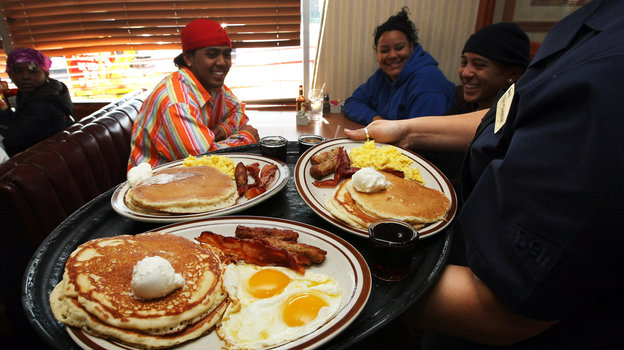
"content": "\u003cfigure id=\"attachment_78043\" class=\"wp-caption aligncenter\" style=\"max-width: 1024px\">\u003ca href=\"http://ww2.kqed.org/bayareabites/wp-content/uploads/sites/24/2014/02/84610821-copy_wide-38e33acc41af52862244b00d5ca756bee04fdf55.jpg\">\u003cimg src=\"http://ww2.kqed.org/bayareabites/wp-content/uploads/sites/24/2014/02/84610821-copy_wide-38e33acc41af52862244b00d5ca756bee04fdf55-1024x575.jpg\" alt=\"A Denny's waitress delivers breakfast to customers in Emeryville, Calif. The tipped minimum wage has been stuck at $2.13 since 1991. Photo: Justin Sullivan/Getty Images\" width=\"1024\" height=\"575\" class=\"size-large wp-image-78043\">\u003c/a>\u003cfigcaption class=\"wp-caption-text\">A Denny's waitress delivers breakfast to customers in Emeryville, Calif. The tipped minimum wage has been stuck at $2.13 since 1991. Photo: Justin Sullivan/Getty Images\u003c/figcaption>\u003c/figure>\n\u003cp>Post by Alan Greenblatt, \u003ca href=\"http://www.npr.org/blogs/thesalt/2014/02/06/272469496/after-23-years-your-waiter-is-ready-for-a-raise\">The Salt at NPR Food\u003c/a> (2/11/14)\u003c/p>\n\u003cp>When Woody Harrelson's character got hired as a bartender on \u003cem>Cheers,\u003c/em> he was so excited, he insisted on working for no more than the minimum wage. \"I'd work like a slave,\" he said, \"and, of course, I'd wash your car.\"\u003c/p>\n\u003cp>Most bar and restaurant workers would prefer to bring home a little more cash. They may be in luck.\u003c/p>\n\u003cp>As part of his plan to raise the minimum wage, President Obama has called for substantially increasing the base wage paid to tipped workers for the first time in decades.\u003c/p>\n\u003cp>\"It's easy to forget the overwhelming majority of tipped employees are low-income workers,\" says \u003ca href=\"http://www.demos.org/amy-traub\">Amy Traub\u003c/a>, senior policy analyst at Demos, a liberal research and advocacy group.\u003c/p>\n\u003cp>[ad fullwidth]\u003c/p>\n\u003cp>The Democratic bill endorsed by Obama in his State of the Union address last month\u003cstrong> \u003c/strong>would raise the overall minimum wage in stages, from the current $7.25 to $10.10 an hour. Tipped workers — a group that includes waiters, bartenders and busboys — would see their base wages rise to $7.07 an hour.\u003c/p>\n\u003cp>That bill, like all legislation in Congress these days, faces an uncertain future. And its fiercest opposition comes from the National Restaurant Association.\u003c/p>\n\u003cp>For starters, the NRA argues, most tipped workers make more than the federal minimum of $2.13 an hour. And it's true: \u003ca href=\"http://www.dol.gov/whd/state/tipped.htm\" target=\"_blank\">Thirty-one states\u003c/a> mandate higher minimum tipped wages than the feds — though those mandates vary widely. In Arkansas, for example, the minimum is $2.63, while in Washington and Oregon it's more than $9.\u003c/p>\n\u003cp>Even in states that haven't raised the tipped minimum, restaurants are required to make up any shortfall between $2.13 and the regular minimum wage that isn't covered by tips.\u003c/p>\n\u003cp>\"Tipped employees at restaurants are among the highest-paid employees in the establishment, regularly earning $16 to $22 an hour,\" says Scott DeFife, executive vice president for policy and government affairs at the NRA. \"Nobody is making $2.13 an hour,\" he adds.\u003c/p>\n\u003cp>But labor advocates take issue with \u003ca href=\"http://www.restaurant.org/Downloads/PDFs/News-Research/20131112_Min_Wage_Issue_Brief\" target=\"_blank\">the NRA's numbers\u003c/a>. In 2012, the median income for food and beverage serving workers was $8.84 per hour, \u003ca href=\"http://www.bls.gov/ooh/food-preparation-and-serving/food-and-beverage-serving-and-related-workers.htm\" target=\"_blank\">according\u003c/a> to the Bureau of Labor Statistics. The bulk of tipped workers are barely making ends meet, advocates say.\u003c/p>\n\u003cblockquote>\n\u003cdiv align=\"center\">\u003cstrong>States Where Servers Have The Highest Base Wages\u003c/strong>\u003c/div>\n\u003c/blockquote>\n\u003cp>\u003ca href=\"http://ww2.kqed.org/bayareabites/wp-content/uploads/sites/24/2014/02/tipped-minimum-wage-300.png\">\u003cimg src=\"http://ww2.kqed.org/bayareabites/wp-content/uploads/sites/24/2014/02/tipped-minimum-wage-300.png\" alt=\"Tipped minimum wage (per hour)\" width=\"500\" class=\"aligncenter size-full wp-image-78047\">\u003c/a>\u003c/p>\n\u003cblockquote>\u003cp>\u003cstrong>Notes\u003c/strong>\u003cbr>\nNevada's tipped minimum wage is $7.25 for workers who have employer-provided health insurance. It is $8.25 for those without such a benefit.\u003cbr>\nSource: U.S. Department of Labor\u003cbr>\nCredit: NPR\u003c/p>\u003c/blockquote>\n\u003cp>\"\u003ca href=\"http://s1.epi.org/files/page/-/BriefingPaper297.pdf\" target=\"_blank\">Seventy percent are women\u003c/a> who work at places like IHOP and Red Lobster,\" says Saru Jayaraman, co-director of Restaurant Opportunities Centers United, which is pushing for higher wages. \"They use food stamps at double the rate of the rest of the workforce.\"\u003c/p>\n\u003cp>In seven states, mostly in the West, restaurants have to pay their workers the prevailing minimum wage, which is a good deal more than $2.13. Similar requirements are pending in the Pennsylvania and Florida legislatures, while voters will weigh in on the issue through ballot measures in a handful of other states and cities this year.\u003c/p>\n\u003cp>DeFife warns that increasing the base salary of servers and other tipped workers will lead to less hiring, as well as possible tensions in-house. With waiters making more in base salary on top of tips, the nontipped folks in the kitchen might feel shortchanged.\u003c/p>\n\u003cp>\"We already have a disparity between the front of the house and the back of the house,\" DeFife says. \"For proper restaurant operations, you want to keep as good a balance as you can. You don't want to increase the disparity.\"\u003c/p>\n\u003cp>But even if wages do go up, labor proponent Traub argues that employers won't pass on all the costs to their customers.\u003c/p>\n\u003cp>\"Studies have found that when you pay higher wages, employees are more productive and turnover drops,\" she says, \"so you have people who are more experienced and can do a better job.\"\u003c/p>\n\u003cp>Of course, the restaurant industry, the \u003ca href=\"http://www.bls.gov/cps/minwage2012.htm\" target=\"_blank\">leading employer\u003c/a> of minimum-wage workers, always warns about the perils of raising their salaries.\u003c/p>\n\u003cp>But now it's possible to \u003ca href=\"http://www.irle.berkeley.edu/workingpapers/157-07.pdf\" target=\"_blank\">gauge some of\u003cstrong> \u003c/strong>these effects\u003c/a>, thanks to the range of base pay in different states with different rules.\u003c/p>\n\u003cp>\u003ca href=\"http://www.restaurant.org/Restaurant/media/Restaurant/SiteImages/News%20and%20Research/Forecast/2014/SalesGrowthMap2014.jpg\" target=\"_blank\">The NRA's own projections\u003c/a> show that restaurant sales are expected to grow this year at a rate exceeding the national average in at least some of the states with higher base wages, including California, Oregon and Nevada. And overall restaurant \u003ca href=\"http://www.politifact.com/oregon/statements/2013/apr/13/melvin-sickler/has-oregons-higher-minimum-wage-hurt-our-restauran/\" target=\"_blank\">hiring hasn't been driven down\u003c/a> in the Western states that require higher minimum wages (although DeFife says there are complaints from restaurateurs in Oregon and Washington that they've had to cut back).\u003c/p>\n\u003cp>Still, it stands to reason that restaurants will have to pass on some of these higher costs to customers. Opponents of a wage hike argue this will make diners more cautious about eating out.\u003c/p>\n\u003cp>\"The winners are probably going to be the people who get the higher wage, and the losers will be customers who have to pay higher prices and workers who don't get hired by that industry,\" says Michael Strain, a labor economist at the American Enterprise Institute, a conservative think tank.\u003c/p>\n\u003cp>In San Francisco, servers receive one of the highest minimum wages in the country — $10.55 an hour. That's a considerable expense for restaurants that also have to cope with sky-high rents, as well as a local universal health care mandate that leads to surcharges generally of 2 percent on most restaurant bills.\u003c/p>\n\u003cp>\"It's very, very expensive to run any sort of restaurant in San Francisco,\" says Patricia Unterman, a longtime restaurateur and food critic in the city. \"The cost of doing business here, especially for labor-intensive operations like restaurants, almost doesn't pencil out.\"\u003c/p>\n\u003cp>But, she notes, amid the city's thriving, tech-driven economy, people are willing to pay high tabs. San Francisco's restaurant scene is thriving. And, Unterman says, restaurants skimp where they have to, cutting back on niceties like tablecloths and bread and butter, sometimes only serving water when asked.\u003c/p>\n\u003cp>Consumers can be \u003ca href=\"http://www.ncbi.nlm.nih.gov/pmc/articles/PMC2804646/\" target=\"_blank\">sensitive to price changes\u003c/a>, but even in places whose residents aren't as flush as those in San Francisco, a slight rise in their tab isn't likely to deter diners who value the experience or convenience of eating out. A \u003ca href=\"http://laborcenter.berkeley.edu/foodlabor/price_food12.pdf\" target=\"_blank\">study\u003c/a> by University of California researchers suggests any increase in cost passed on to the diner is likely to be marginal at most.\u003c/p>\n\u003cp>In general, when people eat out — especially at a place where they're waited on by servers — they know they're generally going to pay more for the meal than they would if they had cooked at home.\u003c/p>\n\u003cp>Even DeFife concedes that an increase in servers' base pay might not do too much harm, depending on how large it is and how fast it would be implemented.\u003c/p>\n\u003cp>\"We don't talk about job loss too much in the restaurant industry, per se,\" he says. \"The restaurant industry continues to grow.\"\u003c/p>\n\u003cp>[ad floatright]\u003c/p>\n\u003cp> \u003cem>Copyright 2014 \u003ca href=\"http://www.npr.org/\">NPR\u003c/a>.\u003c/em> \u003c/p>\n\n",
"disqusIdentifier": "78042 http://blogs.kqed.org/bayareabites/?p=78042",
"disqusUrl": "https://ww2.kqed.org/bayareabites/2014/02/11/after-23-years-your-waiter-is-ready-for-a-raise/",
"stats": {
"hasVideo": false,
"hasChartOrMap": false,
"hasAudio": false,
"hasPolis": false,
"wordCount": 1225,
"hasGoogleForm": false,
"hasGallery": false,
"hasHearkenModule": false,
"iframeSrcs": [],
"paragraphCount": 34
},
"modified": 1392173064,
"excerpt": "The tipped minimum wage has been stuck at $2.13 an hour since 1991, but legislation before Congress could finally change that. The restaurant industry says that will cost jobs and drive away diners. But in states where servers, bartenders and other tipped workers already make more than the federal minimum wage, restaurants haven't been hurting.",
"headData": {
"twImgId": "",
"twTitle": "",
"ogTitle": "",
"ogImgId": "",
"twDescription": "",
"description": "The tipped minimum wage has been stuck at $2.13 an hour since 1991, but legislation before Congress could finally change that. The restaurant industry says that will cost jobs and drive away diners. But in states where servers, bartenders and other tipped workers already make more than the federal minimum wage, restaurants haven't been hurting.",
"title": "After 23 Years, Your Waiter Is Ready For A Raise | KQED",
"ogDescription": "",
"schema": {
"@context": "https://schema.org",
"@type": "Article",
"headline": "After 23 Years, Your Waiter Is Ready For A Raise",
"datePublished": "2014-02-11T18:44:24-08:00",
"dateModified": "2014-02-11T18:44:24-08:00",
"image": "https://cdn.kqed.org/wp-content/uploads/2020/02/KQED-OG-Image@1x.png"
}
},
"guestAuthors": [],
"slug": "after-23-years-your-waiter-is-ready-for-a-raise",
"status": "publish",
"nprApiLink": "http://api.npr.org/query?id=272469496&apiKey=MDAxOTAwOTE4MDEyMTkxMDAzNjczZDljZA004",
"nprByline": "Alan Greenblatt",
"nprStoryDate": "Tue, 11 Feb 2014 15:22:00 -0500",
"nprLastModifiedDate": "Tue, 11 Feb 2014 20:32:03 -0500",
"nprHtmlLink": "http://www.npr.org/blogs/thesalt/2014/02/06/272469496/after-23-years-your-waiter-is-ready-for-a-raise?ft=3&f=272469496",
"nprStoryId": "272469496",
"nprRetrievedStory": "1",
"nprPubDate": "Tue, 11 Feb 2014 20:32:00 -0500",
"path": "/bayareabites/78042/after-23-years-your-waiter-is-ready-for-a-raise",
"audioTrackLength": null,
"parsedContent": [
{
"type": "contentString",
"content": "\u003cdiv class=\"post-body\">\u003cp>\u003cfigure id=\"attachment_78043\" class=\"wp-caption aligncenter\" style=\"max-width: 1024px\">\u003ca href=\"http://ww2.kqed.org/bayareabites/wp-content/uploads/sites/24/2014/02/84610821-copy_wide-38e33acc41af52862244b00d5ca756bee04fdf55.jpg\">\u003cimg src=\"http://ww2.kqed.org/bayareabites/wp-content/uploads/sites/24/2014/02/84610821-copy_wide-38e33acc41af52862244b00d5ca756bee04fdf55-1024x575.jpg\" alt=\"A Denny's waitress delivers breakfast to customers in Emeryville, Calif. The tipped minimum wage has been stuck at $2.13 since 1991. Photo: Justin Sullivan/Getty Images\" width=\"1024\" height=\"575\" class=\"size-large wp-image-78043\">\u003c/a>\u003cfigcaption class=\"wp-caption-text\">A Denny's waitress delivers breakfast to customers in Emeryville, Calif. The tipped minimum wage has been stuck at $2.13 since 1991. Photo: Justin Sullivan/Getty Images\u003c/figcaption>\u003c/figure>\n\u003cp>Post by Alan Greenblatt, \u003ca href=\"http://www.npr.org/blogs/thesalt/2014/02/06/272469496/after-23-years-your-waiter-is-ready-for-a-raise\">The Salt at NPR Food\u003c/a> (2/11/14)\u003c/p>\n\u003cp>When Woody Harrelson's character got hired as a bartender on \u003cem>Cheers,\u003c/em> he was so excited, he insisted on working for no more than the minimum wage. \"I'd work like a slave,\" he said, \"and, of course, I'd wash your car.\"\u003c/p>\n\u003cp>Most bar and restaurant workers would prefer to bring home a little more cash. They may be in luck.\u003c/p>\n\u003cp>As part of his plan to raise the minimum wage, President Obama has called for substantially increasing the base wage paid to tipped workers for the first time in decades.\u003c/p>\n\u003cp>\"It's easy to forget the overwhelming majority of tipped employees are low-income workers,\" says \u003ca href=\"http://www.demos.org/amy-traub\">Amy Traub\u003c/a>, senior policy analyst at Demos, a liberal research and advocacy group.\u003c/p>\n\u003cp>\u003c/p>\u003c/div>",
"attributes": {
"named": {},
"numeric": []
}
},
{
"type": "component",
"content": "",
"name": "ad",
"attributes": {
"named": {
"label": "fullwidth"
},
"numeric": [
"fullwidth"
]
}
},
{
"type": "contentString",
"content": "\u003cdiv class=\"post-body\">\u003cp>\u003c/p>\n\u003cp>The Democratic bill endorsed by Obama in his State of the Union address last month\u003cstrong> \u003c/strong>would raise the overall minimum wage in stages, from the current $7.25 to $10.10 an hour. Tipped workers — a group that includes waiters, bartenders and busboys — would see their base wages rise to $7.07 an hour.\u003c/p>\n\u003cp>That bill, like all legislation in Congress these days, faces an uncertain future. And its fiercest opposition comes from the National Restaurant Association.\u003c/p>\n\u003cp>For starters, the NRA argues, most tipped workers make more than the federal minimum of $2.13 an hour. And it's true: \u003ca href=\"http://www.dol.gov/whd/state/tipped.htm\" target=\"_blank\">Thirty-one states\u003c/a> mandate higher minimum tipped wages than the feds — though those mandates vary widely. In Arkansas, for example, the minimum is $2.63, while in Washington and Oregon it's more than $9.\u003c/p>\n\u003cp>Even in states that haven't raised the tipped minimum, restaurants are required to make up any shortfall between $2.13 and the regular minimum wage that isn't covered by tips.\u003c/p>\n\u003cp>\"Tipped employees at restaurants are among the highest-paid employees in the establishment, regularly earning $16 to $22 an hour,\" says Scott DeFife, executive vice president for policy and government affairs at the NRA. \"Nobody is making $2.13 an hour,\" he adds.\u003c/p>\n\u003cp>But labor advocates take issue with \u003ca href=\"http://www.restaurant.org/Downloads/PDFs/News-Research/20131112_Min_Wage_Issue_Brief\" target=\"_blank\">the NRA's numbers\u003c/a>. In 2012, the median income for food and beverage serving workers was $8.84 per hour, \u003ca href=\"http://www.bls.gov/ooh/food-preparation-and-serving/food-and-beverage-serving-and-related-workers.htm\" target=\"_blank\">according\u003c/a> to the Bureau of Labor Statistics. The bulk of tipped workers are barely making ends meet, advocates say.\u003c/p>\n\u003cblockquote>\n\u003cdiv align=\"center\">\u003cstrong>States Where Servers Have The Highest Base Wages\u003c/strong>\u003c/div>\n\u003c/blockquote>\n\u003cp>\u003ca href=\"http://ww2.kqed.org/bayareabites/wp-content/uploads/sites/24/2014/02/tipped-minimum-wage-300.png\">\u003cimg src=\"http://ww2.kqed.org/bayareabites/wp-content/uploads/sites/24/2014/02/tipped-minimum-wage-300.png\" alt=\"Tipped minimum wage (per hour)\" width=\"500\" class=\"aligncenter size-full wp-image-78047\">\u003c/a>\u003c/p>\n\u003cblockquote>\u003cp>\u003cstrong>Notes\u003c/strong>\u003cbr>\nNevada's tipped minimum wage is $7.25 for workers who have employer-provided health insurance. It is $8.25 for those without such a benefit.\u003cbr>\nSource: U.S. Department of Labor\u003cbr>\nCredit: NPR\u003c/p>\u003c/blockquote>\n\u003cp>\"\u003ca href=\"http://s1.epi.org/files/page/-/BriefingPaper297.pdf\" target=\"_blank\">Seventy percent are women\u003c/a> who work at places like IHOP and Red Lobster,\" says Saru Jayaraman, co-director of Restaurant Opportunities Centers United, which is pushing for higher wages. \"They use food stamps at double the rate of the rest of the workforce.\"\u003c/p>\n\u003cp>In seven states, mostly in the West, restaurants have to pay their workers the prevailing minimum wage, which is a good deal more than $2.13. Similar requirements are pending in the Pennsylvania and Florida legislatures, while voters will weigh in on the issue through ballot measures in a handful of other states and cities this year.\u003c/p>\n\u003cp>DeFife warns that increasing the base salary of servers and other tipped workers will lead to less hiring, as well as possible tensions in-house. With waiters making more in base salary on top of tips, the nontipped folks in the kitchen might feel shortchanged.\u003c/p>\n\u003cp>\"We already have a disparity between the front of the house and the back of the house,\" DeFife says. \"For proper restaurant operations, you want to keep as good a balance as you can. You don't want to increase the disparity.\"\u003c/p>\n\u003cp>But even if wages do go up, labor proponent Traub argues that employers won't pass on all the costs to their customers.\u003c/p>\n\u003cp>\"Studies have found that when you pay higher wages, employees are more productive and turnover drops,\" she says, \"so you have people who are more experienced and can do a better job.\"\u003c/p>\n\u003cp>Of course, the restaurant industry, the \u003ca href=\"http://www.bls.gov/cps/minwage2012.htm\" target=\"_blank\">leading employer\u003c/a> of minimum-wage workers, always warns about the perils of raising their salaries.\u003c/p>\n\u003cp>But now it's possible to \u003ca href=\"http://www.irle.berkeley.edu/workingpapers/157-07.pdf\" target=\"_blank\">gauge some of\u003cstrong> \u003c/strong>these effects\u003c/a>, thanks to the range of base pay in different states with different rules.\u003c/p>\n\u003cp>\u003ca href=\"http://www.restaurant.org/Restaurant/media/Restaurant/SiteImages/News%20and%20Research/Forecast/2014/SalesGrowthMap2014.jpg\" target=\"_blank\">The NRA's own projections\u003c/a> show that restaurant sales are expected to grow this year at a rate exceeding the national average in at least some of the states with higher base wages, including California, Oregon and Nevada. And overall restaurant \u003ca href=\"http://www.politifact.com/oregon/statements/2013/apr/13/melvin-sickler/has-oregons-higher-minimum-wage-hurt-our-restauran/\" target=\"_blank\">hiring hasn't been driven down\u003c/a> in the Western states that require higher minimum wages (although DeFife says there are complaints from restaurateurs in Oregon and Washington that they've had to cut back).\u003c/p>\n\u003cp>Still, it stands to reason that restaurants will have to pass on some of these higher costs to customers. Opponents of a wage hike argue this will make diners more cautious about eating out.\u003c/p>\n\u003cp>\"The winners are probably going to be the people who get the higher wage, and the losers will be customers who have to pay higher prices and workers who don't get hired by that industry,\" says Michael Strain, a labor economist at the American Enterprise Institute, a conservative think tank.\u003c/p>\n\u003cp>In San Francisco, servers receive one of the highest minimum wages in the country — $10.55 an hour. That's a considerable expense for restaurants that also have to cope with sky-high rents, as well as a local universal health care mandate that leads to surcharges generally of 2 percent on most restaurant bills.\u003c/p>\n\u003cp>\"It's very, very expensive to run any sort of restaurant in San Francisco,\" says Patricia Unterman, a longtime restaurateur and food critic in the city. \"The cost of doing business here, especially for labor-intensive operations like restaurants, almost doesn't pencil out.\"\u003c/p>\n\u003cp>But, she notes, amid the city's thriving, tech-driven economy, people are willing to pay high tabs. San Francisco's restaurant scene is thriving. And, Unterman says, restaurants skimp where they have to, cutting back on niceties like tablecloths and bread and butter, sometimes only serving water when asked.\u003c/p>\n\u003cp>Consumers can be \u003ca href=\"http://www.ncbi.nlm.nih.gov/pmc/articles/PMC2804646/\" target=\"_blank\">sensitive to price changes\u003c/a>, but even in places whose residents aren't as flush as those in San Francisco, a slight rise in their tab isn't likely to deter diners who value the experience or convenience of eating out. A \u003ca href=\"http://laborcenter.berkeley.edu/foodlabor/price_food12.pdf\" target=\"_blank\">study\u003c/a> by University of California researchers suggests any increase in cost passed on to the diner is likely to be marginal at most.\u003c/p>\n\u003cp>In general, when people eat out — especially at a place where they're waited on by servers — they know they're generally going to pay more for the meal than they would if they had cooked at home.\u003c/p>\n\u003cp>Even DeFife concedes that an increase in servers' base pay might not do too much harm, depending on how large it is and how fast it would be implemented.\u003c/p>\n\u003cp>\"We don't talk about job loss too much in the restaurant industry, per se,\" he says. \"The restaurant industry continues to grow.\"\u003c/p>\n\u003cp>\u003c/p>\u003c/div>",
"attributes": {
"named": {},
"numeric": []
}
},
{
"type": "component",
"content": "",
"name": "ad",
"attributes": {
"named": {
"label": "floatright"
},
"numeric": [
"floatright"
]
}
},
{
"type": "contentString",
"content": "\u003cdiv class=\"post-body\">\u003cp>\u003c/p>\n\u003cp> \u003cem>Copyright 2014 \u003ca href=\"http://www.npr.org/\">NPR\u003c/a>.\u003c/em> \u003c/p>\n\n\u003c/div>\u003c/p>",
"attributes": {
"named": {},
"numeric": []
}
}
],
"link": "/bayareabites/78042/after-23-years-your-waiter-is-ready-for-a-raise",
"authors": [
"byline_bayareabites_78042"
],
"categories": [
"bayareabites_1962",
"bayareabites_1146",
"bayareabites_10916",
"bayareabites_2035"
],
"tags": [
"bayareabites_895",
"bayareabites_11502",
"bayareabites_11505",
"bayareabites_11506",
"bayareabites_13062",
"bayareabites_13061",
"bayareabites_10921",
"bayareabites_13064",
"bayareabites_13063"
],
"featImg": "bayareabites_78057",
"label": "bayareabites"
},
"bayareabites_78032": {
"type": "posts",
"id": "bayareabites_78032",
"meta": {
"index": "posts_1716263798",
"site": "bayareabites",
"id": "78032",
"score": null,
"sort": [
1392171828000
]
},
"parent": 0,
"labelTerm": {
"site": "bayareabites"
},
"blocks": [],
"publishDate": 1392171828,
"format": "aside",
"disqusTitle": "Thank You, Shirley Temple, For The Original 'Mocktail'",
"title": "Thank You, Shirley Temple, For The Original 'Mocktail'",
"headTitle": "Bay Area Bites | KQED Food",
"content": "\u003cfigure id=\"attachment_78034\" class=\"wp-caption aligncenter\" style=\"max-width: 500px\">\u003ca href=\"http://ww2.kqed.org/bayareabites/wp-content/uploads/sites/24/2014/02/shirleytemple112way_custom-979eb8dd9a3f669b39d30ef563ed8ad5e1c9a3c7.jpg\">\u003cimg src=\"http://ww2.kqed.org/bayareabites/wp-content/uploads/sites/24/2014/02/shirleytemple112way_custom-979eb8dd9a3f669b39d30ef563ed8ad5e1c9a3c7.jpg\" alt=\"Shirley Temple when she was the nation's biggest movie star. Photo: AP\" width=\"500\" class=\"size-full wp-image-78034\">\u003c/a>\u003cfigcaption class=\"wp-caption-text\">Shirley Temple when she was the nation's biggest movie star. Photo: AP\u003c/figcaption>\u003c/figure>\n\u003cp>Post by Eliza Barclay, \u003ca href=\"http://www.npr.org/blogs/thesalt/2014/02/11/275351771/thank-you-shirley-temple-for-the-original-mocktail\">The Salt at NPR Food\u003c/a> (2/11/14)\u003c/p>\n\u003cp>Generations of little girls have watched the ebullient Shirley Temple light up Depression-era black and white films, her glossy curls bouncing and her voice chirping. Generations, too, developed a taste for the Shirley Temple drink — traditionally, ginger ale with a dash of grenadine, maraschino cherry and lemon for garnish.\u003c/p>\n\u003cp>The drink, it seems, has a shelf life as long as her movies.\u003c/p>\n\u003cp>That's because the saccharine beverage in a girly pinkish hue has long embodied glamour in a glass for tweens and the younger set.\u003c/p>\n\u003cfigure id=\"attachment_78033\" class=\"wp-caption alignleft\" style=\"max-width: 290px\">\u003ca href=\"http://ww2.kqed.org/bayareabites/wp-content/uploads/sites/24/2014/02/istock_000025681502large-f1792142769f71f4585f9012c1b4ff2602a6196a.jpg\">\u003cimg src=\"http://ww2.kqed.org/bayareabites/wp-content/uploads/sites/24/2014/02/istock_000025681502large-f1792142769f71f4585f9012c1b4ff2602a6196a-290x218.jpg\" alt=\"A Classic Shirley Temple. Photo: iStockphoto\" width=\"290\" height=\"218\" class=\"size-medium wp-image-78033\">\u003c/a>\u003cfigcaption class=\"wp-caption-text\">A Classic Shirley Temple. Photo: iStockphoto\u003c/figcaption>\u003c/figure>\n\u003cp>Many of us have since outgrown such sweet beverages. But as the world mourns Temple's \u003ca href=\"http://www.npr.org/blogs/thetwo-way/2014/02/11/275190468/shirley-temple-dies-childhood-movie-star-became-diplomat\">death\u003c/a>, we are reminded of how many people connected with her — not just through her movies but through her namesake drink. Just check \u003ca href=\"https://twitter.com/search?src=typd&q=shirley%20temple%20drink\">Twitter\u003c/a> to see how many people are toasting Temple, who eventually became Temple Black, with a Shirley Temple in their hand.\u003c/p>\n\u003cp>[ad fullwidth]\u003c/p>\n\u003cp>Now we have a name for such drinks: the mocktail. They've evolved into child-friendly versions of adult tipples — \u003ca href=\"http://www.parenting.com/gallery/mocktails-recipes?pnid=619889\">faux champagne\u003c/a>, the smartini and the virgin margarita.\u003c/p>\n\u003cp>But the original mocktail, so the story goes, is the Shirley Temple.\u003c/p>\n\u003cp>There's a variety of competing claims out there about the drink's origins. Several restaurants and hotels in Beverly Hills, and even Hawaii, say \u003cem>they\u003c/em> invented the drink for Temple when she visited with her parents.\u003c/p>\n\u003cp>But Temple Black once told NPR's Scott Simon: \"Yes, well, those were created in the 1930s by the Brown Derby Restaurant in Hollywood, and I had nothing to do with it.\"\u003c/p>\n\u003cp>Still, she was quite proud — and protective — of the drink that bears her name. \u003ca href=\"http://mentalfloss.com/article/24479/5-things-you-didnt-know-about-shirley-temple\">According to\u003c/a> \u003cem>Mental Floss,\u003c/em> Temple twice went to court to defend the drink against companies attempting to use her name to sell a bottled version.\u003c/p>\n\u003cp>Tell us: Do you have a Shirley Temple drink memory? \u003c/p>\n\u003cp>\u003c/p>\n\u003cp>\u003cem>Copyright 2014 \u003ca href=\"http://www.npr.org/\">NPR\u003c/a>.\u003c/em>\u003c/p>\n\n",
"disqusIdentifier": "78032 http://blogs.kqed.org/bayareabites/?p=78032",
"disqusUrl": "https://ww2.kqed.org/bayareabites/2014/02/11/thank-you-shirley-temple-for-the-original-mocktail/",
"stats": {
"hasVideo": false,
"hasChartOrMap": false,
"hasAudio": false,
"hasPolis": false,
"wordCount": 346,
"hasGoogleForm": false,
"hasGallery": false,
"hasHearkenModule": false,
"iframeSrcs": [],
"paragraphCount": 14
},
"modified": 1392171828,
"excerpt": "Generations of children have been charmed by Shirley Temple onscreen, and in a glass. The drink that bears her name, it seems, has a shelf life as long as her movies.",
"headData": {
"twImgId": "",
"twTitle": "",
"ogTitle": "",
"ogImgId": "",
"twDescription": "",
"description": "Generations of children have been charmed by Shirley Temple onscreen, and in a glass. The drink that bears her name, it seems, has a shelf life as long as her movies.",
"title": "Thank You, Shirley Temple, For The Original 'Mocktail' | KQED",
"ogDescription": "",
"schema": {
"@context": "https://schema.org",
"@type": "Article",
"headline": "Thank You, Shirley Temple, For The Original 'Mocktail'",
"datePublished": "2014-02-11T18:23:48-08:00",
"dateModified": "2014-02-11T18:23:48-08:00",
"image": "https://cdn.kqed.org/wp-content/uploads/2020/02/KQED-OG-Image@1x.png"
}
},
"guestAuthors": [],
"slug": "thank-you-shirley-temple-for-the-original-mocktail",
"status": "publish",
"nprApiLink": "http://api.npr.org/query?id=275351771&apiKey=MDAxOTAwOTE4MDEyMTkxMDAzNjczZDljZA004",
"nprByline": "Eliza Barclay",
"nprStoryDate": "Tue, 11 Feb 2014 18:54:00 -0500",
"nprLastModifiedDate": "Tue, 11 Feb 2014 20:38:39 -0500",
"nprHtmlLink": "http://www.npr.org/blogs/thesalt/2014/02/11/275351771/thank-you-shirley-temple-for-the-original-mocktail?ft=3&f=275351771",
"nprStoryId": "275351771",
"nprRetrievedStory": "1",
"nprPubDate": "Tue, 11 Feb 2014 20:38:00 -0500",
"path": "/bayareabites/78032/thank-you-shirley-temple-for-the-original-mocktail",
"audioTrackLength": null,
"parsedContent": [
{
"type": "contentString",
"content": "\u003cdiv class=\"post-body\">\u003cp>\u003cfigure id=\"attachment_78034\" class=\"wp-caption aligncenter\" style=\"max-width: 500px\">\u003ca href=\"http://ww2.kqed.org/bayareabites/wp-content/uploads/sites/24/2014/02/shirleytemple112way_custom-979eb8dd9a3f669b39d30ef563ed8ad5e1c9a3c7.jpg\">\u003cimg src=\"http://ww2.kqed.org/bayareabites/wp-content/uploads/sites/24/2014/02/shirleytemple112way_custom-979eb8dd9a3f669b39d30ef563ed8ad5e1c9a3c7.jpg\" alt=\"Shirley Temple when she was the nation's biggest movie star. Photo: AP\" width=\"500\" class=\"size-full wp-image-78034\">\u003c/a>\u003cfigcaption class=\"wp-caption-text\">Shirley Temple when she was the nation's biggest movie star. Photo: AP\u003c/figcaption>\u003c/figure>\n\u003cp>Post by Eliza Barclay, \u003ca href=\"http://www.npr.org/blogs/thesalt/2014/02/11/275351771/thank-you-shirley-temple-for-the-original-mocktail\">The Salt at NPR Food\u003c/a> (2/11/14)\u003c/p>\n\u003cp>Generations of little girls have watched the ebullient Shirley Temple light up Depression-era black and white films, her glossy curls bouncing and her voice chirping. Generations, too, developed a taste for the Shirley Temple drink — traditionally, ginger ale with a dash of grenadine, maraschino cherry and lemon for garnish.\u003c/p>\n\u003cp>The drink, it seems, has a shelf life as long as her movies.\u003c/p>\n\u003cp>That's because the saccharine beverage in a girly pinkish hue has long embodied glamour in a glass for tweens and the younger set.\u003c/p>\n\u003cfigure id=\"attachment_78033\" class=\"wp-caption alignleft\" style=\"max-width: 290px\">\u003ca href=\"http://ww2.kqed.org/bayareabites/wp-content/uploads/sites/24/2014/02/istock_000025681502large-f1792142769f71f4585f9012c1b4ff2602a6196a.jpg\">\u003cimg src=\"http://ww2.kqed.org/bayareabites/wp-content/uploads/sites/24/2014/02/istock_000025681502large-f1792142769f71f4585f9012c1b4ff2602a6196a-290x218.jpg\" alt=\"A Classic Shirley Temple. Photo: iStockphoto\" width=\"290\" height=\"218\" class=\"size-medium wp-image-78033\">\u003c/a>\u003cfigcaption class=\"wp-caption-text\">A Classic Shirley Temple. Photo: iStockphoto\u003c/figcaption>\u003c/figure>\n\u003cp>Many of us have since outgrown such sweet beverages. But as the world mourns Temple's \u003ca href=\"http://www.npr.org/blogs/thetwo-way/2014/02/11/275190468/shirley-temple-dies-childhood-movie-star-became-diplomat\">death\u003c/a>, we are reminded of how many people connected with her — not just through her movies but through her namesake drink. Just check \u003ca href=\"https://twitter.com/search?src=typd&q=shirley%20temple%20drink\">Twitter\u003c/a> to see how many people are toasting Temple, who eventually became Temple Black, with a Shirley Temple in their hand.\u003c/p>\n\u003cp>\u003c/p>\u003c/div>",
"attributes": {
"named": {},
"numeric": []
}
},
{
"type": "component",
"content": "",
"name": "ad",
"attributes": {
"named": {
"label": "fullwidth"
},
"numeric": [
"fullwidth"
]
}
},
{
"type": "contentString",
"content": "\u003cdiv class=\"post-body\">\u003cp>\u003c/p>\n\u003cp>Now we have a name for such drinks: the mocktail. They've evolved into child-friendly versions of adult tipples — \u003ca href=\"http://www.parenting.com/gallery/mocktails-recipes?pnid=619889\">faux champagne\u003c/a>, the smartini and the virgin margarita.\u003c/p>\n\u003cp>But the original mocktail, so the story goes, is the Shirley Temple.\u003c/p>\n\u003cp>There's a variety of competing claims out there about the drink's origins. Several restaurants and hotels in Beverly Hills, and even Hawaii, say \u003cem>they\u003c/em> invented the drink for Temple when she visited with her parents.\u003c/p>\n\u003cp>But Temple Black once told NPR's Scott Simon: \"Yes, well, those were created in the 1930s by the Brown Derby Restaurant in Hollywood, and I had nothing to do with it.\"\u003c/p>\n\u003cp>Still, she was quite proud — and protective — of the drink that bears her name. \u003ca href=\"http://mentalfloss.com/article/24479/5-things-you-didnt-know-about-shirley-temple\">According to\u003c/a> \u003cem>Mental Floss,\u003c/em> Temple twice went to court to defend the drink against companies attempting to use her name to sell a bottled version.\u003c/p>\n\u003cp>Tell us: Do you have a Shirley Temple drink memory? \u003c/p>\n\u003cp>\u003c/p>\n\u003cp>\u003cem>Copyright 2014 \u003ca href=\"http://www.npr.org/\">NPR\u003c/a>.\u003c/em>\u003c/p>\n\n\u003c/div>\u003c/p>",
"attributes": {
"named": {},
"numeric": []
}
}
],
"link": "/bayareabites/78032/thank-you-shirley-temple-for-the-original-mocktail",
"authors": [
"byline_bayareabites_78032"
],
"categories": [
"bayareabites_2090",
"bayareabites_1844",
"bayareabites_10916"
],
"tags": [
"bayareabites_13060",
"bayareabites_1868",
"bayareabites_10921"
],
"featImg": "bayareabites_78040",
"label": "bayareabites"
},
"bayareabites_77935": {
"type": "posts",
"id": "bayareabites_77935",
"meta": {
"index": "posts_1716263798",
"site": "bayareabites",
"id": "77935",
"score": null,
"sort": [
1392070081000
]
},
"parent": 0,
"labelTerm": {
"site": "bayareabites"
},
"blocks": [],
"publishDate": 1392070081,
"format": "aside",
"disqusTitle": "The Science Of Munchies: Why The Scent Of A Burger Gives Us A High",
"title": "The Science Of Munchies: Why The Scent Of A Burger Gives Us A High",
"headTitle": "Bay Area Bites | KQED Food",
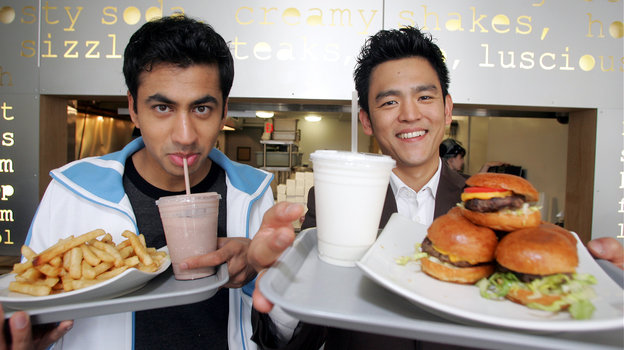
"content": "\u003cfigure id=\"attachment_77936\" class=\"wp-caption aligncenter\" style=\"max-width: 1024px\">\u003ca href=\"http://ww2.kqed.org/bayareabites/wp-content/uploads/sites/24/2014/02/harold-kumar_wide-d7d1cef69689fbd1fac6a388141c1ace0f5d448e.jpg\">\u003cimg src=\"http://ww2.kqed.org/bayareabites/wp-content/uploads/sites/24/2014/02/harold-kumar_wide-d7d1cef69689fbd1fac6a388141c1ace0f5d448e-1024x575.jpg\" alt=\"Research in mice offers new clues as to why Harold and Kumar were so motivated to get to White Castle. Photo: Todd Plitt/Getty Images\" width=\"1024\" height=\"575\" class=\"size-large wp-image-77936\">\u003c/a>\u003cfigcaption class=\"wp-caption-text\">Research in mice offers new clues as to why Harold and Kumar were so motivated to get to White Castle. Photo: Todd Plitt/Getty Images\u003c/figcaption>\u003c/figure>\n\u003cp>Post by Michaeleen Doucleff, \u003ca href=\"http://www.npr.org/blogs/thesalt/2014/02/10/274660785/munchies-neuroscience-why-the-scent-of-a-burger-gives-us-a-high\">The Salt at NPR Food\u003c/a> (2/10/14) \u003c/p>\n\u003cp>From cinnamon buns in the morning to a burger after a long run, food never smells as good as when you're super hungry.\u003c/p>\n\u003cp>Now scientists have uncovered a clue as to why that might be — and it lies in the munchies and marijuana.\u003c/p>\n\u003cp>Receptors in the brains of mice that light up when the animals are high are also activated when the critters are fasting, French scientists \u003ca href=\"http://www.nature.com/neuro/journal/vaop/ncurrent/full/nn.3647.html\">reported\u003c/a> Sunday in the journal \u003cem>Nature Neuroscience\u003c/em>.\u003c/p>\n\u003cp>In other words, skipping a meal triggered the same hunger-inducing receptors that marijuana does. And it works, at least in mice, by boosting the sense of smell, neuroscientist \u003ca href=\"http://www.inb.u-bordeaux2.fr/dev/EN/researcher.php?researcher=Giovanni+Marsicano&id=125\">Giovanni Marsicano\u003c/a> and his team at the Universite de Bordeaux report.\u003c/p>\n\u003cp>[ad fullwidth]\u003c/p>\n\u003cp>That's because the receptors that get activated are located in the smelling center of the brain. And sense of smell is known to be a key factor driving appetite.\u003c/p>\n\u003cp>In case you're wondering, the mice didn't toke up. The researchers injected the rodents with \u003ca href=\"http://pubchem.ncbi.nlm.nih.gov/summary/summary.cgi?cid=16078\">THC\u003c/a>, the active ingredient in marijuana.\u003c/p>\n\u003cp>Of course, mice aren't men — especially when it comes to smelling. The little rodents spend much more of their lives sniffing out yummy food than we do. And they devote much more of their brain power to the activity.\u003c/p>\n\u003cp>But there are some hints that a similar mechanism may also be at work in people.\u003c/p>\n\u003cfigure id=\"attachment_77937\" class=\"wp-caption alignleft\" style=\"max-width: 290px\">\u003ca href=\"http://ww2.kqed.org/bayareabites/wp-content/uploads/sites/24/2014/02/image1_sq-0d9056c066c4677ad50ee93025ec27c05d1e14c3.jpg\">\u003cimg src=\"http://ww2.kqed.org/bayareabites/wp-content/uploads/sites/24/2014/02/image1_sq-0d9056c066c4677ad50ee93025ec27c05d1e14c3-290x290.jpg\" alt=\"We didn't make this up: The scientists who performed the study on how cannabis triggers the munchies through the sense of smell commissioned an artist to put this illustration together. Image: Charlie Padgett/Courtesy of Giovanni Marsicano\" width=\"290\" height=\"290\" class=\"size-medium wp-image-77937\">\u003c/a>\u003cfigcaption class=\"wp-caption-text\">We didn't make this up: The scientists who performed the study on how cannabis triggers the munchies through the sense of smell commissioned an artist to put this illustration together. Image: Charlie Padgett/Courtesy of Giovanni Marsicano\u003c/figcaption>\u003c/figure>\n\u003cp>When you skip a meal or fast, your brain creates compounds, called \u003ca href=\"http://www.nature.com/ijo/journal/v27/n3/full/0802250a.html\">endocannibinoids\u003c/a> — appropriate, right? — that look and act similarly to THC. And not surprisingly, these chemicals drive you to eat.\u003c/p>\n\u003cp>But hunger also makes you more sensitive to food aromas.\u003c/p>\n\u003cp>So Marsicano and his team thought perhaps the two processes — that burning desire to eat (i.e., munchies) and enhanced smelling — were linked. So he and his team went hunting for receptors in mouse brains that controlled both.\u003c/p>\n\u003cp>They hit the jackpot when they looked in the mice's olfactory bulbs.\u003c/p>\n\u003cp>That part of the brain was packed with receptors that bind THC and ramp up the rodents' appetite — both when they'd been fasting and when they were high.\u003c/p>\n\u003cp>These receptors also made the mice more sensitive to odors when their tummies were empty or their brains were stoned.\u003c/p>\n\u003cp>The data suggest that the major way marijuana triggers the munchies — at least in mice — is through olfaction, Marsicano and his team write in the study.\u003c/p>\n\u003cp>As for humans? We're a more complicated lot, and there's more than just the sense of smell at play when we get the munchies (from hunger or high). For starters, our \"cannabinoid\" receptors are located not just in our brains but in other parts of the body. \u003c/p>\n\u003cp>\u003c/p>\n\u003cp>\u003cem>Copyright 2014 \u003ca href=\"http://www.npr.org/\">NPR\u003c/a>.\u003c/em> \u003c/p>\n\n",
"disqusIdentifier": "77935 http://blogs.kqed.org/bayareabites/?p=77935",
"disqusUrl": "https://ww2.kqed.org/bayareabites/2014/02/10/the-science-of-munchies-why-the-scent-of-a-burger-gives-us-a-high/",
"stats": {
"hasVideo": false,
"hasChartOrMap": false,
"hasAudio": false,
"hasPolis": false,
"wordCount": 529,
"hasGoogleForm": false,
"hasGallery": false,
"hasHearkenModule": false,
"iframeSrcs": [],
"paragraphCount": 20
},
"modified": 1392070081,
"excerpt": "Skipping a meal triggers the munchies in a similar way that marijuana does, a study in mice finds. And it works, at least in rodents, by boosting the sense of smell. Receptors in the brain that get activated when the animals are stoned also light up after they've been fasting.",
"headData": {
"twImgId": "",
"twTitle": "",
"ogTitle": "",
"ogImgId": "",
"twDescription": "",
"description": "Skipping a meal triggers the munchies in a similar way that marijuana does, a study in mice finds. And it works, at least in rodents, by boosting the sense of smell. Receptors in the brain that get activated when the animals are stoned also light up after they've been fasting.",
"title": "The Science Of Munchies: Why The Scent Of A Burger Gives Us A High | KQED",
"ogDescription": "",
"schema": {
"@context": "https://schema.org",
"@type": "Article",
"headline": "The Science Of Munchies: Why The Scent Of A Burger Gives Us A High",
"datePublished": "2014-02-10T14:08:01-08:00",
"dateModified": "2014-02-10T14:08:01-08:00",
"image": "https://cdn.kqed.org/wp-content/uploads/2020/02/KQED-OG-Image@1x.png"
}
},
"guestAuthors": [],
"slug": "the-science-of-munchies-why-the-scent-of-a-burger-gives-us-a-high",
"status": "publish",
"nprApiLink": "http://api.npr.org/query?id=274660785&apiKey=MDAxOTAwOTE4MDEyMTkxMDAzNjczZDljZA004",
"nprByline": "Michaeleen Doucleff",
"nprStoryDate": "Mon, 10 Feb 2014 15:39:00 -0500",
"nprLastModifiedDate": "Mon, 10 Feb 2014 16:02:26 -0500",
"nprHtmlLink": "http://www.npr.org/blogs/thesalt/2014/02/10/274660785/munchies-neuroscience-why-the-scent-of-a-burger-gives-us-a-high?ft=3&f=274660785",
"nprStoryId": "274660785",
"nprRetrievedStory": "1",
"nprPubDate": "Mon, 10 Feb 2014 16:02:00 -0500",
"path": "/bayareabites/77935/the-science-of-munchies-why-the-scent-of-a-burger-gives-us-a-high",
"audioTrackLength": null,
"parsedContent": [
{
"type": "contentString",
"content": "\u003cdiv class=\"post-body\">\u003cp>\u003cfigure id=\"attachment_77936\" class=\"wp-caption aligncenter\" style=\"max-width: 1024px\">\u003ca href=\"http://ww2.kqed.org/bayareabites/wp-content/uploads/sites/24/2014/02/harold-kumar_wide-d7d1cef69689fbd1fac6a388141c1ace0f5d448e.jpg\">\u003cimg src=\"http://ww2.kqed.org/bayareabites/wp-content/uploads/sites/24/2014/02/harold-kumar_wide-d7d1cef69689fbd1fac6a388141c1ace0f5d448e-1024x575.jpg\" alt=\"Research in mice offers new clues as to why Harold and Kumar were so motivated to get to White Castle. Photo: Todd Plitt/Getty Images\" width=\"1024\" height=\"575\" class=\"size-large wp-image-77936\">\u003c/a>\u003cfigcaption class=\"wp-caption-text\">Research in mice offers new clues as to why Harold and Kumar were so motivated to get to White Castle. Photo: Todd Plitt/Getty Images\u003c/figcaption>\u003c/figure>\n\u003cp>Post by Michaeleen Doucleff, \u003ca href=\"http://www.npr.org/blogs/thesalt/2014/02/10/274660785/munchies-neuroscience-why-the-scent-of-a-burger-gives-us-a-high\">The Salt at NPR Food\u003c/a> (2/10/14) \u003c/p>\n\u003cp>From cinnamon buns in the morning to a burger after a long run, food never smells as good as when you're super hungry.\u003c/p>\n\u003cp>Now scientists have uncovered a clue as to why that might be — and it lies in the munchies and marijuana.\u003c/p>\n\u003cp>Receptors in the brains of mice that light up when the animals are high are also activated when the critters are fasting, French scientists \u003ca href=\"http://www.nature.com/neuro/journal/vaop/ncurrent/full/nn.3647.html\">reported\u003c/a> Sunday in the journal \u003cem>Nature Neuroscience\u003c/em>.\u003c/p>\n\u003cp>In other words, skipping a meal triggered the same hunger-inducing receptors that marijuana does. And it works, at least in mice, by boosting the sense of smell, neuroscientist \u003ca href=\"http://www.inb.u-bordeaux2.fr/dev/EN/researcher.php?researcher=Giovanni+Marsicano&id=125\">Giovanni Marsicano\u003c/a> and his team at the Universite de Bordeaux report.\u003c/p>\n\u003cp>\u003c/p>\u003c/div>",
"attributes": {
"named": {},
"numeric": []
}
},
{
"type": "component",
"content": "",
"name": "ad",
"attributes": {
"named": {
"label": "fullwidth"
},
"numeric": [
"fullwidth"
]
}
},
{
"type": "contentString",
"content": "\u003cdiv class=\"post-body\">\u003cp>\u003c/p>\n\u003cp>That's because the receptors that get activated are located in the smelling center of the brain. And sense of smell is known to be a key factor driving appetite.\u003c/p>\n\u003cp>In case you're wondering, the mice didn't toke up. The researchers injected the rodents with \u003ca href=\"http://pubchem.ncbi.nlm.nih.gov/summary/summary.cgi?cid=16078\">THC\u003c/a>, the active ingredient in marijuana.\u003c/p>\n\u003cp>Of course, mice aren't men — especially when it comes to smelling. The little rodents spend much more of their lives sniffing out yummy food than we do. And they devote much more of their brain power to the activity.\u003c/p>\n\u003cp>But there are some hints that a similar mechanism may also be at work in people.\u003c/p>\n\u003cfigure id=\"attachment_77937\" class=\"wp-caption alignleft\" style=\"max-width: 290px\">\u003ca href=\"http://ww2.kqed.org/bayareabites/wp-content/uploads/sites/24/2014/02/image1_sq-0d9056c066c4677ad50ee93025ec27c05d1e14c3.jpg\">\u003cimg src=\"http://ww2.kqed.org/bayareabites/wp-content/uploads/sites/24/2014/02/image1_sq-0d9056c066c4677ad50ee93025ec27c05d1e14c3-290x290.jpg\" alt=\"We didn't make this up: The scientists who performed the study on how cannabis triggers the munchies through the sense of smell commissioned an artist to put this illustration together. Image: Charlie Padgett/Courtesy of Giovanni Marsicano\" width=\"290\" height=\"290\" class=\"size-medium wp-image-77937\">\u003c/a>\u003cfigcaption class=\"wp-caption-text\">We didn't make this up: The scientists who performed the study on how cannabis triggers the munchies through the sense of smell commissioned an artist to put this illustration together. Image: Charlie Padgett/Courtesy of Giovanni Marsicano\u003c/figcaption>\u003c/figure>\n\u003cp>When you skip a meal or fast, your brain creates compounds, called \u003ca href=\"http://www.nature.com/ijo/journal/v27/n3/full/0802250a.html\">endocannibinoids\u003c/a> — appropriate, right? — that look and act similarly to THC. And not surprisingly, these chemicals drive you to eat.\u003c/p>\n\u003cp>But hunger also makes you more sensitive to food aromas.\u003c/p>\n\u003cp>So Marsicano and his team thought perhaps the two processes — that burning desire to eat (i.e., munchies) and enhanced smelling — were linked. So he and his team went hunting for receptors in mouse brains that controlled both.\u003c/p>\n\u003cp>They hit the jackpot when they looked in the mice's olfactory bulbs.\u003c/p>\n\u003cp>That part of the brain was packed with receptors that bind THC and ramp up the rodents' appetite — both when they'd been fasting and when they were high.\u003c/p>\n\u003cp>These receptors also made the mice more sensitive to odors when their tummies were empty or their brains were stoned.\u003c/p>\n\u003cp>The data suggest that the major way marijuana triggers the munchies — at least in mice — is through olfaction, Marsicano and his team write in the study.\u003c/p>\n\u003cp>As for humans? We're a more complicated lot, and there's more than just the sense of smell at play when we get the munchies (from hunger or high). For starters, our \"cannabinoid\" receptors are located not just in our brains but in other parts of the body. \u003c/p>\n\u003cp>\u003c/p>\n\u003cp>\u003cem>Copyright 2014 \u003ca href=\"http://www.npr.org/\">NPR\u003c/a>.\u003c/em> \u003c/p>\n\n\u003c/div>\u003c/p>",
"attributes": {
"named": {},
"numeric": []
}
}
],
"link": "/bayareabites/77935/the-science-of-munchies-why-the-scent-of-a-burger-gives-us-a-high",
"authors": [
"byline_bayareabites_77935"
],
"categories": [
"bayareabites_4084",
"bayareabites_1245",
"bayareabites_10916"
],
"tags": [
"bayareabites_13051",
"bayareabites_11746",
"bayareabites_13052",
"bayareabites_13054",
"bayareabites_11318",
"bayareabites_13053",
"bayareabites_10921"
],
"featImg": "bayareabites_77944",
"label": "bayareabites"
},
"bayareabites_77916": {
"type": "posts",
"id": "bayareabites_77916",
"meta": {
"index": "posts_1716263798",
"site": "bayareabites",
"id": "77916",
"score": null,
"sort": [
1392057558000
]
},
"parent": 0,
"labelTerm": {
"site": "bayareabites"
},
"blocks": [],
"publishDate": 1392057558,
"format": "aside",
"disqusTitle": "It Takes More Than A Produce Aisle To Refresh A Food Desert",
"title": "It Takes More Than A Produce Aisle To Refresh A Food Desert",
"headTitle": "Bay Area Bites | KQED Food",
"content": "\u003cfigure id=\"attachment_77917\" class=\"wp-caption aligncenter\" style=\"max-width: 1024px\">\u003ca href=\"http://ww2.kqed.org/bayareabites/wp-content/uploads/sites/24/2014/02/img_3151-ab425627f0378a09d8e0c102903ea8921fd11598.jpg\">\u003cimg src=\"http://ww2.kqed.org/bayareabites/wp-content/uploads/sites/24/2014/02/img_3151-ab425627f0378a09d8e0c102903ea8921fd11598-1024x767.jpg\" alt=\"Euclid Market, a corner store in East Los Angeles, recently got a makeover to promote healthier eating. It not only sells more fruits and vegetables, but also offers cooking classes and nutrition education. Photo: Courtesy of Margaret Molloy/UCLA Fielding School of Public Health\" width=\"1024\" height=\"767\" class=\"size-large wp-image-77917\">\u003c/a>\u003cfigcaption class=\"wp-caption-text\">Euclid Market, a corner store in East Los Angeles, recently got a makeover to promote healthier eating. It not only sells more fruits and vegetables, but also offers cooking classes and nutrition education. Photo: Courtesy of Margaret Molloy/UCLA Fielding School of Public Health\u003c/figcaption>\u003c/figure>\n\u003cp>Post by \u003ca href=\"http://www.npr.org/people/2100955/patti-neighmond\">Patti Neighmond\u003c/a>, \u003ca href=\"http://www.npr.org/blogs/thesalt/2014/02/10/273046077/takes-more-than-a-produce-aisle-to-refresh-a-food-desert\">The Salt at NPR Food\u003c/a> (2/10/14)\u003c/p>\n\u003cp>\u003cstrong>Listen to the Story\u003c/strong> on \u003ca href=\"http://www.npr.org/blogs/thesalt/2014/02/10/273046077/takes-more-than-a-produce-aisle-to-refresh-a-food-desert\">Morning Edition\u003c/a> [audio src=\"http://pd.npr.org/anon.npr-mp3/npr/me/2014/02/20140210_me_takes_more_than_a_produce_aisle_to_refresh_a_food_desert.mp3\"] \u003c/p>\n\u003cp>In inner cities and poor rural areas across the country, public health advocates have been working hard to turn around \u003ca href=\"http://www.npr.org/blogs/thesalt/2013/10/07/230142780/food-truck-pioneer-battles-food-deserts-with-high-cuisine\">food deserts\u003c/a> — neighborhoods where fresh produce is scarce, and greasy fast food abounds. In many cases, they're converting dingy, cramped corner markets into lighter, brighter venues that offer fresh fruits and vegetables. In some cases, they're building brand \u003ca href=\"http://www.npr.org/blogs/thesalt/2013/05/15/183992818/can-star-power-make-new-orleans-food-deserts-bloom\">new stores\u003c/a>.\u003c/p>\n\u003cp>\"The presumption is, if you build a store, people are going to come,\" says \u003ca href=\"http://sociology.la.psu.edu/people/sxm27\">Stephen Matthews\u003c/a>, professor in the departments of sociology, anthropology and demography at Penn State University. To check that notion, he and colleagues from the London School of Hygiene and Tropical Medicine recently \u003ca href=\"http://content.healthaffairs.org/content/33/2/283.abstract\">surveyed\u003c/a> residents of one low-income community in Philadelphia before and after the opening of a glistening new supermarket brimming with fresh produce.\u003c/p>\n\u003cp>What they're finding, Matthews says, is a bit surprising: \"We don't find any difference at all. ... We see no effect of the store on fruit and vegetable consumption.\"\u003c/p>\n\u003cp>[ad fullwidth]\u003c/p>\n\u003cp>Now, to be fair, the time was short. The store was only open for six months before residents were surveyed. Matthews says most residents knew that the store was there and that it offered healthy food. But only 26 percent said it was their regular \"go to\" market. And, as might be expected, those who lived close to the store shopped there most regularly.\u003c/p>\n\u003cp>Matthews says the findings \u003ca href=\"http://www.npr.org/blogs/thesalt/2012/03/20/149000673/theres-more-to-fixing-food-deserts-than-building-grocery-stores\">dovetail\u003c/a> with other work, and simply point to the obvious: Lots more intervention is needed to change behavior. For one thing, we're all used to routine, and many of us will just keep shopping where we've been shopping, even if a newer, more convenient and bountiful store moves in.\u003c/p>\n\u003cp>But more than that, he says, many people, \u003ca href=\"http://www.npr.org/blogs/thesalt/2012/11/15/165204681/cheaper-fruit-and-vegetables-alone-cant-save-food-deserts\">particularly in low-income food deserts\u003c/a>, just aren't used to buying or preparing healthy meals — they haven't had the opportunity, until now.\u003c/p>\n\u003cfigure id=\"attachment_77918\" class=\"wp-caption alignleft\" style=\"max-width: 290px\">\u003ca href=\"http://ww2.kqed.org/bayareabites/wp-content/uploads/sites/24/2014/02/img_2889a-29611b9c3bfa04811890fa55855f7daa6d521882.jpg\">\u003cimg src=\"http://ww2.kqed.org/bayareabites/wp-content/uploads/sites/24/2014/02/img_2889a-29611b9c3bfa04811890fa55855f7daa6d521882-290x217.jpg\" alt=\"Public health researcher Alex Ortega heads a UCLA project that aims to increase the demand for healthy food in low-income neighborhoods. Photo: Margaret Molloy/UCLA Fielding School of Public Health\" width=\"290\" height=\"217\" class=\"size-medium wp-image-77918\">\u003c/a>\u003cfigcaption class=\"wp-caption-text\">Public health researcher Alex Ortega heads a UCLA project that aims to increase the demand for healthy food in low-income neighborhoods. Photo: Margaret Molloy/UCLA Fielding School of Public Health\u003c/figcaption>\u003c/figure>\n\u003cp>\u003ca href=\"http://hpm.ph.ucla.edu/alex-ortega\">Alex Ortega\u003c/a>, a public health researcher at the University of California, Los Angeles, agrees that providing access to nutritious food is only the first step.\u003c/p>\n\u003cp>\"The next part of the intervention is to create demand,\" he says, \"so the community wants to come to the store and buy healthy fruits and vegetables and go home and prepare those foods in a healthy way, without lots of fat, salt or sugar.\"\u003c/p>\n\u003cp>Ortega directs a UCLA \u003ca href=\"http://www.ph.ucla.edu/cphhd/project3.html\">project\u003c/a> that converts corner stores into hubs of healthy fare in low-income neighborhoods of East Los Angeles. He and colleagues work with community leaders and local high school students to help create that demand for nutritious food. Posters and signs promoting fresh fruits and vegetables hang in corner stores, such as the \u003ca href=\"http://newsroom.ucla.edu/portal/ucla/srp-view.aspx?id=202361\">Euclid Market\u003c/a> in Boyle Heights, and at bus stops. There are nutrition education classes in local schools, and cooking classes in the stores themselves.\u003c/p>\n\u003cp>\"We've prepared smoothies, healthy snacks, fruit salads, vegetables, green salads [and] quesadillas loaded with vegetables,\" says Ortega.\u003c/p>\n\u003cp>\"I had a mother who approached me to tell me she had learned a lot from prior cooking demonstrations about healthy eating,\" he says, \"and, because of what she learned about nutrition and about reducing saturated fats and sodium, and increasing fiber intake in her diet, she lost over 20 pounds. And her daughter lost 10 pounds.\" This is a really important achievement, he notes, in an area struggling with obesity and all its related health problems, including \u003ca href=\"http://www.npr.org/blogs/health/2014/01/21/263505386/taking-the-pulse-of-latino-health-concerns\">diabetes\u003c/a>.\u003c/p>\n\u003cp>The jury's still out on whether these conversions of corner stores are actually changing people's diets and health. The evidence is still being collected. But the hope, of course, Ortega says, is that creating demand for healthy food, as well as improving access, will make a difference in what residents eat — and, ultimately, in their weight and health.\u003c/p>\n\u003cp>\u003c/p>\n\u003cp>\u003cem>Copyright 2014 \u003ca href=\"http://www.npr.org/\">NPR\u003c/a>.\u003c/em> \u003c/p>\n\n",
"disqusIdentifier": "77916 http://blogs.kqed.org/bayareabites/?p=77916",
"disqusUrl": "https://ww2.kqed.org/bayareabites/2014/02/10/it-takes-more-than-a-produce-aisle-to-refresh-a-food-desert/",
"stats": {
"hasVideo": false,
"hasChartOrMap": false,
"hasAudio": true,
"hasPolis": false,
"wordCount": 737,
"hasGoogleForm": false,
"hasGallery": false,
"hasHearkenModule": false,
"iframeSrcs": [],
"paragraphCount": 17
},
"modified": 1392057665,
"excerpt": "Residents of a Philadelphia neighborhood that lacked a grocer got a new market brimming with fresh fruit and veggies — but that didn't change what they ate, a survey shows. Additional interventions — such as cooking classes and nutrition education — may be needed.",
"headData": {
"twImgId": "",
"twTitle": "",
"ogTitle": "",
"ogImgId": "",
"twDescription": "",
"description": "Residents of a Philadelphia neighborhood that lacked a grocer got a new market brimming with fresh fruit and veggies — but that didn't change what they ate, a survey shows. Additional interventions — such as cooking classes and nutrition education — may be needed.",
"title": "It Takes More Than A Produce Aisle To Refresh A Food Desert | KQED",
"ogDescription": "",
"schema": {
"@context": "https://schema.org",
"@type": "Article",
"headline": "It Takes More Than A Produce Aisle To Refresh A Food Desert",
"datePublished": "2014-02-10T10:39:18-08:00",
"dateModified": "2014-02-10T10:41:05-08:00",
"image": "https://cdn.kqed.org/wp-content/uploads/2020/02/KQED-OG-Image@1x.png"
}
},
"guestAuthors": [],
"slug": "it-takes-more-than-a-produce-aisle-to-refresh-a-food-desert",
"status": "publish",
"nprApiLink": "http://api.npr.org/query?id=273046077&apiKey=MDAxOTAwOTE4MDEyMTkxMDAzNjczZDljZA004",
"nprByline": "Patti Neighmond",
"nprStoryDate": "Mon, 10 Feb 2014 03:26:00 -0500",
"nprLastModifiedDate": "Mon, 10 Feb 2014 10:45:24 -0500",
"nprHtmlLink": "http://www.npr.org/blogs/thesalt/2014/02/10/273046077/takes-more-than-a-produce-aisle-to-refresh-a-food-desert?ft=3&f=273046077",
"nprAudio": "http://pd.npr.org/anon.npr-mp3/npr/me/2014/02/20140210_me_takes_more_than_a_produce_aisle_to_refresh_a_food_desert.mp3?orgId=1&topicId=1053&ft=3&f=273046077",
"nprAudioM3u": "http://api.npr.org/m3u/1274549352-b7cec9.m3u?orgId=1&topicId=1053&ft=3&f=273046077",
"nprStoryId": "273046077",
"nprRetrievedStory": "1",
"nprPubDate": "Mon, 10 Feb 2014 10:45:00 -0500",
"path": "/bayareabites/77916/it-takes-more-than-a-produce-aisle-to-refresh-a-food-desert",
"audioUrl": "http://pd.npr.org/anon.npr-mp3/npr/me/2014/02/20140210_me_takes_more_than_a_produce_aisle_to_refresh_a_food_desert.mp3?orgId=1&topicId=1053&ft=3&f=273046077",
"audioDuration": null,
"audioTrackLength": null,
"parsedContent": [
{
"type": "contentString",
"content": "\u003cdiv class=\"post-body\">\u003cp>\u003cfigure id=\"attachment_77917\" class=\"wp-caption aligncenter\" style=\"max-width: 1024px\">\u003ca href=\"http://ww2.kqed.org/bayareabites/wp-content/uploads/sites/24/2014/02/img_3151-ab425627f0378a09d8e0c102903ea8921fd11598.jpg\">\u003cimg src=\"http://ww2.kqed.org/bayareabites/wp-content/uploads/sites/24/2014/02/img_3151-ab425627f0378a09d8e0c102903ea8921fd11598-1024x767.jpg\" alt=\"Euclid Market, a corner store in East Los Angeles, recently got a makeover to promote healthier eating. It not only sells more fruits and vegetables, but also offers cooking classes and nutrition education. Photo: Courtesy of Margaret Molloy/UCLA Fielding School of Public Health\" width=\"1024\" height=\"767\" class=\"size-large wp-image-77917\">\u003c/a>\u003cfigcaption class=\"wp-caption-text\">Euclid Market, a corner store in East Los Angeles, recently got a makeover to promote healthier eating. It not only sells more fruits and vegetables, but also offers cooking classes and nutrition education. Photo: Courtesy of Margaret Molloy/UCLA Fielding School of Public Health\u003c/figcaption>\u003c/figure>\n\u003cp>Post by \u003ca href=\"http://www.npr.org/people/2100955/patti-neighmond\">Patti Neighmond\u003c/a>, \u003ca href=\"http://www.npr.org/blogs/thesalt/2014/02/10/273046077/takes-more-than-a-produce-aisle-to-refresh-a-food-desert\">The Salt at NPR Food\u003c/a> (2/10/14)\u003c/p>\n\u003cp>\u003cstrong>Listen to the Story\u003c/strong> on \u003ca href=\"http://www.npr.org/blogs/thesalt/2014/02/10/273046077/takes-more-than-a-produce-aisle-to-refresh-a-food-desert\">Morning Edition\u003c/a> \u003c/p>\u003c/div>",
"attributes": {
"named": {},
"numeric": []
}
},
{
"type": "component",
"content": "",
"name": "audio",
"attributes": {
"named": {
"src": "http://pd.npr.org/anon.npr-mp3/npr/me/2014/02/20140210_me_takes_more_than_a_produce_aisle_to_refresh_a_food_desert.mp3",
"label": ""
},
"numeric": []
}
},
{
"type": "contentString",
"content": "\u003cdiv class=\"post-body\">\u003cp> \u003c/p>\n\u003cp>In inner cities and poor rural areas across the country, public health advocates have been working hard to turn around \u003ca href=\"http://www.npr.org/blogs/thesalt/2013/10/07/230142780/food-truck-pioneer-battles-food-deserts-with-high-cuisine\">food deserts\u003c/a> — neighborhoods where fresh produce is scarce, and greasy fast food abounds. In many cases, they're converting dingy, cramped corner markets into lighter, brighter venues that offer fresh fruits and vegetables. In some cases, they're building brand \u003ca href=\"http://www.npr.org/blogs/thesalt/2013/05/15/183992818/can-star-power-make-new-orleans-food-deserts-bloom\">new stores\u003c/a>.\u003c/p>\n\u003cp>\"The presumption is, if you build a store, people are going to come,\" says \u003ca href=\"http://sociology.la.psu.edu/people/sxm27\">Stephen Matthews\u003c/a>, professor in the departments of sociology, anthropology and demography at Penn State University. To check that notion, he and colleagues from the London School of Hygiene and Tropical Medicine recently \u003ca href=\"http://content.healthaffairs.org/content/33/2/283.abstract\">surveyed\u003c/a> residents of one low-income community in Philadelphia before and after the opening of a glistening new supermarket brimming with fresh produce.\u003c/p>\n\u003cp>What they're finding, Matthews says, is a bit surprising: \"We don't find any difference at all. ... We see no effect of the store on fruit and vegetable consumption.\"\u003c/p>\n\u003cp>\u003c/p>\u003c/div>",
"attributes": {
"named": {},
"numeric": []
}
},
{
"type": "component",
"content": "",
"name": "ad",
"attributes": {
"named": {
"label": "fullwidth"
},
"numeric": [
"fullwidth"
]
}
},
{
"type": "contentString",
"content": "\u003cdiv class=\"post-body\">\u003cp>\u003c/p>\n\u003cp>Now, to be fair, the time was short. The store was only open for six months before residents were surveyed. Matthews says most residents knew that the store was there and that it offered healthy food. But only 26 percent said it was their regular \"go to\" market. And, as might be expected, those who lived close to the store shopped there most regularly.\u003c/p>\n\u003cp>Matthews says the findings \u003ca href=\"http://www.npr.org/blogs/thesalt/2012/03/20/149000673/theres-more-to-fixing-food-deserts-than-building-grocery-stores\">dovetail\u003c/a> with other work, and simply point to the obvious: Lots more intervention is needed to change behavior. For one thing, we're all used to routine, and many of us will just keep shopping where we've been shopping, even if a newer, more convenient and bountiful store moves in.\u003c/p>\n\u003cp>But more than that, he says, many people, \u003ca href=\"http://www.npr.org/blogs/thesalt/2012/11/15/165204681/cheaper-fruit-and-vegetables-alone-cant-save-food-deserts\">particularly in low-income food deserts\u003c/a>, just aren't used to buying or preparing healthy meals — they haven't had the opportunity, until now.\u003c/p>\n\u003cfigure id=\"attachment_77918\" class=\"wp-caption alignleft\" style=\"max-width: 290px\">\u003ca href=\"http://ww2.kqed.org/bayareabites/wp-content/uploads/sites/24/2014/02/img_2889a-29611b9c3bfa04811890fa55855f7daa6d521882.jpg\">\u003cimg src=\"http://ww2.kqed.org/bayareabites/wp-content/uploads/sites/24/2014/02/img_2889a-29611b9c3bfa04811890fa55855f7daa6d521882-290x217.jpg\" alt=\"Public health researcher Alex Ortega heads a UCLA project that aims to increase the demand for healthy food in low-income neighborhoods. Photo: Margaret Molloy/UCLA Fielding School of Public Health\" width=\"290\" height=\"217\" class=\"size-medium wp-image-77918\">\u003c/a>\u003cfigcaption class=\"wp-caption-text\">Public health researcher Alex Ortega heads a UCLA project that aims to increase the demand for healthy food in low-income neighborhoods. Photo: Margaret Molloy/UCLA Fielding School of Public Health\u003c/figcaption>\u003c/figure>\n\u003cp>\u003ca href=\"http://hpm.ph.ucla.edu/alex-ortega\">Alex Ortega\u003c/a>, a public health researcher at the University of California, Los Angeles, agrees that providing access to nutritious food is only the first step.\u003c/p>\n\u003cp>\"The next part of the intervention is to create demand,\" he says, \"so the community wants to come to the store and buy healthy fruits and vegetables and go home and prepare those foods in a healthy way, without lots of fat, salt or sugar.\"\u003c/p>\n\u003cp>Ortega directs a UCLA \u003ca href=\"http://www.ph.ucla.edu/cphhd/project3.html\">project\u003c/a> that converts corner stores into hubs of healthy fare in low-income neighborhoods of East Los Angeles. He and colleagues work with community leaders and local high school students to help create that demand for nutritious food. Posters and signs promoting fresh fruits and vegetables hang in corner stores, such as the \u003ca href=\"http://newsroom.ucla.edu/portal/ucla/srp-view.aspx?id=202361\">Euclid Market\u003c/a> in Boyle Heights, and at bus stops. There are nutrition education classes in local schools, and cooking classes in the stores themselves.\u003c/p>\n\u003cp>\"We've prepared smoothies, healthy snacks, fruit salads, vegetables, green salads [and] quesadillas loaded with vegetables,\" says Ortega.\u003c/p>\n\u003cp>\"I had a mother who approached me to tell me she had learned a lot from prior cooking demonstrations about healthy eating,\" he says, \"and, because of what she learned about nutrition and about reducing saturated fats and sodium, and increasing fiber intake in her diet, she lost over 20 pounds. And her daughter lost 10 pounds.\" This is a really important achievement, he notes, in an area struggling with obesity and all its related health problems, including \u003ca href=\"http://www.npr.org/blogs/health/2014/01/21/263505386/taking-the-pulse-of-latino-health-concerns\">diabetes\u003c/a>.\u003c/p>\n\u003cp>The jury's still out on whether these conversions of corner stores are actually changing people's diets and health. The evidence is still being collected. But the hope, of course, Ortega says, is that creating demand for healthy food, as well as improving access, will make a difference in what residents eat — and, ultimately, in their weight and health.\u003c/p>\n\u003cp>\u003c/p>\n\u003cp>\u003cem>Copyright 2014 \u003ca href=\"http://www.npr.org/\">NPR\u003c/a>.\u003c/em> \u003c/p>\n\n\u003c/div>\u003c/p>",
"attributes": {
"named": {},
"numeric": []
}
}
],
"link": "/bayareabites/77916/it-takes-more-than-a-produce-aisle-to-refresh-a-food-desert",
"authors": [
"byline_bayareabites_77916"
],
"categories": [
"bayareabites_1962",
"bayareabites_3032",
"bayareabites_1245",
"bayareabites_10916",
"bayareabites_2035",
"bayareabites_34"
],
"tags": [
"bayareabites_8713",
"bayareabites_667",
"bayareabites_11318",
"bayareabites_10921"
],
"featImg": "bayareabites_77921",
"label": "bayareabites"
},
"bayareabites_77899": {
"type": "posts",
"id": "bayareabites_77899",
"meta": {
"index": "posts_1716263798",
"site": "bayareabites",
"id": "77899",
"score": null,
"sort": [
1392002512000
]
},
"parent": 0,
"labelTerm": {
"site": "bayareabites"
},
"blocks": [],
"publishDate": 1392002512,
"format": "aside",
"disqusTitle": "Beatlemania! When The Fab Four Rocked The Lunchroom",
"title": "Beatlemania! When The Fab Four Rocked The Lunchroom",
"headTitle": "Bay Area Bites | KQED Food",
"content": "\u003cfigure id=\"attachment_77900\" class=\"wp-caption aligncenter\" style=\"max-width: 861px\">\u003ca href=\"http://ww2.kqed.org/bayareabites/wp-content/uploads/sites/24/2014/02/beatles_01_custom-1106696e5c820acd64b2ce9920a739a683434974.jpg\">\u003cimg src=\"http://ww2.kqed.org/bayareabites/wp-content/uploads/sites/24/2014/02/beatles_01_custom-1106696e5c820acd64b2ce9920a739a683434974.jpg\" alt=\"I want to hold your lunch! This 1965 lunchbox — considered "one of the Holy Grails" of lunchbox collecting — sold for $936.10 in 2013. It came with a thermos. Another mint condition sample sold for $1,625 last fall. Photo: Courtesy of Hake's Americana & Collectibles\" width=\"861\" height=\"855\" class=\"size-full wp-image-77900\">\u003c/a>\u003cfigcaption class=\"wp-caption-text\">I want to hold your lunch! This 1965 lunchbox — considered \"one of the Holy Grails\" of lunchbox collecting — sold for $936.10 in 2013. It came with a thermos. Another mint condition sample sold for $1,625 last fall. Photo: Courtesy of \u003ca href=\"http://www.hakes.com/item.asp?Auction=208&ItemNo=120634\">Hake's Americana & Collectibles\u003c/a>\u003c/figcaption>\u003c/figure>\n\u003cp>Post by Maria Godoy, \u003ca href=\"http://www.npr.org/blogs/thesalt/2014/02/07/273119649/beatlemania-when-the-fab-four-rocked-the-lunchroom\">The Salt at NPR Food\u003c/a> (2/9/14)\u003c/p>\n\u003cp>The Beatles are not only considered the top of the heap when it comes to musical acts of the 20th century, they're also apparently the kings of the lunchbox.\u003c/p>\n\u003cp>After John, Paul, George and Ringo shook their little mop tops on \u003cem>The Ed Sullivan Show\u003c/em>, 50 years ago this Sunday, American lunchbox manufacturers figured out, hey, the kids dig 'em. Let's put these boys on lunchboxes. And so in 1965, The Beatles became the first pop music group ever to grace a metal lunchbox, according to a Smithsonian exhibit from several years ago. Pictured above, the light-blue metal box is widely considered \"one of the Holy Grails\" of the lunchbox-collecting world, says\u003ca href=\"http://collectibles.about.com/bio/Barbara-Crews-3824.htm\"> Barbara Crews\u003c/a>, the collectibles expert for \u003ca href=\"http://About.com\">About.com\u003c/a>.\u003c/p>\n\u003cp>It came with a thermos and some serious street cred, says Beatles historian \u003ca href=\"http://www.beatle.net/about/\">Bruce Spizer\u003c/a>. Last year, a mint condition version of that lunchbox sold for $1,625. Yeah, you read that \u003ca href=\"http://www.serioustoyz.com/rare-nestles-quik-can-with-inflatable-beatles-doll-lot23.aspx\">right\u003c/a>.\u003c/p>\n\u003cp>\"Anyone who is despondent they didn't keep theirs\" from childhood, says Spizer, \"they need to remember how cool it was to go to school carrying that lunchbox and be the envy of their friends.\"\u003c/p>\n\u003cp>[ad fullwidth]\u003c/p>\n\u003cp>Not just a nostalgia item, that box represents the intersection of two American pop cultural forces of the era: The Beatles themselves, of course, and the rise of the lunchbox as an expression of self-identity for kids (and a way to market to them).\u003c/p>\n\u003cp>\"A lunch box was not merely a lunch box, but a statement of who we were,\" as the Smithsonian's exhibit, \u003ca href=\"http://www.sites.si.edu/exhibitions/exhibits/archived_exhibitions/lunch/main.htm\">Taking America to Lunch\u003c/a>, put it.\u003c/p>\n\u003cfigure id=\"attachment_77901\" class=\"wp-caption aligncenter\" style=\"max-width: 863px\">\u003ca href=\"http://ww2.kqed.org/bayareabites/wp-content/uploads/sites/24/2014/02/beatles_02_custom-ace1ac26c72ccbad5cc9a3bc9cdd26f8b2d3bf2e.jpg\">\u003cimg src=\"http://ww2.kqed.org/bayareabites/wp-content/uploads/sites/24/2014/02/beatles_02_custom-ace1ac26c72ccbad5cc9a3bc9cdd26f8b2d3bf2e.jpg\" alt=\"This 1968 Yellow Submarine Beatles lunchbox sold for $851.60 in 2011. Photo: Courtesy of Hake's Americana & Collectibles\" width=\"863\" height=\"573\" class=\"size-full wp-image-77901\">\u003c/a>\u003cfigcaption class=\"wp-caption-text\">This 1968 Yellow Submarine Beatles lunchbox sold for $851.60 in 2011. Photo: Courtesy of \u003ca href=\"http://www.hakes.com/item.asp?Auction=202&ItemNo=96481\">Hake's Americana & Collectibles\u003c/a>\u003c/figcaption>\u003c/figure>\n\u003cp>These days, even a beat-up version of that 1965 Beatles lunchbox can sell for $200 or $300, Crews says.\u003c/p>\n\u003cp>A second Beatles lunchbox was released in 1968 to mark the release of \u003cem>Yellow Submarine\u003c/em>, that trippy cartoon phenomenon based on the band's music. Those babies will fetch $400 or more these days, says Crews.\u003c/p>\n\u003cfigure id=\"attachment_77902\" class=\"wp-caption aligncenter\" style=\"max-width: 1024px\">\u003ca href=\"http://ww2.kqed.org/bayareabites/wp-content/uploads/sites/24/2014/02/beatles_04_custom-41b2a4c2baf3841fdb3c481d19d7b8245c3b7a6b.jpg\">\u003cimg src=\"http://ww2.kqed.org/bayareabites/wp-content/uploads/sites/24/2014/02/beatles_04_custom-41b2a4c2baf3841fdb3c481d19d7b8245c3b7a6b-1024x767.jpg\" alt=\"While an original Beatles lunchbox will cost you hundreds of dollars, fans can pick up a version made in the '90s or later in the $10-$25 range. Here's one based on the 1965 album Help! It's being sold on eBay as part of a set of 13 lunchboxes, each based on a different Beatles album cover. Photo: mrapp123/eBay\" width=\"1024\" height=\"767\" class=\"size-large wp-image-77902\">\u003c/a>\u003cfigcaption class=\"wp-caption-text\">While an original Beatles lunchbox will cost you hundreds of dollars, fans can pick up a version made in the '90s or later in the $10-$25 range. Here's one based on the 1965 album Help! It's being sold on eBay as part of a set of 13 lunchboxes, each based on a different Beatles album cover. Photo: \u003ca href=\"http://www.ebay.com/itm/Set-of-13-Beatles-Reproduction-Metal-Lunchboxes-VERY-Hard-to-find-Set-of-13-/201002931899?pt=LH_DefaultDomain_0&hash=item2eccb556bb\">\u003c/a>\u003ca href=\"http://www.ebay.com/itm/Set-of-13-Beatles-Reproduction-Metal-Lunchboxes-VERY-Hard-to-find-Set-of-13-/201002931899?pt=LH_DefaultDomain_0&hash=item2eccb556bb\">mrapp123/eBay\u003c/a>\u003c/figcaption>\u003c/figure>\n\u003cp>And it wasn't just lunchboxes. Apparently, food manufacturers would use the Fab Four's image to sell just about anything – \u003ca href=\"http://www.ebay.com/itm/BEATLES-ICE-CREAM-BAR-WRAPPER-1960s-/360836185103\">ice cream bars\u003c/a>, Nestle Quick (\u003ca href=\"http://www.serioustoyz.com/rare-nestles-quik-can-with-inflatable-beatles-doll-lot23.aspx\">this vintage tin\u003c/a> of the chocolate drink mix went up for auction starting at $1,200!), even bubble gum. (Although whoever thought it wise to make \u003ca href=\"http://www.rarebeatles.com/photopg2/plakwrap.jpg\">Ringo Starr the heartthrob focus of this gum wrapper\u003c/a>, while \u003cem>leaving Paul McCartney off completely\u003c/em>, had some serious judgment issues.)\u003c/p>\n\u003cp>More recently, cookbooks have offered up recipes — like \"Strawberry Pie Forever\" and \"Can't Buy Me Fudge\" — inspired by the lyrics of Beatles songs.\u003c/p>\n\u003cfigure id=\"attachment_77903\" class=\"wp-caption aligncenter\" style=\"max-width: 1024px\">\u003ca href=\"http://ww2.kqed.org/bayareabites/wp-content/uploads/sites/24/2014/02/beatles_05_custom-ca84d897ac5464d407e41c293c628657cd117f8a.jpg\">\u003cimg src=\"http://ww2.kqed.org/bayareabites/wp-content/uploads/sites/24/2014/02/beatles_05_custom-ca84d897ac5464d407e41c293c628657cd117f8a-1024x767.jpg\" alt=\"The Beatle's 1966 album Revolver is depicted on a retro-style, modern metal lunchbox. Photo: mrapp123/eBay\" width=\"1024\" height=\"767\" class=\"size-large wp-image-77903\">\u003c/a>\u003cfigcaption class=\"wp-caption-text\">The Beatle's 1966 album Revolver is depicted on a retro-style, modern metal lunchbox. Photo: \u003ca href=\"http://www.ebay.com/itm/Set-of-13-Beatles-Reproduction-Metal-Lunchboxes-VERY-Hard-to-find-Set-of-13-/201002931899?pt=LH_DefaultDomain_0&hash=item2eccb556bb\">mrapp123/eBay\u003c/a>\u003c/figcaption>\u003c/figure>\n\u003cfigure id=\"attachment_77904\" class=\"wp-caption aligncenter\" style=\"max-width: 1024px\">\u003ca href=\"http://ww2.kqed.org/bayareabites/wp-content/uploads/sites/24/2014/02/beatles_03_custom-8e659e06c288ec43c6cd8a8f5dca07cbffc37e5f.jpg\">\u003cimg src=\"http://ww2.kqed.org/bayareabites/wp-content/uploads/sites/24/2014/02/beatles_03_custom-8e659e06c288ec43c6cd8a8f5dca07cbffc37e5f-1024x767.jpg\" alt=\"Take Abbey Road (1969) to lunch. Photo: mrapp123/eBay\" width=\"1024\" height=\"767\" class=\"size-large wp-image-77904\">\u003c/a>\u003cfigcaption class=\"wp-caption-text\">Take Abbey Road (1969) to lunch. Photo: \u003ca href=\"http://www.ebay.com/itm/Set-of-13-Beatles-Reproduction-Metal-Lunchboxes-VERY-Hard-to-find-Set-of-13-/201002931899?pt=LH_DefaultDomain_0&hash=item2eccb556bb\">mrapp123/eBay\u003c/a>\u003c/figcaption>\u003c/figure>\n\u003cp>\"It's amazing how they managed to infiltrate every part of pop culture,\" says Spizer.\u003c/p>\n\u003cp>For those of us who want to rock a retro Beatles lunchbox without selling an organ to pay for it, there are always the reproductions and new versions that hit the market starting in the the 1990s. You can pick one of these up in the $10 to $25 range.\u003c/p>\n\u003cp>\u003c/p>\n\u003cp>\u003cem>Copyright 2014 \u003ca href=\"http://www.npr.org/\">NPR\u003c/a>.\u003c/em> \u003c/p>\n\n",
"disqusIdentifier": "77899 http://blogs.kqed.org/bayareabites/?p=77899",
"disqusUrl": "https://ww2.kqed.org/bayareabites/2014/02/09/beatlemania-when-the-fab-four-rocked-the-lunchroom/",
"stats": {
"hasVideo": false,
"hasChartOrMap": false,
"hasAudio": false,
"hasPolis": false,
"wordCount": 659,
"hasGoogleForm": false,
"hasGallery": false,
"hasHearkenModule": false,
"iframeSrcs": [],
"paragraphCount": 16
},
"modified": 1392002512,
"excerpt": "Soon after they arrived on U.S. shores, The Beatles infiltrated just about every part of American pop culture — including lunchboxes. Fans have been known to shell out more than $1,000 for an authentic 1960s lunchbox featuring the band.",
"headData": {
"twImgId": "",
"twTitle": "",
"ogTitle": "",
"ogImgId": "",
"twDescription": "",
"description": "Soon after they arrived on U.S. shores, The Beatles infiltrated just about every part of American pop culture — including lunchboxes. Fans have been known to shell out more than $1,000 for an authentic 1960s lunchbox featuring the band.",
"title": "Beatlemania! When The Fab Four Rocked The Lunchroom | KQED",
"ogDescription": "",
"schema": {
"@context": "https://schema.org",
"@type": "Article",
"headline": "Beatlemania! When The Fab Four Rocked The Lunchroom",
"datePublished": "2014-02-09T19:21:52-08:00",
"dateModified": "2014-02-09T19:21:52-08:00",
"image": "https://cdn.kqed.org/wp-content/uploads/2020/02/KQED-OG-Image@1x.png"
}
},
"guestAuthors": [],
"slug": "beatlemania-when-the-fab-four-rocked-the-lunchroom",
"status": "publish",
"nprApiLink": "http://api.npr.org/query?id=273119649&apiKey=MDAxOTAwOTE4MDEyMTkxMDAzNjczZDljZA004",
"nprByline": "Maria Godoy",
"nprStoryDate": "Sun, 09 Feb 2014 10:56:00 -0500",
"nprLastModifiedDate": "Sun, 09 Feb 2014 17:19:00 -0500",
"nprHtmlLink": "http://www.npr.org/blogs/thesalt/2014/02/07/273119649/beatlemania-when-the-fab-four-rocked-the-lunchroom?ft=3&f=273119649",
"nprStoryId": "273119649",
"nprRetrievedStory": "1",
"nprPubDate": "Sun, 09 Feb 2014 17:19:00 -0500",
"path": "/bayareabites/77899/beatlemania-when-the-fab-four-rocked-the-lunchroom",
"audioTrackLength": null,
"parsedContent": [
{
"type": "contentString",
"content": "\u003cdiv class=\"post-body\">\u003cp>\u003cfigure id=\"attachment_77900\" class=\"wp-caption aligncenter\" style=\"max-width: 861px\">\u003ca href=\"http://ww2.kqed.org/bayareabites/wp-content/uploads/sites/24/2014/02/beatles_01_custom-1106696e5c820acd64b2ce9920a739a683434974.jpg\">\u003cimg src=\"http://ww2.kqed.org/bayareabites/wp-content/uploads/sites/24/2014/02/beatles_01_custom-1106696e5c820acd64b2ce9920a739a683434974.jpg\" alt=\"I want to hold your lunch! This 1965 lunchbox — considered "one of the Holy Grails" of lunchbox collecting — sold for $936.10 in 2013. It came with a thermos. Another mint condition sample sold for $1,625 last fall. Photo: Courtesy of Hake's Americana & Collectibles\" width=\"861\" height=\"855\" class=\"size-full wp-image-77900\">\u003c/a>\u003cfigcaption class=\"wp-caption-text\">I want to hold your lunch! This 1965 lunchbox — considered \"one of the Holy Grails\" of lunchbox collecting — sold for $936.10 in 2013. It came with a thermos. Another mint condition sample sold for $1,625 last fall. Photo: Courtesy of \u003ca href=\"http://www.hakes.com/item.asp?Auction=208&ItemNo=120634\">Hake's Americana & Collectibles\u003c/a>\u003c/figcaption>\u003c/figure>\n\u003cp>Post by Maria Godoy, \u003ca href=\"http://www.npr.org/blogs/thesalt/2014/02/07/273119649/beatlemania-when-the-fab-four-rocked-the-lunchroom\">The Salt at NPR Food\u003c/a> (2/9/14)\u003c/p>\n\u003cp>The Beatles are not only considered the top of the heap when it comes to musical acts of the 20th century, they're also apparently the kings of the lunchbox.\u003c/p>\n\u003cp>After John, Paul, George and Ringo shook their little mop tops on \u003cem>The Ed Sullivan Show\u003c/em>, 50 years ago this Sunday, American lunchbox manufacturers figured out, hey, the kids dig 'em. Let's put these boys on lunchboxes. And so in 1965, The Beatles became the first pop music group ever to grace a metal lunchbox, according to a Smithsonian exhibit from several years ago. Pictured above, the light-blue metal box is widely considered \"one of the Holy Grails\" of the lunchbox-collecting world, says\u003ca href=\"http://collectibles.about.com/bio/Barbara-Crews-3824.htm\"> Barbara Crews\u003c/a>, the collectibles expert for \u003ca href=\"http://About.com\">About.com\u003c/a>.\u003c/p>\n\u003cp>It came with a thermos and some serious street cred, says Beatles historian \u003ca href=\"http://www.beatle.net/about/\">Bruce Spizer\u003c/a>. Last year, a mint condition version of that lunchbox sold for $1,625. Yeah, you read that \u003ca href=\"http://www.serioustoyz.com/rare-nestles-quik-can-with-inflatable-beatles-doll-lot23.aspx\">right\u003c/a>.\u003c/p>\n\u003cp>\"Anyone who is despondent they didn't keep theirs\" from childhood, says Spizer, \"they need to remember how cool it was to go to school carrying that lunchbox and be the envy of their friends.\"\u003c/p>\n\u003cp>\u003c/p>\u003c/div>",
"attributes": {
"named": {},
"numeric": []
}
},
{
"type": "component",
"content": "",
"name": "ad",
"attributes": {
"named": {
"label": "fullwidth"
},
"numeric": [
"fullwidth"
]
}
},
{
"type": "contentString",
"content": "\u003cdiv class=\"post-body\">\u003cp>\u003c/p>\n\u003cp>Not just a nostalgia item, that box represents the intersection of two American pop cultural forces of the era: The Beatles themselves, of course, and the rise of the lunchbox as an expression of self-identity for kids (and a way to market to them).\u003c/p>\n\u003cp>\"A lunch box was not merely a lunch box, but a statement of who we were,\" as the Smithsonian's exhibit, \u003ca href=\"http://www.sites.si.edu/exhibitions/exhibits/archived_exhibitions/lunch/main.htm\">Taking America to Lunch\u003c/a>, put it.\u003c/p>\n\u003cfigure id=\"attachment_77901\" class=\"wp-caption aligncenter\" style=\"max-width: 863px\">\u003ca href=\"http://ww2.kqed.org/bayareabites/wp-content/uploads/sites/24/2014/02/beatles_02_custom-ace1ac26c72ccbad5cc9a3bc9cdd26f8b2d3bf2e.jpg\">\u003cimg src=\"http://ww2.kqed.org/bayareabites/wp-content/uploads/sites/24/2014/02/beatles_02_custom-ace1ac26c72ccbad5cc9a3bc9cdd26f8b2d3bf2e.jpg\" alt=\"This 1968 Yellow Submarine Beatles lunchbox sold for $851.60 in 2011. Photo: Courtesy of Hake's Americana & Collectibles\" width=\"863\" height=\"573\" class=\"size-full wp-image-77901\">\u003c/a>\u003cfigcaption class=\"wp-caption-text\">This 1968 Yellow Submarine Beatles lunchbox sold for $851.60 in 2011. Photo: Courtesy of \u003ca href=\"http://www.hakes.com/item.asp?Auction=202&ItemNo=96481\">Hake's Americana & Collectibles\u003c/a>\u003c/figcaption>\u003c/figure>\n\u003cp>These days, even a beat-up version of that 1965 Beatles lunchbox can sell for $200 or $300, Crews says.\u003c/p>\n\u003cp>A second Beatles lunchbox was released in 1968 to mark the release of \u003cem>Yellow Submarine\u003c/em>, that trippy cartoon phenomenon based on the band's music. Those babies will fetch $400 or more these days, says Crews.\u003c/p>\n\u003cfigure id=\"attachment_77902\" class=\"wp-caption aligncenter\" style=\"max-width: 1024px\">\u003ca href=\"http://ww2.kqed.org/bayareabites/wp-content/uploads/sites/24/2014/02/beatles_04_custom-41b2a4c2baf3841fdb3c481d19d7b8245c3b7a6b.jpg\">\u003cimg src=\"http://ww2.kqed.org/bayareabites/wp-content/uploads/sites/24/2014/02/beatles_04_custom-41b2a4c2baf3841fdb3c481d19d7b8245c3b7a6b-1024x767.jpg\" alt=\"While an original Beatles lunchbox will cost you hundreds of dollars, fans can pick up a version made in the '90s or later in the $10-$25 range. Here's one based on the 1965 album Help! It's being sold on eBay as part of a set of 13 lunchboxes, each based on a different Beatles album cover. Photo: mrapp123/eBay\" width=\"1024\" height=\"767\" class=\"size-large wp-image-77902\">\u003c/a>\u003cfigcaption class=\"wp-caption-text\">While an original Beatles lunchbox will cost you hundreds of dollars, fans can pick up a version made in the '90s or later in the $10-$25 range. Here's one based on the 1965 album Help! It's being sold on eBay as part of a set of 13 lunchboxes, each based on a different Beatles album cover. Photo: \u003ca href=\"http://www.ebay.com/itm/Set-of-13-Beatles-Reproduction-Metal-Lunchboxes-VERY-Hard-to-find-Set-of-13-/201002931899?pt=LH_DefaultDomain_0&hash=item2eccb556bb\">\u003c/a>\u003ca href=\"http://www.ebay.com/itm/Set-of-13-Beatles-Reproduction-Metal-Lunchboxes-VERY-Hard-to-find-Set-of-13-/201002931899?pt=LH_DefaultDomain_0&hash=item2eccb556bb\">mrapp123/eBay\u003c/a>\u003c/figcaption>\u003c/figure>\n\u003cp>And it wasn't just lunchboxes. Apparently, food manufacturers would use the Fab Four's image to sell just about anything – \u003ca href=\"http://www.ebay.com/itm/BEATLES-ICE-CREAM-BAR-WRAPPER-1960s-/360836185103\">ice cream bars\u003c/a>, Nestle Quick (\u003ca href=\"http://www.serioustoyz.com/rare-nestles-quik-can-with-inflatable-beatles-doll-lot23.aspx\">this vintage tin\u003c/a> of the chocolate drink mix went up for auction starting at $1,200!), even bubble gum. (Although whoever thought it wise to make \u003ca href=\"http://www.rarebeatles.com/photopg2/plakwrap.jpg\">Ringo Starr the heartthrob focus of this gum wrapper\u003c/a>, while \u003cem>leaving Paul McCartney off completely\u003c/em>, had some serious judgment issues.)\u003c/p>\n\u003cp>More recently, cookbooks have offered up recipes — like \"Strawberry Pie Forever\" and \"Can't Buy Me Fudge\" — inspired by the lyrics of Beatles songs.\u003c/p>\n\u003cfigure id=\"attachment_77903\" class=\"wp-caption aligncenter\" style=\"max-width: 1024px\">\u003ca href=\"http://ww2.kqed.org/bayareabites/wp-content/uploads/sites/24/2014/02/beatles_05_custom-ca84d897ac5464d407e41c293c628657cd117f8a.jpg\">\u003cimg src=\"http://ww2.kqed.org/bayareabites/wp-content/uploads/sites/24/2014/02/beatles_05_custom-ca84d897ac5464d407e41c293c628657cd117f8a-1024x767.jpg\" alt=\"The Beatle's 1966 album Revolver is depicted on a retro-style, modern metal lunchbox. Photo: mrapp123/eBay\" width=\"1024\" height=\"767\" class=\"size-large wp-image-77903\">\u003c/a>\u003cfigcaption class=\"wp-caption-text\">The Beatle's 1966 album Revolver is depicted on a retro-style, modern metal lunchbox. Photo: \u003ca href=\"http://www.ebay.com/itm/Set-of-13-Beatles-Reproduction-Metal-Lunchboxes-VERY-Hard-to-find-Set-of-13-/201002931899?pt=LH_DefaultDomain_0&hash=item2eccb556bb\">mrapp123/eBay\u003c/a>\u003c/figcaption>\u003c/figure>\n\u003cfigure id=\"attachment_77904\" class=\"wp-caption aligncenter\" style=\"max-width: 1024px\">\u003ca href=\"http://ww2.kqed.org/bayareabites/wp-content/uploads/sites/24/2014/02/beatles_03_custom-8e659e06c288ec43c6cd8a8f5dca07cbffc37e5f.jpg\">\u003cimg src=\"http://ww2.kqed.org/bayareabites/wp-content/uploads/sites/24/2014/02/beatles_03_custom-8e659e06c288ec43c6cd8a8f5dca07cbffc37e5f-1024x767.jpg\" alt=\"Take Abbey Road (1969) to lunch. Photo: mrapp123/eBay\" width=\"1024\" height=\"767\" class=\"size-large wp-image-77904\">\u003c/a>\u003cfigcaption class=\"wp-caption-text\">Take Abbey Road (1969) to lunch. Photo: \u003ca href=\"http://www.ebay.com/itm/Set-of-13-Beatles-Reproduction-Metal-Lunchboxes-VERY-Hard-to-find-Set-of-13-/201002931899?pt=LH_DefaultDomain_0&hash=item2eccb556bb\">mrapp123/eBay\u003c/a>\u003c/figcaption>\u003c/figure>\n\u003cp>\"It's amazing how they managed to infiltrate every part of pop culture,\" says Spizer.\u003c/p>\n\u003cp>For those of us who want to rock a retro Beatles lunchbox without selling an organ to pay for it, there are always the reproductions and new versions that hit the market starting in the the 1990s. You can pick one of these up in the $10 to $25 range.\u003c/p>\n\u003cp>\u003c/p>\n\u003cp>\u003cem>Copyright 2014 \u003ca href=\"http://www.npr.org/\">NPR\u003c/a>.\u003c/em> \u003c/p>\n\n\u003c/div>\u003c/p>",
"attributes": {
"named": {},
"numeric": []
}
}
],
"link": "/bayareabites/77899/beatlemania-when-the-fab-four-rocked-the-lunchroom",
"authors": [
"byline_bayareabites_77899"
],
"categories": [
"bayareabites_2407",
"bayareabites_2090",
"bayareabites_10916"
],
"tags": [
"bayareabites_13049",
"bayareabites_13048",
"bayareabites_13050",
"bayareabites_13047",
"bayareabites_10921"
],
"featImg": "bayareabites_77900",
"label": "bayareabites"
},
"bayareabites_77782": {
"type": "posts",
"id": "bayareabites_77782",
"meta": {
"index": "posts_1716263798",
"site": "bayareabites",
"id": "77782",
"score": null,
"sort": [
1391728160000
]
},
"parent": 0,
"labelTerm": {
"site": "bayareabites"
},
"blocks": [],
"publishDate": 1391728160,
"format": "aside",
"disqusTitle": "Food Industry Groups Say They'll Label GMOs, On Their Terms",
"title": "Food Industry Groups Say They'll Label GMOs, On Their Terms",
"headTitle": "Bay Area Bites | KQED Food",
"content": "\u003cfigure id=\"attachment_77783\" class=\"wp-caption aligncenter\" style=\"max-width: 1024px\">\u003ca href=\"http://ww2.kqed.org/bayareabites/wp-content/uploads/sites/24/2014/02/82306934_wide-fd407a49fa029507ea0da4823a8da7ce880abd66.jpg\">\u003cimg src=\"http://ww2.kqed.org/bayareabites/wp-content/uploads/sites/24/2014/02/82306934_wide-fd407a49fa029507ea0da4823a8da7ce880abd66-1024x575.jpg\" alt=\"A woman shops at a grocery store in New York City. Photo: Spencer Platt/Getty Images\" width=\"1024\" height=\"575\" class=\"size-large wp-image-77783\">\u003c/a>\u003cfigcaption class=\"wp-caption-text\">A woman shops at a grocery store in New York City. Photo: Spencer Platt/Getty Images\u003c/figcaption>\u003c/figure>\n\u003cp>Post by Eliza Barclay, \u003ca href=\"http://www.npr.org/blogs/thesalt/2014/02/06/272514744/food-industry-groups-say-theyll-label-gmos-on-their-terms\">The Salt at NPR Food\u003c/a> (2/6/14)\u003c/p>\n\u003cp>Remember those ballot initiatives in \u003ca href=\"http://www.npr.org/blogs/thesalt/2012/11/07/164595923/california-rejects-genetically-modified-food-labels-supporters-vow-to-fight-on\">California\u003c/a> and \u003ca href=\"http://ww2.kqed.org/bayareabites/2013/11/07/washington-state-says-no-to-gmo-labels/\">Washington\u003c/a> that aimed to get food companies to label products containing genetically modified ingredients?\u003c/p>\n\u003cp>They failed, in 2012 and 2013, respectively, thanks in part to the tens of millions of dollars lavished by the Grocery Manufacturers Association and other food industry groups on campaigns to convince consumers that labeling would make their food more expensive.\u003c/p>\n\u003cp>Even though the food industry won those battles, it's not exactly eager to rehash them elsewhere. So now the GMA — along with a \u003ca href=\"http://coalitionforsafeaffordablefood.org/news/2014/02/05/broad-based-coalition-launched-advocate-congressional-action-federal-gmo-labeling\">new coalition\u003c/a> of 28 groups representing farmers, seed companies and other food producers who rely heavily on GMO ingredients — is changing its tune a bit.\u003c/p>\n\u003cp>In an open acknowledgement that many consumers are annoyed that GMO ingredients aren't labeled, a coalition announced Thursday that it supports labeling — sort of.\u003c/p>\n\u003cp>[ad fullwidth]\u003c/p>\n\u003cp>\"The [Food and Drug Association] up to now has said that GMOs are safe, but we also recognize that some consumers want more information and companies might want to include GMO information, so we are asking the FDA to outline labeling standards companies can use voluntarily,\" \u003ca href=\"http://www.gmaonline.org/about/board-councils-committees/gma-leadership/\">Pamela Bailey\u003c/a>, president and CEO of the Grocery Manufacturers Association, told reporters in a teleconference Thursday.\u003c/p>\n\u003cp>The move represents the industry's attempt to try to preempt any future state ballot initiatives, which could turn as messy and costly as what played out in California and Washington. And the coalition admitted as much.\u003c/p>\n\u003cp>\"The results of the enormous misinformation put out there, particularly in California and Washington, really compelled us and 28 other groups to step forward and say, 'Enough is enough. We need some help,' \" \u003ca href=\"http://www.ncfc.org/about-ncfc/ncfc-staff\">Chuck Connor\u003c/a>, president of the National Council of Farm Cooperatives, another group in the coalition, said during the teleconference.\u003c/p>\n\u003cp>\"Help\" as defined by the groups is not only a voluntary federal labeling standard, but also a bill that would bar all states from trying to mandate labels at all. In other words, the industry groups would like to crush any possibility of mandatory labels, and instead create a more relaxed system in which companies that want to label can, and companies that don't will never have to. (You can check out the \u003ca href=\"http://images.politico.com/global/2014/01/07/scaned_pdf1.html\" target=\"_blank\">discussion draft\u003c/a> of GMA's proposed bill, which was \u003ca href=\"http://www.politico.com/story/2014/01/gmo-labeling-bill-101853.html\">leaked\u003c/a> to POLITICO in January.)\u003c/p>\n\u003cp>The voluntary federal standard that the industry groups are proposing has been in the works for several months. And they say they've been building support in Congress for it, though they wouldn't divulge any details on when such a bill might be introduced.\u003c/p>\n\u003cp>The coalition is also proposing that before new GMO products go on the market, companies be required to submit safety data to be reviewed and approved by the FDA. Currently, that practice is optional, and thus, critics say, relatively useless from a consumer perspective.\u003c/p>\n\u003cp>As for the significance of the industry's proposal of a voluntary federal standard for labeling, \u003ca href=\"http://www.ewg.org/node/326\">Jason Rano\u003c/a>, director of government affairs at the Environmental Working Group, says it won't do much to combat consumer confusion around GMOs, which is the core issue at stake.\u003c/p>\n\u003cp>\"What we really need is for FDA to require labeling of genetically engineered food and ingredients, so that consumers can understand the universe and make informed choices. We need to provide consumers with the information we know they crave,\" Rano tells The Salt. \"This does not do that. It maintains the current status quo of a voluntary system that hasn't worked.\"\u003c/p>\n\u003cp>As for the proposal to make the pre-market review of safety data on GMO products mandatory, Rano is similarly unimpressed. Even if companies have to submit such data, he notes, this extra layer of regulation is less important than a label that clearly tells consumers what's in the product. \"So it doesn't make a big difference,\" he says.\u003c/p>\n\u003cp>Rano says he hopes that in the absence of a federal labeling requirement, state initiatives and bills pushing mandatory labeling will continue to move forward.\u003c/p>\n\u003cp>The industry meanwhile, maintains its long-standing position that it would be crippled by costs if states do continue to pass labeling laws one by one. (So far, Maine and Connecticut have passed bills. But neither bill will take effect unless other states pass similar measures, too.)\u003c/p>\n\u003cp>According to Ray Gaesser, president of the American Soybean Association, his members would see a 15 to 30 percent increase in costs to grow, keep track, store and deliver product that had to be labeled and meet different standards in different states.\u003c/p>\n\u003cp>Gaesser said a mandatory federal standard would be far easier for producers to adhere to than a patchwork set of regulations concocted by individual states.\u003c/p>\n\u003cp>\u003c/p>\n\u003cp> \u003cem>Copyright 2014 \u003ca href=\"http://www.npr.org/\">NPR\u003c/a>.\u003c/em> \u003c/p>\n\n",
"disqusIdentifier": "77782 http://blogs.kqed.org/bayareabites/?p=77782",
"disqusUrl": "https://ww2.kqed.org/bayareabites/2014/02/06/food-industry-groups-say-theyll-label-gmos-on-their-terms/",
"stats": {
"hasVideo": false,
"hasChartOrMap": false,
"hasAudio": false,
"hasPolis": false,
"wordCount": 808,
"hasGoogleForm": false,
"hasGallery": false,
"hasHearkenModule": false,
"iframeSrcs": [],
"paragraphCount": 21
},
"modified": 1391728160,
"excerpt": "In an open acknowledgement that many consumers are annoyed that GMO ingredients aren't labeled, a coalition announced Thursday that it does support labeling. But it wants a federal standard to be voluntary, and it wants to keep states from passing any more mandatory labeling measures.",
"headData": {
"twImgId": "",
"twTitle": "",
"ogTitle": "",
"ogImgId": "",
"twDescription": "",
"description": "In an open acknowledgement that many consumers are annoyed that GMO ingredients aren't labeled, a coalition announced Thursday that it does support labeling. But it wants a federal standard to be voluntary, and it wants to keep states from passing any more mandatory labeling measures.",
"title": "Food Industry Groups Say They'll Label GMOs, On Their Terms | KQED",
"ogDescription": "",
"schema": {
"@context": "https://schema.org",
"@type": "Article",
"headline": "Food Industry Groups Say They'll Label GMOs, On Their Terms",
"datePublished": "2014-02-06T15:09:20-08:00",
"dateModified": "2014-02-06T15:09:20-08:00",
"image": "https://cdn.kqed.org/wp-content/uploads/2020/02/KQED-OG-Image@1x.png"
}
},
"guestAuthors": [],
"slug": "food-industry-groups-say-theyll-label-gmos-on-their-terms",
"status": "publish",
"nprApiLink": "http://api.npr.org/query?id=272514744&apiKey=MDAxOTAwOTE4MDEyMTkxMDAzNjczZDljZA004",
"nprByline": "Eliza Barclay",
"nprStoryDate": "Thu, 06 Feb 2014 16:57:00 -0500",
"nprLastModifiedDate": "Thu, 06 Feb 2014 16:56:22 -0500",
"nprHtmlLink": "http://www.npr.org/blogs/thesalt/2014/02/06/272514744/food-industry-groups-say-theyll-label-gmos-on-their-terms?ft=3&f=272514744",
"nprStoryId": "272514744",
"nprRetrievedStory": "1",
"nprPubDate": "Thu, 06 Feb 2014 16:56:00 -0500",
"path": "/bayareabites/77782/food-industry-groups-say-theyll-label-gmos-on-their-terms",
"audioTrackLength": null,
"parsedContent": [
{
"type": "contentString",
"content": "\u003cdiv class=\"post-body\">\u003cp>\u003cfigure id=\"attachment_77783\" class=\"wp-caption aligncenter\" style=\"max-width: 1024px\">\u003ca href=\"http://ww2.kqed.org/bayareabites/wp-content/uploads/sites/24/2014/02/82306934_wide-fd407a49fa029507ea0da4823a8da7ce880abd66.jpg\">\u003cimg src=\"http://ww2.kqed.org/bayareabites/wp-content/uploads/sites/24/2014/02/82306934_wide-fd407a49fa029507ea0da4823a8da7ce880abd66-1024x575.jpg\" alt=\"A woman shops at a grocery store in New York City. Photo: Spencer Platt/Getty Images\" width=\"1024\" height=\"575\" class=\"size-large wp-image-77783\">\u003c/a>\u003cfigcaption class=\"wp-caption-text\">A woman shops at a grocery store in New York City. Photo: Spencer Platt/Getty Images\u003c/figcaption>\u003c/figure>\n\u003cp>Post by Eliza Barclay, \u003ca href=\"http://www.npr.org/blogs/thesalt/2014/02/06/272514744/food-industry-groups-say-theyll-label-gmos-on-their-terms\">The Salt at NPR Food\u003c/a> (2/6/14)\u003c/p>\n\u003cp>Remember those ballot initiatives in \u003ca href=\"http://www.npr.org/blogs/thesalt/2012/11/07/164595923/california-rejects-genetically-modified-food-labels-supporters-vow-to-fight-on\">California\u003c/a> and \u003ca href=\"http://ww2.kqed.org/bayareabites/2013/11/07/washington-state-says-no-to-gmo-labels/\">Washington\u003c/a> that aimed to get food companies to label products containing genetically modified ingredients?\u003c/p>\n\u003cp>They failed, in 2012 and 2013, respectively, thanks in part to the tens of millions of dollars lavished by the Grocery Manufacturers Association and other food industry groups on campaigns to convince consumers that labeling would make their food more expensive.\u003c/p>\n\u003cp>Even though the food industry won those battles, it's not exactly eager to rehash them elsewhere. So now the GMA — along with a \u003ca href=\"http://coalitionforsafeaffordablefood.org/news/2014/02/05/broad-based-coalition-launched-advocate-congressional-action-federal-gmo-labeling\">new coalition\u003c/a> of 28 groups representing farmers, seed companies and other food producers who rely heavily on GMO ingredients — is changing its tune a bit.\u003c/p>\n\u003cp>In an open acknowledgement that many consumers are annoyed that GMO ingredients aren't labeled, a coalition announced Thursday that it supports labeling — sort of.\u003c/p>\n\u003cp>\u003c/p>\u003c/div>",
"attributes": {
"named": {},
"numeric": []
}
},
{
"type": "component",
"content": "",
"name": "ad",
"attributes": {
"named": {
"label": "fullwidth"
},
"numeric": [
"fullwidth"
]
}
},
{
"type": "contentString",
"content": "\u003cdiv class=\"post-body\">\u003cp>\u003c/p>\n\u003cp>\"The [Food and Drug Association] up to now has said that GMOs are safe, but we also recognize that some consumers want more information and companies might want to include GMO information, so we are asking the FDA to outline labeling standards companies can use voluntarily,\" \u003ca href=\"http://www.gmaonline.org/about/board-councils-committees/gma-leadership/\">Pamela Bailey\u003c/a>, president and CEO of the Grocery Manufacturers Association, told reporters in a teleconference Thursday.\u003c/p>\n\u003cp>The move represents the industry's attempt to try to preempt any future state ballot initiatives, which could turn as messy and costly as what played out in California and Washington. And the coalition admitted as much.\u003c/p>\n\u003cp>\"The results of the enormous misinformation put out there, particularly in California and Washington, really compelled us and 28 other groups to step forward and say, 'Enough is enough. We need some help,' \" \u003ca href=\"http://www.ncfc.org/about-ncfc/ncfc-staff\">Chuck Connor\u003c/a>, president of the National Council of Farm Cooperatives, another group in the coalition, said during the teleconference.\u003c/p>\n\u003cp>\"Help\" as defined by the groups is not only a voluntary federal labeling standard, but also a bill that would bar all states from trying to mandate labels at all. In other words, the industry groups would like to crush any possibility of mandatory labels, and instead create a more relaxed system in which companies that want to label can, and companies that don't will never have to. (You can check out the \u003ca href=\"http://images.politico.com/global/2014/01/07/scaned_pdf1.html\" target=\"_blank\">discussion draft\u003c/a> of GMA's proposed bill, which was \u003ca href=\"http://www.politico.com/story/2014/01/gmo-labeling-bill-101853.html\">leaked\u003c/a> to POLITICO in January.)\u003c/p>\n\u003cp>The voluntary federal standard that the industry groups are proposing has been in the works for several months. And they say they've been building support in Congress for it, though they wouldn't divulge any details on when such a bill might be introduced.\u003c/p>\n\u003cp>The coalition is also proposing that before new GMO products go on the market, companies be required to submit safety data to be reviewed and approved by the FDA. Currently, that practice is optional, and thus, critics say, relatively useless from a consumer perspective.\u003c/p>\n\u003cp>As for the significance of the industry's proposal of a voluntary federal standard for labeling, \u003ca href=\"http://www.ewg.org/node/326\">Jason Rano\u003c/a>, director of government affairs at the Environmental Working Group, says it won't do much to combat consumer confusion around GMOs, which is the core issue at stake.\u003c/p>\n\u003cp>\"What we really need is for FDA to require labeling of genetically engineered food and ingredients, so that consumers can understand the universe and make informed choices. We need to provide consumers with the information we know they crave,\" Rano tells The Salt. \"This does not do that. It maintains the current status quo of a voluntary system that hasn't worked.\"\u003c/p>\n\u003cp>As for the proposal to make the pre-market review of safety data on GMO products mandatory, Rano is similarly unimpressed. Even if companies have to submit such data, he notes, this extra layer of regulation is less important than a label that clearly tells consumers what's in the product. \"So it doesn't make a big difference,\" he says.\u003c/p>\n\u003cp>Rano says he hopes that in the absence of a federal labeling requirement, state initiatives and bills pushing mandatory labeling will continue to move forward.\u003c/p>\n\u003cp>The industry meanwhile, maintains its long-standing position that it would be crippled by costs if states do continue to pass labeling laws one by one. (So far, Maine and Connecticut have passed bills. But neither bill will take effect unless other states pass similar measures, too.)\u003c/p>\n\u003cp>According to Ray Gaesser, president of the American Soybean Association, his members would see a 15 to 30 percent increase in costs to grow, keep track, store and deliver product that had to be labeled and meet different standards in different states.\u003c/p>\n\u003cp>Gaesser said a mandatory federal standard would be far easier for producers to adhere to than a patchwork set of regulations concocted by individual states.\u003c/p>\n\u003cp>\u003c/p>\n\u003cp> \u003cem>Copyright 2014 \u003ca href=\"http://www.npr.org/\">NPR\u003c/a>.\u003c/em> \u003c/p>\n\n\u003c/div>\u003c/p>",
"attributes": {
"named": {},
"numeric": []
}
}
],
"link": "/bayareabites/77782/food-industry-groups-say-theyll-label-gmos-on-their-terms",
"authors": [
"byline_bayareabites_77782"
],
"categories": [
"bayareabites_4084",
"bayareabites_1245",
"bayareabites_10916",
"bayareabites_2035"
],
"tags": [
"bayareabites_250",
"bayareabites_10802",
"bayareabites_10787",
"bayareabites_10774",
"bayareabites_10921",
"bayareabites_13046"
],
"featImg": "bayareabites_77786",
"label": "bayareabites"
},
"bayareabites_77737": {
"type": "posts",
"id": "bayareabites_77737",
"meta": {
"index": "posts_1716263798",
"site": "bayareabites",
"id": "77737",
"score": null,
"sort": [
1391639639000
]
},
"parent": 0,
"labelTerm": {
"site": "bayareabites"
},
"blocks": [],
"publishDate": 1391639639,
"format": "aside",
"disqusTitle": "Ladies: Good Bacteria In Yogurt May Be Good For Waistlines, Too",
"title": "Ladies: Good Bacteria In Yogurt May Be Good For Waistlines, Too",
"headTitle": "Bay Area Bites | KQED Food",
"content": "\u003cfigure id=\"attachment_77738\" class=\"wp-caption aligncenter\" style=\"max-width: 1024px\">\u003ca href=\"http://ww2.kqed.org/bayareabites/wp-content/uploads/sites/24/2014/02/istock_000013423289large_wide-2cede0fc6b09660bb9455ff4f5037fca1e586d3c.jpg\">\u003cimg src=\"http://ww2.kqed.org/bayareabites/wp-content/uploads/sites/24/2014/02/istock_000013423289large_wide-2cede0fc6b09660bb9455ff4f5037fca1e586d3c-1024x575.jpg\" alt=\"A probiotic commonly found in yogurt seems to help women lose more weight and fat, a recent study finds. But you still have to eat healthy to see an effect. Photo: Stockphoto\" width=\"1024\" height=\"575\" class=\"size-large wp-image-77738\">\u003c/a>\u003cfigcaption class=\"wp-caption-text\">A probiotic commonly found in yogurt seems to help women lose more weight and fat, a recent study finds. But you still have to eat healthy to see an effect. Photo: Stockphoto\u003c/figcaption>\u003c/figure>\n\u003cp>Post by Maria Godoy, \u003ca href=\"http://www.npr.org/blogs/thesalt/2014/02/05/271153568/ladies-good-bacteria-in-yogurt-may-be-good-for-waistlines-too\">The Salt at NPR\u003c/a> (2/5/14)\u003c/p>\n\u003cp>Ladies, if that Super Bowl Sunday \u003ca href=\"http://ww2.kqed.org/bayareabites/2014/01/31/super-bowl-ads-go-healthy-selling-yogurt-with-a-steamy-kiss/\">pitch\u003c/a> from '90s heartthrob John Stamos didn't leave you craving more yogurt, here's some science that might do the trick: There's tantalizing new research suggesting that some friendly bacteria commonly found in yogurts may help women shed more weight while on a diet and keep it off.\u003c/p>\n\u003cp>The \u003ca href=\"http://www.ncbi.nlm.nih.gov/pubmed/24299712\">findings\u003c/a>, published recently in the \u003cem>British Journal of Nutrition\u003c/em>, also hint at how probiotics — live cultures of supposedly beneficial microbes — in our food might be interacting with the tiny microbes that live in our guts, which may play a role in the obesity epidemic.\u003c/p>\n\u003cp>In the study, researchers from Universite Laval in Quebec, Canada, and yogurt giant Nestle recruited 125 obese but otherwise healthy men and women for a 24-week-long study. For the first 12 weeks, all of the subjects were put on a supervised, calorie-restricted weight-loss diet. The second 12 weeks was a weight-maintenance period: Participants got a personalized diet plan but no more calorie restrictions.\u003c/p>\n\u003cp>During the entire 24-week period, half the study subjects got two pills a day containing a probiotic known as \u003ca href=\"http://en.wikipedia.org/wiki/Lactobacillus_rhamnosus\">\u003cem>Lactobacillus rhamnosus\u003c/em>\u003c/a>. Each pill contained roughly the same amount of this bacteria as you would get in a single serving of yogurt. The other half received placebo pills.\u003c/p>\n\u003cp>[ad fullwidth]\u003c/p>\n\u003cp>At the end of the first 12 weeks, the women taking the probiotics lost an average of 9.7 pounds, versus the 5.7-pound average weight loss for women taking the placebo.\u003c/p>\n\u003cp>But here's the kicker: During the second 12 weeks, the placebo group of women maintained their weight loss, but the women who were taking probiotics kept right on losing weight, for a total average weight loss of 11.5 pounds.\u003c/p>\n\u003cp>In other words, the women in the probiotics group lost nearly twice as much weight overall on average. They also lost more fat mass. What's more, women in the probiotic group also saw a 25 percent drop in their blood levels of leptin, a hormone that seems to be a key player in regulating appetite and metabolism.\u003c/p>\n\u003cp>While the researchers only looked at one type of probiotics, they say other probiotics found in dairy products may well have a similar effect.\u003c/p>\n\u003cp>So what about the fellows, you ask? The menfolk who took the probiotics didn't seem to lose any more weight than those who took the placebo.\u003c/p>\n\u003cp>\"We don't know why the probiotics didn't have any effect on men. It may be a question of dosage, or the study period may have been too short,\" \u003ca href=\"http://www.obesitynetwork.ca/members/view.aspx?id=333&title=Angelo+Tremblay&menu&app&cat1\">Angelo Tremblay\u003c/a>, an obesity researcher at Laval who led the research, said in a statement.\u003c/p>\n\u003cp>One interesting difference among the genders occurred in the gut. The men taking probiotics didn't experience any significant changes in the makeup of the microbes living in their stomachs.\u003c/p>\n\u003cp>But it was a different story altogether in women: The probiotic treatment, the researchers note, appeared to \"substantially and significantly\" reduce the amount of bacteria in the Lachnospiraceae family in the ladies' bellies. Those beasties belong to a group of bacteria that have previously been linked with obesity — although, as the researchers note, scientists are still trying to pin down exactly what role they may play.\u003c/p>\n\u003cp>That hint that the probiotics might somehow be affecting the women's gut microbiome is intriguing. That's because in recent years, studies have shown that \u003ca href=\"http://www.npr.org/blogs/health/2013/08/28/216081342/diverse-gut-microbes-a-trim-waistline-and-health-go-together\">lean people have more species\u003c/a> and more numbers of critters living in their gut than obese people do. And in one \u003ca href=\"http://www.npr.org/2013/09/06/219669536/do-your-gut-bacteria-influence-your-metabolism\">highly publicized study\u003c/a> from last year, researchers were able to make mice lean or obese by altering their gut bacteria.\u003c/p>\n\u003cp>\"The link between the gut microbiota ... and weight maintenance is very compelling,\" \u003ca href=\"http://publish.ucc.ie/researchprofiles/D010/chill\">Colin Hill\u003c/a>, a microbiologist at University College Cork in Ireland, tells The Salt in an email.\u003c/p>\n\u003cp>But here's the thing: The bacteria that live in our gut are\u003cem> completely\u003c/em> different from the ones we consume in yogurt or probiotic supplements. In fact, Lactobacillus and other bacteria in yogurt don't even stick around for long in our bodies after we eat them. And while evidence is growing that eating probiotics may have an \u003ca href=\"http://www.npr.org/blogs/thesalt/2012/07/09/156381323/confusion-at-the-yogurt-aisle-time-for-probiotics-101\">overall good effect\u003c/a> on health, researchers are still trying to puzzle out which strains might be helpful, why and how.\u003c/p>\n\u003cp>So what everybody in the probiotics world wants to know is: Can the party-hopping bugs in your Yoplait really influence the long-term inhabitants in your belly?\u003c/p>\n\u003cp>The new study has \"thrown up several interesting leads,\" says Hill, but it really doesn't answer those big questions.\u003c/p>\n\u003cp>One thing that's clear, though: No matter how those friendly bugs in our food may be working, you still have to eat the right stuff to get the weight loss effect. In other words: Keep the kale salads coming; hold the burger and fries.\u003c/p>\n\u003cp>\u003c/p>\n\u003cp>\u003cem>Copyright 2014 \u003ca href=\"http://www.npr.org/\">NPR\u003c/a>.\u003c/em> \u003c/p>\n\n",
"disqusIdentifier": "77737 http://blogs.kqed.org/bayareabites/?p=77737",
"disqusUrl": "https://ww2.kqed.org/bayareabites/2014/02/05/ladies-good-bacteria-in-yogurt-may-be-good-for-waistlines-too/",
"stats": {
"hasVideo": false,
"hasChartOrMap": false,
"hasAudio": false,
"hasPolis": false,
"wordCount": 858,
"hasGoogleForm": false,
"hasGallery": false,
"hasHearkenModule": false,
"iframeSrcs": [],
"paragraphCount": 22
},
"modified": 1391639765,
"excerpt": "Women who took a probiotic commonly found in yogurts daily while on a diet regime lost significantly more weight and fat than their counterparts who received a placebo. The findings offer interesting hints about how probiotics might be interacting with the tiny microbes that live in our guts.",
"headData": {
"twImgId": "",
"twTitle": "",
"ogTitle": "",
"ogImgId": "",
"twDescription": "",
"description": "Women who took a probiotic commonly found in yogurts daily while on a diet regime lost significantly more weight and fat than their counterparts who received a placebo. The findings offer interesting hints about how probiotics might be interacting with the tiny microbes that live in our guts.",
"title": "Ladies: Good Bacteria In Yogurt May Be Good For Waistlines, Too | KQED",
"ogDescription": "",
"schema": {
"@context": "https://schema.org",
"@type": "Article",
"headline": "Ladies: Good Bacteria In Yogurt May Be Good For Waistlines, Too",
"datePublished": "2014-02-05T14:33:59-08:00",
"dateModified": "2014-02-05T14:36:05-08:00",
"image": "https://cdn.kqed.org/wp-content/uploads/2020/02/KQED-OG-Image@1x.png"
}
},
"guestAuthors": [],
"slug": "ladies-good-bacteria-in-yogurt-may-be-good-for-waistlines-too",
"status": "publish",
"nprApiLink": "http://api.npr.org/query?id=271153568&apiKey=MDAxOTAwOTE4MDEyMTkxMDAzNjczZDljZA004",
"nprByline": "Maria Godoy",
"nprStoryDate": "Wed, 05 Feb 2014 13:52:00 -0500",
"nprLastModifiedDate": "Wed, 05 Feb 2014 14:47:45 -0500",
"nprHtmlLink": "http://www.npr.org/blogs/thesalt/2014/02/05/271153568/ladies-good-bacteria-in-yogurt-may-be-good-for-waistlines-too?ft=3&f=271153568",
"nprStoryId": "271153568",
"nprRetrievedStory": "1",
"nprPubDate": "Wed, 05 Feb 2014 14:47:00 -0500",
"path": "/bayareabites/77737/ladies-good-bacteria-in-yogurt-may-be-good-for-waistlines-too",
"audioTrackLength": null,
"parsedContent": [
{
"type": "contentString",
"content": "\u003cdiv class=\"post-body\">\u003cp>\u003cfigure id=\"attachment_77738\" class=\"wp-caption aligncenter\" style=\"max-width: 1024px\">\u003ca href=\"http://ww2.kqed.org/bayareabites/wp-content/uploads/sites/24/2014/02/istock_000013423289large_wide-2cede0fc6b09660bb9455ff4f5037fca1e586d3c.jpg\">\u003cimg src=\"http://ww2.kqed.org/bayareabites/wp-content/uploads/sites/24/2014/02/istock_000013423289large_wide-2cede0fc6b09660bb9455ff4f5037fca1e586d3c-1024x575.jpg\" alt=\"A probiotic commonly found in yogurt seems to help women lose more weight and fat, a recent study finds. But you still have to eat healthy to see an effect. Photo: Stockphoto\" width=\"1024\" height=\"575\" class=\"size-large wp-image-77738\">\u003c/a>\u003cfigcaption class=\"wp-caption-text\">A probiotic commonly found in yogurt seems to help women lose more weight and fat, a recent study finds. But you still have to eat healthy to see an effect. Photo: Stockphoto\u003c/figcaption>\u003c/figure>\n\u003cp>Post by Maria Godoy, \u003ca href=\"http://www.npr.org/blogs/thesalt/2014/02/05/271153568/ladies-good-bacteria-in-yogurt-may-be-good-for-waistlines-too\">The Salt at NPR\u003c/a> (2/5/14)\u003c/p>\n\u003cp>Ladies, if that Super Bowl Sunday \u003ca href=\"http://ww2.kqed.org/bayareabites/2014/01/31/super-bowl-ads-go-healthy-selling-yogurt-with-a-steamy-kiss/\">pitch\u003c/a> from '90s heartthrob John Stamos didn't leave you craving more yogurt, here's some science that might do the trick: There's tantalizing new research suggesting that some friendly bacteria commonly found in yogurts may help women shed more weight while on a diet and keep it off.\u003c/p>\n\u003cp>The \u003ca href=\"http://www.ncbi.nlm.nih.gov/pubmed/24299712\">findings\u003c/a>, published recently in the \u003cem>British Journal of Nutrition\u003c/em>, also hint at how probiotics — live cultures of supposedly beneficial microbes — in our food might be interacting with the tiny microbes that live in our guts, which may play a role in the obesity epidemic.\u003c/p>\n\u003cp>In the study, researchers from Universite Laval in Quebec, Canada, and yogurt giant Nestle recruited 125 obese but otherwise healthy men and women for a 24-week-long study. For the first 12 weeks, all of the subjects were put on a supervised, calorie-restricted weight-loss diet. The second 12 weeks was a weight-maintenance period: Participants got a personalized diet plan but no more calorie restrictions.\u003c/p>\n\u003cp>During the entire 24-week period, half the study subjects got two pills a day containing a probiotic known as \u003ca href=\"http://en.wikipedia.org/wiki/Lactobacillus_rhamnosus\">\u003cem>Lactobacillus rhamnosus\u003c/em>\u003c/a>. Each pill contained roughly the same amount of this bacteria as you would get in a single serving of yogurt. The other half received placebo pills.\u003c/p>\n\u003cp>\u003c/p>\u003c/div>",
"attributes": {
"named": {},
"numeric": []
}
},
{
"type": "component",
"content": "",
"name": "ad",
"attributes": {
"named": {
"label": "fullwidth"
},
"numeric": [
"fullwidth"
]
}
},
{
"type": "contentString",
"content": "\u003cdiv class=\"post-body\">\u003cp>\u003c/p>\n\u003cp>At the end of the first 12 weeks, the women taking the probiotics lost an average of 9.7 pounds, versus the 5.7-pound average weight loss for women taking the placebo.\u003c/p>\n\u003cp>But here's the kicker: During the second 12 weeks, the placebo group of women maintained their weight loss, but the women who were taking probiotics kept right on losing weight, for a total average weight loss of 11.5 pounds.\u003c/p>\n\u003cp>In other words, the women in the probiotics group lost nearly twice as much weight overall on average. They also lost more fat mass. What's more, women in the probiotic group also saw a 25 percent drop in their blood levels of leptin, a hormone that seems to be a key player in regulating appetite and metabolism.\u003c/p>\n\u003cp>While the researchers only looked at one type of probiotics, they say other probiotics found in dairy products may well have a similar effect.\u003c/p>\n\u003cp>So what about the fellows, you ask? The menfolk who took the probiotics didn't seem to lose any more weight than those who took the placebo.\u003c/p>\n\u003cp>\"We don't know why the probiotics didn't have any effect on men. It may be a question of dosage, or the study period may have been too short,\" \u003ca href=\"http://www.obesitynetwork.ca/members/view.aspx?id=333&title=Angelo+Tremblay&menu&app&cat1\">Angelo Tremblay\u003c/a>, an obesity researcher at Laval who led the research, said in a statement.\u003c/p>\n\u003cp>One interesting difference among the genders occurred in the gut. The men taking probiotics didn't experience any significant changes in the makeup of the microbes living in their stomachs.\u003c/p>\n\u003cp>But it was a different story altogether in women: The probiotic treatment, the researchers note, appeared to \"substantially and significantly\" reduce the amount of bacteria in the Lachnospiraceae family in the ladies' bellies. Those beasties belong to a group of bacteria that have previously been linked with obesity — although, as the researchers note, scientists are still trying to pin down exactly what role they may play.\u003c/p>\n\u003cp>That hint that the probiotics might somehow be affecting the women's gut microbiome is intriguing. That's because in recent years, studies have shown that \u003ca href=\"http://www.npr.org/blogs/health/2013/08/28/216081342/diverse-gut-microbes-a-trim-waistline-and-health-go-together\">lean people have more species\u003c/a> and more numbers of critters living in their gut than obese people do. And in one \u003ca href=\"http://www.npr.org/2013/09/06/219669536/do-your-gut-bacteria-influence-your-metabolism\">highly publicized study\u003c/a> from last year, researchers were able to make mice lean or obese by altering their gut bacteria.\u003c/p>\n\u003cp>\"The link between the gut microbiota ... and weight maintenance is very compelling,\" \u003ca href=\"http://publish.ucc.ie/researchprofiles/D010/chill\">Colin Hill\u003c/a>, a microbiologist at University College Cork in Ireland, tells The Salt in an email.\u003c/p>\n\u003cp>But here's the thing: The bacteria that live in our gut are\u003cem> completely\u003c/em> different from the ones we consume in yogurt or probiotic supplements. In fact, Lactobacillus and other bacteria in yogurt don't even stick around for long in our bodies after we eat them. And while evidence is growing that eating probiotics may have an \u003ca href=\"http://www.npr.org/blogs/thesalt/2012/07/09/156381323/confusion-at-the-yogurt-aisle-time-for-probiotics-101\">overall good effect\u003c/a> on health, researchers are still trying to puzzle out which strains might be helpful, why and how.\u003c/p>\n\u003cp>So what everybody in the probiotics world wants to know is: Can the party-hopping bugs in your Yoplait really influence the long-term inhabitants in your belly?\u003c/p>\n\u003cp>The new study has \"thrown up several interesting leads,\" says Hill, but it really doesn't answer those big questions.\u003c/p>\n\u003cp>One thing that's clear, though: No matter how those friendly bugs in our food may be working, you still have to eat the right stuff to get the weight loss effect. In other words: Keep the kale salads coming; hold the burger and fries.\u003c/p>\n\u003cp>\u003c/p>\n\u003cp>\u003cem>Copyright 2014 \u003ca href=\"http://www.npr.org/\">NPR\u003c/a>.\u003c/em> \u003c/p>\n\n\u003c/div>\u003c/p>",
"attributes": {
"named": {},
"numeric": []
}
}
],
"link": "/bayareabites/77737/ladies-good-bacteria-in-yogurt-may-be-good-for-waistlines-too",
"authors": [
"byline_bayareabites_77737"
],
"categories": [
"bayareabites_1245",
"bayareabites_10916"
],
"tags": [
"bayareabites_11456",
"bayareabites_663",
"bayareabites_2613",
"bayareabites_184",
"bayareabites_12139",
"bayareabites_11318",
"bayareabites_10921",
"bayareabites_11836",
"bayareabites_2890"
],
"featImg": "bayareabites_77743",
"label": "bayareabites"
},
"bayareabites_77729": {
"type": "posts",
"id": "bayareabites_77729",
"meta": {
"index": "posts_1716263798",
"site": "bayareabites",
"id": "77729",
"score": null,
"sort": [
1391636798000
]
},
"parent": 0,
"labelTerm": {
"site": "bayareabites"
},
"blocks": [],
"publishDate": 1391636798,
"format": "aside",
"disqusTitle": "California Is So Dry, Some Diners Won't Get Water Unless They Ask",
"title": "California Is So Dry, Some Diners Won't Get Water Unless They Ask",
"headTitle": "Bay Area Bites | KQED Food",
"content": "\u003cfigure id=\"attachment_77730\" class=\"wp-caption aligncenter\" style=\"max-width: 1024px\">\u003ca href=\"http://ww2.kqed.org/bayareabites/wp-content/uploads/sites/24/2014/02/istock_000008009154medium_wide-e6a1a033cc629d46fef625cbec7f1831a73f9a32.jpg\">\u003cimg src=\"http://ww2.kqed.org/bayareabites/wp-content/uploads/sites/24/2014/02/istock_000008009154medium_wide-e6a1a033cc629d46fef625cbec7f1831a73f9a32-1024x576.jpg\" alt=\"In California, some restaurants are changing their policy to only serve water to patrons upon request. Photo: Stockphoto\" width=\"1024\" height=\"576\" class=\"size-large wp-image-77730\">\u003c/a>\u003cfigcaption class=\"wp-caption-text\">In California, some restaurants are changing their policy to only serve water to patrons upon request. Photo: Stockphoto\u003c/figcaption>\u003c/figure>\n\u003cp>Post by Eliza Barclay, \u003ca href=\"http://www.npr.org/blogs/thesalt/2014/02/05/271997854/california-is-so-dry-some-diners-wont-get-water-unless-they-ask\">The Salt at NPR Food\u003c/a> (2/5/14)\u003c/p>\n\u003cp>California's drought is getting very serious — so serious that even those water refills you didn't ask for at restaurants are now under scrutiny.\u003c/p>\n\u003cp>\"We have not had this dry a time period in all of California's history since we've been keeping records — that's how bad it is,\" Rep. Jim Costa, D-CA, who represents a district in the Central Valley, told reporters on Tuesday.\u003c/p>\n\u003cp>Across the state, towns and cities are looking for ways to prod businesses and consumers to cut back on water use. Some cities' water-rationing plans are even aiming at restaurants, some of which routinely waste a lot of water every day when they dump out the glasses customers leave on the table.\u003c/p>\n\u003cp>\"The water left on the table seems like such a small thing, but it's something that adds up over time, especially if the restaurant has busers refilling glasses,\" says Angelica Pappas of the California Restaurant Association.\u003c/p>\n\u003cp>[ad fullwidth]\u003c/p>\n\u003cp>Santa Cruz is one of the first cities \u003ca href=\"http://www.cityofsantacruz.com/index.aspx?page=396\">to bar\u003c/a> restaurants from serving drinking water unless diners request it. The restaurant chain F. McLintocks in San Luis Obispo \u003ca href=\"http://www.nbcnews.com/id/54198987/ns/local_news-san_luis_obispo_ca/t/local-restaurant-cuts-out-automatically-serving-water-guests-offset-drought/\">is voluntarily\u003c/a> doing it, too, KSBY News reports.\u003c/p>\n\u003cp>At the state level, restaurants aren't huge users of water, of course — it's farmers who are the water hogs, guzzling 80 percent of the water in the state. And even inside the restaurant, some 84 percent of the water use happens in the kitchen and the bathroom, \u003ca href=\"http://www.epa.gov/watersense/commercial/docs/factsheets/restaurants_fact_sheet_508.pdf\">according to\u003c/a> the Environmental Protection Agency.\u003c/p>\n\u003cp>But according to \u003ca href=\"http://www.linkedin.com/pub/bruce-mcadams/17/BA9/4A3\">Bruce McAdams\u003c/a>, an assistant professor at the University of Guelph in Canada who studies food and water waste, restaurants could stand to ease off the water glasses in a drought, especially because they haven't traditionally paid much mind to this water they throw out with the uneaten food on people's plates.\u003c/p>\n\u003cp>\"The entire idea of 'auto-items' is a huge generator of waste in North American restaurants, and it is often associated with 'good service,' \" McAdams tells The Salt.\u003c/p>\n\u003cp>Still, during past droughts, some cities have instituted bans on serving water unless patrons ask for it. As \u003cem>The New York Times\u003c/em> \u003ca href=\"http://www.nytimes.com/2014/02/05/nyregion/little-known-regulation-on-tap-water-in-restaurants-is-set-to-fade-away.html\">reported\u003c/a>, New York City had that regulation since at least 1991, when the city was facing a drought emergency, until it was repealed last month. But, as the paper notes, it has barely been enforced because restaurants have generally sought to sell other beverages rather than supply free tap water.\u003c/p>\n\u003cp>But Pappas says many restaurants in California do serve plenty of water that's never consumed. In these arid times, some are going to stop putting carafes of water on the tables automatically, while others are going to train staff not to refill glasses unless requested, or pour smaller glasses of water, she says. \u003c/p>\n\u003cp>\u003c/p>\n\u003cp>\u003cem>Copyright 2014 \u003ca href=\"http://www.npr.org/\">NPR\u003c/a>.\u003c/em> \u003c/p>\n\n",
"disqusIdentifier": "77729 http://blogs.kqed.org/bayareabites/?p=77729",
"disqusUrl": "https://ww2.kqed.org/bayareabites/2014/02/05/california-is-so-dry-some-diners-wont-get-water-unless-they-ask/",
"stats": {
"hasVideo": false,
"hasChartOrMap": false,
"hasAudio": false,
"hasPolis": false,
"wordCount": 498,
"hasGoogleForm": false,
"hasGallery": false,
"hasHearkenModule": false,
"iframeSrcs": [],
"paragraphCount": 14
},
"modified": 1391636798,
"excerpt": "Across the state, towns and cities now see waste in the the full water glasses left on diners' tables. Santa Cruz is one of the first California towns to bar restaurants from serving drinking water unless diners request it.",
"headData": {
"twImgId": "",
"twTitle": "",
"ogTitle": "",
"ogImgId": "",
"twDescription": "",
"description": "Across the state, towns and cities now see waste in the the full water glasses left on diners' tables. Santa Cruz is one of the first California towns to bar restaurants from serving drinking water unless diners request it.",
"title": "California Is So Dry, Some Diners Won't Get Water Unless They Ask | KQED",
"ogDescription": "",
"schema": {
"@context": "https://schema.org",
"@type": "Article",
"headline": "California Is So Dry, Some Diners Won't Get Water Unless They Ask",
"datePublished": "2014-02-05T13:46:38-08:00",
"dateModified": "2014-02-05T13:46:38-08:00",
"image": "https://cdn.kqed.org/wp-content/uploads/2020/02/KQED-OG-Image@1x.png"
}
},
"guestAuthors": [],
"slug": "california-is-so-dry-some-diners-wont-get-water-unless-they-ask",
"status": "publish",
"nprApiLink": "http://api.npr.org/query?id=271997854&apiKey=MDAxOTAwOTE4MDEyMTkxMDAzNjczZDljZA004",
"nprByline": "Eliza Barclay",
"nprStoryDate": "Wed, 05 Feb 2014 16:06:00 -0500",
"nprLastModifiedDate": "Wed, 05 Feb 2014 16:16:56 -0500",
"nprHtmlLink": "http://www.npr.org/blogs/thesalt/2014/02/05/271997854/california-is-so-dry-some-diners-wont-get-water-unless-they-ask?ft=3&f=271997854",
"nprStoryId": "271997854",
"nprRetrievedStory": "1",
"nprPubDate": "Wed, 05 Feb 2014 16:16:00 -0500",
"path": "/bayareabites/77729/california-is-so-dry-some-diners-wont-get-water-unless-they-ask",
"audioTrackLength": null,
"parsedContent": [
{
"type": "contentString",
"content": "\u003cdiv class=\"post-body\">\u003cp>\u003cfigure id=\"attachment_77730\" class=\"wp-caption aligncenter\" style=\"max-width: 1024px\">\u003ca href=\"http://ww2.kqed.org/bayareabites/wp-content/uploads/sites/24/2014/02/istock_000008009154medium_wide-e6a1a033cc629d46fef625cbec7f1831a73f9a32.jpg\">\u003cimg src=\"http://ww2.kqed.org/bayareabites/wp-content/uploads/sites/24/2014/02/istock_000008009154medium_wide-e6a1a033cc629d46fef625cbec7f1831a73f9a32-1024x576.jpg\" alt=\"In California, some restaurants are changing their policy to only serve water to patrons upon request. Photo: Stockphoto\" width=\"1024\" height=\"576\" class=\"size-large wp-image-77730\">\u003c/a>\u003cfigcaption class=\"wp-caption-text\">In California, some restaurants are changing their policy to only serve water to patrons upon request. Photo: Stockphoto\u003c/figcaption>\u003c/figure>\n\u003cp>Post by Eliza Barclay, \u003ca href=\"http://www.npr.org/blogs/thesalt/2014/02/05/271997854/california-is-so-dry-some-diners-wont-get-water-unless-they-ask\">The Salt at NPR Food\u003c/a> (2/5/14)\u003c/p>\n\u003cp>California's drought is getting very serious — so serious that even those water refills you didn't ask for at restaurants are now under scrutiny.\u003c/p>\n\u003cp>\"We have not had this dry a time period in all of California's history since we've been keeping records — that's how bad it is,\" Rep. Jim Costa, D-CA, who represents a district in the Central Valley, told reporters on Tuesday.\u003c/p>\n\u003cp>Across the state, towns and cities are looking for ways to prod businesses and consumers to cut back on water use. Some cities' water-rationing plans are even aiming at restaurants, some of which routinely waste a lot of water every day when they dump out the glasses customers leave on the table.\u003c/p>\n\u003cp>\"The water left on the table seems like such a small thing, but it's something that adds up over time, especially if the restaurant has busers refilling glasses,\" says Angelica Pappas of the California Restaurant Association.\u003c/p>\n\u003cp>\u003c/p>\u003c/div>",
"attributes": {
"named": {},
"numeric": []
}
},
{
"type": "component",
"content": "",
"name": "ad",
"attributes": {
"named": {
"label": "fullwidth"
},
"numeric": [
"fullwidth"
]
}
},
{
"type": "contentString",
"content": "\u003cdiv class=\"post-body\">\u003cp>\u003c/p>\n\u003cp>Santa Cruz is one of the first cities \u003ca href=\"http://www.cityofsantacruz.com/index.aspx?page=396\">to bar\u003c/a> restaurants from serving drinking water unless diners request it. The restaurant chain F. McLintocks in San Luis Obispo \u003ca href=\"http://www.nbcnews.com/id/54198987/ns/local_news-san_luis_obispo_ca/t/local-restaurant-cuts-out-automatically-serving-water-guests-offset-drought/\">is voluntarily\u003c/a> doing it, too, KSBY News reports.\u003c/p>\n\u003cp>At the state level, restaurants aren't huge users of water, of course — it's farmers who are the water hogs, guzzling 80 percent of the water in the state. And even inside the restaurant, some 84 percent of the water use happens in the kitchen and the bathroom, \u003ca href=\"http://www.epa.gov/watersense/commercial/docs/factsheets/restaurants_fact_sheet_508.pdf\">according to\u003c/a> the Environmental Protection Agency.\u003c/p>\n\u003cp>But according to \u003ca href=\"http://www.linkedin.com/pub/bruce-mcadams/17/BA9/4A3\">Bruce McAdams\u003c/a>, an assistant professor at the University of Guelph in Canada who studies food and water waste, restaurants could stand to ease off the water glasses in a drought, especially because they haven't traditionally paid much mind to this water they throw out with the uneaten food on people's plates.\u003c/p>\n\u003cp>\"The entire idea of 'auto-items' is a huge generator of waste in North American restaurants, and it is often associated with 'good service,' \" McAdams tells The Salt.\u003c/p>\n\u003cp>Still, during past droughts, some cities have instituted bans on serving water unless patrons ask for it. As \u003cem>The New York Times\u003c/em> \u003ca href=\"http://www.nytimes.com/2014/02/05/nyregion/little-known-regulation-on-tap-water-in-restaurants-is-set-to-fade-away.html\">reported\u003c/a>, New York City had that regulation since at least 1991, when the city was facing a drought emergency, until it was repealed last month. But, as the paper notes, it has barely been enforced because restaurants have generally sought to sell other beverages rather than supply free tap water.\u003c/p>\n\u003cp>But Pappas says many restaurants in California do serve plenty of water that's never consumed. In these arid times, some are going to stop putting carafes of water on the tables automatically, while others are going to train staff not to refill glasses unless requested, or pour smaller glasses of water, she says. \u003c/p>\n\u003cp>\u003c/p>\n\u003cp>\u003cem>Copyright 2014 \u003ca href=\"http://www.npr.org/\">NPR\u003c/a>.\u003c/em> \u003c/p>\n\n\u003c/div>\u003c/p>",
"attributes": {
"named": {},
"numeric": []
}
}
],
"link": "/bayareabites/77729/california-is-so-dry-some-diners-wont-get-water-unless-they-ask",
"authors": [
"byline_bayareabites_77729"
],
"categories": [
"bayareabites_109",
"bayareabites_10916",
"bayareabites_60"
],
"tags": [
"bayareabites_250",
"bayareabites_11813",
"bayareabites_141",
"bayareabites_10921",
"bayareabites_1344"
],
"featImg": "bayareabites_77733",
"label": "bayareabites"
},
"bayareabites_77707": {
"type": "posts",
"id": "bayareabites_77707",
"meta": {
"index": "posts_1716263798",
"site": "bayareabites",
"id": "77707",
"score": null,
"sort": [
1391621121000
]
},
"parent": 0,
"labelTerm": {
"site": "bayareabites"
},
"blocks": [],
"publishDate": 1391621121,
"format": "aside",
"disqusTitle": "Electronic Tongues Are The Beer Snobs Of The Future",
"title": "Electronic Tongues Are The Beer Snobs Of The Future",
"headTitle": "Bay Area Bites | KQED Food",
"content": "\u003cfigure id=\"attachment_77708\" class=\"wp-caption aligncenter\" style=\"max-width: 1024px\">\u003ca href=\"http://ww2.kqed.org/bayareabites/wp-content/uploads/sites/24/2014/02/simpsons_wallpaper_the-simpsons-wallpaper-futurama-homer-bender-beer-bar-1_wide-a2dc4bae9ad74b4d9c653ca9652a59942664eb79.jpg\">\u003cimg src=\"http://ww2.kqed.org/bayareabites/wp-content/uploads/sites/24/2014/02/simpsons_wallpaper_the-simpsons-wallpaper-futurama-homer-bender-beer-bar-1_wide-a2dc4bae9ad74b4d9c653ca9652a59942664eb79-1024x575.jpg\" alt=\"Personally, we're most looking forward to having robot drinking buddies. Image: Bongo Entertainment, Inc\" width=\"1024\" height=\"575\" class=\"size-large wp-image-77708\">\u003c/a>\u003cfigcaption class=\"wp-caption-text\">Personally, we're most looking forward to having robot drinking buddies. Image: Bongo Entertainment, Inc\u003c/figcaption>\u003c/figure>\n\u003cp>Post by Maanvi Singh, \u003ca href=\"http://www.npr.org/blogs/thesalt/2014/02/04/271555162/electronic-tongues-are-the-beer-snobs-of-the-future\">The Salt at NPR Food\u003c/a> (2/5/14)\u003c/p>\n\u003cp>If beer is the new wine, robots are the new beer snobs. Well, sort of.\u003c/p>\n\u003cp>Researchers in Barcelona have developed an electronic tongue that really knows the difference between a pilsner, a lager and a bock.\u003c/p>\n\u003cp>For now, it looks less like a slick, futuristic robot and more like a big clump of sensors. It's still a prototype, but its creators say it could one day replace human taste-testers.\u003c/p>\n\u003cp>And in \u003ca href=\"http://www.sciencedirect.com/science/article/pii/S0308814613006845\" target=\"_blank\">a study\u003c/a> published in the journal \u003cem>Food Chemistry\u003c/em>, the researchers found that the robo taste-tester can distinguish among different types of beer with 82 percent accuracy.\u003c/p>\n\u003cp>[ad fullwidth]\u003c/p>\n\u003cp>\u003ca href=\"http://experts.scival.com/uabcei/expert.asp?n=Manuel+Del+Valle+Zafra&u_id=380\" target=\"_blank\">Manel del Valle\u003c/a>, one of the study's authors and a roboticist at the Autonomous University of Barcelona, says food and beverage manufacturers could use the technology for quality control.\u003c/p>\n\u003cp>\"The food industry needs to test lots of their products — and this is usually done by an expert,\" del Valle tells The Salt. \"But if you transfer this expertise to a robot, you can produce at night, you can produce on the weekends.\" And manufacturers wouldn't have to worry about having a taste-tester on hand at all times.\u003c/p>\n\u003cfigure id=\"attachment_77709\" class=\"wp-caption aligncenter\" style=\"max-width: 1024px\">\u003ca href=\"http://ww2.kqed.org/bayareabites/wp-content/uploads/sites/24/2014/02/tongue_dip_custom-17a7625f4a3b3ef621bb66626d90f5bc1670db3c.jpg\">\u003cimg src=\"http://ww2.kqed.org/bayareabites/wp-content/uploads/sites/24/2014/02/tongue_dip_custom-17a7625f4a3b3ef621bb66626d90f5bc1670db3c-1024x409.jpg\" alt=\"Robot beer party: The electronic tongue works by using its array of sensors to identify the chemical components in a solution. Researchers taught the tongue how to distinguish among five distinct beer types. Photos: Manel del Valle/Universitat Autonoma de Barcelona\" width=\"1024\" height=\"409\" class=\"size-large wp-image-77709\">\u003c/a>\u003cfigcaption class=\"wp-caption-text\">Robot beer party: The electronic tongue works by using its array of sensors to identify the chemical components in a solution. Researchers taught the tongue how to distinguish among five distinct beer types. Photos: Manel del Valle/Universitat Autonoma de Barcelona\u003c/figcaption>\u003c/figure>\n\u003cp>So it seems these robo beer buffs are more likely to be sampling Bud Lights someday than craft brews.\u003c/p>\n\u003cp>The electronic tongue works by using its array of sensors to identify the chemical components in a solution, del Valle says. It then cross-checks what it finds with what it already knows about different beers.\u003c/p>\n\u003cp>The robot is best at discerning tastes it has already been trained to look for. For the purposes of their study, del Valle says, the researchers taught the tongue how to distinguish among five distinct types of beers. So when they had it taste a \u003ca href=\"http://ww2.kqed.org/bayareabites/2013/07/15/the-dog-days-of-summer-lead-drinkers-to-shandy/\" target=\"_blank\">shandy\u003c/a> — a drink that is traditionally a blend of beer and lemonade, ginger ale or citrus soda — the electronic tongue knew that something was different.\u003c/p>\n\u003cp>Del Valle says the next step is to fine-tune their data processing tools so the tongue can taste with even more accuracy.\u003c/p>\n\u003cp>For now, del Valle says he and his colleagues are tailoring their creation to the beverage industry, but the robots could be tweaked to serve as taste-testers for pharmaceutical companies and drug manufacturers as well. He's also working with forensic scientists, using the robot to test for things like gunshot residue.\u003c/p>\n\u003cp>But personally, we're most looking forward to having \u003ca href=\"http://4.bp.blogspot.com/-QUnBdgmK-eU/UDFQ1-enxMI/AAAAAAAARvw/ANxjZN4RuxA/s1600/futurama-bender-fry-drinking-slurm.jpg\" target=\"_blank\">robot drinking buddies\u003c/a>. \u003c/p>\n\u003cp>\u003c/p>\n\u003cp>\u003cem>Copyright 2014 \u003ca href=\"http://www.npr.org/\">NPR\u003c/a>.\u003c/em> \u003c/p>\n\n",
"disqusIdentifier": "77707 http://blogs.kqed.org/bayareabites/?p=77707",
"disqusUrl": "https://ww2.kqed.org/bayareabites/2014/02/05/electronic-tongues-are-the-beer-snobs-of-the-future/",
"stats": {
"hasVideo": false,
"hasChartOrMap": false,
"hasAudio": false,
"hasPolis": false,
"wordCount": 479,
"hasGoogleForm": false,
"hasGallery": false,
"hasHearkenModule": false,
"iframeSrcs": [],
"paragraphCount": 16
},
"modified": 1391621121,
"excerpt": "Researchers in Barcelona have developed an electronic tongue that really knows the difference between a pilsner, a lager and a bock. It's still a prototype, but its creators say it could someday replace human taste-testers.",
"headData": {
"twImgId": "",
"twTitle": "",
"ogTitle": "",
"ogImgId": "",
"twDescription": "",
"description": "Researchers in Barcelona have developed an electronic tongue that really knows the difference between a pilsner, a lager and a bock. It's still a prototype, but its creators say it could someday replace human taste-testers.",
"title": "Electronic Tongues Are The Beer Snobs Of The Future | KQED",
"ogDescription": "",
"schema": {
"@context": "https://schema.org",
"@type": "Article",
"headline": "Electronic Tongues Are The Beer Snobs Of The Future",
"datePublished": "2014-02-05T09:25:21-08:00",
"dateModified": "2014-02-05T09:25:21-08:00",
"image": "https://cdn.kqed.org/wp-content/uploads/2020/02/KQED-OG-Image@1x.png"
}
},
"guestAuthors": [],
"slug": "electronic-tongues-are-the-beer-snobs-of-the-future",
"status": "publish",
"nprApiLink": "http://api.npr.org/query?id=271555162&apiKey=MDAxOTAwOTE4MDEyMTkxMDAzNjczZDljZA004",
"nprByline": "Maanvi Singh",
"nprStoryDate": "Wed, 05 Feb 2014 09:19:00 -0500",
"nprLastModifiedDate": "Wed, 05 Feb 2014 11:36:38 -0500",
"nprHtmlLink": "http://www.npr.org/blogs/thesalt/2014/02/04/271555162/electronic-tongues-are-the-beer-snobs-of-the-future?ft=3&f=271555162",
"nprStoryId": "271555162",
"nprRetrievedStory": "1",
"nprPubDate": "Wed, 05 Feb 2014 11:36:00 -0500",
"path": "/bayareabites/77707/electronic-tongues-are-the-beer-snobs-of-the-future",
"audioTrackLength": null,
"parsedContent": [
{
"type": "contentString",
"content": "\u003cdiv class=\"post-body\">\u003cp>\u003cfigure id=\"attachment_77708\" class=\"wp-caption aligncenter\" style=\"max-width: 1024px\">\u003ca href=\"http://ww2.kqed.org/bayareabites/wp-content/uploads/sites/24/2014/02/simpsons_wallpaper_the-simpsons-wallpaper-futurama-homer-bender-beer-bar-1_wide-a2dc4bae9ad74b4d9c653ca9652a59942664eb79.jpg\">\u003cimg src=\"http://ww2.kqed.org/bayareabites/wp-content/uploads/sites/24/2014/02/simpsons_wallpaper_the-simpsons-wallpaper-futurama-homer-bender-beer-bar-1_wide-a2dc4bae9ad74b4d9c653ca9652a59942664eb79-1024x575.jpg\" alt=\"Personally, we're most looking forward to having robot drinking buddies. Image: Bongo Entertainment, Inc\" width=\"1024\" height=\"575\" class=\"size-large wp-image-77708\">\u003c/a>\u003cfigcaption class=\"wp-caption-text\">Personally, we're most looking forward to having robot drinking buddies. Image: Bongo Entertainment, Inc\u003c/figcaption>\u003c/figure>\n\u003cp>Post by Maanvi Singh, \u003ca href=\"http://www.npr.org/blogs/thesalt/2014/02/04/271555162/electronic-tongues-are-the-beer-snobs-of-the-future\">The Salt at NPR Food\u003c/a> (2/5/14)\u003c/p>\n\u003cp>If beer is the new wine, robots are the new beer snobs. Well, sort of.\u003c/p>\n\u003cp>Researchers in Barcelona have developed an electronic tongue that really knows the difference between a pilsner, a lager and a bock.\u003c/p>\n\u003cp>For now, it looks less like a slick, futuristic robot and more like a big clump of sensors. It's still a prototype, but its creators say it could one day replace human taste-testers.\u003c/p>\n\u003cp>And in \u003ca href=\"http://www.sciencedirect.com/science/article/pii/S0308814613006845\" target=\"_blank\">a study\u003c/a> published in the journal \u003cem>Food Chemistry\u003c/em>, the researchers found that the robo taste-tester can distinguish among different types of beer with 82 percent accuracy.\u003c/p>\n\u003cp>\u003c/p>\u003c/div>",
"attributes": {
"named": {},
"numeric": []
}
},
{
"type": "component",
"content": "",
"name": "ad",
"attributes": {
"named": {
"label": "fullwidth"
},
"numeric": [
"fullwidth"
]
}
},
{
"type": "contentString",
"content": "\u003cdiv class=\"post-body\">\u003cp>\u003c/p>\n\u003cp>\u003ca href=\"http://experts.scival.com/uabcei/expert.asp?n=Manuel+Del+Valle+Zafra&u_id=380\" target=\"_blank\">Manel del Valle\u003c/a>, one of the study's authors and a roboticist at the Autonomous University of Barcelona, says food and beverage manufacturers could use the technology for quality control.\u003c/p>\n\u003cp>\"The food industry needs to test lots of their products — and this is usually done by an expert,\" del Valle tells The Salt. \"But if you transfer this expertise to a robot, you can produce at night, you can produce on the weekends.\" And manufacturers wouldn't have to worry about having a taste-tester on hand at all times.\u003c/p>\n\u003cfigure id=\"attachment_77709\" class=\"wp-caption aligncenter\" style=\"max-width: 1024px\">\u003ca href=\"http://ww2.kqed.org/bayareabites/wp-content/uploads/sites/24/2014/02/tongue_dip_custom-17a7625f4a3b3ef621bb66626d90f5bc1670db3c.jpg\">\u003cimg src=\"http://ww2.kqed.org/bayareabites/wp-content/uploads/sites/24/2014/02/tongue_dip_custom-17a7625f4a3b3ef621bb66626d90f5bc1670db3c-1024x409.jpg\" alt=\"Robot beer party: The electronic tongue works by using its array of sensors to identify the chemical components in a solution. Researchers taught the tongue how to distinguish among five distinct beer types. Photos: Manel del Valle/Universitat Autonoma de Barcelona\" width=\"1024\" height=\"409\" class=\"size-large wp-image-77709\">\u003c/a>\u003cfigcaption class=\"wp-caption-text\">Robot beer party: The electronic tongue works by using its array of sensors to identify the chemical components in a solution. Researchers taught the tongue how to distinguish among five distinct beer types. Photos: Manel del Valle/Universitat Autonoma de Barcelona\u003c/figcaption>\u003c/figure>\n\u003cp>So it seems these robo beer buffs are more likely to be sampling Bud Lights someday than craft brews.\u003c/p>\n\u003cp>The electronic tongue works by using its array of sensors to identify the chemical components in a solution, del Valle says. It then cross-checks what it finds with what it already knows about different beers.\u003c/p>\n\u003cp>The robot is best at discerning tastes it has already been trained to look for. For the purposes of their study, del Valle says, the researchers taught the tongue how to distinguish among five distinct types of beers. So when they had it taste a \u003ca href=\"http://ww2.kqed.org/bayareabites/2013/07/15/the-dog-days-of-summer-lead-drinkers-to-shandy/\" target=\"_blank\">shandy\u003c/a> — a drink that is traditionally a blend of beer and lemonade, ginger ale or citrus soda — the electronic tongue knew that something was different.\u003c/p>\n\u003cp>Del Valle says the next step is to fine-tune their data processing tools so the tongue can taste with even more accuracy.\u003c/p>\n\u003cp>For now, del Valle says he and his colleagues are tailoring their creation to the beverage industry, but the robots could be tweaked to serve as taste-testers for pharmaceutical companies and drug manufacturers as well. He's also working with forensic scientists, using the robot to test for things like gunshot residue.\u003c/p>\n\u003cp>But personally, we're most looking forward to having \u003ca href=\"http://4.bp.blogspot.com/-QUnBdgmK-eU/UDFQ1-enxMI/AAAAAAAARvw/ANxjZN4RuxA/s1600/futurama-bender-fry-drinking-slurm.jpg\" target=\"_blank\">robot drinking buddies\u003c/a>. \u003c/p>\n\u003cp>\u003c/p>\n\u003cp>\u003cem>Copyright 2014 \u003ca href=\"http://www.npr.org/\">NPR\u003c/a>.\u003c/em> \u003c/p>\n\n\u003c/div>\u003c/p>",
"attributes": {
"named": {},
"numeric": []
}
}
],
"link": "/bayareabites/77707/electronic-tongues-are-the-beer-snobs-of-the-future",
"authors": [
"byline_bayareabites_77707"
],
"categories": [
"bayareabites_301",
"bayareabites_4084",
"bayareabites_10916"
],
"tags": [
"bayareabites_1990",
"bayareabites_14753",
"bayareabites_13037",
"bayareabites_13038",
"bayareabites_12293",
"bayareabites_13039",
"bayareabites_10921"
],
"featImg": "bayareabites_77716",
"label": "bayareabites"
},
"bayareabites_77622": {
"type": "posts",
"id": "bayareabites_77622",
"meta": {
"index": "posts_1716263798",
"site": "bayareabites",
"id": "77622",
"score": null,
"sort": [
1391534823000
]
},
"parent": 0,
"labelTerm": {
"site": "bayareabites"
},
"blocks": [],
"publishDate": 1391534823,
"format": "aside",
"disqusTitle": "How American Food Companies Go GMO-Free In A GMO World",
"title": "How American Food Companies Go GMO-Free In A GMO World",
"headTitle": "Bay Area Bites | KQED Food",
"content": "\u003cfigure id=\"attachment_77623\" class=\"wp-caption aligncenter\" style=\"max-width: 1449px\">\u003ca href=\"http://ww2.kqed.org/bayareabites/wp-content/uploads/sites/24/2014/02/img_8629-468dd35768d45afd8b5fc16a6702714163845b46.jpg\">\u003cimg src=\"http://ww2.kqed.org/bayareabites/wp-content/uploads/sites/24/2014/02/img_8629-468dd35768d45afd8b5fc16a6702714163845b46.jpg\" alt=\"Allen Williams grows corn and soybeans for Clarkson Grain, which has been selling GMO-free grain to Japan for years. Photo: Dan Charles/NPR\" width=\"1449\" height=\"1086\" class=\"size-full wp-image-77623\">\u003c/a>\u003cfigcaption class=\"wp-caption-text\">Allen Williams grows corn and soybeans for Clarkson Grain, which has been selling GMO-free grain to Japan for years. Photo: Dan Charles/NPR\u003c/figcaption>\u003c/figure>\n\u003cp>Post by \u003ca href=\"http://www.npr.org/people/143160021/daniel-charles\">Dan Charles\u003c/a>, \u003ca href=\"http://www.npr.org/blogs/thesalt/2014/02/04/269479079/how-american-food-companies-go-gmo-free-in-a-gmo-world\">The Salt at NPR Food\u003c/a> (2/4/14)\u003c/p>\n\u003cp>\u003cstrong>Listen to the Story\u003c/strong> on \u003ca href=\"http://www.npr.org/blogs/thesalt/2014/02/04/269479079/how-american-food-companies-go-gmo-free-in-a-gmo-world\">Morning Edition\u003c/a> [audio src=\"http://pd.npr.org/anon.npr-mp3/npr/me/2014/02/20140204_me_how_american_food_companies_go_gmo-free_in_a_gmo_world.mp3\"] \u003c/p>\n\u003cp>Quite possibly, you've noticed some new food labels out there, like \"Not made with genetically modified ingredients\" or \"GMO-free.\" You might have seen them on boxes of \u003ca href=\"http://www.cheerios.com/en/Articles/cheerios-and-gmos#.UvAOhD1dV8E\">Cheerios\u003c/a>, or on \u003ca href=\"http://murrayschicken.com/images/poop/Non-GMO_Chicken_Card_New.pdf\">chicken meat\u003c/a>. If you've shopped at Whole Foods, that retailer \u003ca href=\"http://www.wholefoodsmarket.com/blog/gmo-labeling-coming-whole-foods-market\">says\u003c/a> it now sells more than 3,000 products that have been certified as \"non-GMO.\"\u003c/p>\n\u003cp>But where does non-GMO food come from? After all, 90 percent of America's corn and soybeans are genetically modified, and producers of eggs, milk and meat rely on those crops to feed their animals. Soy oil and corn starch are used throughout the industry. Can big food companies really avoid GMOs?\u003c/p>\n\u003cp>Looking for the answer, I ended up at one of the first links in the non-GMO supply chain: a corn processing facility just north of the small town of Cerro Gordo, in west-central Illinois.\u003c/p>\n\u003cfigure id=\"attachment_77624\" class=\"wp-caption alignleft\" style=\"max-width: 290px\">\u003ca href=\"http://ww2.kqed.org/bayareabites/wp-content/uploads/sites/24/2014/02/img_8582-65425013cf64e8b9d0446e5f0c8cada94772adc9.jpg\">\u003cimg src=\"http://ww2.kqed.org/bayareabites/wp-content/uploads/sites/24/2014/02/img_8582-65425013cf64e8b9d0446e5f0c8cada94772adc9-290x217.jpg\" alt=\"A robotic arm at Clarkson Grain takes a sample of blue corn to be tested for GMOs. Photo: Dan Charles/NPR\" width=\"290\" height=\"217\" class=\"size-medium wp-image-77624\">\u003c/a>\u003cfigcaption class=\"wp-caption-text\">A robotic arm at Clarkson Grain takes a sample of blue corn to be tested for GMOs. Photo: Dan Charles/NPR\u003c/figcaption>\u003c/figure>\n\u003cp>Truckloads of corn arrive here and stop at the \"scale house,\" where they're weighed. A remote-controlled steel probe dives into each load and sucks out some grain for testing.\u003c/p>\n\u003cp>[ad fullwidth]\u003c/p>\n\u003cp>That's all standard at any corn handling facility. But at this processing plant, operated by \u003ca href=\"http://www.clarksongrain.com/\">Clarkson Grain\u003c/a>, there's one more test: a quick, five-minute check to see if this corn contains specific proteins that are the signature of genetic modification.\u003c/p>\n\u003cp>Farmers have embraced these novel proteins; they protect a growing cornstalk from some insects, or weedkillers. So, at almost any corn processing facility in America, this test would come up positive.\u003c/p>\n\u003cp>But here, a positive test means rejection; the truck has to turn around and leave.\u003c/p>\n\u003cp>Clarkson Grain only accepts GMO-free grain because that's what its customers want.\u003c/p>\n\u003cp>\"We don't tell people what their values should be. We inquire, and then we do our best to support those values,\" says \u003ca href=\"http://www.clarksongrain.com/about-us.php\">Lynn Clarkson\u003c/a>, the company's founder.\u003c/p>\n\u003cp>Clarkson has been in the grain business for 40 years. He doesn't seem terribly excited about prices and profits, but he loves to talk about relationships: about the customers and suppliers who've stayed with him for decades, or the telegram of thanks he got, years ago, after his first foreign deal. \"That was the first compliment I had ever received in the grain business in 20 years,\" he recalls. \"Most of us want to make money, but we also want to do something that somebody appreciates.\"\u003c/p>\n\u003cfigure id=\"attachment_77625\" class=\"wp-caption alignleft\" style=\"max-width: 290px\">\u003ca href=\"http://ww2.kqed.org/bayareabites/wp-content/uploads/sites/24/2014/02/img_8599-c749a296cc42c882cb30db2fdd4a4ffd5f1e78d7.jpg\">\u003cimg src=\"http://ww2.kqed.org/bayareabites/wp-content/uploads/sites/24/2014/02/img_8599-c749a296cc42c882cb30db2fdd4a4ffd5f1e78d7-290x217.jpg\" alt=\"Lynn Clarkson founded Clarkson Grain, which accepts only non-GMO grain. Photo: Dan Charles/NPR\" width=\"290\" height=\"217\" class=\"size-medium wp-image-77625\">\u003c/a>\u003cfigcaption class=\"wp-caption-text\">Lynn Clarkson founded Clarkson Grain, which accepts only non-GMO grain. Photo: Dan Charles/NPR\u003c/figcaption>\u003c/figure>\n\u003cp>That story, and the story of Lynn Clarkson's company, helps explain how American food companies can, in fact, go GMO-free in a world filled with GMOs.\u003c/p>\n\u003cp>And the story starts years ago, long before any GMOs existed.\u003c/p>\n\u003cp>Lynn Clarkson was a small-town grain dealer looking for new buyers for his corn. He drove to Chicago to talk to food companies, and he realized that they had a problem. \"If you ask food processors anywhere in the world, 90 percent of them will tell you there's too much variation in incoming raw materials,\" he says.\u003c/p>\n\u003cp>The corn that these food processors were buying wasn't consistent. They'd cook it and get widely varying results.\u003c/p>\n\u003cp>Clarkson told them that this problem had a simple cause. They were getting perhaps 30 different genetic types of corn in each shipment.\u003c/p>\n\u003cp>Clarkson also proposed a solution: \"buying a single variety, a single hybrid, delivered at any one time, so you're not mixing different cooking characteristics.\"\u003c/p>\n\u003cp>Clarkson set up a system that allowed him to deliver exactly that. He signed contracts with farmers near his hometown of Cerro Gordo, agreeing to pay them a little extra to supply specific corn hybrids, or particular varieties of soybeans.\u003c/p>\n\u003cp>He delivered this uniform, predictable grain to food companies, first in Chicago and then to those appreciative foreign buyers — in particular, in Japan.\u003c/p>\n\u003cp>When GMOs came on the scene about 20 years ago, it turned out that his Japanese customers didn't want them. Japanese food companies were suspicious of the new technology and didn't want to risk a hostile consumer reaction.\u003c/p>\n\u003cp>So Clarkson tweaked his supply chain to deliver what the Japanese wanted. He made sure his farmers grew varieties that weren't genetically engineered. The non-GMO niche was born.\u003c/p>\n\u003cp>He wasn't the only one doing this. Clarkson shows me, on a wall map, the concentration of farmers who supply the Japanese market. Many are along the Illinois and Ohio rivers, with easy access to ships heading toward Asia.\u003c/p>\n\u003cp>There are thousands of them, and they're now happy to supply customers in the U.S., too.\u003c/p>\n\u003cp>\"U.S. buyers often think that we're starting from scratch\" with non-GMO grain, Clarkson says. \"Well, we're not. We're starting from millions of bushels of demand that are in place and being satisfied on a regular basis for Asian clients.\"\u003c/p>\n\u003cp>Most of these farmers don't have any philosophical objection to genetic engineering. In fact, most of them grow both GMO and non-GMO crops.\u003c/p>\n\u003cp>Allen Williams, who grows grain for Lynn Clarkson, says the choice to grow non-GMO grain simply comes down to money. \"You're just trying to improve your profit,\" he says. \"There's not a lot of ways to do that, if you're growing commodities. This is one way to do that.\"\u003c/p>\n\u003cp>He'll sell his non-GMO grain for 10 percent or 15 percent more than the standard market price. But there are complications. Some of the extra income gets eaten up by extra costs. He'll spend more money on pesticides, for instance, for his non-GMO soybean fields.\u003c/p>\n\u003cp>He also has to make sure the grain he sends to Clarkson Grain doesn't contain any traces of his GMO crops. So when he finishes harvesting one of his GMO fields, he has to spend hours cleaning out his combine.\u003c/p>\n\u003cp>\"You know, time is of the essence during harvest,\" he says. \"So to take time during harvest to clean out equipment and storage locations and transportation equipment is very expensive for a farmer.\"\u003c/p>\n\u003cfigure id=\"attachment_77626\" class=\"wp-caption alignleft\" style=\"max-width: 290px\">\u003ca href=\"http://ww2.kqed.org/bayareabites/wp-content/uploads/sites/24/2014/02/img_85631-48099a9eb9629c29fd26c12e603c62305bf7f6b7.jpg\">\u003cimg src=\"http://ww2.kqed.org/bayareabites/wp-content/uploads/sites/24/2014/02/img_85631-48099a9eb9629c29fd26c12e603c62305bf7f6b7-290x217.jpg\" alt=\"A GMO test kit in use at Clarkson Grain. Photo: Dan Charles/NPR\" width=\"290\" height=\"217\" class=\"size-medium wp-image-77626\">\u003c/a>\u003cfigcaption class=\"wp-caption-text\">A GMO test kit in use at Clarkson Grain. Photo: Dan Charles/NPR\u003c/figcaption>\u003c/figure>\n\u003cp>Also, because corn pollen blows in the wind, he has to make sure his non-GMO fields of corn are a hundred feet from any GMO corn fields.\u003c/p>\n\u003cp>The separation doesn't always work perfectly. But Lynn Clarkson says the food industry is pragmatic; companies know that they have to tolerate small traces of GMOs. \"It always comes down to: How do you define GMO-free?\" he says. \"What's the tolerance level? If it's zero, we might as well have a drink and part friendly, because we can't do business. We cannot hit a zero standard.\"\u003c/p>\n\u003cp>People just need to know, he says, that in the U.S., \"GMO-free\" means that something contains no more than 0.9 percent GMOs.\u003c/p>\n\u003cp>Demand for non-GMO grain is growing. Lynn Clarkson has told farmers that he'll buy about 25 percent more non-GMO grain next year.\u003c/p>\n\u003cp>At the company's modest offices beside the railroad tracks in the small town of Cerro Gordo, Wyatt Muse is fielding calls and emails. \"We have everything from the home survivalist wanting a 5-gallon bucket for their basement, up to people wanting a Panamax vessel to ship it into East Asia,\" he says.\u003c/p>\n\u003cp>The latest query, sitting on Muse's desk, is from a snack food company in Europe. It wants non-GMO corn. \"We're going to send one container next week, and assuming they like the quality, we would probably be doing a 100 to 120 containers over the next few months,\" he says.\u003c/p>\n\u003cp>In the world of international grain trading, that's still pretty small. But there's a potential development that could transform this small niche market, Clarkson says: a surge in orders for animal feed. A few poultry and egg producers already are going GMO-free; if others do the same, the non-GMO wave could turn into a tsunami.\u003c/p>\n\u003cp>[ad floatright]\u003c/p>\n\u003cp>\u003cem>Copyright 2014 \u003ca href=\"http://www.npr.org/\">NPR\u003c/a>.\u003c/em> \u003c/p>\n\n",
"disqusIdentifier": "77622 http://blogs.kqed.org/bayareabites/?p=77622",
"disqusUrl": "https://ww2.kqed.org/bayareabites/2014/02/04/how-american-food-companies-go-gmo-free-in-a-gmo-world/",
"stats": {
"hasVideo": false,
"hasChartOrMap": false,
"hasAudio": true,
"hasPolis": false,
"wordCount": 1431,
"hasGoogleForm": false,
"hasGallery": false,
"hasHearkenModule": false,
"iframeSrcs": [],
"paragraphCount": 40
},
"modified": 1391534823,
"excerpt": "Many American food companies, responding to consumer demands, are looking for grain that's not genetically modified. It turns out that non-GMO corn and soybeans aren't hard to find. Years ago, grain traders set up a supply chain to deliver non-GMO grain from U.S. farmers to customers in Japan.",
"headData": {
"twImgId": "",
"twTitle": "",
"ogTitle": "",
"ogImgId": "",
"twDescription": "",
"description": "Many American food companies, responding to consumer demands, are looking for grain that's not genetically modified. It turns out that non-GMO corn and soybeans aren't hard to find. Years ago, grain traders set up a supply chain to deliver non-GMO grain from U.S. farmers to customers in Japan.",
"title": "How American Food Companies Go GMO-Free In A GMO World | KQED",
"ogDescription": "",
"schema": {
"@context": "https://schema.org",
"@type": "Article",
"headline": "How American Food Companies Go GMO-Free In A GMO World",
"datePublished": "2014-02-04T09:27:03-08:00",
"dateModified": "2014-02-04T09:27:03-08:00",
"image": "https://cdn.kqed.org/wp-content/uploads/2020/02/KQED-OG-Image@1x.png"
}
},
"guestAuthors": [],
"slug": "how-american-food-companies-go-gmo-free-in-a-gmo-world",
"status": "publish",
"nprApiLink": "http://api.npr.org/query?id=269479079&apiKey=MDAxOTAwOTE4MDEyMTkxMDAzNjczZDljZA004",
"nprByline": "Dan Charles",
"nprStoryDate": "Tue, 04 Feb 2014 03:41:00 -0500",
"nprLastModifiedDate": "Tue, 04 Feb 2014 11:26:42 -0500",
"nprHtmlLink": "http://www.npr.org/blogs/thesalt/2014/02/04/269479079/how-american-food-companies-go-gmo-free-in-a-gmo-world?ft=3&f=269479079",
"nprAudio": "http://pd.npr.org/anon.npr-mp3/npr/me/2014/02/20140204_me_how_american_food_companies_go_gmo-free_in_a_gmo_world.mp3?orgId=1&topicId=1053&ft=3&f=269479079",
"nprAudioM3u": "http://api.npr.org/m3u/1271355343-65d137.m3u?orgId=1&topicId=1053&ft=3&f=269479079",
"nprStoryId": "269479079",
"nprRetrievedStory": "1",
"nprPubDate": "Tue, 04 Feb 2014 11:53:00 -0500",
"path": "/bayareabites/77622/how-american-food-companies-go-gmo-free-in-a-gmo-world",
"audioUrl": "http://pd.npr.org/anon.npr-mp3/npr/me/2014/02/20140204_me_how_american_food_companies_go_gmo-free_in_a_gmo_world.mp3?orgId=1&topicId=1053&ft=3&f=269479079",
"audioDuration": null,
"audioTrackLength": null,
"parsedContent": [
{
"type": "contentString",
"content": "\u003cdiv class=\"post-body\">\u003cp>\u003cfigure id=\"attachment_77623\" class=\"wp-caption aligncenter\" style=\"max-width: 1449px\">\u003ca href=\"http://ww2.kqed.org/bayareabites/wp-content/uploads/sites/24/2014/02/img_8629-468dd35768d45afd8b5fc16a6702714163845b46.jpg\">\u003cimg src=\"http://ww2.kqed.org/bayareabites/wp-content/uploads/sites/24/2014/02/img_8629-468dd35768d45afd8b5fc16a6702714163845b46.jpg\" alt=\"Allen Williams grows corn and soybeans for Clarkson Grain, which has been selling GMO-free grain to Japan for years. Photo: Dan Charles/NPR\" width=\"1449\" height=\"1086\" class=\"size-full wp-image-77623\">\u003c/a>\u003cfigcaption class=\"wp-caption-text\">Allen Williams grows corn and soybeans for Clarkson Grain, which has been selling GMO-free grain to Japan for years. Photo: Dan Charles/NPR\u003c/figcaption>\u003c/figure>\n\u003cp>Post by \u003ca href=\"http://www.npr.org/people/143160021/daniel-charles\">Dan Charles\u003c/a>, \u003ca href=\"http://www.npr.org/blogs/thesalt/2014/02/04/269479079/how-american-food-companies-go-gmo-free-in-a-gmo-world\">The Salt at NPR Food\u003c/a> (2/4/14)\u003c/p>\n\u003cp>\u003cstrong>Listen to the Story\u003c/strong> on \u003ca href=\"http://www.npr.org/blogs/thesalt/2014/02/04/269479079/how-american-food-companies-go-gmo-free-in-a-gmo-world\">Morning Edition\u003c/a> \u003c/p>\u003c/div>",
"attributes": {
"named": {},
"numeric": []
}
},
{
"type": "component",
"content": "",
"name": "audio",
"attributes": {
"named": {
"src": "http://pd.npr.org/anon.npr-mp3/npr/me/2014/02/20140204_me_how_american_food_companies_go_gmo-free_in_a_gmo_world.mp3",
"label": ""
},
"numeric": []
}
},
{
"type": "contentString",
"content": "\u003cdiv class=\"post-body\">\u003cp> \u003c/p>\n\u003cp>Quite possibly, you've noticed some new food labels out there, like \"Not made with genetically modified ingredients\" or \"GMO-free.\" You might have seen them on boxes of \u003ca href=\"http://www.cheerios.com/en/Articles/cheerios-and-gmos#.UvAOhD1dV8E\">Cheerios\u003c/a>, or on \u003ca href=\"http://murrayschicken.com/images/poop/Non-GMO_Chicken_Card_New.pdf\">chicken meat\u003c/a>. If you've shopped at Whole Foods, that retailer \u003ca href=\"http://www.wholefoodsmarket.com/blog/gmo-labeling-coming-whole-foods-market\">says\u003c/a> it now sells more than 3,000 products that have been certified as \"non-GMO.\"\u003c/p>\n\u003cp>But where does non-GMO food come from? After all, 90 percent of America's corn and soybeans are genetically modified, and producers of eggs, milk and meat rely on those crops to feed their animals. Soy oil and corn starch are used throughout the industry. Can big food companies really avoid GMOs?\u003c/p>\n\u003cp>Looking for the answer, I ended up at one of the first links in the non-GMO supply chain: a corn processing facility just north of the small town of Cerro Gordo, in west-central Illinois.\u003c/p>\n\u003cfigure id=\"attachment_77624\" class=\"wp-caption alignleft\" style=\"max-width: 290px\">\u003ca href=\"http://ww2.kqed.org/bayareabites/wp-content/uploads/sites/24/2014/02/img_8582-65425013cf64e8b9d0446e5f0c8cada94772adc9.jpg\">\u003cimg src=\"http://ww2.kqed.org/bayareabites/wp-content/uploads/sites/24/2014/02/img_8582-65425013cf64e8b9d0446e5f0c8cada94772adc9-290x217.jpg\" alt=\"A robotic arm at Clarkson Grain takes a sample of blue corn to be tested for GMOs. Photo: Dan Charles/NPR\" width=\"290\" height=\"217\" class=\"size-medium wp-image-77624\">\u003c/a>\u003cfigcaption class=\"wp-caption-text\">A robotic arm at Clarkson Grain takes a sample of blue corn to be tested for GMOs. Photo: Dan Charles/NPR\u003c/figcaption>\u003c/figure>\n\u003cp>Truckloads of corn arrive here and stop at the \"scale house,\" where they're weighed. A remote-controlled steel probe dives into each load and sucks out some grain for testing.\u003c/p>\n\u003cp>\u003c/p>\u003c/div>",
"attributes": {
"named": {},
"numeric": []
}
},
{
"type": "component",
"content": "",
"name": "ad",
"attributes": {
"named": {
"label": "fullwidth"
},
"numeric": [
"fullwidth"
]
}
},
{
"type": "contentString",
"content": "\u003cdiv class=\"post-body\">\u003cp>\u003c/p>\n\u003cp>That's all standard at any corn handling facility. But at this processing plant, operated by \u003ca href=\"http://www.clarksongrain.com/\">Clarkson Grain\u003c/a>, there's one more test: a quick, five-minute check to see if this corn contains specific proteins that are the signature of genetic modification.\u003c/p>\n\u003cp>Farmers have embraced these novel proteins; they protect a growing cornstalk from some insects, or weedkillers. So, at almost any corn processing facility in America, this test would come up positive.\u003c/p>\n\u003cp>But here, a positive test means rejection; the truck has to turn around and leave.\u003c/p>\n\u003cp>Clarkson Grain only accepts GMO-free grain because that's what its customers want.\u003c/p>\n\u003cp>\"We don't tell people what their values should be. We inquire, and then we do our best to support those values,\" says \u003ca href=\"http://www.clarksongrain.com/about-us.php\">Lynn Clarkson\u003c/a>, the company's founder.\u003c/p>\n\u003cp>Clarkson has been in the grain business for 40 years. He doesn't seem terribly excited about prices and profits, but he loves to talk about relationships: about the customers and suppliers who've stayed with him for decades, or the telegram of thanks he got, years ago, after his first foreign deal. \"That was the first compliment I had ever received in the grain business in 20 years,\" he recalls. \"Most of us want to make money, but we also want to do something that somebody appreciates.\"\u003c/p>\n\u003cfigure id=\"attachment_77625\" class=\"wp-caption alignleft\" style=\"max-width: 290px\">\u003ca href=\"http://ww2.kqed.org/bayareabites/wp-content/uploads/sites/24/2014/02/img_8599-c749a296cc42c882cb30db2fdd4a4ffd5f1e78d7.jpg\">\u003cimg src=\"http://ww2.kqed.org/bayareabites/wp-content/uploads/sites/24/2014/02/img_8599-c749a296cc42c882cb30db2fdd4a4ffd5f1e78d7-290x217.jpg\" alt=\"Lynn Clarkson founded Clarkson Grain, which accepts only non-GMO grain. Photo: Dan Charles/NPR\" width=\"290\" height=\"217\" class=\"size-medium wp-image-77625\">\u003c/a>\u003cfigcaption class=\"wp-caption-text\">Lynn Clarkson founded Clarkson Grain, which accepts only non-GMO grain. Photo: Dan Charles/NPR\u003c/figcaption>\u003c/figure>\n\u003cp>That story, and the story of Lynn Clarkson's company, helps explain how American food companies can, in fact, go GMO-free in a world filled with GMOs.\u003c/p>\n\u003cp>And the story starts years ago, long before any GMOs existed.\u003c/p>\n\u003cp>Lynn Clarkson was a small-town grain dealer looking for new buyers for his corn. He drove to Chicago to talk to food companies, and he realized that they had a problem. \"If you ask food processors anywhere in the world, 90 percent of them will tell you there's too much variation in incoming raw materials,\" he says.\u003c/p>\n\u003cp>The corn that these food processors were buying wasn't consistent. They'd cook it and get widely varying results.\u003c/p>\n\u003cp>Clarkson told them that this problem had a simple cause. They were getting perhaps 30 different genetic types of corn in each shipment.\u003c/p>\n\u003cp>Clarkson also proposed a solution: \"buying a single variety, a single hybrid, delivered at any one time, so you're not mixing different cooking characteristics.\"\u003c/p>\n\u003cp>Clarkson set up a system that allowed him to deliver exactly that. He signed contracts with farmers near his hometown of Cerro Gordo, agreeing to pay them a little extra to supply specific corn hybrids, or particular varieties of soybeans.\u003c/p>\n\u003cp>He delivered this uniform, predictable grain to food companies, first in Chicago and then to those appreciative foreign buyers — in particular, in Japan.\u003c/p>\n\u003cp>When GMOs came on the scene about 20 years ago, it turned out that his Japanese customers didn't want them. Japanese food companies were suspicious of the new technology and didn't want to risk a hostile consumer reaction.\u003c/p>\n\u003cp>So Clarkson tweaked his supply chain to deliver what the Japanese wanted. He made sure his farmers grew varieties that weren't genetically engineered. The non-GMO niche was born.\u003c/p>\n\u003cp>He wasn't the only one doing this. Clarkson shows me, on a wall map, the concentration of farmers who supply the Japanese market. Many are along the Illinois and Ohio rivers, with easy access to ships heading toward Asia.\u003c/p>\n\u003cp>There are thousands of them, and they're now happy to supply customers in the U.S., too.\u003c/p>\n\u003cp>\"U.S. buyers often think that we're starting from scratch\" with non-GMO grain, Clarkson says. \"Well, we're not. We're starting from millions of bushels of demand that are in place and being satisfied on a regular basis for Asian clients.\"\u003c/p>\n\u003cp>Most of these farmers don't have any philosophical objection to genetic engineering. In fact, most of them grow both GMO and non-GMO crops.\u003c/p>\n\u003cp>Allen Williams, who grows grain for Lynn Clarkson, says the choice to grow non-GMO grain simply comes down to money. \"You're just trying to improve your profit,\" he says. \"There's not a lot of ways to do that, if you're growing commodities. This is one way to do that.\"\u003c/p>\n\u003cp>He'll sell his non-GMO grain for 10 percent or 15 percent more than the standard market price. But there are complications. Some of the extra income gets eaten up by extra costs. He'll spend more money on pesticides, for instance, for his non-GMO soybean fields.\u003c/p>\n\u003cp>He also has to make sure the grain he sends to Clarkson Grain doesn't contain any traces of his GMO crops. So when he finishes harvesting one of his GMO fields, he has to spend hours cleaning out his combine.\u003c/p>\n\u003cp>\"You know, time is of the essence during harvest,\" he says. \"So to take time during harvest to clean out equipment and storage locations and transportation equipment is very expensive for a farmer.\"\u003c/p>\n\u003cfigure id=\"attachment_77626\" class=\"wp-caption alignleft\" style=\"max-width: 290px\">\u003ca href=\"http://ww2.kqed.org/bayareabites/wp-content/uploads/sites/24/2014/02/img_85631-48099a9eb9629c29fd26c12e603c62305bf7f6b7.jpg\">\u003cimg src=\"http://ww2.kqed.org/bayareabites/wp-content/uploads/sites/24/2014/02/img_85631-48099a9eb9629c29fd26c12e603c62305bf7f6b7-290x217.jpg\" alt=\"A GMO test kit in use at Clarkson Grain. Photo: Dan Charles/NPR\" width=\"290\" height=\"217\" class=\"size-medium wp-image-77626\">\u003c/a>\u003cfigcaption class=\"wp-caption-text\">A GMO test kit in use at Clarkson Grain. Photo: Dan Charles/NPR\u003c/figcaption>\u003c/figure>\n\u003cp>Also, because corn pollen blows in the wind, he has to make sure his non-GMO fields of corn are a hundred feet from any GMO corn fields.\u003c/p>\n\u003cp>The separation doesn't always work perfectly. But Lynn Clarkson says the food industry is pragmatic; companies know that they have to tolerate small traces of GMOs. \"It always comes down to: How do you define GMO-free?\" he says. \"What's the tolerance level? If it's zero, we might as well have a drink and part friendly, because we can't do business. We cannot hit a zero standard.\"\u003c/p>\n\u003cp>People just need to know, he says, that in the U.S., \"GMO-free\" means that something contains no more than 0.9 percent GMOs.\u003c/p>\n\u003cp>Demand for non-GMO grain is growing. Lynn Clarkson has told farmers that he'll buy about 25 percent more non-GMO grain next year.\u003c/p>\n\u003cp>At the company's modest offices beside the railroad tracks in the small town of Cerro Gordo, Wyatt Muse is fielding calls and emails. \"We have everything from the home survivalist wanting a 5-gallon bucket for their basement, up to people wanting a Panamax vessel to ship it into East Asia,\" he says.\u003c/p>\n\u003cp>The latest query, sitting on Muse's desk, is from a snack food company in Europe. It wants non-GMO corn. \"We're going to send one container next week, and assuming they like the quality, we would probably be doing a 100 to 120 containers over the next few months,\" he says.\u003c/p>\n\u003cp>In the world of international grain trading, that's still pretty small. But there's a potential development that could transform this small niche market, Clarkson says: a surge in orders for animal feed. A few poultry and egg producers already are going GMO-free; if others do the same, the non-GMO wave could turn into a tsunami.\u003c/p>\n\u003cp>\u003c/p>\u003c/div>",
"attributes": {
"named": {},
"numeric": []
}
},
{
"type": "component",
"content": "",
"name": "ad",
"attributes": {
"named": {
"label": "floatright"
},
"numeric": [
"floatright"
]
}
},
{
"type": "contentString",
"content": "\u003cdiv class=\"post-body\">\u003cp>\u003c/p>\n\u003cp>\u003cem>Copyright 2014 \u003ca href=\"http://www.npr.org/\">NPR\u003c/a>.\u003c/em> \u003c/p>\n\n\u003c/div>\u003c/p>",
"attributes": {
"named": {},
"numeric": []
}
}
],
"link": "/bayareabites/77622/how-american-food-companies-go-gmo-free-in-a-gmo-world",
"authors": [
"byline_bayareabites_77622"
],
"categories": [
"bayareabites_1962",
"bayareabites_1874",
"bayareabites_4084",
"bayareabites_1245",
"bayareabites_10916",
"bayareabites_34",
"bayareabites_60"
],
"tags": [
"bayareabites_11270",
"bayareabites_12277",
"bayareabites_10787",
"bayareabites_10921"
],
"featImg": "bayareabites_77631",
"label": "bayareabites"
},
"bayareabites_77567": {
"type": "posts",
"id": "bayareabites_77567",
"meta": {
"index": "posts_1716263798",
"site": "bayareabites",
"id": "77567",
"score": null,
"sort": [
1391445996000
]
},
"parent": 0,
"labelTerm": {
"site": "bayareabites"
},
"blocks": [],
"publishDate": 1391445996,
"format": "aside",
"disqusTitle": "Budweiser's 'Puppy Love' Ad Wins Super Bowl Viewers' Hearts",
"title": "Budweiser's 'Puppy Love' Ad Wins Super Bowl Viewers' Hearts",
"headTitle": "Bay Area Bites | KQED Food",
"content": "\u003cfigure id=\"attachment_77568\" class=\"wp-caption aligncenter\" style=\"max-width: 560px\">\u003ca href=\"http://ww2.kqed.org/bayareabites/wp-content/uploads/sites/24/2014/02/puppylove032way-1bfedb1c1181d6660f9f8a7aeb481c89d192f12f.jpg\">\u003cimg src=\"http://ww2.kqed.org/bayareabites/wp-content/uploads/sites/24/2014/02/puppylove032way-1bfedb1c1181d6660f9f8a7aeb481c89d192f12f.jpg\" alt=\"Puppy + Clydesdale = awww. Photo: Anheuser-Busch.com\" width=\"560\" class=\"size-full wp-image-77568\">\u003c/a>\u003cfigcaption class=\"wp-caption-text\">Puppy + Clydesdale = awww. Photo: Anheuser-Busch.com\u003c/figcaption>\u003c/figure>\n\u003cp>Post by \u003ca href=\"http://www.npr.org/people/104192887/mark-memmott\">Mark Memmott\u003c/a>, \u003ca href=\"http://www.npr.org/blogs/thetwo-way/2014/02/03/270897885/budweisers-puppy-love-ad-wins-super-bowl-viewers-hearts\">The Two-Way at NPR\u003c/a> (2/3/14)\u003c/p>\n\u003cp>The Super Bowl sure didn't live up to expectations. Pigskin prognosticators told us it would be a close game between the NFL's two best teams.\u003c/p>\n\u003cp>Instead, \u003ca href=\"http://www.npr.org/blogs/thetwo-way/2014/02/02/270657316/seattle-dominates-denver-to-win-its-first-super-bowl-victory\" target=\"_blank\">Seattle won a 43-8 laugher\u003c/a>. Denver was never really in it.\u003c/p>\n\u003cp>The other big story of every Super Bowl, though, turned out just as experts predicted it would.\u003c/p>\n\u003cp>\"\u003ca href=\"http://www.youtube.com/watch?v=uQB7QRyF4p4\" target=\"_blank\">Puppy Love\u003c/a>,\" Budweiser's latest sentimental spot to use a cute dog and photogenic Clydesdales to sell beer, \u003ca href=\"http://www.usatoday.com/story/money/business/2014/02/02/ad-meter-winner-story/5087939/\" target=\"_blank\">won \u003cem>USA Today\u003c/em>'s annual Super Bowl Ad Meter\u003c/a>.\u003c/p>\n\u003cp>[ad fullwidth]\u003c/p>\n\u003cp>[youtube //www.youtube.com/watch?v=uQB7QRyF4p4]\u003c/p>\n\u003cp>\"Never mind that it aired with just two minutes left in a dog of a game,\" \u003cem>USA Today\u003c/em> writes, the ad \"about a spunky puppy who is adopted but keeps coming back home to the Clydesdale horse it loves\" scored highest with the newspaper's online audience of 6,272 voters.\u003c/p>\n\u003cp>The commercial, which Budweiser had put online last week, had been a pregame favorite to win viewers' hearts. After all, a similar spot won last year's Ad Meter.\u003c/p>\n\u003cul>\nOther ads that scored well with \u003cem>USA Today\u003c/em>'s panelists:\n\u003cli>Doritos' \"Cowboy Kid\"\u003c/li>\n\u003cli>Budweiser's \"Hero's Welcome\"\u003c/li>\n\u003cli>Doritos' \"Time Machine\"\u003c/li>\n\u003cli>Radio Shack's \"Phone Call\"\u003c/li>\n\u003c/ul>\n\u003cp>As for the trend this year, \u003ca href=\"http://www.nytimes.com/2014/02/03/business/media/after-risque-years-super-bowl-commercials-go-warm-and-fuzzy.html?hpw&rref=business&_r=0\" target=\"_blank\">\u003cem>The New York Times\u003c/em> says\u003c/a> that unlike in other recent years when many of the ads were edgy, \"most of the commercials that Fox broadcast nationally during Super Bowl XLVIII on Sunday sought to invoke fuzzy feelings that would warm the cockles of consumer hearts, if not MetLife Stadium. The television and social media audiences were exhorted repeatedly to forget their troubles and put on a smiley face.\"\u003c/p>\n\u003cul>\nIf you're looking for recaps of the game:\n\u003cli>\"Seahawks Dominate Broncos For Super Bowl Victory.\" (\u003ca href=\"http://www.npr.org/2014/02/03/270874379/seahawks-dominate-broncos-for-super-bowl-victory\" target=\"_blank\">\u003cem>Morning Edition\u003c/em>\u003c/a>)\u003c/li>\n\u003cli>\"Defense And Special Teams Win It For Seattle In Convincing Fashion.\" (\u003ca href=\"http://seattletimes.com/html/seahawks/2022823508_seahawks03xml.html\" target=\"_blank\">\u003cem>The Seattle Times\u003c/em>\u003c/a>)\u003c/li>\n\u003cli>\"SEASICK.\" (The \u003ca href=\"http://www.denverpost.com/\" target=\"_blank\">homepage of\u003cem> The Denver Post\u003c/em>\u003c/a>) \u003c/li>\n\u003c/ul>\n\u003cp>\u003c/p>\n\u003cp>\u003cem>Copyright 2014 \u003ca href=\"http://www.npr.org/\">NPR\u003c/a>.\u003c/em> \u003c/p>\n\n",
"disqusIdentifier": "77567 http://blogs.kqed.org/bayareabites/?p=77567",
"disqusUrl": "https://ww2.kqed.org/bayareabites/2014/02/03/budweisers-puppy-love-ad-wins-super-bowl-viewers-hearts/",
"stats": {
"hasVideo": true,
"hasChartOrMap": false,
"hasAudio": false,
"hasPolis": false,
"wordCount": 334,
"hasGoogleForm": false,
"hasGallery": false,
"hasHearkenModule": false,
"iframeSrcs": [],
"paragraphCount": 12
},
"modified": 1391446018,
"excerpt": "The game didn't go as predicted, but the ad war did. For the second year in a row, Bud won over viewers by using a cute puppy and photogenic Clydesdales to sell beer.",
"headData": {
"twImgId": "",
"twTitle": "",
"ogTitle": "",
"ogImgId": "",
"twDescription": "",
"description": "The game didn't go as predicted, but the ad war did. For the second year in a row, Bud won over viewers by using a cute puppy and photogenic Clydesdales to sell beer.",
"title": "Budweiser's 'Puppy Love' Ad Wins Super Bowl Viewers' Hearts | KQED",
"ogDescription": "",
"schema": {
"@context": "https://schema.org",
"@type": "Article",
"headline": "Budweiser's 'Puppy Love' Ad Wins Super Bowl Viewers' Hearts",
"datePublished": "2014-02-03T08:46:36-08:00",
"dateModified": "2014-02-03T08:46:58-08:00",
"image": "https://cdn.kqed.org/wp-content/uploads/2020/02/KQED-OG-Image@1x.png"
}
},
"guestAuthors": [],
"slug": "budweisers-puppy-love-ad-wins-super-bowl-viewers-hearts",
"status": "publish",
"nprApiLink": "http://api.npr.org/query?id=270897885&apiKey=MDAxOTAwOTE4MDEyMTkxMDAzNjczZDljZA004",
"nprByline": "Mark Memmott",
"nprStoryDate": "Mon, 03 Feb 2014 07:00:00 -0500",
"nprLastModifiedDate": "Mon, 03 Feb 2014 10:36:02 -0500",
"nprHtmlLink": "http://www.npr.org/blogs/thetwo-way/2014/02/03/270897885/budweisers-puppy-love-ad-wins-super-bowl-viewers-hearts?ft=3&f=270897885",
"nprStoryId": "270897885",
"nprRetrievedStory": "1",
"nprPubDate": "Mon, 03 Feb 2014 10:36:00 -0500",
"path": "/bayareabites/77567/budweisers-puppy-love-ad-wins-super-bowl-viewers-hearts",
"audioTrackLength": null,
"parsedContent": [
{
"type": "contentString",
"content": "\u003cdiv class=\"post-body\">\u003cp>\u003cfigure id=\"attachment_77568\" class=\"wp-caption aligncenter\" style=\"max-width: 560px\">\u003ca href=\"http://ww2.kqed.org/bayareabites/wp-content/uploads/sites/24/2014/02/puppylove032way-1bfedb1c1181d6660f9f8a7aeb481c89d192f12f.jpg\">\u003cimg src=\"http://ww2.kqed.org/bayareabites/wp-content/uploads/sites/24/2014/02/puppylove032way-1bfedb1c1181d6660f9f8a7aeb481c89d192f12f.jpg\" alt=\"Puppy + Clydesdale = awww. Photo: Anheuser-Busch.com\" width=\"560\" class=\"size-full wp-image-77568\">\u003c/a>\u003cfigcaption class=\"wp-caption-text\">Puppy + Clydesdale = awww. Photo: Anheuser-Busch.com\u003c/figcaption>\u003c/figure>\n\u003cp>Post by \u003ca href=\"http://www.npr.org/people/104192887/mark-memmott\">Mark Memmott\u003c/a>, \u003ca href=\"http://www.npr.org/blogs/thetwo-way/2014/02/03/270897885/budweisers-puppy-love-ad-wins-super-bowl-viewers-hearts\">The Two-Way at NPR\u003c/a> (2/3/14)\u003c/p>\n\u003cp>The Super Bowl sure didn't live up to expectations. Pigskin prognosticators told us it would be a close game between the NFL's two best teams.\u003c/p>\n\u003cp>Instead, \u003ca href=\"http://www.npr.org/blogs/thetwo-way/2014/02/02/270657316/seattle-dominates-denver-to-win-its-first-super-bowl-victory\" target=\"_blank\">Seattle won a 43-8 laugher\u003c/a>. Denver was never really in it.\u003c/p>\n\u003cp>The other big story of every Super Bowl, though, turned out just as experts predicted it would.\u003c/p>\n\u003cp>\"\u003ca href=\"http://www.youtube.com/watch?v=uQB7QRyF4p4\" target=\"_blank\">Puppy Love\u003c/a>,\" Budweiser's latest sentimental spot to use a cute dog and photogenic Clydesdales to sell beer, \u003ca href=\"http://www.usatoday.com/story/money/business/2014/02/02/ad-meter-winner-story/5087939/\" target=\"_blank\">won \u003cem>USA Today\u003c/em>'s annual Super Bowl Ad Meter\u003c/a>.\u003c/p>\n\u003cp>\u003c/p>\u003c/div>",
"attributes": {
"named": {},
"numeric": []
}
},
{
"type": "component",
"content": "",
"name": "ad",
"attributes": {
"named": {
"label": "fullwidth"
},
"numeric": [
"fullwidth"
]
}
},
{
"type": "contentString",
"content": "\u003cdiv class=\"post-body\">\u003cp>\u003c/p>\n\u003cp>\u003c/p>\u003cp>\u003cspan class='utils-parseShortcode-shortcodes-__youtubeShortcode__embedYoutube'>\n \u003cspan class='utils-parseShortcode-shortcodes-__youtubeShortcode__embedYoutubeInside'>\n \u003ciframe\n loading='lazy'\n class='utils-parseShortcode-shortcodes-__youtubeShortcode__youtubePlayer'\n type='text/html'\n src='//www.youtube.com/embed/uQB7QRyF4p4'\n title='//www.youtube.com/embed/uQB7QRyF4p4'\n allowfullscreen='true'\n style='border:0;'>\u003c/iframe>\n \u003c/span>\n \u003c/span>\u003c/p>\u003cp>\u003c/p>\n\u003cp>\"Never mind that it aired with just two minutes left in a dog of a game,\" \u003cem>USA Today\u003c/em> writes, the ad \"about a spunky puppy who is adopted but keeps coming back home to the Clydesdale horse it loves\" scored highest with the newspaper's online audience of 6,272 voters.\u003c/p>\n\u003cp>The commercial, which Budweiser had put online last week, had been a pregame favorite to win viewers' hearts. After all, a similar spot won last year's Ad Meter.\u003c/p>\n\u003cul>\nOther ads that scored well with \u003cem>USA Today\u003c/em>'s panelists:\n\u003cli>Doritos' \"Cowboy Kid\"\u003c/li>\n\u003cli>Budweiser's \"Hero's Welcome\"\u003c/li>\n\u003cli>Doritos' \"Time Machine\"\u003c/li>\n\u003cli>Radio Shack's \"Phone Call\"\u003c/li>\n\u003c/ul>\n\u003cp>As for the trend this year, \u003ca href=\"http://www.nytimes.com/2014/02/03/business/media/after-risque-years-super-bowl-commercials-go-warm-and-fuzzy.html?hpw&rref=business&_r=0\" target=\"_blank\">\u003cem>The New York Times\u003c/em> says\u003c/a> that unlike in other recent years when many of the ads were edgy, \"most of the commercials that Fox broadcast nationally during Super Bowl XLVIII on Sunday sought to invoke fuzzy feelings that would warm the cockles of consumer hearts, if not MetLife Stadium. The television and social media audiences were exhorted repeatedly to forget their troubles and put on a smiley face.\"\u003c/p>\n\u003cul>\nIf you're looking for recaps of the game:\n\u003cli>\"Seahawks Dominate Broncos For Super Bowl Victory.\" (\u003ca href=\"http://www.npr.org/2014/02/03/270874379/seahawks-dominate-broncos-for-super-bowl-victory\" target=\"_blank\">\u003cem>Morning Edition\u003c/em>\u003c/a>)\u003c/li>\n\u003cli>\"Defense And Special Teams Win It For Seattle In Convincing Fashion.\" (\u003ca href=\"http://seattletimes.com/html/seahawks/2022823508_seahawks03xml.html\" target=\"_blank\">\u003cem>The Seattle Times\u003c/em>\u003c/a>)\u003c/li>\n\u003cli>\"SEASICK.\" (The \u003ca href=\"http://www.denverpost.com/\" target=\"_blank\">homepage of\u003cem> The Denver Post\u003c/em>\u003c/a>) \u003c/li>\n\u003c/ul>\n\u003cp>\u003c/p>\n\u003cp>\u003cem>Copyright 2014 \u003ca href=\"http://www.npr.org/\">NPR\u003c/a>.\u003c/em> \u003c/p>\n\n\u003c/div>\u003c/p>",
"attributes": {
"named": {},
"numeric": []
}
}
],
"link": "/bayareabites/77567/budweisers-puppy-love-ad-wins-super-bowl-viewers-hearts",
"authors": [
"byline_bayareabites_77567"
],
"categories": [
"bayareabites_301",
"bayareabites_1763",
"bayareabites_12555",
"bayareabites_10916",
"bayareabites_4",
"bayareabites_1593"
],
"tags": [
"bayareabites_11108",
"bayareabites_14753",
"bayareabites_13025",
"bayareabites_13027",
"bayareabites_13026",
"bayareabites_13028",
"bayareabites_3381",
"bayareabites_11465"
],
"featImg": "bayareabites_77576",
"label": "bayareabites"
},
"bayareabites_77537": {
"type": "posts",
"id": "bayareabites_77537",
"meta": {
"index": "posts_1716263798",
"site": "bayareabites",
"id": "77537",
"score": null,
"sort": [
1391401056000
]
},
"parent": 0,
"labelTerm": {
"site": "bayareabites"
},
"blocks": [],
"publishDate": 1391401056,
"format": "aside",
"disqusTitle": " Marijuana-Laced Treats Leave Colorado Jonesing For Food-Safety Rules",
"title": " Marijuana-Laced Treats Leave Colorado Jonesing For Food-Safety Rules",
"headTitle": "Bay Area Bites | KQED Food",
"content": "\u003cfigure id=\"attachment_77538\" class=\"wp-caption aligncenter\" style=\"max-width: 1448px\">\u003ca href=\"http://ww2.kqed.org/bayareabites/wp-content/uploads/sites/24/2014/02/img_1659-26820c72cd63b76b8e24fd132b3db63eff70336d.jpg\">\u003cimg src=\"http://ww2.kqed.org/bayareabites/wp-content/uploads/sites/24/2014/02/img_1659-26820c72cd63b76b8e24fd132b3db63eff70336d.jpg\" alt=\"Truffles are among the many foods infused with THC – the chemical in marijuana that gives you a high — already for sale in Colorado. Photo: Luke Runyon/KUNC/Harvest Public Media\" width=\"1448\" height=\"1086\" class=\"size-full wp-image-77538\">\u003c/a>\u003cfigcaption class=\"wp-caption-text\">Truffles are among the many foods infused with THC – the chemical in marijuana that gives you a high — already for sale in Colorado. Photo: Luke Runyon/KUNC/Harvest Public Media\u003c/figcaption>\u003c/figure>\n\u003cp>Post by \u003ca href=\"http://kunc.org/people/luke-runyon\">Luke Runyon\u003c/a>, KUNC at \u003ca href=\"http://www.npr.org/blogs/thesalt/2014/02/02/268381983/marijuana-laced-treats-leave-colorado-jonesing-for-food-safety-rules\">The Salt at NPR Food\u003c/a> (2/2/14)\u003c/p>\n\u003cp>\u003cstrong>Listen to the Story\u003c/strong> on \u003ca href=\"http://www.npr.org/blogs/thesalt/2014/02/02/268381983/marijuana-laced-treats-leave-colorado-jonesing-for-food-safety-rules\">All Things Considered\u003c/a> [audio src=\"http://pd.npr.org/anon.npr-mp3/npr/atc/2014/02/20140202_atc_marijuana-laced_treats_leave_colorado_jonesing_for_food-safety_rules.mp3\"] \u003c/p>\n\u003cp>Where there's pot, there's pot brownies. But how do you make sure those high-inducing sweets are safe to eat?\u003c/p>\n\u003cp>Colorado regulators are wrestling with that question now that the state has legalized recreational marijuana. From sodas and truffles to granola bars and butter, food products infused with THC – the chemical in marijuana that gives you a high — are already for sale.\u003c/p>\n\u003cp>The problem? Marijuana is still illegal under federal law. And that means the existing food safety system, which relies heavily on support from federal agencies, can't ensure that marijuana-infused foods are safe.\u003c/p>\n\u003cp>[ad fullwidth]\u003c/p>\n\u003cp>Purveyors of pot-laced foods say they \u003cem>want\u003c/em> the regulation.\u003c/p>\n\u003cp>\"We are under a microscope,\" says Christie Lunsford, marketing and education director for Dixie Elixirs, a manufacturer of foods infused with THC. \"Even my competitors, who are food novices, they really care about providing for the consumer and making sure they're safe.\"\u003c/p>\n\u003cp>That's created new demand for businesses like CannLabs, a facility where chemists pick apart marijuana products to find out if they're safe to smoke or eat. Owner Genifer Murray is preparing for a boom in business.\u003c/p>\n\u003cp>\"CannLabs started in a space of about 150 square feet,\" she notes during a tour of the company's offices. \"This is about 500 and we're moving to 2,000.\"\u003c/p>\n\u003cp>New state rules go into effect this year that require businesses to test their marijuana products in labs like Murray's. Until this point, tests for mold, foodborne pathogens and potency were voluntary, meaning few companies actually did them. Murray says new potency standards could help prevent marijuana novices from, say, eating too many prepackaged special brownies in one sitting.\u003c/p>\n\u003cp>\"You can feel like you're dying,\" she says, describing what it feels like when you take in too much THC. \"Your heart rate speeds up, you sweat, you can throw up. I mean, it's awful. So with edibles, it is very important that they get tested and that you know your dose.\"\u003c/p>\n\u003cp>The enforcement and creation of the industry's rules is the responsibility of the small Marijuana Enforcement Division. It was created to watch over the medical marijuana industry, but Colorado's experiment in recreational use has expanded the division into areas it never would have been before, like food safety and lab certification.\u003c/p>\n\u003cp>\"To a large extent, we're learning a lot as we go along,\" says Lewis Koski, the division's chief. \"The right thing to do, from a regulatory standpoint, is to make sure we can comprehensively regulate all these businesses and ensure the health and welfare of the citizens of Colorado.\"\u003c/p>\n\u003cp>Because Colorado is one of the first states to draft rules for recreational marijuana, all eyes are on Koski.\u003c/p>\n\u003cp>\"It's a new agency. If you're just going to start up a new agency – [even] in a public policy arena that wasn't this divisive — it'd be pretty challenging,\" he says.\u003c/p>\n\u003cp>Colorado has already taken some innovative steps in ensuring public safety. For example, state regulators have rolled out a system that tracks all marijuana plants from seed to sale, meaning if a pot cookie caused a salmonella outbreak, you could track it all the way back to the source.\u003c/p>\n\u003cp>That tracking system is just one piece of a much larger set of rules used to keep the recreational marijuana industry in check.\u003c/p>\n\u003cp>And with more states legalizing marijuana, both recreational and medicinal, you can guarantee they'll be watching to see if this regulatory scheme built from scratch actually works.\u003c/p>\n\u003cp>\u003cem>This story comes to us via \u003ca href=\"http://harvestpublicmedia.org/\">Harvest Public Media\u003c/a>, a public radio reporting collaboration that focuses on agriculture and food production.\u003c/em> \u003c/p>\n\u003cp>\u003c/p>\n\u003cp>\u003cem>Copyright 2014 \u003ca href=\"http://www.npr.org/\">NPR\u003c/a>.\u003c/em>\u003c/p>\n\n",
"disqusIdentifier": "77537 http://blogs.kqed.org/bayareabites/?p=77537",
"disqusUrl": "https://ww2.kqed.org/bayareabites/2014/02/02/marijuana-laced-treats-leave-colorado-jonesing-for-food-safety-rules/",
"stats": {
"hasVideo": false,
"hasChartOrMap": false,
"hasAudio": true,
"hasPolis": false,
"wordCount": 692,
"hasGoogleForm": false,
"hasGallery": false,
"hasHearkenModule": false,
"iframeSrcs": [],
"paragraphCount": 22
},
"modified": 1391401056,
"excerpt": "From sodas to truffles to butter, foods infused with THC — the chemical in marijuana that gives you a high — are already for sale in Colorado. But the federal government still considers pot illegal, so the state has to create from scratch its own system to regulate these foods.",
"headData": {
"twImgId": "",
"twTitle": "",
"ogTitle": "",
"ogImgId": "",
"twDescription": "",
"description": "From sodas to truffles to butter, foods infused with THC — the chemical in marijuana that gives you a high — are already for sale in Colorado. But the federal government still considers pot illegal, so the state has to create from scratch its own system to regulate these foods.",
"title": "Marijuana-Laced Treats Leave Colorado Jonesing For Food-Safety Rules | KQED",
"ogDescription": "",
"schema": {
"@context": "https://schema.org",
"@type": "Article",
"headline": " Marijuana-Laced Treats Leave Colorado Jonesing For Food-Safety Rules",
"datePublished": "2014-02-02T20:17:36-08:00",
"dateModified": "2014-02-02T20:17:36-08:00",
"image": "https://cdn.kqed.org/wp-content/uploads/2020/02/KQED-OG-Image@1x.png"
}
},
"guestAuthors": [],
"slug": "marijuana-laced-treats-leave-colorado-jonesing-for-food-safety-rules",
"status": "publish",
"nprApiLink": "http://api.npr.org/query?id=268381983&apiKey=MDAxOTAwOTE4MDEyMTkxMDAzNjczZDljZA004",
"nprByline": "Luke Runyon",
"nprStoryDate": "Sun, 02 Feb 2014 16:11:00 -0500",
"nprLastModifiedDate": "Sun, 02 Feb 2014 18:40:06 -0500",
"nprHtmlLink": "http://www.npr.org/blogs/thesalt/2014/02/02/268381983/marijuana-laced-treats-leave-colorado-jonesing-for-food-safety-rules?ft=3&f=268381983",
"nprAudio": "http://pd.npr.org/anon.npr-mp3/npr/atc/2014/02/20140202_atc_marijuana-laced_treats_leave_colorado_jonesing_for_food-safety_rules.mp3?orgId=1&topicId=1091&ft=3&f=268381983",
"nprAudioM3u": "http://api.npr.org/m3u/1270664070-8b23ae.m3u?orgId=1&topicId=1091&ft=3&f=268381983",
"nprStoryId": "268381983",
"nprRetrievedStory": "1",
"nprPubDate": "Sun, 02 Feb 2014 18:42:00 -0500",
"path": "/bayareabites/77537/marijuana-laced-treats-leave-colorado-jonesing-for-food-safety-rules",
"audioUrl": "http://pd.npr.org/anon.npr-mp3/npr/atc/2014/02/20140202_atc_marijuana-laced_treats_leave_colorado_jonesing_for_food-safety_rules.mp3?orgId=1&topicId=1091&ft=3&f=268381983",
"audioDuration": null,
"audioTrackLength": null,
"parsedContent": [
{
"type": "contentString",
"content": "\u003cdiv class=\"post-body\">\u003cp>\u003cfigure id=\"attachment_77538\" class=\"wp-caption aligncenter\" style=\"max-width: 1448px\">\u003ca href=\"http://ww2.kqed.org/bayareabites/wp-content/uploads/sites/24/2014/02/img_1659-26820c72cd63b76b8e24fd132b3db63eff70336d.jpg\">\u003cimg src=\"http://ww2.kqed.org/bayareabites/wp-content/uploads/sites/24/2014/02/img_1659-26820c72cd63b76b8e24fd132b3db63eff70336d.jpg\" alt=\"Truffles are among the many foods infused with THC – the chemical in marijuana that gives you a high — already for sale in Colorado. Photo: Luke Runyon/KUNC/Harvest Public Media\" width=\"1448\" height=\"1086\" class=\"size-full wp-image-77538\">\u003c/a>\u003cfigcaption class=\"wp-caption-text\">Truffles are among the many foods infused with THC – the chemical in marijuana that gives you a high — already for sale in Colorado. Photo: Luke Runyon/KUNC/Harvest Public Media\u003c/figcaption>\u003c/figure>\n\u003cp>Post by \u003ca href=\"http://kunc.org/people/luke-runyon\">Luke Runyon\u003c/a>, KUNC at \u003ca href=\"http://www.npr.org/blogs/thesalt/2014/02/02/268381983/marijuana-laced-treats-leave-colorado-jonesing-for-food-safety-rules\">The Salt at NPR Food\u003c/a> (2/2/14)\u003c/p>\n\u003cp>\u003cstrong>Listen to the Story\u003c/strong> on \u003ca href=\"http://www.npr.org/blogs/thesalt/2014/02/02/268381983/marijuana-laced-treats-leave-colorado-jonesing-for-food-safety-rules\">All Things Considered\u003c/a> \u003c/p>\u003c/div>",
"attributes": {
"named": {},
"numeric": []
}
},
{
"type": "component",
"content": "",
"name": "audio",
"attributes": {
"named": {
"src": "http://pd.npr.org/anon.npr-mp3/npr/atc/2014/02/20140202_atc_marijuana-laced_treats_leave_colorado_jonesing_for_food-safety_rules.mp3",
"label": ""
},
"numeric": []
}
},
{
"type": "contentString",
"content": "\u003cdiv class=\"post-body\">\u003cp> \u003c/p>\n\u003cp>Where there's pot, there's pot brownies. But how do you make sure those high-inducing sweets are safe to eat?\u003c/p>\n\u003cp>Colorado regulators are wrestling with that question now that the state has legalized recreational marijuana. From sodas and truffles to granola bars and butter, food products infused with THC – the chemical in marijuana that gives you a high — are already for sale.\u003c/p>\n\u003cp>The problem? Marijuana is still illegal under federal law. And that means the existing food safety system, which relies heavily on support from federal agencies, can't ensure that marijuana-infused foods are safe.\u003c/p>\n\u003cp>\u003c/p>\u003c/div>",
"attributes": {
"named": {},
"numeric": []
}
},
{
"type": "component",
"content": "",
"name": "ad",
"attributes": {
"named": {
"label": "fullwidth"
},
"numeric": [
"fullwidth"
]
}
},
{
"type": "contentString",
"content": "\u003cdiv class=\"post-body\">\u003cp>\u003c/p>\n\u003cp>Purveyors of pot-laced foods say they \u003cem>want\u003c/em> the regulation.\u003c/p>\n\u003cp>\"We are under a microscope,\" says Christie Lunsford, marketing and education director for Dixie Elixirs, a manufacturer of foods infused with THC. \"Even my competitors, who are food novices, they really care about providing for the consumer and making sure they're safe.\"\u003c/p>\n\u003cp>That's created new demand for businesses like CannLabs, a facility where chemists pick apart marijuana products to find out if they're safe to smoke or eat. Owner Genifer Murray is preparing for a boom in business.\u003c/p>\n\u003cp>\"CannLabs started in a space of about 150 square feet,\" she notes during a tour of the company's offices. \"This is about 500 and we're moving to 2,000.\"\u003c/p>\n\u003cp>New state rules go into effect this year that require businesses to test their marijuana products in labs like Murray's. Until this point, tests for mold, foodborne pathogens and potency were voluntary, meaning few companies actually did them. Murray says new potency standards could help prevent marijuana novices from, say, eating too many prepackaged special brownies in one sitting.\u003c/p>\n\u003cp>\"You can feel like you're dying,\" she says, describing what it feels like when you take in too much THC. \"Your heart rate speeds up, you sweat, you can throw up. I mean, it's awful. So with edibles, it is very important that they get tested and that you know your dose.\"\u003c/p>\n\u003cp>The enforcement and creation of the industry's rules is the responsibility of the small Marijuana Enforcement Division. It was created to watch over the medical marijuana industry, but Colorado's experiment in recreational use has expanded the division into areas it never would have been before, like food safety and lab certification.\u003c/p>\n\u003cp>\"To a large extent, we're learning a lot as we go along,\" says Lewis Koski, the division's chief. \"The right thing to do, from a regulatory standpoint, is to make sure we can comprehensively regulate all these businesses and ensure the health and welfare of the citizens of Colorado.\"\u003c/p>\n\u003cp>Because Colorado is one of the first states to draft rules for recreational marijuana, all eyes are on Koski.\u003c/p>\n\u003cp>\"It's a new agency. If you're just going to start up a new agency – [even] in a public policy arena that wasn't this divisive — it'd be pretty challenging,\" he says.\u003c/p>\n\u003cp>Colorado has already taken some innovative steps in ensuring public safety. For example, state regulators have rolled out a system that tracks all marijuana plants from seed to sale, meaning if a pot cookie caused a salmonella outbreak, you could track it all the way back to the source.\u003c/p>\n\u003cp>That tracking system is just one piece of a much larger set of rules used to keep the recreational marijuana industry in check.\u003c/p>\n\u003cp>And with more states legalizing marijuana, both recreational and medicinal, you can guarantee they'll be watching to see if this regulatory scheme built from scratch actually works.\u003c/p>\n\u003cp>\u003cem>This story comes to us via \u003ca href=\"http://harvestpublicmedia.org/\">Harvest Public Media\u003c/a>, a public radio reporting collaboration that focuses on agriculture and food production.\u003c/em> \u003c/p>\n\u003cp>\u003c/p>\n\u003cp>\u003cem>Copyright 2014 \u003ca href=\"http://www.npr.org/\">NPR\u003c/a>.\u003c/em>\u003c/p>\n\n\u003c/div>\u003c/p>",
"attributes": {
"named": {},
"numeric": []
}
}
],
"link": "/bayareabites/77537/marijuana-laced-treats-leave-colorado-jonesing-for-food-safety-rules",
"authors": [
"byline_bayareabites_77537"
],
"categories": [
"bayareabites_4084",
"bayareabites_1245",
"bayareabites_10916",
"bayareabites_2035",
"bayareabites_34"
],
"tags": [
"bayareabites_12217",
"bayareabites_1412",
"bayareabites_11746",
"bayareabites_12897",
"bayareabites_10921"
],
"featImg": "bayareabites_77546",
"label": "bayareabites"
}
},
"podcastsReducer": {
"isFetching": false,
"fetchFailed": false,
"hasFetched": false,
"podcasts": {}
},
"radioProgramsReducer": {
"isFetching": false,
"fetchFailed": false,
"hasFetched": false,
"radioPrograms": {}
},
"radioSearchSegmentsReducer": {},
"programsReducer": {
"all-things-considered": {
"id": "all-things-considered",
"title": "All Things Considered",
"info": "Every weekday, \u003cem>All Things Considered\u003c/em> hosts Robert Siegel, Audie Cornish, Ari Shapiro, and Kelly McEvers present the program's trademark mix of news, interviews, commentaries, reviews, and offbeat features. Michel Martin hosts on the weekends.",
"airtime": "MON-FRI 1pm-2pm, 4:30pm-6:30pm\u003cbr />SAT-SUN 5pm-6pm",
"imageSrc": "https://cdn.kqed.org/wp-content/uploads/2024/04/All-Things-Considered-Podcast-Tile-360x360-1.jpg",
"officialWebsiteLink": "https://www.npr.org/programs/all-things-considered/",
"meta": {
"site": "news",
"source": "npr"
},
"link": "/radio/program/all-things-considered"
},
"american-suburb-podcast": {
"id": "american-suburb-podcast",
"title": "American Suburb: The Podcast",
"tagline": "The flip side of gentrification, told through one town",
"info": "Gentrification is changing cities across America, forcing people from neighborhoods they have long called home. Call them the displaced. Now those priced out of the Bay Area are looking for a better life in an unlikely place. American Suburb follows this migration to one California town along the Delta, 45 miles from San Francisco. But is this once sleepy suburb ready for them?",
"imageSrc": "https://cdn.kqed.org/wp-content/uploads/2024/04/American-Suburb-Podcast-Tile-703x703-1.jpg",
"officialWebsiteLink": "/news/series/american-suburb-podcast",
"meta": {
"site": "news",
"source": "kqed",
"order": 19
},
"link": "/news/series/american-suburb-podcast/",
"subscribe": {
"npr": "https://rpb3r.app.goo.gl/RBrW",
"apple": "https://itunes.apple.com/WebObjects/MZStore.woa/wa/viewPodcast?mt=2&id=1287748328",
"tuneIn": "https://tunein.com/radio/American-Suburb-p1086805/",
"rss": "https://ww2.kqed.org/news/series/american-suburb-podcast/feed/podcast",
"google": "https://podcasts.google.com/feed/aHR0cHM6Ly9mZWVkcy5tZWdhcGhvbmUuZm0vS1FJTkMzMDExODgxNjA5"
}
},
"baycurious": {
"id": "baycurious",
"title": "Bay Curious",
"tagline": "Exploring the Bay Area, one question at a time",
"info": "KQED’s new podcast, Bay Curious, gets to the bottom of the mysteries — both profound and peculiar — that give the Bay Area its unique identity. And we’ll do it with your help! You ask the questions. You decide what Bay Curious investigates. And you join us on the journey to find the answers.",
"imageSrc": "https://cdn.kqed.org/wp-content/uploads/2024/04/Bay-Curious-Podcast-Tile-703x703-1.jpg",
"imageAlt": "KQED Bay Curious",
"officialWebsiteLink": "/news/series/baycurious",
"meta": {
"site": "news",
"source": "kqed",
"order": 3
},
"link": "/podcasts/baycurious",
"subscribe": {
"apple": "https://podcasts.apple.com/us/podcast/bay-curious/id1172473406",
"npr": "https://www.npr.org/podcasts/500557090/bay-curious",
"rss": "https://ww2.kqed.org/news/category/bay-curious-podcast/feed/podcast",
"amazon": "https://music.amazon.com/podcasts/9a90d476-aa04-455d-9a4c-0871ed6216d4/bay-curious",
"stitcher": "https://www.stitcher.com/podcast/kqed/bay-curious",
"spotify": "https://open.spotify.com/show/6O76IdmhixfijmhTZLIJ8k"
}
},
"bbc-world-service": {
"id": "bbc-world-service",
"title": "BBC World Service",
"info": "The day's top stories from BBC News compiled twice daily in the week, once at weekends.",
"airtime": "MON-FRI 9pm-10pm, TUE-FRI 1am-2am",
"imageSrc": "https://cdn.kqed.org/wp-content/uploads/2024/04/BBC-World-Service-Podcast-Tile-360x360-1.jpg",
"officialWebsiteLink": "https://www.bbc.co.uk/sounds/play/live:bbc_world_service",
"meta": {
"site": "news",
"source": "BBC World Service"
},
"link": "/radio/program/bbc-world-service",
"subscribe": {
"apple": "https://itunes.apple.com/us/podcast/global-news-podcast/id135067274?mt=2",
"tuneIn": "https://tunein.com/radio/BBC-World-Service-p455581/",
"rss": "https://podcasts.files.bbci.co.uk/p02nq0gn.rss"
}
},
"californiareport": {
"id": "californiareport",
"title": "The California Report",
"tagline": "California, day by day",
"info": "KQED’s statewide radio news program providing daily coverage of issues, trends and public policy decisions.",
"imageSrc": "https://cdn.kqed.org/wp-content/uploads/2024/04/The-California-Report-Podcast-Tile-703x703-1.jpg",
"imageAlt": "KQED The California Report",
"officialWebsiteLink": "/californiareport",
"meta": {
"site": "news",
"source": "kqed",
"order": 8
},
"link": "/californiareport",
"subscribe": {
"apple": "https://podcasts.apple.com/us/podcast/kqeds-the-california-report/id79681292",
"amazon": "https://music.amazon.com/podcasts/26099305-72af-4542-9dde-ac1807fe36d5/kqed-s-the-california-report",
"npr": "https://www.npr.org/podcasts/432285393/the-california-report",
"stitcher": "https://www.stitcher.com/podcast/kqedfm-kqeds-the-california-report-podcast-8838",
"rss": "https://ww2.kqed.org/news/tag/tcram/feed/podcast"
}
},
"californiareportmagazine": {
"id": "californiareportmagazine",
"title": "The California Report Magazine",
"tagline": "Your state, your stories",
"info": "Every week, The California Report Magazine takes you on a road trip for the ears: to visit the places and meet the people who make California unique. The in-depth storytelling podcast from the California Report.",
"airtime": "FRI 4:30pm-5pm, 6:30pm-7pm, 11pm-11:30pm",
"imageSrc": "https://cdn.kqed.org/wp-content/uploads/2024/04/The-California-Report-Magazine-Podcast-Tile-703x703-1.jpg",
"imageAlt": "KQED The California Report Magazine",
"officialWebsiteLink": "/californiareportmagazine",
"meta": {
"site": "news",
"source": "kqed",
"order": 10
},
"link": "/californiareportmagazine",
"subscribe": {
"apple": "https://podcasts.apple.com/us/podcast/the-california-report-magazine/id1314750545",
"google": "https://podcasts.google.com/feed/aHR0cHM6Ly9mZWVkcy5tZWdhcGhvbmUuZm0vS1FJTkM3NjkwNjk1OTAz",
"npr": "https://www.npr.org/podcasts/564733126/the-california-report-magazine",
"stitcher": "https://www.stitcher.com/podcast/kqed/the-california-report-magazine",
"rss": "https://ww2.kqed.org/news/tag/tcrmag/feed/podcast"
}
},
"city-arts": {
"id": "city-arts",
"title": "City Arts & Lectures",
"info": "A one-hour radio program to hear celebrated writers, artists and thinkers address contemporary ideas and values, often discussing the creative process. Please note: tapes or transcripts are not available",
"imageSrc": "https://ww2.kqed.org/radio/wp-content/uploads/sites/50/2018/05/cityartsandlecture-300x300.jpg",
"officialWebsiteLink": "https://www.cityarts.net/",
"airtime": "SUN 1pm-2pm, TUE 10pm, WED 1am",
"meta": {
"site": "news",
"source": "City Arts & Lectures"
},
"link": "https://www.cityarts.net",
"subscribe": {
"tuneIn": "https://tunein.com/radio/City-Arts-and-Lectures-p692/",
"rss": "https://www.cityarts.net/feed/"
}
},
"closealltabs": {
"id": "closealltabs",
"title": "Close All Tabs",
"tagline": "Your irreverent guide to the trends redefining our world",
"info": "Close All Tabs breaks down how digital culture shapes our world through thoughtful insights and irreverent humor.",
"imageSrc": "https://cdn.kqed.org/wp-content/uploads/2025/02/CAT_2_Tile-scaled.jpg",
"imageAlt": "KQED Close All Tabs",
"officialWebsiteLink": "/podcasts/closealltabs",
"meta": {
"site": "news",
"source": "kqed",
"order": 1
},
"link": "/podcasts/closealltabs",
"subscribe": {
"apple": "https://podcasts.apple.com/us/podcast/close-all-tabs/id214663465",
"rss": "https://feeds.megaphone.fm/KQINC6993880386",
"amazon": "https://music.amazon.com/podcasts/92d9d4ac-67a3-4eed-b10a-fb45d45b1ef2/close-all-tabs",
"spotify": "https://open.spotify.com/show/6LAJFHnGK1pYXYzv6SIol6?si=deb0cae19813417c"
}
},
"code-switch-life-kit": {
"id": "code-switch-life-kit",
"title": "Code Switch / Life Kit",
"info": "\u003cem>Code Switch\u003c/em>, which listeners will hear in the first part of the hour, has fearless and much-needed conversations about race. Hosted by journalists of color, the show tackles the subject of race head-on, exploring how it impacts every part of society — from politics and pop culture to history, sports and more.\u003cbr />\u003cbr />\u003cem>Life Kit\u003c/em>, which will be in the second part of the hour, guides you through spaces and feelings no one prepares you for — from finances to mental health, from workplace microaggressions to imposter syndrome, from relationships to parenting. The show features experts with real world experience and shares their knowledge. Because everyone needs a little help being human.\u003cbr />\u003cbr />\u003ca href=\"https://www.npr.org/podcasts/510312/codeswitch\">\u003cem>Code Switch\u003c/em> offical site and podcast\u003c/a>\u003cbr />\u003ca href=\"https://www.npr.org/lifekit\">\u003cem>Life Kit\u003c/em> offical site and podcast\u003c/a>\u003cbr />",
"airtime": "SUN 9pm-10pm",
"imageSrc": "https://cdn.kqed.org/wp-content/uploads/2024/04/Code-Switch-Life-Kit-Podcast-Tile-360x360-1.jpg",
"meta": {
"site": "radio",
"source": "npr"
},
"link": "/radio/program/code-switch-life-kit",
"subscribe": {
"apple": "https://podcasts.apple.com/podcast/1112190608?mt=2&at=11l79Y&ct=nprdirectory",
"google": "https://podcasts.google.com/feed/aHR0cHM6Ly93d3cubnByLm9yZy9yc3MvcG9kY2FzdC5waHA_aWQ9NTEwMzEy",
"spotify": "https://open.spotify.com/show/3bExJ9JQpkwNhoHvaIIuyV",
"rss": "https://feeds.npr.org/510312/podcast.xml"
}
},
"commonwealth-club": {
"id": "commonwealth-club",
"title": "Commonwealth Club of California Podcast",
"info": "The Commonwealth Club of California is the nation's oldest and largest public affairs forum. As a non-partisan forum, The Club brings to the public airwaves diverse viewpoints on important topics. The Club's weekly radio broadcast - the oldest in the U.S., dating back to 1924 - is carried across the nation on public radio stations and is now podcasting. Our website archive features audio of our recent programs, as well as selected speeches from our long and distinguished history. This podcast feed is usually updated twice a week and is always un-edited.",
"airtime": "THU 10pm, FRI 1am",
"imageSrc": "https://cdn.kqed.org/wp-content/uploads/2024/04/Commonwealth-Club-Podcast-Tile-360x360-1.jpg",
"officialWebsiteLink": "https://www.commonwealthclub.org/podcasts",
"meta": {
"site": "news",
"source": "Commonwealth Club of California"
},
"link": "/radio/program/commonwealth-club",
"subscribe": {
"apple": "https://itunes.apple.com/us/podcast/commonwealth-club-of-california-podcast/id976334034?mt=2",
"google": "https://podcasts.google.com/feed/aHR0cDovL3d3dy5jb21tb253ZWFsdGhjbHViLm9yZy9hdWRpby9wb2RjYXN0L3dlZWtseS54bWw",
"tuneIn": "https://tunein.com/radio/Commonwealth-Club-of-California-p1060/"
}
},
"forum": {
"id": "forum",
"title": "Forum",
"tagline": "The conversation starts here",
"info": "KQED’s live call-in program discussing local, state, national and international issues, as well as in-depth interviews.",
"airtime": "MON-FRI 9am-11am, 10pm-11pm",
"imageSrc": "https://cdn.kqed.org/wp-content/uploads/2024/04/Forum-Podcast-Tile-703x703-1.jpg",
"imageAlt": "KQED Forum with Mina Kim and Alexis Madrigal",
"officialWebsiteLink": "/forum",
"meta": {
"site": "news",
"source": "kqed",
"order": 9
},
"link": "/forum",
"subscribe": {
"apple": "https://podcasts.apple.com/us/podcast/kqeds-forum/id73329719",
"google": "https://podcasts.google.com/feed/aHR0cHM6Ly9mZWVkcy5tZWdhcGhvbmUuZm0vS1FJTkM5NTU3MzgxNjMz",
"npr": "https://www.npr.org/podcasts/432307980/forum",
"stitcher": "https://www.stitcher.com/podcast/kqedfm-kqeds-forum-podcast",
"rss": "https://feeds.megaphone.fm/KQINC9557381633"
}
},
"freakonomics-radio": {
"id": "freakonomics-radio",
"title": "Freakonomics Radio",
"info": "Freakonomics Radio is a one-hour award-winning podcast and public-radio project hosted by Stephen Dubner, with co-author Steve Levitt as a regular guest. It is produced in partnership with WNYC.",
"imageSrc": "https://ww2.kqed.org/news/wp-content/uploads/sites/10/2018/05/freakonomicsRadio.png",
"officialWebsiteLink": "http://freakonomics.com/",
"airtime": "SUN 1am-2am, SAT 3pm-4pm",
"meta": {
"site": "radio",
"source": "WNYC"
},
"link": "/radio/program/freakonomics-radio",
"subscribe": {
"npr": "https://rpb3r.app.goo.gl/4s8b",
"apple": "https://itunes.apple.com/us/podcast/freakonomics-radio/id354668519",
"tuneIn": "https://tunein.com/podcasts/WNYC-Podcasts/Freakonomics-Radio-p272293/",
"rss": "https://feeds.feedburner.com/freakonomicsradio"
}
},
"fresh-air": {
"id": "fresh-air",
"title": "Fresh Air",
"info": "Hosted by Terry Gross, \u003cem>Fresh Air from WHYY\u003c/em> is the Peabody Award-winning weekday magazine of contemporary arts and issues. One of public radio's most popular programs, Fresh Air features intimate conversations with today's biggest luminaries.",
"airtime": "MON-FRI 7pm-8pm",
"imageSrc": "https://cdn.kqed.org/wp-content/uploads/2024/04/Fresh-Air-Podcast-Tile-360x360-1.jpg",
"officialWebsiteLink": "https://www.npr.org/programs/fresh-air/",
"meta": {
"site": "radio",
"source": "npr"
},
"link": "/radio/program/fresh-air",
"subscribe": {
"npr": "https://rpb3r.app.goo.gl/4s8b",
"apple": "https://itunes.apple.com/WebObjects/MZStore.woa/wa/viewPodcast?s=143441&mt=2&id=214089682&at=11l79Y&ct=nprdirectory",
"tuneIn": "https://tunein.com/radio/Fresh-Air-p17/",
"rss": "https://feeds.npr.org/381444908/podcast.xml"
}
},
"here-and-now": {
"id": "here-and-now",
"title": "Here & Now",
"info": "A live production of NPR and WBUR Boston, in collaboration with stations across the country, Here & Now reflects the fluid world of news as it's happening in the middle of the day, with timely, in-depth news, interviews and conversation. Hosted by Robin Young, Jeremy Hobson and Tonya Mosley.",
"airtime": "MON-THU 11am-12pm",
"imageSrc": "https://cdn.kqed.org/wp-content/uploads/2024/04/Here-And-Now-Podcast-Tile-360x360-1.jpg",
"officialWebsiteLink": "http://www.wbur.org/hereandnow",
"meta": {
"site": "news",
"source": "npr"
},
"link": "/radio/program/here-and-now",
"subsdcribe": {
"apple": "https://itunes.apple.com/WebObjects/MZStore.woa/wa/viewPodcast?mt=2&id=426698661",
"tuneIn": "https://tunein.com/radio/Here--Now-p211/",
"rss": "https://feeds.npr.org/510051/podcast.xml"
}
},
"hidden-brain": {
"id": "hidden-brain",
"title": "Hidden Brain",
"info": "Shankar Vedantam uses science and storytelling to reveal the unconscious patterns that drive human behavior, shape our choices and direct our relationships.",
"imageSrc": "https://ww2.kqed.org/radio/wp-content/uploads/sites/50/2018/05/hiddenbrain.jpg",
"officialWebsiteLink": "https://www.npr.org/series/423302056/hidden-brain",
"airtime": "SUN 7pm-8pm",
"meta": {
"site": "news",
"source": "NPR"
},
"link": "/radio/program/hidden-brain",
"subscribe": {
"apple": "https://itunes.apple.com/us/podcast/hidden-brain/id1028908750?mt=2",
"tuneIn": "https://tunein.com/podcasts/Science-Podcasts/Hidden-Brain-p787503/",
"rss": "https://feeds.npr.org/510308/podcast.xml"
}
},
"how-i-built-this": {
"id": "how-i-built-this",
"title": "How I Built This with Guy Raz",
"info": "Guy Raz dives into the stories behind some of the world's best known companies. How I Built This weaves a narrative journey about innovators, entrepreneurs and idealists—and the movements they built.",
"imageSrc": "https://ww2.kqed.org/news/wp-content/uploads/sites/10/2018/05/howIBuiltThis.png",
"officialWebsiteLink": "https://www.npr.org/podcasts/510313/how-i-built-this",
"airtime": "SUN 7:30pm-8pm",
"meta": {
"site": "news",
"source": "npr"
},
"link": "/radio/program/how-i-built-this",
"subscribe": {
"npr": "https://rpb3r.app.goo.gl/3zxy",
"apple": "https://itunes.apple.com/us/podcast/how-i-built-this-with-guy-raz/id1150510297?mt=2",
"tuneIn": "https://tunein.com/podcasts/Arts--Culture-Podcasts/How-I-Built-This-p910896/",
"rss": "https://feeds.npr.org/510313/podcast.xml"
}
},
"hyphenacion": {
"id": "hyphenacion",
"title": "Hyphenación",
"tagline": "Where conversation and cultura meet",
"info": "What kind of no sabo word is Hyphenación? For us, it’s about living within a hyphenation. Like being a third-gen Mexican-American from the Texas border now living that Bay Area Chicano life. Like Xorje! Each week we bring together a couple of hyphenated Latinos to talk all about personal life choices: family, careers, relationships, belonging … everything is on the table. ",
"imageSrc": "https://cdn.kqed.org/wp-content/uploads/2025/03/Hyphenacion_FinalAssets_PodcastTile.png",
"imageAlt": "KQED Hyphenación",
"officialWebsiteLink": "/podcasts/hyphenacion",
"meta": {
"site": "news",
"source": "kqed",
"order": 15
},
"link": "/podcasts/hyphenacion",
"subscribe": {
"apple": "https://podcasts.apple.com/us/podcast/hyphenaci%C3%B3n/id1191591838",
"spotify": "https://open.spotify.com/show/2p3Fifq96nw9BPcmFdIq0o?si=39209f7b25774f38",
"youtube": "https://www.youtube.com/c/kqedarts",
"amazon": "https://music.amazon.com/podcasts/6c3dd23c-93fb-4aab-97ba-1725fa6315f1/hyphenaci%C3%B3n",
"rss": "https://feeds.megaphone.fm/KQINC2275451163"
}
},
"jerrybrown": {
"id": "jerrybrown",
"title": "The Political Mind of Jerry Brown",
"tagline": "Lessons from a lifetime in politics",
"info": "The Political Mind of Jerry Brown brings listeners the wisdom of the former Governor, Mayor, and presidential candidate. Scott Shafer interviewed Brown for more than 40 hours, covering the former governor's life and half-century in the political game – and Brown has some lessons he'd like to share. ",
"imageSrc": "https://cdn.kqed.org/wp-content/uploads/2024/04/The-Political-Mind-of-Jerry-Brown-Podcast-Tile-703x703-1.jpg",
"imageAlt": "KQED The Political Mind of Jerry Brown",
"officialWebsiteLink": "/podcasts/jerrybrown",
"meta": {
"site": "news",
"source": "kqed",
"order": 18
},
"link": "/podcasts/jerrybrown",
"subscribe": {
"npr": "https://www.npr.org/podcasts/790253322/the-political-mind-of-jerry-brown",
"apple": "https://itunes.apple.com/us/podcast/id1492194549",
"rss": "https://ww2.kqed.org/news/series/jerrybrown/feed/podcast/",
"tuneIn": "http://tun.in/pjGcK",
"stitcher": "https://www.stitcher.com/podcast/kqed/the-political-mind-of-jerry-brown",
"spotify": "https://open.spotify.com/show/54C1dmuyFyKMFttY6X2j6r?si=K8SgRCoISNK6ZbjpXrX5-w",
"amazon": "https://music.amazon.com/podcasts/44420f75-3b0e-4301-ab3b-16da6b09e543/the-political-mind-of-jerry-brown"
}
},
"latino-usa": {
"id": "latino-usa",
"title": "Latino USA",
"airtime": "MON 1am-2am, SUN 6pm-7pm",
"info": "Latino USA, the radio journal of news and culture, is the only national, English-language radio program produced from a Latino perspective.",
"imageSrc": "https://ww2.kqed.org/radio/wp-content/uploads/sites/50/2018/04/latinoUsa.jpg",
"officialWebsiteLink": "http://latinousa.org/",
"meta": {
"site": "news",
"source": "npr"
},
"link": "/radio/program/latino-usa",
"subscribe": {
"npr": "https://rpb3r.app.goo.gl/xtTd",
"apple": "https://itunes.apple.com/WebObjects/MZStore.woa/wa/viewPodcast?s=143441&mt=2&id=79681317&at=11l79Y&ct=nprdirectory",
"tuneIn": "https://tunein.com/radio/Latino-USA-p621/",
"rss": "https://feeds.npr.org/510016/podcast.xml"
}
},
"marketplace": {
"id": "marketplace",
"title": "Marketplace",
"info": "Our flagship program, helmed by Kai Ryssdal, examines what the day in money delivered, through stories, conversations, newsworthy numbers and more. Updated Monday through Friday at about 3:30 p.m. PT.",
"airtime": "MON-FRI 4pm-4:30pm, MON-WED 6:30pm-7pm",
"imageSrc": "https://cdn.kqed.org/wp-content/uploads/2024/04/Marketplace-Podcast-Tile-360x360-1.jpg",
"officialWebsiteLink": "https://www.marketplace.org/",
"meta": {
"site": "news",
"source": "American Public Media"
},
"link": "/radio/program/marketplace",
"subscribe": {
"apple": "https://itunes.apple.com/WebObjects/MZStore.woa/wa/viewPodcast?s=143441&mt=2&id=201853034&at=11l79Y&ct=nprdirectory",
"tuneIn": "https://tunein.com/radio/APM-Marketplace-p88/",
"rss": "https://feeds.publicradio.org/public_feeds/marketplace-pm/rss/rss"
}
},
"masters-of-scale": {
"id": "masters-of-scale",
"title": "Masters of Scale",
"info": "Masters of Scale is an original podcast in which LinkedIn co-founder and Greylock Partner Reid Hoffman sets out to describe and prove theories that explain how great entrepreneurs take their companies from zero to a gazillion in ingenious fashion.",
"airtime": "Every other Wednesday June 12 through October 16 at 8pm (repeats Thursdays at 2am)",
"imageSrc": "https://cdn.kqed.org/wp-content/uploads/2024/04/Masters-of-Scale-Podcast-Tile-360x360-1.jpg",
"officialWebsiteLink": "https://mastersofscale.com/",
"meta": {
"site": "radio",
"source": "WaitWhat"
},
"link": "/radio/program/masters-of-scale",
"subscribe": {
"apple": "http://mastersofscale.app.link/",
"rss": "https://rss.art19.com/masters-of-scale"
}
},
"mindshift": {
"id": "mindshift",
"title": "MindShift",
"tagline": "A podcast about the future of learning and how we raise our kids",
"info": "The MindShift podcast explores the innovations in education that are shaping how kids learn. Hosts Ki Sung and Katrina Schwartz introduce listeners to educators, researchers, parents and students who are developing effective ways to improve how kids learn. We cover topics like how fed-up administrators are developing surprising tactics to deal with classroom disruptions; how listening to podcasts are helping kids develop reading skills; the consequences of overparenting; and why interdisciplinary learning can engage students on all ends of the traditional achievement spectrum. This podcast is part of the MindShift education site, a division of KQED News. KQED is an NPR/PBS member station based in San Francisco. You can also visit the MindShift website for episodes and supplemental blog posts or tweet us \u003ca href=\"https://twitter.com/MindShiftKQED\">@MindShiftKQED\u003c/a> or visit us at \u003ca href=\"/mindshift\">MindShift.KQED.org\u003c/a>",
"imageSrc": "https://cdn.kqed.org/wp-content/uploads/2024/04/Mindshift-Podcast-Tile-703x703-1.jpg",
"imageAlt": "KQED MindShift: How We Will Learn",
"officialWebsiteLink": "/mindshift/",
"meta": {
"site": "news",
"source": "kqed",
"order": 12
},
"link": "/podcasts/mindshift",
"subscribe": {
"apple": "https://podcasts.apple.com/us/podcast/mindshift-podcast/id1078765985",
"google": "https://podcasts.google.com/feed/aHR0cHM6Ly9mZWVkcy5tZWdhcGhvbmUuZm0vS1FJTkM1NzY0NjAwNDI5",
"npr": "https://www.npr.org/podcasts/464615685/mind-shift-podcast",
"stitcher": "https://www.stitcher.com/podcast/kqed/stories-teachers-share",
"spotify": "https://open.spotify.com/show/0MxSpNYZKNprFLCl7eEtyx"
}
},
"morning-edition": {
"id": "morning-edition",
"title": "Morning Edition",
"info": "\u003cem>Morning Edition\u003c/em> takes listeners around the country and the world with multi-faceted stories and commentaries every weekday. Hosts Steve Inskeep, David Greene and Rachel Martin bring you the latest breaking news and features to prepare you for the day.",
"airtime": "MON-FRI 3am-9am",
"imageSrc": "https://cdn.kqed.org/wp-content/uploads/2024/04/Morning-Edition-Podcast-Tile-360x360-1.jpg",
"officialWebsiteLink": "https://www.npr.org/programs/morning-edition/",
"meta": {
"site": "news",
"source": "npr"
},
"link": "/radio/program/morning-edition"
},
"onourwatch": {
"id": "onourwatch",
"title": "On Our Watch",
"tagline": "Deeply-reported investigative journalism",
"info": "For decades, the process for how police police themselves has been inconsistent – if not opaque. In some states, like California, these proceedings were completely hidden. After a new police transparency law unsealed scores of internal affairs files, our reporters set out to examine these cases and the shadow world of police discipline. On Our Watch brings listeners into the rooms where officers are questioned and witnesses are interrogated to find out who this system is really protecting. Is it the officers, or the public they've sworn to serve?",
"imageSrc": "https://cdn.kqed.org/wp-content/uploads/2024/04/On-Our-Watch-Podcast-Tile-703x703-1.jpg",
"imageAlt": "On Our Watch from NPR and KQED",
"officialWebsiteLink": "/podcasts/onourwatch",
"meta": {
"site": "news",
"source": "kqed",
"order": 11
},
"link": "/podcasts/onourwatch",
"subscribe": {
"apple": "https://podcasts.apple.com/podcast/id1567098962",
"google": "https://podcasts.google.com/feed/aHR0cHM6Ly9mZWVkcy5ucHIub3JnLzUxMDM2MC9wb2RjYXN0LnhtbD9zYz1nb29nbGVwb2RjYXN0cw",
"npr": "https://rpb3r.app.goo.gl/onourwatch",
"spotify": "https://open.spotify.com/show/0OLWoyizopu6tY1XiuX70x",
"tuneIn": "https://tunein.com/radio/On-Our-Watch-p1436229/",
"stitcher": "https://www.stitcher.com/show/on-our-watch",
"rss": "https://feeds.npr.org/510360/podcast.xml"
}
},
"on-the-media": {
"id": "on-the-media",
"title": "On The Media",
"info": "Our weekly podcast explores how the media 'sausage' is made, casts an incisive eye on fluctuations in the marketplace of ideas, and examines threats to the freedom of information and expression in America and abroad. For one hour a week, the show tries to lift the veil from the process of \"making media,\" especially news media, because it's through that lens that we see the world and the world sees us",
"airtime": "SUN 2pm-3pm, MON 12am-1am",
"imageSrc": "https://ww2.kqed.org/radio/wp-content/uploads/sites/50/2018/04/onTheMedia.png",
"officialWebsiteLink": "https://www.wnycstudios.org/shows/otm",
"meta": {
"site": "news",
"source": "wnyc"
},
"link": "/radio/program/on-the-media",
"subscribe": {
"apple": "https://itunes.apple.com/us/podcast/on-the-media/id73330715?mt=2",
"tuneIn": "https://tunein.com/radio/On-the-Media-p69/",
"rss": "http://feeds.wnyc.org/onthemedia"
}
},
"pbs-newshour": {
"id": "pbs-newshour",
"title": "PBS NewsHour",
"info": "Analysis, background reports and updates from the PBS NewsHour putting today's news in context.",
"airtime": "MON-FRI 3pm-4pm",
"imageSrc": "https://cdn.kqed.org/wp-content/uploads/2024/04/PBS-News-Hour-Podcast-Tile-360x360-1.jpg",
"officialWebsiteLink": "https://www.pbs.org/newshour/",
"meta": {
"site": "news",
"source": "pbs"
},
"link": "/radio/program/pbs-newshour",
"subscribe": {
"apple": "https://itunes.apple.com/us/podcast/pbs-newshour-full-show/id394432287?mt=2",
"tuneIn": "https://tunein.com/radio/PBS-NewsHour---Full-Show-p425698/",
"rss": "https://www.pbs.org/newshour/feeds/rss/podcasts/show"
}
},
"perspectives": {
"id": "perspectives",
"title": "Perspectives",
"tagline": "KQED's series of daily listener commentaries since 1991",
"info": "KQED's series of daily listener commentaries since 1991.",
"imageSrc": "https://cdn.kqed.org/wp-content/uploads/2025/01/Perspectives_Tile_Final.jpg",
"imageAlt": "KQED Perspectives",
"officialWebsiteLink": "/perspectives/",
"meta": {
"site": "radio",
"source": "kqed",
"order": 14
},
"link": "/perspectives",
"subscribe": {
"apple": "https://podcasts.apple.com/us/podcast/id73801135",
"npr": "https://www.npr.org/podcasts/432309616/perspectives",
"rss": "https://ww2.kqed.org/perspectives/category/perspectives/feed/",
"google": "https://podcasts.google.com/feed/aHR0cHM6Ly93dzIua3FlZC5vcmcvcGVyc3BlY3RpdmVzL2NhdGVnb3J5L3BlcnNwZWN0aXZlcy9mZWVkLw"
}
},
"planet-money": {
"id": "planet-money",
"title": "Planet Money",
"info": "The economy explained. Imagine you could call up a friend and say, Meet me at the bar and tell me what's going on with the economy. Now imagine that's actually a fun evening.",
"airtime": "SUN 3pm-4pm",
"imageSrc": "https://ww2.kqed.org/radio/wp-content/uploads/sites/50/2018/04/planetmoney.jpg",
"officialWebsiteLink": "https://www.npr.org/sections/money/",
"meta": {
"site": "news",
"source": "npr"
},
"link": "/radio/program/planet-money",
"subscribe": {
"npr": "https://rpb3r.app.goo.gl/M4f5",
"apple": "https://itunes.apple.com/us/podcast/planet-money/id290783428?mt=2",
"tuneIn": "https://tunein.com/podcasts/Business--Economics-Podcasts/Planet-Money-p164680/",
"rss": "https://feeds.npr.org/510289/podcast.xml"
}
},
"politicalbreakdown": {
"id": "politicalbreakdown",
"title": "Political Breakdown",
"tagline": "Politics from a personal perspective",
"info": "Political Breakdown is a new series that explores the political intersection of California and the nation. Each week hosts Scott Shafer and Marisa Lagos are joined with a new special guest to unpack politics -- with personality — and offer an insider’s glimpse at how politics happens.",
"airtime": "THU 6:30pm-7pm",
"imageSrc": "https://cdn.kqed.org/wp-content/uploads/2024/04/Political-Breakdown-2024-Podcast-Tile-703x703-1.jpg",
"imageAlt": "KQED Political Breakdown",
"officialWebsiteLink": "/podcasts/politicalbreakdown",
"meta": {
"site": "radio",
"source": "kqed",
"order": 5
},
"link": "/podcasts/politicalbreakdown",
"subscribe": {
"apple": "https://podcasts.apple.com/us/podcast/political-breakdown/id1327641087",
"amazon": "https://music.amazon.com/podcasts/e0c2d153-ad36-4c8d-901d-f1da6a724824/political-breakdown",
"npr": "https://www.npr.org/podcasts/572155894/political-breakdown",
"stitcher": "https://www.stitcher.com/podcast/kqed/political-breakdown",
"spotify": "https://open.spotify.com/show/07RVyIjIdk2WDuVehvBMoN",
"rss": "https://ww2.kqed.org/news/tag/political-breakdown/feed/podcast"
}
},
"possible": {
"id": "possible",
"title": "Possible",
"info": "Possible is hosted by entrepreneur Reid Hoffman and writer Aria Finger. Together in Possible, Hoffman and Finger lead enlightening discussions about building a brighter collective future. The show features interviews with visionary guests like Trevor Noah, Sam Altman and Janette Sadik-Khan. Possible paints an optimistic portrait of the world we can create through science, policy, business, art and our shared humanity. It asks: What if everything goes right for once? How can we get there? Each episode also includes a short fiction story generated by advanced AI GPT-4, serving as a thought-provoking springboard to speculate how humanity could leverage technology for good.",
"airtime": "SUN 2pm",
"imageSrc": "https://cdn.kqed.org/wp-content/uploads/2024/04/Possible-Podcast-Tile-360x360-1.jpg",
"officialWebsiteLink": "https://www.possible.fm/",
"meta": {
"site": "news",
"source": "Possible"
},
"link": "/radio/program/possible",
"subscribe": {
"apple": "https://podcasts.apple.com/us/podcast/possible/id1677184070",
"spotify": "https://open.spotify.com/show/730YpdUSNlMyPQwNnyjp4k"
}
},
"pri-the-world": {
"id": "pri-the-world",
"title": "PRI's The World: Latest Edition",
"info": "Each weekday, host Marco Werman and his team of producers bring you the world's most interesting stories in an hour of radio that reminds us just how small our planet really is.",
"airtime": "MON-FRI 2pm-3pm",
"imageSrc": "https://cdn.kqed.org/wp-content/uploads/2024/04/The-World-Podcast-Tile-360x360-1.jpg",
"officialWebsiteLink": "https://www.pri.org/programs/the-world",
"meta": {
"site": "news",
"source": "PRI"
},
"link": "/radio/program/pri-the-world",
"subscribe": {
"apple": "https://itunes.apple.com/us/podcast/pris-the-world-latest-edition/id278196007?mt=2",
"tuneIn": "https://tunein.com/podcasts/News--Politics-Podcasts/PRIs-The-World-p24/",
"rss": "http://feeds.feedburner.com/pri/theworld"
}
},
"radiolab": {
"id": "radiolab",
"title": "Radiolab",
"info": "A two-time Peabody Award-winner, Radiolab is an investigation told through sounds and stories, and centered around one big idea. In the Radiolab world, information sounds like music and science and culture collide. Hosted by Jad Abumrad and Robert Krulwich, the show is designed for listeners who demand skepticism, but appreciate wonder. WNYC Studios is the producer of other leading podcasts including Freakonomics Radio, Death, Sex & Money, On the Media and many more.",
"airtime": "SUN 12am-1am, SAT 2pm-3pm",
"imageSrc": "https://ww2.kqed.org/radio/wp-content/uploads/sites/50/2018/04/radiolab1400.png",
"officialWebsiteLink": "https://www.wnycstudios.org/shows/radiolab/",
"meta": {
"site": "science",
"source": "WNYC"
},
"link": "/radio/program/radiolab",
"subscribe": {
"apple": "https://itunes.apple.com/us/podcast/radiolab/id152249110?mt=2",
"tuneIn": "https://tunein.com/radio/RadioLab-p68032/",
"rss": "https://feeds.wnyc.org/radiolab"
}
},
"reveal": {
"id": "reveal",
"title": "Reveal",
"info": "Created by The Center for Investigative Reporting and PRX, Reveal is public radios first one-hour weekly radio show and podcast dedicated to investigative reporting. Credible, fact based and without a partisan agenda, Reveal combines the power and artistry of driveway moment storytelling with data-rich reporting on critically important issues. The result is stories that inform and inspire, arming our listeners with information to right injustices, hold the powerful accountable and improve lives.Reveal is hosted by Al Letson and showcases the award-winning work of CIR and newsrooms large and small across the nation. In a radio and podcast market crowded with choices, Reveal focuses on important and often surprising stories that illuminate the world for our listeners.",
"airtime": "SAT 4pm-5pm",
"imageSrc": "https://ww2.kqed.org/radio/wp-content/uploads/sites/50/2018/04/reveal300px.png",
"officialWebsiteLink": "https://www.revealnews.org/episodes/",
"meta": {
"site": "news",
"source": "npr"
},
"link": "/radio/program/reveal",
"subscribe": {
"apple": "https://itunes.apple.com/us/podcast/reveal/id886009669",
"tuneIn": "https://tunein.com/radio/Reveal-p679597/",
"rss": "http://feeds.revealradio.org/revealpodcast"
}
},
"rightnowish": {
"id": "rightnowish",
"title": "Rightnowish",
"tagline": "Art is where you find it",
"info": "Rightnowish digs into life in the Bay Area right now… ish. Journalist Pendarvis Harshaw takes us to galleries painted on the sides of liquor stores in West Oakland. We'll dance in warehouses in the Bayview, make smoothies with kids in South Berkeley, and listen to classical music in a 1984 Cutlass Supreme in Richmond. Every week, Pen talks to movers and shakers about how the Bay Area shapes what they create, and how they shape the place we call home.",
"imageSrc": "https://cdn.kqed.org/wp-content/uploads/2024/04/Rightnowish-Podcast-Tile-500x500-1.jpg",
"imageAlt": "KQED Rightnowish with Pendarvis Harshaw",
"officialWebsiteLink": "/podcasts/rightnowish",
"meta": {
"site": "arts",
"source": "kqed",
"order": 16
},
"link": "/podcasts/rightnowish",
"subscribe": {
"npr": "https://www.npr.org/podcasts/721590300/rightnowish",
"rss": "https://ww2.kqed.org/arts/programs/rightnowish/feed/podcast",
"apple": "https://podcasts.apple.com/us/podcast/rightnowish/id1482187648",
"stitcher": "https://www.stitcher.com/podcast/kqed/rightnowish",
"google": "https://podcasts.google.com/feed/aHR0cHM6Ly9mZWVkcy5tZWdhcGhvbmUuZm0vS1FJTkMxMjU5MTY3NDc4",
"spotify": "https://open.spotify.com/show/7kEJuafTzTVan7B78ttz1I"
}
},
"science-friday": {
"id": "science-friday",
"title": "Science Friday",
"info": "Science Friday is a weekly science talk show, broadcast live over public radio stations nationwide. Each week, the show focuses on science topics that are in the news and tries to bring an educated, balanced discussion to bear on the scientific issues at hand. Panels of expert guests join host Ira Flatow, a veteran science journalist, to discuss science and to take questions from listeners during the call-in portion of the program.",
"airtime": "FRI 11am-1pm",
"imageSrc": "https://cdn.kqed.org/wp-content/uploads/2024/04/Science-Friday-Podcast-Tile-360x360-1.jpg",
"officialWebsiteLink": "https://www.wnycstudios.org/shows/science-friday",
"meta": {
"site": "news",
"source": "npr"
},
"link": "/radio/program/science-friday",
"subscribe": {
"apple": "https://itunes.apple.com/WebObjects/MZStore.woa/wa/viewPodcast?s=143441&mt=2&id=73329284&at=11l79Y&ct=nprdirectory",
"tuneIn": "https://tunein.com/radio/Science-Friday-p394/",
"rss": "http://feeds.wnyc.org/science-friday"
}
},
"snap-judgment": {
"id": "snap-judgment",
"title": "Snap Judgment",
"tagline": "Real stories with killer beats",
"info": "The Snap Judgment radio show and podcast mixes real stories with killer beats to produce cinematic, dramatic radio. Snap's musical brand of storytelling dares listeners to see the world through the eyes of another. This is storytelling... with a BEAT!! Snap first aired on public radio stations nationwide in July 2010. Today, Snap Judgment airs on over 450 public radio stations and is brought to the airwaves by KQED & PRX.",
"airtime": "SAT 1pm-2pm, 9pm-10pm",
"imageSrc": "https://cdn.kqed.org/wp-content/uploads/2024/05/Snap-Judgment-Podcast-Tile-703x703-1.jpg",
"imageAlt": "KQED Snap Judgment",
"officialWebsiteLink": "https://snapjudgment.org",
"meta": {
"site": "arts",
"source": "kqed",
"order": 4
},
"link": "https://snapjudgment.org",
"subscribe": {
"apple": "https://podcasts.apple.com/us/podcast/snap-judgment/id283657561",
"npr": "https://www.npr.org/podcasts/449018144/snap-judgment",
"stitcher": "https://www.pandora.com/podcast/snap-judgment/PC:241?source=stitcher-sunset",
"spotify": "https://open.spotify.com/show/3Cct7ZWmxHNAtLgBTqjC5v",
"rss": "https://snap.feed.snapjudgment.org/"
}
},
"soldout": {
"id": "soldout",
"title": "SOLD OUT: Rethinking Housing in America",
"tagline": "A new future for housing",
"info": "Sold Out: Rethinking Housing in America",
"imageSrc": "https://cdn.kqed.org/wp-content/uploads/2024/04/Sold-Out-Podcast-Tile-703x703-1.jpg",
"imageAlt": "KQED Sold Out: Rethinking Housing in America",
"officialWebsiteLink": "/podcasts/soldout",
"meta": {
"site": "news",
"source": "kqed",
"order": 13
},
"link": "/podcasts/soldout",
"subscribe": {
"npr": "https://www.npr.org/podcasts/911586047/s-o-l-d-o-u-t-a-new-future-for-housing",
"apple": "https://podcasts.apple.com/us/podcast/introducing-sold-out-rethinking-housing-in-america/id1531354937",
"rss": "https://feeds.megaphone.fm/soldout",
"spotify": "https://open.spotify.com/show/38dTBSk2ISFoPiyYNoKn1X",
"stitcher": "https://www.stitcher.com/podcast/kqed/sold-out-rethinking-housing-in-america",
"tunein": "https://tunein.com/radio/SOLD-OUT-Rethinking-Housing-in-America-p1365871/"
}
},
"spooked": {
"id": "spooked",
"title": "Spooked",
"tagline": "True-life supernatural stories",
"info": "",
"imageSrc": "https://cdn.kqed.org/wp-content/uploads/2024/10/Spooked-Podcast-Tile-703x703-1.jpg",
"imageAlt": "KQED Spooked",
"officialWebsiteLink": "https://spookedpodcast.org/",
"meta": {
"site": "news",
"source": "kqed",
"order": 7
},
"link": "https://spookedpodcast.org/",
"subscribe": {
"apple": "https://podcasts.apple.com/us/podcast/spooked/id1279361017",
"npr": "https://www.npr.org/podcasts/549547848/snap-judgment-presents-spooked",
"spotify": "https://open.spotify.com/show/76571Rfl3m7PLJQZKQIGCT",
"rss": "https://feeds.simplecast.com/TBotaapn"
}
},
"tech-nation": {
"id": "tech-nation",
"title": "Tech Nation Radio Podcast",
"info": "Tech Nation is a weekly public radio program, hosted by Dr. Moira Gunn. Founded in 1993, it has grown from a simple interview show to a multi-faceted production, featuring conversations with noted technology and science leaders, and a weekly science and technology-related commentary.",
"airtime": "FRI 10pm",
"imageSrc": "https://cdn.kqed.org/wp-content/uploads/2024/04/Tech-Nation-Radio-Podcast-Tile-360x360-1.jpg",
"officialWebsiteLink": "http://technation.podomatic.com/",
"meta": {
"site": "science",
"source": "Tech Nation Media"
},
"link": "/radio/program/tech-nation",
"subscribe": {
"rss": "https://technation.podomatic.com/rss2.xml"
}
},
"ted-radio-hour": {
"id": "ted-radio-hour",
"title": "TED Radio Hour",
"info": "The TED Radio Hour is a journey through fascinating ideas, astonishing inventions, fresh approaches to old problems, and new ways to think and create.",
"airtime": "SUN 3pm-4pm, SAT 10pm-11pm",
"imageSrc": "https://ww2.kqed.org/radio/wp-content/uploads/sites/50/2018/04/tedRadioHour.jpg",
"officialWebsiteLink": "https://www.npr.org/programs/ted-radio-hour/?showDate=2018-06-22",
"meta": {
"site": "news",
"source": "npr"
},
"link": "/radio/program/ted-radio-hour",
"subscribe": {
"npr": "https://rpb3r.app.goo.gl/8vsS",
"apple": "https://itunes.apple.com/WebObjects/MZStore.woa/wa/viewPodcast?s=143441&mt=2&id=523121474&at=11l79Y&ct=nprdirectory",
"tuneIn": "https://tunein.com/radio/TED-Radio-Hour-p418021/",
"rss": "https://feeds.npr.org/510298/podcast.xml"
}
},
"thebay": {
"id": "thebay",
"title": "The Bay",
"tagline": "Local news to keep you rooted",
"info": "Host Devin Katayama walks you through the biggest story of the day with reporters and newsmakers.",
"imageSrc": "https://cdn.kqed.org/wp-content/uploads/2024/04/The-Bay-Podcast-Tile-703x703-1.jpg",
"imageAlt": "KQED The Bay",
"officialWebsiteLink": "/podcasts/thebay",
"meta": {
"site": "radio",
"source": "kqed",
"order": 2
},
"link": "/podcasts/thebay",
"subscribe": {
"apple": "https://podcasts.apple.com/us/podcast/the-bay/id1350043452",
"amazon": "https://music.amazon.com/podcasts/d800ea4c-7a2c-42f2-b861-edaf78a5db0b/the-bay",
"npr": "https://www.npr.org/podcasts/586725995/the-bay",
"stitcher": "https://www.stitcher.com/podcast/kqed/the-bay",
"spotify": "https://open.spotify.com/show/4BIKBKIujizLHlIlBNaAqQ",
"rss": "https://feeds.megaphone.fm/KQINC8259786327"
}
},
"thelatest": {
"id": "thelatest",
"title": "The Latest",
"tagline": "Trusted local news in real time",
"info": "",
"imageSrc": "https://cdn.kqed.org/wp-content/uploads/2025/05/The-Latest-2025-Podcast-Tile-703x703-1.jpg",
"imageAlt": "KQED The Latest",
"officialWebsiteLink": "/thelatest",
"meta": {
"site": "news",
"source": "kqed",
"order": 6
},
"link": "/thelatest",
"subscribe": {
"apple": "https://podcasts.apple.com/us/podcast/the-latest-from-kqed/id1197721799",
"npr": "https://www.npr.org/podcasts/1257949365/the-latest-from-k-q-e-d",
"spotify": "https://open.spotify.com/show/5KIIXMgM9GTi5AepwOYvIZ?si=bd3053fec7244dba",
"rss": "https://feeds.megaphone.fm/KQINC9137121918"
}
},
"theleap": {
"id": "theleap",
"title": "The Leap",
"tagline": "What if you closed your eyes, and jumped?",
"info": "Stories about people making dramatic, risky changes, told by award-winning public radio reporter Judy Campbell.",
"imageSrc": "https://cdn.kqed.org/wp-content/uploads/2024/04/The-Leap-Podcast-Tile-703x703-1.jpg",
"imageAlt": "KQED The Leap",
"officialWebsiteLink": "/podcasts/theleap",
"meta": {
"site": "news",
"source": "kqed",
"order": 17
},
"link": "/podcasts/theleap",
"subscribe": {
"apple": "https://podcasts.apple.com/us/podcast/the-leap/id1046668171",
"npr": "https://www.npr.org/podcasts/447248267/the-leap",
"stitcher": "https://www.stitcher.com/podcast/kqed/the-leap",
"spotify": "https://open.spotify.com/show/3sSlVHHzU0ytLwuGs1SD1U",
"rss": "https://ww2.kqed.org/news/programs/the-leap/feed/podcast"
}
},
"the-moth-radio-hour": {
"id": "the-moth-radio-hour",
"title": "The Moth Radio Hour",
"info": "Since its launch in 1997, The Moth has presented thousands of true stories, told live and without notes, to standing-room-only crowds worldwide. Moth storytellers stand alone, under a spotlight, with only a microphone and a roomful of strangers. The storyteller and the audience embark on a high-wire act of shared experience which is both terrifying and exhilarating. Since 2008, The Moth podcast has featured many of our favorite stories told live on Moth stages around the country. For information on all of our programs and live events, visit themoth.org.",
"airtime": "SAT 8pm-9pm and SUN 11am-12pm",
"imageSrc": "https://ww2.kqed.org/radio/wp-content/uploads/sites/50/2018/04/theMoth.jpg",
"officialWebsiteLink": "https://themoth.org/",
"meta": {
"site": "arts",
"source": "prx"
},
"link": "/radio/program/the-moth-radio-hour",
"subscribe": {
"apple": "https://itunes.apple.com/us/podcast/the-moth-podcast/id275699983?mt=2",
"tuneIn": "https://tunein.com/radio/The-Moth-p273888/",
"rss": "http://feeds.themoth.org/themothpodcast"
}
},
"the-new-yorker-radio-hour": {
"id": "the-new-yorker-radio-hour",
"title": "The New Yorker Radio Hour",
"info": "The New Yorker Radio Hour is a weekly program presented by the magazine's editor, David Remnick, and produced by WNYC Studios and The New Yorker. Each episode features a diverse mix of interviews, profiles, storytelling, and an occasional burst of humor inspired by the magazine, and shaped by its writers, artists, and editors. This isn't a radio version of a magazine, but something all its own, reflecting the rich possibilities of audio storytelling and conversation. Theme music for the show was composed and performed by Merrill Garbus of tUnE-YArDs.",
"airtime": "SAT 10am-11am",
"imageSrc": "https://cdn.kqed.org/wp-content/uploads/2024/04/The-New-Yorker-Podcast-Tile-360x360-1.jpg",
"officialWebsiteLink": "https://www.wnycstudios.org/shows/tnyradiohour",
"meta": {
"site": "arts",
"source": "WNYC"
},
"link": "/radio/program/the-new-yorker-radio-hour",
"subscribe": {
"apple": "https://itunes.apple.com/us/podcast/id1050430296",
"tuneIn": "https://tunein.com/podcasts/WNYC-Podcasts/New-Yorker-Radio-Hour-p803804/",
"rss": "https://feeds.feedburner.com/newyorkerradiohour"
}
},
"the-sam-sanders-show": {
"id": "the-sam-sanders-show",
"title": "The Sam Sanders Show",
"info": "One of public radio's most dynamic voices, Sam Sanders helped launch The NPR Politics Podcast and hosted NPR's hit show It's Been A Minute. Now, the award-winning host returns with something brand new, The Sam Sanders Show. Every week, Sam Sanders and friends dig into the culture that shapes our lives: what's driving the biggest trends, how artists really think, and even the memes you can't stop scrolling past. Sam is beloved for his way of unpacking the world and bringing you up close to fresh currents and engaging conversations. The Sam Sanders Show is smart, funny and always a good time.",
"airtime": "FRI 12-1pm AND SAT 11am-12pm",
"imageSrc": "https://cdn.kqed.org/wp-content/uploads/2025/11/The-Sam-Sanders-Show-Podcast-Tile-400x400-1.jpg",
"officialWebsiteLink": "https://www.kcrw.com/shows/the-sam-sanders-show/latest",
"meta": {
"site": "arts",
"source": "KCRW"
},
"link": "https://www.kcrw.com/shows/the-sam-sanders-show/latest",
"subscribe": {
"rss": "https://feed.cdnstream1.com/zjb/feed/download/ac/28/59/ac28594c-e1d0-4231-8728-61865cdc80e8.xml"
}
},
"the-splendid-table": {
"id": "the-splendid-table",
"title": "The Splendid Table",
"info": "\u003cem>The Splendid Table\u003c/em> hosts our nation's conversations about cooking, sustainability and food culture.",
"imageSrc": "https://cdn.kqed.org/wp-content/uploads/2024/04/The-Splendid-Table-Podcast-Tile-360x360-1.jpg",
"officialWebsiteLink": "https://www.splendidtable.org/",
"airtime": "SUN 10-11 pm",
"meta": {
"site": "radio",
"source": "npr"
},
"link": "/radio/program/the-splendid-table"
},
"this-american-life": {
"id": "this-american-life",
"title": "This American Life",
"info": "This American Life is a weekly public radio show, heard by 2.2 million people on more than 500 stations. Another 2.5 million people download the weekly podcast. It is hosted by Ira Glass, produced in collaboration with Chicago Public Media, delivered to stations by PRX The Public Radio Exchange, and has won all of the major broadcasting awards.",
"airtime": "SAT 12pm-1pm, 7pm-8pm",
"imageSrc": "https://ww2.kqed.org/radio/wp-content/uploads/sites/50/2018/04/thisAmericanLife.png",
"officialWebsiteLink": "https://www.thisamericanlife.org/",
"meta": {
"site": "news",
"source": "wbez"
},
"link": "/radio/program/this-american-life",
"subscribe": {
"apple": "https://itunes.apple.com/WebObjects/MZStore.woa/wa/viewPodcast?s=143441&mt=2&id=201671138&at=11l79Y&ct=nprdirectory",
"rss": "https://www.thisamericanlife.org/podcast/rss.xml"
}
},
"tinydeskradio": {
"id": "tinydeskradio",
"title": "Tiny Desk Radio",
"info": "We're bringing the best of Tiny Desk to the airwaves, only on public radio.",
"airtime": "SUN 8pm and SAT 9pm",
"imageSrc": "https://cdn.kqed.org/wp-content/uploads/2025/04/300x300-For-Member-Station-Logo-Tiny-Desk-Radio-@2x.png",
"officialWebsiteLink": "https://www.npr.org/series/g-s1-52030/tiny-desk-radio",
"meta": {
"site": "news",
"source": "npr"
},
"link": "/radio/program/tinydeskradio",
"subscribe": {
"rss": "https://feeds.npr.org/g-s1-52030/rss.xml"
}
},
"wait-wait-dont-tell-me": {
"id": "wait-wait-dont-tell-me",
"title": "Wait Wait... Don't Tell Me!",
"info": "Peter Sagal and Bill Kurtis host the weekly NPR News quiz show alongside some of the best and brightest news and entertainment personalities.",
"airtime": "SUN 10am-11am, SAT 11am-12pm, SAT 6pm-7pm",
"imageSrc": "https://cdn.kqed.org/wp-content/uploads/2024/04/Wait-Wait-Podcast-Tile-300x300-1.jpg",
"officialWebsiteLink": "https://www.npr.org/programs/wait-wait-dont-tell-me/",
"meta": {
"site": "news",
"source": "npr"
},
"link": "/radio/program/wait-wait-dont-tell-me",
"subscribe": {
"npr": "https://rpb3r.app.goo.gl/Xogv",
"apple": "https://itunes.apple.com/WebObjects/MZStore.woa/wa/viewPodcast?s=143441&mt=2&id=121493804&at=11l79Y&ct=nprdirectory",
"tuneIn": "https://tunein.com/radio/Wait-Wait-Dont-Tell-Me-p46/",
"rss": "https://feeds.npr.org/344098539/podcast.xml"
}
},
"weekend-edition-saturday": {
"id": "weekend-edition-saturday",
"title": "Weekend Edition Saturday",
"info": "Weekend Edition Saturday wraps up the week's news and offers a mix of analysis and features on a wide range of topics, including arts, sports, entertainment, and human interest stories. The two-hour program is hosted by NPR's Peabody Award-winning Scott Simon.",
"airtime": "SAT 5am-10am",
"imageSrc": "https://cdn.kqed.org/wp-content/uploads/2024/04/Weekend-Edition-Podcast-Tile-360x360-1.jpg",
"officialWebsiteLink": "https://www.npr.org/programs/weekend-edition-saturday/",
"meta": {
"site": "news",
"source": "npr"
},
"link": "/radio/program/weekend-edition-saturday"
},
"weekend-edition-sunday": {
"id": "weekend-edition-sunday",
"title": "Weekend Edition Sunday",
"info": "Weekend Edition Sunday features interviews with newsmakers, artists, scientists, politicians, musicians, writers, theologians and historians. The program has covered news events from Nelson Mandela's 1990 release from a South African prison to the capture of Saddam Hussein.",
"airtime": "SUN 5am-10am",
"imageSrc": "https://cdn.kqed.org/wp-content/uploads/2024/04/Weekend-Edition-Podcast-Tile-360x360-1.jpg",
"officialWebsiteLink": "https://www.npr.org/programs/weekend-edition-sunday/",
"meta": {
"site": "news",
"source": "npr"
},
"link": "/radio/program/weekend-edition-sunday"
}
},
"racesReducer": {},
"racesGenElectionReducer": {},
"racesGenElection2026Reducer": {},
"racesGenElection2026PresidentialReducer": {},
"radioSchedulesReducer": {},
"listsReducer": {
"posts/bayareabites?category=npr-food": {
"isFetching": false,
"latestQuery": {
"from": 636,
"size": 12
},
"vitalsOnly": false,
"totalRequested": 12,
"isLoading": false,
"isLoadingMore": true,
"total": {
"value": 1108,
"relation": "eq"
},
"items": [
"bayareabites_78042",
"bayareabites_78032",
"bayareabites_77935",
"bayareabites_77916",
"bayareabites_77899",
"bayareabites_77782",
"bayareabites_77737",
"bayareabites_77729",
"bayareabites_77707",
"bayareabites_77622",
"bayareabites_77567",
"bayareabites_77537"
],
"complete": true
}
},
"recallGuideReducer": {
"intros": {},
"policy": {},
"candidates": {}
},
"savedArticleReducer": {
"articles": [],
"status": {}
},
"newslettersReducer": {
"isFetching": false,
"fetchFailed": false,
"hasFetched": false,
"newsletters": {},
"isSubscribing": false,
"isUnsubscribing": false,
"subscribedNewsletters": {}
},
"termsReducer": {
"about": {
"name": "About",
"type": "terms",
"id": "about",
"slug": "about",
"link": "/about",
"taxonomy": "site"
},
"arts": {
"name": "Arts & Culture",
"grouping": [
"arts",
"pop",
"trulyca"
],
"description": "KQED Arts provides daily in-depth coverage of the Bay Area's music, art, film, performing arts, literature and arts news, as well as cultural commentary and criticism.",
"type": "terms",
"id": "arts",
"slug": "arts",
"link": "/arts",
"taxonomy": "site"
},
"artschool": {
"name": "Art School",
"parent": "arts",
"type": "terms",
"id": "artschool",
"slug": "artschool",
"link": "/artschool",
"taxonomy": "site"
},
"bayareabites": {
"name": "KQED food",
"grouping": [
"food",
"bayareabites",
"checkplease"
],
"parent": "food",
"type": "terms",
"id": "bayareabites",
"slug": "bayareabites",
"link": "/food",
"taxonomy": "site"
},
"bayareahiphop": {
"name": "Bay Area Hiphop",
"type": "terms",
"id": "bayareahiphop",
"slug": "bayareahiphop",
"link": "/bayareahiphop",
"taxonomy": "site"
},
"campaign21": {
"name": "Campaign 21",
"type": "terms",
"id": "campaign21",
"slug": "campaign21",
"link": "/campaign21",
"taxonomy": "site"
},
"careers": {
"name": "Careers",
"type": "terms",
"id": "careers",
"slug": "careers",
"link": "/careers",
"taxonomy": "site"
},
"checkplease": {
"name": "KQED food",
"grouping": [
"food",
"bayareabites",
"checkplease"
],
"parent": "food",
"type": "terms",
"id": "checkplease",
"slug": "checkplease",
"link": "/food",
"taxonomy": "site"
},
"education": {
"name": "Education",
"grouping": [
"education"
],
"type": "terms",
"id": "education",
"slug": "education",
"link": "/education",
"taxonomy": "site"
},
"elections": {
"name": "Elections",
"type": "terms",
"id": "elections",
"slug": "elections",
"link": "/elections",
"taxonomy": "site"
},
"events": {
"name": "Events",
"type": "terms",
"id": "events",
"slug": "events",
"link": "/events",
"taxonomy": "site"
},
"event": {
"name": "Event",
"alias": "events",
"type": "terms",
"id": "event",
"slug": "event",
"link": "/event",
"taxonomy": "site"
},
"filmschoolshorts": {
"name": "Film School Shorts",
"type": "terms",
"id": "filmschoolshorts",
"slug": "filmschoolshorts",
"link": "/filmschoolshorts",
"taxonomy": "site"
},
"food": {
"name": "KQED food",
"grouping": [
"food",
"bayareabites",
"checkplease"
],
"type": "terms",
"id": "food",
"slug": "food",
"link": "/food",
"taxonomy": "site"
},
"forum": {
"name": "Forum",
"relatedContentQuery": "posts/forum?",
"parent": "news",
"type": "terms",
"id": "forum",
"slug": "forum",
"link": "/forum",
"taxonomy": "site"
},
"futureofyou": {
"name": "Future of You",
"grouping": [
"science",
"futureofyou"
],
"parent": "science",
"type": "terms",
"id": "futureofyou",
"slug": "futureofyou",
"link": "/futureofyou",
"taxonomy": "site"
},
"jpepinheart": {
"name": "KQED food",
"relatedContentQuery": "posts/food,bayareabites,checkplease",
"parent": "food",
"type": "terms",
"id": "jpepinheart",
"slug": "jpepinheart",
"link": "/food",
"taxonomy": "site"
},
"liveblog": {
"name": "Live Blog",
"type": "terms",
"id": "liveblog",
"slug": "liveblog",
"link": "/liveblog",
"taxonomy": "site"
},
"livetv": {
"name": "Live TV",
"parent": "tv",
"type": "terms",
"id": "livetv",
"slug": "livetv",
"link": "/livetv",
"taxonomy": "site"
},
"lowdown": {
"name": "The Lowdown",
"relatedContentQuery": "posts/lowdown?",
"parent": "news",
"type": "terms",
"id": "lowdown",
"slug": "lowdown",
"link": "/lowdown",
"taxonomy": "site"
},
"mindshift": {
"name": "Mindshift",
"parent": "news",
"description": "MindShift explores the future of education by highlighting the innovative – and sometimes counterintuitive – ways educators and parents are helping all children succeed.",
"type": "terms",
"id": "mindshift",
"slug": "mindshift",
"link": "/mindshift",
"taxonomy": "site"
},
"news": {
"name": "News",
"grouping": [
"news",
"forum"
],
"type": "terms",
"id": "news",
"slug": "news",
"link": "/news",
"taxonomy": "site"
},
"newsletters": {
"name": "newsletters",
"type": "terms",
"id": "newsletters",
"slug": "newsletters",
"link": "/newsletters",
"taxonomy": "site"
},
"perspectives": {
"name": "Perspectives",
"parent": "radio",
"type": "terms",
"id": "perspectives",
"slug": "perspectives",
"link": "/perspectives",
"taxonomy": "site"
},
"podcasts": {
"name": "Podcasts",
"type": "terms",
"id": "podcasts",
"slug": "podcasts",
"link": "/podcasts",
"taxonomy": "site"
},
"pop": {
"name": "Pop",
"parent": "arts",
"type": "terms",
"id": "pop",
"slug": "pop",
"link": "/pop",
"taxonomy": "site"
},
"pressroom": {
"name": "Pressroom",
"type": "terms",
"id": "pressroom",
"slug": "pressroom",
"link": "/pressroom",
"taxonomy": "site"
},
"quest": {
"name": "Quest",
"parent": "science",
"type": "terms",
"id": "quest",
"slug": "quest",
"link": "/quest",
"taxonomy": "site"
},
"radio": {
"name": "Radio",
"grouping": [
"forum",
"perspectives"
],
"description": "Listen to KQED Public Radio – home of Forum and The California Report – on 88.5 FM in San Francisco, 89.3 FM in Sacramento, 88.3 FM in Santa Rosa and 88.1 FM in Martinez.",
"type": "terms",
"id": "radio",
"slug": "radio",
"link": "/radio",
"taxonomy": "site"
},
"root": {
"name": "KQED",
"image": "https://ww2.kqed.org/app/uploads/2020/02/KQED-OG-Image@1x.png",
"imageWidth": 1200,
"imageHeight": 630,
"headData": {
"title": "KQED | News, Radio, Podcasts, TV | Public Media for Northern California",
"description": "KQED provides public radio, television, and independent reporting on issues that matter to the Bay Area. We’re the NPR and PBS member station for Northern California."
},
"type": "terms",
"id": "root",
"slug": "root",
"link": "/root",
"taxonomy": "site"
},
"science": {
"name": "Science",
"grouping": [
"science",
"futureofyou"
],
"description": "KQED Science brings you award-winning science and environment coverage from the Bay Area and beyond.",
"type": "terms",
"id": "science",
"slug": "science",
"link": "/science",
"taxonomy": "site"
},
"stateofhealth": {
"name": "State of Health",
"parent": "science",
"type": "terms",
"id": "stateofhealth",
"slug": "stateofhealth",
"link": "/stateofhealth",
"taxonomy": "site"
},
"support": {
"name": "Support",
"type": "terms",
"id": "support",
"slug": "support",
"link": "/support",
"taxonomy": "site"
},
"thedolist": {
"name": "The Do List",
"parent": "arts",
"type": "terms",
"id": "thedolist",
"slug": "thedolist",
"link": "/thedolist",
"taxonomy": "site"
},
"trulyca": {
"name": "Truly CA",
"grouping": [
"arts",
"pop",
"trulyca"
],
"parent": "arts",
"type": "terms",
"id": "trulyca",
"slug": "trulyca",
"link": "/trulyca",
"taxonomy": "site"
},
"tv": {
"name": "TV",
"type": "terms",
"id": "tv",
"slug": "tv",
"link": "/tv",
"taxonomy": "site"
},
"voterguide": {
"name": "Voter Guide",
"parent": "elections",
"alias": "elections",
"type": "terms",
"id": "voterguide",
"slug": "voterguide",
"link": "/voterguide",
"taxonomy": "site"
},
"guiaelectoral": {
"name": "Guia Electoral",
"parent": "elections",
"alias": "elections",
"type": "terms",
"id": "guiaelectoral",
"slug": "guiaelectoral",
"link": "/guiaelectoral",
"taxonomy": "site"
},
"bayareabites_category_npr-food": {
"isLoading": true
},
"bayareabites_10916": {
"type": "terms",
"id": "bayareabites_10916",
"meta": {
"index": "terms_1716263798",
"site": "bayareabites",
"id": "10916",
"found": true
},
"relationships": {},
"featImg": null,
"name": "NPR food",
"description": null,
"taxonomy": "category",
"headData": {
"twImgId": null,
"twTitle": null,
"ogTitle": null,
"ogImgId": null,
"twDescription": null,
"description": null,
"title": "NPR food Archives | KQED Bay Area Bites",
"ogDescription": null
},
"ttid": 5375,
"slug": "npr-food",
"isLoading": false,
"link": "/bayareabites/category/npr-food"
},
"bayareabites_1962": {
"type": "terms",
"id": "bayareabites_1962",
"meta": {
"index": "terms_1716263798",
"site": "bayareabites",
"id": "1962",
"found": true
},
"relationships": {},
"featImg": null,
"name": "economy and food costs",
"description": null,
"taxonomy": "category",
"headData": {
"twImgId": null,
"twTitle": null,
"ogTitle": null,
"ogImgId": null,
"twDescription": null,
"description": null,
"title": "economy and food costs Archives | KQED Bay Area Bites",
"ogDescription": null
},
"ttid": 1488,
"slug": "economy-and-food-costs",
"isLoading": false,
"link": "/bayareabites/category/economy-and-food-costs"
},
"bayareabites_1146": {
"type": "terms",
"id": "bayareabites_1146",
"meta": {
"index": "terms_1716263798",
"site": "bayareabites",
"id": "1146",
"found": true
},
"relationships": {},
"featImg": null,
"name": "hospitality",
"description": null,
"taxonomy": "category",
"headData": {
"twImgId": null,
"twTitle": null,
"ogTitle": null,
"ogImgId": null,
"twDescription": null,
"description": null,
"title": "hospitality Archives | KQED Bay Area Bites",
"ogDescription": null
},
"ttid": 1460,
"slug": "hospitality",
"isLoading": false,
"link": "/bayareabites/category/hospitality"
},
"bayareabites_2035": {
"type": "terms",
"id": "bayareabites_2035",
"meta": {
"index": "terms_1716263798",
"site": "bayareabites",
"id": "2035",
"found": true
},
"relationships": {},
"featImg": null,
"name": "politics, activism, food safety",
"description": null,
"taxonomy": "category",
"headData": {
"twImgId": null,
"twTitle": null,
"ogTitle": null,
"ogImgId": null,
"twDescription": null,
"description": null,
"title": "politics, activism, food safety Archives | KQED Bay Area Bites",
"ogDescription": null
},
"ttid": 943,
"slug": "politics-activism-food-safety",
"isLoading": false,
"link": "/bayareabites/category/politics-activism-food-safety"
},
"bayareabites_895": {
"type": "terms",
"id": "bayareabites_895",
"meta": {
"index": "terms_1716263798",
"site": "bayareabites",
"id": "895",
"found": true
},
"relationships": {},
"featImg": null,
"name": "barack obama",
"description": null,
"taxonomy": "tag",
"headData": {
"twImgId": null,
"twTitle": null,
"ogTitle": null,
"ogImgId": null,
"twDescription": null,
"description": null,
"title": "barack obama Archives | KQED Bay Area Bites",
"ogDescription": null
},
"ttid": 1362,
"slug": "barack-obama",
"isLoading": false,
"link": "/bayareabites/tag/barack-obama"
},
"bayareabites_11502": {
"type": "terms",
"id": "bayareabites_11502",
"meta": {
"index": "terms_1716263798",
"site": "bayareabites",
"id": "11502",
"found": true
},
"relationships": {},
"featImg": null,
"name": "living wage",
"description": null,
"taxonomy": "tag",
"headData": {
"twImgId": null,
"twTitle": null,
"ogTitle": null,
"ogImgId": null,
"twDescription": null,
"description": null,
"title": "living wage Archives | KQED Bay Area Bites",
"ogDescription": null
},
"ttid": 5963,
"slug": "living-wage",
"isLoading": false,
"link": "/bayareabites/tag/living-wage"
},
"bayareabites_11505": {
"type": "terms",
"id": "bayareabites_11505",
"meta": {
"index": "terms_1716263798",
"site": "bayareabites",
"id": "11505",
"found": true
},
"relationships": {},
"featImg": null,
"name": "minimum wage",
"description": null,
"taxonomy": "tag",
"headData": {
"twImgId": null,
"twTitle": null,
"ogTitle": null,
"ogImgId": null,
"twDescription": null,
"description": null,
"title": "minimum wage Archives | KQED Bay Area Bites",
"ogDescription": null
},
"ttid": 5966,
"slug": "minimum-wage",
"isLoading": false,
"link": "/bayareabites/tag/minimum-wage"
},
"bayareabites_11506": {
"type": "terms",
"id": "bayareabites_11506",
"meta": {
"index": "terms_1716263798",
"site": "bayareabites",
"id": "11506",
"found": true
},
"relationships": {},
"featImg": null,
"name": "national restaurant association",
"description": null,
"taxonomy": "tag",
"headData": {
"twImgId": null,
"twTitle": null,
"ogTitle": null,
"ogImgId": null,
"twDescription": null,
"description": null,
"title": "national restaurant association Archives | KQED Bay Area Bites",
"ogDescription": null
},
"ttid": 5967,
"slug": "national-restaurant-association",
"isLoading": false,
"link": "/bayareabites/tag/national-restaurant-association"
},
"bayareabites_13062": {
"type": "terms",
"id": "bayareabites_13062",
"meta": {
"index": "terms_1716263798",
"site": "bayareabites",
"id": "13062",
"found": true
},
"relationships": {},
"featImg": null,
"name": "NRA",
"description": null,
"taxonomy": "tag",
"headData": {
"twImgId": null,
"twTitle": null,
"ogTitle": null,
"ogImgId": null,
"twDescription": null,
"description": null,
"title": "NRA Archives | KQED Bay Area Bites",
"ogDescription": null
},
"ttid": 7525,
"slug": "nra",
"isLoading": false,
"link": "/bayareabites/tag/nra"
},
"bayareabites_13061": {
"type": "terms",
"id": "bayareabites_13061",
"meta": {
"index": "terms_1716263798",
"site": "bayareabites",
"id": "13061",
"found": true
},
"relationships": {},
"featImg": null,
"name": "state of the union",
"description": null,
"taxonomy": "tag",
"headData": {
"twImgId": null,
"twTitle": null,
"ogTitle": null,
"ogImgId": null,
"twDescription": null,
"description": null,
"title": "state of the union Archives | KQED Bay Area Bites",
"ogDescription": null
},
"ttid": 7524,
"slug": "state-of-the-union",
"isLoading": false,
"link": "/bayareabites/tag/state-of-the-union"
},
"bayareabites_10921": {
"type": "terms",
"id": "bayareabites_10921",
"meta": {
"index": "terms_1716263798",
"site": "bayareabites",
"id": "10921",
"found": true
},
"relationships": {},
"featImg": null,
"name": "the salt",
"description": null,
"taxonomy": "tag",
"headData": {
"twImgId": null,
"twTitle": null,
"ogTitle": null,
"ogImgId": null,
"twDescription": null,
"description": null,
"title": "the salt Archives | KQED Bay Area Bites",
"ogDescription": null
},
"ttid": 5380,
"slug": "the-salt",
"isLoading": false,
"link": "/bayareabites/tag/the-salt"
},
"bayareabites_13064": {
"type": "terms",
"id": "bayareabites_13064",
"meta": {
"index": "terms_1716263798",
"site": "bayareabites",
"id": "13064",
"found": true
},
"relationships": {},
"featImg": null,
"name": "wages",
"description": null,
"taxonomy": "tag",
"headData": {
"twImgId": null,
"twTitle": null,
"ogTitle": null,
"ogImgId": null,
"twDescription": null,
"description": null,
"title": "wages Archives | KQED Bay Area Bites",
"ogDescription": null
},
"ttid": 7527,
"slug": "wages",
"isLoading": false,
"link": "/bayareabites/tag/wages"
},
"bayareabites_13063": {
"type": "terms",
"id": "bayareabites_13063",
"meta": {
"index": "terms_1716263798",
"site": "bayareabites",
"id": "13063",
"found": true
},
"relationships": {},
"featImg": null,
"name": "waiter",
"description": null,
"taxonomy": "tag",
"headData": {
"twImgId": null,
"twTitle": null,
"ogTitle": null,
"ogImgId": null,
"twDescription": null,
"description": null,
"title": "waiter Archives | KQED Bay Area Bites",
"ogDescription": null
},
"ttid": 7526,
"slug": "waiter",
"isLoading": false,
"link": "/bayareabites/tag/waiter"
},
"bayareabites_2090": {
"type": "terms",
"id": "bayareabites_2090",
"meta": {
"index": "terms_1716263798",
"site": "bayareabites",
"id": "2090",
"found": true
},
"relationships": {},
"featImg": null,
"name": "food history and celebrities",
"description": null,
"taxonomy": "category",
"headData": {
"twImgId": null,
"twTitle": null,
"ogTitle": null,
"ogImgId": null,
"twDescription": null,
"description": null,
"title": "food history and celebrities Archives | KQED Bay Area Bites",
"ogDescription": null
},
"ttid": 1561,
"slug": "food-history-and-celebrities",
"isLoading": false,
"link": "/bayareabites/category/food-history-and-celebrities"
},
"bayareabites_1844": {
"type": "terms",
"id": "bayareabites_1844",
"meta": {
"index": "terms_1716263798",
"site": "bayareabites",
"id": "1844",
"found": true
},
"relationships": {},
"featImg": null,
"name": "mocktails",
"description": null,
"taxonomy": "category",
"headData": {
"twImgId": null,
"twTitle": null,
"ogTitle": null,
"ogImgId": null,
"twDescription": null,
"description": null,
"title": "mocktails Archives | KQED Bay Area Bites",
"ogDescription": null
},
"ttid": 1432,
"slug": "mocktails",
"isLoading": false,
"link": "/bayareabites/category/mocktails"
},
"bayareabites_13060": {
"type": "terms",
"id": "bayareabites_13060",
"meta": {
"index": "terms_1716263798",
"site": "bayareabites",
"id": "13060",
"found": true
},
"relationships": {},
"featImg": null,
"name": "mocktail",
"description": null,
"taxonomy": "tag",
"headData": {
"twImgId": null,
"twTitle": null,
"ogTitle": null,
"ogImgId": null,
"twDescription": null,
"description": null,
"title": "mocktail Archives | KQED Bay Area Bites",
"ogDescription": null
},
"ttid": 7523,
"slug": "mocktail",
"isLoading": false,
"link": "/bayareabites/tag/mocktail"
},
"bayareabites_1868": {
"type": "terms",
"id": "bayareabites_1868",
"meta": {
"index": "terms_1716263798",
"site": "bayareabites",
"id": "1868",
"found": true
},
"relationships": {},
"featImg": null,
"name": "shirley temple",
"description": null,
"taxonomy": "tag",
"headData": {
"twImgId": null,
"twTitle": null,
"ogTitle": null,
"ogImgId": null,
"twDescription": null,
"description": null,
"title": "shirley temple Archives | KQED Bay Area Bites",
"ogDescription": null
},
"ttid": 1448,
"slug": "shirley-temple",
"isLoading": false,
"link": "/bayareabites/tag/shirley-temple"
},
"bayareabites_4084": {
"type": "terms",
"id": "bayareabites_4084",
"meta": {
"index": "terms_1716263798",
"site": "bayareabites",
"id": "4084",
"found": true
},
"relationships": {},
"featImg": null,
"name": "food trends and technology",
"description": null,
"taxonomy": "category",
"headData": {
"twImgId": null,
"twTitle": null,
"ogTitle": null,
"ogImgId": null,
"twDescription": null,
"description": null,
"title": "food trends and technology Archives | KQED Bay Area Bites",
"ogDescription": null
},
"ttid": 2573,
"slug": "food-and-technology",
"isLoading": false,
"link": "/bayareabites/category/food-and-technology"
},
"bayareabites_1245": {
"type": "terms",
"id": "bayareabites_1245",
"meta": {
"index": "terms_1716263798",
"site": "bayareabites",
"id": "1245",
"found": true
},
"relationships": {},
"featImg": null,
"name": "health and nutrition",
"description": null,
"taxonomy": "category",
"headData": {
"twImgId": null,
"twTitle": null,
"ogTitle": null,
"ogImgId": null,
"twDescription": null,
"description": null,
"title": "health and nutrition Archives | KQED Bay Area Bites",
"ogDescription": null
},
"ttid": 1078,
"slug": "health-and-nutrition",
"isLoading": false,
"link": "/bayareabites/category/health-and-nutrition"
},
"bayareabites_13051": {
"type": "terms",
"id": "bayareabites_13051",
"meta": {
"index": "terms_1716263798",
"site": "bayareabites",
"id": "13051",
"found": true
},
"relationships": {},
"featImg": null,
"name": "cannabinoid receptors",
"description": null,
"taxonomy": "tag",
"headData": {
"twImgId": null,
"twTitle": null,
"ogTitle": null,
"ogImgId": null,
"twDescription": null,
"description": null,
"title": "cannabinoid receptors Archives | KQED Bay Area Bites",
"ogDescription": null
},
"ttid": 7514,
"slug": "cannabinoid-receptors",
"isLoading": false,
"link": "/bayareabites/tag/cannabinoid-receptors"
},
"bayareabites_11746": {
"type": "terms",
"id": "bayareabites_11746",
"meta": {
"index": "terms_1716263798",
"site": "bayareabites",
"id": "11746",
"found": true
},
"relationships": {},
"featImg": null,
"name": "marijuana",
"description": null,
"taxonomy": "tag",
"headData": {
"twImgId": null,
"twTitle": null,
"ogTitle": null,
"ogImgId": null,
"twDescription": null,
"description": null,
"title": "marijuana Archives | KQED Bay Area Bites",
"ogDescription": null
},
"ttid": 6208,
"slug": "marijuana",
"isLoading": false,
"link": "/bayareabites/tag/marijuana"
},
"bayareabites_13052": {
"type": "terms",
"id": "bayareabites_13052",
"meta": {
"index": "terms_1716263798",
"site": "bayareabites",
"id": "13052",
"found": true
},
"relationships": {},
"featImg": null,
"name": "munchies",
"description": null,
"taxonomy": "tag",
"headData": {
"twImgId": null,
"twTitle": null,
"ogTitle": null,
"ogImgId": null,
"twDescription": null,
"description": null,
"title": "munchies Archives | KQED Bay Area Bites",
"ogDescription": null
},
"ttid": 7515,
"slug": "munchies",
"isLoading": false,
"link": "/bayareabites/tag/munchies"
},
"bayareabites_13054": {
"type": "terms",
"id": "bayareabites_13054",
"meta": {
"index": "terms_1716263798",
"site": "bayareabites",
"id": "13054",
"found": true
},
"relationships": {},
"featImg": null,
"name": "Nature Neuroscience",
"description": null,
"taxonomy": "tag",
"headData": {
"twImgId": null,
"twTitle": null,
"ogTitle": null,
"ogImgId": null,
"twDescription": null,
"description": null,
"title": "Nature Neuroscience Archives | KQED Bay Area Bites",
"ogDescription": null
},
"ttid": 7517,
"slug": "nature-neuroscience",
"isLoading": false,
"link": "/bayareabites/tag/nature-neuroscience"
},
"bayareabites_11318": {
"type": "terms",
"id": "bayareabites_11318",
"meta": {
"index": "terms_1716263798",
"site": "bayareabites",
"id": "11318",
"found": true
},
"relationships": {},
"featImg": null,
"name": "study",
"description": null,
"taxonomy": "tag",
"headData": {
"twImgId": null,
"twTitle": null,
"ogTitle": null,
"ogImgId": null,
"twDescription": null,
"description": null,
"title": "study Archives | KQED Bay Area Bites",
"ogDescription": null
},
"ttid": 5777,
"slug": "study",
"isLoading": false,
"link": "/bayareabites/tag/study"
},
"bayareabites_13053": {
"type": "terms",
"id": "bayareabites_13053",
"meta": {
"index": "terms_1716263798",
"site": "bayareabites",
"id": "13053",
"found": true
},
"relationships": {},
"featImg": null,
"name": "THC",
"description": null,
"taxonomy": "tag",
"headData": {
"twImgId": null,
"twTitle": null,
"ogTitle": null,
"ogImgId": null,
"twDescription": null,
"description": null,
"title": "THC Archives | KQED Bay Area Bites",
"ogDescription": null
},
"ttid": 7516,
"slug": "thc",
"isLoading": false,
"link": "/bayareabites/tag/thc"
},
"bayareabites_3032": {
"type": "terms",
"id": "bayareabites_3032",
"meta": {
"index": "terms_1716263798",
"site": "bayareabites",
"id": "3032",
"found": true
},
"relationships": {},
"featImg": null,
"name": "food banks, hunger, volunteer",
"description": null,
"taxonomy": "category",
"headData": {
"twImgId": null,
"twTitle": null,
"ogTitle": null,
"ogImgId": null,
"twDescription": null,
"description": null,
"title": "food banks, hunger, volunteer Archives | KQED Bay Area Bites",
"ogDescription": null
},
"ttid": 2109,
"slug": "food-banks-hunger-volunteer",
"isLoading": false,
"link": "/bayareabites/category/food-banks-hunger-volunteer"
},
"bayareabites_34": {
"type": "terms",
"id": "bayareabites_34",
"meta": {
"index": "terms_1716263798",
"site": "bayareabites",
"id": "34",
"found": true
},
"relationships": {},
"featImg": null,
"name": "radio",
"description": null,
"taxonomy": "category",
"headData": {
"twImgId": null,
"twTitle": null,
"ogTitle": null,
"ogImgId": null,
"twDescription": null,
"description": null,
"title": "radio Archives | KQED Bay Area Bites",
"ogDescription": null
},
"ttid": 1158,
"slug": "radio",
"isLoading": false,
"link": "/bayareabites/category/radio"
},
"bayareabites_8713": {
"type": "terms",
"id": "bayareabites_8713",
"meta": {
"index": "terms_1716263798",
"site": "bayareabites",
"id": "8713",
"found": true
},
"relationships": {},
"featImg": null,
"name": "food desert",
"description": null,
"taxonomy": "tag",
"headData": {
"twImgId": null,
"twTitle": null,
"ogTitle": null,
"ogImgId": null,
"twDescription": null,
"description": null,
"title": "food desert Archives | KQED Bay Area Bites",
"ogDescription": null
},
"ttid": 3166,
"slug": "food-desert",
"isLoading": false,
"link": "/bayareabites/tag/food-desert"
},
"bayareabites_667": {
"type": "terms",
"id": "bayareabites_667",
"meta": {
"index": "terms_1716263798",
"site": "bayareabites",
"id": "667",
"found": true
},
"relationships": {},
"featImg": null,
"name": "produce",
"description": null,
"taxonomy": "tag",
"headData": {
"twImgId": null,
"twTitle": null,
"ogTitle": null,
"ogImgId": null,
"twDescription": null,
"description": null,
"title": "produce Archives | KQED Bay Area Bites",
"ogDescription": null
},
"ttid": 632,
"slug": "produce",
"isLoading": false,
"link": "/bayareabites/tag/produce"
},
"bayareabites_2407": {
"type": "terms",
"id": "bayareabites_2407",
"meta": {
"index": "terms_1716263798",
"site": "bayareabites",
"id": "2407",
"found": true
},
"relationships": {},
"featImg": null,
"name": "food art, writing, music, dance",
"description": null,
"taxonomy": "category",
"headData": {
"twImgId": null,
"twTitle": null,
"ogTitle": null,
"ogImgId": null,
"twDescription": null,
"description": null,
"title": "food art, writing, music, dance Archives | KQED Bay Area Bites",
"ogDescription": null
},
"ttid": 941,
"slug": "food-art-writing-music",
"isLoading": false,
"link": "/bayareabites/category/food-art-writing-music"
},
"bayareabites_13049": {
"type": "terms",
"id": "bayareabites_13049",
"meta": {
"index": "terms_1716263798",
"site": "bayareabites",
"id": "13049",
"found": true
},
"relationships": {},
"featImg": null,
"name": "Ed Sullivan Show",
"description": null,
"taxonomy": "tag",
"headData": {
"twImgId": null,
"twTitle": null,
"ogTitle": null,
"ogImgId": null,
"twDescription": null,
"description": null,
"title": "Ed Sullivan Show Archives | KQED Bay Area Bites",
"ogDescription": null
},
"ttid": 7512,
"slug": "ed-sullivan-show",
"isLoading": false,
"link": "/bayareabites/tag/ed-sullivan-show"
},
"bayareabites_13048": {
"type": "terms",
"id": "bayareabites_13048",
"meta": {
"index": "terms_1716263798",
"site": "bayareabites",
"id": "13048",
"found": true
},
"relationships": {},
"featImg": null,
"name": "lunchbox",
"description": null,
"taxonomy": "tag",
"headData": {
"twImgId": null,
"twTitle": null,
"ogTitle": null,
"ogImgId": null,
"twDescription": null,
"description": null,
"title": "lunchbox Archives | KQED Bay Area Bites",
"ogDescription": null
},
"ttid": 7511,
"slug": "lunchbox",
"isLoading": false,
"link": "/bayareabites/tag/lunchbox"
},
"bayareabites_13050": {
"type": "terms",
"id": "bayareabites_13050",
"meta": {
"index": "terms_1716263798",
"site": "bayareabites",
"id": "13050",
"found": true
},
"relationships": {},
"featImg": null,
"name": "nostalgia",
"description": null,
"taxonomy": "tag",
"headData": {
"twImgId": null,
"twTitle": null,
"ogTitle": null,
"ogImgId": null,
"twDescription": null,
"description": null,
"title": "nostalgia Archives | KQED Bay Area Bites",
"ogDescription": null
},
"ttid": 7513,
"slug": "nostalgia",
"isLoading": false,
"link": "/bayareabites/tag/nostalgia"
},
"bayareabites_13047": {
"type": "terms",
"id": "bayareabites_13047",
"meta": {
"index": "terms_1716263798",
"site": "bayareabites",
"id": "13047",
"found": true
},
"relationships": {},
"featImg": null,
"name": "the beatles",
"description": null,
"taxonomy": "tag",
"headData": {
"twImgId": null,
"twTitle": null,
"ogTitle": null,
"ogImgId": null,
"twDescription": null,
"description": null,
"title": "the beatles Archives | KQED Bay Area Bites",
"ogDescription": null
},
"ttid": 7510,
"slug": "the-beatles",
"isLoading": false,
"link": "/bayareabites/tag/the-beatles"
},
"bayareabites_250": {
"type": "terms",
"id": "bayareabites_250",
"meta": {
"index": "terms_1716263798",
"site": "bayareabites",
"id": "250",
"found": true
},
"relationships": {},
"featImg": null,
"name": "California",
"description": null,
"taxonomy": "tag",
"headData": {
"twImgId": null,
"twTitle": null,
"ogTitle": null,
"ogImgId": null,
"twDescription": null,
"description": null,
"title": "California Archives | KQED Bay Area Bites",
"ogDescription": null
},
"ttid": 215,
"slug": "california",
"isLoading": false,
"link": "/bayareabites/tag/california"
},
"bayareabites_10802": {
"type": "terms",
"id": "bayareabites_10802",
"meta": {
"index": "terms_1716263798",
"site": "bayareabites",
"id": "10802",
"found": true
},
"relationships": {},
"featImg": null,
"name": "Food Labeling",
"description": null,
"taxonomy": "tag",
"headData": {
"twImgId": null,
"twTitle": null,
"ogTitle": null,
"ogImgId": null,
"twDescription": null,
"description": null,
"title": "Food Labeling Archives | KQED Bay Area Bites",
"ogDescription": null
},
"ttid": 5256,
"slug": "food-labeling",
"isLoading": false,
"link": "/bayareabites/tag/food-labeling"
},
"bayareabites_10787": {
"type": "terms",
"id": "bayareabites_10787",
"meta": {
"index": "terms_1716263798",
"site": "bayareabites",
"id": "10787",
"found": true
},
"relationships": {},
"featImg": null,
"name": "GMOs",
"description": null,
"taxonomy": "tag",
"headData": {
"twImgId": null,
"twTitle": null,
"ogTitle": null,
"ogImgId": null,
"twDescription": null,
"description": null,
"title": "GMOs Archives | KQED Bay Area Bites",
"ogDescription": null
},
"ttid": 5241,
"slug": "gmos",
"isLoading": false,
"link": "/bayareabites/tag/gmos"
},
"bayareabites_10774": {
"type": "terms",
"id": "bayareabites_10774",
"meta": {
"index": "terms_1716263798",
"site": "bayareabites",
"id": "10774",
"found": true
},
"relationships": {},
"featImg": null,
"name": "labeling",
"description": null,
"taxonomy": "tag",
"headData": {
"twImgId": null,
"twTitle": null,
"ogTitle": null,
"ogImgId": null,
"twDescription": null,
"description": null,
"title": "labeling Archives | KQED Bay Area Bites",
"ogDescription": null
},
"ttid": 5228,
"slug": "labeling",
"isLoading": false,
"link": "/bayareabites/tag/labeling"
},
"bayareabites_13046": {
"type": "terms",
"id": "bayareabites_13046",
"meta": {
"index": "terms_1716263798",
"site": "bayareabites",
"id": "13046",
"found": true
},
"relationships": {},
"featImg": null,
"name": "Washington",
"description": null,
"taxonomy": "tag",
"headData": {
"twImgId": null,
"twTitle": null,
"ogTitle": null,
"ogImgId": null,
"twDescription": null,
"description": null,
"title": "Washington Archives | KQED Bay Area Bites",
"ogDescription": null
},
"ttid": 7509,
"slug": "washington",
"isLoading": false,
"link": "/bayareabites/tag/washington"
},
"bayareabites_11456": {
"type": "terms",
"id": "bayareabites_11456",
"meta": {
"index": "terms_1716263798",
"site": "bayareabites",
"id": "11456",
"found": true
},
"relationships": {},
"featImg": null,
"name": "bacteria",
"description": null,
"taxonomy": "tag",
"headData": {
"twImgId": null,
"twTitle": null,
"ogTitle": null,
"ogImgId": null,
"twDescription": null,
"description": null,
"title": "bacteria Archives | KQED Bay Area Bites",
"ogDescription": null
},
"ttid": 5917,
"slug": "bacteria",
"isLoading": false,
"link": "/bayareabites/tag/bacteria"
},
"bayareabites_663": {
"type": "terms",
"id": "bayareabites_663",
"meta": {
"index": "terms_1716263798",
"site": "bayareabites",
"id": "663",
"found": true
},
"relationships": {},
"featImg": null,
"name": "diet",
"description": null,
"taxonomy": "tag",
"headData": {
"twImgId": null,
"twTitle": null,
"ogTitle": null,
"ogImgId": null,
"twDescription": null,
"description": null,
"title": "diet Archives | KQED Bay Area Bites",
"ogDescription": null
},
"ttid": 628,
"slug": "diet",
"isLoading": false,
"link": "/bayareabites/tag/diet"
},
"bayareabites_2613": {
"type": "terms",
"id": "bayareabites_2613",
"meta": {
"index": "terms_1716263798",
"site": "bayareabites",
"id": "2613",
"found": true
},
"relationships": {},
"featImg": null,
"name": "obesity",
"description": null,
"taxonomy": "tag",
"headData": {
"twImgId": null,
"twTitle": null,
"ogTitle": null,
"ogImgId": null,
"twDescription": null,
"description": null,
"title": "obesity Archives | KQED Bay Area Bites",
"ogDescription": null
},
"ttid": 1907,
"slug": "obesity",
"isLoading": false,
"link": "/bayareabites/tag/obesity"
},
"bayareabites_184": {
"type": "terms",
"id": "bayareabites_184",
"meta": {
"index": "terms_1716263798",
"site": "bayareabites",
"id": "184",
"found": true
},
"relationships": {},
"featImg": null,
"name": "probiotics",
"description": null,
"taxonomy": "tag",
"headData": {
"twImgId": null,
"twTitle": null,
"ogTitle": null,
"ogImgId": null,
"twDescription": null,
"description": null,
"title": "probiotics Archives | KQED Bay Area Bites",
"ogDescription": null
},
"ttid": 149,
"slug": "probiotics",
"isLoading": false,
"link": "/bayareabites/tag/probiotics"
},
"bayareabites_12139": {
"type": "terms",
"id": "bayareabites_12139",
"meta": {
"index": "terms_1716263798",
"site": "bayareabites",
"id": "12139",
"found": true
},
"relationships": {},
"featImg": null,
"name": "research",
"description": null,
"taxonomy": "tag",
"headData": {
"twImgId": null,
"twTitle": null,
"ogTitle": null,
"ogImgId": null,
"twDescription": null,
"description": null,
"title": "research Archives | KQED Bay Area Bites",
"ogDescription": null
},
"ttid": 6601,
"slug": "research",
"isLoading": false,
"link": "/bayareabites/tag/research"
},
"bayareabites_11836": {
"type": "terms",
"id": "bayareabites_11836",
"meta": {
"index": "terms_1716263798",
"site": "bayareabites",
"id": "11836",
"found": true
},
"relationships": {},
"featImg": null,
"name": "weight loss",
"description": null,
"taxonomy": "tag",
"headData": {
"twImgId": null,
"twTitle": null,
"ogTitle": null,
"ogImgId": null,
"twDescription": null,
"description": null,
"title": "weight loss Archives | KQED Bay Area Bites",
"ogDescription": null
},
"ttid": 6298,
"slug": "weight-loss",
"isLoading": false,
"link": "/bayareabites/tag/weight-loss"
},
"bayareabites_2890": {
"type": "terms",
"id": "bayareabites_2890",
"meta": {
"index": "terms_1716263798",
"site": "bayareabites",
"id": "2890",
"found": true
},
"relationships": {},
"featImg": null,
"name": "yogurt",
"description": null,
"taxonomy": "tag",
"headData": {
"twImgId": null,
"twTitle": null,
"ogTitle": null,
"ogImgId": null,
"twDescription": null,
"description": null,
"title": "yogurt Archives | KQED Bay Area Bites",
"ogDescription": null
},
"ttid": 2019,
"slug": "yogurt",
"isLoading": false,
"link": "/bayareabites/tag/yogurt"
},
"bayareabites_109": {
"type": "terms",
"id": "bayareabites_109",
"meta": {
"index": "terms_1716263798",
"site": "bayareabites",
"id": "109",
"found": true
},
"relationships": {},
"featImg": null,
"name": "bay area",
"description": null,
"taxonomy": "category",
"headData": {
"twImgId": null,
"twTitle": null,
"ogTitle": null,
"ogImgId": null,
"twDescription": null,
"description": null,
"title": "bay area Archives | KQED Bay Area Bites",
"ogDescription": null
},
"ttid": 73,
"slug": "bay-area",
"isLoading": false,
"link": "/bayareabites/category/bay-area"
},
"bayareabites_60": {
"type": "terms",
"id": "bayareabites_60",
"meta": {
"index": "terms_1716263798",
"site": "bayareabites",
"id": "60",
"found": true
},
"relationships": {},
"featImg": null,
"name": "sustainability, environment, climate change",
"description": null,
"taxonomy": "category",
"headData": {
"twImgId": null,
"twTitle": null,
"ogTitle": null,
"ogImgId": null,
"twDescription": null,
"description": null,
"title": "sustainability, environment, climate change Archives | KQED Bay Area Bites",
"ogDescription": null
},
"ttid": 23,
"slug": "sustainability",
"isLoading": false,
"link": "/bayareabites/category/sustainability"
},
"bayareabites_11813": {
"type": "terms",
"id": "bayareabites_11813",
"meta": {
"index": "terms_1716263798",
"site": "bayareabites",
"id": "11813",
"found": true
},
"relationships": {},
"featImg": null,
"name": "drought",
"description": null,
"taxonomy": "tag",
"headData": {
"twImgId": null,
"twTitle": null,
"ogTitle": null,
"ogImgId": null,
"twDescription": null,
"description": null,
"title": "drought Archives | KQED Bay Area Bites",
"ogDescription": null
},
"ttid": 6275,
"slug": "drought",
"isLoading": false,
"link": "/bayareabites/tag/drought"
},
"bayareabites_141": {
"type": "terms",
"id": "bayareabites_141",
"meta": {
"index": "terms_1716263798",
"site": "bayareabites",
"id": "141",
"found": true
},
"relationships": {},
"featImg": null,
"name": "santa cruz",
"description": null,
"taxonomy": "tag",
"headData": {
"twImgId": null,
"twTitle": null,
"ogTitle": null,
"ogImgId": null,
"twDescription": null,
"description": null,
"title": "santa cruz Archives | KQED Bay Area Bites",
"ogDescription": null
},
"ttid": 106,
"slug": "santa-cruz",
"isLoading": false,
"link": "/bayareabites/tag/santa-cruz"
},
"bayareabites_1344": {
"type": "terms",
"id": "bayareabites_1344",
"meta": {
"index": "terms_1716263798",
"site": "bayareabites",
"id": "1344",
"found": true
},
"relationships": {},
"featImg": null,
"name": "water",
"description": null,
"taxonomy": "tag",
"headData": {
"twImgId": null,
"twTitle": null,
"ogTitle": null,
"ogImgId": null,
"twDescription": null,
"description": null,
"title": "water Archives | KQED Bay Area Bites",
"ogDescription": null
},
"ttid": 1295,
"slug": "water",
"isLoading": false,
"link": "/bayareabites/tag/water"
},
"bayareabites_301": {
"type": "terms",
"id": "bayareabites_301",
"meta": {
"index": "terms_1716263798",
"site": "bayareabites",
"id": "301",
"found": true
},
"relationships": {},
"featImg": null,
"name": "beer",
"description": "Beer",
"taxonomy": "category",
"headData": {
"twImgId": null,
"twTitle": null,
"ogTitle": null,
"ogImgId": null,
"twDescription": null,
"description": "beer",
"title": "beer Archives | KQED Bay Area Bites",
"ogDescription": null
},
"ttid": 1071,
"slug": "beer",
"isLoading": false,
"link": "/bayareabites/category/beer"
},
"bayareabites_1990": {
"type": "terms",
"id": "bayareabites_1990",
"meta": {
"index": "terms_1716263798",
"site": "bayareabites",
"id": "1990",
"found": true
},
"relationships": {},
"featImg": null,
"name": "barcelona",
"description": null,
"taxonomy": "tag",
"headData": {
"twImgId": null,
"twTitle": null,
"ogTitle": null,
"ogImgId": null,
"twDescription": null,
"description": null,
"title": "barcelona Archives | KQED Bay Area Bites",
"ogDescription": null
},
"ttid": 1503,
"slug": "barcelona",
"isLoading": false,
"link": "/bayareabites/tag/barcelona"
},
"bayareabites_14753": {
"type": "terms",
"id": "bayareabites_14753",
"meta": {
"index": "terms_1716263798",
"site": "bayareabites",
"id": "14753",
"found": true
},
"relationships": {},
"featImg": null,
"name": "beer",
"description": null,
"taxonomy": "tag",
"headData": {
"twImgId": null,
"twTitle": null,
"ogTitle": null,
"ogImgId": null,
"twDescription": null,
"description": null,
"title": "beer Archives | KQED Bay Area Bites",
"ogDescription": null
},
"ttid": 266,
"slug": "beer",
"isLoading": false,
"link": "/bayareabites/tag/beer"
},
"bayareabites_13037": {
"type": "terms",
"id": "bayareabites_13037",
"meta": {
"index": "terms_1716263798",
"site": "bayareabites",
"id": "13037",
"found": true
},
"relationships": {},
"featImg": null,
"name": "electric tongue",
"description": null,
"taxonomy": "tag",
"headData": {
"twImgId": null,
"twTitle": null,
"ogTitle": null,
"ogImgId": null,
"twDescription": null,
"description": null,
"title": "electric tongue Archives | KQED Bay Area Bites",
"ogDescription": null
},
"ttid": 7500,
"slug": "electric-tongue",
"isLoading": false,
"link": "/bayareabites/tag/electric-tongue"
},
"bayareabites_13038": {
"type": "terms",
"id": "bayareabites_13038",
"meta": {
"index": "terms_1716263798",
"site": "bayareabites",
"id": "13038",
"found": true
},
"relationships": {},
"featImg": null,
"name": "food chemistry",
"description": null,
"taxonomy": "tag",
"headData": {
"twImgId": null,
"twTitle": null,
"ogTitle": null,
"ogImgId": null,
"twDescription": null,
"description": null,
"title": "food chemistry Archives | KQED Bay Area Bites",
"ogDescription": null
},
"ttid": 7501,
"slug": "food-chemistry",
"isLoading": false,
"link": "/bayareabites/tag/food-chemistry"
},
"bayareabites_12293": {
"type": "terms",
"id": "bayareabites_12293",
"meta": {
"index": "terms_1716263798",
"site": "bayareabites",
"id": "12293",
"found": true
},
"relationships": {},
"featImg": null,
"name": "robots",
"description": null,
"taxonomy": "tag",
"headData": {
"twImgId": null,
"twTitle": null,
"ogTitle": null,
"ogImgId": null,
"twDescription": null,
"description": null,
"title": "robots Archives | KQED Bay Area Bites",
"ogDescription": null
},
"ttid": 6755,
"slug": "robots",
"isLoading": false,
"link": "/bayareabites/tag/robots"
},
"bayareabites_13039": {
"type": "terms",
"id": "bayareabites_13039",
"meta": {
"index": "terms_1716263798",
"site": "bayareabites",
"id": "13039",
"found": true
},
"relationships": {},
"featImg": null,
"name": "taste-testers",
"description": null,
"taxonomy": "tag",
"headData": {
"twImgId": null,
"twTitle": null,
"ogTitle": null,
"ogImgId": null,
"twDescription": null,
"description": null,
"title": "taste-testers Archives | KQED Bay Area Bites",
"ogDescription": null
},
"ttid": 7502,
"slug": "taste-testers",
"isLoading": false,
"link": "/bayareabites/tag/taste-testers"
},
"bayareabites_1874": {
"type": "terms",
"id": "bayareabites_1874",
"meta": {
"index": "terms_1716263798",
"site": "bayareabites",
"id": "1874",
"found": true
},
"relationships": {},
"featImg": null,
"name": "farmers and farms",
"description": null,
"taxonomy": "category",
"headData": {
"twImgId": null,
"twTitle": null,
"ogTitle": null,
"ogImgId": null,
"twDescription": null,
"description": null,
"title": "farmers and farms Archives | KQED Bay Area Bites",
"ogDescription": null
},
"ttid": 1452,
"slug": "farmers-farmers-markets",
"isLoading": false,
"link": "/bayareabites/category/farmers-farmers-markets"
},
"bayareabites_11270": {
"type": "terms",
"id": "bayareabites_11270",
"meta": {
"index": "terms_1716263798",
"site": "bayareabites",
"id": "11270",
"found": true
},
"relationships": {},
"featImg": null,
"name": "dan charles",
"description": null,
"taxonomy": "tag",
"headData": {
"twImgId": null,
"twTitle": null,
"ogTitle": null,
"ogImgId": null,
"twDescription": null,
"description": null,
"title": "dan charles Archives | KQED Bay Area Bites",
"ogDescription": null
},
"ttid": 5729,
"slug": "dan-charles",
"isLoading": false,
"link": "/bayareabites/tag/dan-charles"
},
"bayareabites_12277": {
"type": "terms",
"id": "bayareabites_12277",
"meta": {
"index": "terms_1716263798",
"site": "bayareabites",
"id": "12277",
"found": true
},
"relationships": {},
"featImg": null,
"name": "genetic engineering",
"description": null,
"taxonomy": "tag",
"headData": {
"twImgId": null,
"twTitle": null,
"ogTitle": null,
"ogImgId": null,
"twDescription": null,
"description": null,
"title": "genetic engineering Archives | KQED Bay Area Bites",
"ogDescription": null
},
"ttid": 6739,
"slug": "genetic-engineering",
"isLoading": false,
"link": "/bayareabites/tag/genetic-engineering"
},
"bayareabites_1763": {
"type": "terms",
"id": "bayareabites_1763",
"meta": {
"index": "terms_1716263798",
"site": "bayareabites",
"id": "1763",
"found": true
},
"relationships": {},
"featImg": null,
"name": "holidays and traditions",
"description": null,
"taxonomy": "category",
"headData": {
"twImgId": null,
"twTitle": null,
"ogTitle": null,
"ogImgId": null,
"twDescription": null,
"description": null,
"title": "holidays and traditions Archives | KQED Bay Area Bites",
"ogDescription": null
},
"ttid": 1254,
"slug": "holidays-and-traditions",
"isLoading": false,
"link": "/bayareabites/category/holidays-and-traditions"
},
"bayareabites_12555": {
"type": "terms",
"id": "bayareabites_12555",
"meta": {
"index": "terms_1716263798",
"site": "bayareabites",
"id": "12555",
"found": true
},
"relationships": {},
"featImg": null,
"name": "marketing, advertising & labeling",
"description": null,
"taxonomy": "category",
"headData": {
"twImgId": null,
"twTitle": null,
"ogTitle": null,
"ogImgId": null,
"twDescription": null,
"description": null,
"title": "marketing, advertising & labeling Archives | KQED Bay Area Bites",
"ogDescription": null
},
"ttid": 7018,
"slug": "marketing-and-advertising",
"isLoading": false,
"link": "/bayareabites/category/marketing-and-advertising"
},
"bayareabites_4": {
"type": "terms",
"id": "bayareabites_4",
"meta": {
"index": "terms_1716263798",
"site": "bayareabites",
"id": "4",
"found": true
},
"relationships": {},
"featImg": null,
"name": "sports",
"description": null,
"taxonomy": "category",
"headData": {
"twImgId": null,
"twTitle": null,
"ogTitle": null,
"ogImgId": null,
"twDescription": null,
"description": null,
"title": "sports Archives | KQED Bay Area Bites",
"ogDescription": null
},
"ttid": 5814,
"slug": "sports",
"isLoading": false,
"link": "/bayareabites/category/sports"
},
"bayareabites_1593": {
"type": "terms",
"id": "bayareabites_1593",
"meta": {
"index": "terms_1716263798",
"site": "bayareabites",
"id": "1593",
"found": true
},
"relationships": {},
"featImg": null,
"name": "tv, film, video, photography",
"description": null,
"taxonomy": "category",
"headData": {
"twImgId": null,
"twTitle": null,
"ogTitle": null,
"ogImgId": null,
"twDescription": null,
"description": null,
"title": "tv, film, video, photography Archives | KQED Bay Area Bites",
"ogDescription": null
},
"ttid": 9,
"slug": "tv-film-video",
"isLoading": false,
"link": "/bayareabites/category/tv-film-video"
},
"bayareabites_11108": {
"type": "terms",
"id": "bayareabites_11108",
"meta": {
"index": "terms_1716263798",
"site": "bayareabites",
"id": "11108",
"found": true
},
"relationships": {},
"featImg": null,
"name": "advertising",
"description": null,
"taxonomy": "tag",
"headData": {
"twImgId": null,
"twTitle": null,
"ogTitle": null,
"ogImgId": null,
"twDescription": null,
"description": null,
"title": "advertising Archives | KQED Bay Area Bites",
"ogDescription": null
},
"ttid": 5567,
"slug": "advertising",
"isLoading": false,
"link": "/bayareabites/tag/advertising"
},
"bayareabites_13025": {
"type": "terms",
"id": "bayareabites_13025",
"meta": {
"index": "terms_1716263798",
"site": "bayareabites",
"id": "13025",
"found": true
},
"relationships": {},
"featImg": null,
"name": "budweiser",
"description": null,
"taxonomy": "tag",
"headData": {
"twImgId": null,
"twTitle": null,
"ogTitle": null,
"ogImgId": null,
"twDescription": null,
"description": null,
"title": "budweiser Archives | KQED Bay Area Bites",
"ogDescription": null
},
"ttid": 7488,
"slug": "budweiser",
"isLoading": false,
"link": "/bayareabites/tag/budweiser"
},
"bayareabites_13027": {
"type": "terms",
"id": "bayareabites_13027",
"meta": {
"index": "terms_1716263798",
"site": "bayareabites",
"id": "13027",
"found": true
},
"relationships": {},
"featImg": null,
"name": "clydesdales",
"description": null,
"taxonomy": "tag",
"headData": {
"twImgId": null,
"twTitle": null,
"ogTitle": null,
"ogImgId": null,
"twDescription": null,
"description": null,
"title": "clydesdales Archives | KQED Bay Area Bites",
"ogDescription": null
},
"ttid": 7490,
"slug": "clydesdales",
"isLoading": false,
"link": "/bayareabites/tag/clydesdales"
},
"bayareabites_13026": {
"type": "terms",
"id": "bayareabites_13026",
"meta": {
"index": "terms_1716263798",
"site": "bayareabites",
"id": "13026",
"found": true
},
"relationships": {},
"featImg": null,
"name": "cute puppy",
"description": null,
"taxonomy": "tag",
"headData": {
"twImgId": null,
"twTitle": null,
"ogTitle": null,
"ogImgId": null,
"twDescription": null,
"description": null,
"title": "cute puppy Archives | KQED Bay Area Bites",
"ogDescription": null
},
"ttid": 7489,
"slug": "cute-puppy",
"isLoading": false,
"link": "/bayareabites/tag/cute-puppy"
},
"bayareabites_13028": {
"type": "terms",
"id": "bayareabites_13028",
"meta": {
"index": "terms_1716263798",
"site": "bayareabites",
"id": "13028",
"found": true
},
"relationships": {},
"featImg": null,
"name": "puppy love",
"description": null,
"taxonomy": "tag",
"headData": {
"twImgId": null,
"twTitle": null,
"ogTitle": null,
"ogImgId": null,
"twDescription": null,
"description": null,
"title": "puppy love Archives | KQED Bay Area Bites",
"ogDescription": null
},
"ttid": 7491,
"slug": "puppy-love",
"isLoading": false,
"link": "/bayareabites/tag/puppy-love"
},
"bayareabites_3381": {
"type": "terms",
"id": "bayareabites_3381",
"meta": {
"index": "terms_1716263798",
"site": "bayareabites",
"id": "3381",
"found": true
},
"relationships": {},
"featImg": null,
"name": "super bowl",
"description": null,
"taxonomy": "tag",
"headData": {
"twImgId": null,
"twTitle": null,
"ogTitle": null,
"ogImgId": null,
"twDescription": null,
"description": null,
"title": "super bowl Archives | KQED Bay Area Bites",
"ogDescription": null
},
"ttid": 2271,
"slug": "super-bowl",
"isLoading": false,
"link": "/bayareabites/tag/super-bowl"
},
"bayareabites_11465": {
"type": "terms",
"id": "bayareabites_11465",
"meta": {
"index": "terms_1716263798",
"site": "bayareabites",
"id": "11465",
"found": true
},
"relationships": {},
"featImg": null,
"name": "the two-way",
"description": null,
"taxonomy": "tag",
"headData": {
"twImgId": null,
"twTitle": null,
"ogTitle": null,
"ogImgId": null,
"twDescription": null,
"description": null,
"title": "the two-way Archives | KQED Bay Area Bites",
"ogDescription": null
},
"ttid": 5926,
"slug": "the-two-way",
"isLoading": false,
"link": "/bayareabites/tag/the-two-way"
},
"bayareabites_12217": {
"type": "terms",
"id": "bayareabites_12217",
"meta": {
"index": "terms_1716263798",
"site": "bayareabites",
"id": "12217",
"found": true
},
"relationships": {},
"featImg": null,
"name": "Colorado",
"description": null,
"taxonomy": "tag",
"headData": {
"twImgId": null,
"twTitle": null,
"ogTitle": null,
"ogImgId": null,
"twDescription": null,
"description": null,
"title": "Colorado Archives | KQED Bay Area Bites",
"ogDescription": null
},
"ttid": 6679,
"slug": "colorado",
"isLoading": false,
"link": "/bayareabites/tag/colorado"
},
"bayareabites_1412": {
"type": "terms",
"id": "bayareabites_1412",
"meta": {
"index": "terms_1716263798",
"site": "bayareabites",
"id": "1412",
"found": true
},
"relationships": {},
"featImg": null,
"name": "food safety",
"description": null,
"taxonomy": "tag",
"headData": {
"twImgId": null,
"twTitle": null,
"ogTitle": null,
"ogImgId": null,
"twDescription": null,
"description": null,
"title": "food safety Archives | KQED Bay Area Bites",
"ogDescription": null
},
"ttid": 1205,
"slug": "food-safety",
"isLoading": false,
"link": "/bayareabites/tag/food-safety"
},
"bayareabites_12897": {
"type": "terms",
"id": "bayareabites_12897",
"meta": {
"index": "terms_1716263798",
"site": "bayareabites",
"id": "12897",
"found": true
},
"relationships": {},
"featImg": null,
"name": "marijuana edibles",
"description": null,
"taxonomy": "tag",
"headData": {
"twImgId": null,
"twTitle": null,
"ogTitle": null,
"ogImgId": null,
"twDescription": null,
"description": null,
"title": "marijuana edibles Archives | KQED Bay Area Bites",
"ogDescription": null
},
"ttid": 7360,
"slug": "marijuana-edibles",
"isLoading": false,
"link": "/bayareabites/tag/marijuana-edibles"
}
},
"userPermissionsReducer": {
"wpLoggedIn": false
},
"eventsReducer": {},
"fssReducer": {},
"tvDailyScheduleReducer": {},
"tvWeeklyScheduleReducer": {},
"tvPrimetimeScheduleReducer": {},
"tvMonthlyScheduleReducer": {},
"userAccountReducer": {
"user": {
"email": null,
"emailStatus": "EMAIL_UNVALIDATED",
"loggedStatus": "LOGGED_OUT",
"loggingChecked": false,
"articles": [],
"firstName": null,
"lastName": null,
"phoneNumber": null,
"fetchingMembership": false,
"membershipError": false,
"memberships": [
{
"id": null,
"startDate": null,
"firstName": null,
"lastName": null,
"familyNumber": null,
"memberNumber": null,
"memberSince": null,
"expirationDate": null,
"pfsEligible": false,
"isSustaining": false,
"membershipLevel": "Prospect",
"membershipStatus": "Non Member",
"lastGiftDate": null,
"renewalDate": null,
"lastDonationAmount": null
}
]
},
"authModal": {
"isOpen": false,
"view": "LANDING_VIEW"
},
"error": null
},
"youthMediaReducer": {},
"checkPleaseReducer": {
"filterData": {
"region": {
"key": "Restaurant Region",
"filters": [
"Any Region"
]
},
"cuisine": {
"key": "Restaurant Cuisine",
"filters": [
"Any Cuisine"
]
}
},
"restaurantDataById": {},
"restaurantIdsSorted": [],
"error": null
},
"userAgentReducer": {
"userAgent": "Mozilla/5.0 AppleWebKit/537.36 (KHTML, like Gecko; compatible; ClaudeBot/1.0; +claudebot@anthropic.com)",
"isBot": true
},
"requestOutcomesReducer": {
"notFound": []
},
"navPromosReducer": {
"isFetching": false,
"fetchFailed": false,
"hasFetched": true,
"promos": {
"news": {
"name": "2026 Voter Guide",
"link": "/voterguide",
"imageURL": "https://cdn.kqed.org/wp-content/uploads/2026/10/Nav-News-Nov2026ElectionCoverage@2x-7bd4aad4.png",
"description": "Get informed in minutes with our Voter Guide for California’s November 3 election."
},
"podcasts-radio": {},
"video-tv": {},
"events": {},
"support": {}
}
}
}